
Head of Mercedes-Benz research and development, Ola Kallenius, says the brand’s fully autonomous vehicles will retain a steering wheel and pedals for those who want to drive themselves, while AMG’s chief says self-driving performance cars are welcome in the company’s portfolio.
It may seem like a distant problem, but following the news Ford will sell a car without human controls within four years, it’s important to note that not all manufacturers are intent on wresting steering wheels away from car owners.
“We’re not going to do away with driving if you want to drive yourself,” said Kallenius, speaking to Australian media at the Consumer Electronics Show (CES) in Las Vegas.
“I understand driving is actually a pretty healthy exercise. Some of us like driving, at least I like driving. Not all the time, but often.
“A Level 4 car doesn’t have to abolish the steering wheel and the pedals. You can have a fully autonomous car, that you can by your own choosing drive yourself as well. We will add in autonomous drive and a wealth of other things you can do when you’re in the car.”
The target at Mercedes-Benz for Level 4 autonomy is between 2020 and 2025. That’s for a car that can monitor its environment and drive itself on all roads without any assistance or human safety net.
Cars with such capability are desirable to companies running ‘robotaxi’ services, such as ride-hailing businesses like Uber or car2go, the latter of which is owned by Benz’s parent company Daimler. Merc plans to offer the technology to regular end users in its passenger cars as well.
“If I look at it for personal use, if I could pay to get a chauffeur so that on Saturday night I want to go out to town and I don’t want to drive after a glass of wine, or I’m tired after a long day and I want the car to drive me home because my concentration is not so good, I would buy that.
“You can get yourself a driver today if you’re a wealthy person but it’s very expensive. If that becomes an option for some thousands of dollars, I think that’s hugely attractive.”
Kallenius was formerly boss of Mercedes-AMG before taking up his current role at the helm of research and development for Mercedes-Benz.
“Thank goodness that Australians love driving dynamics, I love driving dynamics and I will continue to do so.”
That sentiment is echoed even by AMG chief Tobias Moers, who said to Wheels that self-driving tech is welcome in Mercedes’ top-tier performance cars as long as it doesn’t get in the way of those who prefer to take command.
“I think there’s never a no go from our side for autonomous driving, because everybody gets stuck in a traffic jam,” Moers said to Wheels at the Detroit Motor Show. “And when the car does everything on its own you can do your emails, you have extra time to do your work. So, as long as you have a button to switch everything off it’s OK.”
“It gives you other opportunities as well,” Moers continued.
“Imagine on a track Bernd Schneider is telling you ‘that was too late, you’re going to hit the wall’. If you have all the technology on board, record a track and you can get the support out of the car.”
The second-generation Audi SQ5 will offer a very different driving experience when it lands in Australia in the second half of 2017.
One of Australia’s best-selling fast SUVs with around 3900 sold since its April 2013 introduction, the SQ5’s USP has been its powerful and characterful 3.0-litre twin-turbo V6 diesel, which produces up to 250kW/700Nm in ‘Plus’ guise and propels it to 100km/h in just 5.21sec.
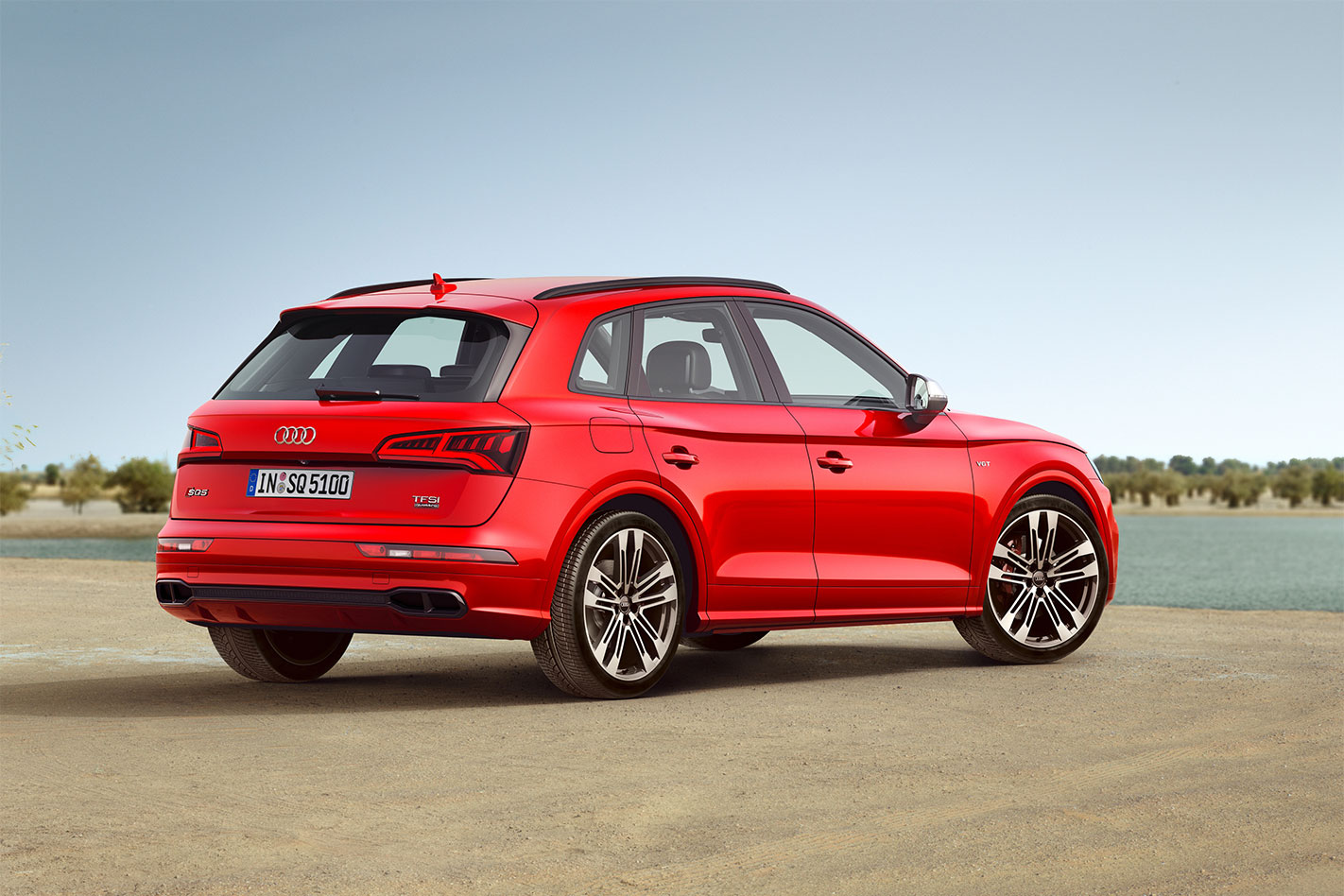
Previously, the petrol-powered SQ5, which used a 3.0-litre supercharged V6,was limited to diesel-averse markets such as the US, however should a new diesel version arrive – currently there is no word if that is the case – it is unlikely to appear locally.
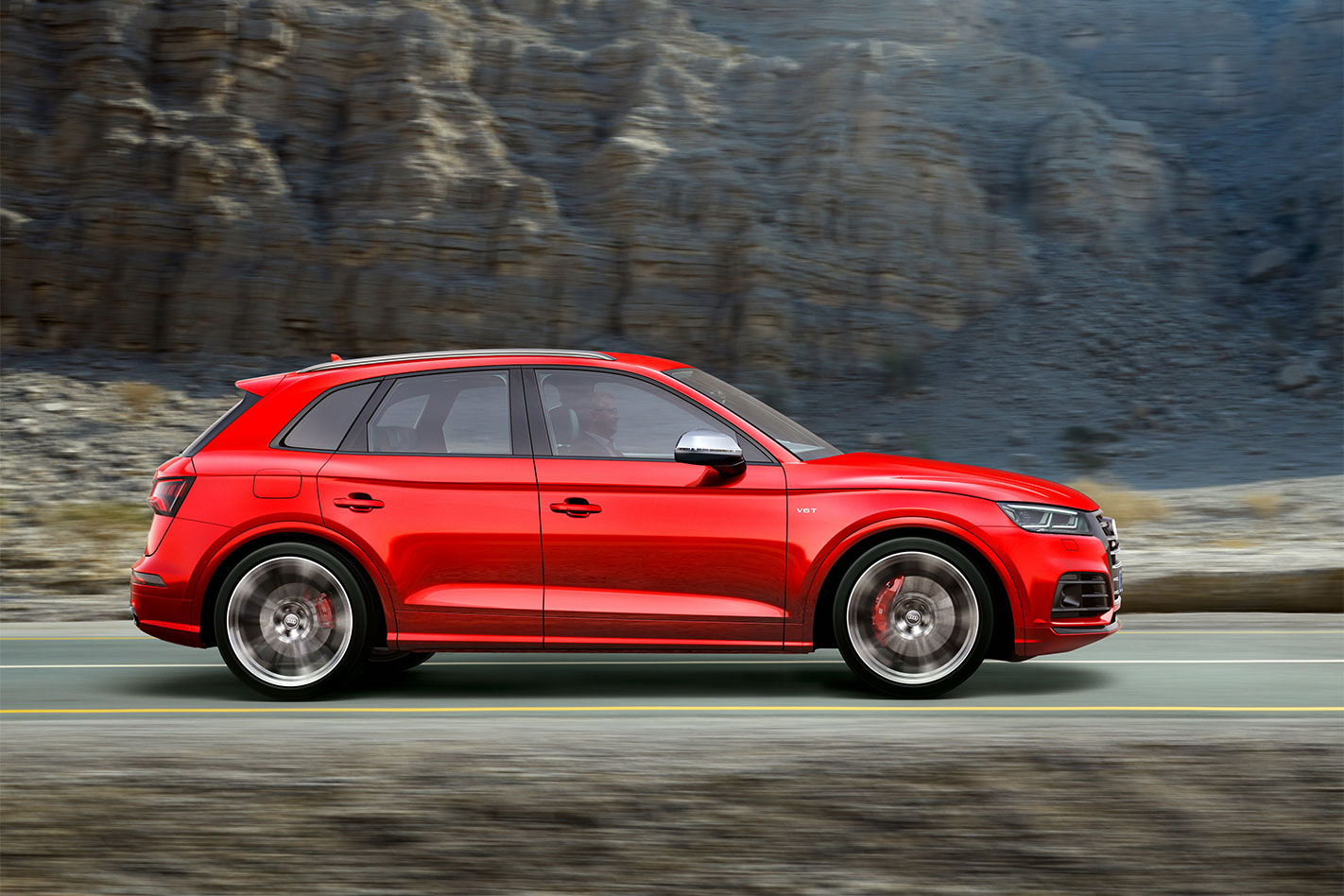
Adaptive dampers make an appearance for the first time and along with the engine, steering, gearbox and sports differential (where fitted) can be adjusted through Audi’s Drive Select system. Wheels are 20-inch standard, 21s optional, while the front brakes are upgraded from single-piston to six-piston calipers.
As you’d expect, the new SQ5 is also a technological tour de force, with a full suite of active safety systems – adaptive cruise, collision avoidance, lane assist, park assist etc. – and an MMI infotainment system that can recognise handwritten input, touch gestures and voice control.
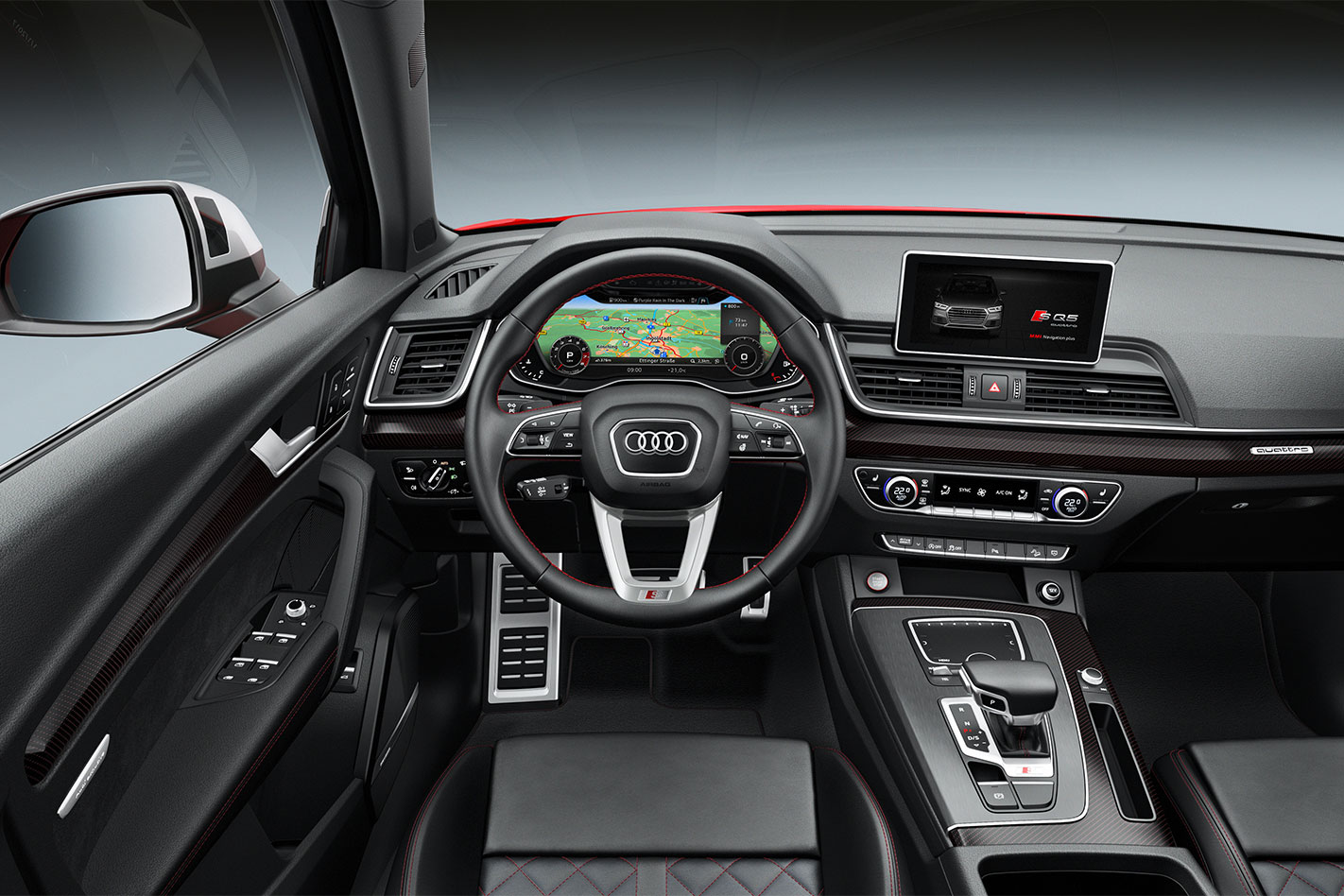
Local pricing and specifications will be announced closer to the SQ5’s Australian launch.
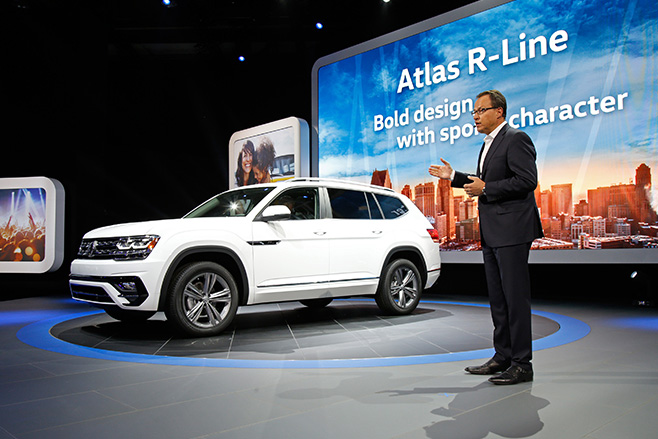
After months of flat denials, it appears that Germany’s answer to the Toyota Kluger and Mazda CX-9, the Volkswagen Atlas, might be in with a chance of reaching Australia buyers after all.
Speaking at the Detroit motor show this week, Volkswagen Group of America CEO, Hinrich Woebcken, revealed that the company is exploring all export avenues for the full-sized seven-seater SUV, which is currently built only in left-hand-drive (RHD) guise in the United States.
With sales falling in North America and Volkswagen desperate to put the lingering diesel emissions cheating scandal behind it, Mr Woebcken announced that his company has turned the corner in terms of reinstating consumer confidence, providing the types of vehicles Americans want to buy, and returning to profitability. Part of achieving the latter goal is to sell as many Atlases as possible.
“We are absolutely looking into (right-hand drive production), yes,” he told Wheels. “But I cannot give you a confirmation if this will happen.
“We have developed the Atlas here for the North American market, but also for exports. We are exporting to 10 Arabic states and also to Russia, so the Atlas production facility here in Chattanooga, Tennessee is not only for the local market, but we are also exporting this product to global markets.”
The comes only weeks after Mr Woebcken’s comments at the Los Angeles Auto Show last November at the Atlas’ global unveiling, where he indicated that RHD production was looking shaky due to the relatively small global volumes forecast.
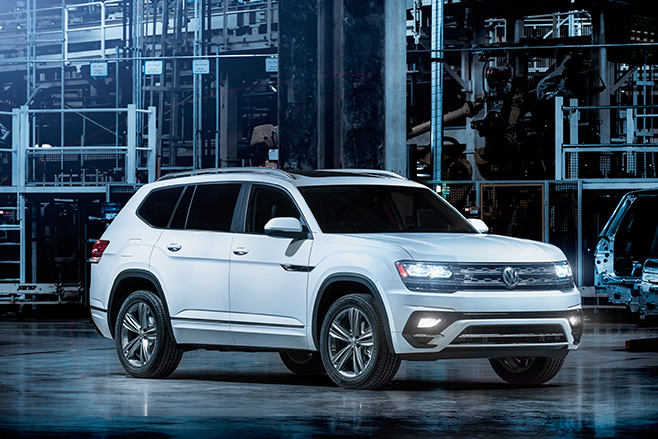
However, with record SUV sales in Australia and the United Kingdom, as well as keen interest from South Africa and New Zealand, it is understood that the RHD business case is being seriously investigated again.
Volkswagen Group Australia general manager of corporate communications, Paul Pottinger, told Wheels a few months ago that he would love to be able to sell the Atlas in our SUV-obsessed market, calling it “a welcome addition”, but added that he was not hopeful that the brand’s beancounters could make the RHD business case stack up.
The Atlas would not be alone in being imported from North America, with the existing Kluger and Nissan Pathfinder hailing from Indiana and Tennessee respectively. Additionally, the replacement for the now-discontinued Ford Territory – a variation of the Ford Edge – will be arriving from Canada.
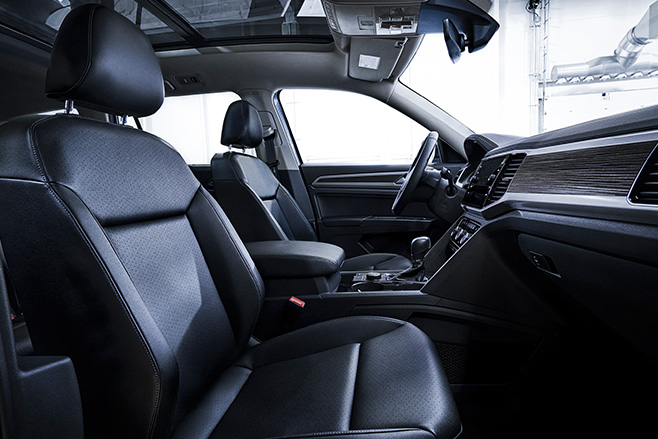
Based on the MQB modular transverse architecture that will also underpin the next-generation US-market Volkswagen Passat, the Atlas is powered by either a 2.0-litre four-cylinder turbo TSI engine or a 3.5-litre V6, with the former being front-drive and the latter driving all four wheels via an eight-speed automatic transmission.
Meanwhile, Volkswagen released a high-spec R-Line version, featuring more standard equipment, a racy body kit, 20-inch alloy wheels, and an upgraded cabin treatment.
The Detroit Show was also the site for the world debut of the long-wheelbase seven-seater version of the Tiguan called the Allspace. Destined for Australia, it is nevertheless a considerably smaller vehicle than the Atlas, so would appeal to a different buyer base.
IN AN era of SUV overload, sedans are gearing up to get sexier and more appealing as they fight for relevance in a fast-changing automotive world.
The Detroit Motor Show showcased at least four bolder takes on the traditional three-box body style – from the radical Kia Stinger to the significantly more adventurous Toyota Camry.
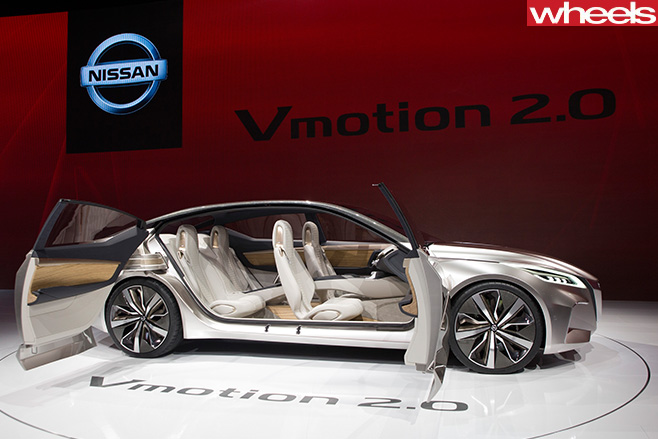
Nissan’s Vmotion 2.0 showed how far carmakers can push the four-door design, with the angular concept taking a radical step from the dull Nissan production sedans we’ve seen in recent years.
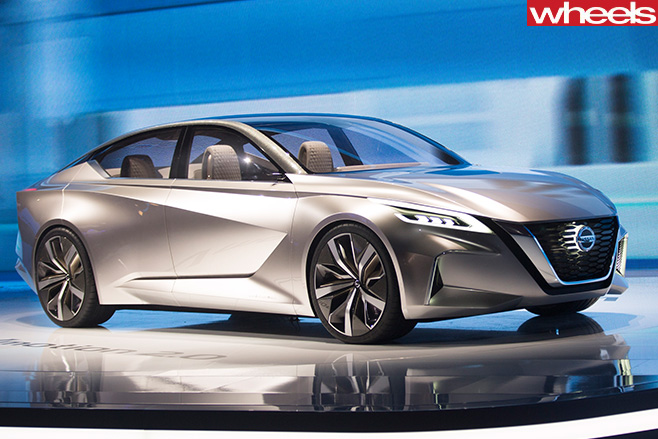
“Still we can push for more emotional design [with sedans],” said Nakamura.
Even a jovial Akio Toyoda, the global president of Toyota, described the new Toyota Camry – which arrives in Australia late in 2017 – as “sexy and really sexy”, referring to the luxury and sports versions of the new sedan.
As Toyoda pointed out, the Camry has been the number one selling passenger car in the US for 15 years – outsold only by some of the chunky pick-up trucks that dominate the market.
“We view this [new Camry] as an opportunity to reignite the mid-sized sedan market. I mean, why should SUVs get all the glory? This segment is still of the largest in the industry.”
General Motors design boss, Australian Mike Simcoe, conceded traditional sedans were on the wane but that “there’s still a need to have something in that space”.
“Wait and see…” was his hint at upcoming four-door models from GM.
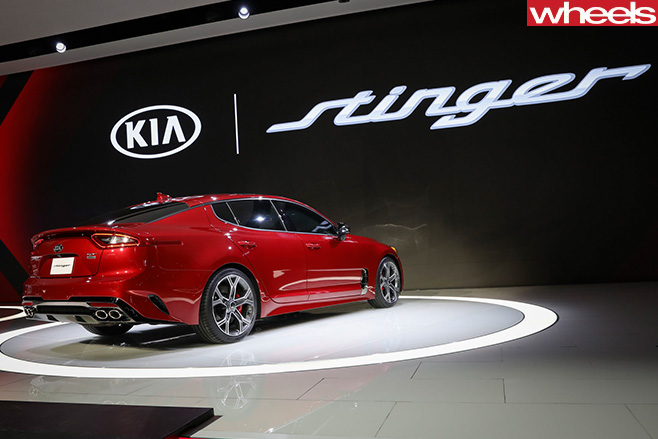
However, don’t expect one of those upcoming sedans to be a replacement for the Commodore V8, a car sold in the US as the Chevrolet SS.
Former Holden boss and now Chevrolet chief Alan Batey admitted the chances of a direct replacement for the SS were close to zero.
“It’s unlikely there will be anything to follow [Chevrolet SS],” said Batey. “It was an optimistic sort of play from our perspective but it’s played out really well and it’s been a nice addition to the range.”
Infiniti’s next-gen QX50 crossover is seen as the car that could change the fortunes of Nissan’s still obscure premium brand. The concept car revealed at Detroit hints at what to expect.
The Infiniti QX50 Concept is a reimagined version of the 2016 QX Sport Inspiration, adapted to showcase a future production model.
The concept’s emphasis is on the ‘driver-centric, passenger-minded’ cabin, designed in harmony with the exterior shape The design exercise also previews the brand’s autonomous driver assistance technology and variable compression (VC-Turbo) engine.
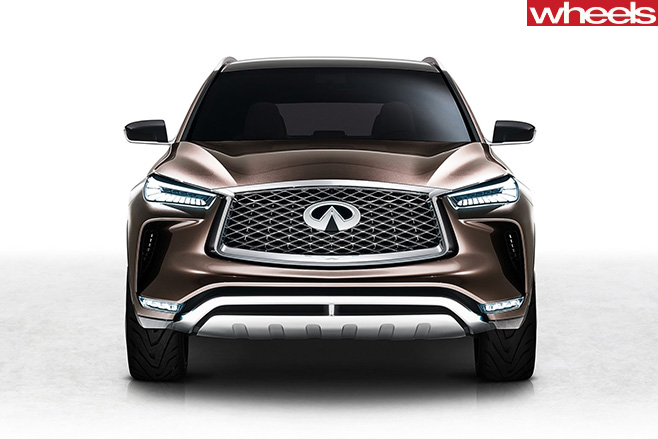
The edges of the grille disguise the bonnet’s relatively short length, suggesting a production car could be adapted for more compact drivetrains, such as Infiniti’s economical but powerful VC-Turbo petrol engine.
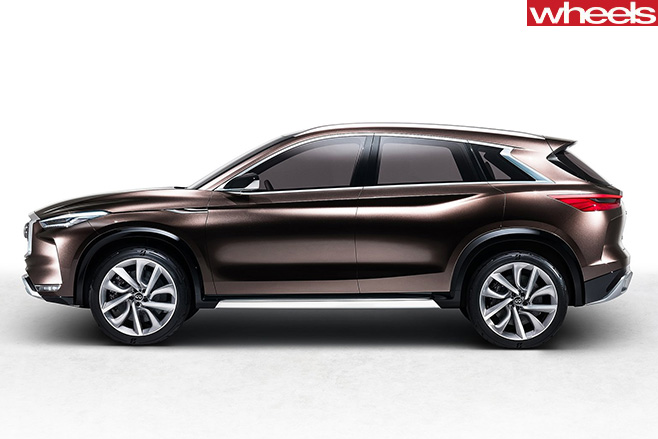
The cabin has a handmade feel and is the result of two Japanese approaches to craftsmanship: ‘mitate’ – the practice of curating and bringing together the best materials – and ‘shitate’, the desire to tailor the combination of materials, bringing out the best.
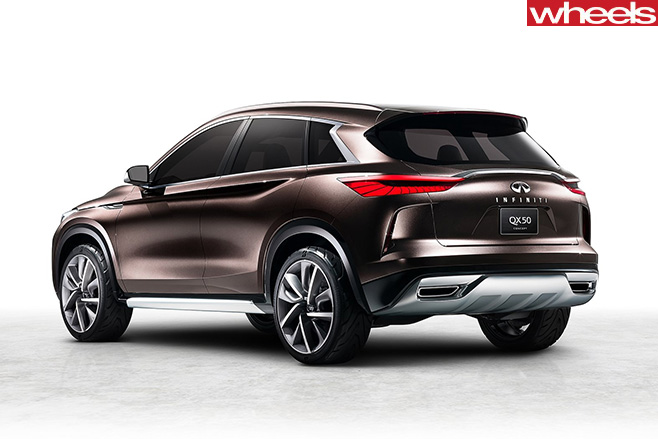
The ‘driver-centric’ and ‘passenger-minded’ layout of the QX50 Concept’s cabin is divided into distinct zones for driver and passengers.
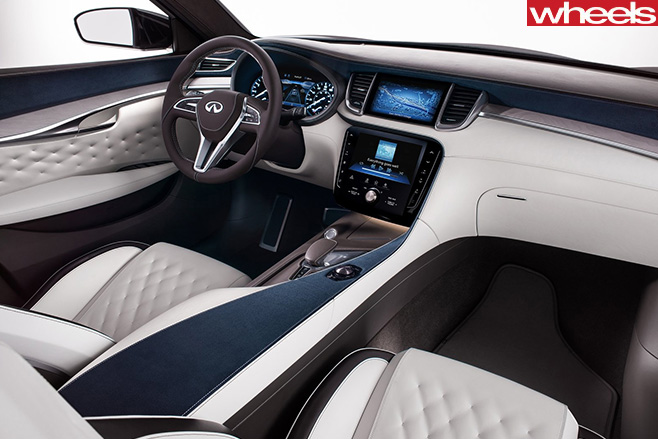
The production QX50 will be built in Mexico from later this year and is expected in Australian showrooms by Q2 2018 to face off against the Audi Q5, BMW X3, Lexus NX and Mercedes-Benz GLC.
The Toyota Camry’s dominance of the Australian medium car segment is virtually unbeatable – the humble four-door has been the top-seller in its market for 23 years running, with more than 900,000 sold locally since its arrival in 1983.
And now there’s a brand new eighth-generation model.
Revealed this morning at the North American International Auto Show in Detroit, the all-new Camry will go on sale in Australia in the last quarter of this year as a 2018 model, replacing the locally-built current-generation Camry once production ends at Toyota Australia’s Altona assembly line.
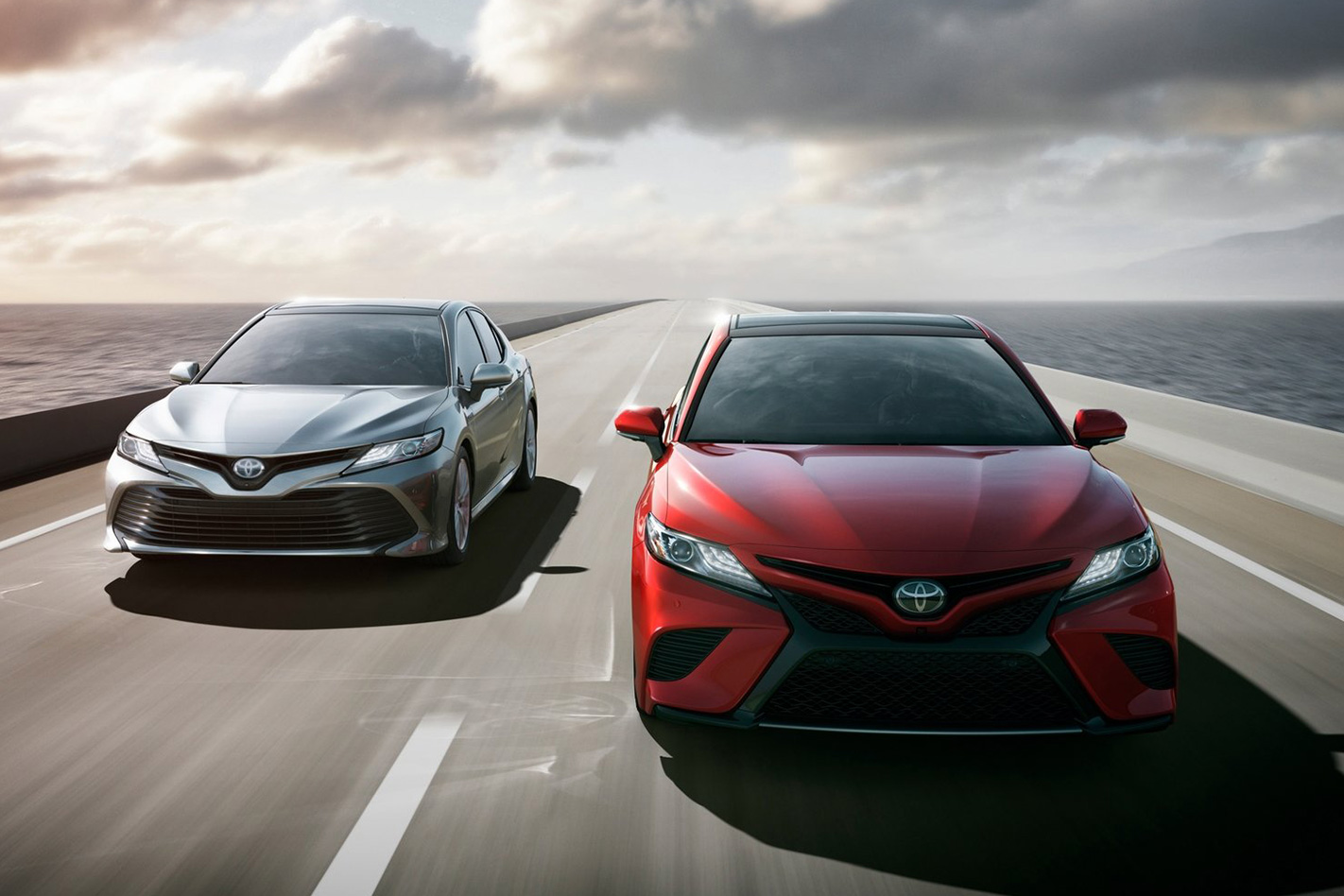
To be sourced from Japan, the 2018 Toyota Camry will see a return to V6-power – a powertrain that hasn’t been part of the Australian Camry lineup since 2006. The 2018 Camry V6 will also replace the Aurion in Toyota’s local showrooms.
Three powertrains will be offered in total – a 2.5-litre naturally-aspirated petrol inline four, a 2.5-litre petrol-electric hybrid and Toyota’s proven 3.5-litre naturally-aspirated and direct-injected petrol V6.
The petrol four-cylinder of both the regular Camry and the Camry Hybrid is an all-new engine from Toyota and is claimed to be more powerful, have more torque and lower fuel consumption than the existing Camry’s 2.5-litre thanks to a long-stroke design, high compression ratio and direct injection.
Regular Camry and Camry V6 engines will come mated to a new eight-speed transmission with a lock-up torque converter for crisper shifts, sending drive to the front wheels. The Hybrid will make use of a continuously variable transmission (CVT).
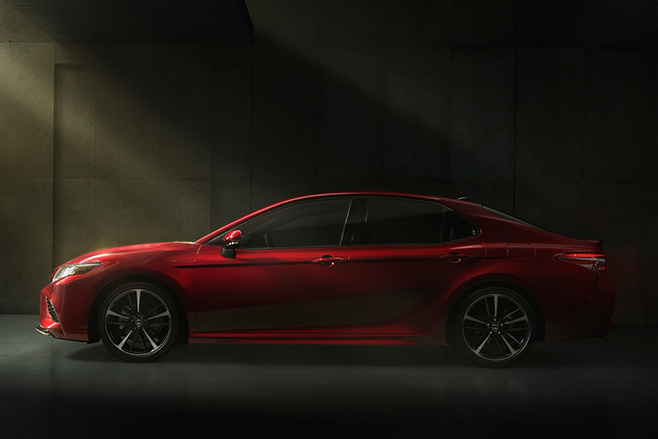
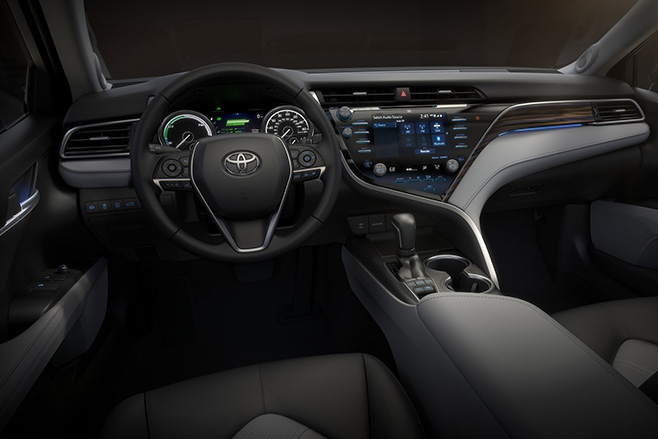
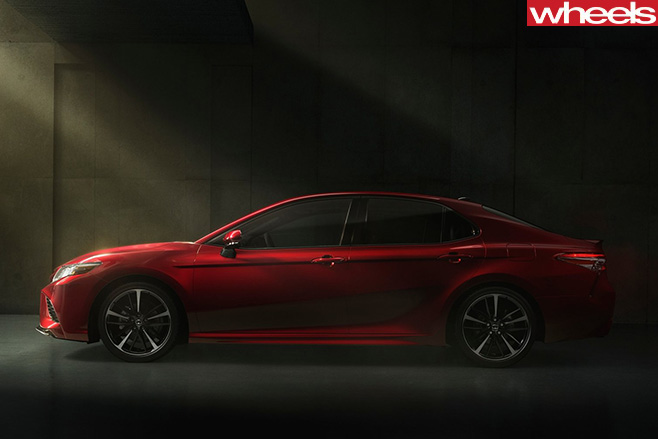
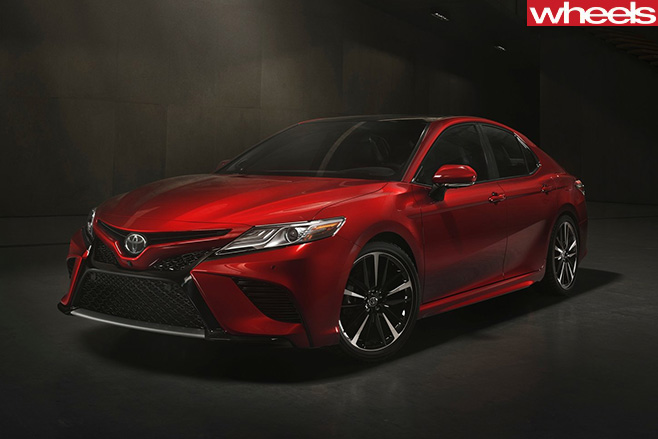
Though a previously-released teaser image suggested the new Camry would be pushing design boundaries (at least for a Toyota), the 2018 Camry instead sports what could be seen as an extreme evolution of the present-model’s styling. Slim, slanted headlights remain and on regular models are separated by a wide T-shaped grille, while the lower air dam is spanned by long horizontal slats like those on the current Camry Altise.
Higher-grade models get a sportier front end that ditches the slats for gloss black mesh, but all models benefit from a lower bonnet line, reduced roof height and stretched wheelbase, and the more pleasing proportions that they bring. Sheetmetal contouring emphasises the rear wheel arches to inject a little more athleticism to the Camry’s shape, and V6 models even feature a set of quad tailpipes at the rear.
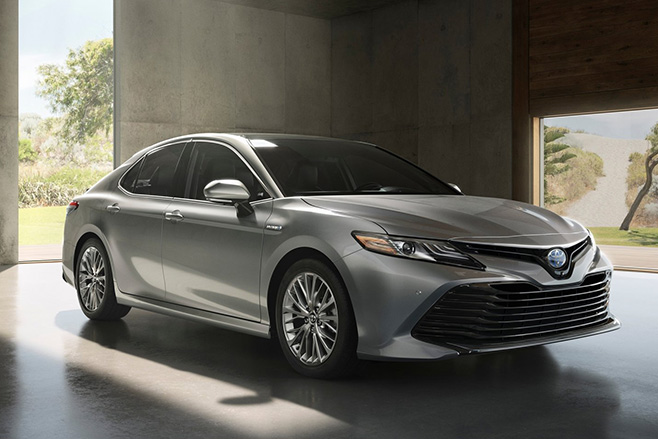
Another new design feature is a blacked-out roof, which can either be confined to the panel between the roof rails or extend down the A-pillars and halfway down the C-pillars for a floating effect.
Built on Toyota’s new TNGA platform, which also underpins the C-HR SUV and Toyota Prius hybrid, the new Camry is longer and lower than the outgoing model, with a wheelbase that’s around 25mm longer.
Cabin space is claimed to be more generous as a result, especially for rear-seat occupants. Both the front and rear bases are mounted lower too, meaning no headroom is lost from the Camry’s reduced roof height.
The TNGA underpinnings also bring a double-wishbone rear suspension setup that promises better roadholding and ride comfort.
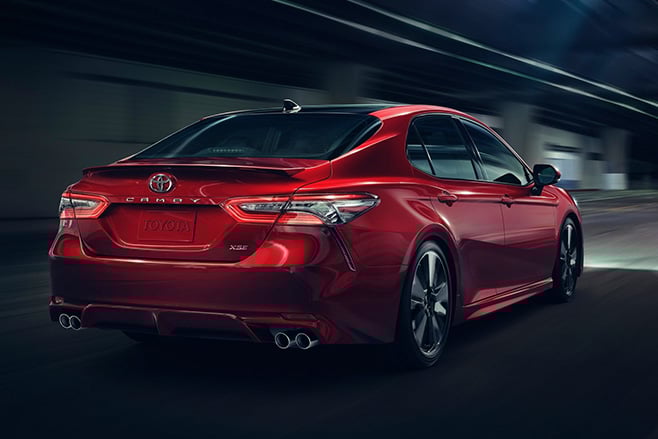
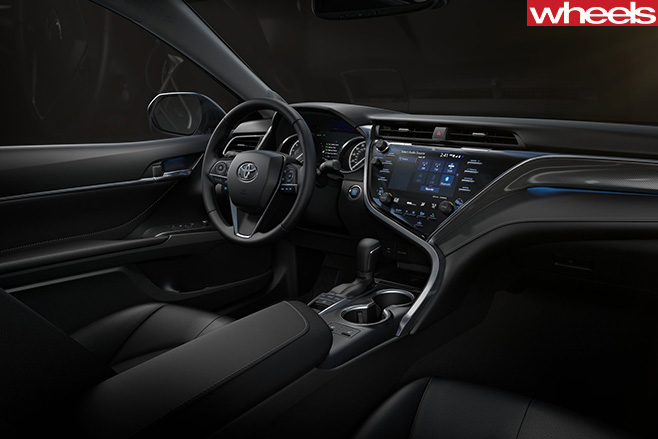
The driver’s instruments are angled inwards and the asymmetric dashboard tilts an eight-inch colour infotainment display toward the driver’s side. Between the analogue speedo and tachometer lies a seven-inch trip computer display, while a 10-inch colour head-up display is bounced off the windscreen into the driver’s line of sight. When it comes to screens, the new Camry has more than your local JB Hi-Fi.
Toyota says the new Camry sports vastly improved cabin furnishings too, with more premium materials and more soft touch surfaces for occupants to enjoy. Improvements to sound suppression in the form of new engine mounts and the stiffer TNGA architecture helps cut cabin noise.
Available safety equipment includes a collision warning system with pedestrian detection, active cruise control, AEB, lane departure warning, auto high beam, blind spot monitoring and rear cross traffic alert. It’s unclear which of these systems will be standard on Australia-bound vehicles, but we can count on all models having an airbag count of ten.
Local specifications and pricing will be released later in 2017, closer to the new Camry’s anticipated launch in the fourth quarter.
THE covers have finally come off the 2018 Toyota Camry in Detroit.
Due very late this year (immediately after the company ceases local vehicle production for good), the replacement for the best-selling midsizer over the last 23 years in Australia heralds the biggest change the series has seen in nearly 35 years and eight generations.
Known as the XV60, it will also be the first Camry since the introduction of the mainstream Mk2 versions of 1987 not to be manufactured locally, reverting to Japanese sourcing instead.
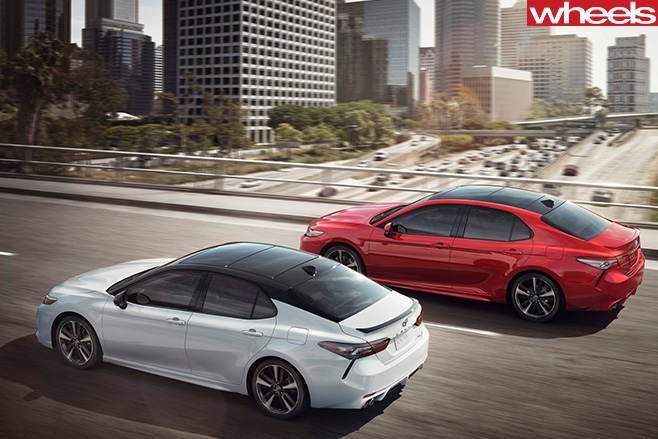
There’s even a two-tone option in the US with a trick blacked-out ‘floating’ roof treatment. Just like seeing a Play School presenter in gym gear. In US spec, length increases by about 10mm to 4859mm, width by about 20mm to 1839mm, and wheelbase by almost 50mm to 2824mm, but height falls a hefty 30mm to 1440mm.
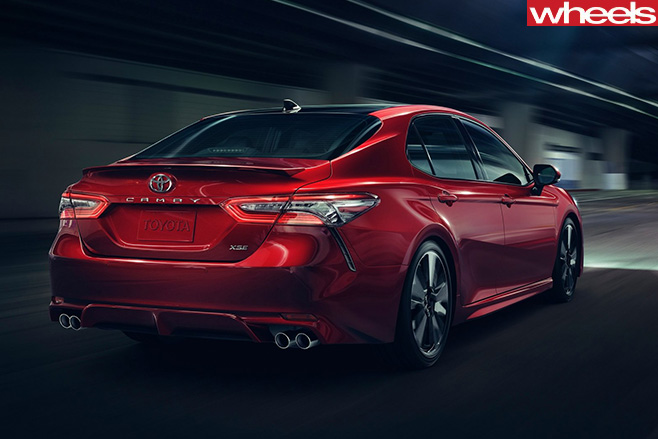
Such huge leaps forward are the upshot of a completely new platform underneath. Like the latest Toyota Prius and upcoming Toyota CH-R small SUV, the 2018 Camry adopts the Toyota New Generation Architecture, and is said to bring with it significantly improved steering, handling, ride, and refinement qualities.
A trio of powertrain choices have been confirmed for Australia – a variation of the carryover 133kW/231Nm 2.5-litre four-cylinder engine destined for most buyers, a petrol-electric hybrid of the same capacity, and an all-new direct-injection 3.5-litre variant that marks the return of the ‘Camry V6’ badge. Local-market power and torque outputs have yet to be divulged.
As we reported late last year, the latter will serve as the replacement for the locally made Aurion, and scores an all-new eight-speed automatic in lieu of the others’ continuously variable transmission. All drive the front wheels.
More details relevant to the Australian-market Camry will be revealed closer to the launch date, including what the all-important pricing and positioning will be, now that the mid-sizer will soon end local production and lose subsidies that make the cars attractive to government and other fleet buyers.
“It is way too early for pricing details,” he said. “We haven’t even started discussions with Toyota Motor Corporation about that. (But) I don’t think that will have a dramatic impact on pricing.”The existing Camry, heavily facelifted in 2014 after the basic 2011 design was deemed too timid even for the US market, kicks off from $26,490 before on-road costs for the Altise auto, stretching to $40,440 for the Hybrid Atara SL flagship. In contrast, the entry-level Subaru Liberty, Mazda 6, and Ford Mondeo start from $29,990, $32,490, and $33,190 respectively.
FORD has confirmed the Bronco nameplate will be reborn as an all-new SUV for the US market, although the car could also one day go on sale in Australia.
The announcement of the iconic truck’s return was made overnight at the 2017 Detroit motor show.
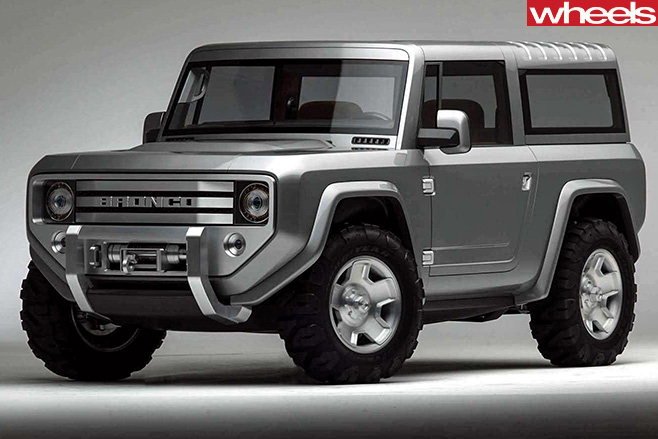
When it arrives in 2020 it will be the first Bronco since 1996, although Ford released a concept car in 2004 that proved its desire to revive a badge first seen in 1966, and even built in Australia.
To be based on the T6 architecture that underpins the Ford Ranger ute that was designed and engineered in Australia, the Bronco is expected to be very different to the chunky two-door made famous by OJ Simpson fleeing police in a low-speed pursuit in Los Angeles that was broadcast live on TV in 1994, complete with throngs of spectators in tow.
However, it won’t simply be a rebadged version of the Ford Everest, an SUV based on the Ranger.
“It’s different than Everest,” confirmed Ford product development boss Raj Nair. “It’s an incremental vehicle to Everest.”
While the born again Bronco will be designed and engineered in Detroit, it’s believed that Ford Australia will play a role in testing and development at its You Yangs proving ground near Melbourne.

In confirming the Bronco’s return Ford’s North American boss Joe Hinrichs said it would be a highly capable off-roader.
“This is a no-compromise midsize 4×4 utility for the thrill-seekers who want freedom and off-road functionality, with the space and versatility of an SUV,” he said.
“It’s capable of conquering everything from your daily commute to gravel roads and boulders – and, of course, the name you’ve known and loved for decades.”
Ford gave no details of the Bronco, leaving the internet guessing as to what drivetrains and configurations the car would take on.
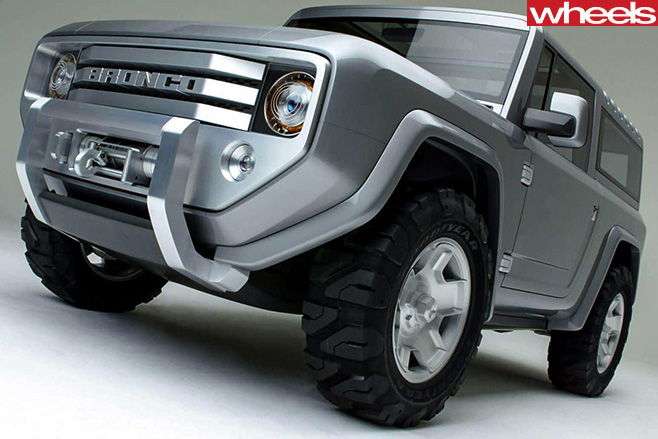
As for right-hand-drive production or other markets in which the Bronco could be sold, Ford is refusing to reveal its options. “We’ll have more to announce on the markets of that later,” said Nair.
However, given the architecture is designed with right-hand-drive markets in mind, it at least should be feasible – provided Ford Australia wants it.
Unsurprisingly, Ford Australia is also remaining quiet. “It’s a future program and more specific product details will come in time,” a spokesperson told Wheels.
A longer seven-seat version of the Volkswagen Tiguan appears bound for Australia in 2017 as the German premium brand aims to take on the Nissan X-Trail, Mitsubishi Outlander and Holden Captiva.
Unveiled overnight at the Detroit Motor Show, the “5+2”-seater Tiguan Allspace is 215mm longer than the five-seat version on which it is based, and sits on a wheelbase that is stretched an extra 110mm. Its 4704mm length makes it about a hand span shorter than a Holden Commodore Sportwagon.
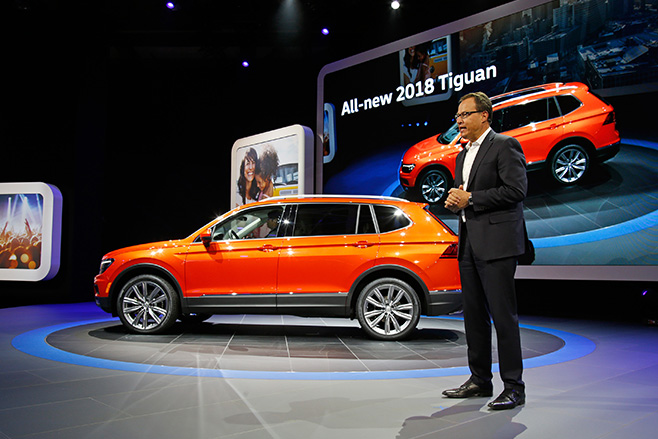
But it also heralds a potential early update for the Tiguan range, sporting a different bonnet, restyled headlights, a smarter-looking lower air dam and fog lights, and a repeater lamp sitting high on the front guard. The stretched Tiguan includes a larger rear window tucked in front of the D-pillar, similar in design to the seven-seat VW Atlas SUV developed just for the US market.
It’s down the back where all the Tiguan Allspace gains are made. The stretched wheelbase gives second-row passengers an extra 60mm of knee room; and the bigger boot space adds 115 litres of space, meaning the Allspace will have 730 litres of luggage capacity if the third row of seats aren’t used, growing to 1770 litres once the second-row seats are laid down.
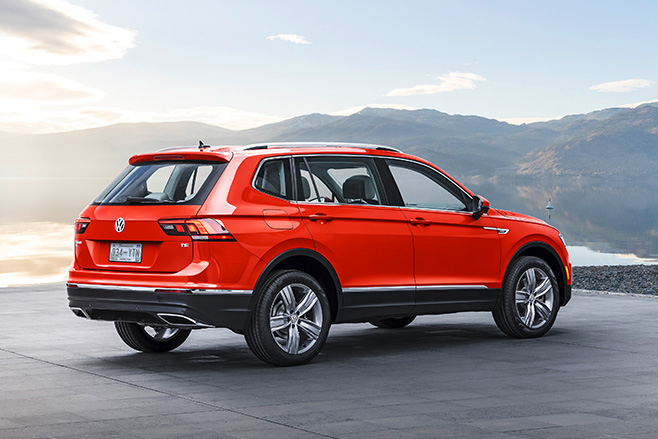
Volkswagen will offer the Tiguan Allspace as a five-seater in Europe, with the option of expanding it to a seven-seater. European buyers will also have the choice of front-and all-wheel-drive models, while three petrol and three diesel engine options ranging from 100kW to 176kW will slot under the bonnet.
But a big change we will need to get our heads around is that the Allspace will have no buttons on the dash to control things such as the radio. Instead, everything in the car will be controlled via what Volkswagen says is “a new generation of infotainment systems”.
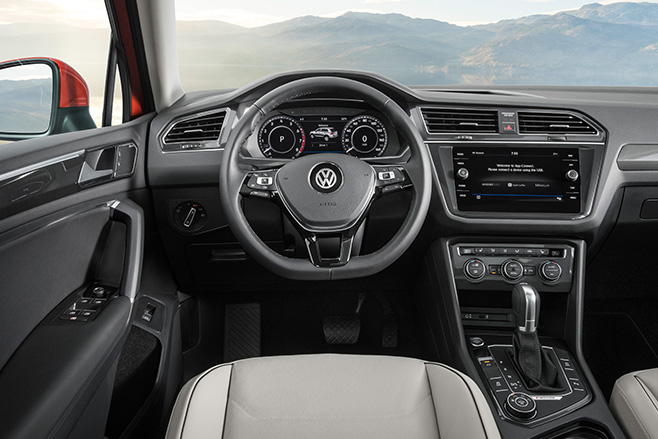
“This new top-of-the-line system has no conventional switches or buttons whatsoever,” Volkswagen said. “Instead, it is operated using a tablet-like glass surface whose appearance blends in perfectly with the design of the Active Info Display.” That last one is VW’s name for its digital dashboard that replaces analogue instruments with more high-tech versions.
Volkswagen Australia was this morning waking up to the news of the Tiguan Allspace, but we’ve asked them to stump a few details on when it is likely to arrive here, probably in the first half of next year. We’ll update this story when we hear more.
Holden has confirmed it will soon replace the locally produced Holden Cruze sedan with an Astra-badged version that will be positioned more as a “comfort, mainstream” offering rather than the sportier hatch.
However, the small four-door that will compete with the likes of the Mazda3, Toyota Corolla and Subaru Impreza is very different to the recently arrived Astra hatch. While the two share the same Delta II architecture and some mechanical components, there are no shared panels resulting in a distinctly different look; the hatch is focused on Europe and the sedan on Asia and the US.
Holden design boss Richard Ferlazzo said the sedan’s unique look was aligned to that of the imported Commodore due in February 2018; a car based on the Opel Insignia.
“Our Australian designers have styled a unique Holden face with exclusive new front fascia and grille, closely aligning with the next generation Commodore to give a more cohesive look to not Astra, but to the wider Holden product range,” said Ferlazzo.
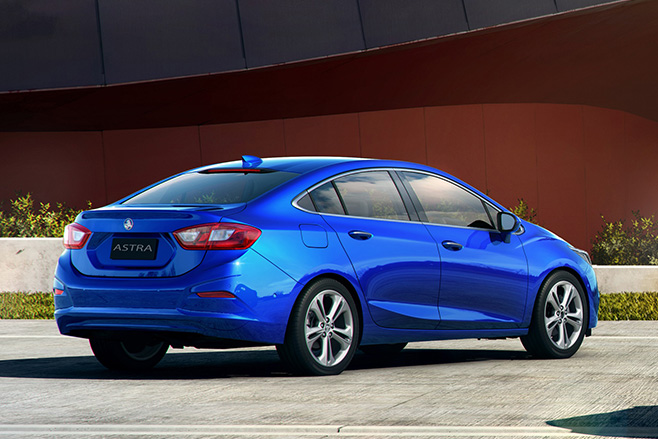
To be sourced from Korea and due on sale in May, 2017 the Astra sedan will be more affordable than the Poland-sourced Astra hatch that arrived in December last year; expect a starting price of around $20K.
“It will be cheaper. There will be different features as well, though,” said Holden chairman and managing director Mark Bernhard.
It will be powered exclusively by the 1.4-litre turbo engine used in the base Astra hatch, missing out on the peppier 1.6 turbo.
The Holden Astra sedan will also get some different features and likely miss out on the autonomous emergency braking (AEB) that’s available in the hatch and becoming increasingly popular in small cars.
Rather than focus on the differences, Holden is keen to push the global nature of the Astra family.

“Astra sedan is a truly global vehicle, developed in Europe, manufactured in Korea and finished with design elements and significant engineering input from Holden,” said Holden product planning director Marinos Panayiotou.
“Astra’s luxurious interior is complemented by advanced driver and connectivity technology in addition to progressive exterior styling which, when you add to the hatch variant, gives Holden a strong line-up in the small-car segment.”
Holden sales director Peter Keley is also looking to the European engineering rather than the Korean build, perhaps understandable given Holden’s underwhelming line-up of Korean vehicles over the past decade.
“Whether it’s the world-class sports hatch, stylish coupe or sophisticated sedan, the Astra nameplate communicates European engineering and global design strength and a strong reputation for reliability, earned over a 30 year association with Holden,” Keley said.
The Astra sedan is the 13th of 24 planned new or updated Holden models due by 2020.
Holden switches to a full-line importer late this year as it winds up almost 40 years of Holden Commodore production, and almost 70 years of Australian car production.
