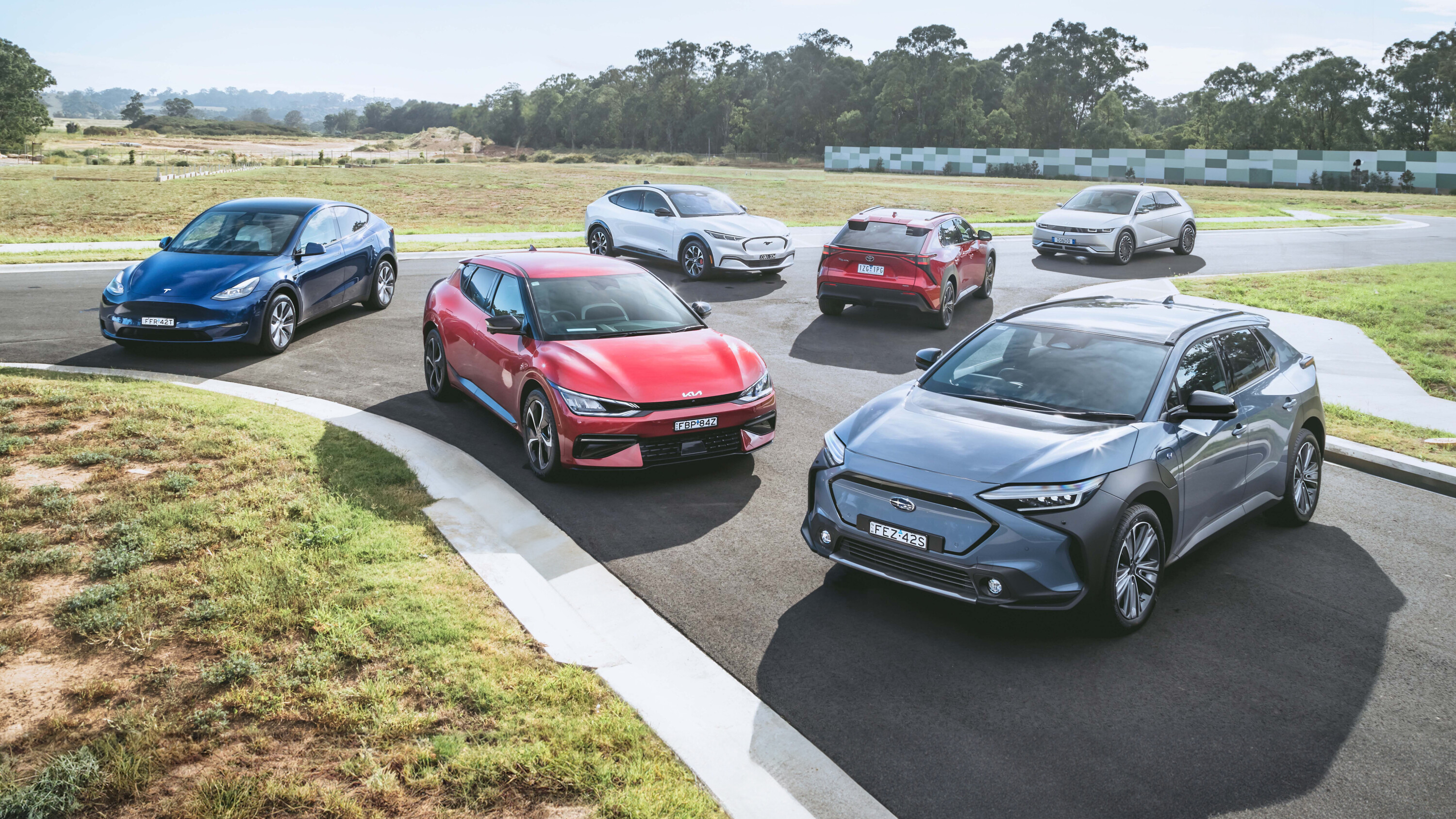
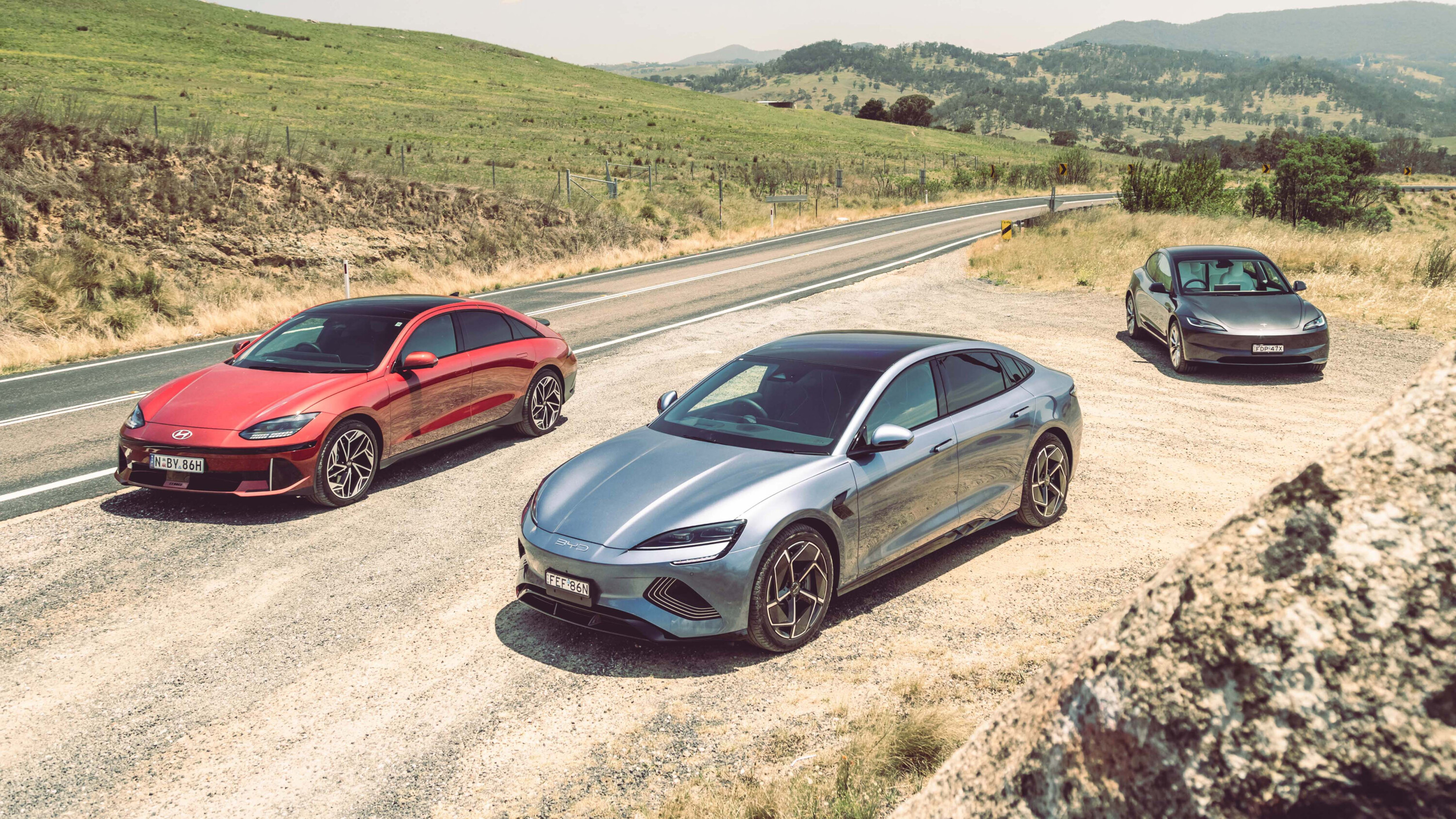
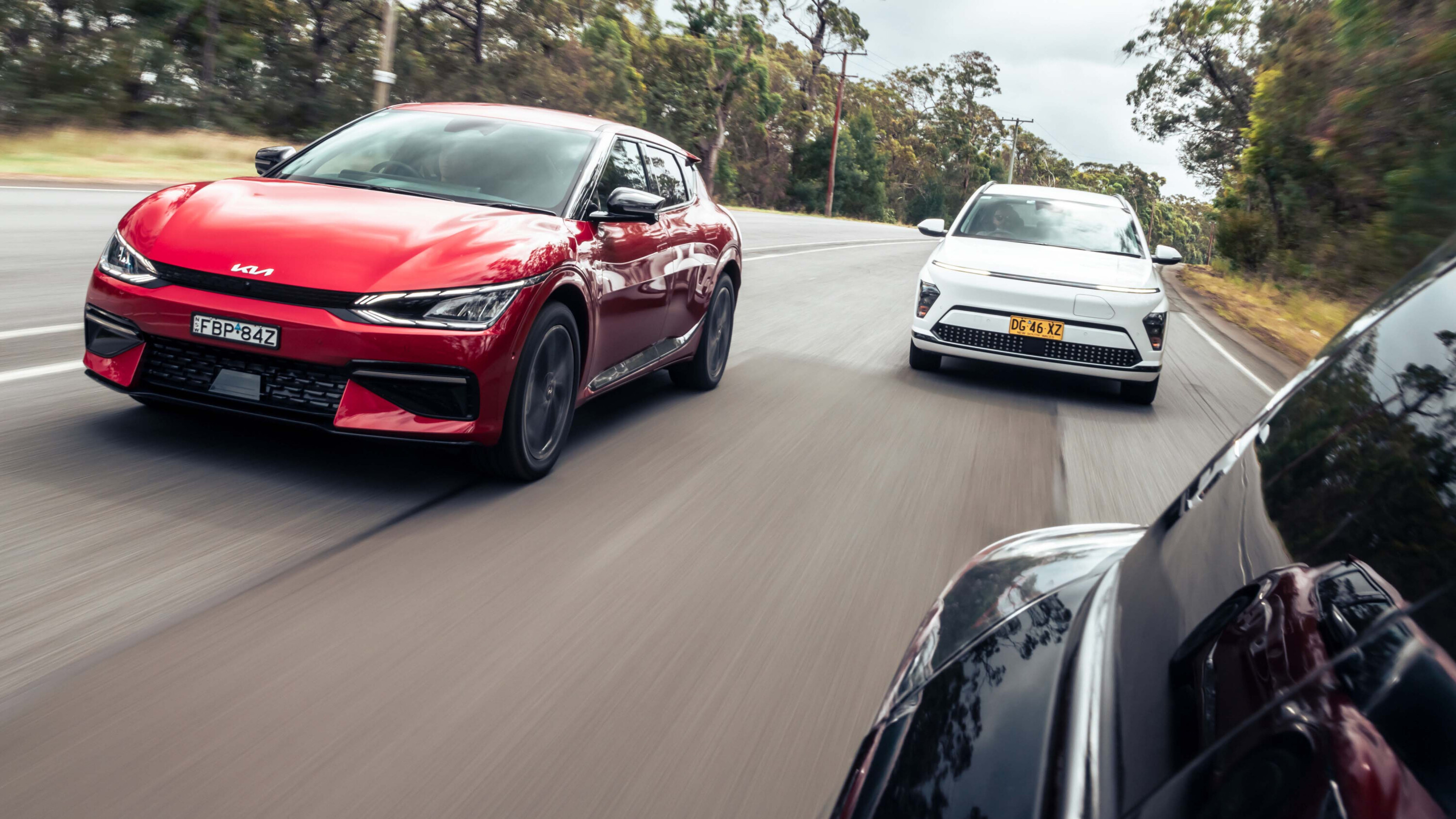
Electric cars don’t yet account for even 10 per cent of the new-car market in Australia, so you might wonder why Wheels would spend two months compiling our most comprehensive and exhaustive interrogation of battery-powered vehicles yet.
Part of the answer lies in disproportionate relevance. Despite relatively low – though fast-growing – sales figures, electric cars are the one segment set to have the biggest impact on every Aussie motorist over the next decade.
Petrol and diesel cars are set to be banned in Europe and the UK from 2035, while Australia is currently undergoing hot political and industry debate regarding the introduction of a national fuel efficiency standard that essentially aims to wean the country off its appetite for big, gas-guzzling utes and SUVs.
2
Let’s be clear: this needs to be a period of transition
Australia is not ready for everyone to be forced into EVs – our national charging infrastructure is still extremely poor, to cite one major issue.
But they can work for many buyers right now, especially those with the ability to charge at home.
Australians are already making the switch to EVs in bigger numbers: Five years ago, about 1350 fully electric vehicles were sold locally – with fewer than 450 registered to private buyers.
In 2023, more than 87,000 battery electric vehicles (BEVs) were registered – a year-on-year increase of 161 per cent. To the end of February 2024, BEV registrations are up again, by 15 per cent.
1
It’s true that more than 65 per cent of EV sales in 2023 can be attributed to just two brands (Tesla and BYD) and ostensibly just three models (Tesla Model Y and 3, and BYD Atto 3). Yet every year now, the number of fresh challengers arriving on the scene grows exponentially.
Toyota taking on the Tesla Model Y, the world’s best-selling car, with the bZ4x SUV is just one of the fascinating battles among our dozen Wheels Best EVs comparisons.
BYD has its first direct challenger to the Tesla Model 3 with the Seal, while its Dolphin hatch joins the GWM Ora and MG4 as models proving EVs can be properly affordable.
Our Wheels Best EVs series is such a behemoth that we’ve split it into two parts: Under $80K (or ‘mainstream segments’, if you like) and Over $80K (aka luxury and performance segments).
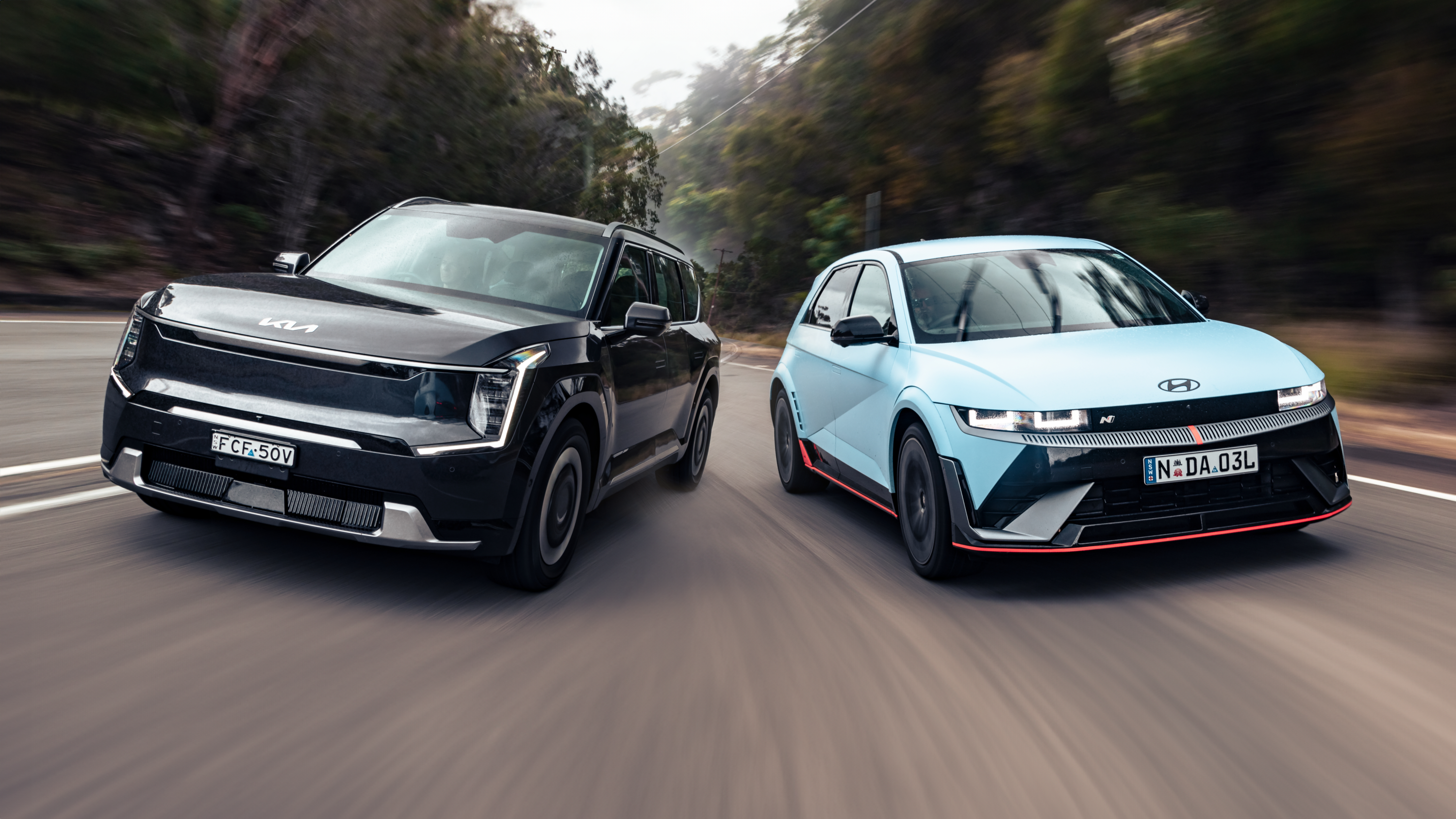
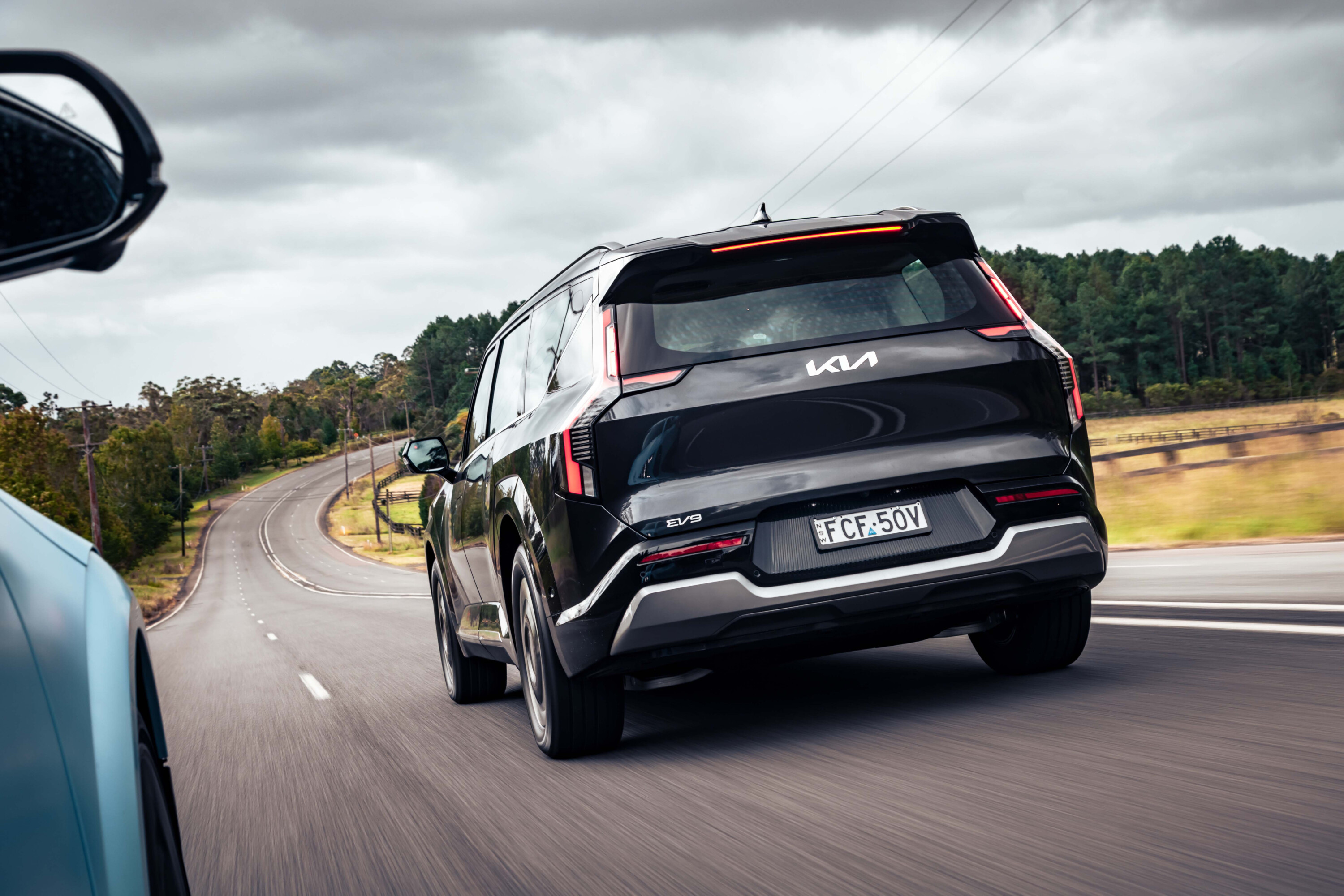
Part Two is equally intriguing, where German luxury brands Audi, BMW and Mercedes clash not just with now-traditional challengers Lexus and Genesis but also the most expensive models to be offered yet from Hyundai and Kia (the Ioniq 5 N and EV9, respectively).
The 5 N, Hyundai’s first electric performance car, faces a raft of fast EVs, with no less of a daunting prospect than facing the mighty Porsche Taycan.
This week we’ve published all our Over $80K, completing our guide to the best EVs you can buy right now for almost every type of budget.
⚡ 2024 Wheels Best EVs
Looking for an EV in a different size or price category? Visit our full Wheels Best EVs series at the links below.
But we’ve approached our judging of this significant milestone in automotive evolution just like the time-honoured Wheels Car of the Year award – meaning we’ve focused on criteria such as ‘performance of intended function’ (which reinforces that this is not a direct comparison test) and, crucially, ‘value for money’.
And so that’s where we’re focusing this test: Hyundai v Kia.
1
Hyundai Ioniq 5 N v Kia EV9: Which is the best EV over $80K?
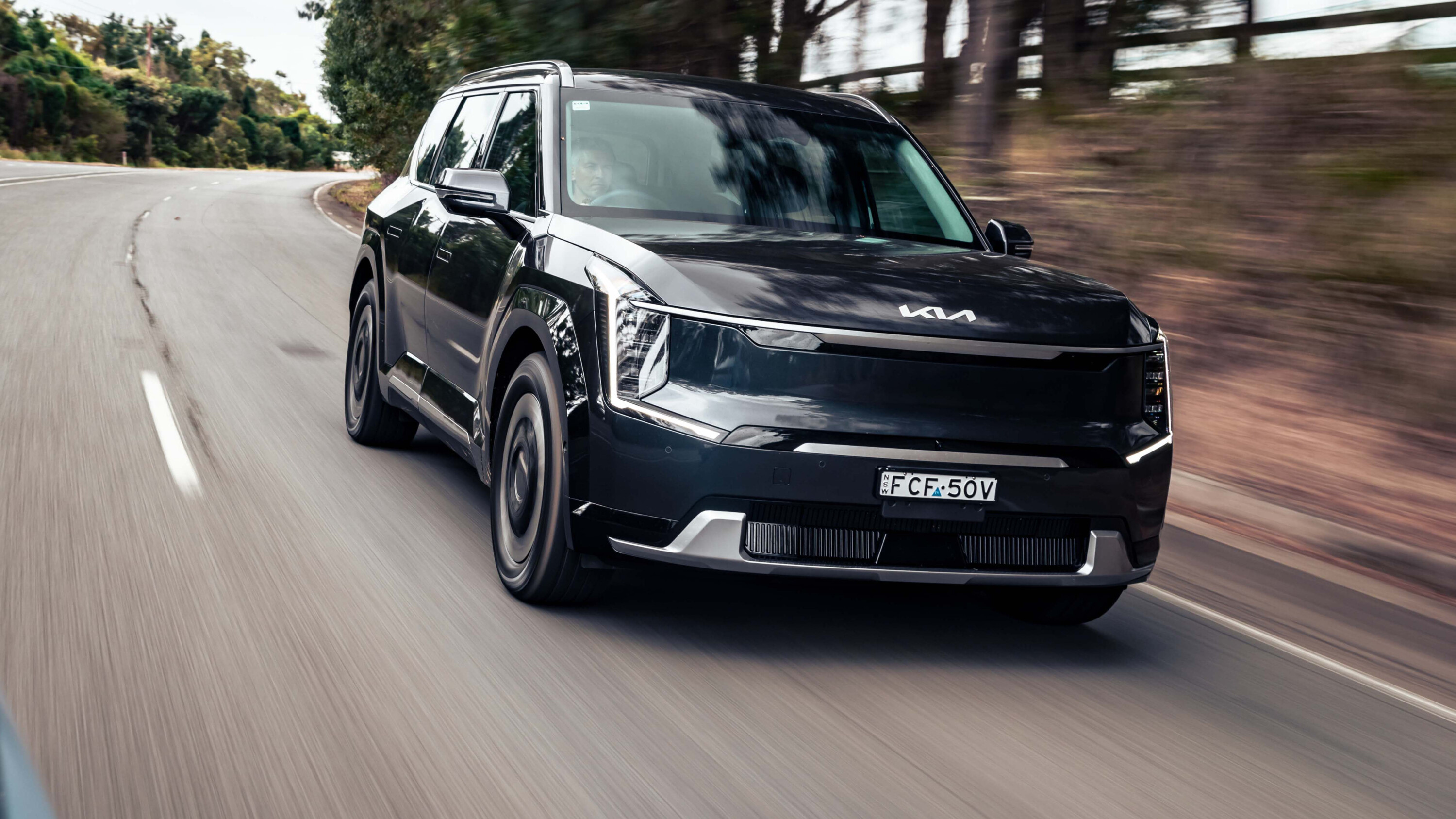
What sets the EV9 and Ioniq 5 N apart is that there’s nothing else like them – each is a first in its theoretical subset.
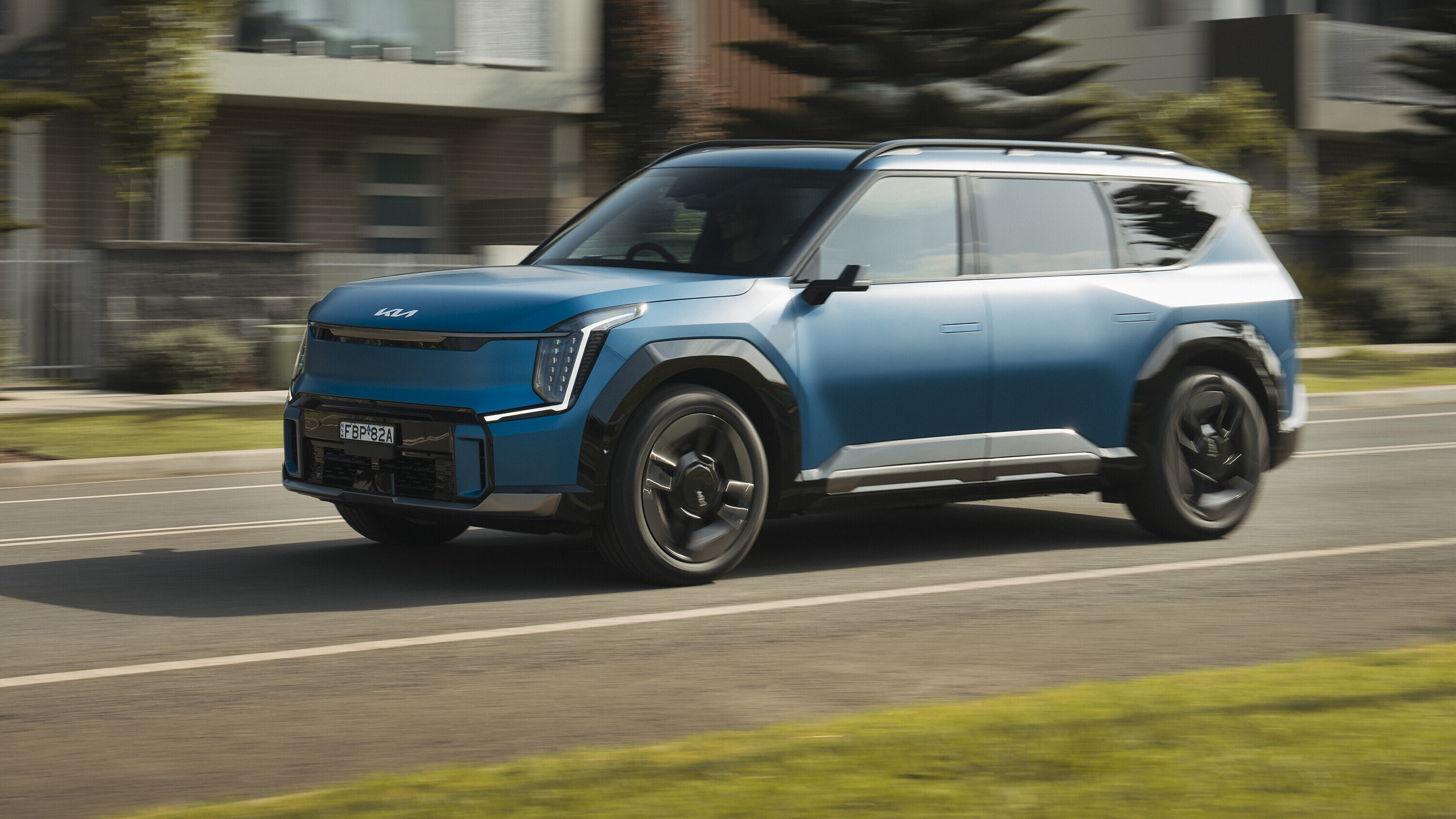
The Kia EV9 remains the world’s only ‘affordable’ mainstream seven-seat electric SUV – at least compared to the EQS SUV, which is almost double its price – and the Ioniq 5 N is the world’s first-ever attempt at producing a super-hot performance EV that has a chance of replicating, or even exceeding, the bandwidth of a frigging great combustion-engined performance car.
In terms of each EV’s ability to achieve what it set out to do, both overwhelmingly nail the brief. As the largest, most expensive Kia vehicle ever produced, the EV9 carries a substantial degree of expectation, simply for those reasons.
1
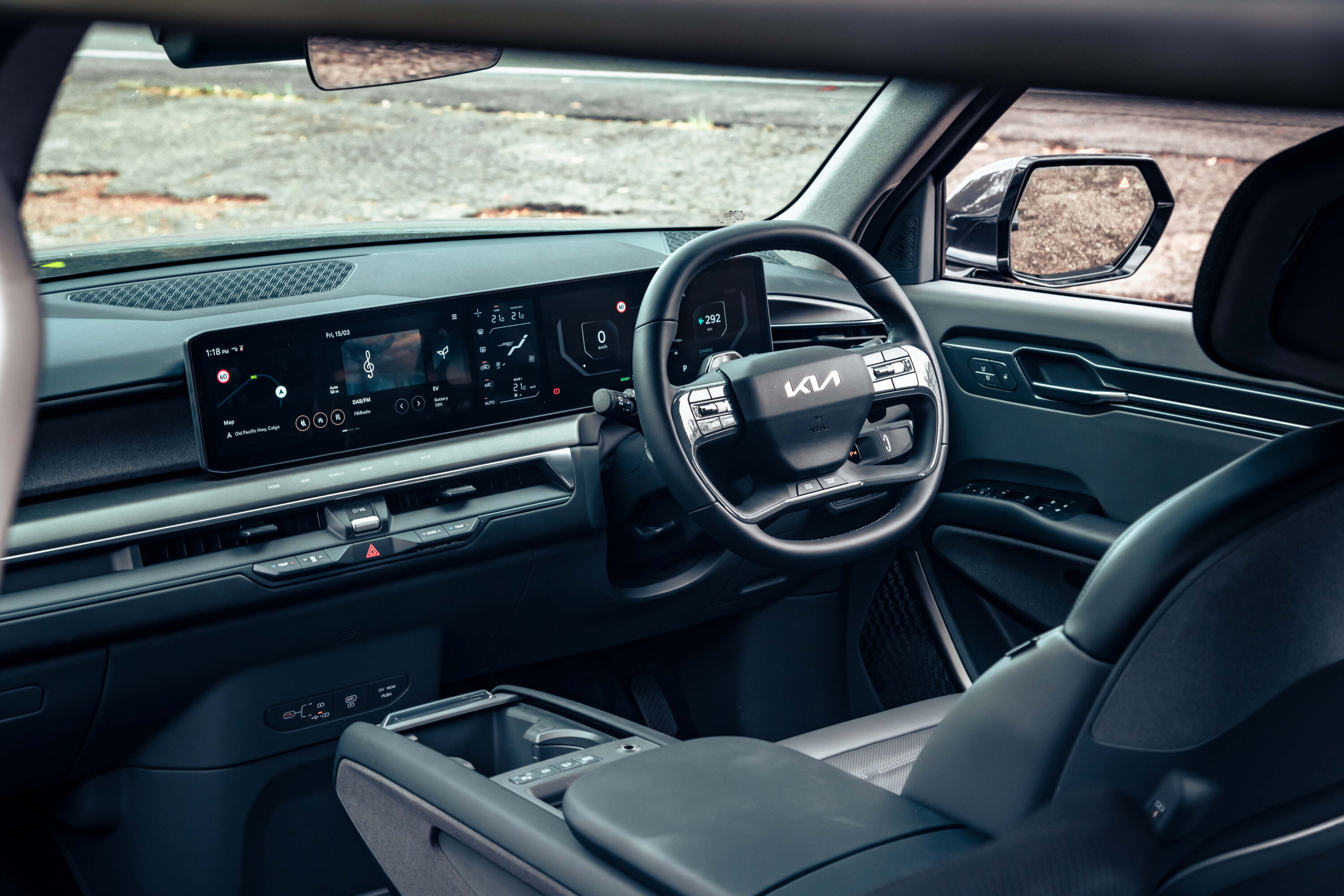
Yet such is the depth of its build and materials quality, the holistic execution of its design and packaging, and the excellence of its architecture that it truly sets a new benchmark for what premium value for money means.
Our test EV9 is an Earth AWD, meaning the primo electric driveline (283kW/600Nm for 0-100km/h in 6.0sec) blended with the narrower 255/60R19 Kumho tyres (rather than the GT-Line’s 285/45R21s) for a terrific combination of performance, efficiency and dynamic personality.
It might lack the razzle-dazzle of the GT-Line’s huge sunroof, vast alloy wheels and multitude of small yet classy visual, technological and tactile upgrades, yet the Earth AWD still possesses everything any family (or enthusiast driver) could really want in a large electric SUV.
1
For the practicality and what it offers for the money, the EV9 is a tremendous vehicle. And it’s surprising fun as well.
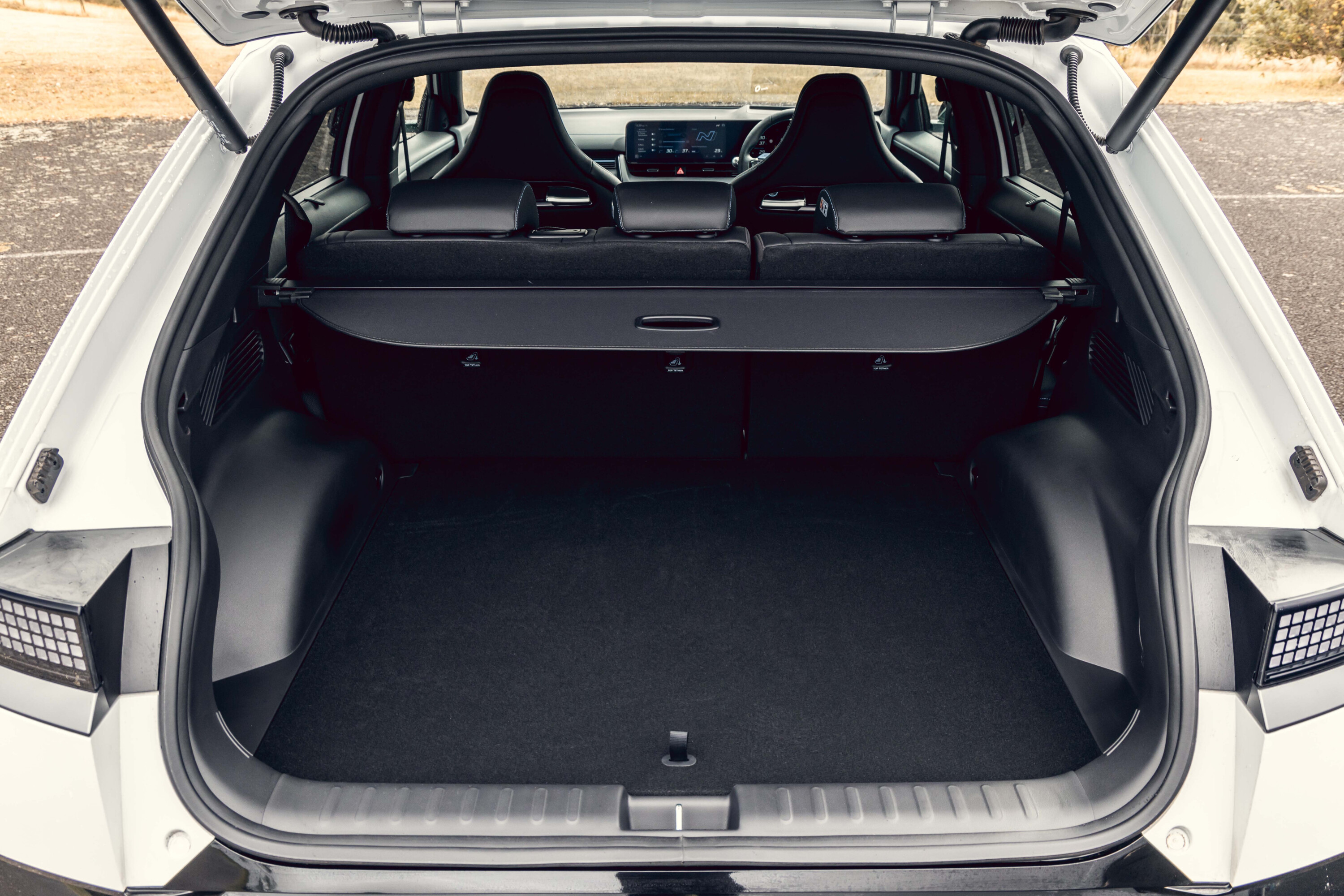
From a passenger-carrying perspective, it can comfortably seat seven adults and does so while also providing intelligently designed places to put stuff and generously expansive vision so everyone can see stuff. And from behind the wheel, this huge 2552kg EV transcends its size via its fluency.
The EV9 blends its steering weighting and response, handling balance, body control and tyre grip really nicely in corners, yet it also offers layers for anyone who’s keen enough to see what this super-sized SUV is truly capable of.
1
Dynamically, Kia’s superstar SUV has personality … which is most unexpected from an electric vehicle so ‘large and in charge’.
Admittedly, such is the expanse of the EV9’s frontal area that there’s a noticeable efficiency difference between sticking to 110km/h on the freeway and pushing the envelope towards an indicated 125km/h – despite the slickness of its 0.28 drag coefficient – so replicating its 512km WLTP range claim and 22.3kWh/100km official combined energy consumption figure can’t be guaranteed.
Yet we managed to extract 477km and a 20.4kWh/100km average from a full charge in this EV9 Earth AWD – across a hugely varied, and often hard-driven, testing environment – which surely speaks volumes for the breadth of the EV9’s abilities.
And had we found an ultra-fast charger after all that, the EV9 would’ve taken just 24 minutes to shoot from 10 to 80 percent charge when replenishing its 96kWh (useable) battery.
1
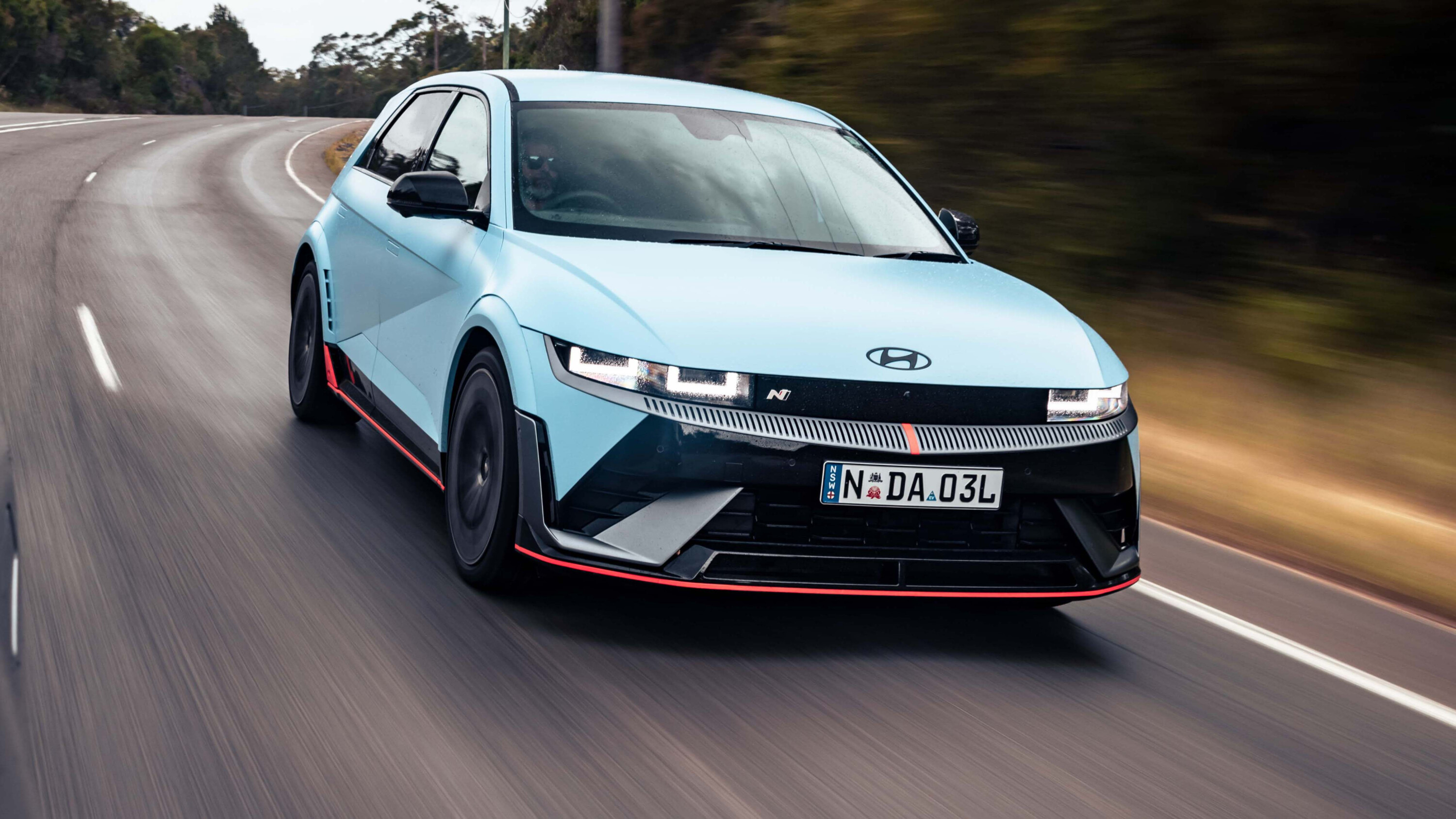
The Hyundai Ioniq 5 N introduces us to a type of car we didn’t even know we wanted
Despite its excellence in virtually every area, however, the Kia EV9 brilliantly hones, refines and reimagines what is already a known quantity – a large seven-seat family SUV, just what so many buyers want today.
But, the Hyundai Ioniq 5 N introduces us to a type of car we didn’t even know we wanted… and now that we’ve experienced it, we’re completely on board with it.
I can understand why people might be dismissive of the Ioniq 5 N. It’s a high-performance electric vehicle with enough tweakable settings to make your head spin, trying to replicate the feeling and excitement of a truly great combustion-engined hot hatch.
1
You might rightfully be asking ‘why?’ Or ‘who needs all that kerfuffle?’
Decades worth of punters who love the thrill of a relatively small, keenly fast, involvingly agile performance car. And that’s the Ioniq 5 N in a nutshell.
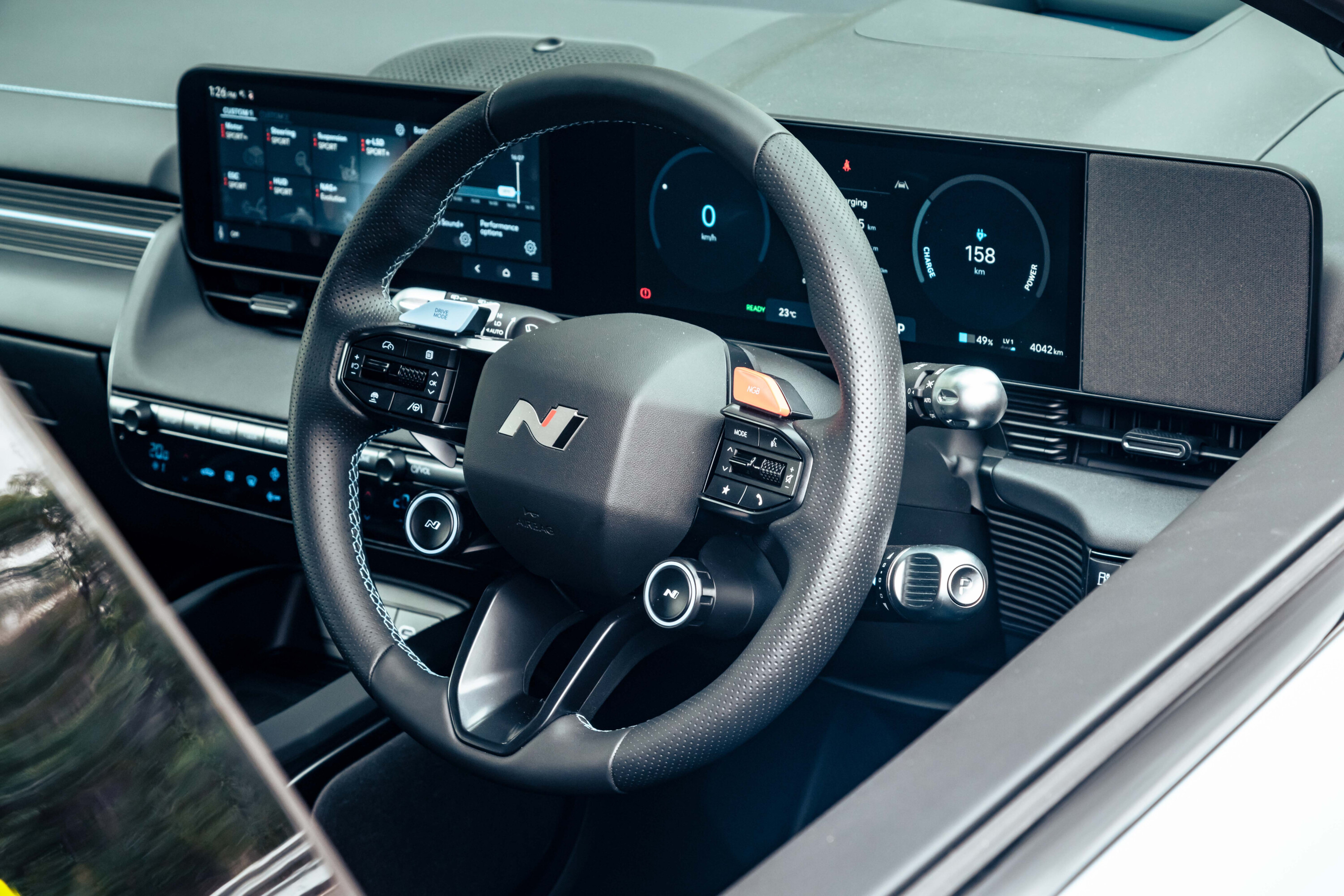
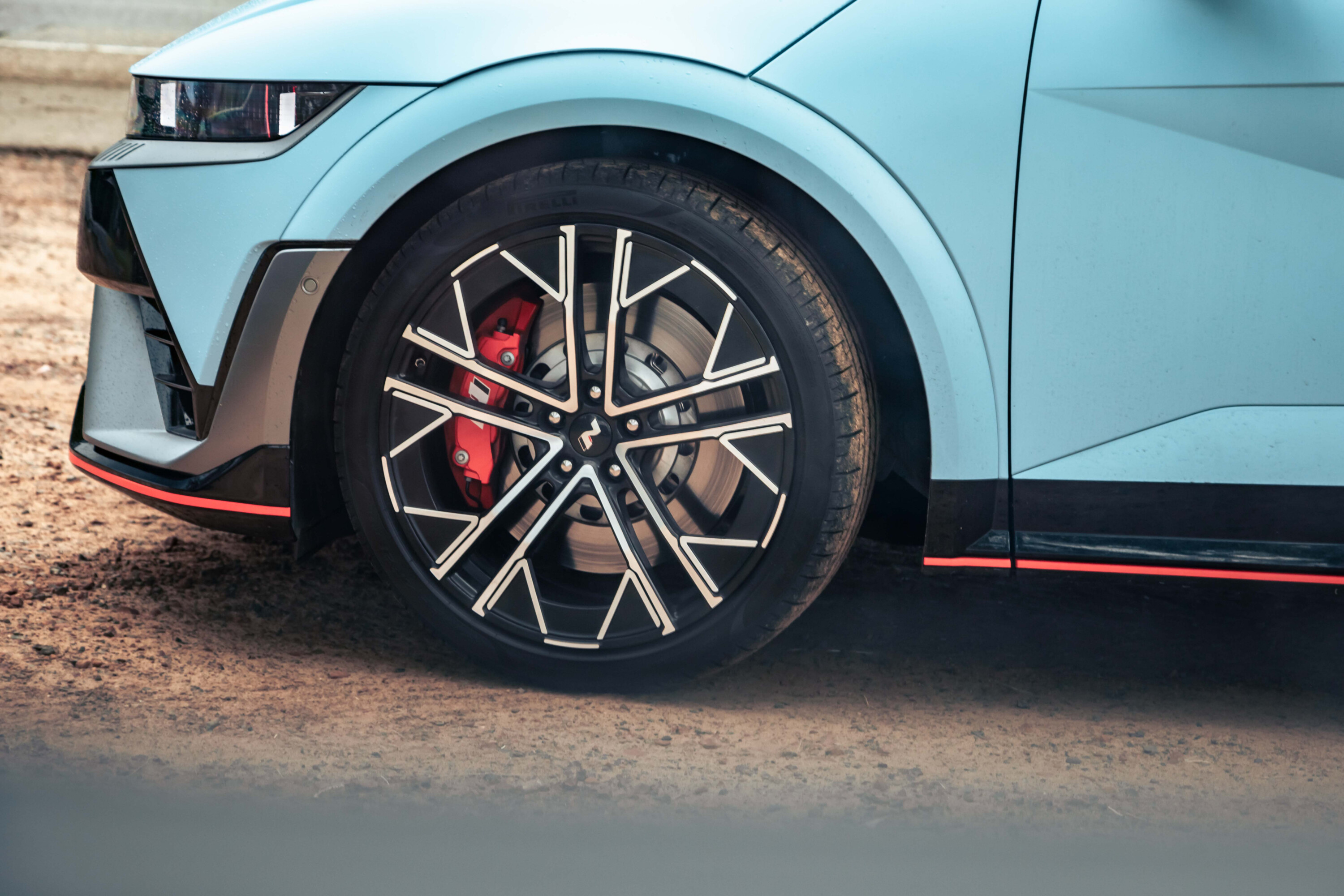
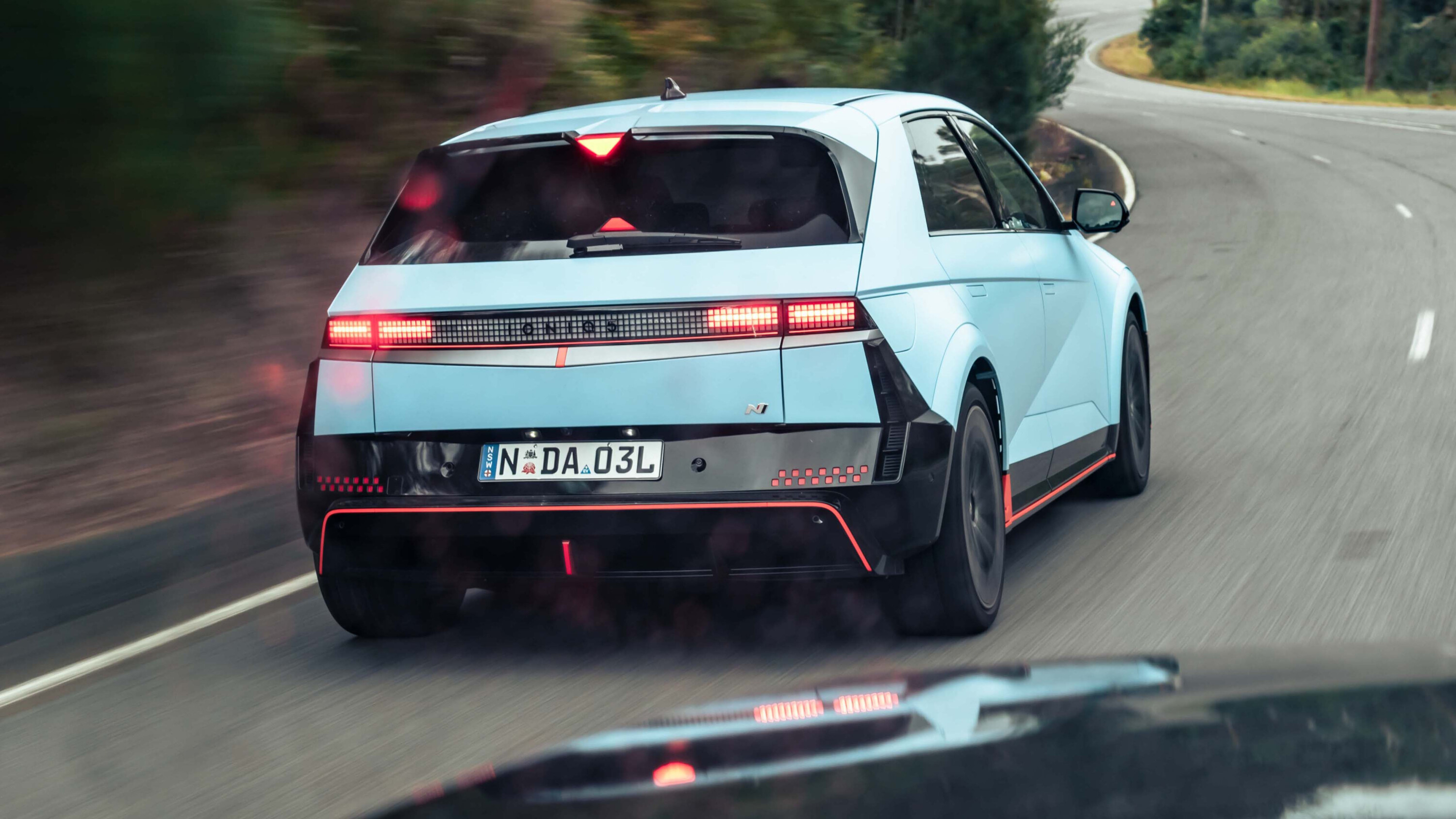
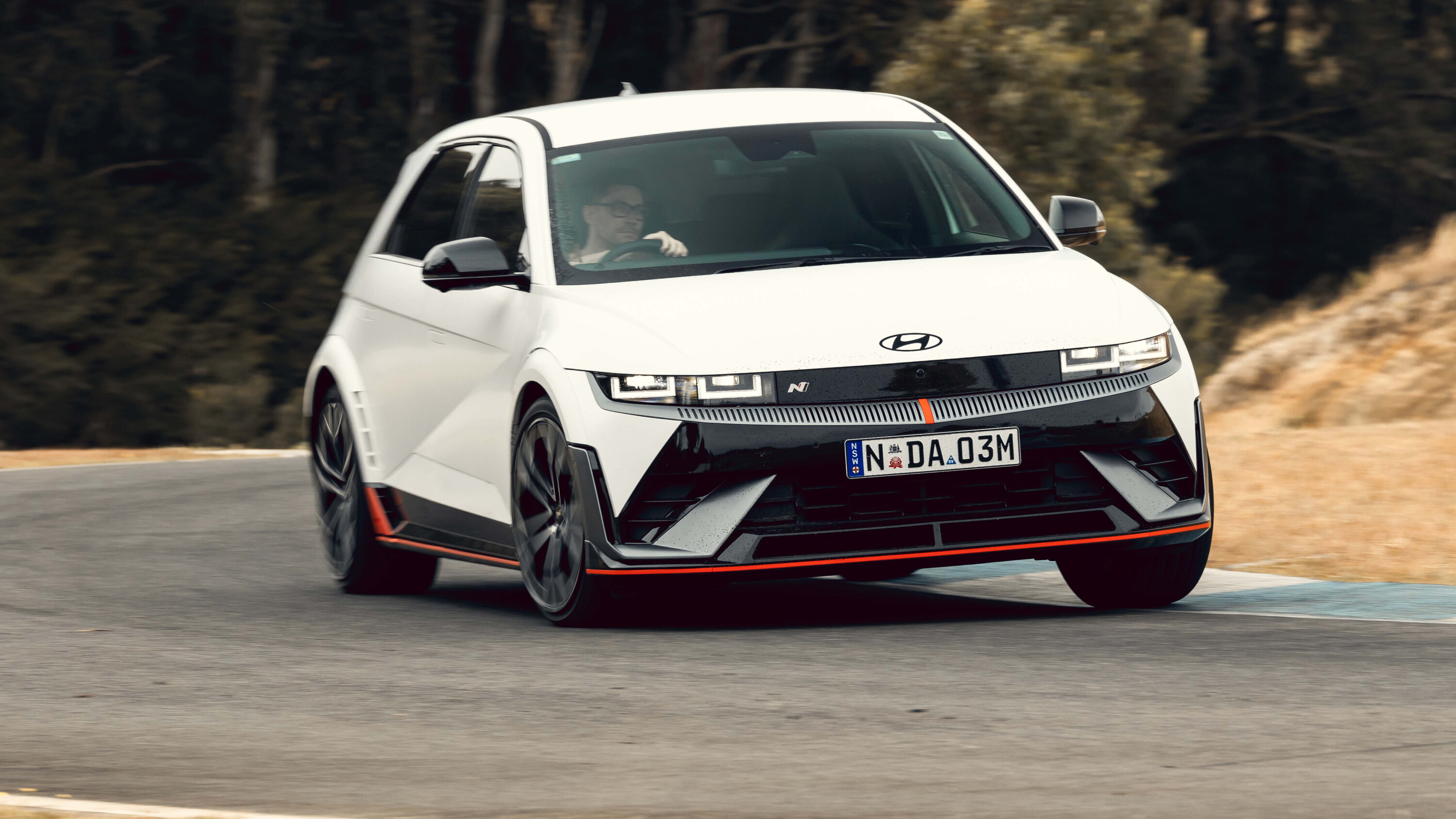
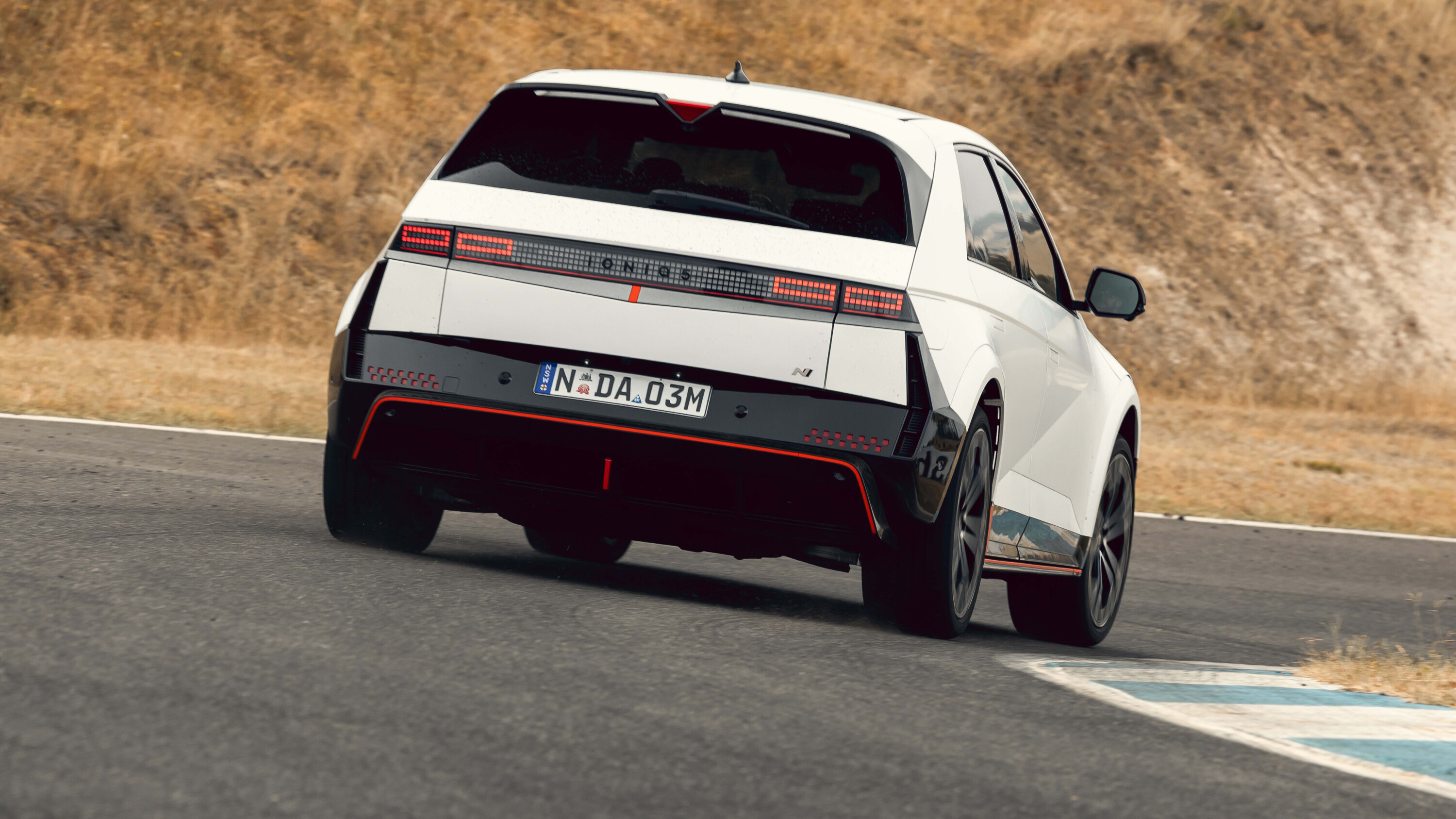
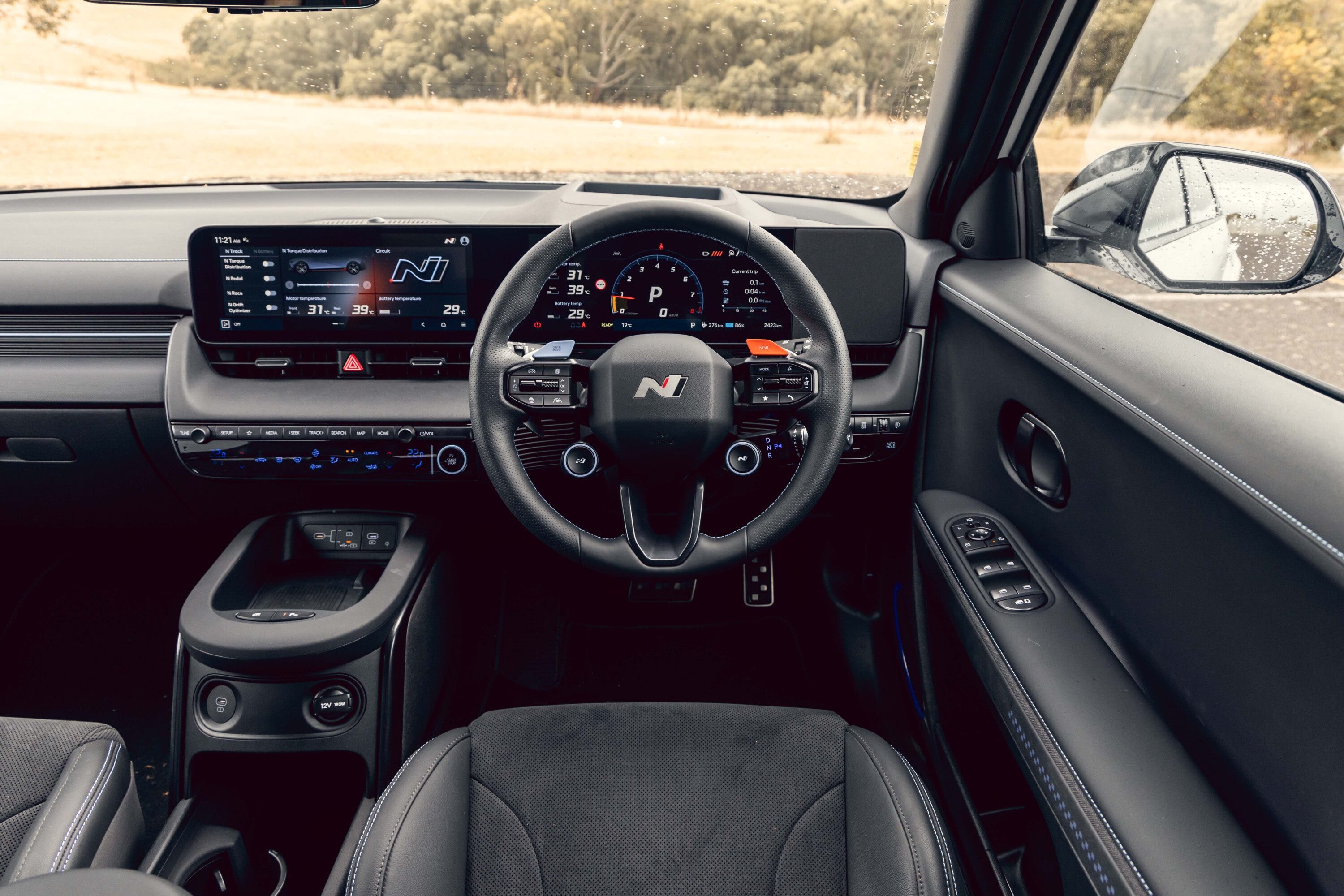
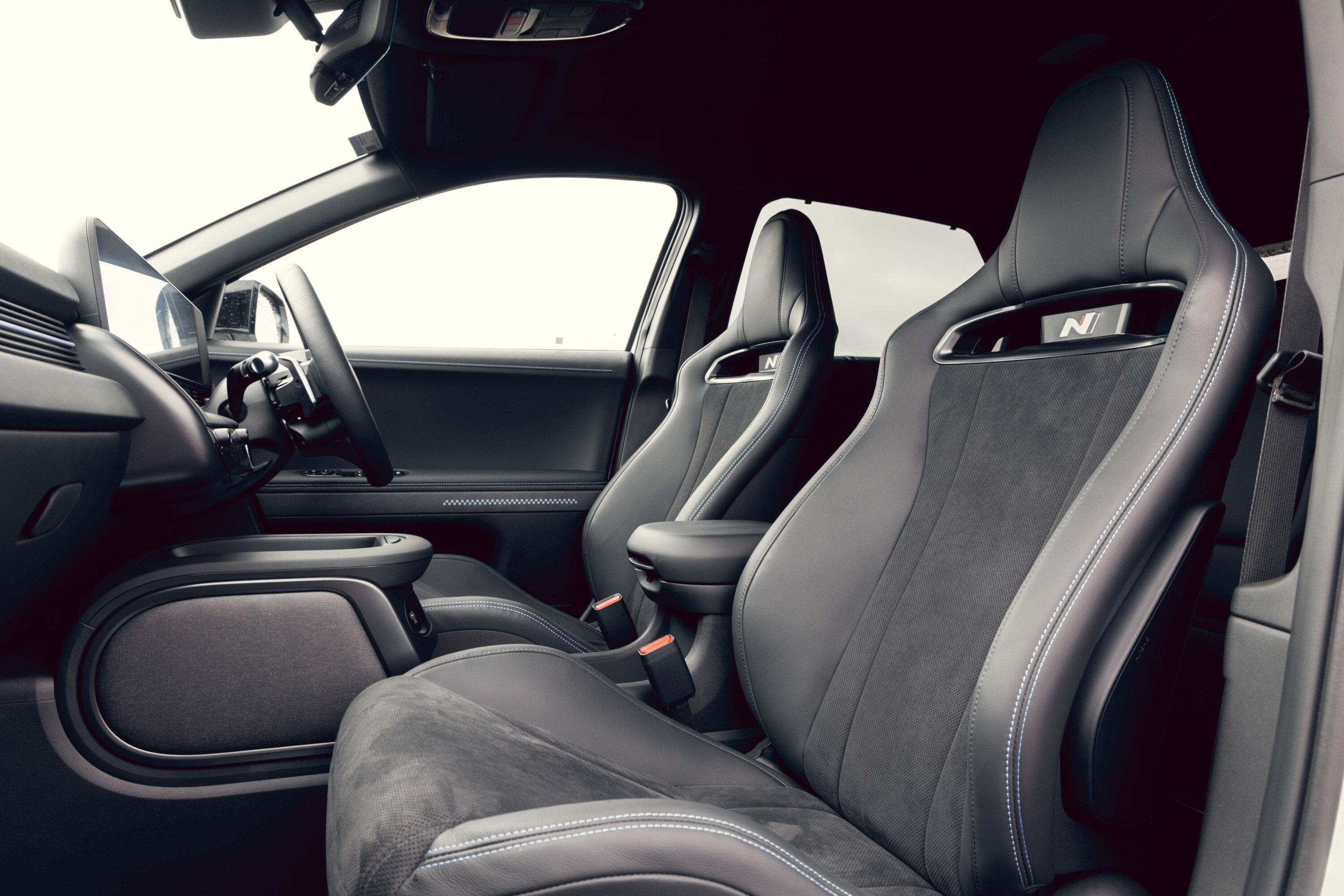
Firstly, it’s a design masterpiece. Both inside and out, the N treatment has taken nothing away from the Ioniq 5’s visual and tactile seductiveness, and perhaps even added to it.
More importantly, however, it’s what the 478kW/770Nm Ioniq 5 N brings to the table in terms of performance and driving dynamics that truly creates a benchmark … without detracting at all from its liveability, driveability, and functionality.
1
The Ioniq 5 N shows this is absolutely the way forward for performance EV motoring – a rewardingly creative way, at least. And if this is the future, then I don’t think we have much to be afraid of.
Sure, you’re not listening to an engine anymore and, sure, the Ioniq 5 N’s ‘Ignition’ induction sound is unashamedly digital. But this deliberately fake engine/exhaust noise (which is not the default setting – you need to select it) sounds better in this car than the overlaid synthesised stuff we’ve experienced in a whole bunch of combustion-engined cars over the years.
Yet that’s such an inconsequential aspect of the Ioniq 5 N experience. The rest of the car is so damn rock-star – performance included – that its status as an EV pretty much disappears into the background … until you need to charge it (in a world-beating 18mins from 10-80 percent).
1
VERDICT: IONIQ 5 N is 2024’s best EV over $80K
The more you get to know the Ioniq 5 N, the more you get out of it.
It has so much more personality and bandwidth than you’d ever think possible from an EV, with dynamic limits far beyond what most people will ever discover.
Yet this car isn’t about the extremes of handling ability or lap times – it’s about entertainment and involvement, about having a wealth of intriguing options, about choosing a flavour that suits your mood. In this regard, the Ioniq 5 N seems to never stop giving.
What it offers, though, is more than just bandwidth – it has nuance. And the nuance of the Ioniq 5 N’s personality and the way that it drives is almost limitless.
Just because the Earth’s resilience to climate change appears to be withering, doesn’t mean that the passion of motoring and driving enthusiasts needs to follow suit – as the Hyundai Ioniq 5 N so eloquently proves.
Dedicated EV platforms are becoming widespread, and the best battery-electrics are without doubt those that were built from the ground-up to forgo any form of combustion power.
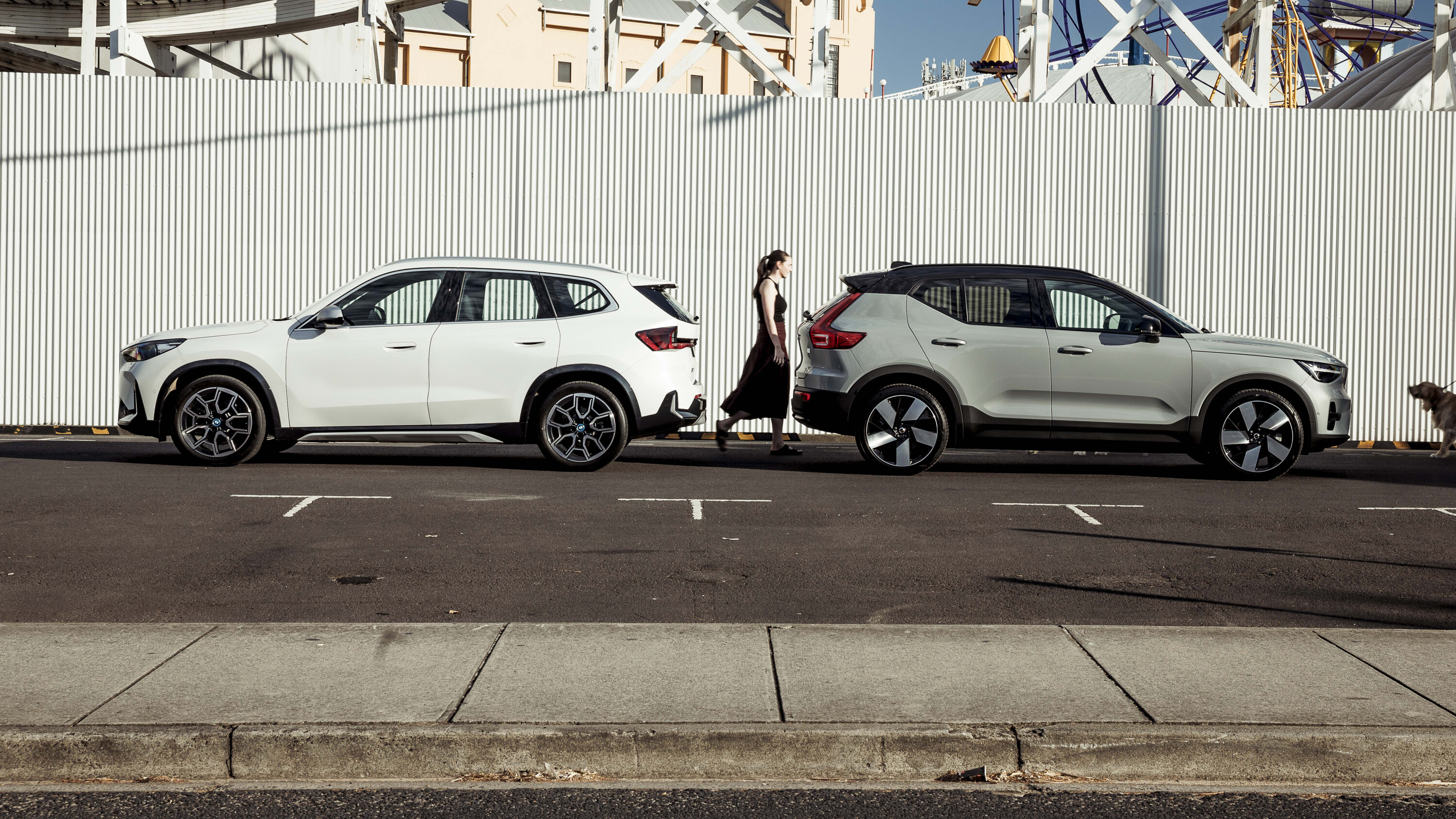
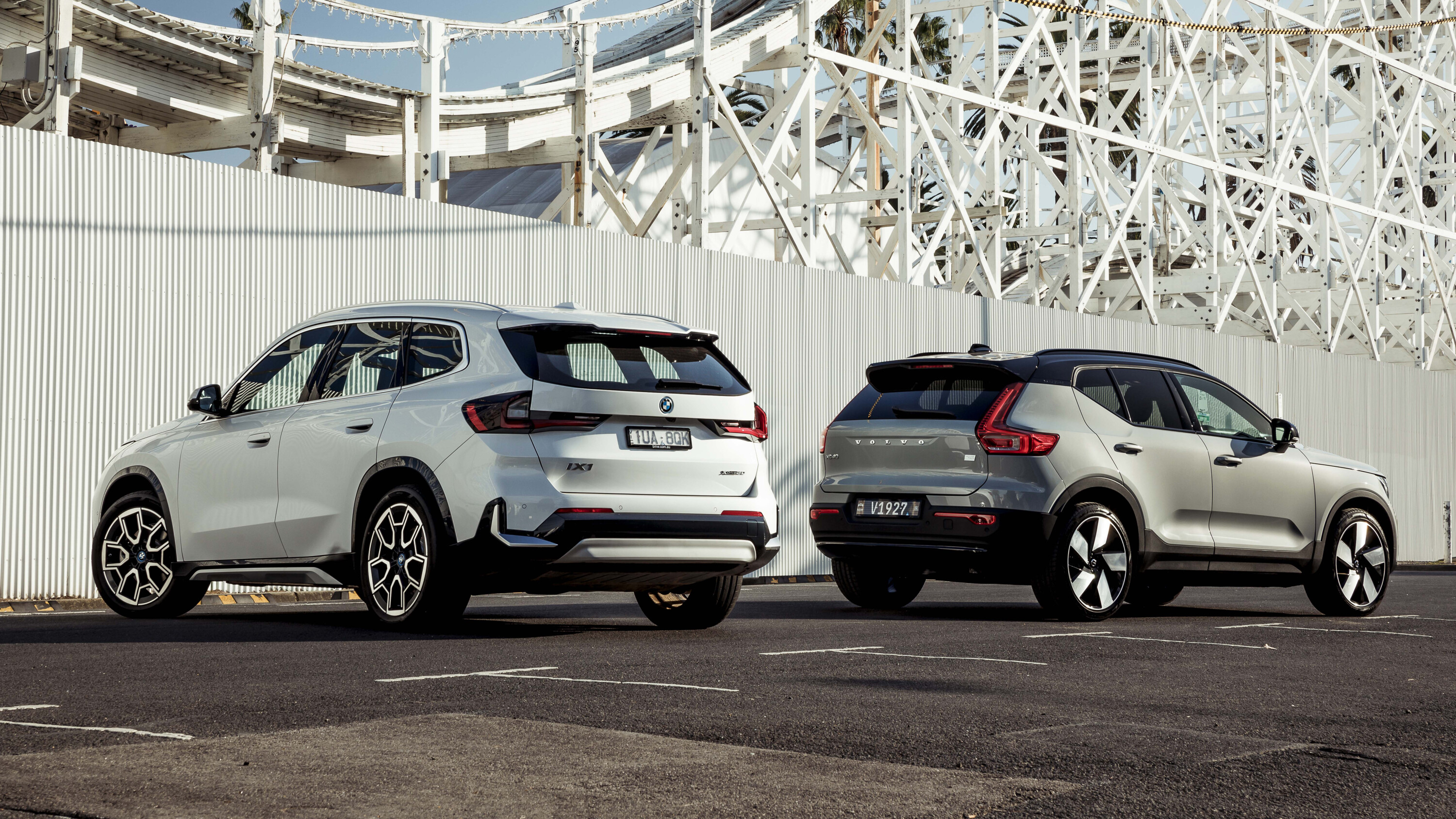
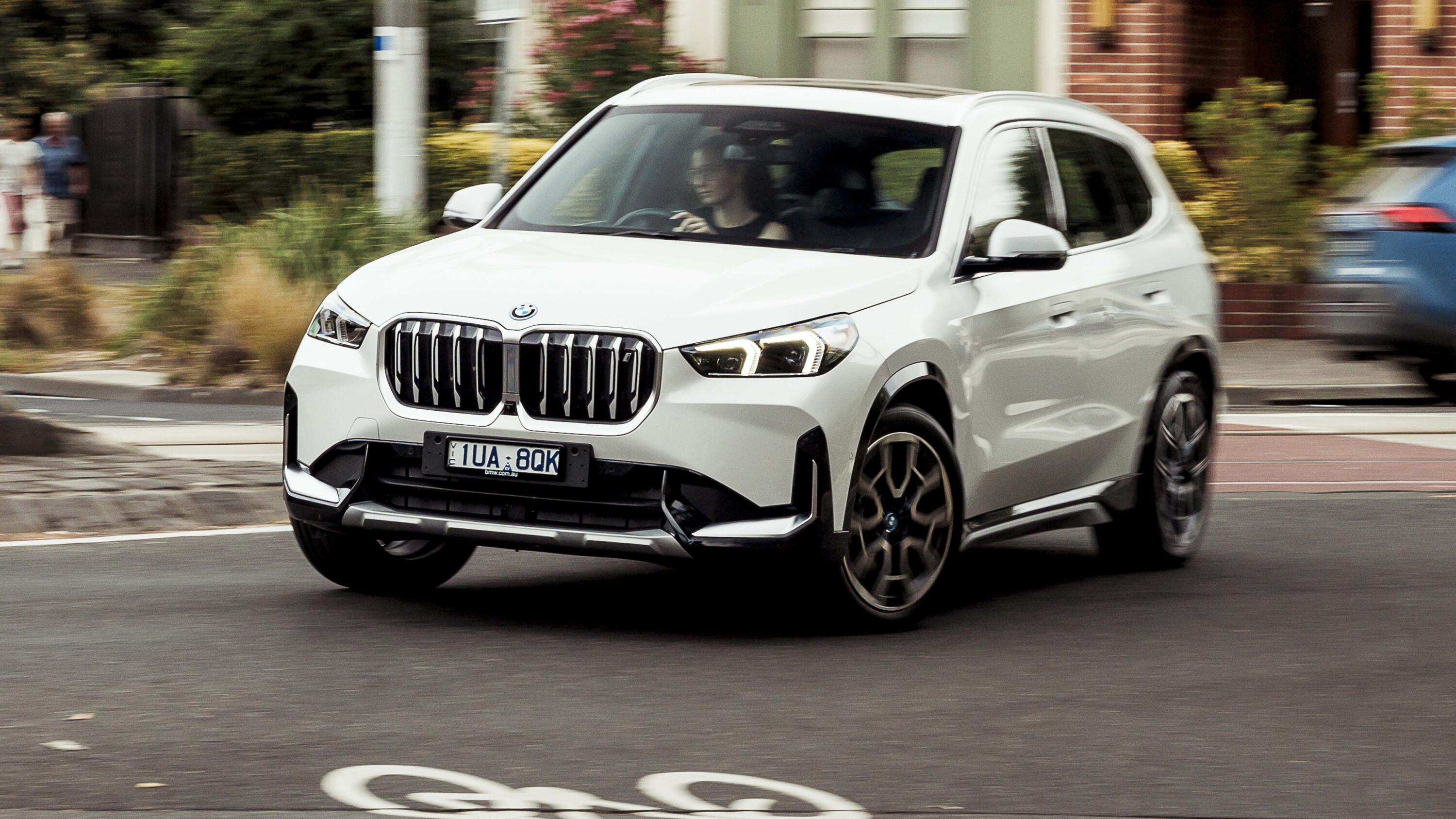
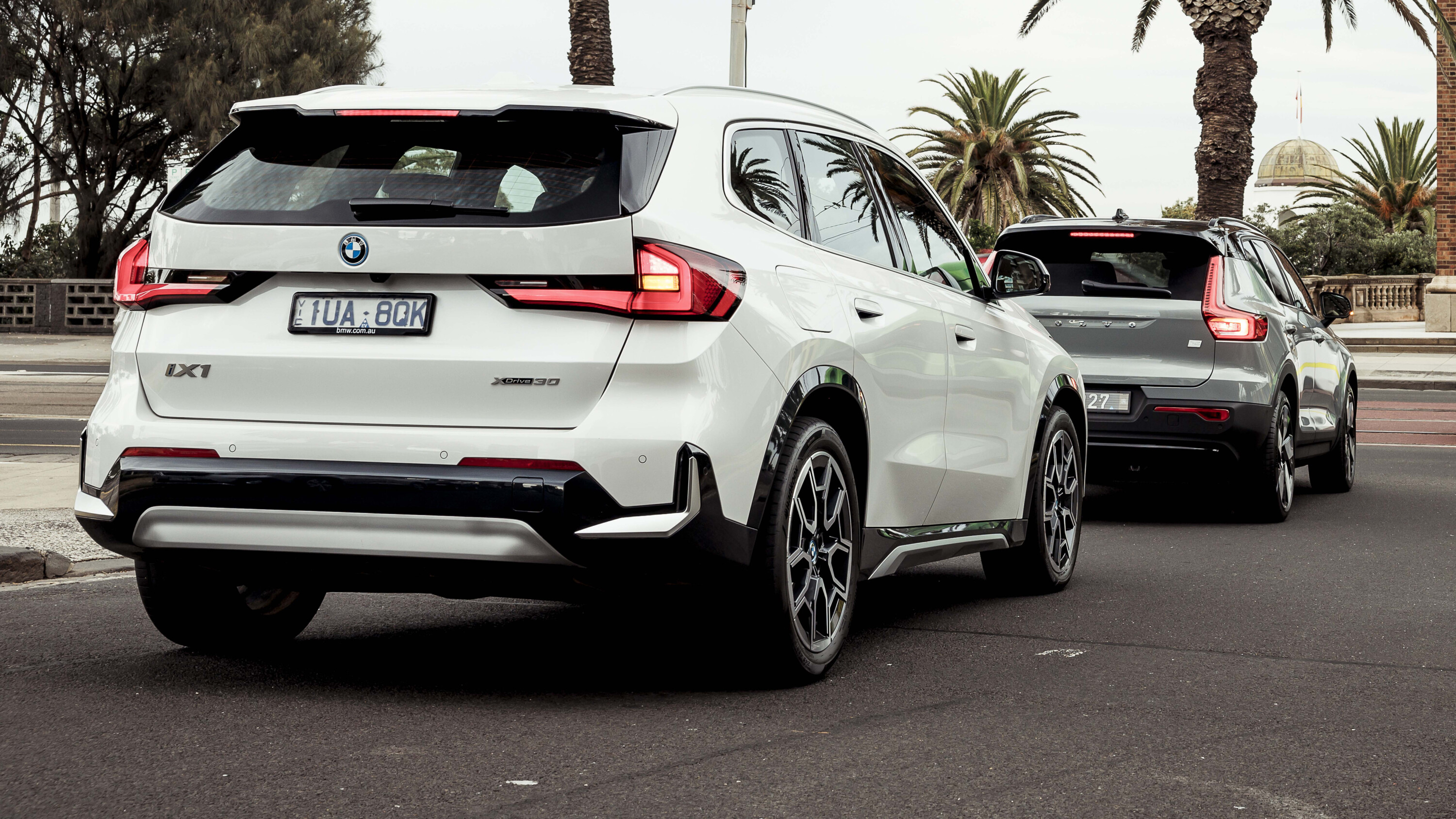
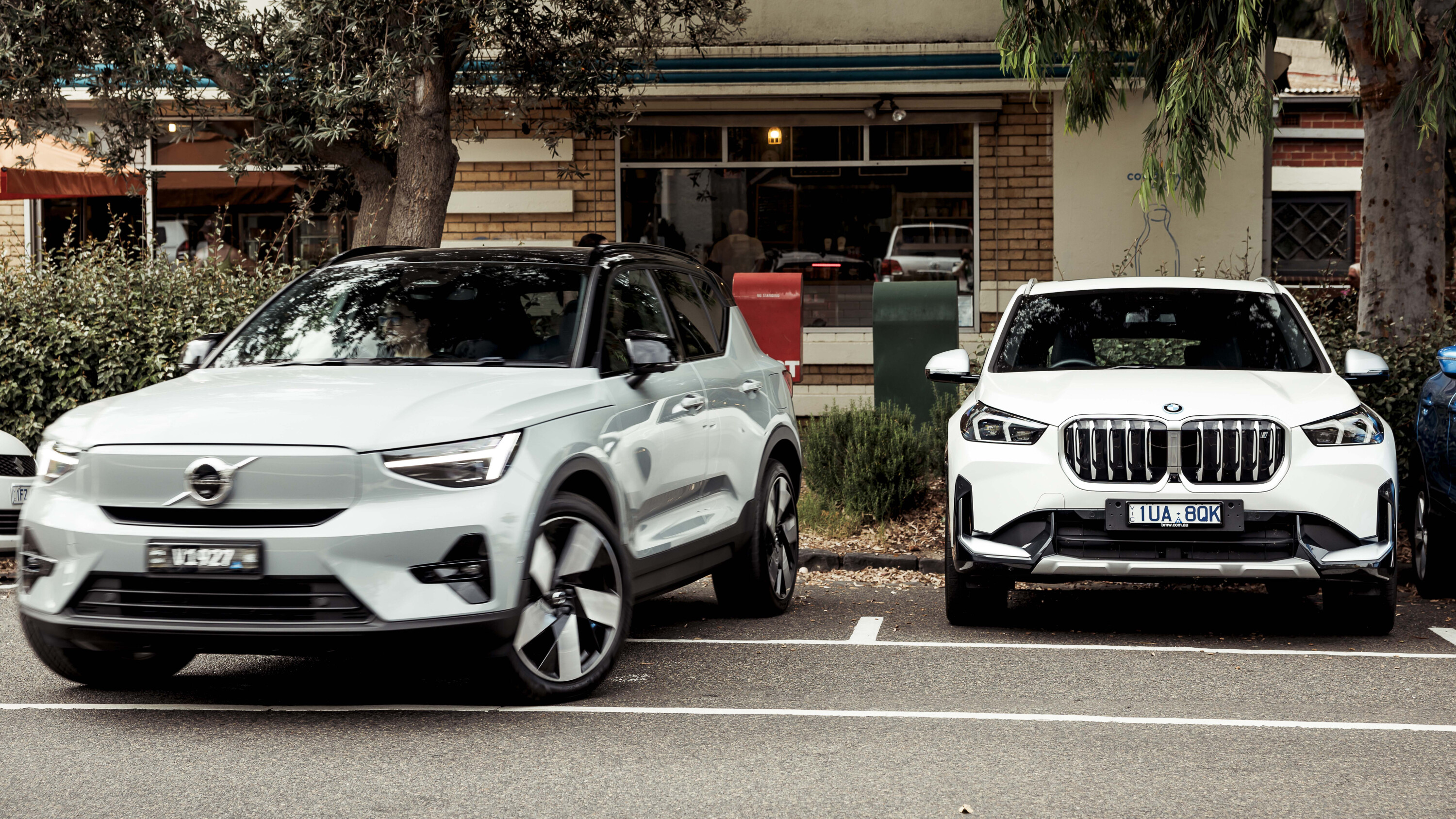
However, manufacturers are still banking some easy wins by hooking all-electric hardware into legacy (read: internal combustion) platforms, often to good effect. Two examples of that strategy are the cars we have here: BMW’s iX1, and the Volvo XC40 Recharge.
BMW’s iX1 launched in the middle of last year as a companion to the petrol-powered X1, while… wait, isn’t the XC40 Recharge a plug-in hybrid? It used to be – Volvo Australia canned that config back in 2022 and promptly reincarnated it as a pure electric car; hence its fairly unimaginative full name: the Volvo XC40 Recharge Pure Electric.
1
Lexus’s UX300e follows a similar format to the Volvo and Beemer
The XC40 Recharge received an update last year with a battery upgrade to 82kWh for a claimed 500km single-charge range, as well as the addition of a more affordable rear-wheel-drive variant to accompany the existing twin-motor, all-wheel-drive offering.
In the interest of keeping things fair to BMW’s AWD-only iX1 xDrive30, we’ve taken the XC40 Recharge in twin-motor form for this test. Both are priced in the mid-$80K range before on-road costs and options.
What are the alternatives? The Lexus UX300e follows a similar format to the Volvo and Beemer, being an electric variant of a combustion-led model, but despite getting an infotainment and endurance boost last year the FWD-only UX300e is uncompetitive against the Swede and the German in performance, despite costing similar money.
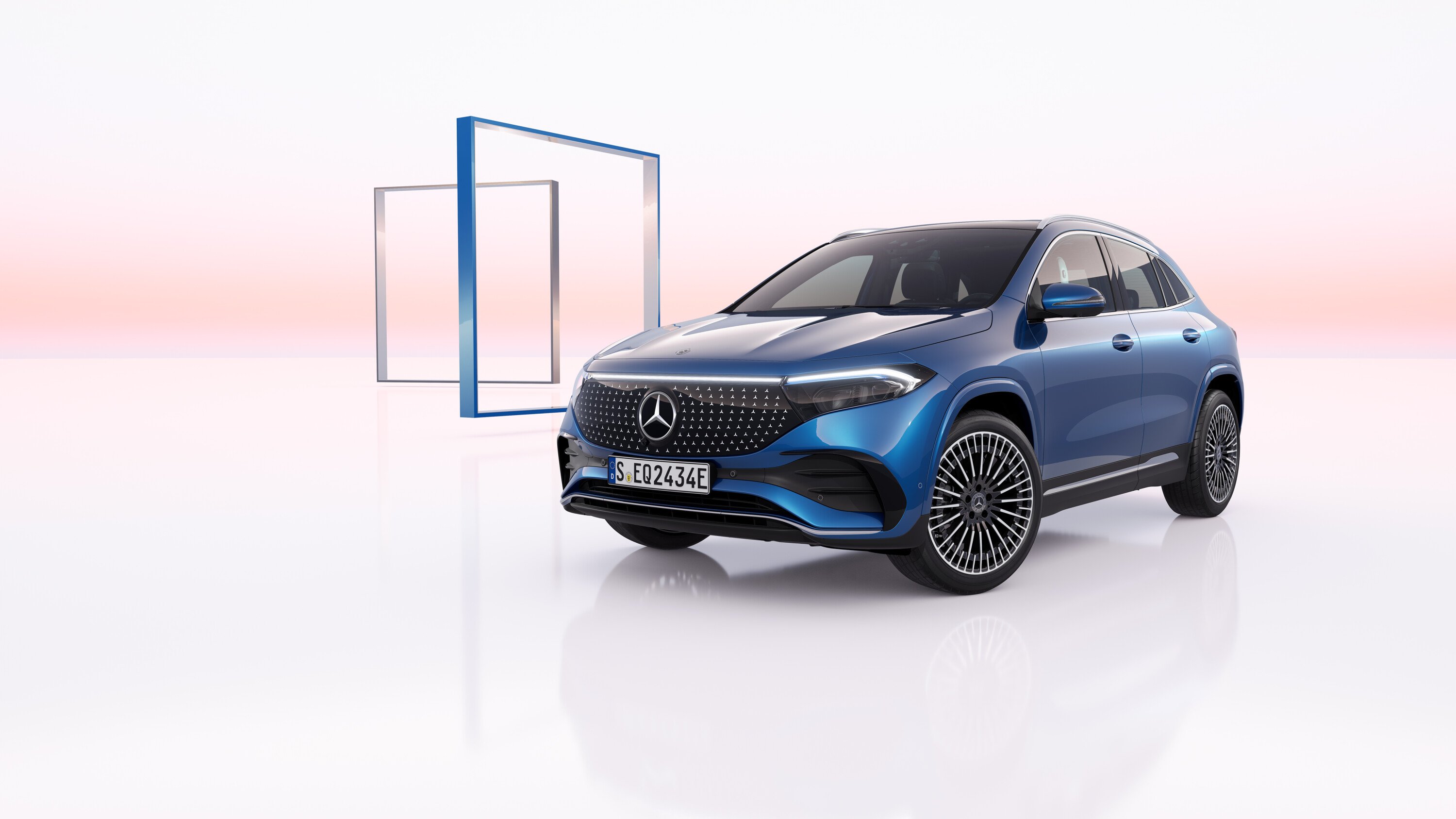
A Mercedes-Benz EQA would have also been a logical inclusion, but with a facelift due to arrive in the next quarter, it made no sense to include a car on the cusp of becoming superseded. Maybe next time.
1
As for the Genesis GV60, the flashy twin to Hyundai’s likeable Ioniq 5, a poor showing in COTY 2023 diminished our desire to put it in the mix – as did its eye-watering six-figure starting price.
But there’s also another reason to home in on just these two. Being built on more ‘traditional’ underpinnings with few external clues to their combustion-free mechanicals, both the XC40 Recharge and iX1 are well-positioned to capture the kind of buyer who’s keen to test the battery-electric waters but doesn’t want to make a big deal about it, because from 20 paces both of them just look like a regular ol’ SUV.
If you’re the kind of person who doesn’t want to invite questions about battery range and carbon emissions from your annoying neighbour, it’s these kinds of EVs that could allow you to fly under the radar. Saving the planet without making a fuss? Here’s what that’s like.
1
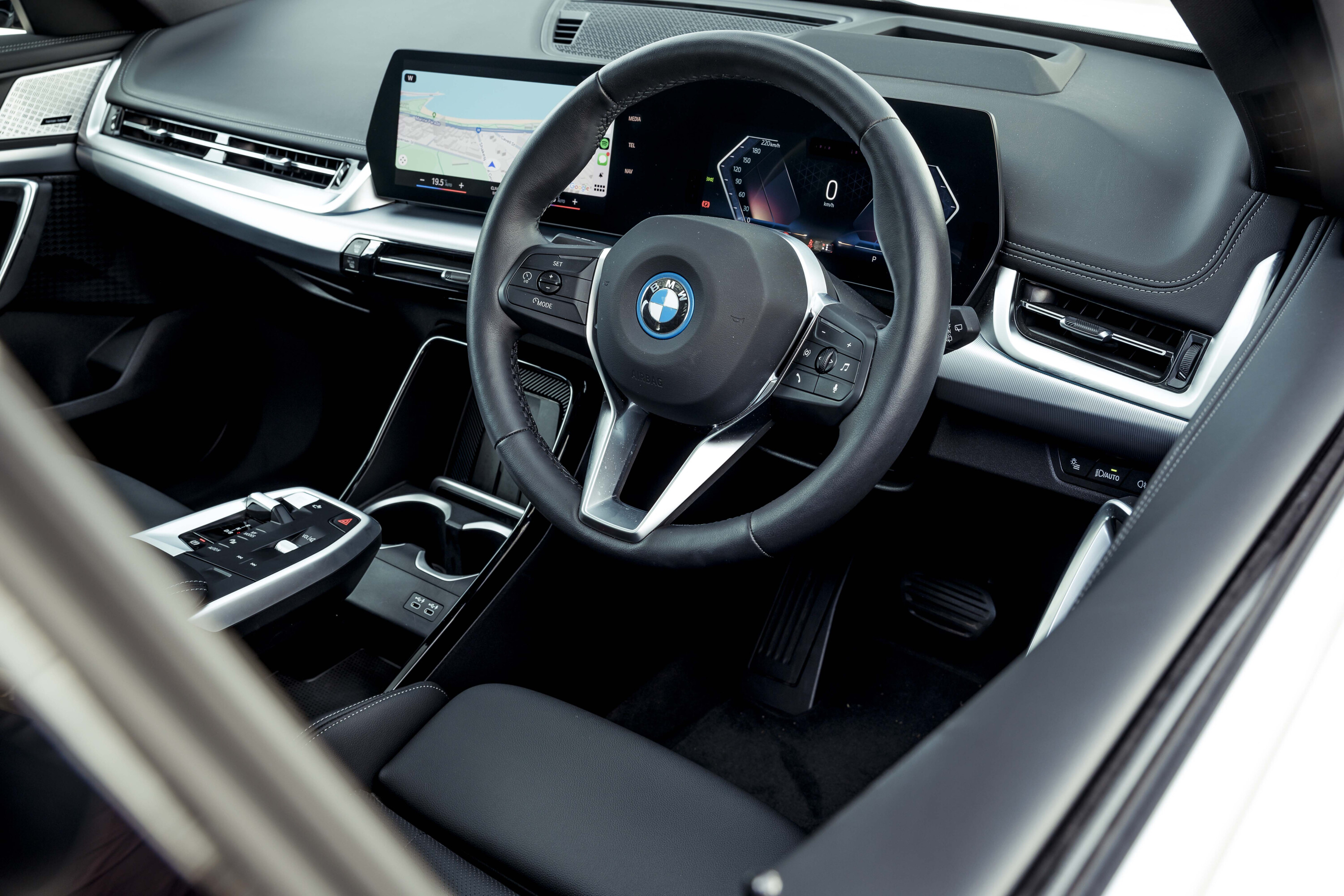
First impressions matter, and the iX1 makes an initial misstep. It might not be obvious from the photos, but its steering column is offset to one side, and thus misaligned with the driver’s spine.
I’d prefer the BMW badge on the horn pad to be staring straight at my sternum, but in the iX1 it gazes in the direction of my right nipple. A trivial concern? I’ll concede that, but I’m resorting to triviality because it’s pretty hard to fault the rest of the iX1’s cabin.
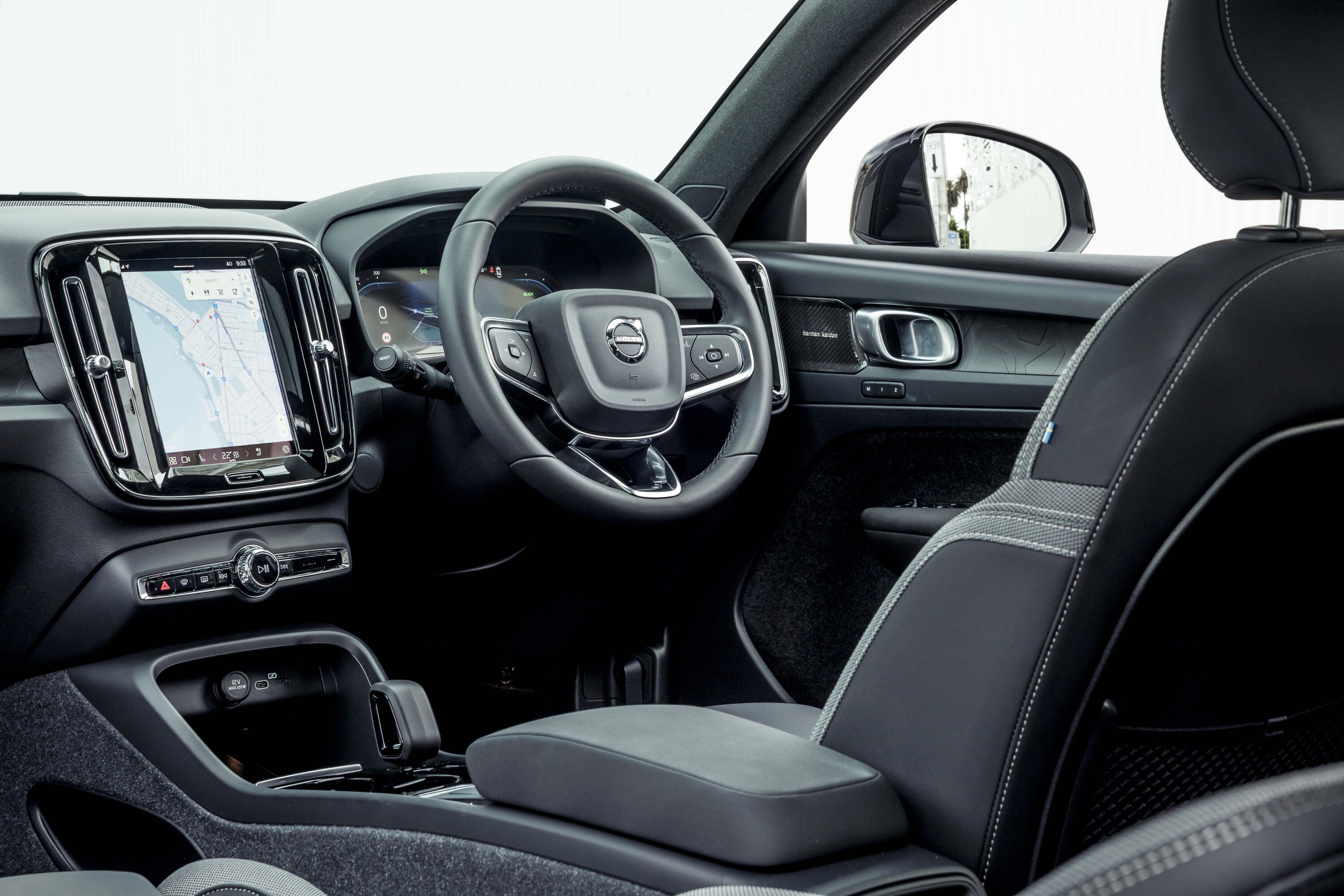
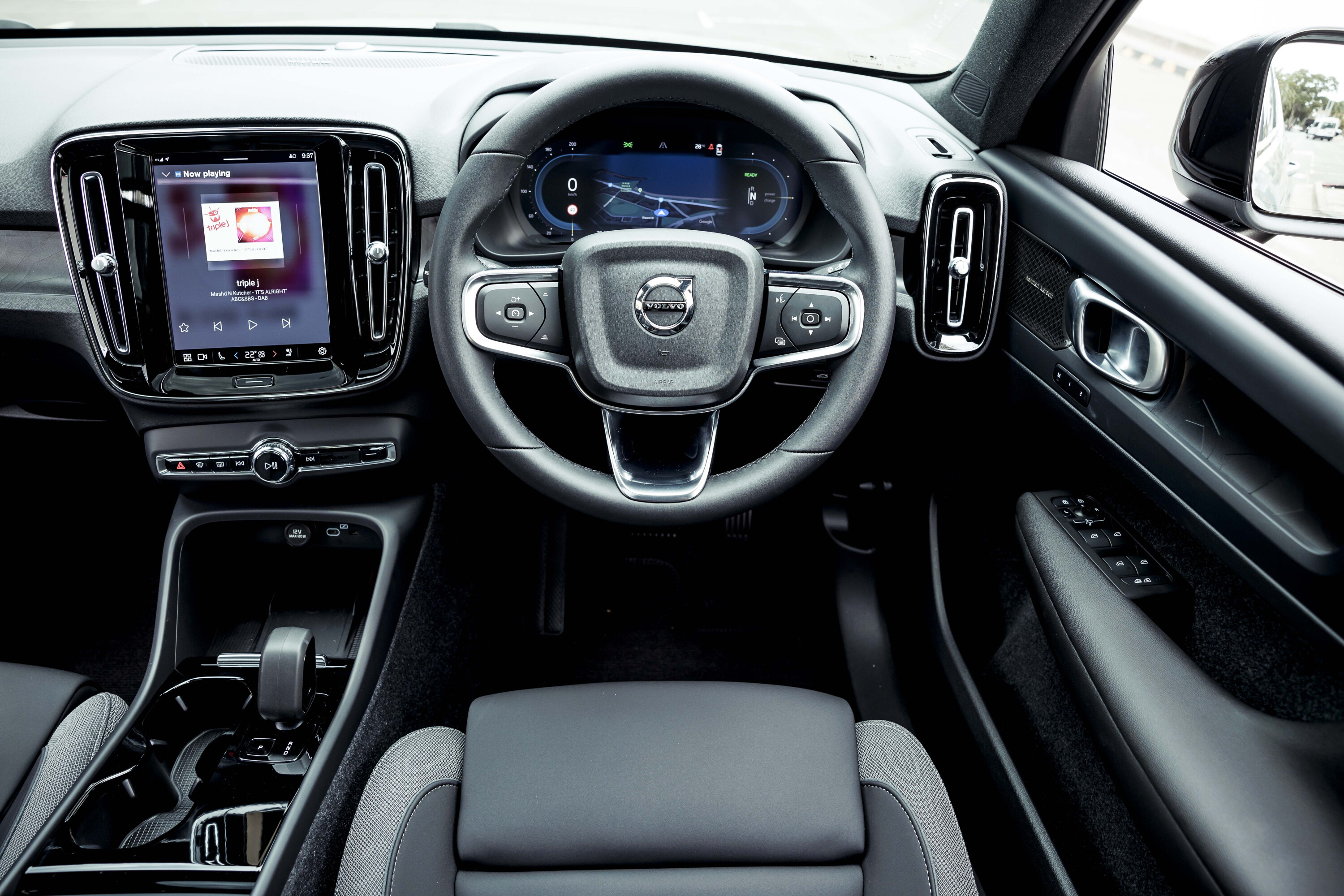
This is remarkably mature for a baby SUV. From the soft leather of the steering wheel rim to the laser-cut aluminium speaker grilles and, of course, the massive 10.25-inch instrument panel and 10.7-inch curved infotainment touchscreen that stretch across two-thirds of the dash, the iX1 xDrive30 feels properly premium.
1
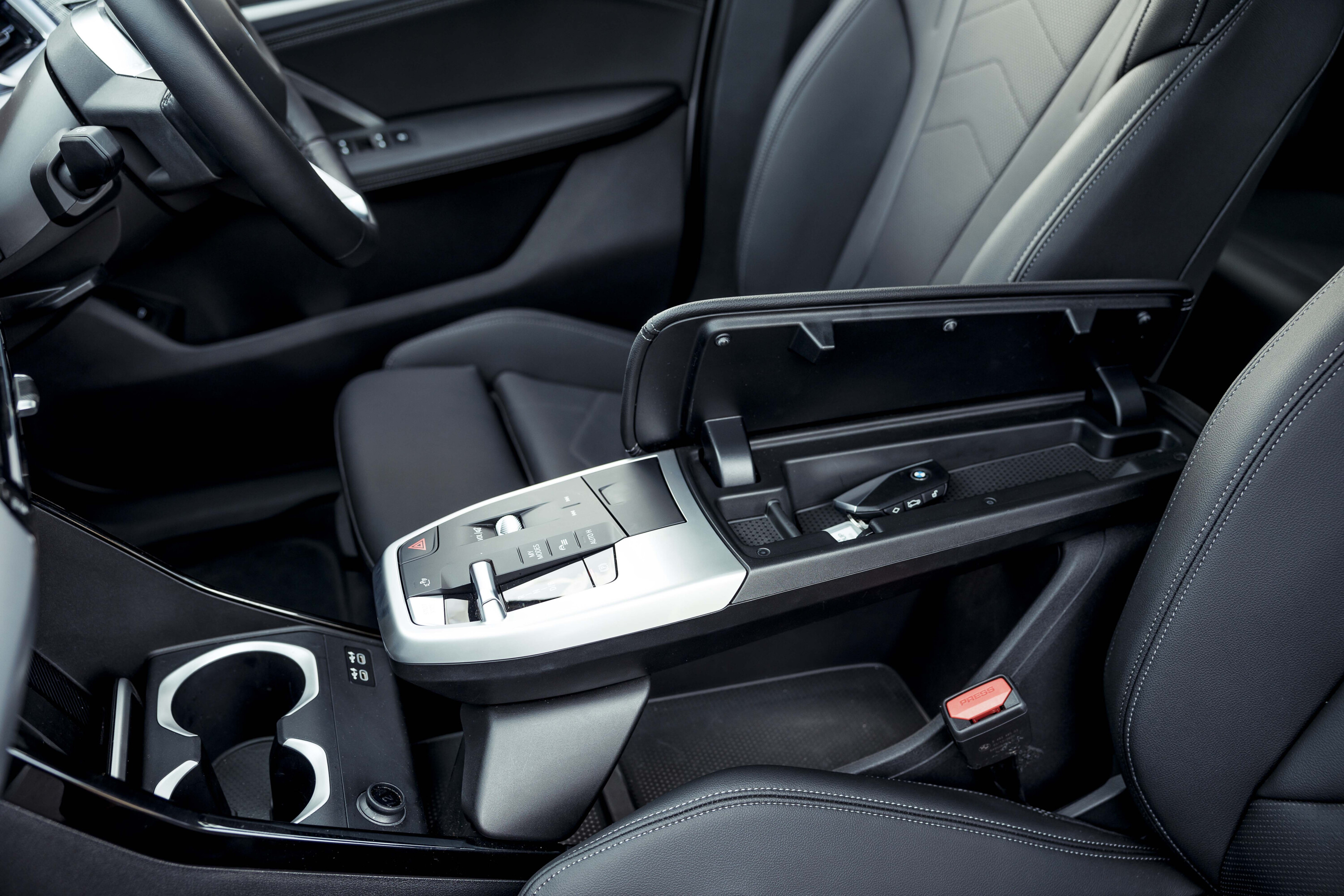
The centre console is hovering above an open storage shelf that looks perfect for an entire rotisserie chicken.
Power-adjusted front seats with integrated heaters come standard, as do dual-zone climate control, a powered tailgate and a crisp, bright head-up display. But our tester went a step further with its Enhancement Package ($3615) bringing extra frills in the form of a panoramic glass sunroof, Harman Kardon audio and active sports seats with massage function.
Utility and comfort are well served too. The centre console is partially cantilevered out between the front seats, hovering above an open storage shelf that looks perfect for stowing handbags, baguettes, or an entire rotisserie chicken.
Meanwhile, the wireless charging pad props phones vertically against the centre stack, secured by a rollercoaster-style bar in a recess big enough for even the most engorged phablet.
1
At the back, there’s legroom aplenty courtesy of a flat floor with almost no tunnel intrusion, along with a rear bench providing decent under-thigh support, a fold-down armrest and a reclinable backrest.
It’s worth remembering that the X1 is relatively fresh out of its wrapper – because the XC40 is starting to feel a bit beyond its best-before date these days. Its 9.0-inch infotainment screen looks like a postage stamp next to the X1’s mega-widescreen displays, and the interface can’t match the response speed nor intuitive operation of BMW’s software.
There’s no head-up display either, though the XC40 Recharge’s single specification grade does at least include things that are optional in the BMW, like a panoramic roof, rear seat heaters and Harman/Kardon stereo.
1
Material quality in the Volvo is good, though, and even the (ultra capacious) door bins are lovingly carpeted with thick fibres.
The Volvo’s ‘Topography’ trim on the dash and doorcards might look like ordinary injection-moulded matte-black plastic in the daytime (and it attracted more than a few comments for appearing cheap), but at night the translucent backlit panels are an innovative way of casting ambient light into the cabin. It’s just a shame you have to wait until the sun goes down to appreciate them.
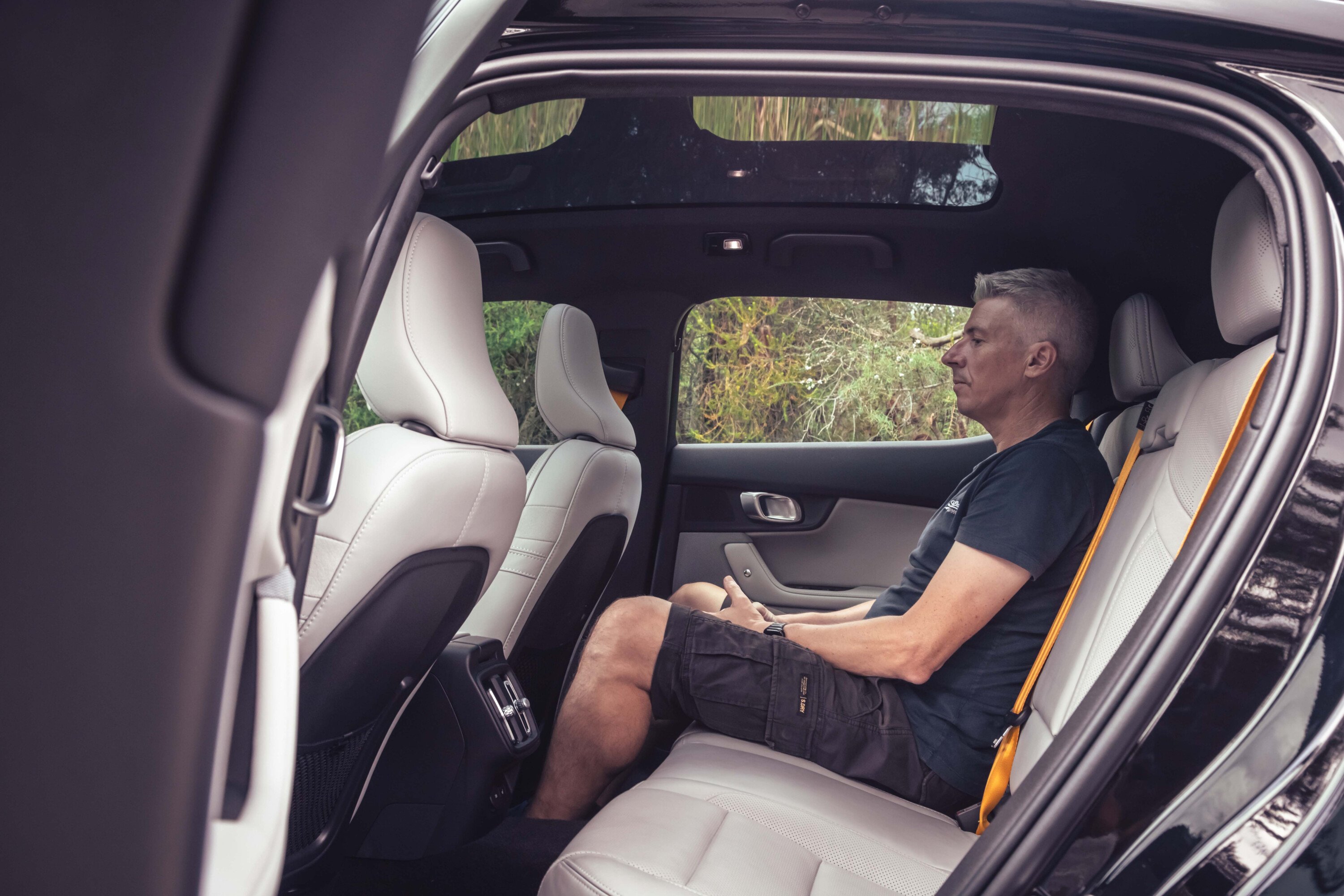
However, the rear seats lack comfort for adult-sized passengers, with a low H-point and flat squab giving a knees-up posture that takes weight off the thighs and transfers it to the glutes. It’s not helped by the large tunnel and slim gap between the centre seat and the rear of the centre console – making the XC40 more of a four-seater than a true five-seater – while the rear backrest can’t be reclined any further from its rather upright locked position. It’s also dark back there.
1
The XC40’s turret is more hatch-like than wagon, with no quarter glass behind the rear doors. That leads to a cave-like ambience in the rear cabin, and a horrendous blind spot.
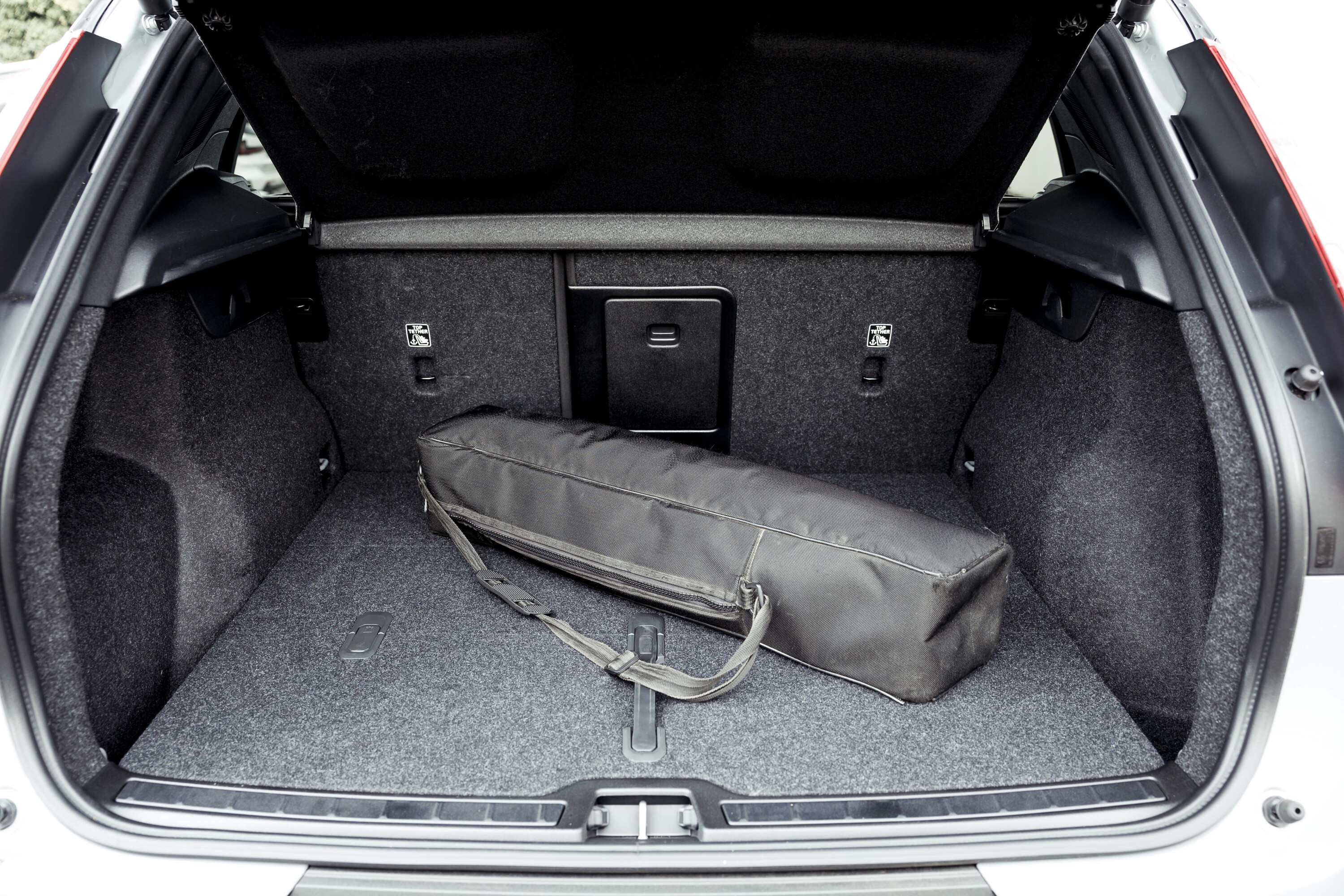
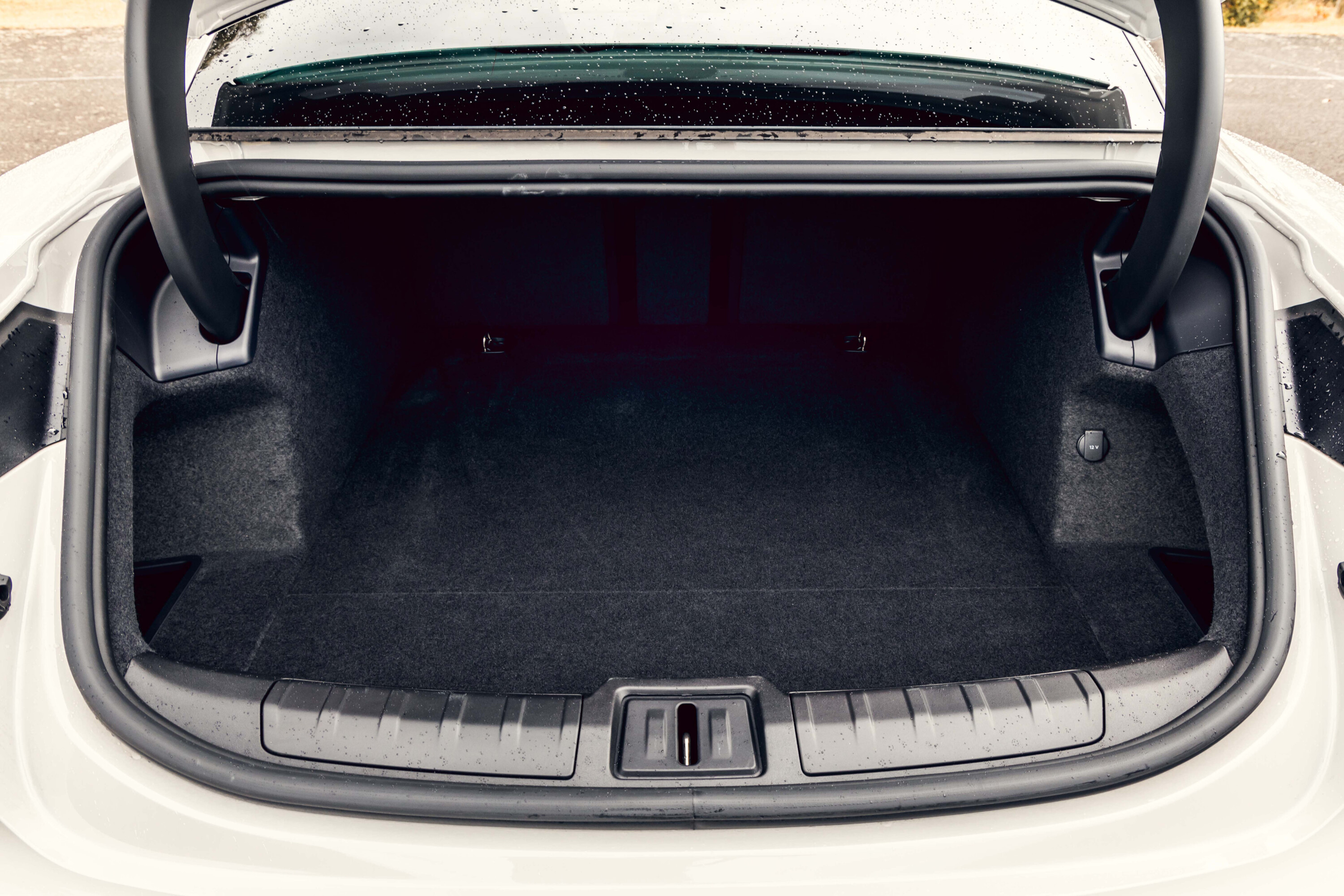
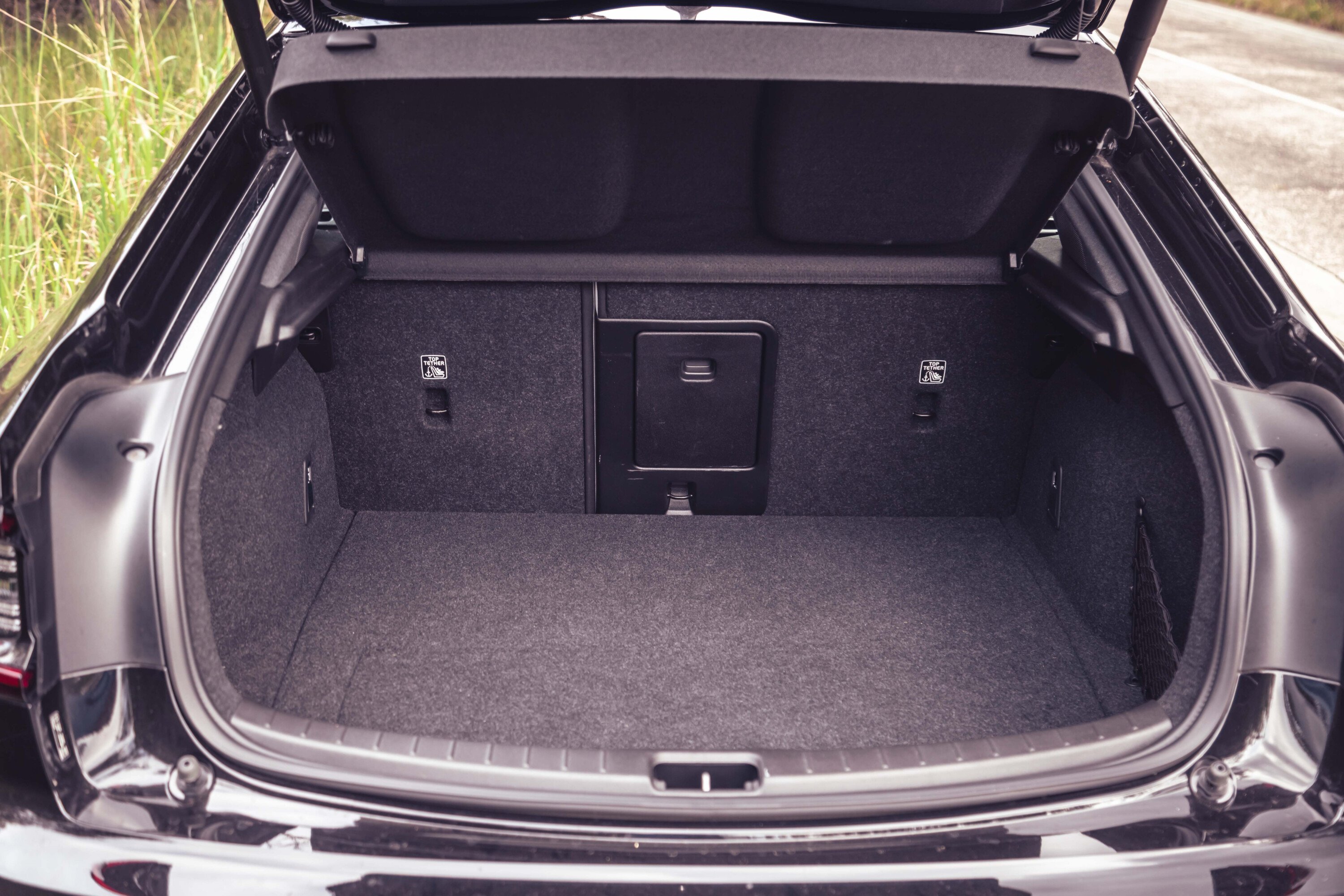
Volvo wins back some interior points by virtue of its frunk – something the iX1 lacks – as well as its nifty flip-up cargo divider and multitude of shopping bag hooks. Though boot capacity numbers favour the BMW (490L in the iX1 versus 452 litres in the XC40), the Volvo’s boot area feels more versatile and useful.
The XC40 feels like an absolute hotrod out on the streets. Little wonder, what with its twin-motor setup (110kW front, 190kW rear) slamming a combined 300kW and 670Nm to the road via all four wheels.
Equipped with sticky Pirelli P-Zeros in staggered sizing (255s at the back!) on 20-inch alloys, the XC40 Recharge Twin needs that rubber to deliver on its 4.8-second zero-to-hundred claim, which is a remarkable number when you note its 2.2-tonne kerb weight.
4
With an 82kWh battery, the Volvo also has a range advantage against the iX1 and its significantly smaller 67kWh lithium-ion pack, with range claims of 485km and 400km respectively. We’ll get to what that means in the real world in just a sec.
The BMW also has a twin-motor configuration, they’re just a little less ‘roided up than what the XC40 is rocking, with combined outputs of 230kW and 494Nm. In a straight-line blat the Bimmer is certainly fast enough, with crisp torque delivery at lower speeds and good traction from its Hankook Ventus S1 Evo3s, but the 5.6-second 0-100km/h run means it’ll never hang with the Volvo in a stoplight drag.
But that shouldn’t matter to would-be buyers, as neither are pitched as performance cars. Range and comfort are going to be the critical on-road criteria, and this is where a convincing winner appears.
1
On a 100-kilometre loop with a 70:30 split between urban and highway driving, the difference in energy consumption was obvious.
The Volvo consumed an average of 17.7kWh/100km – a 1.3kWh/100km improvement on the factory claim of 19.0kWh/100km – however the BMW trounced it with a 15.5kWh/100km energy burn (2.8kWh/100km less than BMW’s own claim). Dividing its battery capacity by that number returns a theoretical maximum real-world range of 430km, against the XC40’s 460km.
Our on-test distance delta isn’t quite as big as the factory claims make out, and though the Volvo is still the outright range king, the BMW will need to spend less time at a charger in order to travel a given distance.
1
That arguably comes down to weight. The BMW weighs nearly 200kg less than the Volvo, and with less mass to motivate it’s no great surprise it’s the more energy-efficient machine.
A disparity in weight likely also explains the other thing that sets these two cars apart: ride quality. The Volvo feels like it has a tauter, more sensitive suspension, with plenty of head-toss in the pitch axis making it less comfortable on a lumpy road. It corners well with ample grip, but we suspect the average owner would probably appreciate slacker suspension. The BMW, by contrast, is far more composed and natural on its adaptive suspension and 19-inch rims.
Both cars have their merits, and the Volvo XC40 Recharge makes for one heck of a sleeper – smoking V8s and hot hatches is something it’s surprisingly good at. However, for its balance of comfort, technology, performance, efficiency and quality, it’s difficult to ignore the iX1 xDrive30.
Combustion compromise
With floorpans designed to accommodate either a combustion powertrain, a hybrid, or a pure electric one, packaging compromises are inevitable.
For one, the engine compartment usually gets filled up with hardware like the inverter, charger and other control electronics, while pure-EV platforms are typically able to open up that area for luggage.
Volvo does a better job here, providing enough stowage for the car’s emergency charge cable under the bonnet – but the iX1 has no ‘frunk’ to speak of.
Front: MacPherson struts, coil springs, anti-roll bar. Rear: multi-link, coil springs, anti-roll bar
Front: struts, coil springs, anti-roll bar. Rear: multi-links, coil springs anti-roll bar
Steering
electric rack-and-pinion
electric rack-and-pinion
Front brakes
ventilated discs/regenerative
ventilated discs/regenerative
Rear brakes
ventilated discs/regenerative
ventilated discs/regenerative
Tyres
Pirelli P-Zero Elect
Hankook Ventus S1 Evo3
Tyre size
235/45R20 front, 255/40R20 rear
245/45R19
SAFETY
ANCAP rating
5 stars (expires DEC 2024)
5 stars (expires DEC 2028)
Warranty
5ys/unlimited km (vehicle), 8yrs (battery)Service interval: 12 months/15,000km
5yrs/unlimited km (vehicle), 8yrs/160,000km (battery)
Service interval
12 months/15,000km
Condition-based servicing u2013 no set intervals, no set costs
VERDICT
7.1 /10
7.9/10
*Enhancement Package u2013 ($3615)
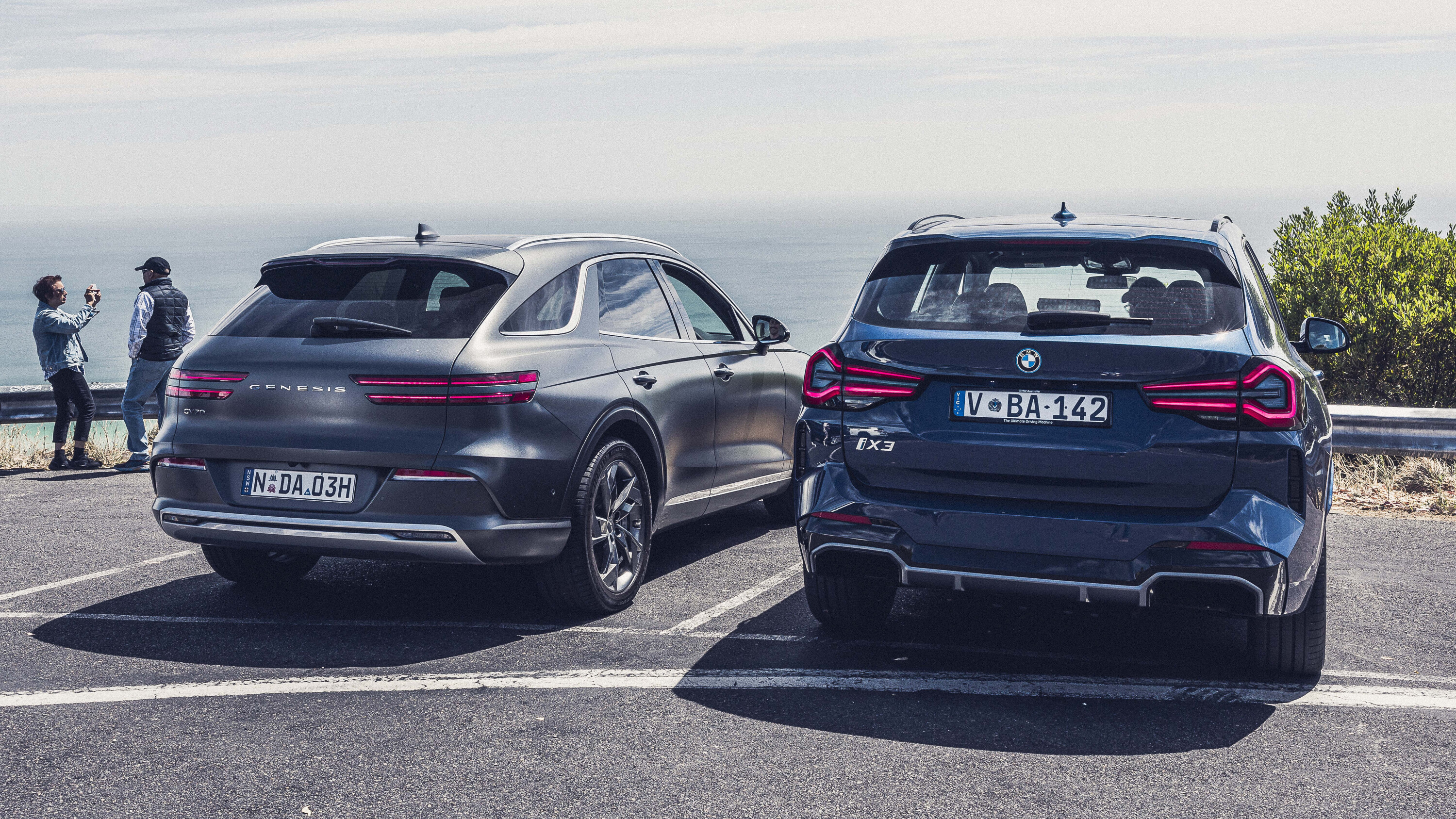
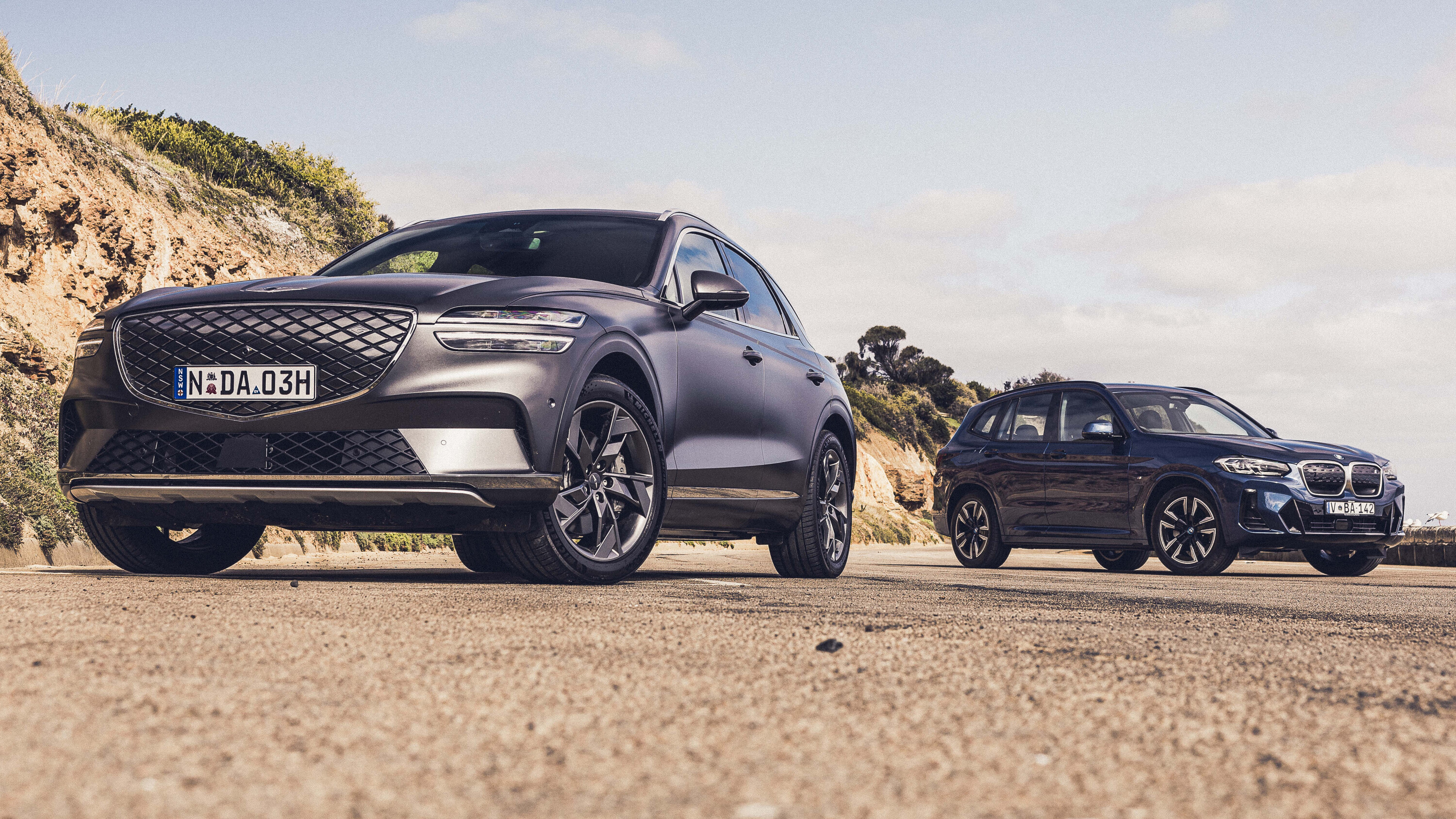
Here we are then: two of the top contenders in the highly competitive, and potentially highly profitable, luxury mid-size electric SUV class – and neither of them is a dedicated, built from the ground up, EV.
That might be a surprise, but it’s also an indicator of where this segment is at right now. Six years after Jaguar gave us the groundsheet I-Pace — and almost a decade since BMW gave us the even braver i3 and i8 — it’s clear this section of the market required a more cautious approach. Ease of transition has become the focus, and normalcy and familiarity are the key attractions.
So you’ll find no wacky interiors here, nor any futuristic exterior styling. And that’s exactly the appeal. In fact, park both of these SUVs on a regular high street and they blend in so seamlessly that you’d be hard pressed to tell they’re EVs at all.
1
One thing you will encounter, however, is a hefty price discrepancy.
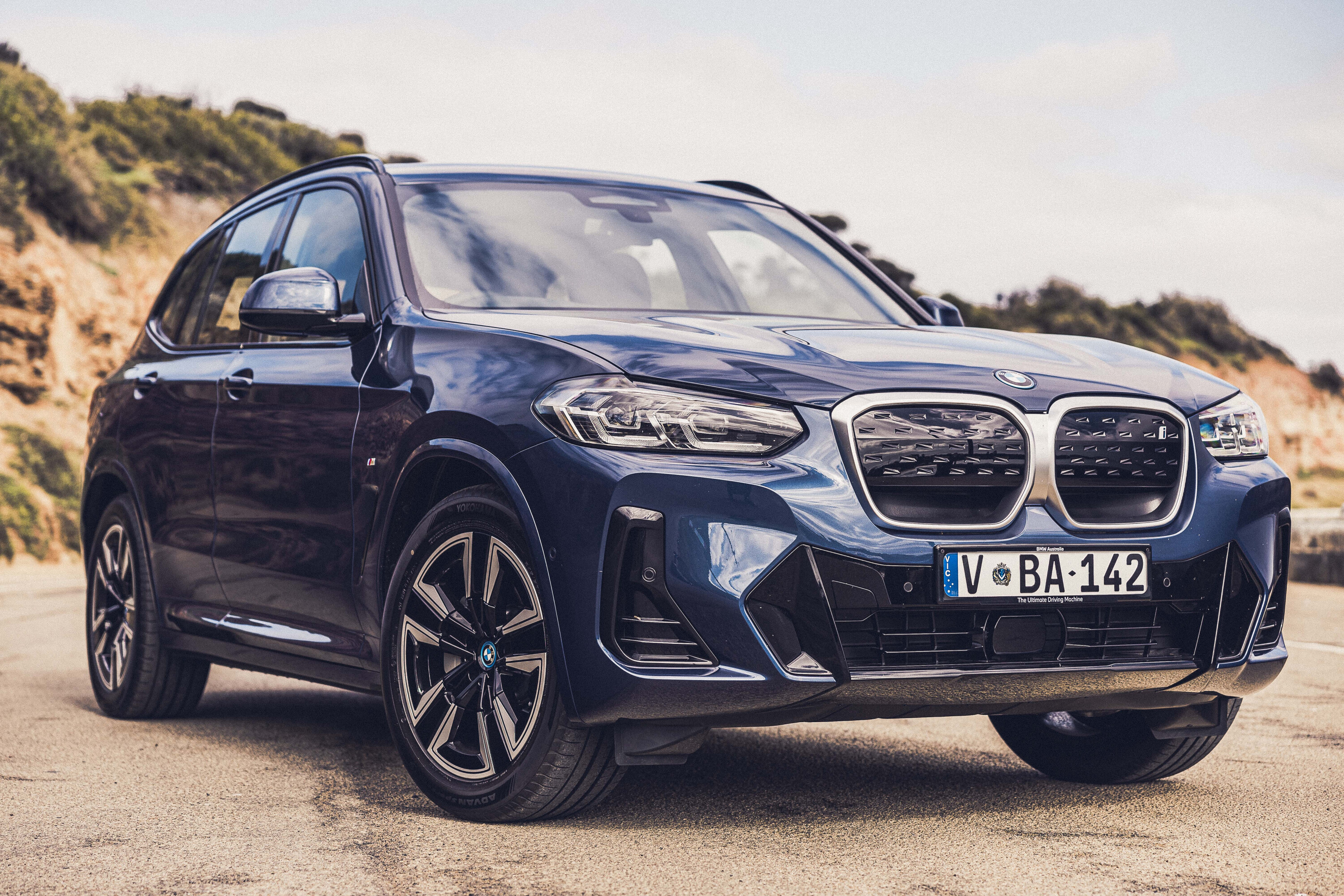
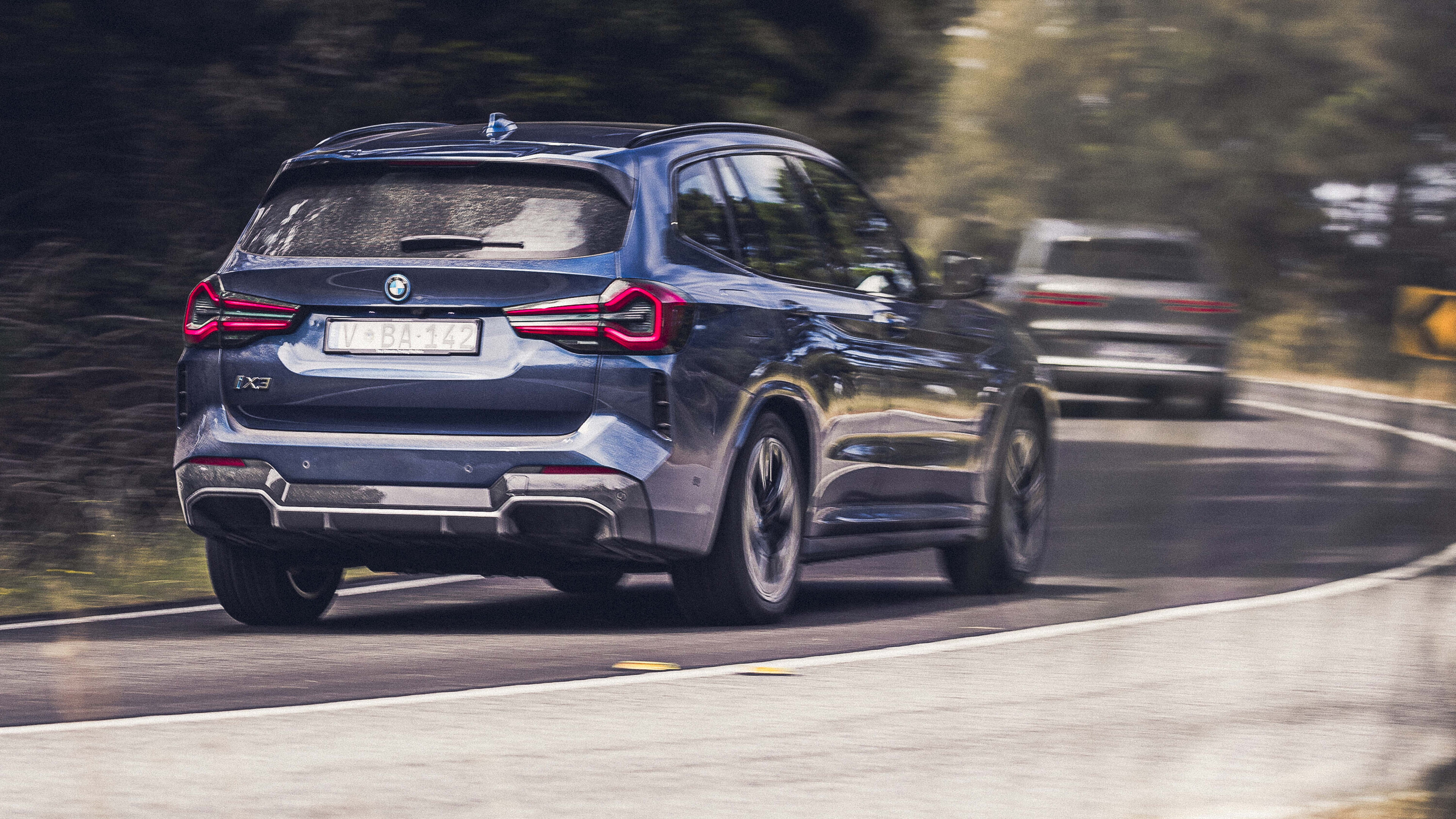
Both of our contenders are relatively fresh: Genesis launched the electrified GV70 back in April 2023 and while the regular iX3 arrived around the same time, this particular version is so new the ink is still wet on its passport stamp.
It’s called the iX3 M Sport and it’s a fresh entry-level variant priced at $89,100 before on-road costs. That’s a full $15,800 less than the ‘standard’ iX3 and importantly it sneaks the M Sport under the Luxury Car Tax and Fringe Benefit Tax thresholds.
1
It’s no stripped-out price leader, either.
Like every version in the three-strong iX3 range, the M Sport uses a single e-motor on the rear axle producing 210kW and 400Nm. Power comes from an 80kWh battery (74kWh usable) and range is rated at 460km on the stricter WLTP test cycle.
You still score plenty of equipment goodies too, including 19-inch alloys, M Sport exterior styling, a panoramic sunroof, heated front seats, leather upholstery and adaptive suspension.
BMW’s active safety suite is also included, which bundles together adaptive cruise control, autonomous emergency braking, blind-spot monitoring, lane-keep assist and rear-cross traffic alert amongst others.
1
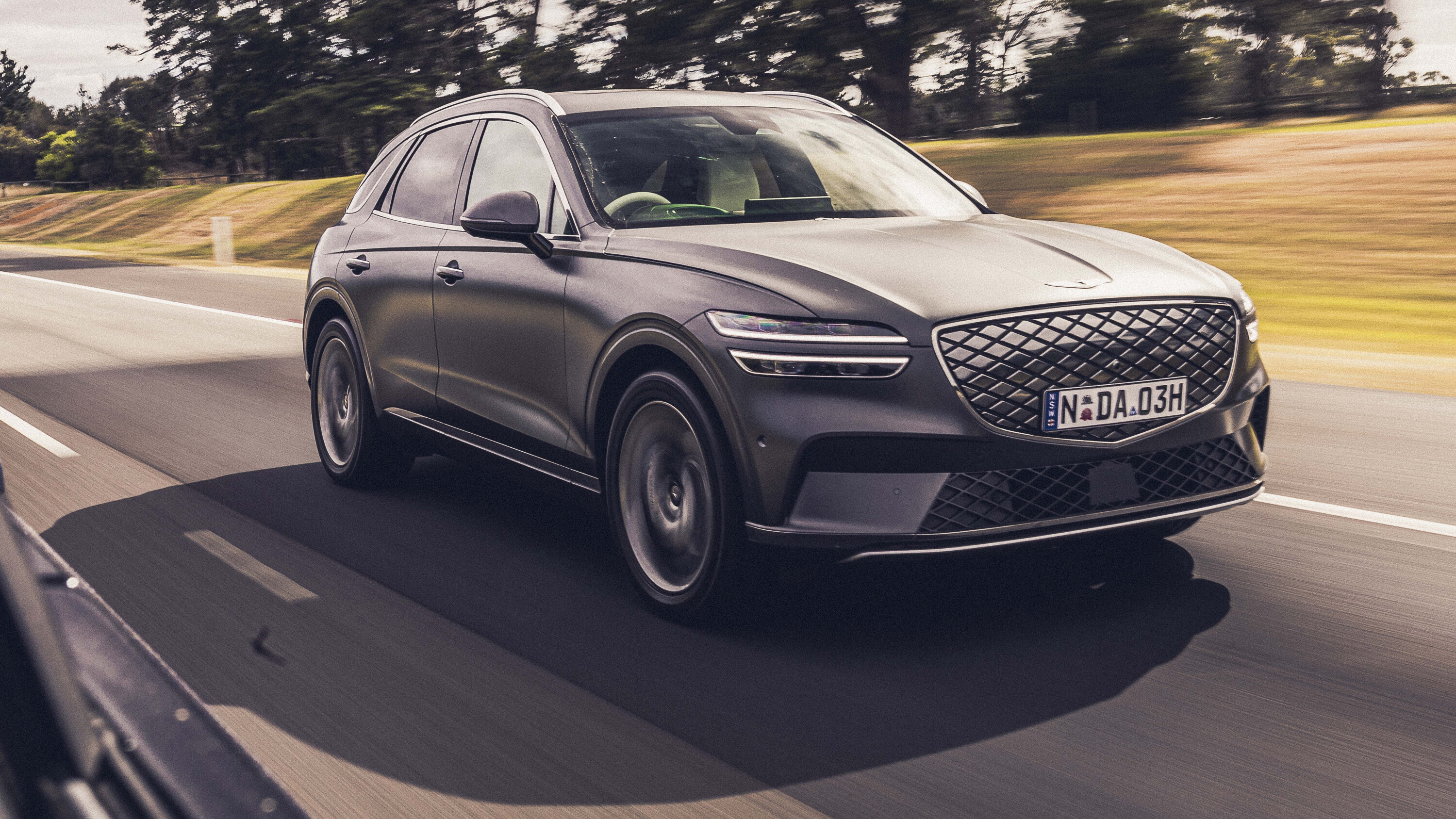
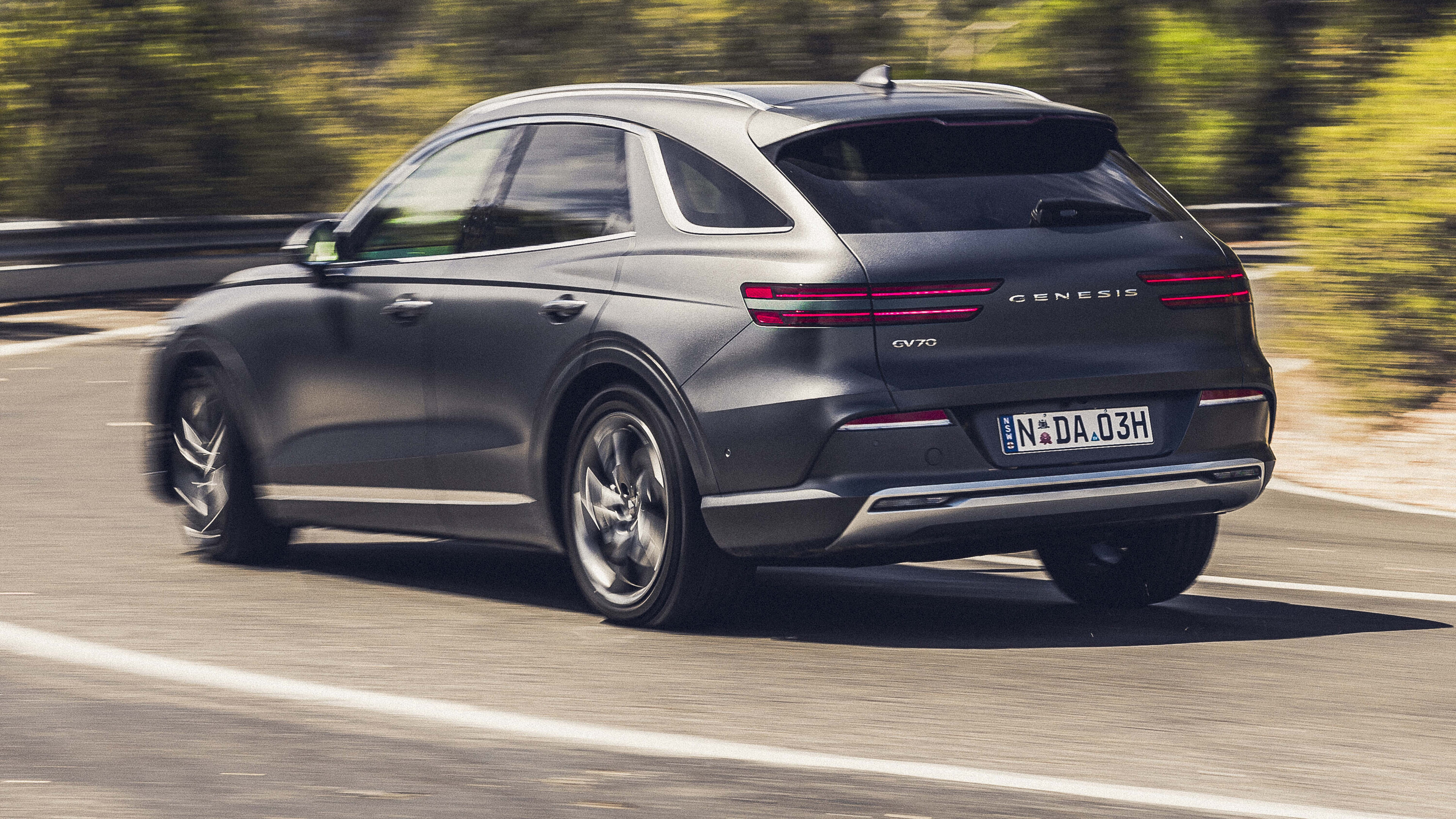
The Genesis, meanwhile, is a richer proposition.
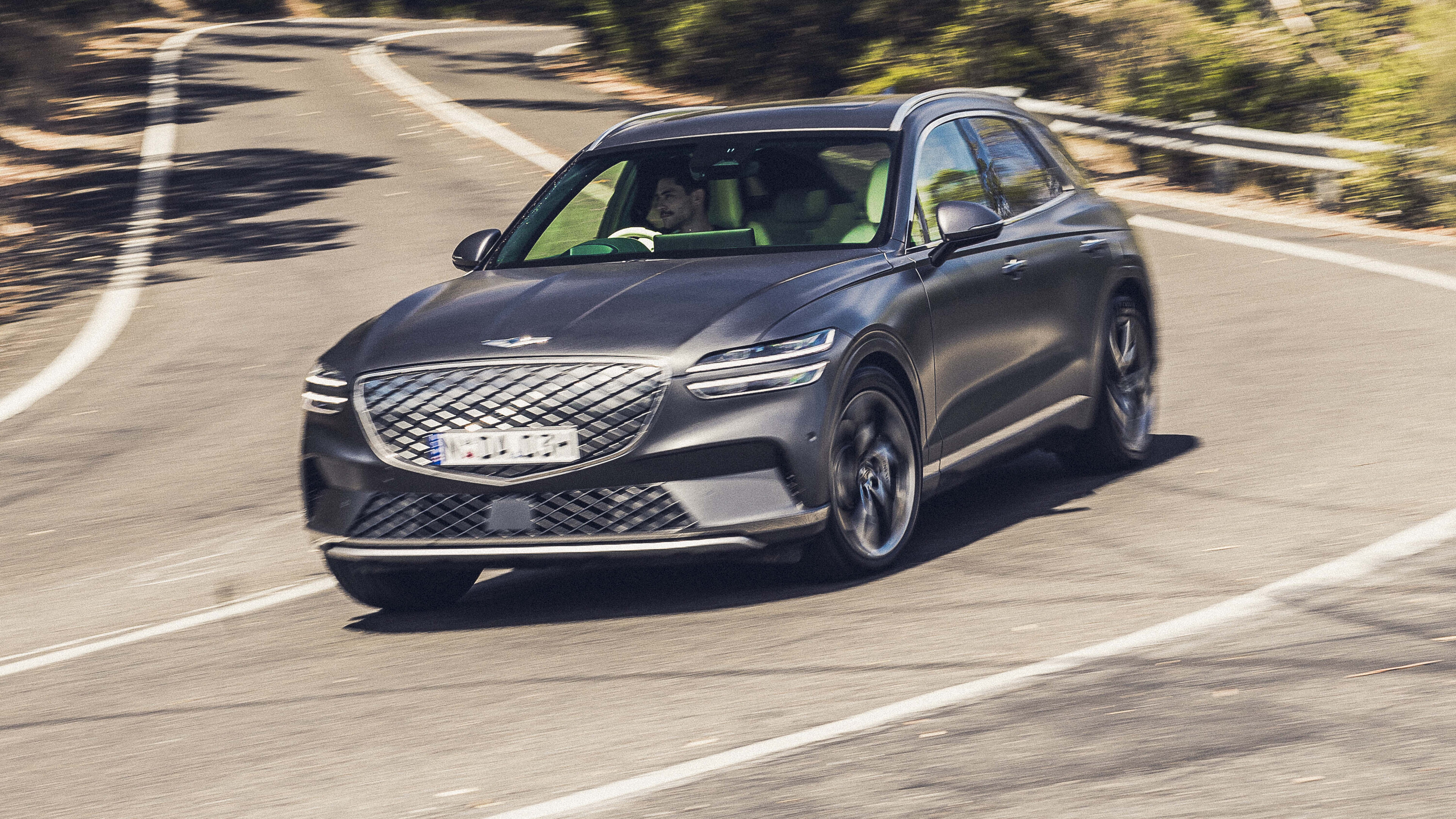
Like the BMW, the GV70 Electrified model range is refreshingly simple. Only one variant is offered and pricing starts at $126,475, meaning the Hyundai carries a $37,000 price premium in this company. That extra outlay brings a healthy dose of additional equipment and performance, however.
Where the BMW makes do with a single e-motor, the Genesis is bristling with one per axle and has far gutsier performance outputs of 360kW/700Nm.
Range from a 77.4kWh battery is slightly down at a WLTP-rated 445km, but the GV70 will get you to your destination much faster. With ‘boost mode’ engaged, the Genesis can hit 0-100km/h in a sporting 4.2 seconds. The BMW is more relaxed and takes 6.8sec to hit three figures.
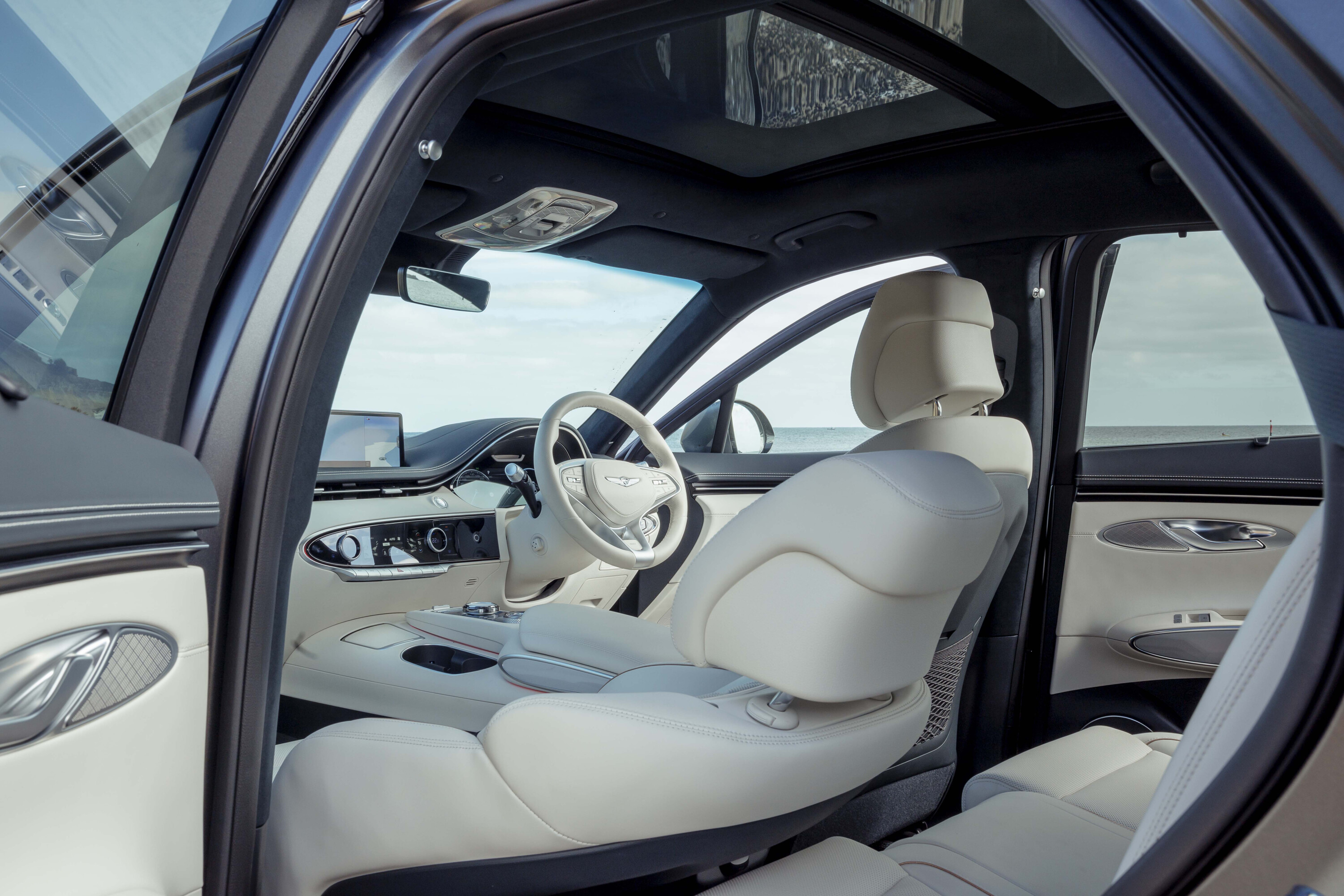
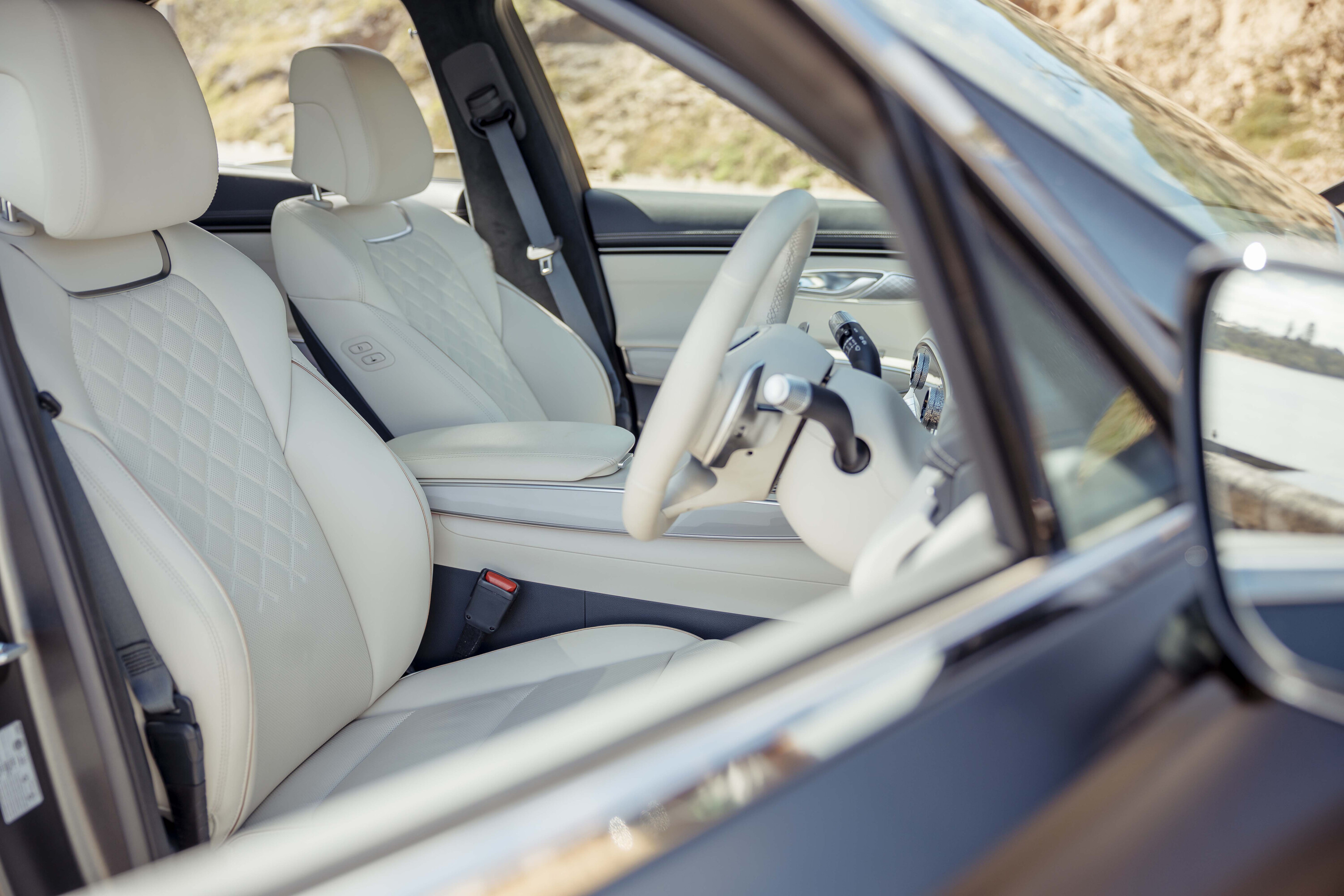
The GV70’s cabin also delivers more wow factor. Slip inside and you’ll encounter an interior that feels and smells expensive thanks to the expansive use of incredibly soft Nappa leather on the seats, dash and door cards. The cabin plastics are high quality, too, and even the carpets and floor mats feel superior thanks to a deep, Bentley-like weave.
2
There are loads of creature comforts, too. A two-stage heated steering wheel, seats that are heated and cooled, a head-up display and a live video feed of your blind spot when changing lanes are all standard.
Weaknesses? Front storage is decent but not amazing, and certainly not to the level we’ve come to enjoy from more mainstream EV rivals like a Kia EV6 or Tesla Model Y. Blame the compromise of using a converted ICE platform for that one.
Happily, the GV70’s forward visibility is excellent and the usability of the 14.5-inch centre touchscreen is fast and intuitive. The standard 14-speaker Lexicon sound system is also superb.
In comparison the BMW’s cabin feels a touch dated, mostly because its bones are close to retirement. While this M Sport version is box fresh, the iX3 range is based on the third-gen X3 that debuted in 2017 – and BMW is now actively previewing the next one.
2
There have been updates since then, including a facelift that brought revised exterior styling and a technology update for the cabin, but it still doesn’t feel as fresh as the the more opulent GV70.
Scratchier, more utilitarian plastics fall easier to hand, the front seats aren’t as cosseting or as heavily bolstered and the grained leather upholstery isn’t a supple as the baby bum-smooth trim in the Genesis. The infotainment software is also iDrive7, which is a generation behind what BMW is offering in its latest models.
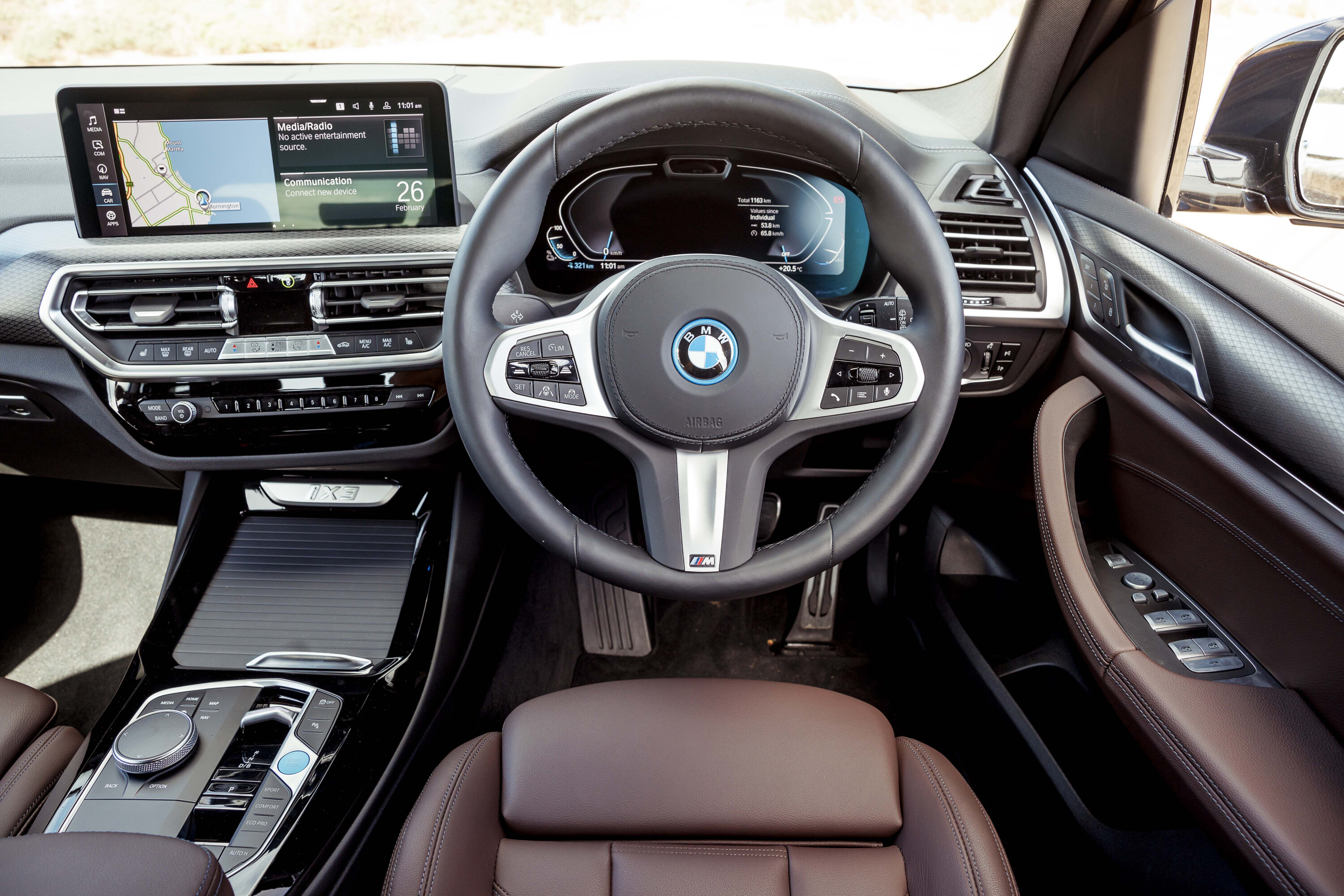
Its functionality is sound, though. And in terms of layout and ergonomics the iX3 is almost identical to a combustion X3, meaning dual 12.3-inch displays with crisp graphics and a good balance between physical buttons and needing to dive into the iDrive system.
The switchgear is tactile — mercifully there are no haptic sliders to contend with — and the seating position is also excellent thanks to a wide range of adjustment from the electric seats and manual steering wheel.
1
So what’s missing?
There’s no head-up display and no heated steering wheel or cooled seats, which are luxuries you get as standard in the Genesis. The iX3’s general fit and finish, while good, also doesn’t feel as rock solid as the GV70.
If you’re starting to sense a gulf between these two for quality and refinement, that gap only increases once you start to drive.
Both cars have adaptive dampers but about town the Genesis has a softer, more forgiving ride despite rolling on larger 20-inch wheels.
1
It’s quieter than the comparatively noisy BMW, too, thanks to superior suppression of NVH pathways and a remarkably well insulated cabin.
Acoustic glass and noise-cancelling technology are standard on the GV70. On roads where the iX3 has noticeable tyre and road roar, the Korean car wafts along serenely.
Its extra grunt and hefty 700Nm deliver effortless progress, too, and on the open road the GV70 is a muscular and quiet cruiser. Altering the rate of braking regen — which ranges from light to one-pedal driving — is also a doddle via the shift paddles on the steering wheel.
1
Where things start to unravel is when the road gets twisty. On demanding roads, the GV70 can feel heavy and lacks body control.
And while deploying the full 360kW/700Nm is intoxicating, actually transferring that grunt to the road can get scrappy if you have too much steering lock applied or the grip levels are changeable. At one point we had smoke billowing from the unladen inside front wheel as it scrabbled for grip on a twisty section of road. It’s fun, in a twisted kind of way, but it’s clear the GV70 is at its best up to around seven-tenths.
The X3 is far more resolved dynamically, at least when you’re driving hard. While this is easily the heaviest version of the X3 on sale (both cars weigh circa-2300kg), the BMW feels lighter on its feet than the Genesis and it has ferocious road-holding.
1
It feels like a classically rear-driven BMW, too, although any tail out malarky is quickly quelled by the traction control and lack of outright grunt.
It’s actually at its best in ESC Sport, or with ESC off altogether, but even then you’ll need to work hard to hold a decent slide. That’s not a high priority for a family SUV, mind you, but it’s good to know the iX3 is on brand.
Like most modern SUVs, the BMW’s steering lacks any real feel but it’s unwaveringly accurate and has a more natural weight than the numb tiller in the Genesis.
So, for drivers, the iX3 is the pick. It’s stable, grippy, more engaging and boasts an impressively tight turning circle. But it’s also noisier and has a firmer ride around town. As a luxury SUV to drive everyday, the Genesis holds the advantage.
1
On the charging and efficiency fronts, it’s a battle of give and take. The GV70 can accept a higher DC charge rate of 350kW (but around 230kW in practice), whereas the BMW can only accept up to 150kW.
The Genesis also offers vehicle-to-load capability, meaning you can use your car to power a blender or coffee machine on cold mornings at kiddy soccer. But the Genesis eats more electrons and over our 250km loop it returned 24.3kW/100km compared to 20.3kW in the BMW.
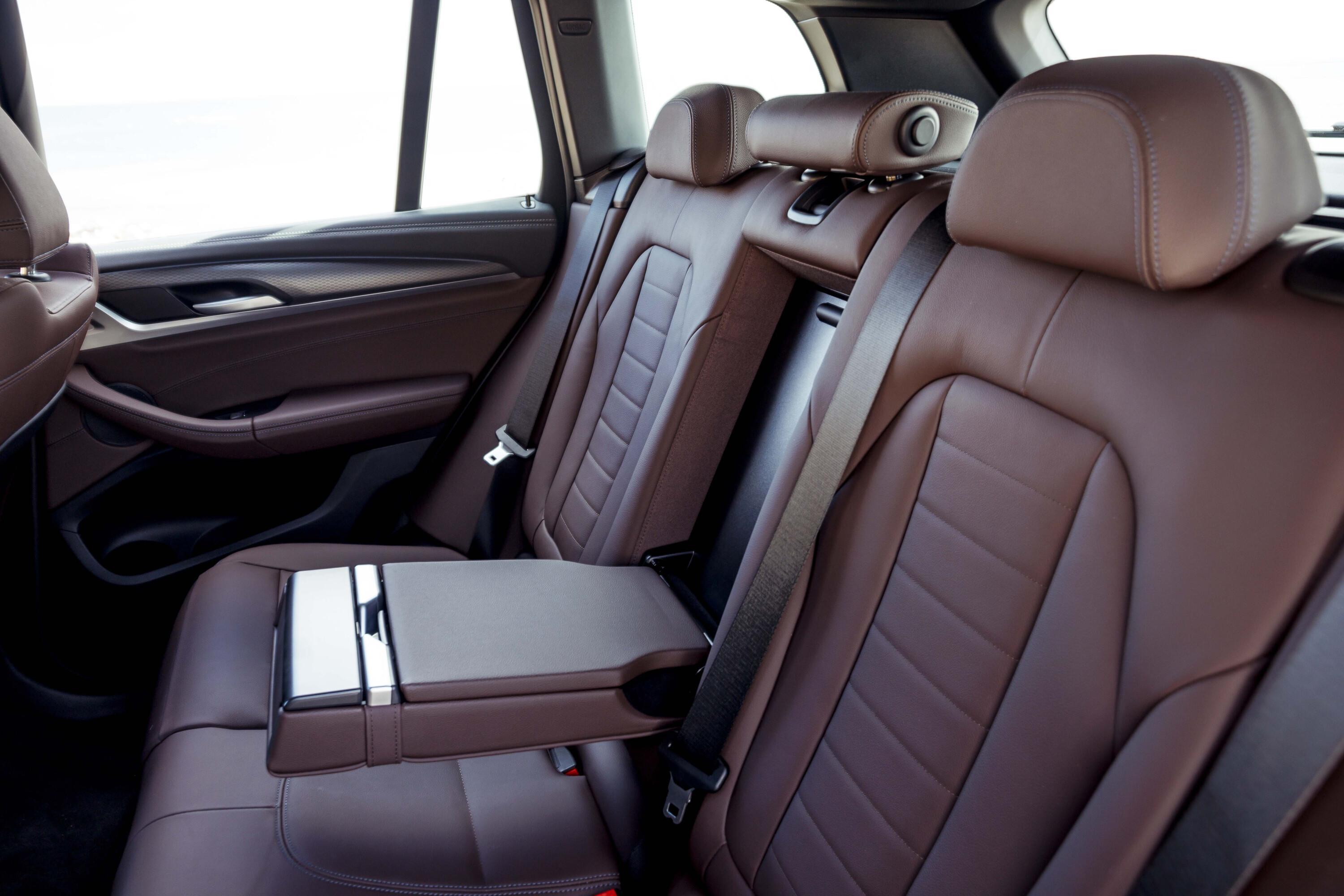
There’s little to split them for interior space, too. The BMW has slightly more cabin storage (neither is as good as a groundsheet EV mind you) and offers a little more knee- and headroom for rear passengers. But the Genesis’s second row is more comfortable, has more under-thigh support and is also heated and has rear window blinds.
3
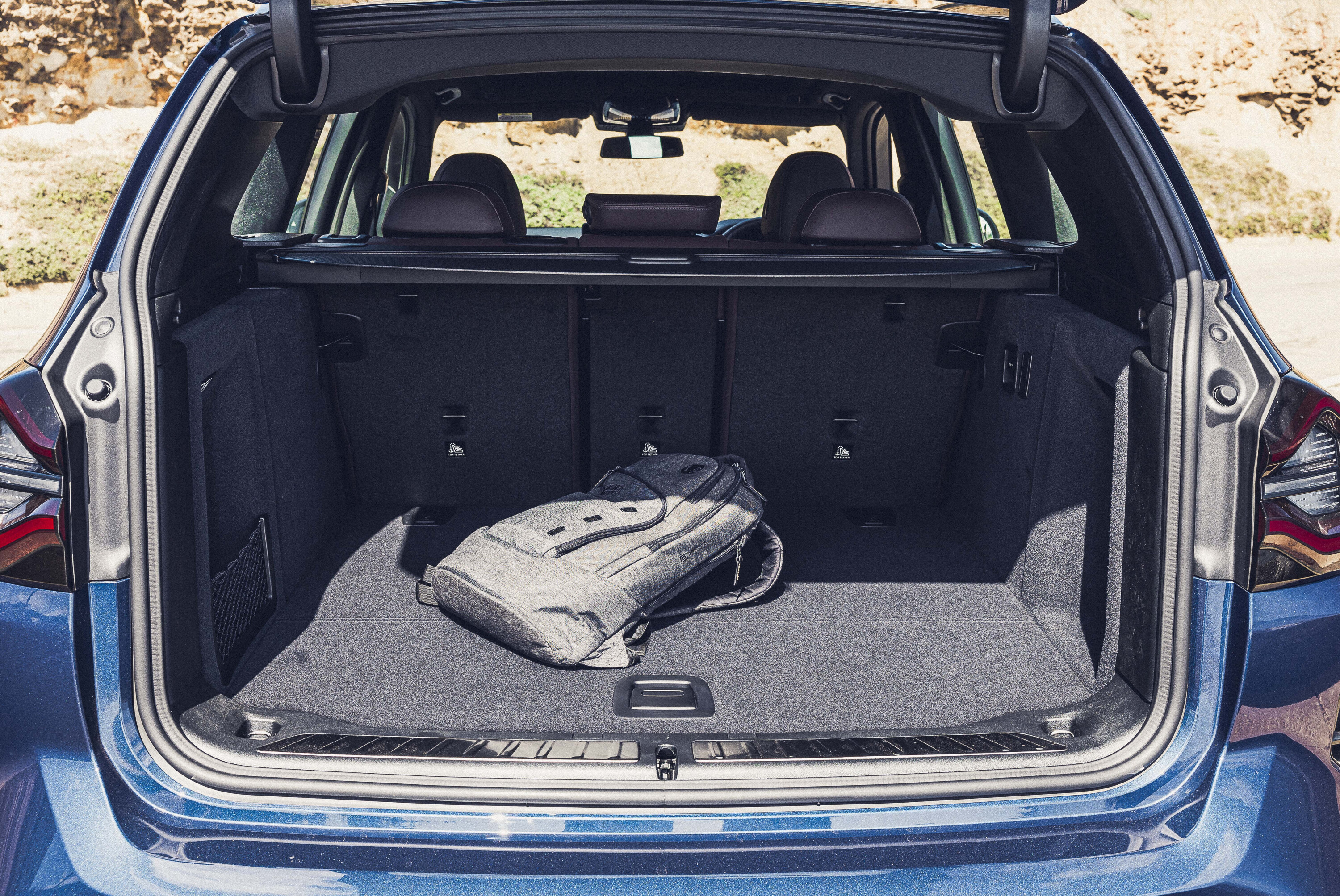
Even boot space is close to identical, courtesy of 510L seats-up luggage capacity in the BMW and 503L in the GV70.
The BMW’s boot opening is lower and wider, however, but the Genesis has a 22L frunk under the bonnet that you don’t get in the iX3. Both cars offer rear air vents with temp and fan control and have dual outboard Isofix mounting points and three top tethers.
The elephant in the room is the GV70’s price premium over a combustion powered equivalent. Where the BMW carries a $9000 premium over a rear-drive petrol X3, the GV70 is a whopping $53,575 costlier than a petrol version. In a segment where ease of transition is key, that’s one pill that’s difficult to swallow.
1
In this company though, and in terms of delivering on the promise of being a luxury mid-size SUV, the Genesis wins.
It’s quieter, quicker, more refined, is able to charge faster, has a more comfortable ride and its cabin feels richer and more premium.
Is it the best use of circa $130K for buyers in the market for an electric mid-size SUV?
Large electric SUVs? Yes, they’re a thing, and their mighty big battery packs mean they’re also mighty pricey – but which is best? It doesn’t take a luxury badge to win the prize.
It was a popular thing despite its egg-like looks, but it took another seven years for this burgeoning vehicle type to finally trickle down to the mainstream … in the form of Kia’s largest, most expensive vehicle ever produced – the EV9 seven-seat electric SUV.
The Model X has since been discontinued here but several premium-brand German contenders have appeared in its place – namely Audi’s E-Tron SUV and Sportback (now re-branded Audi Q8 e-tron as of late 2023), BMW’s flagship iX electric SUV, and Mercedes-Benz’s EQE and EQS SUV siblings.
The EQE is a five-seater; the EQS an extended-wheelbase seven-seater – making the EQS SUV the only direct packaging rival to the Kia EV9 on the Australian market.
1
As you may have worked out, the EV9 is a rarity in the large electric SUV category in that it’s the only mainstream offering – at least until Hyundai’s closely related Ioniq 7 SUV is unveiled later in 2024.
The three-variant EV9 range spans $97-$121K – the sweet spot being the 283kW/600Nm Earth AWD ($106,500) with its 6.0sec 0-100km/h time and 512km WLTP range claim – which contrasts starkly with the asking prices of the equivalent sweet spots in the EV9’s premium-brand competition.
In the five-seat BMW iX, the primo variant is the xDrive 50 Sport ($185,400) with its 4.6sec 0-100km/h time and 620km WLTP range. The handsome five-seat Audi Q8 e-tron 55 quattro Sportback ($166,600) is good for 5.6sec to 100km/h and 454km WLTP, while the seven-seat Mercedes-Benz EQS 450 ($194,900) feels like it’s worth the extra spend over an EQE thanks to its standard air suspension, rear-axle steering, 483km WLTP range claim and strong 6.0sec 0-100km/h time.
1
Yet what sets the Kia EV9 apart from these premium-brand EVs is not just its relative affordability.
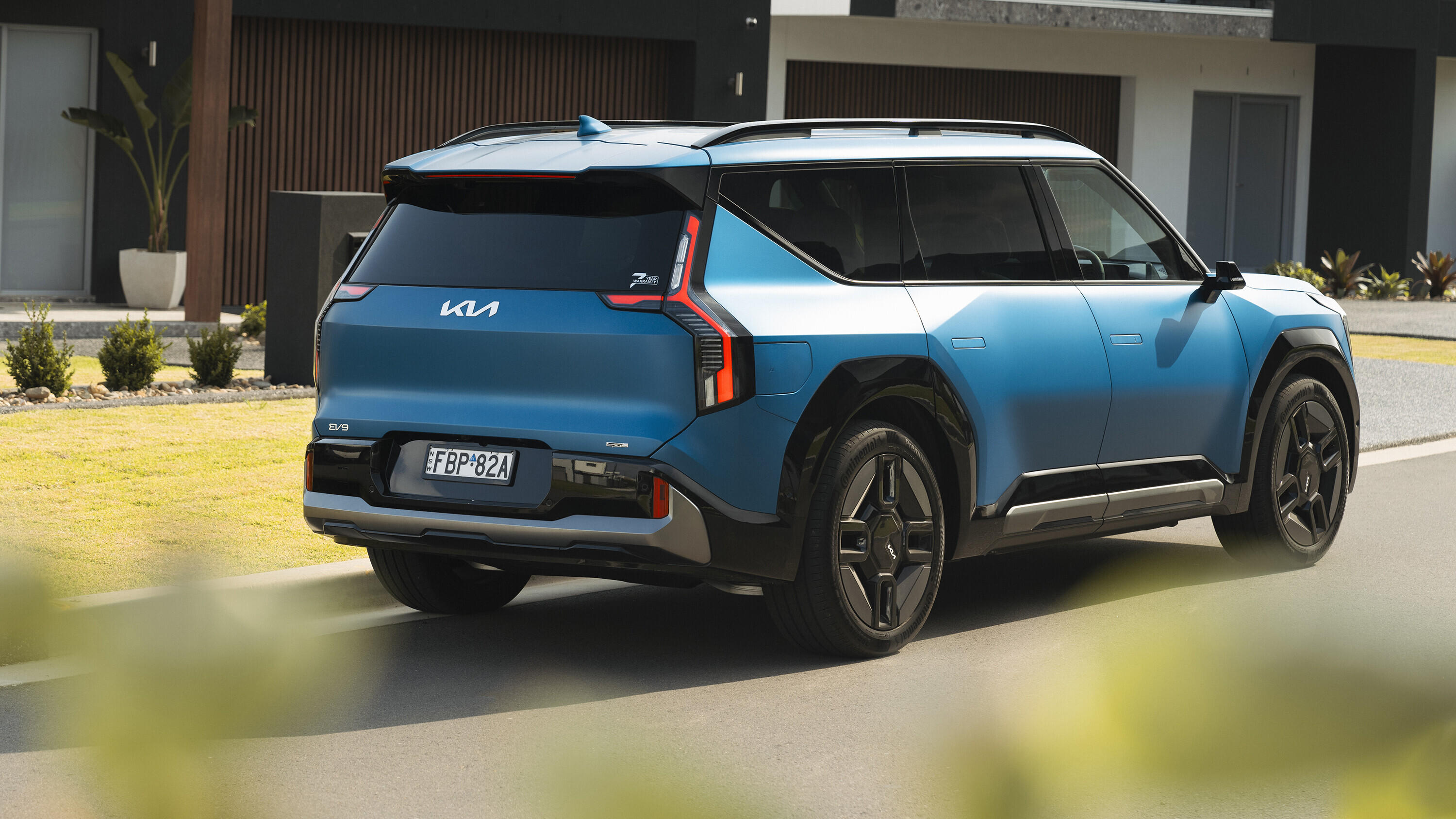
The Kia’s persuasive blend of refinement, functionality, spaciousness, interior quality and all-round finesse trumps the luxury-brand electric SUVs – only one of which can match the EV9’s seat count. And the Kia achieves all this while focusing on recycled and bio-friendly cabin materials, not sparkly embellishments for added showpony cred. Or expensive options necessary to impart a genuine feeling of expense.
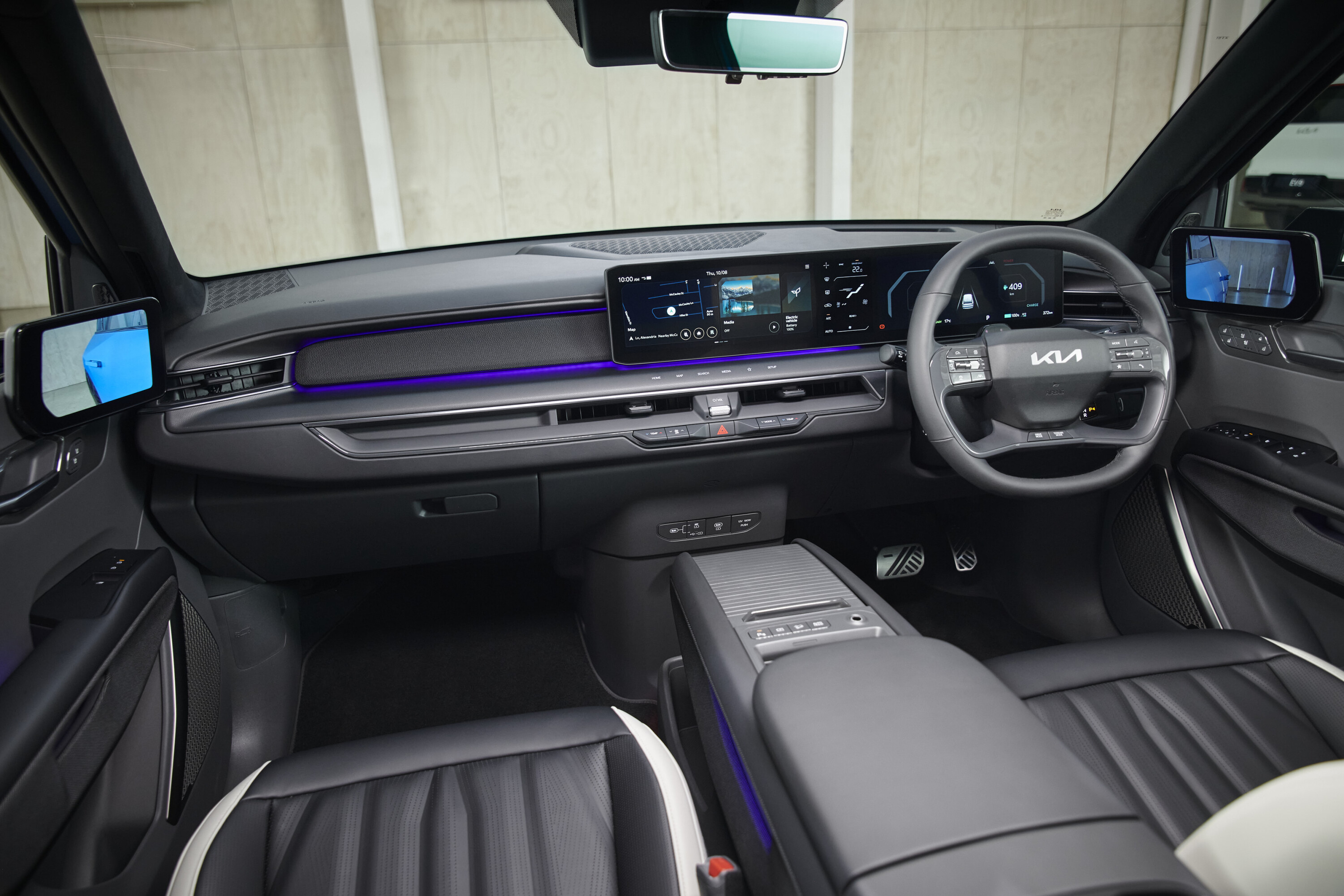
Seated in the EV9’s excellent front row, peering out a vast panoramic windscreen, its relatively minimalist dashboard design and the textural blend of its materials makes it both look and feel premium.
1
Kia says the design was inspired by high-end contemporary furniture, which is an aesthetic that permeates throughout this striking SUV – both inside and out.
The A-pillar trims, upper door sections, lower dash, material inserts, and full-width loop-pile mats covering the EV9’s flat floor are all recycled materials, though interior quality is so smoothly consistent that you’d never know. And despite nearly 30 inches of horizontal screen action, there’s a high-tech warmth to the EV9’s ergonomic interior that makes its premium rivals appear like they’re trying way too hard.
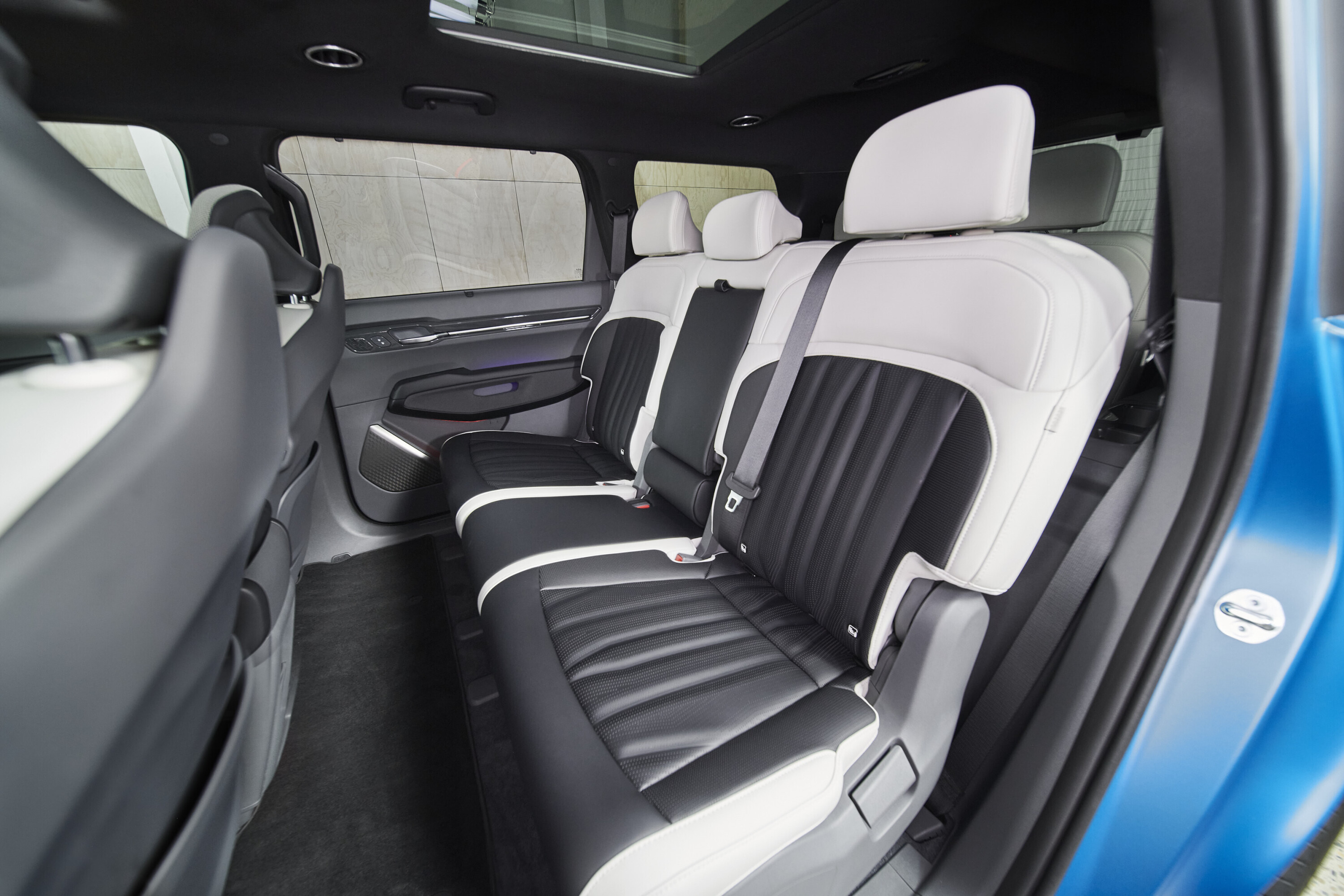
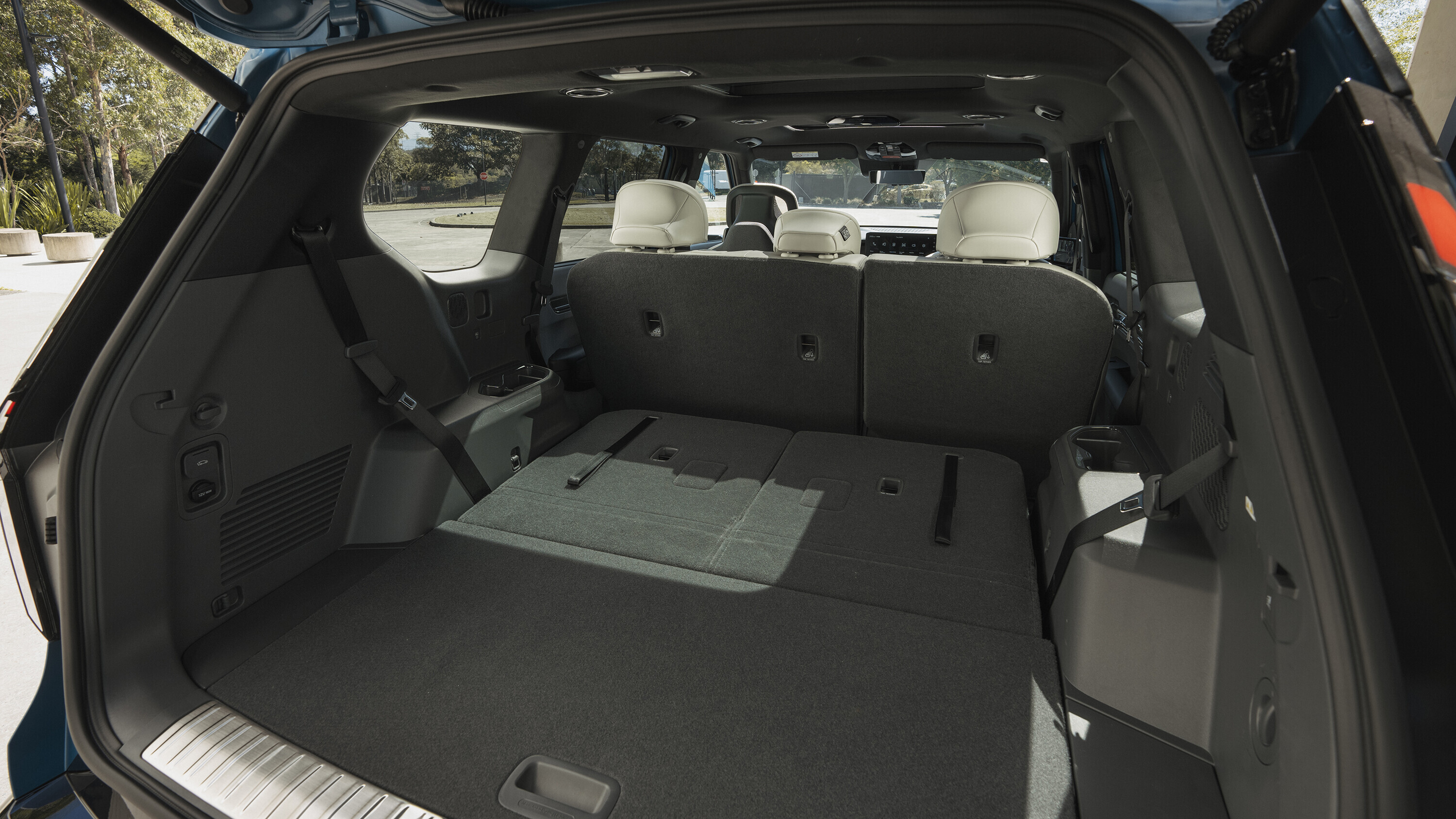
For space and comfort, the EV9 is outstanding, which is surely the foundation of what makes a great large electric SUV. With a degree of compromise in the fully adjustable second row (while still leaving loads of legroom), the third row can comfortably seat a pair of adults.
1
And with all three rows in use, Kia says there’s still 571 litres of boot space available, which is unheard of in most three-row SUVs – especially one measuring a relatively manageable 5010mm in length (shorter than a Mazda CX-9).
What makes the Kia EV9 the finest large electric SUV, however, is the consistency of its all-round greatness. Thanks to a beautifully judged Australian suspension tune, this fixed-damper SUV doesn’t require fancy technology to make it ride or handle well – even though it can feel firm over low-speed irregularities.
In the EV9, it’s a case of the deeper you explore, the greater the reward, to the point where you could actually call it fun to drive.
1
And despite its 2.5-tonne girth, it still manages to deliver impressive energy efficiency, supported by benchmark charging times of between 20 and 24 minutes to go from 10-80 percent, depending on battery size.
With world-leading EV technology and show-stopping design both rapidly improving the global standing of the Kia brand, it’s fitting that the largest, most expensive Kia ever is also the finest vehicle it produces.
As a halo model – and a shining example of egalitarian excellence – the Kia EV9 is king of the electric SUVs in 2024.
Cautiously optimistic. That’s how I’d describe the mood among the Wheels road testing team as we arrive at our meeting spot on the outskirts of Moe in southern Victoria.
It’s drizzling and three of the four charging stations we need to use before we can hit the track are broken, yet there’s a fizz of excitement rippling through the team. A group of electric cars pitched at keen drivers? It feels like we’ve been waiting years for this.
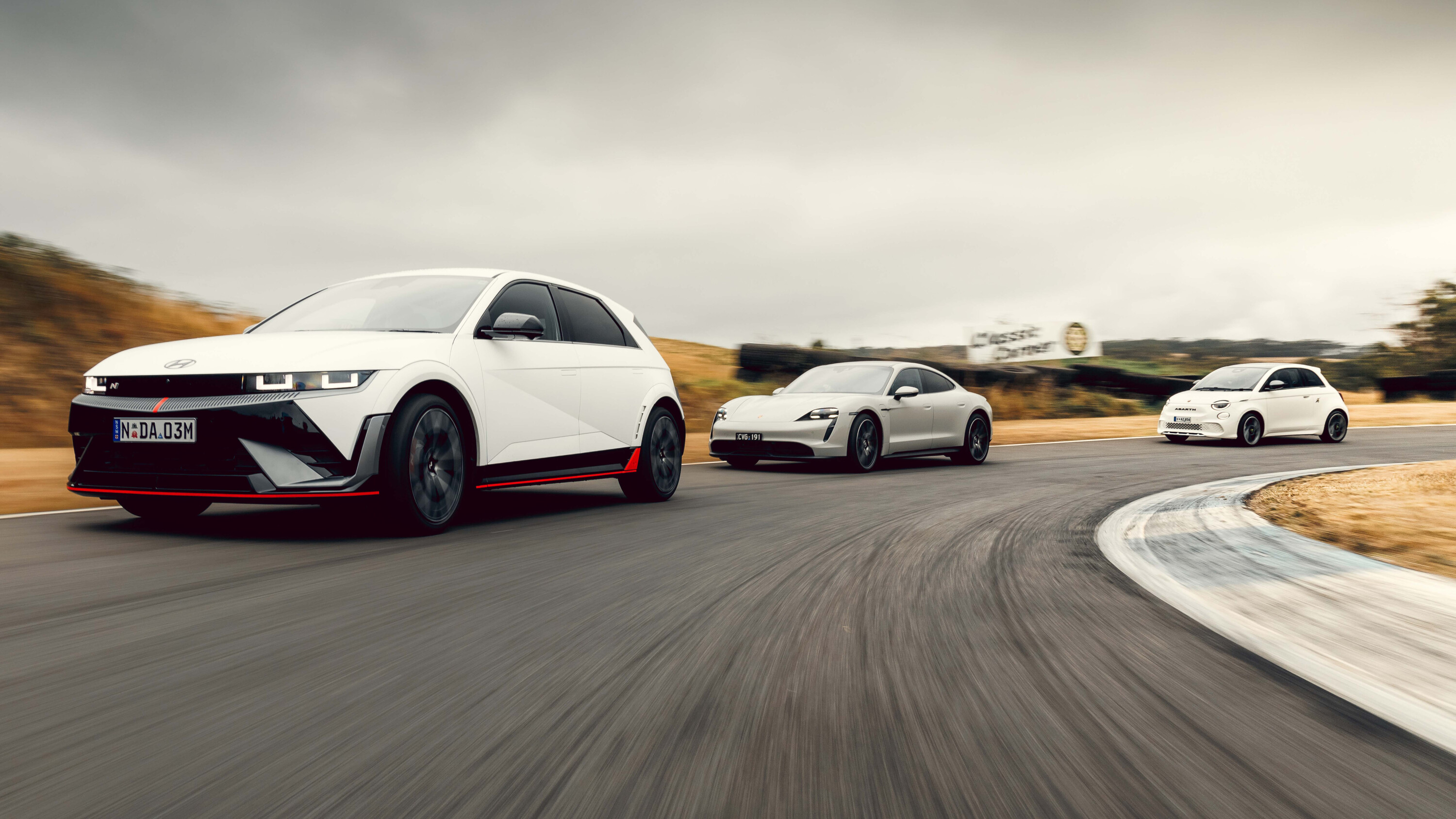
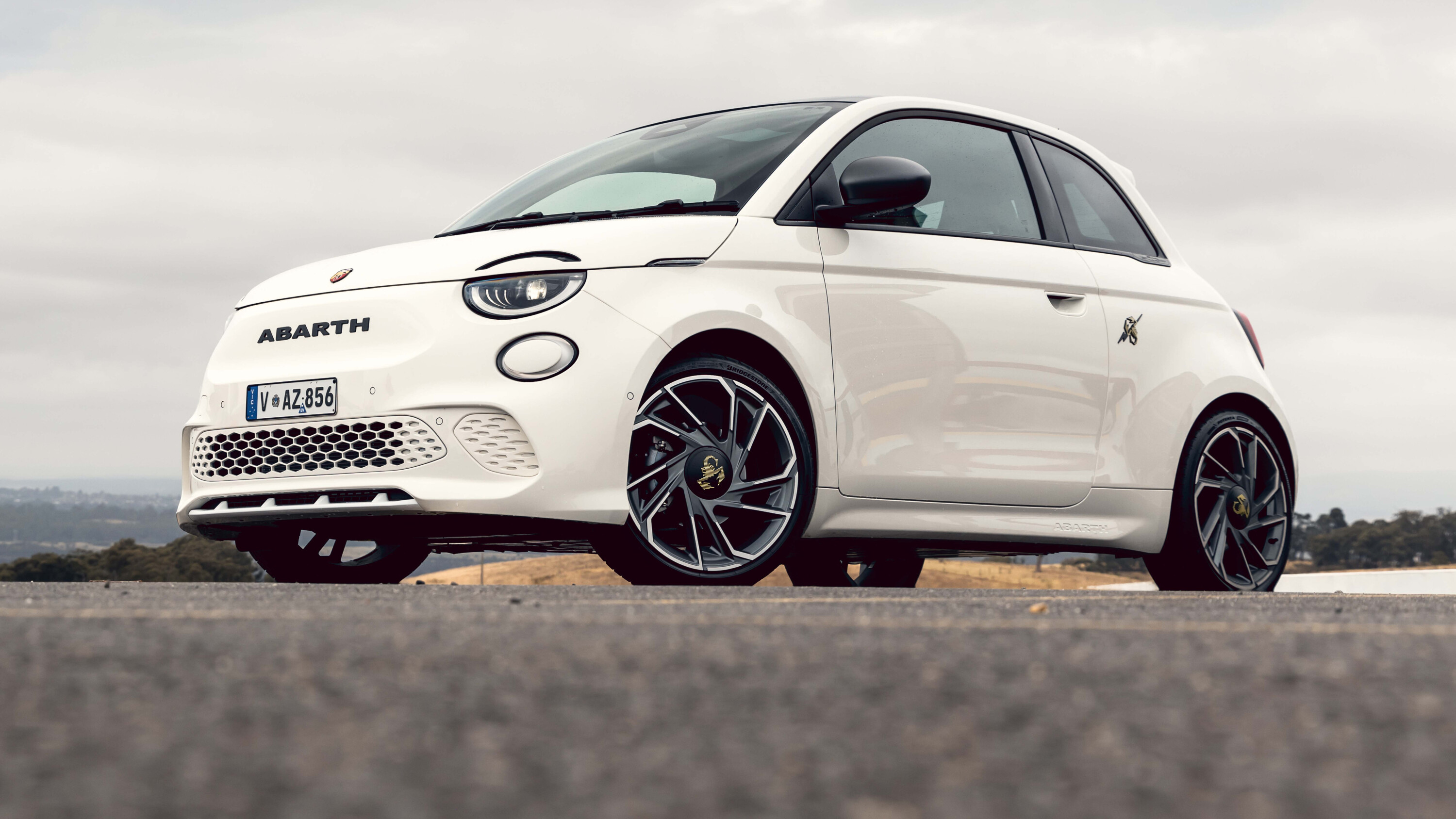
Inevitably, each car cops an appraising eye as it rolls into the carpark. The Porsche gets some knowing nods, the Audi turns heads like a Milanese catwalk model and if we could have squeezed the cheeks on the impossibly cute Abarth 500e, we would have.
1
The Mustang Mach E gets a more reserved reception — can this really be a Mustang!? — but it’s the Hyundai Ioniq 5 N that keeps drawing our eye. It’s easy to see why.
No other car is so hyped nor, it has to be said, quite so intriguing. Where the others are proven contenders capable of brutish acceleration and grippy dynamics, the Hyundai promises to deliver the one thing EVs have so far been short on: soul.
And that’s the crux of it, isn’t it? If you’re someone who loves driving, and I’m guessing you are, then chances are your verdict is still out on electric cars. Speed is one thing but engagement and driver involvement are other metrics entirely, which is why you won’t find a Tesla Model 3 Performance in this group.
1
Today is about exploring cars with genuinely driver appeal, and while the Model 3 and Model Y are undoubtedly fast and powerful, they aren’t pitched as driver’s cars.
It’s the same reason we aren’t testing the Ioniq 5’s Korean cousin, the Kia EV6 GT.
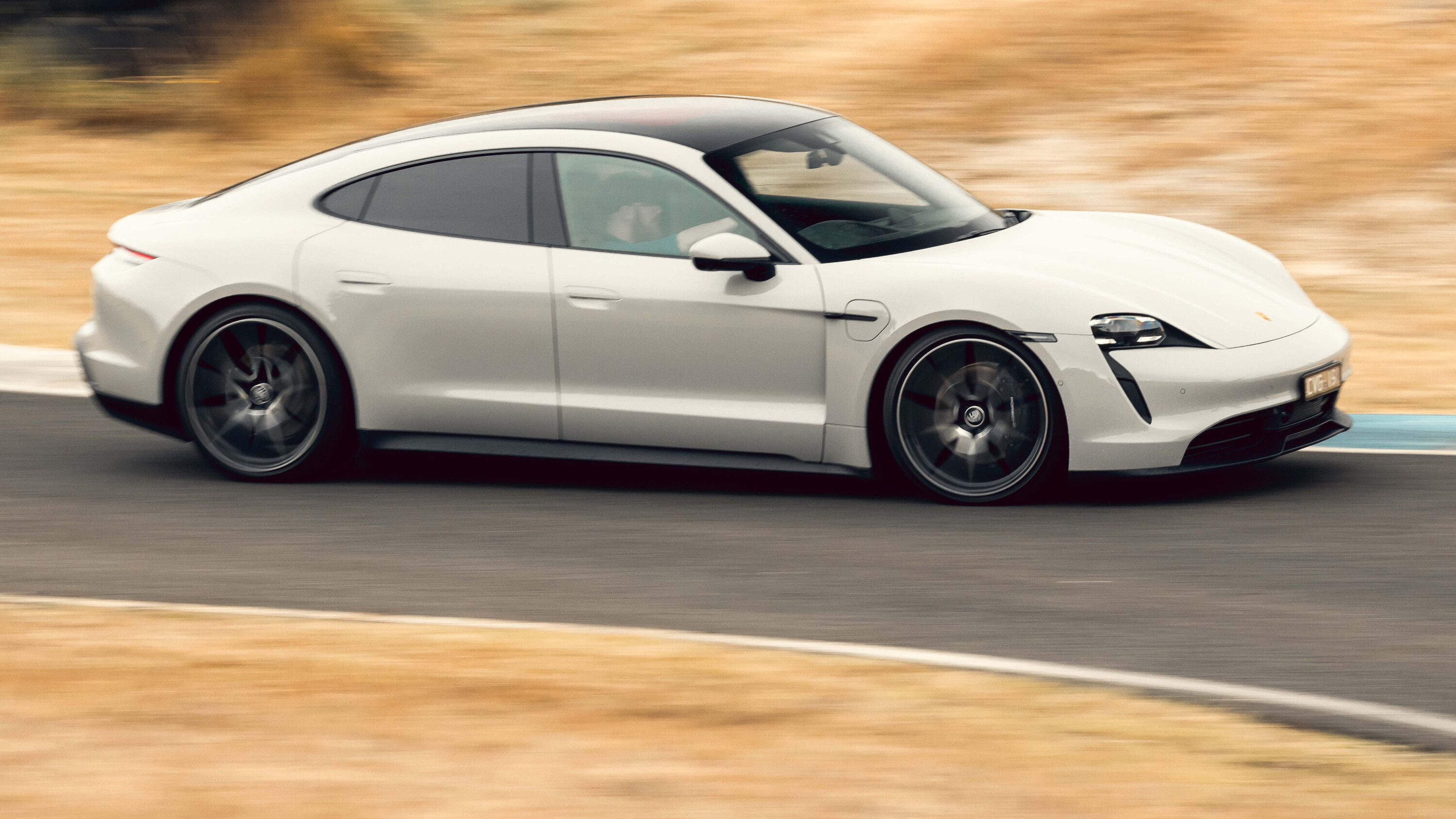
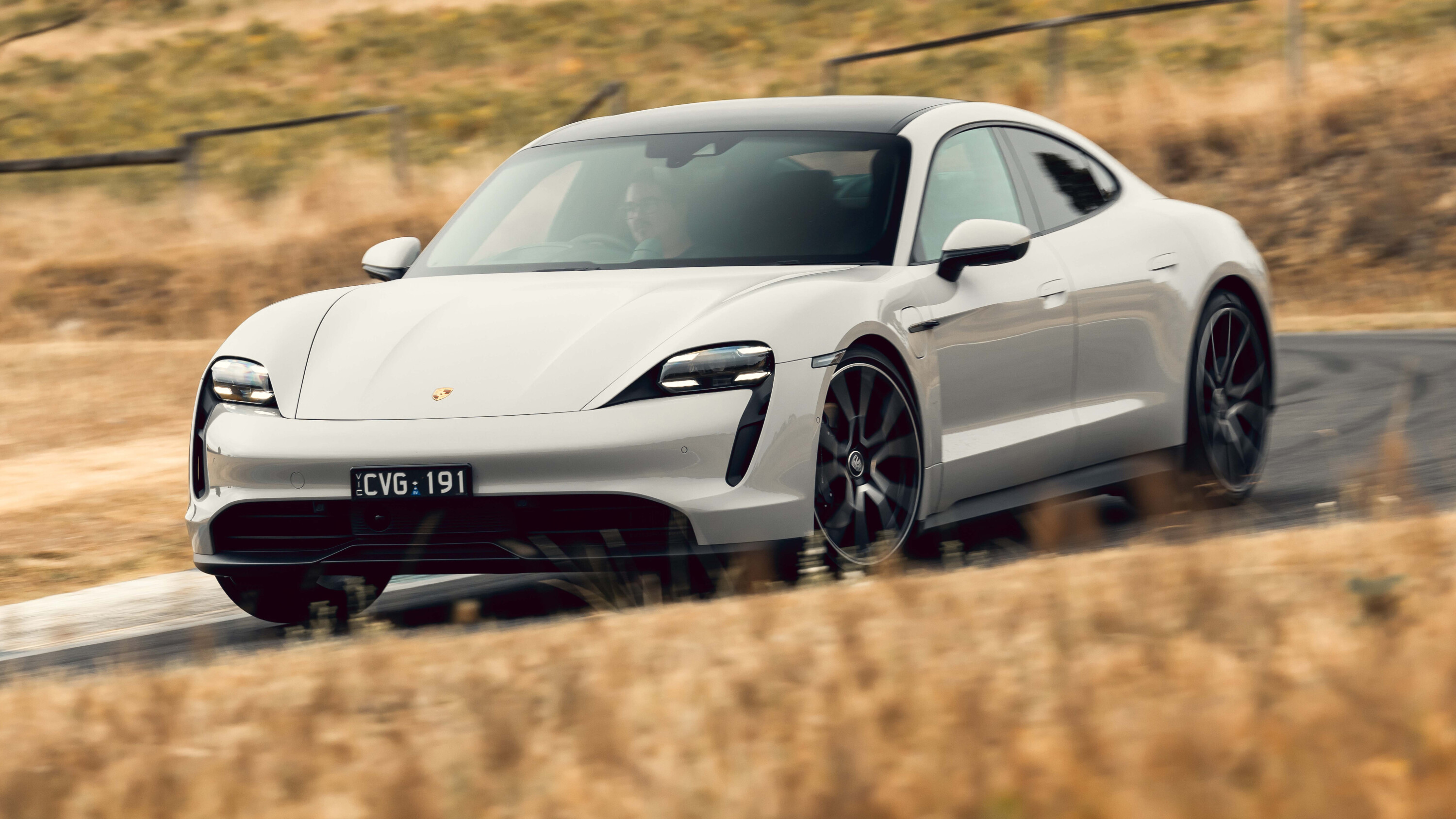
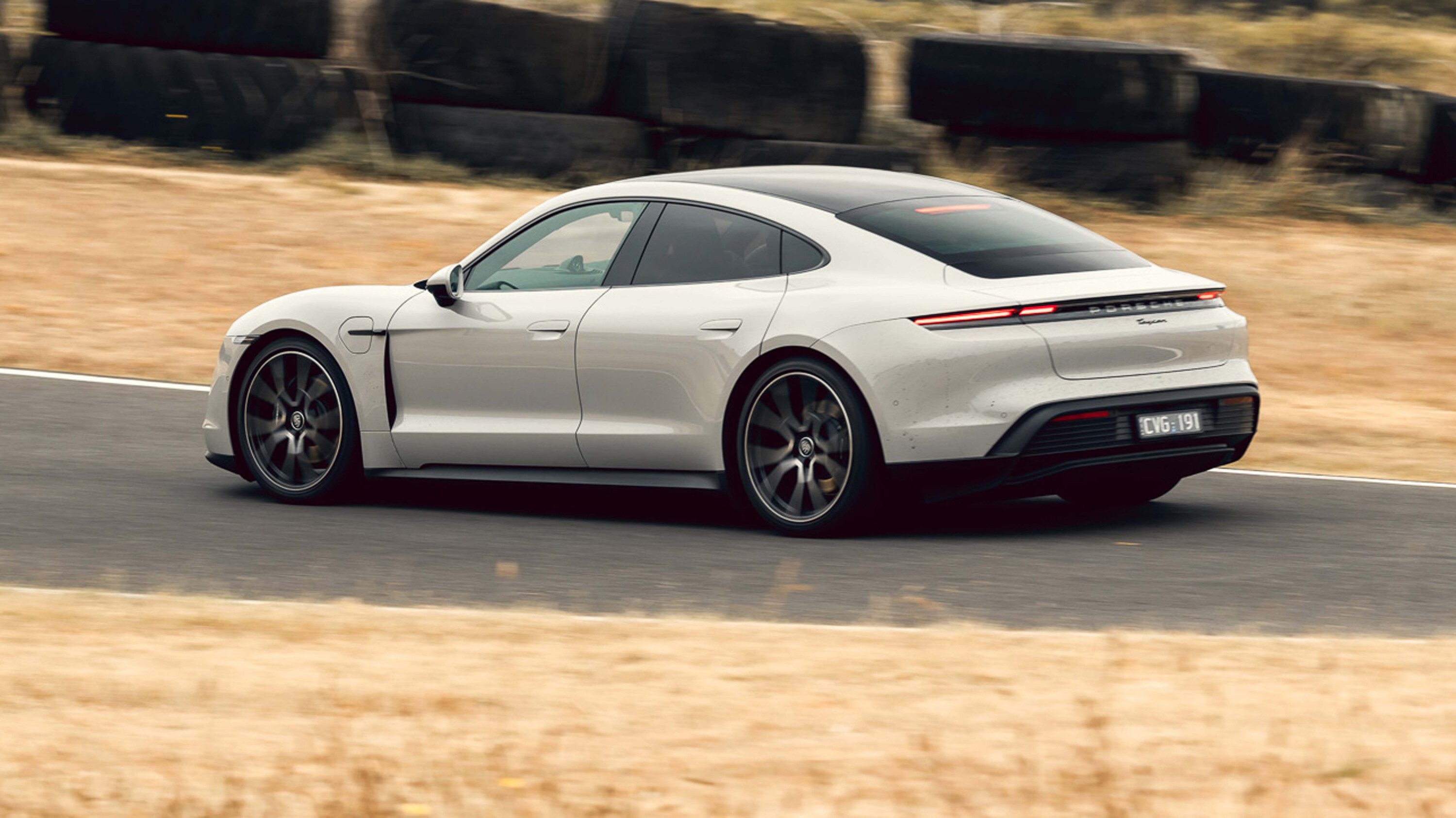
So why have we chosen a base Porsche Taycan and not one of the more powerful and focused versions higher up the model range? Partly that’s because we already have the flagship Audi RS e-tron GT, which shares its underpinnings and key hardware with the Taycan Turbo, but also because we’ve long suspected that the cheapest Taycan might actually be the pick of the lot.
1
At $175,100 the base Taycan also provides an interesting counterpoint to the $111,000 Ioniq 5 N.
Can the less expensive and more powerful Hyundai really topple a performance car created by the masters of driver-focused dynamics? Hyundai beats Porsche. Now that’s a headline.
The real question we’re seeking to answer, however, is whether the growing wave of electric cars holds genuine interest for driving enthusiasts.
To do that, we’ve commandeered the tight and technical Haunted Hills high climb circuit and also devised a short but gruelling road loop. A 300km round trip transit leg out of Melbourne and a full day of circuit driving should also prove an interesting test of Victoria’s recharging infrastructure and the feasibility of using a performance EV for a weekend punt. Game on.
When Holden made the decision to extend the Commodore nameplate to a Vauxhall, there was a tangible sense of uncertainty in the air.
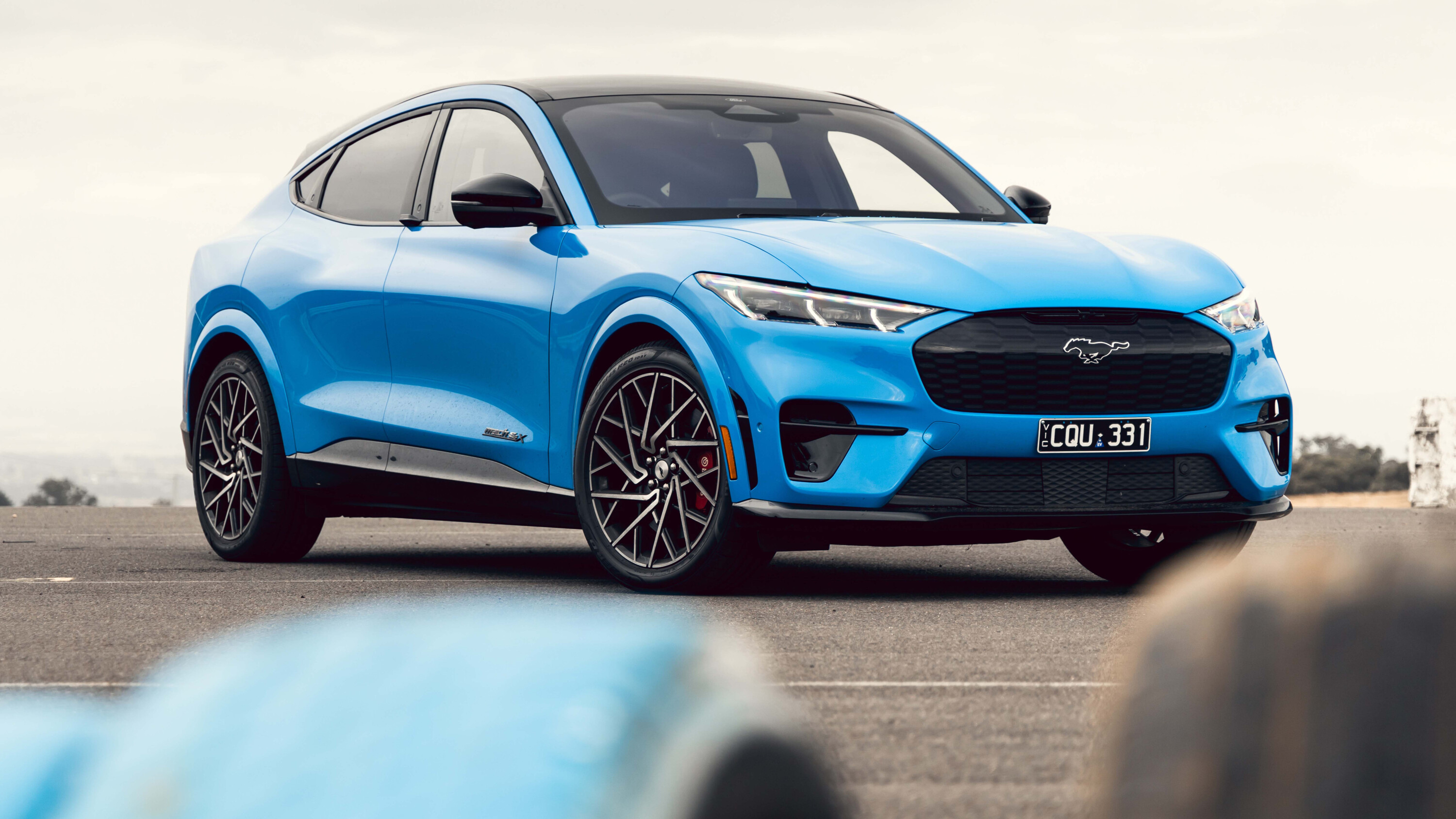
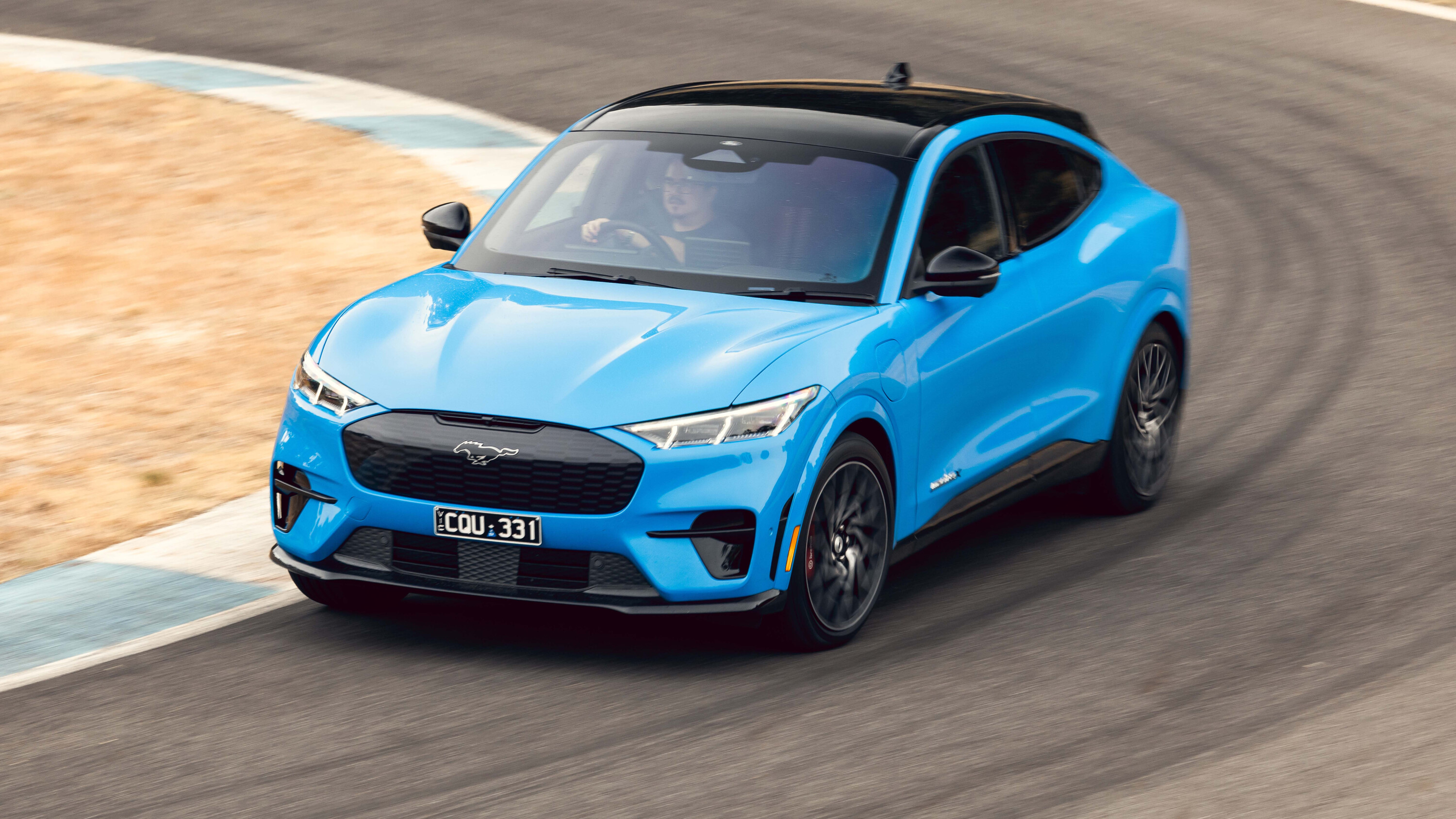
Few beyond the confines of the head office were entirely convinced that a nameplate could seamlessly transition to a member of a different automotive lineage. In the same way, I’ve noticed that the Mustang Mach-E has gradually begun to shed its association with the “Mustang“, with many now simply referring to it as the Mach-E.
The logic from the decision makers does make some sense; that the Mustang Mach-E acts as an electric rendition of a muscle car.
1
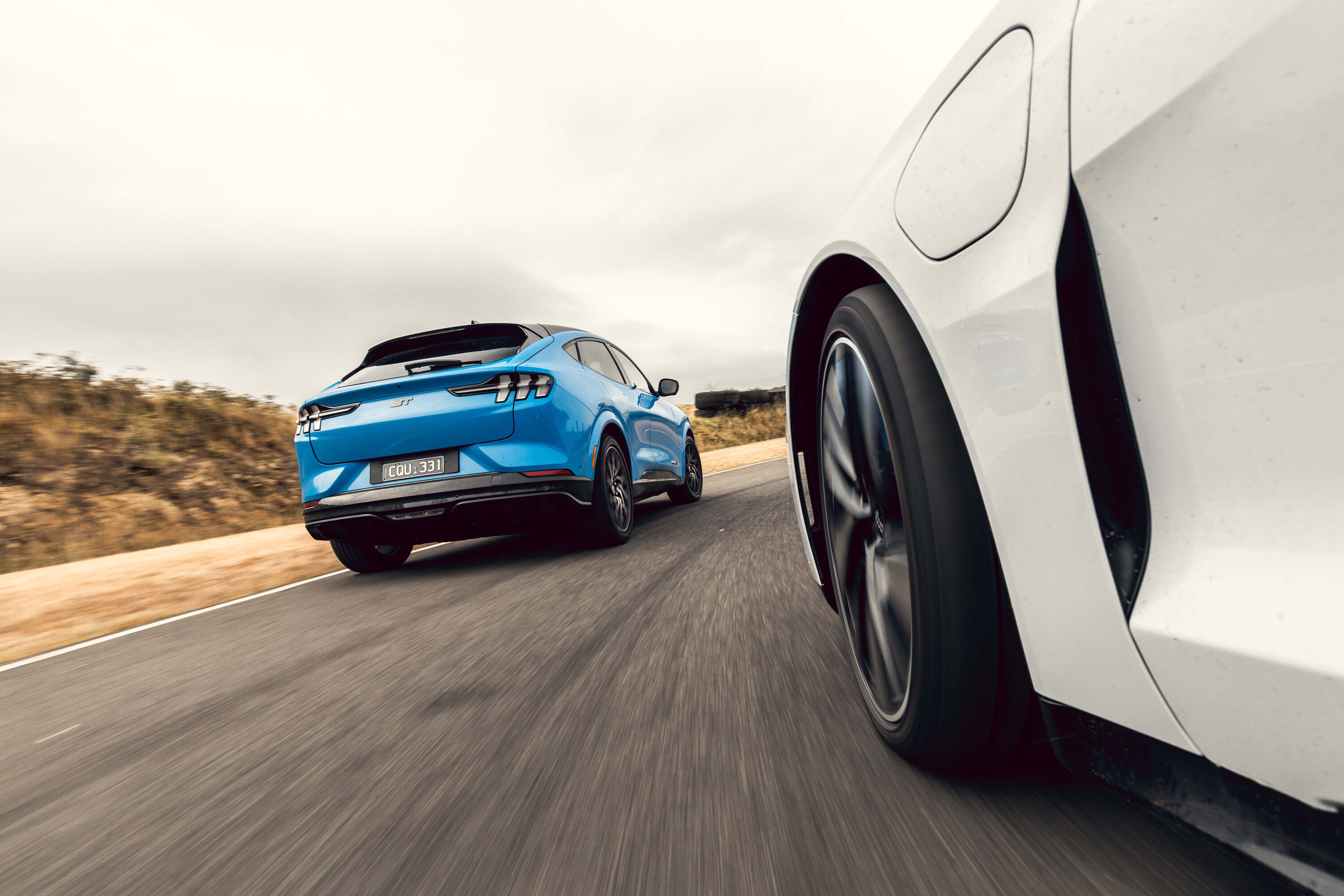
And with a performance focus and a claimed 3.7 second 0-100km/h time, this flagship Mach-E GT was an easy contender to add to our performance EV test.
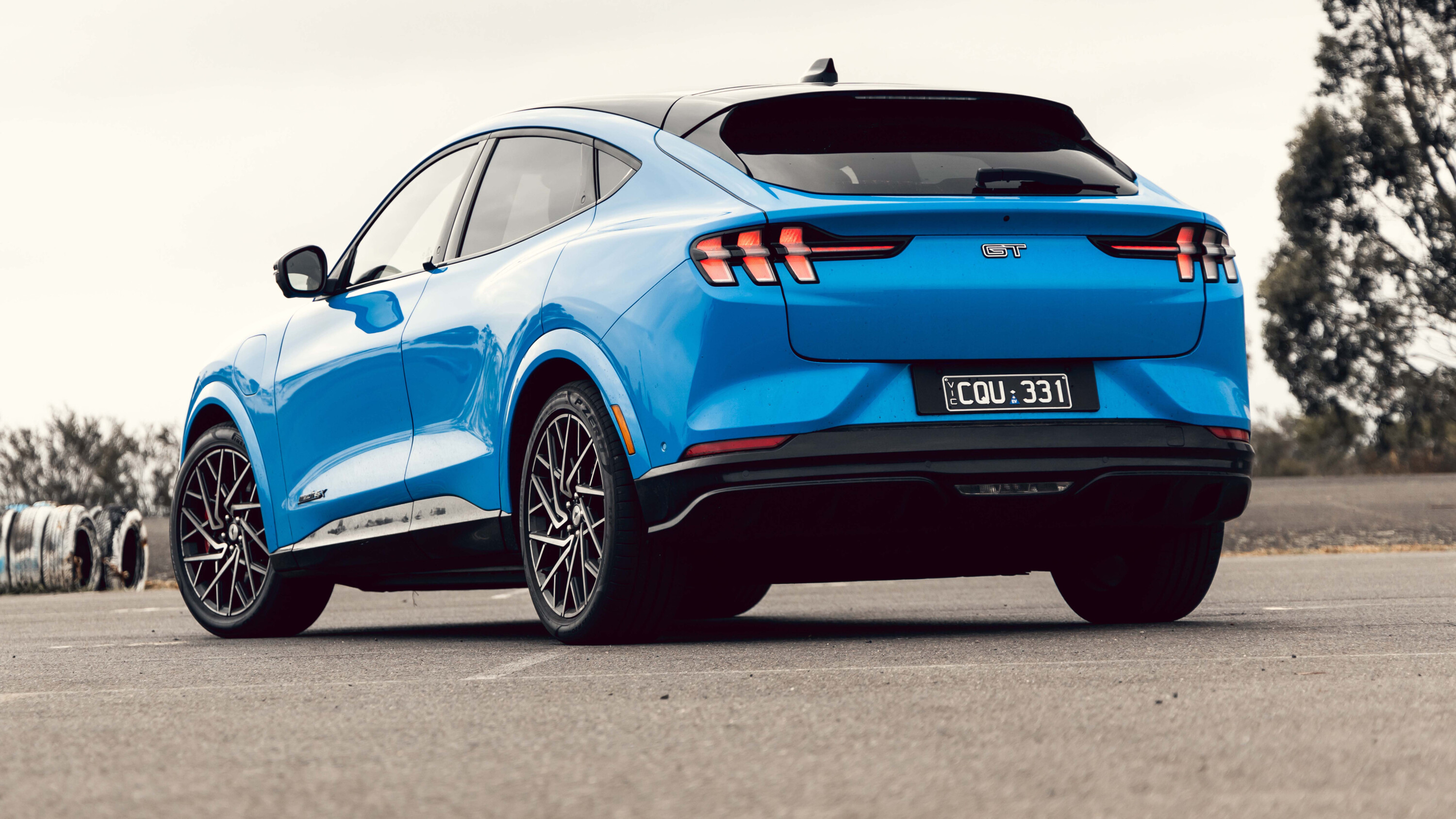
Externally, you’re greeted with a sleek, streamlined body. In the eye-catching Grabber Blue metallic paint we had, it flaunts a striking design that could potentially win over many Mustang enthusiasts, provided they set aside their biases.
1
Inside, there’s much to appreciate with an impressive list of technology.
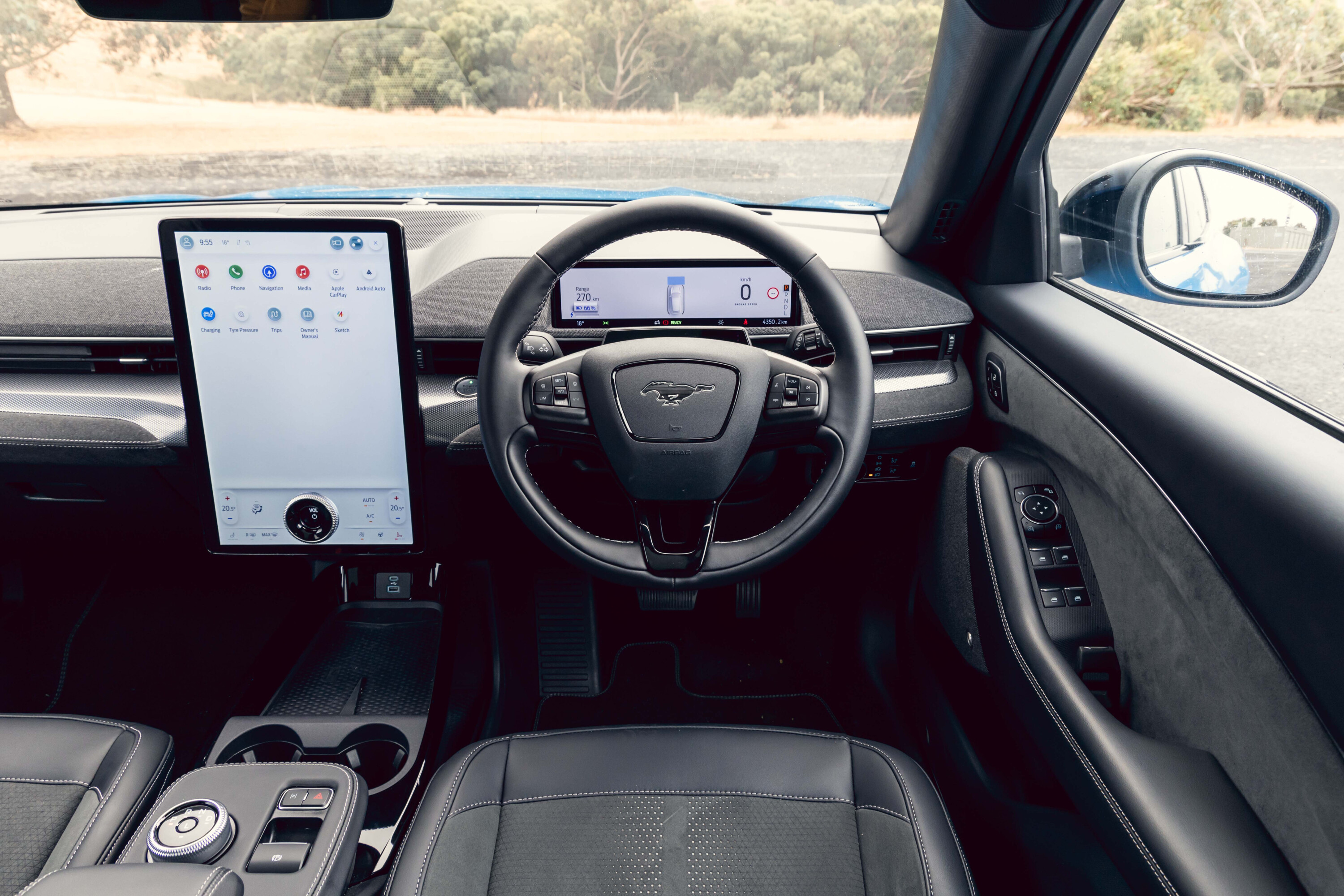
A massive 15.5-inch portrait-style touchscreen commands the cabin, complemented by a smaller full-digital display behind the steering wheel. Paired with wireless Apple CarPlay and a banging 10-speaker Bang & Olufsen sound system, it feels like you’ve stepped into an aisle at JB Hi-Fi. Additionally, the button door openings and keypad entry are cool novelties.
Unfortunately, when compared back-to-back with other vehicles, the Mach-E stood out as the weaker vehicle. The transition from regenerative to disc braking was abrupt, something none of us could adapt to neither on track or on road.
2
The suspension was also much harder than expected for a car equipped with adaptive dampers. Compared to the IONIQ 5, it’s a night-and-day difference in terms of what you’d expect from the feature.
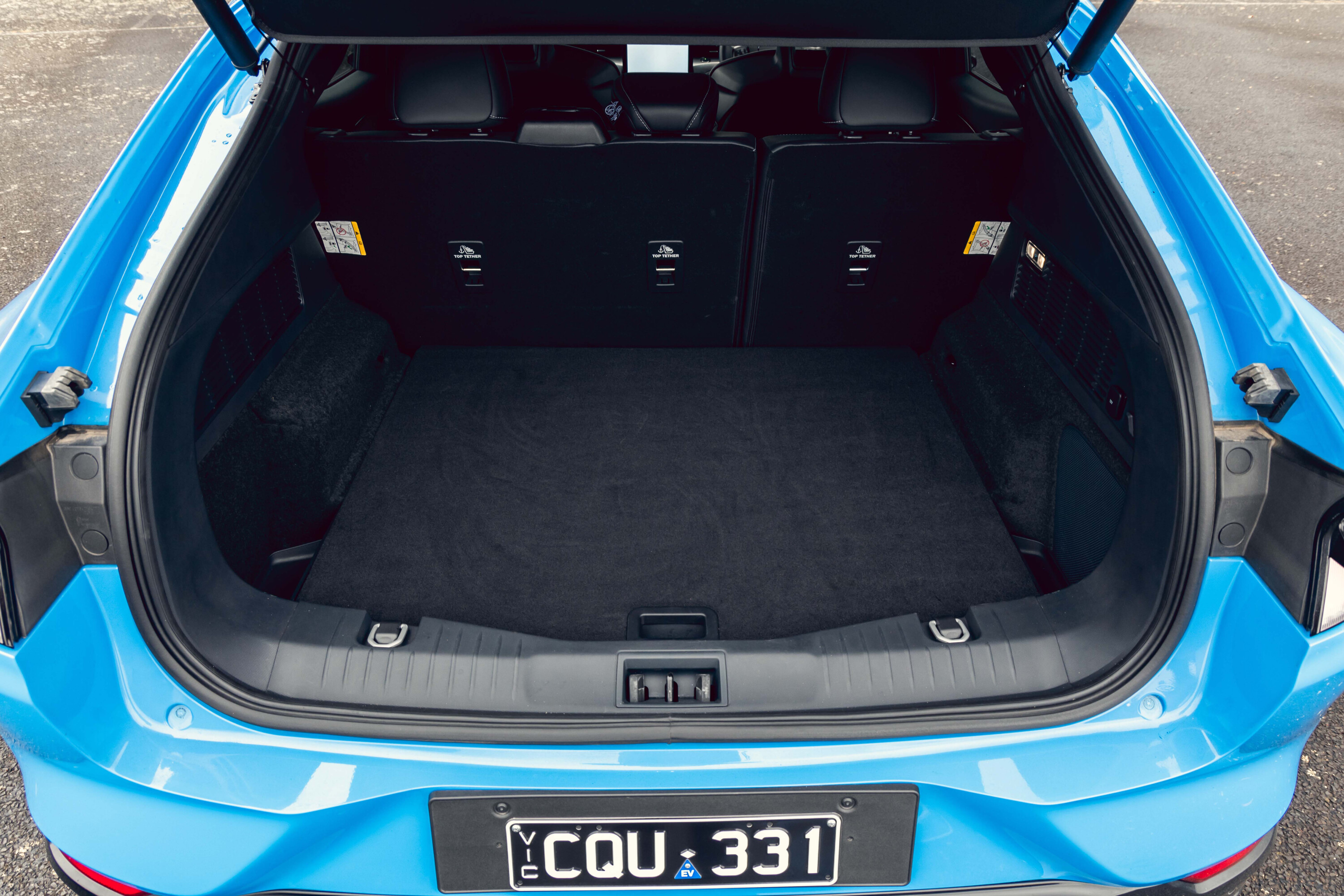
On the track, body control was only so-so and in all settings the car itself feels big and heavy – its actually larger than a Toyota RAV4. That does mean you’re treated to a good amount of space inside, however.
In the realm of sport ESC, you have the opportunity to leverage rear bias and utilise body roll to your advantage. However, once you begin to push beyond those limits, challenges arise.
10
Turning off all electronic aids doesn’t unleash a playful, oversteering balance; instead, it exacerbates understeer.
That isn’t to say the Mach E isn’t without merit. It’s a teched-up car, with a decent amount of range that could easily get you through the week and enough straight-line performance to silence most skeptics. But in the case of today’s test, this Mach-E was out of its depth.
At $104,990 before on-road costs it was quickly outclassed by the Ioniq 5 N which set the benchmark for us quite quickly on the day.
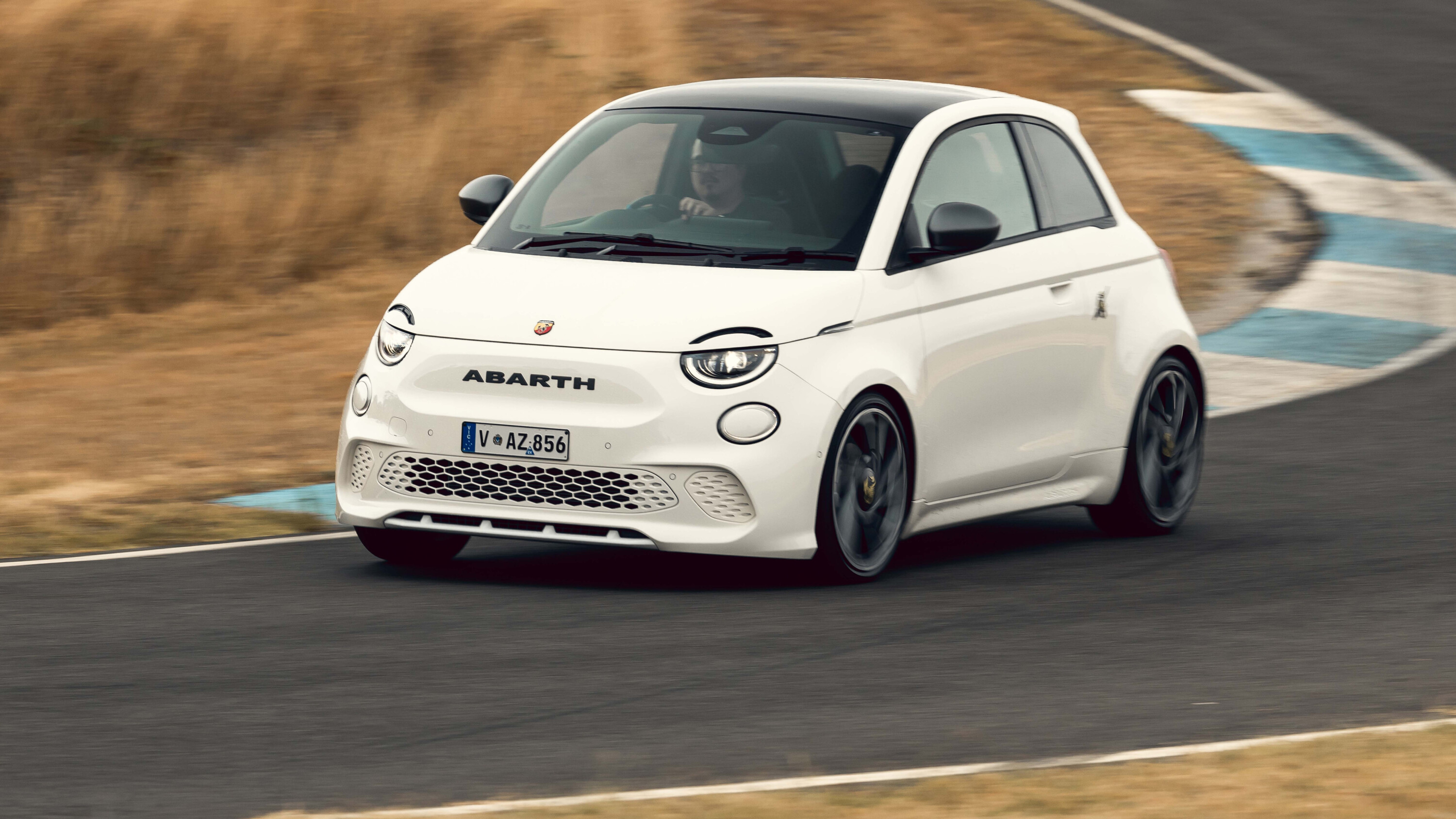
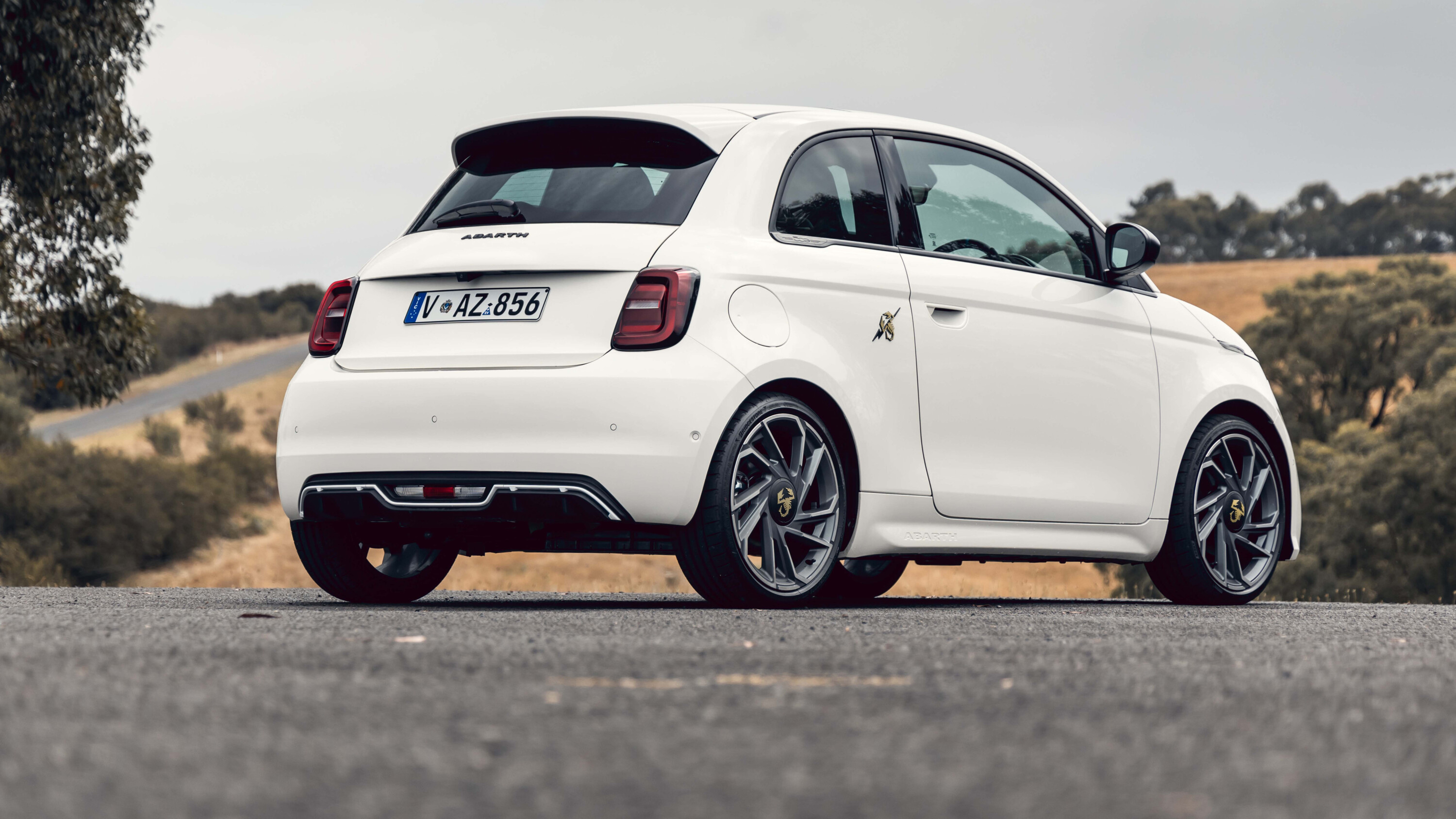
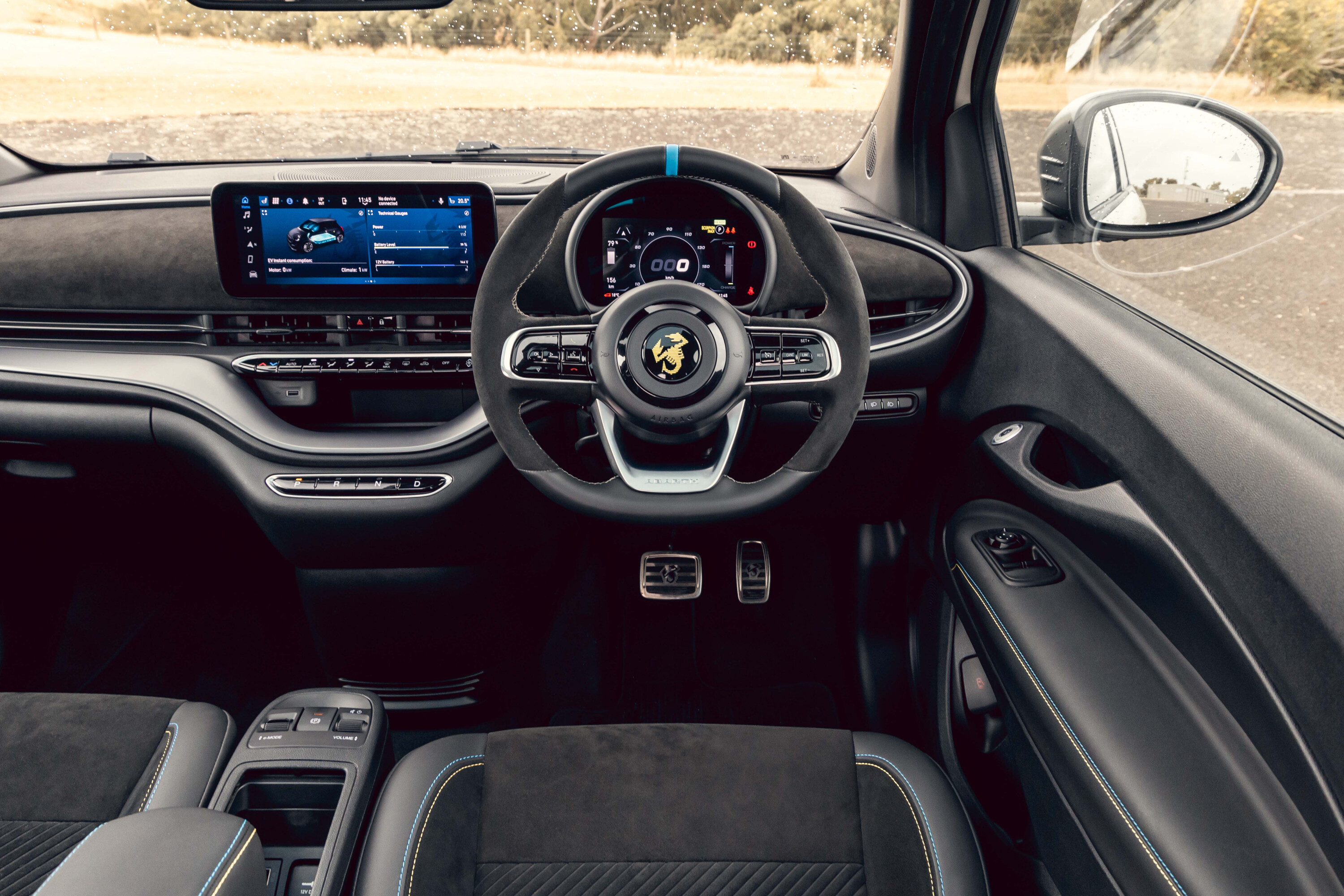
I’ve driven 102km along the freeway from work and I’ve consumed over 50 percent of the Abarth’s battery. That right there will tell you why people who love driving won’t buy this car. Because the Abarth’s tiny 37.3kWh useable battery won’t let you do a great deal of it.
I get it. There’s a place for small cars with small batteries and that place is in the city. There you can quite happily zip about in what will likely be a second or third car, not particularly worried that this
Turismo trim level costs a smidge under sixty grand nor that the 18-inch wheels rob around 11km of range over the 17-inch items our Euro cousins get.
1
It’s hard to be sour about for long, though. I even love the Abarth Sound Generator, effectively a huge cake-tin of a speaker mounted to the underside that emits a fake engine sound.
It’s obnoxiously loud when engaged and sounds reasonably good when pitching up and down the rev range. It’s not so enjoyable at steady revs on a highway and you can only switch it off by bringing the car to a halt and engaging the handbrake which, if you’ve neglected to do so before you drive down the on-ramp, will have you hating life within about twelve seconds.
Otherwise the ergonomics are much improved. The seating position is rather high, which will affect taller drivers and the car’s target market hardly at all.
2
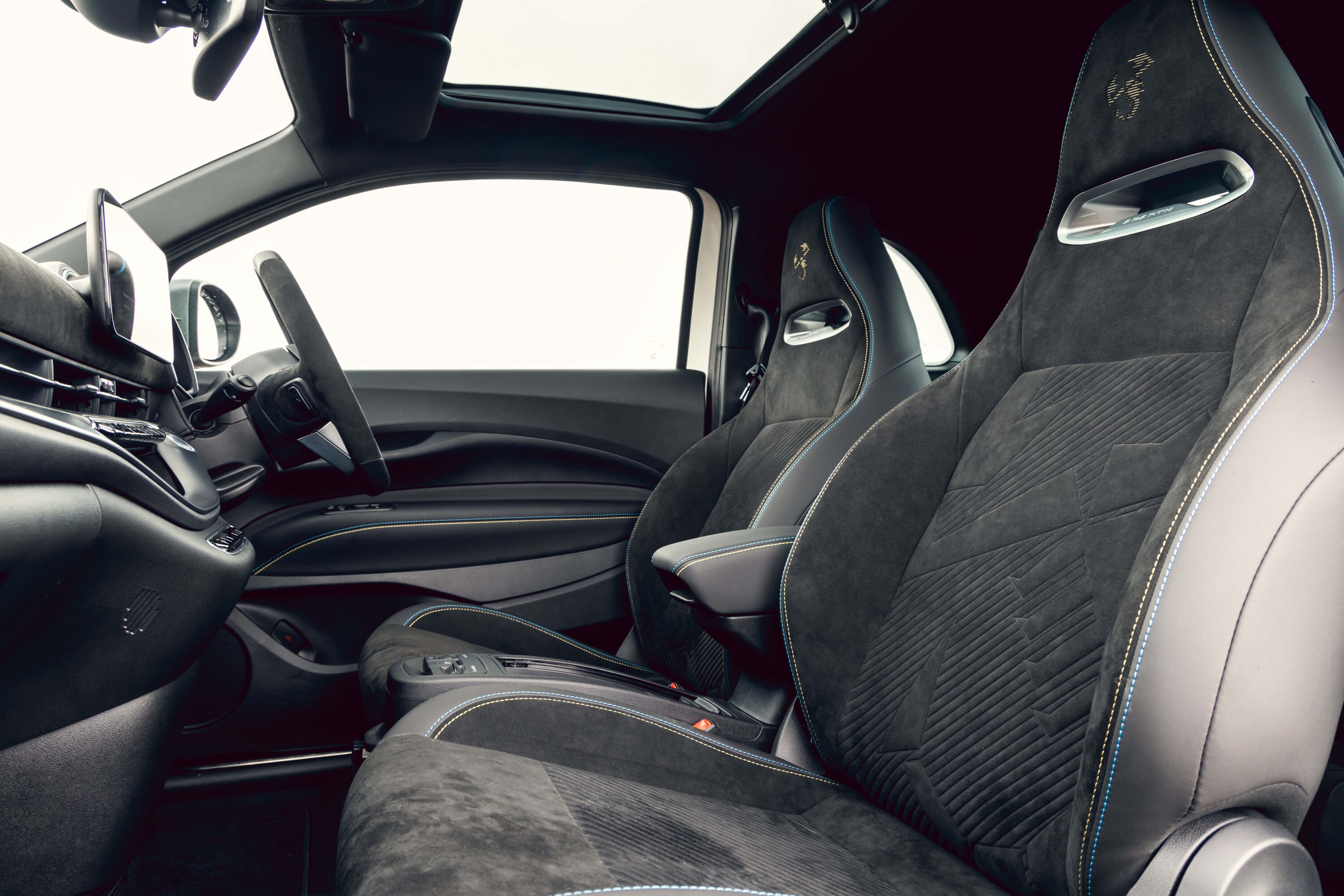
The body control, grippy Alcantara-trimmed sports seats and beautifully-weighted steering are excellent
You get wireless Android and Apple, a reasonable stereo and some cutesy Easter eggs dotted about the cabin, such as the outline of the Turin skyline on the wireless charging pad and the original Cinquecento etched into the interior door pulls. It’s almost pathologically endearing.
It’s a hoot to power down out of corners, but even with a relatively modest 114kW/235Nm at its disposal, it can occasionally spin up a front inside wheel if you’re particularly unsubtle with the throttle.
The body control, grippy Alcantara-trimmed sports seats and beautifully-weighted steering are excellent; the cramped footwell with nowhere for your left foot to go significantly less so.
15
The handling is safe, decently tactile but largely prescriptive. At 1410kg, it’s not hugely hefty but it isn’t presented as an enthusiast’s car.
‘Scorpion Track’ mode is the only one that disables one-pedal driving and the stability control never switches fully off. Again, while stringback glove types like us may bemoan that choice, it’s probably right for the typical buyer.
Ride quality is firmish and outright grip from the Bridgestone Potenza Sport tyres is impressive. While it feels outgunned in this company, everybody emerged from the Abarth with a grin on their faces. Yes, it’s a lot of money for what you get, which in the context of what else is out there for that price is eye-widening.
1
Abarth must feel, or indeed hope, it’s playing to a demographic that is implacably price insensitive.
Its peak charging speed of 85kW means a zero to 80 percent charge will detain you for 35 minutes, in which time you’ll have added around 160km of real world range. By contrast, the Hyundai Ioniq 5 N would have reached 80% in a tick over 20 minutes and shovelled in double the kilometres, so with the 500e know that you’re not buying the most advanced EV architecture.
But then there’s a long list of things that nearly $60K isn’t buying you with the Abarth 500e. We took it a long way offhome turf for this test and that also needs to be taken into account. It still charmed everyone. What price do you put on that?
Audi’s low-flying spaceship defies physics… but that’s the problem.
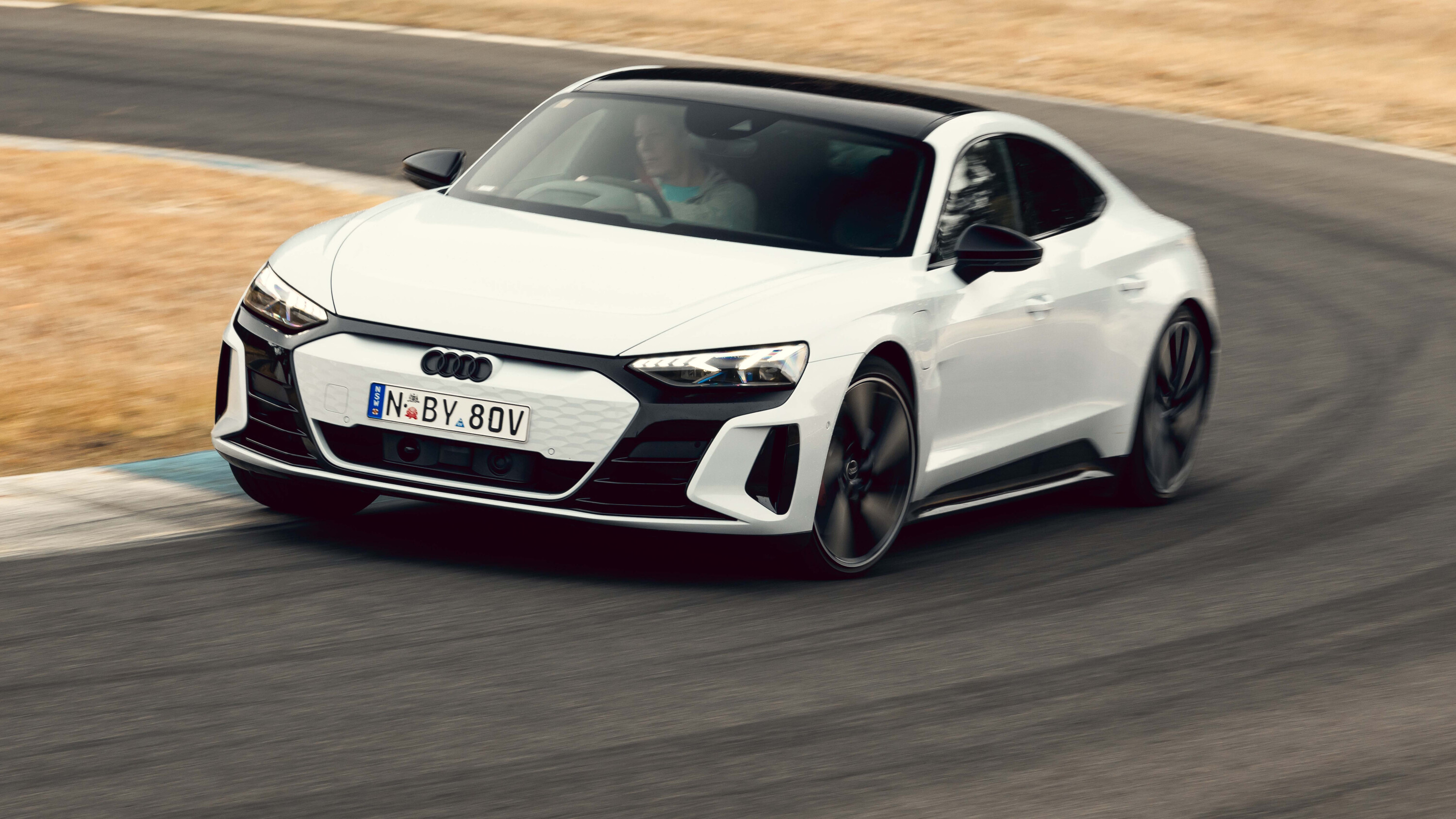
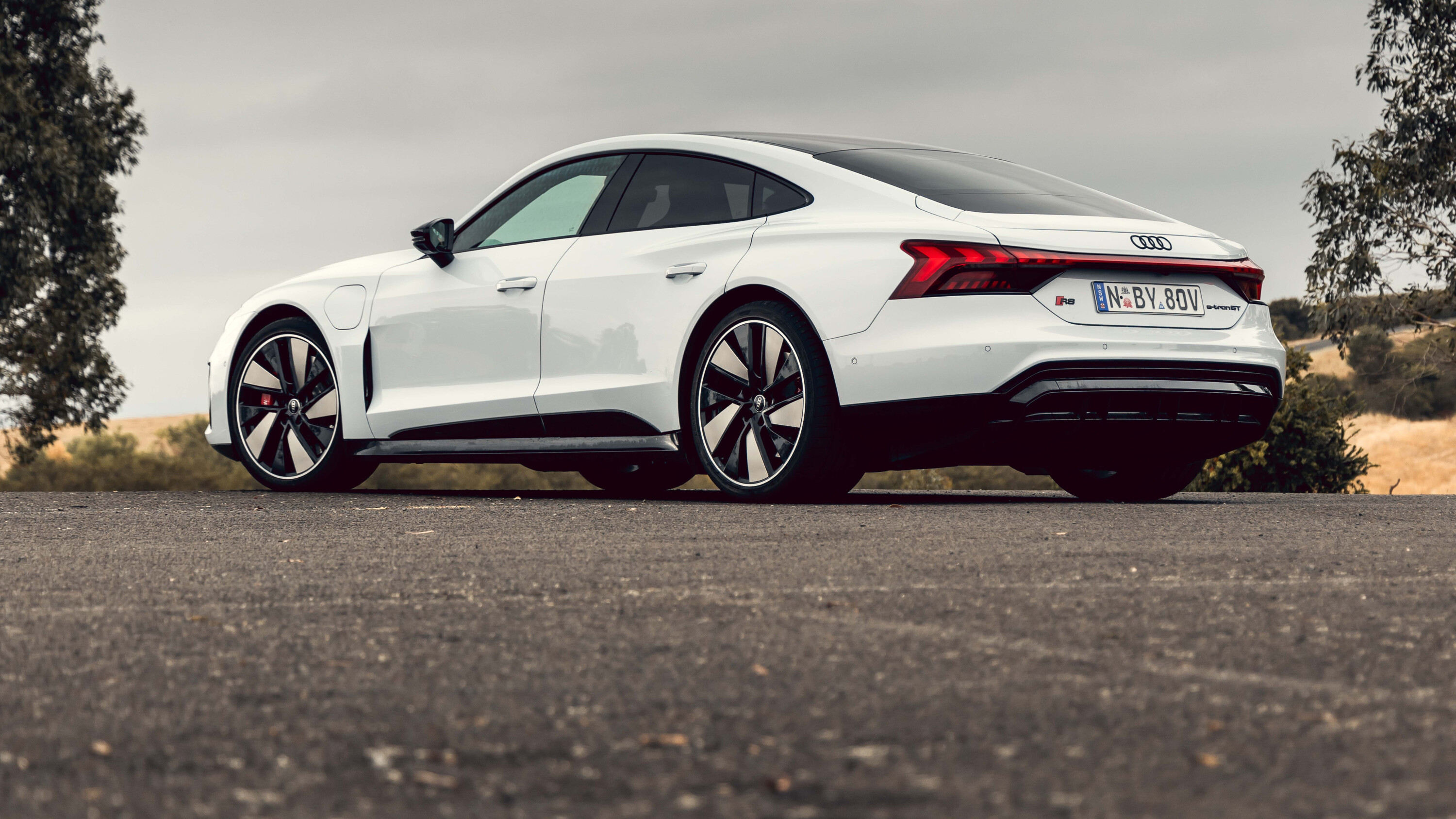
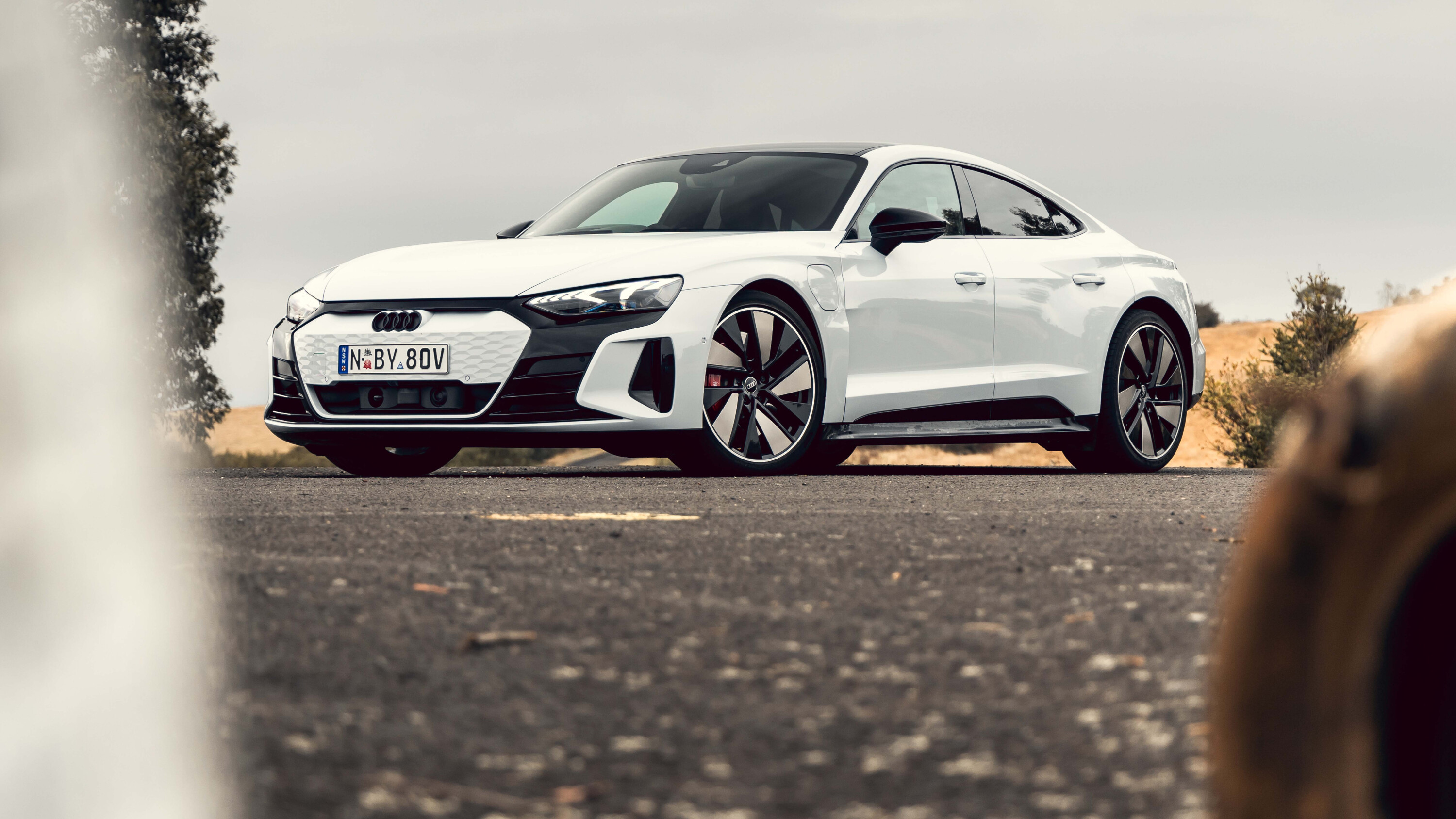
If this was a beauty contest, the RS e-tron GT would have won the instant it rolled through the gate. Long, low and wide, with coke-bottle hips and a bonnet the size of a tennis court, Audi’s top-tier electron-burner is a flagship that looks like a spaceship, and one that compelled all who gazed at it to profess their love for it, unprompted.
But aesthetic appeal doesn’t mean athletic appeal, and the Audi has some factors working against it. For one, its size. It measures a smidge under five metres long and is three centimetres wider than a 300 Series Landcruiser, and that can make for some nervousness when threading through traffic or trying to squeeze into a tight charging station. It’s a dense thing too, with its 2422kg kerb weight making it heavier than a Prado.
1
Accordingly, as it slinks out of the pre-grid onto the confined Haunted Hills circuit, I feel like a mariner easing a superfreighter through the Suez. I decide I’m going to take the first few laps easy.
If I jam this thing sideways into the dirt it’s going to be a catastrophe on a scale greater than the Ever Given, because the only thing more colossal than the RS e-tron GT’s footprint is its price – $260,525, as you see it before you, or $246,875 if you forgo the black badging, red contrast stitching on the interior, microsuede headliner, heated rear seats and massaging front seats. Better be careful.
But it doesn’t take long to realise the Audi has so much grip that its fearsome speed and supercar-slaying 3.3-second 0-100km/h performance are easy to contain. After a few more laps I start to wonder… is there maybe too much traction?
1
Just keep turning the wheel – there’s way more lateral stickiness than you’d expect
Its Goodyear Eagle F1s measure 265mm wide at the front and 305mm wide at the rear, and they, working in conjunction with the car’s active rear steering and torque-vectoring differential, make this land-yacht grip like a barnacle.
Just keep turning the wheel – there’s way more lateral stickiness than you’d expect, and the air suspension does a stupendous job of reining in body movement on this 2422kg monster. Pitch and roll? You barely feel either.
It can be convinced to slide, but only if you deactivate stability control all the way and transfer as much weight off the rear wheels before stabbing the throttle – and have the commitment to keep the hammer down as the big Audi rapidly gathers speed in a powerslide.
14
Speaking of, it accelerates like a boulder pushed out of a Zeppelin. Not just from a standing start, but from pretty much any speed.
Haunted Hills is a fairly confined track so it’s hard to really get above 130-ish km/h, which is where the e-tron GT’s two-speed transmission would start to shine, but the grunt that’s summoned up from a firm squeeze of the throttle pedal is magnificent, and it’d be a weapon at, say, Phillip Island.
On the other side of the dynamic equation, the e-tron GT’s brakes pull up strong, and there’s no real discernable handover between the regen and mechanical brakes either – the former of which can recoup up to 265kW of energy before calling on the beefy red-painted calipers to bite into the dinner-plate rotors.
1
It is savagely fast and head-spinningly so, but it’s no challenge to tap into its performance: and that’s why it’s hard to truly love it as a driving enthusiast.
It’s short on drama, and as a product of the Audi Sport division that wears the vaunted ‘RS’ badge on its bootlid, the hotted-up e-tron GT doesn’t seem to have the same sporting sparkle as other members of the RS family.
No lairy drift mode, no flashy vehicle telemetry displays on the infotainment or HUD, no way to easily key into what this chassis can do. That’s really the main reason why this high-tech luxurious spaceship sits in position three, because when it comes to driver engagement, the next two cars do it a whole lot better.
As pistons and spark plugs make way for synchronous electric motors and lithium-ion batteries, at least one constant could survive far into the electric performance car age: rear-wheel-drive.
If it wasn’t for rear-wheel-drive, we mightn’t pay much attention to the still relatively new, base model Porsche Taycan.
Outputs of 280kW and 357Nm from its lone electric motor look like that of a stick blender compared to pricier dual-motor models, yet the base could be the driver’s pick of the Taycan range in much the same way you might take a Toyota GR86 over a Volkswagen Golf R.
1
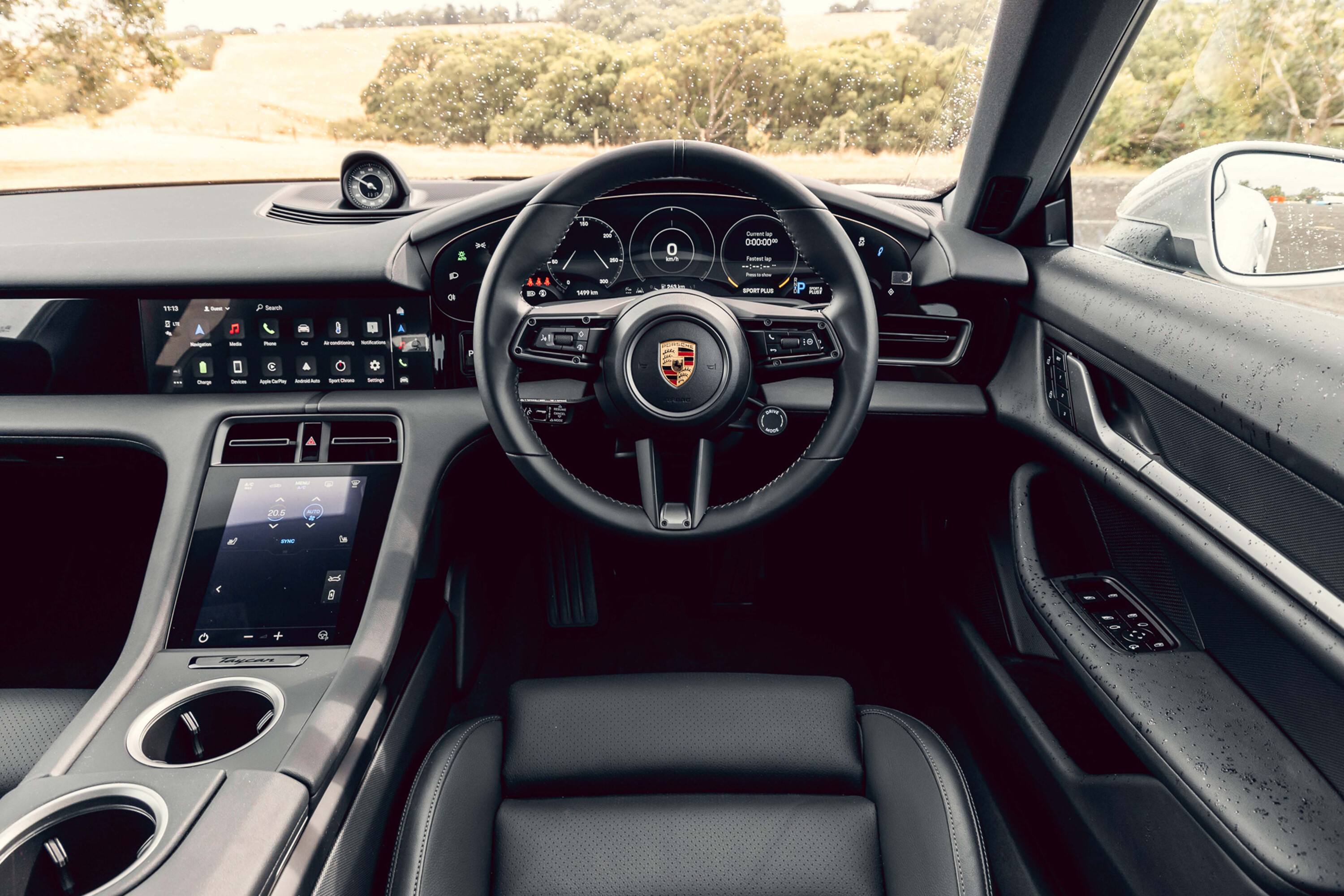
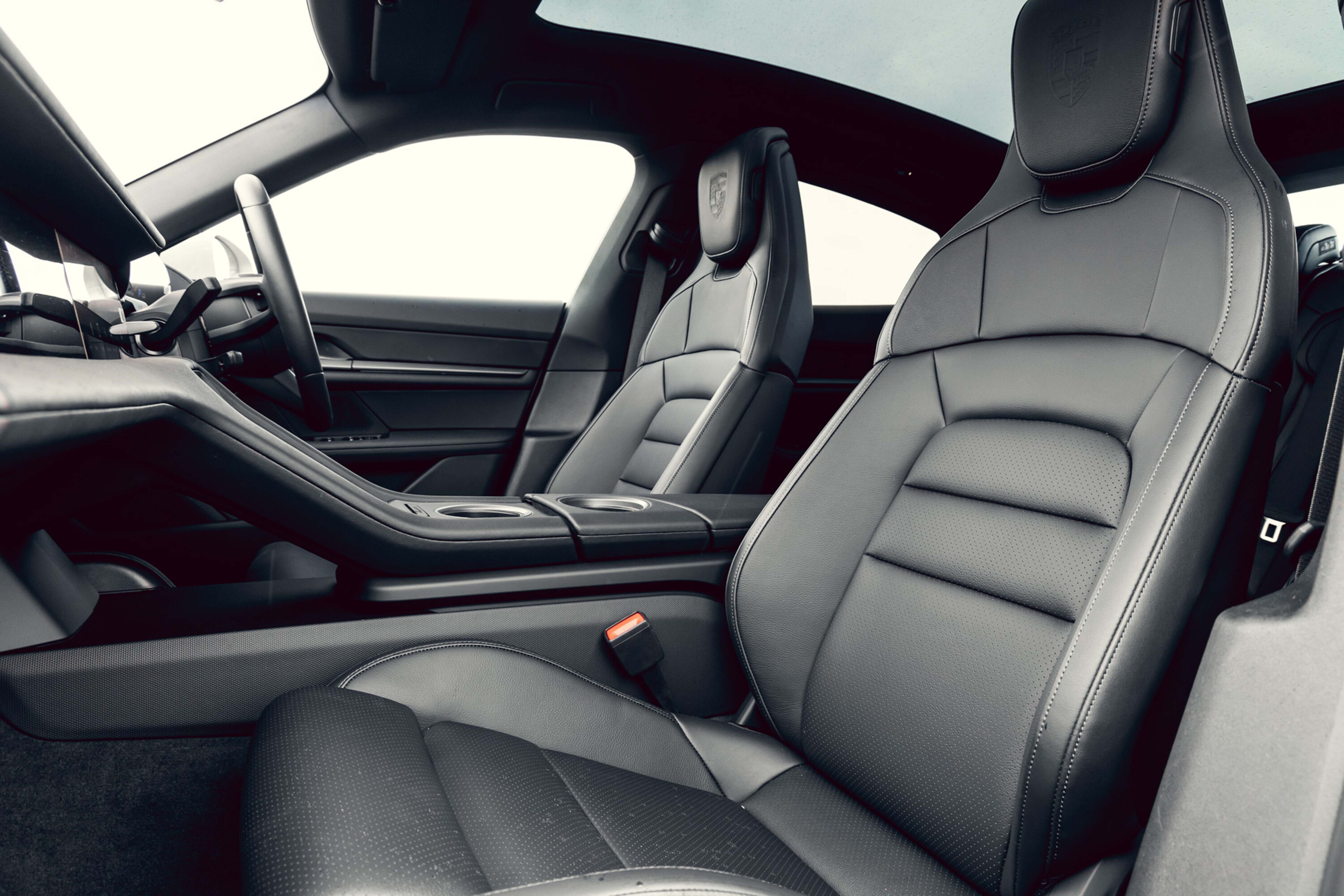
Having absorbed its futuristic, amphibian-esque exterior, the four-door liftback Taycan installs you low and ‘in’ the car, in classic sports car fashion.
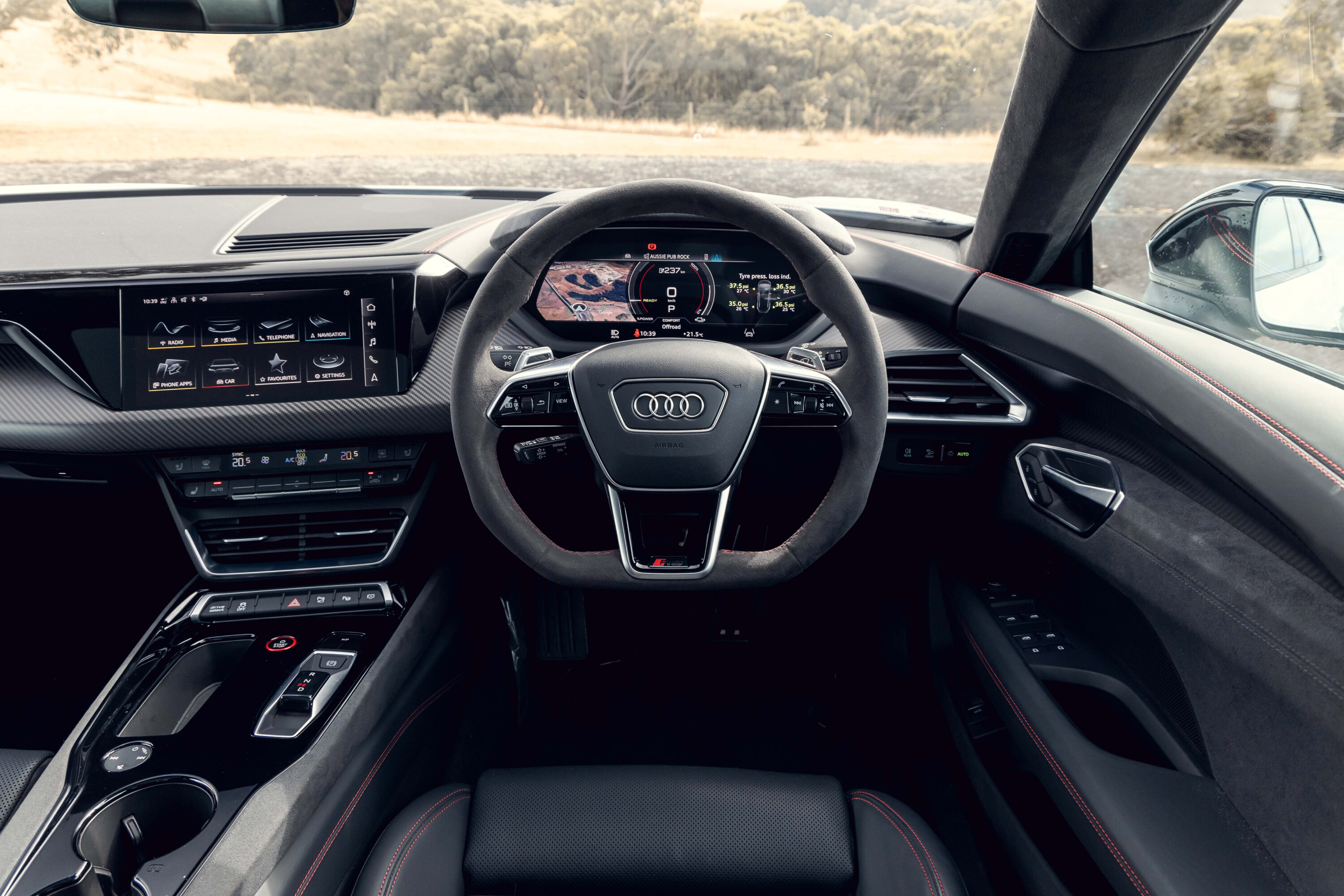
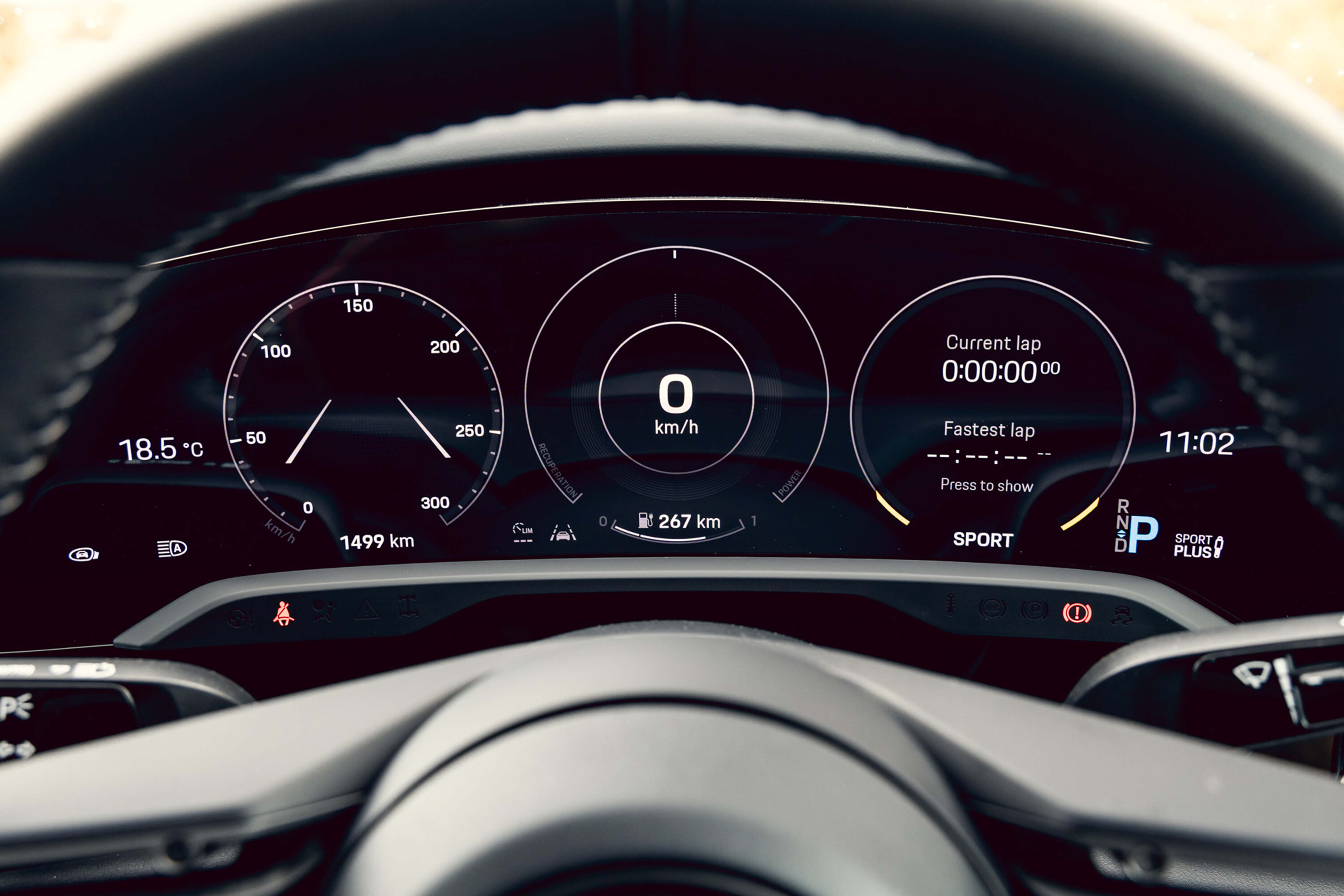
Triple screens punctuate the leather-clad cabin and, when deactivated, hit home just how many core functions have been turned into code. Forget the volume, even the direction of the front air vents is controlled using the screens. With so few hard buttons and dials, you come to savour the feel of the stubby, 918 Spyder-style gear selector, the beautifully magnetic rotary drive mode selector on the steering wheel, even the indicator stalk.
At low speeds, fortunately there’s a bit more intrigue in how the Taycan drives. There are the usual EV traits – heaviness, quietness, instant torque under your right foot – but there’s also some polite mechanical whine from the drivetrain, while the two-speed rear gearbox can occasionally be felt changing gears.
1
Minor things, but very welcome when most EVs are so perfectly quiet and smooth there’s nothing to be interested in.
Dynamically, there’s plenty to be interested in with the rear-drive Taycan. Compared to the upright Ioniq and the Mach-E, the flat, low and wide Taycan, with its double wishbone front-end and five-link rear, almost feels like an open-wheeler. Its 2130kg is situated very low, while fast and accurate steering gives it agility like a ballet-footed linebacker.
There’s plenty of mid-corner grip, while the default is understeer thanks in part to its aggressively staggered tyres (265 fronts, 305 rears) making it feel like a giant, heavy, long-wheelbase Cayman.
2
While with its single-motor, this Taycan lacks the visceral dual-motor punch of the Hyundai or Mustang (its claimed 5.4sec 0-100km/h time and 13.5sec 0-400m figures are almost limp mode for some electric models), turn the ESC off and power oversteer is there for the taking.
Where the Ioniq’s Drift Mode feels like you are interfacing with software, the more puristic Taycan offers a seemingly fixed relationship between throttle and motor, making it easier to know what it’s going to do next.
The fat rear tyres need every available electron to come unstuck, but once there it’s power oversteer for days – and it’s as much fun as it sounds.
1
Back in the real world, perfection sadly evades the Taycan to an annoying degree.
The flush door handles make opening the doors fiddly, while on an incline the car can roll forward when selecting reverse. As minor as it sounds, the haptic control screen needs a forceful prod, but perhaps the strangest flaw is that the Taycan’s superstructure feels so stiff, the suspension is broadcast into the cabin in a booming, at-times unnerving way.
Sometimes at highway speeds there’s a muted buffeting like a rear window is open – but there isn’t.
20
Then there’s the price – $164,400 before on-road costs, or $217,390 as-tested.
Range of 434km is also average, as is Porsche’s standard three-year, unlimited kilometre warranty.
But still, this is Best Performance EV, not Best Value EV With The Longest Warranty. On this basis there was a general consensus on our favourite vehicle – as you’ll soon read – but equally we would all be plenty happy with the Porsche which was a close second place.
The updated Taycan – with up to 320kW and 420Nm from its single rear-driven motor, and a bit more range – is due mid year. We’re sure the price will increase, but so will the appeal.
Don’t fear the EV future — Hyundai has built a game changer.
What we like
Proof that EVs can be fast and hugely fun for keen driverst
Gimmicks to make it feel like a petrol car actually work
Big power and playful dynamics make it a bargain even at $111K
Not so much…
Your tyre bill is going to be horrendous
Can occasionally feel more computer game than proper driveru2019s car
Steep learning curve to unlock the endless amount of drive modes and configurability
Game changer. Horribly overused, isn’t it? But as I tip the Hyundai Ioniq 5 N into another corner at Haunted Hills and once again feel it transition smoothly into an easily controlled drift, it’s hard to think of a better term for this overgrown Korean hatchback. An EV built for keen drivers that’s fast and genuinely fun? If this isn’t the performance-car world’s iPod moment, I’ll be shocked.
Let’s take stock: what we have here is an electric car that can seat five in comfort yet has more power than a McLaren F1.
It has also been deliberately engineered to feel, and sound, like a petrol car. It even has ‘gears’ and will happily smash into a fake rev limiter, arbitrarily chosen at 8000rpm, if you forget to pull the upshift paddle.
1
There are modes to help you hold enormous, tyre-shredding drifts, others to alter what kind of noise the car makes, and more still to vary the torque distribution and even how the brakes are used to help the car rotate in corners.
It’s incredibly gimmicky and configurable — the Playstation generation will love it — but consider the overriding goal. Until now, performance EVs have been fast but one dimensional. With the Ioniq 5 N, Hyundai’s focus is on injecting joy and boosting engagement.
Around Haunted Hills it’s a riot. With 478kW/770Nm available from twin electric motors, it’s noticeably more potent that the Porsche Taycan and about on par with the Audi RS e-tron GT for sheer urgency. But it’s how the Ioniq 5 N goes around corners that sets it apart.
1
In its default setting it’s quick, accurate and grippy but start to play with the seemingly endless amount of drive mode adjustability and things get progressively more playful.
Nearly everything can be altered — the steering, suspension, e-diff, torque vectoring, ESC and throttle all have multiple modes — and with the traction control in its middle setting, the 5 N is a hoot around Haunted Hills.
The relatively quick steering is natural and accurate and the power delivery is so intuitive and immediate that you soon have the confidence to hustle the 5 N from apex to apex. Neat slides, both on the way into and out of corners, are at your beck and call.
1
Then there’s the fake gearbox and simulated soundtrack, which add a welcome layer of engagement you simply don’t get in other fast EVs.
It’s laugh out loud enjoyable and crucially, also satisfyingly convincing. Downshifts give you a proper sense of ‘engine’ braking and unlike most sound generators, which are so crap you quickly turn them off, the 5 N’s is expertly matched to your speed and throttle position.
N Drift Control is a hoot, too, and allows you to execute big, smoky drifts on demand but it’s here you can notice the 5 N’s brain working hard in the background. “It feels like you’re interacting with software as much as you’re driving a car,” says Dylan.
15
Crucially in such a heavy car the braking performance is impressive — colossal 400mm front rotors are clamped by four piston callipers — and N Pedal mode is yet another way to instigate a slide by using heavy regen to help rotate the car.
If it’s good on track, the 5 N is an even better road car. Aussie cars score a unique suspension tune and while body control is kept firmly in check, there’s enough wheel travel and suppleness to make this a convincing and comfortable cruiser.
Speaking of, the official WLTP range is 448km which is good but not great. Happily the 5N accepts up to 350kW DC charging and we got through an entire day of track driving, and a 300km round trip from Melbourne, with two 30 minute charges.
1
Okay, at $111,000 before on-roads, it’s expensive for a Hyundai.
But if that’s a sticking point consider how it stacks up for value against the Porsche Taycan and Audi e-tron RS GT also in this test, both of which it beat in the final reckoning. As Dylan said “As an EV that’s genuinely exciting and fun, the Hyundai nails it.”
A nagging question, however, is whether the novelty of the modes and gimmicks will wear off over time. They certainly won’t appeal to everyone but tellingly, when the moment came to complete some final laps at Haunted Hills, every member of the road-testing team made a beeline for the Hyundai.
It’s involving in ways other fast EVs simply aren’t. And proof that where engagement and fun cannot typically be found, they can be made. Hyundai hasn’t only moved the game on; it has changed it for the better.
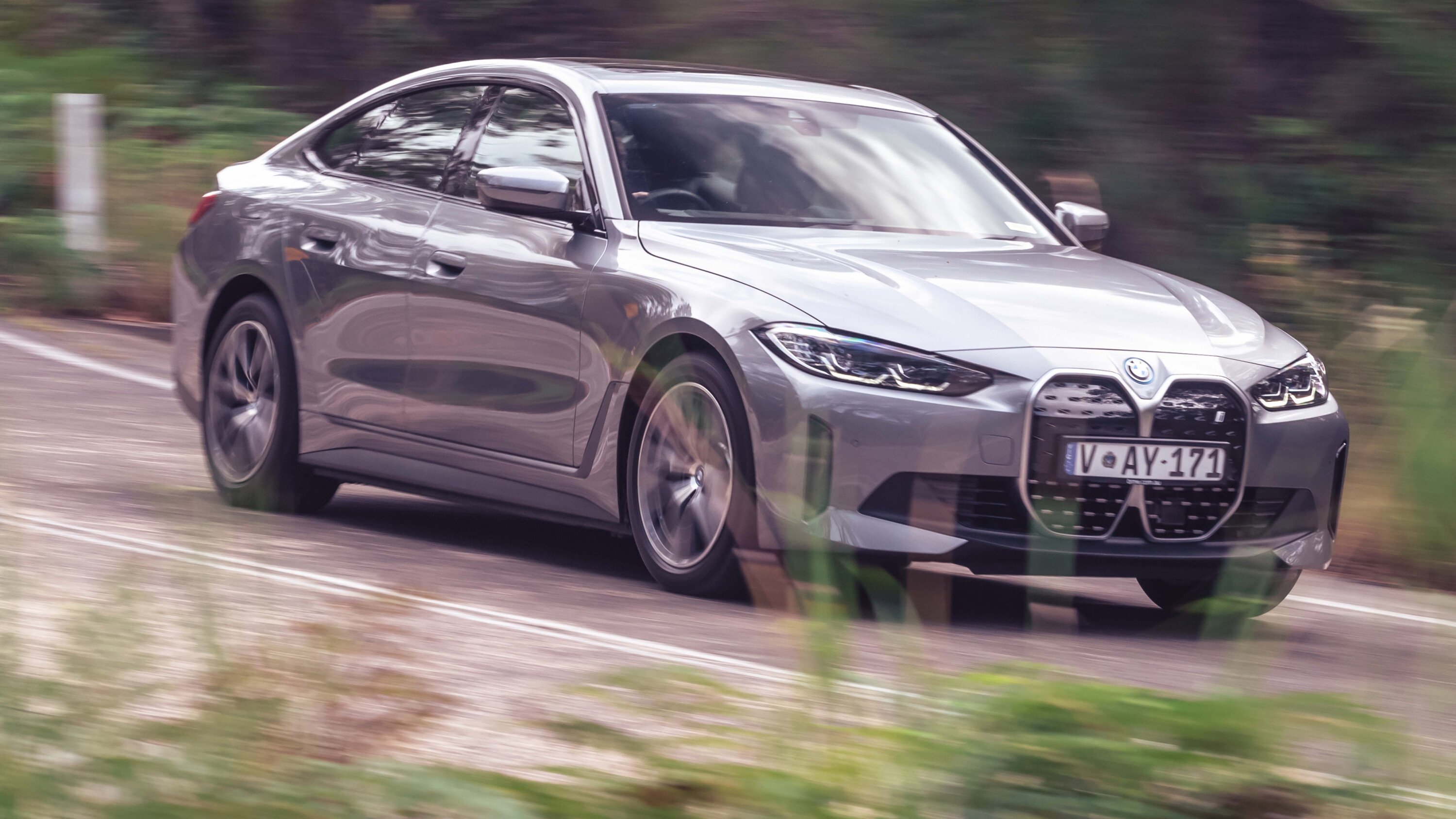
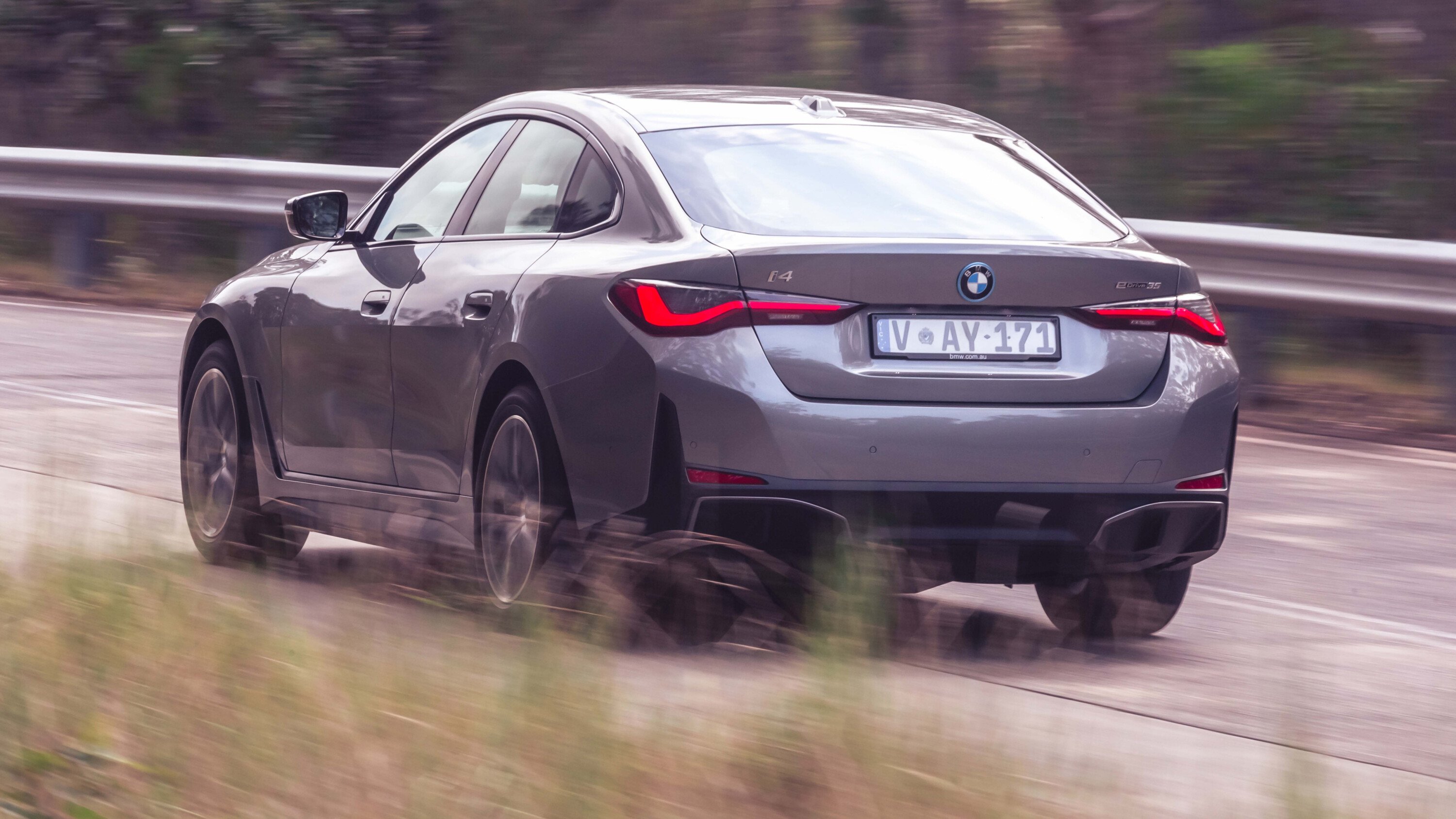
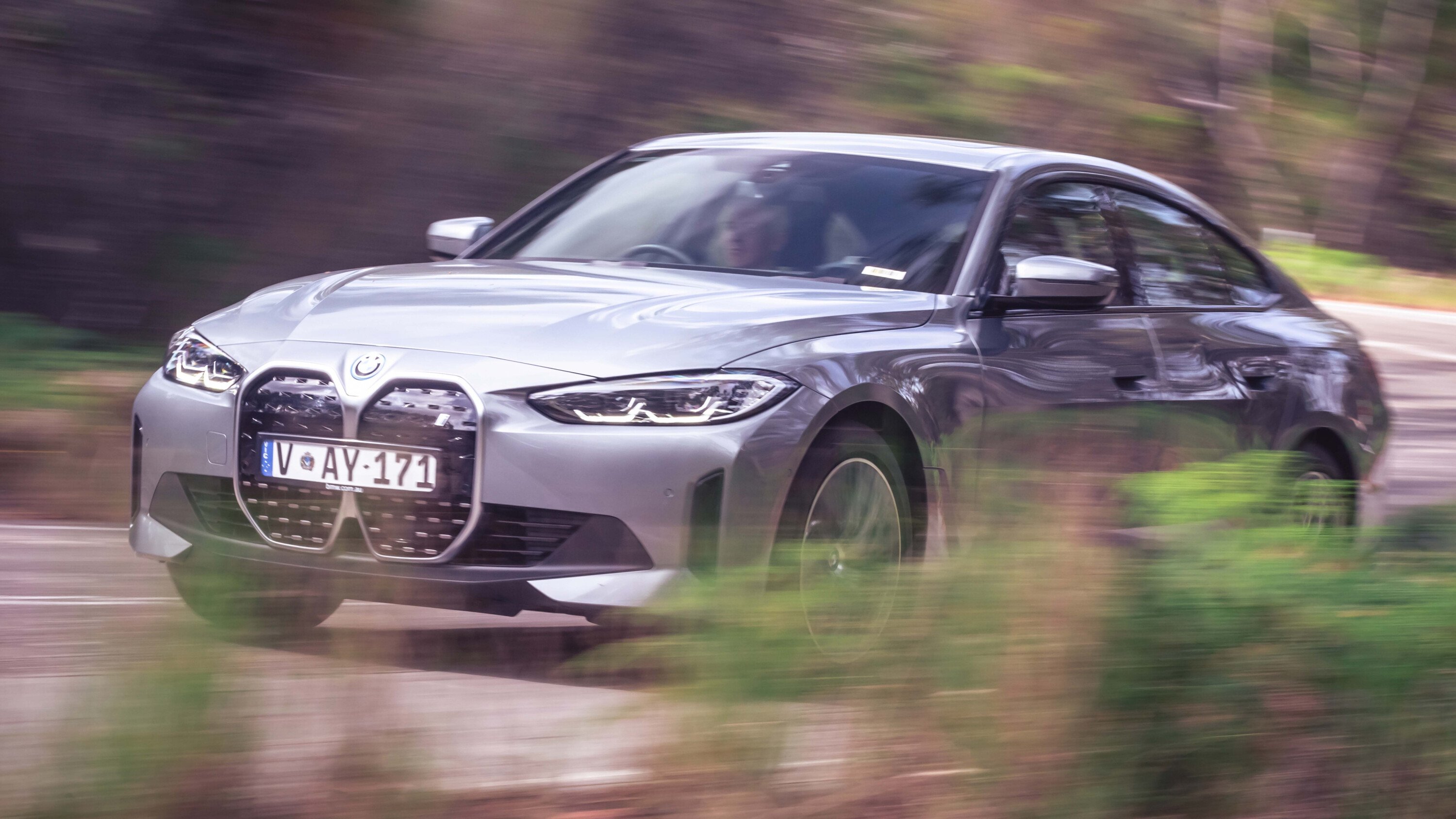
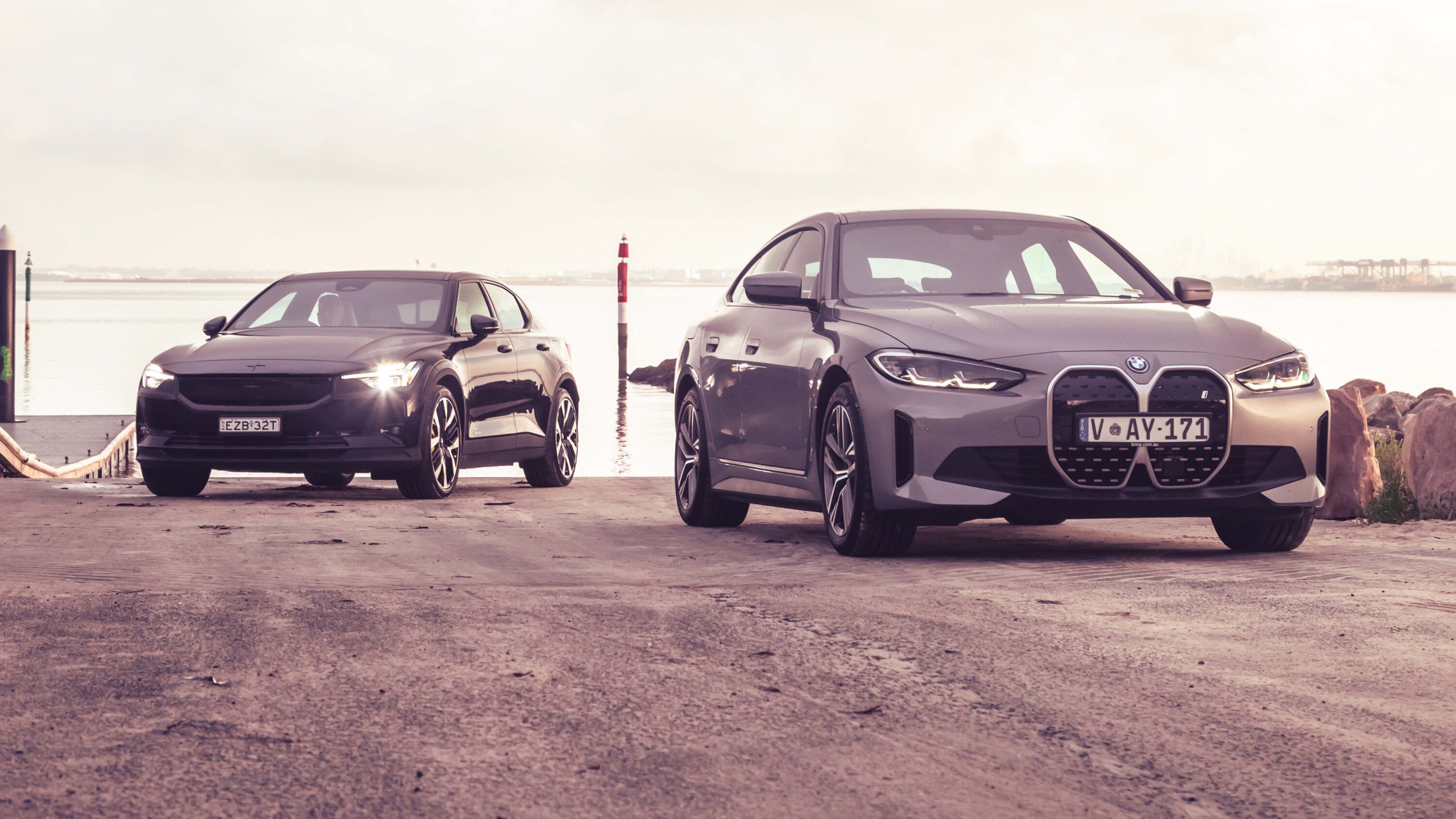
It isn’t an all-new, ground-up creation, either, being based on a 3 Series platform – with a 4 Series Gran Coupe body thrown over the top. Aussie imports began in the second half of 2022 with eDrive40 and M50 xDrive models, which both required six-figure payouts from buyers.
That made for good news at the start of this year when BMW Australia added a less powerful but more affordable variant: the eDrive35, priced from $85,900 before added charges.
1
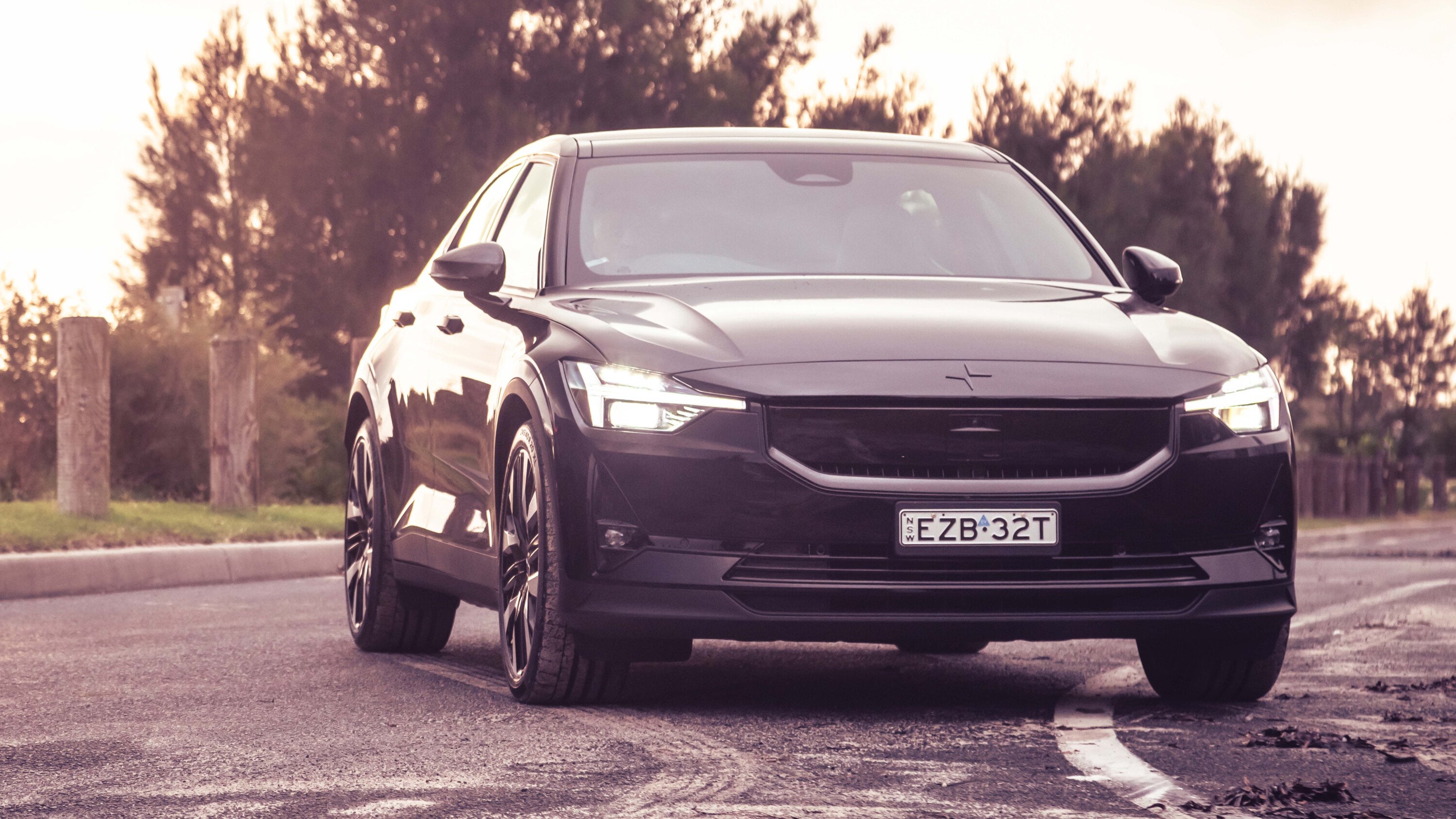
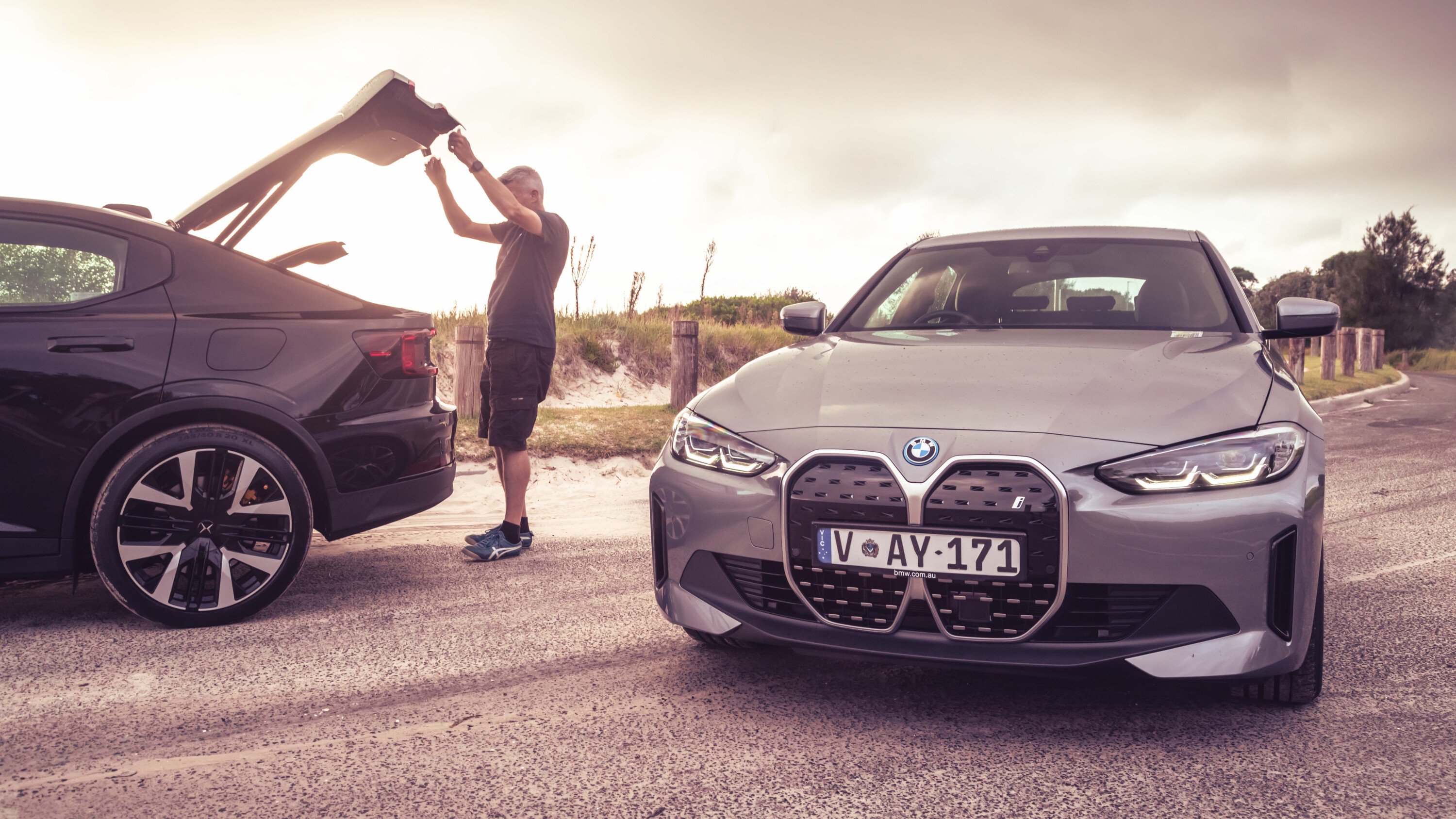
By coincidence, that’s the exact price of the flagship Polestar 2 from the still-young, Tesla-inspired spin-off brand created in 2017 by Volvo and its Chinese owner Geely.
Progress for Polestar has been like a northern-Swedish winter: long, and short on sunny moments. New product – excluding the limited-volume, left-hand-drive Polestar 1 hybrid outlier – has been slow to materialise. Only this year will the 2 finally be joined by Polestar 3 and Polestar 4 SUVs.
Then in early 2024, reportedly due to missed volume targets, Volvo pulled its Polestar funding to leave parent company Geely as sole custodian.
1
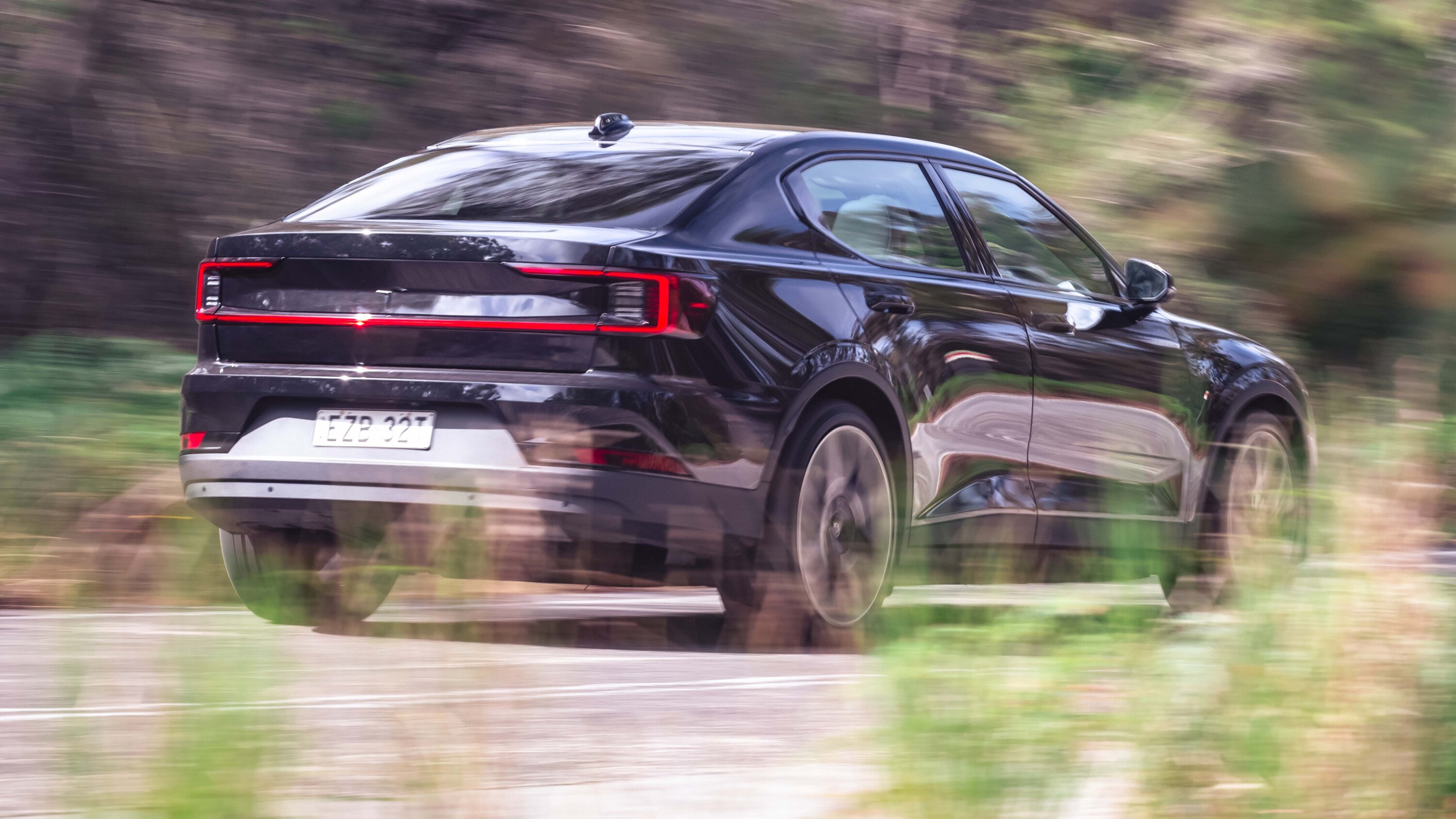
The surprise move certainly wouldn’t have been related to product quality. The Polestar 2 has been a critical success and remains one of our favourite electric cars.
A model year ’24 update in late 2023 introduced some welcome improvements in the areas of battery tech and suspension tuning. Here, we have the Long Range Dual Motor with Performance Pack that sits atop the range.
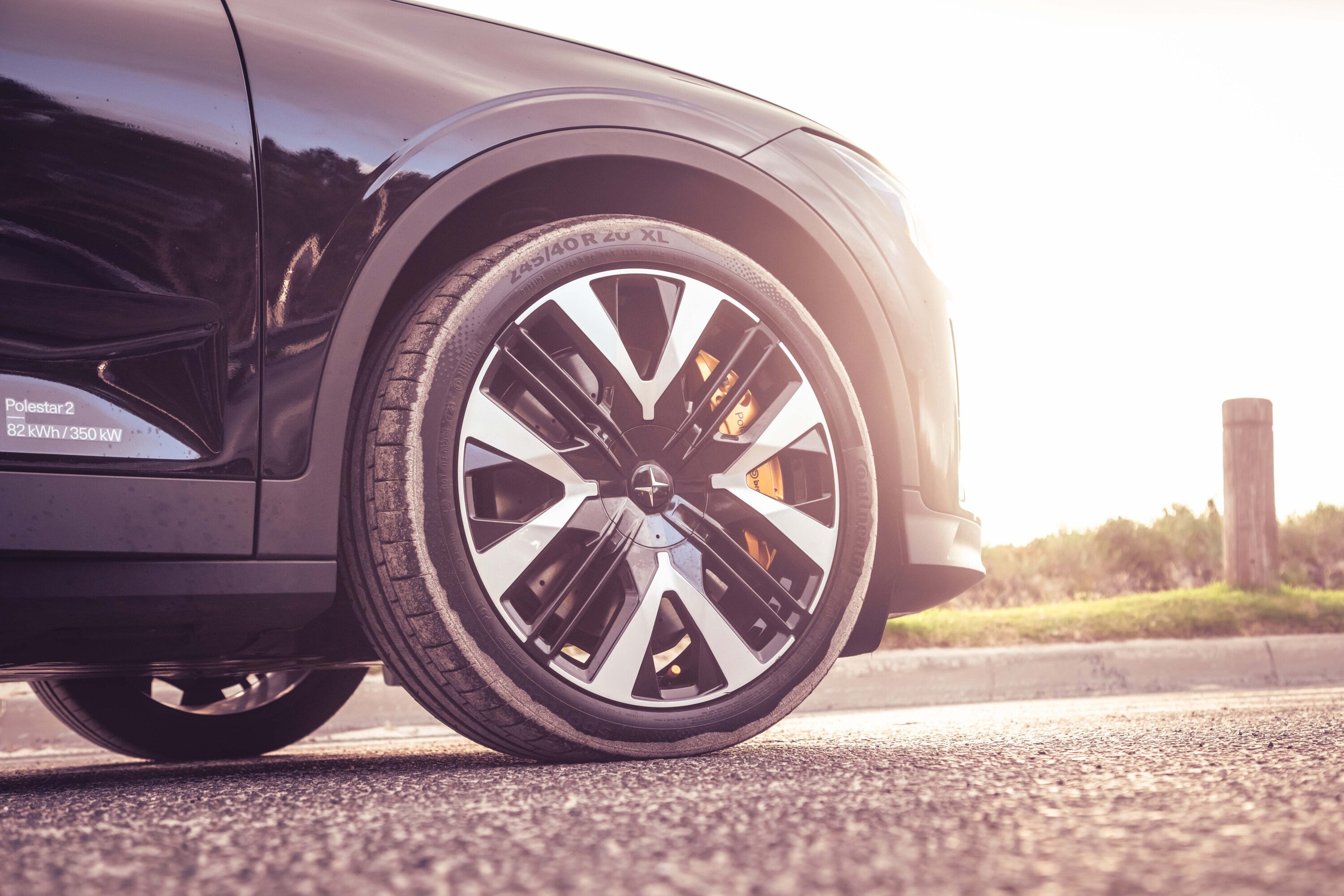
Costing $9000 more than the AWD Long Range, it adds a 40kW power bump, 20-inch forged alloy wheels, Brembo brakes (in Swedish gold), a sportier chassis, Swedish-gold seatbelts, and Öhlins dampers.
1
There’s no Model 3 here as the equivalent Performance variant has yet to join the facelifted Model 3 MY24 line-up, while Hyundai’s luxury offshoot Genesis has yet to launch a twin to the Ioniq 6.
Identical price tags here, then, though specifications vary – especially around performance and range. While both liftback sedans eschew dedicated EV platforms, instead integrating battery packs into an ICE-biased chassis, the Polestar 2 Long Range Performance features the biggest cells bundle – 79kWh versus 67kWh (useable). The Swede also features dual motors, providing all-wheel drive with one per axle and outputs of 350kW and 740Nm.
BMW’s rear-drive i4 produces just 210kW and 400Nm in comparison, although that’s still more than the petrol-powered 430i Gran Coupe that costs a bit over $100,000.
1
The Polestar can be charged a few minutes faster thanks to more powerful DC charging – 205kW versus 180kW – though both are either side of half-an-hour, which is relatively slow compared with a Hyundai Ioniq 6 that performs the same charge in 18 minutes.
BMW does throw in a one-year complimentary sub to Chargefox, though it’s five years with other i4 grades.
It contributes to a small standard-kit advantage for the base i4. The Polestar can’t match its electric front seats, head-up display, adaptive cruise control, or heat pump that can help improve range in colder weather. A head-up display isn’t even available as an option; other features are, but they’re found in different packs – adaptive cruise as part of a $3500 Pilot Pack and the rest as part of a $6000 Plus Pack.
1
The latter brings numerous other extras, though, including a full-length panoramic roof, 600-watt Harman Kardon audio, Tesla-style Digital Key smartphone app functionality, and heated steering wheel and rear seats.
These complement the standard heated front seats that on the BMW require a $3000 outlay for an Enhancement Pack that also brings a sunroof, which is smaller than the Polestar’s.
Rear seats are probably the most obvious giveaway that both these five-doors are built on mixed-powertrain architectures. The space offered, while not off limits to adults by any means, is less than what is offered by the likes of the Ioniq 6 and Model 3 that utilise skateboard battery platforms.
2
The i4’s rear cabin is the most claustrophobic, starting with the squeeziest rear-door aperture followed by the least knee room, least forward vision, and least light provided by optional sunroofs.
There’s more wriggle-room for toes in the BMW but similar headroom that is tight for anyone scaling 175cm plus. Armrests, USB-C ports, seatback nets and vents are all commonalities; the BMW provides the larger door pockets.
Neither front cabin fails the luxury brief thanks to high-quality presentations, slick tech, and tactile materials and switchgear. The i4, sharing the 4 Series design, keeps harder plastics to the lowest eye level, while silver patterned metallic trim brought some welcome brightness to our test car’s black interior trim.
1
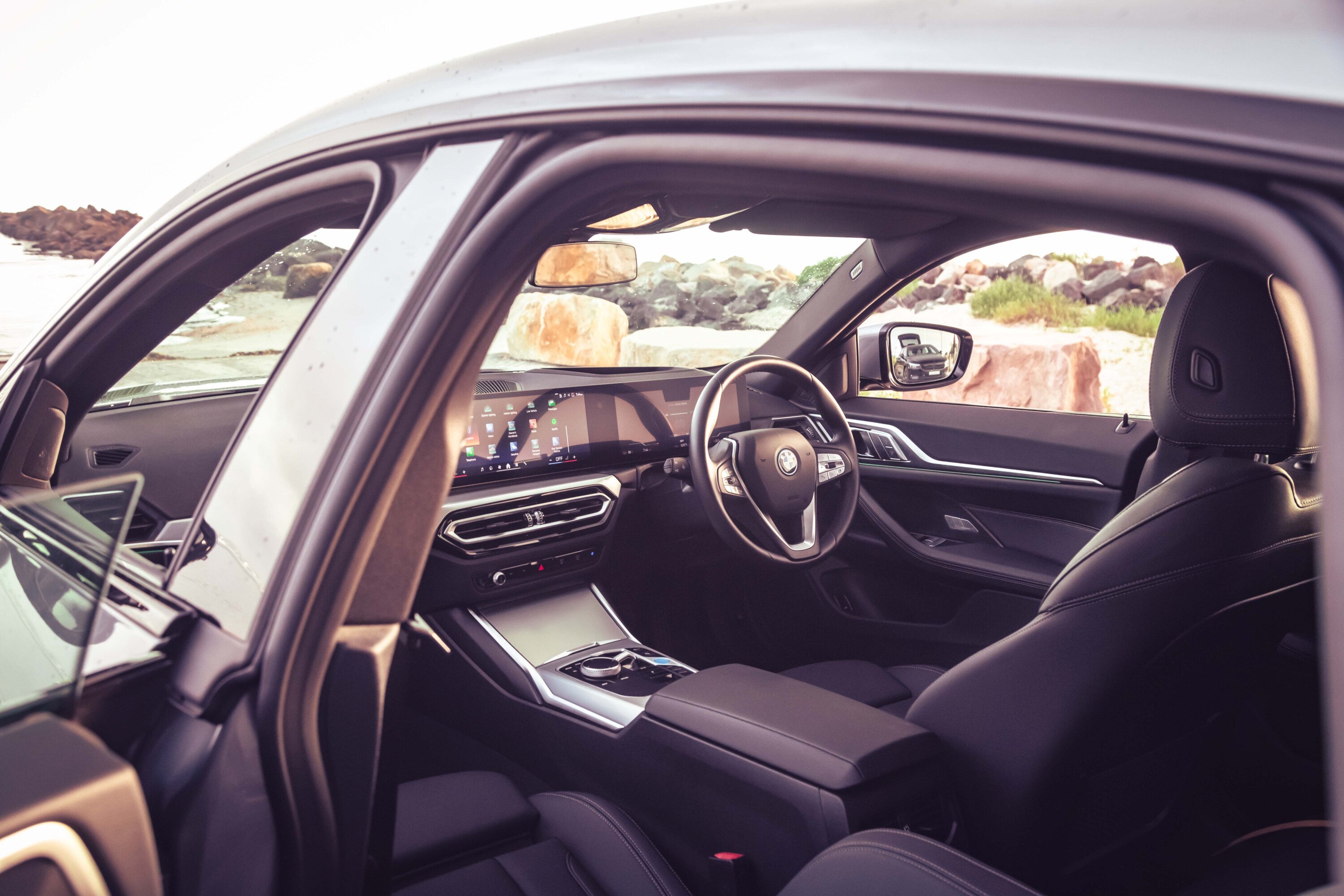
BMW’s iDrive rotary controller continues to sit on the centre console as an ergonomic benchmark in infotainment management (while the central part of the dual digital display can also be operated as a touchscreen).
Less successful are the Drive modes that are separate buttons requiring the driver to look down to choose Eco Pro, Comfort or Sport rather than via a more convenient toggle (as they were previously in BMWs).
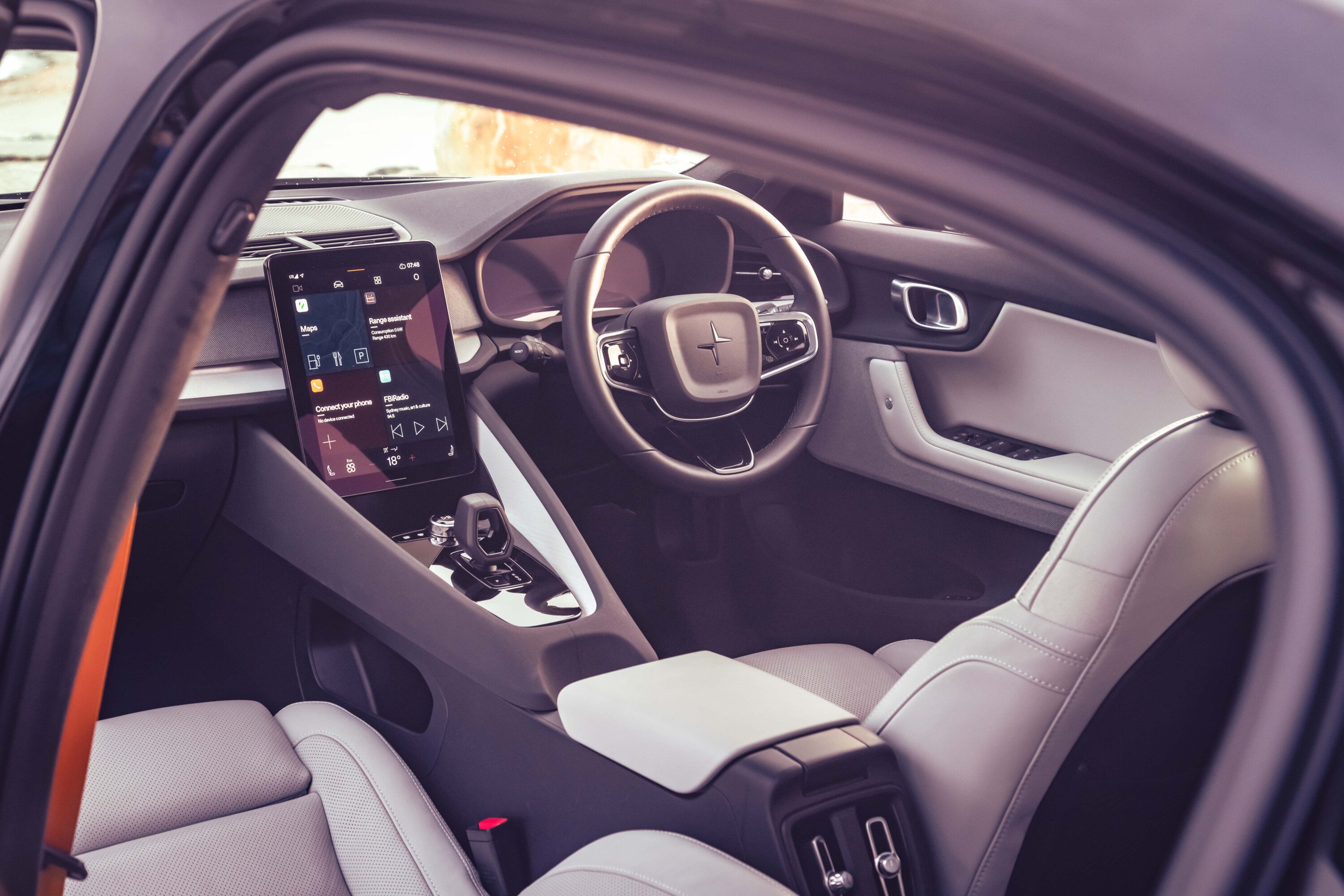
The Polestar 2’s cabin makes you wonder if Volvo’s interior designers were left with a tinge of regret, especially as the 2 started life as the Volvo Concept 40.2 – alongside the Concept 40.1 that became the XC40. Because where the XC40’s interior is commendable for its clever practicality, the Polestar takes the desirable Scandi-cool aesthetic to a whole new level.
1
A wondrous mix of different yet consistently tactile materials pervade the cabin, creating one of the standout interior designs in this class.
We know from previous tests that the standard fabric seats look smart, though the Plus Pack’s ‘WeaveTech’ seats – further embellished with the Performance Pack’s Swedish-gold seatbelts – look posher again while offering comfortable cushioning and decent support.
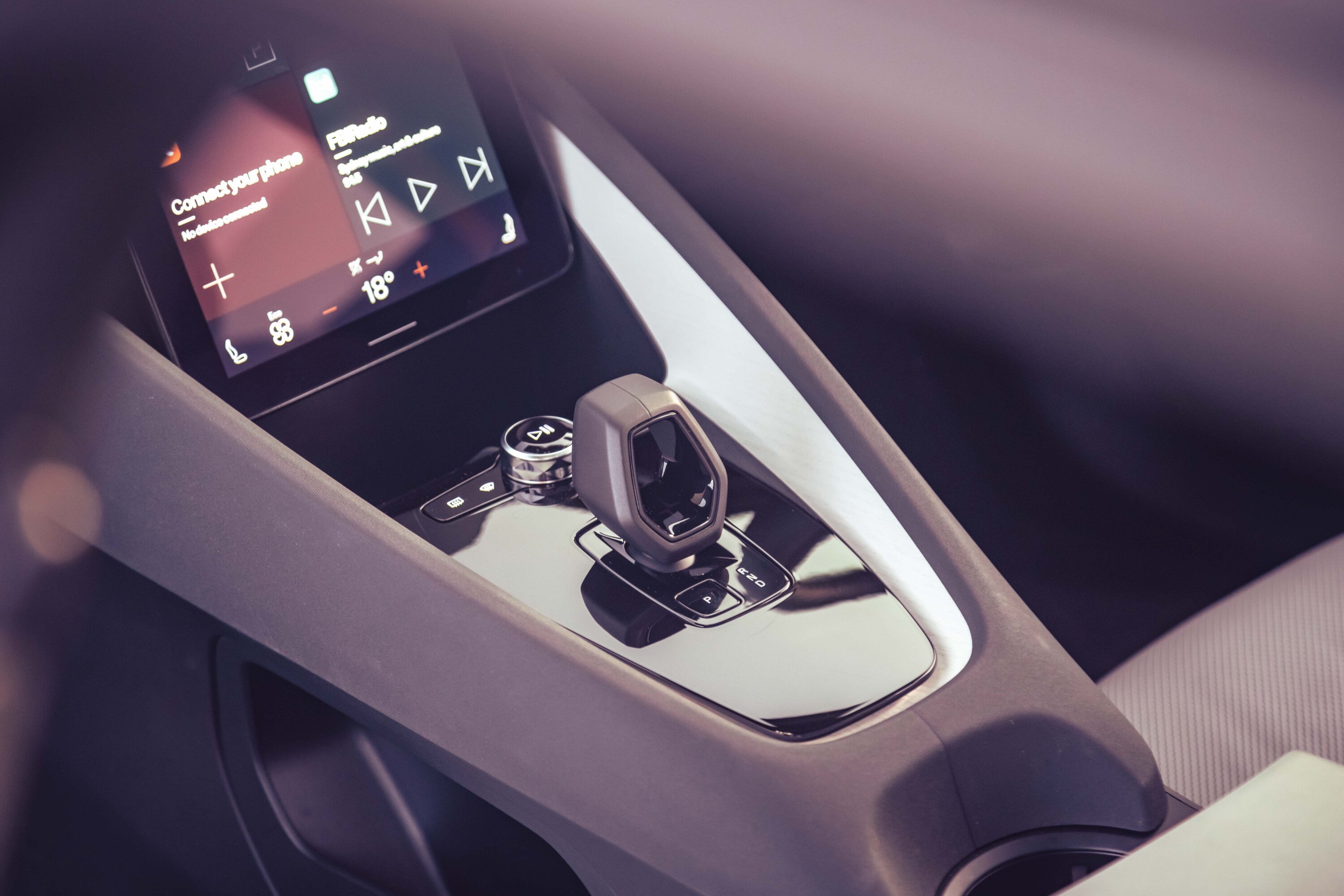
A chunky V-shaped centre console creates a twin-cockpit setup that is snug without being cramped for front occupants, with the centrepiece an iPad Pro-aping 11.2-inch portrait-shaped infotainment screen.
1
If the built-in Google Android operating system’s graphics aren’t quite as sophisticated as those presented by the wider, larger (14.0-inch) BMW OS 8.5 display, the presentation is still slick and there’s a beauty to the simplicity of the Polestar’s quadrant menu.
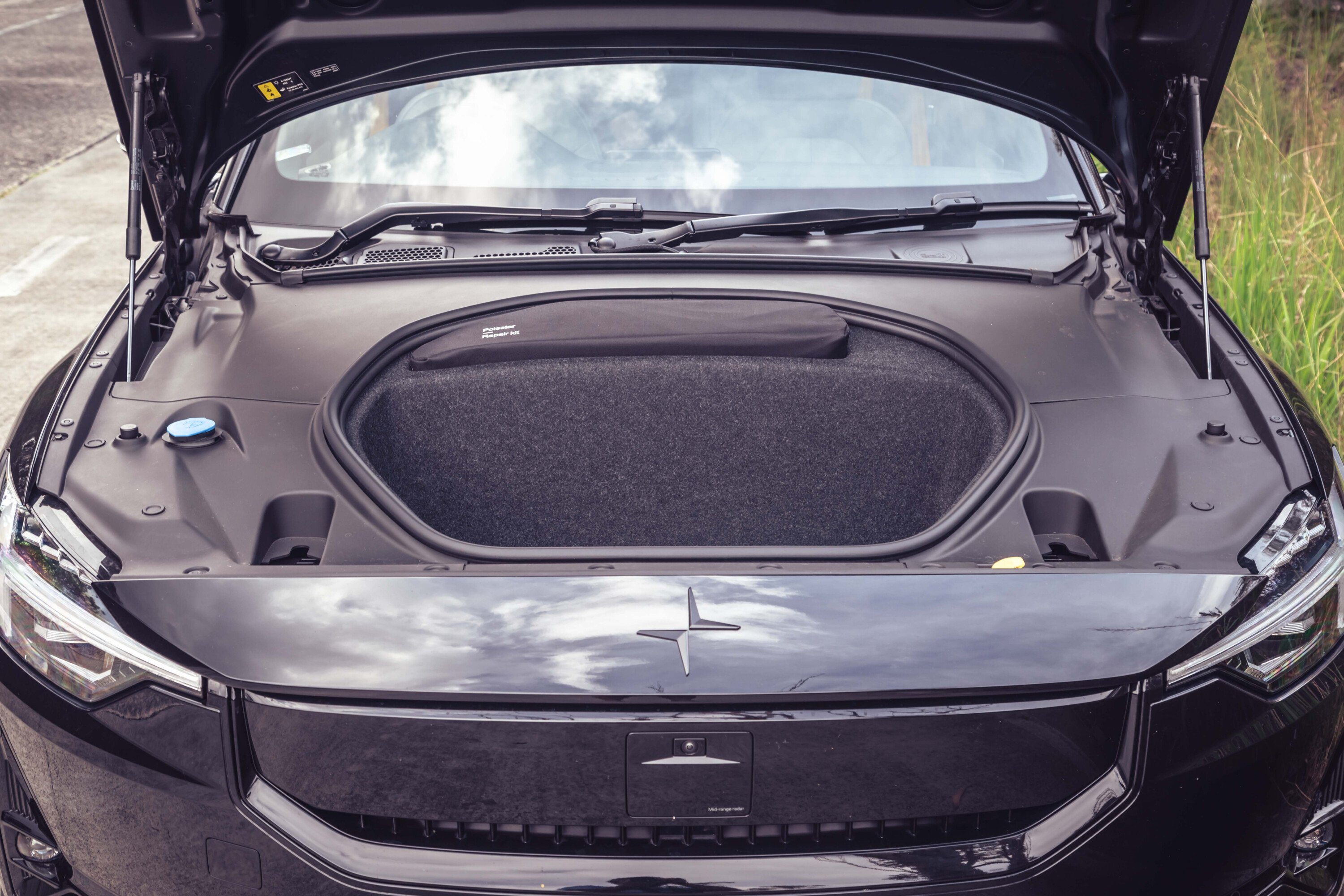
Luggage space is ultimately an all-square affair beyond the fact both cars feature liftback hatches that are more practical than bootlids. BMW quotes 470 litres for the i4’s boot, though the Polestar’s compartment is wider (if not quite as long) and features a larger underfloor tub (for a 407L total), while there’s additional storage with a 41L frunk that’s particularly handy for charging cables.
It also borrows the clever cargo divider from the XC40, which flips up from the boot floor and includes storage straps. Rear seats fold flat in both vehicles; the Polestar’s 60-40 set-up includes a ski port, but the BMW offers extra flexibility with its 40-20-40 split.
1
Underpinnings from a 3 Series always brings a certain level of dynamic expectation, and the i4 doesn’t disappoint, despite weighing nearly two tonnes.
Not only is there still a deftness to the electric BMW’s handling, but the immediacy of the torque delivery means it’s easier than in a 420i or 430i to induce some fun, controllable power oversteer mid-corner.
Regardless of driving mode, the steering is lighter than BMW tradition but weights up naturally in corners and offers ever-reliable precision. The eDrive35 doesn’t feel slow, either, even if the top-spec Polestar 2 is inevitably much quicker with its drivetrain advantages. On paper, Sweden’s 4.2 seconds plays Germany’s 6.0 seconds.
1
The Dual Motor Long Range is more than 100kg heavier and not as playful, yet it still offers plenty for drivers.
Its steering, too, offers accuracy but also a more natural heft, lending the driver plenty of confidence in concert with the planted, all-wheel-drive chassis and the 245/40R20 Continental SportContact 6 rubber that is grippier than the i4 eDrive35’s Pirelli P Zero 18s.
That Performance Pack brings much more than bigger wheels, further adding a sportier Polestar Engineered suspension tune, dual-valve-flow dampers, and four-piston front Brembo brakes. The Öhlins dampers are a carry-over from the Volvo S60/V60 Polestar of a decade or so ago, and continue to offer 22 settings that can be manually adjusted (if the owner can be bothered).
1
We’d be tempted to ask a Polestar technician to dial in a softer setting than the factory default as the 2 rides with an unrelenting firmness.
It has the better all-round compliance, however, as the i4’s suspension struggles to keep the vehicle body steady over potholes or more prominent surface bumps. The BMW has the more relaxed secondary ride, and its smaller wheels produce noticeably less road noise on coarser surfaces.
The Polestar 2 delivers a closer facsimile of the Tesla driving experience than the i4, with full one-pedal mode and the ability to drive off simply by jumping in and flicking the gearlever into Drive. A start-stop button needs to be pressed in the BMW, while the i4 has various regen braking modes but the deceleration is weak even in the highest setting.
1
On test, the Polestar 2 registered a so-so 17.9 kilowatt hours consumption compared with an impressively low 15.2kWh/100km for the i4.
In a remarkable coincidence, that gives them an identical 441km as-tested range based on their respective battery sizes. For the BMW, that’s slightly higher than its WLTP range of 430km max; the Polestar is a huge underachiever, well below its 568km WLTP.
1
As much as we love performance in the Wheels office, the fullest-fat Polestar 2 in this comparison is not the model we’d pick.
Our choice would be the $71,400 Long Range Single Motor that promises the longest range (655km) in the line-up, still has more power and torque than the i4 eDrive35, offers satisfying rear-drive handling, and would still undercut the BMW if buyers spent $9.5K on the Plus and Pilot Packs.
VERDICT: ? Polestar 2
It’s a tighter call between the top-spec Polestar 2 and entry-level BMW i4, but the Swede still edges the contest by virtue of its superior cabin execution, punchier performance, and generally more effortless driving experience.
Electricity and limousines are a match made in a bridal suite in a ludicrously expensive hotel.
More than any other vehicle type, they’re truly meant for each other – a union built on silence, torque and enough real estate to comfortably accommodate all the complexities that make a great electric limousine an almost blissful experience.
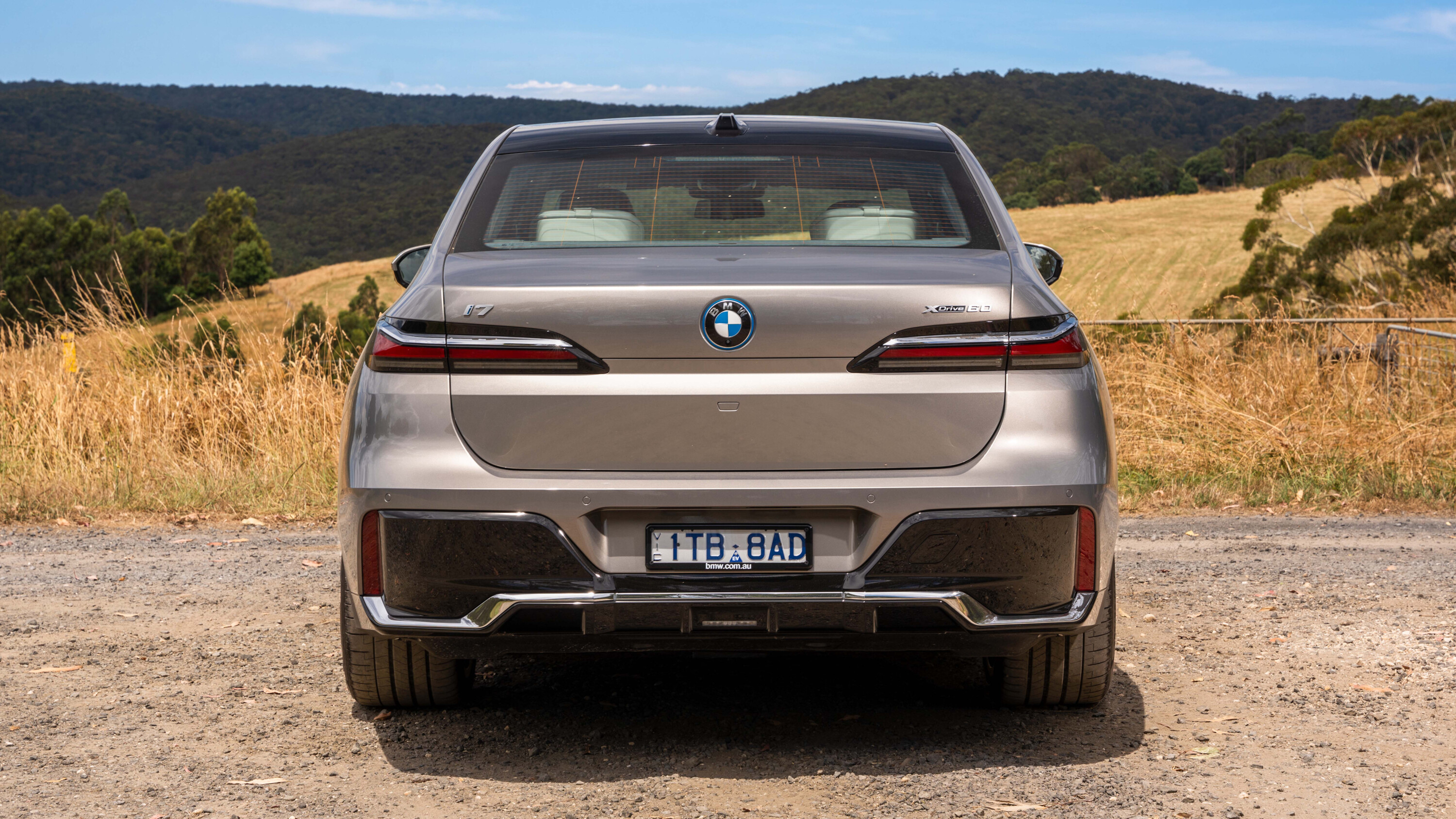
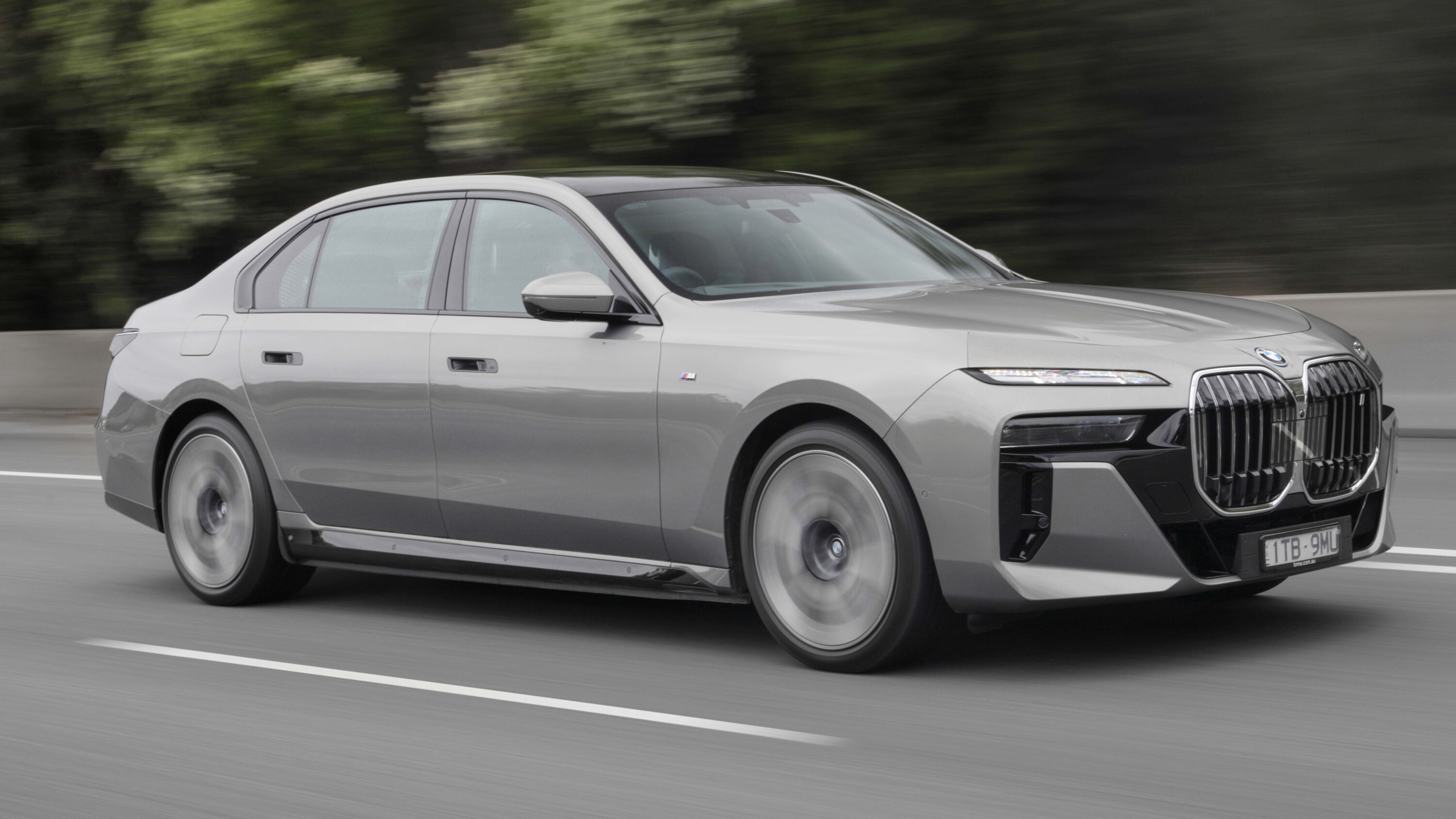
In saying that, the $100K-plus luxury car I’m referring to here is the BMW i7 – the fully electric version of the seventh generation (G70) 7 Series. As the first forward-thinking 7 Series design since Chris Bangle’s controversial E65 of 2001, it’s appropriate that Munich’s statement sedan happens to herald the debut of the limelight-stealing electric i7, and not just because it looks so damn imposing.
1
It’s fascinating to comprehend the disparate approaches taken by BMW and arch-rival Mercedes-Benz.
BMW decided to build one enormous sedan for all markets, riding on an even longer wheelbase than the previous L version, with all powertrains packaged into the same muscularly proportioned shape, swathed in intriguing design details.
Mercedes-Benz, on the other hand, went for an all-new, visually unrelated car to the elegant W223 S-Class with its EQS electric sedan. Where the petrol-powered G70 740i and W223 S450 L are clearly direct rivals, that distinction isn’t so clear-cut with the i7 ($307-$345K) and EQS ($220-$327K).
1
Both share a similar wheelbase length and both weigh about the same (2640kg), but the EQS is 175mm shorter and its technical, could-be-an-EQE design lacks the cut-through of the i7’s almost brutalist interpretation of luxury futurism.
The 5.4m-long i7 is a limousine that begs for attention, particularly in stunning two-tone paint. And it maintains that allure inside with almost youthful flair – embracing technology with a degree of whimsy that so often eludes ‘serious’ cars like this.
The G70 7 Series doesn’t exude the timeless elegance and refined taste of a W223 S-Class, but that freedom from conservatism gives the 7 Series scope to push a few boundaries and be a bit brash, yet with just enough visual restraint to keep it tasteful.
1
BMW’s striking four-door introduces a degree of SUV elevation to the traditional limousine
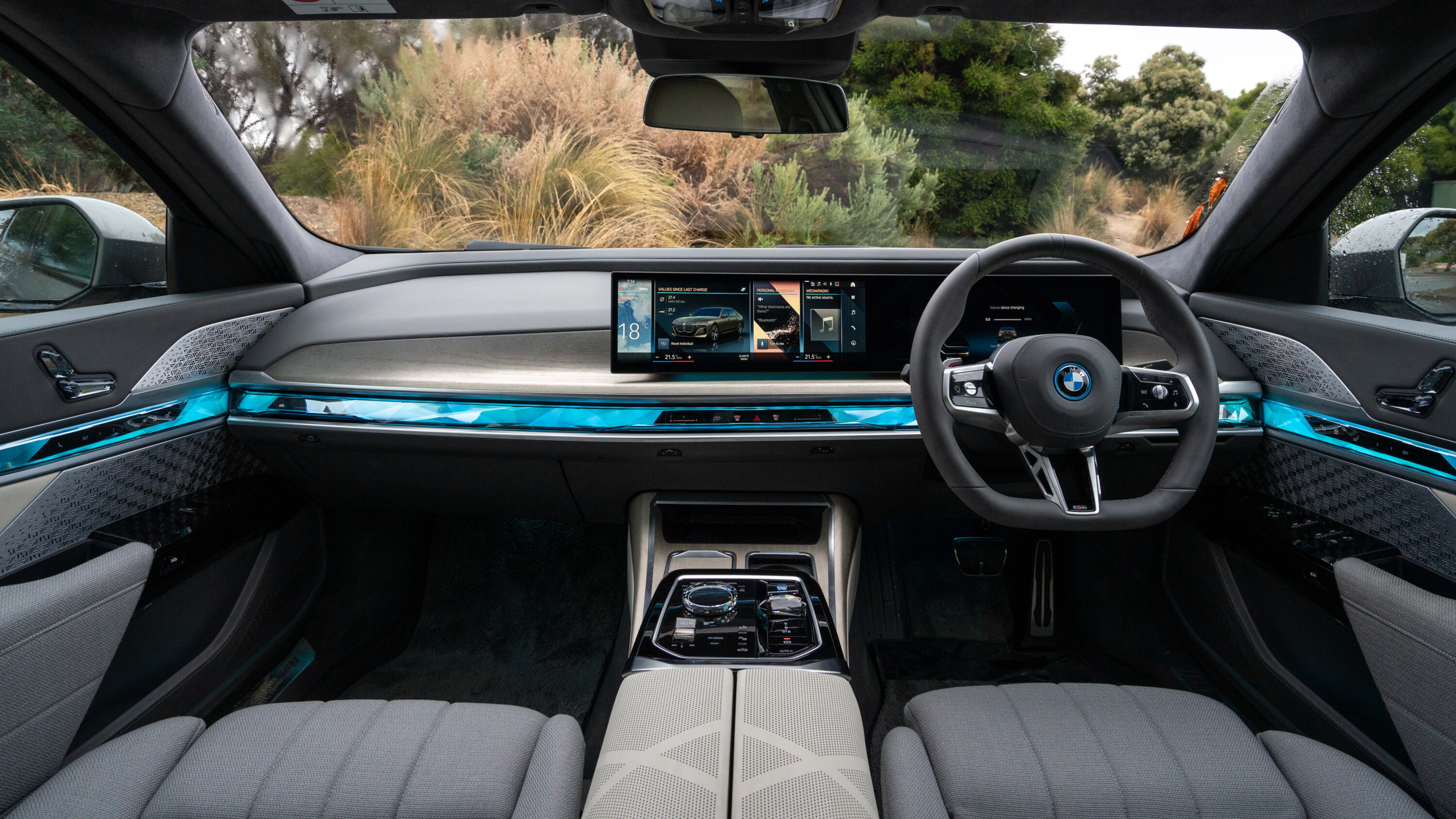
With its raised roofline and doors that open to almost 90 degrees – automatically, in six different ways, in the i7 – BMW’s striking four-door introduces a degree of SUV elevation to the traditional limousine, almost like a nod to Rolls-Royce. And inside its screen-dominated cabin, anyone familiar with the boring predictability of the previous generation will be blown away by the i7’s combination of technical prowess and design warmth.
An enormous curved screen spans more than half the dashboard – a 12.3-inch instrument display and a 14.9-inch centre display – yet there are so many other interesting aspects to the i7’s interior design that its screens simply disappear into normalcy.
Classicists might need to dial down the ambient-lighting and upholstery colours, yet the i7 somehow stops short of appearing completely garish, despite its focus on sparkly detailing and wonderful clashing patterns.
1
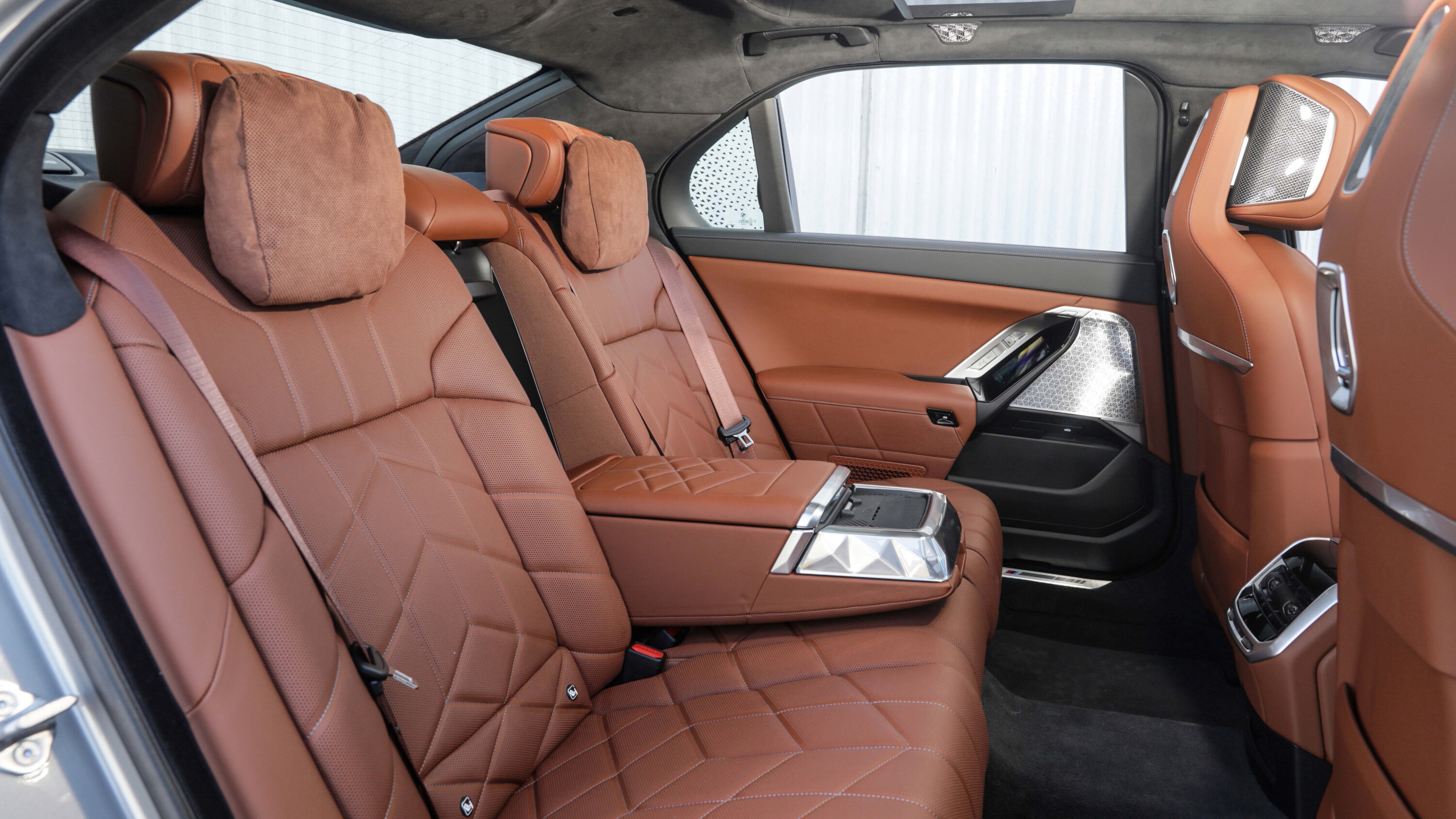
Seat comfort is outstanding, as is rear legroom, in this almost Baroque cabin, with the thatched seat upholstery – a stunning combination of soft leather and cashmere wool – adding textural warmth to the i7’s unashamedly high-tech cabin.
The 35-speaker Bowers & Wilkins stereo, combined with a 31.3-inch drop-down rear theatre screen, is so extreme in its opulence, it’s laugh-out-loud magnificent.
Of the two powertrains offered in Australia, the electric i7 is clearly the limelight-stealer. Combining a 106kWh battery with front and rear electric motors in the xDrive 60 for a total of 400kW and 745Nm – enough for 0-100km/h in 4.7sec and up to 625km of WLTP range – the i7’s silken smoothness, instant throttle response and unrelenting accelerative thrust are borderline addictive.
1
It manages to make the combustion-engined 740i feel grainy and lethargic.
And we haven’t even mentioned the silent-assassin M70 version, which amps the i7’s outputs to 485kW and 1100Nm, and drops its 0-100km/h time to 3.7sec, while only reducing WLTP range to 560km. Both i7s can go from 10-80 percent charge in around 28 minutes.
Sealing the deal in this superb luxury express is the way it drives. With its low-mounted powertrain, four-wheel steering, adaptive air suspension, active anti-roll and active roll comfort properties, the all-wheel-drive i7 combines chassis poise and corner-exit drive with an outstanding level of ride plushness.
Indeed, given its 2.6-tonne ballast, this huge sedan shrinks around its driver on faster-flowing roads and does a superb job of maintaining its cool, though Sport mode is too firm for Australian roads and not in keeping with the flagship BMW’s station in life. The i7’s steering can also feel a little aloof.
But this cocooned separation from the world outside is what an electric limousine is all about. And for the money – albeit an enormous pile – you get the most interesting, characterful, intriguing and deeply impressive electric sedan out there.
New research from Finder [↗] highlights a concerning trend on Australian roads: a rise in the number of uninsured vehicles, driven by the decision of Australians cancelling or lowering their car insurance policies amid cost of living pressures.
The survey, which gathered responses from 961 drivers, found that 16% of drivers have either cancelled (5%) or downgraded (11%) their car insurance in the past year to cut costs.
With car insurance premiums having risen by an average of 10.6% over the past year and by a whopping 19.8% since the beginning of 2021 — outpacing overall inflation — many Australians find themselves in a financially difficult position.
But before you ignore your car insurance renewal email, we check if it’s actually illegal to drive a car that is uninsured?
Is it illegal to drive a car without insurance?
Driving without compulsory third-party (CTP) insurance is, without exception, illegal in Australia.
This insurance covers liability for injuries caused to others in an accident you are involved in. It does not cover damage to property or other vehicles, nor does it cover your own injuries to the extent outside third-party claims.
Penalties for driving without CTP insurance can be severe, ranging from hefty fines to demerit points, and in extreme cases, imprisonment.
1
How can I get CTP insurance?
In most Australian states and territories, CTP insurance is included as part of the vehicle registration process. When you register your vehicle or renew your registration, you pay for CTP insurance.
In some states, the CTP insurance is bundled with the registration fee, while in others, you may choose your CTP insurer but must provide proof of the policy when registering your vehicle.
1
New South Wales
Known locally as a Green Slip in NSW, CTP can be purchased from multiple private insurers. Vehicle owners can compare and purchase Green Slips online, over the phone, or in some cases, in person. After purchasing, the insurer will electronically notify NSW Roads and Maritime Services, allowing the vehicle owner to proceed with registration or renewal.
Queensland
Queensland residents select their CTP insurer as part of the vehicle registration process, with several private insurers offering CTP insurance. The cost of the policy is included in the vehicle registration fee. Once selected, the insurer is automatically notified, and the insurance cover is linked to the vehicle’s registration.
1
South Australia
In South Australia, since July 2019, vehicle owners have the option to choose their CTP insurer when paying their vehicle registration through Service SA. The chosen CTP insurance is then integrated with the vehicle’s registration.
Victoria
The process is simplified in Victoria by including CTP insurance, referred to as the Transport Accident Charge, with the vehicle registration fee. The insurance is provided by the Transport Accident Commission (TAC) and requires no separate action from the vehicle owner to obtain coverage (yay!).
Tasmania
Tasmania provides CTP insurance through the Motor Accidents Insurance Board (MAIB) as part of the vehicle registration process. Vehicle owners do not need to purchase a separate policy; it is automatically included with the registration or renewal fee.
Western Australia
Western Australia includes CTP insurance in the vehicle licence registration fee, provided by the Insurance Commission of Western Australia (ICWA). When registering or renewing a vehicle license through the Department of Transport, CTP coverage is automatically included.
1
Australian Capital Territory
In the ACT, vehicle owners have the choice of CTP insurer as part of the vehicle registration process with Access Canberra. This selection can be made online or in person, and the chosen insurer will notify Access Canberra electronically, linking the CTP insurance to the vehicle’s registration.
Interestingly, vehicles owned by the Commonwealth of Australia or the Australian Capital Territory are exempt from the requirement to have insurance. However, the respective governments must handle and settle claims under their own systems, similarly to how an insurance company would.
Northern Territory
Finally, in the Northern Territory, CTP insurance is part of the vehicle registration fee and is provided by the Territory Insurance Office (TIO). This coverage is automatically included when registering or renewing a vehicle through the Motor Vehicle Registry (MVR), requiring no additional steps for the vehicle owner.
Other types of Insurance
Although CTP insurance is a legal requirement across Australia, drivers to have the choice when it comes to additional levels of cover for themselves or others in the case of an accident. When finances get tough, it’s these covers being questioned by some.
Comprehensive Car Insurance
Comprehensive car insurance offers the broadest coverage. It commonly protects against theft, fire, vandalism, and weather-related damage to your car.
Additionally, it covers damage to other people’s property and the costs associated with accidents, including your own vehicle’s damage. This type of insurance is considered the highest level of cover available.
1
Third-Party Fire and Theft Insurance
This insurance provides a middle ground between comprehensive and third-party property damage cover. It includes coverage for damage your car causes to other people’s property, and for your car if it’s damaged by fire or stolen.
However, it does not cover damage to your own car in the event of an accident.
Third-Party Property Insurance
This is the most basic level of voluntary car insurance, covering the costs if you damage someone else’s property, including their car, but not your own vehicle. This insurance can be crucial for covering potentially high costs of damage to other vehicles or property if you’re at fault in an accident.
Mercedes-Benz’s entry-level dedicated battery electric vehicles (BEV), the EQA and EQB compact SUVs, have been updated for the 2024 model year.
The most significant change is increased driving range, but the standard equipment list has also grown, and styling has been subtly tweaked.
Snapshot
EQA and EQB 250 become EQA and EQB 250+, EQA is still also available as a 350 4MATIC.
Mercedes Me Charge launched to offer seamless digital authentication at charging stations, and automated payment and billing
Every new EQA and EQB sold comes with a free Chargefox subscription
The big part first: More driving range
The official driving range of the new EQA 250+ on the New European Driving Cycle (on NEDC test, closest to Australia’s outdated ADR test) is now 578km, which is 54km more than the 524km of the outgoing EQA 250.
The EQB 250+ gains an additional 57km range over the 250’s 507km, for 564km (NEDC). The additional range is due to increased lithium-ion battery capacity, up from 66.5kWh to 70.5kWh.
1
Updated exterior and interior styling
The EQA 250+ and EQB 250+ feature a new front grille design to bring them up to date with the latest M-B look, with a constellation of Mercedes-Benz stars. Tail-light graphics have also been revised.
Rounding out the exterior changes on the 250+ models, the previously-optional (for $2,950) AMG-Line exterior body styling package is now standard.
Standard inclusion of the AMG-Line pack means that changes extend to the inside, with sports leather seats, the front pair featuring electric adjustment and memory.
The 2024 EQA and EQB are also trimmed with a new Mercedes-Benz backlit pattern trim and are fitted with the current-generation Mercedes-Benz multifunction sports steering wheel in Nappa leather, featuring touch control buttons.
1
Other equipment standard on the EQA and EQB for 2024 are a premium sound system, a panoramic sunroof, and standard metallic paint.
In addition, the EQB 250+ now adds a previously optional third row of seats as standard, allowing seating for up to seven people.
1
Motors, power and battery
250+ variants of the EQa and EQB are driven by a 140kW/385Nm powered by a 70.5kWh battery pack.
Alternatively, Mercedes-Benz is still offering a 350 4MATIC (dual motor) spec version of the EQA with maximum power and torque of 215kW and 520Nm, respectively.
Mercedes-Benz claims the EQA 350 4MATIC accelerates from standstill to 100km/h in 6.0 seconds. Battery size of the 350 decreases (relative to the EQA 250+), however, to 66.5kWh, providing a NEDC range of 489 km. All 2024 EQAs and EQBs ride on adjustable damping suspension.
1
Mercedes Me Charge and Chargefox
The 2024 EQA and EQB are the first models in Australia to feature Mercedes me Charge, which operates via MBUX, the Mercedes me app on a paired smartphone, or a Mercedes me Charge RFID card.
Integration with the MBUX multimedia system incorporates “Electric Intelligence” that calculates “a comfortable and time-efficient route, including charging stops”.
The Mercedes me Charge network is supplied in cooperation with Chargefox, providing more than 1300 stations Australia-wide. In 2025, the Mercedes me Charge network will expand to include other charging providers, further growing network coverage and improving the experience of Mercedes me Charge customers.
1
Pricing
The 2024 EQA 250+ and EQB 250+ models are priced from $84,900 (MRLP) and $89,100 (MRLP) respectively. The EQA 350 4MATIC model is offered from $102,900 (MRLP).