
The Hyundai Staria Loan entered the Australian market, replacing the iLoad, previously Hyundai’s commercial van.
With stylish looks that make onlookers think “that’s a work van?”, the Staria Load shares a platform with its cousin the Kia Carnival, and naturally the people-moving Staria.
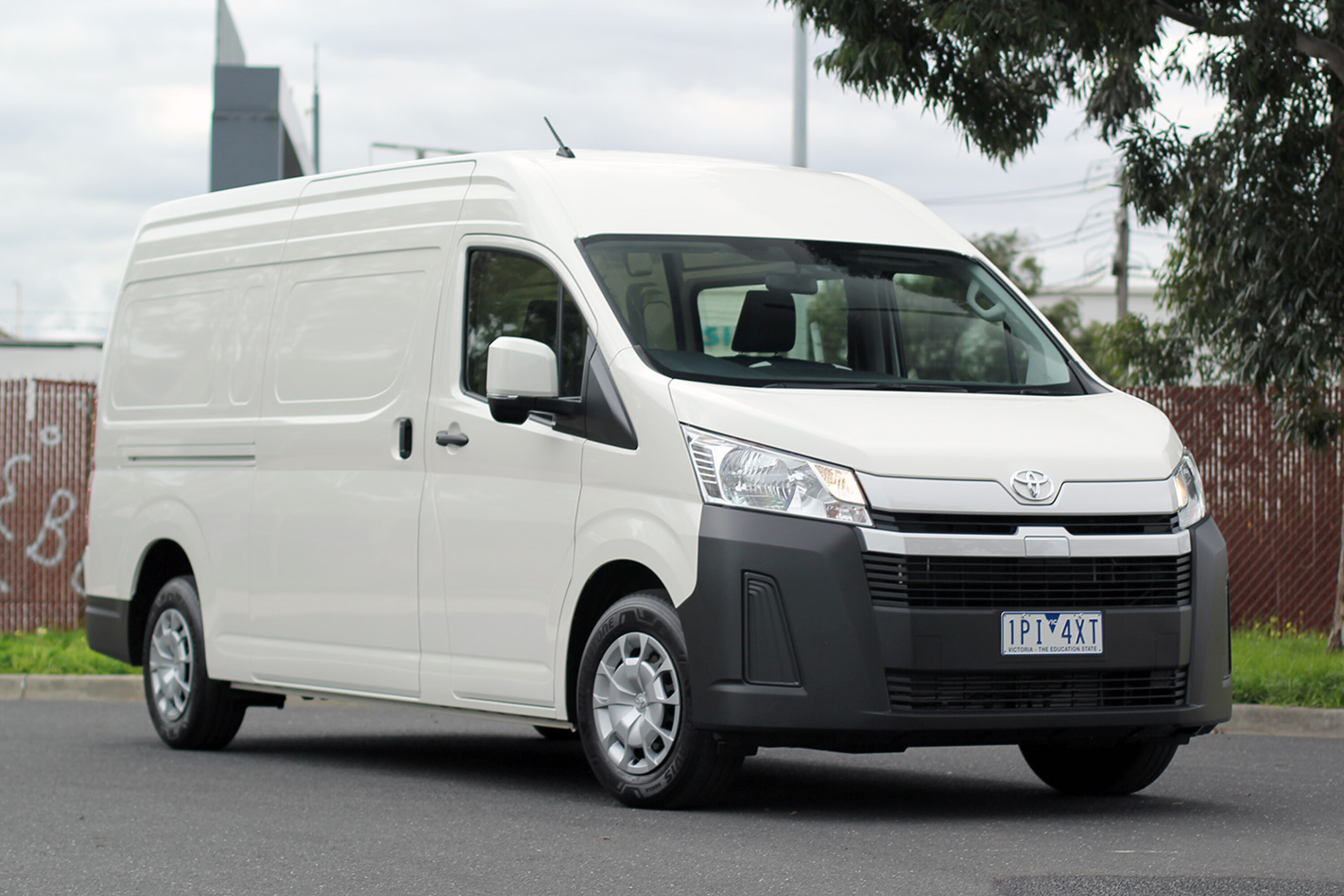
Available in three variants, the model is targeting the segment-leader, the Toyota HiAce which has been a long-time rival.
So let’s take a look at what this newcomer bring in it’s 2024 run.
Pricing and features
The Hyundai Staria Load starts at $46,240 before on-road costs for the two-seater model with dual sliding side doors and a lift-back tailgate.
Additionally, Hyundai offers a ‘barn door’ style, referred to as Twin Swing, at no extra charge.
For the five-seater Crew Van variant, the drive-away price is topped off at $50,140 before on-roads.
In its commercial variant, the Staria is available in either a two-seat Van or a five-seat Crew Van configuration, both powered by a single rear-wheel drive powertrain featuring the 2.2-litre diesel engine borrowed from its SUV counterpart, the Santa Fe.
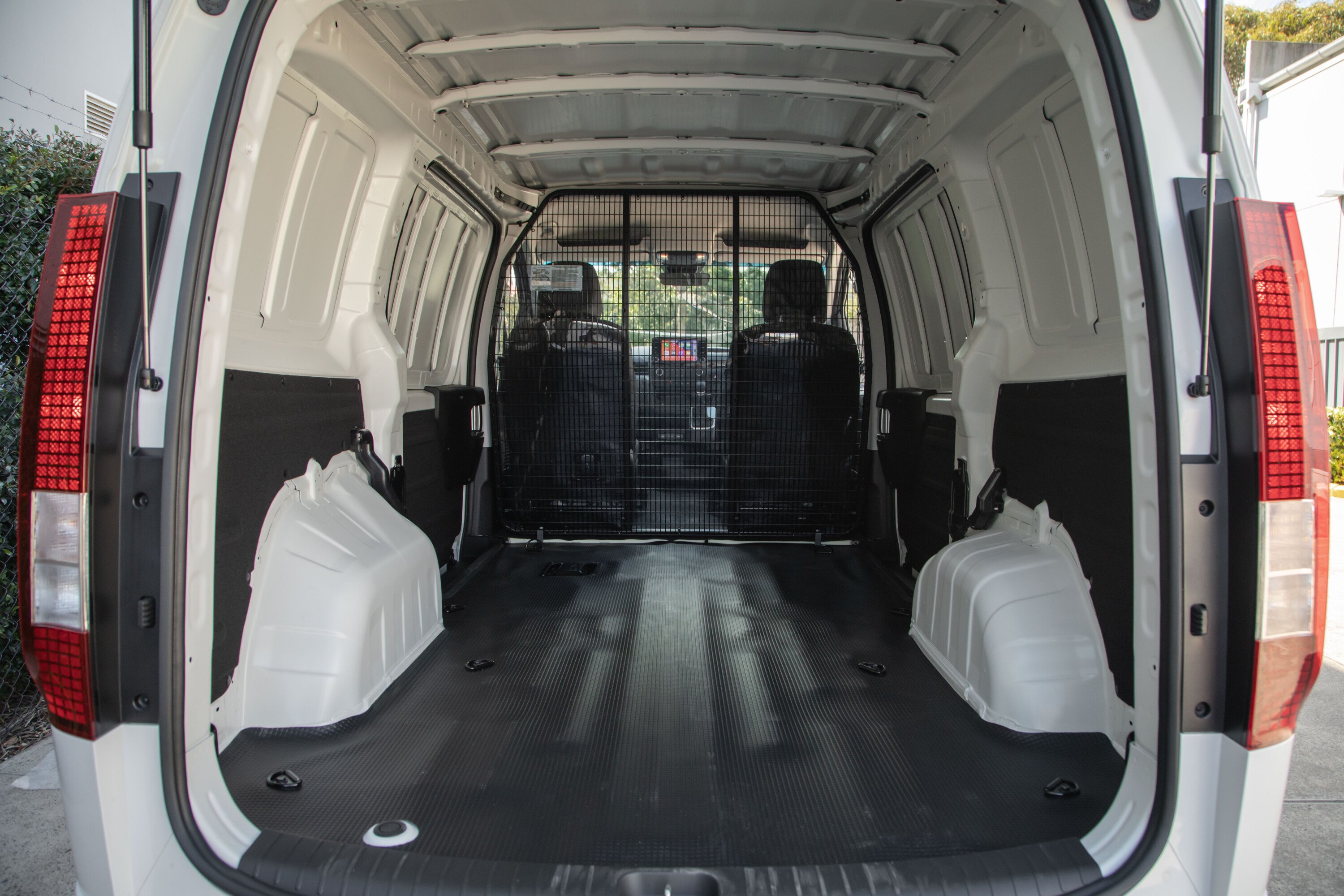
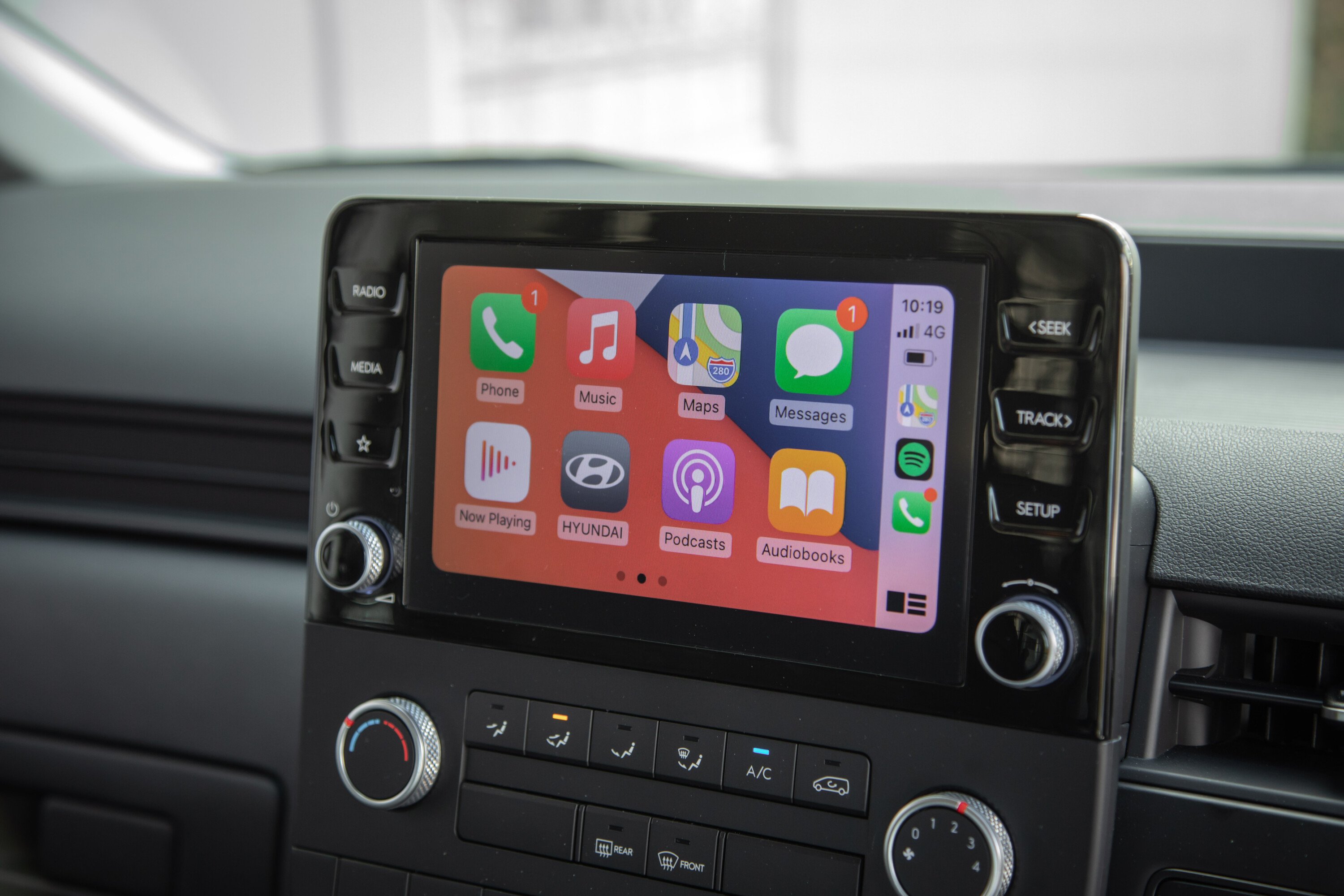
The Staria Load Van and Load Crew Van share many similar features, other than their two or five seats. Both offer 17-inch steel wheels, 8-inch touchscreen displays, leather appointed knob and wheel, black cloth seats, a wireless charger, keyless entry and wireless Apple Carplay and Android Auto.
If you’re looking for additional features the Staria Load Premium Van adds an array of convenience and luxury. This includes two 10.25-inch screen, LED lighting, power tailgate, 17-inch alloy wheels, heated and power folding mirrors and push button start.
The Staria Load boasts a payload capacity of 1072kg and a Gross Vehicle Mass (GVM) of 3020kk. It offers a respectable braked towing capacity of 2500kg, although this is balanced by a modest 100kg ball load rating. The braked Gross Combination Mass (GCM) stands at 5520kg.
Safety
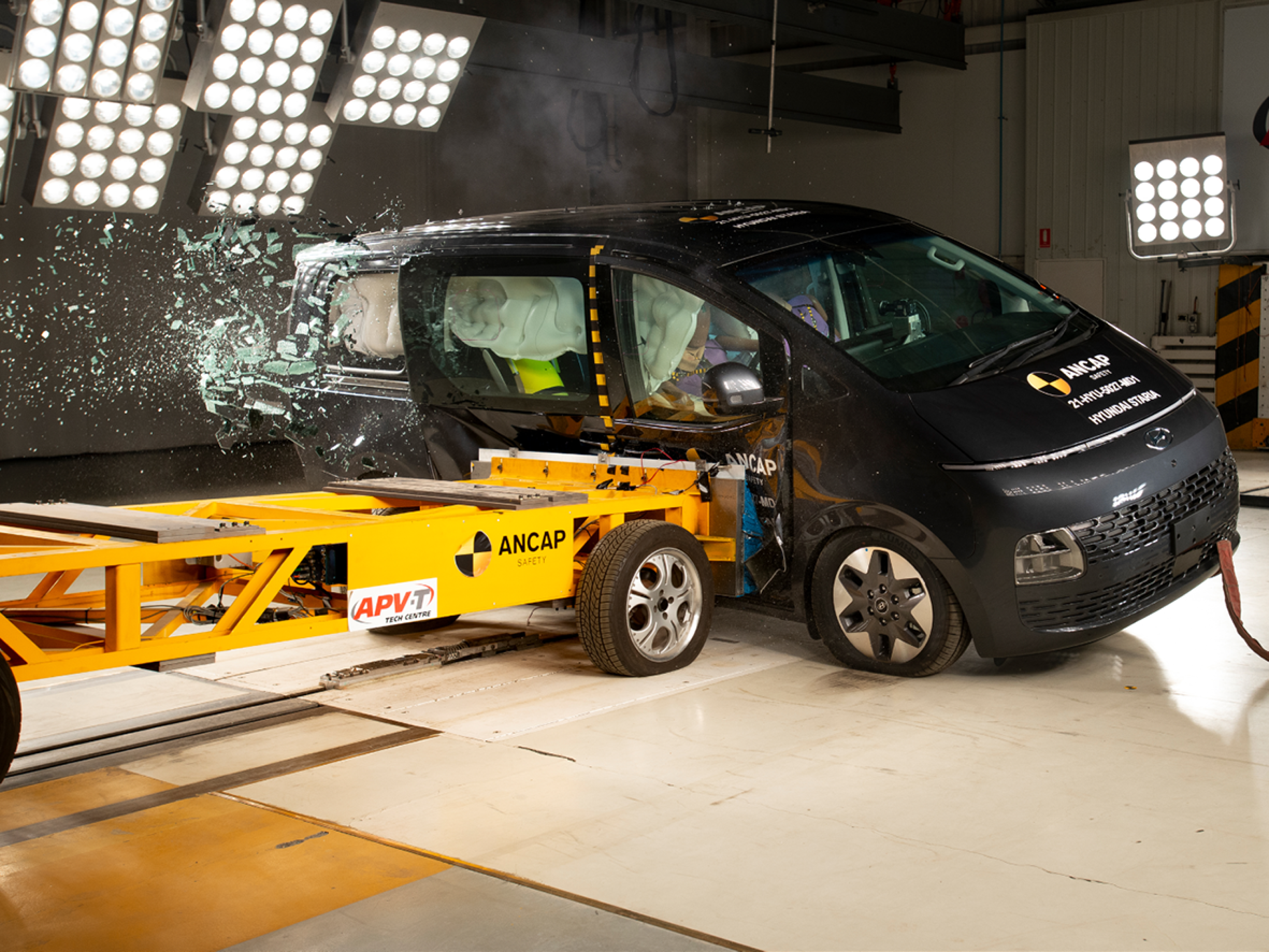
The Staria Load earned a five-star ANCAP rating, when tested back alonside the Staria in 2021.
In crash safety evaluations, the Staria secured scores of 85 percent in adult occupant protection and 86 percent in child occupant protection.
The Hyundai Staria Load comes standard with autonomous emergency braking, speed sign recognition, adaptive cruise control, lane-keep assist, , rear cross-traffic alert, blind-spot warning, front and rear parking sensors and a rear-view camera.
Liftback variants also add a surround view monitor.
The Staria-Load comes with a five-year/160,000km warranty, applicable for both commercial and private usage. Hyundai also offers capped-price servicing, costing $360 for each 12-month/15,000km service over the initial five years.
Key rivals
A previous segment leader, the Honda Odyssey no longer in the market, paves the way for opportunities with the Staria to shine. It competes against other people movers such as:
Should I put it on my shortlist?
Despite its futuristic appearance, the Staria-Load functions more like a refined, advanced commercial tool rather than a revolutionary leap in van design. Like a next generation of the iLoad.
While it sets new standards in safety equipment, there are aspects that could benefit from improvement or enhancement.
Its day-to-day experience is enriched by the added comfort, user-friendliness, and a general feel-good factor, which are notable advantages.
2023 was a record year for Australian new-car sales, which were boosted by significant improvements in supply.
But what were the leading sales performers for each of the major car brands?
Here’s your guide to every car maker’s best-selling vehicle in Australia last year, according to official VFACTS data.
(List excludes brands such as Lotus and Polestar that are currently selling just a single car, as well as those – such as Ferrari – that don’t provide a detailed breakdown of model sales.)
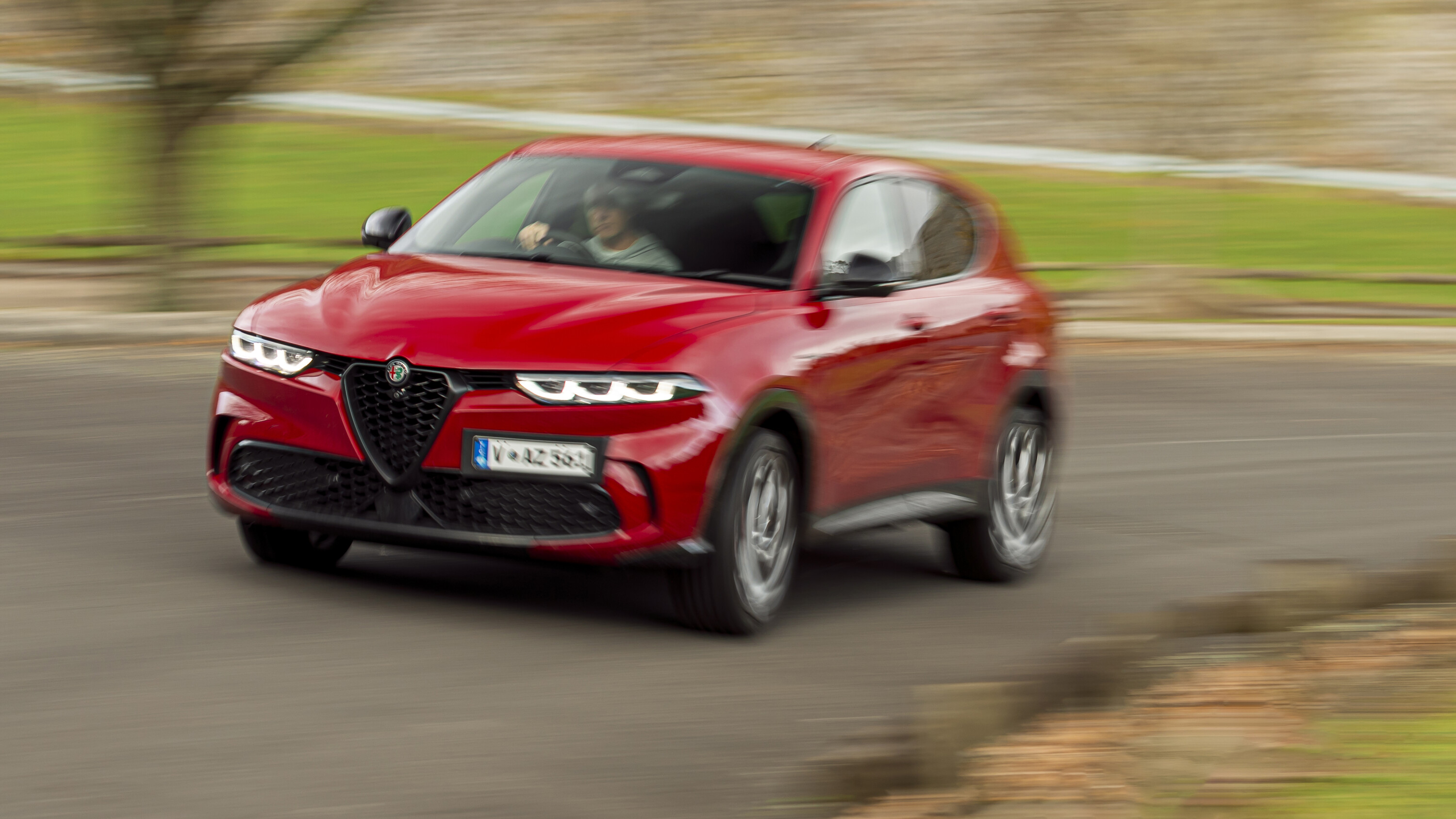
Alfa Romeo
The Italian brand’s first compact SUV, the Tonale, hit the ground running in its debut year – its 365 sales (from just five months on sale) singularly giving Alfa 25 per cent growth in Australia. Sales of the Giulia sedan and Stelvio midsized SUV dropped 36 and 41 per cent, respectively.
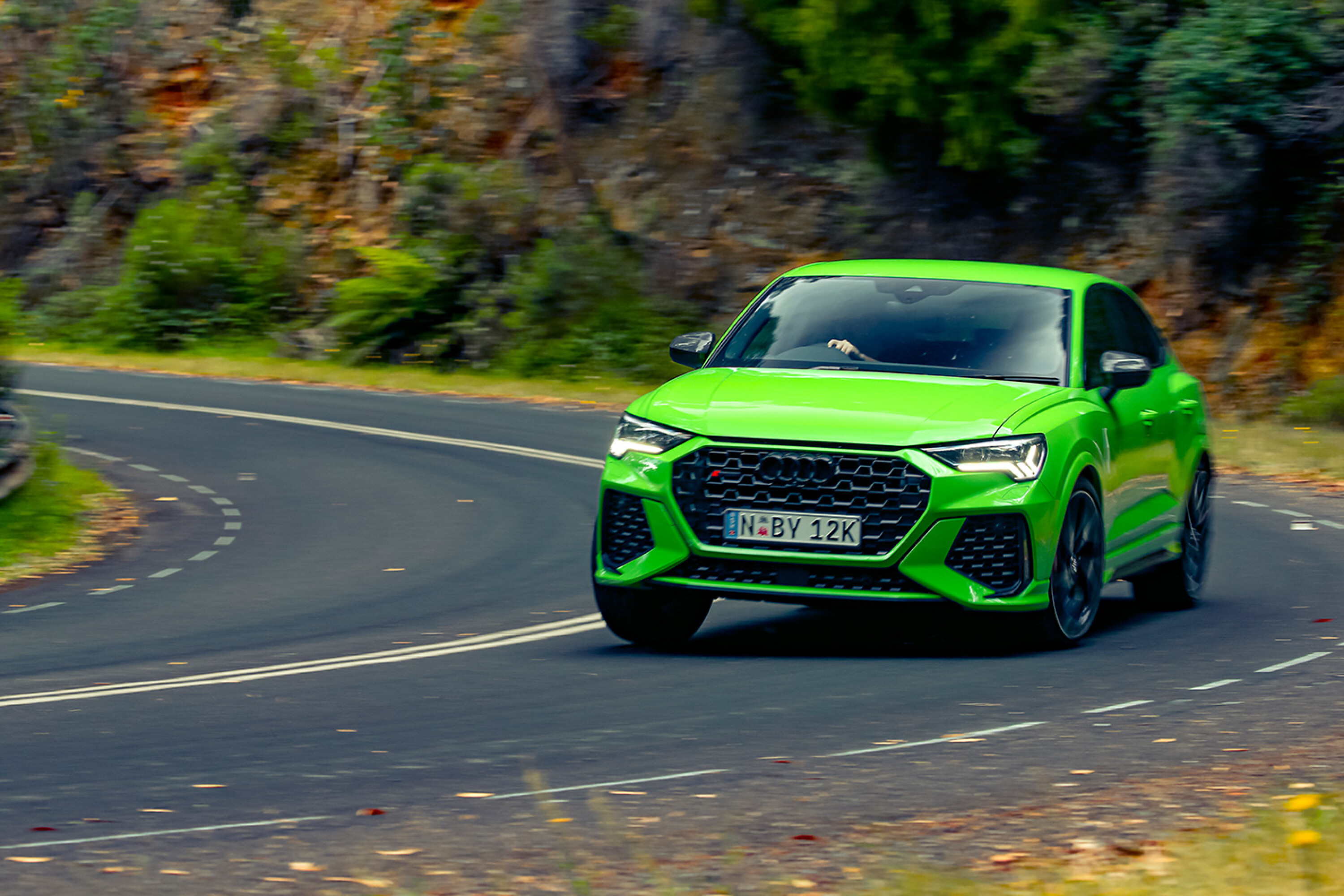
Audi
Another compact luxury SUV finishing top… the Q3 was Audi’s No.1 again in 2023. The midsized Q5 closed the gap significantly to finish less than 250 units behind (4210 versus Q3’s 4457) where in 2022 the difference was about 1800 units. Other notable performers were the smaller Q2 SUV (up 120%) and A3 small car (up 57%).
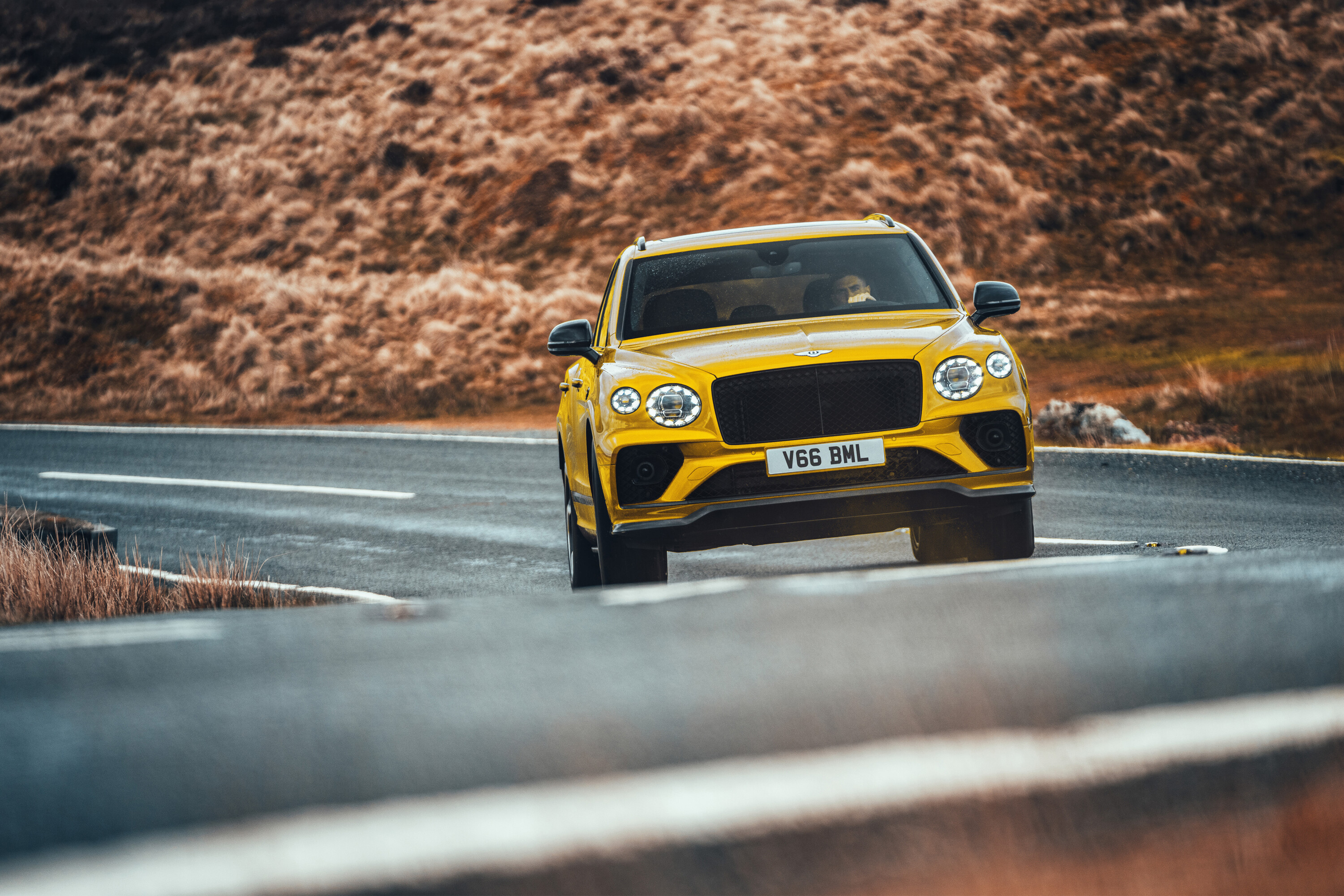
Bentley
As with several high-end brands including Aston Martin, Ferrari and Lamborghini, Bentley doesn’t provide a full breakdown of its model sales. However, unlike those other brands, we can include Bentley here as the Bentayga is listed with the highest sales figure: 107 out of a 229 total for the year.
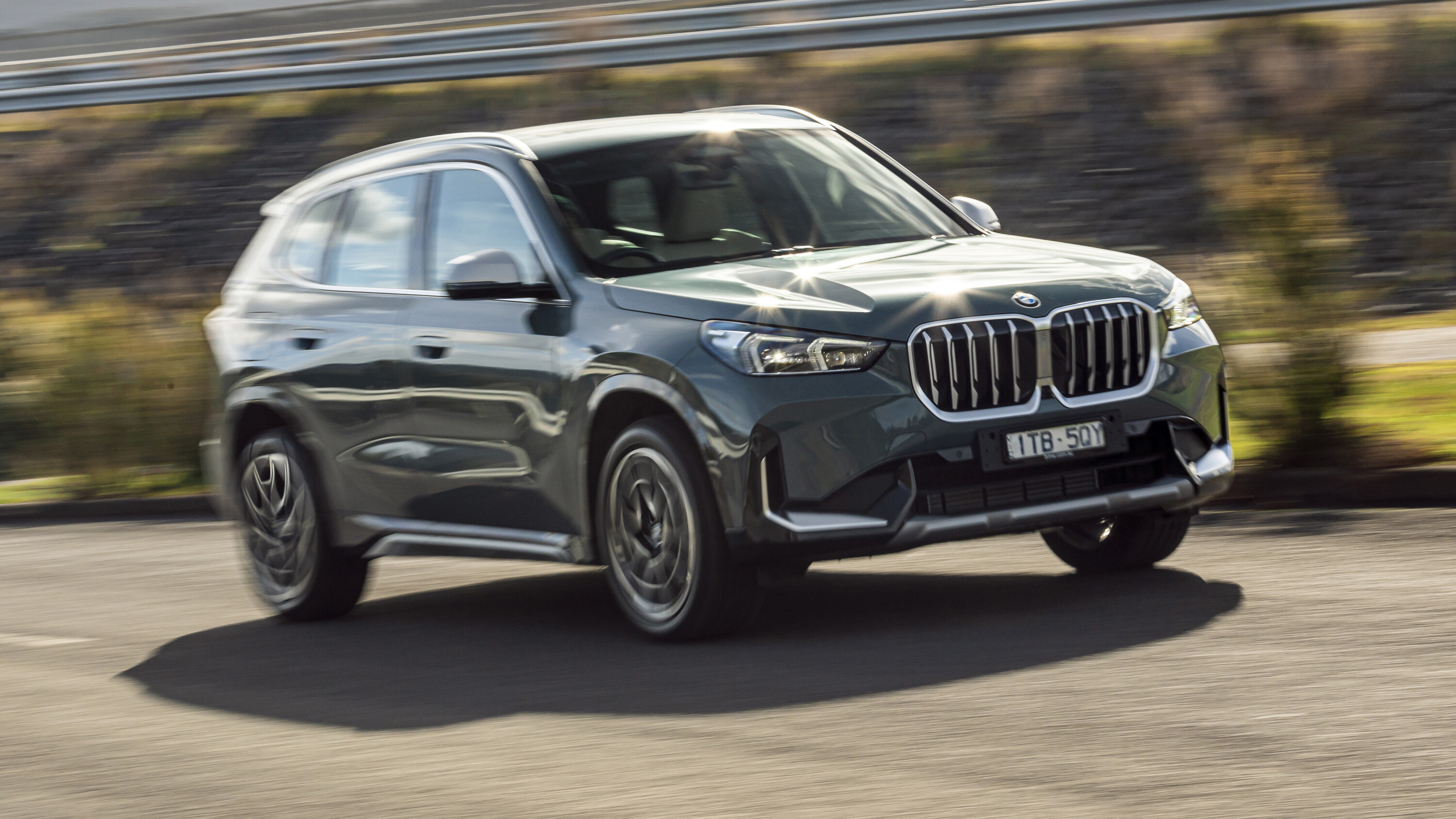
BMW
We may as well call 2023 the Year of the Small Luxury SUV as BMW’s X1 ended years of finishing runner up (or third) to the X3 and X5. It was the top BMW sales performer in 2023 with 4644 registrations, with the X3 second at 4002 registrations. The X5’s 3682 sales meant BMW’s main trifecta of SUVs accounted for more than 60 per cent of the brand’s local sales as it took the crown of Best-Selling Luxury Brand. The X1 won our Wheels Best Premium Small SUV award in 2023.
BYD
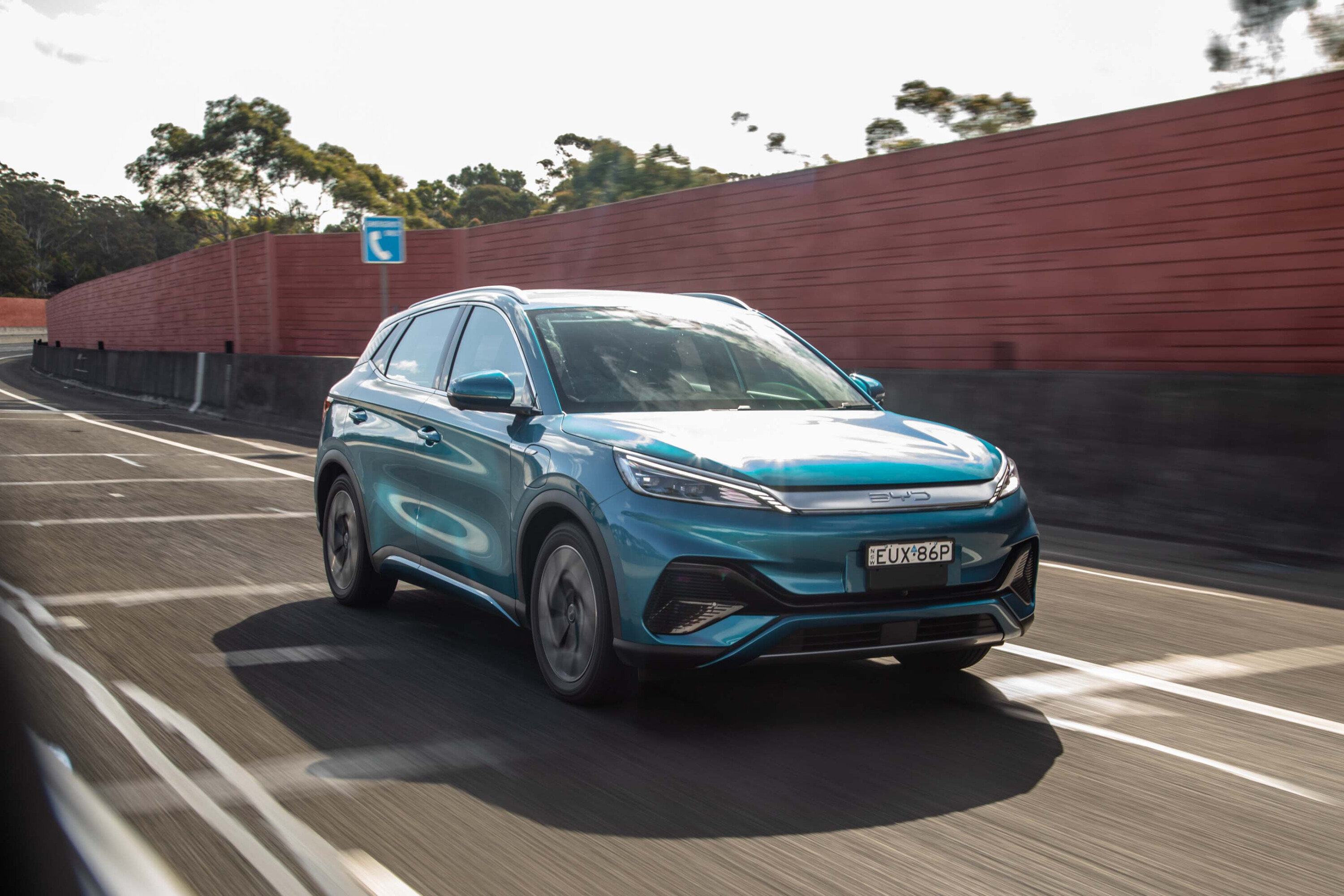
With the Dolphin hatch and Seal sedan arriving at the tail-end of the year, it’s no surprise BYD’s debut model – the Atto 3 compact SUV – dominated the Chinese brand’s sales. The Atto 3 accounted for 11,042 of BYD’s 12,438 Aussie sales in 2023.
Chery
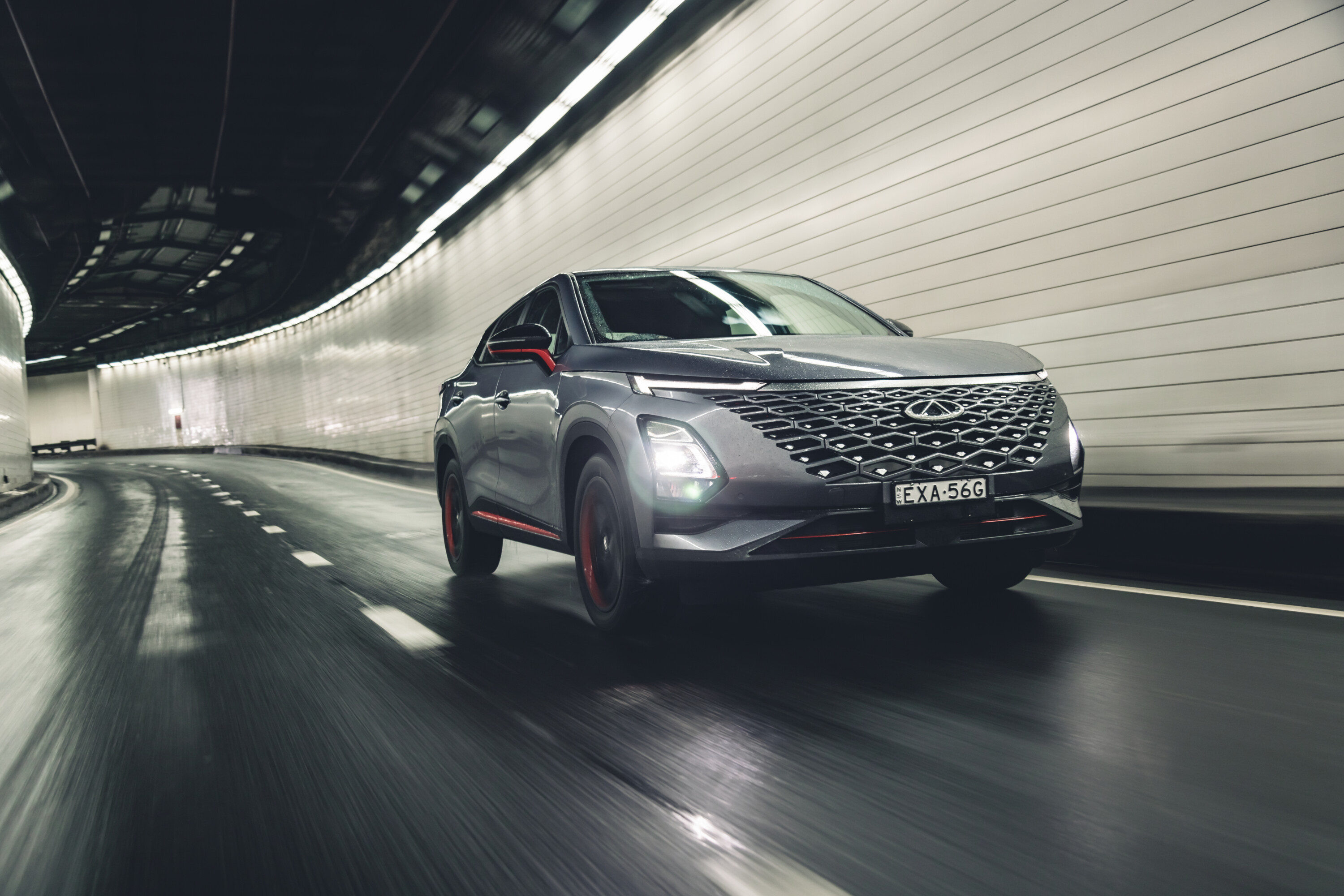
In its return to the Australian market, Chery’s Omoda 5 small crossover was the only model offered until the Tiggo 7 Pro SUV joined in December. This is reflected in sales, with a sales split of 5370 versus 520, respectively.
Chevrolet
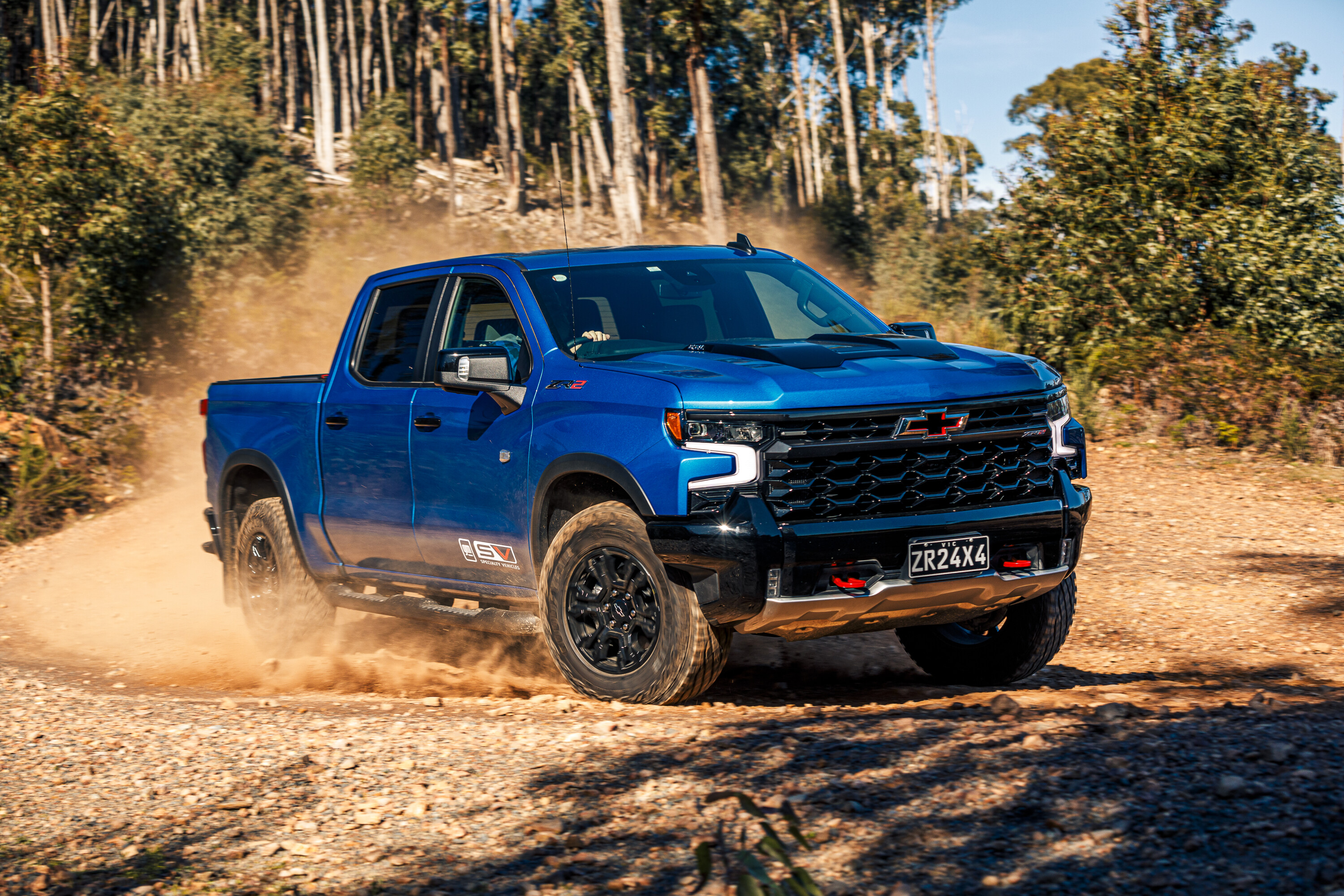
Chevy sales grew by an impressive 42 per cent in 2023 – primarily driven by the Silverado full-size truck that’s converted to right-hand drive locally. There was a 50 per cent jump for the Corvette sports car, though, which has started to increase the number of variants available.

Citroen
Another disappointing year for the famous French brand – just 228 sales. For what it’s worth, the top-seller was the C3 small car – making Citroen one of the very rare brand’s to have a No.1 vehicle that isn’t either an SUV or ute.
Cupra
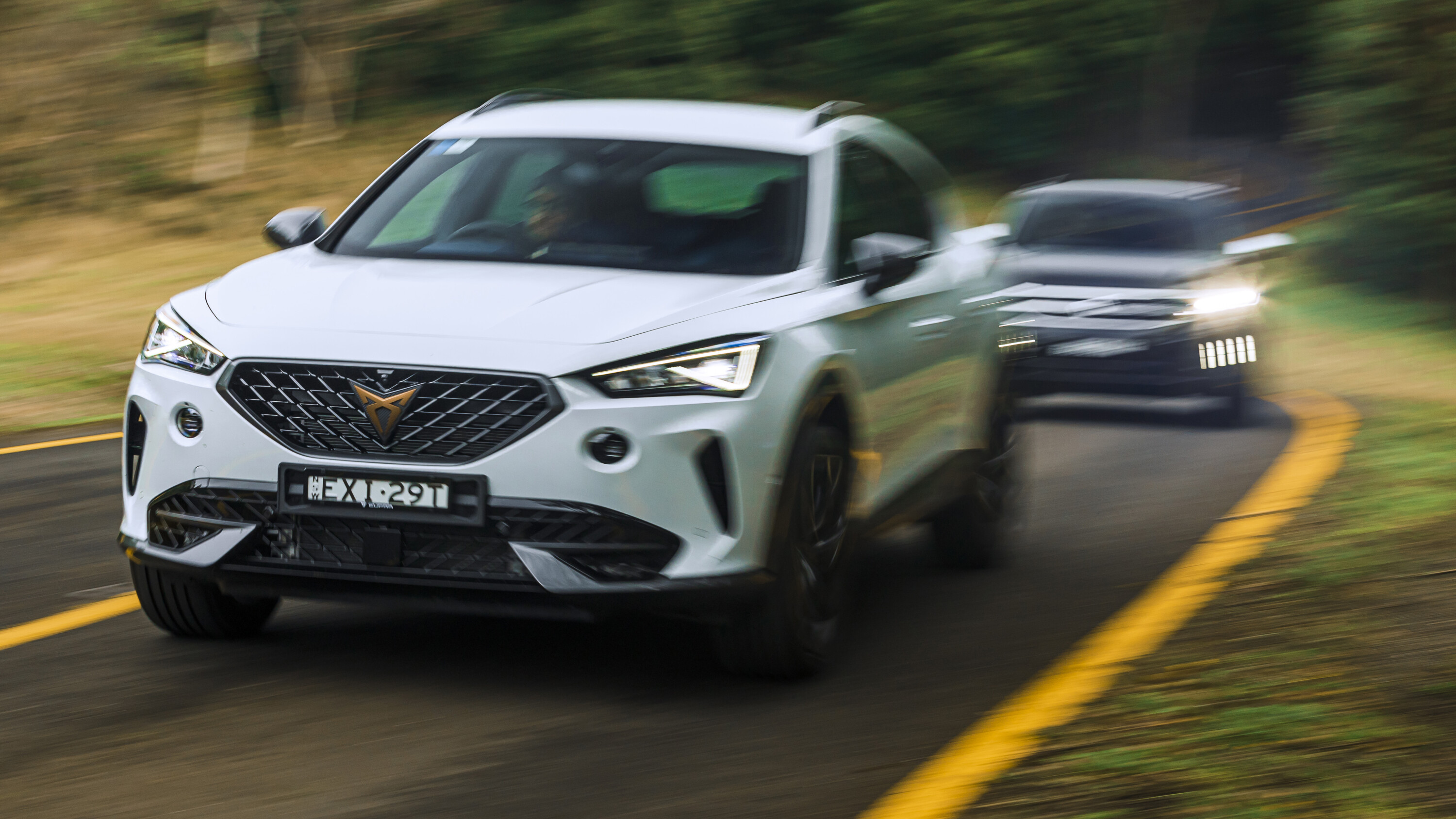
VW Group’s Spanish brand is making a fast start in Australia. Following a solid debut year in 2022, last year sales leaped by 239 per cent to 3765 units. Leading the way again was Cupra’s excellent Formentor compact crossover – its 2108 sales well ahead of the next model, the Born electric hatch (887 units). The flagship Formentor was our Wheels Best Performance Small SUV in 2023.
Ford
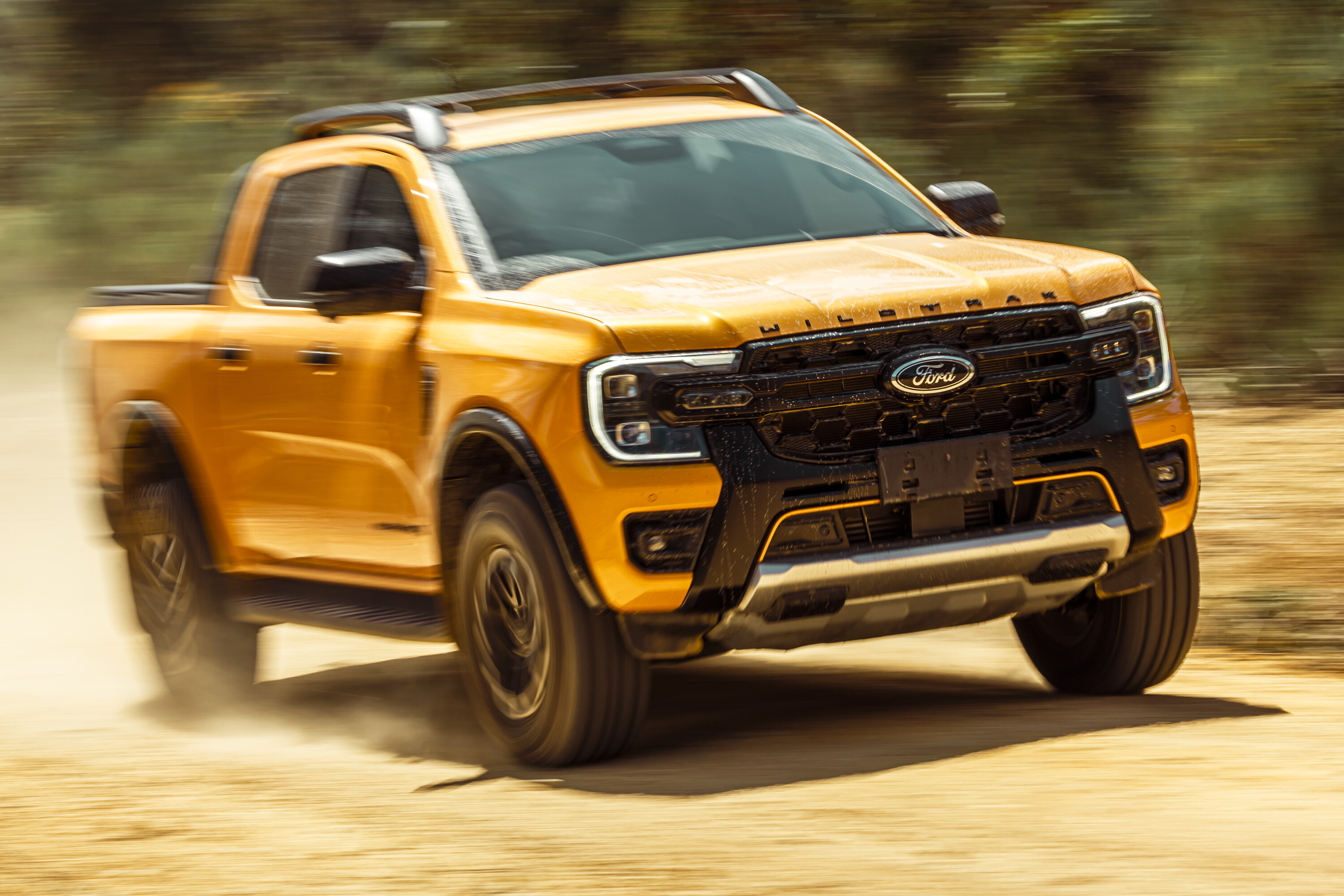
You should already know the answer to this. The Ranger ute wasn’t just the best-selling Ford last year, it was the most popular vehicle in Australia full stop – finally ending the rival HiLux’s run. The related Everest SUV was a country mile behind but still impressed with a 46 per cent year-on-year increase, to more than 15,000 sales. The Ranger was judged our best ute of 2023.
Genesis
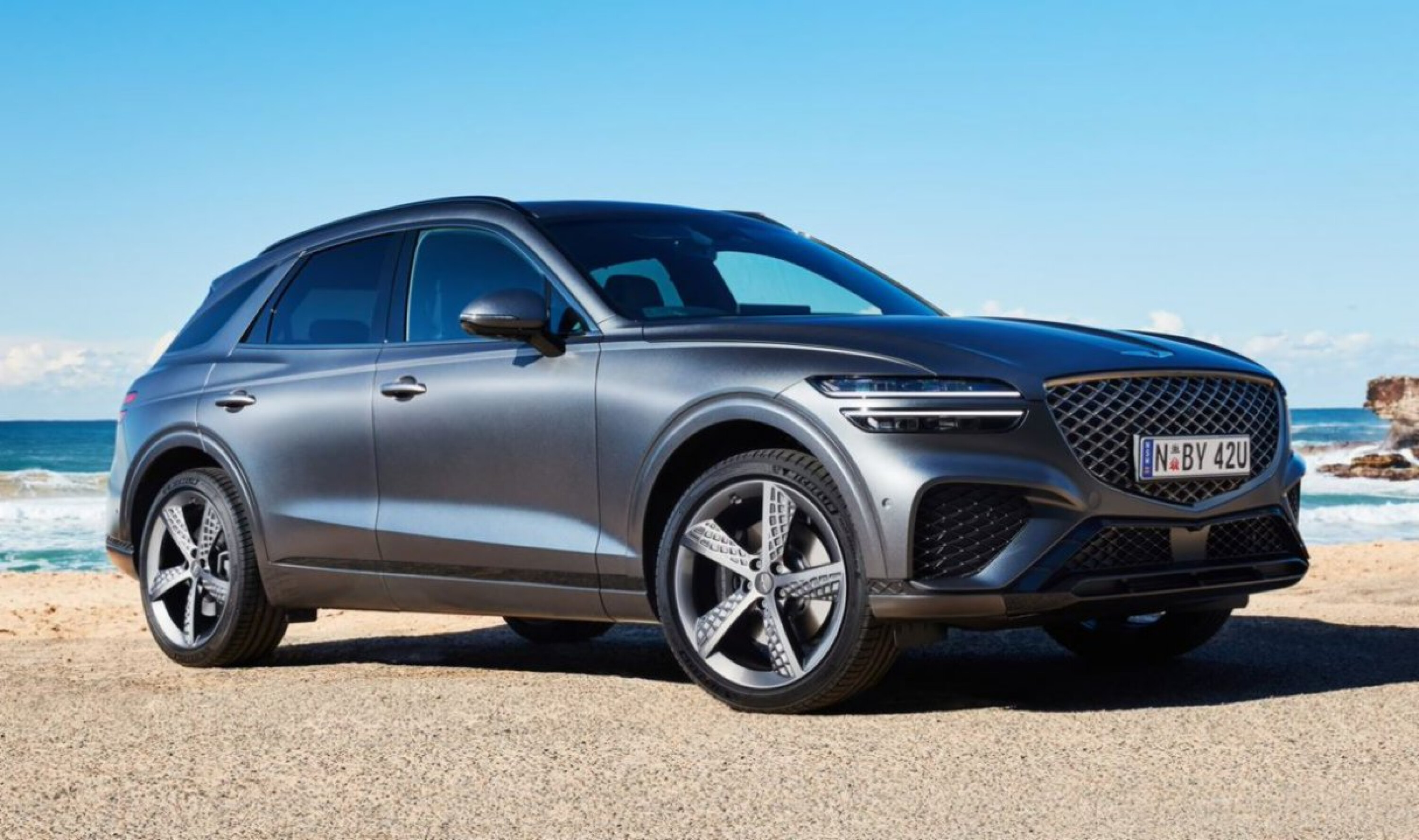
Hyundai’s luxury spin-off continues to grow in Australia, if not at a pace that will scare the likes of Audi, BMW, Lexus or Mercedes. The GV70, as it has been since it launched in 2021, was Australia’s favourite Genesis in 2023.
GWM
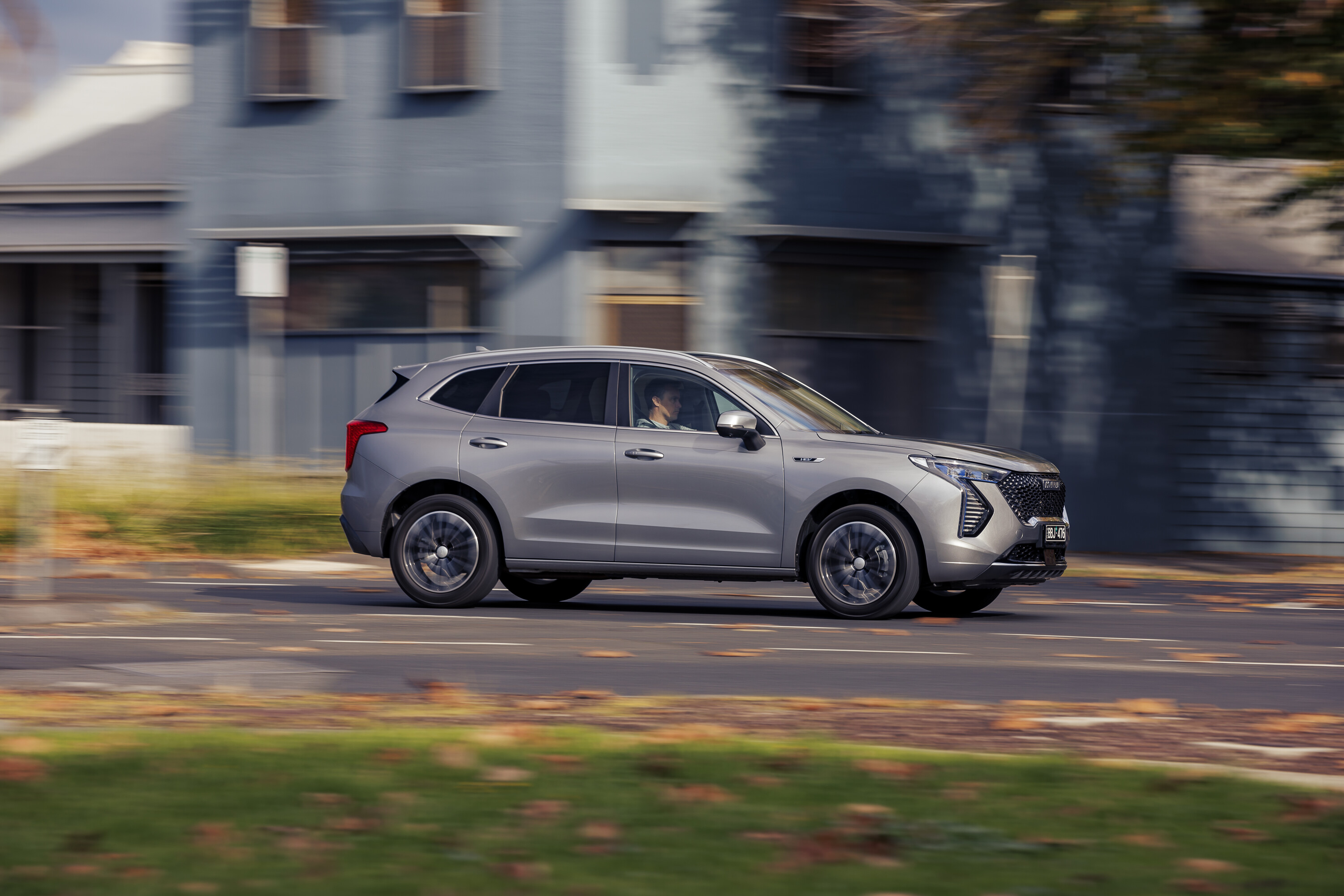
The company also known as Great Wall Motors was part of the big upward trend for Chinese brands, increasing sales by 45 per cent to more than 36,000 units in 2023. GWM’s best-selling vehicle was the Jolion (11,252) which is sold under the brand’s Haval SUV banner, followed by the Cannon ute (9363).
Honda
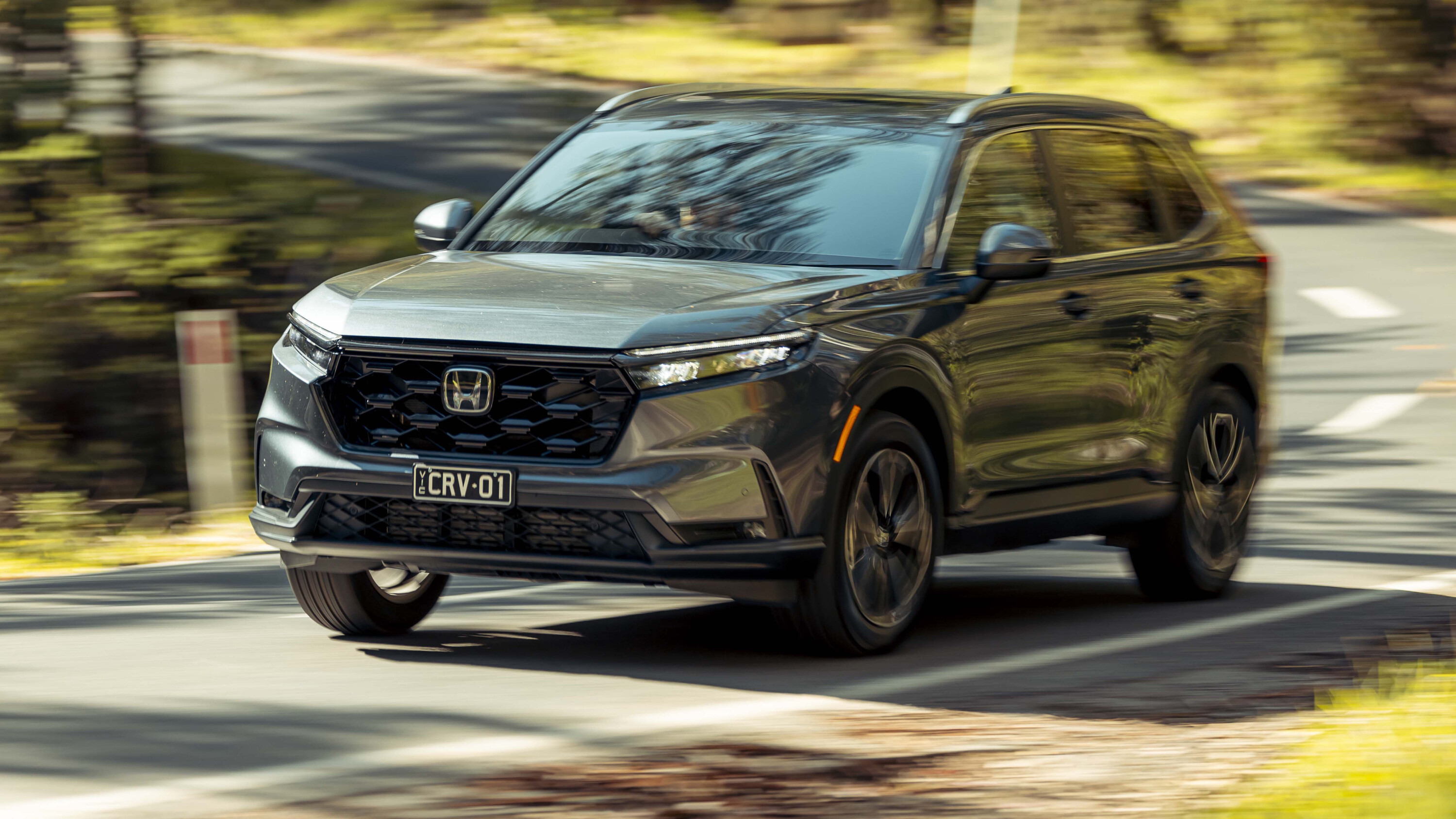
The Japanese brand was one of the brands to suffer a sales decline in a record 2023, if only down by three per cent. A transition of CR-V generations last year didn’t prevent the ever-popular family SUV from retaining its Best-Selling Honda crown. A promising debut year for the ZR-V midsize SUV saw 2282 sales. The new, bigger CR-V won two of our Best Large SUVs segments (see below).
Hyundai
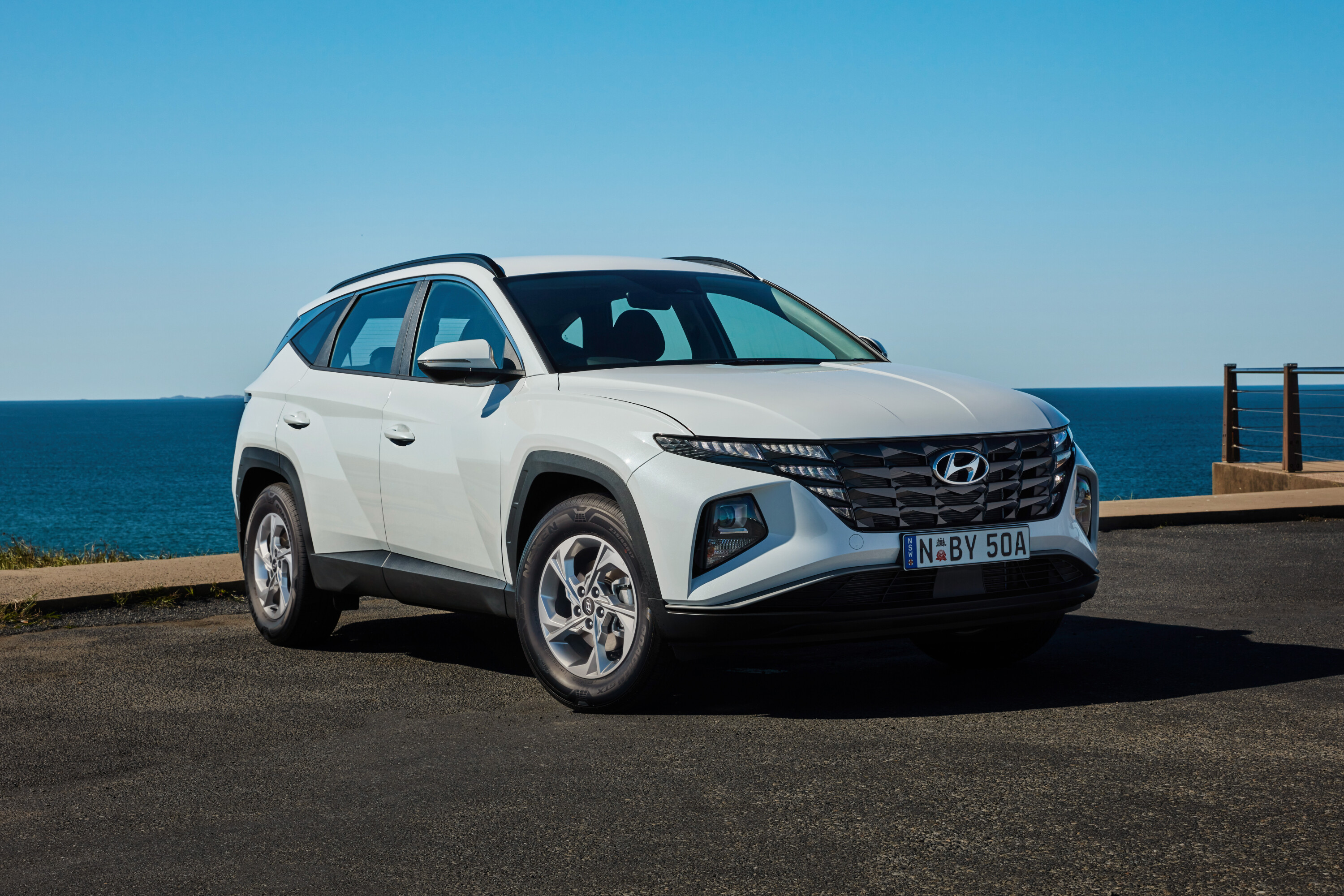
Big news here: i30’s reign as Australia’s favourite Hyundai was ended in 2023 as the Tucson medium SUV pipped the small car by 21,224 to 20,626 sales. The Kona small SUV, released in second-generation form in the latter part of 2023, took sales bronze with 11,183 registrations.
Isuzu Ute
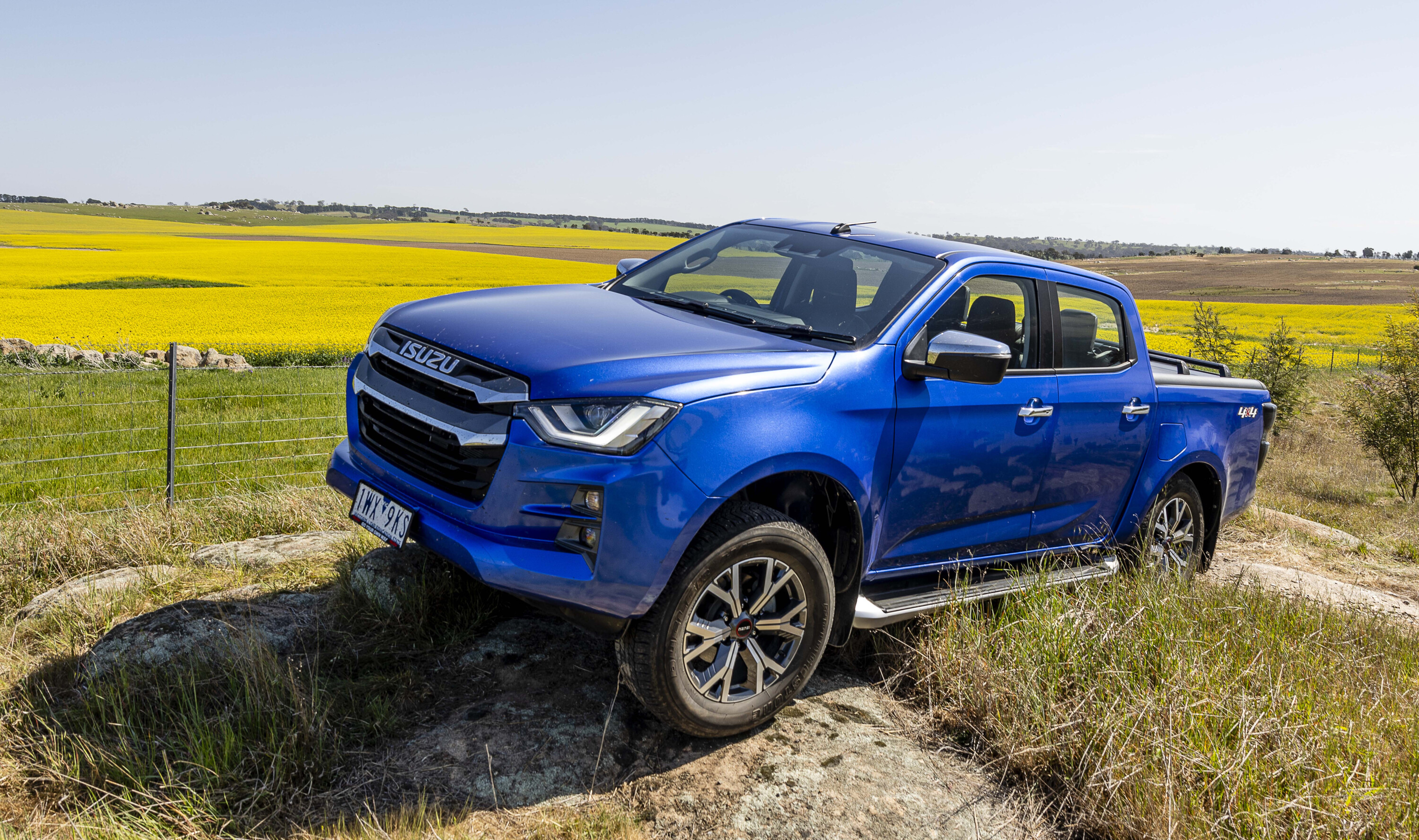
A stunning sales year for the brand that offers just two vehicles. The D-Max ute accounted for about two-thirds of Isuzu Ute’s 45,341 sales in 2023, with the other third taken by the D-Max-based MU-X SUV. Both Isuzu models won Wheels Best Value awards for their respective segments (see below).
Jaguar
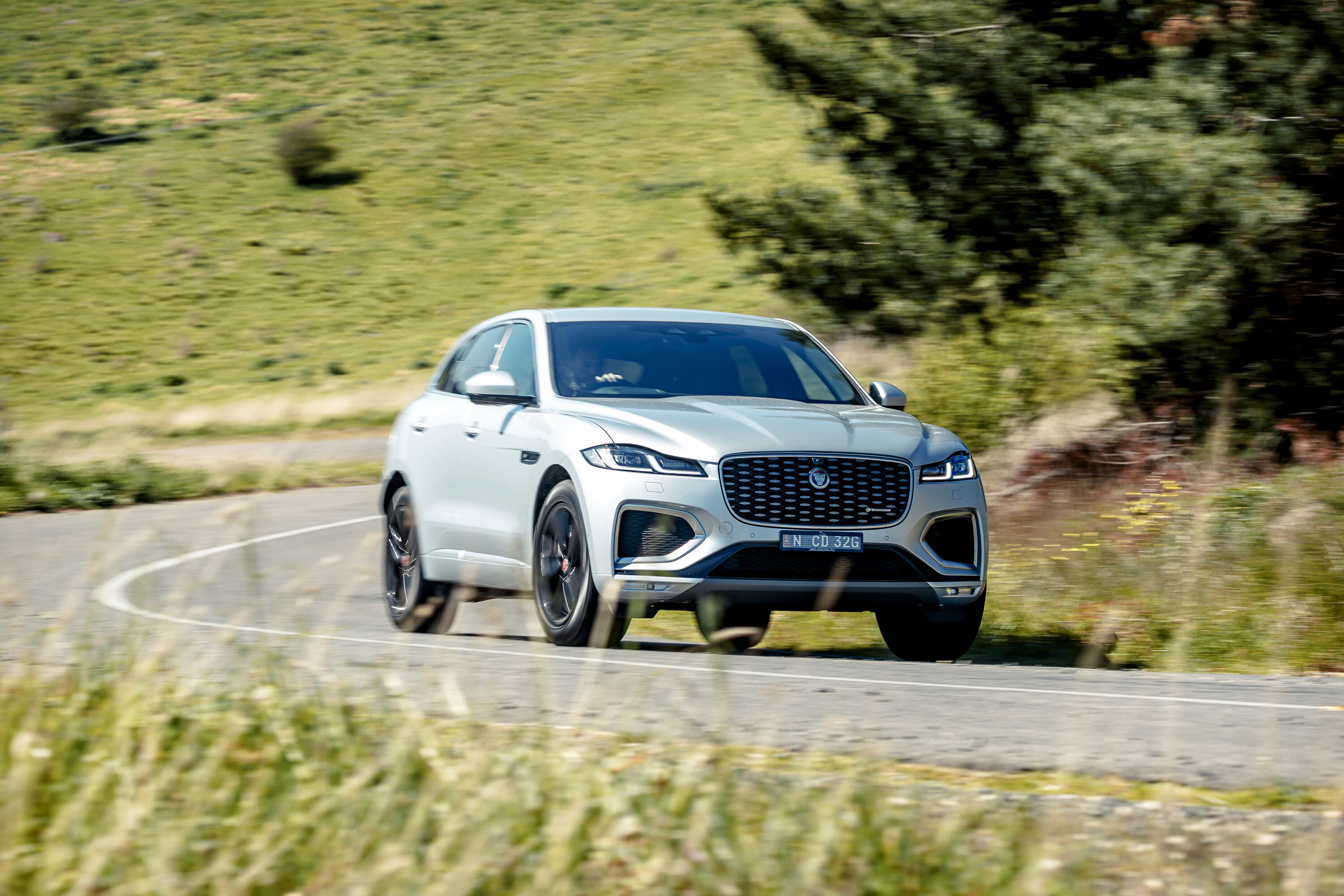
Another lamentable sales year for the British luxury brand, with sales down by 17 per cent to just 581 units. The F-Pace midsized SUV was the top cat with 360 sales.
Jeep
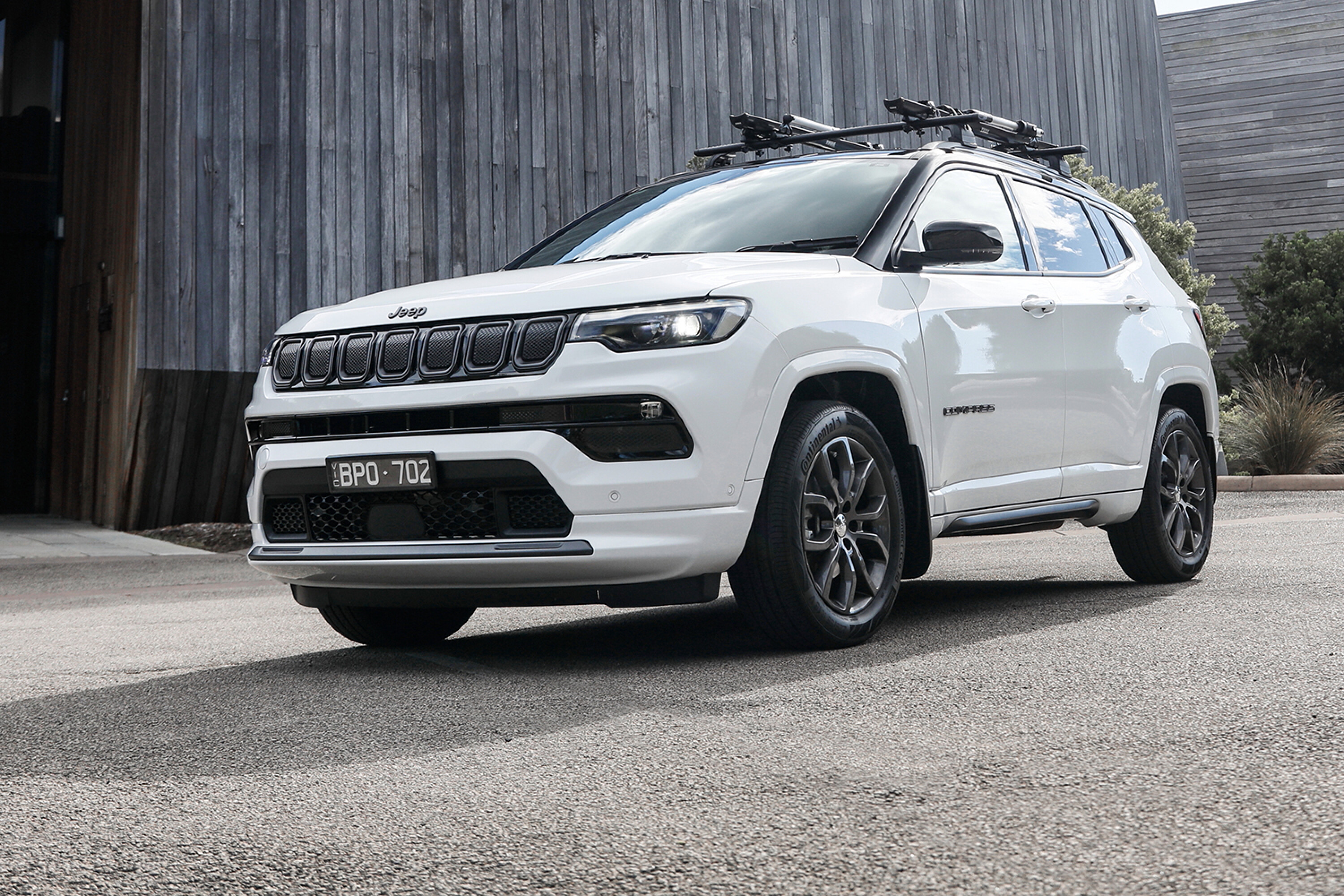
Another brand that disappointed last year, with sales plummeting 30 per cent. Every model lost sales compared with 2022, though the Compass compact SUV remained the most popular Jeep model with 1455 of the total 4634 sales.
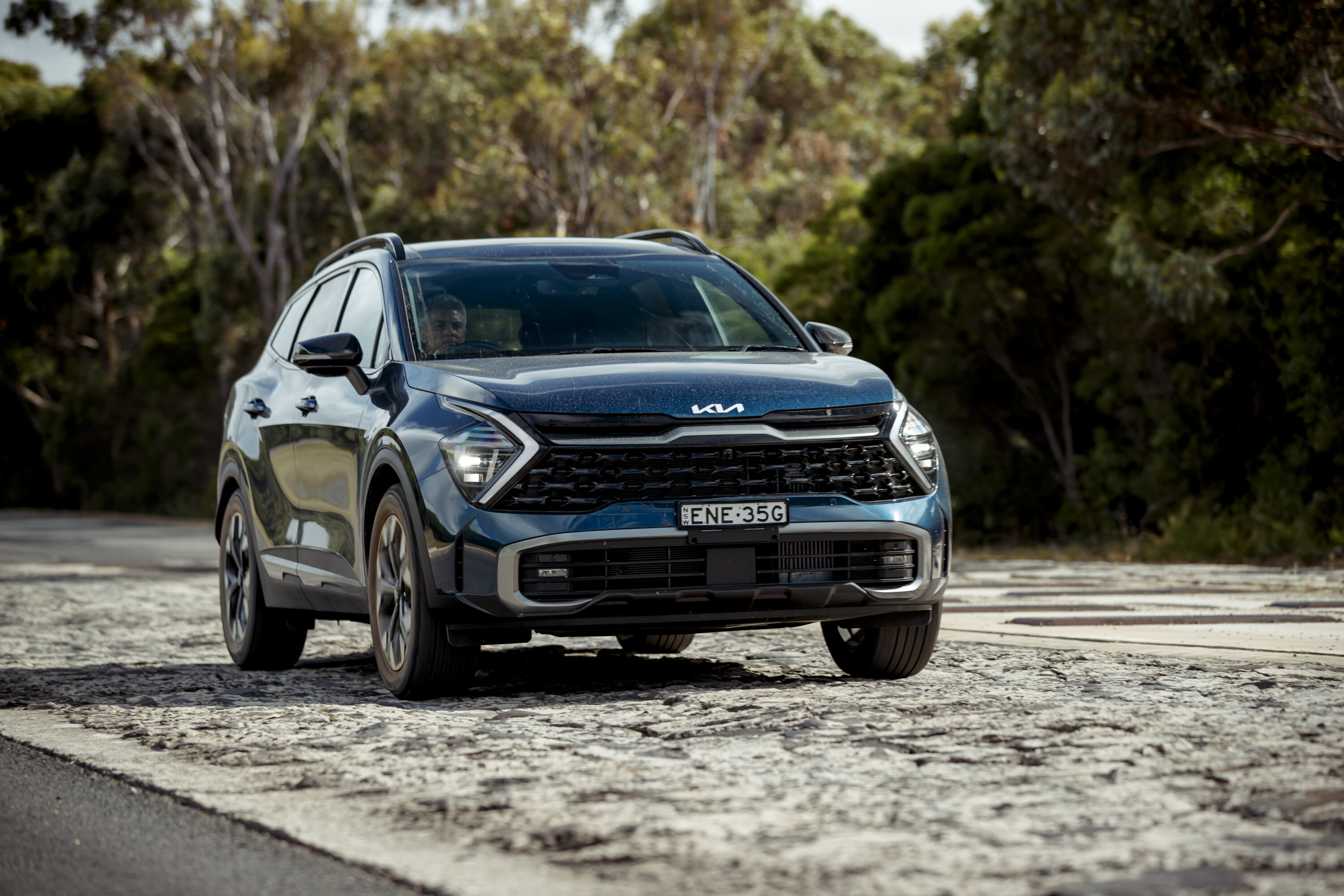
Kia
Outsold its senior stablemate Hyundai for the second consecutive year despite a small year-on-year decrease shrinking the gap to fewer than 1000 units. And mirroring Hyundai, Kia’s biggest-selling model in 2023 was its twin to the Tucson, the Sportage.
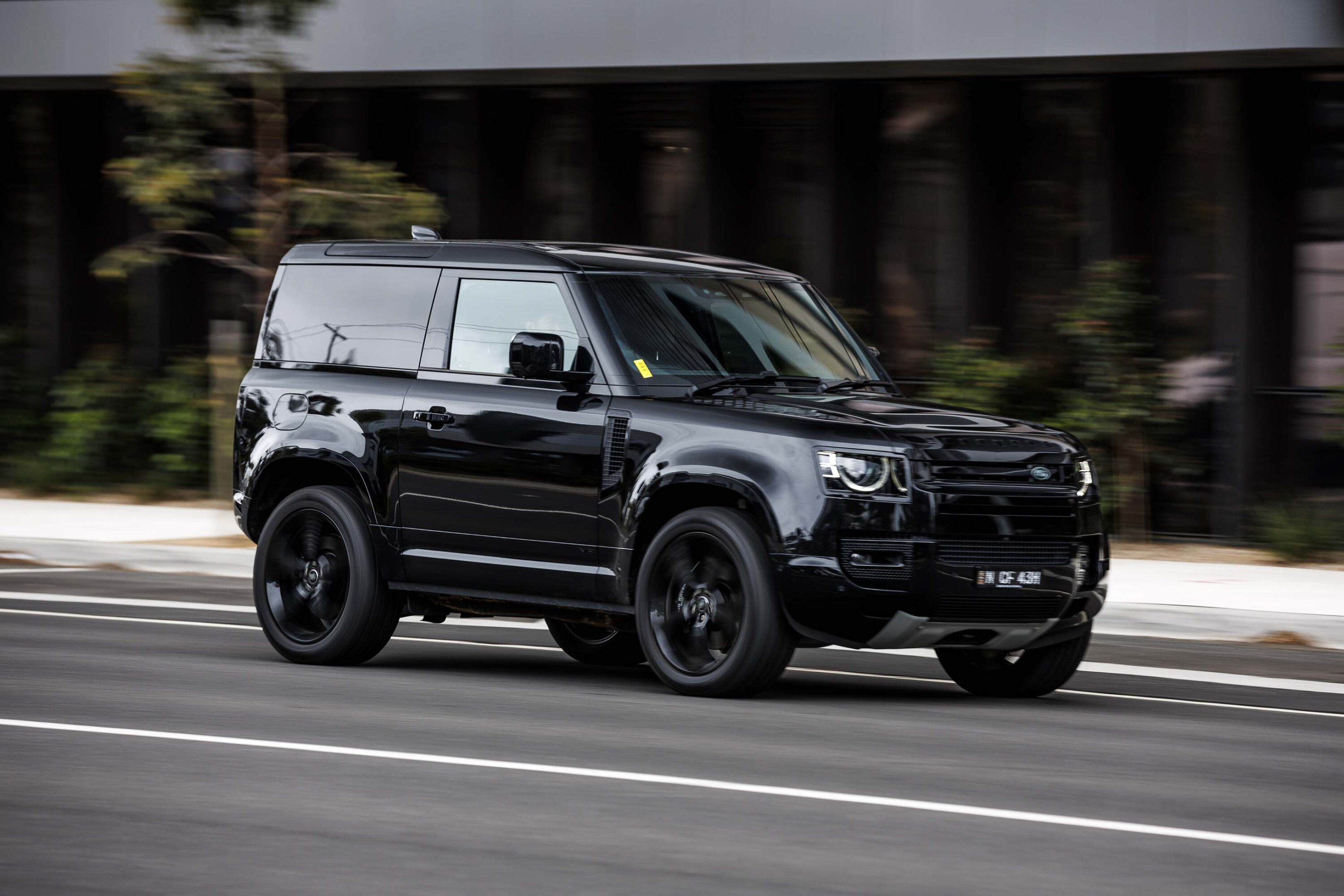
Land Rover
Australia’s love affair with the New Defender continues. With the range bolstered by an even bigger 130 model, Defender registrations comprised more than half of Land Rover Australia’s sales last year. Next in line was the Range Rover Sport, introduced in late 2023 in latest-generation form, with 2224 sales.
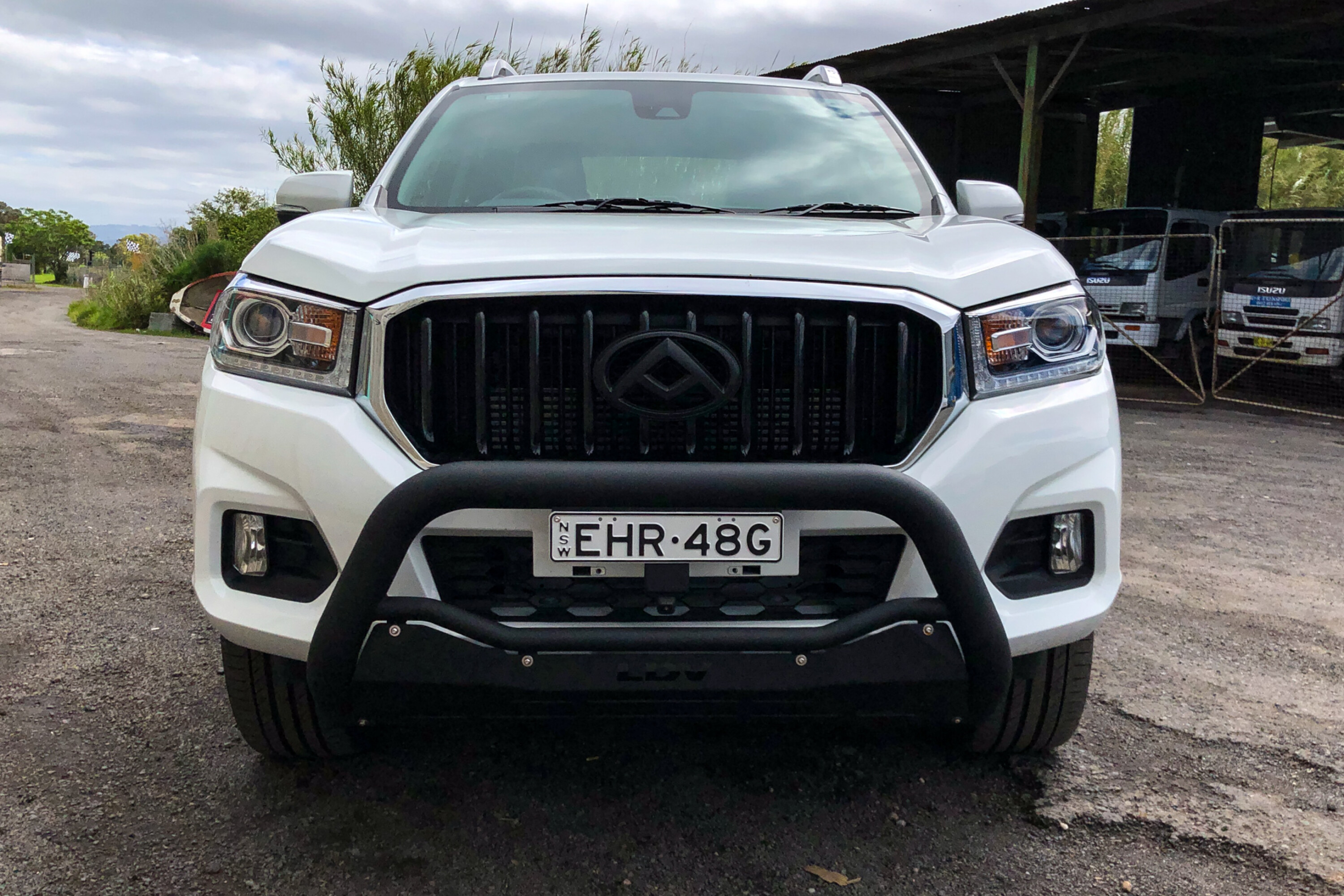
LDV
The Chinese commercial-vehicle brand racked up the sales again in 2023, with 31 per cent growth. The biggest slice of the 21,000-plus sales pie was taken by the T60 ute, with other significant portions taken by the Deliver 9 large van, G10 midsize van, and D90 large SUV.
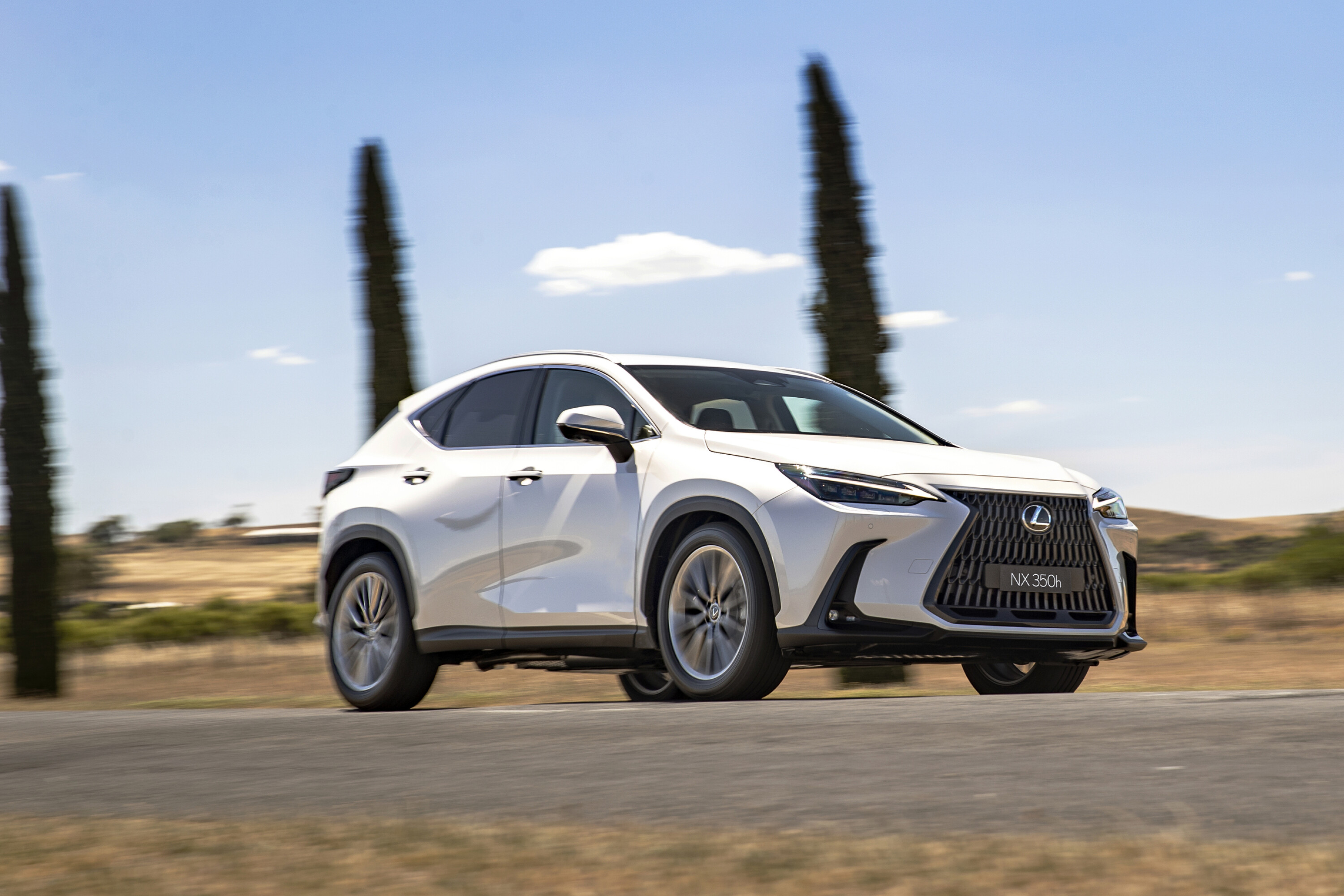
Lexus
A record year for the Japanese luxury brand in Australia – at 15,192 units more than double its 2022 total – featured strong sales performances from the RX large SUV, UX compact SUV, and ES sedan. But there was no change to the most popular Lexus – the NX midsize SUV.
Maserati
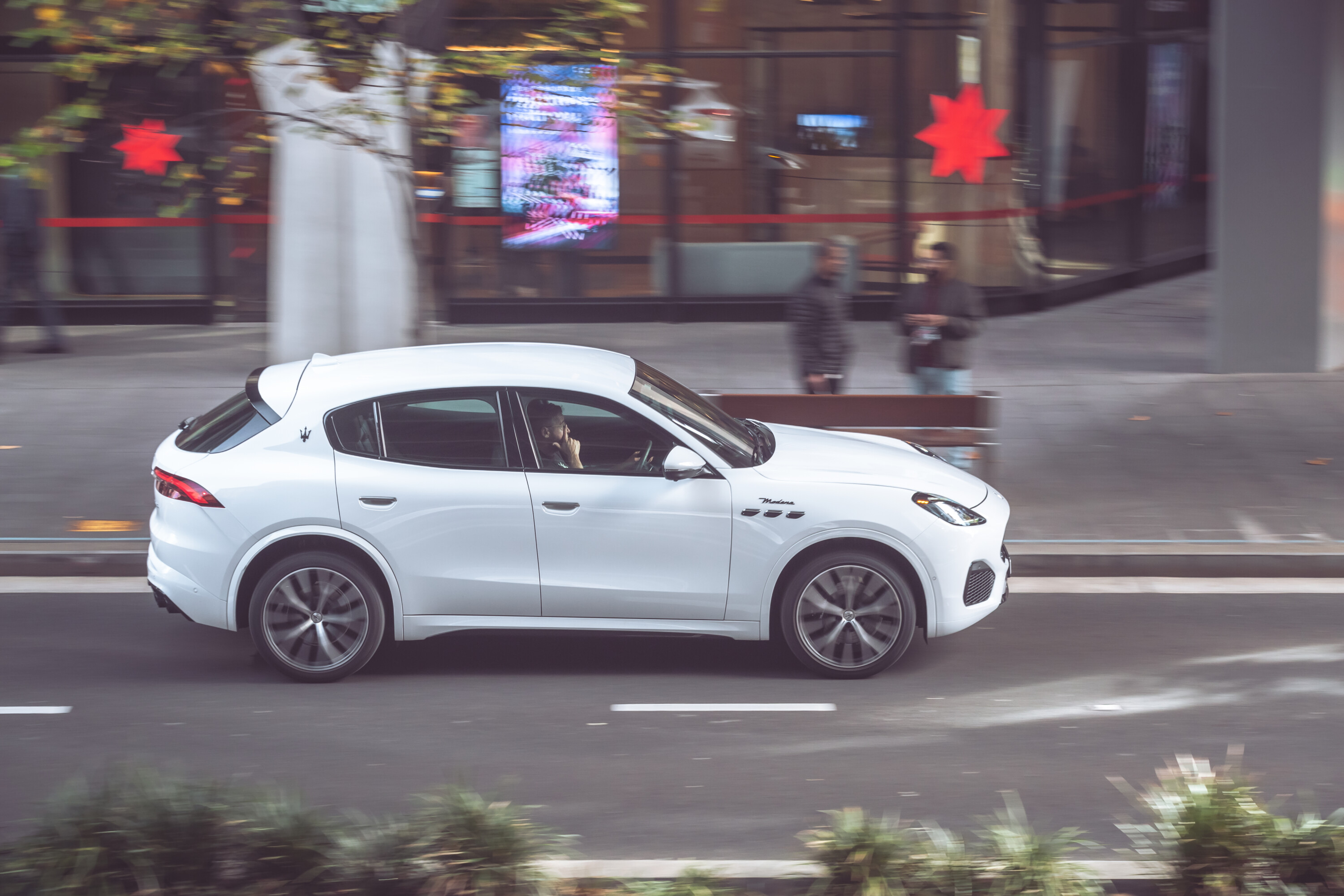
The Italian brand’s first midsize SUV, the Grecale, is one of its best. And a far better proposition than the larger Levante. Australians clearly agree, because while the Grecale clocked up 494 sales in its debut year, Levante sales dropped from 436 in 2022 to just 91 last year.
Mazda
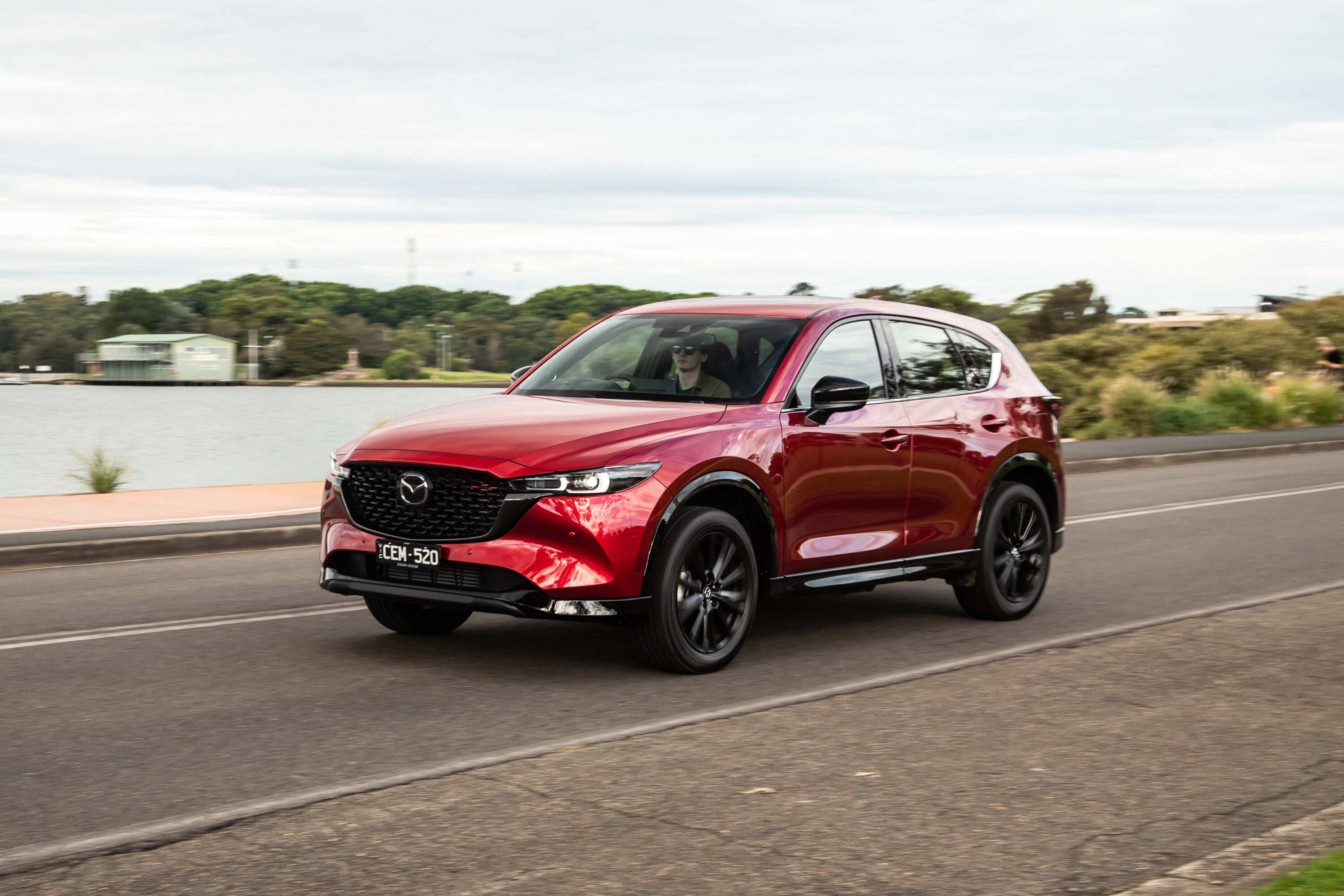
Another mighty 100,000-unit haul for the Japanese brand in Australia, which has become comfortable in its second spot behind perennial market No.1 Toyota. Good sales figures are spread throughout much of Mazda’s extensive line-up, though the CX-5 remained immoveable as its biggest seller – followed by the BT-50 ute and CX-3 baby SUV.
Mercedes-Benz
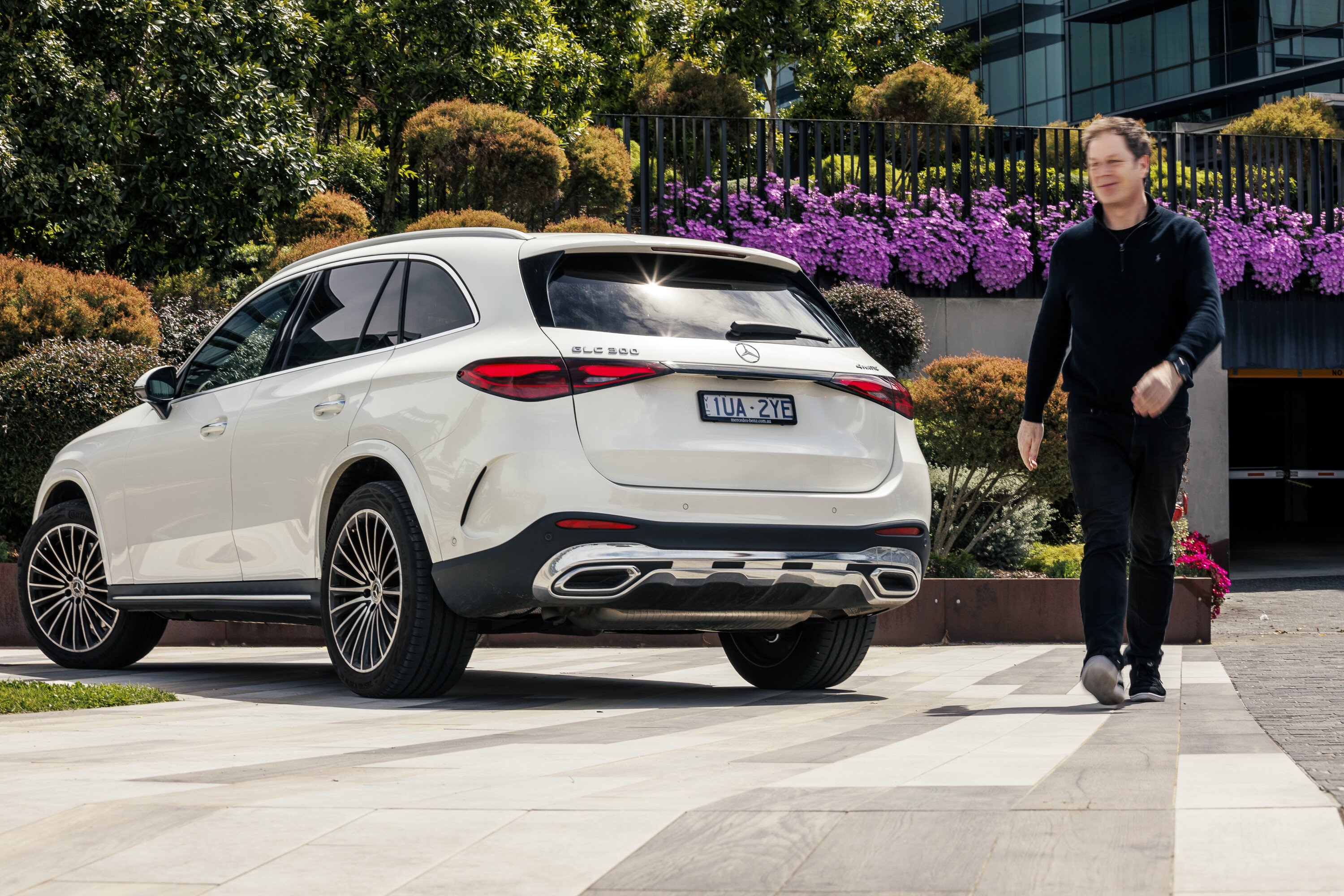
GLC wagon sales fell by 16 per cent last year and GLC coupe sales increased by 18 per cent – yet the wagon alone would still have retained its title of Most Popular Mercedes in 2023 – with 3631 sales. The total is nearly 5500 when the two body styles are combined. Next best was the larger GLE SUV, ahead of the C-Class. Not the best year for the German brand, though, with a nine per cent decrease allowing rival BMW to overtake it.
MG
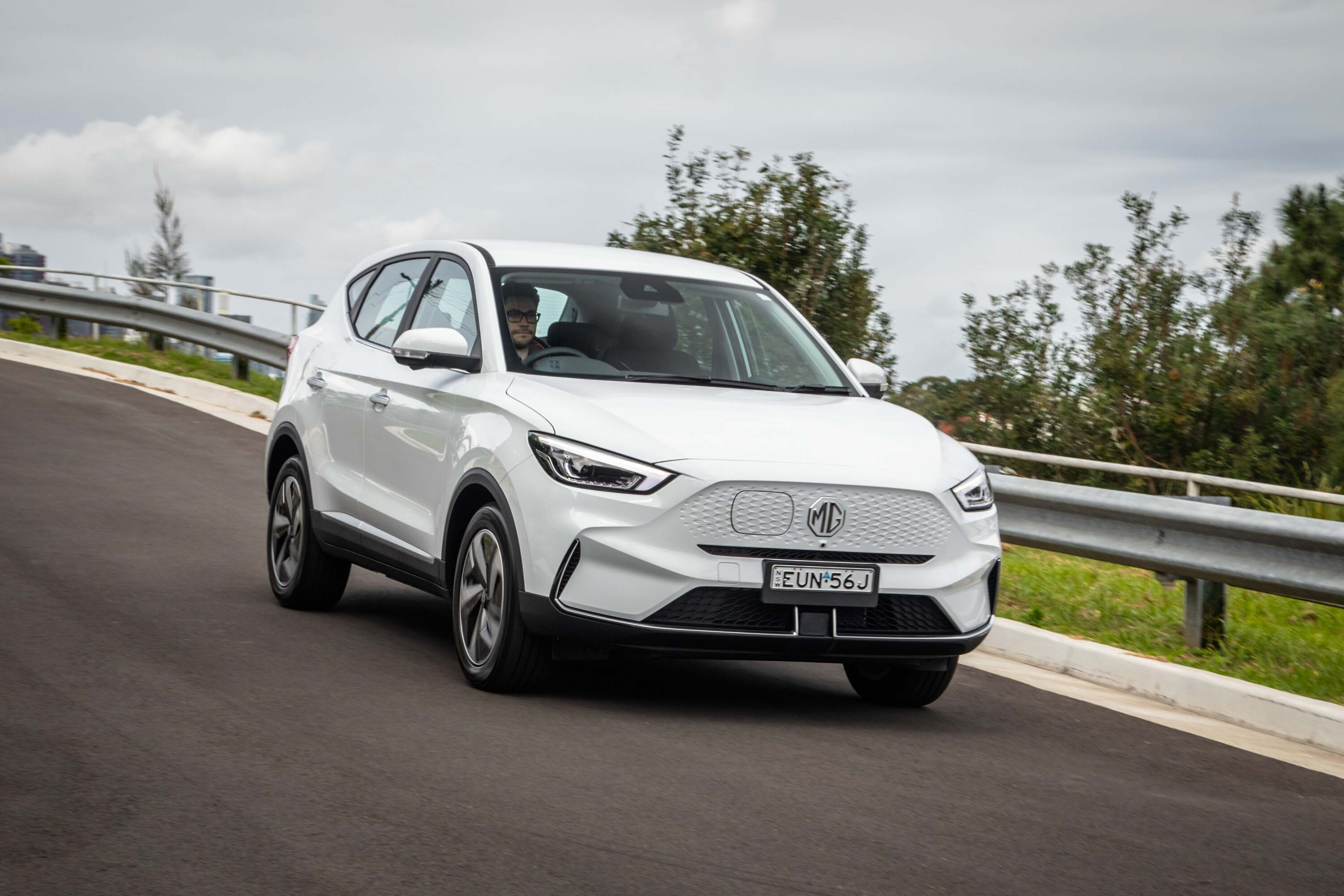
The MG3 city car and HS midsize SUV continued their popularity, and there were good starts for the new MG4 electric hatch and MG5 petrol sedan, but once again MG sales were dominated by the ZS/ZST compact SUV that accounted for about half of the Chinese brand’s sales.
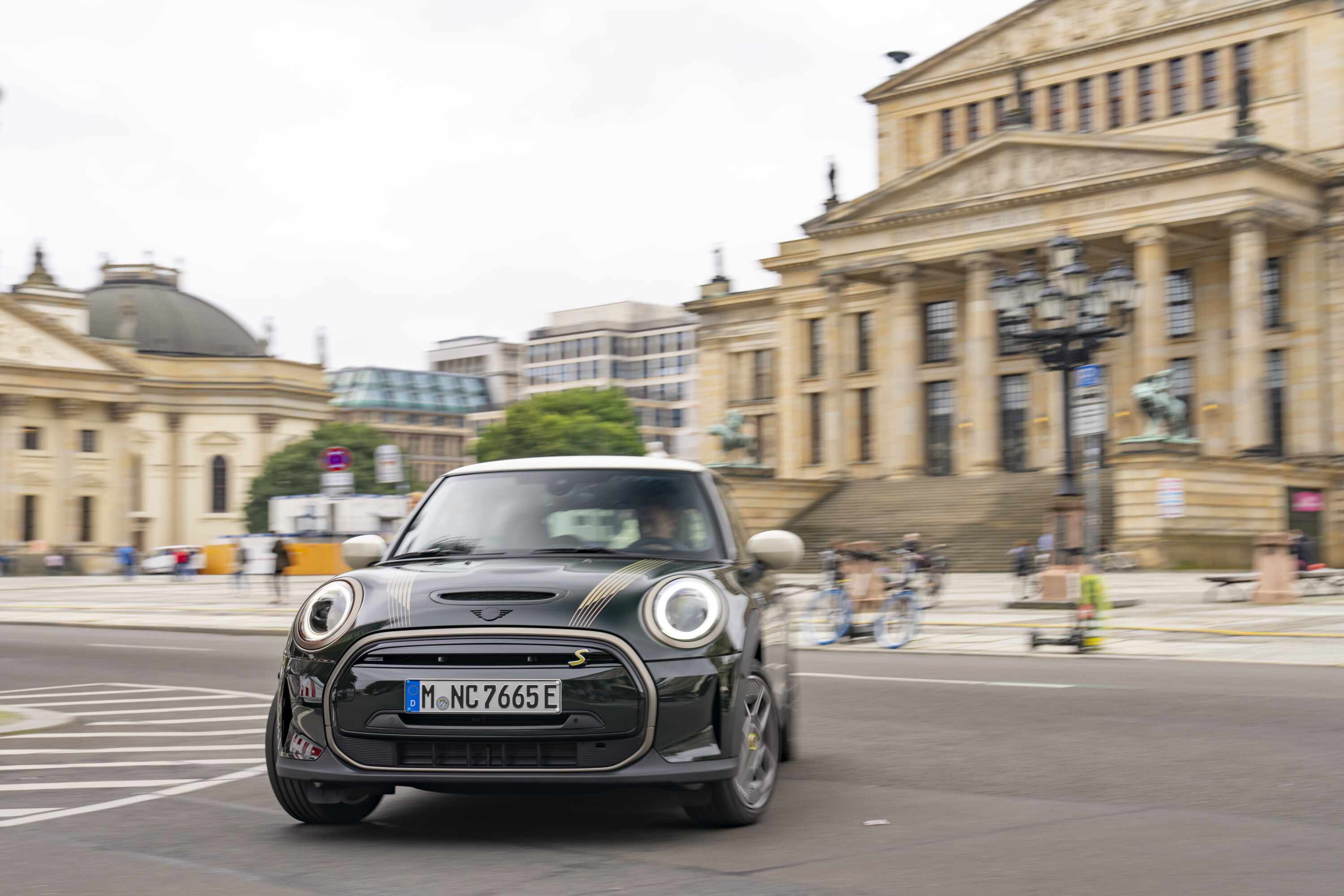
Mini
BMW’s British sister brand was another trend-bucker to have a No.1 model that was neither an SUV nor ute. The Mini hatchback’s 2011 sales saw off the 1567 units of the Countryman SUV in a strong year – up 43 per cent.
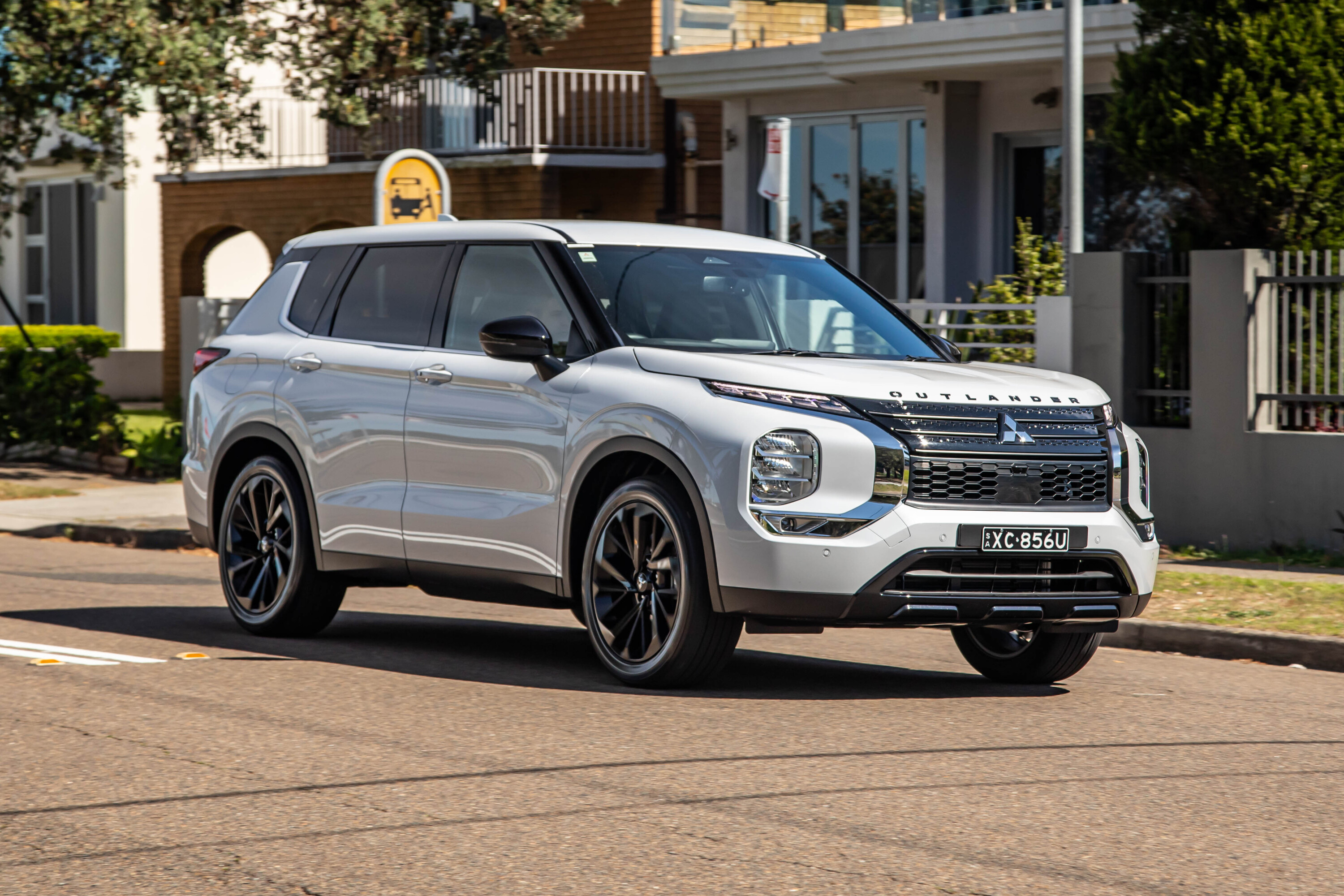
Mitsubishi
The Triton struggled relatively in the last year before the 2024 arrival of a new-generation model, resulting in the ute being displaced by the Outlander midsized SUV as the highest-selling Mitsu locally. Outlander sales increased 24 per cent year on year, though Mitsubishi will be hoping the new Triton gives overall sales a big kick in 2024 after 2023’s 18 per cent drop.
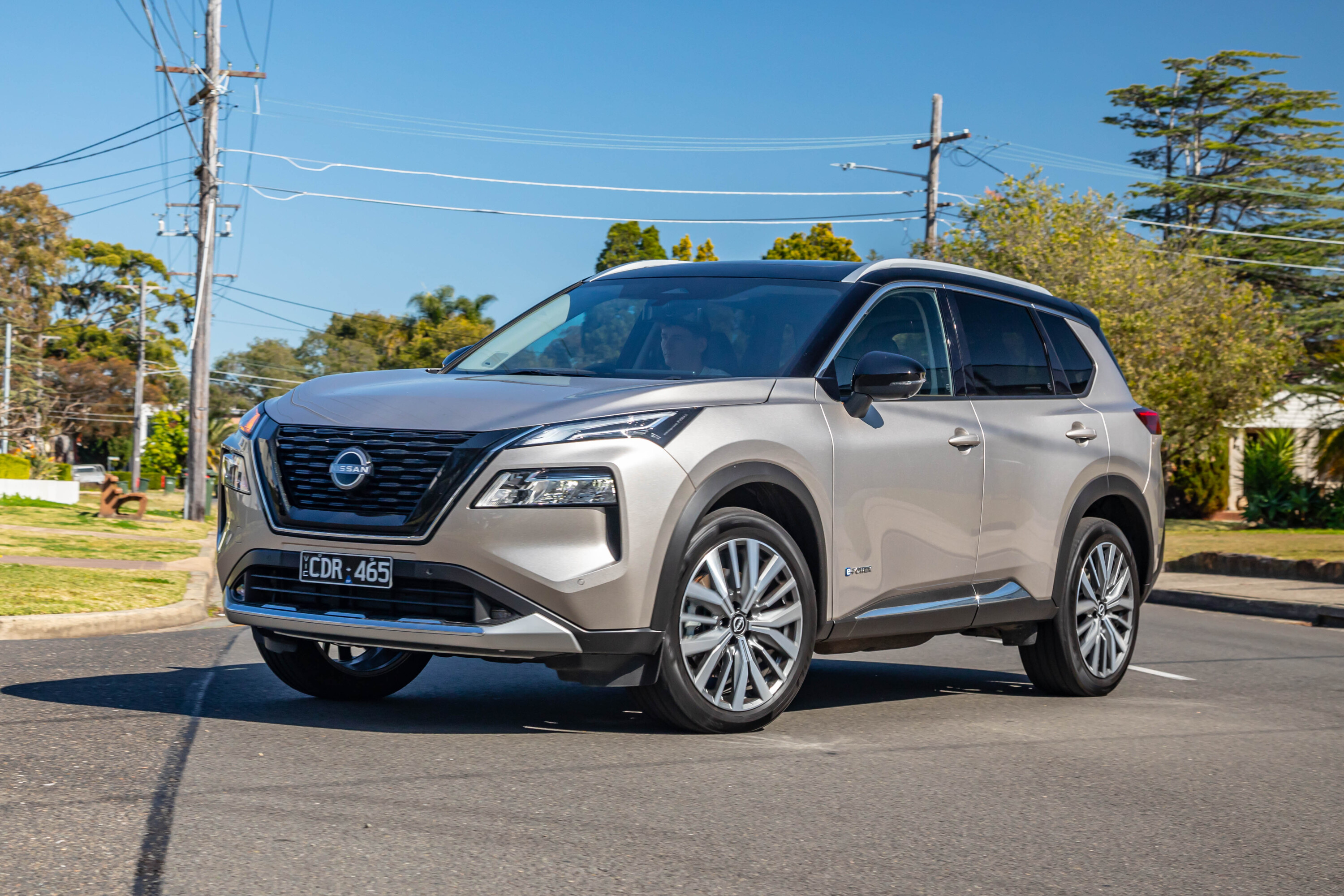
Nissan
It’s amazing what new product can do. After years of coping with an ageing line-up in Australia, Nissan enjoyed 49 per cent growth in 2023 – driven by new-generation versions of the Pathfinder, Qashqai and X-Trail SUVs. The latter, midsized SUV was the Japanese brand’s sales leader with 12,861 registrations, followed by the Navara ute (8499), Patrol (7812), and then Qashqai (6614). The X-Trail won our Medium SUV Megatest in early 2023 (more below).
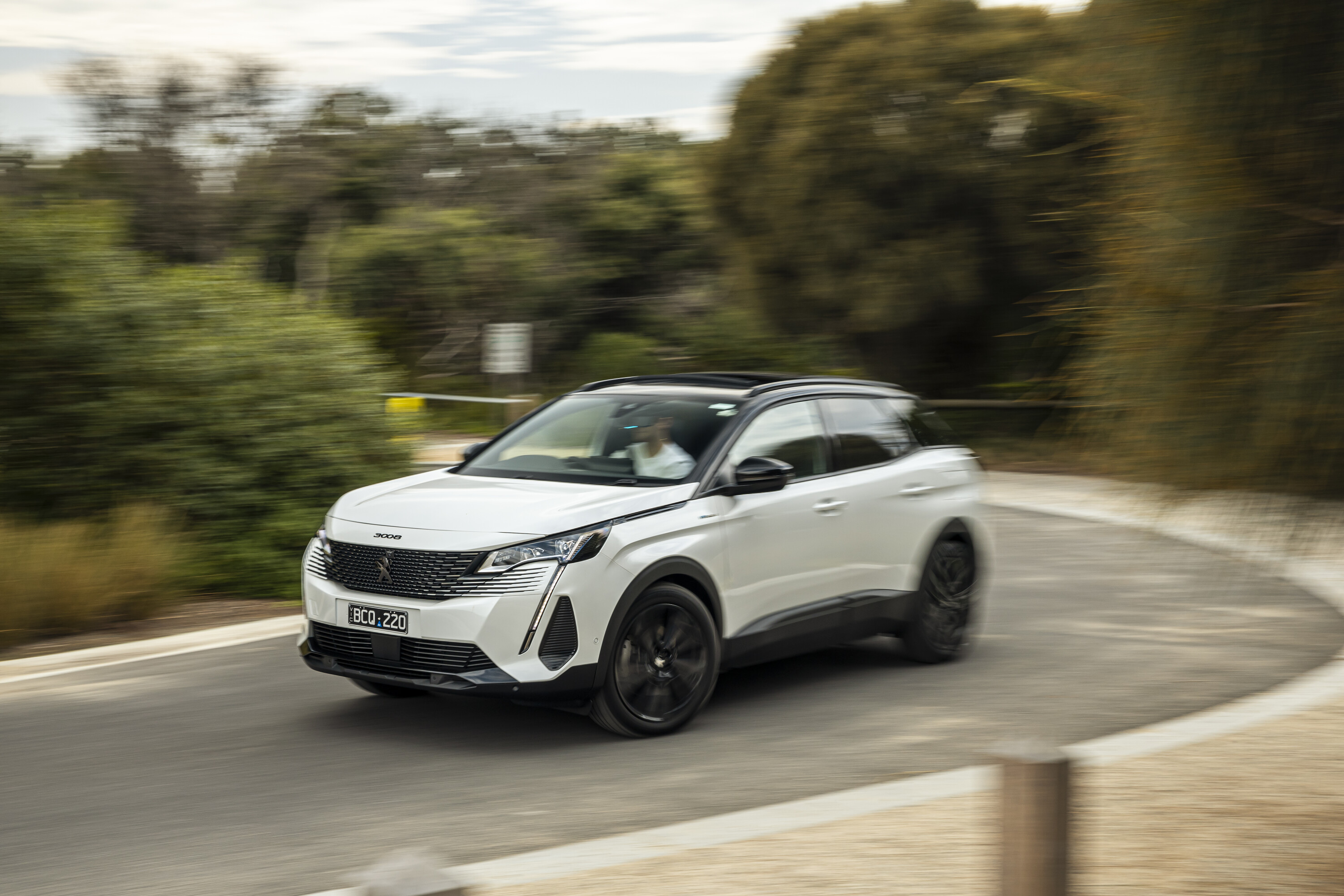
Peugeot
Faring far better than sister brand Citroen with 21 per cent growth and more than 2500 sales – if still far behind French compatriot Renault – Peugeot’s most popular model was again the 3008 medium SUV (despite a 19% drop). It wasn’t far ahead of the Partner van (552 units).
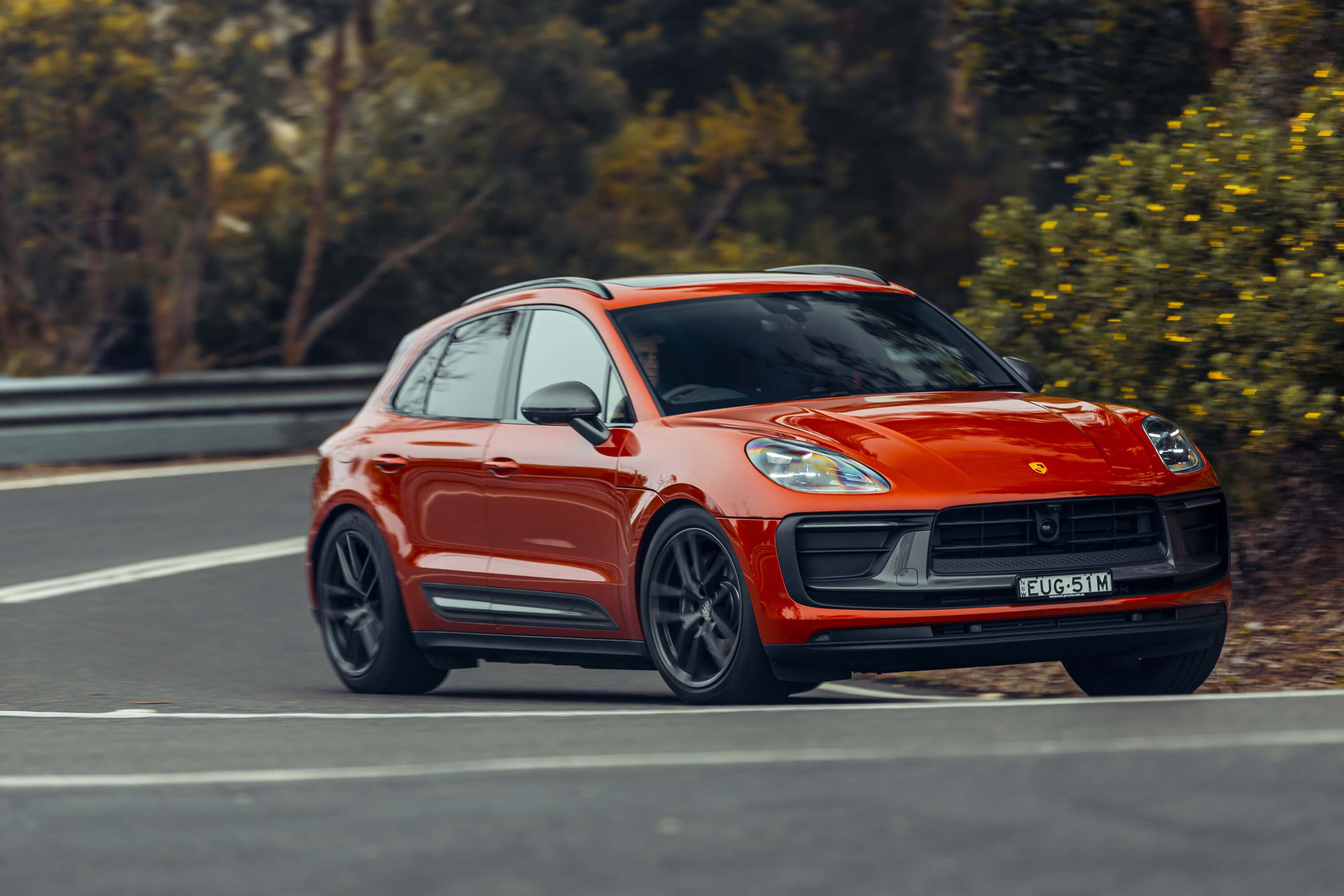
Porsche
No shocks at the venerable sports car brand. The Macan midsized SUV remained rooted to its No.1 position – with 2925 sales comprising virtually half of Porsche’s total 6052 sales. Will a switch to an all-electric version in late 2024 hurt it, though? The Cayenne large SUV was again the second most popular Porsche.
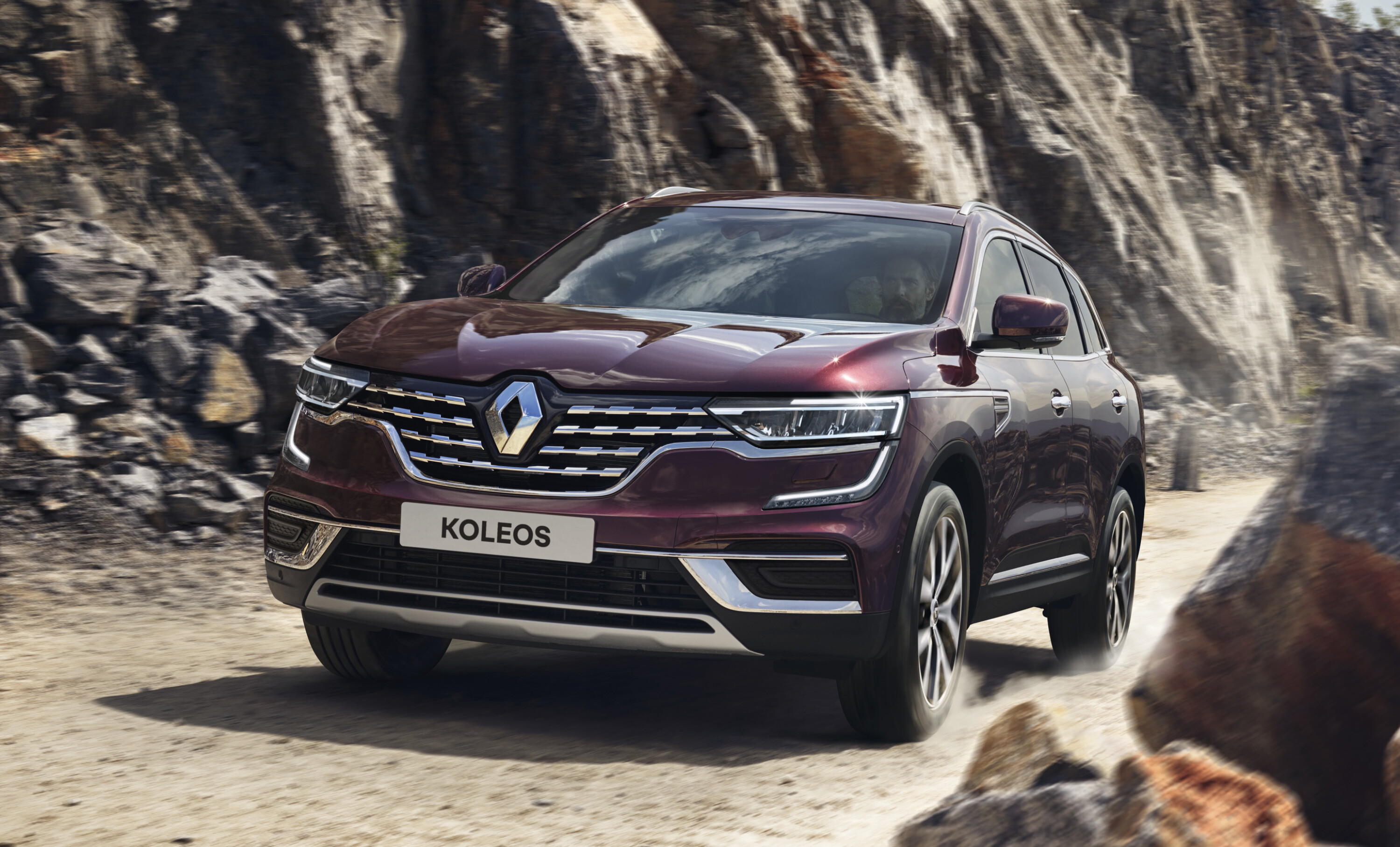
Renault
Another midsized SUV rules the roost here, with the Koleos commanding the biggest chunk of Renault sales – 2776 out of the total 8024 units. Next best was the Arkana crossover, with 1572 sales.
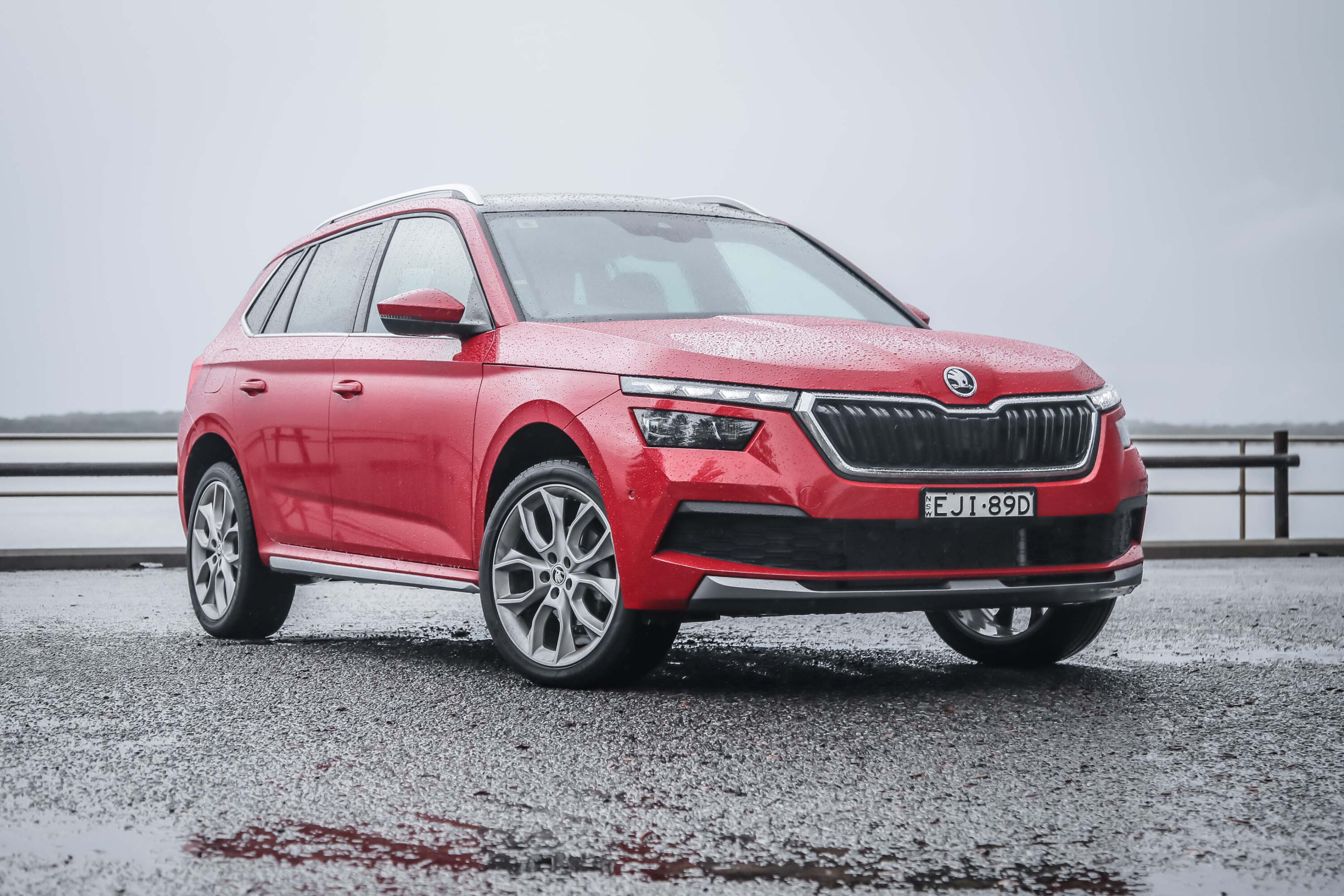
Skoda
A strong year for the Czech brand, just one unit shy of 8000 sales – up 23 per cent. The Kamiq small SUV was again the top Skoda (1985 registrations), while the Scala small car was the fastest-growing model with a 115% increase.
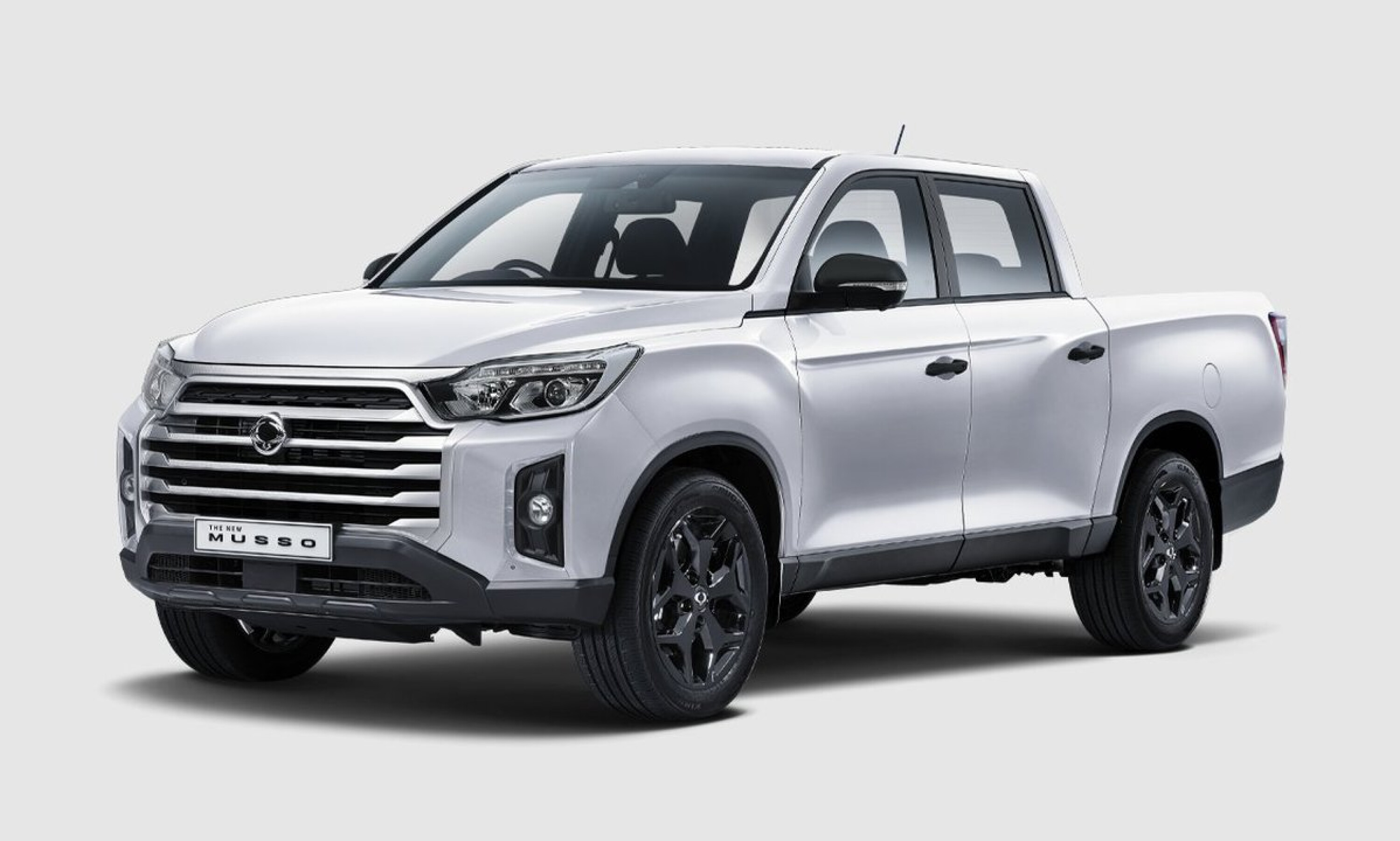
SsangYong
Watch out Hyundai and Kia! The fastest-growing Korean brand in 2023 was SsangYong, with a 51 per cent year-on-year increase. The Musso ute remained the top seller, with 3491 sales.

Subaru
The Forester was run fairly close in 2022 by the new Outback, but in 2023 the midsized SUV jumped 54 per cent to establish its No.1 status more convincingly – to more than 16,000 sales. The Outback was second again, also growing to 12,903 sales. There’s one other five-figure Subaru if you combine sales of the outgoing XV with its not-hugely-different replacement, the Crosstrek.
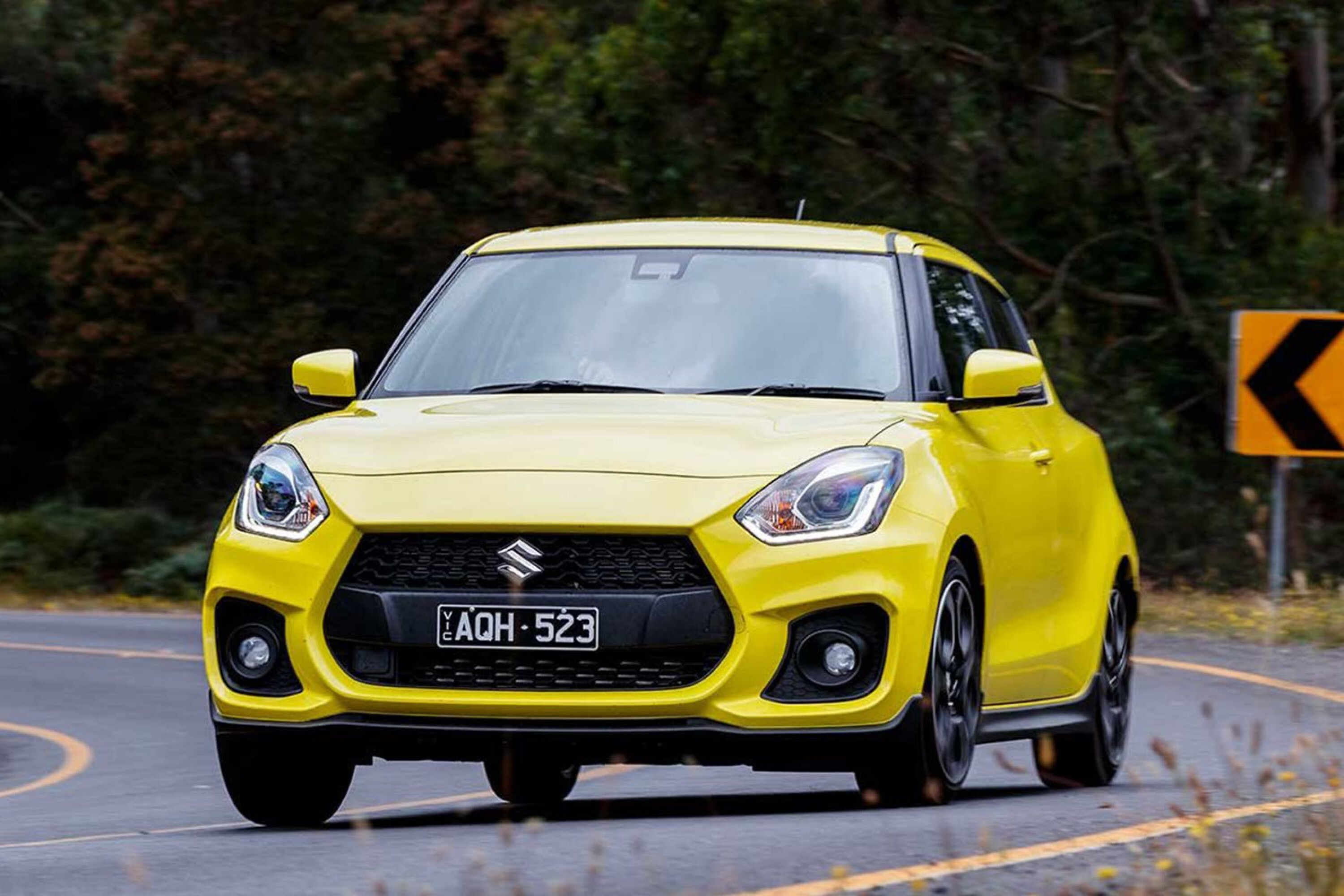
Suzuki
A tricky 2023 for the small-vehicle specialist, with sales down 21 per cent. There was a change at the top, with the Swift city car climbing from 4405 units in 2022 to 6914 registrations last year – overtaking the Jimny baby 4×4 that dropped 12 per cent year on year to 5002 units. A new-gen Swift launches this year, while the Jimny was bolstered last December by the addition of a five-door model.
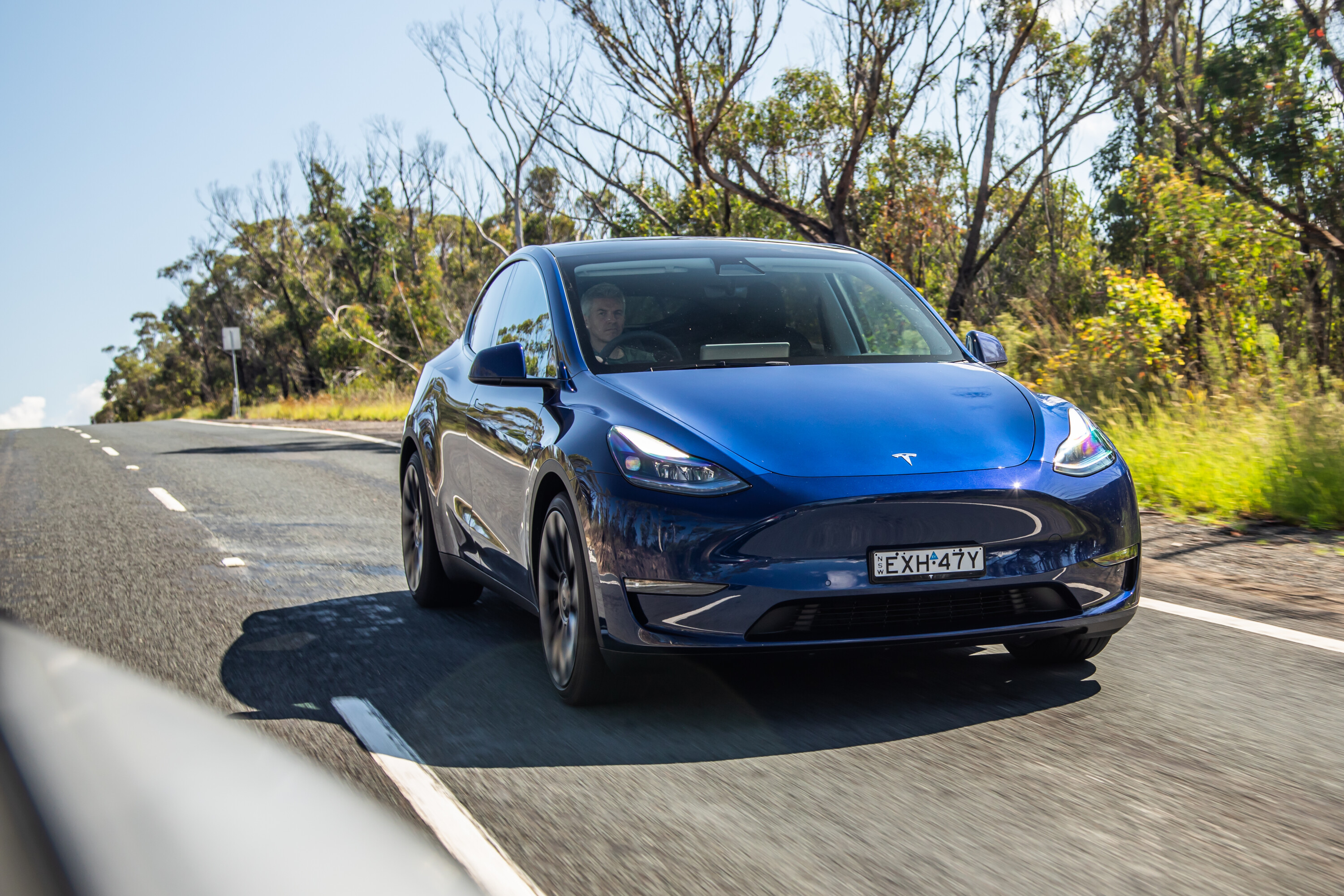
Tesla
The remarkable Tesla story continued last year with a giant sales performance – with more than 46,000 registrations produced by just two models. The Model Y SUV turned the tables on its sedan relative last year, with 28,769 units clearly ahead of the 17,347 sales for the Model 3.
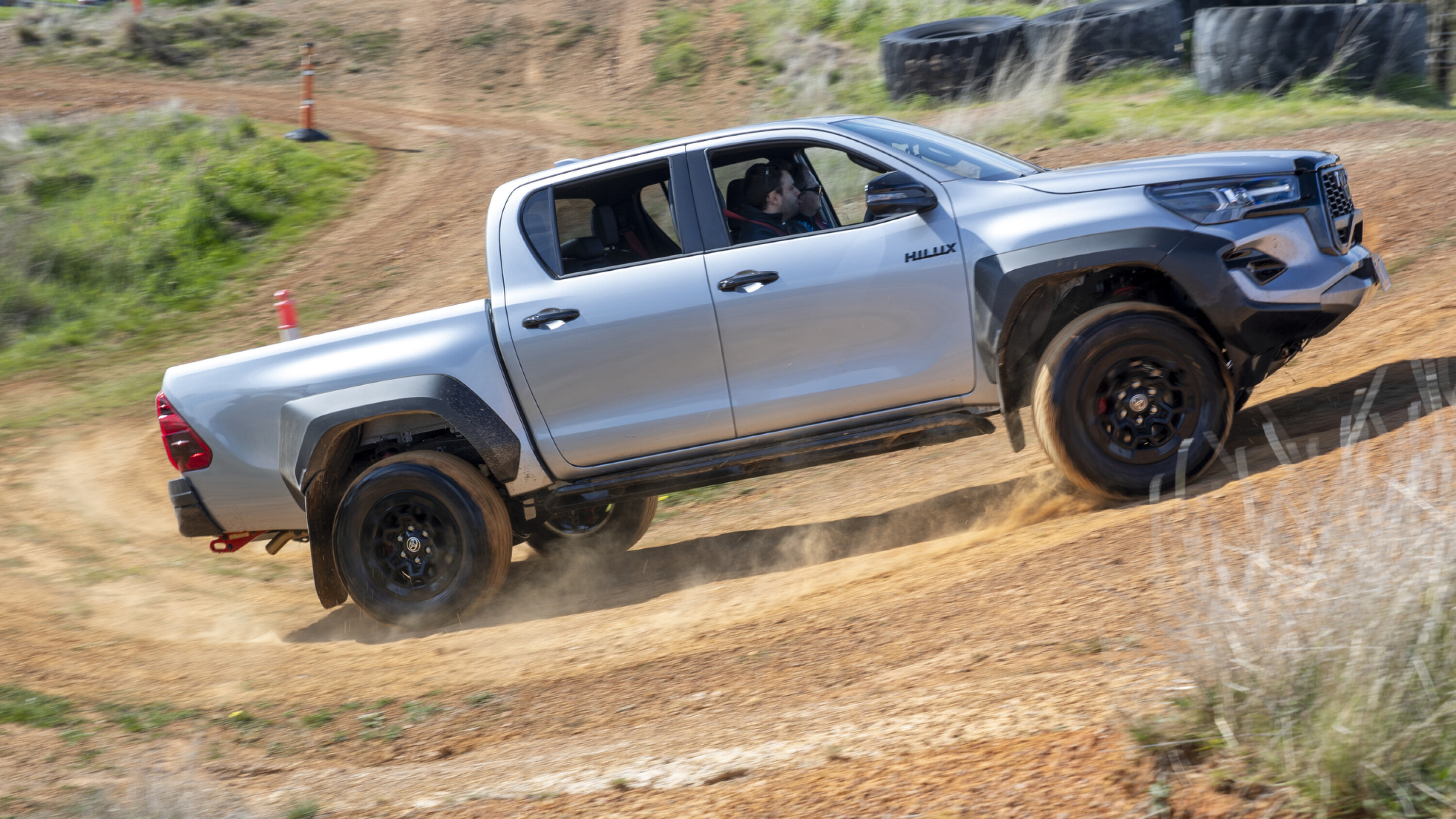
Toyota
A relatively disappointing year for Toyota which finished seven per cent down in a record sales year (though it was still around 115,000 sales ahead of No.2 Mazda) and the HiLux was displaced as the nation’s favourite by its nemesis, the Ford Ranger. The ute was still the most popular Toyota – with 61,000-odd sales more than double the next best seller, the RAV4 (29,627 registrations).
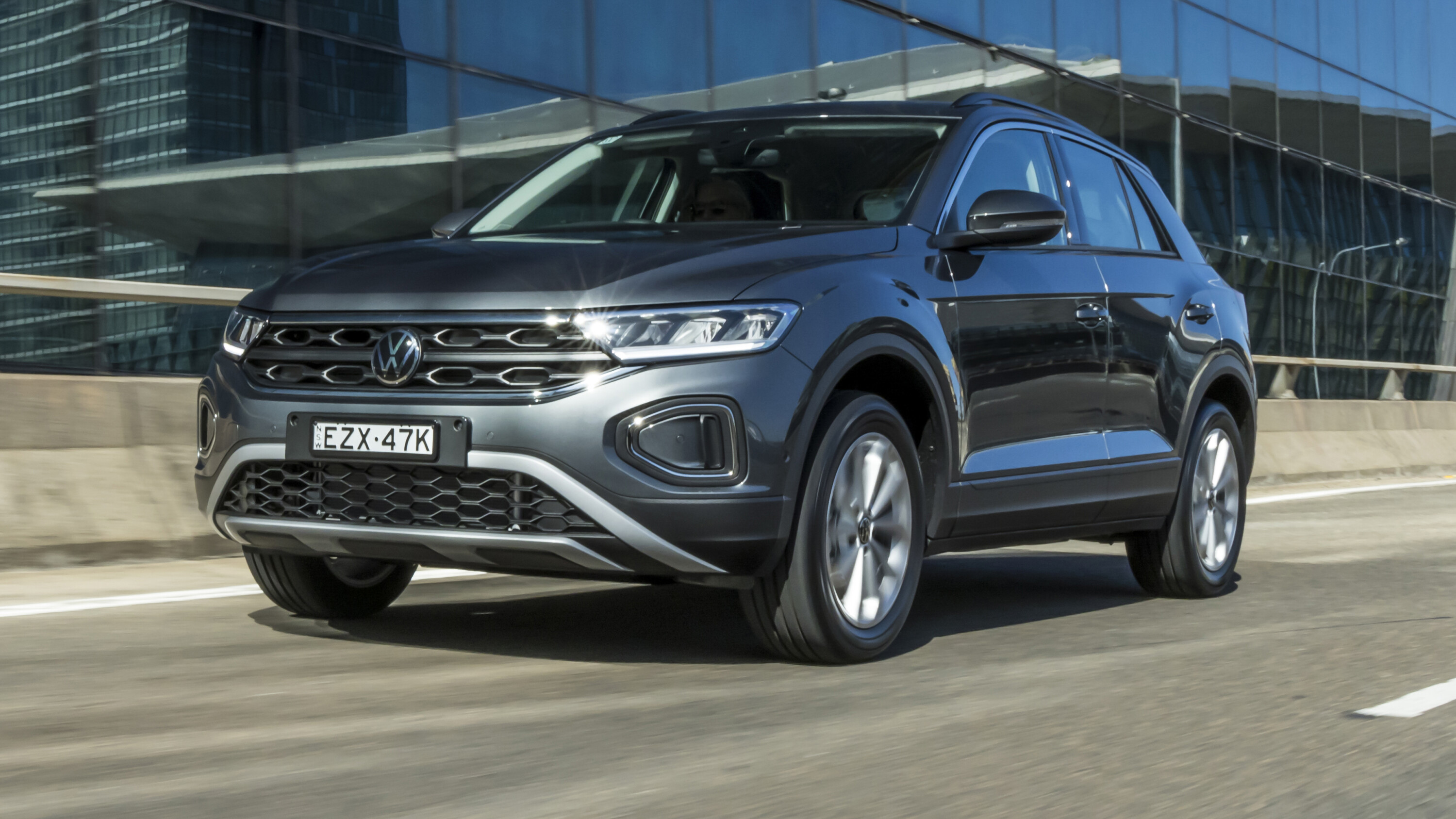
Volkswagen
Greatly improved local supply for the German brand was reflected in a 42 per cent growth figure last year. The T-Roc small SUV and Tiguan medium SUV were key beneficiaries, occupying the top two sales spots with 8943 and 7298 registrations, respectively. That represented a 175 per cent increase for Tiguan and 147 per cent increase for T-Roc. In third was the new-generation Amarok ute, up 47 per cent to 6626 registrations.
Volvo
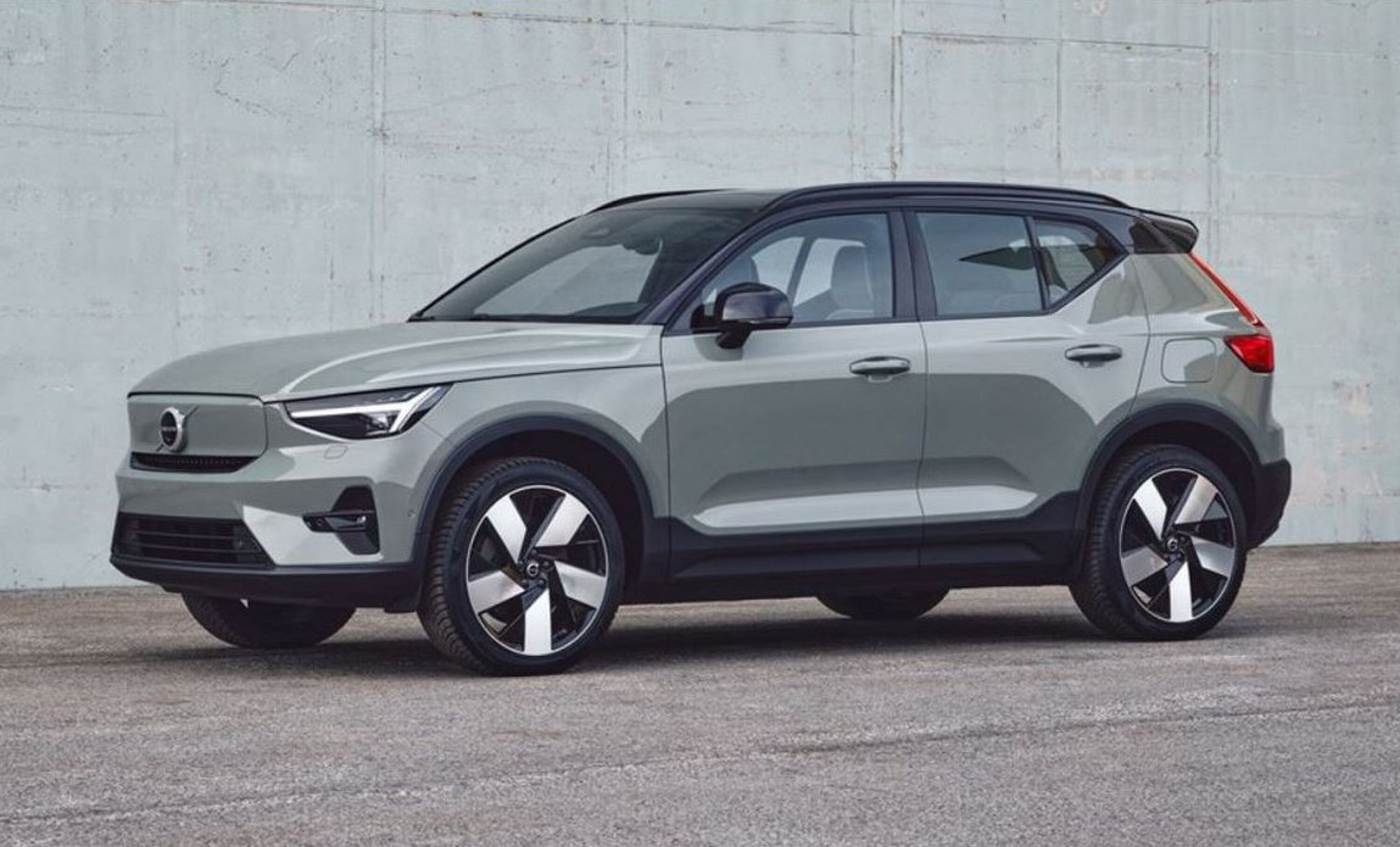
Last but certainly not least, Swedish brand Volvo – with a second consecutive record year racking up 11,128 sales. A significant 35% of those sales were pure electric models. The fastest-climbing model was its C40 electric crossover (up 125 per cent to 1103 sales), though the closely related XC40 small SUV refused to be budged from its No.1 spot, up 14 per cent to 5837 sales.
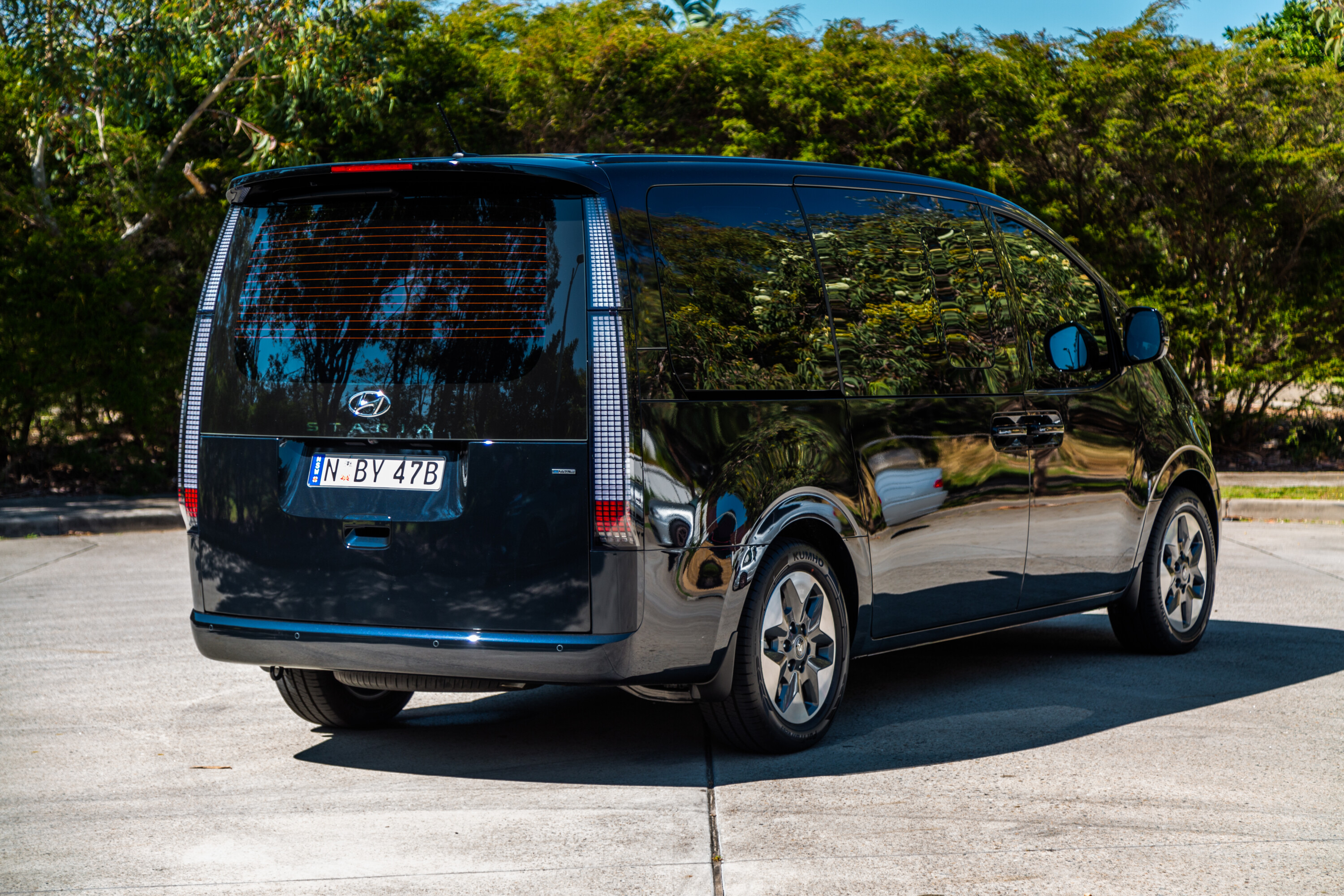
The Hyundai Staria made its debut in Australia in mid-2021, marking a significant addition to the country’s automotive landscape. Available in three distinct trims – Standard, Elite, and Highlander – this modern, stylish people mover quickly established its presence.
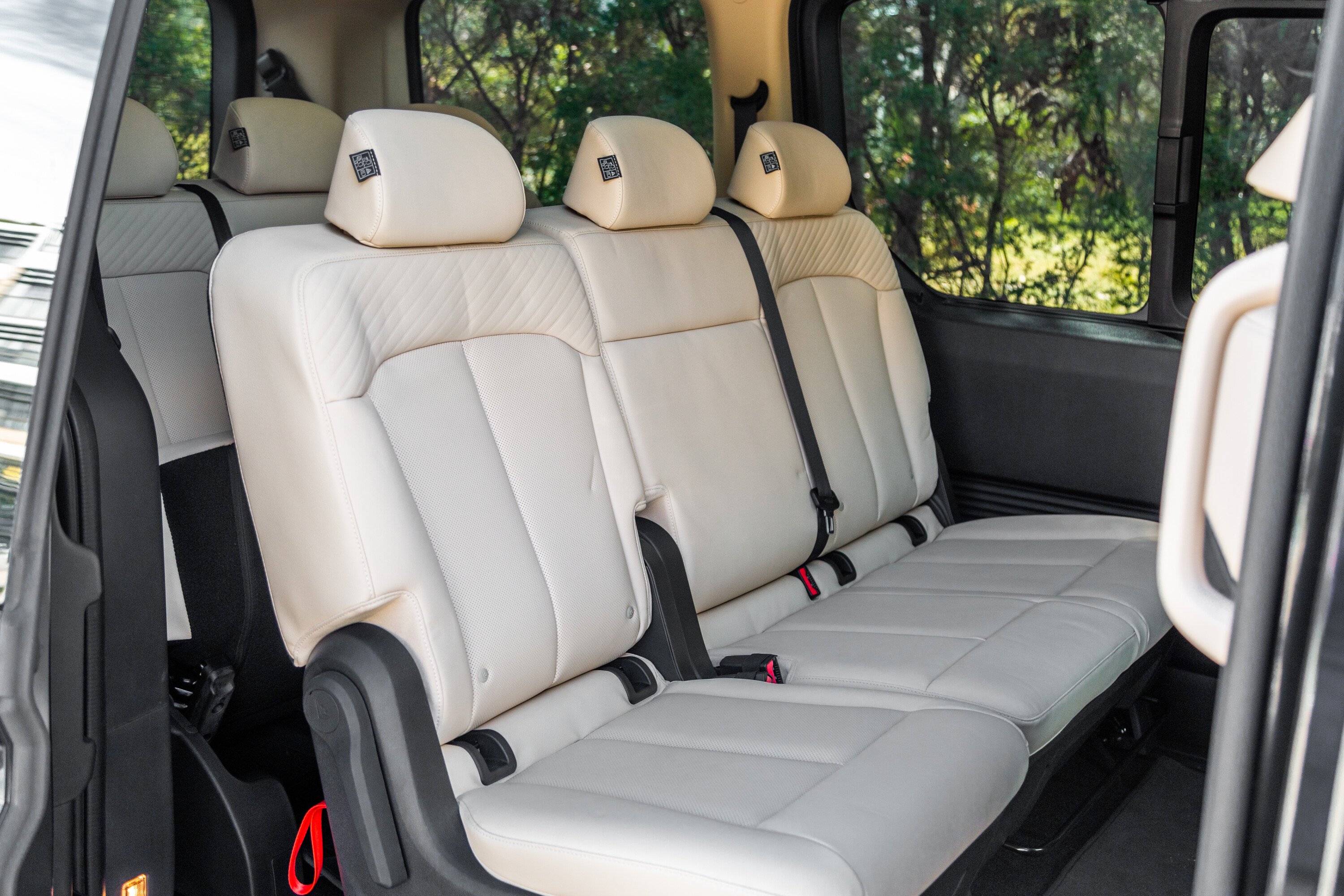
Each model is configured with eight seats, arranged in a 2-3-3 layout, making the Staria Hyundai’s most spacious offering for families.
The 2024 Hyundai Staria stands out with its striking design and a suite of practical amenities, delivering both a head-turning exterior and a highly functional, comfortable interior for passengers.
However, in a competitive market where both aesthetic appeal and practical utility are prized, the question arises: Does the Highlander variant truly deliver on these expectations?
Pricing and features
The most premium Staria, the Highlander, comes in at $64,000 before on-road costs. It’s available in either a 3.5L petrol front-wheel drive option or 2.2L diesel all-wheel drive, which adds an extra $3000 to the price.
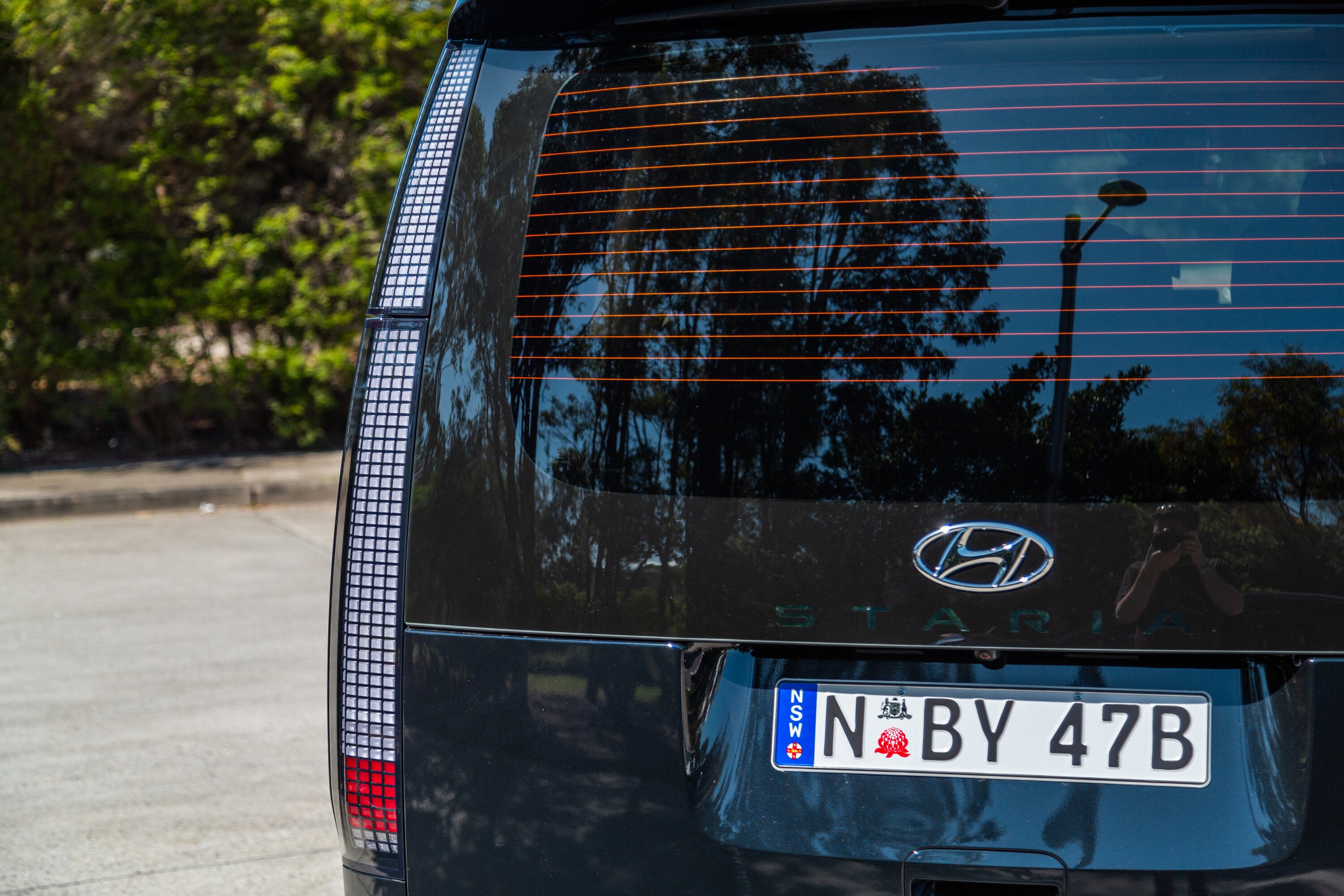
The exterior of the Staria is characterised by its futuristic and streamlined look, with distinctive headlight designs and a sleek overall profile.
Inside, the Staria is designed with flexibility in mind, featuring a spacious cabin with multiple seating configurations, ideal for both family and commercial use.
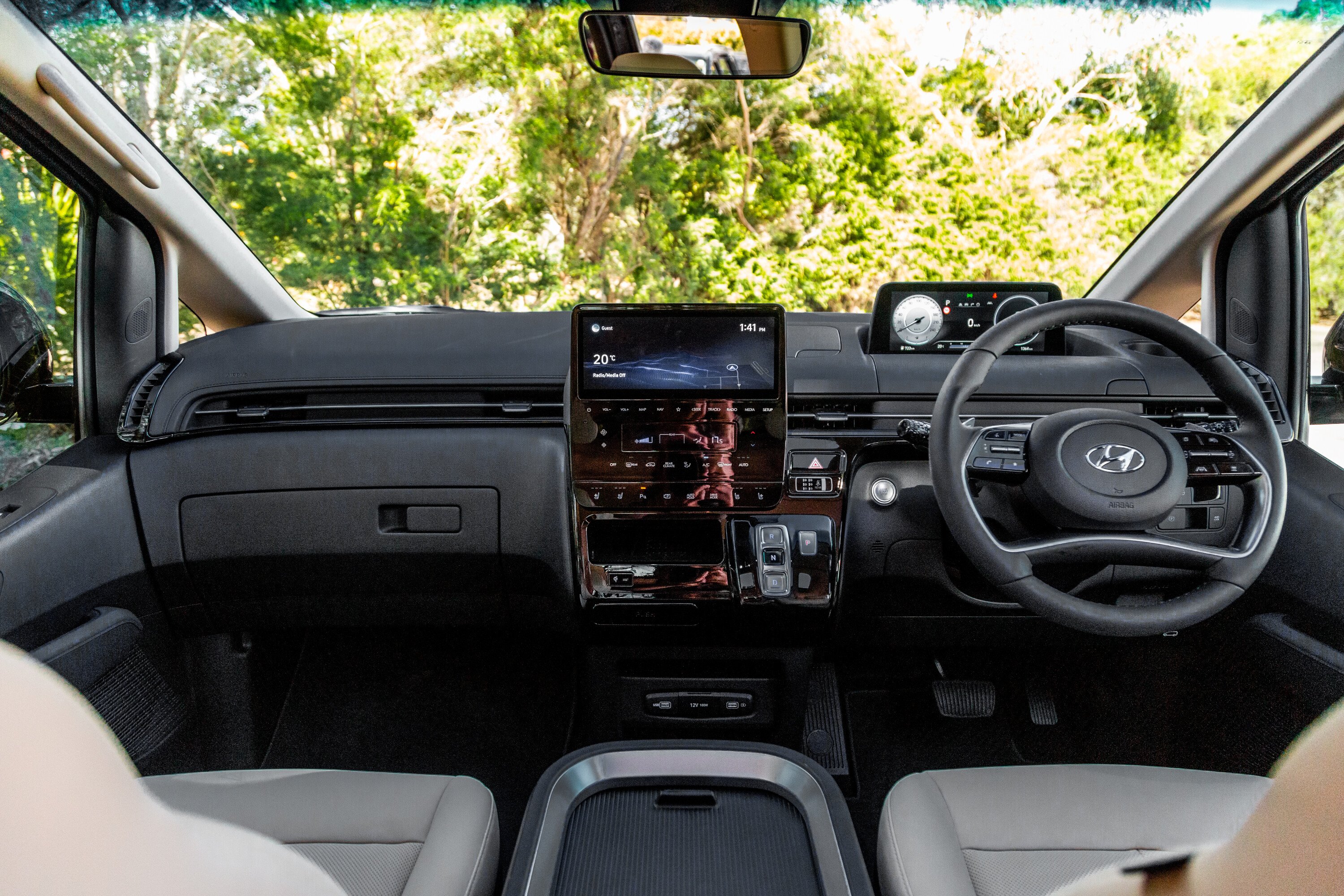
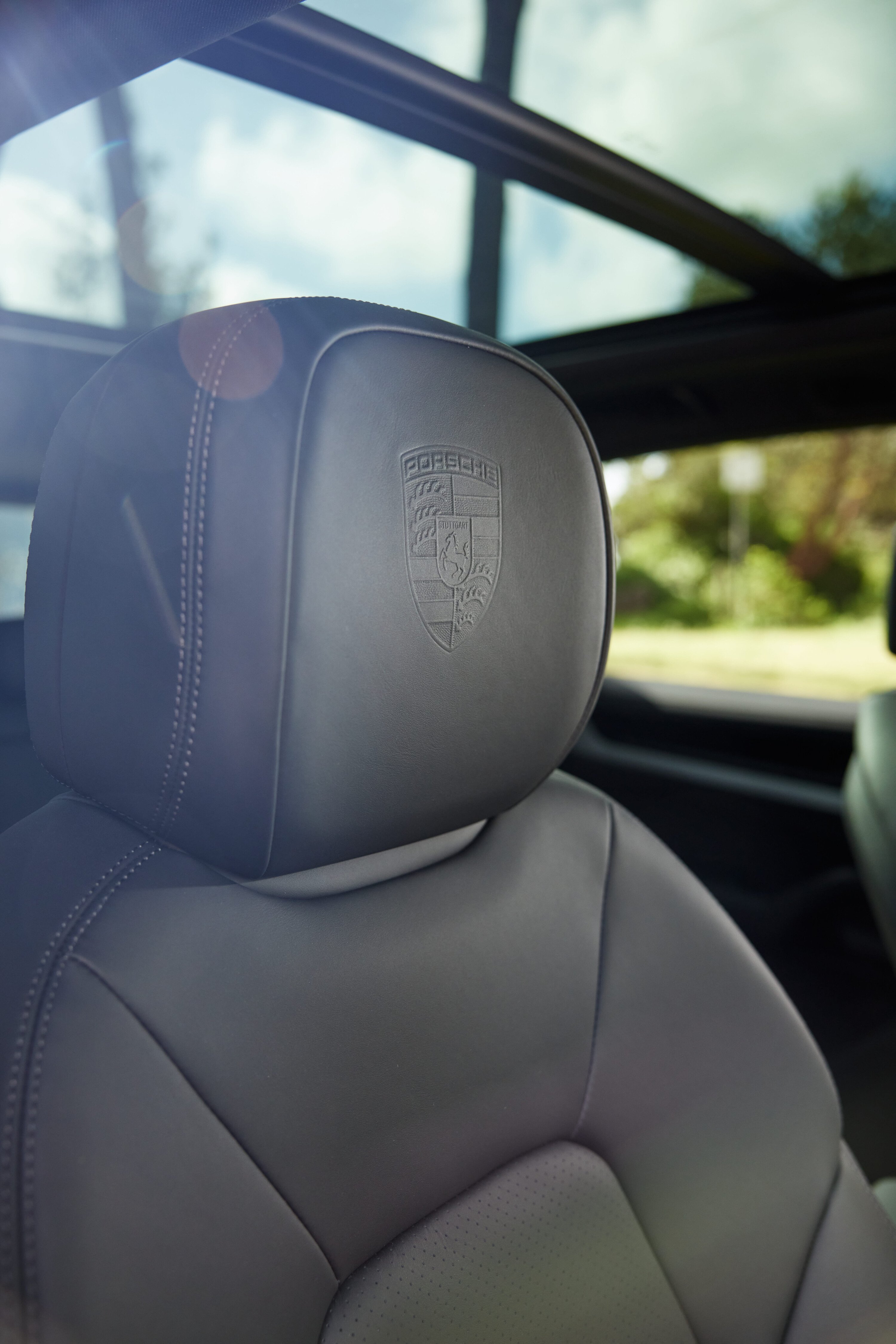
As the top model in the Staria range, the Highlander is full of creature comforts and luxuries. This includes two 10.25-inch screens, a wireless phone charger, leather upholstery, heated and ventilated front seats, a dual power sunroof and a 12-way adjustable drivers seat.
Unfortunately the Highlander misses out on wireless Apple Carplay and Android Auto as is common with Hyundai models.
Convenience all-round is a priority with this variant receiving a whopping 16 cup holders, flat-folding 2nd and 3rd row seats, six USB charge points, two ISOFIX child restraints and power sliding doors as well as a power tailgate.
You’ll also have a rear passenger view monitor so you can see what’s going on the back seats without having to turn your head.
Safety
The Staria has earned a five-star ANCAP safety rating, attributed to the comprehensive Hyundai SmartSense safety feature suite present across all models.
In crash safety evaluations, the Staria secured scores of 85 percent in adult occupant protection and 86 percent in child occupant protection.
Additionally, the Staria’s automatic emergency braking (AEB) system includes detection features for pedestrians and cyclists, enhancing its safety credentials.
| Hyundai Staria standard safety features | |
|---|---|
| 360-degree camera | High Beam Assist |
| 7 airbags | Lane Following Assist |
| Adaptive cruise control | Lane keep assist |
| Autonomous emergency braking | Leading Vehicle Departure Alert |
| Blind-spot assist | Rear cross-traffic assist |
| Driver attention warning | Safe Exit Warning |
| Front and rear parking sensors | Tyre pressure monitoring |
The Highlander adds safety such as Blind-spot view monitor and safe exist assist (also available on the mid-spec Elite variant)
Key rivals
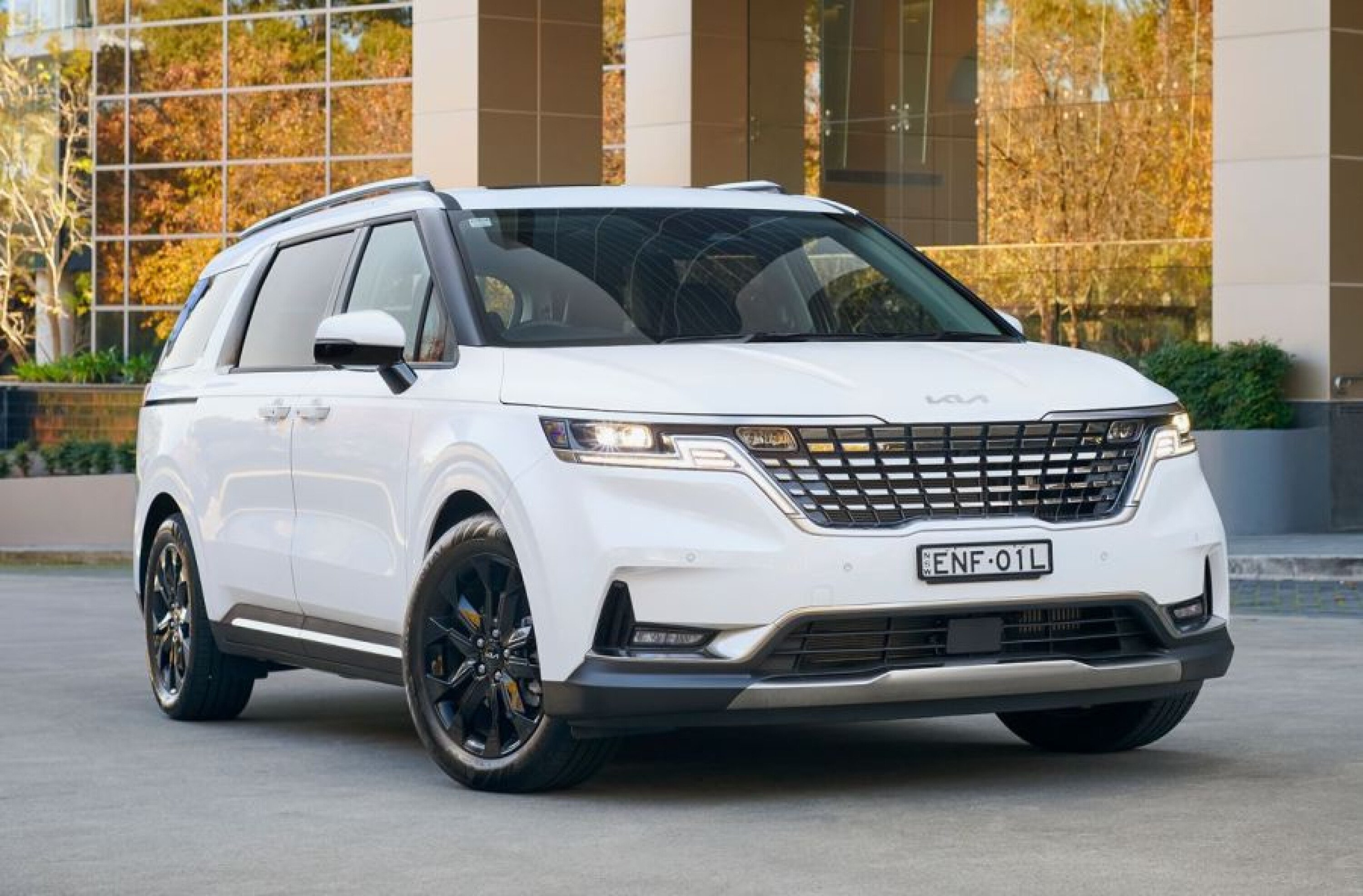
A previous segment leader, the Honda Odyssey no longer in the market, paves the way for opportunities with the Staria to shine. It competes against other people movers such as:
Should I put it on my shortlist?
Amidst Australia’s preference for SUVs, the enduring appeal of people movers might not be immediately apparent—until you experience the uncompromised space and convenience they offer.
Whether you’re ferrying your family or require a commercial vehicle for larger groups, the Staria ensures a complaint-free journey for all onboard.
For those in search of a vehicle adept at managing everything from the daily grind to family vacations, the Staria stands out as a compelling choice.
And the extra features in the Highlander make this one luxurious people mover.
Read the news and you’d think petrol is about to run out, everybody’s buying an electric SUV, replacing any overly bright and colourful clothes they own with varying shades of charcoal and slate, and that the rear-drive manual sports car is dead.
It couldn’t be further from the truth.
In 2024, those who love driving – with the unique feeling that only comes with a bit of power, rear-wheel drive and a limited-slip differential – are spoilt. Some of the best vehicles to ever apply this magic formula are on sale right now.
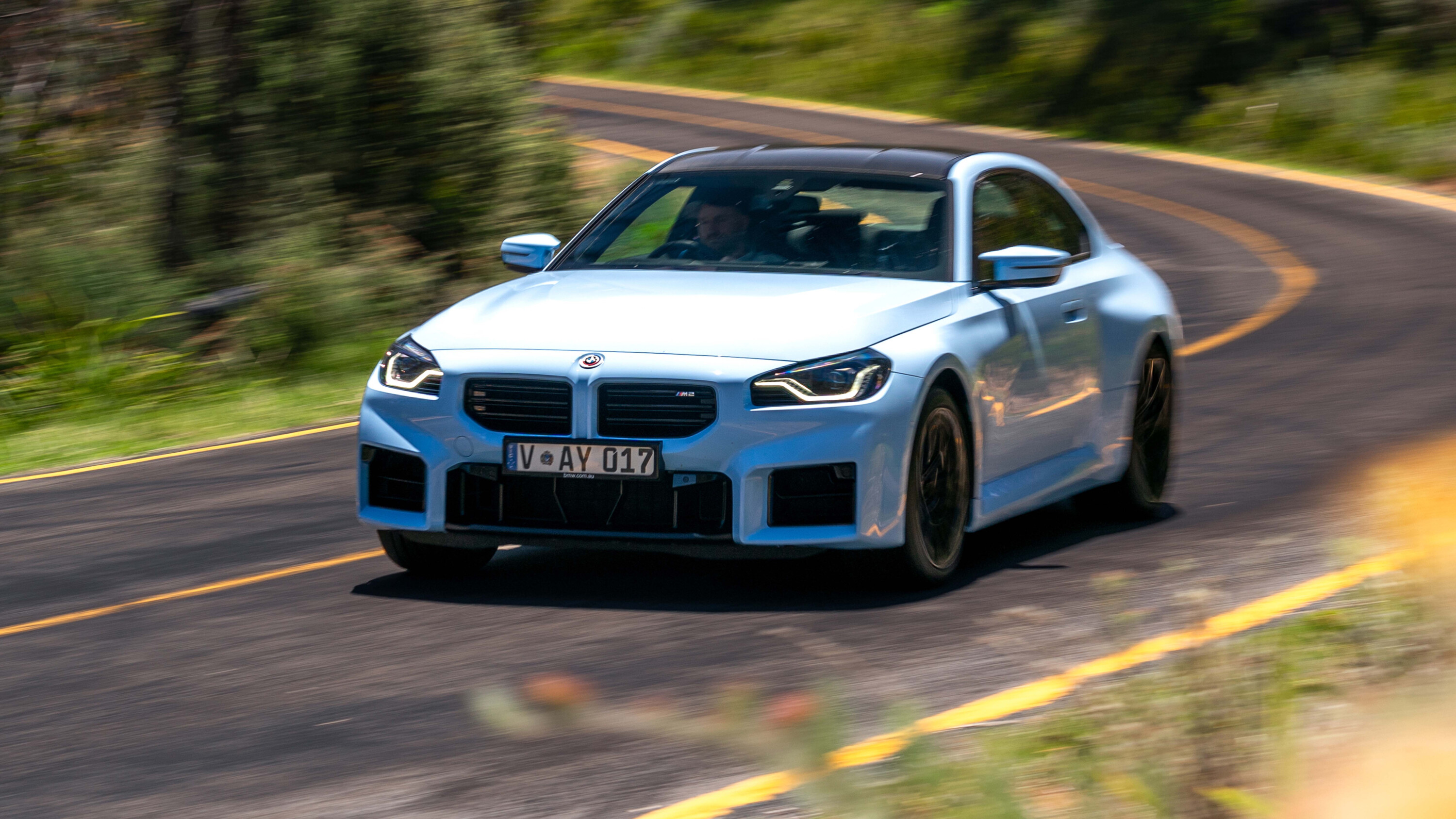
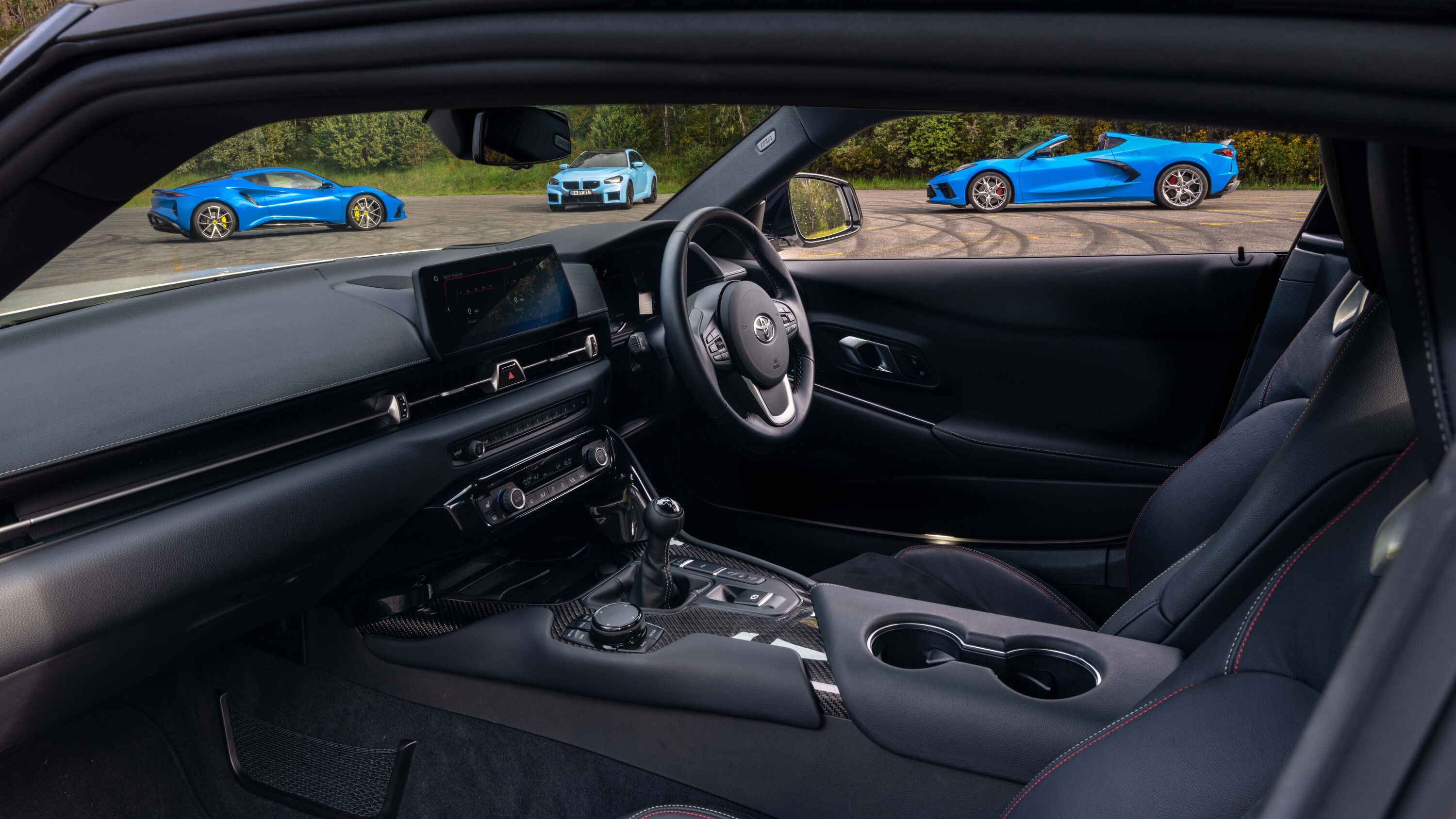
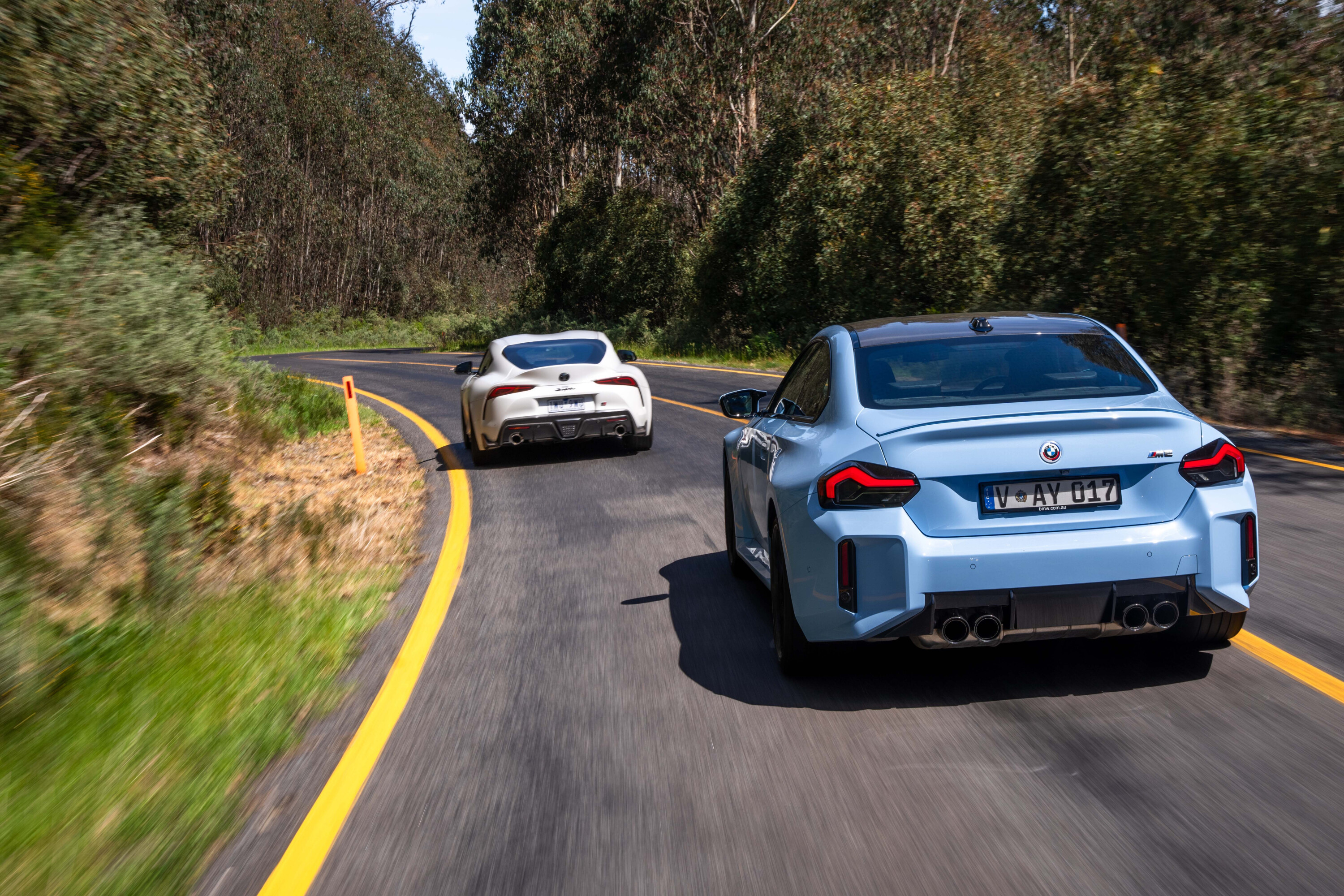
Today, we’re comparing two of them – BMW’s rip-snorting 338kW new M2 against Toyota’s updated 285kW GR Supra. Of course, the Toyota has more than a bit of Bavarian DNA; if it believed it was directly descended from older Supras, it might get a rude shock if it did an ancestry test.
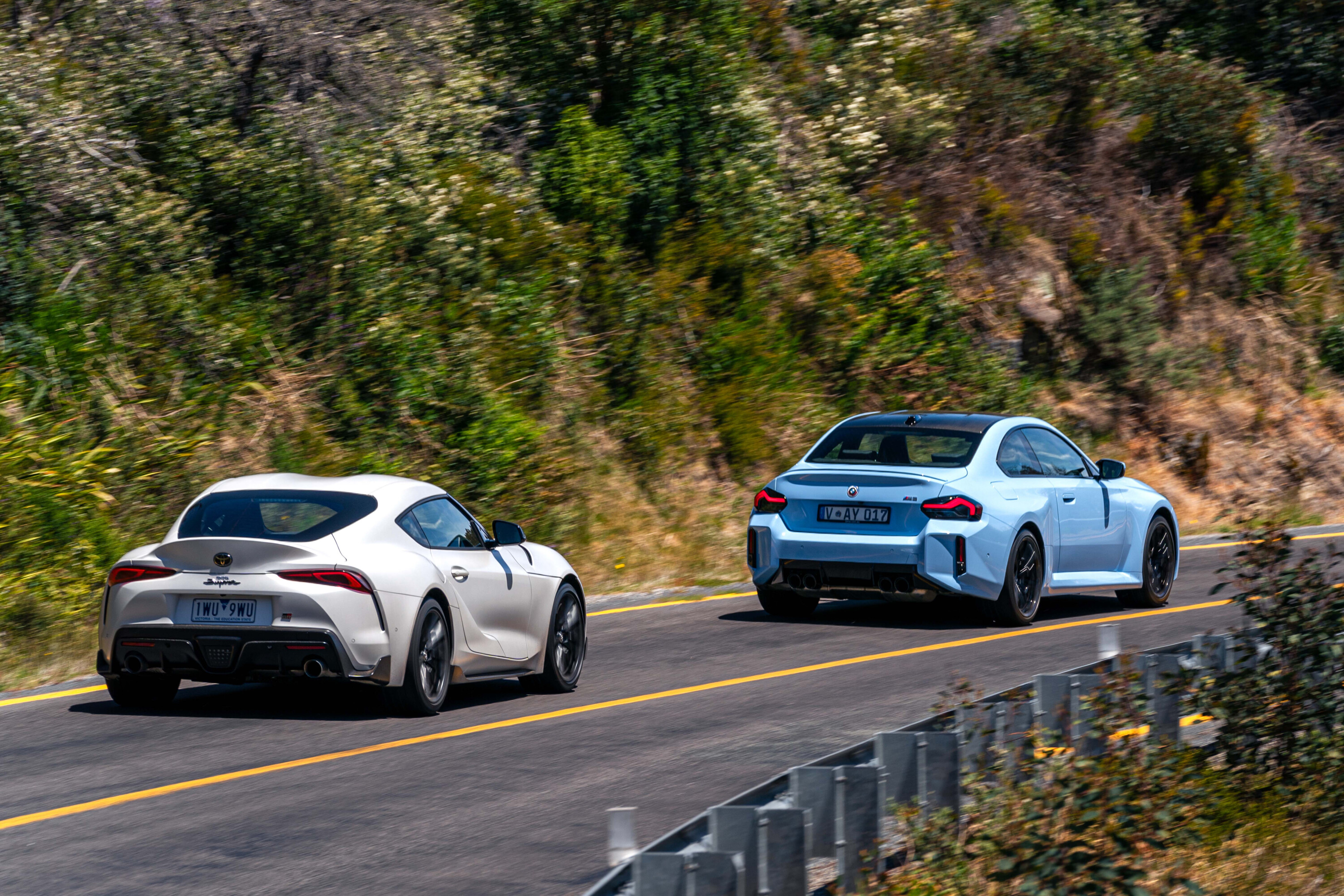
But while they both have 3.0 turbocharged straight sixes and, as parked before us, are both six-speed manuals, they are still very different cars.
One of the biggest differences, crucially, is price – the GR Supra at $97,000 to the M2’s $121,700, a sizeable $24,700 gap which blows out to more than $45,000 when factoring in on-road costs. Crikey.
The Supra’s BMW engine produces 285kW at 5800-6500rpm and 500Nm from 1800-5000rpm. The M2 makes significantly more power with 338kW at 6250rpm and more torque, 550Nm from 2650-5870rpm.
When comparing power-to-weight, they’re a bit closer. The Toyota’s 1503kg kerb mass gives it a power-to-weight ratio of 190kW/tonne, whereas the portlier 1700kg (DIN) M2 is 199kW/tonne.
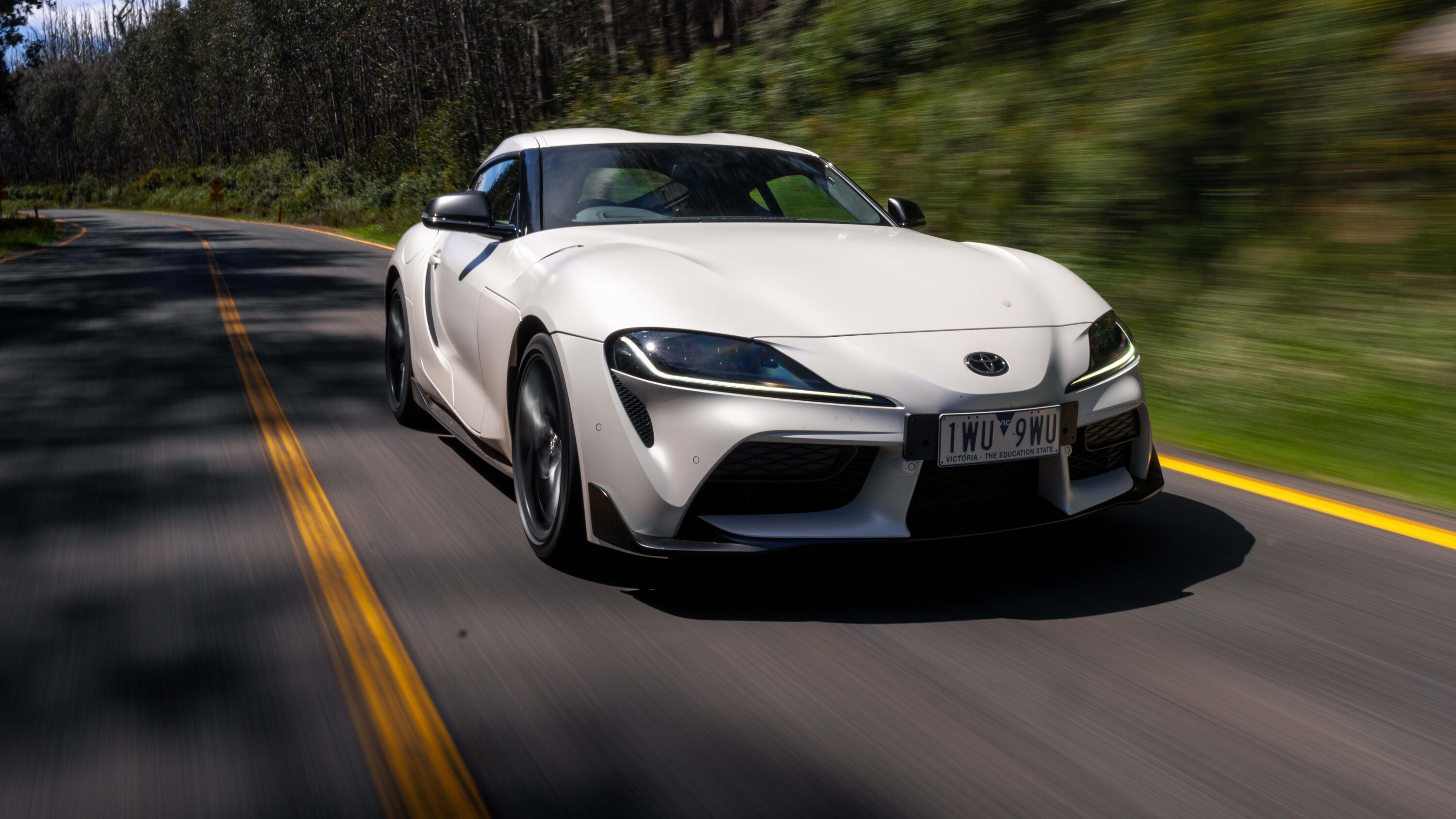
As well as being 197kg heavier, the two-plus-two-seat M2 is a much larger car – 201mm longer, 33mm wider and 109mm taller.
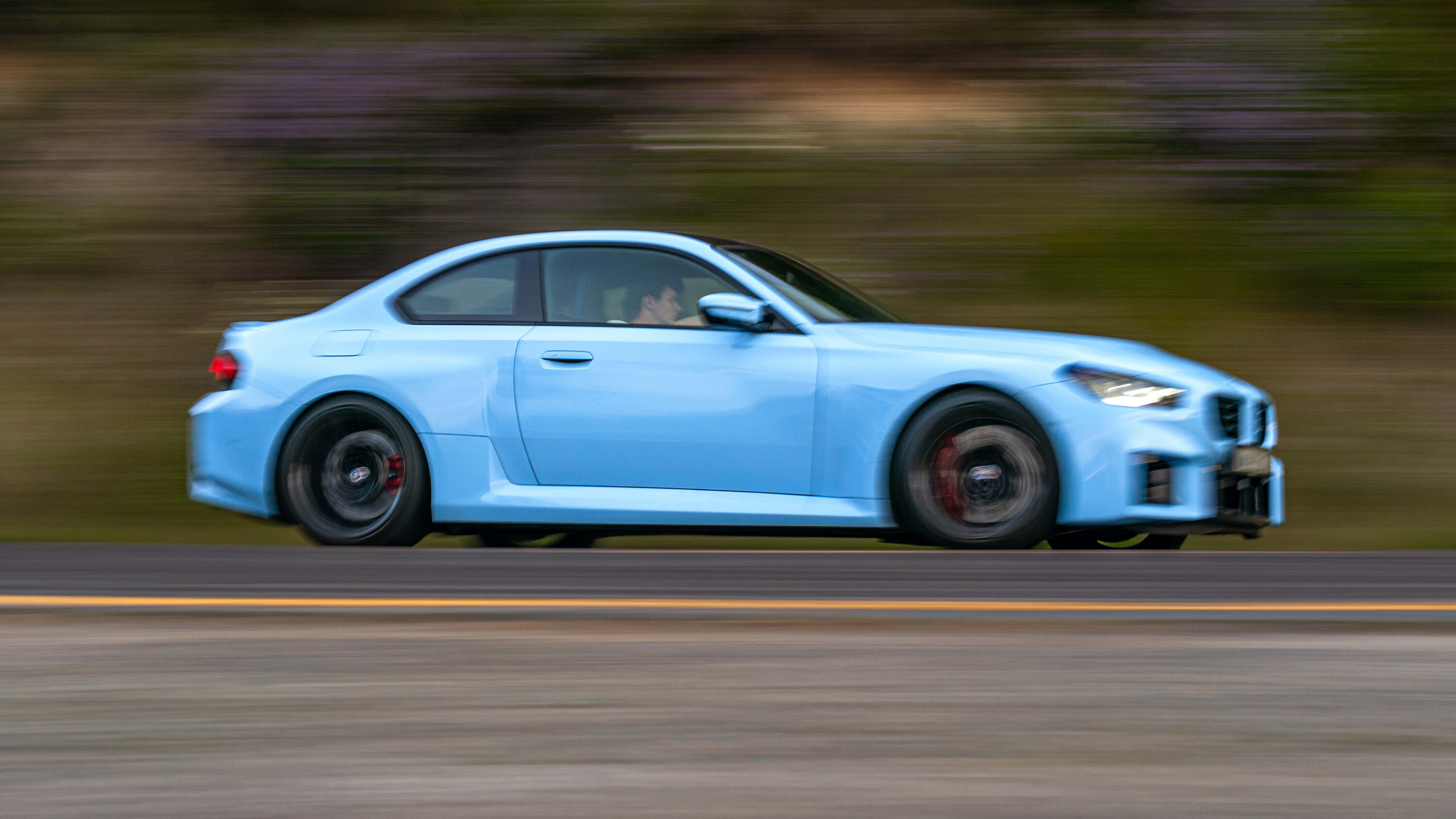
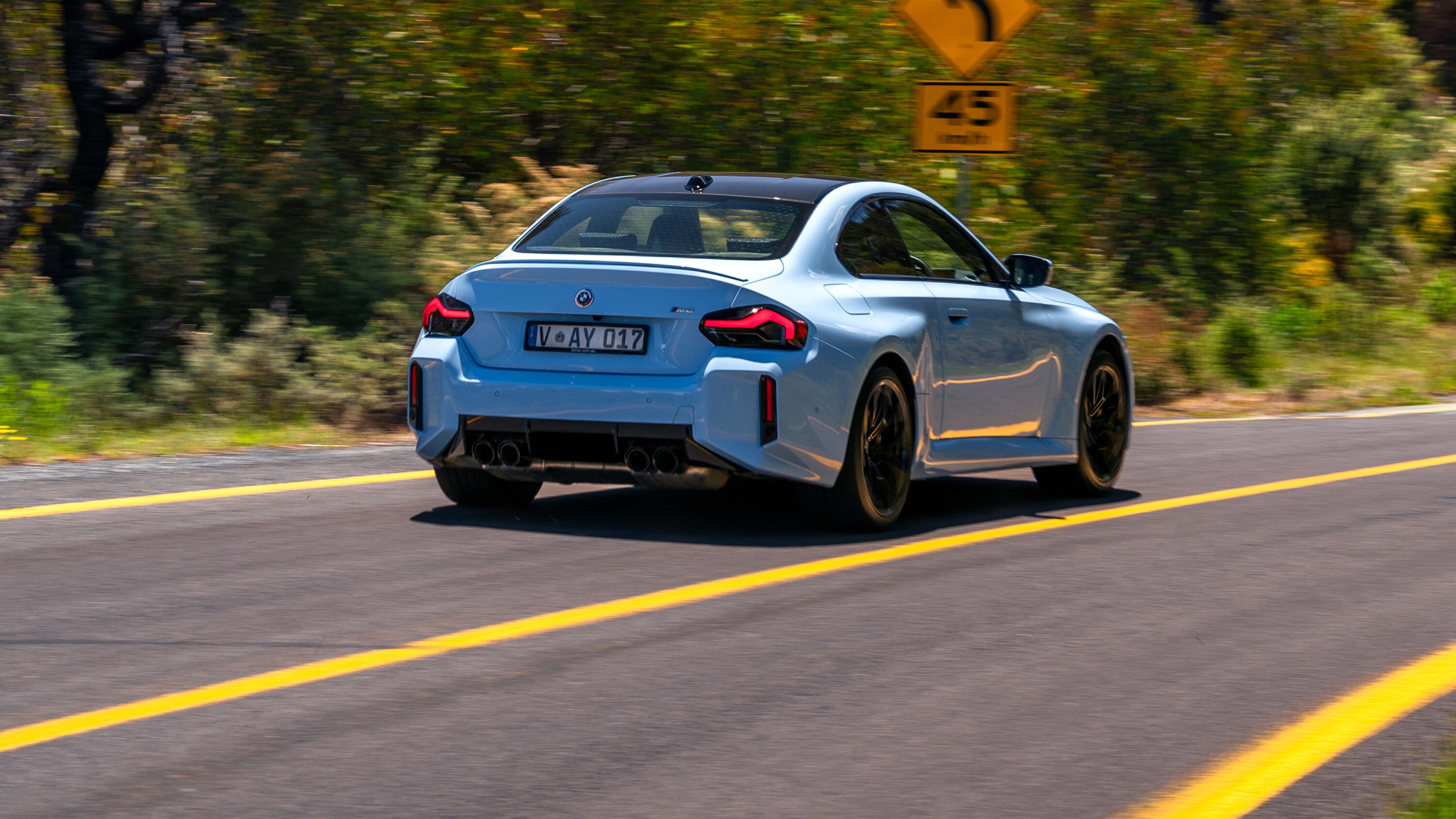
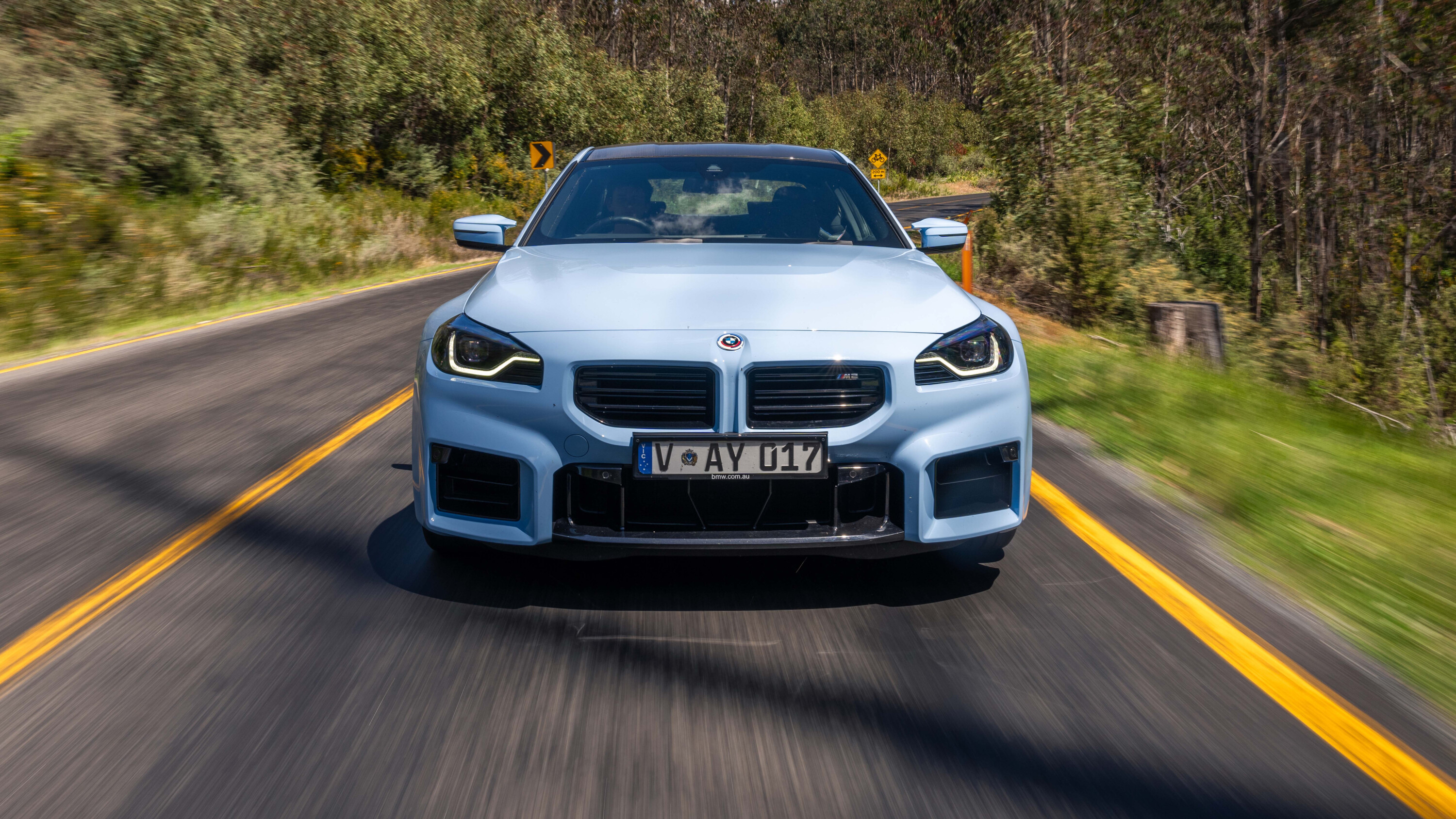
The M2 has drawn criticism for its Need For Speed styling – it sort of looks like it was designed by a 15-year-old – but it looks a lot better in the metal, its low-offset rear 20-inch wheels filling the pumped guards perfectly. The Smurf-like M Zandvoort Blue of our test car also looks ace. To my potentially defective eyes, anyway.
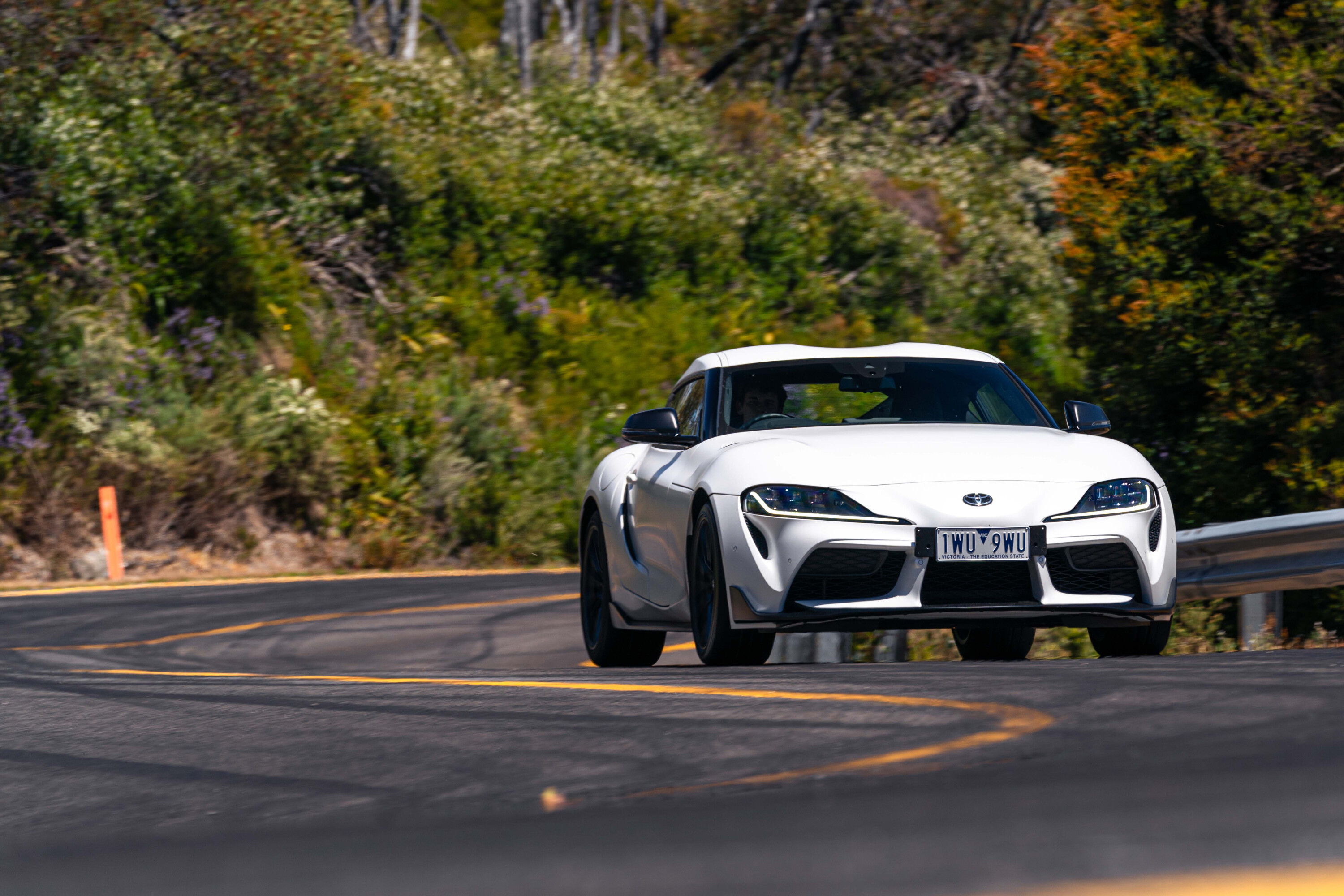
Lower and squatter, the Supra looks faster standing still. Its Japanese manga comic book styling has aged well, even if some of its numerous fake plastic vents are a bit regrettable.
JUMP AHEAD
- Which is more fun to drive?
- Which is the better daily driver?
- Any other things to consider?
- The WhichCar verdict
Which is more fun to drive?
Both are great fun to drive – and seriously fast – but despite their on-paper similarities, feel very different.
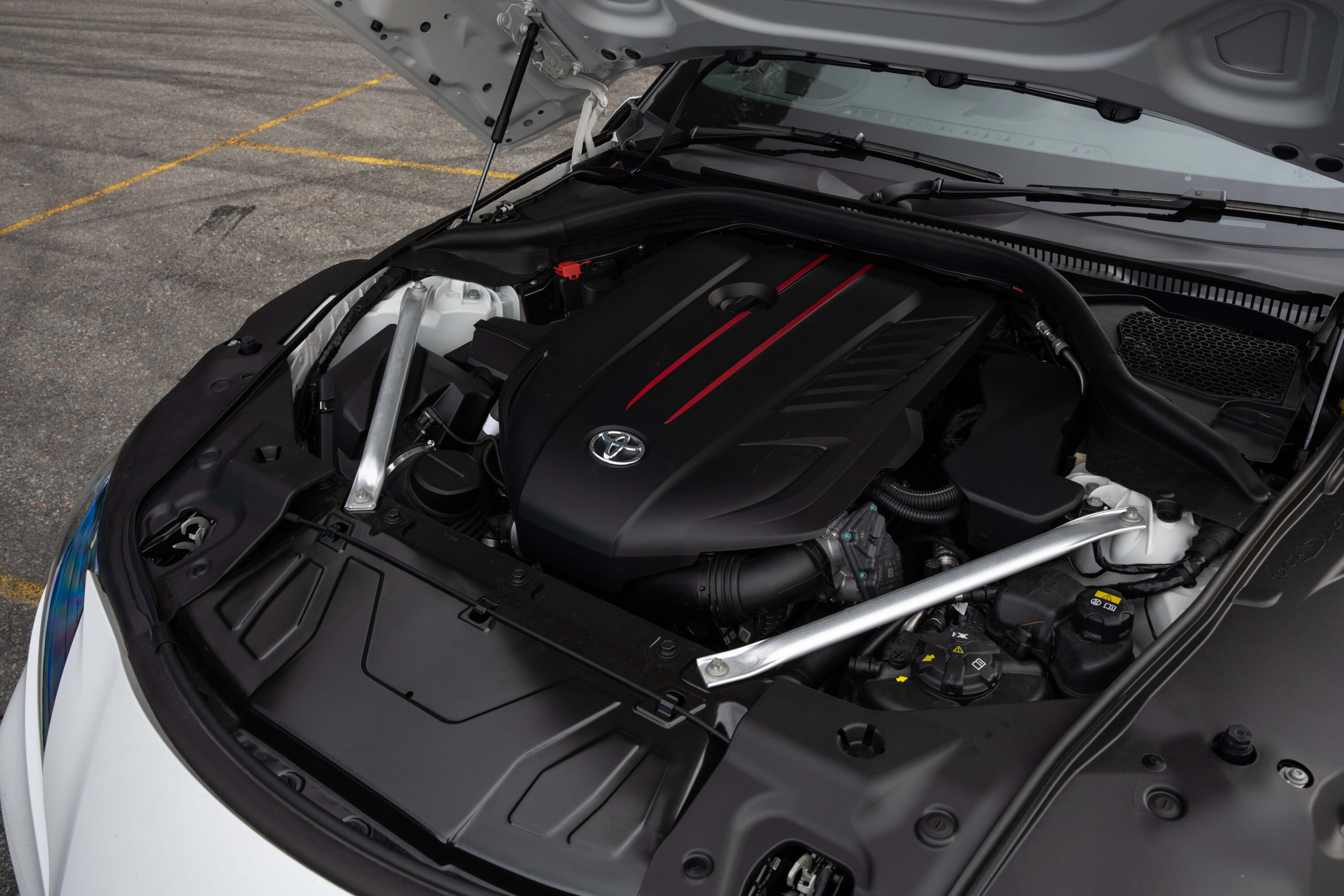
First, the biggest similarity: engines. The 3.0-litre turbocharged inline-six is a beast in both cars, serving up lovely power and torque in a muscular yet beautifully smooth fashion. The Supra, for example, pulls hard from just 3000rpm all the way to 6500rpm and feels nothing but hungry to vaporise its rear tyres.
There’s a delightful turbo whistle as you get into the throttle, which makes up for what is quite a lot of artificial engine noise. BMW has done a much better job of the M2’s engine sound – it’s more believable, snarlier and more satisfying than the Supra’s.
Despite having nearly 20 per cent more power, in a drag race they claim to be about as fast as each other, the Supra at 4.4 seconds from zero to 100km/h against the M2’s 4.3 seconds.
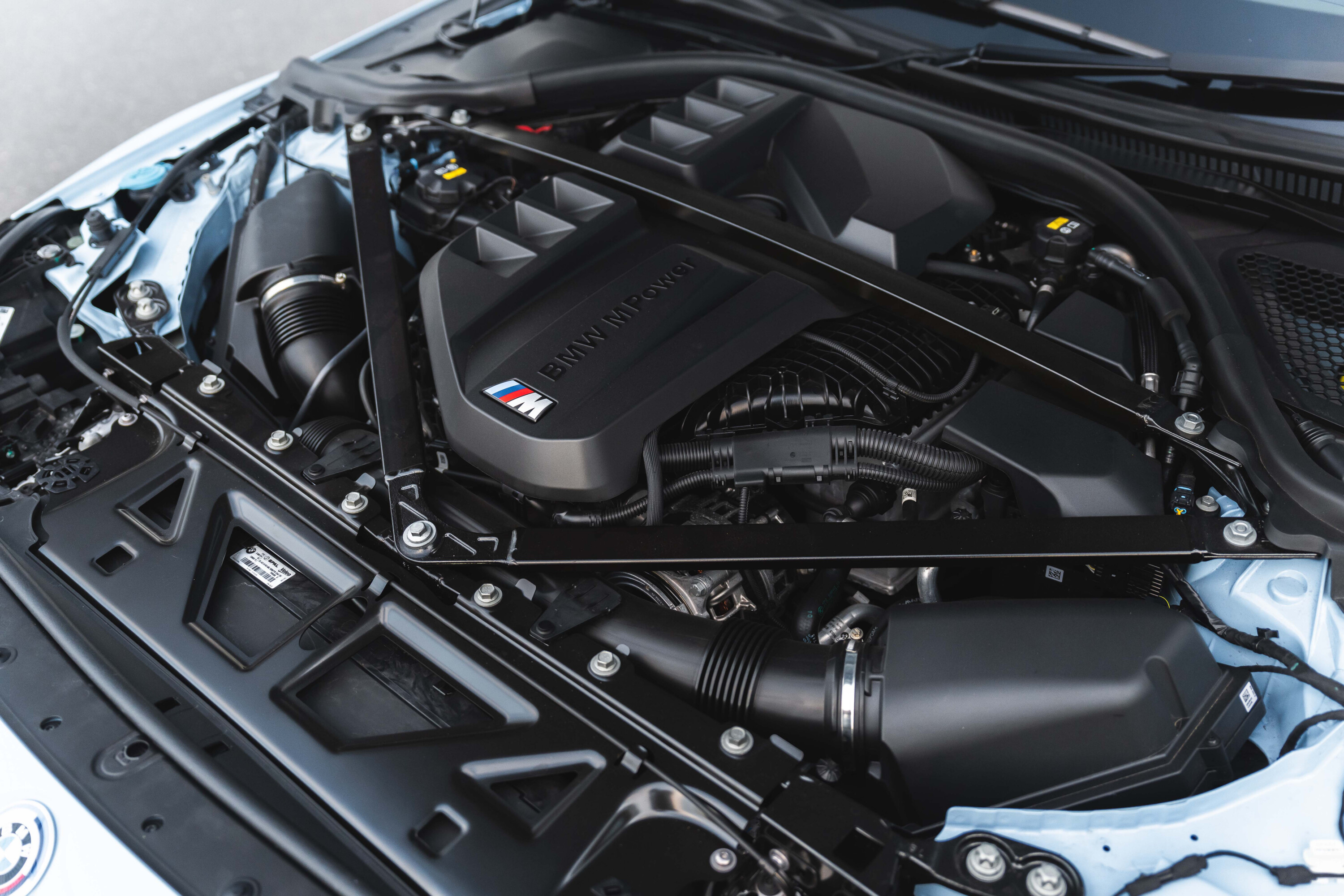
The Supra uses wide 275-section rear Michelin Pilot Super Sports to transmit its power (255 fronts), not much narrower than the BMW’s rear 285s. Both use the same gear ratios and nearly identical final drives.
Launch control in the M2 is foolproof – pin the throttle and the revs raise to roughly 3250rpm, dump the clutch and let the computer manage the wheelspin. We didn’t get a chance to run numbers but they felt about as fast as each other.
In the corners, the Supra feels smaller, more agile and twitchier, like your hips are much closer to the rear axle. You have to push it hard to get the best out of it, and it can be a bit of a physical car to drive. “The more you drive it, the more you enjoy it,” smiled Wheels Editor Andy Enright.
The Supra makes you feel like you’re going a bit faster than you are – which is how sports cars should be (rather than the other way around).
You have to dig deep for the Supra to show off its best chassis talents, making it more the car for experienced drivers. Its rear suspension also conceals a bit of a near-limit quirk, like it’s ‘corkscrewing’ ever so slightly over mid-corner bumps, which makes it a bit knife-edge and difficult to trust.
No such issue in the BMW. As well as making you feel more in control, the M2 is much faster and more serious than the Supra – a totally different animal. In fact, it’s a monster. With its 277mm-longer wheelbase, it’s more stable and planted, and is easier to exploit.
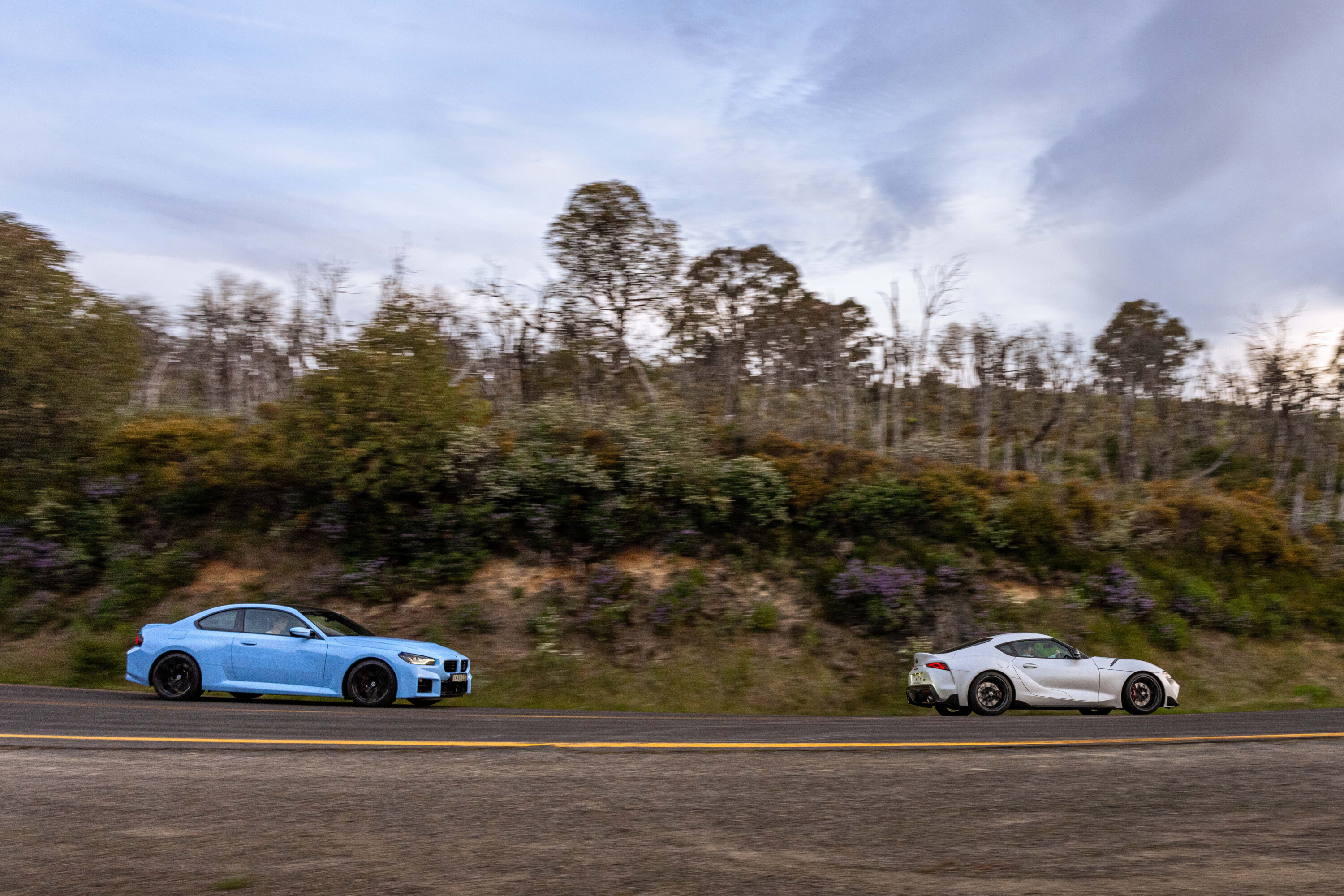
Those who’ve done a few track days will find it almost shockingly fast up a winding road, especially on its sticky Michelin Pilot Sport 4S tyres – the fronts of which measure an extreme 275mm.
This is a car that demands exceptionally high levels of concentration and can carry enormous speed into corners, helped by suspension that is night-and-day better for mid-corner compliance than the Supra’s. It would undoubtedly be seconds quicker around a track, especially a bumpy one.
In both cars, it’s easy to tease out a bit of second-gear, corner-exit power oversteer but the BMW, whose snug seats almost bolt your hips to the rear end, is a lot friendlier. If you want a factory drift car, you can’t go wrong with either of these. The M2’s ferocity is such that you’re getting power oversteer in second gear at 95km/h.
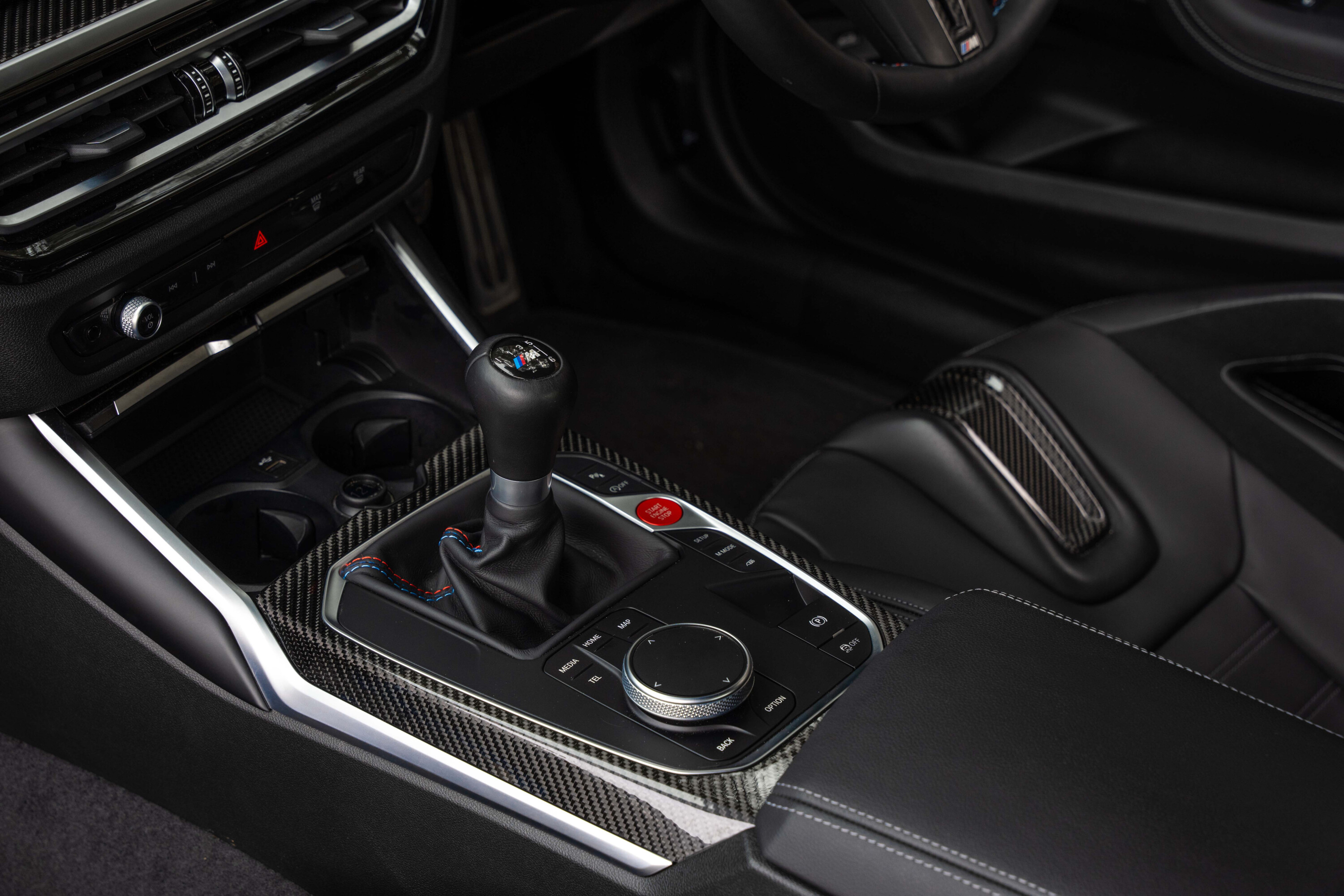
Comparing clutch pedal feels and manual gearboxes, the Supra’s six-speed manual has a slightly nicer shift and we like its small, ball-shaped leather shift knob more – falling to hand in a slightly nicer way.
However, its interior feels designed for an automatic gearbox, like they’ve had to make a manual gear selector ‘work’, as it’s possible to knuckle the air-conditioning controls if shifting from second to third too vigorously.
The Supra’s brakes feel better and its steering is more connected too. The M2’s brake-by-wire system – with no mechanical connection – provides minimal ABS feedback through the pedal which takes some serious getting used to.
They’re very different for settings to play with, as well. If you miss the days of Nokia 3310s you’ll probably appreciate the Supra, which is old school in that it comes with a singular Sport mode that sharpens up the throttle and pumps in a bit more artificial engine noise, and that’s about it.
BMW, on the other hand, permits adjustability of throttle sensitivity, rev-matching, adaptive dampers, steering, brake pedal feel, electronic stability control and engine sound. Two red M1 and M2 toggles on the steering wheel – like little red Shrek ears – allow you to select two predetermined combinations of settings. There are 864 possible permutations (we added them up) and that’s not counting the adjustable traction control’s 10 incremental settings.
Such is the possible mix of settings you almost get FOMO while driving the M2 that there’s a better combination for your given circumstances, tempting you to fiddle as you’re driving.
Which is the better daily driver?
The M2. The ride quality is nicer, it’s easier to see out of and it’s more practical with a rear seat you might even put adults in.
A Supra wouldn’t be a bad companion for daily life but it’s just that little bit trickier given the outward visibility of a closed-face helmet (with a much lower roof). Its suspension also feels firmer and sportier, constantly reminding you that you ‘lived a little’ and got the two-seat sports car instead of the anonymous white SUV (a very good decision, might we add).
The BMW’s interior also feels higher-tech with its curved horizontal screen – two screens in one, a 12.3-inch instrument display and a huge 14.9-inch infotainment touchscreen.
The Supra’s 8.8-inch infotainment touchscreen might be smaller but feels more than big enough for its interior. There’s almost too much screen going on in the M2.
In contrast to how it drives, the Supra’s seats would be better for daily life, softer and a bit flatter.
The BMW’s M Sport seats are beautifully deep and supportive but come with a peculiar plastic crotch mound that can dig into your inner thighs occasionally – especially if you follow the strict nutritional, overly calorific regimen of this chunky-thighed road tester.
Any other things to consider?
Both come with a five-year warranty and cost about the same to service over five years or five services – the Supra $2075, or $2210 for the BMW.
We didn’t get a chance to test fuel economy but the M2 claims 10.1L/100km on the WLTP cycle. We estimate the Supra would use slightly less. Both have 52-litre fuel tanks.
At 290 litres, the Supra’s boot is only 100 litres smaller than the M2’s – and is quite usable – but annoyingly Toyota hasn’t provided an external boot opening button meaning you always have to find the key fob. Credit to the BMW for its 40:20:40 split-fold rear seats, which make the boot extra usable.
Neither has a spare tyre, providing puncture repair kits only.
The Wheels verdict
The M2 is the better vehicle for driving thrills and daily living. It’s a lot faster, more practical, more fun, easier to trust and with its myriad modes, there’s more to play with. “I’m amazed at the bandwidth of this car,” said Wheels road tester John Law.
However, if you have a rear-drive sports car itch to scratch, you’d be rapt with the Supra – especially given the $45,000 saving when comparing drive-away prices. Where the M2 feels like a hot-rodded 2 Series, the Supra has a more classic sports car feel, which will appeal to many.
SCORING
| BMW M2 | Toyota GR Supra GTS | |
|---|---|---|
| Safety, value and features | 7.5 | 8 |
| Comfort and space | 7.5 | 7 |
| Engine and gearbox | 9 | 9 |
| Ride and handling | 9 | 7.5 |
| Technology | 9 | 7.5 |
| OVERALL | 8.5 | 8 |
2024 BMW M2
Things we like
- Seriously fast up a winding road
- Believable (and good) fake engine sound
- Excellent adaptive dampers
- Useable back seats and boot
Not so much…
- Nearly $150K with on-road costs
- Styling not to everyoneu2019s tastes
- Muted brake-by-wire pedal feel
- Odd seats with raised plastic lump
2024 Toyota Supra GTS
Things we like
- Ferociously fast; rear-drive character
- Tonnes of straight-six grunt
- Classic sports car vibes
- Significantly cheaper than M2
Not so much…
- Suspension is a bit bumpy
- Tricky to trust on the limit
- Fake vents look tacky
- Fake engine noise could be better
There’s something suspiciously Bavarian about the new Mazda CX-90.
Glance around Mazda’s new SUV and there are multiple echoes of BMW. The tail-lights have a hint of BMW XM while G50e, denoting the CX-90 model grade, has a certain Munich ring to it. Mazda’s rotary infotainment controller, meanwhile, is more than a little iDrive; while someone’s plonked a 254kW 3.3-litre turbo straight-six under the bonnet.
Mazda would doubtless appreciate our comparisons to one of the world’s most accomplished premium brands, given that it’s aspiring to a more premium positioning – and price.
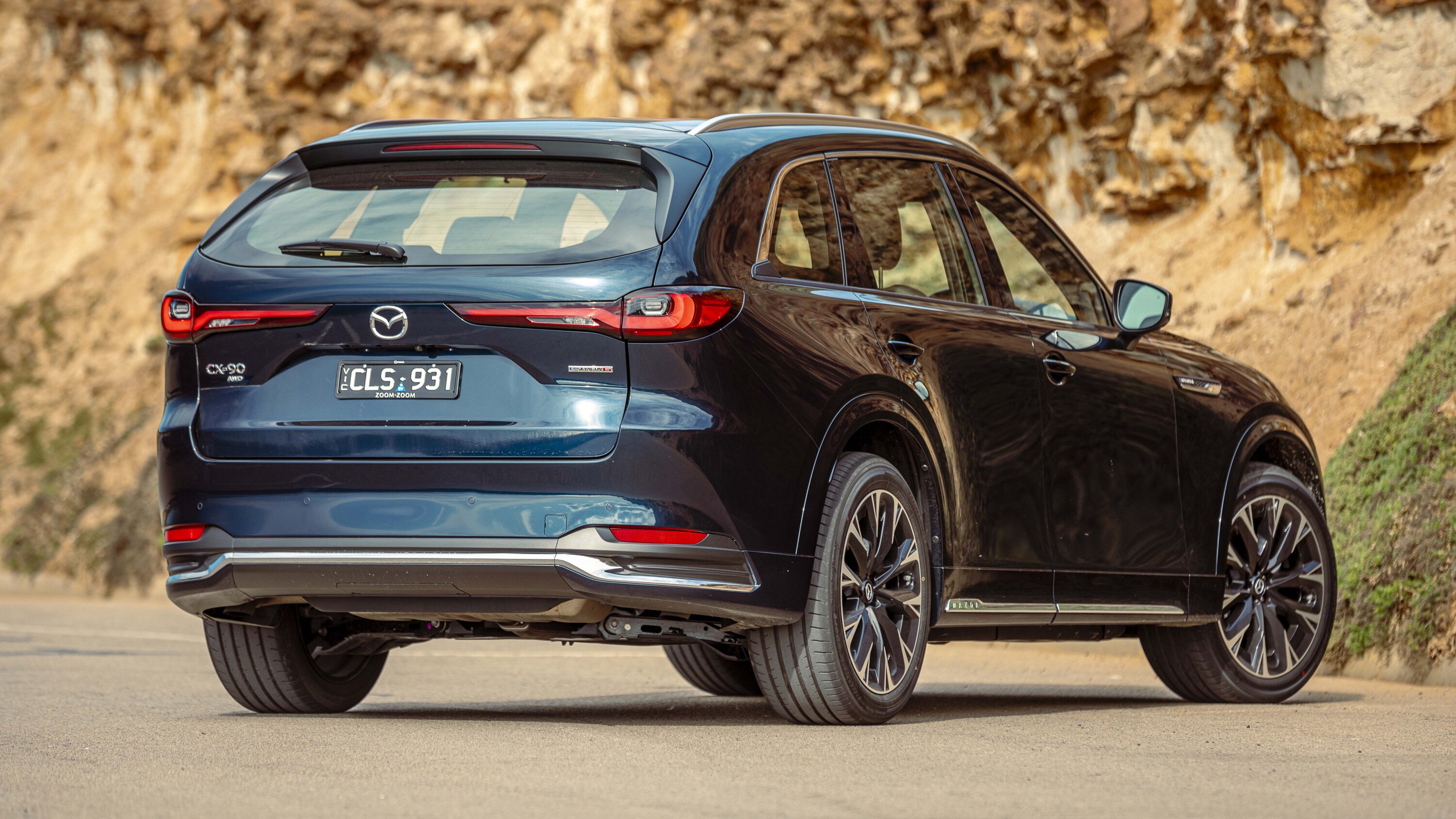
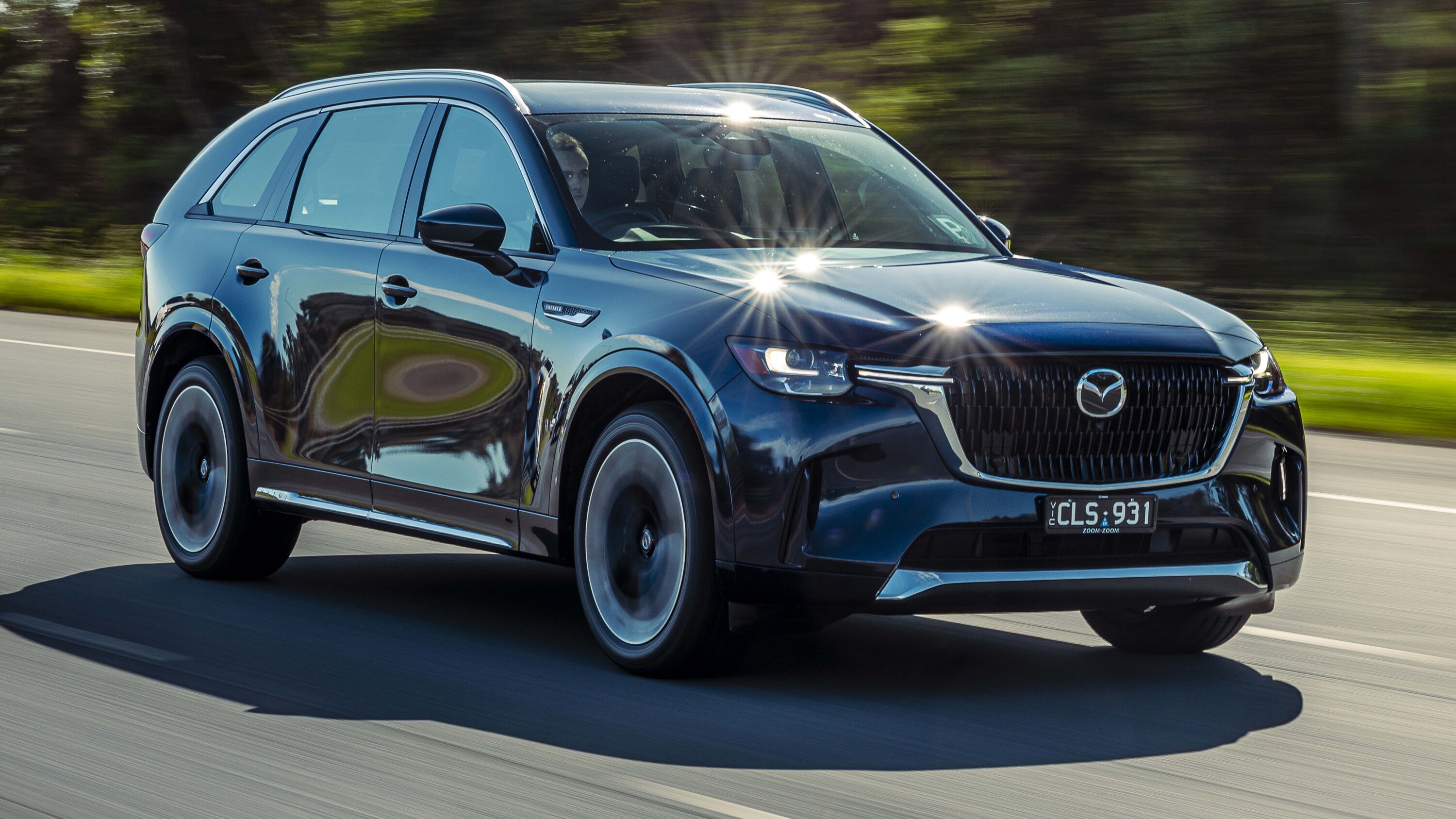
From the outset, there’s no disputing that the CX-90 is one of the more handsome vehicles in its segment – if admired from the correct angle, such as the front three-quarter.
The ‘Kodo’ design language translates well to the large CX-90, with its long wheelbase and generous length between the front axle line and A-pillar base.
The front overhang is also so short, any shorter and it would almost look a bit too blunt, like it’s been driven at low speed into the back of something.
Inside presents just as well – depending on the grade. Our top-spec Azami is lush enough with its black Nappa leather, but at your local Mazda dealer you should avoid sitting in any CX-90 with the Takumi or SP Packs, the latter of which upholsters the cabin with quilted tan leather and suede headlining making for an irresistible option box to tick. (Even if doing so means a $5000-lighter wallet.)
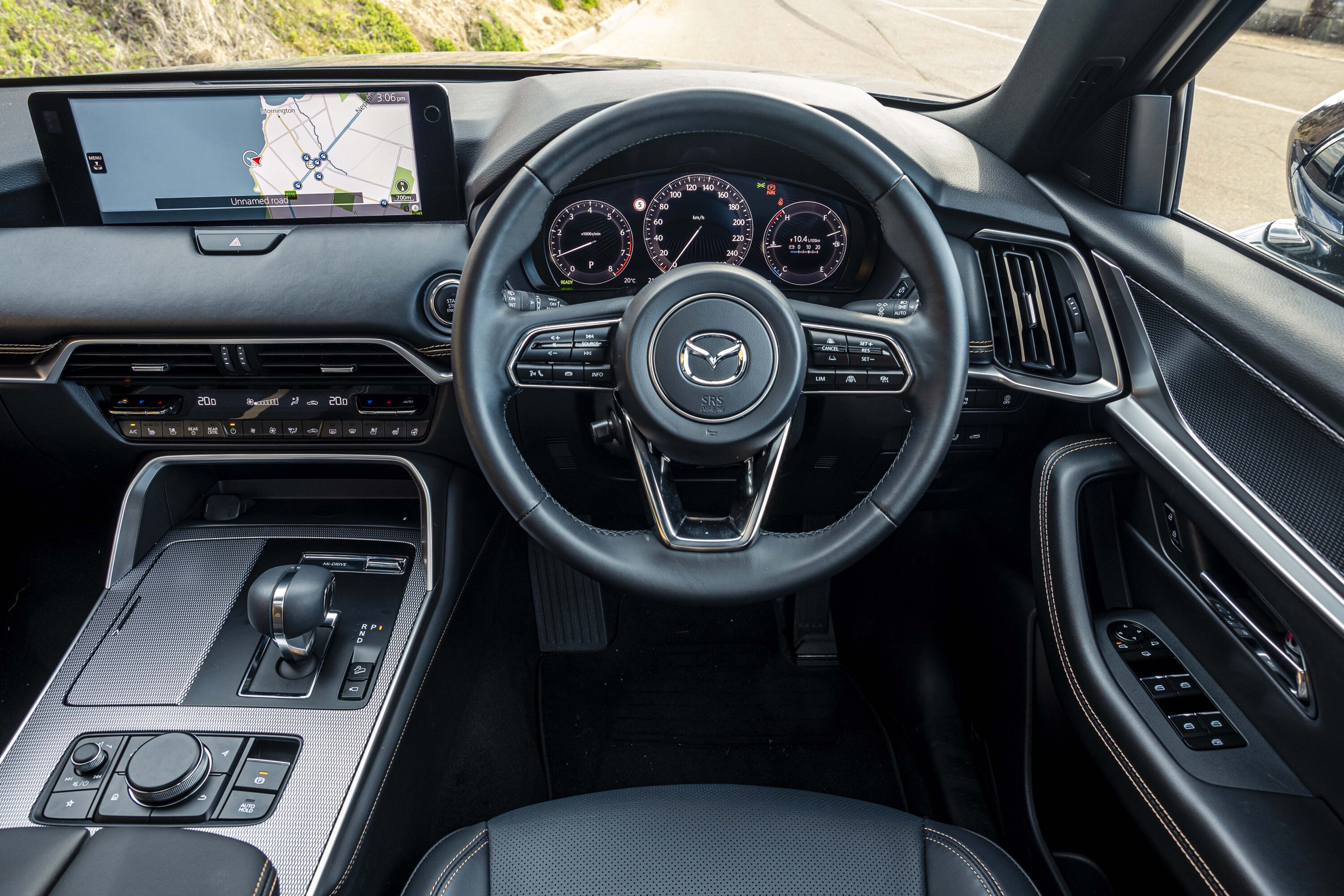
Even without that, though, it’s a lovely place to be, with its dual 12.3-inch digital displays.
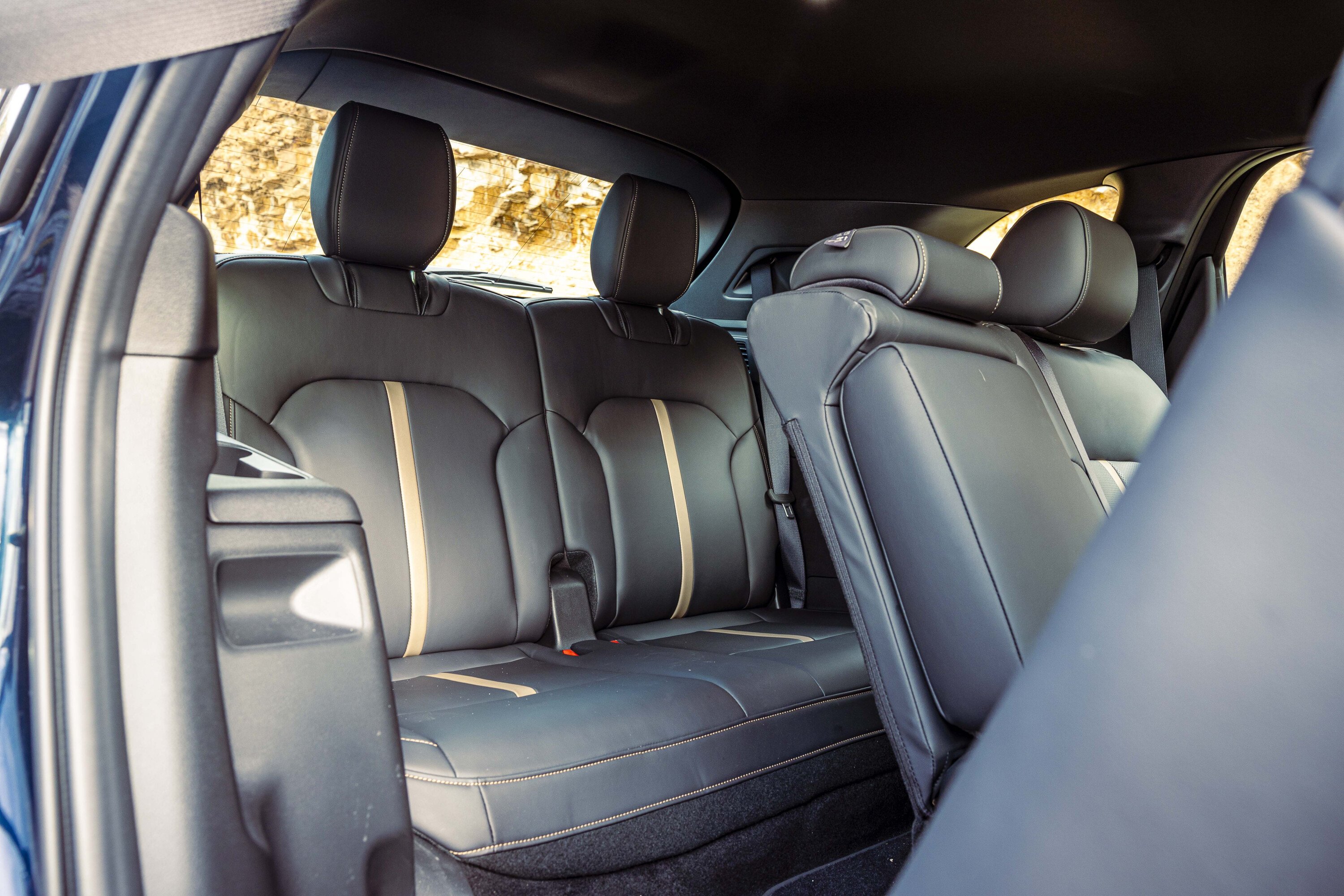
The back seats are also very good, the rear doors opening extra wide, while second row occupants enjoy stadium seating with great visibility and quad-zone climate control with rear seat heaters. The second row itself is tilt-and-slide, while there’s a 220-volt outlet in the boot – so you could sit in the back and use your laptop, while it’s charging, on the fly.
Back in the driver’s seat, that straight-six itself is very likeable. Crack a window and there’s a bit of turbo hiss as it comes on boost, while torque – 500Nm from just 2000rpm – is also delectably meaty.
Dynamically, too, the CX-90 is very good – and right at the pointy end of its competitor set.
While the ride quality is good in isolation, it’s hardly plush and wafting, and the purpose of its tautness is revealed when you get on a winding road. With simple, direct steering, the CX-90 can carry impressive mid-corner speed for its size – and 2275kg weight – owing also to its generously wide, 275-section tyres.
It’s a pity, then, that the CX-90 feels a bit unpolished. Lift off and the engine shuts off and coasts, but then can feel surprised to be woken back up when you want to go again. A feature will have you immediately hunting for the off button.
The bigger concern is that the in-house-developed, eight-speed automatic transmission has a personality – when it should probably be invisible.
Feeling oddly highly strung, even occasionally flustered – like it’s had too much caffeine – it can even clunk into first gear so audibly and obviously that you wonder how engineers signed it off.
The CX-90 is a delightful car, but at more than $100,000 drive-away, you’re left wondering if it’s best to wait for the update, where hopefully the few too many minor wrinkles are ironed out.
Snapshot
- 2024 Mazda CX-70 u201cwide body two-row SUVu201d revealed
- Five-seat model suited to American tastes as a sportier-looking CX-90
- Due in Australia by end of 2024 u201cat the earliestu201d
The 2024 Mazda CX-70 has debuted as a five-seat twin to the CX-90 – and it’s coming to Australia.
Effectively a CX-90 sans its third-row, the CX-70 is tailored to American tastes and has a sportier blacked-out look, a price tag that’s likely to be more affordable, and some Mazda-first tech.
The CX-70 is a rival to other five-seat large SUVs (known in the United States as midsize crossovers) such as the Chevrolet Blazer, Ford Edge (once sold here as the Endura), Honda Passport, Jeep Grand Cherokee, and Volkswagen Atlas Cross Sport.
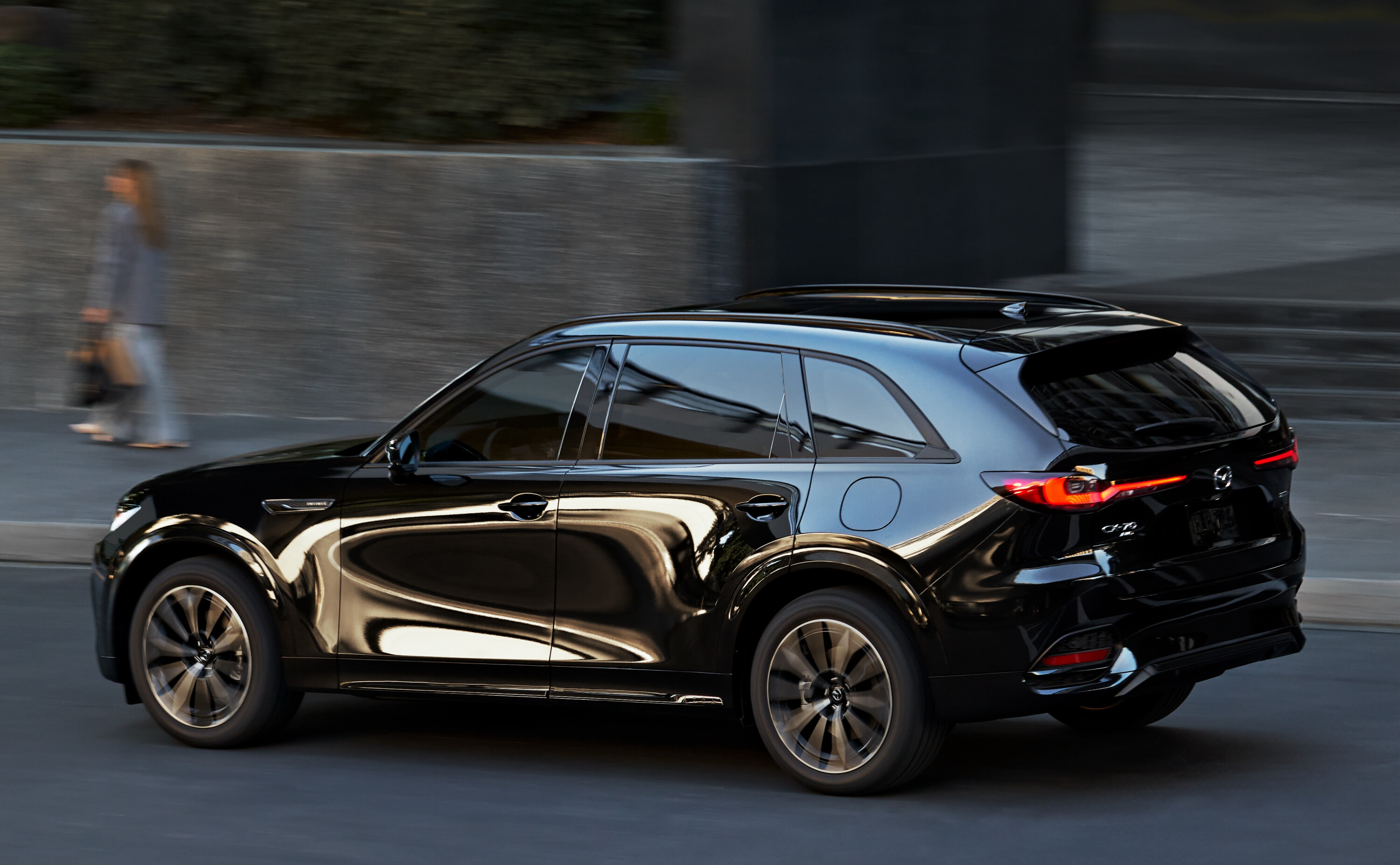
Mazda has not released CX-70 dimensions, but it looks eerily similar to the CX-90. If it isn’t using the same body panels, we’d be surprised. It means the brand’s large range will be structured like Jeep’s in Oz with five-seat Grand Cherokee the new Mazda’s natural rival, and the stretched Grand Cherokee L remaining CX-90’s foe.
The CX-70 will soon be joined by another rear-biased Large Architecture Mazda in Australia, the seven-seat CX-80, which is based on the midsize CX-60 and is likely to be smaller than the CX-70 and CX-90.
The addition of the CX-70 will see Mazda Australia selling four medium-to-large SUVs: CX-60, CX-70, CX-80, and CX-90. By the time all models are online, Mazda’s premium line-up will have a lot of similar options, all with prices likely to fall between $60,000 and $100,000.
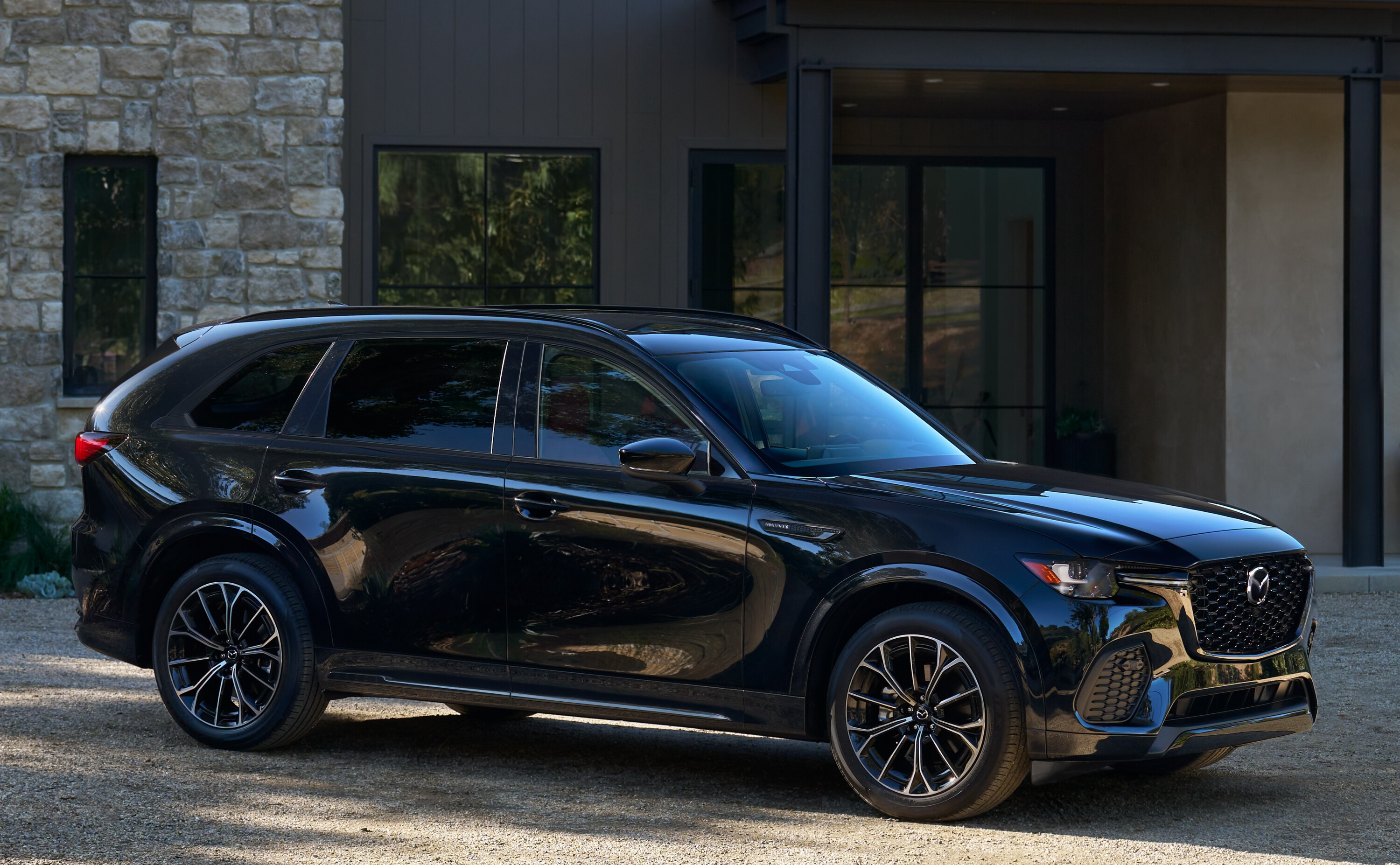
Marketed as a “wide body two-row SUV”, the CX-70 will be powered by the same engines as the CX-90: a 187kW/550Nm 3.3-litre ‘D50e’ inline-six turbo-diesel or a high-output 254kW/500Nm 3.3-litre ‘G50e’ inline-six turbo-petrol, both matched to an eight-speed automatic transmission and rear-biased all-wheel drive.
A plug-in hybrid CX-70 identical to the CX-60 and CX-90, comprising a 2.5-litre non-turbo four-cylinder mated to an electric motor and 17.8kWh battery for a 241kW/500Nm total system output, will be offered in North America. It hasn’t been locked-in for Australia.
Unlike diesel versions of the CX-60 and CX-90 which are limited to two tonnes, Mazda Australia claims a 2.5-tonne braked towing capacity for both the petrol and diesel CX-70, owing to its “lower overall vehicle weight compared to CX-90”.
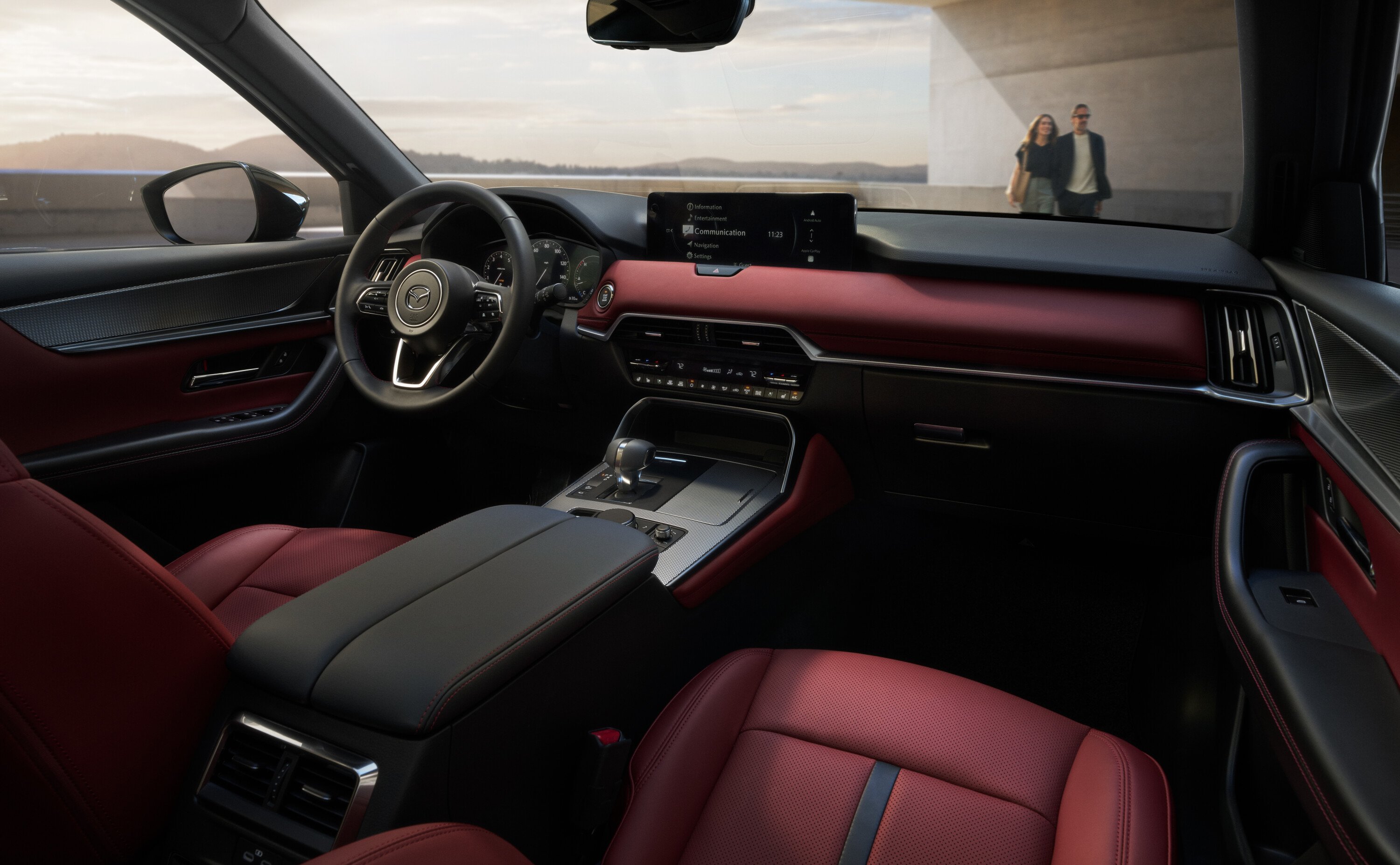
It also features a new trailer hitch guide to assist with connecting to a trailer.
Mazda has focused on maximising the CX-70’s luggage space with three underfloor storage areas – including where the CX-90’s third-row would usually be stowed – and a Mazda-first remote fold-down function for the second row from switches located in the boot.
Other new technology for Mazda includes an emergency stop assist function when the driver is using the Cruising and Traffic Support semi-autonomous steering mode on the highway to alert them “in stages if it detects closed eyes or distraction”.
The emergency stop function will eventually slow and stop the vehicle if there is no driver engagement to assist in avoiding an accident when a driver becomes impaired.
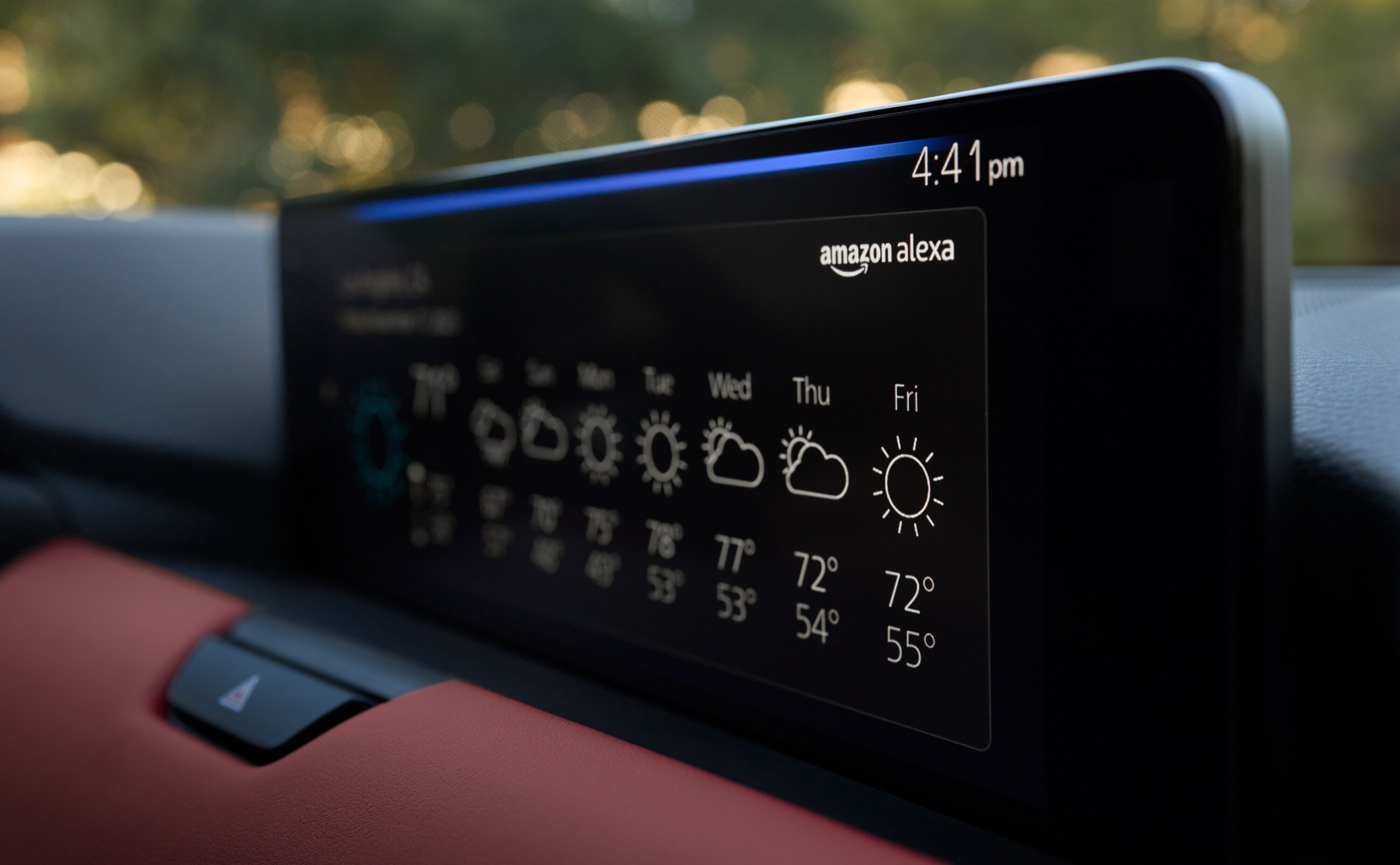
In North America, the CX-70 will join the facelifted MX-5 sports car in supporting Amazon Alexa voice assistant integration, though a Mazda Australia spokesperson confirmed this technology will not be available in local vehicles.
However, the spokesperson did confirm the CX-70 will feature Mazda Connected Services in Australia, with further details on the roll-out due to be announced imminently.
While the CX-70 adopts a near-identical body to the circa-5.1-metre long CX-90, unique design touches include sportier looking front and rear bumpers, a honeycomb-look grille design (similar to the CX-60 GT and Azami SP), blacked-out exterior trim, unique alloy wheels up to 21 inches in diameter, and available burgundy red leather upholstery.
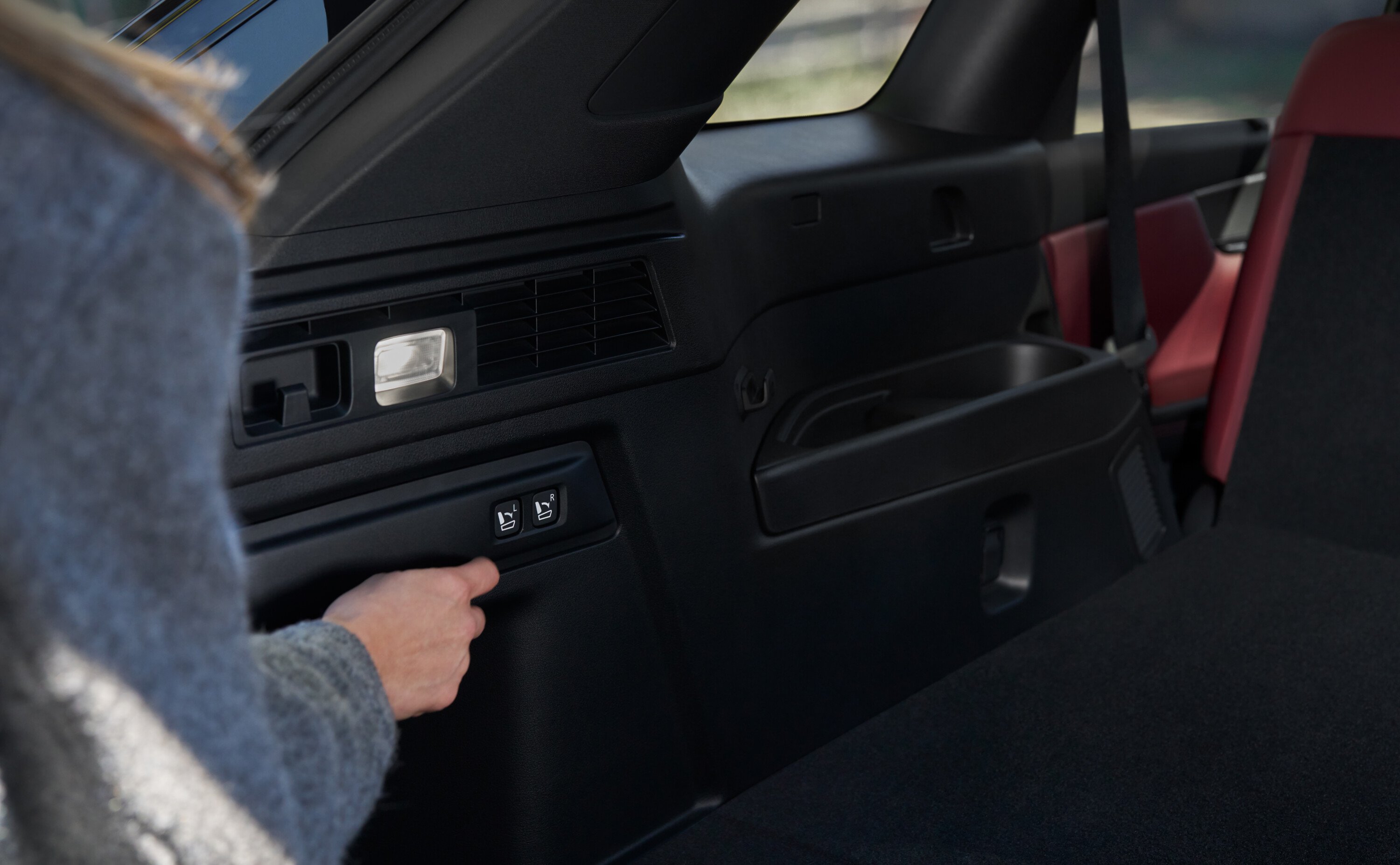
While Mazda said it is unable to confirm the CX-70’s exact dimensions or luggage capacity, it has announced that occupant space in the first and second rows of seats will be “the same as CX-90”.
The 2024 Mazda CX-70 is due in Australia at the end of this year “at the earliest”, with further details – including pricing, features and specific timing – to be announced closer to its local launch.
North American pricing and specifications are due to be confirmed in mid-February when we’ll have a better idea of how the CX-70 could be positioned compared to the CX-90 in Australia.
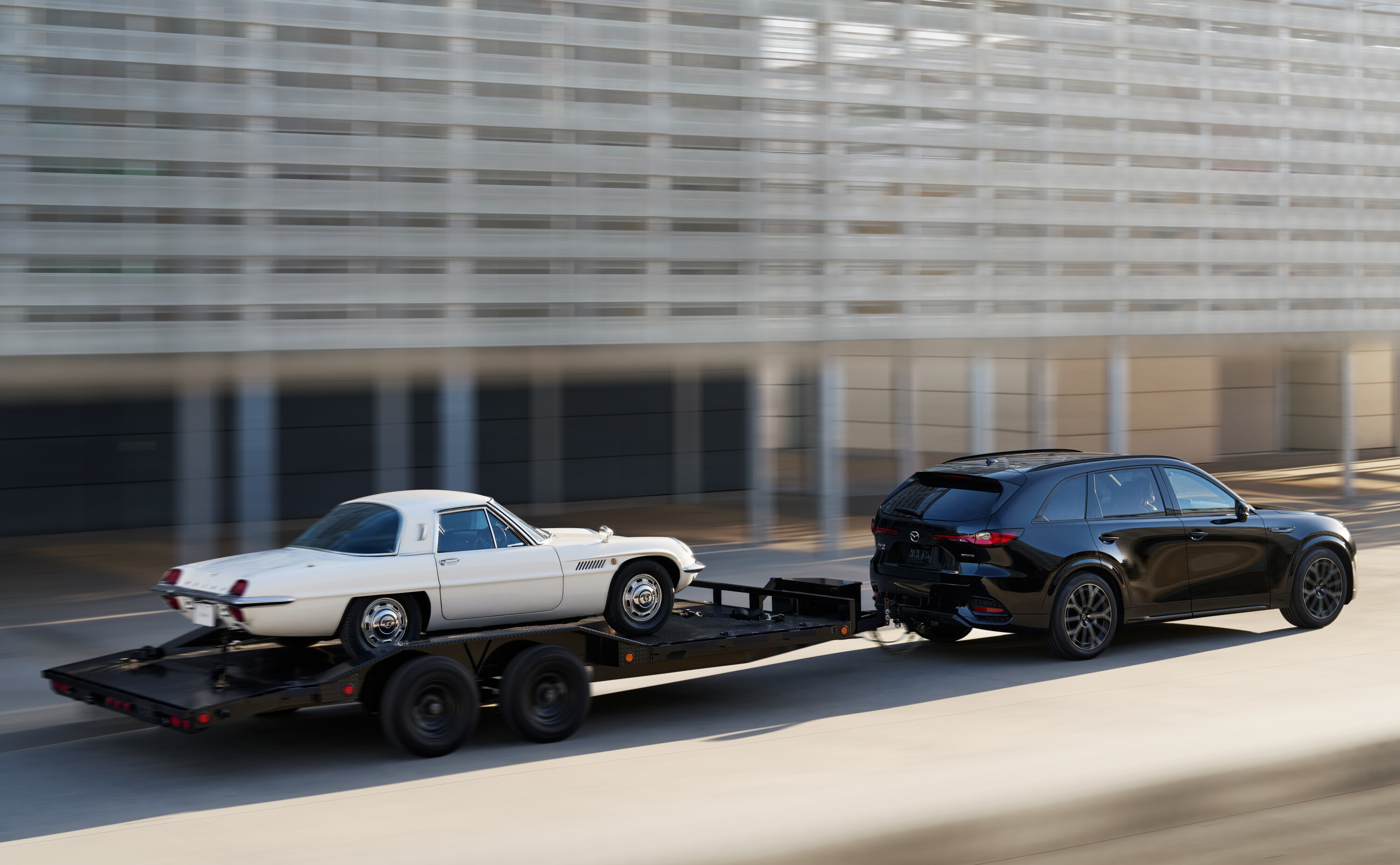
However, we’d expect the CX-70 to be around $2500 to $5000 more affordable than the CX-90, which is currently priced between $74,550 and $100,015 before on-road costs. Dearer plug-in hybrid versions of the CX-90 are still to arrive in Australia.
“As we continue to advance our product range with a host of cutting-edge products, the Mazda CX-70 represents yet another milestone for our brand – offering the hallmarks of the now well-established Mazda Premium philosophy that shines brightly in the CX-60 and CX-90, but with a distinct focus on pursuing an active and fulfilling lifestyle,” said Mazda Australia managing director Vinesh Bhindi.
“The CX-70 is a unique expression of our customers’ interests and stands out on its own as a highly compelling option, facilitating new life experiences and rewarding those wanting to experience the joy of driving. It also offers a wider breadth of choice within our Large Product range, skilfully meeting the diverse needs of our market.”
Newt Gingrich is an odd person with whom to open a review of a Porsche Cayenne.
As far as I know, he never owned one but the Republican former speaker of the House was a man who popularised the language of polarisation in American politics, ushering in a bitterly partisan era.
Under Gingrich, an insufficiently conservative Republican became a RINO (Republican in name only). I wonder, having just stepped out of the entry-level Cayenne, if I’ve just driven a PINO.
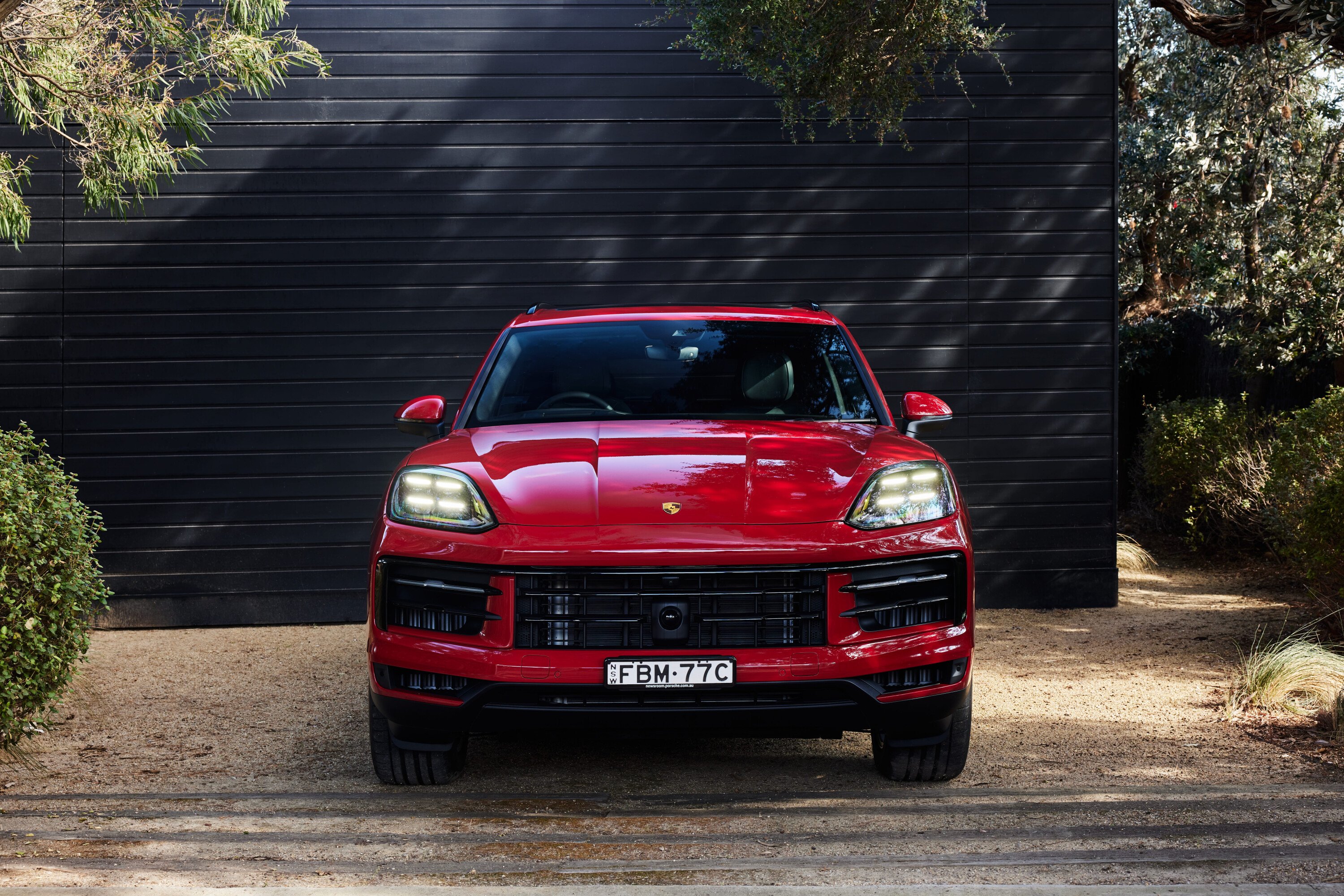
It’s easy to figure out why you may lean towards thinking this is a ‘Porsche in name only’. The base Cayenne is driven by a 3.0-litre single-turbo V6 that you’d also find in the Audi Q7.
With this 2023 update of the third-gen Cayenne, that engine now develops an additional 10kW, helping Porsche create a measure of differentiation between the 260kW Cayenne and the 250kW Q7. We’ll talk more about that engine later on, but never, ever drive a V8 Cayenne if your budget only extends this far.
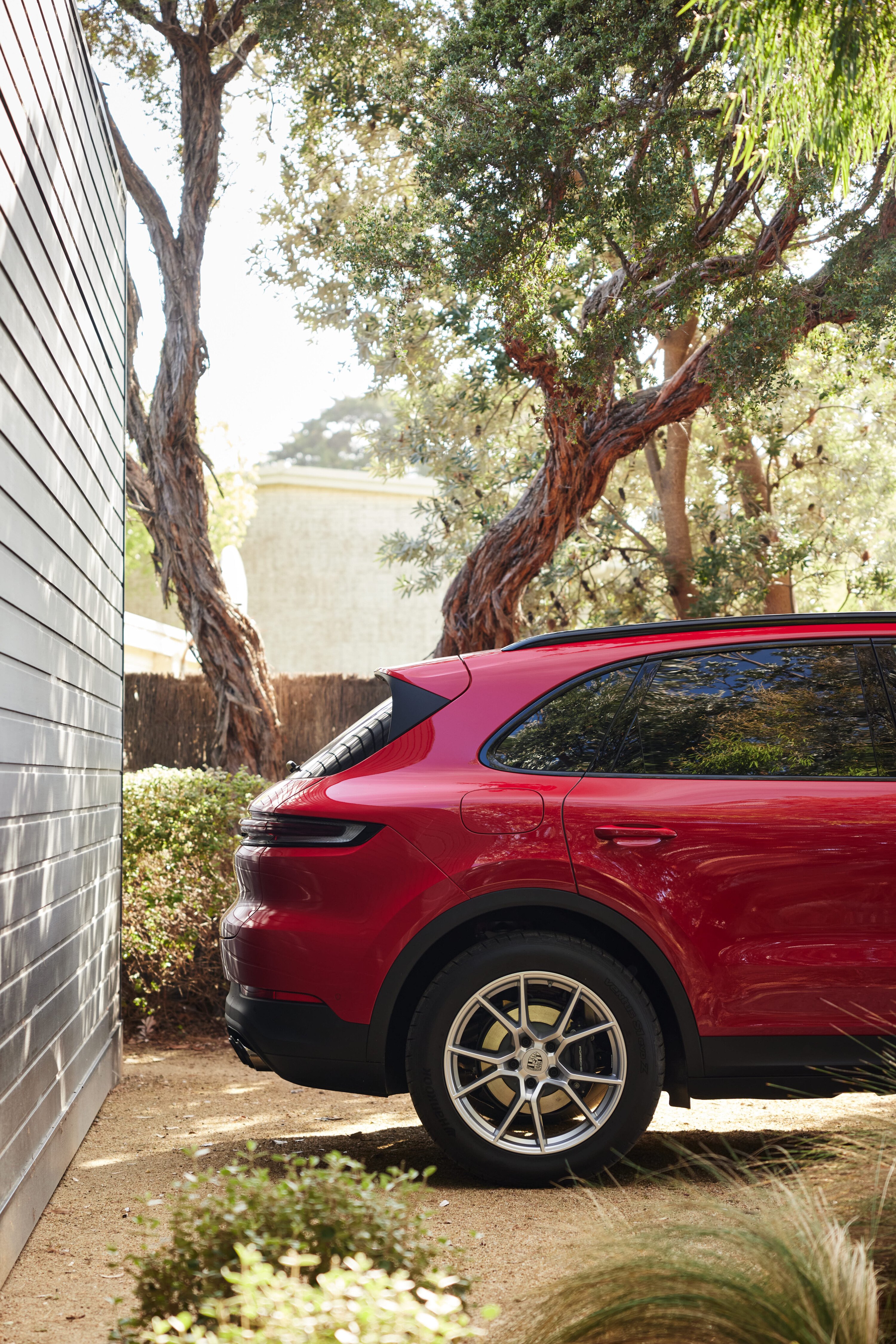
JUMP AHEAD
- How much is it and what do you get?
- How do rivals compare on value?
- What’s the Porsche Cayenne like inside?
- What is it like to drive?
- How is it on fuel?
- How safe is it?
- How long is the warranty and what are the running costs like?
- Would you recommend it?
How much is it and what do you get?
Excluding on-road costs, Porsche asks $140,200 for the base Cayenne (or $148,300 if you’d rather have the Coupe body) and that’s about $41K less than the cheapest model with a bent-eight under its bonnet, the $181K Cayenne S.
Standard equipment now includes excellent LED matrix headlights which blend speed, camera and navigation data feeds to ensure ideal illumination.
The 11-point matrix of the main beam area does the usual trick of not dazzling oncoming drivers and the system seems to work extremely well. Once you’ve sampled headlights like these, it’s very hard to regress to a vehicle that’s not fitted with them.
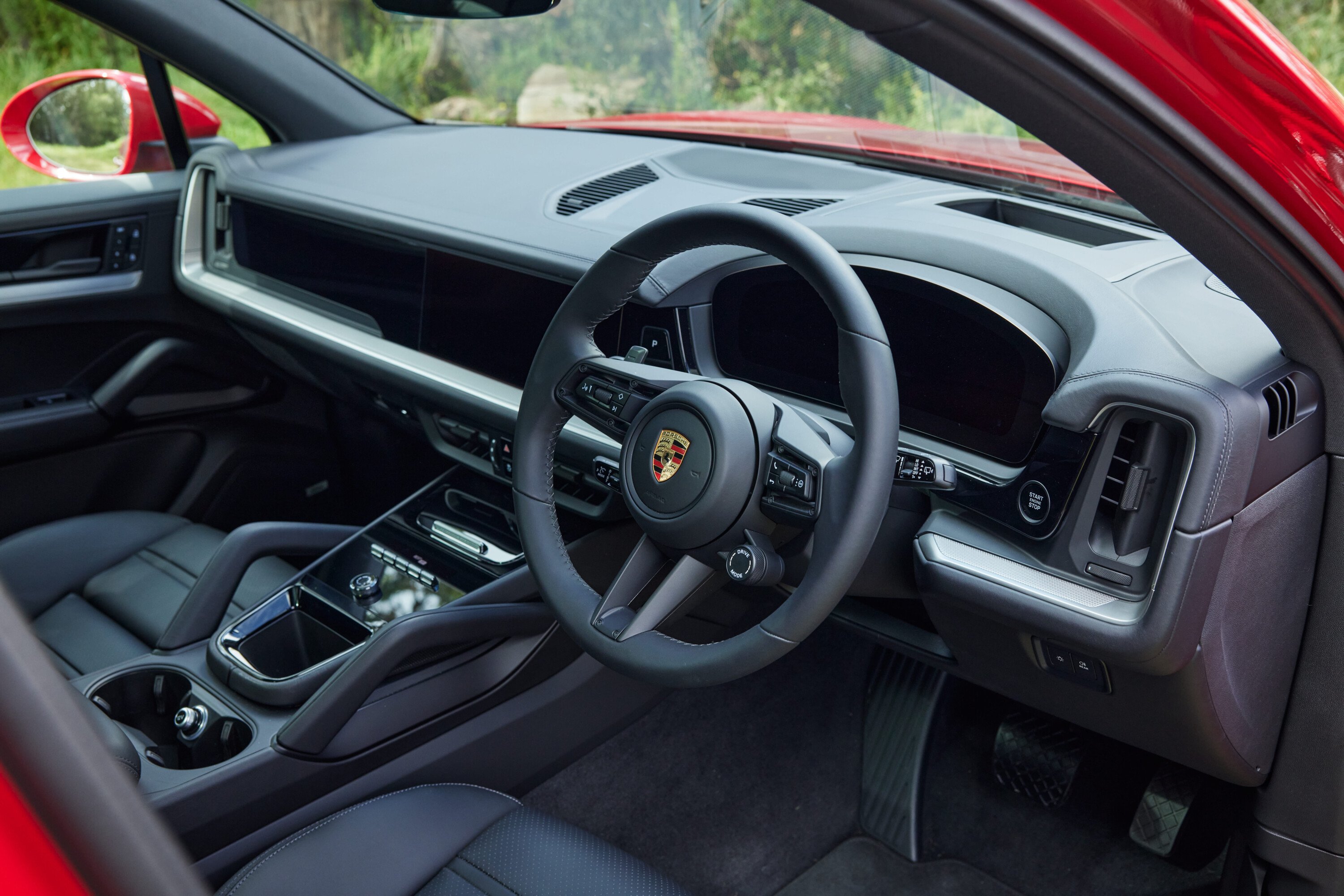
The cabin also feels a good deal more upmarket than the previous model, having adopted the look and feel of the Taycan with the broad dual-screen dash.
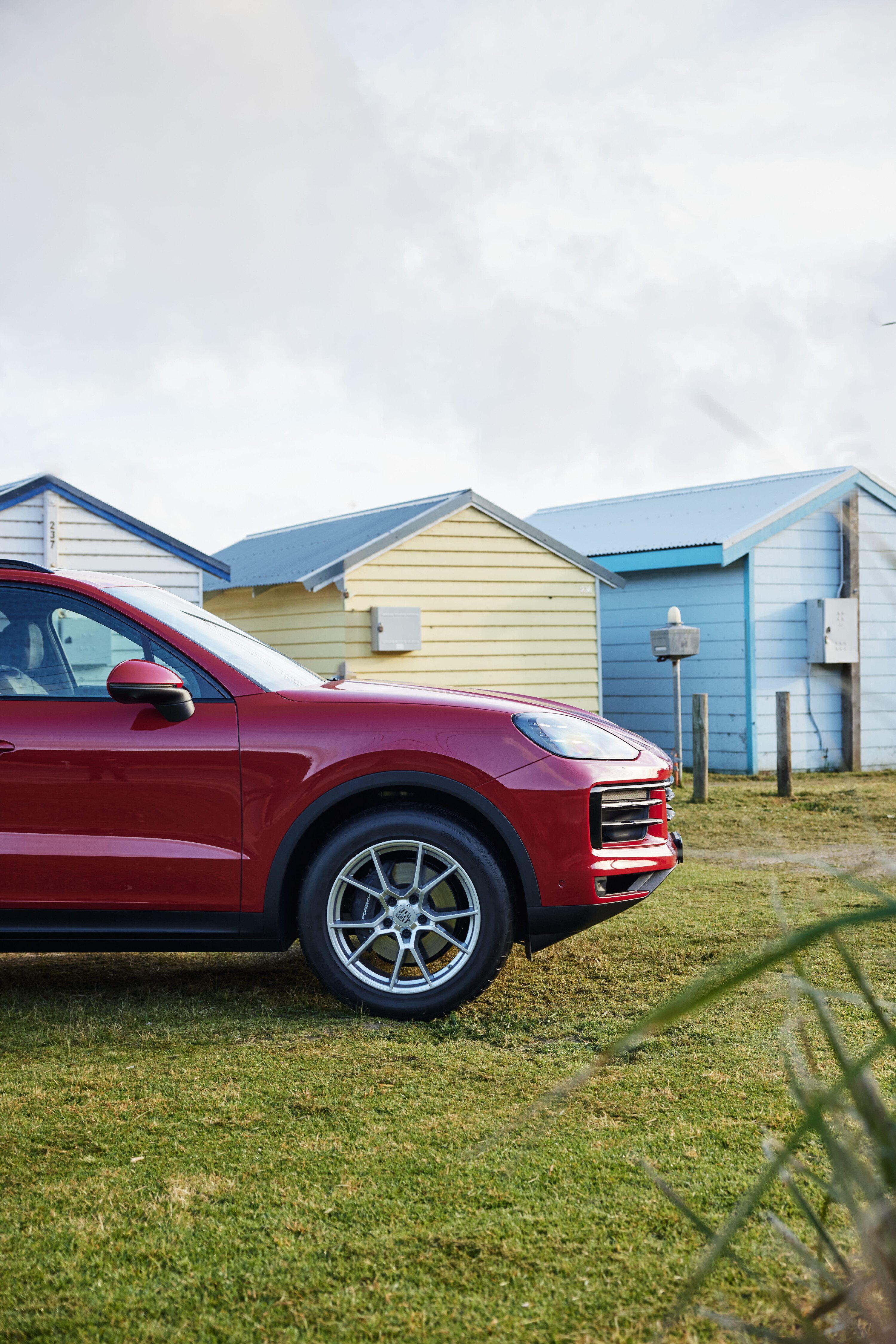
It’s a classy look and the infotainment system works well. Buyers may well find the standard 20-inch alloy wheels a little meek in their style and they look rather lost in the wheelarches.
Perhaps the fact that they’re fitted with blimp-like 55-series tyres up front creates the rather dorky look, and it’s an additional $5130 to spec a 21-inch wheel of which the cheapest is the very tasty RS Spyder Design rim.
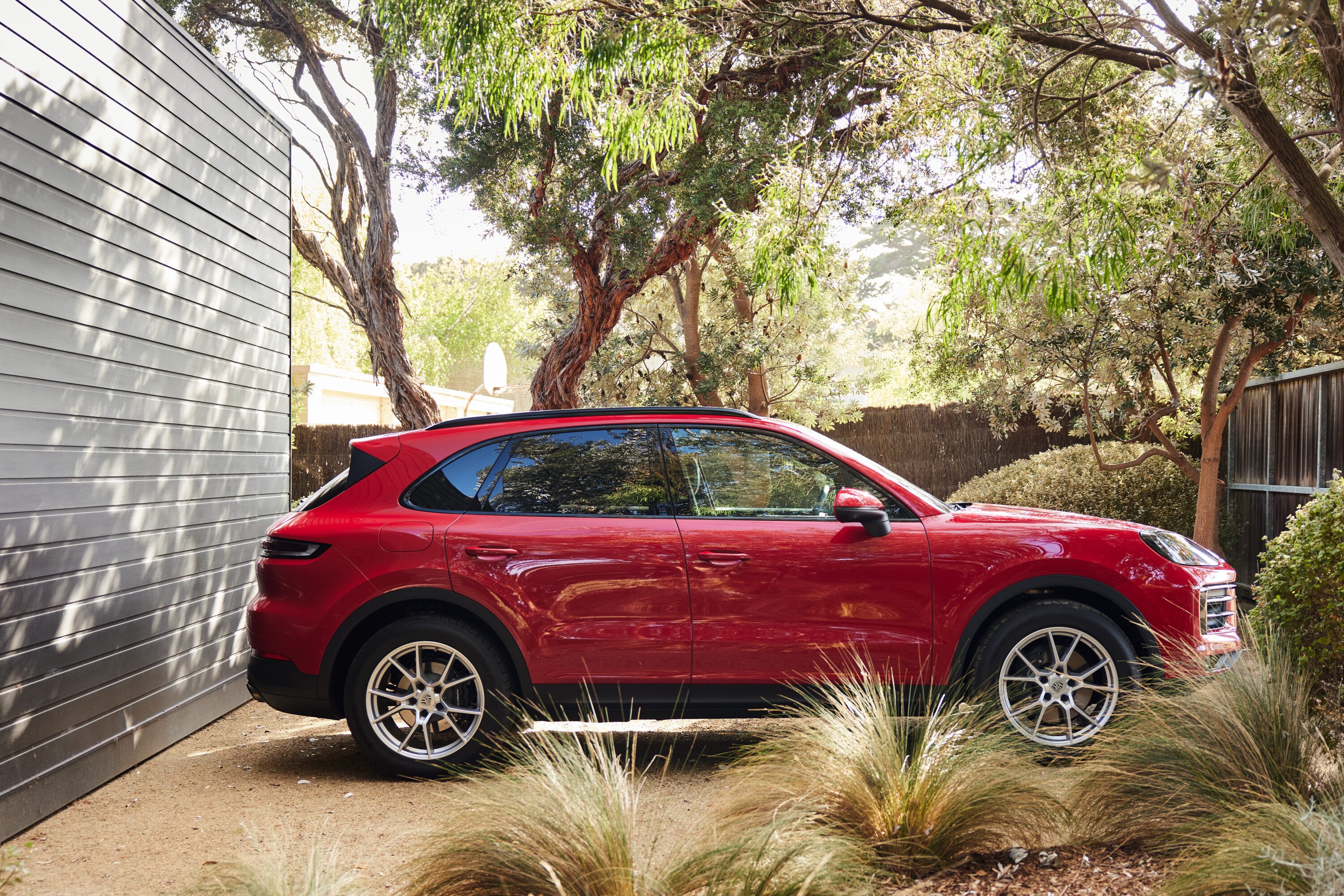
Our test car was fitted with roof bars and finished in $5000 worth of Carmine Red paint which also did little for the overall aesthetic. Black and white are the only two non-cost paint finishes offered. Porsche offers a limited palette of crashingly dull metallics for $2420.
How do rivals compare on value?
Pricing is more or less lineball with the 250kW/450Nm six-cylinder BMW X5 xDrive40i M Sport ($138,900) and a significant stack of cash more than the $128,372 Mercedes-Benz GLE450, a vehicle that also utilises a turbocharged six-pot powerplant (in this case, good for 270kW and 500Nm).
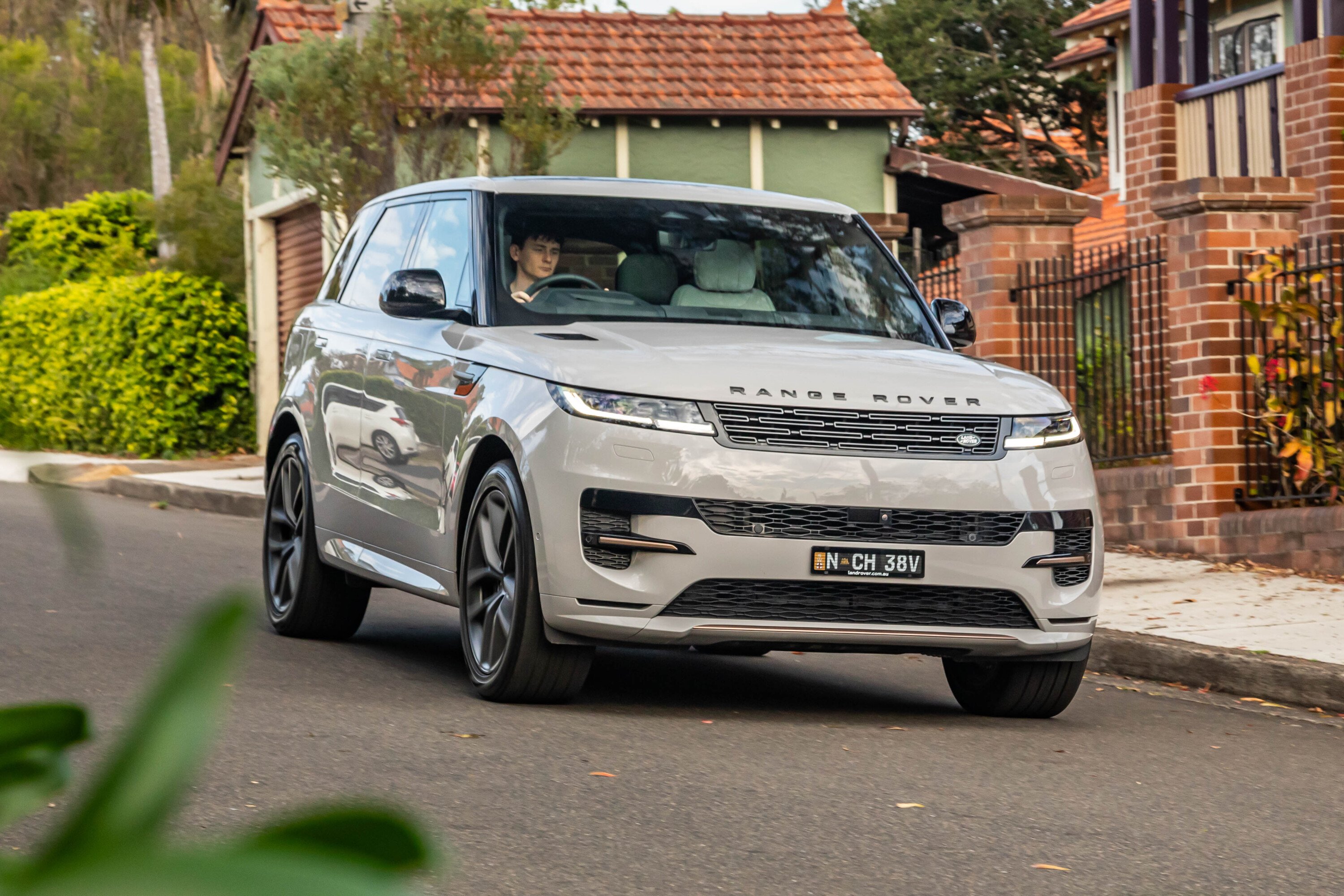
Should you really want to exercise a power advantage, a Range Rover Velar R-Dynamic HSE is priced at $138,800 and uses a plug-in hybrid four-cylinder engine to develop 297kW and 640Nm. You will have to forgo some cabin space with this option as the otherwise comparably-sized Range Rover Sport edges out of the price bracket.
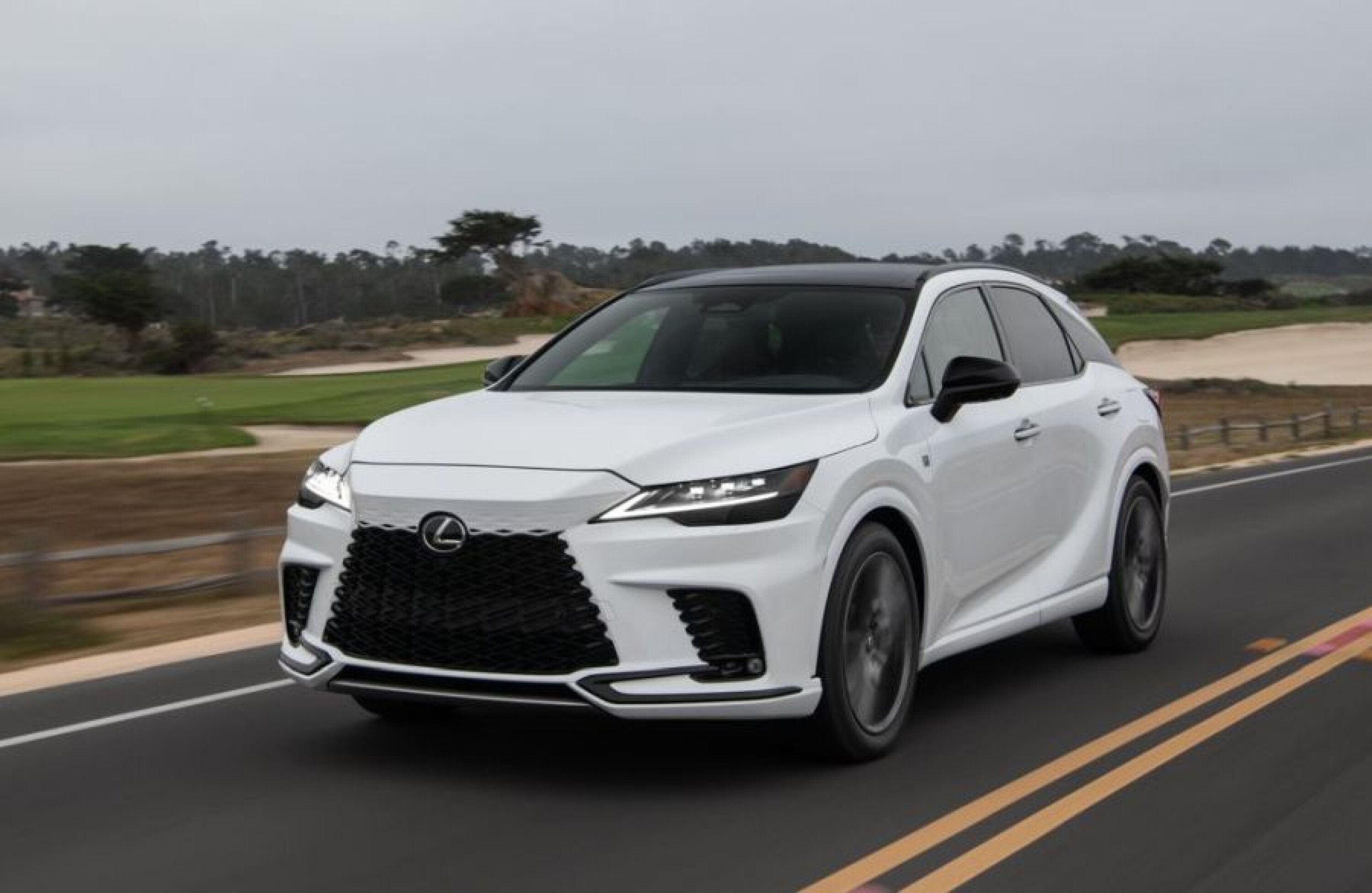
The value pick? That might well be the $126K Lexus RX500h F Sport.
With 273kW and 551Nm, this 2.4-litre turbo hybrid four has the chops to keep pace with the Porsche and most of the options list has already been shoehorned in as standard.
In terms of pure value, the base Cayenne doesn’t acquit itself too badly, but you may well find that you need to start ticking boxes if you want it to feel special. It does get 14-way adjustable seats, a 150W, 10-speaker stereo and a head-up display as standard.
What’s the Porsche Cayenne like inside?
The Cayenne feels smart but it also feels very much the base model in the range.
For $140K, there are a few features you might expect such as ventilated seats or roof rails but overall it’s a well-judged specification that, while not loading the car with luxuries, enables you to drive a base-spec version without feeling like you’ve completely missed out.
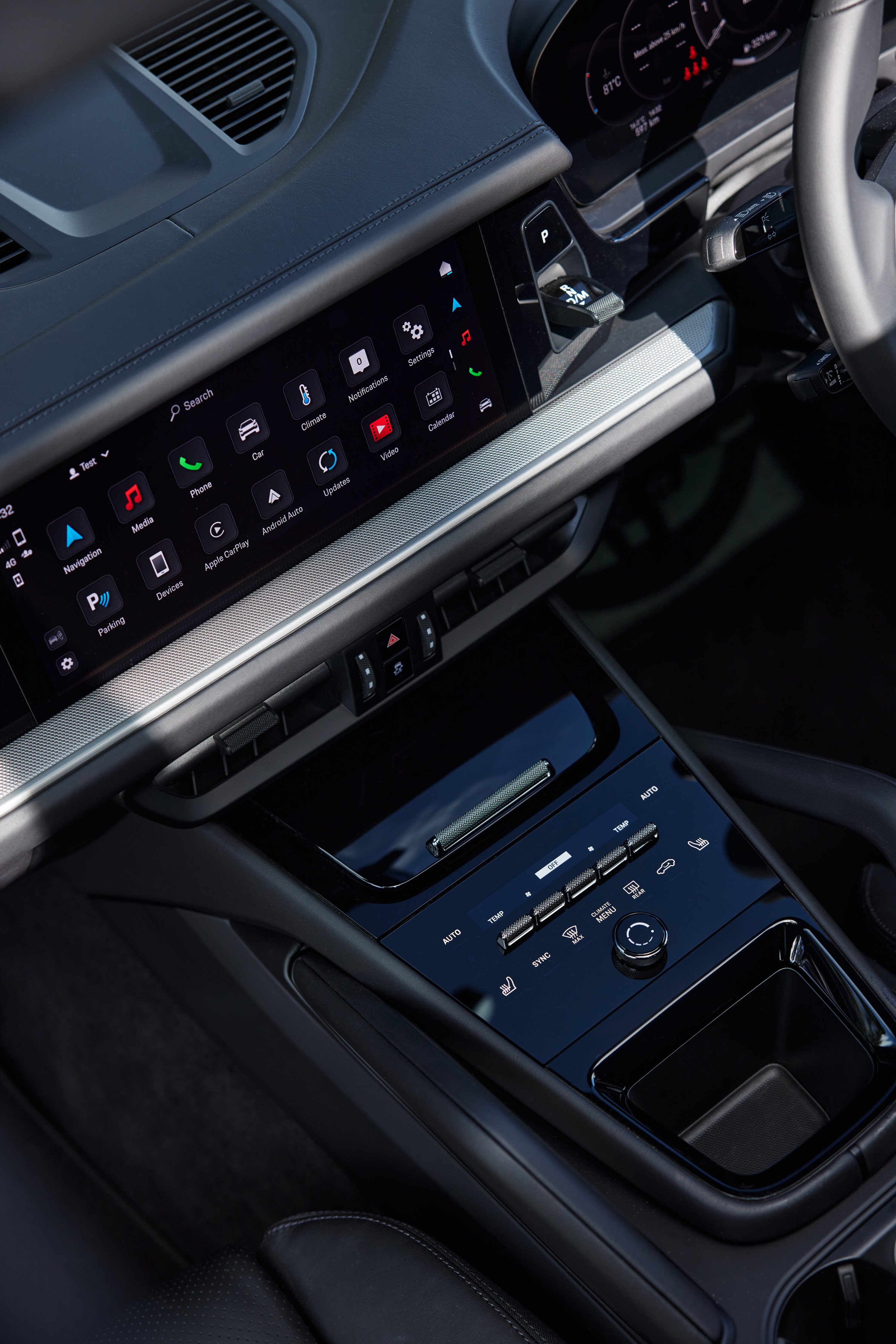
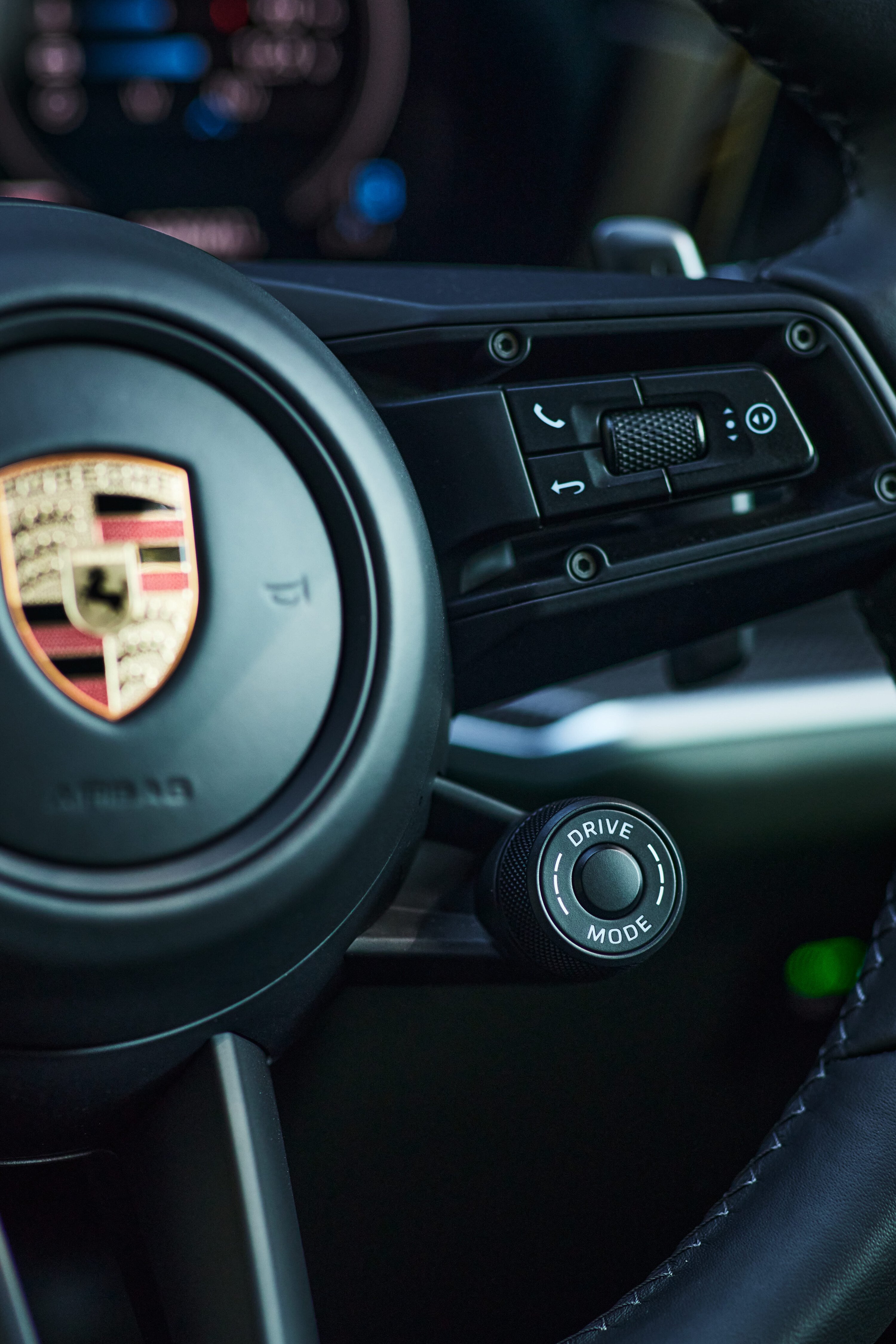
The ‘Porsche Driver Experience’ features a curved digital instrument cluster, a redesigned centre console and a 911-style gear selector that’s now mounted on the dash just behind your left knuckle. The engine start button sits to the right of the steering wheel.
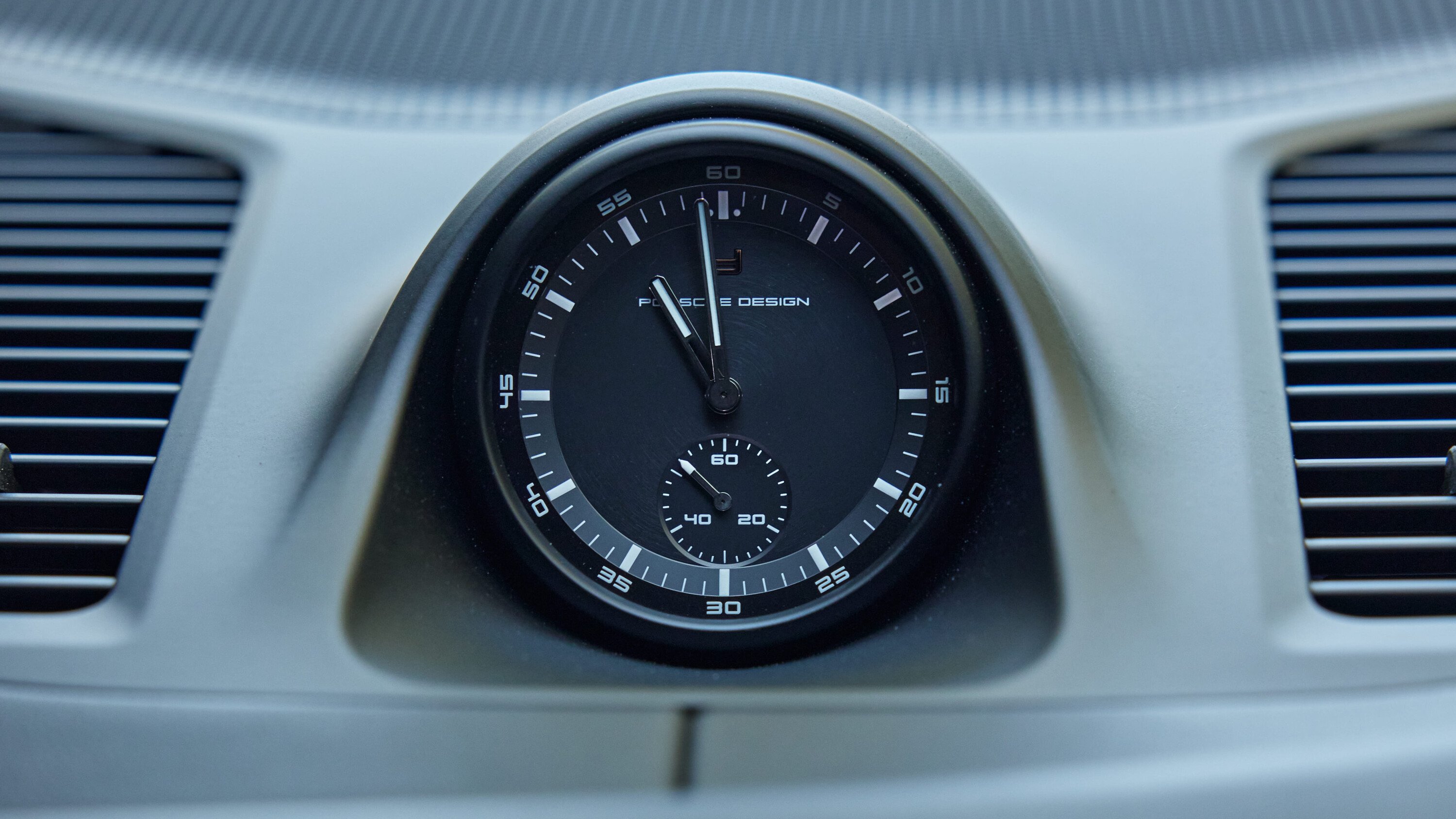
A set of digital clocks is housed in the main instrument binnacle beside a 12.3-inch centre touchscreen and the option of a 10.9-inch passenger display at $2860.
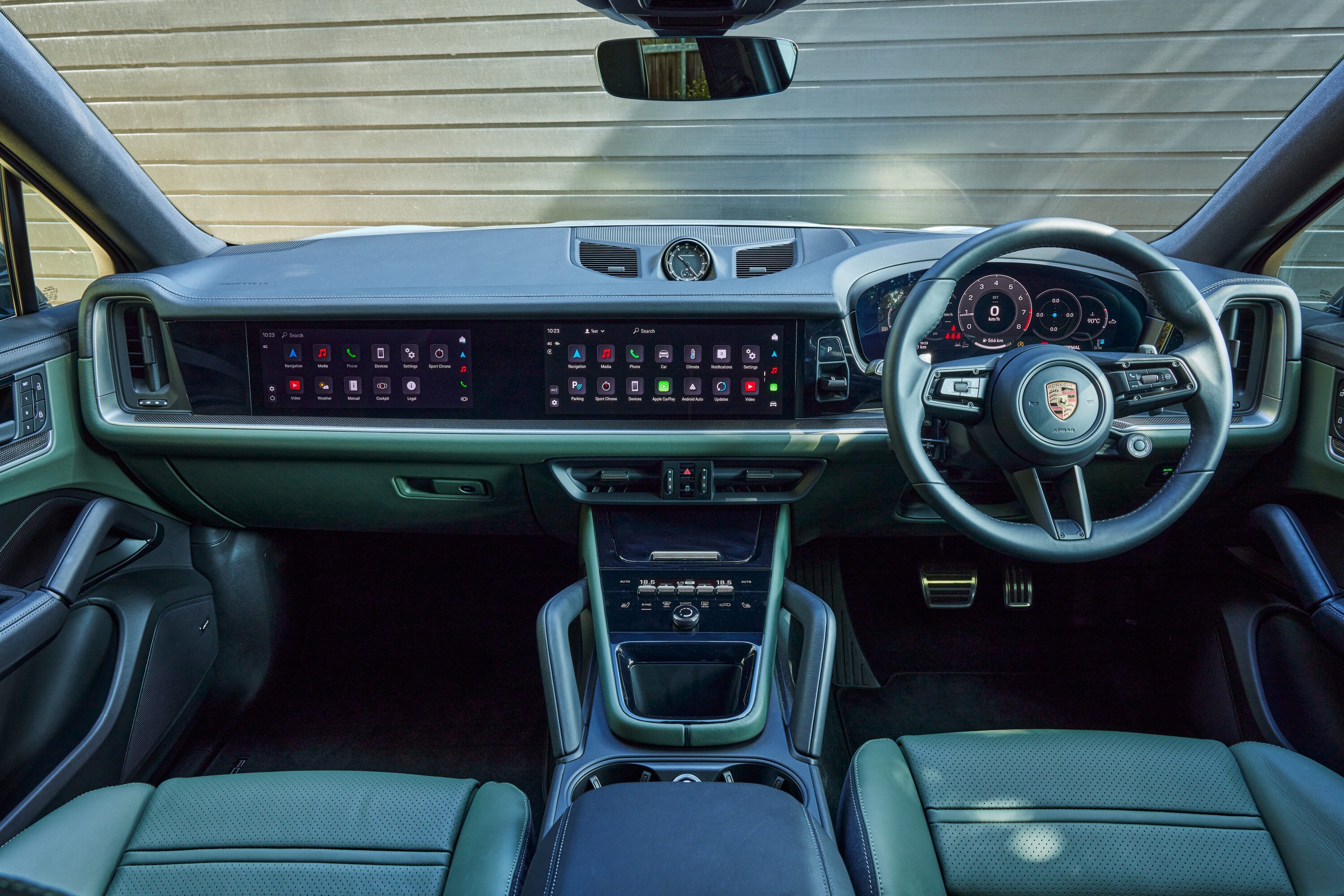
A special coating ensures this isn’t visible from the driver’s seat and front-seat passengers can stream content to this display.
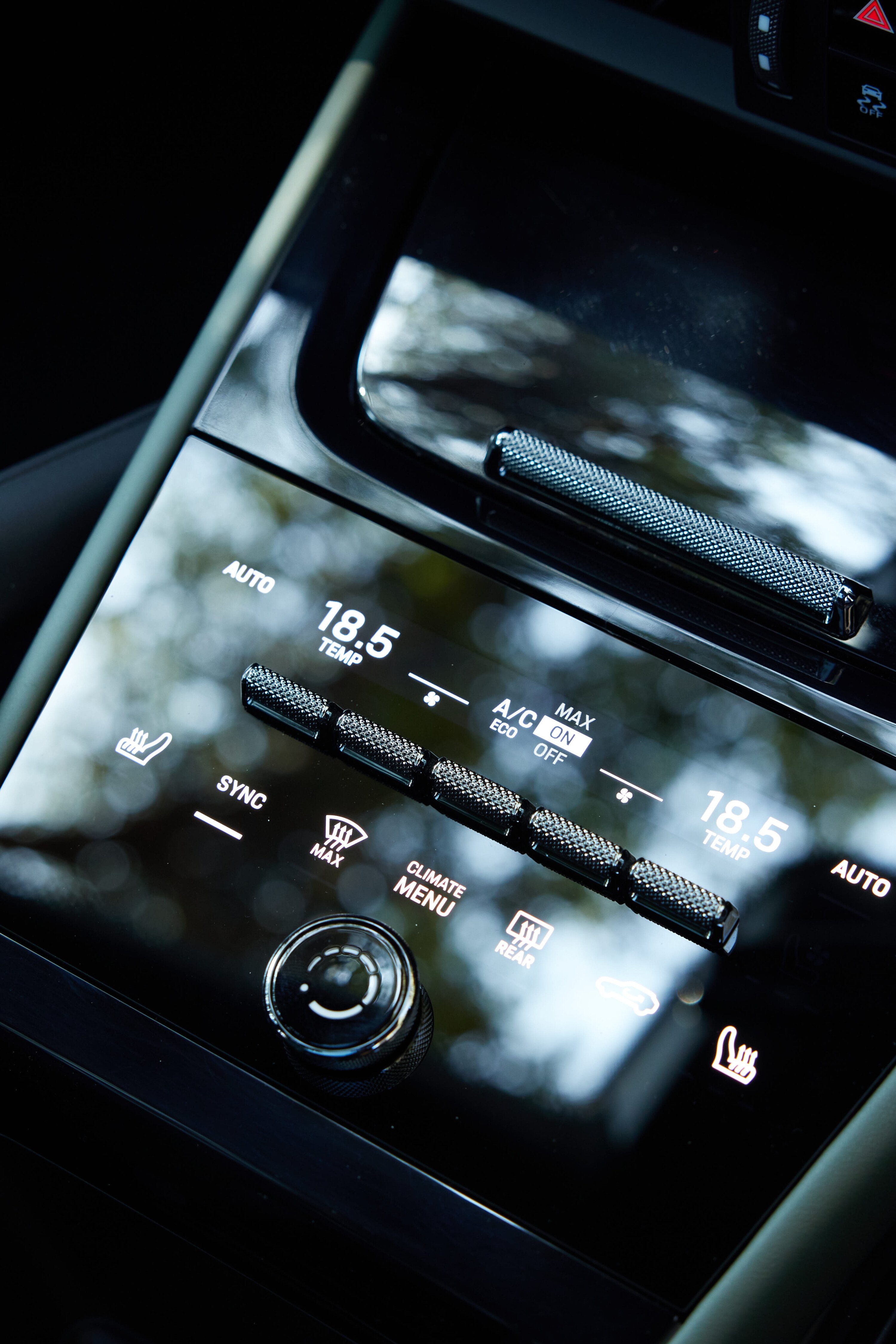
There’s a sea of piano black on the centre console, which houses controls for things such as the heated seats and, when these haptic feedback switches are pressed, the whole panel flexes in a way that’s not immediately reassuring.
You get used to it, but the first time it happens you wonder if something’s come unclipped in the dash. No, they all do that.
Likewise, on our test car, the footrest would slide up and down by a few millimetres which was moderately irritating.
The main display is multi-configurable, with a wall-to-wall map if required and there’s also a considerable amount of customisation that can be applied to the bright and clear head-up display.
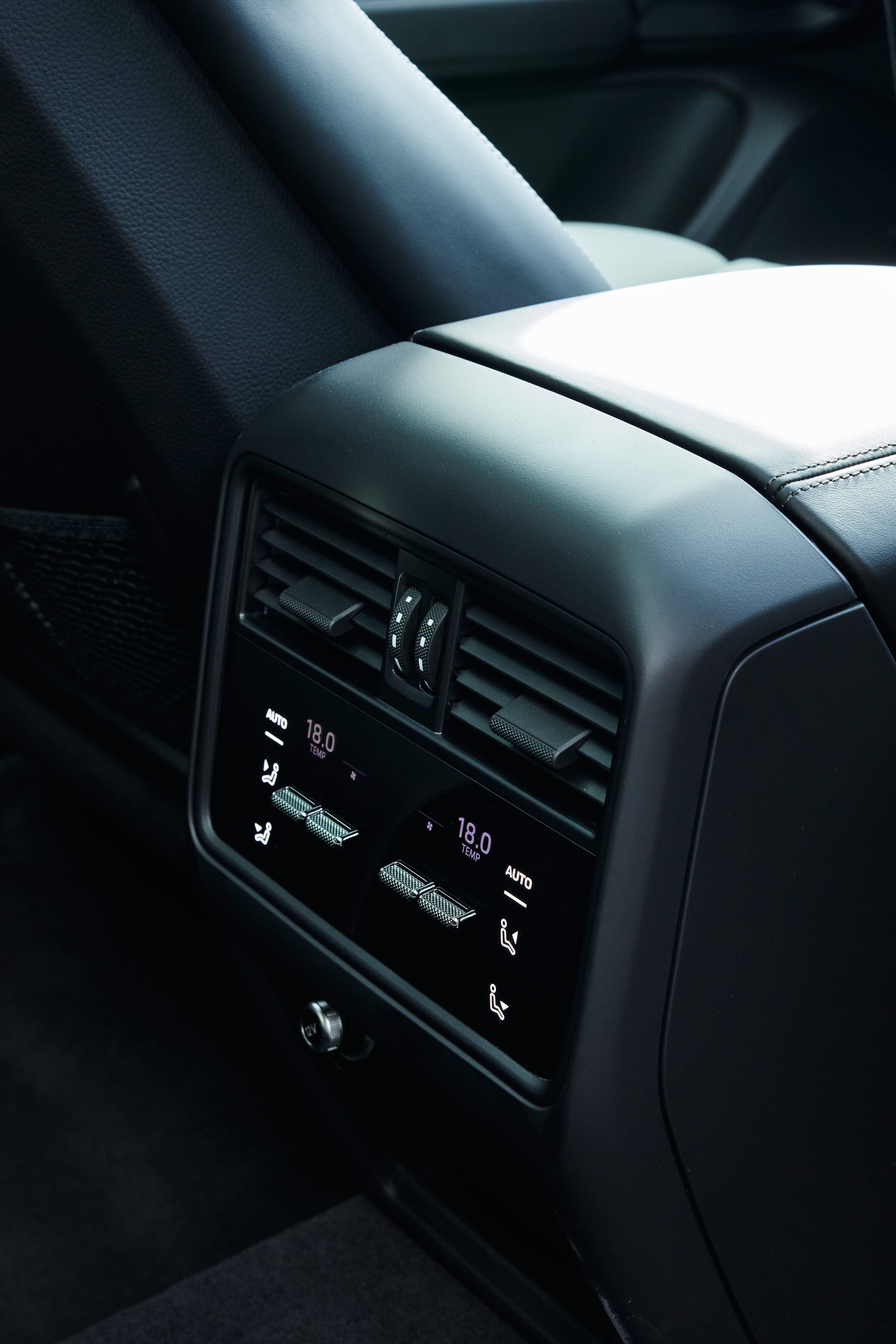
Physical buttons for the air-con mean you won’t have to go digging in the main screen to change the temperature and the air-con system itself has become very clever indeed, with a GPS-linked function.
This means that as soon as you enter a tunnel, the Cayenne will recognise it from the nav and instantly switch to air recirculation so you’re not sucking fumes into the cabin.
It also actively monitors particulate content in the air and switches on recirc if air quality drops.
What is it like to drive?
It’s fine. No, really. It’s acceptably quick, reaching 100km/h from rest in 6.0 seconds, the ride quality is adequate for a vehicle on steel springs and the control weights are decent.
And therein lies the problem. Porsche didn’t build its reputation on cars that are fine. Its name is predicated on vehicles that are excellent. And the base Cayenne isn’t excellent.
The engine needs a good shove to give its best and can feel lethargic when pulling away despite attaining peak torque at just 1450rpm. The 1985kg kerb weight means that this Cayenne has much the same power-to-weight ratio (about 130kW/tonne) as an entry-level Mazda MX-5. So it’s no fireball.
Body control is okay, with some head toss evident and the Hankook Ventus S1 Evo Z tyres are a decent compromise choice, if not the last word in precision feedback.
We did notice that on poorer surfaces there were quite a few squeaks and rattles in the cabin, which isn’t something that you’d expect if you’re handing over $140K.
There are three drive modes on offer: Normal, Sport and Offroad, with Sport killing the idle-stop system and activating the Porsche Active Suspension Management for a more dynamic ride.
Were I spending my hard-earned on a base Cayenne, the second box I’d tick after the bigger alloys would be $4750 worth of adaptive air suspension. Third would be the $2480 Bose surround sound system.
The eight-speed automatic transmission is a quality box of cogs and the Cayenne is fitted with shift paddles should you wish to marshal it yourself. The pre-set calibrations in Normal and Sport are pretty hard to catch out though, so aside from doing it out of road tester’s curiosity, I left things to the robot instead.
Strong and faithful iron brakes are standard, with none of the weird pedal feel you occasionally get on cold carbon ceramics. The pedal box and driving position are similarly excellent, with a huge amount of adjustment for both seat and wheel.
How is it on fuel?
Not bad, actually. In mixed driving that included 50 per cent challenging hill routes and 50 per cent suburban schlepping (respectively using Sport and Normal modes), the Cayenne averaged 10.3L/100km – a tenth better than the official combined figure.
As a frame of reference, the same exercise yielded 12.8L/100km in a V8 Cayenne S, a hefty 24 per cent worse.
The idle-stop system is impeccably smooth on the Cayenne thanks to its 48-volt electrics, which means that you won’t feel tempted to switch it off in city traffic, unlike some cars whose systems are about as slick as the discount rail in Tarocash.
With its hefty 90-litre fuel capacity, the Cayenne can travel for 900km on a cruise but it does require 98 RON fuel, which means a tankful can easily top $200.
How safe is it?
The Cayenne may well have undergone “one of the most extensive product upgrades in the history of Porsche” but that product upgrade was clearly not significant enough to warrant retesting by EuroNCAP, so the Cayenne carries over its five-star safety rating from the previous model.
There’s a space-saver tyre under the boot floor as well as a fairly comprehensive tool kit, so you’re unlikely to be left stranded by a puncture.
How long is the warranty and what are the running costs like?
The warranty for the Cayenne is three years with unlimited kilometres.
While three years might seem a bit mean given that much of the new car market has moved to five-year warranties, there’s still a bit of lag at the top end of town. The likes of Aston Martin, Bentley, Ferrari, Lamborghini, Lotus, and Maserati all offer a similar three-year deal.
Main service intervals are at 15,000km or 12 months, there’s a three-year paint warranty and a 12-year anti-rust warranty.
Would you recommend it?
I feel a little conflicted about recommending the base Cayenne. Porsche won’t care, largely because it’s extremely good at understanding the requirements of its customers.
For those who just want the cheapest way into Porsche Cayenne ownership and are not particularly fussed about dynamics, it’s unlikely you’ll be disappointed. The Cayenne rides well, looks good, is adequately equipped, is both safe and comfortable and, if you clog the accelerator pedal, can lift its skirts. It’s a decent car.
What it doesn’t feel like is a ‘proper’ Porsche. It’s too meek. It has no attitude. Were you to put somebody who’d never experienced a Porsche before in it, they’d wonder what all the fuss around the marque was about.
It sounds harsh, but it’s both a good SUV and a wholly unexceptional Porsche. Its maker will – rightly – counter that there’s a healthy market for that.
The problem, as I see it, is that this ought to be a car that excites you, that makes you feel as if you’re stepping into the Porsche brand and experiencing a taste of its values. But you’re not.
You’re buying that badge equity, you’re getting a decent SUV and that’s okay as long as you’re okay entering into that compact.
It’d be harsh to write this vehicle off as a ‘Porsche in name only’. It has a lot of admirable attributes but it needs something else, some edge, some steel to its backbone, some glimpse into the depth of engineering and focus that has always distinguished the best Porsches.
When you create those lofty standards, they can, just occasionally, prove a little hard to live up to.
| 2024 Porsche Cayenne specifications | |
|---|---|
| Body | 5-door, 5-seat SUV |
| Engine | 2995cc V6, 24v, DOHC, turbo petrol |
| Power | 260kW @ 5400-6400rpm |
| Torque | 500Nm @ 1450-4500rpm |
| Transmission | 8-speed automatic |
| 0-100km/h | 6.0 seconds (claimed) |
| L/W/H | 4930/1983/1698mm |
| Wheelbase | 2895mm |
| Boot space | 698L (1708L seats folded) |
| Weight | 1985kg |
| Fuel / tank | 98 RON / 90 litres |
| Fuel use (L/100km) | 10.3L/100km (tested) 10.4L/100km (claimed) |
| Suspension | Struts, coil springs, adaptive dampers, anti-roll bar (front) Multi-links, coil springs, adaptive dampers, anti-roll bar (r) |
| Steering | Electric rack-and-pinion |
| Tyres | Hankook Ventus s1 evo Z 255/55 ZR20 (f) 295/45 ZR20 (r) |
| Price | $140,200 + on-road costs |
Snapshot
- Second facelift for 2024 Audi Q7 and SQ7 models
- Updated styling, new lights, and a more advanced infotainment system
- Due in Australia in the second half of 2024
The Audi Q7 luxury large SUV has received its second facelift ahead of an all-new model due in 2026.
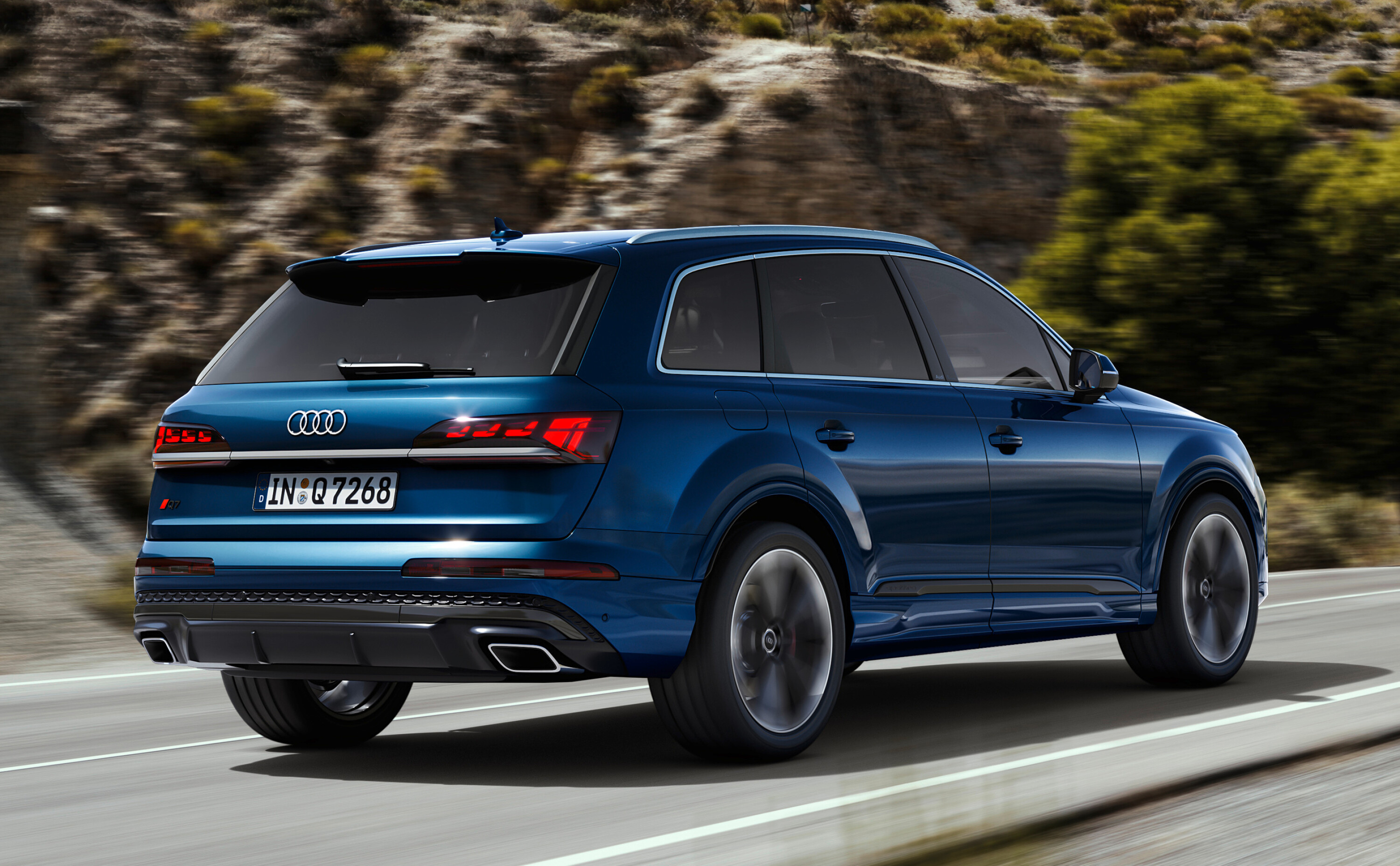
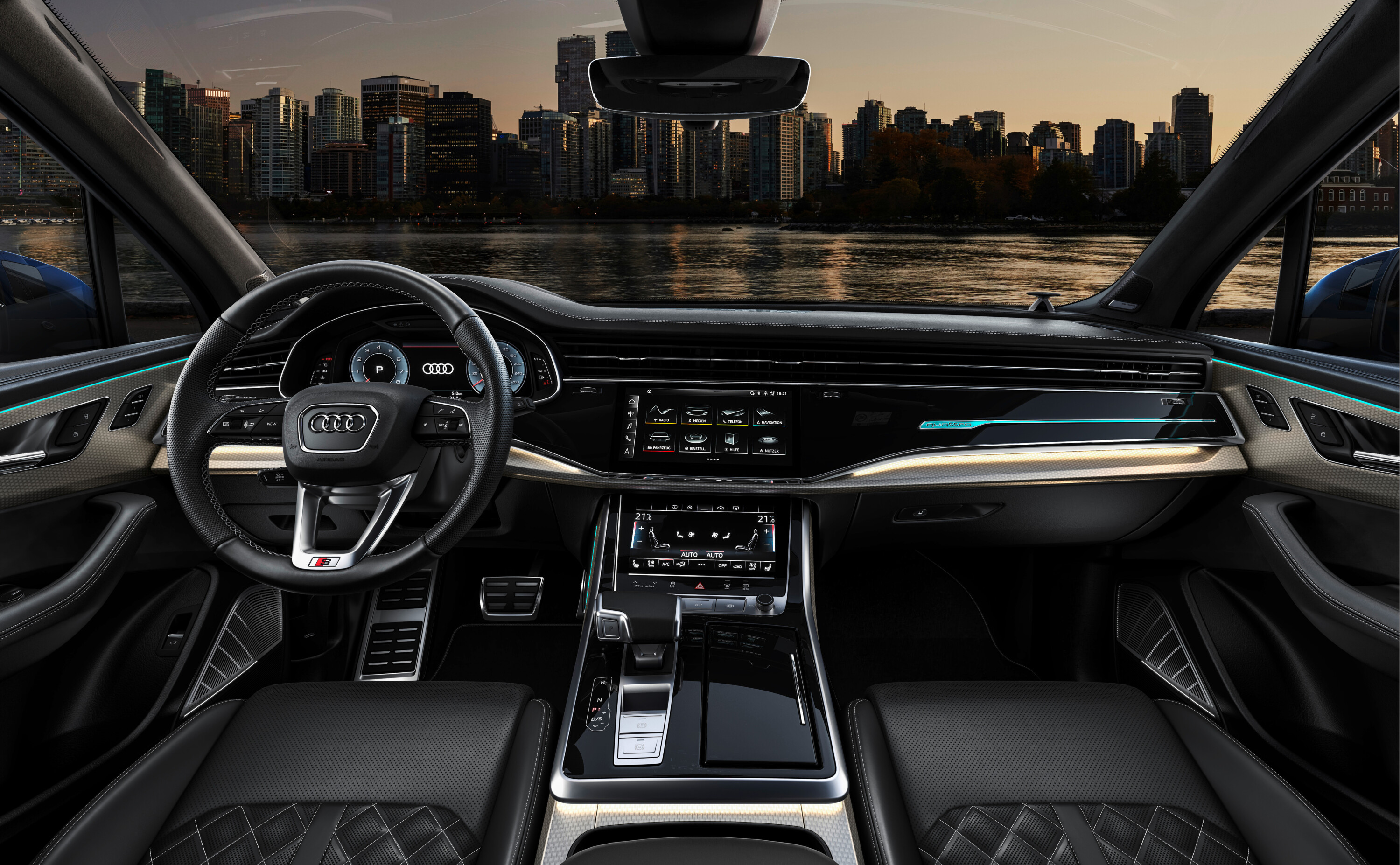
Revisions for the 2024 Audi Q7 and 2024 Audi SQ7 are applied from more recent models in the German brand’s line-up, including an updated exterior design, matrix LED headlights with laser and OLED tail-lights, and minor revisions inside.
The latest update for the seven-seat Q7 – a rival to the Volvo XC90, BMW X5 and Mercedes-Benz GLE – follows a comprehensive mid-life facelift in 2019 which introduced an identical dashboard to the related Q8 flagship coupe SUV.
The current, second-generation Audi Q7 was launched in 2015 to replace the first-generation model sold between 2005 and 2015, which also had two major updates during its 10-year lifespan.
Audi Australia has confirmed the updated Q7 and SQ7 are due in local showrooms in the second half of this year, with further details to be announced closer to launch.
Exterior changes include Audi’s new, flatter two-dimensional logo, a larger grille with a new octagon pattern, redesigned front bumpers with “prominent colour-framed” air intakes, and a return to actual exhaust tailpipes on the lower rear bumper.
The headlights now look more familiar to the Q5 and Q8 and are available with optional matrix LED technology, which includes laser lighting. The system features 24 individual LEDs, with each having a high-power laser diode to boost the high-beam range at speeds above 70 km/h.
A digital daytime running light is also fitted to the matrix LED headlights, which allows drivers to configure the light signature.
Organic light-emitting diode (OLED) digital tail-lights are now fitted to the Q7, following the A8, Q8 and Q5. This allows drivers to choose from pre-configured light signatures, along with sequential turn signals, various coming and leaving home sequences, and a proximity feature to alert drivers when are within two metres of a stationary Q7.
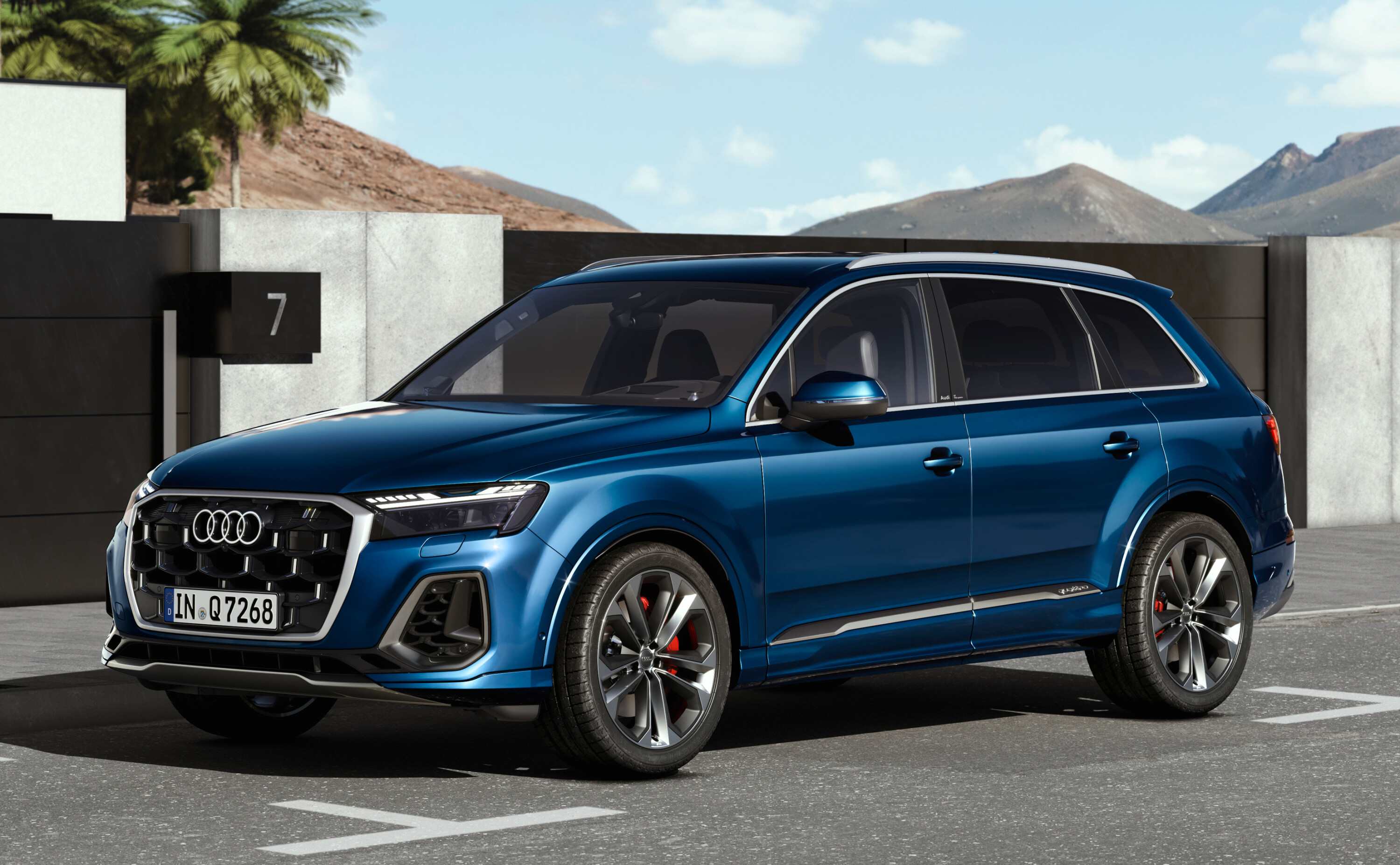
New exterior colours include ‘sakhir gold’, ‘ascari blue’ and ‘chili red’, while there are five new alloy wheel designs ranging between 20 and 22 inches.
As with the facelifted Q8 due in mid-2024, the MIB 3 infotainment system now supports third-party applications – including Spotify and Amazon Music – and the digital instrument cluster is enhanced to display additional driver assistance-related details.
The latest Q7 will be available with nine decorative inlays, including ‘natural elm burl silver’ for the standard Q7, and ‘matte carbon twill’ or ‘matte brush aluminium’ for Q7 S-line and SQ7 models.
Under the bonnet, the 2024 Audi Q7 retains its existing powertrain options, including the 170kW/500Nm 3.0-litre turbo-diesel V6, uprated 210kW/600Nm 50 TDI, and 250kW/500Nm 3.0-litre turbo-petrol 55 TFSI available in Australia.
All models continue to feature a 48-volt mild-hybrid system and an eight-speed torque-converter automatic transmission.
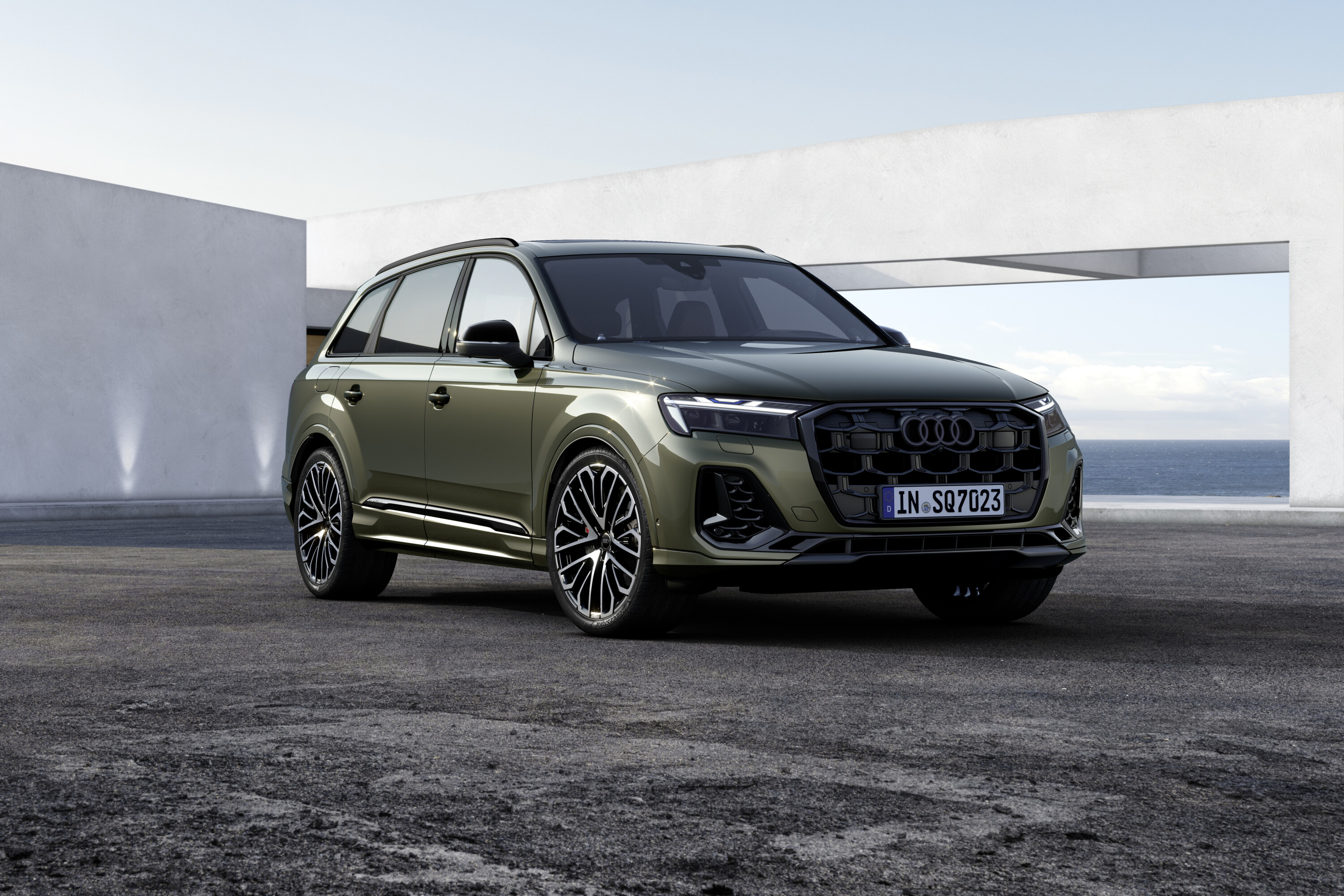
Specific enhancements for the sportier SQ7 variant include a new honeycomb-look grille, a redesigned front spoiler and rear diffuser, and revised alloy wheel designs up to 22 inches.
As before, the SQ8 has a 4.0-litre twin-turbo V8 engine delivering 373kW and 770Nm. It does not include a mild-hybrid system but features cylinder deactivation technology.
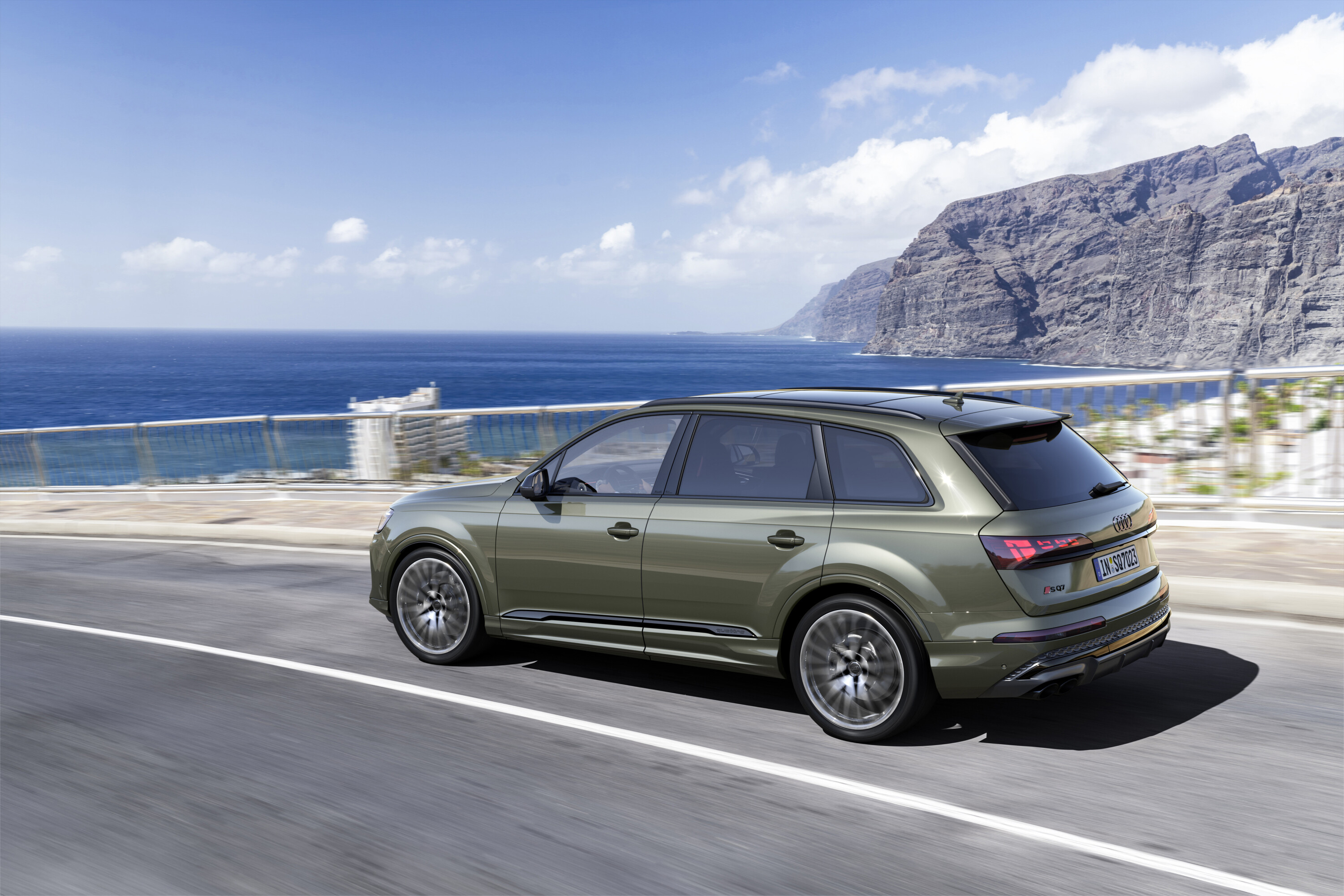
The facelifted 2024 Audi Q7 is due in Australia in the second half of this year, with further details to be announced closer to its launch.
It is expected to be the final update for the second-generation Q7 ahead of the launch of the third-generation Q7, which is due to debut later in 2025.
It will become one of Audi’s final internal-combustion vehicles ahead of its all-electric future, and could be joined by an upper-large ‘Audi Q9’ to rival the Mercedes-Benz GLS, BMW X7, the full-size Range Rover, and the Cadillac Escalade.
VFACTS new-car sales data reveals 1961 examples of the Audi Q7 were sold in Australia in 2023 compared to 3846 Land Rover Defenders, 3682 BMW X5s, 2743 Lexus RXs, 2535 Mercedes-Benz GLEs and 2224 Range Rover Sports.
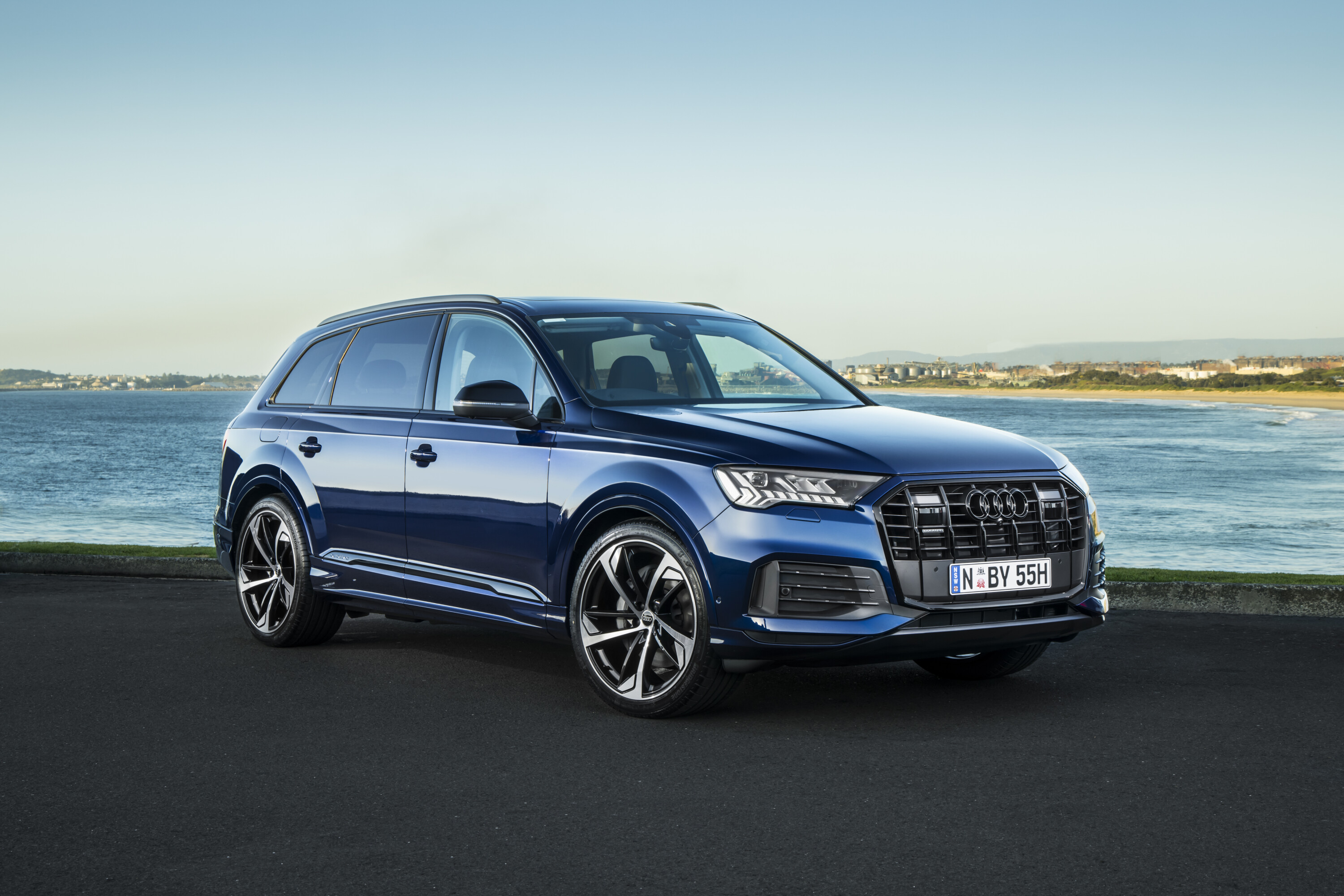
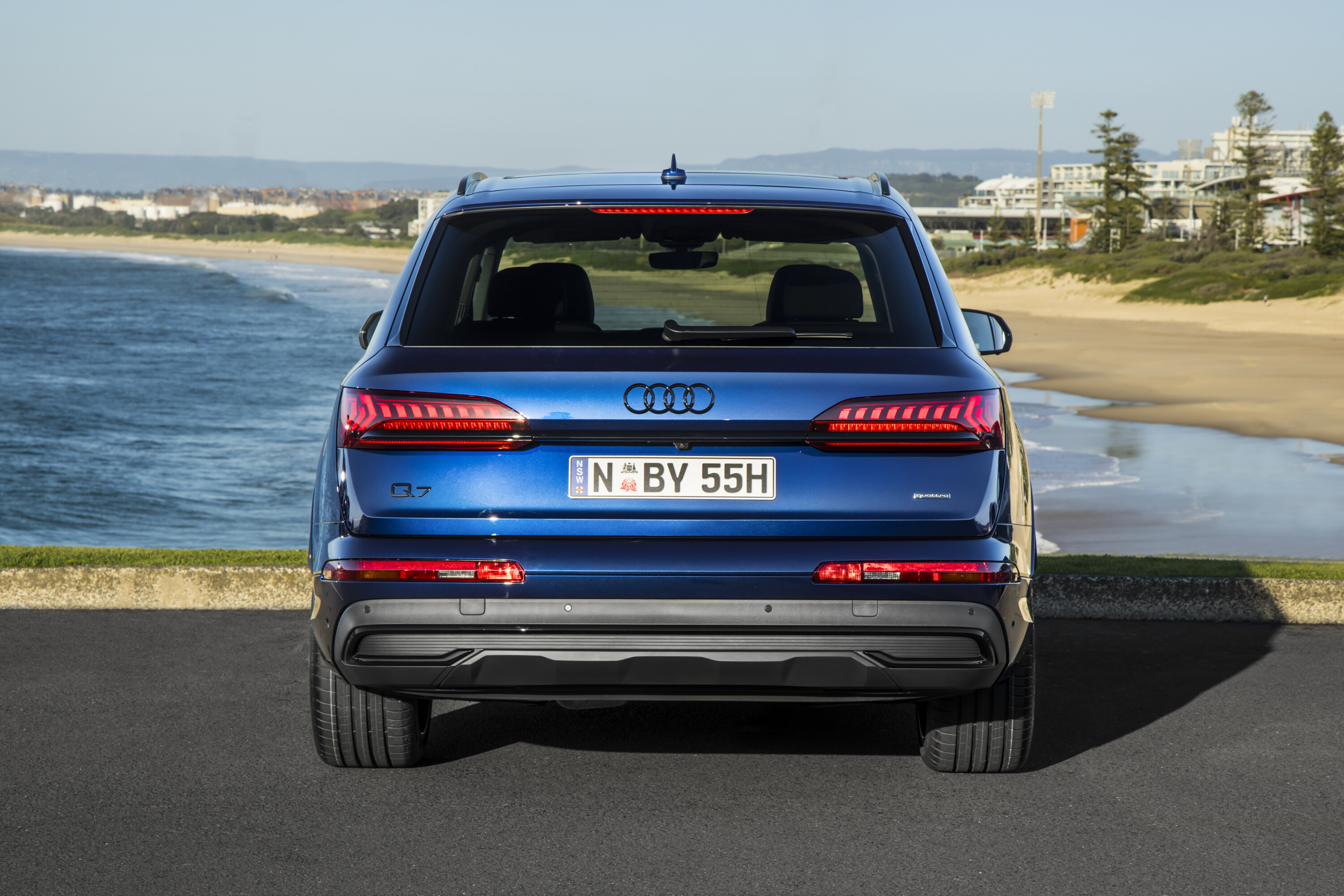
Below: The current 2023 Audi Q7
Snapshot
- Electric vehicles lagged behind combustion-engined vehicles in volume and value
- EVs listed for sale were worth just 57.6 per cent of their purchase price after 2-4 years
- Combustion-engined vehicles retained 85.9 per cent value in the same period
The Australian Automotive Dealers Association (AADA) and AutoGrab have compiled 2023’s used car sales data into the Automotive Insights Report (AIR) which paints a picture of the current market.
Throughout 2023, the pandemic’s effects lessened and used car prices slowly dropped in response to improved new car supply. For the most part, used car values are up compared to a decade ago – you can read the full breakdown here – but the market for electric vehicles isn’t so promising.
Of the used cars listed for sale, 96 per cent were petrol and diesel models, while hybrids made up 3.1 per cent of the pie. Plug-in hybrid (0.1%) and electric vehicles (0.7%) accounted for less than one per cent.
Compare that to new EVs, which made up 7.2 per cent of 2023’s record sales, and it’s clear there’s a long way to go before a mature used electric vehicle market emerges.
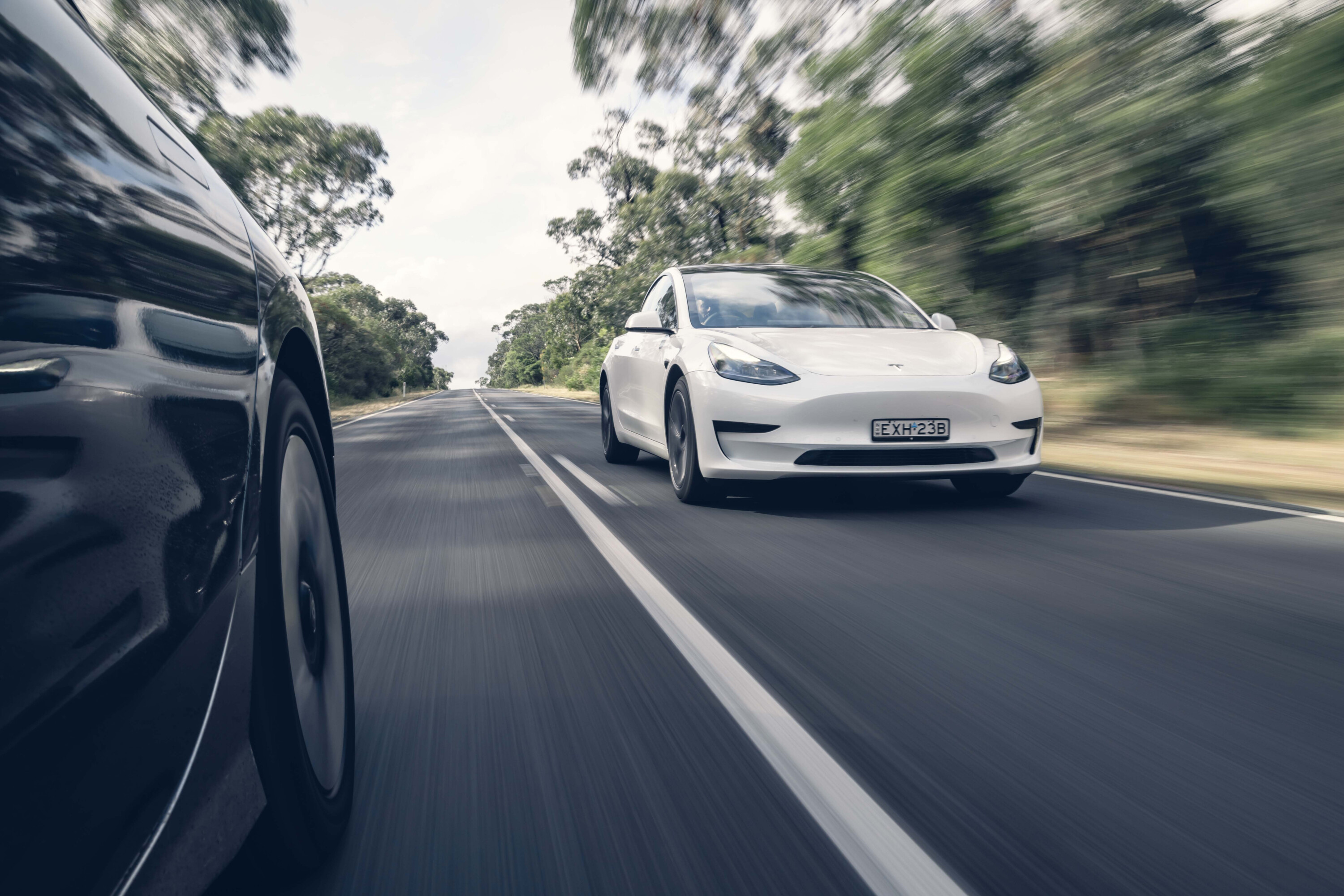
As in new electric car sales, of the 12,051 used examples sold it was Tesla that dominated (36.4 per cent) followed by MG (14.6 per cent) and Nissan (8.2 per cent). Expect this year to bring more turbulence with the advent of even more affordable options from China.
Beyond the smaller pool of choice, used electric vehicles were also valued much lower than combustion-engined counterparts.
Two to four year old combustion-engined cars retained 85.9 per cent of their value, compared to EVs which kept just 57.6 per cent of their value. The AIR described the residuals as “incredibly low” and noted EVs had “underperformed the market significantly.”
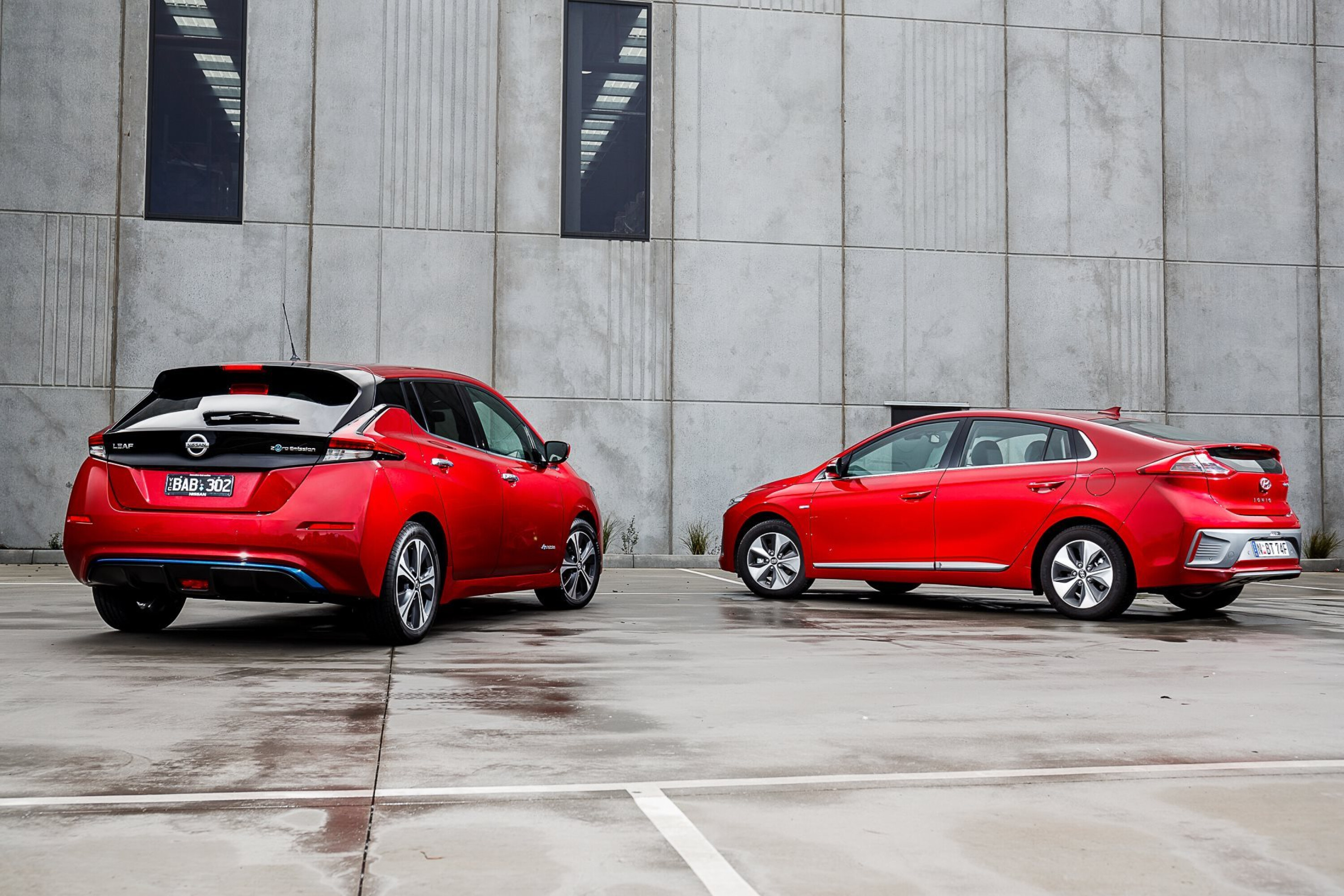
From the start of 2023, retained values dropped 15.6 per cent for electric vehicles under two years old, and a huge 23.4 per cent for those between two and four years old.
By the end of the year, the average time from list to sale of an EV had climbed to 75 days – the longest of any category in the AIR.
The AADA’s report notes a few factors in this, chiefly changes to the fringe benefits tax (FBT) structure that made leasing a new electric car far more attainable, as well as the influx of affordable options from China and the ensuing price wars.
There are also the unknowns of electric vehicle maintenance. While there may be far fewer moving parts and less brake wear, there’s a big cost if the battery goes boom (though most are covered by eight year/160,000km warranties), and Tesla only offering a four-year warranty will affect residuals.
While this might all sound like doom and gloom for prospective EV buyers, it could be a win for those on a tighter budget willing to chance a used vehicle. If you’re after a sedan under five years old for about $60K, for example, you’re remarkably well served by Tesla Model 3s in the classifieds.
Cupra might not be a name you’re familiar with yet but a name you may know is SEAT, their parent company– who are actually owned by the Volkswagen Group.
The Spanish brand has been on our shores now for a couple of years with a range of sporty and stylish looking cars– offered in hybrid, electric and petrol powertrains.
In comes the Cupra Born, the brands first all-electric car, a five-seater hatchback with up to 511km of range.
Let’s see what the newcomer is bringing into the EV fighting ring.
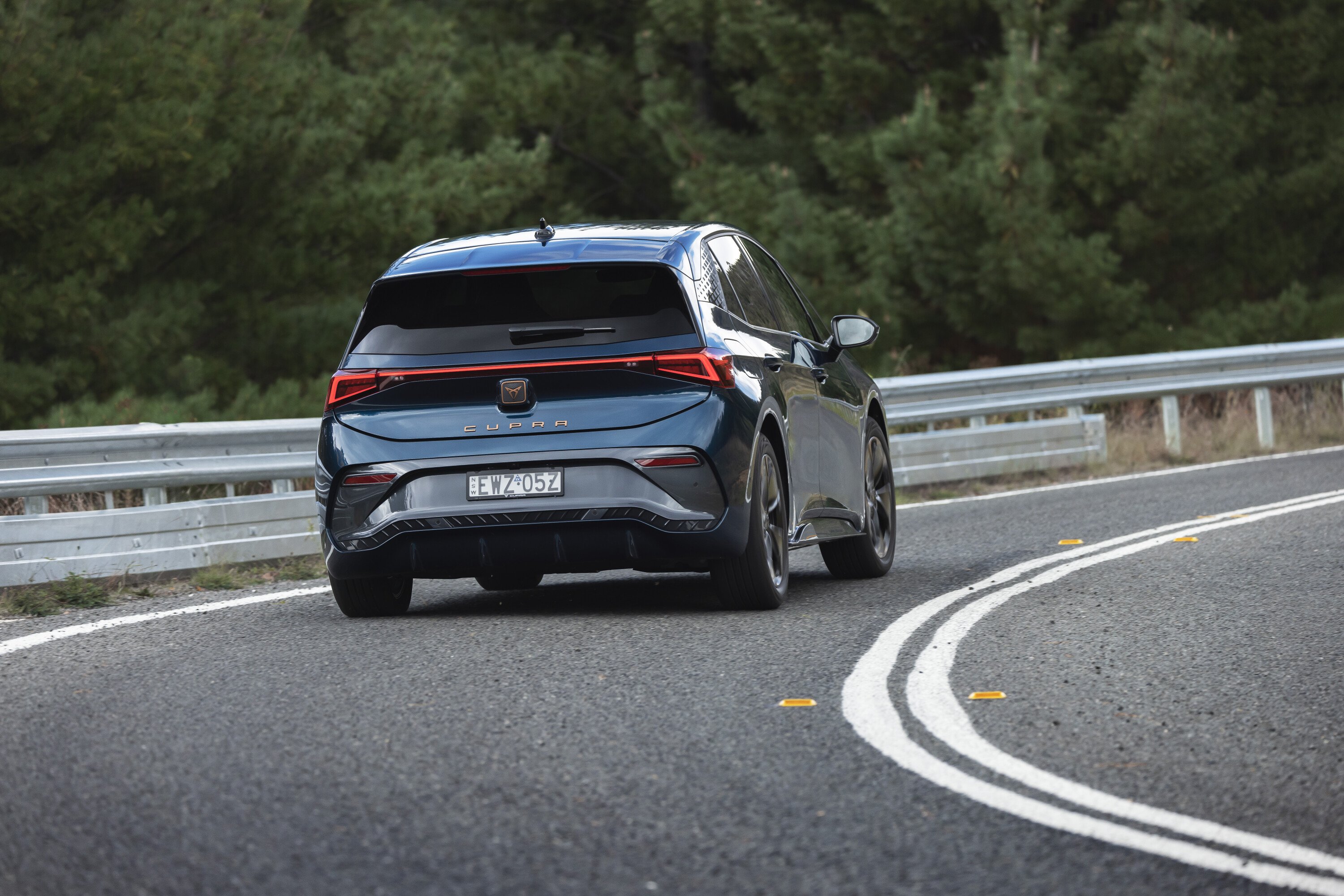
Pricing and features
At $59,990 before on-road costs the Cupra Born is available in a single variant.
State-based EV incentives can move this figure down depending on what current opportunities are.
The vehicle features a power system with an 82kWh gross (77kWh net) battery, capable of getting up to 511 kilometres of range under the WLTP test cycle. This system powers a rear-mounted motor, delivering 170kW of power and 310Nm of torque, which propels the rear wheels.
Cupra claims a 0-100km/h time of 7.0 seconds.
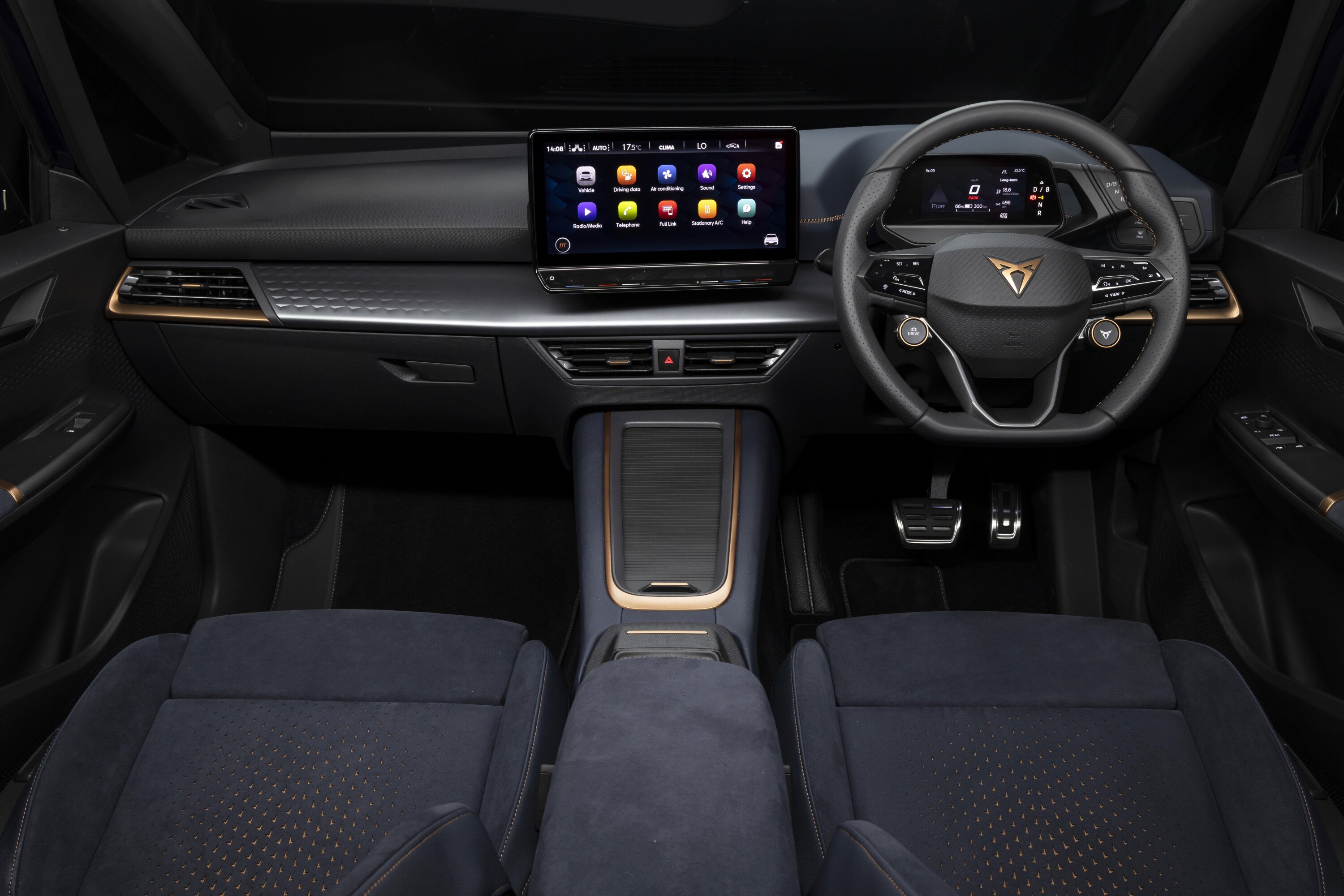
| 2024 Cupra Born features | |
| 19-inch alloy wheels | Auto-dimming rear-view mirror |
| 12-inch infotainment system | Drive mode selector |
| Wired Apple CarPlay and Android Auto | Tyre pressure monitoring |
| DAB+ digital radio | Front bucket seats |
| 5.3-inch digital instrument cluster | Recycled fibre upholstery |
| Four USB-C ports (2x front, 2x rear) | Dual-zone climate control |
| Wireless phone charger | Adaptive steering |
| Colour-adjustable ambient lighting | Sports suspension |
| Leather-wrapped heated steering wheel | Automatic parking |
| LED head and tail-lights | Rain-sensing wipers |
| Rear spoiler | 360-degree camera system |
| Heated power-folding side mirrors | Carpet floor mats |
| Keyless entry and push-button start | |
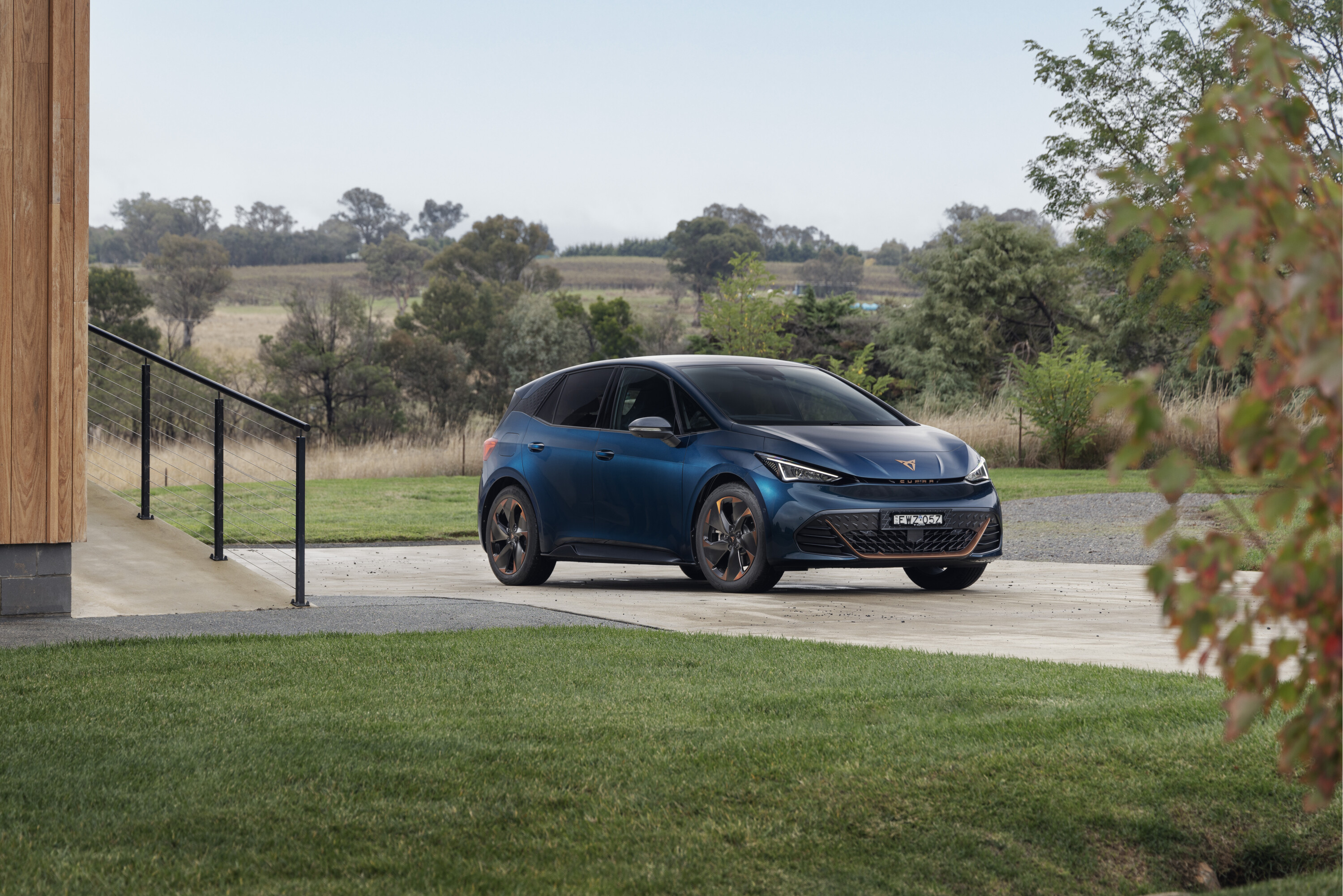
There are two option packs available on the Cupra Born: The Performance pack for $2600 and Interior Pack for $2900.
The Performance Pack adds larger 20-inch wheels, wider tyres and dynamic chassis control. The Interior Pack changes seat trim to an upcycled plastic trim and adds 12-way power adjustment, heating and massage functionality to the front seats as well as a 9-speaker Beats stereo.
Adding either option pack means you do lose a seat in the back row however, reducing total seating capacity to four.
Safety
In 2022, the Cupra Born received a five star safety rating from ANCAP.
The vehicle is equipped with seven airbags, including front, side chest, side head (curtain), and a center airbag for enhanced passenger protection.
Its safety features extend to Autonomous Emergency Braking (AEB) with multiple assist systems, Lane Keep and Departure Warning, adaptive cruise control, parking and blind-spot assist, rear cross-traffic alert, and driver attention monitoring, all standard across the range.
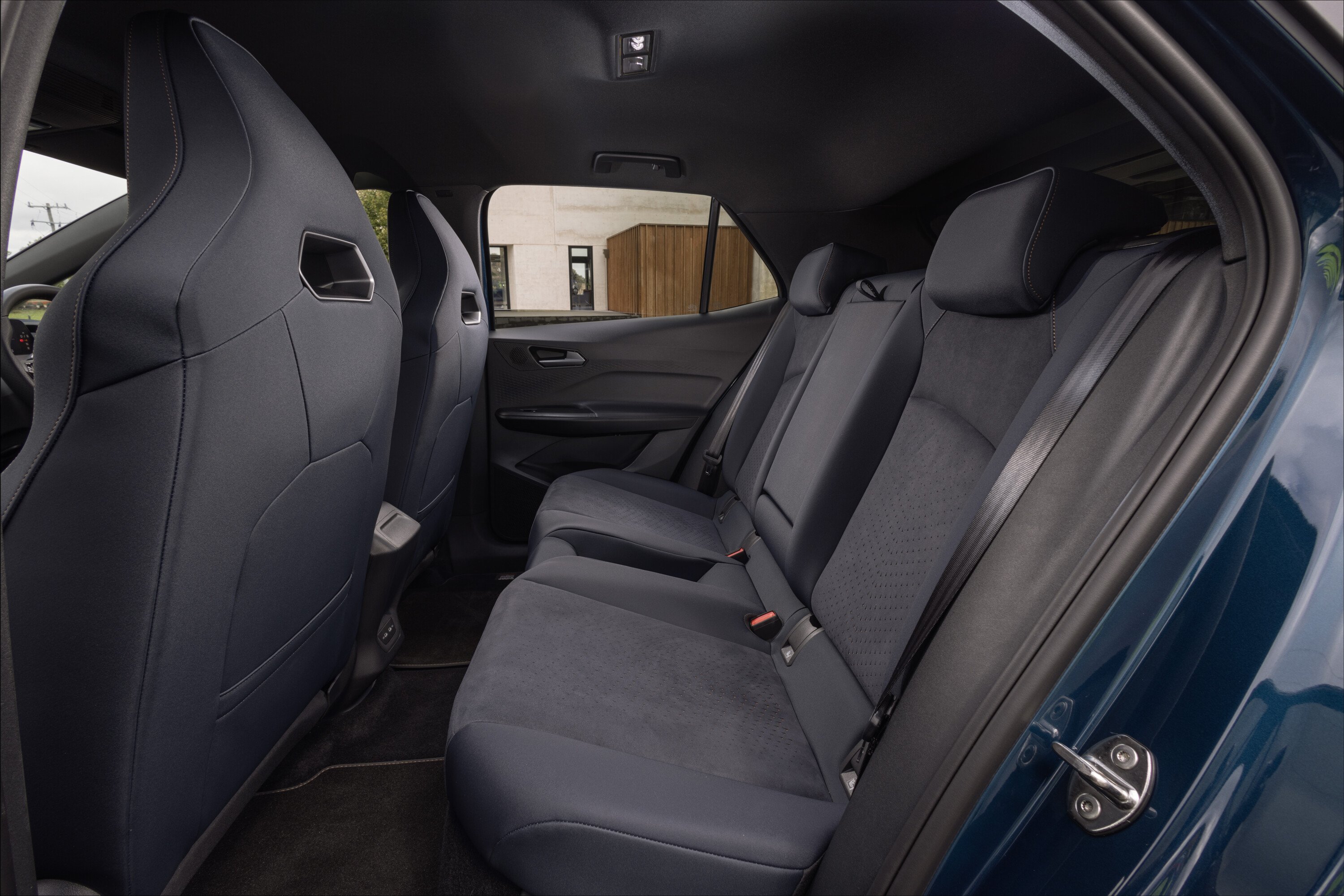
Key rivals
With similar capabilites in terms of range and relative pricing, the Cupra Born faces off against the:
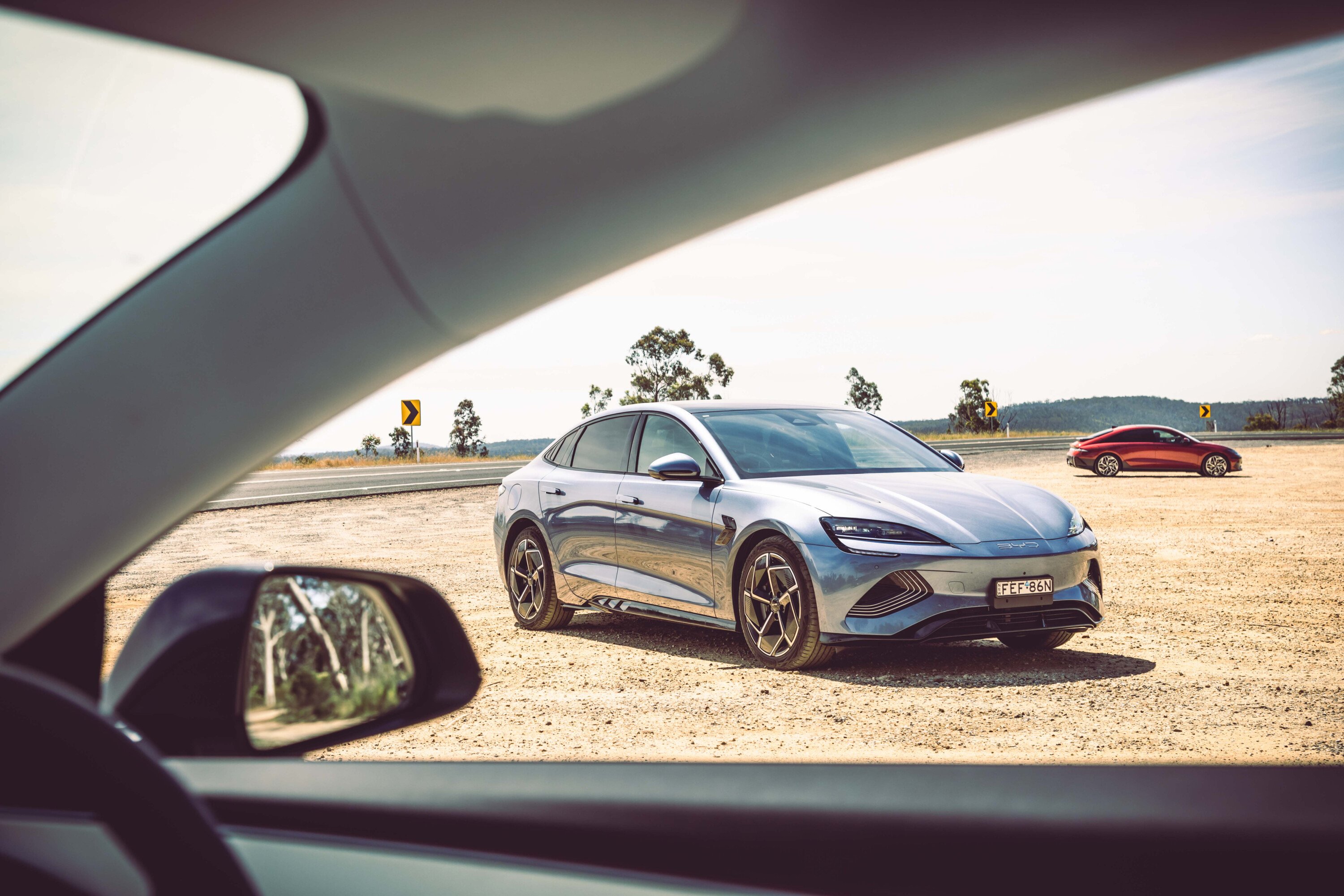
Should I put it on my shortlist?
Entering the competitive Australian EV market around the $60k price range, the Cupra Born is impressive for its segment, especially appealing to young, urban buyers.
Its compact size doesn’t compromise on practicality or driving enjoyment, offering a balance of dynamic performance and sufficient range for city living and beyond.
The Born combines attractive design with effective performance, ensuring it stands out as an electric vehicle that’s fun to drive and practical for everyday use, including spontaneous outings and routine errands without range anxiety. Opting for the standard model with an interior pack might be preferable for an everyday ride that emphasizes comfort and style. But if you’re wanting to test it out on windier roads, the Performance Pack will be high on you list.
