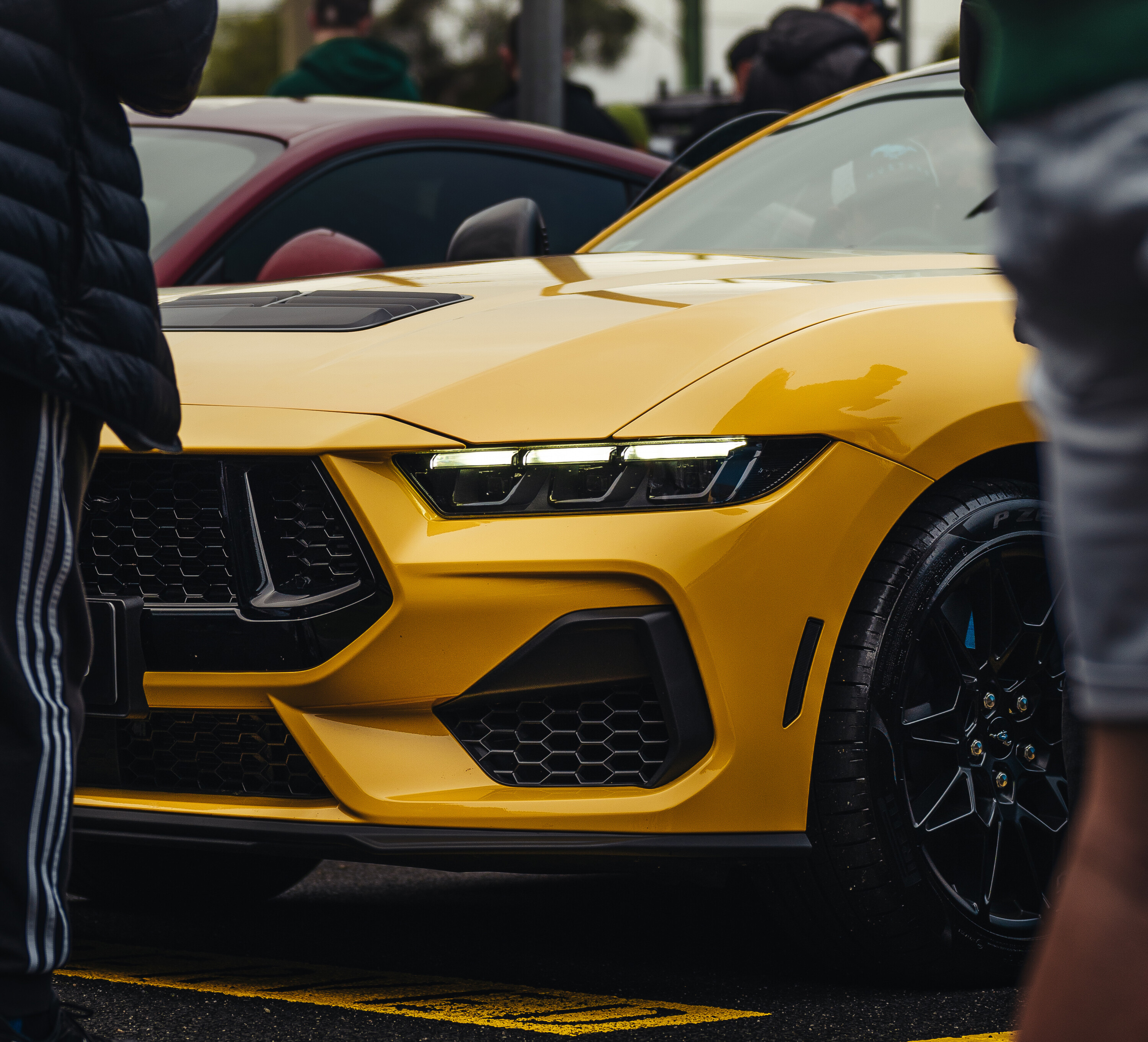
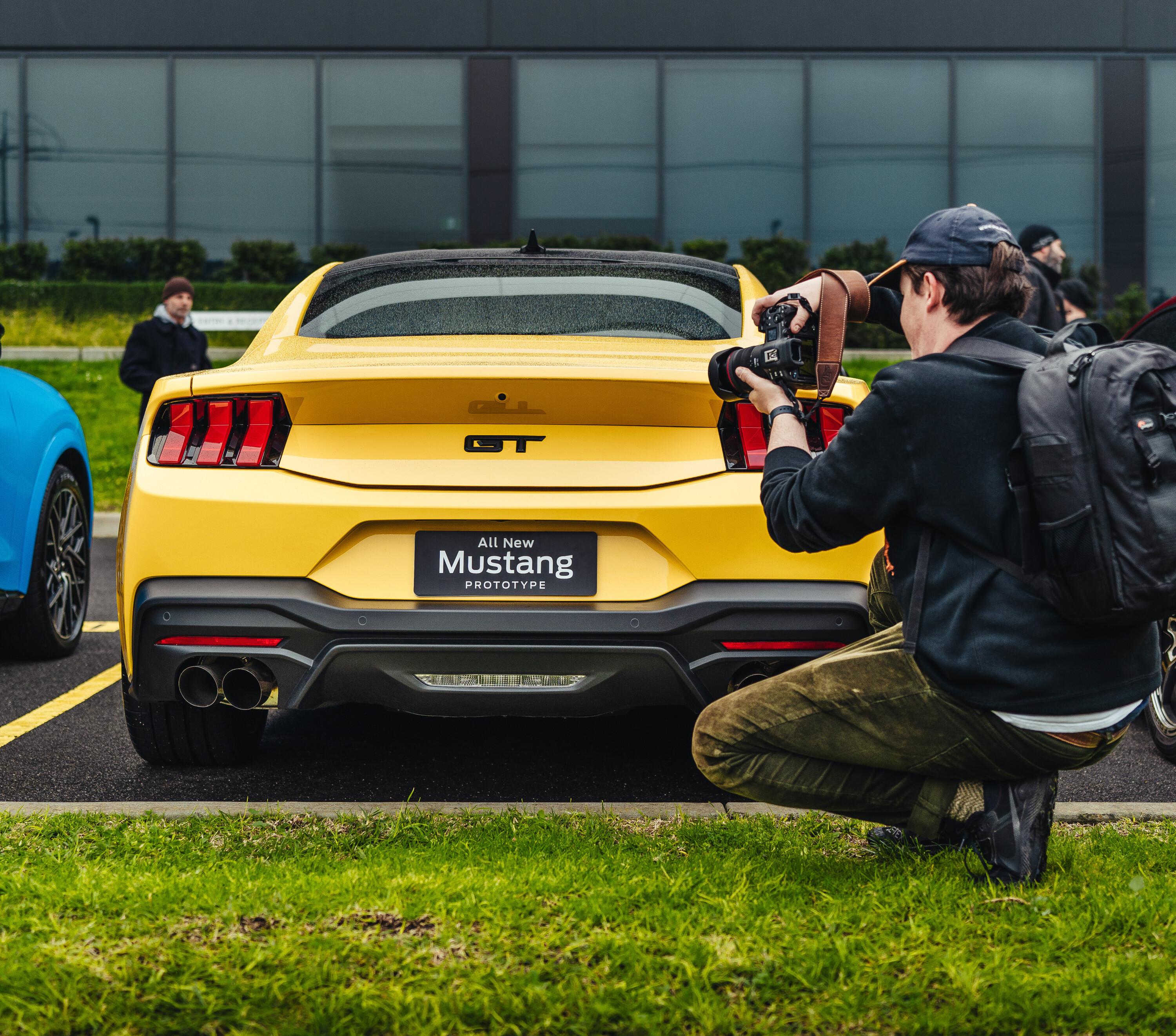
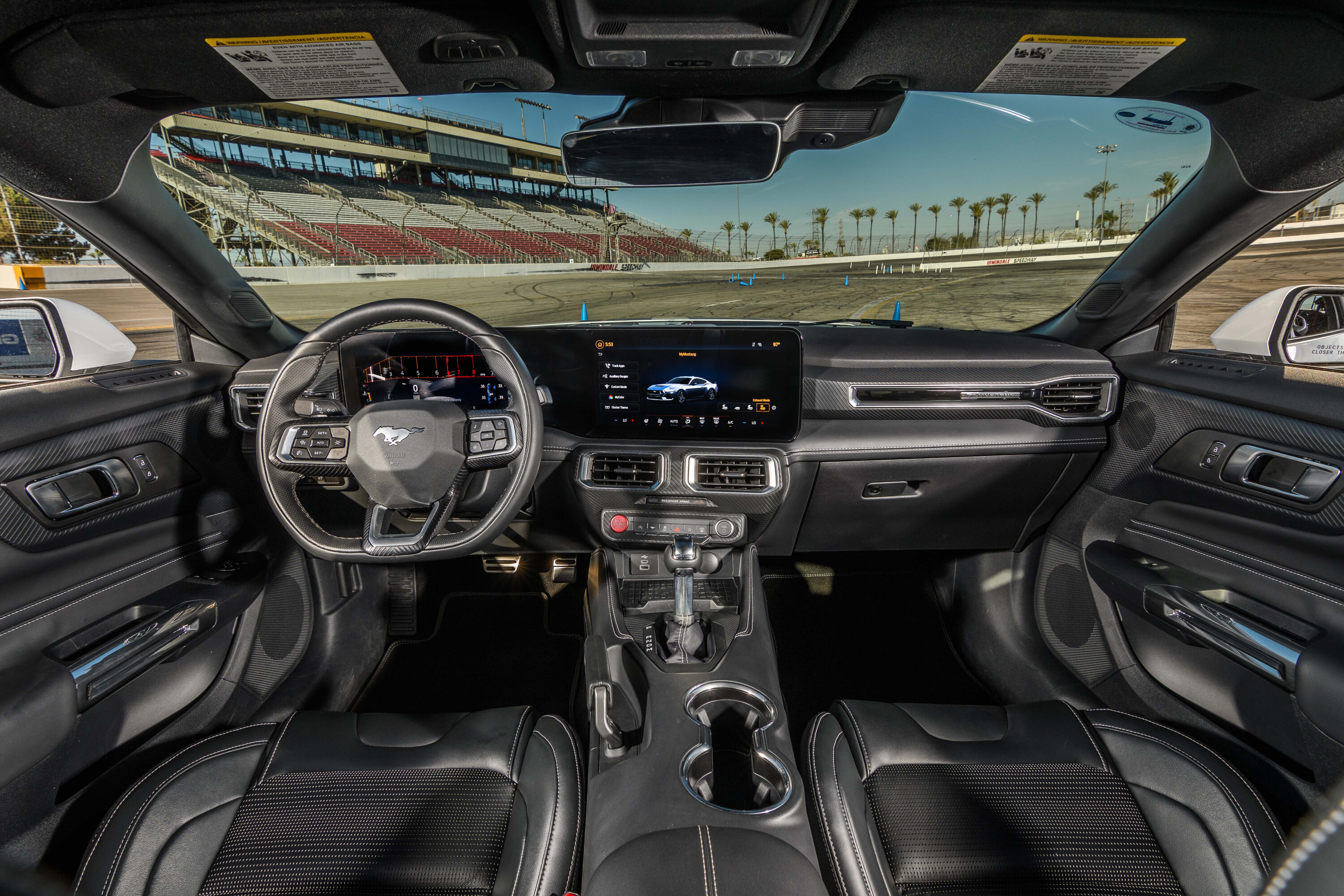
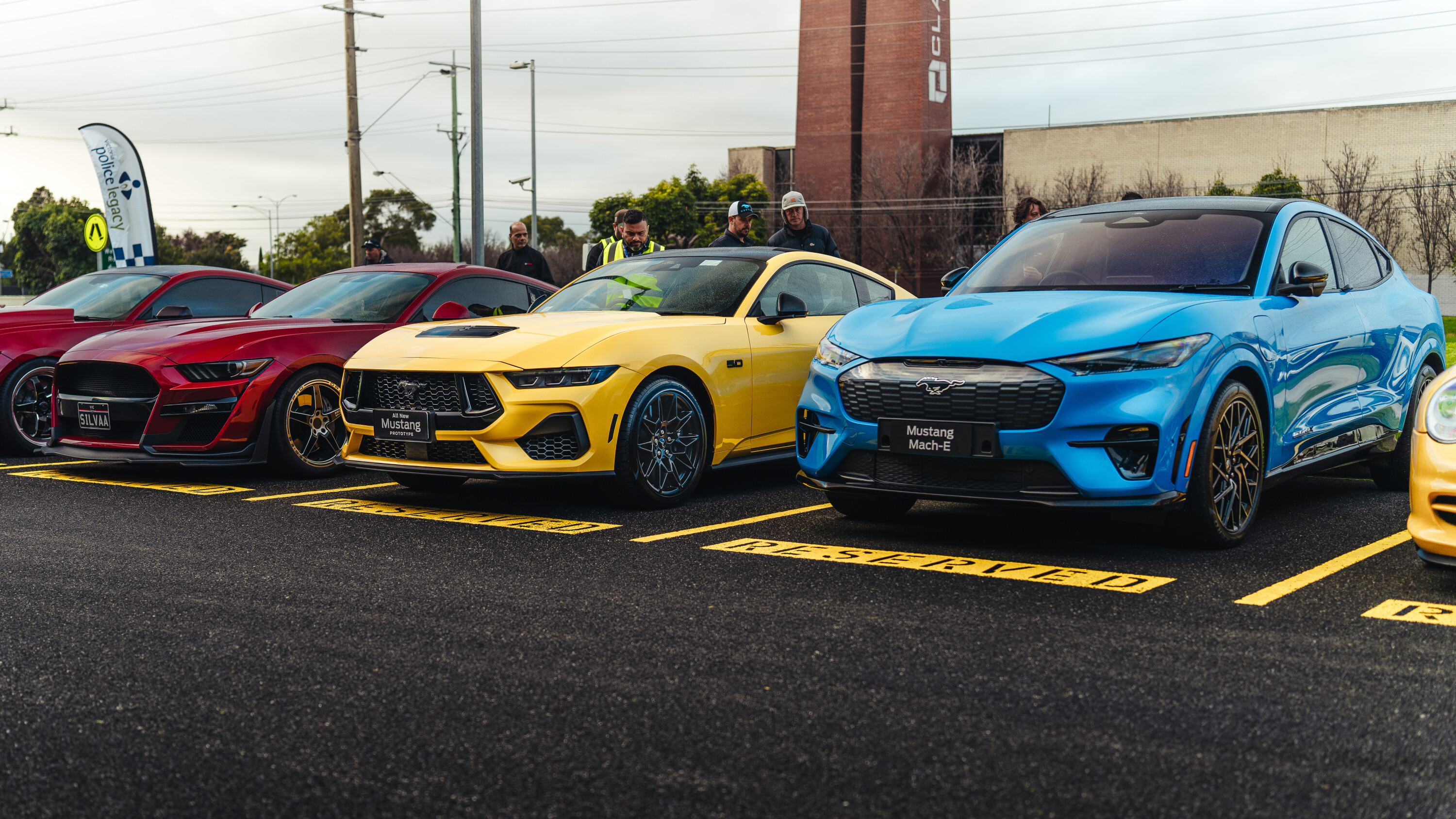
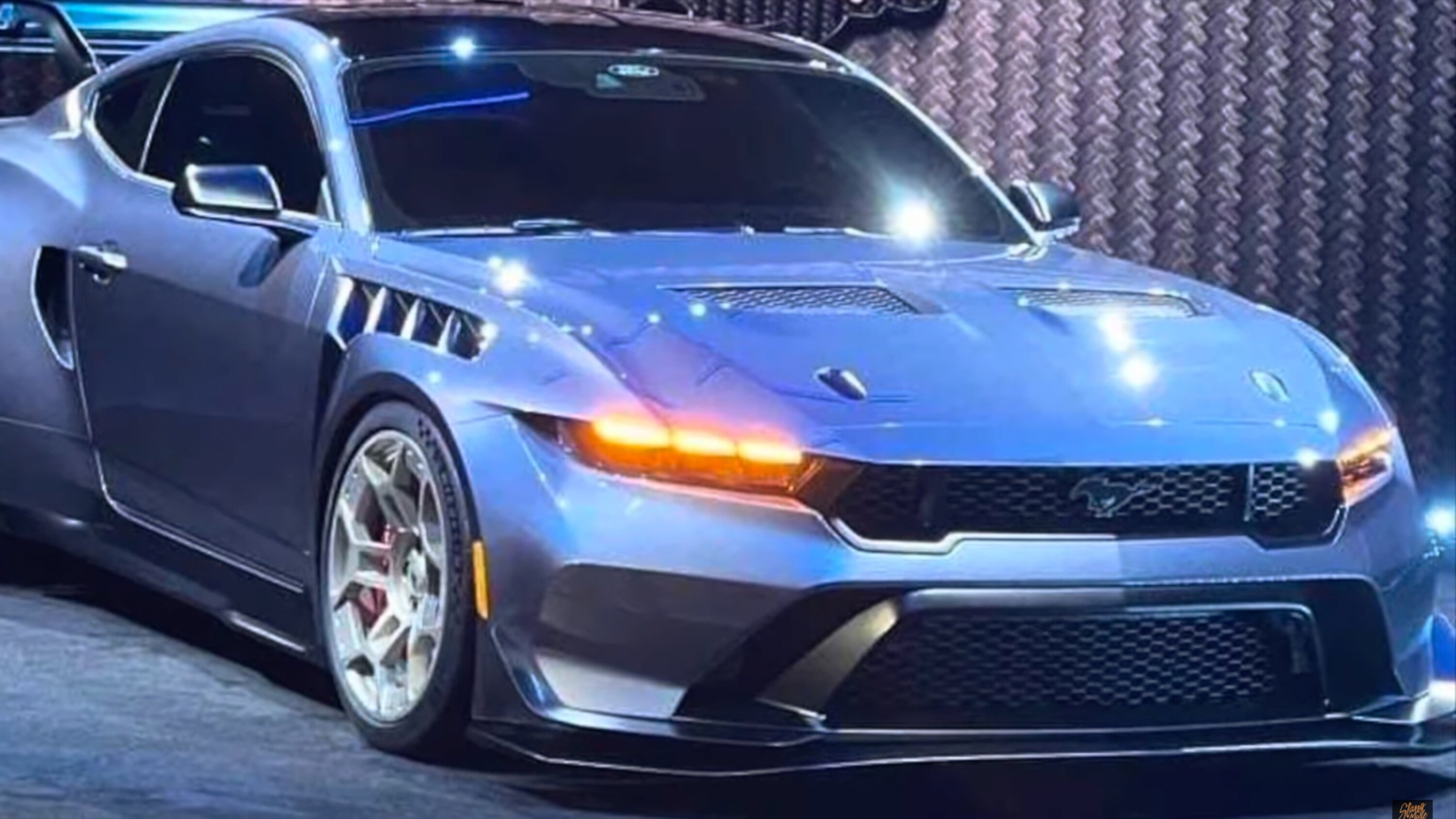
The first examples of Ford’s imminent Mustang GT coupe and Mach-E electric SUV have touched down in Australia, months ahead of their local launches – with a pair of pre-production vehicles unveiled in public over the weekend.
Revealed at the popular Highball Cars & Coffee event in Melbourne’s east, the pair joined hundreds of rare and desirable cars at the informal event at Bosch Australia’s headquarters.
1
While both models were driven to the event and are right-hand drive, the cars are not early customer vehicles but part of a pre-production first-fleet that wouldn’t normally see the light of day outside Ford’s premises until after their official launch.
However, Ford Australia product communications manager Ben Nightingale said its first electric vehicle the Mustang Mach-E and the S650-generation Mustang were special enough to warrant a different approach for their introduction.
“Ordinarily these wouldn’t be seen out in public,” he said. “We decide to change it up because we really want to engage directly with our customers and this is a great way to do it.”
1
Not all Ford models would justify a celebrity appearance at one of the country’s biggest cars-and-coffee gatherings, said Nightingale, but such a high concentration of motor heads made the event an obvious choice for an unorthodox activation.
“We know that the demand’s there, the passion is there – they’re enthusiast vehicles and Highball is an enthusiast event, so it just makes sense.”
“We’ve parked near some modified sixth-gen Mustangs, so there’s some knowledge there already and it’s great to see people taking notice.”
1
When will the new Mustang coupe and Mustang Mach-E EV go on sale in Australia?
Neither model is due on sale in Australia for many months.
Nightingale confirmed the Mustang Mach-E is expected in the final quarter of 2023, while the seventh-generation Mustang is even further down the line with a launch planned for the first quarter of 2024.
The previous-generation Mustang is now in runout and orders are only being taken from Australian customers for the new version, and the appearance of the pair of show-cars is an unusual part of an otherwise normal introduction process.
“We always bring out ‘PP’ or Pre-Production units [to Australia], and it’s usually for our team internally to have a good look at them and do some evaluation drives, spec checks – those kind of things. This is the final phase before we switch into production mode.”
While Nightingale couldn’t reveal exact numbers for Mustang and Mach-E orders, he did confirm that demand was as “strong” as expected and Australia had secured the supply to meet it.
“This is the final phase before we switch into production mode.”
1
“We’re really pleased with how demand is travelling for both models. We’re in the ‘phase-down’ for sixth-gen because seventh-gen is in production now. Orders are flowing into that bank now and things are looking great.
“We’ve got good supply and if a customer wants to place an order they can go in to place an order – there’s no ballot system. They’re going to be able to get the car they want.
“With Mach-E, we didn’t want to run the model of some of our rivals where they’re coming in very small numbers and you have to do lotteries. Our first production Mach-Es will arrive next month.”
1
Ford will offer the Mustang Mach-E in three different varieties, including an entry level rear-wheel-drive Select priced form $79,990, a mid-range Premium with bigger battery and more performance for $91,665, while the all-wheel drive GT forms the flagship for $107,665.
With a launch planned further out, Ford has not yet confirmed which of the more traditional Mustangs will be offered in Australia – but the carmaker has already revealed three powertrain options in both coupe and convertible bodies, along with manual and automatic transmissions.
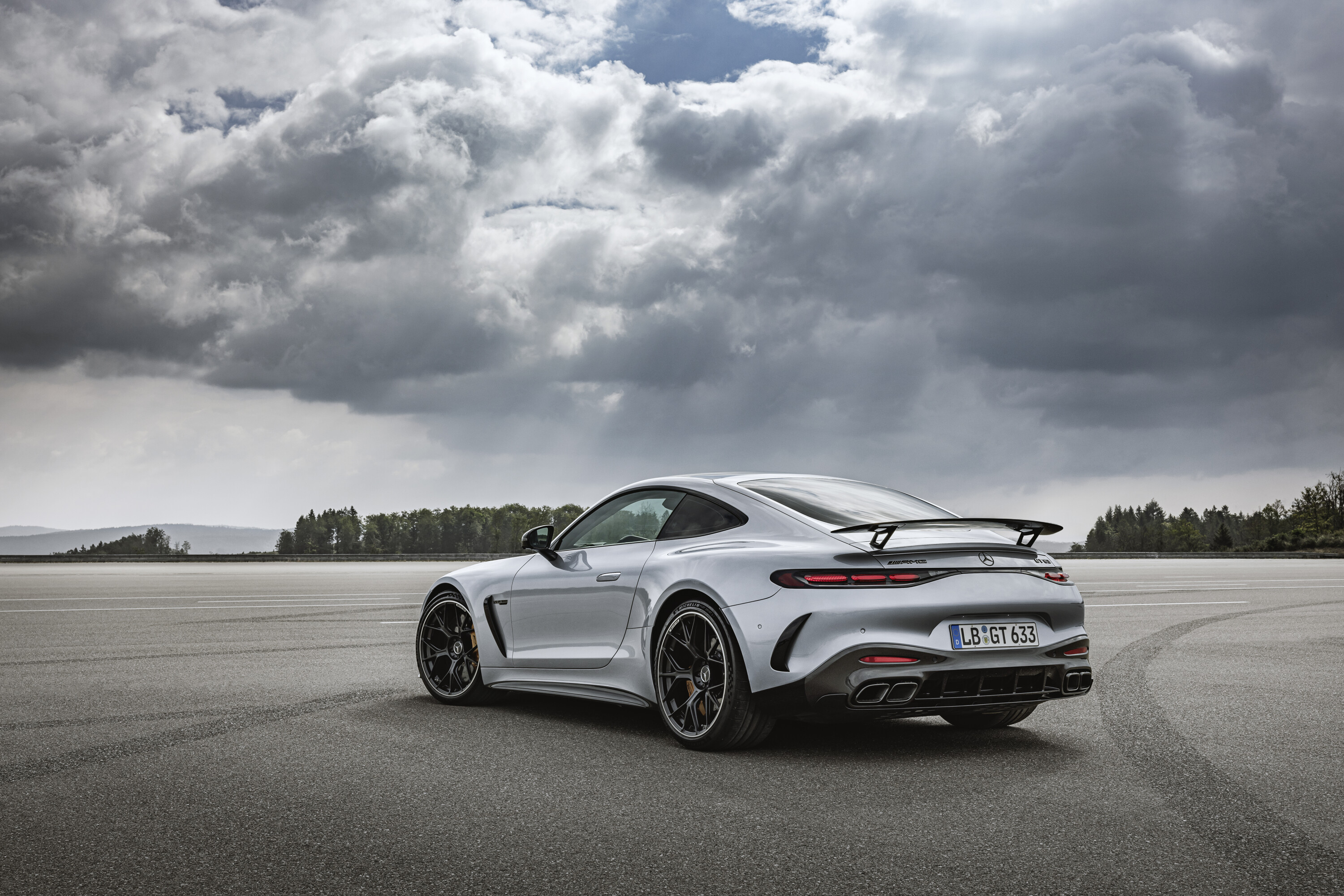
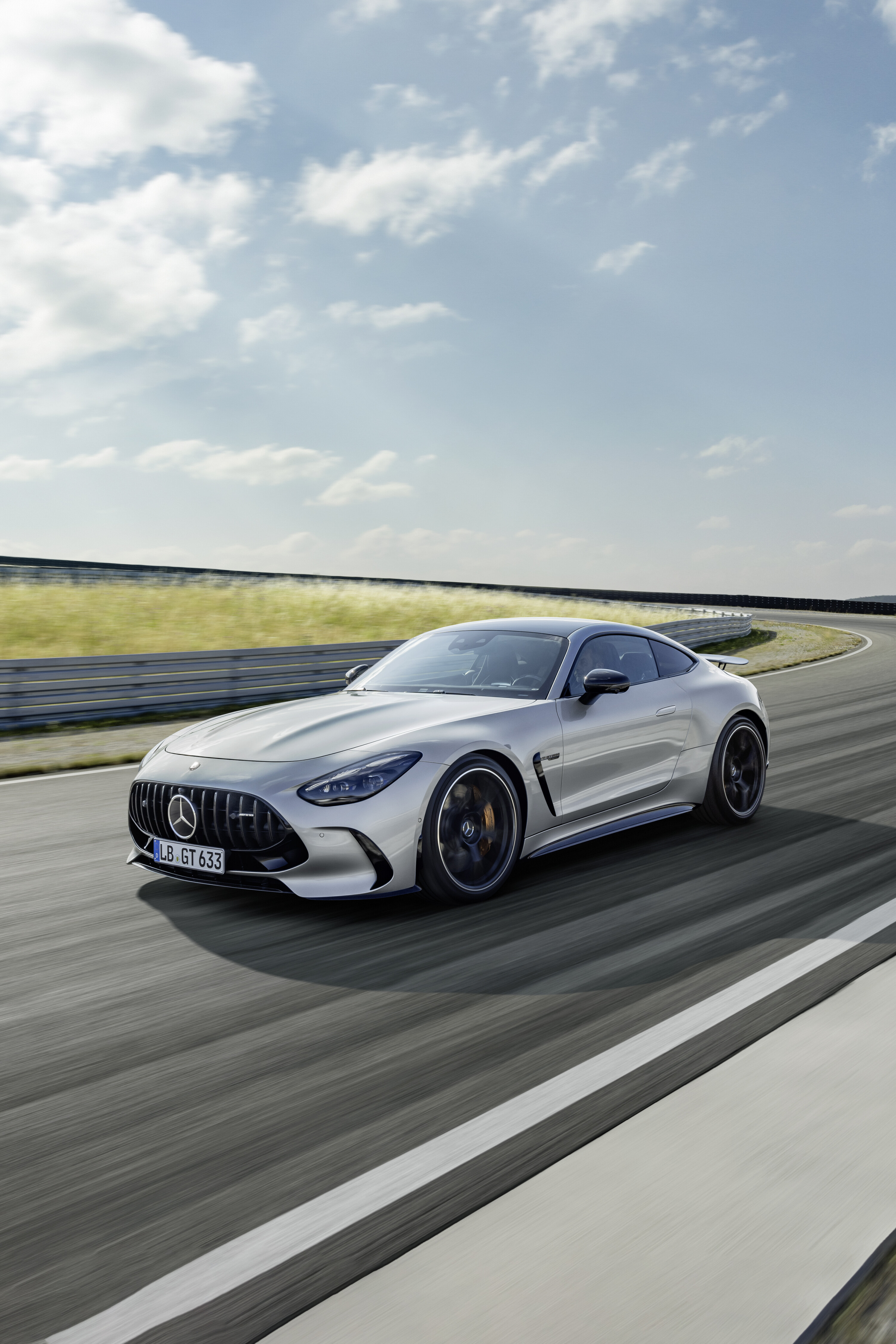
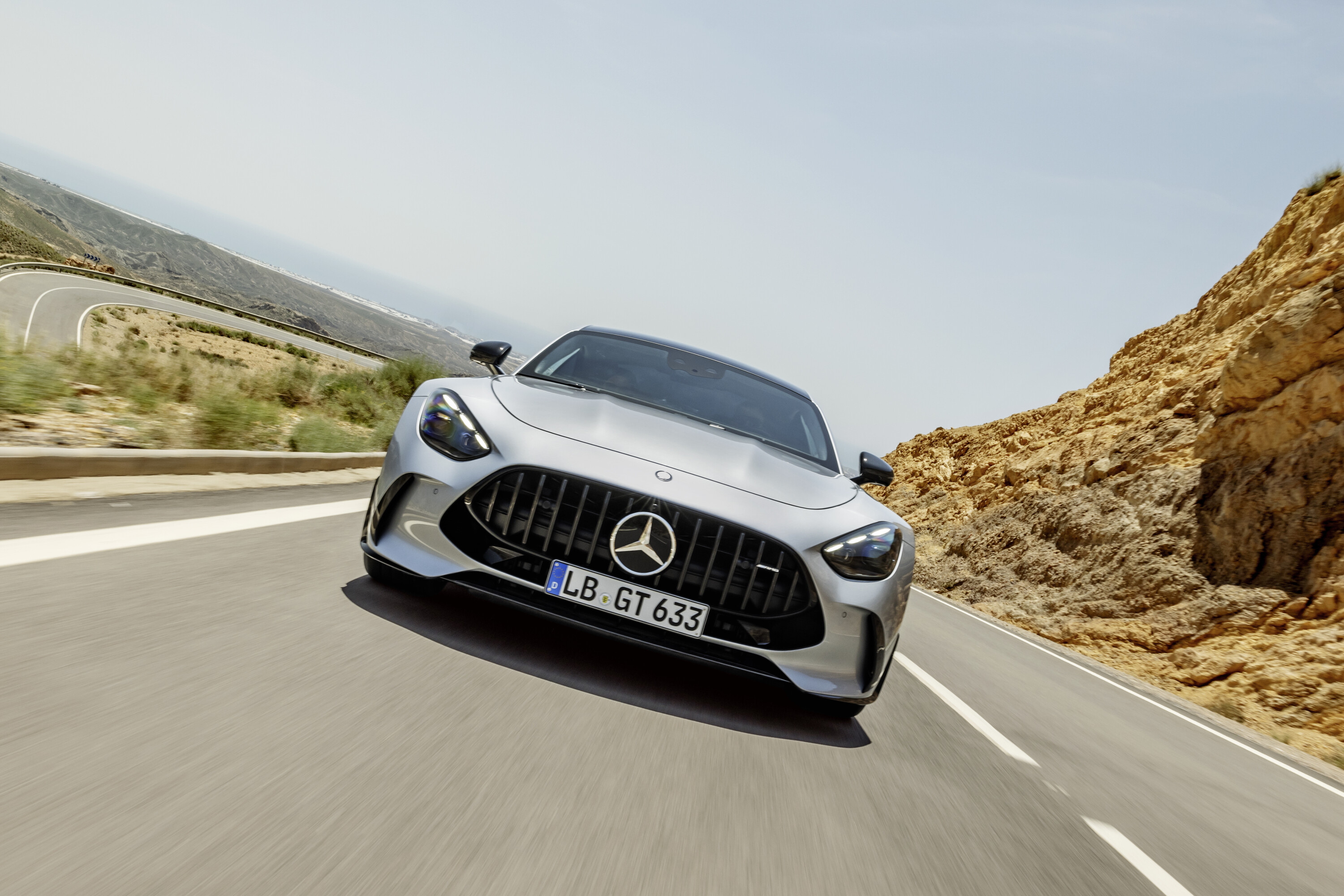
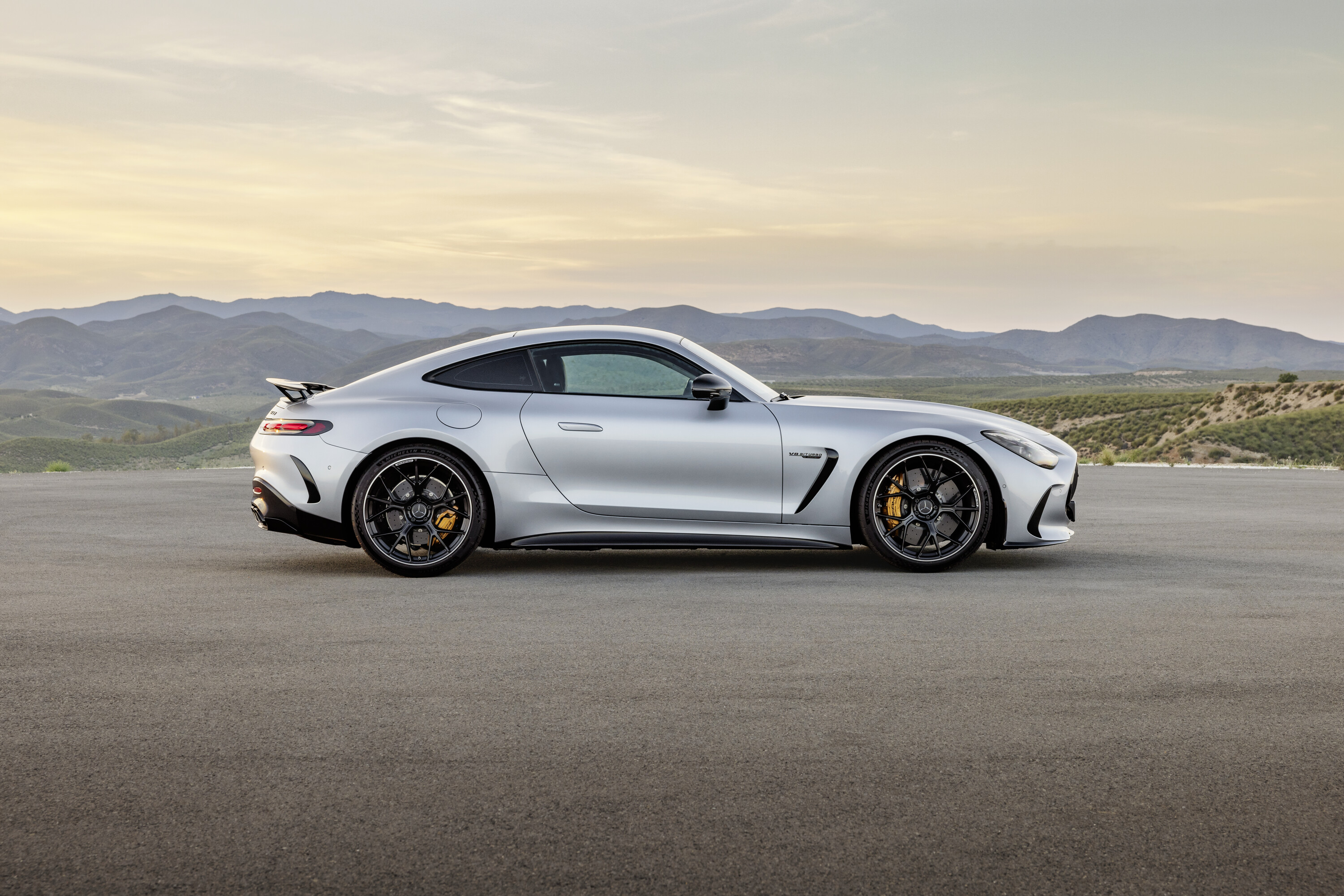
Taking a leaf out of the book of Porsche 911, Mercedes-AMG has developed the 2024 AMG GT with all-wheel drive and four occupants in mind – but don’t worry, it hasn’t gone totally soft.
Snapshot
New AMG GT adopts AWD and grows in weight + length
Four seats on board to broaden appeal
0-100km/h in 3.2 seconds and 295km/h top speed
This could be the last new AMG to use the 4.0-litre twin-turbo V8 without significant electric augmentation. And, much like the related SL, the two-door GT coupe is available in two states of tune – the 350kW AMG 55 kicks things off, and the flagship AMG 63 produces 430kW and 800Nm.
With stress-easing AWD, a four-wheel interlinked suspension system that’s designed to better balance comfort and performance as well as much bigger physical dimensions, the new GT is a more grown-up sports car than the one it replaces.
Expect a similar development path to the previous AMG GT with more focused R, Black Series, and GT R Pro models likely to emerge later with a target on chopping Nordschleife lap times.
The new AMG GT is nearly 300kg heavier than the car it replaced
First things first, the new SL-based AMG GT is a far larger car than the one it replaces.
Measuring 4728mm tip-to-tail, the new car is 184mm longer than the two-seat GT and rides on a 70mm longer wheelbase. It’s also slightly narrower (1984mm) and a lot taller (1354mm plays 1284mm).
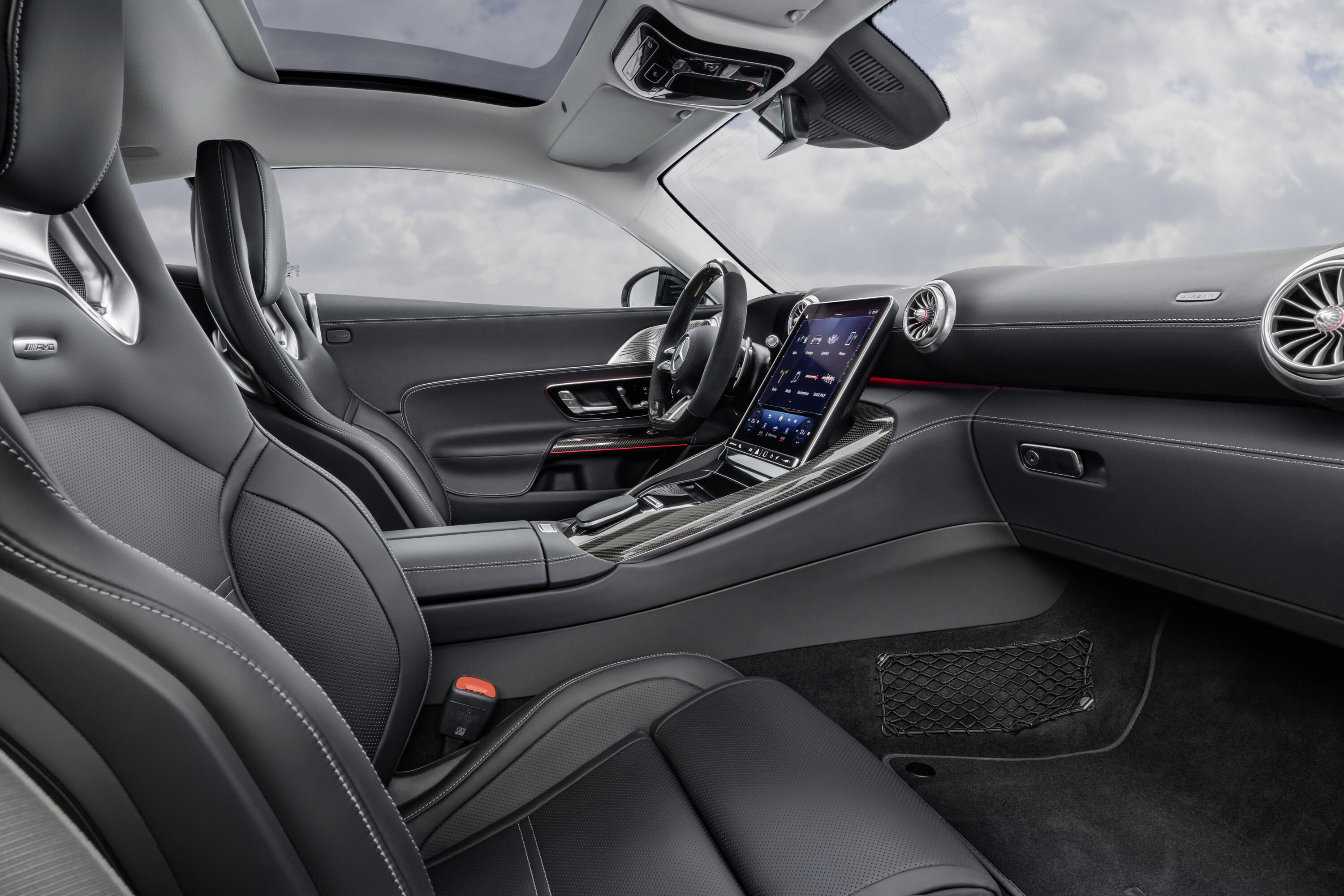
All this is great for occupant and cargo space (which is now a competitive 321L with the rear seats in place, or 675L with them folded), but not for weight.
1
Despite employing a combination of aluminium, steel, magnesium, and fibre composite materials in its construction, the GT can’t escape its size. It’s nearly 300kg heavier than the old AMG GT, weighing 1970kg (EU kerb weight).
To deal with that increase in weight, AMG has had to be clever with its chassis. Both axles use a five-link independent design, rather than the typical double wishbone or struts you’d see up front in this kind of vehicle.
Forged aluminium parts are used in the suspension components, and there’s some clever anti-roll bar trickery going on. Each damper is connected hydraulically, and instead of using fixed sway bars, the AMG GT can disperse oil between dampers to adjust roll characteristics.
1
This means that, when heavily loaded in a bend, the outside dampers can be more resistant to compression to reduce roll.
When on the straigt and narrow, the oil flows back to the reservoir and allows greater independence for each wheel increasing compliance on bumpy roads. It’s a clever way of retaining lighter steel coil springs with their consistent feel without sacrificing long-haul comfort.
Four-wheel steering, 390mm steel brake discs clamped by six-piston front calipers and adaptive dampers with six distinct drive modes finish off the AMG GT’s chassis.
1
V8 engines all around… for now
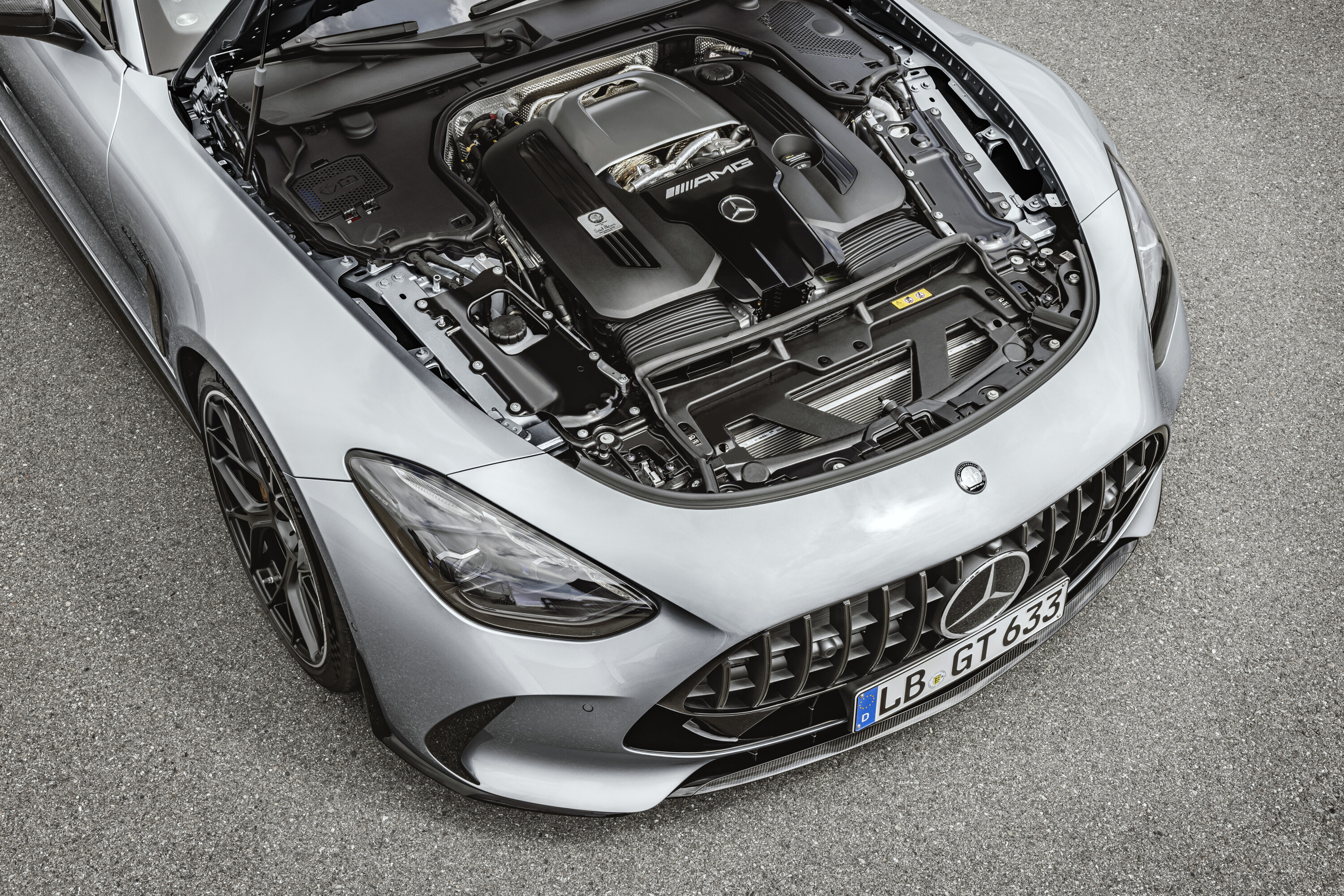
Under the AMG GT’s bonnet is the familiar M178 4.0-litre twin-turbo V8 – without any plug-in hybrid gubbins.
Hand-built in Affalterbach under AMG’s ‘one man one engine’ philosophy, it’s been tweaked for its life in the latest AMG GT.
A new oil pan, redesigned crankcase ventilation, repositioned intercooler, optimised inlet and outlet ports join a revised exhaust path and larger petrol particulate filter all contribute to an engine that produces its grunt in a more efficient way with lower CO2 outputs.
Mercedes-AMG has previously said it is considering electrification for the new AMG GT, but at launch it will be all petrol-fueled V8s.
Compared to the AMG GT S, the Mercedes team has upped the 63’s torque by 130Nm and brought power in line with the previous GT R model (430kW). The lower-tune AMG 55 produces still-healthy 350kW/700Nm outputs.
Combined with AMG’s 4Matic+ AWD system and nine-speed automatic transmission that now features a wet clutch instead of a torque converter (like Mazda’s latest autos), the new car can hit 100km/h six tenths faster at 3.2 seconds.
The greater size means it can’t achieve such a high top speed, however, with Mercedes-AMG claiming a V-Max of 295km/h – 15km/h adrift of the old car.
1
Pricing and Australian availability
The AMG GT is confirmed for Australian shores, but when and how much is yet to be detailed. Expect the flagship to sit in a similar price bracket to the AMG SL 63 ($374,900) as a rival for the Porsche 911 GTS ($355,200).
Rimac zaps the Nürburgring Nordschleife EV lap record.
Snapshot
Rimac charges to first place in Nordschleife EV lap record race
Destroyed Tesla Model S Plaid by 20 seconds
Hot weather and 2300kg weight limited its ultimate speed
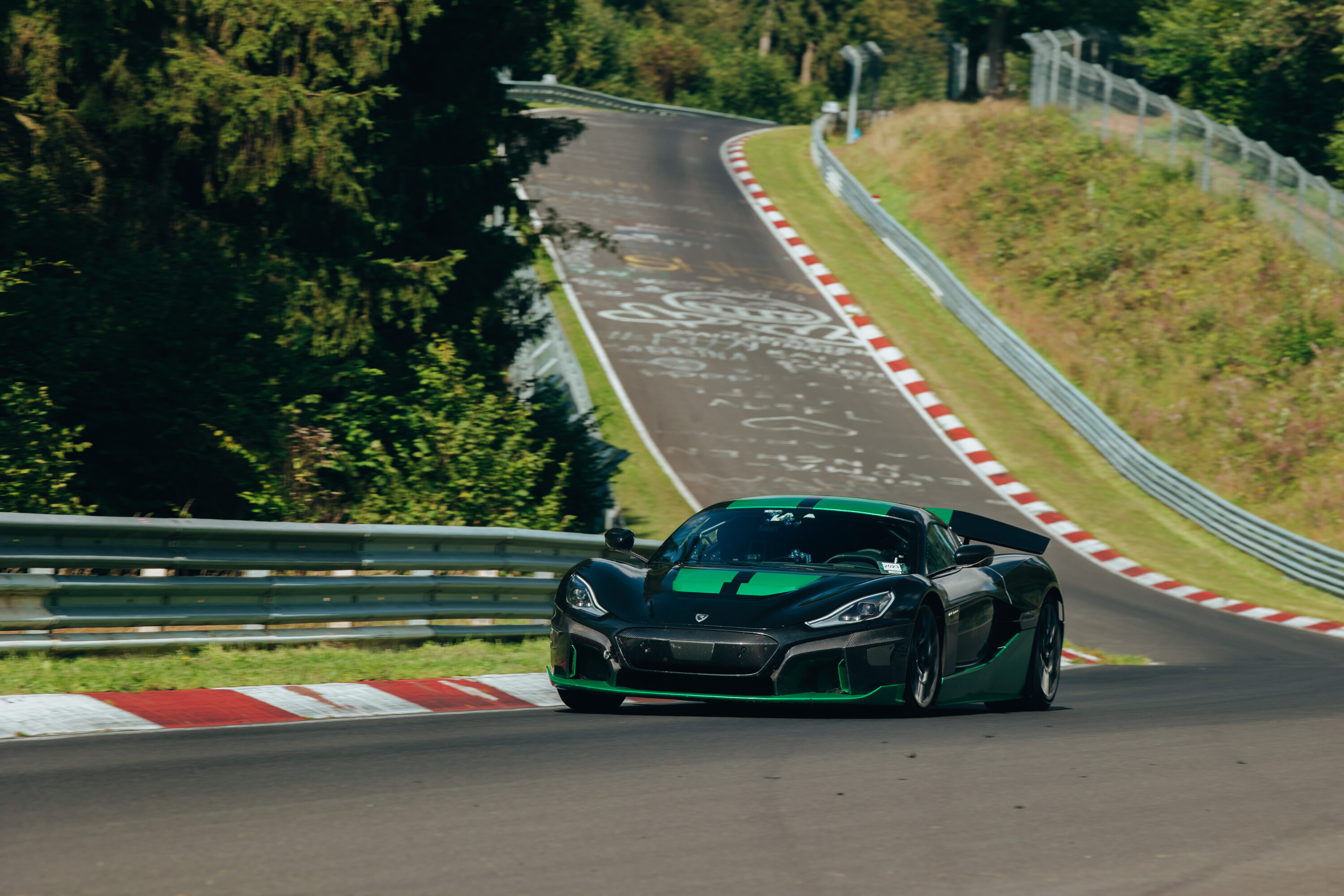
Croatian electric hypercar maker Rimac has smashed the Nordschleife EV lap record by 20 seconds with its quad-motor Nevera.
Completing a tour in a blisteringly quick 7:05.298 for a full lap (or 7:00.928 on the shorter Sport Auto measure), the Nevera easily dispatched the Tesla Model S Plaid (7:25.231) for top EV honours.
Make sure to watch the video above to see how the Nevera’s brutal thrust pushes the EV to a new record time.
The Nevera – which will be a 1-of-12 record-breaking limited edition – was wearing street-legal Michelin Cup2R tyres and, as a package, is fully Tüv-approved (that’s Germany’s very strict version of a ‘roadworthy’).
With whopping outputs of 1400kW/2360Nm courtesy of four electric motors, the Nevera reached 350km/h on the Dottinger Höhe with Croatian racing driver, Martin Kodrić, at the helm. It could have gone faster, were it not for tyre regulations.
From a standing start, the Nevera is able to reach 100km/h in 1.91 seconds, cross the quarter mile in 8.25 seconds before cracking 300km/h in 9.22 seconds. Its top speed is 412km/h.
1
Designed firstly as a road car, the 2300kg Nevera’s record-setting pace is even more impressive – this is no stripped-out 911 GT3 RS (6:49.3 time). Expect more focused Neveras to come along in the future and eclipse the inital attempt.
The Rimac team also commented on the less-than-ideal conditions they were greeted with thanks to Germany’s hot summer weather.
“We had challenging weather conditions during our practice sessions this week and have chosen what seems like one of the hottest days on the track this summer to set a lap time”, said helmsman Kodrić.
“However, a 7:05.298 lap time at the Nürburgring Nordschleife is commendable. The fact that the Nevera can achieve this kind of speed on track, when it’s been developed to be a comfortable hyper GT for the road, is what makes it so special.”
CATL announces long range, fast-charging LFP battery
Reportedly feature on 2024 Model 3 refresh
Unconfirmed rumours suggest imminent release within weeks
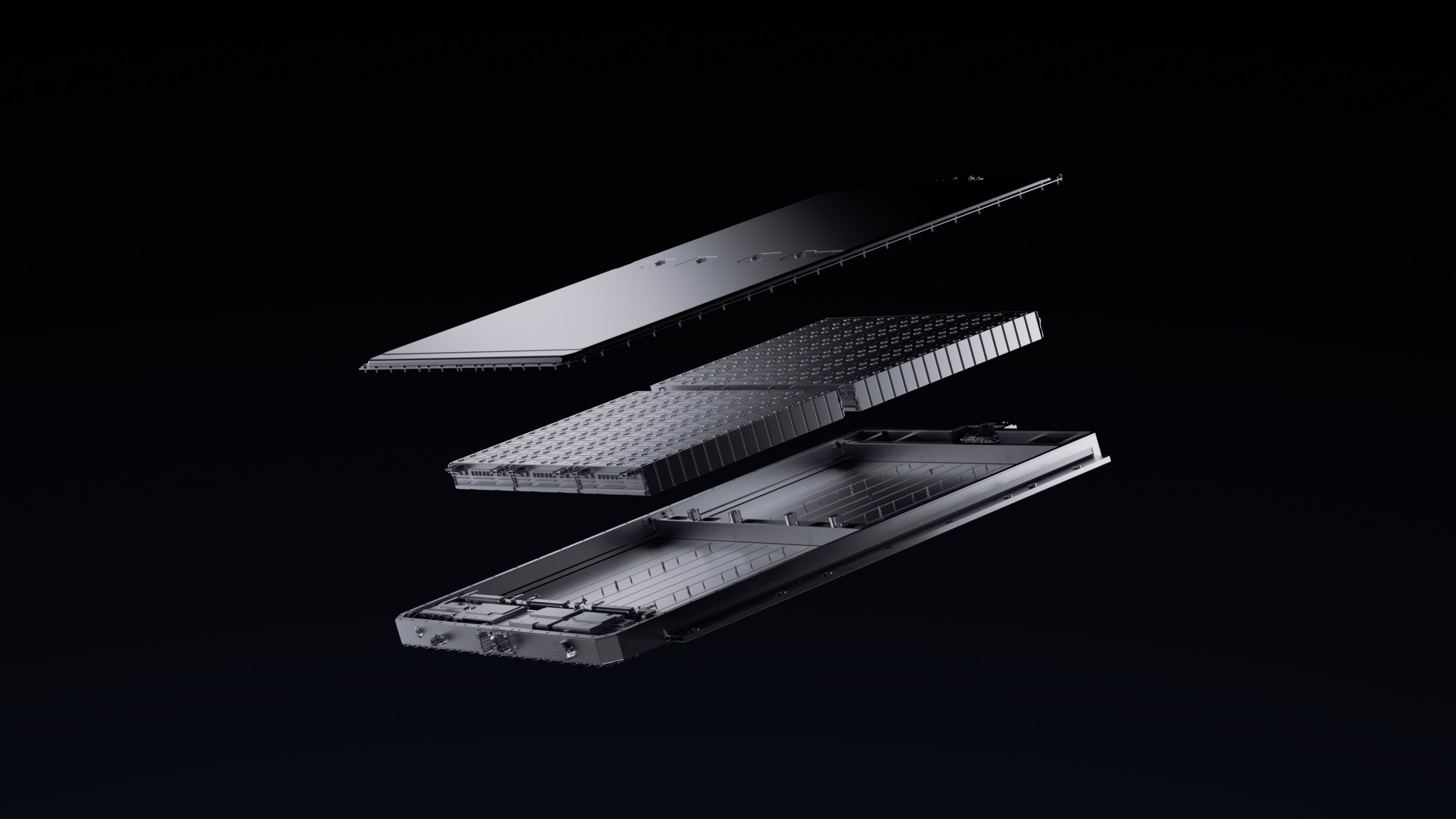
The new ‘Shenxing’ LFP battery is capable of ‘4C superfast charging’ to deliver 400 kilometres of driving range in 10 minutes on a compatible station, with more than 700km claimed range on a full charge.
Compared to traditional lithium-ion packs, LFP cathodes typically charge slower and are more sensitive to lower temperatures – but last longer and are thermally safer.
3
CATL, which currently supplies electric vehicle batteries for the Chinese-made Tesla Model 3 RWD sedan, claims the new battery extracts and transmits lithium ions faster with more insertion channels in a shorter distance to result in faster charging.
At room temperature, the EV battery giant claims it can recharge from empty to 80 per cent in 10 minutes. In low -10 degrees Celsius conditions, it’ll take 30 minutes.
There’s also an upgraded electrolyte and separator with a new coating to ensure safe operation.
CATL will start mass production of the new ‘Shenxing’ LFP battery by the end of this year – as rumours suggest an imminent launch for the long-rumoured project ‘Highland’ Tesla Model 3.
Tesla leaker Chris Zheng [↗] believes the new 2024 Model 3 sedan has already started mass production in the Shanghai factory (where Australian-bound Teslas are made) and local Chinese media [via CnEVPost ↗] reported it may go on sale in China as soon as this month.
As seen below, this new CATL LFP battery (previously codenamed ‘M3P’) will reportedly feature on higher-end Model 3 variants.
Currently, only the base rear-wheel drive (RWD) uses an LFP cathode which provides up to 491km claimed WLTP range and maximum 170kW DC charging capability.
Meanwhile, the current Long Range and Performance adopt the more energy-dense nickel-manganese-cobalt (NMC) lithium-ion type for a 602km claimed range on the former and 250kW DC peak charging.
April 1, 2023: New battery could give Model 3 700km range
Snapshot
Major battery supplier suggests new Model 3 Performance battery
Up to 700km range suggested, higher energy density, new cheaper materials
Unclear for Model 3 Long Range and Model Y SUV
Top spec 2024 Tesla Model 3 variants are expected to gain an all-new longer driving range battery pack utilising a different chemistry.
Reuters reports Chinese battery giant Contemporary Amperex Technology Co. Limited (CATL) will start mass production on a new pack slated for the flagship Model 3 Performance this year – potentially coinciding with the anticipated 2024 project ‘Highland’ update.
CATL chair Zeng Yuqun reportedly told investors that it’ll feature new materials, offer higher energy density, and is cheaper than current nickel- and cobalt-based batteries.
It follows Zeng claiming last year that CATL’s next-generation battery pack technology will enable up to a 700-kilometre driving range and be 10 to 20 per cent more energy dense than lithium-iron-phosphate (LFP) packs – which the company supplies Tesla for entry-level Model 3 rear-wheel drive.
However, the full material makeup remains unclear and the publication didn’t detail whether the Long Range variant– along with the related Model Yelectric SUV – will also get the same treatment.
Currently, both the dual-motor Model 3 Long Range and Performance use the same 75kWh (estimated) nickel-manganese-cobalt (NMC) battery pack, according to EV Database.
The Long Range is good for up to 602 kilometres of claimed WLTP driving range, while the Performance reduces it to 547 kilometres due to the hi-po motor set up.
The 2024 Tesla Model 3 electric sedan is slated to launch later this year, with minor updates rumoured including a headlight redesign, revised rear bumper design, new interior dashboard material, and Hardware 4.0 with upgraded higher-resolution cameras and additional lenses.
It will directly rival the forthcoming 2024 Polestar 2 facelift, with the Long Range variants gaining a new larger battery to achieve up to 635 kilometres of WLTP-rated range, alongside more powerful electric motors, faster DC charging capability, and improved radar- and camera-based safety assistance systems.
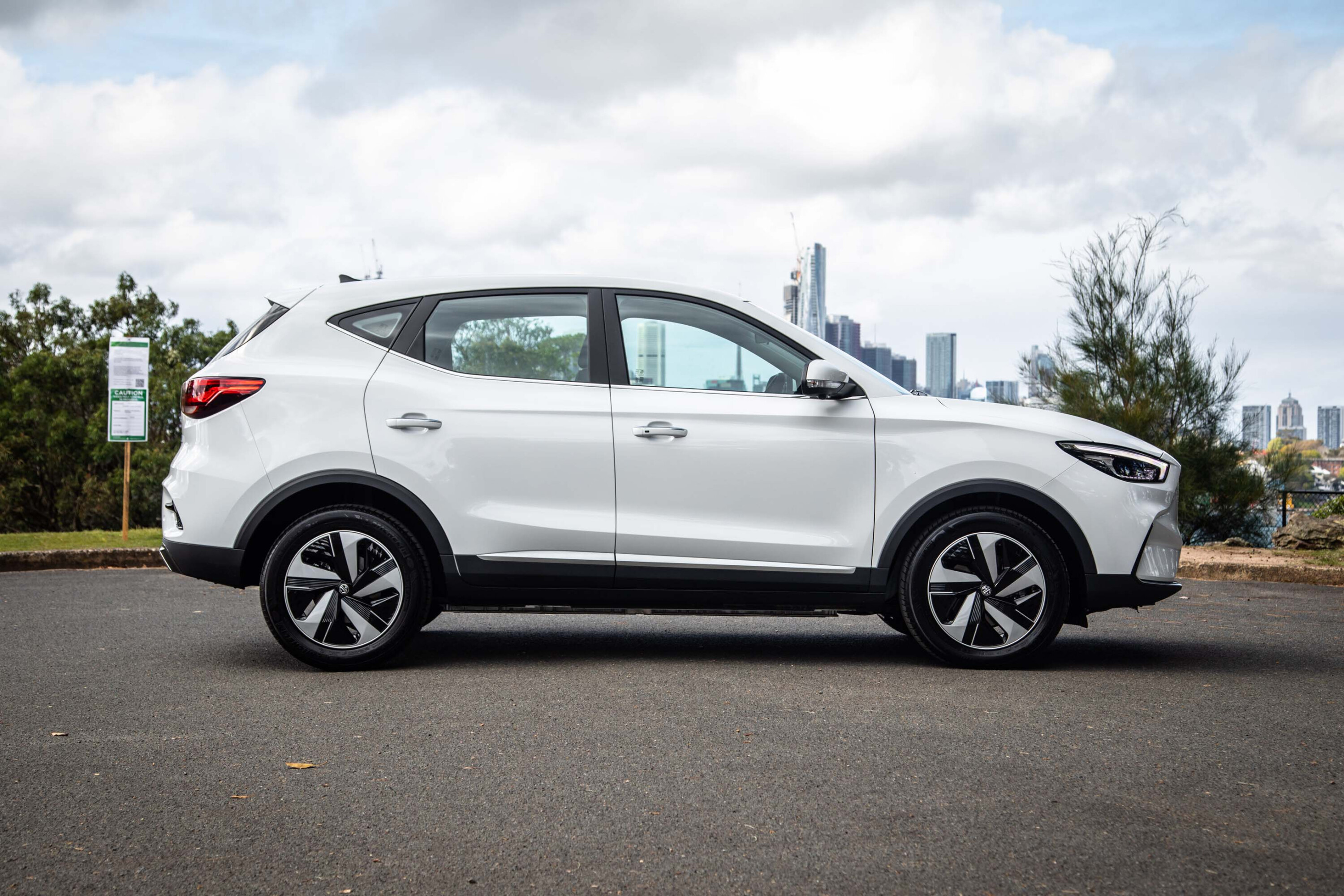
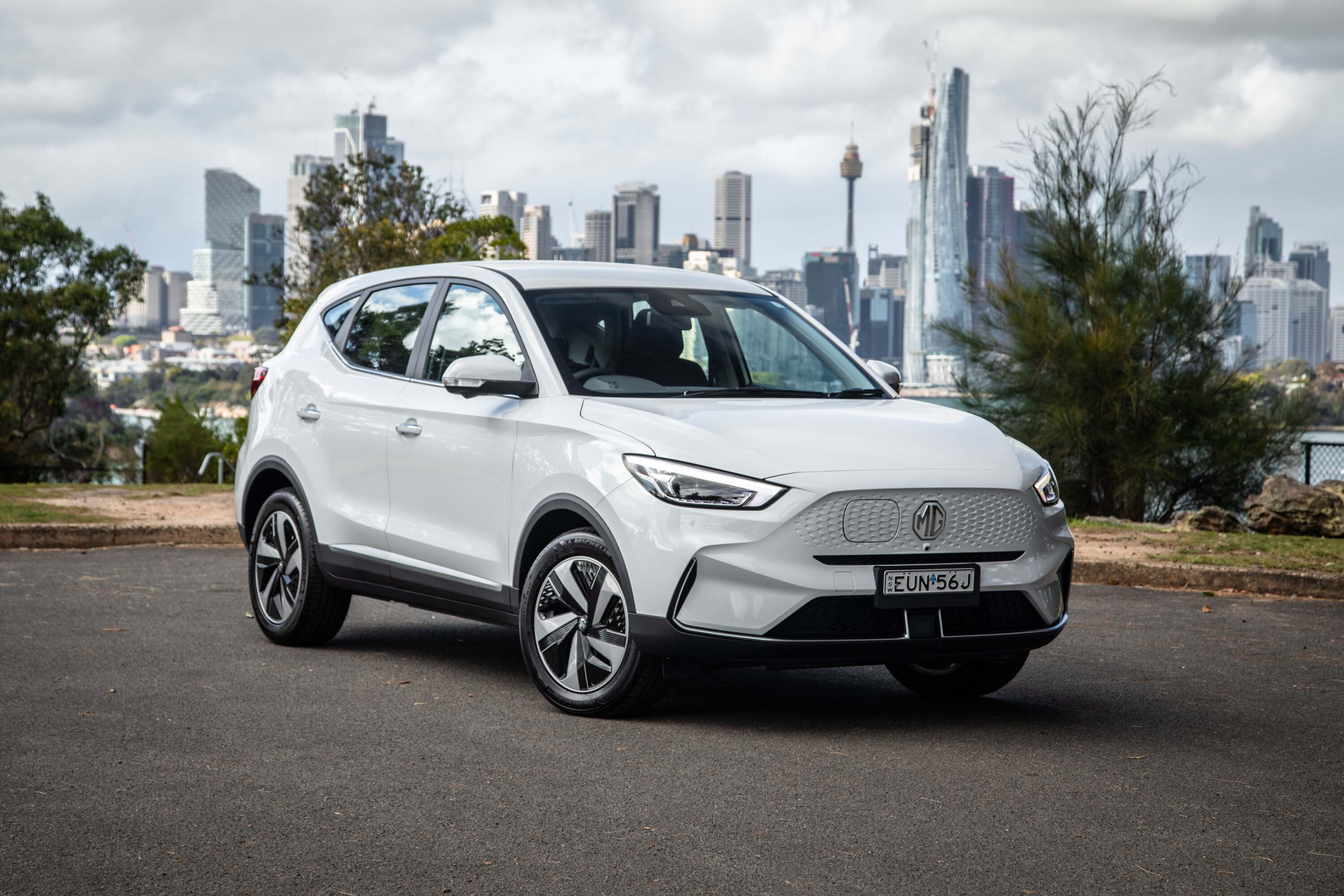
The MG ZS EV pioneered the way for the Chinese-owned, British brand MG (Morris Garages) to introduce budget electric vehicles into Australia, with the upcoming MG4 having just launched in Australia.
The EV is a compact SUV sitting above its attainable petrol counterpart the single-grade ZS Excite.
1
Pricing and Features
The ZS EV is currently Australia’s fifth cheapest EV behind competitor brands such as BYD. The EV is priced from $48,690 driveaway – almost $15,000 over the top-of-the-range ZST Essence.
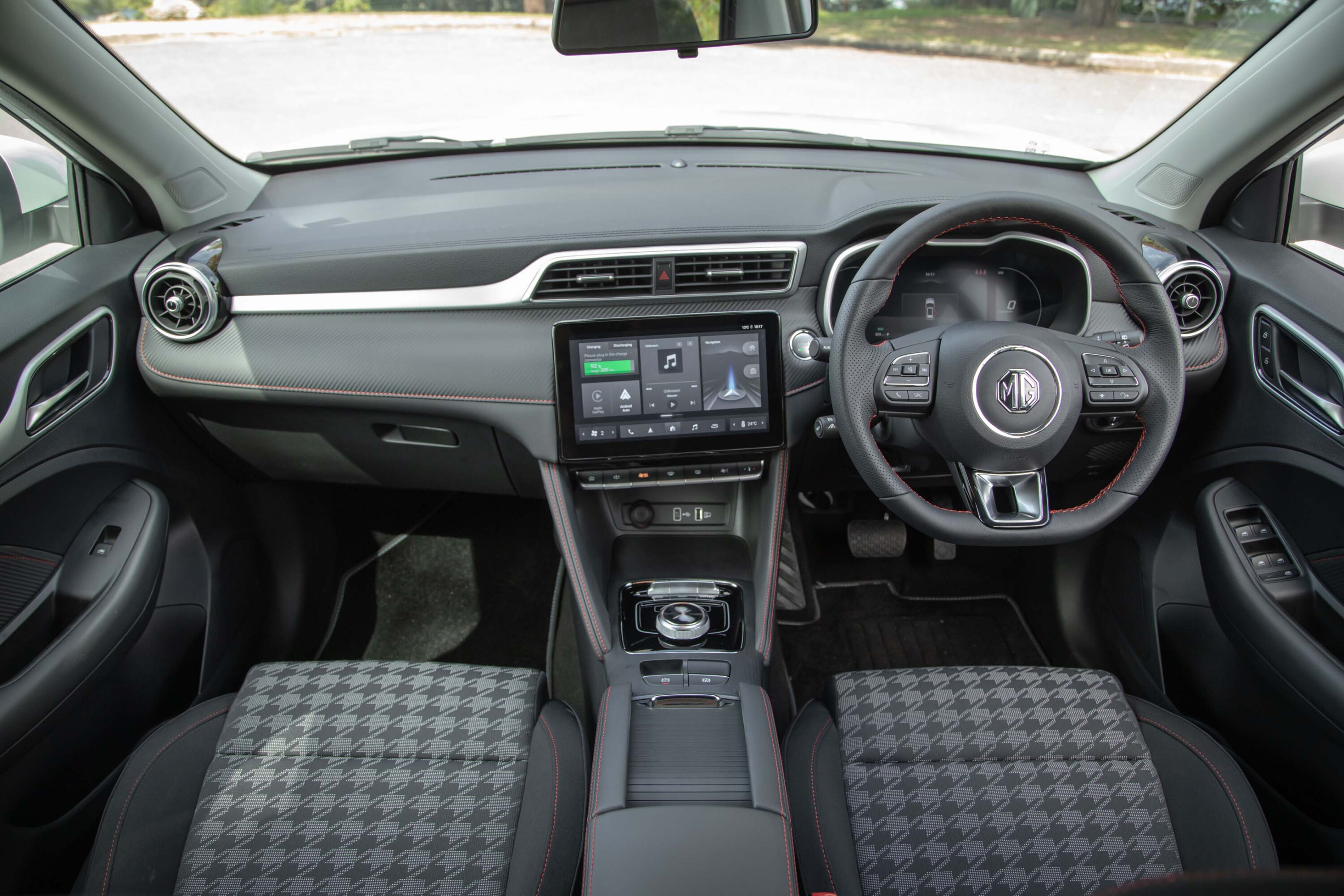
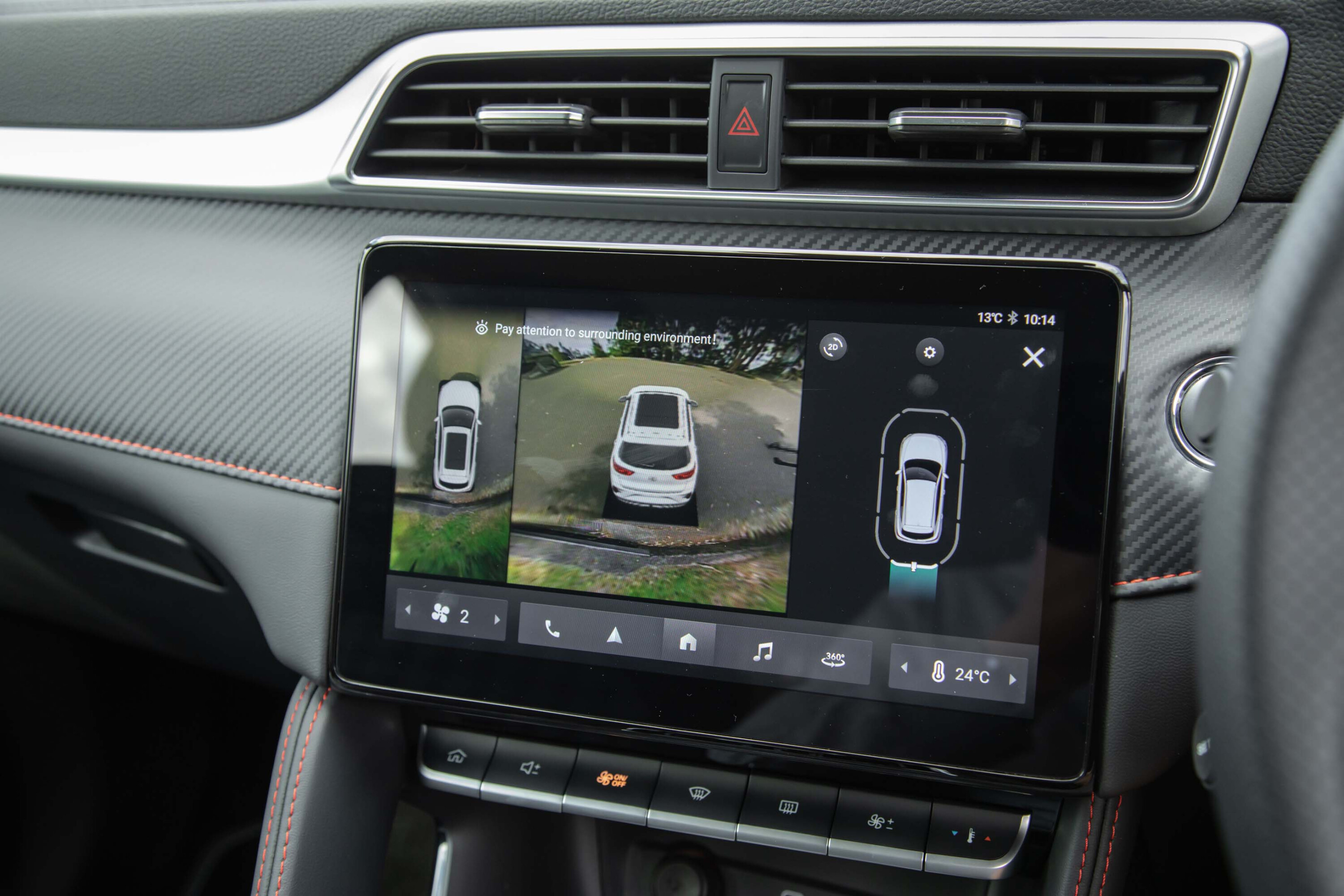
Kicking off the range, the entry-level Excite comes with a 51.1kWh battery producing 320km of range, three Regenerative Braking Modes, 17-inch alloy wheels, a 10.1-inch multimedia display, a 360 View Camera and Apple CarPlay & Android Auto.
1
Stepping up into the Excite for an extra $3k you’ll get additional creature comforts such as a heated synthetic leather front seats, a panoramic sunroof and rain sensing wipers.
The EV Essence (long range) will add privacy rear windows and an extended WLTP range to 440km for $55,990.
The entire range is available in 5 colours, three of which are metallic and will cost you an extra $700.
1
Safety
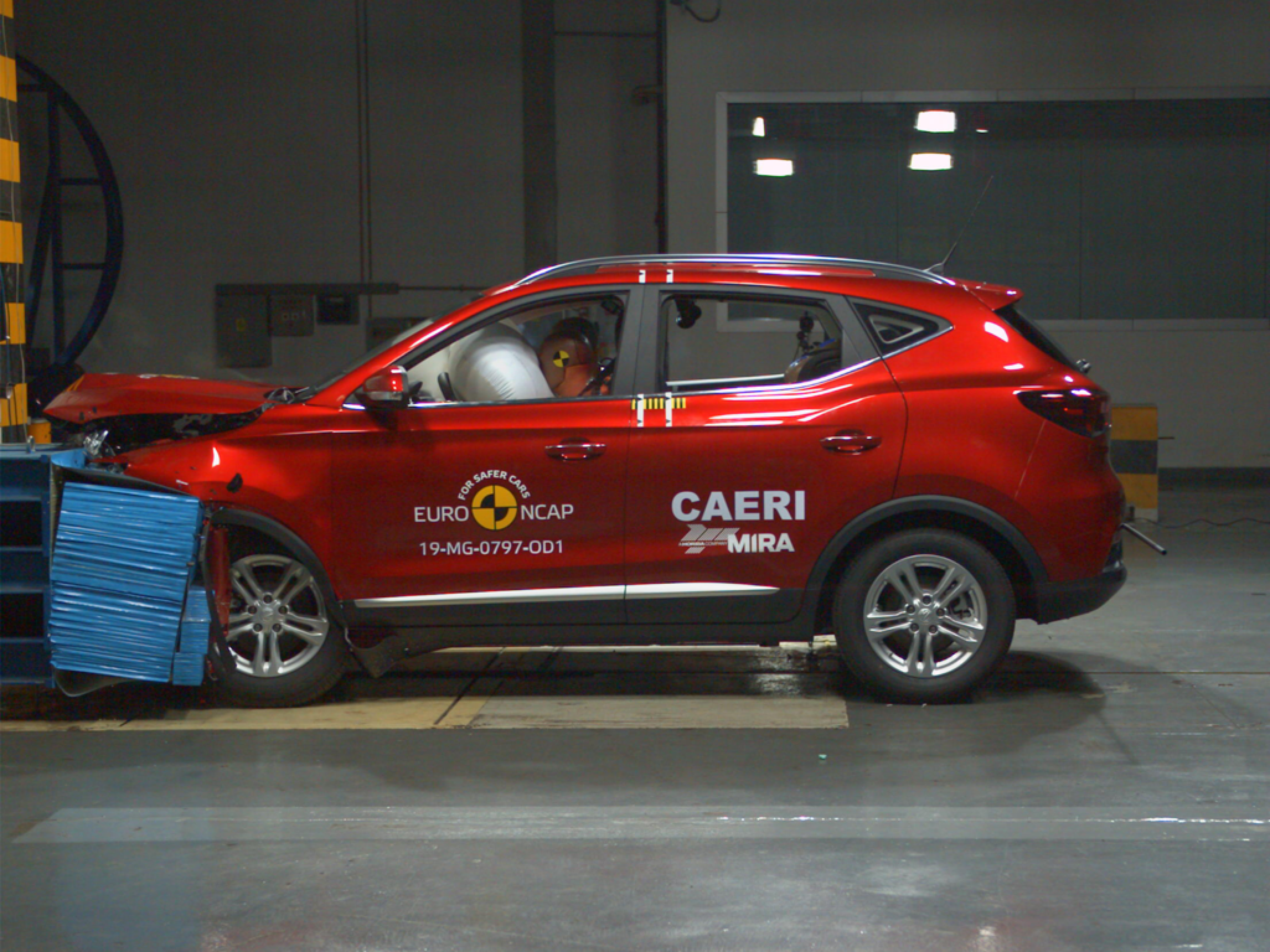
ANCAP gave the MG ZS EV a 5-star safety score back in 2019 through a European NCAP rating, however this rating has now lapsed.
The car has not been locally assessed since, so now goes unrated in Australia.
This doesn’t diminish the added safety features of the EV compared to its petrol variant, the ZS. Features like Automatic Emergency Braking (AEB) were notably absent in the latter, which had only secured a four-star safety rating.
It’s unlikely that we’ll see a re-test anytime soon with MG’s CEO recently announcing the brand had no plans to provide MG 5 vehicles to ANCAP due to the expenses associated with obtaining an ANCAP rating.
2
Key Rivals
The fast growing adoption of EVs in Australia has gained momentum thanks to affordable electric options from key competitors such as:
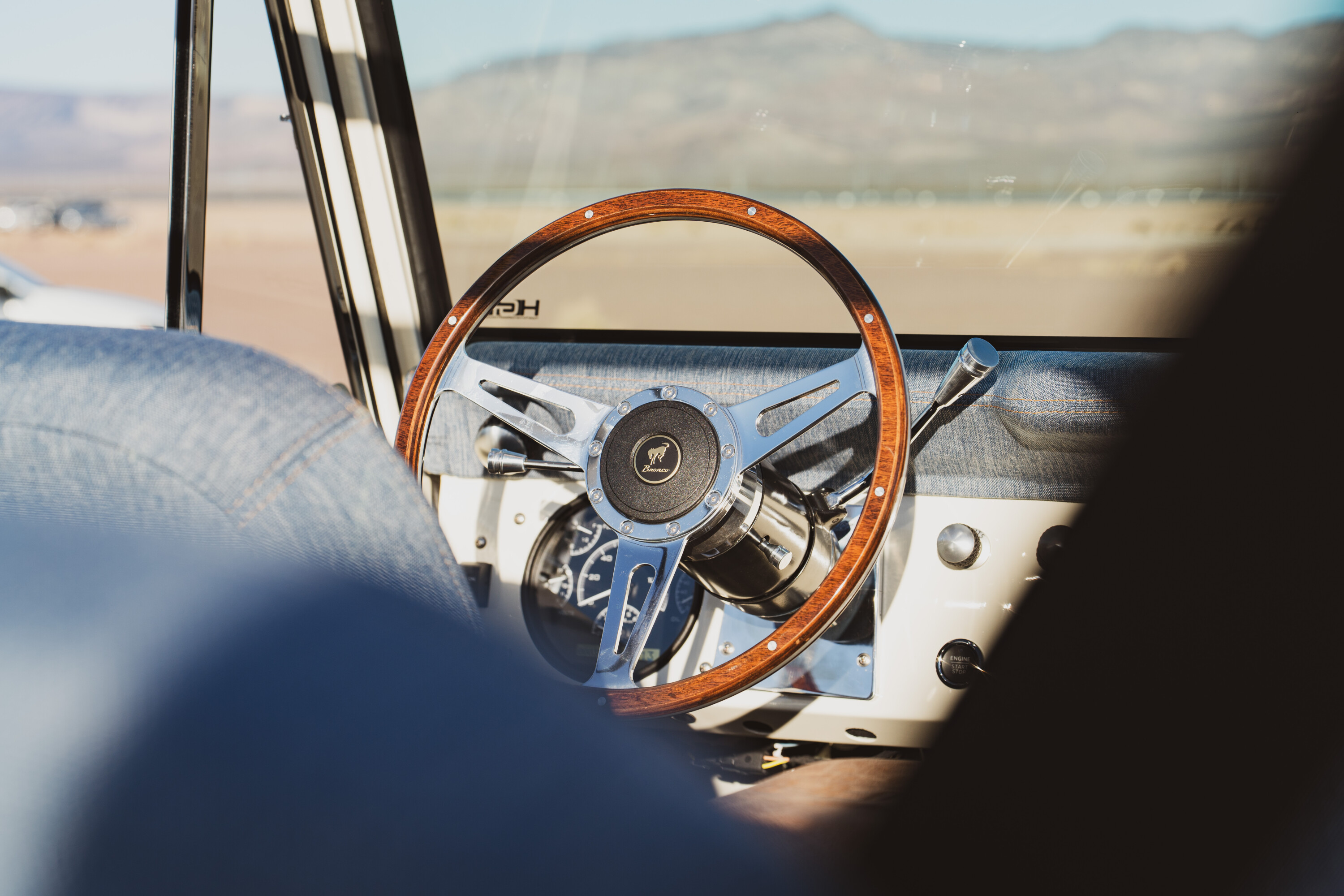
Australia’s Premcar, known for its outstanding engineering work for big brands, has revealed its latest work: A 343kW Coyote V8-powered ’60s Bronco with a massively reworked chassis.
Developed under contract for America’s popular restomodders Gateway Bronco, the Premcar-worked Bronco was unveiled today for this week’s Quail motorsports event as part of Monterey Car Week.
1
The extra-special Bronco, known officially by the mega-dull name Luxe-GT and internally by the rad codename Pegasus (an excellent equine reference, but alas it only flies metaphorically), boasts a custom ladder frame, Ford’s 10R80 10-speed auto, and a two-stage ‘shift on the fly’ AWD system.
“Gateway Bronco’s new LUXE-GT is more than a reimagined classic, it’s a new car,” said Bernie Quinn, Premcar’s Engineering Director.
“The Premcar team has developed this high-performance platform to new-car standards using the same processes we apply when we develop new vehicles for global automakers.”
1
Check out the piccies here, and see Premcar’s release below with all the details.
Premcar’s latest new-vehicle project has been unveiled during this year’s exclusive Monterey Car Week in the USA.
Illinois-based Gateway Bronco, America’s leading manufacturer of reimagined classic Ford Bronco SUVs, has teamed with the Australian new-vehicle engineering and manufacturing firm to develop the chassis, suspension and steering for its newest 1960s-inspired LUXE-GT model, which has been unveiled at The Quail, A Motorsports Gathering during this week’s Monterey Car Week event.
Known internally by its project codename Pegasus, the Melbourne-based OEM automaker has developed the ladder-frame structure with a 2350 mm wheelbase and 1623 mm (front) / 1630 mm (rear) track width reminiscent of the classic Bronco. It has also been designed and developed to accept Ford’s latest 343 kW / 460 horsepower 5.0-litre ‘Coyote’ V8 engine, 10R80 10-speed automatic transmission, and two-stage shift-on-the-fly all-wheel drive system.
Gateway Bronco’s new Premcar-developed platform is also equipped with a suite of active safety systems, including Electronic Stability Control (ESC), Traction Control (TC) and Anti-lock braking (ABS), providing drivers with modern safety support as well as impressive current-day ride, handling and steering performance.
The chassis has been developed exclusively for Gateway Bronco with US Patent(s) pending.
“Gateway Bronco’s new LUXE-GT is more than a reimagined classic, it’s a new car,” said Bernie Quinn, Premcar’s Engineering Director. “The Premcar team has developed this high-performance platform to new-car standards using the same processes we apply when we develop new vehicles for global automakers.”
Seth Burgett, Gateway Bronco’s CEO and President, said developing the new LUXE-GT necessitated world-class OEM know-how.
“The Premcar team has achieved remarkable results with this new chassis and suspension system. They’ve helped us reposition our classic-style LUXE-GT Bronco series into a new market realm. This is now a new car with classic style, not a classic car with new style.”
Beginning with specific attribute and performance targets, the two-year platform-development program progressed through extensive CAD (computer-aided design) and FEA (finite element analysis) phases before prototype construction and testing. Specific suspension components were also newly developed for the program.
All engineering and development work was conducted at Premcar’s Engineering and Production Centre in Melbourne and included heavy-duty testing in remote regions of Australia.
Gateway Bronco’s new Premcar-developed ladder-frame chassis will be made in Detroit, USA by Premcar’s global engineering partner, RLE International. Vehicle assembly will take place at Gateway Bronco’s production facility in Illinois.
Visit gatewaybronco.com for more information.
1
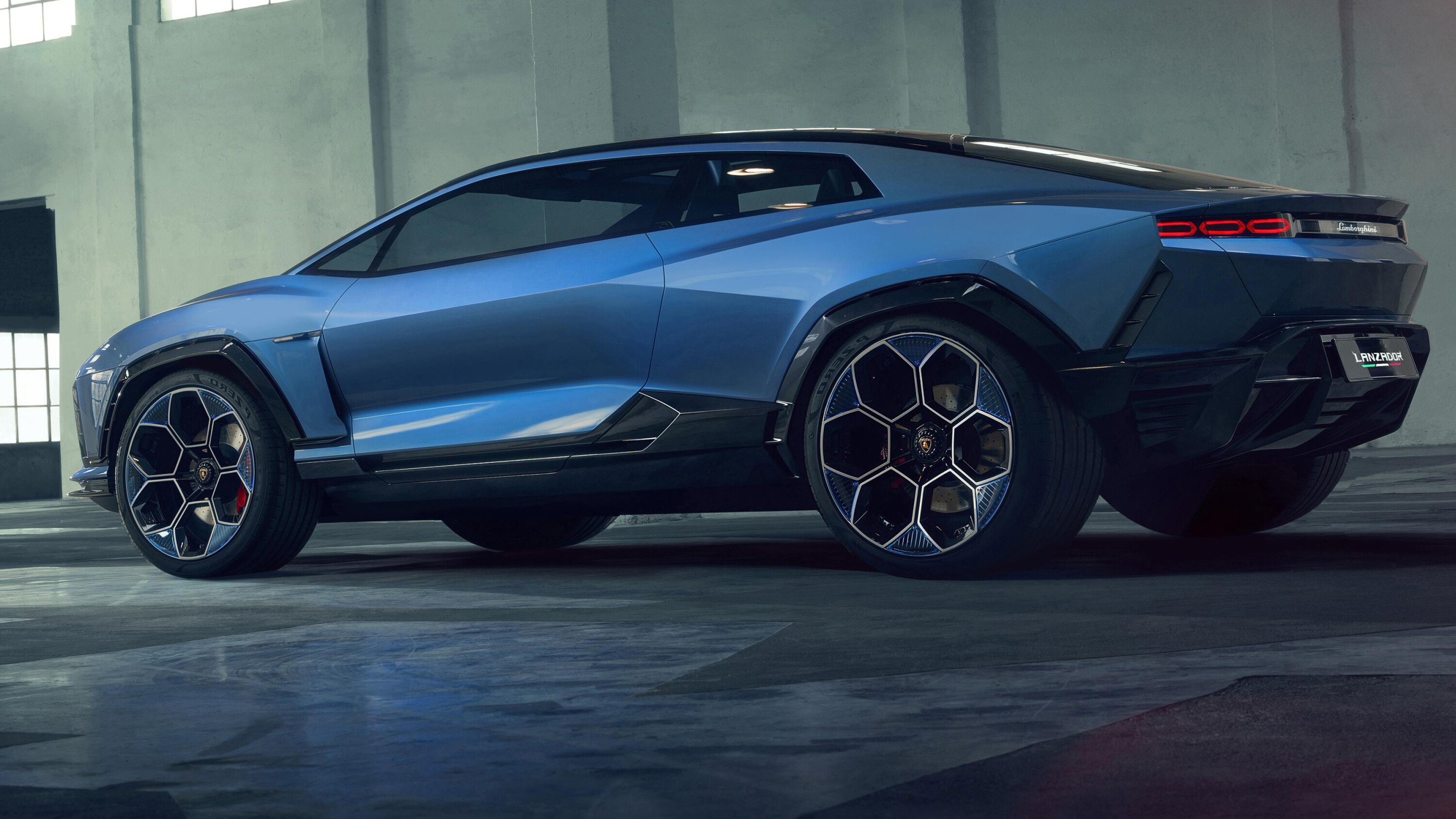
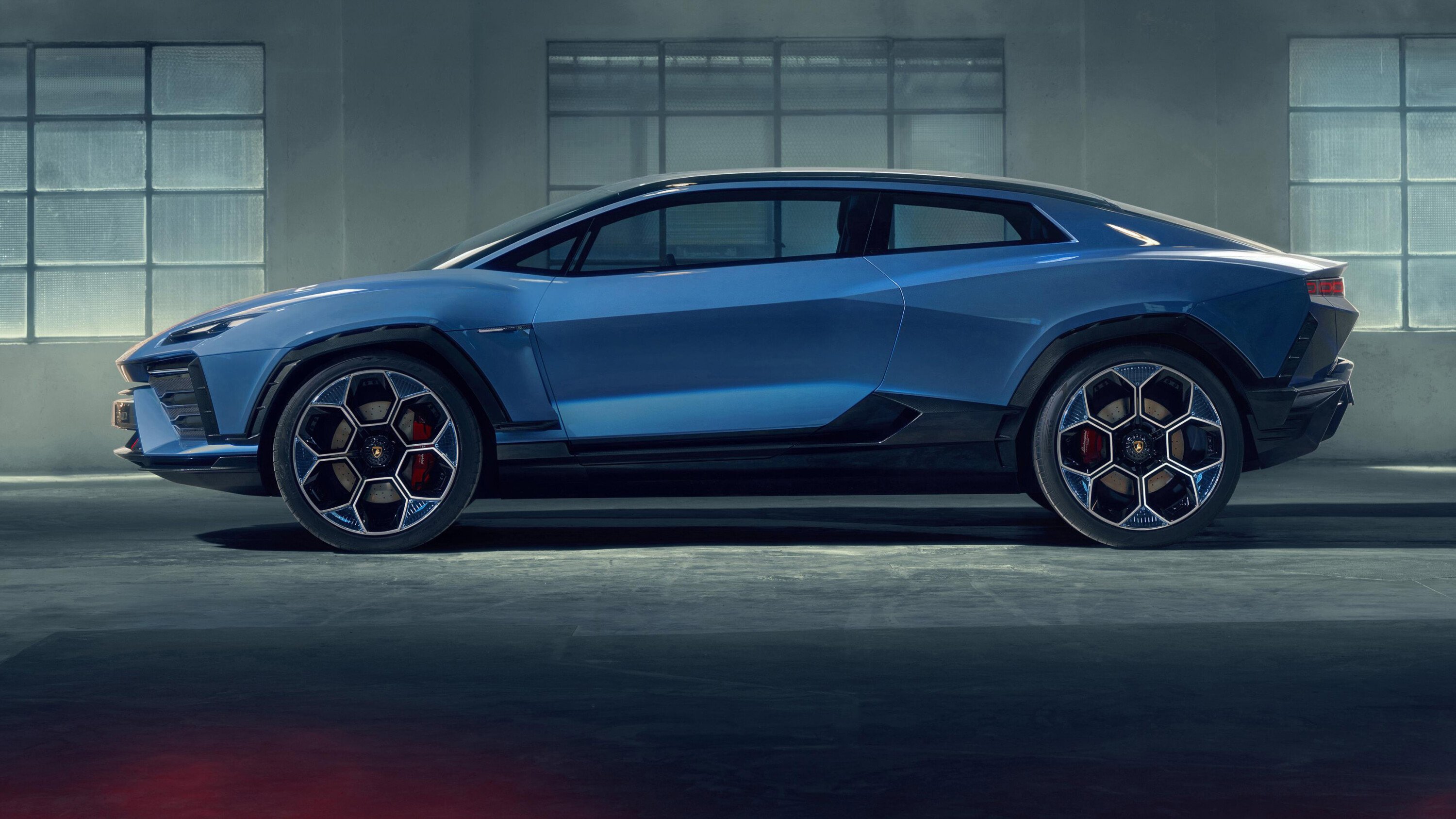
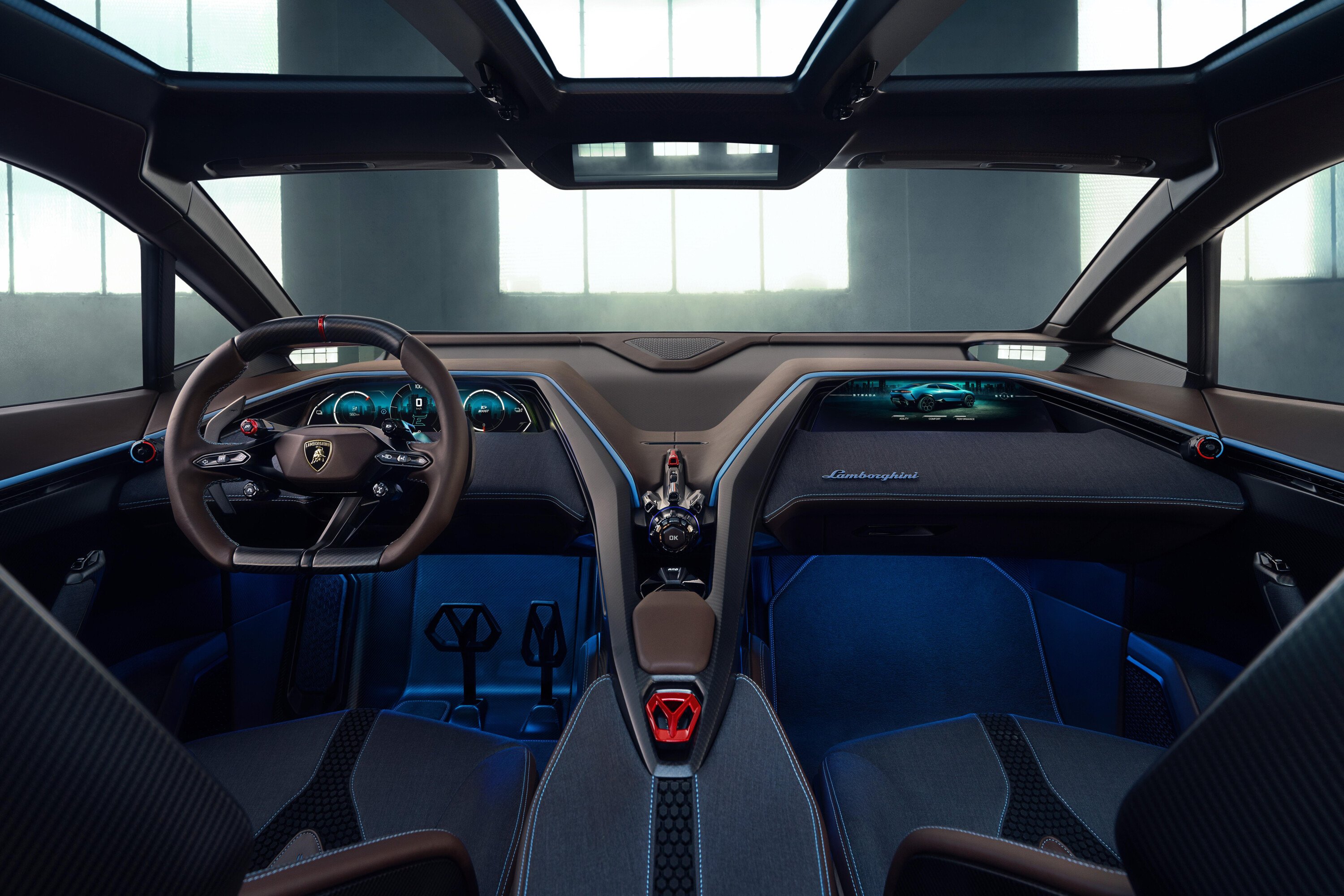
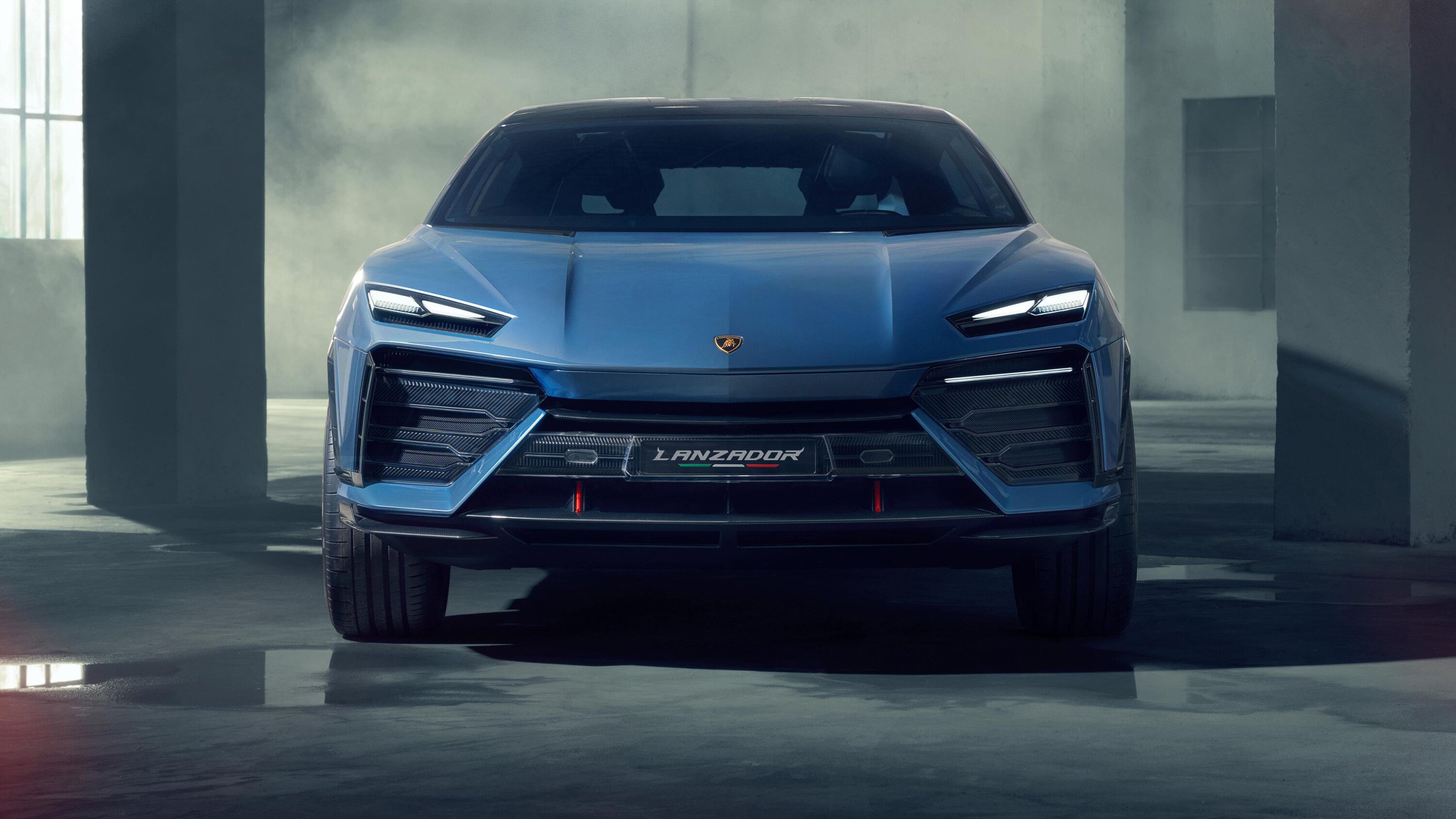
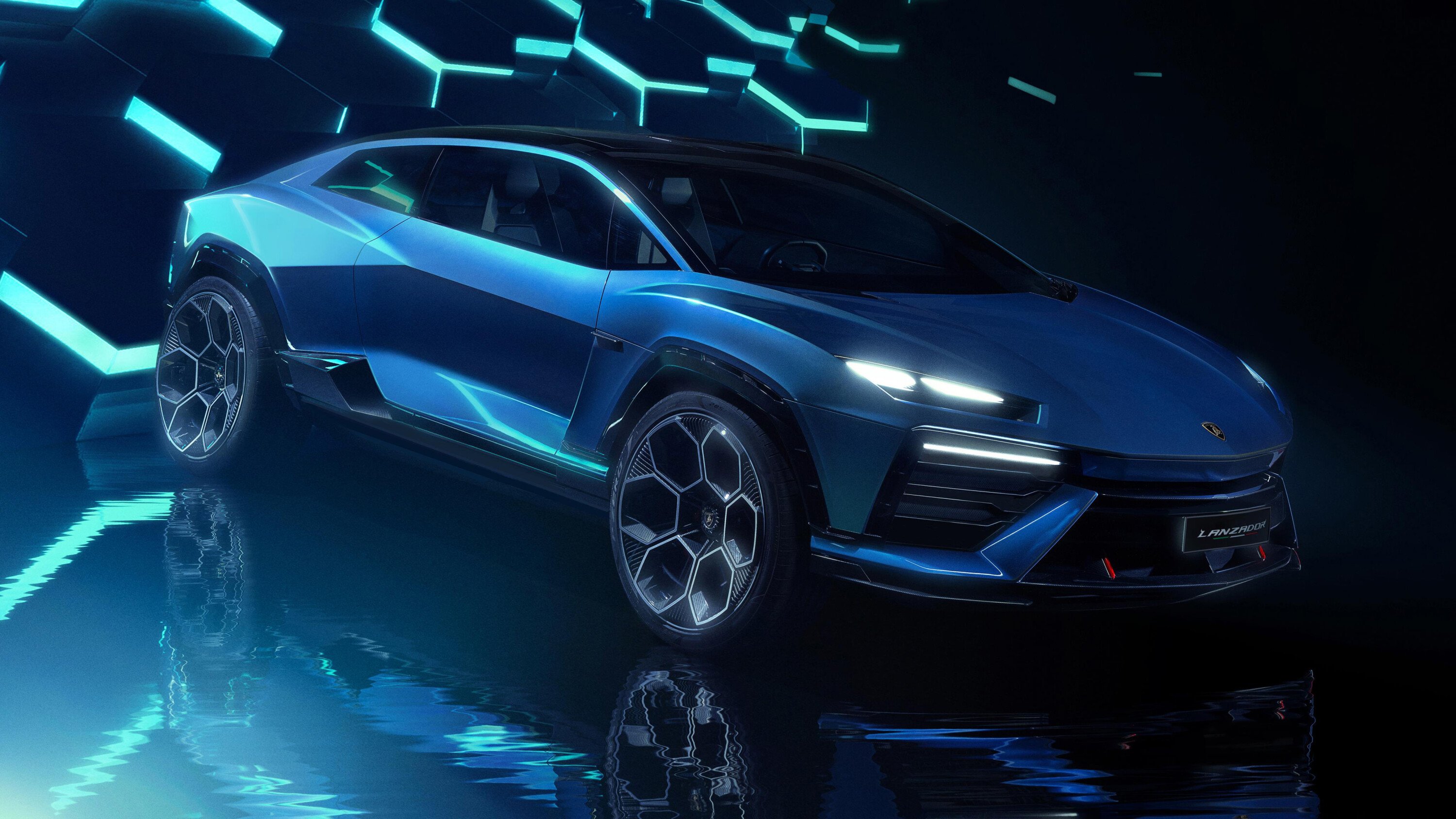
Lamborghini’s first ever electric car has been revealed at Monterey Car Week in California and it’s a low-slung, high-riding ‘Ultra GT’ than produces more than 1000kW. Yikes.
Called Lanzador, which translates as ‘lance’ or ‘spear’, the new model is a 2+2 and will become Lamborghini’s long awaited fourth model line alongside Revuelto, Urus and the soon-to-be-announced Huracan successor.
Lanzador is officially a concept car – the production model won’t be built until 2028 – but Lambo says it provides a “concrete preview of the production vehicle that Lamborghini will present.”
1
It also, says Lamborghini, creates an entirely new segment for high-performance EVs that it has labelled “Ultra GT”.
It’s certainly an intriguing car to behold. Notice how it has more ground clearance and a higher driving position than Lambo’s dedicated supercars, yet it still retains a sleek, swoopy silhouette?
As for size, the only dimension Lamborghini has provided is a roof height of 1500mm, which is about the same as an Audi RS6. And is anyone else picking up hints of Ferrari Purosangue in the pinched waistline and flared hips/rear guards?
1
Lanzador should be ferociously fast, too. Being a concept car means we only have a few concrete technical details but Lamborghini has confirmed its new EV has “peak power of over one megawatt”. That’s 1000kW+. Or about 1400hp in the old money. Plenty, in other words.
Producing all that grunt is two e-motors (one per axle) and a “new-generation high-performance battery, which also ensures long range,” says Lamborghini.
No word yet on what architecture will underpin Lanzador – Lambo’s press release says it uses a “unique architecture developed for the car” – however it’s a fair guess to assume it’ll ride on the VW Group’s upcoming, all-new Scalable Systems Platform (SSP).
1
SSP is designed to be flexible enough to produce everything from low-power city cars to 1000kW hypercars and should debut sometime in 2026.
Moving to an electric platform has also opened up an entirely new performance envelope for Lamborghini to explore. “Electrification does not mean a restriction, but an intelligent opportunity to develop more performance and drivability,” says Lambo’s chief technical officer, Rouven Mohr.
Air suspension, enormous 23-inch alloy and fully variable torque distribution are all present but Lambo is most excited about its new drive-mode software, which it calls Lamborghini Dinamica Veicolo Integrata (LDVI).
1
Arming Lanzador with more sensors and actuators has allowed Lamborghini’s engineers to “create even finer and more precise driving behaviour”.
There’s also more complex software and an ‘advanced algorithm’ that can apparently tailor the car’s feedback and behaviour to individual drivers. Consider us intrigued by that one.
Active aero also plays a huge role in how Lanzador makes its performance. There are two aero settings – Efficient and Downforce – and the car’s body opens, shuts and moves in a variety of ways, depending on your speed and chosen setting.
1
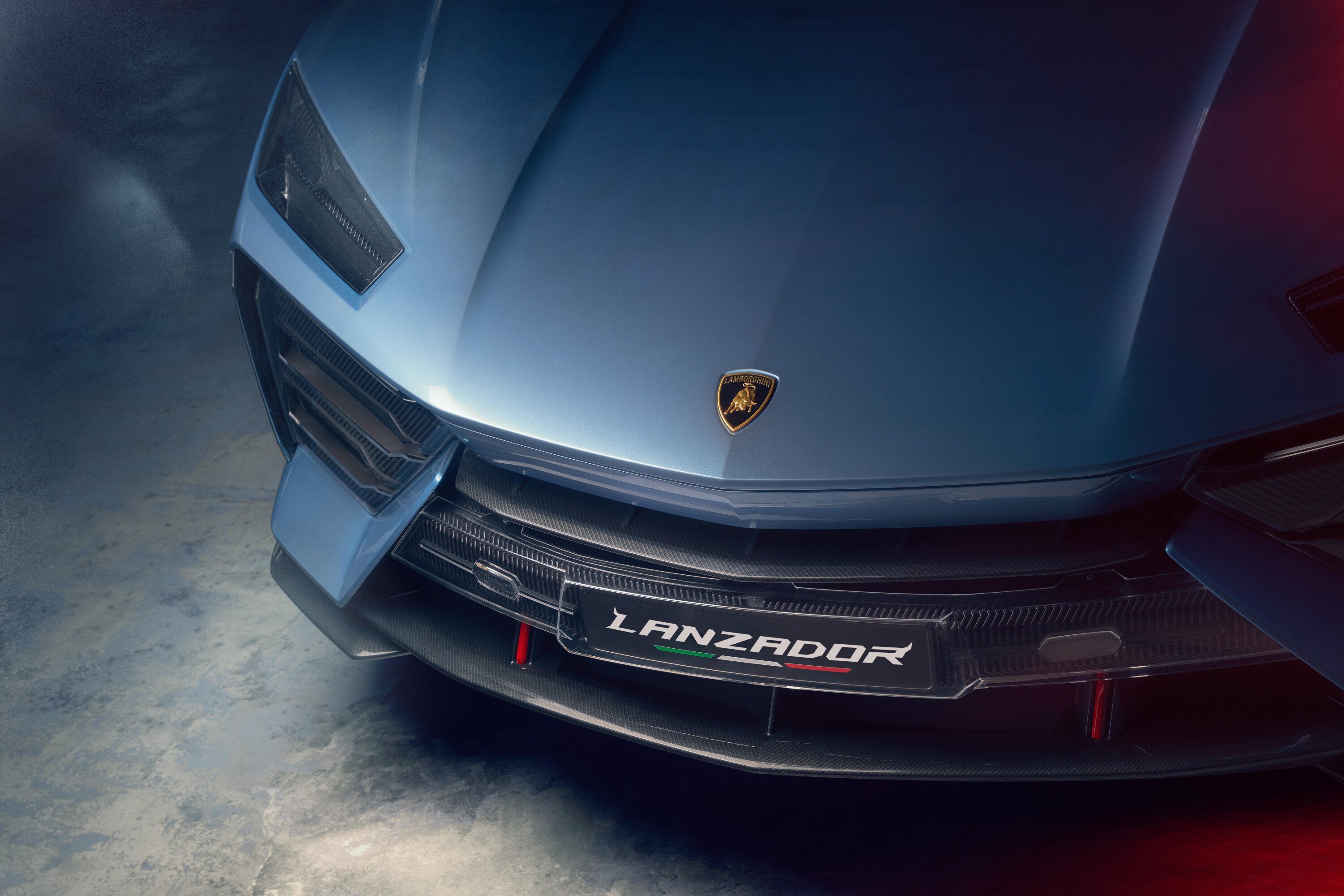
The front splitter, for example, is extendable and doesn’t only boost downforce but can free up airflow to the brake ducts when in its most forward position.
There’s also an F1-inspired S-Duct integrated into the nose, moveable vents in the front bar and concealed louvres within the wheel arches that create downforce and reduce wheel-well turbulence without increasing drag.
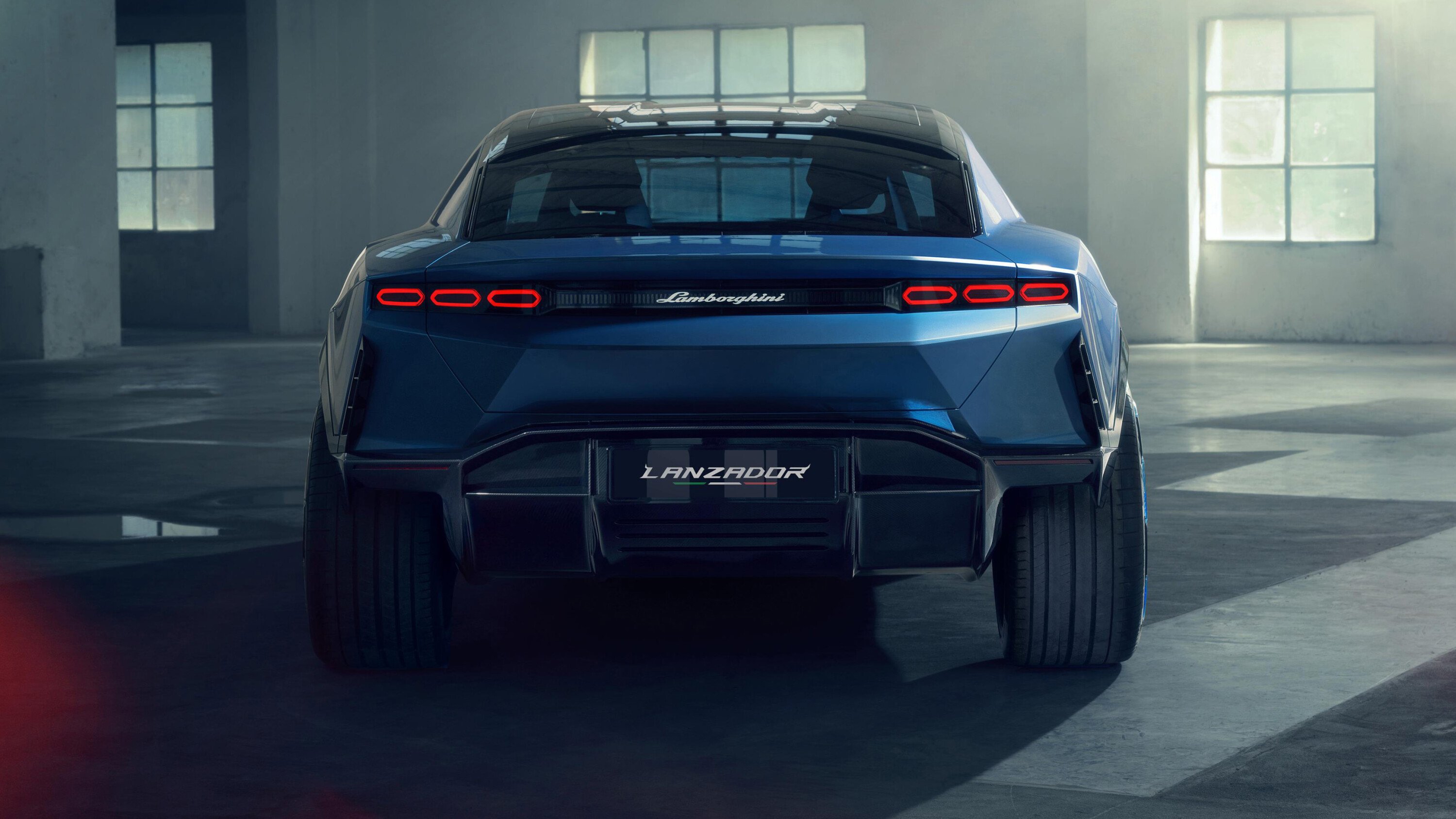
Lamborghini’s much talked about ‘ALA’ (Aerodinamica Lamborghini Attiva) system, which debuted on the Huracan Performante, also features, and around the back there’s an enormous blown diffuser. The rear end also includes “narrow air blades” that can extend from the side panels and the diffuser to improve downforce.
1
As for what’s missing? There are no pesky drag-inducing wing mirrors, with rearward vision instead taken care of via twin screens built into Lanzador’s dash.
Form factor wise, Lanzador is Lamborghini’s first four-seater GT car in 44 years. The last model to fill that role in Lamborghini’s line-up was the Gandini-designed Urraco of 1972-79 but the Italian brand has a long history of building 2+2s that stretches all the way back to the gorgeous 400 GT of the mid 1960s.
Lambo’s back catalogue was also used for inspiration when it came to Lanzdaor’s exterior design. The recent Countach LPI 800-4, for instance, is said to have inspired the ultra slim headlights, while the Sesto Elemento and Murcielago also have had elements lifted and interpreted in Lanzador’s bold exterior.
1
Spaceships also played a role, according to Lambo’s design team: “The design approach used for the GT concept car is inspired by spaceships,” says the official press material.
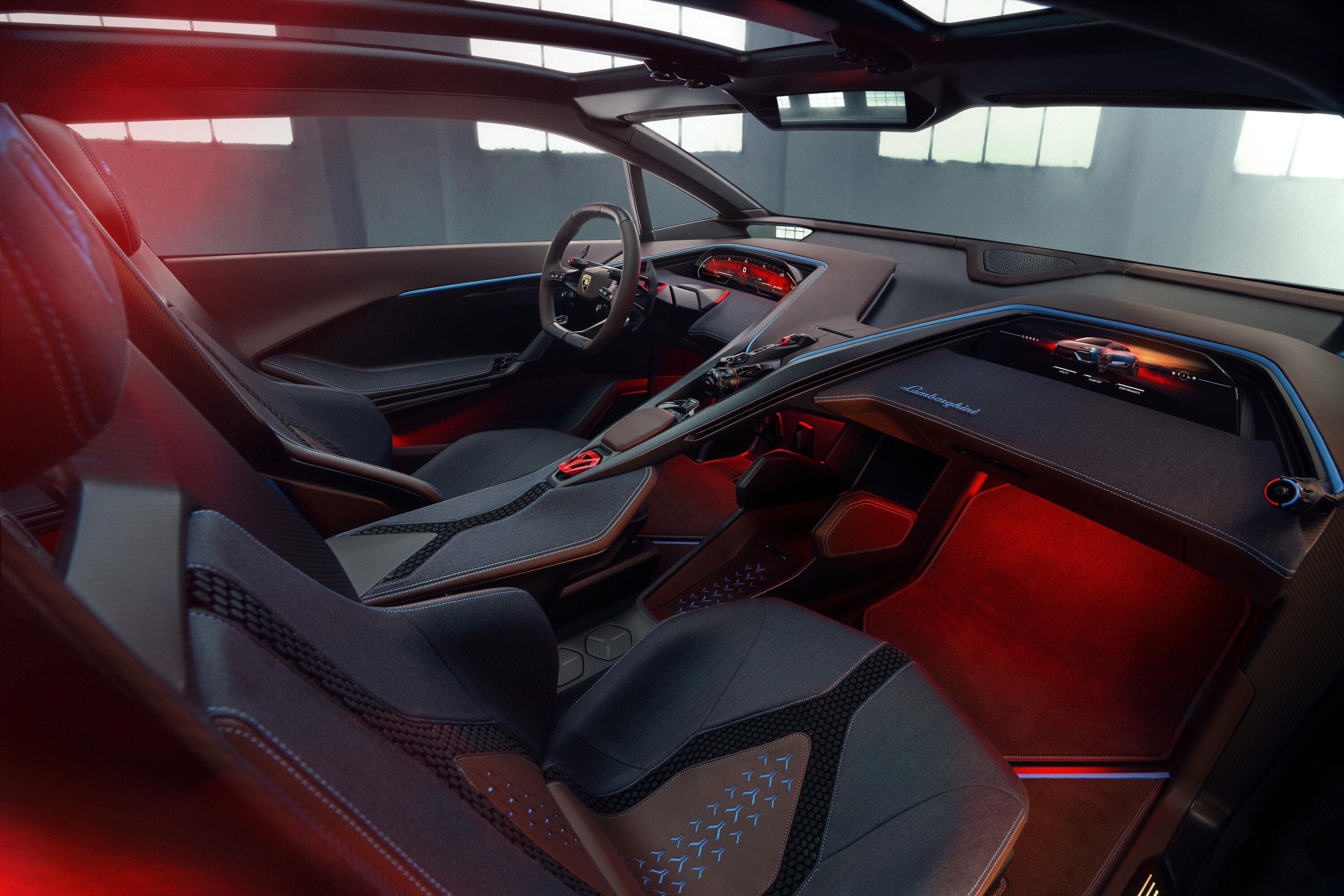
It’s inside where Lanzador looks most like a concept car. Ultra thin seats and a slender, almost architectural Y-Shaped ‘central bridge’ dominate a design that’s clearly meant to make the cabin feel as airy as possible.
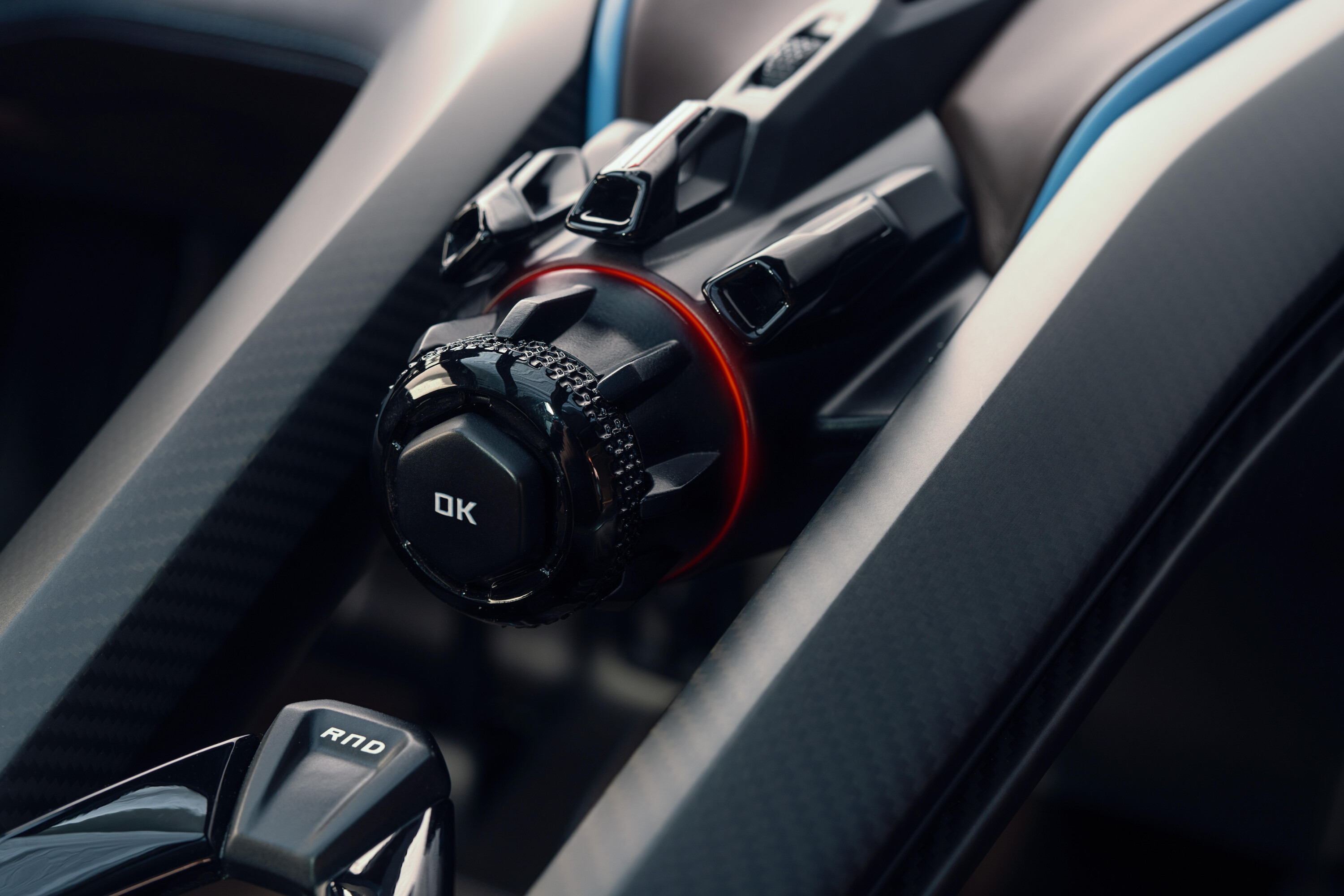
A vast panoramic roof also features, as do twin widescreen displays (one ahead of the driver and another for the passenger) which are controlled via an intricately designed ‘pilot’s unit’ in the centre of the dash. Credit where it’s due: that control unit does actually look like an inverted spaceship thruster.
3
There are plenty of typical Lambo touches, of course – there’s a heavy use of the Y-shape motif and also plenty of hexagons – and cabin storage hasn’t been forgotten either thanks to a deep cubby beneath the centre console, twin cupholders and relatively large looking door pockets.
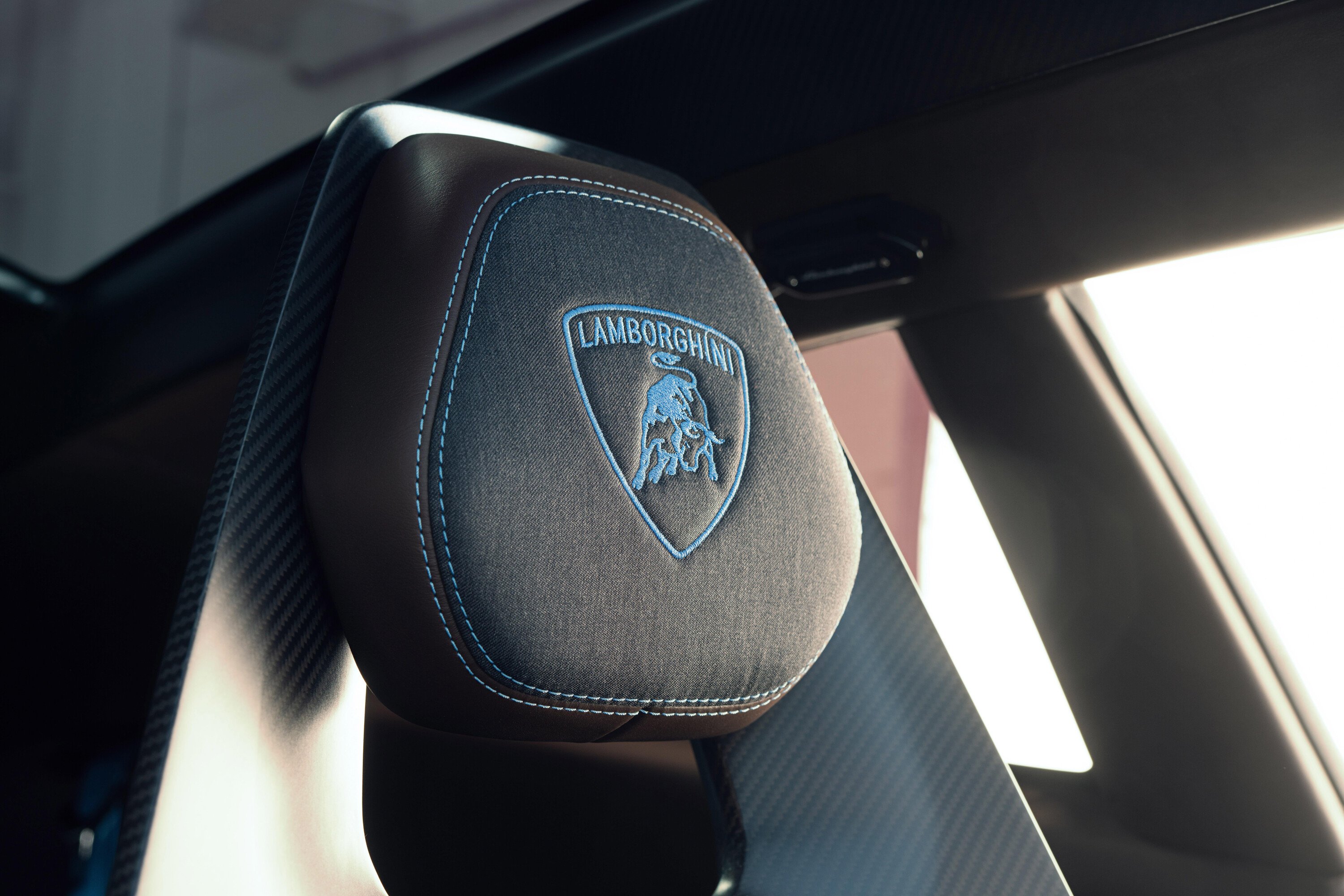
Lamborghini says the cabin is made almost entirely of sustainable materials, all of which are made in Italy. The leather, for example, is tanned in an eco-friendly process that uses recycled water from olive oil production.
The nylon stitching and plastics are also recycled and the carbonfibre is ‘regenerated’ which is a new process of interlacing different layers of the carbon weave with eco friendly materials like natural fibres and reused PET bottles.
2
And as for the Aussie connection we mentioned earlier? All of the wool used on the seats, doors and dash comes from Aussie merino sheep. You beauty!
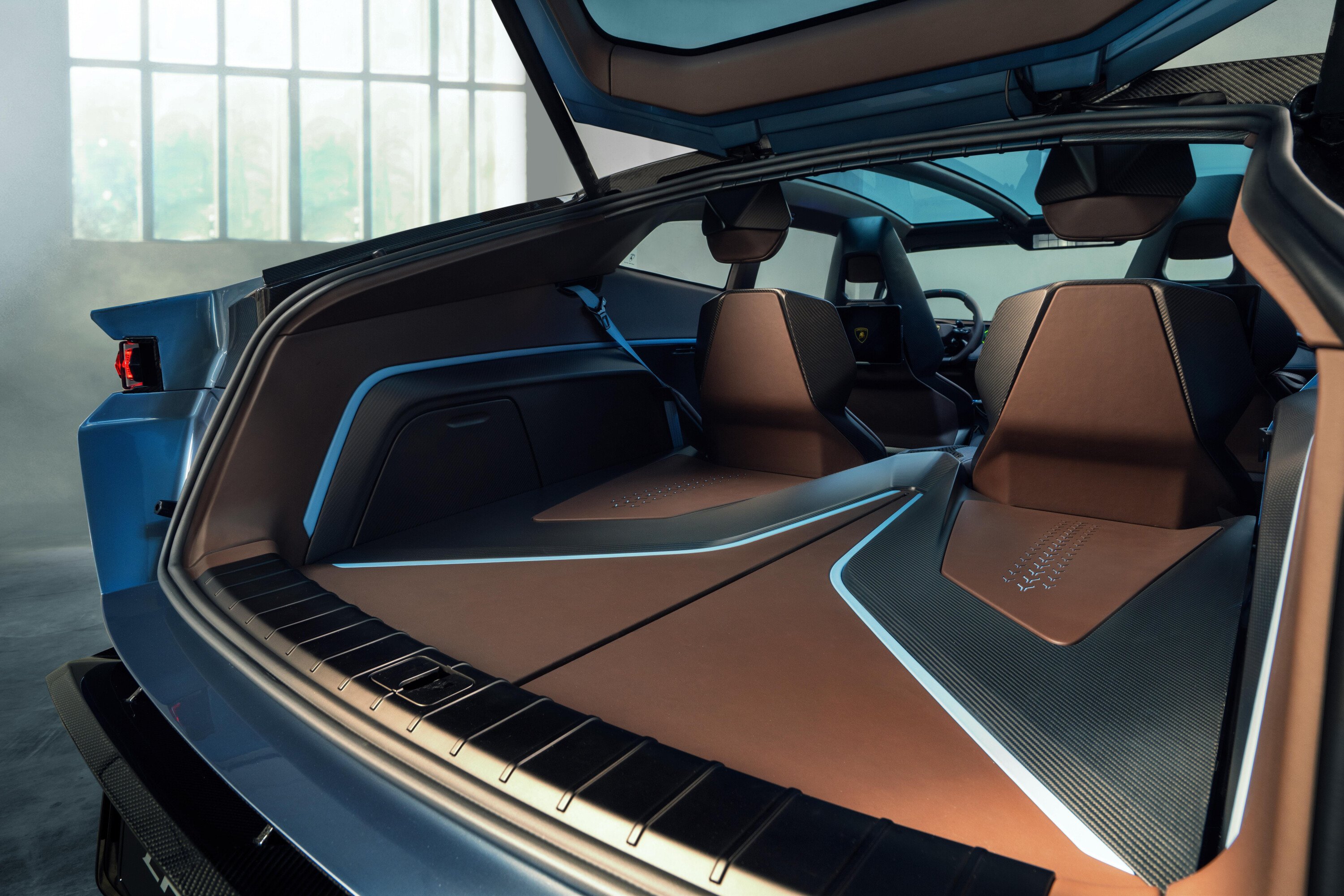
Now, those back seats. Defining the Lanzdaor as a 2+2 is a heavy hint that passengers shouldn’t expect S-Class levels of room back there but the rear pews do look decently sized and score their own tablets on the back of the front seats.
The back seats also fold – uniquely the headrests stay mounted to the roof – and they slide fore-and-aft so owners can vary the amount of rear passenger room and luggage space.
Speaking of boots, there are two: one in the steeply raked nose and a larger, glass enclosed boot at the rear. Lamborghini says this makes Lanzador “adaptable to almost any everyday situation”.
4
As for sales expectations? Lamborghini’s CEO Stephen Winklemann told us Lanzador should sit between the Revuelto and Huracan in terms of outright units, meaning it’ll be well behind Urus as the brand’s top seller.
“We see a market which is not the size of Urus, this is for sure because it’s more a 2+2,” he told Wheels. “So the sales expectation is driven by the size of the segment. And we are looking into something that we think is in-between Revuleto and Huracan in terms of this model. When we plan, we plan it always in a very conservative way.”
There’s nothing conservative about the Lanzador’s appearance, though. Or the sheer scale of its ambition. As the first ever pure electric Lamborghini, it doesn’t only need to slot neatly into the existing range, it has to spearhead a future for the Raging Bull that isn’t centred around orchestral combustion engines. And for a brand like Lamborghini, that’s quite a challenge.
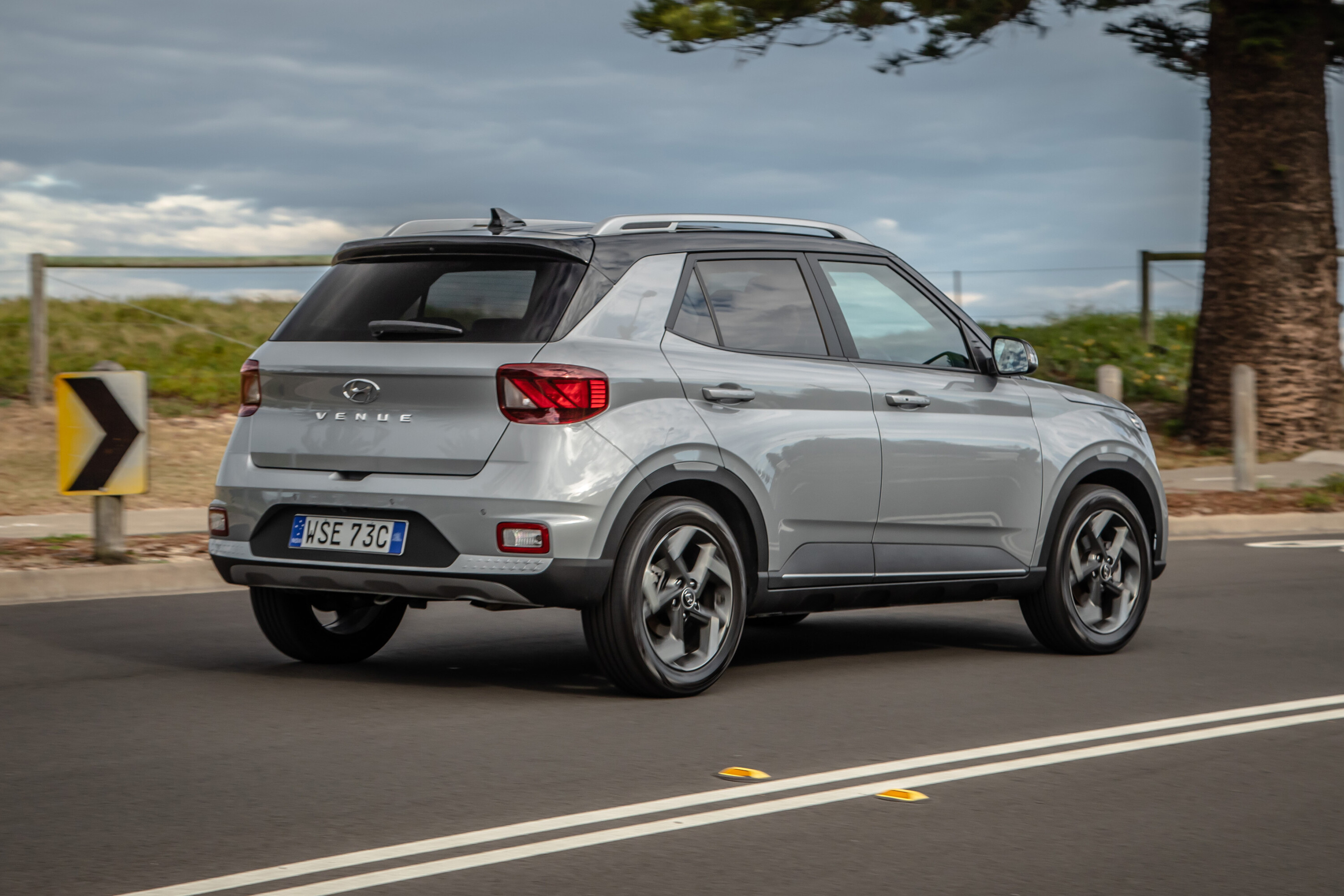
The 2023 Hyundai Venue emerged as a fresh face in the light SUV segment in 2019, balancing urban agility with a suite of modern features.
Designed for the city dweller seeking style and functionality, the 2023 Venue continues to promise an experience that punches above its weight.
Sitting in between the popular i30 hatchback and the slightly larger and face-lifted Hyundai Kona, the Venue offers the best of both worlds as a compact but functional SUV.
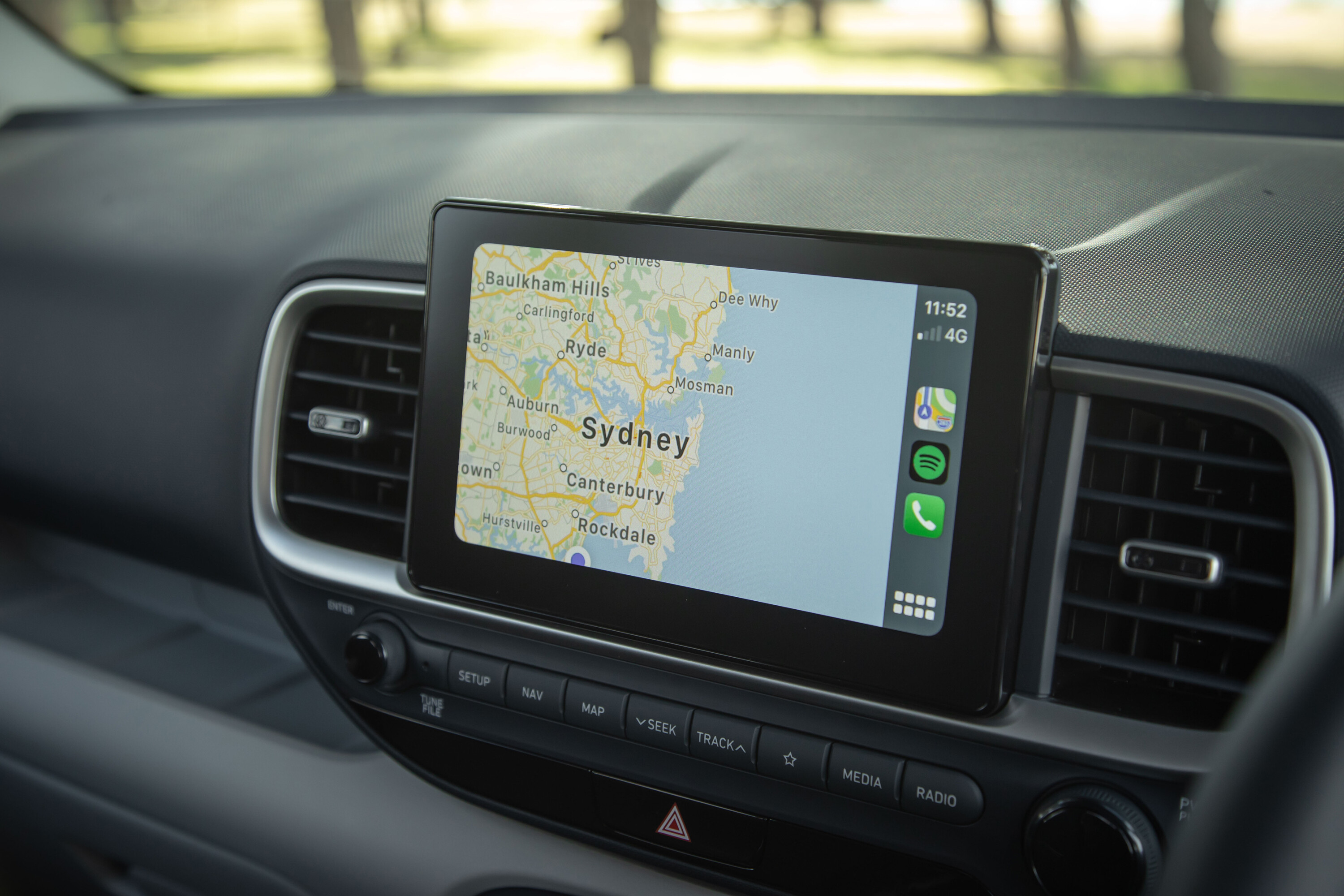
At this price point, buyers are treated to an 8-inch touchscreen infotainment system, wireless Apple CarPlay, a wireless charger, 15-inch alloy wheels, four speakers, roof rails and premium cloth seats.
Climbing up to the auto-only Active variant for an extra $2250 you’ll get an extra 2 speakers, larger 17-inch alloy wheels, leather upholstery on the steering wheel and gear knob, power-folding mirrors, LED daytime running lights and more.
1
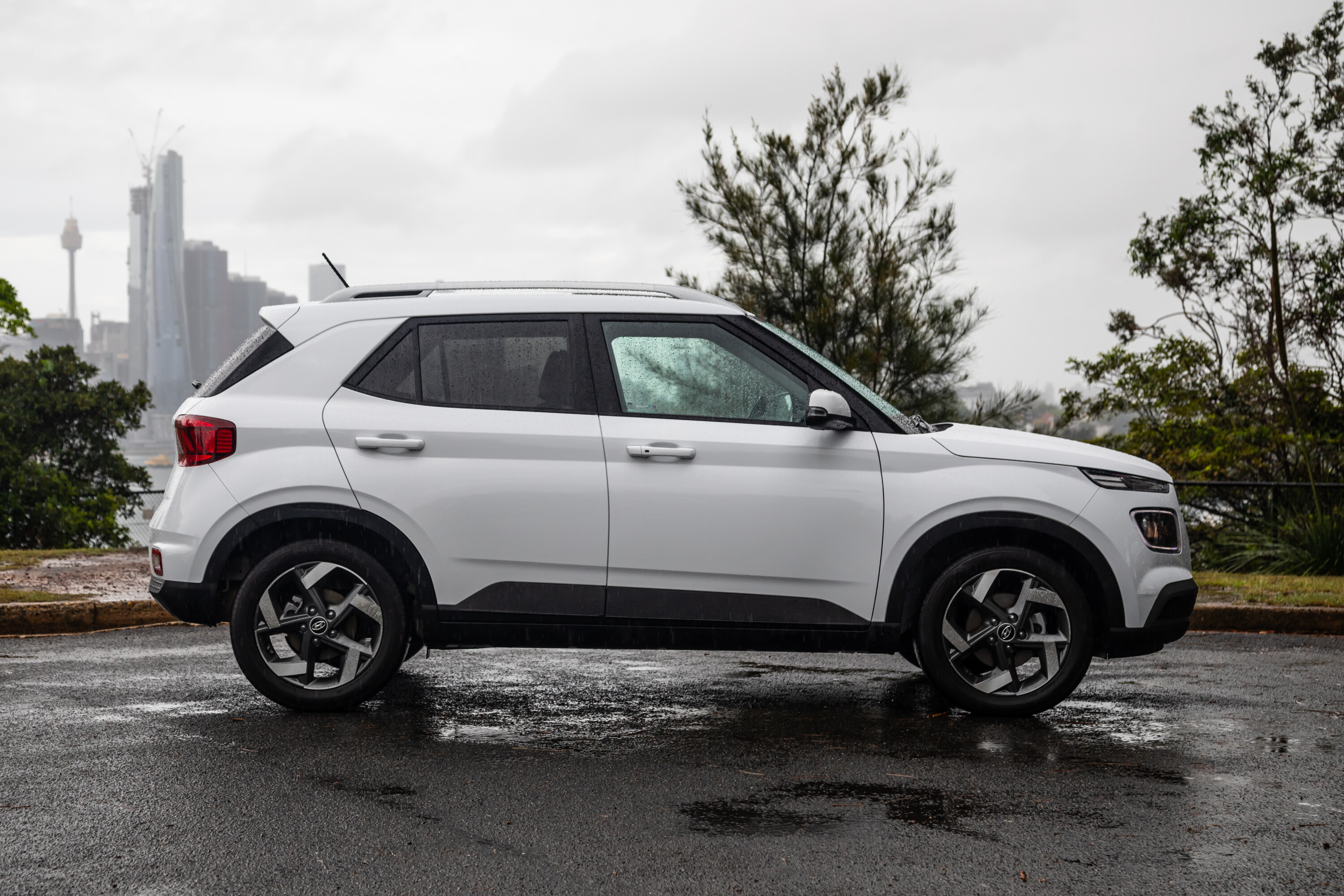
The range-topping Elite offers additional luxuries including heated seats, a two-tone paint option, a sunroof (unavailable on the two-tone paint option), a smart key with push-button start and rear privacy glass. By this stage you’re spending $28,750 before on-roads.
All grades adopt the same 1.6-litre petrol engine making 90kW and 151Nm, with only the base grade offering the choice of automatic or manual transmission.
The entire range comes with Hyundai’s BlueLink telematics system giving drivers some handy features like the ability to lock and unlock doors, wind down windows, start the engine and use climate control remotely.
BlueLink is available on all Venue models for the first five years before being offered as a subscription service thereafter.
2
Safety
In 2019 the entire range received a four-star ANCAP rating because the AEB system did not effectively prevent a rear-end crash in testing.
Standard features include automatic emergency braking, forward collision-avoidance assist and lane-keeping assist. The highest trim Elite adds blind-spot collision warning and rear cross-traffic alert.
The Hyundai Venue is covered by a five-year/unlimited-kilometre warranty.
As with the rest of the segment, manufacturers are using these light SUVs as alternatives to jump into rather than the pond of previously popular light cars that are slowly drying up like the Mazda 2 and Toyota Yaris.
1
Should I Put It On My Shortlist?
The 2023 Hyundai Venue is a compelling choice for those in the market for a light SUV.
If you’re not needing a huge amount of space but want the convenience and higher ride height of an SUV then jumping into a Venue may be your ideal choice.
Whether you’re navigating city streets or embarking on a weekend getaway, the Venue is ready to accompany you on your journey.
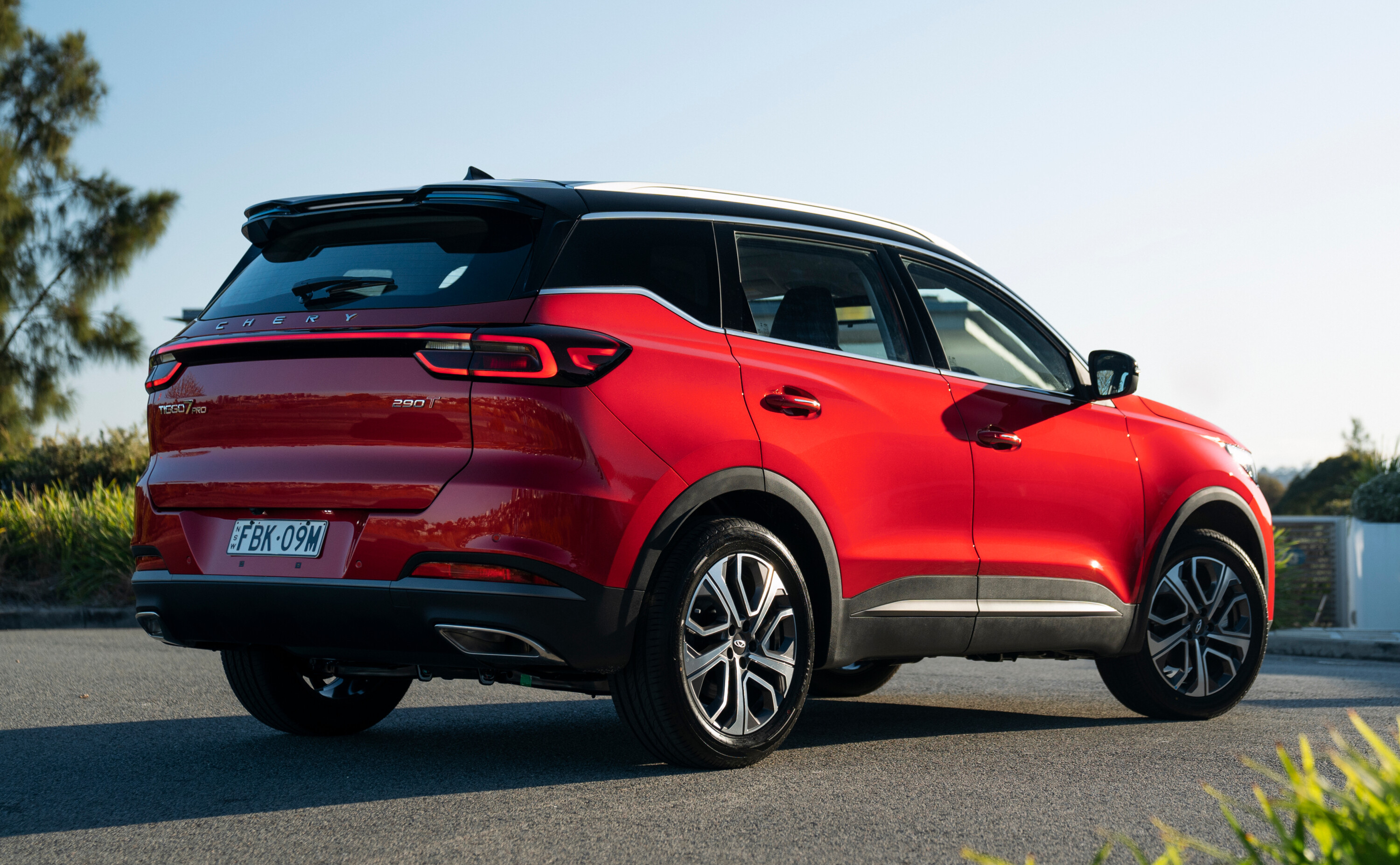
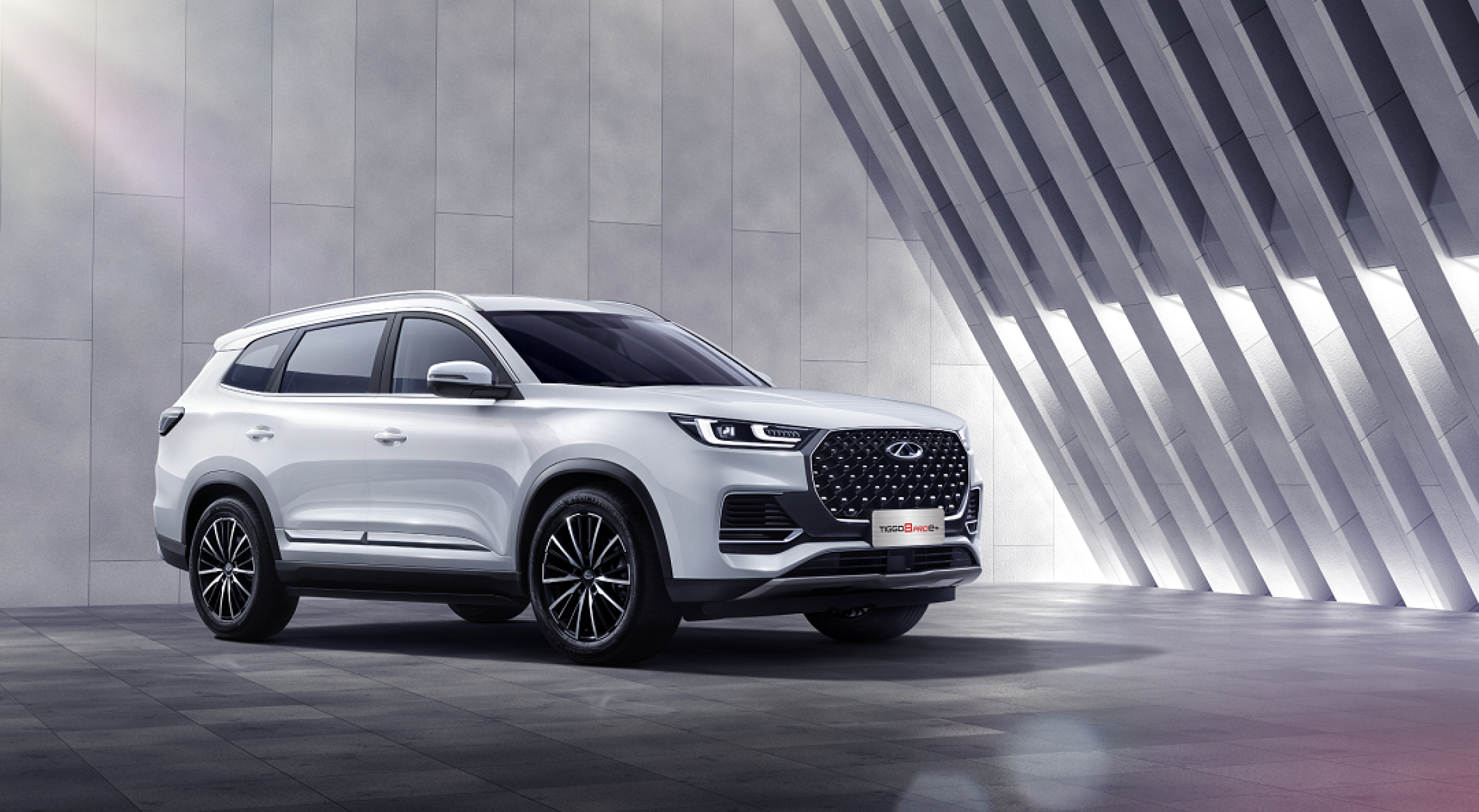
The 2024 Chery Tiggo 7 Pro mid-size SUV will arrive in Australia soon with three variants and front- or all-wheel drive.
Snapshot
2024 Chery Tiggo 7 Pro initial Australian details confirmed
Mid-size turbo-petrol SUV due here u201cin the coming monthsu201d
Three variants with FWD or AWD, dual-clutch auto
It will be offered in three variants – Urban FWD, Elite FWD and Ultimate AWD – powered by a “latest generation” 1.6-litre turbo-petrol four-cylinder engine.
While local outputs have yet to be confirmed, Chinese-market versions produce 145kW and 290Nm with a seven-speed dual-clutch automatic transmission.
Chery Australia said customers can now register their interest online ahead of the Tiggo 7 Pro’s local arrival “in the coming months”, with 46 showrooms currently in Australia and additional locations due to open “before the end of the year”.
1
The Chinese brand re-launched in Australia in March under factory distribution with the Omoda 5 small SUV.
With a value-oriented sales pitch, the Omoda 5 has performed well thus far, recording 2263 registrations to the end of July, enough to place it above the established Skoda Kamiq (1131) and Honda HR-V (1063).
It comes after previous third-party importer, Ateco, withdrew the Chery brand from sale after four years in 2015 citing poor sales, low safety ratings, and an asbestos recall.
While the Omoda 5 launched globally in 2022, the Tiggo 7 Pro hails from the brand’s older ‘Tiggo’ line of vehicles, which have been on sale in South Africa, South America, and South East Asia since 2020.
Chery claims over three million Tiggo-branded SUVs have been sold in 80 countries, with the Tiggo 7 Pro accounting for more than 500,000 of those sales.
1
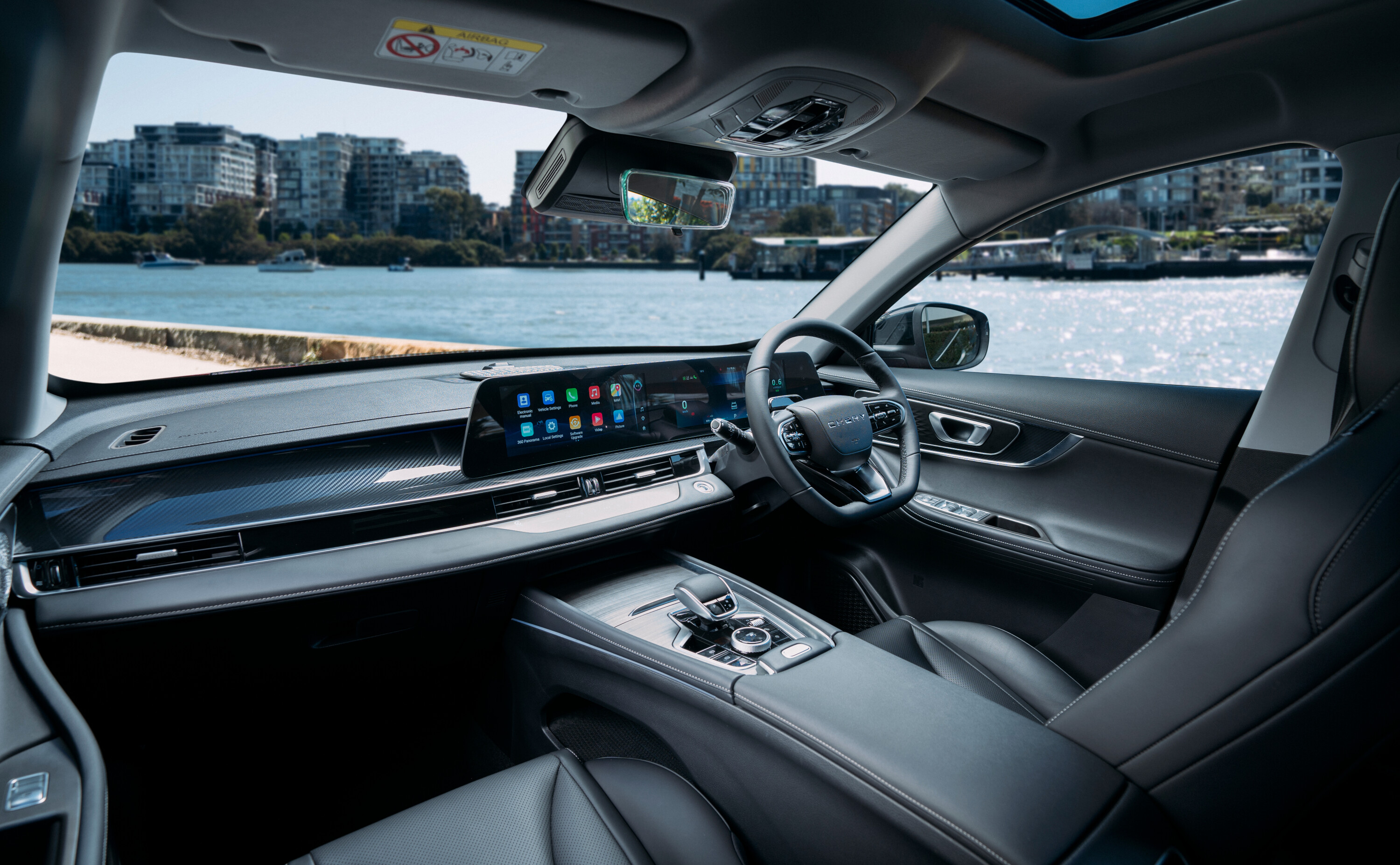
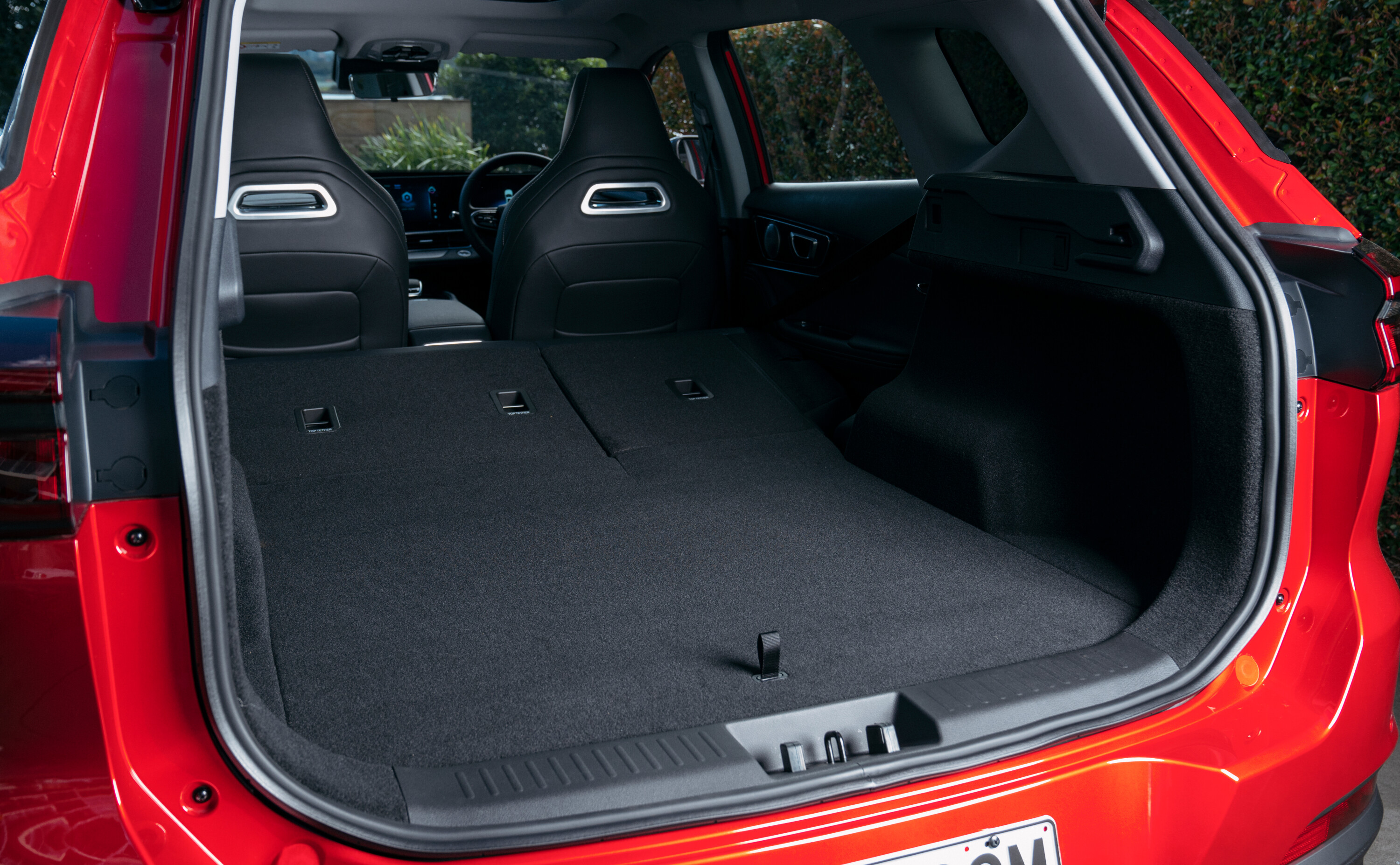
Available features include 18- or 19-inch alloy wheels, dual 12.3-inch screens, touch shortcut controls, leatherette upholstery, a panoramic sunroof, a Sony-branded audio system, a 360-degree camera system, and a 475-litre boot capacity.
In China, active safety equipment includes autonomous emergency braking, lane-keep assist, lane departure warning, blind-spot and rear cross-traffic alerts, adaptive cruise control, and six airbags.
The Tiggo 7 Pro sits at the smaller end of the midsize SUV segment, measuring 4.5 metres long – similar to the Mazda CX-5 and Honda ZR-V.
While it will compete with the CX-5 and ZR-V on size, the larger Chinese-built MG HS and GWM Haval H6 will be its closest rivals, with pricing likely to start in the mid-to-high $30K region for the entry-level Urban FWD model and climb into the low-to-mid $40K area for the Ultimate AWD.
1
It is based on a previous generation ‘T1X’ platform that also underpins its larger Tiggo 8 Pro sibling.
The Mitsubishi Outlander, Nissan X-Trail and Honda CR-V-sized seven-seat Tiggo 8 Pro will sit at the larger end of the medium SUV category. It is expected in Australia in early 2024.
Chery offers a Tiggo 8 Pro E+ plug-in hybrid in China with a 100-kilometre electric-only driving range, a 1L/100km fuel consumption, and a 0-100km/h sprint in 7.0 seconds.
1
With five seats in place, the larger Tiggo 8 boasts a 1179L boot, though no figure is claimed with seven seats in action. It’s fitted with similar equipment to the smaller Tiggo 7 Pro.
The 2024 Chery Tiggo 7 Pro mid-size SUV is due in Australia “in the coming months,” while the seven-seat Tiggo 8 Pro is tipped to follow in early 2024.
All-wheel-drive and all-electric versions of the Omoda 5 small SUV are also due here next year.
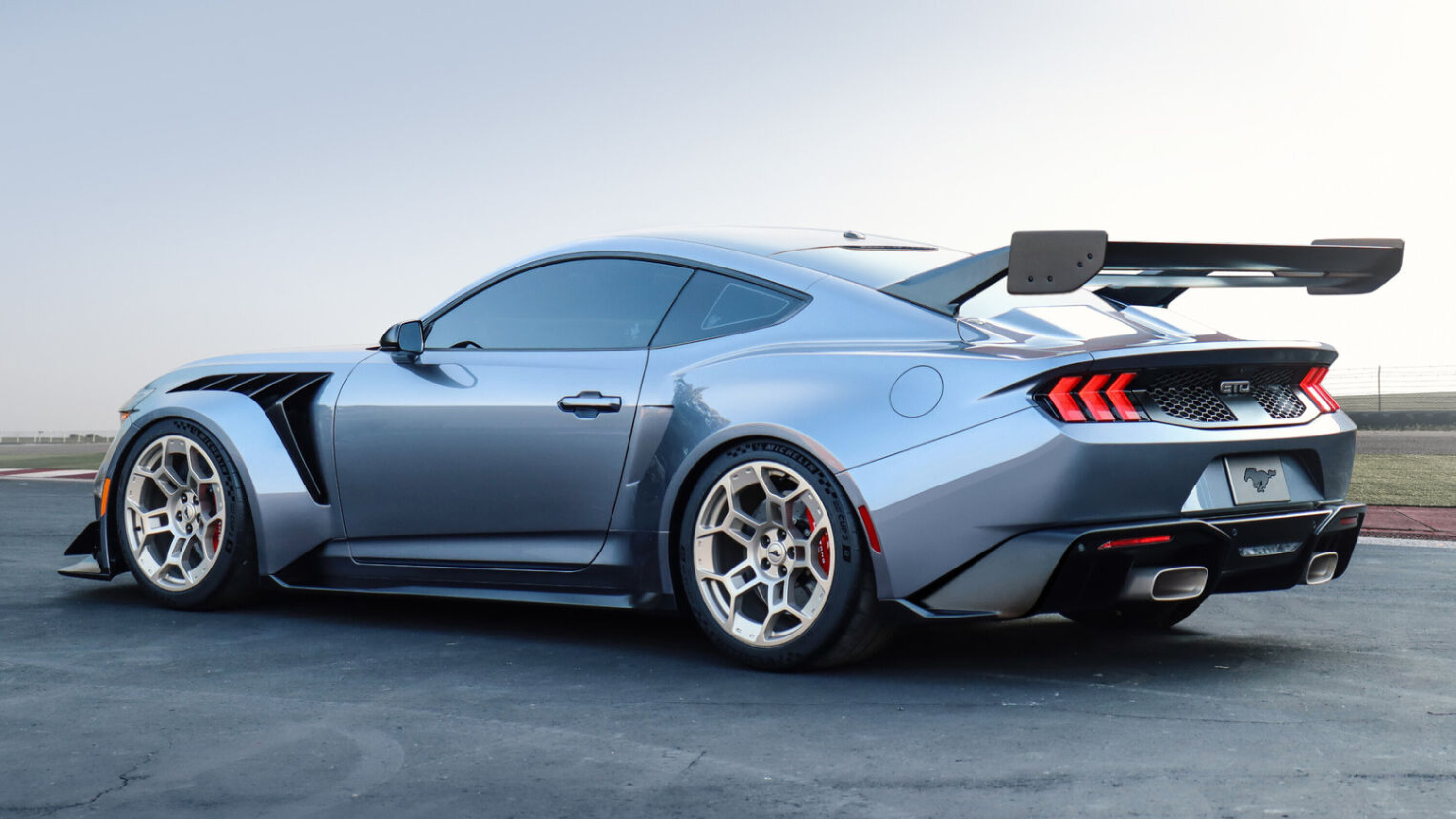
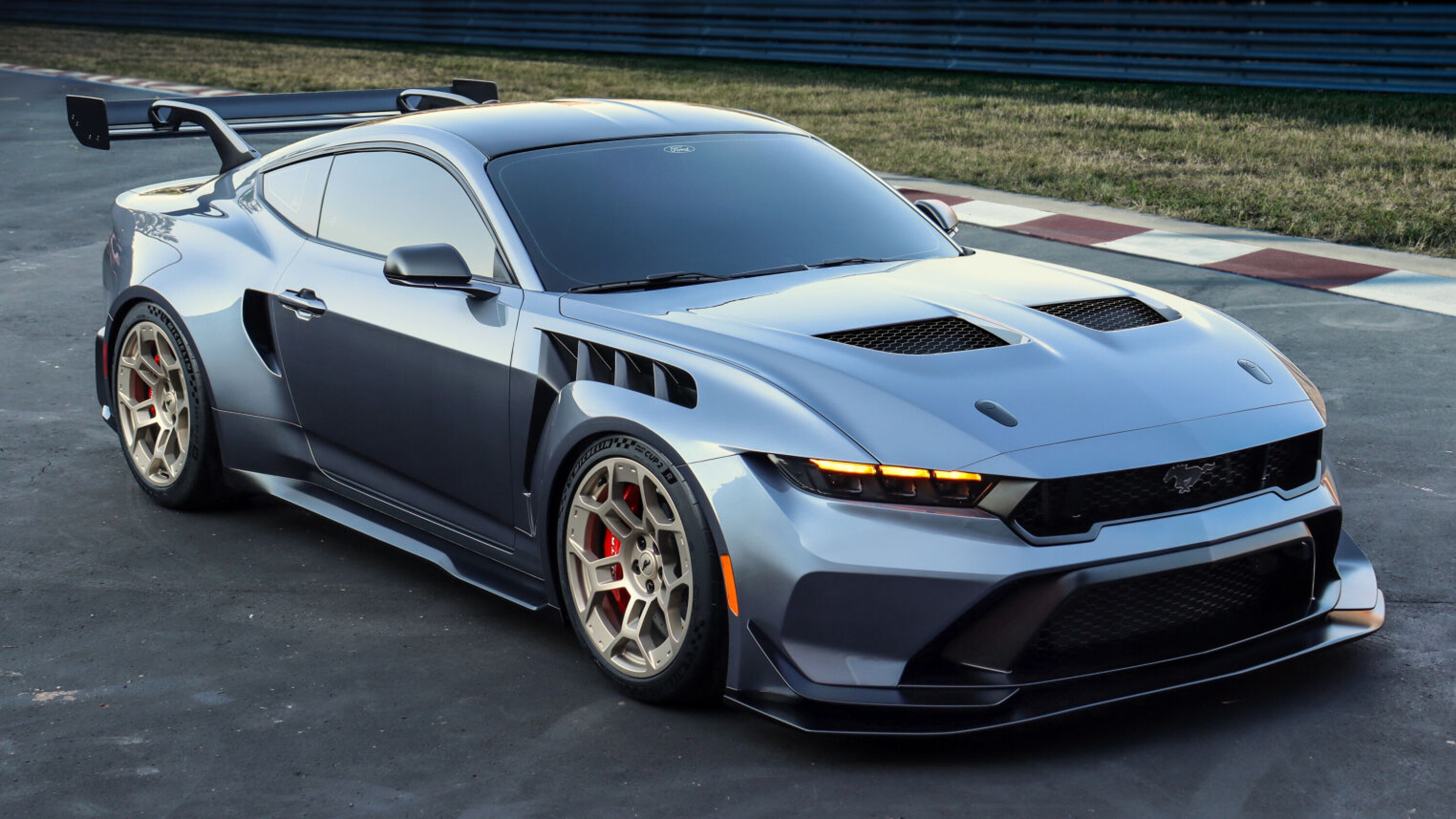
The Mustang GTD makes the Dark Horse R look like child’s play. Ford’s new Mustang variant is, quite literally, a GT3 racer for the road.
Snapshot
Ultra-limited Mustang racecar for the road revealed
5.2-litre supercharged V8 to produce 600kW
Sub 7-minute Nordschleife time being targeted
The price? At ‘only’ US$300K, it seems like a bit of a bargain
It began as a skunkworks project behind a wind tunnel in Michigan as a handful of Ford engineers worked fervently to make a Mustang to knock Europe’s best sport sports cars off their Nurburgring Nordschliefe perches. This time, instead of a ground-up supercar, it’s the ultimate Mustang.
Although there’s no word on how many just yet, the GTD will be made in ‘ultra-limited’ numbers with an indicated price of US$300,000 (AU$467,000).
“Mustang GTD represents the very best of Ford Motor Company and what our team needs to do every day,” said CEO Jim Farley.
“This is what happens when we take what we’re good at and push the boundaries to see where the bubble stops. It represents the essence of the transformation we’re going through at Ford, from software to special edition cars,” Farley added.
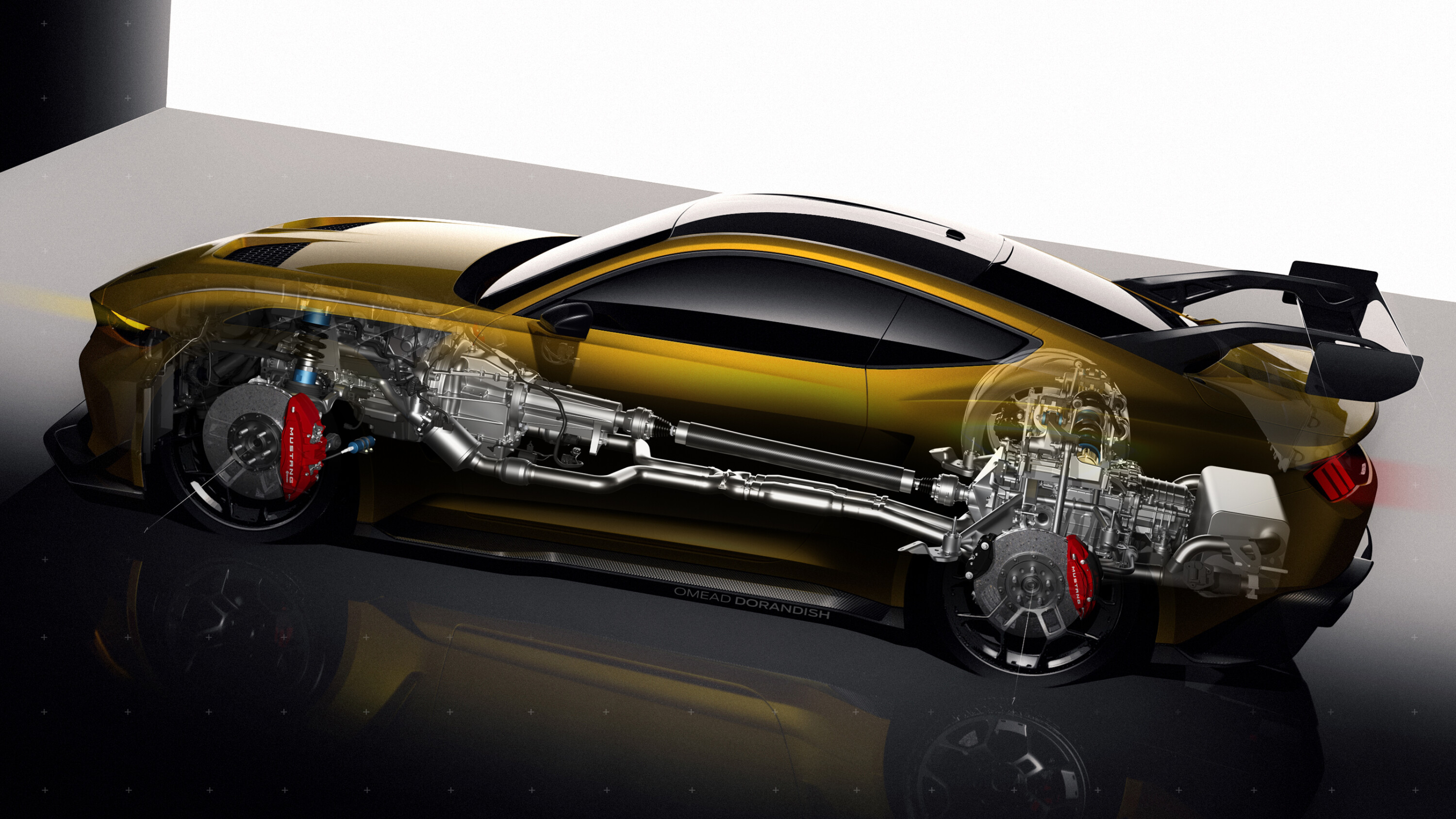
The Mustang GTD starts life as an S650 coupe, before getting shipped to Multimatic’s Canadian HQ (those behind the GT3 racecar) for a makeover.
That includes dropping a dry-sumped 5.2-litre supercharged V8 that revs to 7500rpm under the bonnet (it isn’t mid-engined after all!) which sends drive to the rear wheels via a carbon fibre driveshaft to an eight-speed dual-clutch transaxle. Outputs aren’t finalised yet, though Ford is targeting 600kW (or 800hp in old money).
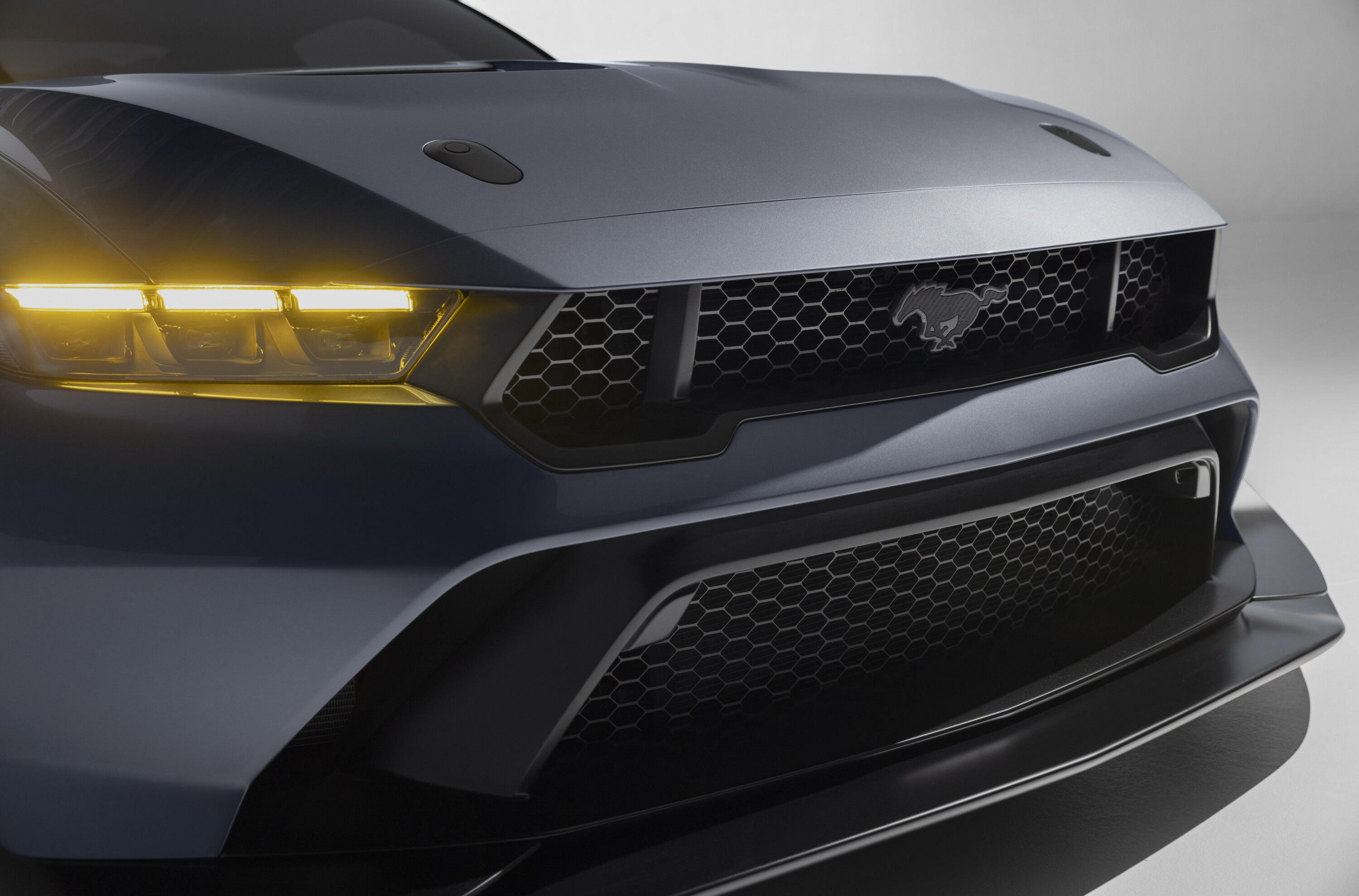
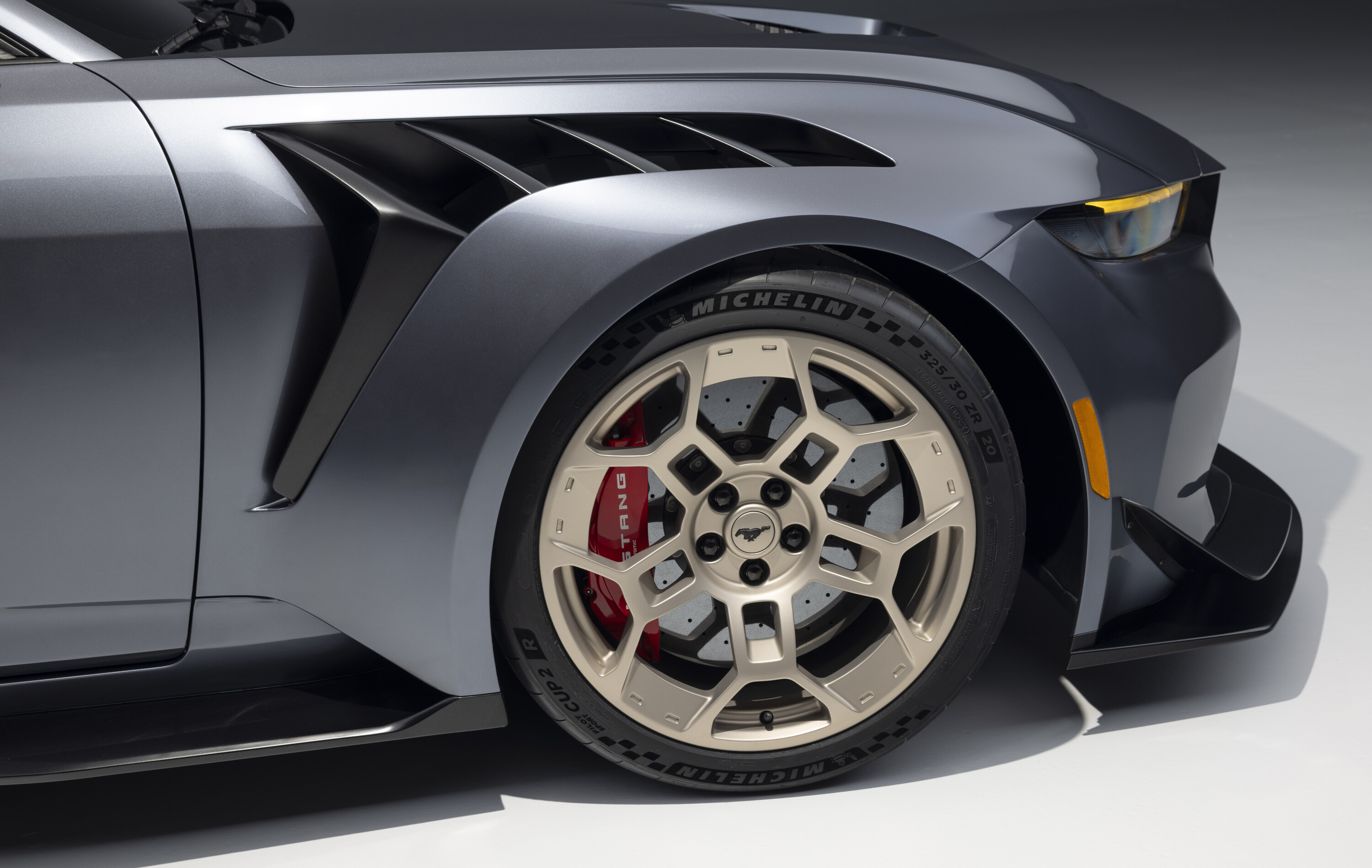
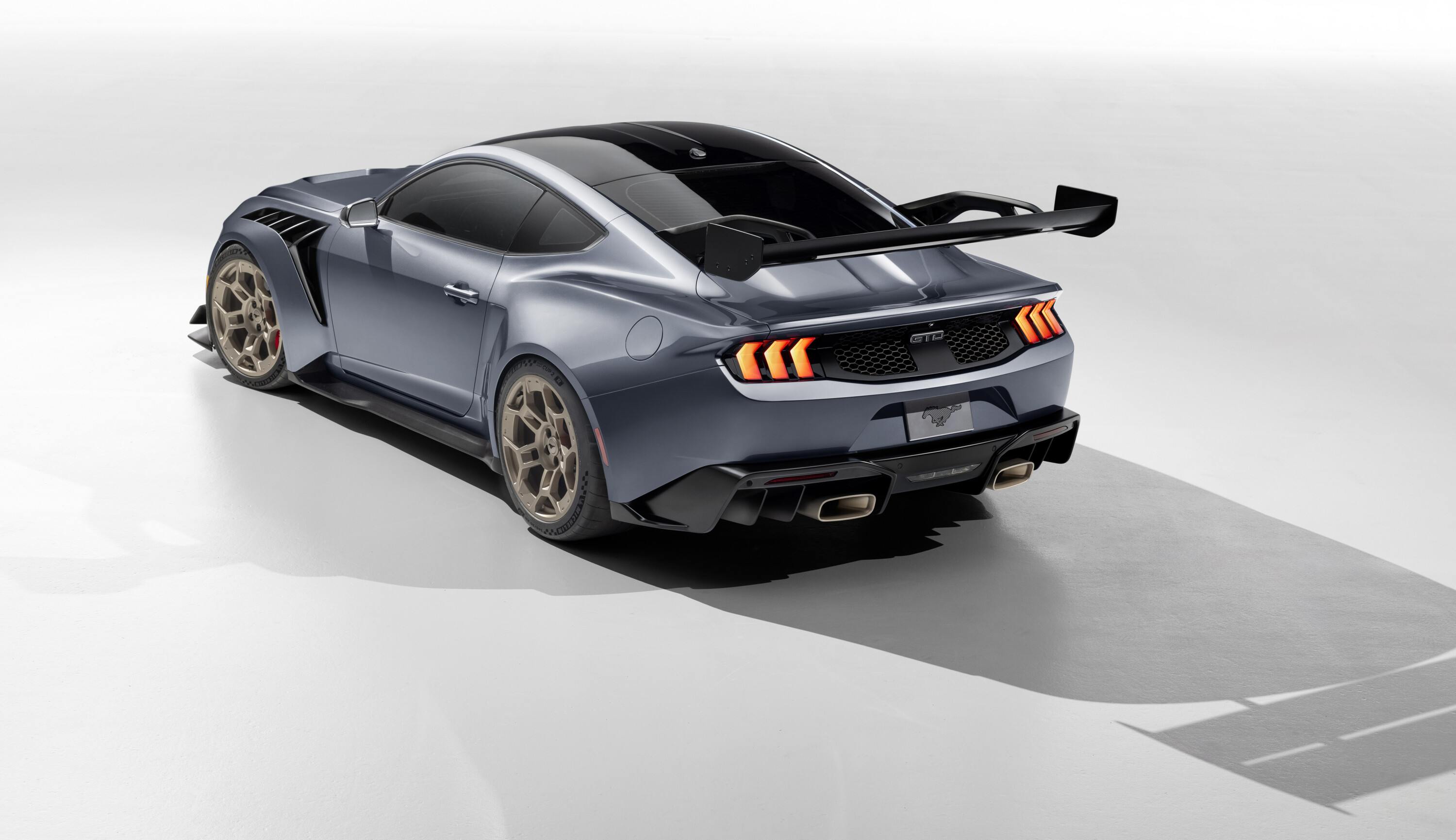
An extensive aerodynamic treatment is next. The sculpted front bumper with its jutting splitter channels air exactly where it needs to be. Bonnet vents relieve engine heat, and side scoops cool the semi-active hydraulic suspension and rear transaxle. Carbon fibre is employed for most of the bodywork.
1
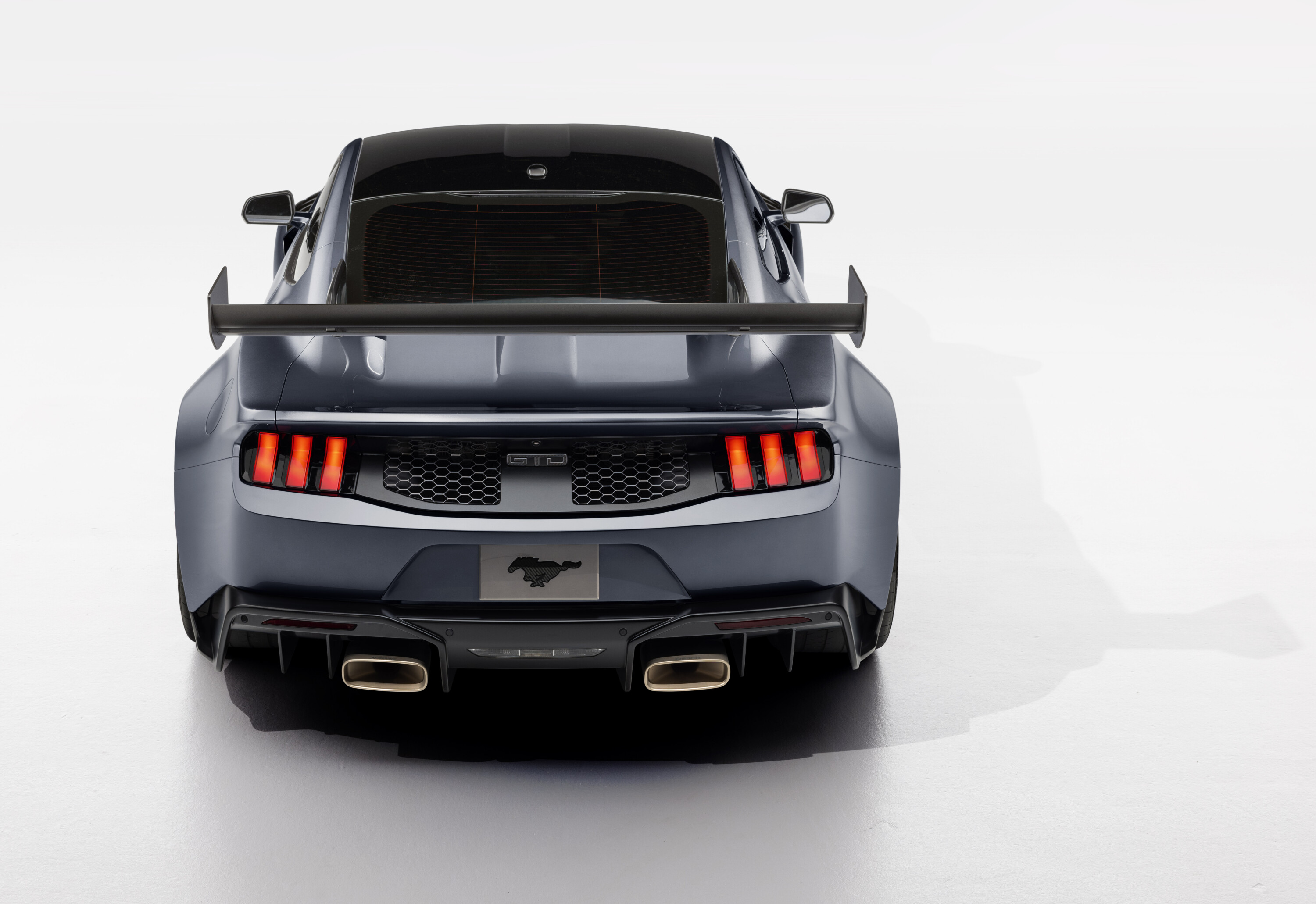
The diffuser is fed by a flat carbon fibre underfloor, and since the GTD is freed from FIA GT3 regulations it’s able to use an active rear wing and front flaps to balance low drag at high speeds, and high downforce in corners.
“Our design team worked in conjunction with the Mustang GT3 design team and the aero team, sharing solutions between race car and road car, and vice versa,” said Anthony Colard, Ford Performance design manager, adding the GTD is “an aerodynamics-driven design”.
Another illegal feature (for GT3 racing) is the Mustang’s semi-active suspension. Driven by hydraulically-actuated twin-rate and height steel springs, the GTD has two suspension settings. Road is the standard setting, and Track mode drops the GTD by nearly 40mm compared to the regular GT.
1
The short-long double-wishbone front suspension differs from the cooking ‘Stang’s front struts, but not quite as much as the GT3-inspired pushrod multi-link rear suspension with inboard ‘Adaptive Spool Valve’ dampers and a 1:1 leverage ratio.
Grip is taken care of by 325mm wide front and 345mm wide rear semi-slick tyres mounted on 20-inch forged alloys, with lighter-again magnesium wheels available. Brembo carbon ceramic brakes sit behind those attractive wheels.
Just like GT3 cars, the customisable onboard computer has a huge number of parameters for traction controls, giving drivers the ability to tweak exactly how much slip they want. Unlike the GT3 racer, however, the GTD has an interior touchscreen borrowed from the S650 ‘Stang.
1
The goal? Ford’s chasing a sub-seven-minute Nurburgring Nordschleife lap time. That’s pretty vague, but it’s safe to assume the GTD is benchmarked to beat Porsche and Manthey Racing’s 6-minute 38.8-second lap set by a 911 GT2 RS in 2021.
And, for those wondering, the GTD name has nothing to do with a diesel Volkswagen – it speaks to the ‘GT Daytona’ IMSA racing class made of GT3 race cars.
The marketing exercise? To beat the Europeans at their own game, and from the list of modifications done to the GTD, Ford’s serious about it.
1
Availability and pricing
Ford hasn’t put a figure on how many GTDs it will sell, the number will likely come down to customer demand and Multimatic’s output capacity. The two factors will make for an ‘ultra-limited’ production.
It’s almost sad how affordable – in relative terms – the GTD will be. Ford’s posted an indicative list price of US$300K, about $470,000 Aussie dollars. That’s only a whisker more than a McLaren Artura and less than a Ferrari 296 GTB. With that money invested in a Mustang GTD, you’re buying into a much more capable track car.
Slated for first deliveries in late 2024 or early 2025, the GTD will start life at Ford’s Flat Rock plant before getting shipped to Multimatic’s HQ in Canada to undergo its hand-crafted transformation into a supercar.
An Australian release is, disappointingly, not on the cards.
1
Our original story, below, continues unchanged.
August 17: Mustang GTD leaked ahead of reveal
Ahead of an official reveal at Monterey Car Week, pictures of a very racy-looking Ford Mustang have surfaced. They may well be fake, or misleading, so we’ll treat them with a grain of salt.
Rumours from Ford Authority [↗] previously predicted a ‘mid-engined’ road-going Mustang like the C8 Corvette, but if the leaked images are real, they mostly put paid to those thoughts.
Until the racey Mustang’s Monterey unveil, though, we’ll have some fun speculating about Ford’s ‘GTD’ creation that goes above and beyond the S650 Dark Horse and track-focused Dark Horse R.
The GTD name comes from IMSA racing categories, it stands for GT Daytona and, according to the race series the cars “are enhanced (not defined by) technology and utilise the global FIA GT3 specification.”
1
Unless Ford has fitted an ultra-compact three-cylinder, the proportions indicate the engine’s still ahead of the windscreen. Instead, it’s more likely that there was some miscommunication around what kind of mid-engine layout this is – a front mid-engine one rather than a true midship like a Ferrari 296.
It’s not uncommon for GT3 and GTE racers to move their engines as close to the car’s firewall as possible and therefore behind the front axle – hence the mid-engined terminology. Porsche notably made this move (albeit in reverse) with its latest 992 911 GT3 racer, the first 911 in history to adopt a true mid-engined layout.
The YouTube video Facebook post that leaked the GTD is grainy and the images are warped, though we can still see it appears to be wearing Michelin treaded track tyres wrapped around deeply dished five split-spoke rims.
At the rear is a version of the Mustang GT3 racecar’s incredible swan neck rear wing and there are dramatic bonnet and front fender vents to let heat out of – presumably – the Coyote V8 and front brakes. It has indicators and headlights just like a road car.
The only feature we’re a little miffed about is the open vent that sits just rear of the door – what is it for? They could be to cool the supposed mid-mounted V8, or perhaps a rear electric motor.
More likely, given their size and shape, these vents (that we also see on the GT3 racer) are for either feeding aerodynamics, or cooling the differential and rear brakes.
According to Ford Authority, this roadgoing supercar is to be produced by Multimatic, Ford’s racecar producer of choice for the Ford GT3, and existing Mustang GT3 and GT4 racers.
If this is more than just a concept car, then we’re in for a treat with Ford’s latest S650 Mustang range. More to come as Monterey Car Week rolls on.