
The Genesis G70 sedan, posh sibling to the outgoing Kia Stinger, is set to debut a second facelift in May 2023.
Snapshot
- Genesis G70 second facelift will reportedly debut in May 2023
- Luxury sports sedan continues on, despite related Kia Stinger demise
- Second-gen G70 due in March 2026, likely all-electric
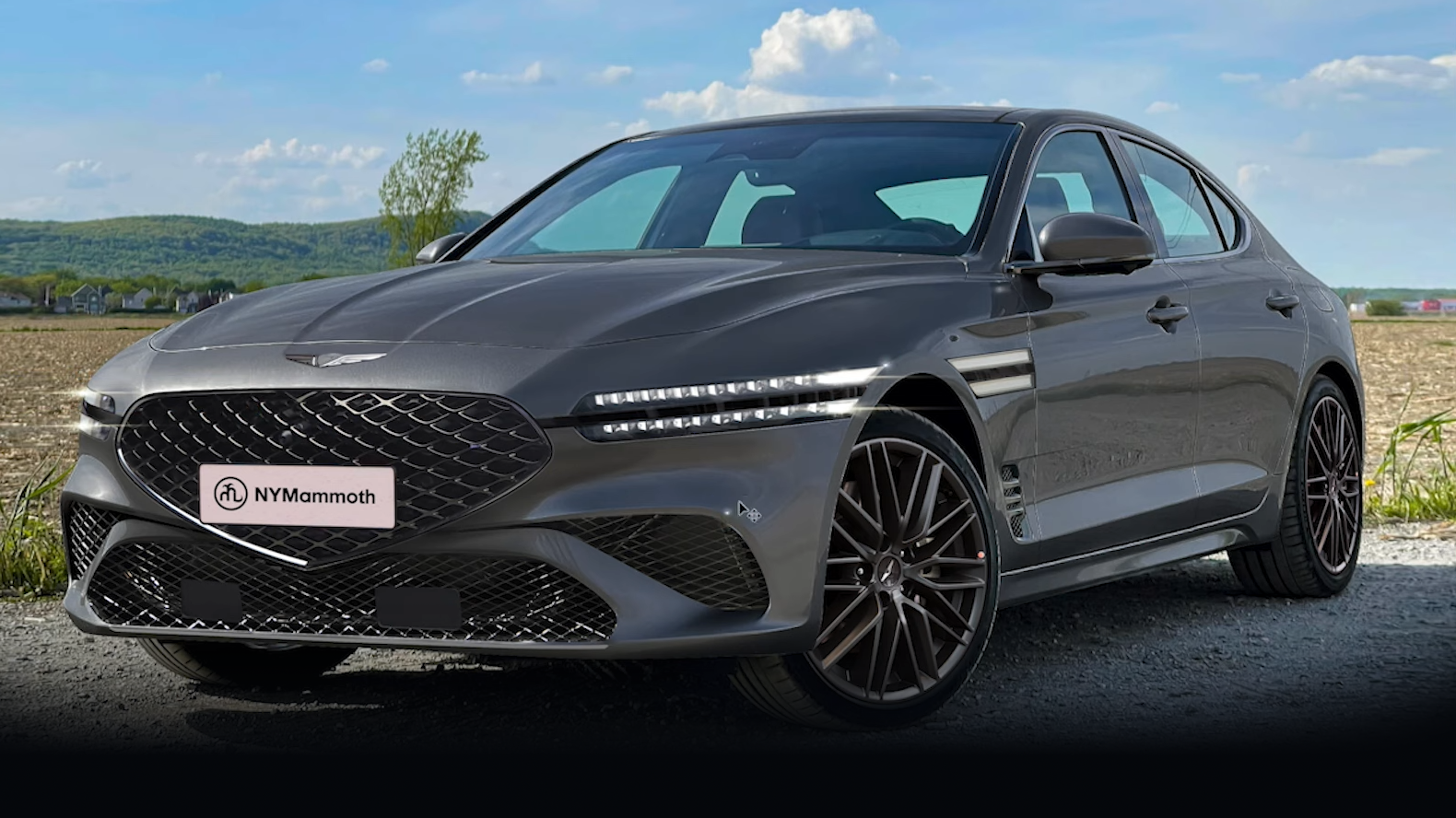
According to Korean Car Blog, sources have said that the sporty luxury sedan will feature a front-end design even more inspired by the overseas G90 sedan than before, while debuting a “completely new interior”.
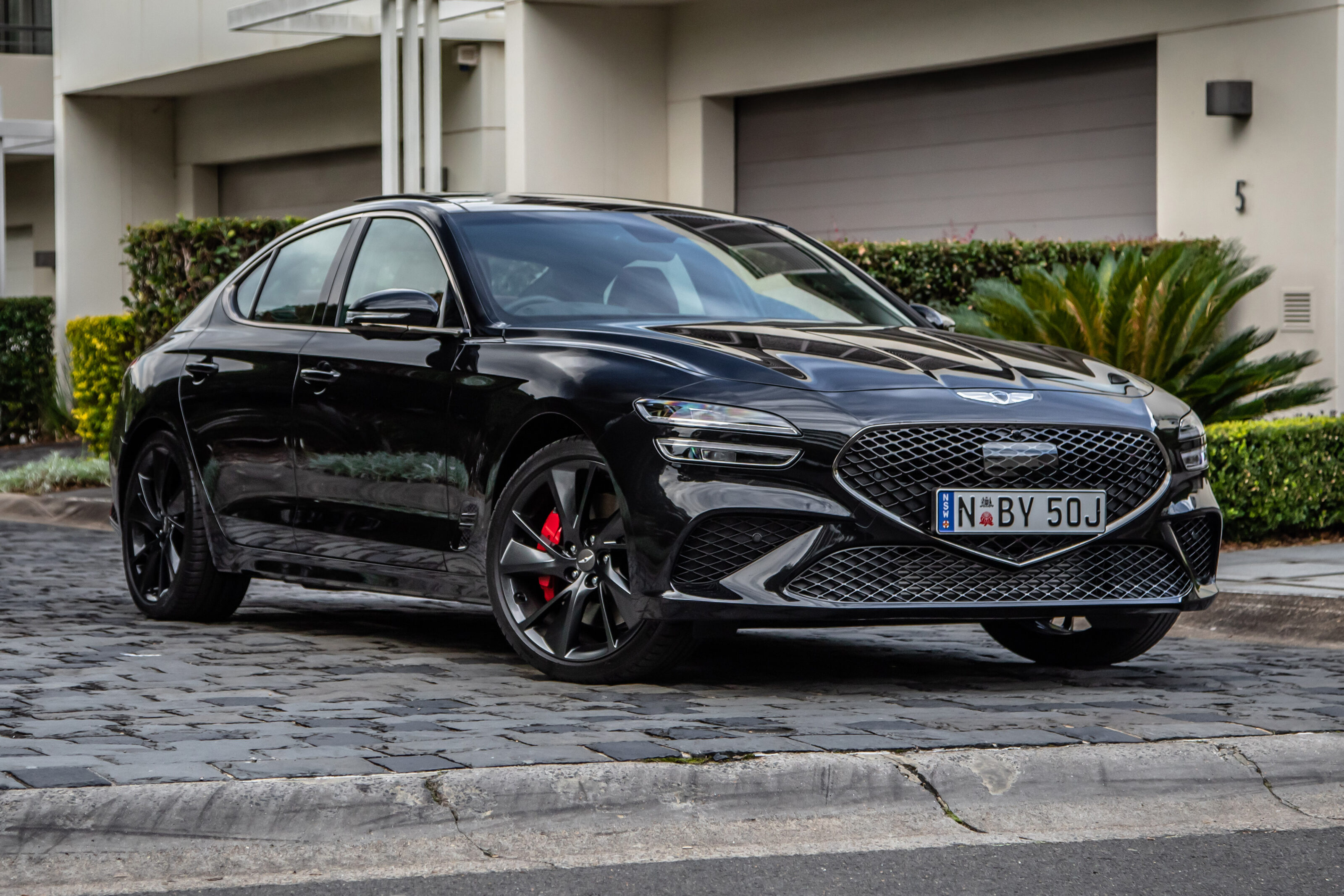
The G70 sedan launched locally in 2019, before receiving a striking facelift in 2021 to bring it in line with the newer Genesis design language, while introducing a G70 Shooting Brake body style.
There’s no word on the future of the G70 Shooting Brake, but as one of the few wagons left in the world, fans will be hoping it lives on.
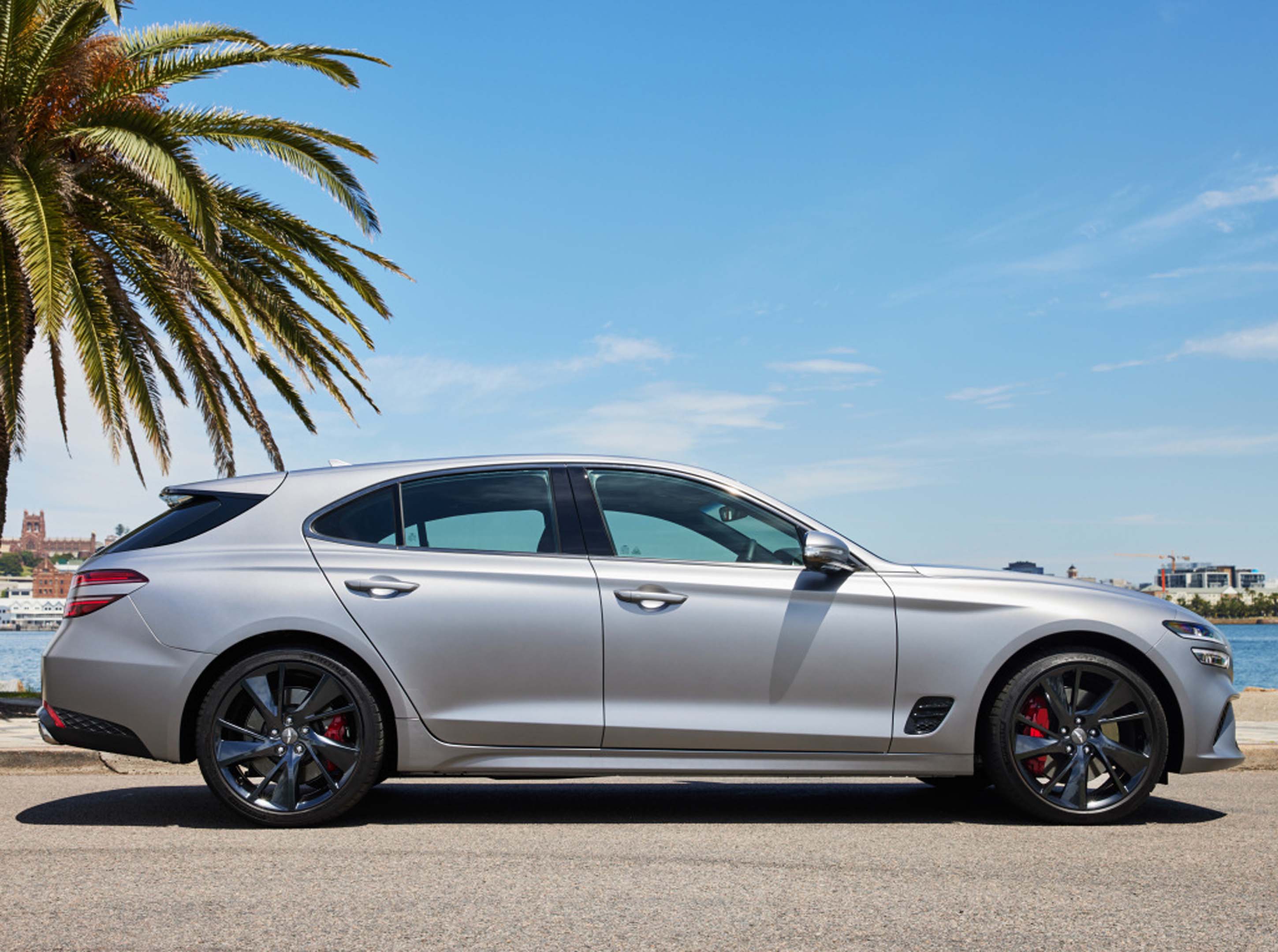
Despite production ending for the Stinger in 2023 – but with Kia Australia committed to selling the liftback for as long as possible – the G70 will continue on with the same underpinnings and carryover engines.
The current flagship G70 Sport sedan guise packs a 3.3-litre six-cylinder petrol engine making 274kW of power and 510Nm of torque, which accelerates from 0-100km/h in a claimed 4.7 seconds.
The South Korean automaker has already stopped developing new internal combustion engines, but it’s unclear whether it’ll fit a 48-volt electric supercharger as in the G90 to comply with strict emissions regulations in some countries.
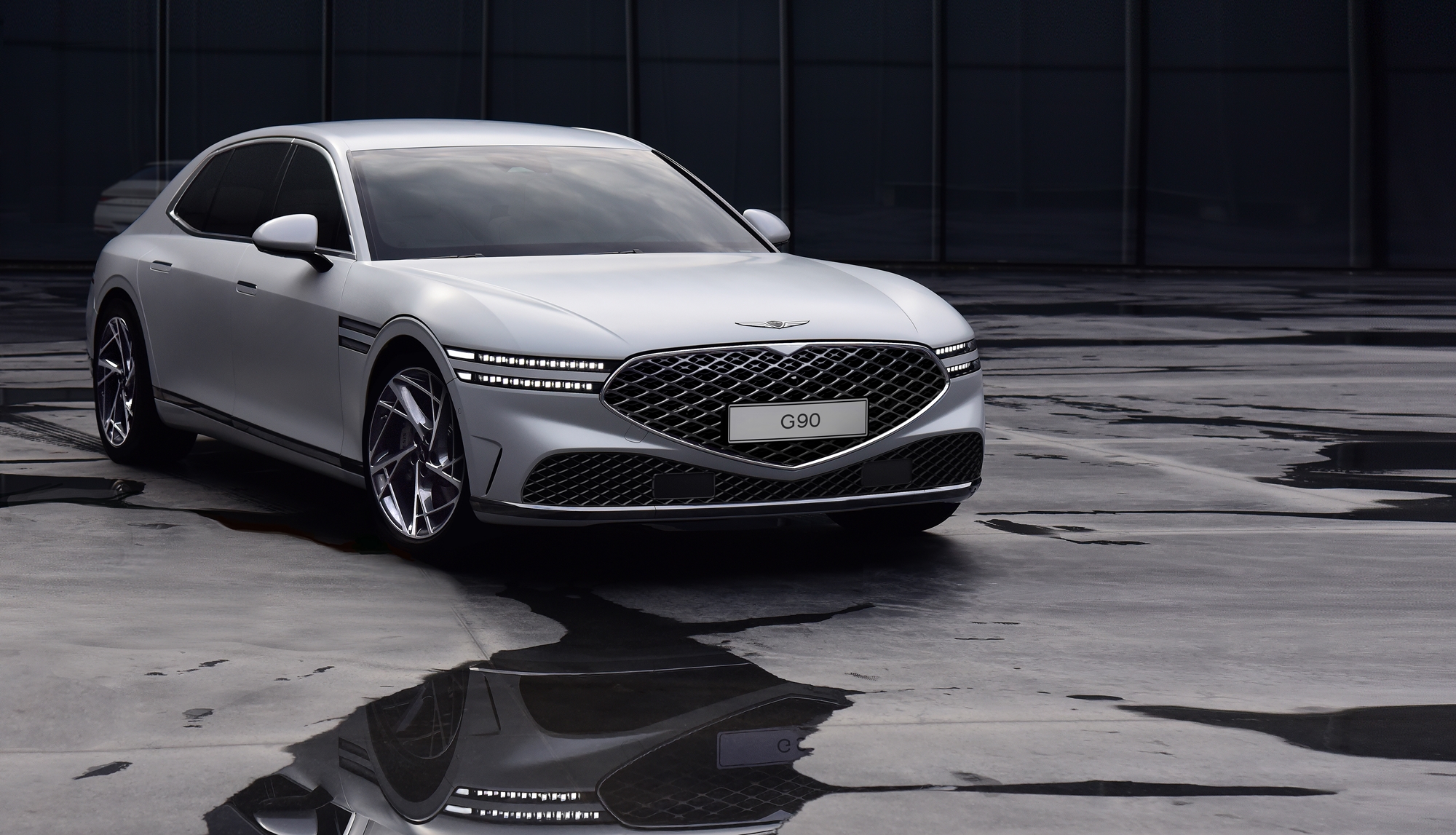
Below: A speculative rendering of the 2024 G70, inspired by the larger G90
Below: The G70 in its current facelifted form
Will there be an all-new, second-gen G70 later?
Korean Car Blog also reports an all-new second-generation Genesis G70 (codenamed RN2 internally) is set to debut in March 2026, which would probably result in a 2027 launch in Australia.
The company has promised to only introduce pure battery-electric or hydrogen fuel-cell models from 2025, which confirms the first G70 will ultimately be the only non-electrified model in the badge’s history.
To the end of November, only 84 G70s were registered in Australia in 2022 – making it the second-least favourite Genesis model in the line-up behind the larger G80 sedan.
In contrast, 464 examples of its GV70 SUV counterpart were sold in the same period.
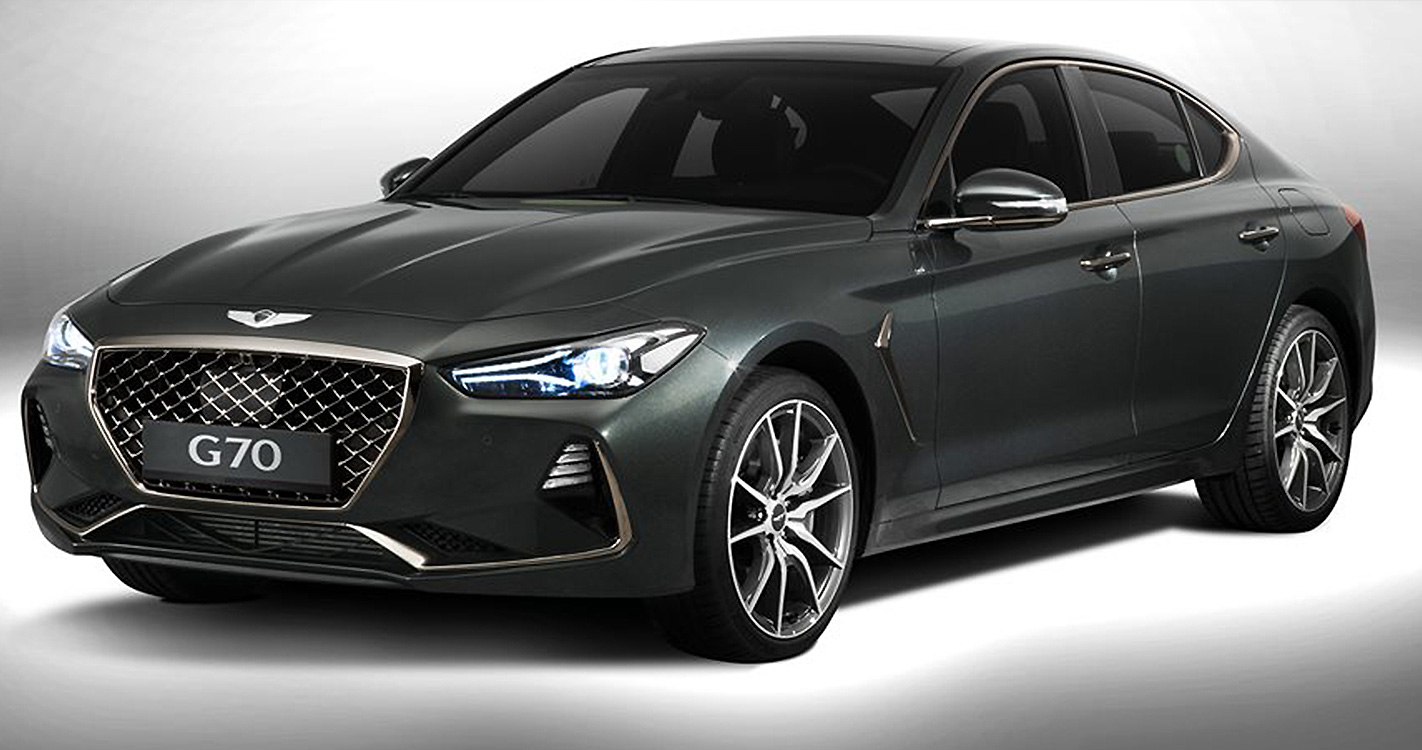
Below: The G70 as it looked when first revealed in 2017
Below: The G90 limousine, not offered in Australia
Fans and publishers have been imagining a next-gen Alfa Romeo Giulietta for years now – which is no surprise, given it had been around for 11 years when it finally ended production.
Nowadays, Alfa is focused on its new Tonale SUV to win buyers seeking a small car, with more and more motorists preferring a higher seating position over the small hatches that were ones so popular.
There’s no official word on a new Giulietta, but Alfa has never said never when it comes to the badge’s future – and, really, it’s too good a name to retire forever.
How would a new-generation Giulietta look? Well, given we’re unlikely to see it revived anytime soon, it probably won’t look anything like the brand’s current line-up. Indeed, it’d likely be all-electric and based on the Peugeot 308, if it happens at all.
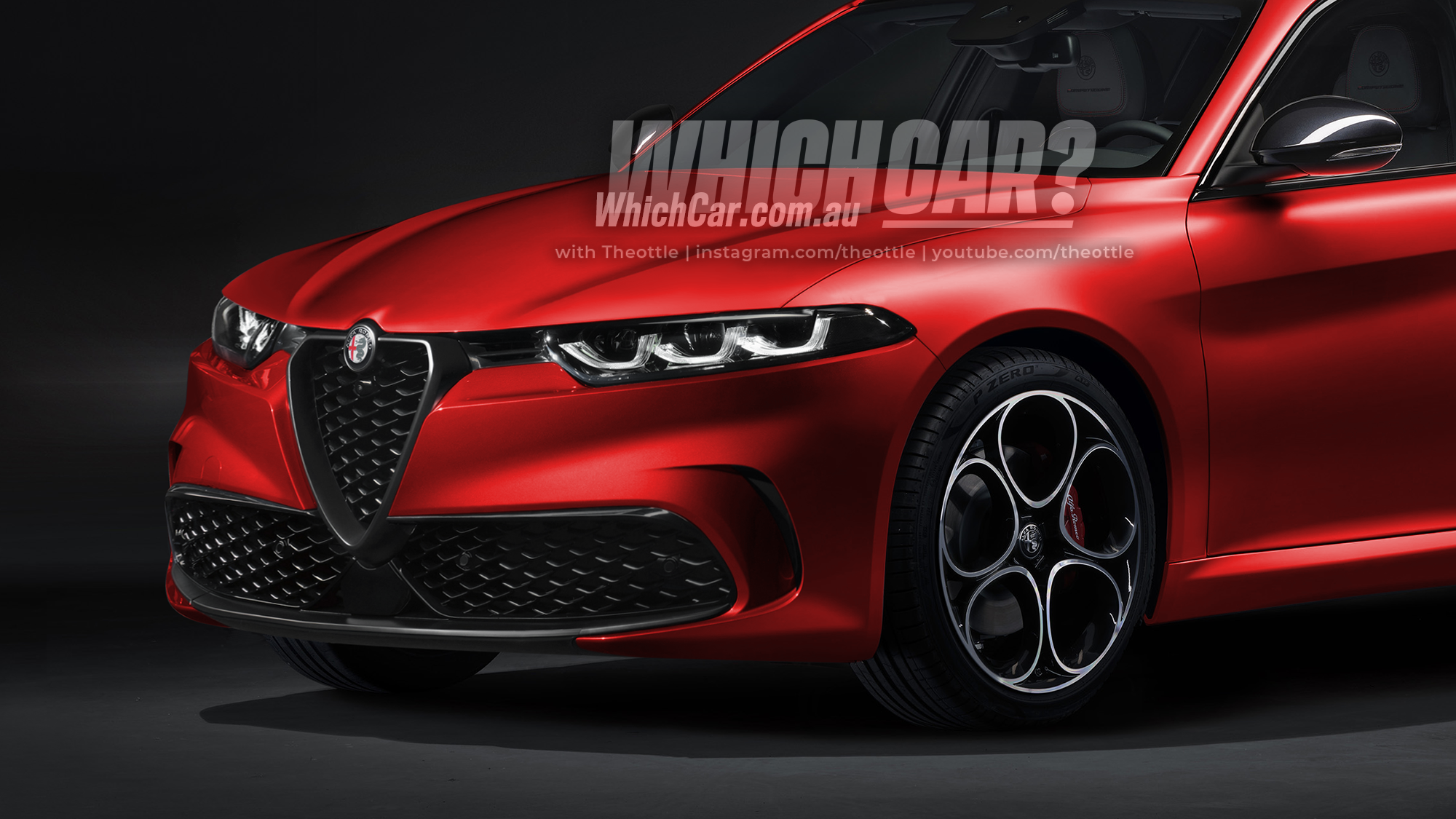
The current Alfa range is what we’ve got to go off, though, so our mate Theottle has rendered a new-gen Giulietta with themes borrowed from the Tonale compact SUV.
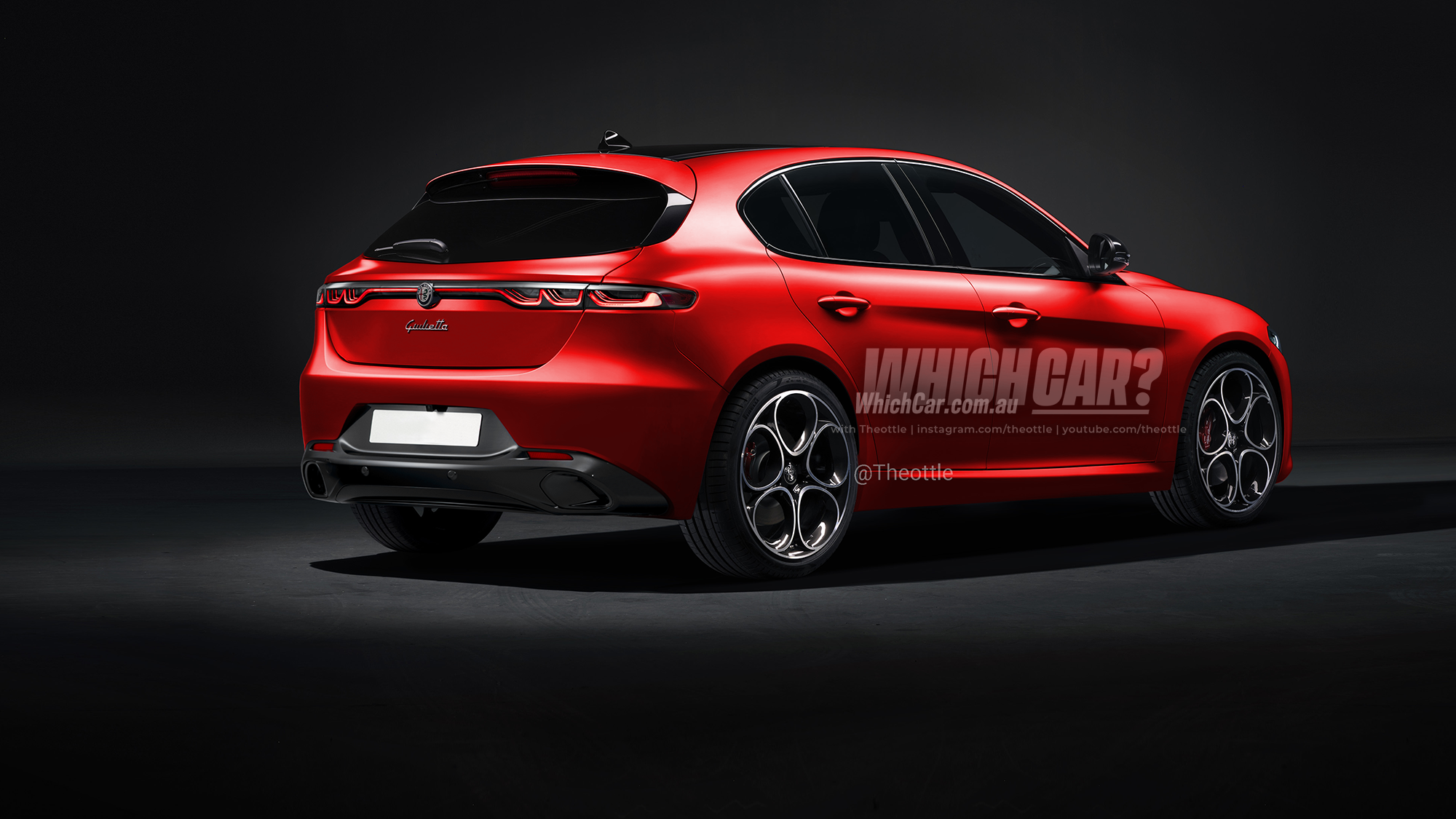
What do you think of the look? Would you like to see a new Giulietta return to the road? Tell us in the comments below.
Aussie sales of the Alfa Romeo Giulietta (2010 – 2021)
| Australian sales for the Giulietta | |
|---|---|
| 2010 | 14 |
| 2011 | 526 |
| 2012 | 610 |
| 2013 | 1949 |
| 2014 | 2268 |
| 2015 | 1272 |
| 2016 | 639 |
| 2017 | 389 |
| 2018 | 297 |
| 2019 | 169 |
| 2020 | 120 |
| 2021* | 35 |
April 2020: Alfa Romeo Giulietta axed
Tim Robson
Alfa Romeo has confirmed that its baby hatch, the Giulietta, will end production at the end of 2020.
While the car’s demise is no surprise, this is the first time that it has been confirmed by the company, with Alfa Romeo’s product planning head Fabio Migliavacca telling British title Autocar that the “Giulietta is expected to finish its life at the end of this year.”
With no replacement in sight, it’s a big moment for the Italian car maker, whose flawed but fabulous hatchbacks have endeared the iconic brand to generations of enthusiasts over the last 30 years.
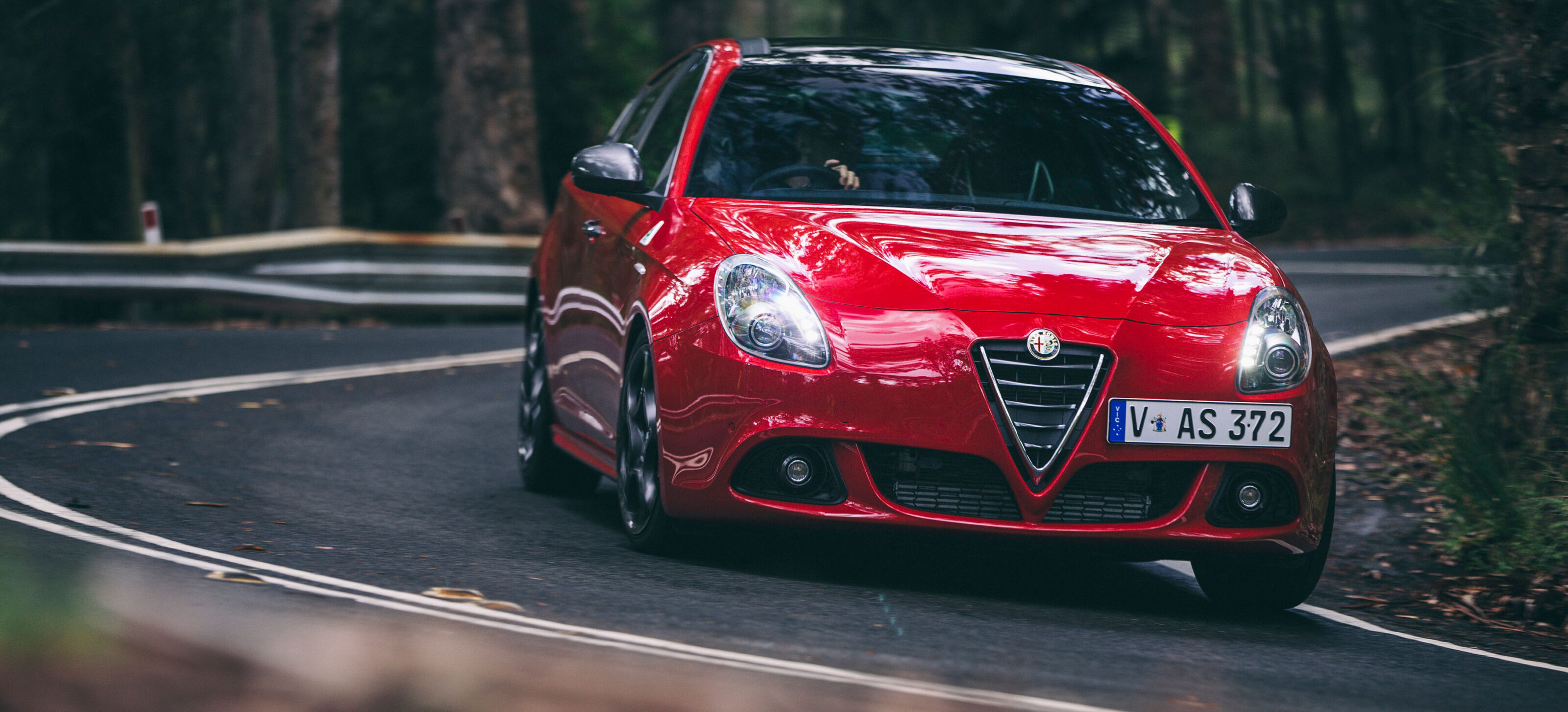
Launched in 2010, the Alfa Romeo Giulietta replaced the 147 in the Alfa Romeo lineup and paired up with the cheaper MiTo hatch locally until the latter’s demise in 2018.
A recent rehash of Alfa’s much-touted five-year plan saw several new products axed in the face of falling sales and a global downturn in the automotive industry, so while the Giulietta will not be replaced like-for-like, there is a succession plan in place.
“The trend is to have SUVs in the C-segment, so the Tonale SUV will be the replacement for Giulietta,” confirmed Migliavacca.
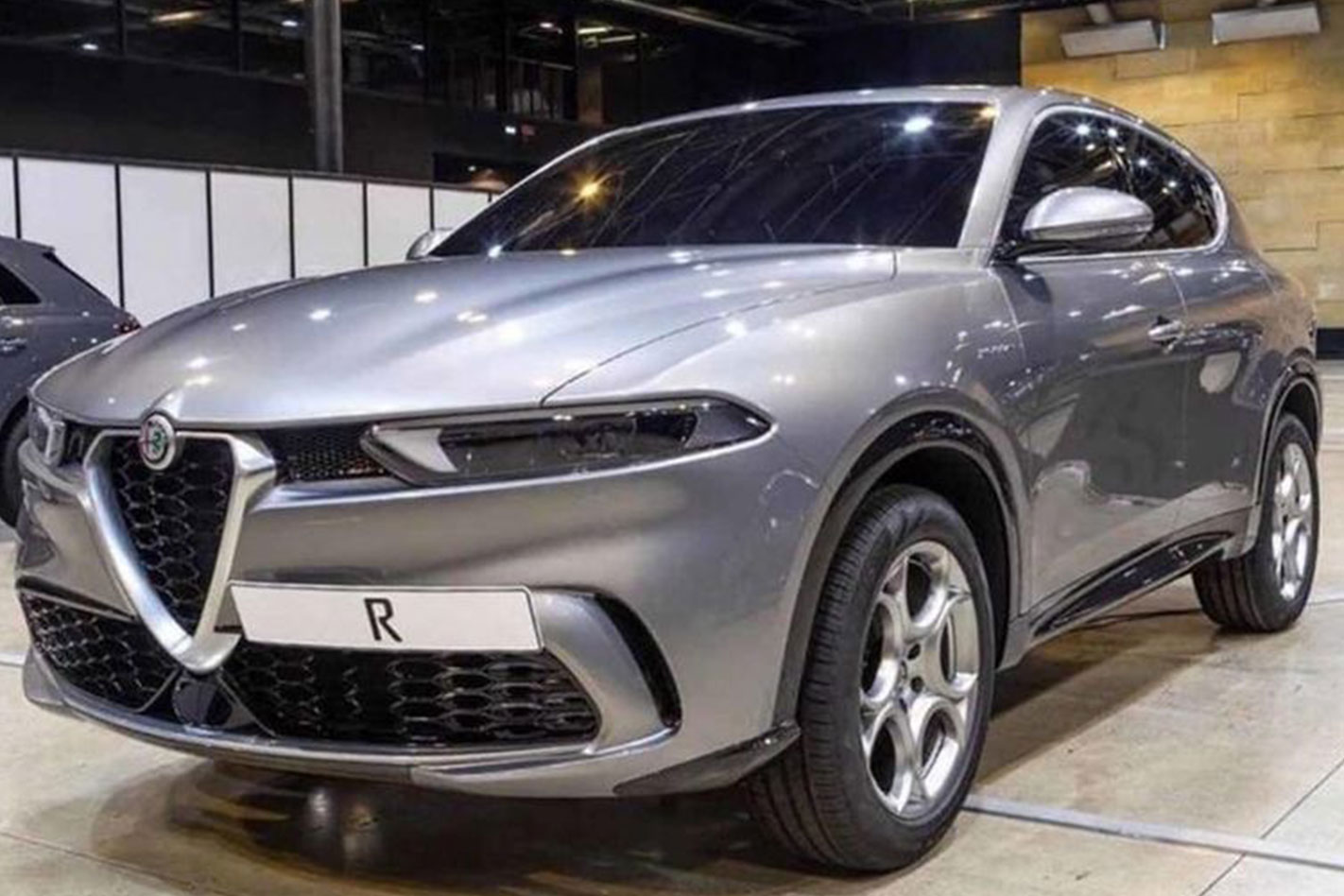
The Tonale (above) is a small SUV crossover that’s designed to sit under the Stelvio, but it’s not especially new.
Built on top of FCA’s modular small 4×4 architecture that’s shared with the Jeep Renegade, the Tonale was shown off in concept form last March in Italy.
Given the relatively precarious position of the Alfa Romeo brand in a tough market, don’t expect a lot of money to be spent on the Tonale, though… it will inherit some elements of the Stelvio’s interior design language, while a mild hybrid system with the potential for an electric-only range of 50km is being touted as part of the drivetrain offerings.
FCA’s 1.4-litre and 2.4-litre four-cylinder engines are a good guess as to the Tonale’s powerplant options, while the car’s underpinnings allow for front- or all-wheel-drive options.
Locally, Alfa Romeo has sold 35 Giuliettas so far in 2020. A local source acknowledged that the Giulietta was indeed nearing the end of its journey, but local stocks of the car would see the company through until the end of the year.
Our source would not be drawn on how the Tonale would fit into Australian plans, however.
The orange glow of the check engine light on your dashboard can be quite alarming, no matter if you’re a mechanically minded driver or not.
Luckily, that amber glow rarely preempts something quite as catastrophic as a soon-to-seize engine and a world of financial pain, because the enigmatic check-engine light has many causes.
However, if do you notice your check engine light is illuminated or blinking, it’s important to get your car checked as soon as practicable.
The check engine light will either flash or remain constant, depending on the issue at hand.
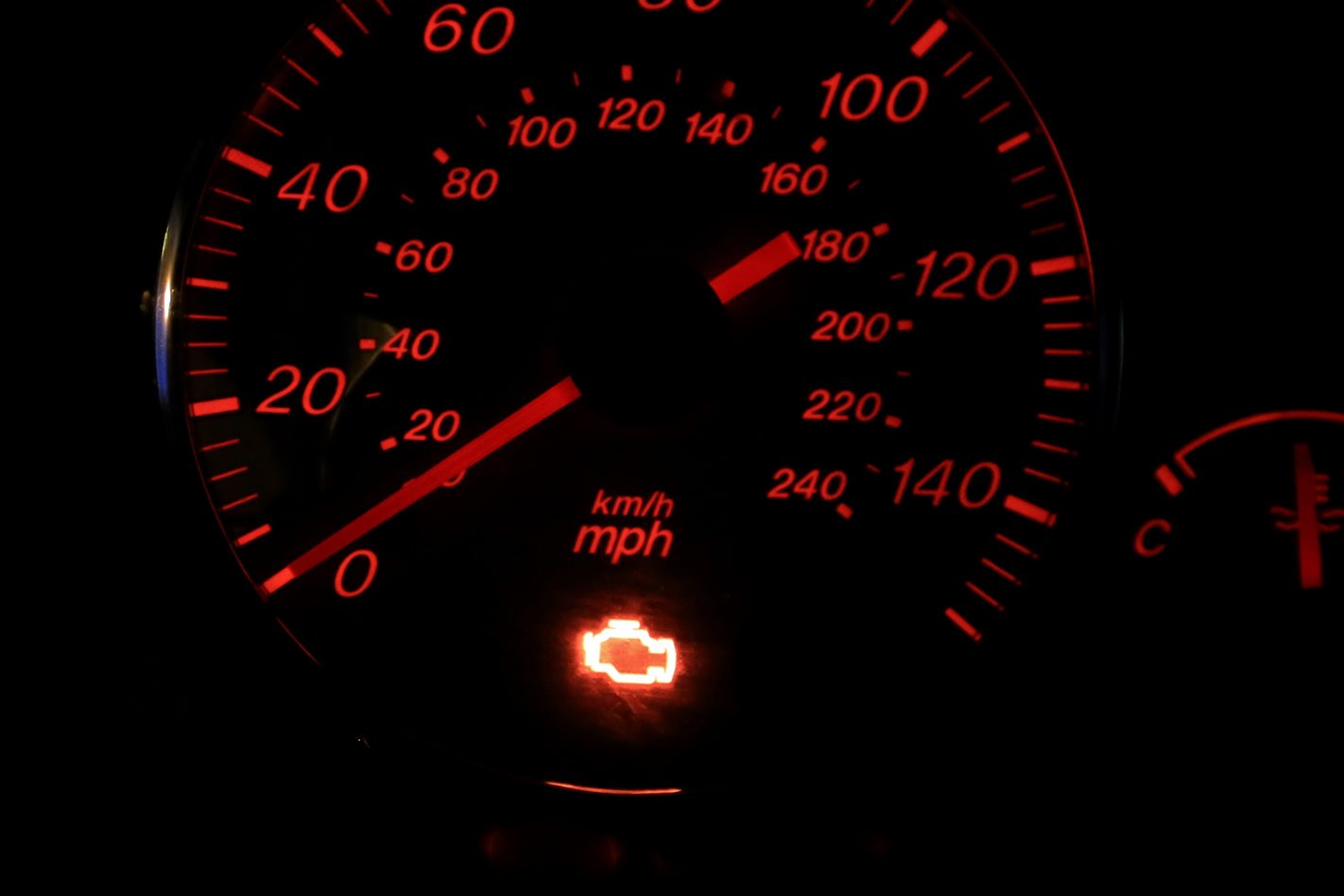
? Steady check-engine light
Book a service
If the light remains solid, then the problem likely isn’t serious and, providing there are no other warning lights, the engine sounds and feels okay and the water temperature is normal, you should be alright to keep driving. Just be sure to get it checked out as soon as possible.
Quite often the check engine light will come on because the car’s ECU determines fuel isn’t burning properly. This could be caused by all manner of simple issues, from a faulty oxygen (or O2) sensor, mass air-flow sensor, spark plug or coil issues, and even not tightening your fuel cap properly.

Blinking check-engine light
Take action
A flashing check-engine light usually signals something more sinister such as unburnt fuel being dumped into the exhaust system with the potential to damage the catalytic converter. You may also notice reduced power or rev range in tandem with a blinking CEL, often referred to as ‘limp mode’.
Like the check-engine light itself, limp mode is a warning, not a failure, so if careful you should be able to get your car home with a flashing check-engine light. It pays to be extra-observant, of course, listen for any unpleasant noises and get your car checked by a mechanic as soon as possible.
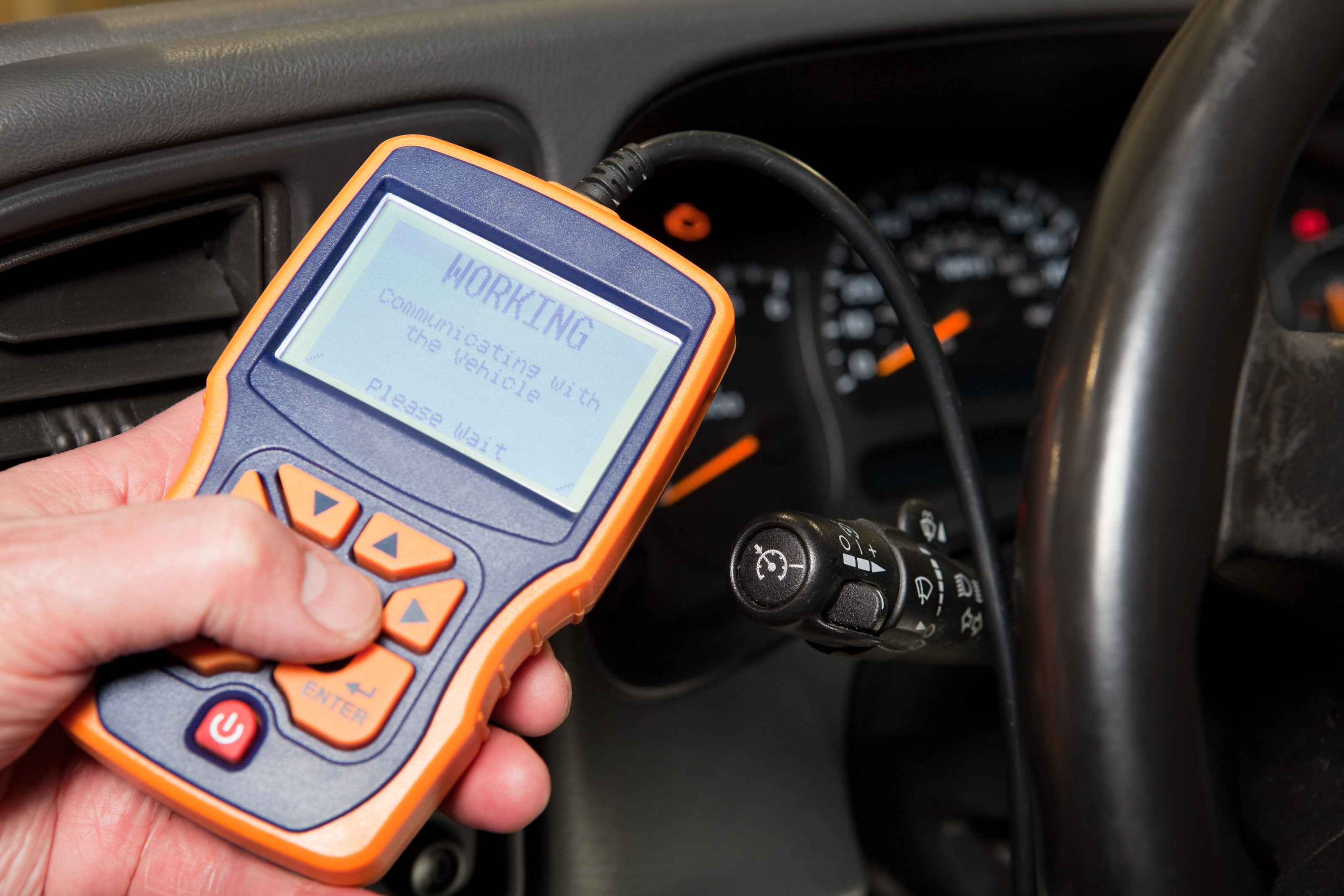
Diagnosing the problem
The first thing a mechanic will use to find out why the check-engine light is flashing, is a diagnostic scanner.
Typically, for cars built after 1996 this means an OBD2 port under the dashboard, however Europe moved to the standard later than other regions (in 2001), so take every case as it comes as some cars may need an expensive adapter to carry out diagnostics.
In any case, the vehicle’s on-board computer will have logged one or multiple fault codes, all with an individual values that can be cross-referenced with repair manuals. This code helps quickly rectify the problem without having to spend a lot of time troubleshooting. The scanners also turn the check engine light off once the issue has been fixed.
ODB2 scanners are easy to use and cheap to buy – as low as $20 for ones that let you read the codes on your phone via Bluetooth. Alternatively, you can have this done at an auto accessories store for around $10-$20.
The good thing about DIY diagnosis is you can have a good idea of what’s wrong with the car and know what action to take, so no mechanic tries charging you a $200 diagnostic fee just to tighten the fuel cap.
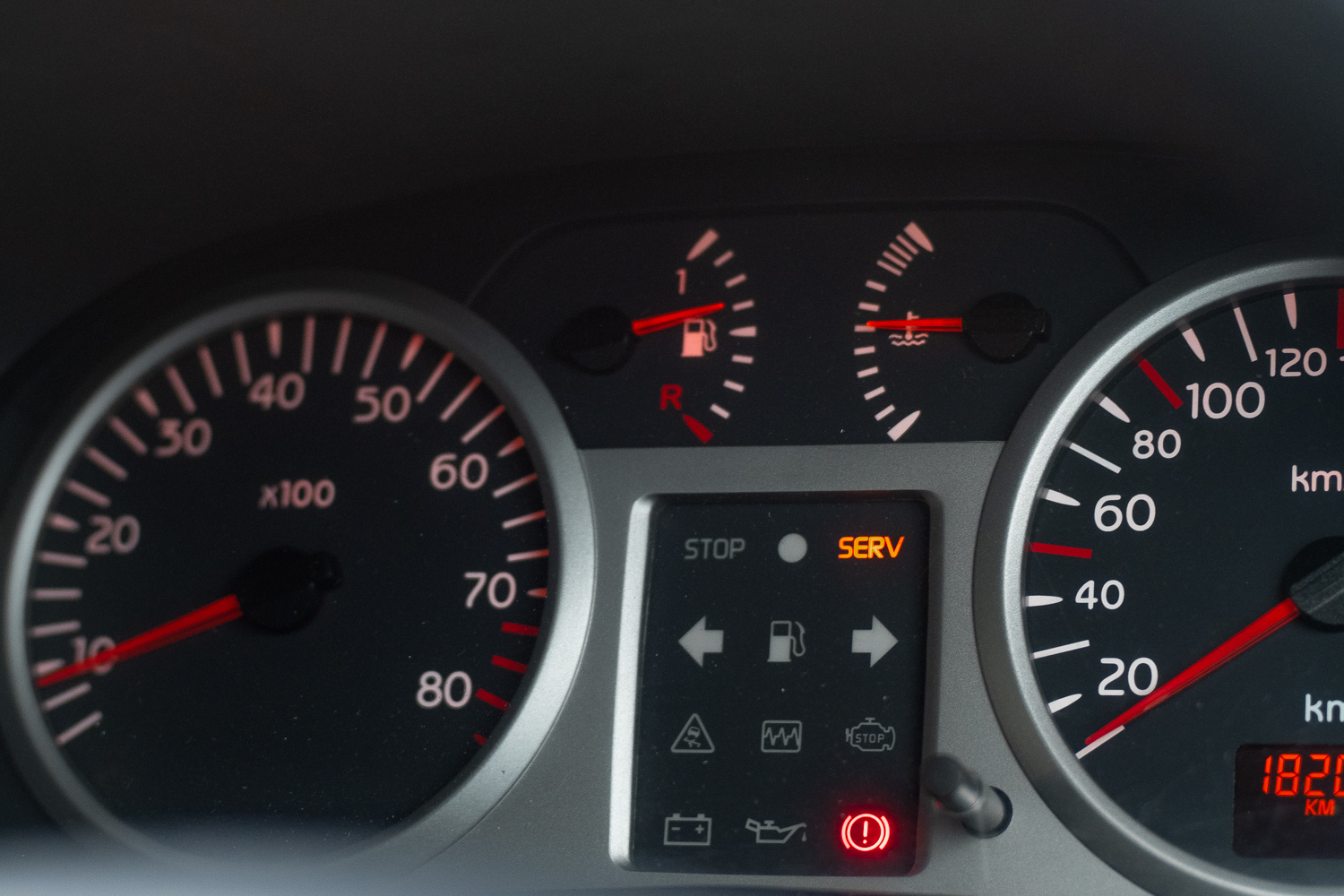
If the check engine light comes on
| Double check your fuel cap is tight. It might take a few days for the check engine light to turn off so you won’t know if this works straight away |
| Look, listen and even try sniffing out any potentially serious problems |
| Check your dashboard gauges and lights for indications of low oil pressure or overheating. These conditions mean you should pull over and shut off the engine as soon as you can find a safe place to do so |
| If the check engine light is blinking, reduce the strain on your engine by not over-revving or towing anything. Any serious problems will normally be accompanied by other symptoms |
| Have the code read with your own ODB2 scanner or at an auto-accessories store and, if necessary, get the problem fixed. |
A check-engine light is rarely as serious as you first expect and you should be safe to continue driving with it illuminated.
However, if you’re in any doubt, it’s worth visiting a dealer or independent mechanic as soon as possible. It pays to have a good relationship with your mechanic, as they may even be able to help diagnose the fault over the phone.
And remember, a $300 ride on a tow truck now is much more affordable than replacing major engine components in the future.
Despite their diminutive size, hatchbacks can (and often do) punch well above their weight class when it comes to storage capacity, making them popular for practicality-focused buyers.
Advancements in car design and smart packaging both have a huge impact on just how useful small hatches can be – so who’s doing it best?
JUMP AHEAD
- How is boot space measured?
- How can we know what will fit?
- Case study: How Skoda measures its boot
- Take a measuring tape, a stroller, a bike!
- CLASSES
How is boot space measured?
Boot space is not measured in dimensions, but rather volume. In most cases, particularly in regions favouring the metric system, it’s in litres.
Of course, this is no help if you need to fit a 2.0-metre-long Ikea flatpack or a couple of chairs, since volume does not directly translate to length, height and width.
And, since most car boots have space taken up by wheel arches, it can be hard to know how well something will fit into the boot of your car.
So how do we know what will fit in the boot of our car?
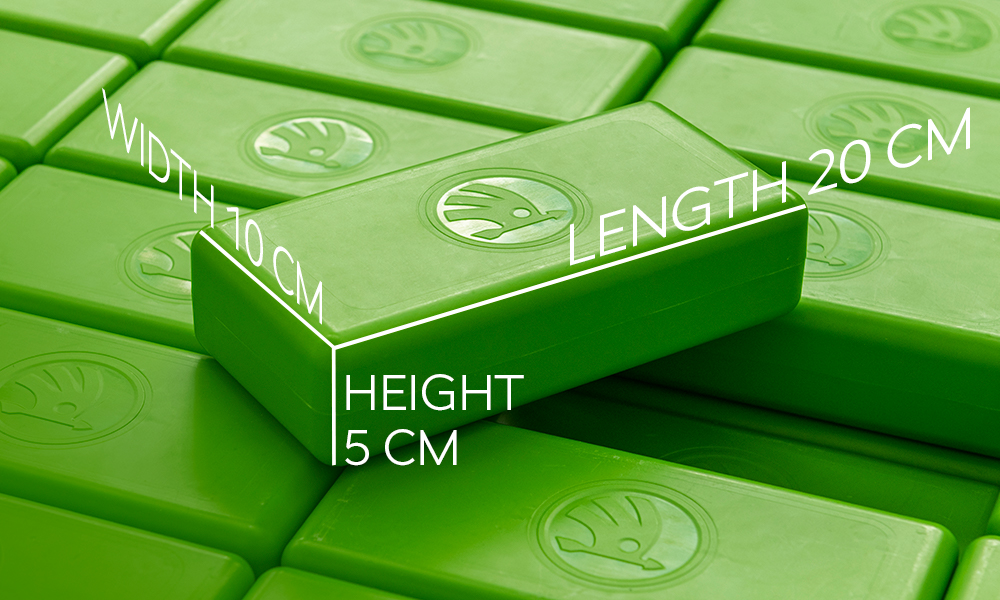
To help reduce confusion, the Verband der Automobilindustrie (VDA) measurement is widely used in most of the automotive world, which is based on the amount of standardised blocks that can fit into a car’s boot.
Officially, this method uses ‘litre’ blocks measuring 200x100x50mm.
The VDA system measures the practical space rather than getting a measurement from every nook and cranny, as though the boot has literally been filled with a fluid. This is the system used by America’s Society of Automotive Engineers (SAE). VDA is usually considered a more realistic view than SAE.
VIDEO: Skoda demonstrates the boot volume measurement of its Enyaq EV.
Skoda says: “The technicians are genuinely capitalising on their experience, not using ‘tricks’, even though the technical standard does permit some finessing. It is permitted to remove everything from the luggage compartment that isn’t bolted down, for example. But we don’t go that far – we want the volume to be realistic and consistent with the actual usable space.”
TOP TIP: Know what you’ll need to put in your boot
When you’re out shopping for a car, it’s wise to already have a good idea of what you’ll most often need to keep in the boot, and its specific dimensions. Then, either take it with you to test the boot of your potential new car, or at least take a tape measure. It might feel weird, but it could save you from a frustrating discovery later.
So, sorted by class and in order of capacity, who’s got the biggest booty of all?
Note, a number of brands don’t list a seats-down capacity for their cargo areas. |
Micro hatches
Kia Picanto – 255 litres
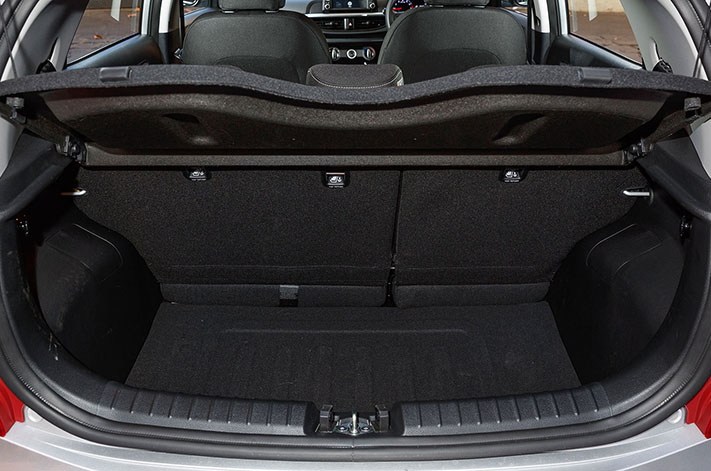
The Picanto’s boot is a great size for such a small car, and even better, it has a wide opening. The only downside is the loading lip being well above average knee height, meaning you’ll need to lift cargo high to clear it. The 60:40-split rear seatbacks fold down to increase cargo capacity, but don’t fold flush with the boot floor.
Things we like
- Big boot for such a small car
- Wide opening to help get bigger items in
Not so much
- High loading lip means more lifting
- Rear seats fold, but not flat to the floor
Fiat 500 – 185 litres
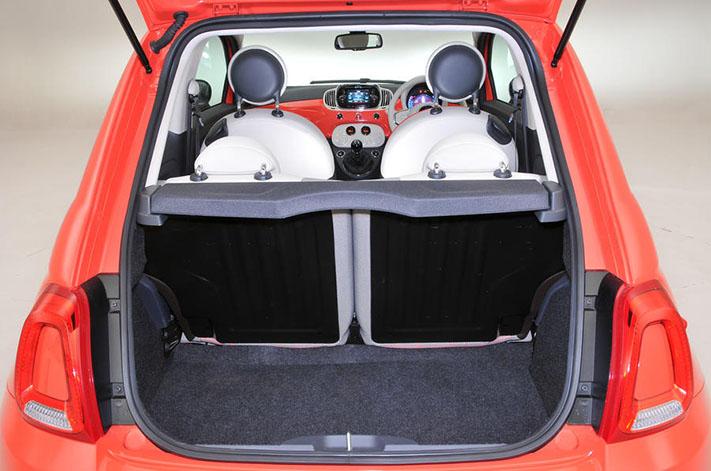
The ancient but beloved Fiat 500’s mostly useless rear seats fold 50:50 – but even with both of them down, you won’t be carrying a lot of suitcases. Overall storage space is about what you’d expect just from an outside view, and even large grocery shops will be a challenge.
Things we like
- On the practicality front, not much at all.
- Think of it as a 2-seater and the boot’s suddenly much more useful
Not so much
- Tiny style-focused car means a tiny boot
- With the rear seats up, even groceries will be a tight fit
Light hatches
Volkswagen Polo – 351 / 1125 litres
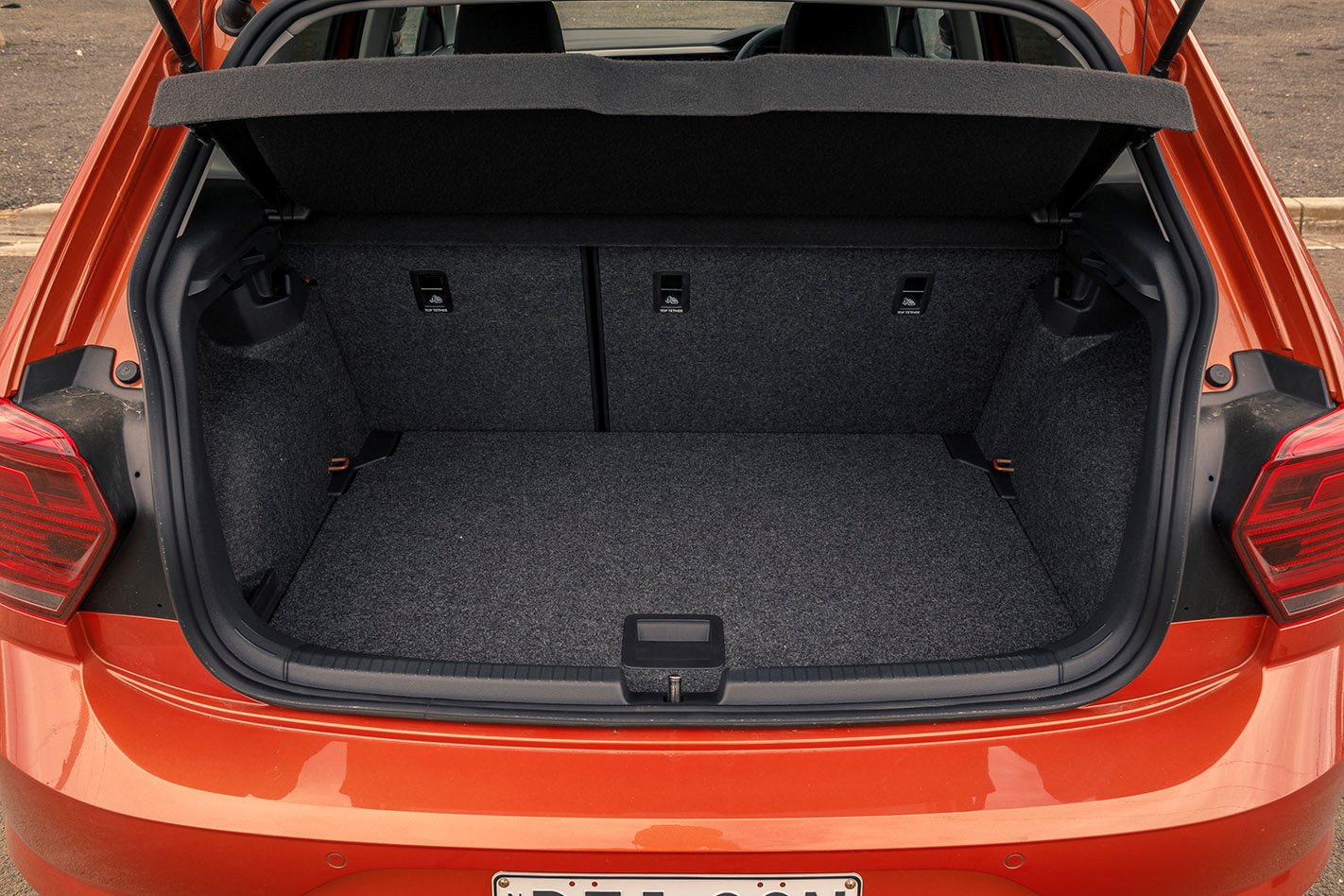
The increased dimensions of the latest-gen car also apply to the boot space, which grew to 351 litres. Folding the rear seats down increases capacity up to 1125 litres, and accommodates objects up to 1.38 metres long.
Things we like
- New model’s a lot bigger, with 351 litres of seats-up space
- 1125 litres with seats folded is super handy
- Flush floor is great, as is the space you gain if you take it out
- Big boot doesn’t hurt rear-seat space much
Not so much
- Somehow, nothing. It’s mega practical. Kudos to VW for this one. ud83dudc4d
- Got a Polo boot-space complaint? Tell us in the comments!
Kia Rio – 300 / 1078 litres
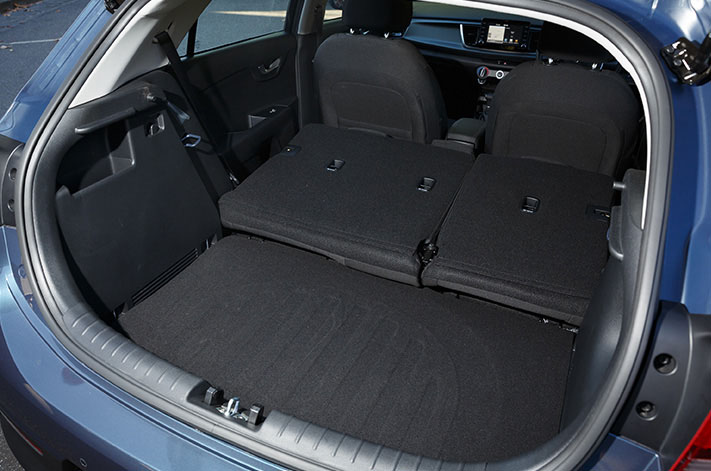
The Rio’s boot holds a lot of cargo for a car of this size, and more than the previous Rio offered. Fold down the 60:40 split rear seats and cargo volume increases to 1078 litres loaded to the roof.
Things we like
- Like the class-leading Polo, there’s a lot of room in the Rio’s boot
Not so much
- Not a flat floor, yet still only a spacesaver beneath
Toyota Yaris – 270 litres
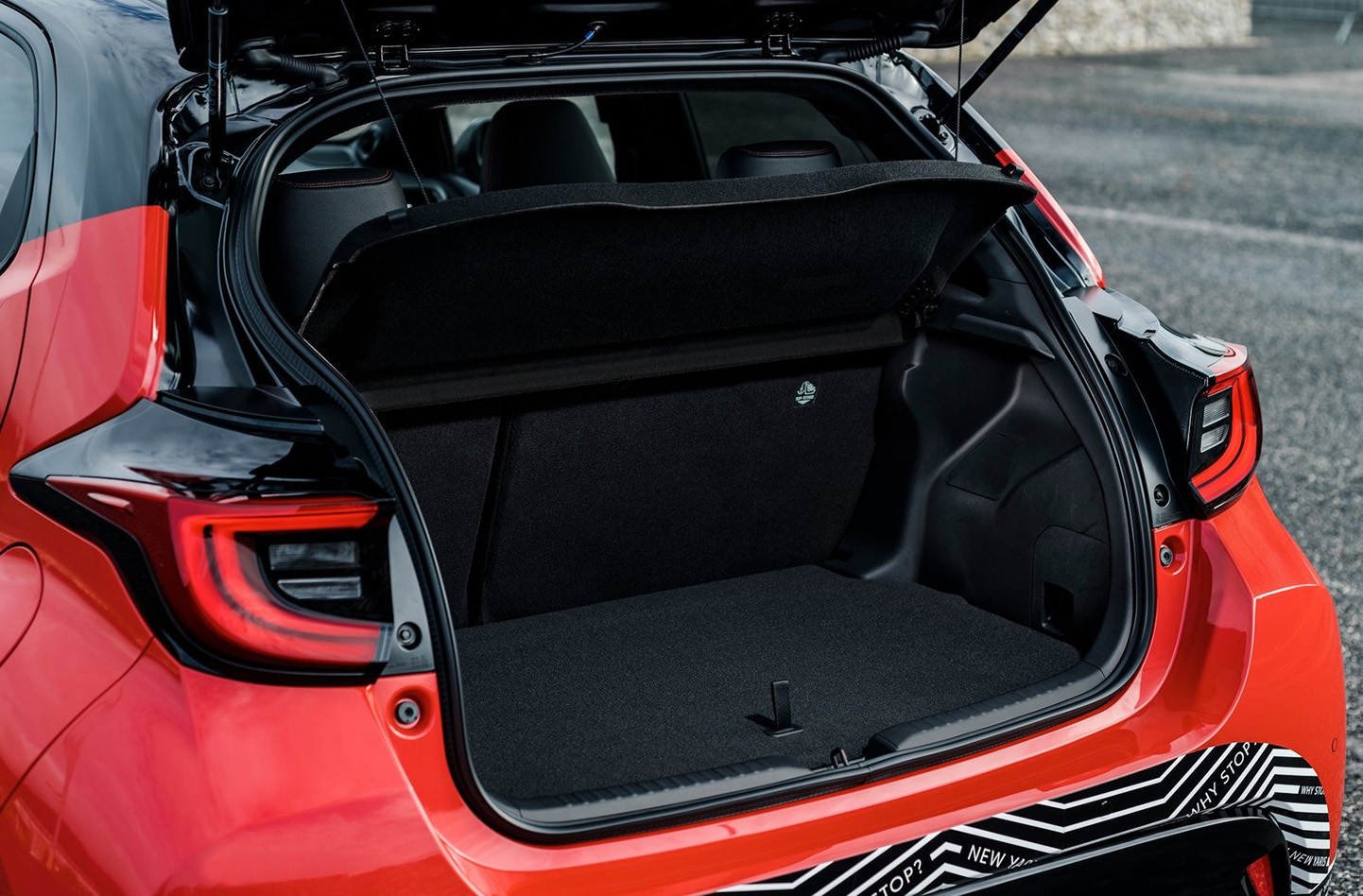
The new Yaris’ boot capacity is less than the outgoing model’s but still more than the Toyota Corolla. The rear seats fold in a 60:40 split to carry bigger loads.
Things we like
- Tiny boot somehow bigger than the Corolla’s boot
- 60:40 seats fold almost flat to the floor
- False floor is flush with the boot lip for easy loading, with extra space beneath
Not so much
- Little car means a little boot. Toyota would prefer you buy the Yaris Cross if practicality counts.
Mazda 2 – 250 litres
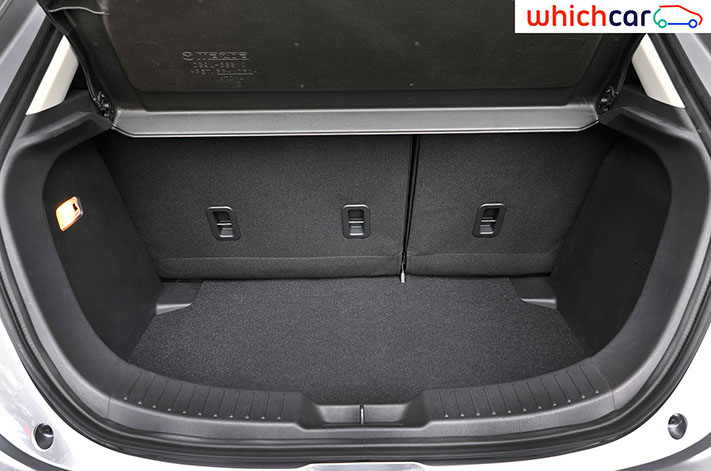
Mazdas typically aren’t the most capacious options out there. The 60:40 rear backrests of the Mazda 2 fold down to carry more, but they don’t fold flat. Additionally, the high boot lip and aperture isn’t the most load-friendly. If you like the Mazda 2 but want to carry more, the sedan version holds a decent 440 litres.
Things we like
- A vote for the SEDAN: its boot holds 440 litres
Not so much
- One of the smallest boots in the segment
- Rear seats fold, but not flat
- High boot lip, small overall opening
Suzuki Swift – 242 litres
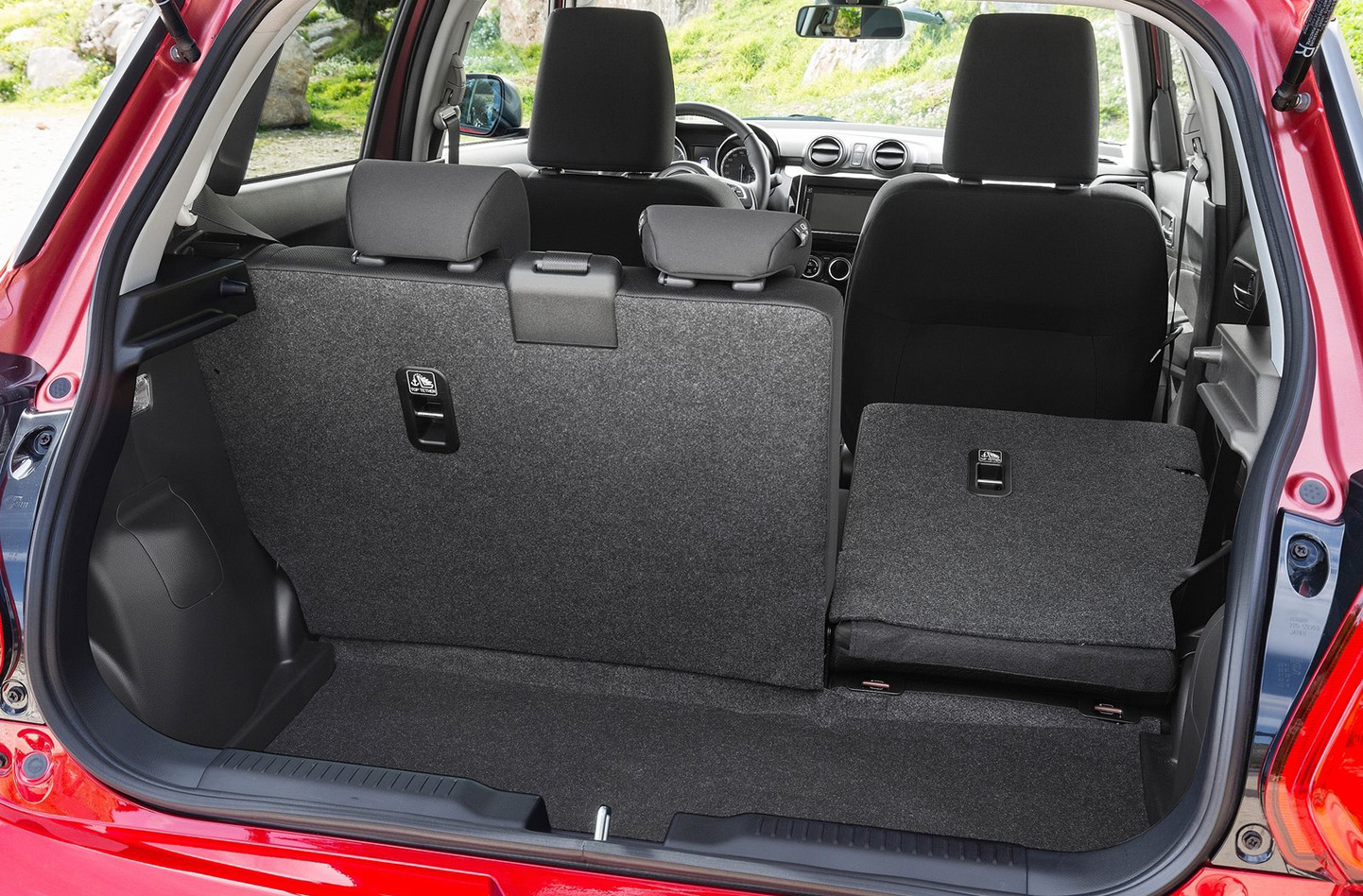
The boot on the Swift is bigger than on the car it replaced, but is still on the small size for a light hatchback. The rear seats on the Swift fold 60:40, which adds flexibility for carrying long objects, but they do not fold flat with the boot floor.
Things we like
- ud83eudd37u200du2642ufe0f
Not so much
- As with the Mazda2, it’s a tiny boot this one
- Rear seats fold, but not flat
Small hatches
Small hatches, one step up from the popular ‘light hatch’ class, are a common go-to for those seeking space inside while still claiming a little footprint on the road.
Kia Cerato – 428 litres
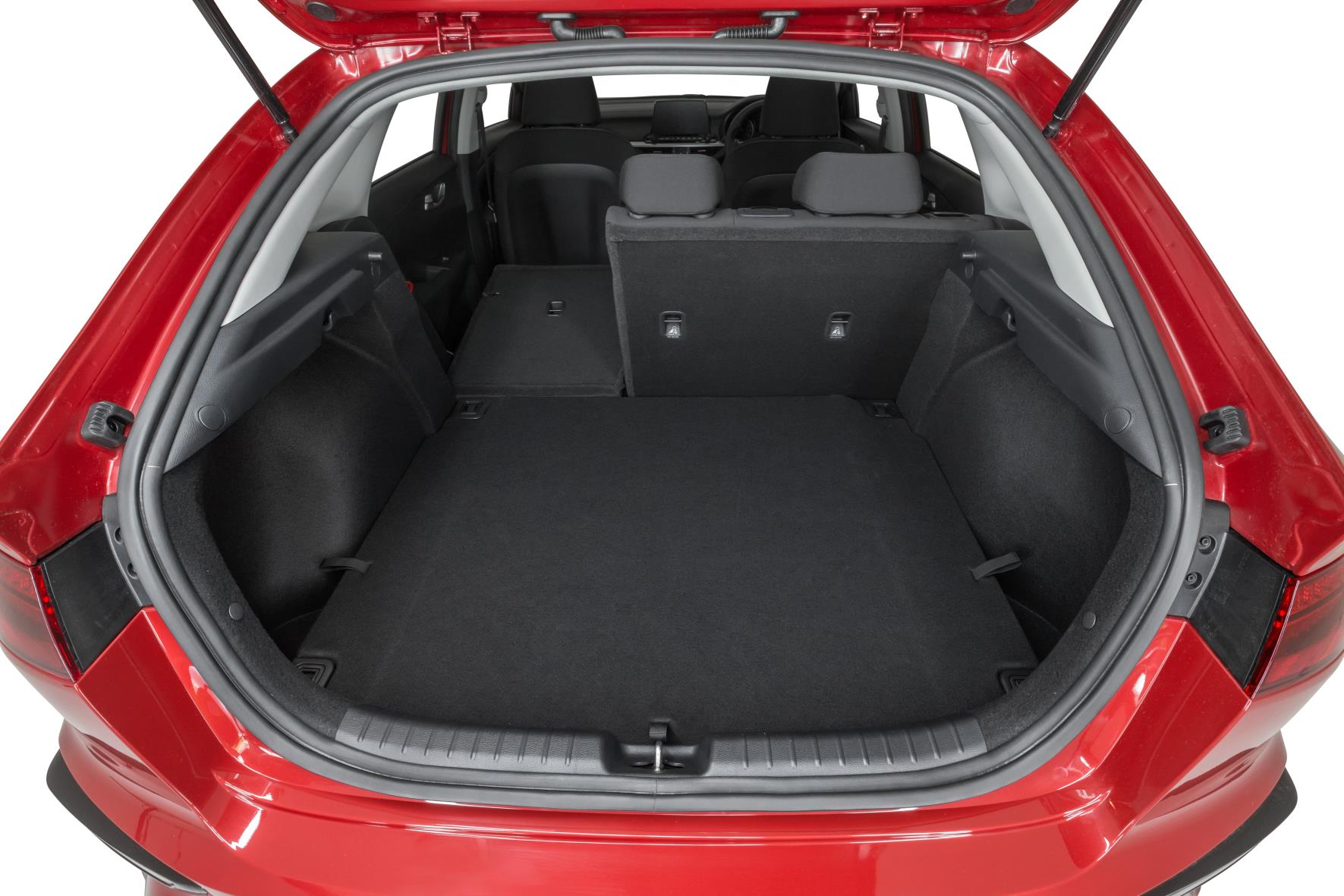
With the 60/40 split-fold rear seats folded down, the Cerato hatchback can hold up to 741 litres, with the space long enough to take a bicycle. Even with the back seats up, 428 litres is remarkably spacious.
Things we like
- Huge boot is super useful
- Handy flat floor helps with loading/unloading
Not so much
- No seats-down capacity claimed
Hyundai i30 – 395 litres
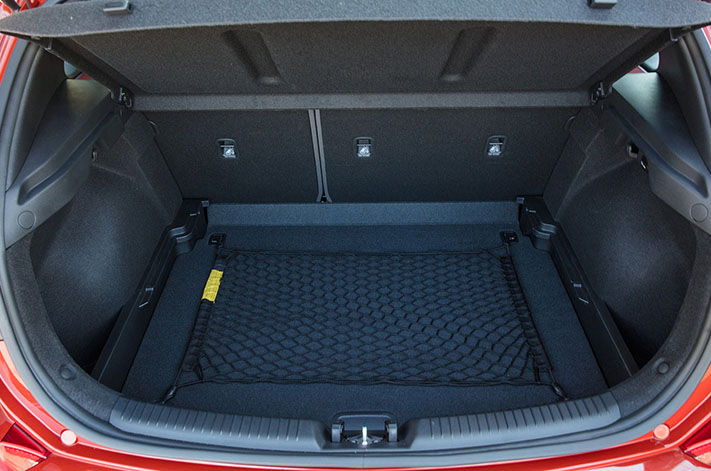
The i30’s boot is a generous 395 litres. The rear seats can be folded 60:40, and you can adjust the height of the boot floor with a false floor pull-out. At its lower setting, capacity is maximised, but there is a large step up to the rear of folded seatbacks. Raising the floor gives you a flatter extended-load space.
Things we like
- Height-adjustable false floor
Not so much
- No seats-down capacity claimed
- Seats don’t fold flat to the floor
VW Golf 8 – 374 / 1230 litres
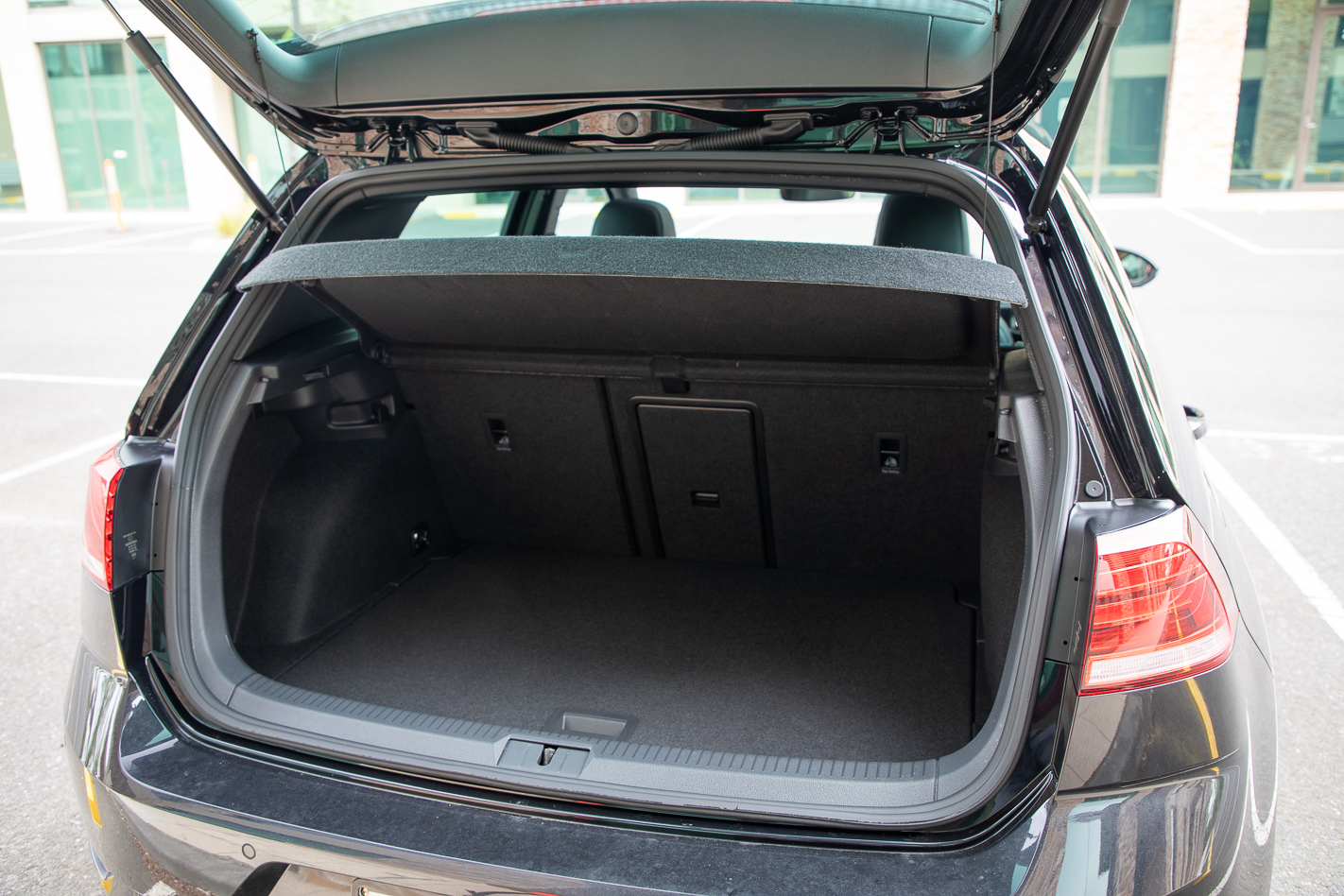
One of our faves for overall practically. The Golf’s boot space rises to 1230 litres if you fold down the 60:40 rear split seats. There are hooks in the boot for tying down your load, and a ski port beneath the centre armrest. The boot floor height can be adjusted, with the taller setting easing loading and unloading, while the lower lets you get more stuff in.
Things we like
- Not the biggest boot, but among the most useful
- Handy built-in ski port
- Height-adjustable false floor
Not so much
- Very little. Disagree? Tell us in the comments!
Subaru Impreza – 345 / 795 litres
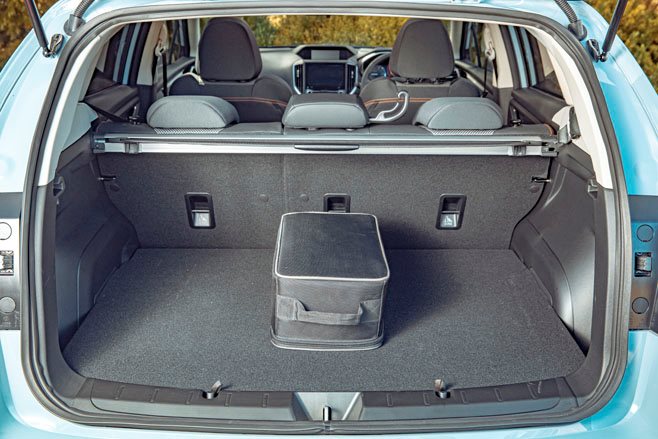
Boot space in the Impreza is about the same as in the previous model, but the opening is slightly wider than before. Seats split-fold 60-40 for extending the load space.
Subaru has yet to confirm dimensions for the incoming new Impreza, but with a 5mm-longer wheelbase, it will likely have a similar boot size (if more hasn’t simply been given over to rear legroom).
Things we like
- Overall good boot space
- 100mm-wider boot opening helps with loading
Not so much
- Very little. Disagree? Tell us in the comments!
Mazda 3 – 295 litres
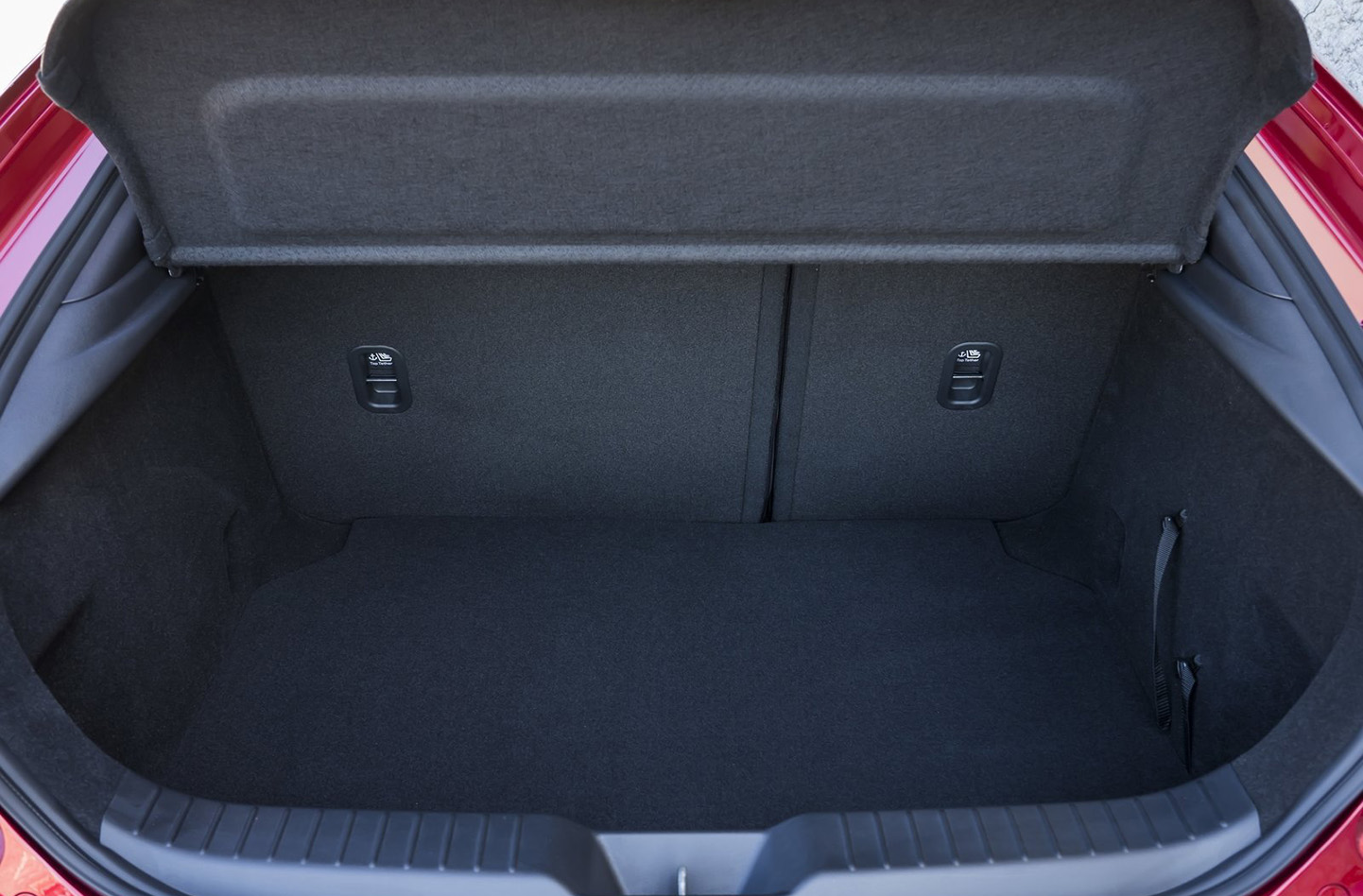
The boot in the new Mazda 3 hatch is a relatively small 295 litres, which is below average for a hatch and 13 litres smaller than the previous model. It’s helped by 60/40 split-folding seats and a broad tailgate opening.
Things we like
- Good-sized opening helps with bigger items
- Rear seats folder close to flat with the floor
Not so much
- Very small boot for a once practical hatch, despite having a spacesaver spare
Toyota Corolla – 217 litres
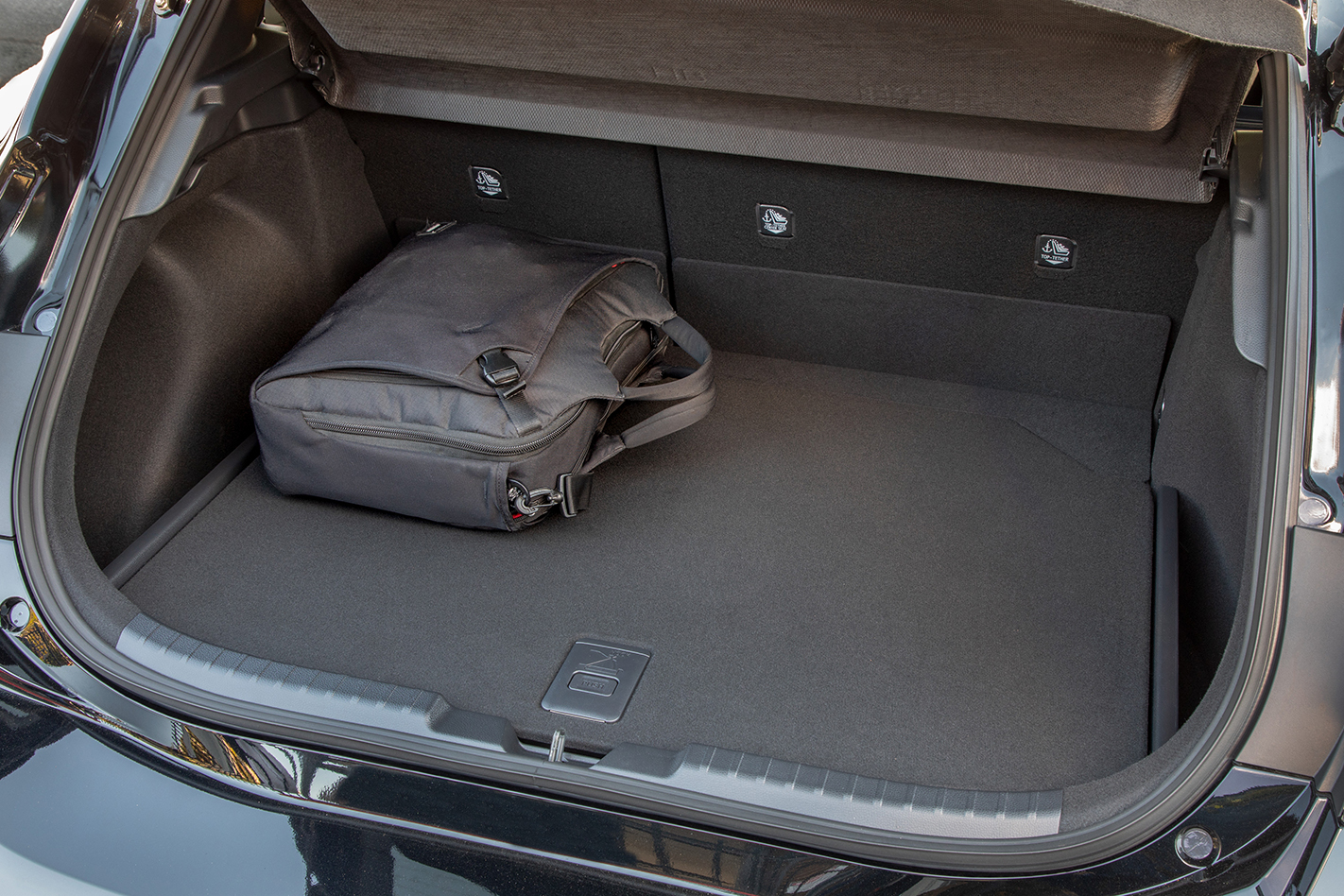
Opening the Corolla’s lightweight plastic hatch reveals a tiny boot measuring just 217 litres in all but the ZR Hybrid top-spec. That’s 54 litres less boot space than the smaller Toyota Yaris! The ZR Hybrid’s boot holds 333 litres because it is equipped with a puncture repair kit that does away with the bulky spare wheel under the floor.
Things we like
- Not much…
- The ZR Hybrid boosts space to 333L, but at the expense of a spare wheel
Not so much
- What exactly does the Corolla represent now? It sure isn’t practicality…
Style vs practicality… pick one?
As you can see, the practicality of boot space in small hatchbacks can vary significantly, depending on the specific model and its design.
Some small hatchbacks may have limited boot space, making them less practical – but often more stylish, which can be appealing for those who want four passenger doors and a hatch design, but need to carry little more than a gym bag or the groceries.
And even with that tapered sporty roofline, the models with the smallest boots can still be handy if you’re carrying a load but no rear passengers.
It’s important to carefully consider the amount of boot space that a small hatchback offers before making a purchase, as it can greatly impact the vehicle’s overall usefulness and convenience.
Hatchback boot spaces compared
| Model | Boot space (rear seats up) | Boot (rear seats down) |
|---|---|---|
| MICRO HATCHES | ||
| Kia Picanto | 255L | 1010L |
| Fiat 500 | 185L | not listed |
| LIGHT HATCHES | ||
| VW Polo | 351L | 1125L |
| Kia Rio | 300L | 1078L |
| Toyota Yaris | 270L | not listed |
| Mazda 2 | 250L | not listed |
| Suzuki Swift | 242L | 556L |
| SMALL HATCHES | ||
| Kia Cerato | 428L | not listed |
| Hyundai i30 | 395L | 1301L |
| VW Golf Mk8 | 374L | 1230L |
| Subaru Impreza | 345L | not listed (795L on RedBook) |
| Mazda 3 | 295L | not listed |
| Toyota Corolla | 217L | not listed |
Tom Fraser contributed to this story
2023 Cupra Formentor VZe long-term review
JUMP AHEAD
Welcome
- Price as tested: $60,990 (Driveaway $65,990 NSW)
- Km this month: 306km @ 2.5L/100km
- Overall: As above
We’re intrigued to discover the characteristics that will make Cupra, a spin-off from the Spanish Seat brand, different from stablemates Volkswagen and Skoda.
Awareness is the name of the game for Cupra at this early stage, for a brand with ambitions of reaching 7000 sales by 2025. For perspective, it took VW’s Czech brand Skoda 12 years to hit such a milestone.
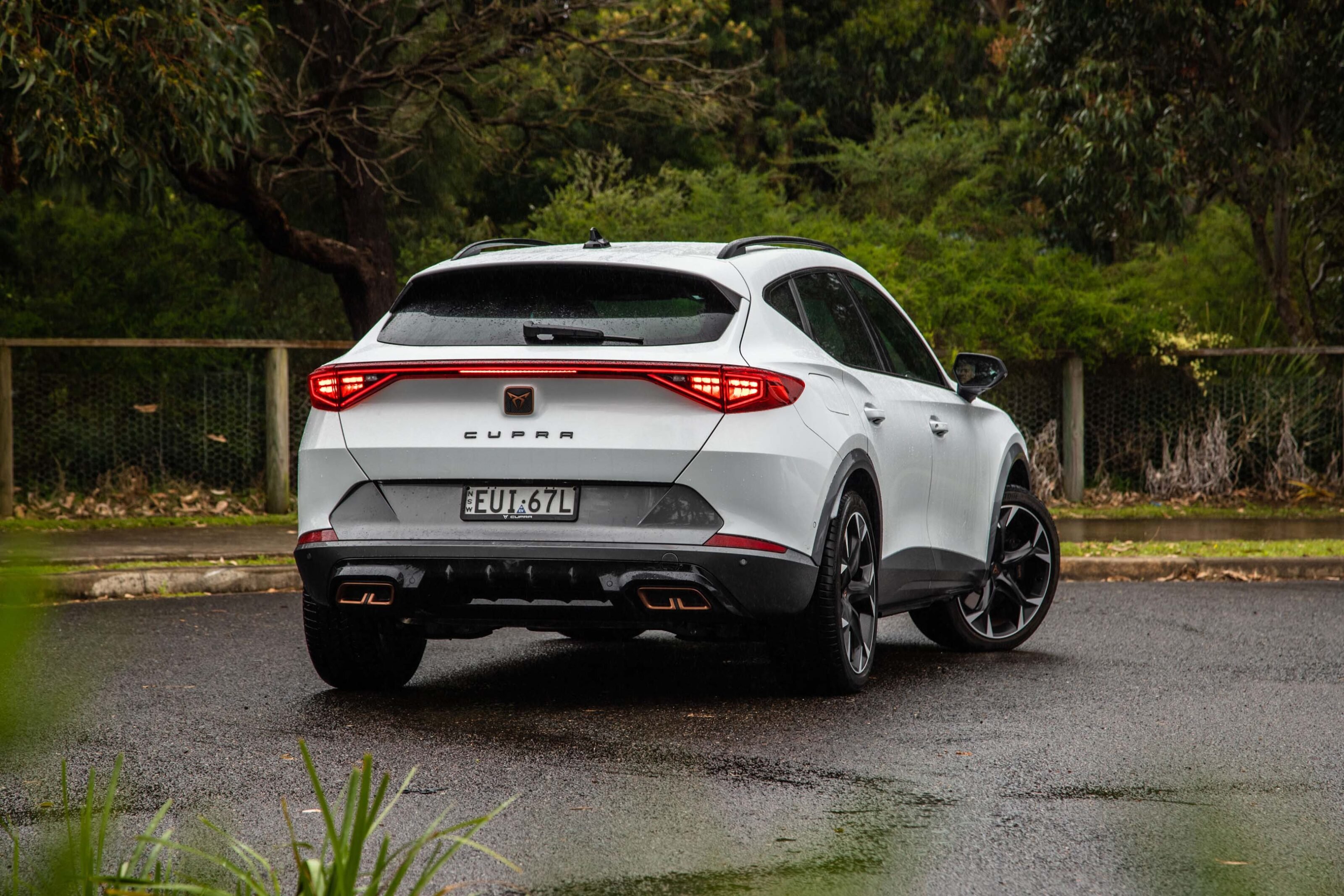
There’s no surprise that, of a dozen or so people who’ve asked about the car so far, only a couple knew about Cupra. (One was a Wheels reader, who naturally knew more, too: that the Formentor SUV is one of a trio of models that also includes the Leon hatch and Ateca SUV.)
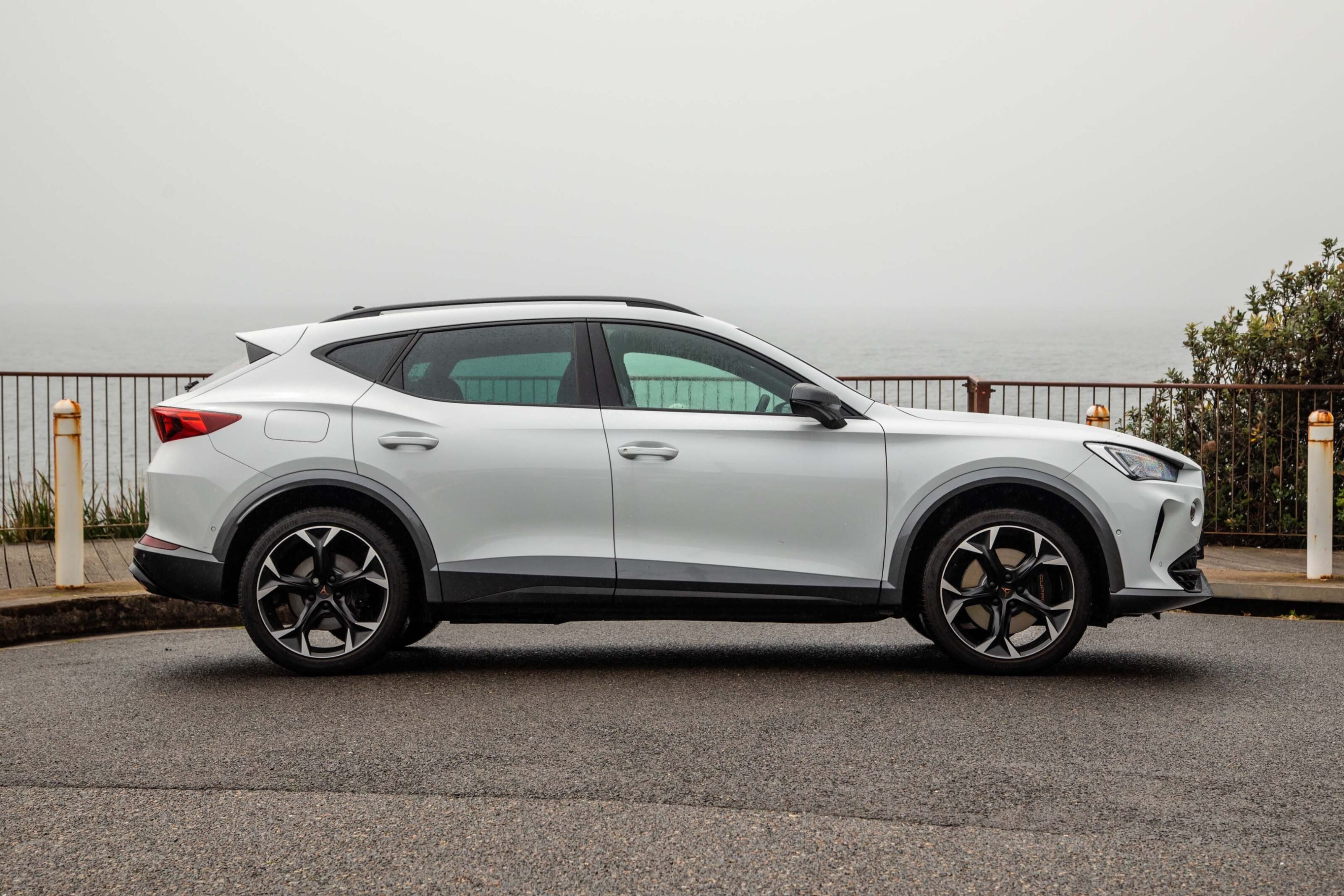
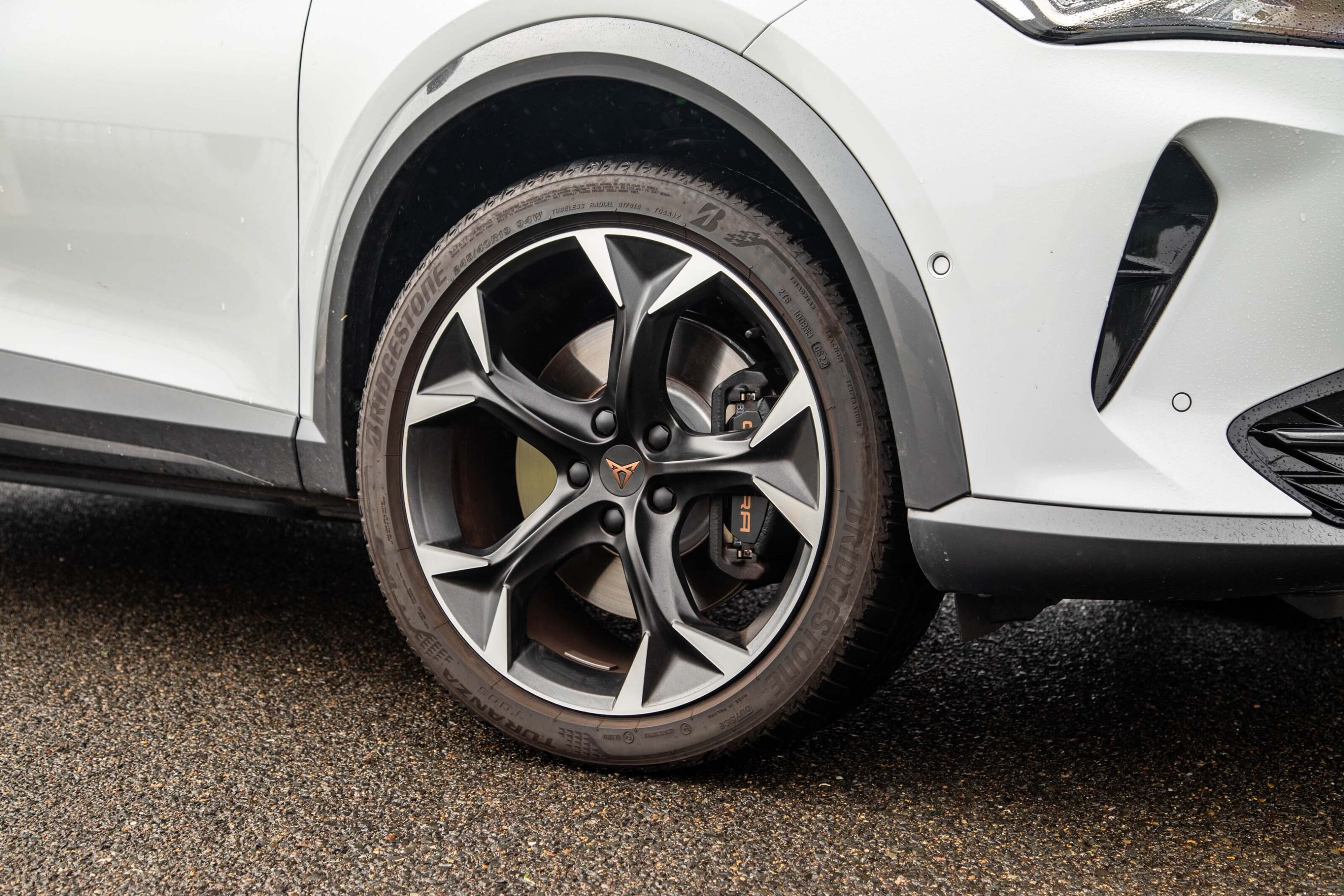
Yet there’s also no doubt that the Formentor has been turning many more heads with its sharp looks, Y-spoked 19-inch rims, crisp Nevada White paintwork, and copper-coloured flourishes. It’s literally stopped some dog-walkers in their tracks – and, gratefully, not to allow their four-legged friends to go about their business.
One of the most striking SUVs in the entire Volkswagen Group? I think so. Forget a VW Tiguan or Skoda Karoq; even an Audi Q3 Sportback looks conservative in comparison.
Comparisons are valid with the luxury brand; a Q3 Sportback starts at $53,800, with a 2.0-litre turbo 40TFSI not that big a stretch ahead at $66,100. No equivalent plug-in, though.
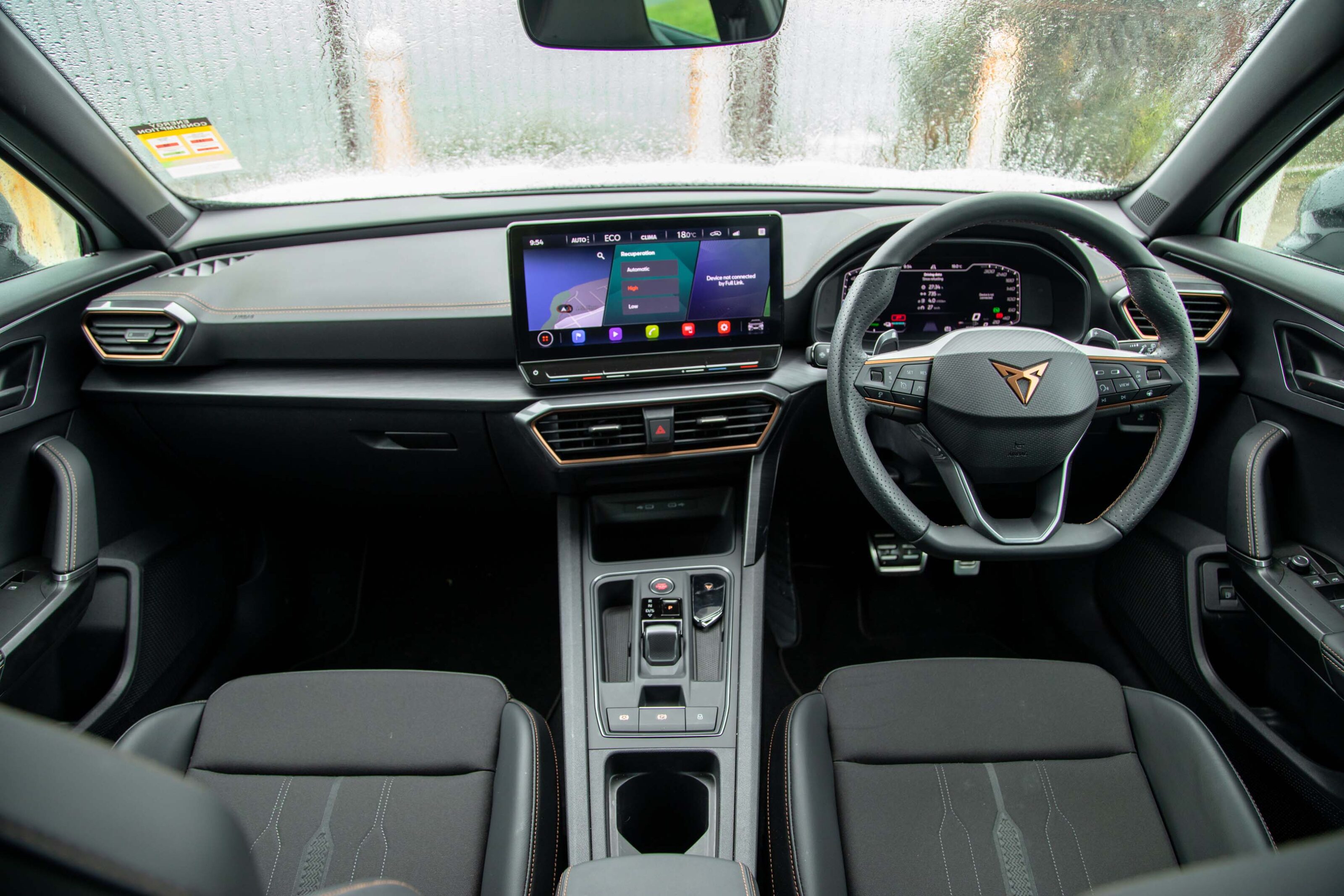
First impressions of the interior are that while it doesn’t hit the quality heights of Audi, the cabin falls into that premium-mainstream category familiar to Volkswagen owners – though with more flair.
The contemporary design is enhanced with a 10.25-inch digital driver display and 12-inch central infotainment screen, along with multiple USB-C ports and wireless charging.
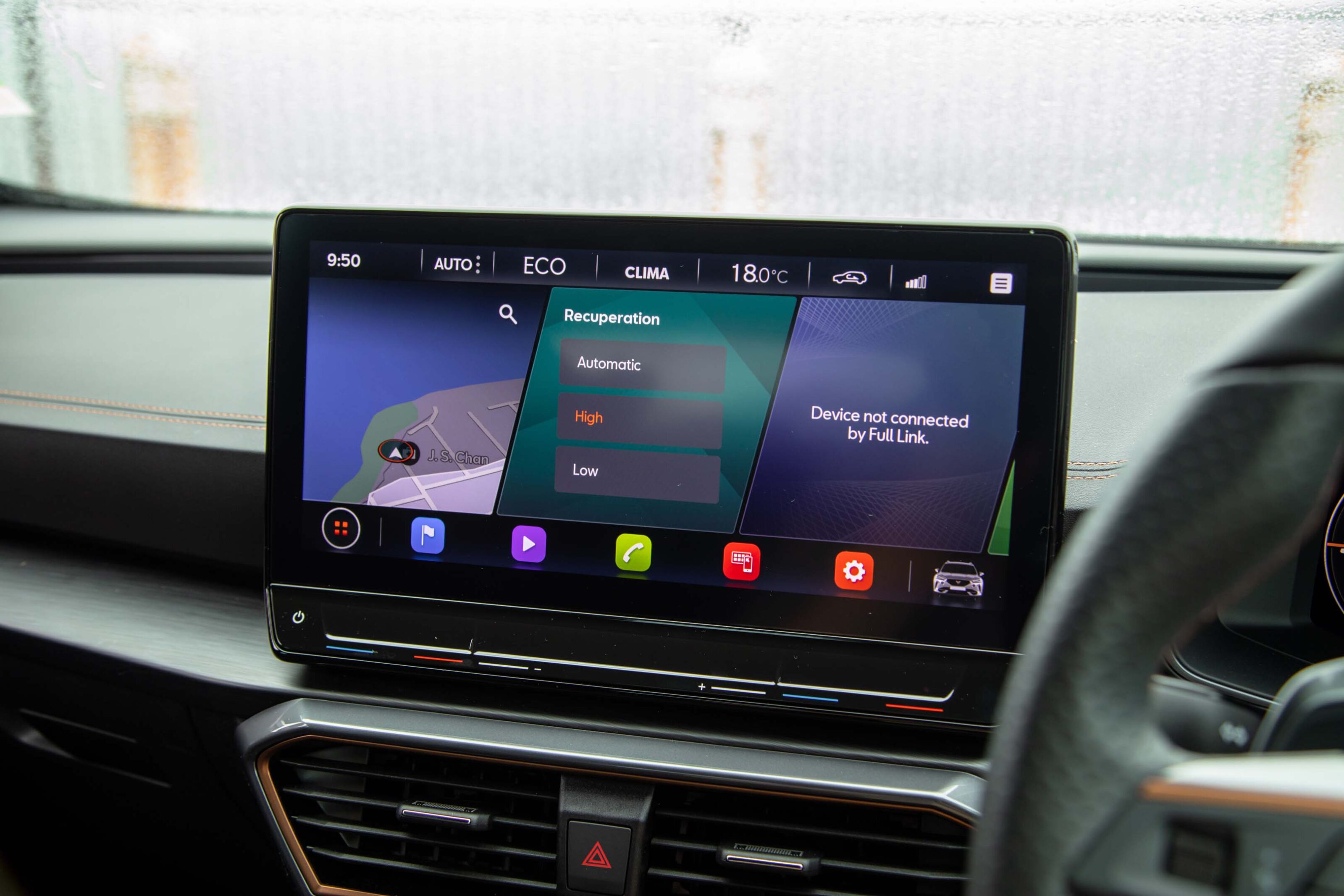
There are four variants in the Formentor line-up, split evenly between front-wheel-drive and all-wheel-drive models. It starts from $50,690 for an AWD V, followed by a $53,390 VZ that is front-drive but adds more standard equipment.
Higher up and close together are a pair of seemingly diametrically opposed models: a $60,990 VZe FWD plug-in hybrid and a $61,990 VZx AWD performance variant.
We went for the lucky-dip option and ended up with the PHEV. And call it good fortune, because, for a couple of reasons, we reckon the VZe makes for the best variant to assess over a period.
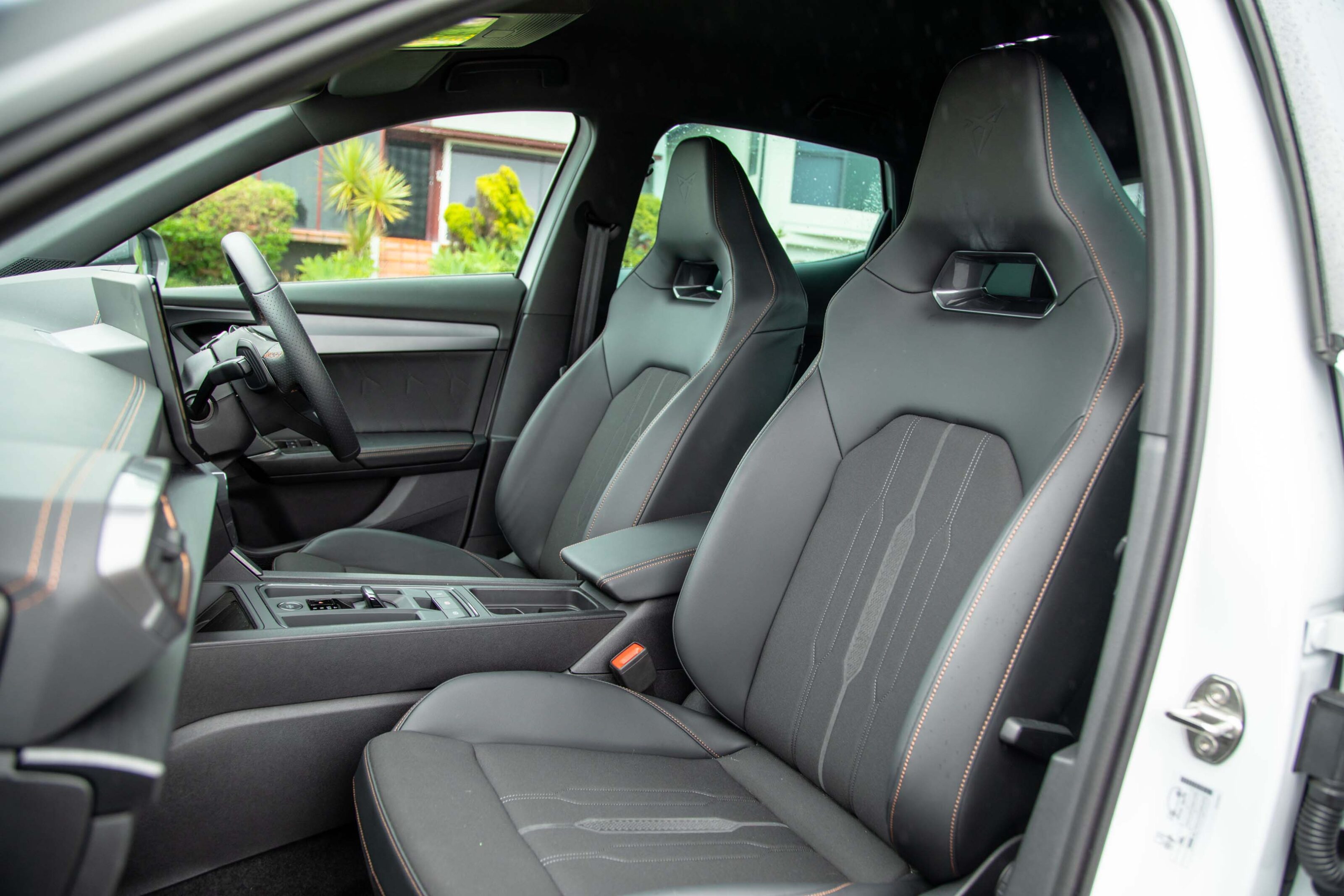
An electrified model is hugely relevant for Cupra as it plans to be the first VW Group brand to go all-electric, by 2030. And we can also explore whether owning a plug-in hybrid is being half-pregnant or actually a smarter choice than a fully electric car right now.
The Cupra Formentor VZe introduces a drivetrain available in the UK and Europe in models such as the Golf but not previously offered by the VW Group.
It pairs VW’s well-known 110kW/250Nm 1.4-litre four-cylinder turbocharged petrol with an 85kW/300Nm electric motor – translating into combined outputs of 180kW and 400N that are put to the ground through a six-speed dual-clutch gearbox and the front wheels.
The electric motor is powered by a 12.8kWh battery.
Cupra claims there’s about 50km of electric driving range on a full charge. So far, we’ve managed about 40km from a full battery. I’ll be running the Formentor PHEV as an owner with home charging would – regularly topping up the battery to take advantage of electric motoring in daily urban use – then seeing how the hybrid system plays into overall experience.
Official consumption is 1.9 litres per 100km, though theoretically the Formentor can be continually charged for zero consumption.
In early days, the average fuel consumption is reading between 2.1 and 2.2L/100km.
We’ll see what happens to efficiency once we’re forced to use the hybrid system on longer trips. Our Formentor is still in its run-in phase, mind; there were just over 800km on the odo when we received it.
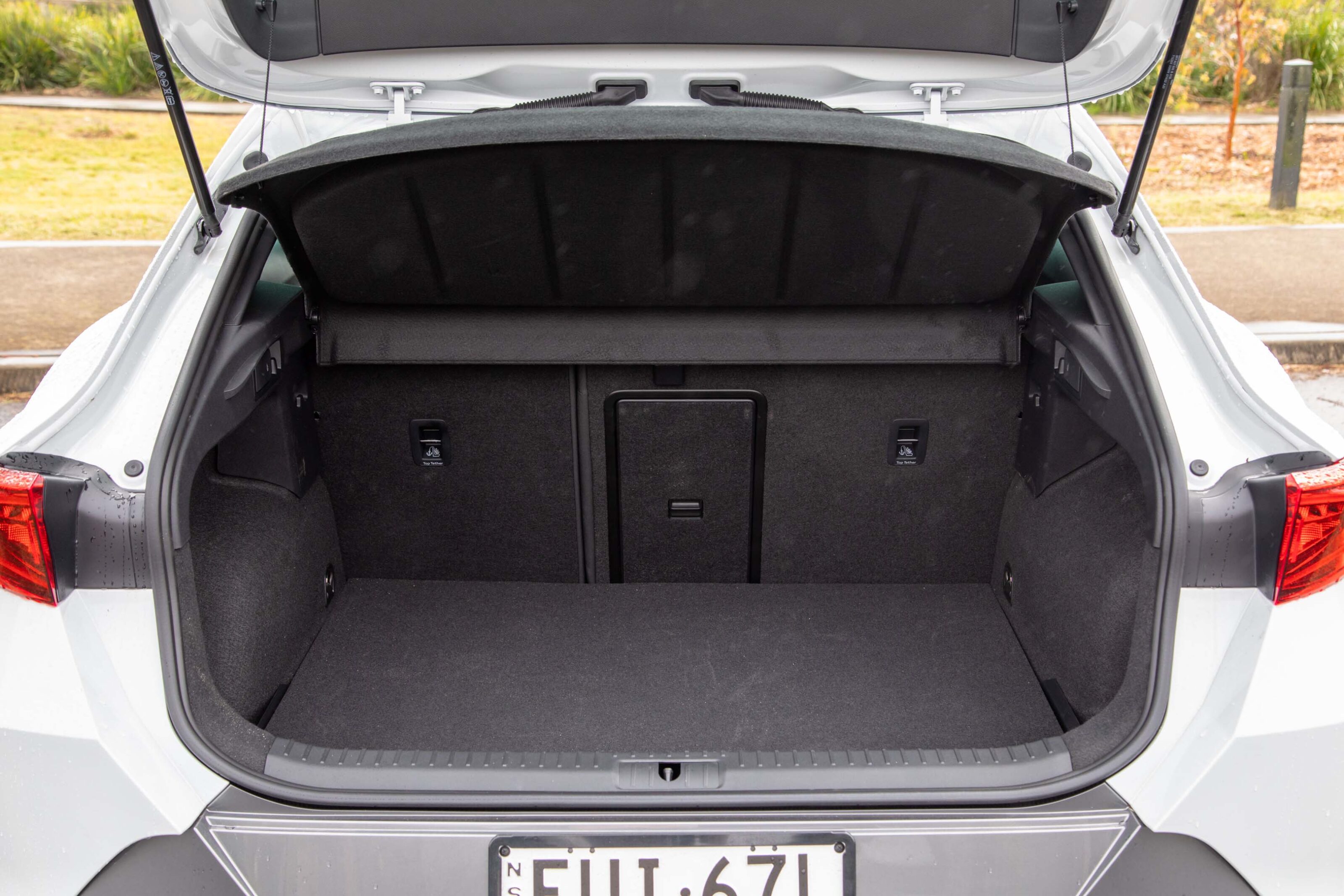
We’ll also be checking out the Formentor’s credentials as a practical family SUV, including assessing whether the VZe’s smaller, 345-litre boot is sufficient or lacking space. Owing to battery packaging, it loses 75 litres to other Formentor models.
There’s no auto tailgate, either. That’s part of a $2750 Leather & Power Package, which also adds leather upholstery, heated front seats, and electric driver’s seat. Buyers can also stump up $2100 for a panoramic sunroof, while a handful of premium metallic paints are $475.
Our VZe is refreshingly free of any options. Buy a Cupra before the end of 2022 and three years of free servicing is also included.
Gracias, indeed.
The coastal escape
- Price as tested: $60,990
- Km this month: 494km @ 5.5L/100km
- Overall: 800km @ 4.0L/100km
The Entrance, formed on a bridged peninsula on Sydney’s Central Coast, was simply a convenient choice for a quick, school-holiday family get-away that wasn’t a marathon drive away and took us north rather than our usual route south.
It was also a first chance to stretch our Formentor VZe plug-in hybrid’s legs after being confined in its first month of ‘ownership’ to primarily ferrying kids to school, sports and shops – and running primarily on electric power through regular home charging.
During those first few weeks, the best electric range we’d managed to achieve from a full battery was about 40km – about two-thirds of the 58km WLTP max distance on the VZe’s spec sheet. For PHEV’s sake, that’s a poor return.
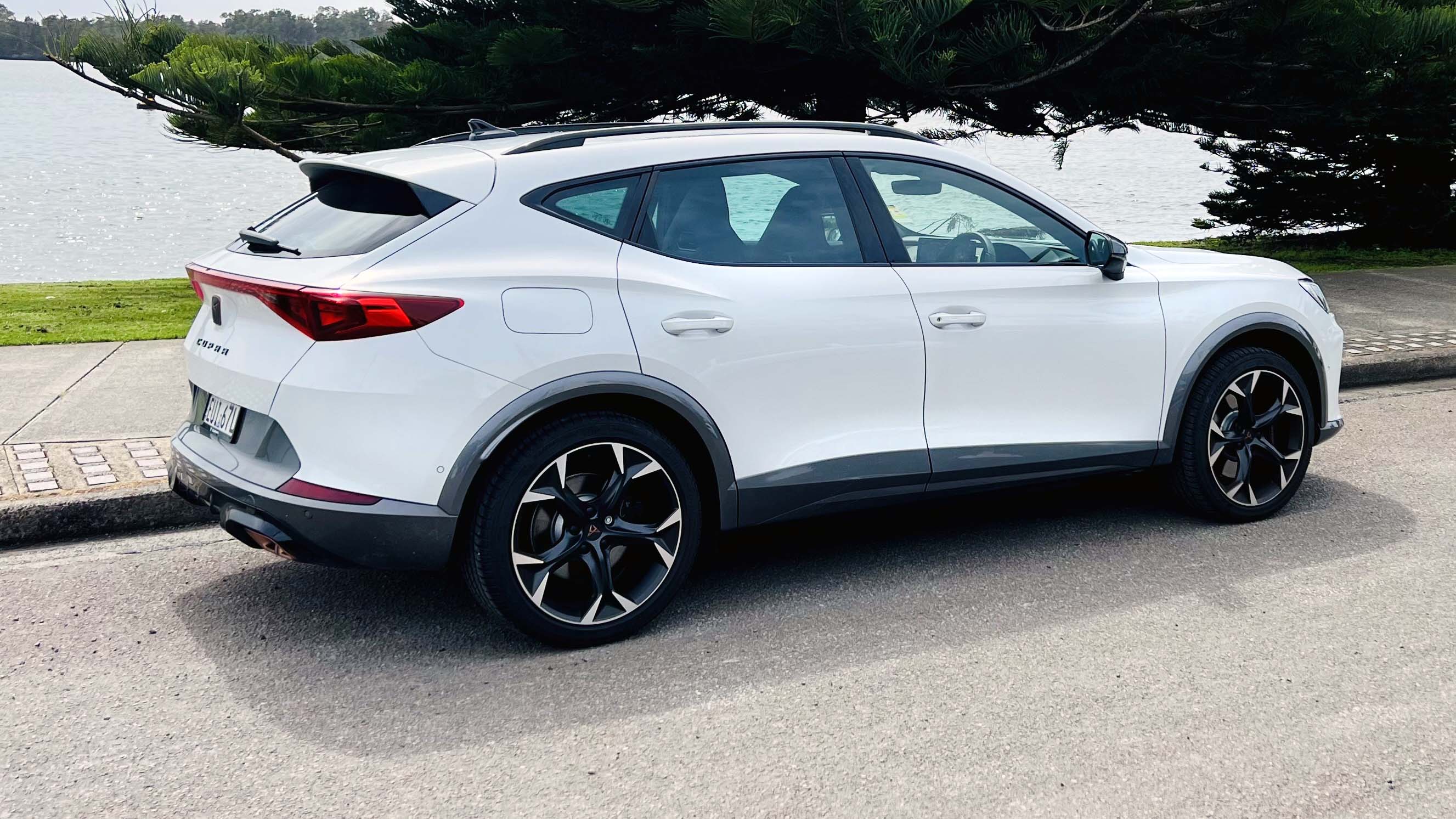
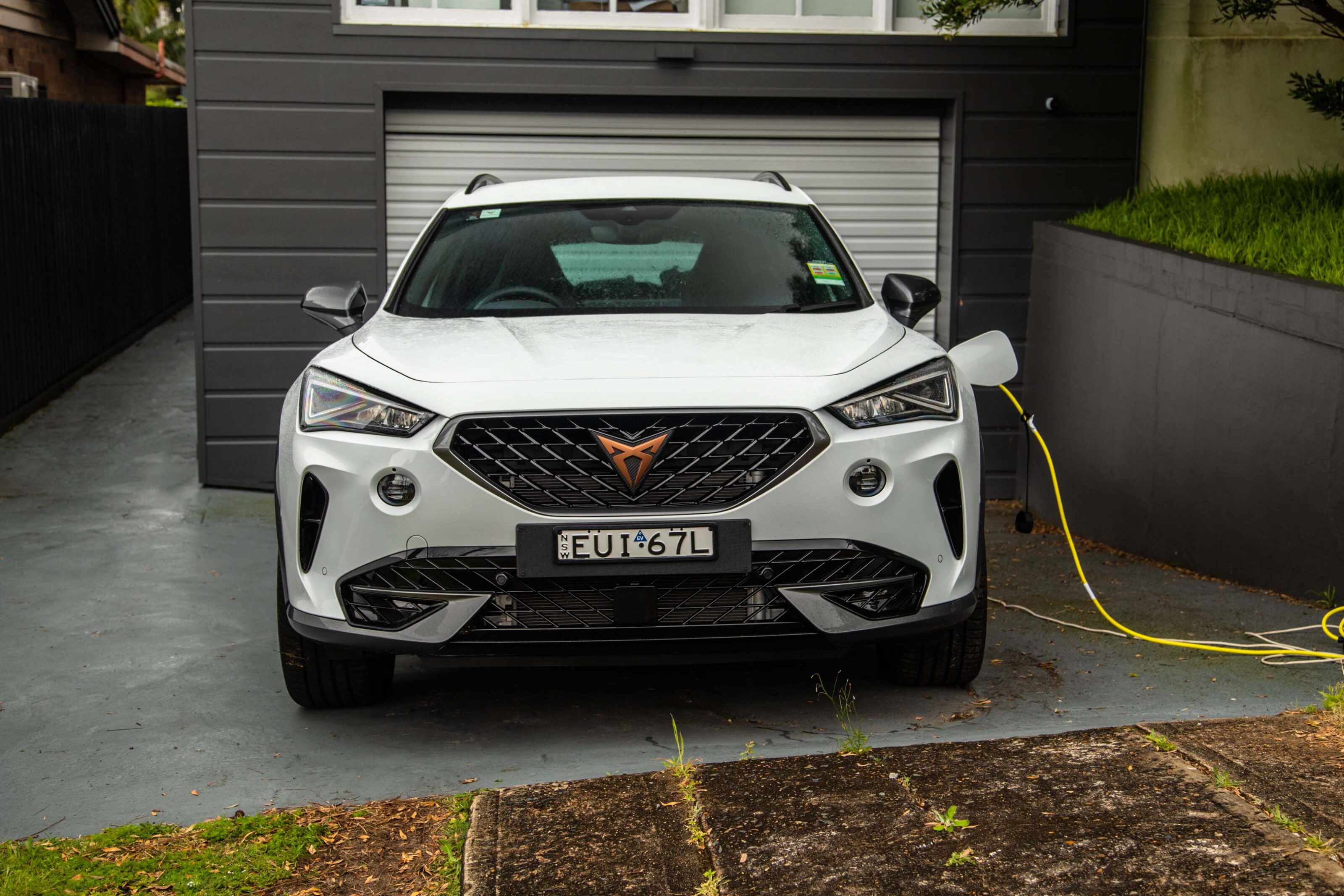
And, consequently, this increased average fuel consumption, because the wife and I would inevitably forget to recharge the car at various times – meaning use of the petrol engine. (We could have used another car, but to reflect true PHEV ownership we’ve been pretending the Formentor is our only vehicle.)
The first sign that the PHEV’s battery prefers continuous driving over intermittent runs comes when we manage to pass just over 50km of the trip before the Formentor’s 1.4-litre turbo petrol engine chimes in.
We had deliberately ignored the available option to preserve electric power for later in the trip, where the Formentor’s drivetrain management system can be instructed to employ the Hybrid mode earlier by setting a higher battery level via the central touchscreen.
Average fuel consumption read 2.8L/100km at the start of the trip, which, for the record, compares with the VZe’s official figure of 1.9L/100km.
This increased to just 2.9L/100km after using the petrol engine predominantly for the remaining 60km-odd of the journey.
At least we could recharge the Cupra’s battery at our Airbnb apartment. Except there were no power outlets in the underground car park. Well, at least we could go to a local recharging station. Except there were only a couple of Tesla Superchargers in convenient proximity.
That enforced a Hybrid-mode-only return to Sydney, though not before driving around the area over a few days had increased consumption to 3.7L/100km.
Stats for the petrol-electric return trip: 105km driven and 5.9 litres of premium unleaded used (and average consumption overall up to 4.0L/100km).
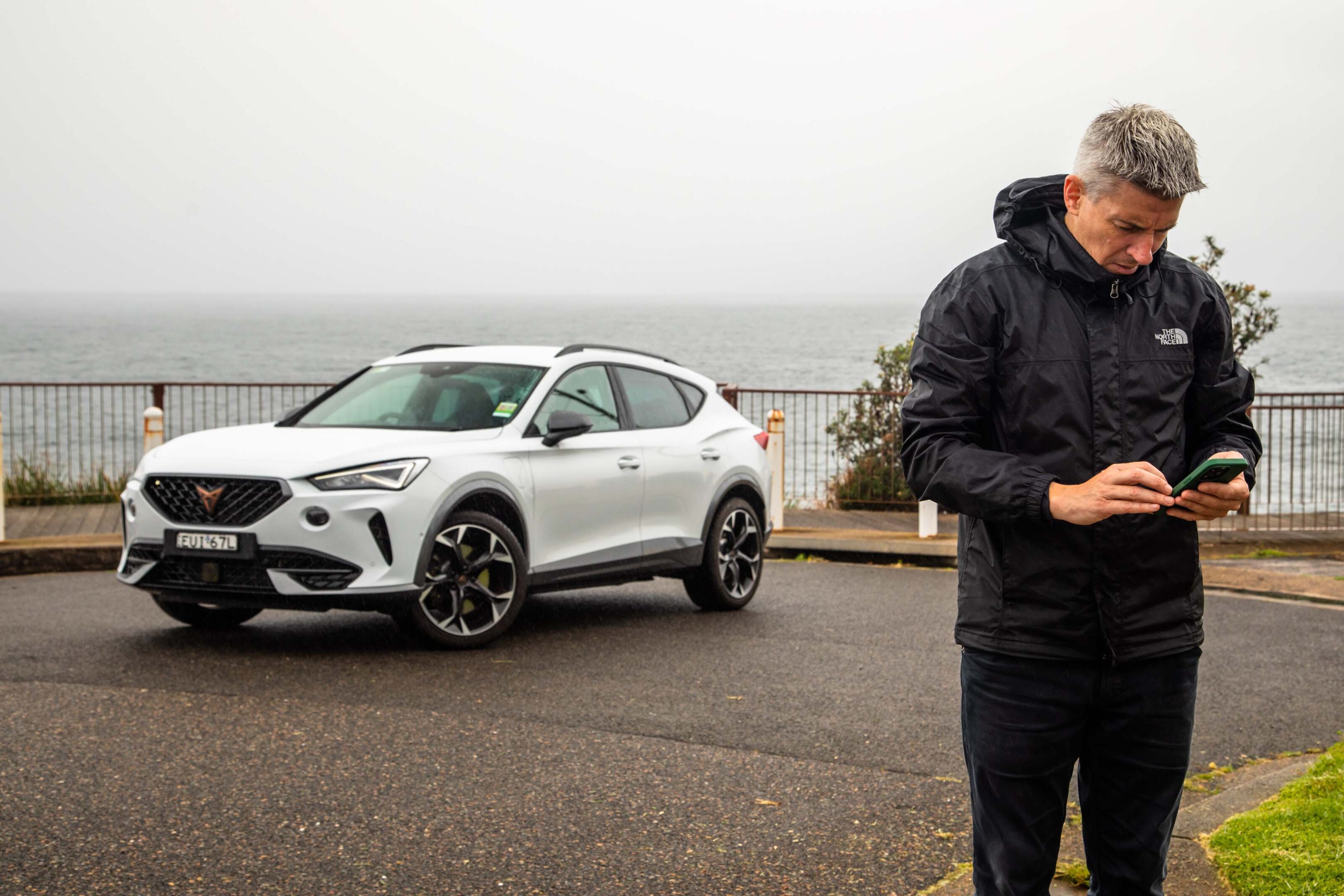
Can’t deny I’m being quite obsessive about the fuel figures, and strongly suspect this might be a common theme among hybrid owners – plug-in or not.
I also sense you may be interested to learn more about the Formentor VZe than just some numbers.
I’ll delve deeper into the driving experience in the next instalment, but for now can say the Cupra is enjoyable to drive whether it’s in fully electric E-mode or petrol-electric Hybrid mode.
However, I discovered to and from the Central Coast that pure electric drive is preferable on freeways.
In Hybrid mode, the regen braking – even with Low setting chosen over High – makes a nuisance of itself at freeway speeds, sharply rather than subtly decelerating the car when rolling off the accelerator pedal.
It forces a quicker return to the same pedal to maintain momentum, and the drivetrain isn’t quite as responsive to pedal pressure when the petrol engine is involved.
Adaptive cruise control can be a solution, but you’d be a braver driver than I to use this on the M1/Pacific Highway, where erratic driving speeds/behaviour seems higher than the norm for Australian freeways (which is saying something).
The Formentor is classified by VFACTS as a midsize SUV, though with a length below 4.5 metres – 4450mm – it’s a compact SUV in our book.
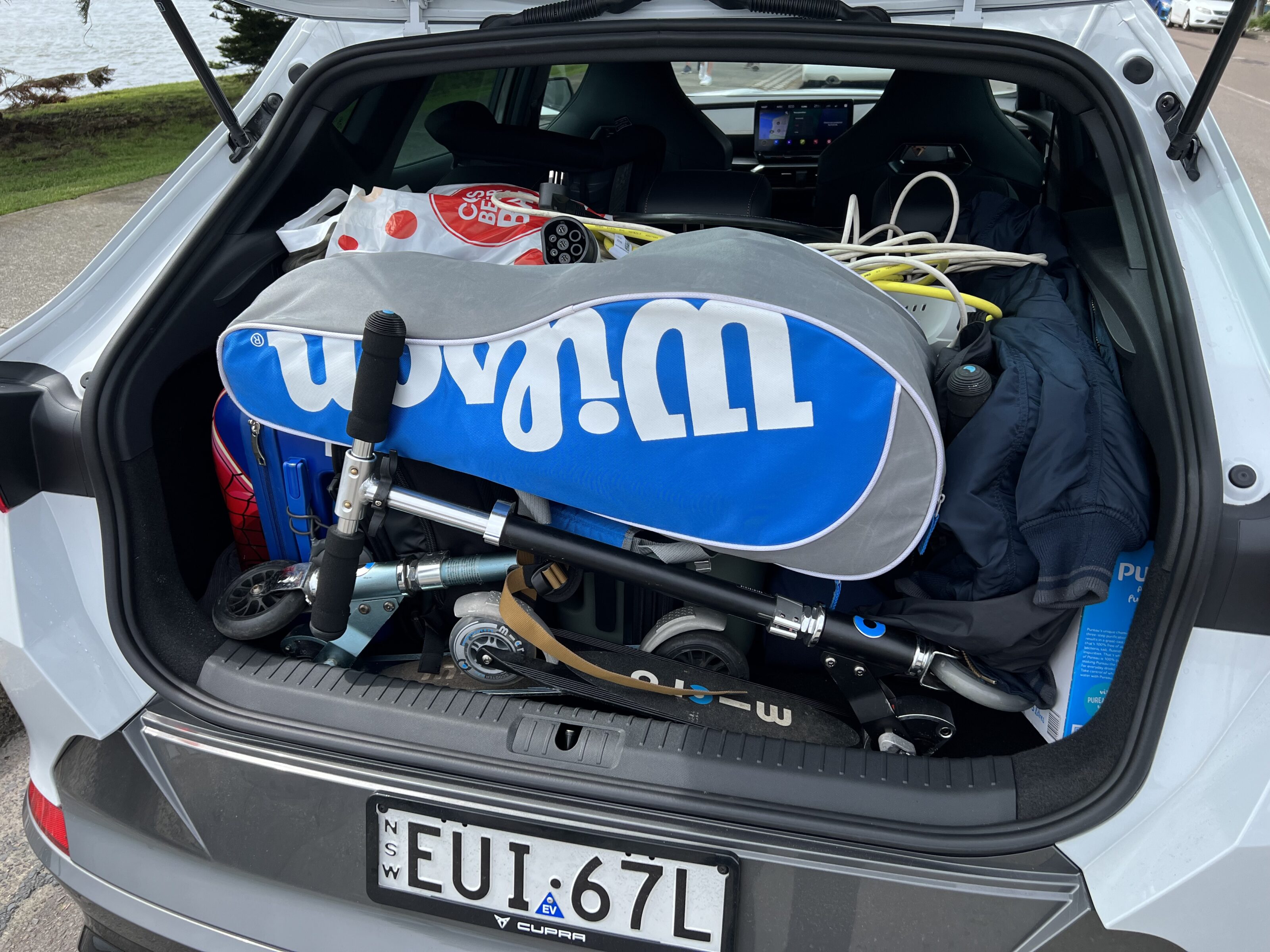
Boot space would be considered terrible in the context of a medium SUV – especially the plug-in Formentor which, compromised by battery packaging, has less volume (345 litres) than a Golf hatch.
V and VZx Formentors offer 420 litres; the VZ has the largest boot in the range with 450L.
We still managed to pack in three days’ worth of luggage and activity gear (scooters, tennis racquets), though needed to leave the lightweight cargo blind at home. A rooftop pod would seem a mandatory accessory for longer family trips.
This might suggest the VZe isn’t the pick of the Formentor range, but with a planned co-drive with a VZ petrol variant coming up, we’ll leave that debate for the next time.
FAREWELL: The final report
- Price as tested: $60,990
- Km this month: 383km @ 2.8L/100km
- Overall: 1183km
Three out of every five Cupras sold in Australia is a Formentor, though no prize to the Spanish brand for correctly predicting it would be the most popular in its three-model range.
As a midsized SUV (if, dimensionally, more of a compact SUV) and with the widest range of variants, the Formentor is primed to be the No.1 seller.
Is it, however, worth considering Cupra’s Leon hatchback? And is the VZe the Formentor variant we would most heartily recommend?
We took our Formentor plug-in hybrid long-termer for a drive alongside newly introduced VZ grades of the Formentor and Leon to answer those very questions. Partially, at least.
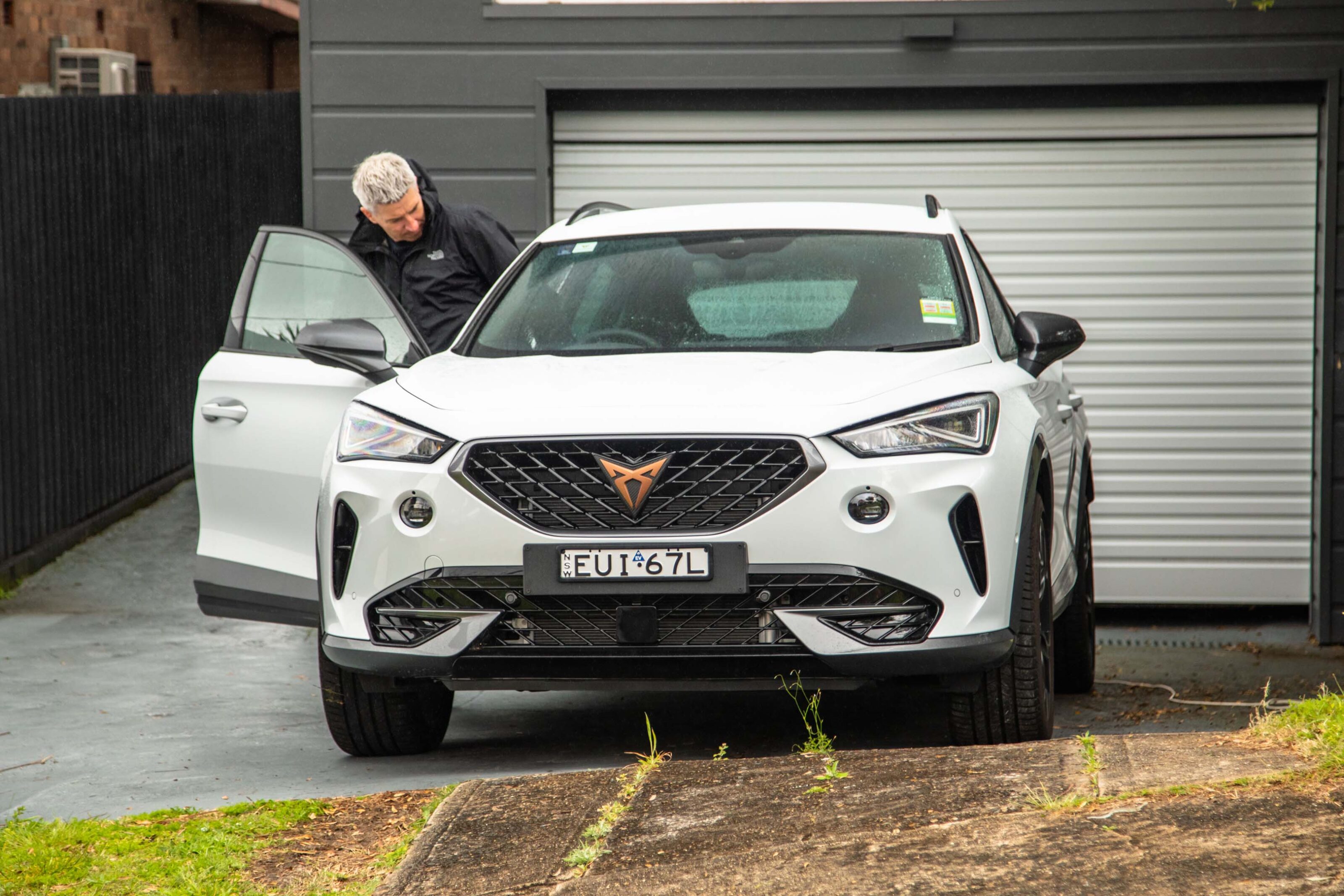
VZ sits above the base V and, in features specification, is virtually identical to the VZe. Drivetrains split the difference, essentially.
And provides one insight into the higher cost of plug-in hybrid technology.
The VZ is priced from $53,790 – $7200 below the VZe. Cue the calculators.
Theoretically – based on the models’ respective ADR consumption figures of 7.0 and 1.9 litres per 100km, and a rounded $2 per litre of 95 – owners of the PHEV could save about $1000 per year (10,000km) or $1500 (15,000km).
Putting aside the benefits of a lower-emissions vehicle, that’s a long catch-up either way.
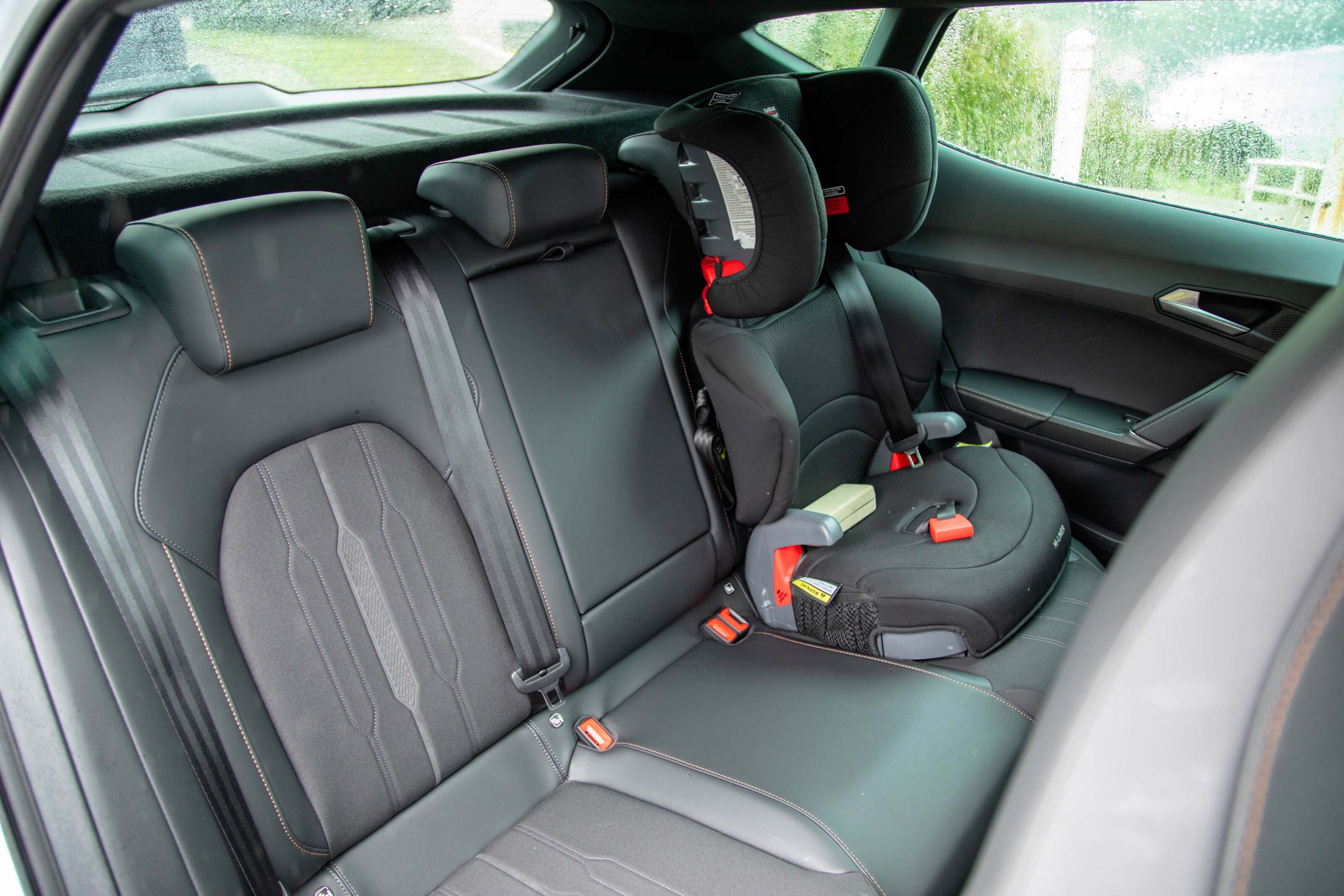
How close owners could get to that 1.9L/100km figure will also be determined by the driveway status of the plug-in Formentor. All but impossible if it’s the household’s only car.
After the VZe’s first – and only – refill, about two-thirds through our three-month tenure, we managed to keep consumption pinned at 0.5L/100km for a few days with religious daily charging.
Distances beyond the Cupra’s 50km electric driving range soon pushed it upwards, however, hovering around 1.7L/100km for a short while before our final stint with the car landed the computer’s calculation at 2.8L/100km (all figures based on the car’s trip readout).
The highest figure we registered during our three-month ownership period was 5.9L/100km from a 105km drive that included freeways and no full-EV range, due to a depleted battery.
We extracted the best electric-range result of our long-termer period – 55km – during the multi-Cupra drive day.
| Cupra Formentor VZe fuel consumption | ||
|---|---|---|
| Claimed | 1.9L/100km | |
| Month 1 | 2.5L/100km | 306km travelled |
| Month 2 | 5.5L/100km | 494km travelled |
| Month 3 | 2.8L/100km | 383km travelled |
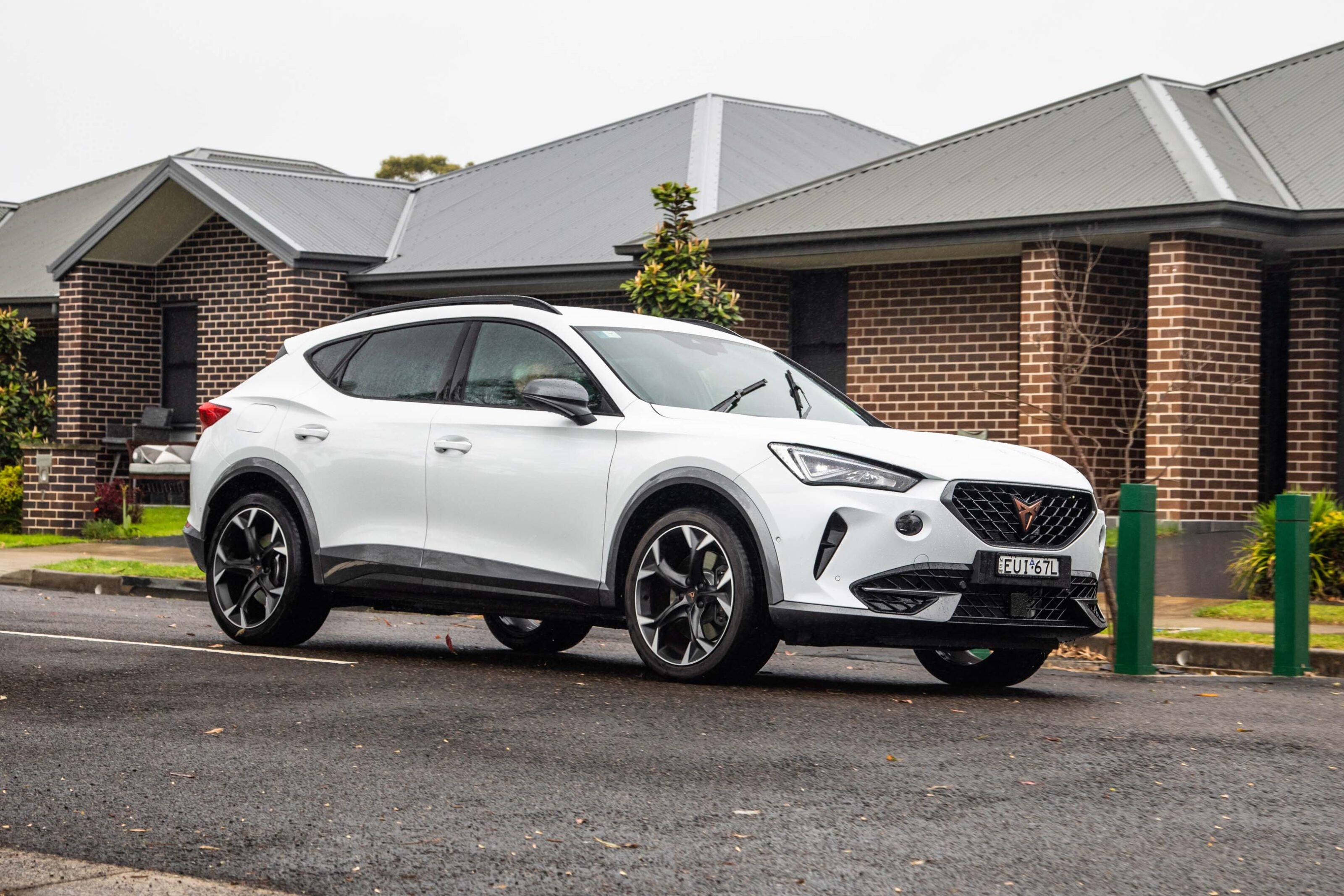
The day also revealed that the VZe isn’t the best Formentor to drive. The Formentor VZ petrol’s ride provides a much closer imitation of a (platform-related) VW Golf, its suspension providing both relaxed compression and controlled rebound.
The VZe’s damping – controlling identically sized 19-inch wheels and also adaptive via driving modes – struggles to absorb potholes and larger bumps when also in Comfort mode.
While the plug-in Formentor can’t match the jolt-free experience of the VZ, it’s comfortable more often than not.
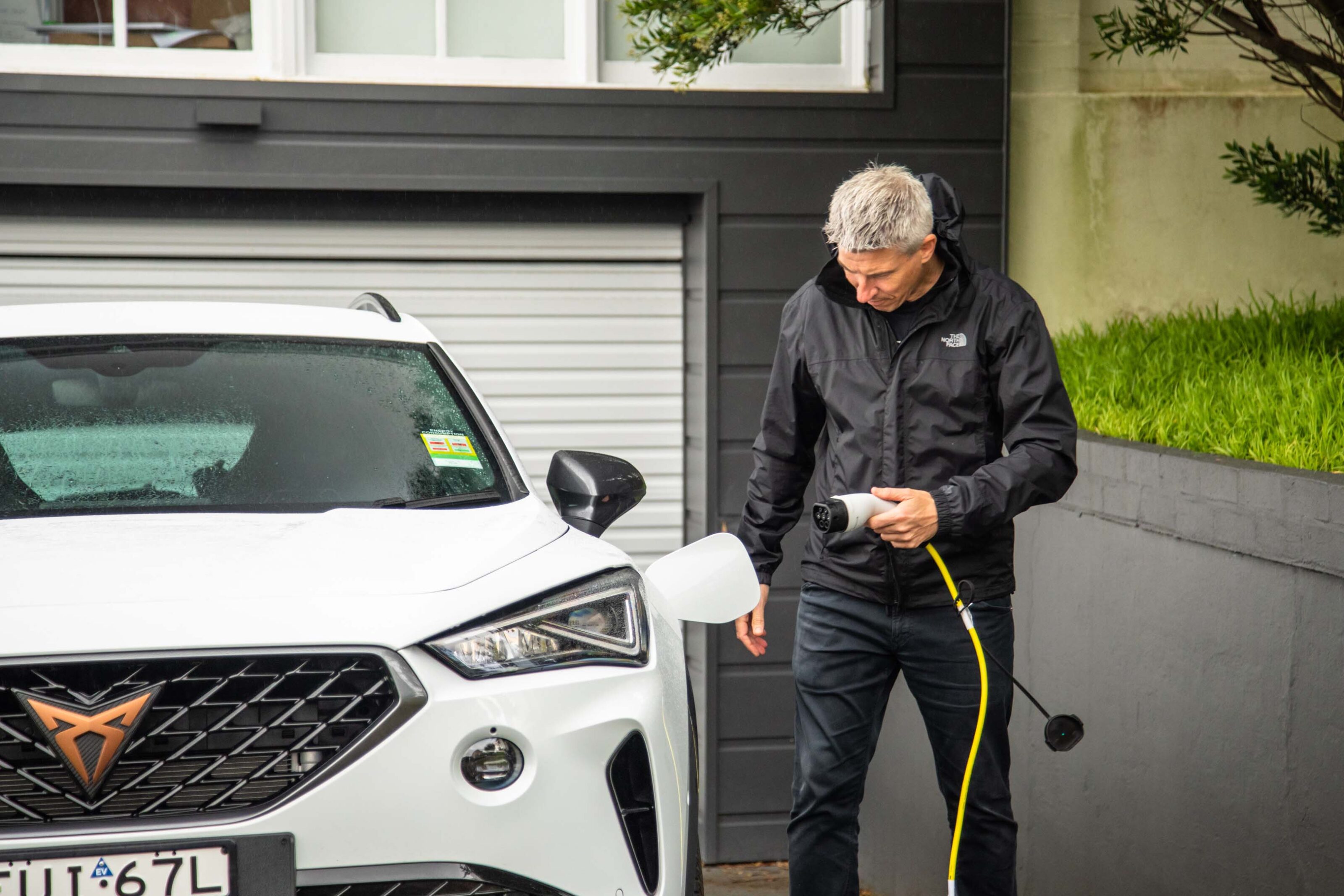
It has the livelier, more responsive drivetrain, too – in hybrid mode and especially so in full electric mode.
Cupra’s official numbers say the 180kW/370Nm VZ accelerates slightly faster than the 180kW/400Nm VZe – 6.8 versus 7.0 seconds – but, in rolling performance, the 2.0-litre’s turbo torque can’t match the immediacy of the electric motor. The petrol engine prefers Sport over Comfort mode.
The VZ’s 130kg-lighter kerb weight is noticeable, particularly in corners, though the Leon hatchback on the same roads felt nimbler and more planted again. That’s part lower centre of gravity, but also a firmer suspension set-up (which does compromise ride quality).
Those with a penchant for good roads might just want to consider the VZx variants available for both the Formentor and Leon – which serve up 228kW, all-wheel-drive, and sub-5.0-second performance.
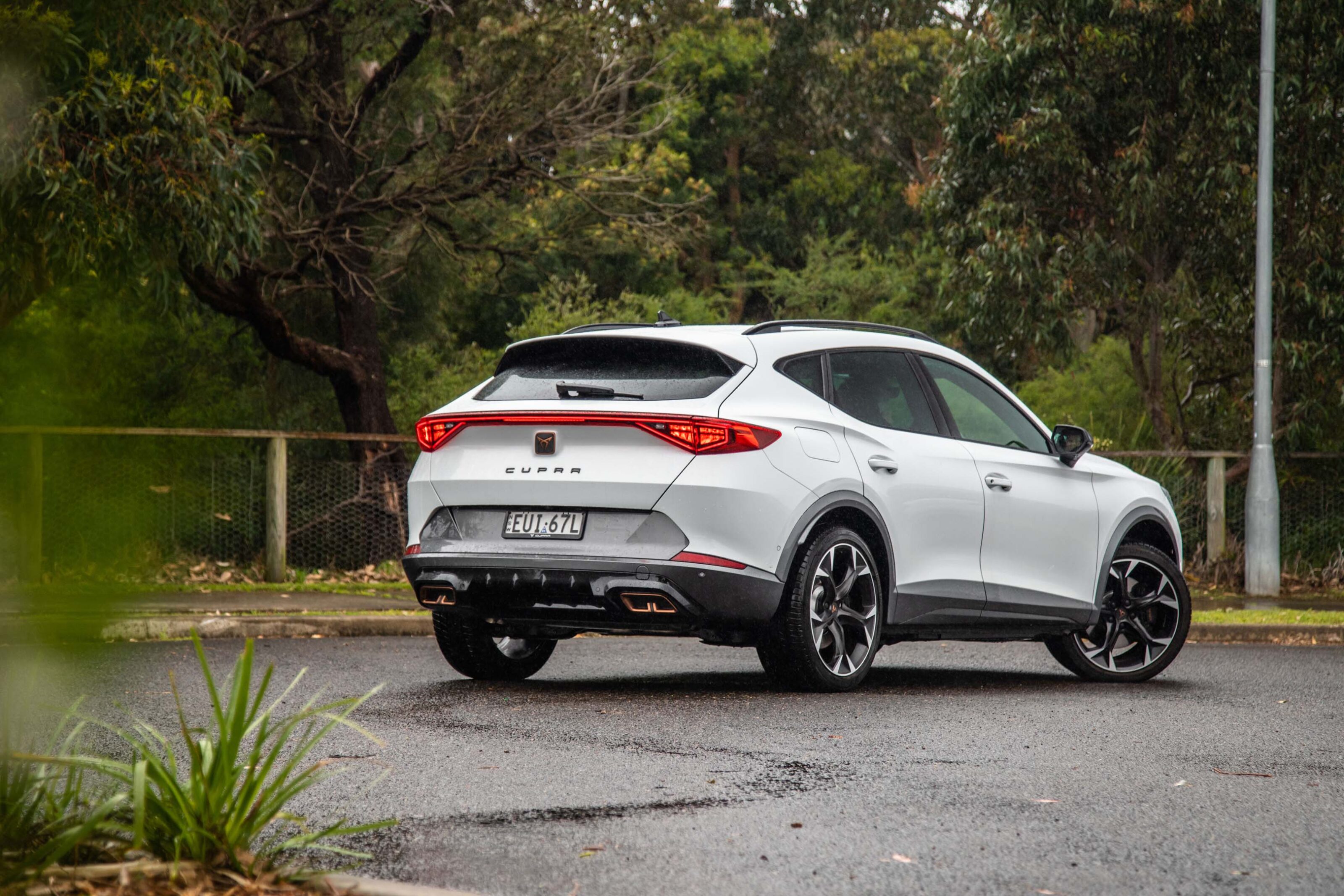
In a family-car context, even the slightly smaller Leon offers more boot space than the VZe – 380 v 345 litres – with the plug-in’s capacity reduced by the need to package the battery for the electric motor.
The VZ provides a 450-litre volume, the largest in the Formentor range if still relatively small by medium-SUV standards, while including an 18-inch space-saver. VZe owners must contend with a less convenient tyre repair kit.
We also had to contend with an annoying voice command system with our long-termer’s infotainment system, where it would regularly interrupt family conversations with a willingness to provide help that wasn’t wanted. It wasn’t by accidental presses of the ‘Speak’ steering wheel button.
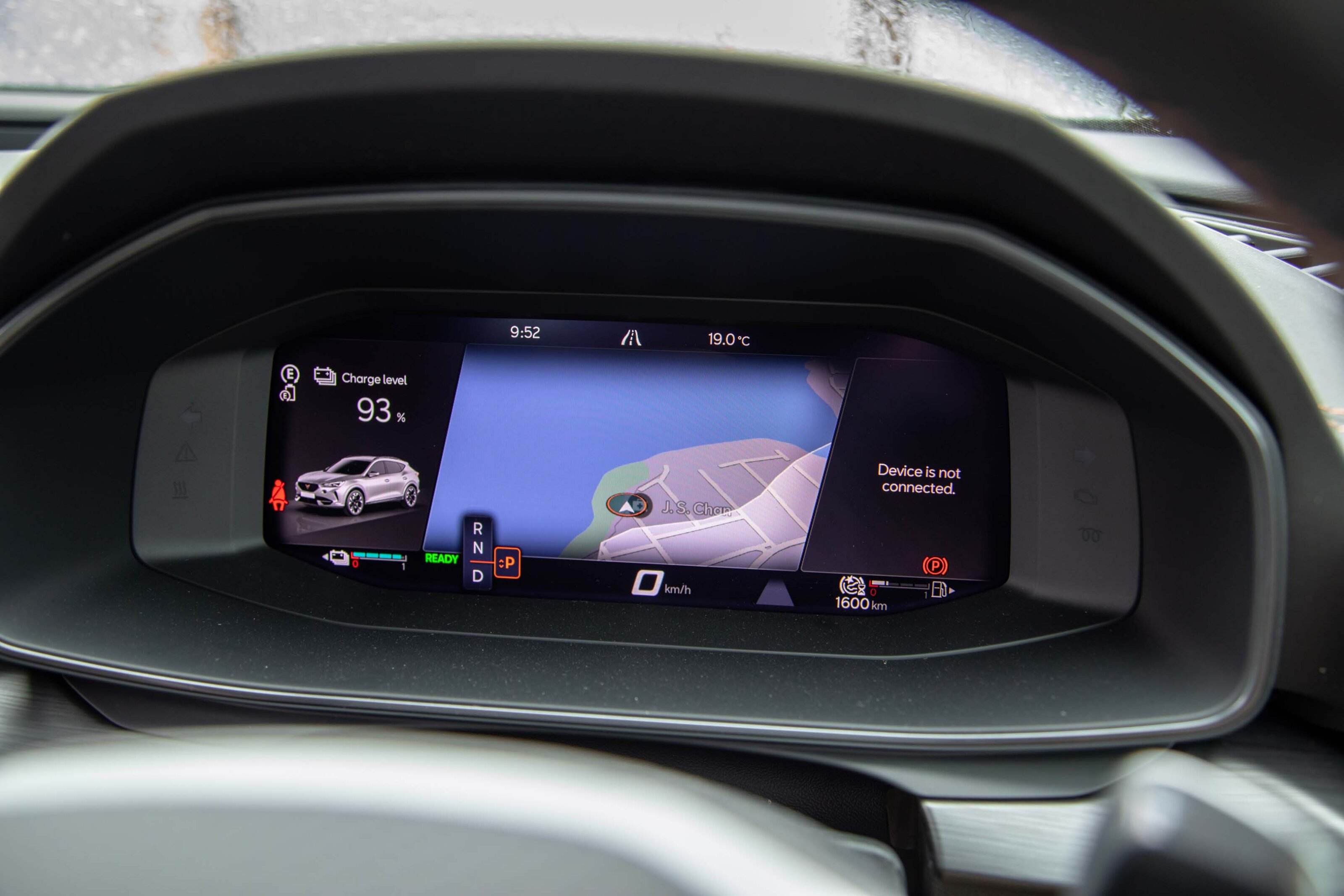
“Silly Cupra”, as our five-year-old summarised – far more politely than his parents would have done without kids in the car.
It’s not a daft buy, though. The Formentor perhaps succeeds more on an emotional than rational level – you can buy the excellent Volvo XC40 or a Tiguan 162TSI R-Line for less money than the VZe, for example – but it’s more than just a good-looking SUV.
The cabin is a big highlight – delivering a good amount of space, a semi-premium presentation, plentiful storage, configurable digital driver display, and terrific comfort and support from the standard cloth bucket seats.
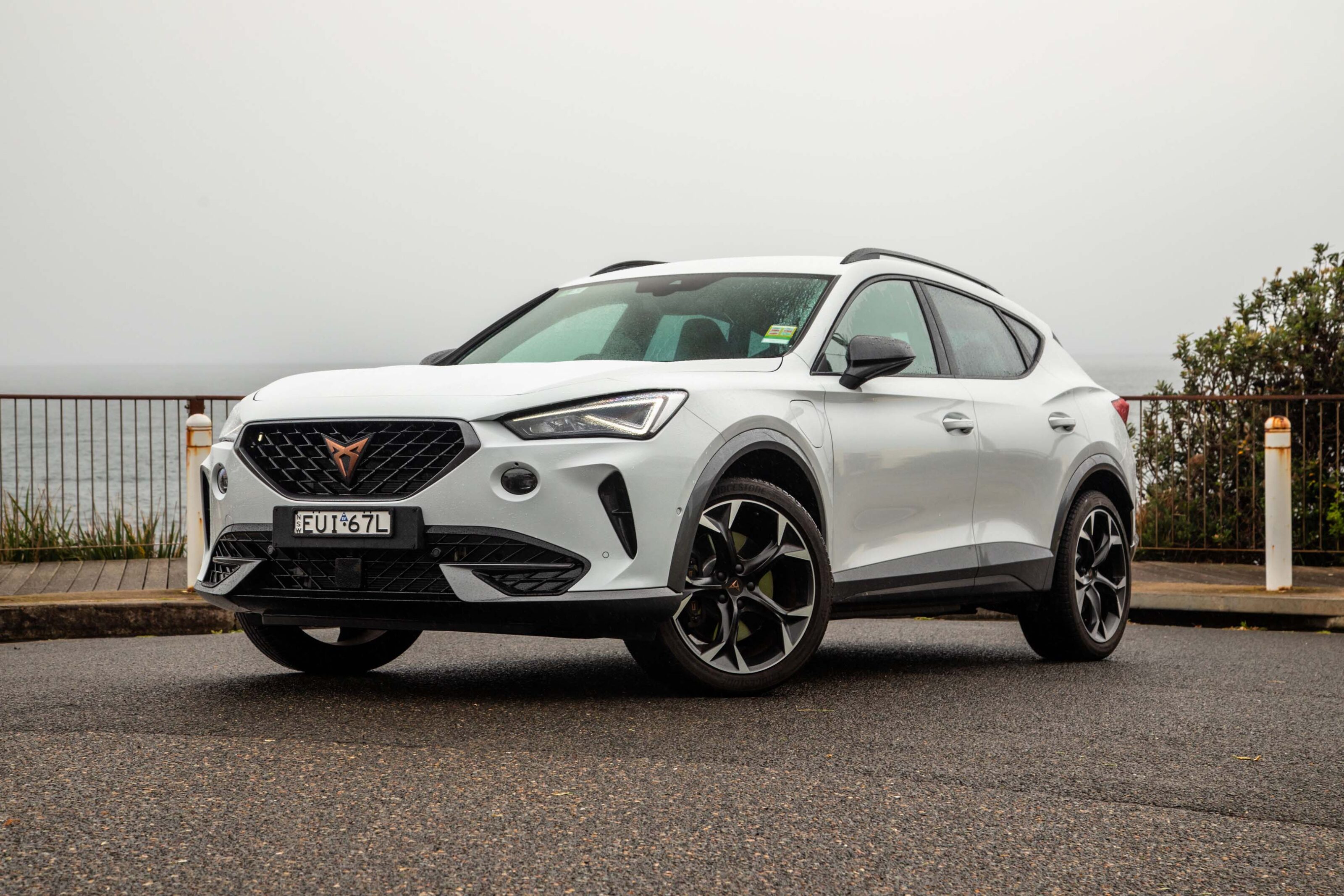
If the Spinks clan were forced to choose a Formentor grade, it just wouldn’t be the VZe.
Three months of constant, almost-daily recharging created a strong case for a fully electric car with significantly greater range. Cupra will offer one from early 2023 – just not a Formentor. It’s a sporty hatch called the Born.
The full-fat VZx can be had for just another grand over the VZe. But when the VZ offers the best boot and the best ride, and some worthwhile extra power over the base V, no prizes for guessing which Formentor is our sweet-spot of the line-up.
Related video: VZX review
2023 Cupra Formentor vZe specifications
| Model | Cupra Formentor VZe |
|---|---|
| Body | Compact SUV |
| Drive | Front-wheel drive |
| Drivetrain | 1.4-litre turbo petrol + electric motor |
| Transmission | 6-speed automatic |
| Power (combined) | 180kW |
| Torque (combined) | 400Nm |
| 0-100km/h (claimed) | 7.0 seconds |
| Electric driving range (claimed) | 58km |
| Fuel consumption (combined) | 1.9L/100km |
| Boot space | 345L |
| Weight | 1708kg |
| Suspension | Struts front; multilink rear |
| Length/Width/Height | 4450/1839/1510mm |
| Wheelbase | 2680mm |
| Brakes | Ventilated front & rear |
| Tyres | 245/40R19 |
| Wheels | 19-inch alloys |
| Price | $60,990 (RRP) / $ |
UPDATE: January 2023: Tesla updates Full Self-Driving beta ban protocol
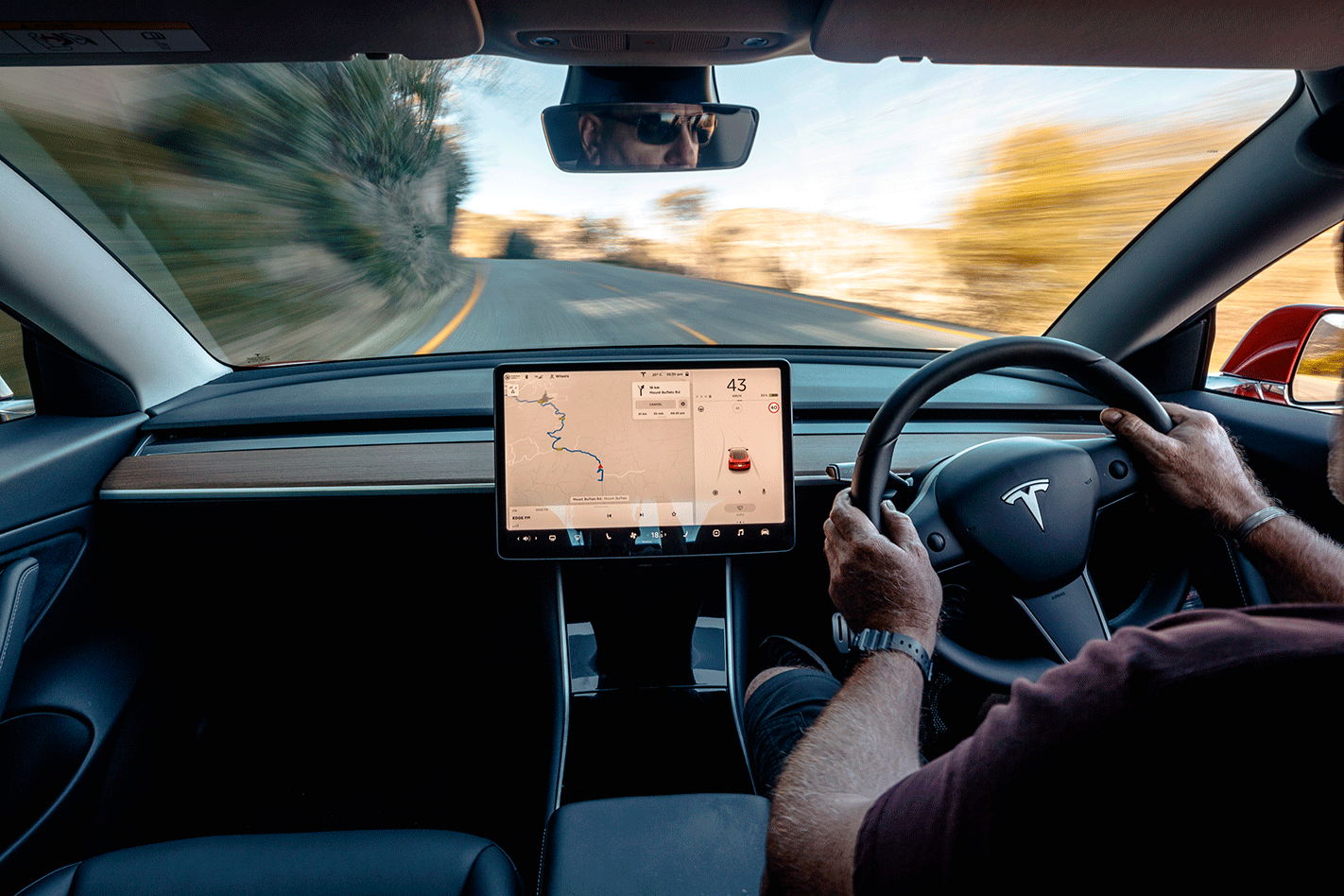
Tesla’s latest software update will ban users from accessing Full Self-Driving beta functionality for two weeks following five instances of Autopilot cancellations.
Story continues
As Tesla readies its ‘Full Self-Driving’ system for launch, the state of California has passed a new law that forbids manufacturers from leaving customers with any impression that their vehicle can drive itself without significant driver attention.
Very few brands have even suggested their vehicles are capable of such a feat, with most acknowledging that any level of fully autonomous driving is still years away from market.
Under the new California law, brands are prohibited from “deceptively naming or marketing” these types of technology, which immediately puts Tesla in an awkward position.
Officially, the now Texas-based brand warns customers that its ‘Full Self-Driving’ requires consistent attention and – despite what the system ‘says on the tin’ – it must not be considered a fully autonomous driving technology.
What does Tesla say about Full Self-Driving? In their words:Note: the below is specifically from the Tesla Australia website, not America or other markets. “In addition to the functionality and features of Autopilot and Enhanced Autopilot, Full Self-Driving Capability also includes:
The currently enabled Autopilot, Enhanced Autopilot and Full Self-Driving features require active driver supervision and do not make the vehicle autonomous. Full autonomy will be dependent on achieving reliability far in excess of human drivers as demonstrated by billions of miles of experience, as well as regulatory approval, which may take longer in some jurisdictions. As Tesla’s Autopilot, Enhanced Autopilot and Full Self-Driving capabilities evolve, your car will be continuously upgraded through over-the-air software updates.” |
Don’t expect the Full Self-Driving name to disappear, however. While this law does require Tesla to take extra steps in explaining to drivers that it is not a full self-driving system under any plain-language understanding of the term, it does not require Tesla to stop using the name.
Tesla, for its part, has yet to offer any statement on the new law – although it is also no secret that the company no longer has a Public Relations department.
For California, Senator Lena Gonzalez told the San Francisco Chronicle: “(This bill) increases consumer safety by requiring dealers and manufacturers that sell new passenger vehicles equipped with a semi-autonomous driving assistance feature… to give a clear description of the functions and limitations of those features.”
Further details on the new law can be found in our existing story below.
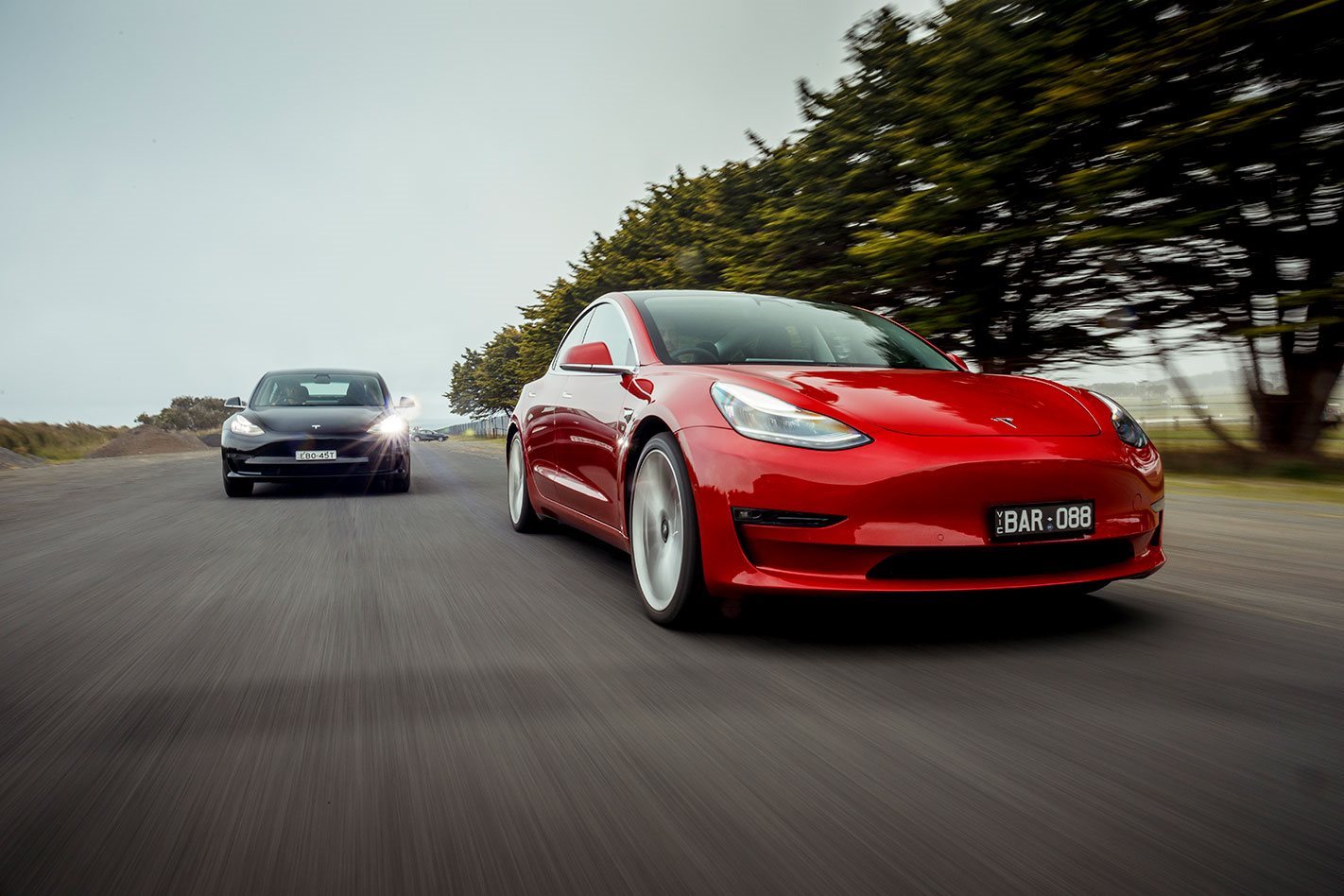
September 2022: Tesla confirms Full Self-Driving for end of 2022, California readying marketing ban
Tesla CEO Elon Musk has claimed that Tesla’s ‘self-driving’ system is a priority, aiming to release a functional system by the end of the year.
Speaking at an energy conference in Norway earlier this week, Musk said his current focus was split between his SpaceX Starship project and ‘self-driving’-capable Tesla cars.
“The two technologies I am focused on, trying to ideally get done before the end of the year, are getting our Starship into orbit… and then having Tesla cars to be able to do self-driving”, the outspoken CEO said.
“Have self-driving in wide release at least in the US, and potentially in Europe, depending on regulatory approval.”
As it happens, regulatory approval may yet prove a problem in Tesla’s native California, as a bill codifying rules surrounding the false advertising of advanced driver-assistance systems, was recently passed into state law.
The bill was sponsored by Senate Transportation Committee Chair Lena Gonzalez, and was passed on Tuesday, according to the Los Angeles Times. The bill aims to hold the automotive sector to a higher degree of accountability when it comes to the advertising of advanced driver-assistance systems (ADAS).
The move comes after years of concern voiced by various automotive parties regarding the dangerous attitude taken by Tesla in the naming convention of its in-house systems.
The US Department of Motor Vehicles (DMV) opened a review in May 2021, regarding the naming of Tesla’s ‘Autopilot’ and ‘FSD’ (Full Self-Driving) systems, which are technically classed as Level 2 autonomy systems (Level 5 is deemed fully autonomous).
Senator Gonzalez stated: “People in California think Full Self-Driving is fully automated when it’s not”. According to Gonzalez, the bill was met with “heavy lobbying” on behalf of Tesla.
Yet, despite the Californian bill’s passing, international efforts in stemming Tesla’s ADAS advertising have proven difficult to execute.
Germany’s recent attempt to ban Tesla from marketing ‘Autopilot’ and ‘FSD’ in their domestic market were shot down after an appeal to the High Court from the manufacturer. A lower court successfully banned the use of those system names in marketing material in 2020, but Tesla never adjusted the language on its website, and opened an appeal to the High Court in 2021.
There have been numerous high-profile crashes involving Tesla systems, many centering around the use of its advanced traffic-aware cruise control system. The US National Highway Traffic Safety Administration (NHTSA) reports that Teslas using Autopilot have been involved in 273 crashes in the past 12 months.
More pertinently, they state that Tesla vehicles made up almost 70 per cent of the 392 crashes involving advanced driver-assistance systems reported since July 2021. Tesla also forms the majority of fatalities and serious injuries within those ADAS-related incidents.
Facing increased scrutiny on various fronts around the globe, it remains to be seen whether the automaker will be forced to adjust the advertising language surrounding its safety systems.
The high-performance BMW X3 M may go all-in on electric power when the fourth generation lands by around 2027.
Snapshot
- BMW X3 M may go all-electric with next-gen model expected in 2027
- Based on regular iX3 SUV using debut Neue Klasse platform
- New 3 Series and i3 sedan siblings to follow suit
BMW Blog reports the automaker’s M Division may ditch turbocharged petrol propulsion in favour of battery-electric power (possibly dubbed iX3 M), with the standard next-gen iX3 mid-sized SUV set to be one of its first electric cars to adopt the much-hyped Neue Klasse platform in 2025.
However, the report notes the Bavarian company will still offer a new-gen X3 with a petrol, diesel or plug-in hybrid drivetrain as part of its “power of choice” promise. Though, it’ll be on a different chassis.
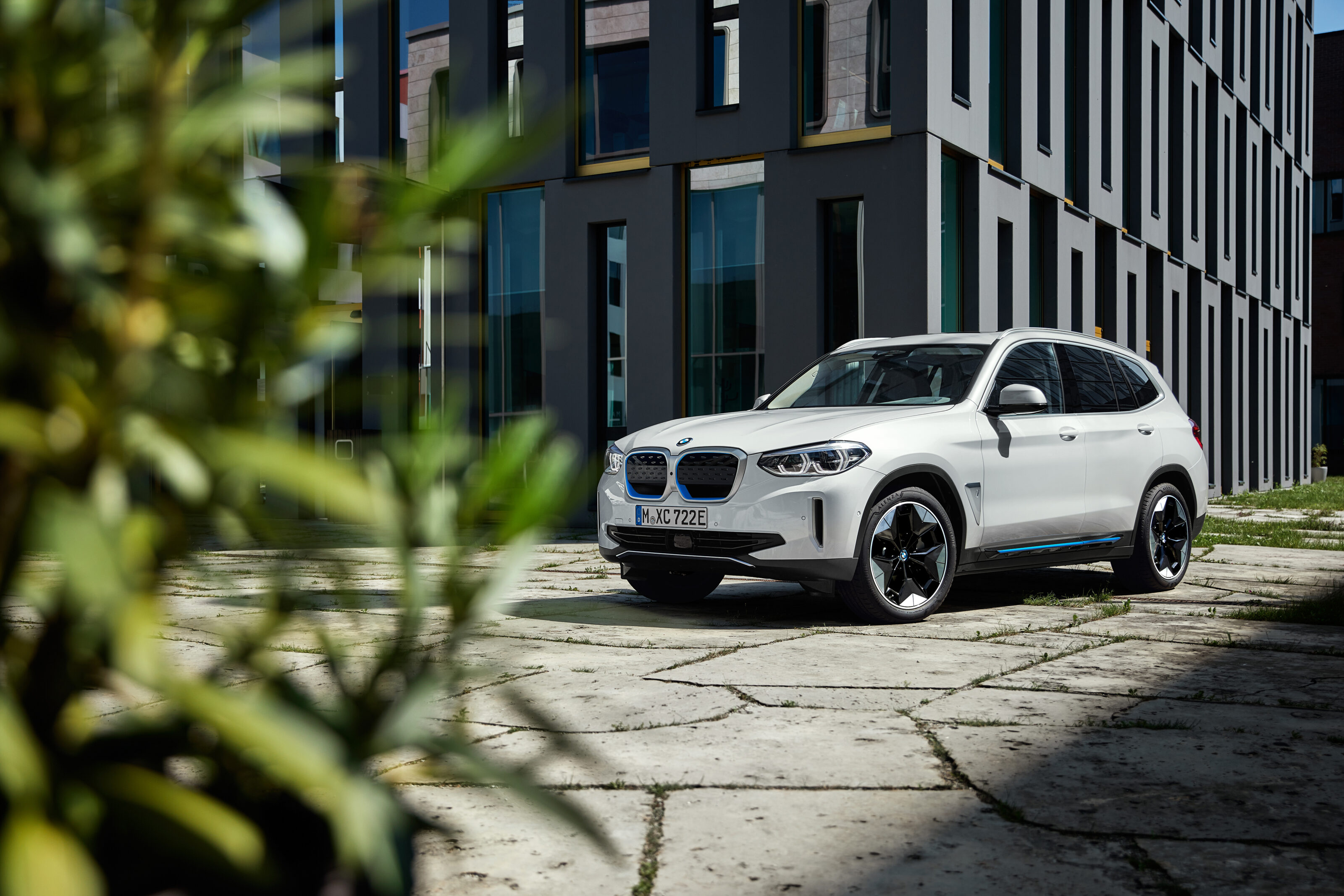
It also notes its all-new BMW 3 Series and Neue Klasse-based i3 electric sedan siblings will debut alongside or “shortly after” the X3 and iX3 SUVs, with the more powerful i3 M model due one or two years after.
The current BMW X3 M Competition uses a six-cylinder 3.0-litre turbocharged petrol engine producing 375kW of power and 650Nm of torque, with a claimed acceleration time from 0-100km/h in 3.8 seconds.
For context, the current BMW i4 M50 – which isn’t considered a full-bottle M model – features dual electric motors outputting 400kW and 795Nm combined, and is able to sprint from 0-100km/h in 3.9 seconds.
Best Electric Cars Under $65k: Affordable EVs Rated
Welcome to part one of three price-based EV buying guides, this one focused on the most affordable electric cars available in Australia today
Which other M models will go electric?
If the current X3 M is the last combustion-engined generation, BMW Blog says this means the next-gen BMW M5 sedan will be the last petrol-powered model from the hi-po division, albeit as a plug-in hybrid amid tightening emissions regulations like Euro 7.
The dedicated Neue Klasse architecture has been touted as capable of up to 1000km driving range from a full charge, boasting more energy dense ‘Gen6’ batteries and adopting an 800-volt class system for up to 270kW DC ultra rapid charging speeds.
More EV stories to help you choose the best car for your needs
Key Points
- Mugen ZR-V e: HEV Mugen Custom Concept revealed
- Not much known about Mugen Civic Type R
- Hybrid ZR-V modifications limited to aethetics
The legendary Japanese Honda tuner, Mugen, will publically debut two modified new models at the 2023 Tokyo Auto Salon (TAS).
Mugen will display its modified version of the 2023 Honda ZR-V small SUV, revealed initially in mid-2022 with shared drivetrains from the Civic (production version pictured below).
The small SUV, which is expected in Australia in mid-2023, will be joined by a Mugen-tuned 2023 Honda Civic Type R.
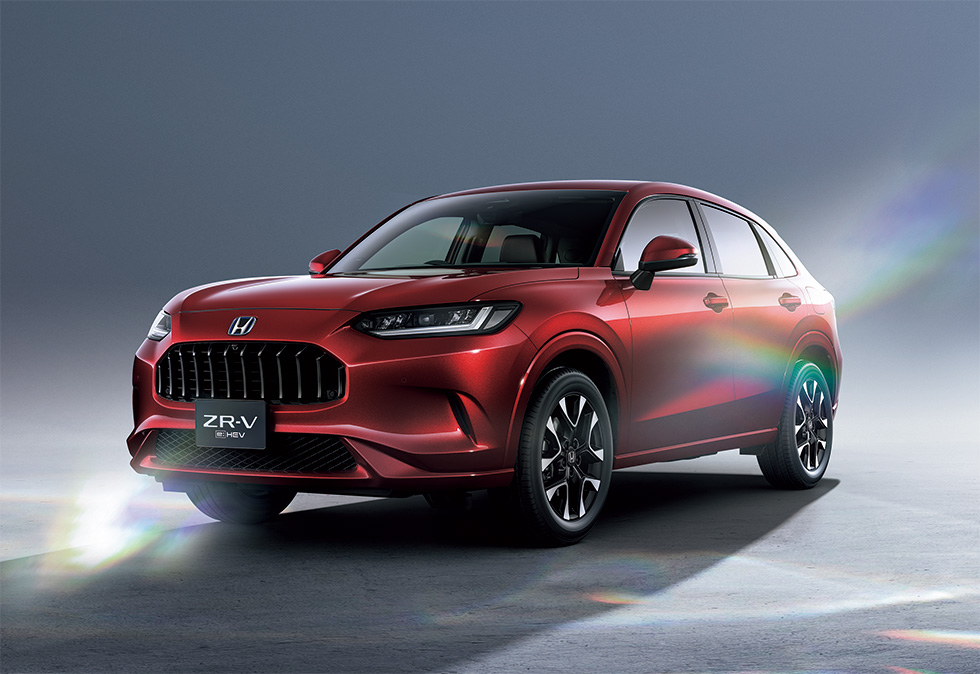
Information on Mugen’s Civic is scant, likely under wraps as a surprise for the next year’s TAS – an event ostensibly regarded as Japan’s version of North America’s SEMA show.
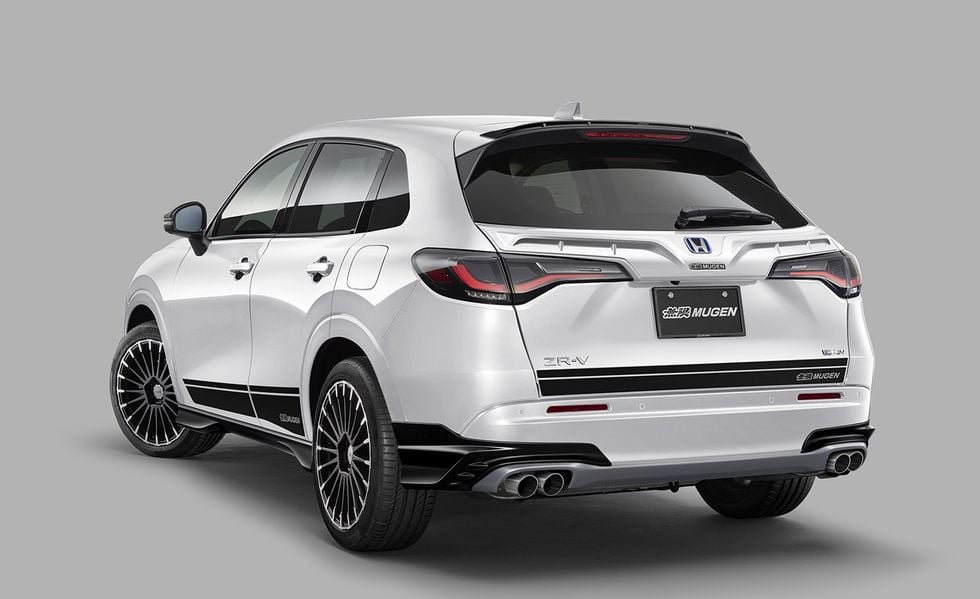
The Mugen ZR-V e:HEV Mugen Custom Concept (below), however, has been revealed in pictures, modified with a Mugen-designed front bumper, side skirts, tailgate spoiler and various black accents, including graphics, mirror caps and wheels.
“Mugen Power 2023” is the brand’s theme for next year’s TAS, and it will also be bringing two Mugen-powered open-wheeler racers from the All Japan Super Formula Championship.
It is Japan’s highest form of Formula racing, with the FIA-backed series valued below just Formula 3 but ahead of LMP2 in terms of FIA Super Licence points.
While the Mugen ZR-V’s modifications remain constrained to aesthetics, Mugen’s forthcoming 2023 Civic Type R show car will likely exhibit more of the brand’s legacy as a performance components manufacturer.
Mugen was founded in 1973 by Hirotoshi Honda, the son of Soichiro Honda – the legendary founder of Honda Motor Company.
Tokyo Auto Salon will take place from January 13 to 15 in Chiba, near Tokyo Japan.
UPDATE: January 2023: Tesla updates Full Self-Driving beta ban protocol
Tesla’s latest software update will ban users from accessing Full Self-Driving beta functionality for two weeks following five instances of Autopilot cancellations.
Story continues
Snapshot
- Free 30-day Enhanced Autopilot given to Tesla Oz and NZ owners
- Brings additional safety assist features, usually a $5100 option
- Not the first time Tesla has activated capabilities without need for software update
Tesla has given Australian and New Zealand owners a free 30-day Enhanced Autopilot trial, just in time for holiday road trips.
On top of Basic Autopilot safety assistance suite standard on all Tesla electric vehicles – including camera-based auto emergency braking, blind spot alert and camera views, adaptive cruise control and lane centering assist – Enhanced Autopilot brings:
@LudicrousFeed just hopped in my car and got a Christmas present. Our Y got it as well. pic.twitter.com/C2Ue6NgeTR
— Andrew Waters (@muddie) December 23, 2022
Enhanced Autopilot is usually a $5100 option and can be purchased via the Tesla mobile app after taking delivery as an over-the-air (OTA) software upgrade.
The holiday trial is now available for the Model 3, Model Y, Model S and Model X for owners who haven’t already purchased Enhanced Autopilot or ‘Full Self-Driving Capability’ (which currently only stops for traffic lights and stop signs when using adaptive cruise control).
It comes after the American electric car brand released its annual Christmas OTA software update for 2022 that adds features like live remote interior monitoring, reintroduced driver instrument cards for the Model 3 sedan and Model Y SUV, auto turn-off indicators after a lane change and more.
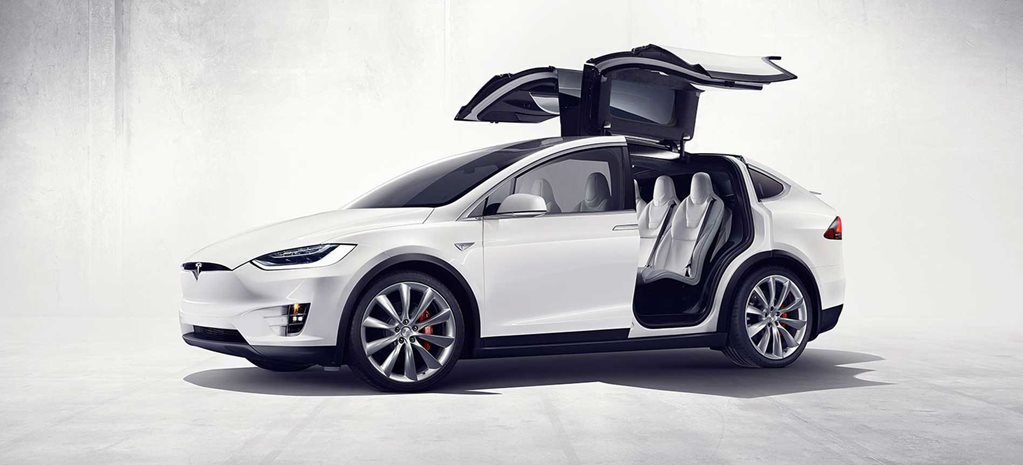
But, it’s not the first time Tesla has activated new capabilities – without the need for a software update download.
During the 2019 Australian bushfires, Tesla remotely unlocked additional 15kWh of battery capacity for older Tesla Model S 60 and 60D to help owners flee with more driving range in New South Wales and Queensland.
Those two entry-level electric sedan variants usually had its software capped at 60kWh of usable energy, despite housing a 75kWh battery pack.
Snapshot
- Volvo COO criticises blocking features under subscriptions
- BMW, Tesla and Toyota have adopted subscription model in Australia
- Subscriptions ensure profitability beyond purchasing the vehicle
Volvo has promised it won’t adopt subscriptions to unlock features via software updates, despite the growing list of other car brands aiming to ensure profitability beyond purchasing a vehicle.
“If you are to charge for software updates, it must be a step change in consumer benefit,” Volvo Cars deputy CEO and chief operating officer Björn Annwall told Bloomberg.
“We will not ask people who have bought a car for 1 million kronor [AU$140,000] to pay another 10 kronor [AU$1.40] to get extra heat in the seat.”

Subscription-based features mean the hardware capabilities are already in the vehicle, but owners must pay a regular fee to enable it via an over-the-air software update.
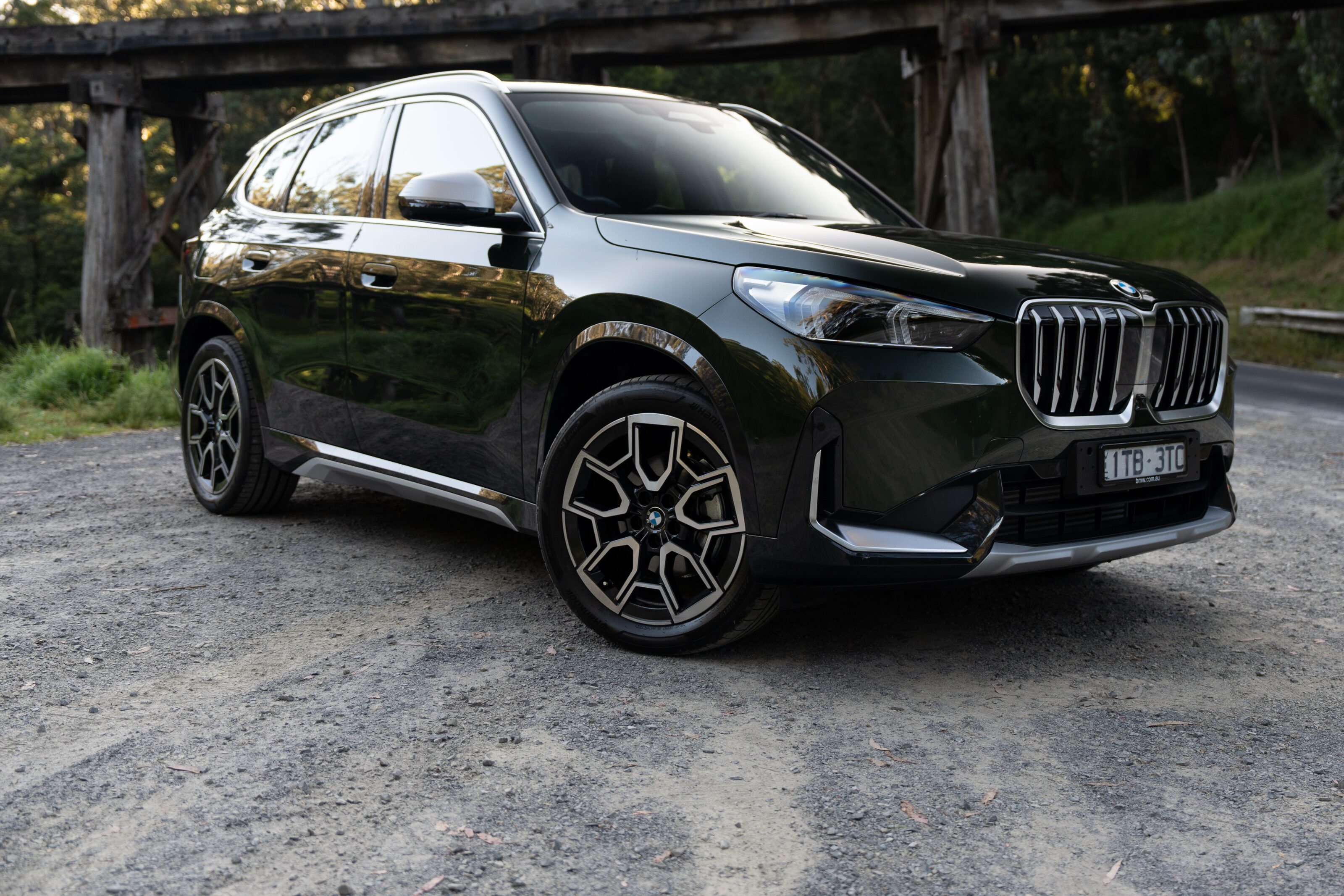
BMW’s latest entry-level X1 small SUV recently introduced ‘Features on Demand’ in Australia, where heated front seats and a heated steering wheel can be unlocked by paying a monthly or yearly subscription, but can be purchased outright for lifetime use.
For example, heated seats on the base X1 sDrive18i cost $29 per month, $289 per year, $419 every three years, or $589 outright.
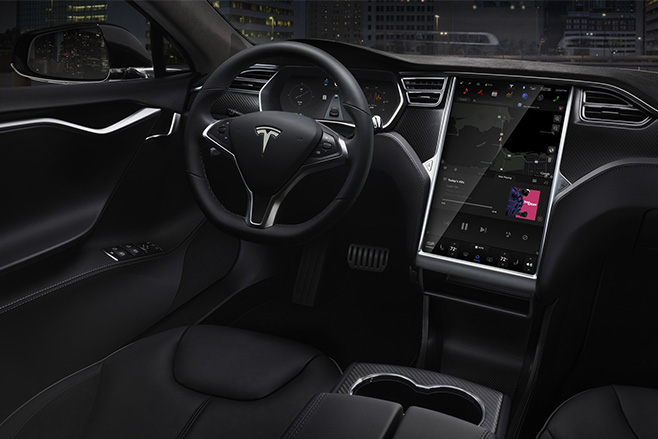
Meanwhile, Tesla also requires a $9.99 per month Premium Connectivity subscription to unlock more internet-related features such as satellite view maps with live traffic visual aids, video and music streaming, and remote mobile app live camera monitoring.
Similarly, Toyota debuted two Connected Services subscription plans costing $9.95 and $12.50 per month on the Corolla Cross small SUV to gain additional functions like remote engine start from a mobile app, connected navigation, and a built-in voice assistant.
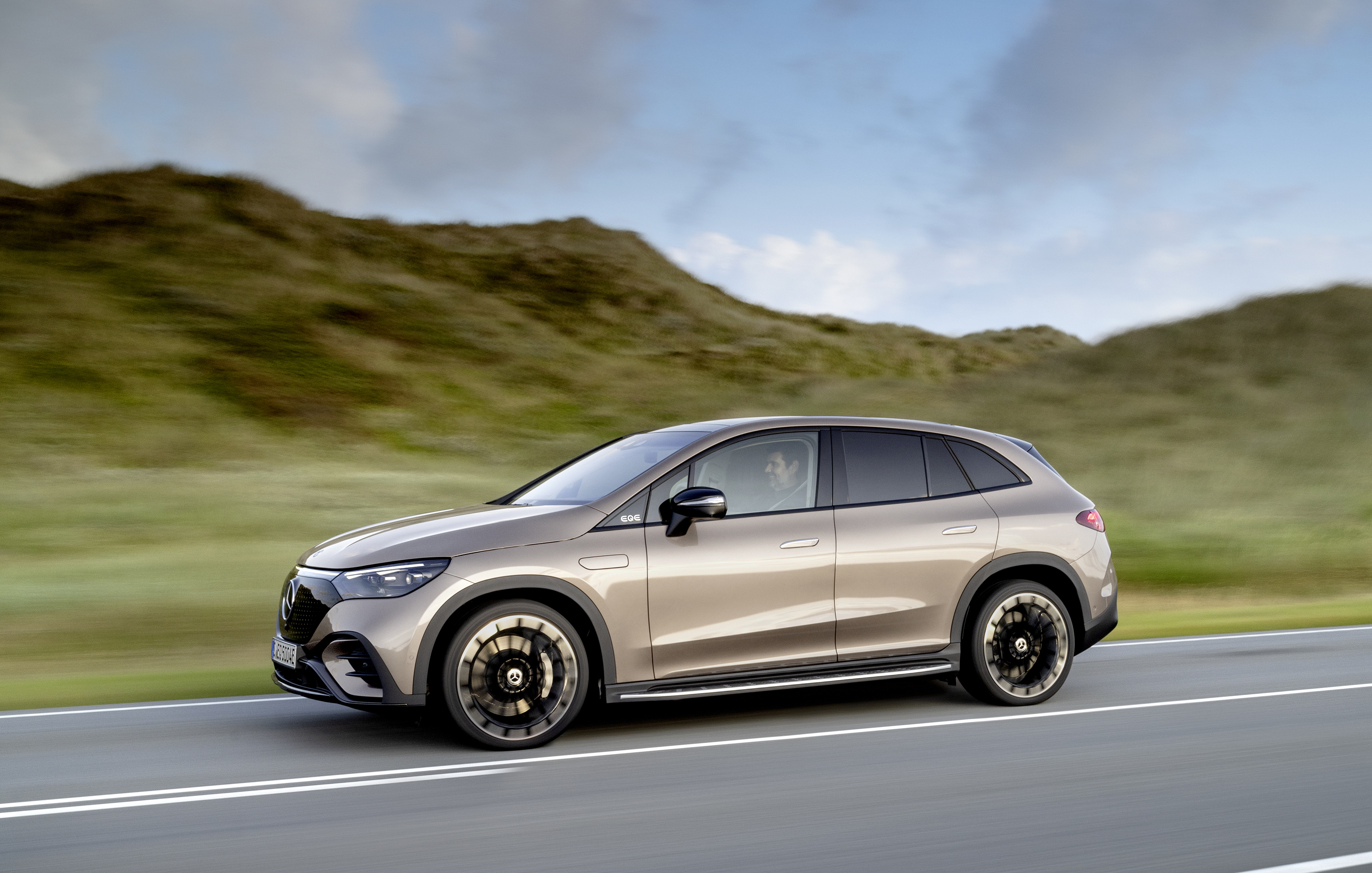
Mercedes-Benz has also introduced a subscription-based performance software upgrade for its EQE and EQS electric sedans in the USA to slash acceleration times by one second.
However, Top Gear Netherlands reports it’s facing legal issues in Europe, even though a one-off payment such as the Polestar 2’s performance update isn’t an issue.
Hyundai has also suggested adopting a subscription model for “performance and functionality” upgrades, while Volkswagen’s software division has said autonomous driving can be enabled on-demand or via a subscription payment.
Volvo cars are powered by Google’s Android Automotive infotainment operating system and are capable of over-the-air updates.
The Swedish automaker has promised to only offer all-electric models by 2026 in Australia, with the flagship EX90 large SUV spearheading the transition in 2024.
