
Part 1: It begs to differ
Mazda MX-30 G20e (Hybrid)
Name for me, if you can, another car manufacturer that would have the audacity, in this age of model rationalisation, to spin off a compact crossover with so-called ‘freestyle’ doors? I’ll wait…
Yep, you could never accuse Mazda of inherent conservatism or lacking a ‘give it a crack’ attitude.
But does that make the MX-30 a desirable and practical alternative to the excellent CX-30? That’s what my three-month tenure aims to answer.
You’re probably aware that the MX-30’s mission in life appears to be to provide Mazda with a style-driven EV that stands out in an increasingly populous segment. Yet the MX-30 aims for broader appeal by also being offered with the 2.0-litre atmo four-pot from the more affordable end of the CX-30 range (supplemented by a mild-hybrid 24v integrated starter/generator) which is what we have here. In this one-engine, auto-only, front-drive form, MX-30 is available in three trim grades, starting at $33,990 for the G20e Evolve, and topping out with this G20e Astina at $40,990.
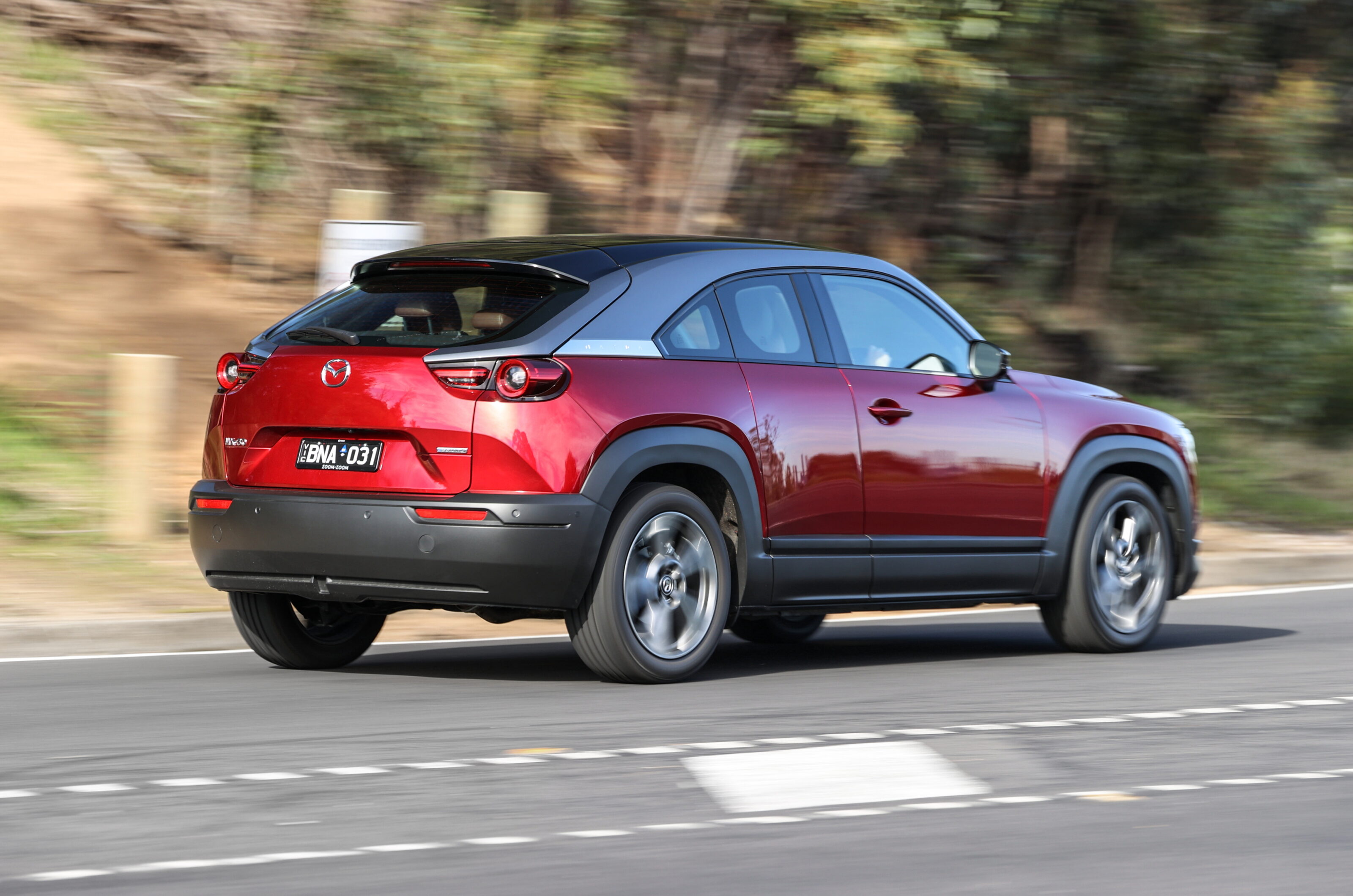
Quick value and equipment check: Astina’s tag of nearly $41K (plus on-roads) is around $4500 more than the mid-rung Touring model below, so given the engine, trans and driven wheels are identical, you’d hope for a decent whack of extra kit.
You decide: exclusive to my Astina are Vintage Brown faux-leather upholstery, sunroof, Bose audio, heated seats and steering wheel, head-up display, adaptive LED headlights, and a safety pack compromising a 360-degree-view monitor, cruising & traffic support, front cross-traffic alert and front parking sensors.
The freestyle doors are such a significant and divisive design element I’ll devote more coverage to them (and the rear-seat packaging) next month, but suffice to say they won’t suit buyers with kids who use the rear seats on a daily basis.
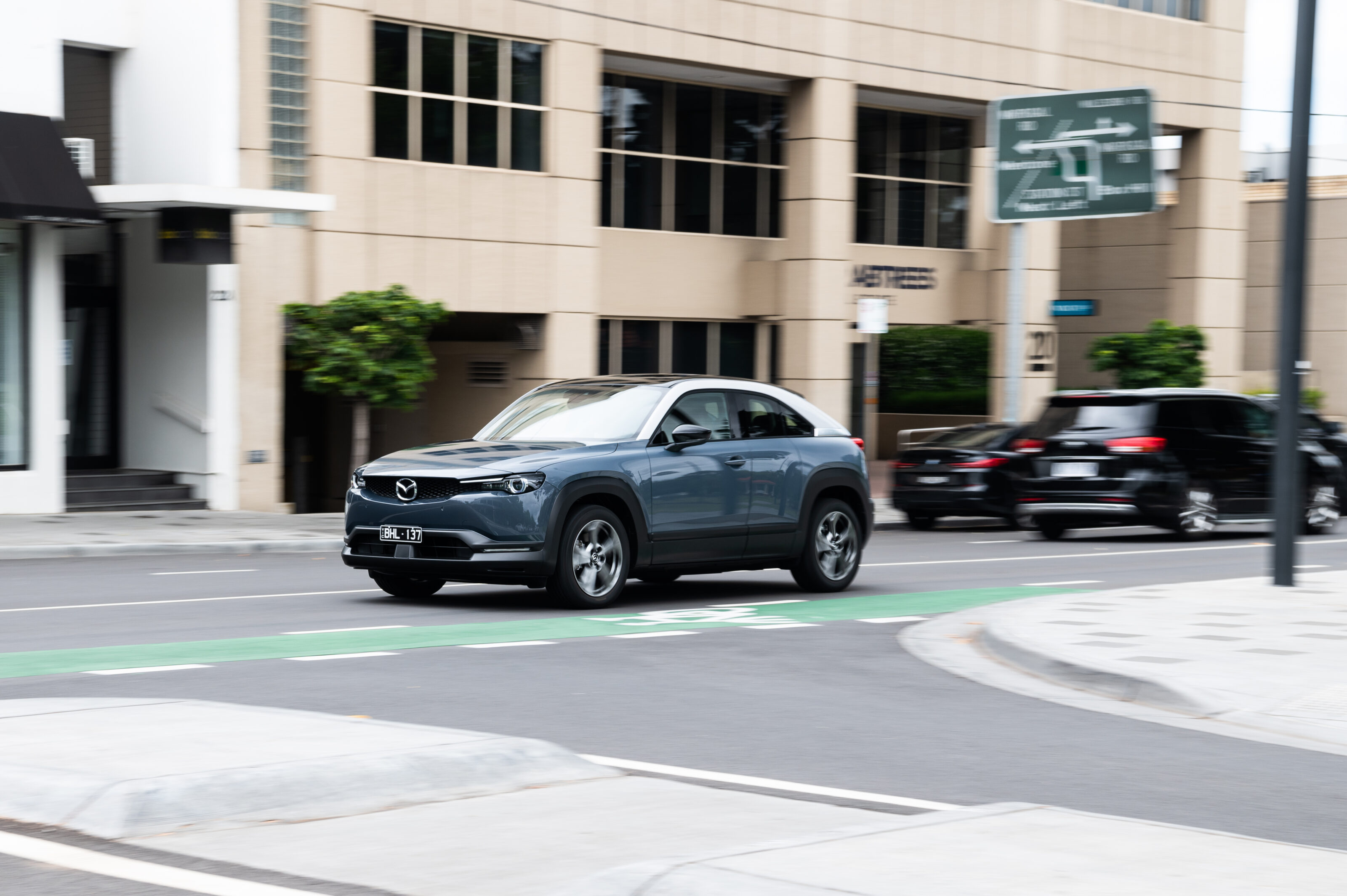
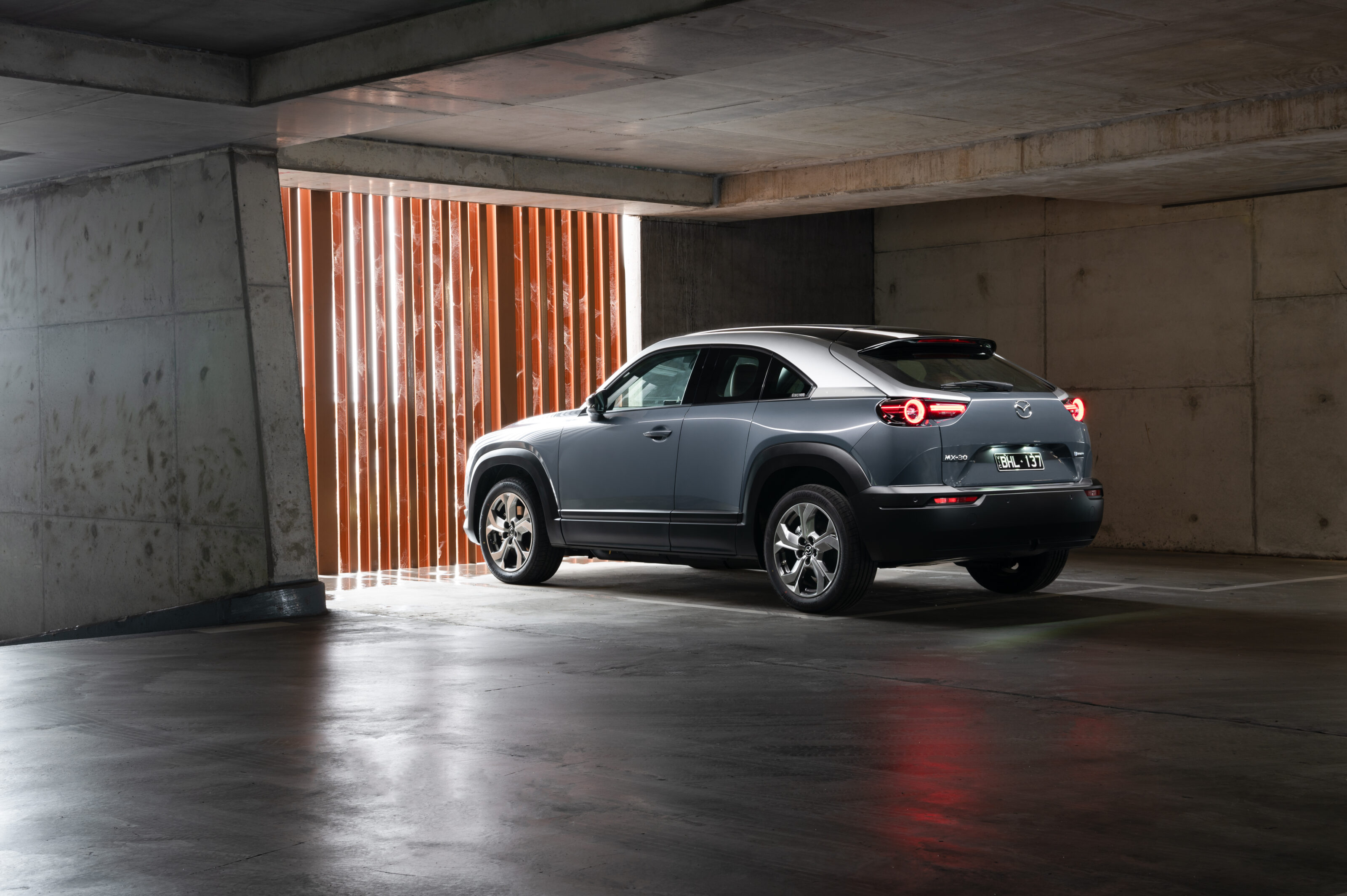
No, it seems the doors are very much part of a design aesthetic that sets out to deliver a coupe profile with sloping roof and pert rump. Does it work for you? Exterior design is such a subjective thing that I’m reluctant to dig too deeply into it, but overall I’m okay with the looks, rather than wildly seduced by them.
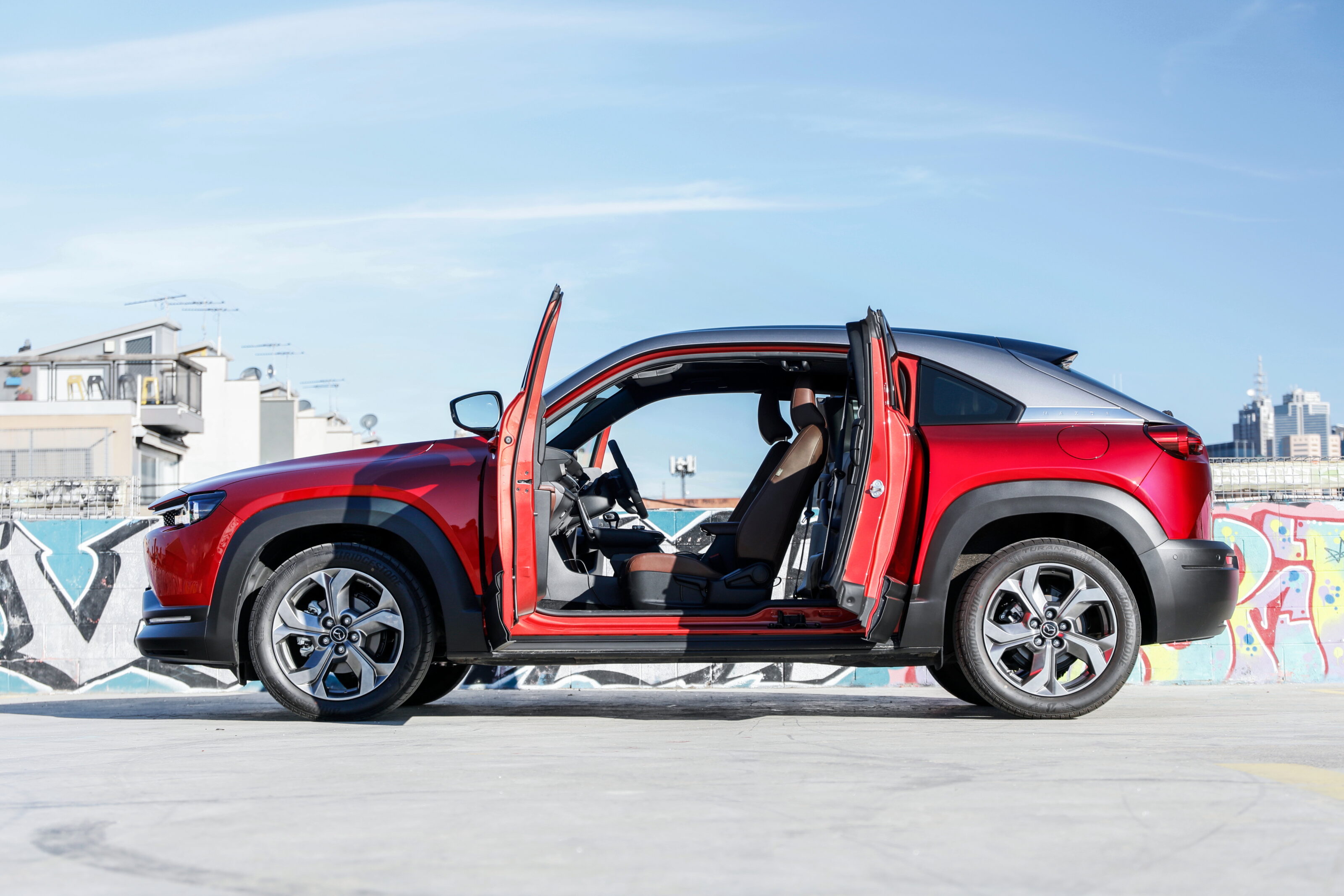
Mazda first used ‘freestyle’ rear doors on the COTY-winning RX-8 sports car of 2004. So, do they make sense here?
The Soul Red Crystal metallic paint of this example is deeper and more glossy than a supermodel’s fingernails, while the silver roof rails and black roof do make it stand out from the throngs of CX-30s. (But not cheap at $1490…)
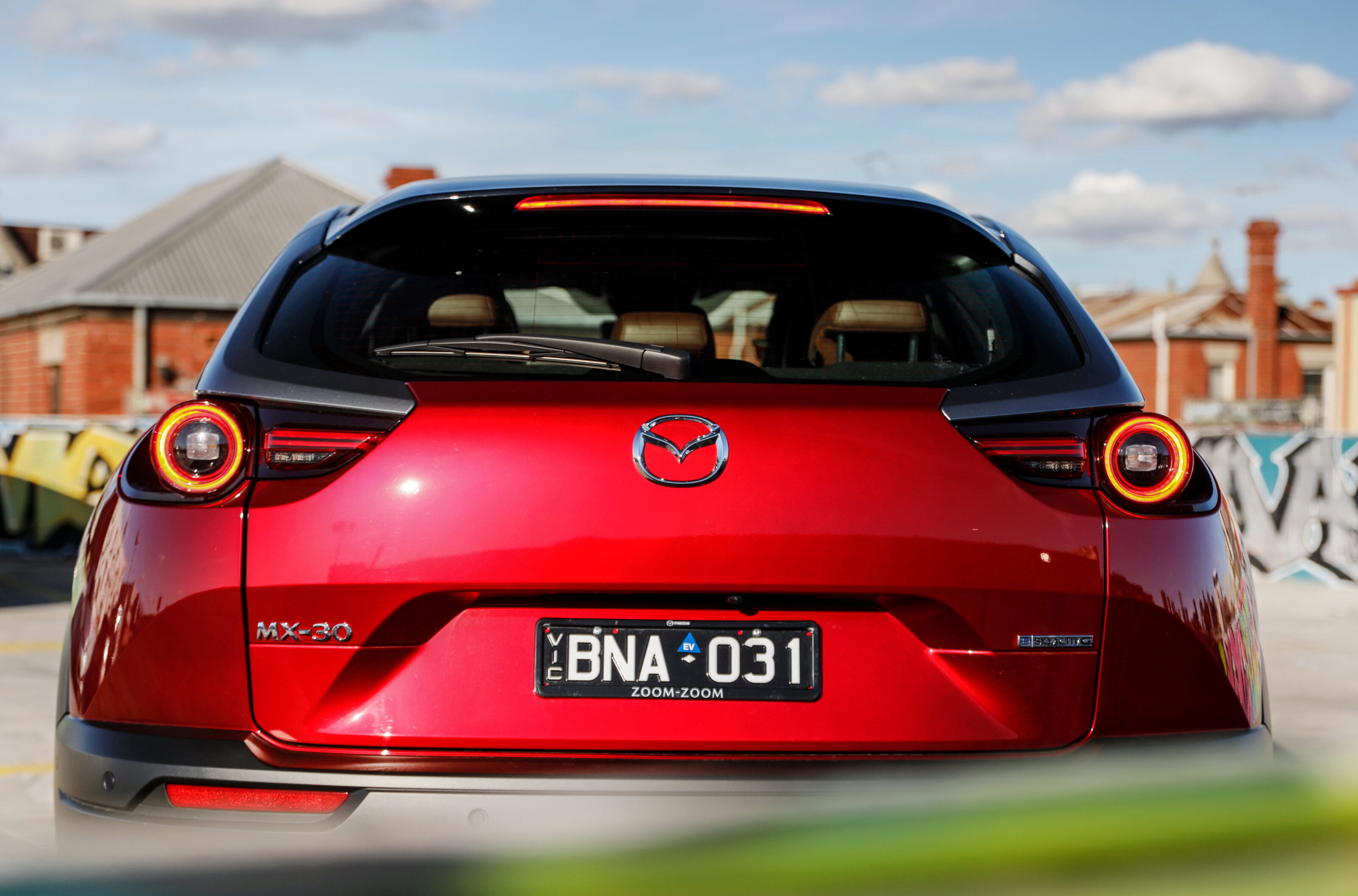
There are some nice touches, like the Mazda name embossed into appliqués in the D-pillars, and tail-lights that house the indicators within their centres. It’s obvious that a load of design attention has been lavished on the MX-30; I just find the slightly dumpy stance and the wide black mouldings framing the lower exterior of the car temper its visual appeal. But that’s just me; far more relevant is how well it all functions and what level of driver appeal exists.
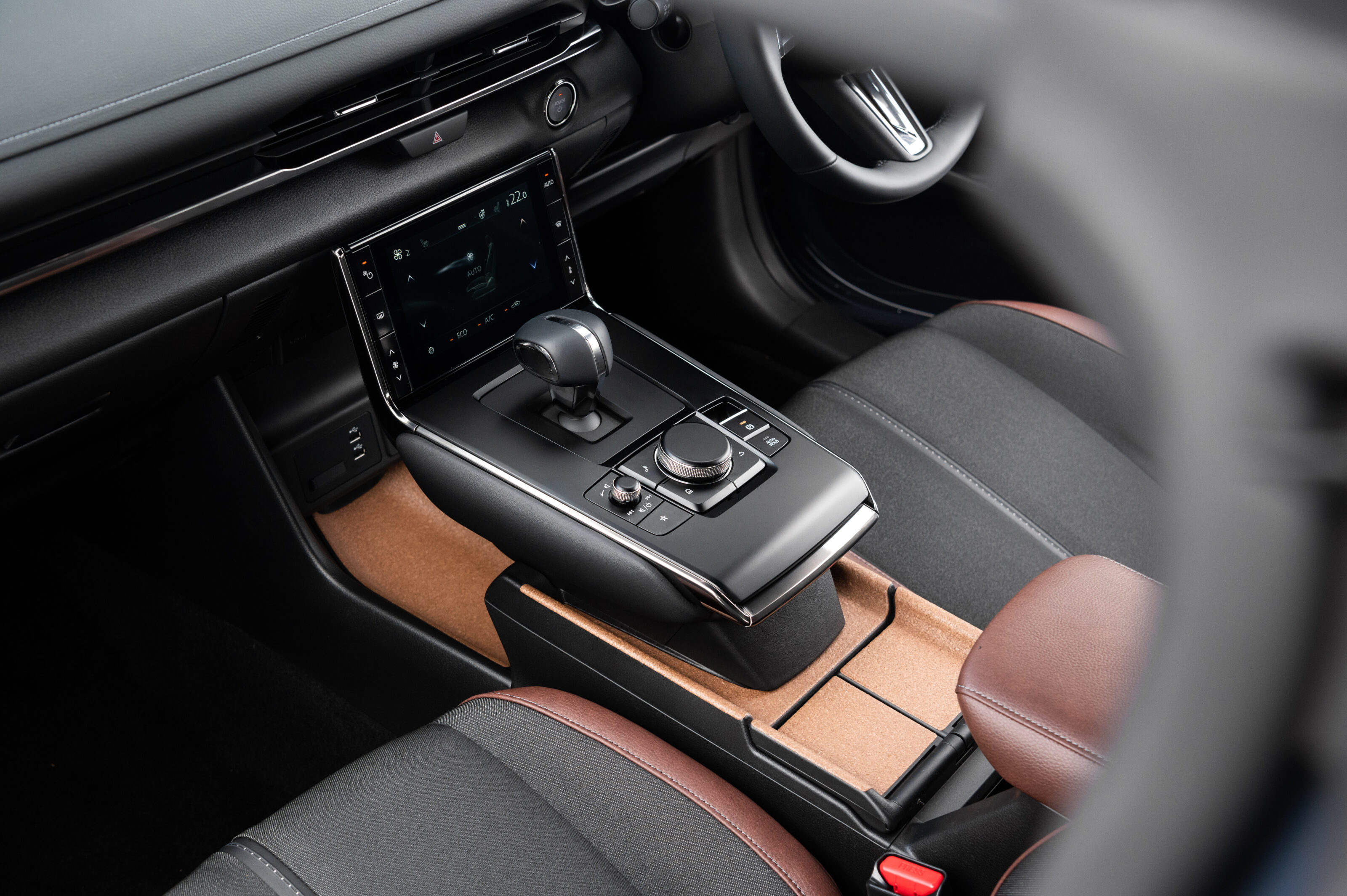
First impressions when you slide into the driver’s seat is that the cabin is a cohesive interpretation of the exterior design in that it clearly sets out to be more avant-garde and adventurous than the CX-30 with which it shares significant components. The floating console is cool, and use of cork around it is a neat nod to Mazda’s corporate origins, while the recycled material used on the door trims adds visual interest.
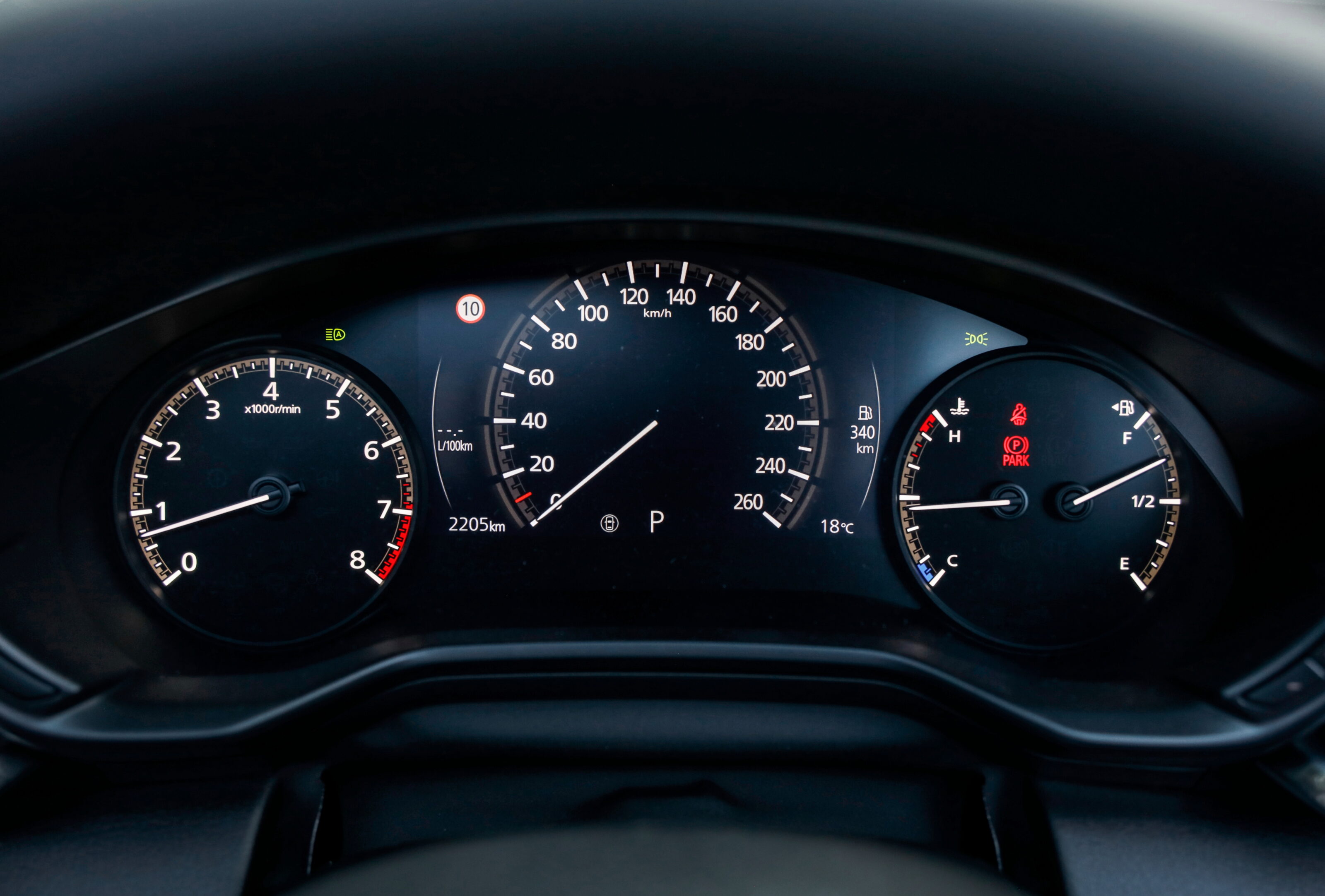
The multimedia screen seems small in this era of tablet-sized displays, but operation via the rotary controller is so far niggle-free. Lovely clarity, too, from the instrument panel, which flanks analogue gauges either side of a centre screen that can be configured to one of three views. All good stuff, leaving my main gripe directed at the front seats that are clearly not designed for an XL frame. With my 6ft/110kg dad-bod squeezed in, the driver’s seat is snug around the side bolsters and lacks under-thigh support.
Further, the design of the doors bring a blind-spot the size of a telephone directory just over your shoulder, while the wide D-pillars do rear-three-quarter vision no favours, so real care is needed when merging from acute angles.
More positive has been the set-up procedure that gives a welcome range of customisation to frequently used functions. The volume of the parking alerts and even the indicator ticking sound can be tailored to your preference, while the lane-keep assist can be properly disabled. Hurrah.
What’s most obvious, though, is the MX-30 is for those who embrace ‘different’; buyers who appreciate its adventurous design, and are happy to pay a premium for it. Not sure yet if that’s me, but I’m looking forward to finding out.
Part 2: Doors of perception
MX-30 G20e (Hybrid)
The lady walking her doe-eyed Labrador paused to ask me a simple car question, but I was momentarily (almost) too thick to realise we had a misunderstanding. “What sort of range do you get from that?” she wanted to know.
I was about to answer, “Around 500km, depending on how hard I thrash it…” when I realised where our wires had become crossed.
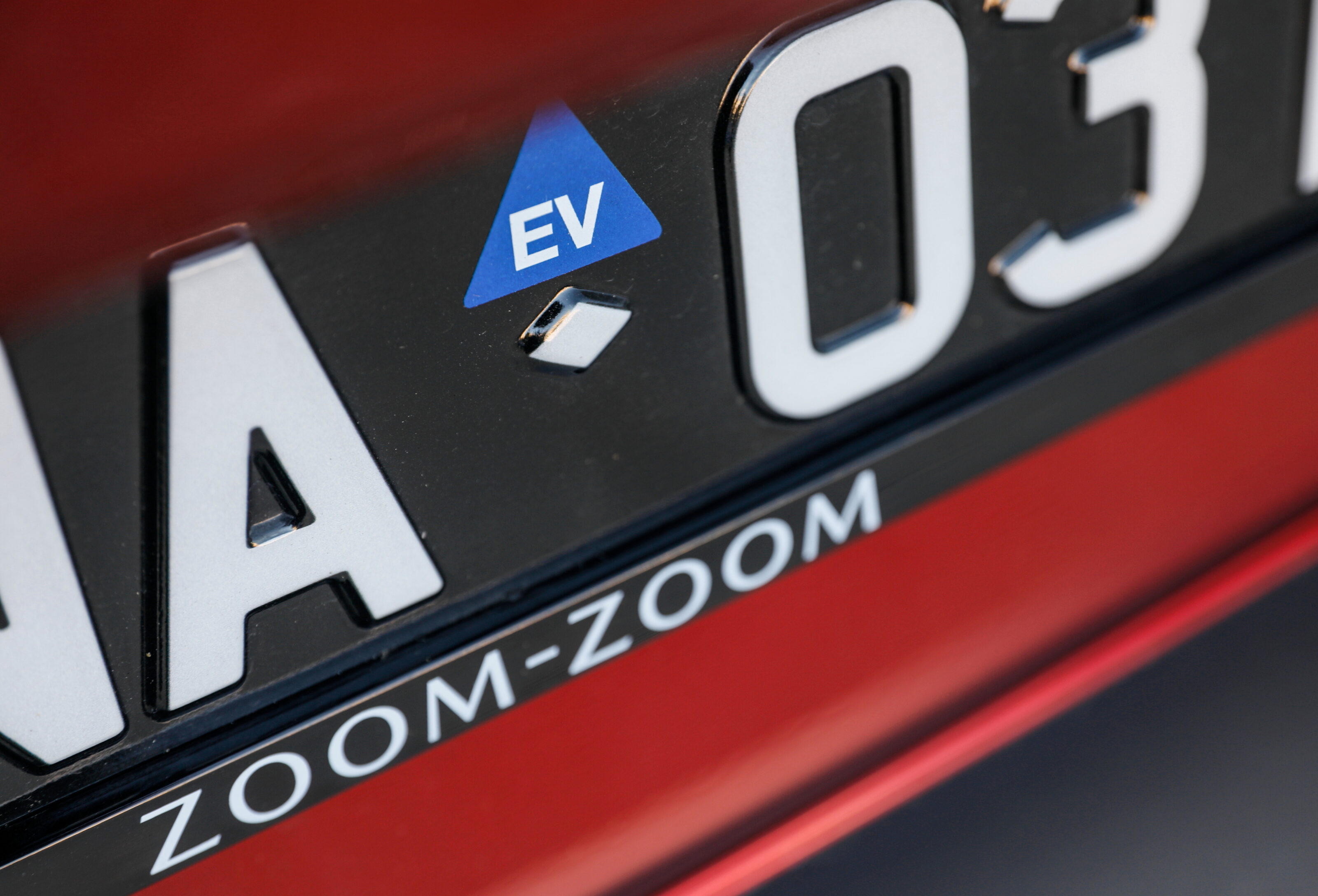
“Ah, you think this is an electric car, right?” I asked her. She pointed to the small, blue triangular decal on the numberplate with the letters ‘EV’, and shot back, “Isn’t it?”
I had to explain that the EV sticker is actually a warning designed to advise emergency service workers responding to a crash that the car is equipped with a battery pack that may need to be disconnected to prevent a potential fire. Any car with even a mild-hybrid system like the 24v set-up on the MX-30, with its integrated starter generator, is therefore classified as an ‘electric vehicle’.
Electric MX-30 aces the urban driving experience, but small range limits its practicality as a weekend tourer
To my mind, an electric car needs to have a motor capable of it moving using battery power alone. I’d argue that Toyota hybrids, which typically have an EV capability of maybe 800 meters at jogging pace, kinda qualify, but only just.
The MX-30’s Skyactiv-G powertrain has no such ability. The 24v system powering the starter/generator unit is claimed to provide a small torque boost in the step-off phase (so small that the quoted 200Nm peak is no different to that of the regular, non-mild-hybrid 2.0-litre engine used elsewhere in the Mazda 3 and CX-30 ranges).
I haven’t driven the MX-30 back-to-back with a CX-30, but I don’t reckon my car feels any perkier in terms of torque response. This is an engine that’s flexible enough, but needs a decent bootful of throttle and ample revs if you want to do anything other than waft around.
The mild-hybrid system is also claimed to aid the stop-start function, allowing longer running of the engine’s ancillaries while the car is switched off at traffic lights. Official evidence of this effectiveness? Well, my MX-30 has a combined ADR consumption of 6.4L/100km, versus 6.5 for the 2.0-litre engine in the front-drive CX-30 line-up.
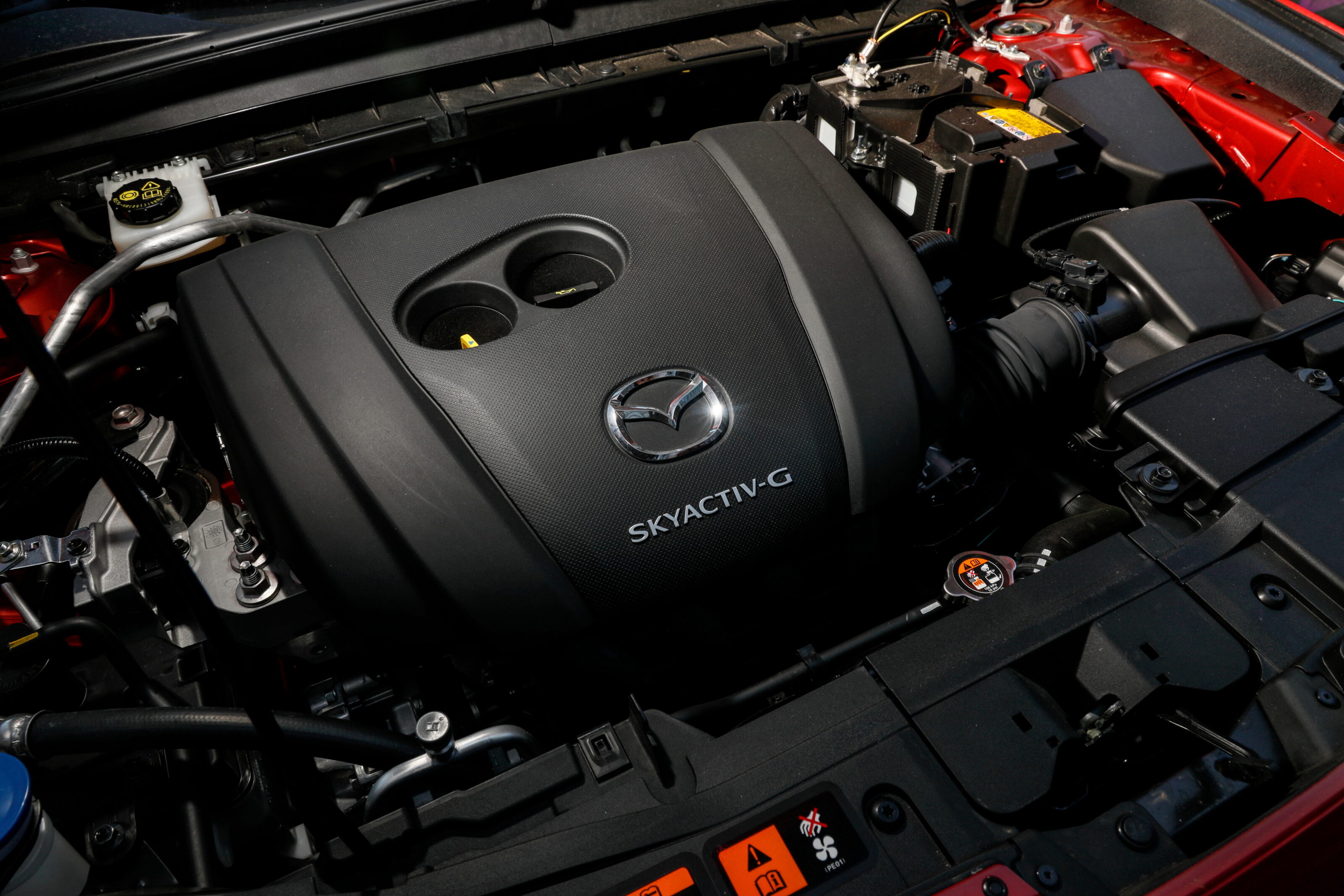
Yes, folks, a saving of 100ml of fuel for every 100km travelled. Hmm. As for keeping the engine off while waiting at lights, the maximum duration I recorded (with air-con and audio system running) was a mere 24 seconds, so way less than the period for which we all sit at most red-light intersections.
Look, I get it; of course car companies have to explore every technology to reduce consumption and emissions. But my experience says that the mild-hybrid approach on the MX-30 is pretty ineffective, as I’m currently burning around 8.6L/100km in mostly urban driving. So in this spec, as I had to explain to my dog-walking friend, the MX-30 sure ain’t no low-emissions EV.
Ah, but it will trade places with one, though. Next month I’ll be running an MX-30 E35 Astina; fundamentally the same car, same equipment, but powered by a single front-mounted electric motor and a small 36kWh battery pack.
This is the car the MX-30 was intended to be all along, and I have a pretty fair idea of how transformational the powertrain switch will be. But there’s a whopping $25K premium for the EV, so the two cars are not remotely in the same price segment.
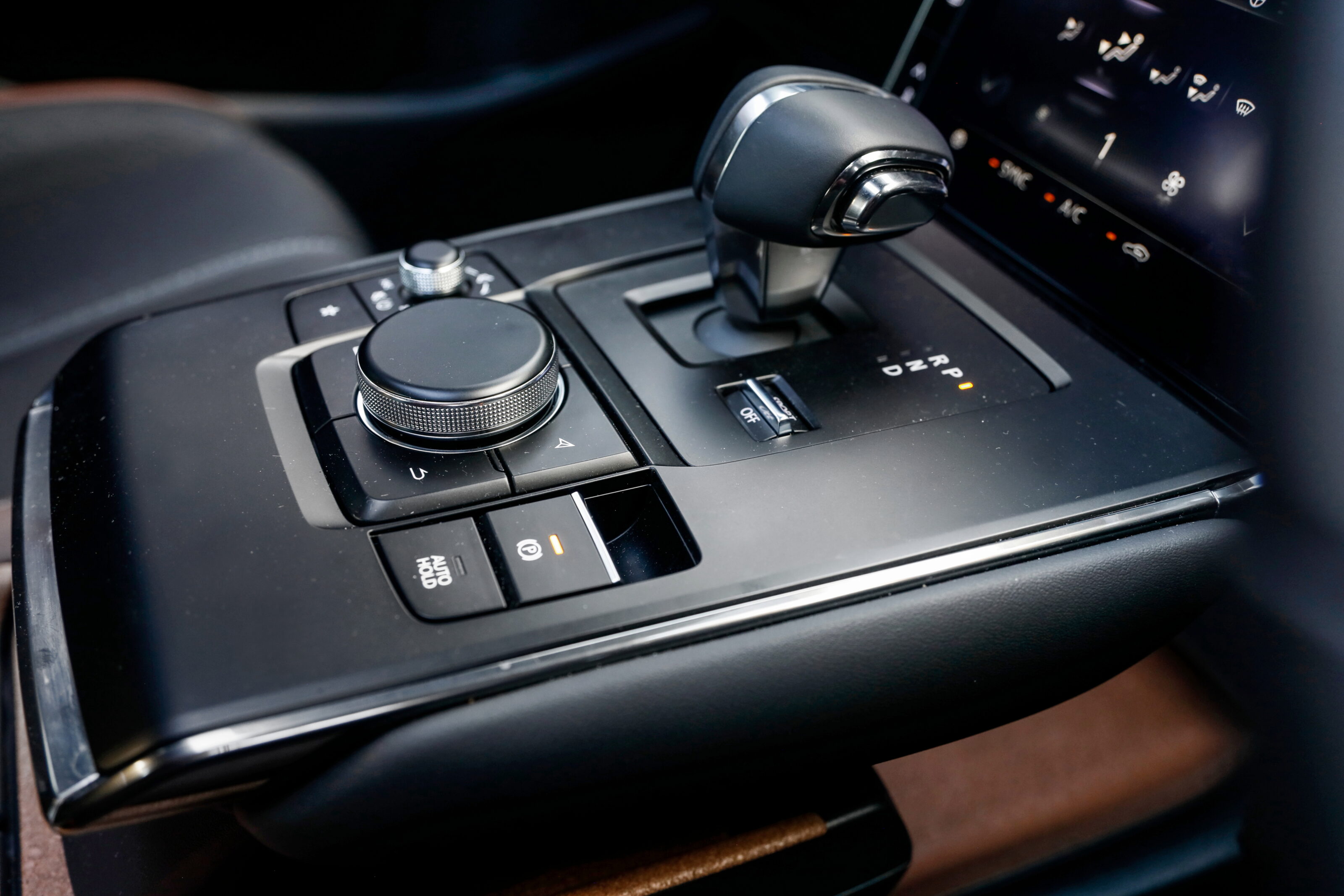
There’s some bold design touches in the cabin, but rear-seat accommodation and amenity aren’t great compared to the cheaper CX-30 on which this car is based
Same rear doors, of course, and while that’s not a big deal for me because I don’t regularly carry anyone in the back, the last couple of months have proved that going ‘freestyle’ really does bring some fundamental practicality issues.
The fact my test car arrived with a very faint crease in the trailing edge of the front passenger door points to the first problem. For anyone unfamiliar with them – kids; your drunk mates – it’s possible to first close the front door, then try and close the rear door, at which point the bulky latch mechanism goes whack into the edge of the front door, as evidenced on my car from a previous user.
Then there’s this scenario: your passenger is still seated and belted in the front, and you open their door to allow the rear door to open. But that rear door houses the seatbelt mechanism for the front occupant, so suddenly your startled passenger is being garrotted by their belt.
Not a great relationship-builder, trust me…
Part 3: Engage low range
Mazda MX-30 E35 (EV)
It’s said that numbers never lie, but sometimes they can deliver a bit of a smokescreen that can cast a veil across reality.
And as dull as number can be – unless you’re an easily excited mathematician – they’re impossible to ignore when explaining the strengths and weaknesses of Mazda’s first production EV.
We’ll deal with the thorny issue of range and recharging in a moment; first, let’s take the electric MX-30’s peak power and 0-100km/h acceleration times as examples.
In isolation, the numbers look limp. The motor makes 107kW, which is actually 7kW down on the max output of the 2.0-litre petrol engine in the red G20e Astina I’ve been in for the last few months, while the quoted 0-100km/h time of 9.7sec sounds like a bit of a snooze fest.
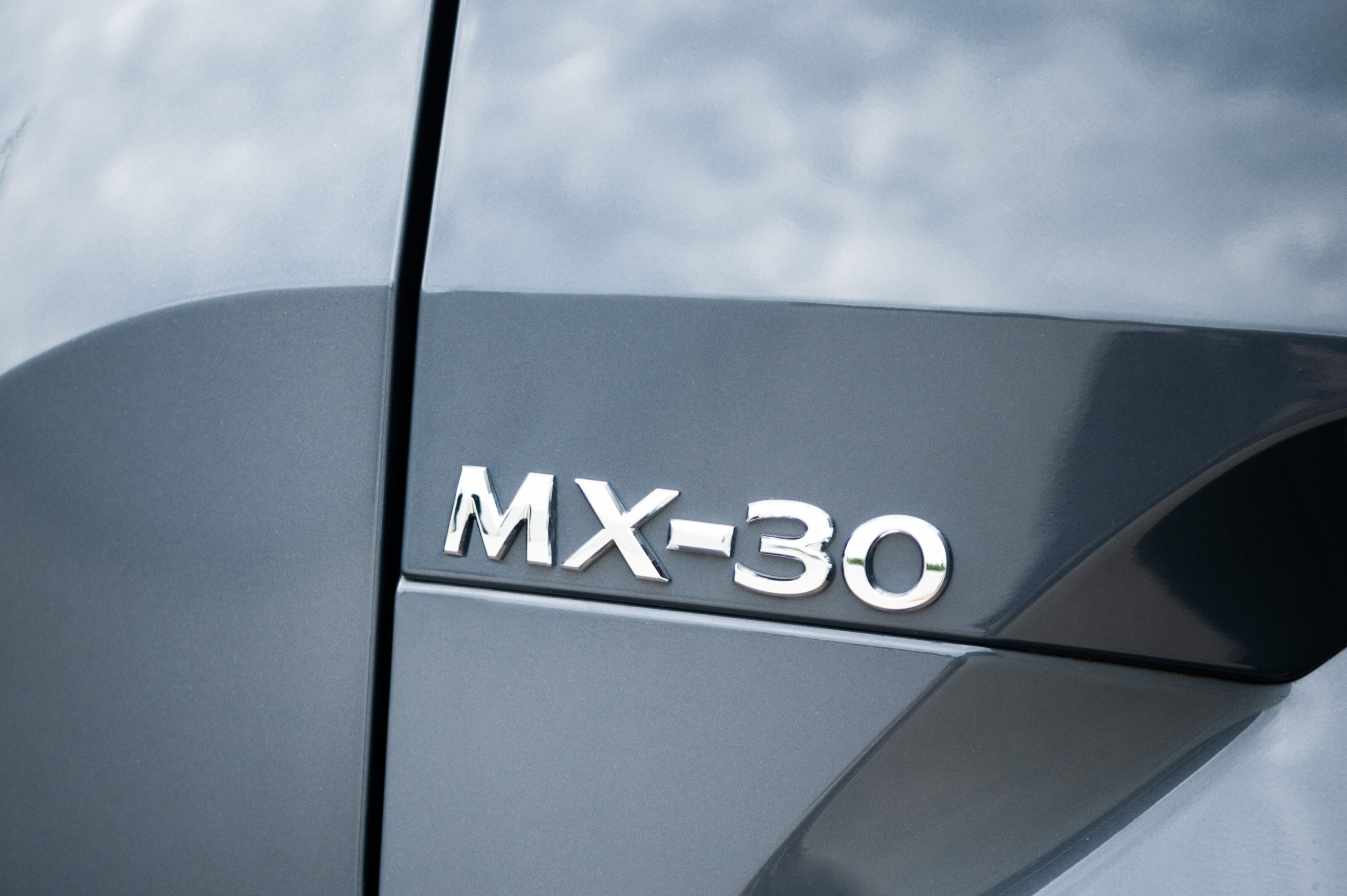
Ah, but this is EV land, where raw numbers often don’t fully illuminate the on-road experience. In the urban environment for which the MX-30 is largely intended, I reckon it actually feels quick enough. Its peak torque of 270Nm is 70Nm up on the ICE car, even if it has an additional 200kg to shift.
That max torque is on tap the moment you’re rolling, so throttle response absolutely smashes the ICE car. And because it’s all so hushed and seamless, you happily throw lots of throttle at it for performance that feels way feistier than that 0-100km/h time would suggest.
No, it doesn’t have that really aggressive, coiled-spring response to the throttle pedal of high-powered EVs, but there’s plenty of punch available if you’re willing to flex the right ankle enough. I actually love driving this car way more than I did the ICE version. The polished, single-ratio drivetrain makes the petrol engine mated to the six-speed auto feel archaic by comparison.
The ‘sound design’ is interesting, too. To help mask the slight whine of the motor, and presumably to ape a more conventional driving experience, Mazda has given the MX-30 a subtle, distant engine sound that rises and falls in direct correlation to application of the throttle. Another reviewer reckoned it sounded like a rotary, but not to my ears it doesn’t.
Maybe partly because the overall powertrain operation is so silken, I’m hearing the ghosts of a BMW V12 lifted from a 7 Series; that distant, ultra-cultured thrum of a strong engine with perfect primary balance using its low-end muscle. Good thing I like it, because it can’t be switched off. But it’s very subtle, and quickly masked by the Bose sound system once the volume is turned up above conversational level.
Then there’s the battery re-gen, which is an intrinsic part of the EV driving experience. It’s also one that I’ve learned is incredibly subjective. Some people love the ‘one-pedal’ driving that strong re-gen provides, allowing them to largely avoid the brake simply by anticipating traffic and letting the motor do the slowing.
If you’re that type of EV driver, you may be disappointed by the MX-30’s calibration, because even in its strongest mode, it’s not quite enough to keep you off the brakes in stop-start traffic. The default is a mid-strength re-gen setting, with the paddles allowing either two right clicks to (first) loosen the braking effect then pretty much eliminate re-gen altogether, or two left clicks to progressively increase it.
I reckon it’s a near-perfect spread of re-gen choices, and aside from the small but useful addition it makes to the car’s range in urban driving, it really does give you an added level of driver interaction with the car.
On flat terrain, in light traffic, I go for two clicks up of the right paddle (minimal re-gen) to give the powertrain a loping, free-coasting feel that requires barely any throttle pressure to maintain the speed limit. If the road descends, or traffic thickens, I add re-gen via the left paddle to trim speed back.
But it’s the tiny range from the 35kWh battery that will be a deal-breaker for many buyers before they even look at the electric MX-30’s price. Initially the display was suggesting 189km from a full charge; now it’s factored in my driving style, typical range is 168km. Weekends away require some planning around recharging. Sydney to Melbourne? I’d say hire a car or find a car-swap buddy.
I’ve been recharging from a regular 240v powerpoint, which takes overnight (around 12 hours) to replenish the battery from 10 to 100 percent. A wallbox would cut this to around five and a half hours.
Which would also add a few grand to the hefty purchase price of $65K, so little wonder I’m yet to a see another MX-30 EV on the road. It’s a great car to drive, just not vast distances.
Whenever possible, MOTOR Magazine independently performance tests fast (and sometimes not so fast) cars to discover how they compare to their manufacturer claims, and how their performance translates to the real world.
We’ve begun to see some incredibly impressive real-world times appear over the last few years, so it seemed sensible to begin a collation of our best strip-runs.
Of course, this list will be updated in the future, so keep an eye on it!
RANKED: The fastest cars we’ve ever tested
1st – 2021 Porsche 992 911 Turbo S
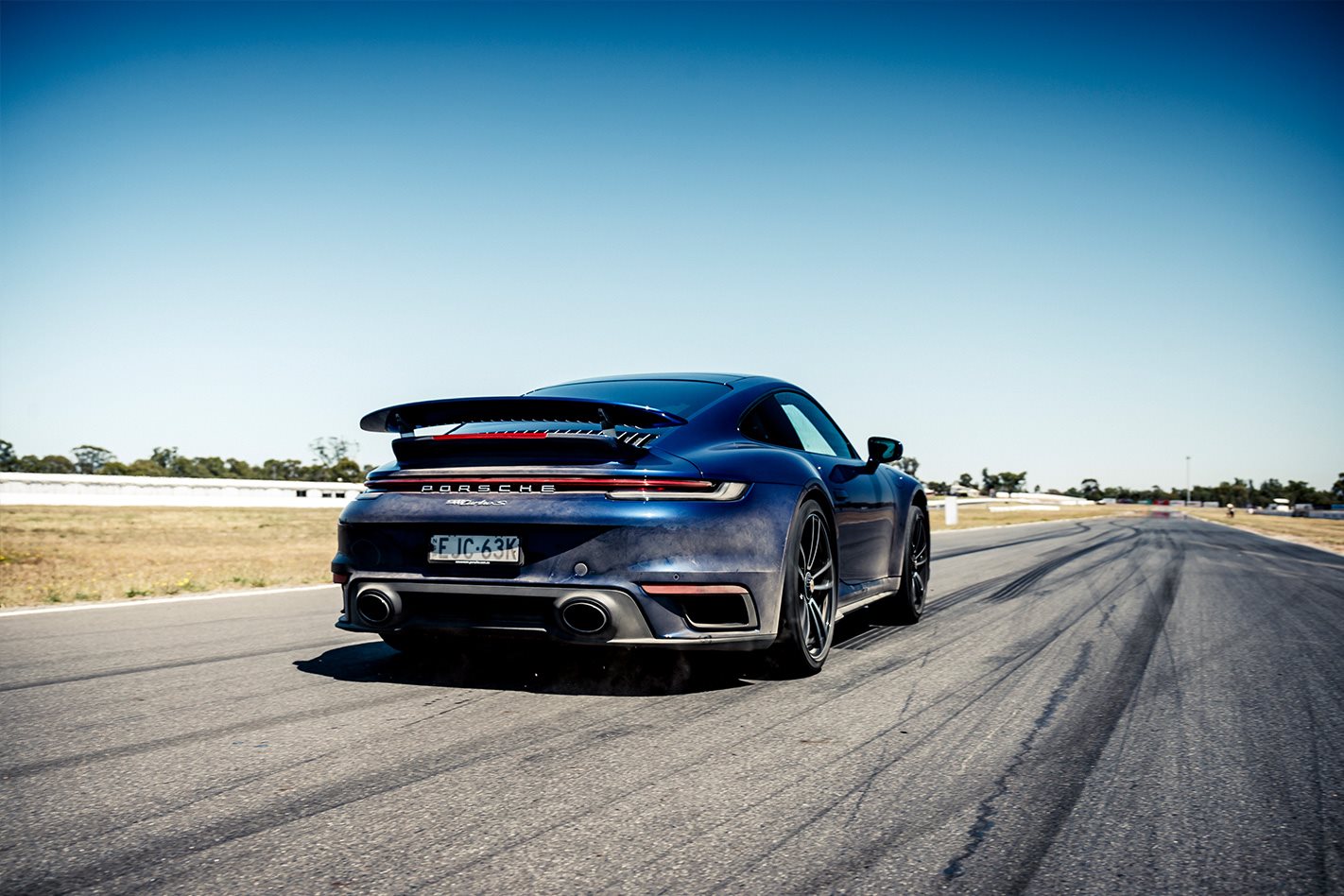
Quarter Mile: 10.28sec @ 217.32km/h 0-100km/h: 2.58sec Tested in: PCOTY ’21
The Porsche 992 Turbo S demolished everything at PCOTY 2021 in a straight line. 2.58 seconds to 100km/h is seriously rapid, but the real gobsmacker was a standing start sprint to 200km/h… in just 8 seconds. While it didn’t win in its PCOTY year, we came away proudly proclaiming it to be the fastest car we’d ever strapped timing gear to. It still owns the quarter mile crown, but its mindbending acceleration figures would soon be eclipsed (see 7th).
2nd – 2022 McLaren 720S
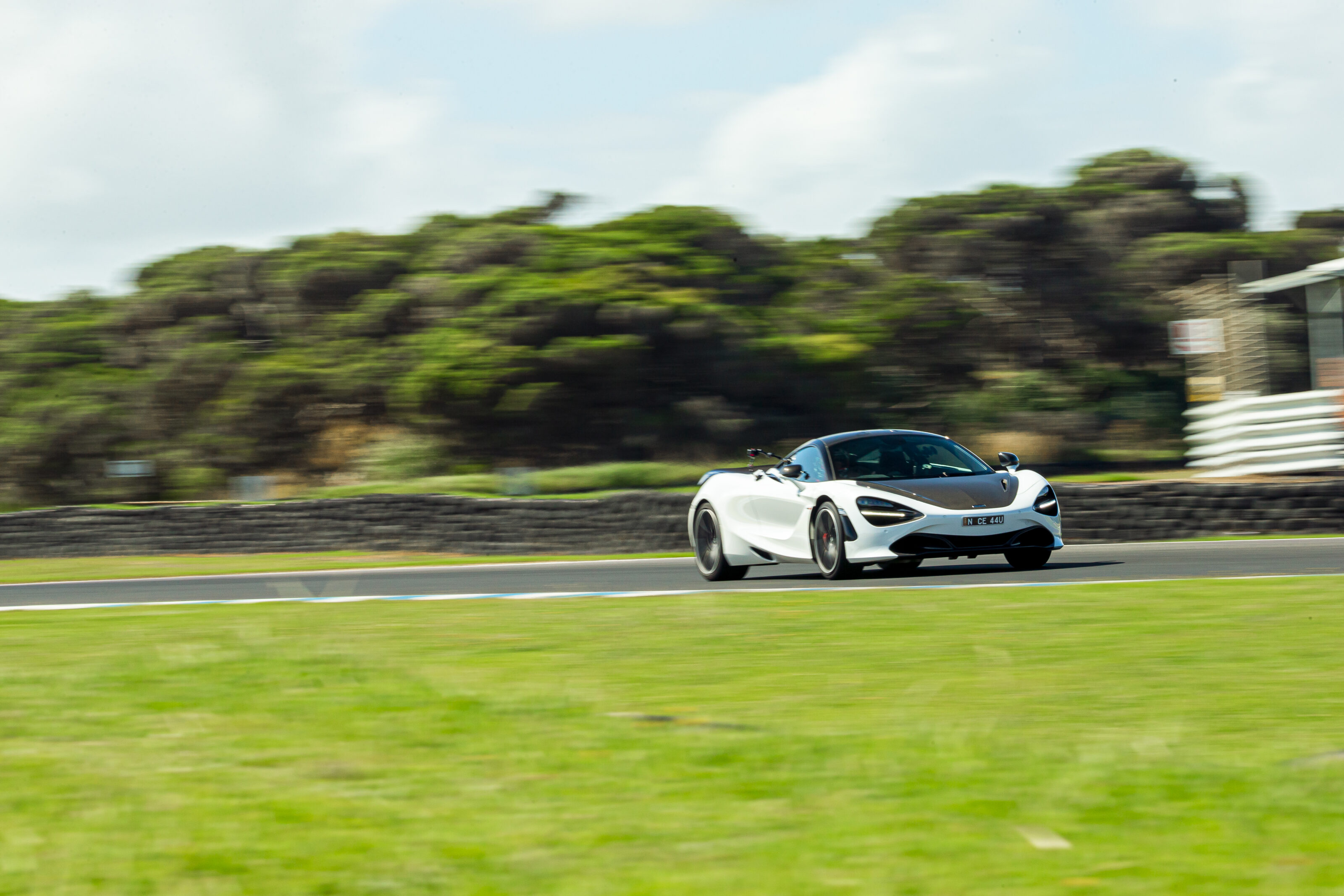
Quarter Mile: 10.40sec @ 231.14km/h 0-100km/h: 3.10sec Tested in: Mar ’22
The fastest and most extravagent car ever to grace the MOTOR long-term test fleet, the manic McLaren took to Heathcote drag strip on a sweltering 35-degree day and posted a scarcely-believable 10.4-second pass over the quarter. A modest 3.1-second sprint from 0-100km/h make its ballistic terminal speed (the highest across 400m on this list) even more remarkable.
3rd – 2021 Porsche 911 992 Turbo
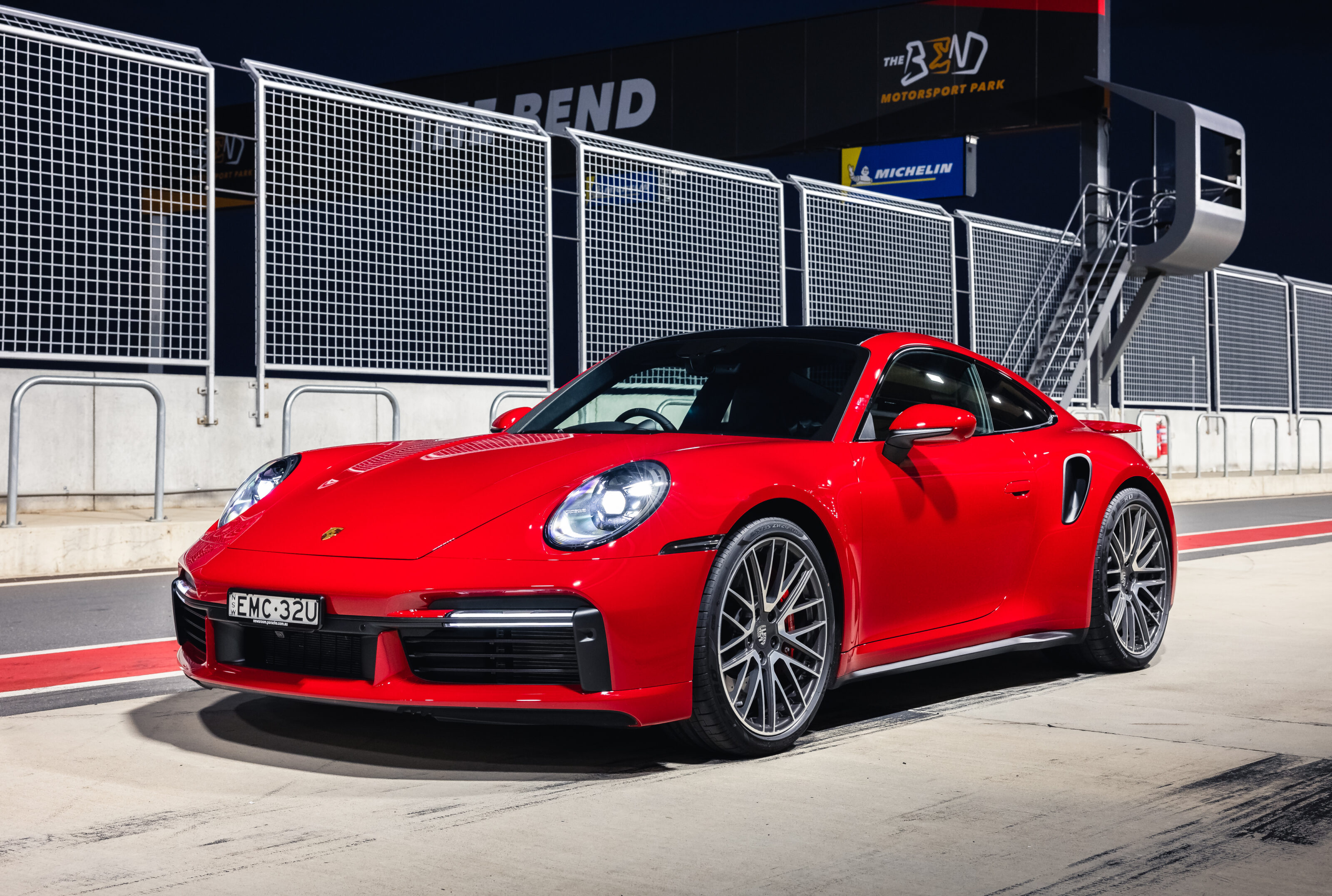
Quarter Mile: 10.55sec @ 214.3km/h 0-100km/h: 2.83sec Tested in: APR ’21
The 911 Turbo represents one of the ultimate super sleepers on the market, capable of delivering a blistering 10.55-second dash across the 400m, fresh out of the box. It trails its Turbo S big brother by precious tenths of a second from 0-100km/h and across the quarter mile, but costs almost $80k less.
4th – 2022 Lamborghini Huracan Evo Fluo Capsule
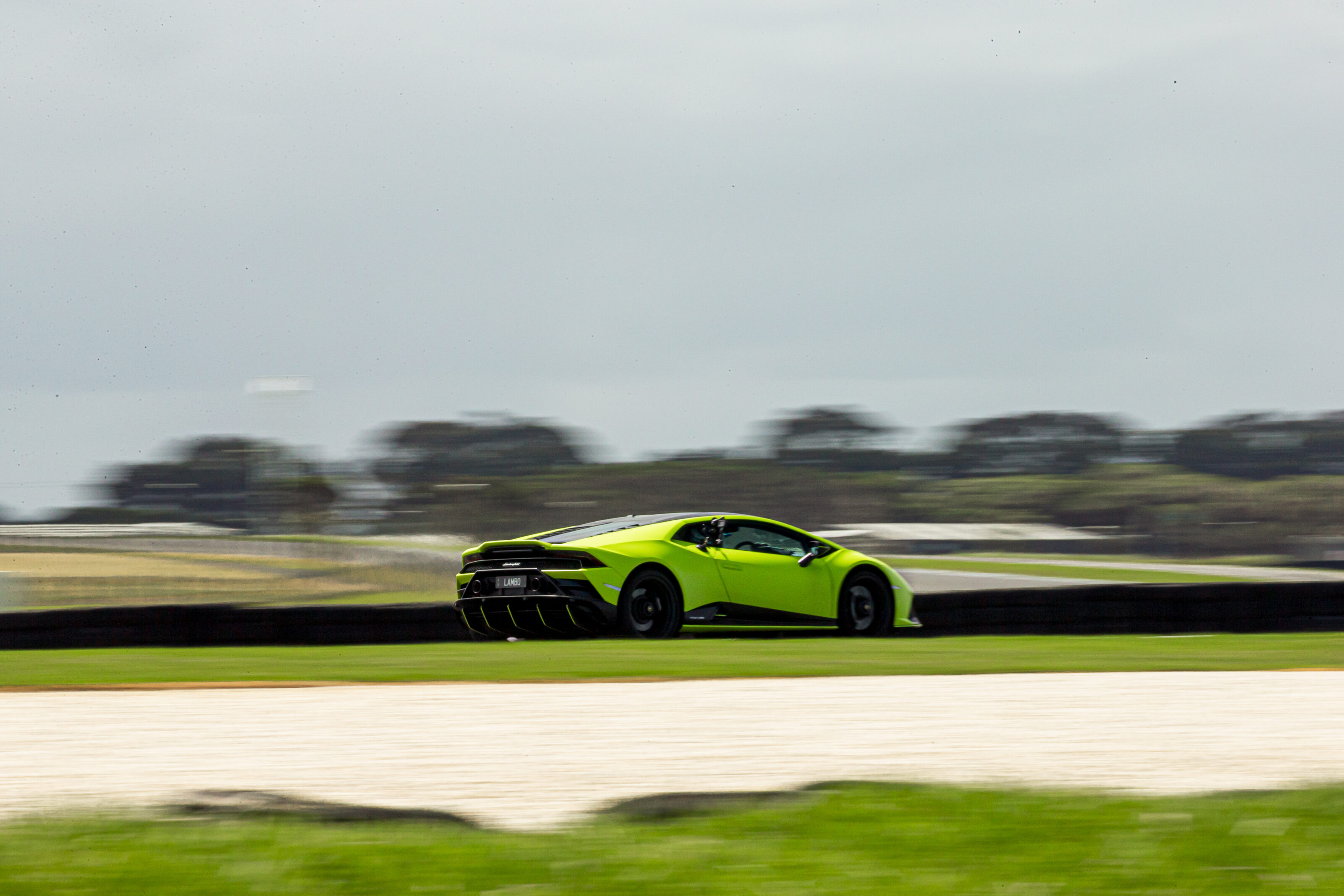
Quarter Mile: 10.57sec @ 219.04km/h 0-100km/h: 2.93sec Tested in: PCOTY ’22
The highlighter-hued Lamborghini was one of the stars attractions of PCOTY 2022. It posted some serious performance figures throughout the week of testing, but ultimately finished second behind the 992 GT3. Amongst the closely-fought PCOTY field, it achieved dominant quarter mile times and V-Max, and out accelerated all except for the manic Porsche Taycan Turbo S.
5th – 2019 Porsche 991.2 911 GT2 RS
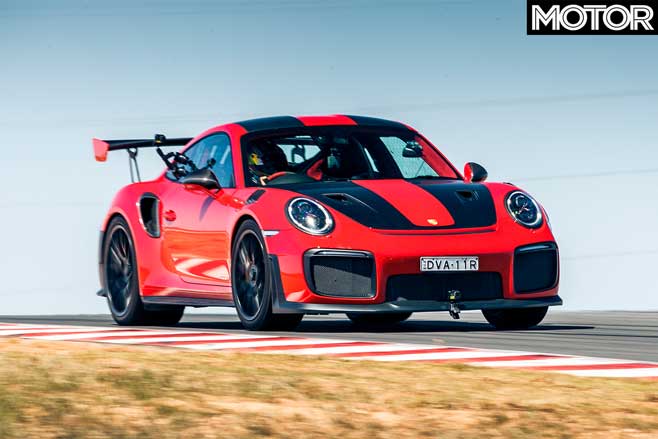
Quarter Mile: 10.63sec @ 220.85km/h 0-100km/h: 3.13sec Tested in: PCOTY ’19
Porsche’s 991.2 911 hero is our 2019 Performance Car of the Year winner, and – at the time – was the fastest car we’d ever independently performance tested.
6th – 2017 Porsche 991.2 911 Turbo S
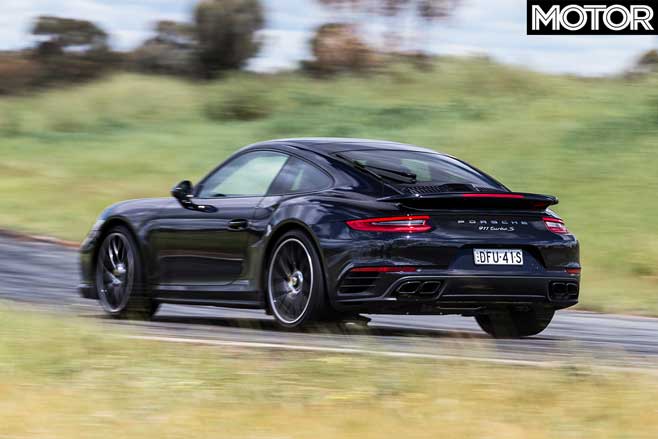
Quarter Mile: 10.70sec @ 212.4km/h 0-100km/h: 2.9sec Tested in: PCOTY ’17
Though it’s not nearly as powerful as GT2 big brother, the 911 Turbo S’ all-wheel drive gives it an upper hand with traction, and a bloody quick ET. Winner at PCOTY 2017, of course.
7th – 2021 Porsche Taycan Turbo S
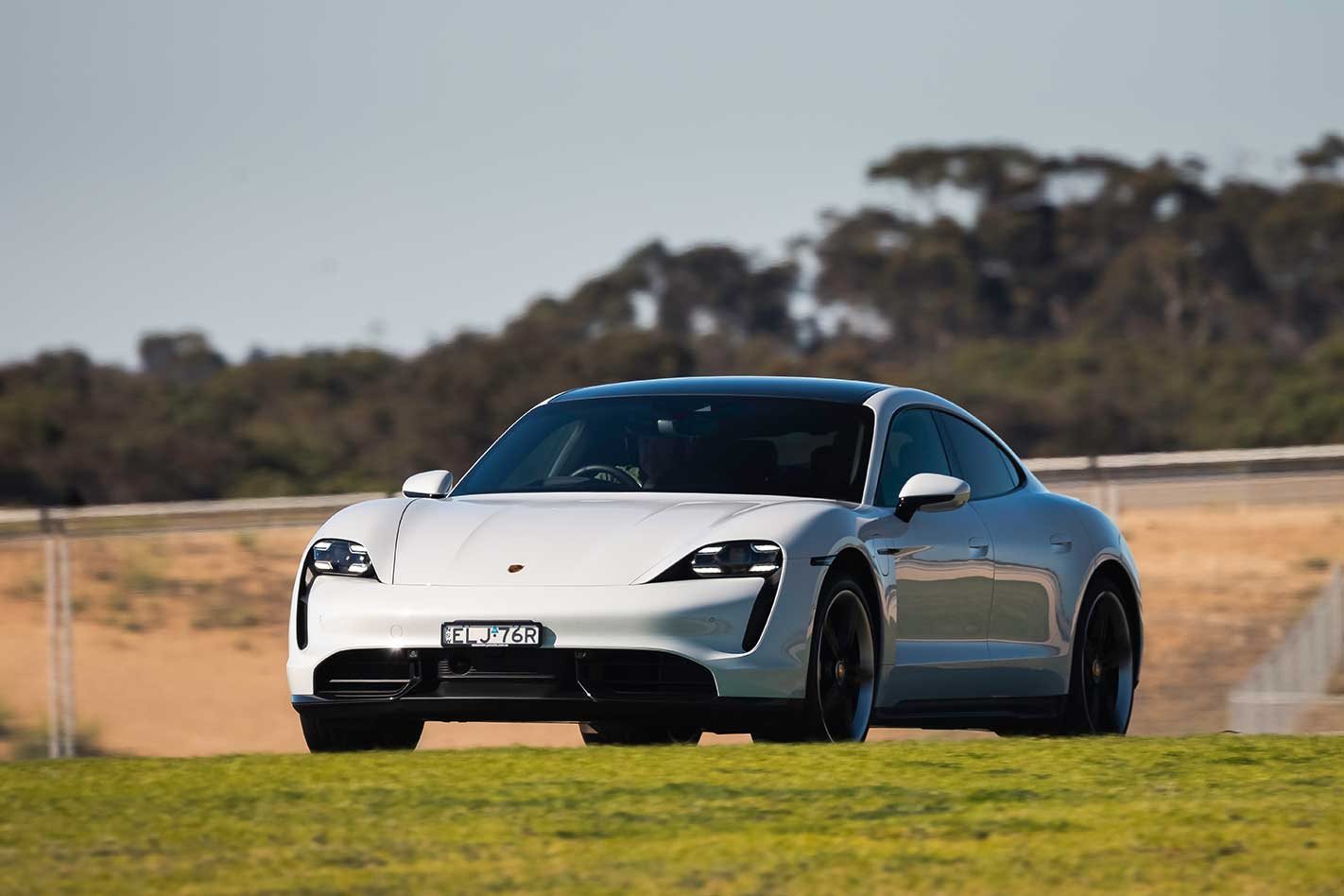
Quarter Mile: 10.73sec @ 202.98km/h 0-100km/h: 2.55sec Tested in: PCOTY ’22
The all-electric Taycan Turbo S may not have any actual turbochargers fitted to it, but those familiar with Porsche’s nomenclature know that this is ‘the fast one’. A lightning-quick sprint to 100km/h in 2.55 seconds makes it the fastest accelerating car we’ve ever tested.
8th – 2015 Hi-Torque Nissan GT-R
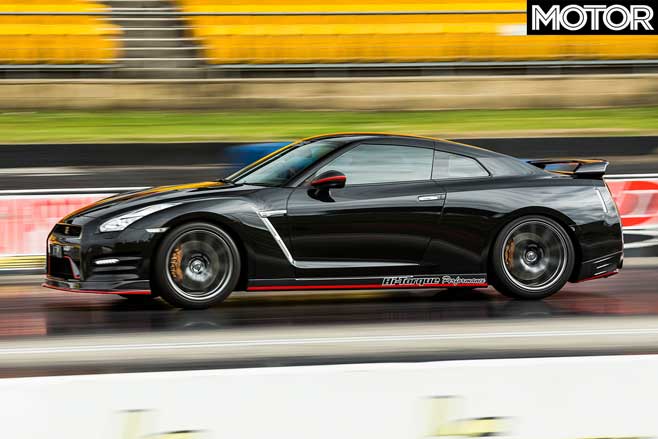
Quarter Mile: 10.83sec @ 220.16km/h 0-100km/h: 3.31sec Tested in: Hot Tuner ’16
About 600kW and an all-wheel drive system will get you pretty far, pretty quickly. Our 2016 Hot Tuner winner was able to do just that.
9th – 2017 Audi R8 V10 Plus
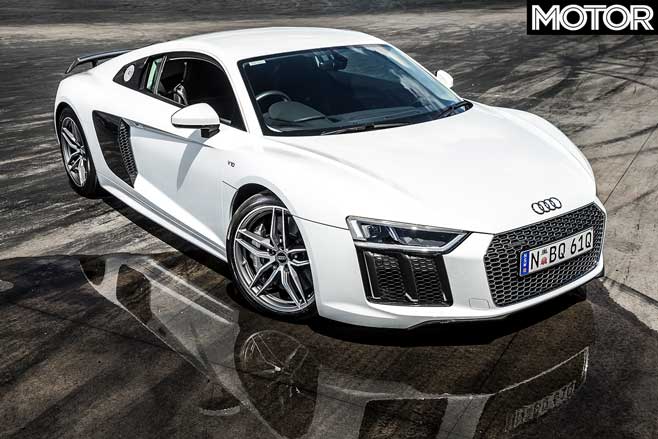
Quarter Mile: 10.93sec @ 209.58km/h 0-100km/h: 3.18sec Tested in: PCOTY ’17
Long live the naturally aspirated engine! Audi’s supercar shows us here that you don’t need forced induction to run 10s… a 449kW V10 helps, though.
10th – 2014 Porsche 911 Turbo
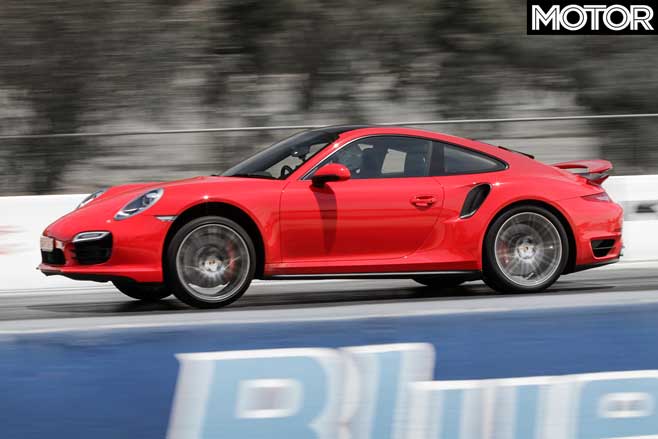
Quarter Mile: 10.98sec @206.13km/h 0-100km/h: 3.07sec Tested in: Mar ‘14
In a test up against an Audi R8 of the same vintage, the 991 911 Turbo cleaned up at the strip. It also makes 911 variants five of the 10 fastest cars we’ve tested.
11th – 2017 Ferrari 488 GTB
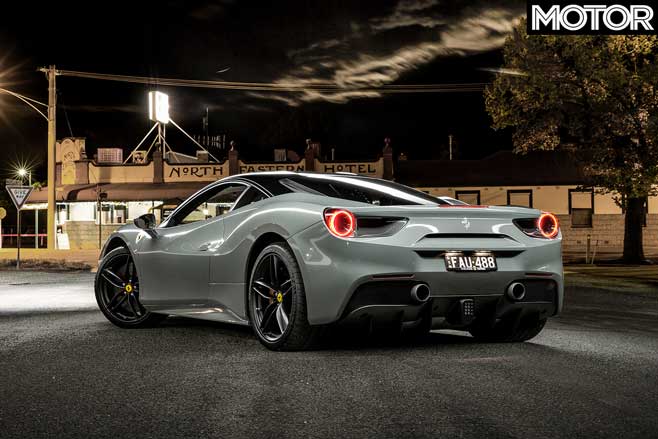
Quarter Mile: 11.0sec @ 214.1km/h 0-100km/h: 3.3sec Tested in: PCOTY ’17
Performance Car of the Year 2017 runner-up (to the 911 Turbo S) had incredibly strong performance claims… but we were unable to match them. 0-200km/h in 8.3 seconds? We managed 9.6sec. Still incredibly fast, obviously.
12th – 2018 Porsche 991.2 911 GT3 RS
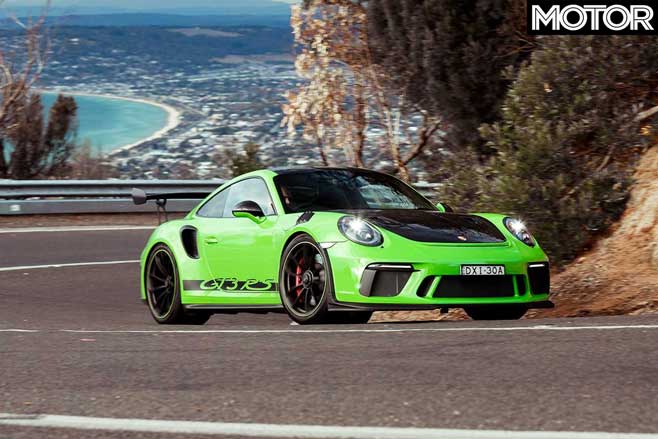
Quarter Mile: 11.07sec @ 203.78km/h 0-100km/h: 3.18sec Tested in: June ’19
If you think you’re sacrificing too much speed for the sake of hearing an atmo flat-six at full noise when you buy a 911 GT3 RS, you’re thinking wrong.
13th – 2019 Mercedes-AMG GT63 S
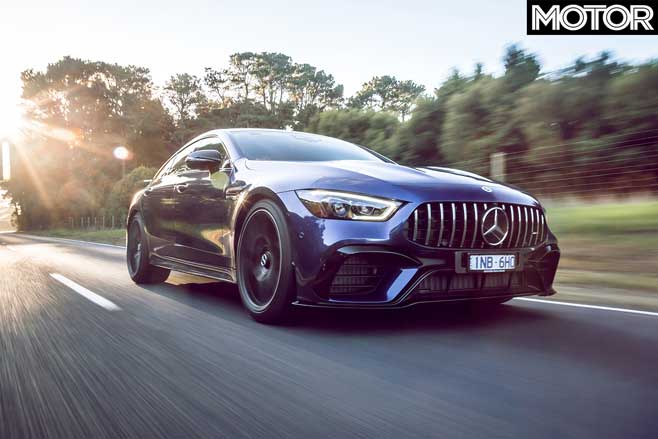
Quarter Mile: 11.08sec @ 203.43km/h 0-100km/h: 3.16sec Tested in: Aug ’19
Its looks are polarising, but there’s no arguing with the 470kW twin-turbo V8 heart under its bonnet, hooked up to all four wheels. Scott Newman reckoned it was the most impressive and cohesive driver’s car AMG offered at the time.
14th – 2018 APR Audi RS3 (Stage 1)
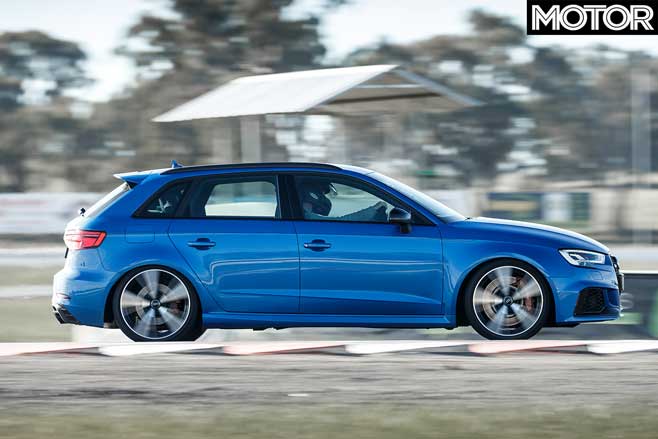
Quarter Mile: 11.09sec @ 208.14km/h 0-100km/h: 3.28sec Tested in: Sept ’18
An ECU tune is all it took for APR to make Audi’s already-quick RS3 faster than a Nissan GT-R Nismo. On 98RON, outputs increase from the standard 294kW/480Nm to 355kW/637Nm, but using E85 liberates a whopping 404kW/678Nm, which equates to 332kW at all four wheels.
15th – 2018 Nissan GT-R Nismo
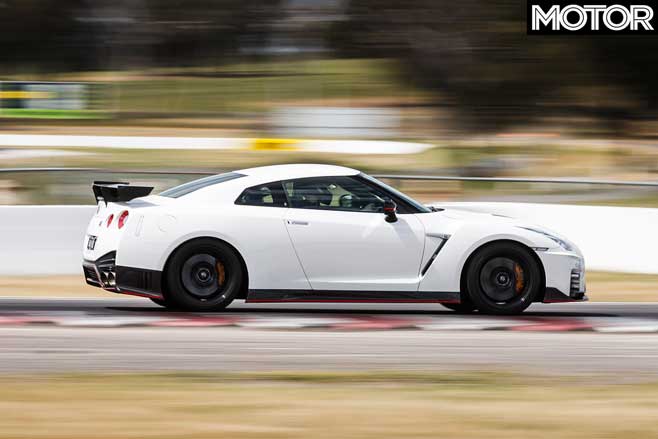
Quarter Mile: 11.19sec @ 203.08km/h 0-100km/h: 3.28sec Tested in: PCOTY ’18
You don’t need to tune a GT-R to draw an impressive quarter-mile time. Nismo’s own version does it from the factory. 441kW is enough, right?
16th – 2017 Nissan GT-R
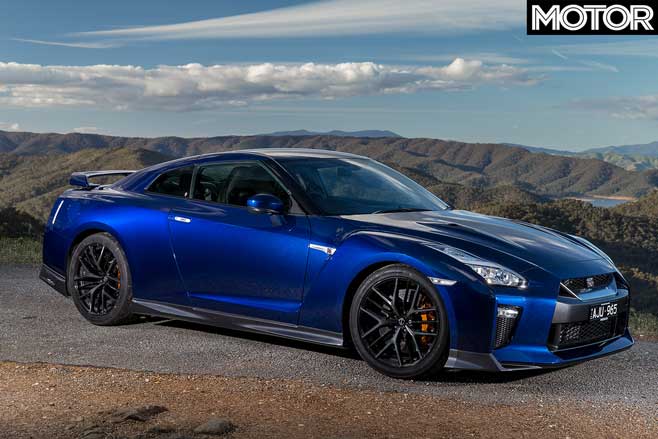
Quarter Mile: 11.21sec @ 199.67km/h 0-100km/h: 3.2sec Tested in: PCOTY ’17
Actually, you don’t even need the full-fat Nismo-spec version of R35 Godzilla to run the gauntlet in the low-11 range. The 419kW standard car will do it for sub-$200k, versus the $299k Nismo…
17th – 2017 Lamborghini Huracan LP 580-2
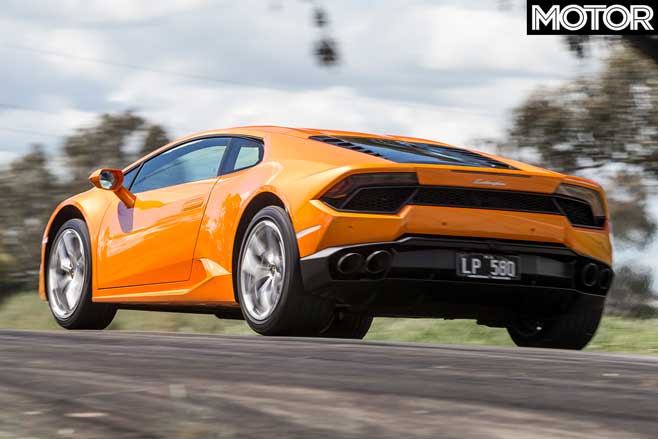
Quarter Mile: 11.25sec @ 209.46km/h 0-100km/h: 3.55sec Tested in: PCOTY ’17
PCOTY 2017 was a helluva year – the Lambo came 5th. Fifth! On the strip, it was a different story, with only three cars (911 Turbo S, R8 V10 Plus, GT-R; all on this list) besting it.
18th – 2018 Mercedes-AMG E63 S
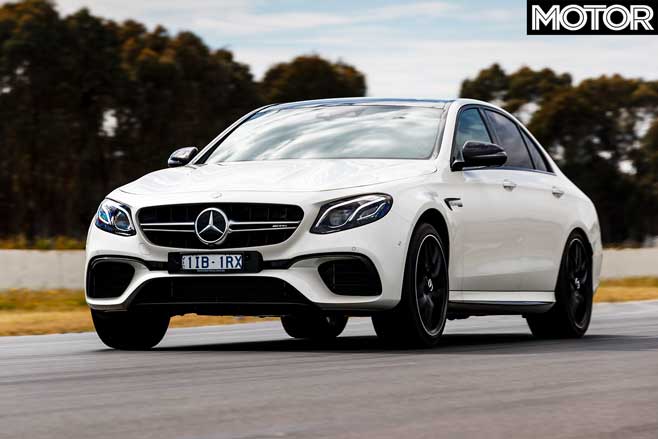
Quarter Mile: 11.28sec @ 203.72km/h 0-100km/h: 3.4sec Tested in: PCOTY ‘18
AMG’s brutal family-hauler made a strong case to be PCOTY winner for the 2018 reign, but the Civic Type R was just too damn good.
19th – 2018 Audi RS7 Performance
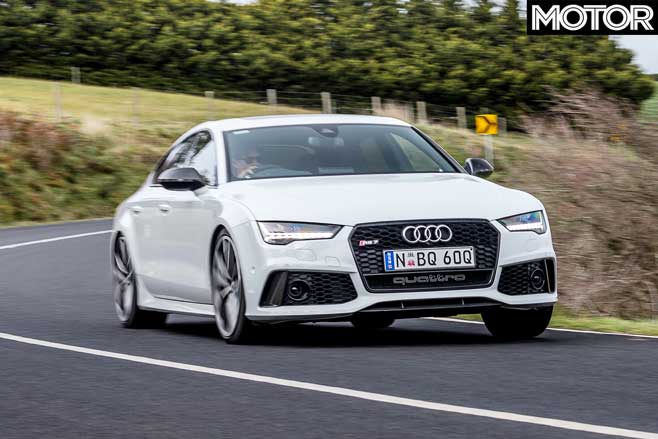
Quarter Mile: 11.29sec @ 202.79km/h 0-100km/h: 3.37sec Tested in: Annual ’16
When we put the RS7 up against Tesla’s Model S P90D, the RS7 came out on top. Elon’s own only managed 11.68s at 184.73km/h.
20th – 2019 Audi R8 V10 RWS
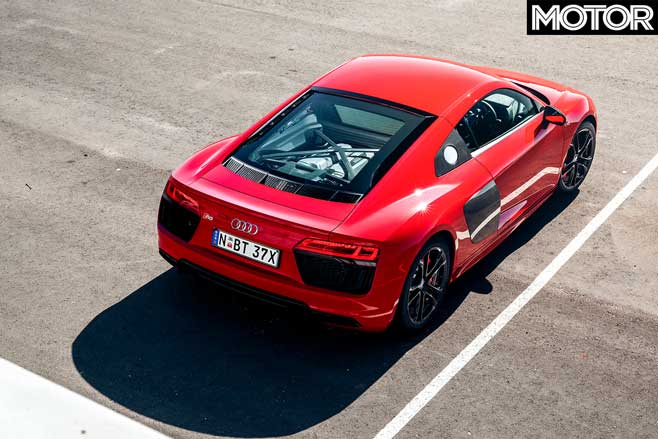
Quarter Mile: 11.36sec @ 206.87km/h 0-100km/h: 3.57sec Tested in: PCOTY ’19
It turns out that, if you take the front tyres out of the equation, the R8 V10 is still damn quick. A few tenths are added to the quarter mile and to its 0-100km/h time, but once it hooks up, the 5.2 in the back does the talking.
21st – 2014 Tekno Lamborghini Aventador
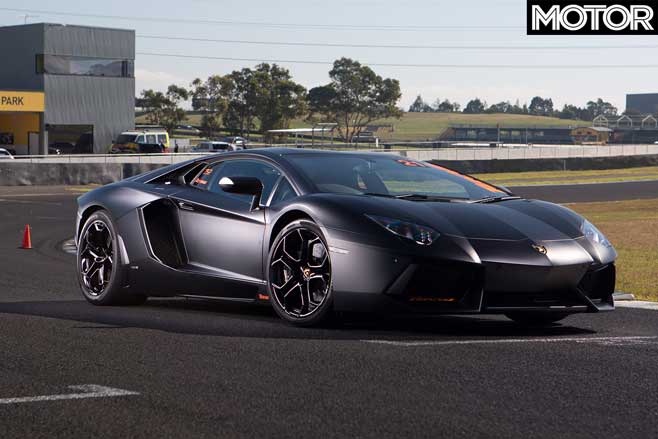
Quarter Mile: 11.4sec @211.66km/h 0-100km/h: 3.8sec Tested in: Hot Tuner ‘14
Another Lambo, but this time with 525kW and a free-breathing V12. The Aventador, tuned by Tekno, was enough to take out Hot Tuner in 2014, besting a Harrop-tuned Ferrari 458 Italia.
22nd – 2004 Ferrari Enzo
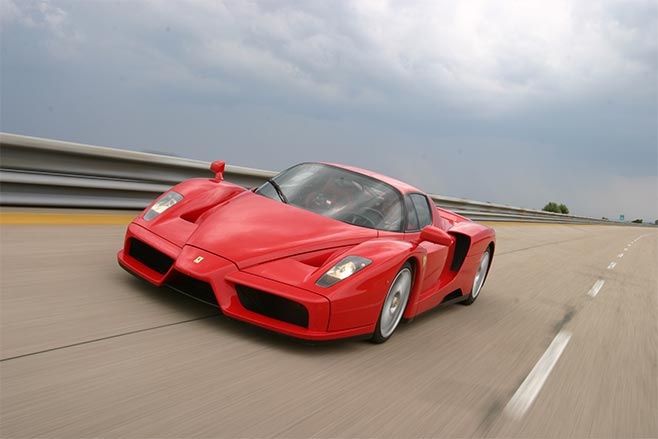
Quarter Mile: 11.40sec @ 212.5km/h 0-100km/h: 3.6sec Tested in: Oct ’04
Some cars just stand the test of time. A mid-mounted 6.0-litre V12 producing 485kW helps with that, of course. This car was tested at Nardo, if you were wondering why that stretch of banked road in the image looked familiar.
23rd – 2020 Herrod Performance Ford Mustang SM17
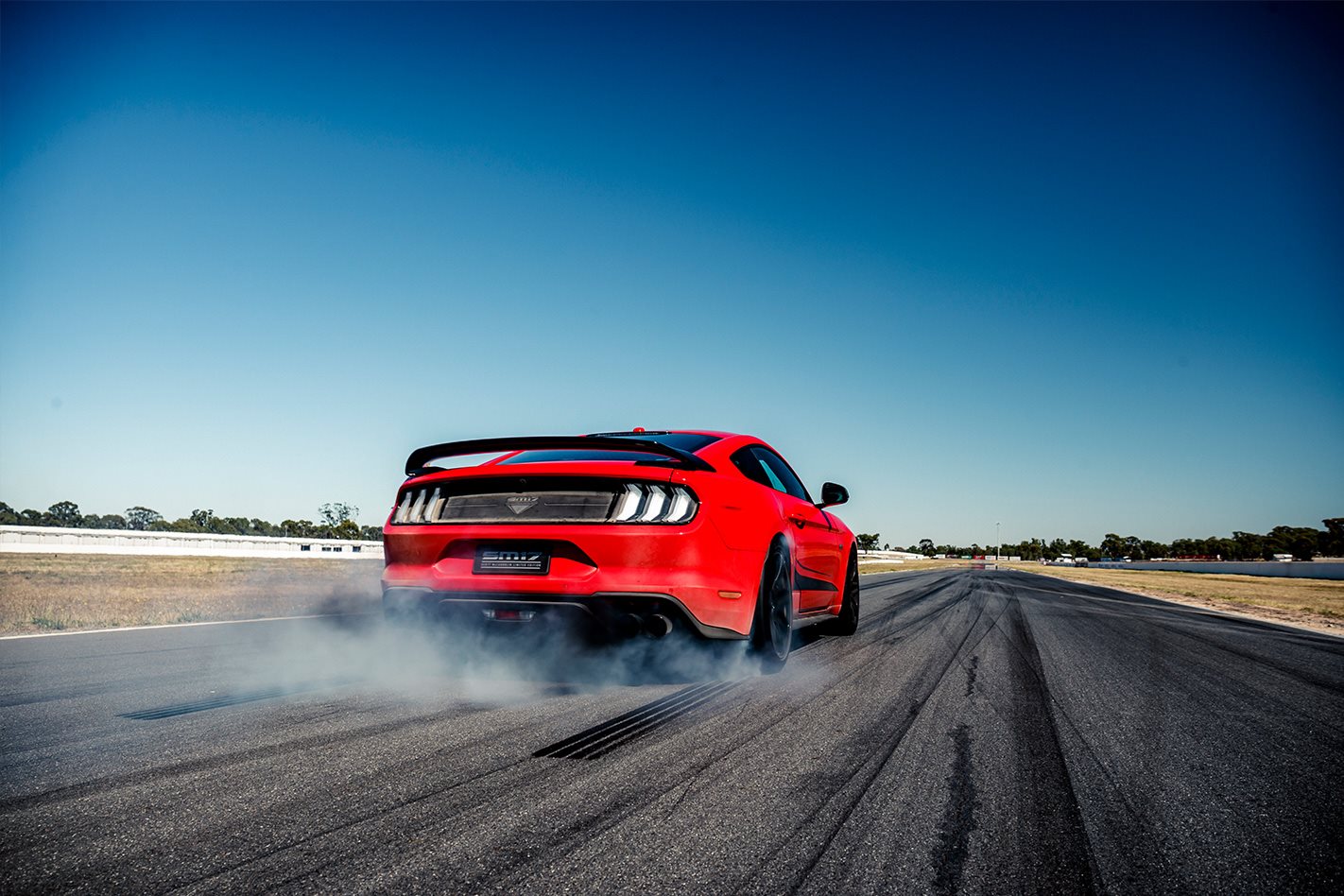
Quarter Mile: 11.42sec @ 206.95km/h 0-100km/h: 3.70sec Tested in: PCOTY ’21
Herrod’s SM17 entered the 2021 PCOTY round as the most powerful car ever submitted for testing. It struggled to overcome bouts of overheating and limp mode throughout the week of testing, but we still managed to extract some serious numbers (and a lot of smoke) from the possessed pony.
24th – 2022 Porsche 911 992 GT3
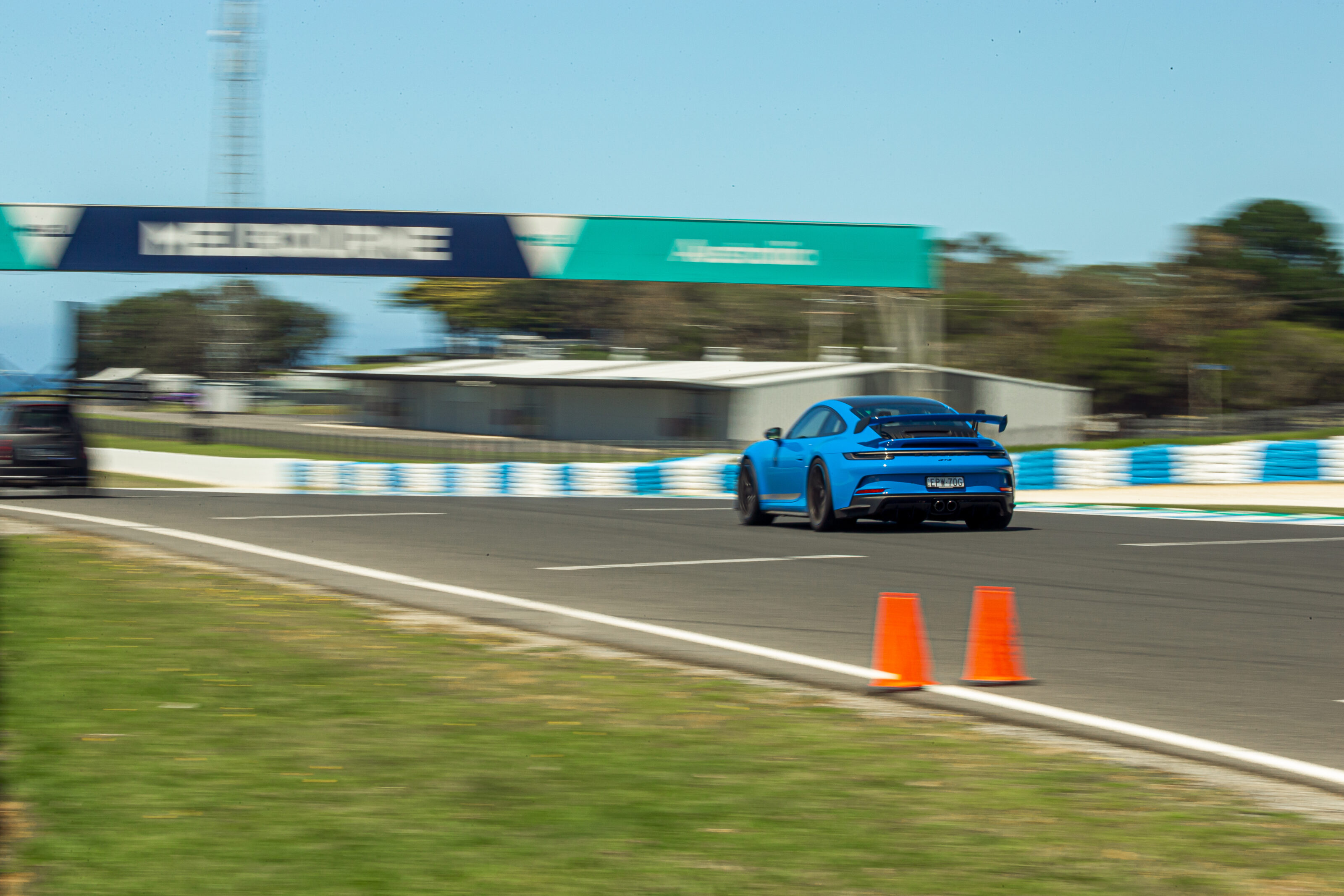
Quarter Mile: 11.53sec @ 203.83km/h 0-100km/h: 3.11sec Tested in: PCOTY ’22
Hot lap hero and the outright winner of Performance Car of the Year 2022, the 992 GT3 is a purpose-built track day weapon but still posted an impressive 11.53-second pass over the quarter mile despite a power output that pales in comparison to much of this list.
25th – 2022 Corvette C8
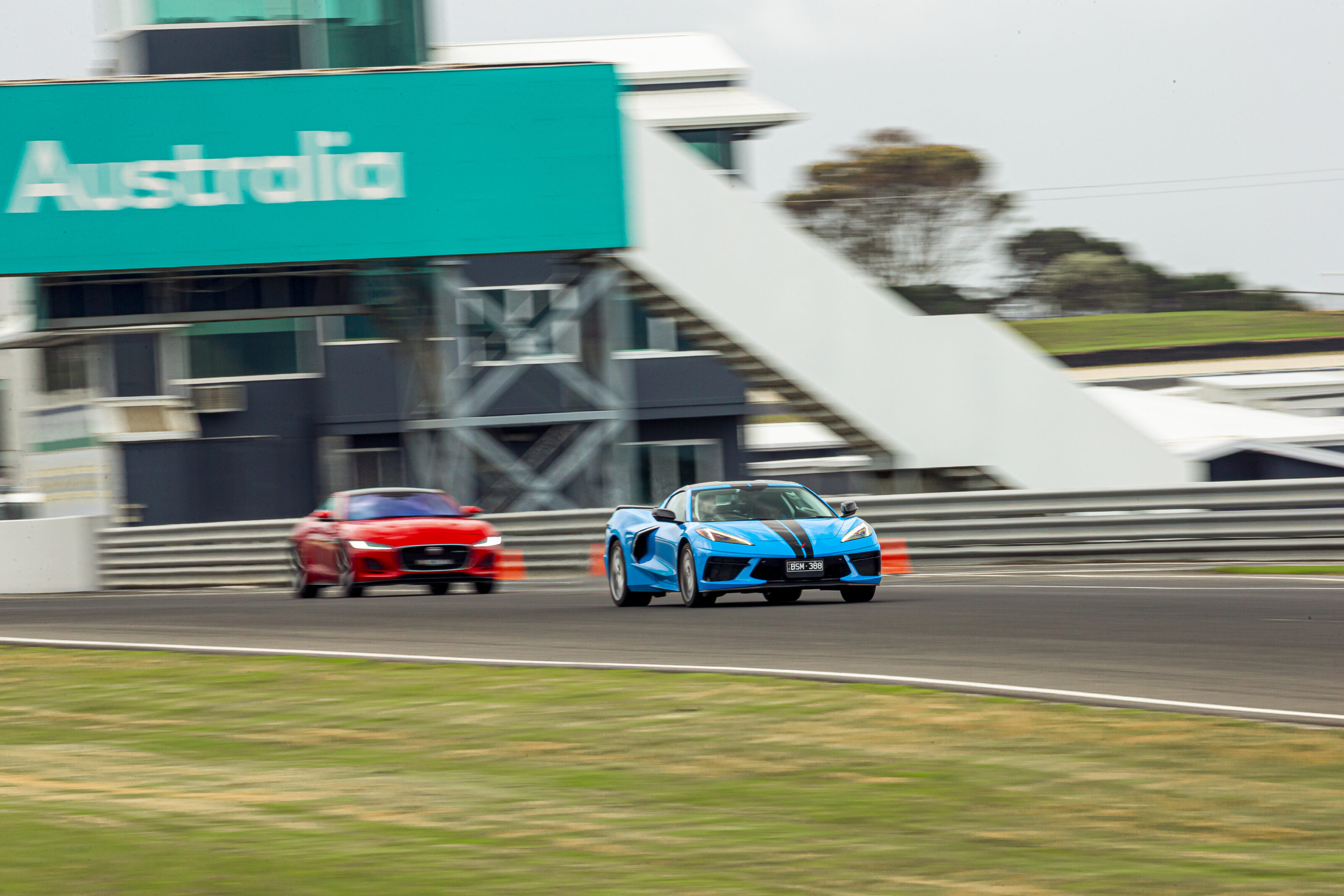
Quarter Mile: 11.68sec @ 194.57km/h 0-100km/h: 3.63sec Tested in: PCOTY ’22
The first ever locally-delivered and factory-built right-hand drive Corvette arrived as one of PCOTY’s biggest curiousities. As a value proposition, it’s one of the most powerful cars you can buy for the price, and accelerates to 100km/h as quick as a Ferrari Enzo.
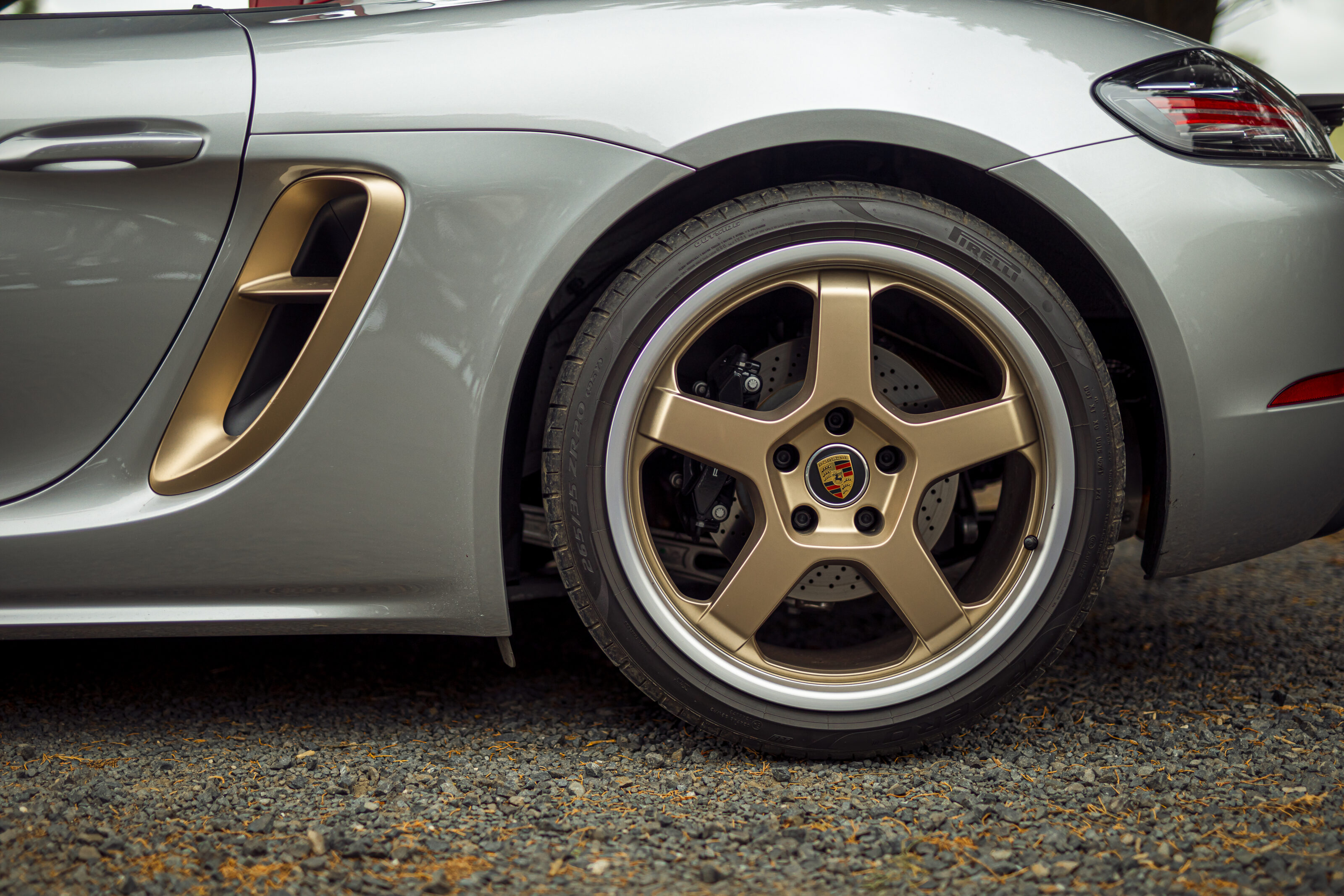
Porsche built 1750 examples of its Boxster 25 Years to celebrate the ubiquitous roadster’s Silver Jubilee. Hallmarked by GT Silver paint, a striking Bordeaux red interior and fabric roof, bronze body garnishes and modern-retro five-spokes, it’s a striking visual combination that quietly commands attention on the road.
If you missed out on the Boxster 25 Years due to its limited production status, don’t fret as you can build something pretty close if you tick the right option boxes.
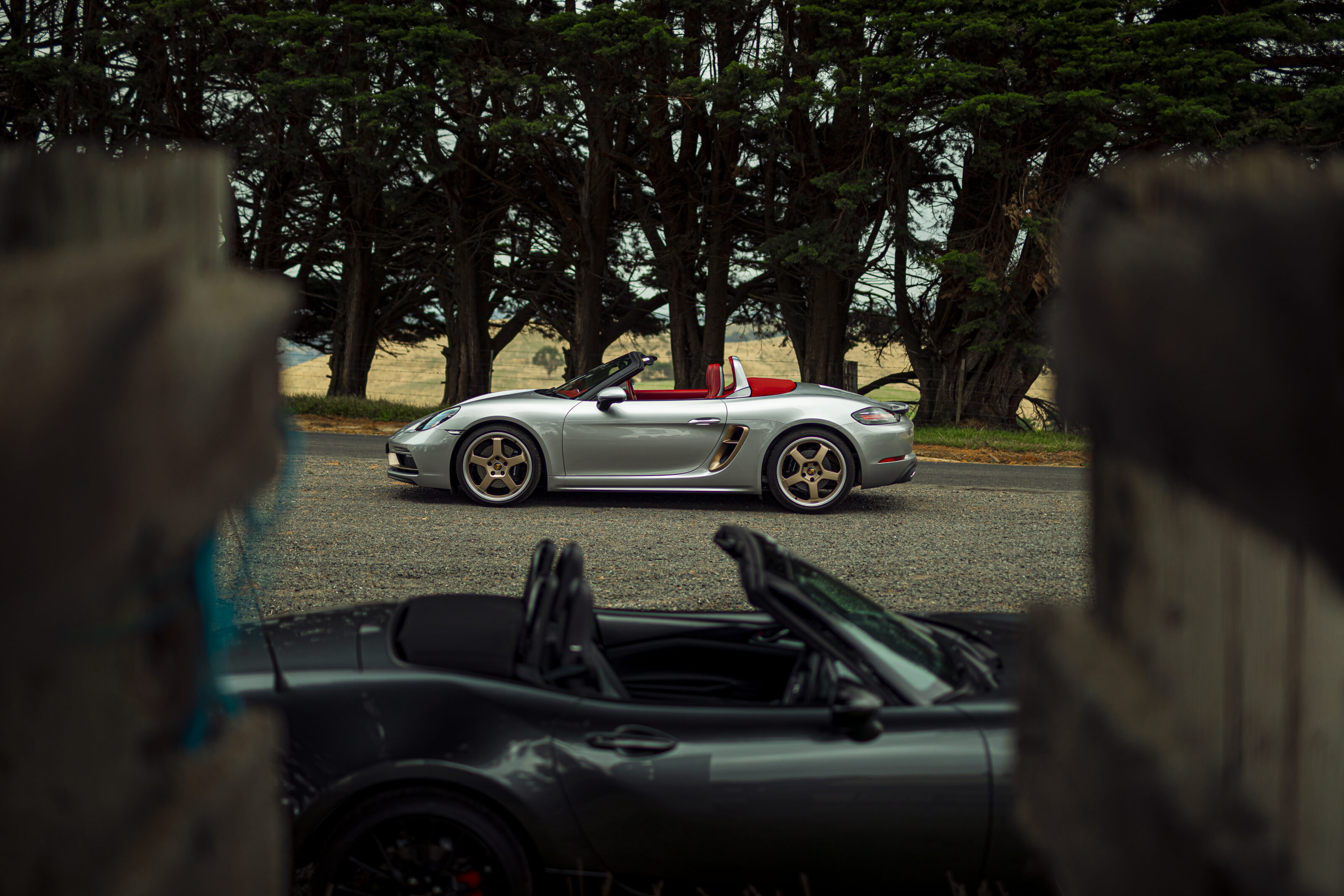
For starters, let’s take a closer look at the Porsche Boxster 25 that finished 4th in this year’s PCOTY title. Pricing begins at $187,200 (before on-road costs) for the anniversary special, although our PCOTY contender comes further specified with the PDK transmission ($5390), BOSE Surround Sound System ($2230), Adaptive 18-way Sports seats ($1910) and a number of other detailed options that see pricing as-tested swell to $199,930.
But how close can we get when beginning with a mechanically-identical standard Boxster GTS 4.0-litre?
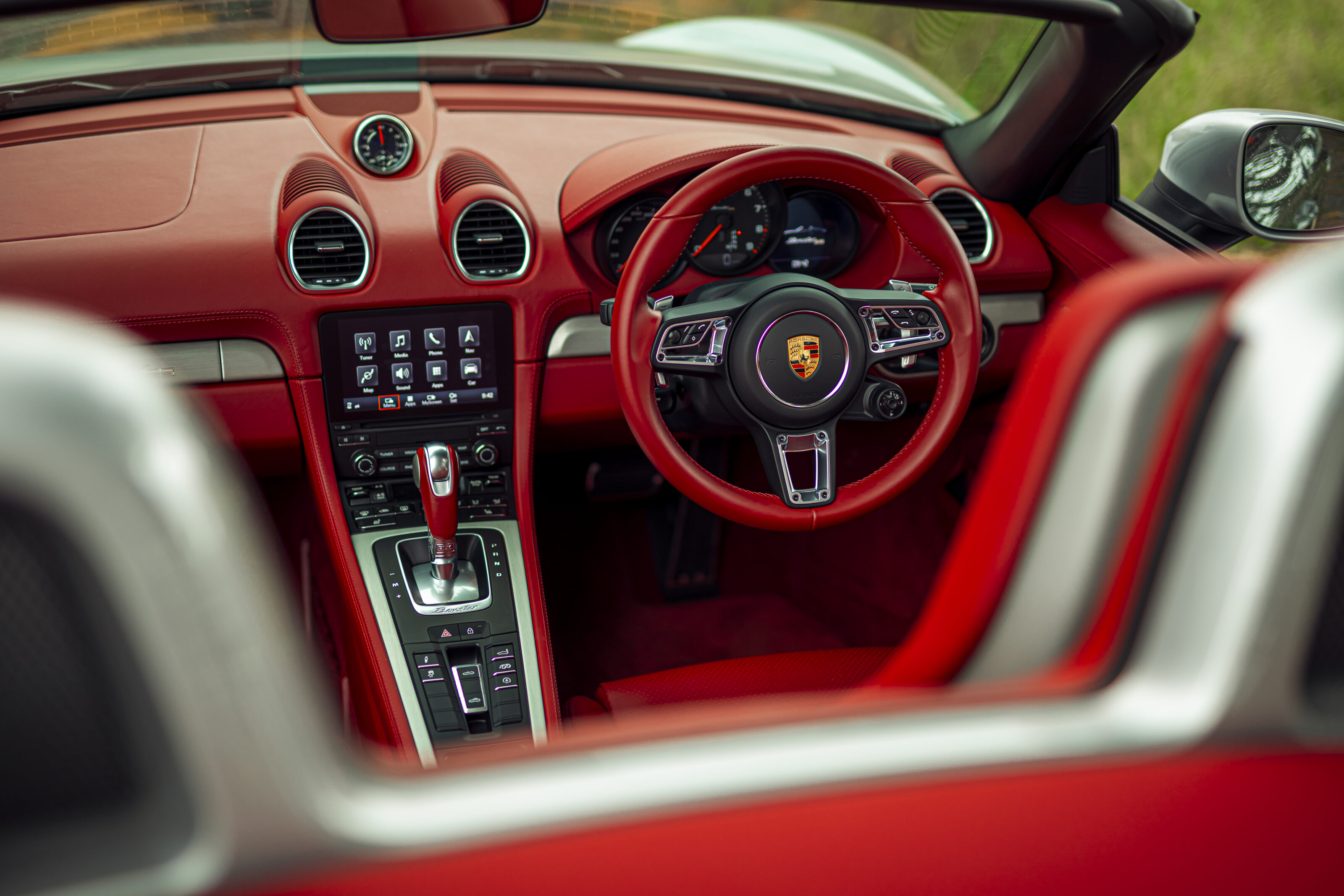
The Boxster GTS 4.0-litre’s manufacturer list price begins at $183,290 for the PDK version, so we have the basic mechanical gubbins covered there.
GT Silver paint is a no-cost option, as is the red convertible roof. A Bordeaux red interior adds $4010 to the total and, if you’d like similarly bronze wheels, ‘Aurum’ finishing of the GTS’ standard ten-spoke wheels adds another $1030.
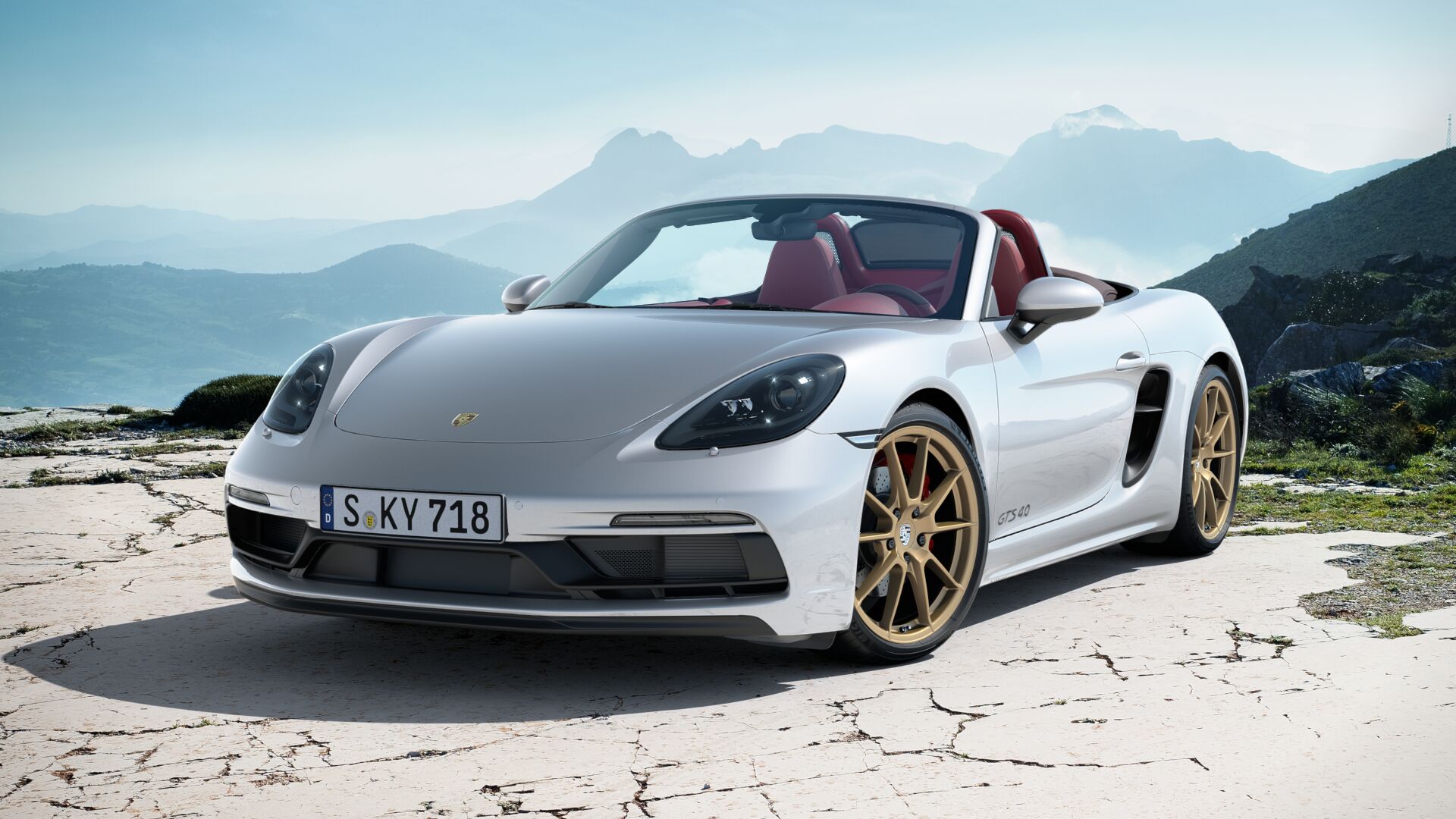
We’re not done yet, however. Matching our PCOTY contender’s specs as closely as possible commands further box ticking, including: BOSE Surround Sound system ($2230), Adaptive 18-way sports seats ($1910), electrically folding mirrors with courtesy lights ($560), key painted in GT Silver ($780), Bordeaux Red seatbelts ($520) and painted headlight washers ($380).
According to Porsche’s own configurator system, that adds a total of $11,420 in options with your Boxster GTS 4.0 ultimately asking $194,710.
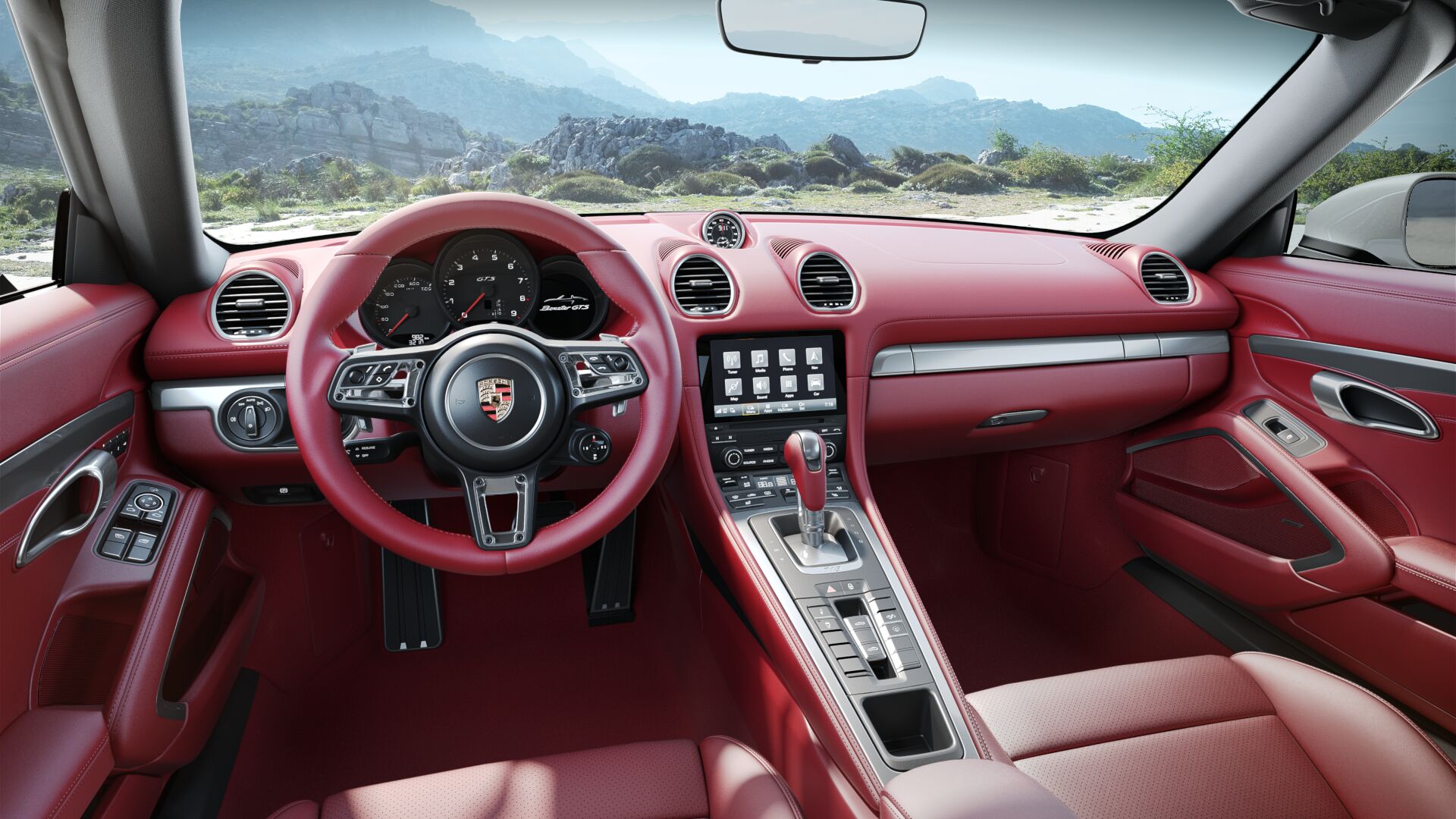
That’s a relatively minor $5220 price disparity between our fictional quasi- Boxster 25 Years edition and the genuine article that took 4th at this year’s PCOTY.
You’re still missing those bespoke five-spoke wheels (although a set of Simmons FR1s will get you close), bronze body trim pieces and special 25 Year iconography but, if you’ve missed out on one of Porsche’s anniversary special Boxsters, rest assured that you can still make a convincing alternative.
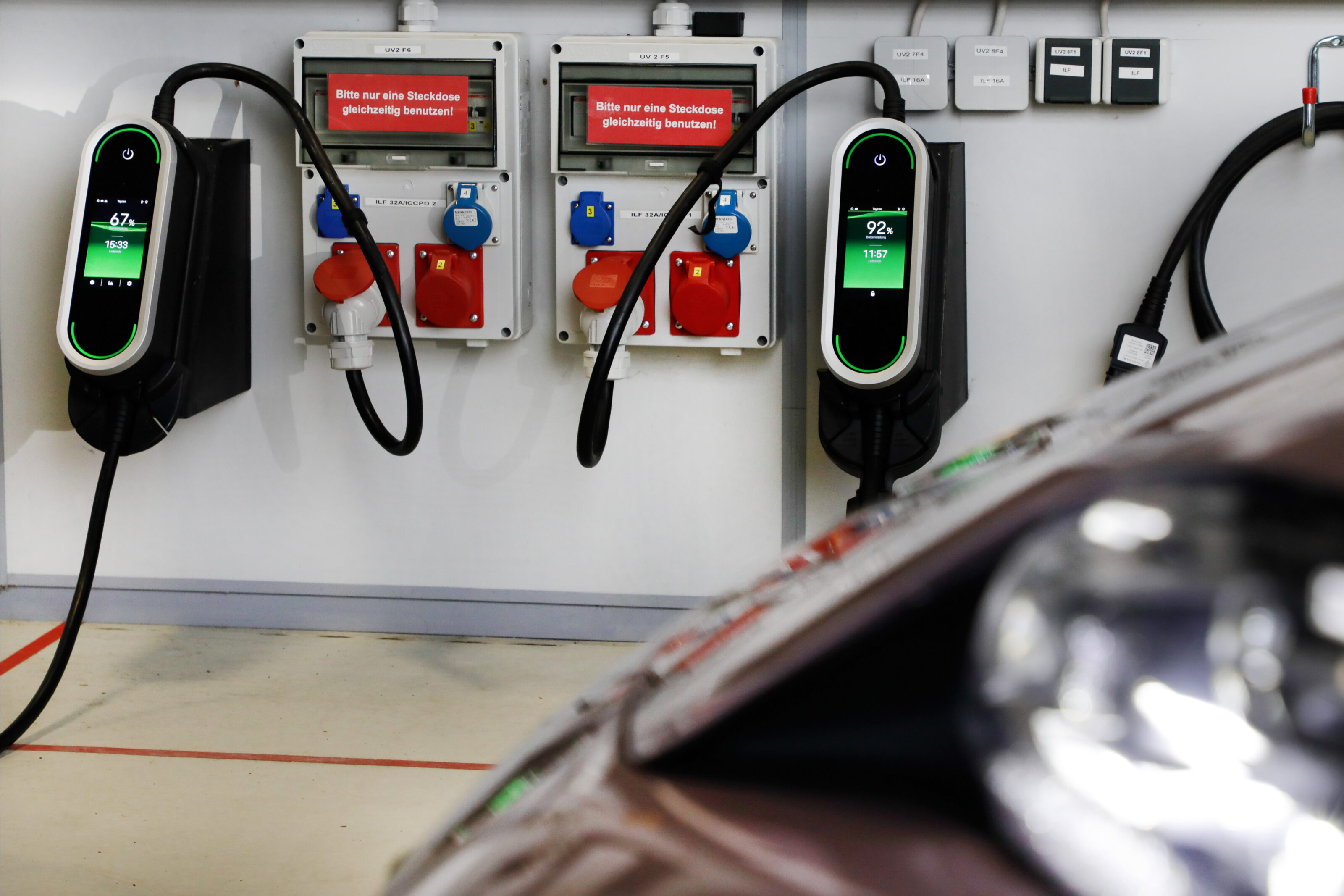
Porsche has been testing out how its Taycan could operate using vehicle-to-grid charging applications in Germany.
In future, when electric cars are not being driven, the hope is they could also feed energy back into the public power grid.
A pilot conducted by Porsche, together with German grid operator TransnetBW and consulting firm Intelligent Energy System Services (IE2S), has demonstrated that electrical balancing power can be stored in the high-voltage batteries of an intelligent swarm of electric cars.
As part of the project, five series-production Taycans were connected to the power grid via the Porsche Home Energy Manager (HEM) both in homes and under laboratory conditions.
“The charging technology of the Porsche Taycan and our Home Energy Manager and Mobile Charger products have a lot of potential for the future: the pilot test proved that. And the balancing power market isn’t the only thing a pooling system of this kind can be used for,” said Lutz Meschke, Deputy Chairman of the Executive Board of Porsche AG.
“Advanced solutions for green charging and other vehicle-to-grid applications are also conceivable. And that’s not all: if electric vehicles feed electrical energy back into the grid in the future, contributing to the expansion of regenerative energy, it will further increase the acceptance of e-mobility.”
With the expansion of renewable energies, Porsche says balancing power will become even more important in the future for secure grid operation. This is because the power grid must always be stable, even though the wind and sun are not always producing consistent amounts of energy. If power grids are not stabilised at a constant 50 Hertz power frequency, there is a risk of power cuts.
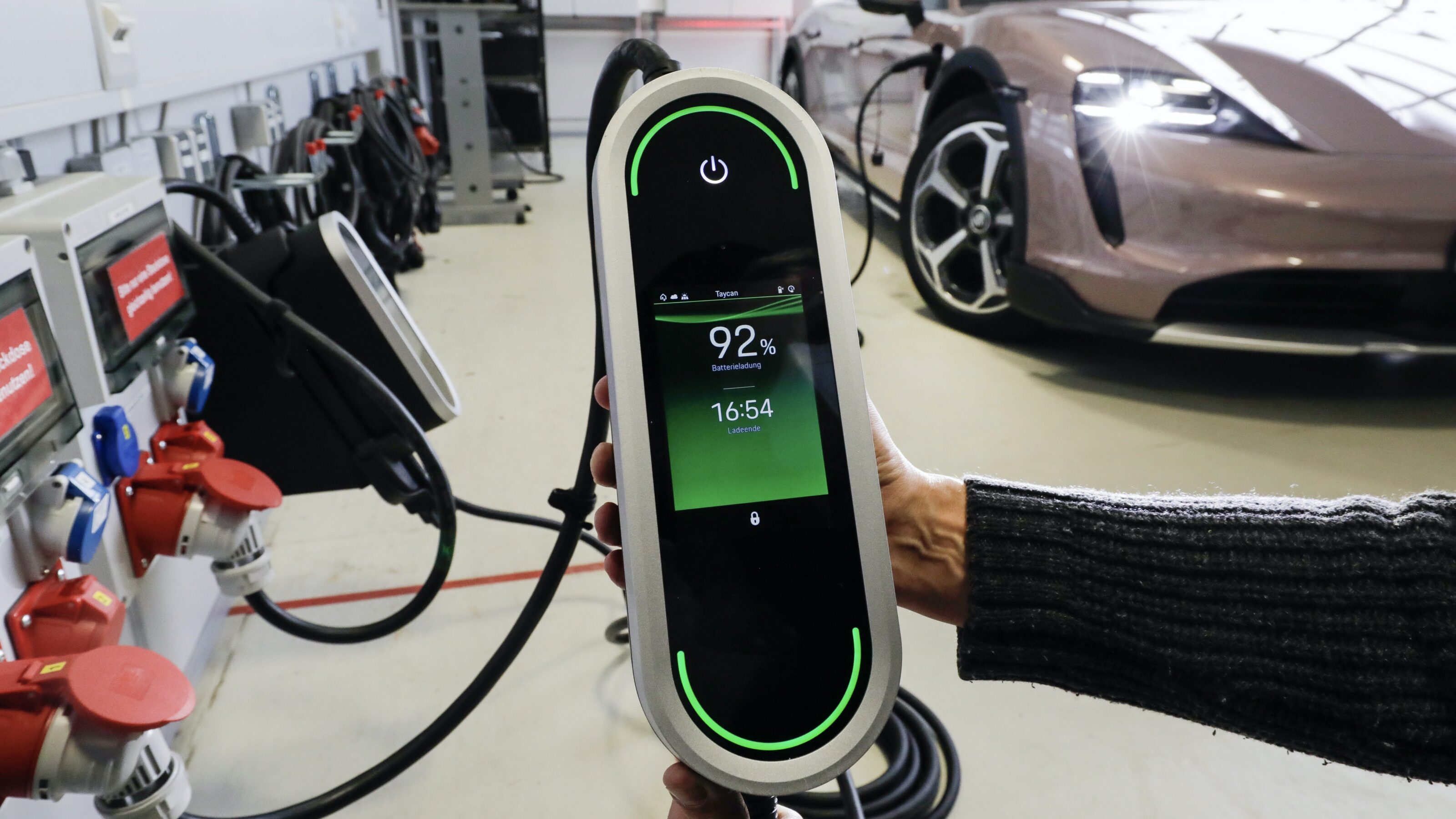
Until now, conventional power plants in particular have been responsible for cushioning these fluctuations. Using high-voltage batteries as a buffer, the marque says would be a win-win situation: drivers of electric cars could be financially compensated for their contribution to balancing power.
The key element of the data communication used in the pilot test is a cloud-based pooling system developed by IE2S. This co-ordinates and controls the charging processes of the electric vehicles in real time, by translating the grid operator’s balancing power setpoints into vehicle-specific signals.
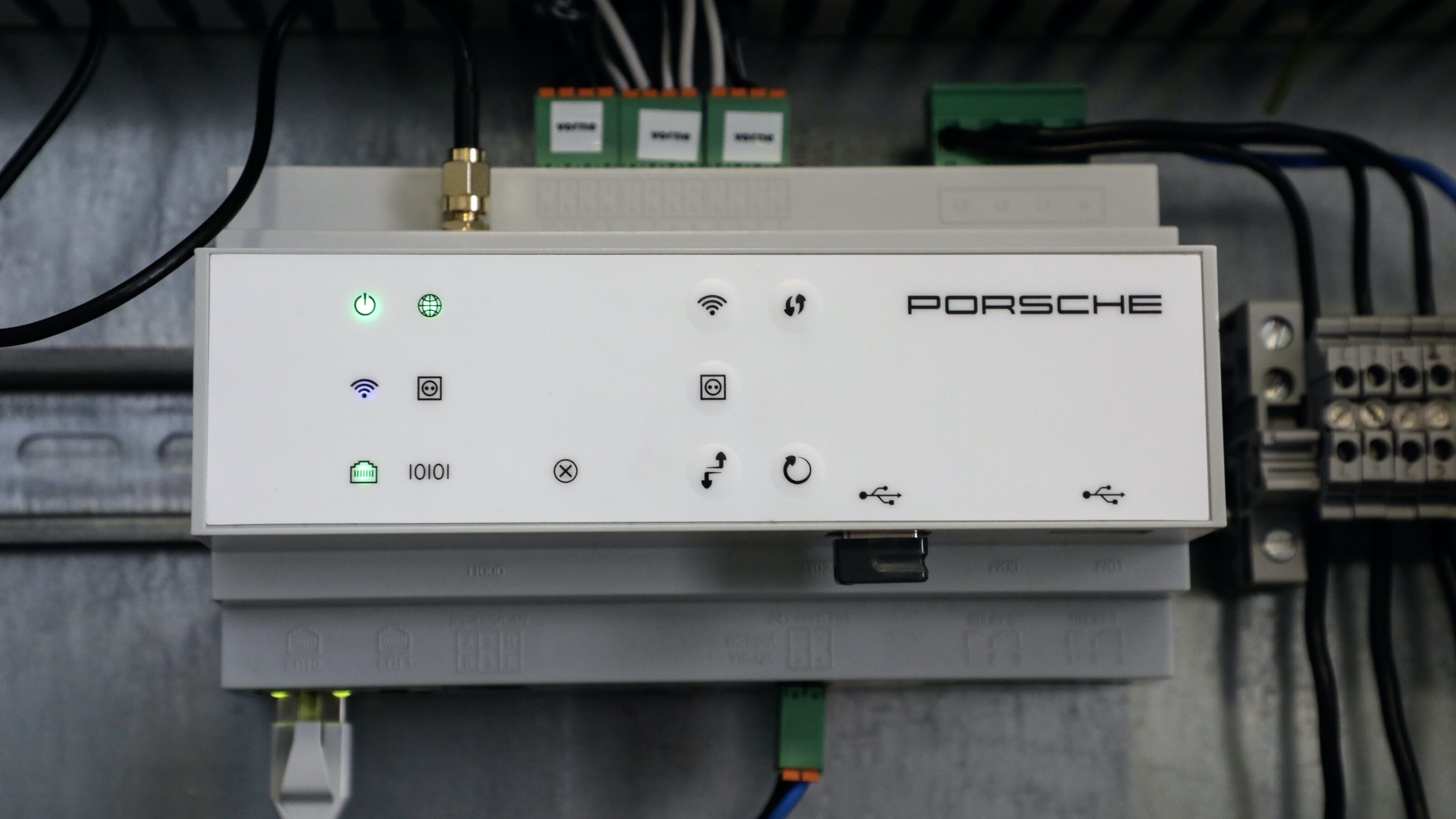
The pooling system also controls the high-frequency and synchronous bidirectional transmission of data. In order to test it, the pooling system was connected to TransnetBW’s main control centre in Wendlingen, near Stuttgart, Germany.
“A real measurable milestone: the project team has managed to implement the complex communication infrastructure between our control system and several electric vehicles. At the same time, the strict specifications for storing and supplying balancing power have been met. This will enable us to integrate electromobility into the intelligent power grid of the future,” said Dr Rainer Pflaum, Chief Finance Officer at TransnetBW.
It sounds quite simple to say we weighed each car at COTY. Drive onto a platform, get out, press a button, read the number. Almost, but not quite.
Our combustion cars were delivered to our test facility with full tanks if they arrived by truck, but some were driven by judges and staff, and had ‘most of’ rather than a full tank.
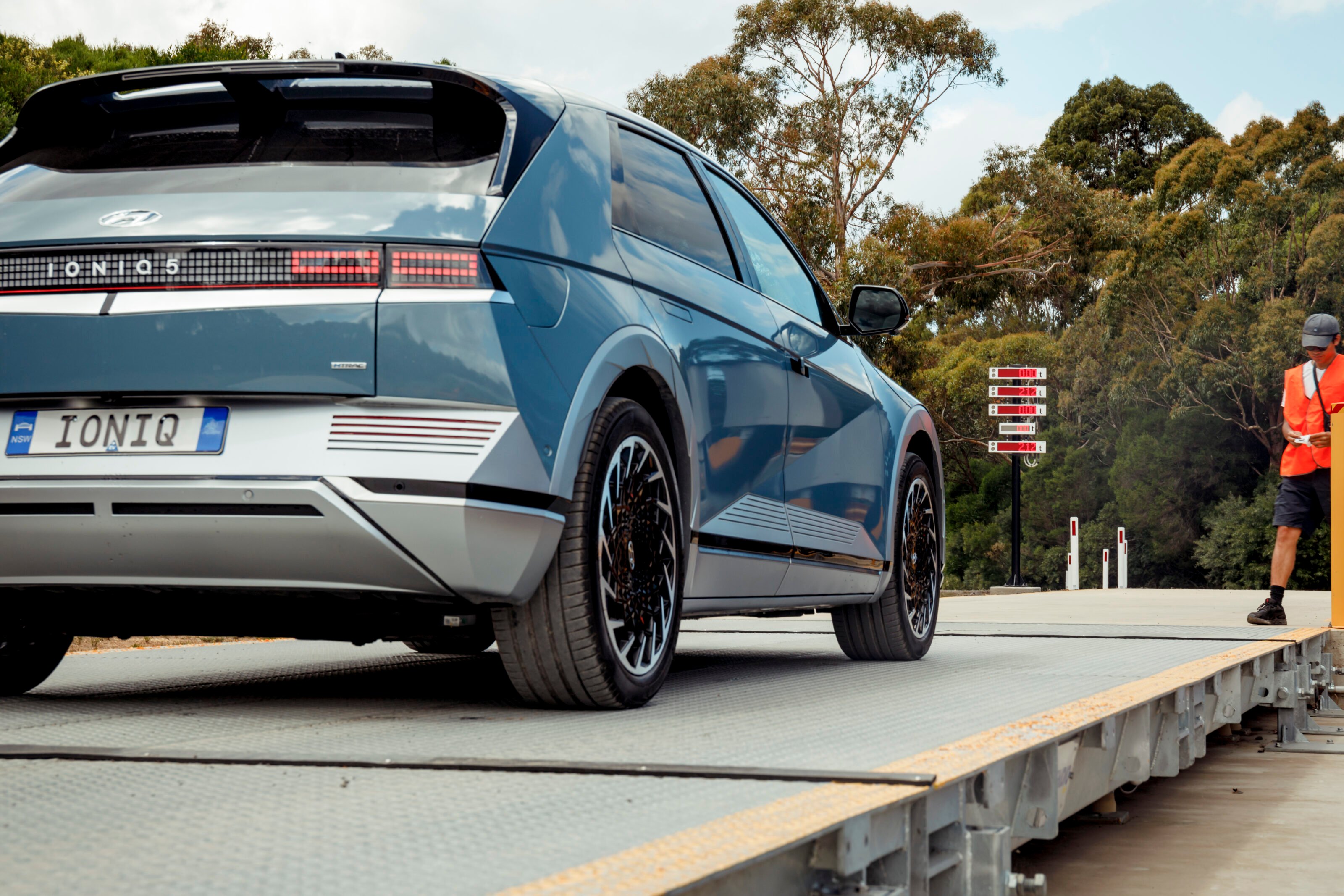
Then there’s the manufacturer weight claims, some of which we discovered were… somewhat optimistic.
But let’s get some good news out of the way first.
COTY’s lightweights
While cars have generally gotten heavier with the (necessary, we might add) implementation of crash protection and safety gear, there are still some that don’t venture too far north of a tonne. The Hyundai i20 N takes home the ‘lightest’ trophy, or maybe it should be a ribbon.
At 1.24 tonnes, weighed with its fuel tank at 67.5 per cent, we found the hot hatch only 5kg over its claimed weight. It’d be a little more with a full tank, but it’s still well within reason.
Next up, the Subaru BRZ at 1.28 tonnes, 2kg below its claimed weight. Again, a fuel tank only 60 per cent full meant the BRZ is also still on the list of cars with a pretty accurate weight claim.
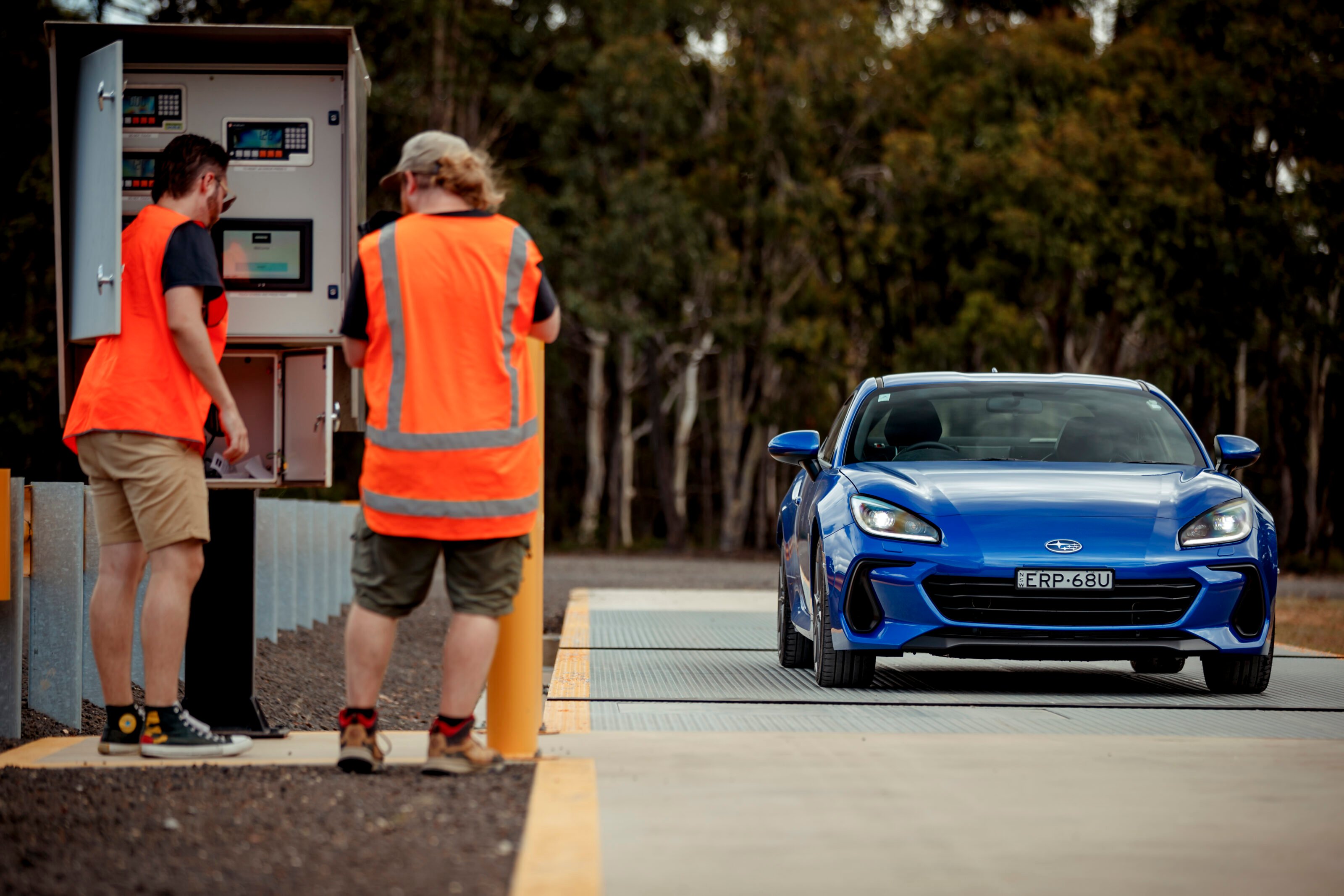
Finally, there was a tie on the weighbridge for third, but one car arrived with a full tank against one with a 60 per cent tank.
The Honda Civic and Volkswagen Golf both weighed in at 1.36 tonnes, but it was the German that had a full tank, meaning the Civic would be slightly heavier if filled up.
Strangely, the Civic’s weight with a little over half a tank is the exact same as its claim, while the Golf was 56kg heavier than we were ‘expecting’.
Next, the Skoda Octavia, sibling to the Golf but in wagon form, was 1.42 tonnes, being 60kg heavier than, and not close enough to challenge, the Civic even with full tank.
The COTY heavy hitters
Toyota won’t be disappointed to know the Landcruiser 300 was the heaviest car at COTY, in fact they might even be pleased it weighed in at 2.58 tonnes, 50kg below its claim, and with a full tank.
It beats the imposing BMW iX, a 2.44 tonne beast with a claimed weight 75kg below what BMW’s specs sheet had us expecting. Fuel load obviously not important, here, and charge doesn’t weigh… well, anything.
Continuing the trend of topping their spec sheet weights, the Porsche Taycan Cross Turismo was 95kg over its claim, coming in at 2.34 tonnes. It’s heavier than the Mercedes-Benz S450L with a full tank, itself 2.18 tonnes, or a whopping 250kg more than its claim.
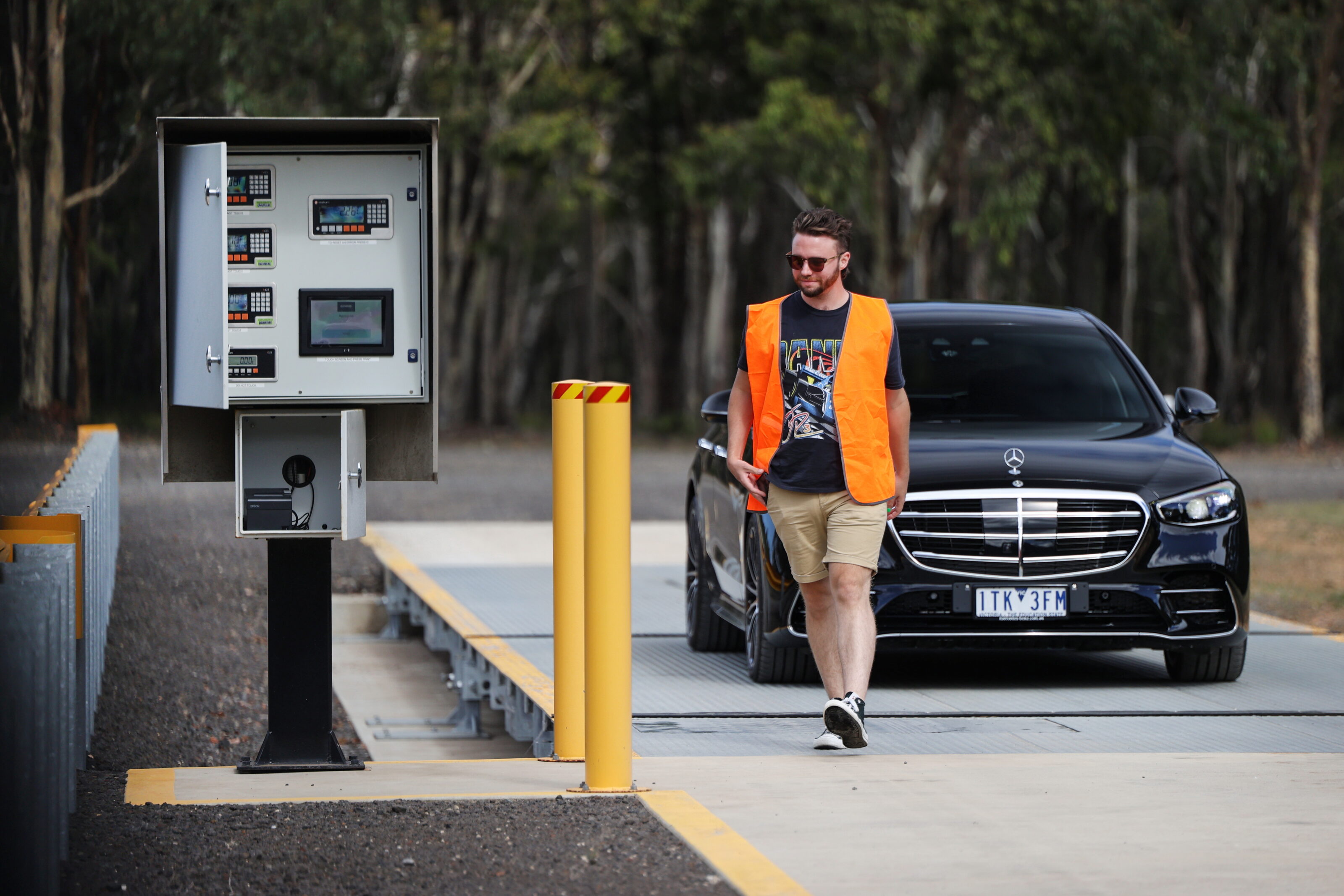
Reality vs the specs
The S-Class, Taycan, and iX were the three furthest from their claimed weights on the heavy side of things, though there were a couple of other cars that were significantly lighter than on paper.
The Hyundai Tucson’s 1.68 tonnes, with full tank, was the lightest when compared to its claim, beating it by 130kg. We checked, and all the seats and fittings were still in the car on the weighbridge!
The aforementioned Landcruiser was the next-best at beating its on-paper figure, then the Lexus NX with 40kg fewer, for an actual weight of 1.82 tonnes.
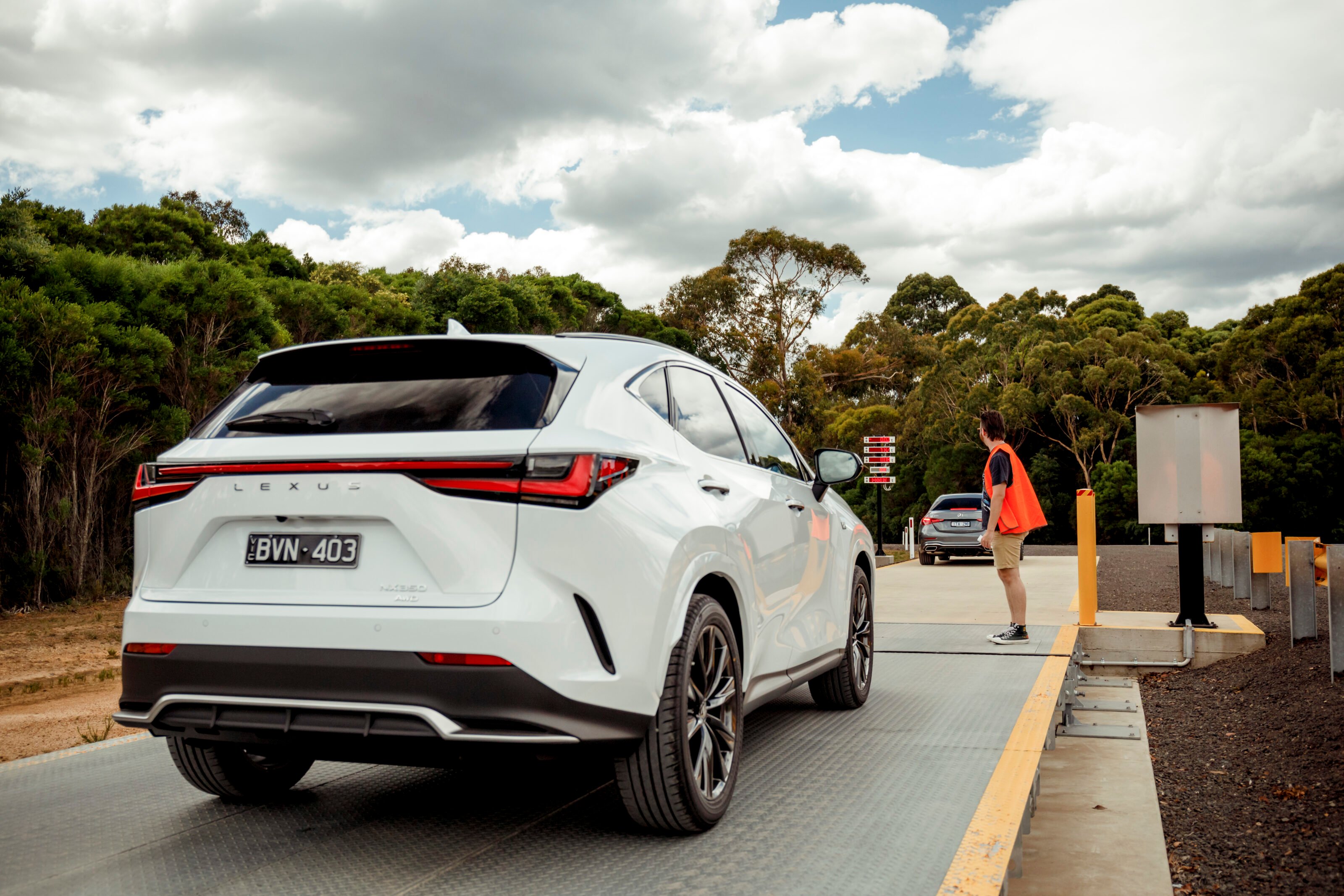
The Kia Sportage came close, with the same actual weight difference of 40kg… but only 90 per cent of its max fuel. It was still lighter than the NX though, with a 1.72 tonne weigh-in.
Below is the table with all our weight data, fuel loads, discrepancies with claims, and rankings from best to worst.
| Make | Weight (tonnnes) | Weight rank | Fuel weighed | VS Weight Claim | VS Weight Rank |
|---|---|---|---|---|---|
| Hyundai i20 N | 1.24 | 1 | 67.50% | 5 | 12 |
| Subaru BRZ | 1.28 | 2 | 60% | -2 | 7 |
| Honda Civic | 1.36 | 3 | 60% | 0 | 8 |
| Volkswagen Golf | 1.36 | 4 | 100% | 56 | 17 |
| Skoda Octavia | 1.42 | 5 | 100% | 65 | 18 |
| Mazda MX-30 | 1.66 | 6 | N/A | 6 | 13 |
| Hyundai Tucson | 1.68 | 7 | 100% | -130 | 1 |
| Subaru Outback | 1.7 | 8 | 100% | 4 | 10 |
| Kia Sportage | 1.72 | 9 | 90% | -40 | 3 |
| Mercedes C300 | 1.74 | 10 | 90% | 4 | 11 |
| Lexus NX | 1.82 | 11 | 100% | -40 | 4 |
| Polestar 2 | 2.02 | 12 | N/A | 26 | 15 |
| Hyundai Palisade | 2.06 | 13 | 90% | -4 | 6 |
| Genesis GV70 | 2.08 | 14 | 90% | 52 | 16 |
| Kia EV6 | 2.1 | 15 | N/A | 0 | 9 |
| Kia Carnival | 2.12 | 16 | 75% | -14 | 5 |
| Hyundai Ioniq 5 | 2.12 | 17 | N/A | 20 | 14 |
| Mercedes S450L | 2.18 | 18 | 100% | 250 | 21 |
| Porsche Taycan | 2.34 | 19 | N/A | 95 | 20 |
| BMW iX | 2.44 | 20 | N/A | 75 | 19 |
| Toyota LandCruiser | 2.58 | 21 | 100% | -50 | 2 |
The Volkswagen Arteon caused quite the stir when it first appeared on Aussie roads in 2017. Sales were modest but the sleek sedan’s eye-catching mix of sharp design and punchy performance caught our collective imagination in a way few large cars can.
But then, after just two years on sale, it was quietly dropped from VW’s range. Changes to emissions testing regulations disrupted Australia’s supply chain and the svelte Arteon disappeared from local showrooms. Until now.
With supply reinstated (as best it can be in these uncertain times), the Arteon hasn’t just returned as a liftback sedan but is now also available as a wagon.
This time around it also effectively replaces the Passat sedan in VW’s Aussie line-up, with the Passat continuing only as a wagon or Alltrack.
Pricing and Features

The Arteon is now slightly more expensive than before (prices have jumped $1750 compared to 2019) and it’s available in two trim levels across its two body styles. The range kicks off at $61,740 for the 140TSI Elegance lift-back sedan, while the sportier 206TSI R-Line sedan, which adds a more powerful engine and the surety of all-wheel drive, is priced from $68,740. Going for the wagon commands a $2000 premium over the sedan, with the model tested here being the most expensive in the range – the $70,740 206TSI R-Line Shooting Brake. All prices before on-road costs.
Like the body styles, you have the choice of two engines: a 140kW/320Nm 2.0-litre four-cylinder turbo-petrol in the 140TSI that drives the front axle, or a higher output version of the same engine in the all-wheel drive 206TSI producing 206kW/400Nm. Both tunes are paired with a seven-speed dual-clutch auto that, while slick and quick on the move, still displays a few foibles. But more on that later…
Your mileage may vary on how appealing the Arteon is to look at but there’s no escaping the fact that this is one striking car

Your mileage may vary on how appealing the Arteon is to look at but there’s no escaping the fact that this is one striking car. And in a conspicuous bunch, it’s this range-topping wagon that delivers the most street presence. R-Line versions gain a host of visual upgrades over the 140TSI, including larger 20-inch ‘Nashville’ alloy wheels, a sportier body kit with more aggressive bumpers front and rear, body-coloured mirror caps and twin (fake) exhaust outlets finished in chrome.
LED lights feature at both ends and play a key role in the Arteon’s visual identity, with a distinctive light strip extending below the headlights like a moustache to meet below the central VW badge. The headlights also include Matrix technology and are able to self-level and mask out oncoming traffic without having to drop to low-beam.
Comfort and Space

Unusually for a wagon, opting for the shooting brake body style is primarily an aesthetic choice rather than a practical one. Despite its longer and higher roof, the Arteon Shooting Brake’s large 565-litre boot offers only two extra litres of volume compared with the lift-back sedan. That gap increases with the rear seats folded (1632L plays 1557L) but in this instance, the wagon certainly doesn’t provide the typical boost in boot space.
Happily both body styles of the Arteon major on practicality. This is a big, long car. Measuring 4866mm from bumper to bumper, the VW is around 80mm longer than key rivals like the Peugeot 508 GT and BMW 4 Series gran coupe, and almost 200mm longer than the Audi A5 Sportback and Genesis G70 Shooting Brake. This translates to a greater sense of interior space, with the VW feeling roomy up front and verging on palatial in the rear.
The boot is thoughtfully executed, too. With a low floor and deep loading bay, it’s ideal if you need to stow longer items. The boot floor and side walls are also carpeted, which is a nice touch that helps prevent scratches and objects sliding about. A retractable parcel shelf is also standard across the range, and the boot also boasts two lights, twin bag hooks and an electric tailgate. The back seats fold 60:40 and the centre seat has a ski port should you need to transport really long items. Even better news is that lurking under the boot floor is a full-size spare. Top marks, VW.
Materials quality and fit-and-finish are clear strengths. All of the key touchpoints are trimmed with soft-touch materials

Open the pillarless door to slip inside the Arteon and the first thing you notice is the heavily bolstered R-Line sports seats. They’re 14-way adjustable and offer excellent comfort and support, with the driver also gaining a massage function and three memory settings to store your driving position. One thing to note for Aussie summers, however, is that while the front pews do have a heater function, R-Line models miss out on the seat ventilation offered as standard in the Arteon 140TSI.
Materials quality and fit-and-finish are clear strengths. All of the key touchpoints are trimmed with soft-touch materials, the door pockets are flocked and high-quality plastics are used throughout, even featuring below the beltline where most manufacturers resort to harder, scratchier finishes. An odd material misstep is the shift paddles behind the steering wheel, which are made of thin-feeling plastic.

Digital displays abound, with the VW Group’s 10.25-inch ‘Digital cockpit Pro’ featuring in place of conventional dials. It’s paired with a large 9.2-inch central touchscreen and, as we’ve found in other VW/Audi products, both screens offer excellent functionality with clear graphics and useful customisation.
We’re less convinced by the touch-sensitive pads used on the steering wheel spokes to control key functions like the adaptive cruise control and configuration of the digital dials – conventional buttons do a better job and are easier to use – but at least the air-con controls retain their own place on the centre console rather than being buried inside the touchscreen, as we’ve encountered in other VW models.
You might think rear headroom is a concern but in every dimension, the back seat over-delivers. Knee room is generous, six-footers have ample headroom

Standard equipment levels are high: wireless Apple CarPlay and Android Auto, a 700W Harman Kardon sound system, tri-zone climate control, 30-colour ambient lighting and a head-up display all feature. As does VW’s IQ.Drive safety suite which includes auto emergency braking, adaptive cruise control, blind-spot monitoring, rear-cross traffic alert and parking sensors at both ends. One minor gripe, though, is that the quality of the 360-degree camera isn’t as crisp as most modern systems.
But it’s the back seat that offers the biggest surprise. Clock the Arteon’s swooping roofline and you might think rear headroom is a concern but in every dimension, the back seat over-delivers. Knee room is generous, six-footers have ample headroom and the seat itself is comfortable with a deep bottom cushion.
The plastics on the door cards do take a slight step down in quality but there’s plenty in the way of amenity with large map pockets, smaller pockets in the back of the front seats for phones and other items, a coat hook on the B-pillar, rear air vents, a single USB-C port (to complement the two in the front) and a centre armrest with twin cupholders.
On the Road

Fire the VW Group’s venerable EA888 2.0-litre into life and you quickly realise there’s plenty of substance to back up the Arteon’s focus on style. Decent ride compliance (despite the enormous 20-inch wheels and low profile 245/35 tyres), strong body control and refined road manners make this an excellent and comfortable grand tourer. The only real drawback is noticeable tyre roar on coarse-chip bitumen but this remains a superb car for covering big distances.
It’s also fairly athletic through the twisty stuff. Cycle the drive mode into Sport and the steering takes on some welcome heft (it’s accurate but overly light and aloof in its default setting) and the engine reveals a more aggressive side, too, courtesy of a sound symposer. Typically we aren’t fans of piping engine noise into the cabin but in the Arteon’s case, it adds a welcome dose of personality as the EA888 is too quiet in Normal mode.
This is a grippy and planted car to hustle quickly. The steering is accurate, the brakes feel strong and confidence inspiring

As ever the 2.0-litre turbo petrol revs cleanly to its 6500rpm redline and it delivers punchy performance, although it doesn’t feel quite as rapid as VW’s 0-100km/h claim of 5.6 seconds suggests.
This is a grippy and planted car to hustle quickly. The steering is accurate, the brakes feel strong and confidence-inspiring and even with the dampers set to their most aggressive setting (you can cycle through 14 stages of stiffness should you desire), the ride is never jarring or unpleasant. But while the Arteon is a capable handler with high limits, keen drivers will likely prefer the greater involvement and adjustability of a Golf R wagon.
And remember those DSG foibles we mentioned earlier? Well while the usual dual-clutch hesitation and jerkiness are apparent in low-speed situations, our biggest concern is shift mapping that feels overly focused on fuel saving. Even in Sport mode the Arteon is reluctant to shift down and prefers to hold a higher gear even after big throttle inputs. This can make it feel doughy and unresponsive; better to flick the gearstick into manual mode and use the shift paddles on windy roads or in cut-and-thrust traffic.
Ownership

The Arteon range comes with Volkswagen’s five-year, unlimited-kilometre warranty, which is now industry standard in Australia. Servicing intervals are 15,000km or 12 months and cost between $462-$1280. Buyers do have the choice of two service packs: a three-year pack that costs $1600 but saves you $226 or a five-year plan for $2700, which shaves $871 from the overall cost.
VERDICT

We’re glad the Arteon is back. It’s an excellent and desirable all-rounder that continues to ensnare our attention and, to our eyes at least, the wagon is the pick from a good-looking bunch.
But whichever Arteon you choose, it offers a lot of car, equipment and style for the money and manages to strike a neat balance between sporty capability and comfort. It’s also a model that deserves to find more homes than it probably will in SUV-mad Australia.
Here’s hoping it hangs around a little longer this time…
2022 Volkswagen Arteon Shooting Brake specifications
Hopes don’t come much higher than for the new, fifth-generation W206 Mercedes-Benz C-Class which, after several delays, could have driven off the boat and straight to our Car of the Year testing.
Its timing was such that we didn’t have the opportunity to consider which variant would best represent the range, so we included both currently available – the C200 and C300, powered by turbo four-cylinder engines. We’d have to figure it out as we went.
And the bookies would be right placing narrow odds for this car. As the most popular Mercedes-Benz model of the last decade, nearly 60,000 examples of the previous generation W205 C-Class sold in Australia alone. No pressure, then.
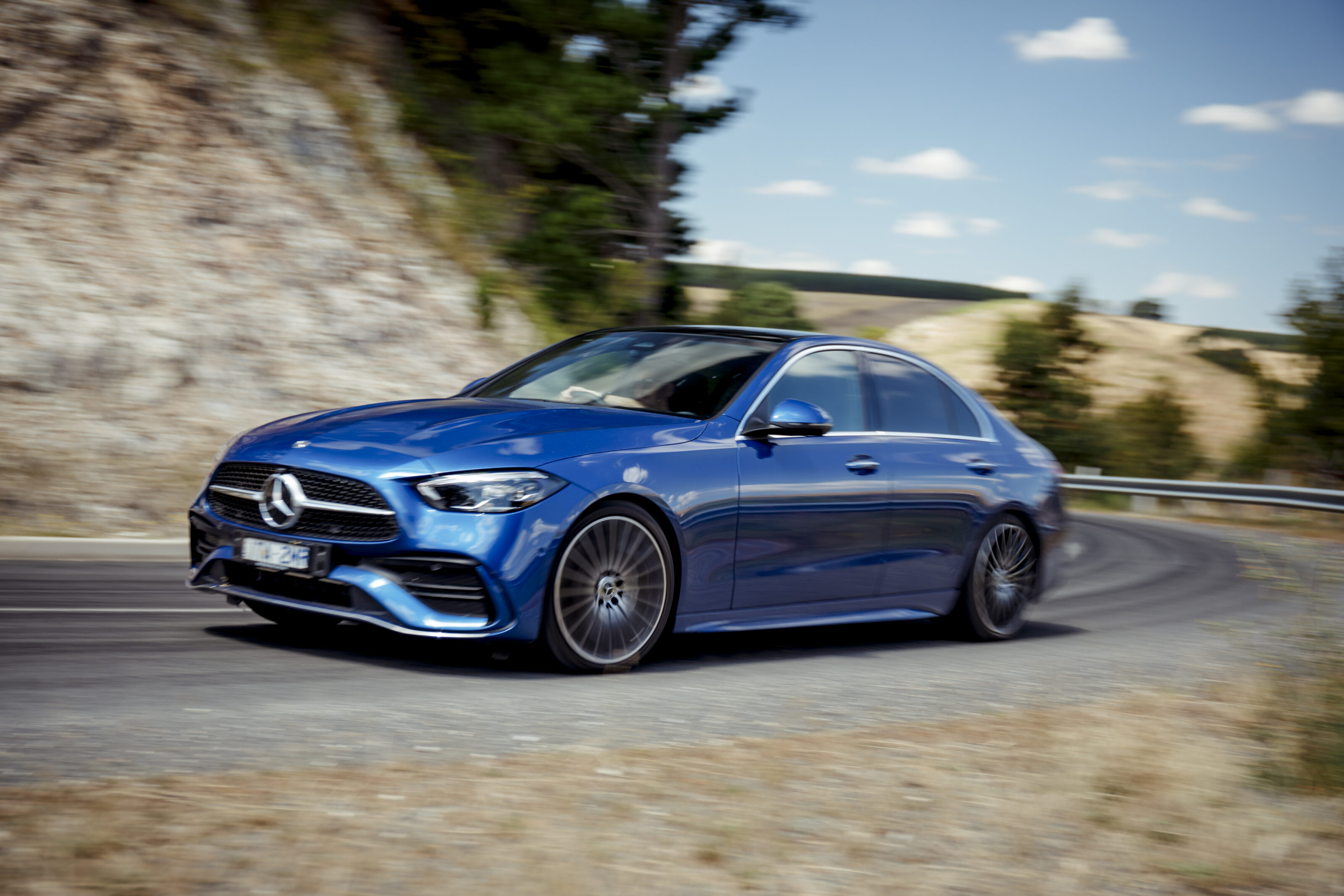
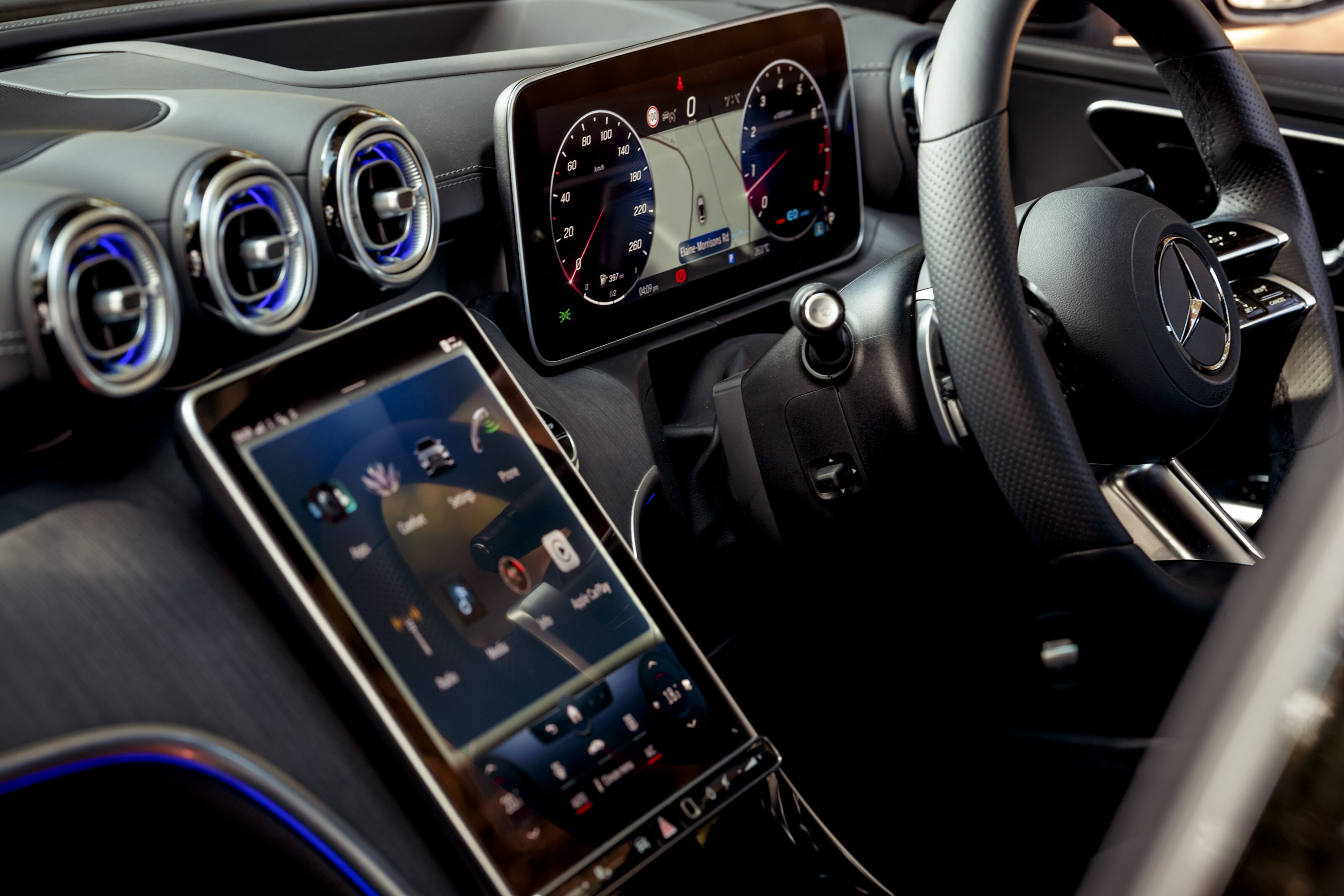
From the get-go, having done the judges’ walkarounds, ogling the muscular power domes on the bonnet, the more cab-rearward design and AMG Line pack fitted as standard, there was an early sense this car would be a contender. Inside is radically different to its predecessor, all major and minor controls relegated to touchscreens, the main of which is an 11.9-inch unit (across the diagonal) mounted smack-bang in the middle of the dash.
Tilted six degrees towards the driver, it runs Merc’s excellent MBUX infotainment software, while a 12.3-inch cluster screen behind the steering wheel can provide a classic vibe with its analogue graphics. But all in all, from an interior perspective, we like.
“As you would expect, beautifully executed, both inside and outside,” said Richard, adding about the clever packaging, “you could be forgiven for thinking you are sitting in a bigger Merc.” And you are, really, as the W206 is now 65mm longer than the W205 – 25mm of it in the wheelbase, helping provide another 35mm of rear knee-room – helping fill the gap between C and E.
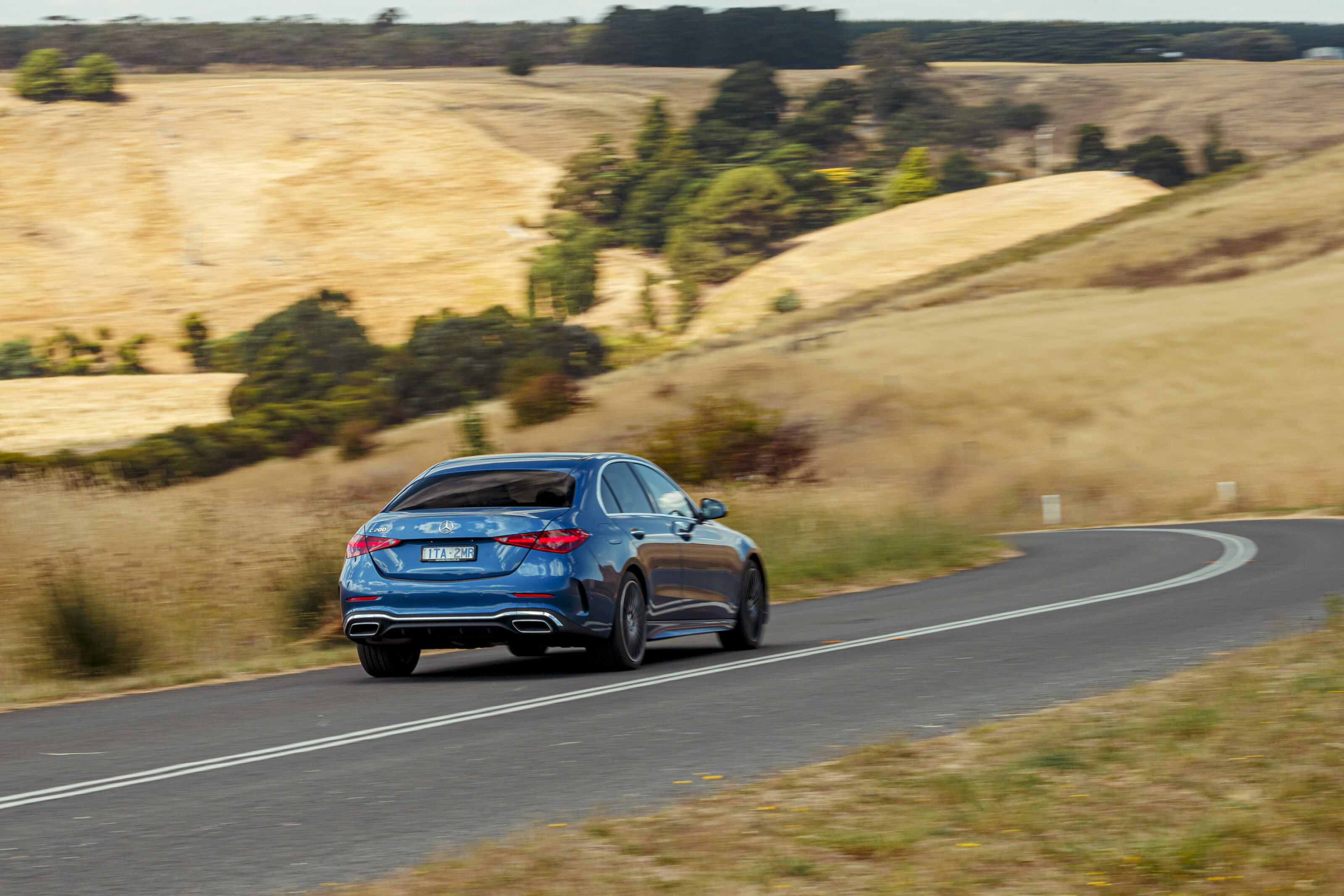
As we progressed to laps of the Anglesea Proving Ground loop (in the C200), even in the maelstrom of cars that is COTY testing, it took about 500 metres for most judges to mentally shortlist the new C-Class as a finalist. With a seating position fitting like a custom-sewn glove, the W206 immediately impresses with its ride quality, an expertly judged combination of spring rate and damping cleverness – in the C200’s passive set-up, at least. More on the C300’s adaptive dampers later.
On the dirt – which didn’t feel as naughty as in the S-Class, luckily – the C-Class displayed the most advanced-feeling ESC this road-tester has experienced, spookily pre-emptive and effective yet still somehow unintrusive.
Through the lane-change, the C-Class was one of the tidiest and quickest cars of the field. The dry braking was so strong you were almost fumbling around the footwell for your eyeballs. Never before, either, has the base C200 felt more recommendable, its 150kW/300Nm offering strong and characterful performance and even a decent sound (mostly augmented, but very realistically done).
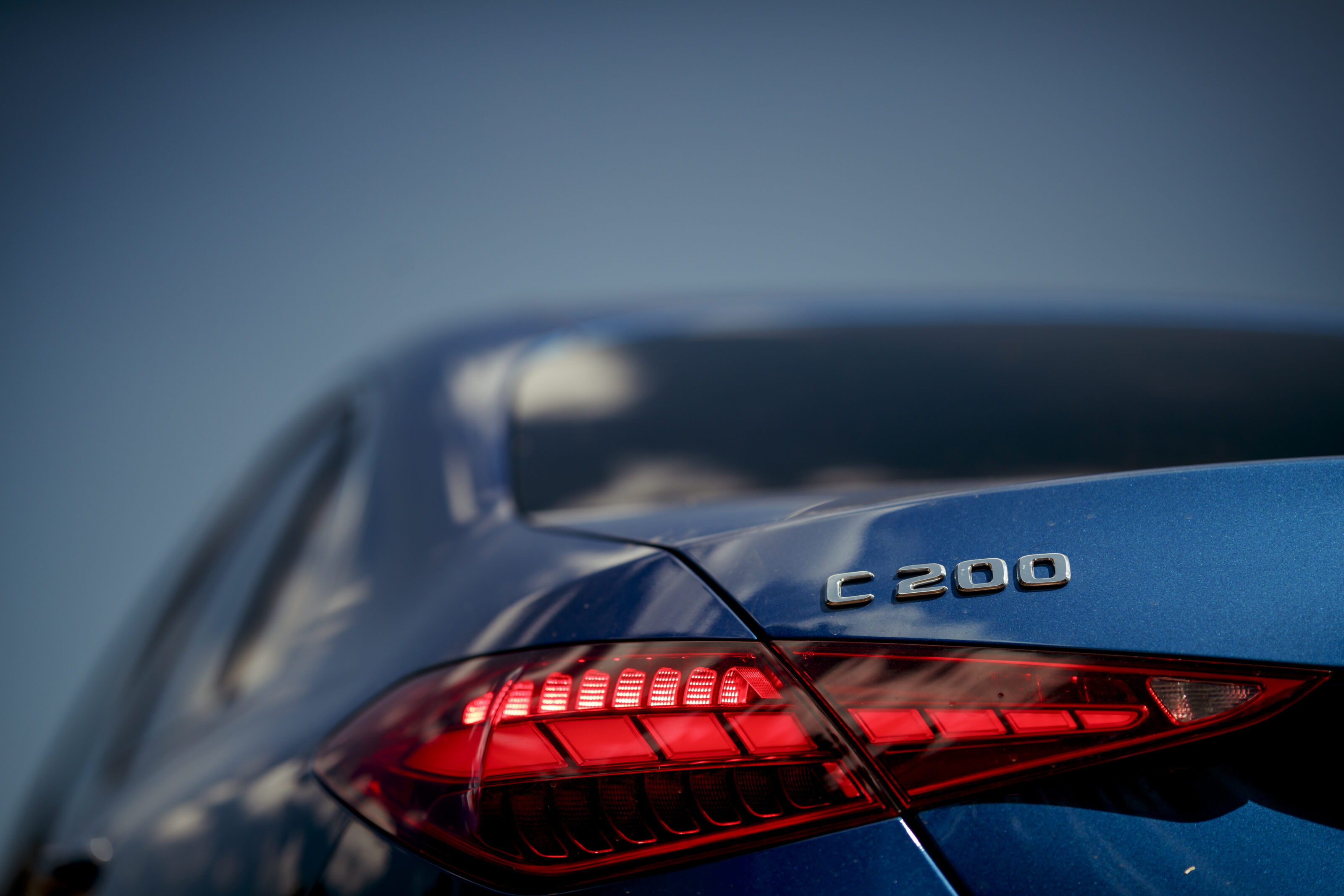
“At last – a good base model engine for the C-Class,” said Jez, mirroring the sentiment of all judges. “Respectable herbs that question whether you really need that C300.”
While the C200 wasn’t quite as special up the Five Percent Gradient twisty road section as we hoped – based on its form through earlier stages of the proving ground – it had done enough to get it through to the next round of gruelling road-based assessment.
Having left the seaside roads around Anglesea and Torquay, things took a turn for the W206 as the judges jumped aboard the C300 expecting it to build upon the C200’s impressive PG performance. Instead, they were left scratching their heads at a Comfort-mode ride quality, on adaptive dampers, that felt, frankly, a little unfinished. We were almost wanting to jump back in the C200 with its sweeter passive set-up.
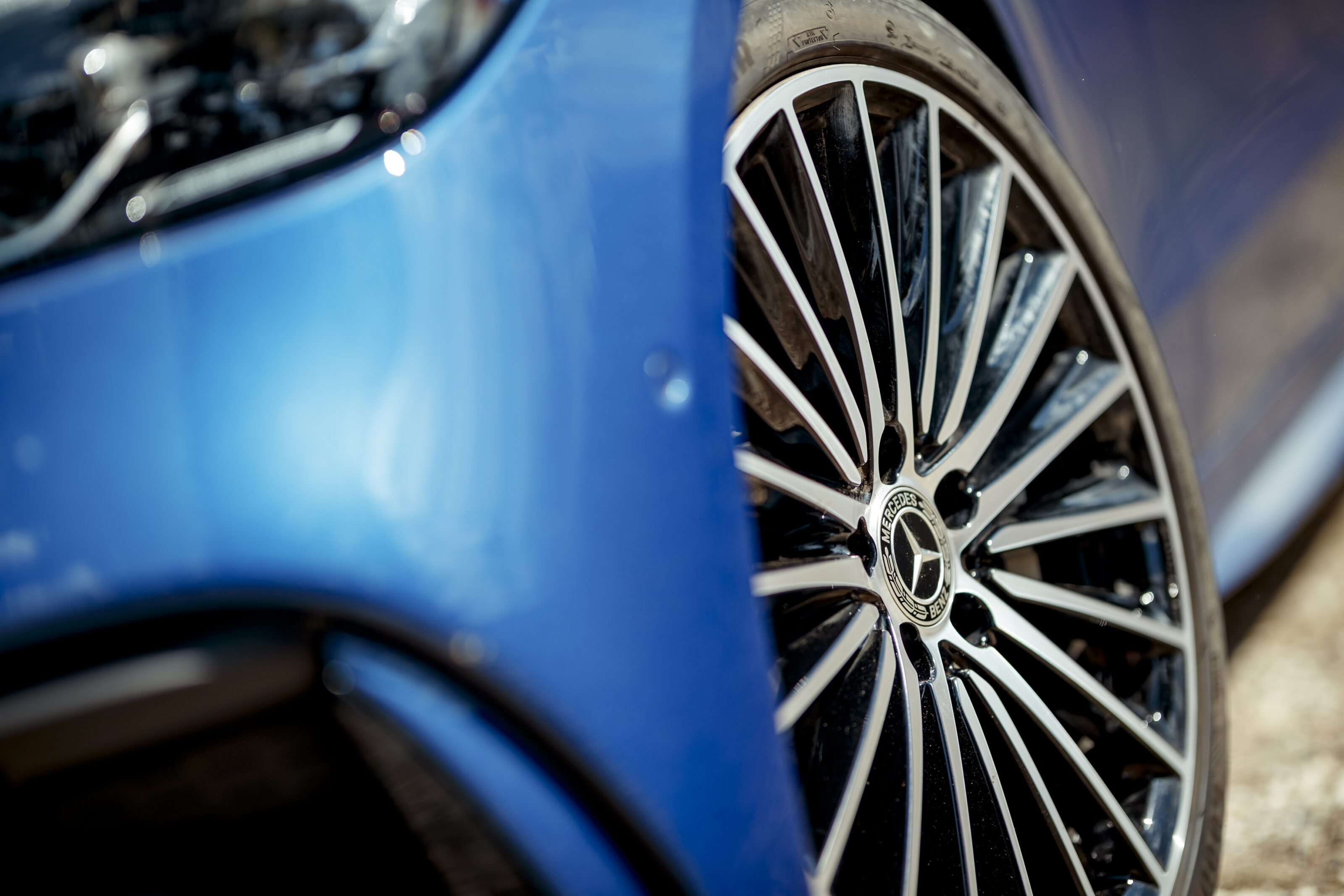
Some judges, too, failed to gel with the new rear-steering (available as a $3400 option on both variants, together with the adaptive dampers). The rear-steering can frustrate the rear-drive dynamics somewhat; it would be good if you could switch it off. But it’s hard to look past its advantages such as a tighter turning circle and greater low-speed agility.
“A shame there’s no separate adaptive damper and rear-steer options,” opined Dan, “because the latter is a game-changer whereas the former adds an unnecessary complexity.”
Further cracks began to appear in the W206’s initially unflappable facade as judges shared minor build quality concerns – a subtle yet obvious rattle coming from behind the central infotainment displays of both cars. One that would go away if you applied some pressure on the screen. If you just bought the car, the judges agreed, you’d be a bit miffed. “Biggest question mark is around interior quality,” said Alex. “Both materials and finish.”
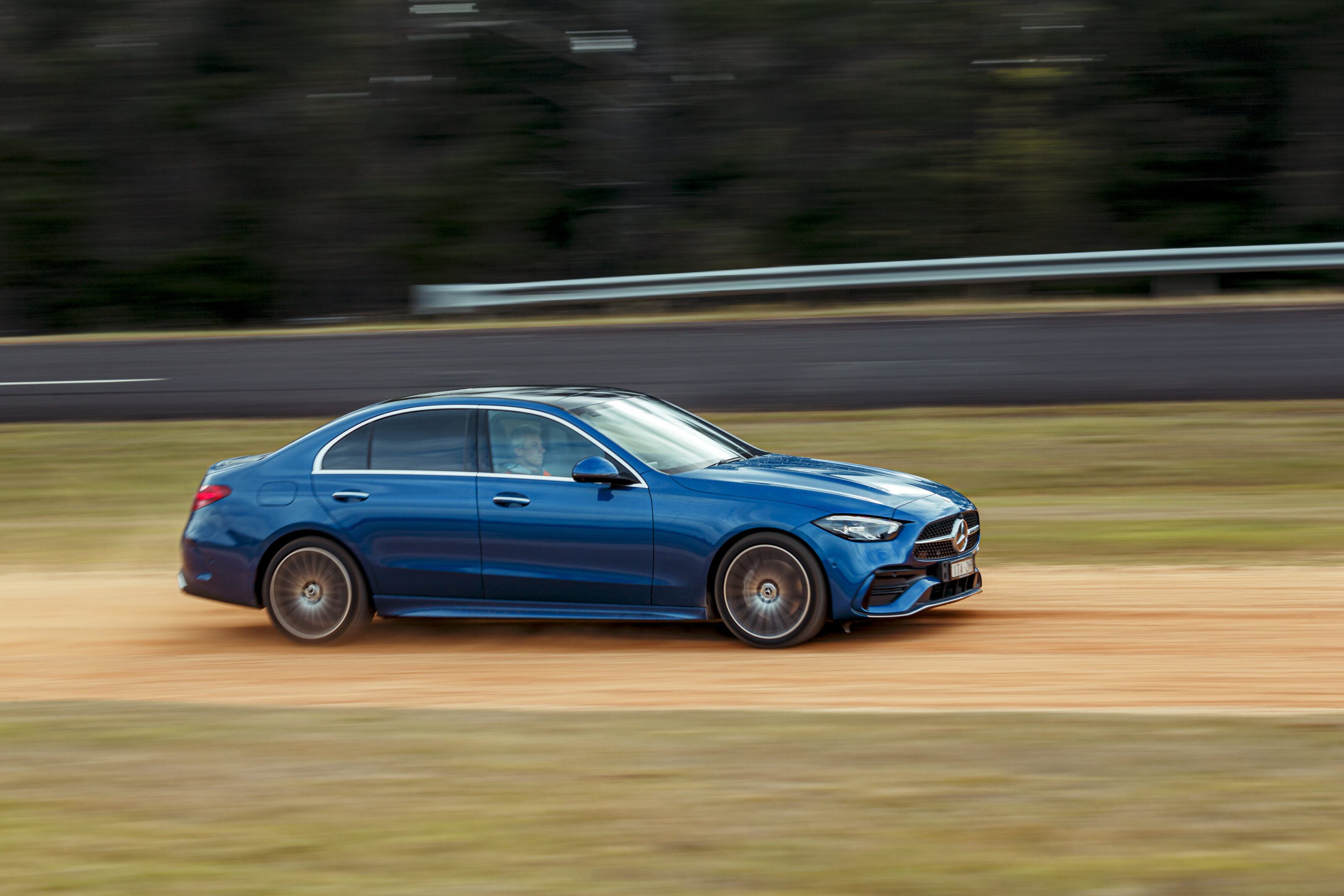
“Junior S-Class appeal with distinct family resemblance and smart styling inside and out” – Daniel Gardner
For Function as a high-tech luxury vehicle, the W206 performs strongly. For Safety, you can’t argue with some of the cleverest active systems we’ve ever tested, much less 10 airbags including, for the first time, a central one in the dash. For Efficiency, Mercedes claims 6.9L/100km for the 200 and 7.3L for the 300.
On a drive to Melbourne and back overnight, we had the urge to finger-tap the fuel display on the digital cluster as it appeared to be not moving. Actually, the C200, on the freeway, could nudge 1000km from its 66-litre tank.
That’s thanks in part to the technology in the C-Class, especially from its 48-volt mild-hybrid set-up. An integrated starter-generator (ISG) makes for an incredibly smooth and rapid, if not completely imperceptible, start-stop system. Coasting, some electric-motor boost and obviously energy recovery also feature.
It would need to have done away with the internal combustion engines and gone straight to electric motors and a big battery to have scored better for Technology.
Alas, it would have cost more – as it is, the price has already risen by $12,000 to $15,000, bruising the value proposition. As mentioned in our first drive last month, whether buyers can justify $78,900 and $90,400 respectively for a four-cylinder luxury sedan remains to be seen. Our guess would be yes.
But viewed through the all-important prism of the COTY criteria, it became apparent Finalist would be as high as the W206 would ascend. There’d be no fifth COTY win for Mercedes-Benz in 2022. While the judges agreed the C-Class is an outstanding overall package, too many minor and uncharacteristic missteps ultimately added up to put the COTY winner’s trophy just outside the W206’s reach.
2022 Mercedes-Benz C-Class specifications
Two years after being one of the first international motor shows to succumb to the pandemic, the New York Auto Show has made a relatively low-key return.
Big ticket reveals were few, though we did see the covers come off a couple of cars from new players, including the One by Indian startup INDI EV, which will come standard with a 75kWh battery capable of a 370 kilometres of driving range for a starting price of US$45,000.
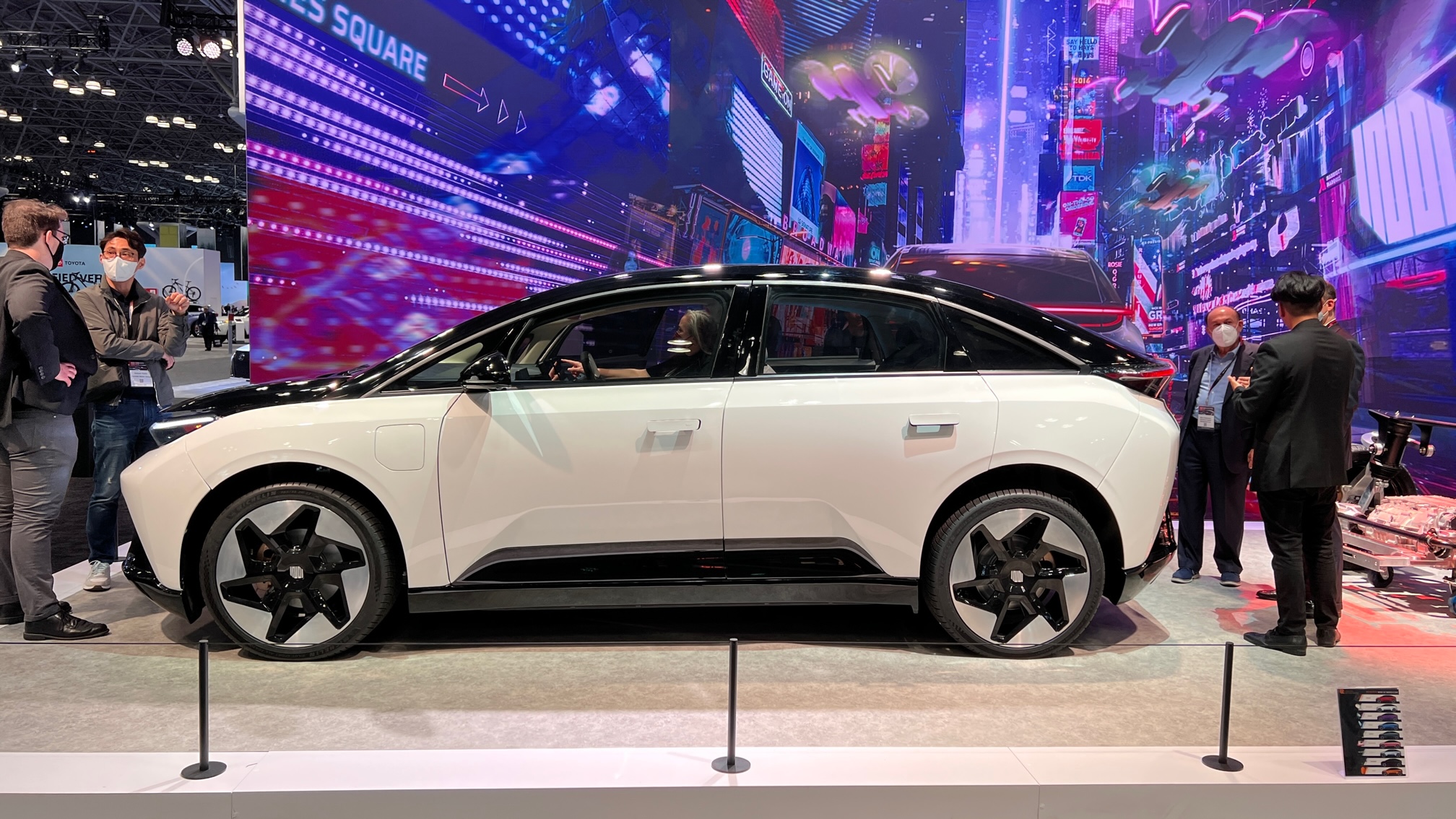
Another startup, Deus Automobiles from Austria, revealed its flagship electric hypercar called the Deus Vayanne. Built in conjunction with Italdesign and Williams Advanced Engineering, it promises a whopping 1640kW output and top speed of 400km/h.
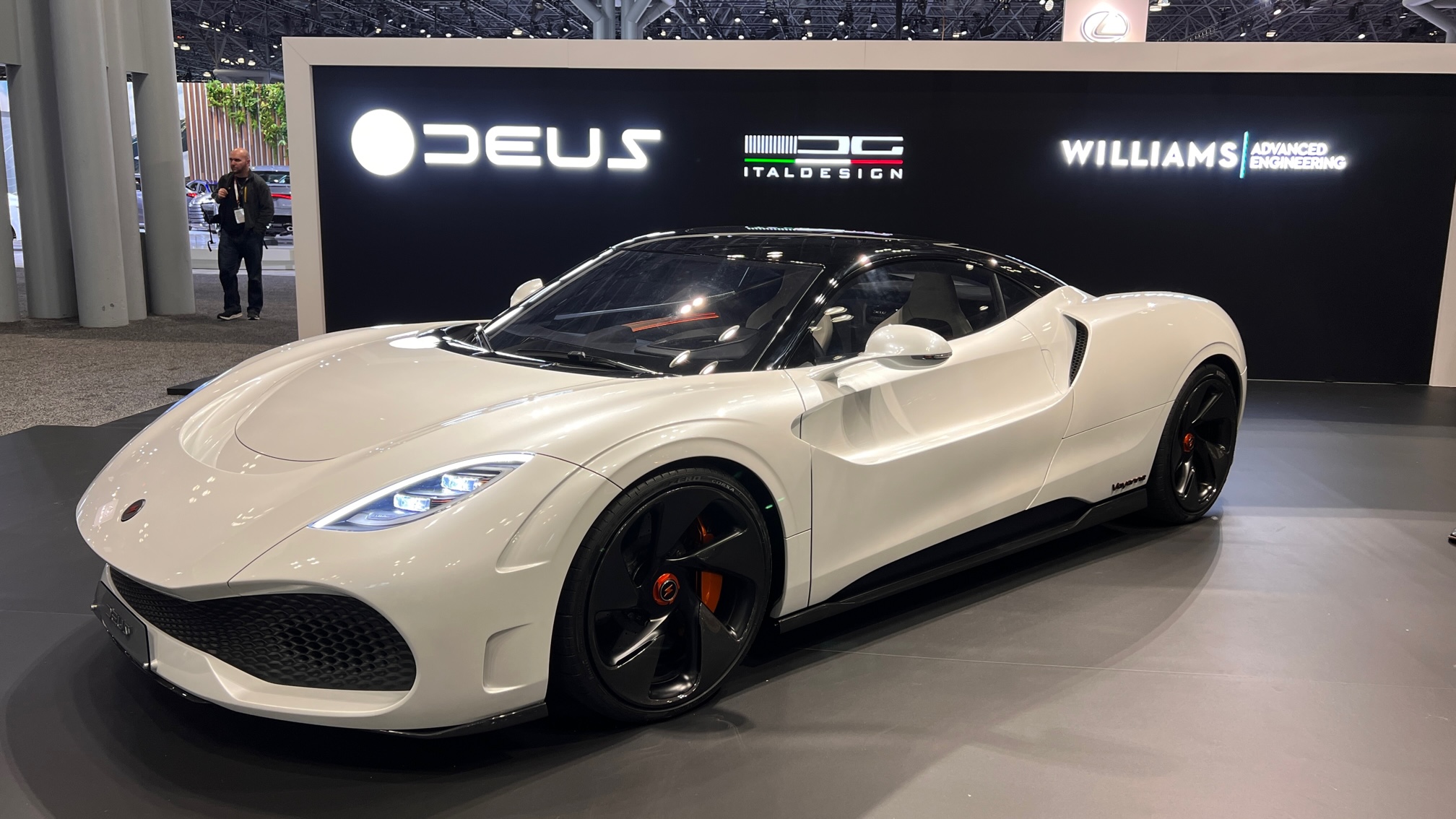
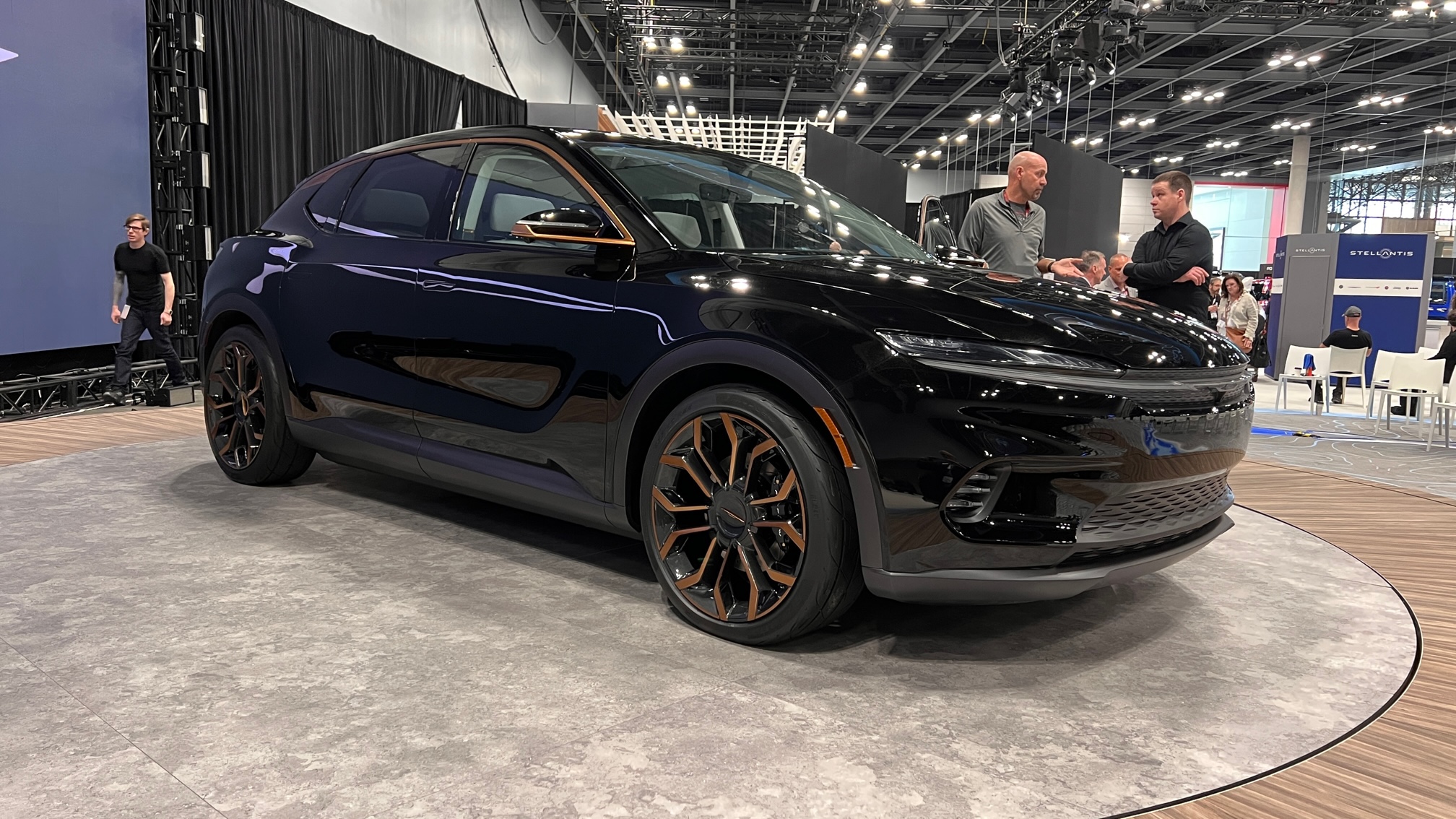
Also revealed were new variants of brand new or upcoming models including the Nissan Pathfinder Rock Creek, and Chrysler Airflow Graphite.
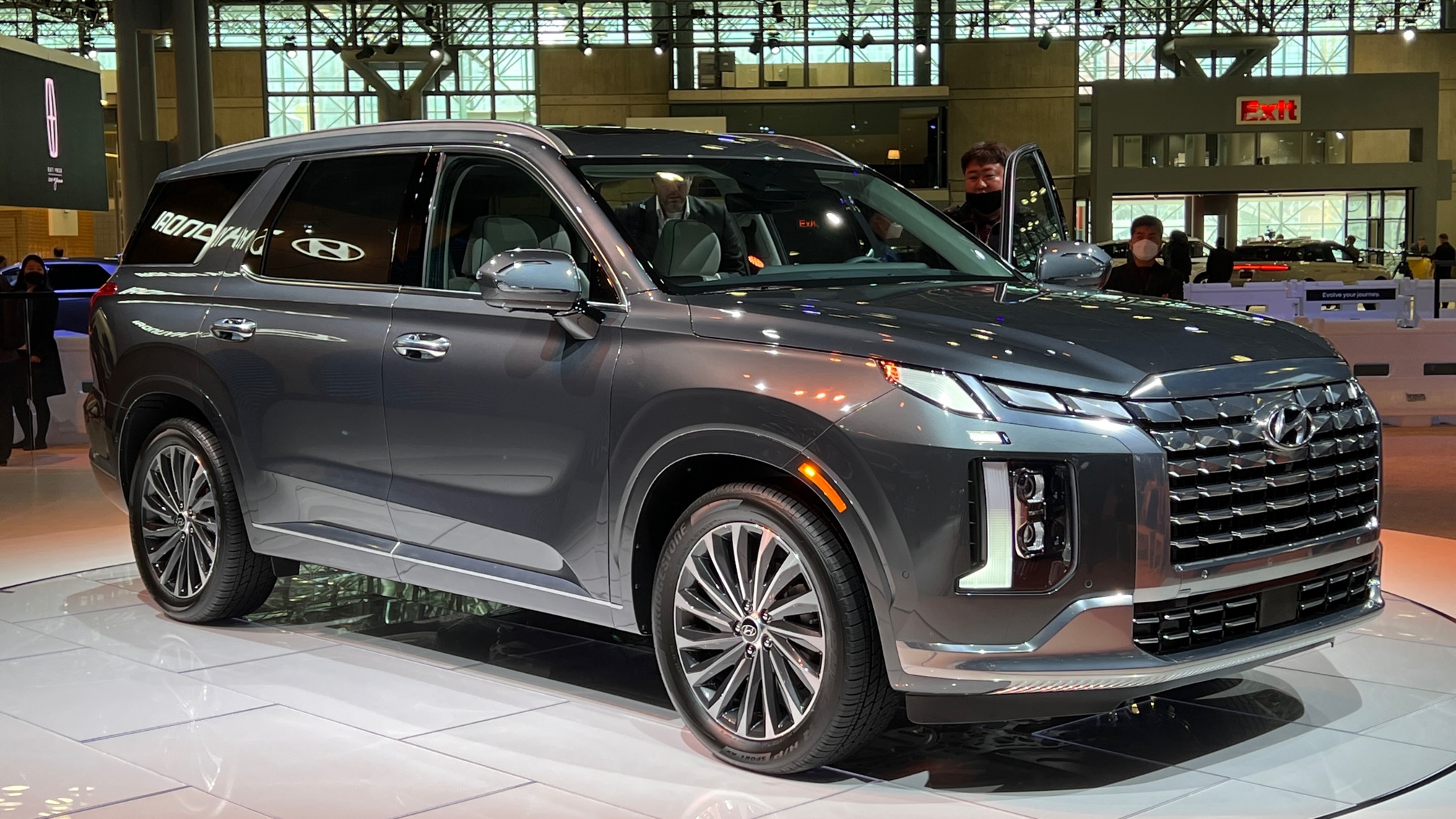
Then there were the facelifts, which included the 2023 Nissan Leaf, 2023 Hyundai Palisade and 2023 Kia Telluride.
Electric vehicles featured heavily at New York, with patrons able to take a ride in a range of models including the INDI One, Kia EV6, Volkswagen ID.4 and the Vinfast VF 8.

To view more images, click on any of the above pictures to view the full gallery.
Shawty had them apple bottom jeans, boots with the fur. What the hell was Flo Rida on about in 2008? I still have no clue but it’s fair to say that we’ve come a long way since 2008.
Back then, in the International Year of the Potato, we were marvelling at the first generation iPhone, laughing at Felipe Massa’s premature ejaculation in Brazil, and not realising that the world’s economy was about to financially implode.
It was also the last time that MOTOR visited Phillip Island with Performance Car of the Year. Our gun driver for the event was none other than hardy perennial Warren Luff, and conditions were pretty much lineball with what we experienced for PCOTY ’22.
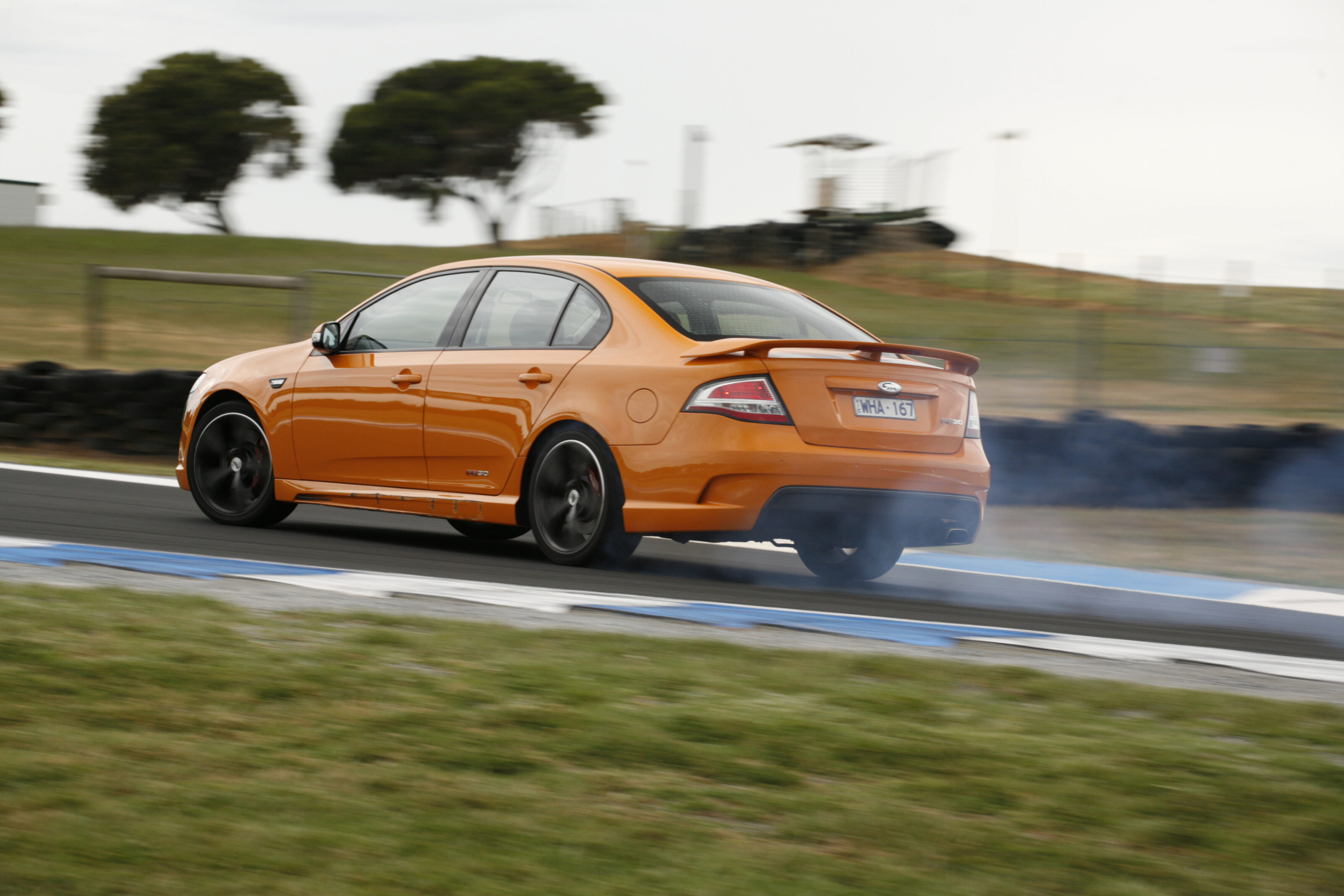
We even had snapper Cristian Brunelli on board at both events, although on this occasion we wisely avoided the karting given Brunelli’s kamikaze tactics.
It’s eye-opening quite how rapid today’s crop of cars are compared the lap times 14 years ago. Here’s the data table from 2008 for reference.
| CAR | POWER (kW) | PWR (kW/tonne) | 0-400m | LAP TIME |
|---|---|---|---|---|
| Porsche 997 GT2 | 390 | 271 | 11.9 sec | 1:43.1 |
| Lamborghini Gallardo LP560-4 | 412 | 275 | 12.2 sec | 1:44.9 |
| Porsche 997 Carrera S | 283 | 199 | 12.6 sec | 1:48.1 |
| BMW E92 M3 DCT | 309 | 193 | 13.0 sec | 1:49.8 |
| Audi RS6 wagon | 426 | 210 | 12.8 sec | 1:51.0 |
| Lotus Elise SC | 163 | 187 | 13.6 sec | 1:51.3 |
| Mercedes-Benz SL63 AMG | 386 | 204 | 13.2 sec | 1:51.7 |
| Audi TT S | 200 | 143 | 14.2 sec | 1:53.4 |
| Mercedes-Benz C63 AMG | 336 | 203 | 13.4 sec | 1:53.6 |
| FPV F6 | 310 | 171 | 13.7 sec | 1:53.8 |
| Mitsubishi Lancer Evo X | 217 | 139 | 14.1 sec | 1:55.1 |
| AVERAGE | 312 | 199.5 | 13.2 sec | 1:50.5 |
Now let’s fast forward to 2022. The field is split into two sections, with eight PCOTY cars and 10 SCOTY contenders. Let’s roll out the big guns first.
| CAR | POWER (kW) | PWR (kW/tonne) | 0-400m | LAP TIME |
|---|---|---|---|---|
| Porsche 992 GT3 | 375 | 261 | 11.5 sec | 1:39.7 |
| Lamborghini Huracu00e1n Evo | 470 | 331 | 10.6 sec | 1:43.1 |
| BMW M3 | 353 | 207 | 12.9 sec | 1:45.0 |
| Corvette C8 3LT | 369 | 239 | 11.7 sec | 1:45.2 |
| Porsche Boxster 25 Years | 294 | 204 | 12.0 sec | 1:45.6 |
| Porsche Taycan Turbo S | 560 | 253 | 10.7 sec | 1:45.9 |
| Alpina B3 | 340 | 183 | 11.8 sec | 1:48.7 |
| Jaguar F-Type P450 RWD | 331 | 194 | 12.9 sec | 1:49.7 |
| AVERAGE | 386.5 | 234 | 11.8 sec | 1:45.4 |
We observe that while power has increased by 23.9 per cent, the extra weight the modern cars carry has seen the PWR figure climb by 17.3 per cent, resulting in a 10.3 per cent decrease in 0-400m times and a 4.6 per cent reduction in overall lap times. Diminishing returns?
While old Bernoulli figured out that drag is proportional to the square of speed, an 80km/h hairpin is an 80km/h hairpin regardless of how many kilowatts you’re wielding.
Some of the data here is fascinating. A naturally aspirated GT3 now trounces a twin-turbocharged GT2 in a straight line and around the Island.
The 997 Carrera S would have been one of the tail-end charlies at PCOTY 2022, down there with the Jaguar F-Type and Alpina B3 on a lap.
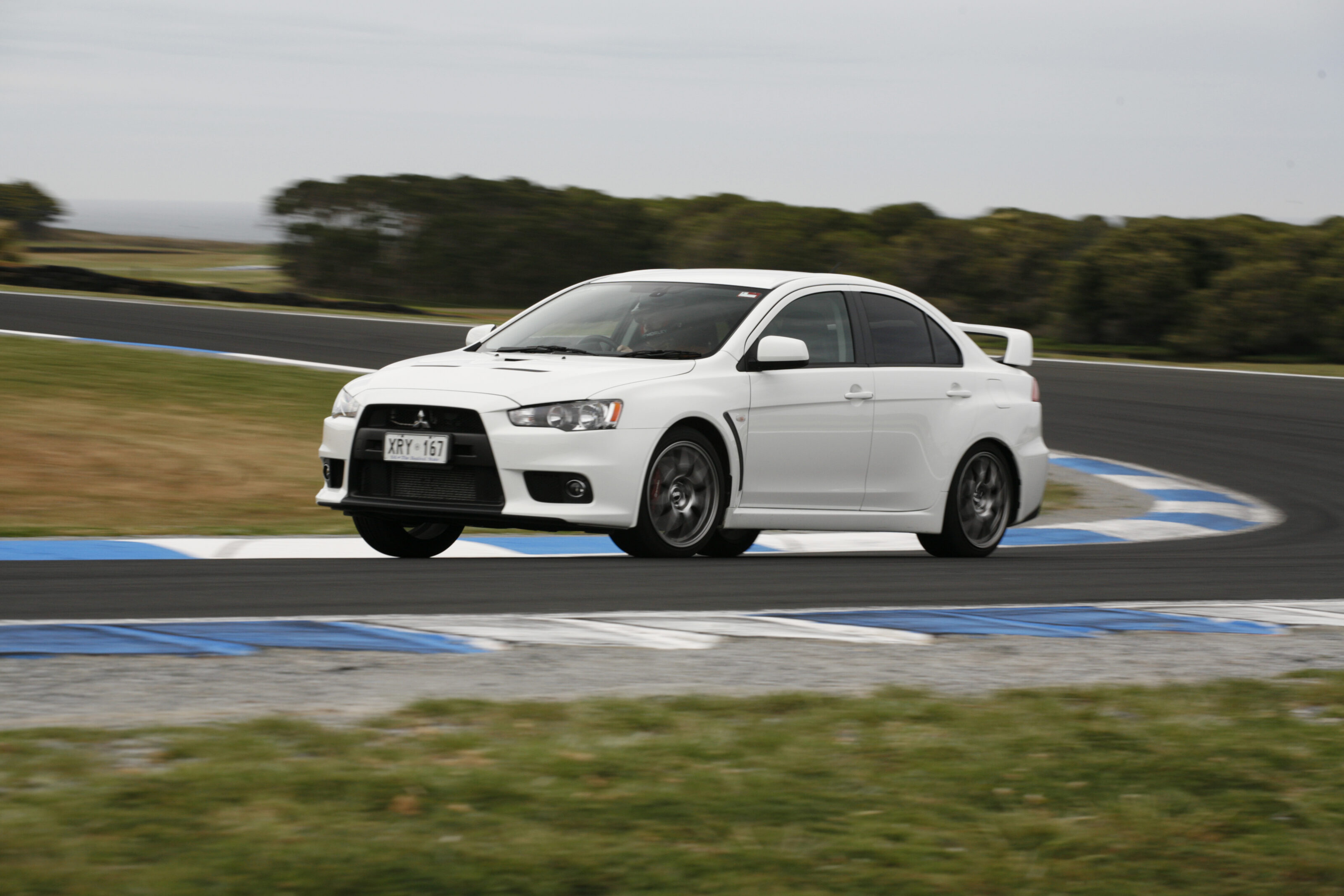
A BMW M3 is now nearly five seconds a lap quicker, and had we brought an M3 Competition automatic along, it would easily have eclipsed the Lamborghini Gallardo’s lap time.
The lovely E92 M3, which netted the fourth quickest lap time in 2008, would have found itself wielding the wooden spoon in 2022.
The average 0-400m of the 2022 cars is better than the very fastest of the 2008 cars. That’s quite something.
Bring the more affordable SCOTY cars into the equation and things get really interesting.
| CAR | POWER (kW) | PWR (kW/tonne) | 0-400m | LAP TIME |
|---|---|---|---|---|
| Ford Mustang Mach 1 | 345 | 194 | 12.5 sec | 1:48.3 |
| Toyota GR Yaris Rallye | 200 | 156 | 12.6 sec | 1:51.2 |
| Hyundai i30 Sedan N | 206 | 143 | 14.0 sec | 1:52.3 |
| Ford Focus ST | 206 | 137 | 14.1 sec | 1:53.4 |
| Volkswagen Golf GTI | 180 | 138 | 14.3 sec | 1:53.8 |
| Skoda Octavia RS | 180 | 125 | 14.3 sec | 1:53.9 |
| Subaru BRZ | 174 | 135 | 14.2 sec | 1:54.4 |
| Hyundai i20 N | 150 | 126 | 15.1 sec | 1:55.8 |
| BMW 128ti | 180 | 125 | 14.3 sec | 1:56.2 |
| Mazda MX-5 GT RS | 135 | 131 | 14.6 sec | 1:58.0 |
| AVERAGE | 195.6 | 141 | 14.0 sec | 1:53.7 |
Despite a manifestly inferior, power-to-weight ratio, the Toyota GR Yaris Rallye is able to show a supercharged Lotus Elise a clean pair of heels on track, and only the mega-money 997 GT2 and Lamborghini Gallardo 560-4 would be able to better it on the 400m dash.
The Skoda Octavia wagon would beat a Mitsubishi Evo X on a lap of Phillip Island and 180kW worth of Volkswagen’s Golf GTI would finish the lap in a photo finish with the 310kW FPV F6.
Ford’s Mustang Mach 1 would have done a number on everything bar the top three fastest cars of 2008, just being beaten on the drag to the line by the Porsche 997 Carrera S. Ford’s unprepossessing Focus ST would easily have the measure of a 6.2-litre Mercedes-Benz C63 AMG’s lap time and a front-drive Hyundai i30 Sedan N would better the 0-400m sprint of the all-wheel drive Evo X.
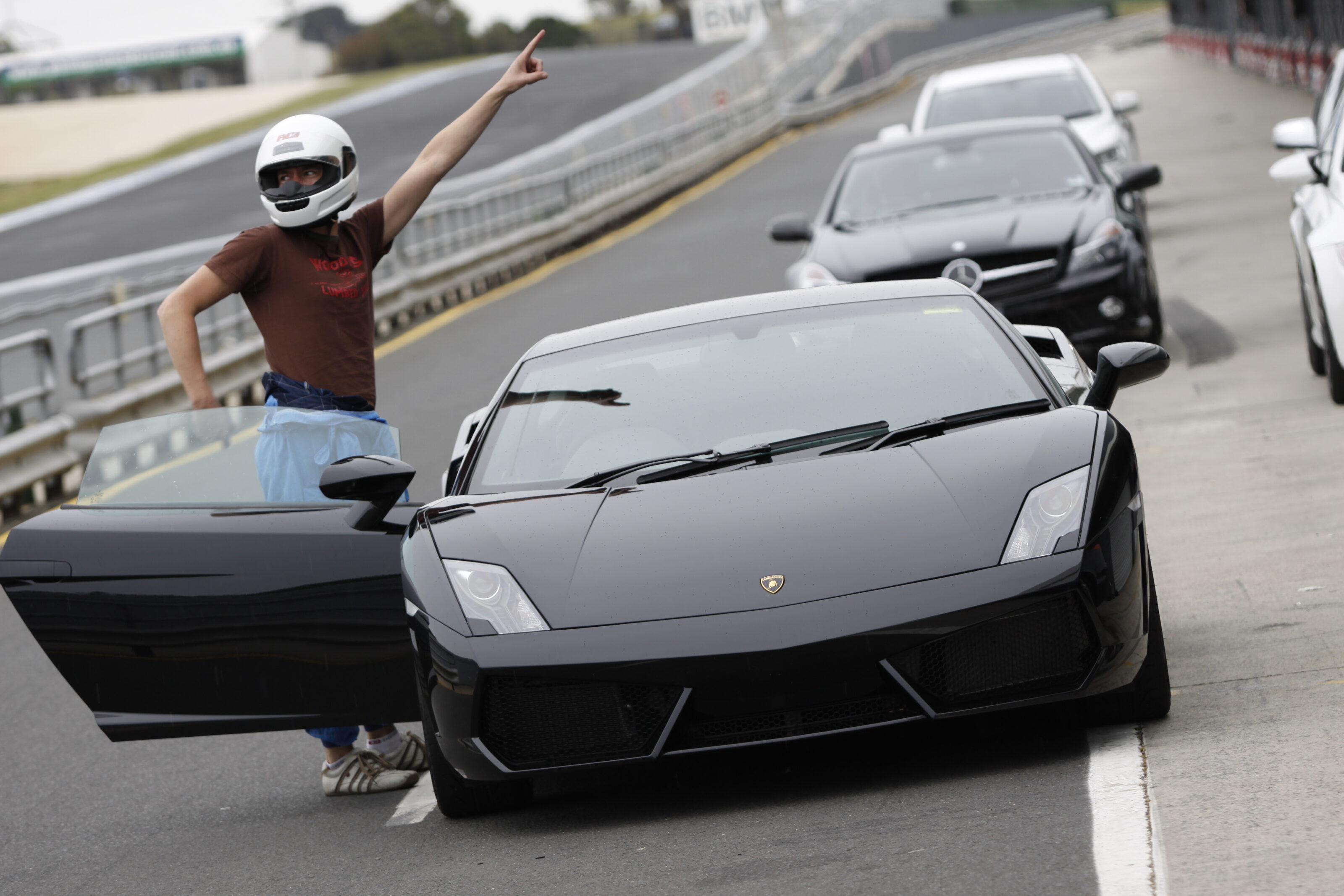
Some of the old times actually stack up very well. The 997 GT2 is fast even by today’s standards and more than a decade and a half of development at Lamborghini has resulted in a V10 supercar that’s 1.8 seconds quicker per lap, testament to the talent of the original.
The average lap time in 2008 was the 1:50.5, while the average PCOTY lap time in 2022 was a mere 1:45.4. Is it going to take another 16 years before the average PCOTY lap is down at around 1:40, or about as fast as the 992 GT3’s fastest lap? That’s a tough one to answer.
We could have some phenomenally quick electric performance cars that’ll totally rewrite the record books. One thing’s for sure. It’s going to be fun finding out.
Just how quick is an Mk 8 Golf GTI? You might well be surprised. On paper, the bald facts are that its 180kW EA888 2.0-litre turbo engine will propel it to 100km/h in 6.2 seconds, according to the factory claim. We put it against the clock and recorded 6.21 seconds which, with rounding, bears out Volkswagen’s claim perfectly. So far, so unspectacular.
What is really eye-opening is its lap time around Phillip Island. With Luffy at the wheel, the Golf stopped the timer at 1m 53.76 seconds. That put it a solid midfield position in the Sports Car of the Year rankings, punching well above rivals like the BMW 128ti. But it’s only when you compare it to our last PCOTY visit to Phillip Island that you realise quite what a weapon the new Golf is.
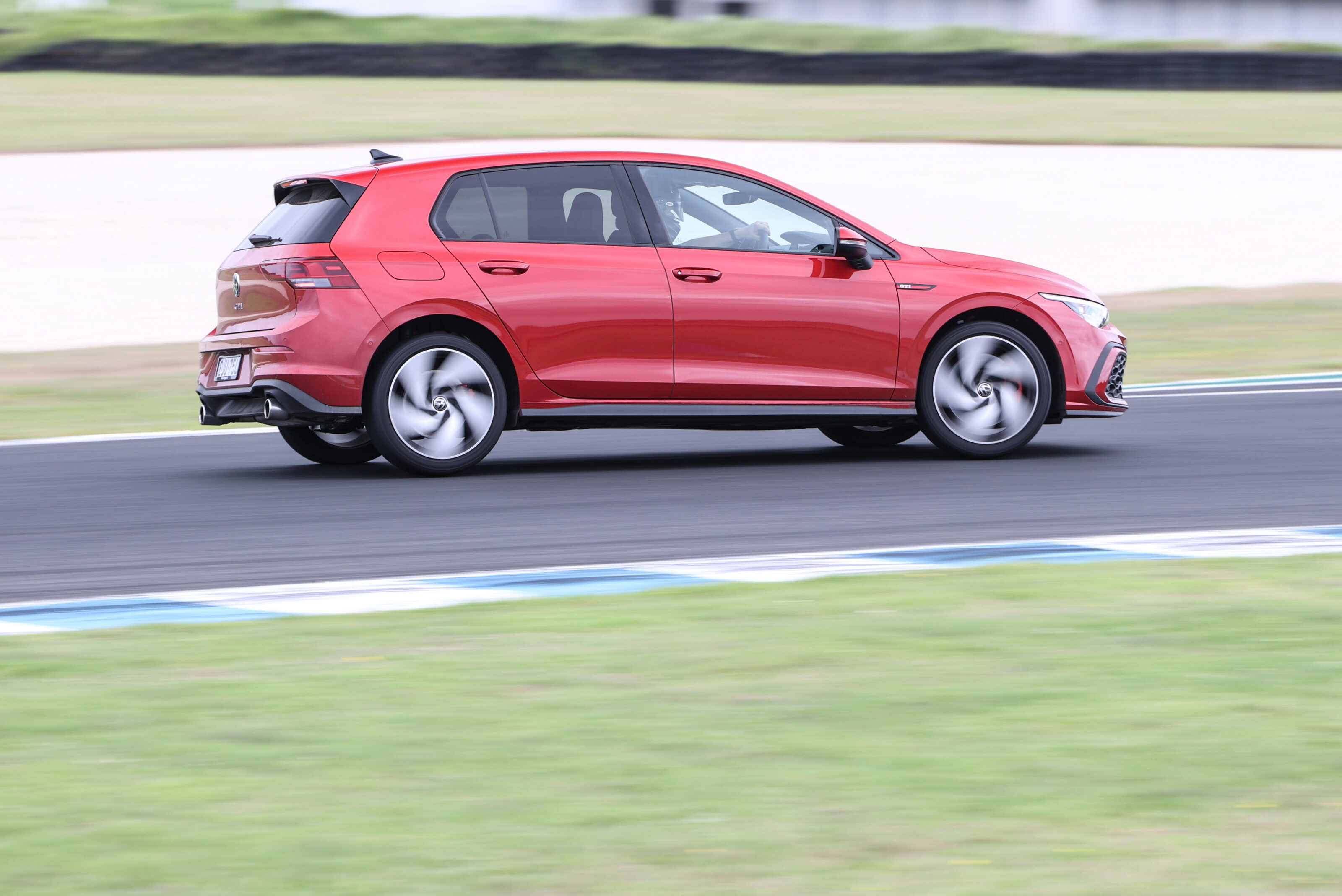
You’d need to spool the clock back to 2008 for that. Once again, the evergreen Mr Luff was at the wheel of the PCOTY cars, using Racelogic timing equipment. Atmospheric conditions were even comparable, which means that we’ve evened the variables as much as is practicable. Back then, the Golf would have beaten not only the Mitsubishi Evo X (1m 55.1s) but also would have just squeaked its nose ahead of the 310kW FPV F6 (1m53.8s).
The 336kW Mercedes-Benz C63 AMG would have beaten the Golf GTI, albeit by a vanishing 0.16s, which gives you some clue as to the cross-country ability of the latest Golf. And it also raises an intriguing question. Still think you need a Golf R?
