
On Friday afternoon, October 2, 2020, I got the phone call from the new owners of Wheels – who took control on that very day – to ‘make Car of the Year go ahead, whatever it takes’.
Prior to that call, we had, for the first time since 1963, resigned ourselves to the glum fact there was not going to be any Wheels Car of the Year (COTY) testing within that year.
Just as there was no Australian Grand Prix, no Olympics, and no motor shows, we had also made public our plans not to do COTY. There’d be too great a risk of disruptions, last-second cancellation, border closures, or worse.
There was the somewhat major hurdle, also, that the bulk of the Wheels team continued to live under Victoria’s brutal 112-day lockdown.
But with the COVID viper back in its den, and Victoria seemingly in recovery mode, the chance emerged to ‘save’ COTY. And so with credit to our new owners, it was restart engines, and straight to afterburners.
There were no shortage of immediate difficulties. Aside from presuming Victoria’s COVID restrictions would continue to ease, which was not a given, COTY was generally held in November and typically required three to six months of organising.
It was October… also, we were banned from leaving Victoria. COTY, in the regulators’ eyes, was not considered ‘essential work’. Oh, the temerity…
Also, as the person in charge, I had also just completed only my first issue ever of this very magazine. I had not even attended a COTY test previously. Yes, I had helped organise seven Performance Car of the Year awards at MOTOR, but new Editor Andy Enright might have had something to say if I organised a racetrack, some twisty roads and 10 to 15 of the year’s hottest sports cars for Wheels COTY…
It became obvious to us early on that it might take some Carlos Ghosn-levels of harebrained planning in order to make COTY possible. Victoria initially continued to seem too risky.
At one stage we were hoping to get ourselves from Victoria to Queensland, quarantine for 14 days and hold the testing at Mount Cotton. It looked for a bit like we might have to go via Darwin.
Then, we hit up Sydney Motorsport Park and Canberra’s Sutton Road Driver Training complex – we wondered, cutely, if we could have a quarantine bubble just for our COTY testing – before, finally, Victoria came back into view, very late in the piece. Luckily.
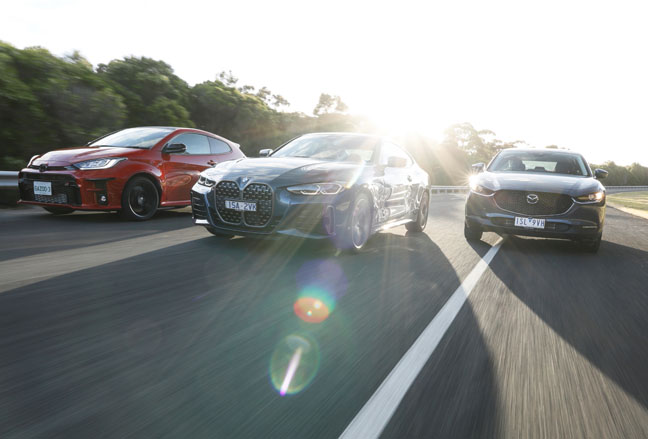
After we had locked and loaded the venue – the Australian Automotive Research Centre proving ground in Anglesea – the race was on to shortlist the cars. With the amount of time we had to organise everything, we simply couldn’t have the enormous fields of years past. So it made the process even more difficult of choosing who got a guernsey, and who didn’t.
We had to lean especially hard on our hard-toiling road-testers in Sydney, who over the course of 2020 were able to test a lot more cars than their Victorian comrades, to know whether a vehicle was worthy or not of getting the COTY call-up.
Of course, you know the end to this story, and it’s a happy one – we got COTY done, the fruits of which are yours to enjoy here on our website, in the March issue, and in video form (check our YouTube channel). But it will forever go down as the One That Almost Didn’t Happen. And thank you to everyone who helped make it happen, the car manufacturers who worked overtime to get us cars to test, especially.
The Mazda CX-8 three-row large SUV range has been bolstered with two new variants including a ‘sporty’ Touring SP and premium-spec Asaki LE.
With a new luxurious six-seat layout, the CX-8 Asaki LE has been introduced in response to the popularity of the Captain’s Seat’ layout in the Mazda CX-9.
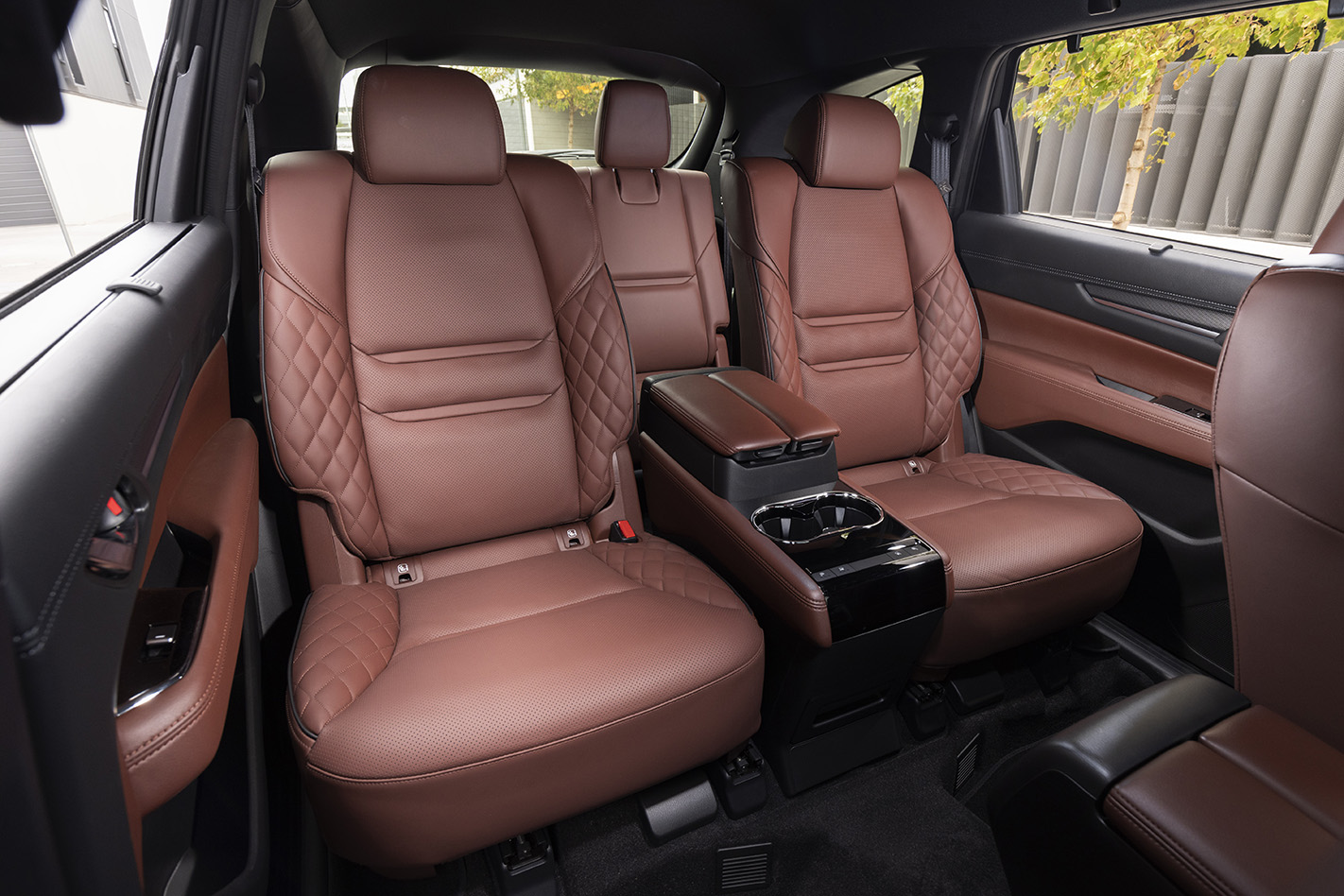
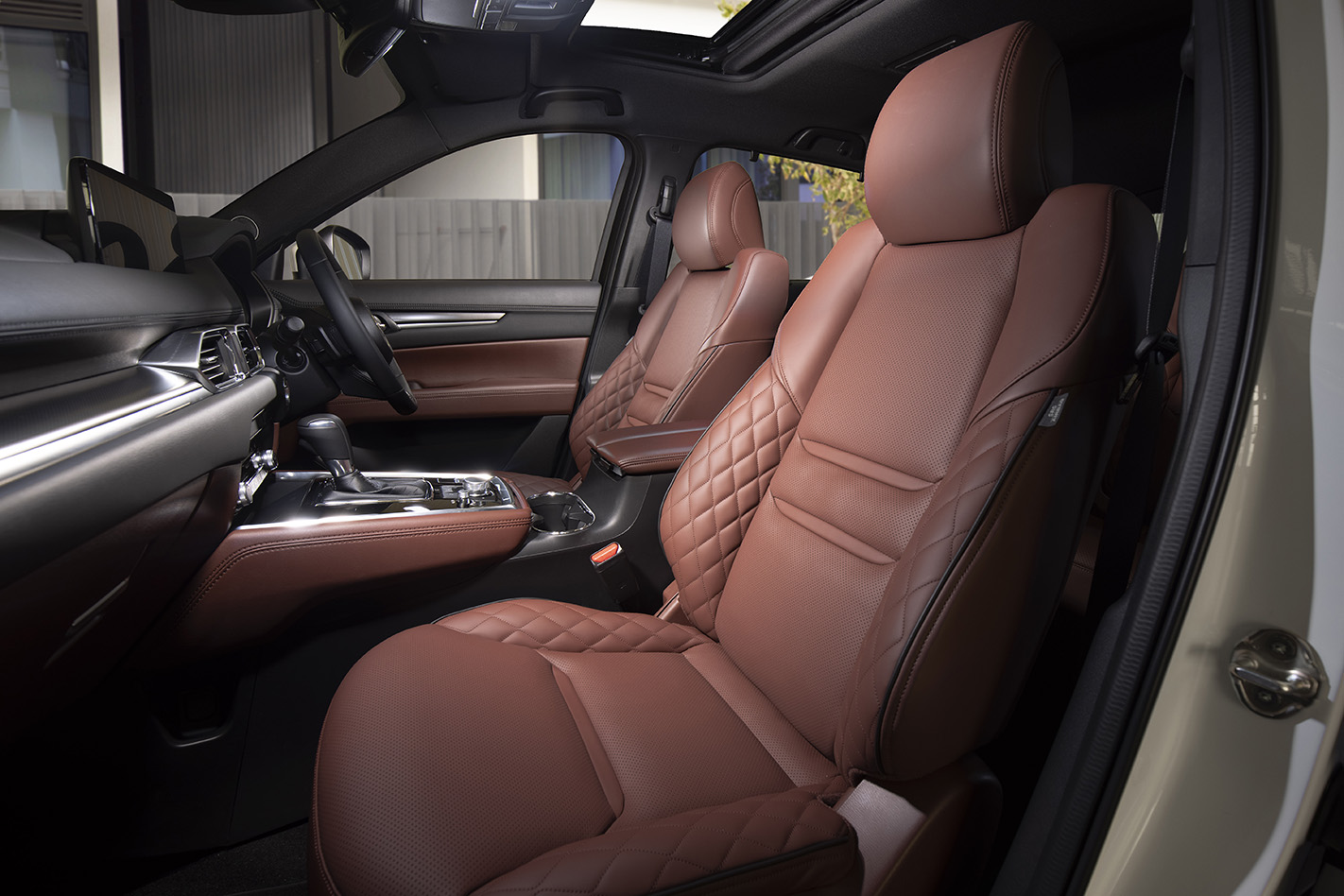
Featuring all the trappings of the Azaki spec, the Azaki LE is trimmed with a new quilted Nappa leather seat upholstery, available in Chroma Brown (pictured) or Pure White.
The plush power-adjusted second-row seats feature heating and ventilation, and are separated by an elegant centre console housing a storage bin with a padded lid, twin cup holders and integrated USB charging ports.
Priced at $69,920, the Asaki LE costs $3200 more than the seven-seat Asaki and shares its 2.2-litre turbocharged diesel engine and all-wheel-drive traction.
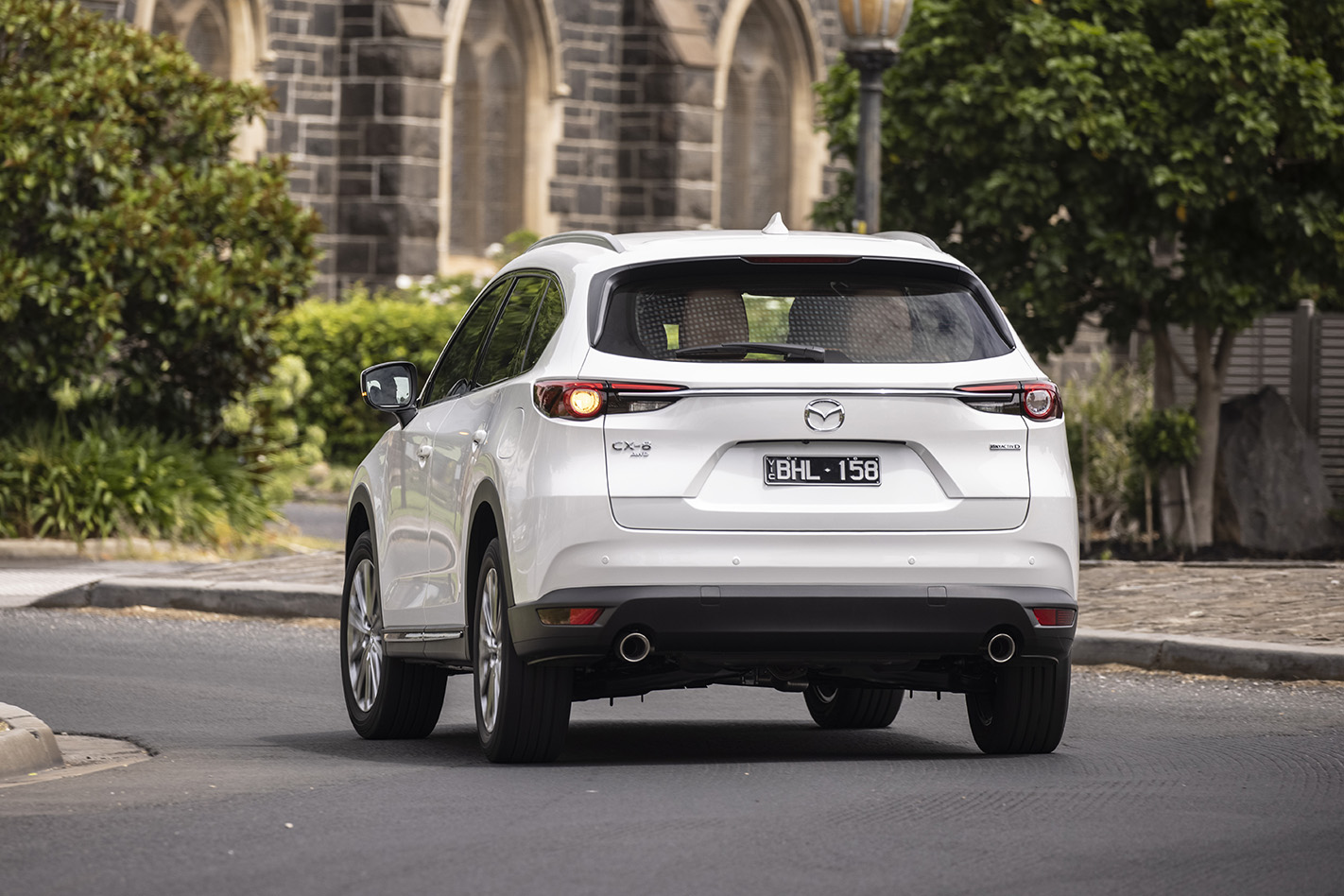
The new CX-8 Touring SP, meanwhile, holds up the middle of the CX-8 range.
Priced from $47,790, it’s available with the 2.5-litre petrol engine with front-wheel-drive or, for an additional $7000 with the diesel AWD powertrain.
The Touring SP attracts a $1000 premium over the standard Touring spec, with the extra cash bringing mostly cosmetic enhancements including black metallic-finished 19-inch alloy wheels (up from the standard 17-inch alloy wheels), black grille and exterior mirror caps, black synthetic suede combination upholstery and red stitching.
The Touring SP also gains 10-way power adjustment for the driver’s seat, with a two-position memory function.
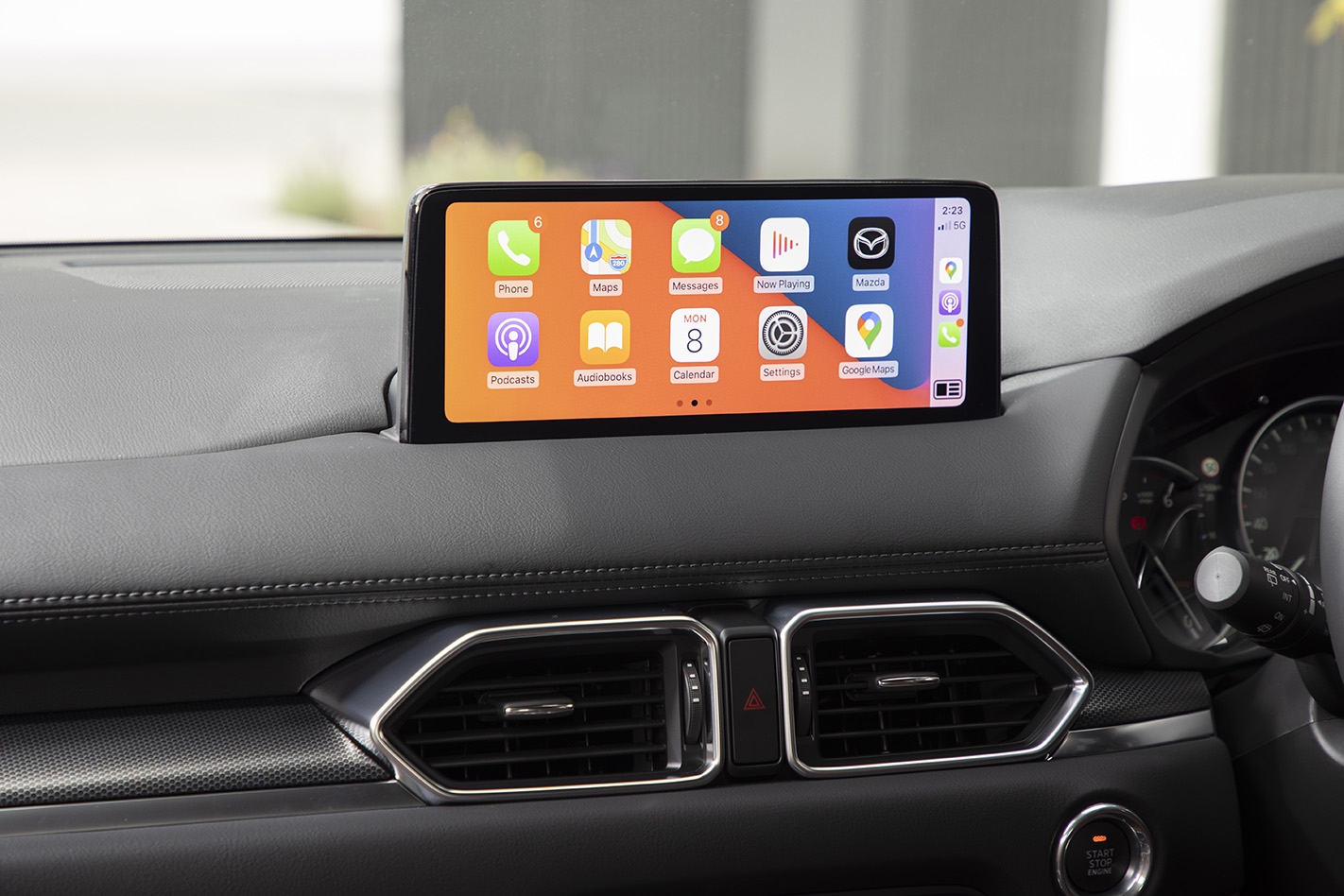
Elsewhere in the range, the CX-8 GT variant gains 10.25-inch wide-screen infotainment screen and wireless phone charging and hand-free tailgate, which were previously only available in the Asaki, plus uniquely-styled 19-inch alloy wheels.
The GT also has new seat upholstery options, with a choice of Burgundy or Black leather, while the Asaki comes with the new Chroma Brown quilted Nappa leather (below) as standard.
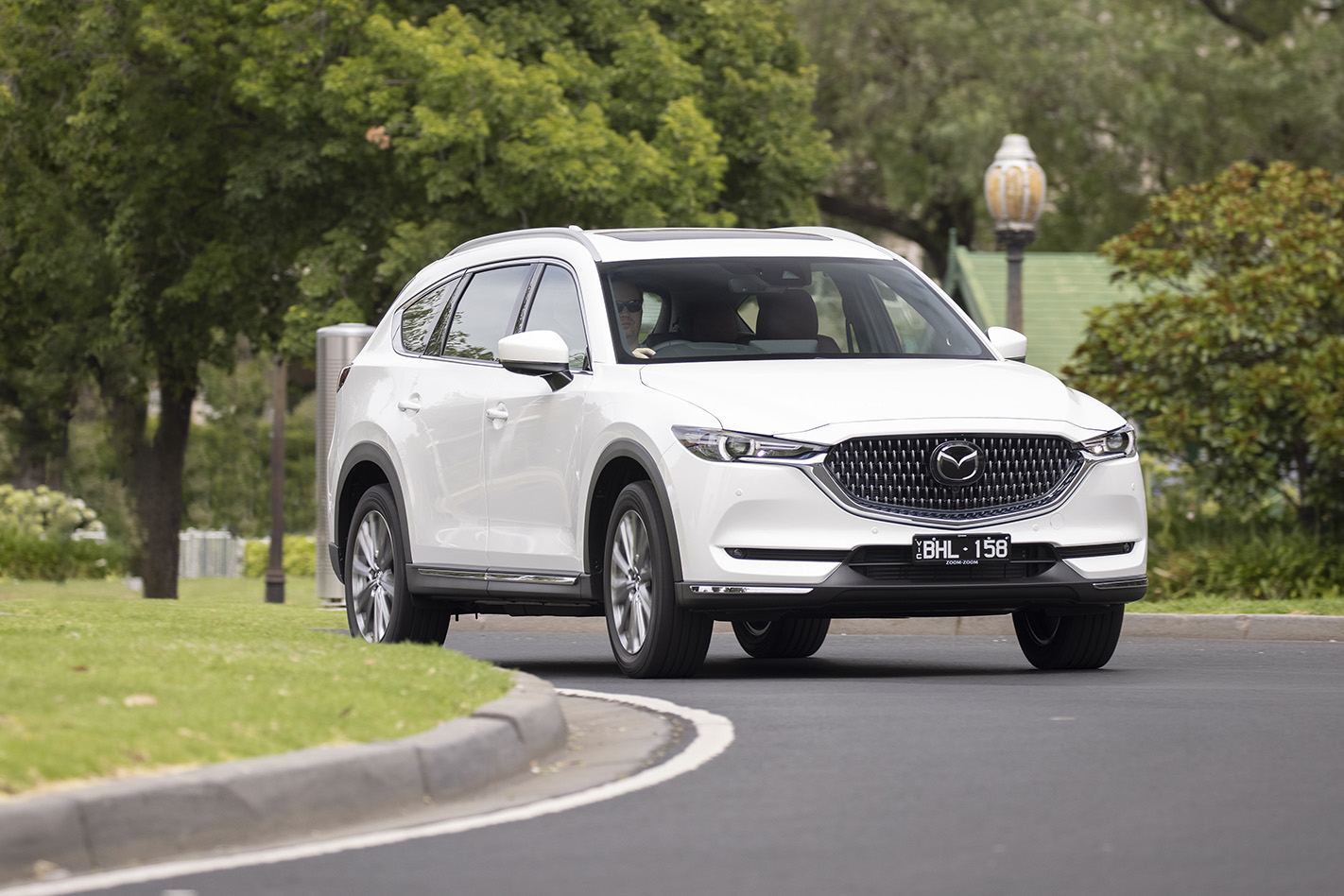
The CX-8 range also gains two new exterior colours – Platinum Quartz Metallic and Polymetal Grey Metallic.
Apart from the introduction of the new variants, pricing for the 2021 CX-8 range remains unchanged from 2020.
The 2021 Mazda CX-8 range is now available in Mazda showrooms.
2021 Mazda CX-8 pricing
Variant | Retail price |
Sport Petrol FWD | $39,990 |
Touring Petrol FWD | $46,790 |
Sport Diesel AWD | $46,990 |
Touring SP Petrol FWD | $47,790 |
Touring Diesel AWD | $53,790 |
Touring SP Diesel AWD | $54,790 |
GT Diesel FWD | $59,290 |
Asaki Diesel FWD | $62,790 |
GT Diesel AWD | $63,290 |
Asaki Diesel AWD | $66,790 |
Asaki LE Diesel AWD | $69,920 |
UPDATE, March 4: Kia’s new logo has now appeared on the updated Stinger liftback sedan and the new Carnival, although both have been overseas launches only.
With both models only recently making their Australian debut, the company’s local arm has been unable to confirm timing for the new badging – which suggests it could occur as part of a quiet rolling production update, or in a model-year 2022 change.
READ: Stinger spotted with new Kia badging READ: New Carnival launches in the US, replacing Sedona name
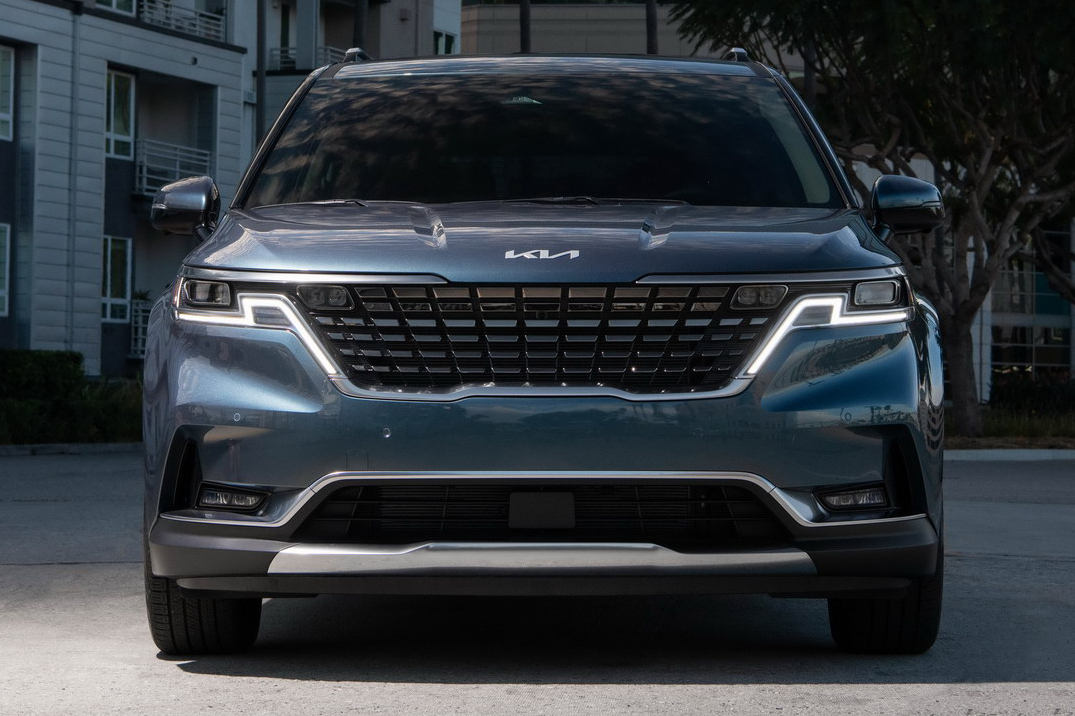
UPDATE, February 11: Kia’s Australian has confirmed its new logo will appear first on the updated 2021 Kia Cerato in May or June, followed by the Kia Niro range (including the e-Niro electric model) and then the new Sportage in the third quarter of 2021.
The story up to here
January 6, 2021: It’s been teased for months now, but Kia has finally taken the wraps off its newest logo design.
Launched a bit over a week ahead of what the company is calling its ‘New Kia Brand Showcase’, the new logo eschews the straight-laced letters-within-oval look that has adorned Korea’s second-biggest carmaker’s creations since 1994.
“Kia’s new logo represents the company’s commitment to becoming an icon for change and innovation”, said Ho Sung Song, Kia’s global President and CEO.
“The automotive industry is experiencing a period of rapid transformation, and Kia is proactively shaping and adapting to these changes.”
Kia claims that the new logo is designed to mimic a signature.
‘The rhythmical, unbroken line of the logo conveys Kia’s commitment to bringing moments of inspiration, while its symmetry demonstrates confidence,” reads a statement from the company.
Kia’s new logo has already set a new world record, too.
More than 300 so-called pyrodrones launched hundreds of fireworks in a synchronised display, spelling out the new logo and setting a new Guinness World Record for Most Unmanned Aerial Vehicles (UAVs) Launching Fireworks Simultaneously. Quite.

The brand’s future strategy plans will be announced on January 15, and will likely include more details on its Plan S strategy.
Kia’s future plans were partly announced early in 2020, with the brand planning to expand its battery-electric vehicle (BEV) line-up to 11 models by 2025.
As well, Kia is aiming for BEVs to account for 20 per cent of the brand’s total vehicle sales in markets including Korea, North America and Europe.
That electrified strategy will manifest itself in Australia with the impending launch of Kia’s first EV, the e-Niro, before the middle of 2021.
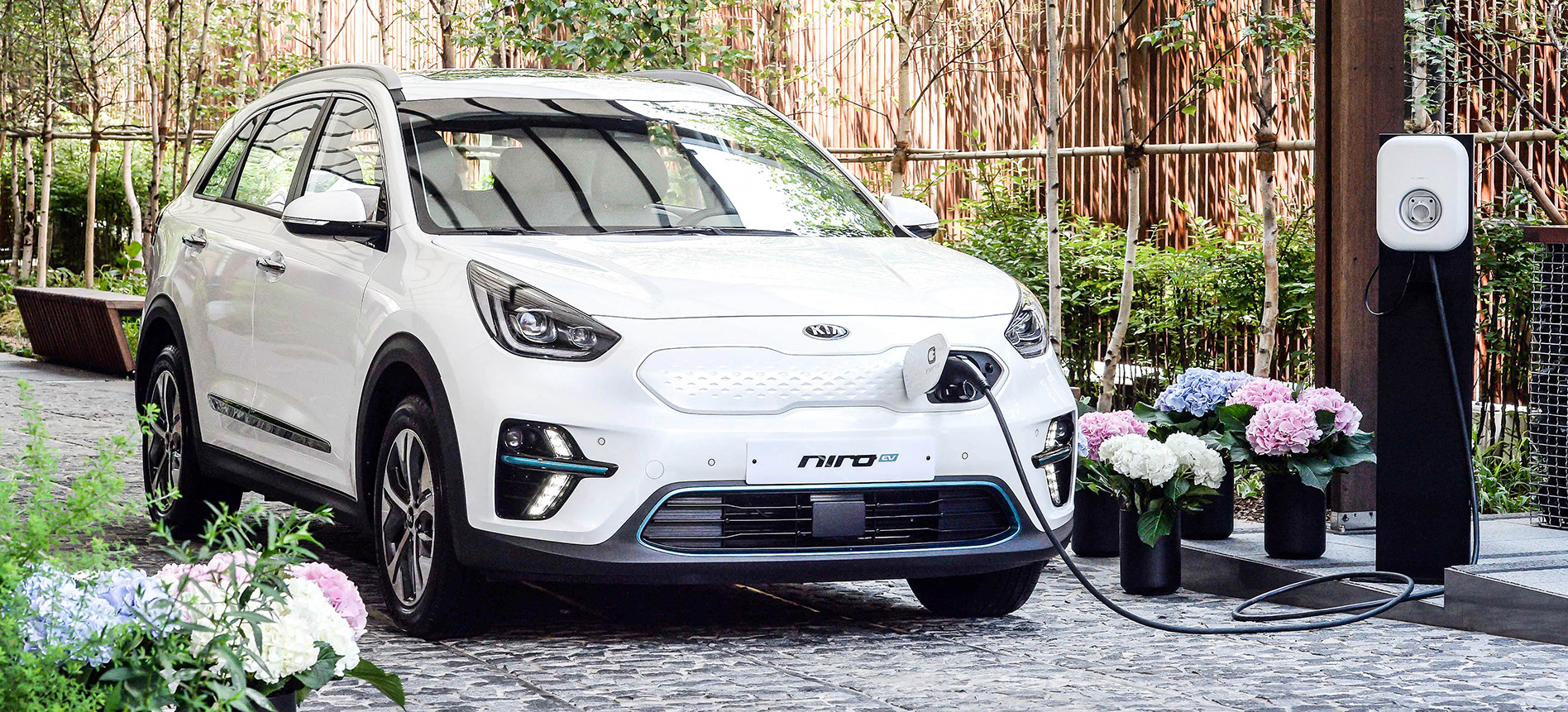
While specs and details are still under wraps, expect the e-Niro to mimic its sibling, Hyundai’s Kona Electric, in powertrain and endurance.
That means a 385km range from a 150kW/395Nm electric motor and 64kWh battery.
Kia will also roll out a plug-in version of its Sorento SUV early in the new year, in another first for the brand. It’s due to be joined by a regular hybrid version later in the year.
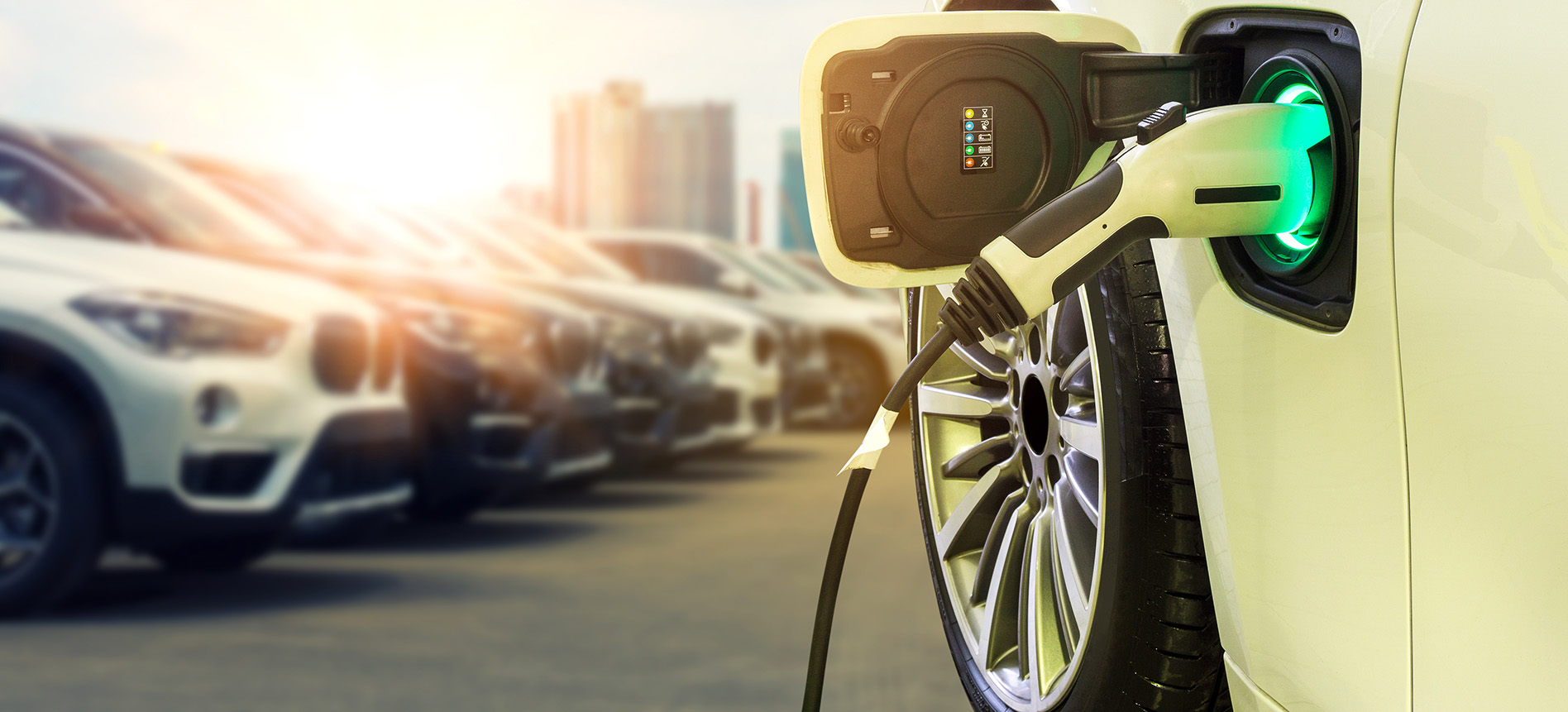
New sales figures collated by the Electric Vehicle Council show Australia is way behind in its battery electric vehicle (BEV) adoption as other markets around the world go gangbusters.
There were 6900 BEVs sold in Australia in 2020, representing a 2.7 per cent increase from the 6718 total in 2019. Though as a percentage of all cars sold, Australian EV sales lag behind the rest of the world by a large margin.
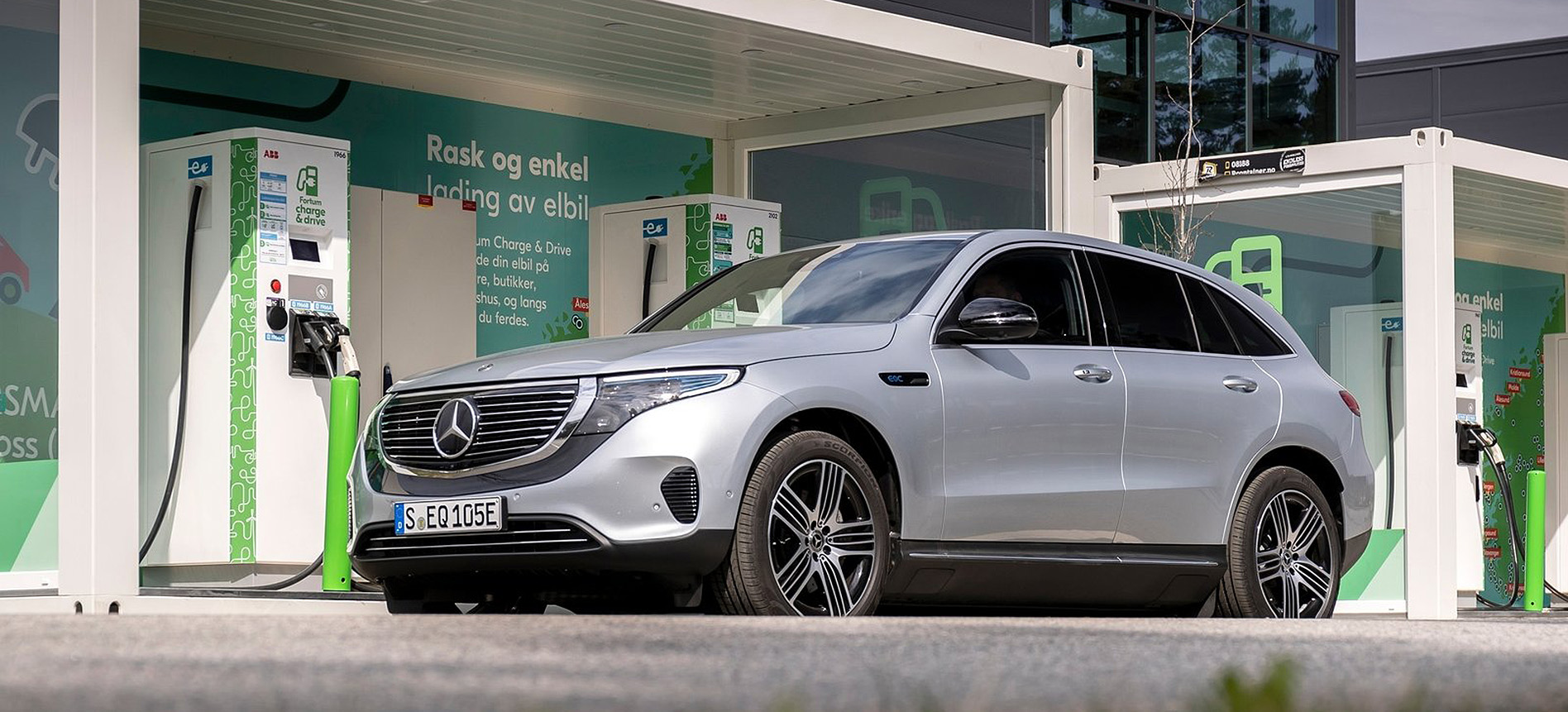
As it stands, 2020’s electric car sales result accounts for just 0.7 per cent of total Australian car sales.
By comparison, BEVs sold in Europe increased their market share from 3.8 per cent in 2019 to 10.2 per cent in 2020, while, in the United Kingdom, they leapt from a 3.1 per cent market share in 2019 to 10.7 per cent in 2020.
The accelerating trend continues in California, USA, where EVs increased from 7.6 per cent in 2019 to 8.1 per cent in 2020. Finally, in Norway, EVs rose from 56 per cent of all cars sold in 2019 to a whopping 75 per cent in 2020.
These figures paint a disappointing picture for Electric Vehicle Council chief executive Behyad Jafari, who insisted the anomaly has to stop.
“Australian drivers are ready to join the exciting global electric car transition, but our politicians are yanking the handbrake,” Jafari said.
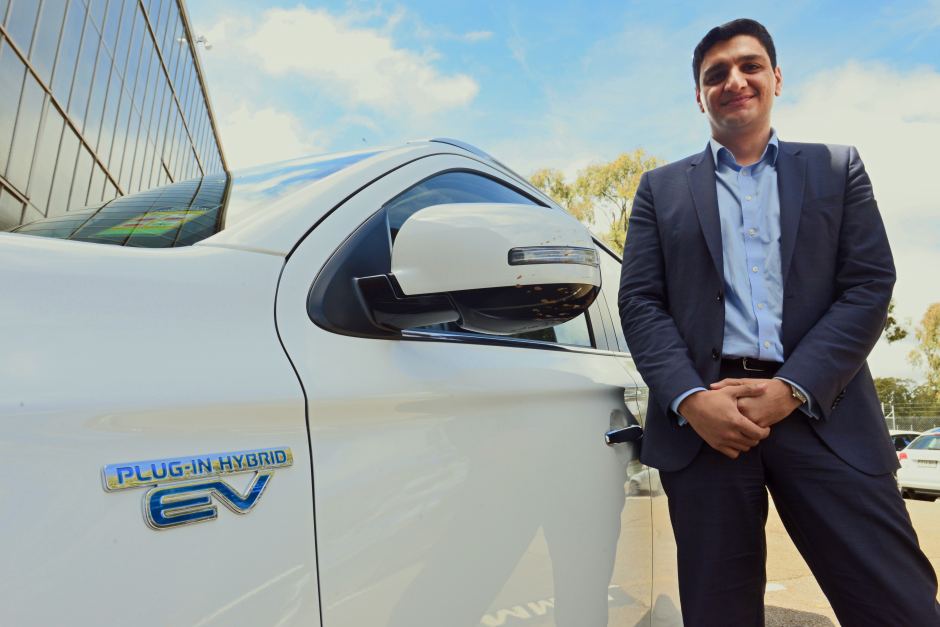
“There’s simply no sugarcoating it at this point – Australia has marked itself out as a uniquely hostile market to electric vehicles.
“We have no targets, no significant incentives, no fuel efficiency standards – and in Victoria we even have a new tax on non-emitting vehicles.”
This new Zero and Low Emission Vehicles (ZLEV) road-user charge will be introduced in mid-2021 and will tax Victorians based on how far they drive their electric vehicles each year. Drivers will have to self-report how far they travel to VicRoads, and be charged a 2.5c/km (full EVs) or 2.0c/km (plug-in hybrid) road tax accordingly.
“Victoria is now doing what no other jurisdiction on earth does by discouraging people from buying electric vehicles by slugging them with a special tax,” Jafari continued.
“The federal government’s inaction is bad, but even they’re not destructive enough to actively discourage electric vehicle uptake with a new tax.”
Countless jurisdictions around the world are planning combustion engine bans, prompting car manufacturers to introduce their own bans on combustion engine production.
Delayed investment in infrastructure and incentives look set to cause bottlenecks in the future when Australians have no choice but to buy an electric vehicle.
“If we follow the rest of the world and look to accelerate the shift to electric vehicles, we will be rewarded with clean city air, reduced carbon impact, enhanced fuel security, and a renewed manufacturing sector,” Jafari said.
A motoring sleeping giant has awoken in Australia, with Chinese-owned MG entering the Australian top 10 sales chart for the first time after strong February sales.
MG had 5425 year-to-date sales at the end of February, which was enough to overtake Honda to become a top-10 brand for the year so far.
More than half of those sales (3017) were in February, making MG the eighth most popular brand for the month ahead of Volkswagen (3009) and Subaru (2639).
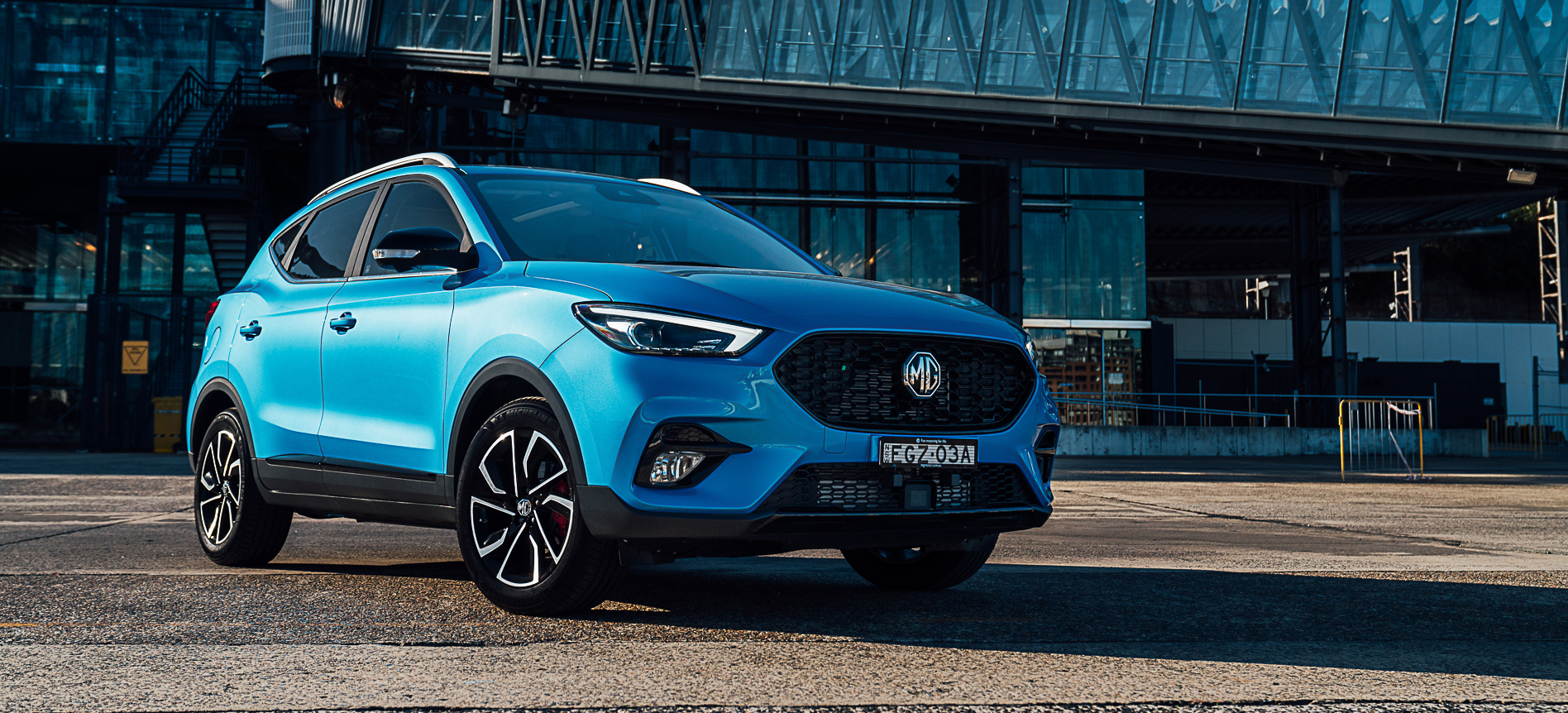
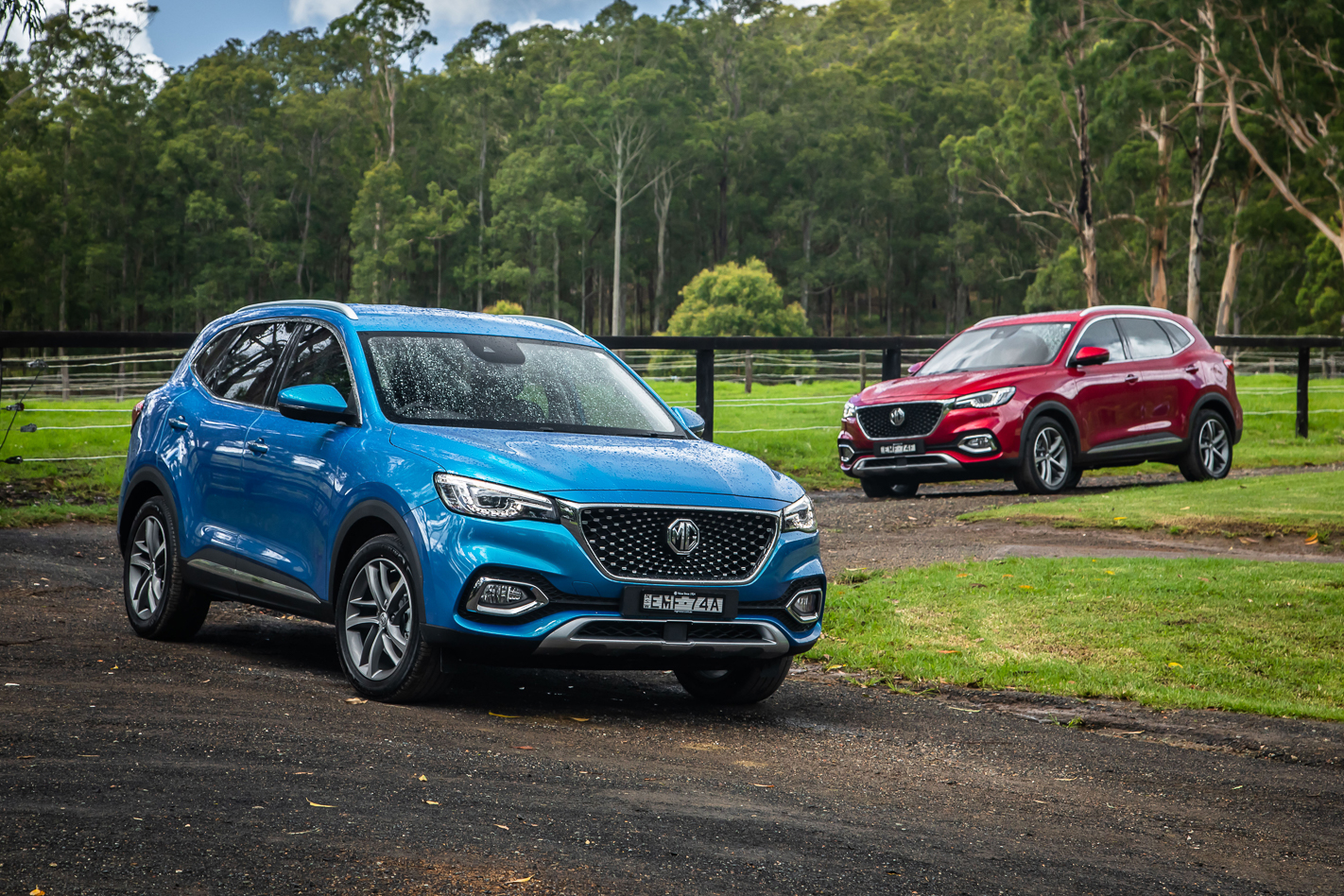
Apart from the fact it’s still an emerging brand, MG’s success is remarkable as it only has three models on sale here including the ZS small SUV, which makes up almost half its sales (2555 registered so far in 2021).
The ZS is the second best-selling small SUV so far this year, sitting between the Hyundai Kona (2414) and long-reigning Mitsubishi ASX (2767).
MG Motor Australia’s CEO, Peter Ciao said the company is humbled to make it into the top 10.
“This is a momentous milestone for MG in Australia – and it’s all because of our customers. MG is built on the premise of listening to our customers first and foremost.
“MG owners have put their trust in our brand and our products, and this is an honour and a privilege we will not take for granted. We are proud to offer Australians another choice, and they have responded.”
MG is symbolic of the quick rise of Chinese brands in the Australian market.
So far in 2021, 9211 Chinese-made cars were imported to Australia and registered, compared to 3649 for the same period last year. Chinese cars are the fourth most popular, behind Japan, Korea and Thailand and ahead of Germany (6448).
This also reflects growth for MG’s compatriot brands including GWM (which includes Haval) with 1637 sales and LDV (1682) which are up 588 per cent and 358 per cent respectively, compared to the same period last year.
It was merely hours into COTY 2021 before the impact of COVID-19 would be felt. Veteran judge Byron Mathioudakis, here attending his 11th-consecutive year, was the first to show symptoms of this insidious virus.
Not actual physical sickness symptoms; no, more seriously, a downcast demeanour realising he would have to kerb his natural inclination for skipping around and randomly hugging his fellow judges and the production crew after a year apart.
Some of us – okay, me – actually realise we miss Byron’s affections, so at one point very early in proceedings, I consider pinching the petty cash tin to head into town to buy him a haz-mat suit and a respirator, just so some semblance of high-contact normality can resume.
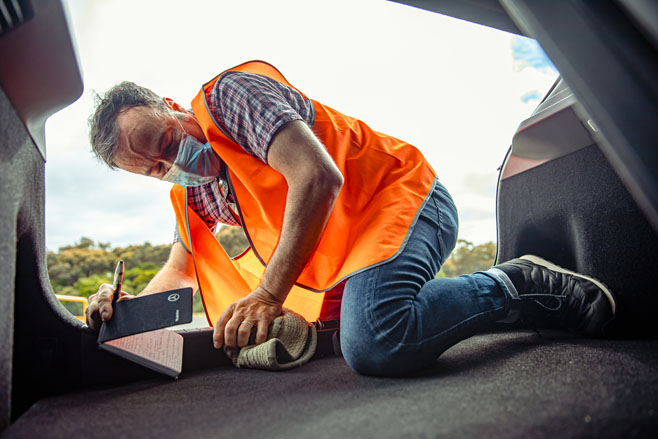
Can a Byron fit in the boot? A regular game played at COTY.
There’s no question the threat of a communicable disease weighs heavy on every single one of the 16-man testing and production team. At one point, as we stand in a large group for a briefing, I stifle a sneeze behind my face mask.
In unison, every person jumps two feet in the air, scatters, and starts making signs of the cross at me. Liquid hits my face. Was the first drops of rain? Or did someone just flick holy water on me?
Tough crowd. As you’ll have read earlier, the judging panel is down to six members, and, for the first time anyone can remember, there’s not a single female amongst our ranks. Oddly, there’s only a marginal increase in fart jokes.
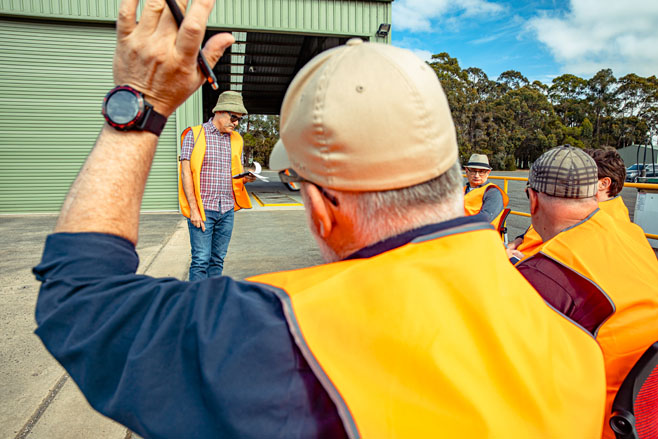
When’s lunch, Byron?
We welcome the COTY debut of Richard Ferlazzo, the former design director of Holden who brings insight, not just regarding design, but a deep manufacturing knowledge, enlightening us on just how challenging some design decisions would have been to get past the bean counters.
Prior to this we all knew we were a bit suss about bean counters, but Richard confirms it – they really are carrying out Satan’s work.
The walk-arounds take place in a large dusty shed, not the most sexy part of the COTY process, but essential; a bit like getting to know your dinner date before holding hands and sharing a romantic walk on the beach. Or in our case, a tortured flogging around the proving ground, with barely a thank-you slap on the rump.
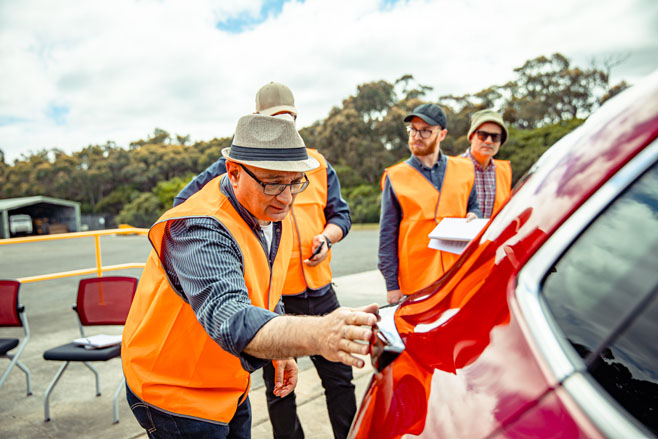
‘…and we call this part here the tail light…’ instructs Ferlazzo, probably.
As well as an opportunity to fully understand why, exactly, each model made it to the 10-car shortlist, it’s also a chance to really drink in the details, some delightful, some perplexing.
Everyone seems to agree on the brilliant execution of the Defender, which skilfully blends a retro, respective nod to its predecessor while moving the materials, infotainment and overall tech right into the moment.
Although when I glance at the pricing and options ofour single test example, I can’t help but wonder if the person at JLR speccing the press fleet had been drug-tested recently: it has nearly $4000 worth of premium metallic paint, now hidden under a $6500 satin wrap. Hmm, pass that spliff, you loose unit.
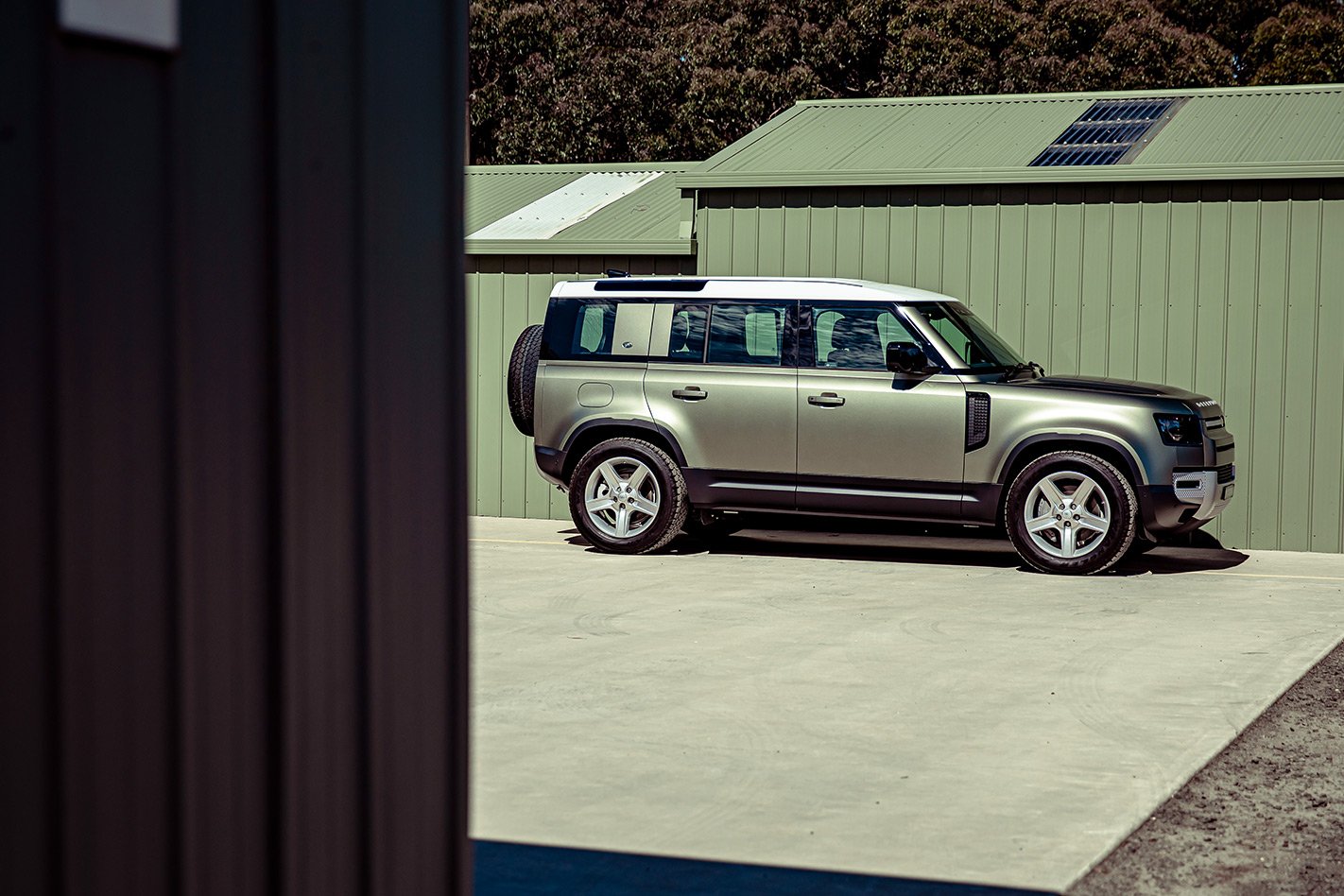
Land Rover Defender, blending in seamlessly thanks to “loose unit” speccing.
We take a short break to have a proper sniff over the obscure old canvass-topped VW Country Buggy parked nearby that belongs to event photographer Cristian Brunelli.
The Big Bru has proved he’s the hard man of classic dungers by driving this screenless implement of torture all the way here from his home in Sorrento on the tip of the peninsular.
He’s still picking the flies out of his teeth on day three, but our admiration continues for weeks.

Cristian likes to keep an eye on his Country Buggy (top main image) from wherever he is at all times.
We don’t have the facility to ourselves. Nearby, a steady stream of car transporters start rolling in, each carrying a scruffy E46-generation BMW 3 Series.
Theories abound as to their purpose, until someone from our team actually approaches the crew of fit-looking blokes in cargo pants and combat boots who appear to be their custodians.
We learn they’re part of some police special-forces division, and the BMWs are about to be ragged senseless on a dirt handling track as the cops complete advanced slide-control training.
The following day, every one the BMWs sports grazes on the driver’s front quarter and off-side rear quarter. Turns out their training also involved deliberate contact to ram each other out of the way, and practice the skills needed to recover from a colleague-inflicted 3 Series shoulder charge.
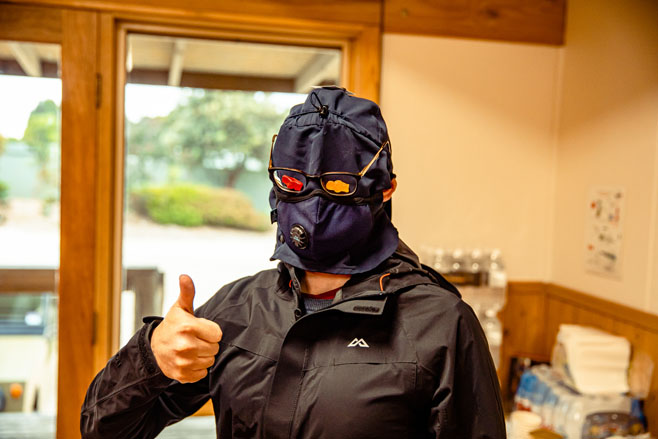
We weren’t allowed to photograph the police or their 3 Series shenanigans, so here’s Editor DC undertaking some extreme Covid prevention measures, with jellybabies.
Every judge immediately has the same thought – these jammy cops are possibly having even more fun than we are, which is unheard of and simply not bloody on.
Some of us consider a career change; every one of us starts daydreaming about buying a cheap E46 as a drift car.
In the late afternoon of day two, the video crew need something to justify the expensive drone they begged the accountants to approve, so a group drag race is organised.
Someone in a position of authority tells me to drive the BMW M440i, meaning I’m gifted the field’s horsepower hero and I get to bask in the glory of victory for the 20 runs required to get the perfect take.

The COTY 2021 drag race. Video coming soon, RuPaul sold seperately.
Editor Campbell is in the GR Yaris, and endures a torrent of trash talk after a couple of fluffed attempts to launch the AWD pocket rocket as the rest of the field sprints away.
He has the full quiver of drag-racer excuses – “the dog ate my line-locker; I’m waiting for the strip ‘to come to me’” – but the collective faces of the test and video crew become genuinely perplexed when he starts tipping drinking water under the tyres, claiming an excess of traction is blame.
Eventually he just gets the clutch dump and first-to-second shift right, and the little all-paw Toyota fires off the mark like a stabbed rat, but he never becomes more than a red blob in my peripheral vision, as my 4 Series blatts off into the scenery.
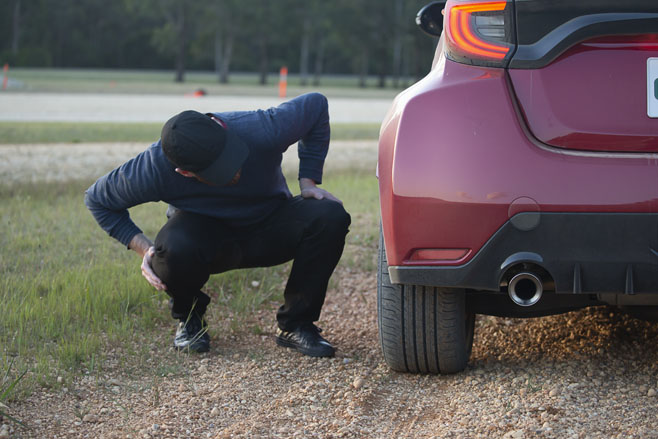
‘Please don’t make me look like an idiot,’ but the GR Yaris did not listen.
Throughout all this, the steady methodology of the COTY process continues to march us, one step at a time, towards our top three to take away from the PG.
Mechanical carnage is mercifully limited this year. Only a flexi marker post, clipped by a hard-charging Robbo in the BMW M440i, blights an otherwise clean copybook. Robbo apologises, but then trots out the old ‘Team Manager’ line, which claims it’s easier to slow down a fast driver than speed up a slow one. Dylan just quietly asks him to stop hitting things.
Our logistics and catering guru is Diamond Dave Harding, who paces himself to perfection over the three evenings that dinner needs to be served on-site at the proving ground. DDH plays himself in gently on night one, serving up a solid but unremarkable chicken and chips.

Ferlazzo puts us all to shame with his eating/sketching combo, turning out a fine GR Yaris render and a tum full of beef pie.
He turns the heat up on night two with an excellent Mexican spread, but by night three he’s properly firing, and has organised a local restaurant to deliver slow-roasted lamb shoulder with garnishes and side dishes that are unprecedented in COTY history, like toasted sage leaves and Middle Eastern-style roasted cauliflower with pomegranates.
Pomegranates! It’s like a scene from The Castle, as room echoes with a chorus directed at Dave: “What do you call these, love?”
C’mon people. They are weird little pink seeds called arils from a fruit-bearing deciduous shrub with the scientific name of Punicoideae that originated in the region now called Iran. Everyone knows that.
But don’t get too attached to them, because the chances of them appearing on the menu next year are zero. Hopefully by then normal transmission will have resumed. Okay, poor choice of phrase.
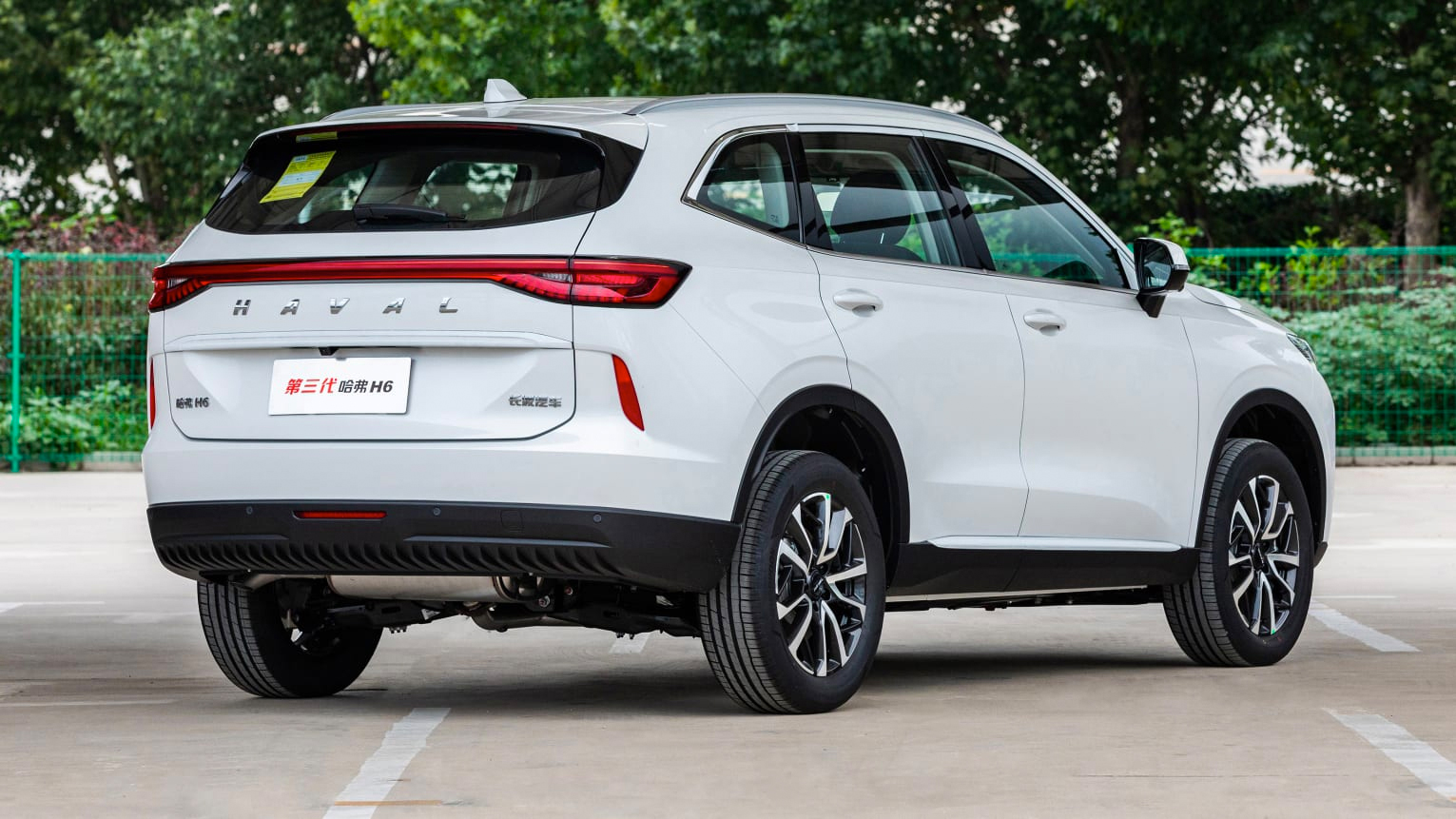
Haval’s parent company, GWM, has announced the next-generation, new-look 2021 Haval H6 mid-size SUV will go on sale in Australia in the second quarter of this year.
GWM has high hopes for the new Haval H6; it’s the first of its products to be underpinned by a new modular platform GWM spent $3.7 billion and six years developing.
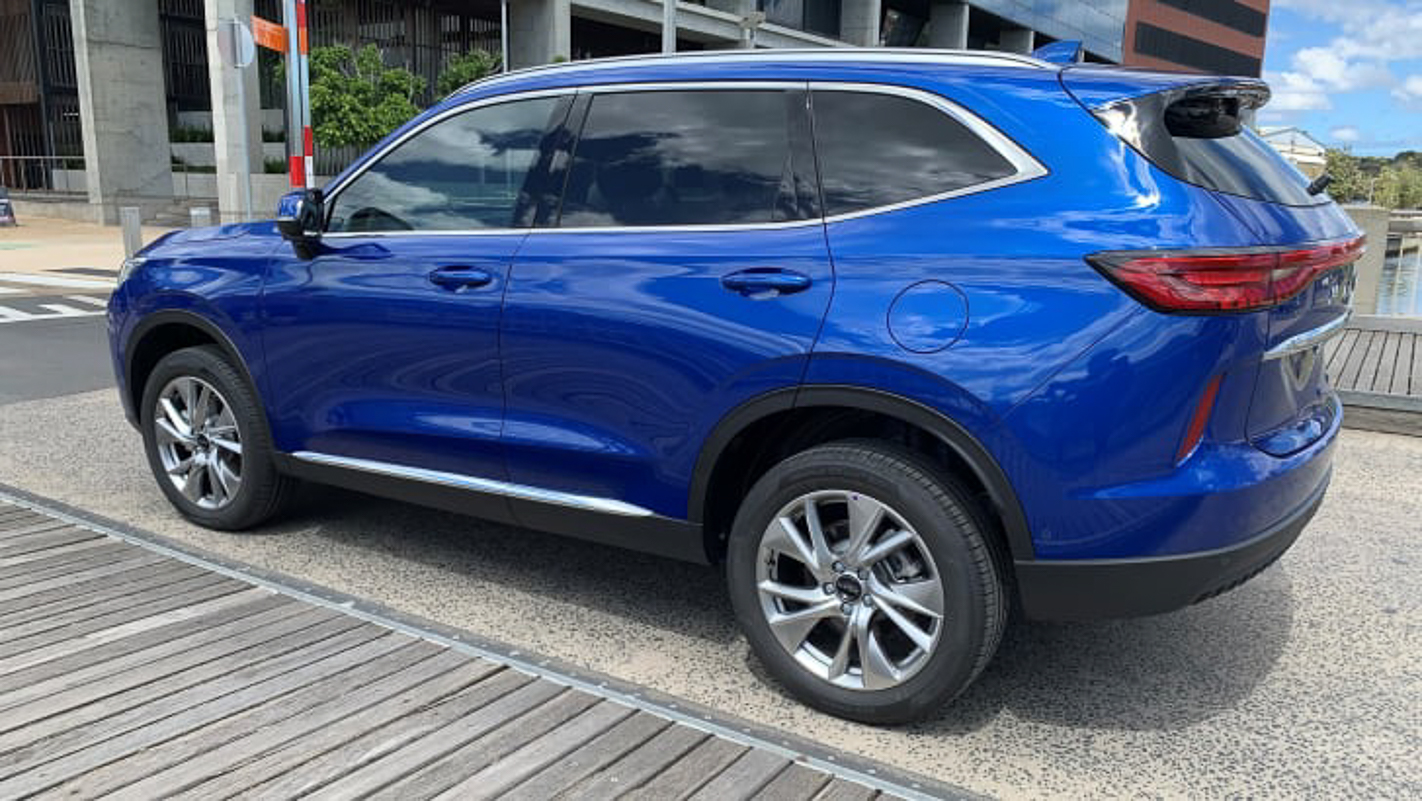
It’s said to be larger, but lighter, than its predecessor, and GWM insists it outsizes mid-size SUV rivals such as the Toyota RAV4, Hyundai Tucson and Mazda CX-5.
Power is supplied by an uprated 2.0-litre turbo petrol engine making 150kW and 320Nm – 5kW and 5Nm more than the previous-generation H6. The engine is mated to a seven-speed dual-clutch transmission, and will be offered in Australia with both front-wheel drive and all-wheel drive.
New specification includes wireless phone charging, digital instrument cluster, 360-degree surround view camera, heated steering wheel and fully automatic parking.
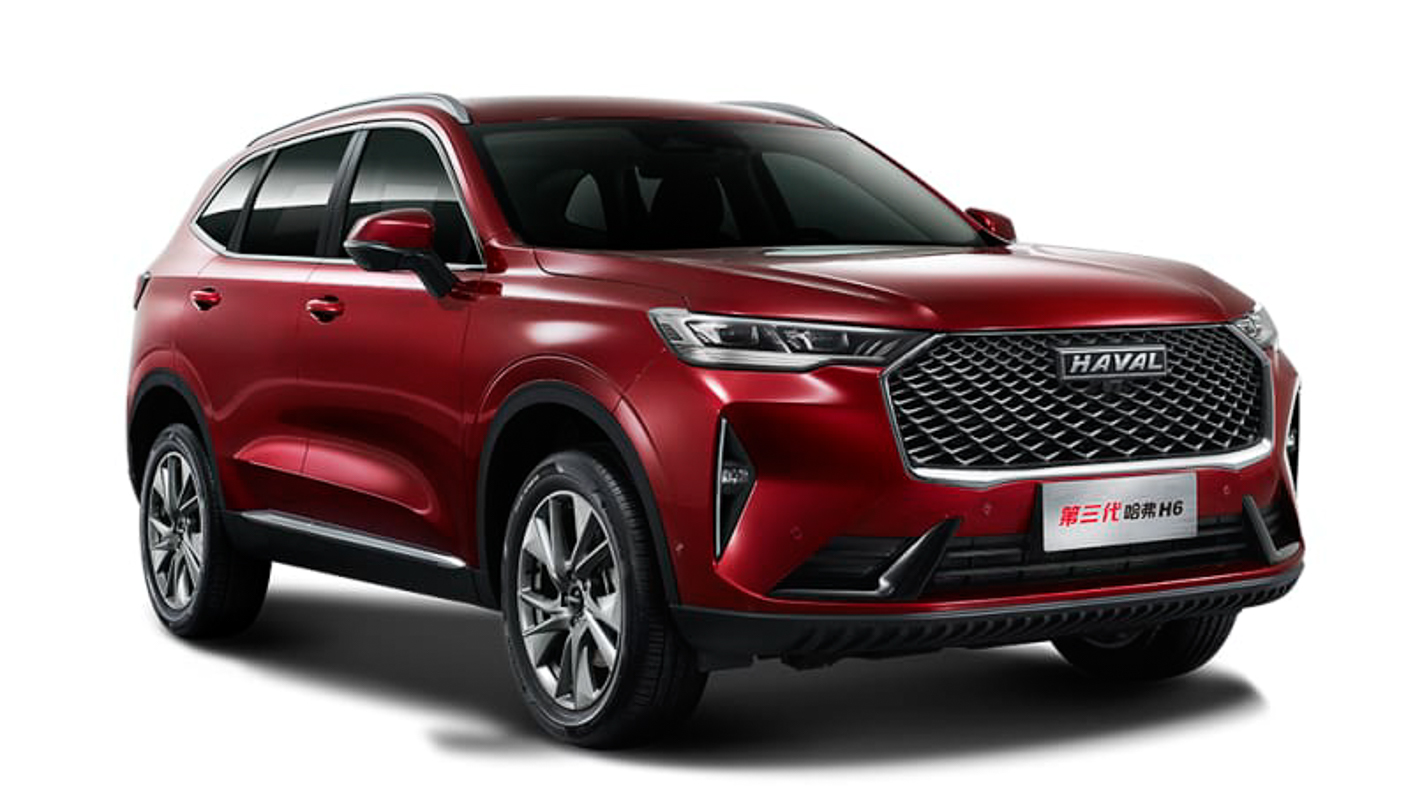
Comfort and convenience features are bolstered by standard safety equipment including autonomous emergency braking, lane departure warning, lane-keep assist, blind spot monitoring, traffic sign recognition and driver attention monitoring.
“We are delighted to welcome the all-new H6 to the Haval SUV line-up,” said Steve Maciver, GWM Australia head of marketing and communications.
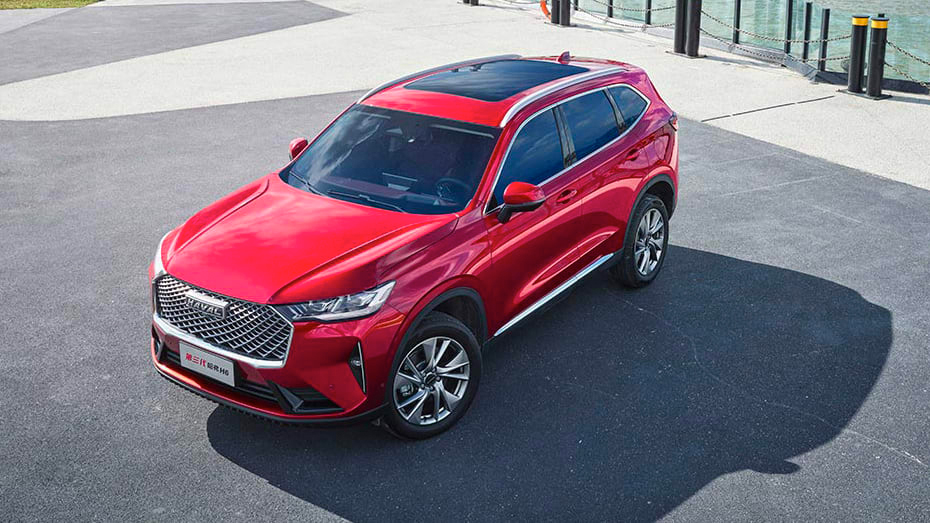
“The design and engineering teams that have produced this world-class SUV have done an outstanding job and there’s no doubt it will further elevate the status of the GWM Haval brand here in Australia.”
A brace of new H6 SUVs has already arrived for local testing ahead of its launch in Q2 2021.
Full details on pricing and specification will be supplied closer to launch.
What is the Hyundai Palisade 3.8L V6?
This is the entry-level variant of Hyundai’s new large eight-seat SUV flagship that’s unashamedly big and brash, having been primarily designed for the US market.
The Palisade almost stands alone amongst all the big SUVs in Australia. It’s bigger than other large seven-seaters, such as the Mazda CX-9, Kia Sorento and Toyota Kluger, which line up closer with its Santa Fe sibling, and it doesn’t have the off-road capability of the Toyota LandCruiser Prado or Nissan Patrol.
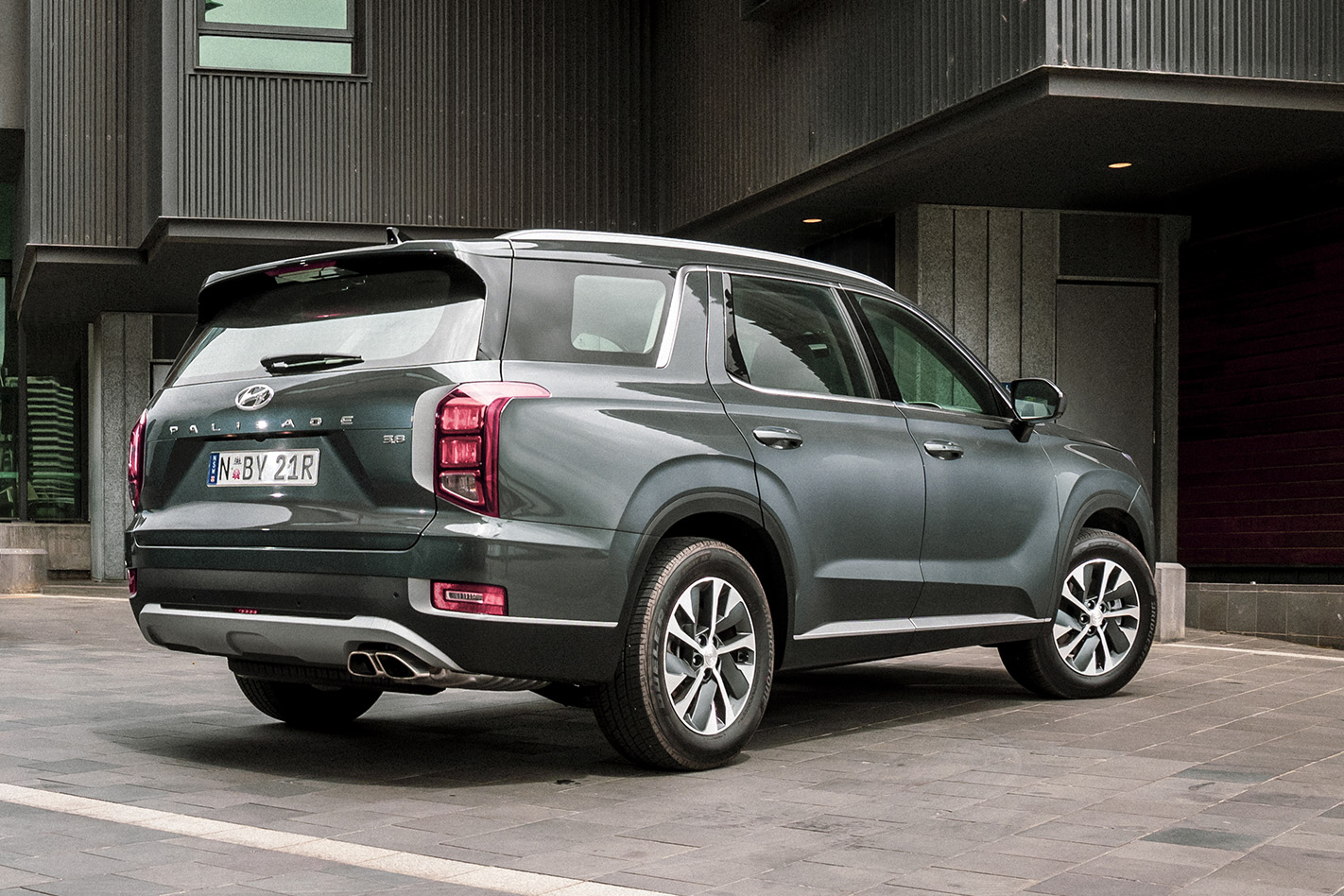
Its closest SUV rival would have been the now discontinued Holden Acadia, which was available with a similar V6 FWD drivetrain and spacious third row but had seven seats compared to the Palisade’s eight.
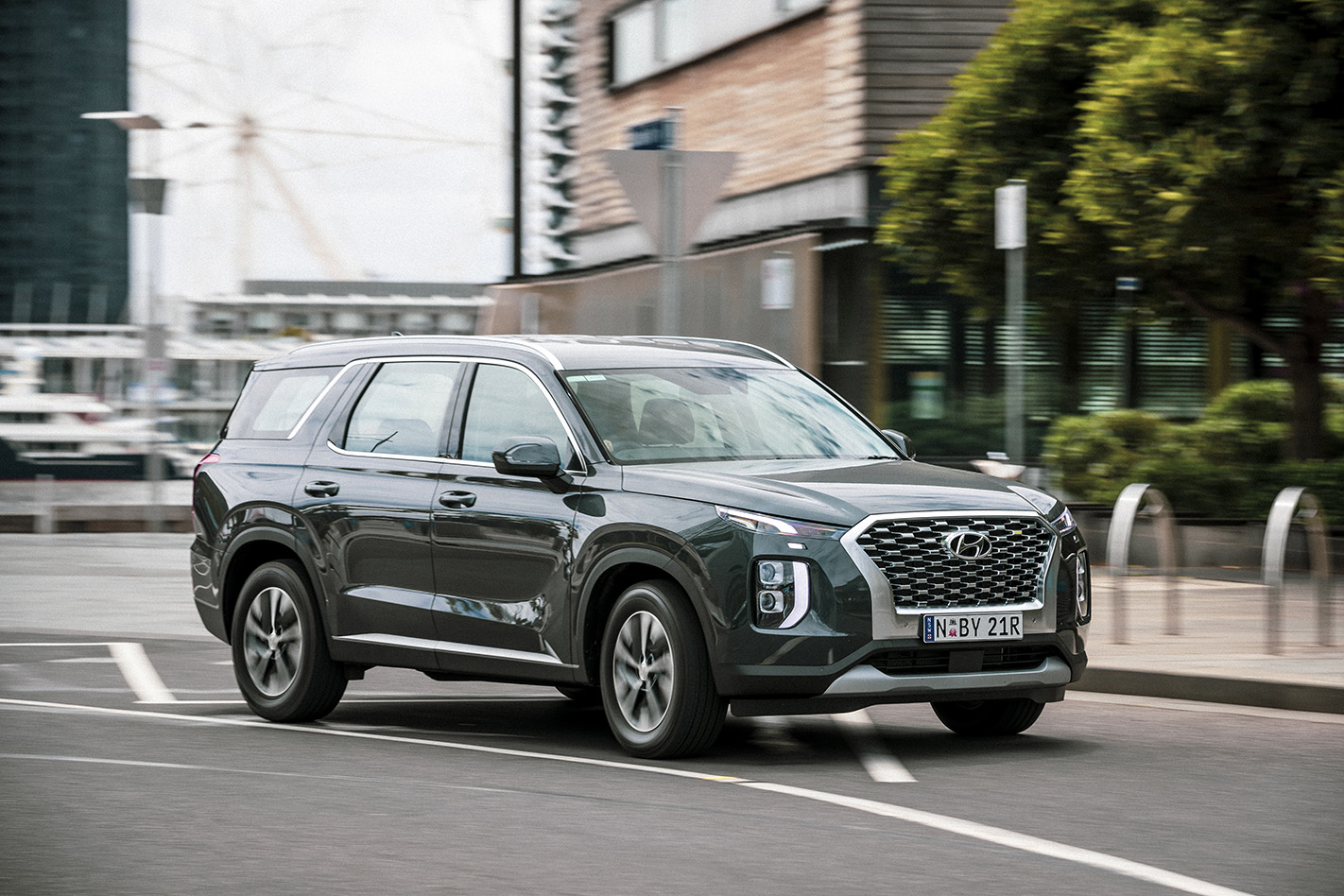
Such is its unique position on the Australian market that we recently put this Palisade variant through its paces against its Kia Carnival eight-seat people mover cousin that, apart from body shape, has quite a bit in common.
? You’re reading about an older model, here’s something newer
STORY CONTINUES
Priced at $60,000 before on-road costs, this V6 petrol front-wheel-drive Palisade is one of four variants available in Australia.
The other three include an all-wheel-drive four-cylinder turbodiesel version in the same spec that costs an additional $4000, and the plusher Palisade Highlander that comes with either powertrain, priced at $71,000 and $75,000 for the petrol and diesel respectively.
Don’t let the words entry-level fool you though; it comes with mid-spec-SUV standard features including black leather upholstery, a 10.25-inch infotainment screen, 7.0-inch digital instrument cluster, powered driver’s seat, three-zone air conditioning, Infinity audio system, keyless entry, push-button start and the Hyundai SmartSense active safety suite.
What is the Hyundai Palisade 3.8L V6 like to live with?
At just under 5.0 metres long and 1.75m tall, one thing you certainly won’t complain about in the Palisade is a lack of space, with every seat offering good head and legroom including those in the third row.
Starting at the front, the Palisade has comfortable leather seats with the driver enjoying 10-way power adjustments including lumbar support.
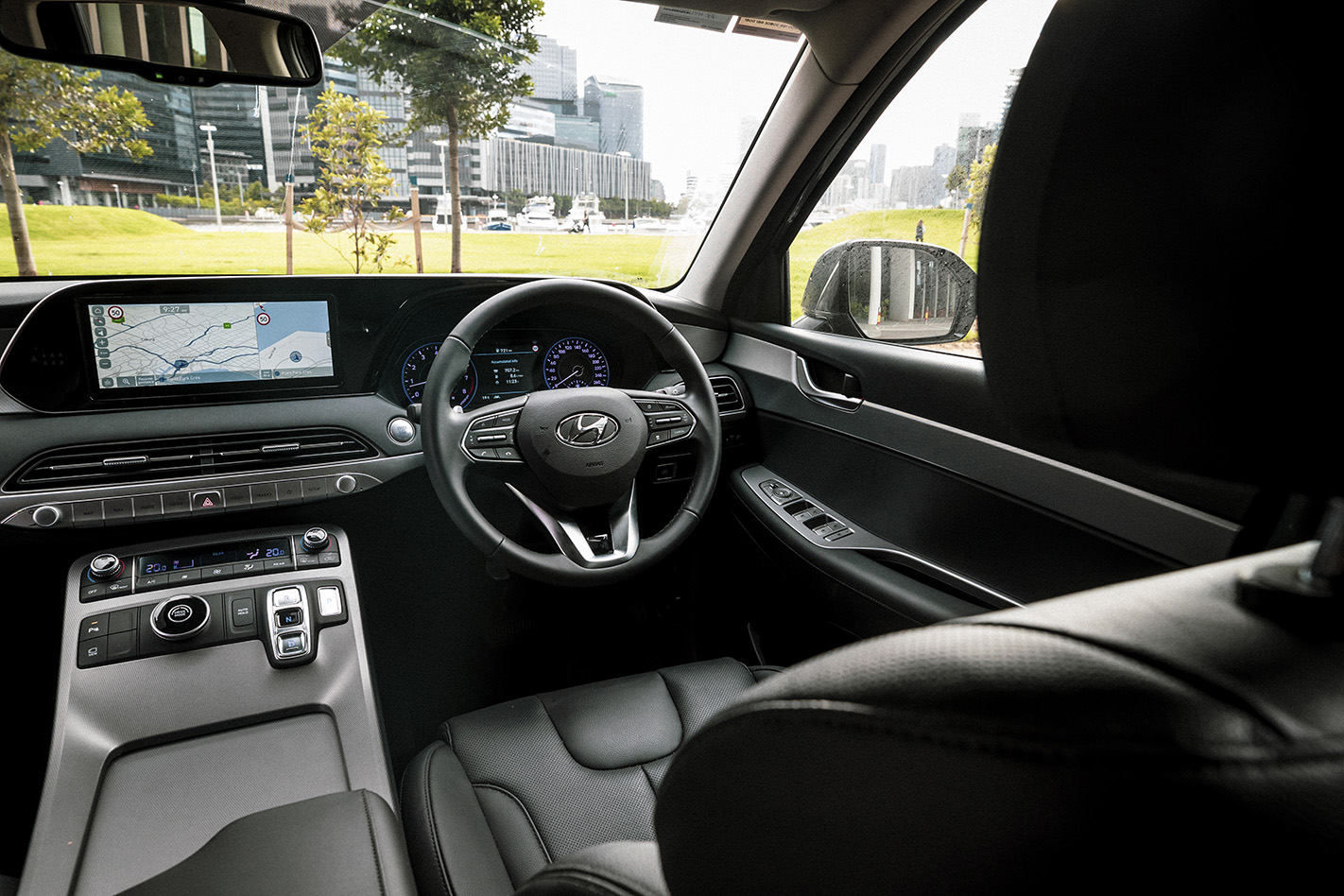
Despite its almost two-metre width and ample elbow room, you feel a certain cosiness thanks to the large flying-buttress style centre console that provides plenty of storage space, with a deep bin and a tub in which to store and hide your phone and keys. Then there’s the glovebox.
The centre console also houses two cup holders, two charging ports and another USB socket to connect your device to the infotainment system either directly or via Apple CarPlay or Android Auto. There are also two 12v sockets.
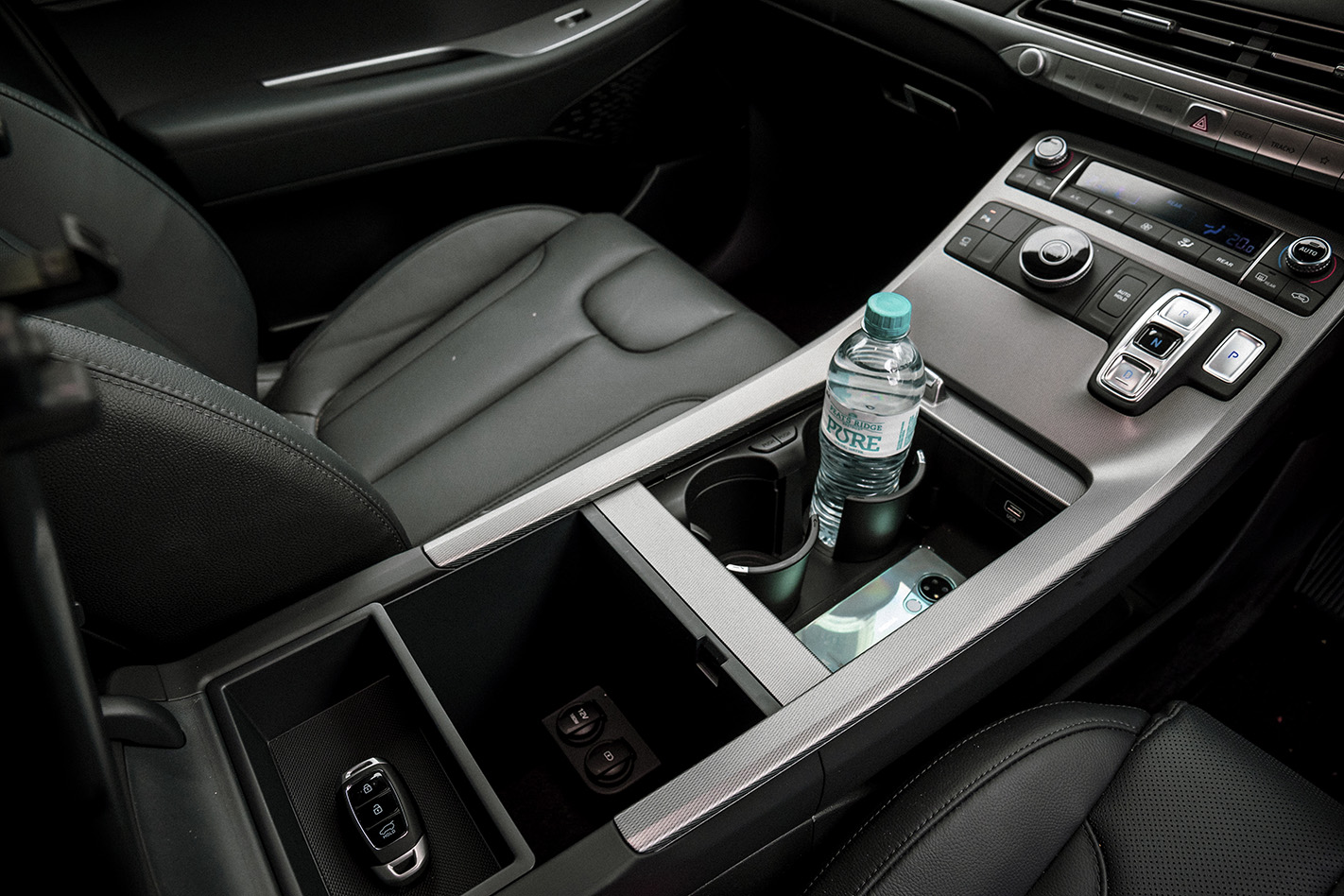
The console sits nice and high, making it a comfortable armrest while making it easy to reach the three-way climate control buttons and dials.
Second-row passengers are also looked after space-wise, with exceptional legroom in all three positions. The seats slide forward and back and the middle backrest folds down to become an armrest with two cupholders (of eight in that row alone), two USB ports that are each mounted on the side of the front seats, a 12v socket, ceiling-mounted air vents, and dedicated climate-control buttons.
Unlike in some three-row SUVs where the occupants feel like they’ve been banished, seats six, seven and eight have good legroom though you will have a hard time squeezing three adults abreast. Two grown-ups will be comfortable enough and you’ll rarely hear any complaints about headroom.
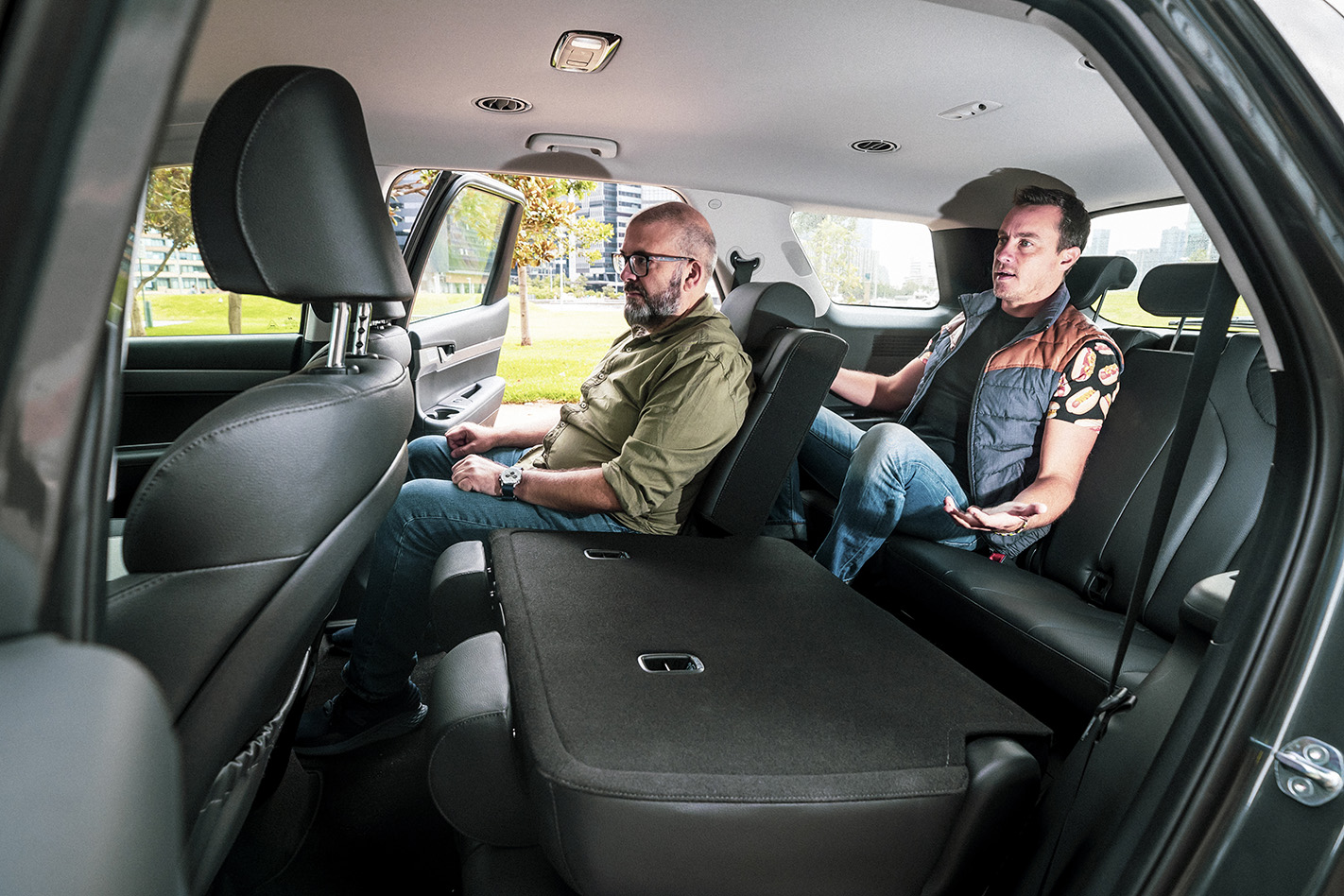
The third row also has two USB ports, four cup holders and ceiling mounted air vents. The seats themselves recline up to 10 degrees and legroom can be extended by sliding the second row forward. Entry and egress is made easy with a one-touch switch that pushes the passenger side rear seat forward and folds the backrest forward.
The second- and third-row seatbacks split 60:40 for cargo-carrying versatility. Unlike many three-row SUVS that have rudimentary boot space with all seats employed, the Palisade has a useful 311-litre cargo area – by comparison, the Santa Fe’s holds 130-litres of stuff while the Kia Sorento and Mazda CX-9 hold 230 and 187-litres respectively.
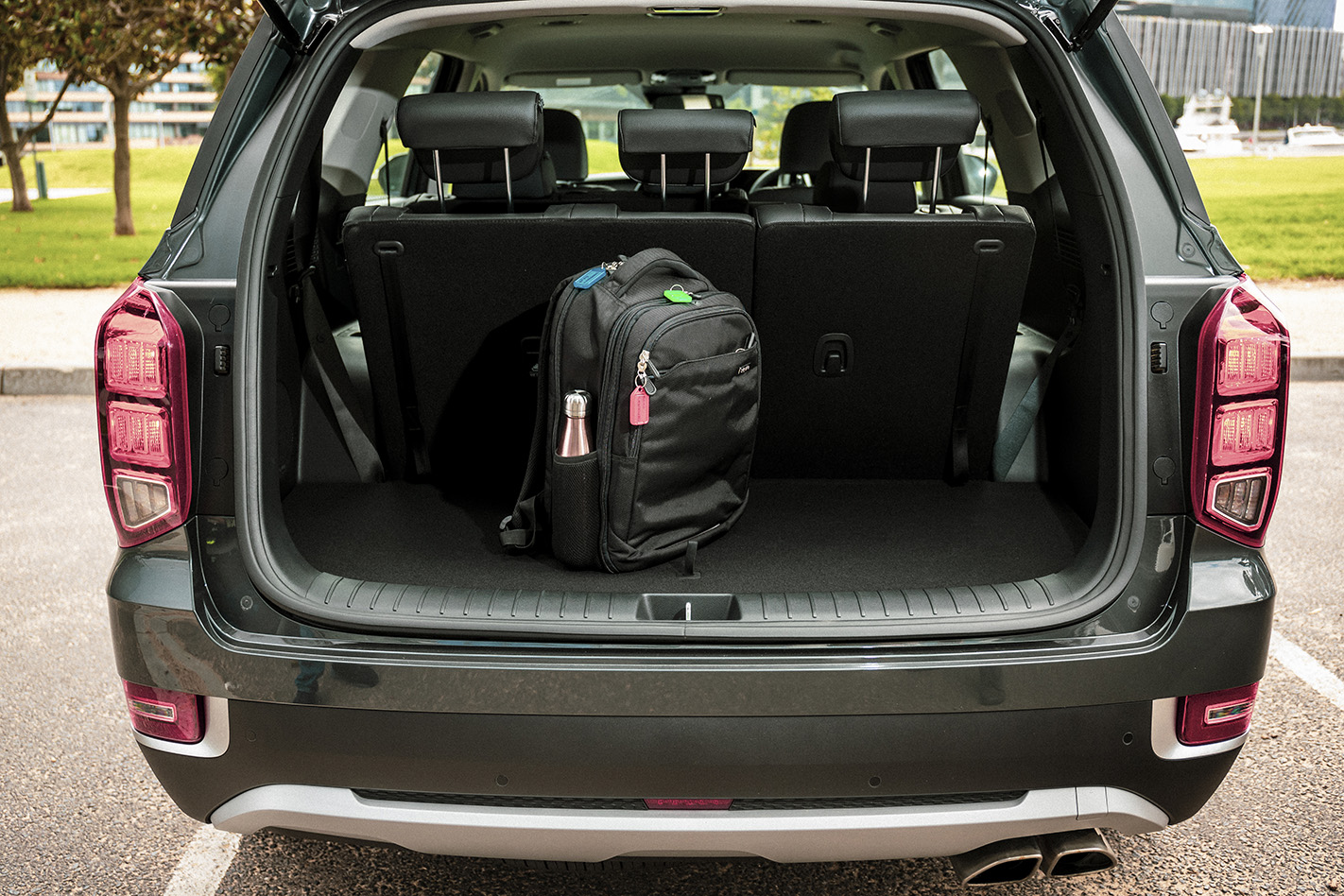
With five seats in play, the Palisade holds 704 litres, which again is considerably more than the Santa Fe’s 547 litres but less than the CX-9 (810 litres) and Sorento (821 litres). This pretty much tells you where the Palisade’s extra sheet metal has gone.
The Palisade carries a full-size alloy wheel under the boot floor.
Should you need to haul additional cargo, each Palisade variant 2200kg has a braked towing capacity and 750kg un-braked.
Running costs are helped by the Palisade V6 accepting cheaper 91 RON or E10 petrol, which a good thing considering its 10.7L/100km combined fuel economy.
Service intervals are every 15,000km or 12 months and, like any Hyundai, it comes with a five-year/unlimited-kilometre warranty.
What is the Hyundai Palisade 3.8L V6 like to drive?
As you’d expect from a vehicle this size, the Palisade feels quite stately. At 4980mm long and 1975mm wide, this is a big vehicle, but it feels a lot more nimble than those numbers suggest.
It’s 1750mm tall so body roll is inevitable, but that big footprint brings the centre of gravity down to negate it and it feels quite planted to the road.
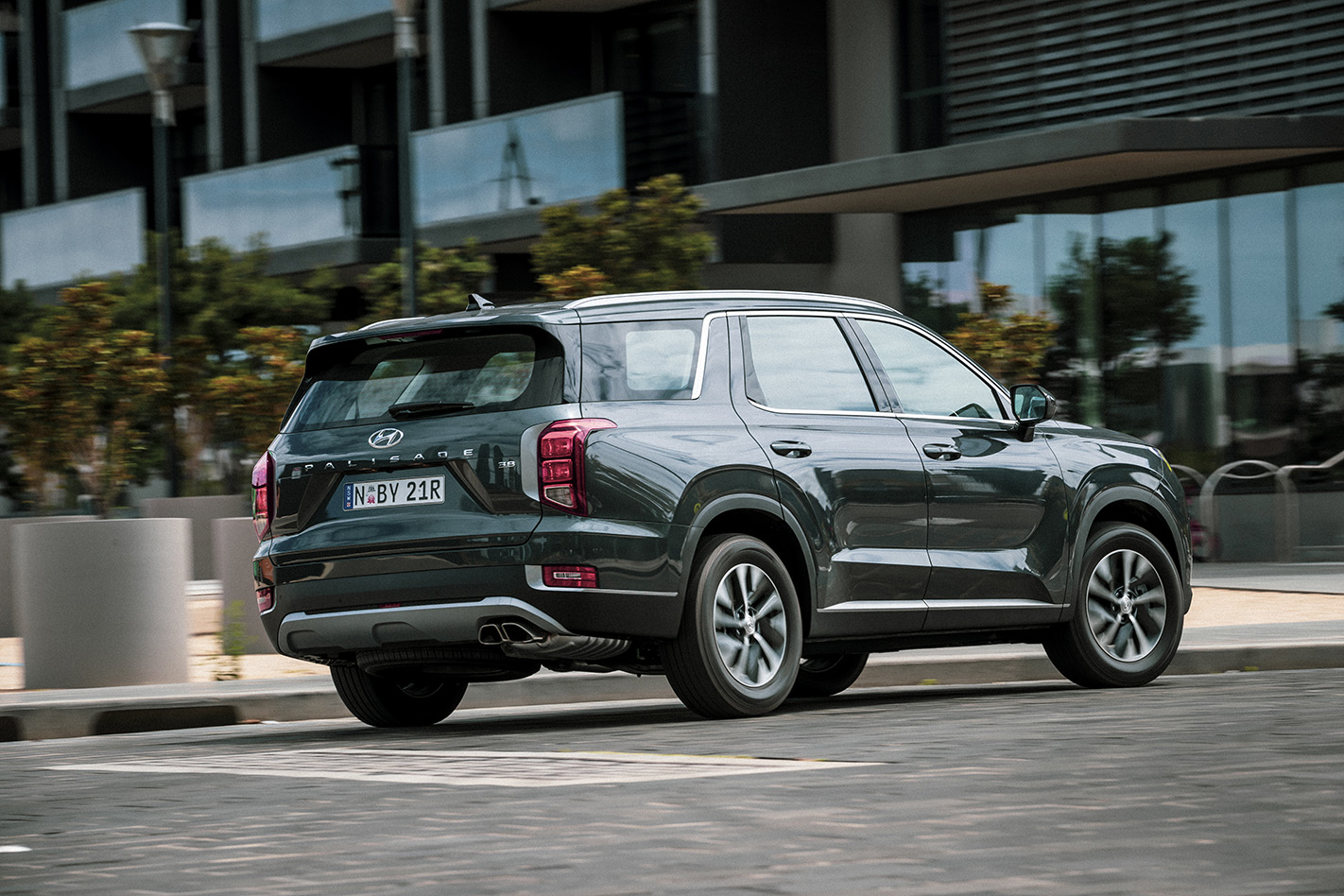
With a multi-link rear suspension, the ride feels firm and composed without being harsh. Interestingly, the Palisade is the only Hyundai that hasn’t undergone a suspension tuning program to suit local roads, and it’s fair to say it didn’t need one.
The ride quality is enhanced by chunky 245/60 R18 Bridgestone Dueller tyres that provide more cushioning than the 20-inch rubber on the Palisade Highlander.
Ride comfort is complemented by a notably quiet ride.
Unfortunately, you can’t get the V6 petrol powertrain with all-wheel-drive and while you won’t miss all-corner traction during every day urban driving, having up to 335Nm of torque from the 3.8-litre V6 engine going only to the front wheels can prove a little embarrassing at traffic lights.
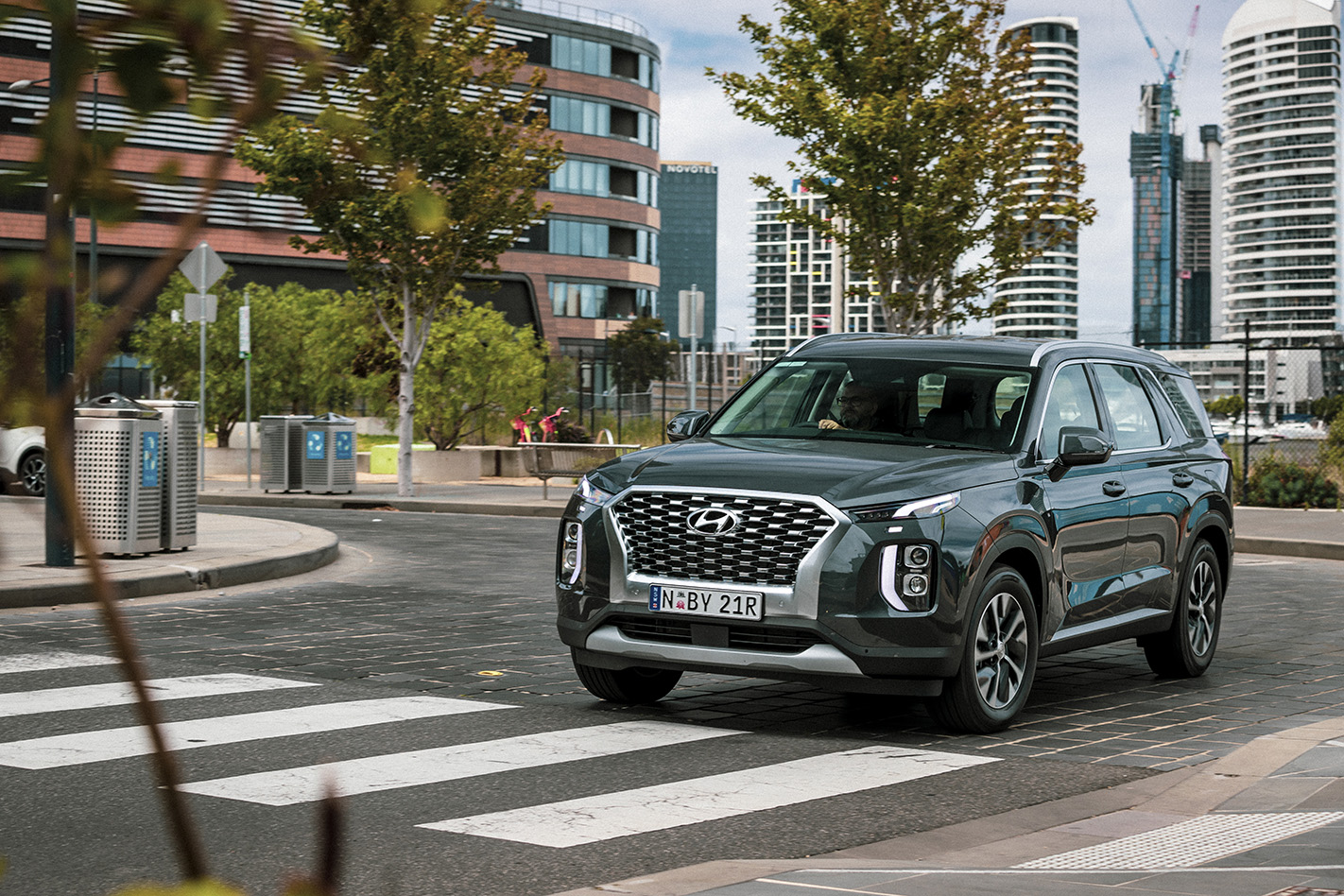
Even on dry roads, the front wheels are prone to chirping if you put the foot down even a little firmly. This of course is worse on wet or gravelly surfaces where the traction control kicks in and makes an absolute meal of your takeoff.
This isn’t unique to large FWD SUVs with powerful engines and most of the weight on the rear wheels, as I once had to explain to a police officer after apparently hooning in a front-driving Holden Acadia.
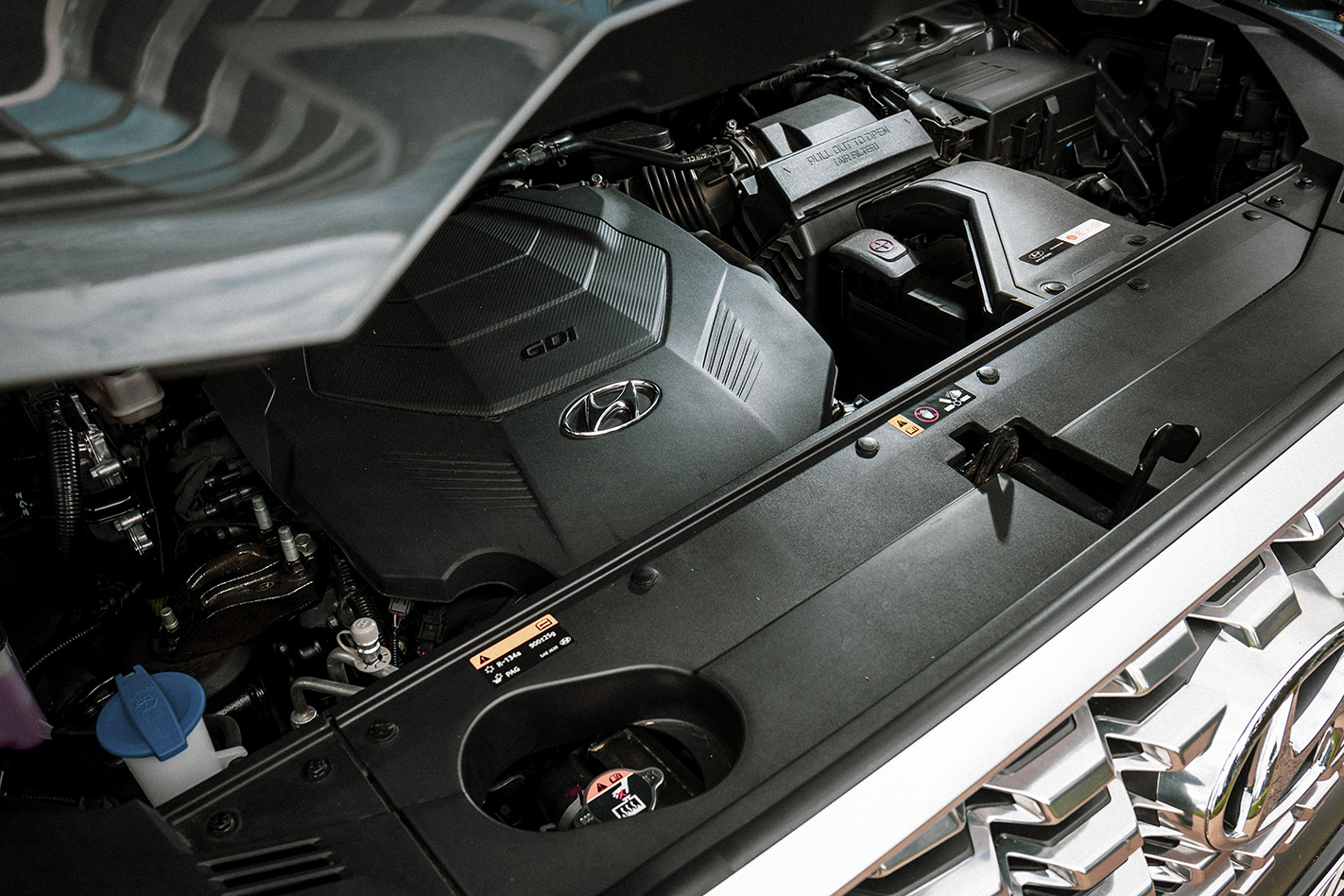
The 217kW 3.8-litre V6 ‘Lambda II’ engine is otherwise a great fit for the Palisade. It provides plenty of power across the rev range and smooth delivery through the eight-speed automatic transmission.
Even with the FWD running gear, the Palisade comes with Multi-Terrain drive modes that alter the traction control to suit Snow, Mud and Sand. Back on the bitumen, there are Comfort, Eco, Sport and Smart modes that change the engine’s rev-mapping so it responds to throttle inputs accordingly.
This is actually an enjoyable vehicle to drive and flies in the face of the opinion that opting for practicality comes at the expense of driver satisfaction.
How safe is the Hyundai Palisade 3.8L V6?
The entry-level Palisade is equipped with Hyundai’s SmartSense advanced driver assistance system that includes autonomous emergency braking with cyclist and pedestrian detection and will even brake if it detects another vehicle approaching from the side while you’re reversing.
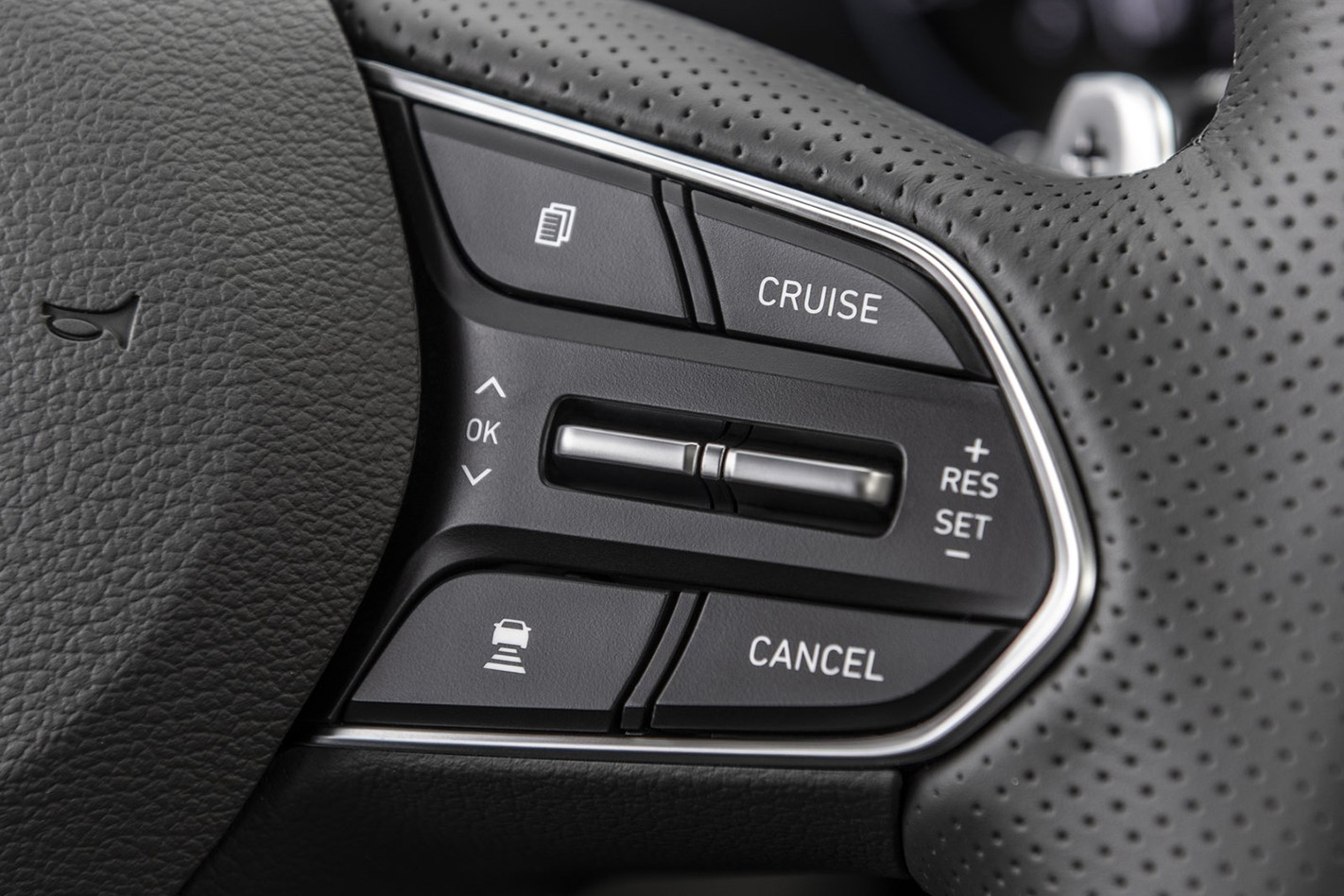
It also has blind-spot monitoring, driver attention alert, following assist and lane departure warning, high-beam assist, rear occupant alert, and smart adaptive cruise control.
Rain-sensing windscreen wipers, which are more a convenience than a safety feature, are a notable omission for a vehicle costing $60k.
Parking this five-metre behemoth is made easier with front and rear parking sensors with audio and radar-like visual display, and a reversing camera with guidelines.
The Palisade has six airbags: driver and front passenger front and side; and curtain bags across all three rows.
There are also three sets of ISOFIX child-seat anchor points (two in the second row and one in the third) three second-row top tethers, two third-row top tethers, child-proof rear door locks and a door-open warning.
The 2021 Hyundai Palisade is yet to receive an ANCAP rating but it did receive a five-star crash test rating by the National Highway Traffic and Safety Administration (NHTSA), which is the US government’s version of the New Car Assessment Program (NCAP).
The Verdict
As a soft-road three-row SUV that comfortably seats seven people with an option to squeeze in an eighth, while having enough boot space to fit their belongings, the Palisade is without peer in Australia at this price.
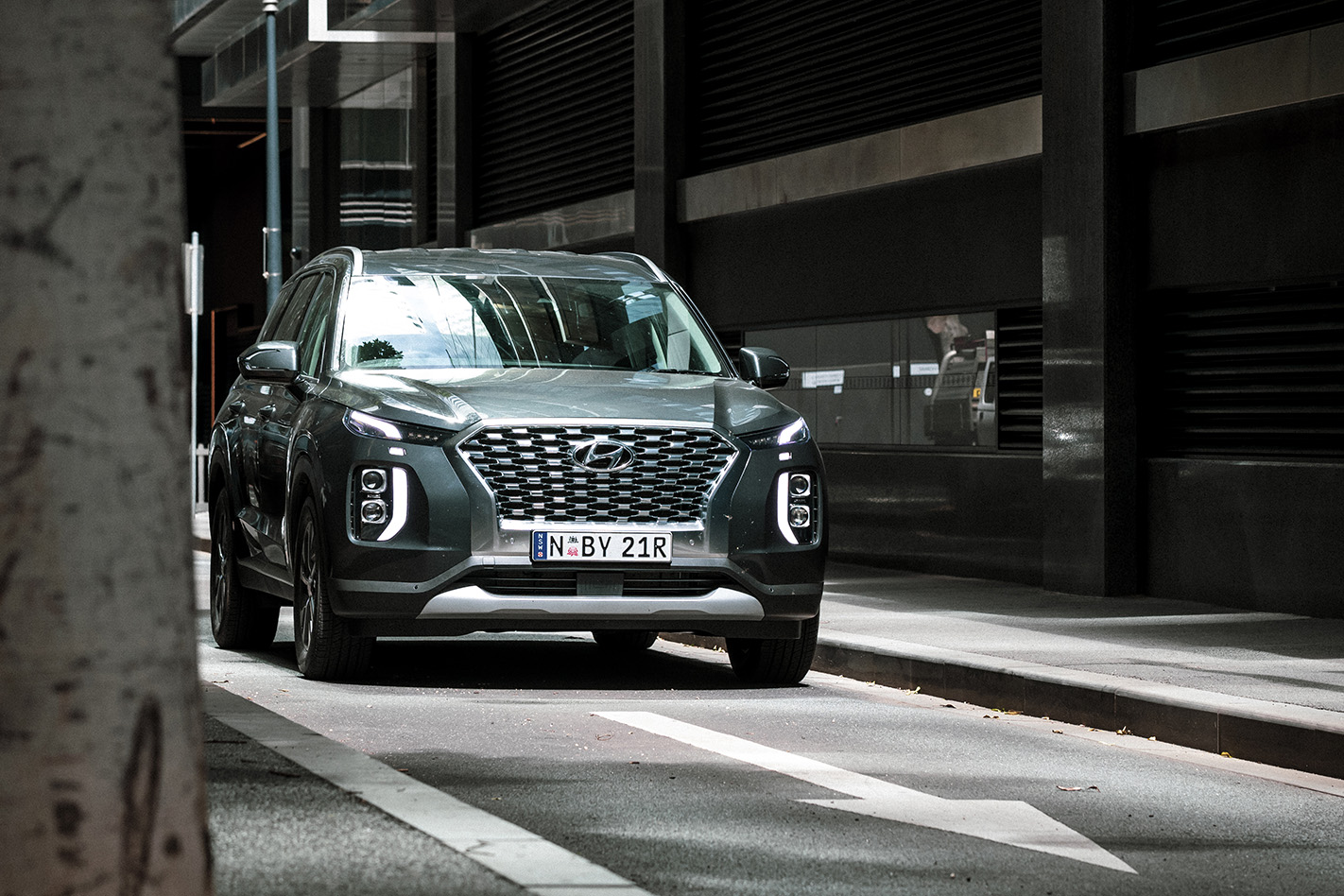
As mentioned above, perhaps its biggest rival can be found in the similarly powered and priced Kia Carnival Platinum people mover, which shares a V6 powertrain and much of its technology with this Palisade variant, if not body shape.
The Carnival wins in terms of practicality but the Palisade is a bit more fun to drive and its 203mm ground clearance will offer more versatility when it comes to leaving the bitumen.
To me, the bigger decision is to be made in the Hyundai showroom should you decide to go with the Palisade – that is, do you stick with this petrol V6 FWD drivetrain or spend an extra $4000 on the 2.2-litre diesel with AWD consumes diesel at a relatively frugal 7.3L/100km.
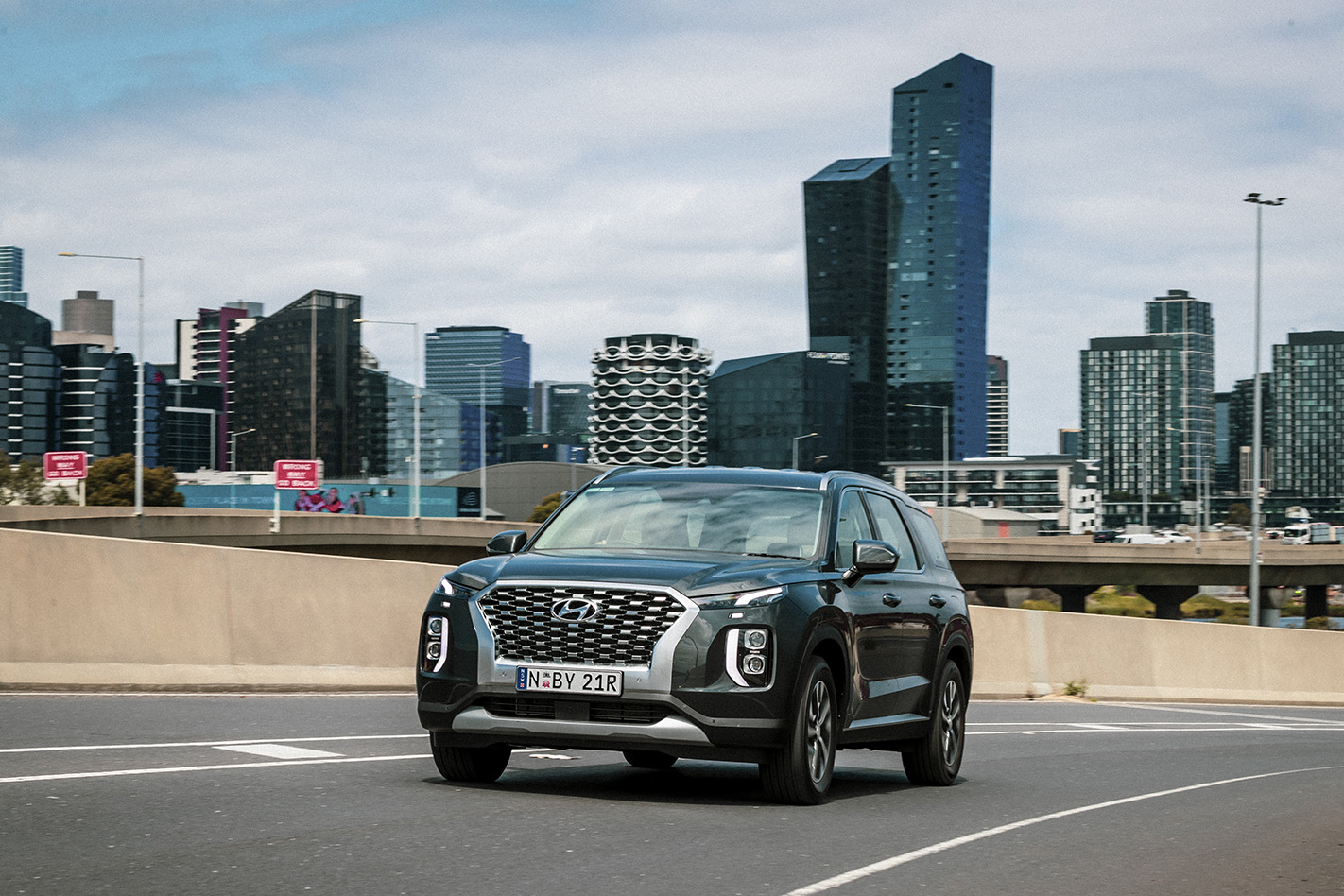
Personally, I think the diesel makes a more compelling case as it’s a little more economical and refined and extends the Palisade’s reach across the country.
That said, if the extra fuel consumption and absence of AWD are no drawbacks for you, this is certainly worth a look.
Specifications
Price: $37,290 Engine 3778cc, V6, direct-injection petrol Max Power 217kW @ 6000rpm Max Torque 355Nm @ 5200rpm Drivetrain: FWD Transmission: 8-speed auto Fuel consumption: 10.7/100km combined Tyres: 245/60 R18 105H Weight: 1897kg Dimensions: L 4980mm x W 1975mm x H 1750mm Wheelbase 2900mm ANCAP Not yet rated
On the face of it, the Mercedes-Benz GLB is an answer to a question nobody seems to have asked.
Yet, in some ways, the self-consciously dorky/ultra-cool (please choose) SUV might just be the most convincing of all the current crop of front-wheel-drive-based Benzes.
Spun off the MFA2 architecture introduced by the existing A-Class hatchback in 2018, the GLB is a tall-bodied, high-riding three-row premium SUV, with styling that references the massive full-sized GLS, with a hint of G-Class Geländewagen attitude added in.
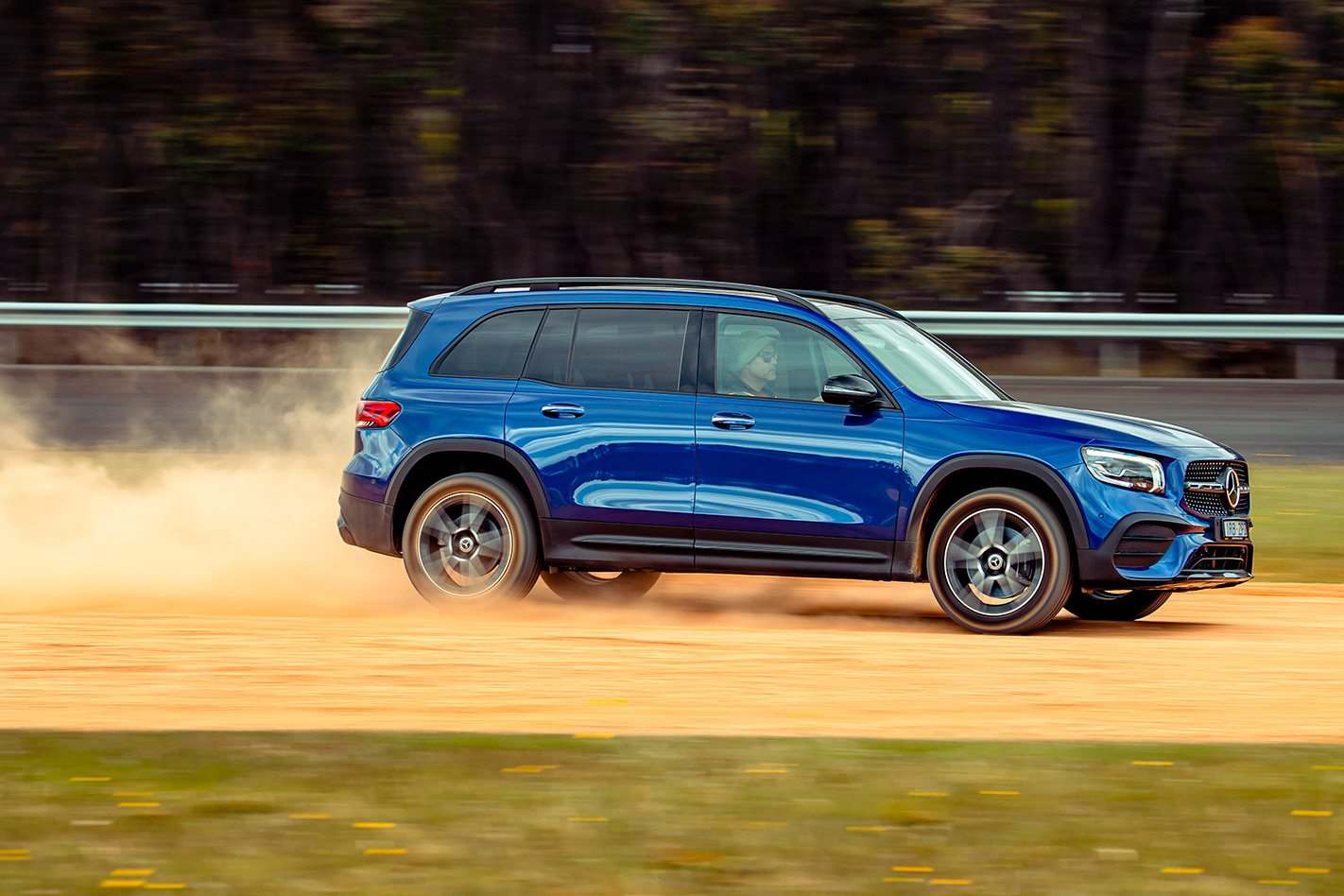
As the ‘B’ implies, the newcomer fits between two popular SUVs – the GLA crossover and the much-larger GLC. And when you consider that the former is barely bigger than the hatch that begat it, Mercedes’ need for something heftier against Audi’s Q3 and the BMW X1 is obvious.
Question answered, then.
Just to teach its compatriots a lesson, that nifty third row also gives Stuttgart a lure with which to snag Land Rover Discovery Sport buyers.
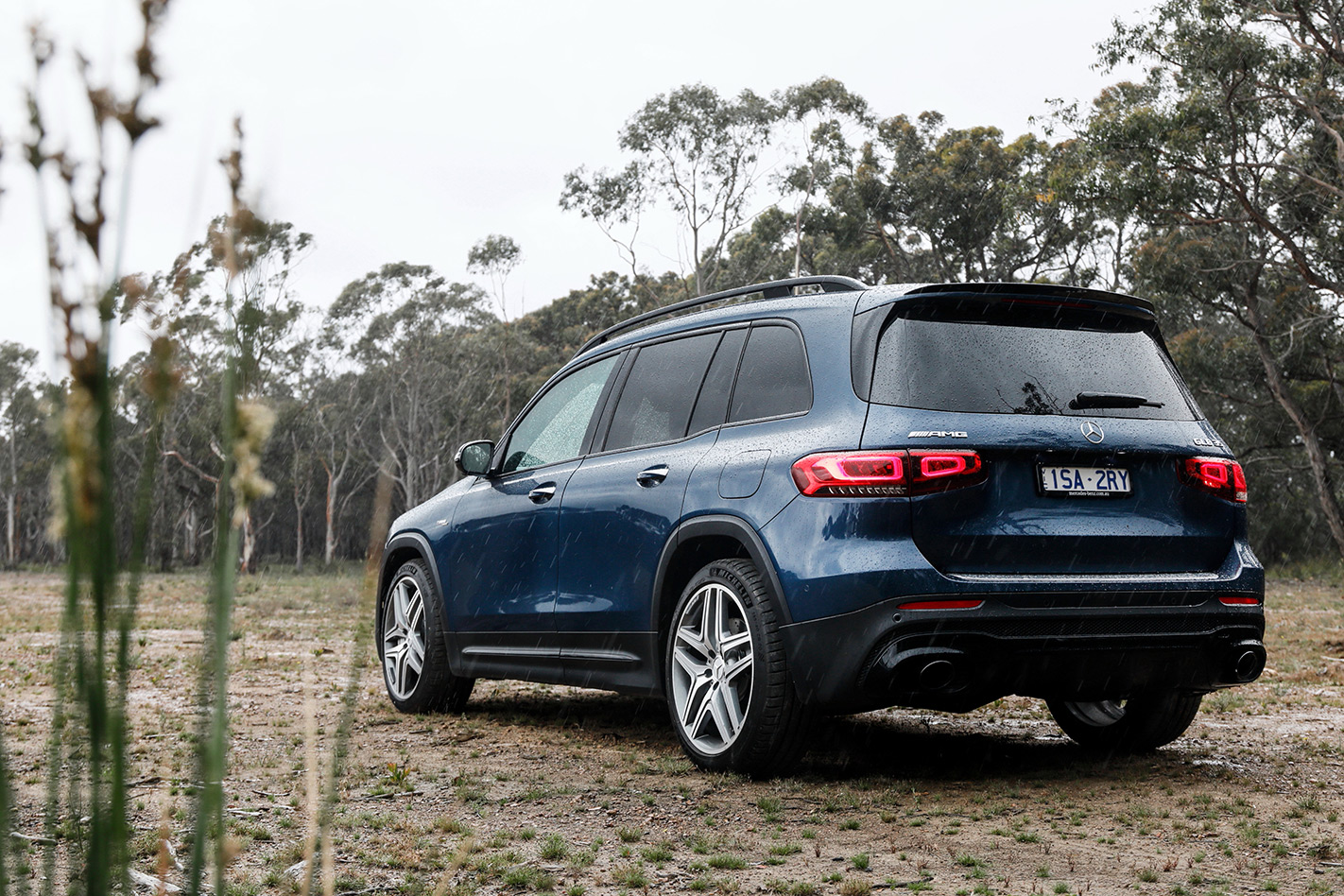
Thoughtful design defines the Benz’s packaging, with a stretched wheelbase and long back doors for easier access to all rear seating. The tall roof liberates space inside, deep windows add light and vision and the middle row slides for exceptional legroom. Note, however, that only passengers under 170cm tall are recommended for row drei. When it’s folded, the available cargo area is cavernous.
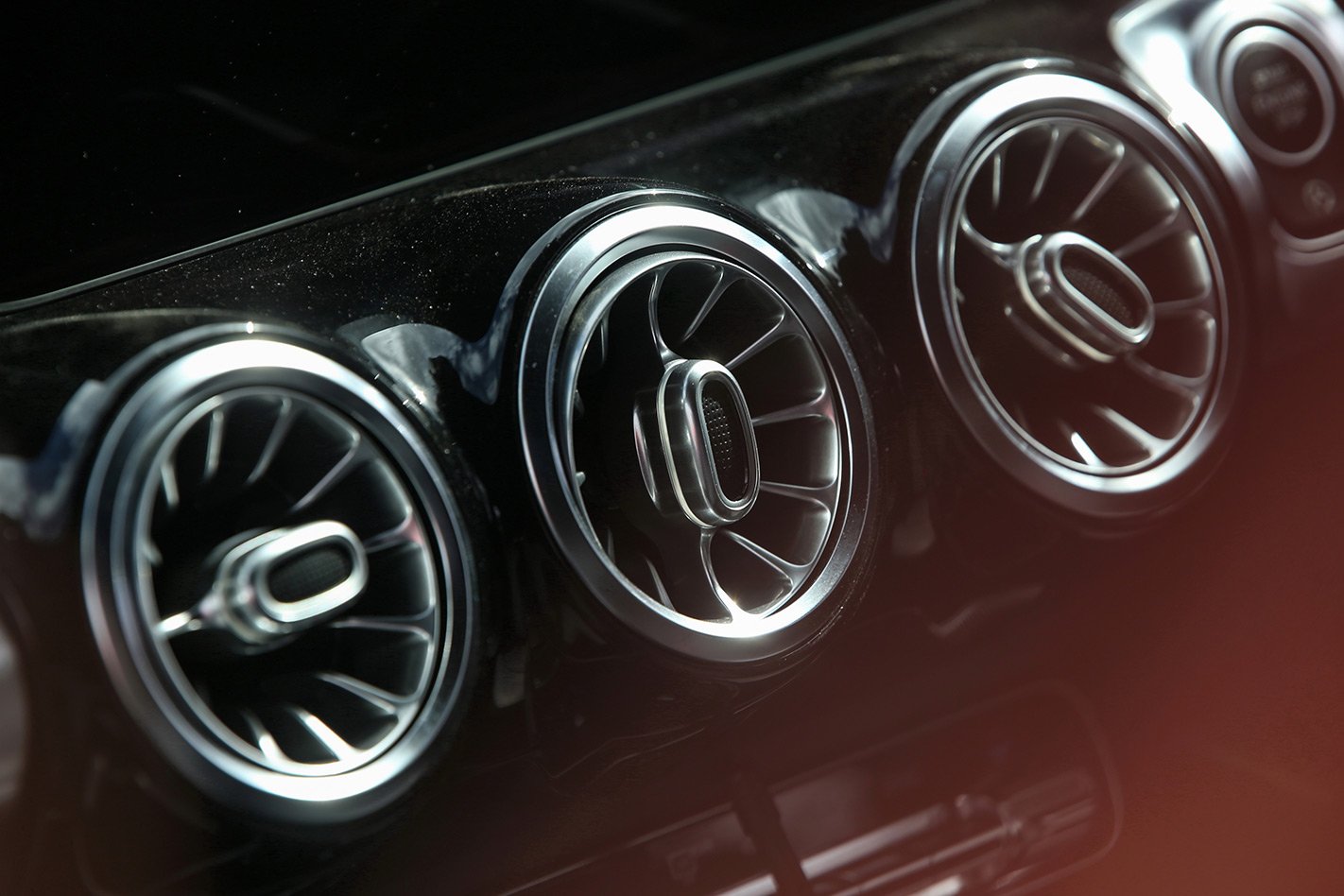
From the front seats forward, we’re talking pure A-Class, down to the glitzy 10.25-inch touchscreen, ‘Hey Mercedes’ voice control, multi-configurable digital instruments, turbine-chic air vents and bags of storage. Similarly, all the expected safety kit is present. And there’s a decent amount of gear included, too.
On the other hand, the squeaky trim and sub-par plastics undermine Mercedes’ reputation for quality. The same applies to the base GLB 200’s Renault-sourced 1.3-litre four-pot turbo/front-drive powertrain, which Mercedes wouldn’t supply for COTY assessment, but from past experience, also lacks the finesse expected from a Benz.
Little wonder then that the GLB 250 4Matic is where most of the buyers migrate up to. This is a searing, stirring performer, a rev-hungry 165kW/350Nm turbo 2.0-litre belter backed up by a slick auto, sharp handling and a hunkered-down chassis that faithfully follows the driver’s command.
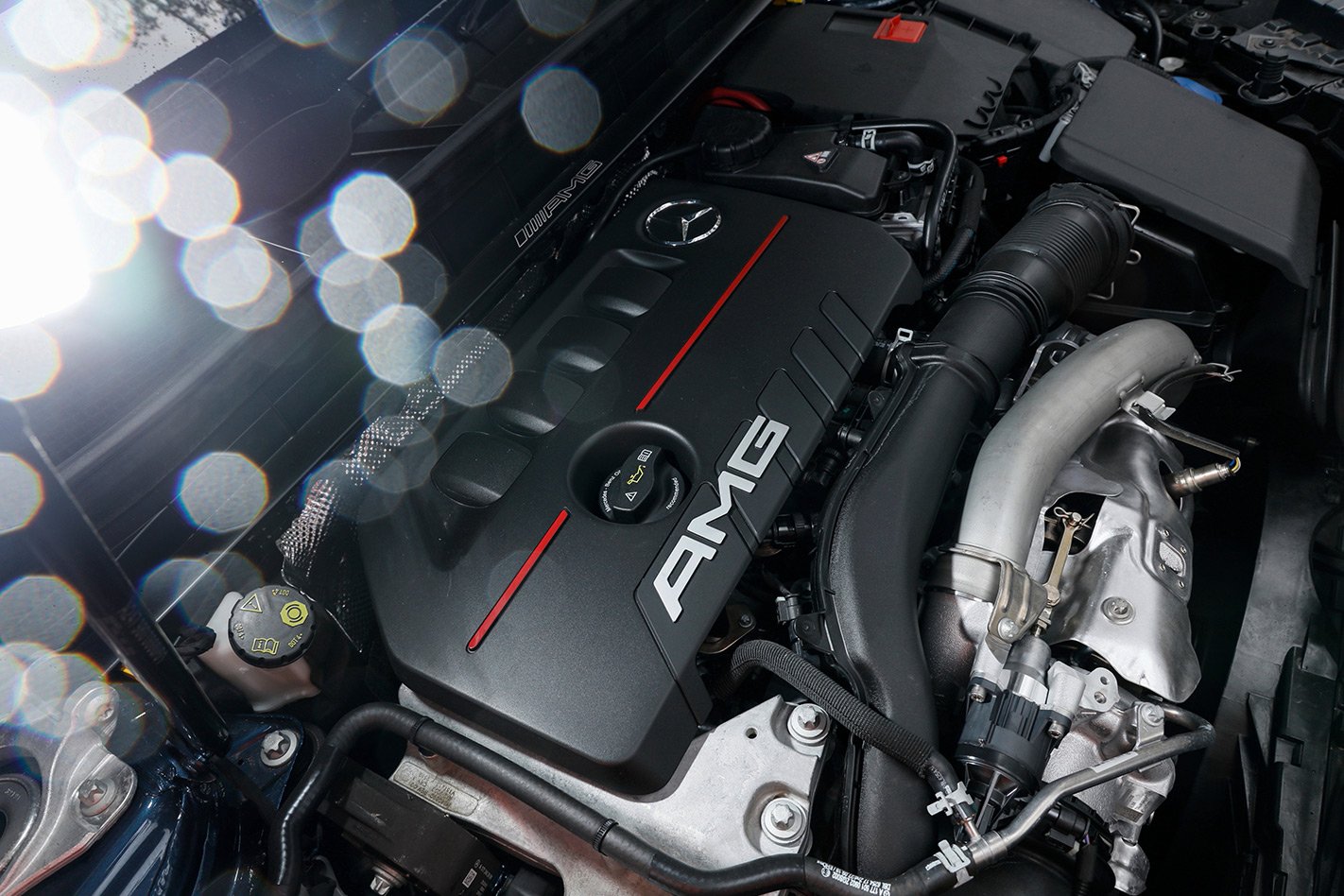
And if that’s not enough, the range-topping 225kW/400Nm GLB 35 AMG amplifies all that with dazzling ferocity, for knockout acceleration. Slightly unhinged, it relentlessly piles on speed, accompanied by a soaring soundtrack and genre-bending grip that lives up to the storied suffix applied to that otherwise slightly sad-looking tail treatment. This is unfeasibly fiery without being frenetic.
Frustratingly, however, both the 250 and 35 AMG cost a lot of money, skirting $80K and $95K respectively with a couple of choice options. Then there’s the ride quality, which is fine in Comfort mode thanks to the standard adaptive dampers (except GLB 200), but in Sport mode it brings back that old bugbear of rattly cabin bits.
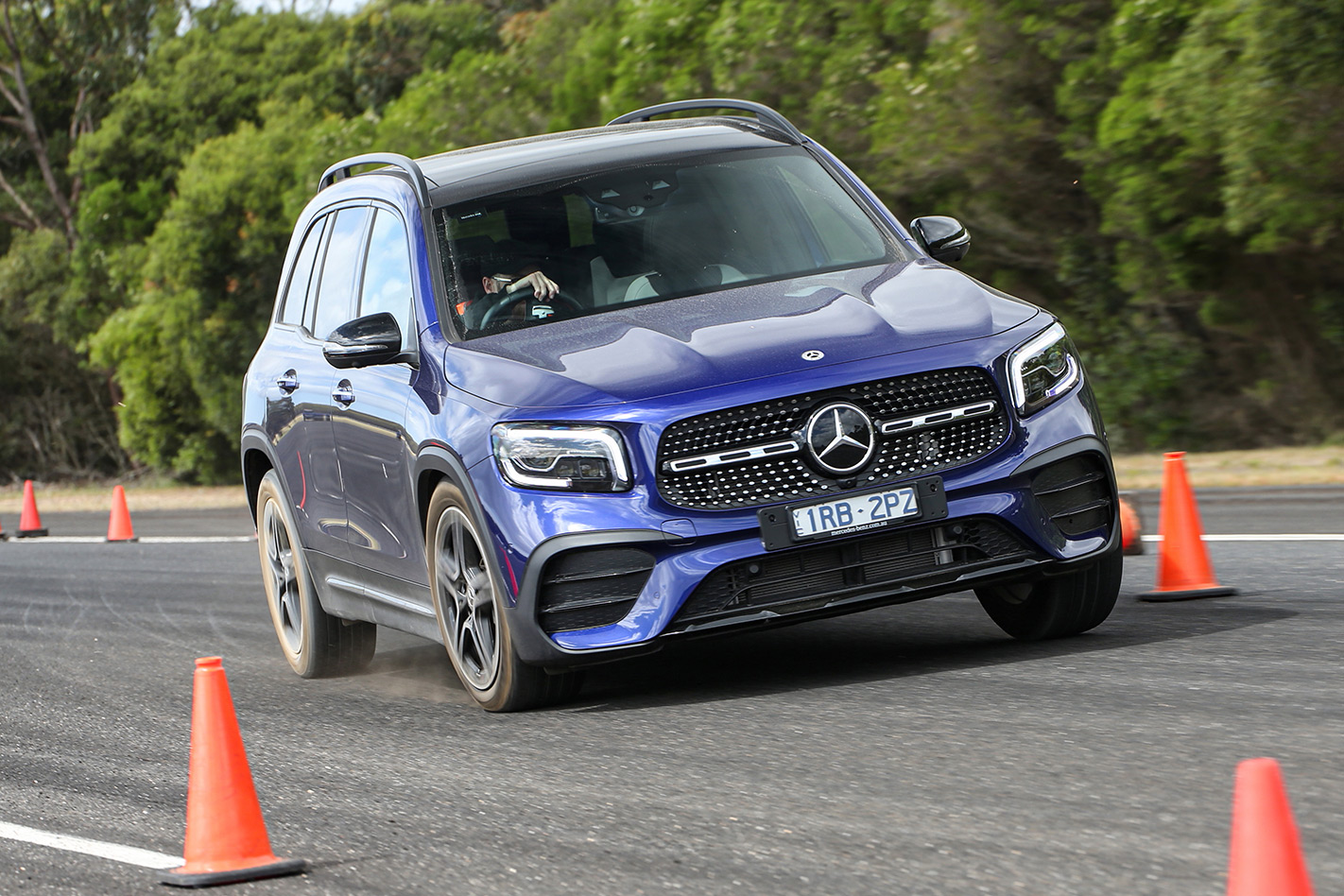
If Mercedes is sick of hearing this criticism, then a back-to-back drive with cheaper crossovers – such as the Mazda CX-30 – reveals the extent of our dissatisfaction here.
Still, the higher-spec GLBs might be the answer for well-heeled enthusiasts seeking an engaging, family-orientated, urban-friendly SUV with a decent dollop of character to boot. Too uneven to progress further in COTY, but fun all the same.
Richard Ferlazzo on the Mercedes-Benz GLB’s design
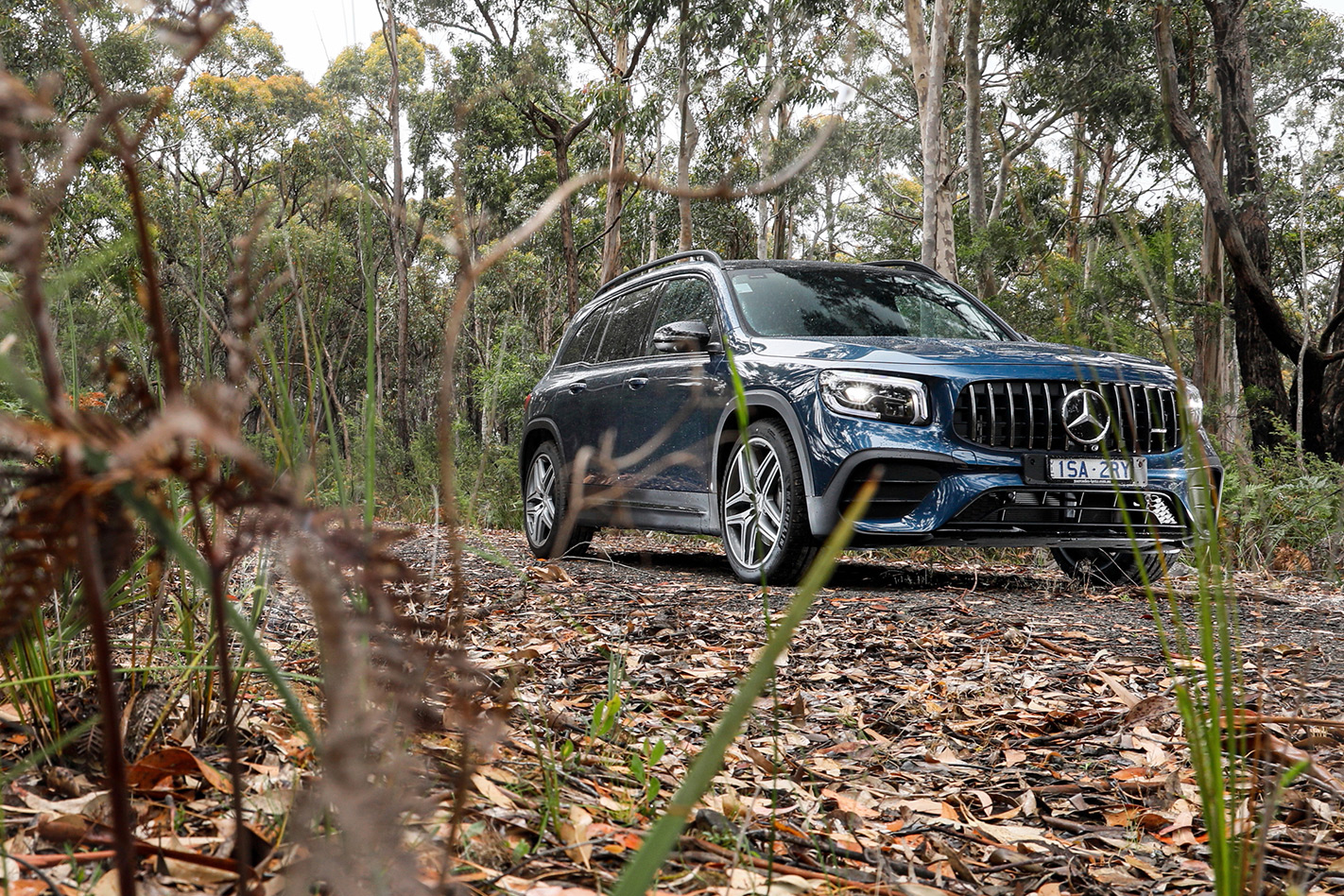
“The boxy upright styling with softened edges does nothing for me but it still looks rich and robust for its compact size. Similarly, the interior has all the usual cool infotainment screens, turbine-style air vents and funky lighting, but the door-trims felt flimsy and some of the hard plastics were disappointing.
Also, the slender gear selector stalk feels fiddly and underdone. Moreover, the third-row packaging is for kids only under a certain size which makes it less versatile. Nonetheless, it will likely hit a sweet spot for some buyers.”
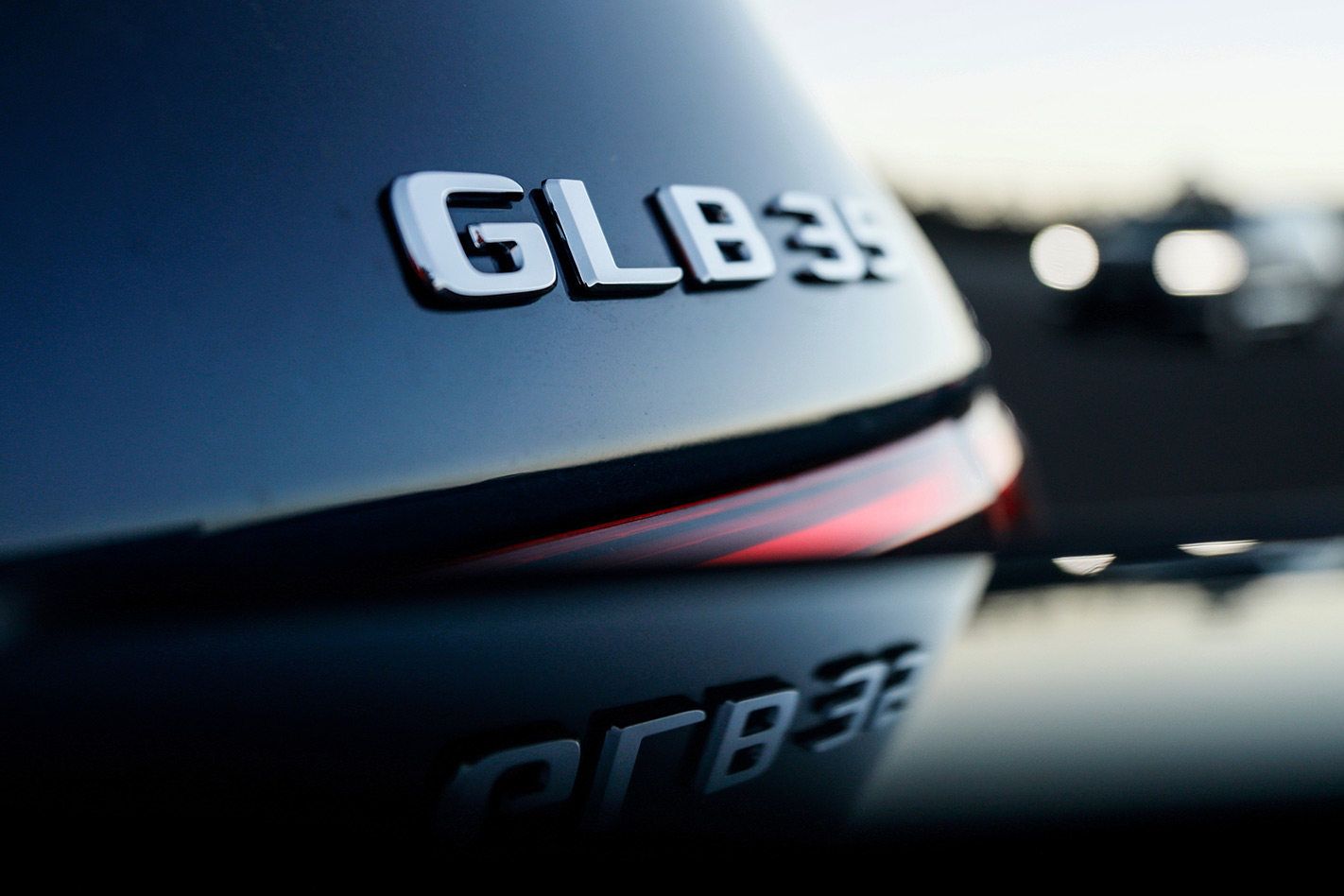
Variants Tested: – 250 4MATIC ($80,560 as-tested) – AMG 35 4MATIC ($96,285 as-tested)
Hyundai’s new Bayon crossover has been revealed. It’s another SUV for Hyundai’s growing ranks, and an official replacement to the ix20.
Designed to be a youthful offering, the Bayon takes on everything from Ford’s Puma to the Peugeot 2008 and Nissan Juke.
Hyundai says the name comes from the city of Bayonne in France; the brand points out that all of its SUVs have destination-based names to split them apart from the conventional car range. Apart from the Venue… which Hyundai says is a destination in and of itself.
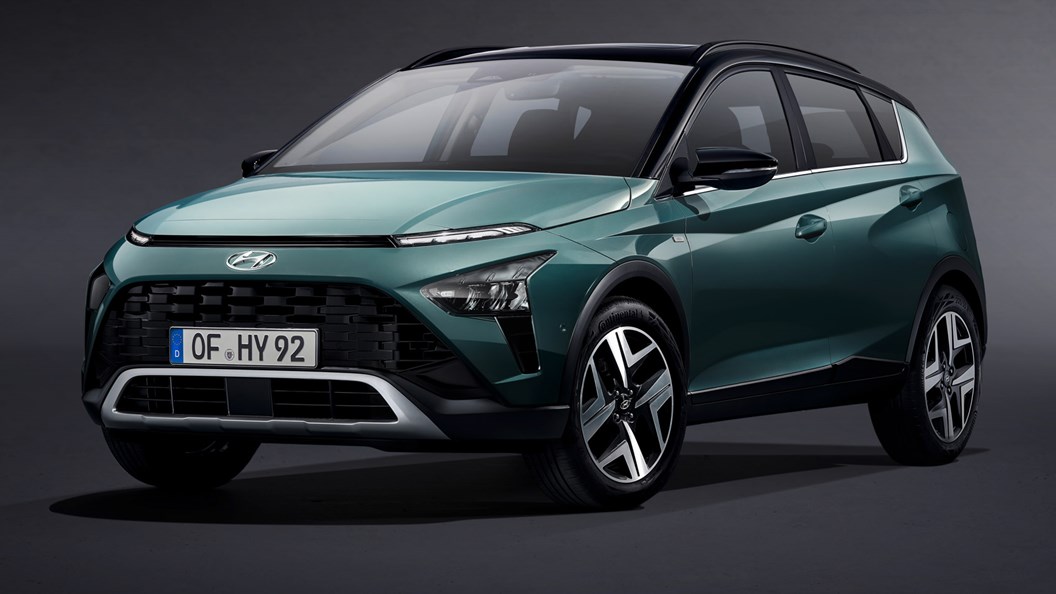
Speaking of the Venue, this new Bayon is roughly the same size and occupies the same market segment. With that, Hyundai has already ruled out the Bayon for Australian consumption considering it already sells the similar Venue small SUV. It also said the European production program would make the business case unprofitable for the local arm.
Another crossover? Yawn…
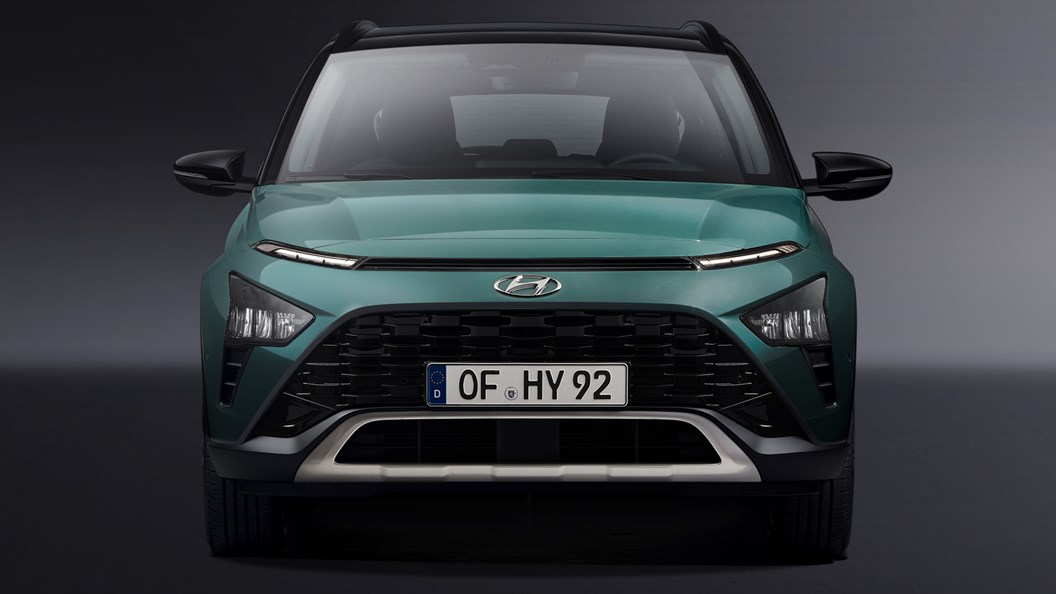
Yes, but stay with us. The Bayon certainly doesn’t look anonymous – that’s for sure – something that’s almost a requirement in order to stick out in one of the most crowded classes of car these days.
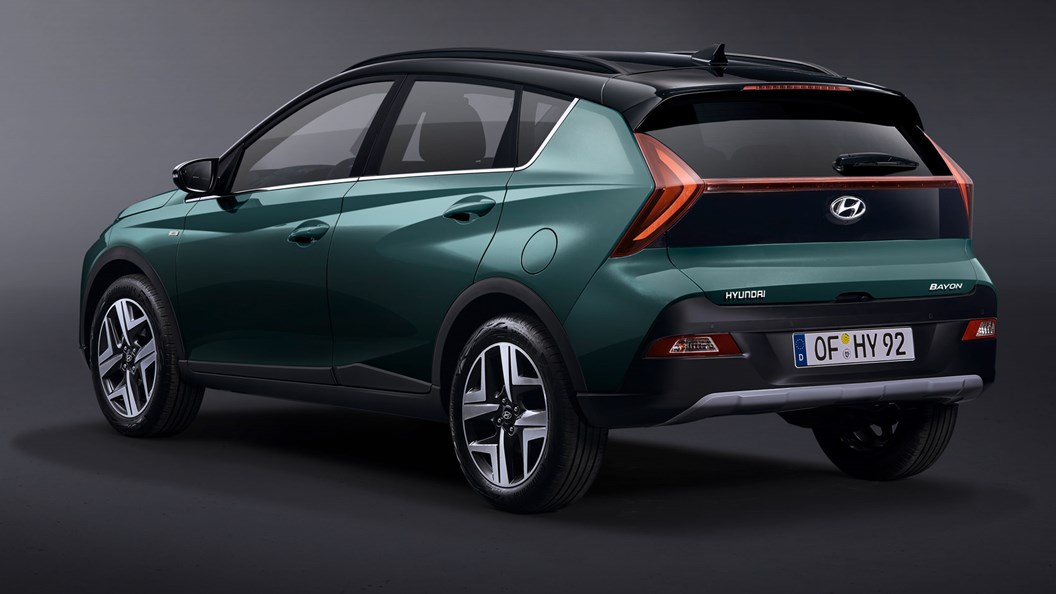
There are some familiar Hyundai cues here: split headlights at the front like the Kona, Tucson and Santa Fe, and a glass-heavy rear end with very interesting kinks in the surfacing. We’re getting strong Pontiac Aztek vibes from the rear, but in a good way for once. In order to inject at least a little bit of pizazz, Hyundai has listed several new colours (including the new Mangrove Green, pictured) that can be accented by an optional black roof.
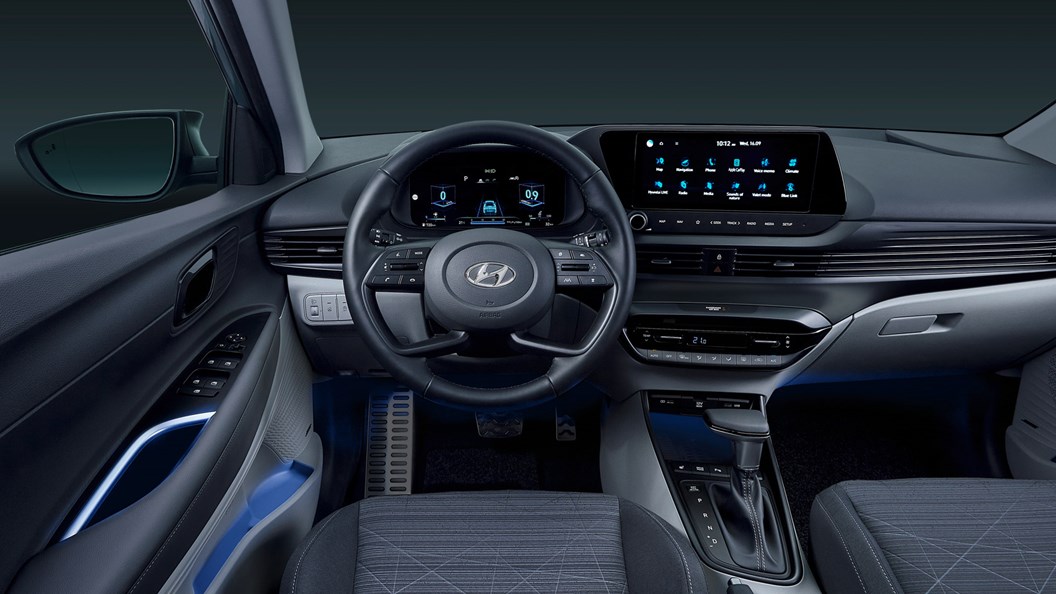
Inside, a lot of the design has been taken from the i20 hatchback: big screen in the centre, digital dials, straked vents that stretch across the width of the dashboard. Bluelink connected services include information like cloud-based navigation for more switched-on route planning and, where applicable, live parking info including where there are spaces and how much they’ll set you back.
As for safety tech, every Bayon has lane-keeping, high-beam and speed-limit assistance as standard, as well as an alert when it notices the car in front pull away in traffic. As for space, the Bayon has a 411-litre boot – a smidge smaller than you’d get on a Nissan Juke or Ford Puma.
I’d like some engine and performance specs
There’s a base-spec 1.2-litre, but the (slightly) more interesting options come in the shape of a 1.0-litre turbo with either 74 or 87kW – both of which have mild hybrid assistance. Go for one of these and you have the choice of a six-speed ‘intelligent’ manual gearbox or seven-speed dual-clutch auto.
The ‘intelligent’ manual allows at-speed coasting when you release the accelerator – something usually reserved for the most sophisticated automatics. When put into Sport mode, the intelligent manual also has rev matching – something only seen thus far on the brand’s N range.
When can I buy one?
Australians can’t, but Hyundai says European Bayons will be available in the summer of 2021.
Do you think Hyundai should offer this new Bayon small SUV instead of the Venue? Let us know below.
MORE Hyundai Santa Fe also gets a radical revamp MORE 18 models in 18 months as Hyundai overhauls its fleet
This article was originally published at carmagazine.co.uk
