
Carmakers around the world are being forced to slow vehicle production in the face of a global semiconductor shortage caused by the growing demand for personal electronics.
Specifically, the world’s chipset manufacturers that ordinarily provide car factories with electronic components are allocating more production to consumer electronics like the popular Playstation 5 and Xbox Series X, personal computers and 5G smartphones.
Cruelly, this switch to consumer electronics by chipset manufacturers is a direct reaction to the coronavirus-driven car-manufacturing slump in 2020.
In 2019, automotive factories stopped or slowed production as the coronavirus kept buyers away from showrooms, forcing chipset manufacturers to find alternate customers for their own product. That same pandemic which kept buyers away from dealerships triggered a consumer electronics boom as people spent big on computers, gaming platforms, phones and the like. This meant that when car production ramped up again late in 2020, the same supply of chipsets was not readily available.
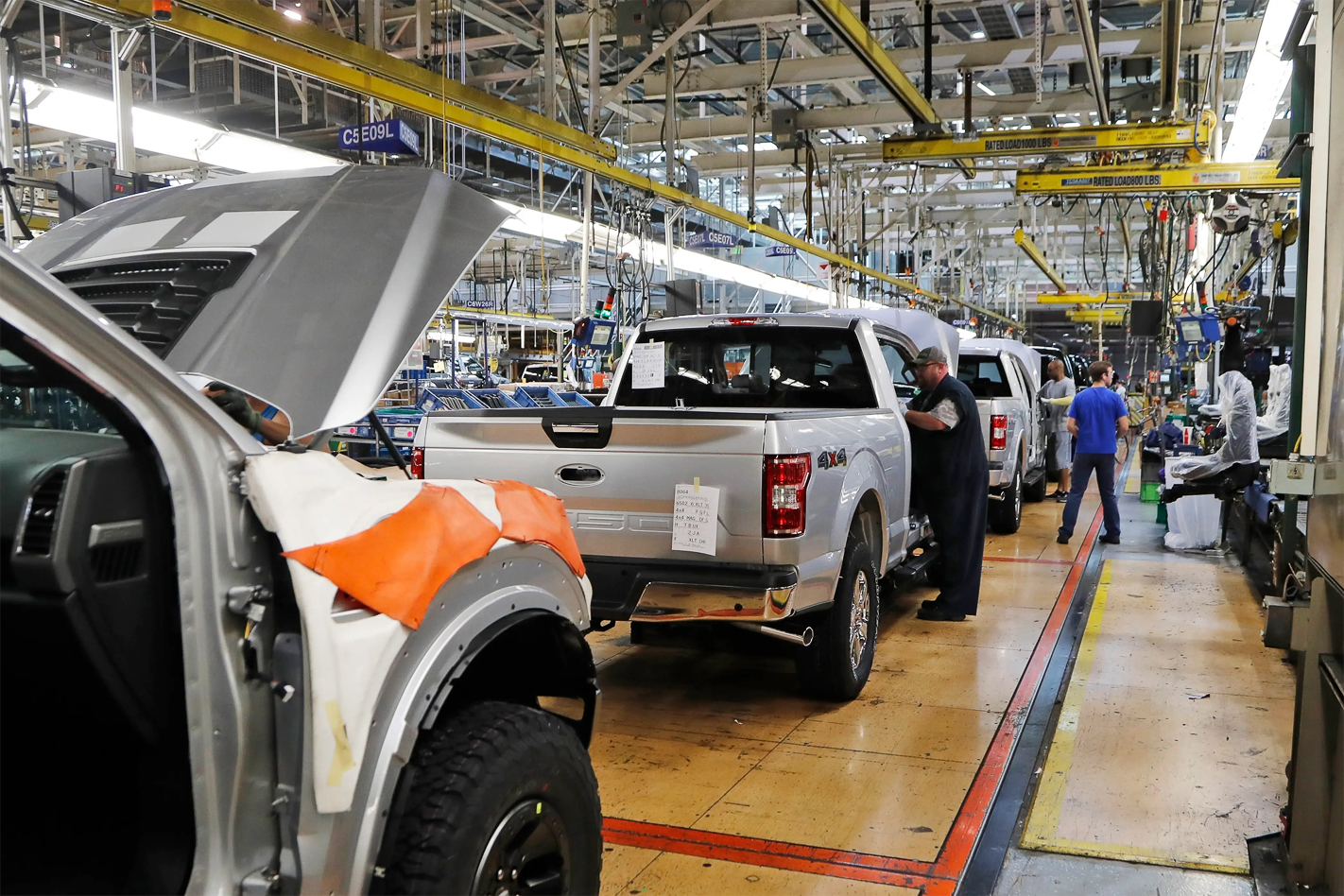
Toyota has reportedly stopped production lines in China, some of Nissan’s operations are slowed, Honda has stalled some model lines in the UK and a number of US-based factories of Ford, Fiat Chrysler and Volkswagen have also been impacted.
Shortages of the tiny automotive componentry are likely to continue for the next few months, at least until chipmakers return their production focus to automotive customers.
But a return to pre-Covid production levels is only half the battle. Phones equipped with 5G require more chips than those built for the 4G network. On top of that, smarter cars of the future will also require more chips, says IT research firm, Gartner.
“By 2022, automobiles will require nearly 50 per cent more semiconductors as cars become more automated, cleaner, and more connected.”
Backing up that claim, consulting firm Deloitte suggests that semiconductors and the electrical systems they’re integrated with comprise up to 40 per cent of a new car’s cost – a figure that’s set to rise as cars become more autonomous.

It’s unlikely that car prices will increase as a result of the high demand for semiconductor componentry. Instead, experts predict that car buyers may just have to wait longer for their new car.
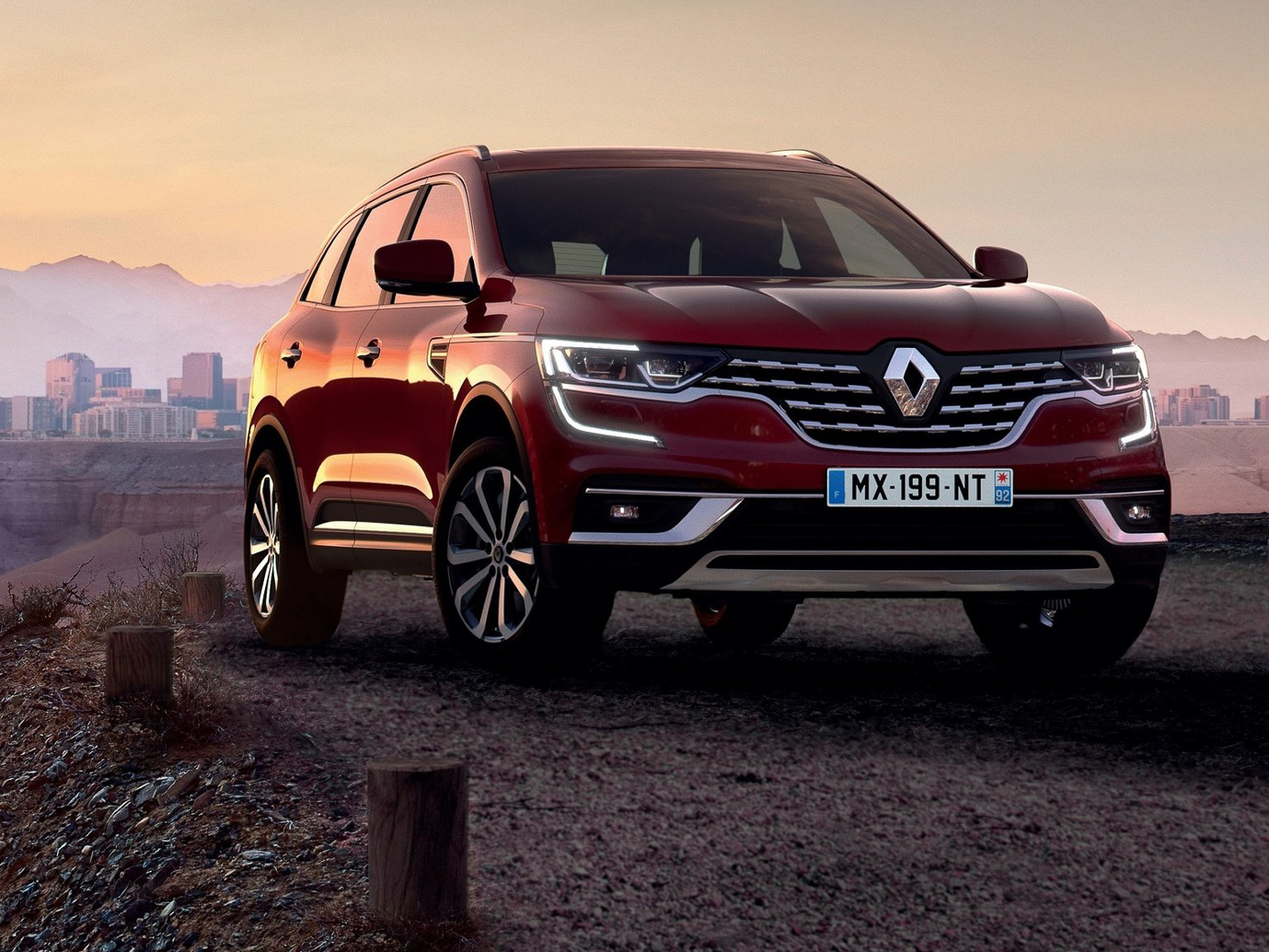
Changes are on the way for the 2021 Renault Koleos medium SUV, headlined by a price rise for higher-spec variants and extra equipment for the range-topping Zen specification.
The three-strong range kicks off with the five-seat, five-door Koleos Life for $32,990 (before on-road costs) as before, though the mid-tier Koleos Zen is now $36,790 and range hero Koleos Intens is now $43,290, representing a $300 increase for both.
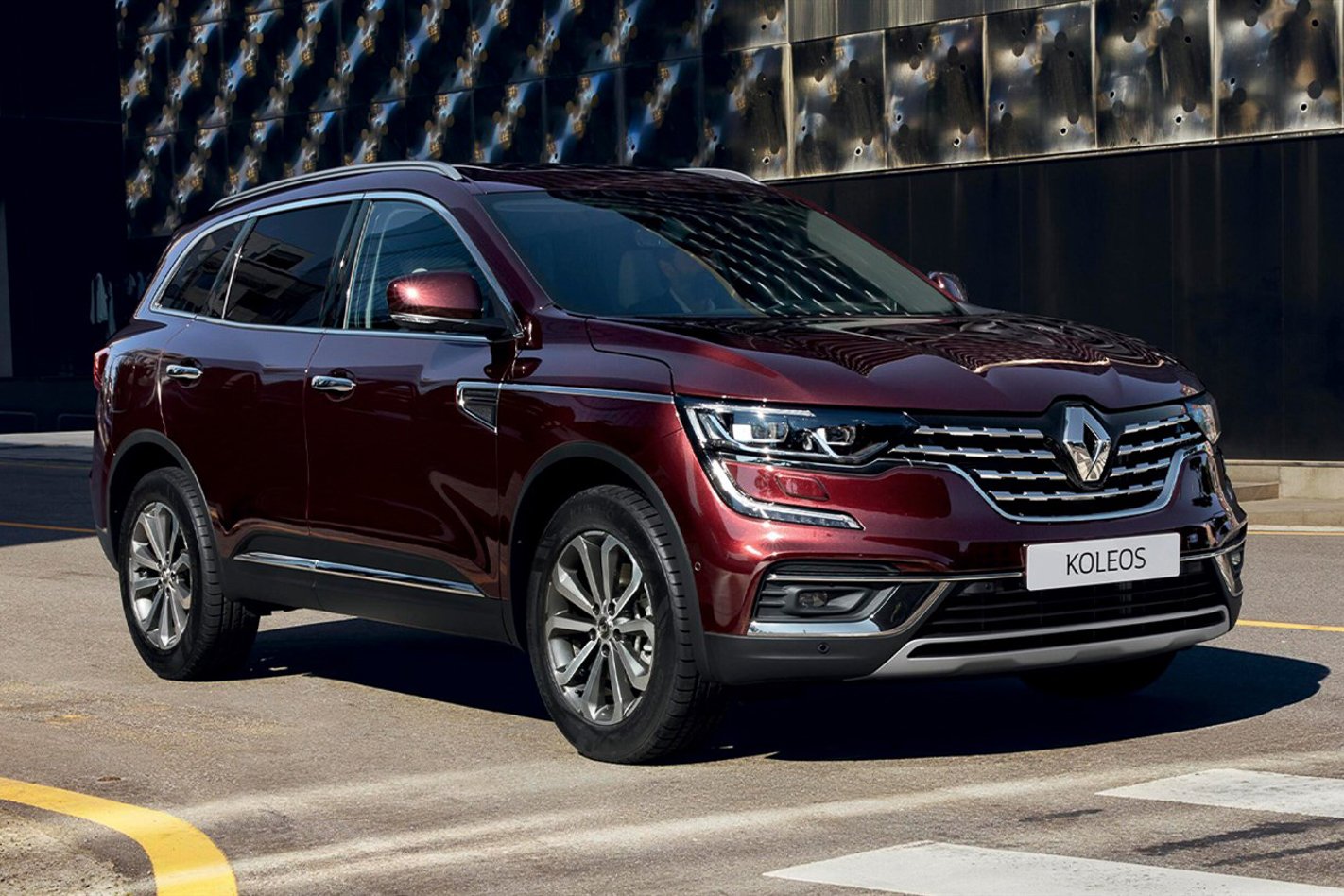
A Renault spokesperson attributed the price increase to changes in equipment and fluctuating exchange rates.
Changes are mostly reserved for the Intens top-spec, though both the Life and Zen benefit from added LED headlights with automatic high beam.
The Intens now ships with black Nappa leather upholstery, memory and massage function for the driver’s seat, dynamic indicators, LED reversing lights, side mirror tilt when reversing, a seat base extension for front row pews and hill descent control for the all-wheel drive variant (only available on Intens).
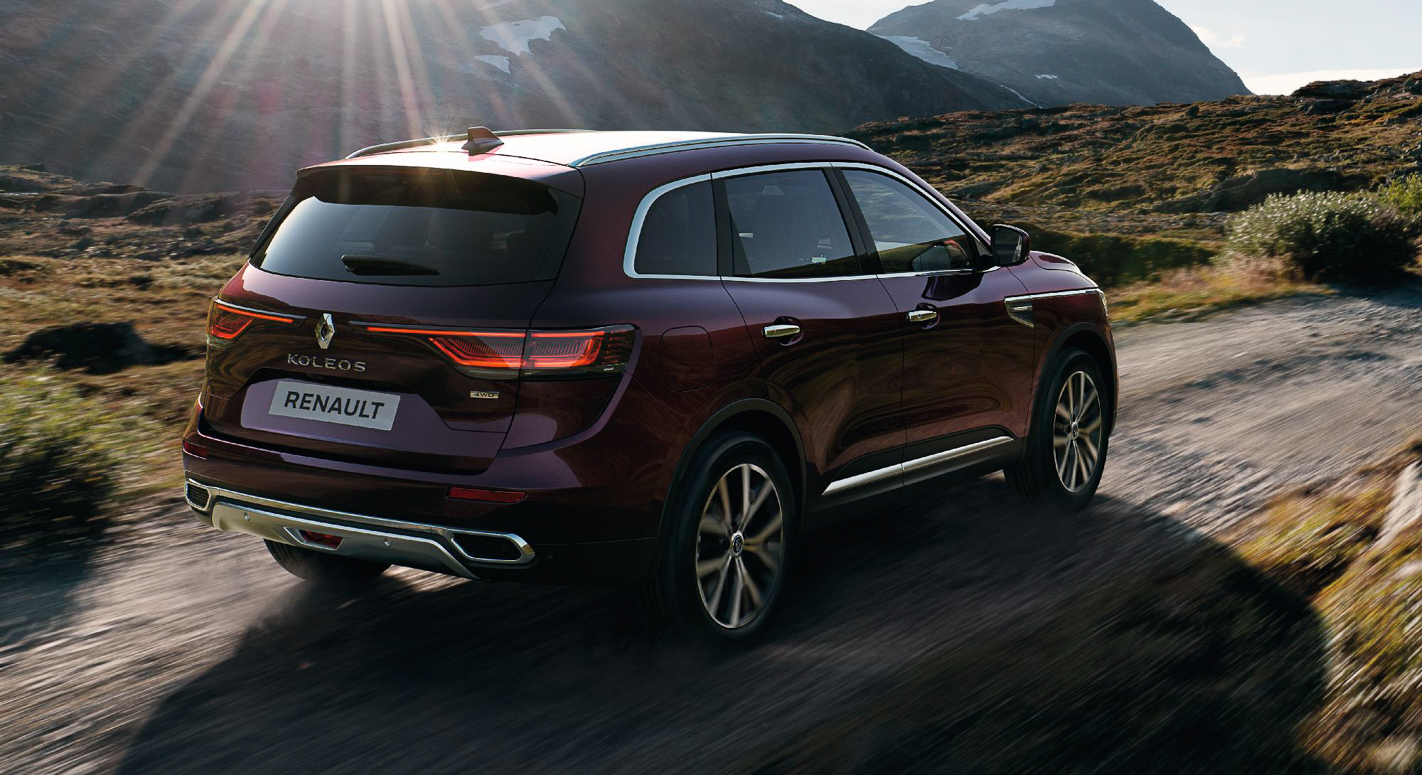
There are no changes to the 126kW/226Nm 2.5-litre naturally-aspirated four-cylinder engine that’s shared with the Nissan X-Trail, which sends power to the front wheels of all three model grades via a continuously-variable transmission.
All-wheel drive is available on for the Intens range-topper and costs an additional $2500.
Apart from the equipment changes mentioned above, the range’s equipment boasts are as follows.
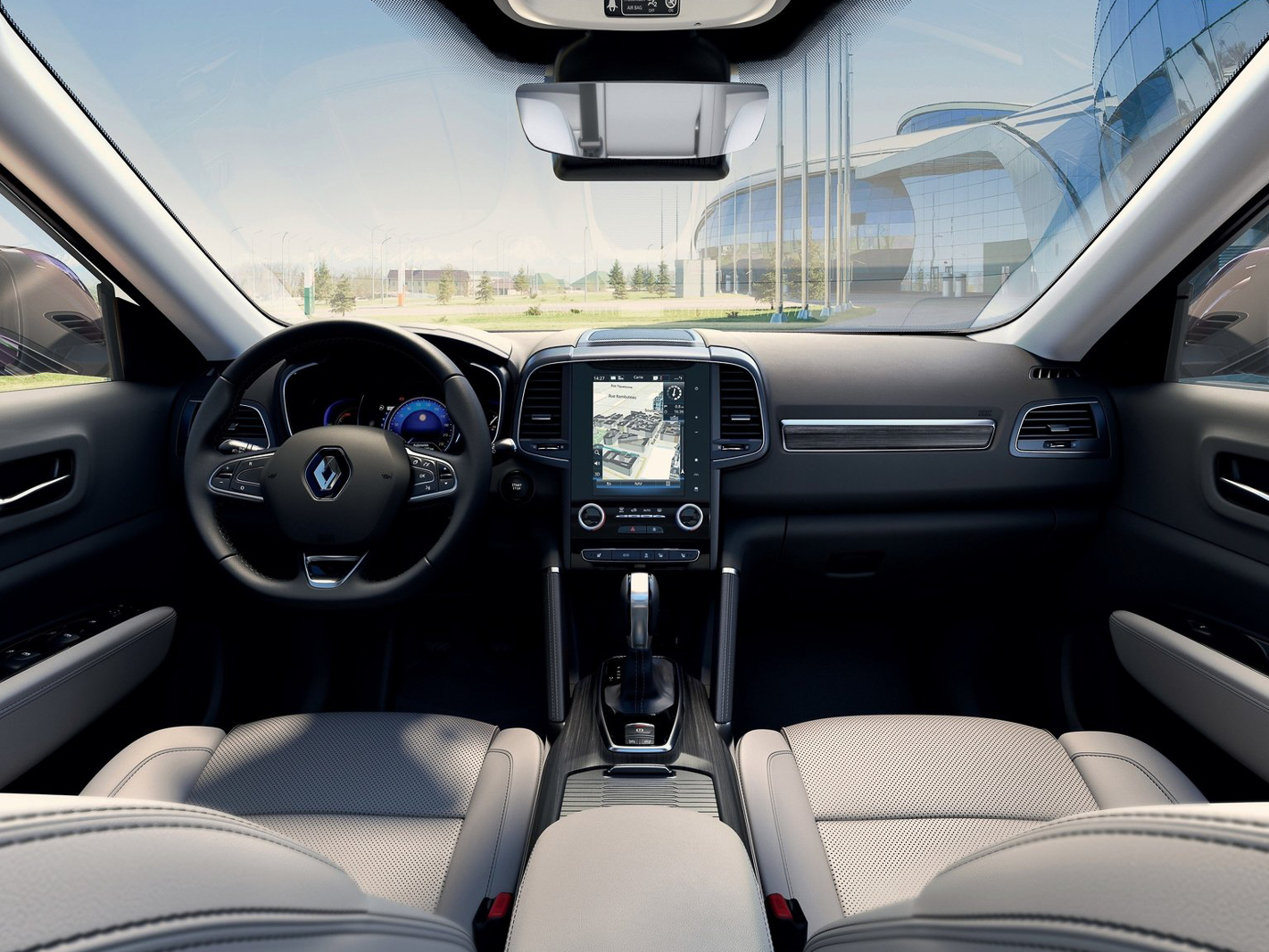
Aall Koleos variants score a 7.0-inch touchscreen infotainment unit with Apple CarPlay/Android Auto, reversing camera with rear parking sensors, ISOFIX baby seat mounts, keyless entry and 17-inch alloy wheels.
On top of that, the Koleos Zen adds satellite navigation, front parking sensors, synthetic leather upholstery, heated front seats and easy-folding rear seats.
In addition to the all previous equipment and the added 2021 inclusions, the Koleos Intens gets a larger 8.7-inch infotainment screen with Bose sound system, ventilated seats, a panoramic sunroof and a powered boot release.
The Koleos range continues to be serviced by a five-year/unlimited-kilometre warranty, five years of roadside assistance if serviced at a Renault dealer and five years of capped price servicing.
The updated lineup will hit Australian dealerships from March 2021.
2021 Renault Koleos Australian pricing
- Koleos Life – $32,990
- Koleos Zen – $36,790
- Koleos Intens FWD – $43,290
- Koleos Intens AWD – $45,790
Mitsubishi’s Pajero Sport large off-road biased SUV has been updated for 2021, cut back from a four-strong range in 2020 to a three-variant line-up.
The five-seat GLS version has been dropped, leaving the entry-level GLX as the sole five-seat variant, while the remaining Exceed and GLS model grades carry on in seven-seat configurations.
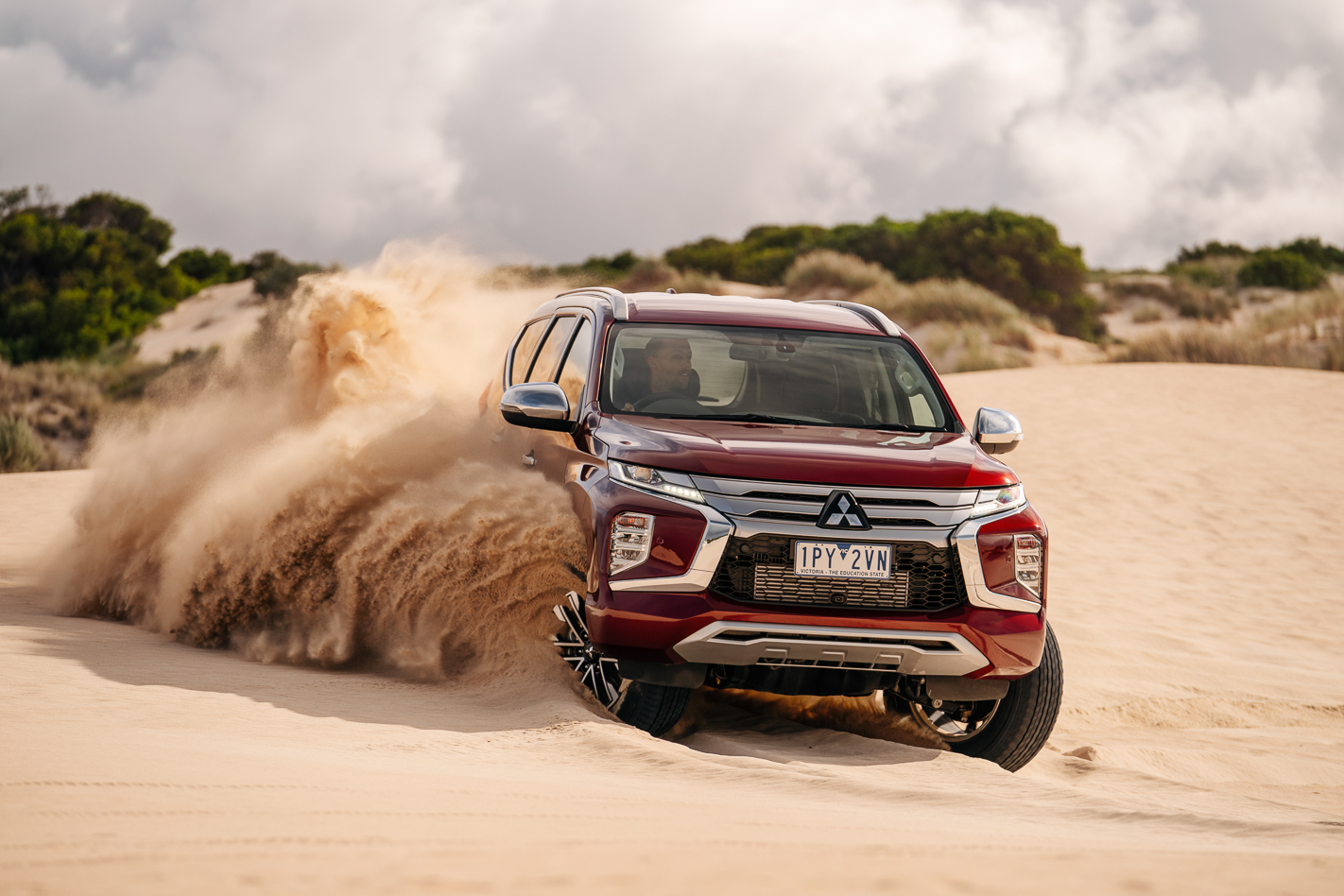
Prices have also shifted for all three variants, with the entry-level GLX and range-topping Exceed rising by $500 each to come in at $47,490 and $57,690 respectively.
Conversely, the mid-tier $52,240 GLS is now $250 cheaper than before. All prices are before on-road costs.
Little has changed specification-wise for 2021, though some minor changes in equipment could explain some of the price changes.
The GLX gains adaptive cruise control for 2021, which means the entire range is now covered by the radar-based cruise control system.
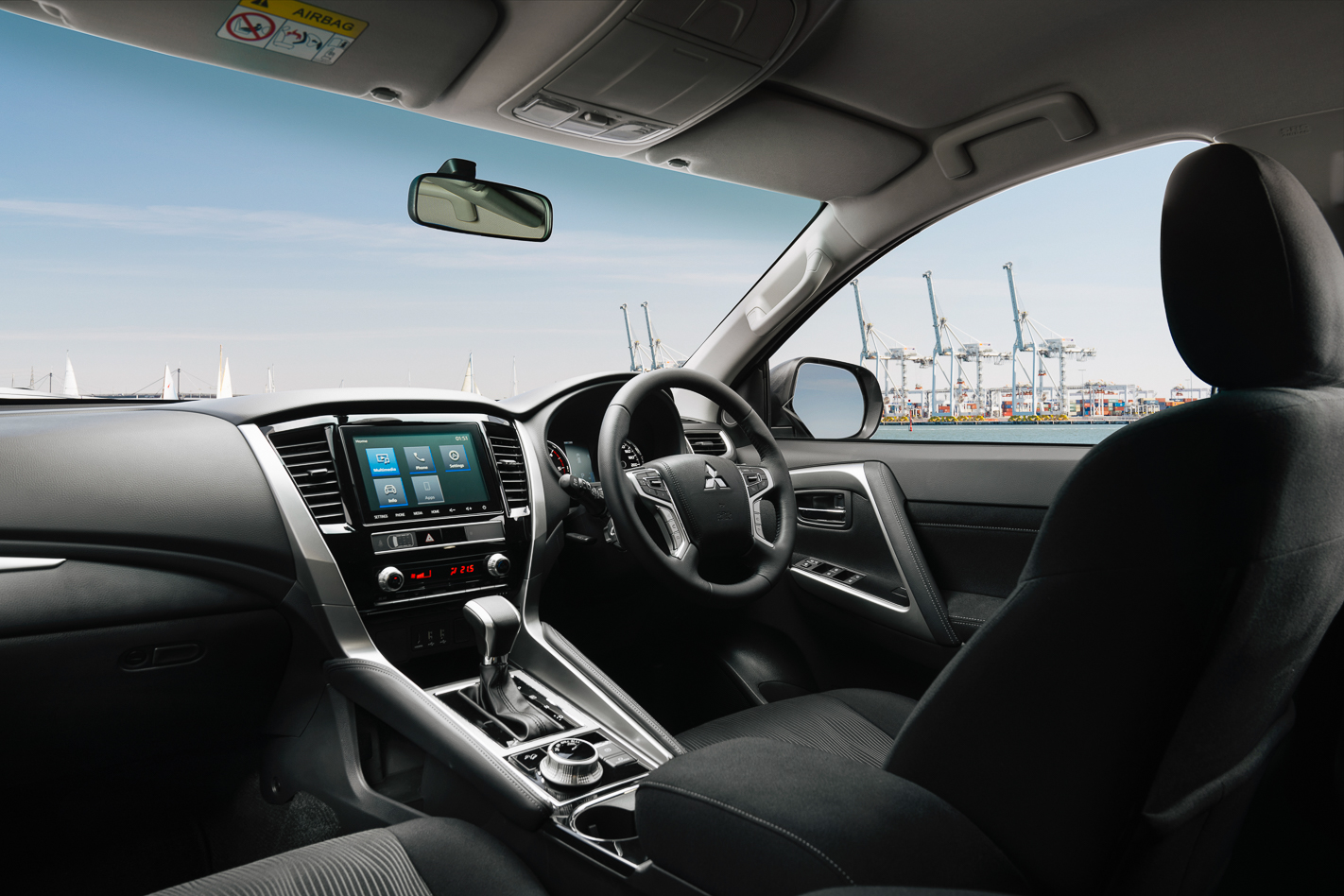
The mid-level GLS gans satellite navigation for 2021, but loses its leather/synthetic leather upholstery, replaced by water-resistant cloth. The previously power-operated front seats, too, are now manually adjustable.
Instead, Mitsubishi has moved the deleted items to a new $2250 Deluxe option pack, which adds a 360-degree camera monitor in addition to returning the leather upholstery and powered front seats.
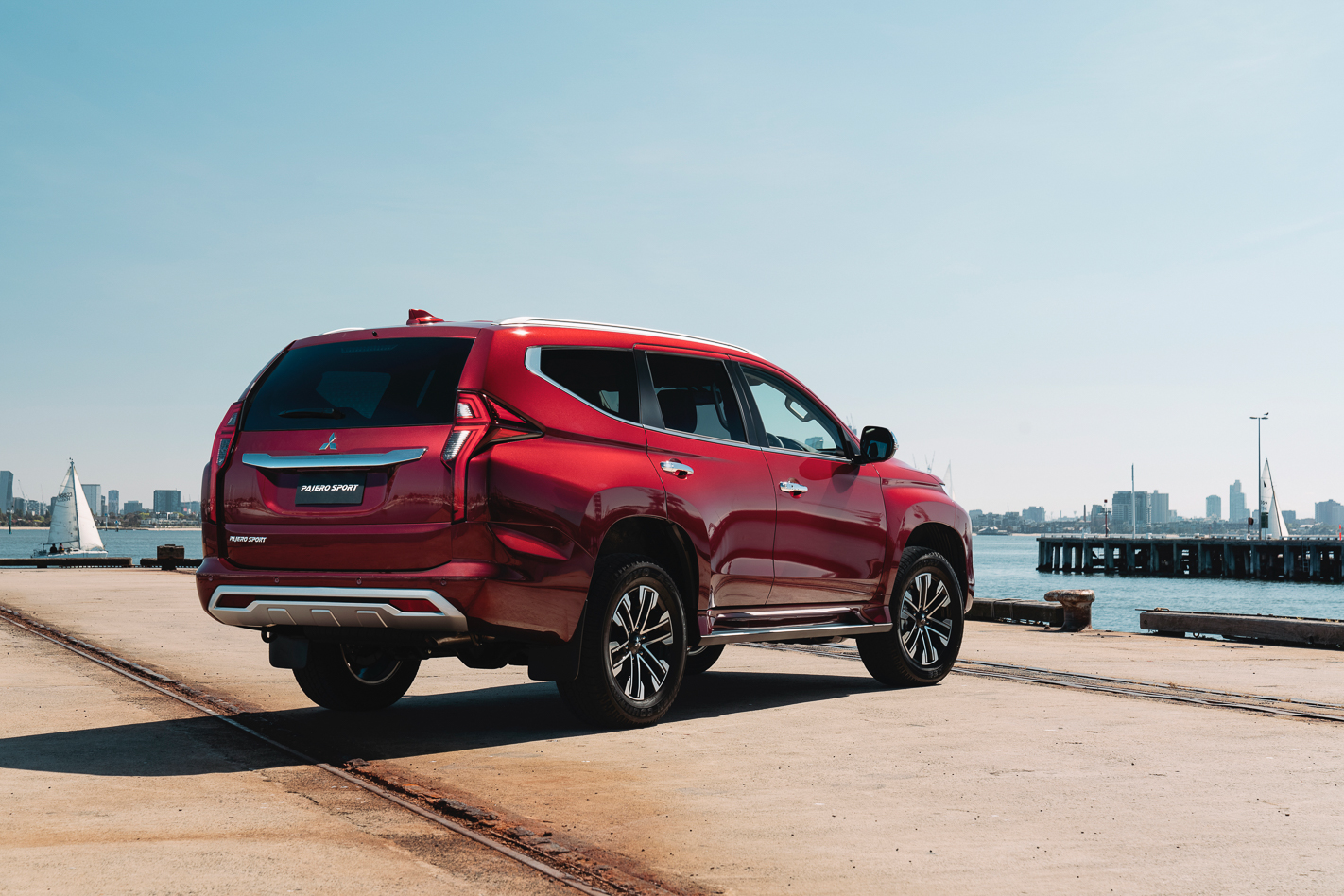
There are no changes for the top-spec Exceed for 2021, other than that Deep Bronze and Titanium Grey metallics have been removed from the colour range.
A 133kW/430Nm 2.4-litre four-cylinder turbo-diesel engine attached to an eight-speed automatic gearbox remains the only drivetrain option for the Pajero Sport. Mitsubishi’s tests indicate it uses 8.0l/100km on the combined cycle.
The Mitsubishi Pajero Sport competes in the large SUV segment with other off-road-focused SUVs such as the Ford Everest, Toyota Fortuner and Isuzu MU-X.
It found just over 6000 homes in Australia last year, suffering only a seven per cent dip year on year.
A favourite with caravanners, the Pajero Sport finished second to the MU-X (7049 sales) and in front of the Everest (5996 sales) in the final standings for 2020, with the Fortuner (2883) well off the pace.
2021 Mitsubishi Pajero Sport Australian pricing
- Pajero Sport GLX five-seat – $47,490
- Pajero Sport GLS seven-seat – $52,240
- Pajero Sport Exceed seven-seat – $57,690
Kia has added meat to the bones of its Plan S it announced a year ago, outlining a more sustainable company and manufacturing culture that will deliver seven electric models before 2027, along with a shortening of its name.
As of today, Kia Motors becomes simply Kia to align with its new sharp brand identity unveiled earlier this month, and demonstrates a strong commitment to its Plan S, it says.
Compared with some other brands, Kia has not been the fastest to adopt electrification in its line-up, but the South Korean carmaker is now playing catch-up with a more focused adoption and development of battery EVs and other ecological technologies.
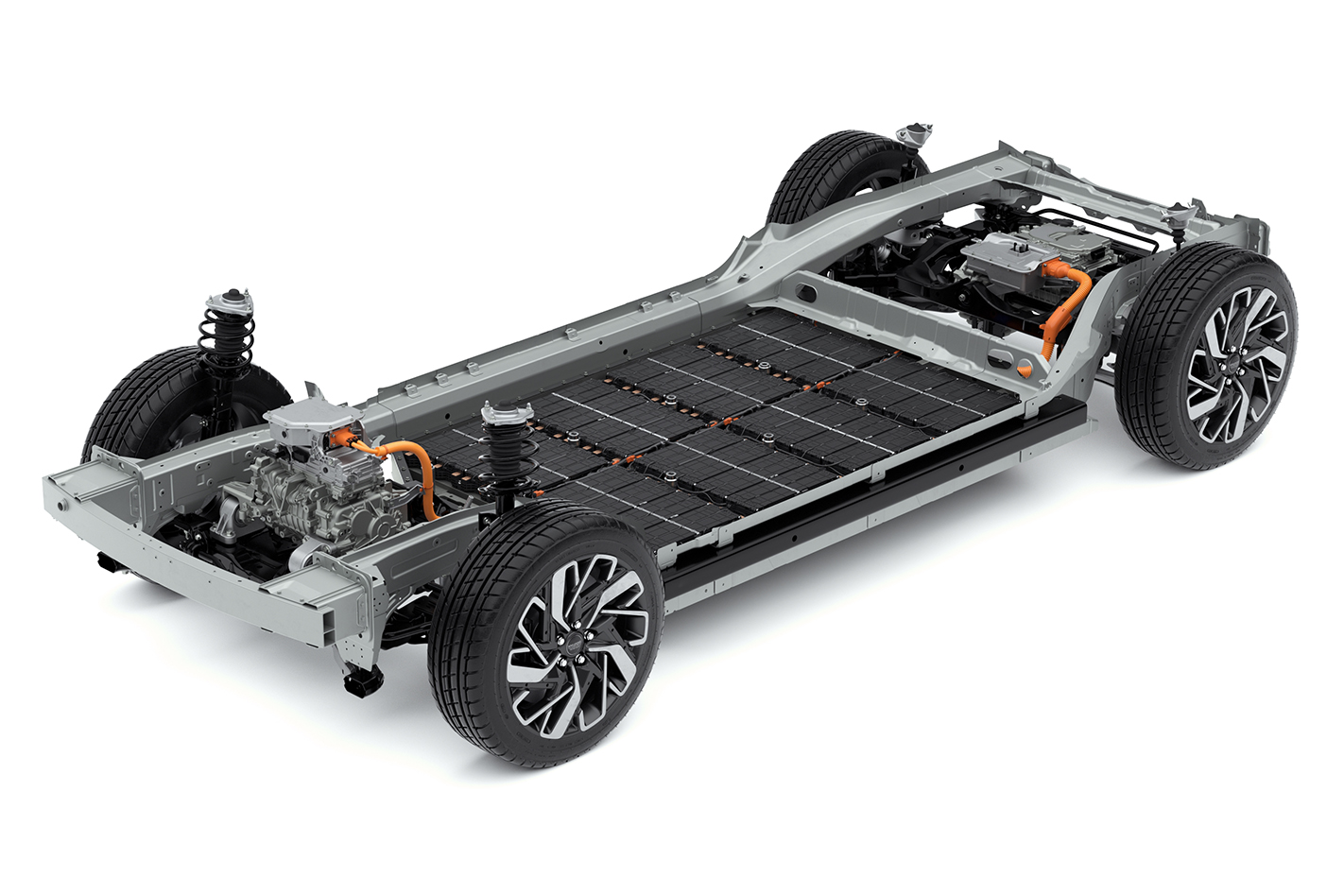
Kia has now confirmed it will share the E-GMP scaleable electric platform that was introduced by sister manufacturer Hyundai which will allow the creation of a number of vehicles in both families.
For Hyundai, it will spawn the Ioniq 5, Ioniq 6 and Ioniq 7, while in the Kia fold, a variety of vehicle types will emerge.
“These new models will include a range of passenger vehicles, SUVs and MPVs across several segments, each incorporating industry-leading technology for long-range driving and high-speed charging from Hyundai Motor Group’s new (E-GMP) Electric-Global Modular Platform,” it said in an announcement.
You won’t have to wait long to see the first indication of Kia’s new EV direction with the first model slated for reveal in the first quarter of 2021.
Details are thin on the ground for now but the company has confirmed the model will be a crossover, the first Kia to roll on the E-GMP and wear the new logo, as well as offering 500km range and 20-minute fast charging.
Similarly to Hyundai’s growing Ioniq electric family, Kia says the model will also initiate a new design direction for the company, distinguishing its electric vehicles from the more conventional combustion bread and butter.
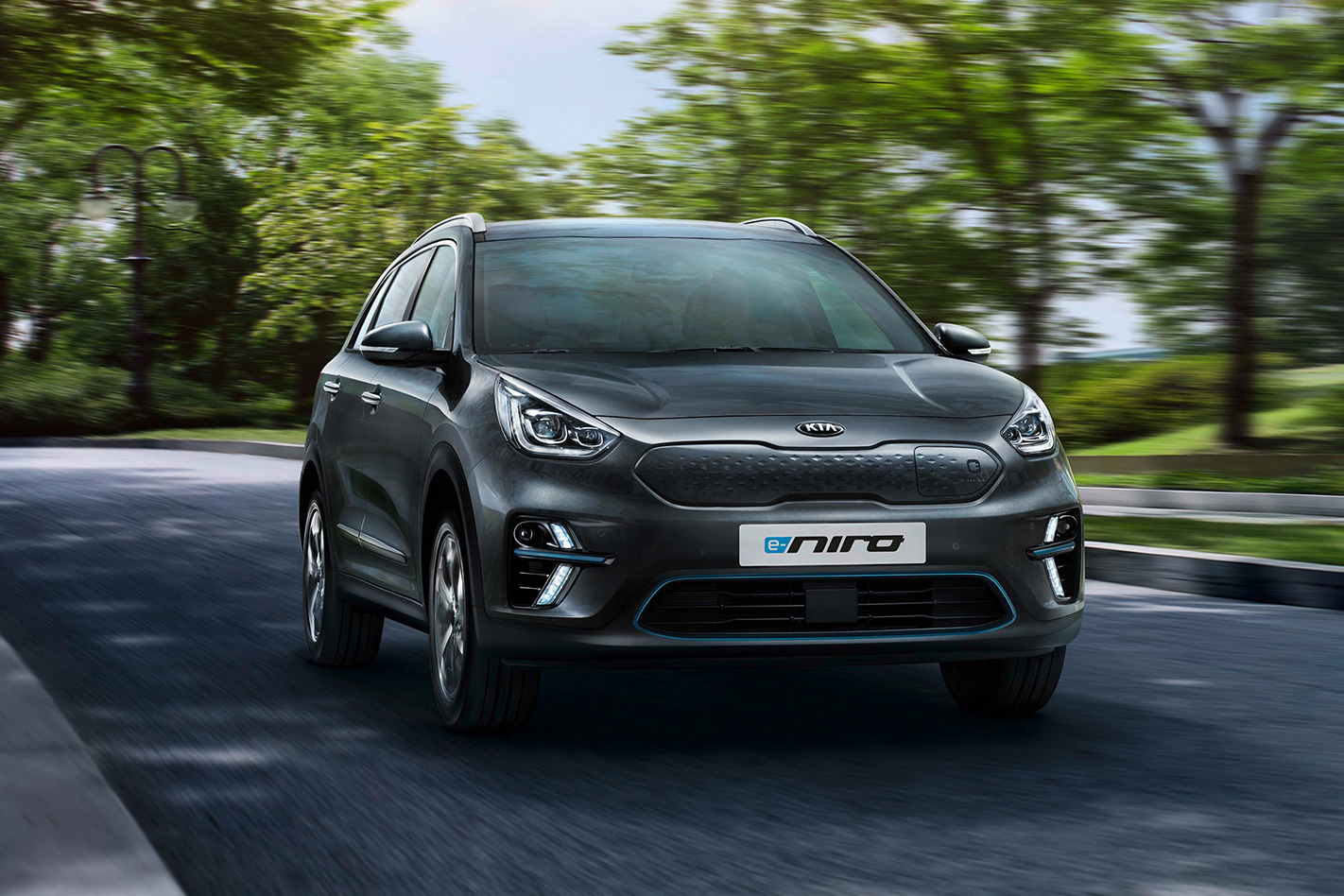
The e-Niro is Kia’s current electric champion taking the Niro compact SUV as its basis, but the introduction of a ‘skateboard’-type platform will allow the rapid expansion of the electrified line-up rather than relying on existing combustion vehicle underpinnings.
The e-Niro is expected to spearhead Kia’s electric age in Australia about the middle of 2021, but the company is yet to spell out which E-GMP models will follow it and when.
As well, the flexible EV architecture will also enable Kia to offer its technology to partner companies in the form of Purpose Built Vehicles (PBVs). Bespoke modular bodies will offer corporate customers highly specialised vehicles for a range of applications.
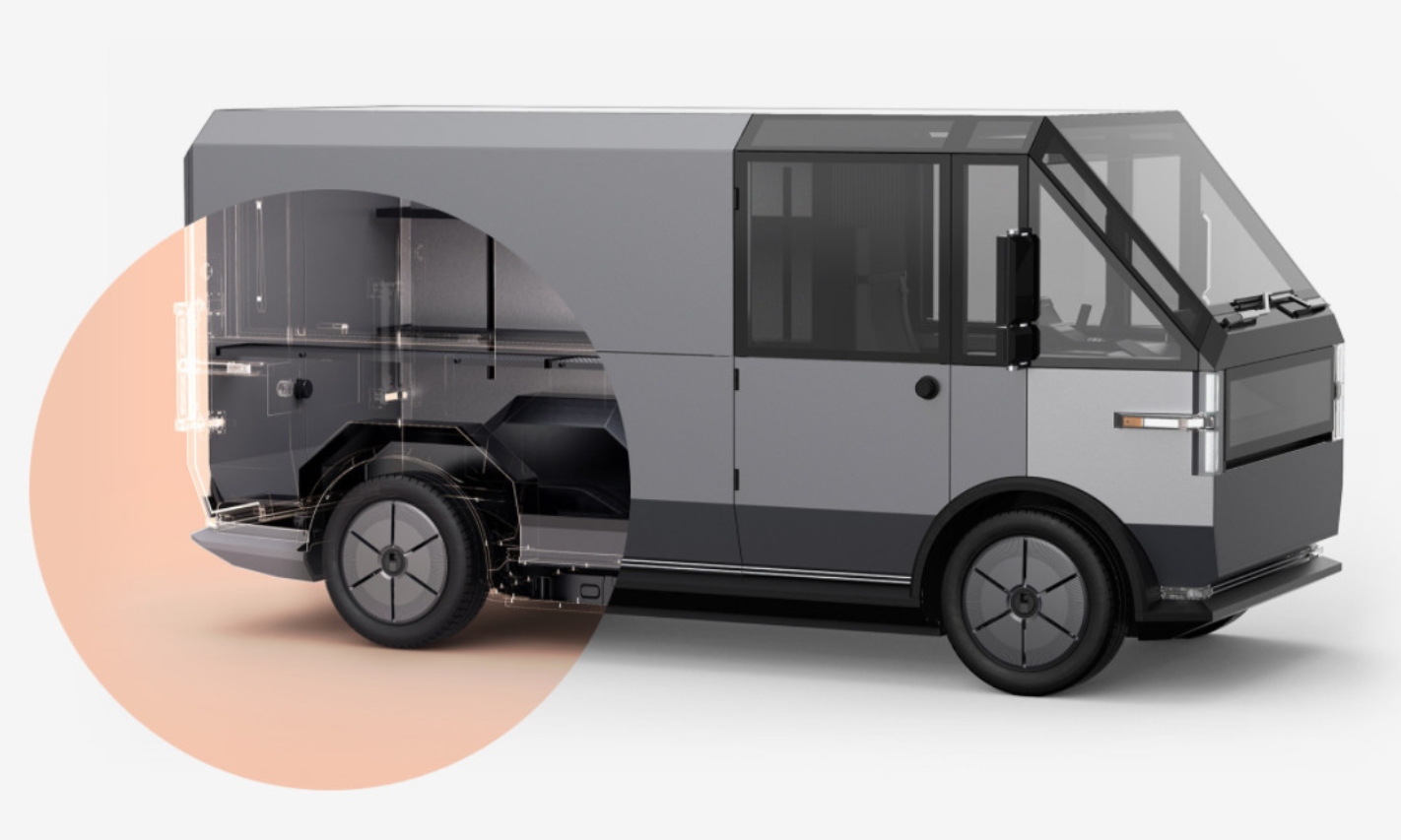
Kia is already working with Canoo most likely to design a small zero-emissions delivery van, and Arrival – a company planning electric buses and commercial vehicles. Other applications include ride-sharing and even autonomous transport, it says.
The range of EVs will be bolstered by investment in more ‘eco-friendly mobility solutions’ with a wide range of businesses and start-ups already on the Kia cards, including ride-sharing, ride-hailing, peer-to-peer car sharing, food delivery and payment systems.
But the company is also addressing the frequently cited criticism of electric vehicles and the impact their production has on the environment.
Plan S is now building momentum to switch to a greater proportion of renewable energy in manufacturing processes shrinking Kia’s carbon tyre-print, while exploring, developing and implementing the use of more recycled (and recyclable) materials in the construction of its cars.
That could include a target to become carbon neutral at a point in the future joining a growing number of carmakers’ strategies, although the company is yet to put an updated figure or timeline to its carbon-reduction plans.
“Changing our corporate name and logo is not only a cosmetic improvement,” said Kia Corporation president and CEO Ho Sung Song.
“It represents us expanding our horizons and establishing new and emerging businesses that meet and exceed the diverse needs of our customers worldwide”.
Along with the new sharp Kia identity, the company has introduced a new strapline ‘Movement that Inspires’.
Lamborghini is a company that’s never been shy of absolutes but, even by their standards, never is a long time.
So, when chief technical officer Maurizio Reggiani was asked whether we’d see the death of the Lamborghini V12 before we saw a Lamborghini EV, the response was as bullish as the company’s logo.
“Because the Lamborghini V12 will probably never die, we’ll see the two technologies together,” he claimed.
“While we are always looking ahead – often farther than the world can imagine – we only adopt solutions that fit the current need and for now, we see hybridisation on the near horizon.”
The storied Italian company has already taken the first steps along an alternate alternative energy path, previewing the jaw-dropping Sián last September.
Instead of using a lithium-ion battery as part of a hybrid circuit, the Sian uses a smaller, lighter, vastly more expensive supercapacitor to hold charge.
“We have taken the first steps towards a new era of electrification with the Sián, which combines the traditional combustion engine with ground-breaking new supercapacitor technologies; a new solution in the automotive sector,” said Reggiani.
“The first Sián[s] will be delivered to dealers in December 2020. Lamborghini is focusing on transferring technologies developed with the MIT to its products.
“This is our first target, and that’s the enabler for every future innovation in supercapacitor-based products.”
Reggiani confirmed that 63 coupes and 19 roadsters have been sold to clients.
“This production is providing us with significant data to evaluate future applications.”
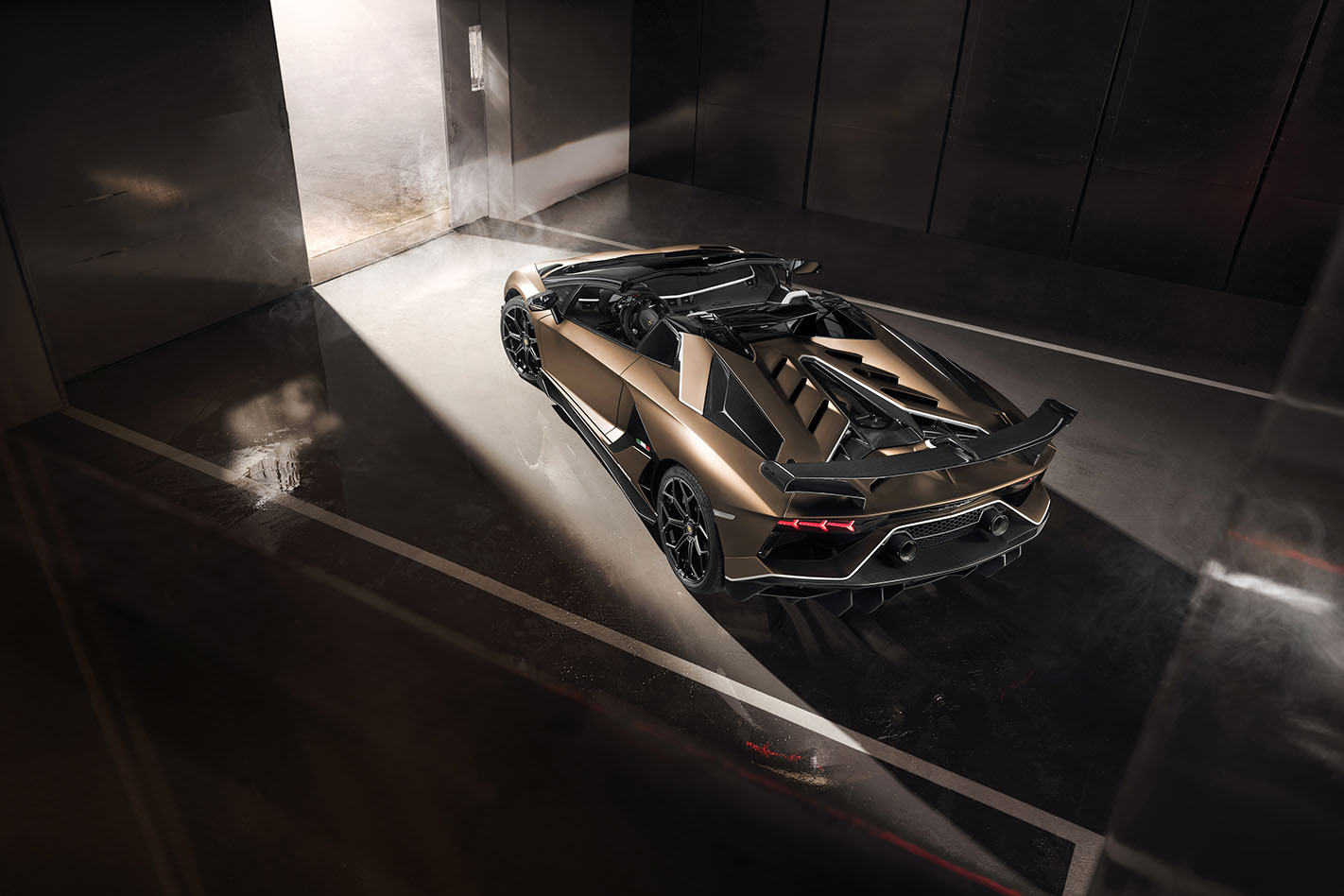
Unlike Porsche, Lamborghini is not considering an increase to its engine capacities as a result of forthcoming Euro7 emissions regulations.
“EU7 is still not completely defined but for sure there will be limitations on the enrichment to protect the exhaust components,” he said. “This will require an extension of the Lambda < 1 region,” Reggiani said.
In short, he feels that insistence on a strict stoichiometric 14.7:1 air:fuel ratio can’t work, proposing that an accommodation for Lambda < 1 running - where the exhaust gases are fuel-rich - needs to be made for component protection.
“This requirement will be more demanding for vehicles with lower power to weight ratio and for this reason Lamborghini is not planning to increase engine displacement,” he added.
“Lamborghini will use high-strength materials to allow lower enrichment, especially in the exhaust area, and specific work will be done to reduce the exhaust backpressure. In terms of engine development, Lamborghini will target the increase of specific power and weight reduction of the engine to enhance performance even further.”
For Lamborghini to chase a EU7-compliant engine map requires a radical rethink.
If it can no longer use fuel enrichment to protect components, the net effect is a reduction rather than an increase in specific engine power, expected to up to 30 per cent.
Porsche has realised that in order to compensate for the power loss, a larger engine displacement is required. Lamborghini is clearly not countenancing this.
Instead, it looks as if Sant’Agata will use EU7 as a technology driver for the application of alternative concepts such as water injection, high-tech materials and exhaust gas cooling solutions.
Ever-larger turbocharger turbines have the net effect of reducing the exhaust gas backpressures that Reggiani requires and could work very effectively with full hybridisation or 48-volt e-turbos to fill the low-rpm torque deficit.
Lamborghini also finds itself in the fortunate position where customers aren’t overly sensitive to cost-intensive materials used for exhaust valves, exhaust manifolds and turbocharger turbines.
It seems there’s life in the V12 yet; maybe just not as we’ve known it.
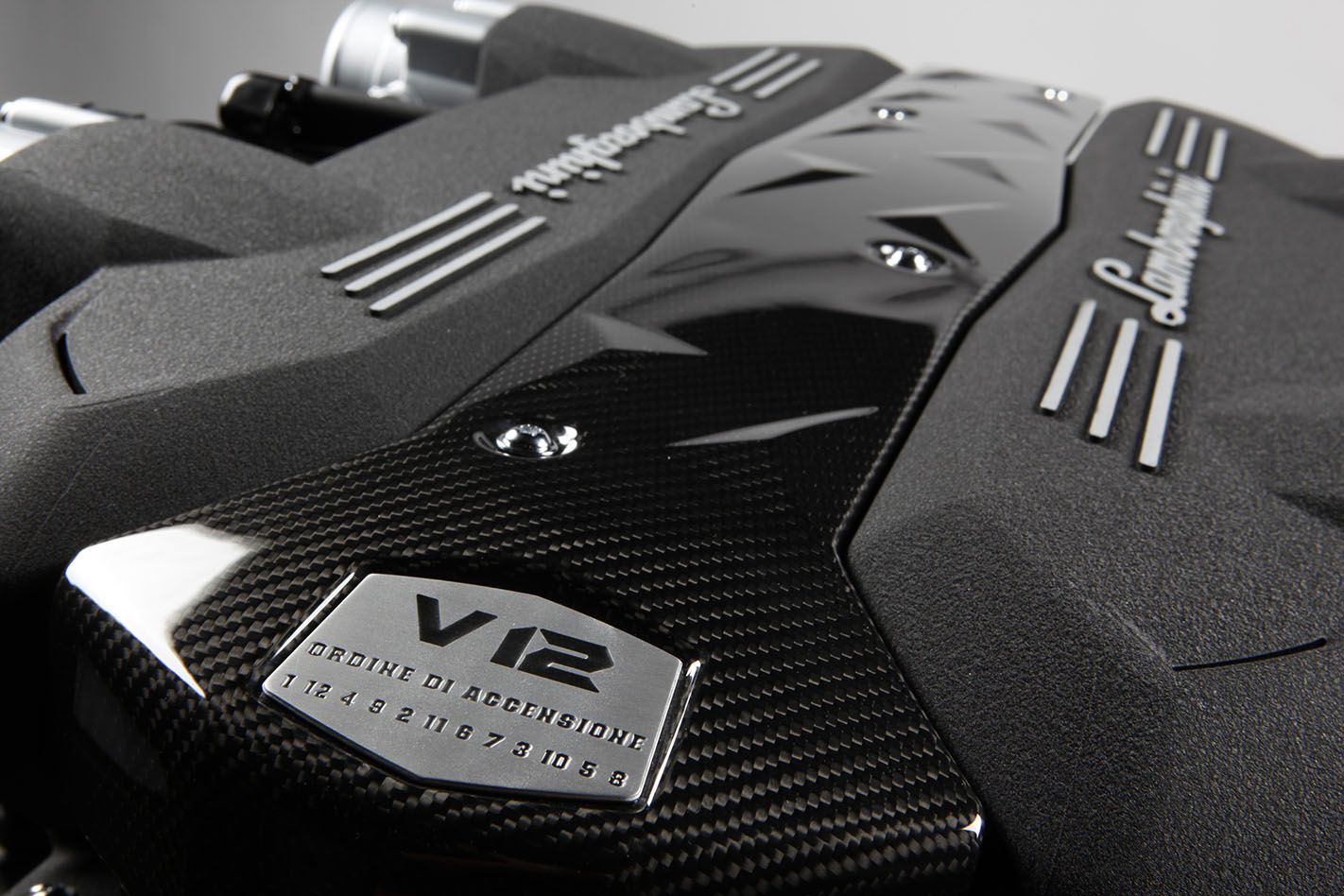
Can Sant’Agata rely on Audi?
With rumours swirling that Audi is about to put Lamborghini up for sale, we asked Reggiani whether future Lamborghini vehicles would adopt Audi’s forthcoming cSO (Car.Software organisation) digital operating system.
It’s a fairly fundamental platform strategy, and would make little sense for an Audi-managed brand to divert from.
“Lamborghini as a brand has its own personality, with customisation of our products at the heart of our DNA, and we want to maintain our brand distinction in every aspect,” smiled Reggiani.
Does that sounds like a no to you?
You’re either a convertible person or you’re not, and if you’re the latter then you’ll be wondering why any sane person would fork out the extra $13,500 to own the Mercedes-Benz E300 Cabriolet over its excellent Coupe equivalent.
But, while drop-top versions of two-door hard-tops used to be loathsome, flaccid sacrifices that traded virtually all dynamic merit for that wind-in-the-hair feeling, the modern interpretation of a convertible is far less compromised. That’s certainly the case with the 2021 Mercedes-Benz E300 Cabriolet.
What is the Mercedes-Benz E300 Cabriolet?
The all-new Mercedes-Benz E-Class Coupe and Cabriolet were introduced in 2017. They differed significantly from the previous generation, firstly because they were based on the E-Class sedan platform and not the smaller C-Class model’s basis. The Coupe was treated to an update in early 2020 and now it’s the convertible’s turn.
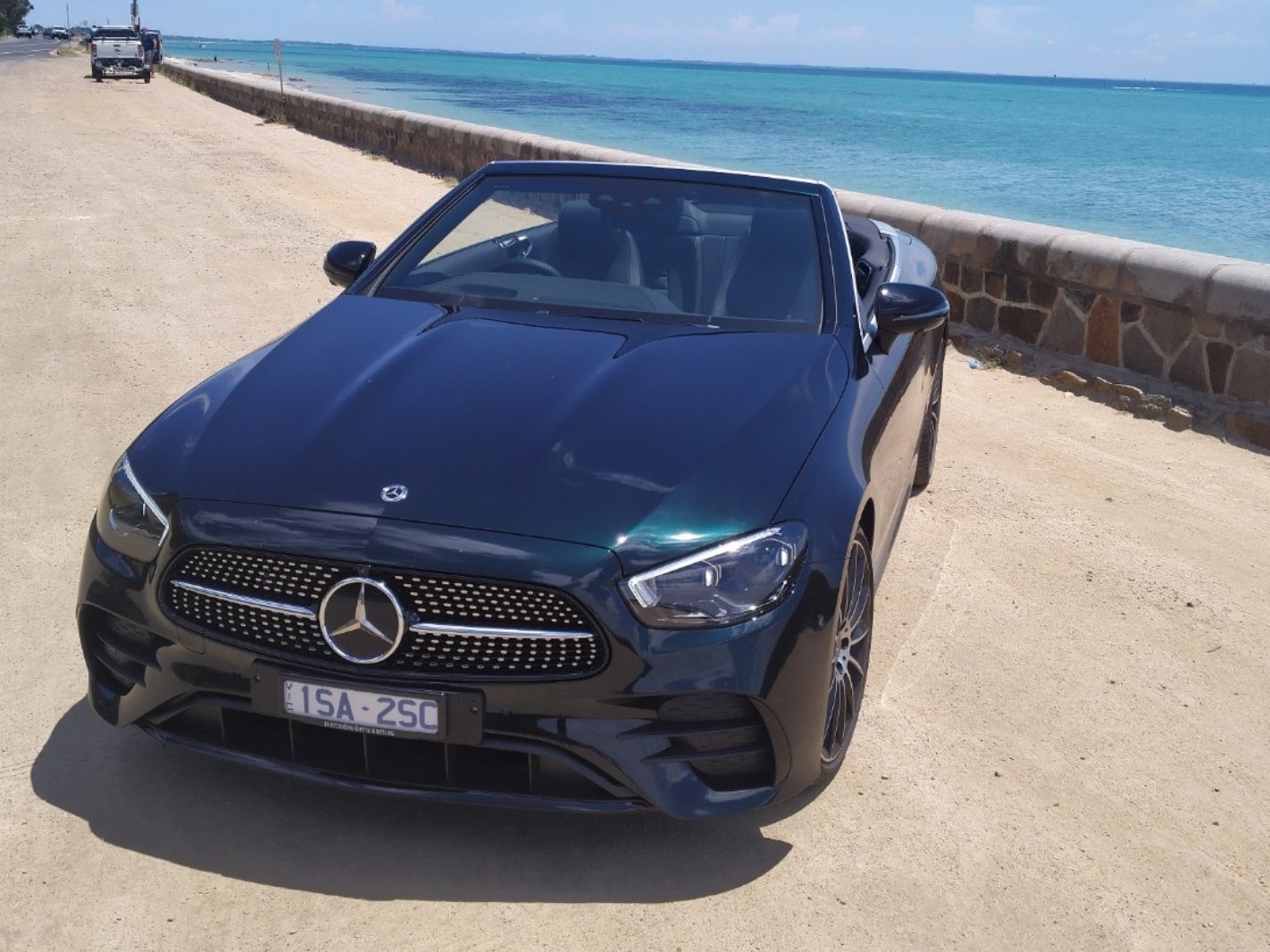
While you can get an E200 variant of the E-Class sedan and coupe priced from $96,900 and $101,900 respectively, the Cabriolet range opens with the more powerful and generously equipped E300 for $130,900.
With no obvious direct rival, it’s hard to put the E300’s value into perspective. On the one hand, Audi’s smaller and less powerful A5 Cabriolet makes the Merc look pricey from $85,400, but BMW and Lexus provide context at the larger, faster end of the premium four-seat convertible market with the $222,900 BMW 840i and $214,000 Lexus LC500.
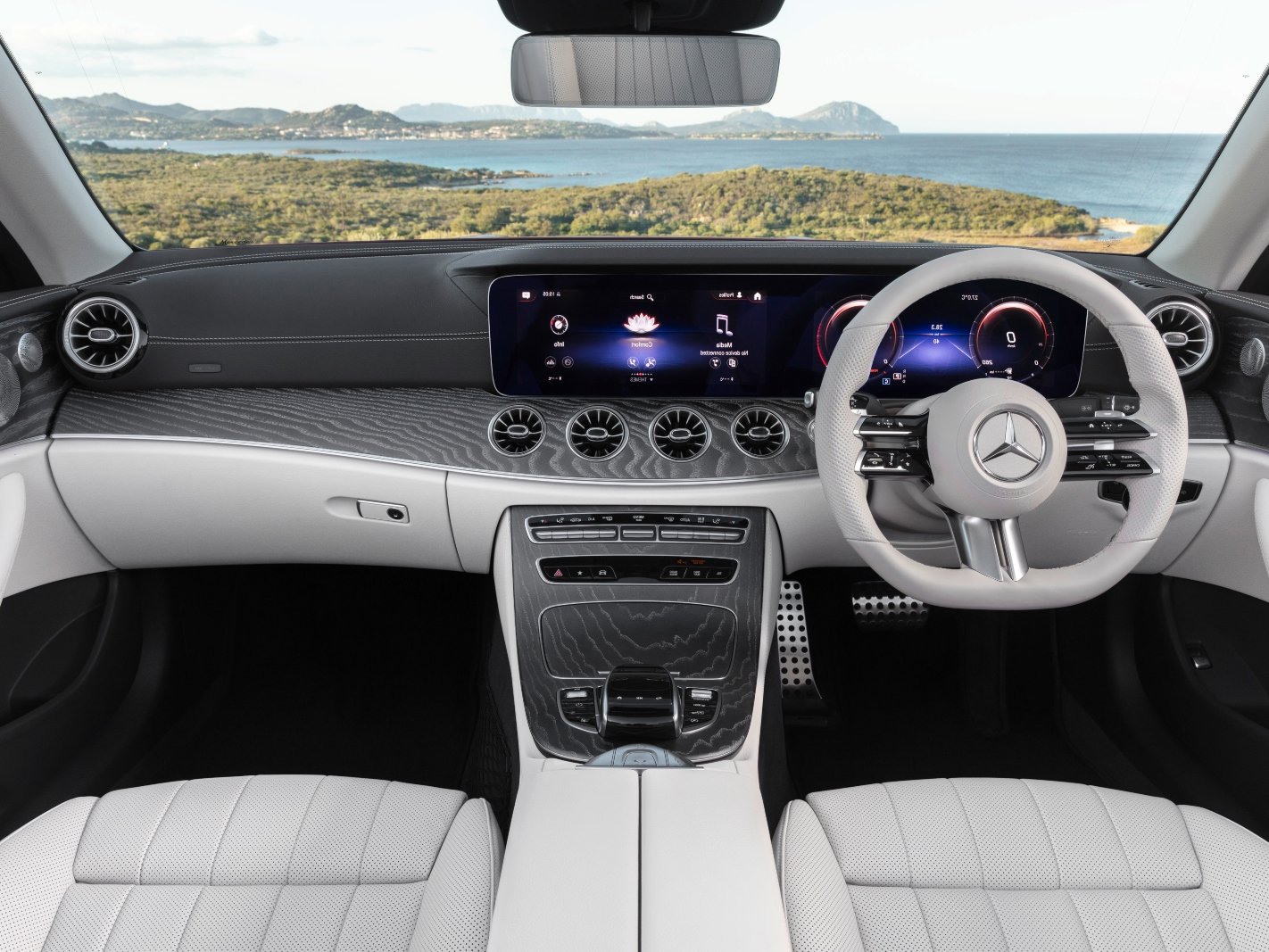
The E300 Cabriolet’s value soon shapes up all by itself once you get behind the wheel. The latest MBUX information and entertainment system brings a vast pair of 12.3-inch screens butted side-by-side, dominating the cabin.
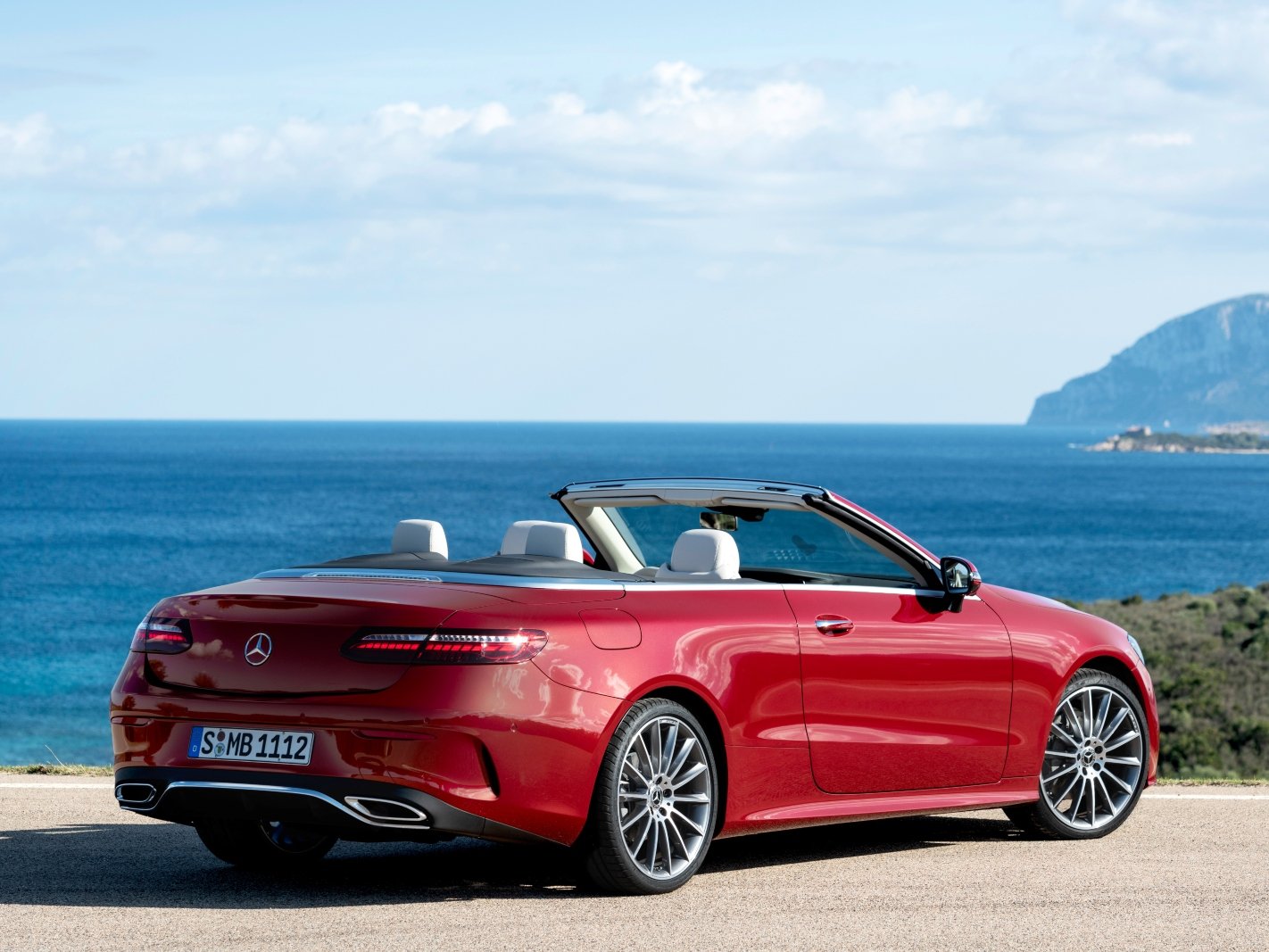
This is complemented by clean design, high-quality leather and stunning ambient lighting at night. Drop the roof after dark, flick the mood palette to light blues and there’s just a little of the incredibly luxurious Maybach 6 concept about the E300’s cockpit.
Unlike many larger convertibles like the Ford Mustang and Lexus LC500, the E300 has a completely useable second row of seats, meaning adult passengers do not have to ride with their knees around their ears.
The 2020 model’s subtly updated looks are still head-turning without being ostentatious and the gorgeous Emerald Green our test car had been decorated in served as a reminder that it’s sad more Mercedes-Benz customers don’t order interesting colours. It got a lot of comments.
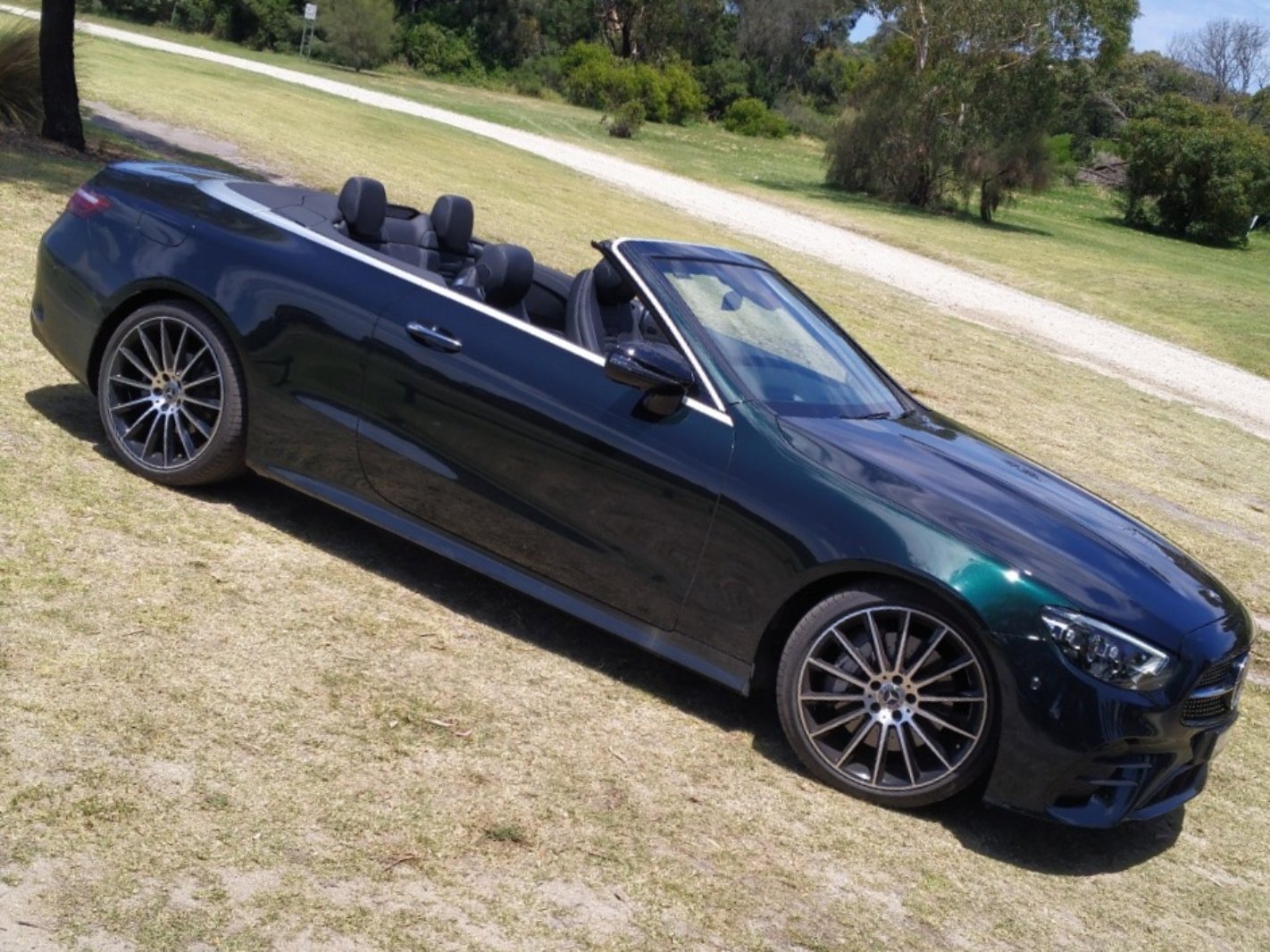
Surprisingly, the boot is the only practical compromise to be found in the E300 Cabriolet. It measures 385 litres but shrinks further when the roof intrudes into its stowage area. That limits weekend getaways to two people with luggage occupying the rear seats.
On the open road, you won’t care what is or isn’t behind you because the E300 Cabriolet is all about the sky above and the way ahead.
What is the Mercedes E300 Cabriolet like to drive?
Tipping the scales at 1875kg, you might think the E300 is a little under-gunned with a 2.0-litre engine, but its boot badge denotes that it is equipped with the more powerful 190kW/370Nm unit. This provides surprisingly good performance if a little muted and without a notable, err, note.
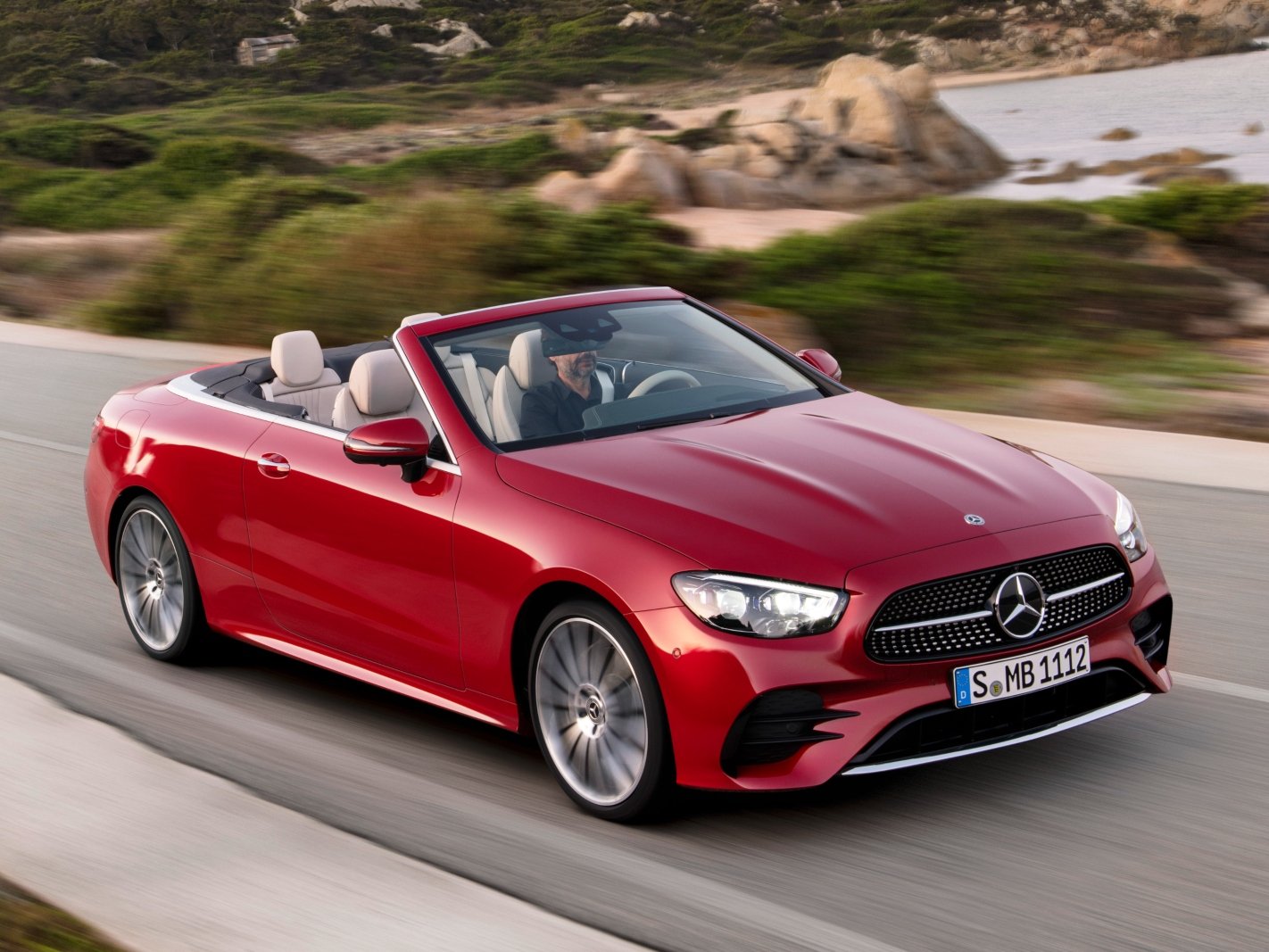
The slick nine-speed automatic transmission can be a little lazy in its responsiveness at all speeds, but generally speaking, the rear-drive powertrain is refined and capable.
Far and away the most impressive element of the E300 Cabriolet’s repertoire, however, is its ride quality. In an age when vehicles of all classes – not just sporty models – hunt ever more dynamic and rewarding handling at the cost of comfort, the Mercedes is a breath of fresh air in every sense.
There’s a little chatter from the rear-axle around secondary ride, but the most striking element of the E300’s road manner is the ridiculously lovely primary ride. Its attitude and grace on all surfaces is exemplary and I’m struggling to remember a car that can match it for the money – but wait, it gets better.
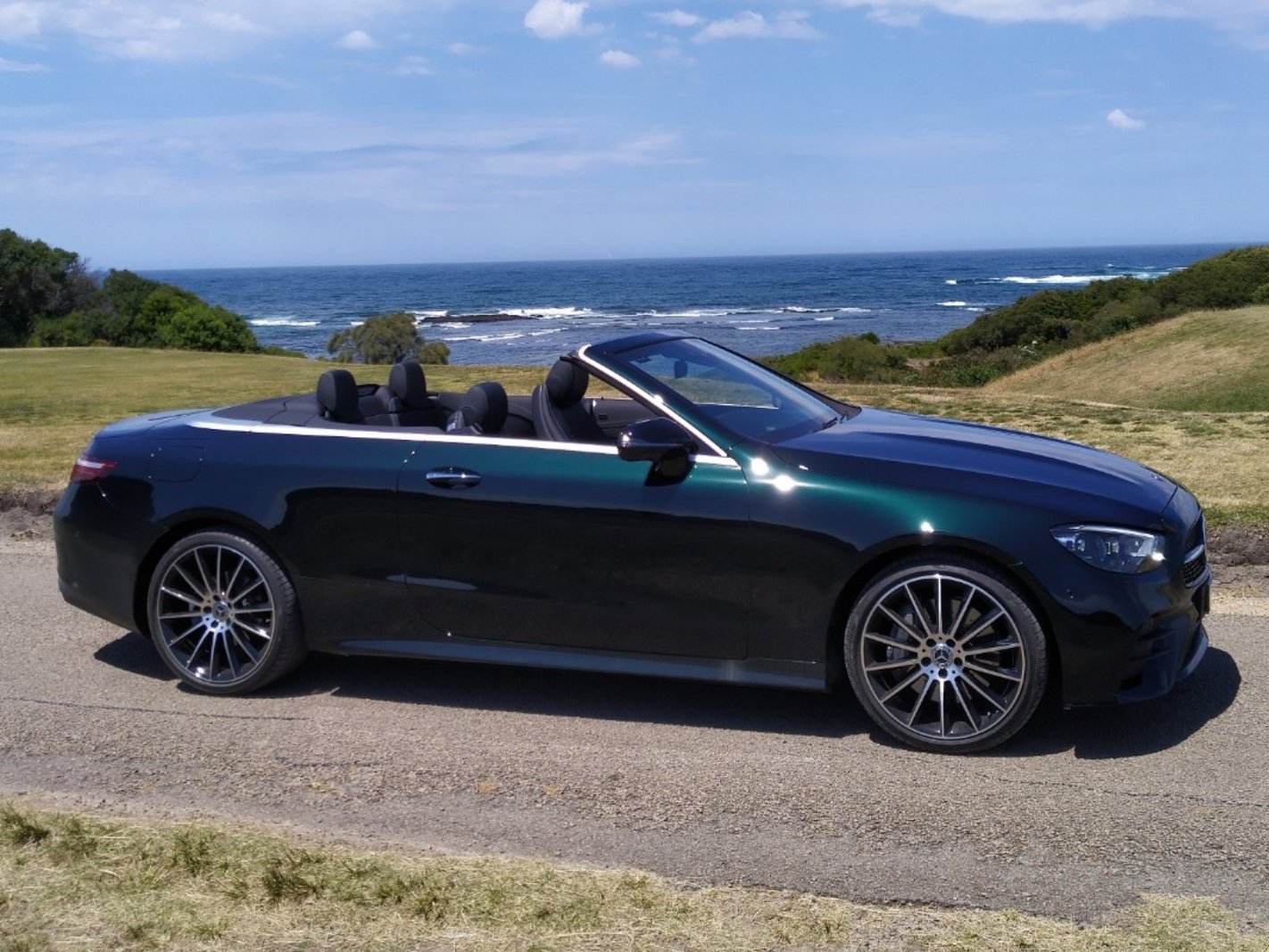
Not only is the big convertible deliciously comfortable, its dampers are one of the best interpretations of adaptive technology. Flicking the drive mode switch up to sport and beyond progressively firms the ride and allows sweeping bends to be taken with enthusiasm and confidence.
While some systems lean excessively to either the soft or stiff end of the spectrum regardless of the driving mode selection, the Mercedes-Benz E300 Cabriolet’s suspension calibration categorically aces the increments. You’ll never want to throw the cabriolet at a racetrack but the difference between opposite ends of the scale genuinely makes this convertible uncompromising.
In all modes, the front end is obedient, the steering, while light, has decent feedback and feel, and the balance of front to read grip is confidence-inspiring with the exception of the odd anomaly from the rear wheels when they encounter mid-corner imperfections.
There’s very little to let the E300’s side down but it doesn’t quite get a clean sheet. What looks like sophisticated parking assistance technology is rendered virtually useless in practice thanks to a sensitivity that borders on neurotic. Any kerb, pillar, wall, or vehicle within half a metre causes the system to freak out and if you yield to its nagging, your parking will look like a P-plater’s.
The technological niggles extend to the speed sign recognition system too which relays the wrong figure to the dash display approximately half the time.
That aside, for the main part the E300 Cabriolet is a profoundly relaxing car to live with. I’ve never driven a car in which I felt more content adhering to the speed limit or looking forward to speed bumps and other imperfections in the road.
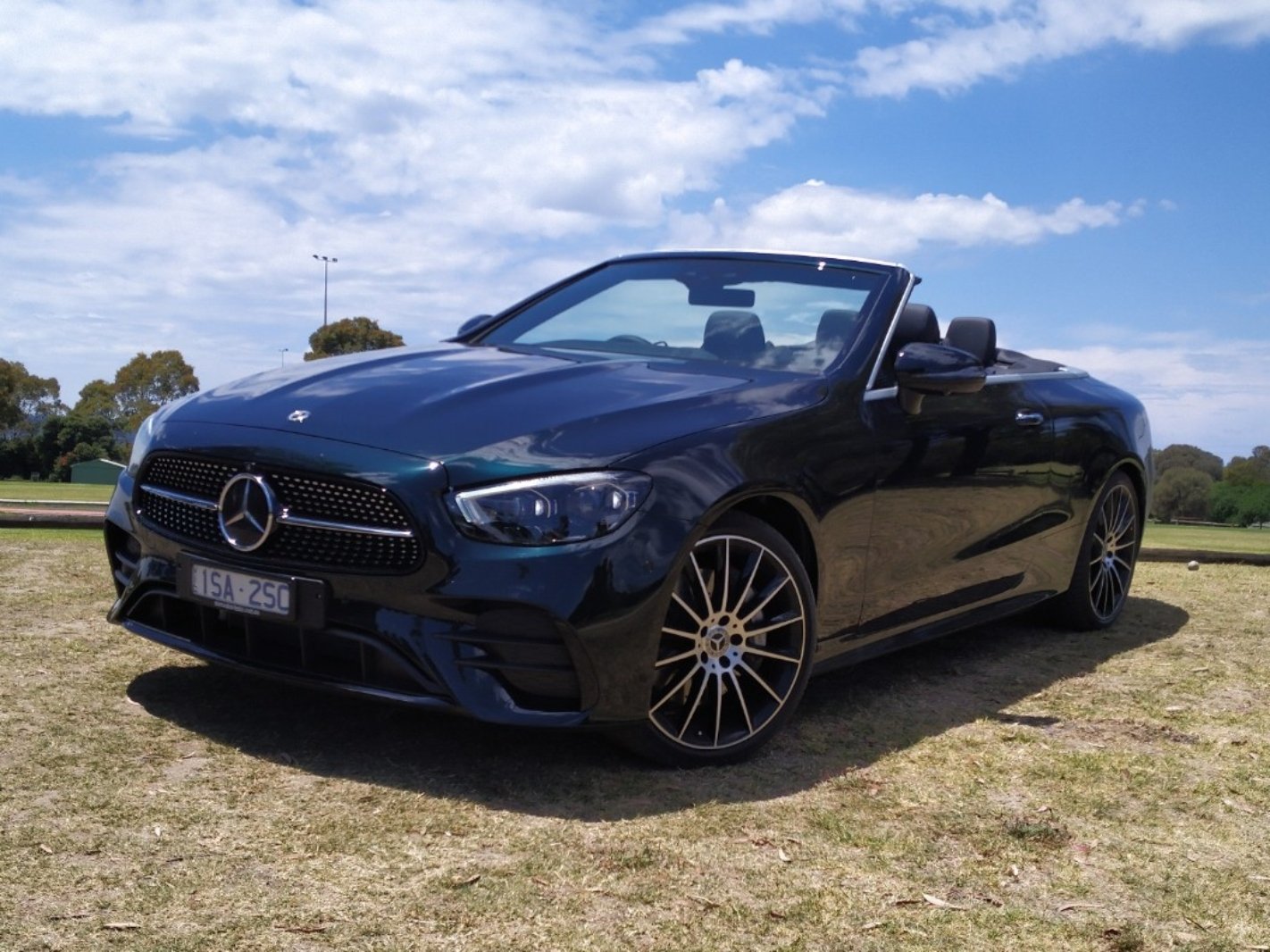
There’s a perception that convertible Mercedes-Benzes are owned by more senior drivers, but perhaps that misconception partly originated in how a vehicle as relaxing and cosseting as this is actually capable of transforming your driving style.
VERDICT
Mercedes-Benz’s engineers could easily have programmed the slick nine-speed automatic to smash your pelvis to pulp with every upshift. They could have probably found space under the bonnet for the prolific hand-built twin turbo AMG V8 too. And the adaptive dampers could have been tuned to mimic granite in their stiffest setting. But to do that would be to detract from the purpose of the E-Class Cabriolet entirely – and it would be downright uncouth.
If you’re after a Mercedes that can generate enough g-force to relocate your liver to the passenger seat, or a model that can incinerate tyres and petrol like Piper Alpha, or a car that can accelerate like it’s been rolled off a cliff, the Mercedes-AMG line-up will leave you spoilt for choice.
In fact, AMG offers the E53 Cabriolet which has six-cylinder turbo power, a louder exhaust report and the corresponding chassis tweaks you might expect from something with the Affalterbach badge.
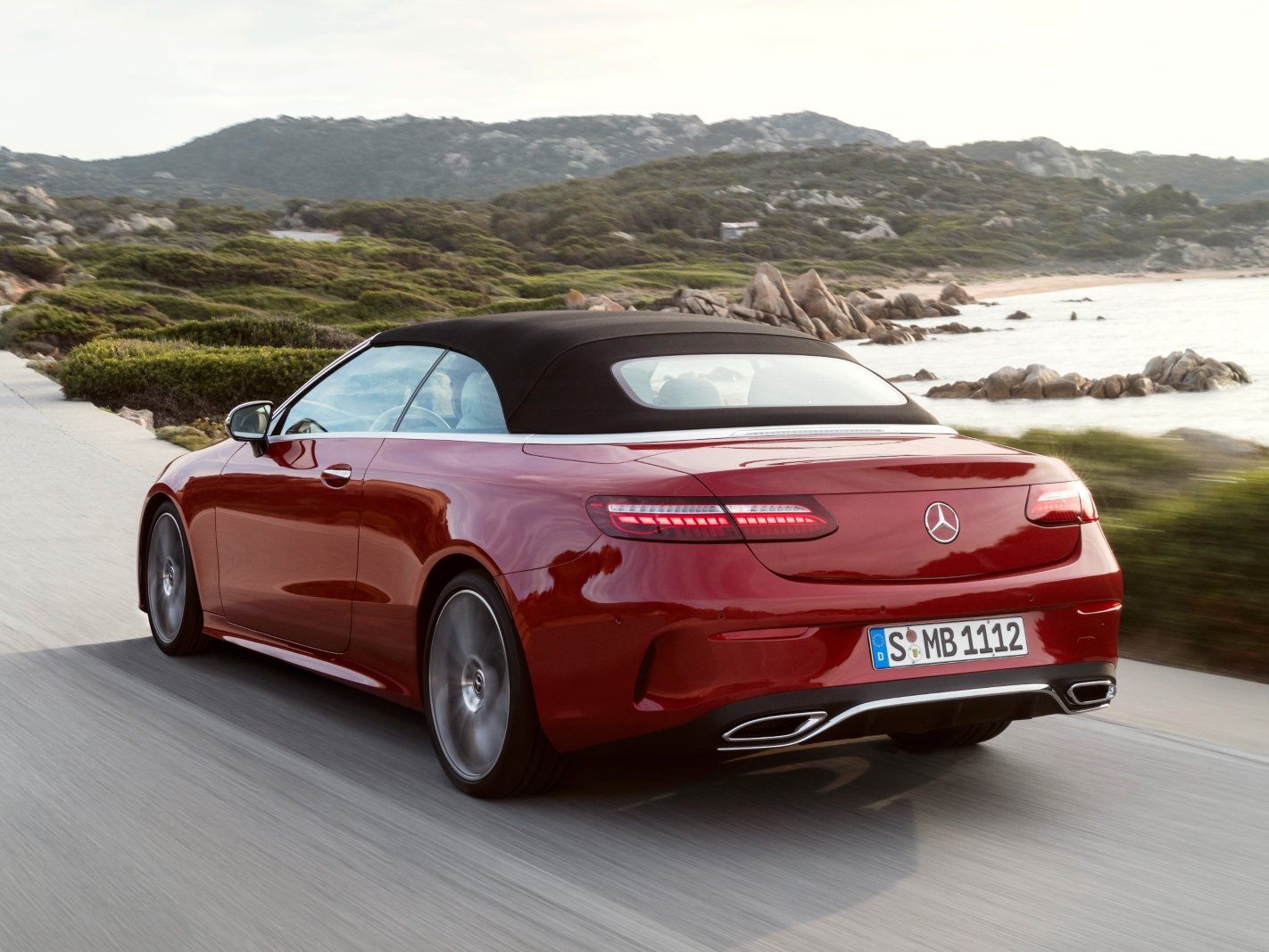
But there’s a sweetness to the subtle restraint of the entry-level E-Class convertible that would be a shame to overlook if you are an initiated convertible enthusiast.
In the absence of a clear rival, it’s hard to say whether the pricey E300 Cabriolet offers good value. Ultimately that comes down to a niche audience with the cash to splash. But the combination of its sublime ride when you’re nestled in a deep cabin with only the Australian summer sky above you? That’s pretty close to priceless.
PLUS Exemplary ride; surprising performance; second-row space MINUS Neurotic parking assistance; lazy auto; tiny boot
Model Mercedes-Benz E300 Cabriolet Engine 1991cc 4cyl, dohc, 16v, turbo Max power 190kW @ 5800-6100rpm Max torque 370Nm @ 1800-4000rpm Transmission 9-speed automatic Weight 1875kg 0-100km/h N/A (6.4s Coupe) Economy 8.2L/100km Price $130,900 On sale now
Renault has revealed its ‘Renaulution’ plan that will see it launch at least seven new models in the next three years (including five electric cars).
It will also bolster the reborn Alpine sportscar brand, combine European budget brands Lada and Dacia, restore faith in the fracturing Renault-Nissan-Mitsubishi Alliance, and cut costs by five per cent in five years.
The plan includes ushering in a new electric sports car co-developed with between Alpine and Lotus, plus a hot hatch, sporty crossover, Renault 5 retro EV and new models for the Lada and Dacia brands.
Renaulution is the brainchild of new CEO Luca de Meo, whose mission is to turn the French car-making giant around.
Key highlights of the new strategy include:
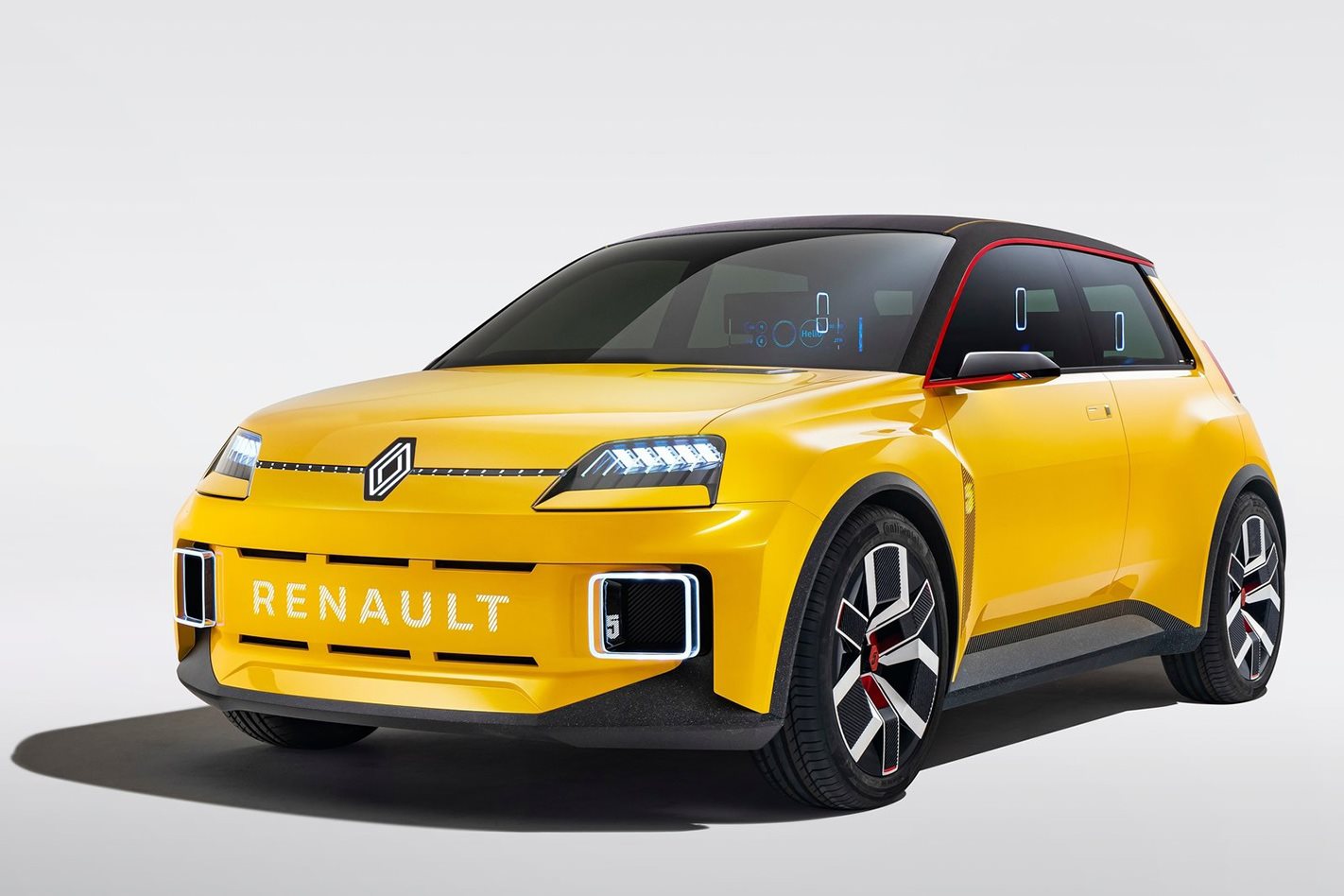
- The all-electric Renault 5 shown as a prototype for now and expected in 2023
- Alpine becomes 100 per cent electric, with a next-generation EV sports car (in development) with Lotus
- Range of three Alpine models outlined, including a hot hatch and sporty crossover
- Group platforms cut from six to three as part of major cost-cutting drive
- Electrification: number of powertrains halved to four, as EVs boosted
- Some factories likely to be closed as production capacity slashed from 4 million to 3.1m
- Goal to achieve electric leadership by 2025
- Dacia and Lada paired up – Lada moving beyond Russia to become ‘rough and tough’ entry-level brand
- New Dacia Bigster concept points to a larger, slicker family crossover
- More car-sharing and future mobility projects
Alpine goes fully electric
Significant for enthusiasts is the news that Alpine will become 100 per cent electric, using the group’s CMF-B and CMF-EV platforms.
Importantly, this shows that multiple body styles are coming, including a new junior crossover.
The announcement included confirmation of an exciting Anglo-French alliance.
“Renault and Group Lotus have signed a memorandum of understanding to study a number of areas of cooperation, including the joint development of an EV sports car,” said the statement.
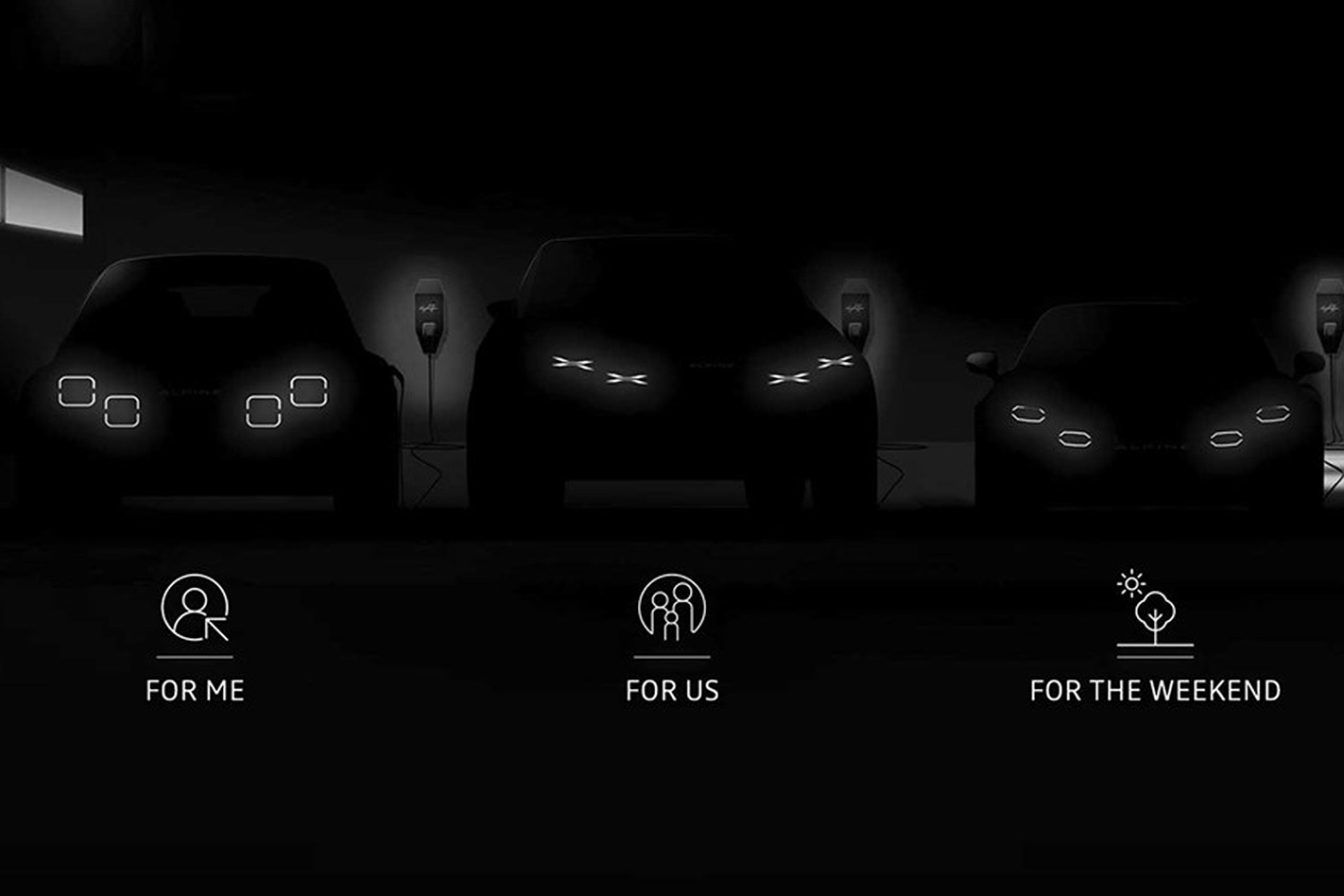
The above slide was flashed up during the presentation, confirming that Alpine will spawn a range of models to accompany the A110 sports car that relaunched the brand in 2017.
It involves a hot crossover for family duties (below centre), a hot hatch (below left) and an EV replacement for the A110 (far right) – and, tellingly, all three are plugged in, proving their electric credentials.
Alpine will become the group’s centre for all sports cars, including Renault Sport and racing activities. F1 will be at the heart of the project, but it’s telling that de Meo is targeting this division with being profitable by 2025… sports cars don’t make the margins they used to, it seems.
Lada comeback
The Renault group owns two strong budget brands – and Dacia and Lada will be run as a single business unit in future.
“Dacia will stay Dacia with a touch of coolness, and Lada, still rough and tough, will continue to offer affordable products, based on proven technologies targeting smart buyers, while breaking the C-segment glass ceiling,” the announcement notes.
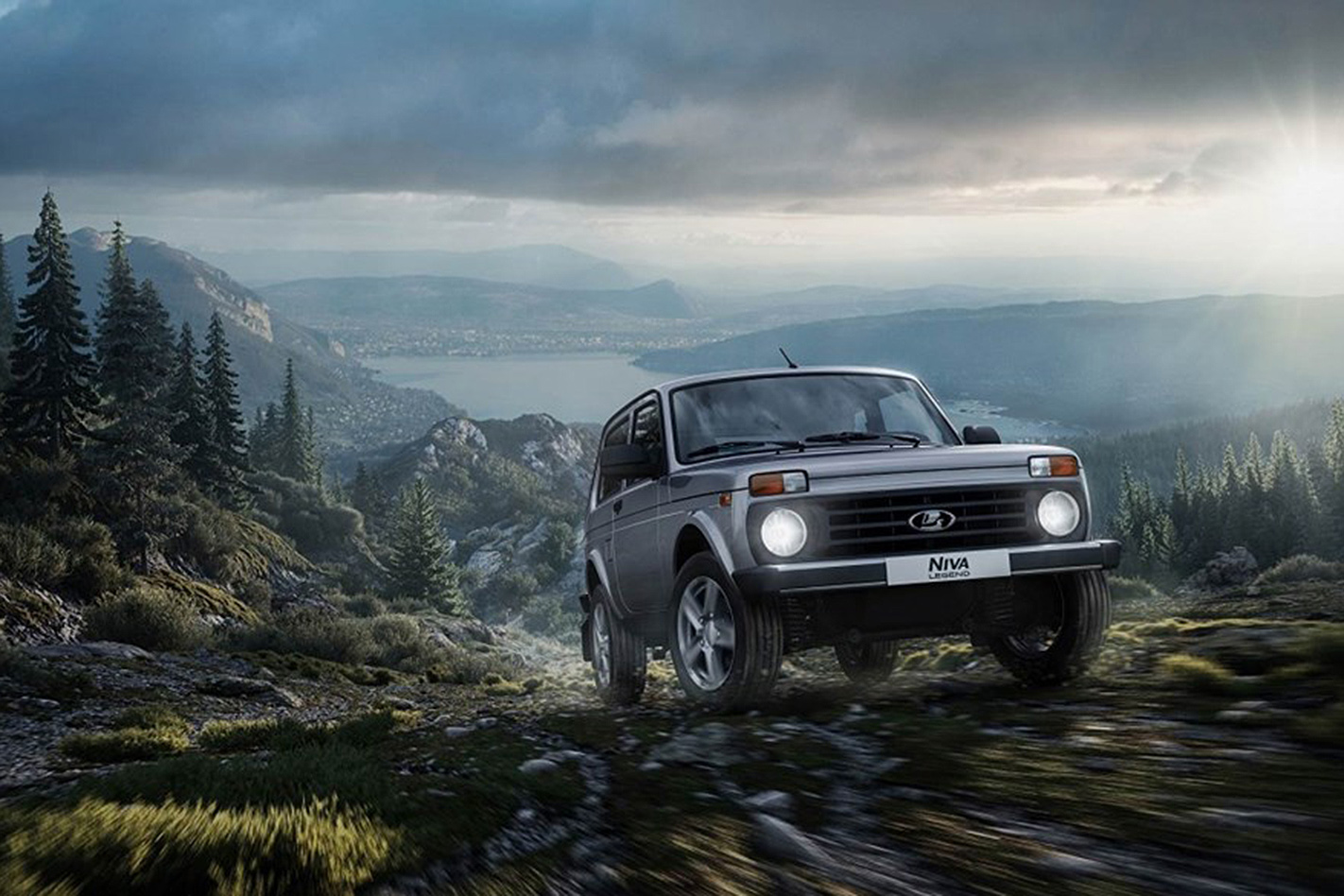
Expect more cars in the vein of the venerable Niva (below), allowing Lada to hoover up sales in cheaper markets and areas where proper old-school 4x4s are required to cope with broken roads – it is unclear if this will include Australia, though.
A new Niva is due in 2024.
Cost-cutting and factory closures
De Meo has a reforming mission at Renault and looking to chop three per cent of its operating budget by 2023, rising to five per cent by 2025.
These equate to telephone-book numbers; in real terms, the group is looking to shed the better part of A$6 billion in costs.
“We’ve streamlined our operations starting with engineering, adjusting our size when required, reallocating our resources in high-potential products and technologies. This boosted efficiency will fuel our future line-up: tech-infused, electrified and competitive,” said De Meo.
It seems almost certain that factories will close, as Renault removes production capacity to build nearly a million fewer cars a year and the group will reduce its research-and-development investments from 10 per cent to eight per cent of revenues.
Under the plan, Renault will reduce its fixed costs by €3 billion (A$4.68bn) by mid-decade.
Hard decisions, but de Meo’s plan is hellbent on reducing the breakeven point by 30 per cent by 2023.
He stressed that a lot of the expensive electric development work has already been done, so profitability could improve quickly.
And what about Renault?
This screengrab from the presentation reveals the focus on B- (Clio) and C-segment (Megane) products for Renault. Note how the A-segment (city car) is blank, with no new baby models planned.
The plan also reveals a smattering of EVs across all sectors, including the company’s prominent commercial vehicle division.
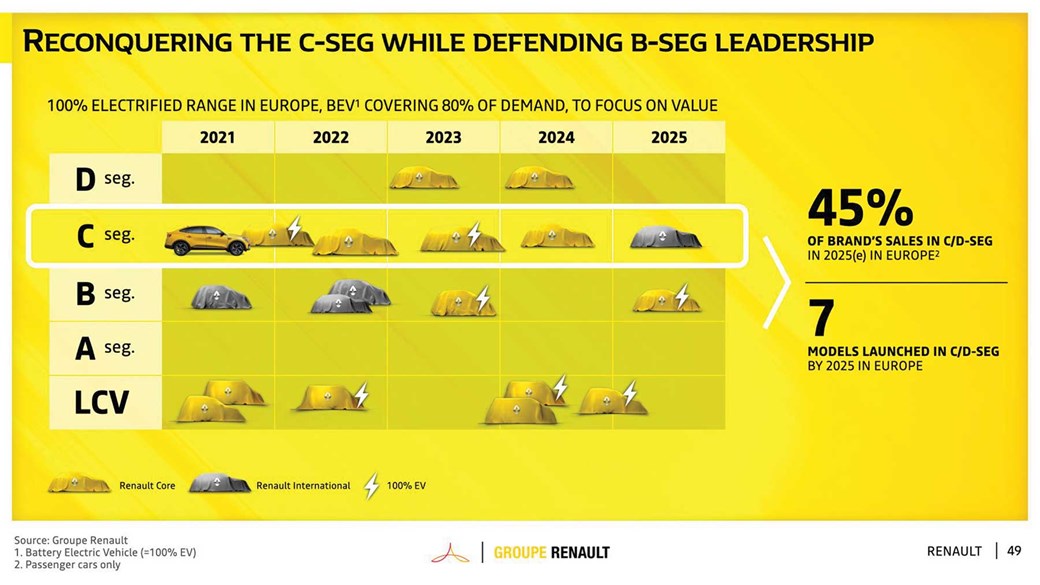
The headline-grabbing news is the introduction of an all-electric Renault 5 – an icon from the Paris firm’s back catalogue reimagined.
But there’s also the (predictable) focus on new mobility solutions and Renault is determined to grab a slice of the future car-sharing, subscription and e-mobility business.
As part of the new strategy, there is a new business unit called Mobilize, which will drive forwards the innovation and digital aspects to the brave new world.
Note also the EZ-1 prototype, which looks similar to the tiny Twizy, but is a standalone car to showcase how Renault sees future hardware syncing with the software services that’ll underpin the future of car charging, sharing and operation.
It’s seen as a last-kilometre solution for city centres.
What about Australia?
It’s too soon to know which of the new Renault models will come Down Under.
However, a Renault Australia spokesperson ruled out Lada returning to our shores, telling WhichCar that Renault’s Australian arm is excited about the announcements but will need to work closely with its French counterpart to determine which models will be best suited to the Australian market.
When asked if Renault Australia will commit to the brand’s EV push, she said this would also depend on local suitability.
This is a lesson that Renault has learned from the poor-selling Zoe electric city car, which indicates that Australian EV buyers will favour bigger and more family-friendly EVs.
This story first appeared on carmagazine.co.uk
Contributing: David Bonnici
Renault has revealed ‘Renaulution’, an ambitious new turnaround plan to prepare La Regie for the electric age.
And sitting front and centre is this – a stunning Renault 5 EV prototype.
Alongside new plans to make Alpine an EV-only brand, Renault also unveiled this retro-modern electric concept you see here – and it’s an arresting blend of the old and new.
And it’s actually going to be made: Renault’s new classic is destined to join the range as a B-segment hatch in 2023.
Renault’s designers have raided their own back catalogue to create an EV to win over people’s hearts and minds.
Former PSA design grandee Gilles Vidal has jumped ship to Renault and his design team took a chunk of inspiration from the classic Renault 5 hatch, but haven’t simply replicated it.
As Honda did with the E, and Fiat with the 500e, the new 5 concept has also been modernised and electrified.
“The design of the Renault 5 Prototype is based on the R5, a cult model of our heritage,” said Vidal, Renault’s new design director.
“This prototype simply embodies modernity, a vehicle relevant to its time: urban, electric, attractive.”
Like the original, the new prototype is an angular city car – and features selective yellow headlights for a very French retro flourish – but this time around it’s an EV.
The original’s bonnet intake is retained in the prototype, but here it hides a charging hatch. Elsewhere, the original’s foglights are carried over, but they’re now daytime running lights.
And, like almost all-electric cars we’ve seen right now, the badges light up.
No news yet on whether it will make it down under, but we’ll update the story when we know more.
This story first appeared on carmagazine.co.uk
Renowned sports car maker Lotus and Renault’s storied but small Alpine brand have announced that they are plotting an electric sports car, to be built under a newly proposed technical partnership.
A joint press release says that both companies have “signed a memorandum of understanding” to study a number of areas of co-operation, most significantly including the “joint development of an EV sports car”.
This move involves a feasibility study looking at engineering, designing and developing the car in both France and the UK, highlighting a “lean and smart” business approach that will underpin Alpine going forward.
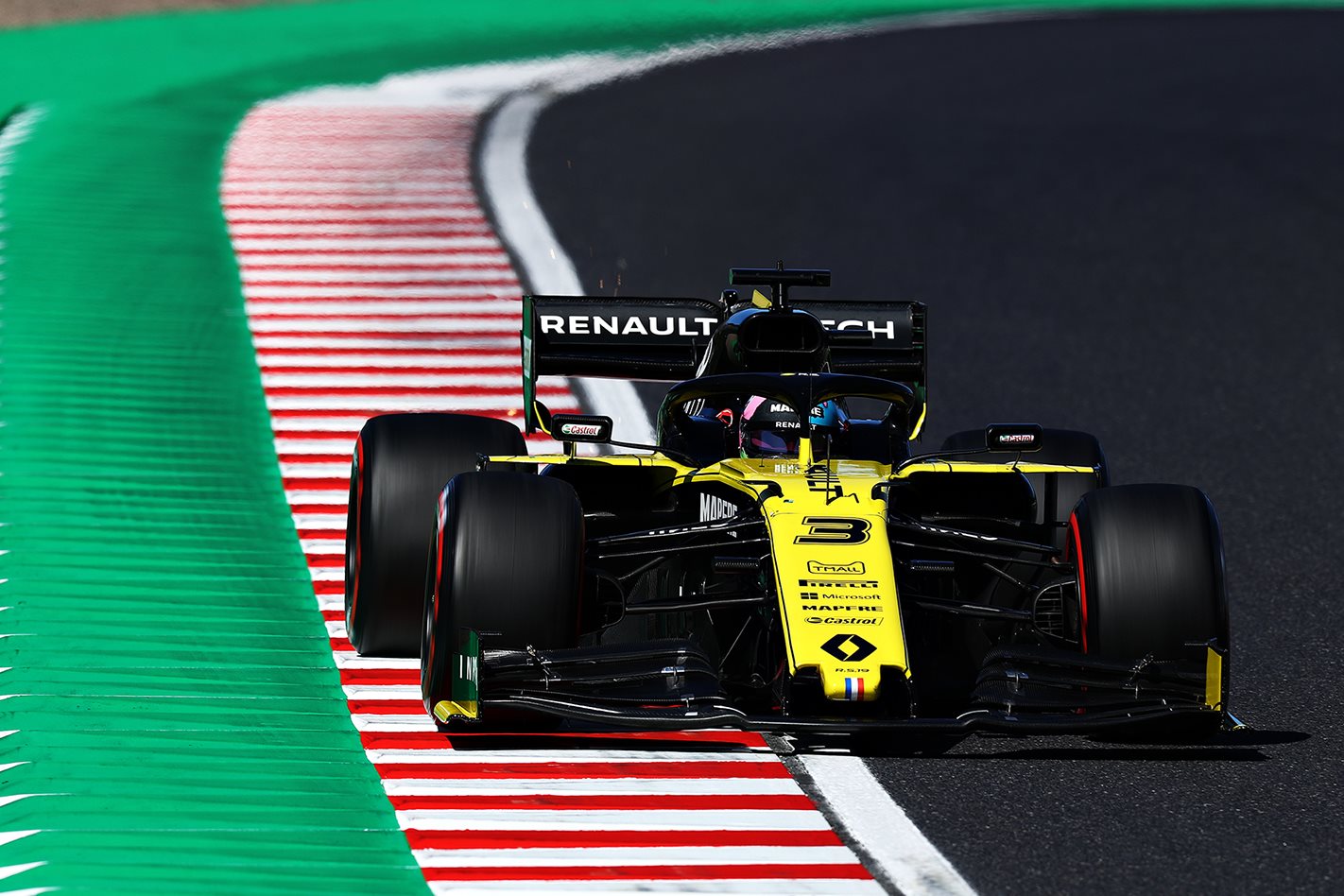
The announcement doesn’t reveal much else, except the partnership intends to leverage Alpine’s future control of motorsport programs in Formula 1, Formula E and endurance racing.
Fittingly, these categories all field grids of electrified cars, with both F1 and the World Endurance Championship using hybrid powertrains.
It’s an intriguing prospect; both brands bring significant experience to the alliance, as well as the backing of some very big brands.
Renault and Geely have successfully sold EV technology into the wider industry, while the new project will have a natural marketing outlet in Renault’s F1 team, which has been rebadged as Alpine.
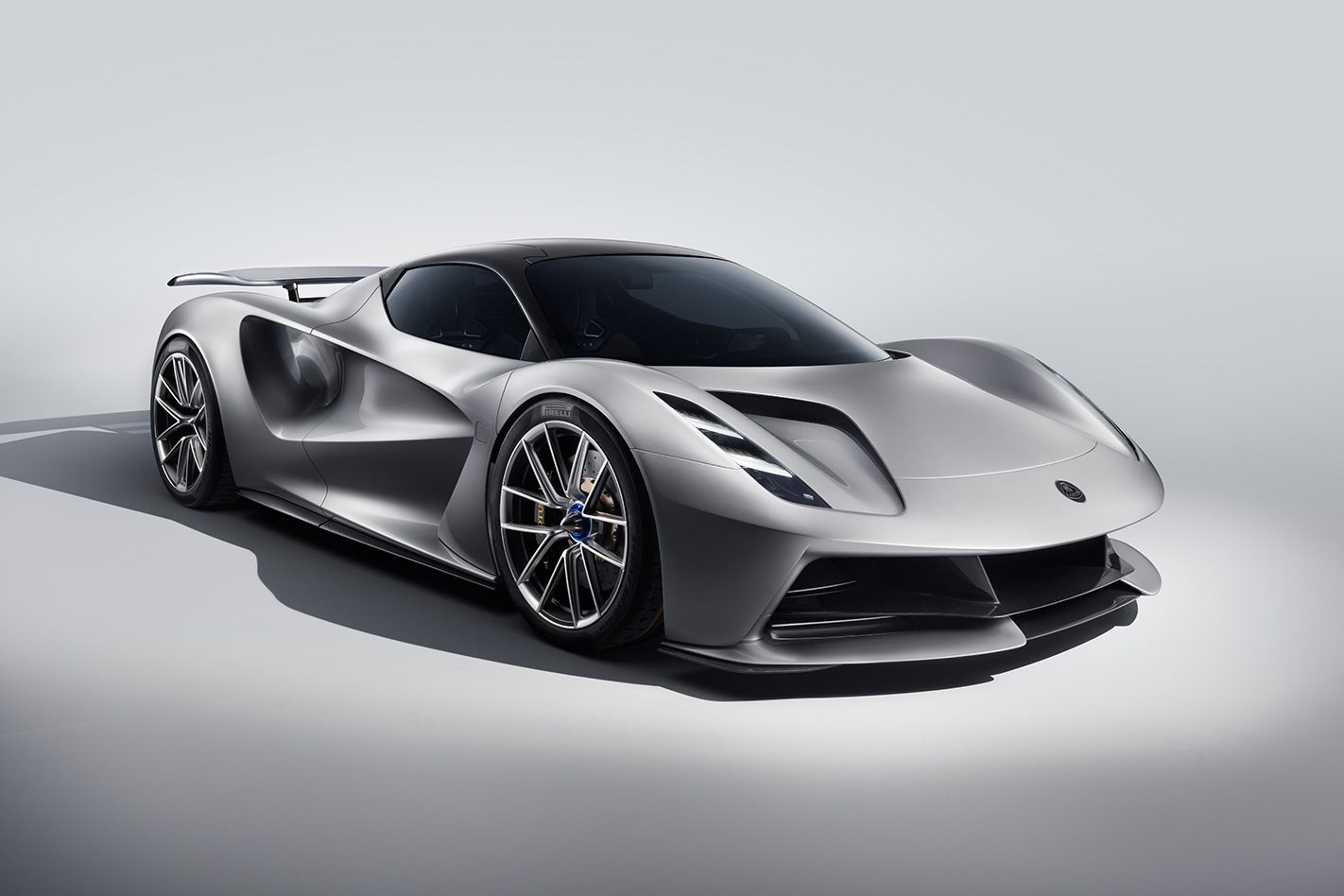
The intellectual property behind Lotus’ Evija hypercar (below) would also be a nice tie-in with Alpine, whose range currently consists of a sole model in the A110.
This is not the first time that Alpine has partnered with a British sports car firm, either. Back in 2014, Renault bought out Caterham Group’s share in Alpine.
It’s also worth mentioning that the two companies are linked through their pasts in Formula 1.
Renault F1 morphed into the Lotus F1 Team in 2012 – albeit with little relation to the UK brand – before Renault reclaimed the team in 2016, rebadging it as Alpine for 2021.
Even if you’re not familiar with Richard Ferlazzo’s name, you’ll know his work. Richard was a car designer at Holden for more than 30 years, and a good chunk of that time as the company’s design director.
He created countless Australian machines, has helped shape General Motor’s global portfolio by working closely with company heavy hitters like Mike Simcoe, and is the man who gave us the jaw-dropping Efijy concept car (which, amazingly, he also let us drive).
Richard’s credibility goes beyond his C.V. It takes only a moment in his company to realise that he’s a proper car guy; a man who lives and breathes car design and is a genuine enthusiast.
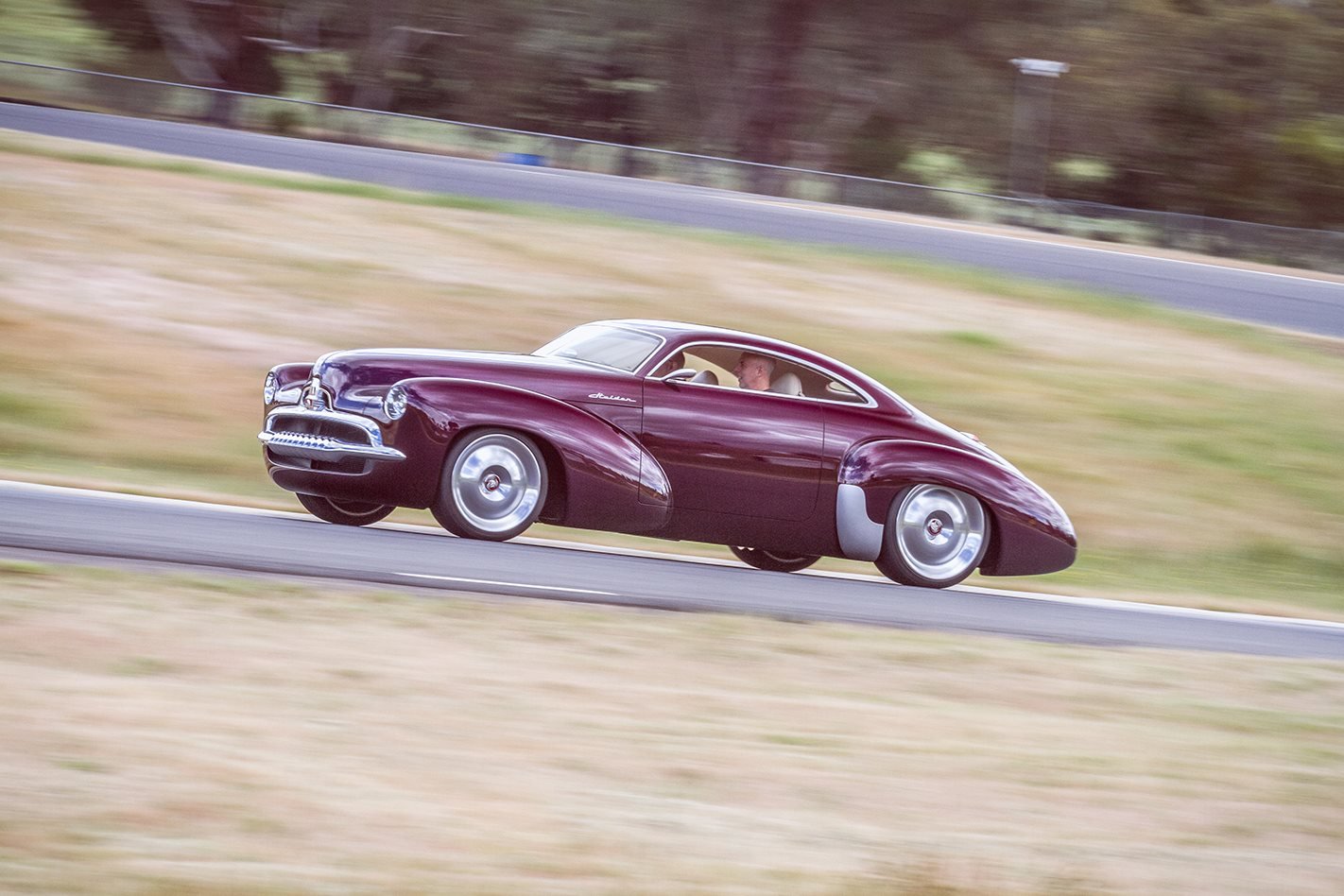
So who better to ask about BMW’s controversial new design direction? The G22 BMW 4 Series was one of 2020’s most polarising cars, setting the internet ablaze with mirth and vitriol over its enormous grille. It was also part of the 2021 Wheels Car of the Year field and with Ferlazzo on this year’s judging panel, we jumped at the chance to get his thoughts.
“It’s certainly not how I would have done it!” he says. “But I can understand what they’re trying to achieve.”
You’ll need to watch the video for Ferlazzo’s full breakdown on the grille, but it’s not only the front-end that captures the designer’s attention.
“Where’s the Hofmeister kink gone!?” he exclaims when examining the car in profile.
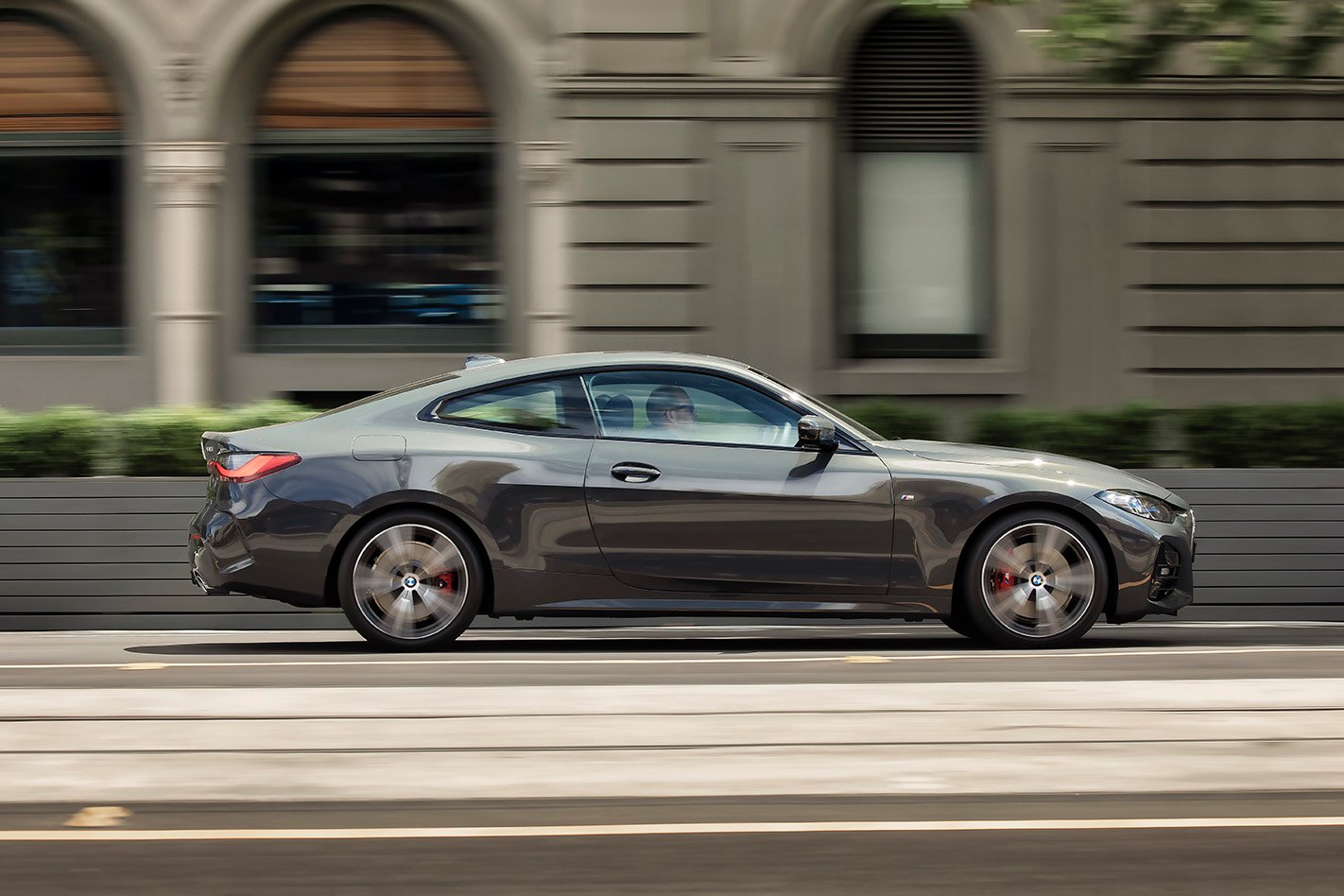
Whether you love or hate the new direction, Ferlazzo’s breakdown of the 4 Series’ design execution is genuinely insightful. He even draws parallels with our home-grown Holden Monaro while discussing the BMW’s proportions, and sheds light on how designers strive to achieve aggression and stance when working on a new model.
The internal machinations of a car company’s design department are also discussed when we ask how something so controversial makes it into production.
Will Ferlazzo’s expert comments shift your opinion on BMW’s new direction? Let us know in the comments!
