
Toyota will pay $18 million in JobKeeper subsidies back to the Australian government after its sales recovered more quickly than expected in 2020.
It qualified for the program mid-way through 2019 after being heavily affected by the COVID-19 pandemic that saw it temporarily close down dealerships in Victoria and Tasmania.
However, sales bounced back strongly for Toyota in the last quarter of 2020, with 66,129 vehicles sold.
This represented a 29.1 per cent increase on the same period in 2019. In fact, yearly 2020 sales ended only 965 short of 2019’s total.
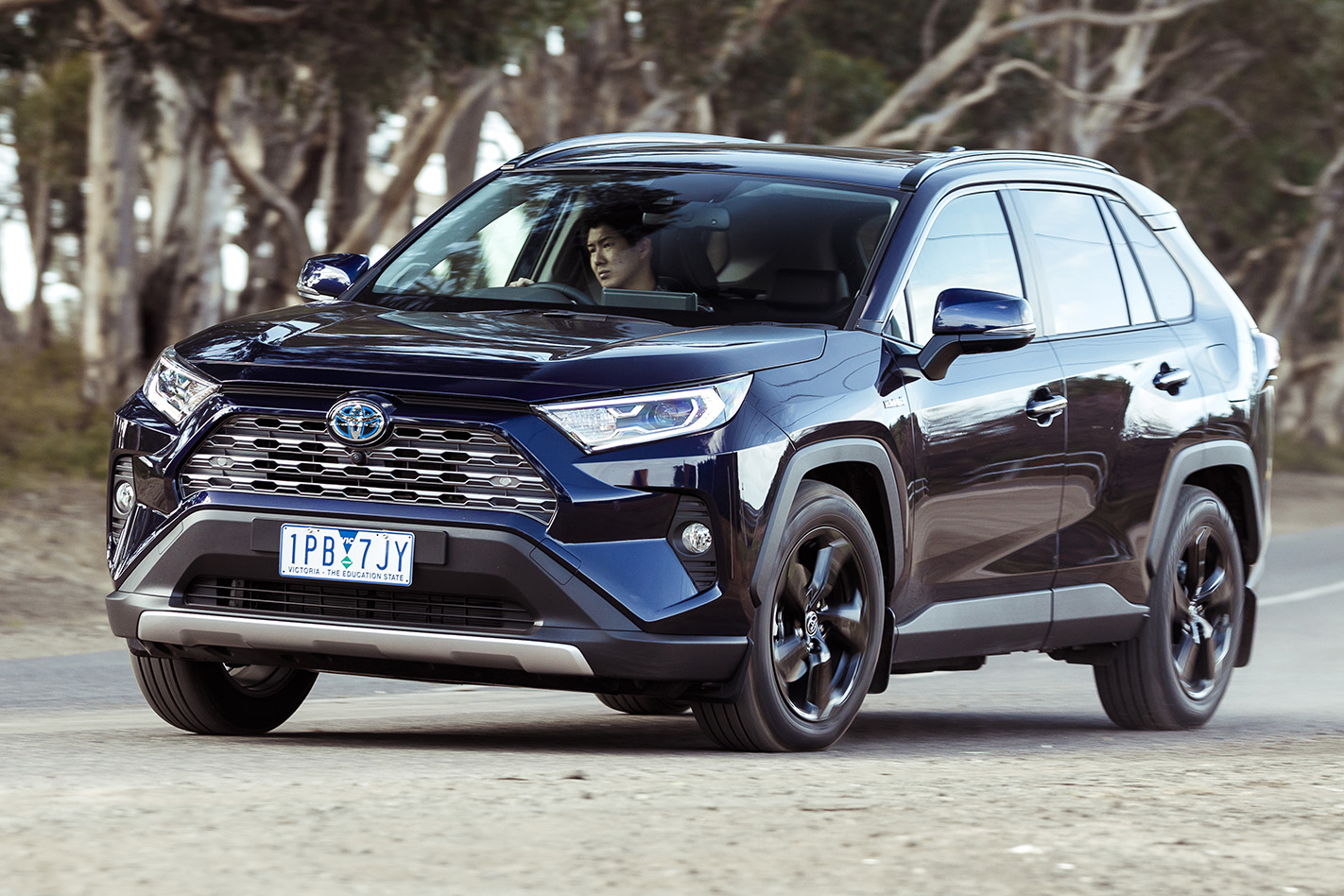
Toyota says it approached the Australian Taxation Office to voluntarily repay the subsidies in full, and said the program bolstered the job security of almost 1400 employees around Australia.
“In the end, we were very fortunate to weather the storm better than most,” said Toyota President and CEO Matthew Callachor in a statement.
“So our management and board decided that returning JobKeeper payments was the right thing to do as a responsible corporate citizen.”
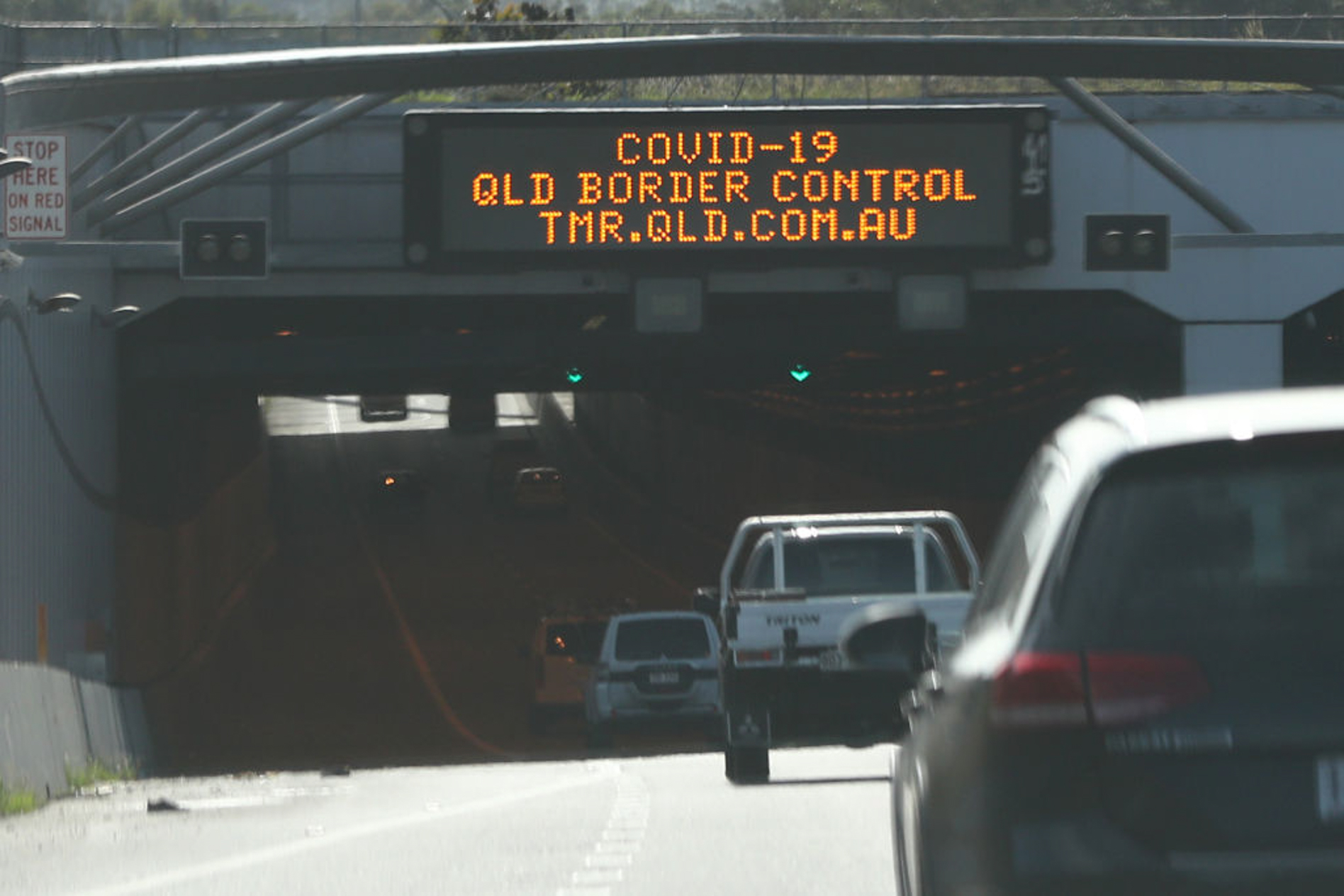
JobKeeper has proved an essential lifeline for businesses that have struggled during COVID-19’s continued stranglehold on the Australian economy.
The Australian government required revenue for international businesses drop more than 50 per cent to qualify for JobKeeper, which has allowed them to use wage subsidies to retain staff that would otherwise need to be stood down or let go.
It’s been extended twice; first on September 28 last year and then on January 4, with plans to wind it up on March 28.
Other stakeholders in the car industry such as dealership group Eagers Automotive have benefitted from the program. It reportedly received $62m.
The government paid companies $600 per week for each staff member working at least 20 hours while other employees attracted a $325 weekly subsidy.
It’s estimated JobKeeper will cost Australian taxpayers around $90 billion when it finishes this March.
While most of the car industry was left reeling from a tough 2020, the top end of town saw an unexpected uptick in business, as well-heeled customers exchanged travel for toys.
For example, almost every Rolls-Royce vehicle commissioned in 2020 was tailored by the luxury carmaker’s Bespoke Collective, with restless clients looking for a way to express themselves while locked down in their penthouses and mansions.
According to the Bespoke Collective designers, the pandemic also saw the inspiration for design shift from the usual themes surrounding travel and its associated grandeur to rich and textural surroundings of home, architecture and nature.
Here are just some of the examples of Rolls-Royce vehicles commissioned around the world, with the client’s personal touches conveyed via the Bespoke Collective’s own skilled designers, craftsmen, artists and engineers.
You can view more images in the gallery at the top of the page, and tell us what you think of them down below.
Phantom ‘Iridescent Opulence’
The Rolls-Royce Phantom’s hermetically sealed gallery (Rolls-Royce speak for cabin) makes it possible to incorporate natural materials in a way never before possible in a car, according to the company.
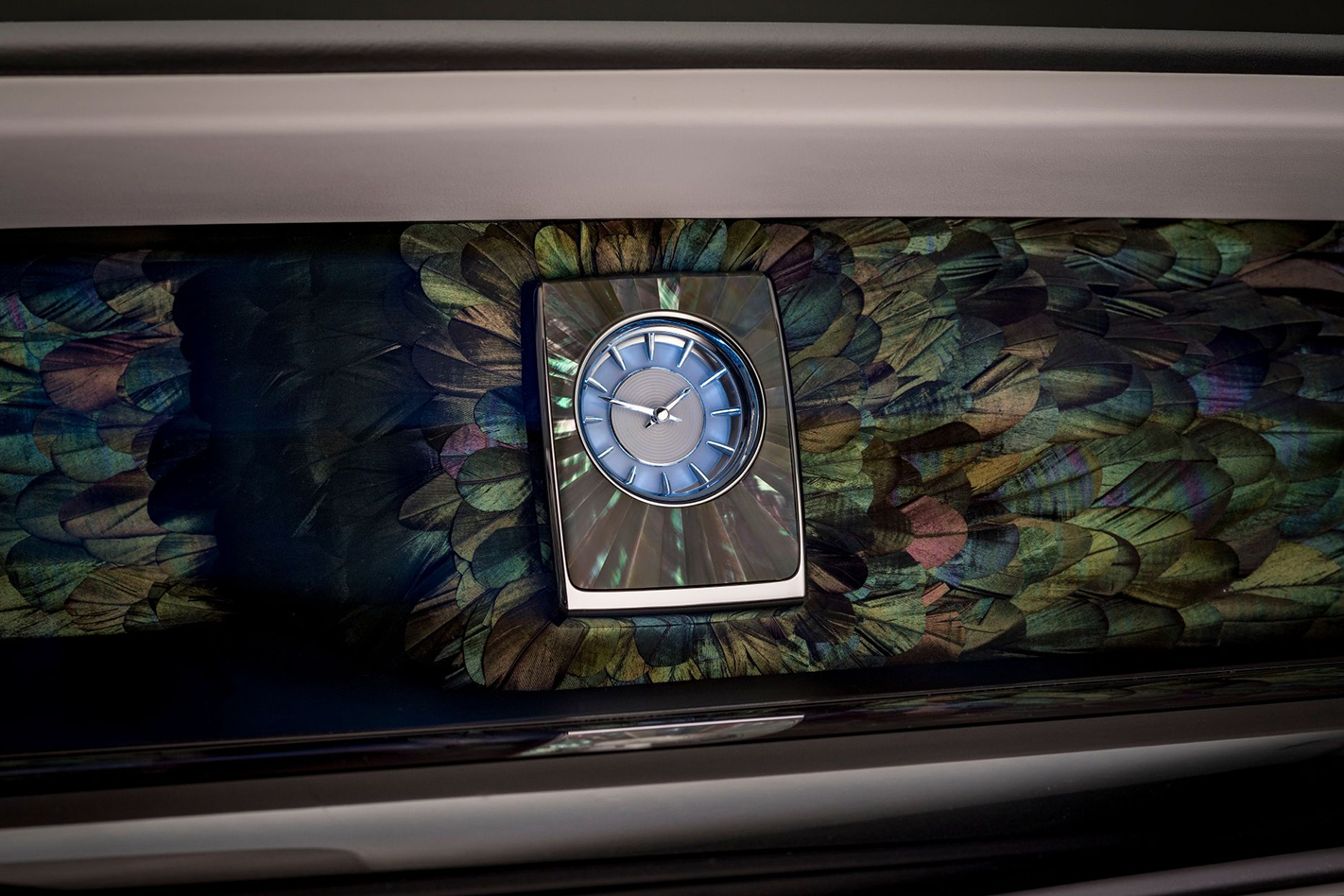
Created in partnership with Swiss materials specialist Nature Squared, ‘Iridescent Opulence’ includes more than 3000 sustainably sourced iridescent tail feathers, each “shaped individually to accentuate their sheen and rich hue and hand-sewn onto an open pore fabric”.
Our verdict: pretty, but what happened to the poor birds?
Dusk in Tokyo
One well-heeled Japanese buyer didn’t know which Roller to choose, so they had a Phantom, Wraith, Dawn and Cullinan styled to create the ‘Dusk in Tokyo Collection’ (main picture), which celebrates the country’s bustling capital.
The customised refractive white paint contained aluminium and mica flakes to creates subtle tones in low light, and was added to characterise the coastal metropolis’ high-rise glass and concrete buildings bathed in the warm light of early dusk.
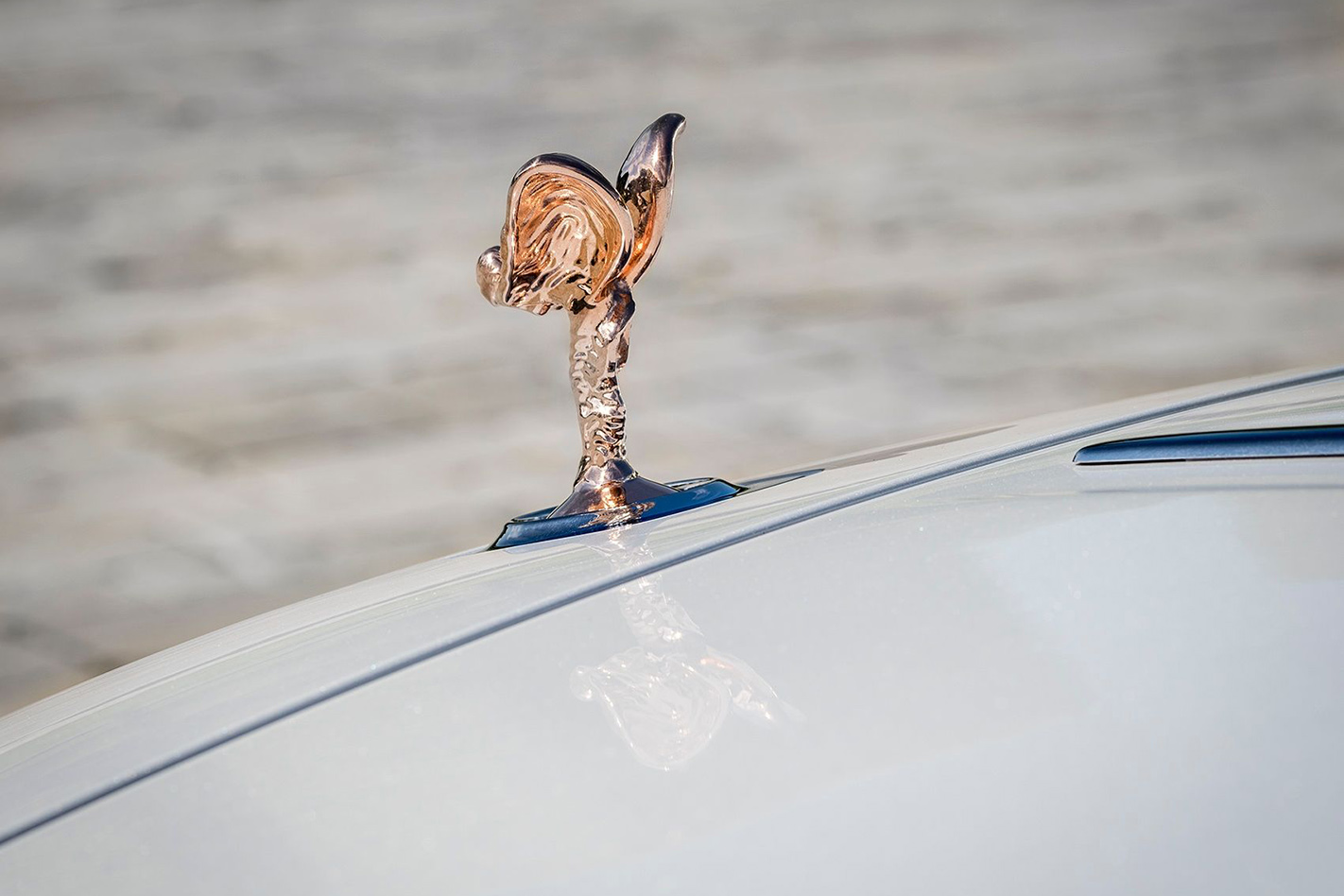
Inside, the Black Leather interior, punctuated by Rose Gold Bespoke Audio grilles – and on the Phantom, the fascia’s Rose Gold clock case – depicts the contrast of long, dark shadows of the city’s tall buildings with the setting sun on glass.
The Spirit of Ecstasy, finished in Rose Gold for the first time ever in Japan, also represents the setting of the sun.
Our verdict: Well, if you’re going to one, you may as well do three…
The Steed Phantom Extended
Complex embroideries of a stallion embellish the interior rear doors of this elegant Phantom Extended.
Signifying strength and an unremitting enthusiasm to progress, the embroidery of the steed was developed from a sketch sent to the Rolls-Royce Bespoke Design Collective by the Chinese client.
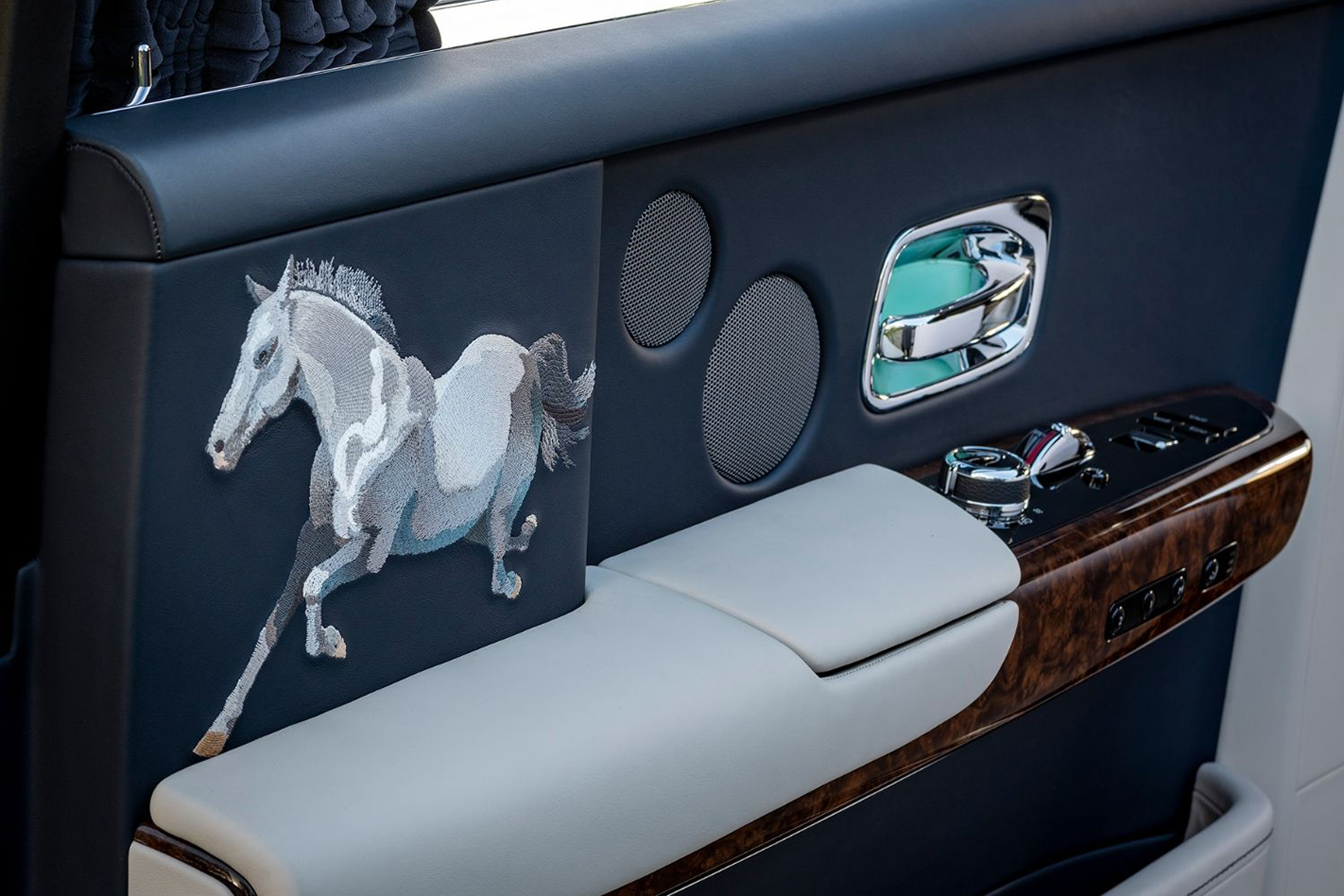
Our verdict: Neeeeiiiggghhh!
‘Neon Nights’ Colour Trilogy
The Bespoke Collective developed a new and dynamic colour palette, named ‘Neon Nights’, in a limited run of just four of each colour.
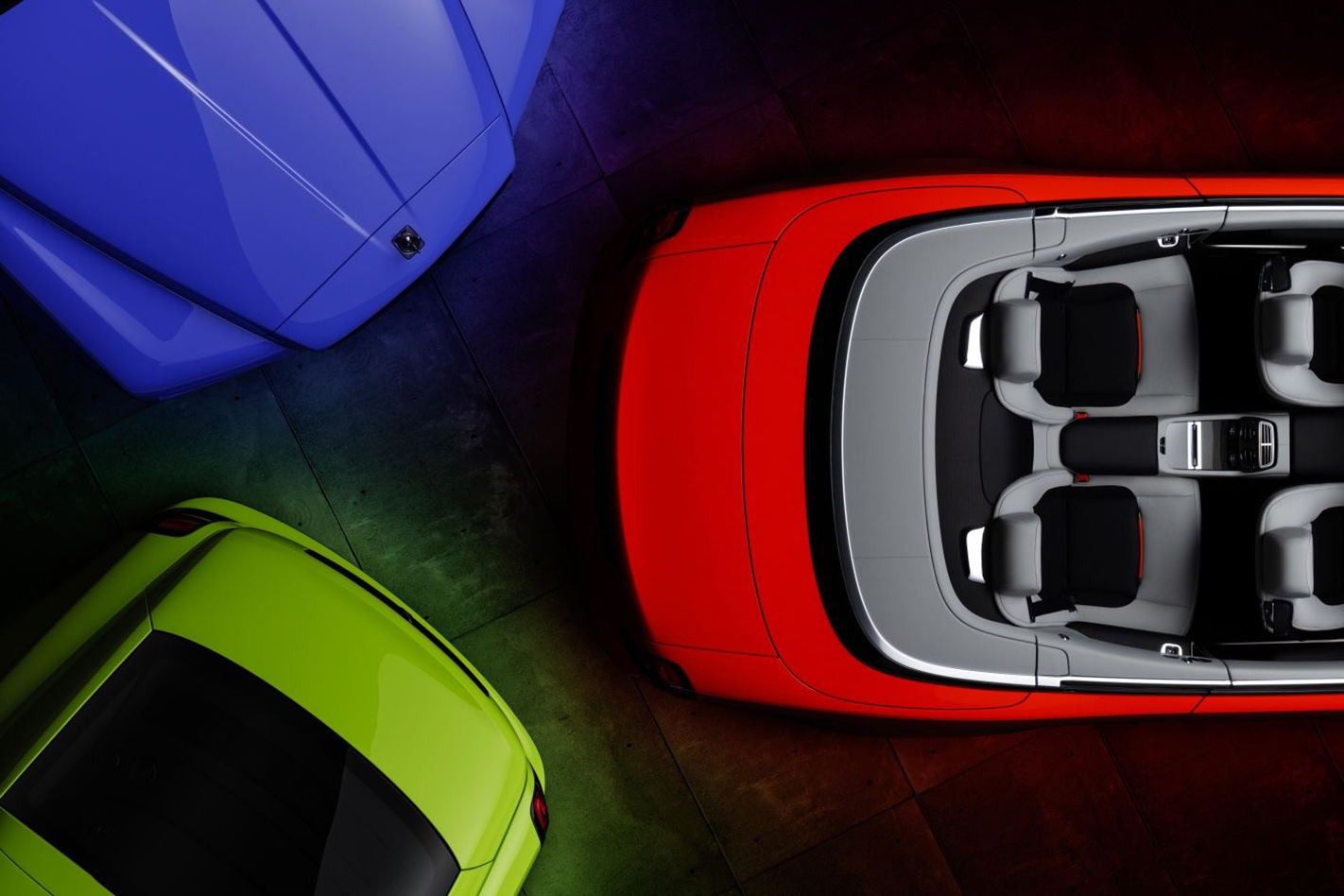
The three brightly coloured hues are each inspired by the natural world and consisted of Lime Rock Green, a near-luminous hue naturally found on the Australian green tree frog; Eagle Rock Red, which mimics the flowers of ‘Ōhi‘a lehua (an evergreen tree native to Hawaii); and Mirabeau Blue, which takes inspiration from a Central and South American butterfly, the rhetus periander.
Our verdict: surprisingly subtle and kind of cool
Wraith ‘Inspired By Earth’
This takes its design cues from the entire solar system, and our own planet, as seen from space.
The Royal Blue exterior references water while an air-brushed bonnet depicts a satellite view of the Middle Eastern region centred on the United Arab Emirates.
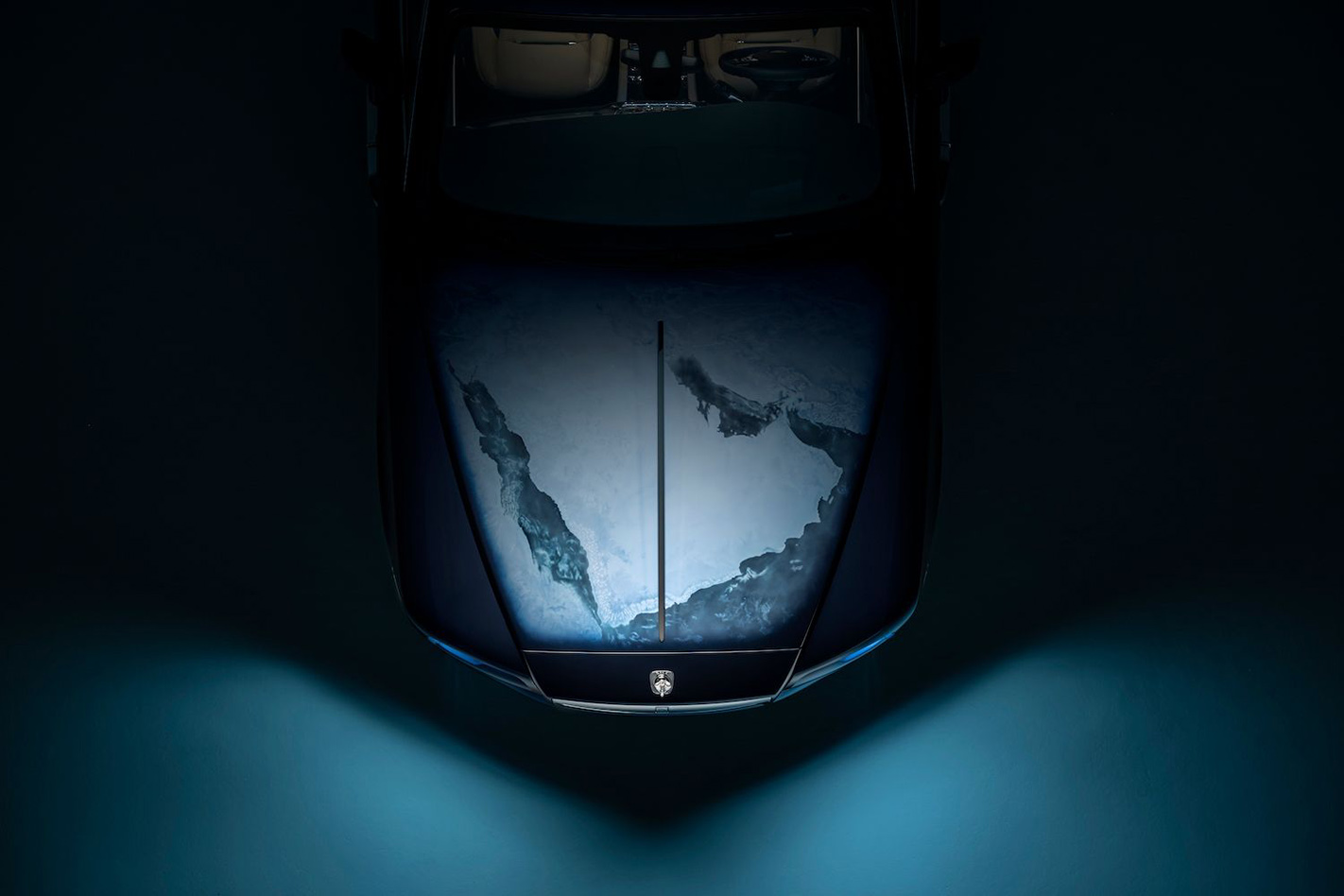
A hand-painted Emerald Green coachline (pinstripe, in fancy parlance) incorporates the Sun and the eight planets of the Solar System.
Inside, the seats are made from Moccasin leather to mimic the sands of the Emirates’ deserts, with accents suggested of rivers, lakes and nature in general. The fascia is embellished with an air-brushed satellite image of the Middle East (pictured).
Returning to the solar system motif, the Starlight headliner is embroidered to illustrate all the planets centred on the Sun.
Our verdict: Out of this world, man
Ghost Illuminated Fascia
The innovative ‘Illuminated Fascia’ of the new Rolls-Royce Ghost debuted following two years and more than 10,000 hours of development by the Bespoke Collective.
There are 850 individual stars stitched into the headlining.
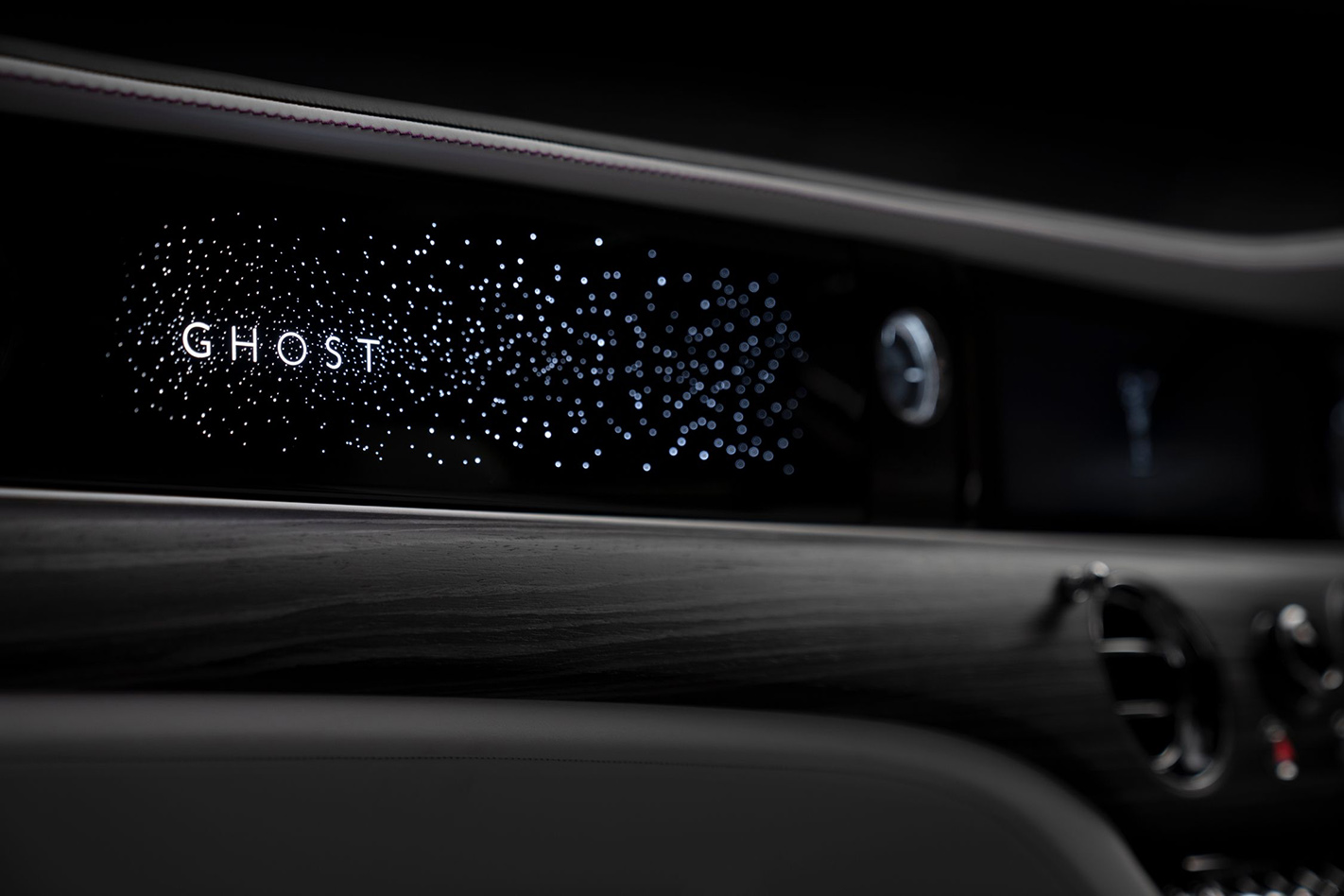
The fascia also features 152 LEDs and 90,000 laser-etched dots carefully carved into the surface of the dashboard.
The lights are colour-matched to the cabin’s clock and instrument dial lighting, and create a twinkling effect as the eyes move across the fascia.
Extensive engineering work and three layers of composite materials ensure the Illuminated Fascia is completely invisible while not operational.
Our verdict: an astonishing amount of work for an amazing result
The Mahlangu Phantom
The gallery in the Rolls-Royce Phantom presented a unique opportunity for a South African client to display a highly personal work of art from renowned artist, Dr Esther Mahlangu (pictured).
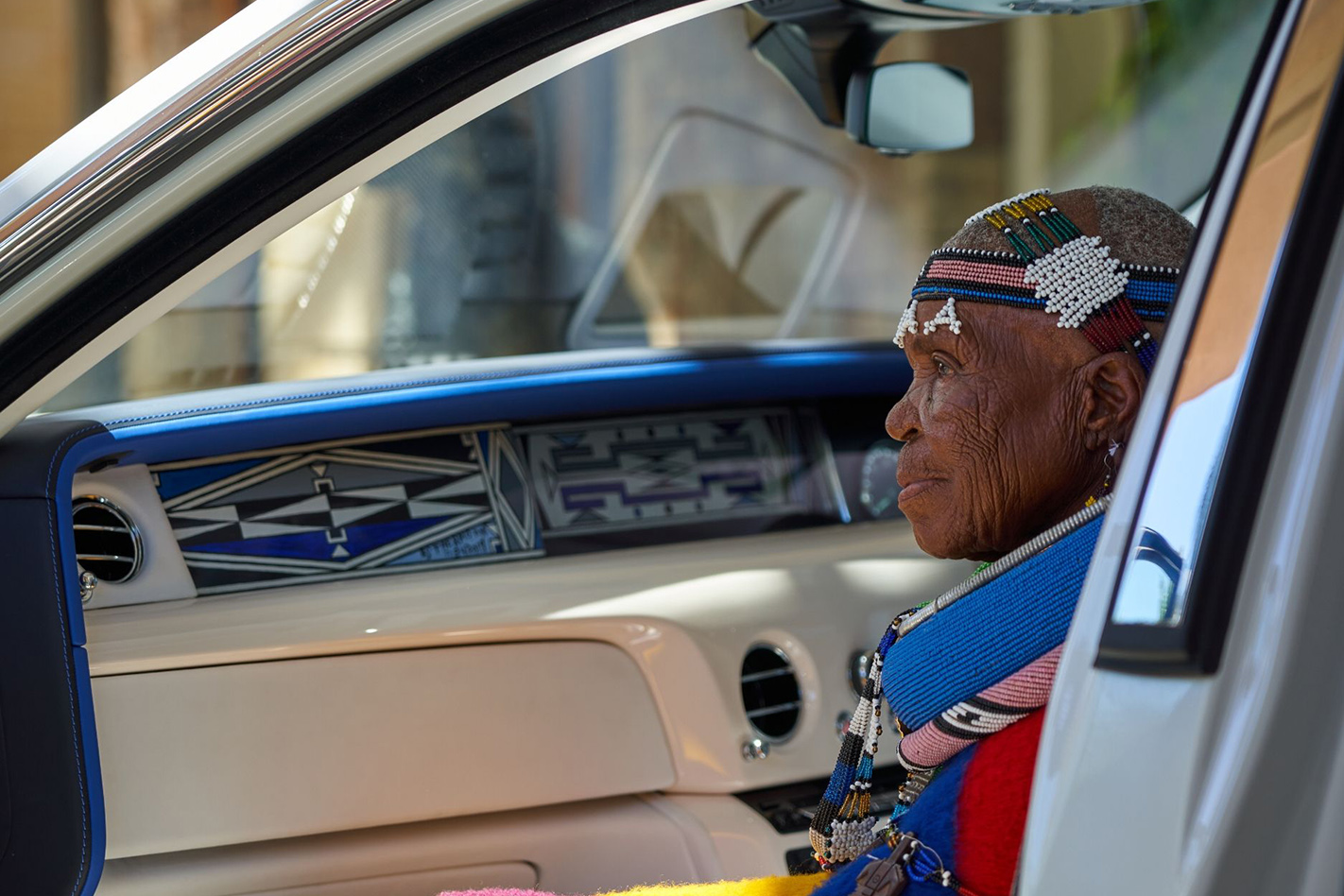
Dr Mahlangu was the first artist to create an artwork in this way and this motor car was named in her honour.
Our verdict: Now THIS is cool
Cullinan ‘Spirit Of Russia’ Collection
For the oligarch with everything, the Cullinan proved the perfect canvas for a series of four individual bespoke commissions dedicated to Russian mountains: Elbrus, Krasnaya Polyana, Golden Mountains and Klyuchevskaya Sopka.
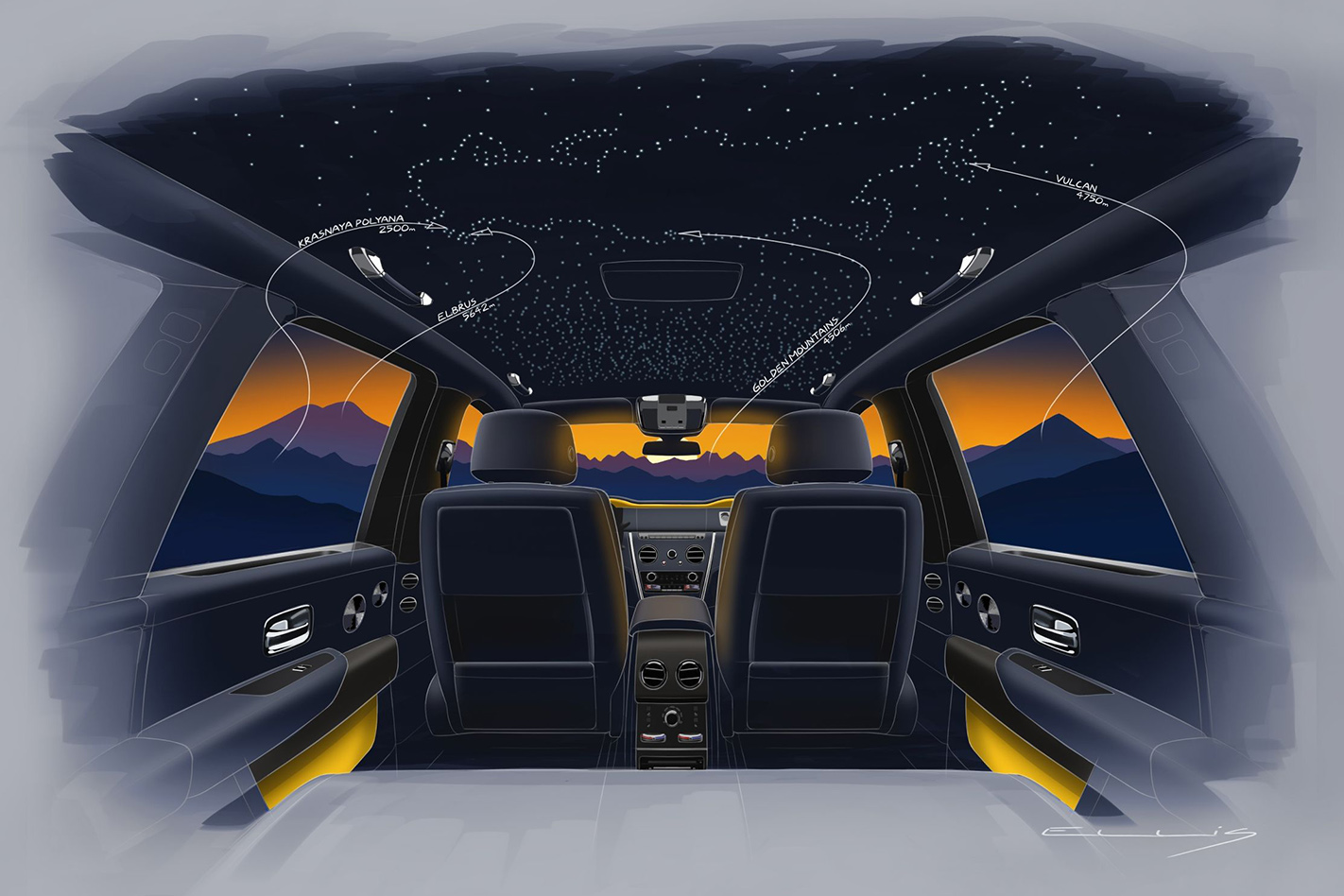
The Iced Black Diamond, Iced Gunmetal Steel, Midnight Sapphire Blue and Premiere Silver exterior hues are inspired by frosty peaks and are complemented by darkened chrome exterior detailing.
Inside, a map of Russia is depicted on the Starlight headliner while mountain peaks are embroidered on the headrests.
The engraved sill plates of each car bear an inscription naming the mountain region that inspired its design, as well as the height of the highest peak in each region.
Verdict: Oh yes, sir, we really love it!
Sportive Collection
A Collection of two Black Badge Dawns and nine Black Badge Wraiths were commissioned for the United Arab Emirates.
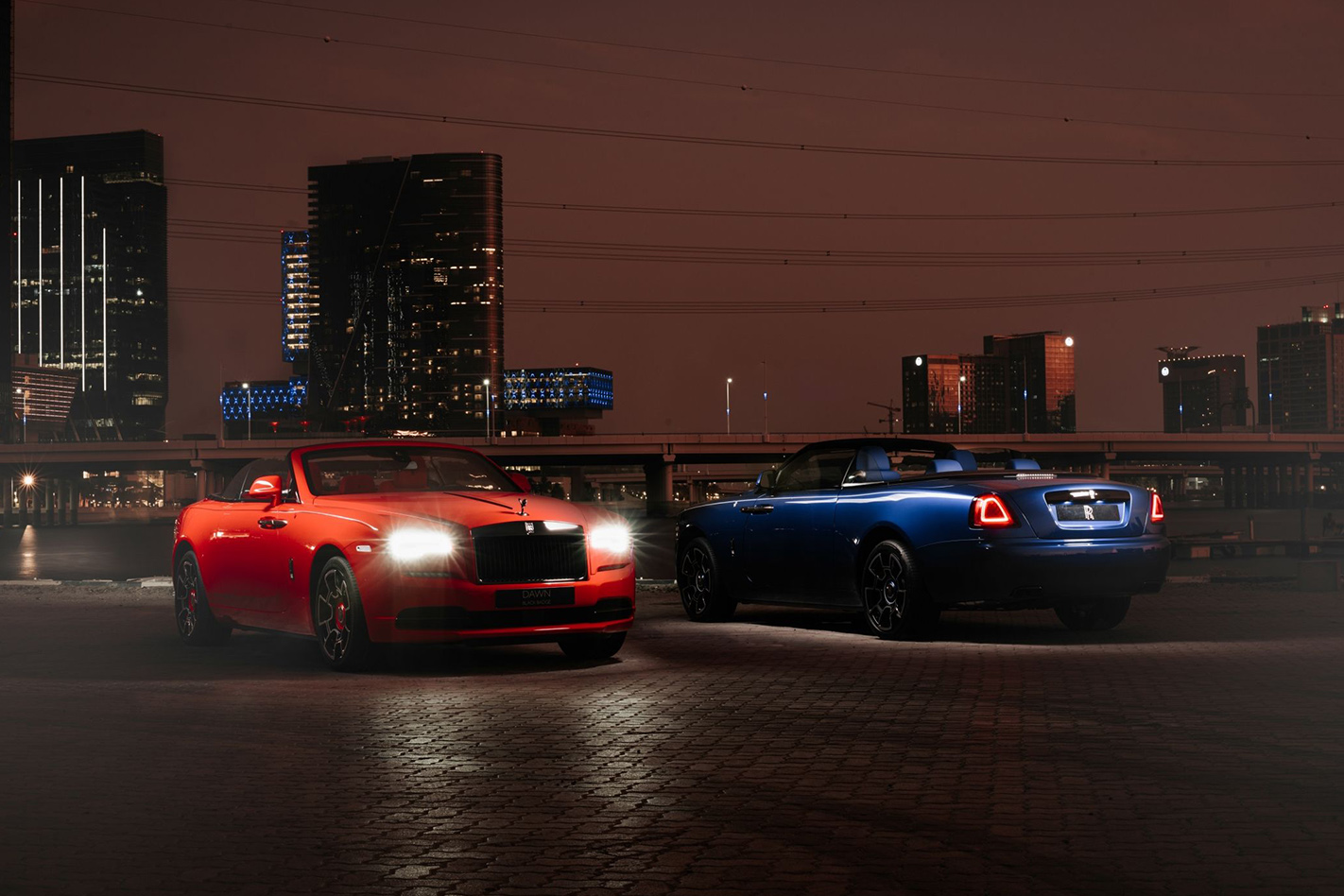
In a first for Rolls-Royce, the interior features a technical fibre fascia that has been intertwined with a coloured weave to match the vibrant exterior colour combinations.
Verdict: Looks like a specials pack to us…
Arctic White And Hotspur Red Phantom
Commissioned by a Texan Rolls-Royce collector, this contemporary Phantom is finished in Arctic White with a double pinstripe in Hotspur Red, indicative of the bold interior.
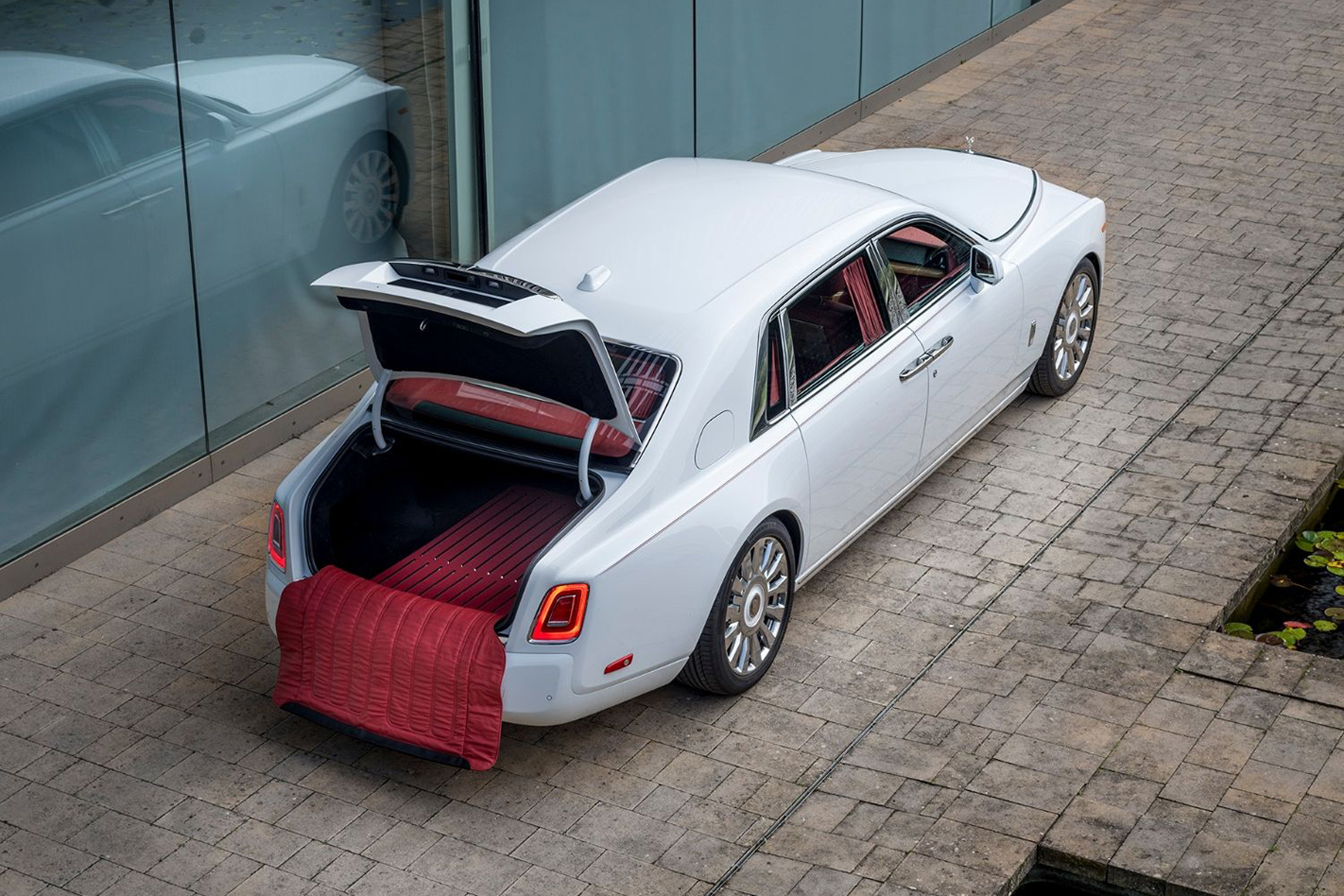
Indeed, every surface, from the lambswool floor mats, privacy curtains to even the luggage compartment is finished in Hotspur Red which, who guessed it, is a bespoke colour.
Verdict: Old school, but very cool
Electronics company Panasonic has used the 2021 Consumer Electronics Show to display a futuristic augmented reality head-up display (HUD).
Designed to build upon systems found in cars today, the augmented reality HUD uses artificial intelligence to detect and highlight potential hazards like pedestrians, cyclists, bridges or a vehicle suddenly appearing.
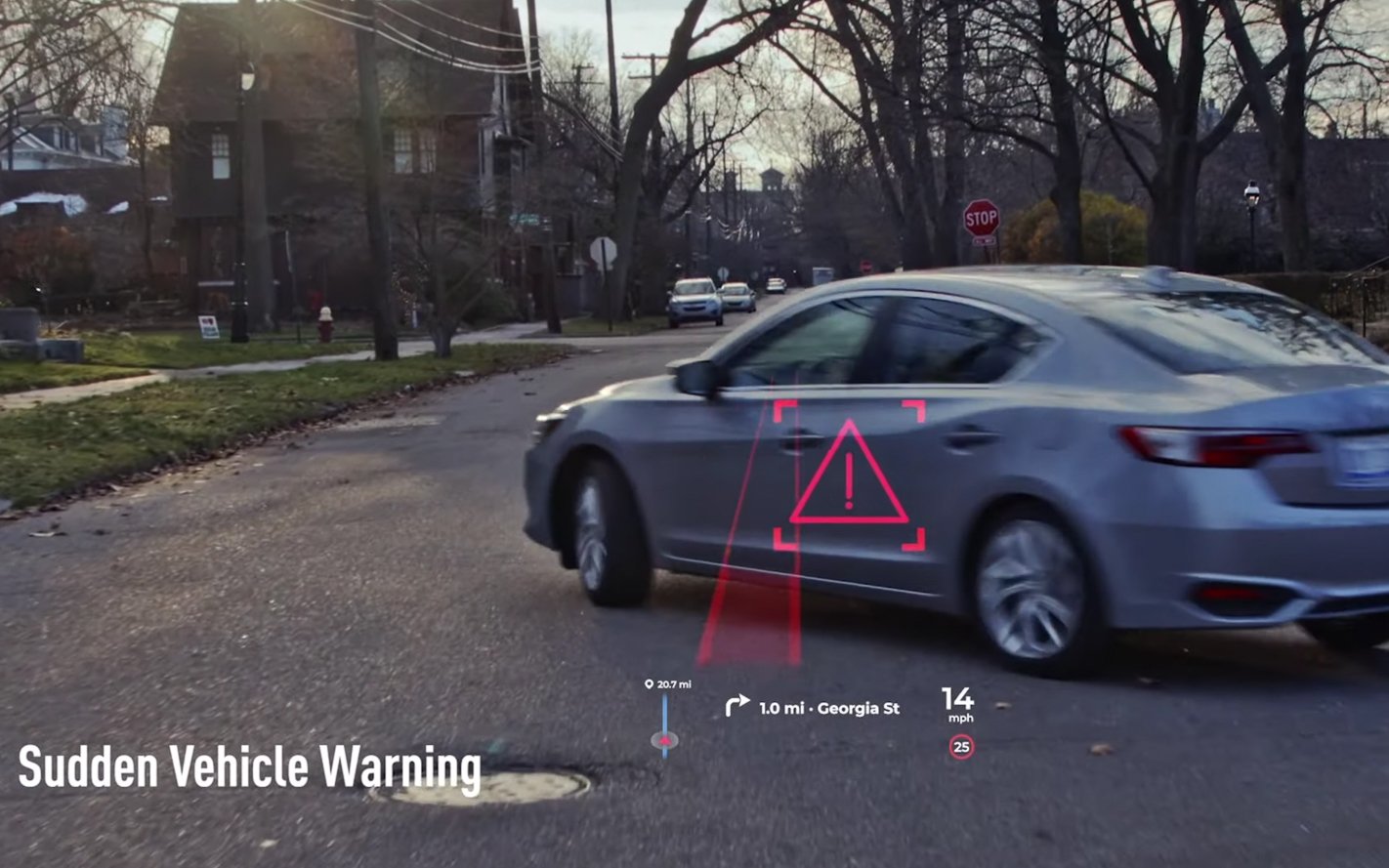
The Panasonic Automotive arm of the technology firm says that with the advent of autonomous driving comes a reduced driver focus on information and surroundings, prompting its engineers to create a new HUD that can project graphics on a car’s windscreen relative to its surroundings.
The artificial intelligence-driven system uses 4K resolution displays to project information that the AI deems important into the driver’s line of sight. The system goes far beyond today’s HUDs that show little more than vehicle speed and satnav instructions.
The Panasonic AR HUD can do all the basics such as speed and satnav instructions. It can also project 3D images into the distance to highlight obstacles or enhance those navigation instructions, all without requiring driver involvement.
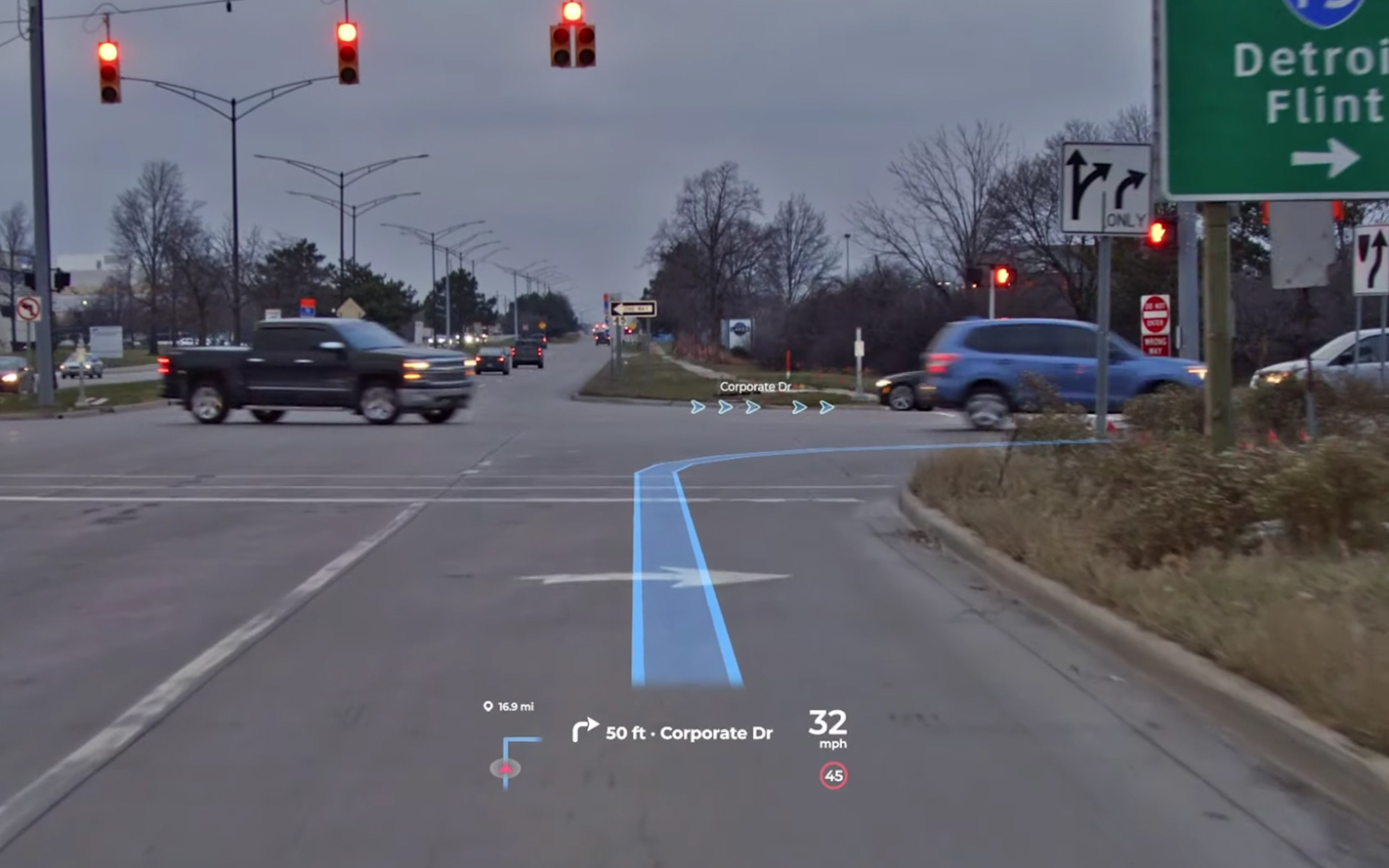
The bottom half of the display shows regular HUD information like speed, speed limits and a rev counter. The top half of the display is designed to show information in unison with the car’s surroundings.
Navigation directions can be projected metres ahead onto the road. It can highlight potential driving hazards like narrow bridges and errant cars entering your pathway.
Panasonic’s augmented reality HUD can track the driver’s eyes to ensure the display is aligned with head and eye position. It features vibration control with image stabilisation derived from the brand’s camera division, and has real-time situational awareness that can update images in three-tenths of a second.
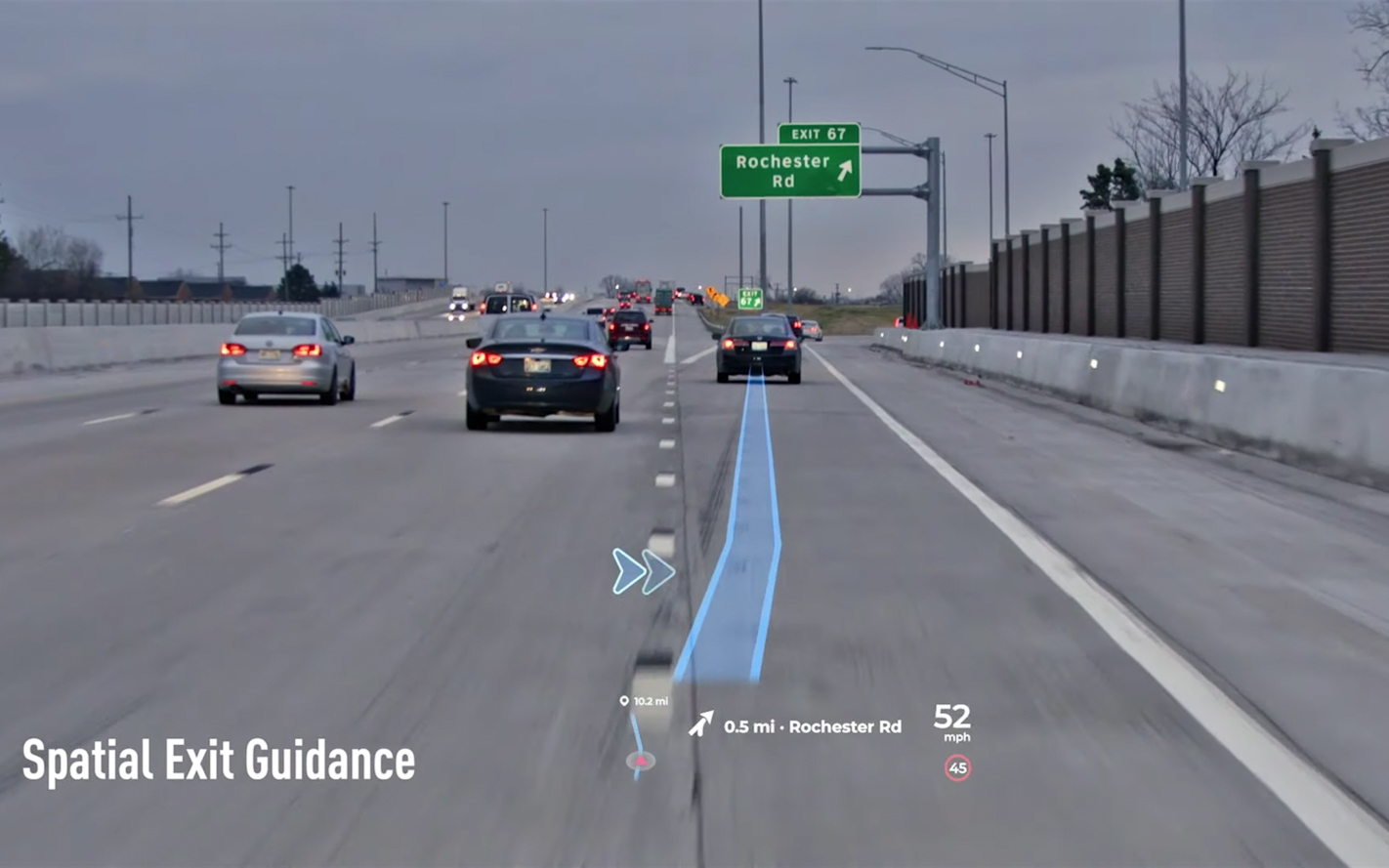
“The HUD market is one of the fastest-growing categories in mobility, but traditional HUDs only cover a small section of the road,” said Scott Kirchner, president Panasonic Automotive of the new system.
“Panasonic’s AR HUD solutions cover more of the roadway, with traditional cluster content like speed and fuel in the near field as well as 3D overlays in the far field, showing navigation and other critical driver data mapping spatially to the road ahead.
“And in a future with more self-driving vehicles, our AR HUD could provide an important added level of comfort and assurance for [autonomous vehicle] passengers as well.”
Like many of the technologies presented at CES, no official date has been given by Panasonic for mass production of vehicles using the tech. Envisics, a partner of the augmented reality HUD project, told ETAuto that we’ll start to see the tech integrated into vehicles from 2023.
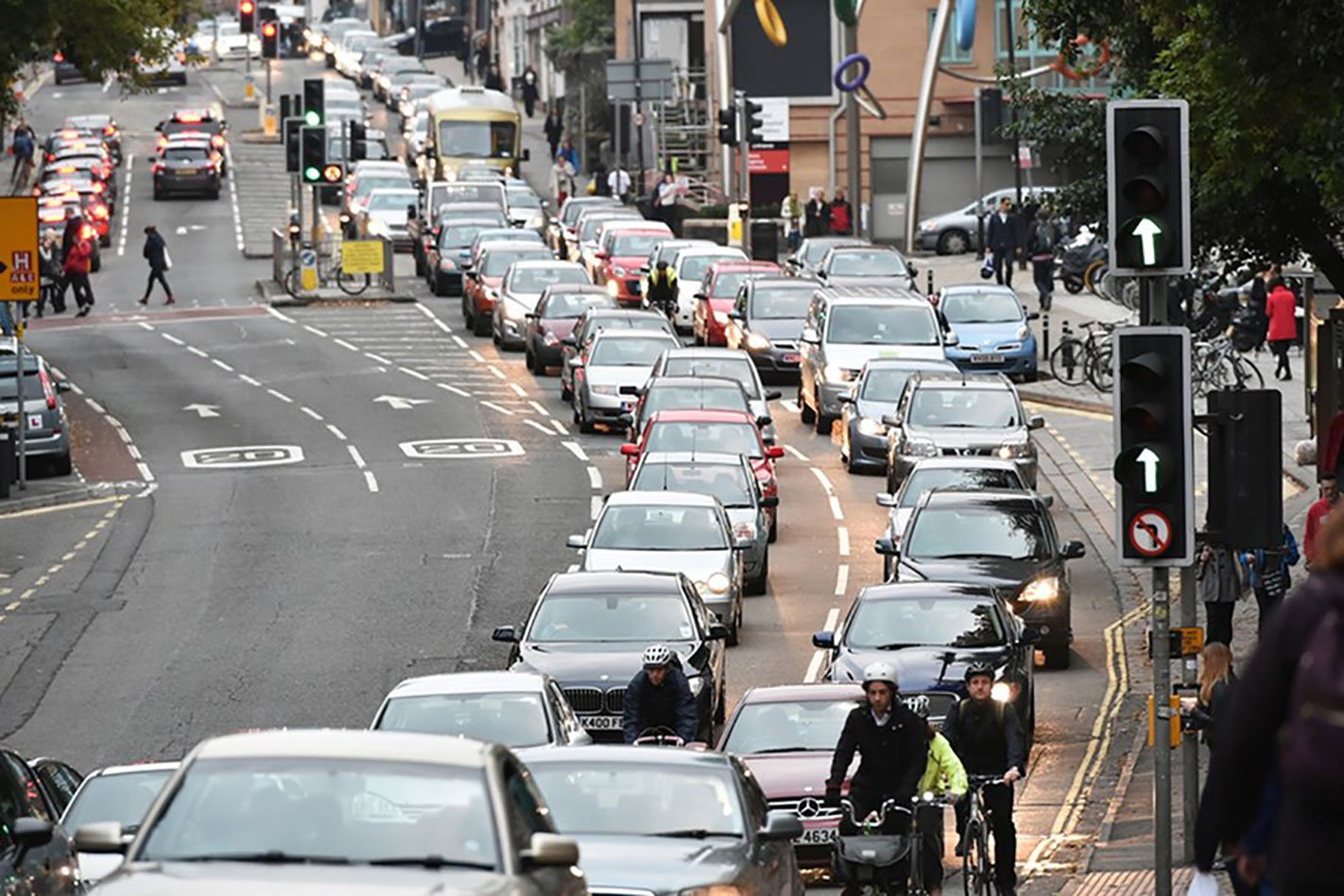
In 2020 the United Kingdom Government confirmed it will ban the sale of new petrol, diesel and hybrid cars from 2030 as part of what Prime Minister Boris Johnson is calling the Green Industrial Revolution.
This timeframe for a ban has come forward from 2040 as part of a 10-point plan for the UK to become carbon neutral by 2050.
Now, industry stalwart Andy Palmer has spoken on what he thinks of the plan.
Andy Palmer speaks on the Internal Combustion Engine (ICE) ban
After his departure from Aston Martin, Andy Palmer was appointed non-executive chairman of InoBat Auto, a battery production company that specialises in using artificial intelligence for finding the best battery chemistry for different vehicle markets, and Optare in the UK.
Palmer has been in the industry since 1979 developing, among other things, the first-generation Nissan Leaf from an idea to production, so has plenty of experience when it comes to battery technology and electric cars.
As a side note, it’s worth pointing out that net zero carbon emissions is not exactly the same in practice as net carbon neutral. Both imply no more carbon is released than captured, however the latter can be achieved with offsets from other jurisdictions, such as if a country or business takes credit for carbon being captured elsewhere.
“Going in isolation has potentially unforeseen circumstances; we are not a leader and never will be a leader in electric vehicles – that boat sailed thirty years ago because we don’t own our own industry.”
In terms of the whole auto industry in the UK, Palmer says that InoBat has the right ideas to make battery technology work for many individual sectors.
“Through their relationship with Wildcat, a tech company in California, they have acquired this Artificial Intelligence methodology of developing chemistries and enables them to develop chemistries according to the mission in front of them.
“The AI allows you to look at those combos and find an optimum chemistry, make the cake to suit the purpose – you don’t want a fruit cake for a birthday party, for example.”
But it’s the UK’s methods of getting to its goals that Palmer says don’t sit right: “I’ll hypothesise this: I think EVs are best for passenger cars and buses but, almost certainly, it will be a synthetic fuel or fuel cells for Heavy Goods Vehicles.
“What the UK is doing … by picking a winner is taking itself off the table, which risks the next big breakthrough,” Palmer adds. “And that’s a pity because it was a British institute that invented the lithium-ion battery.”
At the confirmation of the plan, Prime Minister Boris Johnson said: “the government will invest more than £2.8 billion [AU$4.9bn] in electric vehicles, lacing the land with charging points and creating long-lasting batteries in UK gigafactories.”
Mike Hawes, chief executive of the Society of Motor Manufacturers and Traders, said: “Investment in EV manufacturing capability is equally welcome as we want this transition to be made in the UK, but if we are to remain competitive – as an industry and a market – this is just the start of what’s needed.
“We will now work with government on the detail of this plan, which must be delivered at pace to achieve a rapid transition that benefits all of society, and safeguards UK automotive manufacturing and jobs.”

“We also welcome the recognition that Petrol Hybrid EVs can help in the transition to a fully electric car parc and the key role they can play in immediate and significant CO2 reductions if used properly. Bentley customers are already embracing the plug-in vehicle, with a third owning one today.”
He added: “We also acknowledge the Government’s new ambitious yet necessary targets and timelines, and the focus now needs to shift onto creating and implementing a cross-industry plan to bring infrastructure and customers along on this important journey. Bentley is ready to transform itself, and support the wider UK mission to meet this challenge.”
Does this mean Brits will scrap their ICE cars by 2030?
No. The UK Government wants to ban sales of new cars powered by petrol and diesel engines from 2030 and PHEVs in 2035. Existing car stock will, presumably, merely be taxed to the hilt by then, but ministers want to ensure that all brand-new cars are powered by electricity only, not fossil fuels.
NEXT Bentley throws down hybrid gauntlet to politicians
This article was first published on CAR UK
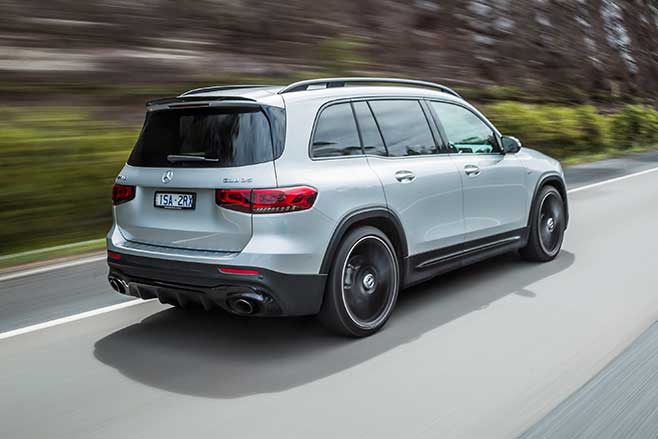
Makes sense, but combining two successful genres doesn’t automatically result in something great. Remember when they combined hip-hop and heavy metal? We ended up with Limp Bizkit. Nevertheless, as the naming convention suggests, the GLB makes sense if you align it with the corresponding Mercedes passenger car.
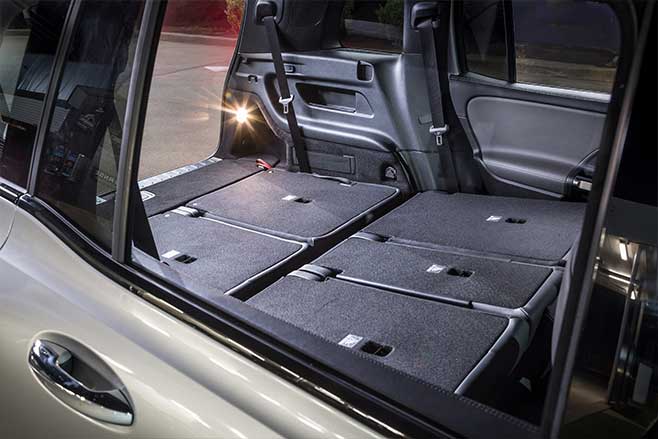
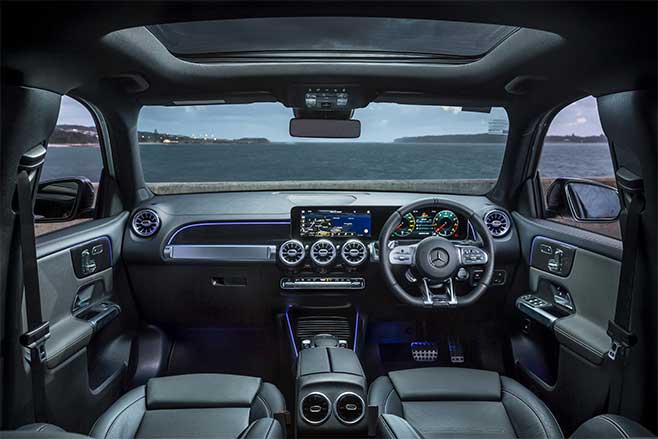
Yin versus yang, light versus dark, perhaps even good versus evil. The Mercedes-AMG C63 S Coupe and Audi RS5 Coupe aim for the same goal but their methods of kicking it are almost diametrically opposed.
The radical differences in mechanical philosophies of our two test cars could be seen as a neat metaphor for their equally divergent personalities. In the white corner is the Mercedes-AMG C63 ‘Aero Edition 63’, an Australia-New Zealand exclusive model limited to just 63 units in either Iridium Silver or the Polar White seen here. Sprucing up the exterior is a number of “wind tunnel tested aerodynamic extras” including a bigger rear spoiler, larger front lip and chunky diffuser.
The spoiler, mirror caps, and inserts in the front apron, side skirts and diffuser become carbon fibre, which is also liberally applied to the interior. AMG Performance seats are standard, trimmed in the Aero-exclusive combination of Magma Grey Nappa leather with yellow stripes, the flashes of colour also appearing on the centre console, dash and door trims.
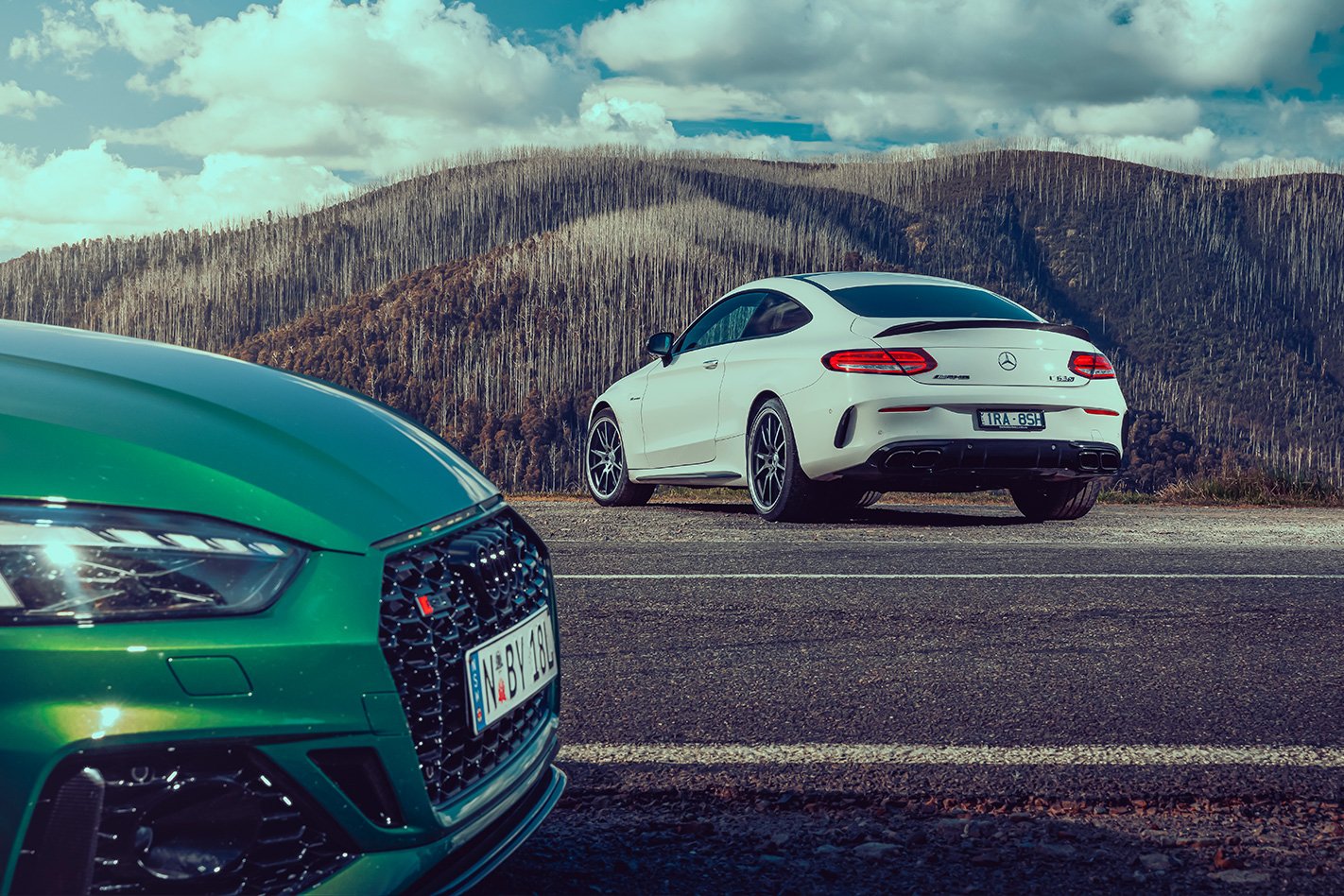
The only mechanical upgrade is the inclusion of carbon-ceramic brakes, giant 402mm composite front discs with the gold six-piston front calipers that identify AMGs so equipped. All told you’re looking at $188,236. This appears to hand the facelifted RS5 a sizeable price advantage as Audi has sliced almost $7000 out of the base price as part of the midlife refresh, which also incorporates revised styling (larger grille, narrower headlights), fancy laser light headlights and every active safety feature under the sun. However, this apparent price advantage doesn’t take into account the Audi options list, which sits salaciously in the corner saying ‘come hither’ to your wallet.
Our test RS5 wears $37,800 worth of extras, which pleasingly brings its total to just $464 more than its AMG opponent at $188,700. The big ticket items are the $13,600 carbon-ceramic brakes and $11,200 carbon styling package that slathers the exterior in carbon in a virtually identical manner to the C63. The RS5 ‘Aero Edition’ if you will.
Turning the roof and engine cover to carbon adds another $4900 and $1200 respectively and dynamic ride control adaptive dampers are a further $4400. Rounding off the total are gloss black wheels ($400), black badges ($700) and matt carbon interior inlays ($1400). Whew. Painted in Sonoma Green, the dark and foreboding colour scheme gives the RS5 a menacing mien.
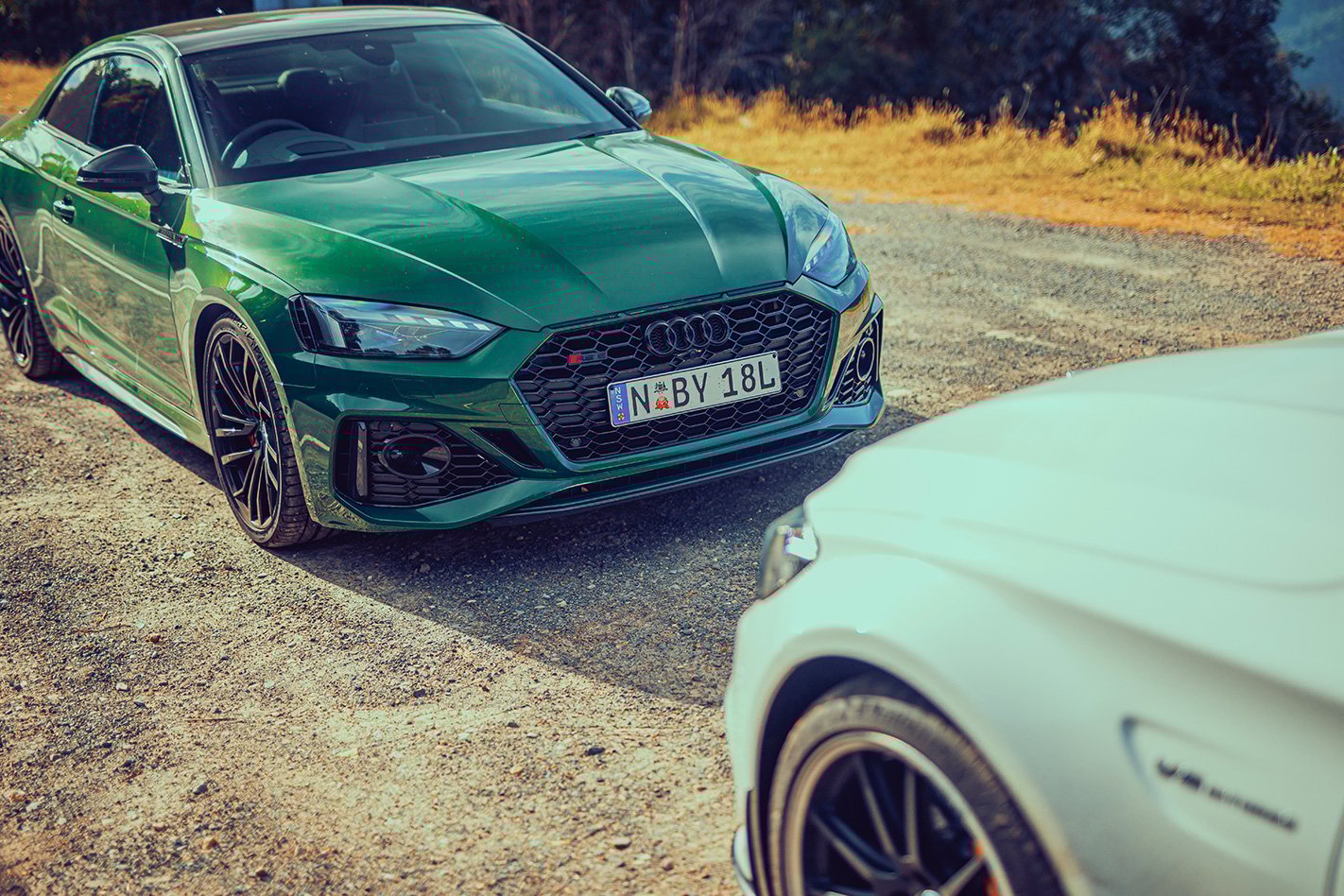
Parked nose to nose with the C63, the Audi is lower, squatter and more muscular. The Mercedes looks sleeker but taller and thinner. The height difference is not an illusion. The AMG stands 41mm taller than the RS5 but also 16mm wider and 28mm longer with an extra 74mm in the wheelbase. Despite this, the Audi is clearly the more practical car. Forgive us for getting all sensible for a second, but the RS5 has a much bigger boot (465L vs 355L) and nicer rear accommodation. The C63 isn’t exactly barren in the back but it’s a child-only zone in terms of space whereas the RS5 offers more room, separate temperature controls and USB charging.
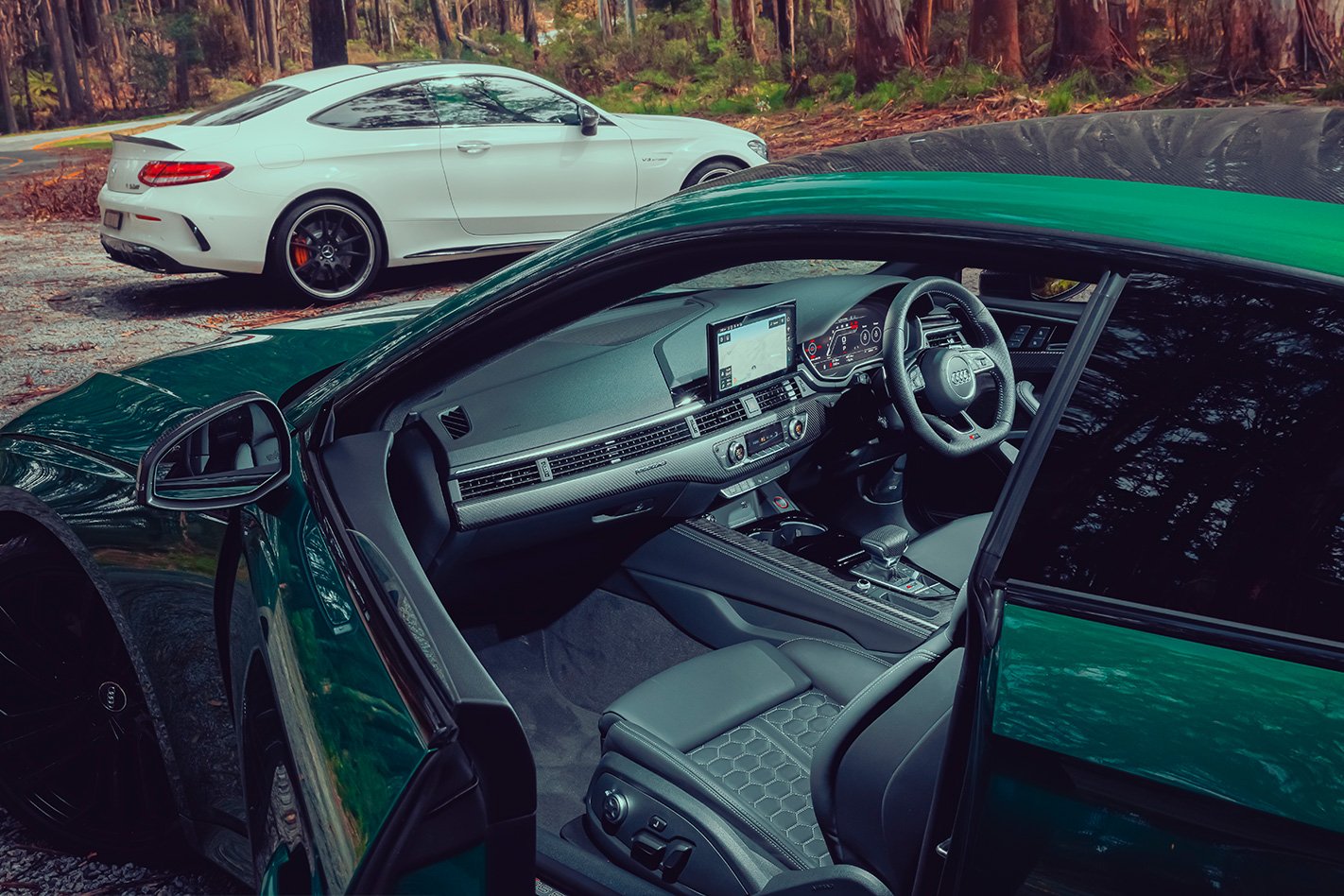
Up front, both are lineball in terms of features and ergonomics, though I prefer the Audi’s steering wheel and its seats offer better support than the AMG’s, for my body type at least. Where the RS5 is clearly superior is its infotainment. The new 10.1-inch MMI touchscreen is as slick and intuitive as the Merc’s touchpad-controlled system isn’t. This might sound like a small thing – you wouldn’t base a purchasing decision on it – but when it’s something you interact with every minute or so of every day it’s the difference between a feeling of relaxation or frustration.
Relaxation is something the RS5 is quite good at; it’s about as undemanding as daily drivers get. The 2.9-litre twin-turbo V6 hums away surreptitiously, the eight-speed automatic occasionally feels like it wants to be a dual-clutch with its stop-start behaviour but is smooth enough, the ride is pliant and refinement is excellent. This is a ‘nice’ car: it looks nice, it feels nice, it drives nice. The AMG is much more naughty. It starts with an anti-social whoompf and idles malevolently, even more so if you select one of the sportier modes.
The C63’s mid-life update transformed its ride quality – even Sport mode is probably softer than the old car’s Comfort – but it remains a fairly raw car: road noise is ever-present and sharp bumps and cat’s eyes send audible thumps and buzzes through the body shell. This is one of the ramifications of removing virtually all the rubber bushings out of the bulging rear subframe, which gives the Coupe an extra 50mm of track compared to the C63 sedan.
A happier consequence, however, is fantastic feedback as those rubber bushings are no longer muffling the lines of communication between road and driver. It will probably take some experimentation to settle upon your favoured combination of settings from the many possibilities, which you can then save to the ‘Individual’ mode. Personally, my preference is engine in Race, suspension in Sport, gearbox in manual, exhaust loud and AMG Dynamics in Master, but I’ll come back to that.
Adjusting settings on the fly using the wheel mounted controllers takes a little practice but is also very satisfying, like James Bond fiddling with his latest Q Branch gadgets. Softening the suspension has not only improved the C63’s comfort but also its handling. Whether or not outright grip is greater is a moot point, for it breathes with the road better which increases driver confidence. Setting the dampers to Sport stiffens them enough to control the Merc’s substantial 1725kg weight yet still allows enough body roll to telegraph what the car is doing. It’s fabulous to drive, more controlled than the sedan thanks to not only the extra rear track but also the extra rear rubber, the 285mm Michelin Pilot Super Sports 20mm wider than those on the four-door. They are just about sufficient to contain the monstrous grunt of the 4.0-litre twin-turbo V8.
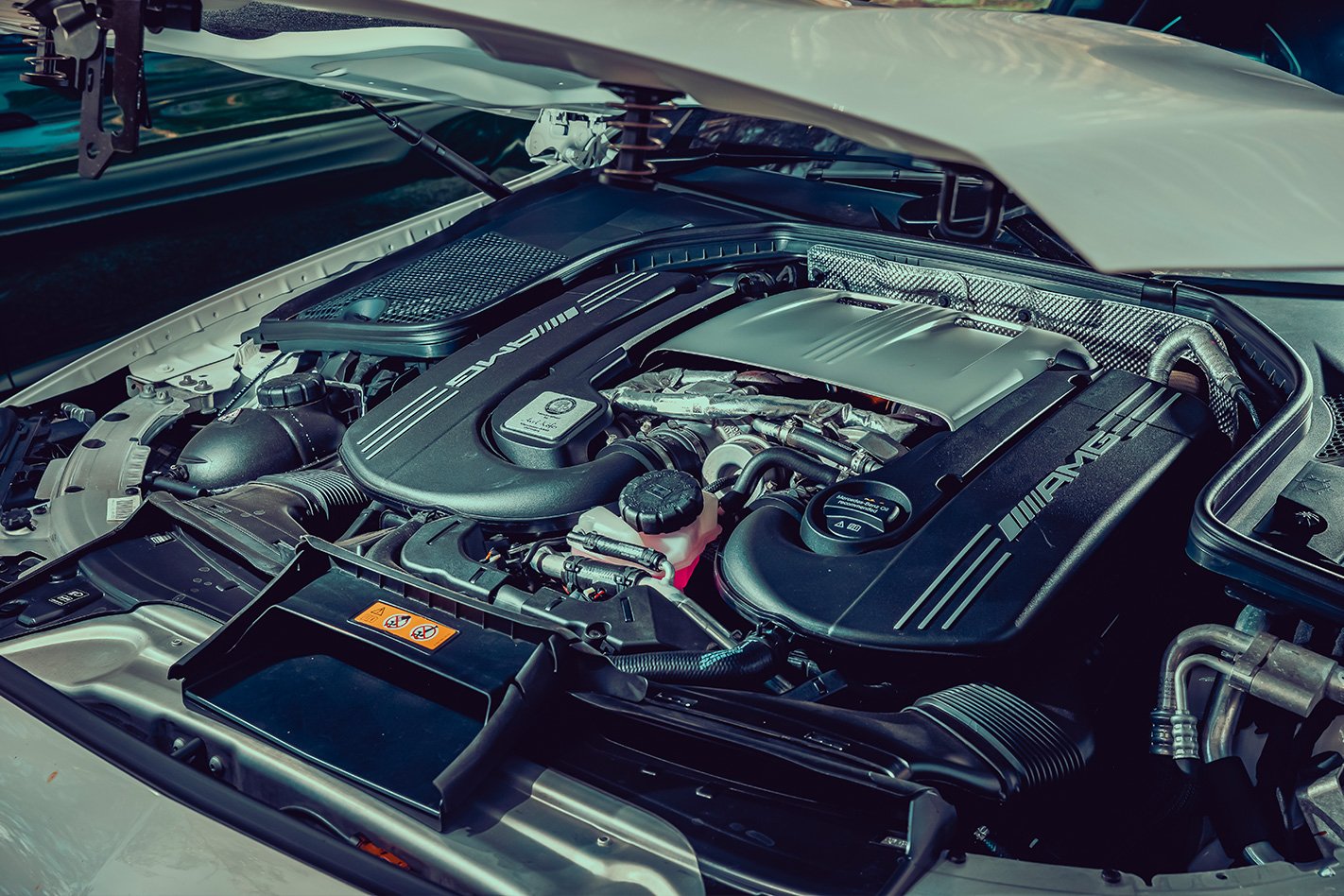
It’s a beast of a powerplant, however, its mountainous mid-range torque does make the top end feel comparatively soft; peak power plateaus from 5500rpm and it’s around this point that you’ll find yourself naturally selecting the next gear. Nevertheless, what the M178 lacks in top end it makes up for with the full gamut of noises, from deep gurgles to a crisp roar with thunderous cracks on the overrun. If, as expected, the next ‘C63’ switches to a turbocharged four-cylinder it’s going to have to be something fairly remarkable as the engine is such a dominant feature of this car’s character. The nine-speed gearbox also plays its part in taming the engine, as the closer ratios mean corners previously taken in second gear with the old seven-speed ’box are now taken in third.
The final line of defence against those 700Nm is the ESP, which is nicely judged in Sports mode or you can turn the system off and activate the 10-stage traction control, but just remember it then only controls wheelspin and not lateral movement! Another inclusion with the facelifted C63 is the AMG Dynamics system. This has four modes – Basic, Advanced, Pro and Master – and, according to AMG, controls the throttle and steering characteristics to improve stability and agility. By taking data from all the various sensors it supposedly reacts to vehicle behaviour before the driver can “with no noticeable intervention of the system”. With apologies to the engineers who developed it, it adds nothing. While driving back-to-back through a set of corners for photography, I cycle through each of the modes in turn and feel no discernible difference in the C63’s responses.
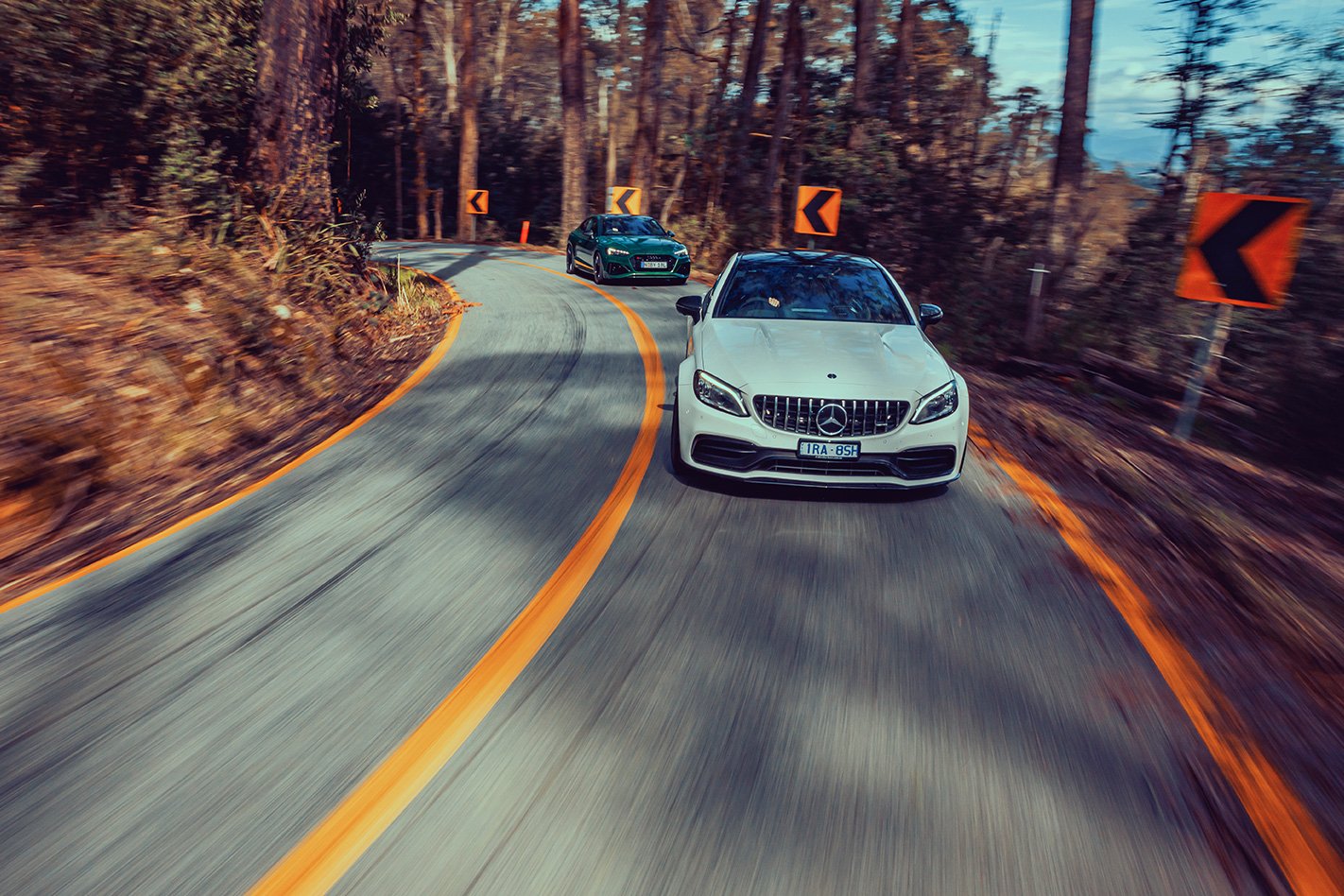
Where it is noticeable is when driving really hard and you realise that now and then the car doesn’t respond to your inputs how you expect it to; never in an untoward way, but when a question is asked and the answer is different to that expected it’s a bit frustrating. Who’s driving this car, me or the computers?
The Audi suffers from a similar problem, though rooted in a different cause. Audi has followed BMW’s lead and added an ‘RS Mode’ button on the steering wheel which cycles through two favourite combinations of settings, but putting everything bar the steering in Dynamic is a good start. Stiffening the dampers ruins the ride but the added body control is necessary, especially through mid-corner bumps. Up to a certain limit, a very high limit, the RS5 is fantastic. It rotates into corners very well, has great balance mid-corner and the surety of all-wheel drive traction on exit.
The engine revs better than the C63’s V8, too, so well that it’s easy to run into the rev limiter in manual mode as you chase a bigger hit of the ever-increasing power. This combination of attributes goads you in to pushing harder, to loosen the ESP into Sports mode and attempt to get the RS5 dancing around, but at this point it starts to display flat feet rather than twinkle toes. The primary culprit feels to be the all-wheel drive system. Turn in, point the car towards the corner exit, apply the throttle to help finish the rotation and…nothing. Rather than slightly overloading the rear tyres like Porsche and BMW the Audi comes over all sensible and diverts too much power to the front resulting in a safe, neutral-to-slight-understeer balance. Safe, not fun. Undeterred, you try again, and again, searching for the desired result until eventually it becomes clear that it will remain elusive. Another issue: quickly shut the throttle from 100 percent to zero and drivetrain shunt rears its head, the RS5 lurching forward slightly.
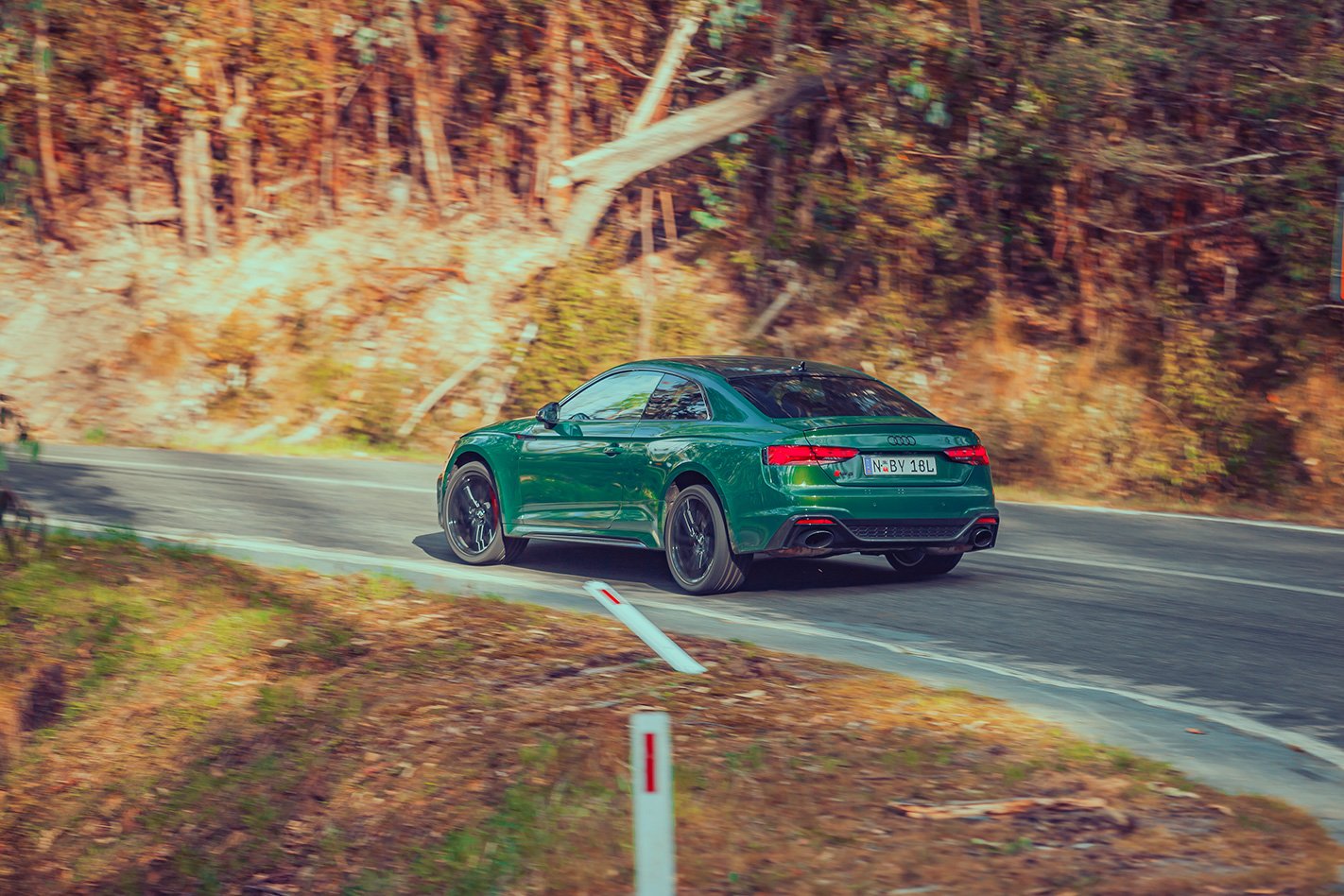
Let’s be clear, though, despite detailing each car’s flaws here both are hugely capable, the RS5 in particular. Having switched from the Mercedes it becomes obvious that it wasn’t just Ed Andy’s prodigious driving ability that was allowing the Audi to stick to the C63’s rear bumper with relative ease. It has at the very least comparable performance and that performance is easier to extract, but it’s nothing like as satisfying to drive hard as the AMG.
Equally, the gulf between the two in day-to-day driving is just as wide in favour of the Audi. With one caveat: the C63 Coupe is always exciting. It struggles with refinement, but you’re going to drive it in Race mode everywhere anyway because you’ll laugh every time the rear wheels spin up in the wet or the exhaust booms reverberate off buildings.
Really, these are two very different cars for two very different buyers. AMG fans will find the RS5 boring and Audi lovers will think the C63 uncouth and as such personal preferences will dictate which you’ll buy. Were the two parked side-by-side outside my house, the Audi would be the pick for any drive where I don’t want to ‘think’: commuting to the office, long interstate trip, weekend winery visit.
For all other occasions, it’d be the C63. And that’s why it wins.
Nosy Parker: A third option is imminent
A representative from Munich is conspicious in its absence from this test with the first G82 BMW M models scheduled to arrive in Australia towards the end of Q2 2021. Nevertheless, with what we know so far we can make some speculative judgements on where BMW’s latest and greatest will slot in.
While there will be a manual, rear-drive M4 for the purposes of this test we would have nabbed an M4 Competition. Like the RS5 it uses a 3.0-litre twin-turbo six-cylinder (though a straight-six in the BMW’s case) but with 375kW/650Nm it’s closer to the AMG in outright grunt. Based on our experience with the S58 in the X3 M/X4 M the BMW would best the Audi for noise but fail to match the AMG, though outright performance should be lineball as the M4 Competition weighs exactly the same as the C63 Coupe: 1725kg.
Dynamics are much tougher to predict. BMW’s M xDrive AWD system is much more playful than Audi’s quattro but it remains to be seen how controlled the rear-drive M4 is and how much feedback it provides. Ditto with the ride quality.
Like the RS5, the M4 Competition’s entry price of $159,900 is reasonably sharp, but to bring it up to the same spec as its fellow Germans tested here you’d need to tick the ‘M Carbon Package’ box which adds carbon brakes, seats and exterior trinketry which balances the ledger somewhat, bring the total price to $185,900. We’ll find out the true verdict early in the new year.
Mazda has increased prices on its long-serving Mazda 6 mid-size sedan and wagon range by up to $700, and introduced a new GT SP variant for the 2021 model year.
The Mazda 6 GT SP replaces the old Mazda 6 GT, but costs $700 more – $46,690 for the sedan and $47,990 for the wagon.
Both body styles are powered by the same 170kW/420Nm, 2.5-litre turbocharged four-cylinder petrol engine as the previous GT, coupled to a six-speed automatic transmission and driving the front wheels.
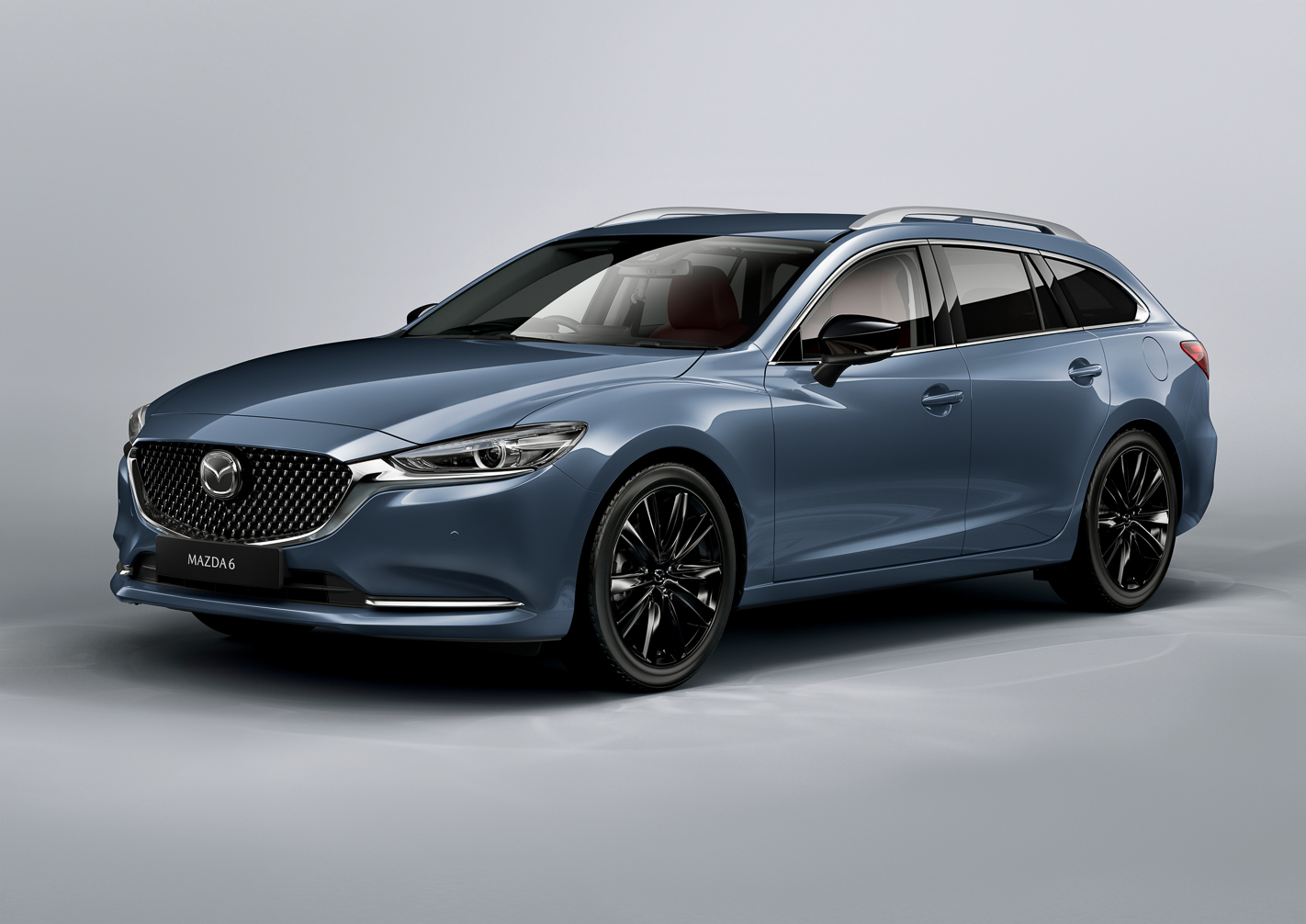
The Mazda 6 GT SP does get more equipment than the outgoing GT, which may explain the price increase.
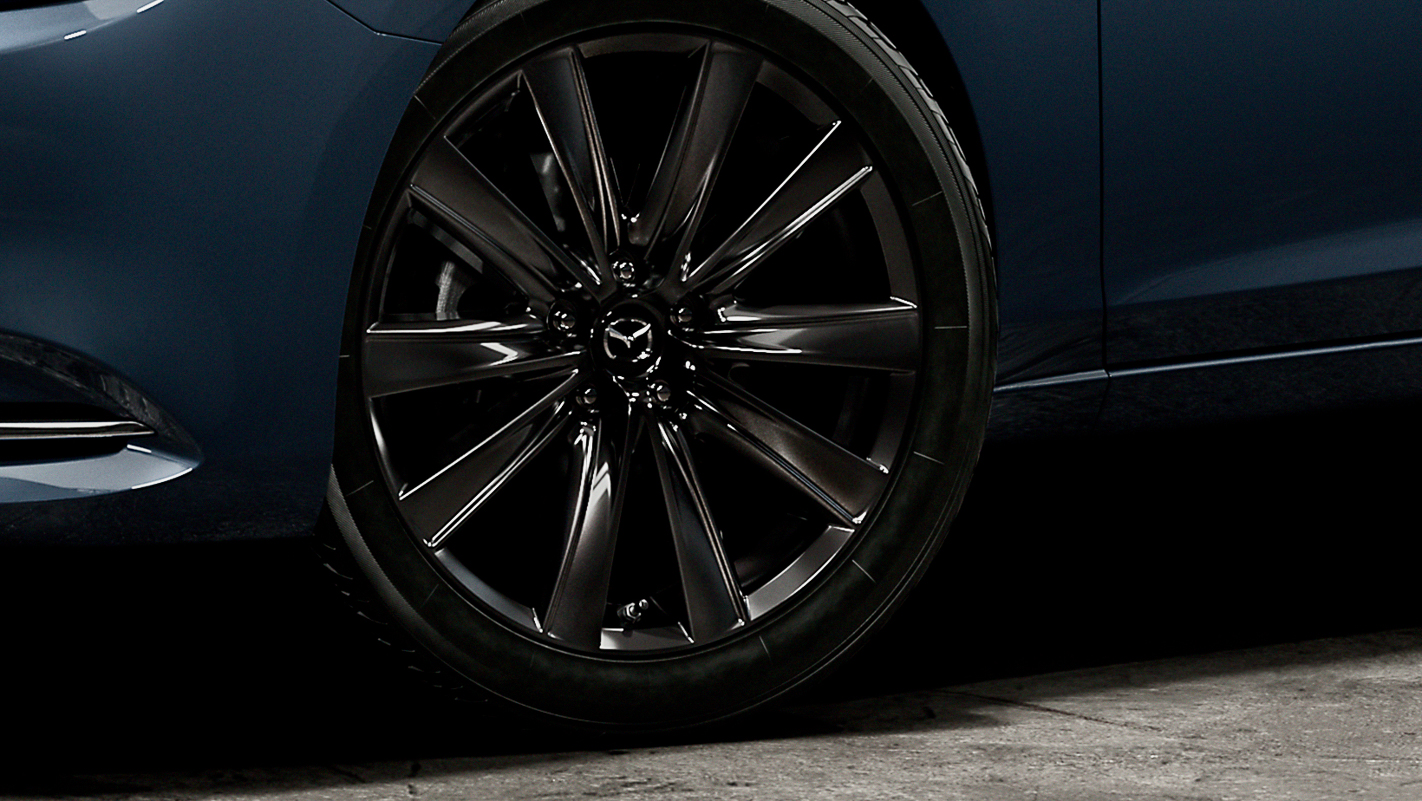
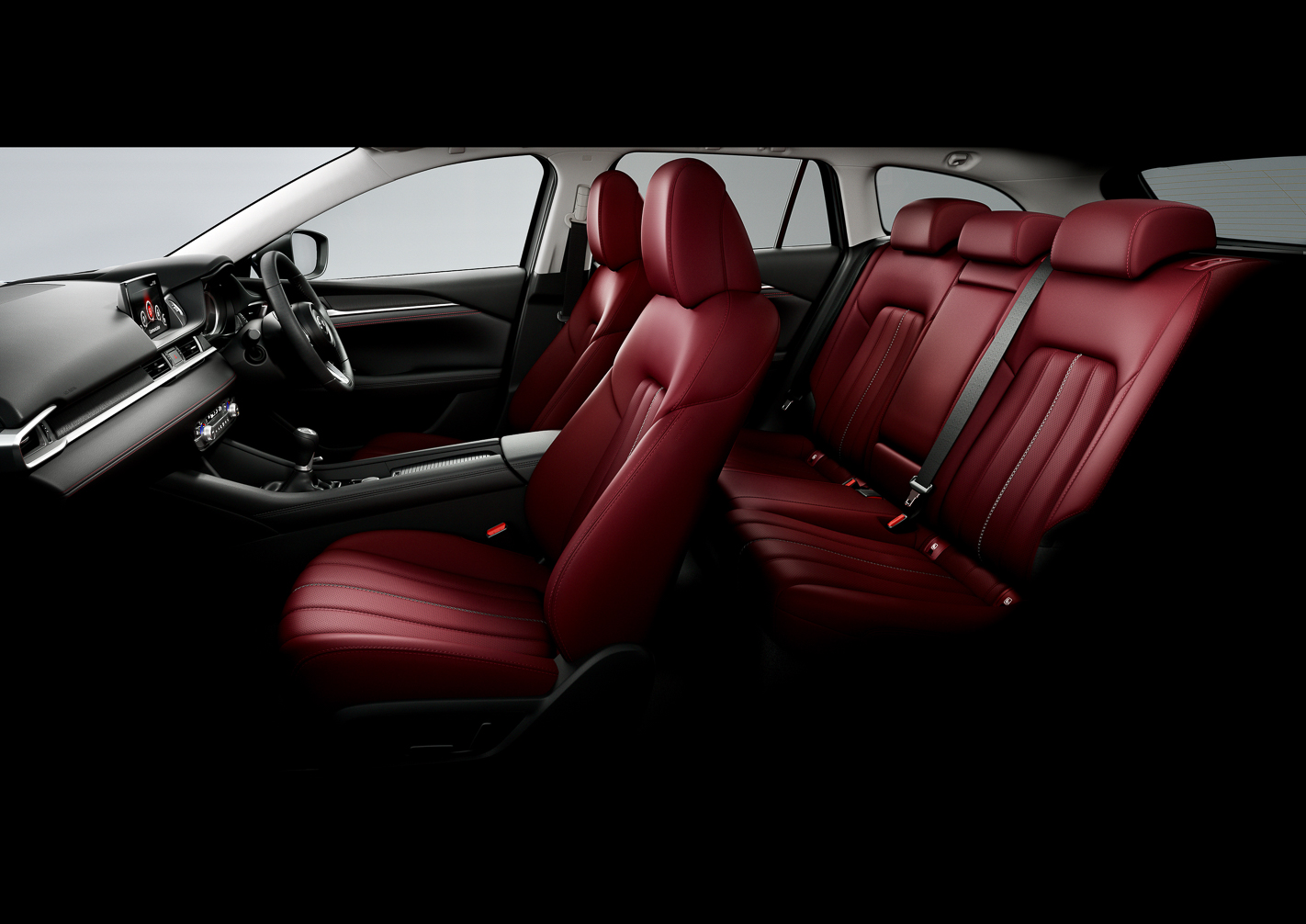
New additions include unique 19-inch black alloy wheels, black mirror caps, ‘Turbo’ badging, burgundy leather upholstery, bright finish trim pieces and front and rear seat heating.
Trainspotters will note that the SP badge has been seen previously in Australia, originally to denote higher performance versions of the donor model.
In the 1990s the last-generation Mazda RX-7 SP was prepped by the local arm of the company, while the MX-5 roadster also got the SP treatment.
Last year Mazda Australia also applied the SP tag to the CX-9 people mover, which – like the new Mazda 6 GT SP – has no performance improvement over the car on which it is based.
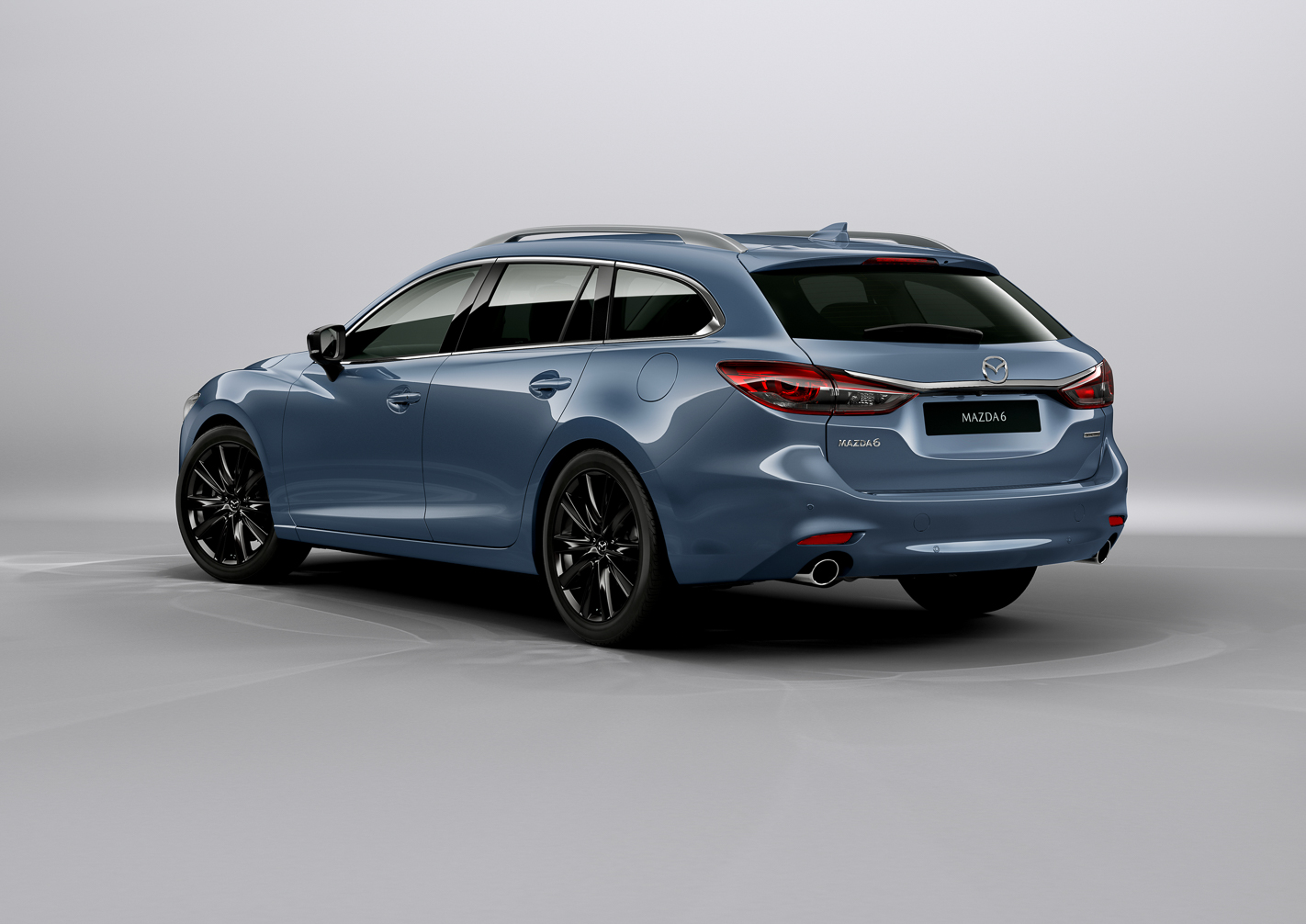
The rest of the Mazda 6 range remains unchanged, apart from the prices and the addition of a new Polymetal Grey Metallic paint colour (pictured) which is available across the range.
The base-spec Mazda 6 Sport has increased by $100 to $34,590 for the sedan and $35,890 for the wagon.
The higher specified Touring and Atenza models have both gone up by $200, ranging from $38,890 for the Touring sedan to $51,390 for the Atenza wagon.
WhichCar reached out to Mazda Australia to ask about the price increase, and we are awaiting a response.
Powertrains remain the same for the 2021 line-up, with the aforementioned 2.5-litre turbo petrol found under the bonnet of both the GT SP and Atenza spec cars producing 170kW and 420Nm.
The standard 2.5-litre non-turbo four-cylinder powers the Sport and Touring variants with 140kW and 252Nm.
Those engines consume 7.6 litres per 100km and 7.0 litres per 100km respectively, and both drive the front wheels via a six-speed automatic transmission.
Both GT SP and Atenza variants now feature ‘Turbo’ exterior badging to differentiate their engine from the others.
As before, each model in the Mazda 6 range stocks safety equipment including autonomous emergency braking with pedestrian detection, rear cross-traffic alert, traffic sign recognition, lane departure warning and lane-keep assist and active cruise control with queuing function.
Equipment and features across the remainder of the Mazda 6 range remain the same for 2021.
The entry-level Mazda 6 Sport kicks off with an 8.0-inch touchscreen with Apple CarPlay and Android Auto functionality, dual-zone climate control, internet radio integration, satellite navigation, black cloth upholstery, push-button start, and leather-wrapped steering wheel and shifter.
One tier up, the Mazda 6 Touring adds daytime running lights, folding exterior mirrors, electrically-adjustable front seats, black leather upholstery and keyless entry.
Then comes the sporty GT SP model grade, which as stated above, brings adaptive front lighting, burgundy leather, ‘bright’ finish trim pieces, seat heating, black 19-inch wheels and black mirror caps.
At the top of the tree, the Mazda 6 Atenza and retains its items such as a sunroof, ventilated front seats, ‘Walnut’ or ‘Pure White’ Nappa leather upholstery, black headliner, ambient LED lighting, genuine wood and Ultrasuede trim piece inserts and a 360-degree parking monitor.
The Mazda 6 continues to do battle in the dwindling mid-size sedan segment (Subaru recently pulled its Liberty from the market), which includes rivals such as the Toyota Camry, Volkswagen Passat and Skoda Octavia.
“As our passenger car flagship, Mazda 6 holds strong appeal in its segment with its advanced specification and option of sedan and wagon body styles,” said Mazda Australia managing director, Vinesh Bhindi.
“This latest update is highlighted by the new GT SP model, which brings a distinctly sporty character to the Mazda 6 range and builds on the local GT SP portfolio alongside the CX-9,” he said.
The updated 2021 Mazda 6 sedan and wagon range will go on sale from March 2021.
2021 Mazda 6 sedan and wagon Australian pricing
- Mazda 6 Sport Sedan – $34,590
- Mazda 6 Sport Wagon – $35,890
- Mazda 6 Touring Sedan – $38,890
- Mazda 6 Touring Wagon – $40,190
- Mazda 6 GT SP Sedan – $46,690
- Mazda 6 GT SP Wagon – $47,990
- Mazda 6 Atenza Sedan – $50,090
- Mazda 6 Atenza Wagon – $51,390
There are plenty of things in this life on which you can’t put a price, but space is not one of them. Virgin Galactic reckons it can help you join the 62-mile-high club for $250,000, while back here on earth, we’re calling it 20 grand, give or take, for the regular kind of space.
That’s the rough difference between what Mazda charges for its top-spec all-wheel-drive five-seater Mazda CX-5 and its bigger brother you see here, the seven-seater Mazda CX-9 Azami flagship.
Okay, they’re not directly comparable because of equipment and tech differences, but engines and transmissions are shared, so it’s not an absurd observation: those two small seats in the third row amount to around $10,000 each. But to plenty of Aussie families, they’re so invaluable they actually are hard to put a price on.
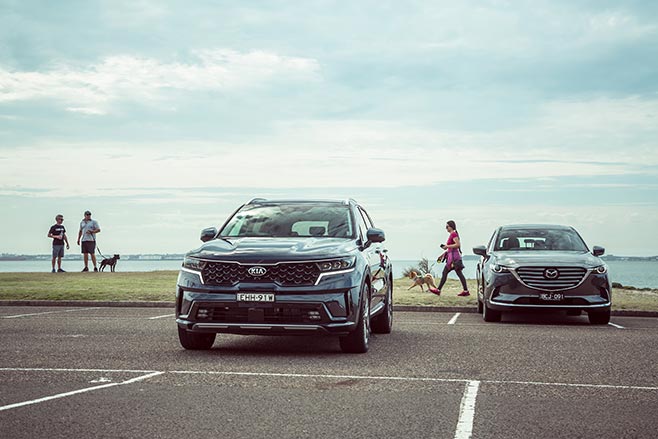
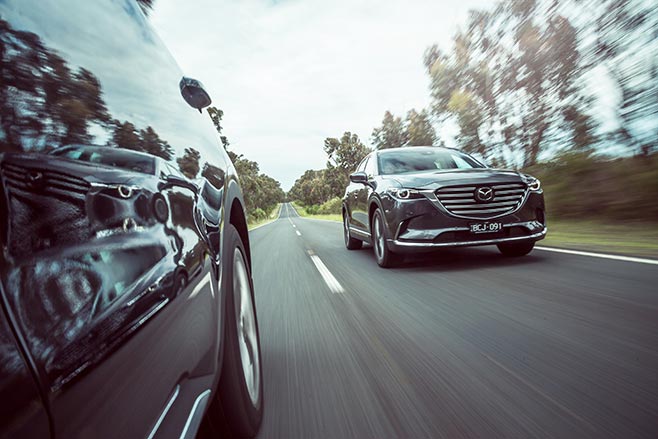
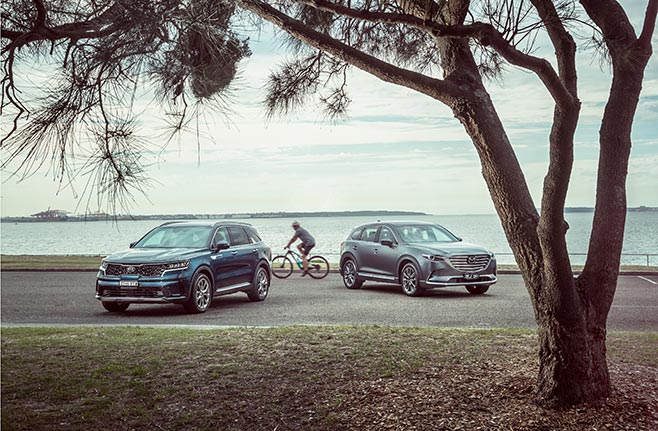
We reckon the current mainstream leaders of the seven-seater SUV segment are this pair – the Mazda we anointed as our 2017 COTY and the newly minted fourth-gen Kia Sorento. But first, we need to address the model choices we’ve gone for here.
The Mazda CX-9 line-up offers just one engine choice, the 2.5-litre SkyActiv G delivering 170kW and 420Nm, so that was easy. Kia’s Sorento is (at least until hybrids arrive in 2021) available with both petrol (a 3.5-litre non-turbo V6 making 200kW and 332Nm) or our choice here, the 2.2-litre four-cylinder turbo-diesel making 148kW and 440Nm.
We wanted the flagship all-wheel-drive variants of both models, and the Sorento is engineered to drive only the front wheels when the petrol V6 is chosen.
Which is why we have these two, both with turbocharged four-cylinder engines within around 300cc of each other, both driving all four wheels, but burning very different fuel grades.
Yet, as we’ll get to shortly, the net result, at least in terms of acceleration and overtaking ability, is remarkably comparable.
So, as they line up here, the Kia grabs a handy (on paper) price advantage. If you’re shopping at this flagship end of the respective line-ups, it’s possible you’re not the most hardcore pragmatist in the showroom, but you still can’t ignore that the Sorento GT Line retails for $64,990 drive away, while the Azami AWD asks $69,303 plus on roads.
Assuming no haggling, that’s around a $7K advantage to the Kia. But a quick browse online shows Mazda dealers offering the top-spec CX-9 for around $65,000 driveaway, pretty much line-ball with Kia’s range-topper.
As a quick aside, if we had insisted both cars were petrol-burners, we would have seen the Kia Sorento GT-Line FWD at $61,990 (driveaway) up against the front-drive Mazda CX-9 Azami at $64,893 (plus on-roads), so a circa-$5000 advantage to the Kia, at least purely at retail.
Fact is, while the CX-9 Azami is a beautifully trimmed and carefully crafted SUV, it just doesn’t give a sense of being appreciably more expensive than the Kia when you slide behind the wheel.
You could argue that some of the Mazda’s materials feel higher quality, but the execution of the Sorento’s high-definition screens, crisp graphics and cabin design flourishes instantly make it feel a couple of generations more contemporary, and definitely not the dowdy budget alternative.
Other small-sounding but notable differences: the driver’s seat of the Sorento includes electrically adjustable under-thigh support, instantly making it the more comfortable of the two cars for taller owners.
Then there’s the multi-configurable digital instrument panel in the Kia; again a generation on from the more conventional display in the Mazda, which uses a TFT speedo flanked by conventional analogue gauges.
And the 9.0-inch colour infotainment screen poking out of the Mazda’s dash (controlled by a rotary knob, or touch when stationary) looks kinda dinky against the 10.25-inch touchscreen in the Kia.
Both cars offer ample oddment storage, but it’s the Kia that delivers a larger lidded front tray (with wireless phone charging) and a bigger, deeper centre console box.
As for comfort and convenience, they’re closely aligned. Both have heated and cooled front seats, heated steering wheels, heated (outboard) rear seats, head-up displays, vast glass roofs, premium Bose audio, power tailgates, and roll on 20-inch wheels with same-width (255mm) tyres.
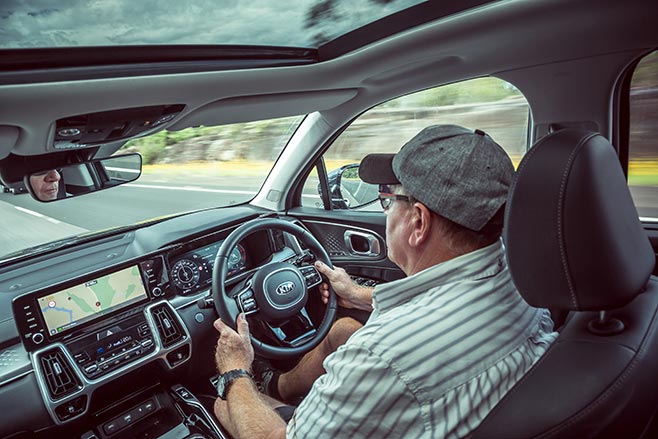
The Kia’s ‘advantages’ amount to stuff that’s nice, but unlikely to see regular use, like the ability to alter the interior lighting across virtually the entire colour spectrum, or play preset ambient sounds through the audio system, like gentle surf or rain of the roof.
Oh, and if the kids in the third row are giving you grief, you can admonish them via the ‘intercom’ system, which directs your shouty-parent voice to the rear-most speakers.
And let’s not forget Remote Parking Assist, so if the car is parked in tight confines and you can’t easily get in, you can stand outside and use buttons on the fob to reverse it out in a straight line; a handy feature the Mazda can’t match.
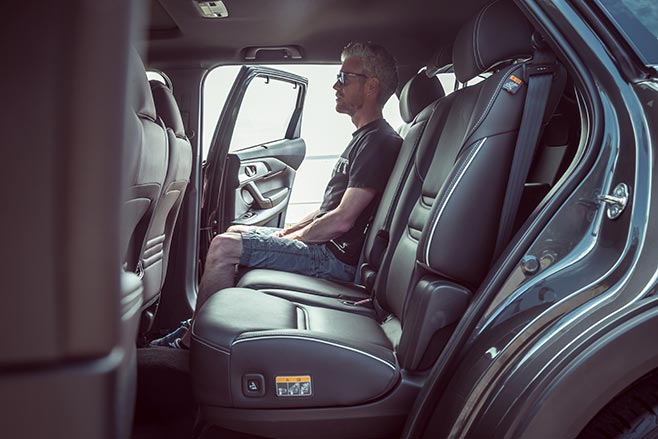
You could toss a coin to try and split this pair when it comes to second-row access, comfort and amenity. Start sizing up the third rows of this pair, though, and it becomes more a case of pros and cons.
The airiness and side-window size in both cars is comparable, while one-touch buttons in each flip the second-row seatbacks forward, slide the base, and rise slightly to make more room.
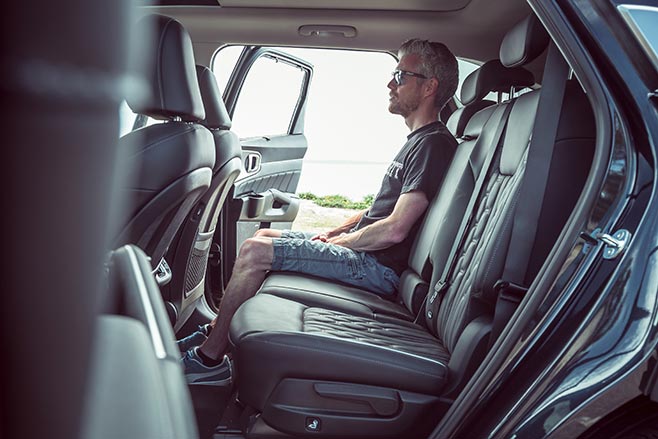
The Mazda’s main trump is a marginally wider-opening aperture into the third row, and helpfully putting the 40-percent section of the 60:40 split-fold seat on the kerbside.
The Kia makes it a bit more of a gymnast’s squeeze to get in there with dignity intact, and adds the extra weight of the larger section of seat on the kerbside.
Once seated, passengers back there approaching 170cm will see knees bent at a pretty accurate angle, and the Mazda strikes out by not providing ventilation.
The Kia, on the other hand, provides vents and fan-speed control.
Will the small kids who will be the most frequent occupants of the third rows throw a mutiny because they can’t direct 22-degree air at their pudgy faces? Probs not, but we’ve still gotta call it as a split (fold) decision.
Comparing boot space, that outcome swings Sorento’s way, mostly by virtue of Kia’s decision to locate the full-size spare outside the car under the cargo floor.
Mazda goes the more conventional route of sticking a space-saver inside below the removable boot panel, so CX-9 can’t match the extra sub-floor storage cubbies in the Sorento, which also cleverly provides storage there for the luggage blind.
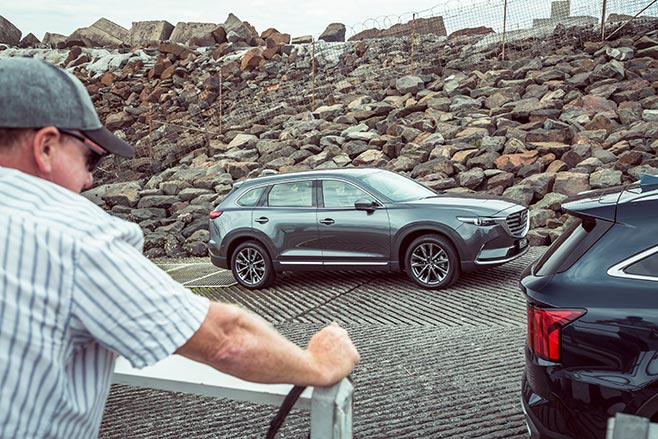
Meanwhile, with both second and third rows folded, the most hardcore of Bunnings raiders will find the respective capacities of both SUVs vast, but still heavily favour the Kia, with 2011 litres versus the Mazda’s 1641 litres.
But enough about accommodation, what about on the road? In undemanding urban driving, they’re both similarly excellent.
But the first caveat that has to be covered, especially if you’re a bit NVH OCD (look it up; it’s a thing), is the idle and low-rev noise of the Kia’s diesel.
Hit the start button and you’ll hear a suppressed but still recognisably diesel clatter, and feel a small band of vibration through the wheel.
The idle noise is actual better suppressed than the four-pot diesels of a couple of premium brands, so kudos to Kia there, but the unavoidable thermodynamic fact is the Korean compression-ignition engine can’t get close to the near-inaudible and vibration-free idle of Mazda’s petrol-burner.
Likewise when on and off the throttle around the burbs; the Kia’s engine is omnipresent, even if the vibes do smooth out on the move, and the soundtrack becomes more gravel, less clatter.
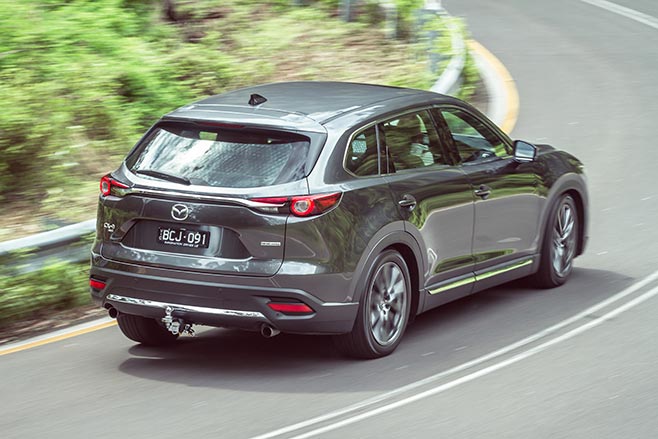
The Mazda’s engine, meanwhile, is barely perceptible on a light throttle around town, and transitions sweetly to an eager, tuneful mid-range.
The curious bit is both engines are similarly responsive and alert to the throttle, ensuring this pair never feel like lumbering Goliaths, they just sound very different in how they go about dealing with the daily grind.
As for accelerative abilities, overtaking grunt and general open-road touring prowess, they’re virtually impossible to split.
From jogging pace to 140km/h under wide-open throttle, neither claws an advantage; likewise when overtaking between 80-120km/h.
The biggest difference comes back to response speed of the respective transmissions. The Kia’s eight-speed dual-clutch can grab its optimum ratio faster than the six-speed torque-convertor auto of the Mazda, making it feel the swifter of the two.
Then there’s the not-inconsequential fact that the Kia provides paddle shifters for manual control, further increasing the ease to pluck the right ratio for any given situation.
The lack of paddles on the Mazda can be a bummer for the keener driver, but at least when the transmission lever is pushed over into its manual position, the CX-9’s shift pattern (as with all Mazdas) is the correct orientation of push-for-downshift.
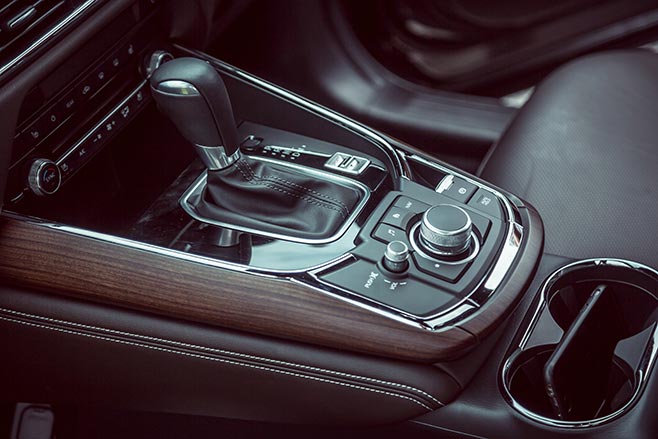
And you will rely on the manual mode on the occasions you want to really push the Mazda, because the only other drive mode is a Sport setting that tends to hold onto ratios too resolutely when the pace has to settle back down for any brief period.
This two-drive mode approach for the CX-9 contrasts with the Kia, which provides Comfort, Eco, Sport and Smart, as well as three modes for off-road driving (which we’re yet to try).
Sport adds weight to the steering, which is of debatable benefit in fast driving and has no bearing on suspension tune, as the Sorento runs fixed-rate dampers (as does the Mazda).
Consumption-wise, you would expect the Kia’s diesel to be more frugal, and so it proved, using 8.8L/100km on test (its official number is 6.1) against the Mazda’s 10.4L/100km (against a combined Australian Design Rules figure of 8.8L/100km).
Which brings us to chassis dynamics, and perhaps the greatest curveball of this comparison. In isolation, the Mazda remains a really well-resolved large SUV, and one where driving satisfaction hasn’t been abandoned in the quest for occupant space and light off-road ability.
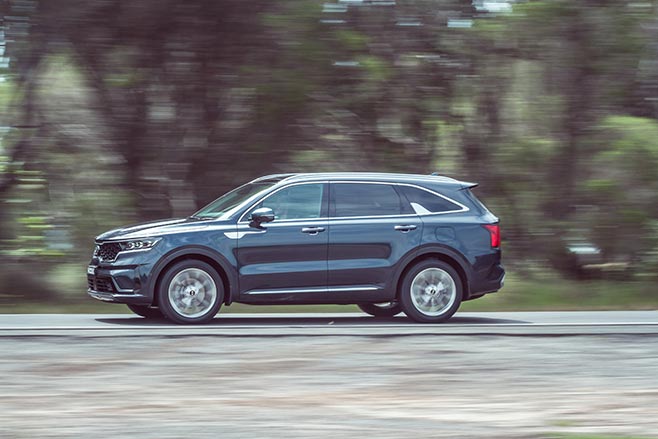
Remember, its 2017 COTY win was the eighth for the innovative Japanese brand, and at the time veteran Wheels road-tester Nathan Ponchard wrote that “this seven-seat SUV is so vastly superior to the competition, you’d need to stretch to a premium SUV like Audi’s superb Q7 to try and better it – for double the price…”
Improvements to the CX-9 for MY20 include an upgraded G-Vectoring Control Plus (GVC-Plus) system, which uses brake control to vector torque as the CX-9 exits a corner to help stabilise the transition to straight-line running while improving steering feel and consistency.
There’s also now a button to engage the new ‘Off-Road Traction Assist’ function, which turns the CX-9 into more of a full-time all-wheel drive than an on-demand one.
Effective at all speeds, its ability to send more drive to the rear (and lessen front-wheel torque-steer) is useful when accelerating hard from T-junctions or driving the CX-9 briskly on twisty roads.
But Kia arrives in this space having gone all-out with its rival, giving Sorento a new platform that has gifted the local suspension development team a really fine foundation on which to tune the car.
It turns in with even greater crispness than the CX-9, feels a little less nose-led in tight terrain, and more immune to front-end flightiness over fast undulations.
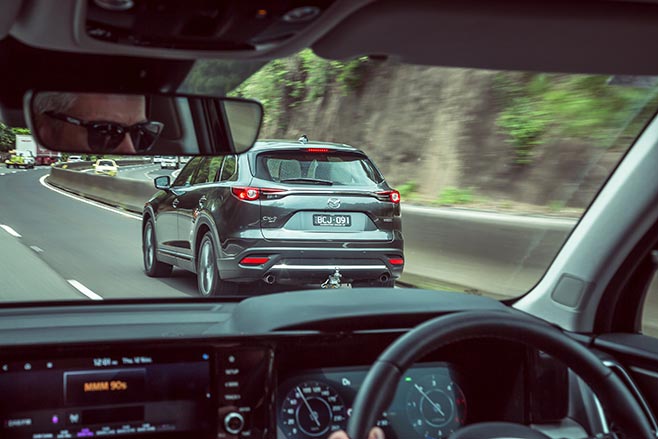
There’s a strong sense that Sorento’s Continental rubber is less squirm-prone than the Falkens fitted to the CX-9, further enhancing the Kia’s four-square planted feeling, and the fluid, ultra-confident cornering demeanour.
Over pock-marked surfaces, the CX-9 holds a slim ride advantage; how much of this might be attributed to the marginally taller sidewalls of the Falkens (50-series, versus 45-series for the Kia’s Continentals) is impossible to say.
Both cars are more surface-sensitive than their lower-spec siblings on 19s and can feel jittery over low-speed rough stuff.
If you place a high priority on ride comfort, consider asking your dealer to replace the 20-inch wheels with rolling stock an inch (or two) smaller.
The CX-9 retains all the virtues that pushed it to COTY victory in 2017. In this specification, it feels premium, with great attention to detail, while its powertrain is a standout for smoothness, quietness and muscularity where you need it.
The dynamics remain good enough that when driven hard in isolation it feels alert, confident and responsive. And the cabin accommodates big families, with generous room, great comfort and amenity.
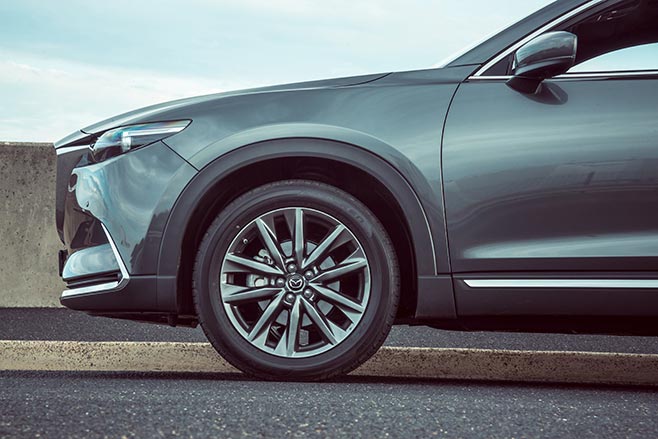
But the current CX-9 was first unveiled at the LA auto show way back in 2015, and Kia has had its developmental throttle pinned for much of that period, making big leaps with each successive model, arguably none greater than here.
The Sorento’s multimedia display, the modernity of the dash, its extra warranty (seven years versus five for the Mazda) all may be enough to sway customers.
The on-road attributes become more a question of priorities – quieter, smoother operation for the Mazda thanks to petrol power, versus slightly less road noise at touring speeds for the superbly insulated Kia, which also holds the outright dynamics trump card.
With hybrid-petrol versions of the Sorento coming, the CX-9’s AWD powertrain refinement edge will be further challenged. Here and now, by a small margin, Korea edges ahead of Japan in this space race.
All that you leave behind: Kia’s Cameras help you out of a (blind) spot
Kia calls its camera system Blind Spot View Monitor, and it’s not a new concept. Honda offered something similar in the HR-V small SUV in 2016.
In the Sorento (top-spec GT-Line only), an application of the indicator stalk instantly projects a camera image of the blind-spot area onto the instrument panel.
It’s framed as a circle, and replaces the speedo when showing the left-hand side, or the tacho on the right. It’s cool tech, but we’re yet to encounter a situation where it has proven its worth.
Life out back
The second rows of both SUVs are similarly well-specced and comfortable.
Their seat bases and split-fold backrests are adjustable, so if the third row is in use you can tailor the space depending on the legroom requirements of all occupants.
Or if the third row is folded, configure the boot for maximum luggage space if those in the second row are shorties. Both cars also provide climate control, USB ports and seat heating, so expect minimal whinging from back there. Maybe.
Three things (each) to note
Kia Sorento
1. Hands off(ish) As well as lane-keep assist, which warns you of inadvertent lane wandering via steering-wheel vibration, Sorento also has ‘lane follow assist’, which actively steers the car within marked lanes. It’s often useful, but not completely infallible.
2. Crazy diamond That diamond texturing on the Kia’s door trim panels and dash allows the ambient interior lighting to shine through. Choose from a bunch of preset colours, or create your own cool hue via the colour wheel within the multimedia menu.
3. Nice kind of knob Kia’s transmission selector is a large circular knob, similar to that which Jaguar introduced around 2012. It works fine, and its low profile aids access to the lidded front storage bin, which also houses the wireless phone-charging pad.
Mazda CX-9
1. Wood if it does Much of the Mazda’s trim materials look and feel a little more premium than those of the Kia when you really inspect closely, and CX-9’s timber trim accents in the doors and centre console add a richer but more conservative ambience.
2. World’s a stage Both cars feature excellent Bose audio systems, but the Mazda doesn’t have the Kia’s extra tweeters mounted in the A-pillars, so can’t quite match the broader, more natural soundstage for vocals delivered by the Sorento.
3. Back for thirds Just out of sight here is the all-important third row, which is a little easier to access in the CX-9, thanks partly to the smaller, lighter section of the split-fold backrest on the kerb side. Shame about the lack of ventilation in the third row, though.
Kia Sorento vs Mazda CX-9 specs
u00a0 | Kia Sorento GT-Line | Mazda CX-9 Azami |
u00a0 | $63,070 | $69,303 |
u00a0 | Drivetrain | u00a0 |
Engine | 4cyl, dohc, 16v, turbo-diesel | 4cyl, dohc, 16v, turbo |
Layout | front engine (east-west), AWD | front engine (east-west), AWD |
Capacity | 2151cc | 2488cc |
u00a0Power | 148kW @ 3800rpm | 170kW @ 5000rpm |
Torque | 440Nm @ 1750-2750rpm | 420Nm @ 2000rpm |
Gearbox | 8-speed dual-clutch | 6-speed automatic |
u00a0 | Chassis | u00a0 |
Body | steel, 5 doors, 7 seats | steel, 5 doors, 7 seats |
L/W/H/Wu2013B | 4810/1900/1700/2815mm | 5075/1969/1747/2930mm |
Track (F/R) | 1637/1647mm | 1663/1663mm |
Weight | 1908kg | 2006kg |
Boot | 616 litresu00a0 | 810 litres |
Fuel/tank | diesel/67 litres | petrol/74 litres |
Economy | 8.8L/100km (test average) | 10.4L/100km (test average) |
Suspension u00a0 u00a0 u00a0 | Front: struts, coil springs, Rear: multi-links, dampers, | Front: struts, coil springs, Rear: multi-links, dampers, |
Steering u00a0 | electric rack-and-pinion | electric rack-and-pinion |
Front brakes | ventilated discs (325mm) | ventilated discs (320mm) |
Rear brakes | ventilated discs (325mm) | solid discs (325mm) |
Tyres | Continental PremiumContact 6 | Falken Ziex CT50 |
Tyre size | 255/45 R20 (f/r) | 255/50 R20 (f/r) |
u00a0 | Safety | u00a0 |
ANCAP rating | Not tested (Aus) | Five stars |
Verdict | 8.5/10 | 8.0/10 |
u00a0 | Warranty: 7yr/unlimited km. | Warranty: 5yr/unlimited km. |
The Porsche Boxster turns 25 this year and the iconic German sports car maker is celebrating with a limited edition variant named simply Porsche Boxster 25 Years.
It’s based on the current Porsche Boxster GTS 4.0 and the mechanical differences are minimal.
For starters, the 4.0-litre naturally-aspirated six-cylinder produces the same 294kW as the GTS, which means straight-line performance is identical.
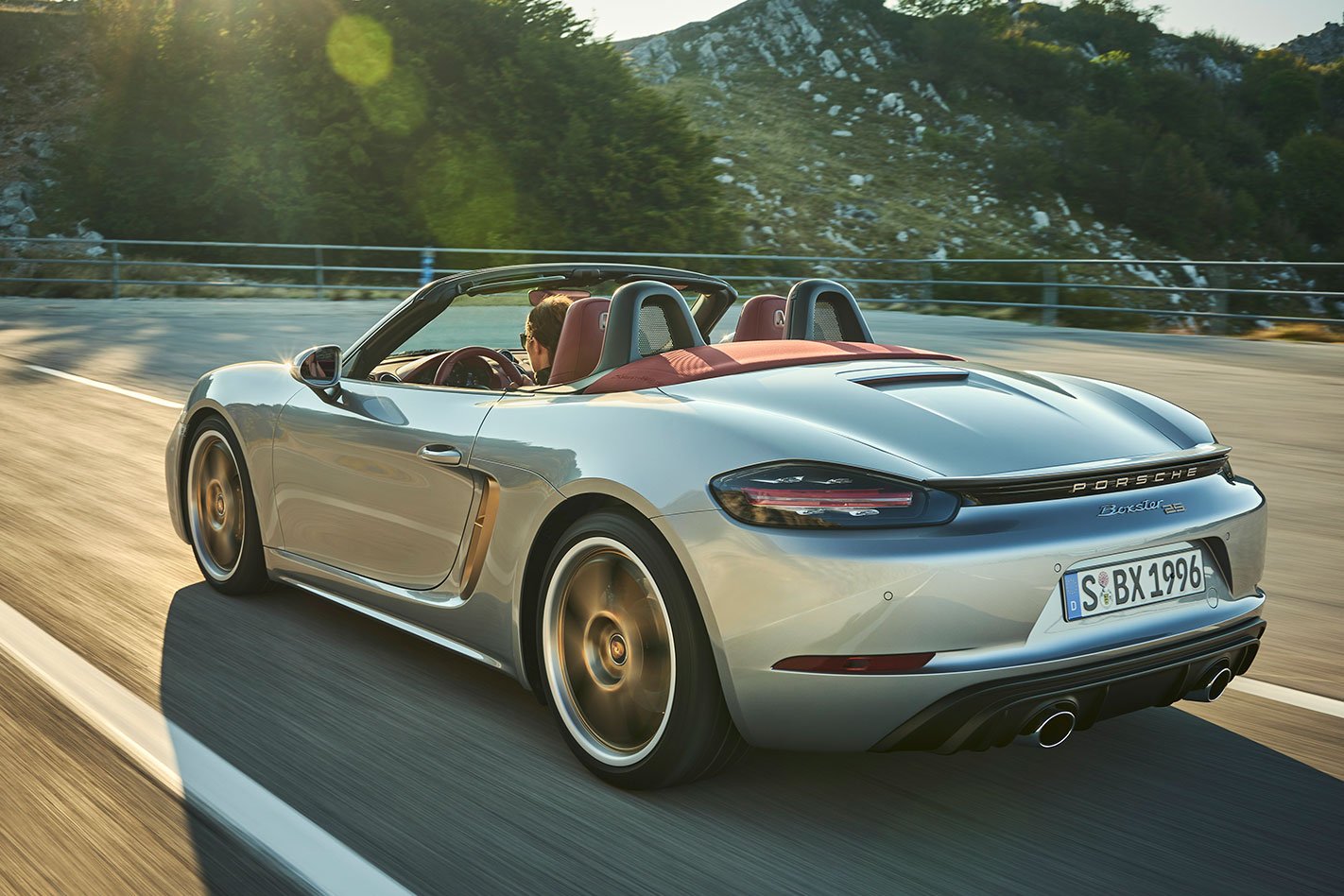
Porsche plans to build 1250 examples available with a seven-speed dual-clutch transmission or six-speed manual.
The order books open now for the $183,900 roadster, representing a $9100 jump above a regular GTS 4.0.
When deliveries begin in April, the Porsche Boxster 25 Years will offer owners a roadster that wears a range of blink-and-you’ll-miss-them enhancements, except for the very noticeable and unique two-tone 20-inch wheels.
They’re finished in a colour Porsche calls Neodyme, saying it provides a “copper-like shimmering brown” to match the front bumper inserts, side air intakes and badge lettering.
These wheels and a Bordeaux red interior go some way to emulating the original 1993 Boxster concept’s colour palette.
Meanwhile, ‘Boxster 25’ lettering features on the convertible top, heated GT steering wheel and door sill trims.
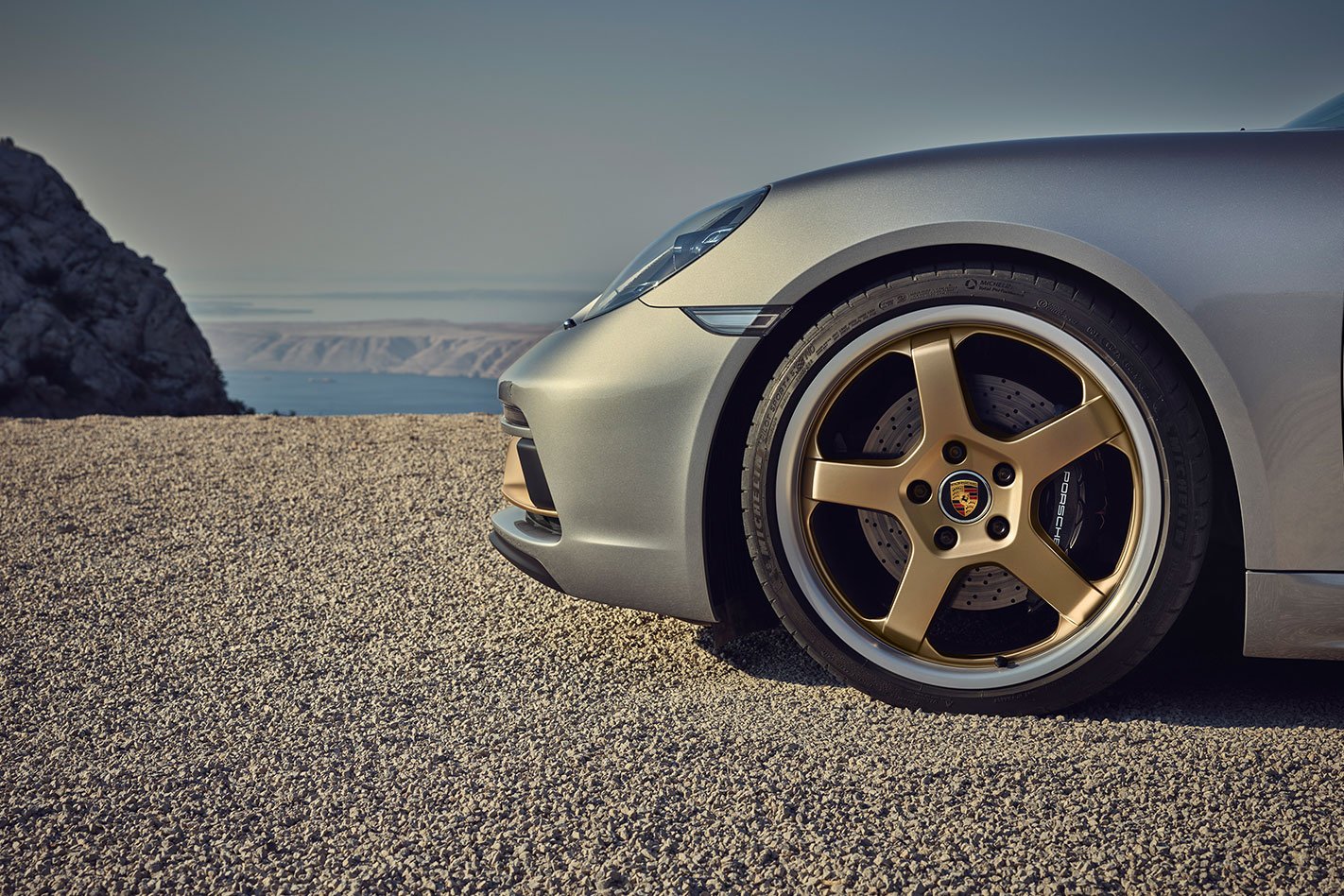
The rest of the car will be a high-spec affair, loaded with goodies like adaptive sports suspension, a mechanical LSD, auto-dimming mirrors and rain sensor, heated 14-way power seats, Lane Change Assist, ParkAssist, dual-zone climate control, a Light Design Package and Apple CarPlay with digital radio.
Porsche mentions the fuel filler cap is finished with an aluminium look to match the sports exhaust system’s tailpipes.
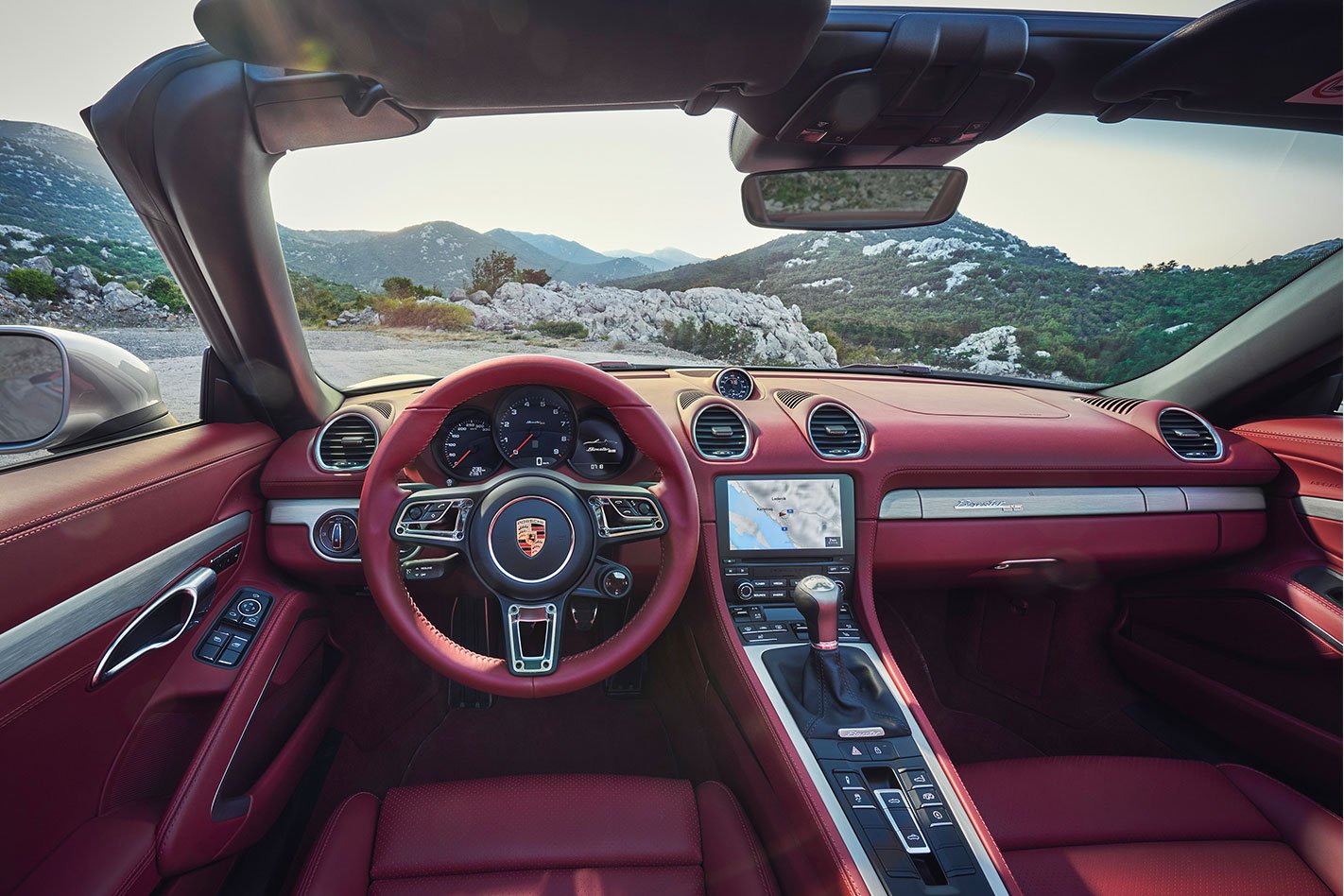
Although the 25 Years’ hero colour is silver, Porsche also offers Deep Black and Carrara White metallic paints that come with the same black windscreen surround.
Porsche originally revealed the Boxster at the 1993 Detroit Motor Show before launching the production version in 1996.
Four generations later, it’s sold more than 357,000 units. The current range includes turbocharged four-cylinder and non-turbocharged six-cylinder engines.
General Motors Specialty Vehicles has changed its branding only just after launching, updating its logo to suit its parent company’s recently updated version.
American automotive giant General Motors changed its logo for the first time in nearly six decades earlier this week. And as a result the Australian and New Zealand low-volume importer has incorporated this new logo into its own, announcing the news on Instagram.
“Australia and New Zealand are proud to be amongst the first markets in the world to feature the new GM brand identity,” the Australasian subsidiary said, “incorporated as a distinct element of the GM Specialty Vehicles logo.”

And while GM’s new bright blue logo jars visually with the Specialty Vehicles’ charcoal shading and bright red “V”, it juxtaposes even more in concept.
Aimed at promoting electric vehicles the Everybody In campaign is about “an optimistic and inclusive tone for the company’s EV future and focuses on three themes.”
These are accelerating EV adoption, leading EV and autonomous technology, and spruiking the brand’s Ultium electric vehicle platform.
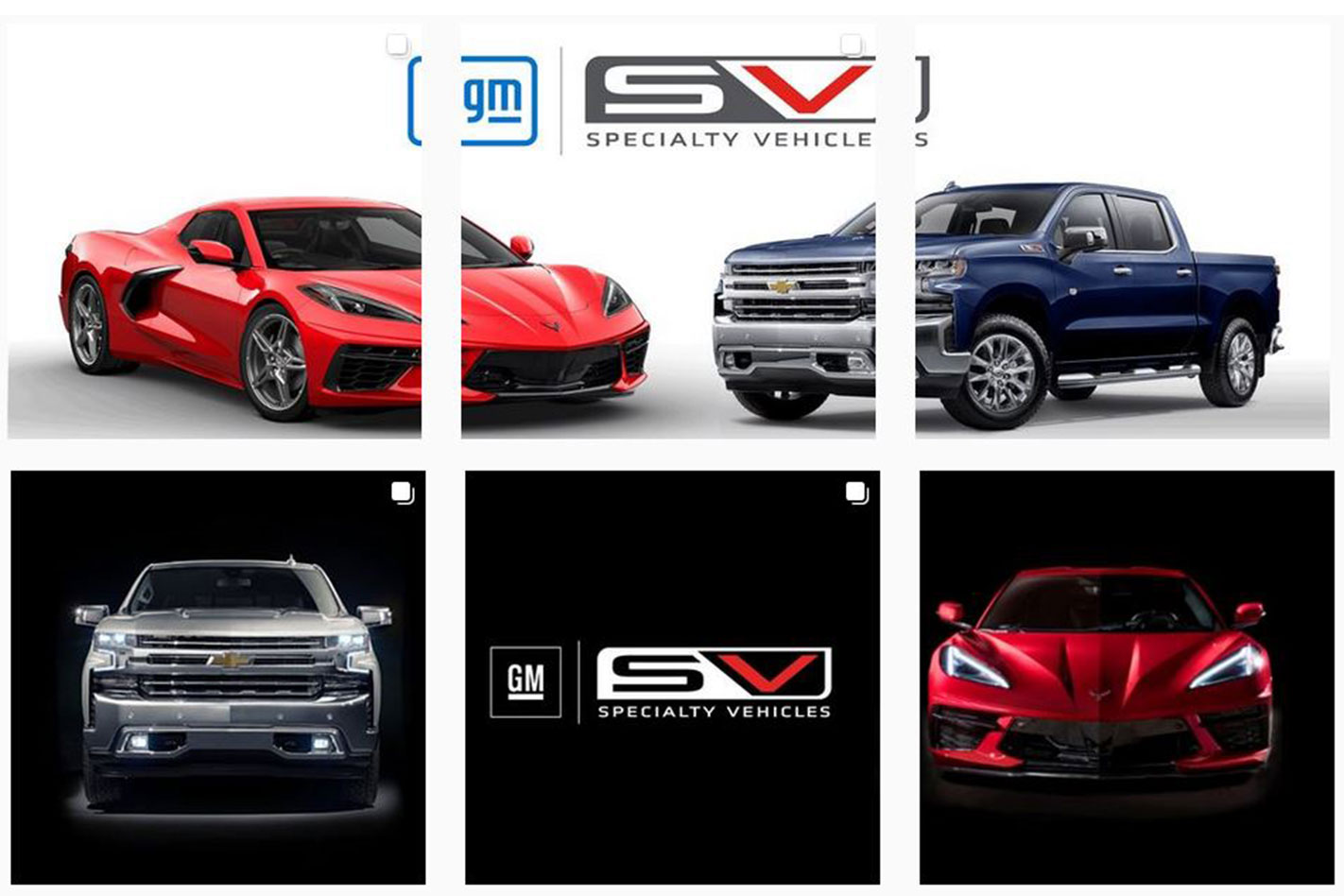
In their defence, these are specialty vehicles.
GMSV has said this will not affect roll-out of branding across the 54 dealers it has confirmed in Australia and New Zealand. And the GMSV website will update its new logo.
Australia is holding its breath for the full might of GMSV, seen as HSV’s spiritual successor, to arrive, with many potential customers awaiting official confirmation on a price for the incoming Corvette before it arrives later this year.
