Residual values are the single largest component of car ownership. If you’re only getting 50% of your new car’s $50K value at trade-in time, that’s a $25,000 loss. A more reasonable 65% residual saves you $7500 when it’s time to get rid.
Along with revealing the most popular second-hand cars, the Australian Automotive Dealer Association (AADA) and Autograb have provided real-world values of popular second-hand models.
With roughly 200,000 used cars sold each month in Australia, it’s a significant market, and predicted residual figures rarely correlate with real values.
This has been especially pronounced since 2020, as supply shortages, shipping delays, and price rises have affected new-car availability.
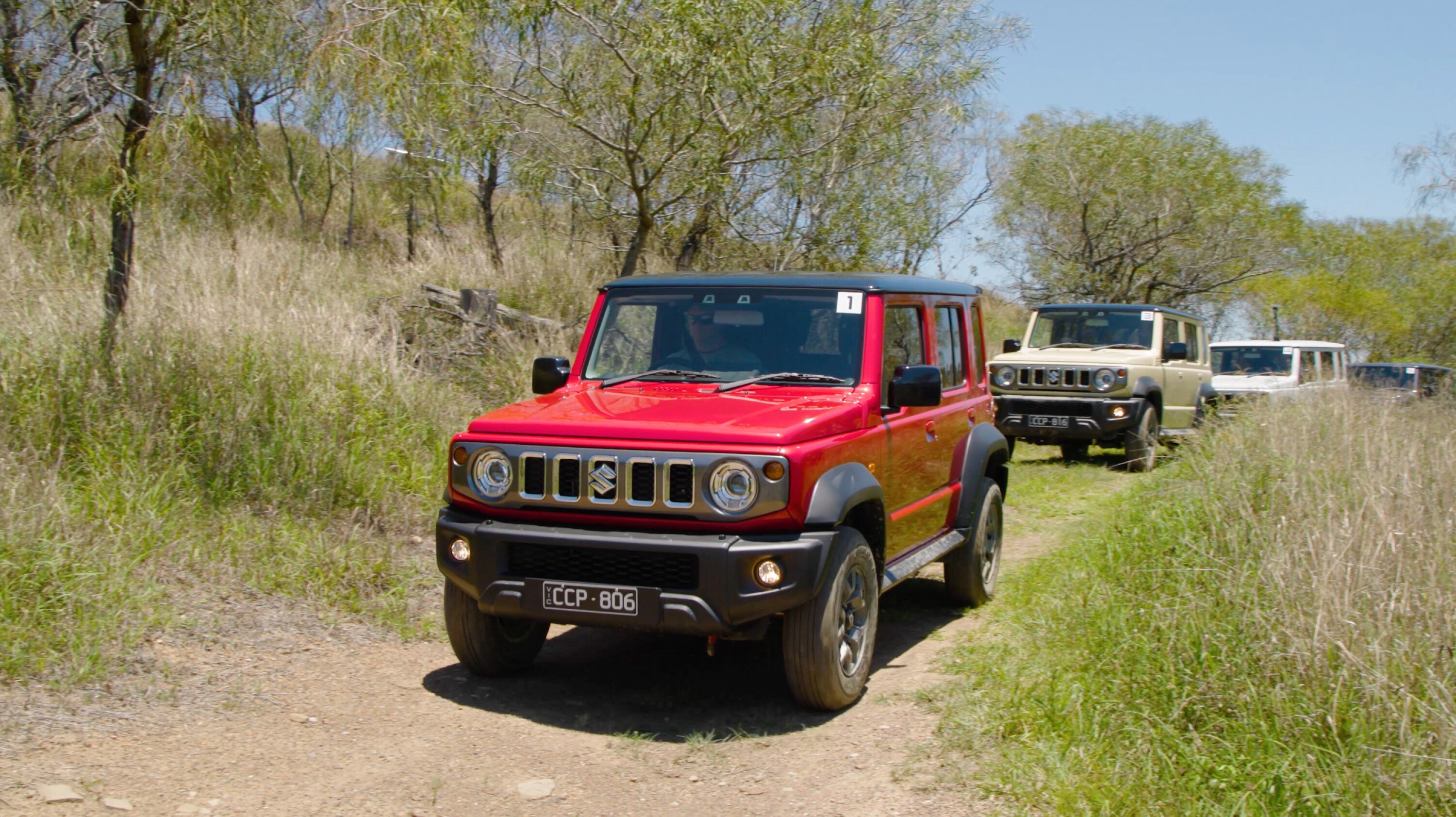
Take the Suzuki Jimny for example. AADA and Autograb found that two to four year-old examples of the plucky 4×4 were trading hands at an average of 136.1% of their original purchase price. That compares to Redbook’s predicted 61.5% residual value after three years.
There are a few extra factors with the Jimny; for example many have been modified and this is reflected in their price. Additionally, since launching in 2019, the Jimny’s jumped from $23,990 to $31,990 before on-road costs.
If you’re looking to trade your car in, a dealer will err on the side of the predicted residual rather than what you can get on the market so consider all your options before selling up.
These lists are not definitive, but ought to provide a helpful insight into which cars might be best buys for those looking to drive their dollar further. Read on for a list of the 10 best across several categories.
Second-hand cars with the highest retained value
First, we’ll cover newer second-hand vehicles, those between two and four years old.
The data here combines dealer and private listings and only includes models with more than 20 variants sold, keeping appreciating ‘collector cars’ such as Porsche 911 GT3s out of the rankings.
Passenger cars are relatively self-explanatory. Plenty of Toyotas and Mazdas with Subaru and Kia sprinkled in. In the case of SUVs, enthusiast vehicles such as Landcruisers, Patrols, and Jimnys hold their value very well. Perhaps more surprisingly, so too does the Yaris cross.
It’s nice to know that sports cars such as the Toyota 86 hold value better than your crotchety uncle said they would.
Moving to older second-hand vehicles – those between five and seven years of age – makes things a little more interesting.
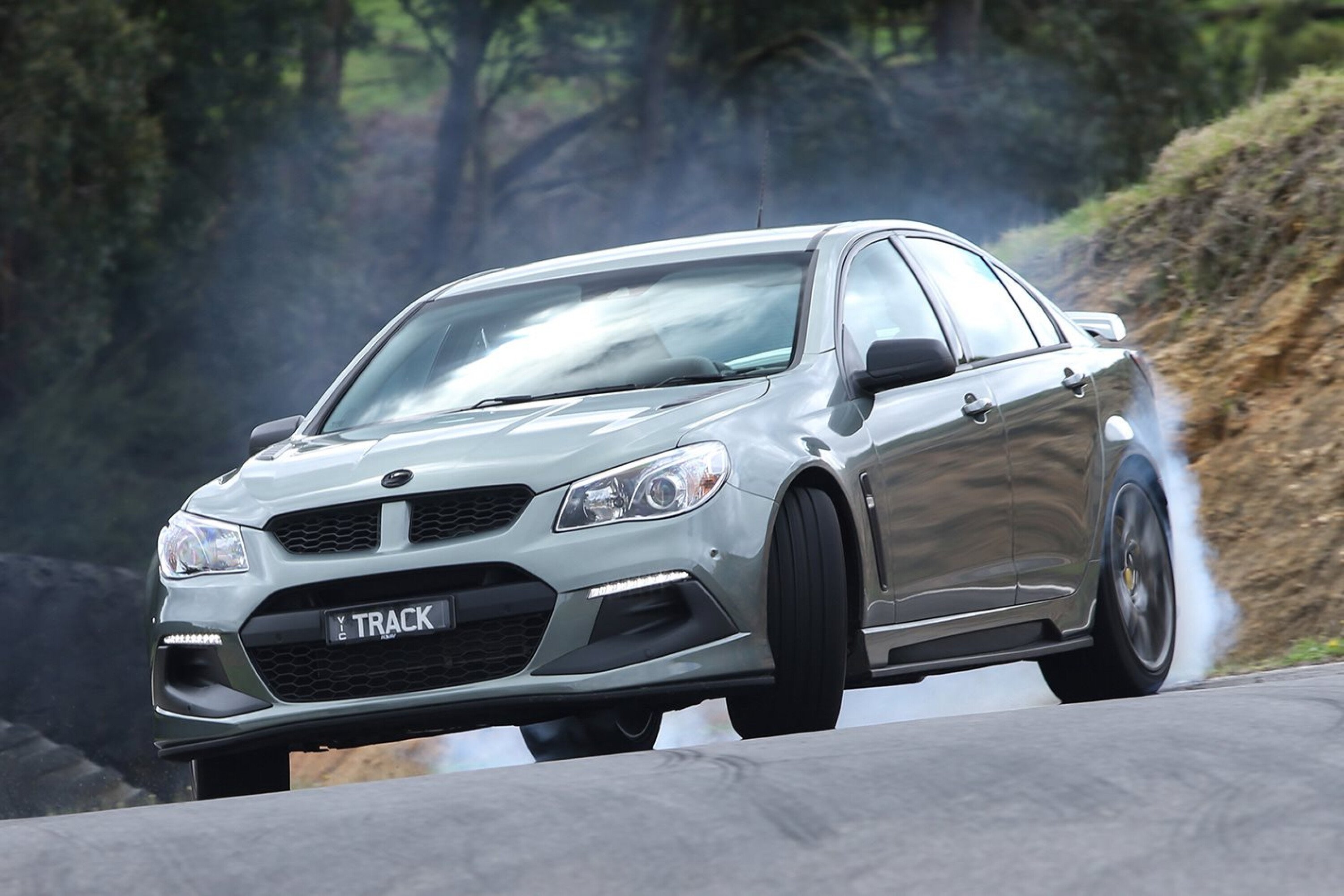
Although the HSV Clubsport is a winner for retained value on the second-hand market, you should also take into account the average time to sell.
At 118.9 days, the average VF ‘Clubby’ spends twice the time on market as others in the list, suggesting speculators are playing the waiting game to get a good price.
Passenger cars
Make and model
Retained value (average)
Days to sell (average)
HSV Clubsport
120.20%
118.9
Mitsubishi Mirage
117.20%
47.5
Toyota Yaris
96.20%
29.1
Kia Picanto
90.10%
34.6
Honda City
89.20%
15.1
Toyota 86
87.10%
54.6
Mazda 2
86.90%
33.3
Ford Falcon
86.70%
80.4
Ford Mustang
85.20%
54.9
Honda Civic
83.80%
41.4
For those with practical minds looking to keep a car around that’s easy to offload in the event of financial hardship – or quick to get rid of when the new car on order finally arrives – a balance of high retained value and fast sell time is ideal. Look to the Mazda 2 and CX-3, Honda City, and Toyota Yaris for the best options.
By the time SUVs go beyond four years, the trend shows that values fall more significantly.
Toyotas and Nissans rule the roost, though the Jeep Wrangler and MG ZS display that taking a chance on a marque that isn’t Toyota can sometimes pay off.
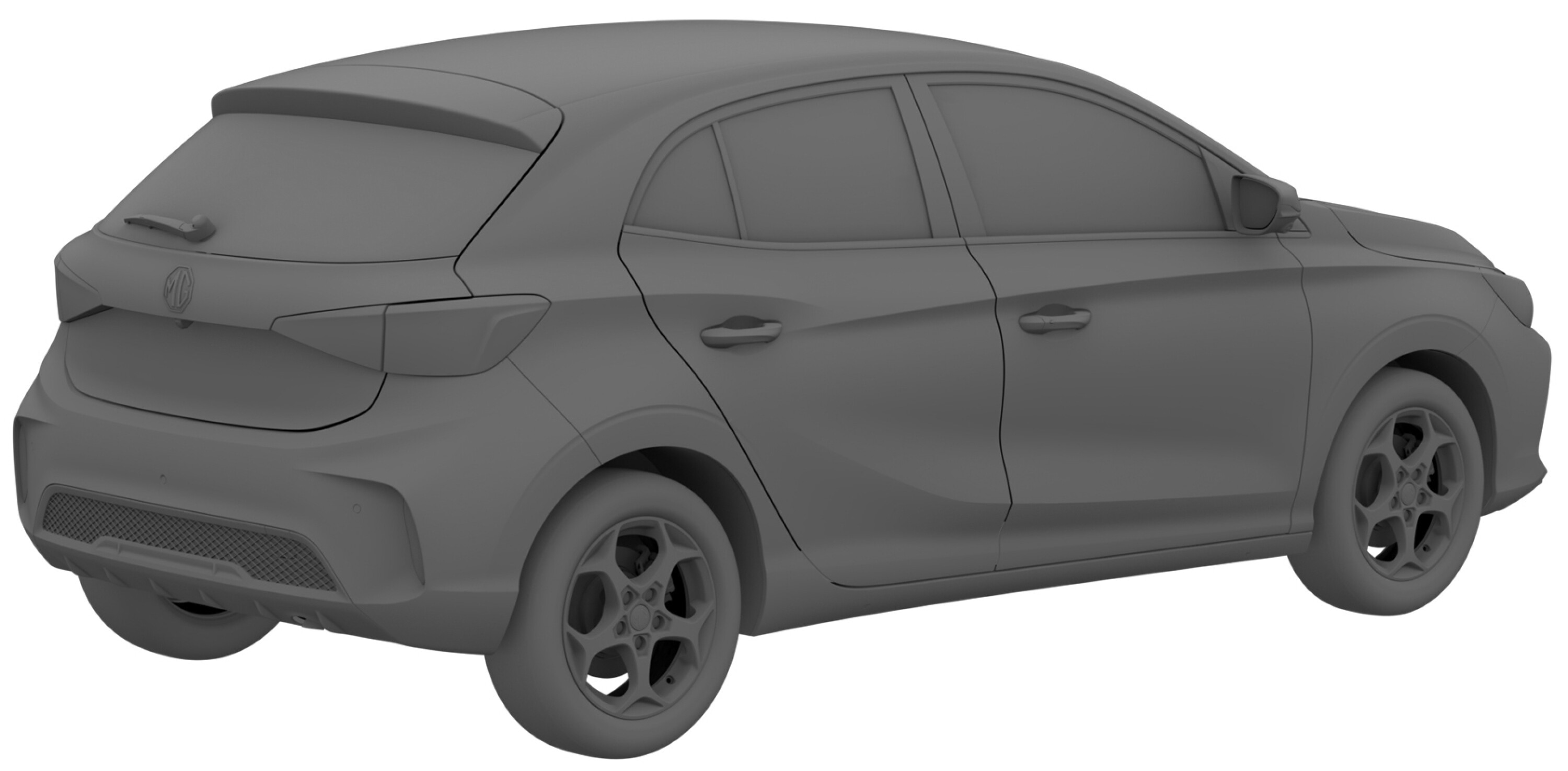
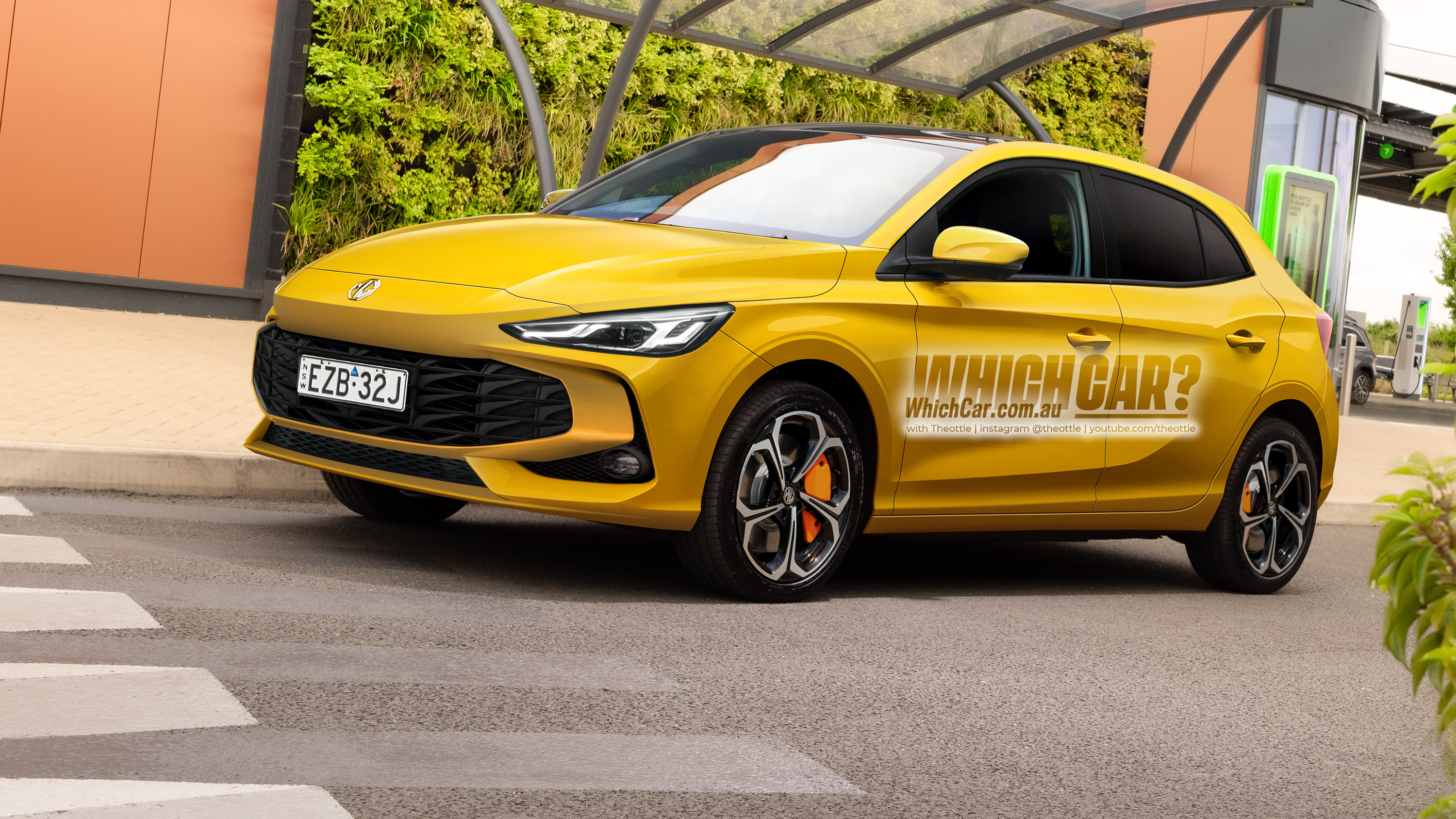
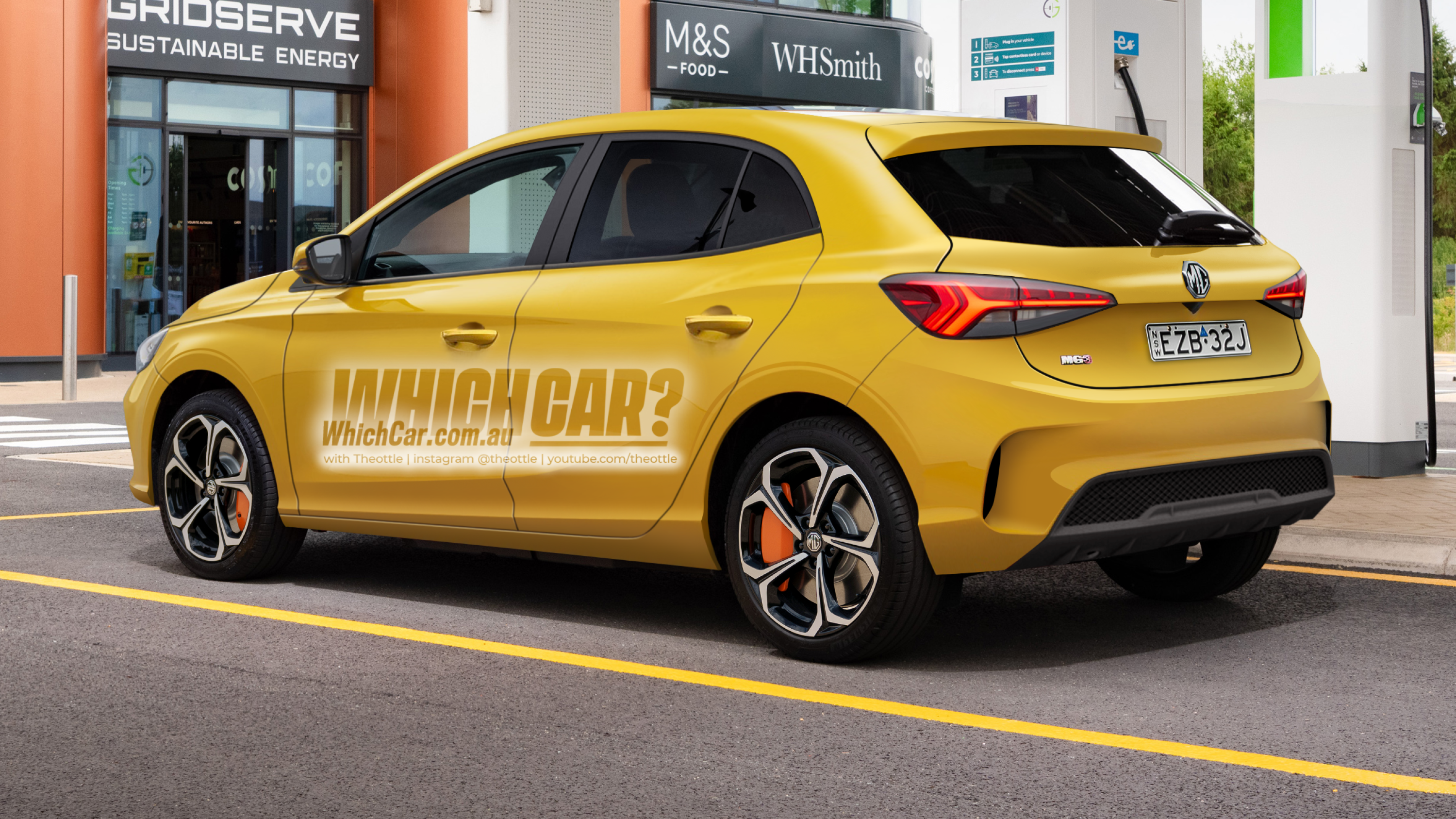
MG has confirmed when the next-generation MG 3 city car will arrive in Australia and that it will be available with both petrol and hybrid power.
The all-new city car, which is currently Australia’s cheapest vehicle thanks to a drive-away price of $19,990, has been gearing up for an Aussie release some time in 2024.
And now we know when it will launch, with an MG spokesperson confirming the new model will arrive in Q2 2024.
“MG Motor can confirm our line up for next year (2024) to include an all new MG3 available in both ICE and Hybrid, as well as the all new HS and Cyberster,” said the spokesperson. “The all new MG3 is an all new platform with different driveline options including hybrid and petrol.
We look forward to sharing specifications and pricing closer to launch time which is earmarked for Q2 in 2024 at this current time.”
Exactly what engines the new MG 3 will use remains to be seen, though it’s likely the hybrid system will combine a 70kW/200Nm e-motor and 2.1kWh battery pack with a 1.5-litre four-cylinder petrol engine.
Continue reading below for more details.
August: New MG 3 confirmed; initial details
The 2024 MG3 small car is gearing up for an Australian release in 2024 and the all-new car is likely to remain the Chinese-owned brand’s most affordable model.
Snapshot
MG 3 likely for local launch next year
Fresh design and platform, potentially with hybrid power
Five-star ANCAP rating unlikely
Wheels understands that the MG 3 won’t be based on MG’s new Modular Scalable Platform (MSP) that sits beneath the brand’s electric MG 4 and will underpin the Cyberster EV sports car. The MG 3 is expected to launch with combustion, and potentially hybrid, powertrains.
When Wheels asked MG Motor Australia CEO Peter Cia, directly about the MG3’s arrival date and ANCAP rating status, he declined to answer.
“MG has many models coming in the next two-three years, we will have lots of chances to sit together and talk. Today, I welcome any questions about the MG 4”, he said.
Moments later, when asked about how MG intends to grow its market share Mr Ciao replied with MG3 confirmation in 2024, among other things.
“For 2024, we have more models coming. Not just MG4 and MG5 – we have the new-generation MG 3, new-generation HS, and one more SUV.” Confirmation of the light hatch’s arrival, then.
There was also discussion about the potential ANCAP ratings for the new MG 3, given the current car’s no-rating status after the pre-facelift’s 2014 three-star Euro NCAP expired.
In response to a question on the MG 5’s safety rating, Ciao said it comes down to a business decision. If the MG 3 were developed as a five-star car, the brand would be unable to achieve its signature affordable pricing.
1
“With each model, what [a five-star safety rating] really is, is a business decision, not a technical one. Because when we develop each model, we will decide, we will make a choice: How much? And what kind of technology to provide?
“We can provide any model with five-star [credentials] but that costs money, you know, and now in Australia this safety requirement is now so high it’s ridiculous”, said Mr Ciao.
1
Expect a base MG 3 to undercut the larger MG 5 sedan ($24,990 drive-away) when it arrives next year.
We do anticipate an increase over the current car’s $19,990 drive-away pricing to reflect added low-speed AEB and newer features. A drive-away price between $22-24K is our best estimate right now.
Well, yes, actually. They’re not getting any cheaper as a brand-new option, and the waits can be long. Getting into a used EV right now could be just what you need.
Snapshot
More affordable used EV options are slowly flowing into the market
But, pay attention to battery health, brake corrosion, tyres
Imported used EVs are an option, but buyer beware
Brand-new electric cars won’t be less than $30,000 anytime soon in Australia. But, as more new EVs are sold, the range of affordable used market EVs is growing.
If you can find a reasonably well-priced example in good condition – and if it suits your driving needs – the answer could easily be ‘yes’. But, there are some important considerations when looking for a used EV.
Electric vehicles generally depreciate quicker than traditional internal combustion engine (ICE) models today, which is a win for would-be used EV buyers.
New EVs are also generally more expensive to buy, especially older models, which have contributed to how they lose their residual values. However, some are on par – if not better – than ICE rivals, according to Redbook data.
“There’s a depreciation cliff coming for [ICE cars]” – Luke Todd, EVDirect CEO (BYD distributor).
EV model
Minimum trade-in depreciation
ICE model
Minimum trade-in depreciation
2012 Nissan Leaf
– 88%
2012 Hyundai i30 Premium (petrol)
– 70%
2016 Tesla Model S 75 (RWD)
– 59%
2016 BMW 520d Luxury Line
– 64%
2018 Hyundai Kona Electric Highlander
– 39%
2018 Hyundai Kona Highlander (FWD)
– 41%
2019 Tesla Model 3 Standard Range Plus
– 51%
2019 Mercedes-Benz C200 sedan
– 43%
Data estimated based on minimum dealer trade-in residual values, according to Redbook. Redbook tends to give more conservative depreciation estimates and the above serves as a rough guide only.
Residual values fluctuate depending on the market and selling privately will likely fare better.
On the other hand, ICE cars – especially diesel – are falling out of favour, and the tide is expected to turn in favour of EVs.
Almost every car brand has committed to only sell zero exhaust emission EVs in the coming years to comply with increasingly strict emissions, fuel economy and noise mandates globally.
EVDirect chief executive executive Luke Todd (the distributor of BYD electric cars in Australia) previously told WhichCar: “There’s a depreciation cliff coming for [ICE cars].”
1
✅ Used EV checklist: Here’s everything you need to know
This includes; checking its roadworthiness, exterior and interior condition, history and servicing logbook records.
EVs still need some routine maintenance as they share many ‘consumables’ with petrol and diesel vehicles, including tyres, brakes, suspension, lights, electronics, and the 12-volt electronics battery.
? Battery health: Electric car batteries degrade over time
The good
EV batteries are designed to last beyond 10 years with minimal range loss
All new EVs are covered by a dedicated battery warranty
The not so good
Used EVs inevitably have degraded batteries
There’s no straightforward way to check battery health, but there are signs
Similar to petrol and diesel combustion engines becoming less efficient over time, electric car batteries do naturally degrade.
This especially applies when the vehicle has been driven more and subject to harsher environments – such as extreme low or high temperatures – for extended periods.
Nearly all EV models – except for the including the first- and second-generation Nissan Leaf small hatchback – have sophisticated liquid-cooling systems to actively keep the battery in its optimum temperature range to prevent excessive degradation.
A used model that has a bigger, longer range battery would simply give more degradation leeway and the confidence of providing enough driving range for your daily needs down the line.
Additionally, all brands provide dedicated battery warranty coverage (typically eight years/160,000km), so it’s worth looking at a used EV that has some remaining.
Some brands even promise they won’t degrade more than 30 per cent of its capacity in the coverage period.
If there’s an issue – and if deemed eligible – car brands can replace individual modules (or the whole pack if needed) for free.
Unfortunately, there is currently no easy way to accurately check an EV’s battery health.
However, an emerging number of EV-centric used car dealers are providing an estimated state-of-health reading by plugging in an on-board diagnostic (OBD) device.
Technicians also usually diagnose and generate a battery health report when it comes to scheduled logbook servicing.
But, be aware that the battery management system (BMS) may not be calibrated properly and show accurate battery percentage and remaining range indicators.
For example, first-gen Nissan Leafs feature a 12-bar state-of-health indicator in the driver instruments, but they aren’t linear and aren’t always accurate, according to battery electrochemist Dr Euan McTurk [Mr. EV YouTube↗].
1
⚡️ Charging habits: AC or DC, 80% or full?
The good
Manufacturers generally recommend 80% everyday charging limits for lithium-ion batteries
LFP batteries can generally be fully charged everyday
The not so good
Itu2019s difficult to reliably know previous owner/s charging habits
Frequent DC charging isnu2019t ideal (particularly previous owners who couldnu2019t home charge)
How previous owners charge their electric car is also a sign of the battery condition.
To maintain good battery health, it’s best practice to predominantly charge on slow AC power. This includes standard three-pin home power plugs and installed AC wall boxes.
This leads to a higher chance of degradation, especially when charged in more extreme cold or hot climates.
Additionally, car brands generally recommend recharging lithium-ion batteries up to 80 per cent only, as it’s unhealthy to be in a high state for extended periods.
Likewise, keeping the battery too low under 20 per cent all the time isn’t ideal.
If you’re able, ask the owner’s AC/DC charging habits and see whether a charge limit has been set previously (an automatic cut-off feature is offered in most models).
However, it’s difficult to get a reliable answer from a dealer or retailer.
Also consider where the vehicle has regularly been driven and where it’s been usually parked, as extreme cold or hot climates can signal a chance of higher degradation.
Powerful and instant torque, heavier weight contribute to wearing out tyres quicker
Since EVs are naturally heavier and feature instant torque, their tyres are typically under more stress than the average car.
Tyres can simply wear quicker than an equivalent petrol or diesel car’s tyres – especially if previous owner/s often drive and accelerate harder (a compulsion that is hard to avoid in an EV).
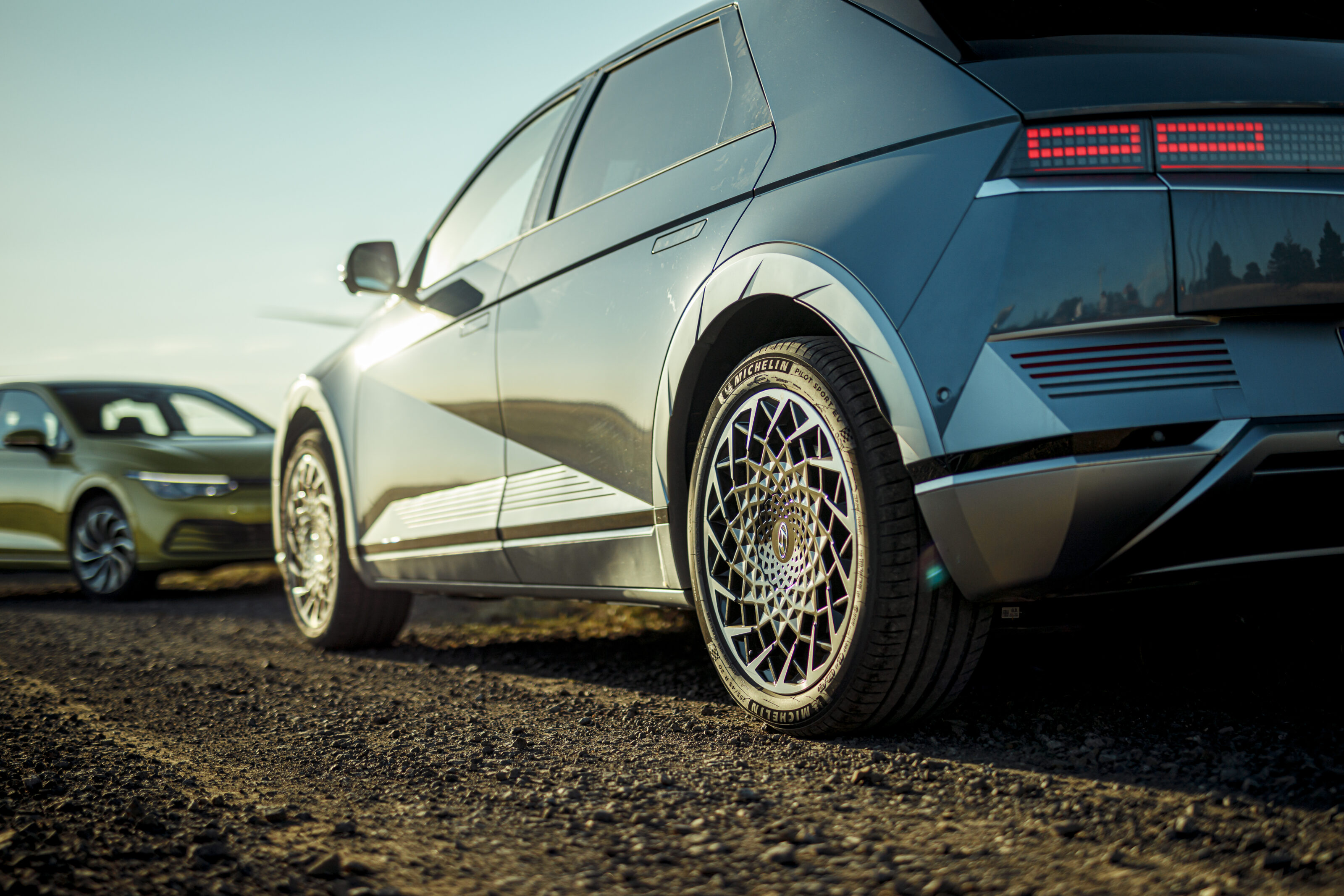
However, dedicated EV tyre models have emerged with a more durable structure and, while electric cars are typically heavier due to their large batteries, they’re not too dissimilar to the most popular vehicle models today.
A Tesla Model Y medium electric SUV is around 400kg heavier than the comparably-sized Toyota RAV4, but is roughly 400kg lighter than the also top-selling Ford Ranger 4×4 ute.
? How to check tyre health
When looking at a used electric car, check whether the tyre grooves are on the same level as the built-in nub which indicates tread wear.
Alternatively, measure the tread depth by putting a 20-cent coin into the tyre groove to see if it reaches the front bill of the platypus.
Electric cars are more efficient than conventional ICE cars thanks in part to regenerative braking, but there is a downside.
It’s the EV version of engine braking and owners gain back some ‘fuel’ in return. Conversely, this also means EV owners don’t use the proper hydraulic brake as often and the disc can corrode over time.
All EVs use regen exclusively at the top of the pedal before applying the hydraulic brake, and some offer a one-pedal driving (strong regen) function.
Therefore, it’s good practice for owners to occasionally turn off the regen function to clean the brake disc.
1
A rarely used and unloved brake may cause corrosion and need a replacement, so be wary when buying an used electric car.
? How to check for brake corrosion
Look for signs of brown rust on brake discs behind each alloy wheel. If there’s a plastic cover, you may need to remove it to inspect its condition.
Some corrosion can be cleaned off (and may simply be caused by high humidity), but intense rust may require a disc replacement.
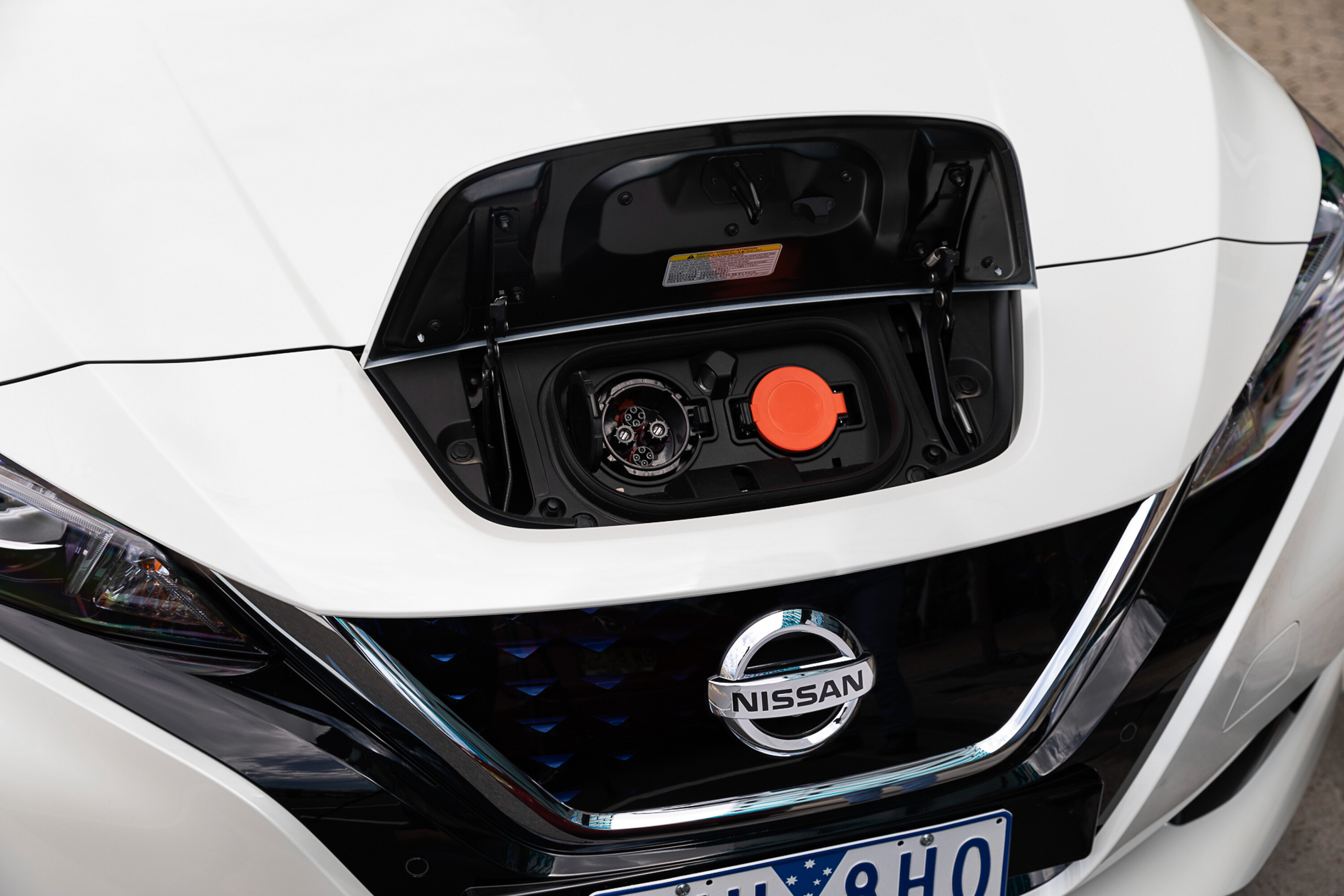
Most car brands have adopted the charging connector type as the universal standard in Australia and Europe, but some are outliers.
Older used EV models may use an outdated plug type that won’t be compatible with public charging stations today and may require a sold-separately adapter.
While many DC fast charging stations still offer a CHAdeMO cable, an increasing number of newly-installed stalls from operators such as Engie (under the Chargefox platform), Evie Networks and BP Pulse are only providing CCS2 plugs at some sites.
1
Used EV buyers should also check whether essential charging cables (eg: three-pin trickle charger, Type 2 to Type 2) and any other adapters are included with the vehicle.
If not, buying them separately can cost hundreds.
? Note to self
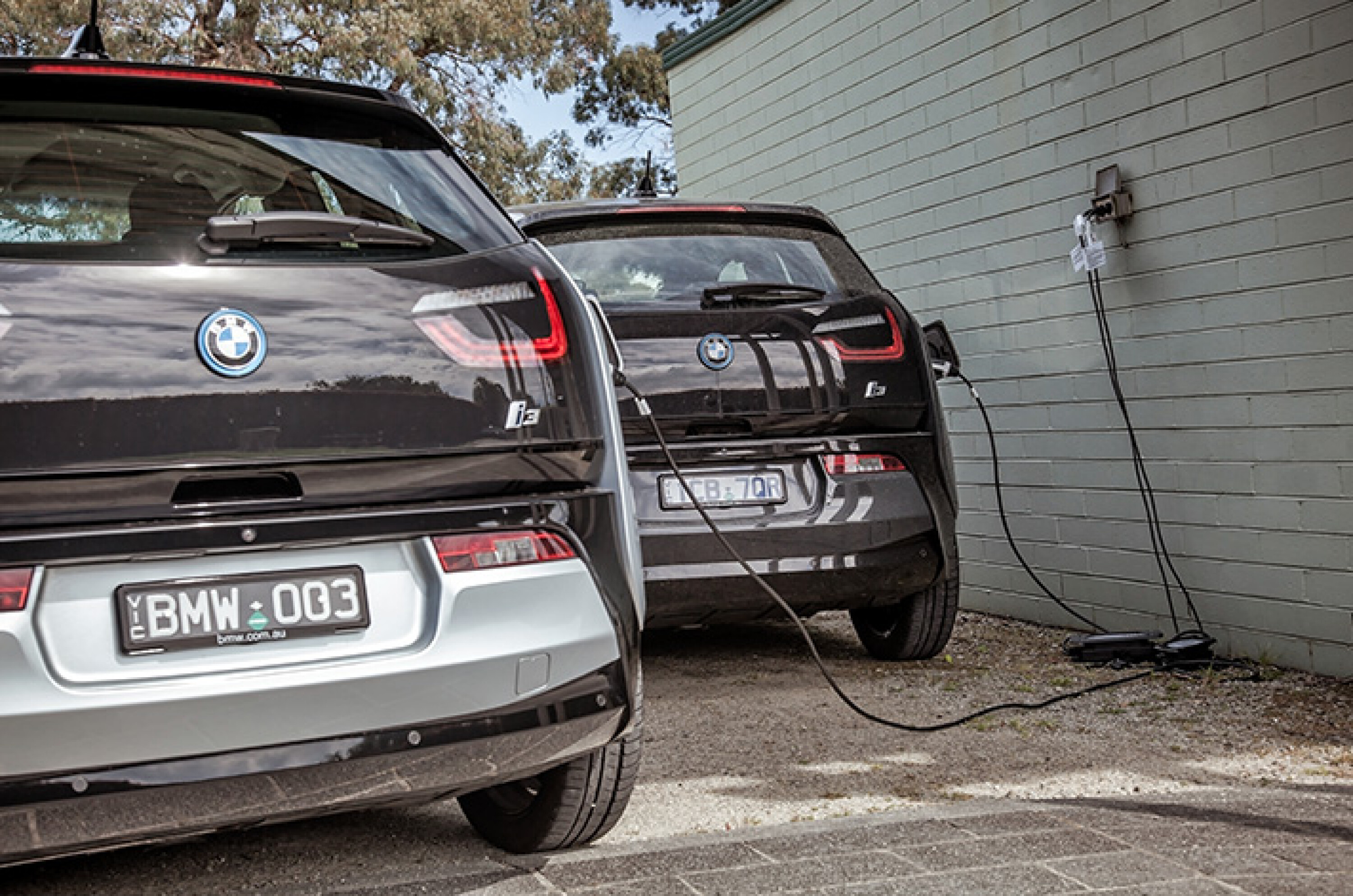
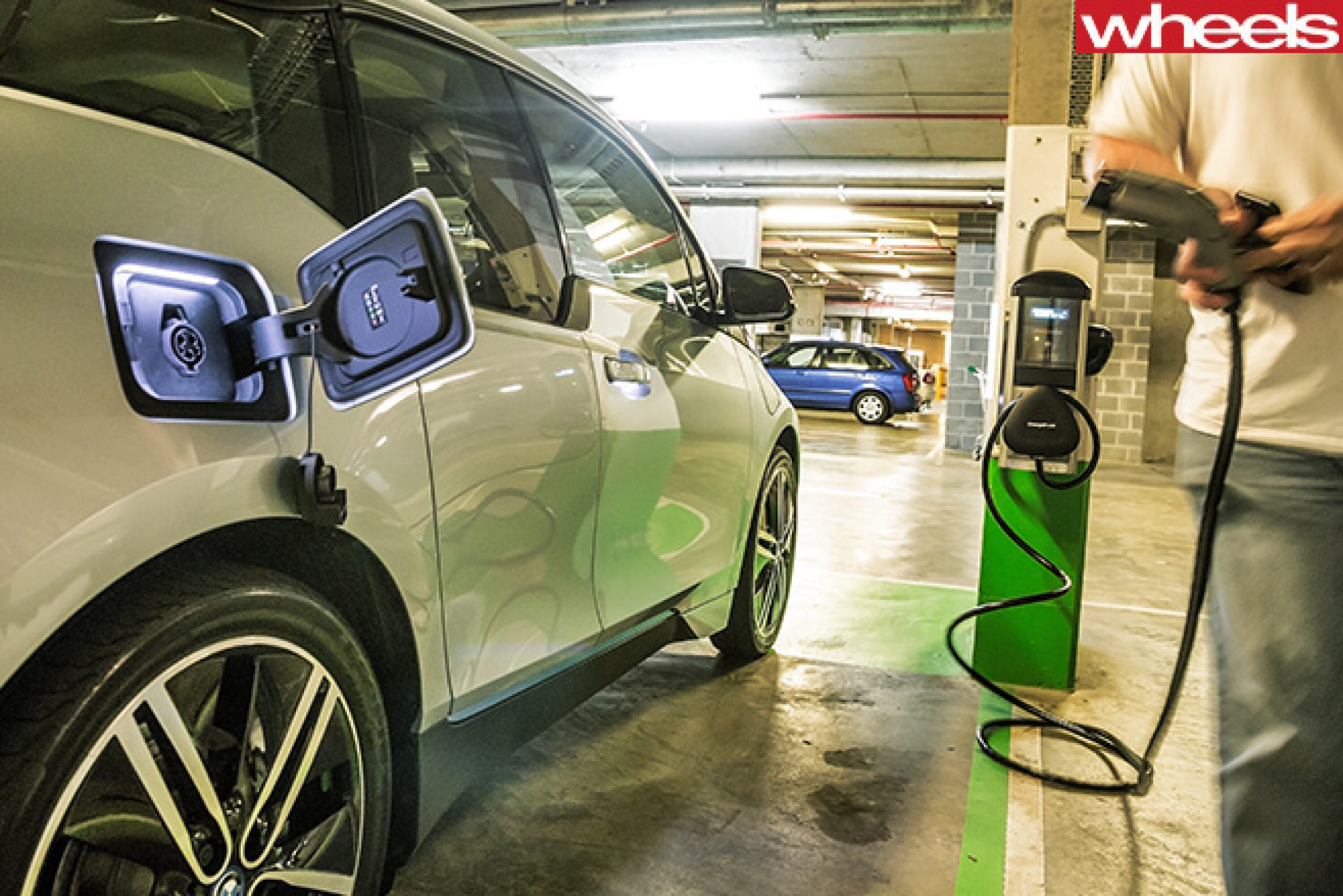
For example, the pre-2018 BMW i3 adopts the older Type 1 CCSstandard and older pre-2020 Tesla Model S and Model X EVs have a modified Type 2port.
Therefore, a Type 2 CCS adapter is required to use almost all AC and DC public charging stations in Australia.
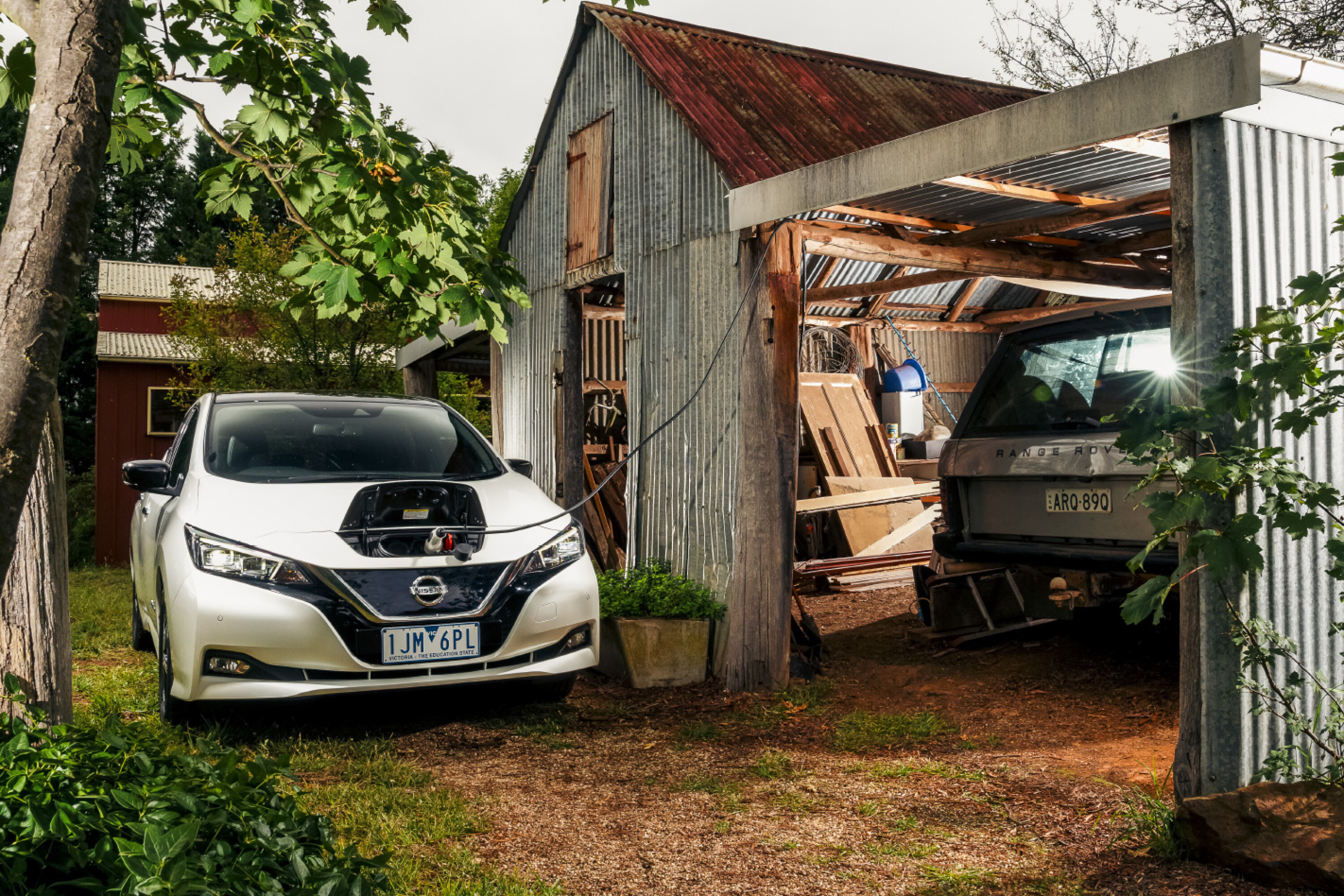
Similarly, the first-gen Nissan Leaf uses the Type 1port for slow AC charging and a Japanese-standard CHAdeMO port for fast DC charging. The latter is still found on second-gen Leafs, the Lexus UX300e, Mitsubishi Eclipse Cross PHEV and Outlander PHEV today, albeit using the common Type 2 plug for AC power.
However, there is no CHAdeMO to CCS2 adapter currently available.
Although the niche model and budget-friendly price tag may entice some from purchasing at a local dealer, imported EVs don’t enjoy the same manufacturer warranties, servicing and support.
Still, imported examples are the most affordable way to get into an EV right now, so you’ll need to weigh up the pros and cons.
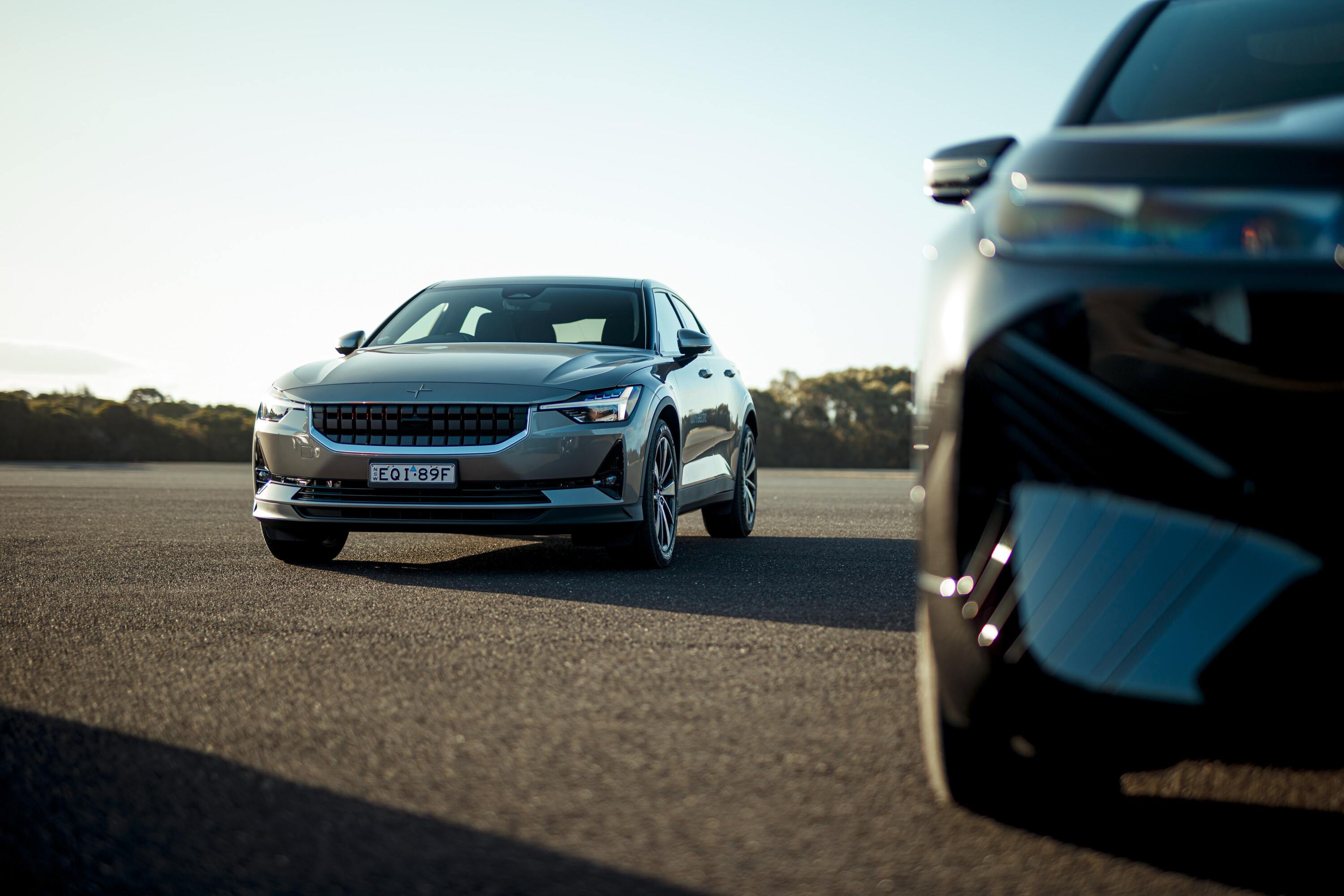
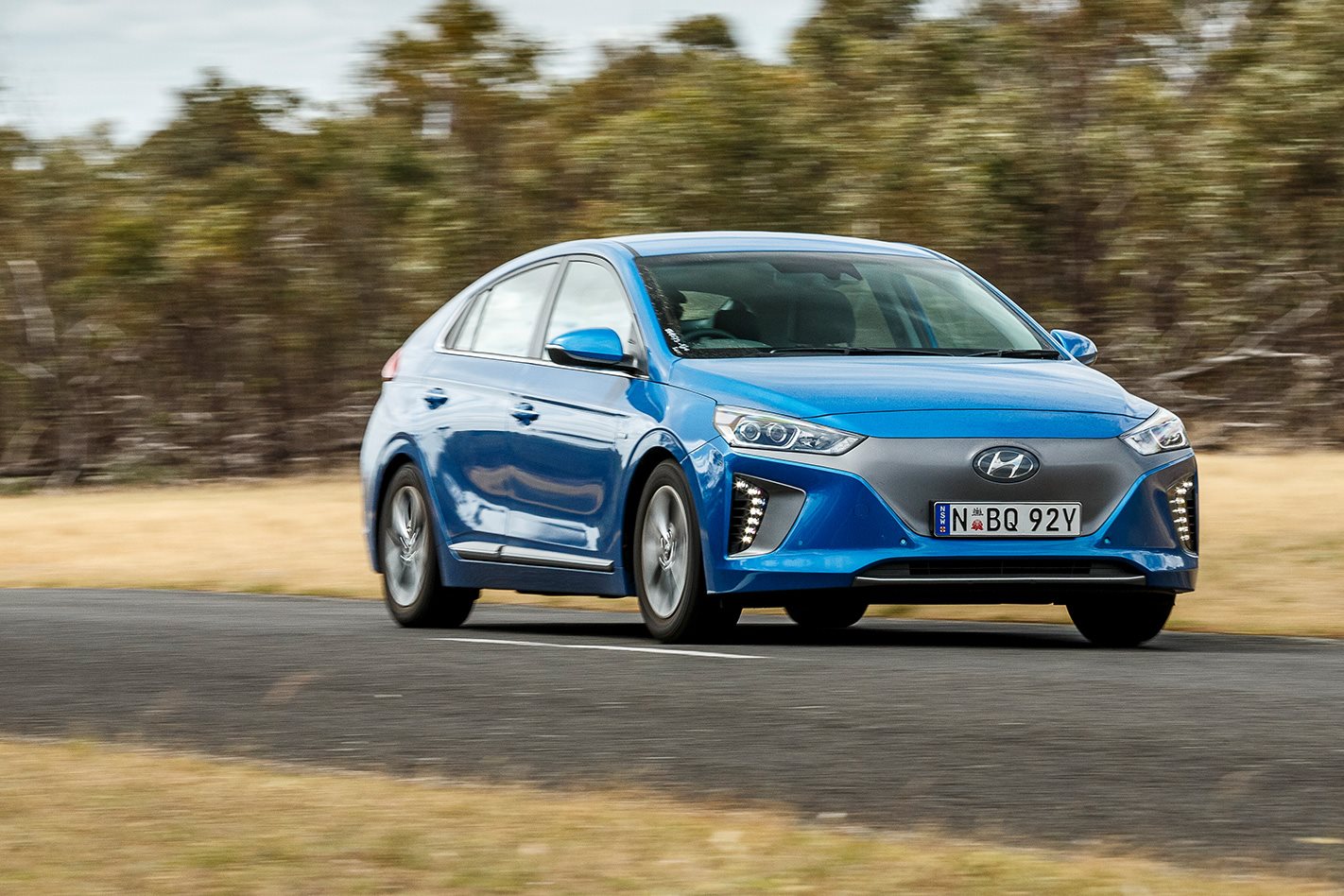
Government fleets, car rental and subscription companies – particularly for rideshare drivers – have taken on electric cars such as the Nissan Leaf, discontinued Hyundai Ioniq Electric, and Polestar 2. These will all flow onto the second-hand market in the coming years.
Likewise, the federal government’s fringe benefits tax (FBT) exemption scheme is designed to encourage company fleets and employees on novated leases to choose an EV today in order to ultimately contribute to a larger and more affordable used EV market in the future.
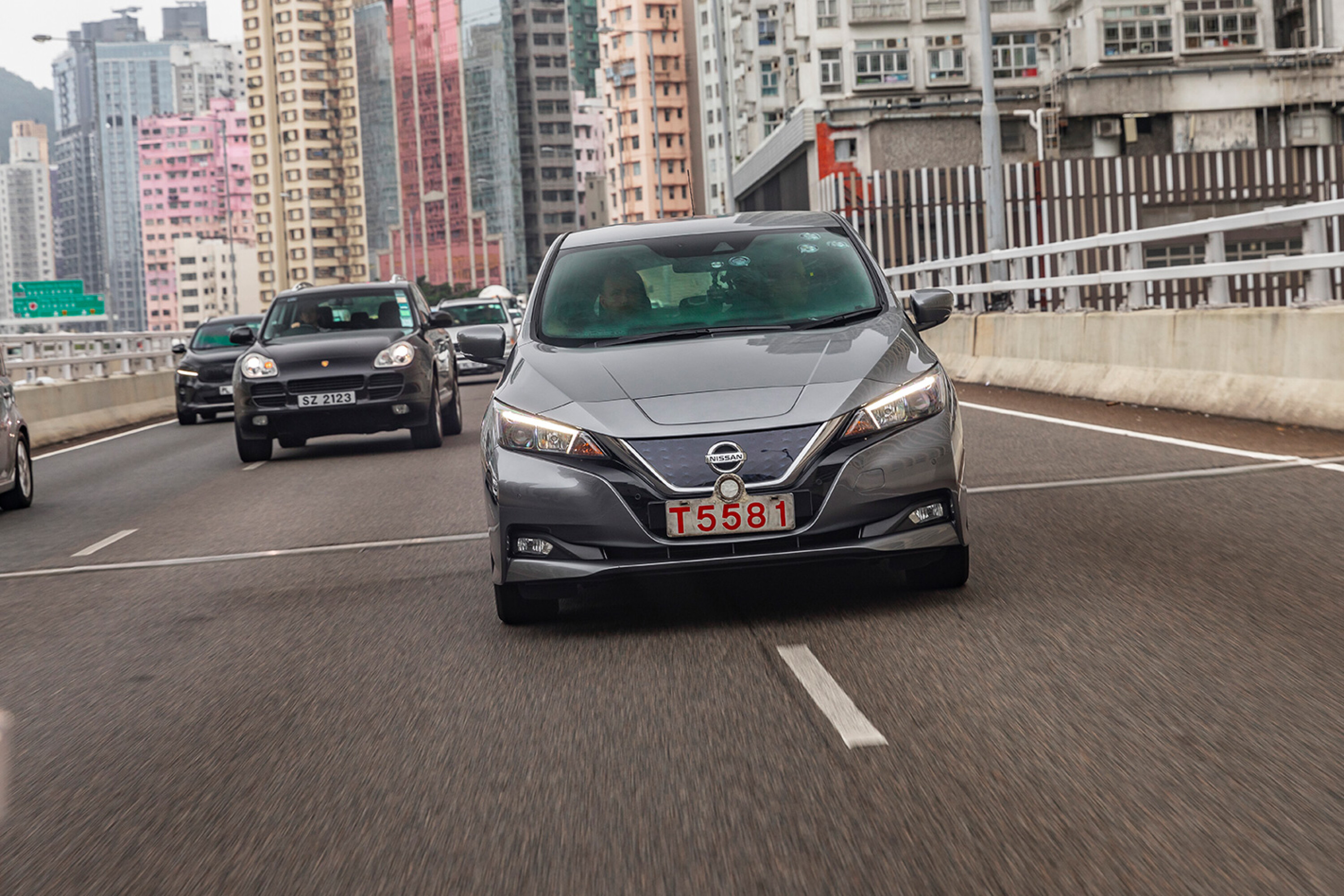
Unfortunately, most first-car buyers can mainly choose the Nissan Leaf hatch for now, as the most common affordable used EV in Australia priced less than $30K. But, expect this list to grow.
Buyer beware
Some private and dealer used car listings are priced higher than buying new, primarily due to high demand and limited supply continuing on some models.
Estimated prices listed below are for key used models based on Carsales listings as at the time of publication. Table is sorted by cheapest to priciest.
Australia’s used electric car market is still in its infancy, but that’s set to change in the coming years.
There are still a limited number of options today but, as EV sales continue to increase, more new models are arriving to lower the price barrier and they’ll be even cheaper in the second-hand market.
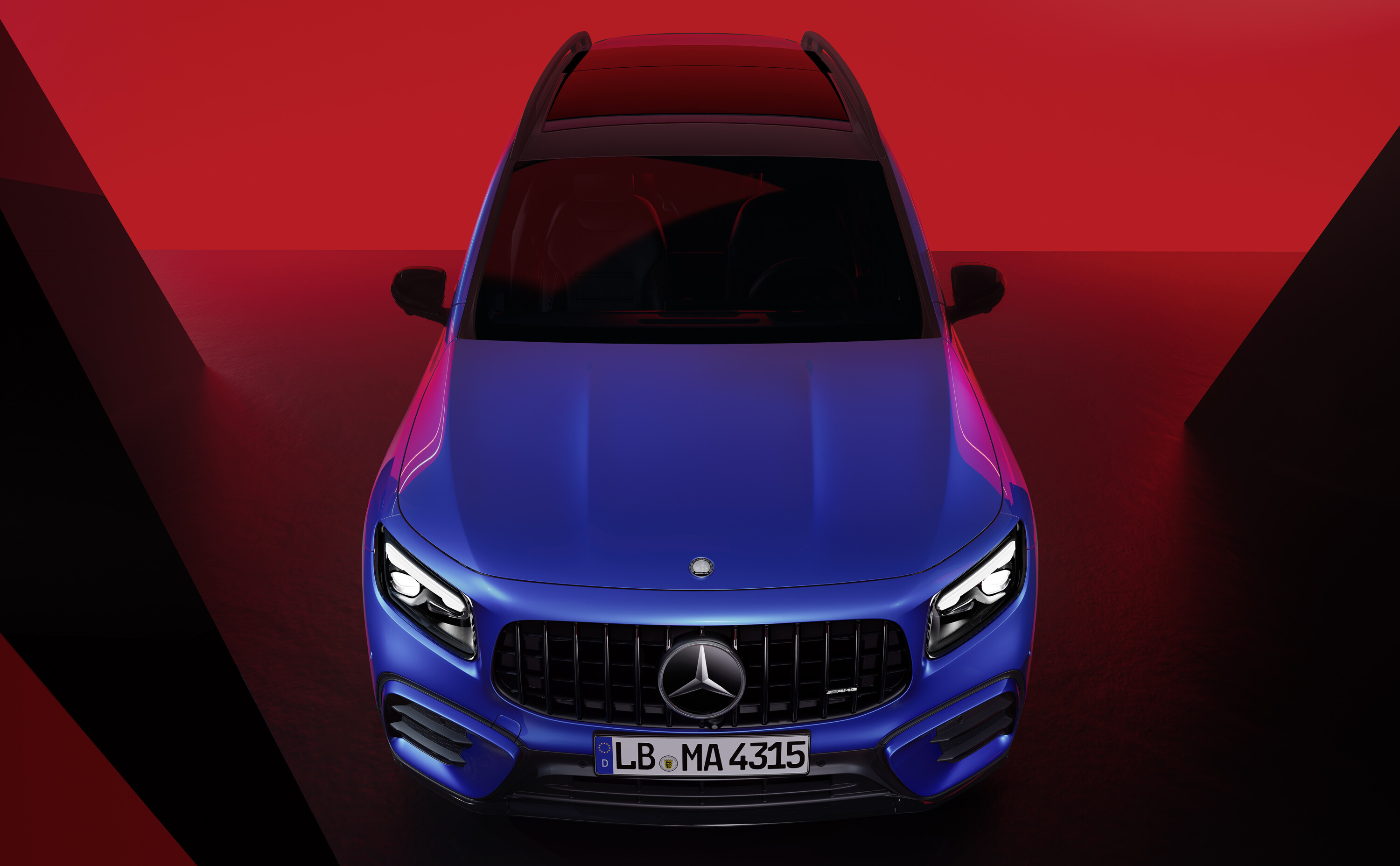
2024 Mercedes-Benz GLB facelift: Full Australian details
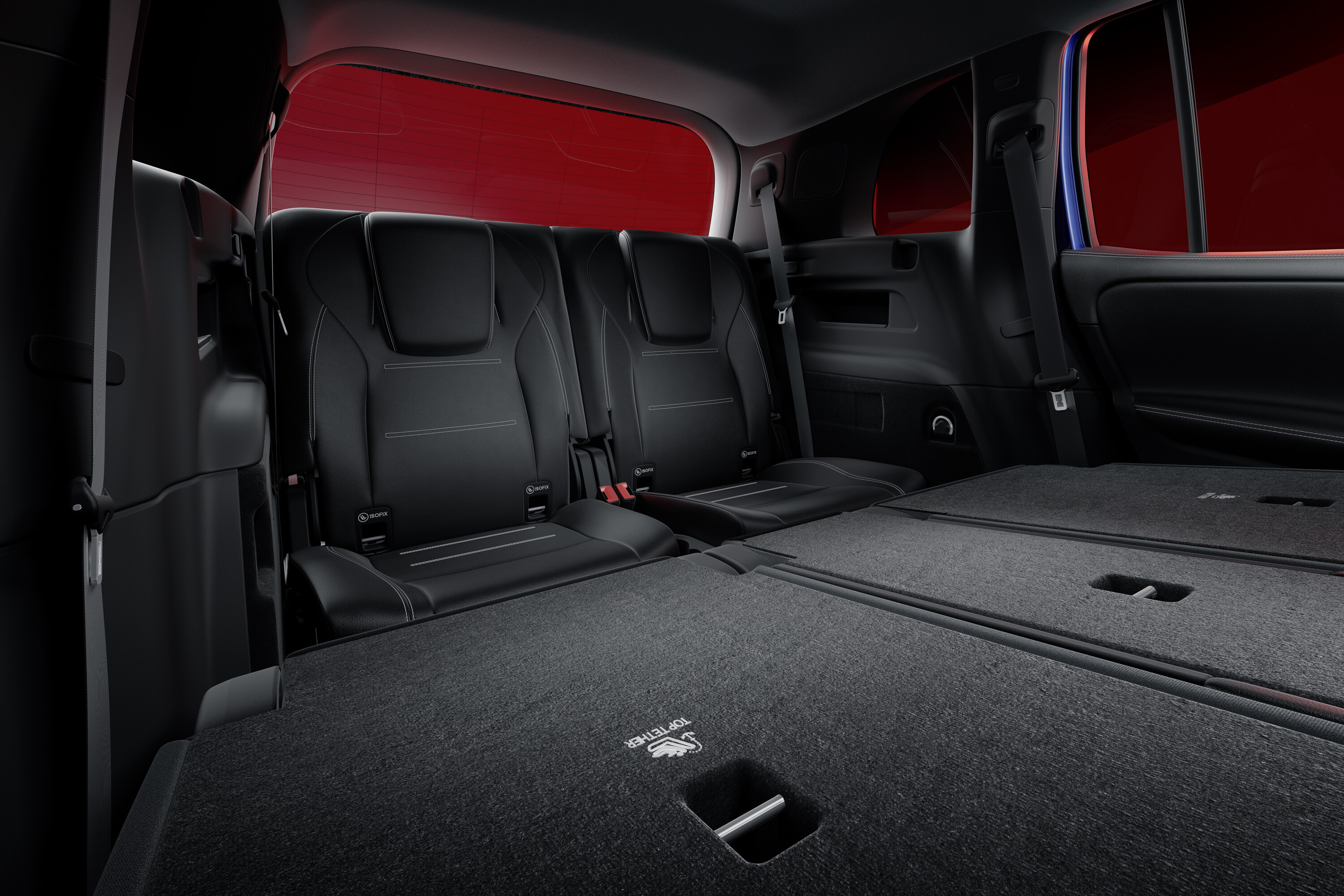
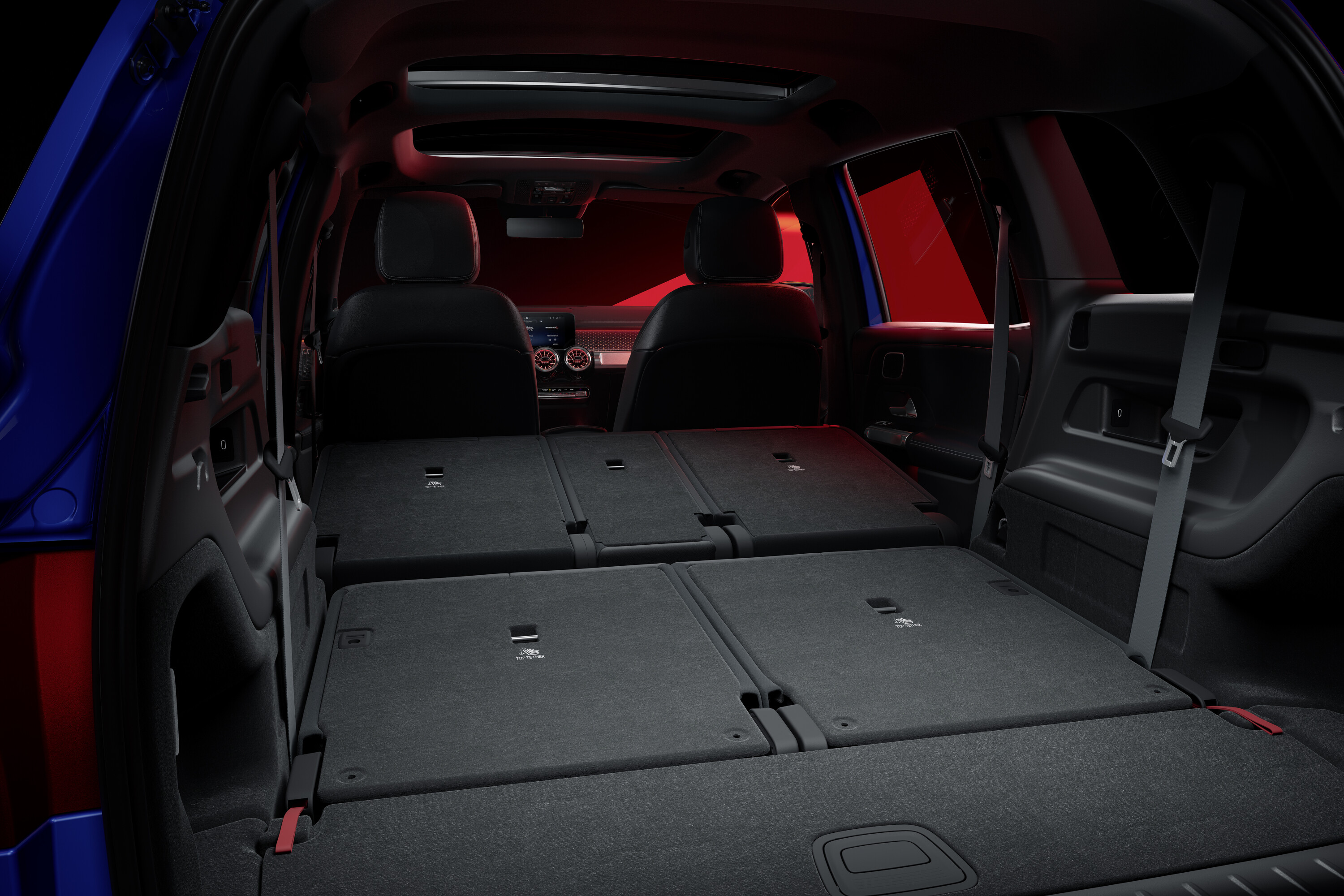
Updated 7-seat mid-size SUV receives mild design revisions, more tech
Price rises of up to $5900
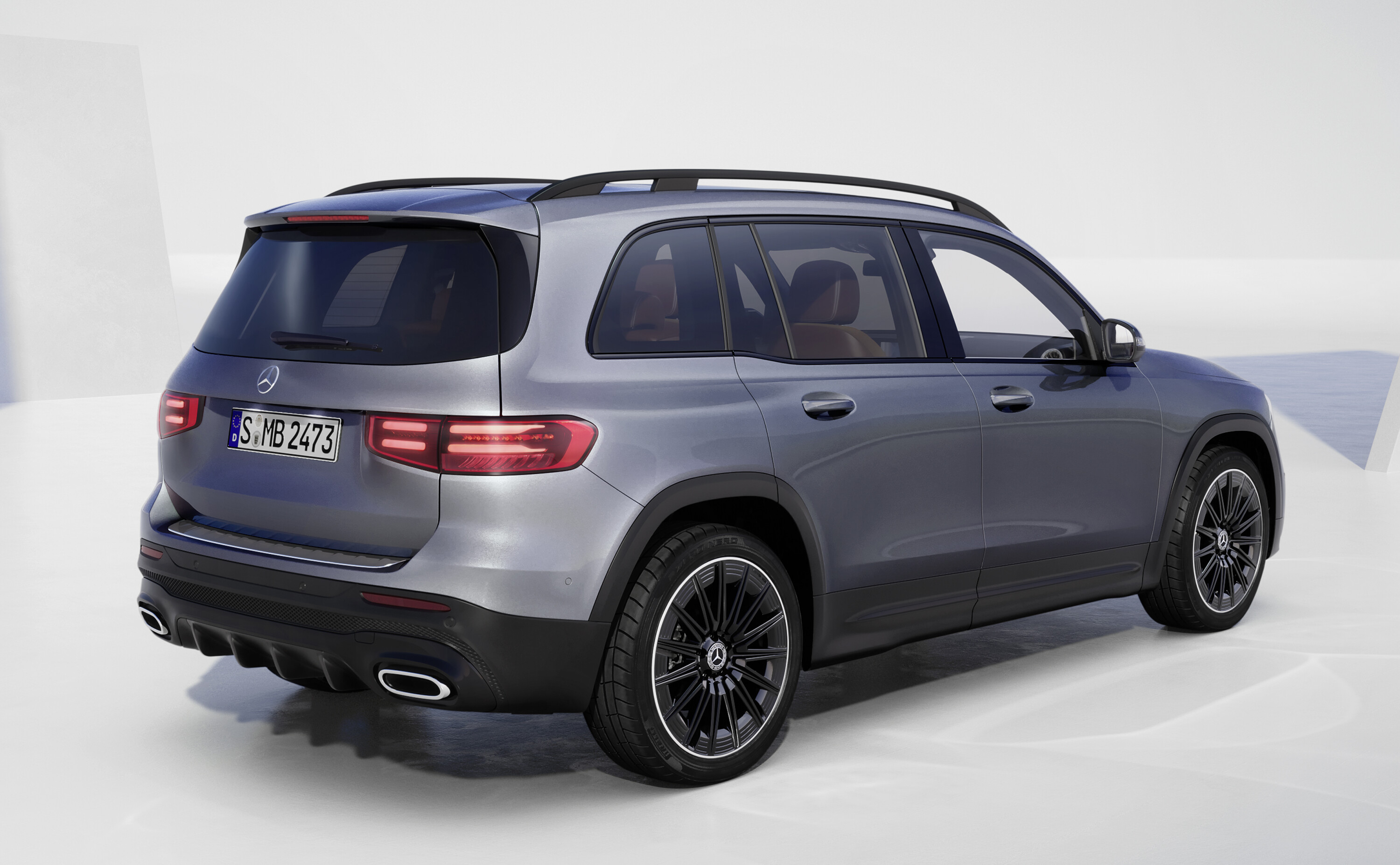
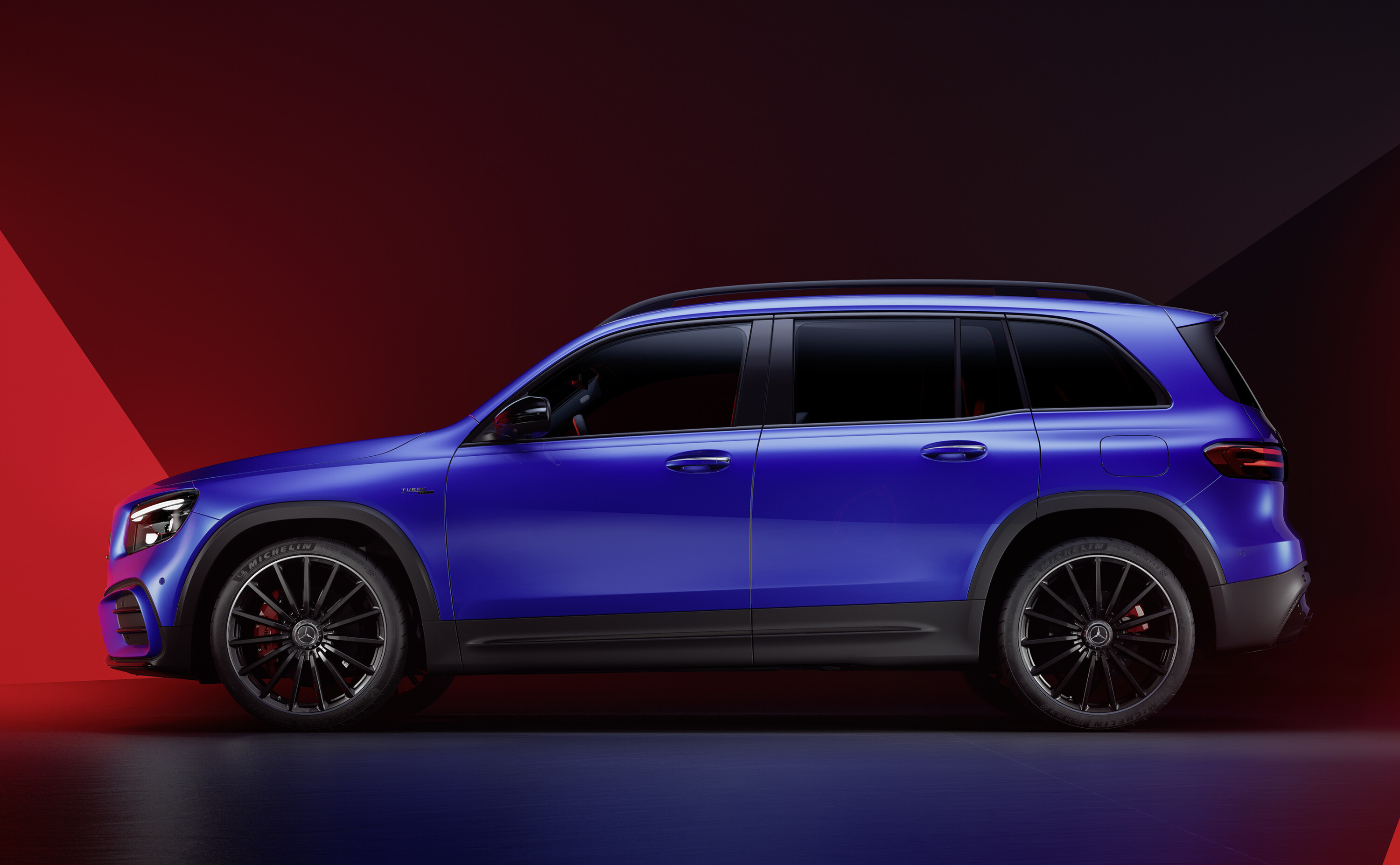
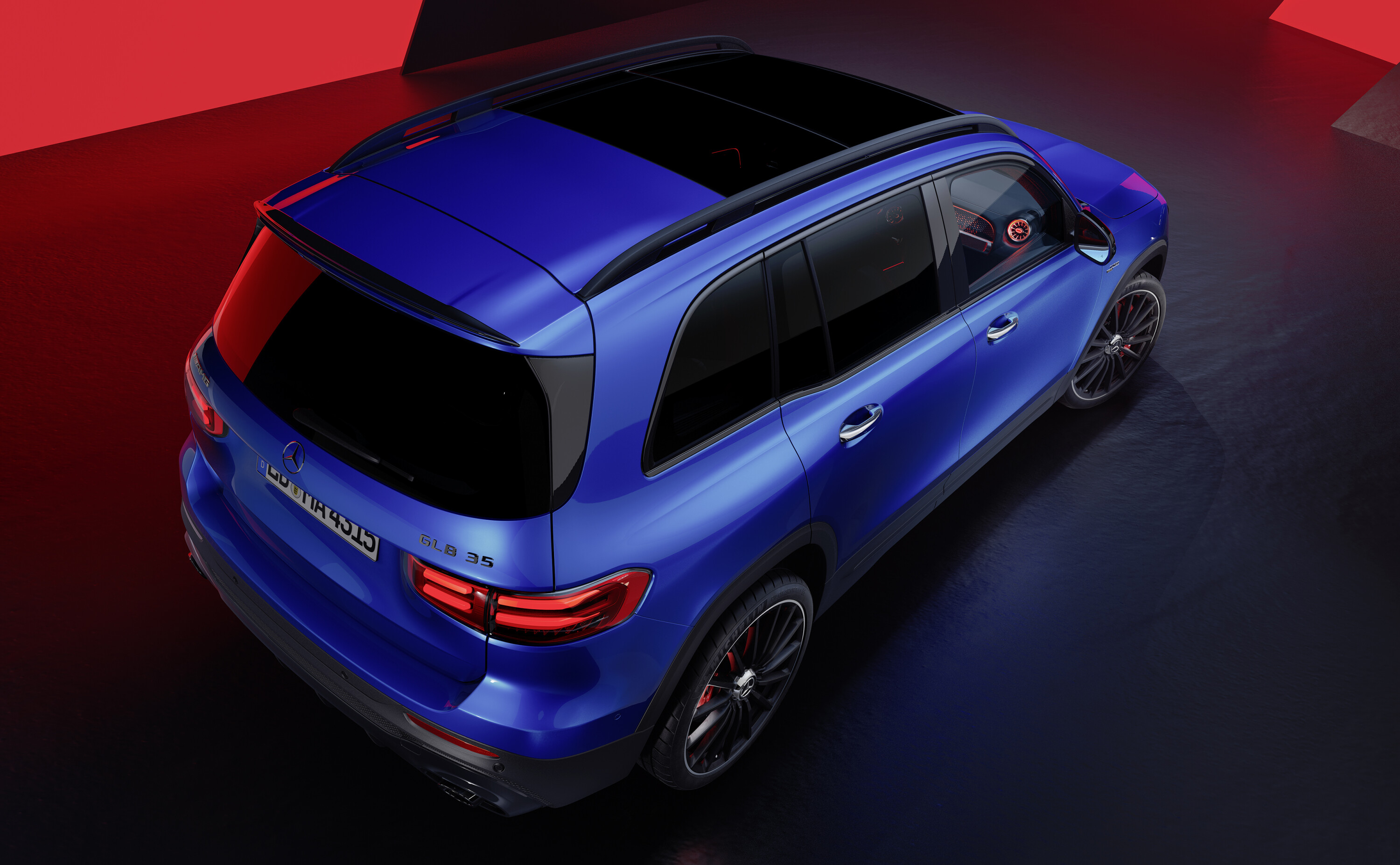
The facelifted 2024 Mercedes-Benz GLB small SUV is now available to order in Australia.
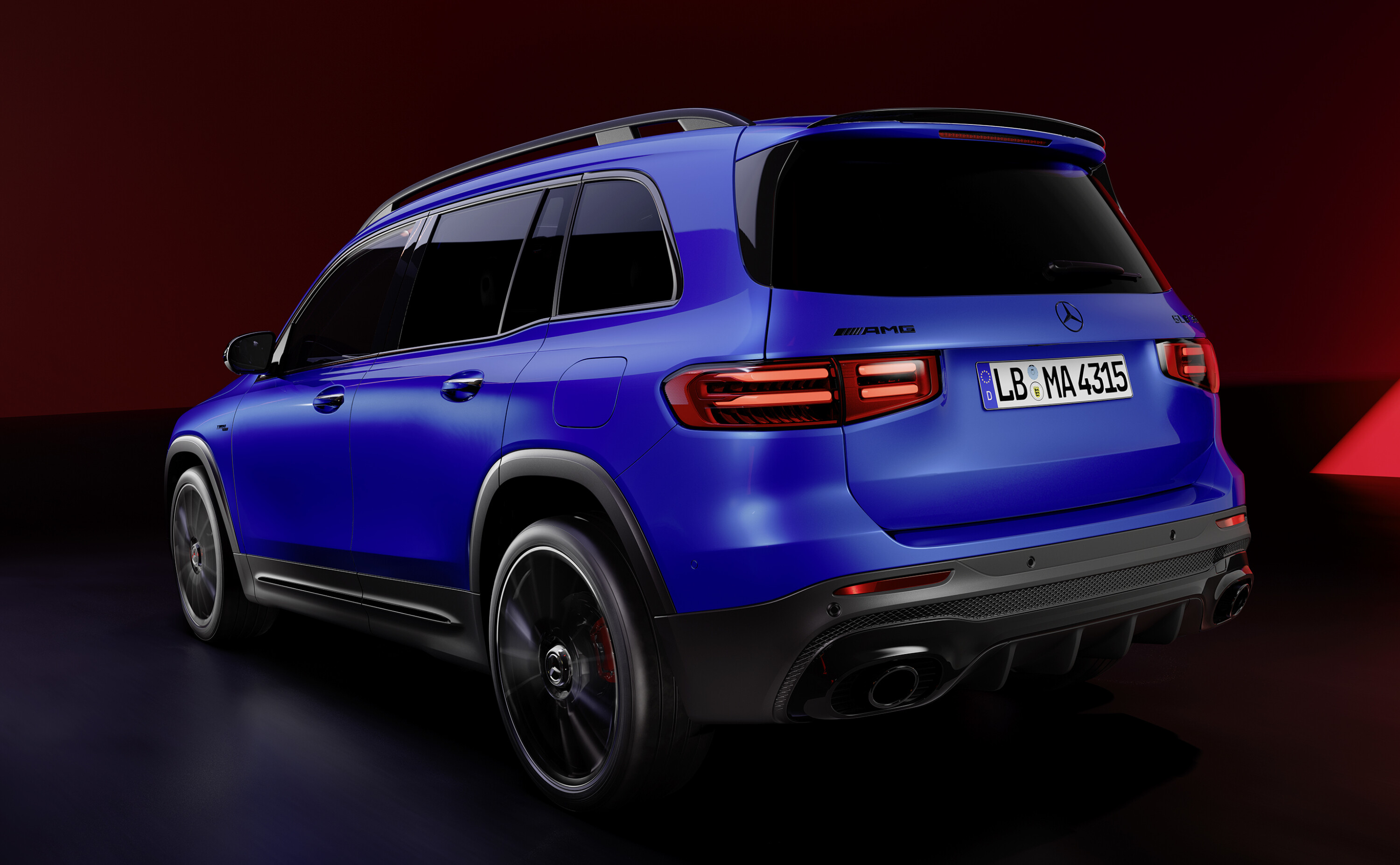
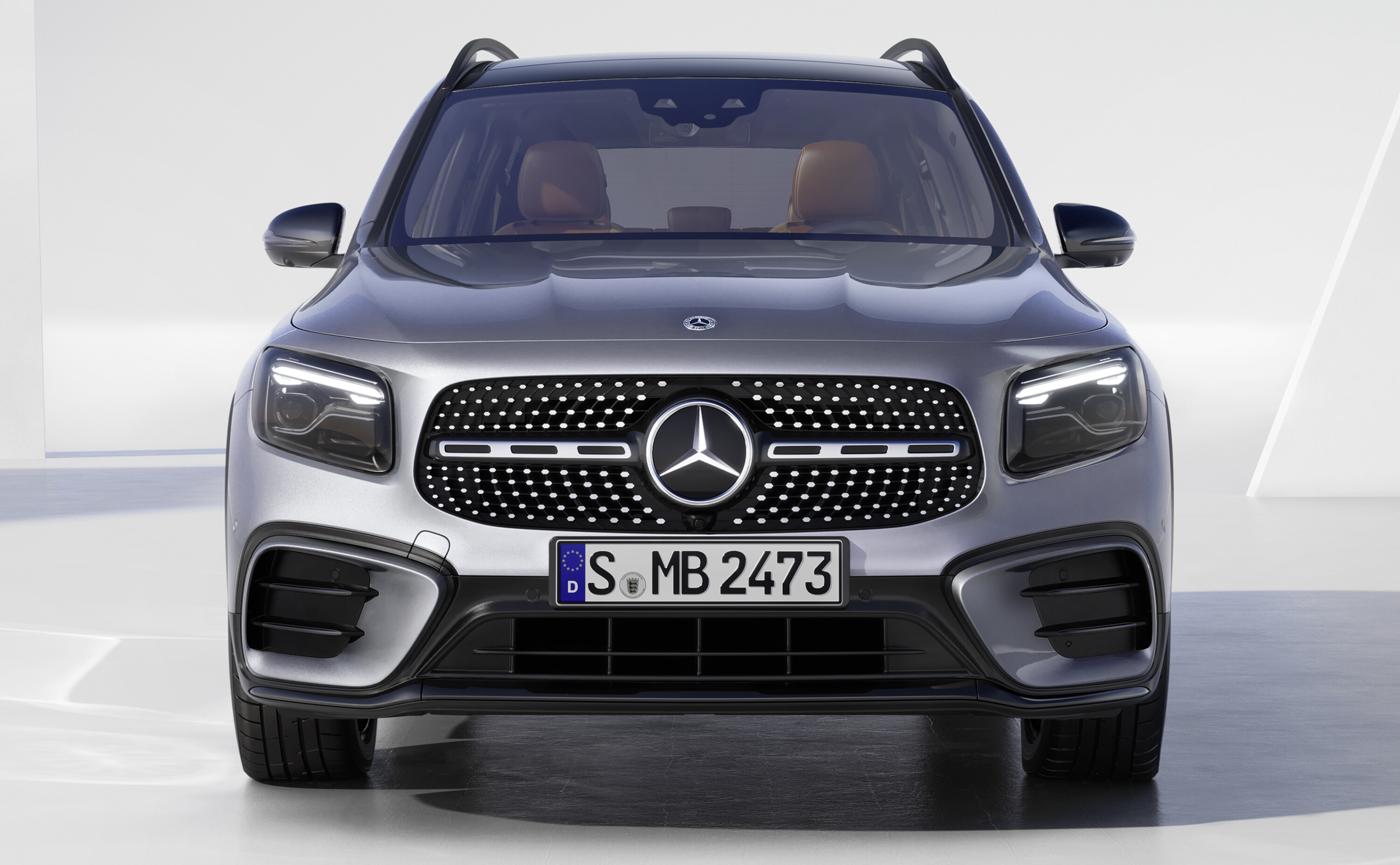
Mirroring the updated A-Class launched in mid-2023, design changes include redesigned headlight internals, modified tail-lights, and new alloy wheel designs.
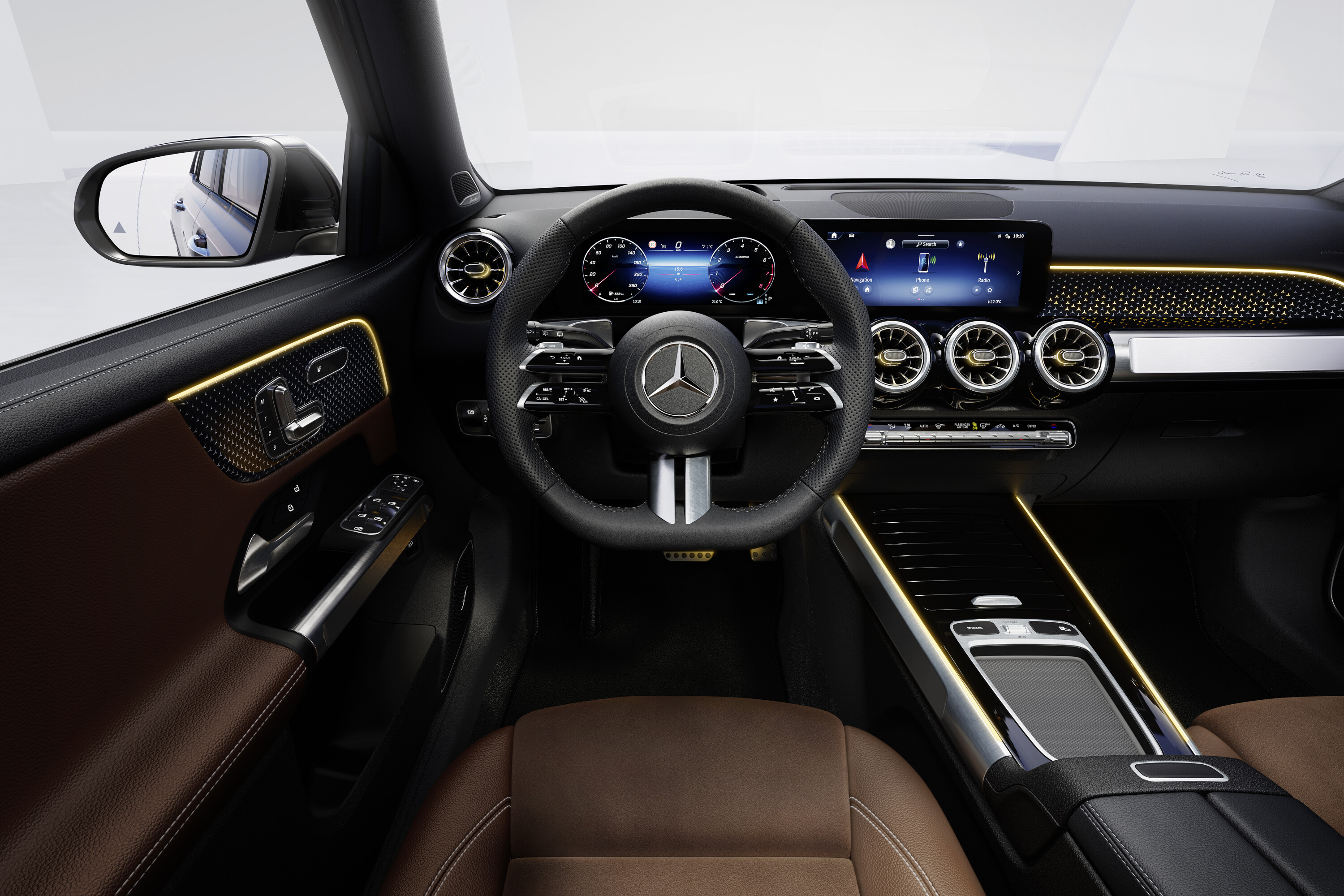
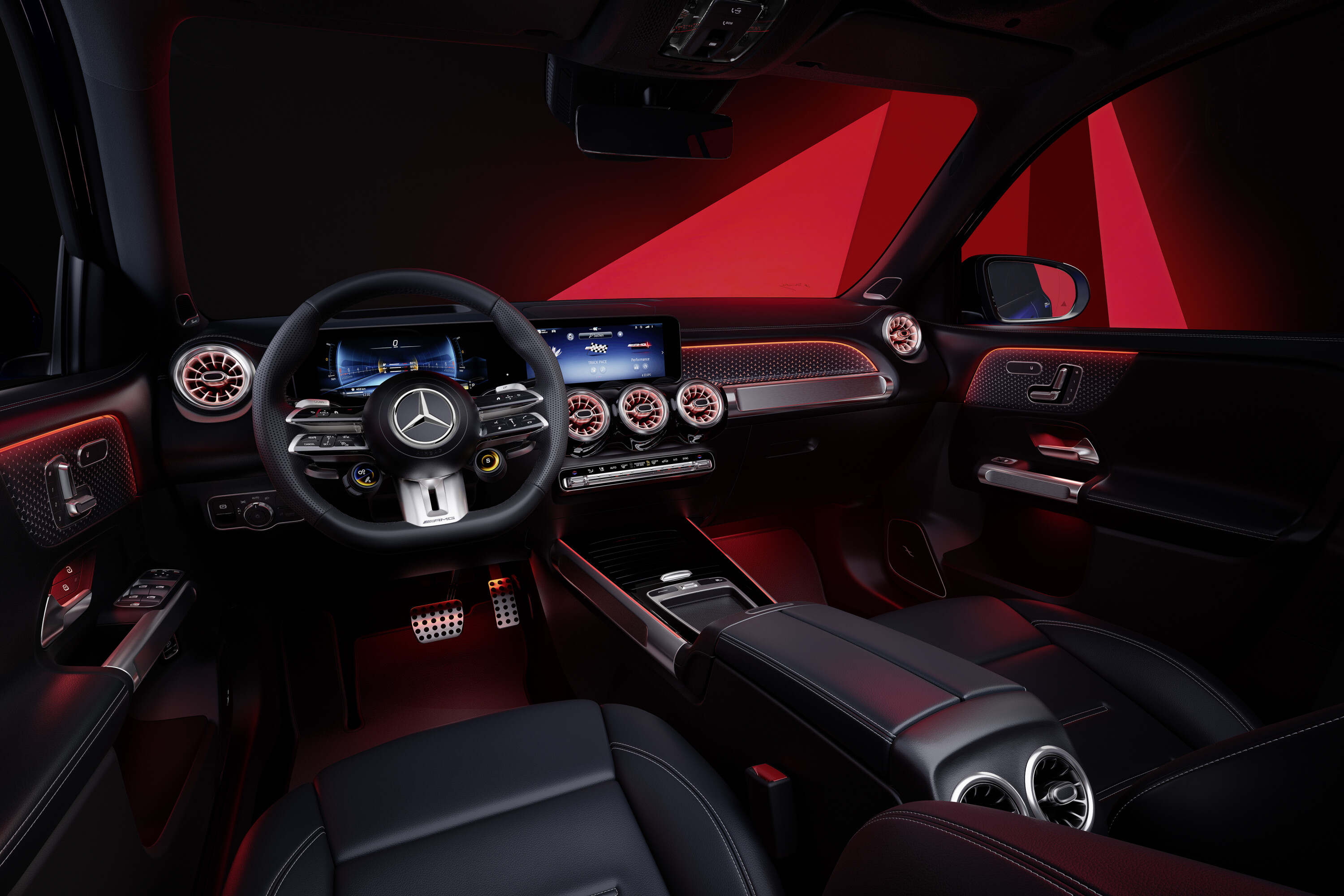
Inside, it features an AMG twin-spoke steering wheel, a simplified centre console with the touchpad removed and repositioned controls, along with an additional USB-C port.
1
While the current 10.25-inch MBUX infotainment system remains, it has been revised with new features, including wireless Apple CarPlay and Android Auto and a higher-resolution 360-degree camera.
There are also newly designed display styles, machine learning, and the ability to speak to the voice assistant without saying ‘Hey, Mercedes’ first in some instances.
A fingerprint sensor on the centre console to identify and authenticate the driver is not available in Australia.
1
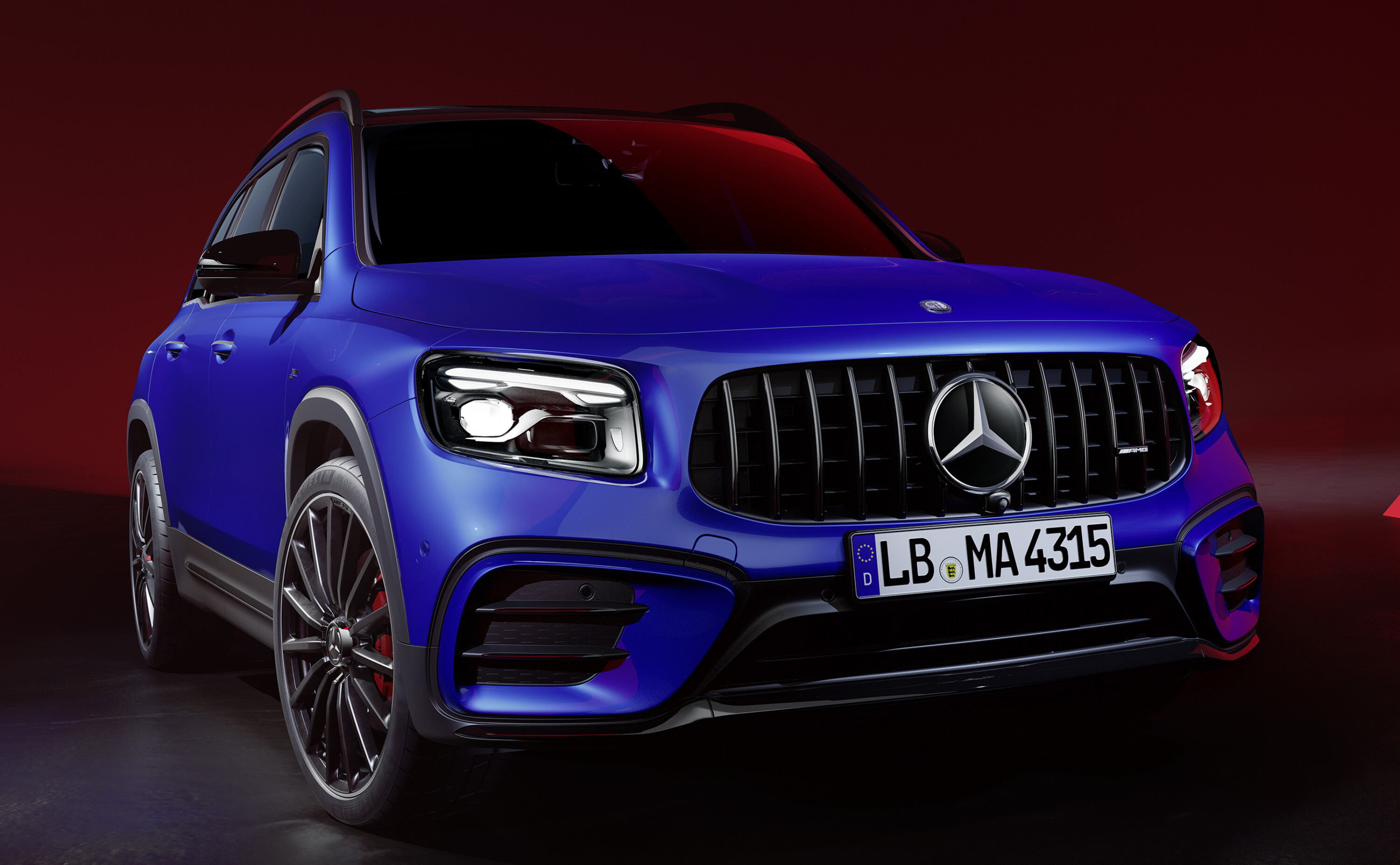
The GLB 35 receives the round AMG emblem to replace the Mercedes star with a laurel wreath that remains fixed to the bonnet on non-AMG variants.
Under the bonnet, all petrol engines – including the AMG 35 – are fitted with a 48-volt mild-hybrid system for the belt-driven starter generator.
This system brings an additional 10kW with faster acceleration, added refinement with low-noise engine starting and reduced vibration, and regenerative braking.
1
While the GLB 35 has unchanged outputs at 225kW and 400Nm, it receives an eight-speed dual-clutch automatic transmission, replacing the previous seven-speed unit.
Pricing for the GLB 200 has increased by $5900, while the GLB 250 AWD is up $3531. The AMG GLB 35 has increased by $431 compared to the pre-facelift version.
The GLB 200 features a 1.3-litre turbocharged mild-hybrid four-cylinder petrol engine producing 120kW and 270Nm. It is matched to a seven-speed dual-clutch automatic transmission, sending power to the front wheels.
Mercedes-Benz claims a 9.3-second 0-100km/h sprint time.
The GLB 250 has a 2.0-litre mild-hybrid turbo-petrol four, with 165kW and 350Nm, all-wheel-drive, a 7.0-second 0-100km/h sprint time, and a new eight-speed dual-clutch automatic transmission.
1
In the AMG GLB 35, the 2.0-litre turbo is uprated to 225kW and 400Nm. It has a 5.5-second 0-100km/h sprint time.
Front-wheel drive variants have multi-link rear suspension and a 43-litre fuel tank, while all-wheel drive models sport a larger 60-litre tank.
GLB 200 and GLB 250 require premium unleaded (95 RON or higher), while the AMG GLB 35 requires 98RON.
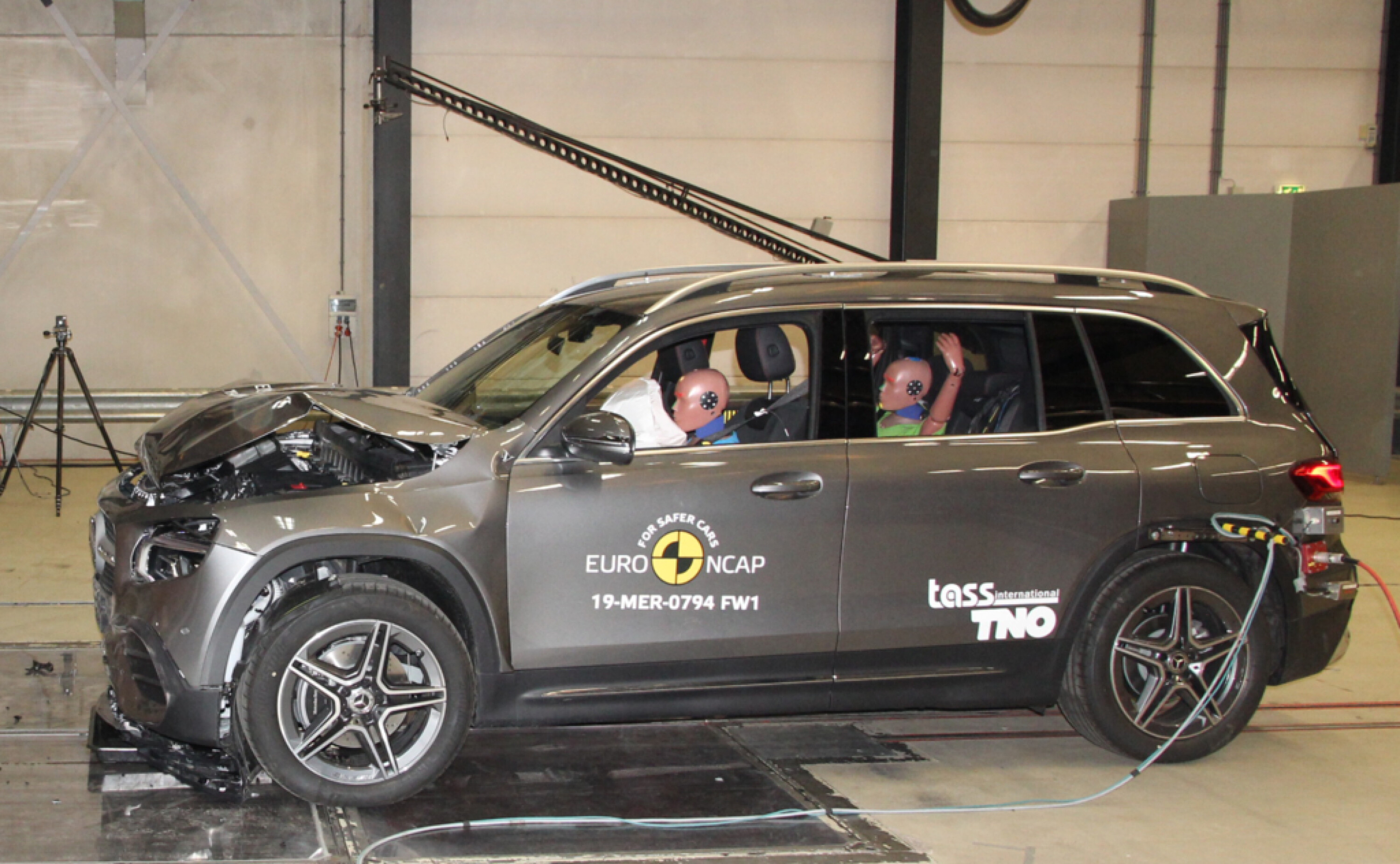
The Mercedes-Benz GLB is covered by a five-star ANCAP safety rating, based on testing conducted in 2019. This rating does not apply to the AMG GLB 35.
It scored 92 per cent for adult occupant protection, 88 per cent for child occupant protection, 78 per cent for vulnerable road user protection, and 76 per cent for safety assistance.
Seven airbags (dual front, side-head, side-chest and driver’s knee) are fitted as standard, including side-head coverage for the third-row.
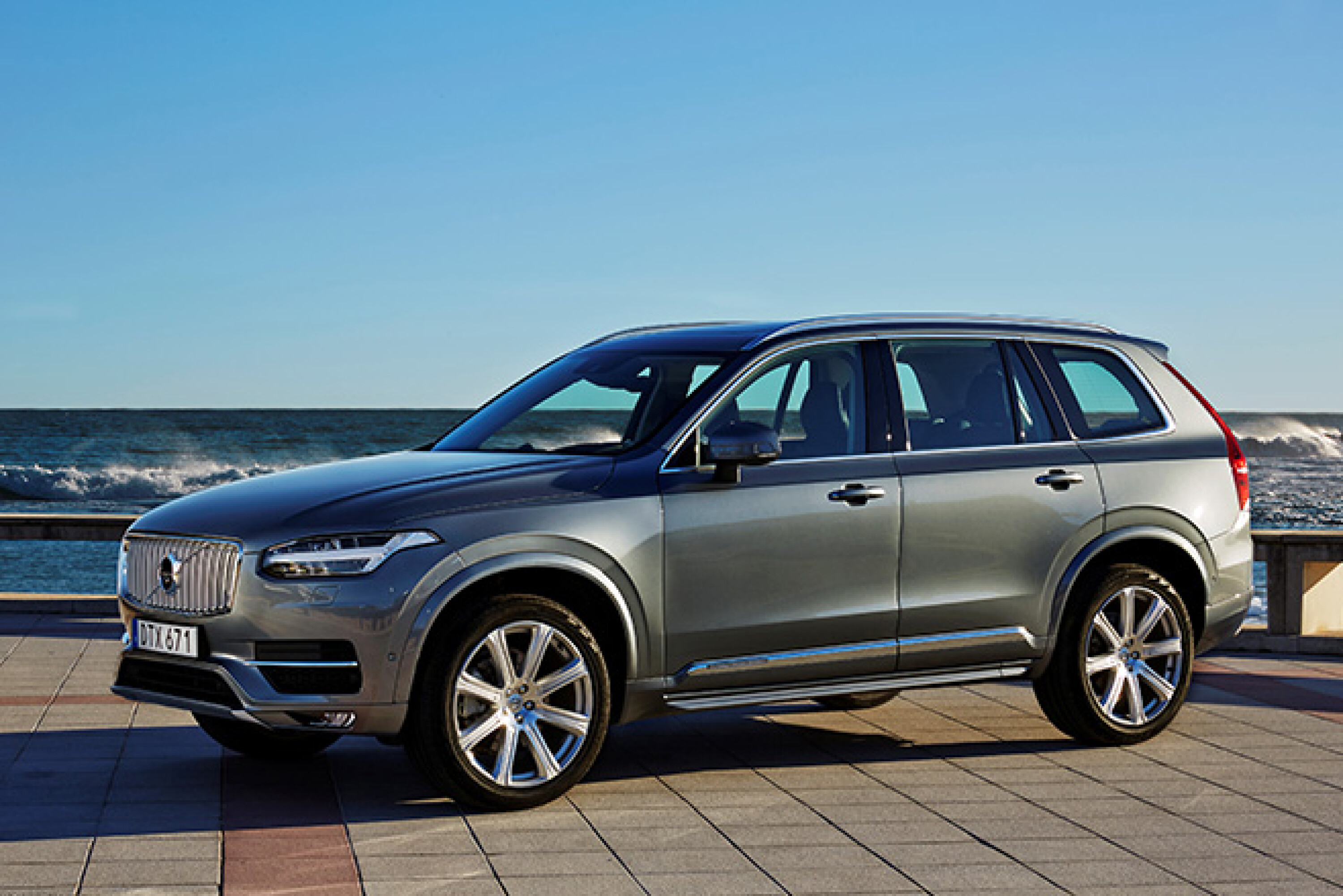
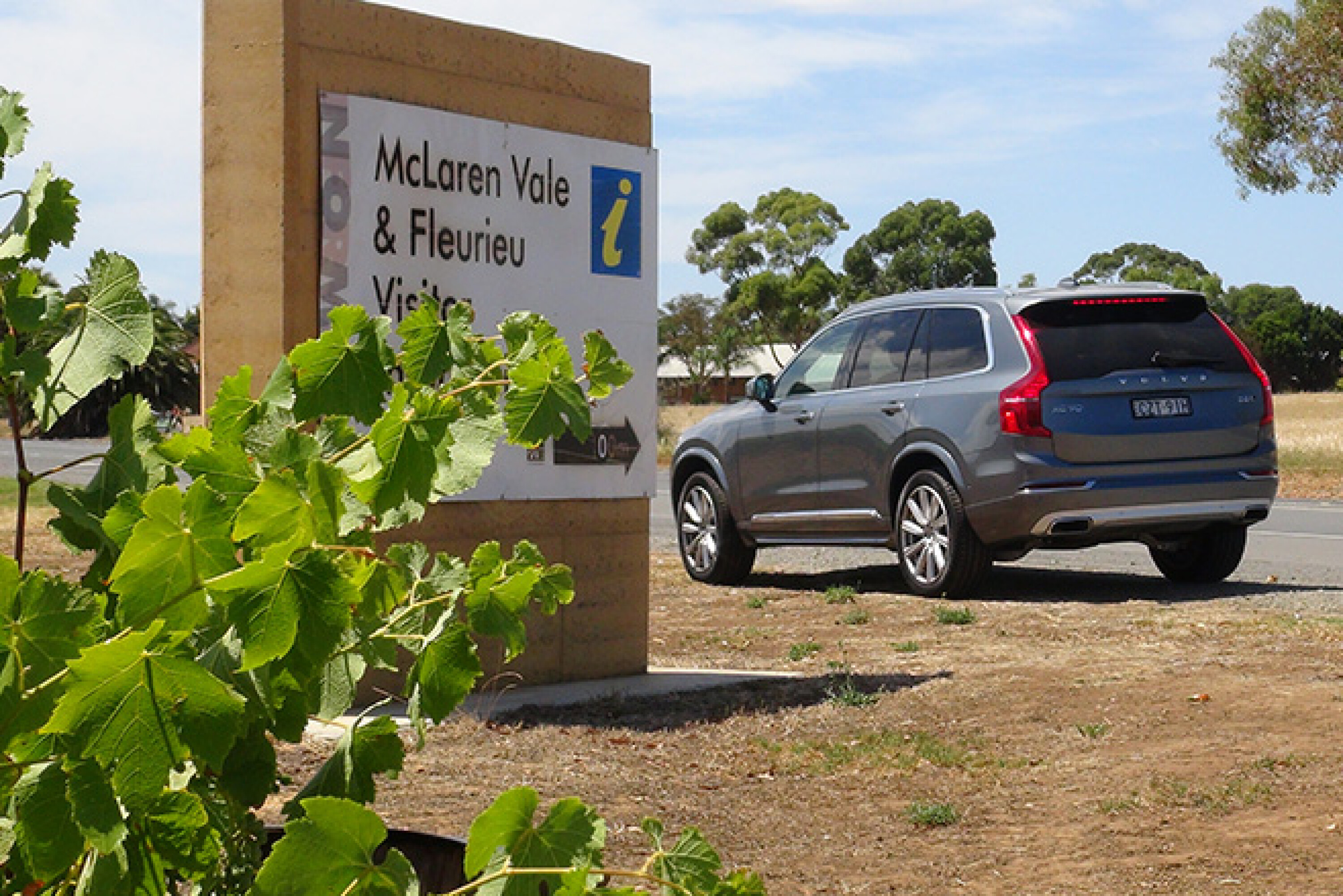
The Volvo XC90 has long been revered as a symbol of luxury and safety in the large SUV market.
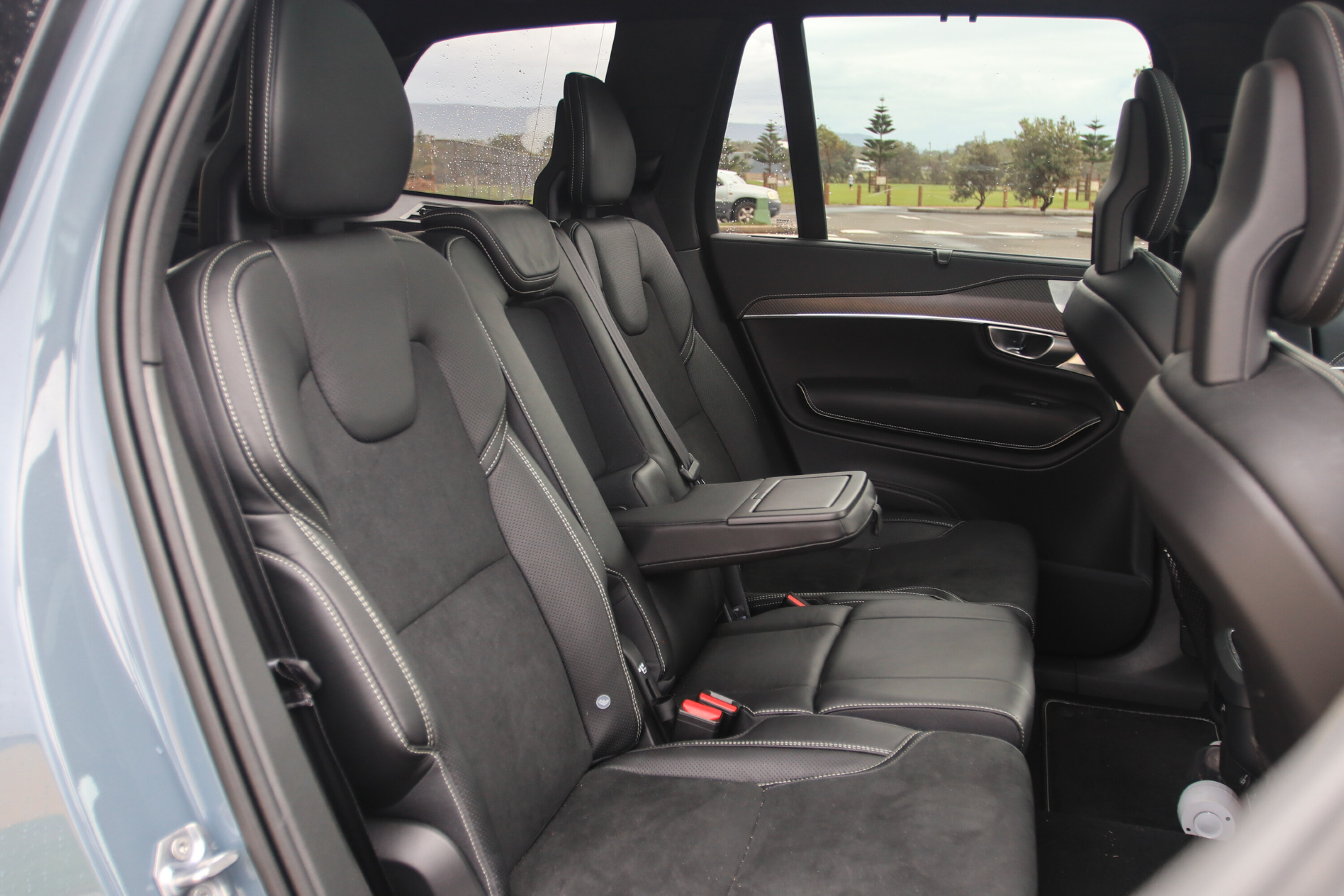
The 2024 XC90 Plus continues this legacy, offering a refined and sophisticated driving experience. As Volvo’s flagship SUV, the XC90 Plus combines the brand’s commitment to safety with unparalleled luxury and comfort.
Volvo’s plan to go all-electric by 2030 is getting started with a range of mild-hybrid powertrains in the XC90.
But in a segment filled with premium competitors, does the XC90 Plus distinguish itself?
1
Pricing and Features
The Volvo XC90 Plus is mild-hybrid luxury 7-seater SUV available in two grades – Plus and Ultimate . The entry-level Plus is priced at $100,990 before on-road costs.
There’s a solid 183kW and 350Nm to play with via both the ‘B5’ mild-hybrid four-cylinder engine.
A more powerful larger ‘B6’ mild-hybrid engine is available for the Ultimate variant.
1
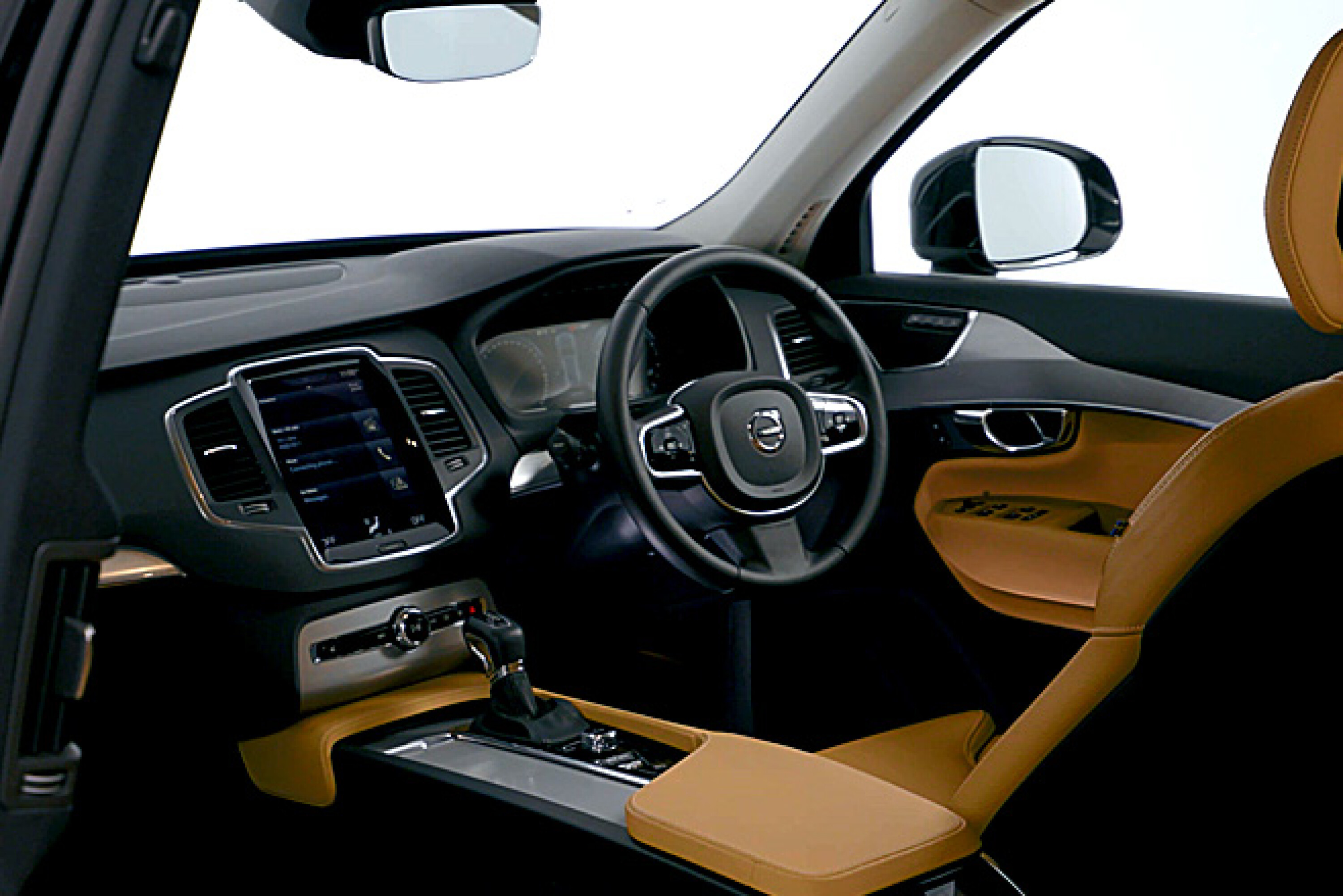
The design of the minimalist cabin resembles that of a top-tier Scandinavian furniture store, exuding a sense of luxury and exhibiting flawless build quality.
The only aspect that reveals the age of the Volvo is its 9-inch portrait-oriented touchscreen. Although its small compared to many competitors its performance is excellent.
Features that are standard on the Plus variant include:
20-inch alloy wheels
Heated front seats
360-degree camera
Leather accented seats
9-inch infotainment screen
LED headlights
Apple Carplay and Android Auto (wireless)
Power adjustable front seats
Auto dimming rear view mirrors
Power hands-free tailgate
Blind spot monitor
Rain sensing wipers
Dual-zone climate control
Retractable door mirrors
Front and rear parking sensors
Wireless charger
Heads up display
Features such as a panoramic sunroof, heated seats and a premium sound system are all available to add on as cost options.
1
Safety
The XC90 is currently not ANCAP rated but did receive 5-stars when the same generation was assessed back in 2015.
However safety is paramount in the XC90 Plus, with some of Volvo’s latest suite of safety technologies and driver aids.
This includes advanced features like Pilot Assist, a 360-degree camera, and numerous active safety systems designed to protect passengers and pedestrians alike.
Standard on all XC90 grades are safety features such as blind spot monitors and rear cross traffic alert.
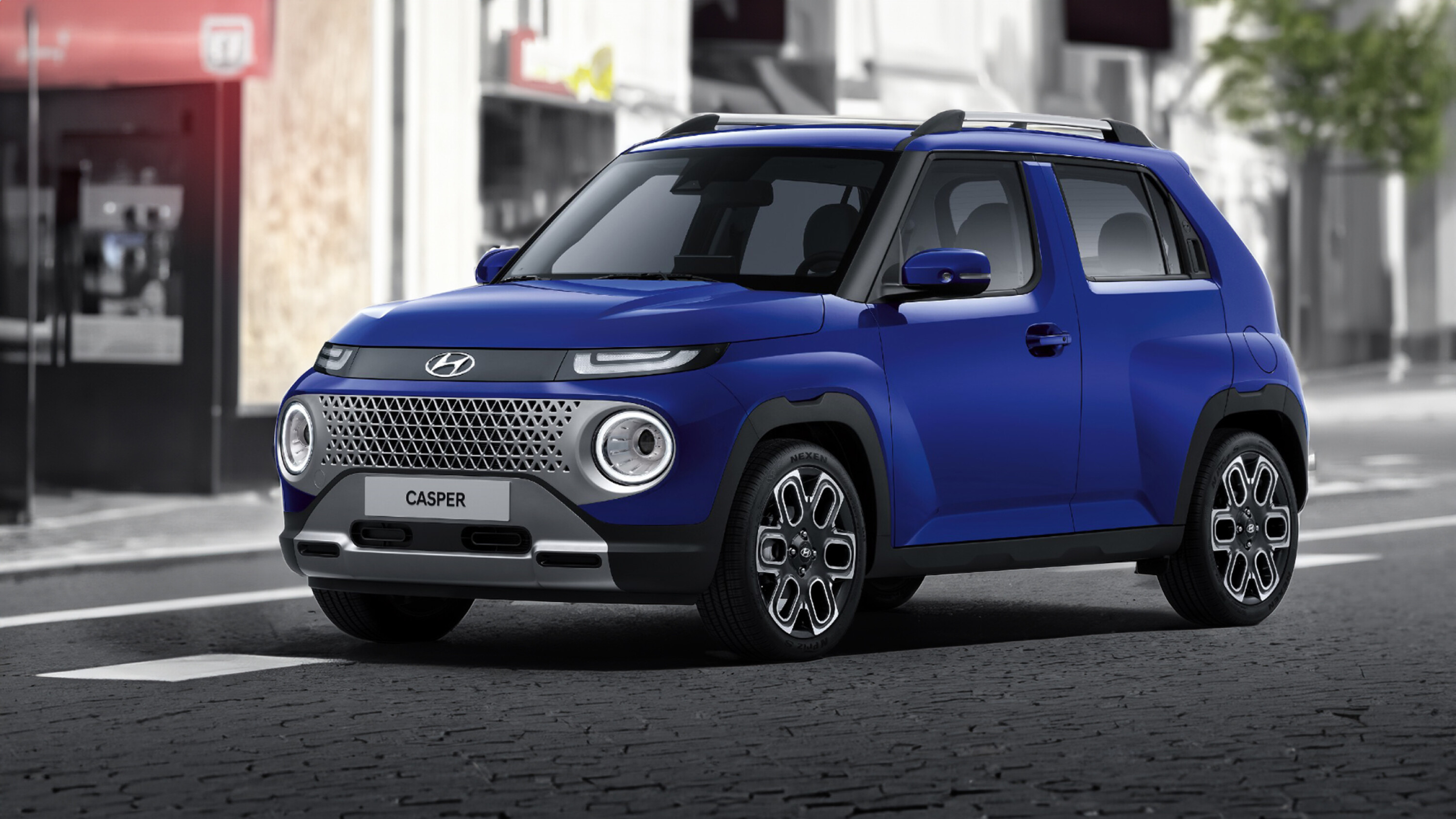
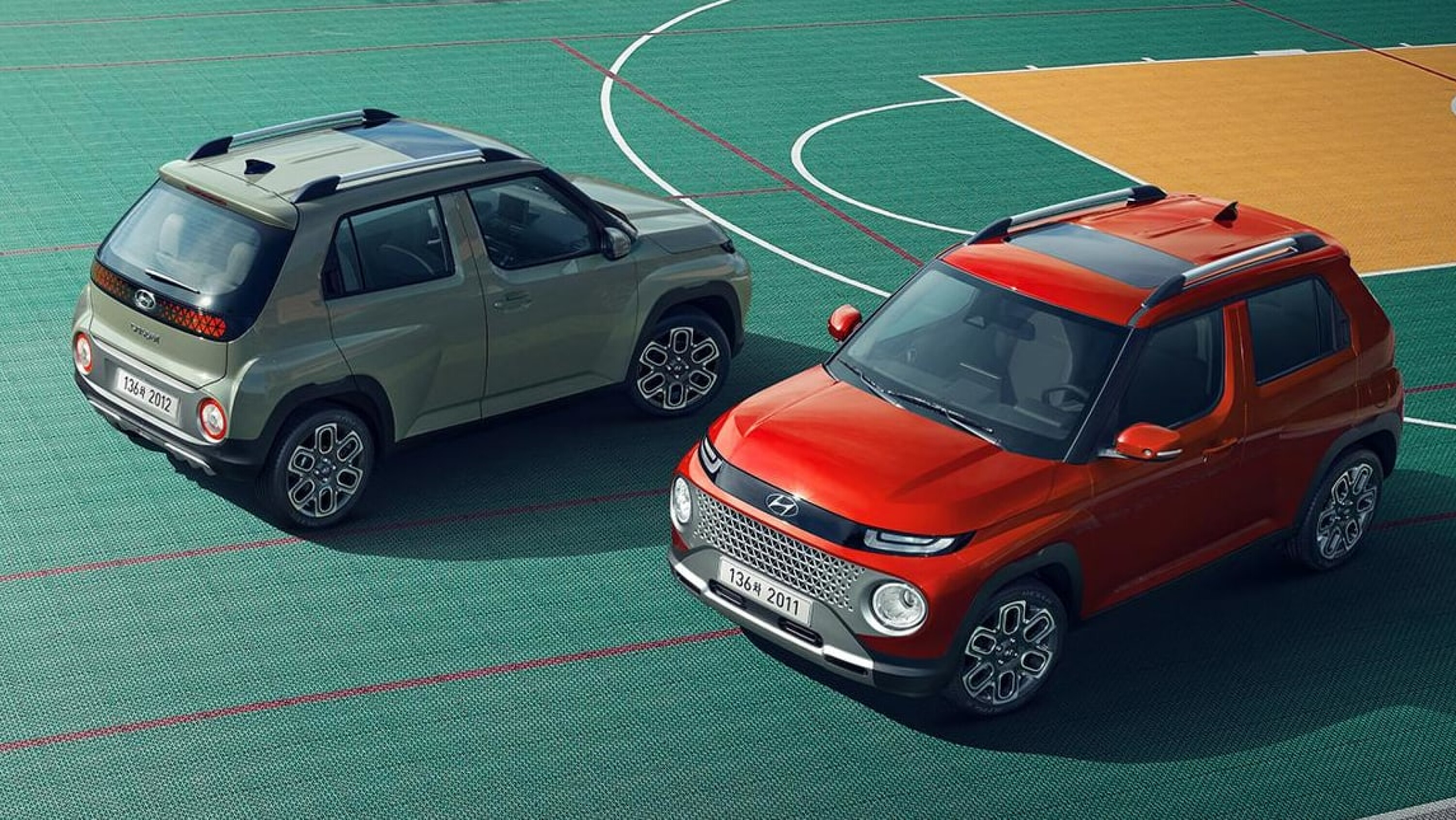
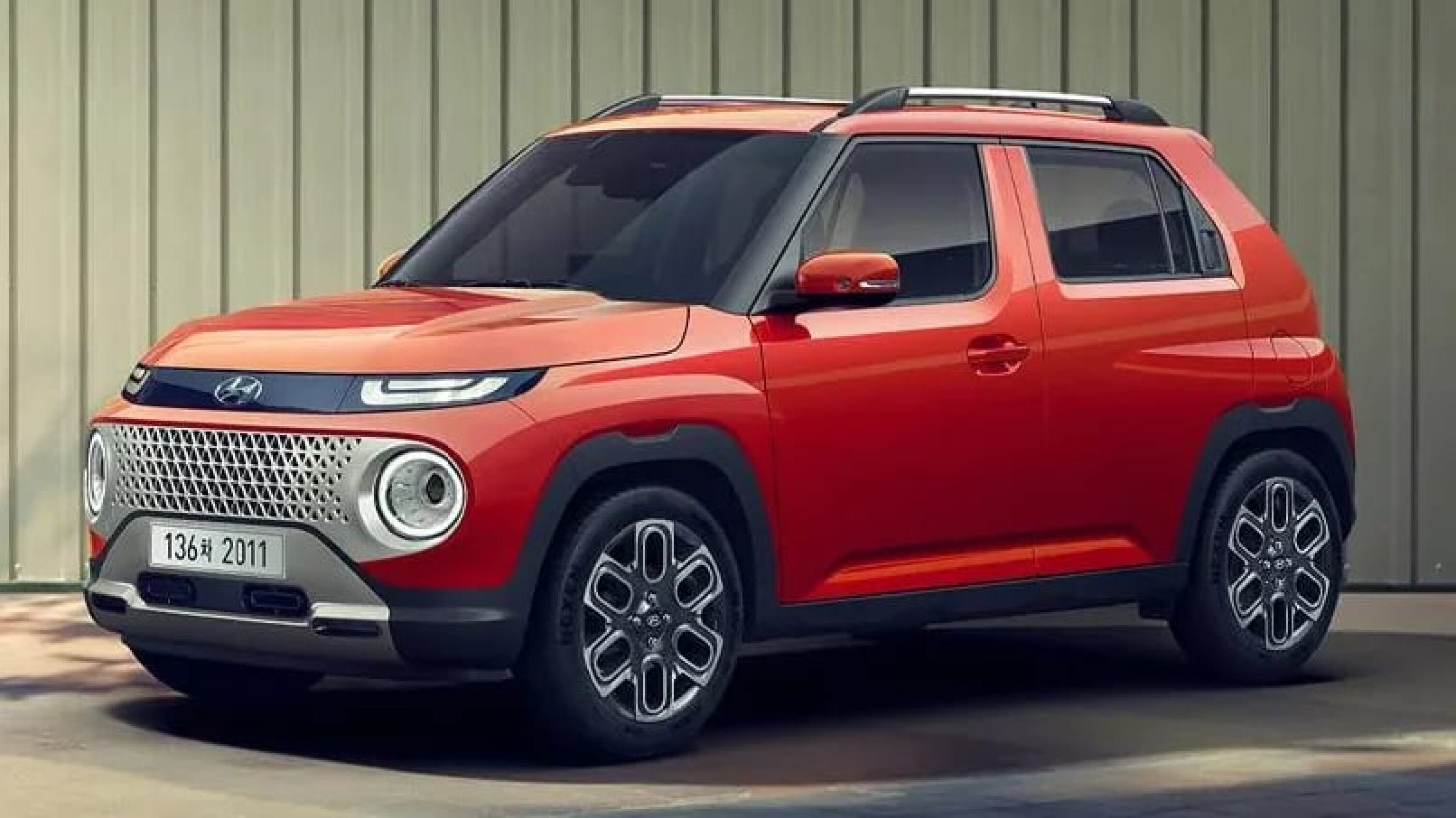
It seemed appropriate that we drove Hyundai’s new micro SUV around Halloween – not that the annual trick-or-treat-fest is as popular in Australia as the US. Nor in South Korea, where we got behind the wheel of what is Hyundai’s smallest passenger vehicle.
Currently only sold in Korea, the diminutive five-door Casper – with its raised ride height and plastic wheel arch flares – is a crossover city car built on the same K1 platform as the i10 and Kia Picanto, and was introduced into Hyundai’s local market last year.
1
With quirky, retro-futuristic styling, design chief Simon Loasby said Hyundai called it Casper because “we feel it’s a car which becomes your friend”.
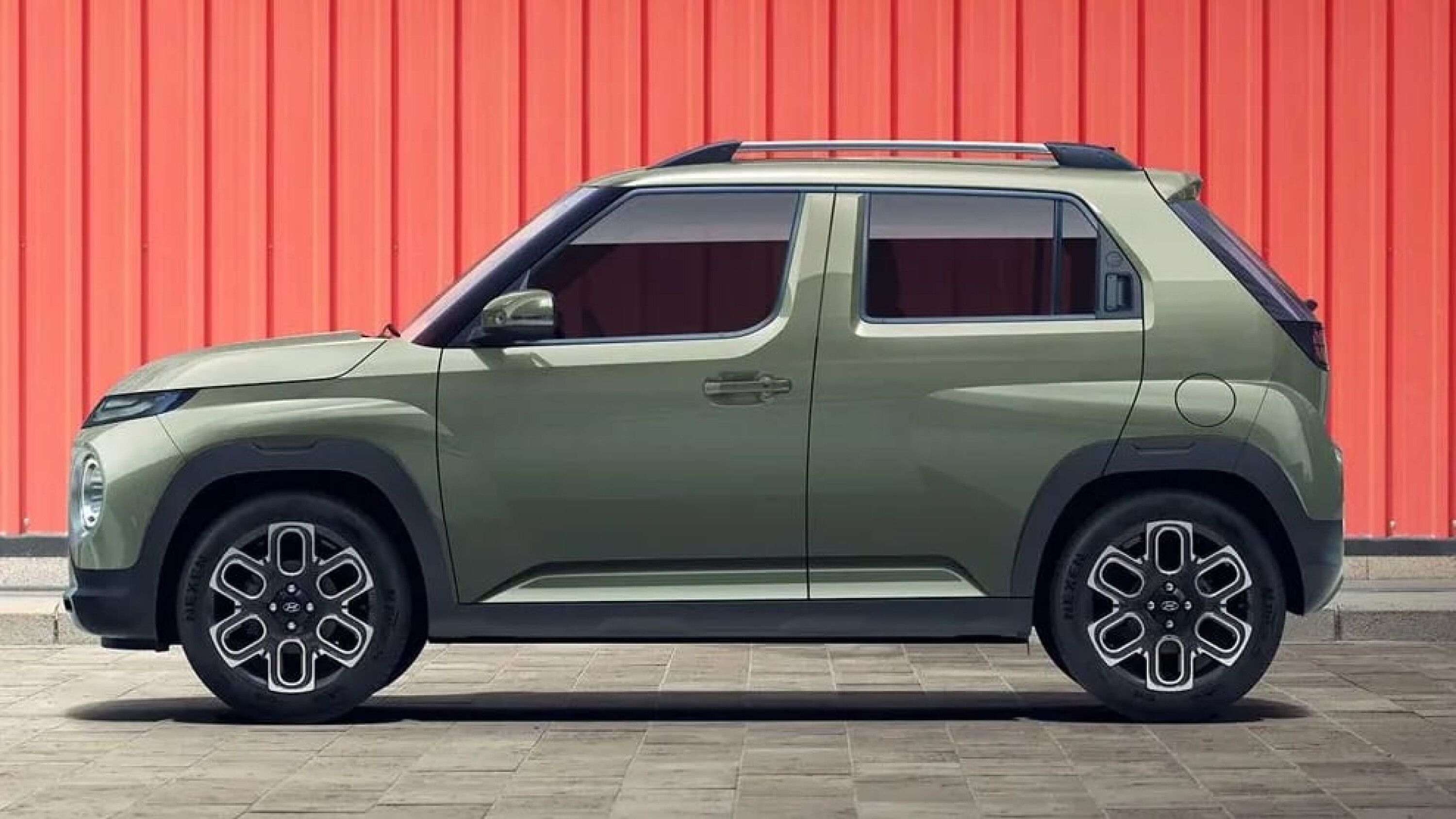
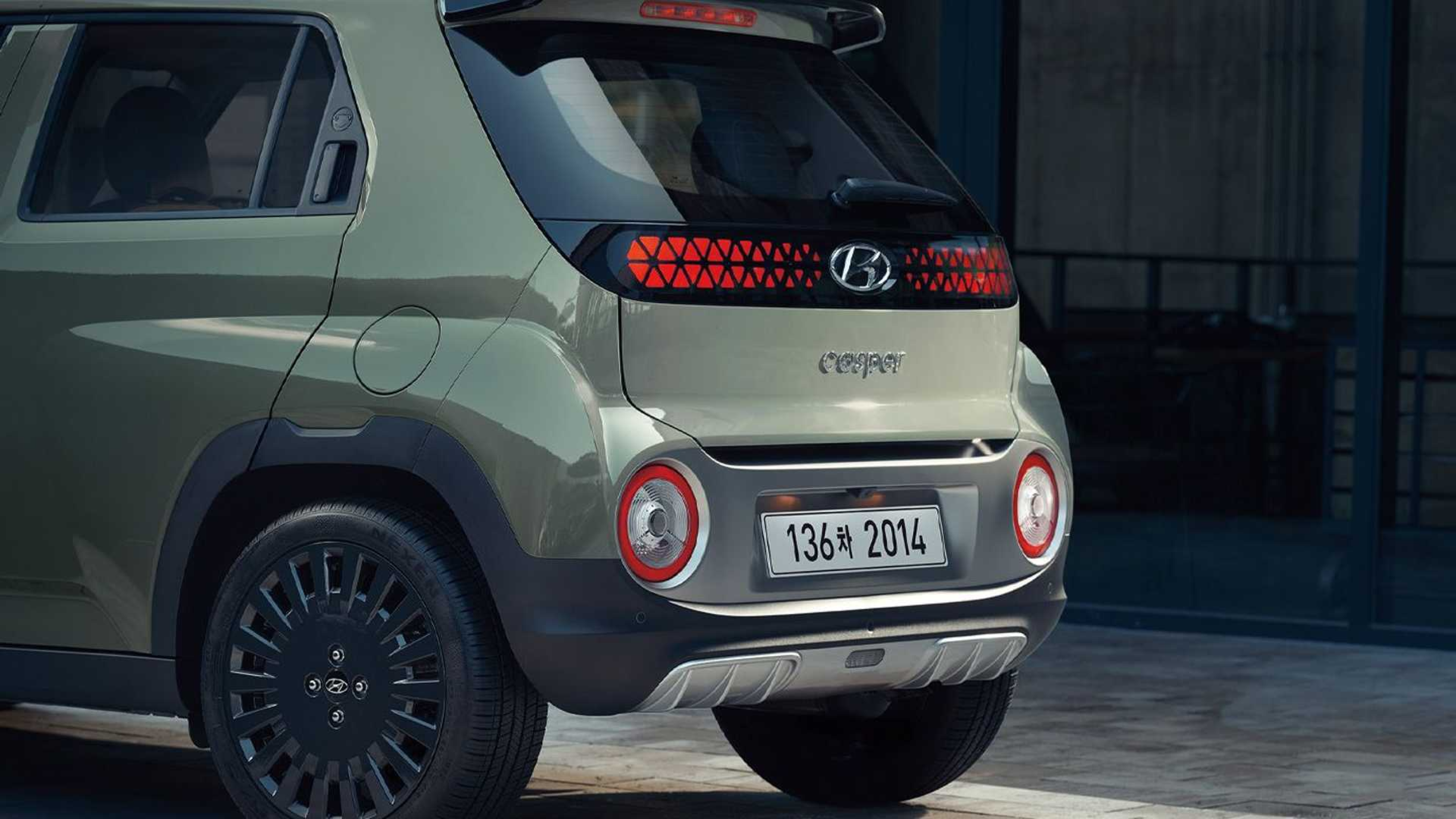
A car’s colours always reveal much about its personality. The Casper comes in six shades, the coolest of which are Tomboy Khaki green and Soultronic Orange Pearl. Hyundai also offers some funky interior colour combinations including an eye-popping white and purplish-blue.
For now, the Casper is offered with two petrol 1.0-litre three-cylinder engines – a naturally aspirated 56kW/95Nm version and one with a tiny turbocharger, producing a meatier 74kW/172Nm. Both are front-drive and use a four-speed automatic, which we presume is a very old design.
1
But that matters not, as an electric version is on the way, according to credible reports by South Korean auto media – and as we reported ourselves a while ago.
In Korea, an electric Casper could attempt to match the popular Chevrolet Bolt’s offering, which includes a single 149kW front-mounted electric motor and 66kWh battery offering around 380km of (WLTP) range. Without subsidies, the Bolt’s price roughly converts to AU$45,000.
Of course, the Bolt isn’t sold in Australia, but an electric Casper could be – and there are rivals waiting here for it.
1
In Australia, an electric Casper could compete with the current cheapest EVs, such as the MG 4, the GWM Ora and the BYD Dolphin – all Chinese, and all a smidge under $40k.
And, with Hyundai HQ in Korea having not even confirmed an electric Casper being in development, the local arm has had no comment to offer. We can only pray to the electric vehicle gods – or speak to them via seance (whatever your spooky communication method of choice).
Undoubtedly, an electric Casper would be very cool.
1
On a trip to South Korea last year, Wheels got the chance to test drive the petrol Casper. There aren’t many cars we’ve ever described as adorable…
But, at just 3.6 metres long and 1.6 metres wide, the Casper is almost toy-like – about the same size as a Suzuki Jimny and a class below Hyundai’s small Venue SUV. It’s cute as a button.
I love that the turbocharged model is distinguished by two circular, silver air intakes on the front bumper and that the Casper, with its tiny overhangs and squared-off wheel arches, makes 17-inch wheels look like 20s.
The Casper’s front doors feel thin and light and once you’re inside, you sit behind a flat, near-vertical windscreen looking over a cute little bonnet bulge. It feels like a baby Jeep Wrangler (with a slightly better interior).
Packaging is good for the Casper’s size – on our test, two adult males up front were hardly rubbing shoulders. Headroom is very generous, although tall people might struggle with knee room, especially given the lack of steering wheel reach adjustment.
1
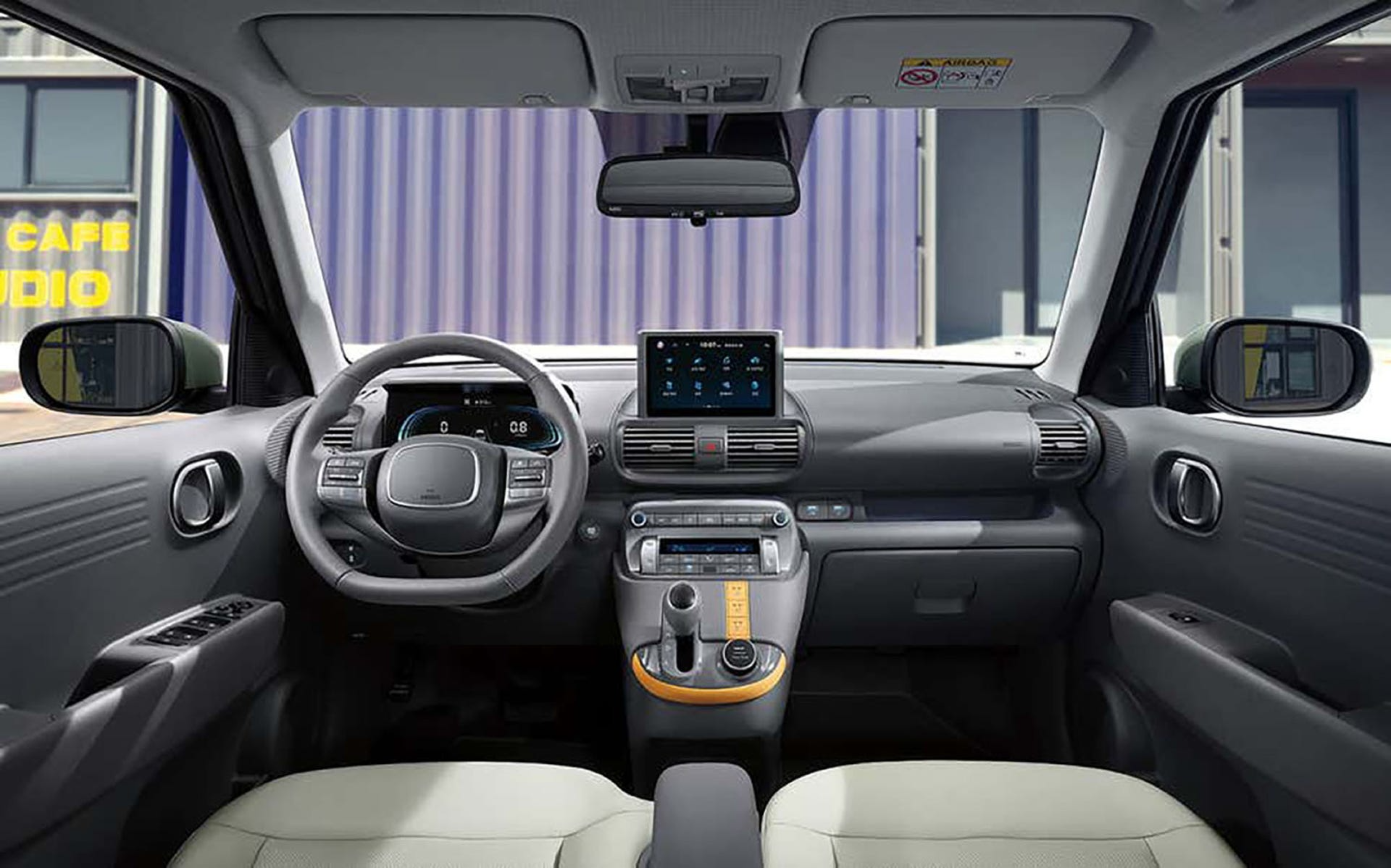
It’s well-enough equipped in the cabin, if not game-changing. There’s a 4.2-inch semi-digital instrument display and an 8.0-inch central infotainment touchscreen.
Cheap, scratchy plastics abound – including the entire door cards – but then the Casper does start from something like $19,000 in Korea.
Our up-spec test vehicle had an impressive amount of equipment – leather steering wheel trim, heated front seats with ventilation for the driver, adaptive cruise control, lane-keep assist, blind-spot monitoring, automatic high beam and a sunroof. The Casper has two USB-A outlets up front (although no USB-C). It has seven airbags.
There’s some clever interior design going on, as well. The centre console, including cup holder, is incorporated into the driver’s seat and the whole unit slides back and forward as one.
1
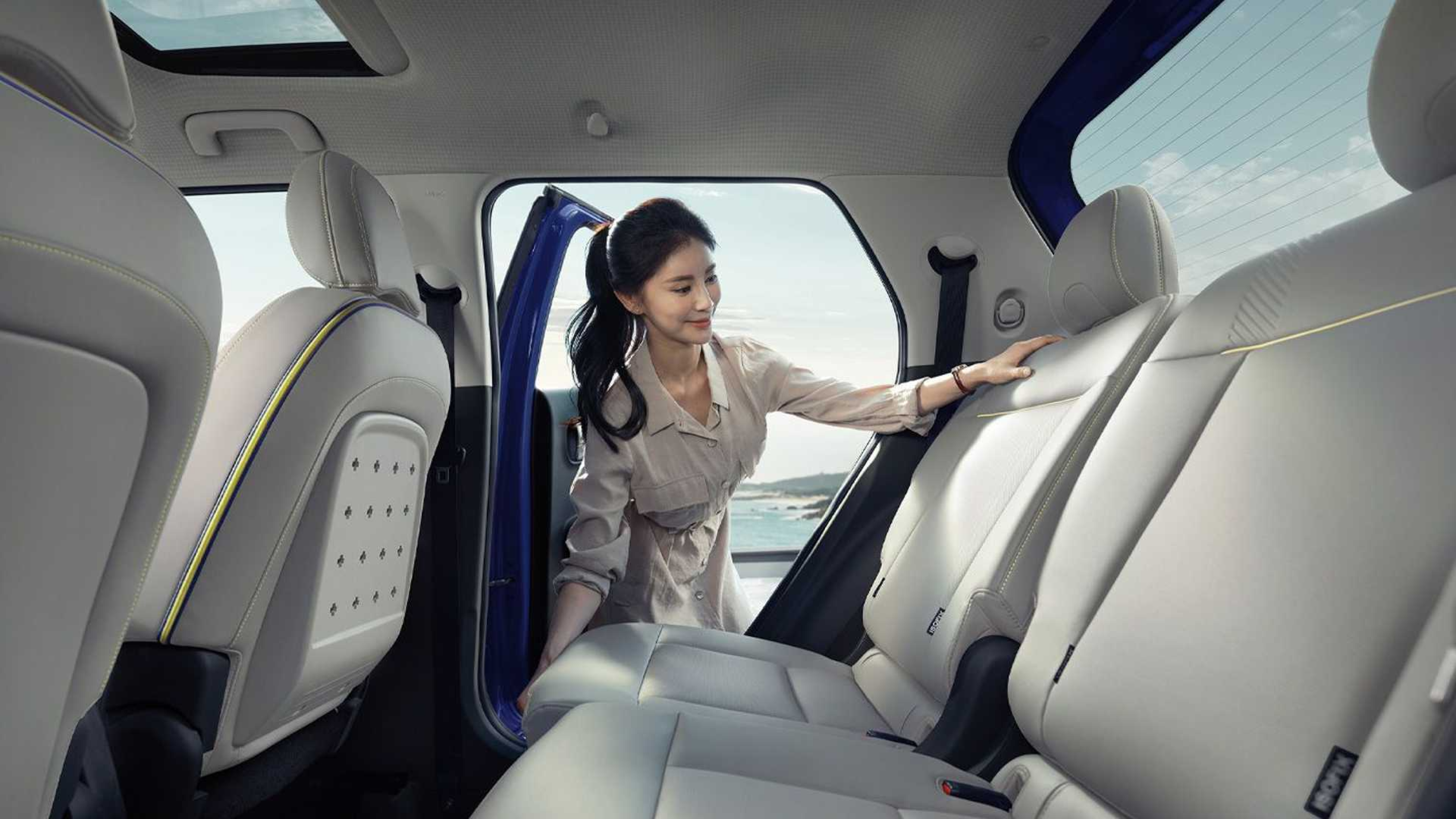
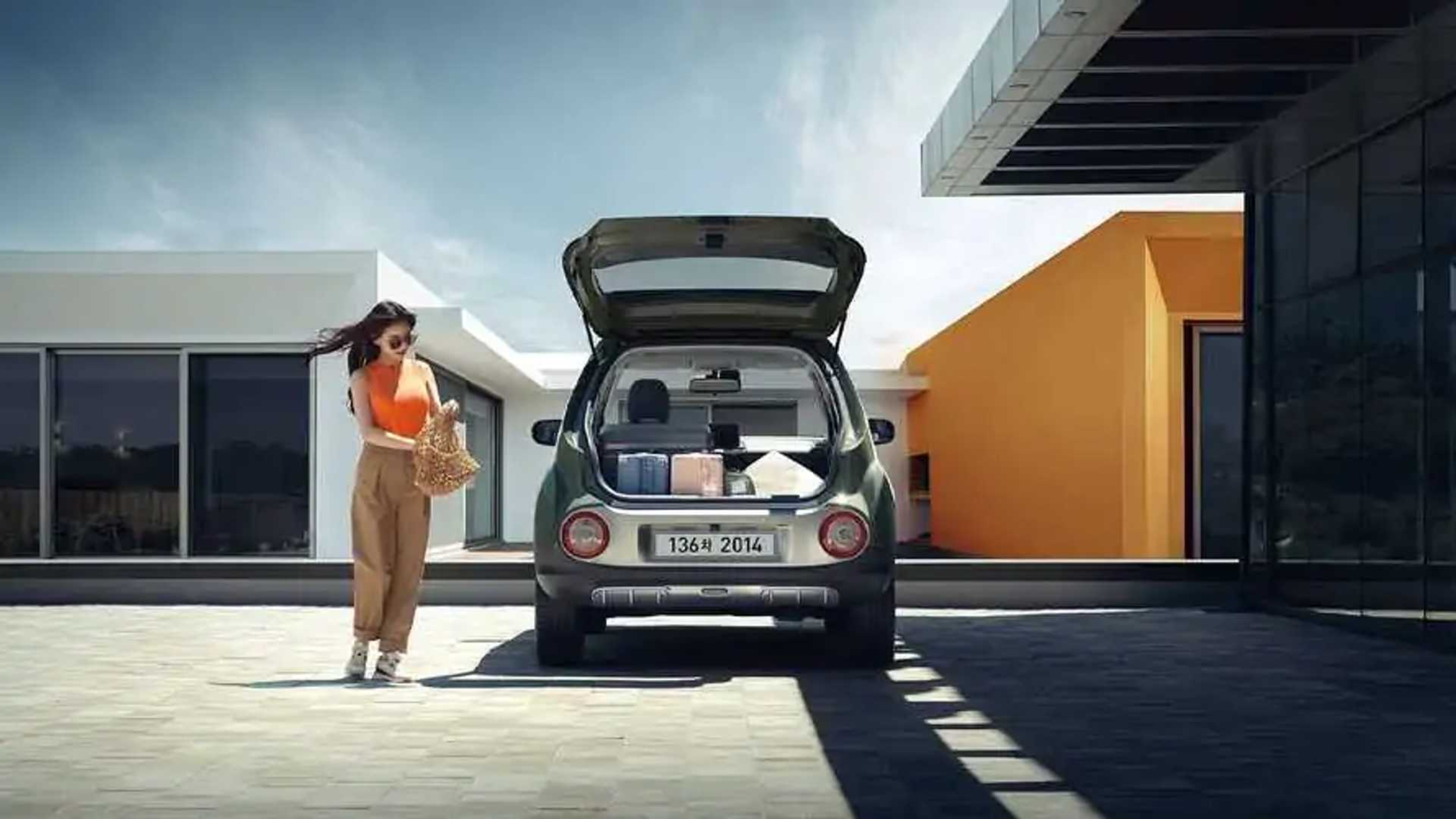
The back seats are also on rails, meaning you can slide them forward to increase boot space when you don’t have rear passengers (but you do sort of have to pick between the two – boot space, or friends).
The Casper is a four-seater and there’s more than enough space for two adults in the rear. Headroom back there is especially generous, although there are no air vents and only a single USB-A outlet.
To drive, the Casper feels delightfully small with lovely, light steering.
While not the quietest or smoothest engine – nor powerful; the naturally aspirated Casper won’t be winning many drag races – the 1.0-litre’s distinctive three-cylinder noise certainly contributes to the Casper’s likeable quirkiness. Sadly we didn’t get to drive the turbo version.
1
The front-drive Casper is made to run around the inner city and at this, it excels.
On offer are Normal and Sport modes. Normal mode feels programmed for maximum fuel economy – always reaching for the highest gear – while Sport turns the instrument display red and increases throttle response.
While the Casper features Snow, Mud and Sand terrain modes, you’d be brave to drive it through anything more than a puddle. Indeed, the front-drive Casper is made to run around the inner city and at this, it excels. Ride quality is also comfortable in the urban jungle, thanks to soft springs.
On the open road, the Casper performs fine but you wouldn’t want to buy one for the Australian countryside if you were doing long stints at 100km/h on coarse-chip roads. In these conditions, it’s not the quietest car.
1
For its size, it could also be more fuel efficient.
Our test car’s trip computer reported around 8.0L/100km. For the atmo Casper, Hyundai claims 7.0L/100km combined. It has a 35-litre fuel tank.
With its unremarkable fuel economy, thrashy and underpowered three-cylinder engine and archaic four-speed auto with overly tall ratios, we say junk the whole powertrain and retrofit an electric motor and batteries – and we’re pleased to know Hyundai has (supposedly) already had the same idea.
A punchy, quiet electric motor up front and a little battery pack would greatly improve the Casper’s inner-city appeal.
VERDICT
The Casper is fun, quirky and cool. It’s different – and in a world where all new cars are starting to look and feel a bit too similar, different is good.
We’re speculating wildly but an electric Casper with around 350km range for something like $40,000 would make an abundance of sense in an Australian city.
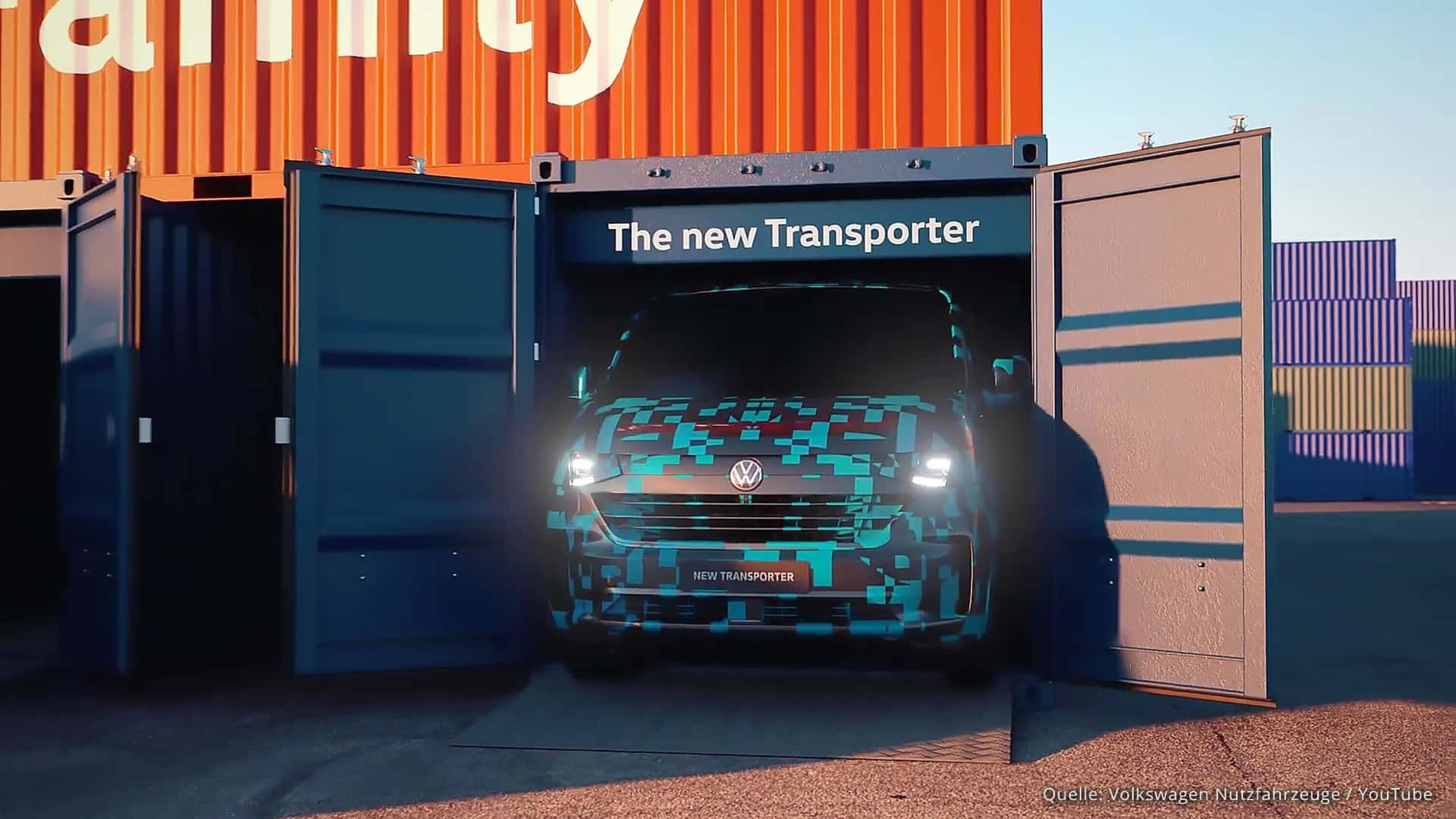
The next-generation 2025 Volkswagen Transporter has been previewed for the first time, with a new video showing a lightly camouflaged van rolling out alongside the ID.Buzz electric van and the new Multivan.
The short clip reveals that, as expected, the third model in the ‘Bulli’ family – a long-running German nickname derived from the words bus and Lieferwagen (delivery car) – will build on the now familiar styling established over generations of Volkswagen vans.
VW’s iconic design won’t be the only obvious influence, however. The new Transporter, likely to be known as the T7 generation, will share its underpinnings and panels with the Ford Transit Custom – just as the new Amarok and Ranger utes were spun out of the same tech-sharing deal that has since resulted in Ford’s new VW-based Explorer electric SUV.
1
But, where those utes and SUV models benefited from significantly greater investment to set them apart in design and capability, the vans will clearly have a lot more in common.
Today’s video briefly reveals the new Transporter’s profile before swooping around to the rear, and it’s those side and rear views that reveal bodywork largely identical to the new Ford Transit Custom. This detail was made clear in earlier spy photos, too.
This approach is nothing new, of course, with many brands sharing van bodies while relying on front-end styling and differences in powertrain and equipment to set their models apart.
The Transporter will have its own distinct but familiar front-end styling, while the rear view suggests we can expect shared tail lights with a VW-specific LED signature, flanking mostly identical barn doors.
Few other details are shared here, except that we can expect diesel, plug-in hybrid EV and full-electric variants to be offered.
Watch for more on the new Transporter range to be revealed in the coming months, ahead of a 2025 Australian launch.
Forget fitting fiddly snow chains, these tyres deploy them automatically
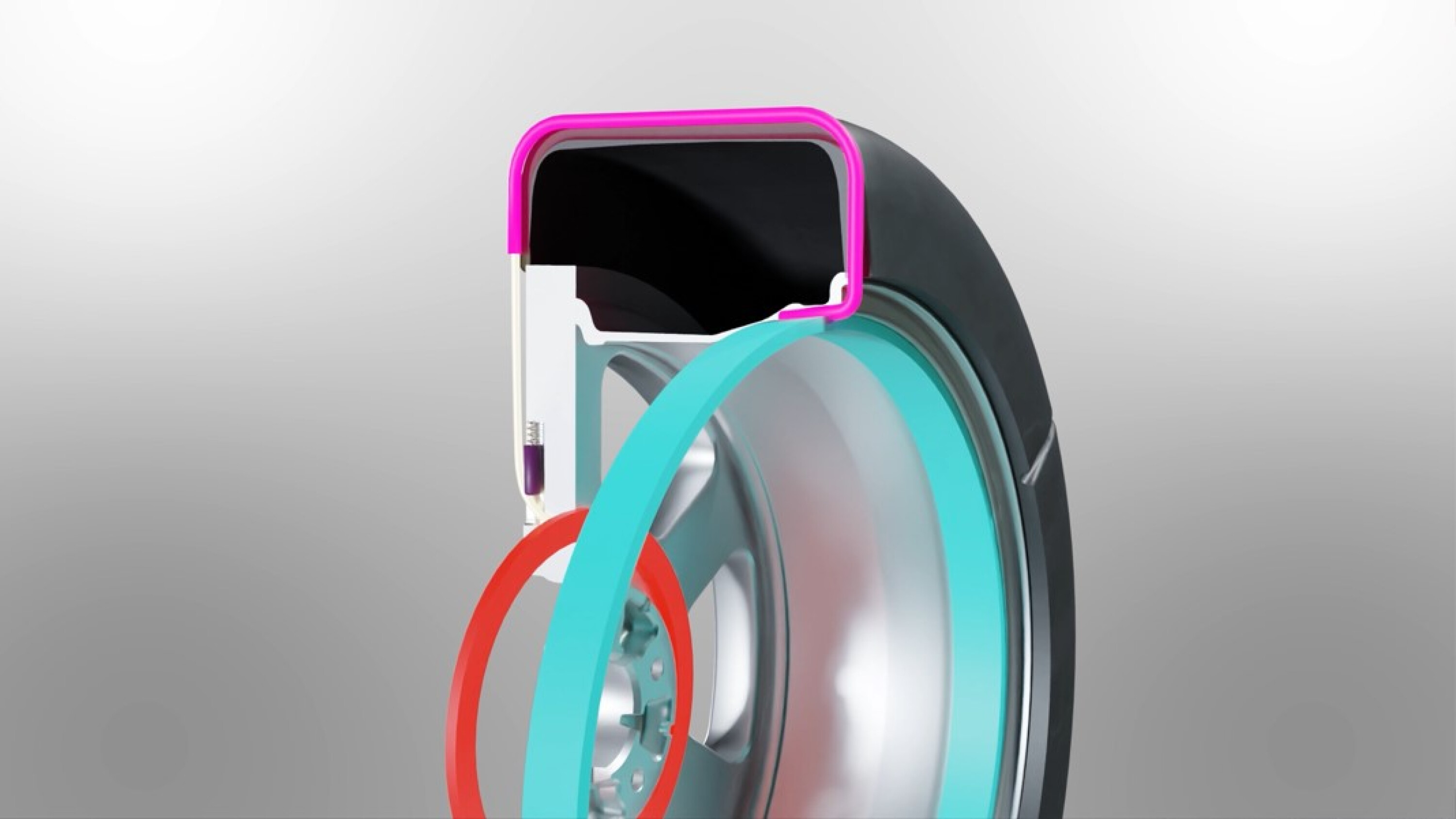
Developed by Hyundai and Kia the new design houses special modules inside the tyre at regular intervals u201clike a pizzau201d
The special wheel/tyre combo is said to provide more grip in snowy conditions than conventional chains
Okay we get that reading about snow chains during December in Australia is about as useful as a fly screen on a submarine — unless you live in Melbourne, of course, where it’s always cold — but this new tyre tech is seriously cool.
Developed by people with large foreheads at Kia and Hyundai, this special wheel and tyre combo comes with built-in snow chains.
1
That’s right, folks. No more pulling over in a sleety, freezing carpark where you’ll need to lie on the slushy ground and skin your swollen knuckles. With these tyres, you just press a button and ‘hey presto’ the chains appear.
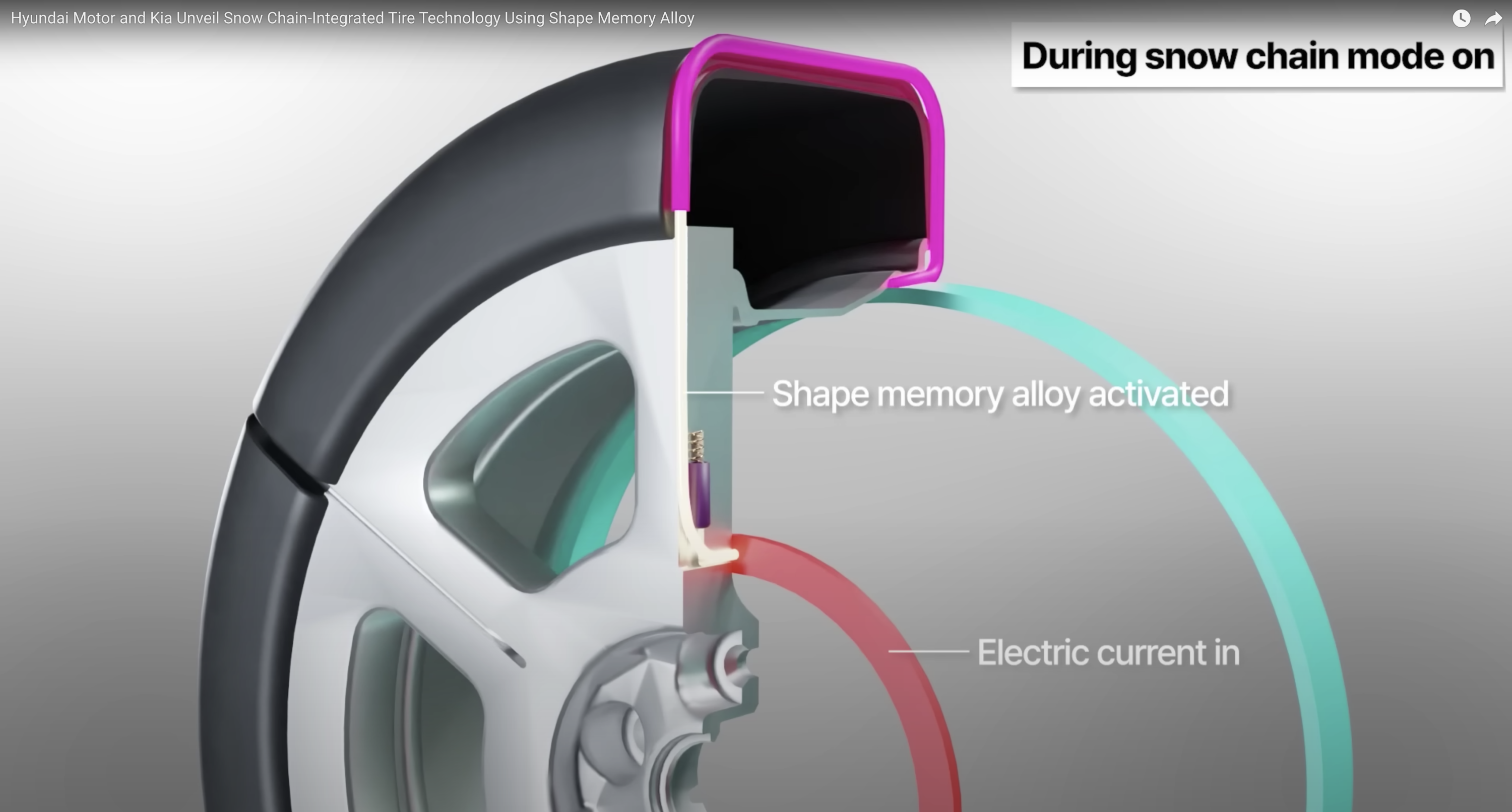
They’re not chains in the conventional sense but are rather ‘alloy modules’ that protrude from grooves placed around the tyres. In normal conditions these grooves, which Hyundai/Kia say are placed “at regular intervals, like a pizza”, house the modules beneath the rubber surface so the tyre acts like a regular, er, tyre.
But when things get frosty, a press of a button sends an electrical current through the alloy which then activates the modules to protrude out beyond the tyre to provide greater traction. The design, which is still patent pending in South Korea and America, is said to provide more grip than a traditional snow chain.
“This innovation, which will hopefully be introduced on Hyundai and Kia vehicles someday, reflects our commitment to turning advanced technologies into real-world solutions that benefit customers,” said Hyundai’s head of advanced chassis development, Joon Mo Park. “We will continue to develop technologies that enhance safety and convenience of our vehicles and bring value to our customers.
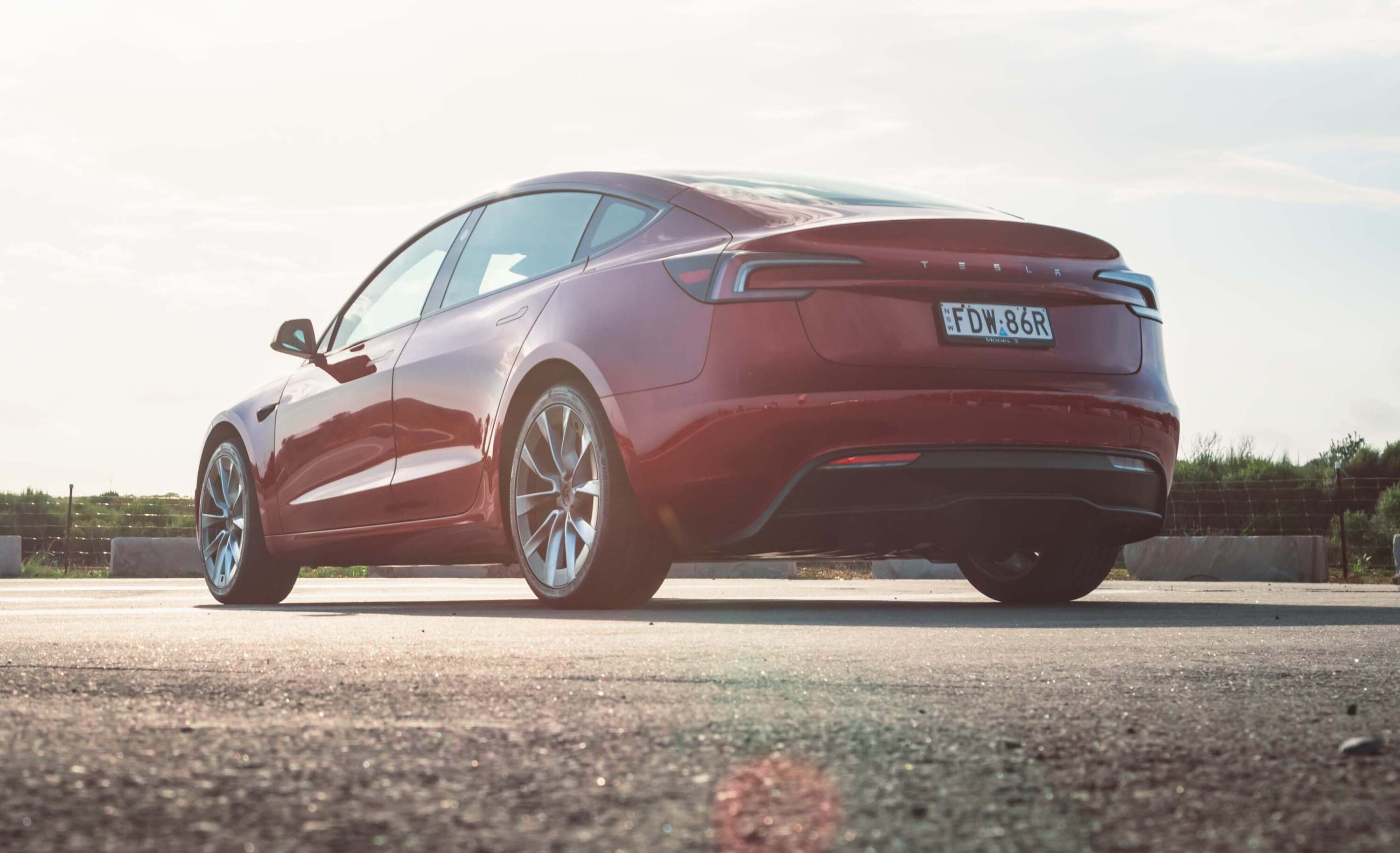
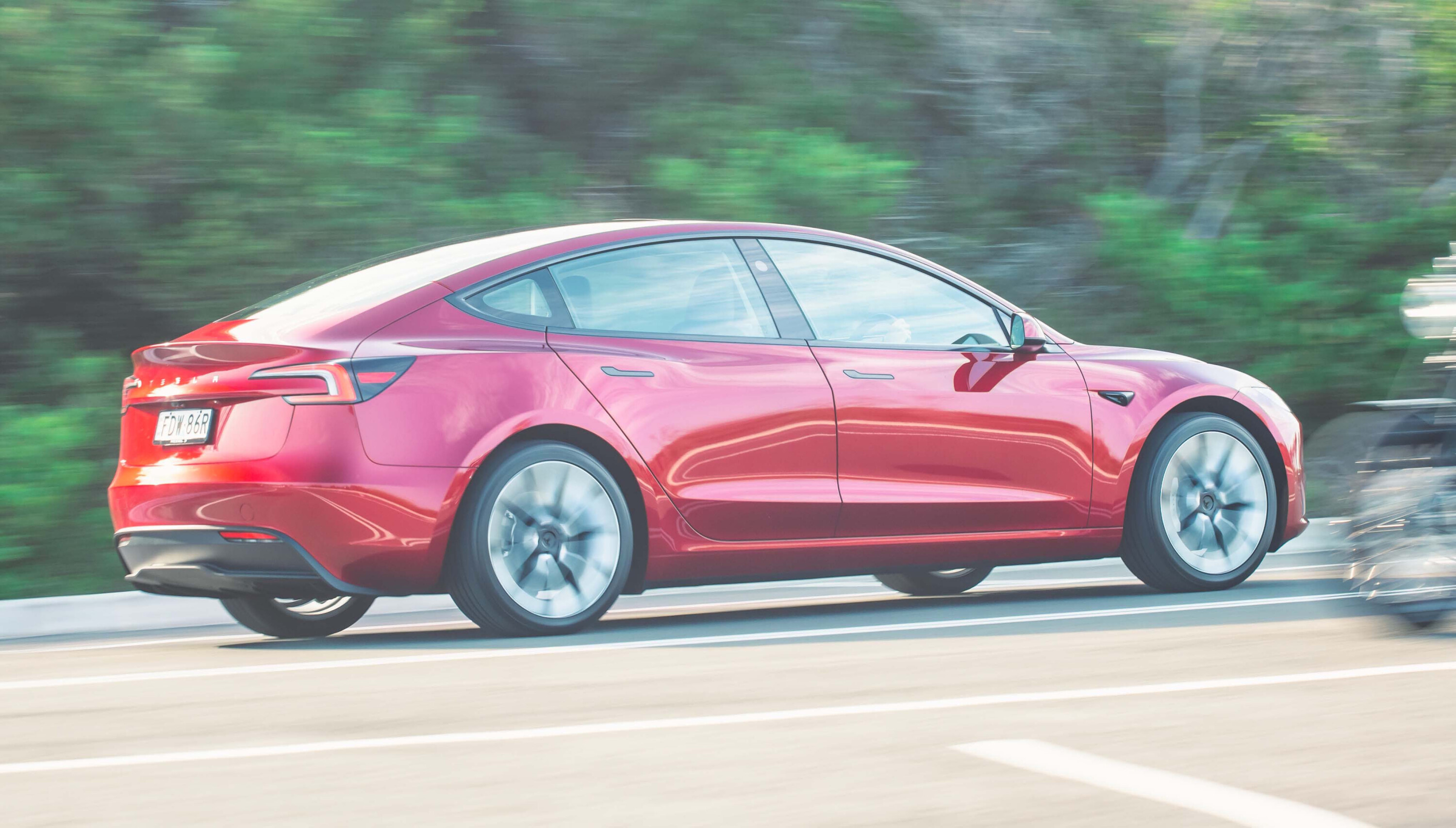
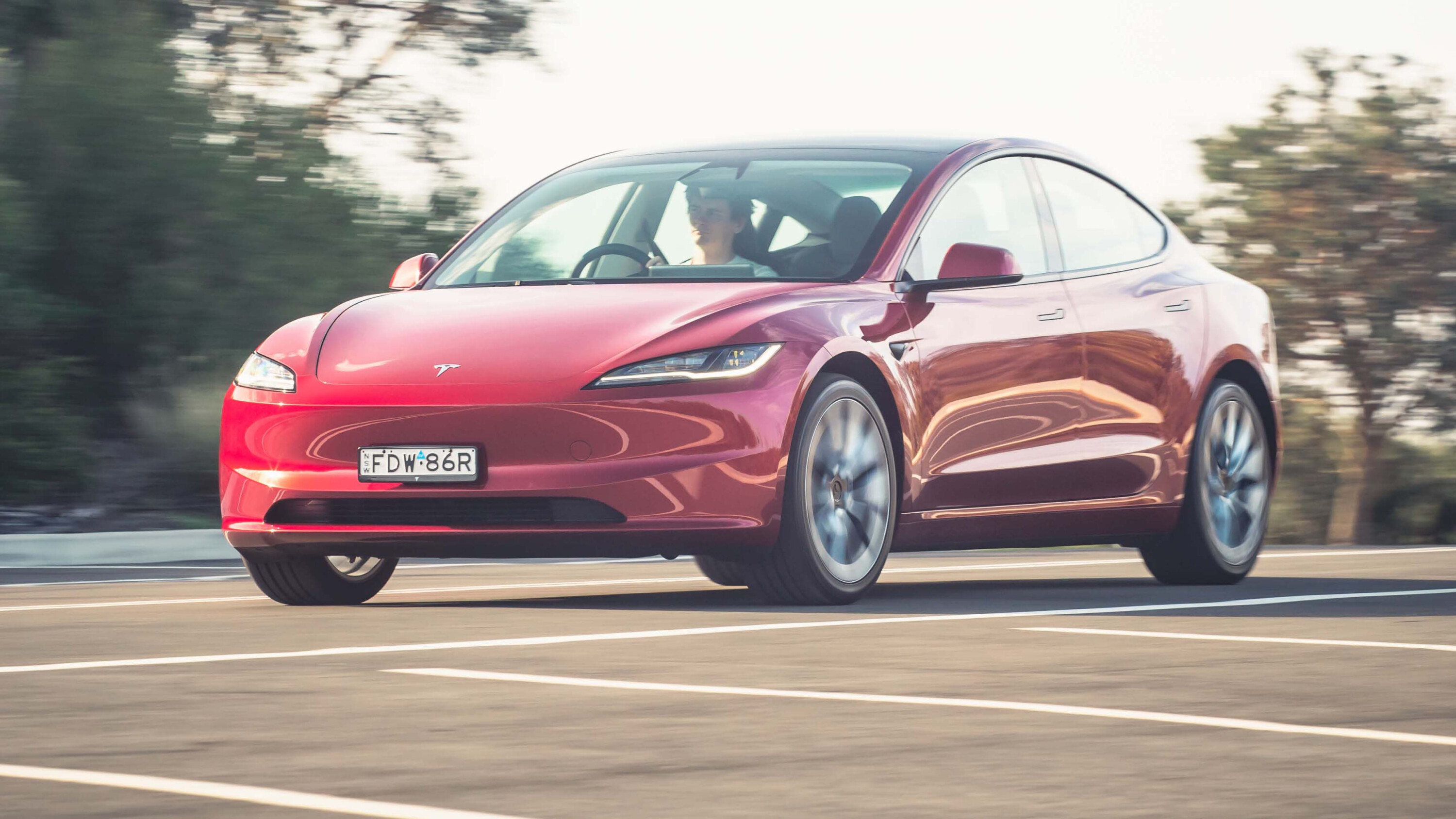
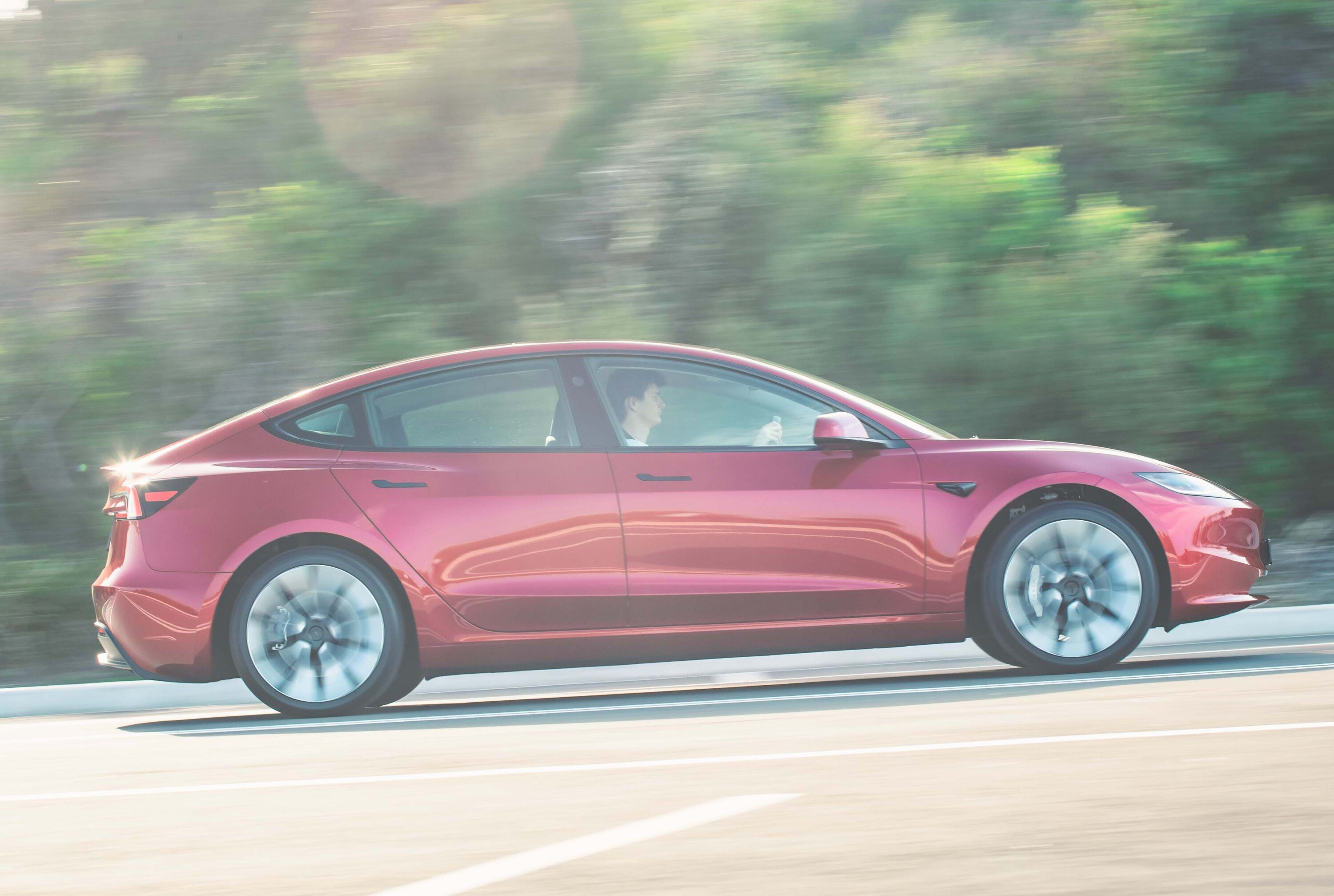
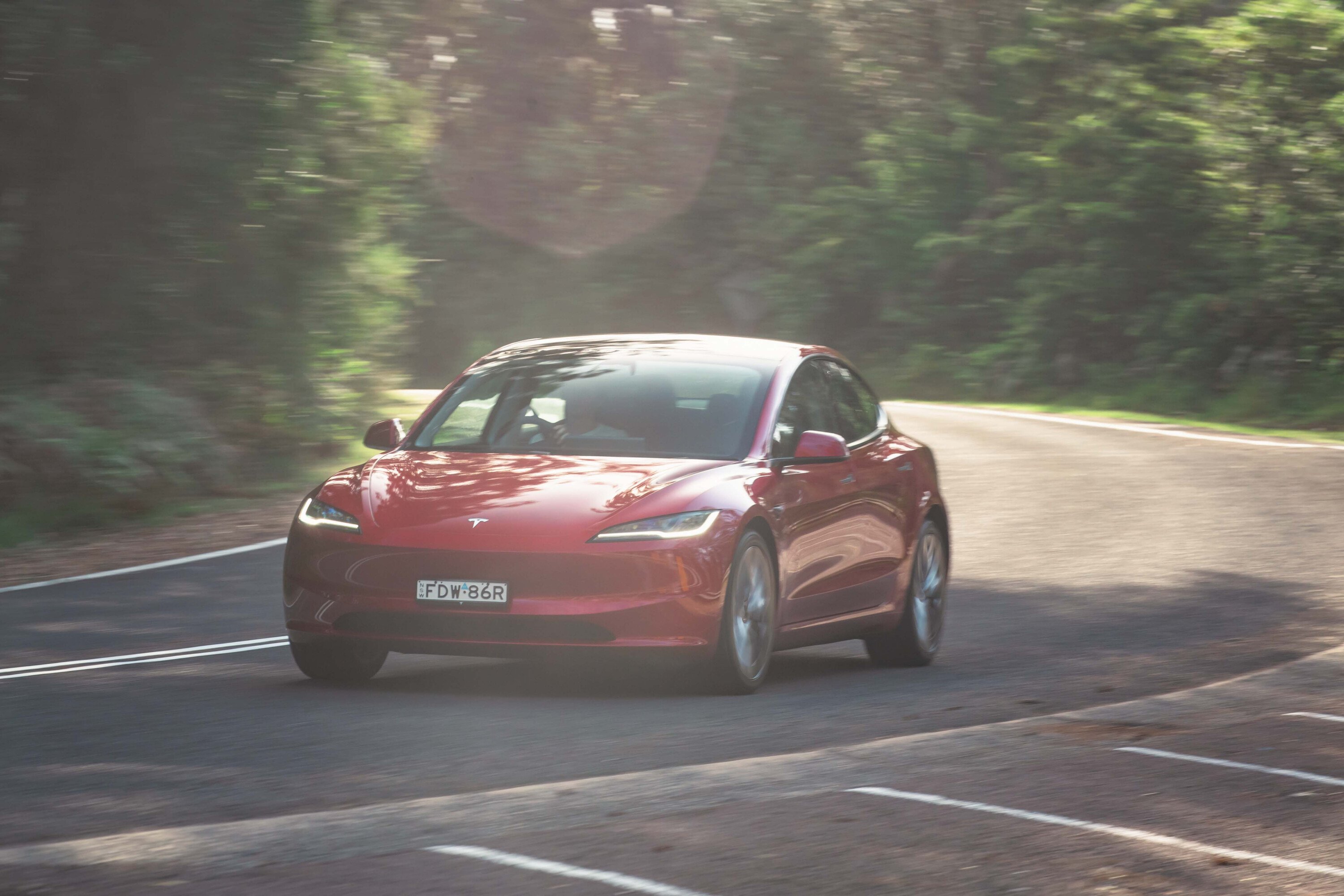
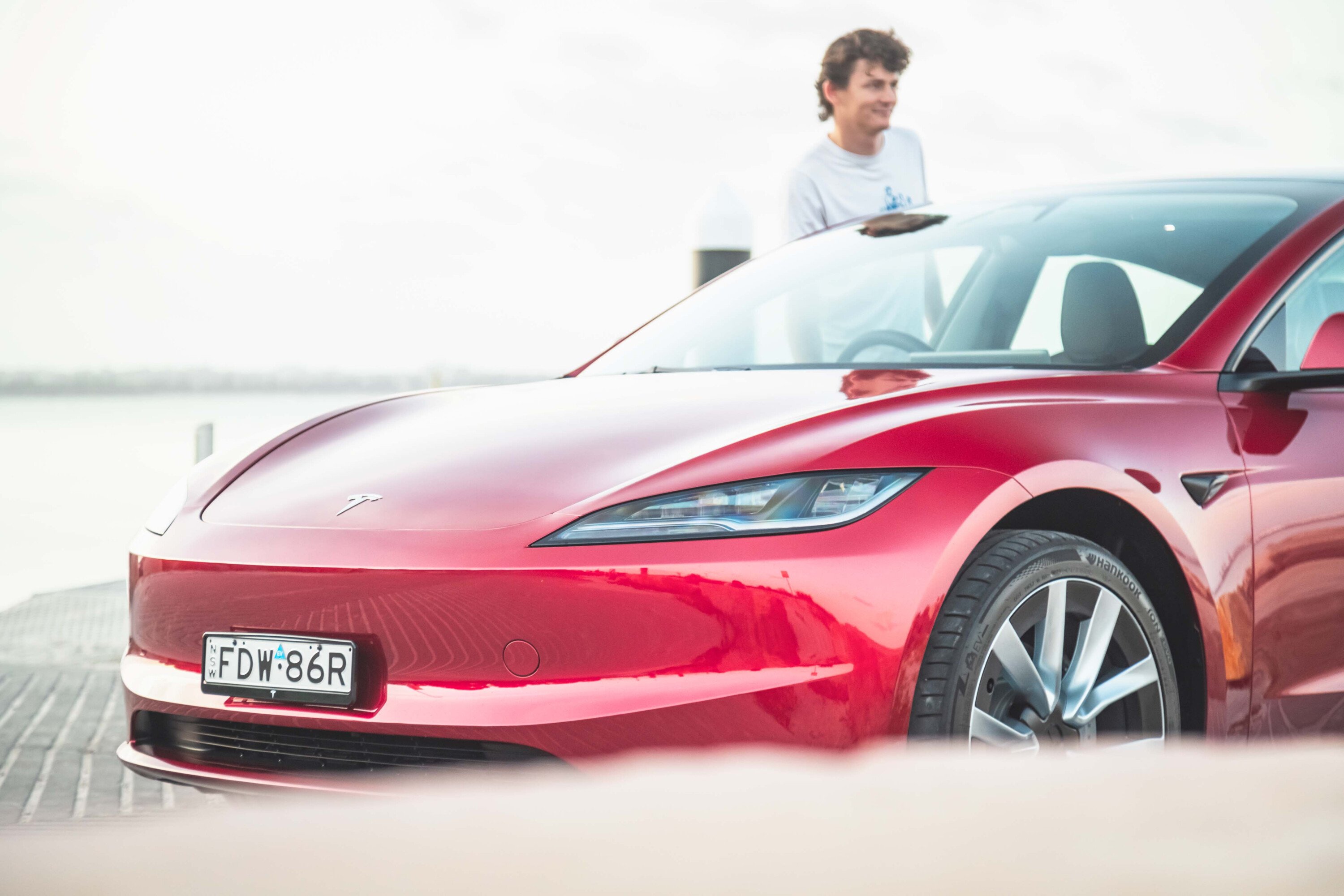
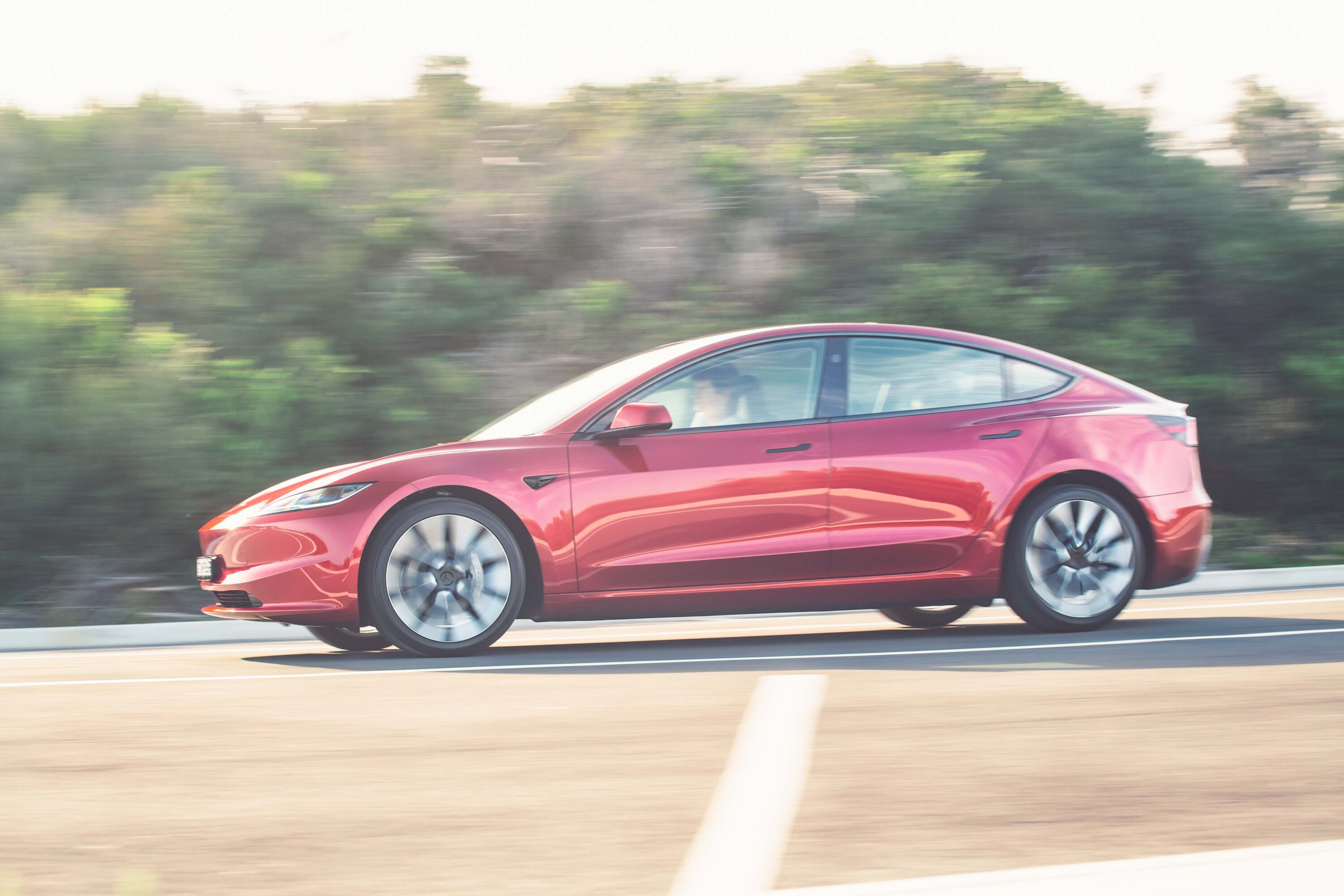
The Tesla Model 3‘s SUV spin-off, the Model Y, has whizzed past it in local and global sales, but the sedan remains a significant contributor to the tech company’s automotive success.
And the number of rivals to have emerged since the electric sedan debuted in 2017 continues to increase.
Tesla has wisely chosen against complacency and given its most affordable vehicle its first major overhaul.
The 2024 Model 3 features substantial revisions inside and out, though do they all bring improvements to what has been one of our favourite electric cars?
Pricing for the Model 3 has shifted around a fair bit over the past year or so, and was $57,400 as recently as mid year. It currently starts at $61,990 for the entry-level ‘RWD’ we’re testing here.
A mid-range Long Range costs from $71,900, bringing extra range plus dual motors for faster, all-wheel drive performance.
You can see from the below list that even the base Model 3 is comprehensively equipped. Additions for the 2024 update included ventilation for the front seats, ambient lighting, rear-cabin touchscreen, and acoustic rear glass.
1
White remains the only no-cost paint option. There’s a $1500 charge for Solid Black or Deep Blue, while Stealth Grey ($2300) and Ultra Red ($2600) are the newest colours.
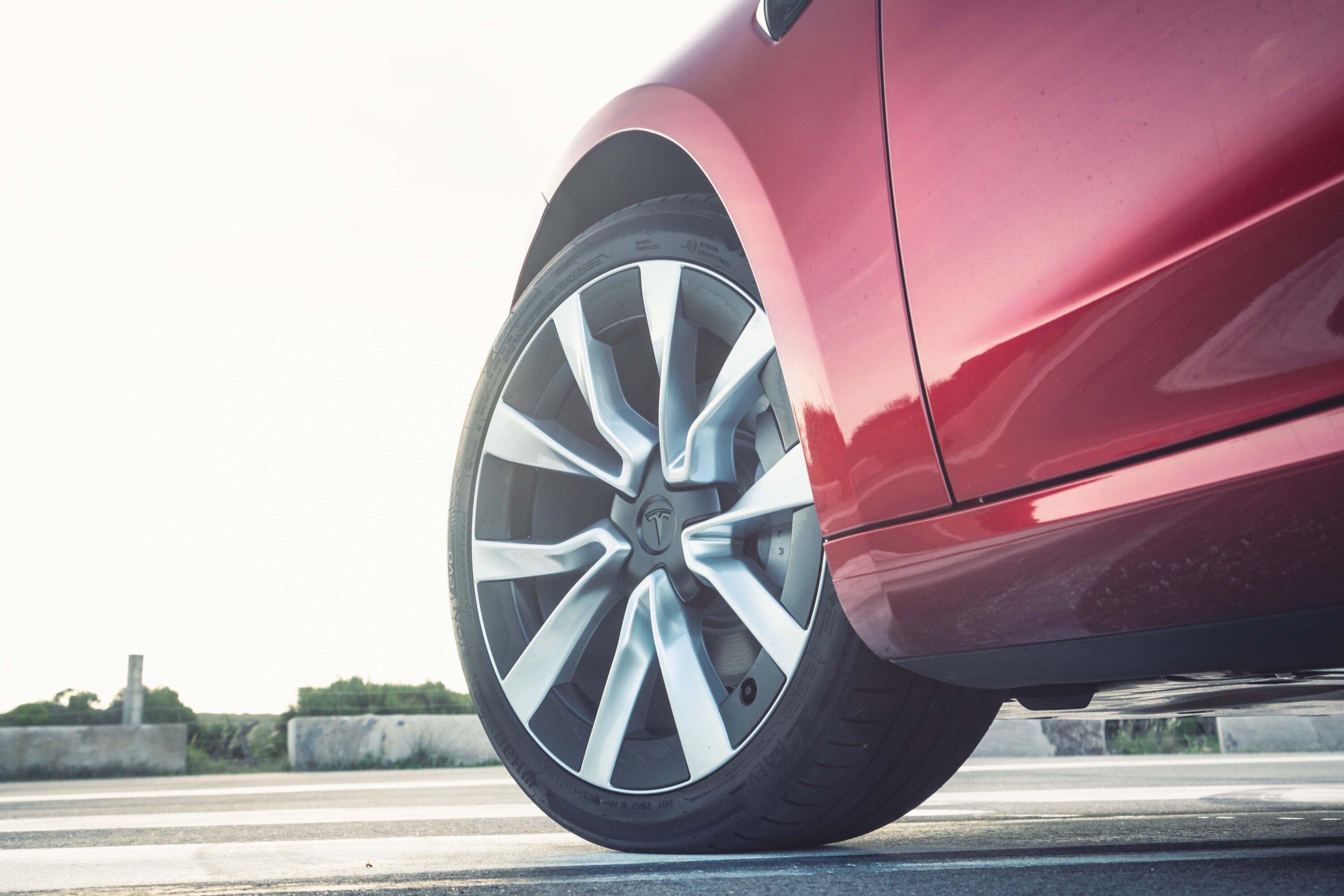
Optional ($1800) 19-inch wheels are again offered but with a different ‘Nova’ design, as an alternative to the standard 18s.
Two autonomous-drive option packages continue to be offered, and we continue to advise that buyers think carefully about the value of these as not all features are enabled or even useable in Australia.
Although the Model 3 is back above $60,000, the RWD model is excellent value for money.
Flush exterior door handles with matte black exterior trim
1
How do rivals compare on value?
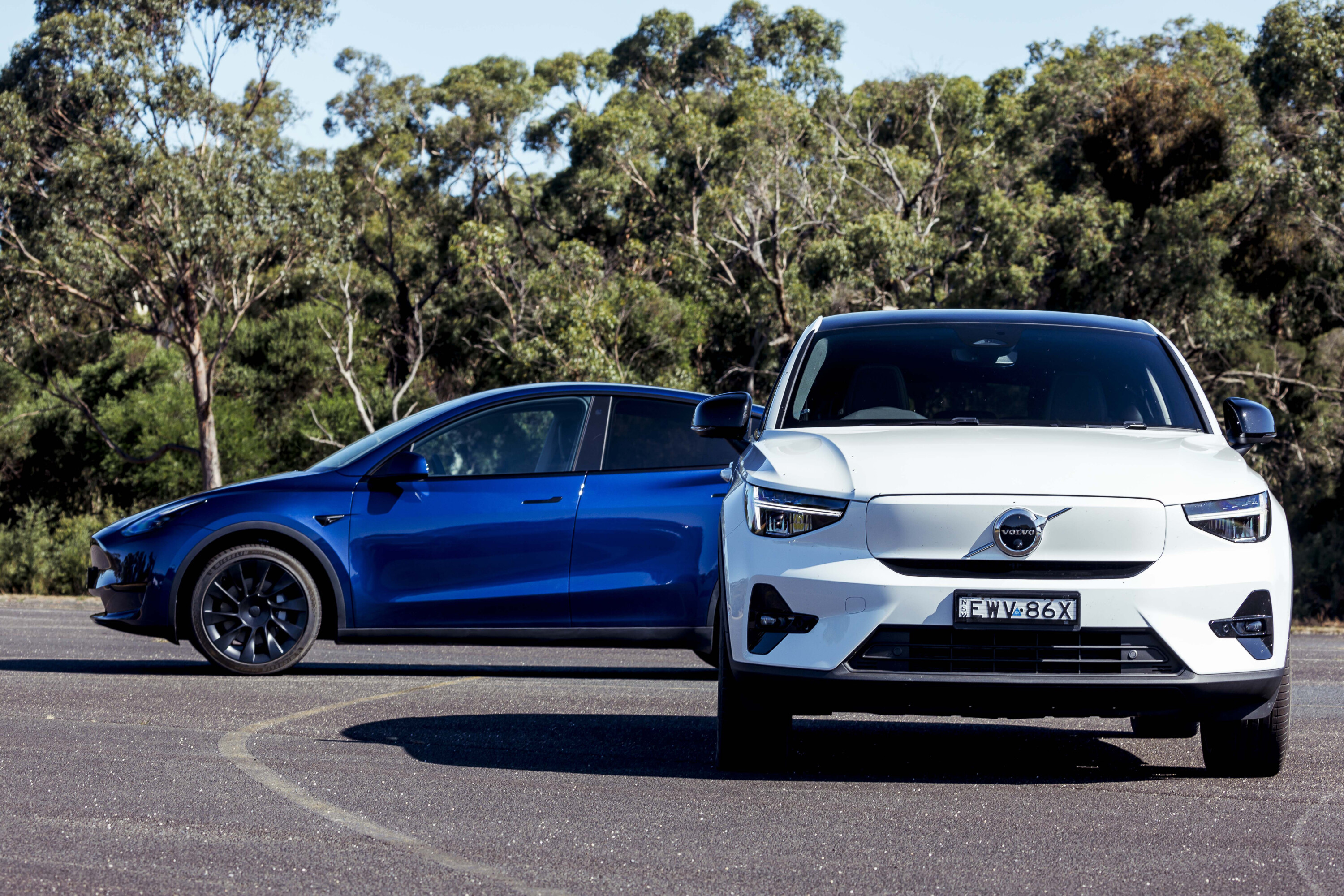
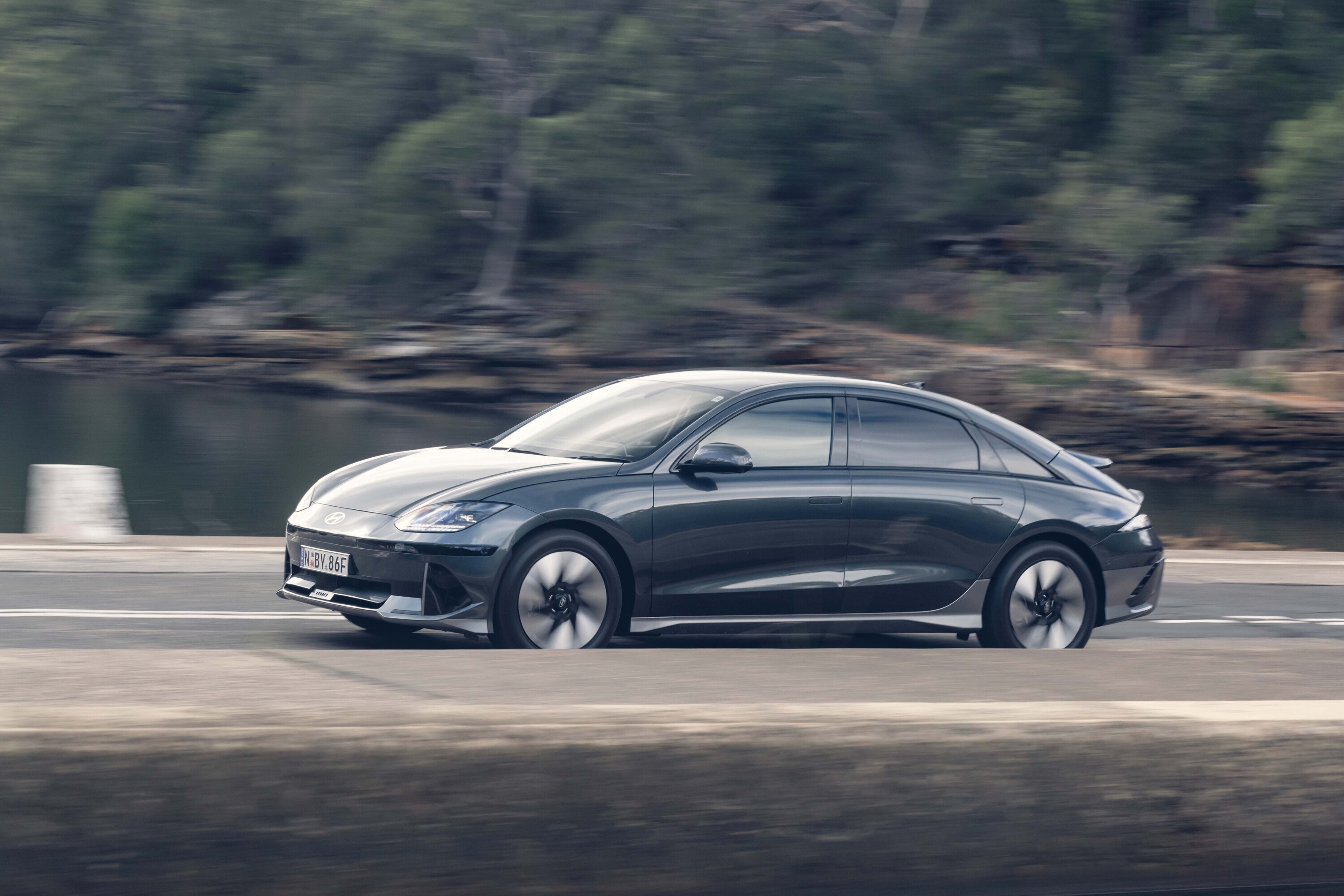
The Model 3‘s most direct rivals are the BYD Seal, Hyundai Ioniq 6, and Polestar 2, while you could also consider BMW’s i4 in the mix if comparing higher grades of the Tesla.
We’ve yet to drive the Seal on local roads for full assessment, but the other three electric sedans are all appealing offerings we can easily recommend.
The Ioniq 6 starts from $65,900, the Polestar 2 begins at $67,400, and the i4’s entry cost is $85,900 before on-roads. BYD’s Seal begins the lowest, from $49,888.
The Polestar, Hyundai and BMW each has the odd standard feature here and there that’s an advantage over the Tesla, though ultimately the Model 3’s combination of low price and inclusive features is unmatched.
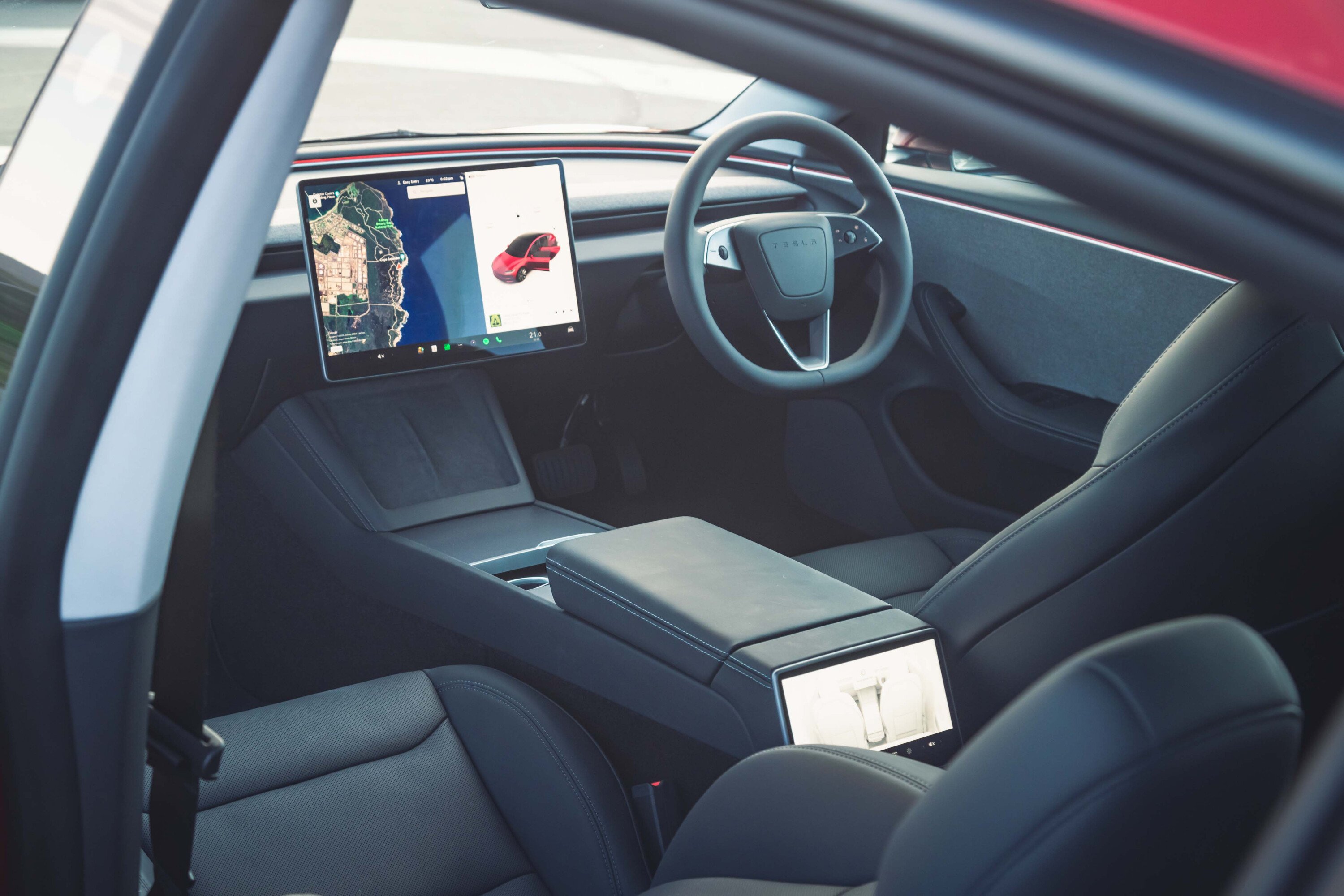
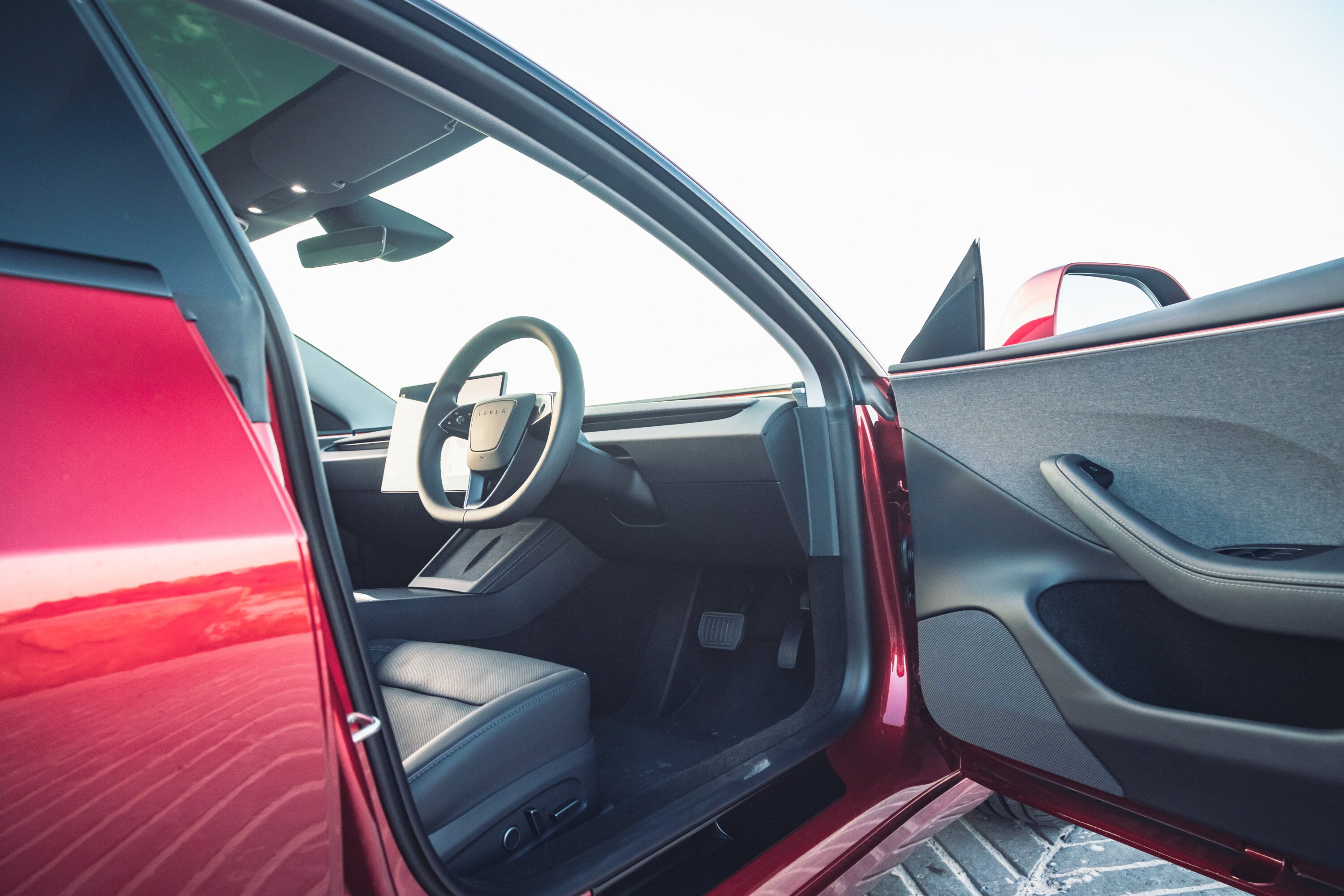
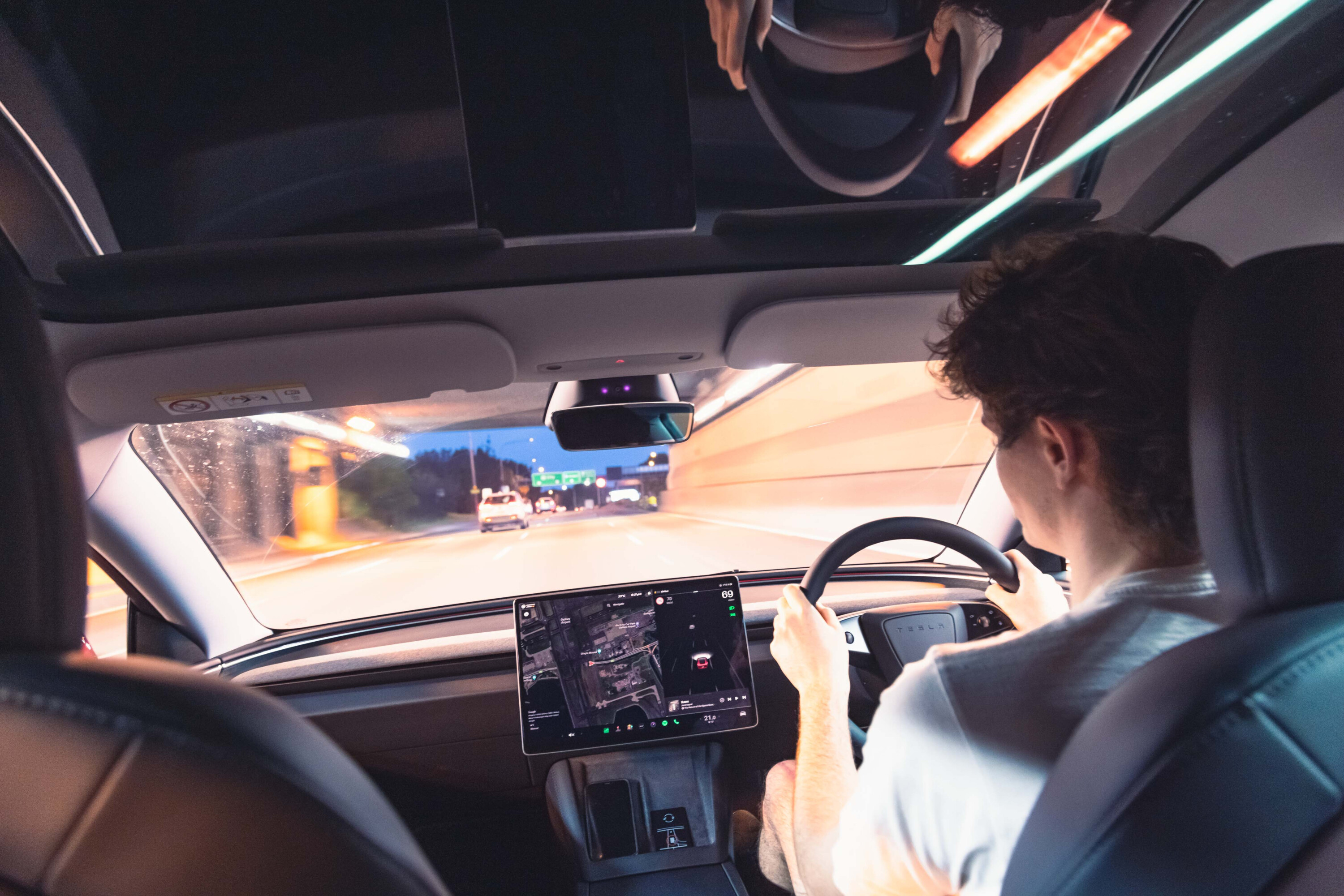
Tesla’s minimalist theme doesn’t change for the MY24 Model 3; in fact, it goes further, with the removal of steering wheel stalks.
The cabin layout is largely the same but there’s a complete revamp of the presentation.
Interior quality is ramped up, with smart details including a large swathe of cloth applied to a big section of the door and the same material used for a panel running along the top of the dash.
1
There are soft, yielding plastics aplenty, and a colour-customisable LED strip now arcs from the top of the doors and around the dash cowl.
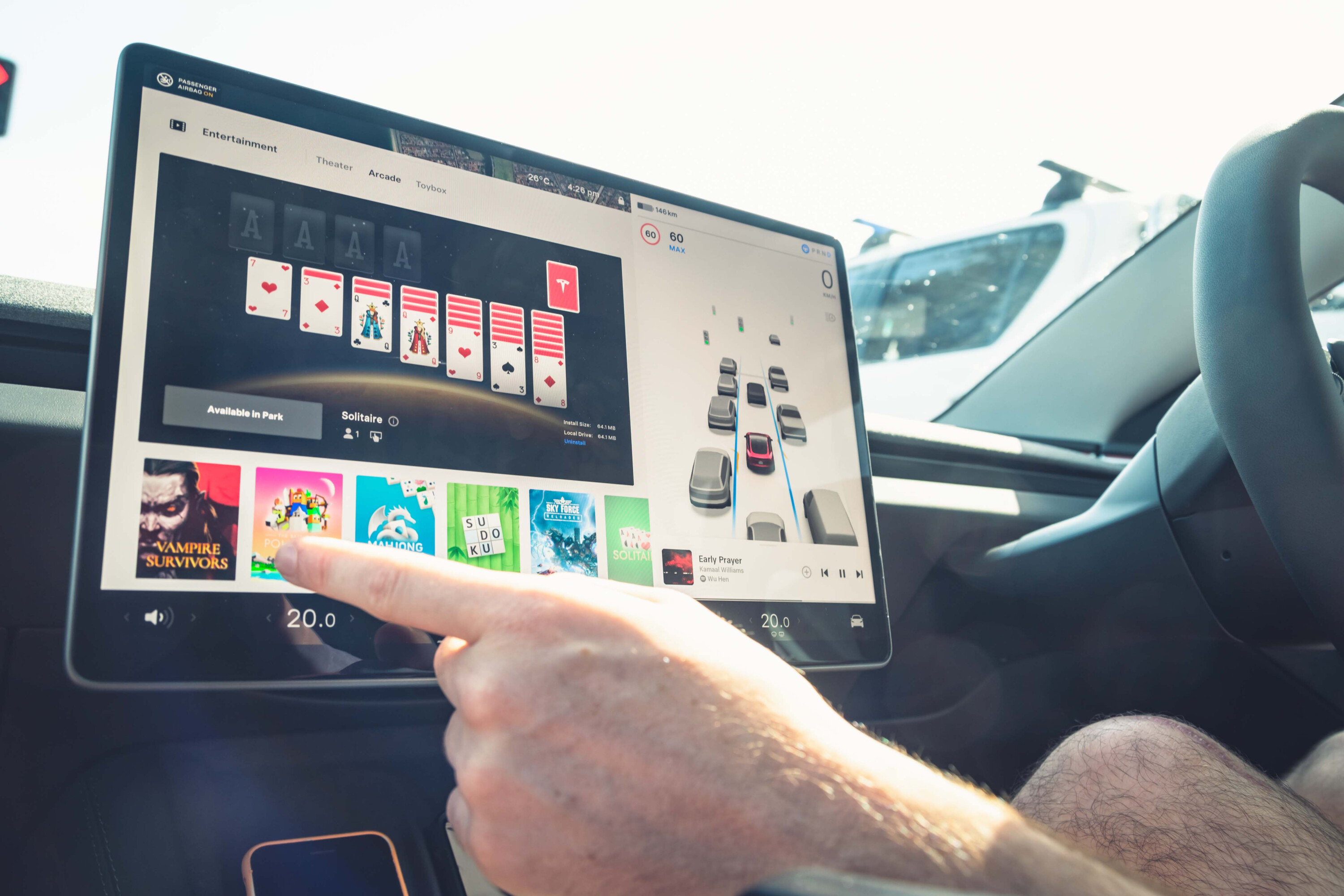
Tesla says its central 15.4-inch display – again the command centre for vehicle functions and information, not just merely entertainment – is now thinner, brighter, faster, and with an enlarged active area.
Cabin-storage options continue to be plentiful, with generously sized door pockets, dual (angled) smartphone charging trays, glovebox (again opened via the touchscreen), and a new and silvery centre console that offers lots of hidden storage and a couple of cupholders below its sliding covers.
Rear-seat passengers receive extra attention for MY24, not least with the addition of an 8.0-inch touchscreen. There’s only fan control with no temperature adjustment, though passengers may well be too distracted to notice with the likes of Netflix, Disney and YouTube on offer (with headphones connectivity, thankfully). Two USB-C ports are included.
1
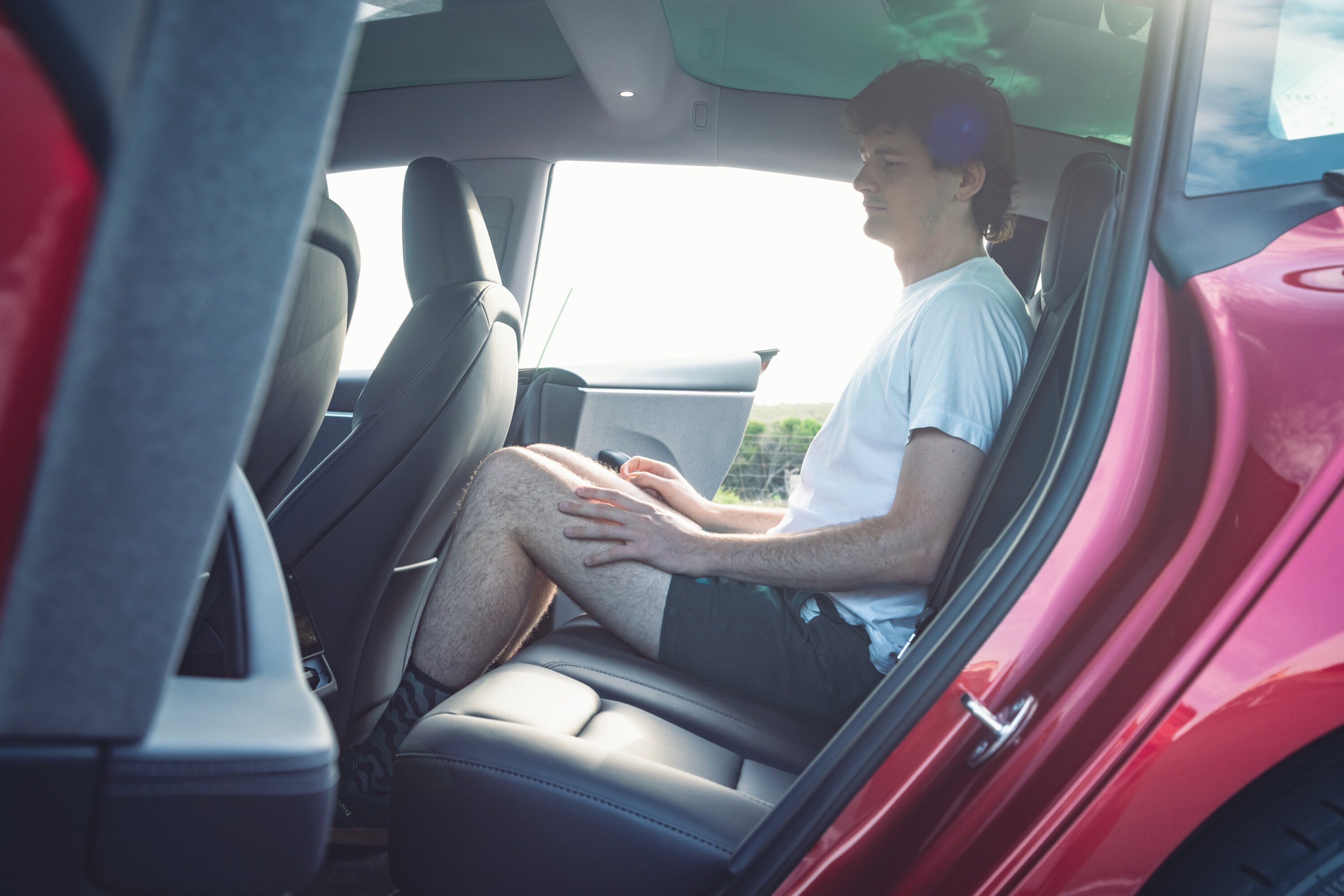
The rear seats are said to have been reprofiled for improved posture, and they do seem better.
Longer-legged occupants are still likely to find under-thigh support lacking to varying degrees – and find their heads close to the glass roof – but the angles of both the cushion and seatback are well judged and knee space is in decent supply.
Rear door pockets are almost as large as those up front, both seatbacks incorporate elasticated ‘map’ flaps, and there’s a centre armrest (with cupholders) that’s easily missed as it’s the entire mid-section of the backrest complete with integrated headrest.
1
The Model 3’s electric bootlid can be opened via the touchscreen or Tesla app.
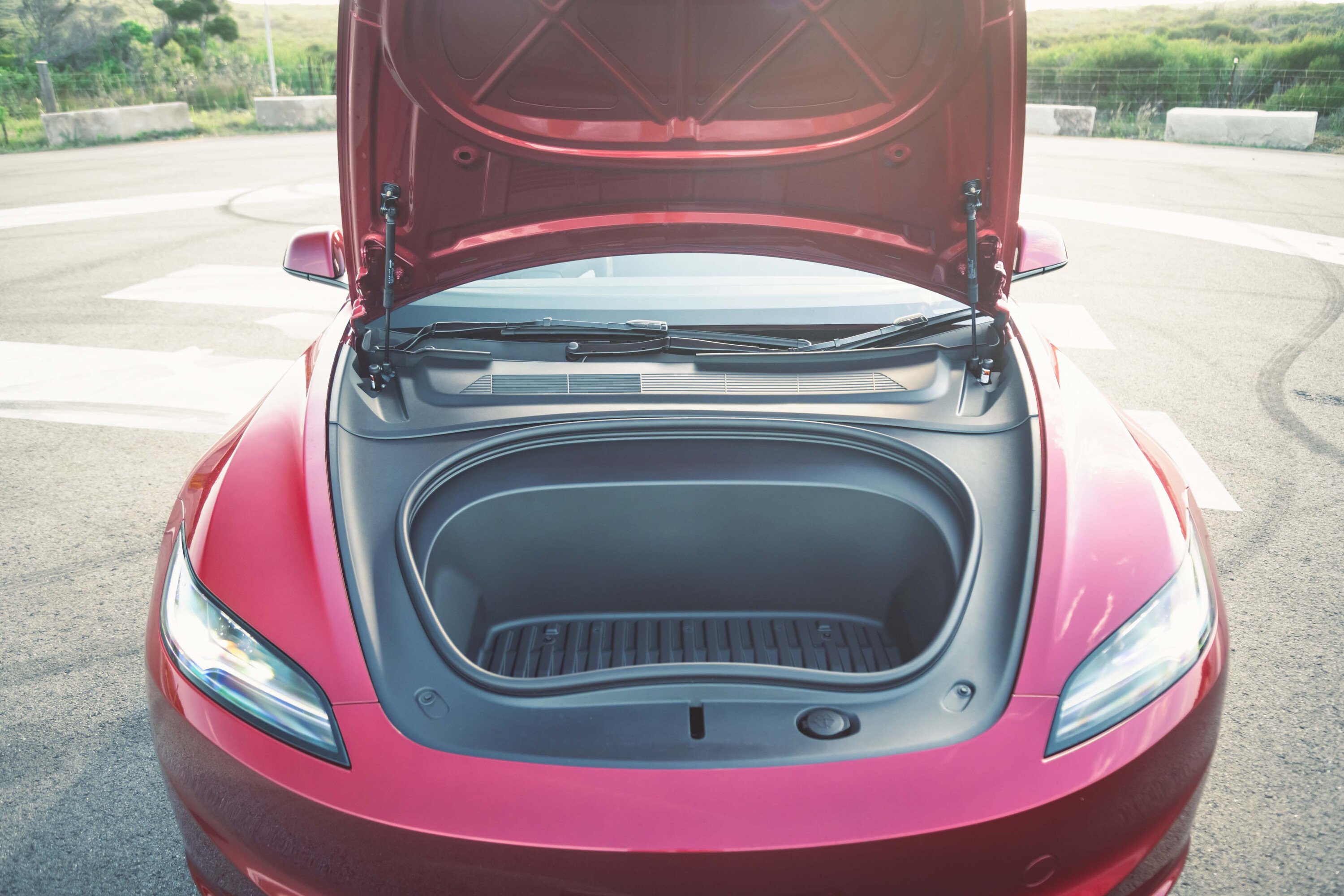
A bootlid that almost opens like a liftback – just with the rear window section remaining in place – helps create good access to the luggage compartment. It’s deep and reasonably wide, with an underfloor storage well again providing useful extra space.
The seatbacks fold in a 60-40 split, though have to be lowered from the rear cabin.
With no spare wheel or even repair kit, any punctures require an inconvenient call to Tesla roadside assistance (and subsequent waiting time).
It also seems the designer behind the new 19-inch wheel completely forgot that tyres need to be inflated/deflated occasionally – an air hose doesn’t fit on the tyre valve without a section of the wheel being removed (and it was sufficiently difficult that we gave up with fear of breaking the wheel).
Indicator buttons on a steering wheel isn’t a new idea – Ferrari did that more than a decade ago with the 458 Italia.
With left and right indicators on the corresponding sides of the wheel, however, they were more intuitive to use than the Model 3’s buttons that are positioned together on the left side (of a new-look wheel) .
While you get used to them, Tesla’s approach wouldn’t go into The Book of Great Car Ergonomics.
The seats, might, though. There’s plenty of electric adjustment including lumbar for the lower back, the cushion is long, and the padding of the whole seat is in that Goldilocks ‘just right’ zone.
1
There’s now ventilation for the seats not just heating, and the door armrests are wide, too.
There’s a change to how you get underway in the Model 3. The driver now scrolls up or down a ‘transmission bar’ on the right side of the central touchscreen for Drive or Reverse, respectively. Or, alternatively, there are PRND buttons overhead between the sun visors.
The Model 3 can be instructed to auto-select Drive or Reverse by figuring out you’re likely intended direction, though on one occasion it did select the backwards option despite the presence of a parked car behind!
Cabin refinement is perhaps the most impressive aspect of the Model 3 driving experience, an area further improved with the update.
1
MY24 changes bring double-pane acoustic glass all round including the rear glass, the upper edge of the bonnet has been revised to eliminate buffeting at the base of the windscreen, aerodynamics are improved, and the Model 3 now runs on Hankook’s EV-focused Ion tyres.
The result is a cabin that does a great job of shutting out wind and tyre noise, even at freeway speed and on coarser country-road surfaces.
All key driver info including speed – and Tesla’s unique traffic graphics – remains on the touchscreen. While you get accustomed to it, we think a head-up display would greatly reduce the amount of time the driver’s eyes are averted from the road.
Tesla insiders have admitted the Model 3 previously rode a “little firm”, and its engineers have responded with new front knuckles and bushes, revalved dampers, as well as those Hankook tyres that promise to be more forgiving than the Michelin Pilot Sport 4S sports rubber used previously.
While the suspension has softened and is better over lateral joins for improved comfort, it’s far from fully resolved.
1
The Model 3 still struggles on uneven roads, with its limited compliance highlighted by excessive body movement, while a tendency to strike its bump-stops made for a noisy suspension.
Our test car was fitted with the optional 19-inch wheels; we’ll have to wait to try the standard 18s to see if this improves things in any way.
The Model 3’s steering remains dartier than expected for a luxury midsized sedan, though equally it continues to lend the Model 3 surprising agility. Some driver-car-road interaction has been lost, however, in the switch from sporty- to eco-focused rubber.
You can change the steering weighting via the touchscreen, though regardless of mode the BMW i4, Polestar 2 and Volvo C40 are all better picks for those who enjoy satisfying weekend drives.
The thick windscreen pillars partially impede forward vision, while the over-the-shoulder view is even more limited.
1
One of the new additions to the touchscreen takes a leaf out of Hyundai and Kia’s Blind Spot Assistance book, with a video image that pops up whenever the indicators are selected.
I still haven’t experienced a better navigation system than Tesla’s – most especially for the size of its map and superbly simple and quick destination search.
Tesla continues to snub Apple CarPlay and Android Auto, which may be frustrating for some buyers while others may think, ‘Who cares?’
An improvement to aerodynamics – down to a low 2.19 co-efficient of drag – has increased WLTP driving ranges without any technical changes to batteries or motors.
The RWD entry model increases by 22km to 513km, and the Long Range increases by 27km to 629km.
Tesla remains disappointingly short of even the average (five-year) factory warranty length, with only four years (or 80,000km).
The battery and drive units are covered for longer – eight years and either 160,000km or 192,000km depending on the specific model.
There is no scheduled servicing plan with Tesla; owners (or prospective buyers) should check with the company for its recommendations, and where servicing is required as part of certain ownership programs.
The Model 3’s changes for 2024 may be evolutionary rather than dramatic, but they bring some noticeable improvements – especially in the areas of interior quality and standard features.
If Tesla’s engineers could only properly nail vehicle dynamics to give the Model 3 a consistently smoother ride and make it more fun to drive, this electric sedan would truly be the complete package.
It remains a compelling package, however, and no more so than in this RWD base form we’ve tested here.
The practicality, technology, features, performance and efficiency on offer for the price (as it currently stands) is hard to beat. And that’s with an increasing number of rivals trying to do just that.
Given Australia’s love of dual-cab utes, and our obvious passion for performance cars, you might think dealerships would be overflowing with hardcore, performance-focused utes.
And they are, to a certain extent. Nissan, for example, has the rugged and heavily enhanced Navara Pro-4X. Toyota has the Hilux Rogue, and performance specialist Walkinshaw has dipped its toe into the market with the Triton Xtreme.
Now, there are newer and more sporting contenders like the HiLux GR Sport and Ford Ranger Wildtrak X, which have both just gone on sale. The ‘rally inspired’ GR Sport Hilux brings a more powerful turbo diesel (power and torque are up 15kW/50Nm), tweaked suspension, and tougher exterior styling with flared quarter panels.
Best Utes: Read the full series
Wheels Best Utes 2023 is your ultimate guide to the top picks in this vast and varied segment.
The off-road-focused Wildtrak X offers buyers an improved 4X4 system, wider tracks, lifted suspension, and position-sensitive Bilstein dampers.
None of these options, however, are what you’d strictly call a performance ute. At least… not if your measure of a fast ute is based on dearly departed homegrown heroes like the HSV Maloo and Ford Falcon F6 Typhoon…
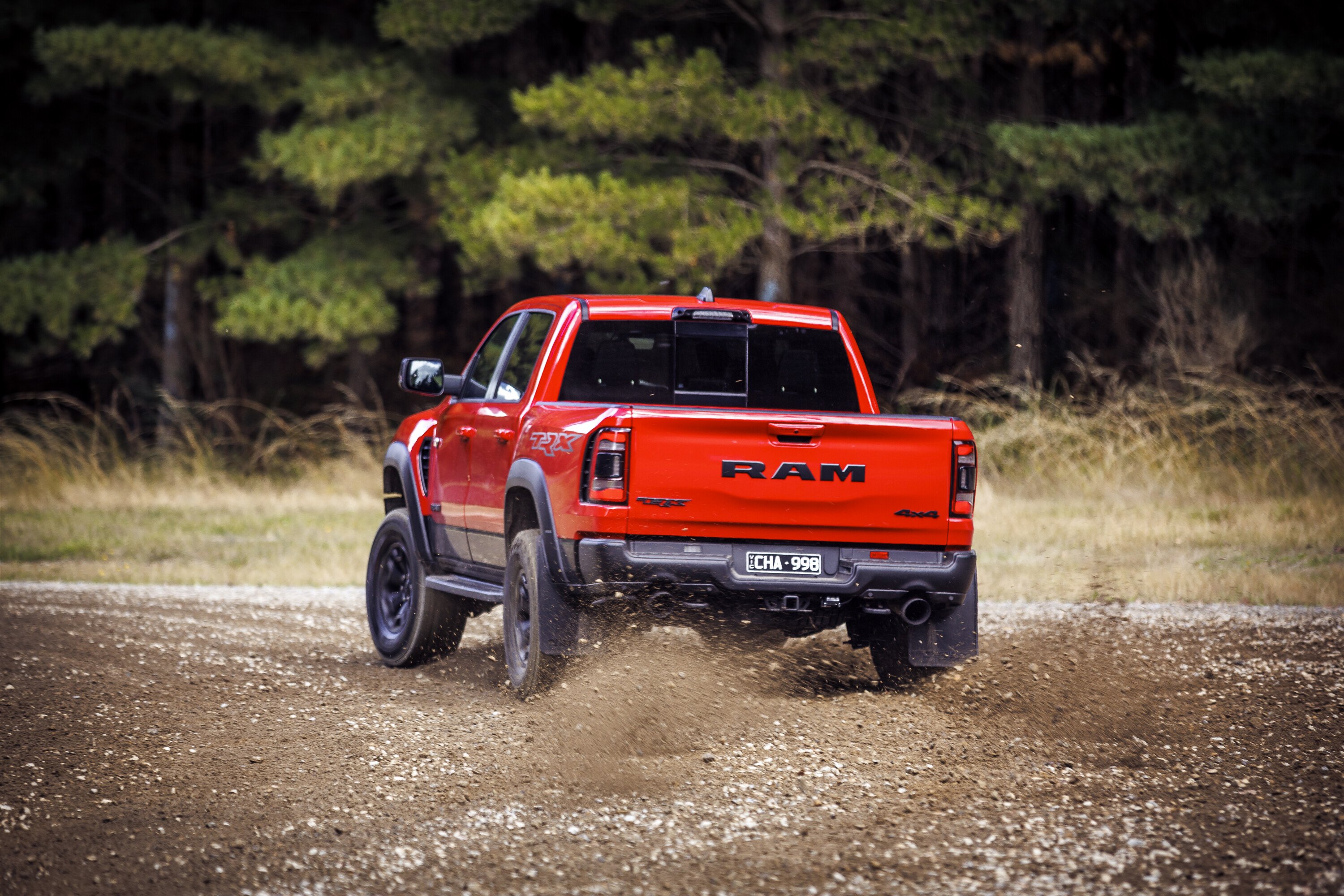
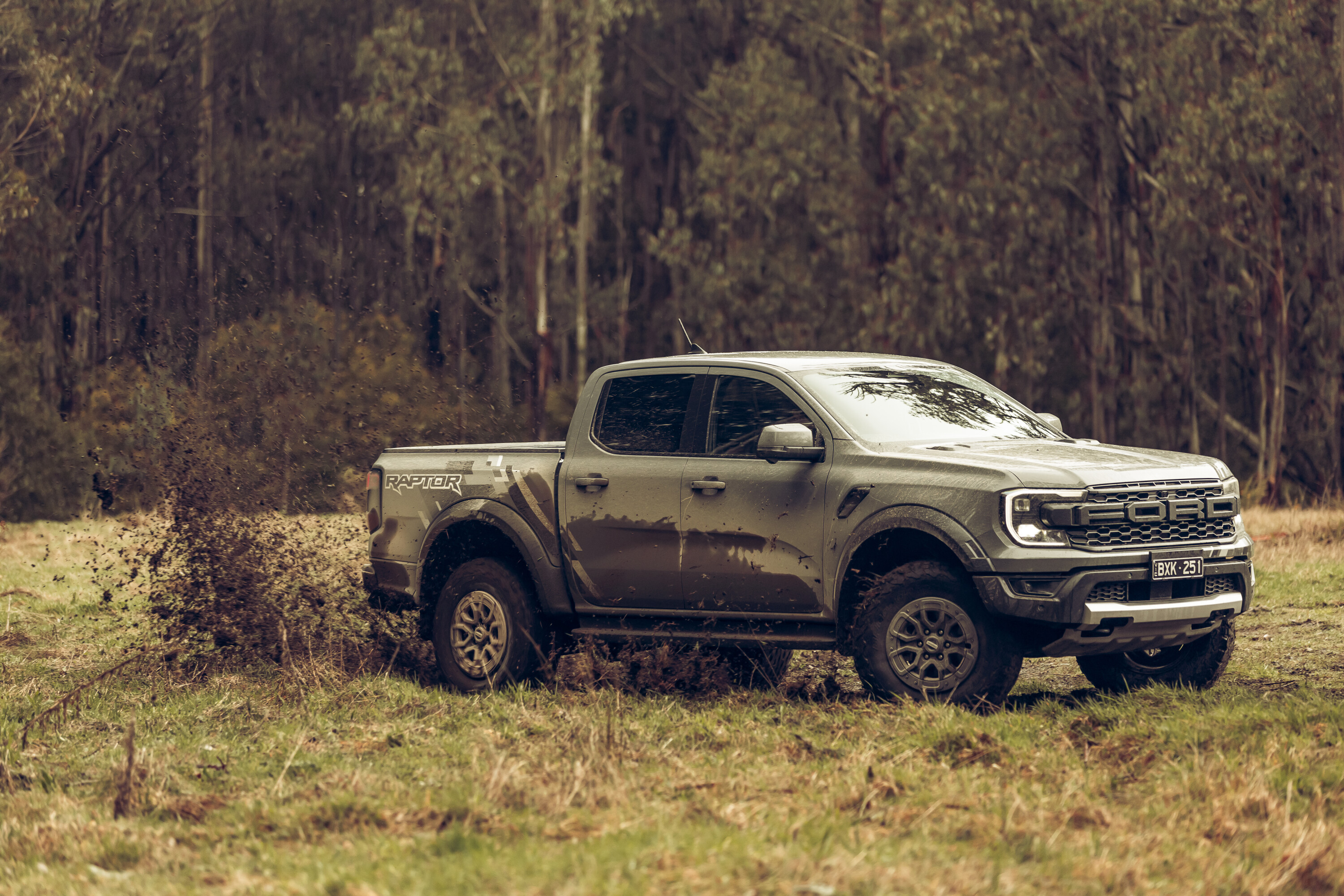
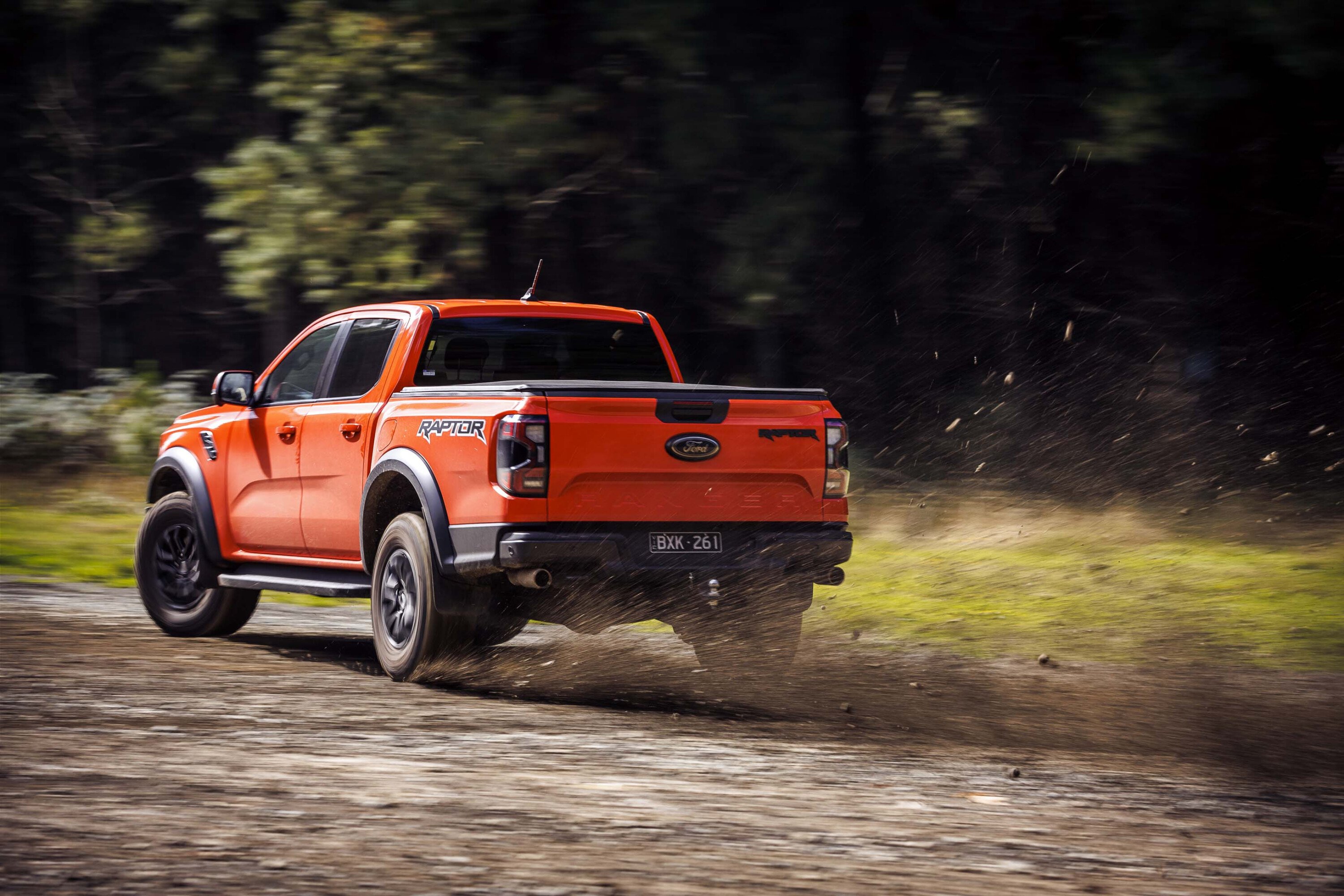
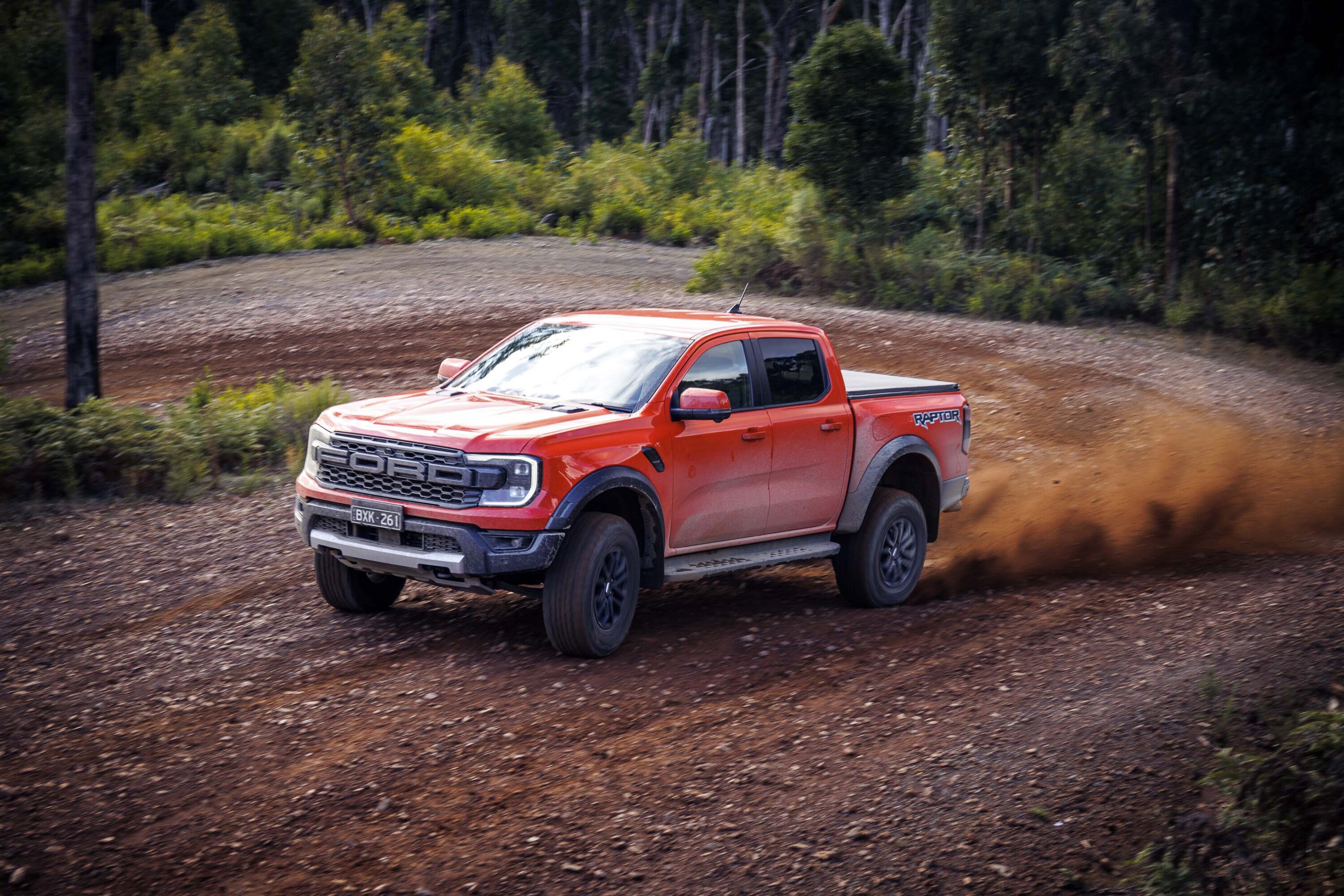
Throw that kind of performance lens over the vast and sprawling dual-cab segment and you’ll return only two proper contenders: the Ford Ranger Raptor and the RAM TRX 1500.
1
Getting right to it
Between ‘T-Rex’ and the Raptor, it’s the Ford that claims top honours as the best performance ute on sale.
It’s not only significantly cheaper than the RAM ($86,790 for the Raptor plays $209,250 for the TRX – ouch!) but it’s a better fit size-wise for our ‘best dual-cab’ coverage, given the muscly TRX is a full-size pick-up that plays in the class above (where’d you find an F-150 Raptor, if in the US).
So in some ways, it’s a win-by-default for the Ford Ranger Raptor, but that doesn’t diminish its appeal. Now in its second generation, this latest Ranger Raptor went on sale late in 2022, and it’s a very different beast to what came before.
1
Where the original was powered by a smaller 157kW/500Nm 2.0-litre diesel and featured softer Fox shocks, the new Raptor has morphed into a far more serious and steely-eyed machine.
Power has almost doubled courtesy of a big new 3.0-litre twin-turbo petrol that churns out 292kW/583Nm. That’s enough grunt to lend the 2.5-tonne Raptor the kind of acceleration you get from most hot hatches.
Against the clock, we’ve timed the Raptor at 6.1 seconds to 100km/h, which is proper rapid for such a large vehicle. There’s plenty of exhaust noise to enjoy now, too, thanks to a switchable twin-exit exhaust system that includes a Baja mode which mostly bypasses the mufflers.
1
The original Raptor’s pillowy suspension has also been overhauled, with Ford moving to a more sophisticated Fox shock that, while just as capable off-road, is far better tied-down.
The trade-off is the loss of the first-gen Raptor’s serene ride (it almost felt like it was on a gimbal, so adept was the suspension at filtering out lumps and bumps), but the benefit is greater agility, connection and tauter body control.
Throw in meatier steering that’s also more tactile and engaging, and a more immediate brake pedal, and it’s clear the second-gen Raptor sits in a class of its own for proper performance dual-cabs. Is it a surprise that more brands haven’t built a genuine Raptor rival?
Given the Ford’s popularity, it does seem a missed opportunity. But the upshot is that if you’re in the market for a proper performance dual-cab that’s hugely capable at high-speed off-roading, yet is still comfortable enough to drive every day, then your choice is clear.
1
SCORING
? Ford Ranger Raptor: 8.9/10
Things we like
Engine and gearbox package is superb
Amazing suspension performance on- and off-road
So much fun to drive u2013 a real enthusiast vehicle