Best Small SUVs in Australia
Looking to get into a brand-new small SUV? Our stories below will guide you to the model that best suits your needs:

The new sixth-generation Honda Prelude has rocketed to the top of the sales charts in its first full month on sale, outpacing rivals from Subaru, Toyota, Ford, and Nissan as well as a host of super sport and supercar rivals.
Honda sold 142 Preludes in Australia in May, according to data from the (Federal Chamber of Automotive Industries (FCAI), placing it ahead of mainstream (under $90k) rivals including the Ford Mustang (127), Mazda MX-5 (82), and Subaru BRZ/Toyota 86 twins (49 and 46 respectively).
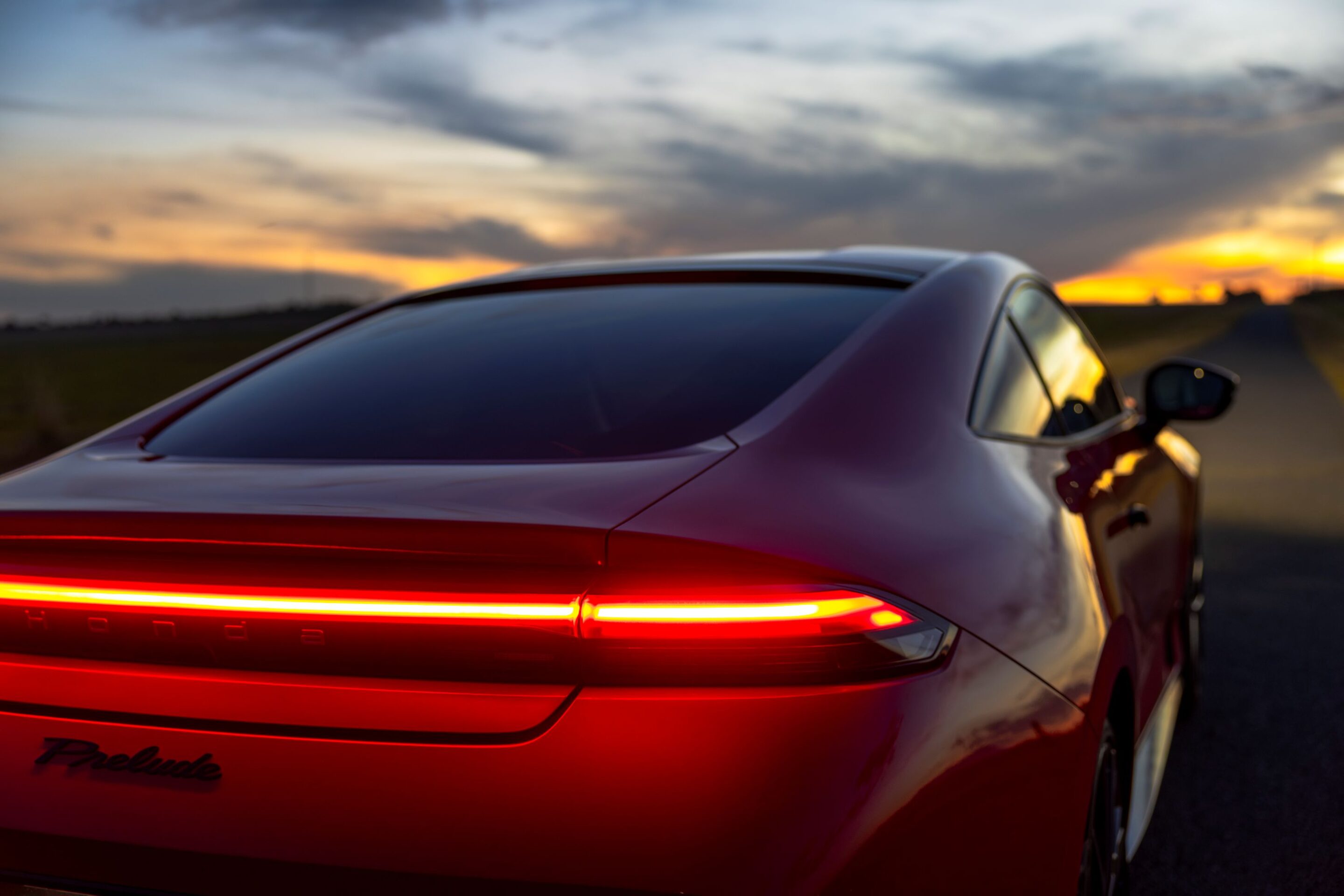
The Prelude also bested rivals in the over $90,00 category, counting the BMW 2 Series Coupe (94 sales), Porsche 911 (61) and Mercedes-Benz CLE (47) amongst its scalps.
The first new Prelude from Honda in 25 years landed in local showrooms in May with a sticker price of $65,000 drive-away. It’s powered by Honda’s e:HEV hybrid system which combines a 2.0-litre four-cylinder petrol with an electric drive motor for total outputs of 149kW and 315Nm, all sent to the front wheels via an e-CVT.
However, adding a level of driver engagement, Honda’s e-CVT features a selectable S+ Shift mode which utilises paddle shifters to simulate an eight-speed transmission. It’s complemented by the brand’s Active Sound Control that adds a throaty engine note synched with engine revs.
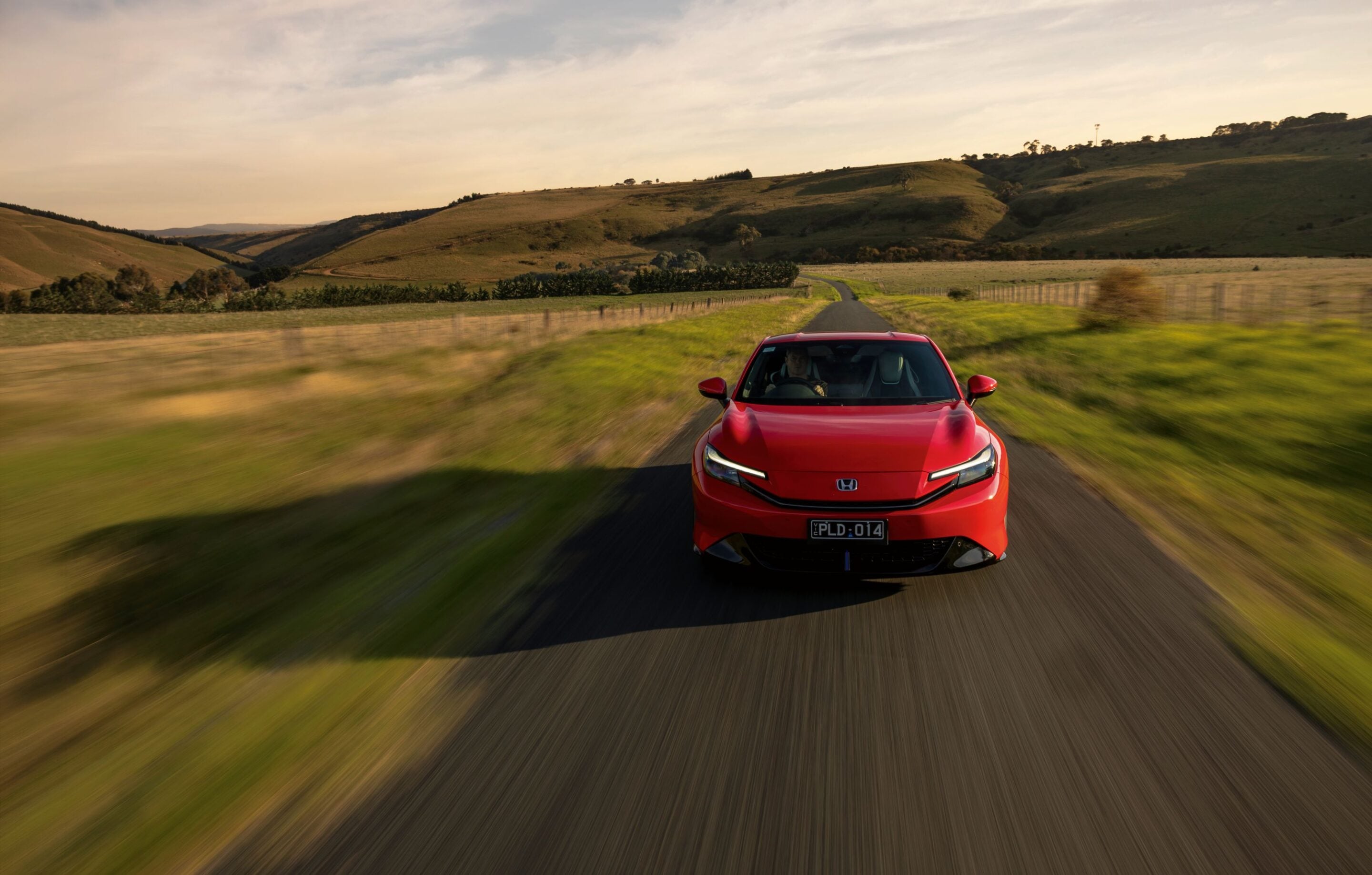
Other performance enhancements have come via the Honda Civic Type R hot hatch, specifically the dual-axis front suspension set-up designed to control torque steer, and adaptive damper system, although in the Prelude, it’s been tuned to offer a more luxurious driving experience.
The Prelude’s initial sales rush is a good sign for the Japanese brand as it seeks to, in its own words, broaden the scope of its “exciting sport-type models”.
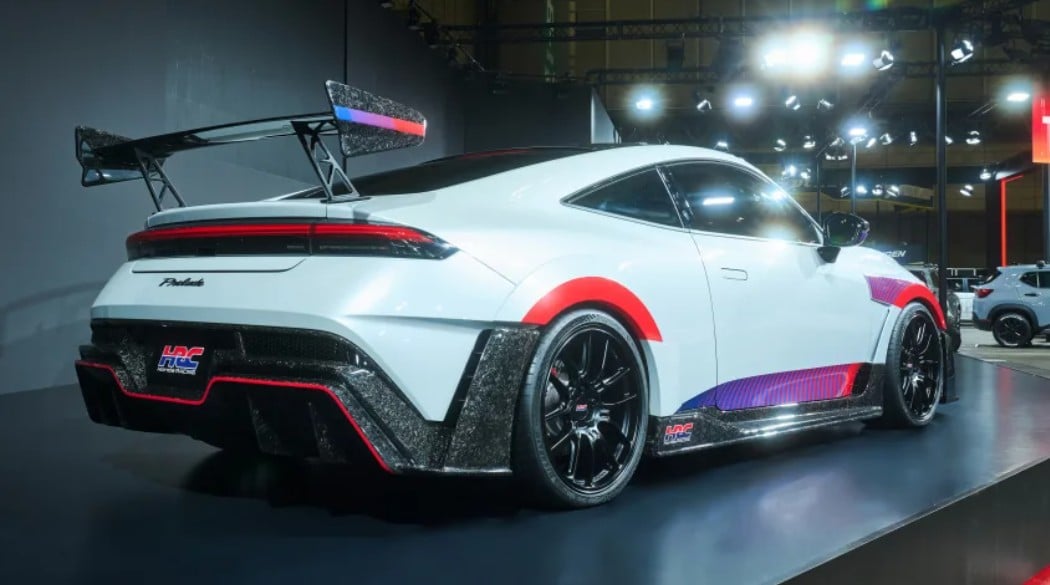
Earlier this year, Honda took the covers off a striking new Prelude HRC concept at the Tokyo Auto Salon, the clearest indication yet that the iconic nameplate could return in a far more performance-focused form. Honda stopped short of confirming the Prelude HRC would go into production but did state it was developing a series of “HRC Performance upgrades for the all-new Prelude.
The last time Australia faced a fuel crisis of the magnitude that it has in 2026 was in 1979 during the second oil shortage of that decade. The result of revolution in Iran, combined with prolonged industrial action at the Caltex Kurnell oil refinery in Sydney, it left motorists in a state of uncertainty.
If you’re too young to have experienced it, chances are you have relatives who remember it well and will tell you stories of how rationing worked, and how the government had decreed that consumers could only buy fuel every second day, based on car number plates. Exemptions were granted for essential workers like doctors, nurses and emergency service personnel. In short, though, the measures which lasted for several weeks were effective in reducing fuel use and seeing Australia through the crisis.
The message then was simple. Drive as little as possible, use public transport if you can, carpool if possible, and be as smooth behind the wheel as you can in order to use as little fuel as possible.
The reality in 2026 is very different, with significantly more Australians on the road on any given day, many of whom have to travel long distances in their car just to get to and from work. On its own, the sheer volume of cars is a huge difference from the late ’70s. And in many instances, we rely on the motor car more now than we did then.
As such, the ways in which you can save fuel extend well beyond how you drive and when you drive. Now, the type of car you own is effectively your gateway to using as little fuel as possible, and that’s what we’ve decoded here this month.
If you’re driving an electric vehicle for example, you’re currently smiling, using no fuel at all to go about your life as normal. The next step from there is the plug-in hybrid (PHEV), which is a clever part-time EV allowing you to drive for up to 120km (in some cases) on pure electric power alone. Cover the regular commute of most Aussies and you’ll be driving to and from work not using any fuel at all if you own a modern PHEV.
Many of us now, though, are driving incredibly efficient hybrid vehicles, technology popularised by Toyota more than two decades ago, thus using half as much (or even less) fuel to do the same work. In the 1970s the concept that you could drive the family car while using less than 5.0L/100km, for example, would have been a pipe dream. Yet that’s exactly what the likes of hybrid Camry, RAV4, Tucson or Sorento can do in 2026.
The concept of saving fuel is still as simple as it was in regard to your driving behaviour and the way you treat your vehicle. However, the options at your disposal are broader, more complex, and more capable than they’ve ever been.
Here, then, is Wheels’ guide to the best way to save fuel – and money – while still covering your essential driving needs.
Price: From $27,990 plus on-road costs
Drivetrain: 1.5-litre four-cylinder petrol-hybrid
Transmission: 3-speed auto, front-wheel drive
Power: 155kW (combined petrol-electric)
Torque: 128Nm
Fuel: 95 RON premium unleaded
Fuel tank: 36 litres
Fuel consumption (claim): 4.3L/100km
Theoretical range from a single tank: 837km
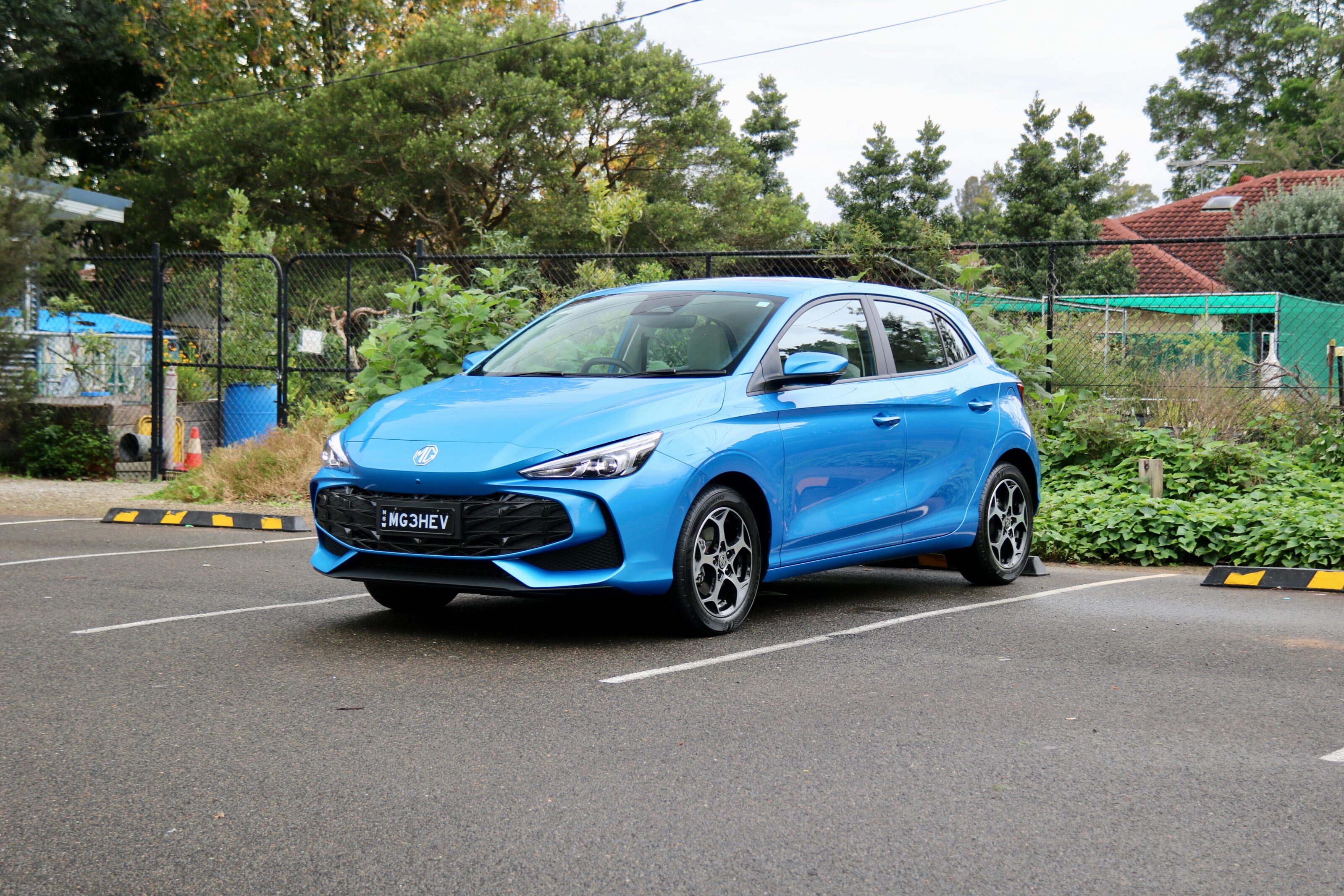
Australia’s most affordable full hybrid (forget about the minimal benefits, if any, of mild hybrids) makes good use of its 1.5-litre naturally-aspirated petrol engine, especially when paired with a 100kW electric motor driving the front wheels. Combined total outputs of 155kW provides punchy acceleration from standstill, especially when on the move.
Laboratory testing has decreed the MG 3 will sip 4.3L/100km of the more premium 95-octane unleaded, offering a theoretical driving range on a single tank of around 837km. Our real world testing has previously returned 4.8L/100km, dropping that range to 750km, still a decent return on investment. The only downside, of course, is the MG 3’s thirst for more expensive premium unleaded.
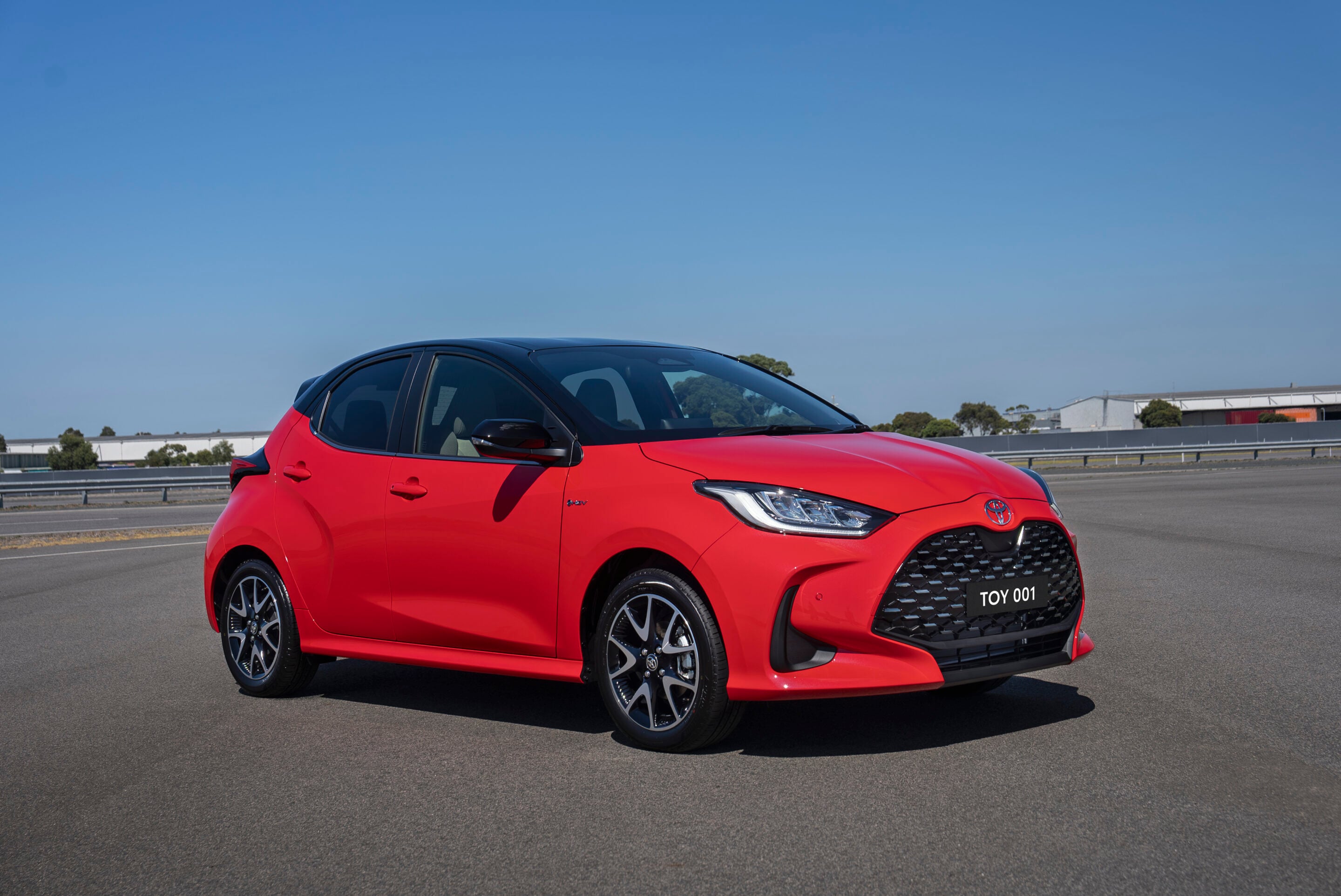
Price: From $28,990 plus on-road costs
Drivetrain: 1.5-litre three-cylinder petrol-hybrid
Transmission: CVT auto, front-wheel drive
Power: 85kW (combined petrol-electric)
Torque: 120Nm
Fuel: 91 RON unleaded
Fuel tank: 36 litres
Fuel consumption (claim): 3.3L/100km
Theoretical range from a single tank: 1090km
The headline act here is Toyota’s claim of a miserly 3.3L/100km of regular unleaded on the combined fuel cycle. Real world testing by Wheels, however, returned a more realistic 4.1L/100km. That’s still an excellent number, and one that will provide around 878km of driving between refills.
It’s not the most powerful hybrid hatchback on the market – its combined output of just 85kW dwarfed by some of its rivals. But the raw numbers belie the Yaris’ peppy nature, especially in an urban environment where, let’s face it, most Yaris’ will spend the majority of their time.
Quick to move away from standstill and eager enough when on the move, the Yaris makes good use of the extra oomph provided by its single electric motor. And bonus points for only needing regular unleaded.

Price: From $33,250 plus on-road costs
Drivetrain: 1.6-litre four-cylinder petrol-hybrid
Transmission: 6-speed dual-clutch, front-wheel drive
Power: 104kW (combined petrol-electric)
Torque: 147Nm
Fuel: 91 RON unleaded
Fuel tank: 42 litres
Fuel consumption (claim): 3.9L/100km
Theoretical range from a single tank: 1076km
Hyundai took its time joining the hybrid party but when it arrived (unfashionably) late, it did so with aplomb.
The i30 sedan brings practicality, interior space and comfort in a way most hatchbacks can only dream of, its 474-litre cargo area a case in point.
The driving experience is refined, with the i30 happy to chug on electricity alone at anywhere up to 50km/h in traffic, providing you exercise circumspection with your right foot.
That helps the i30 sedan achieve a real-world fuel number of just 4.3L/100km (against a claim of 3.9L) which we have previously done in testing. And that means a range of around 976km between visits to the servo is achievable. Not bad.
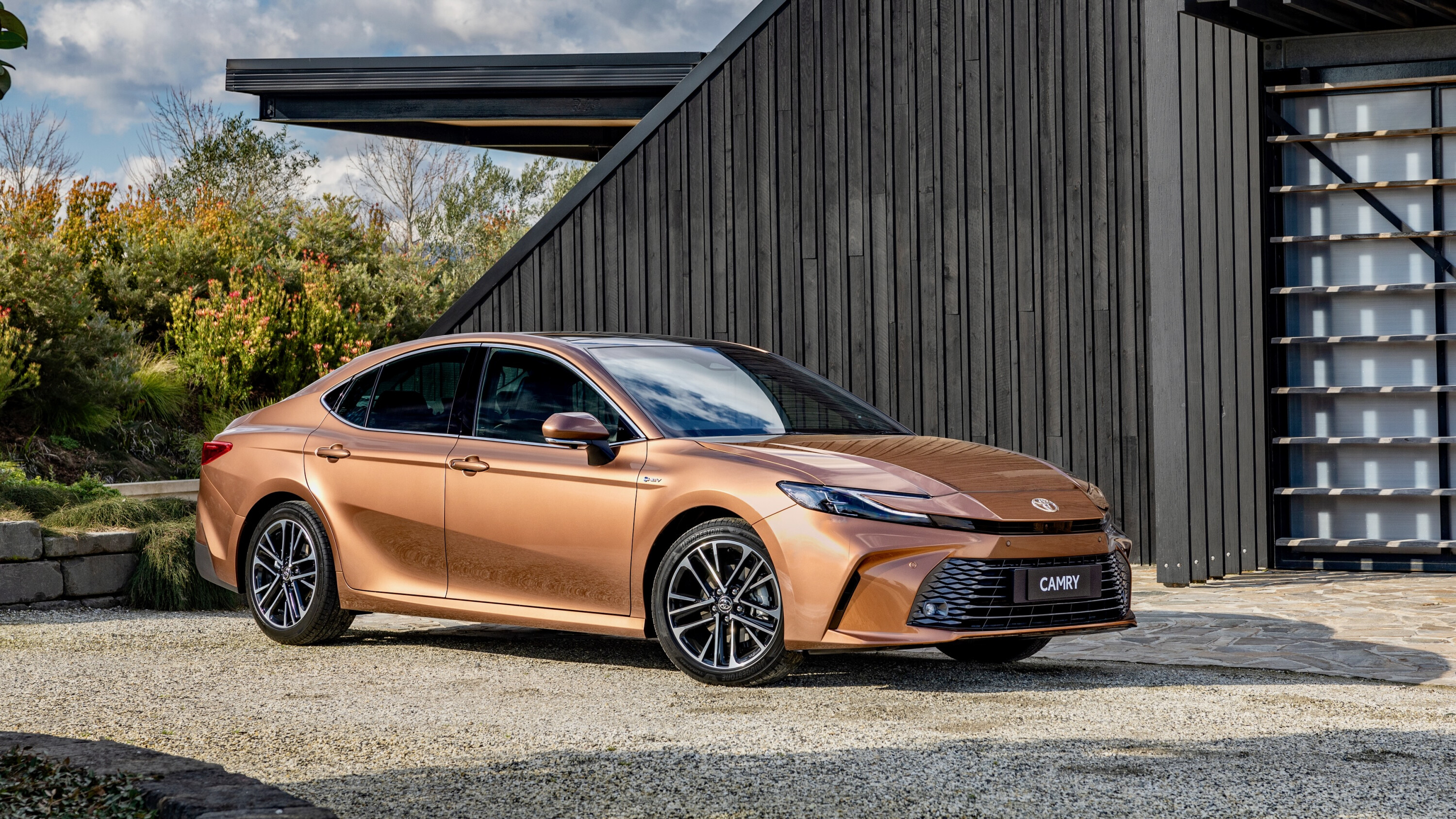
Price: From $39,990 plus on-road costs
Drivetrain: 2.5-litre four-cylinder petrol-hybrid
Transmission: CVT auto, front-wheel drive
Power: 170kW (combined petrol-electric)
Torque: 221Nm
Fuel: 95 RON premium unleaded
Fuel tank: 50 litres
Fuel consumption (claim): 4.0L/100km
Theoretical range from a single tank: 1250km
It’s impossible to leave out the Camry, a stalwart on our roads since 1983. But the Camry’s true calling came with the introduction of the first hybrid model in 2006, bringing previously unparalleled fuel economy to more families than ever before.
Today, the Camry remains the best-selling medium sedan with an engine (Tesla’s electric Model 3 is number one) and for good reason. While a quoted fuel economy of just 4.0L/100km looks good on paper, out in the real world mid-5s are more realistic. A recent Wheels road test returned 5.6L/100 over a week, giving a projected driving range of 892km between visits to the local servo.
The only downside is the Camry’s thirst for more expensive premium unleaded, something to consider in today’s oil shock climate.
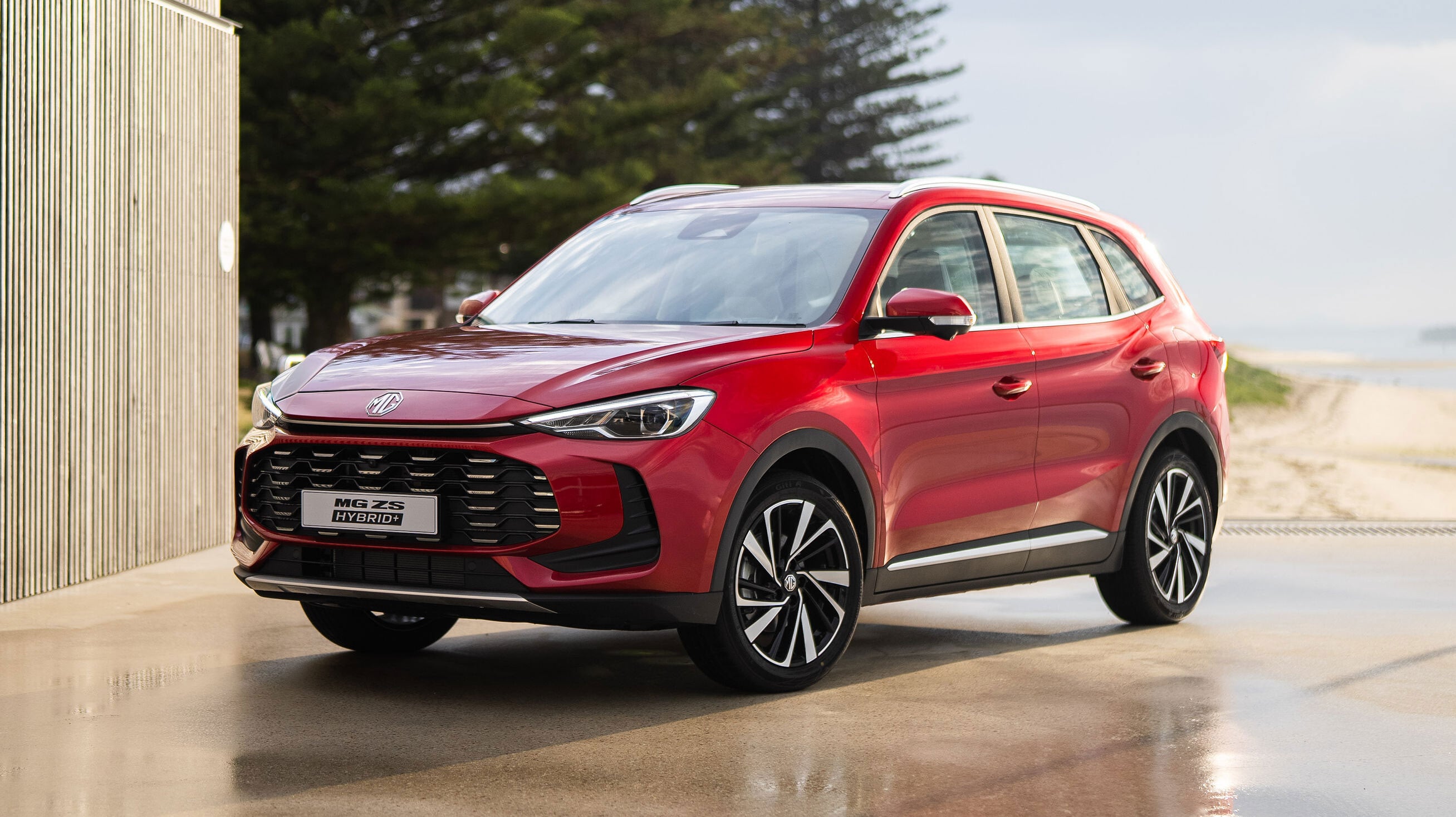
Price: From $30,990 driveaway
Drivetrain: 1.5-litre four-cylinder petrol-hybrid
Transmission: 3-speed auto, front-wheel drive
Power: 158kW (combined petrol-electric)
Torque: 250Nm
Fuel: 95 RON unleaded
Fuel tank: 41 litres
Fuel consumption (claim): 4.7L/100km
Theoretical range from a single tank: 872km
A Wheels Best Small SUV 2025 category winner, the MG ZS Hybrid+ was lauded for its spacious cabin, long list of standard equipment and accessibly low pricing.
Under the bonnet, a peppy 155kW 1.5-litre petrol-hybrid is perfectly suited for most driving conditions, the star attraction its claimed 4.7L/100km fuel use.
Realistically, you can expect numbers in the low fives, which is still decent and will provide around 780-800km of driving before needing a drink of premium petrol – the latter fact really the only blot on its copy book.
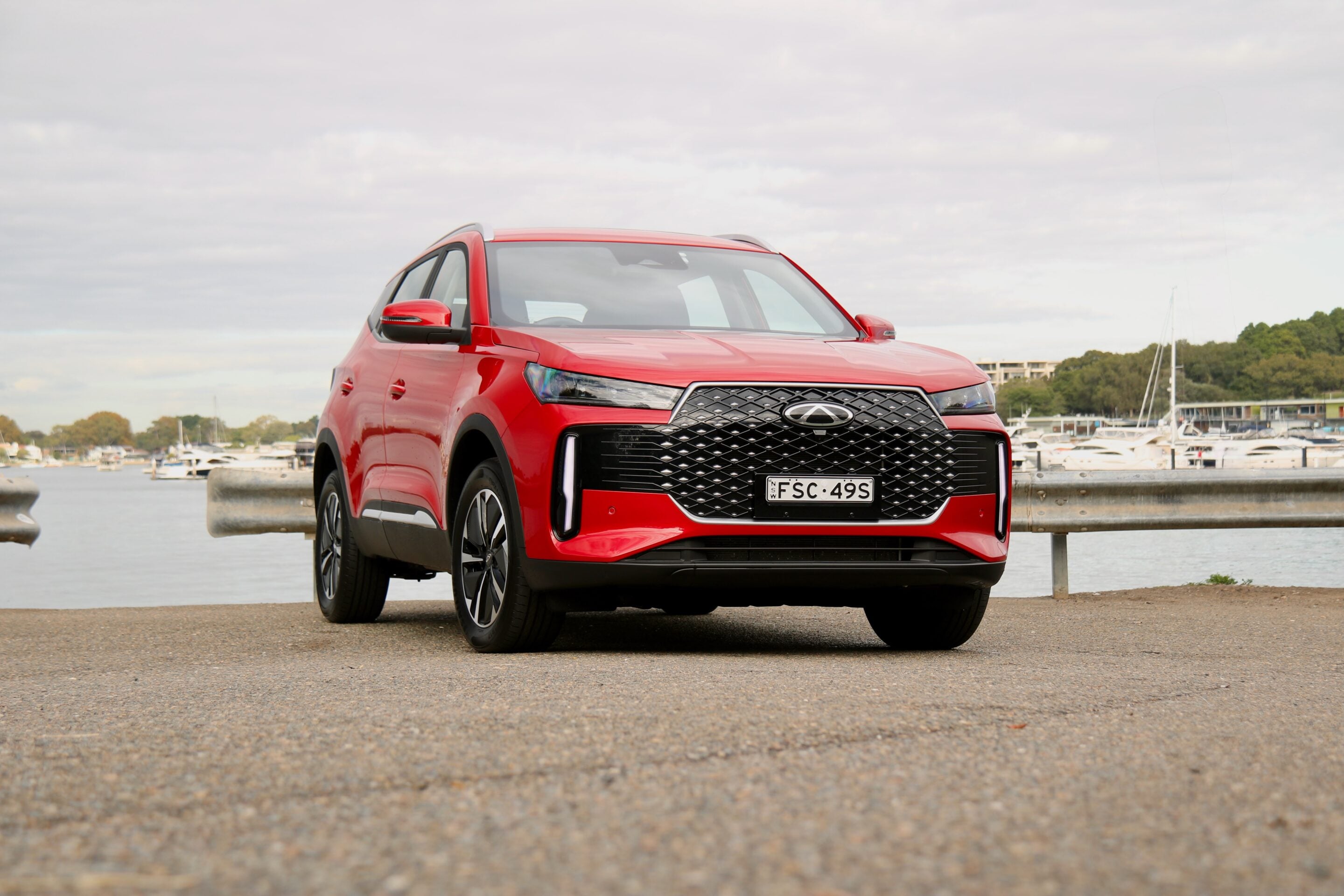
Price: From $29,990 driveaway
Drivetrain: 1.5-litre four-cylinder petrol-hybrid
Transmission: CVT auto, front-wheel drive
Power: 150kW (combined petrol-electric)
Torque: 310Nm
Fuel: 91 RON unleaded
Fuel tank: 51 litres
Fuel consumption (claim): 5.4L/100km
Theoretical range from a single tank: 944km
Australia’s most affordable hybrid SUV is a decent option for buyers on a budget. A perky 150kW drivetrain offers enough performance for most situations, the Tiggo 4 never feeling sluggish. Inside, a practical cabin offers plenty of modern tech to keep most buyers happy.
A claimed fuel economy figure of 5.4L/100km seems ambitious, although we’ve yet to test the hybrid version of what has become – in petrol-only form – Australia’s number one-selling small SUV. Our experience with a vast armada of hybrids from a wide range of manufacturers, suggests a number in the low-sixes is more realistic, offering a theoretical range of around 830-850km between refills. Underscoring its appeal, the Tiggo 4 is happy to drink regular 91-octane unleaded.
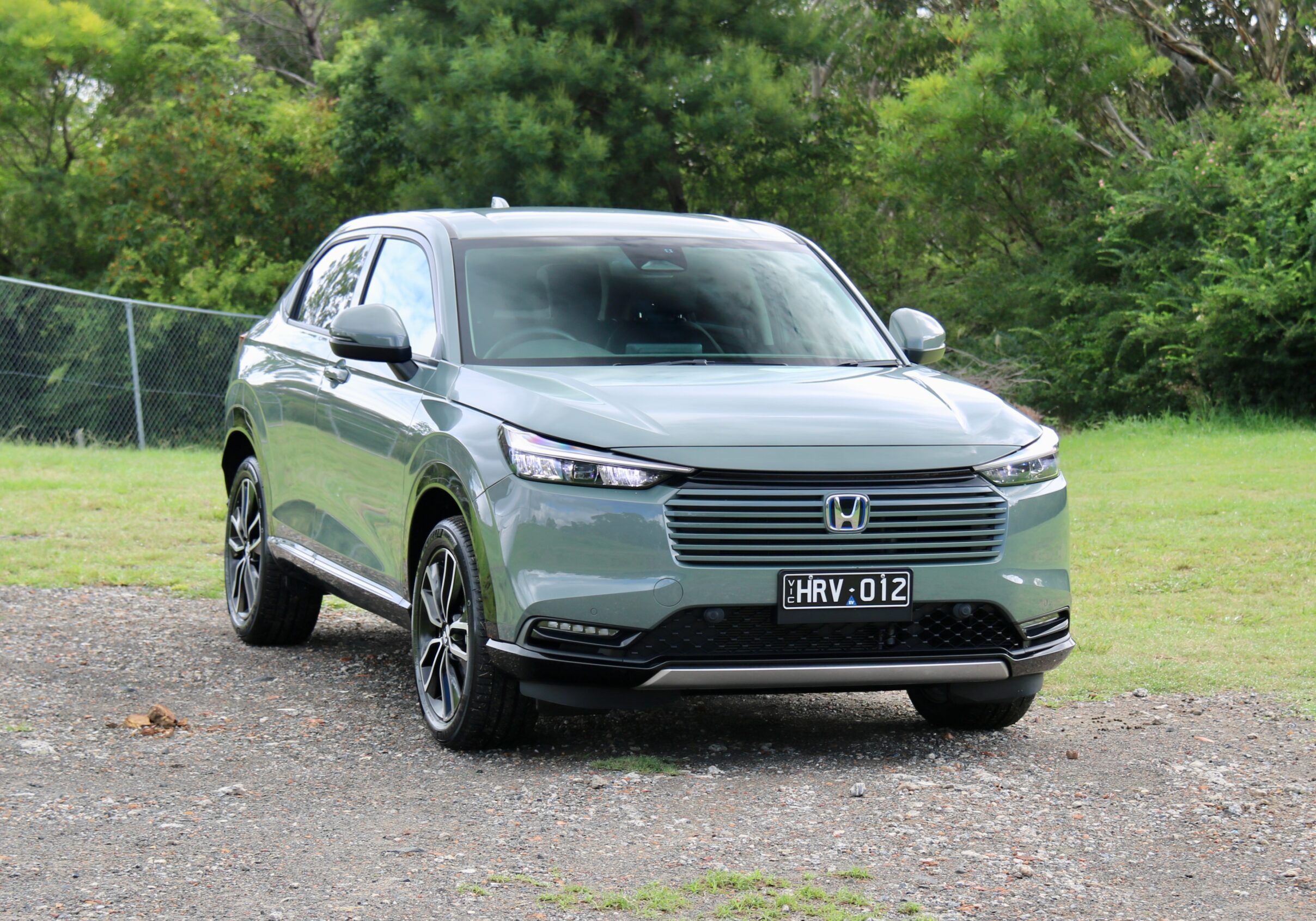
Price: From $39,900 driveaway
Drivetrain: 1.5-litre four-cylinder petrol-hybrid
Transmission: CVT auto, front-wheel drive
Power: 96kW (combined petrol-electric)
Torque: 253Nm
Fuel: 91 RON unleaded
Fuel tank: 40 litres
Fuel consumption (claim): 4.3L/100km
Theoretical range from a single tank: 930km
In a sea of new cars from Chinese challenger brands, the Honda HR-V brings a familiarity that will appeal to many buyers. So too its claimed 4.3L/100km fuel economy number which isn’t too far off the real world, Wheels achieving 4.7L/1200km over a week of testing. That’ll provide around 850km of driving between trips to the servo for some 91-octane regular unleaded.
Combined power outputs of 96kW might seem meagre on paper, but the HR-V has enough in the tank to ensure the driving experience is perfectly suitable to today’s motoring landscape. Bonus points for practicality too, with Honda’s ‘Magic Seats’ turning the compact SUV into a cargo carrier belying its compact dimensions. Buyers will love its $199 per visit servicing costs too.
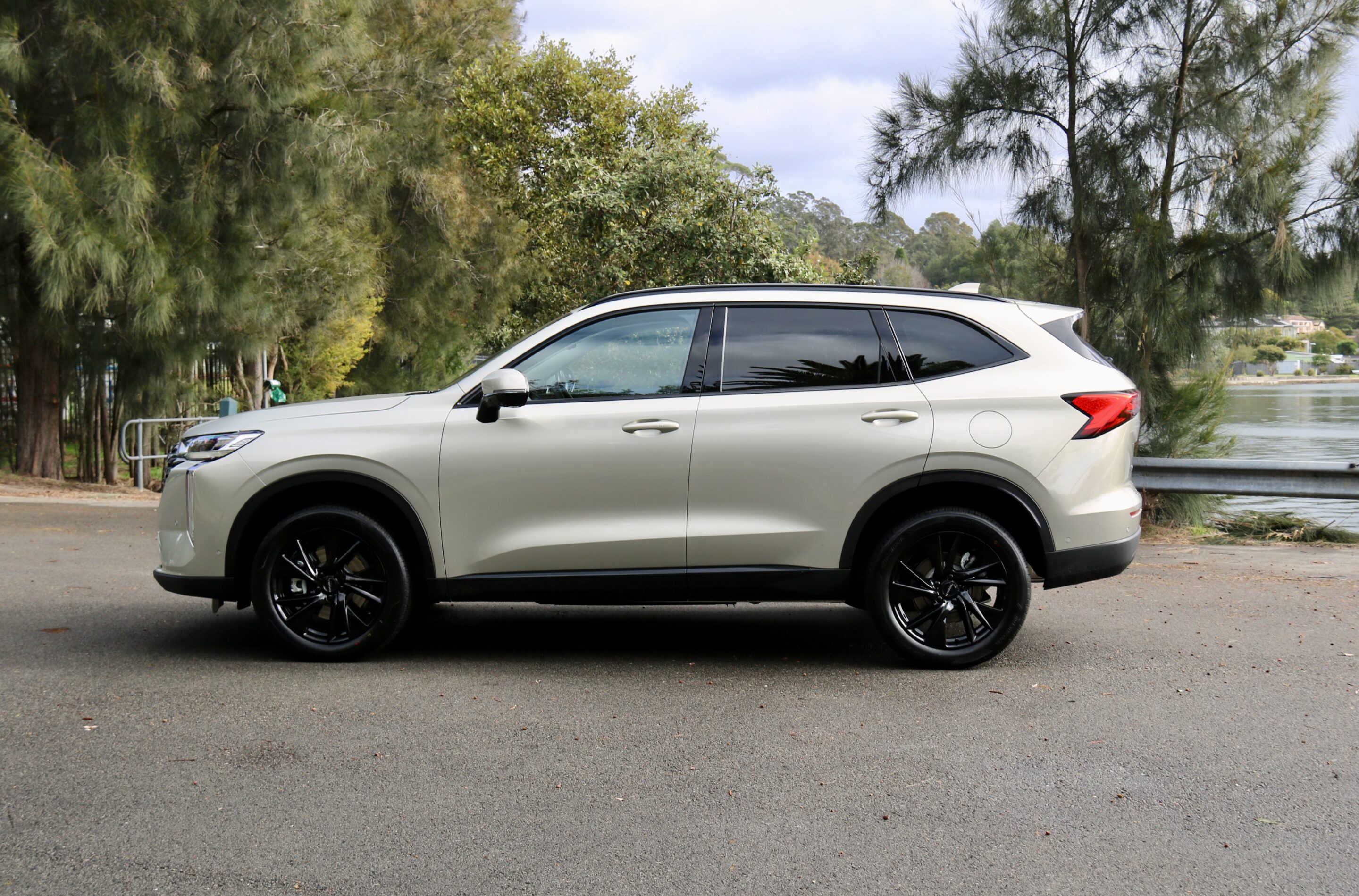
Price: From $35,990
Drivetrain: 1.5-litre four-cylinder petrol-hybrid
Transmission: 2-speed auto, front-wheel drive
Power: 179kW (combined petrol-electric)
Torque: 300Nm
Fuel: 91 RON unleaded
Fuel tank: 61 litres
Fuel consumption (claim): 5.2L/100km
Theoretical range from a single tank: 1173km
The GWM Haval H6 medium SUV was given a comprehensive makeover in the second half of 2025 which improved its styling and dynamics, gave it a new touchscreen system and improved its value equation.
A punchy hybrid system translates to willing performance on the road although ride comfort is a little on the firm side. A claimed fuel number of 5.2L/100km doesn’t stray too far from reality, with recent Wheels testing seeing a return of 6.1L/100km, good for a range of around 1000km per tank. The Haval H6 is happy to drink 91-octane unleaded.
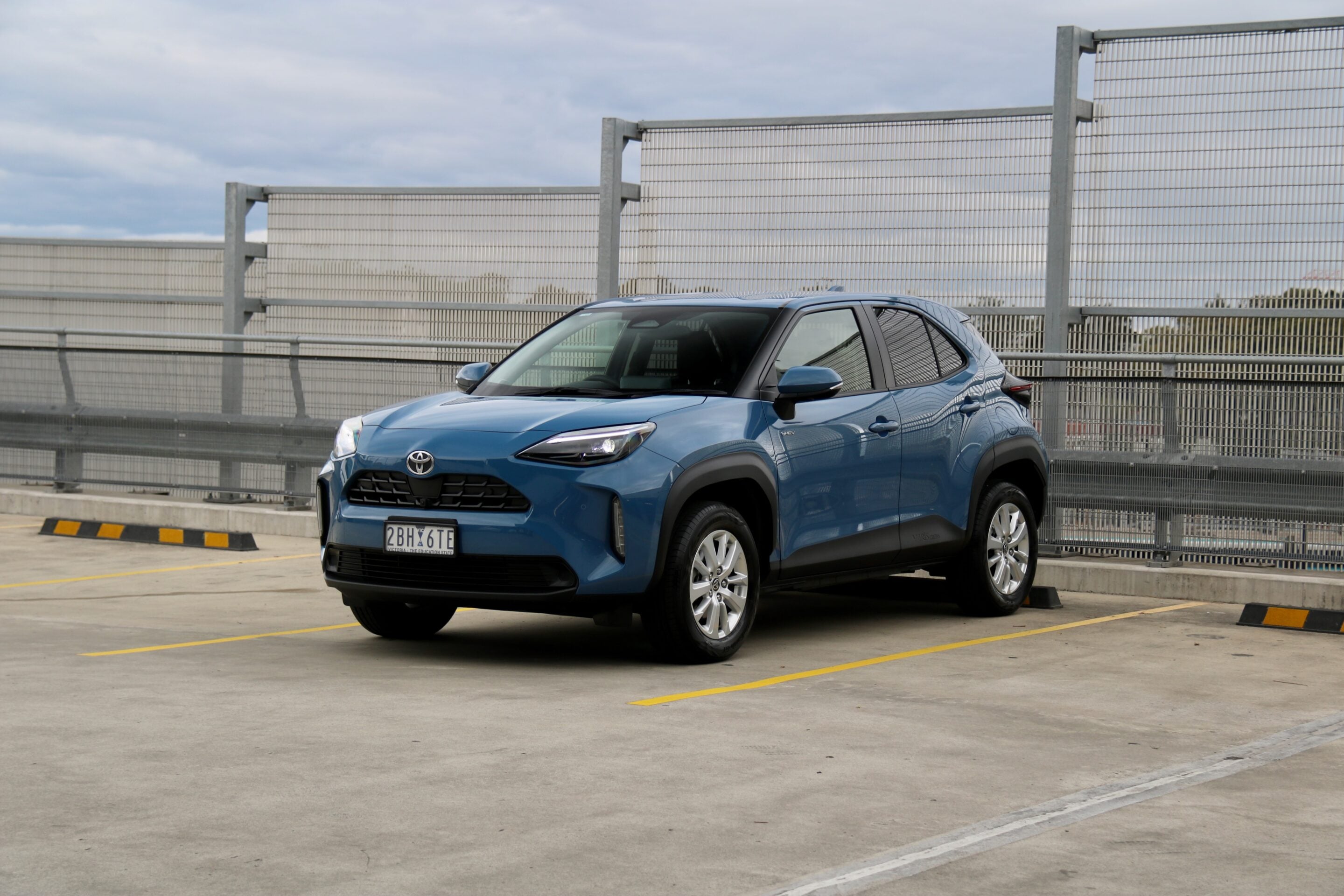
Price: From $31,790 plus on-road costs
Drivetrain: 1.5-litre four-cylinder petrol-hybrid
Transmission: CVT auto, front- or all-wheel drive
Power: 85kW (combined petrol-electric)
Torque: 141Nm
Fuel: 91 RON unleaded
Fuel tank: 36 litres
Fuel consumption (claim): 3.8L/100km (FWD) / 4.0L/100km (AWD)
Theoretical range from a single tank: 947km (FWD) / 900km (AWD)
A Yaris hatchback on stilts, Toyota’s Yaris Cross blends city car dimensions with the high-riding comfort more and more buyers are demanding. On paper, the Yaris Cross is the most fuel-efficient SUV currently on sale in Australia, although its 3.8-4.0L/100km lab-tested claim is slightly ambitious, with previous Wheels testing seeing 4.7L/100km out in real-world driving conditions.
With a relatively small 36-litre tank, that’s good for around 765km of driving between refills of cheaper regular unleaded.
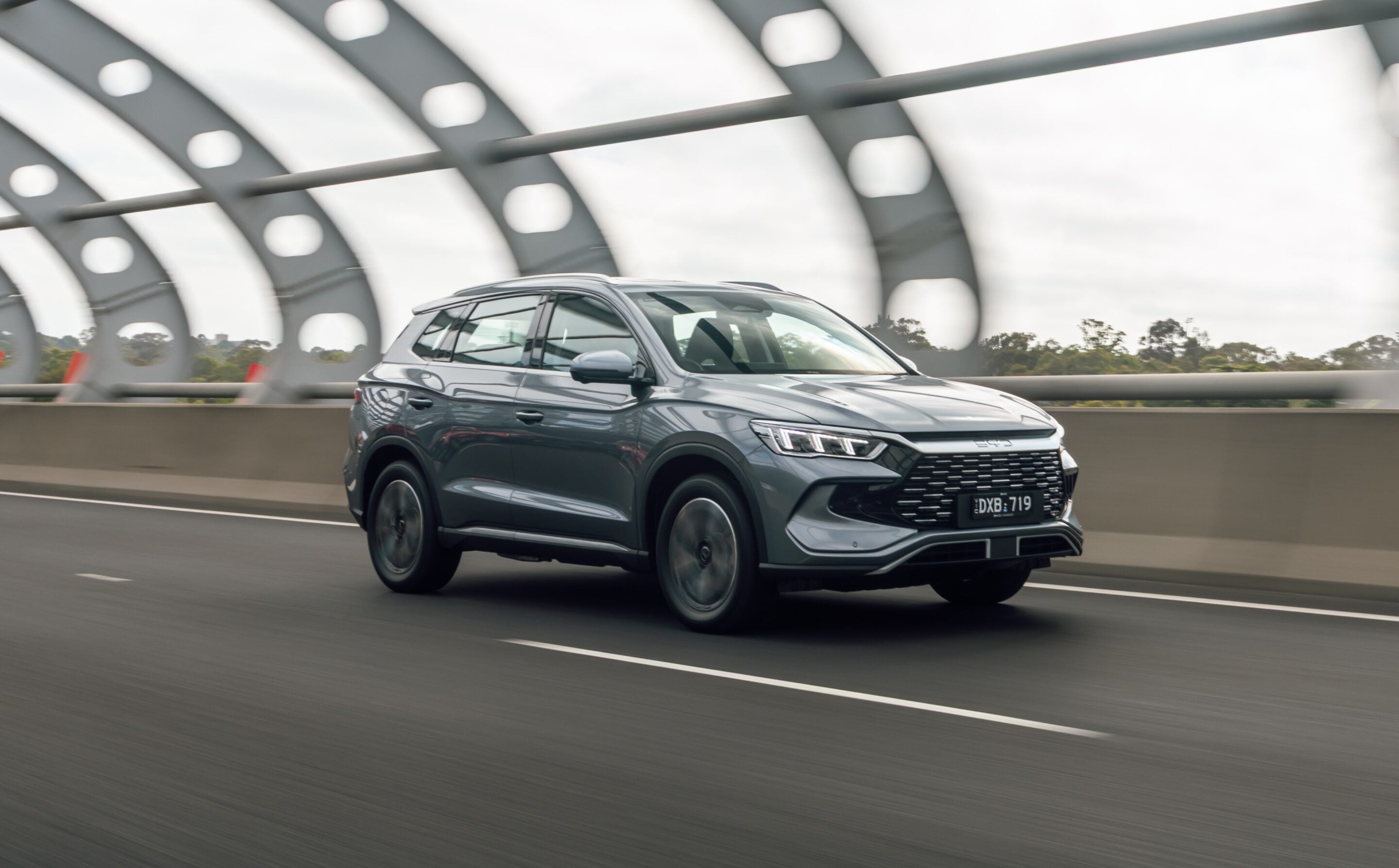
Price: From $33,990 plus on-road costs
Drivetrain: 1.5-litre four-cylinder petrol plug-in hybrid
Transmission: CVT auto, front-wheel drive
Power: 156kW (combined petrol-electric)
Torque: 300Nm
Fuel: 91 RON unleaded
Fuel tank: 52 litres
Fuel consumption (claim): 1.2L/100km (full charge) 4.5L/100km (low charge)
Battery size: 12.9kWh
Electric range (claim): 71km (NEDC)
Currently the most affordable plug-in hybrid SUV in Australia, the BYD Sealion 5 brings some impressive stats, like a low $33,990 +ORC starting price, an efficient plug-in hybrid drivetrain with 71km of NEDC-tested electric driving range in a practical mid-size SUV body.
Keeping the battery topped up is key to achieving excellent fuel economy but BYD has engineered its plug-in hybrid system to act like a regular hybrid once the battery’s state-of-charge drops below 25 per cent. That means its quoted 4.5L/100km fuel economy is achievable, and a match for some of the best regular hybrids in the segment.
Price: From $34,990 driveaway
Drivetrain: 1.5-litre four-cylinder petrol plug-in hybrid
Transmission: CVT auto, front-wheel drive
Power: 150kW (combined petrol-electric)
Torque: 310Nm
Fuel: 91 RON unleaded
Fuel tank: 60 litres
Fuel consumption (claim): 1.4L/100km (full charge)
Battery size: 18.4kWh
Electric range (claim): 93km (NEDC)
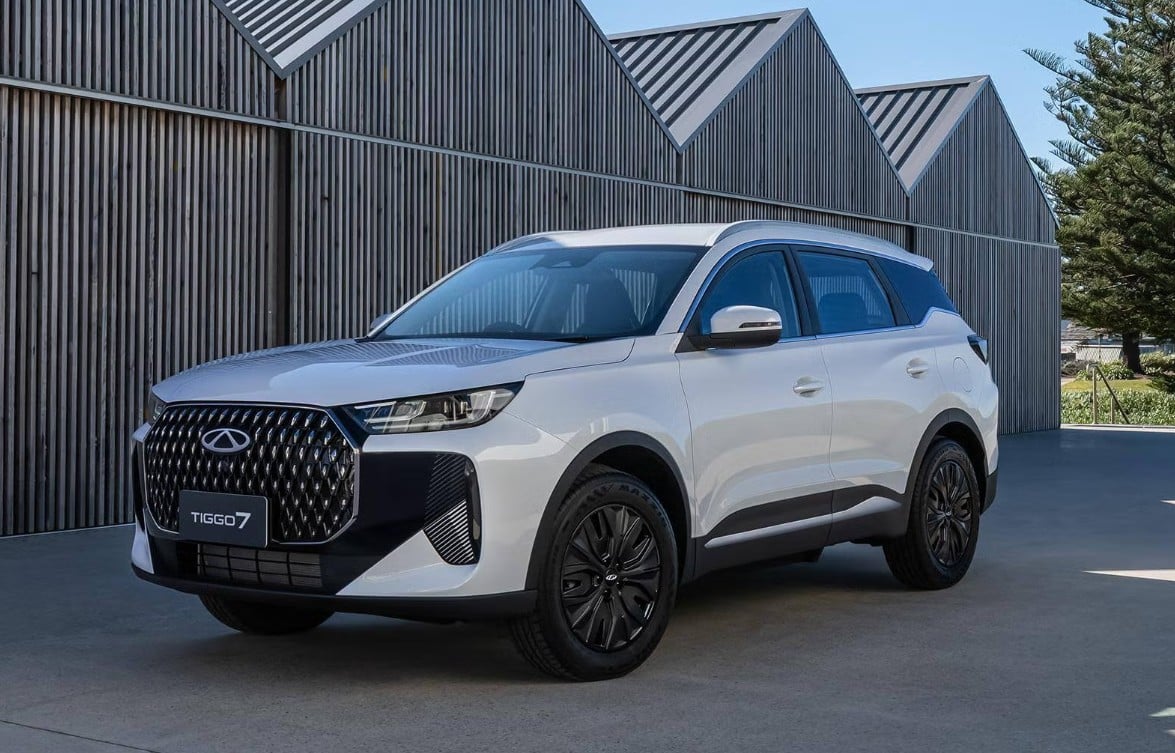
Currently priced at $34,990 drive-away (until June 30), the Chery Tiggo 7 Super Hybrid (Chery-speak for plug-in hybrid) blends fuel efficiency with the sweet-spot medium SUV segment.
The Tiggo 7 makes up for its slightly frumpy looks with a decent list of standard equipment, including all the in-car tech buyers want, with real-world efficiency of around 4.0L/100km. Of course, ensuring the battery is always fully charged at the start of the day should allow most Australians to cover their daily commutes on electric power alone, leaving petrol in the tank for those rarer, longer drives.
Price: From $79,500 plus on-road costs
Drivetrain: 1.5-litre four-cylinder petrol plug-in hybrid
Transmission: 7-speed dual-clutch, all-wheel drive
Power: 180kW (combined petrol-electric)
Torque: 470Nm
Fuel: 95 RON premium unleaded
Fuel tank: 36 litres
Fuel consumption (claim): 2.1L/100km (with charge) / 6.3L-7.1L/100km (no charge)
Battery size: 14.2kWh
Electric range (claim): 78km (WLTP)
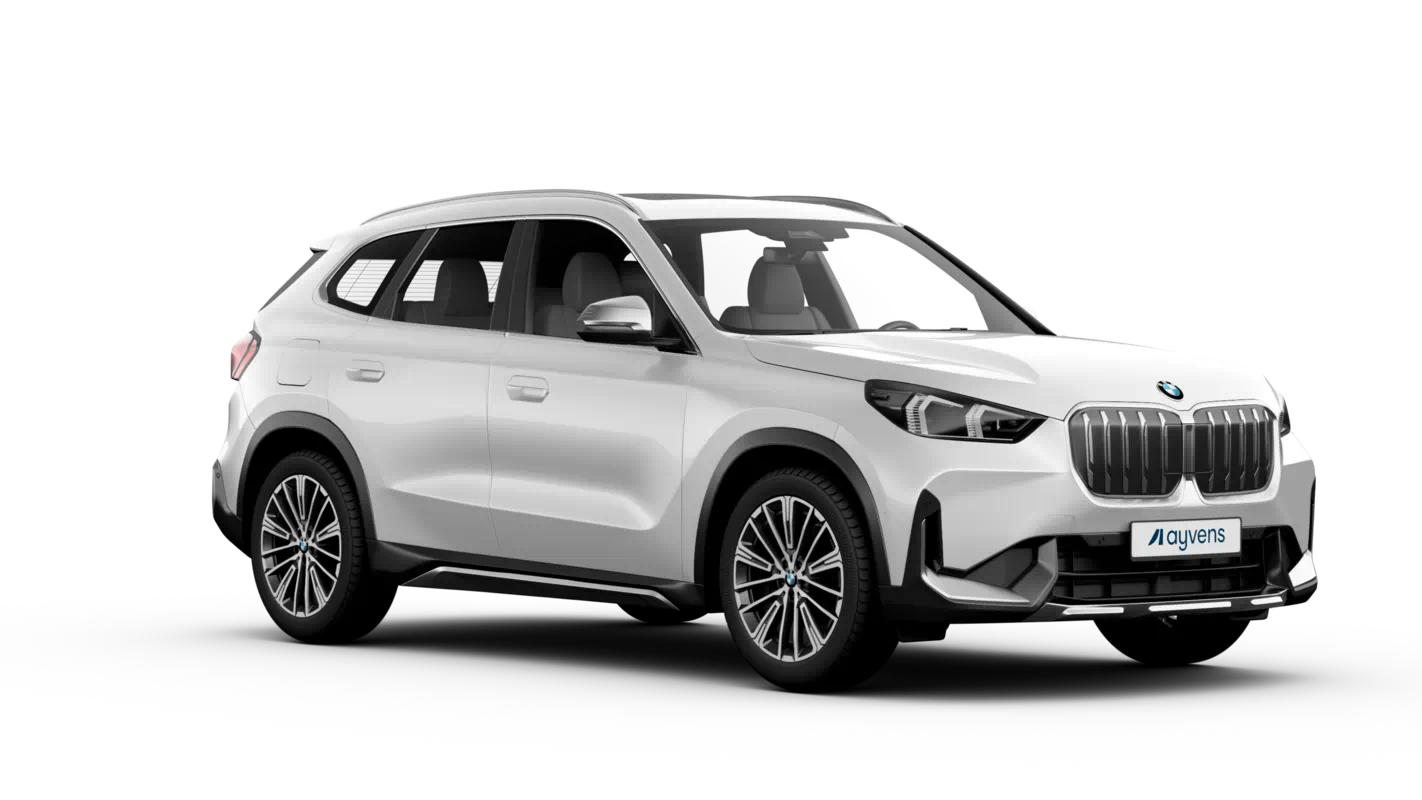
The X1 plug-in hybrid is a decent option for those lucky enough to play in the luxury space. In regular ICE trim, the X1 is already one of the best small luxury SUVs on the market.
A claimed 78km range (WLTP claim) covers the daily commute. Things get interesting when the battery is depleted and the small SUV is hauling around a lot of extra (dead) weight. Here, BMW quotes 6.3L/100km which, when combined with a small 36-litre tank, combines for a range of around 570km. The lesson here? Keep your battery’s state-of-charge in the usable range, easy enough to do at home overnight.
Price: From $63,790 plus on-road costs
Drivetrain: 2.5-litre four-cylinder petrol plug-in hybrid:
Transmission: CVT auto, front-wheel drive
Power: 241kW (combined petrol-electric)
Torque: 250Nm
Fuel: 95 RON premium unleaded
Fuel tank: 50 litres
Fuel consumption (claim): 2.1L/100km (full charge)
Battery size: 17.8kWh
Electric range (claim): 78km (NEDC)
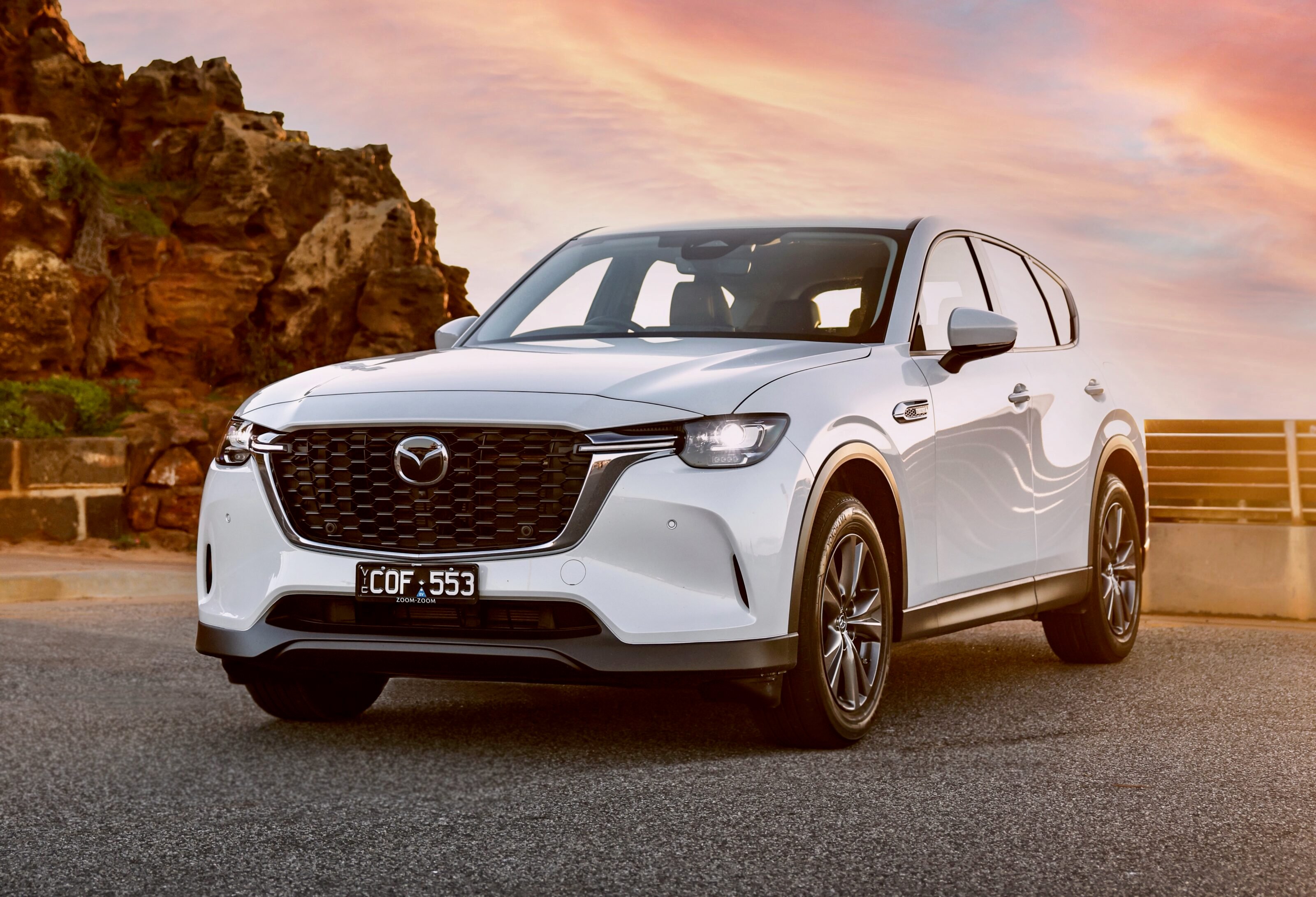
Mazda’s CX-60 is the first plug-in hybrid from the Japanese brand in Australia, blending PHEV technology with the brand’s semi-premium philosophy.
Mazda claims its first PHEV can cover up to 78km, but a more realistic figure – based on real-world testing – is around 50km.
Once the battery is depleted and the 2.5-litre petrol kicks in, consumption does climb rapidly, returning around 8.0L/100km. As a kicker, the CX-60 gulps 95-octane premium unleaded at
a minimum.
Still, Mazda’s cabin execution remains amongst the very best in this semi-premium space while the brand’s inherent sporty DNA will satisfy those who enjoy a decent drive.
Price: From $57,900 plus on-road costs
Drivetrain: 1.5-litre four-cylinder petrol plug-in hybrid
Transmission: Automatic, all-wheel drive
Power: 321kW (combined petrol-electric)
Torque: 650Nm
Fuel: 95 RON premium unleaded
Fuel tank: 60 litres
Fuel consumption (claim): 2.5L/100km (full charge)
Battery size: 29.6kWh
Electric range (claim): 100km (full charge)
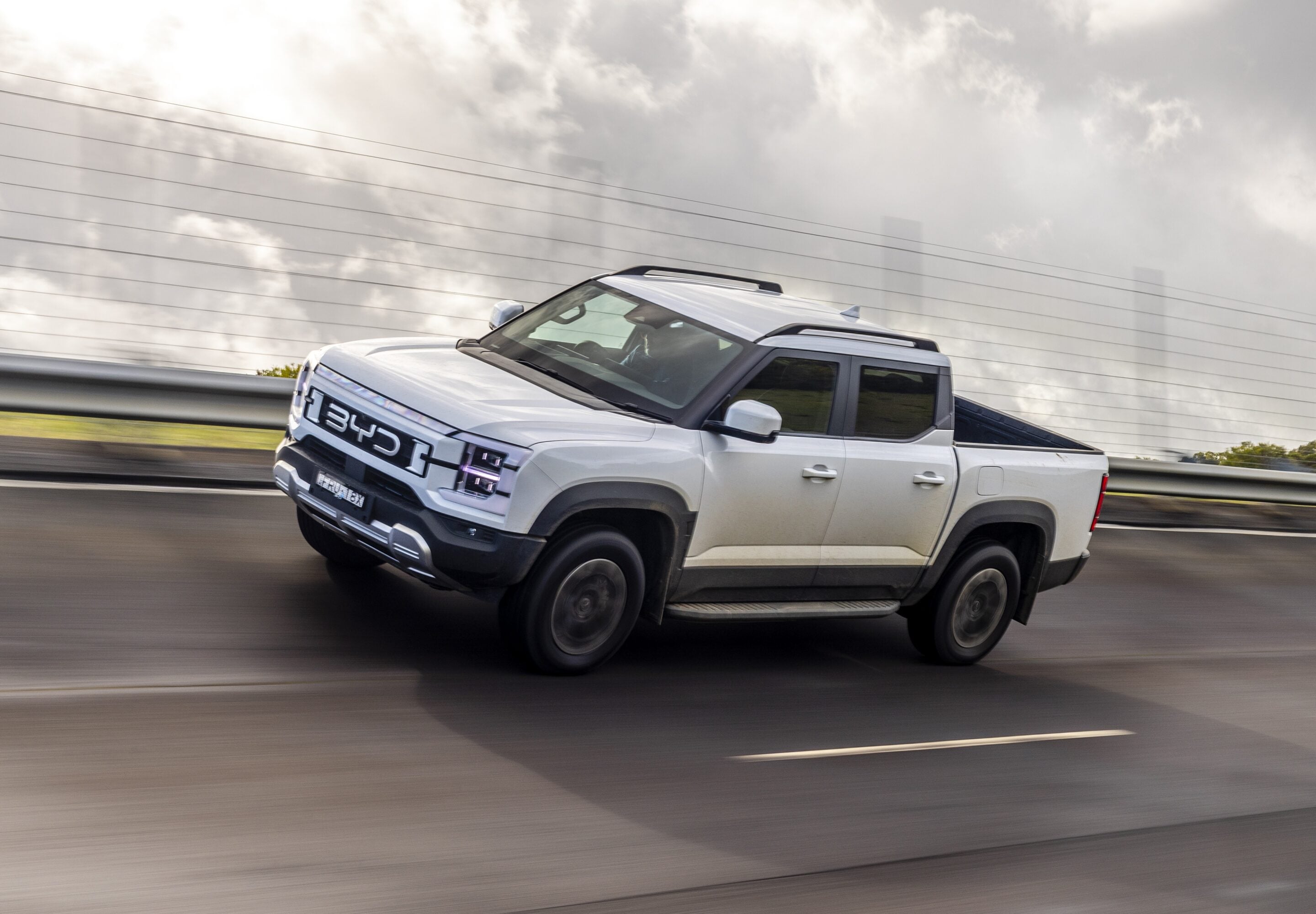
BYD sent shockwaves through the dual-cab ute segment when it launched its plug-in hybrid Shark 6. And it’s been effective too, sitting third on the sales ladder for dual-cabs, behind only the rusted-on Ford Ranger and Toyota HiLux.
Wheels lauded the Shark 6’s take on the segment, awarding it the 2025-26 Wheels Ute of the Year gong. And while we acknowledged it wasn’t a ute for everyone, it did tick a lot of boxes for ute owners who have no need to tow or venture too far off-road.
Instead, with around 85km of real-world EV driving and a fuel economy number in the low 5s (forget the 2.5L claim), the Shark 6 is one of the most economical dual-cabs available today. Bonus points for having a petrol engine, unusual in the ute sphere, and something critics decried when diesel was around $1.20 per litre cheaper than it is today. Shark 6 owners are laughing all the way to the bank now.
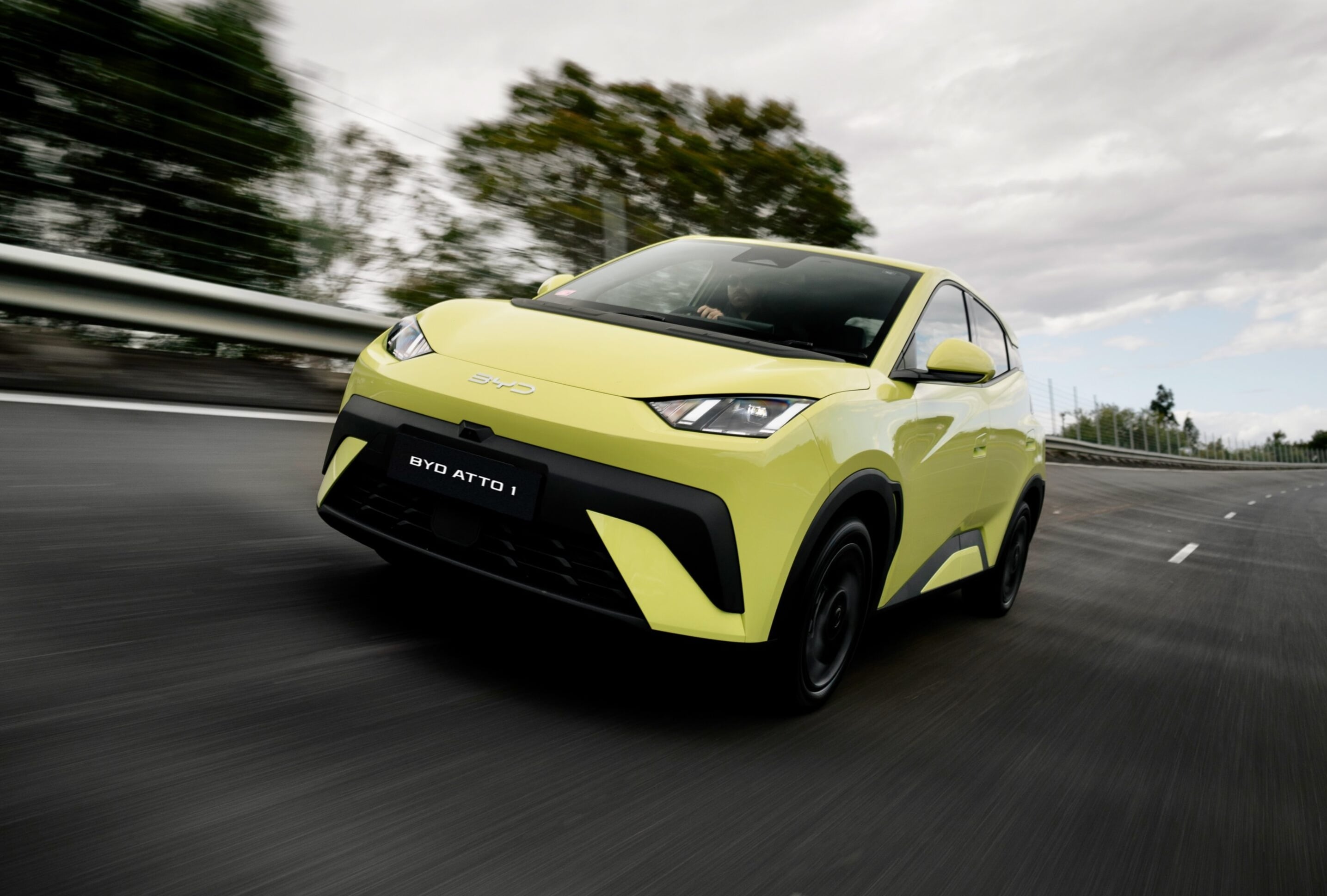
Price: From $23,900 plus on-road costs
Drivetrain: Single electric motor
Transmission: Single-speed, front-wheel drive
Power: 65kW
Torque: 175Nm
Battery size: 30kWh
Electric range (claim): 220km (WLTP)
Maximum DC charge rate: 65kW
DC charge time: 34 minutes (10-80%)
AC charge time: 7kW 4.2 hours (0-100%)
BYD shocked the nation launching not just the cheapest electric car in Australia but one of the cheapest cars, period. Priced from just $23,990 plus on-road costs, the BYD Atto 1 is priced similarly to other light cars such as the Kia Picanto and MG 3, but it’s fully electric instead.
The entry-level Atto 1 Essential uses a small 30kWh battery for a claimed 220km of range, as well as a 65kW electric motor, which is more than enough for most urban-dwelling buyers – but those wanting more range and grunt can jump up to the Atto 1 Premium, which features a 115kW motor and a larger 43kWh battery for a healthier 310km of range. Regardless of the drivetrain, the Atto 1 is a well equipped, practical and darty city runabout.

Price: From $31,900 plus on-road costs
Drivetrain: Single electric motor
Transmission: Single-speed, front-wheel drive
Power: 130kW
Torque: 290Nm
Battery size: 51.1kWh
Electric range (claim): 345km (WLTP)
Maximum DC charge rate: 82kW
DC charge time: 39 minutes (10-80%)
AC charge time: 7kW 8 hours (est. 0-100%)
Launched late in 2025, the BYD Atto 2 has taken the mantle of Australia’s most affordable electric SUV. It’s priced from $31,990 plus on-road costs for the entry-level Dynamic and $35,990 (before on-road costs) for the better-specified Atto 2 Premium.
Both variants share the same drivetrain, a 130kW/290Nm electric motor driving the front wheels, fed by a 51kWh battery that’s good for a claimed WLTP-tested 345km range. Real-world testing by Wheels came close to achieving BYD’s claimed range, a feather in the Atto 2’s cap in a market where lab-tested range numbers are often a touch on the ambitious side.
Well-equipped for the money, the Atto 2 is a decent EV for urban dwellers.
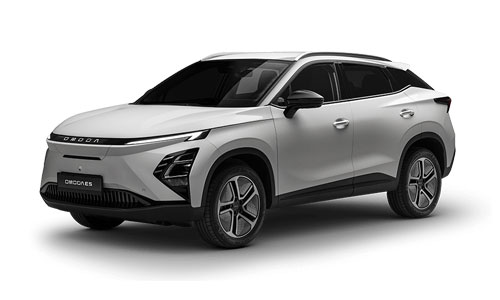
Price: From $37,900 drive-away
Drivetrain: Single electric motor
Transmission: Single-speed, front-wheel drive
Power: 155kW
Torque: 280Nm
Battery size: 58.9kWh
Electric range (claim): 430km (WLTP)
Maximum DC charge rate: 80kW
DC charge time: 28 minutes (30-80%)
AC charge time: 7kW 8.5 hours (est. 0-100%)
Buyers looking to get into an affordable small electric SUV will be well-served by the Chery E5. Sharp driveaway pricing ($37,990 until June 30), is more expensive than some of its rivals but it does bring better driving range (430km on the WLTP testing cycle, translating to around 400km in the real world) and decent straight-line performance from its single electric motor.
The cabin is generously proportioned and brimming with technology while its seven-year warranty brings peace of mind for buyers. Its road manners could use some polish but as a daily urban runabout, the Chery E5 is worth considering, especially with that sharp driveaway deal currently on offer.
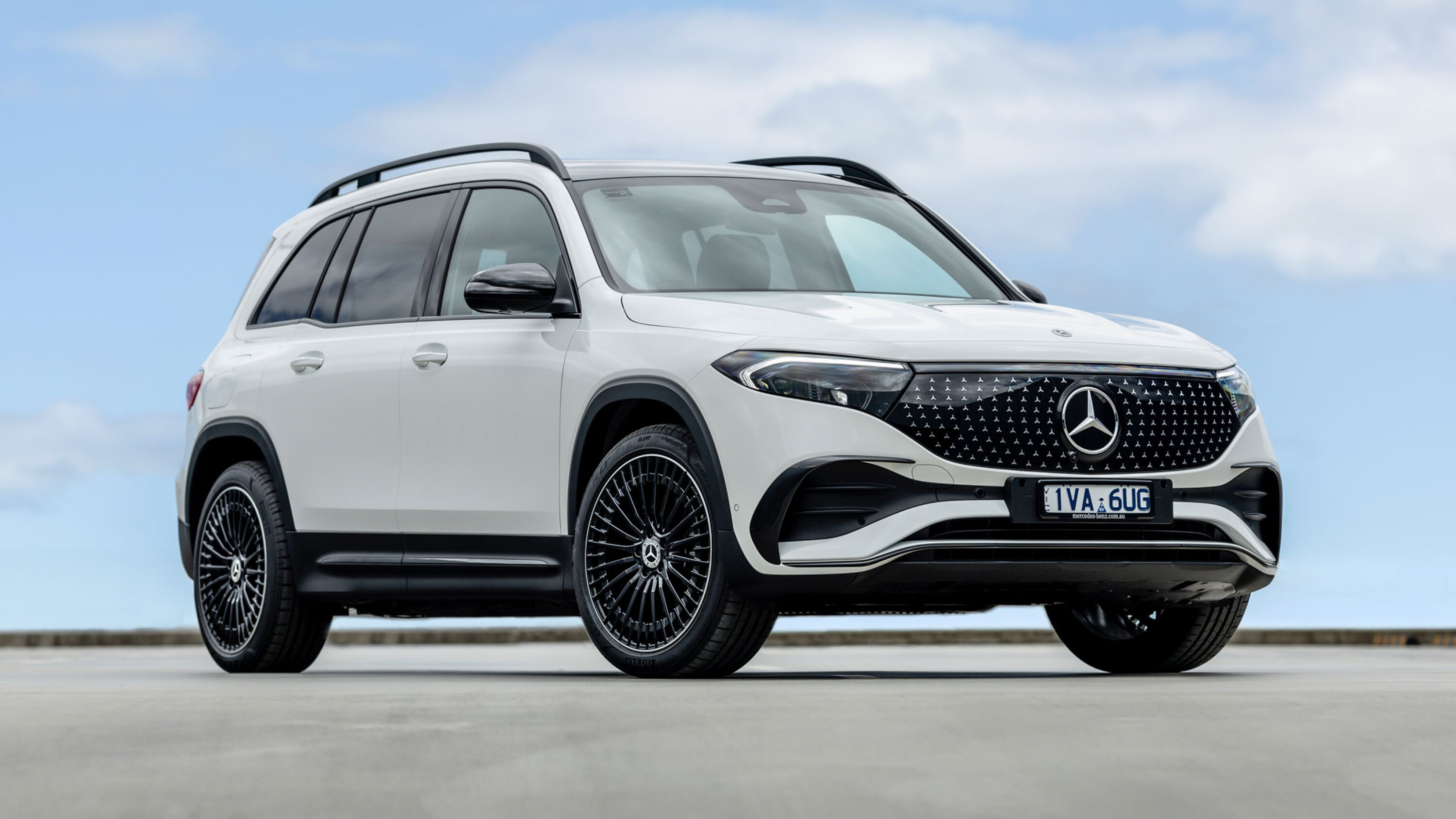
Price: From $89,100 plus on-road costs
Drivetrain: Single electric motor
Transmission: Single-speed, front-wheel drive
Power: 140kW
Torque: 385Nm
Battery size: 70.5kWh
Electric range (claim): 536km (WLTP)
Maximum DC charge rate: 102kW
DC charge time: 35 minutes (10-80%)
AC charge time: 7kW 10 hours (est. 0-100%)
The Mercedes-Benz EQB 250+ is the answer for those after a seven-seat electric SUV, one of the few currently available in Australia.
Driving range is decent at a claimed 536km, however, real-world testing reveals a figure closer to 450-500km, depending on driving style and whether Merc’s SUV is loaded up with seven people.
Performance from the single 140kW/385Nm electric motor (FWD) is decent but the star of the show is undoubtedly the cabin where typical Mercedes-Benz flourishes and equipment elevate it above the mainstream. But, that third row isn’t the most practical, certainly not for adults. One for small kids only.
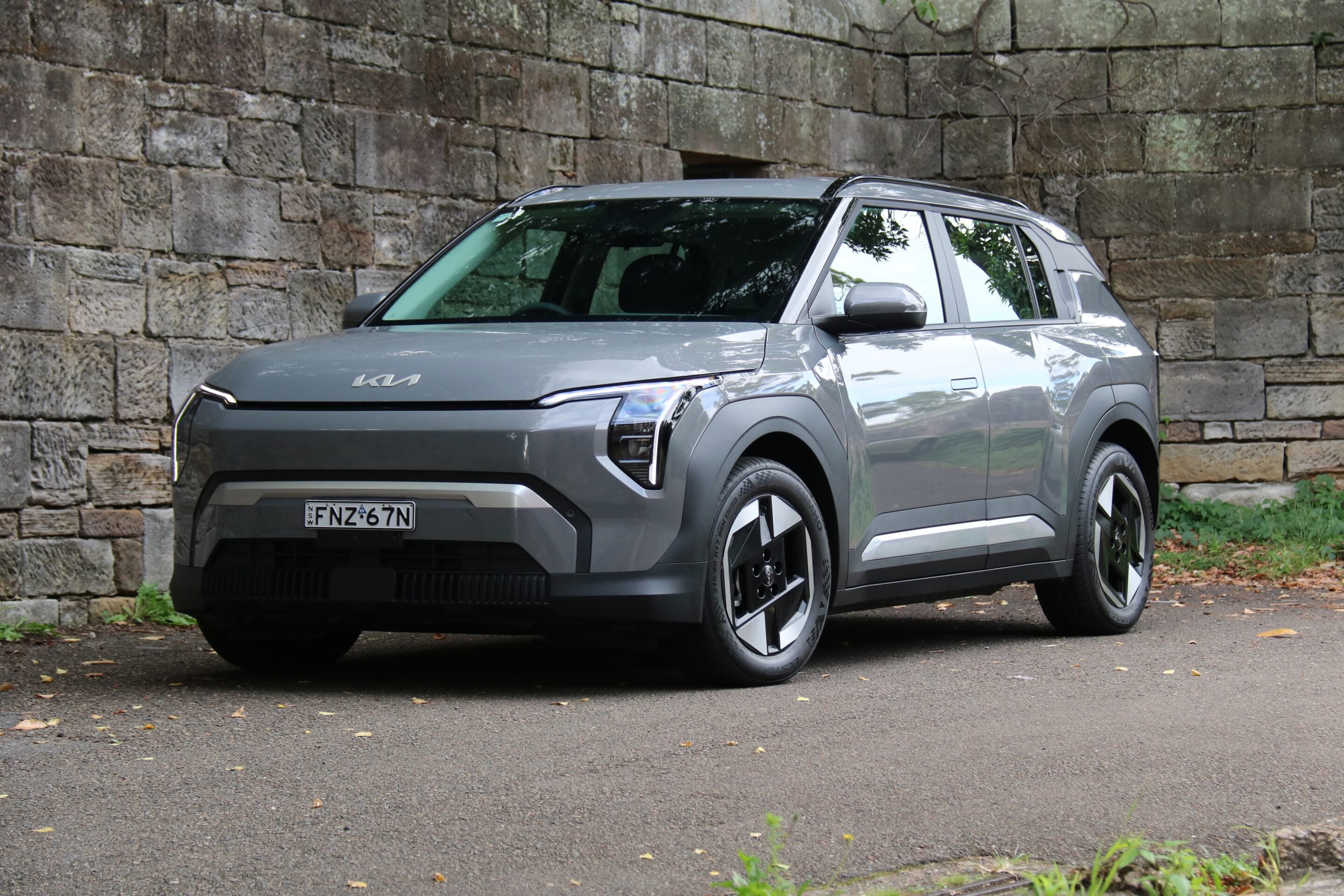
Price: From $46,990 driveaway
Drivetrain: Single electric motor
Transmission: Single-speed, front-wheel drive
Power: 150kW
Torque: 283Nm
Battery size: 58.3kWh
Electric range (claim): 436km (WLTP)
Maximum DC charge rate: 100kW
DC charge time: 29 minutes (10-80%)
AC charge time: 7kW 8h20m (est. 0-100%)
The Kia EV3 is the Korean brand’s cheapest EV in Australia, but it’s also one of its best. Prices currently start at $46,990 driveaway for the entry-level Air.
Its 58.3kWh battery offers a claimed WLTP range of 436km, translating to around 400km in the real world. That’s more than enough for city driving.
The Kia EV3 is nicely equipped across its line-up, decent to drive, and with a useful driving range. Buyers who want to banish range anxiety to the rear-view mirror could look at the EV3 Long Range, its 81.4kWh battery bringing a claimed 604km to the table. Expect a more realistic 520-550km in the real world. Kia’s seven-year warranty is a plus, too.
This story first appeared in the May 2026 issue of Wheels magazine, now on sale. Subscribe here and gain access to 12 issues for $109 plus online access to every Wheels issue since 1953.
So wrote Wheels in July 1994 of the then brand-new Toyota RAV4 which had just arrived in Australia amid much fanfare and with both eyes firmly on the ‘youth market’. No one, not even the august scribes at Wheels, could have foreseen what would transpire over the intervening decades. As the saying goes, from humble beginnings…
Fast forward 32 years and six generations of RAV4 later and not only is Toyota’s soft-roader the king of SUVs in Australia, but it’s also totally unrecognisable from the ur-RAV4 Wheels first reviewed in 1994.
Then, Toyota opted to launch its new crossover on the Gold Coast, something we noted would become “the RAV4’s heartland”.
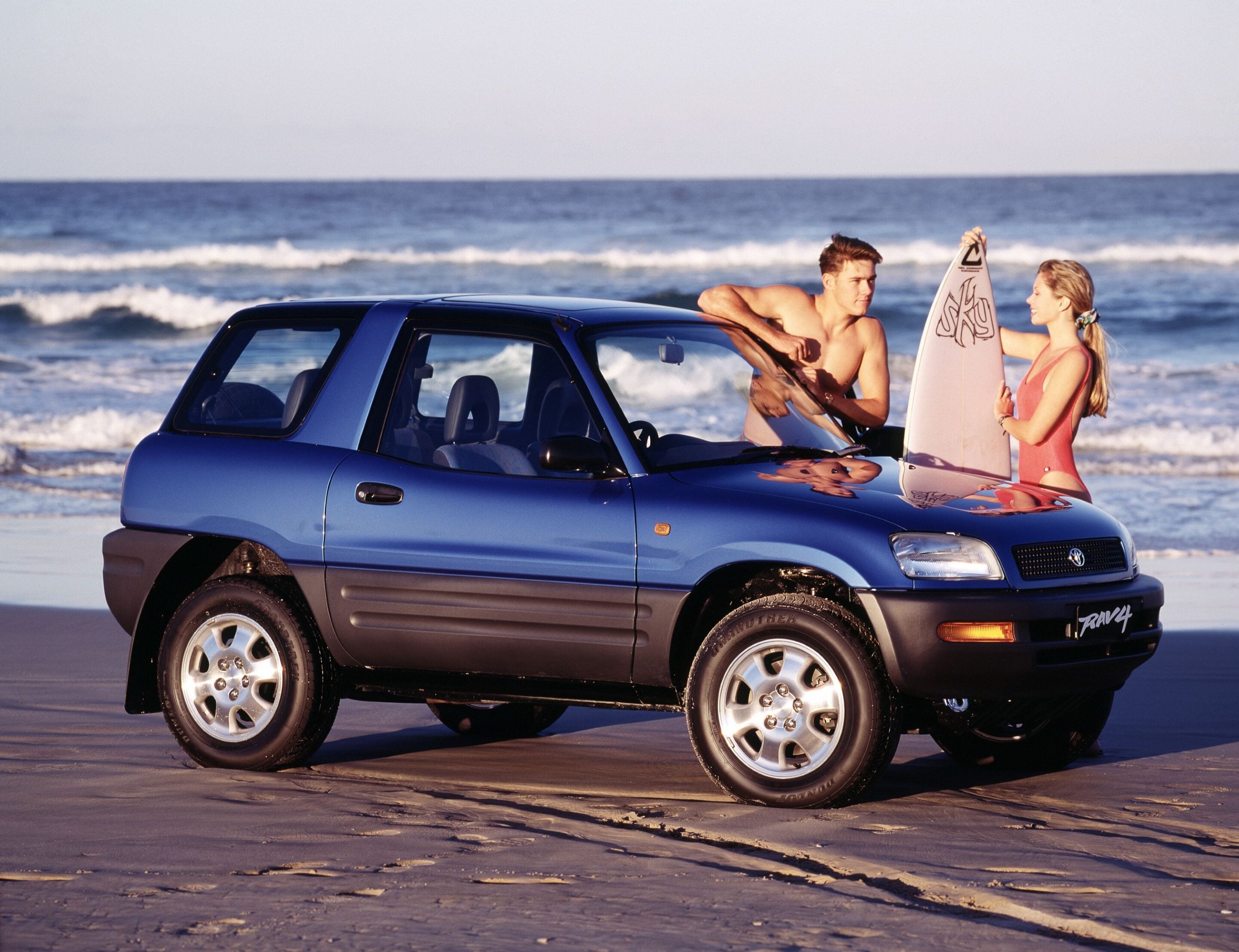
“Its Friday night crowds represent a microcosm of Australian youth culture, where Toyota expects to find the RAV4’s main market.”
And we were effusive in our praise, the RAV4 laying down markers in what was then still very much a nascent segment of compact, affordable crossover SUVs.
“Other compact 4WDs like Suzuki’s Vitara and Daihatsu’s Feroza might surpass the RAV4 in hard 4WD terrain, but in virtually every other department the mini Toyota has redefined the parameters by which this class of vehicle will be judged.”
Certainly a bold prediction at the time, but as the intervening decades have proved, the RAV4 has gone on to become not only a mainstay in driveways all over Australia, but the single biggest selling SUV in Australia of all time. Earlier this year, Toyota confirmed it had sold around 588,000 of its game-changing SUV since that first night on Cavill Avenue.
Those early “crowds of young revellers”, wrote Wheels in 1994, who had stopped to “ogle the cobalt blue RAV4” with “admiring eyes” caressing “its curvaceous lines”, would not recognise today’s RAV4. After all, that original crossover played into the then-zeitgeist of fun and funky two-door soft-roaders, more at home in Surfers Paradise, Chapel Street and Campbell Parade than exploring outback Australia.
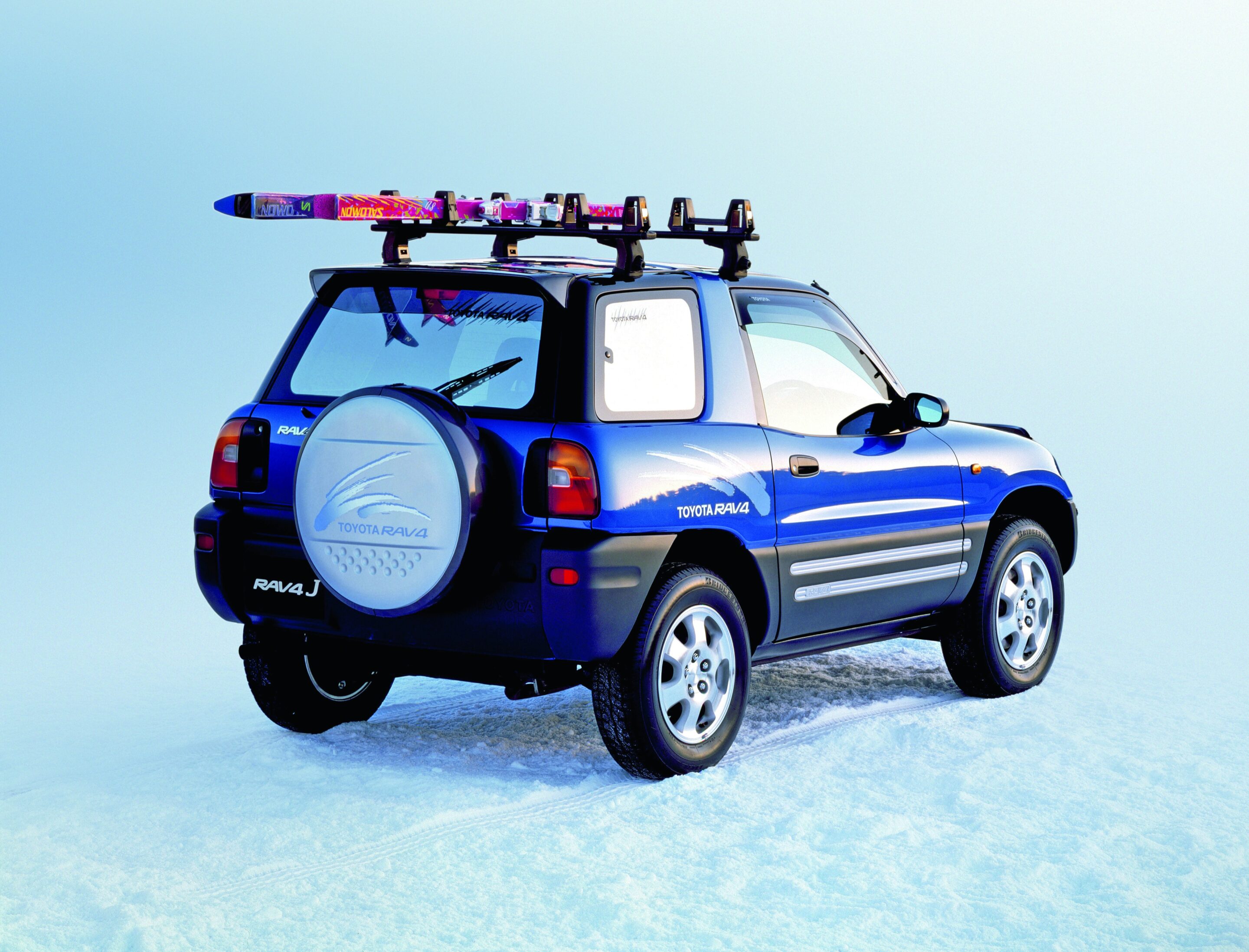
Today’s trends are in stark contrast, demanding a family-sized SUV capable of ferrying five people and their belongings in comfort and with the kind of fuel efficiency 1994 buyers couldn’t even begin to imagine. It’s a modern automotive template pioneered by Toyota, a blueprint almost every automaker in the world has attempted to replicate.
It’s interesting to note just how much has changed over the decades, how a compact crossover Wheels once consigned to little more than a niche category, where ‘cool’ over-rode all other considerations, became the sales juggernaut beloved of families all over Australia – and the rest of the world – today.
The OG RAV4 wasn’t exactly cheap when it hit Aussie showrooms in the middle of 1994. Perhaps dipping its toes in the water, Toyota brought only a single grade to Australia, available with either a five-speed manual gearbox or four-speed automatic transmission.
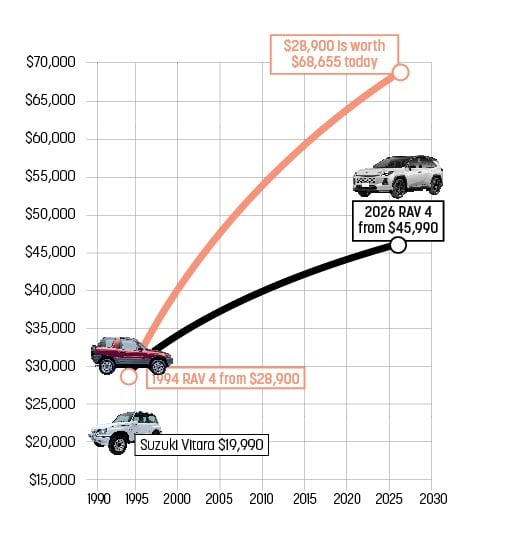
Pricing started at $28,900 (plus on-road costs) for the manual RAV4, with the automatic costing $2000 more. For context, a manual three-door Suzuki Vitara cost $19,990, closely matched by the entry-level Daihatsu Feroza ST which, in manual trim, asked for $20,852.
Fast forward three decades and with manual transmissions consigned to the RAV4 graveyard, the entry point has jumped to $45,990 for the GX front-wheel drive variant. Want all-wheel drive? That’ll drain your bank account to the tune of $49,340 for the base model GX AWD.
That’s not as steep a jump as one might expect after 32 years, with the Reserve Bank of Australia calculating that $28,900 in 1994 money is worth around $68,655 today.
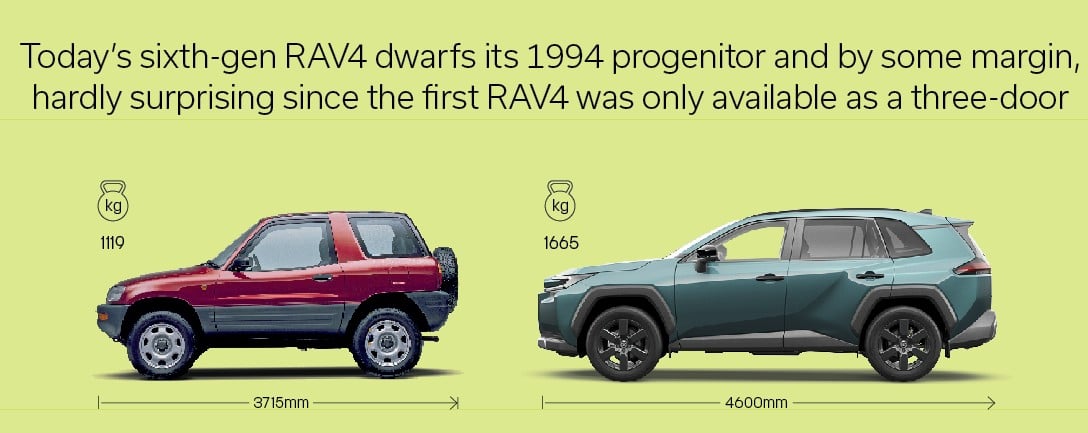
Today’s sixth-gen RAV4 dwarfs its 1994 progenitor and by some margin, hardly surprising since the first RAV4 was only available as a three-door (the five-door would arrive in 1995, kick-starting the medium SUV revolution that shows no sign of slowing down).
Stopping the tape at 3715mm long, 1994’s RAV4 is lost in the shadows of its 2026 counterpart which measures some 885mm longer, 160mm wider, 25mm taller and sitting on a 490mm longer wheelbase. It’s also – unsurprisingly – 546kg lighter than the current generation model.
“For its compact exterior dimensions the RAV4 has good levels of interior space and comfort,” we wrote in 1994. “Once in the back seat, there’s realistic accommodation for two people, with enough room between seat back and cargo door to cram a couple of overnight bags.”
That’s right, the 1994 three-door RAV4 was strictly a four-seater, and with minimal space for luggage,
a long way from the comfortable family wagon it has metamorphosed into today.
Hailing from the strictly analogue age, the 1994 RAV4 was bereft of the standard kit featured today in even the most basic new cars on our roads.
A four-speaker AM/FM radio-cassette audio system provided the ‘infotainment’ while creature comforts ran to tinted glass, intermittent wipers front and rear, cupholders (still a novelty back then), a digital clock and remote opening for the fuel-filler cap.
The steadfastly analogue instrument cluster featured a speedometer, tacho, along with fuel and temperature gauges.
Today, of course, new car cabins are more akin to entertainment hubs than car interiors with big screens, phone integration, satellite navigation, and an endless choice of music streaming options played through, in the base model, a six-speaker stereo system.
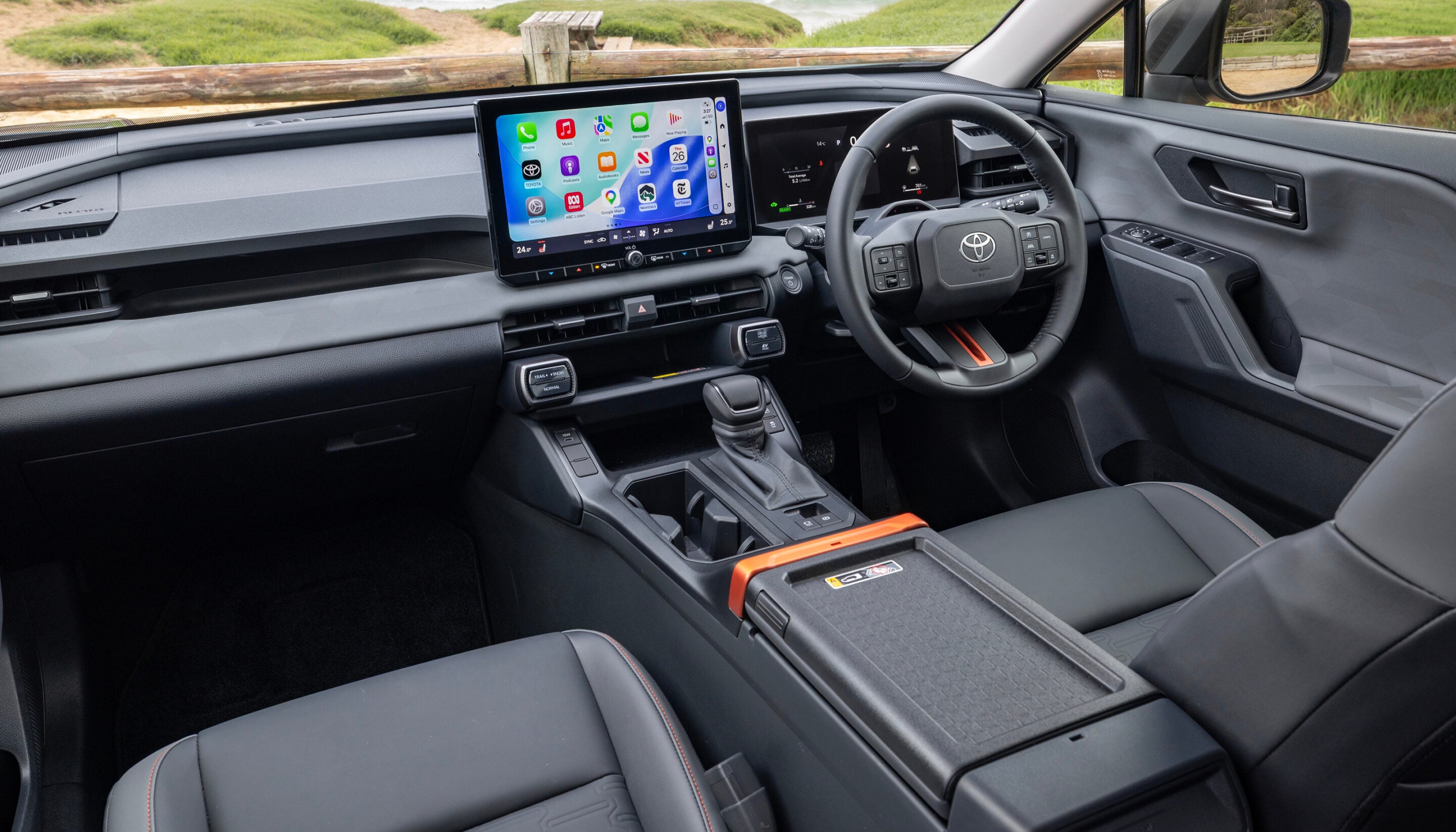
One of the big selling points of the first RAV4 was its class-leading safety equipment. As Wheels noted, “Safety will be one of the RAV4’s major sales platforms: from its strong, lightweight, monocoque chassis, designed to incorporate collision impact absorbing structures (CIAS), to its four-wheel independent suspension and full-time 4WD system, through features like door side-intrusion beams, a collapsible steering column, child restraint anchorages, and a fuel tank forward of the rear wheels.
“The real heavy hitters in the safety package are the 45 litre driver’s airbag and antilock brakes, both options and both firsts for this class of vehicle.”
That seems positively quaint compared to the level of safety technologies bundled into today’s new cars, where airbag counts can run into double digits and where the car will offer all manner of warnings and interventions to keep you safely on the road, even if the efficacy of those various technologies can sometimes leave owners hankering for the ‘good old days’.
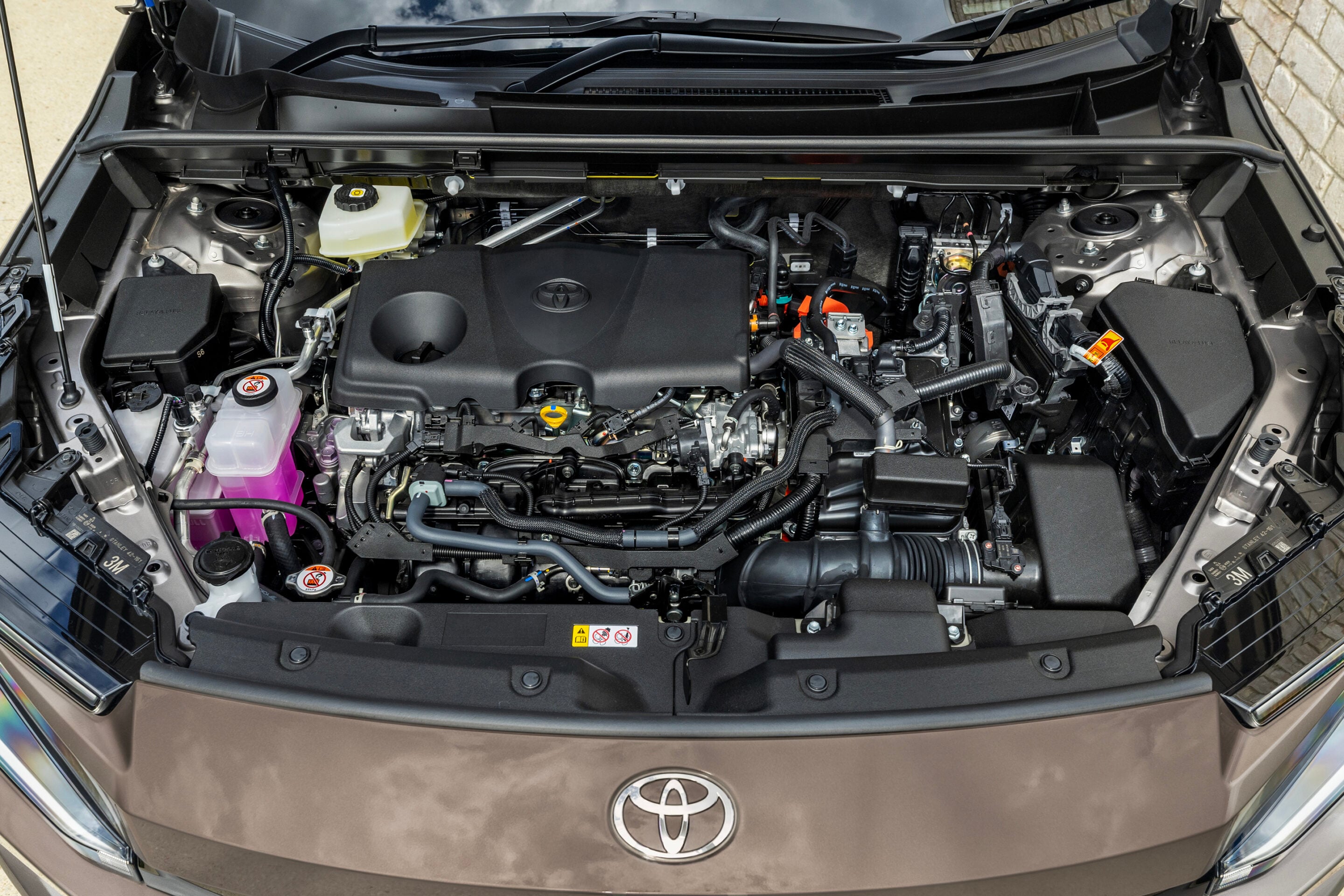
It’s here where Toyota stamped its authority on the compact SUV segment in 1994, with a transversely mounted 2.0-litre, fuel injected, twin cam tucked away under the RAV4’s short, stubby bonnet.
With outputs of 96kW and 180Nm transmitted to all four wheels, the RAV4 could, according to Wheels, “comfortably account for any 4WD competitors, but also give some sports coupes a run for their money”.
Fuel economy was a claimed 9.5L/100km of regular 91-octane unleaded. Contrast that to today where Toyota’s pioneering hybrid system underpins the entire RAV4 range. With a 2.5-litre petrol engine working in tandem with permanent magnet electric motors, Toyota claims today’s RAV4 makes a combined 143kW although stops short of offering a torque figure. Such a Toyota thing to do.
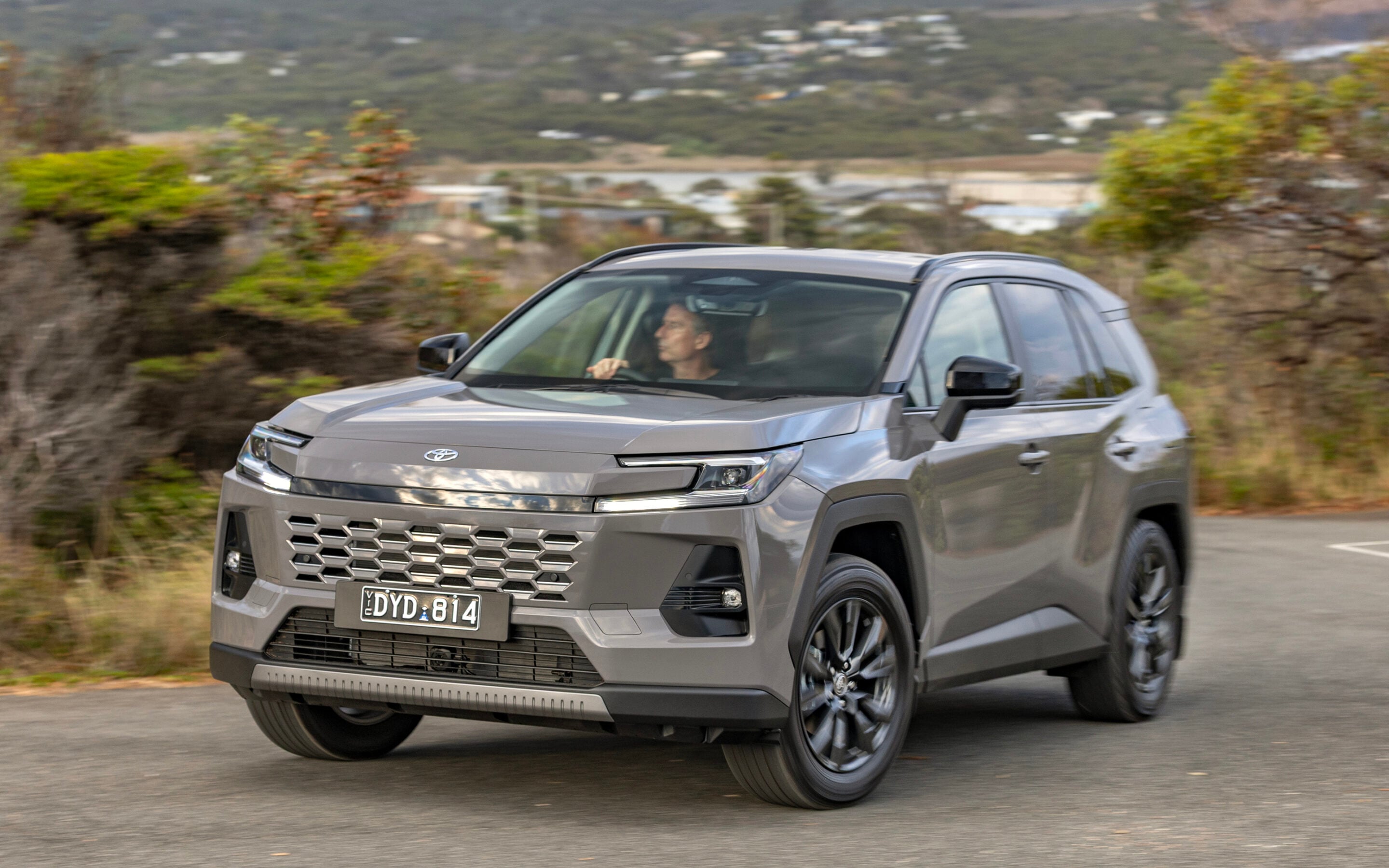
A continuously variable transmission sends drive to either the front wheels (in FWD models) or all four wheels, a departure from the torque converter automatic of old.
On paper, the new RAV4 offers less power than the fifth-generation model preceding it which was good for 160kW (front-wheel drive models) and 163kW for AWD. Toyota says the 2.5-litre’s detune is the result of needing to meet Australia’s ever more stringent emissions regulations.
The fettling has also improved fuel economy, now rated at 4.6L/100km against the previous model’s 4.8L.
While it might have seemed on the surface that Toyota was taking a risk investing in a compact SUV with seating for four and a price tag far in excess of its main rivals in the small but growing segment, someone at HQ had clearly been reading the tea leaves.
According to Toyota Australia at the time, the Japanese brand was confident “the RAV4 will be the largest single contributor to the growth in 4WD volume on the Australian market in the next 12 months”.
Wheels weighed in with “last year in Australia the compact segment accounted for only around 15 per cent of the overall 4WD wagon market, but Toyota believes this is set to grow steadily, with at least half of the estimated 4800 annual RAV4 sales expected to be incremental to the 4WD market.
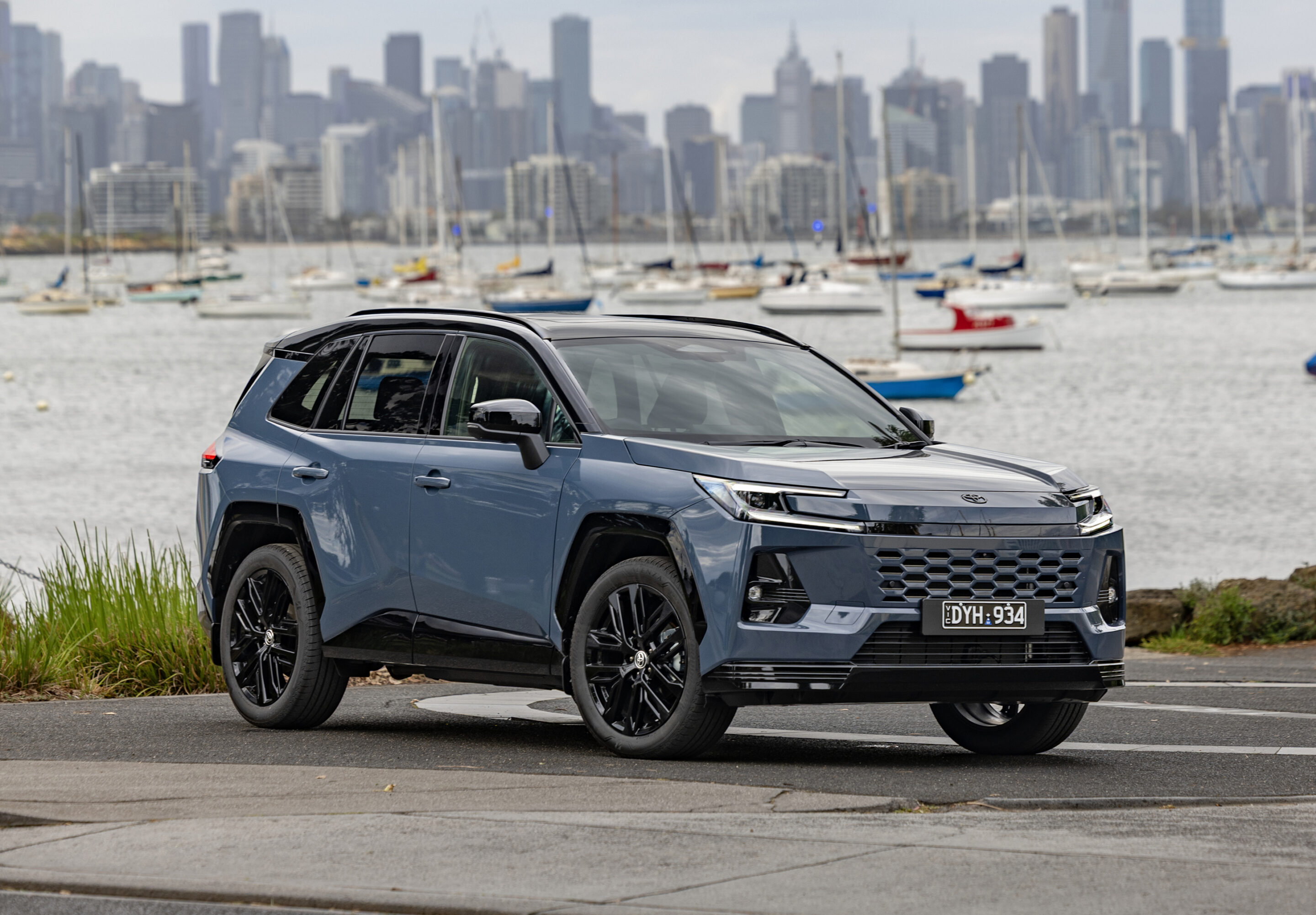
“Despite a premium price tag that will see fully loaded versions retailing for somewhere around the $35,000 mark, the RAV4’s good all-round performance, its contemporary looks and Toyota’s marketing muscle should see it make major inroads on the Australian market this year.”
After a slow start (Toyota sold just 1350 of the little three-door in its first part-year on sale), it was the introduction – and popularity – of the five-door RAV4 in 1995 that emphatically announced its arrival on our roads. Australia’s SUV revolution was underway.
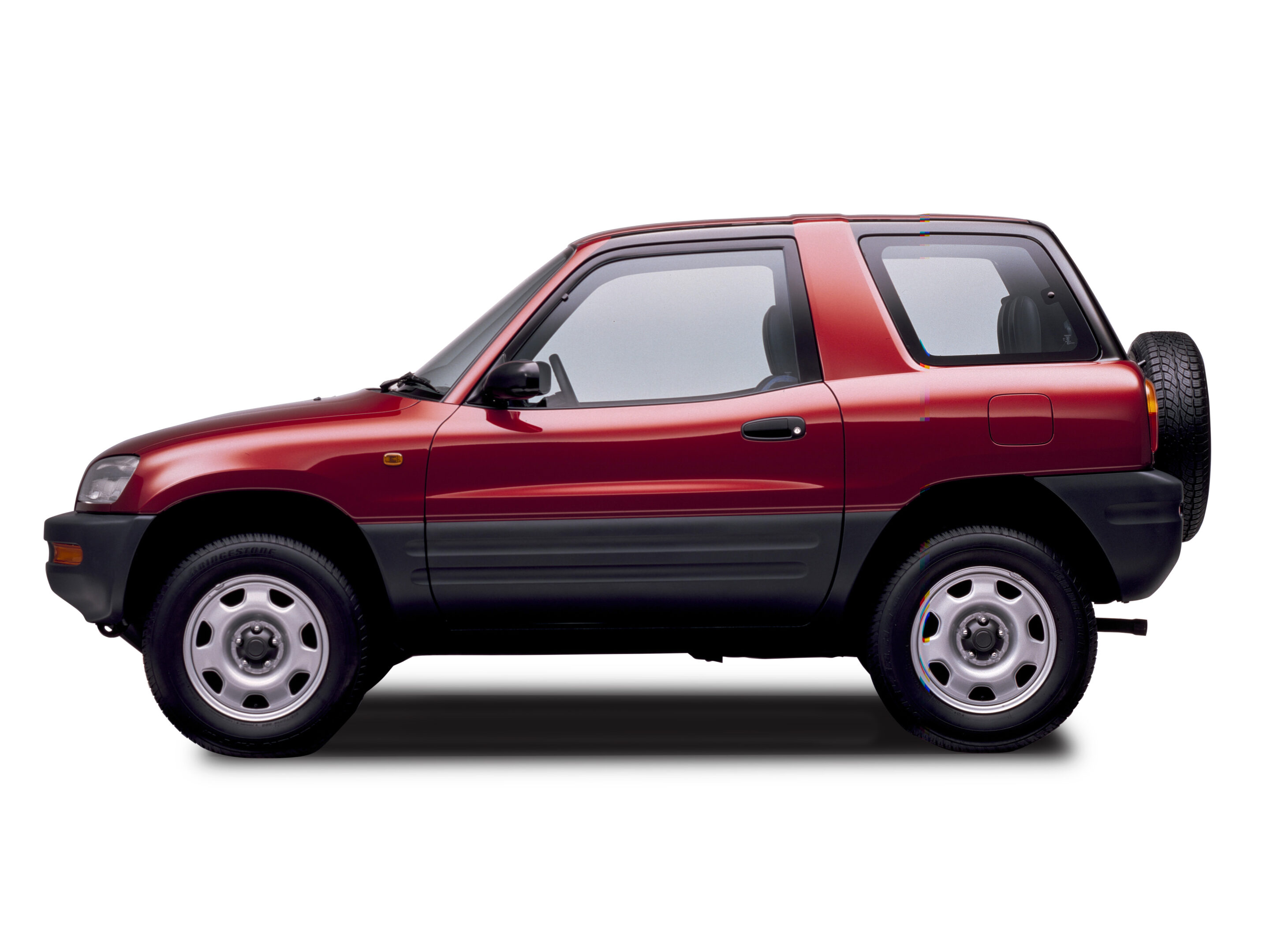
| Price | $28,900 (manual) / $30,900 (automatic) |
|---|---|
| Engine | 2.0-litre inline-four cylinder petrol |
| Power | 96kW @ 5800rpm |
| Torque | 180Nm @ 4400rpm |
| Transmission | 5-speed manual / 4-speed automatic |
| Power-to-weight | 85.8 kW/t |
| Fuel consumption | 9.5L/100km |
| Dimensions (l/w/h/wb) | 3715/1695/1655/2200mm |
| Tare mass | 1119kg |
| Warranty | 3 years/100,000km |
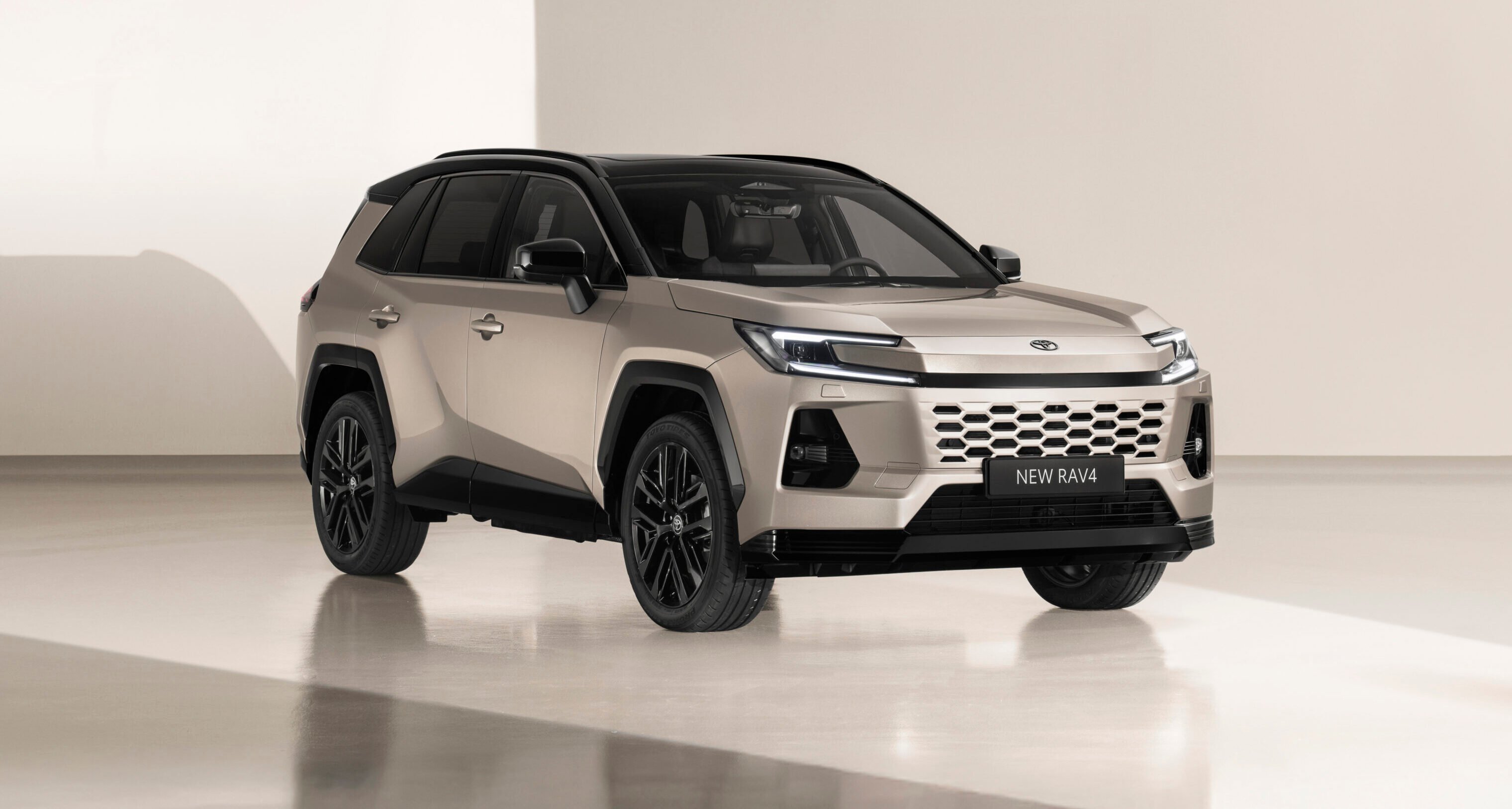
| Price | $45,990 (FWD) / $49,340 (AWD) |
|---|---|
| Engine | 2.5-litre inline-four cylinder petrol-hybrid |
| Power | 143kW (combined) |
| Torque | NA |
| Transmission | Continuously variable |
| Power-to-weight | 85.9 kW/t |
| Fuel consumption | 4.6L/100km |
| Dimensions (l/w/h/wb) | 4600/1855/1680/2690mm |
| Tare mass | 1665kg |
| Warranty | 5 years/unlimited km |
This story first appeared in the May 2026 issue of Wheels magazine, now on sale. Subscribe here and gain access to 12 issues for $109 plus online access to every Wheels issue since 1953.
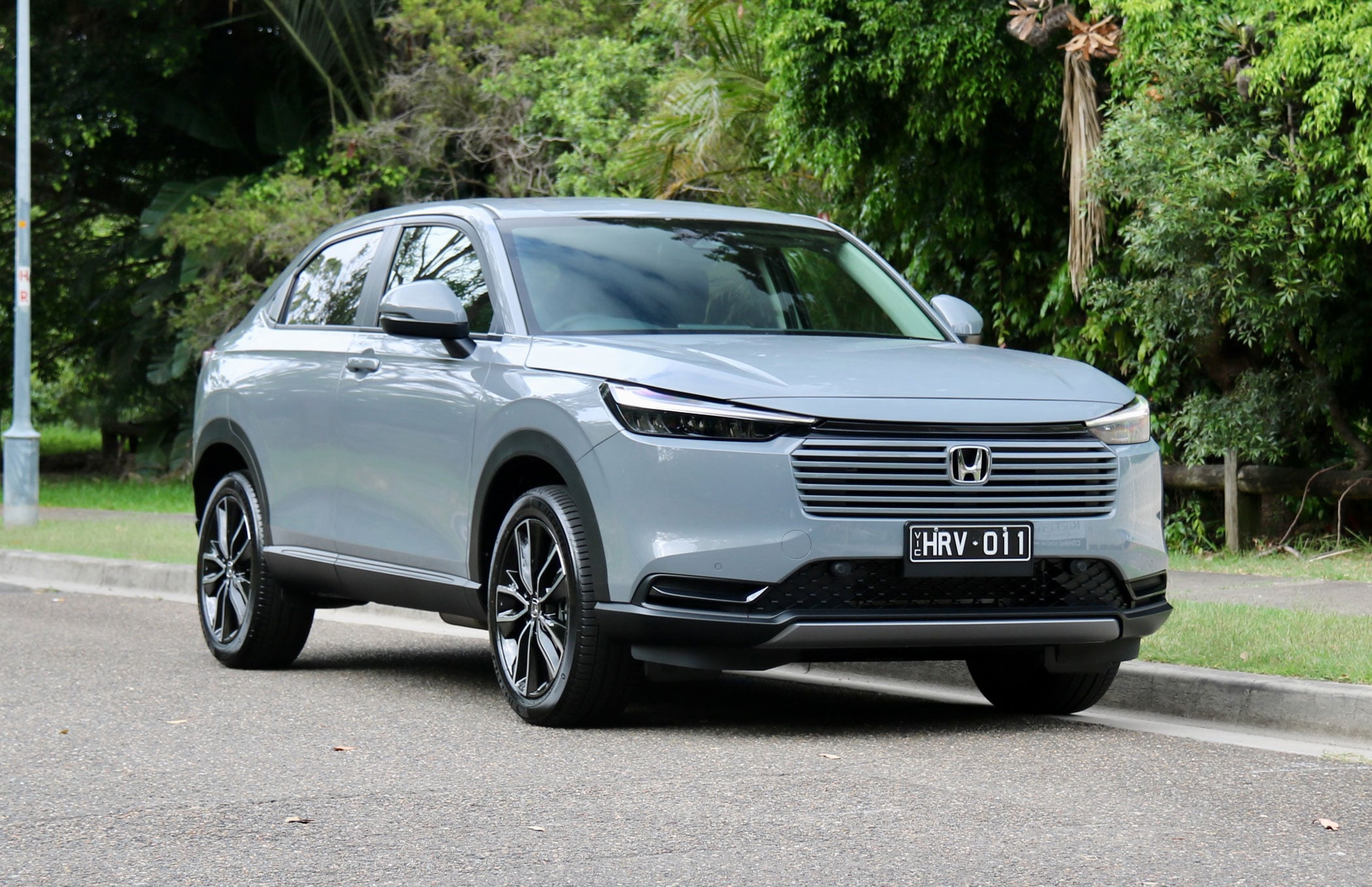
| Price | From $32,900 driveaway (Vi X), $39,900 driveaway (e:HEV X), $42,900 driveaway (e:HEV L) |
|---|---|
| Drivetrain | 1.5-litre four-cylinder petrol or 1.5-litre four-cylinder hybrid, CVT (petrol) or e-CVT (hybrid) automatic, FWD |
| Outputs | 89kW/145Nm (petrol) – 96kW/253Nm (hybrid) |
| Combined fuel economy | 4.3L/100km (hybrid) – 6.2L/100km (petrol) |
| Warranty | Five-year/unlimited km (car), eight-year/160,000km (hybrid battery) |
| Five-year service cost | $995 ($199 per year) |
| Driving | |
| Interior | |
| Practicality | |
| Overall value | |
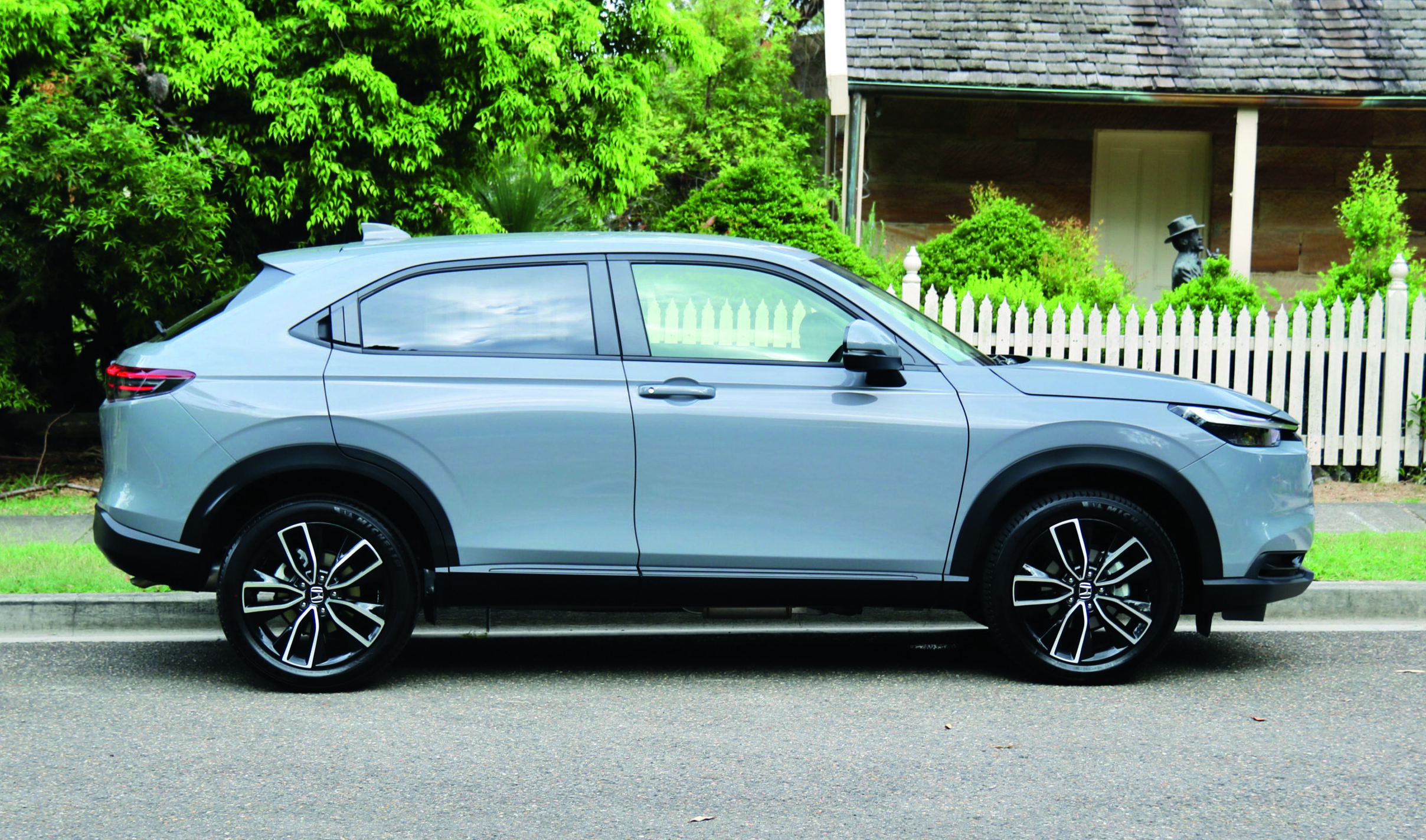
The original HR-V was arguably ahead of its time. In 2026, small SUVs are significantly more popular than ever, and even almost 30 years later, the HR-V holds its place in the segment. Put simply, if you’re after a small SUV, the HR-V should be first on your test drive list.
Buying an HR-V in Australia is easy because there are only three models available: Entry-level Vi X ($32,900 driveaway), mid-spec hybrid e:HEV X ($39,900 driveaway) and top-spec hybrid e:HEV L ($42,900 driveaway). We think the HR-V suits a range of budgets. Thanks to Honda Australia’s agency model, the price for each model is the same nationwide, so you won’t get a better deal elsewhere.
Standard equipment on the Vi X includes 18-inch alloy wheels, automatic LED exterior lighting, keyless entry with push button start, automatic walk away locking, a leather-wrapped steering wheel and gear knob, single-zone automatic climate control, a 9-inch touchscreen with satellite navigation, wireless Apple CarPlay and Android Auto, six airbags, autonomous emergency braking, adaptive cruise control with traffic jam assist, lane keeping assistance with adaptive lane guidance, auto high beam, traffic sign recognition, front and rear parking sensors and a reversing camera.
But move up the range – as we would do – to the e:HEV X and not only does a hybrid drivetrain get added but also LED front fog lights, leatherette and cloth upholstery, heated front seats and more safety features like blind-spot monitoring, rear cross-traffic alert and upgraded LED headlights with auto-levelling, sequential indicators and Matrix adaptive high beam.
At the top of the HR-V tree is the e:HEV L, which further adds a power tailgate with automatic walk away closing, heated and auto-folding mirrors that drop in reverse on the passenger side, dual-zone climate control with rear air vents, rear USB ports, a heated steering wheel, automatic windows with remote opening and automatic rain-sensing wipers.
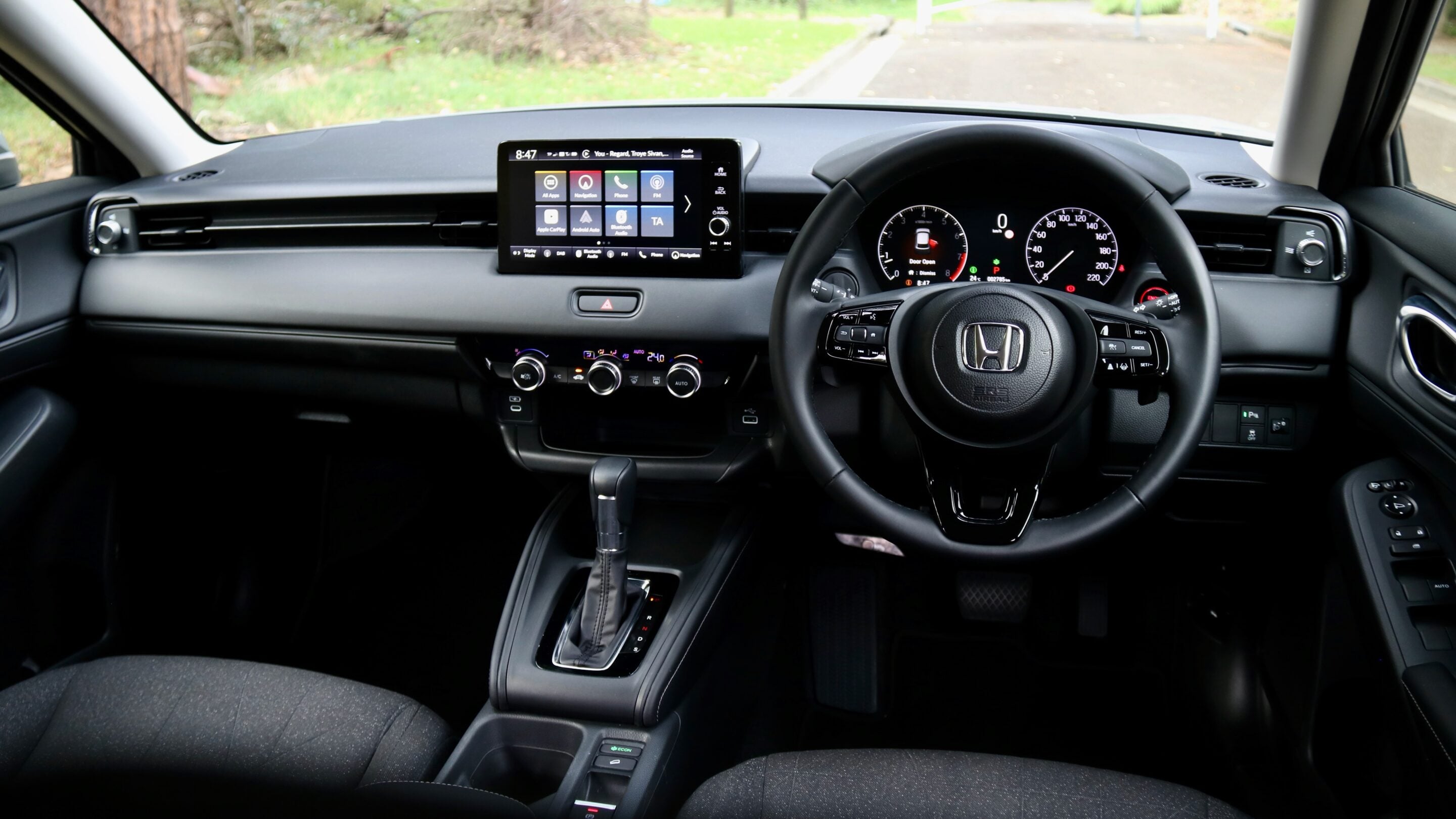
The HR-V’s interior exhibits Honda’s typical good quality, featuring a well-built feel and solid materials. Clever touches include the climate control knobs lighting up blue or red when adjusting the temperature and side air vents that can direct airflow towards the roof. Storage is plentiful, and front seat comfort is good too. The 9.0-inch central touchscreen is quite easy to use and features sat-nav, DAB+ digital radio and wireless smartphone mirroring across the range.
Turning to the back seat reveals the HR-V’s party piece in the small SUV segment: its excellent packaging. The rear seat is one of the roomiest in the segment with excellent legroom and headroom, while two adults will be quite comfortable. Amenities include a centre armrest, map pockets and door pockets, with the upper-spec e:HEV L further adding the aforementioned air vents and USB charging ports as well. It does lack a fifth seat, however, which may or may not matter to you.
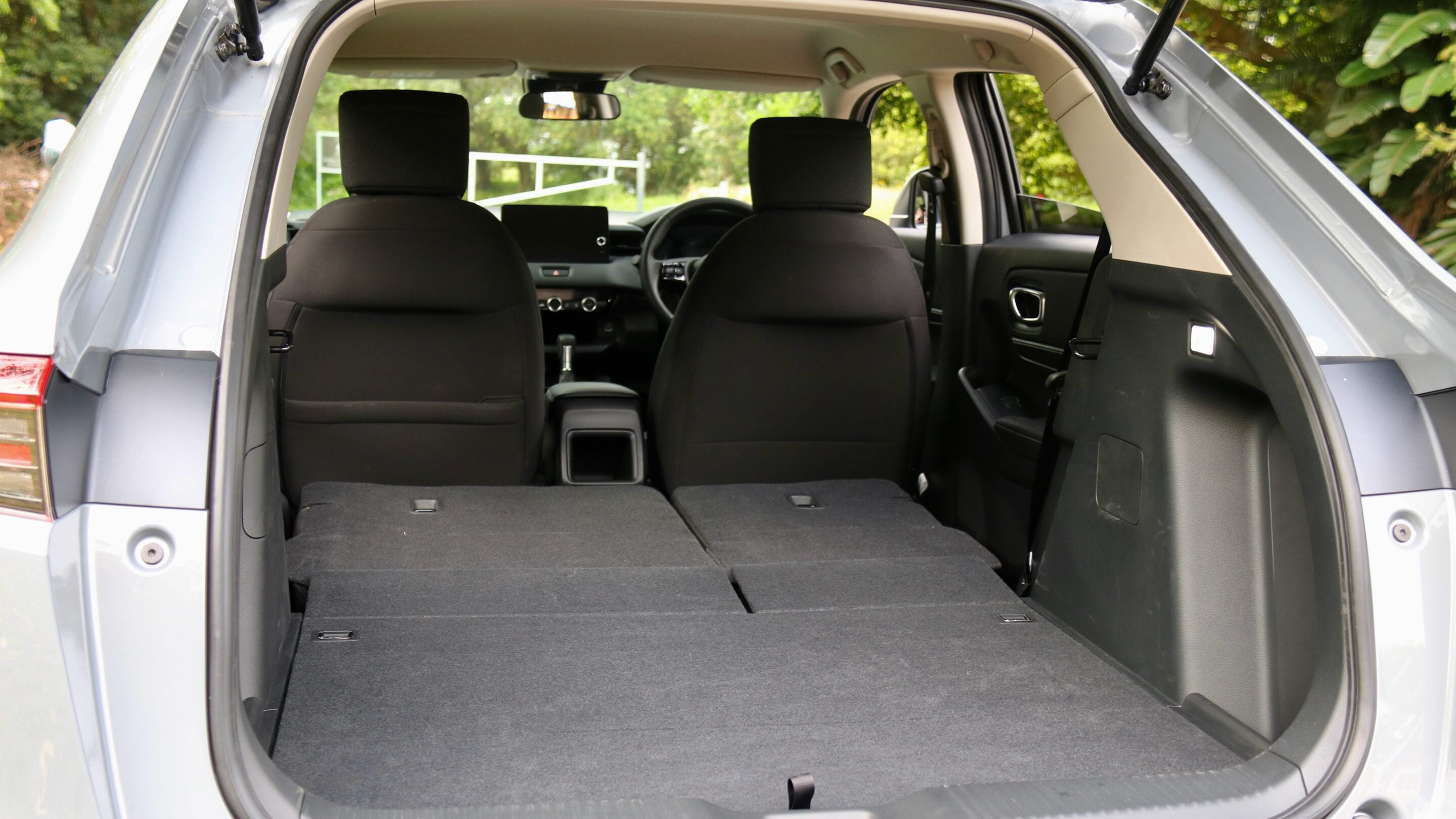
Making up for the lack of a fifth seat, however, are Honda’s Magic Seats, which allow for a completely flat floor with the rear seats folded. Pioneered in the original Honda Jazz and proudly featured today, their most magical trick is that the seat base folds up against the backrest, and combined with the flat floor in the rear cabin, taller items can be carried. Ikea trips are no match for the HR-V. The boot capacity is not massive at 304 litres, though it extends to a large 1,274L with the rear seats folded.
Two drivetrains are available in the HR-V in Australia: a 1.5-litre naturally aspirated engine or a 1.5-litre hybrid. Unless you’re on a tight budget, choose the hybrid. Making a solid 96kW of power and 253Nm of torque and mated to an e-CVT transmission with stepping to make it feel like a regular automatic, the HR-V hybrid drivetrain is refined, quite efficient rated at just 4.3L/100km and also more than quick enough in everyday driving. On the road, the HR-V drives well with nicely weighted steering, a tight chassis with good handling and a composed ride as well.
The cherry on top of the HR-V cake is that Honda’s five-year/unlimited km warranty can be extended to eight years in total if it’s serviced at a Honda dealer during that time. A separate eight-year/160,000km warranty covers the hybrid battery. It costs just $995 to service over the first five years/50,000km of ownership, which is some of the lowest on the market, especially for an ICE product. By comparison, servicing a Hyundai Kona Hybrid costs over $2000 more over the same period.
The Honda HR-V is a talented, high-quality small SUV that deserves to win Wheels Best Small SUV 2026. Some buyers may dislike that it’s only a four-seater, and the lack of a spare wheel isn’t great, but it compensates with strong practicality thanks to its Magic Seats, great cabin quality and a comfortable and engaging driving experience. Add in a simple model line-up, an efficient and punchy hybrid drivetrain, and a great aftersales program with some of the cheapest servicing on the new car market, and the HR-V should always be near the top of your contenders list.
Looking to get into a brand-new small SUV? Our stories below will guide you to the model that best suits your needs:
Luxury small SUVs have become the sweet spot of the premium market, blending city-friendly dimensions with the comfort, technology and refinement buyers once expected only from larger models. In 2026, the category is broader than ever, with petrol, hybrid and electric options all competing for attention.
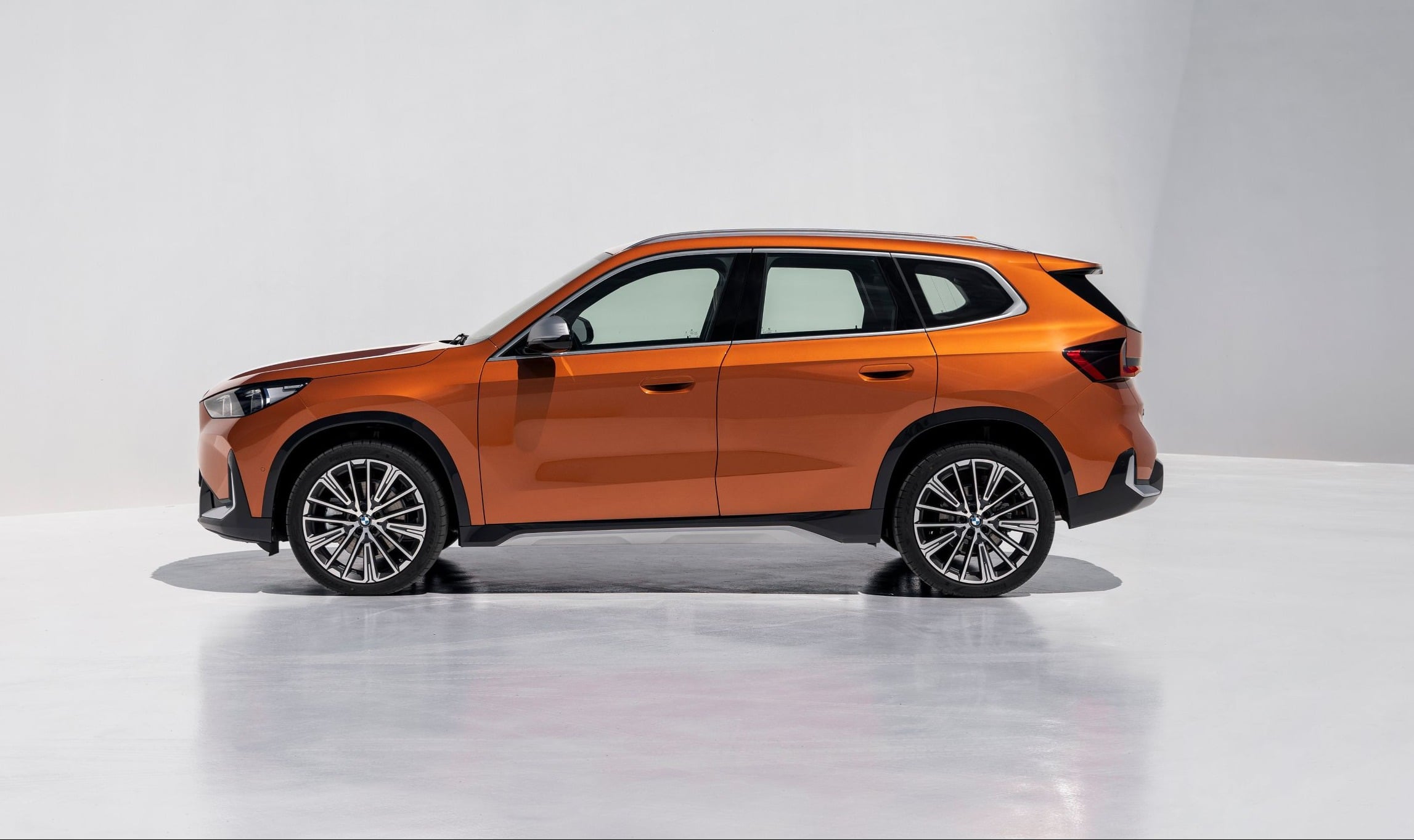
Price: From $66,700 Plus on-road costs (X1) from $77,900 plus on-road costs (iX1)
Drivetrain: 115kW/230Nm 1.5L three-cylinder (X1 sDrive18i), 230kW/494Nm dual motor
65kWh (iX1)
WLTP range, peak charging speed: 400-466km, 130kW
Fuel consumption: 6.5L/100km
Warranty: Five-year/unlimited kilometre
Five-year service cost: $2150 (X1) $2200 (iX1)
| Driving | |
| Interior | |
| Practicality | |
| Overall value | |
The strongest weapon in the BMW X1’s armoury is its availability with either conventional internal combustion, or more modern electric powertrains. Buyers can therefore choose whichever already-excellent small SUV best suits their needs.
The entry-grade X1 sDrive 18i is the smart pick in the regular range, with all the luxury and amenity you’d expect from BMW, but at a sharp, sub-70k starting price. There are of course, more expensive variants available, but the entry-grade X1 delivers a quality feel without the high price.
The dual-motor, AWD electric iX1 concentrates more on smarts and range than outright speed, with a WLTP claimed driving range of up to 466km in a compact package. 230kW is still a formable power output, though. And, while it’s not rapid in the way some electric vehicles can be, it’s an engaging small SUV to drive in the sense that it injects some fun into an otherwise bland segment. A recent cut to the cost of entry – $8900 – makes an electric X1 even more attractive than it was previously.
X1 gets a healthy list of standard equipment, and a stylish exterior design that, beyond the badge cache, ensures it stands out in an otherwise bland SUV sea. Both petrol and electric propulsion deliver an engaging, enjoyable drive, with the thrummy 1.5-litre three cylinder driving though a sharp-shifting 7-speed DCT, and using as little as 6.6L/100km.
The X1 puts forward a compelling case that you may not need the medium SUV you assumed you did. Clever packaging, useful storage, interior comfort, and compact exterior dimensions mean the X1 is as useful around town as it is on a longer road trip.
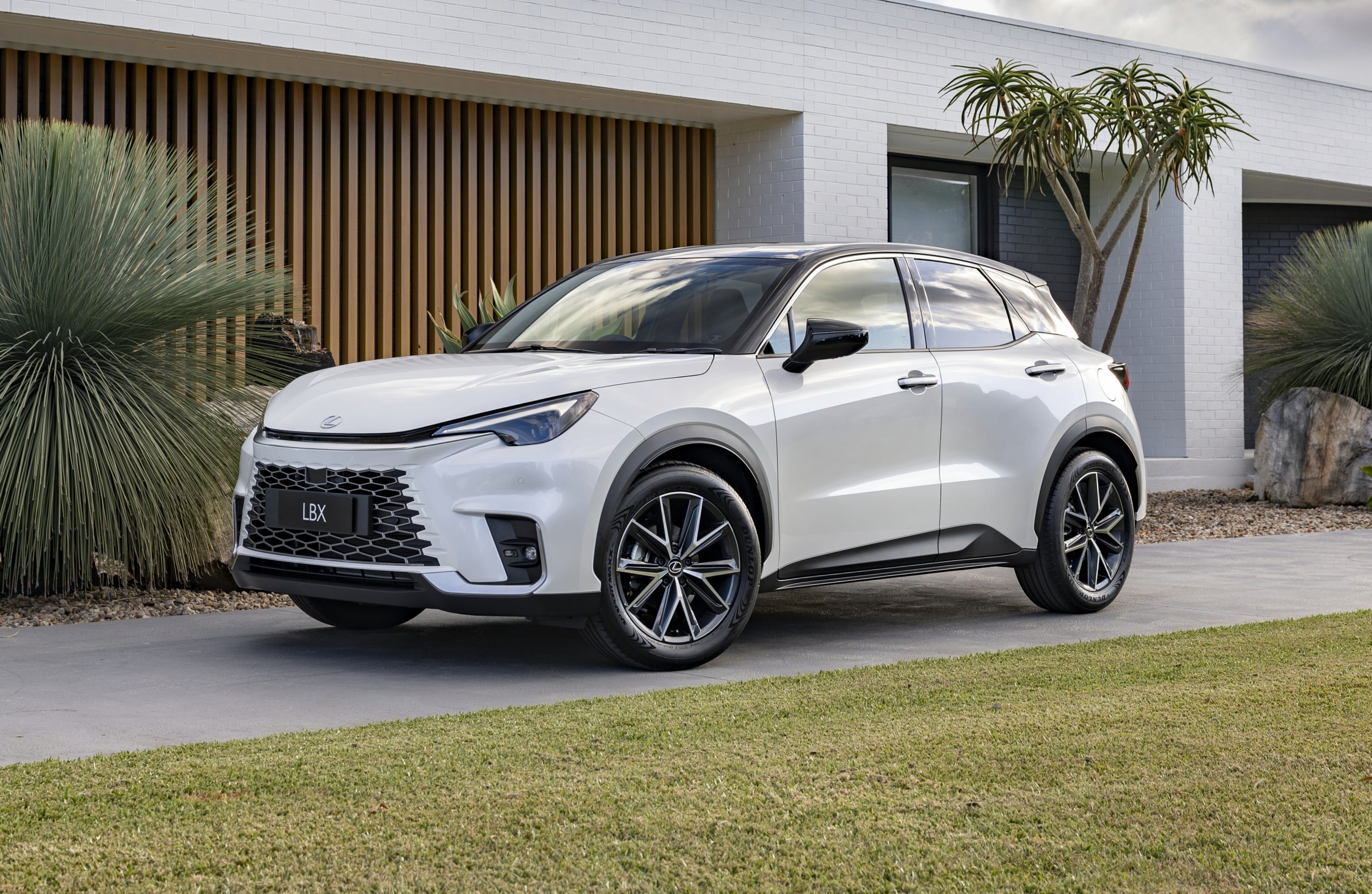
Price: $47,550 plus ORC (Luxury 2WD)
Drivetrain: 100kW/185Nm 1.5-litre, three-cylinder, petrol-hybrid
Fuel consumption: 3.8L/100km
Warranty: Five-year/unlimited kilometre
Five-year service cost: $2975
| Driving | |
| Interior | |
| Practicality | |
| Overall value | |
The smallest Lexus on sale in Australia is available in three model grades in the regular range with the hot Morizo RR sitting above them, and getting GR Yaris drivetrain performance. However, there’s a lot to like about the more affordable ‘regular’ LBX.
The first of those factors is ownership, with the premium Lexus owner’s experience extending to the brand’s more affordable models. Save your money and opt for the still-premium Luxury 2WD model, which gets the same efficient hybrid drivetrain, and cabin amenities without the higher price tag.
Even the Luxury 2Wd gets 18-inch alloy wheels, a 12.3-inch digital instrument display, 9.8-inch infotainment touschscreen, synthetic leather-look seat trim, heated front seats and a 360-degree camera.
The tight confines of the second row mean the LBX isn’t the choice – in this segment – for families with older children or those who need to move four adults around regularly. The boot is also quite small, but still useful for two-up road trips.
Despite the use of an e-CVT, the LBX is still a fun small SUV to drive, with cabin smarts, Lexus attention to detail and fit and finish, and a refined, insulated driving experience. Some engine noise will enter the cabin if you work it hard, but the cabin is largely serene.
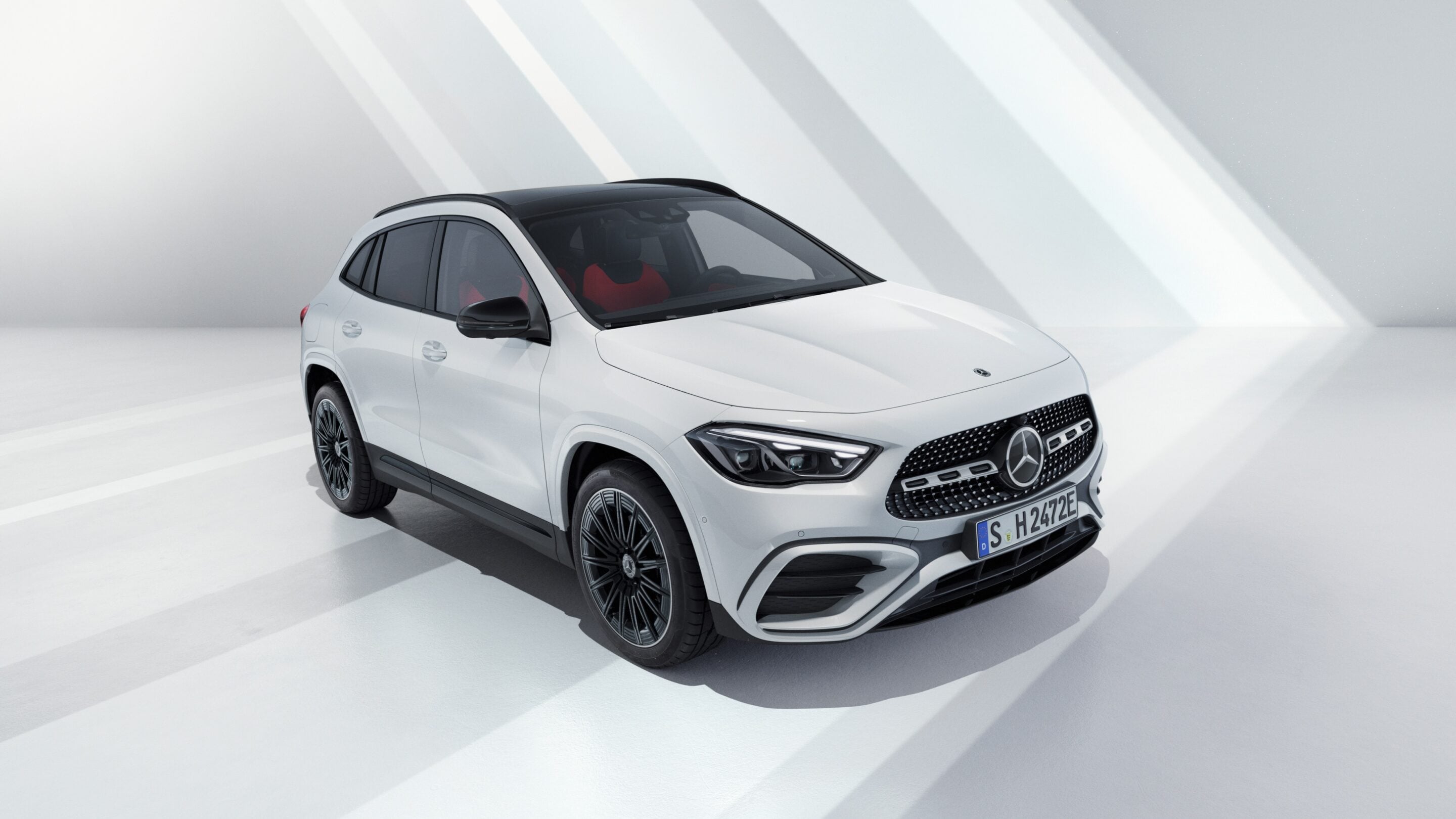
Price: $69,630 drive away (GLA 200), $92,777 drive away (EQA250+)
Drivetrain: 120kW/270Nm, 1.3-litre, turbocharged four-cylinder petrol FWD (GLA200),
140kW/375Nm single motor, FWD 70kWh (EQA250+)
WLTP range: 426km
Fuel consumption: 6.2L/100km
Warranty: five-year/unlimited kilometre
Five-year service cost: $2500 (City)
| Driving | |
| Interior | |
| Practicality | |
| Overall value | |
Like some of the competition here, Mercedes-Benz offers the choice of petrol or electric drivetrains within its GLA/EQA model structure, with competitive pricing the key for what is a luxury offering. And, AMG-tweaked versions are also available.
Entry into the Mercedes-Benz SUV stable by way of the stylish GLA, brings with it a sense of premium attention to detail, stylish design and beautiful execution inside the cabin especially. The including of technology gives the GLA a high-tech, up to date feel, with two big screens commanding attention. Mercedes’ excellent MBUX infotainment control system is fast, reliable and easy to use.
There’s more space than you might expect inside the cabin, and GLA is a comfortable road-trip companion despite the compact dimensions. A higher seating position than the old model, gives a commanding view of the road ahead.
Even in its most affordable, base model guise, the GLA’s engine is punchy and responsive, and rewarding to drive on any road. Not as sharp as some, given it feels a little heavier through the wheel, the GLA is nonetheless capable across all road surfaces, riding with comfort over even the nastiest of roads.
We’ve listed the piano black trim as a negative because of its tendency to attract dust, but what it does do when clean is lend a premium, high-end level of detail to the cabin. If you’re looking for quality, the ‘Benz small SUV delivers.
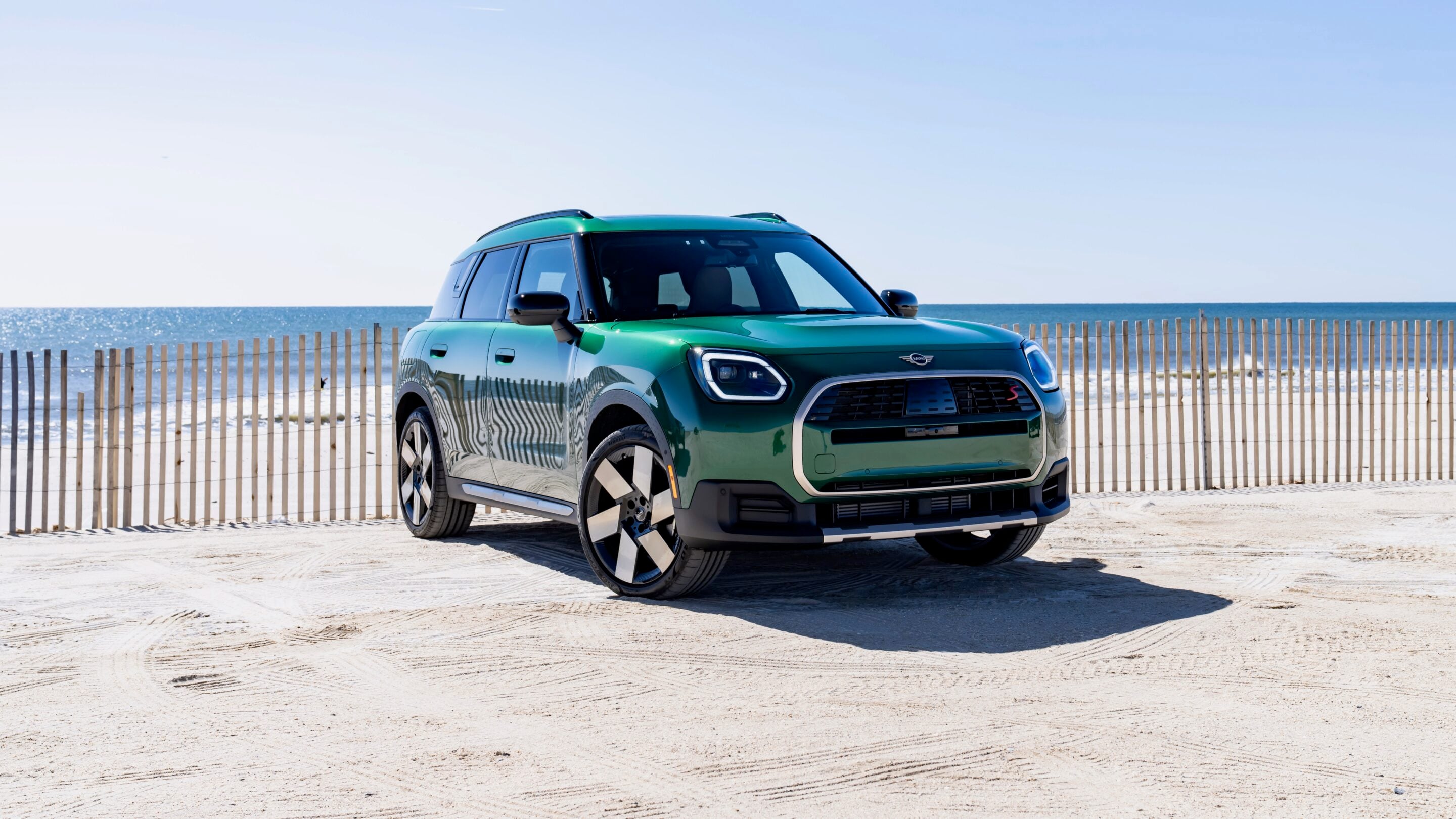
Price: $49,990 plus ORC (Core) $67,990 plus ORC (E)
Drivetrain: 1.5-litre, turbocharged four-cylinder petrol FWD (Core), 150kW/250Nm single-
motor, FWD (E)
WLTP range: 501km
Fuel consumption: 6.8L/100km
Warranty: Five-year/unlimited kilometre
Five-year service cost: $2425 (Core), $2360 (six years E)
| Driving | |
| Interior | |
| Practicality | |
| Overall value | |
Bringing practicality and user-friendliness to the cheeky Mini styling and heritage, Countryman provides a left-field alternative to the other SUVs in this segment. Those of you looking to make the switch to electric power can opt for the second most expensive in the range, with the electric E only beaten by the John Cooper Works in regard to asking price. However, the most cost effective is the sharply-priced mild-hybrid Core.
Without doubt, the biggest strength of the Countryman is that it looks and feels like a Mini from the inside. The cabin is cleverly designed, funky and stylish, with practicality and comfort beyond the looks.
While the electric Countryman is sharp on any road, the petrol-powered model gets an engaging 2.0-litre turbocharged engine that feels lively and peppy, while delivering reasonable fuel efficiency. It’s a hoot to drive on any road, in any conditions, such is the Mini way. The sharp handling and feedback through the steering wheel offer up an engaging drive for those of you who love driving.
Like the Range Rover Evoque it shares segment space with, the Mini is an inspired choice for those of you looking to stand out. With style very much at the forefront of the appeal, it’s still a practical SUV that works for the daily grind.
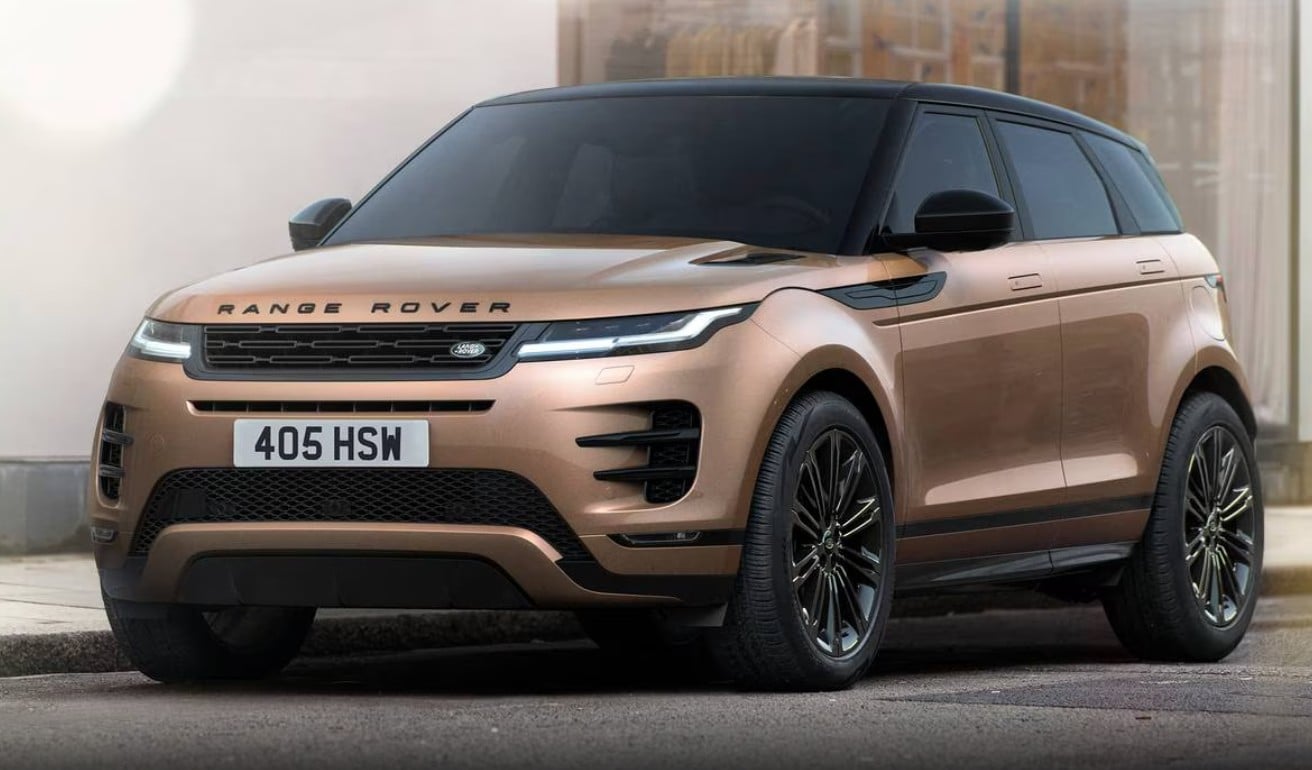
Price: $84,050 plus ORC (Dynamic SE)
Drivetrain: 2.0-litre, turbocharged four-cylinder petrol, AWD
Fuel consumption: 8.3L/100km
Warranty: Five-year/unlimited kilometre
Five-year service cost: $1950
| Driving | |
| Interior | |
| Practicality | |
| Overall value | |
A perennial premium favourite in this segment thanks to its stylish exterior and luxurious attention to detail, the Evoque is now available across three variants – Dynamic SE, Hoxton and Autobiography – with the 2.0-litre petrol engine paired to mild hybrid technology and a more efficient PHEV as well.
Starting at just more than $84,000, Evoque is a discerning choice in this segment for those not so concerned by budgetary constraints. Step right up to there PHEV at the top end of the range and you’ll be paying six figures before on-road costs are factored in.
With AWD standard, as per the Range Rover brief, and a smooth nine-speed automatic, even the entry-grade Dynamic SE is a luxurious way to tackle the medium SUV segment. Evoque has always set a standard of luxury from inside the cabin, and that remains the case with a quiet and refined deriving experience, and Land Rover’s signature attention too suspension detail.
Not as sharp under acceleration as the electric options in this segment, it’s less sporty than the styling might indicate. Off-road capability is a non-negotiable for the British manufacturer, with drive modes making the rough stuff easy even for beginners.
If you’re looking in this segment and you value luxury, quality materials and attention to detail, the ‘mini Range Rover’ as it’s become known is a choice to consider. It’s elegant styling will ensure it stands out from the crowd.
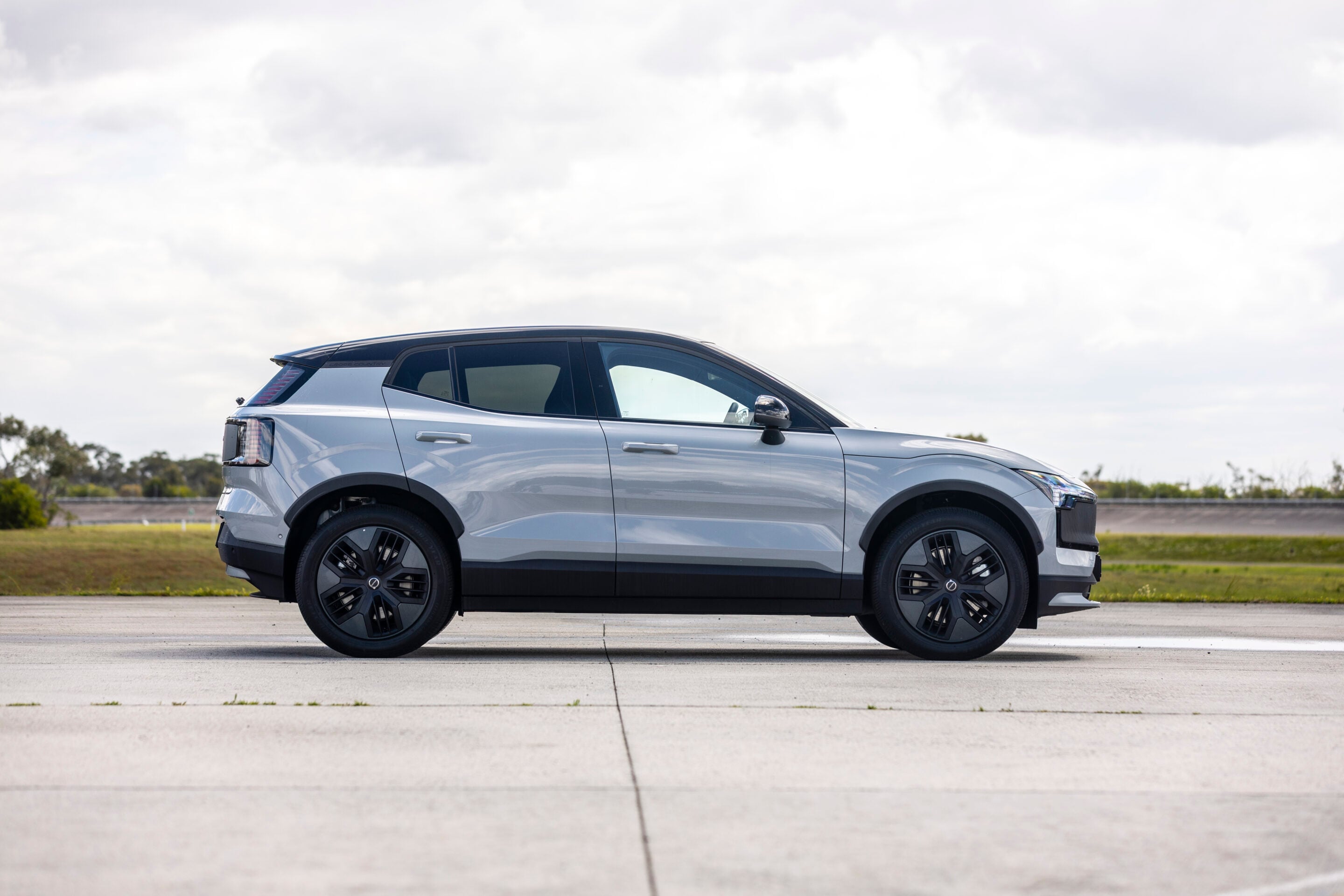
Price: $49,990 plus ORC (Single Motor Extended Range Plus)
Drivetrain: 200kW/343Nm single-motor RWD 69kWh
WLTP range: 480km
Warranty: five-year/unlimited kilometre
Five-year service cost: $5995
| Driving | |
| Interior | |
| Practicality | |
| Overall value | |
Volvo’s EX30 is the electric vehicle that Volvo wanted in the Australian market as soon as it could secure it – and with good reason. Across three model grades, and with a sense of luxury synonymous with the Swedish manufacturer, the EX30 is priced to appeal not just to EV converts, but also to those skeptical of EV ownership.
As much as $10,000 was recently cut from the asking price, with the entry-grade single motor, extended range EX30 costing $49,990 before on-road costs. Single-motor, and dual-motor models are available, with 200kW or 315kW on offer, and a WLTP-claimed range up to 480km.
With Volvo’s signature minimalistic, clean aesthetic, especially inside the cabin, along with up to date tech, recycled material choices, advanced safety features, and integrated Google technology, the EX30 is as premium as it is enjoyable to drive.
As is often the case with electric vehicles, the smart choice in the range is the entry-grade RWD EX30, with the aforementioned 480km range on offer, 0-100km/h time of just 5.3 seconds and 200kW. Buyers still get five-star ANCAP safety, and all of the standard equipment you’ll want in the segment. Given you get that for a starting price beneath $50,000, that sets the EX30 in line with electric vehicles from less established manufacturers.
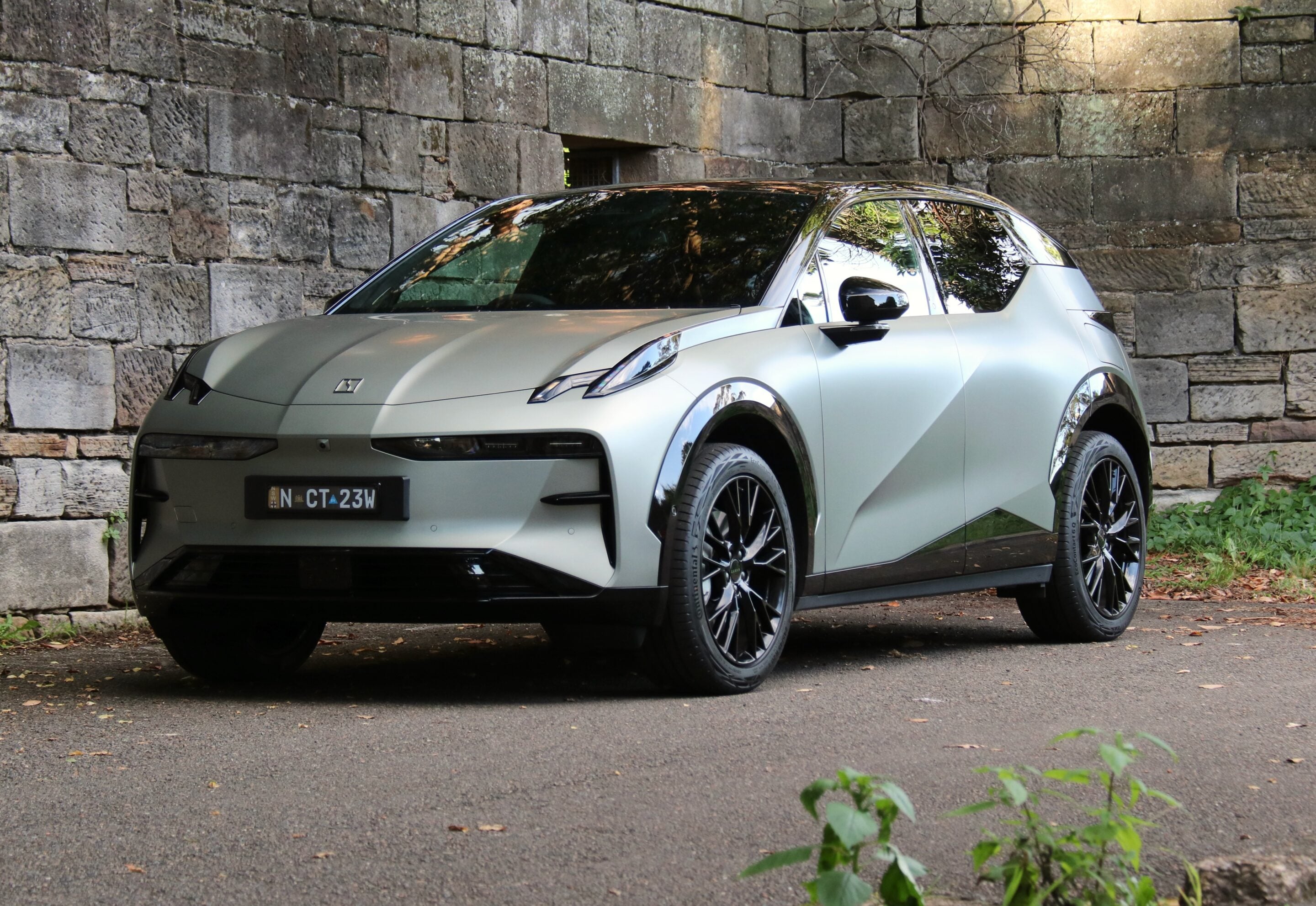
Price: $47,900 drive away (RWD)
Drivetrain: 250kW/373Nm single-motor RWD 61kWh
WLTP range: 405km
Warranty: five-year/unlimited kilometre
Five-year service cost: $2532
| Driving | |
| Interior | |
| Practicality | |
| Overall value | |
The updated Zeekr X is the latest entrant from Chinese manufacturer Zeekr, to sit alongside 7X in Zeekr showrooms, and it’s an impressive SUV in this segment – keeping in mind it came to market before the 7X. While it looks almost identical from the outside, the new X has gained plenty of upgrades to make it even more attractive to buyers.
There’s a serious price cut for starters – now below 50k drive away, but there’s a new electric motor, new battery for the RWD model, faster charging capability and interior changes that make it easier, and more practical to live with.
Standard features are impressive with the likes of heated and ventilated front seats, electric adjustability for the passenger, driver’s seat memory, heated steering wheel, and premium Yamaha audio, all standard compared to being optional previously.
Even the RWD model makes 250kW and 373Nm, ensuring it’s a snappy SUV even in its most affordable guise. Zeekr X is a good thing to drive, too, thanks to revised suspension that is taut enough to feel sporty, but not so hard as to be uncomfortable around town.
Looking to get into a brand-new small SUV? Our stories below will guide you to the model that best suits your needs:
Particularly in current times with the cost of living crisis at the forefront of many of our minds, value for money is a strong consideration point for those looking at a new car. However, value can mean more than just a low price of entry and for many, value can be applied to more standard features or a better warranty coverage. With that in mind, these are the best value small SUVs for 2026.
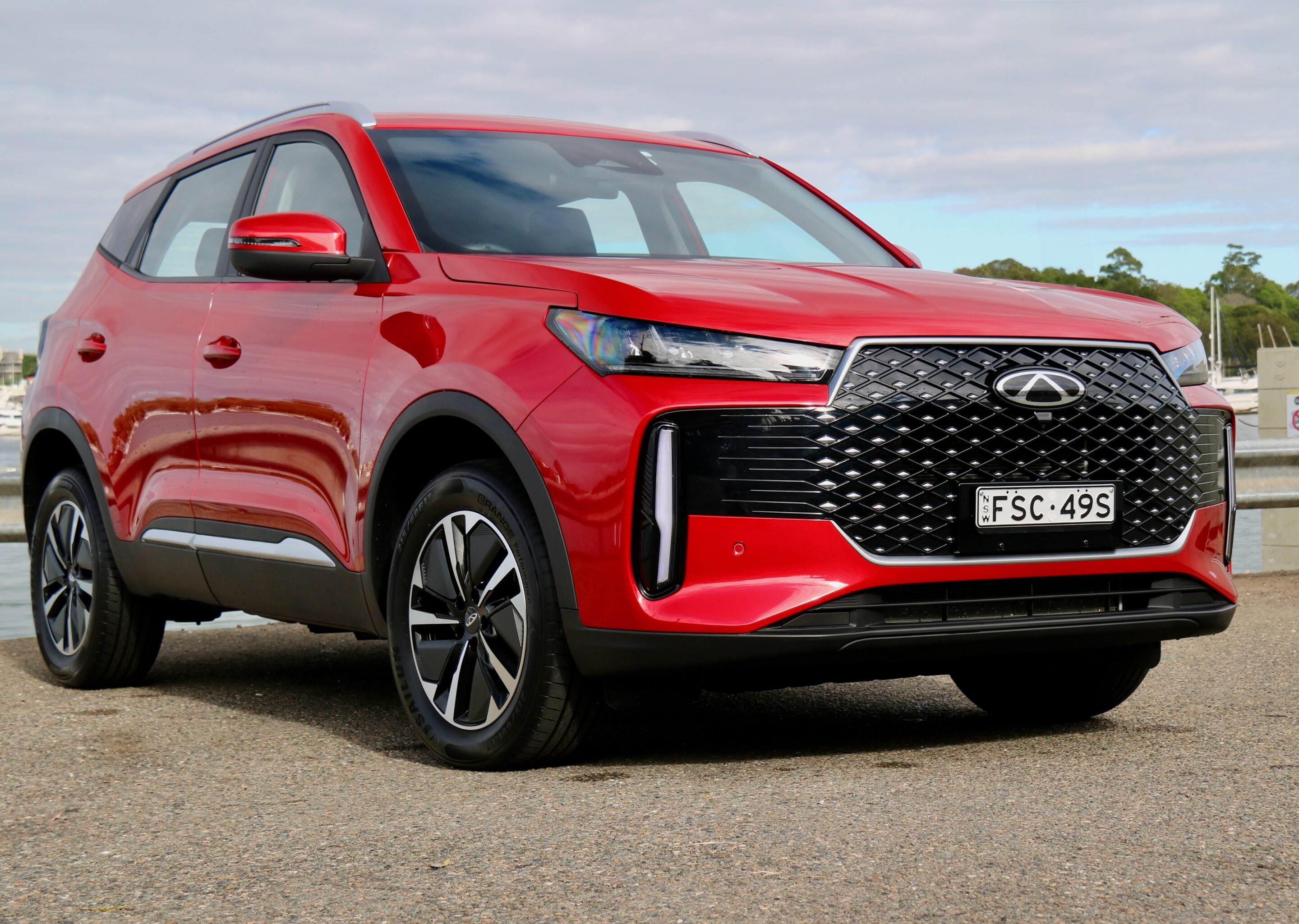
Price: From $23,990 drive away (Urban petrol), from $29,990 drive away (Urban hybrid)
Drivetrain: 1.5-litre four-cylinder turbo-petrol or 1.5-litre four-cylinder hybrid, CVT auto
Outputs: 108kW/210Nm (1.5T), 150kW/310Nm (hybrid)
Combined fuel economy: 7.4L/100km (1.5T), 5.4L/100km (hybrid)
Warranty: Seven-year/unlimited km
Five-year service cost: $1445 ($289 per year)
| Driving | |
| Interior | |
| Practicality | |
| Overall value | |
The Chery Tiggo 4 has been named Wheels Best Small SUV: Value for a second consecutive year, a recognition of its popularity with Australians who value the fact it’s well-equipped, practical, affordable to service and covered by a long and easy warranty program. Now, the availability of a hybrid model makes it even more attractive for those wanting better fuel economy but not ready to make the step to electric.
At the time of last year’s award, it had only been on the market for a few months and sales had been modest because it was new. However, since then, its popularity has exploded and it’s got 6,807 sales under its belt to the end of March 2026 (or up 103.9 per cent on 2025).
If it’s a low price of entry you’re after, the Tiggo 4 is difficult to go past in the small SUV segment. Prices start at just $23,990 driveaway for the entry-level Urban and it’s very well equipped for the price, including a full active safety suite, dual-zone climate control air-conditioning with rear air vents, and dual 10.25-inch screens for the driver and infotainment system. Chery’s aftersales program is excellent value as well, covering the Tiggo 4 for seven years. Capped price servicing is also reasonable: just $1445 for five years/75,000km of motoring, which equates to just $289 per year.
What the Tiggo 4 in 2026 offers in addition to the early 2025 version is a 1.5-litre hybrid drivetrain that reduces its fuel consumption and gives those looking to save on fuel another option in the market. However, the gap in price to the hybrid is a significant $6000, so do your sums to figure out which drivetrain is best for you.
Regardless of the drivetrain, the Tiggo 4 offers a punchy drivetrain for the segment and its driving experience is comfortable, though its ride quality is a bit too soft so that even smaller bumps are noticeable. Still, its cabin is good quality and the interior is sensibly practical, too. The tall body gives excellent headroom, and its 380-litre boot opens up to 1225 litres with the rear seats folded.
Overall, the Chery Tiggo 4 is not quite a perfect car, but it is ideal value for money. There are other small SUVs priced around the same level as the Tiggo 4 like the MG ZS Vibe and Mahindra XUV 3XO AX5L but the Tiggo 4 Urban is better equipped than both of those cars, as well as better finished on the inside. No wonder it’s selling so strongly in Australia.
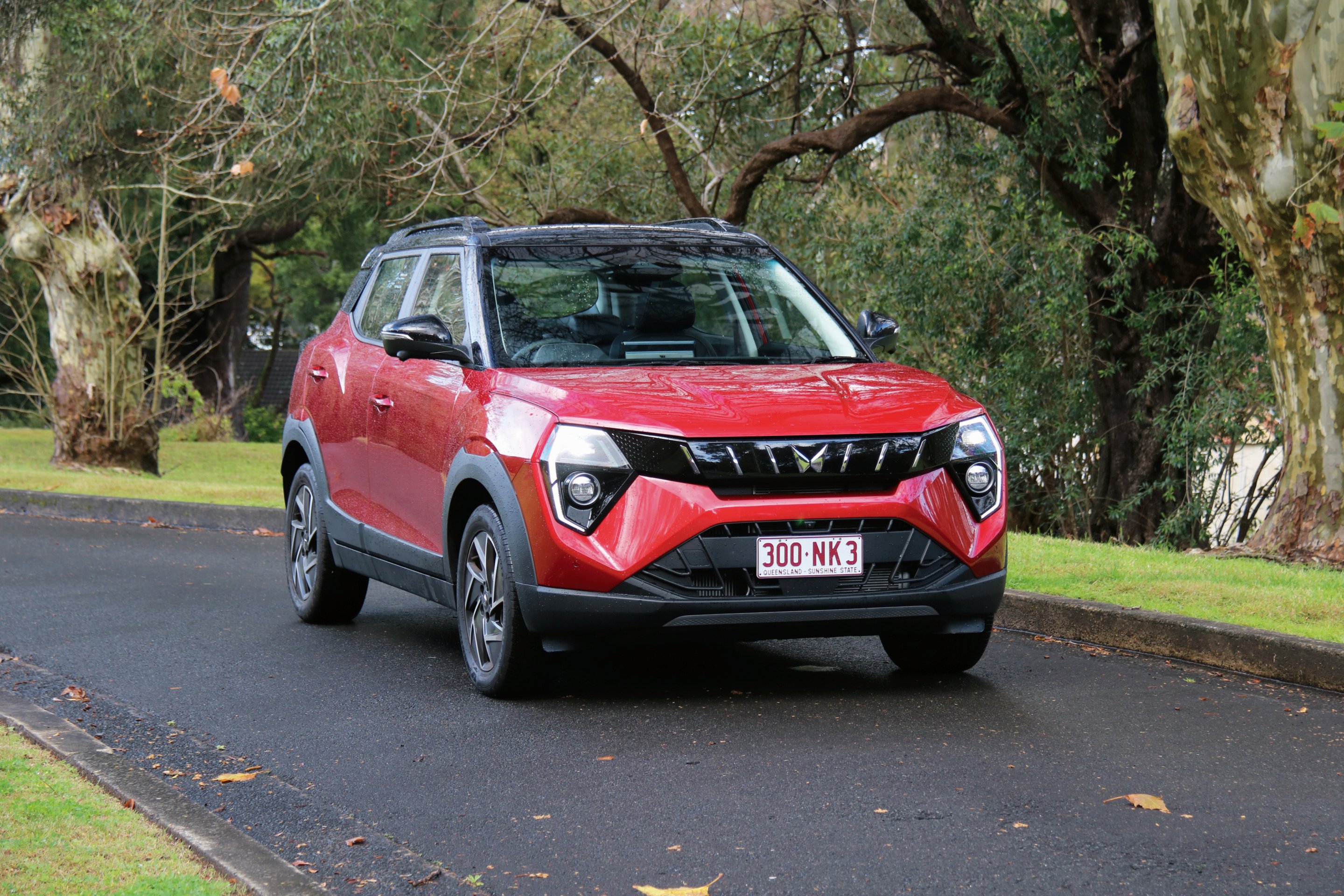
Price: From $23,990 driveaway
Drivetrain: 1.2-litre turbocharged three-cylinder petrol, six-speed auto
Outputs: 82kW/200Nm
Combined fuel economy: 6.5L/100km
Warranty: Seven-year/unlimited km
Five-year service cost: $1595 ($319 per year)
| Driving | |
| Interior | |
| Practicality | |
| Overall value | |
Mahindra launched the XUV 3XO in Australia in 2025 and above all else, it delivered a really affordable option that we think will continue to win it a lot of fans locally. Pricing kicks off from $23,990 driveaway –the same pricepoint as the entry-level Tiggo 4 – and standard equipment on the entry-level AX5L is impressive.
Equipment highlights include 16-inch alloy wheels, keyless entry with push button start, dual-zone automatic climate control with rear air vents, a leather-wrapped steering wheel and gear knob,
automatic LED headlights, rain-sensing wipers, dual 10.25-inch displays, wireless Apple CarPlay and Android Auto, and safety equipment like autonomous emergency braking, lane keeping assistance, adaptive cruise control and traffic sign recognition. Even a sunroof is standard.
Jump up to the upper-spec AX7L and features like a 360-degree camera, a blind-spot camera, leatherette upholstery, a panoramic sunroof and a thumping (seriously, it’s excellent) Harman Kardon sound system. Yet, it’s only $26,990 driveaway. Adding further to the XUV 3XO’s impressive value is the brand’s seven-year/150,000km warranty and five years of servicing only costs $1595, or just $319 per year.
The XUV 3XO uses a turbocharged 1.2-litre three-cylinder engine, which makes 82kW/200Nm outputs and is mated to a six-speed automatic transmission as standard. It’s a grunty and characterful engine, with impressive refinement as well. The XUV 3XO drives well, too, its tight, nimble chassis delivering excellent ride quality that soaks up bad road surfaces.
Inside, the XUV 3XO isn’t the most modern or up to date, but it’s good quality, practical for its small size and well featured. The 10.25-inch touchscreen could be faster, but its graphics are sharp and it’s easy to use. The rear seat is impressively spacious for its size too, though its boot is quite small. In the XUV 3XO Mahindra delivers a good car that is practical, good to drive, well equipped and covered by a long warranty. For a lot of buyers, that will make it a winner.
Price: From $46,990 driveaway
Drivetrain: Single-motor electric, 58.3kWh or 81.4kWh batteries
Outputs: 150kW/283Nm
Range (WLTP): 436km (Standard Range) – 604km (Long Range)
Warranty: Seven-year/unlimited km
Five-year service cost: $1308 ($261 per year)
| Driving | |
| Interior | |
| Practicality | |
| Overall value | |
Launched locally in 2025, the EV3 is the smallest and cheapest electric vehicle that Kia currently sells in Australia. It’s also a really good small SUV, with ample practicality, a good driving experience and a reasonable list of standard features. Pricing starts at $46,990 driveaway, which is more expensive than something like the BYD Atto 2, but it does offer more range than the BYD – from 436km versus 345km on the WLTP cycle – thanks to its 58.3kWh battery. If you want more range, a larger battery is also available for more money.
Standard equipment on the entry-level Air includes 16-inch alloy wheels, dual-zone automatic climate control with rear vents, dual 12.3-inch screens, wireless Apple CarPlay and Android Auto, a wireless phone charger, keyless entry with push button start, a synthetic leather steering wheel, cloth upholstery and a long list of safety features like a central airbag, autonomous emergency braking, adaptive cruise control, adaptive lane guidance and blind-spot monitoring with rear cross-traffic alert.
Unfortunately, buyers wanting more features must spend a lot more money – the mid-spec Earth asks more than $60,000 including on-road costs, but it’s the cheapest way to get features like an electric driver seat adjustment, heated and ventilated front seats and synthetic leather trim. The $70k GT-Line further adds a sunroof, larger wheels, Harman Kardon audio, electric front passenger seat adjustment and a head-up display. Disappointingly, no EV3 offers a 360-degree camera in Australia.
All EV3 models use a front-mounted 150kW/283Nm electric motor, which provides more than ample performance. Charging speeds are also reasonable, at up to 100kW in the Standard Range and 130kW in the Long Range models, with a 10-80 per cent charge taking around half an hour at that speed. The EV3’s driving experience impresses too, with a solid and planted feeling, excellent suspension tuning for great ride comfort, steering that is far superior to Chinese rivals thanks to actual weighting, and a tidy and reasonably fun chassis.
Overall, the Kia EV3 is a great electric small SUV that deserves attention. Sure, it’s more expensive to buy and less well equipped than some Chinese rivals, but it wins back value points with its excellent driving dynamics, spacious cabin, large boot, healthy charging speeds for the segment. It’s efficient and offers solid range as well. Those attributes make it a great option in the small SUV segment.
Price: From $31,990 plus on-road costs
Drivetrain: Single-motor electric, 51.1kWh battery
Outputs: 130kW/290Nm
Range (WLTP): 345km
Warranty: Six-year/150,000km
Five-year service cost: Unknown
| Driving | |
| Interior | |
| Practicality | |
| Overall value | |
BYD surprised in late 2025 by offering not only Australia’s cheapest EV – the $23,990 +ORC Atto 1 – but also Australia’s cheapest electric SUV: The $31,990 +ORC Atto 2. That low starting price won’t only get you a lot of car, but it’s also quite well equipped in entry-level Dynamic form, with features including 16-inch alloy wheels, automatic exterior lighting and wipers, synthetic leather upholstery, automatic climate control with rear air vents, a 10.1-inch touchscreen with wireless smartphone connectivity and over-the-air updates, a heat pump and a long list of safety kit.
Above the Dynamic sits the $35,990 +ORC Premium, and that adds a lot more features: larger 17-inch wheels, roof rails, a panoramic sunroof, auto-folding mirrors, electric front seat adjustment with heating and ventilation, a larger 12.8-inch touchscreen and a wireless phone charger. At around $40,000 including on-road costs, the Atto 2 Premium is very well equipped, and both models are excellent value.
The cabin of the Atto 2 is its strongest attribute as not only is it spacious, but it’s also good quality, comfortable and relatively easy to use. The entry-level Dynamic features a 10.1-inch touchscreen, which is well featured and accessible, though its small icons make interacting with it more difficult than necessary. Storage is impressive up front, as is seat comfort, and both the rear seat and boot are larger than you’d expect.
On the road, the Atto 2 isn’t as impressive as a Kia EV3, but it is still more than comfortable enough for city use. A 130kW/290Nm front electric motor provides propulsion, which is more than enough grunt for even highway use, and the 51.3kWh battery gives a WLTP-rated range of 345km, which is more than enough for those doing primarily city driving. A peak charge speed of 82kW allows for a claimed 10-80 per cent charge time of 39 minutes, which could be quicker.
The BYD Atto 2 shines as Australia’s cheapest electric small SUV thanks to its low opening price, long list of standard features, comfortable and practical cabin, and reasonably long six-year/150,000km warranty. It could be better to drive and its charge speed is slow compared to some rivals, but if you’re wanting a cheap, practical small SUV that happens to be electric, it provides excellent value for money.
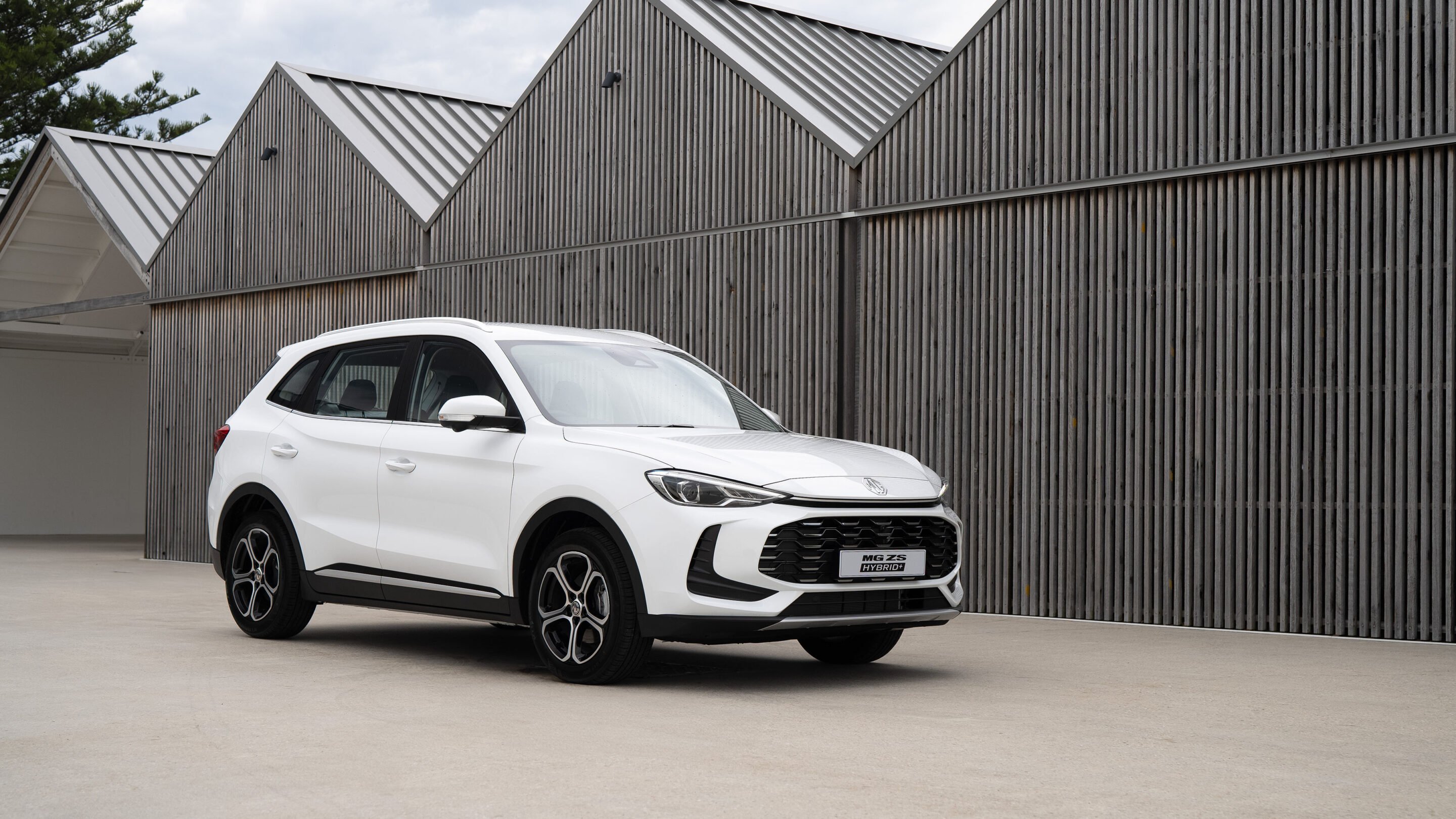
Price: From $22,990 driveaway
Drivetrains: 1.5-litre four-cylinder naturally aspirated, turbocharged or hybrid, CVT
Outputs: 81kW/140Nm (1.5L), 125kW/275Nm (1.5T), 158kW/465Nm (Hybrid+)
Combined fuel economy: 6.7L/100km (1.5L), 6.9L/100km (1.5T), 4.7L/100km (Hybrid+)
Warranty: Seven-year/unlimited km (extendable to 10 years/250,000km with dealer servicing)
Five-year service cost: $1860 (hybrid), $2029 (turbo), $2039 (naturally aspirated)
| Driving | |
| Interior | |
| Practicality | |
| Overall value | |
The overall winner of Wheels Best Small SUV 2025 was the MG ZS Hybrid+, in 2026 MG has widened the ZS range and lowered the price of entry to just $22,990 driveaway for the entry-level Vibe. That makes it the cheapest SUV on sale in Australia currently, and is available for only $1000 more than the MG 3 Vibe hatchback.
We’d step up to the Vibe Turbo, however, as it’s the sweet spot in the petrol ZS priced at $24,990 driveaway but offering a 125kW turbocharged engine that’s far gutsier than the naturally aspirated engine in the Vibe, but only a little bit thirstier at 6.9L/100km versus 6.7L/100km. The Vibe Turbo also adds more features, like larger 17-inch wheels and automatic air-conditioning.
But regardless of model, the MG ZS is a compelling option in the small SUV segment. It’s great value for money but it’s also a good car, with a high quality, spacious cabin and impressive list of standard equipment across the range. Even the Vibe comes with 16-inch alloy wheels, push button start, a 10.25-inch touchscreen with access to the MG ‘iSmart’ phone app and the ‘MG Pilot’ suite of active safety features. MG’s typically excellent value equation continues with the ZS.
What’s even better is MG’s warranty, which is seven-year/unlimited km coverage but if you service through an MG service centre during that period, you earn extra warranty up to 10 years/250,000km in total, which is one of Australia’s longest warranty terms.
The MG ZS remains a great value choice in the small SUV segment thanks to its low pricing, long standard equipment list, roomy cabin, pleasant driving experience and wide range of drivetrain offerings. Plus, if you can afford to spend only $2000 more to get from the Vibe to the Vibe Turbo, it’s far punchier to drive, and doing so gets you one of the best small SUV options.
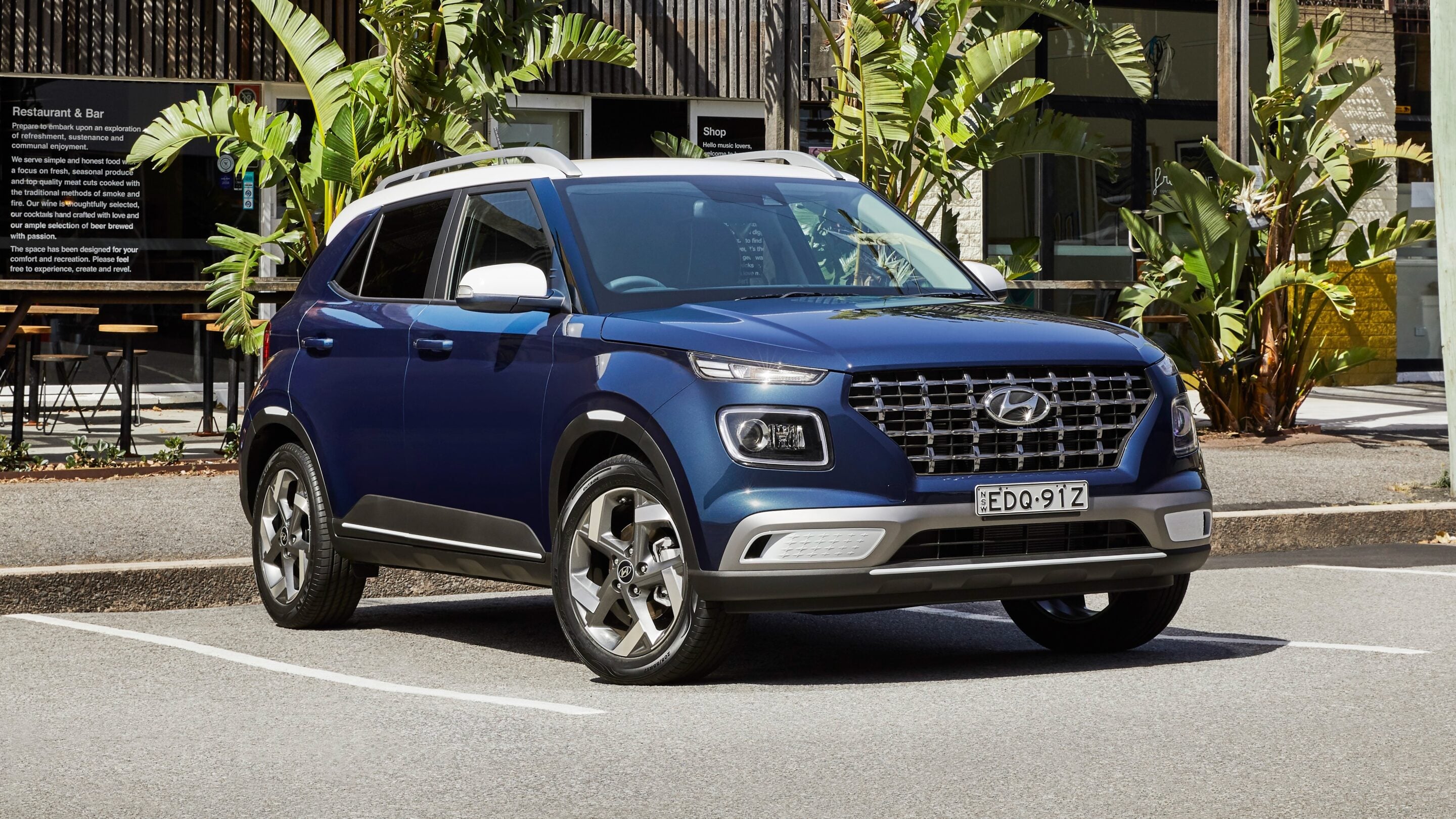
Price: From $23,750 plus on-road costs
Drivetrain: 1.6-litre four-cylinder naturally aspirated petrol engine, six-speed manual or automatic
Outputs: 90kW/151Nm
Combined fuel economy: 7L/100km (manual), 7.2L/100km (automatic)
Warranty: Five-year/unlimited km (extendable to seven years with dealer servicing)
Five-year service cost: $1976 ($395 per year)
| Driving | |
| Interior | |
| Practicality | |
| Overall value | |
While many of Hyundai’s earlier sales used to come from cars like the Accent and i30 hatchbacks, they’re sadly no longer offered in Australia, leaving the Venue small SUV as the brand’s entry product locally. Pricing starts at $23,750 plus on-road costs for the base model, but that’s for the six-speed manual that most people won’t buy – the six-speed automatic asks $2000 more at $25,750 +ORC, so around $29,000 once on-road costs are included.
Small SUVs for under $30,000 including on-road costs aren’t plentiful these days, and even though the Venue is much more expensive than it used to be, it’s still one of the cheapest new cars you can buy. Standard features include 15-inch alloy wheels, manual air-conditioning, roof rails, an 8.0-inch touchscreen, wireless Apple CarPlay and Android Auto, cruise control, autonomous emergency braking, lane keeping assistance and auto high beam. It’s disappointing, however, to see features like blind-spot monitoring, climate control, larger wheels and even auto-folding mirrors limited to upper-spec models.
So it could be better equipped but at least it’s under $30,000. In addition to the value equation, the Venue’s strong practicality earns it brownie points. Its 355-litre boot is bigger than you’d expect considering how small its exterior is and it features some clever touches like a dual-level boot floor and the parcel shelf that stores behind the rear seat to carry taller cargo. The rear seat, although largely featureless, is roomy for the size and even taller adults will be fine thanks to excellent headroom within its boxy dimensions.
On the road, the Venue’s locally tuned ride quality is excellent – soft but taut so that bumps don’t unsettle it, and it’s actually reasonably fun to drive as well. The 1.6-litre petrol engine is a reasonable performer, but it can be quite loud and it’s also thirsty, rated from 7.0L/100km. Overseas, the same turbocharged three-cylinder engine in the Kia Stonic features in the Venue and we think it would be a far better option.
The Venue presents solid value for money in the small SUV segment. While its drivetrain could be more refined and gutsier, it otherwise drives nicely, it’s quite practical for its size and its service pricing is quite reasonable as well. There are cheaper options available than the Hyundai Venue, but if it’s overall value you’re after, it scores reasonably well.
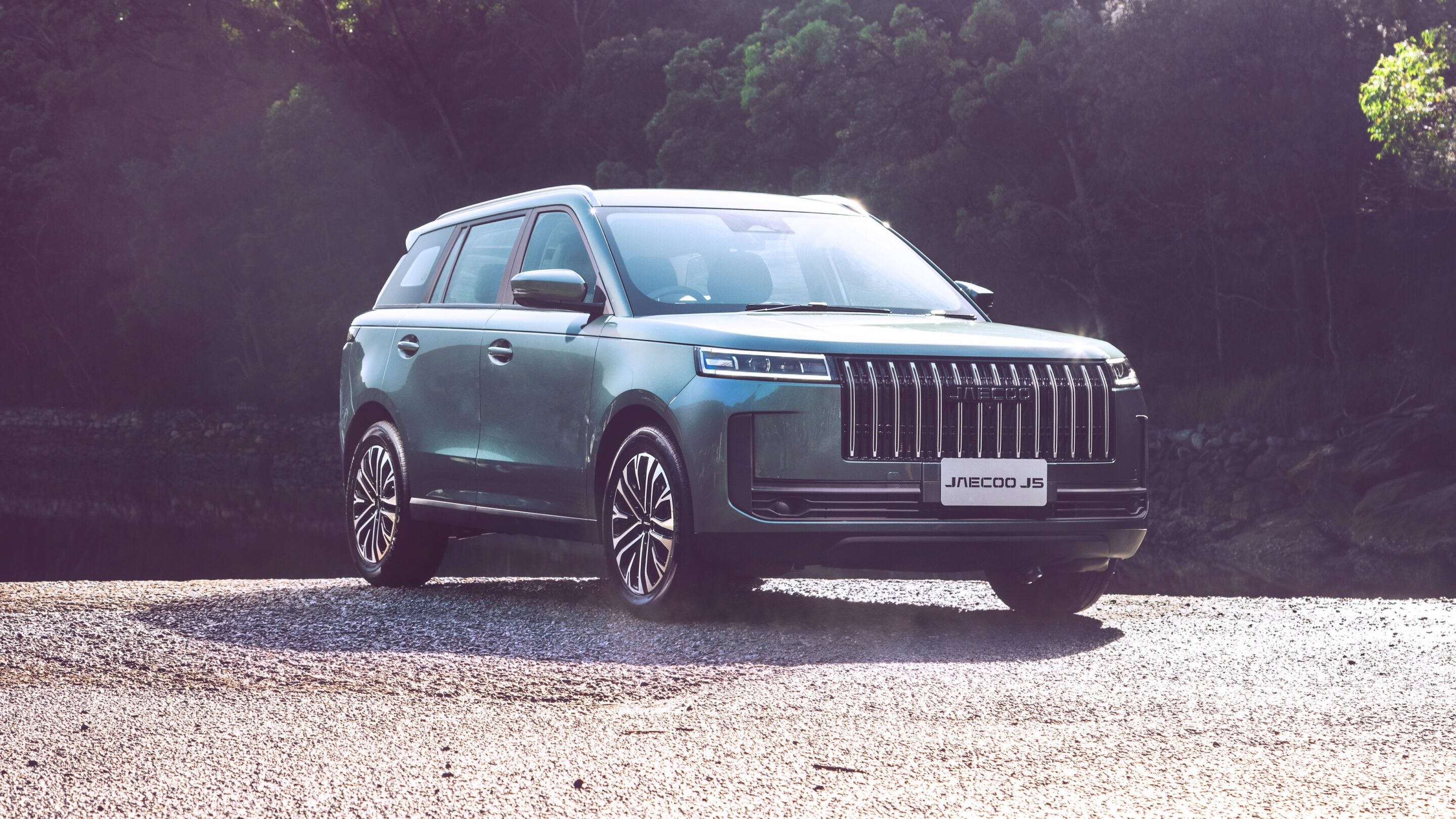
Price: From $25,990 driveaway (petrol), $36,990 driveaway (EV)
Drivetrains: 1.5-litre four-cylinder turbo-petrol with CVT automatic or single-motor electric, 58.9kWh
battery
Outputs: 105kW/210Nm (petrol), 155kW/288Nm (electric)
Electric range (WLTP): 402km
Combined fuel economy (petrol): 7.5L/100km
Warranty: Eight-year/unlimited km
Five-year service cost: $915 (EV – $183 per year), $1316 (petrol – $263 per year)
| Driving | |
| Interior | |
| Practicality | |
| Overall value | |
Jaecoo’s smallest offering, the J5 small SUV, launched locally in electric form in late 2025 to much fanfare. It’s well priced at $36,990 driveway, surprisingly practical inside, very well equipped and uses a 58.9kWh battery for a healthy 402km of claimed WLTP range.
A petrol option has recently been added as well, lowering the price of entry to just $25,990 driveaway and adding a new entry-level model for those not needing luxury features. Standard features on the base model Track include 18-inch alloy wheels, automatic LED exterior lighting, keyless entry with push button start, height-adjustable front seats, a large 13.2-inch portrait touchscreen with wireless smartphone mirroring and a lot of safety features, including a front centre airbag and a 360-degree camera.
Move up to the Summit models ($29,990 driveaway for the petrol car or $36,990 driveaway for the EV) and features like a panoramic glass roof, electric tailgate, dual-zone automatic climate control, synthetic leather upholstery, electric front seats with heating and ventilation and a rear central armrest with cupholders are added. A loaded small SUV for under $30k on the road? Not bad at all, especially considering that it’s covered by one of the longest warranties on the new car market.
It must be said that the J5’s driving experience could be improved. We’ve not driven the yet-to-be-launched petrol option, but the EV’s soft suspension and light steering make the driver feel disconnected from the car. However, it’s still comfortable enough for everyday life and while the active safety systems could use a bit more refinement, they have come a long way since Chery – Jaecoo’s parent brand – re-launched locally. The EV provides ample grunt at 155kW, while our experience in the Chery Tiggo 4 – the J5’s sister car – suggests that the petrol engine is also fine, albeit quite thirsty for its size.
The cabin of the J5 is good quality for the money, quite practical and comfortable too. We wish that the huge 13.2-inch touchscreen featured more shortcut buttons to aid usage, but the system is quick to use and screen quality is impressive. The rear seat can handle two taller adults easily, while the 384-litre boot is large for its size as well. Overall, while the Jaecoo J5 isn’t a well known product yet, we think it has potential to sell well as it’s great value for money, spacious, well equipped and covered by a long warranty.
Looking to get into a brand-new small SUV? Our stories below will guide you to the model that best suits your needs:
Toyota Australia is expecting its first-ever plug-in hybrid RAV4 to take the new car sales charts by storm.
Due in Australia later this year, the RAV4 PHEV – which will be available in front- and all-wheel drive XSE trim and a range-topping performance-focused flagship GR Sport variant – is expected to account for around 30 per cent of total RAV4 sales.
That’s according to Toyota Australia boss, John Pappas, who told WhichCar by Wheels that “interest has been very strong for RAV4 plug-in hybrid. We expect […] plug-in hybrid to be about 30 per cent of sales or thereabouts.”
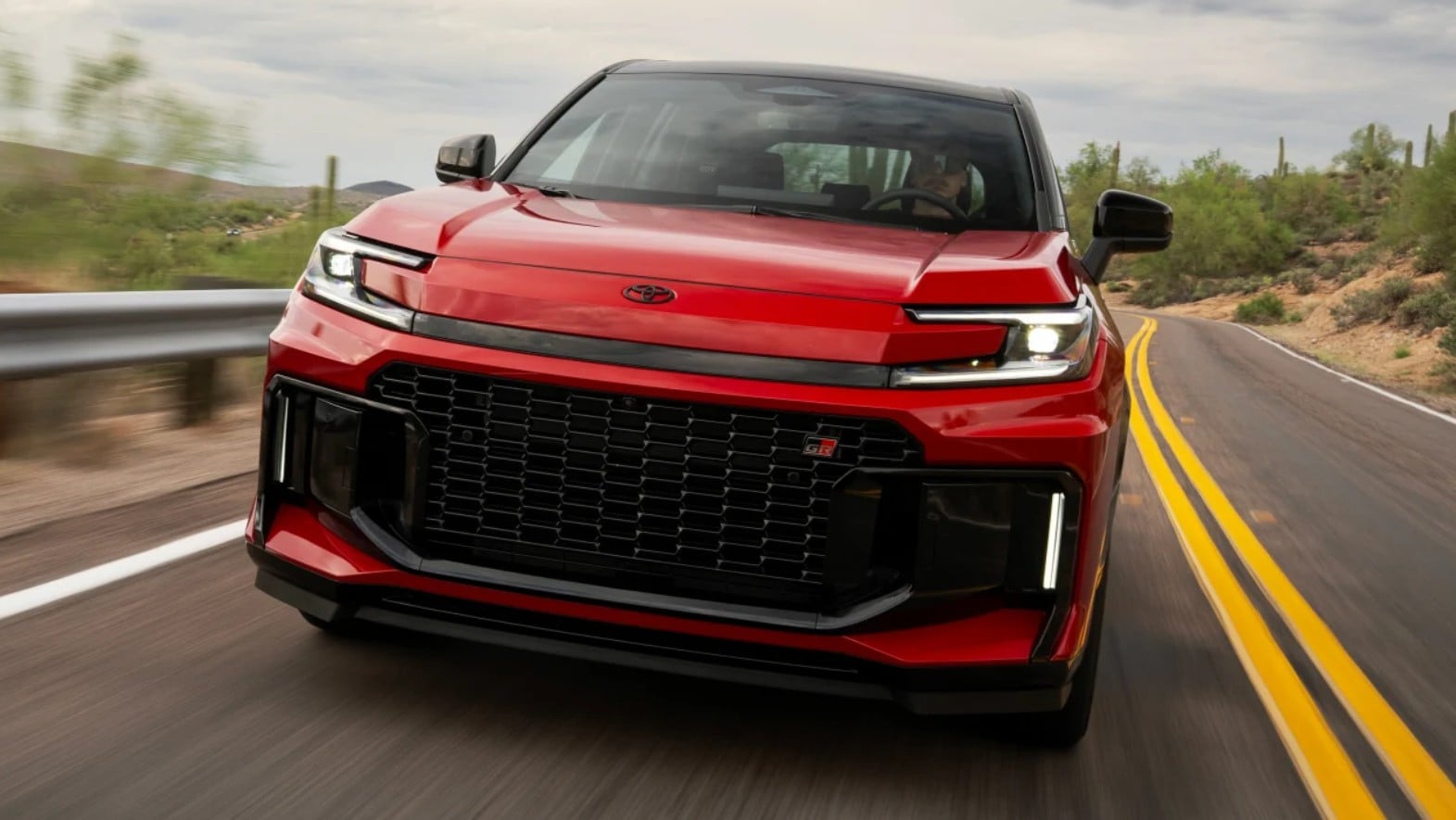
While technical details are still to be confirmed for the XSE plug-in range, Toyota Australia has revealed that its flagship GR Sport RAV4, with 227kW from its 2.5-litre four-cylinder petrol and electric motors, will be the most powerful ever in the model’s 32-year history. Toyota claims 5.8 seconds for the benchmark sprint from 0-100km/h.
Pricing for the PHEV range starts from $58,840 for the front-wheel drive XSE PHEV with all-wheel drive XSR asking for $63,440. The flagship RAV4 GR Sport will start from $66,340, all prices before on-road costs.
“I’m very confident in this GR Sport,” Pappas added. “It looks fantastic, looks really aggressive and I feel like, from a powertrain point of view, it’s just going to be right for us.”
The Toyota RAV4 plug-in hybrid is due in showrooms in the second half of this year.
Medium and large sedans, once the bread-and-butter of Australia’s new car landscape, have ceded their dominance to SUVs and, increasingly, dual-cab utes. And it’s not just Australia where the seismic shift is happening, with sales of passenger cars dwindling globally.
But the reality is not everyone wants an SUV. Nor do they want – or need – the space and utility of a dual-cab.
Thankfully, those buyers are still well-served by what were once humble sedans, three-box designs that have over the intervening years kept up with modern technology, drivetrains and buyer expectations. We’ve assembled two of the best currently available in Australia to see how they stack up as a family hauler, as a drivers’ car, and whether there’s life still left in a formula almost as old as the motor car itself.
The Toyota Camry and Honda Accord need little introduction. Mainstays of the Australian new car market, the Camry and Accord continue to fly the flag in defiance of the prevailing new car trends, not just here but around the world.
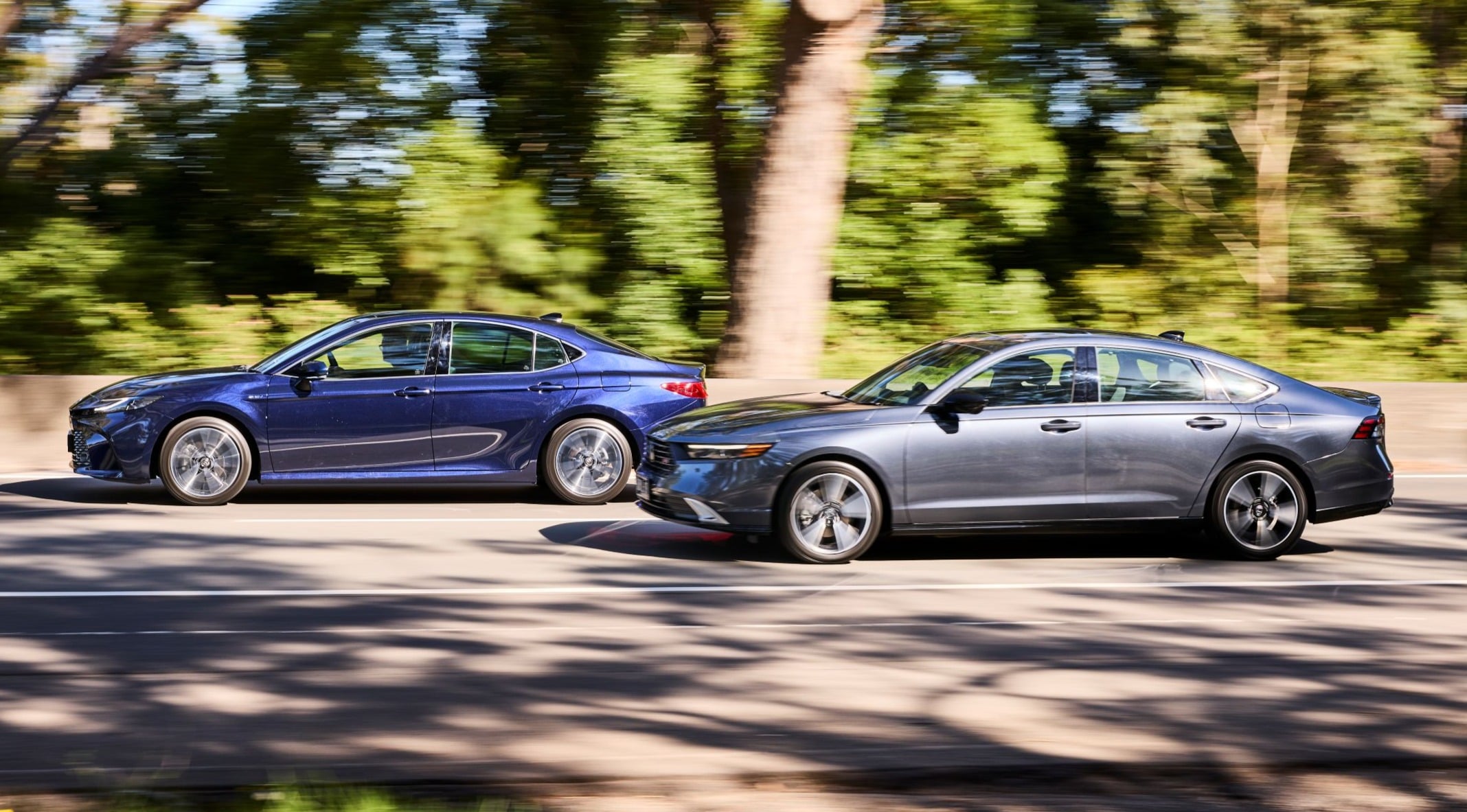
Both cars have been an unmitigated success for their respective brands around the world. Honda has sold in excess of 20 million Accords globally since launching in 1976, a number exceeded – just – by Toyota, which has racked up sales of 21 million since 1980.
It’s a different story in Australia where the Honda Accord never scaled the heights of its rival from Toyota. Sure, it had successful years, in the mid-90s and again in the mid-2000s, with its 15,498 sales in 2007 the high point for the nameplate. Symbiotically, the high point for Toyota Camry came that same year when Aussies bought over 48,000 units across Camry and the ‘larger’ Aurion models.
Today, neither Camry or Accord are sold in their home market of Japan but continue to be available in markets around the world. In Australia, they, along with four other models from four other brands, remain the frontline fighters in a segment that continues to thumb its nose at the SUV orthodoxy. In 2007, those numbers ran to 16 models from 18 different manufacturers. Oh, how times have changed.
Toyota and Honda both launched new generations of their respective mid-sizers in 2024, a ninth for the Camry and 11th for Accord. Both are offered exclusively with hybrid powertrains, making them ripe for this comparison.
Honda has kept its Accord range delightfully simple. There’s just one highly-specified variant, the Honda Accord e:HEV RS. It’s priced at $64,900 drive-away, a firm price under Honda’s somewhat controversial fixed-price ‘agency’ sales model. No haggling for a deal here.
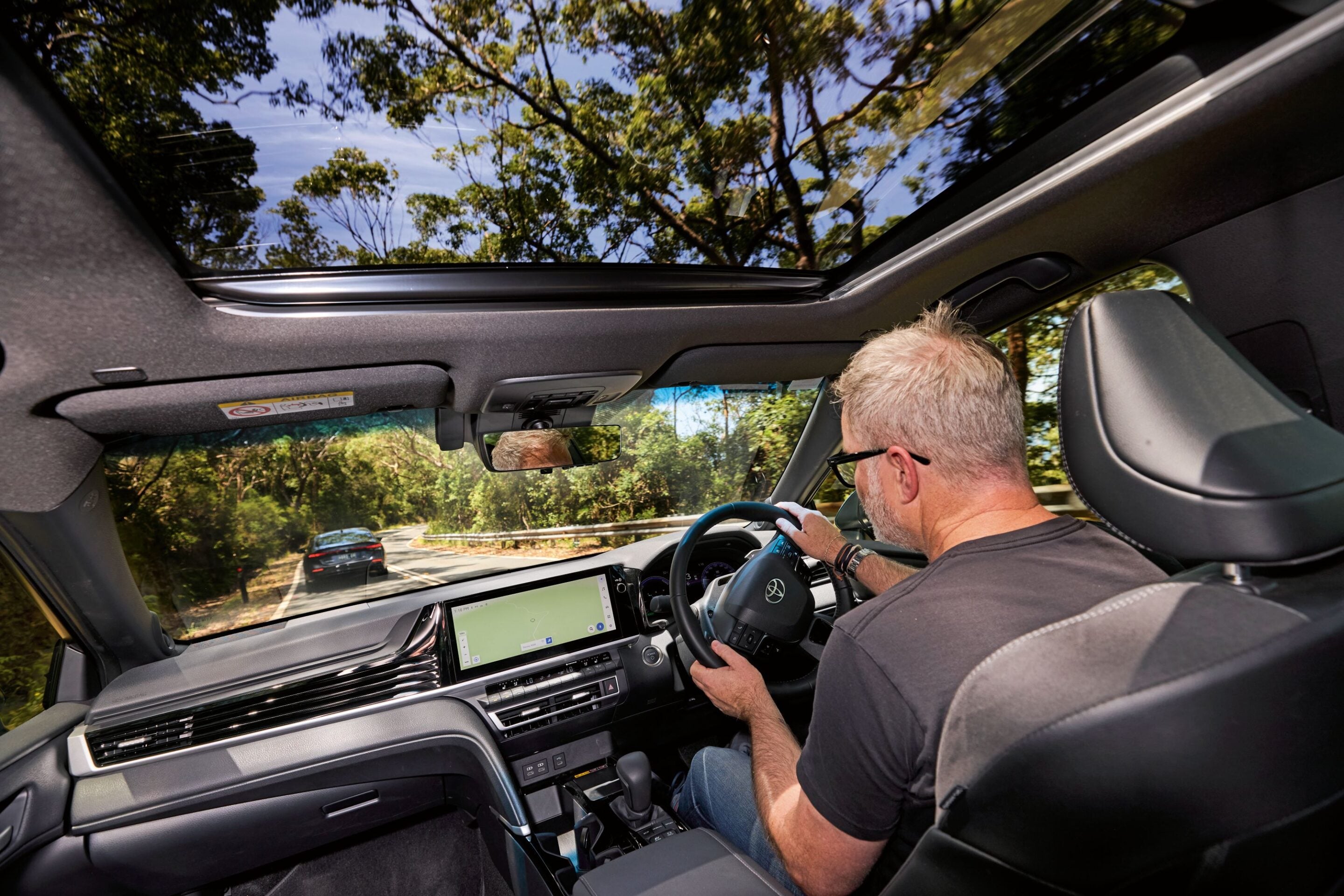
The Toyota Camry we have here is the range-topping SL, priced from $53,990 before on-road costs, translating to driveaway pricing between $57,844 (Queensland) and $60,419 (WA). NSW buyers can expect to pay $59,097 to get their minty-fresh new Camry on the road.
There are no options available for either car, other than paint colour. Here, the Accord claws back some ground, its four-colour palette – Crystal Black, Meteoroid Grey (the colour of our test car), Lunar Silver and Platinum White – a no-cost option.
Seven of the Camry’s colour swatch of eight hues command a $575 premium, the only no-cost shade the Uber-spec Glacier White. Our test car was finished in Saturn Blue metallic, bringing the as-tested price in NSW to $59,702.
On price alone then, it’s the Camry ahead by around five grand, leaving the Accord with plenty of work to do to make a fist of this contest.
On paper, there’s little between this pair. Both are medium-sized sedans, powered by four-cylinder
petrol-hybrid engines – 2.5 litres displacement in Camry’s case, 2.0-litre in the Honda corner.
On its own, the Accord’s 2.0-litre double overhead cam i-Vtec claims 108kW and 182Nm, hardly earth-shattering numbers. But, like the Camry, an electric motor driving the front wheels brings 135kW and 335Nm for a combined 152kW, although Honda doesn’t quote combined torque figures.
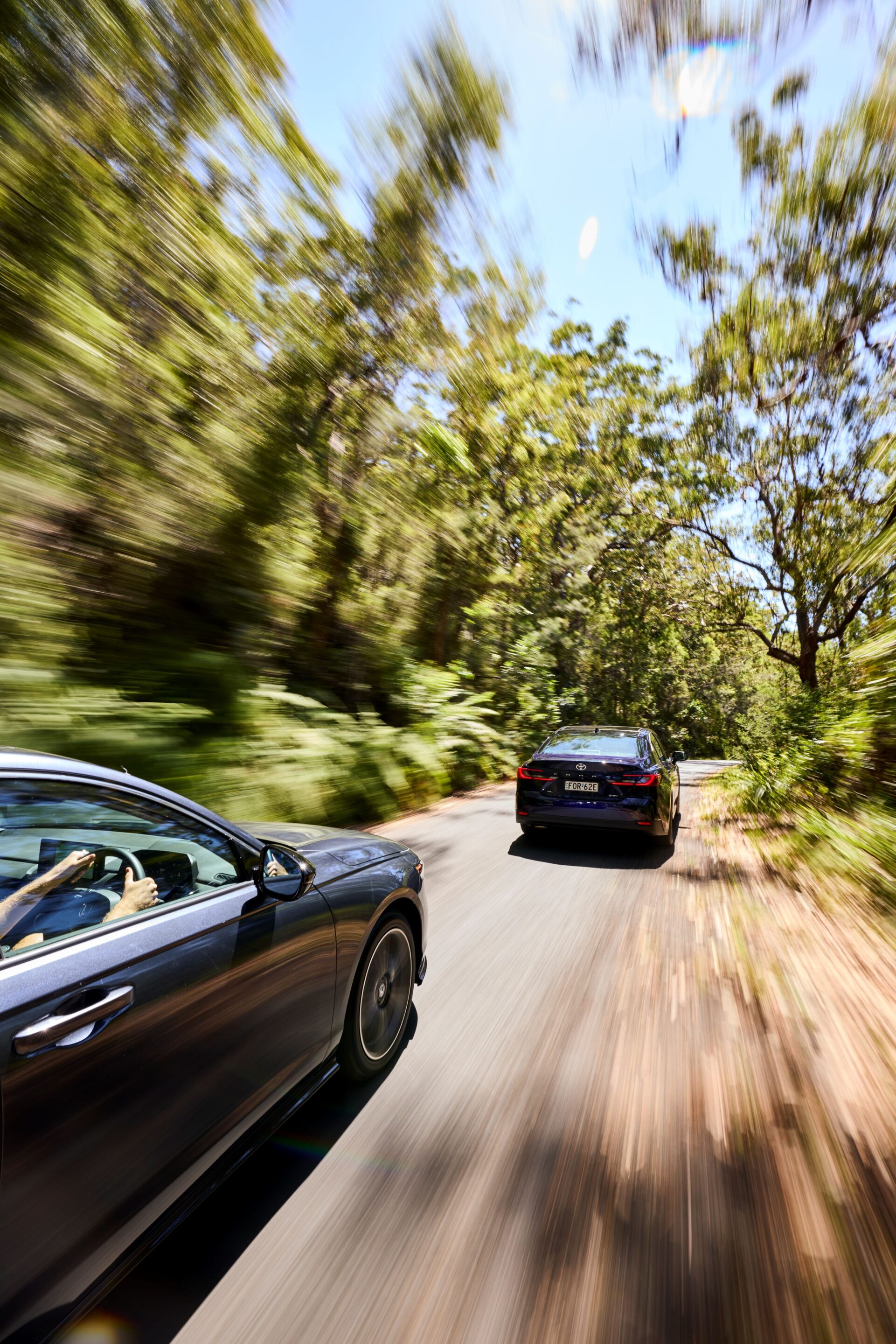
It’s a similar story for Toyota, where the Camry’s petrol mill brings 138KW and 221Nm to the output party, aided and abetted by an electric motor at the front wheels with quoted outputs of 100kW and 208Nm. All up, Toyota says there’s 170kW to play with while, like Honda, it doesn’t quote combined torque figures.
Science and engineering nerds will probably be able to figure out what that means on paper in terms of torque, but out in the real world, it’s the Accord that presents the more – thrilling is not exactly the word – engaging drive experience. More on that later.
There’s a degree of satisfaction when you first slide your bum into the Accord. The cabin itself is nicely presented, with enough flourishes and garnishes to feel a little bit special. Honda’s signature honeycomb mesh (it’s also found in Civic and CR-V) running the length of the dashboard is a case in point which, certainly to this reviewer’s eyes, looks way more expensive than the Accord’s $65k sticker price suggests.
The seats too, are comfortable, supporting you in all the right places including at the sides and under-thigh. They sit nice and low in the cabin which, while not exactly giving off touring car racing vibes, do offer a level of driver-centric design that feels just a smidgeon sporty.
The Accord looks and feels purposeful from the driver’s seat, enhanced by plenty of racy red contrast stitching on the seats and the steering wheel. You immediately feel like this is a ‘driver’s car’.
The Camry does its best to hide away from its siblings lower down the range with leather seats that look nice, but aren’t quite as well-bolstered or supportive as the Honda’s. But unlike the Accord, the Camry’s front pews offer seat heating and ventilation, something of a mis-step by Honda at this end of the family sedan price bracket.
The Camry’s dash is a little busier in terms of its design, with multiple scalloped layers fashioned out of different materials feeling a touch overdone, especially the gloss piano black which might have looked high-rent a decade ago but now just seems like a designer’s cop-out.
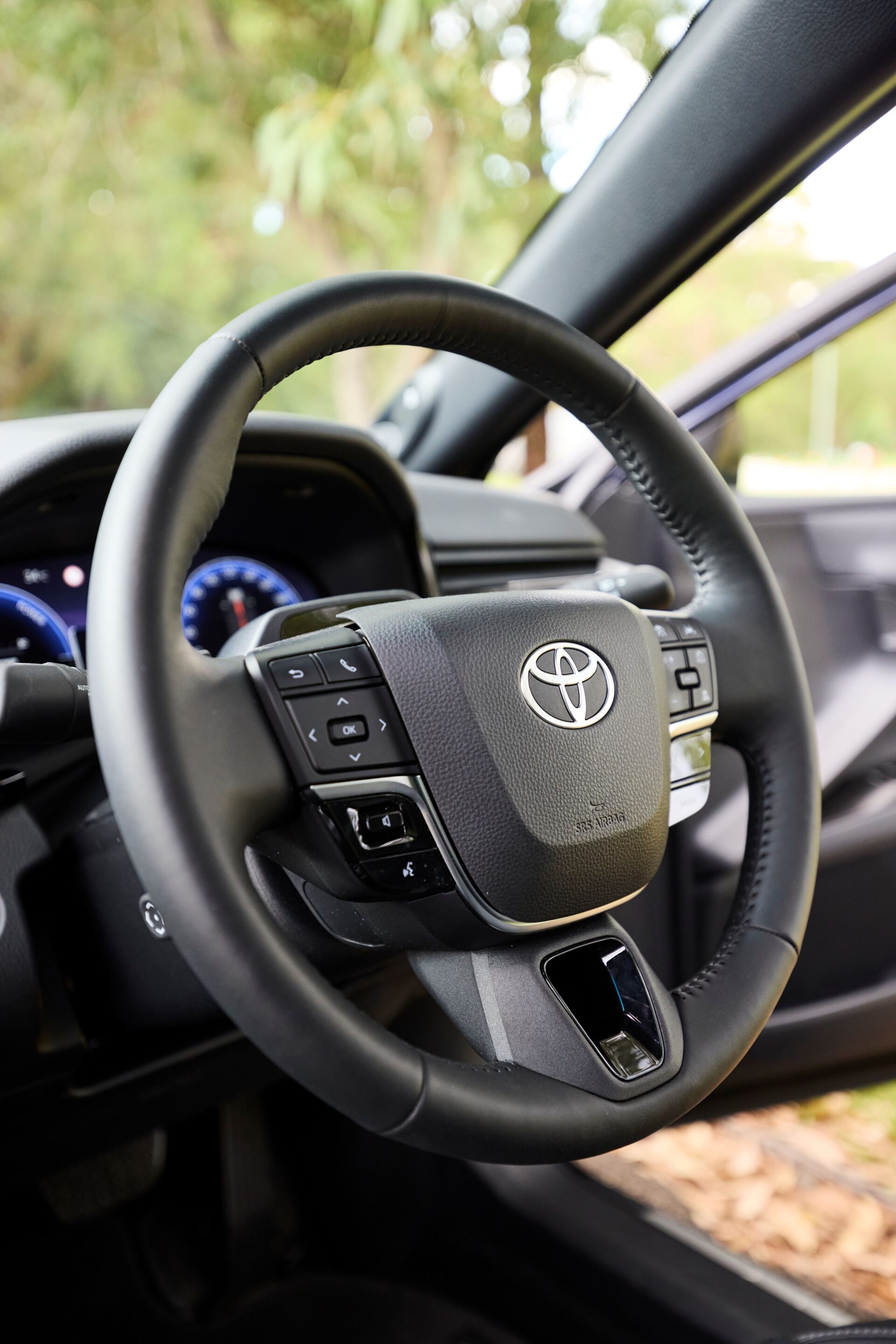
And you don’t have to look too far to find the hard, scratchy plastics of its entry-level Ascent stablemate, clearly visible lower down on the dash and the door cards.
Toyota has upped its infotainment game, certainly in how the 12.3-inch touchscreen presents with a clear display and sharp graphics. Toyota has always felt a step behind in the in-car technology game, but the system in this top-spec Camry is in keeping with the times. Wireless smartphone mirroring is standard, no matter your flavour of operating system, as is a wireless charging pad. I used wireless CarPlay over my time with the Camry and experienced zero issues, the connection stable and quick to reconnect at start-up.
The Accord’s 12.3-inch touchscreen sprouts from the dashtop like a chrysalis, unlike the Toyota’s which is integrated into the design. It too offers wireless smartphone connectivity, which proved flawless over my time with the Accord, easy to initially connect, with rapid-fire reconnection on start-up, and then stable throughout.
The Accord’s 12-speaker Bose sound system clearly edges the Camry’s nine-speaker unit, with richer sound and a clarity the Toyota’s JBL unit simply can’t match. Some could argue sound quality isn’t front and centre in the decision making process when buying cars of this ilk, but I’d argue if you’re spending 60 grand and over, you should expect a decent audio set-up.
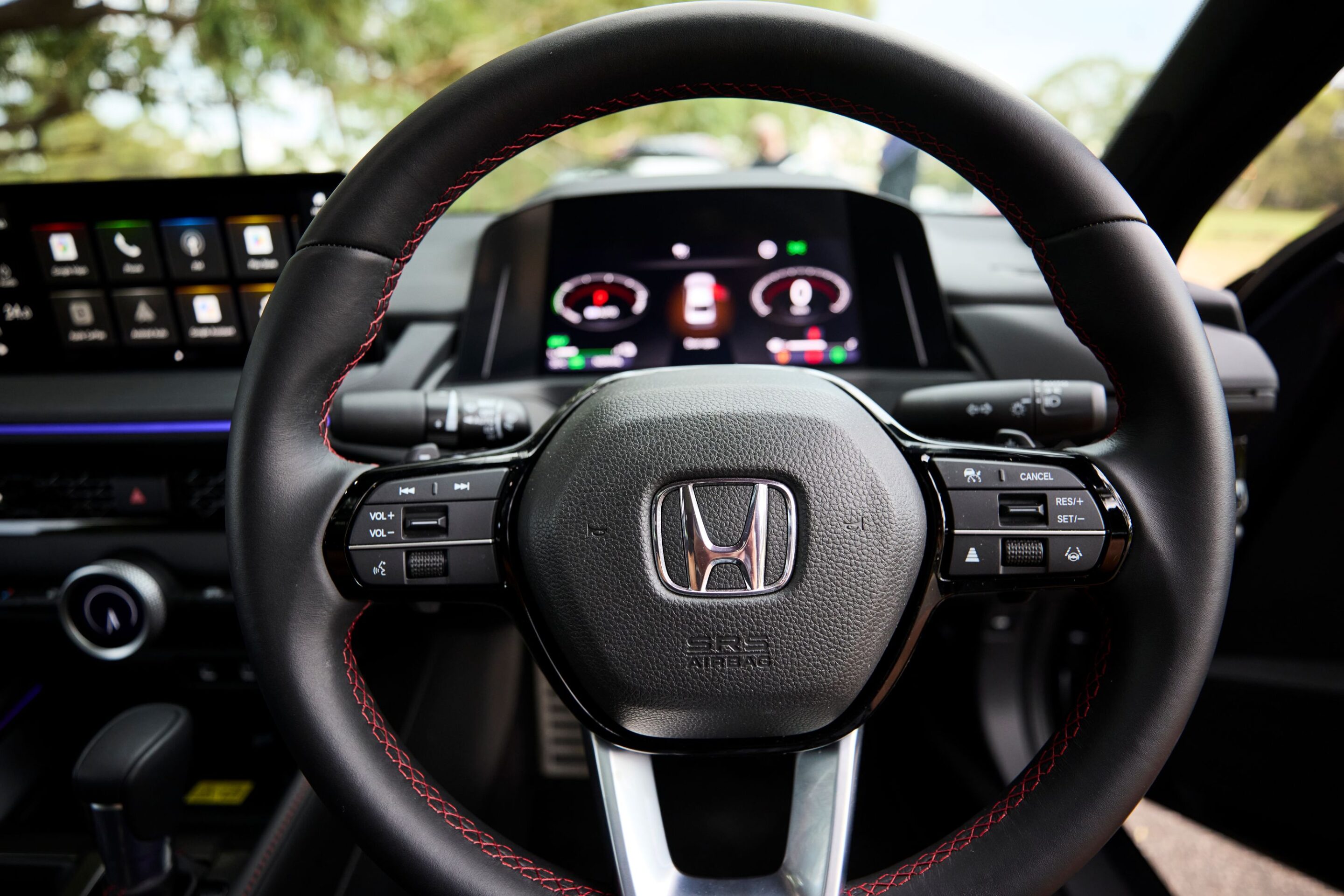
Second row comfort is also important in this segment. After all, is a family sedan really a family sedan if back seat passengers can’t enjoy even a modicum of comfort?
Both Camry and Accord offer plenty of space, certainly in terms of toe, knee and leg room. But the presence of panoramic sunroofs in both cars does impact on headroom, especially in the second row where taller passengers will find the tops of their heads nudging the ceiling. Similarly, both second rows feature a tall transmission tunnel, meaning anyone sent to middle-seat purgatory will find their feet straddling the divide.
There’s not much in it when it comes to luggage space, the Accord’s 570 litres edging the Camry’s 524 litres. Both offer unquoted increased cargo capacity thanks to seats that stow away. But where the Camry’s fold in the more common 60:40 fashion, allowing for greater flexibility in terms of luggage and passengers, the Honda’s back seat rest flips forward in a single piece. You can carry more luggage if you need to, but you’re limited to just two people on board. And an extra point to Toyota for equipping the Camry with a space-save spare wheel and tyre, not a given in these modern times and illustrated only too starkly by the Accord’s tyre repair kit.
Both cars tested here are brimming with modern safety tech, although only one has been assessed by Australia’s independent safety body, ANCAP. In short, the Camry wears a five-star safety score while the Accord remains untested. That doesn’t make the Accord an unsafe car, far from it, with this new-generation scoring a five-star JNCAP (Japanese New Car Assessment Program) rating at launch.
So far, so even, bar a smattering of minor differences amounting to not much more than splitting hairs. The real measure then, comes on the road.
And here the Accord takes some confident steps, with a driving experience that’s best described as exuberant. There’s no lack of shove under harder acceleration when the electric motor and petrol
engine work in tandem to move the circa 1609kg (kerb) sedan at a brisk pace, almost like it wants to be a performance car. Almost.
In urban environments, the Honda’s hybrid powertrain does what hybrids do, blending the near-silent – and emissions-free – running of the electric motor, assisted by the 2.0-litre petrol engine as needed.
Four drive modes – econ, normal, sport and individual – noticeably alter the characteristics of the petrol-hybrid system. Econ – for economy – dulls throttle response and turns climate control down a notch in the hunt for fuel savings while sport brings a sense of urgency to the Accord’s acceleration while also piping some muted, but artificial, engine sounds into the cabin. Needless to say, the middle ground, i.e. normal mode, is where you want to be, which brings a quietude and refinement to the driving experience.
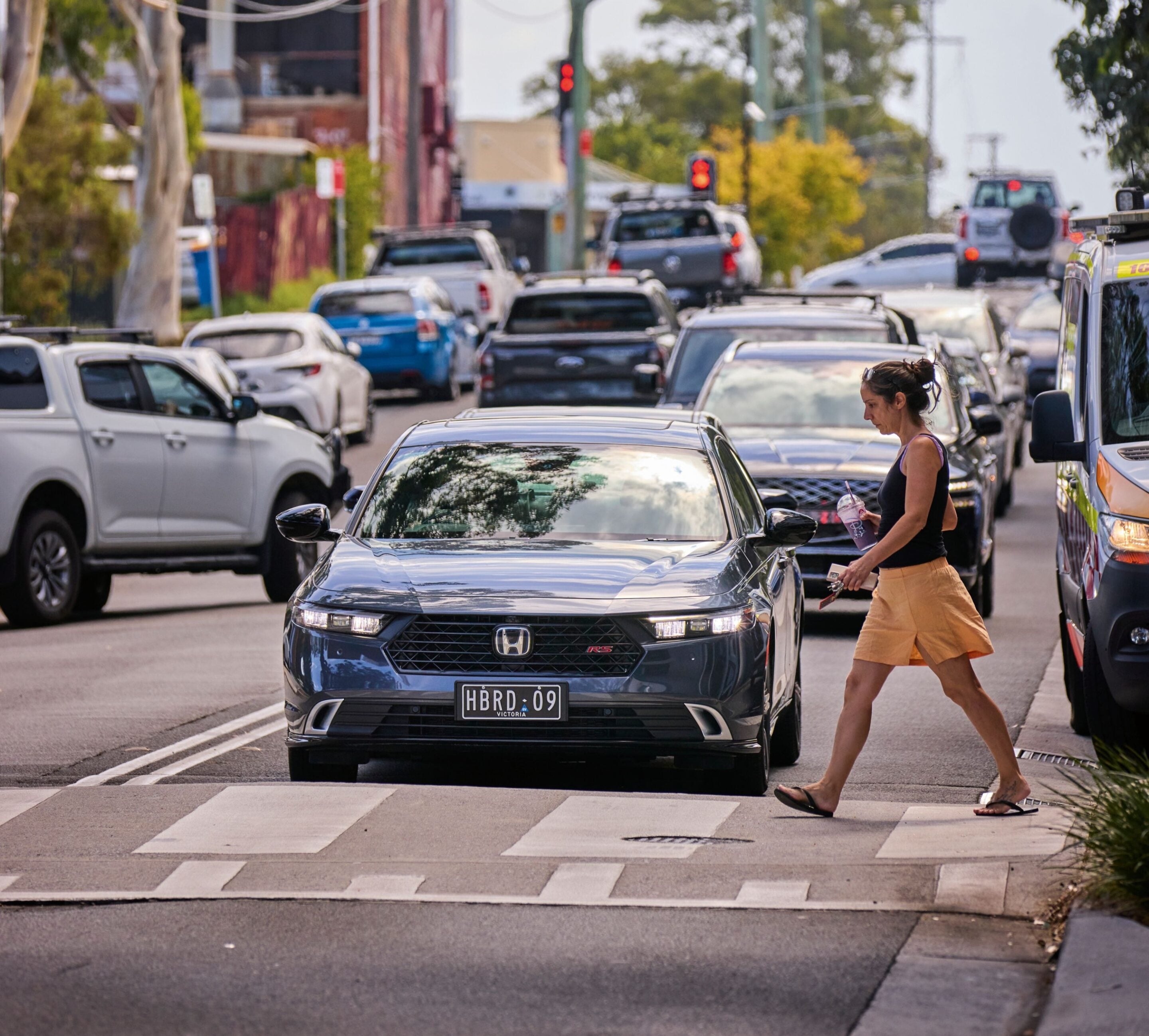
The transition between the two sources of power is seamless, so seamless that it’s sometimes difficult to discern when the petrol engine is doing the hard yards. A small illuminated ‘EV’ on the digital driver display lets you know you’re driving on electrons alone.
The continuously variable transmission is excellent, not something I would have said not all that long ago. But technology and refinement moves at an astonishing pace and Honda’s latest CVT does a commendable job of rifling through the steps, especially under harder acceleration, mimicking a conventional torque converter auto. Don’t be fooled by the paddle shifters on the steering wheel – they’re for toggling through the various energy regeneration modes, six settings in all, that help keep a permanent state of charge in the battery to keep the electric motor humming as often as possible.
Being a Honda, and especially one wearing an ‘RS’ badge, brings with it some expectations. Honda has, over the years, built a solid reputation for engineering a modicum of driver enjoyment into its cars. The Accord doesn’t stray too far from that philosophy with a nicely balanced chassis that’s simply fun to drive. Sure, it won’t make you feel like Fernando Alonso (and in the current F1 pecking order, that’s no bad thing), but there’s an inherent solidity to the way the Accord comports itself on some twisting and winding roads.
That’s enhanced by nicely-weighted and accurate steering while brake pedal feel remains top-notch, as it has done in Hondas of all colours, both new and old.
Ride comfort is decent, although there can be moments of harshness and jitteriness while navigating larger road imperfections, but for the main part, the Accord offers a pleasing balance of just-enough dynamism with road comfort.
But if the Accord is a family sedan for families who love driving, then the Camry, even in this highly-specified top-of-the-range form, holds no such pretensions. Instead, think of the Camry as the sensible choice. That’s not a barb. The Japanese brand knows its customer, and knows what they want from a Toyota-built car. And the Camry delivers it in spades.
There’s not much to say about the Camry’s hybrid set-up other than after almost 30 years of development and innovation, Toyota’s ‘High Synergy Drive’ is still the standard bearer, seamlessly blending petrol propulsion and electric motivation in a way few have been able to replicate.
Like it is in the Honda, Toyota’s system prioritises fuel efficiency, with the Camry relying on the electric motor and battery as often as possible. This is keenly felt during urban driving where the 2.5-litre petrol rarely feels the need to interrupt the flow of electrons to the front wheels. And when it does, it does so seamlessly and quietly, and like in the Honda, leaving you wondering whether it’s doing any work at all.
With total system outputs of 170kW, the Camry can, and does, get up and hustle when it needs to, like merging onto a motorway or accelerating for an overtake. But as good as the Camry is, it lacks that last per cent of refinement that the Accord has in spades.
Toyota’s CVT isn’t as refined as Honda’s and that’s most noticeable when you put your foot down, with that tell-tale drone (for not much reward) that only a CVT under load can seem to muster.
Of course, that’s all mitigated by its exemplary demeanour during regular driving, where a quiet comfort comes to the fore.
Without any pretensions of the Camry being a driver’s car, Toyota has ensured the suspension leans towards comfort. That’s noticeable over obstacles such as speed humps which the Camry traverses with more finesse than the Accord. Its noise suppression is also just a fraction better than the Honda’s, the Camry in this spec isolating occupants from much of the outside world, with only minimal wind noise and road noise. It’s still there, of course (no car is completely silent), but it’s not as intrusive as it is in the Honda.
The trade-off comes on the same winding rural back road, where Camry falls just a little short of Honda’s ‘sporty’ DNA, its softer-sprung suspension setup feeling just a little ponderous compared with the Accord’s slightly firmer and more assured stance.
Still, there’s little to split the pair so far, with the Camry trumping the Accord on value, but the Accord besting its rival in cabin quality and the overall driving experience.
So how do they stack up as the one thing they’re both designed to do – fuel economy.
Here, the differences are again minimal. Toyota claims the Camry and its robust hybrid system will use 4.0L/100km no matter the driving conditions – urban, highway or combined.
Our week with the Camry flagship couldn’t get anywhere near that claim, settling on an indicated 5.6L/100km over the full smorgasbord of driving conditions – suburban school runs, extended highway kays and even some more adventurous driving on our favourite section of rural back roads.
That indicated fuel use stacks up against our many previous experiences with Camry where consumption figures from the low- to mid-5s is the norm. And it’s worth noting the Camry requires 95-octane premium unleaded for its 50-litre tank. Based on our real world numbers, expect a full tank to net you around 892km between refills.
Honda’s claims aren’t as ambitious, the Japanese manufacturer quoting 4.3L/100km on the combined cycle (a blend of urban and highway… everyday driving in other words); 5.4L/100km for pure highway driving and a miserly 2.4L/100km in urban traffic. Again, our week with the Accord, covering the exact same ground as we did in the Camry, didn’t match those claims, settling on 5.5L/100km. We did note an indicated 3.9L/100km after a long highway run, but that soon climbed into the 4s and then 5s before settling on 5.5L after a week.
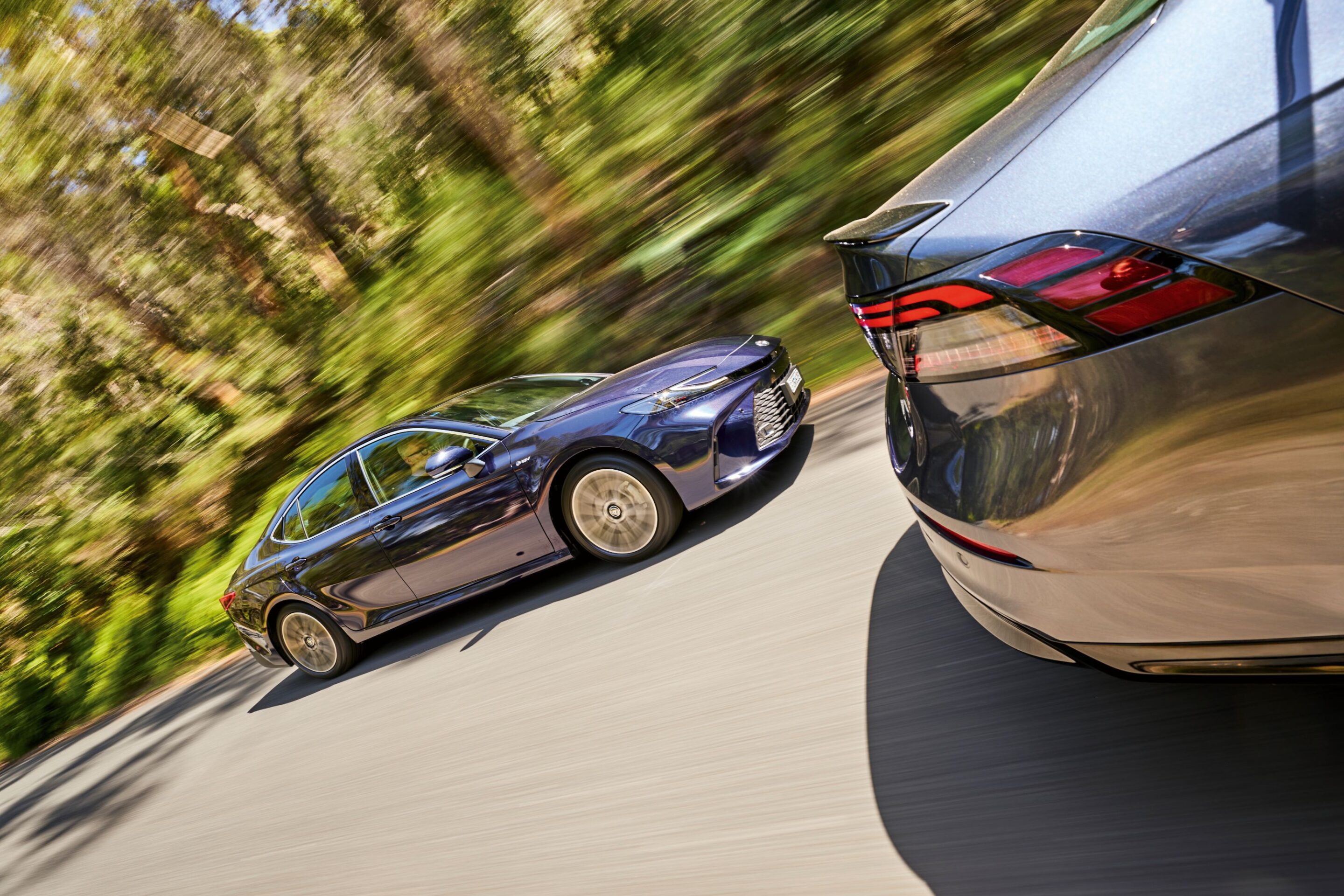
The bonus here for the Accord is that it’s quite happy to sip 91-octane regular unleaded, saving you money at the bowser, something increasingly important in these fuel-starved times we currently find ourselves in. Based on our real world testing, expect to get around 872km of range from the Accord’s 48-litre tank.
So slightly cheaper running costs for the Accord, then, but what about servicing? Surely Toyota’s famously industry-leading capped-price servicing will put one over Honda? Let’s run the numbers.
Toyota asks that Camry return to the workshop every 12 months or 15,000km. That’s pretty standard in today’s automotive landscape. Each visit is capped at $275 a pop for the first five years or 75,000km, not only affordable in the scheme of things, but also loaded with peace of mind.
Honda’s switch to a fixed-price agency model for selling its cars has extended to ongoing maintenance where the Accord asks for just $199 per visit for the first five years or 50,000km of scheduled servicing, more affordable than Toyota, but with the caveat that if you regularly drive more than 10,000km annually, you’ll be visiting the workshop more often than you would in a Camry. Both the Honda and Toyota are covered by their respective manufacturer’s five-year/unlimited kilometre warranty.
So, on to the winner. There’s not much between this pair, other than the circa $5000 asking price in favour of the Toyota. That matters to family buyers, especially in these chastened times. But it’s also not as simple as that.
Sitting inside the Accord it’s easy to see where the extra five grand has been spent, with a classier, more refined cabin that sits above the Camry’s which, while nice, still has traces of its Uber-spec entry-level sibling on display.
The Accord’s slightly better fuel consumption and the fact it can drink regular unleaded against the Camry’s thirst for the pricier premium also works in its favour.
But the clincher comes in the driving where the Accord is quite simply, a more exciting car to drive. Sure, it’s no sports sedan, but there’s enough engineering built into the Honda to elevate it above the Toyota, satisfying those of us who enjoy a decent blast on occasions.
The reality is though, these are both fantastic family cars, generously equipped, with miserly fuel economy, spacious second rows, big boots and affordable ongoing maintenance costs. There really isn’t a loser here, but if I could have only one, it’s the Honda Accord for me.
| Model | Toyota Camry SL |
|---|---|
| Price | $53,990 plus on-road costs (circa $60k driveaway) |
| Engine | 2.5-litre naturally-aspirated four-cylinder petrol-hybrid, FWD |
| Peak power | 170kw @ 6000rpm |
| Peak torque | 221Nm @ 3600-5200rpm |
| Transmission | Continuously variable auto |
| L/W/H/WB | 4920/1840/1445/2825mm |
| Kerb weight | 1625kg (kerb) |
| Fuel consumption | 4.0L/100km (claimed) 5.6L/100km (tested) |
| Boot size | 524L |
| 0-100km/h | N/A |
| Warranty | 5 years/unlimited km |
| Servicing | 12 months/15,000km |
| Servicing costs | $1375 five years/75,000km |
| Overall rating | 7.9 |
| Model | Honda Accord e:HEV RS |
|---|---|
| Price | $64,990 driveaway |
| Engine | 2.0-litre naturally-aspirated four-cylinder petrol-hybrid, FWD |
| Peak power | 152kW @ 5000-8000rpm |
| Peak torque | 335Nm @ 2000rpm |
| Transmission | Continuously variable auto |
| L/W/H/WB | 4975/1862/1449/2830mm |
| Kerb weight | 1609kg |
| Fuel consumption | 4.3L/100km (claimed) 5.5L/100km (tested) |
| Boot size | 570L |
| 0-100km/h | N/A |
| Warranty | 5 years/unlimited km |
| Servicing | 12 months/10,000km |
| Servicing costs | $995 five years/50,000km |
| Overall rating | 8 |
This story first appeared in the April 2026 issue of Wheels magazine, now on sale. Subscribe here and gain access to 12 issues for $109 plus online access to every Wheels issue since 1953.
Wheels has received multiple inquiries from readers over the past six months asking about plug-in hybrid (PHEV) technology, how it works, whether it’s as efficient as the manufacturers’ claims, and whether it’s technology buyers should consider before signing on the dotted line.
In particular, the litres per 100km figure that is often quoted, doesn’t always make sense, certainly not in the traditional way that we’ve read those claims. It’s worth remembering fuel consumption tests exist only to compare one vehicle to another under the exact same laboratory conditions. It’s why cars very rarely come close to matching the claim in the real world.
Chery’s Super Hybrid system is one we’ve been asked about more than once, specifically, with impressive range claims attracting people to technology they might not have otherwise considered.
Right off the bat, I can tell you this. Last year, I got behind the wheel of a Jaecoo J7 (a Chery brand) in Cape Town, South Africa, and driving to normal traffic conditions, at the posted speed limit, on roads very similar to ours here in Australia, covered 1170km.
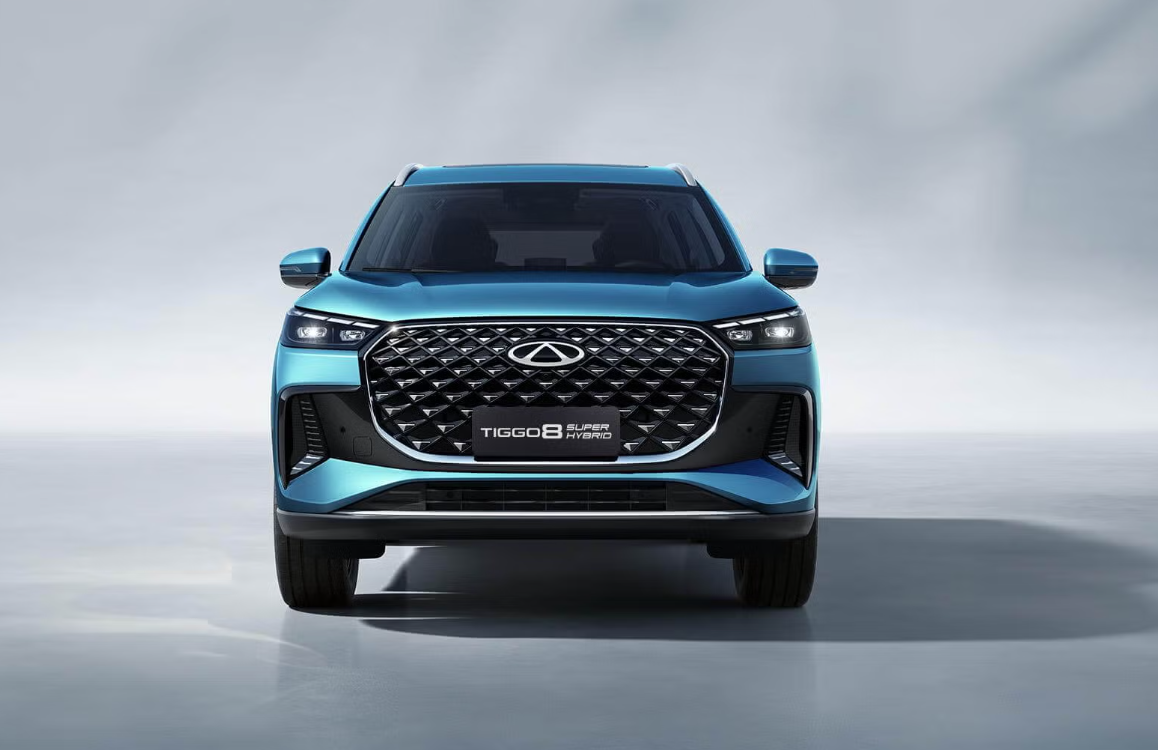
The tank was sealed, it wasn’t plugged in to charge at any point over the drive, and after we arrived at the airport in Port Elizabeth, the J7 had to travel another 50km back to the transport base, cracking the 1200km range, thus delivering on the claim.
Over the 1200km that equated to a 5.2L/100km real-world consumption, over and above the fact that your daily commute would be covered by the 90km electric-only claim.
And with most PHEVs now offering 90km or more in pure-EV range, Aussies are starting to see the value in technology that was previously maligned.
The J7 is very similar in proportion to a RAV4, with medium SUVs one of the sweet-spot segments in the Australian new car market. And we know that a RAV4 will average mid 5L/100km figures around town every day of the week.
As we’ve seen with other advancements in pure-electric technology, China’s manufacturers are leading the charge with PHEV technology as well. The sheer volume available to them, and the depth of engineering investment, means manufacturers in China can bring technology to market faster, and in ways other automakers can’t match.
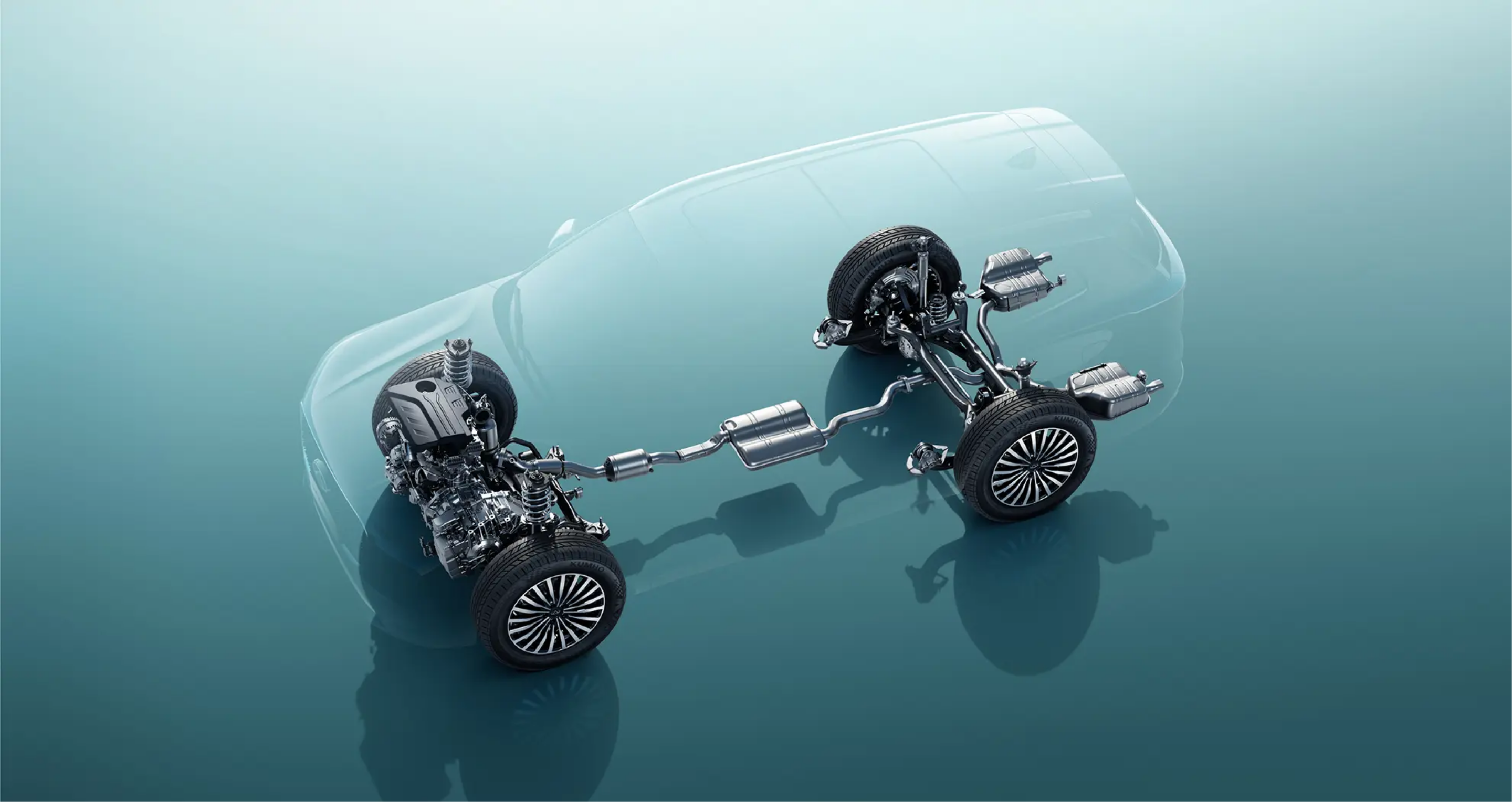
Wheels recently spoke to Chery’s Executive Director of Engineering, Peter Matkin, to find out why the carmaker has taken the path it has.
Early PHEV systems were significantly less nuanced than the Chery system we’re looking at here. A fully-charged battery drove the vehicle for however long it could, then when it was depleted, the petrol engine kicked in, and had to drag a largely-ineffective electric powertrain around that wasn’t doing anything. It meant that real-world fuel consumption figures were significantly higher than a more conventional closed-loop hybrid that was efficient all the time. Further, it was easy to deride a system that claimed 50km – or less – of pure-EV range as nothing more than a sideshow.
In designing not only its own engine and electrical system, but also a dedicated transmission, Chery is honing in not just on driveability, but also efficiency, whether you have a fully charged battery pack or not. According to Matkin, in-house development is the key.
Chery has designed its own hybrid-specific transmission, rather than look to an external supplier, and Matkin says that is one of the keys to achieving the end result the brand is looking for.
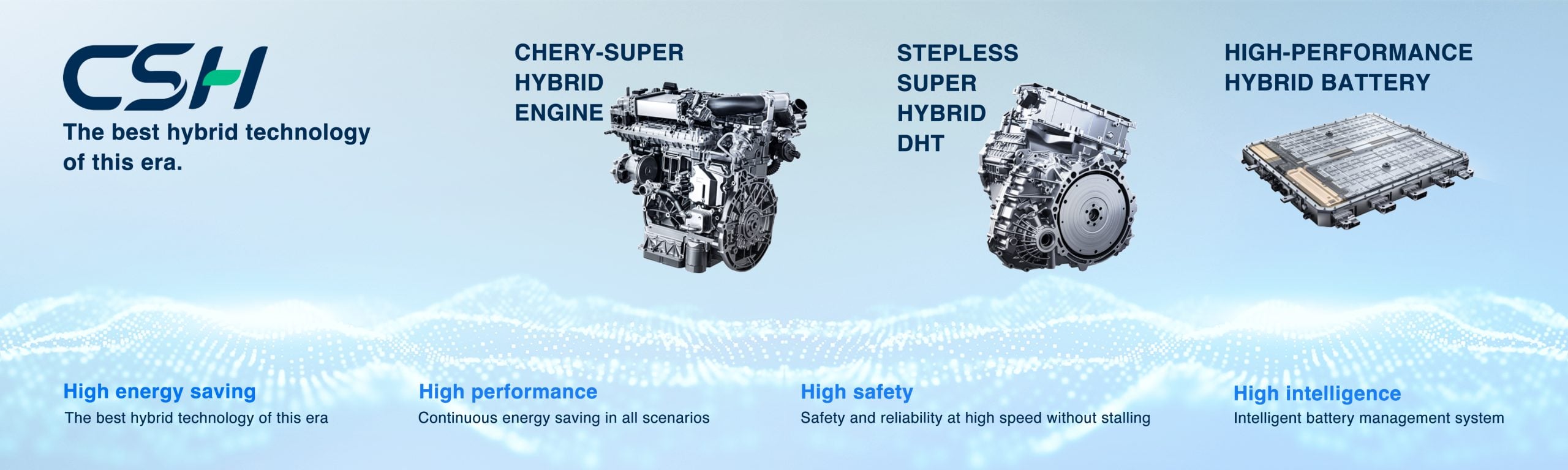
“The way we’ve engineered the transmission, and the way we’ve built the brain to control it, gives us the freedom to get exactly what we want out of it, rather than be told, ‘this is what you’re getting’,” says Matkin.
“There are some components and technologies where if you’re an expert, we will hire you to come in-house, but critical systems like the engine and transmission, we do in-house ourselves. Because when you’re trying to integrate these critical systems,
it’s not so easy when you’re working with a third party.
“As long as you have the volume, it’s easier to do yourself and I think if we had gone to a company and asked for the transmission to work the way we’ve got it working, they would have said, ‘no, we don’t do it like that’.”
Where a conventional PHEV relies on regular charging up to 100 per cent to deliver its best performance, Chery’s take on the fuel-saving technology via its Super Hybrid system will keep a minimum level of battery charge at all times.
That means the drivetrain can deliver consistent performance across varied driving conditions. Crucially, even if you never plug in Chery’s PHEV, as some owners confess they don’t, the system still operates efficiently.
Using the Tiggo 8 Super Hybrid as an example, Chery claims up to 90km electric range, thanks to its 18.4kW/h battery pack, which feeds power into a 150kW/310Nm electric motor. Then there’s a 1.5-litre, four-cylinder, direct injection petrol engine, with class-leading thermal efficiency and an electronically-controlled turbocharger.
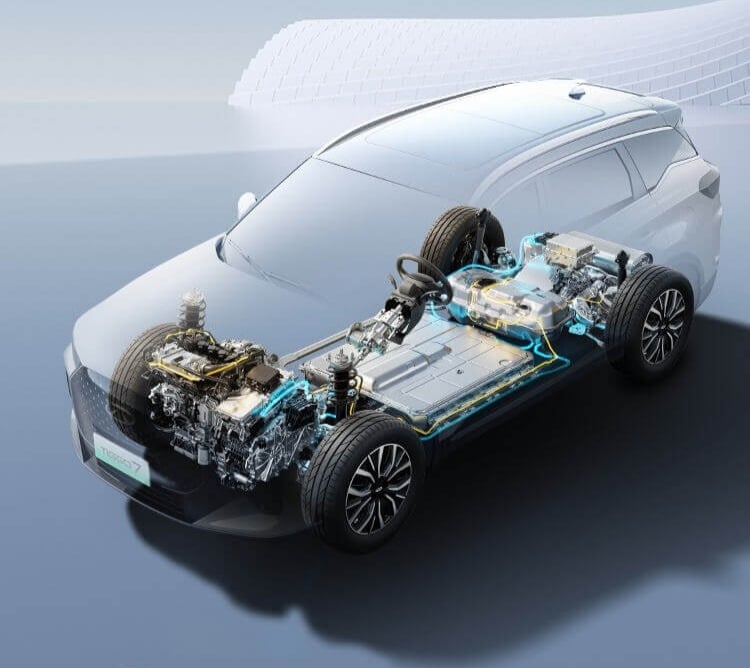
Matkin says ensuring the engine can breathe to its optimum, maximising the combustion value, and squeezing every last bit of energy out of every drop of fuel is key.
Crucially, the engine has been designed – and the clever control system tailored – to work with a PHEV powertrain from the outset. The control unit ensures the battery never dips below 20 per cent state of charge, meaning there’s always electric power in reserve. The concept of engine as generator isn’t new of course, but Chery has refined the way the system works to deliver significantly better all-road efficiency in real-world driving.
“The way we’ve engineered this hybrid system, you still get the benefits of electricity because you’re still charging the battery while you’re driving and the powertrain has the option to either drive the wheels or charge the battery,” Matkin tells Wheels. “It’s not like some of the early hybrid systems where you used all your electric power and once it’s gone, it’s gone.
“Then you’re just lugging this battery around, that is doing nothing.”
Subtlety was always going to come to the workings of a PHEV system, but the changes have been swift, with Chery adamant that all-round efficiency is as important – if not more important – than the initial electric-only range.
“This system is absolutely a little different to what a lot of other established OEMs have done,” says Matkin. “We’ve kept this capability to have some electrical support, and you’ve also got the Atkinson cycle combustion engine support. Battery management is quite critical, and the brains of how you control the system, how to protect it from heat, the cell technology of the battery, for example. So it is a little bit of everything, but the efficiency of the internal combustion engine is the heart of it.”
With a long history in automotive and much of it spent at companies like Jaguar/Land Rover, Matkin is well-placed to dissect the inertia that comes with ‘we do it this way’ engineering. And after more than a decade working in China, his message is clear. The might of manufacturing and the will to succeed with a new way of thinking is a reality.
Thermal efficiency is one example, with Chery approaching 50 per cent efficiency, something previously the domain of F1 level technology.
“Well, there’s still 50 per cent to go,” Matkin says. “From an engineering point of view, we’re already thinking, what can we do to make this work better? Can we get there or not? I don’t know. But we’re going to aim for it.”
This story first appeared in the March 2026 issue of Wheels magazine, now on sale. Subscribe here and gain access to 12 issues for $109 plus online access to every Wheels issue since 1953.
Another Middle East conflict has spiked fuel prices around the country and consumers are once again winching at the prospect of filling up theirs vehicle. As such, changing vehicles for a more fuel efficient option is no doubt being considered by many of us. But what if you don’t want to consider an electric or plug-in hybrid option? Can vehicles without those power sources still be fuel efficient? Of course they can. Here are the most fuel efficient plugless vehicles in each segment:
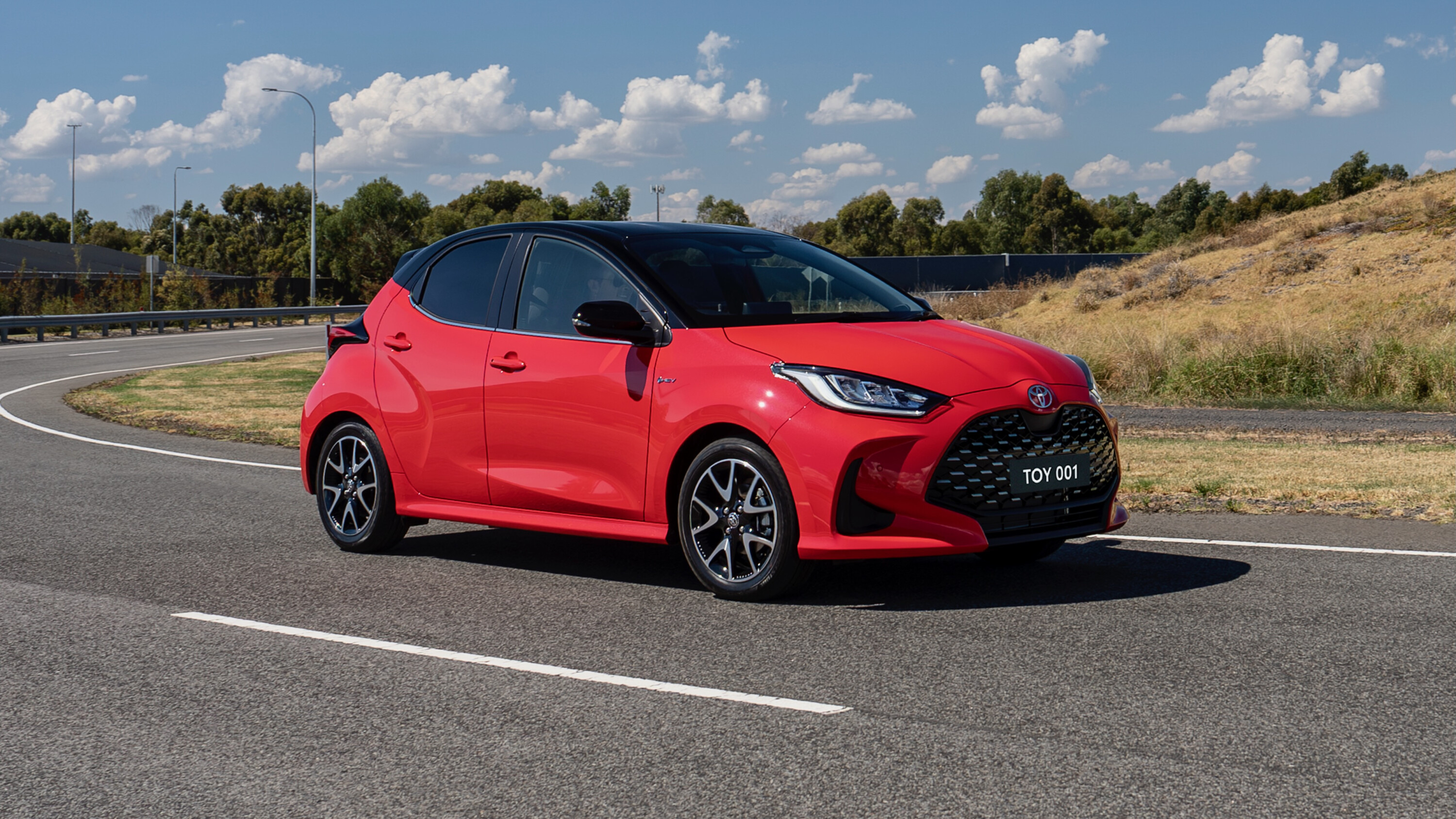
Price: From $28,990 plus on-road costs
Drivetrain: 85kW 1.5-litre hybrid, eCVT, front-wheel drive
Claimed combined fuel consumption: 3.3L/100km
Australia’s most fuel efficient car without a plug is the Toyota Yaris, which is capable of an incredible combined fuel consumption of just 3.3L/100km. That’s thanks to its small size, but also its 85kW 1.5-litre three-cylinder hybrid system, which is very efficient but also surprisingly punchy as well. Pricing for the Yaris starts at $28,990 plus on-road costs, so it’s not the cheapest option, but it is a very efficient one.
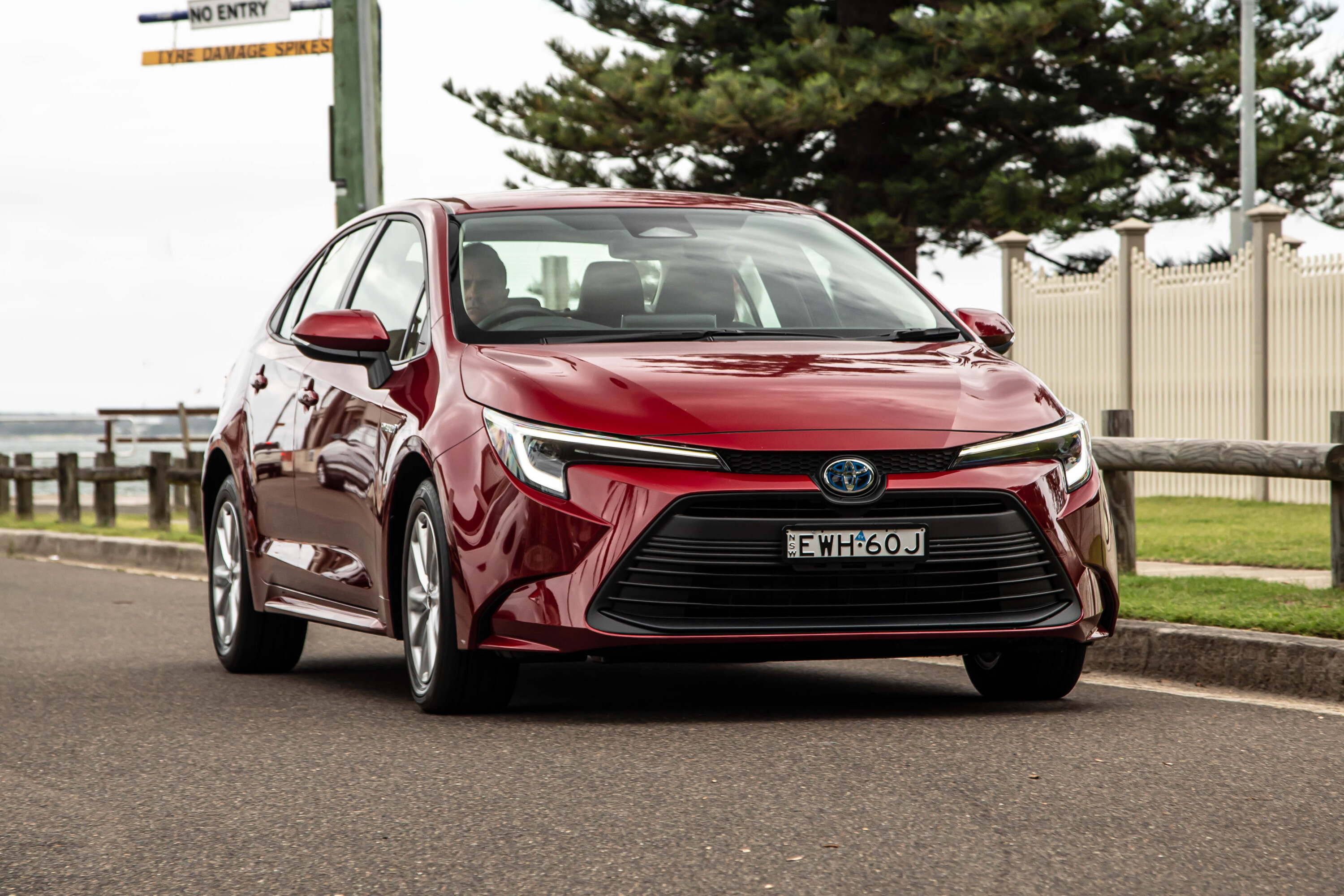
Price: From $32,585 plus on-road costs (Corolla), from $33,250 plus on-road costs (i30)
Drivetrain: 103kW 1.8-litre hybrid, eCVT, front-wheel drive (Corolla), 104kW/265Nm 1.6-litre hybrid, six-speed dual-clutch, front-wheel drive (i30)
Claimed combined fuel consumption: 3.9L/100km
Just above the Yaris in consumption is its larger Corolla sedan sibling, which uses a larger 1.8-litre hybrid system making 103kW of power but using just 3.9L/100km of fuel. Hyundai‘s i30 sedan hybrid uses a slightly smaller 1.6-litre hybrid system with a six-speed dual-clutch transmission making one more kilowatt in total at 104kW. Regardless, both the Corolla sedan and i30 sedan are practical, well equipped and great options to lessen fuel consumption without using a plug.
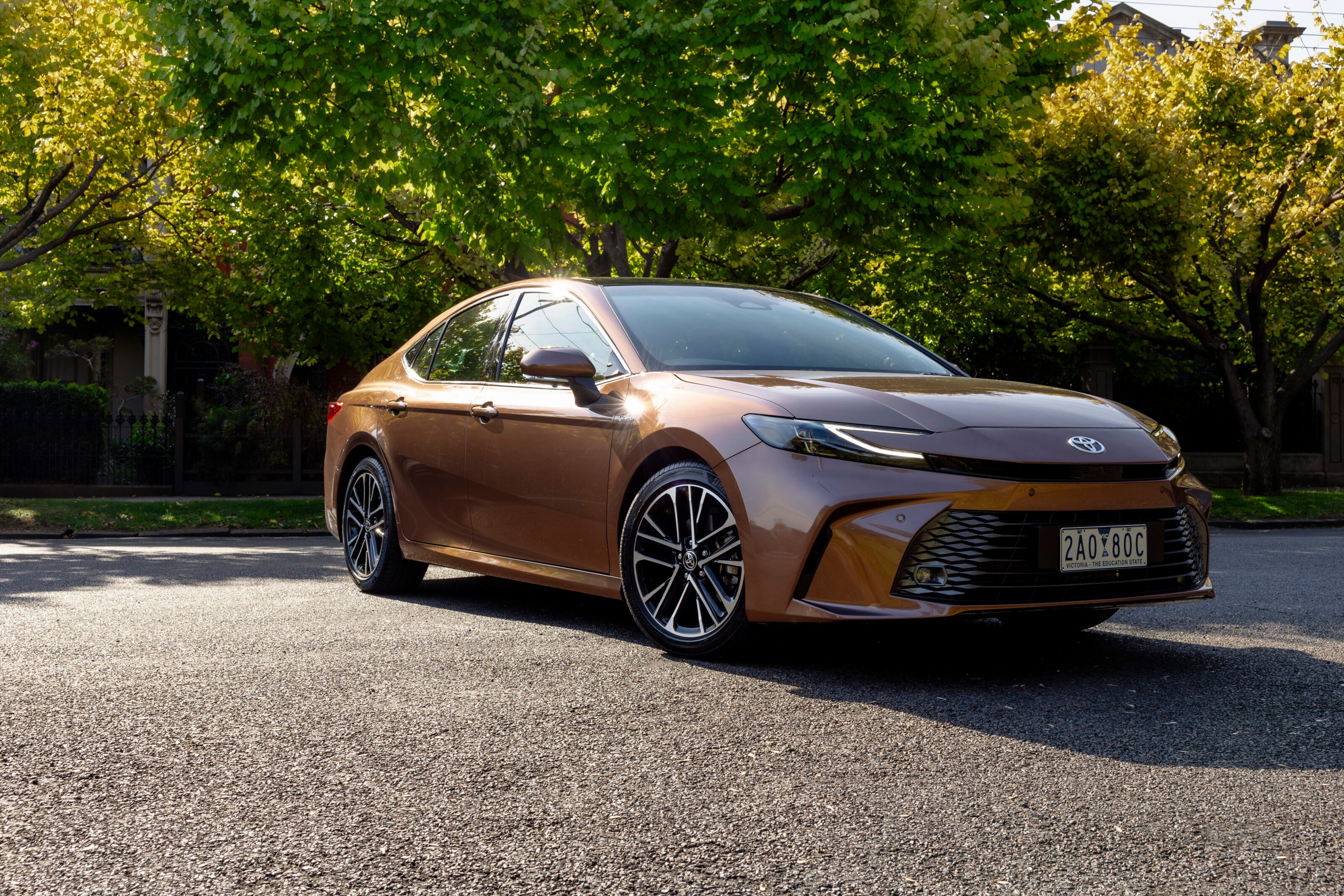
Price: From $39,990 plus on-road costs
Drivetrain: 170kW 2.5-litre hybrid eCVT, front-wheel drive
Claimed combined fuel consumption: 4.0L/100km
Somehow, thanks to Toyota‘s hybrid magic, a big sedan like the Camry can use just 4.0L/100km on the combined cycle. That’s despite featuring a large 2.5-litre engine – obviously combined with a hybrid system in this case – making 170kW and providing ample performance. The Camry is also hugely spacious inside, well equipped and drives quite well too.
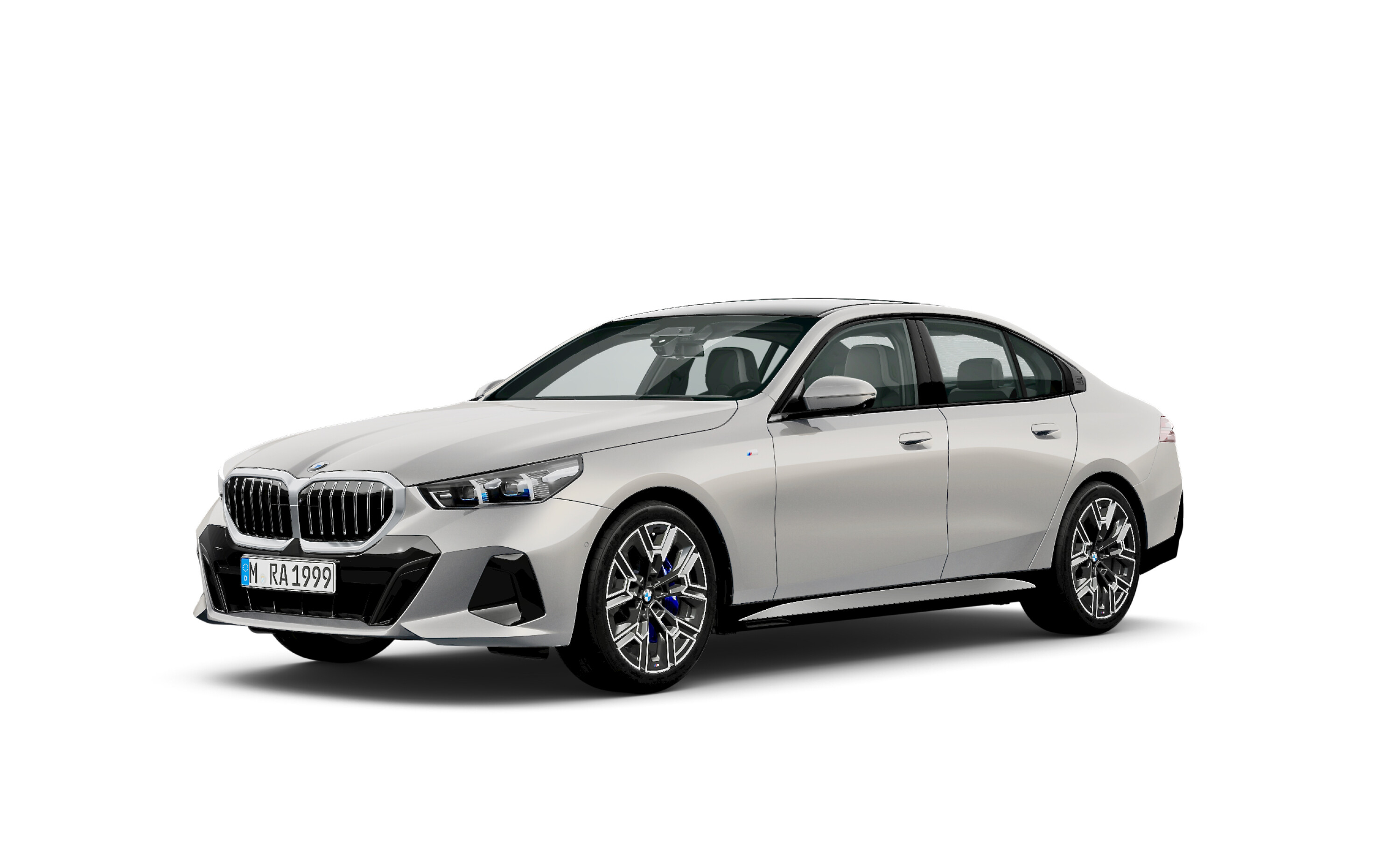
Price: From $136,900 plus on-road costs
Drivetrain: 210kW/700Nm 3.0-litre turbo-diesel, eight-speed auto, all-wheel drive
Claimed combined fuel consumption: 6.5L/100km
If you’re seeking the most fuel efficient large car, the BMW 540d is your choice and oddly enough, the only diesel passenger car on this list. In this case, it’s a lovely 210kW 3.0-litre straight six turbo-diesel, making strong 210kW/700Nm outputs – yet, it’s also capable of a 6.5L/100km combined fuel consumption rating and on highway trips, it’ll use a lot less than that. The only thing that would make it better would be offering a wagon, eh BMW Australia?
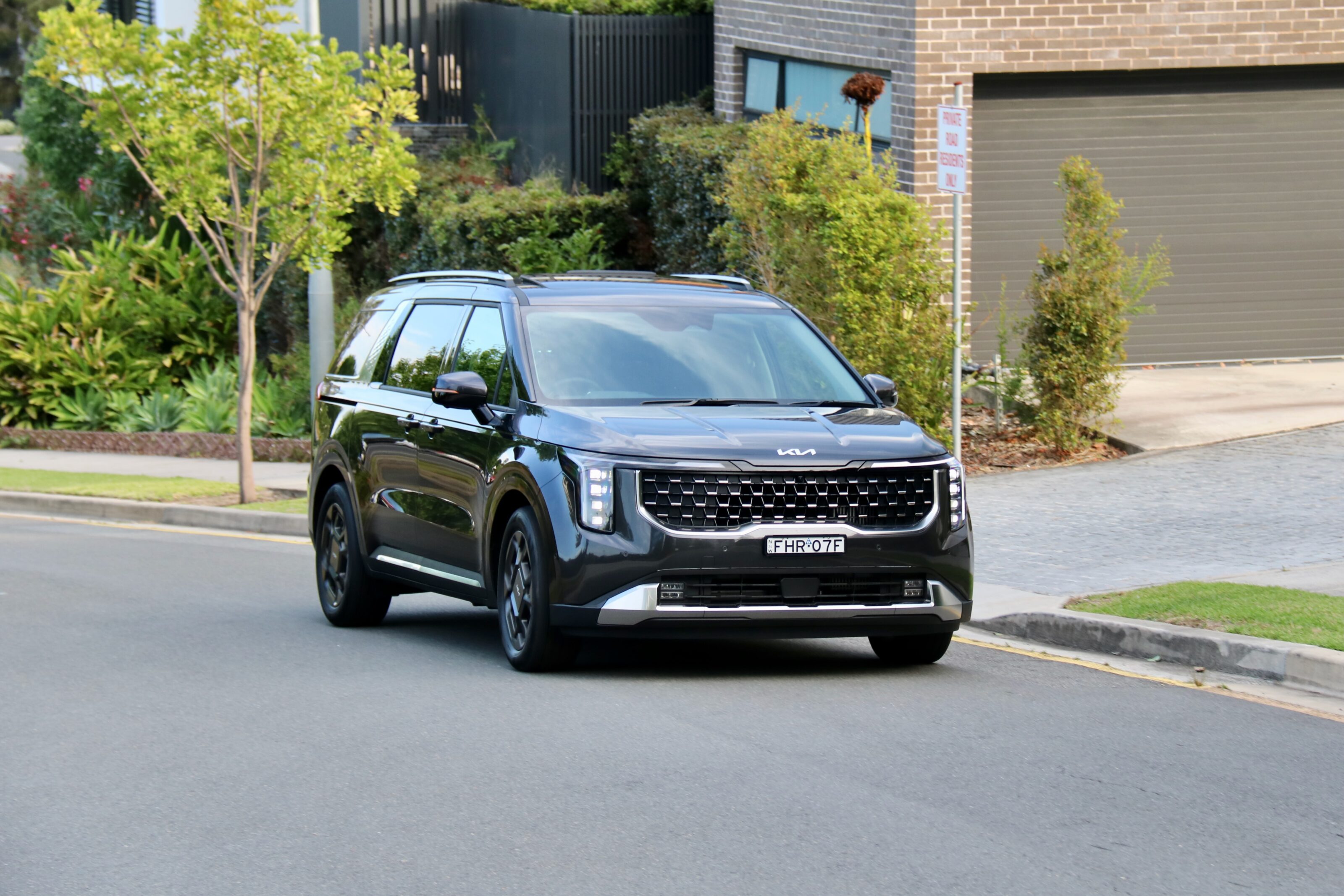
Price: From $56,100 plus on-road costs
Drivetrain: 180kW/366Nm 1.6-litre turbo-hybrid, six-speed auto, front-wheel drive
Claimed combined fuel consumption: 5.8L/100km
The Kia Carnival received Kia‘s punchy hybrid system relatively recently with great results. Using just 5.8L/100km on the combined cycle, it’s easily the most efficient large people mover on the market. That it can carry eight people and their stuff in comfort while providing excellent efficiency is even better. The Carnival also offers an efficient 2.2-litre turbo-diesel option (6.5L/100km), but for those wanting to use their Carnival in mostly urban driving, the hybrid is the way to go.
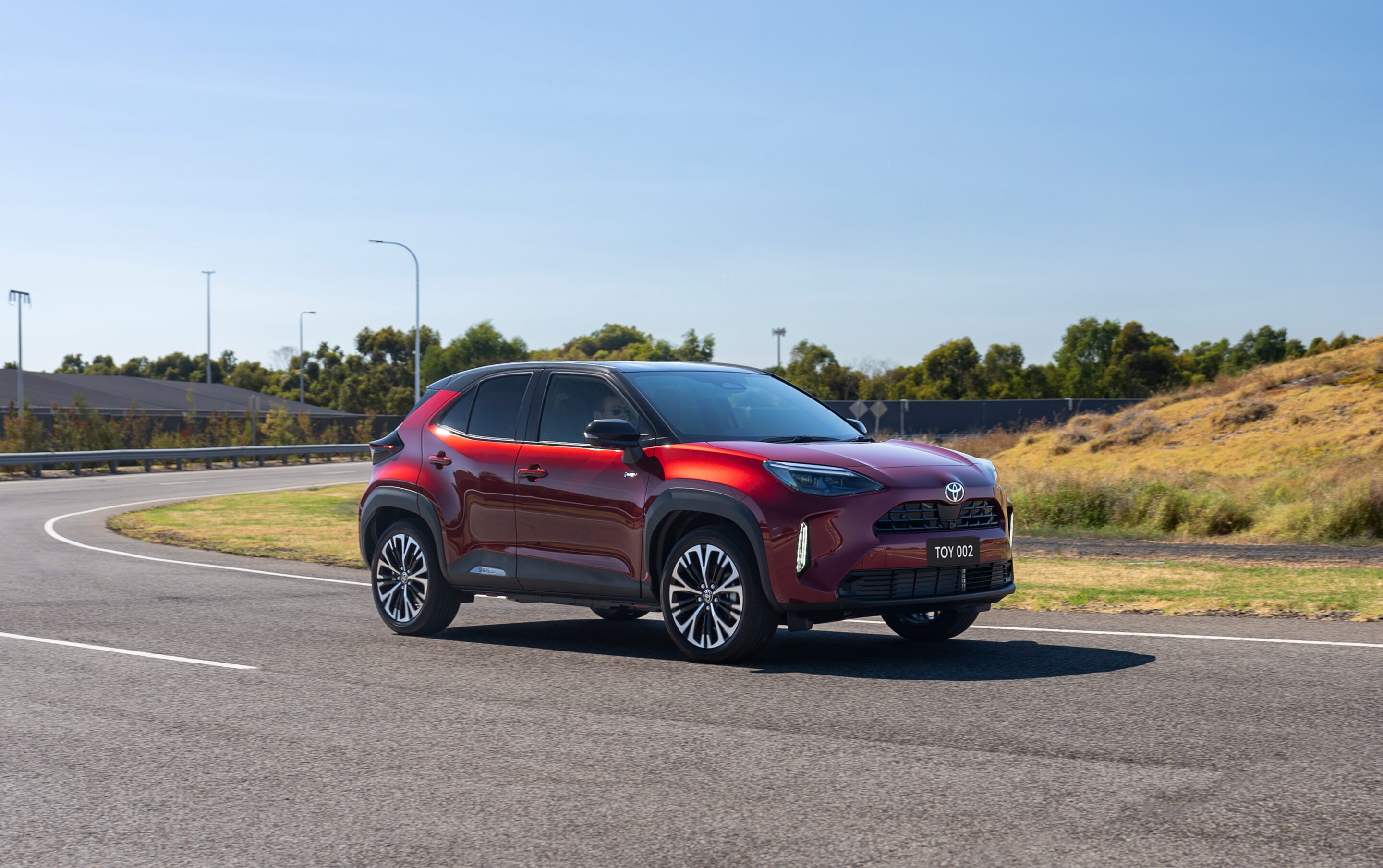
Price: From $31,790 plus on-road costs
Drivetrain: 85kW 1.5-litre hybrid, eCVT, front- or all-wheel drive
Claimed combined fuel consumption: 3.8L/100km
Like its Yaris light hatchback sibling, the most fuel efficient small SUV in Australia is the Toyota Yaris Cross, which is capable of a low 3.8L/100km on the combined cycle. Like the Yaris, it uses a 1.5-litre hybrid drivetrain making a reasonable 85kW of power, while both front- and all-wheel drive drivetrains are available – the latter with a separate electric motor for the rear axle – for those who need the choice. The Yaris Cross is also roomy, drives well and is well equipped, especially with safety features.
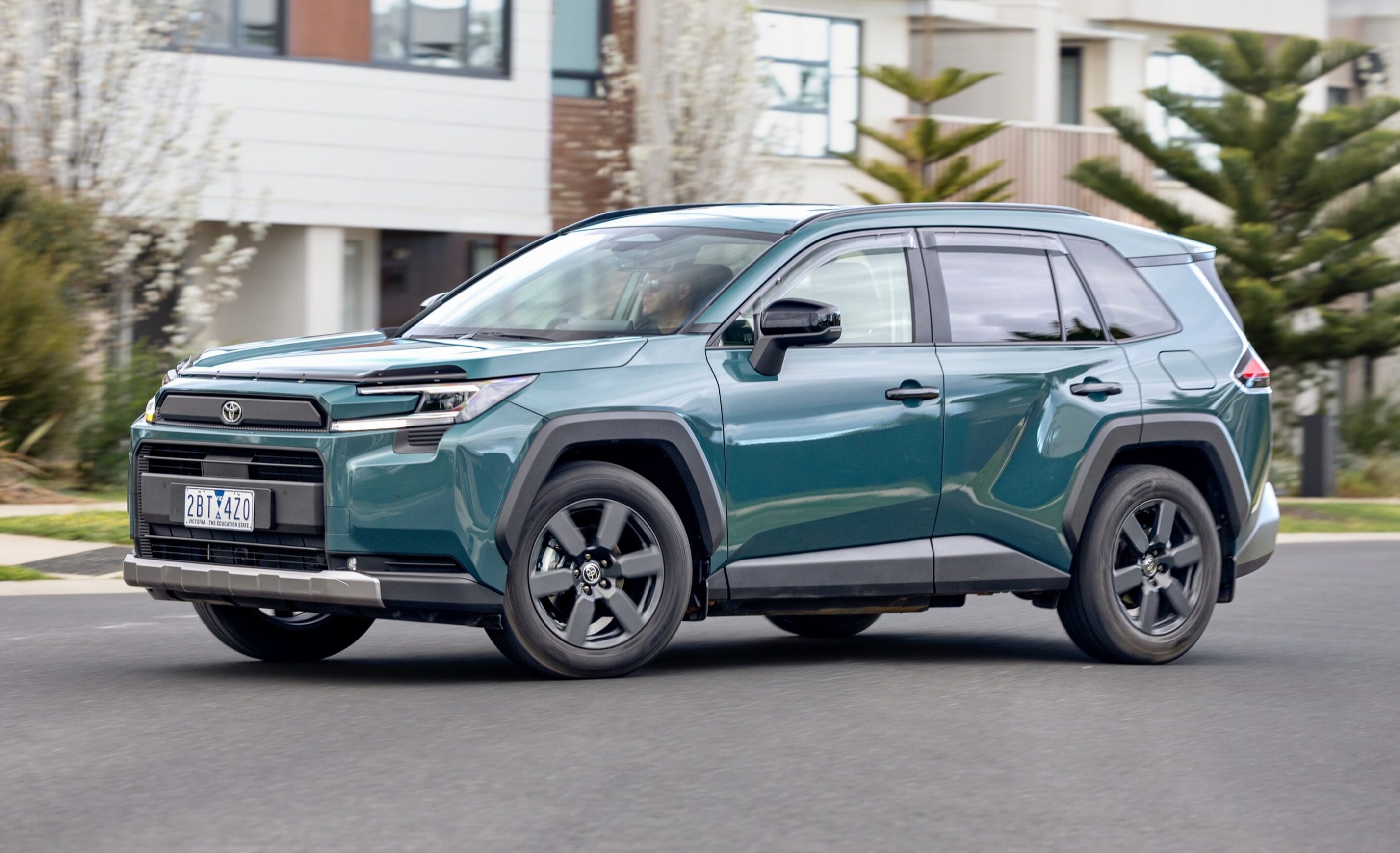
Price: From $45,990 plus on-road costs
Drivetrain: 143kW 2.5-litre hybrid, eCVT, front- or all-wheel drive
Claimed combined fuel consumption: 4.7L/100km (old model, new model expected to be identical or less)
The Toyota RAV4 is the world’s best-selling mid-size SUV and for good reason: While many rivals used to not offer hybrid options – many now do – the RAV4 hybrid was capable of sub-5L/100km fuel use reliably without any trouble. As such, most people bought the hybrid and now it’s the only drivetrain option in the range. The new-generation RAV4 is about to launch and although we don’t know its fuel consumption rating just yet, we’re expecting it to be the same 4.7L/100km as the old model or less.
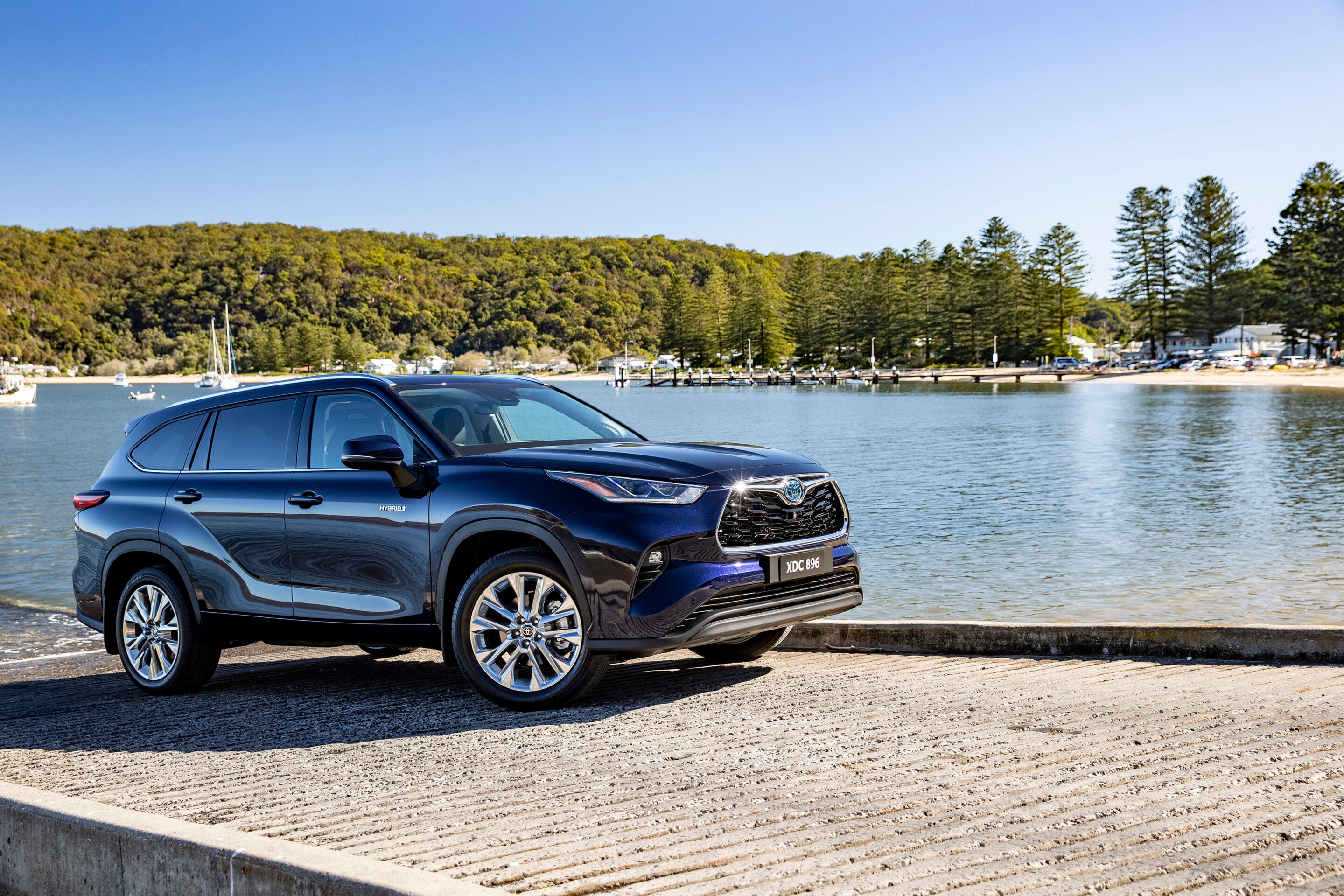
Price: From $62,410 plus on-road costs (Kluger), from $57,650 plus on-road costs (Santa Fe)
Drivetrain: 184kW 2.5-litre hybrid, eCVT, all-wheel drive (Kluger), 172kW/367Nm 1.6-litre turbo-hybrid, six-speed auto, front- or all-wheel drive (Santa Fe)
Claimed combined fuel consumption: 5.6L/100km
You can probably sense a theme here: Toyota is capable of making very fuel efficient cars that don’t need a plug. The Kluger hybrid large SUV is the latest example, capable of just 5.6L/100km on the combined cycle and carrying seven in comfort. But Hyundai has also entered the fray with a very efficient large SUV: The hybrid Santa Fe, which is rated the same as the Kluger on the combined cycle. Both options are comfortable, good to drive and good quality, though the Hyundai is better value.

Price: From $42,640 plus on-road costs
Drivetrain: 135kW/205Nm 2.0-litre petrol, six-speed manual, rear-wheel drive
Claimed combined fuel consumption: 6.8L/100km
The Mazda MX-5 is one of the last pure sports cars on the new car market, and it’s also the most efficient. Rated at 6.8L/100km on the combined cycle, the MX-5 uses a 135kW/205Nm 2.0-litre four-cylinder petrol engine with one of the best six-speed manual gearboxes we’ve ever seen.
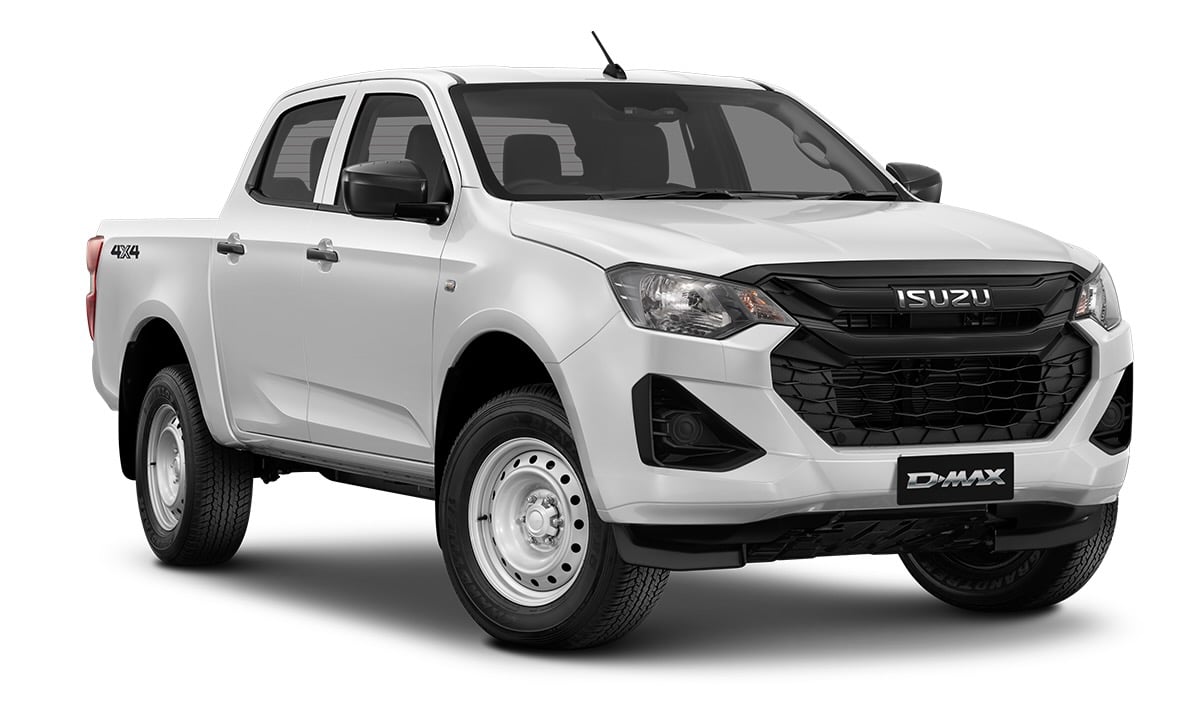
Price: From $52,200 plus on-road costs (D-Max), $55,220 plus on-road costs (BT-50)
Drivetrain: 120kW/400Nm 2.2-litre turbo-diesel, eight-speed automatic, four-wheel drive
Claimed combined fuel consumption: 6.6L/100km
Isuzu – and partner Mazda – introduced a new 2.2-litre turbo-diesel engine into the D-Max ute, MU-X large SUV and BT-50 last year. Replacing the former 1.9-litre unit as the entry engine in each range, the new 2.2-litre donk is more powerful (120kW versus 110kW) and torquier (400Nm versus 350Nm), as well as more fuel efficient, rated from just 6.6L/100km. A new eight-speed automatic transmission is also fitted, making the 2.2-litre engine more driveable than the former 1.9-litre unit as well.
