
UPDATED AUG 7 – The Victorian state government has tightened the definition of vehicle repairs, and has issued the following clarification;
We can confirm that only services covering essential and critical ‘vehicle repair, servicing and maintenance’ are permitted to open for on-site work with a COVID Safe Plan in place.
This does not include routine servicing, however, would include urgent recalls.
This clarification will have a definite impact on whether car mechanics are open during the metro Melbourne stage four lockdown.
The clarification also covers the collection of cars purchased online;
In regard to the collection of cars, retailers are able to work onsite only for the purposes of fulfilling existing and online orders.
For further guidance for Transport, Postal and Warehousing sector business under Melbourne’s Stage 4 restrictions including how to create a COVID Safe Plan, see Business Victoria’s website.
AUG 3 – Victorian Premier Daniel Andrews has said that retail will look “far different than it ever has” as he announced sweeping closures for metropolitan Melbourne, which is in the midst of a stage-four lockdown to fight the coronavirus pandemic sweeping the city.
Are car dealerships open in Melbourne?
Essential retail businesses including supermarkets, pharmacies and petrol stations will stay open, but car dealerships and automotive retail stores will be required to close from Wednesday until at least late September.
Government documents indicate that all retail activity not bounded by supermarkets, grocery shops, convenience stores, newsagents, fuel retailers, pharmacies, post offices, trade hardware and other specialty retailers (like maternity supplies and disability/health equipment, for example), are ‘all closed unless listed’.
There is one subsection in the government document which lists ‘motor vehicle parts for emergency repairs only Agricultural retailers (drive-through-only)’ which is listed as ‘open for on-site work’.
Are car yards open in Victoria?
Car company representatives contacted by WhichCar are still awaiting confirmation about the status of their metro Melbourne car dealerships, and it’s understood that the Federal Chamber of Automotive Industries (FCAI) has been involved in discussions with the Victorian government.
A spokesperson pointed to the premier’s remarks that suggested that there could be recourse to open negotiations with the Victorian government should dealerships be required to close.
Car dealers were considered essential services under level three lockdown provisions, but with large retailers like Harvey Norman and JB Hifi set to close under stage four, it looks likely that car dealerships – especially ones that aren’t equipped with service facilities – will have to close.
“If this happens, it will kill new car sales for this month,” said a company PR operative. “Six weeks with no new sales will be tough.”
Can I buy a new car online in Melbourne?
Some car companies are pivoting to a ‘click-to-buy’ online sales model, but real-world purchasing figures are still relatively low.
Delivery of a new car purchased outside metro Melbourne may be possible given that road transport and transport support services are still allowed.
Can I get my car serviced during lockdown?
Vehicle service centres are exempted under emergency provisions, given that emergency services, health workers and other essential workers will still need to drive and have cars repaired in metro Melbourne.
However, the ruling is not yet clear about vehicle service centres attached to car dealerships.
Petrol stations in Melbourne will remain open.
Vehicle repair, servicing and maintenance are allowed under stage four restrictions, as well as towing services and transport support services.
The stage four restrictions will impact metropolitan Melbourne, while regional Victoria returns to stage-three lockdown.
Can I drive more than 5km to get to the shops?
Metro Melbourne residents are obliged to remain with a 5km radius of their homes, but if your closest shop is more than 5km away, you are allowed to travel to it to buy essentials, under the one person/once a day provision.
Just when you thought New Zealand’s obsession with the rotary engine couldn’t get any weirder, they go and up the ante once again.
Our mates across the ditch have a long-held fascination with Mr Wankel’s engine design, dropping it into all manner of vehicles to appease the Lords of Brap.
One particularly adventurous Kiwi has taken things a step further, and has begun work on building a rotary-powered Tesla Model S P100D.
Yup, gone is Elon Musk’s beloved battery, and in goes a compact 13B engine.
The project comes from Reuben Bemrose, who has established himself as a connoisseur of wild rotary-swaps.
If that name sounds familiar, it’s because Bemrose’s last project – A rotary-powered Ferrari 456 GT skid pig – grabbed global headlines when it caught the ire of Maranello.
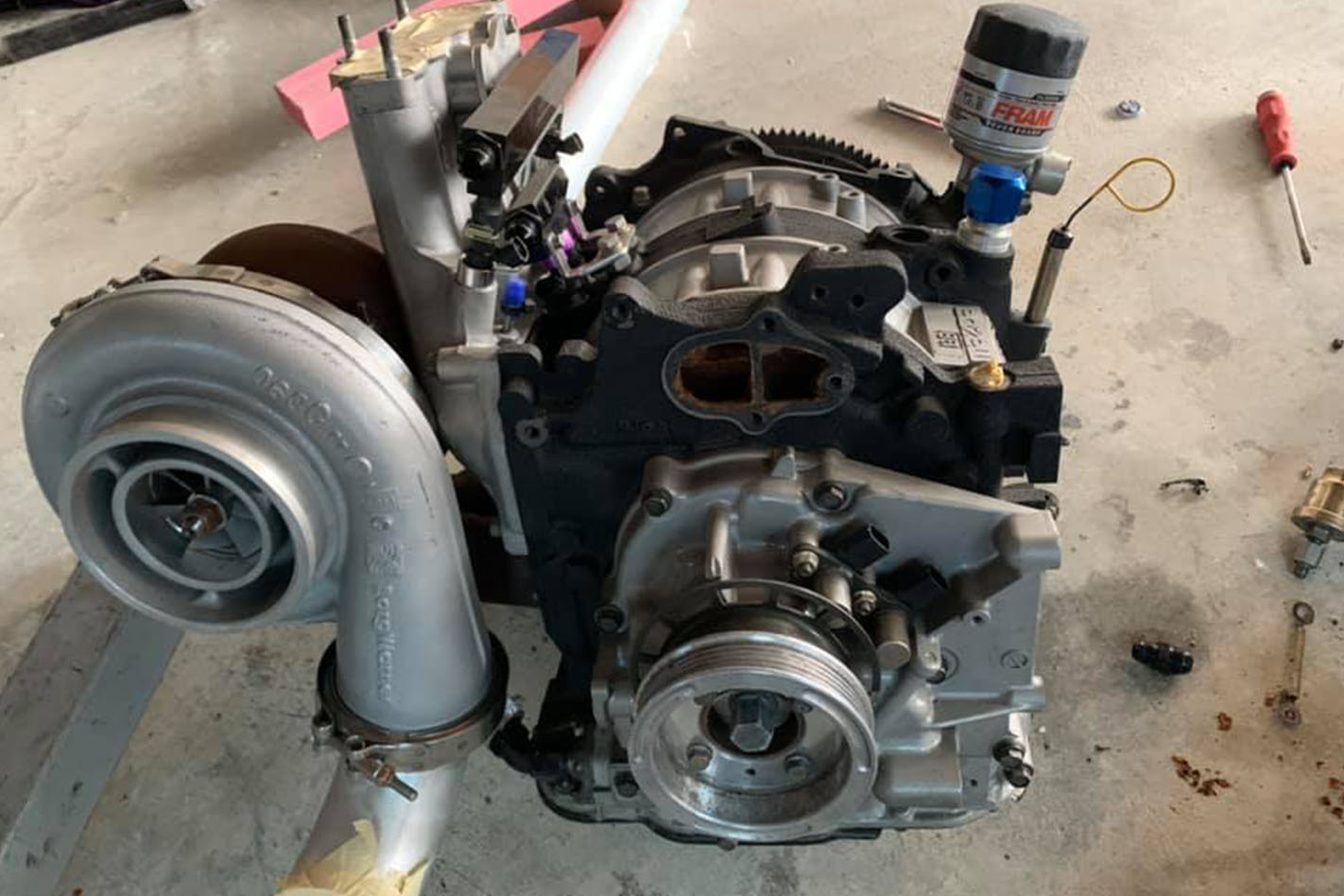
Wheels tried to contact Bemrose to find out more about his build but hadn’t heard back at the time of publication.
If you are wondering what would drive a man to ditch the most torque-rich powertrain imaginable for one that is renowned for its lack of torque, you can defer to his justification for building the aforementioned rotary Ferrari.
“We thought it would be funny,” Bemrose told New Zealand television program 1 News.
“We can put any engine we want in it, and we picked the classic Kiwi rotary.”
The Tesla donor car for the project seems to have been involved in an accident, making it a prime candidate for Bemrose’s antics.
A picture of the bridge-ported and turbocharged 13B engine placed between the Tesla’s front wheel arches seems all wrong, but so right at the same time.
We look forward to seeing the finished product, and Elon’s inevitable bemusement at Bemrose’s creation.
https://www.instagram.com/p/CDIPbk4H7Kj/?utm_source=ig_embed&utm_campaign=loading
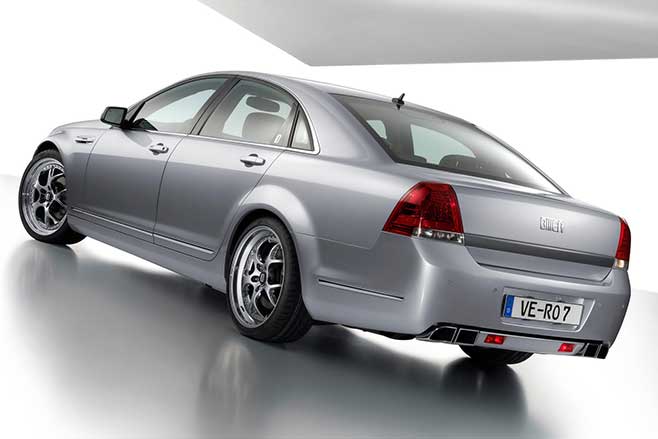
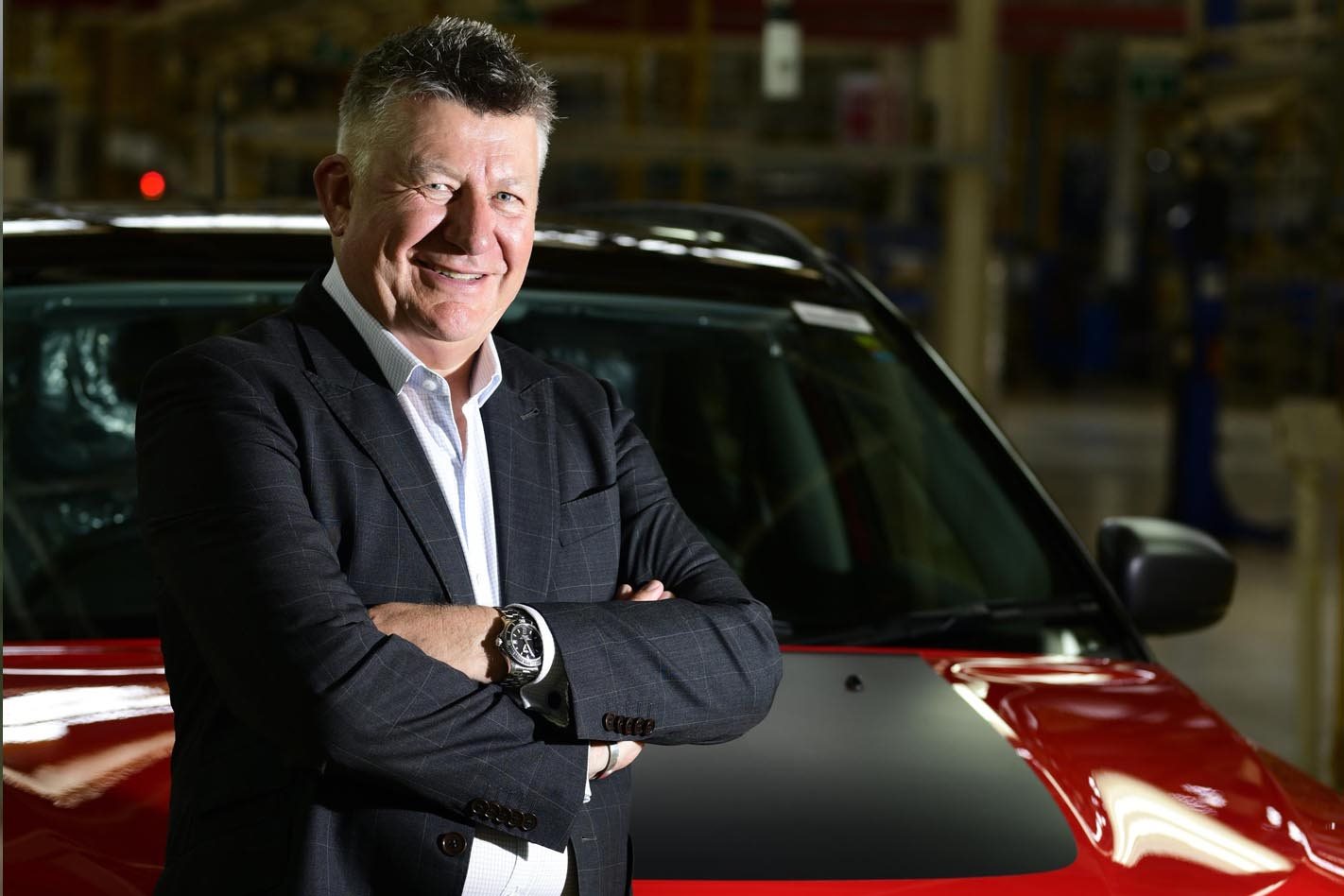
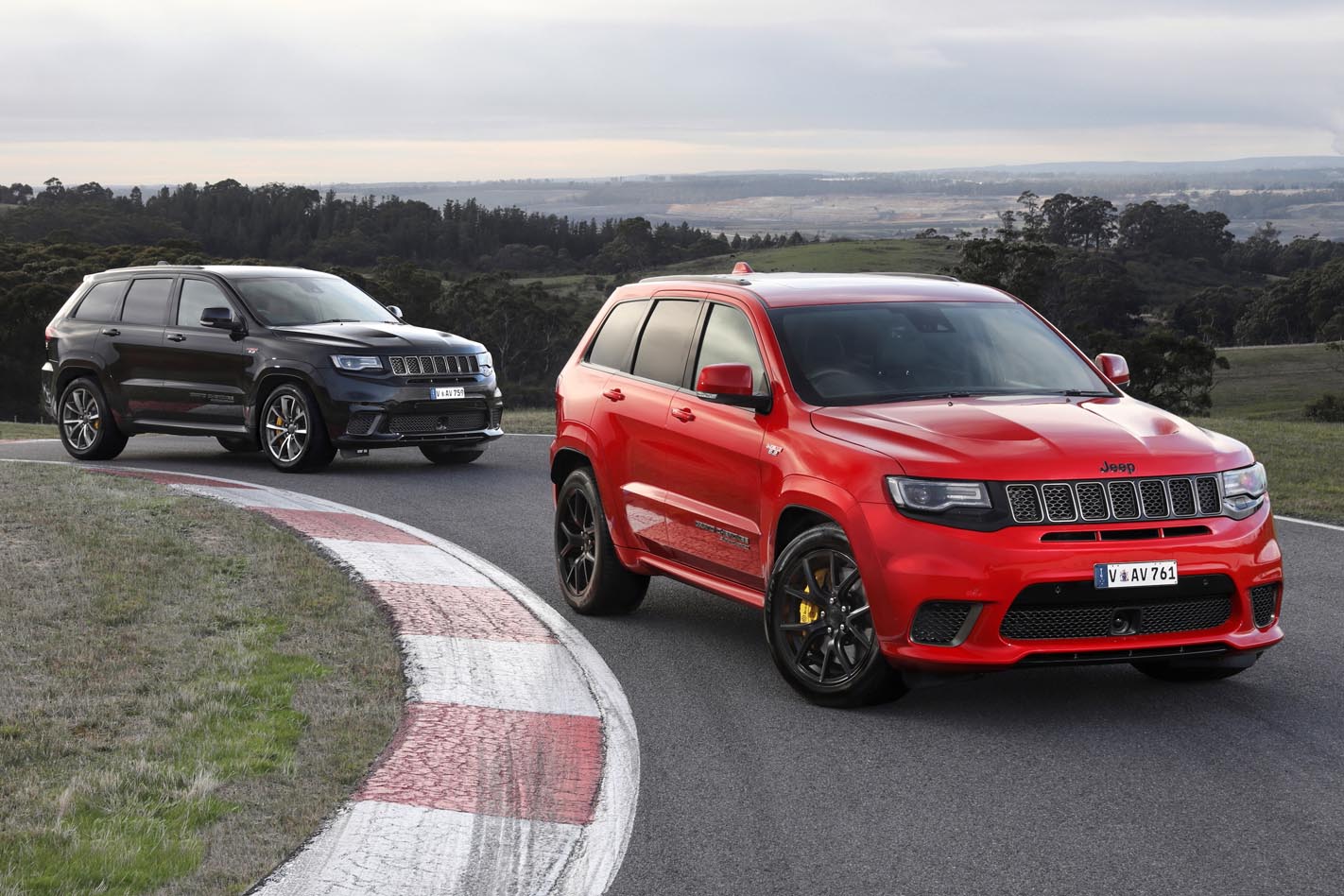
Jeep’s Australian journey reads like a celebrity fall from grace. From a heyday in 2013 when the Grand Cherokee was the nation’s favourite large SUV, the company’s sales started to slide.At first, it was a gradual decline but as the reversal gathered pace it became clear Jeep’s falling out of favour would be a much longer-lasting affair than a simple off-year. Seven years on and after scandals, successive company bosses and failed recovery strategies, the seven slot grille has reached the bottom of the curve, says its new captain Kevin Flynn.Certainly the English-born, self-proclaimed petrol head would appear to have the credentials, establishing the Jeep brand in India and elevating it to the country’s most trusted auto marque inside three years.
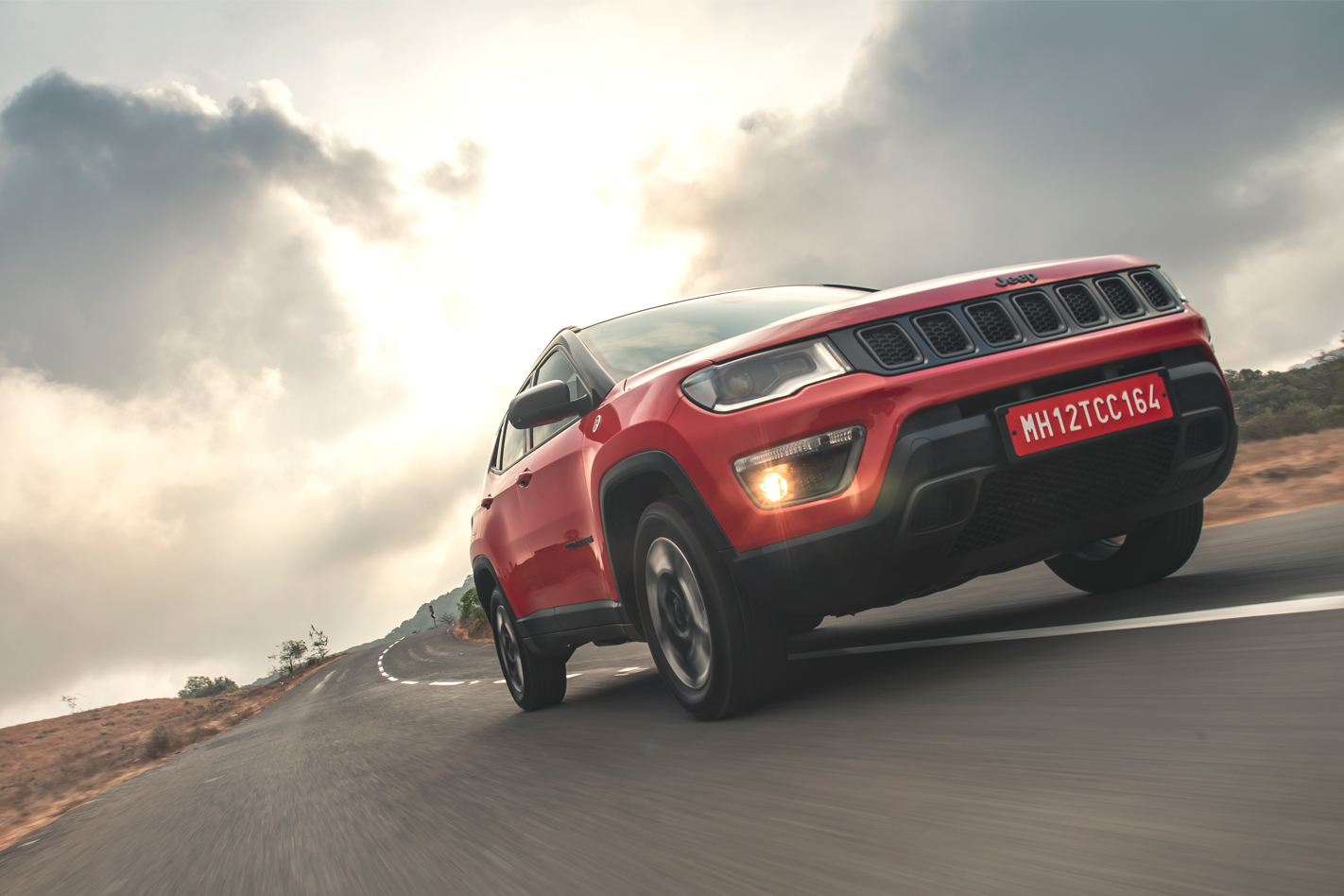
But this is Australia, and there is no other market in the world like it, nor is there a tried and tested strategy that guarantees success regardless of the brand. As if that wasn’t enough, the country is in the clutches of a viral pandemic that’s threatening the existence of all manufacturers, not just those in need of help before the crisis.Here’s how managing director and CEO Kevin Flynn plans to place a steady hand on Jeep’s tiller and steer it back into calmer waters.
What went wrong
Jeep’s problems were patently public with reliability and customer service complaints highlighted by one particularly disgruntled customer in 2014 who spectacularly destroyed his own car after experiencing persistent faults and failing to get an acceptable response from Jeep.Shortly after, the company was thrust into a scandal with executives accused of misappropriating company funds, then came the poor crash safety ratings including the Wrangler which continues to defend itself in ongoing testing.
And the rot had well and truly set in with the downward trajectory continuing even after born-and-raised Jeep enthusiast Steve Zanlunghi was enlisted from the US to take over Australian operations.Now though, Flynn is at the helm. And he has a plan.
Finding the rot
According to Flynn, Jeep’s problems actually started while sales were still on the up. While all eyes were on the healthy order books and brimming coffers, no one was building the “plateaued” aftersales network to cope with a swelling Australian customer base.“It was as if we were still selling a handful of cars,” explained Flynn. “By the numbers, there would have been a certain level of technical response needed or help to a customer and we just weren’t equipped to deal with it.“It must have been obvious but why we didn’t embrace that I don’t know.”
Building a new core
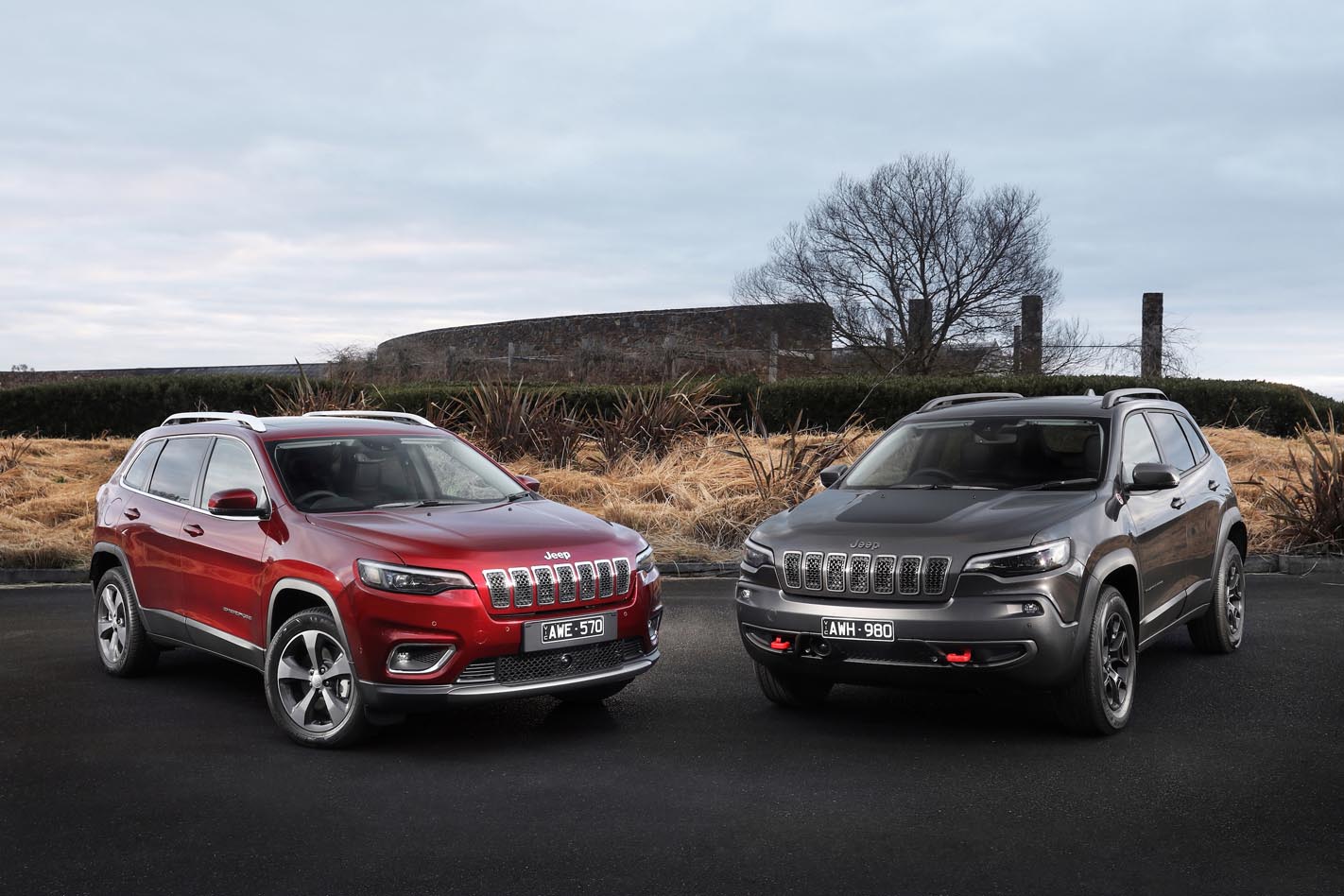
Since taking the reins, Flynn has been busy implementing new pieces of the customer-care puzzle that were missing from Jeep’s portfolio but that had been part of rival brand’s proposition for some years. Central to the plan was the appointment of a new director of aftersales Jo Markham and from there the blocks fell into place.
Here’s what Flynn’s been busy with since his plan was approved by FCA global just before Christmas 2019.

Flying Doctors’
While Jeep might make vehicles that are at home in all parts of Australia, the regional areas have suffered when it comes to customer service. One of Flynn’s first moves was to create a team of ‘flying doctors’ who could drop everything and get out to more remote customer locations.Whether it was a service technician, parts support or training requirements, the network of Jeep aftersales was expanded into largely neglected areas.
Parts overhaul
Next, Flynn ordered the review of every part sold in 2019 – all 17,000 of them – and the pricing of many ‘realigned’. The project was in response to complaints that running costs for Jeep models were excessively high, in part driven up by original equipment replacements.
The road ahead and the roadside
Finally, a more competitive capped-price servicing menu was introduced, again, bringing the Jeep aftersales proposition into line with many rivals. It was bolstered with a new unlimited roadside assistance offer that even applies to returning customers and goes further to addressing and responding to reliability concerns.
Advertising through adversity
The next stage was to face the negative rhetoric circulating about Jeep with a multifaceted advertising campaign.
“I think we were brave” said Flynn.A massively increased social media presence invited everyone to weigh in with their sentiments good and bad, and the team endeavoured to respond to all meaningful contributions.
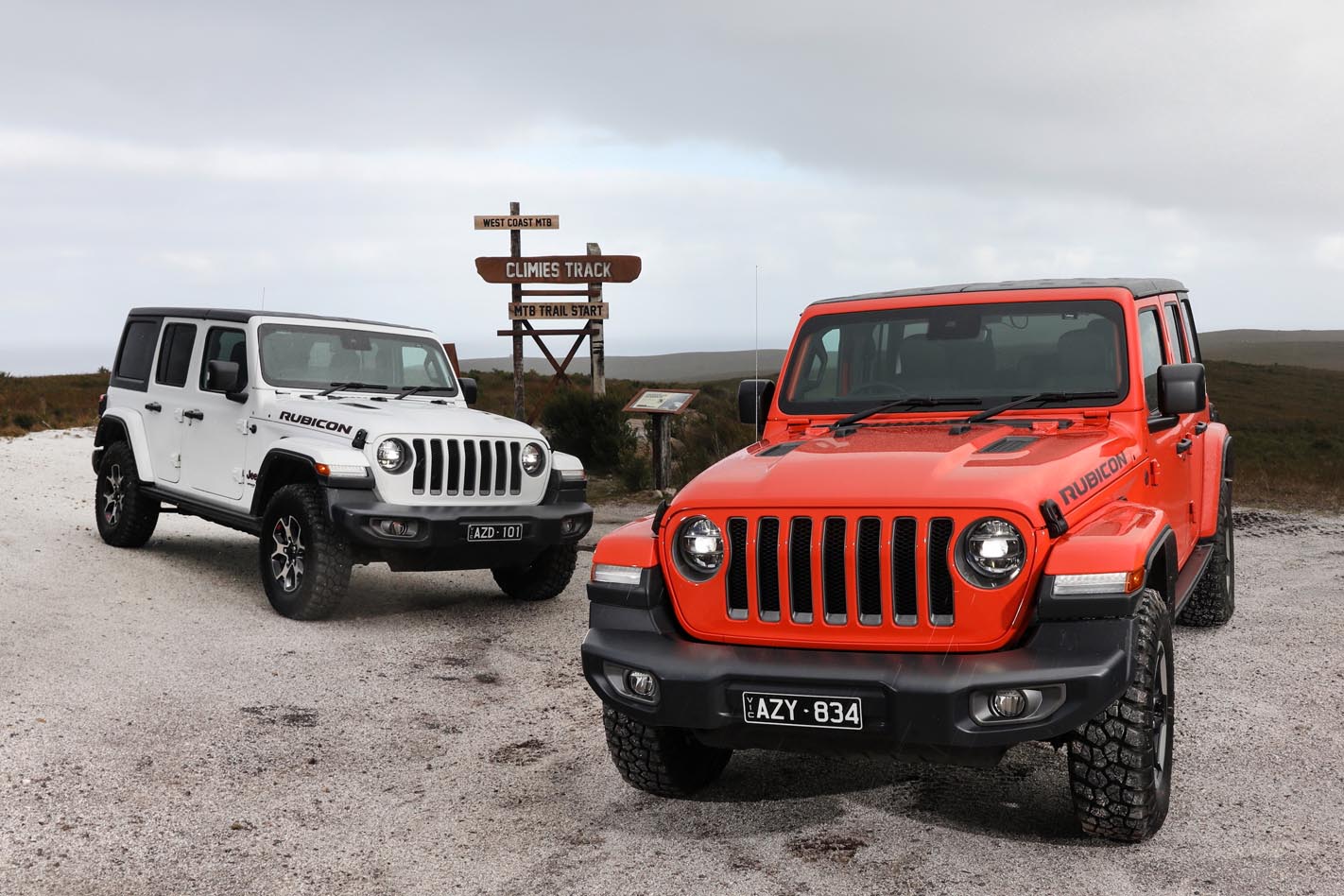
“It flushed out a lot of comms,” said Flynn. “Anyone who had been in contact with us over the last four years that perhaps wasn’t happy, we were working with those people again.”But from the negative, Jeep parried the punches and delivered a positive counter message. You’ll see this in the next month with the introduction of a new TV campaign that harks back to the famous I Bought A Jeep adverts, but with a forward-leaning stance.With digital interaction up 80 percent in July compared with the same point in 2019 the early signs suggest it’s working.
What’s next?
With the major leaks in Jeep brand confidence stemmed and the foundations for customer support that owners have been demanding, Flynn and his team are turning their attention to the next step in this reforging of the seven-slot grille.“Now we’ll start adding product, now we’ll start telling the product story.”The serendipity is not lost on us that the model Flynn sees as the one that will steer Jeep back onto a more steady path is the Compass. After all, this is the car Flynn championed in India to win global quality awards and the hearts of Indian fans alike.
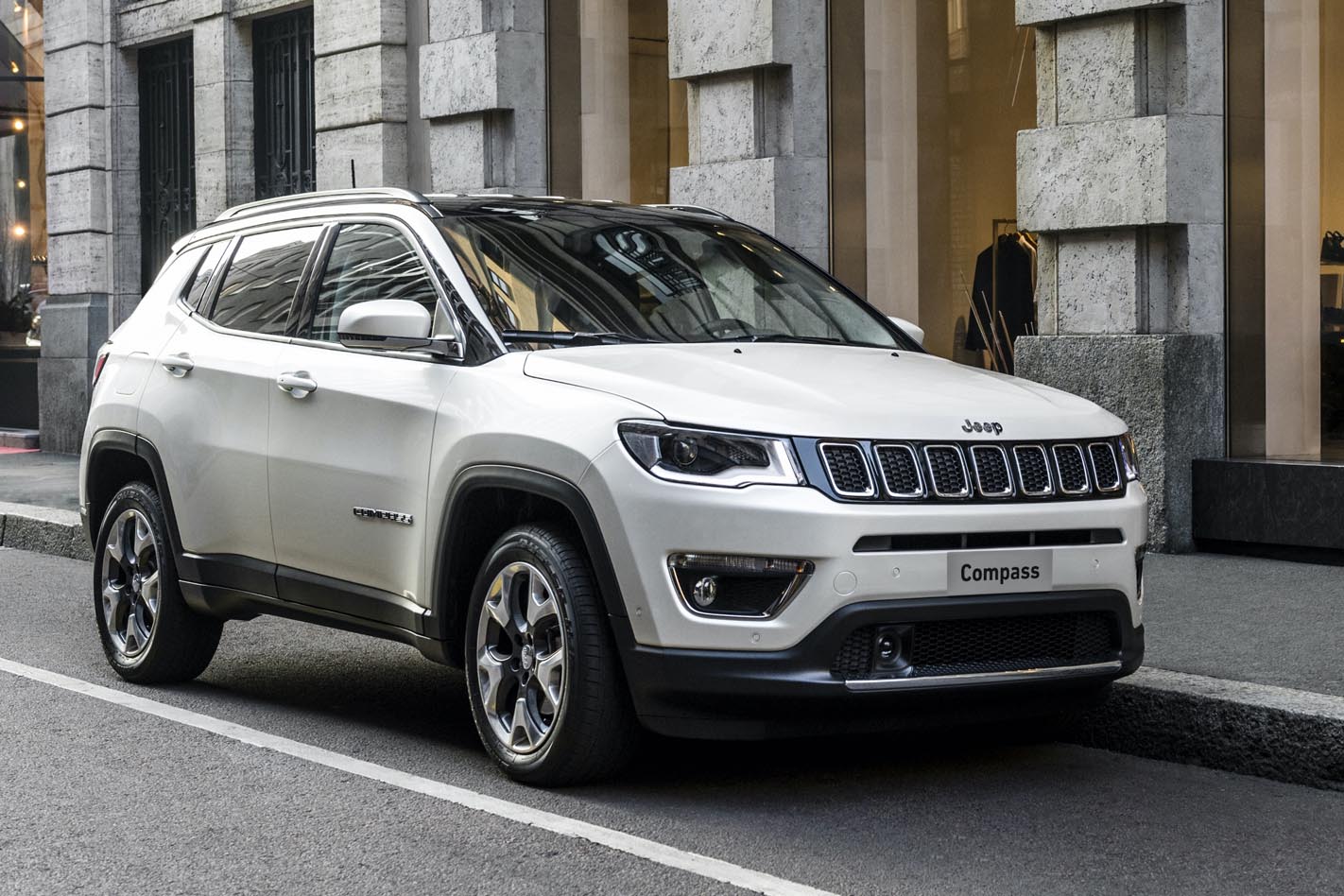
“Every Jeep starts as a 4×4 right from the word go, then it may become a two-wheel drive car at some point. But there’s DNA of Willys in every single one of our models.“What we’re saying is that you don’t need to buy a car that looks like an SUV, there’s a vehicle that IS an SUV and has all the attributes that an SUV should have.
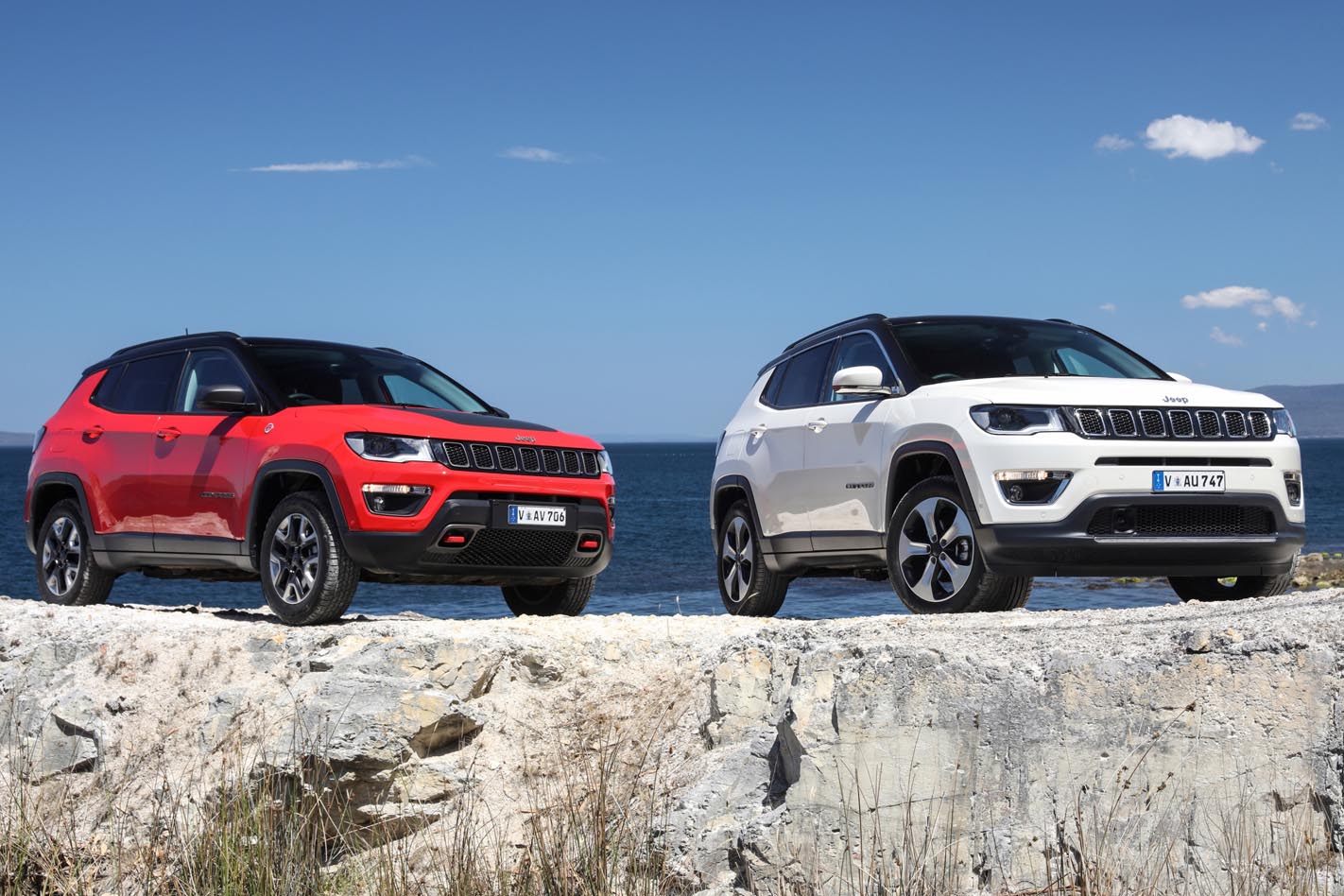
Its champion is confident and is already reporting a changing tide that will continue to build momentum back into the hearts and minds of Australians.“All we can measure at this stage is the level of interest that is now being placed in the brand and the percentage increase in leads activity and the closing ratios are improving.“Our determination to have our rightful portion of the market share and customers satisfied with their purchase decision is what we’re aiming at. And to really bring the Jeep life to life in Australia.”
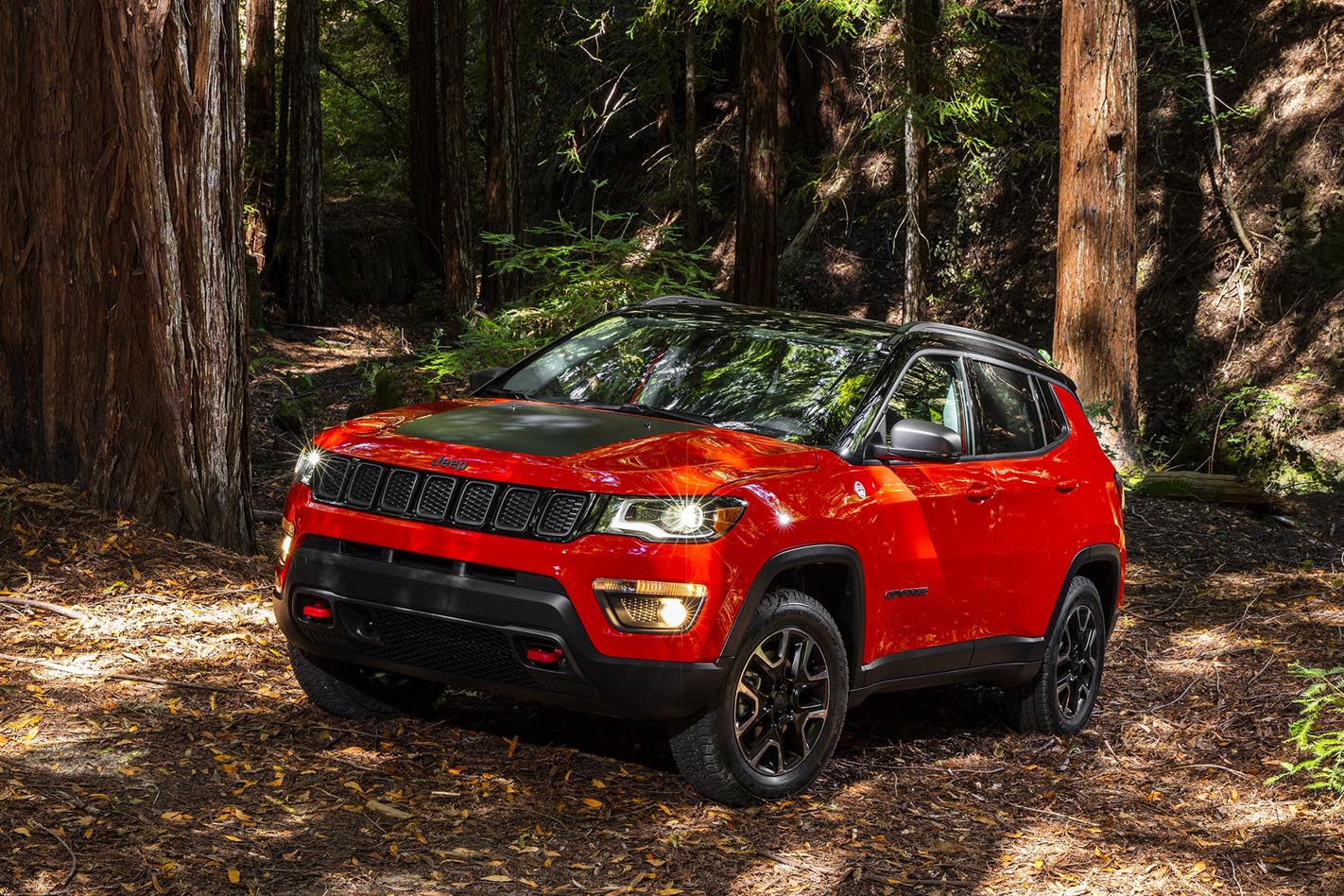
“So the whole idea is to earn back that level of trust and belief. It’s not an overnight job and we will not take our foot off the gas”.
If ever there was a donk that didn’t need a power-up, the quad-turbo Bugatti W16 was it.
Despite that, the Bugatti Chiron solved the shortcomings of the Veyron – it wasn’t fast enough, obviously – by being more powerful (and lighter).
How does a W16 engine work?
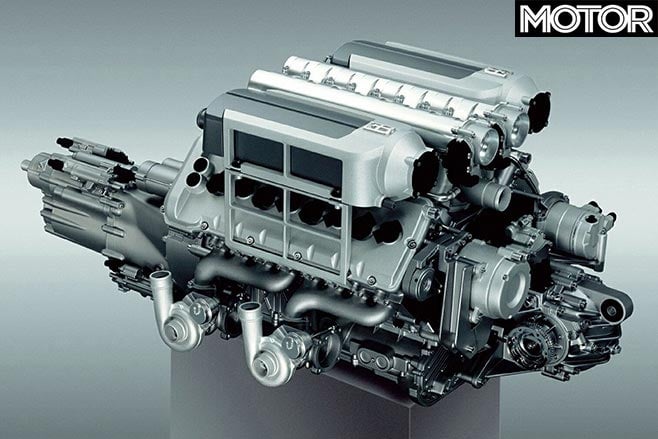
The W16 engine gets its W16 designation because it’s (in a way, sort of) made up of two narrow-angle V8s, which kinda forms a ‘W’, but not really. The vee in the V8s is so narrow (15 degrees) that a pair of camshafts can open and shut all 32 valves for each bank of eight cylinders, unlike in most overhead-cam V8s, which have quad camshafts. The angle between the two V8 banks is 90 degrees – see, not really a ‘W’.
Now, when we say the W16 is made up of two V8 engines, it’s not actually two engines geared together. It’s a single, massive engine with one crankshaft – calling it a pair of V8s is just a handy way to help visualise this unholy conglomeration of pistons.
Here’s how the Chiron’s W16 sounds
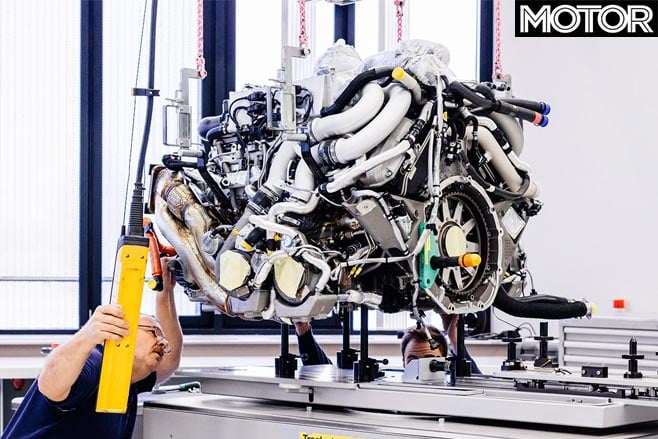
The engine is square, with an 86mm bore and stroke, which is undoubtedly the sole specification the Veyron shares with the Toyota 86. Each piston displaces 499.56cc for a total engine capacity of 7993cc or 8.0 litres. A pair of turbochargers per cylinder bank (for a total of four turbos) pump air at 18psi via a pair of charge-cooling liquid-to-air intercoolers, with three heat exchangers.
According to Bugatti, the Chrion’s official 736kW (at 6000rpm) output was conservative, and the real figure is 750kW, or more than 1000hp. The torque figure is 1250Nm, though this is for the base model, as the Super Sport makes 1500Nm and 880kW – this is the car that held the 431km/h top-speed record (the entry-level Veyron hits its peak at just 407km/h).
But Veyrons? They’re slugs that are no longer on sale. Direct injection and extra boost in the Chiron lift outputs from the W16 quad-turbo to 1103kW and 1600Nm, it arrives lower in the rev range courtesy of clever electronically controlled turbochargers.
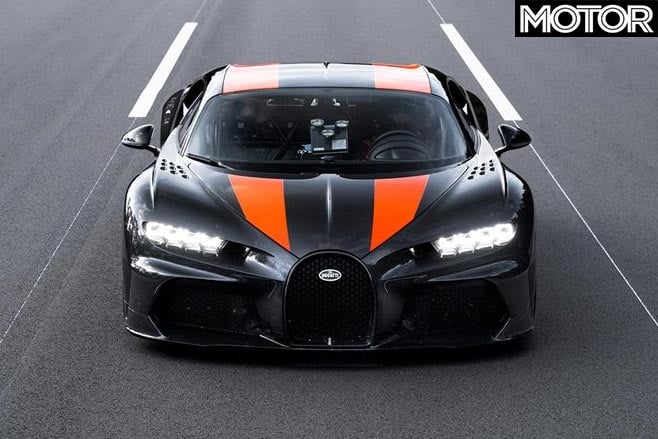
Meanwhile, a redesigned carbonfibre monocoque chassis reduces the Chiron’s weight compared with the 1888kg Veyron, and it adds torque-vectoring all-wheel drive to its repertoire.
Five quick Bugatti W16 engine facts
1. HUMBLE ORIGINS The Bentley/VW W16’s origins can be traced to the 1991 VW Golf VR6, which used a narrow angle (15 degree) design to package a 2.8-litre V6 in a small front-wheel drive.
2. Which other cars have W16 engines? The Volkswagen Group has dabbled with W-formation multi-pot engines for more than a decade, in the Phaeton (W8), the Bentley Continental (W12) and concepts including the EB 18.4 Veyron (W18).
3. How big is a W16 engine? The W cylinder configuration is favoured because of its compactness. The Bentley W16 is less than half the length of an in-line 16, yet not a lot wider. It measures 710mm long, 889mm wide and 730mm high.
4. Fuel consumption City fuel consumption of 29.0L/100km looks okay alongside the top-speed thirst of 5.0L/minute. If you had the road to keep the Veyron pinned (more than 130km), it would empty its fuel tank in 20 minutes.
5. Bugatti’s W16 engine firing order The firing order for the hand-built, dry-sumped Veyron engine is 1-14-9-4-7-12-15-6-13-8-3-16-11-2-5-10, in case you wondered. Stick that in your noggin’ for trivia night or for your job interview at MOTOR.
War of Words: Bugatti v Hennessey
In 2013, Texas supercar maker Hennessey Performance Engineering disputed the Veyron Super Sport’s 431km/h world record on the grounds that it was achieved with the Bugatti’s 415km/h electronic speed limiter disabled.
Hennessey’s 928kW Lotus Exige-based Venom GT could do 427.6km/h in completely standard form. The Veyron’s record was duly suspended by Guinness World Records and it was reclaimed by the Shelby Supercars Ultimate Aero TT.
Less than a week later, Guinness reinstated the Veyron’s record, concluding that “a change to the speed limiter does not alter the fundamental design of the car or its engine.”
What stands out?
Based on the Polo hatchback, the T-Cross is the more affordable of Volkswagen’s two small SUVs. It’s powered by an economical three-cylinder turbocharged engine and comes with excellent smartphone integration and a safety suite that includes autonomous emergency braking and parking sensors.

What might bug me?
Stop-start driving with the auto transmission, which occasionally hesitates and can be inconsistent on take-offs. The T-Cross’ DSG auto is great once you’re moving, but many drivers do not find it as smooth and easy in town as a conventional or CVT auto.
Driving after a puncture. The T-Cross has a space-saver spare wheel, which limits the recommended top speed to 80km/h.
Paying more for fuel: the turbo engine requires premium unleaded, which costs more than regular unleaded.
What body styles are there?
Five-door wagon only.
The T-Cross is front-wheel-drive only and is classed as a small SUV lower priced.

What features does every T-Cross have?
- An 8.0-inch colour touchscreen from which you can control the sound system and other cabin functions.
- A six-speaker sound system with an AM/FM radio, a CD player, an SD card slot, Aux and 4 x USB inputs, and Bluetooth audio streaming.
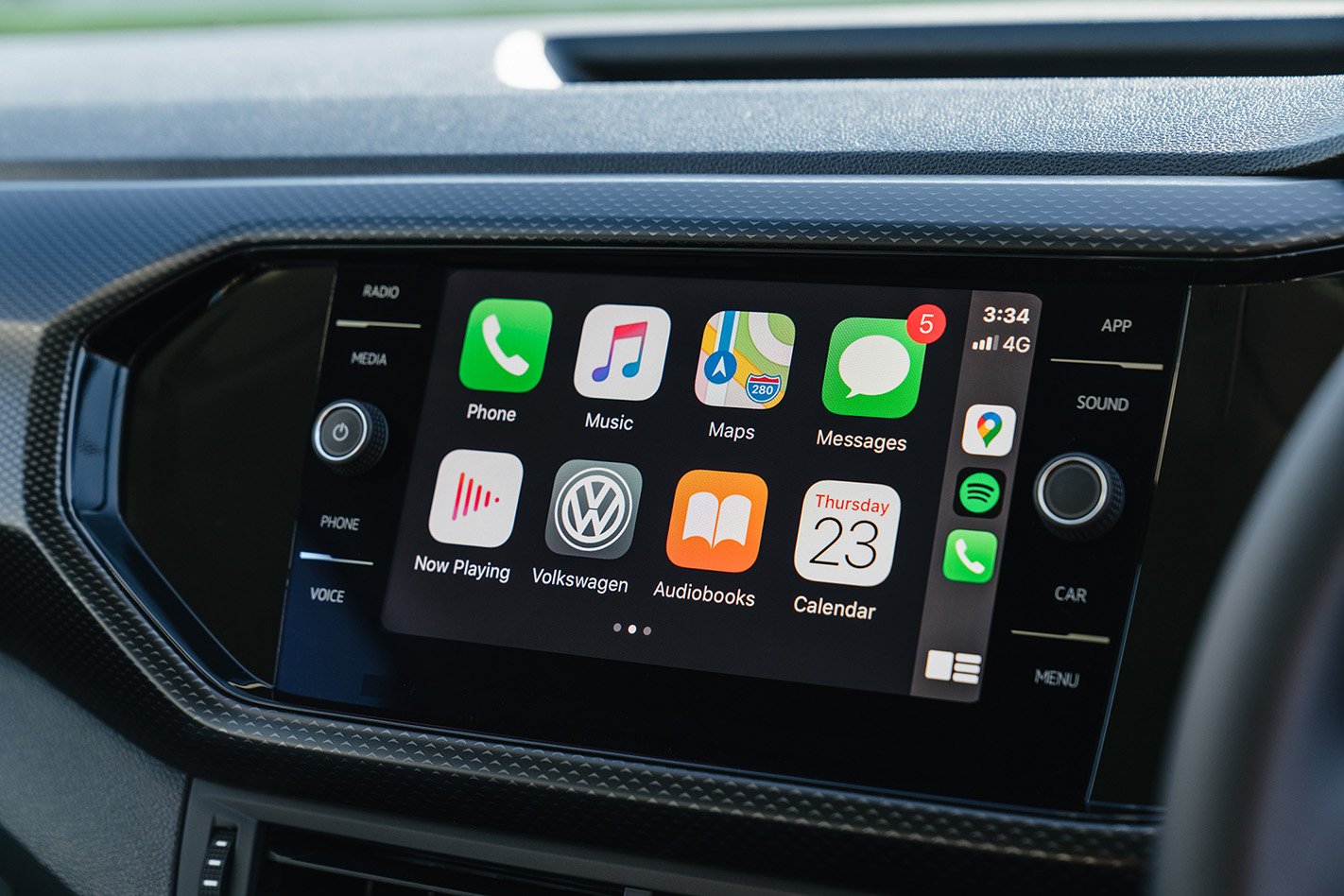
- Support for Apple CarPlay and Android Auto. If you plug in a compatible iPhone or Android smartphone, some phone apps – including mapping and music – are mirrored on the touchscreen display and can be controlled from there.
- A reversing camera and parking sensors front and rear.
- Active safety including autonomous emergency braking, lane-keeping assist, lane departure warning, driver fatigue detection, and vehicle distance warning.
- Cruise control with speed limiter.
- 7-speed DSG (direct-shift gearbox) automatic transmission.
- Wireless phone charging for compatible smartphones.
- Windscreen wipers that operate automatically when it rains.
- Headlights that switch on automatically in low light, LED daytime running lights, LED tail-lights, and fog lamps.
- Auto-dimming rearview mirror.
- Air-conditioning.
- A leather-wrapped steering wheel that carries buttons for operating the cruise control, the audio system, and your phone.
- Aluminium alloy wheels, which are lighter and more stylish than steel wheels.
- A space-saver spare wheel (with a recommended top speed of 80km/h).
- Tyre pressure monitoring, which alerts you if a tyre is losing air.
- Electronic stability control, which can help control a skid or slide (all new cars must have this feature) and six airbags – for the placement of airbags, and more on T-Cross safety systems, please open the Safety section below.
- The T-Cross comes with Volkswagen’s five-year, unlimited-kilometre warranty.
Which engine uses least fuel, and why wouldn’t I choose it?
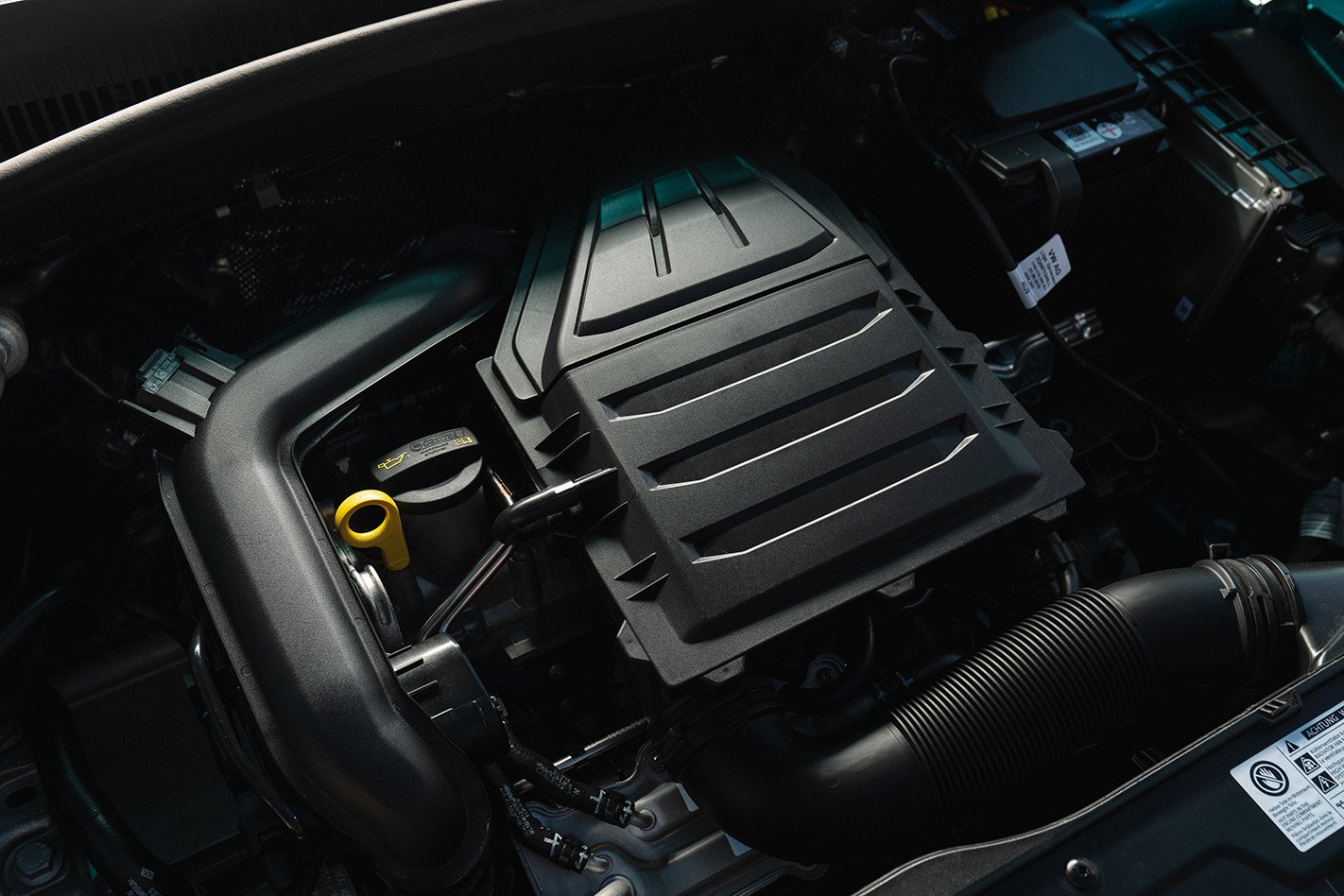
So far there is only the one engine available in the T-Cross range – a three-cylinder turbocharged 85TSI petrol engine that’s shared with the Polo hatchback. In the T-Cross it consumes 5.4 litres/100km on the official test (city and country cycles combined).
It’s an excellent little engine around town, but in the 88kg heavier T-Cross it feels a touch weak when you put the foot down.
The 85TSI comes with seven-speed DSG (for direct-shift gearbox) automatic transmission. DSG, or dual-clutch, auto gearboxes work much like a manual gearbox with robotic control. It shifts very smoothly and quickly and saves fuel, but cannot match the fluid take-off from rest that you get with conventional or CVT autos.
What key features do I get if I spend more?
The least costly T-Cross, the 85TSI Life, has cloth-covered seats, 16-inch wheels and manual air-conditioning.
Spend more on the T-Cross Style and you gain dual-zone air-conditioning that lets the front passenger choose their temperature, more premium sports cloth seats and bigger 17-inch alloys.
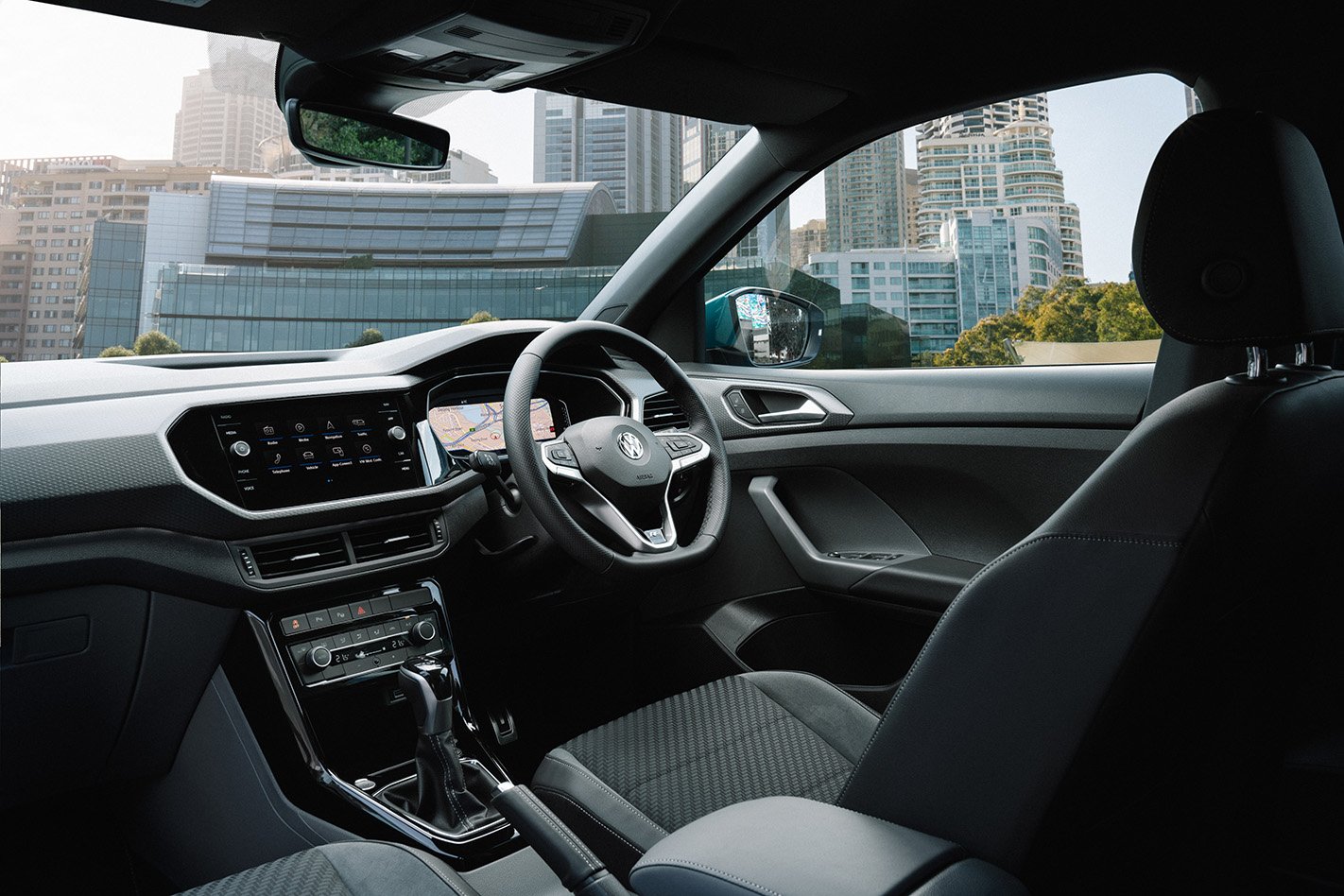
The T-Cross 85TSI Style also brings:
- Keyless Access lets you unlock the car and drive away without removing the key from your bag or pocket.
- Brighter and longer-lasting LED headlights with automatic high-beam.
- A Driver Assistance package that includes adaptive cruise control, blind-spot monitor, rear-cross traffic alert, electric folding mirrors, and park assist that steers your T-Cross into a parking bay or parallel parking spot.
- Front and rear carpet.
- LED ambient dashboard lighting.
- Paddle shifters on the steering wheel.
Option packages
The Drive Assistance package that’s standard in the T-Cross Style is available as an extra-cost option in the T-Cross Life.
A Sound & Vision package can be added to both versions, which brings includes a 300W Beats premium audio system with 8-channel digital amplifier and subwoofer. You also get Digital Cockpit; a high resolution 10.25-inch digital instrument colour display screen with customisable displays.
The T-Cross Style is also available with an R-Line Package that makes it look sportier with a series of exterior and interior enhancements including revised bumpers and side sills, a black rear spoiler, bigger 18-inch wheels with thinner low-profile tyres, R-Line Vienna leather sports seats, brushed stainless steel pedals, sports steering wheel with paddle shifters, black headliner, and aluminium scuff plates inside the door frames with R-Line logos.
Does any upgrade have a down side?
Opting for the Sound and Vision package loses 80-litres of boot space, which is taken up by the amplifier and subwoofer.
How comfortable is the T-Cross?
The T-Cross is a supremely comfortable place to spend time, thanks not only to its supportive seats, but also the compliant suspension tune that irons out road imperfections and shields the occupants over larger bumps far better than a small SUV should.
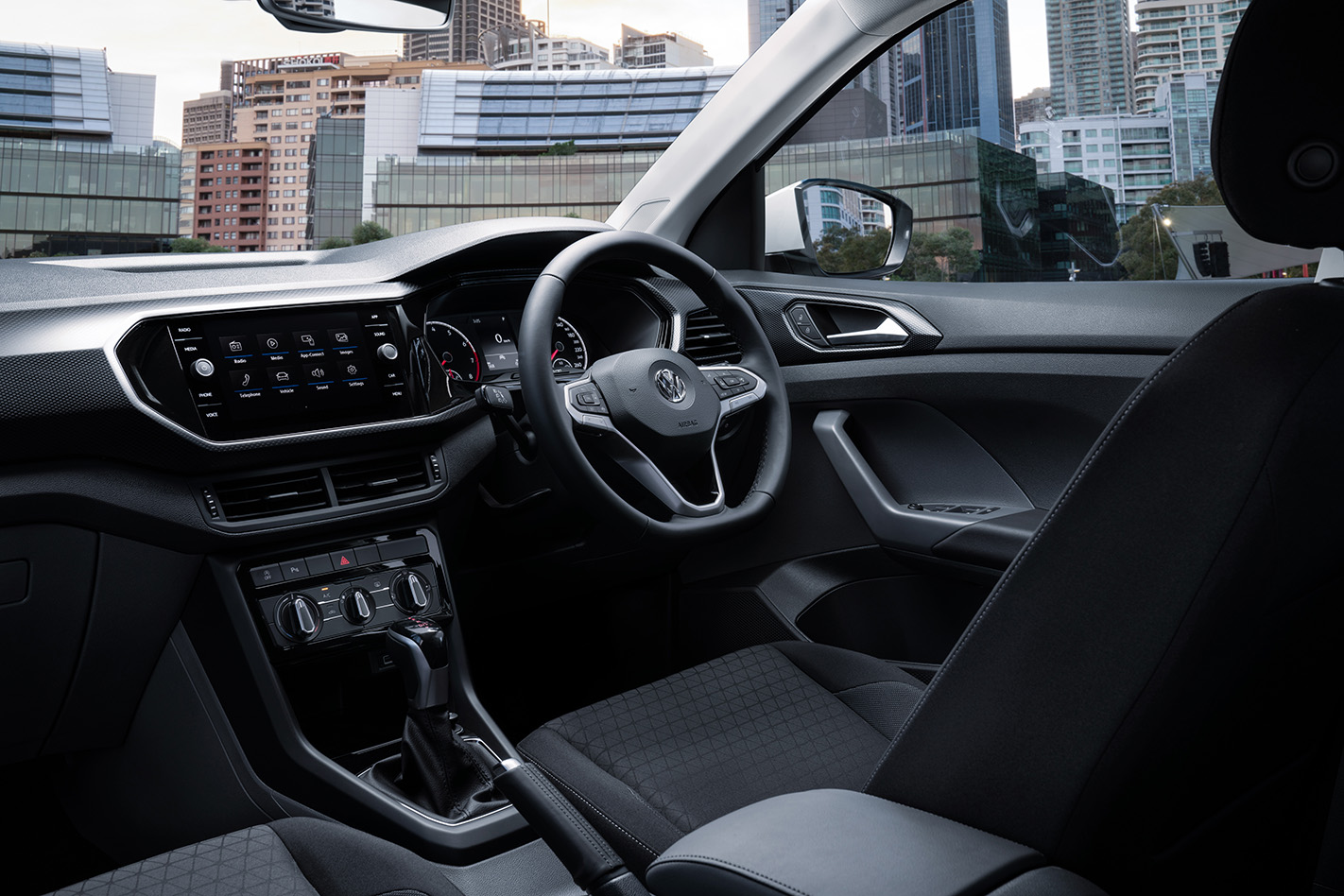
The entry-level T-Cross Life has firm but comfortable cloth seats with a nice blend of patterns, and most touchpoints are covered by either leather or fabric.
It’s similarity to the Polo is noticeable as soon as you jump inside. However, there’s noticeably more headroom and the high-riding seating position is more pronounced than with other crossovers such as the Mazda CX-3 and Hyundai Kona.
The additional height also makes getting in and out a breeze and provides convenient access to the 385-litre boot space.
The dashboard and door cards are clad with hard plastic but feel sturdy and likely to stand the test of time. The Style variant livens the vibe up a bit with bolstered seats, more features and nicer materials.
Space up front is comfy, and the second row seats to taller adults comfortably.
Although not particularly feelsome, the steering has a nice weight to it without feeling toy-like, while the seven-speed DSG transmission does a good job of selecting ratios about town.
What about safety in a T-Cross?
Every T-Cross has the mandatory electronic stability control, auto wipers, a reversing camera, front and rear parking sensors, daytime running lights (which help other drivers see you), and seven airbags.
In addition, each T-Cross version has city-speed auto emergency braking, a highway-speed forward collision alert, lane-keeping assistance, and a driver fatigue monitor.
Two airbags protect the driver and front passenger’s upper bodies from frontal impacts, and a third protects the driver’s knees. One outside each front seat protects at chest level from side impacts. And curtain airbags extending down each side of the car at head level protect front and rear passengers from side impacts.
The T-Cross’ standard driver assist systems use radar and camera sensors to monitor the roadway ahead when you’re driving.
Its autonomous emergency braking, which Volkswagen calls Front Assist with City Emergency Brake, operates at speeds up to 30km/h and can automatically brake the car if it concludes a collision is imminent (typically with a sharply slowing vehicle ahead).
Lane-keeping assist uses the camera to monitor lane markers. At speeds over 55km/h, if it concludes you are drifting out of your lane – perhaps from distraction – it will gently adjust the steering in an attempt to bring you back. If you continue to drift, it will vibrate the steering wheel and flash a warning.
Fatigue Detection monitors your movements of the steering wheel. If they suggest you might be falling asleep, it proposes you take a break.
Should none of this prevent a crash (perhaps because you have been hit from behind), Multi-collision brake acts to prevent your drifting into the path of another vehicle after impact, automatically applying the brakes.
Additional standard safety equipment is available in the Driver Assistance pack that’s an extra cost-option in the 85TSI Life but comes standard with the 85TSI Style. Among other features, it adds blind-spot monitoring and rear-cross traffic alert – both relying on rear-facing sensors. The former helps you avoid changing lanes into the path of an adjacent or overtaking vehicle, warning you with a light in the exterior mirror and even seeking to steer you away from danger. The latter works when you are reversing, looking to either side behind you for vehicles crossing on a collision course.
The Australasian New Car Assessment Program (ANCAP) has rated the T-Cross at five stars for safety, most recently in April 2020.
I like driving – will I enjoy this car?
The T-Cross doesn’t stray too far from the Polo’s dimensions making it still easy to manoeuvre while having the benefit of a raised driving position that offers good visibility.
The 1.0-litre turbo engine is remarkably quiet and smooth even when pushing up through the rev range, but while its relatively meagre 85kW/200Nm outputs might suit the Polo, the same unit in the 88kg heavier T-Cross feels a touch weak.
The seven-speed DSG transmission does a good job of selecting ratios about town but does succumb to its type’s typically slow, hesitant take-off from a set of lights, which is compounded by the activation of the engine stop/start function.

How is life in the rear seats?
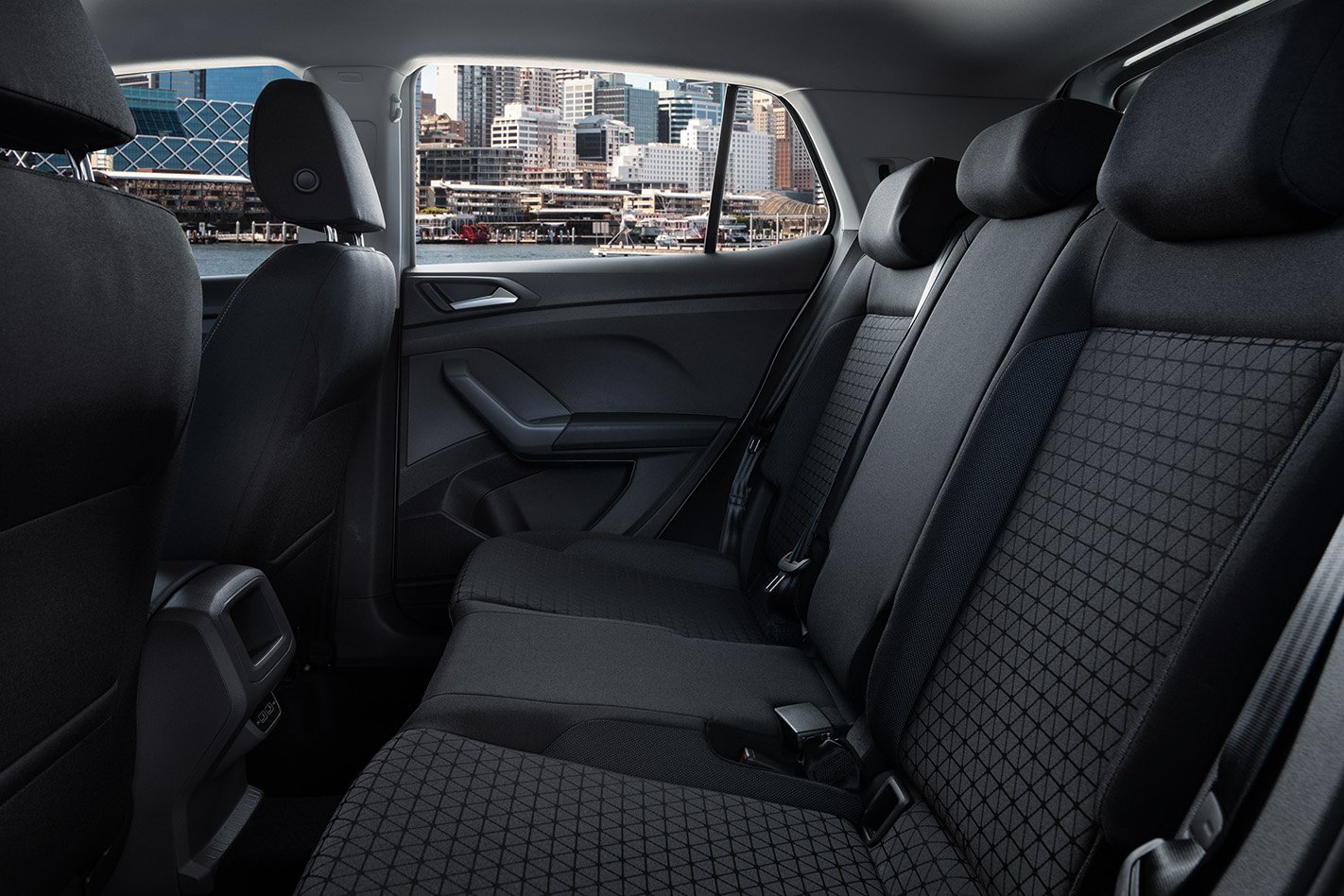
The T-Cross has decent legroom and excellent head and foot room that will please taller people.
Rear seaters are treated to two USB ports and they can store items in handy door pockets. There are no rear air vents, but this isn’t a real issue in a smallish cabin like this.
How is it for carrying stuff?
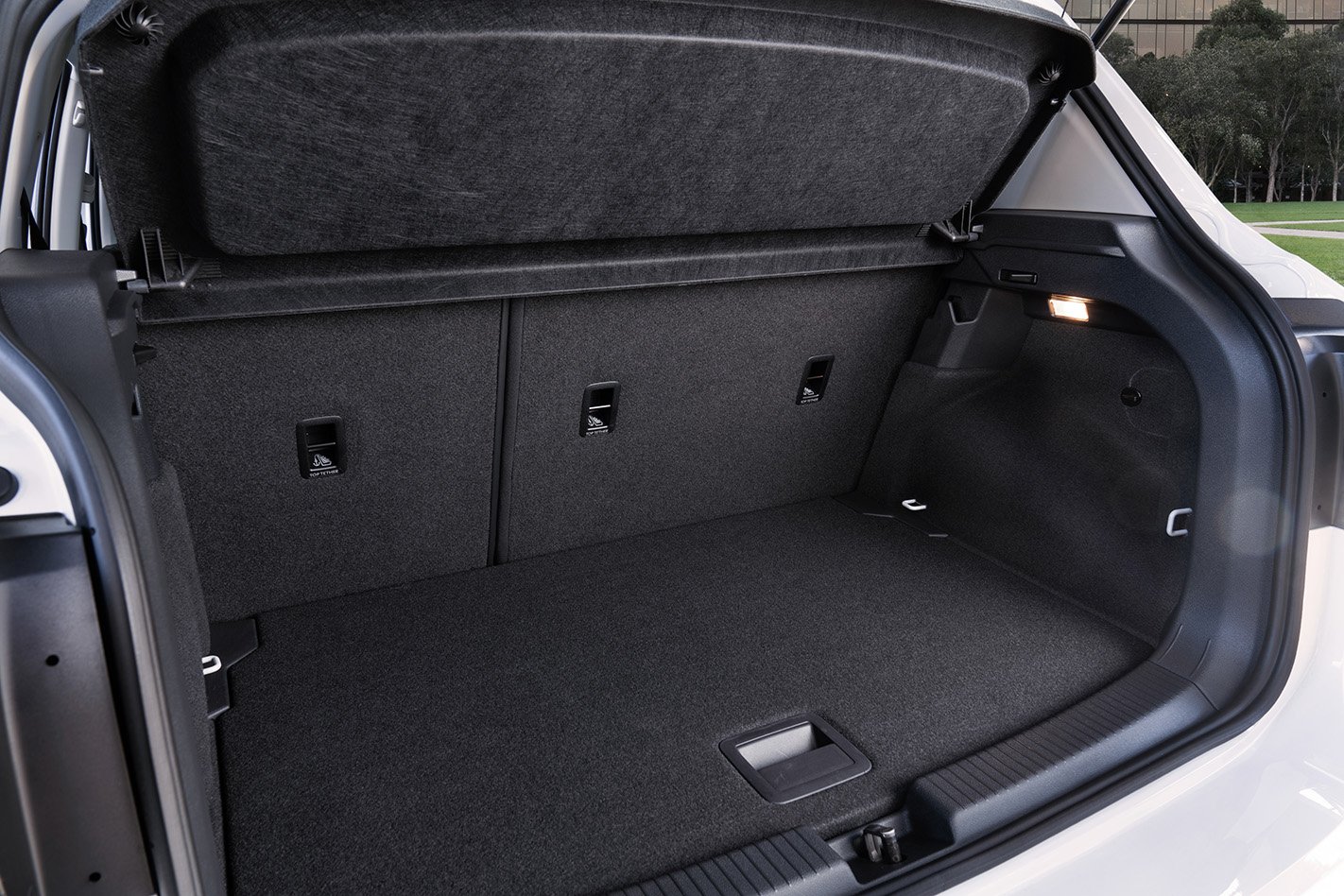
The second row of seats in the T-Cross can slide 140mm fore and aft which can vary boot space between 385-455 litres. Folding the rear seats flat expands cargo-carrying capacity to 1281 litres. They also fold individually in a 60:40 split which adds flexibility for combining rear passengers with long loads.
Where does Volkswagen make the T-Cross?
All T-Cross’ sold in Australia are manufactured in Spain.
What might I miss that similar cars have?
The T-Cross is one of the newer and better equipped small SUVs on the market so there isn’t too much that it misses out on compared to its rivals. A notable omission is the lack of an all-wheel-drive option, as available the Toyota C-HR, Hyundai Kona, Kia Seltos and Subaru XV.
Or you might want a bit more power as available with the above plus the Nissan Qashqai, Skoda Karoq, and Mazda CX-3.
Volkswagen has both covered with T-Cross’ sportier sibling the T-Roc, which is slightly bigger and a tad more expensive.

I like this car, but I can’t choose which version. Can you help?
Both T-Cross versions are very similar, but the 85TSI Style has some decent extras included in the price to justify the additional $3000 over the Life.
Are there plans to update this model soon?
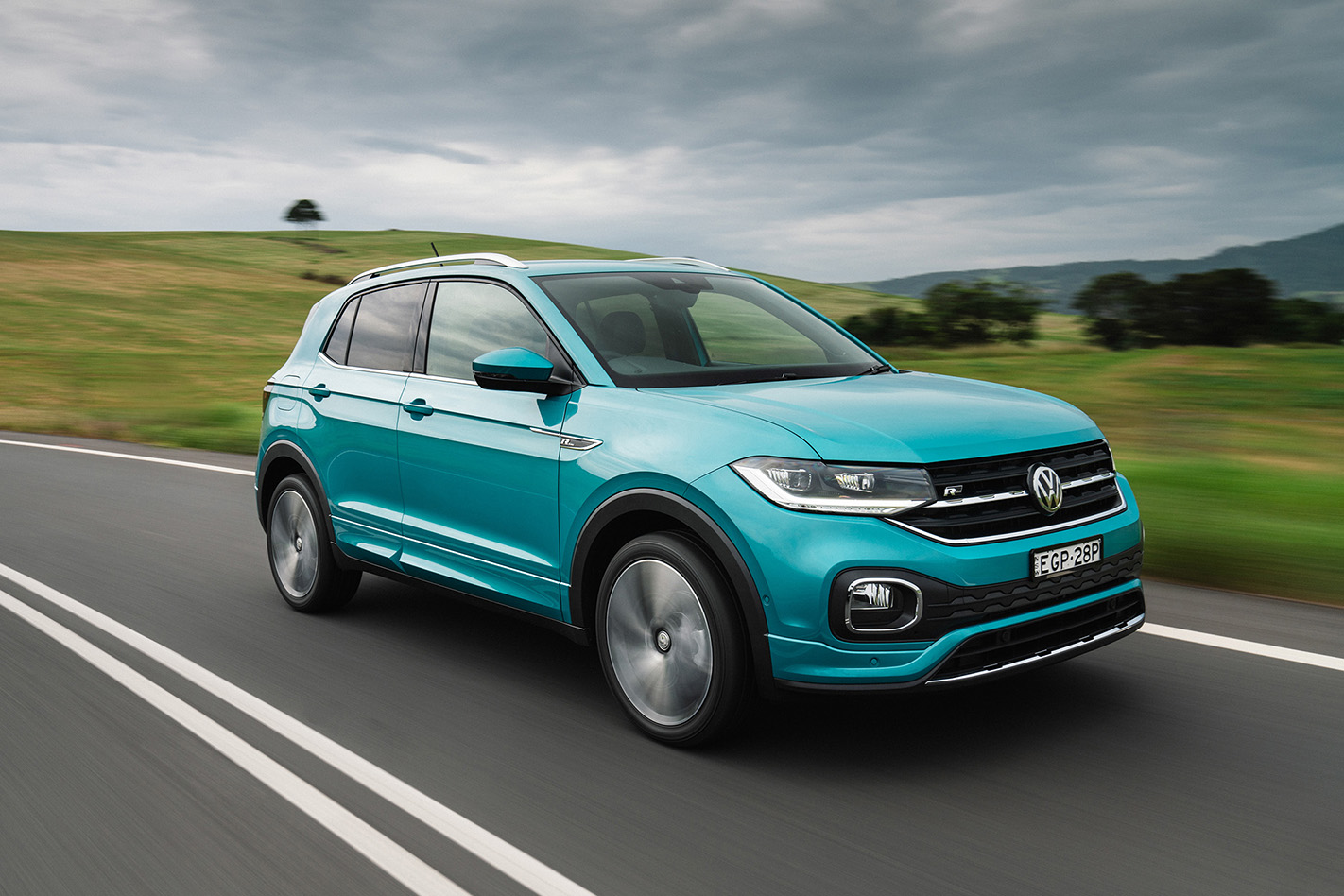
The T-Cross arrived in Australia in May 2020, about a year after it was launched overseas so an update might arrive by the end of 2022.
Volkswagen Australia was going to introduce a more powerful four-cylinder 110TSI version but this is no longer the case.
Expect to see special edition versions from time to time.
Let’s face it, while the BMW 530d might be fine for the Victorian and NSW Highway Patrol, if Mad Max was set in today’s world no supercharger would be big enough to lure Max Rockatansky back to The Force to drive a diesel six.
But we bet the BMW M550i xDrive might change his mind. Although it’s been around since 2016, BMW has only just recently sorted a right-hand drive version for our market. And BMW Oz is using the baby M car to fatten the 5 Series range before the facelifted G30 M5 lands here this October.
What makes the M550i so special is a 4.4-litre two-pump lump of alloy V8 hiding in its nose, defining it as the last of the V8s among the reduced-fat performance sedans from AMG, RS and M. We know what you’re thinking, though.
And, yes, while it’s awfully close to the M5 Competition’s mighty S63 V8 in capacity and core dimensions, the M550i’s engine is actually the more ‘pedestrian’ N63 V8 pinched from the M850i.
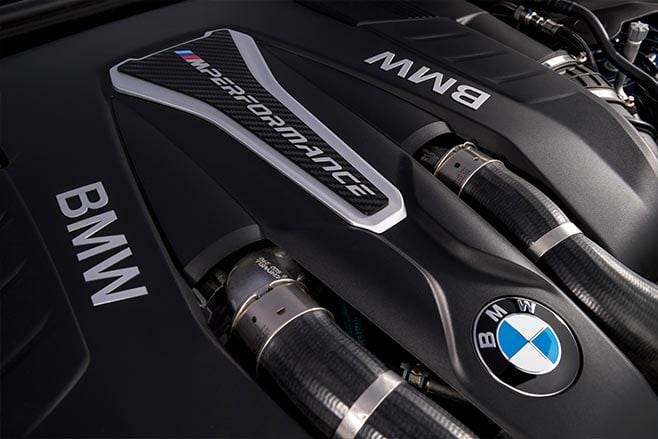
Recently updated with larger twin-scroll turbochargers within its vee, as well as an improved ignition system, a freer intake manifold and a revised crankcase, outputs have spiked 15 per cent with power growing from 340kW to 390kW and torque jumping from 650Nm to 750Nm – the latter matching an M5 or M8 Competition.
Squeezed through an eight-speed automatic transmission hooked up to BMW’s xDrive all-wheel drive, the result of bunging that much power into something weighing a humble 1810kg (an AMG E53 is 60kg pudgier; the Audi S6 100kg) equals explosive acceleration in a straight line.
The M550i will lazily dust off its 3.8sec 0-100km/h claim with a fumbled launch procedure and embarrass it with a more conscientious approach. In fact, the Polish-made Bridgestone S007 tyres struggle to contain the urge loaded against the torque converter’s stall on cool tarmac with launch control. Then again its footprint measures at a modest 245mm-wide up front and 275mm-wide up back.
When unleashed cleanly the M550i is ferocious, building a deep bellow as it pins you against the plush leather driver’s seat to hit 100km/h from rest in 3.62sec. Traction is absolute. We’re frightened about how quickly it might reach 400m since it vaporises 80-120km/h in 2.06sec.
For comparison, a ‘fast’ car like a 6.2-litre V8 powered Chevrolet Camaro SS with 339kW needs another 0.7sec to blast through the same speed range.
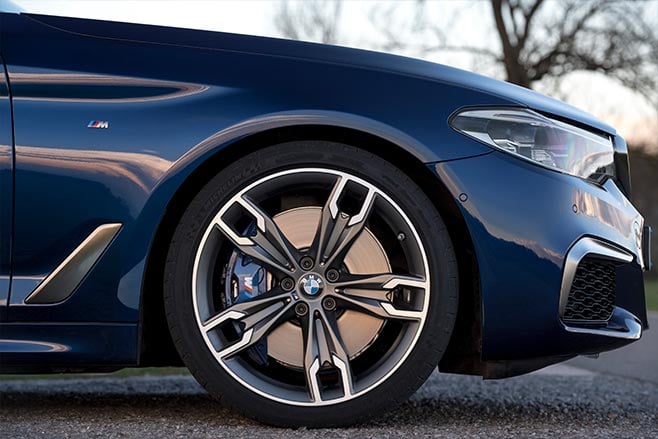
You can pair this stonk with two different flavours of chassis that are based on the 5 Series aluminium-rich structure. Our test car’s Pure specification demonstrates the first, fitting an M active differential to the rear axle, M adaptive suspension and huge M brakes that nicely fill its standard-for-Oz 20-inch wheels.
Or a wagon: Alpina B5 Touring review
This sets you back a very reasonable $137,900. Upgrade to the full-fat M550i xDrive, however, and not only does the price grow to $149,900 but active roll stabilisation and rear-wheel steering further bolsters its handling.
The best way to describe the M550i in corners is it’s like an overgrown M340i xDrive. It greets you with a nose heavy front-end along with steering that never texturises and feels slow given the car’s size. That it needs 2.9-turns to go from lock-to-lock at rest proves a rear-wheel steering system is a must for anyone who navigates car parks often.
But like the M340i, you need to peel back the M550i’s layers to reveal its true character. Its adaptive dampers refreshingly offer only two modes, while its powertrain can be dialled all the way up from Comfort to Sport Plus. During tight cornering the M550i can get a little vague and pushy at corner-entry. The all-wheel drive is apparently fully variable but as long as the ESP is on it’s staggering how much throttle the chassis will accept given the grunt on offer. Meanwhile the eight-speed ZF gives you full control of its powers, crisply shifting up and down without a shrug in manual mode.
The brakes are strong, arresting the M550i’s bulk from 100km/h to a halt in 35.52m. They offer accurate feel charging through faster sweepers which is where the M550i is better balanced. It’s here that switching off ESP reveals just how rear driven it can be, the powertrain happy to indulge in small slithers of throttle oversteer.
Credit to its suspension tune, though, it’s an easy car to gather and the low-speed damping offers incredible body control over a surprise mid-corner bump. Otherwise big revs and full steering lock at low speed should do it if you want to channel your inner Formula D driver. Legally, of course.
The wonderfully compliant ride validates the M550i for everyday use, transforming most city roads into cushioned commutes where only serious potholes threaten to find its bump stops. Meanwhile the V8’s fantastic part-throttle driveability only reinforces this. You’ll love the interior if you find the specification in a 530d fancy enough (we reckon it could do with a touch more flair), while the cushioning front seats offer a seating position typical for a big sedan with good elbow and head room.
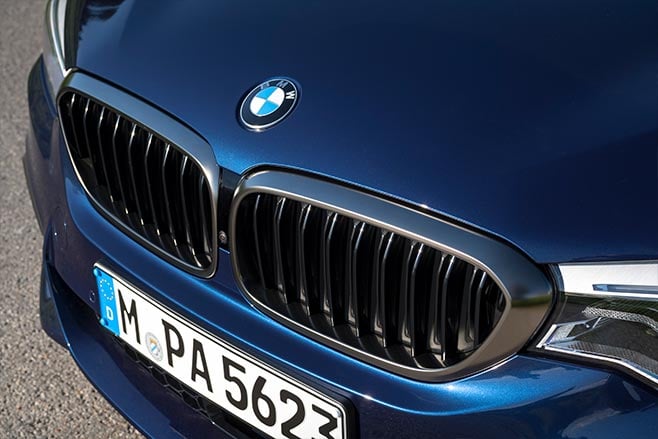
Its exterior is secret service spec, with the designers only going as far to repaint some exterior trim bits in grey and add a subtle rear lip spoiler, that suits the car’s sleeper vibe. We do love, though, how each exhaust tip houses a pair of actual non-fake square pipes (take note, AMG!). They play a high-tech yet deep, free-revving timbre – at least from inside the cabin.
Since the M550i’s spinach-fed strength might be lost on somewhere like Australia, Audi’s S6 and Merc-AMG’s E53 rise as the thinking person’s options in this category. But it’s impossible to ignore the performance-to-price equation here.
That the M550i Pure is quicker to 100km/h than an M5 Competition while charging almost $100K less proves you’re getting lunatic M-grade performance and unbelievable V8 noise without key drawbacks like a stiff ride.
Yes, the steering’s iffy. But if the rest ain’t enough convince you, or a Max Rockatansky, nothing will.
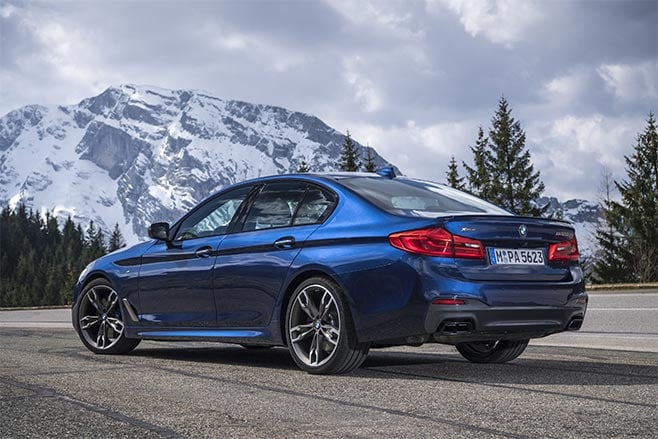
4.0 stars out of 5
Like: Cushioning ride, controlled handling; tarmac tearing straight-line speed; price; brilliant all-wheel drive Dislike: Looks a bit old now; iffy and slow steering
BMW M550i xDrive specs Engine 4395cc V8, DOHC, 32v, twin-turbo Power 390kW @ 5500-6000rpm Torque 750Nm @ 1800-4600rpm 0-100km/h 3.62sec (tested) Weight 1810kg Price $137,900
What’s on WhichCar TV this week?
Muscle car mania!
This Sunday we’re looking at cars that have too much power for their own good. Come with us as we explore the world of the muscle car.
Ford’s fast Falcons
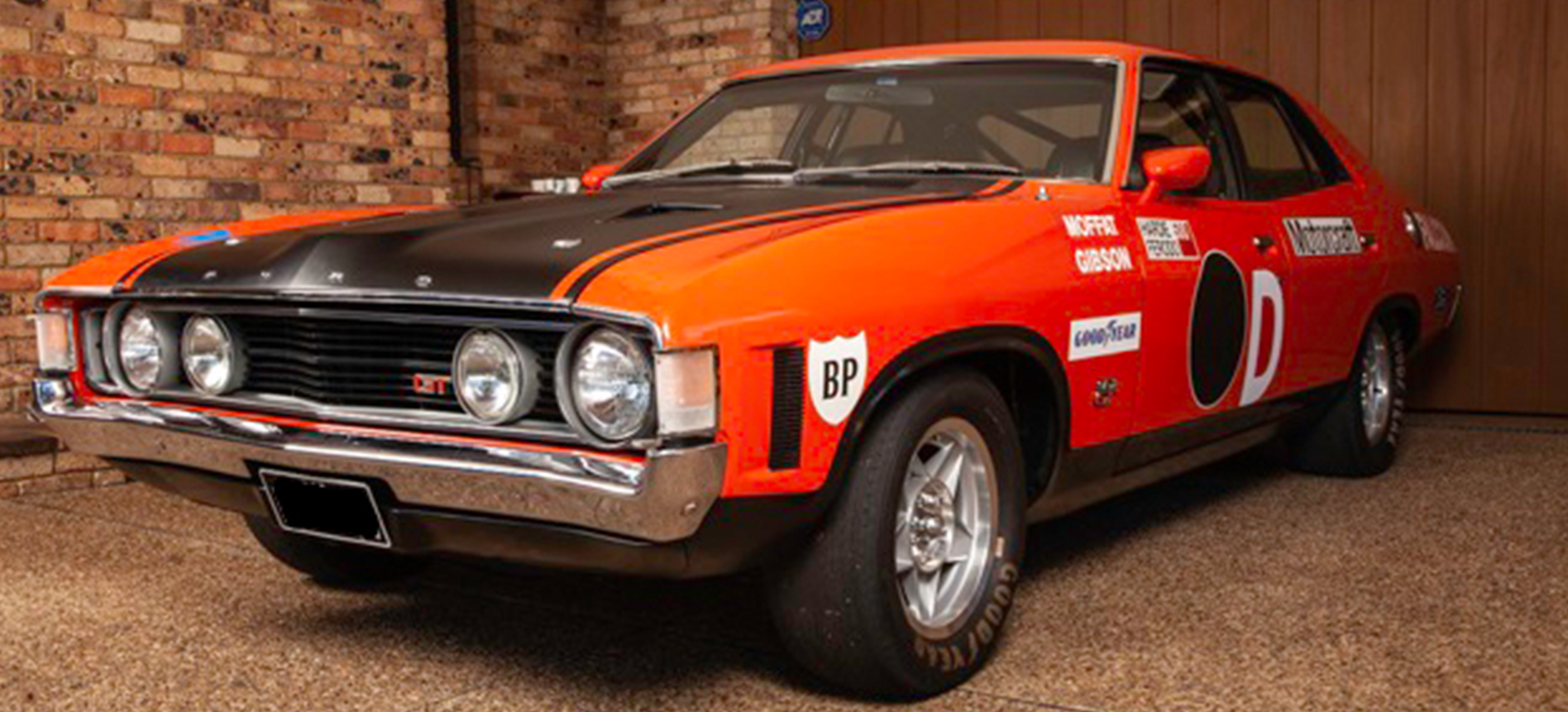
The GT-HO is arguably the most iconic Australian muscle car nameplate of all time and its sole purpose was to dominate at Bathurst. Guy Allen investigates the mythology surrounding the forgotten Phase IV.
How about Holden?
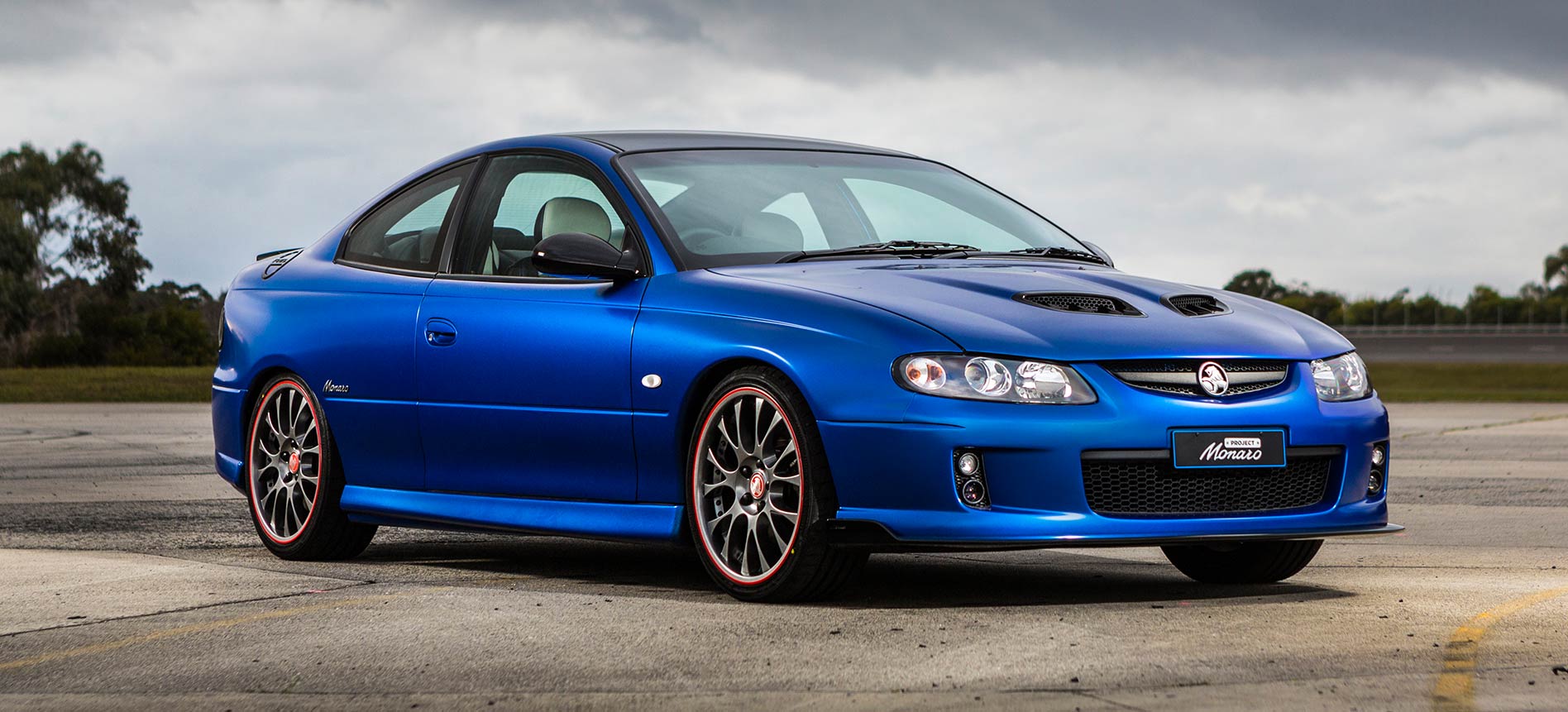
On the other side of the fence is the Holden Monaro muscle car – the car that gave Holden its first ever Bathurst win. Andrew Broadley sneaks a peek at Holden’s Project Monaro which recommissioned a modern Monaro into its ultimate high-performance form.
HSV’s history
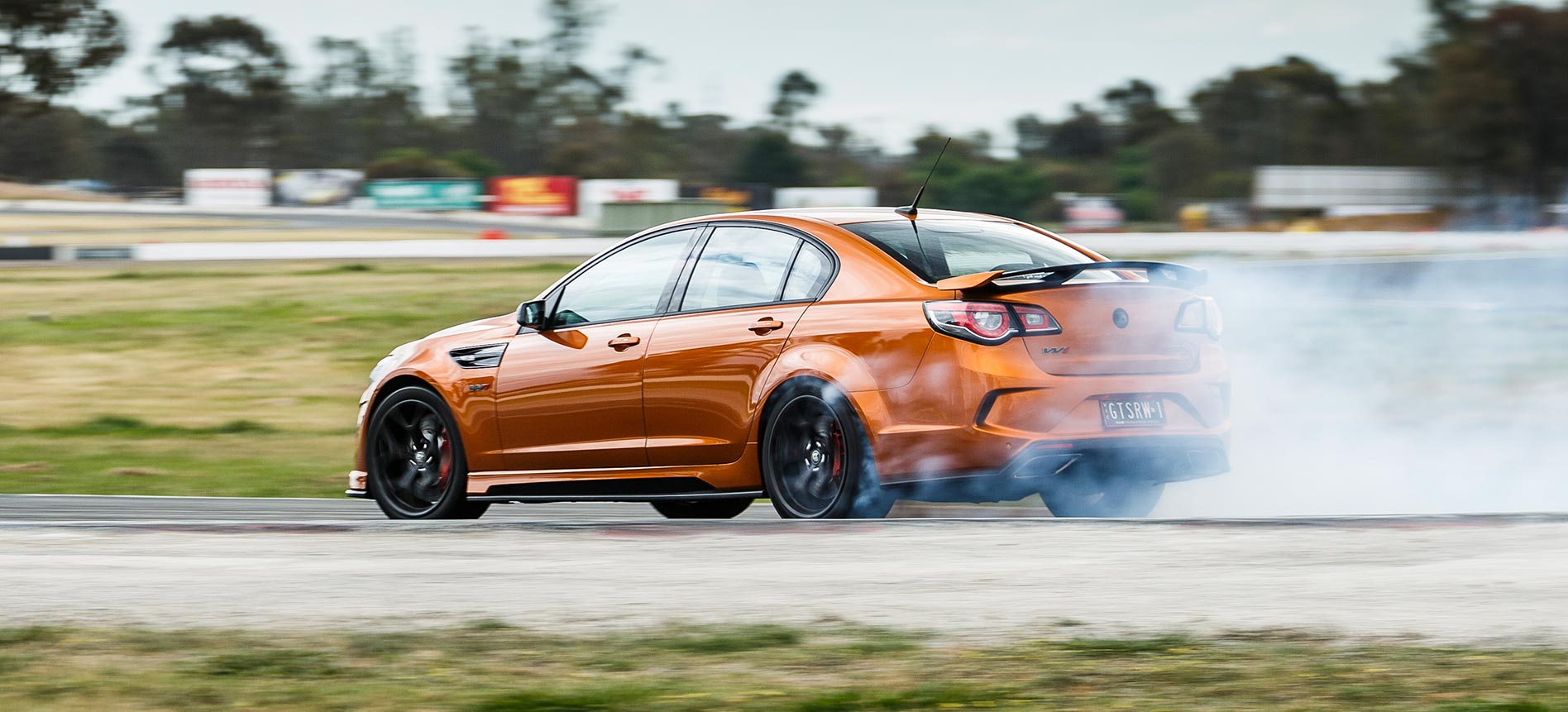
Speak of muscle cars in Australia and it’s not long before the HSV name is mentioned. We take a look at its final ode to Australian muscle cars, the HSV GTSR W1.
The Ultimate Falcon send-off
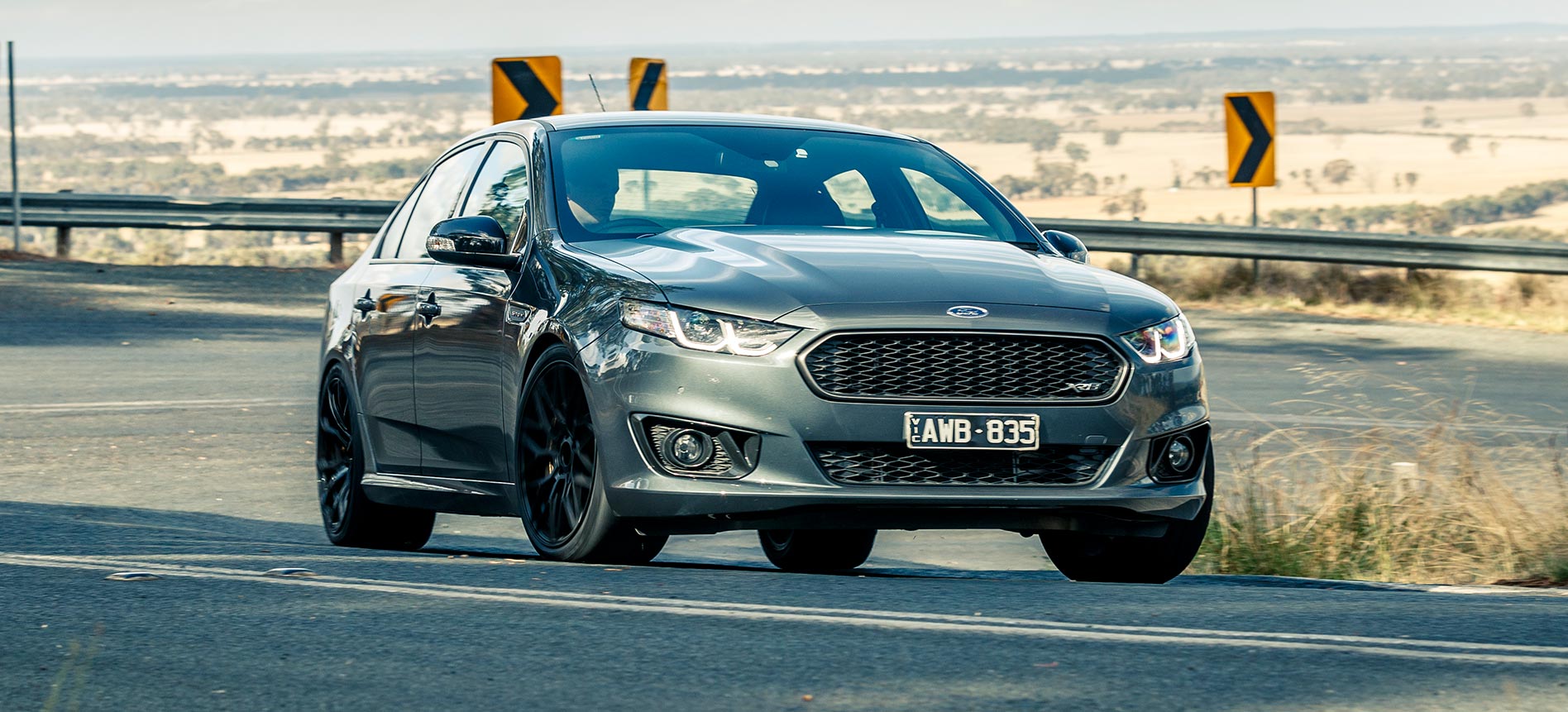
While Ford Australia never buoyed to pressure to create one final GT-HO, the team at Premcar couldn’t let the Falcon nameplate die without one final go at it.
The future of muscle cars
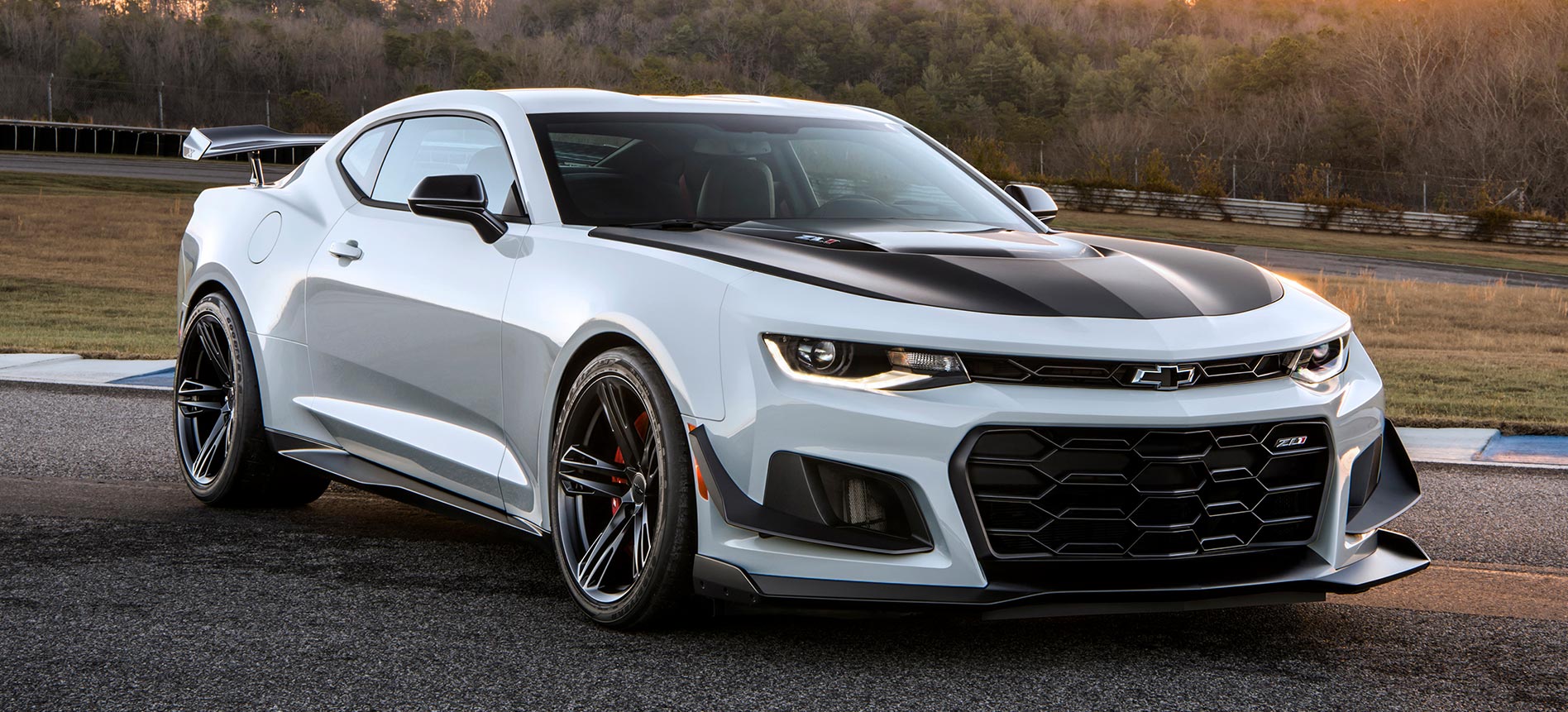
Just because our local heroes are gone doesn’t mean there’s going to be any less fun in the future… We take a look at what Australians are being offered in the muscle car stakes going foward.
WhichCar TV Season Two Episode 25
4:00pm Sunday August 9, Channel 10
WIN A TRIP TO THE MALDIVES WITH WHICHCAR
For season two, we’re also offering an amazing prize for our viewers. How does a trip to the Maldives sound? Pretty awesome, right?
The competition is open NOW so make sure you tune into WhichCar TV on Channel Ten at 4pm Sunday AEDT.
And, if for some reason you can’t (and it had better be a good reason!) then there’s a host of ways to catch up on the show, check out behind-the-scenes stuff and find out more about the cars Aussies want to buy.
For example, our weekly podcast, our Facebook page and our YouTube channel are standing by 24/7.
MISSED THE SHOW? Catch up at Ten Play
“I would have left it with the F1. But now there’s a point to be proven,” Gordon Murray said in a Goodwood interview in 2014, well before the Gordon Murray Automotive (GMA) T.50 was public knowledge.
Now, Murray’s point, that “you can still do a great driver’s car with an internal combustion engine and pure engineering,” is about to be proven, or so we expect from the man who created the car often considered to be the greatest supercar of all time.
But the McLaren F1 isn’t the only thing on Gordon Murray’s resume, even if it may be the biggest highlight.
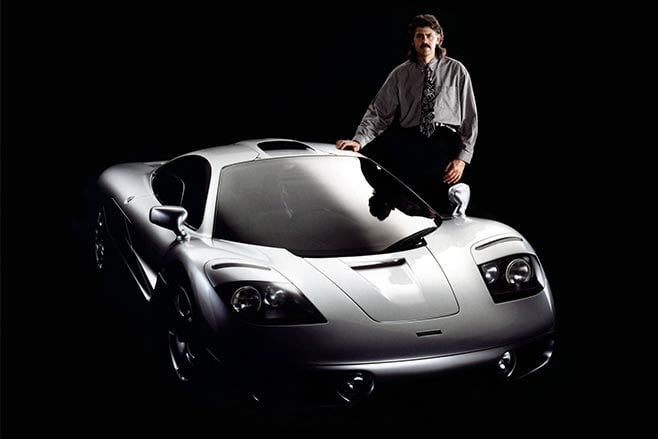
The South African-born (1946, 74 years old) Ian Gordon Murray is a British citizen, having lived in England for most of his life and now resides in Surrey, not far from his current Gordon Murray Design and GMA workplace.
But even before his move to the UK to work as chief designer for the Brabham Formula 1 team, Murray had studied mechanical engineering in Durban and gone on to build a race car, his IGM Ford.
The car was a 1-litre Anglia engine-powered bespoke car, though it used some body parts from a Lotus 7, meaning it looks somewhat like a Caterham kit car. Murray even raced it himself in South Africa’s National Class in 1967 and 68.
Did you know the McLaren F1 also had small aero fans?
The next year, 1969, Murray was at Brabham, where he would go on to create (under Bernie Ecclestone’s management from 1973) a legacy carries through to the T.50: his use of fans.
The Brabham BT46B was reportedly described by then Brabham driver Niki Lauda as uncomfortable to drive due to its incredibly high cornering speeds, achieved by a large rear-mounted fan drawing out air from underneath the car.
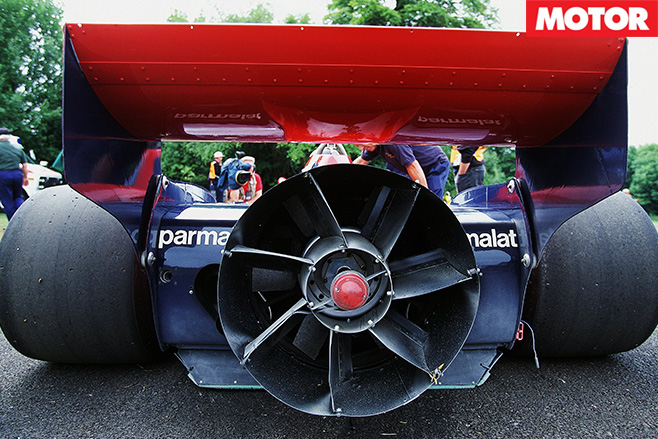
Lauda would go on to race only once with the ‘fan car’ winning the 1978 Swedish Grand Prix upon its debut before the car was banned. This win is just one of 50 Grands Prix that ended with a Murray-designed car crossing the finish line first.
A couple of years after the fan car, Murray’s time at Brabham resulted in two F1 drivers’ championships for the team in 1981 and 1983 with the BT49 and BT52 respectively, both with Nelson Piquet taking out the title.
The team’s fall from dominance coincided with its move away from Ford engines, with Murray’s yet-to-be-realised future further proof that his designs weren’t the cause of Brabham’s decline.
At McLaren (from 1987) Murray would thrive both as technical director of the F1 team and as the man behind McLaren’s road car brand from 1991.
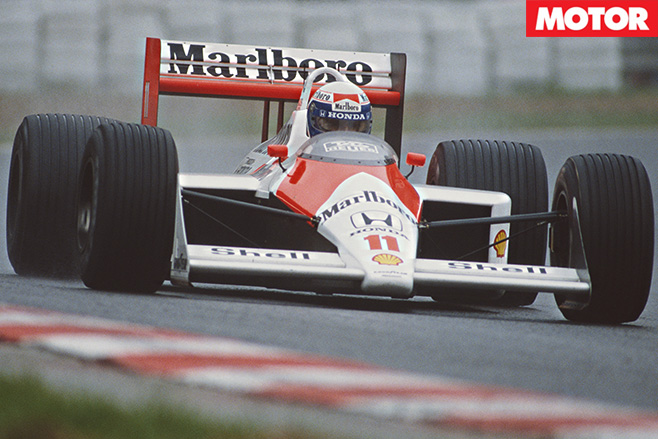
Murray’s work as the technical director for the race team under chief designer Steve Nichols allowed McLaren to secure three consecutive championships in 1988, 1989, and 1990, as well as providing the first drivers’ championship for Ayrton Senna in a McLaren MP4/4.
After his time in Formula 1, Murray turned to road cars, taking much of his learnings from the track and a philosophy for lightweight, engaging sports cars. This, of course, resulted in the sometimes confusingly named McLaren F1.
The McLaren F1 (1992-1998) still retains the title of ‘the greatest sports car built’ among many, with its kerb weight similar to a modern Mazda MX-5 and its power outputs from a BMW-derived atmo V12 in the same region as a new McLaren 600LT. It was faster than the Jaguar XJ220, stealing the record for fastest production car by more almost 40km/h at 386km/h.
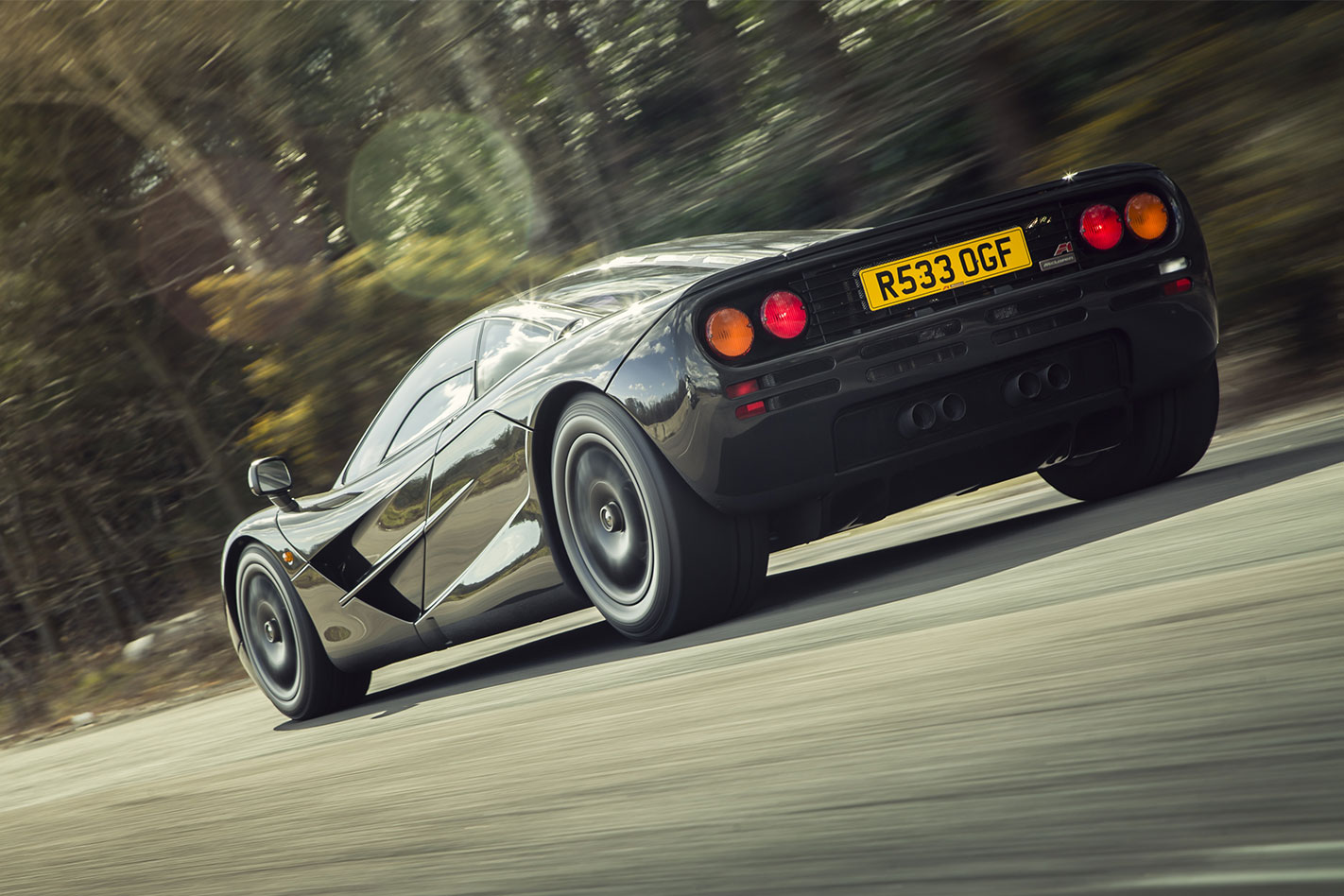
Of course, racing versions known as F1 GTRs were also incredibly dominant, achieving many victories including upon its Le Mans 24 Hour debut in 1995.
Murray also worked closely on the Mercedes-Benz SLR McLaren, but it’s the work he’s done since then that he hopes will change the way cars are designed and built.
Since 2007, Gordon Murray Design has been developing what seem to be revolutionary ways to simplify and improve car manufacturing. Called iStream, the system intends to create cars that are lighter and more environmentally friendly without sacrificing safety or comfort.
Given the T.50 is about the size of a Porsche Cayman, fits a 4.0-litre V12, and has three seats, there’s no doubt Murray is onto something.
Here it is: The GMA T.50 revealed
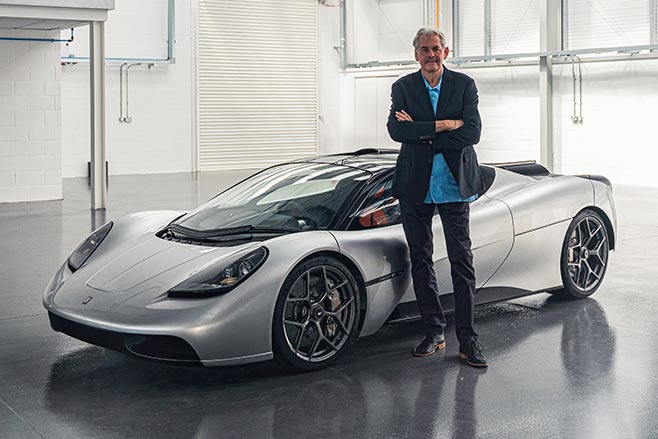
Murray also has a small truck, using iStream tech, in mind for Africa to help transport food, water, medicine, and other goods. Called the OX, it’s intended to be more affordable and its lower weight will allow it to be more efficient transport.
“It could change the lives of tens of thousands of people,” he said in an interview published in MOTOR’s March 2020 issue.
“Creatively, I think I’m in the best period of my life. With iStream, I can take all my learnings from Formula 1 and try to give it back to the everyday motorist, with all the safety and lightweight benefits it offers.”
Personally, Murray’s love for lightweight is evident in his garage. His daily driver is a new Alpine A110, calling it the best ride and handling compromise he says he has experienced since the Lotus Evora though he wishes the A110 was manual and N/A, while his favourite sports car is his 1970 Lotus Elan.
Of his 45 cars, 35 weigh less than 800kg. If that doesn’t say something about Murray, the fact he’s come back to supercar design with the sub-1000kg T.50 “to prove a point” should.
Get your free weekly MOTOR report!
Gordon Murray has set the internet ablaze in recent days, revealing his latest creation the T.50 to the world – a 488kW, 986kg, manual, atmo V12 rocketship.
As part of the press reveal, Murray has been doing extended walkaround videos, talking about his new car’s technical details.
One, hosted by Harry Metcalfe, former owner of Evo and all-round good chap, for his Harry’s Garage channel caught our attention.
The floral-shirted Murray proceeds to drop all manner of technical bombshells about the new car, but it was something he said about a previous creation, the iconic McLaren F1, that really had us reaching for the rewind.
Old Harry saunters round to the back of the car and considers its standout external design feature – a giant downforce-magnifying fan.
“The fan, which we’ve not seen on a road car,” says the usually very well informed Metcalfe, referring to the unit on the back of the T.50 designed to improve the effectiveness of its diffuser.
“The F1 had two. It had the same ground effect, but in a tiny area.” countered Murray.

Huh? That is a nugget of information that has flown under the radar.
Turns out the truth has been hiding in plain site, with the technology referenced in Driving Ambition, the definitive history of the F1’s development, written by Doug Nye, Ron Dennis, and Murray himself. Page 84, to be exact.
“What the F1 did was, I had two reflex diffusers, very steep, that the air would not normally follow. But only so wide,” Murray continued, indicating a width of maybe 20cm or so.
“It had two 140mm fans, sucking the air out of them and when you switched them on we got five percent downforce and a two percent reduction in drag.
“But we had so little time in the wind tunnel because it was the Formula 1 tunnel we were borrowing, effectively.
“I logged it in the memory and I thought ‘If ever I do another supercar, I’d like to do that over the whole floor of the car – the diffuser floor – and that’s what we’ve done.”
The T.50’s fan looks more like Murray’s iconic Brabham BT46B ‘Fan Car’ design, due to packaging restrictions preventing it being hidden under the engine cover.
“The Brabham was a crude device,” said Murray. “It was a vacuum cleaner, basically.”
So there you go. The original F1 – a car many thought to be a bit of an aerodynamic disaster area – had some very clever tricks buried beneath its bodywork. And the T.50 takes those ideas and really runs with them.
