
Over the course of more than ten generations and nearly 40 years, the Toyota Camry has proven its self as unfalteringly popular and one of Australia’s hardest-working sedans, but you’ve probably never have labeled it particularly sporty, right?
But just once, Toyota Australia used the benign model as the basis for a concept car that was an unparalleled departure from the many generations of Camry we are used to seeing on the road.
At the hands of former Australian champion driver Alan Hamilton, the manic track-blasting SP9R was built to demonstrate the performance potential of the big-T brand using the major components of the 2003 Camry Sportivo – not that you would recognise the sensible sedan connection from any angle.
Its 2.4-litre four-cylinder was relocated from the front of the Camry and slotted in behind the two seats of the SP9R to drive the rear wheels instead, but resourcefully used the same gearbox and differential.
By today’s standards, the 112kW and 218Nm produced by the Australian-made 2.4-litre naturally aspirated engine probably wouldn’t going to set your trousers ablaze, but the concept’s race car space-frame construction weighed in at almost half that of the Camry and performance took a corresponding boost.
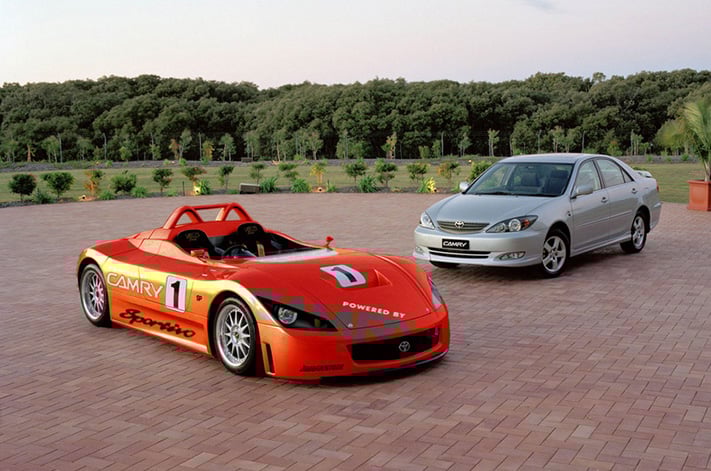
At the time, Hamilton said that Toyota’s lightweight components including the all-alloy engine (it contributed just 115kg to the total mass) helped produce a capable track car. “That is a huge plus for the power-to-weight ratio and also the balance of the car,” he said.
A shame, given the series was reportedly about half as expensive to enter as any other comparable one-make series of the time, and could have been an accessible entry point for budding racers.
Even more tantalisingly, the car was equipped with road-legal lights and mirrors thanks to its Camry donor and the hope was to eventually produce a number of models that could be registered and driven in public, but this ambitious plan also failed to come to fruition. Toyota would have to wait until 2012 to really make a splash in the high-performance pool.
With a desire to attract a more youthful audience to the brand, Toyota finally cracked the formula with the 86 Coupe, and the tiny two-seater bucked traditional sportscar sales trends with its irresistible value proposition.
Interestingly, the car that now serves as the spiritual successor to the SP9R has a power and torque figure not dissimilar to the concept with 152kW and 212Nm. It’s a bit of a stretch to think that the SP9R’s promise of “a taste of things to come” was a prescient nod to the 86 but sometimes real life and a certain serendipity intervene.
Of course, these days, the Japanese company continues to demonstrate its less conservative side with its resurrected sports hero – the Supra – and more playful small models including the C-HR compact SUV.
It’s fascinating to think that the rich selection of fun, more youthful and exciting Toyotas you’ll find in showrooms today, owe a little of their genealogy to a track-focussed FrankenCamry that was born in Australia.
Want more Toyota concept craziness? You’re welcome.
As the world around us changes in ways that are almost impossible to fathom, there is one service that has taken 15 years to become an overnight smash hit.
With the world of motorsport brought to its knees by cancellations and postponements, iRacing has burst onto the world stage in a big way. But what is iRacing?
It’s fair to say for the majority of us, our computer racing has come via the widely-used channel of game consoles and their associated racing titles.
If you’re in the Sony PlayStation camp, then Gran Turismo was likely your game of choice, while Xbox aficionados looked to game series like Forza to get their racing jollies.
However, as good as the modern console is, a typical racing game falls some way short in key areas.
While Gran Turismo’s depth of content is truly astonishing, for example, and Forza’s graphics are almost beyond belief, both fall short when it comes to offering accurate racing dynamics.
And it’s not just in the areas of input realism, either – the quality of track rendering can vary wildly between the platforms, and more often than not fail to accurately portray the venue that they are hoping to emulate.
Image from Gran Turismo Sport
There is, however, an alternate racing platform, and it’s not as hard to access as you might think.
Where iRacing differs from its console companions is in the areas of vehicle behaviour dynamics, track rendering and its ability to bring racers from across the globe and from every skill level together to challenge themselves and each other in a cost-neutral way.
Holden Commodore Supercar at Mt Panorama (iRacing)
iRacing was born in the United States 15 years ago but has leapt into prominence over the last five years, thanks to the rise and rise of the esports genre. It’s a web-based game that requires more gear than a typical console arrangement, but it’s not a giant leap in terms of accessing the tech.
What do you need to go iRacing?
iRacing is designed to work in a Microsoft Windows environment. While it means a PC is the most logical computer to use, Apple Macintosh computers are often able to run Windows, which will allow you to access iRacing.
Worth noting; the iRacing network now requires a 64-bit version of Windows, and the oldest Windows operating system you can run is Windows 7. This change required a lot of users to upgrade older 32-bit PCs to the more modern and powerful 64-bit system.
Your computer needs at least 8gb of RAM, and at least 10gb of free space on a hard drive. It will also need a half-decent graphics card that has at least 2gb of dedicated memory on board.
More crucially, you’ll need a rock-solid internet connection to get the best from iRacing. Gameplay is accessed by the web, so the stronger your internet connection is, the better your game playing experience will be.
If, for example, your connection strength is intermittent or – heaven forbid – drops out completely, then it’ll instantly impact on the race or practice session you’re taking part in.
Hard-wiring your computer to a modem with an ethernet cable is the best way to ensure a good connection, though it works well enough via a wifi connection.
The other thing you’ll need is a controller. While some players use console-style hand controls, the vast majority of the network’s 85,000-plus players are using a steering wheel and pedals. This gives you by far the most realistic interface with iRacing.
An entry-level PC-compatible set-up from a company like Logitech will work well; as a bonus, it can also be used with Sony’s PlayStation console. It doesn’t need to be mounted in a fancy rig, either; many racers will bolt the steering wheel to their work desk and use an office chair.
Entry-level stand with Logitech gear
A bespoke set-up does work better, and a frame to hold a wheel and pedals can be had quite cheaply – though you’ll need to make arrangements for a monitor.
More immersive rigs are more expensive and, just like real car racing, the sky is the limit when it comes to cost and complexity.
How much does iRacing cost?
iRacing is a subscription-based service, and costs start at around A$20 a month. Prices fall quickly the longer you commit, though, with two-year plans currently costing around $160 on special. It is subject to exchange rate fluctuations, so prices may vary.
A basic subscription also buys you more than 20 cars and 20 tracks, which allows access to entry-level (known as ‘rookie’) events across the iRacing spectrum.
As well as traditional road racing, iRacers can tackle US-style dirt and tarmac oval racing in a variety of machinery, dirt track speedway, rallycross and even off-road truck racing.
The rookie package includes cars like the Mazda MX-5 Global Cup racer (below), a 2012-spec Ford Falcon V8 Supercar, a plethora of NASCAR products, a Radical SR8 and even a Volkswagen New Beetle rallycross car.
Tracks include Laguna Seca in the US and Tskuba in Japan, along with popular iRacing circuits like Lime Rock Park and Daytona.
However, if you want to access cars like the Porsche 911 RSR, a variety of GT3 machinery from Ferrari and McLaren, Formula One cars from Williams and McLaren and more modern Supercars from Holden and Ford, then you’ll need to ‘buy’ them as part of the subscription.
A car will typically cost around $15 to add to your garage, and a track is a similar cost. The more you buy, the cheaper it gets, but you’ll probably feel the need to invest in a few more items to get the most out of the game.
For example, the stock track set misses out on other iRacing properties like Phillip Island, the now-defunct Oran Park and Mt Panorama, while iconic venues like Le Mans, the Nurburgring Nordschliefe and others are also available.
As a reference, our tubular steel review rig cost $200 second-hand some years ago, and has been upgraded with a $200 fixed-back seat, $200 worth of second-hand speakers and a $250 monitor.
We also use Logitech wheels and pedals thanks to their affordability, and which we can source second-hand reasonably cheaply, so figure on less than $1000 for a unit that has thus far lasted for more than five years.
As a contrast, renowned driver development team McElrea Racing in Queensland uses a MotionForce1 simulator (below) that costs in excess of $100,000, and which uses lateral and longitudinal pitch and roll technology to impart a true feeling of realism. Lotto winners only need apply!
What’s it like to play iRacing?
As a background, I grew up with PlayStation consoles, and I’ve been lucky enough to race cars for real, so graduating to iRacing was a relatively easy decision.
The learning curve is quite steep for a gamer just stepping into the world of ‘proper’ sim racing, and I found it all but impossible to even lap a basic circuit in something as low-powered as an MX-5 at first.
The level of fine control needed to properly control a car differs markedly from the stab-and-send-it method of a hand-controlled console game, and it takes patience and practice to get the hang of iRacing’s abilities.
As you apply more time and craft to the game, though, the rewards are immense. The butterflies bashing around in my stomach at the start of an iRacing race are still every bit as real as the ones that used to mosh-pit around my guts on the line of a real car race.
There is an enormous ability, too, to adjust your car to your liking – or equally to adjust it into an unusable mess! Entry-level races usually don’t allow any adjustments, though, while you can access an array of baseline chassis and drivetrain tunes from iRacing.
You can share set-ups between fellow iRacers, or even allow a friend into your settings remotely to engineer your car.
iRacing also brings realism to the fore in the way it manages its racers. It’s not a matter of opening your online wallet and buying your way to the front; all racers are required to earn a so-called iRating, as well as maintain a basic level of safe and competent driving.
If, for example, you muck up the first corner in a race and clean-bowl a few other racers, your iRating and safety rating both fall, which affects your ability to earn your next grade of licence, which is needed to race in faster classes.
The system (for the most part) weeds out the ratbag driver, as most people are keen to advance to the next level.
However, there’s no requirement for you to ever race if you don’t wish to. The service allows you to test any car you own at any circuit in your collection free of consequence, while practice sessions also allow you to ply your trade without fear of losing points.
Porsche 911 RSR
As well, leagues that cater for all sorts of categories of racing are popping up throughout the service. These leagues are hosted by members of the iRacing community, who are able to fine-tune the ruleset to suit.
In other words, you can form (for example) a Supercars league comprising only your four or five best mates, and you can tour the virtual racing world as you see fit.
However, iRacing’s real talent lies in the fact that it brings together racers of all levels from all around the world to race together.
It manages this by using those aforementioned ratings to allocate you to a race that’s likely best suited to your talents. Most Aussies start with the MX-5 Global Cup Rookie series, though many are moving directly into local leagues that race all manner of cars.
It’s here that you might join a race that features – or is even hosted by – noted real-world racers like Supercars stars Shane van Gisbergen or Scott McLaughlin (below).
If you know your motorsport, you’ll soon start to recognise names from across the motorsport spectrum, as well.
In fact, it’s even going the other way, with young racers who have cut their teeth on iRacing starting to show up in the ranks of real-world racing like the Toyota 86 series and the Super3 Supercars series.
Are there any downsides to iRacing?
iRacing’s biggest weakness is also its strength – it can be bloody hard! It really needs focus and dedication to get the most from it. I also think that it takes too long to earn the right to compete in harder categories, which can be discouraging.
The hardware and structure needed to run iRacing at a half-decent scale can be bulky, which takes up room, and the need for a decent internet connection can’t be understated.
As well, you’ll need to budget for your subscription costs, as well as for additional content.
iRacing – the verdict
I suspect that a lot of people are a bit freaked out by the notion of using a racing simulator that really steps it up from being a smash-and-bash sim, and with good reason. There is a level of discipline and investment – both time and money-wise – needed to do well at iRacing that surpasses anything currently offered on a console.
For our family, it’s a brilliant addition to our leisure life. As a former racer, I understand and appreciate just how similar iRacing is to the real thing, while our 17yo budding racer-in-waiting (below) can short-cut the journey towards racing for real by learning the discipline of motorsport in a format that doesn’t reward the pressing of a reset button or behaving like an idiot.
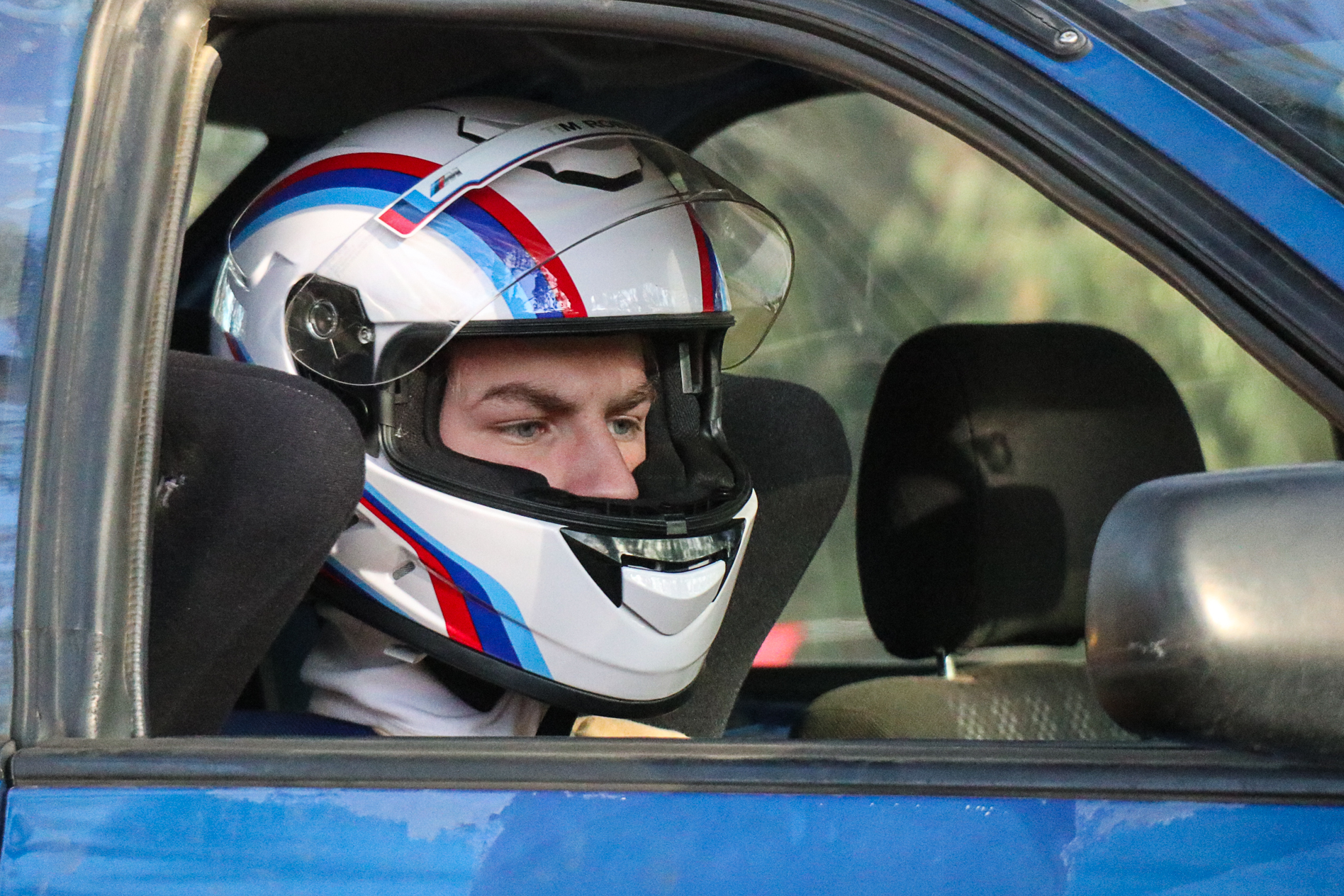
iRacer and wanna-be real racer, Max
Much like the real thing, not everyone will stick with it. Persist, though, and the rewards of stringing together a set of good laps on board some of the world’s coolest race cars, or by claiming a win against a stacked field of fellow iRacers from around the world, are truly worth the investment.
Let’s face it, when it comes to dual-cab utes, torque is king.
For many buyers, straight-line speed isn’t high on their priority list. Instead it’s about maximising payloads and braked towing capacities.
This got us thinking at Wheels HQ, so we decided we’d crunch the numbers to find out which dual-cabs talk the most torque for your bucks.
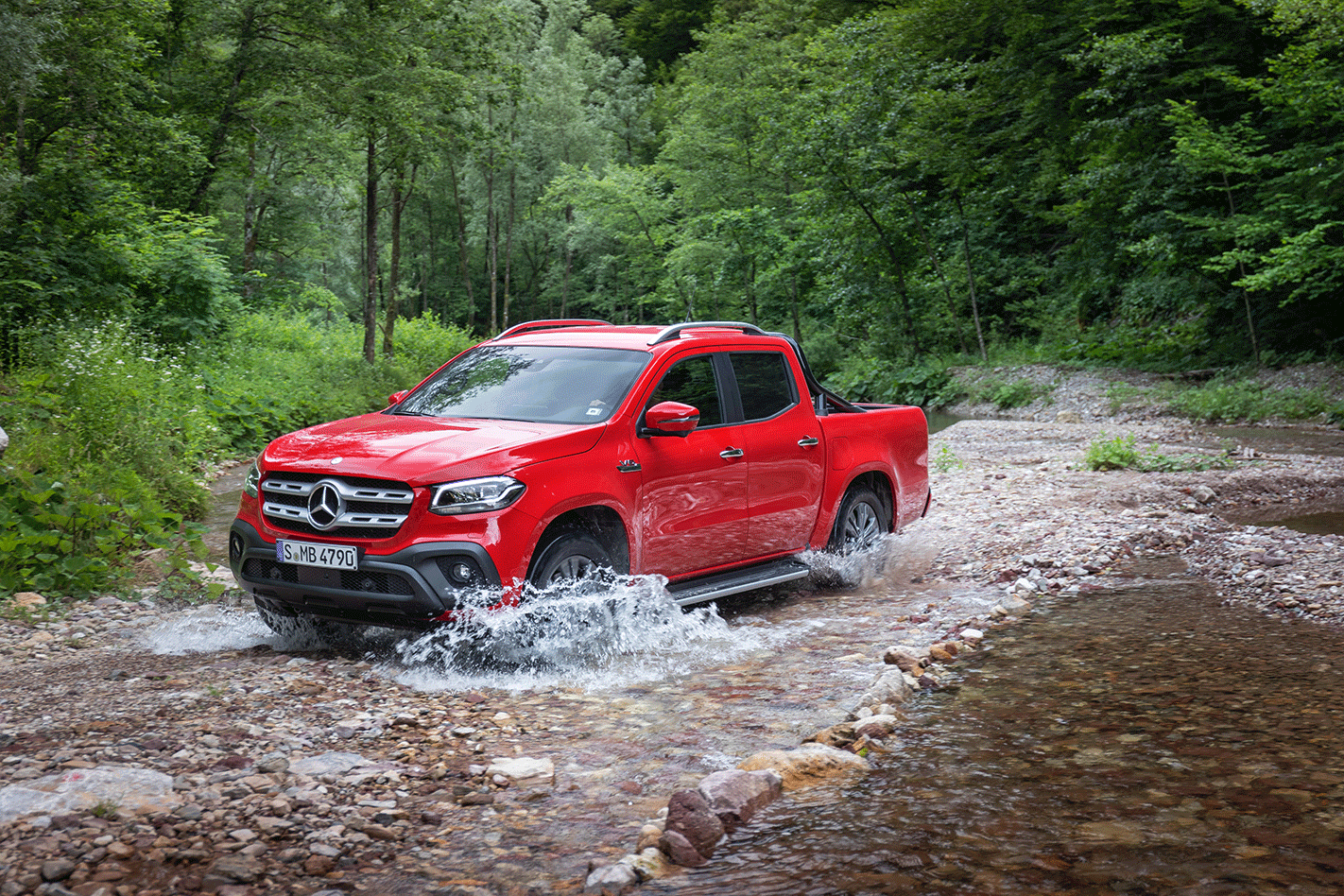
We’ve taken the ‘pick of the range’ from every 4×4 dual-cab rated in our recent summary of the market and calculated the rounded cost for every Newton metre the ute produces. Lowest dollars wins.
Where possible we’ve chosen the more popular automatic transmission. However, for the likes of the Mahindra Pik-Up S10 for example, only a manual is available.
Taking out bronze on our pick-up podium is the accomplished Volkswagen Amarok Core TDi550 – a variant that pairs the muscular V6 turbo-diesel with a reduced spec to bring you the best bang for your buck among the Amarok range. Coming in at $52,590 for the eight-speed auto, it’ll cost you $95.60/Nm.
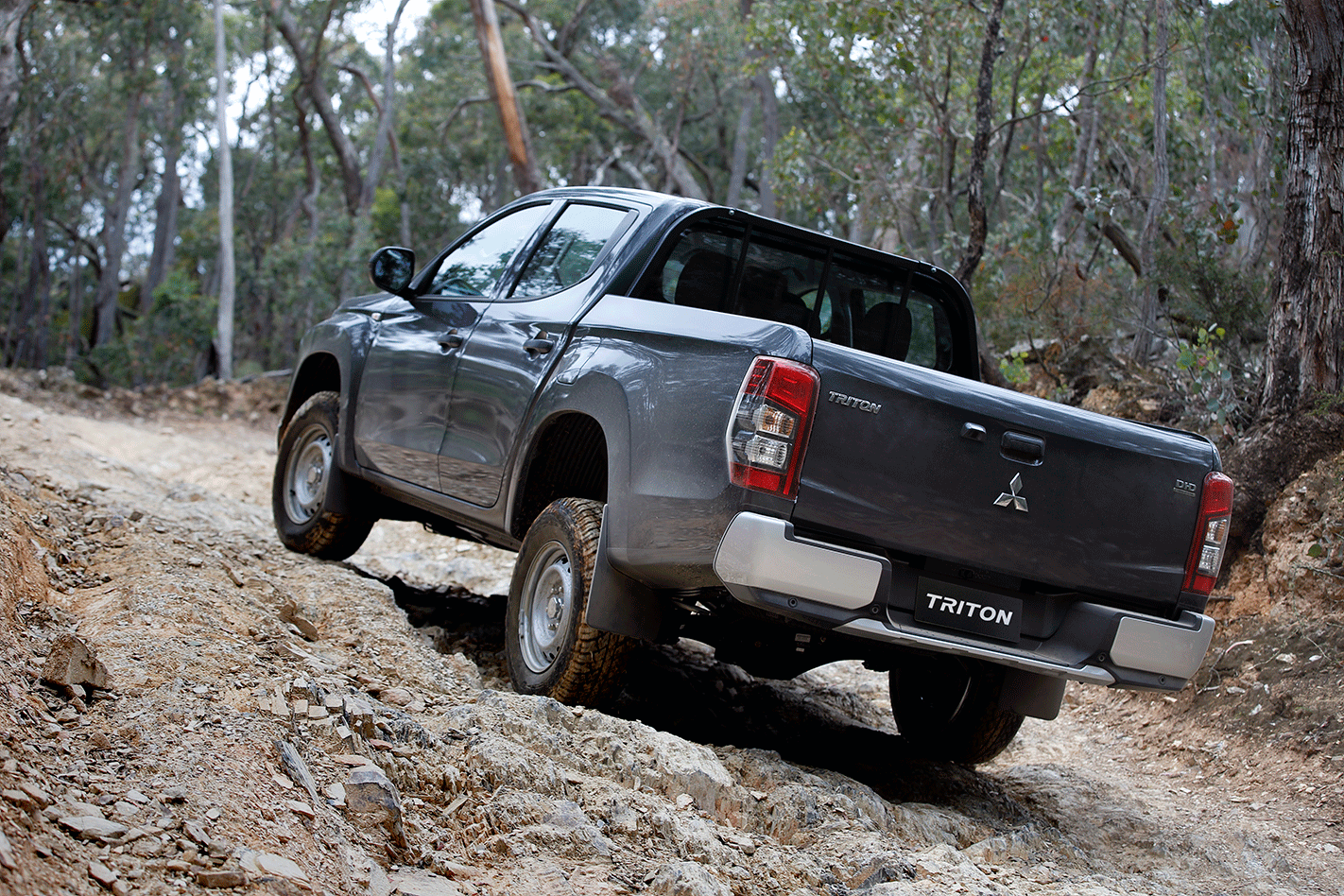
Silver goes to the Mitsubishi Triton GLX ADAS. At $41,040 you’ll be paying $95.40 for every one of the Triton’s 430Nm; further proof, if it was needed, that the Japanese brand’s push for price competitiveness is a worthwhile strategy in terms of sales.
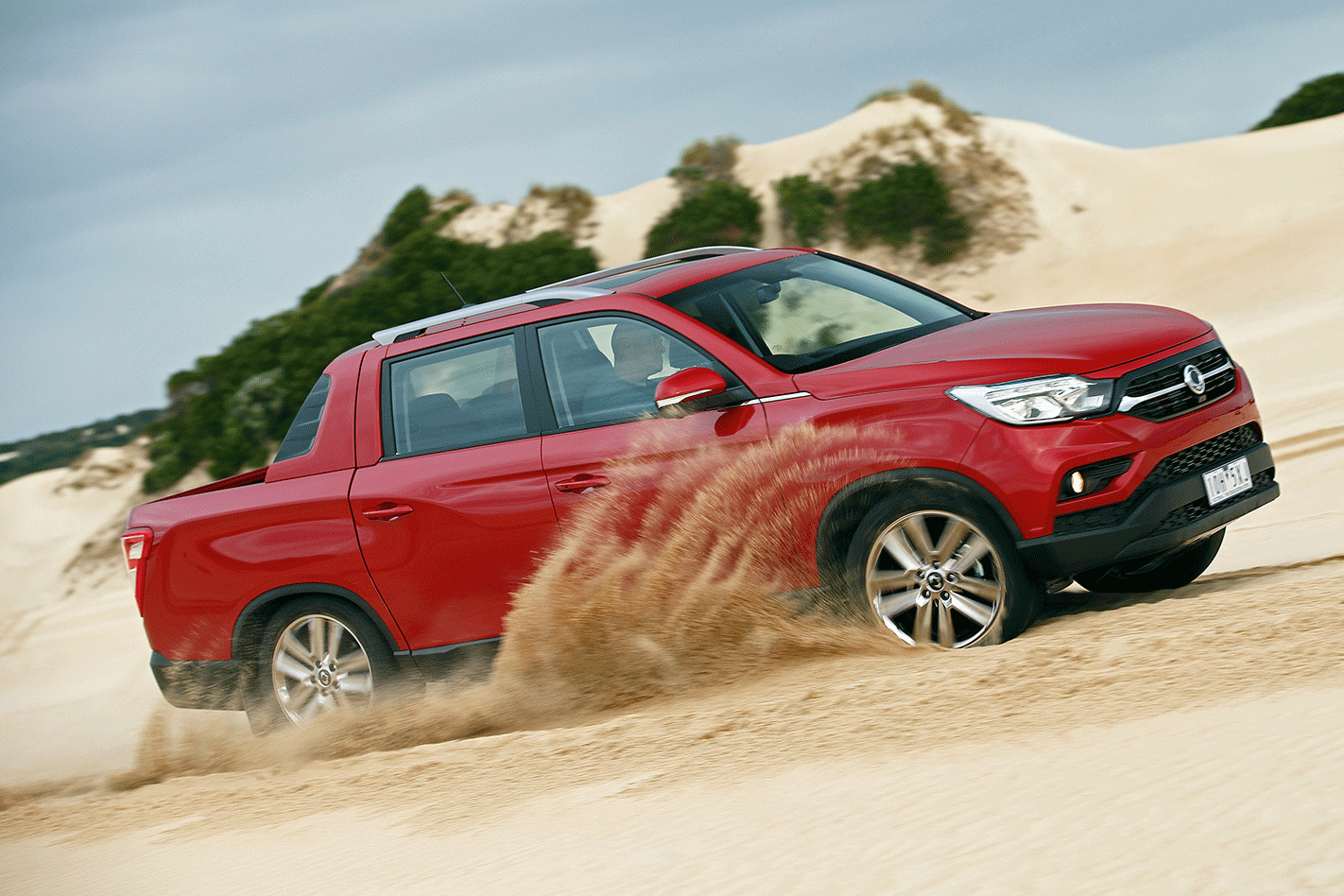
But grabbing the gold is the SsangYong Musso XLV. At $39,990 (driveaway), it offers 420Nm from its 2.2-litre turbo diesel, meaning it’ll cost you $95.20/Nm (and that drops to $77.40/Nm if you opt for the $32,490 entry-level EX automatic). The Musso also has a braked towing capacity of 3500kg, which meets the segment average.
As you’d expect, cheaper offerings fill the top 10, with the likes of the Mahindra Pik-Up ($31,990; $97/Nm), Great Wall Steed ($30,990; $100/Nm) and the LDV T60 Luxe ($37,358 driveaway; $103.70/Nm) scoring well because of their low sticker prices.
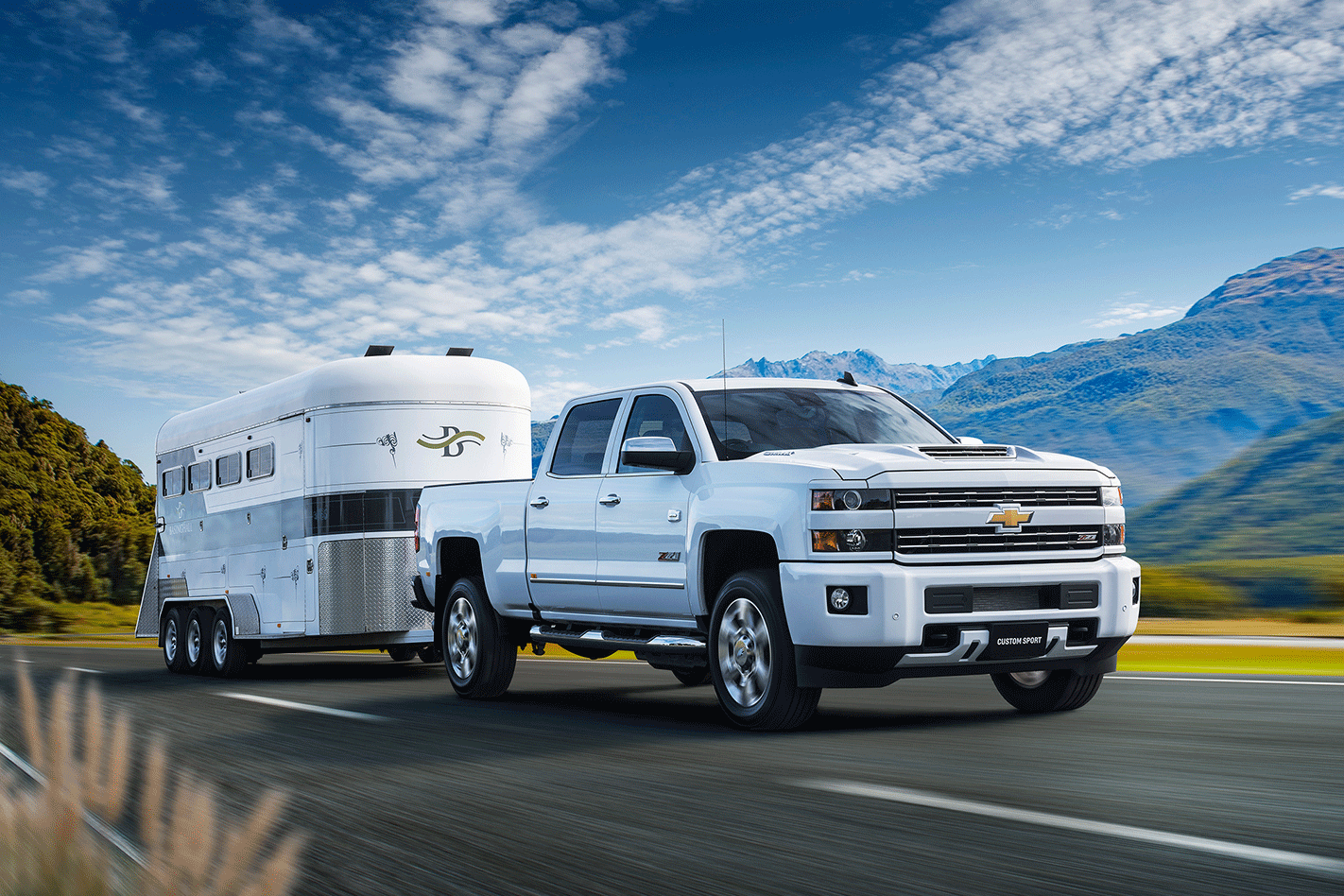
Taking price out of the equation, the big-brute Chevrolet Silverado 2500 LTZ Midnight’s 6.6-litre twin-turbo V8 diesel takes top torque honours with 1234Nm.
All that grunt means that despite it costing $139,990, the Silverado 2500 still places eighth on the list with $113.40/Nm. The 3500 uses the same engine, but is available by order only and sells in very small units so was exempt from this ranking.
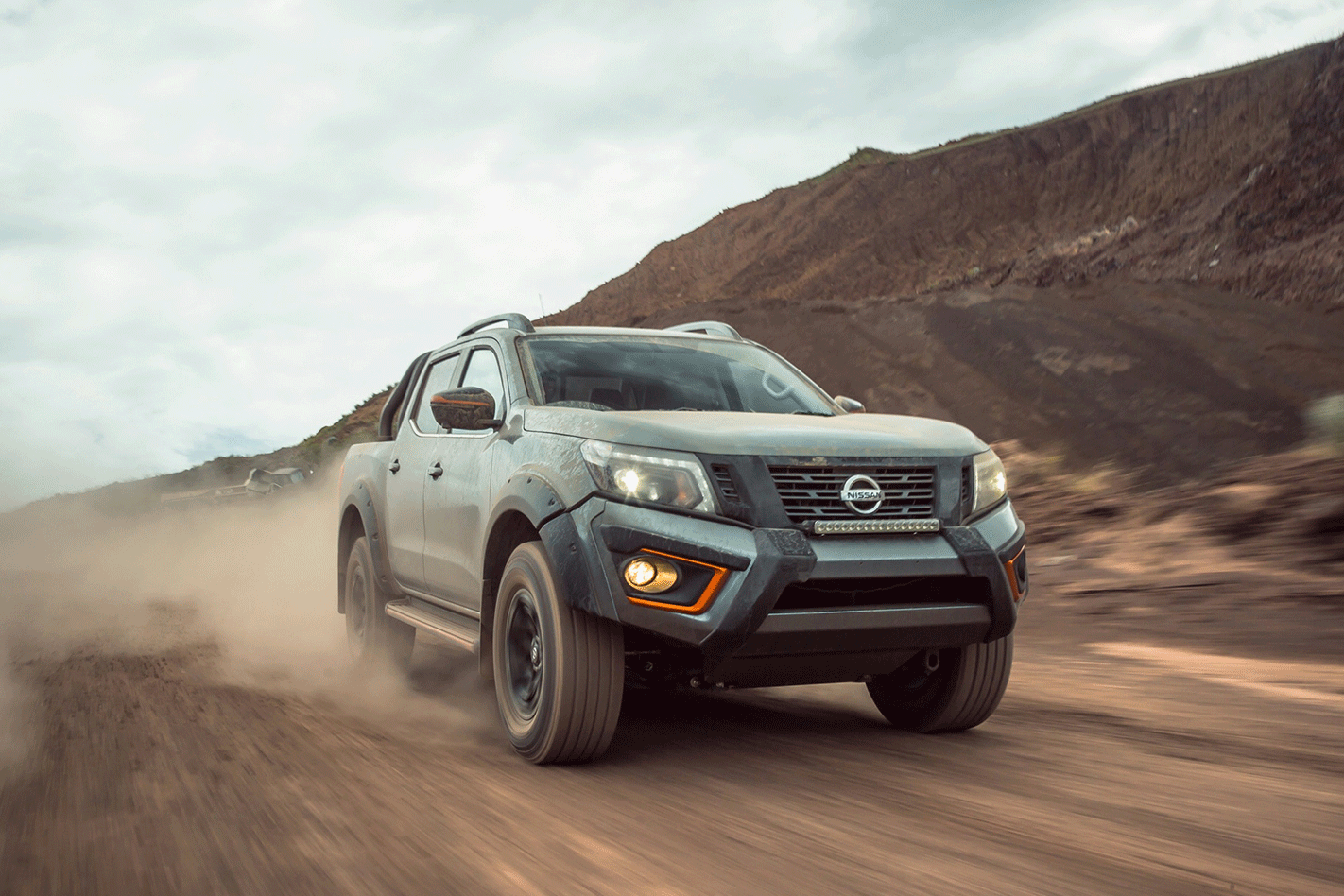
Interestingly, the popular Toyota Hilux and Ford Ranger failed to make the top 10, with the former coming in at $125.40/Nm and the latter $125.60/Nm. The super-capable, Baja-ready Ford Ranger Raptor is $153/Nm.
Unfortunately, the wooden spoon has to go to someone. And in this case, it’s the Jeep Gladiator Rubicon at $220.30/Nm. However, it has to be noted that it is a 3.6-litre naturally aspirated Pentastar V6 and not a torquey diesel, hence it’s at a disadvantage given its Newton count comes to 347. The Gladiator is still an exciting and hugely capable off-road ute that can seat five.
Whichever way you look at it, one thing is for sure – we’re not lacking choice in the market.
| RANK | DUAL CAB | $/Nm | PRICE | NM |
| 1 | SsangYong Musso Ultimate XLV | 95.20 | $39,990 | 420 |
| 2 | Mitsubishi Triton GLX ADAS | 95.40 | $41,040 | 430 |
| 3 | Volkswagen Amarok TDi550 Core | 95.60 | $52,590 | 550 |
| 4 | Mahindra Pik-Up S10 | 97.00 | $31,990 | 330 |
| 5 | Great Wall Steed | 100.00 | $30,990 | 310 |
| 6 | LDV T60 Luxe | 103.70 | $37,358 | 360 |
| 7 | Holden Colorado LTZ | 105.40 | $52,690 | 500 |
| 8 | Chevrolet Silverado 2500 LTZ Midnight Ed. | 113.40 | $139,990 | 1234 |
| 9 | Mazda BT-50 XTR | 116.90 | $54,950 | 470 |
| 10 | Isuzu D-Max LS-U | 118.40 | $50,900 | 430 |
| 11 | Nissan Navara ST-X | 122.80 | $55,250 | 450 |
| 12 | Toyota Hilux SR5 | 125.40 | $56,440 | 450 |
| 13 | Ford Ranger XLT | 125.60 | $59,040 | 470 |
| 14 | RAM 2500 | 129.00 | $139,950 | 1084 |
| 15 | Mercedes-Benz X350d Power | 144.40 | $79,415 | 550 |
| 16 | Chevrolet Silverado 1500 LTZ Premium Ed. | 176.30 | $110,000 | 624 |
| 17 | RAM 1500 Express | 179.80 | $99,950 | 556 |
| 18 | Jeep Gladiator Rubicon | 220.30 | $76,450 | 347 |
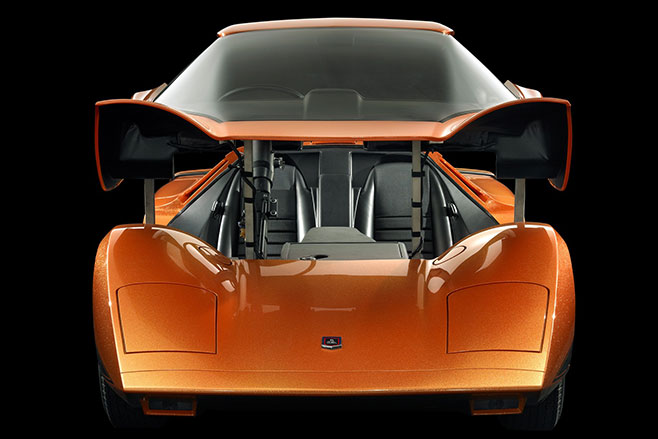
There can be few concepts that better highlight the crushing loss of Holden’s Australian design centre than its very first design study of more than 50 years ago – the Holden Hurricane.
When the Australian car maker announced it would cease production of home-grown vehicles by 2017, the only sweetener in the deal was that the local design and development centre would continue on alive and well – ramp up its efforts, even.
But since then, parent General Motors has confirmed it will completely retire the Holden brand by the end of this year, and the creative melting pot and engineering genius nestled in the company’s Melbourne centres is set to evaporate with it.
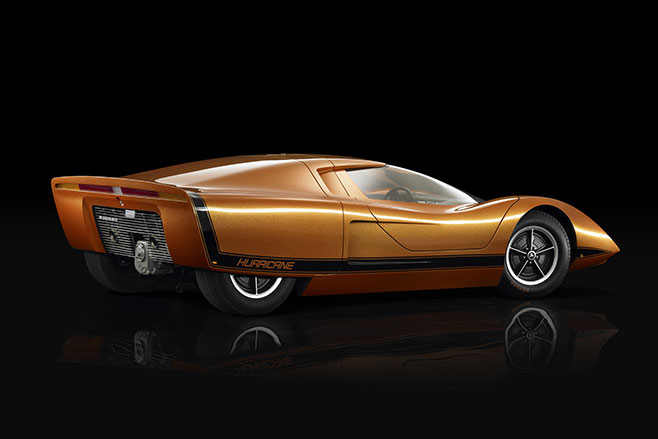
Never again will a car designed from scratch in Australia roll out to wow a global audience like the Hurricane did in Melbourne in 1969.
Until this awe-striking machine seemingly touched down from outer space at the Australian motor show, the most outlandish Holden people had ever seen was the HK Monaro, and it still looks fresh and futuristic to this day. Imagine what its audience must have thought when it was first revealed.
It’s not just the radical log-splitter exterior design that would still turn heads everywhere it goes today, but the concept was packed with technology that was simply unfathomable at the time. Little did they know, the Holden design team was offering a surprisingly accurate glimpse of the future and, in some cases, technology suggested by the Hurricane is still in only in development stages today.
So-called V2X communication systems are only just starting to emerge in modern vehicle systems, allowing vehicles to share information with others and infrastructure to pick their way through hazards and traffic quickly and efficiently.
But the Hurricane had an early navigation system called Pathfinder, which actually used markers embedded in the road to find its way. That’s half a century before V2X is even functioning.
Reversing cameras are regarded more as essential safety gear than technological luxury, but the Hurricane featured a rear-view camera not just for precision parking, but because its big mid-mounted V8 engine almost totally obscured the rearward view. A handful of large SUVs are only now adopting the idea to eliminate the obstruction of rear-seat headrests and tiny rear windows.
But instead of the thin digital display of modern systems, the Hurricane had a miniature cathode-ray tube screen – that tech is now firmly defunct.
Also unheard of at the time was climate control, and like all of the Hurricane’s features, it was fully functioning, not just a show concept.
As you might imagine, boarding and exiting was as unorthodox as the rest of the Hurricane’s features and performed via a single-piece canopy that hinged forward under electro-mechanical motion. One can only imagine exit plan-B if the concept ended up on its roof. Even so, vehicles such as the Mercedes SLS coupe and Koenigsegg models still flirt with the idea of alternative alighting.
Audi’s sequential indicators that made their debut with the first-generation R8 supercar and can now be found in many brand’s models also appeared in the Hurricane but, while modern interpretations use LED technology, the Holden made it work with incandescent globes.
And mounted mid-ship was a 4.2-litre V8 engine that was fettled with quad carburettors and other tuning mods to produce 193kW – a handsome figure for the day – and fed the power to the back wheels via a four-speed manual transaxle.
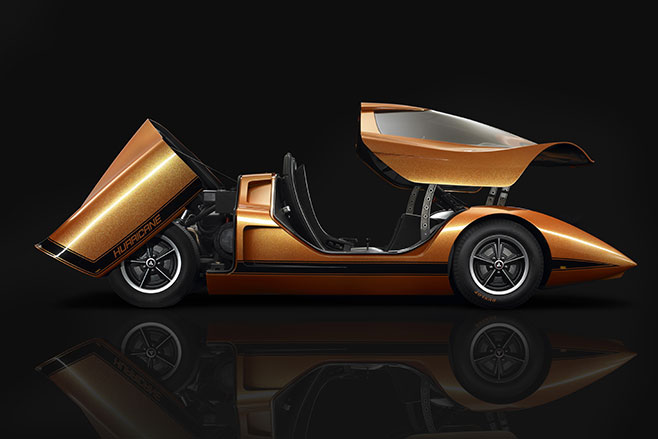
The Aussie-made bent eight was partly the Hurricane’s purpose for being, acting as a wheeled showcase for the new engine.
Front suspension was largely handmade and unique, but those with an eye for kingpin angles and camber compensation will recognise the back end from a Corvette C2.
A rear view of the Hurricane reveals the tail-end of the gearbox protruding through the rear grille along with its pair of exhausts for a true race-car-for-the-road effect. If you want that in a modern car, only the most ridiculously opulent and exclusive supercars will offer it.
Disc brakes were installed in all four corners but with carbon-ceramic technology many decades away, the front rotors used an innovative oil-cooling system to fight heat soak and fade. 15-inch alloy wheels were wrapped in Dunlop racing rubber of the day that you definitely wouldn’t want on any modern supercar.
After its debut at the 1969 Melbourne motor show, the Hurricane was ferried around to dealerships as a crowd-puller, was repainted Asteroid Silver in the mid-1980s and then consigned to the Holden National Museum in Echuca in the early 1990s.
But the car was pulled out of retirement and obscurity in 2011 and lovingly restored to its original glory.
It may have heralded distant automotive innovations and carried styling details that will never date, but the Hurricane’s tangerine metalflake paintwork, tall sidewall tyres and thin-rimmed steering wheel act as a lasting reminder that Holden’s first concept car was born in an era when it was okay to smoke indoors and throw your car keys in a big bowl with everyone else’s.
With the design centre due to be shuttered later this year, the bloodline of exceptional concepts and production cars that started with the Hurricane will come to an end, and Holden will never again get a chance to celebrate its brilliant minds or just how good Australia was at building unique cars.
Earlier this month Formula 1 dipped its toes into the world of e-sports and broadcast its first virtual Grand Prix.
It had to, really. With the now-global shutdown having led to the cancellation of the first seven races of the F1 calendar – and assumedly the rest of the season – a virtual race in a virtual Bahrain was really the only event it could feasibly put on in lieu of the real thing.
The result was… unusual to say the least. You can read all about the weirdness of the Bahrain Virtual Grand Prix here. A failed experiment then? Well not really, because NASCAR just tried the same thing with far more success.
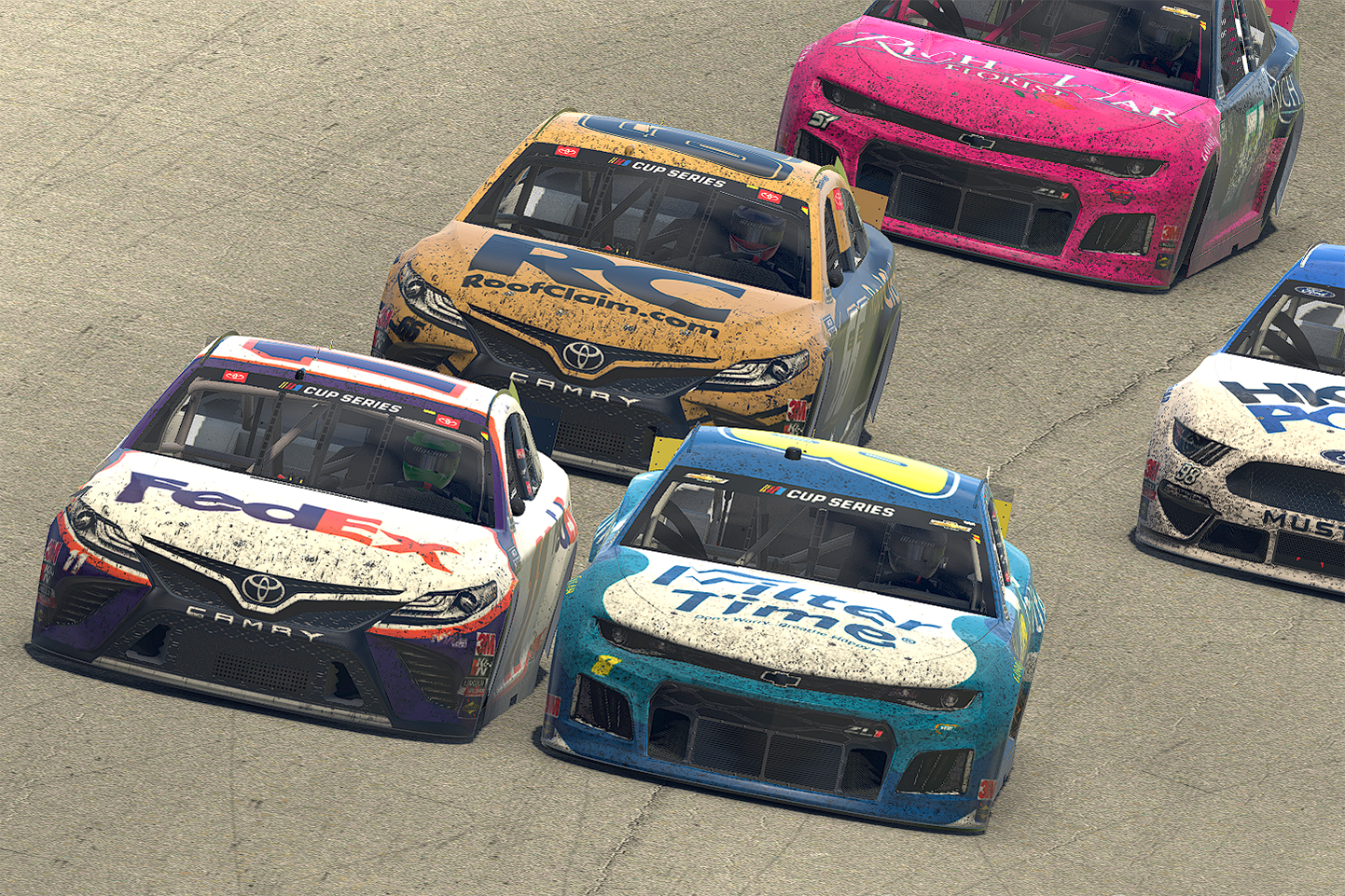
Over the weekend NASCAR ran the virtual Dixie Vodka 150 Invitational online using the popular motorsport simulator iRacing, with a full field of 35 NASCAR professional drivers playing on their own personal simulation rigs from offices, workshops and their living rooms. Watch it, and besides the videogame visuals the racing is close, engaging and just as strategic as the real deal. Have a look:
Even the commentary was just like a regular NASCAR event, with the usual pre-race interviews, technical analysis and banter – the only difference being that nobody was actually located at Homestead-Miami Speedway. Besides an extended period of dead air prior to the race, it wasn’t exactly dull.
Denny Hamlin clinched the race in the final lap, all while his family were posting videos to his twitter of him driving his (frankly amazing) sim rig in his lounge room while barefoot and drinking Cokes handed to him by his daughter. Not a bad way of taking care of one of his key sponsors.
The Formula 1 top brass have much to learn from the Americans on how to leverage e-sports at a time when actual motorsport is completely shut down. At this stage there’s no telling just how long the COVID-19 pandemic will last, so for the time being the only venues for competitive motorsport will be virtual ones.
“The response on social media to last Sunday’s race has been incredible,” NASCAR commentator Jeff Gordon said.
“We were able to broadcast a virtual race that was exciting and entertaining. It brought a little bit of ‘normalcy’ back to the weekend, and I can’t wait to call the action Sunday at Texas.”
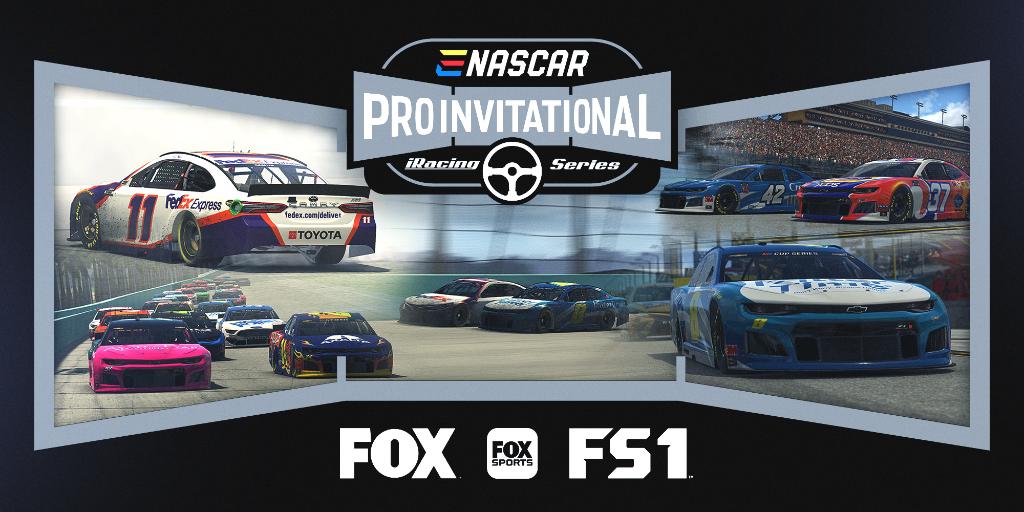
He’s not exaggerating either: the race was broadcast by Fox Sports and pulled in 903,000 viewers at its peak. Video game or not, it appears punters just want to watch some good racing. The next race in the eNASCAR series is on March 29, and Fox has committed to broadcasting the rest of the season.
Curiously, Sony themselves have actually taken a step backwards at a time when they could be capitalizing on the public’s thirst for entertainment.
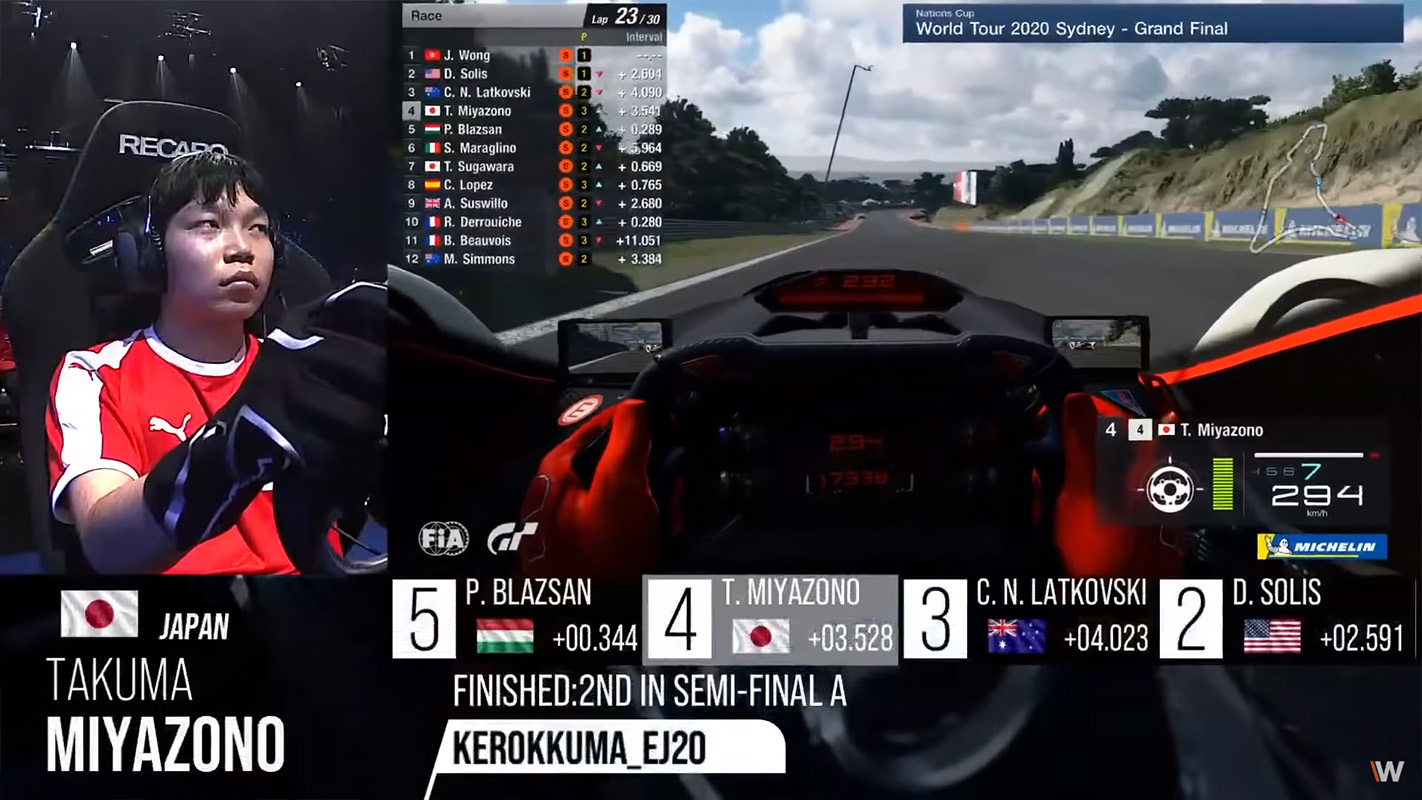
The Gran Turismo Sport World Tour, which launched earlier this year in Sydney, is now on an indefinite hiatus. As a live event that physically brought the top online players together in one location, it was deemed too risky to continue with that format – especially as the next round, due to coincide with the now-cancelled Nurburgring 24-hour, would have put those players right in the centre of a Corona-struck Europe.
And that’s a huge shame, because the quality of competition in the GT Sport series is actually top-notch. Take a look at the final race from the Sydney round if you’re in any doubt:
The GT Sport online ranked championship will continue, however the first round has been declared an ‘exhibition round’ only, with the new season start now scheduled for April 25.
Closer to home, the Supercars championship will transition to a 10-race “eSeries” to keep fans entertained until real-life racing resumes.
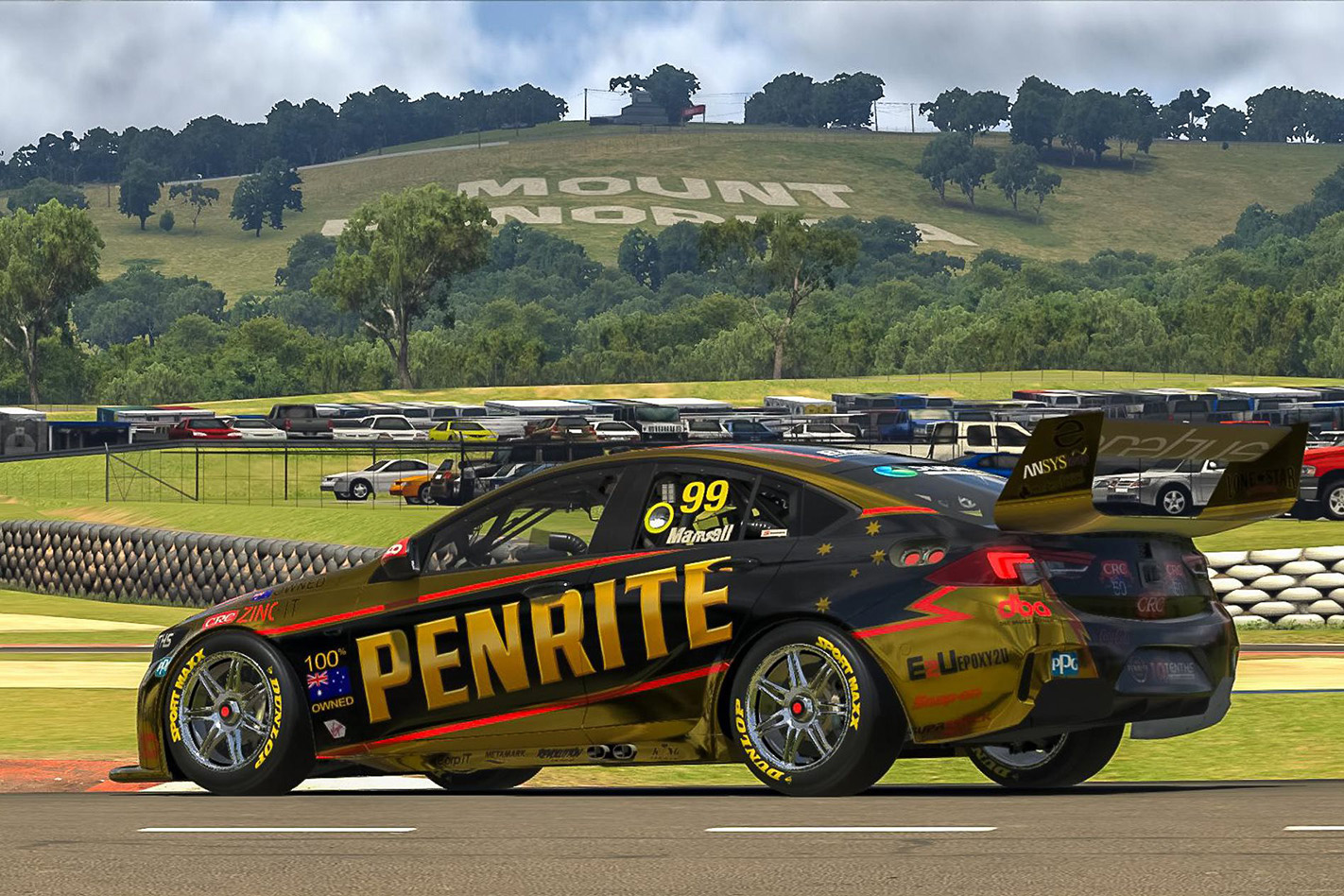
Like eNASCAR, the Supercars eSeries will put drivers on a virtual grid in iRacing, which conveniently added the Ford Mustang Supercar and ZB Holden Commodore Supercar late last year.
It certainly helps that a large proportion of the Supercars driver lineup are no strangers to racing simulators, with the likes of Scott McLaughlin and Shane Van Gisbergen both being avid iRacing players.
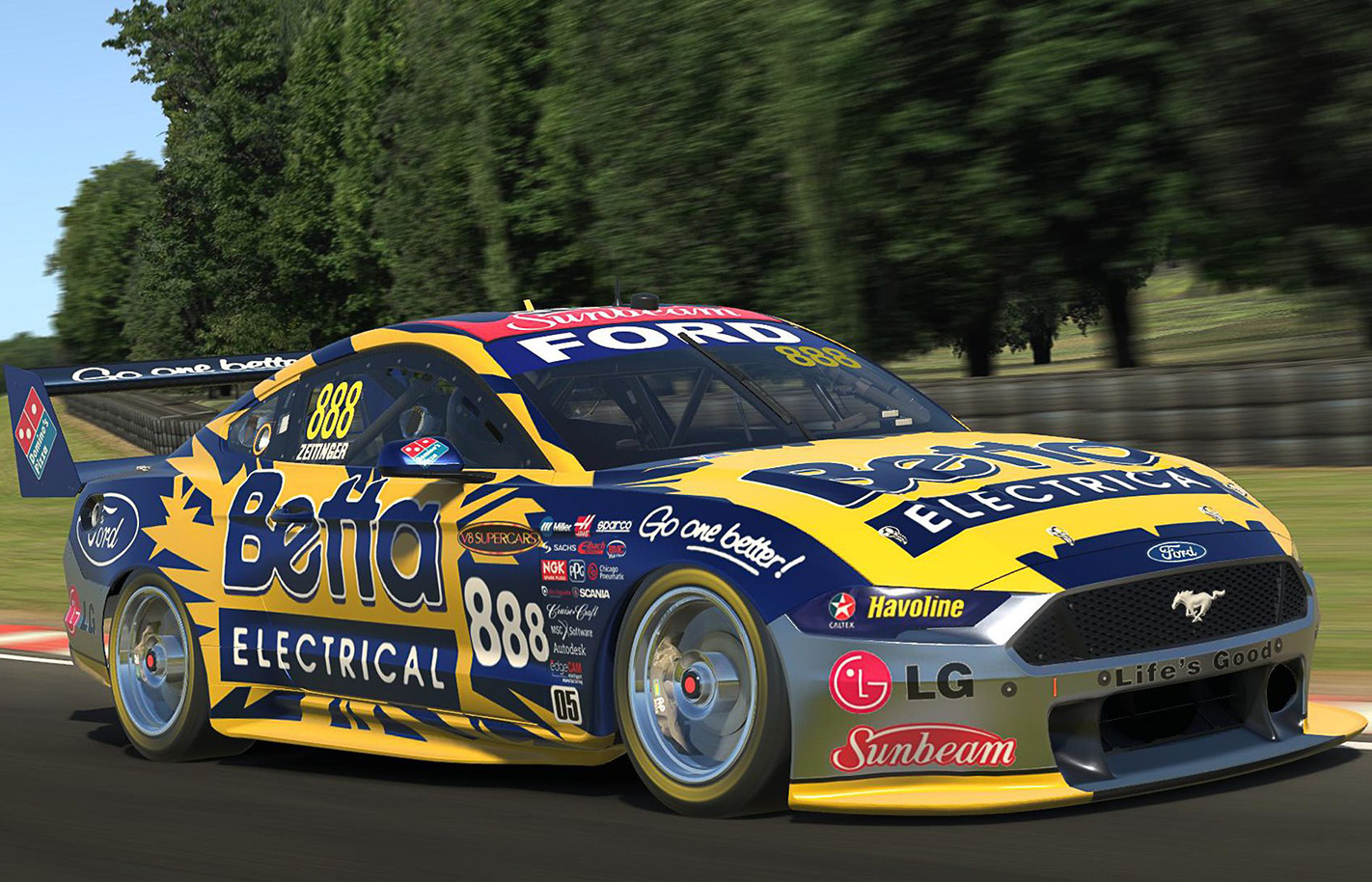
However, Mount Panorama and Phillip Island are the only current Supercars circuits available in iRacing, which means the series could venture out to other famous circuits outside of Australia’s borders – virtually, at least.
Unlike Formula 1’s first foray into game-based competition, the Supercars eSeries is expected to have a full grid of actual race drivers from the get-go – and may perhaps feature a few international stars as guest entrants.
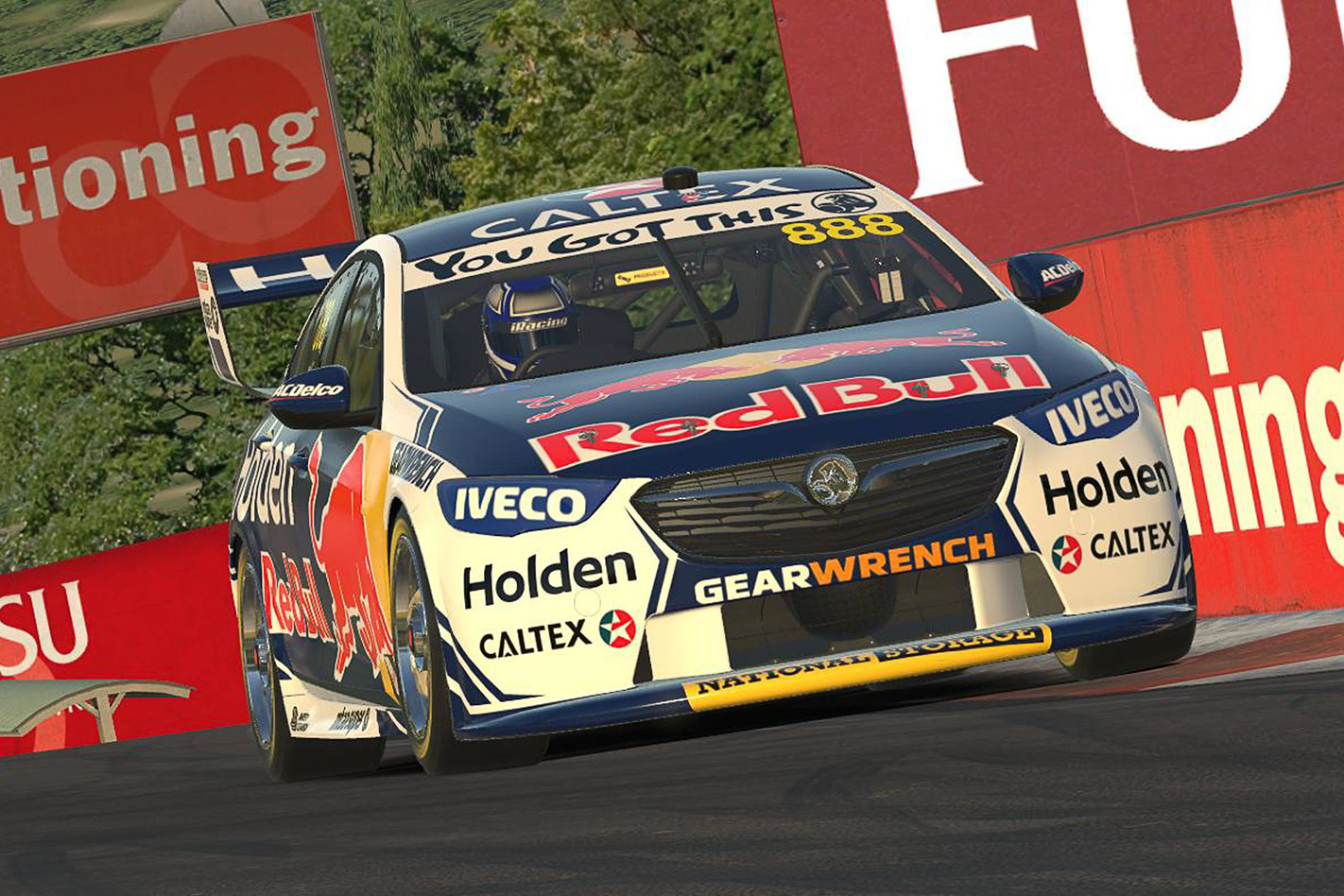
So while F1’s first attempt might have been a little amateur, the rest of the motorsport world appears to be embracing virtual racing as a stop-gap to help it weather the COVID-19 storm.
Whether the fans tune in and whether F1 lifts its game (literally), remains to be seen.
Formula 1 veteran David Coulthard has made a frank assessment of Daniel Ricciardo’s career prospects.
Speaking to Wheels ahead of the ill-fated Australian Grand Prix, Coulthard praised the 30-year-old West Australian’s driving ability, but cautioned that his future in the F1 paddock is at a crossroads.
“He is definitely one of the great talents of F1,” the grand prix winner turned paddock pundit said. “It was an unusual decision to step away from Red Bull, which was a known quantity, and to roll the dice with Renault because there’s no guaranteed it’ll have success just because it’s a manufacturer.
“But in the meantime, he’s growing as an individual. I think the best period for drivers is late 20s and early 30s. You have speed and knowledge of GP racing, but also some more worldly knowledge and of dealing with the pressure of being in the public eye. His bank balance has taken a big boost in being [at Renault] but right now it’s not giving him the trophies in the cabinet.
“He’ll get one more roll of the dice when the opportunity comes that either Renault pick up, or he gets the chance to go to one of the top three teams: Mercedes, Reb Bull or Ferrari. And if he doesn’t get an opportunity there and Renault don’t pick up then I think the results will probably not reflect the talent. But none of us have a crystal ball, so who knows what the future holds? Renault might suddenly ace it next year.”
In Formula 1, navigating the maelstrom of paddock politics is just as important to a driver’s career prospects as raw driving ability.
Coulthard warned that a pair of missed opportunities during 2018’s silly season could mean Ricciardo is now left without many options to move back up the grid after signing with Renault – who are stuck in the mid-field.
“I think his stock is high, I think the worrying thing for him, though, is when Mercedes did have the chance to take him, they went with Valtteri,” Coulthard explains.
“When Ferrari did have the chance to take him, they went with Charles. So if he missed them wanting him at that round, that probably means the next round they might have their eye on someone else.
“It’s not like he chose to go to Renault; he wanted to go to Mercedes and Ferrari and they didn’t have a space for him. He just didn’t want to be a Red Bull anymore, so that forced him down that route and he rolled the dice.
“McLaren made a big play for him but he chose to go down the Renault route. Time will tell.”
While this frank assessment may not leave Aussie F1 fans feeling confident ‘Our Dan’ will be returning to the podium in the foreseeable future, Coulthard did state that there’s still plenty of reasons to barrack for the Honey Badger.
“Irrespective of whether he wins a world championship or not, I think we can all agree he’s a fast racing driver, exciting to watch, and he aces the marketing and media, and he’s a great asset to Formula 1,” he added.

One of Ricciardo’s biggest challenges is the threat of younger rivals like his 2020 teammate Esteban Ocon, who are stealing the media spotlight.
“Sport is, motor racing especially, where the word potential is a very addictive sales pitch,” Coulthard explained.
“You see a young kid come up who has lots of potential and they say ‘oh he has potential and he’s 20 years old and he’s not going to cost us as much, here’s a guy at 30, does he still have the hunger? And the potential, is he going to get better or is he going to flat line?’
“I look at my career and I was so incredibly lucky to start with a very strong team, obviously with tragic circumstances with Ayrton’s death, but if you’re with a good team, I always wanted to stay with them.
“It was never about the money, it was always about the performance and I’m very happy I did that. My bank balance would be a little bigger if I’d followed the numbers but I had to believe to stay where I could get the best car to have the best chance of winning.”
Sign-up here to get the weekly Wheels highlights
What stands out?
The Mercedes-Benz GLA-Class is a good looking small car that’s half hatch and half high-riding SUV. It has a stylish cabin, lots of luxury and safety equipment, and the option of all-wheel drive. Efficient petrol and diesel engines extend to an eye-widening high-performance model. Auto braking is standard.
What might bug me?
On long trips, wishing you had a spare wheel and tyre. If you puncture a tyre on most GLA-Class cars, you just keep driving: their tyres will still work when they’re flat. That’s great, provided you can get a new tyre fitted soon. Once it has lost air, a run-flat tyre will last for about 80km.Drivers born and bred on traditional automatic gearboxes may need to approach the dual-clutch auto gearbox in all GLA-class cars with an open mind. A dual-clutch transmission is essentially an automated manual gearbox – albeit a highly sophisticated one – and sometimes it won’t match the smoothness of a conventional automatic when starting from rest.
What body styles are there?
Five-door hatchback only.The Mercedes-Benz GLA180 drives its front wheels, and the GLA250 4Matic drives all four wheels. They are all classed as small SUVs, higher priced.
What features does every Mercedes GLA have?
Climate control air conditioning, and cruise control.A reversing camera, and parking sensors front and rear. Active parking assist, which can steer the car into a parking spot.Very bright and long-lived LED headlights, which switch on automatically when it’s getting dark, and LED taillights and daytime running lights. Windscreen wipers that operate automatically when it rains.A multimedia system with a CD player, AM/FM and digital radio receivers, satellite navigation, and an 8.0-inch colour display. Bluetooth connectivity for phone calls and audio streaming, and Apple CarPlay/Android Auto integration. Control from buttons on the steering wheel.A powered tailgate, which can be operated by pressing a button on the key or a button on the tailgate itself. Roof rails, which make it easier to fit rooftop luggage systems.A collision warning and prevention system, with autonomous emergency braking, that works at city and highway speeds. A fatigue alert, and blind-spot assistance.Nine airbags. (For their placement, and for more on GLA-Class safety systems, please open the Safety section below).Electronic stability control, which can help you control a skidding car. All new cars must have this feature.Every Mercedes-Benz GLA-Class carries a five-year, unlimited-kilometre warranty.
Which engine uses least fuel, and why wouldn’t I choose it?
There is no longer a diesel option in the GLA range, which makes the GLA180 the most economical and the least costly. Its 1.6-litre turbocharged four-cylinder uses 5.7 litres/100km on the official test.The all-wheel-drive GLA250 4Matic has a 2.0-litre turbo petrol four-cylinder engine with about 75 per cent more power than the GLA180 while still using only 7.0 litres/100km on the official test.All engines have an automatic stop-start system, which saves fuel in urban driving. It shuts down the engine when you stop, and starts it again when you take your foot off the brake pedal to drive away.Every Mercedes-Benz GLA-Class has a seven-speed dual-clutch automatic gearbox.Dual-clutch automatics operate much like a manual gearbox with robotic control. They save fuel and shift very swiftly and smoothly on the highway, but generally don’t feel quite as fluid and elastic as a conventional auto in stop-start driving conditions.
What key features do I get if I spend more?
The least costly Mercedes GLA, the GLA180, comes with the 1.6-litre petrol engine, Artico fake-leather upholstery, 18-inch wheels, and the equipment in all GLAs.Upgrading to the GLA180 Night Edition brings bigger 19-inch alloy wheels with lower-profile tyres that marginally sharpen steering, cloth trim, power front seats with memory function (so that you can restore your settings easily after a companion has driven the car).You can spend even more on a GLA180 with the Urban Edition, which adds ambient interior lighting, comfort Suspension, heated front seats, smart-keyless entry that unlocks the car without having to take the key fob out of your bag or pocket, leather trim, powered driver’s lumbar support, premium mats, and a panoramic sunroof.Choose a GLA250 4Matic and you gain LED headlamps that dip automatically for oncoming traffic, LED tail-lights, a hands-free powered tailgate and rear air vents.The GLA250 also brings you features aimed at improving its handling and road holding. The most important of these are all-wheel drive (which adds grip when accelerating and improves stability on slippery roads), and adaptive suspension (which can automatically soften the car’s ride over bumpy roads, and stiffen it for better control in fast cornering).Additionally, an Off-road Engineering Package allows you to soften the accelerator response, and optimise the stability control, for very slippery or loose surfaces.The GLA250 4Matic Night Edition has all that plus carbon fibre trim.Additional active safety features are available to each version as an extra-cost option. Called Distance Pilot Distronic, it includes adaptive cruise control, high-speed auto-braking, lane-keeping assist, and automatic control of speed in stop-start traffic.
Does any upgrade have a down side?
The GLA180 special editions with 19-inch wheels ride a little firmer because lower profile have less air in them to cushion the rim from the roadOf seven colours available on a Mercedes GLA-Class, three – Jupiter Red, Polar White and Night Black – are non-metallic and come at no extra cost. Other colours cost extra.
How comfortable is the GLA-Class?
The stylish design and fine finish of the GLA’s interior makes it a nice place to be. The raised seating position gives you very good vision out, which adds to the confidence of the driver and the comfort of passengers.All trim combinations feel the money’s worth. And yet as you step through the range, the different treatments make each feel a bit more special than the last.On the move, every GLA feels comfortable and feels thanks to a compliant suspension set-up which, while taut, strikes a well-judged balance between absorbing bumps and controlling body movement.The GLA250 4Matic, despite having the bigger 19-inch wheels with low-profile tyres, rides with a bit more polish than other GLAs because its adaptive suspension dampers can match the damping force to the driving conditions.
What about safety in a Mercedes-Benz GLA-Class?
GLA-Class safety high points include its nine airbags, reversing camera, front and rear parking sensors, driver attention alert, blind-spot assistance, and partial automatic braking system. On all but the GLA 45, run-flat tyres help you stay in control if a tyre deflates suddenly.There are two airbags directly in front of the driver and front passenger; one alongside each front occupant to protect the upper body and head; one alongside each front occupant to protect at pelvis level; one alongside each rear occupant to protect the upper body and head; and a knee protection airbag for the driver.The radar-based Collision Prevention Assist Plus gives you a forward collision warning that works at city and (low) highway speeds, and partial auto braking. It warns of an obstacle in front of the car – typically a slower vehicle – and will apply the brakes if you do not react. It will not initiate a full emergency stop, however.The attention-assist system warns you if you show signs of falling asleep at the wheel. Blind Spot assist warns you, when changing lanes, if a vehicle is alongside out of view.Otional all GLA-Class cars, is a Driving Assistance Package comprising Distance Pilot Distronic and Lane Keeping Assist. Distance Pilot Distronic includes a more sophisticated auto-braking function that operates at speeds up to 200km/h. Lane Keeping assist prods you if you have begun to drift distractedly – and possibly dangerously – into an adjacent lane.The Australasian New Car Assessment Program (ANCAP) has not tested the Mercedes-Benz GLA-Class for safety since it first arrived in 2015. However, the GLA did achieve a five-star Euro NCAP rating in 2014.
I like driving – will I enjoy this car?
The Mercedes GLA’s avant-garde hatch-meets-SUV style means the enjoyment starts even before you get in. And it looks extra cool at night, with ambient lighting spilling from beneath the door handles.The classy, inner-city bar vibe continues inside courtesy of illuminated door sill panels with ‘Mercedes-Benz’ lettering, more ambient lighting in the footwells, and a slick dashboard presentation.Even the least powerful engines move the GLA-Class briskly, working well with the smart and decisive seven-speed dual-clutch automatic.The small petrol is smoother than the diesel, but the diesel needs even less accelerator to keep up with traffic, which makes it relaxing to drive.The GLA250, with its 2.0-litre turbo petrol, offers you the sort of speed you would get in a hot hatch such as a VW Golf GTI – it’s a lot of fun.Light, accurate steering features in all versions. There’s a slightly doughy patch just off centre but beyond that zone you get a solid sense of connection with the road.While any GLA will turn into corners eagerly, the all-wheel-drive models feel more on-rails in the middle of corners. And they thrust out of them more convincingly, using the extra traction of the driven rear wheels.Because of its taller stance, occupants of a GLA-Class car will be more aware of body roll than they would be in an A-Class hatchback. But the raised ride height is no impediment to handling or cornering speed.On the flip side, the small increase in ground clearance compared with the A-Class is of minimal benefit. The GLA is suited only to very light off-roading, such as driving on a lumpy gravel road.Overall, the GLA180 is a talented, raised warm hatch, while the GLA 250 4Matic is a very satisfying driver’s car.
How is life in the rear seats?
The GLA-Class shares its wheelbase – the distance between the front and rear wheels – with Mercedes’ A-Class small hatch, and it has less leg room than obvious alternatives the Audi Q3 and BMW X1 (the Audi being the roomiest of the trio). The GLA also has less shoulder room than the Q3 and X1.The GLA has good rear headroom – more than the donor A-Class – though you lose some of this in versions with a sunroof.The rear seat bases are relatively short, so they don’t offer enough under-thigh support for great long-haul comfort. However the backrest angle feels right, and the level of lateral support is good.Forward vision is good thanks to a rear cushion set high in relation to the front seats, with help from the slim front headrests.Rear passengers get a fold-down centre rear armrest with twin cup-holders, and GLA250 has dedicated air-conditioning vents.
How is it for carrying stuff?
The GLA-Class has 421 litres of boot space, which makes it considerably better for carrying stuff than a small hatch.The rear centre-armrest allows the through-loading of long items, and with the 60-40 split-folding rear backrest lowered the GLA can swallow up to 1235 litres of luggage.
Where does Mercedes-Benz make the GLA?
The Mercedes-Benz GLA-Class is made in Germany.
What might I miss that similar cars have?
The Mercedes GLA-Class blurs the line between a small hatch and a small SUV. As a result, you might wish for a bit more space from your small SUV, which you get in the slightly larger, more traditionally SUV-bodied Audi Q3.Other luxury small SUVs worth considering are the Audi Q2, BMW X1, Lexus UX, Mini Countryman and Volvo XC-40.
Are there plans to update the GLA-Class soon?
Yes, the current model is in the sunset phase of its lifespan and is expected to be replaced by an all-new model at the end of 2020.This first-generation, Mercedes-Benz GLA-Class arrived in early 2014. There were minor revisions to equipment and engines in the third quarter of 2016.In June 2017 the GLA received a subtle restyle and some fresh equipment – notably LED headlamps, the extension of smart-key entry to the diesel GLA220d, and the introduction of a hands-free tailgate that you can open with a swipe of your foot.Mercedes-Benz quietly dropped the GLA 220d for the 2019 model year and pocket-rocket GLA45 AMG from the 2020 range.Mercedes-Benz introduced a longer five-year, unlimited-kilometre warranty in March 2020, which covers all GLAs sold from then.The second-generation Mercedes-Benz GLA was revealed in December 2019. Based on the latest-generation A-Class, it features more interior space, more tech smarts and better driving experience than this model.It will debut in Europe in the second half of 2020, with a local arrival expected by Christmas.
I like this car, but I can’t choose which version. Can you help?
Our reviewers recommend the GLA250 4Matic. The extra power and all-wheel-drive system makes it a lot of fun, without compromising comfort.
What makes a car a sleeper? Usually it’s a level of performance that far exceeds a relatively commonplace exterior. We know, however, that even though a Volkswagen Golf R looks quite subdued, it’s actually a bit of a rocket. Not such a sleeper to most.
But then Manhart came along and said “what if the Golf R had 331kW?” Well then we’d have ourselves a sleeper. So they did just that.
The Volkswagen Golf ‘RS450’ by Manhart still uses the EA888 engine originally nestled in the Golf R’s engine bay, but has an upgraded turbo, a Manhart intercooler, and a carbon air intake. Of course, the ECU was remapped for the new parts and output.
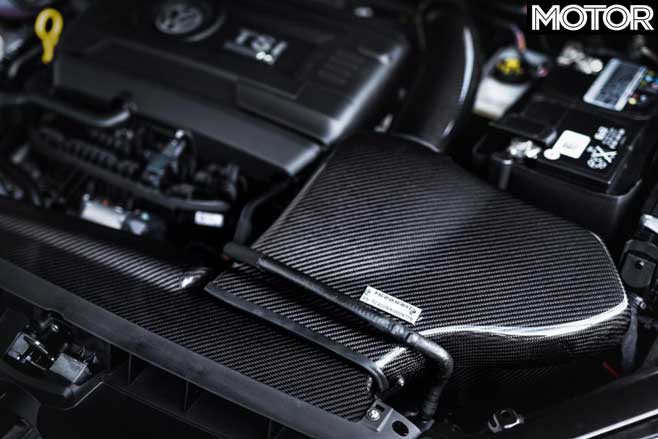
The total outputs are now 331kW and 500Nm, up 103kW and 100Nm from the car it started with. The European Golf R It based the back on had 228kW instead of the 213kW Australian cars get.
Manhart also added its own exhaust extractors, an upgraded (higher flow) catalytic converter, and a removal of the petrol particulate filter should contribute to a louder, more aggressive tone.
The RS450 is lower too, with a H&R set providing a new stance and Manhart’s suspension tuning making sure the ride isn’t too compromised.
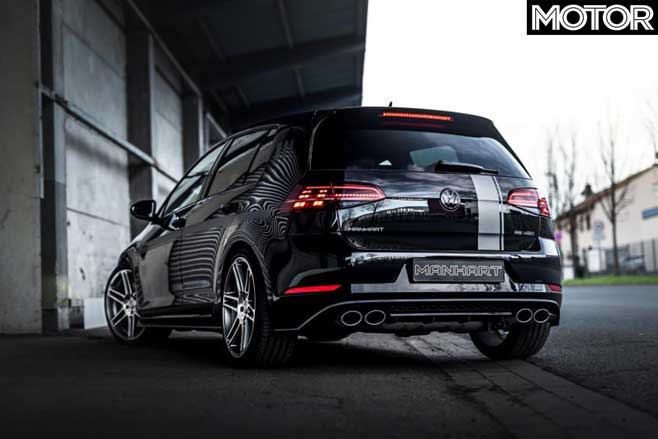
Interestingly, Manhart only offers brake upgrades as options, and the RS450 just uses the standard brakes as they are. Manhart also offers optional wheels, those pictured being a set of 19-inch ‘Manhart Concave One’ wheels.
The only other styling additions are a front lip spoiler by Rieger, and a set of Manhart decals. Oh, and the paddle shifters are also replaced by Manhart – an important detail!
Currently there’s no official Manhart dealer in Australia, but if you’re after more bang from your Golf R, Brisbane-based Harding Performance offers a kit to extract 290kW and 550Nm from a Mk7.5 R!
In-car infotainment systems can impair your driving more with the maximum blood-alcohol limit of 0.05, according to a recent study conducted by a UK-based driver training advocate.
Using a smartphone mirroring system like Apple CarPlay and Android Auto can also result in drivers keeping their eyes off the road for extended periods of time – something that these systems are supposedly engineered to prevent.
A study was conducted with 20 participants over three simulated journeys: one where the driver didn’t interact with any system; a second when the driver only used voice controls; and a third where the driver only used touch control.
Findings show that driver reaction times decrease by up to 45 per cent more when using Apple Carplay on a multimedia screen than if your blood alcohol limit is 0.05 (41 per cent for Android Auto).
It has long been a myth that texting is one of the biggest driver distractions on our roads; however, statistics from this experiment show that this was much further down the list.
Texting makes a driver react 35 per cent more slowly, with voice-controlled Apple Carplay higher on the list and the good old handheld phone at a whopping 46 per cent.
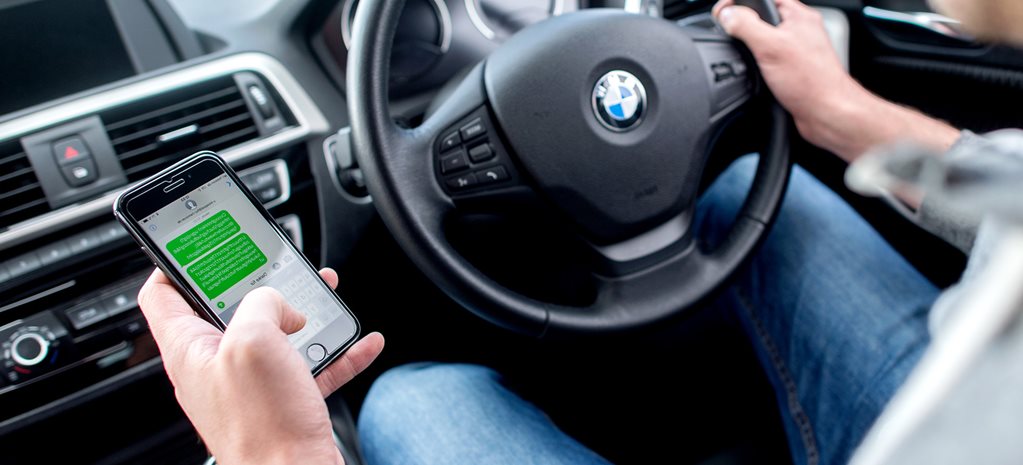
As well, participants underestimated the time they thought they spent looking away from the road by as much as five seconds when engaging with Android Auto and Apple CarPlay via touch control. Use of either system via touch control caused drivers to take their eyes off the road for longer than 12 seconds at a time.
“While previous research indicates that Apple CarPlay and Android Auto perform better than more traditional buttons and controls, the results from this latest study raise some serious concerns about the development and use of the latest in-vehicle infotainment systems,” said Neil Greig, the policy and research director at IAM RoadSmart.
“Anything that distracts a driver’s eyes or mind from the road is bad news for road safety. We’re now calling on industry and government to openly test and approve such systems and develop consistent standards that genuinely help minimise driver distraction.”
In the meantime, drivers are encouraged to set up their systems prior to the vehicle moving to ensure that all safety measures are being exercised.
- Plans finally firming for 86 replacement
- Leaked presentation reveals July 2021 launch date
- Rear-wheel-drive will continue
- Turbocharged Subaru engine the hot tip for powerplant
Leaks from within a Toyota dealer conference in the USA reveal that the next-generation Toyota 86 will be revealed in July 2021.
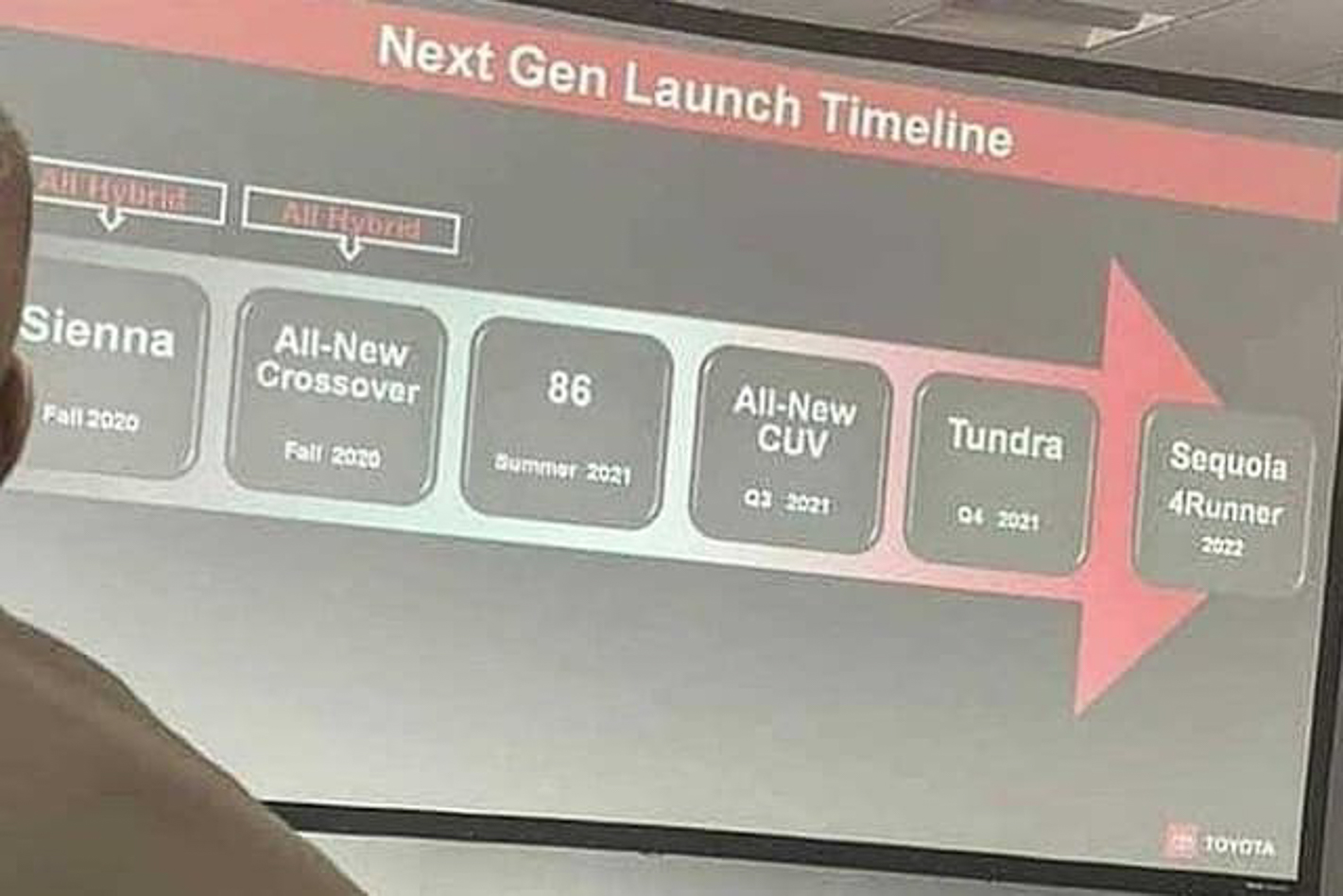
The closed-door dealer presentation got away from Toyota when a full suite of future products was detailed on online forum GR86.org. The slides from the presentation show a (North American) summer 2021 unveil, and reports from the conference support the rumours that the next-gen GR86 will come with up to 200kW of turbocharged power.
Despite a seeming eternity since the Toyota 86 and Subaru BRZ were launched upon the world in 2012, both brands are now ramping up development of a successor that would see the next-gen model receive turbocharged power to the tune of 200kW.
No word is given on Subaru’s iteration, but it’s entirely likely that’ll lob at the same time as the Toyota GR 86 mid-next year.
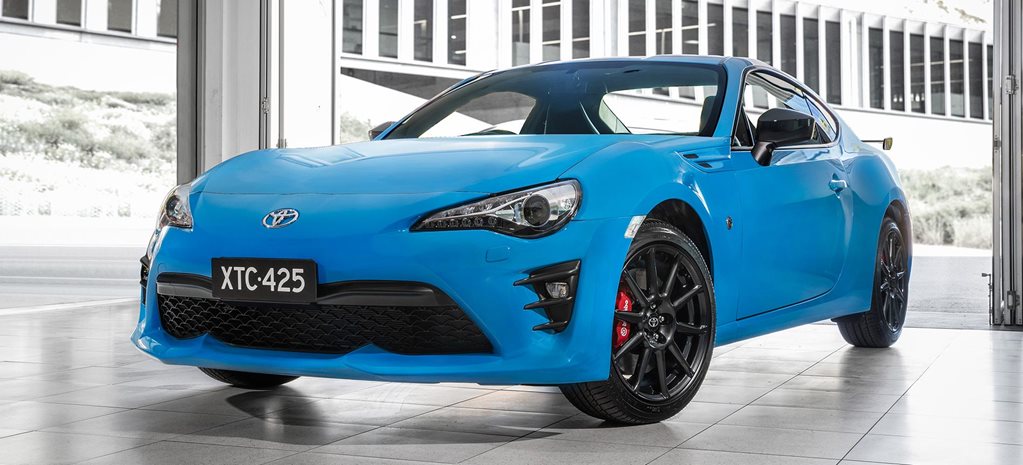
According to Autocar, Toyota and Subaru have committed to launching a second-generation successor that Toyota is expected to brand as the GR 86, dropping the GT86 and 86 names in favour of Toyota’s new GR nomenclature that will be applied to the automaker’s growing performance car line-up, which now includes the GR Supra and GR Yaris.
It’s also reported that the sports car duo will be based on a Toyota-derived platform rather than following in their predecessor’s footsteps by utilising Subaru-sourced underpinnings.
There are no rear-wheel drive-suitable models available in the Subaru stable currently, so the move to a TNGA platform will ensure the new sports car’s dynamics come alive – though Subaru is expected to continue to supply the powerplant.
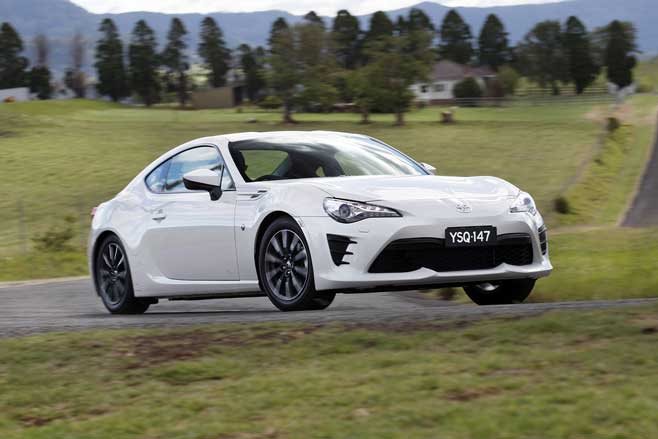
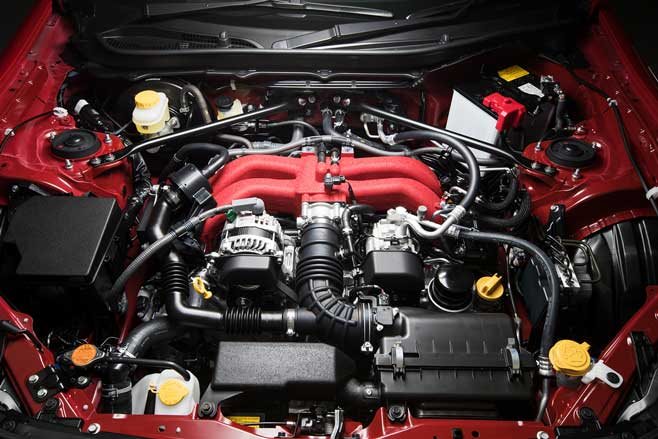
It’s understood that the car is likely to retain a boxer-style flat-four-cylinder engine but the 2.0-litre version we know will be swapped out for a larger capacity 2.4-litre turbocharged unit that’s currently used in Subaru’s range.
Subaru’s hulking US-market Ascent SUV ekes out just over 190kW from the engine – known as an FA24 – so we wouldn’t put it past Toyota/Subaru to nudge it up to 200kW when the engine is put into service in a performance car.
Forced induction is something 86 fans have been longing for and the pronounced torque hole of the current car’s 2.0-litre naturally-aspirated flat-four is well documented, so the superior torque of a turbo alternative should be welcome.
Both Toyota and Subaru are expected to improve the tangible aspects of the 86/BRZ successor to approach a broader range of sports car buyers, too.
Where currently the car is focused on no-frills, no-nonsense, driving purity mixed with affordability, its replacement is expected to bring a lift in safety technology, materials and fit and finish that could see the car positioned slightly more upmarket than it is currently.
Of course, we’re not sure what that will do to the price point, but Toyota won’t want to tread on the toes of the rest of its GR-performance range which already includes the Supra (which already has a budget-oriented turbo four-cylinder in some markets) and GR Yaris.
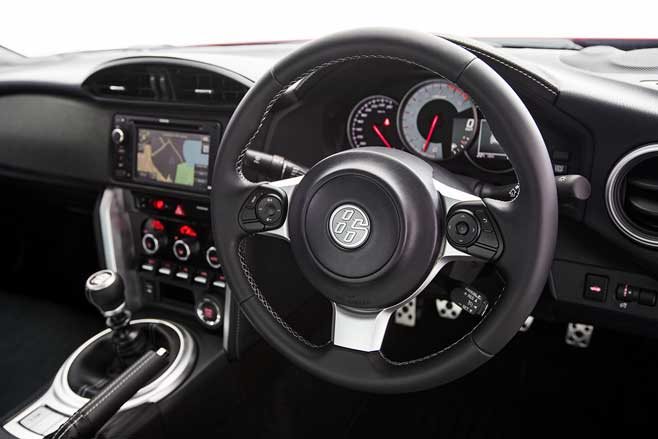
Toyota’s renewed focus on performance is starting to see the Japanese auto giant shed its ‘cars as whitegoods’ reputation, a stance driven by CEO Akio Toyoda who is a keen car enthusiast himself.
The recent push to market Toyota through its GR performance arm is largely attributed to Toyoda’s desire to see his company recapture some of its past glory, and if it can add another feather to its cap in the form of a turbo-motivated GR 86, we imagine Akio would be a happy man.
Is adding more power and performance to the next 86 a good move? Let us know below!
