
If you found the 320i Touring a little too heavy, not quite quick enough and, well, just too small, here’s some good news: the BMW 323i Touring has arrived. And it’s lighter, quicker and bigger.
This review was originally published in MOTOR’s September 2006 issue
Launched alongside the 323i sedan, the (deep breath) 323i Touring M Sport is, of the two, the more interesting proposition. It drives just as well as the sedan, maybe better, it looks great and the big, boxy boot certainly makes it more practical.
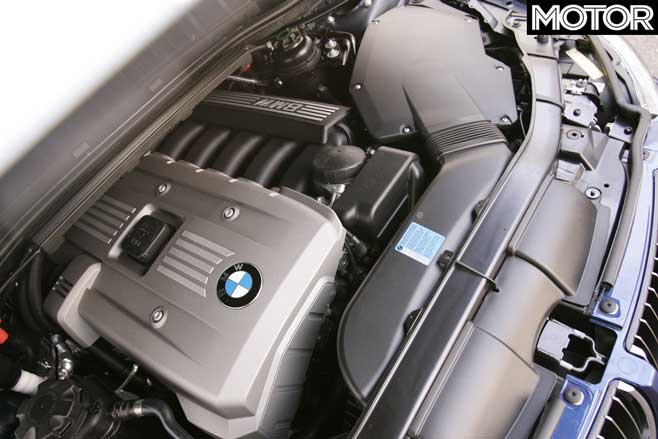
The 323i slots in between the four-pot 320i and the 325i. And it uses the same cracking 2.5-litre inline six-cylinder VALVETRONIC engine as the 325i to produce 130kW at 5800rpm and 230Nm at 3500rpm. This forces its 1500kg (15kg lighter than its predecessor) from 0-100km/h in just 8.2 seconds and on to a top whack of 224km/h.
While the 323i Touring M Sport doesn’t exactly set the tarmac alight, the smooth and deliciously creamy six-pot offers enough punch to make it an extremely enjoyable drivers’ car. You do need to use the gearbox a bit to keep it in attack mode (our test car was fitted with a six-speed manual), but the harder you work it and the more you lean on the car, the better it becomes.
That the 323i Touring feels so damn good is all down to its dynamics. Designed in conjunction with the sedan, the Touring handles every bit as well. Indeed, around the Nürburgring, the garden-variety 323i Touring level-pegs the sedan with a time of 8min49secs.
But there’s a significant step up in ability when you go from the basic 323i Touring to the M Sport jobbie. Where the garden-variety Touring tends to lose its composure and wallow through slower corners, the M Sport is virtually unflappable. Its M-tweaked sport suspension and bigger 17-inch wheels (up from 16s on the 323i Touring) endow it with more grip and greater control.
It really comes alive through tight corners; both the front- and back-end deal with mid-corner surface changes amazingly. You always feel like you’re getting maximum commitment from the car. Dynamically, it’s about as good as it gets for a rear-driver and not even the runflats can upset this, for me.

Styling-wise, the 323i Touring M Sport really hits the mark. Forward of the A-pillar it’s identical to the E90 3-Series Sedan, but the Touring has a slight coupé look to it, courtesy of its tapered rear roofline. The M Sport kit which includes a deeper front and rear air dam, side skirts and bigger wheels (as mentioned) makes the Touring look even wider and a lot more menacing (especially in Interlagos Blue).
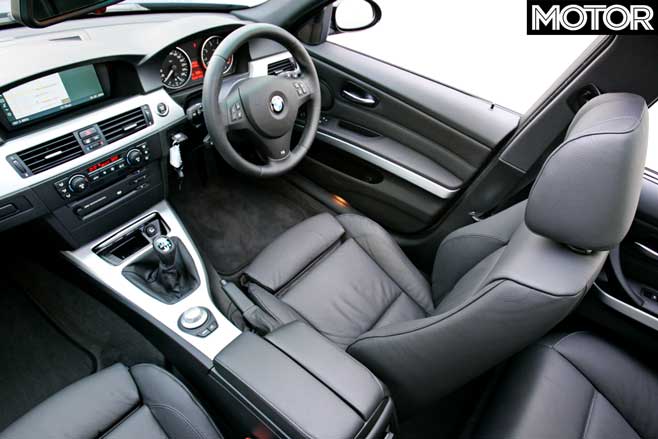
Inside, the M Sport touches continue with figure-hugging front seats, anthracite roof lining and an M leather steering wheel (the whole M Sport package costs $5200). The rest of the interior is packed with all of the usual goodies and, styling aside (you either love or hate the dash lines), it’s not a bad place to be.
Around at the back, the tailgate lifts up to a height of 1990mm, and reveals a cavernous boot offering some 460 litres of storage space – there are all sorts of clips and nets to keep everything secure. There’s also extra storage space under the floor (runflats, as standard, do away with the need for a spare tyre).
Most punters consider the Sedan to be the definitive 3-Series, but I beg to differ. The 323i Touring M Sport will not only out handle a garden-variety Bimmer Sedan but will do it with a boot full of rubbish on the way to the tip. It’s the best of the bunch.
2006 BMW 323i TOURING SPECS Engine: 2.5-litre, inline-6, DOHC 24-valve Power/Weight: 130kW/1500kg Drive: rear-wheel Price: $74,100 (incl. M Sport pack)
As new-car sales suffer double-digit slides in Australia, for the most part, SUVs are standing firm, continuing a decade-long trend that soon might even see their total domination of all vehicle segments under $30,000. Holy lifestyle, Batman!
Leading the pack – in terms of sales at least – is Mitsubishi’s evergreen ASX, a model that seems to defy age and criticism by actually growing market share despite the adverse economic conditions. Until this year, the reasons seemed obvious, with most rivals being either considerably smaller (Mazda CX-3) or more expensive (Toyota C-HR) than the Diamond Badge phenomenon.
But that was before. Things are now changing big time, with Korean brands Hyundai and Kia bursting onto the arena with a pair of intriguing contenders bookending the class – the perky little Venue from $19,990 and the somewhat larger Seltos starting from a whisker under $26,000.
The former is Hyundai’s second salvo after the Kona, while Kia must be putting the fear into all competitors since it hitherto hasn’t had anything remotely ASX-like at that price point. Until now.

Not that the others have been standing still. Over the past 18 months, we’ve seen facelifts big and small for the CX-3, Honda HR-V, Suzuki Vitara, Toyota C-HR and, most pertinently, the ASX just a few months back.
Given the disparate prices and sizes on offer, we’ve settled on the $25,000 to $30,000 bracket, meaning mid-to-high series versions of the smaller fare battling the base variants of the more expensive stuff.
We sought to include something approaching the 10 best sellers too, and decided to leave out models with imminent replacements looming – that means the Peugeot 2008 (a runner-up in our last small SUV stoush), Renault Captur, Ford EcoSport and Nissan Juke.
We also avoided hatches masquerading as crossovers, so no classy Ford Focus Active, along with all-wheel-drives like the Subaru XV, nor the agricultural Suzuki Jimny.
Welcome, then, to our Small SUV Megatest for 2020. Is the party over for the ASX? Read on, folks, because you might be in for a surprise or two…
Results
MITSUBISHI ASX
Score 6/10
HOLDEN TRAX
Score 6.5/10
HYUNDAI KONA
Score 6.5/10
SUZUKI VITARA
Score 7/10
NISSAN QASHQAI
Score 7/10
HYUNDAI VENUE
Score 7.5/10
HONDA HR-V
Score 7.5/10
MAZDA CX-3
Score 7.5/10
KIA SELTOS
Score 8.5/10
TOYOTA C-HR
Score 8.5/10
Braking Data
Fuel Efficiency
Final Position: 9th
Score: 6.5/10
5 0 5
Plus & Minus
Plus Dash layout; ride; handling; mid-range turbo oomph
Minus Thirsty; noisy; lack of driver-assist tech
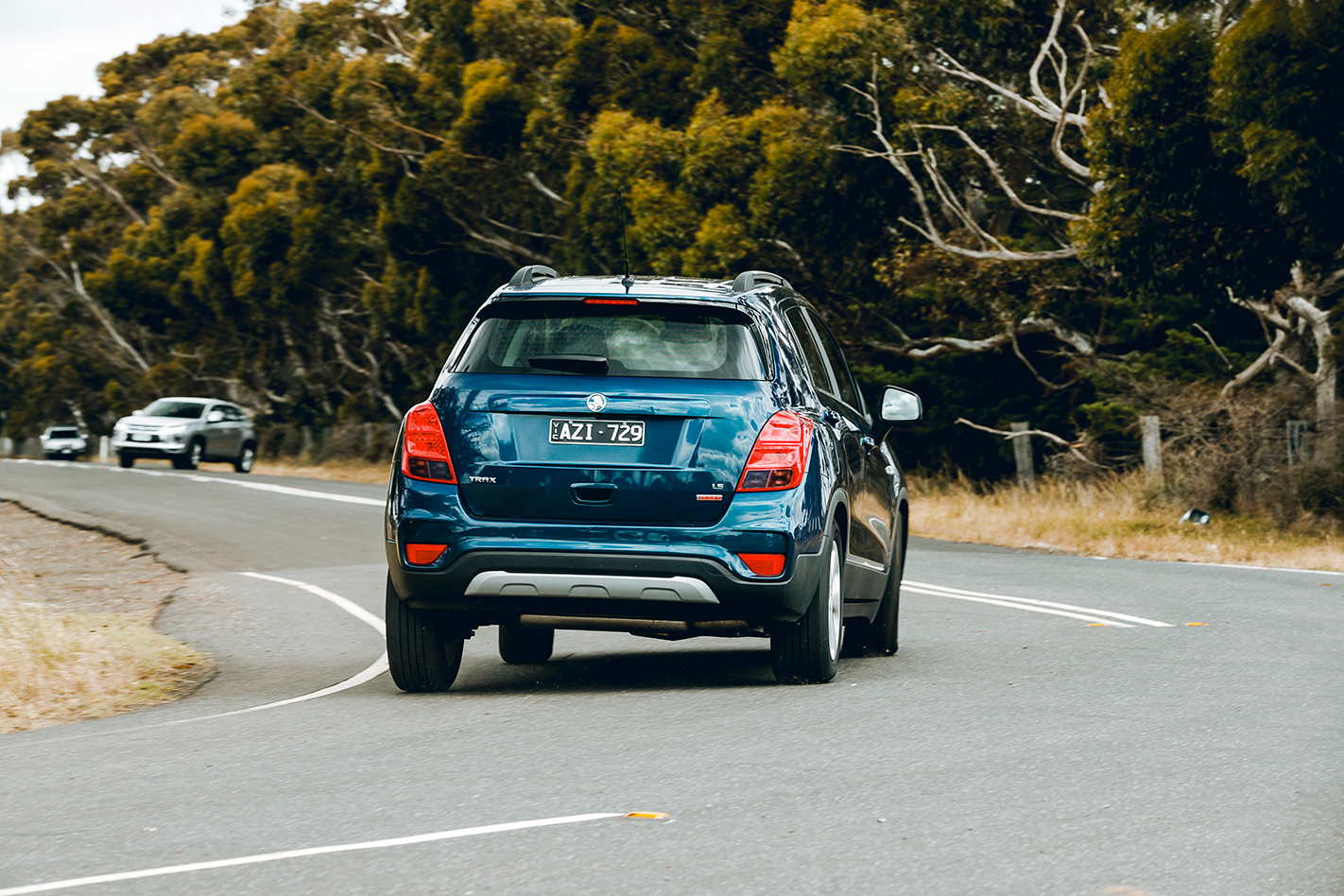
It seems you can teach an old pooch new tricks. At seven years of age, the Trax might be in the bloom of youth compared to the ancient ASX, but in the harsh light of 2020, it’s still a fossil. That said, thanks to some deft Aussie tuning and a significant update, as with the evergreen Mitsubishi, the littlest Holden still holds some big appeal.
For those with short memories, the Trax is a Chevrolet built on General Motors’ Gamma II architecture – a platform initially devised by Opel (now part of PSA Peugeot) for the 2000s Corsa, but since overhauled by GM Korea (formerly Daewoo) for scores of models like the now-defunct Barina.
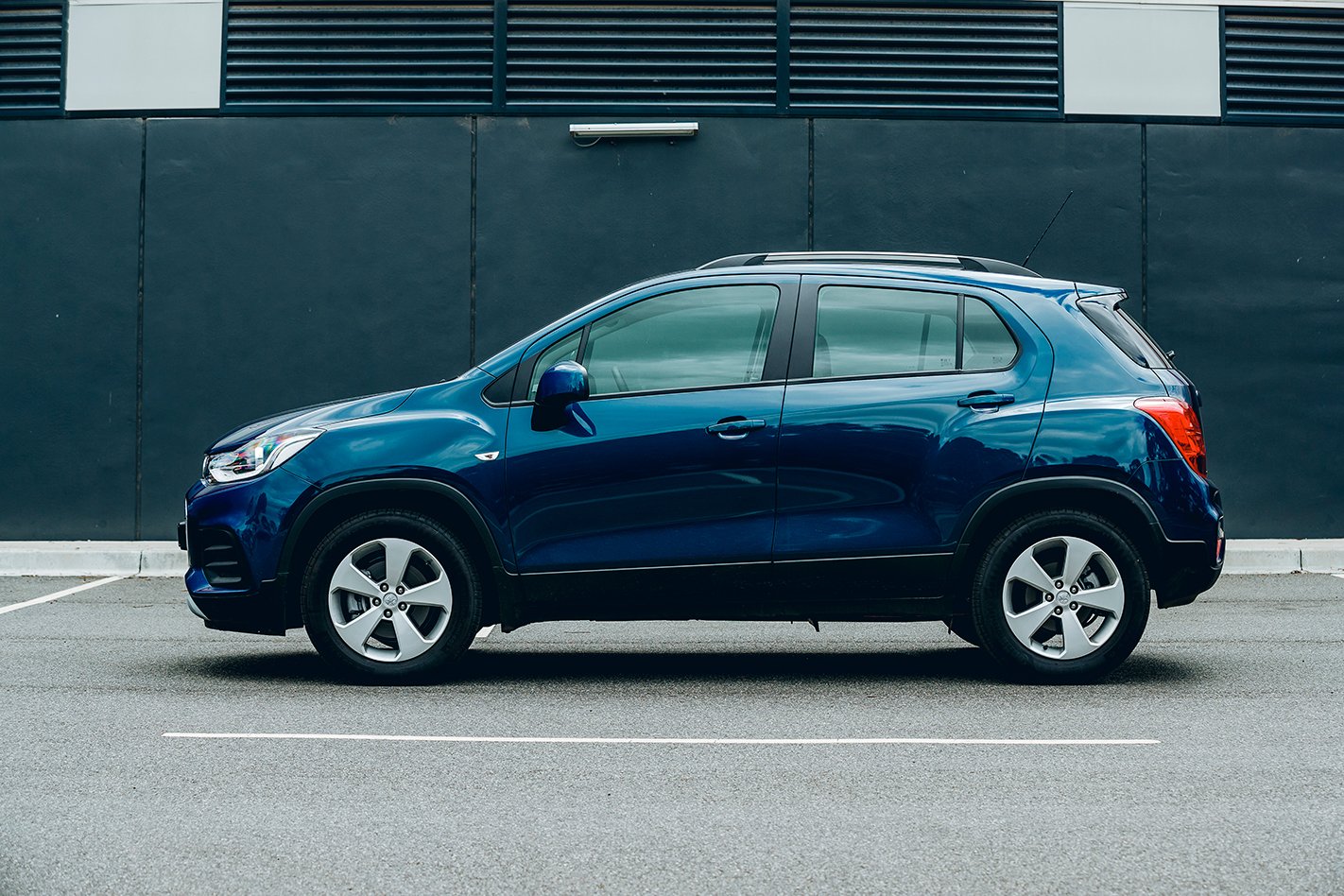
Launched locally in 2013, the original proved a hit, helping establish the nascent urban crossover segment. Propelled by a Series II facelift in 2017 (which included a revamped nose, dash and trim, 1.4-litre turbo power on all autos and Apple CarPlay/Android Auto), it’s easy to comprehend how the Trax remained Holden’s best-selling SUV until last year.
Maybe because of those Germanic genes, the cabin imparts a substantial feel, complete with plenty of legroom up front, heaps of rear headroom, supportive seating and a solid, stylish dash with visual nods to Holden’s Astra and Commodore. The multimedia remains contemporary and a cinch to navigate, there’s ample adjustability for drivers, a rear-seat armrest, sufficient storage, good vision out and even a 230-volt outlet. And, helped by a rear cushion that tips forward to increase cargo floor depth, the boot is decently sized. Loads of showroom appeal, then.
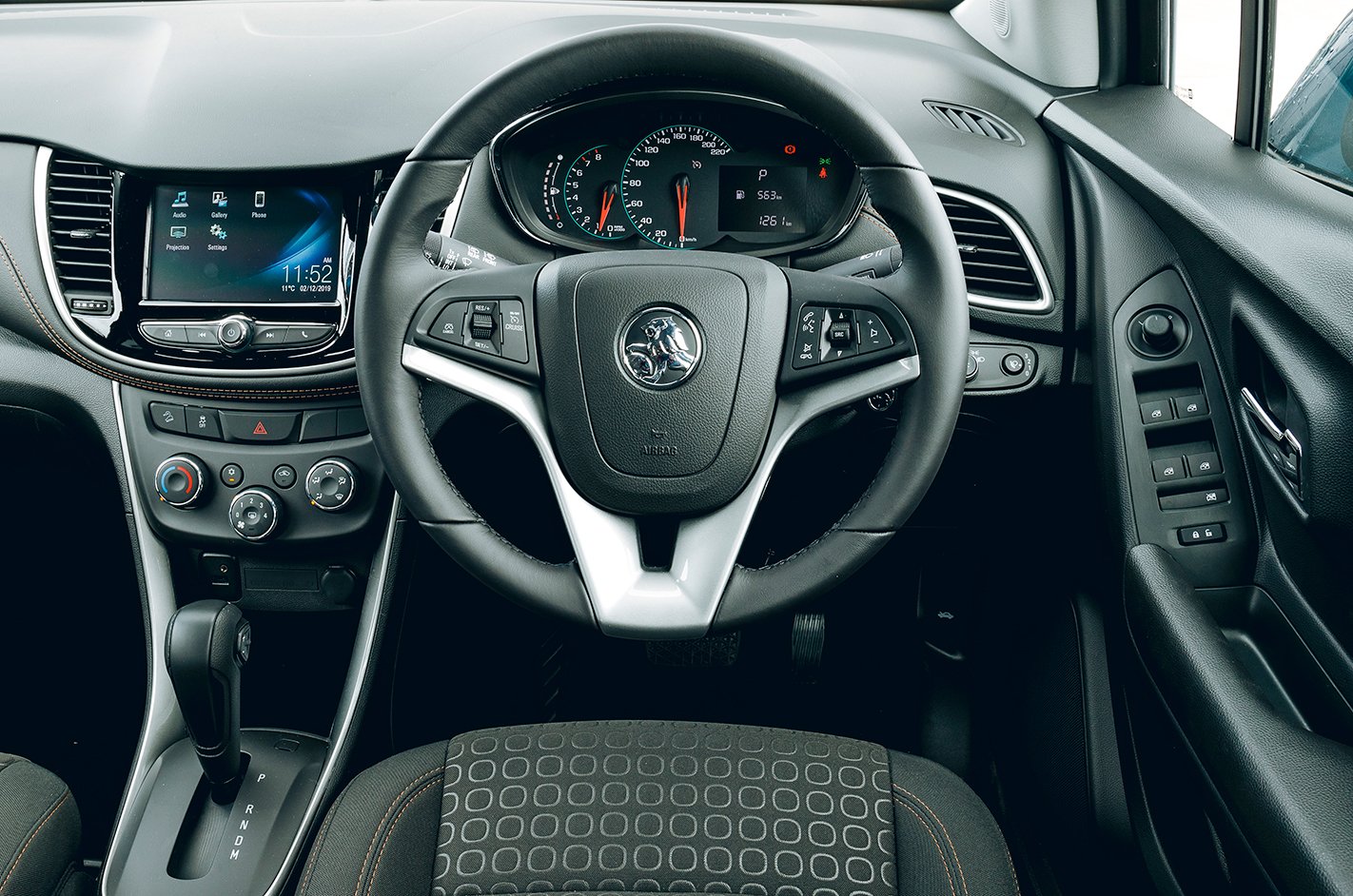
Giving the Trax a bootful of throttle provides a decent turn of speed from the get-go, though the six-speed torque-converter auto isn’t quite as responsive as we’d like. Note, a manual mode can be accessed via a toggle switch on the gear knob, bringing swifter shifts between ratios, while each can be held at the engine cut-out if the driver’s ears can stand it.
As well as being vocal, the 1.4T is also thirsty for the premium brew, with any anticipated downsized turbo efficiencies betrayed by a hefty kerb weight that’s nearly 300kg above the dimensionally similar Suzuki Vitara. That our LS managed the second-worst consumption on test after the ASX as well as some pretty meh sprint times impressed nobody.
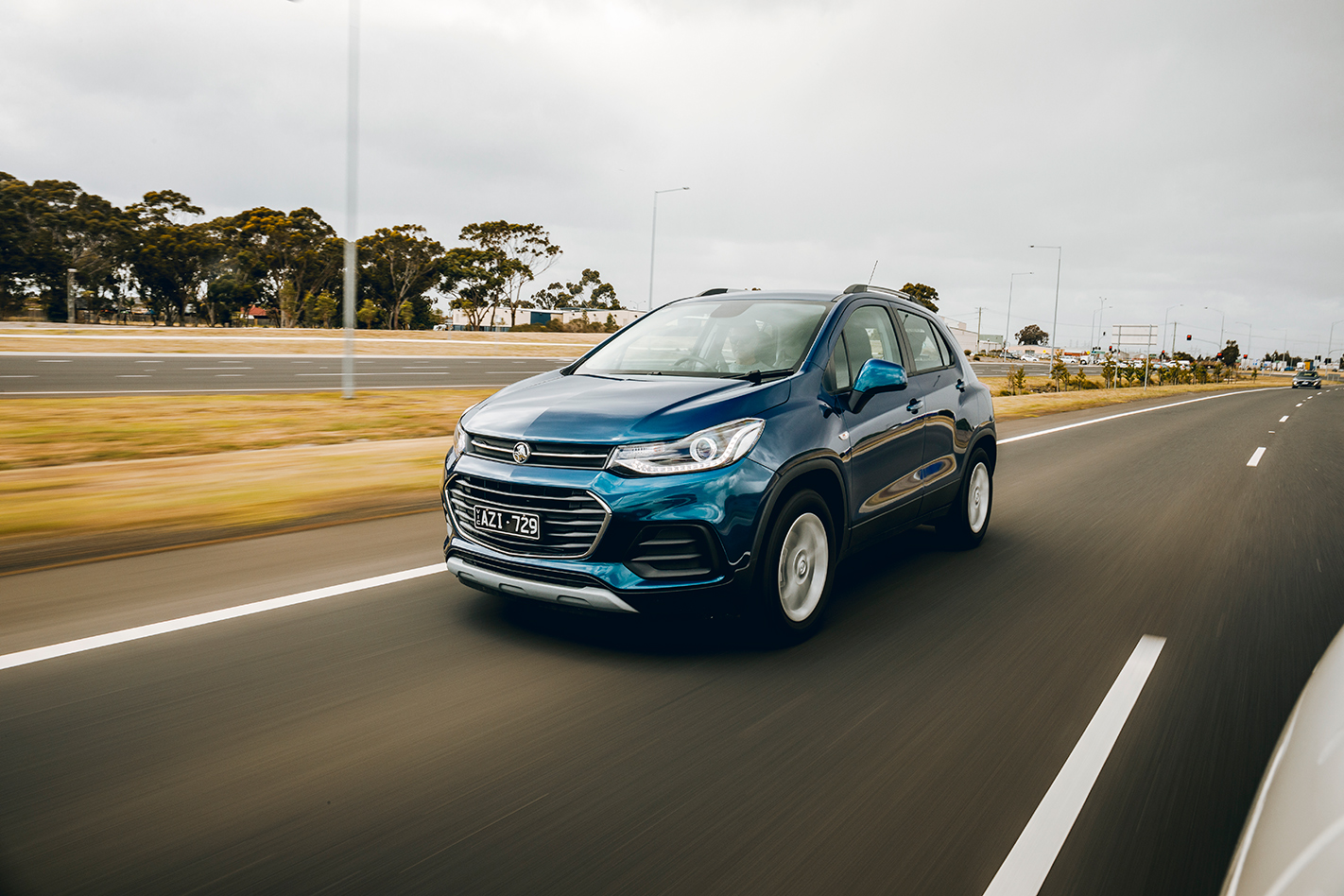
Unexpectedly, the Trax redeems itself outside of its comfort zone. Light and easy around town – if a little gloopy just off start – the steering firms up smoothly at speed, for fast, flowing and involving handling. Better still, wearing quality Continental rubber on 17-inch alloys, the Trax’s suspension discipline astounded. Consisting of conventional struts up front and a torsion beam out back, it deals with evil roads with newfound maturity, soaking up much of the rough stuff with little fuss. That’s in contrast to an 18-inch tyre-shod LTZ tested in May 2017, which felt unsettled and fidgety. With four adults on board, our LS’ chassis felt confident and controlled. Same over gravel, highlighting the benefits of local tuning.
Inevitably, however, the Trax’s advancing years have started to show in other areas, such as the lack of noise suppression; the unavailability of AEB and other driver-assist tech such as adaptive cruise and auto high beams; and even the absence of a digital speedo, which is simply an annoyance on today’s speed-camera-infested roads.
Still, Holden’s segment pioneer can still surprise and delight, even if it isn’t as rounded as most newer rivals. If you can overlook the aforementioned foibles, then join the 5400 or so buyers who did the same last year, and enjoy. The Trax isn’t quite ready to cross that Rainbow Bridge just yet.
Holden Trax LS specs
Price: $26,490
Engine: 1364cc 4cyl, dohc, 16v, turbo
Power: 103kW @ 4900rpm
Torque: 200Nm @ 1850rpm
Transmission: 6-speed automatic
Dimensions (L/W/H/W-B): 4264/1776/1679/2555mm
Weight: 1407kg
Cargo capacity: 387L
Tyres: Continental EcoContact5 215/60R17
Economy: 9.6L/100km (tested)
0-100km/h: 9.3sec (tested)
80-120km/h: 6.6sec (tested)
100-0km/h: 39.5m (tested)
ANCAP rating: 5 stars
2020 Small SUV Megatest
Results
MITSUBISHI ASX
Score 6/10
HYUNDAI KONA
Score 6.5/10
SUZUKI VITARA
Score 7/10
NISSAN QASHQAI
Score 7/10
HYUNDAI VENUE
Score 7.5/10
HONDA HR-V
Score 7.5/10
MAZDA CX-3
Score 7.5/10
KIA SELTOS
Score 8.5/10
TOYOTA C-HR
Score 8.5/10
Braking Data
Fuel Efficiency
Final Position: 10th
Score: 6/10
5 0 5
Plus & Minus
Plus Metal for money; exterior redesign; spacious cabin
Minus Outdated generally; thirsty; NVH
The numbers are impossible to ignore. Launched in Australia when Kevin Rudd was our PM the first time around, the ASX’s popularity knows no limits. A decade in, its gap ahead of the second-placed Mazda CX-3 is wider than ever. The Lancer-based crossover has increased sales when most of the rest are falling.
Such success needs to be acknowledged, not least because nobody – including us – has given the ASX much slack. We cannot recall any other vehicle that has become more popular after so many years with so little change. That’s a glowing testimony to the fundamental strength of the concept right there. Respect.
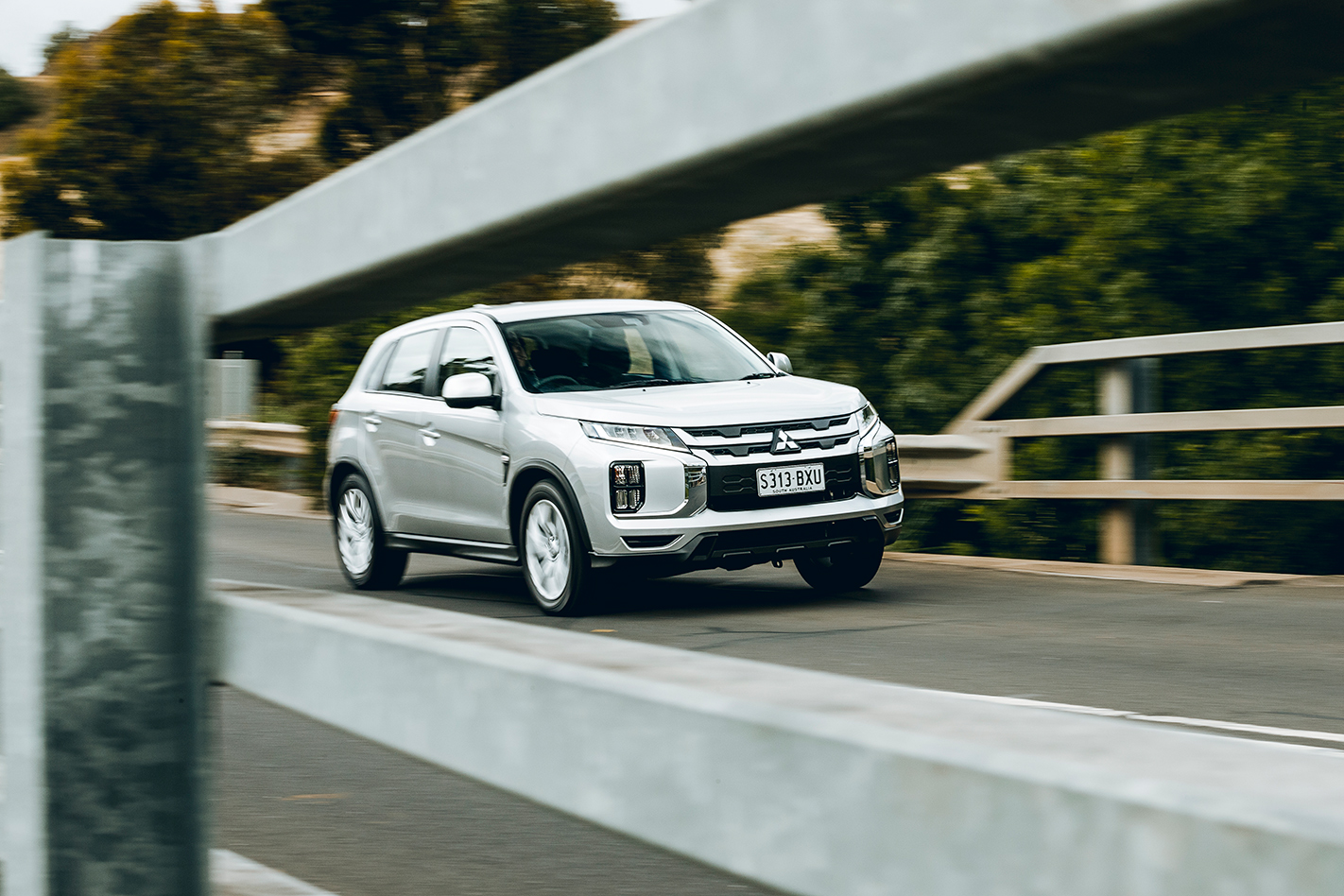
The ASX’s appeal is obvious. Clearly, the looks resonate; perhaps more than ever with the recent, muscular makeover. It’s better than any late-stage facelift ought to be. Chunky 18-inch alloys and generous dimensions draw the eye in, too. Aussies love to feel as though they’re receiving a lot for their dosh, so again, the ASX stacks up. AEB is standard, while a $2500 pack brings goodies like lane-departure and blindspot warnings, rear cross-traffic alert, reversing sensors, auto high beam with dusk-sensing headlights and rain-activated wipers. Nice one, Mitsubishi.
Inside, however, the cracks are showing. Piano black accents, silver splashes and knurling of the controls attempt to lift the ambience, but cratchy plastics abound and the front seats lack support. The harsh light of 2020 sees all.
On the other hand, the large 8.0-inch touchscreen is a boon, especially with Apple CarPlay and Android Auto, even if the resolution and graphics are a bit Windows 95. Ergonomics are sound, rear-seat space is on par for the segment and the 393L boot offers decent capacity.
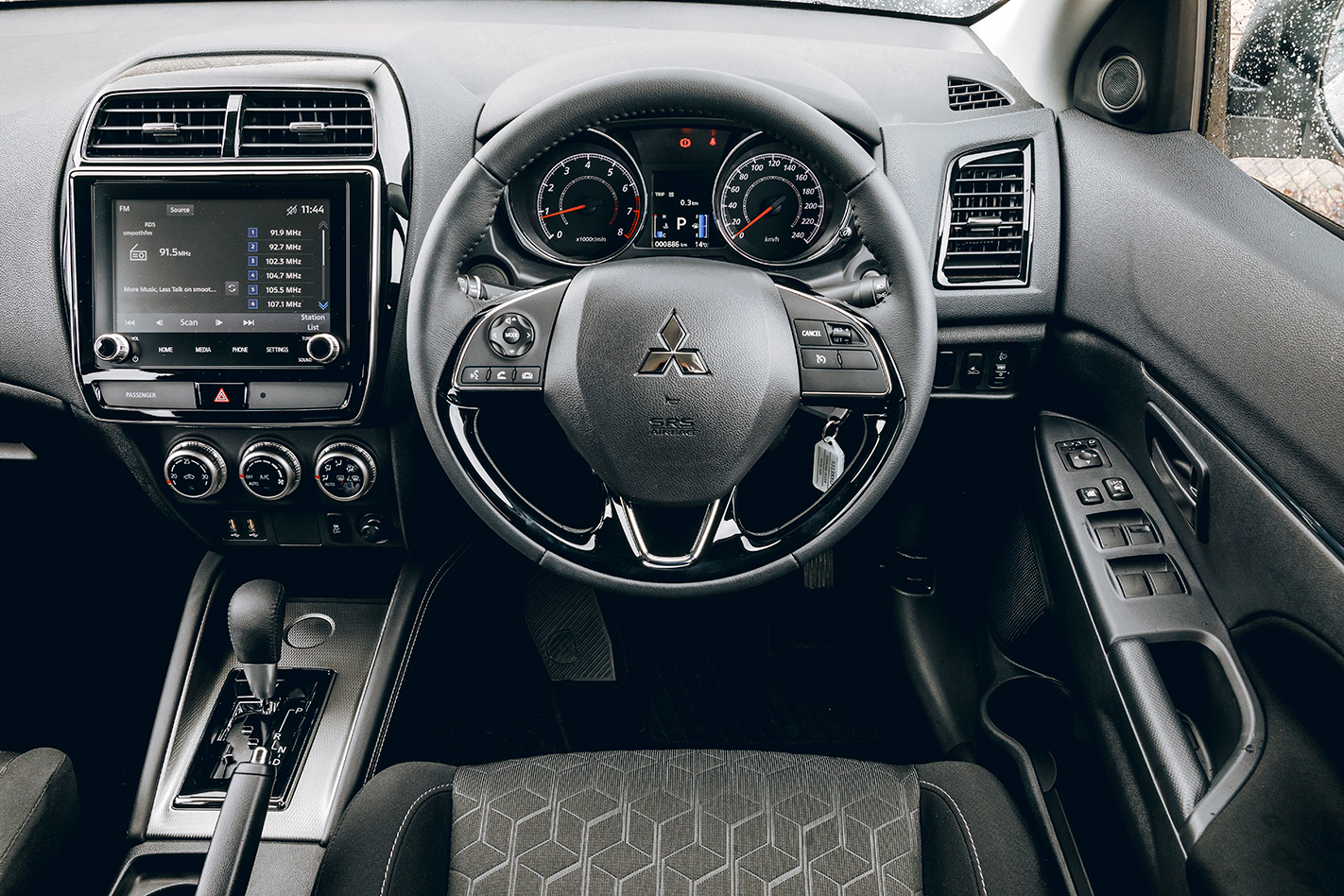
ASX is also a mixed bag under the bonnet. While the XD facelift offers a 123kW/222Nm 2.4-litre petrol engine from the larger Outlander, the ES retains the 110kW/197Nm 2.0-litre four that’s been around since John Howard was PM. Now paired with a CVT, the latter’s performance is actually not too bad. In normal mode, it scoots away with a fair amount of enthusiasm, while a well-judged Sport mode does a surprisingly effective job in accessing some useful mid-range grunt. She ain’t that slow.
However, though resulting in decent oomph, pushing the throttle to the firewall results in higher doses of engine noise/vibration/harshness than we’re prepared to ignore nowadays. Worst on test by far. Refinement doesn’t play much part in it.
Additionally, our ES proved to be the thirstiest of our group, returning a double-digit average. So, while flooring the pedal produces results, there’s a price to pay at the pump.
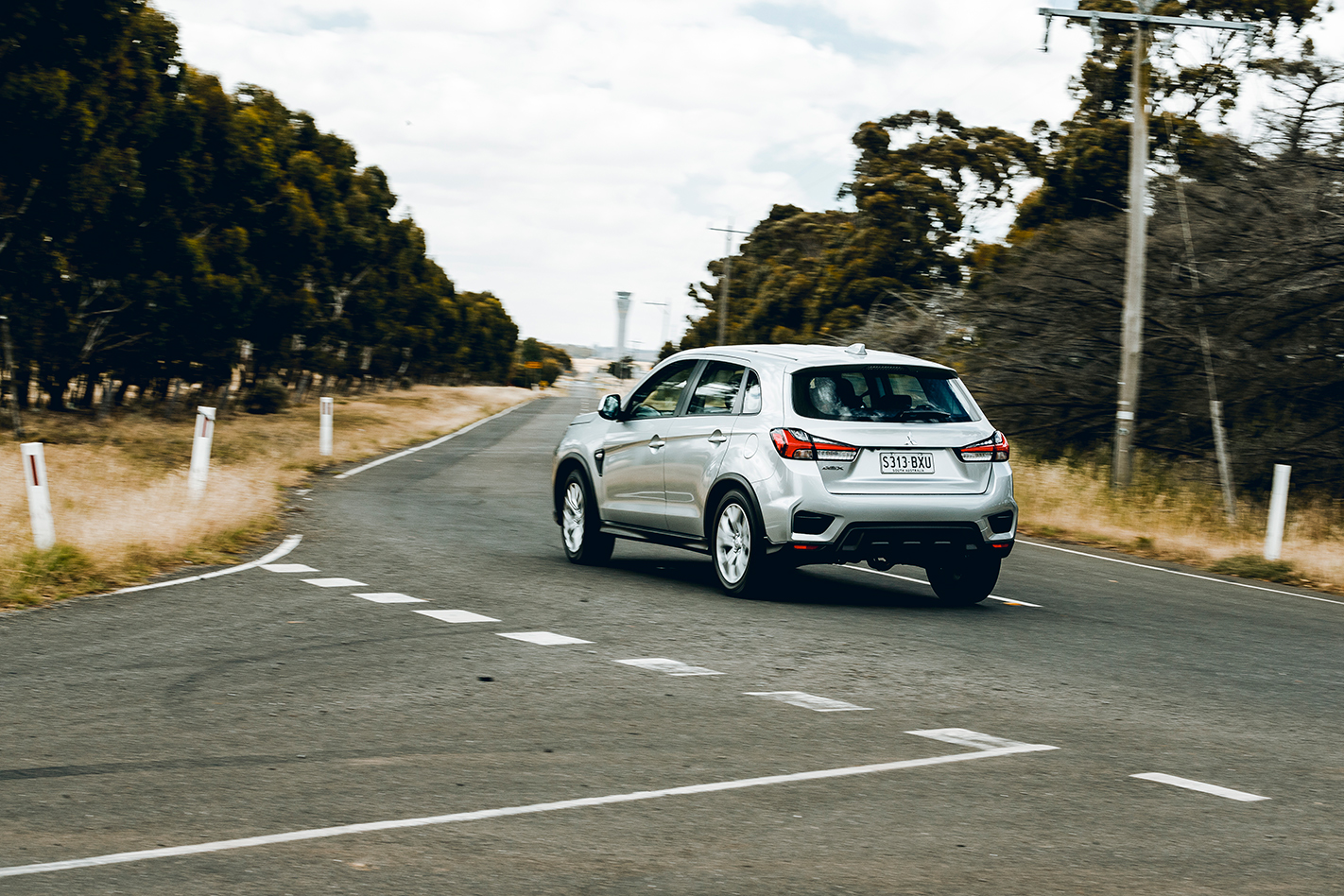
The news doesn’t get any better dynamically. Granted, we understand how most drivers will appreciate steering that is undemandingly light and easy but lean on the handling even just a little, and the ASX’s helm feels numb and lazy.
There is precious little finesse in the crossover’s ability to deal with bumps without amplifying them inside as well. Over even moderate undulations, the suspension is jittery and prone to lateral movements. And grip is comparatively poor, the ES’s stopping distances proving disappointing. The multi-link rear end advantage seems completely squandered here.
Finding reason for the ASX’s popularity is as perplexing as it is perfectly clear. Pricing, space, size, proven mechanicals, great warranty and low-price servicing are hard to ignore. But while an ASX’s numbers still add up in isolation, compared to nine of its closest rivals in an ever more competitive segment, the cracks are becoming too wide to mask.
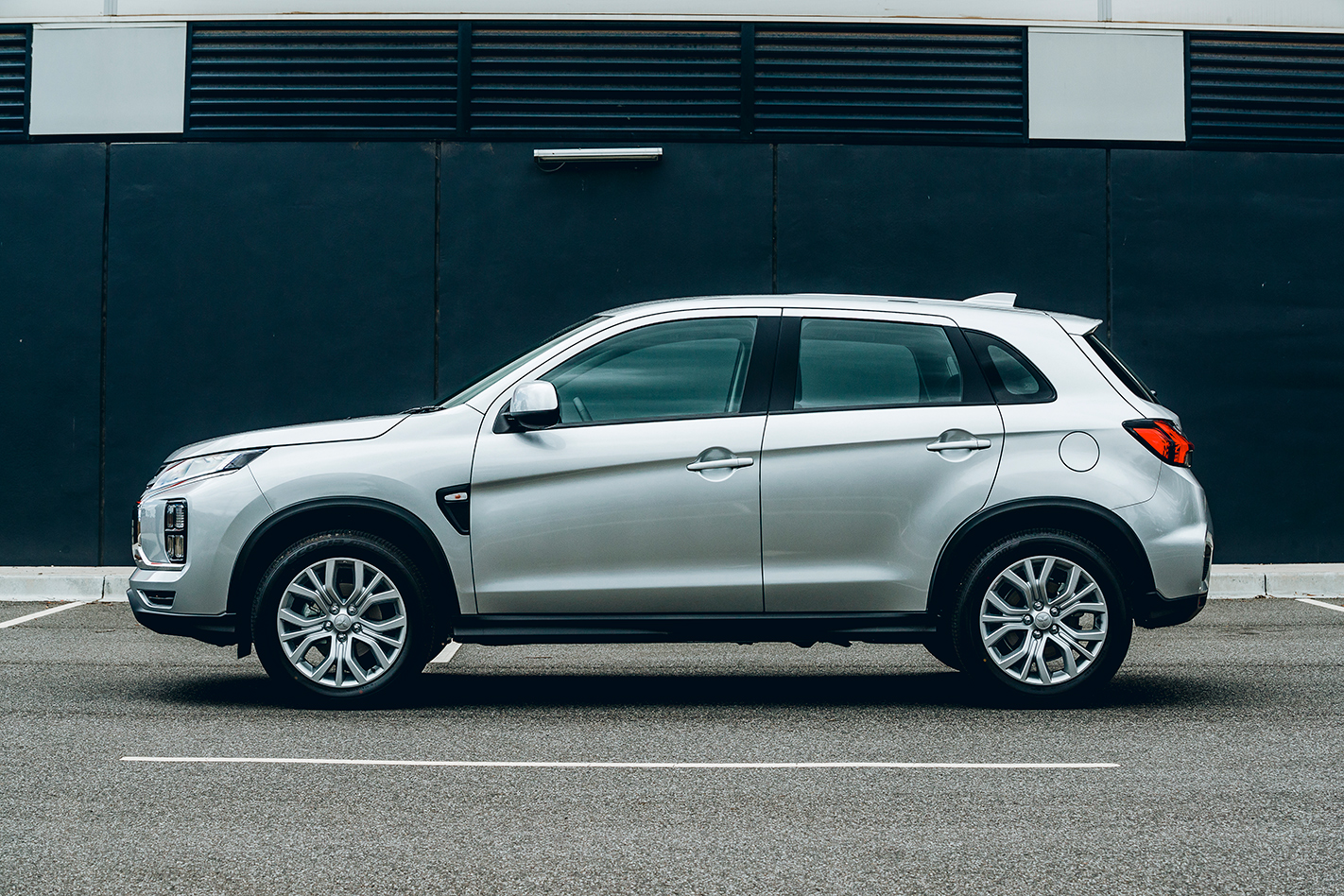
Mitsubishi ASX ES specs
- Price: $26,740
- Engine: 1998cc 4cyl, dohc, 16v
- Power: 110kW @ 6000rpm
- Torque: 197Nm @ 4200rpm
- Transmission: CVT
- Dimensions (L/W/H/W-B): 4365/1810/1640/2670mm
- Weight: 1335kg
- Cargo capacity: 393L
- Tyres: Bridgestone Ecopia 225/55R18
- Economy: 10.4L/100km (tested)
- 0-100km/h: 9.7sec (tested)
- 80-120km/h: 6.6sec (tested)
- 100-0km/h: 41.3m (tested)
- ANCAP rating: 5 stars
2020 Small SUV Megatest
Results
HOLDEN TRAX
Score 6.5/10
HYUNDAI KONA
Score 6.5/10
SUZUKI VITARA
Score 7/10
NISSAN QASHQAI
Score 7/10
HYUNDAI VENUE
Score 7.5/10
HONDA HR-V
Score 7.5/10
MAZDA CX-3
Score 7.5/10
KIA SELTOS
Score 8.5/10
TOYOTA C-HR
Score 8.5/10
Braking Data
Fuel Efficiency
Final Position: 8th
Score: 6.5/10
5 0 5
Plus & Minus
Plus Roomy interior; infotainment; handling
Minus Harsh ride; engineu2019s uncouth top end
If you are reading each of our small SUV megatest reviews in ascending order by score, you’re probably surprised to come across the Hyundai Kona so soon. Especially as the cheaper – and dinkier – Venue must obviously be rated more highly as a result.
Strong points first.
Based on the existing i30 hatch architecture, the $25,500 compact crossover has enough going for it at the lower end of the range to justify its increasing popularity, including contemporary, standout styling. Nothing else looks like it on the road.
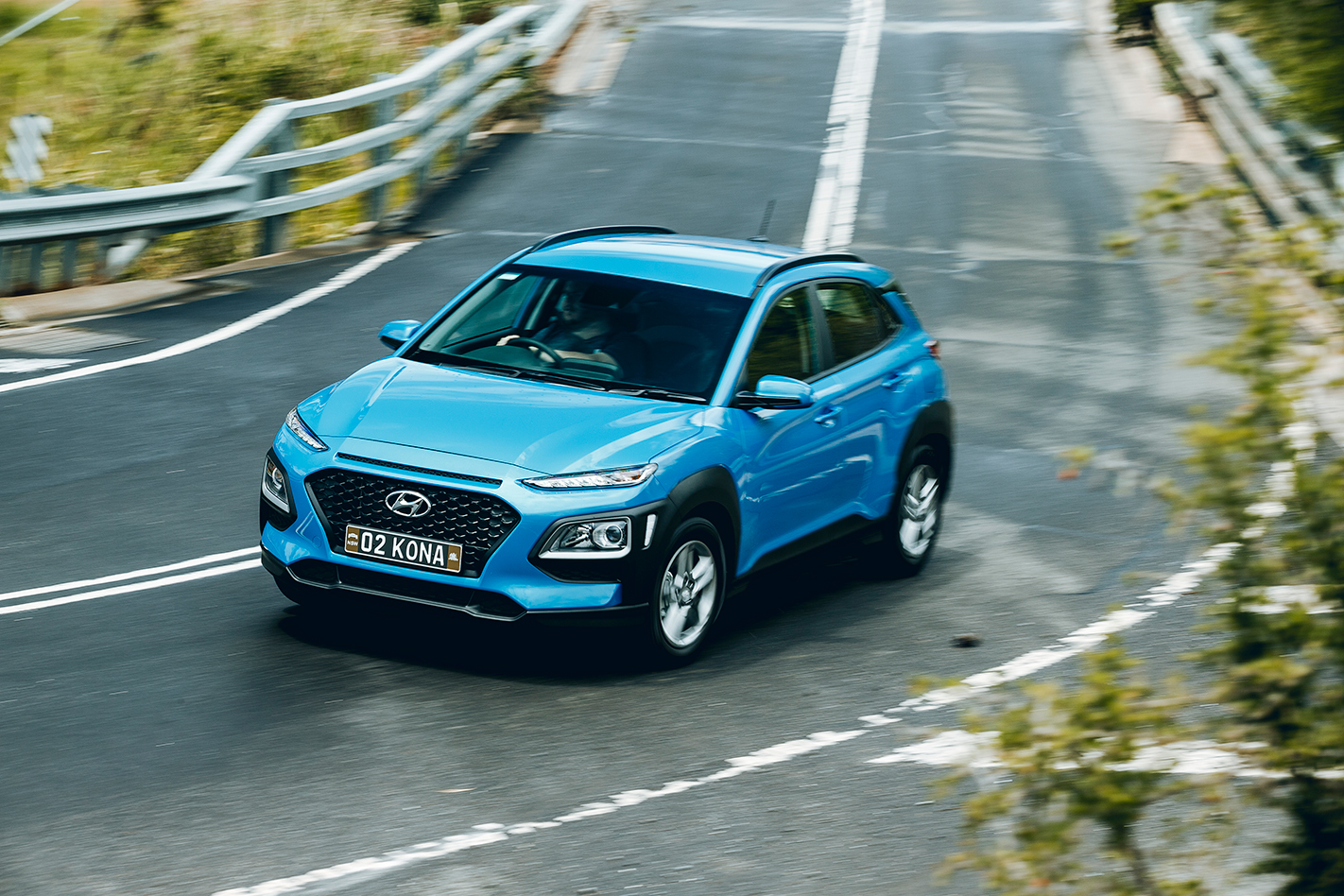
The modern, attractive cabin, meanwhile, offers comfortable cushions front and rear, a handsome dash featuring crystal-clear instruments and an excellent infotainment system, plenty of important standard kit like AEB and a reversing camera, as well as a sporty steering wheel.
Space in the back is a little tight for taller people due to the coupe-like roofline, but most adults will be able to travel shortish distances without feeling too hemmed-in. As with most of its low-spec rivals here, you won’t find rear air vents, or 12V or USB sockets to charge devices. The 361-litre boot space is about average for this segment.
Turn the key, and the Kona is fun to punt about town. Its perky 2.0-litre engine is shared with the closely related Kia Seltos and works harmoniously with the six-speed torque-converter auto, particularly in the mid-rev range where the driver can simply press and go instantly. The big atmo four sounds a little thrashy at the top end, though. And while the inferior fuel consumption compared to the inherently more efficient CVT-equipped Seltos is no surprise (8.7L/100km average versus 8.0L), the Kona’s half-second lag sprinting to 100 comes as a shock.
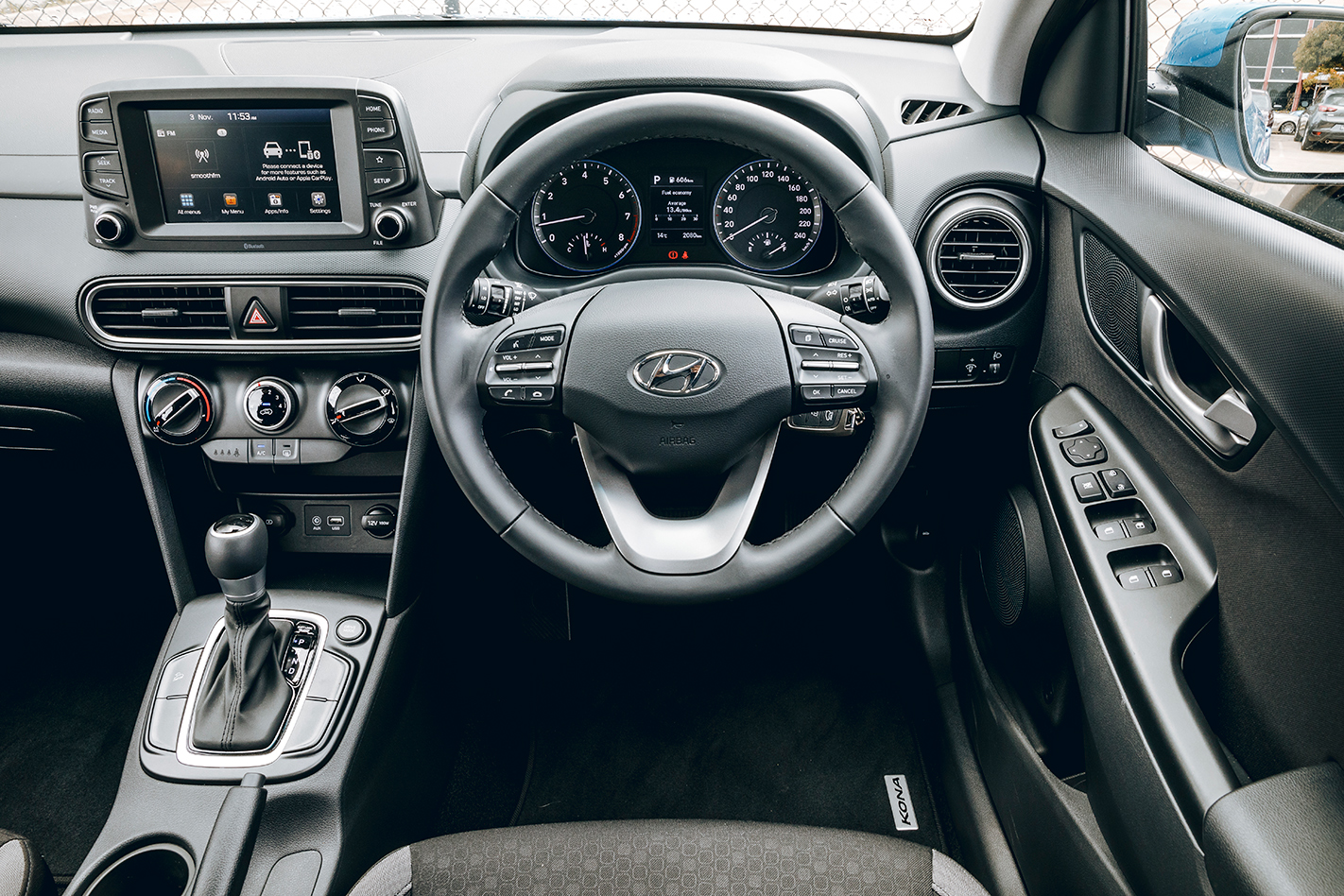
On a smooth ribbon of road, the Kona’s handling is inspiring, dispatching fast corners with confidence and control. The steering’s well weighted too, though a little too muted if feedback’s what you’re after. We wouldn’t bother with the Sport setting, by the way, which only adds unnecessary heft, not feel.
However, though a relatively low 170mm ride height helps deliver that car-like agility, the Active feels nervous and loose over gravel, and its ESC system can be disconcertingly late cutting in. And when it does, there’s little subtlety to it.
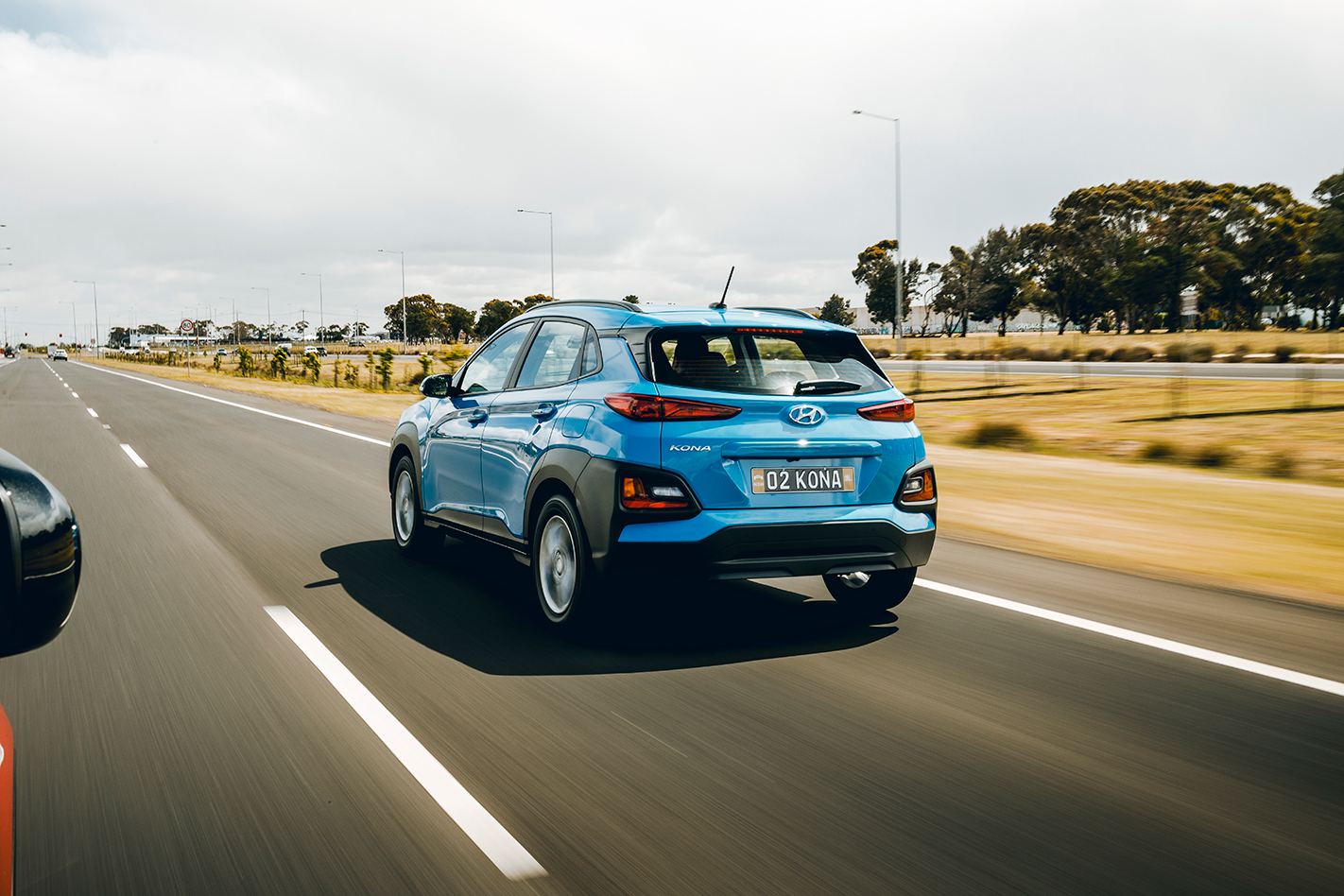
Then there’s the ride comfort – or lack of – on anything but smooth roads. While the firmly sprung chassis tune aids dynamics, the compromise is thrown into sharp relief when the strut-front/torsion beam-rear suspension needs to negotiate speed humps or pot holes. Here, the Kona struggles to settle, shaking and stirring its occupants, particularly those out back. Worst on test. Even on smoother patches, the vertical movement can become tiresome.
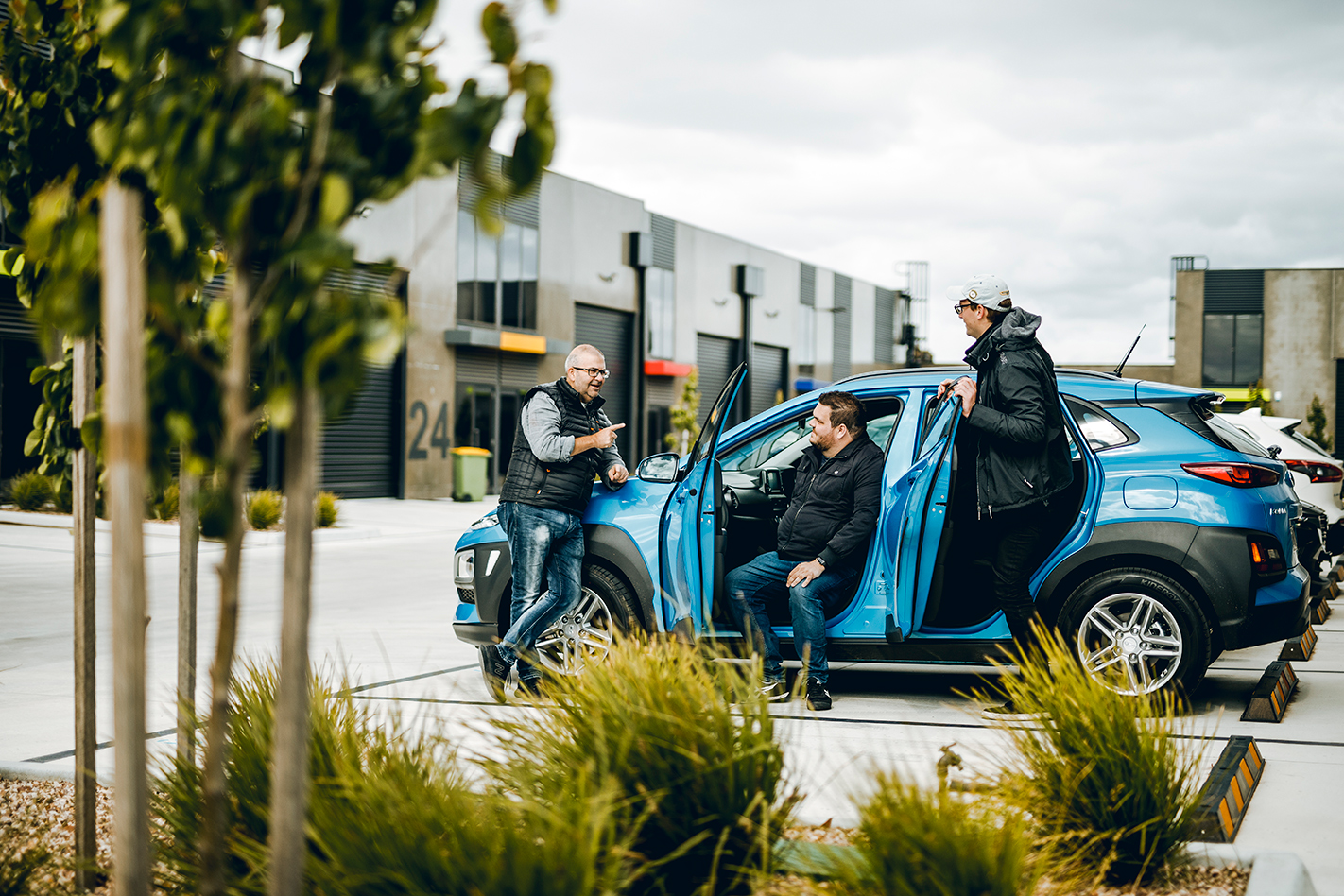
It’s obvious Hyundai has tuned the Kona locally to prioritise sporty handling, which makes sense with the 1.6-litre turbo AWD option on all models that includes a multi-link rear. But the poor FWD 2.0L is left struggling. A $3500 premium for AWD is worth it.
The Kona seems to be a small SUV of two halves – eager and fun on smooth roads, but noisy, bouncy and uncomfortable over rougher stuff. You have to ask yourself where you’ll be doing most of your driving. And, as you’ll read further along, the closely related Kia Seltos S seems to have the Active’s issues more or less licked with basically the same component set.
Still, Hyundai has your back in other ways, because along with the Kona’s 1.6T/AWD upgrade, there’s also the smaller Venue, which shows how the car maker’s Australian arm is capable of getting a local tune right without so much compromise.
Hyundai Kona Active Specs
- Price: $25,500
- Engine: 1999cc 4cyl, dohc, 16v
- Power: 110kW @ 6200rpm
- Torque: 180Nm @ 4500rpm
- Transmission: 6-speed automatic
- Dimensions (L/W/H/W-B): 4165/1800/1550/2600mm
- Weight: 1290kg
- Cargo capacity: 361L
- Tyres: Hankook Kinergy ECO2 205/60R16
- Economy: 8.7L/100km (tested)
- 0-100km/h: 9.4sec (tested)
- 80-120km/h: 6.1sec (tested)
- 100-0km/h: 38.0m (tested)
- ANCAP rating: 5 stars
2020 Small SUV Megatest
Results
MITSUBISHI ASX
Score 6/10
HOLDEN TRAX
Score 6.5/10
SUZUKI VITARA
Score 7/10
NISSAN QASHQAI
Score 7/10
HYUNDAI VENUE
Score 7.5/10
HONDA HR-V
Score 7.5/10
MAZDA CX-3
Score 7.5/10
KIA SELTOS
Score 8.5/10
TOYOTA C-HR
Score 8.5/10
Braking Data
Fuel Efficiency
Final Position: 7th
The Vitara nameplate goes back to 1988 when Suzuki introduced a more road-friendly, coil-sprung alternative to its popular SJ40 Jimny, known in Australia then as the Sierra or Holden-badged Drover. It was handy off-road, but proved popular with young urban drivers who liked its high-riding style and ability to provide the odd weekend adventure.
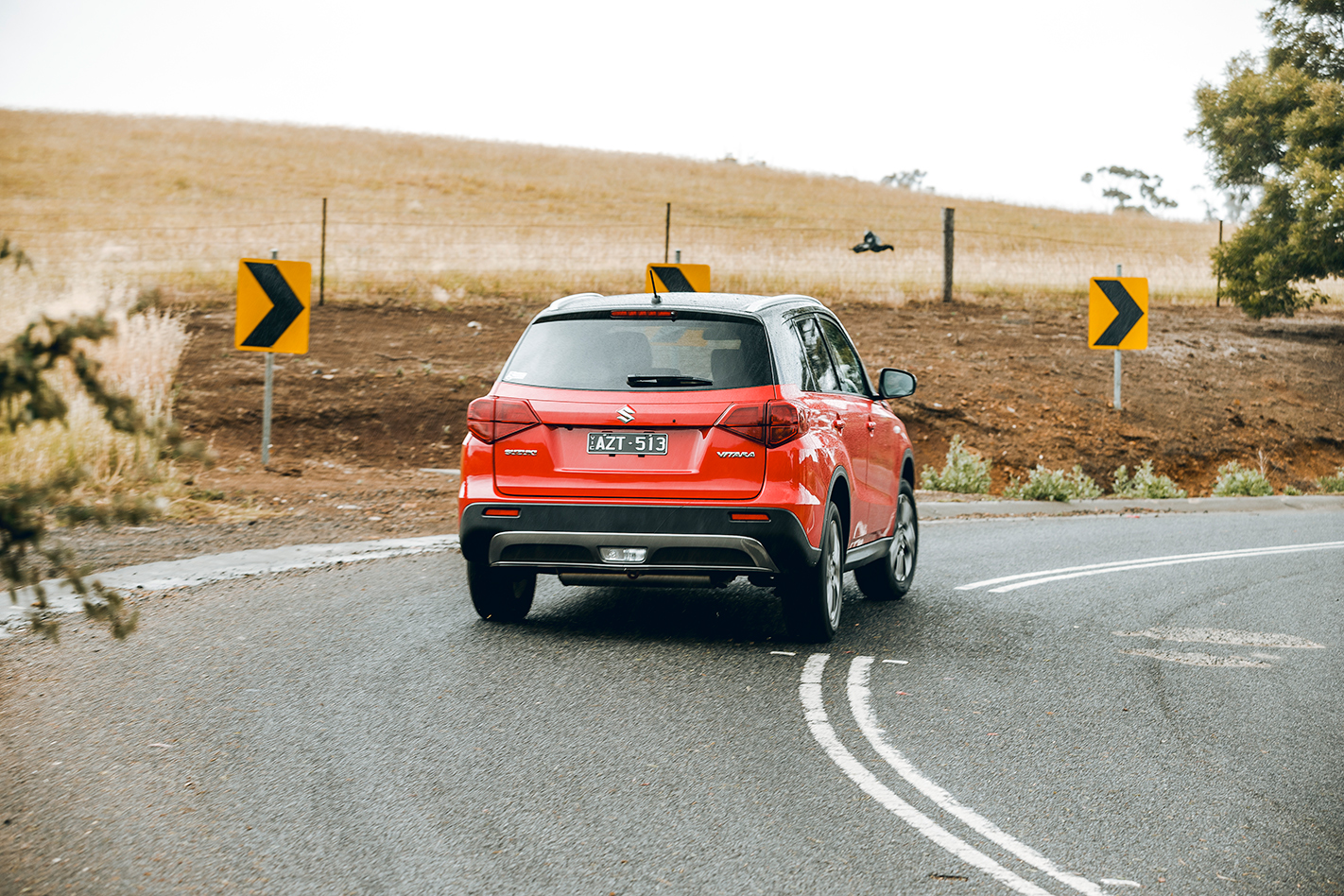
Fast-forward 30 years, and the new Jimny is almost identical in terms of its size, off-road capability and rudimentary on-road dynamics. The Vitara – now in its fourth generation and a small monocoque – has embraced its polished, city-slicker lifestyle but, as our test showed, it’s not averse to leaving bitumen either.
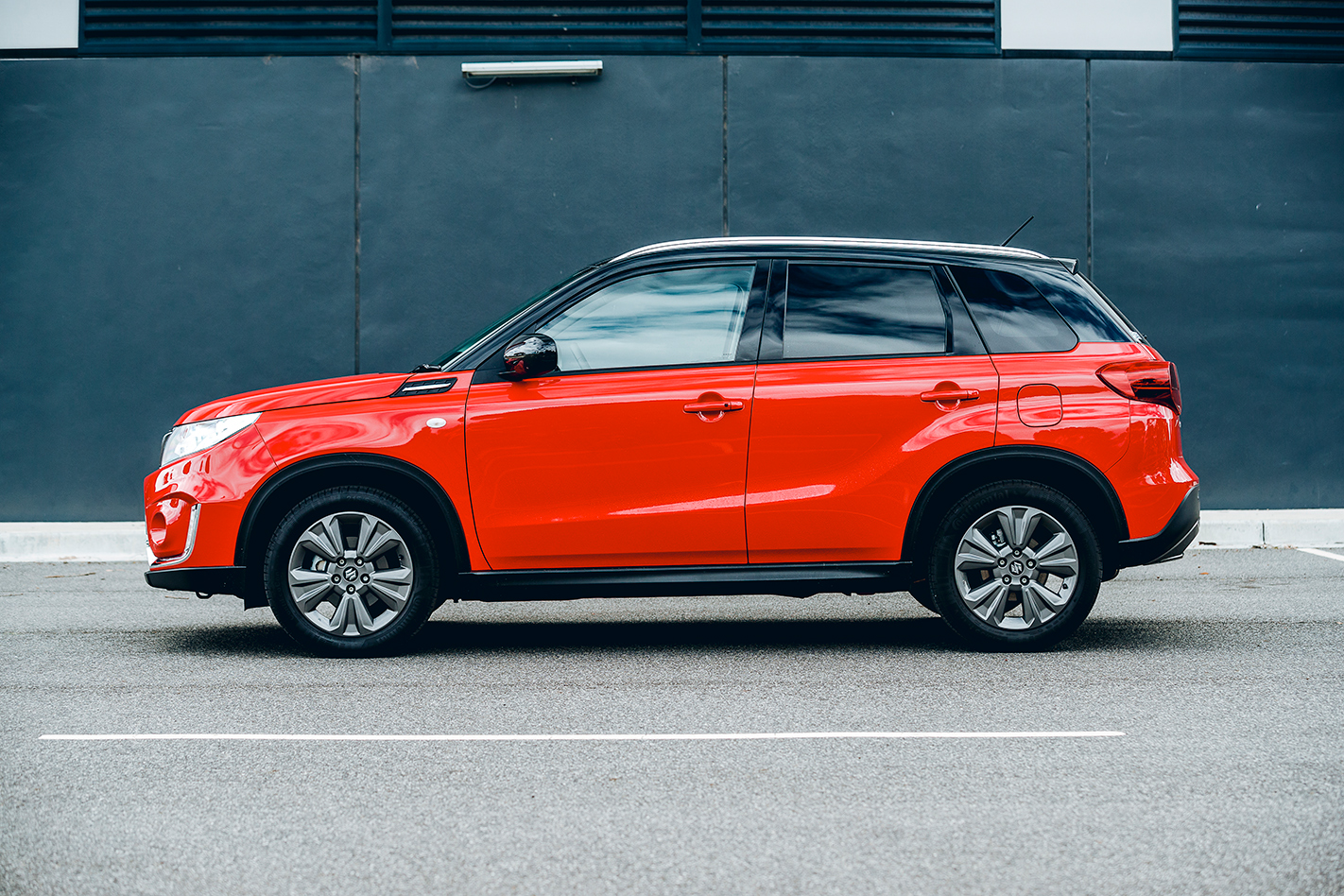
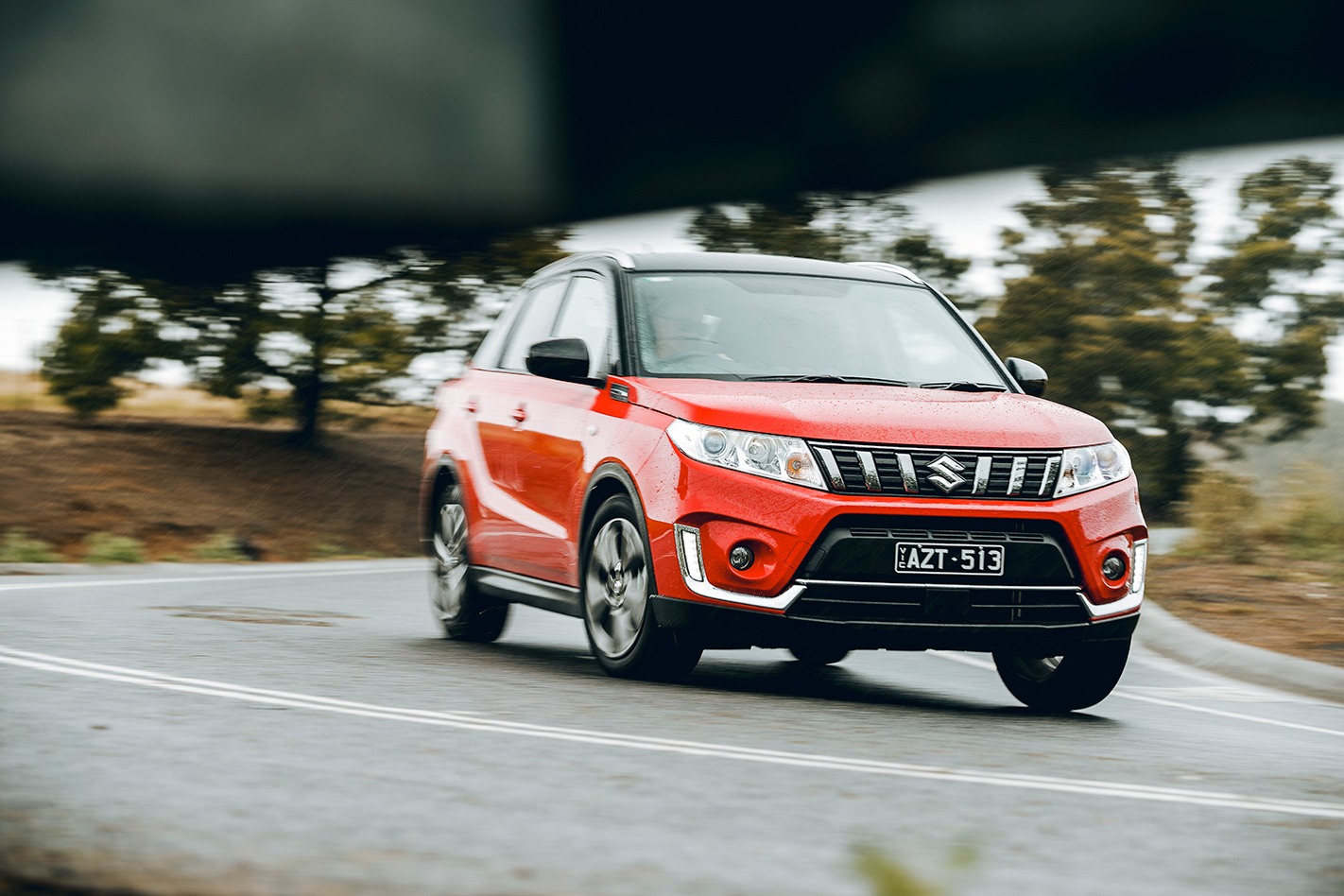
With the six-speed automatic gearbox, the front-drive base-spec Vitara 1.6 sells for $24,490, making it the cheapest of our contenders. But it punches above its weight due to its ability to handle gravel and potholes with a smooth, almost soft ride.
Despite a smaller footprint than most of its rivals, it feels secure on gravel, and its 185mm ride height means you don’t end up with most of the road surface in your wheel arches. A downside is the light steering, which has a nice fluid feel on bitumen but doesn’t communicate too much from the front contact patches when negotiating pebbly bends.
On deteriorating bitumen at 100km/h, the suspension (strut front, torsion beam rear) tackles road imperfections well, with little compromise to handling and lateral toss. With just the driver on board there’s some floaty secondary bounce, less so with passengers in the back. Better still, even this entry-level model handles the gravel with aplomb. The chassis is composed at speed on loose surfaces, and if you’re a keen driver you’ll also appreciate the playful ESC tune.
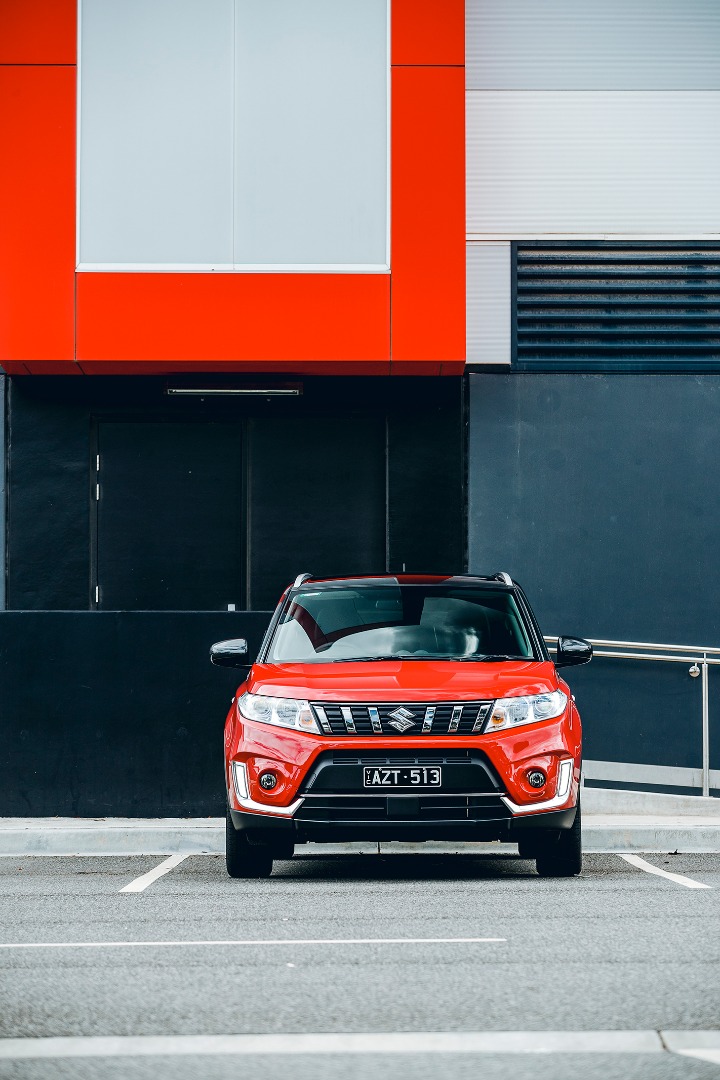
The Vitara’s 1.6-litre engine is a hard worker, and is paired with the same six-speed torque-converter automatic found in the upper-spec S-Turbo variants. It’s tuned for economy over performance, though each is aided by its 1180kg kerb weight that’s just 15kg more than the pint-sized Hyundai Venue. It’s an interesting comparison, because both are about neck-to-neck from 0-100km. The Venue’s additional 4kW give it a slight edge in the sprint but the Vitara is less raucous at higher revs.
The cabin is deceptively roomy, despite the Vitara’s 2500mm wheelbase being 70mm shorter than that of the diminutive Mazda CX-3. The front seats are basic but comfortable and the rear pew fits two adults adequately, with ample legroom, headroom and shoulder space, as well as fine all-round vision. The 60:40 split seat backs fold down to extend the 375-litre boot space (which is about average for a small SUV) to 710 litres.
And there’s quite a bit of kit for a sub-$25K SUV, including Suzuki’s generous multimedia system with satellite navigation and Android Auto/Apple CarPlay connectivity, leather-trimmed steering wheel, climate control air-conditioning, push-button start, paddleshifters and stitched seat trim.
There are compromises however, including hard plastic door trims and insufficient active safety tech – namely the lack of AEB, even as an option, which is a glaring oversight given the Vitara Turbo versions get it. Rear passengers miss also out on basic amenities like a centre armrest and seat pockets.
The Suzuki Vitara is a good, honest SUV that majors on practicality and comfort without falling into the trap of trying to be sporty. But while it’s roomy and well equipped, it does feel built to a price and the absence of advanced driver assistance technology is an archaism in this 2020 model year.
Suzuki Vitara specs
- Price: $24,490
- Engine: 1586cc 4cyl, sohc, 16v
- Power: 86kW @ 6000rpm
- Torque: 156Nm @ 4400rpm
- Transmission: 6-speed automatic
- Dimensions [L/W/H/WB]: 4175/1775/1610/2500mm
- Weight: 1180kg
- Cargo capacity: 375L
- Tyres: Continental ContiEcoContact 215/55R17
- Economy: 9.1L/100km (tested)
- 0-100km/h: 10.5sec (tested)
- 80-120km/h: 8.2sec (tested)
- 100-0km/h: 37.9m (tested)
- ANCAP rating: 5 stars
2020 Small SUV Megatest
Results
MITSUBISHI ASX
Score 6/10
HOLDEN TRAX
Score 6.5/10
HYUNDAI KONA
Score 6.5/10
NISSAN QASHQAI
Score 7/10
HYUNDAI VENUE
Score 7.5/10
HONDA HR-V
Score 7.5/10
MAZDA CX-3
Score 7.5/10
KIA SELTOS
Score 8.5/10
TOYOTA C-HR
Score 8.5/10
Braking Data
Fuel Efficiency
Final Position: 6th
Score: 7/10
5 0 5
Plus & Minus
Plus Effective CVT; space; economy; design; comfort
Minus Dated infotainment; pricing; so-so driving experience
The hard-fought battleground of the small SUV is littered with cars vying for your attention, and it’s becoming increasingly difficult to offer a unique entrant, especially at the lower end of the price spectrum.
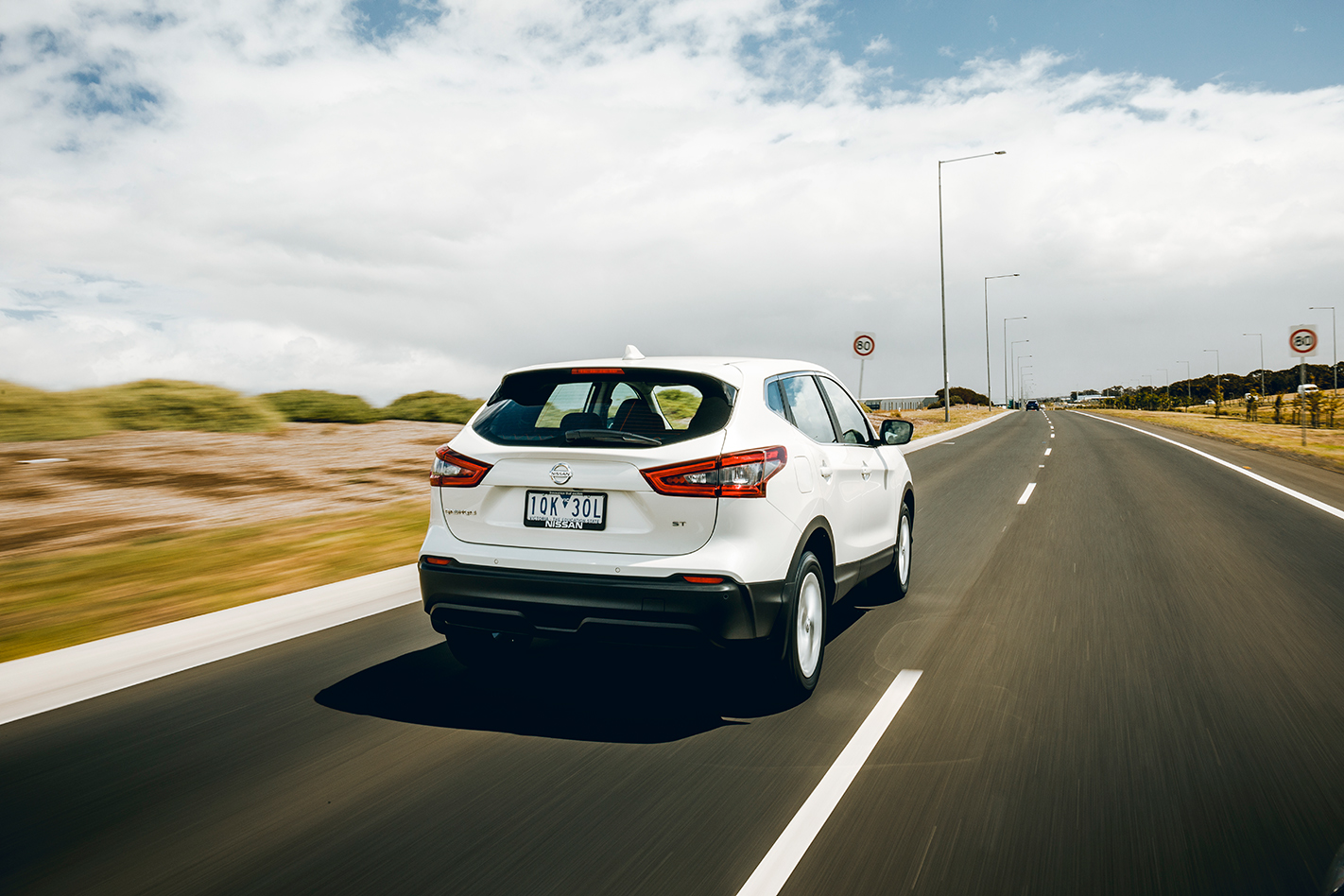
The UK-built Nissan Qashqai ST does things differently, though, presenting more like a medium SUV that majors on practicality while also offering the drive experience of a more substantial crossover.
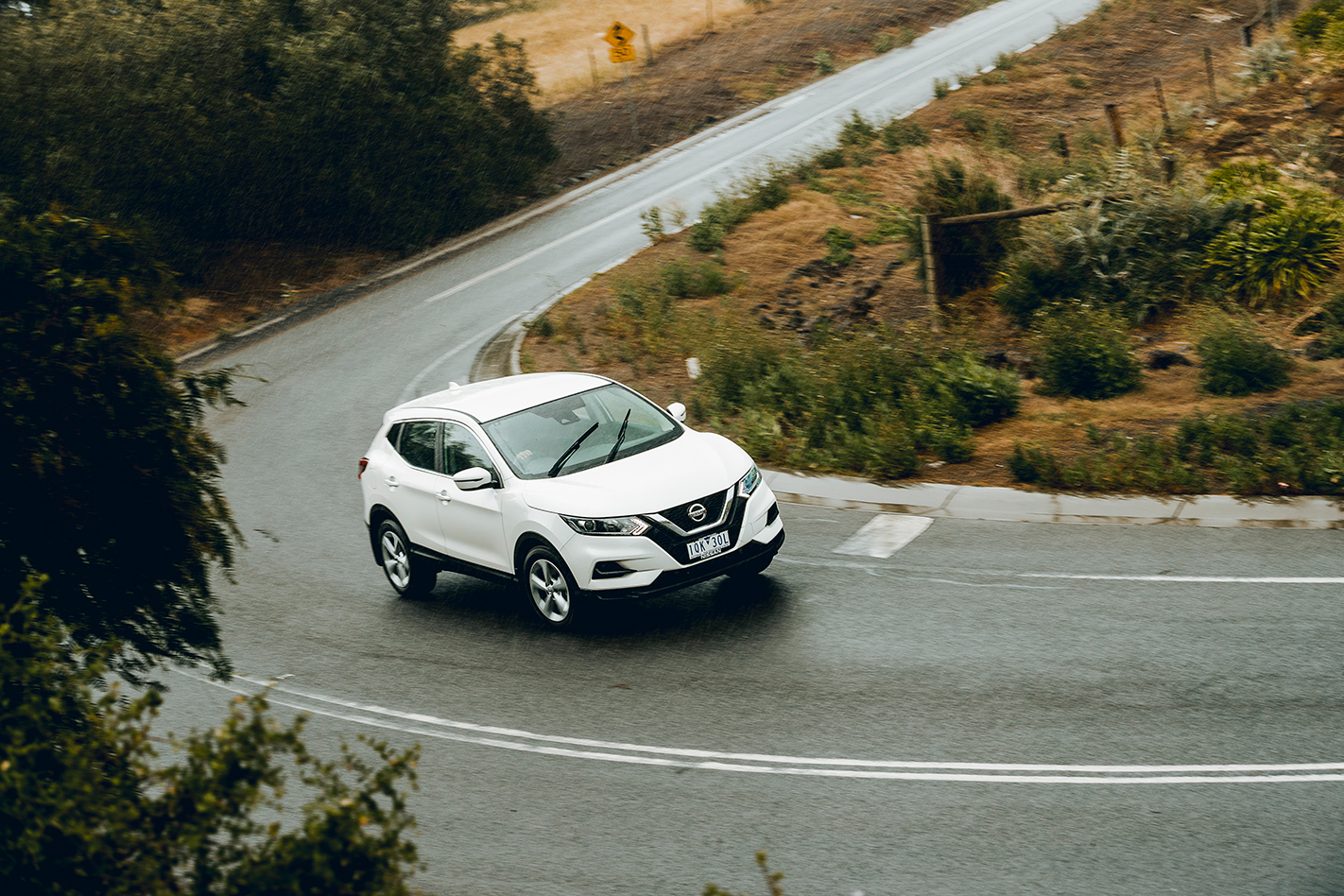
Each Qashqai in the range comes with a naturally aspirated 2.0-litre four-cylinder engine that produces 106kW/200Nm. The $29,490 ST we have on test includes a CVT, which is impressive in how it steplessly arranges the appropriate revs to keep things near the modest summit of the power curve. Even then it’s the equal slowest-accelerating car on test, highlighting the fact that – in this 1375kg crossover at least – there just aren’t enough herbs in that 2.0-litre unit to go around. On the flipside, although it’s one of the bigger cars here, the Qashqai returned a respectable 8.6L/100km fuel consumption average, aided by the undoubted efficiency of that CVT.
Despite being one of the larger SUVs in this particular class, the ST still offers a keen change of direction and is easy to manoeuvre about town thanks to light (though lifeless) steering and a fairly wide track. However, there’s not much in the way of a fun steer to be had and the Nissan displayed a particularly late ESC intervention a number of times on test, especially over gravel where we rated it as the worst.
Its lack of dynamic prowess is compensated by a well-packaged and practical interior with quality touchpoints. A quite lovely flat-bottomed, leather-wrapped steering wheel features clear controls, and the instrument cluster contains a neat colour display showing driving data and a digital speed readout (unlike the Suzuki Vitara) between the speedometer and tacho.
There’s a commanding driving position and the ride quality is fairly supple, even with four adults on board. Those sitting in the back are also well catered for in terms of space, with decent leg and head room, as well as space to tuck in feet, but something that may annoy taller people is the low-mounted seat base which has knees waving about in space. Plus, while road noise is mostly kept in check, there’s a degree of reverberation in the second row which can grate on longer drives.
The rear pews aren’t quite as luxurious as those up front, either. The door cards are hard and the black plastic door handles aren’t the nicest to use. There’s also a gaping hole in the centre console bin where rear air vents would reside in higher-spec variants.
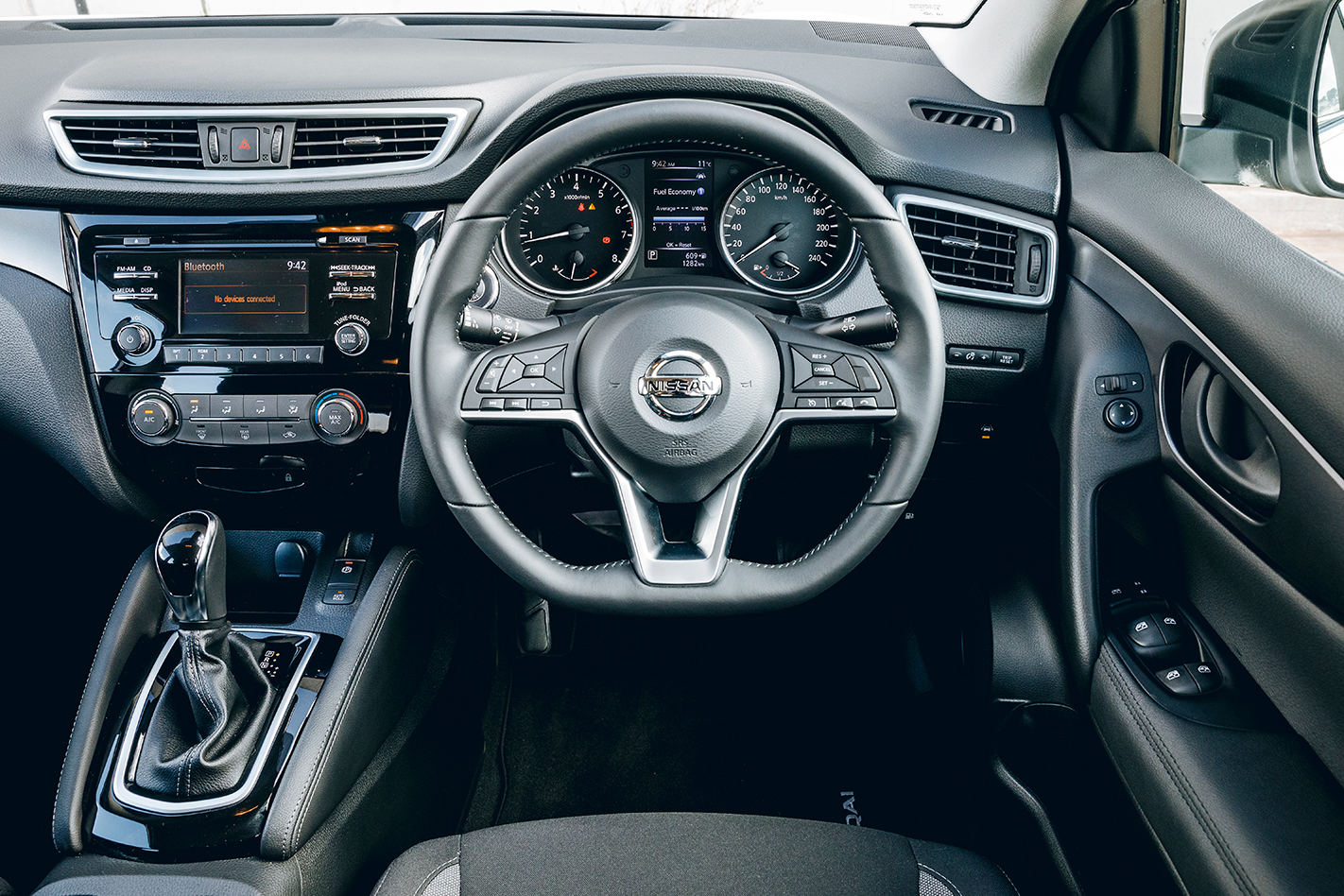
The infotainment system on our base Nissan struggled to connect to a phone through Bluetooth and the system itself is far from the most intuitive of this group thanks to clumsy menus and poor graphics.
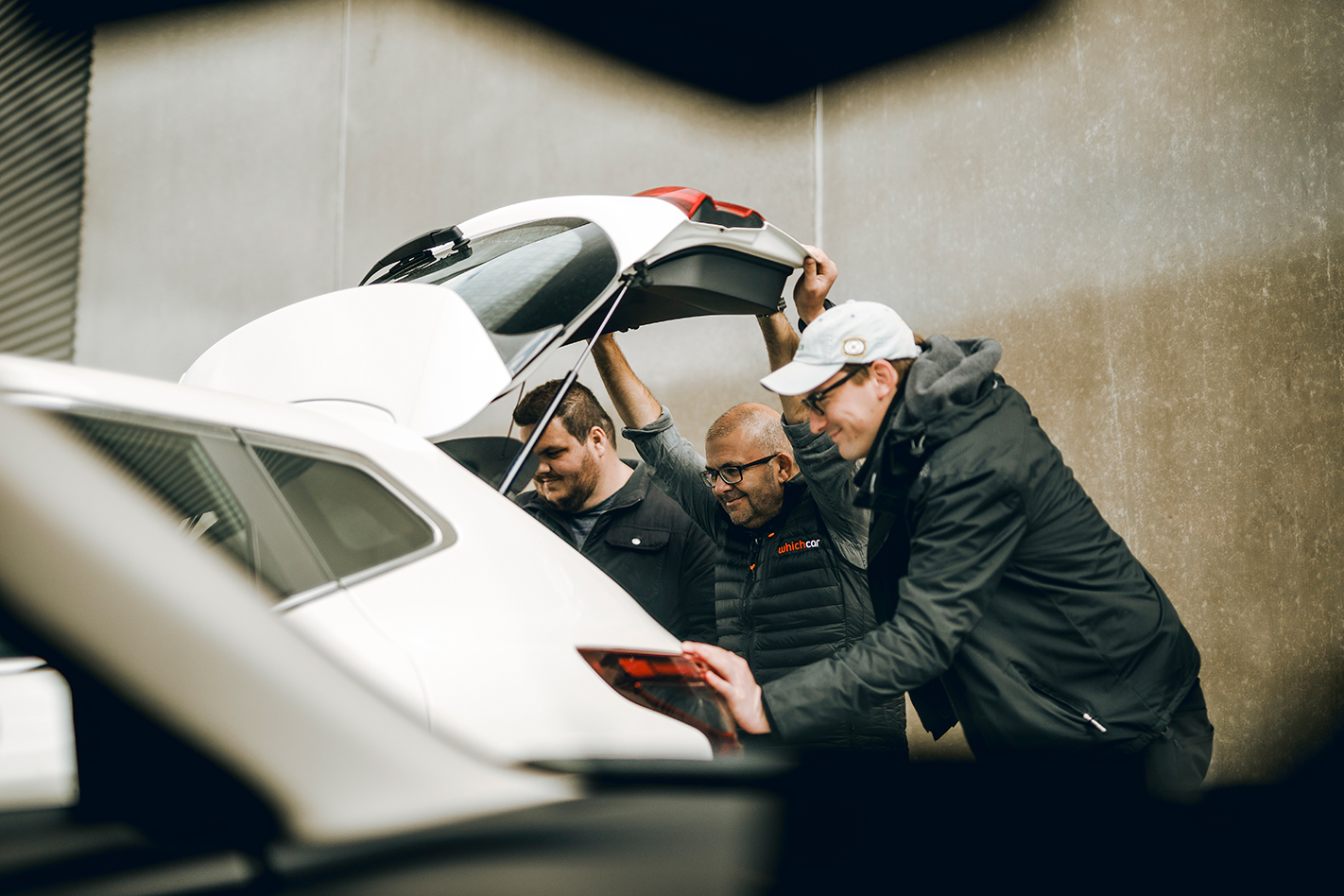
While the Qashqai is not as cleverly packaged as the Honda HR-V, there’s no shortage of space. The boot which is a capacious 430 litres – one of the largest in this segment.
Considering its $29,490 spend, it’s hard to excuse some of the Qashqai’s weaker points, such as the infotainment, and the drive it offers is not sufficiently engaging to compensate. However, its roomy interior and the bold statement its external dimensions make on-road ensure it retains appeal as an ownership proposition.
Nissan Qashqai ST specs
- Price: $29,490
- Engine: 1997cc 4cyl, dohc, 16v
- Power: 106kW @ 6000rpm
- Torque: 200Nm @ 4400rpm
- Transmission: CVT
- Dimensions [L/W/H/WB]: 4394/1806/1595/2646mm
- Weight: 1375kg
- Cargo capacity: 430L
- Tyres: Bridgestone Desert Dueler H/P 215/60R17
- Economy: 8.6L/100km (tested)
- 0-100km/h: 10.5sec (tested)
- 80-120km/h: 8.5sec (tested)
- 100-0km/h: 39.8m (tested)
- ANCAP rating: 5 stars
2020 Small SUV Megatest
Results
MITSUBISHI ASX
Score 6/10
HOLDEN TRAX
Score 6.5/10
HYUNDAI KONA
Score 6.5/10
SUZUKI VITARA
Score 7/10
HYUNDAI VENUE
Score 7.5/10
HONDA HR-V
Score 7.5/10
MAZDA CX-3
Score 7.5/10
KIA SELTOS
Score 8.5/10
TOYOTA C-HR
Score 8.5/10
Braking Data
Fuel Efficiency
Final Position: 5th
Score: 7.5/10
5 0 5
Plus & Minus
Plus Cheap and cheerful at its best; handling; roomy cabin
Minus Active represents better value; harsh engine; economy
Authenticity. Some people have it, and some don’t. Small SUVs are similar. These jacked-up hatches with ‘look at me, I can go off-road’ body cladding usually fall into the latter category by trying to be something they’re not. The stance and rugged addenda lure you into thinking ‘fun’, but ‘humdrum’ is often what presents itself through the lightly veiled smoke and mirrors.
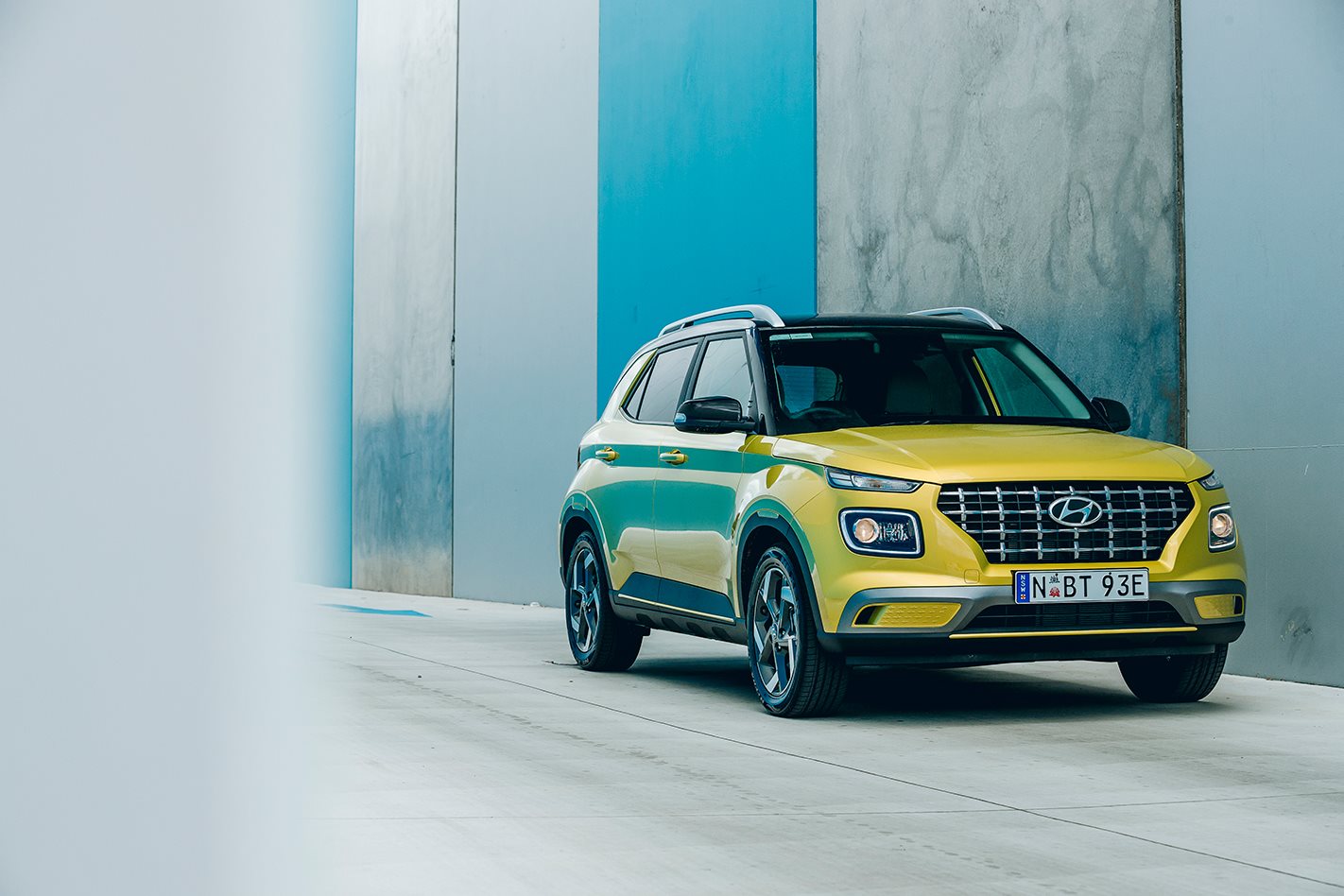
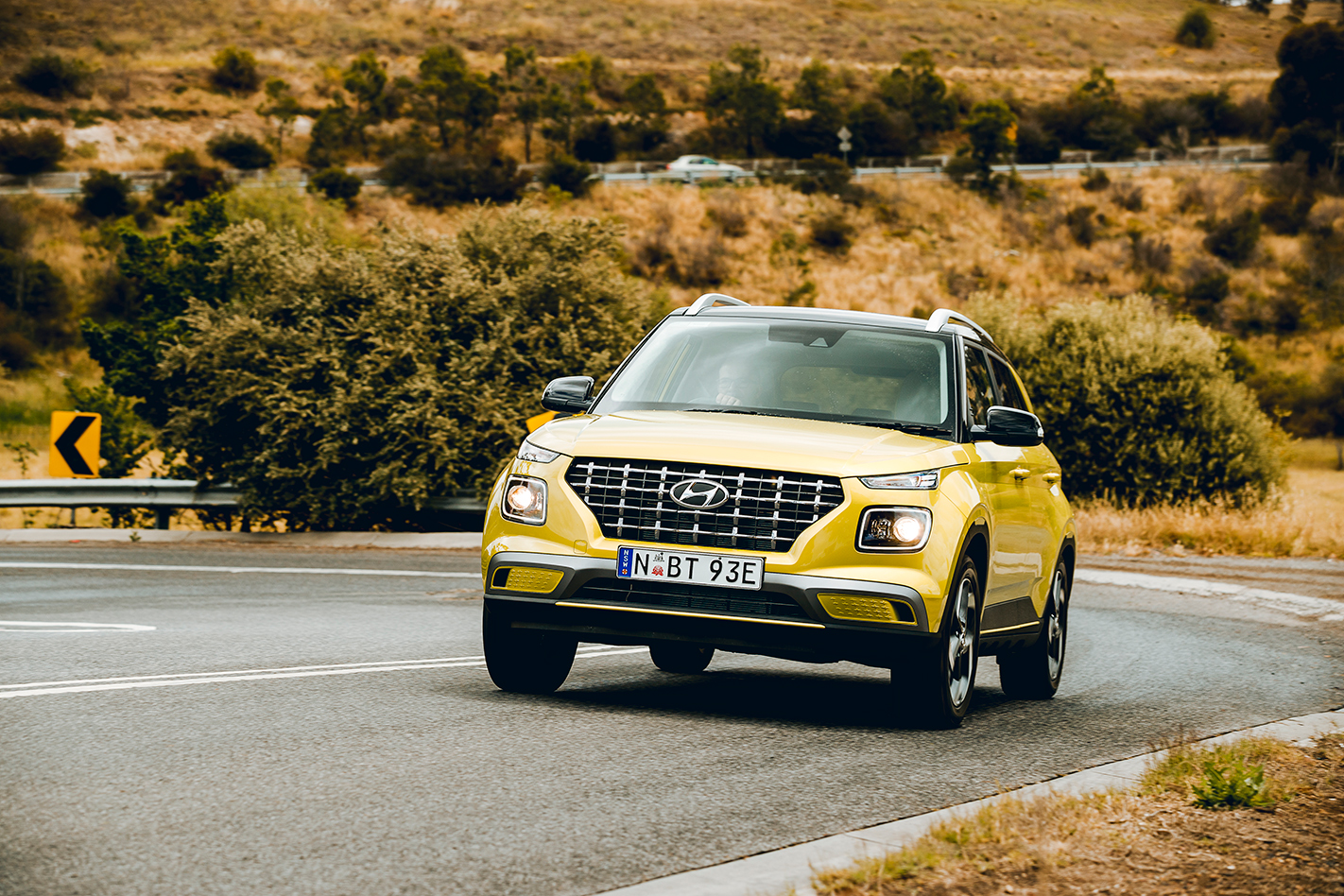
The Hyundai Venue isn’t one of those SUVs. Once you’ve finished chuckling at the name, the Euro i20 supermini-based contender from Korea is a good bit of kit. And, unlike some of its competition here, the Venue hasn’t had a personality bypass. Just look at our two-tone tester, with its greeny-yellow hue and contrasting black roof. It sports a confident, oversized grille with square-shaped LEDs, squinty eyes and a rather conventional rump. Polarising? Yes. Is that a bad thing? No.
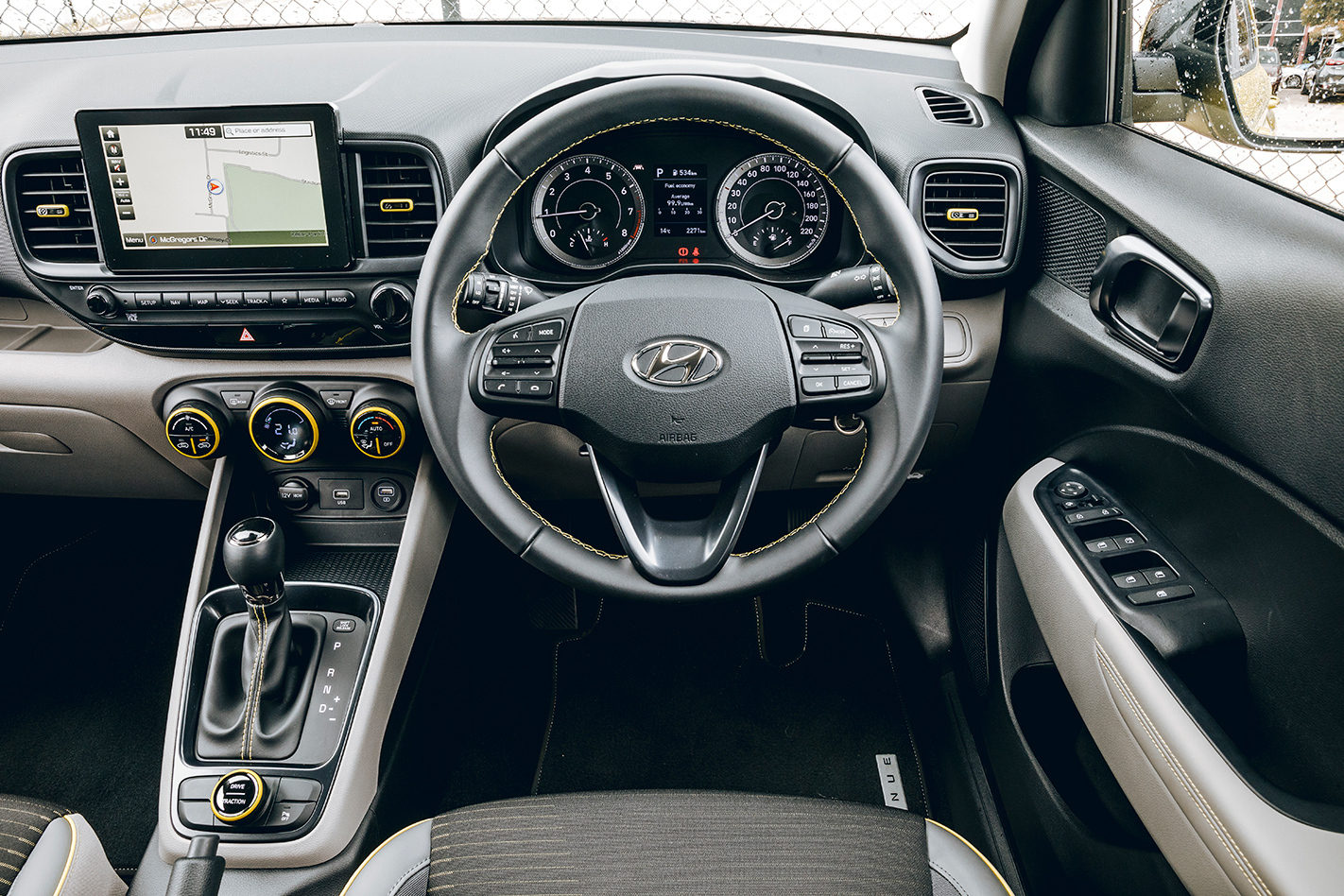
Inside, the top-spec Elite features body-coloured accents and visually appealing plastics, even if they’re hard and scratchy. Kudos for that big touchscreen too, and the leather-wrapped steering wheel that houses clear and concise controls.
Packed with Apple CarPlay and Android Auto goodness, infotainment is a criteria Hyundai/Kia cover off well. The graphics are pleasing and the user experience is one of ease – the Venue is an ergonomic win. While the Elite is generally well specced with key safety items like AEB, for a range-topping variant, the absence of keyless entry and start, plus all-round one-touch power windows is notable.
Despite diminutive dimensions, the Venue’s height affords ample headroom. Legroom is a bit tight in the back and there are no rear air vents (a common issue across this group), but its 355-litre boot is a decent size.
The weakest link is the naturally aspirated 1.6-litre four-cylinder engine, driving the front wheels via a six-speed torque-converter auto. Granted, it’s a hard little worker that’s willing to please, but you certainly hear about it, and ultimately the 90kW and 151Nm outputs just aren’t enough. The Venue’s 0-100km/h time fails to break through the 10-second barrier, and the engine sounds thrashy and coarse when pushed. On the run, the lithe 1225kg kerb weight helps the Hyundai scoot along effectively, but the powertrain is, ultimately, lacklustre – and the result of its toil is a 9.5L/100km test-consumption average. The smooth auto can’t offset the grunt shortfall or cover up the lack of refinement.
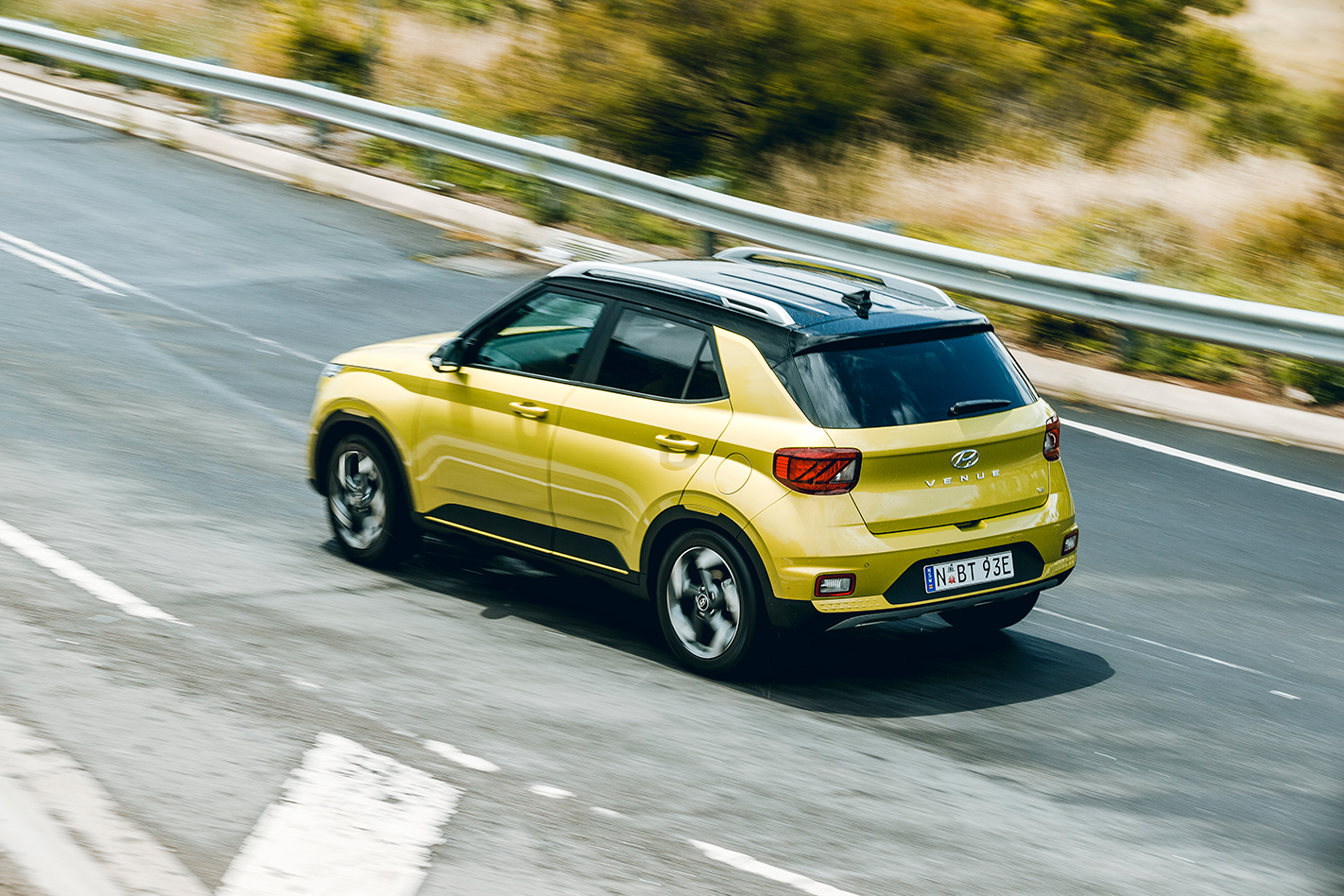
It’s a pity, because the Venue is a dynamic surprise. The Elite is full of verve, with its lightness of foot delivering a pleasing drive. Cutting through traffic, with excellent outward vision, will bring you joy. Which makes it even more of a shame a turbo engine isn’t employed. There is a can-do attitude to the handling, and despite the higher centre of gravity (on a torsion-beam rear), lateral pitch and roll isn’t an issue. The ride quality is also impressive thanks to local tuning, and there is a surprising amount of grip from the Nexen rubber. Yes, sound deadening could be improved, but you have to remember this is a car built to a price. On gravel, the ESC is a little lazy but it’s all controllable, if quite loud, fun.
At $25,490, the top-spec Elite variant starts to lose its appeal. The ideal spot is the $23,490 middle-rung Active – or better still, the $2000-cheaper six-speed manual. Yes, you get fewer bells and whistles and the paintwork isn’t as modish, but it’s all the Venue you’ll ever need. What’s more, it retains the upbeat persona that makes the smallest Hyundai SUV hard to ignore and easy to like.
Hyundai Venue Elite specs
Price: $25,490
Engine: 1591cc 4cyl, dohc, 16v
Power: 90kW @ 6300rpm
Torque: 151Nm @ 4850rpm
Transmission: 6-speed automatic
Dimensions (L/W/H/W-B): 4040/1770/1592/2520mm
Weight: 1225kg
Cargo capacity: 355L
Tyres: Nexen N Fera 205/55 R17
Economy: 9.5L/100km*
0-100km/h: 10.4sec*
80-120km/h: 8.0sec*
100-0km/h: 36.9m*
ANCAP rating: 5 stars
2020 Small SUV Megatest
Results
MITSUBISHI ASX
Score 6/10
HOLDEN TRAX
Score 6.5/10
HYUNDAI KONA
Score 6.5/10
SUZUKI VITARA
Score 7/10
NISSAN QASHQAI
Score 7/10
HONDA HR-V
Score 7.5/10
MAZDA CX-3
Score 7.5/10
KIA SELTOS
Score 8.5/10
TOYOTA C-HR
Score 8.5/10
Braking Data
Fuel Efficiency
Final Position: 4th
Score: 7.5/10
5 0 5
Plus & Minus
Plus Versatility; comfort; design; performance; handling
Minus Noisy; niggly ride; old multimedia; buttonless controls
The HR-V has some pretty impressive stats under its rising beltline. Slotting beneath the CR-V mid-sizer and based on Honda’s global supermini platform, the 1998 original arguably set the modern small-SUV template. Its GK Jazz-derived successor of 2014 has been a consistent global top-10 smash. Five years on and with only a minor update, the series remains at the pointy end of the popularity stakes.
There are a variety of reasons behind the HR-V’s success – including brand trust, elegant design, unique packaging, sharp pricing and driving ease. Plus, the near-invisible nip-and-tuck of 2018 brought a worthwhile round of engineering improvements, including standard AEB and a revised CVT with stepped ratios for that reduced droning sensation.
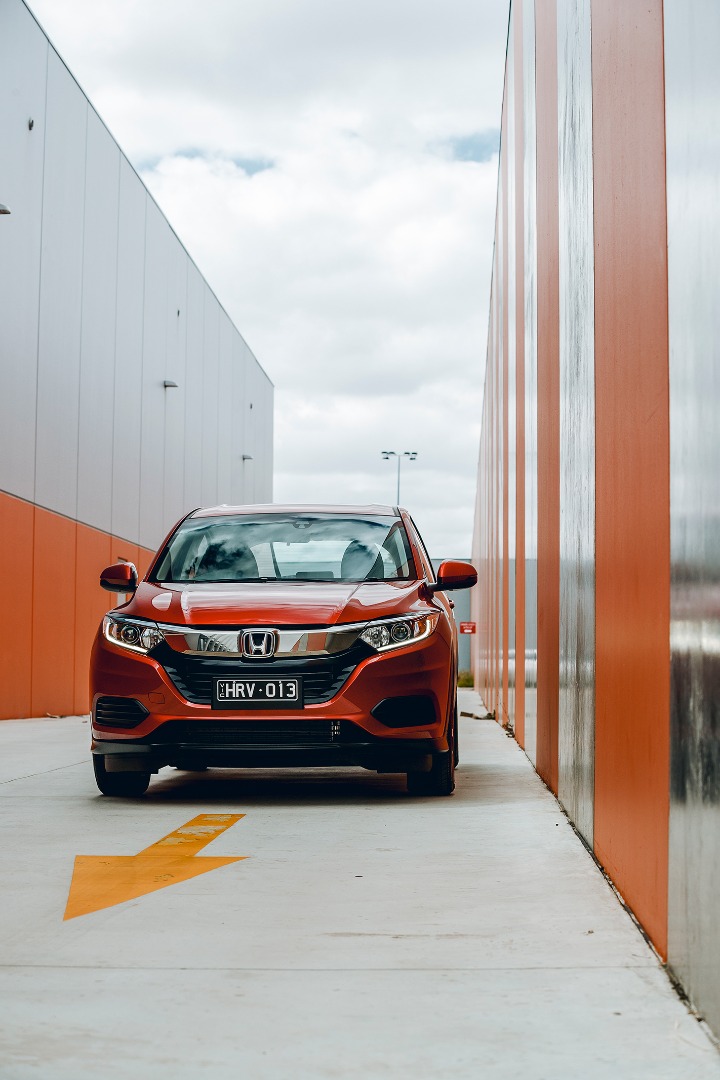
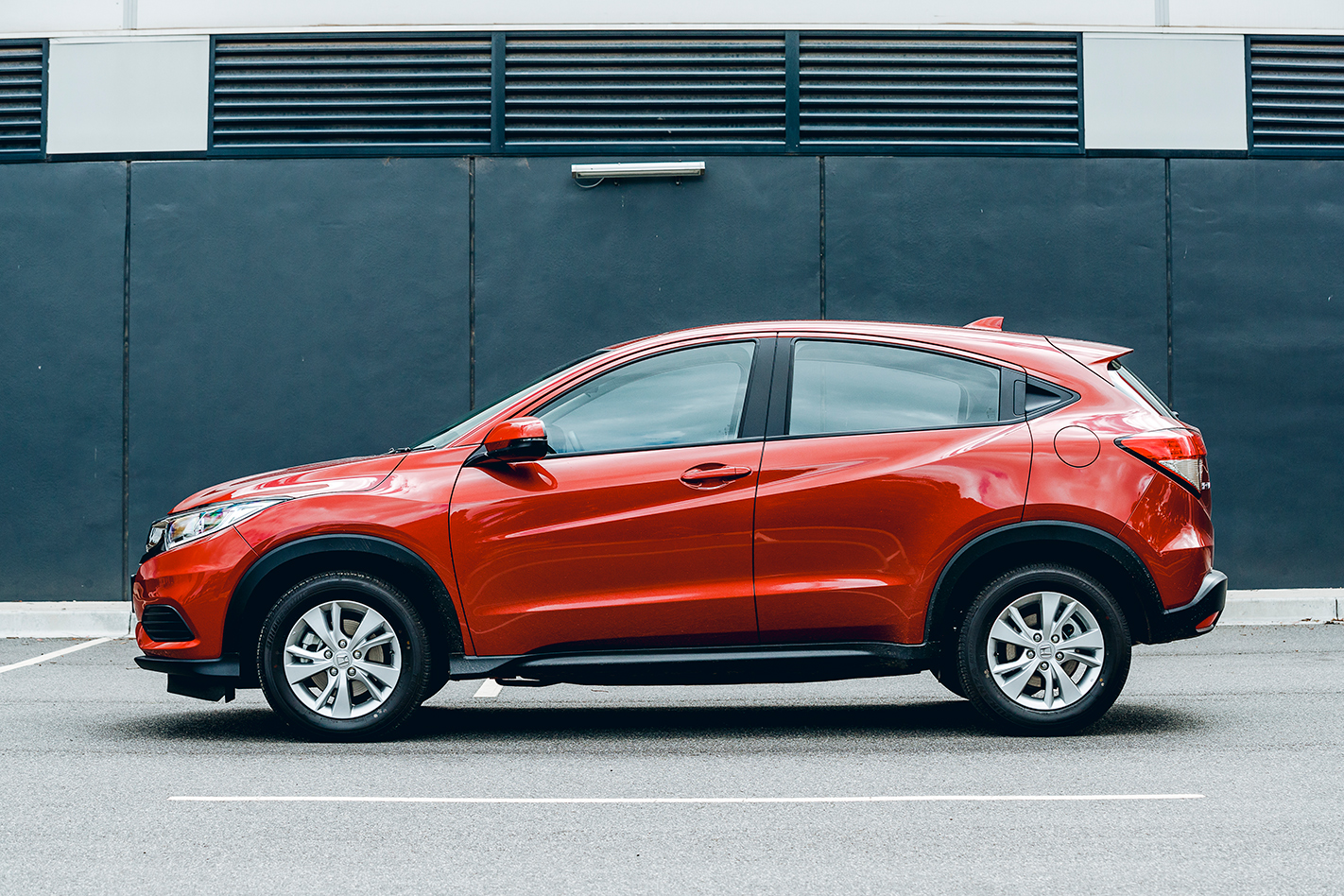
That’s progress, but in the face of newer rivals, is it enough to keep the Thai-built HR-V fierce? Initial impressions suggest so. While Honda’s recent sedans and hatches have suffered from a serious case of overstyling, its SUVs have adhered to a more restrained approach that blends a comparatively sleek profile with superb functionality for a relatively compact vehicle.
Not that passengers will notice any disconcerting dimensional limitations inside, since that Jazz basis brings a long wheelbase, an airy, classy ambience and Honda’s vaunted Magic Seat packaging – where the fuel tank resides beneath the front rather than back seats, allowing the latter to fold neatly into the available void, for a deep, flush cargo floor, panel-van style. Result? The HR-V is a pack of Winnie blues, set of psychedelic curtains, lurid stripes, ROH mags and a Don’t Bother Knockin’ if the Car is Rockin’ sticker away from a modern-day Sandman.
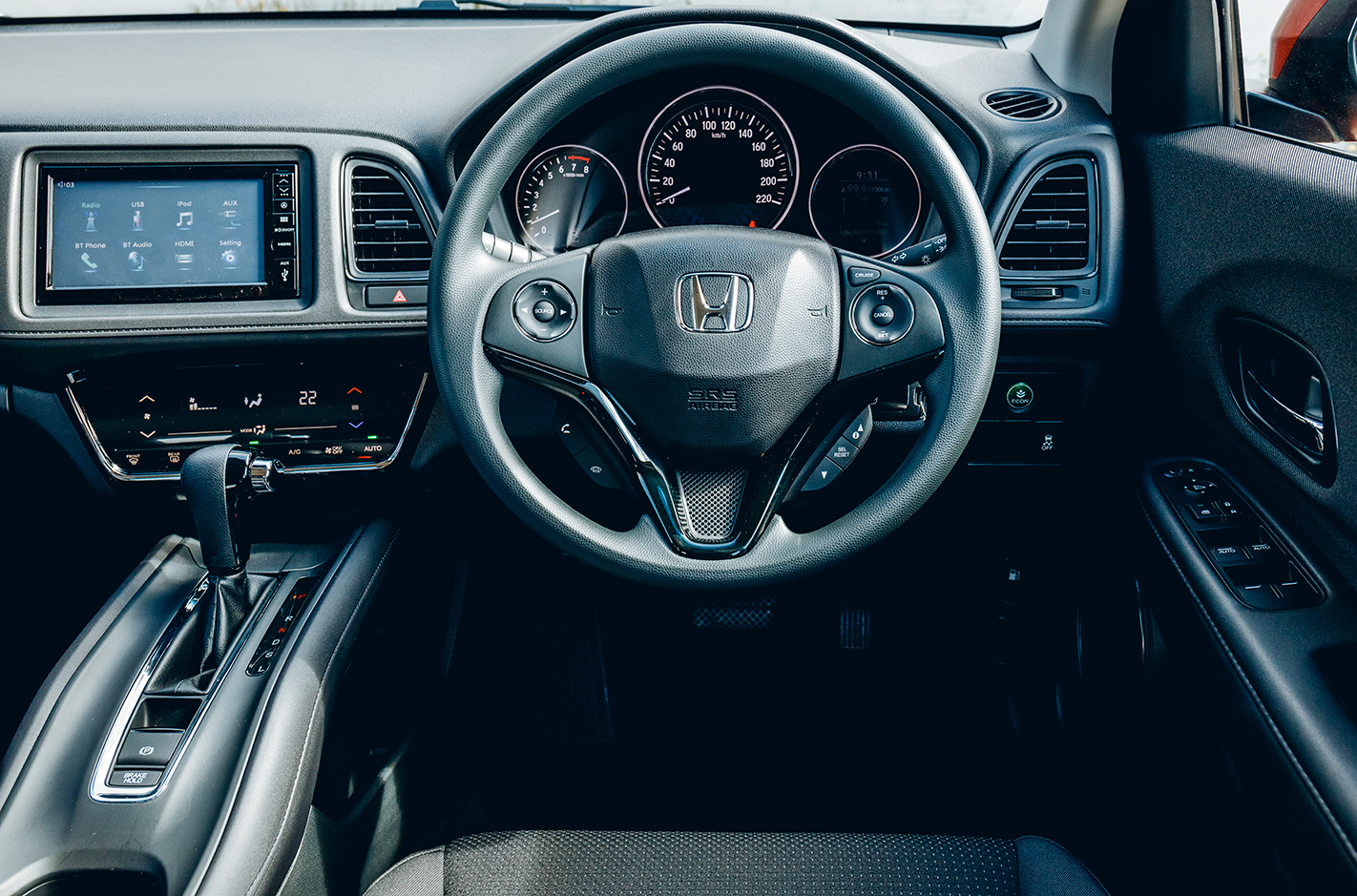
There’s even a hint of the HQ Holden dash in the HR-V’s fascia, meaning it’s simple if workmanlike to behold. But has Honda gone too far eliminating clutter? The analogue instruments are a model of clarity but there’s no digital speedo; the haptic sensor-operated climate system’s missing buttons and dials means even a menial task like altering the temperature is distracting. And don’t get us started on the aftermarket-looking touchscreen, with its fiddly toggle switches, low-fi resolution and infuriating reflections. However, we understand running changes to HR-V are imminent, including a multimedia upgrade. Hurry up, Honda.
Speaking of speed, the 1.8-litre single-cam VTEC atmo engine may be old, but it’s a healthy, revvy little unit in the best company tradition. Quick off the mark and now less prone to howling thanks to that artificially stepped CVT tech, it really pulls energetically as the tacho swings beyond the 4000rpm mark, accompanied by one of the more mellifluous mechanical wails in this class. And while the numbers confirm that the lithesome HR-V is a middling performer, the seat-of-the-pants feel is one of eager exuberance. Near test-best economy is another virtue.
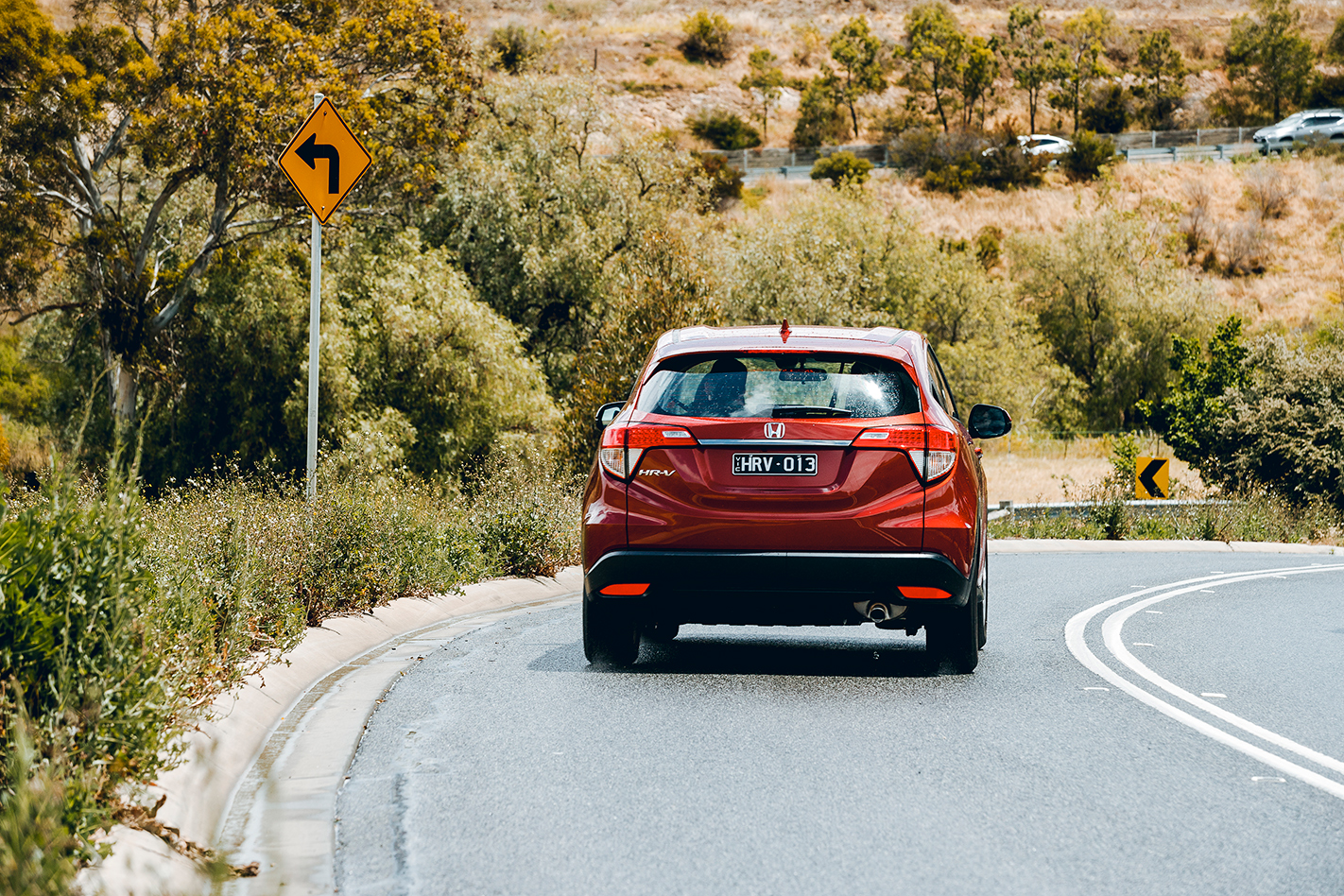
We’re also pleased with how light yet precise the HR-V’s sweet steering is, though more engagement would be appreciated. It allows for fluent and assured handling, backed up by unflappable roadholding. On the standard 16-inch rubber, there’s also an underlying softness to the (strut-front/torsion-rear) suspension, though the upshot is a degree of unsettledness and road noise over rougher surfaces. A quick blast on gravel also revealed an overzealous ESC tune hell-bent on reeling in any oversteer.
Few rivals offer this degree of family-focused space, comfort and cargo flexibility. Underscored by quality engineering, the VTi’s mix of agility, frugality and fun remains formidable. Great value too, since your $25K includes sat-nav, a rear camera and climate control. And here’s another admirable HR-V stat. A top-four placement for a 2014-era small SUV is no mean feat.
Honda HR-V VTi specs
- Price: $24,990
- Engine: 1799cc 4cyl, sohc, 16v
- Power: 105kW @ 6500rpm
- Torque: 172Nm @ 4300rpm
- Transmission: CVT
- Dimensions (L/W/H/W-B): 4348/1772/1605/2610mm
- Weight: 1269kg
- Cargo capacity: 437L
- Tyres: Bridgestone Turanza ER230 215/60R16
- Economy: 8.1L/100km (tested)
- 0-100km/h: 9.9sec (tested)
- 80-120km/h: 6.8sec (tested)
- 100-0km/h:39.7m (tested)
- ANCAP rating: 5 stars
2020 Small SUV Megatest
Results
MITSUBISHI ASX
Score 6/10
HOLDEN TRAX
Score 6.5/10
HYUNDAI KONA
Score 6.5/10
SUZUKI VITARA
Score 7/10
NISSAN QASHQAI
Score 7/10
HYUNDAI VENUE
Score 7.5/10
MAZDA CX-3
Score 7.5/10
KIA SELTOS
Score 8.5/10
TOYOTA C-HR
Score 8.5/10
Braking Data
Fuel Efficiency
Final Position: 3rd
Score: 7.5/10
5 0 5
Plus & Minus
Plus Drivetrain; infotainment; performance; handling
Minus Cabin space; boot space; engine sound
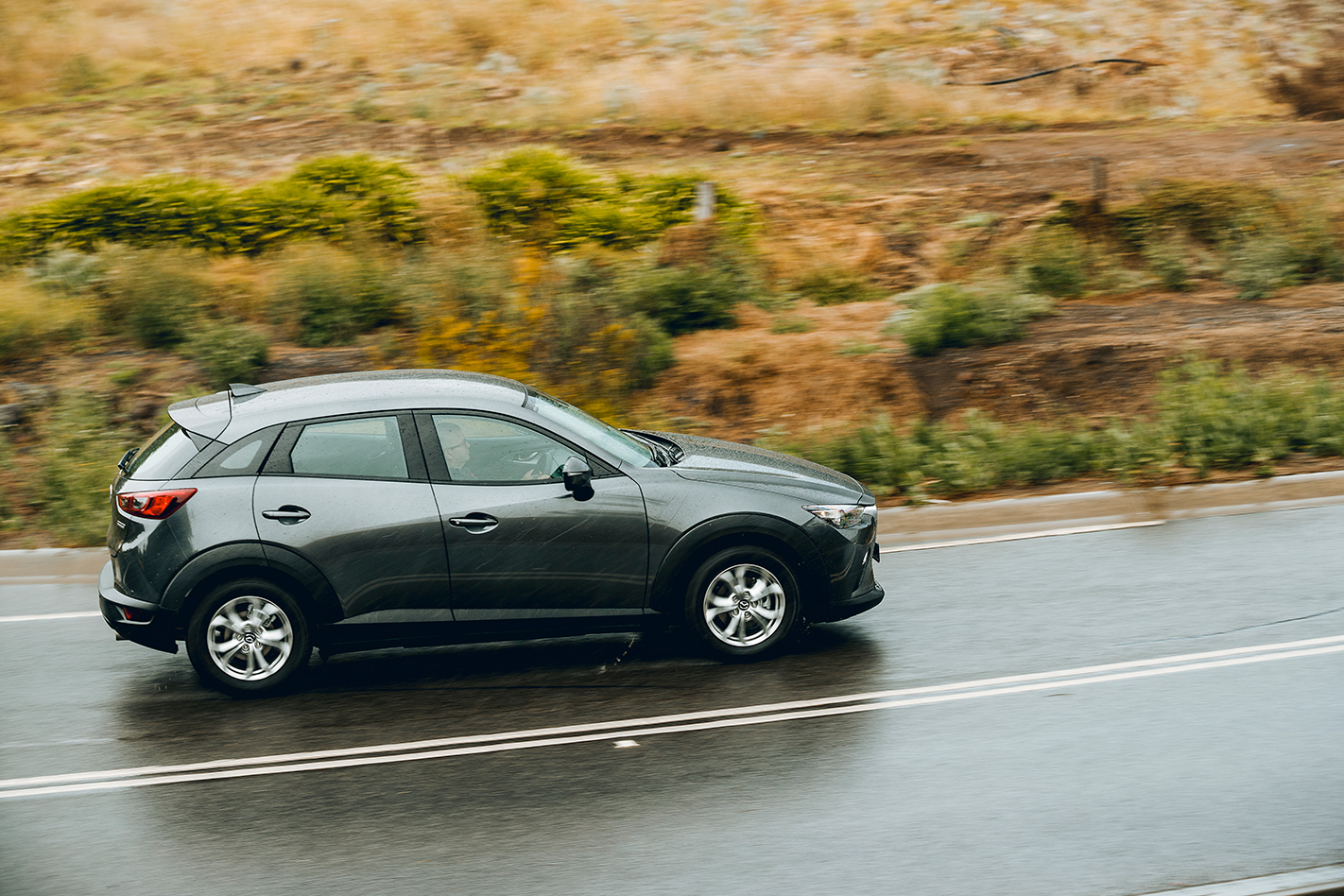
There’s something to be said for the Mazda CX-3’s ability to stand tall against some of the newer competition it faces. Sure, it’s had some useful updates along the way since its early-2015 debut, but they’re still minor in the scheme of things. Yet, here it is, sitting at the pointy end of this field. And the sales charts, too.
Chief among all attributes is the simple fact it’s entertaining to drive. Progressive, natural steering and a keen ability to hook into corners rather than just tolerate them made sure the keys to the CX-3 were in high demand on test, while its strong 2.0-litre engine is easily one of the most engaging.
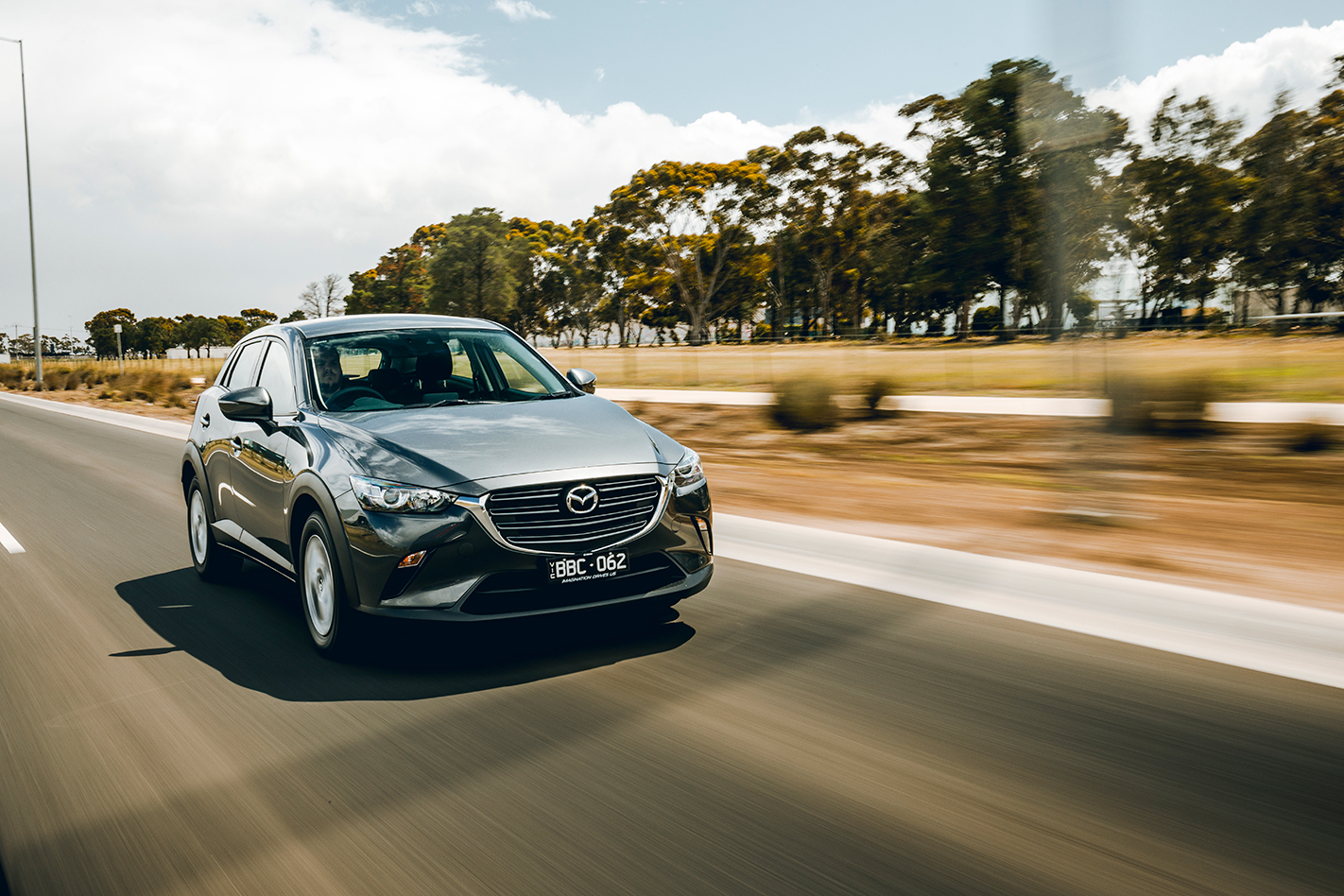
The on-paper figures don’t suggest anything amazing – its atmo four-cylinder still only ekes out 110kW/195Nm – but the Maxx Sport pulls smoothly throughout its rev range and its slick-shifting six-speed torque-converter automatic does a great job at selecting the right ratio for the situation. Where the Thai-built compact crossover really stands out is its ability to pick up the pace when you’re really on it. Push the toggle to ‘Sport’, and the gearbox will hold on to each gear, keeping the engine on the boil as needed. And the stubby little lever, when moved to manual mode, allows for furious pull-back upshifts, sports-car style.
Recent updates improved the value proposition by supplying extra kit in lower-spec variants, but also focused on bettering previously intrusive NVH levels. The net result shows a definite improvement in terms of road noise and ride control over corrugations, but still doesn’t shy away from letting itself be heard.
The CX-3 is the only car on test which includes start/stop tech to aid efficiency (and emissions); its 8.7L/100km consumption average was impressive given how hard it was driven over the test loop.
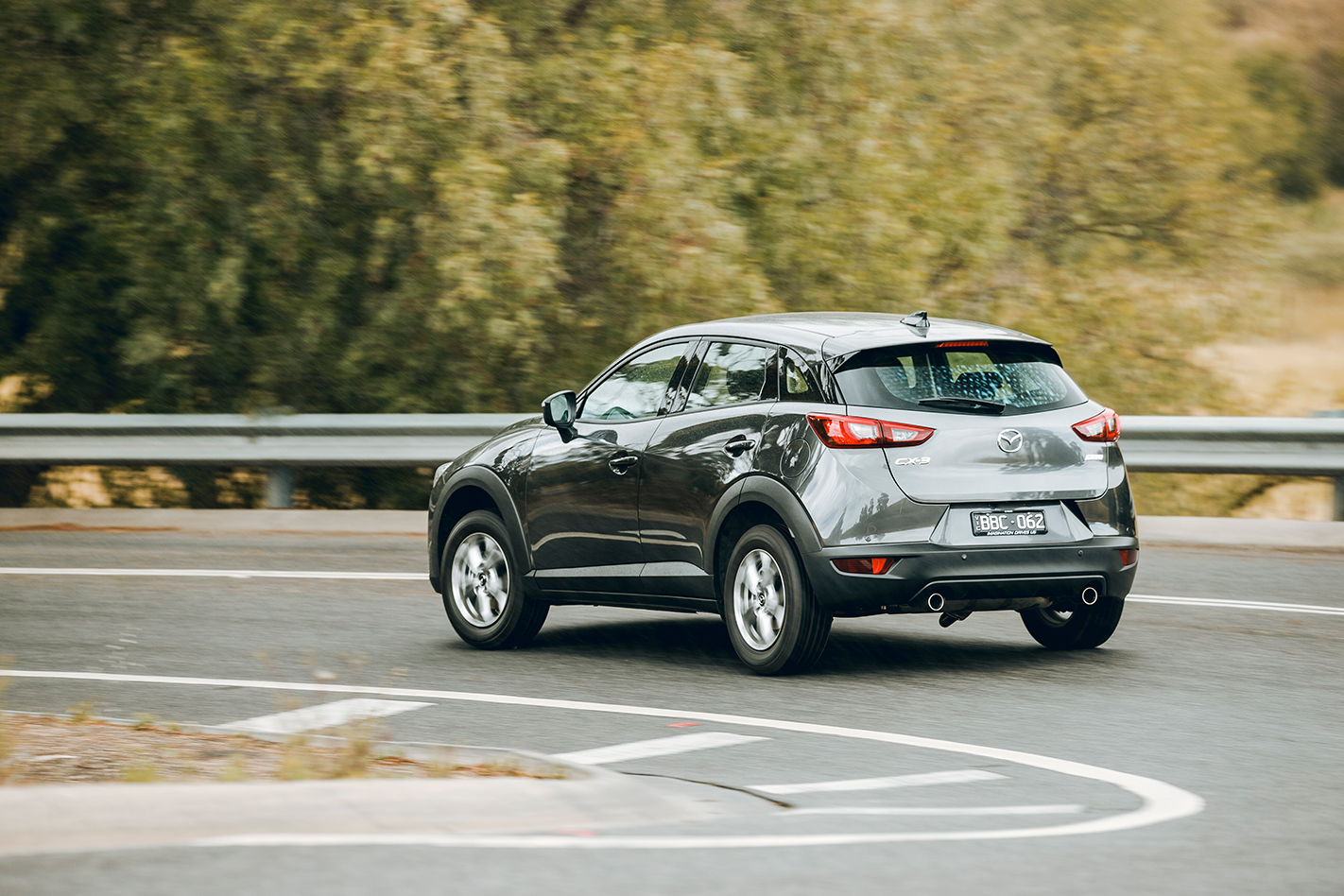
With four bodies on board, the CX-3 handled the punishingly potted road that makes up our ride test with a certifiable pass mark. It conquered sharp divots without fuss and ironed out smaller imperfections smoothly, all the while remaining dynamically superior through bends. It controlled its weight more like a hot hatch.
Interior quality is still right up there for its age, too, with Mazda’s well-designed MZD Connect infotainment system taking pride of place on the dash and choice materials combining to make the space feel as though it’s punching above its weight.
The cloth seats are plush in both rows and provide good side-bolster support, but it can be tricky for larger folk to get comfy. The leather-bound steering wheel feels lovely in hand and ties in with a clear central speedometer flanked by a digital tacho.
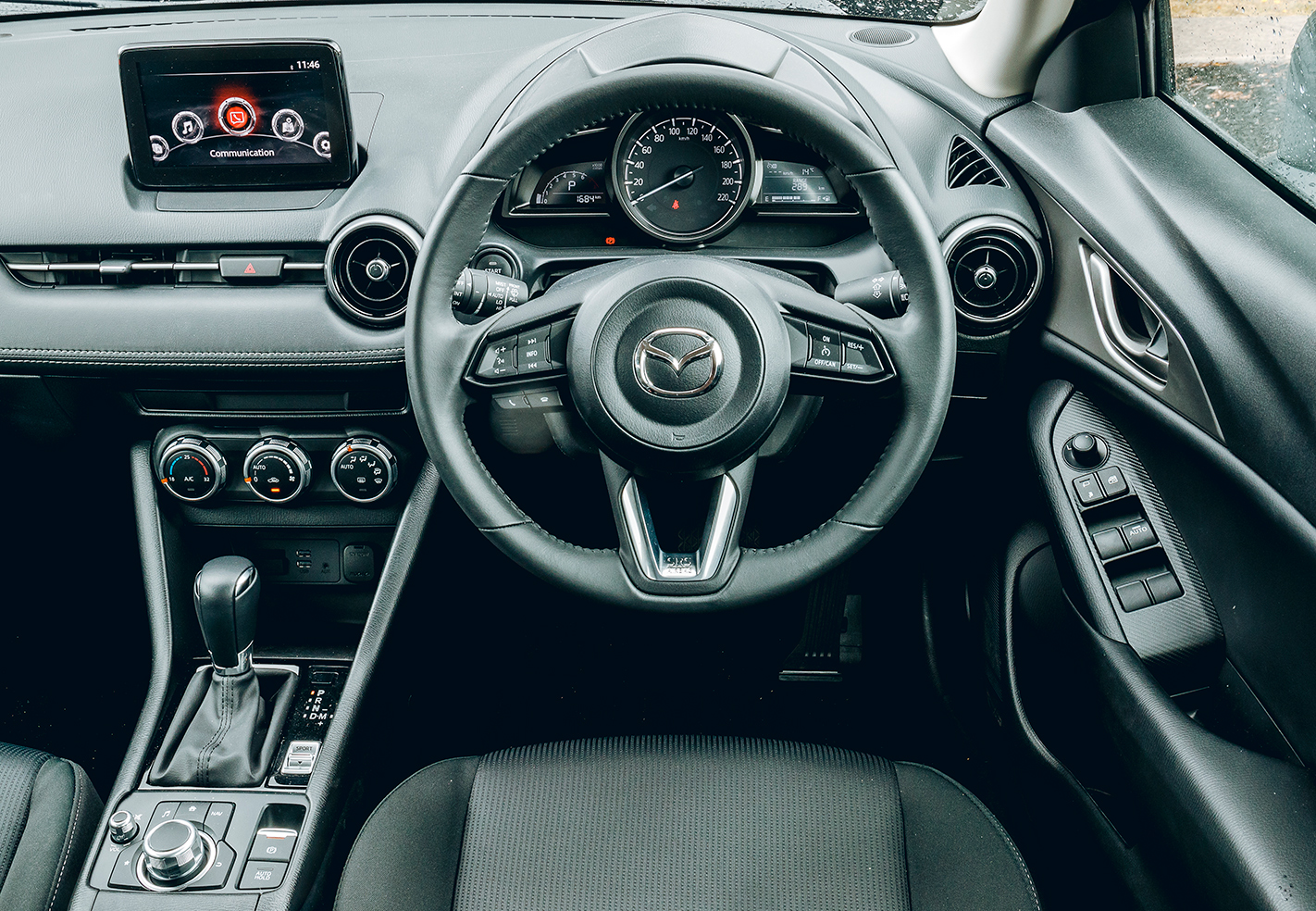
Where the CX-3 equation starts to lose a little lustre is the point when you slide into the back seat. It’s not unbearable by any means, and the cushion and backrest themselves do their job admirably, but it is cramped, and knees do hit seatbacks (albeit soft ones). There’s not much in the way of amenity in the rear, either, aside from a centre armrest and a bottle holder in each door. It also has the smallest boot on test, offering up a paltry 264 litres.
Look past its rear-seat and boot deficiencies and you’ve got an SUV that oozes charm, teamed with drivetrain sophistication and a chassis that can still carve it up with the best of them.
Whereas rivals like the newly updated ASX present as though Mitsubishi is serving up the same old dish, just reheated, the CX-3 has remained piping hot throughout its lifecycle. Bravo, Mazda.
Mazda CX-3 Maxx Sport specs
- Price $26,650
- Engine: 1998cc 4cyl, dohc, 16v
- Power: 110kW @ 6000rpm
- Torque: 195Nm @ 2800rpm
- Transmission: 6-speed automatic
- Dimensions (L/W/H/W-B): 4275/1765/1535/2570mm
- Weight: 1297kg
- Cargo capacity: 264L
- Tyres: Bridgestone Turanza 215/60R16
- Economy: 8.7L/100km (tested)
- 0-100km/h: 9.2sec (tested)
- 80-120km/h: 6.7sec (tested)
- 100-0km/h: 37.7m (tested)
- ANCAP rating: 5 stars
2020 Small SUV Megatest
Results
MITSUBISHI ASX
Score 6/10
HOLDEN TRAX
Score 6.5/10
HYUNDAI KONA
Score 6.5/10
SUZUKI VITARA
Score 7/10
NISSAN QASHQAI
Score 7/10
HYUNDAI VENUE
Score 7.5/10
HONDA HR-V
Score 7.5/10
KIA SELTOS
Score 8.5/10
TOYOTA C-HR
Score 8.5/10
