
Update 10/03/20: New reports out of North America have confirmed that Ford is building a car-based ute, with production expected to begin as early as next year.
Automotive News claims the small ute will replace the Focus and Fiesta car lines in North America, with plans for the vehicle shown at a dealer conference.
While it remains unnamed still, the secret P758 is expected to be priced at US$20,000 in the United States, almost $5000 less than the cheapest Ford Ranger.
If the P758 project goes into production, it will be the second pick-up style vehicle that has undergone some sort of development in Australia following the Ranger.
Built on the Australian-engineered and developed T6 platform, the Ranger has recently gone on sale in North America, while it is believed the yet-to-be revealed Bronco off-roader is built atop the same platform.
Wheels revealed last year that the secret project was being developed in-part at Ford Australia’s proving ground. It’s expected the new model could revive the Courier nameplate.
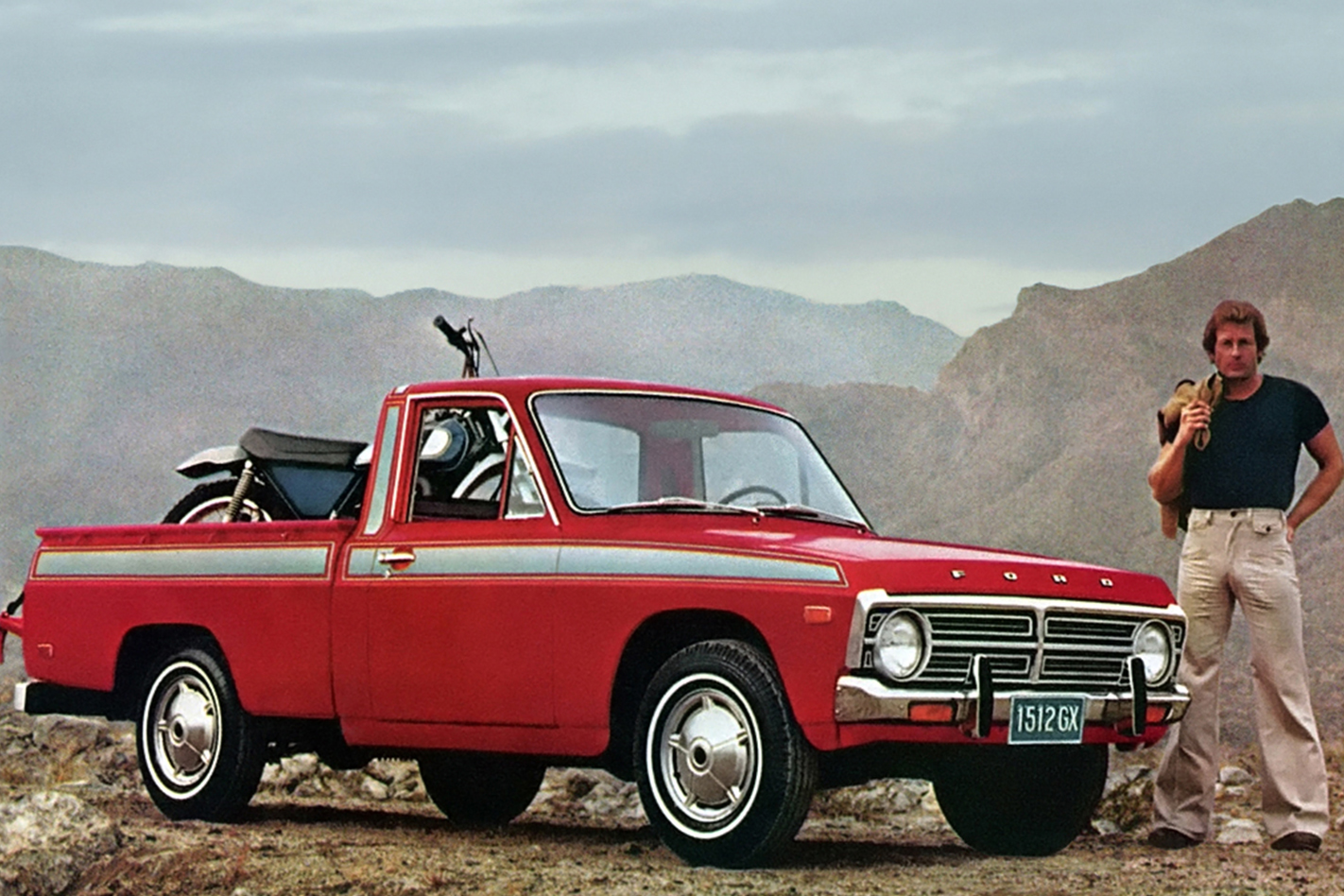
Ford has a top-secret prototype under development in Australia that could see the return of the car-based ute.
The Blue Oval in Australia was credited as being the first company to create what we know as a ute – a two-seater utility on a car platform. With the Ford Falcon ceasing production in 2016, and the Holden Commodore a year later, so the story of the car-based ute ended.
However, Wheels has seen engineering documents from within Ford’s You Yangs proving ground that show the company is working on a ute project using traditional car underpinnings.
Codenamed P758, the prototype uses the Ford Focus C2 platform, with the Blue Oval yet to decide on what the pick-up’s nameplate will be.
The document reveals that the prototype is powered by a 2.0-litre four-cylinder petrol, mated to an 8F24 eight-speed automatic transmission.
The current-gen Ford Focus isn’t sold with a 2.0-litre four-cylinder engine, with the fourth-gen Focus’ most powerful ST version fitted with the 2.3-litre Ecoboost.
Elsewhere in the Ford family is a 2.0-litre turbo unit that has all-wheel-drive capability, and hot hatch levels of power.
The last 2.0-litre four-cylinder petrol in a Focus was fitted to the third-generation, and came in a number of different tunes.
In a naturally aspirated set-up, the engine produced 119kW and 198Nm. However, when fitted with a turbocharger in the ST variant, power was increased to 188kW and 360Nm. The Focus ST was only ever sold fitted to a six-speed manual gearbox.
In 2015 the 2.0-litre engine was updated, with a twin-scroll turbo, a higher compression ratio than before (10.1:1 vs 9.3:1), along with fuel and oil systems upgrades. Importantly, the new engine could now be used in all-wheel-drive applications, making its debut in the Ford Edge SUV (Endura in Australia) and, subsequently, the Escape.
When fitted to Ford products, the new 2.0-litre is rated at 183kW and 373Nm, but with peak torque arriving lower in the rev range than the previous version.
The secret engineering document reveals that a Russian-market derivative of the C2 platform is used as the base for the test vehicle, which is being used to evaluate chassis components.
This is of particular interest, as earlier this year the Blue Oval announced it would be leaving the Eastern European market, ceding control over its Russian joint venture to business partner Sollers.
The C-Pickup program is in its infancy, and will form the basis of a new nameplate for the Ford brand. However, while it is currently undergoing development in Australia, it remains unclear whether the mini-ute will be sold here. Ford had previously floated plans to build a Focus-based unibody pick-up, possibly badged as a Courier, in Mexico for export to other American markets, with Brazil being the first destination in 2021.
The top-secret prototype has us excited. While we won’t be seeing a return of the stonking V8-powered utes that rolled off the line at Broadmeadows, the idea of a C-segment sized two-door utility, with all-wheel drive and hot hatch power makes for an intriguing recipe.
2020 is set to be a big year for gamers, with a host of new hardware including next-generation iterations of both Xbox and Playstation consoles slated for a Q4 release, and no shortage of games that will no doubt be exploiting the new levels of power and functionality of those improved consoles (and their backwards compatibility!).
Below, we’ve compiled an extensive release calendar, featuring the significant racing and automotive titles on the horizon. We’ll keep it updated throughout the year, so what you see right here probably isn’t everything that we’ll see in 2020. Check back often!
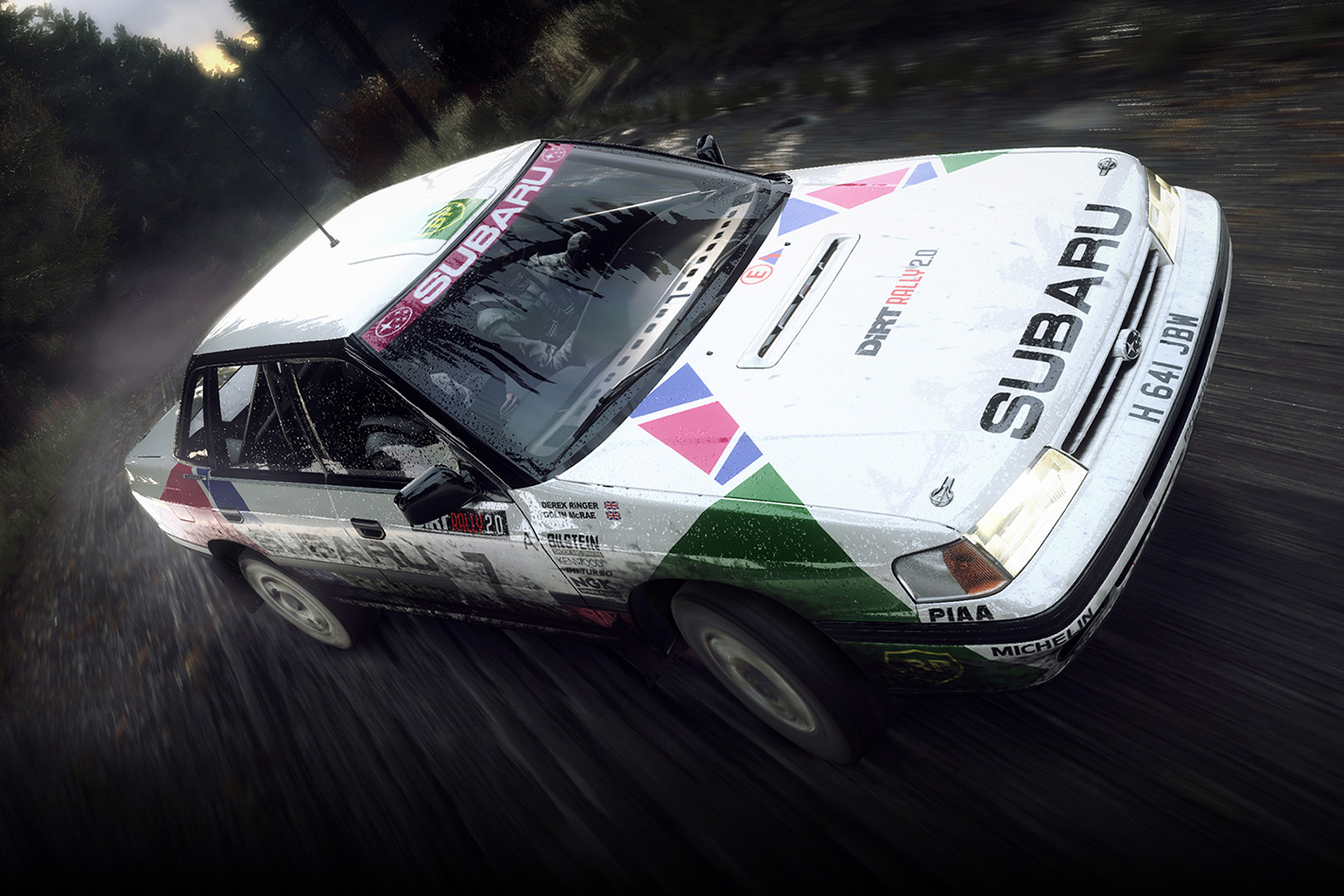
Dirt 2.0 – Colin McRae ‘Flat Out’ DLC
Release date: March 24 Platforms: PC, Playstation 4, Xbox One
Those of you of a certain age will know that Codemasters’ Dirt franchise was born out of the Colin McRae Rally series, so the arrival of the new McRae-specific DLC for Dirt 2.0 will essentially see the rally sim go back to its roots. A tribute to the late Scottish rally champ, the ‘Flat Out’ DLC brings with it a brand-new Scottish rally series that’s 12 stages long, two unique cars (McRae’s Subaru Legacy and his legendary Subaru Impreza WRC S4) and a whole campaign that retraces his career. A must-have for rally aficionados.
Snowrunner
Release date: April 28 Platforms: PC, Playstation 4, Xbox One
An off-shoot of the popular MudRunner off-road simulator, SnowRunner is pegged as the “ultimate” off-road simulator with stunning modern graphics, advanced physics and an expansive selection of maps and vehicles.This game isn’t about going fast, but instead focuses on precision in picking your lines, finding the grip and passing daunting obstacles either solo or with up to three-mates!
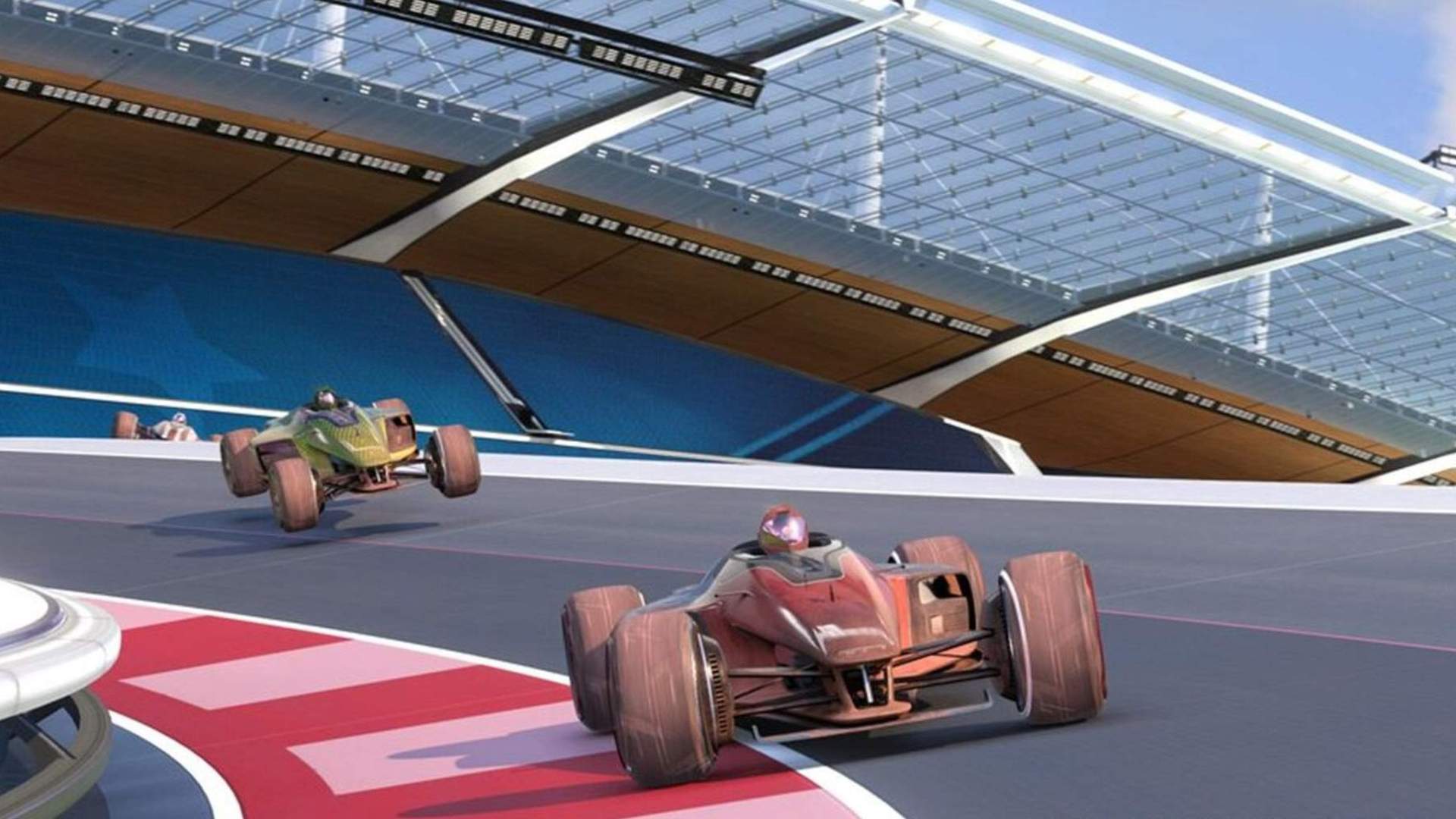
Trackmania Nations
Release date: May 15 Platforms: PC
A remake of the original 2006 release, TrackMania Nations returns in 2020 for Windows PC and includes an official season campaign as well as a new track-creation mode with new surfaces and special blocks. Think of it as a virtual HotWheels track, with high-rise suspended tracks and more jumps and loops than your fictional open-wheeler can poke a tierod at.
Forza Street
Release date: May 5 Platforms: Android, iOS
Forza Street has actually been around for a while, having been released in mid-2018 on the Windows platform under the name Miami Street and only being re-branded under the Forza umbrella late last year. It’s not much of a racing game – you only have one control, the brake pedal, with steering and acceleration being handled automatically – and the style, presentation and story-driven nature of Forza Street makes it more reminiscent of Need For Speed Heat than any existing Forza title. Check out the video above if you don’t believe us.
It’s finally coming to Android and iOS, but should you even care? We don’t.
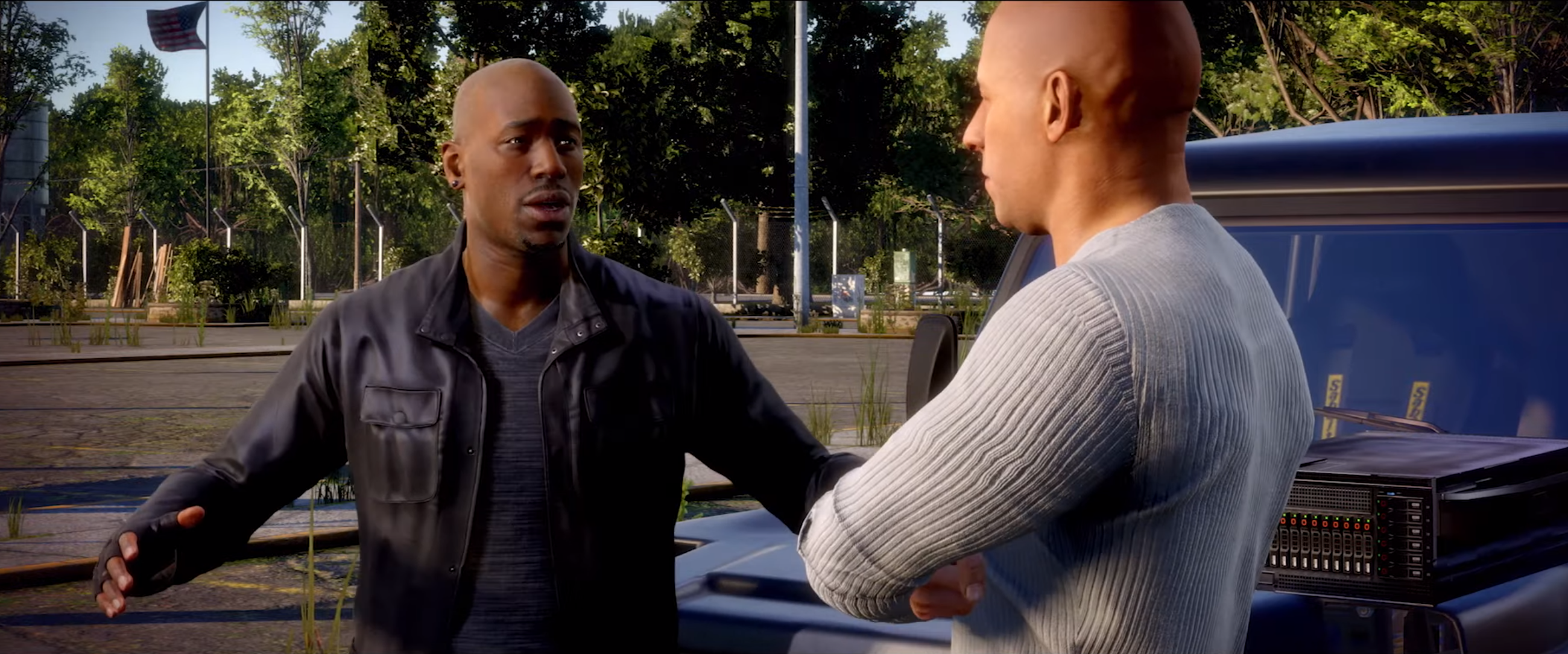
Fast & Furious Crossroads
Release date: May 29 Platforms: PC, Playstation 4, Xbox One
Coinciding with the May release of Fast & Furious 9, Fast & Furious Crossroads promises a multi-platform “team-based, vehicular-heist action game”. Featuring voice acting from Vin Diesel, Michelle Rodriguez and Tyrese Gibson – and sees players delve into the “murky world of international espionage”.
Torque Drift PC
Release date: Mid-2020 Platforms: PC
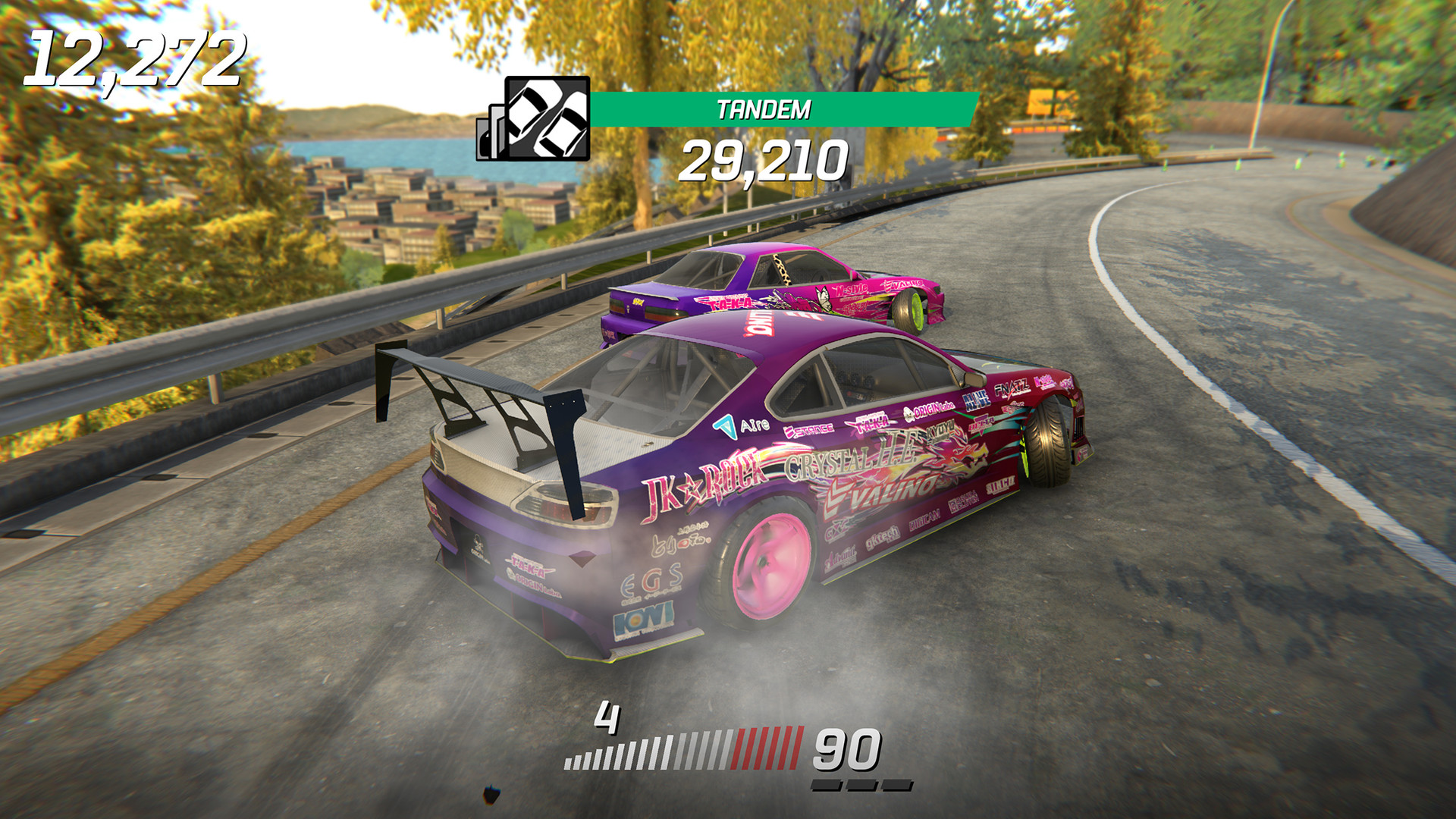
Australian developer Greasemonkey Games is giving its popular mobile game Torque Drift a high-res makeover, and is set to port the title to the PC platform in the middle of this year. Early access gets underway this month, while the full release is penciled in for the middle of this year.
Assetto Corsa Competizione – console version
Release date: June 23 Platforms: Xbox One, Playstation 4
After bringing the GT World Challenge to the PC platform in laser-scanned ultra-high fidelity, Kunos Simulazioni will finally debut Assetto Corsa Competizione on the Playstation 4 and Xbox One in the middle of this year to broaden its reach.
A super-realistic racing sim, the learning curve for Competizione is steep – but the game boasts sumptuous visuals courtesy of the Unreal Engine 4 and in-game sounds that are widely regarded as the most realistic and true-to-life in the entire driving game genre.
Drift 21
Release date: Spring 2020 Platform: PC
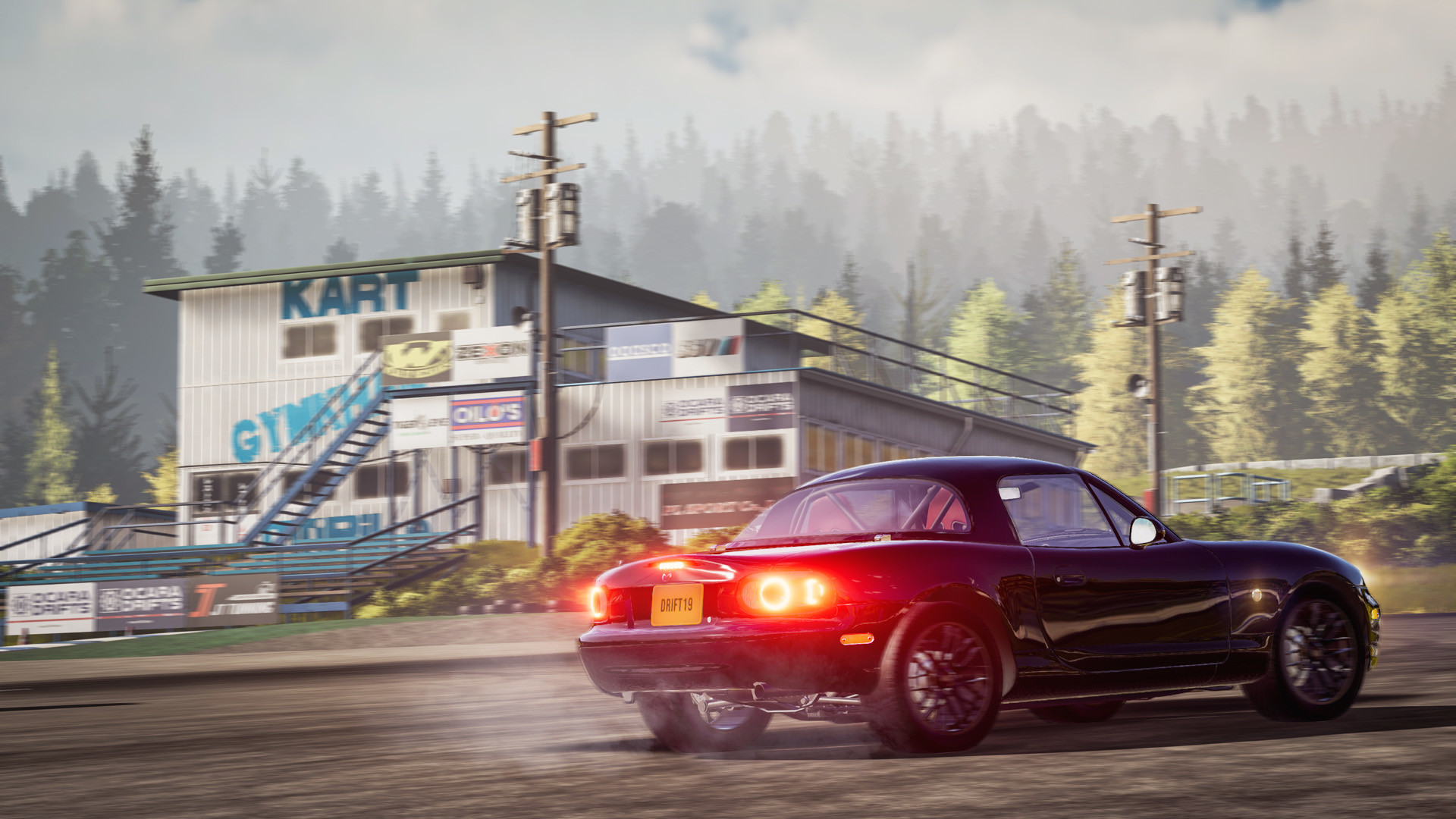
This one was originally slated to release late last year and was called Drift 19 up until recently, but has been held over for unspecified reasons and retitled ‘Drift 21’ to suit. When it arrives, it’ll bring a bevy of drift-scene stalwarts like the Toyota AE86 Sprinter, BMW E30 and E36, NB Mazda MX-5 and more, along with the real-world driftopia of Ebisu circuit. Car customisation will be literally nut-and-bolt, with each vehicle’s mechanicals rendered in 3D and brand-name parts being featured, but will it be any good? We should find out shortly.
Gran Turismo 7
Release Date: Q4 Platforms: Playstation 4/Playstation 5
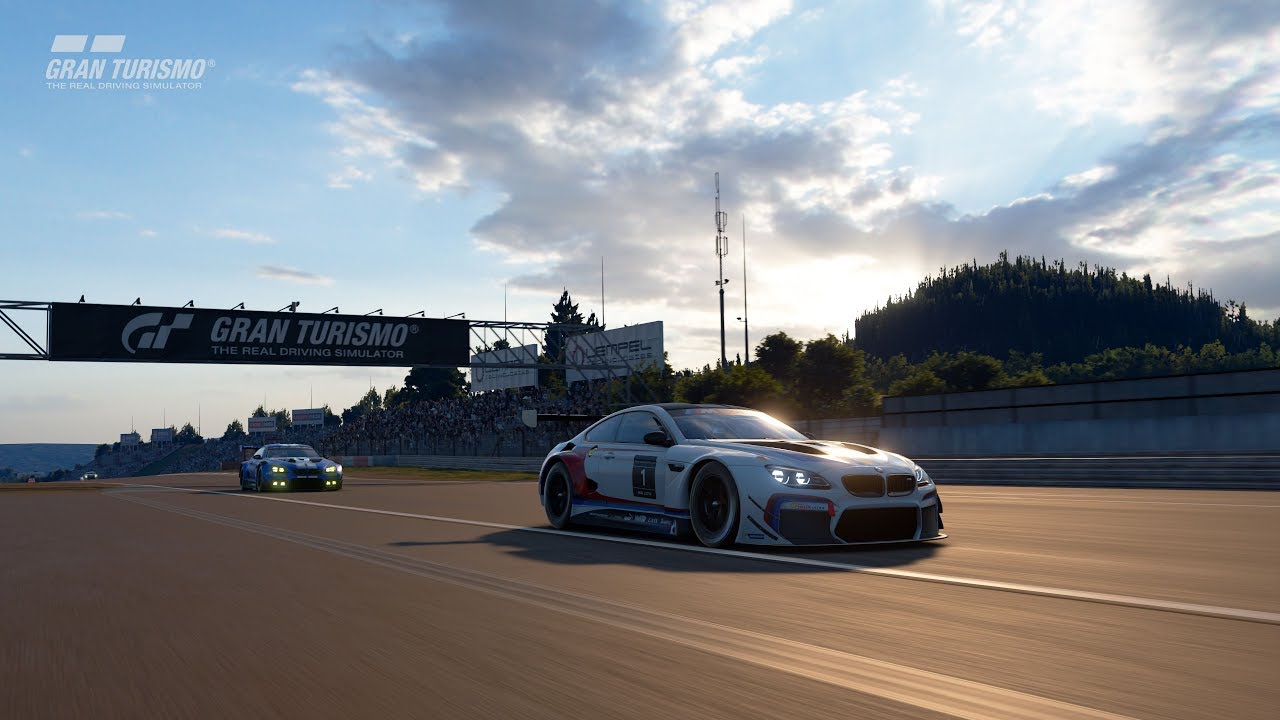
It’s been seven years since Gran Turismo 6, and while the online-focused GT Sport (2017) has done well to tide us over; fans of the genre can’t wait to sink their teeth in to the promising new instalment. We don’t have a release date yet, but this is a cornerstone title that promises to take full advantage of the new Playstation 5. The new GT title hasn’t actually been confirmed as ‘Gran Turismo 7’, but with a whole new console around the corner, all signs point to an all-new title to accompany the next generation hardware.
Forza Motorsport 8
Release Date: Q4 Platforms: Xbox One/Xbox Series X, PC
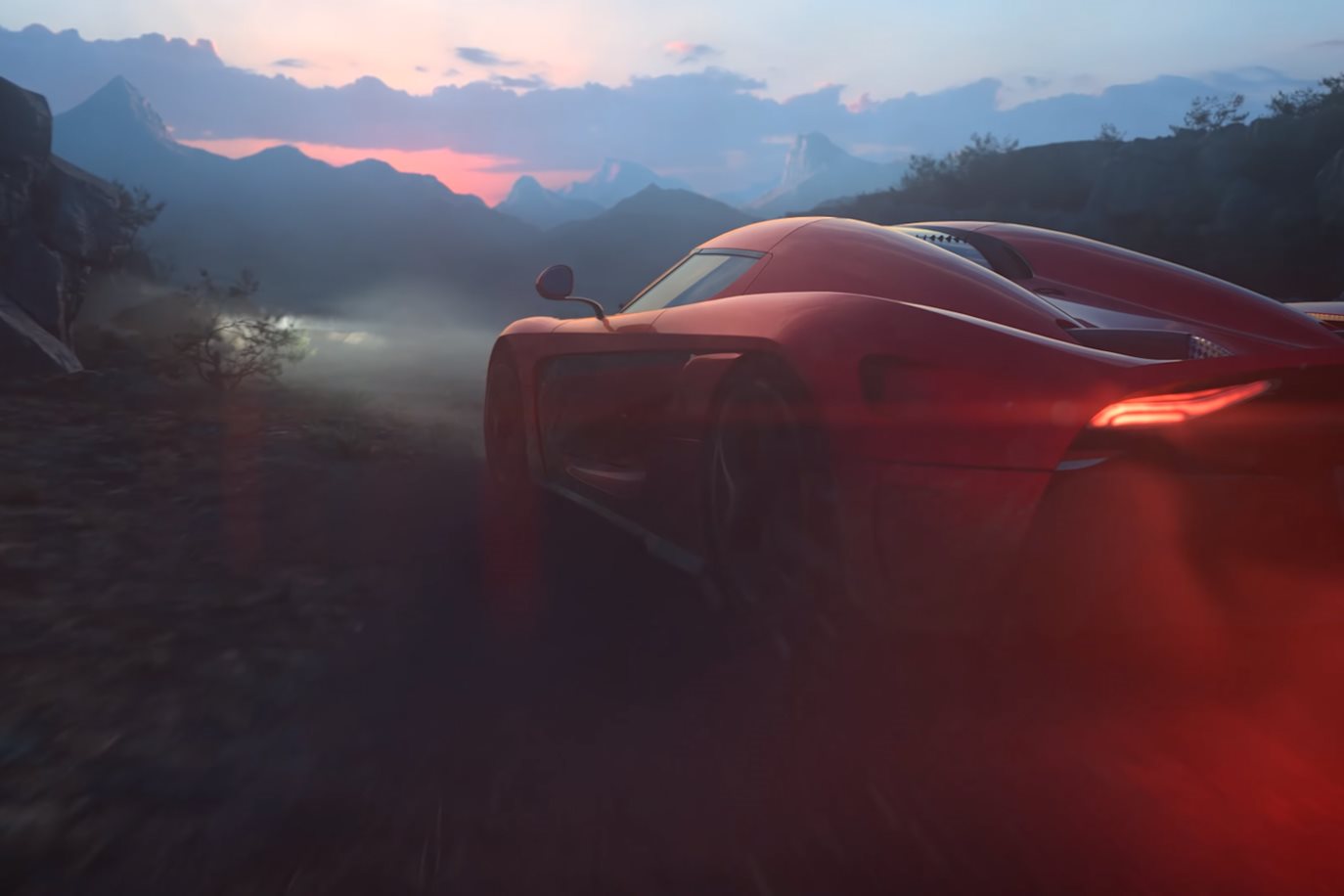
With Microsoft’s next-gen Xbox Series X console also slated for a Q4 release, we can fully expect a new Forza Motorsport instalment to launch simultaneously. Having previously followed a bi-annual launch schedule between its sister open-world Forza Horizon franchise, on paper we should have seen an FM8 on the cards last year. Development was pushed back however, with many predicting a coinciding release with the next-gen platform. The upcoming Forza title promises a “vastly different and amazing experience”, with more realistic tyre temperature models, dynamic weather and track temperature systems, simulated air-density models and more.
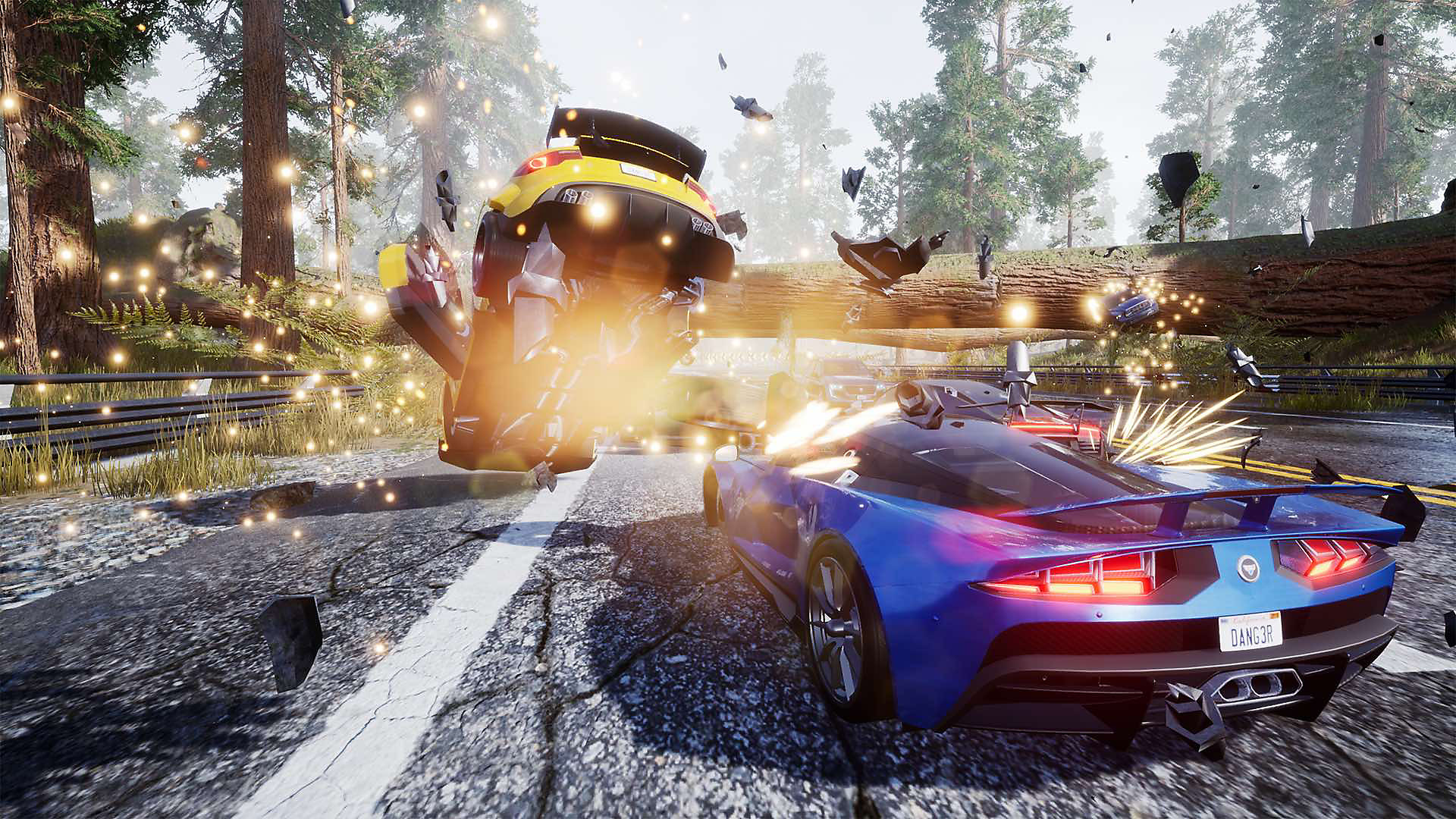
Dangerous Driving 2
Release Date: Q4 Platforms: PC, Playstation 4, Xbox One
Dangerous Driving is developed by former members of Criterion Games, as a spiritual successor to the beloved Burnout series – which was put on ice by publisher EA who moved 80% of Criterion staff to Ghost Games to focus on the Need for Speed franchise. Many of the same takedown mechanics of the Burnout series returns, with players battling against AI and online players to cross the line first, by any means necessary.
For the longest time, it was the default response. Corner a shiny suited car company MD at a motorshow to ask when their new piece of whiz-bang technology would actually make production (invariably it’d be a new electric vehicle, or a ‘next-gen’ autonomous system) and the answer would be fired back with a reassuring surety.
“By 2020,” they’d say with a knowing smile, as if they were in on some joke the rest of us weren’t. And for the longest time, we believed them. Well, why wouldn’t we? Back then, 2020 seemed so far away. Plus, it had a nice ring to it. As though it offered some arbitrary line in the passage of time when we’d all be commuting to work in luxuriously appointed driverless pods and parking Teslas in our garages.
Now, though, it’s D-Day. Which begs the obvious question: have we made it? Are we about to experience a wave of crushing technological advancement, and if not, how close did we get? Or, perhaps more pertinently, how short have we fallen?
One comment made by deputy editor Andy Enright while writing a feature trying to answer that very question has stayed with me: “Is Australia the knuckle dragger of the developed world?” he mused at the end of a very long day.
At first I brushed it off. Australia!? No. We’re one of the wealthiest nations in the world. A country of forward thinkers, of early adopters, and example setters, aren’t we? Surely we’re ahead of the curve when it comes to making the car a safer, easier and cleaner form of transport. Surely…
The facts are eye-opening. Our track record on emissions makes for the most uncomfortable reading. Not only does Australia have one of the worst rates for carbon emissions per capita in the world, but that number is rising. And the transport sector is one of the worst offenders.
Then there’s the issue of our fuel quality. It might be cheap, but our low-quality, high-sulphur petrol is among the worst in the developed world, and that has spawned a vicious circle with lingering consequences.
Not only are our cars dirtier (a Department of Infrastructure report cited a comparison of best-selling variants for popular cars like the Toyota Corolla and Hyundai Tucson in the UK that found that Aussie cars were about “27 percent worse on average”), but car companies are no longer sending us their most efficient and technically advanced models. “We don’t get variants that are sent to CO2-sensitive markets,” confirmed one local car-company exec.
We’re relative Luddites when it comes to EV adoption, too. In 2018, Aussies bought about 2700 electric cars, which equates to just 0.2 percent of our total market. Of the 36 nations that are part of the OECD, 32 buy more EVs than us. Only three other countries buy fewer, and they’re classed as emerging economies.
However, there is hope for us here. Sales of hybrids and EVs doubled in the first 10 months of 2019 compared to the same period in 2018, even in a market that’s down almost nine percent. And that’s excluding Tesla, which, in a typically Tesla way, refuses to publish its sales figures. So how to foster this newfound growth? “Incentives!” is the obvious answer, though I’d counter there’s a smarter solution.
Vinesh Bhindi, who is the MD of Mazda Australia, rightly argues that giving private EV buyers cash incentives might increase sales, but it does nothing to address the primary objective of reducing CO2. So why not incentivise energy companies instead? “Yes you can have an EV, but if the energy generation isn’t renewable and clean, then how does that meet the objective?” he says. “That’s the crucial part of the whole puzzle.”
The issue, of course, is time. Just as 2020 now seems hopelessly naïve for the introduction of autonomy and mass-market EV ownership, any estimate on when Australia might transform itself into a leader on these global challenges is likely to be woefully inaccurate. Though that shouldn’t stop us trying.
Sign-up here to get the weekly Wheels highlights
We had a brief squiz at the Colt Ralliart Turbo back in the May issue and were pretty keen for a steer of the car that had made at least a visual impact on debut at the Melbourne Motor Show early this year.
This review was originally published in MOTOR’s October 2006 issue
That bold exterior styling, with alloys, rear wing, flared guards, and a bonnet vent that looks like an intercooler but isn’t (the real one is mounted at the front) promised much. Especially as it was from the same stock as the Ralliart Evo.

Well, those clever Mitsu marketing types made us wait until they had the rest of the Colt stable ready to roll to give the range expansion a bit of a plug. And, good luck to them, but we just wanted to find out if TRA tweaker Alan Heaphy had managed to turn an innocuous five-door shopping trolley into a fun weekend bend weapon.
After driving that show special you saw on the May cover, I reckon he has. But the kicker is it’s not the same car you can now buy at your local Ralliart dealer for $29,990. This particular car’s Macpherson strut suspension is made up of stiffer coils and a firmer damper than the ‘standard’ Colt Ralliart Turbo, and that makes for a marked improvement to the car’s ability to negotiate corners at speed.
It rides like a slot car – just steer it in as hot as you like, mash the loud pedal, and if you’re hovering around 3500rpm (where the 1.5-litre’s torque peaks at 210Nm) you’ll get hauled flat through the corner with nary a flash of the Active Stability Control light.
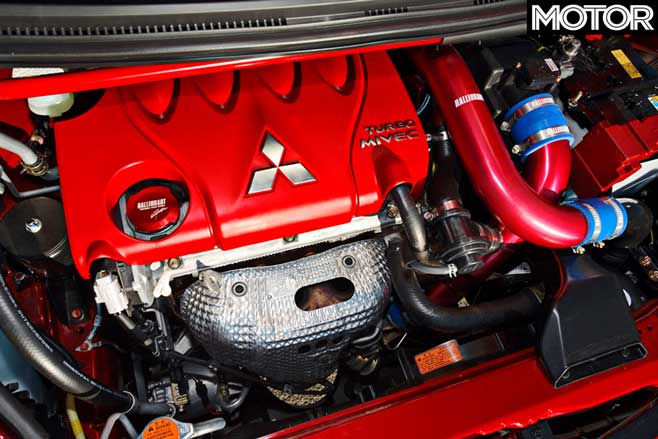
It’s a sharp steerer too, thanks to its super rigid body – 30 percent more rigid (and 60kg heavier) than the standard Colt. To achieve that there’s additional cross bracing between the front side members, a reinforced D pillar, triangulated bracing between the rear floor cross-member and the rear suspension, and 50 per cent more spot welds to hold it all together.
It’s the same body in the ‘standard’ Colt Ralliart, but that exciting slot car feel is diminished by the softer suspension package it gets. The idea is to make the car less harsh on the road, but chuck it into a corner and that stiff body feels as though it wants to fall over its 16×6.5-inch seven-spoke alloys, which are held nicely to the tar by Yokohama 205/45 R16 run-flats. The ASC light flickers away (the ‘off’ button didn’t seem to work in either car we drove) as the safety software copes with understeer, and the smiles are replaced with expressions of concentration.

The Getrag 5-speed manual (common across the range) gets a fair workout to get the most out of the 113kW and nice wedge of torque on offer. It has an easy, direct throw between gears making the oft-used second-to-third transition unnoticeably good, but it’s a little spongy, when compared to units in much more expensive rides, and that’s a reminder that this is, after all, a 30-grand sports car.
Accordingly there are other compromises, although we’re talking good mid-range stuff, not bargain basement. The stylish Recaro seats, leather bits where your hands go (wheel, knob and handbrake) and MP3-compatible sound system are the only real highlights in an otherwise Spartan (and noisy) cabin.

And that’s just fine, because the money I’d save on sticker price, and from the way it sips 6.7L/100km in much the same way that a Commodore or Falcon (or 380 VR-X, for that matter) doesn’t, will go towards a nice set of aftermarket suspenders.
2006 MITSUBISHI COLT RALLIART TURBO SPECS Engine: 1.5-litre DOHC 16-valve MPI MIVEC turbo Power: 113kW @ 6000rpm Torque: 210Nm @ 3500rpm Weight: 1130kg Price: $29,990
- Airborne troubleshooters for Jeep dealers
- Huge parts price overhaul
- But is it enough for Jeep?
From its halcyon days of the early part of the decade, Jeep’s reputation for aftermarket service and parts – along with its sales – have slumped, with the brand placed almost last in surveys that rank brands in dealer satisfaction.
As well, Jeep Wrangler reliability questions haven’t stopped with the launch of its new JL model, while Jeep Grand Cherokee reliability is a common theme in WhichCar reviews.
Jeep boss is getting the message
Flynn is a stalwart of the global industry with a background in dealership management and servicing, and he’s aware of the challenge that he faces turning Jeep’s fortunes around in Australia.
“If you just look at the numbers we were a force, but that force got depleted over the last four years or so,” he told WhichCar. “But in doing that, it’s almost as if infrastructure capability was [up] here and that remained constant. Success went like that [vertical]. And this just created a vacuum.”
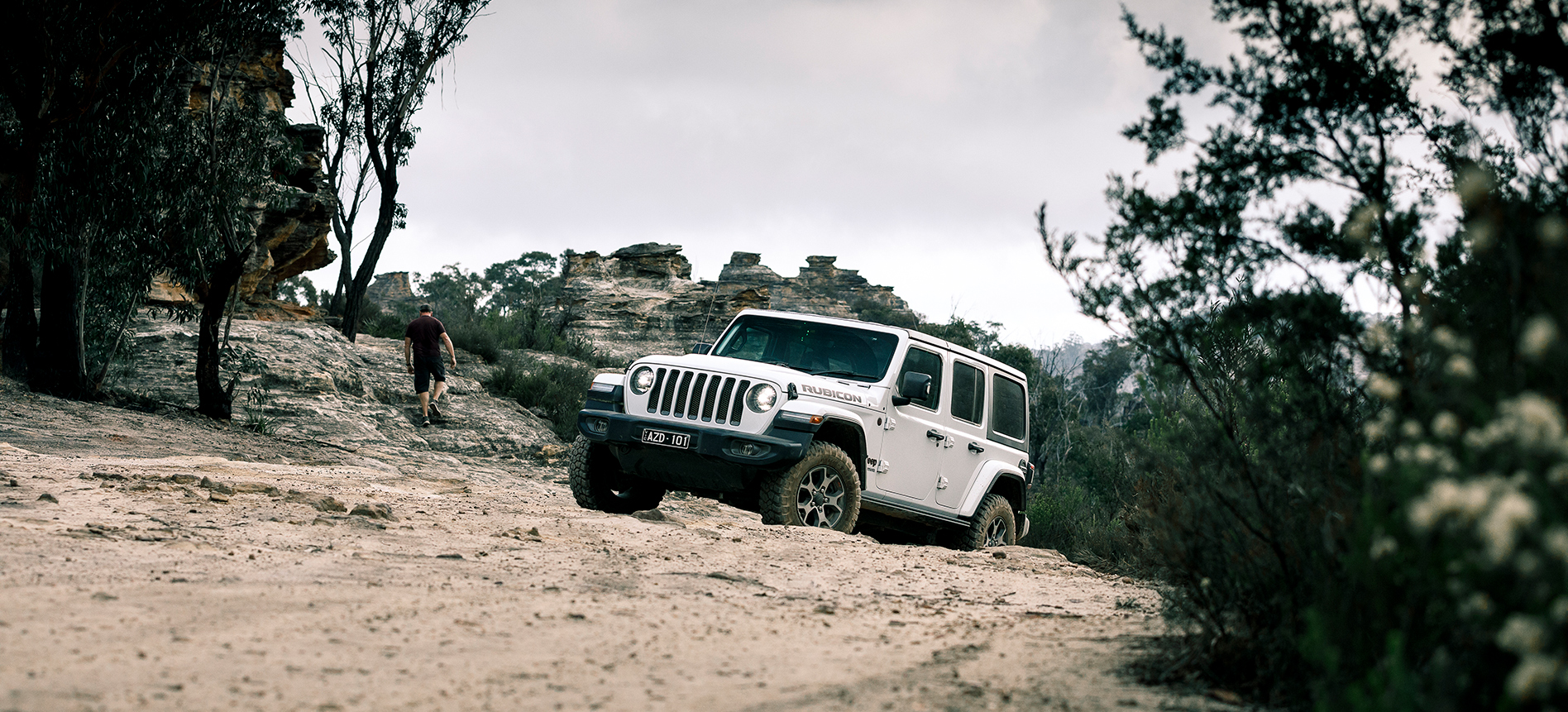
Jeep posted more than 30,000 sales in 2014 off the back of strong sales for its large Grand Cherokee, but have since slid dramatically, posting just 5,519 sales in 2019.
While exchange rate dramas and aging products were partly to blame, Flynn admits that he’s been told in no uncertain terms where the company has gone wrong.
“Wherever I went, whoever I spoke to, [they] were quite keen on the history lesson and the consistent message. There weren’t very many versions of it,” he said wryly.
“And my evaluation when I talked to dealers, talked to customers and looked around is actually I would say 80 percent of the challenges we created for ourselves are in the after-sales arena, and in a way that we have cared – or not so cared – for our customer base. Quite honestly, we needed a seismic shift in attitude, and to understand that we need to be customer-centric.
“It’s how you sustain a business long-term. You can have your booms, but unless you’re customer-centric, it’s unsustainable.”
Jeep’s airborne technicians hit the skies
One of the first measures that Flynn put in place, along with the new director of aftersales Jo Markham – a former director of Holden – was to create a quick-response team to solve problems more quickly at a dealer level.
“We’ve recruited four highly qualified… I call them ‘flying doctors’ there in the regions,” said Flynn. “Their sole role is to deal with these fires. And I’m not letting them have a full-up diary. They’ve got to be responsive. So as soon as a dealer raises a hand, a customer has an issue or whatever, we can get to it.”
Solving that problem is just the first part of the solution, though.
“When we get to it and we resolve it, we can then say, ‘okay, what was the gap that allowed that to get to where it was?’ If it’s a training issue, if it’s an experience issue, it’s a knowledge issue, is it a parts issue. Whatever happens to be we can now identify it and we’ve now got the processes in place to fix it.”
It’s modelled off a similar system that Flynn set up while working in South Africa, which shares the same tyranny of distance.
“I was in Perth yesterday, I actually personally went and test drove the customer’s vehicle with him,” Flynn revealed. “We’d been exchanging with the team and because my roots were in learning how it all works from a mechanical perspective, you don’t lose the appetite to fix problems.”
Jeep parts prices reduced
Other measures have also been undertaken, with Flynn ordering a complete overhaul of the company’s spare parts catalogue.
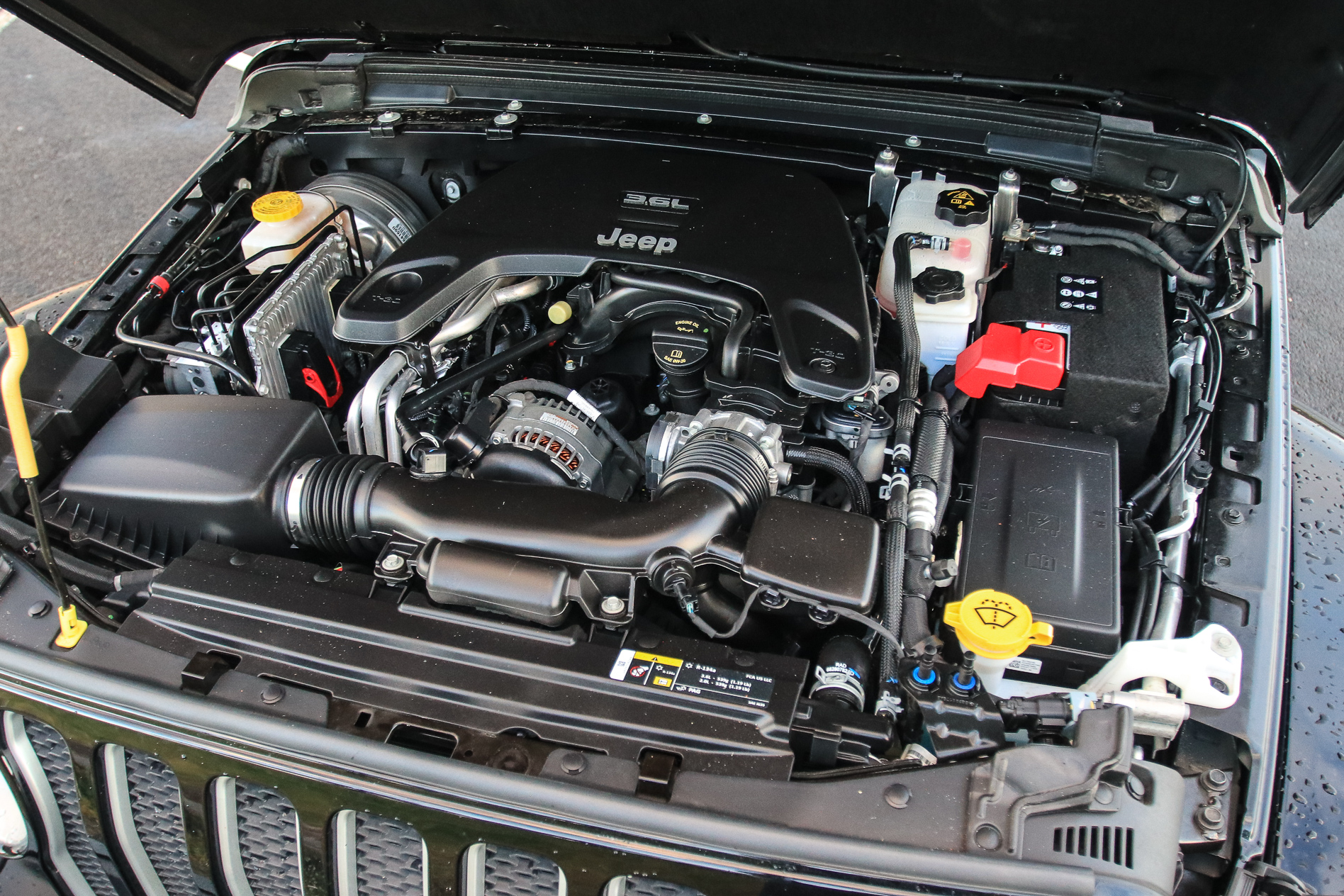
“One of the things I learned very quickly was there was some angst in the market at our parts pricing. We did a full analysis of 17,000 part numbers, which just happened to be the very parts we sold last year,” he revealed. “What we’ve done is put a new mapping across all of that. And anything that’s stood above the new mapping, we’ve reduced the price.
“So it’s done, 17,000 part number prices changed and reassessed and we’ll do that across the rest of the business as well, but the Jeep and Chrysler parts are done.”
Flynn is under no illusions that the road ahead is a challenging one for the Jeep brand specifically and the FCA model in general, but he’s prepared for the challenge.
The Wrangler JL will soon be joined by the Jeep Gladiator pick-up, while Flynn also believes the Jeep Compass mid-sized SUV needs some work to fire in the local SUV space.
“I think it was very, very important not to come in with any preconceived notions, and I think we just really need to some study time to understand the market,” he said.
“To be honest with you every minute there’s not a day I don’t get up where I’m not still excited by the challenge.”
- Bentley chief believes UK consumers being given bad information
- ICE engine ban could do more harm than good
- He believes hybrids should be exempt from 2035 ban
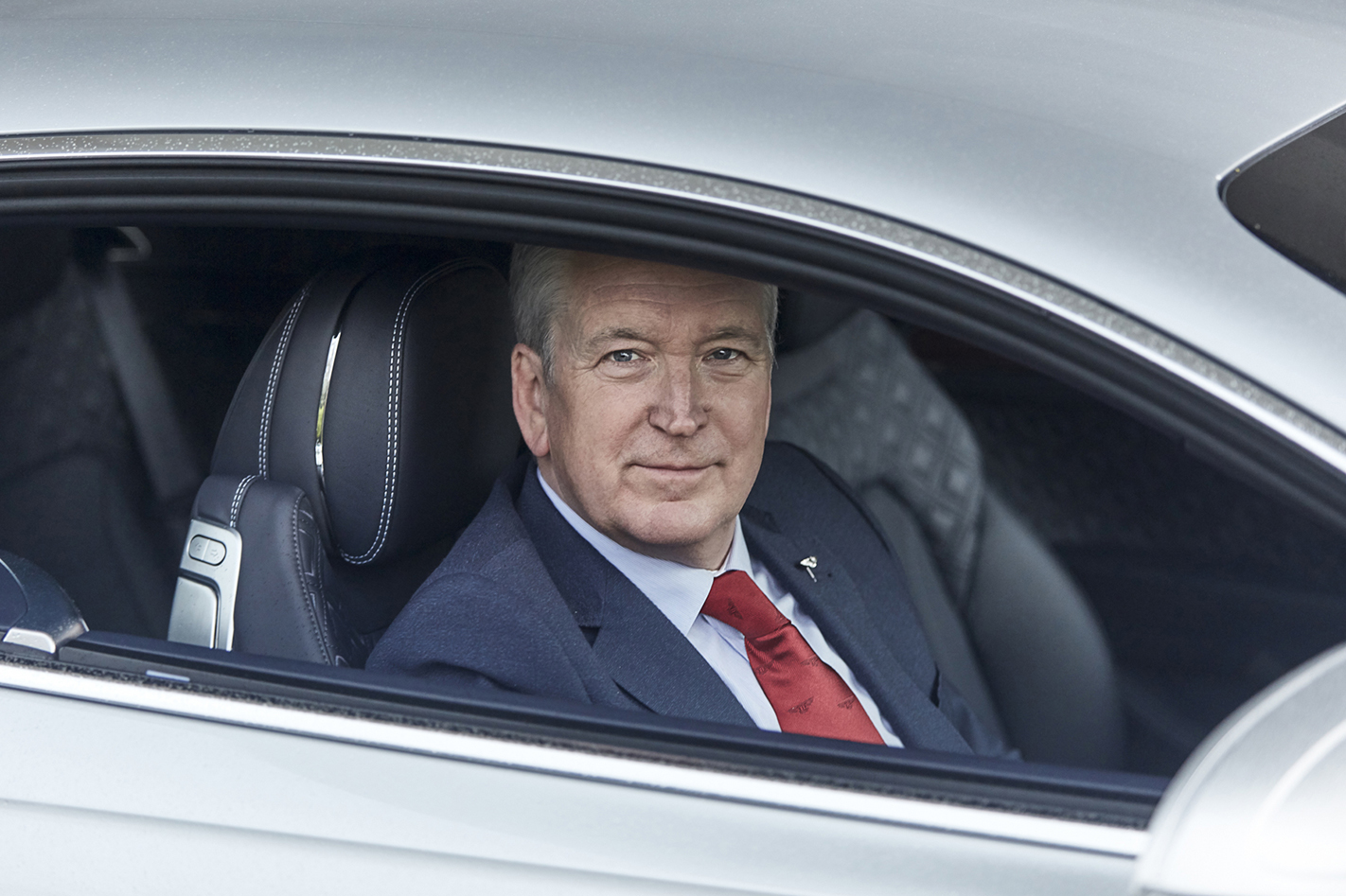
When asked to speculate on what will happen in 2035 when the UK’s proposed ban on internal combustion engines comes into effect, Hallmark (pictured below) said that while the deadline is achievable, the resulting demonisation of hybrids could do more bad than good in the interim.
“Scientifically it’s possible, and actually there are real benefits … even though the car is not the biggest polluter … because you reduce the concentration of certain emissions as well. We’re all up for it,” the Bentley boss said, “and even the timing … it’s probably possible. But it’s what you do in the meantime that matters.
“Here’s the challenge back, and I’m giving this to the politicians: What mix of cars would you like to have on the road [by 2035]?
“If [electric cars are at] two per cent [market penetration] now, and we’re going to have no combustion engines in 2035 … on the day that we switch, no more combustion engines can be sold… what would you like the fleet of cars to be on the road at that moment in time?
“Because you’ve got 15 years from now to change what’s going to be on the road.”
Hallmark’s point is that politicians are doing too little to encourage the uptake of more fuel-efficient vehicles such as plug-in hybrids (PHEVs) and mild-hybrids between now and the 2035 deadline. It’s a 15 year period during which millions of new cars will hit the road.
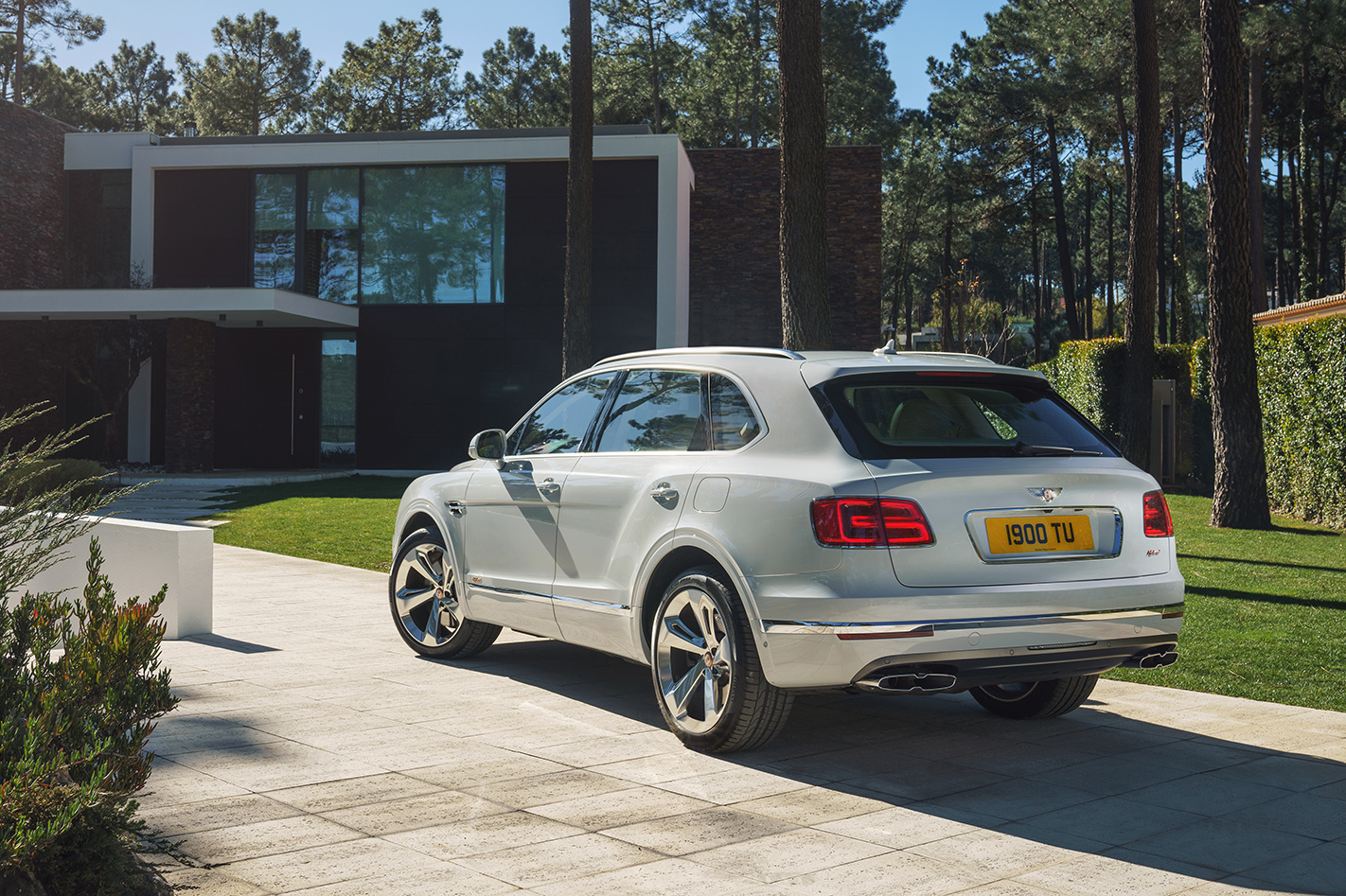
Bentley Bentayga hybrid
In 2019, just over 2.3 million new cars were sold in Britain, of which 37,850 were battery electric vehicles, 34,734 were plug-in hybrids (PHEVs), and 58,578 were mild-hybrid petrol or diesel models.
Sales of battery electric and mild-hybrids rose last year, but plug-in hybrid registrations fell, with the removal of a GBP3500 ($6000) Plug-In Car Grant incentivising the sales of PHEVs exacerbated by many of the leading plug-in models being off-sale as new, WLTP-compliant versions were introduced.
That means 2.17 million of those new cars had no form of fuel-saving hybridisation. Extrapolate that out to 2035, and that’s another 32.5 million petrol and diesel engines polluting the air before the ban comes into place.
Bringing the deadline further forward isn’t the answer, says Hallmark. Supporting hybrids is.
“Currently, you’re dis-incentivising petrol, you’re dis-incentivising diesel, you’re dis-incentivising hybrids. You’re confusing people about what to buy.
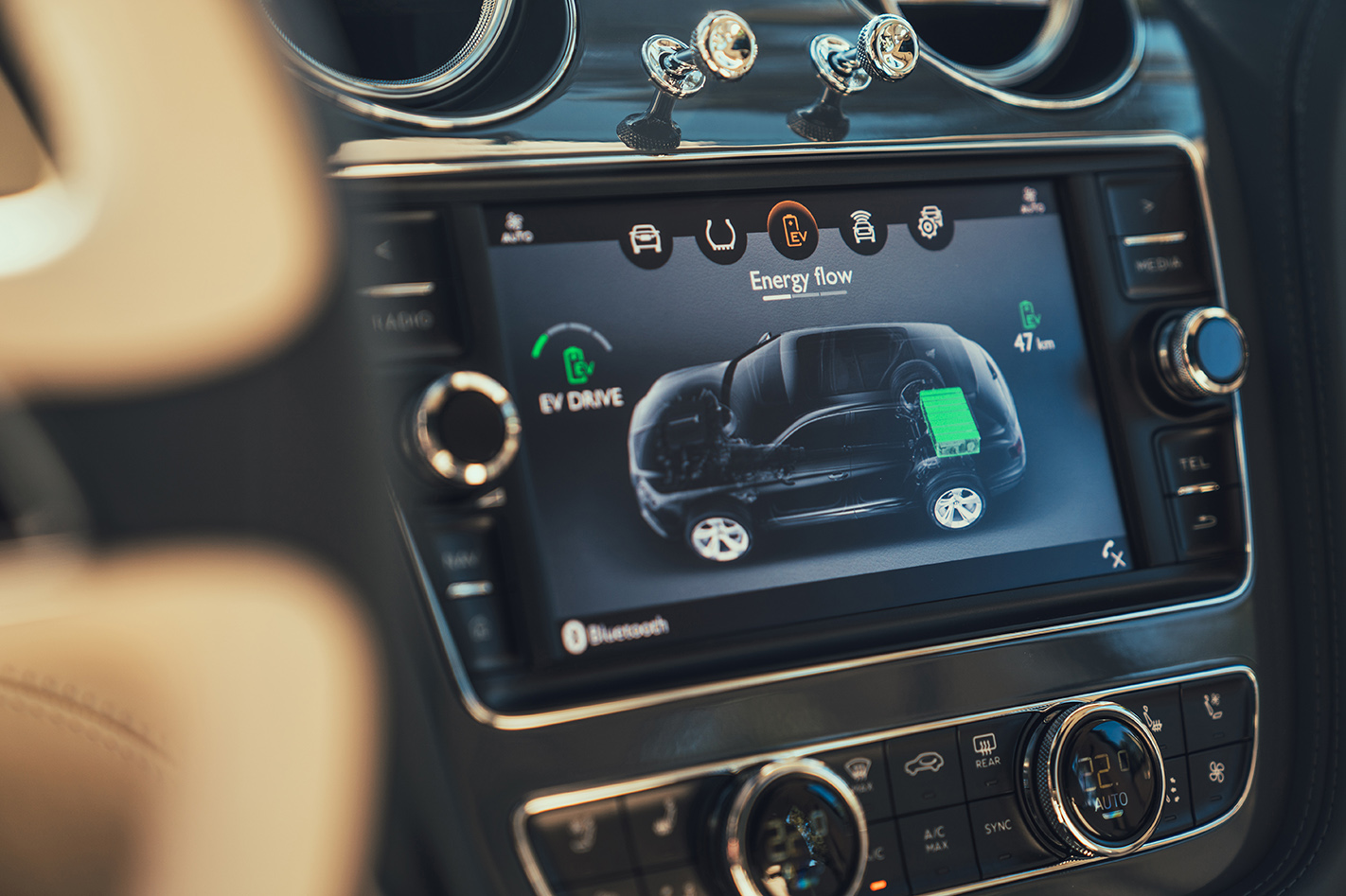
“There’s only a certain percentage [of people] that can actually afford, use or charge a battery-electric vehicle. The danger is they buy nothing for as long as possible and you end up with an older fleet with more pollution for longer.
“So, should we discuss hybrids? If you could take 30 to 50 percent of the pollution out of the fleet before we even get 2035, would that be a good idea?”
One of the best-selling SUVs in Australia and Europe is the Toyota RAV4. The 2019 model has a 2.5-litre, four-cylinder petrol engine that is rated at 7.3L/100km according to WLTP tests. It emits 175g/km of CO2.
The plug-in hybrid RAV4 launched last month can cover up to 65km on electric power alone, reducing its WLTP-standard emission figure to 29g/km of CO2.
In 2019, the fleet average CO2 of all new cars sold in the UK rose 2.7 percent to 127.9g/km.
“May you live in interesting times.” It’s an old Chinese saying that sounds, on the surface, pretty innocuous. But in reality, it pretty much means “screw you”.
This feature was originally published in MOTOR’s September 2006 issue
Just as “she has a great personality” translates as “she has a face like a dropped pie”, “interesting” in this case has more to do with plagues of locusts, drought and famine and attacks by marauding assassins. And any way you cut the deck, Holden has just launched its VE Commodore into the most interesting of automotive times.
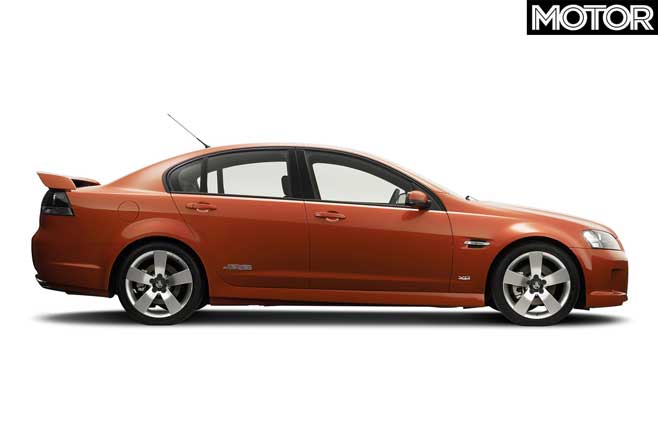
Consider the facts: Petrol prices are now at an all time, frightening high. The buying public’s response to that has been to abandon big cars like never before. Large-car segment sales are down 22 per cent on this time last year and small cars are doing the business. The only other market 1 segment experiencing any real sunshine is the diesel market. And a diesel Commodore, Holden don’t got.
Throw in the fact that a new Commodore only comes along every nine years and there’s enormous pressure to get the product and the marketing right. The hopes and dreams of a whole generation of local-performance buyers depend on it. Don’ t believe us? Ford Falcon AU, anyone?
But what may lust save the VE Commodore and, let‘s face it, Holden too, is that there is some serious engineering involved in the all-new car. Holden calls the VE project its biggest task and biggest challenge to date, and there’s no reason to doubt it. In fact. sit in on the engineering sessions that MOTOR was privy to, and you couldn’t help but draw the same conclusion yourself.
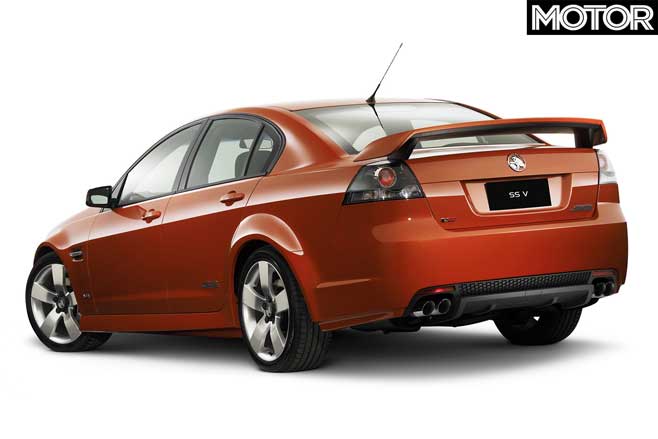
The VE is, for instance, the first Commodore to represent a complete departure from the first car to bear the badge in the late 1970s. Even in its iust-superseded form – VZ – the Commodore had identifiable links with the original VB, most notably in its front suspension layout.
So it won’t be an easy sell, but with adversity sometimes comes opportunity (or nobody would ever have gotten rich selling bullet-proof vests). The platform upon which the VE is built, dubbed Zeta within GM, has been given the chop for the North American domestic market as GM fast-tracks its next generation of SUVs and pick-ups instead. Zeta would have formed the basis of North America’s next big rear-drive range, but that won’t happen now.
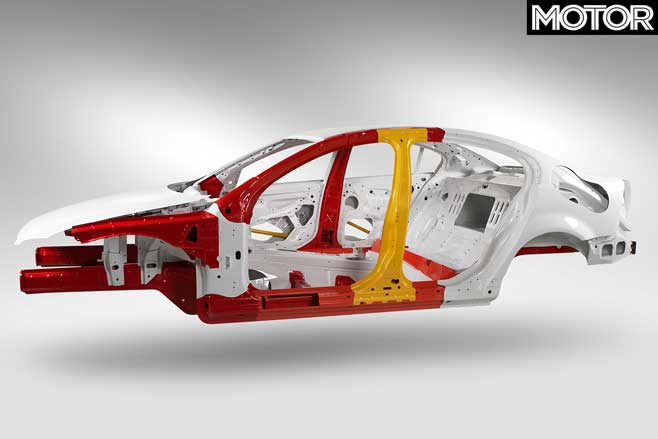
And just maybe that leaves the door open for the colonials The Zeta platform was always designed to suit a myriad of body styles. And that sort of engineering was arguably pioneered in Australia when we first took a Euro-spec Opel and widened it to build the original Commodore back in 1978.
Given that Holden has already shown it can build performance, niche-market cars for North America (Pontiac GTO, for instance) and since it now has a bigger mortgage on the Zeta architecture, doesn‘t it stand to reason that the VE could be the blueprint for GM’s future rear-drive hardware?
Certainly, no other Holden product has ever launched with that sort of potential responsibility surrounding it.
Maybe “interesting” isn’ t so bad after all.
Holden Commodore VE Special
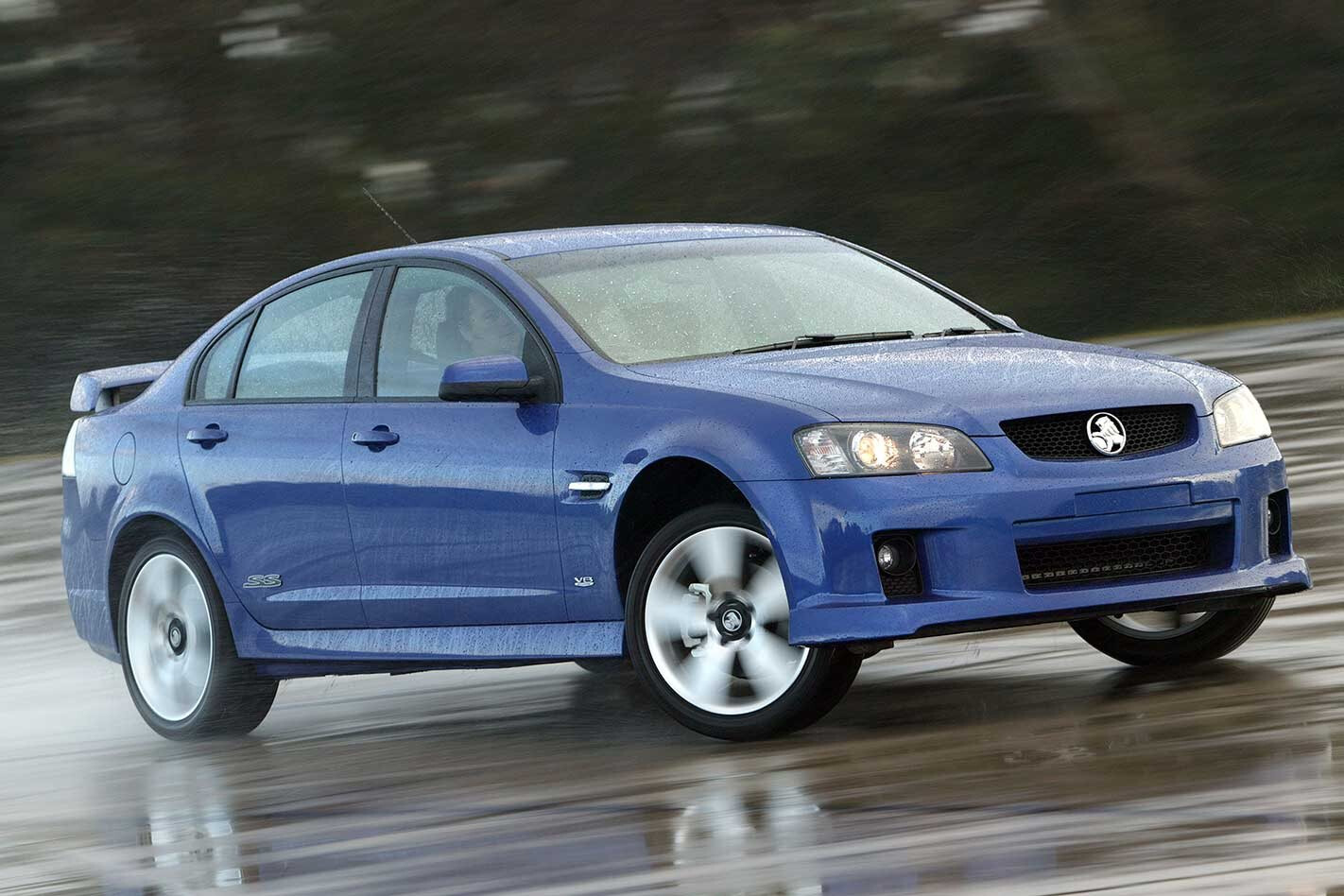 Commodore VE – First Drive
At its launch, the VE was the fastest Commodore ever…and we tested it!
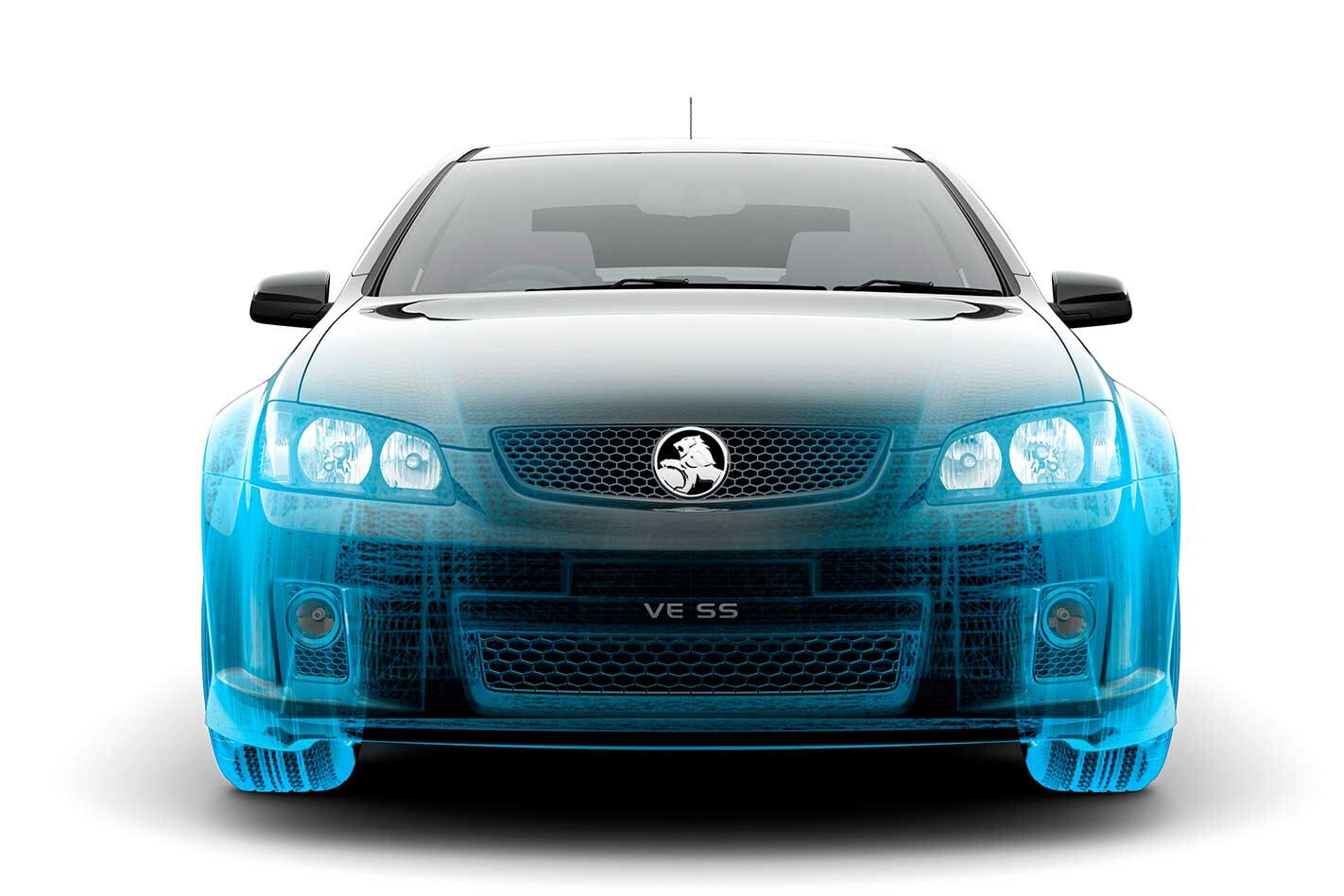 Commodore VE – Engineering and Design
From design to engineering and safety, this is everything you need to know about the development that went into the VE Commodore
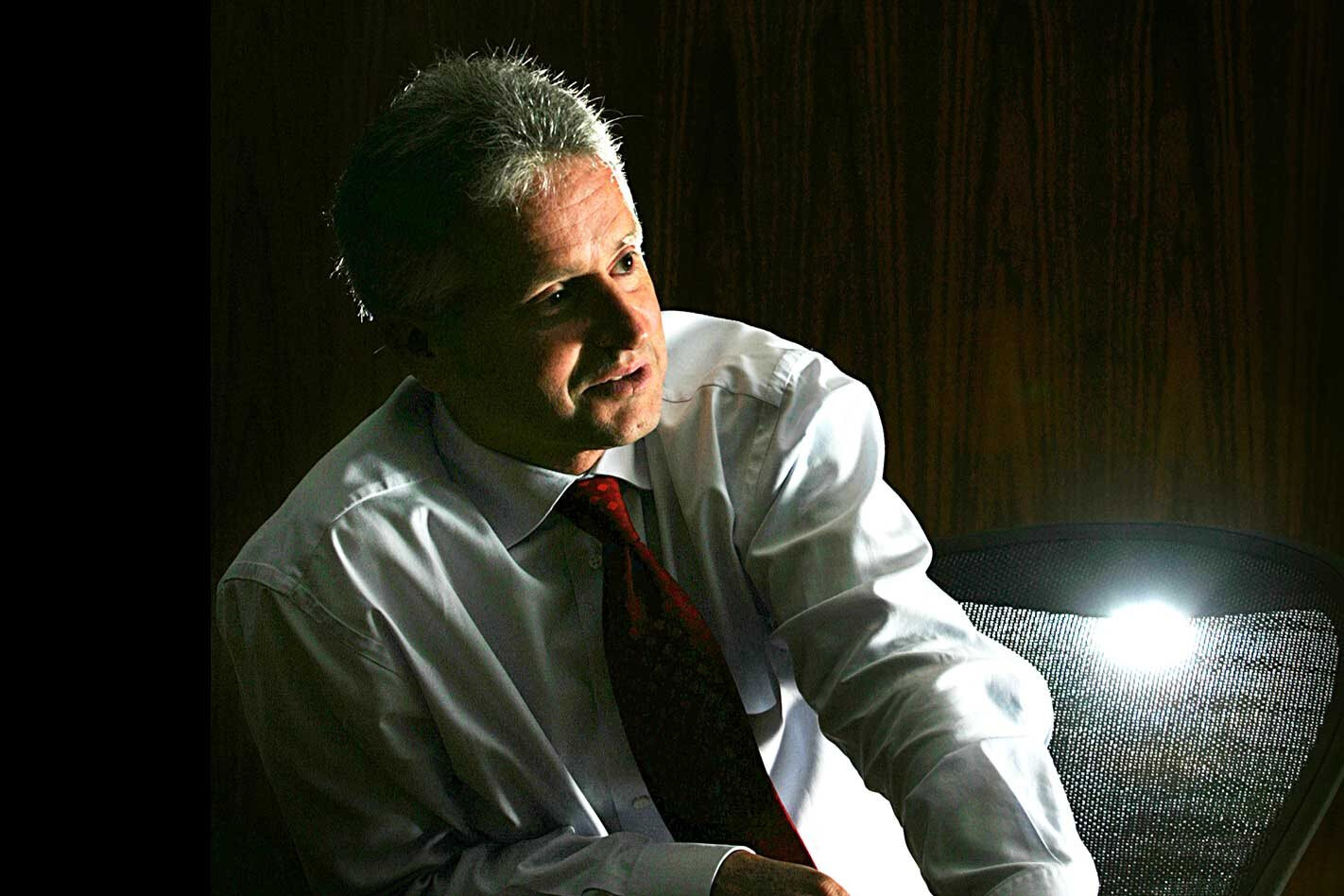 Commodore VE – Interview with Denny Mooney
Former Oldsmobile engineer knows how important VE is to his brand
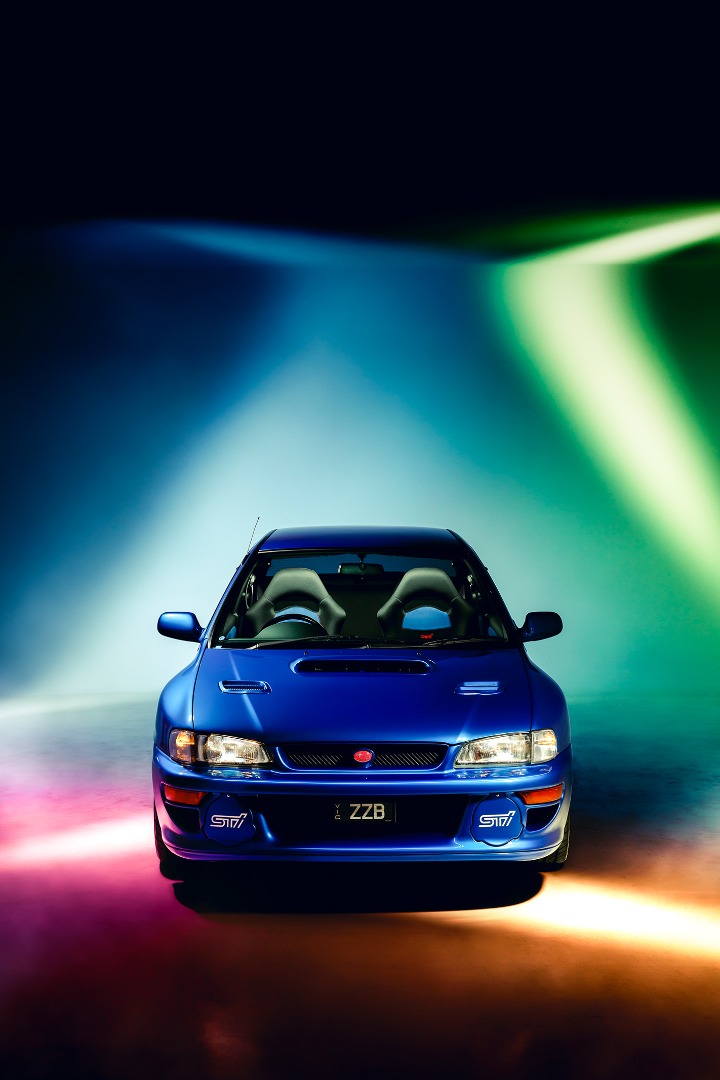
The Subaru Impreza peaked early. The nameplate enjoys a 28-year heritage, but reached its zenith a mere six years into its life cycle with the iconic WRX STi 22B.
Subaru has built quicker models since but none has ever been so perfectly redolent of a moment as this slice of box-arch exotica. A celebration of the company’s third rally world championship in a row, the 22B was, by any conventional product planning logic, a bit of a self-indulgence, with a production run that extended to a mere 400 official cars. There was a longstanding myth that there was no unlucky #13, but that car is owned by Subaru America.
All 22Bs were built between March and April 1998. When Subaru opened the taps on orders, they didn’t stay open long. Within hours, the entire allocation was spoken for. To give you an idea of how badly people wanted the cars, the UK received a quota of 16 cars, and by the time Prodrive had converted the speedometers to miles per hour, fitted a taller final-drive ratio and revised the headlights, 50 22Bs had been grey-imported from Japan. Australia received five cars, one of which was retained by the importer.
They were also eye-wateringly expensive. Back in 1998, they were put on sale at $125,000 apiece. Then Subaru insisted the buyer pay the $7000 certification cost for the 22B on top. The profit from the sale of those four cars was almost enough to buy the fifth car that Subaru Australia effectively gifted itself. Bear in mind that a Subaru WRX was a $40K car back then, so here was a limited-run special edition costing better than three times the price. Given that Nissan has tried to sell us a $1.4m GT-R50 by Italdesign special last year, Subaru was clearly ahead of the curve on premium-priced, limited-run editions.
Australian-market cars were undeniably expensive in 1993, and the 22B was still nine grand cheaper than a BMW E36 M3 Evo and a long way short of the $183K Porsche wanted for an entry-level 996 Carrera. Those that took the plunge would have been rewarded with a vehicle that was quicker, rarer, and which would hold its value far better than either of the German blue-bloods. Today, a clean 22B will change hands at upwards of $200,000; more if it has an interesting history.
Many do. Colin McRae was one of the lucky batch of owners but any expectation that he would be given a 22B for winning the World Rally Championship was soon disabused when Subaru sent him an invoice. Yes, he got a modest reduction, but he still had to buy the car. “I got a good price, but that really hurt, being Scottish!” he was quoted at the time.
Contrary to popular belief, the 22B was never a homologation vehicle. It looks for all the world as if it is, with its aggressive box arches and enlarged 2.2-litre engine, but it was more of a celebration, a loose homage to the actual Peter Stevens-designed WRC ’97 rally car.
It was based on the existing two-door STI Version IV Type R, a car which retailed on the Japanese market for ¥3m, with the production run capped at 399. That’s not altogether true as there were a number of additional 000-numbered prototypes, three of which went to McRae, his co-driver Nicky Grist, and the boss of Prodrive, David Lapworth. One of these 000 cars sold in 2017 for $210,000 and an even better, low- mileage 000 car is for sale at Contempo Concept in Hong Kong with a rumoured asking price north of $400,000.
That price doesn’t get you a lot of things. It doesn’t net you foglights, just blue plastic blanking plates. You’ll search in vain for any airbags and a good stomp on the middle pedal reveals that there’s no anti-lock braking tech whatsoever. There’s not even a radio. What you do get is a small roller switch next to the handbrake that alters the torque split front to rear. This varies between 36 percent front and 64 percent rear to an even, Quattro-style 50/50 split whereupon the centre diff locks for maximum grip. You won’t use this on the road because locking the diff delivers industrial quantities of understeer that will shave the shoulders clean off the front 235/409ZR17 Pirelli P-Zeros.
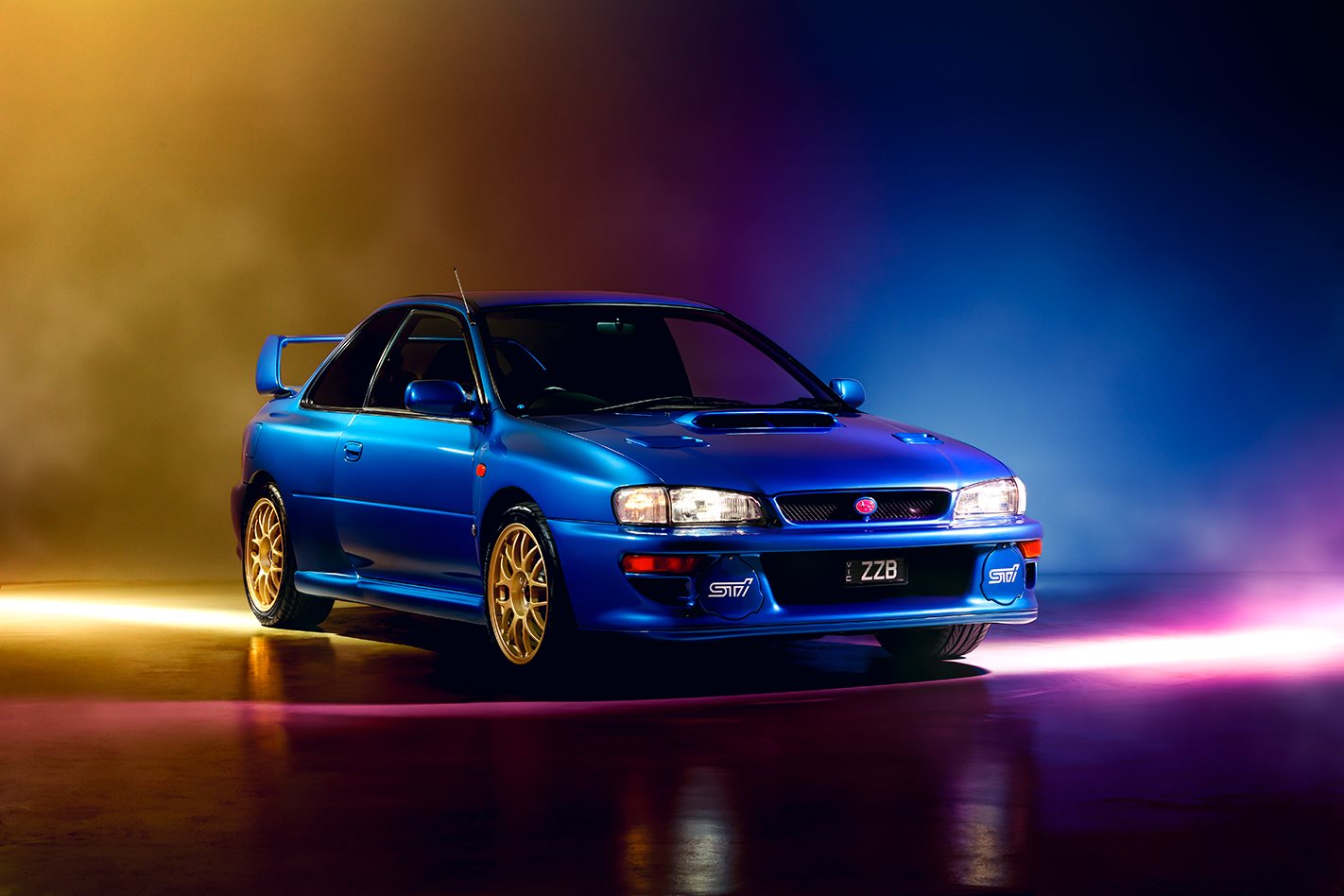
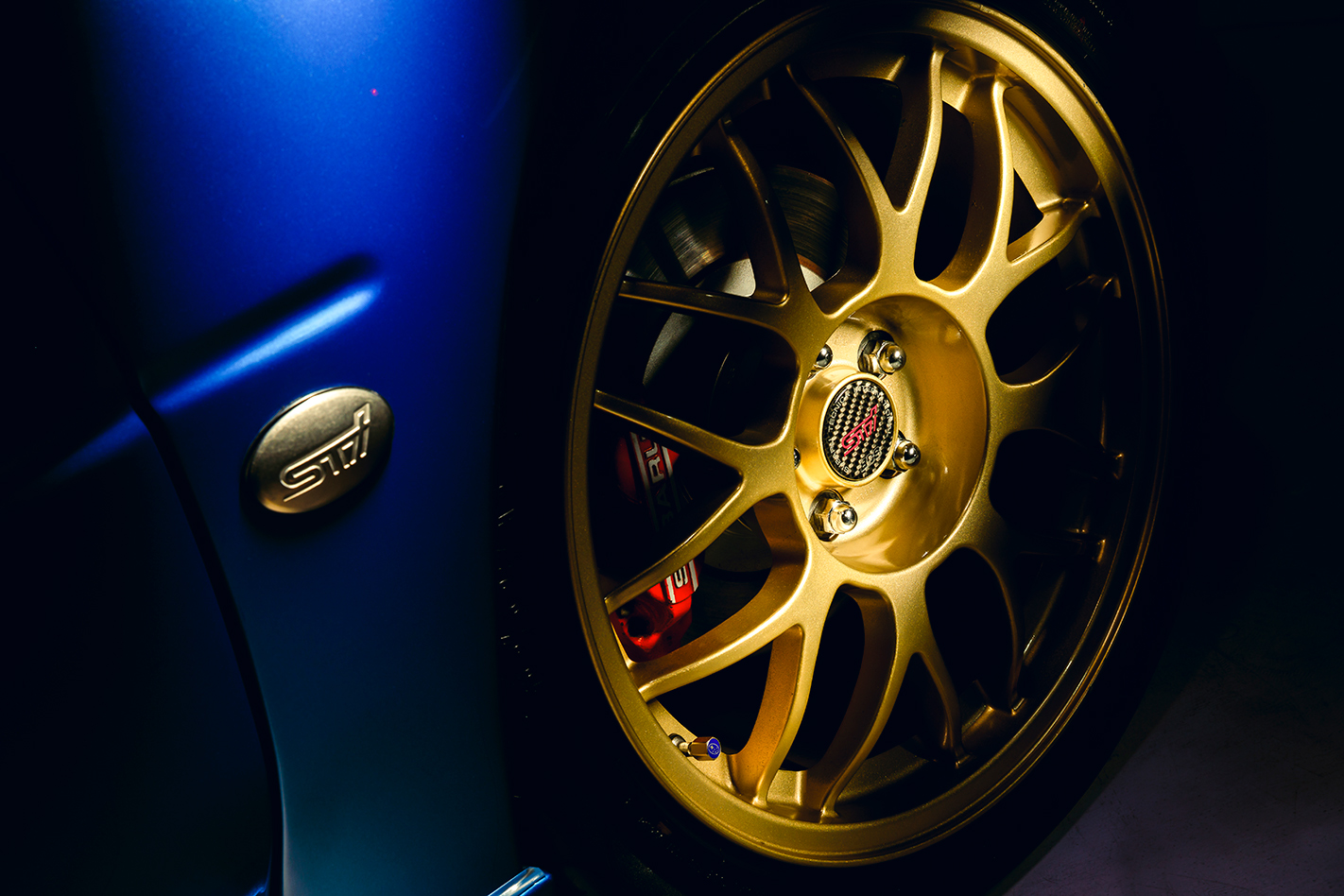
The blistered arches were a rallying trope of the day, inspired by the likes of Audi’s Ur Quattro and Lancia’s Delta Integrale. Adding 80mm to the overall width of the 22B, the Coke-bottle flanks were emphasised by the overhead telephoto press shots of the day which compressed the car into a voluptuous caricature, wholly removed from its proletarian, narrow-arched Impreza siblings. Custom front and rear valances, gold BBS RG334 alloys, a pair of bonnet vents and a manually adjustable wing delivered the requisite special-stage émigré look.
It was far from just a cosmetic treatment, though. The engine was bored out to 2212cc from the standard 1994cc swept capacity and was designated EJ22 rather than EJ20 as a consequence. Forged pistons, an intercooler spray, shorter gearing from the Type RA, heavier duty drive and prop shafts and a ceramic-faced twin-plate clutch spoke of an attention to detail that went some way to justifying that price tag.
The official power figure conformed to the so-called ‘gentleman’s agreement’, namely that no Japanese performance cars would exceed 280PS (206kW), a uniform peak power figure shared by many Skyline GT-Rs, Supras, NSXs, RX-7s, Lancer Evos and Mitsubishi 3000 GTs of the era. You’ll read any number of commentators claiming that the 22B made way more power than this, but when Wheels strapped one to a dyno back in 2000, we saw 142kW at the hubs. What’s more, the performance figures of 0-100km/h in 4.7s and 0-400m in 13.8s were entirely consistent with an all-wheel-drive, 206kW car that weighs 1270kg. A generation later, those are much the same figures you’d get from an early Mk7 Golf R. Heavier car, better tyres, same result.
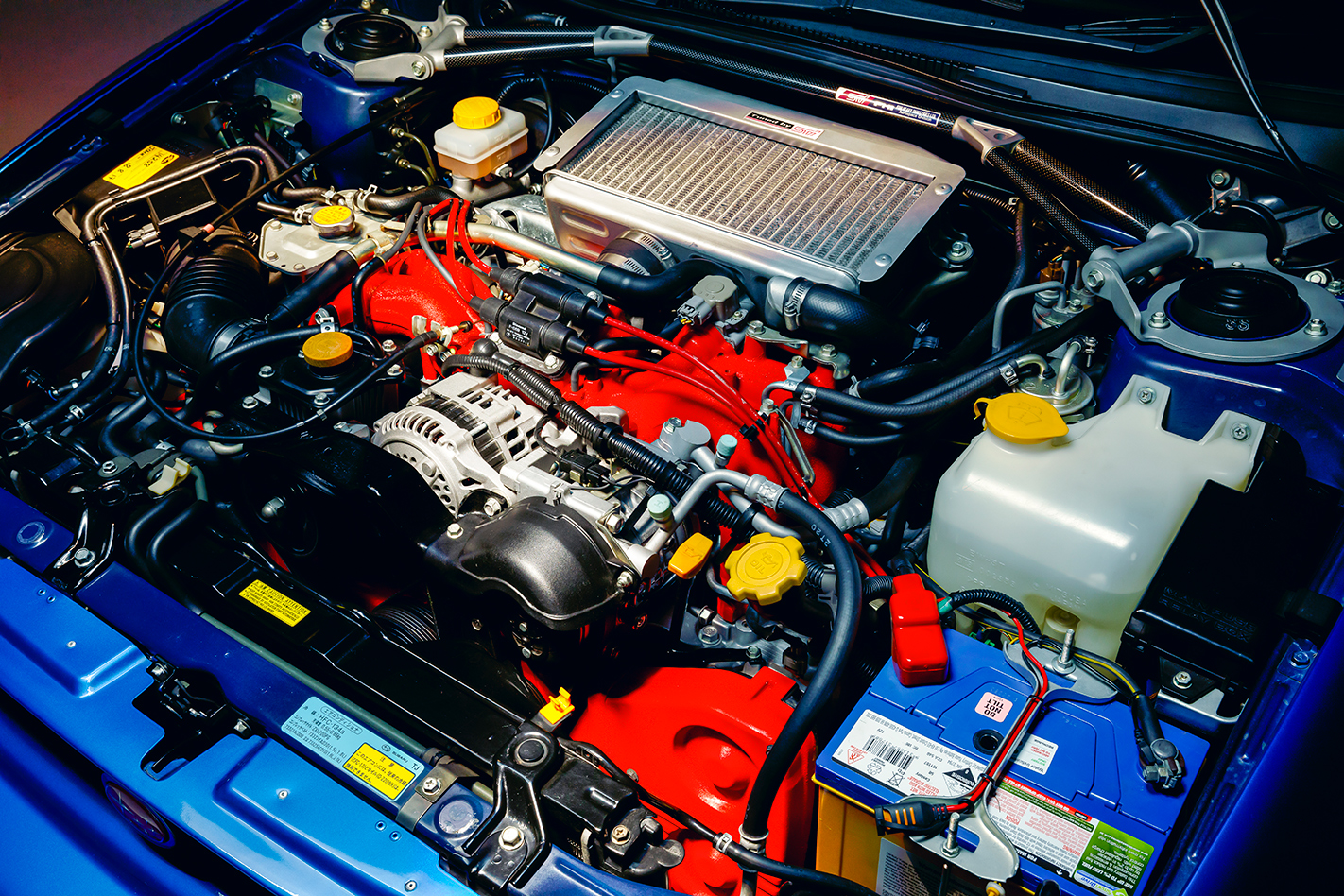
What was different about the 22B’s lump was its power delivery. It felt different to the hyperactive 2.0-litre EJ20 units, and possessed a broader swathe of torque, which deviated only a few Newton metres from its 353Nm peak all the way between 2750rpm and 5200rpm. The EJ22 had a nominal 7900rpm redline, but you never needed to wring it out.
Bob Hall was our man in the driver’s seat back in 2000 and while he noted that the numbers against the clock didn’t differ much to the 1999 STi Coupe, the experience seemed different. “What the numbers don’t relay is the 22B’s intensity. It’s almost violent,” he said. “If you don’t get a rush when the hammer’s dropped in this car, you should visit your local mortuary. Now.”
Hall loved the flexibility of the engine and its muscularity without too much in the way of turbo lag. “Passing speeds are a good indicator of day-to-day liveability and here the blister-guarded 22B shines,” he noted. “Leave it in fourth gear and getting from 80 to 100km/h to pass the pensioner will take a mere 2.9 seconds. In fifth, the little Subie shoots from 100km/h to 130km/h in 4.4 seconds.”
Some contemporary frame of reference? “While the standing start times are pretty much line-ball with the HSV GTS 300’s, the Subaru runs away from the Commodore in passing speeds. Purely for comparative purposes, the GTS 300 takes 4.3 seconds from 80 to 100km/h and 6.2 seconds from 100 to 130km/h. So who said you can’t beat cubic inches?”
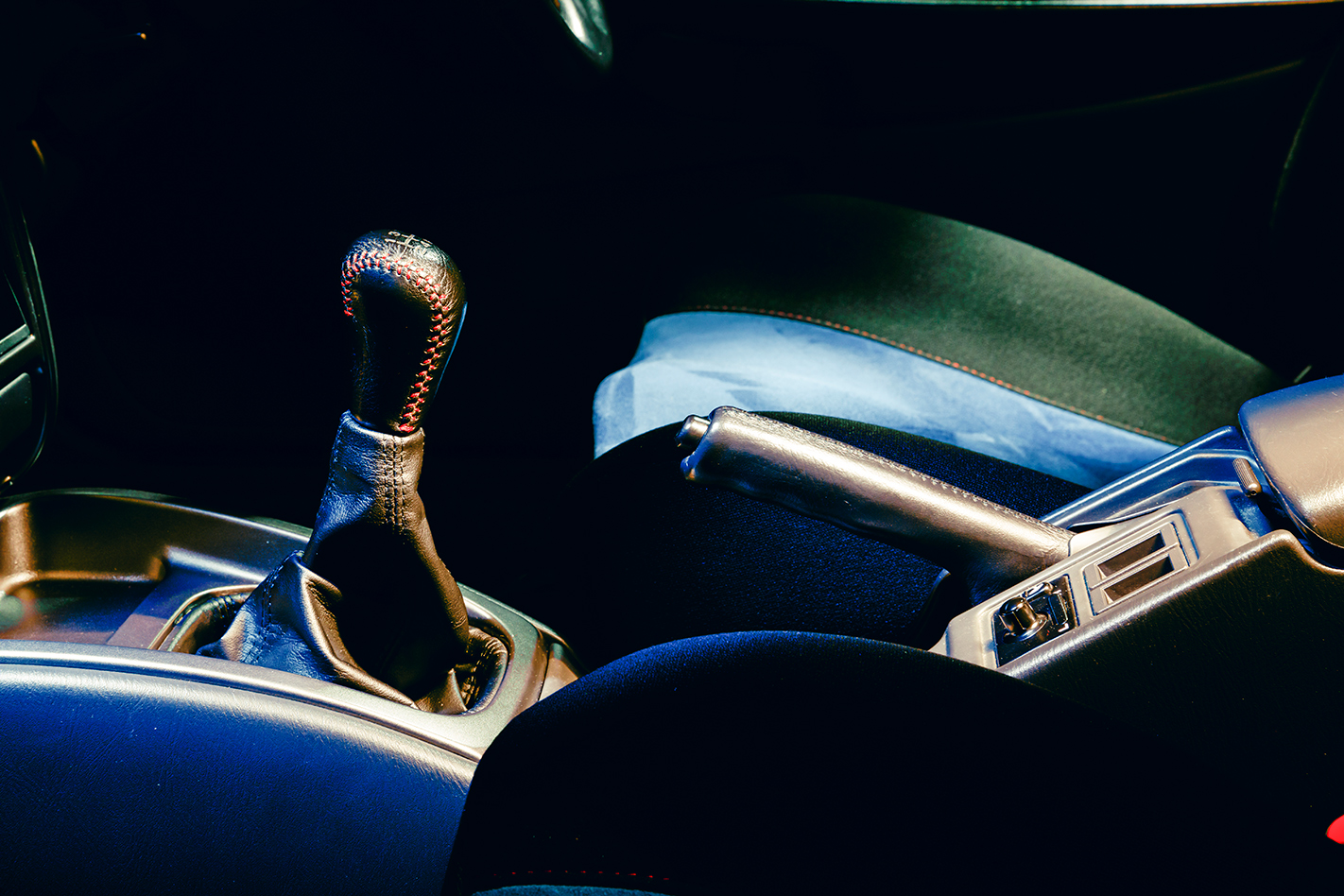
While Hall wasn’t impressed by the baulky gearshift, or the adjustable torque split, which he dismissed as a gimmick for road use, he also noted the 22B’s punishing ride. That and some genuinely focused suspension which featured unique forged aluminium lower links, rose-jointed transverse links, upside-down Bilstein dampers and bespoke Eibach springs. “When it comes to chassis competence, we’ve been favourably impressed by previous STis, so there were high expectations for the 22B,” said Hall. “Still, nobody who drove it was quite ready for its adhesion and cornering competence.”
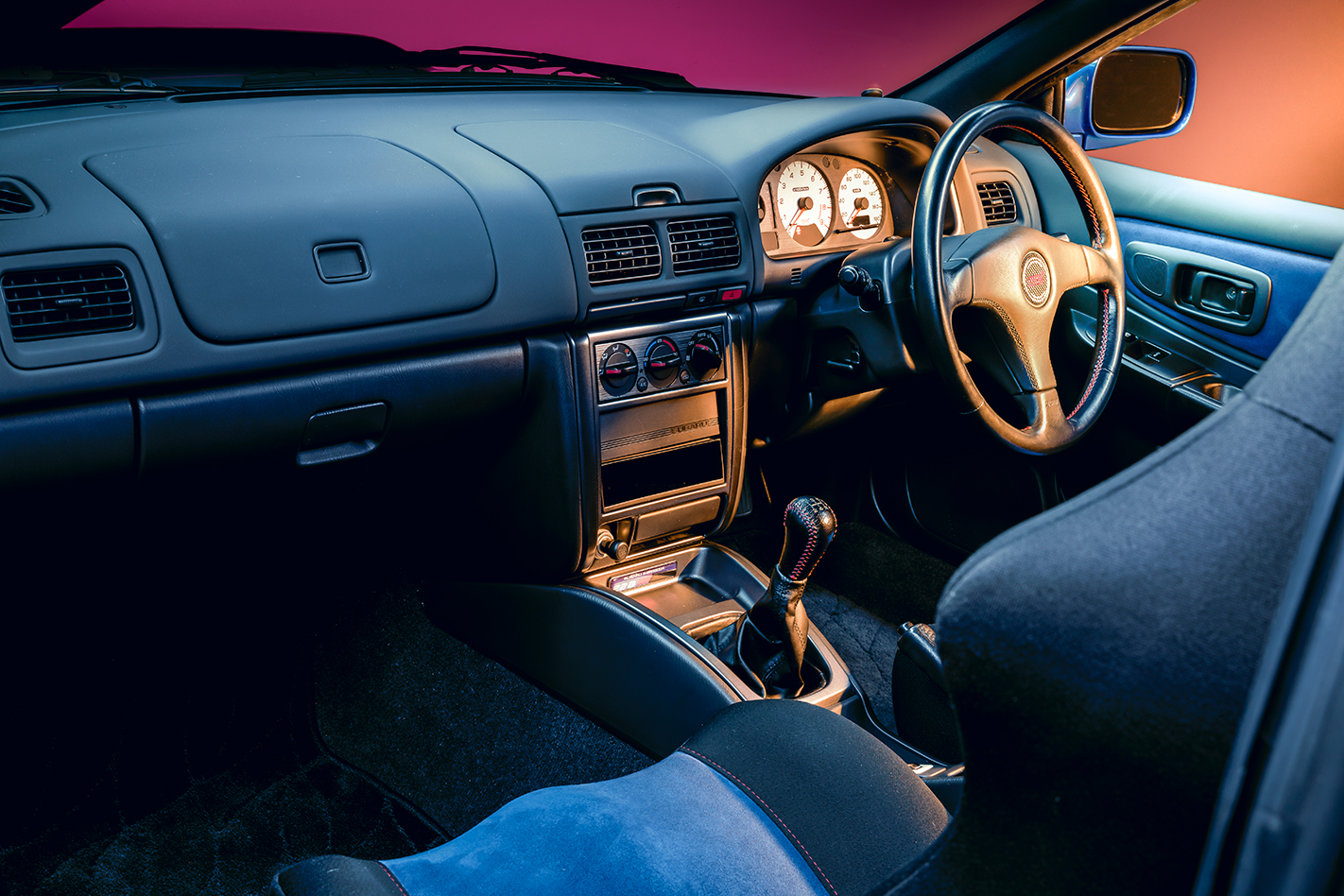
The quicker steering, low gearing, all-wheel-drive punch and beefier brakes combine to devastating effect when punting the 22B through tight corners. Big, open roads aren’t its forte, but diving towards a tight apex on the 294mm front discs, switching quickly to throttle and feeling the car transition subtly to its outside rear Pirelli, the thin-rimmed Nardi steering wheel letting you know how much traction the fronts are transmitting, is something truly joyous.
This might be more than two decades old, but the performance and the dynamics don’t feel particularly dated. The refinement and interior quality do, but in some regards it’s better than many moderns. Visibility for one. Then there’s the focus that you put on driving rather than encountering ‘mode anxiety’ as you do in so many new cars with a cornucopia of drive modes. Then there’s the fact that your right boot is connected to the throttle via a cable rather than through the filter of thousands of lines of code, and the same goes for the hydraulically assisted steering. There’s an immediacy to the 22B’s feedback loops that feels shockingly urgent.
The sound effects are from another era too. From the clattering frameless glass to the savage, guttural bark of the engine and the reptilian hissing of the turbocharger, it’s undeniably raw. The seat creaks, the induction system sucks great drafts of air and the tyres set up a resonant frequency that drenches the cabin. It might only be as quick as a Golf R but even at six tenths it’s one heck of an event. The ultimate Impreza is a big billing and the 22B could have fallen flat in the face of two decades of progress. That it doesn’t merely underscores its status. The 22B is the lineal champ that’s never stopped punching.
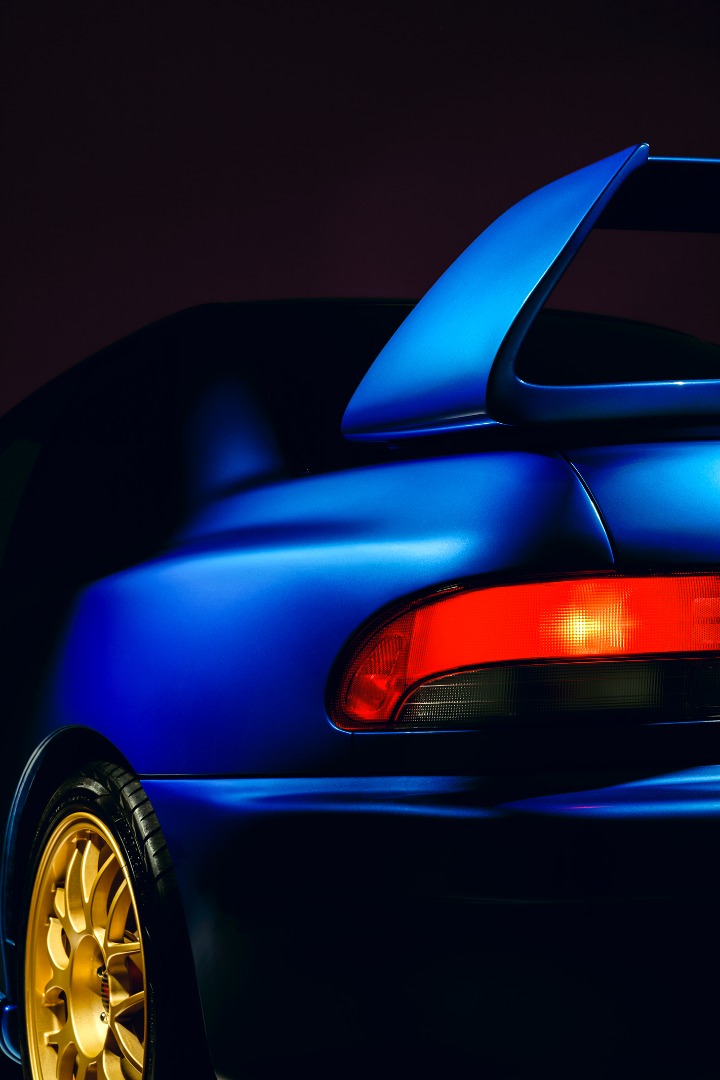
22B or P1?
On paper, the 22B lines up very closely to the Prodrive-developed two-door P1. Developed for the UK market, the P1 is, like the 22B, an impressive cross-country weapon, but at the time Subaru couldn’t make the DCCD centre diff work with ABS. The P1 ditched the diff and got anti-lock brakes instead. While it’s not as collectible or charismatic as the 22B, with values a whole lot lower, it might just make a better road car.
B thy Name
The 22B designation is perfect prosaic Subaru, the 22 referring to the 2.2-litre capacity and the B signifying the car’s Bilstein suspension. It’s mere coincidence that 22B is 555 in hexadecimal, coffin-nail manufacturer State Express 555 being one of Subaru’s major sponsors in world rallying.
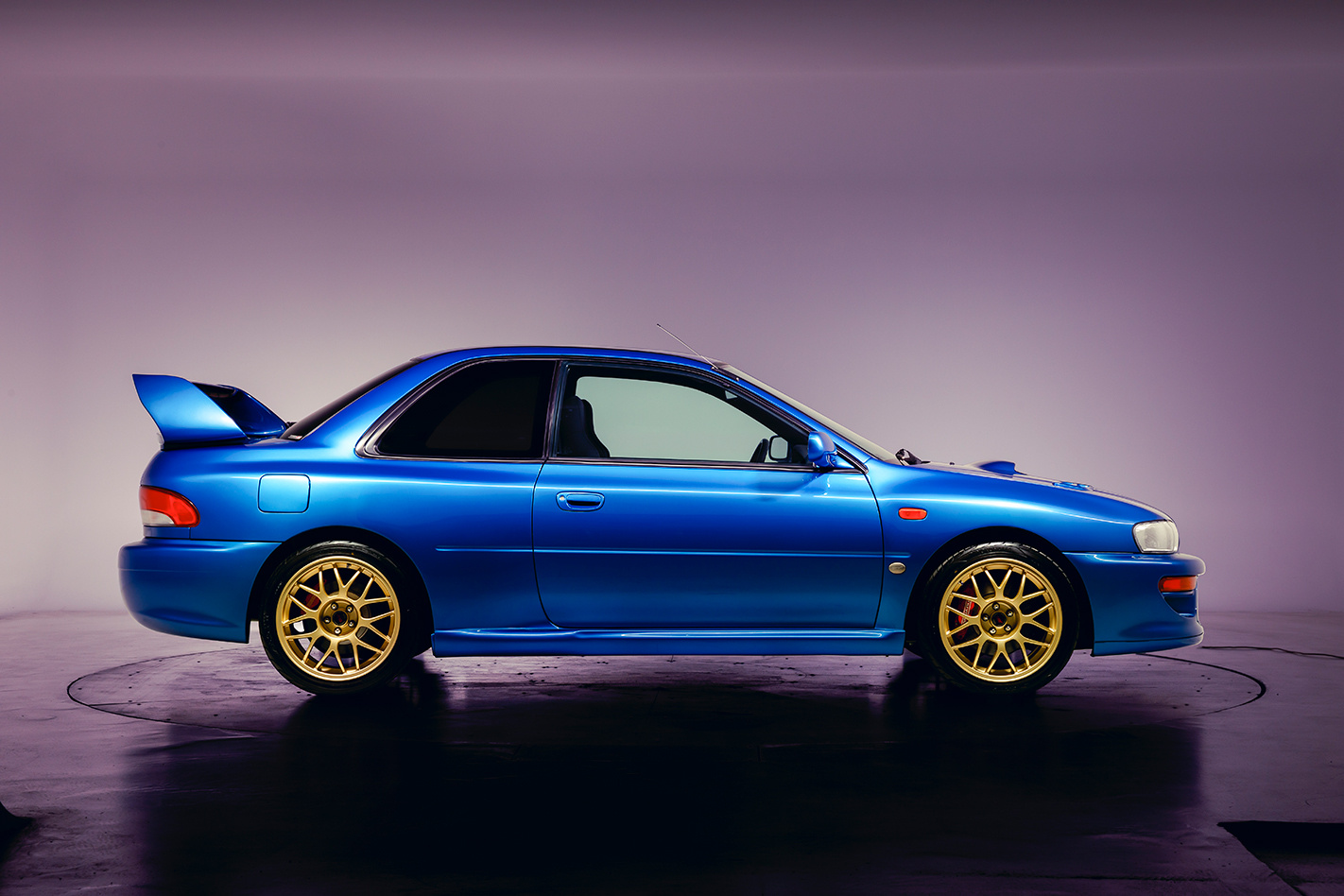
Who owns one? – Ian R, Melbourne
“This car came from Perth, and was once owned by the president of the WRX car club over there. It originally came into Sydney as a personal import back in 2007. There can’t be many in the world that are much better. I’ve been to the plant in Japan and seen the original car and they don’t look any different. I’m just about to sell it, I think. I don’t like a car that sits in the shed and you just admire it. To drive, it’s got real feel compared to cars of today. The steering feels alive. I drove a Ferrari 488. This is a nicer car to drive. I’d listen to an offer of somewhere over $200K for it.”
The good: Exclusivity; still feels an event to drive; great steering; mechanical toughness; tremendous visibility; McRae and Burns owned one
The bad: Rarity; some materials insubstantial; lateral grip no longer near the top tier; unyielding ride; now too valuable to drive it as intended
SPECS
ModelSubaru Impreza 22B-STi Version
Engine2212cc inline-four, dohc, turbo, 16v
Max power206kW @ 6000rpm
Max torque360Nm @ 3200rpm
Transmission5-speed manual
Weight1270kg
0-100km/h4.7sec
Price$125,000 (1998)
It’s the lead-up to International Women’s Day 2020, and I’m chatting to some of the most influential women in Australian motorsport. So why does it feel like, even in these more enlightened days, we’re still treading water instead of surging ahead?
“I’ve had to prove that I deserve to be there,” says Jess Dane, the commercial operations officer – and co-owner – of Triple Eight Racing who believes she needs to works harder to earn respect in a male-dominated world.
The theme for this year’s International Women’s Day is Each for Equal, promoting that an equal world is an enabled one. Only from where I’m sitting, the stats still don’t add up… it’s not even close.
Only 23 percent of the automotive industry, for example, is made up of women. Of those, 3.3 percent of technicians in the field are female, and if we look at the bigger picture in the gender game, just five percent of women hold leadership positions in Australia.
This has all been brought to my attention following an annual breakfast that I attended, hosted by Women in Automotive.
The event is a gathering of people involved in all areas of automotive and boasts an impressive panel. Dane, who is the commercial officer and co-owner of Triple Eight Race Engineering (below middle), Ten Motorsport and RPM co-host Kate Peck (below right) and 2016 Australian Rally Champion Molly Taylor (below left) all spoke of their respective journeys in this satisfying yet fickle industry.

While the panel discussion itself is light-hearted and highly entertaining, the same old questions reappeared. Why are there barriers for women in this industry? What is the solution to this problem? And finally, how do we reach women at a young age so that the future is brighter?
In a case study conducted by the Australian government’s Workplace Gender Equality Agency, the findings show that women aren’t overly keen to apply for roles in this field due to a lack of life balance, an unattractive work environment and a perceived inability to further advance in their careers.
To me, these reasons aren’t startling. It probably won’t shock you to hear that in 2020 the study finds the same tired old stories still circulate in the automotive industry; women aren’t strong enough. Having women in the garage/shop floor could lead to harassment claims. Women will leave if they get pregnant. Really? We can’t do better than this?
(R to L) The author with Molly, former Supercars racer Simona de Silvestro and Triple Eight engineer Romy Mayer
It’s all about changing those perceptions and educating both sides of the argument. As a woman who works in the pit lane, I can personally attest that we are indeed capable and strong enough for the job. It’s not rocket science. Like every other industry, though, all you really need to do is that one thing… work hard.
Unfortunately, though, we exist in a time where we find the need to continuously prove to men, and to this world, that we can do exactly what these boys are doing.
Dane (below) is the perfect example of this situation. She started as a sub-assembly mechanic for the race team and quickly moved her way up through the ranks.
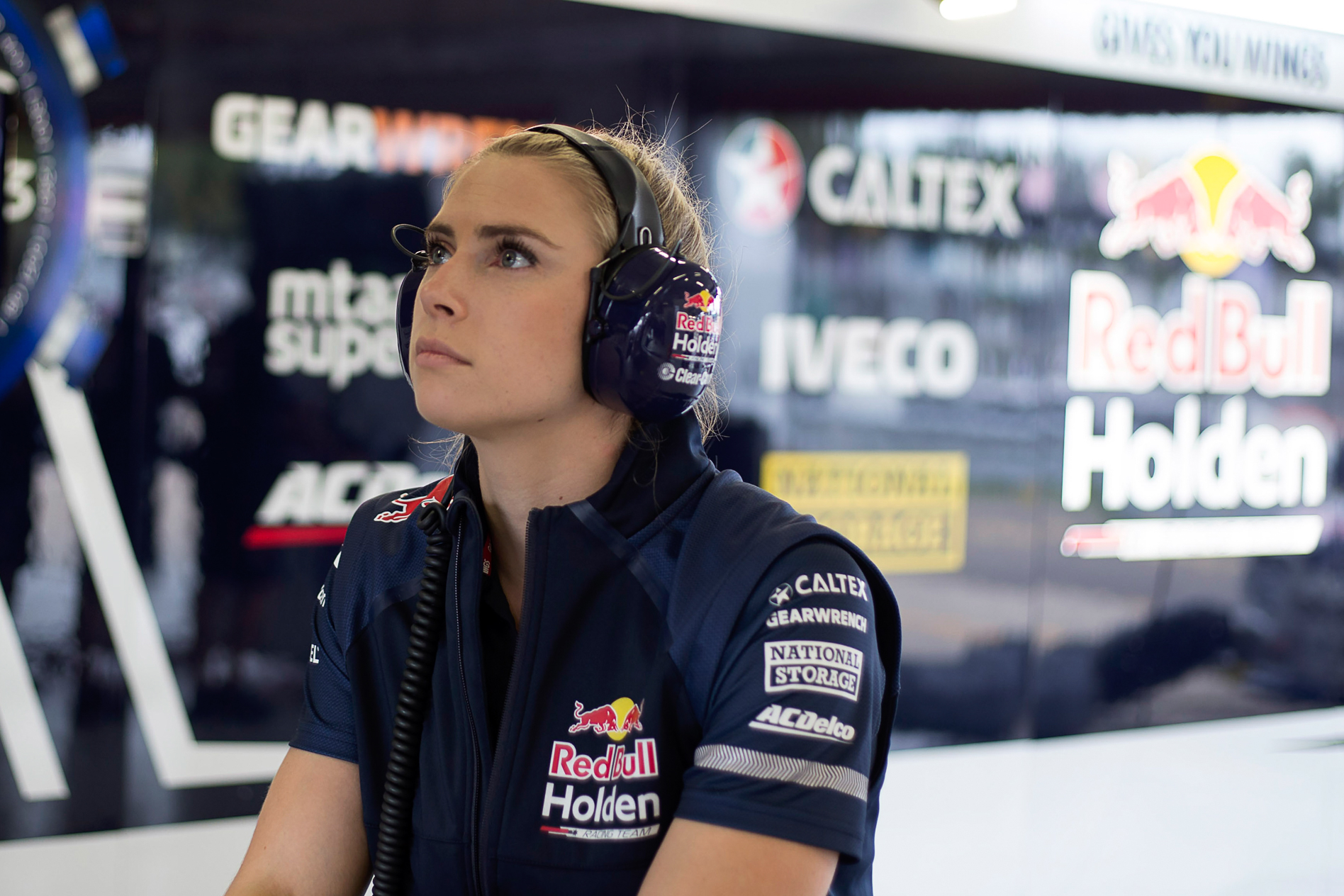
Now the commercial operations officer of Triple Eight Race Engineering in Queensland, she’s in charge of overseeing everything in the office and garage on a daily basis. Whether it’s sponsor servicing, public relations or keeping on top of driver commitments, she knows that business like the back of her hand. Oh, and when she’s off the clock she’s also studying for her law degree.
Even knowing that she’s earned her spot, her position has still been questioned, though – not least because her father is Triple Eight co-founder Roland Dane. You’ve grown up in racing royalty, so things like this just fall in your lap, right?
“One of the things I’ve been most conscious of in pit lane has been proving that I’m not just there because I’m Roland Dane’s daughter,” she told me. “Proving that motorsport is as much a passion for me as anyone else in the pit lane regardless of whose daughter I am.
“I’m lucky enough to have been exposed from a young age and that was what seeded my passion, but I’ve had to prove that I deserve to be there. I’ve gotten over that by working hard and have carved my own path in the industry as well as encouraging young women through various projects.”
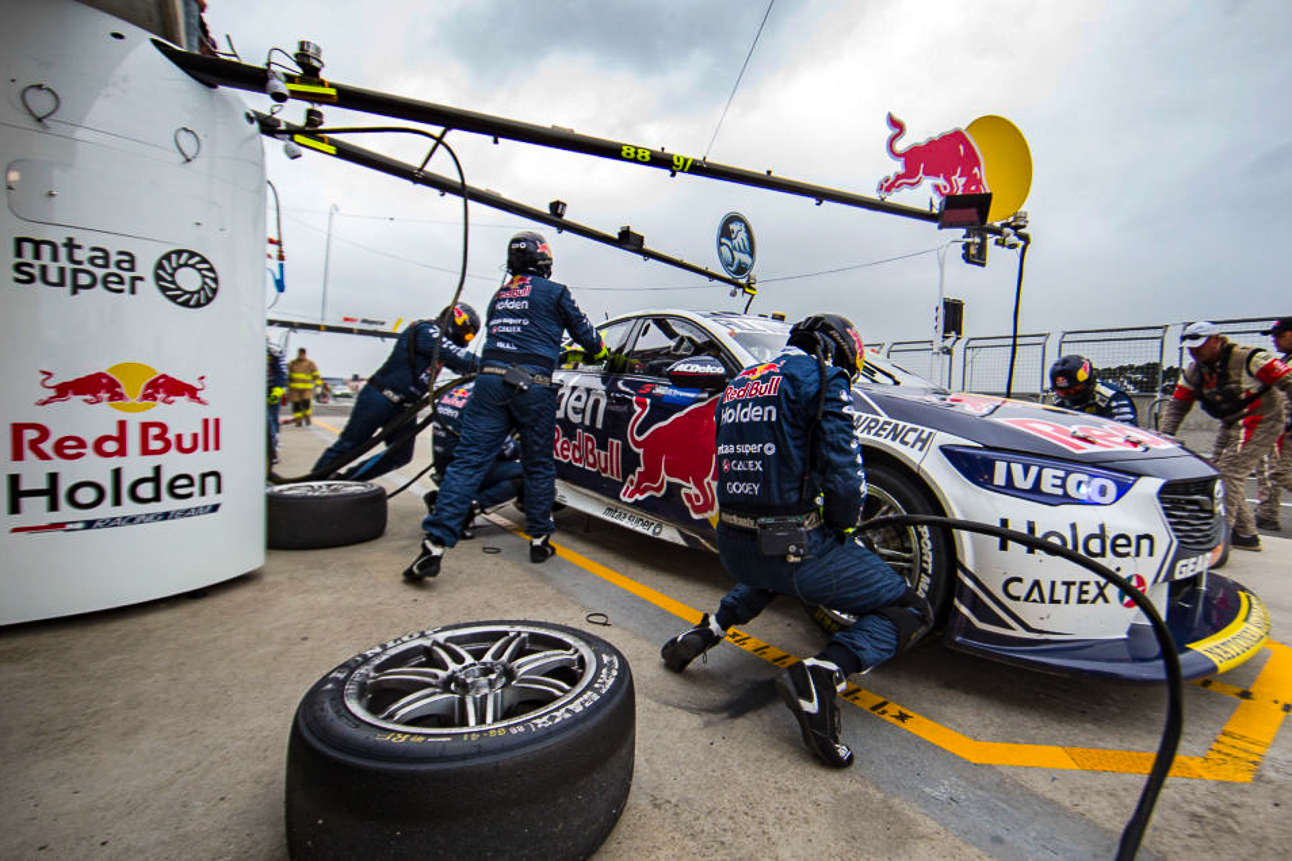
The projects include being on the chair of the Australian Women in Motorsport Commission as well as being an ambassador for FIA Girls on Track (Dare to be Different). Both roles allow her to be a voice for females in this industry.
She often speaks about the need for and the want for more women in her team, too, more specifically in the garage. “Diversity is the solution to the problem and will make the world a better place,” she says firmly.
So how do we shift the mindset so there isn’t such a bias in this domain? Suzi Finkelstein, the global executive director of Women And Leadership Australia (below), has had more than twenty years of experience in leadership development.
She has worked alongside some of Australia’s highest achieving women; she’s incredibly passionate and takes a lot of pride in not only nurturing talent but also transforming the performance of women leaders.
When asked about the solution, she believes that a lot of it has to do with getting men on board to amplify the good work that women are already doing. “We need to educate them and get their support,” she told me. “We also need to be aware that we are talking about inclusiveness; to make them feel that they have the same support and resources as the men do.”
Finkelstein also raises the valid point that if women have access to the facts and the numbers around their position, they will feel better equipped to have the conversations.
The solution sounds so simple… but we just aren’t there yet. It’s about continuing to raise awareness. You don’t need to have an engineering degree to be a part of the racing world and no, you don’t need to own overalls and a tool belt, either.
There are a plethora of roles that women can target to become a part of in the automotive industry. That’s why programs like Girls on Track (Dare to be Different) are so important.
As an ambassador of this initiative, I travel across Australia with a great group of women, running a media workshop for schoolkids. The goal is to educate girls about motorsport and the potential of a career in the pit lane.
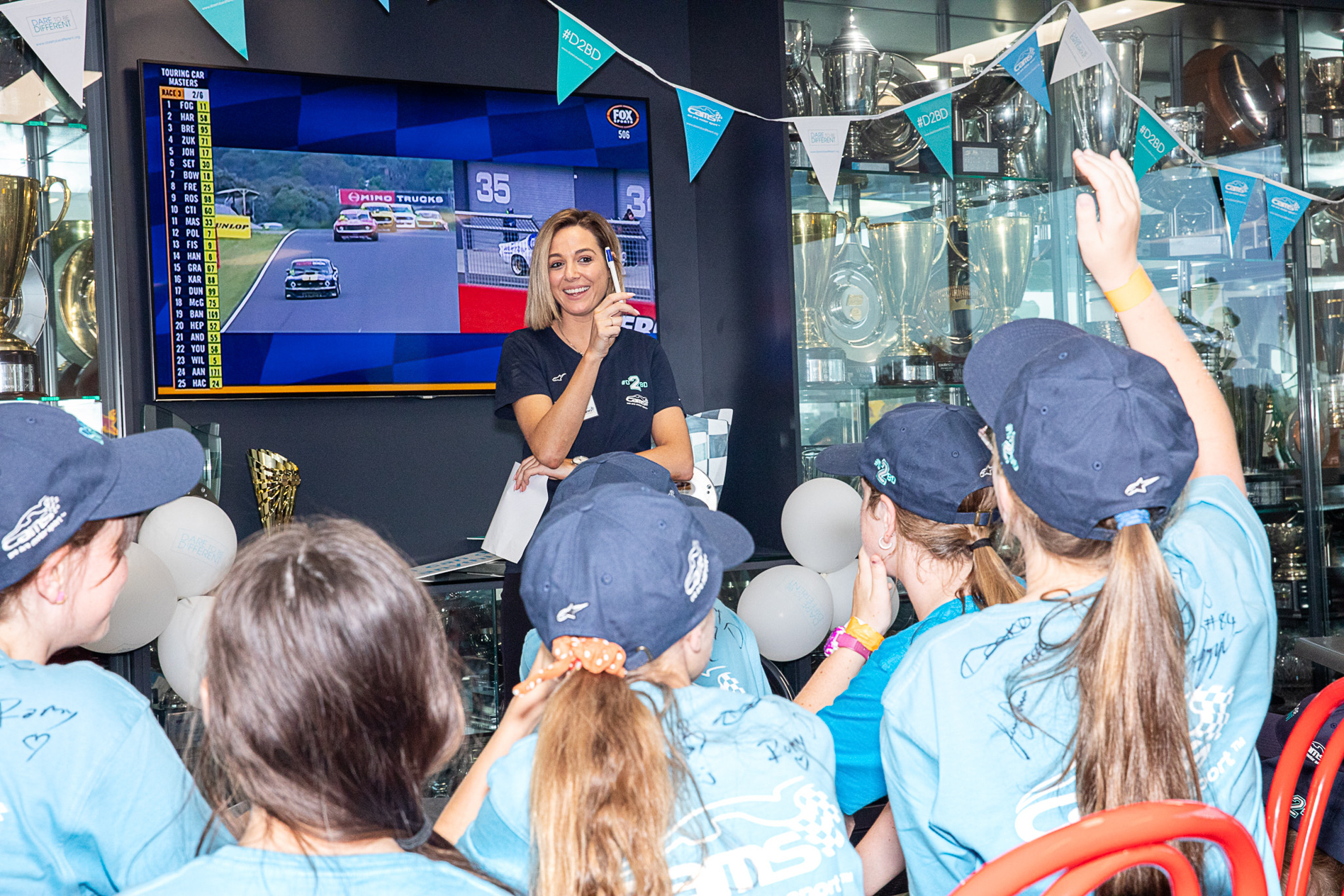
Emma talks to schoolkids during a Girls on Track (Dare to be Different) media workshop
We shouldn’t have to think that we must work twice as hard just because we have something to prove, nor should we have to constantly answer to people as to why on earth we are working in these roles. We are because we love it. We do a bloody good job. We are passionate and we are here to stay.
Emma has been on our television screens for more than a decade. She spends most of her time at racetracks reporting on Touring Car Racing and Shannons Nationals, and also hosts Australian Superbikes.
Never before in Holden’s history has so much hinged on one model. Its executive director Denny Mooney may have only joined the VE team at half-time, but his boots-and-all strategy has pushed the car – and the company – to new heights. Here are excerpts from an interview with MOTOR on the eve of the car’s national reveal.
This feature was originally published in MOTOR’s September 2006 issue
MOTOR: When you started here three years ago. What was your first reaction when you saw it up close?
Denny Mooney: I thought it was a beautiful car. I mean, it was clean, even European in nature, by way of its short front overhangs; it has got that proportion that some of the high-line European cars have. And there’s only a few cars in the world that have that kind of proportion. The short front overhangs, the wheelbase, the wheels out at the corners, so to speak, and a nice muscular track.
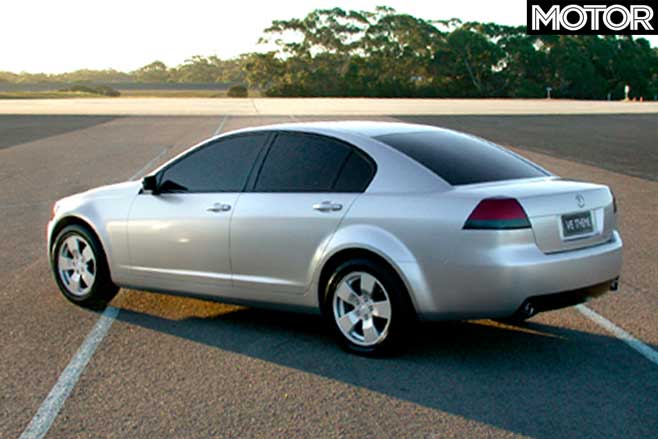
M: You have set a pretty high bar for this car. Are you happy, as the boss, that these targets have been met?
DM: I’m extremely happy. When I look at where the car is today, from an overall performance standpoint. we‘ve maybe exceeded my expectations in some areas. We still have a few little issues we have to get resolved here at the tail end, which we always do, but if you were to ask me six months ago how satisfied I was… I’m a lot more satisfied now than I was six months ago.
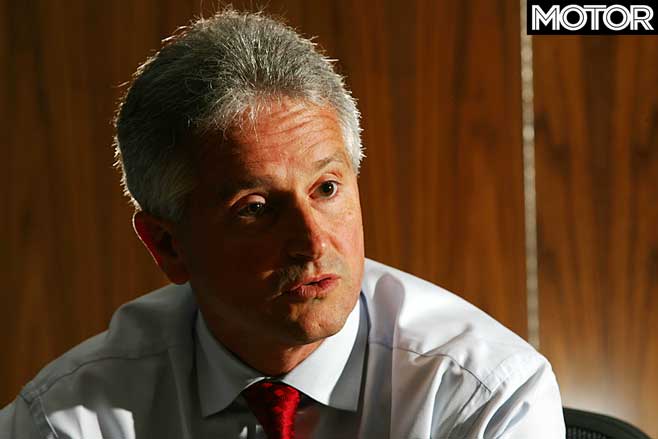
M: Was a billion-dollar car a hard business case to sell?
DM: Sure. If you went back to that timeframe; the dollar was very weak, our export business was growing very, very profitably because of the weak currency. So, if you looked at our finances and where we were at that point in time, it wasn’t as difficult as it would’ve been in today’s environment.
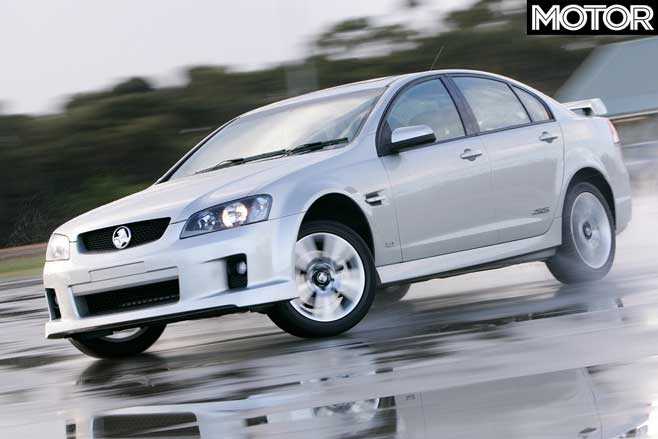
M: Given the gestation time of VE, is there anything you’d like to go back and change?
DM: Time will tell… I mean, twelve months ago, petrol |was| a dollar a litre. Now it’s been up as high as $1.40. Even a year ago, our thinking would be a little different than what it is today in terms of ultimate size and the fuel efficiency of the vehicle. But fundamentally, we still think a larger car [is suitable] for this market. People want a safe car, they want comfort for big drives with a couple of kids. There’s a core of the buying segment out there who wants to buy that kind of car.
I don’t know how different it would or wouldn‘t be, but obviously today with this kind of environment, we might have rethought about some of that stuff.
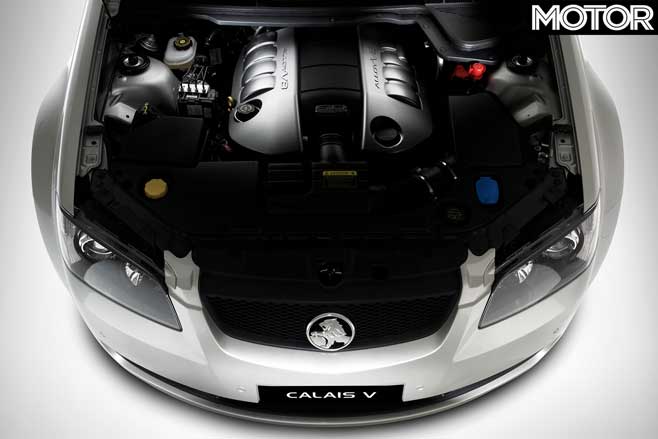
M: Given the feelings about fuel wiring at the moment, why is there no Active Fuel Management gear on the VE?
DM: If you look at the power-to-weight ratio of the cars, and the kinds of driving cycles that people generally adopt, the change on the fueI economy label sticker would have been so small, that it wasn‘t going to be worth it.
That’s not to say we‘re not looking at it; a year ago, when oil was as cheap as it was, we weren’t too worried about not looking at it. Now, I can tell you, we are looking at it.
