
There’s one sure-fire way to get the Teslarati wound up like the electric motors they love so dearly, and that’s to suggest that the only performance car Tesla has built to date is the original Lotus-derived Roadster.
“But, but, but,” they splutter indignantly, “the Tesla Model S can hit 100km/h in less than three seconds! And the Model X is the world’s quickest and most powerful SUV!” Both true, but sheer speed isn’t everything; the Shinkansen bullet train can travel at up to 600km/h and handles like it’s on rails (which, being magnetically levitated, it’s technically not), but probably isn’t very engaging to steer.
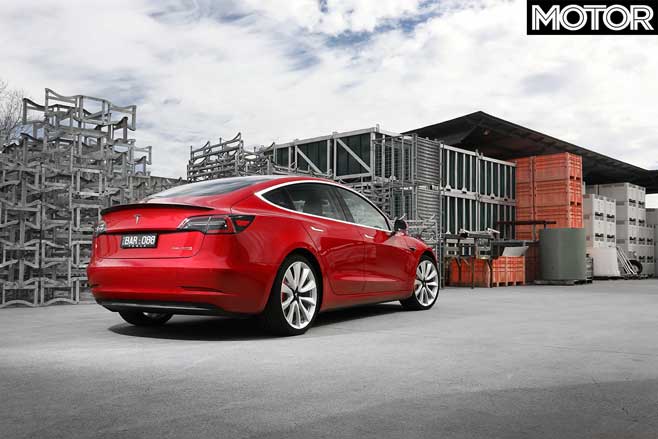
In all seriousness, Tesla’s mass-production efforts thus far have been extremely impressive, but are essentially everyday cars blessed with supernatural speed as a result of their propulsion systems. Once the novelty of the enormous kick in the back has faded – how long that takes will depend on the individual, but it will fade – there’s little left to engage the keen driver. This is not a criticism – the Model S and X have been designed to mobilise the masses, not excite enthusiasts – but now Tesla has a car that intends to do just that.
It all started, as things in Tesla-land often do, with a tweet from CEO Elon Musk. “Tesla dual motor, all-wheel drive performance Model 3,” it began, declaring a 3.5sec 0-60mph (0-97km/h) sprint, 250km/h top speed, 500km range and USD$78K price. “About same as [a] BMW M3, but 15 per cent quicker and with better handling. Will beat anything in its class on the track”. Quite a statement.
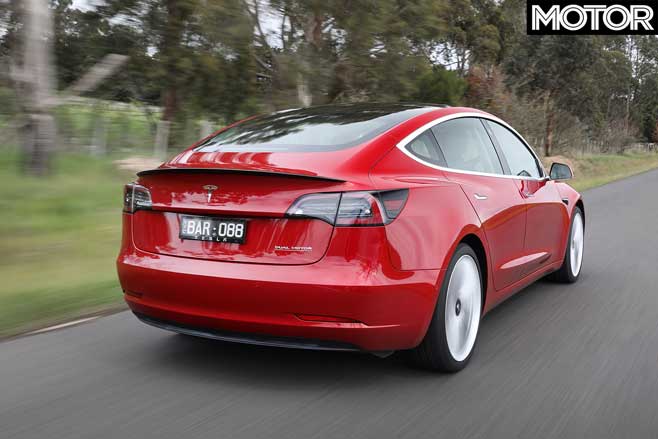
In terms of pure numbers, the Tesla team over-delivered on Musk’s promises. The production Model 3 Performance claims to take 3.4sec from 0-100km/h, have a top speed of 261km/h and a maximum range of 560km. The local price starts at $99,554, a couple of options – $2800 for the red paint, and $8500 for the erroneously titled ‘Full Self-Driving Capability’ – taking our test car to $110,854.
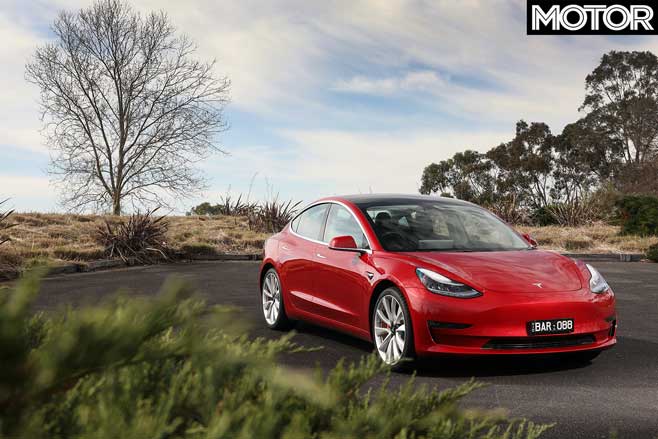
At the heart of the Model 3 Performance is a 75kWh battery pack and a pair of electric motors, a 211kW switched-reluctance unit in the rear and a 147kW induction motor in the front, each powering the respective wheels for all-wheel drive capability. The Model 3 is virtually identical in size to a Mercedes-Benz C-Class bar a little extra width and while being battery-powered brings with it an inevitable weight penalty, at 1847kg the Tesla isn’t overly obese.
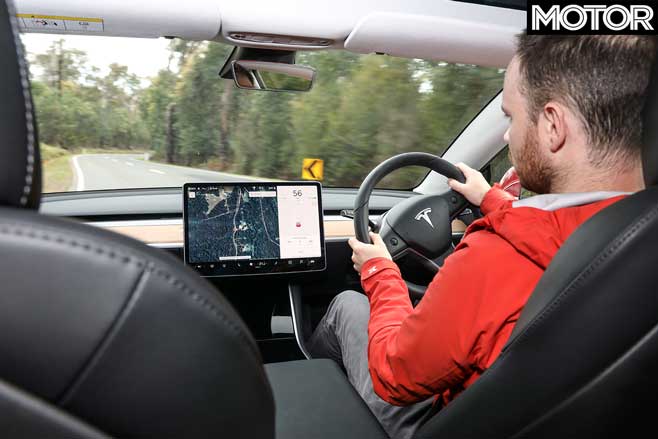
A number of kilograms was saved by eliminating virtually all of the switchgear that you’d find in a traditional car. Behind the steering wheel is a pair of wands, one for gear selection the other for the indicators, a couple of buttons on the arm rest to open the doors and control the windows, a pair of rotary dials on the steering wheel and that’s about it. Almost every function is controlled by the giant 39cm touchscreen: lights, wipers, ventilation, navigation, entertainment, drive modes and more are all contained within various menus which, with a bit of familiarity, aren’t difficult to find your way around.
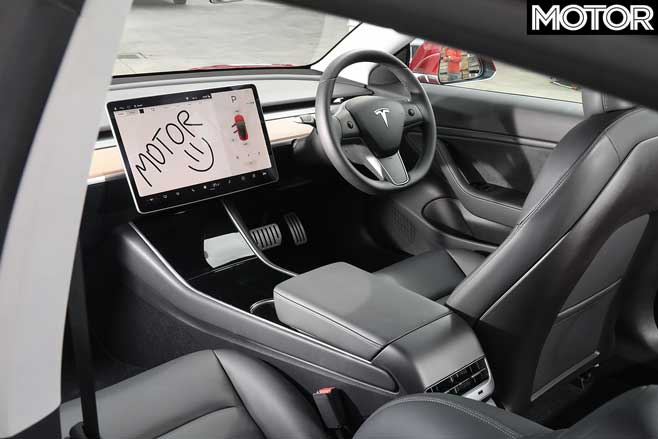
It also replaces the traditional instrument binnacle, your speed displayed in the top-right hand corner of the screen, which presumably makes building left and right-hook versions easier, but a head-up display would be helpful, particularly as there are no tell-tale signs (ie, engine revs, gear selections) to signify you’re traveling at 70km/h rather than 60km/h – not ideal in speed camera-riddled Melbourne.
However, the fact Tesla has made a practical, usable electric cars isn’t news – it’s already proved it can do that. What is up for debate is the second part of Musk’s statement: “15 per cent quicker [than an M3] and with better handling”.
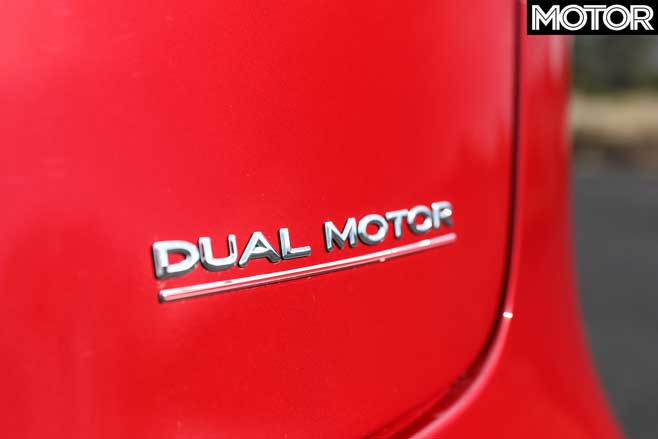
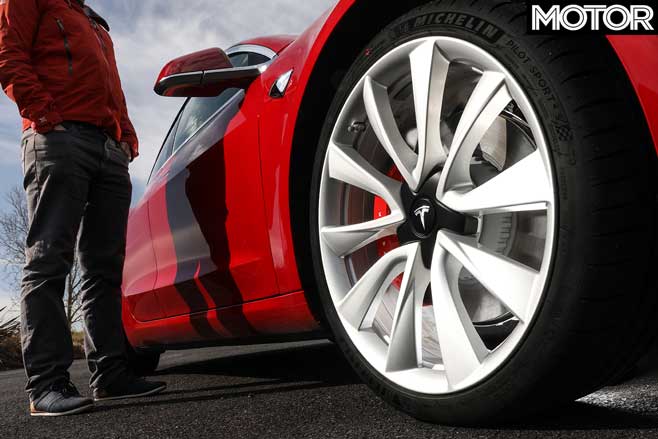
The changes required to turn a regular Model 3 into a ‘Performance’ are surprisingly minor; in terms of hardware it’s merely 20-inch wheels with Michelin Pilot Sport 4S tyres, bigger brakes and a bit more grunt compared to the ‘Dual-Motor Long Range’.
The most important alteration, though, can’t be seen at all. Tesla’s clever software boffins, with help from gun American race driver Randy Pobst, created ‘Track Mode’, a series of ones and zeros that backs off the stability control, regulates battery temperatures for maximum power and adjusts the electric motors to enhance agility and even allow some oversteer.
We’ll get to Track Mode shortly, but first let’s deal with straight-line performance. For years the default question to motoring hacks has been “what’s the best car you’ve ever driven?”, but that’s now been replaced by “Have you driven a Tesla?” and “How fast is it?”.
Performance testing electric vehicles is fraught with difficulty as they are at their quickest with fully juiced batteries, a problem when our usual Heathcote test strip is some two hours north of Melbourne. The last time we did this, with a Model S P100D, it was a full-day palaver, but thanks to subsequent improvements in Victoria’s charging infrastructure and the Model 3’s improved efficiency the Tesla has around 75 per cent battery to play with on the start line.
Once you’ve actually arrived at the drag strip, the process couldn’t be easier. There is literally nothing to do but mash your right foot to the floor and hold on; any attempt to load the car against the brake for a quicker launch is immediately met by an irritable bong. It’s also unnecessary as the instant torque of the elector motors fires the Model 3 Performance off the line with neck-straining force and not a skerrick of wheelspin.
It dispatches with 100km/h in 3.6sec but once into three figures the acceleration notably slows, the quarter mile completed with an impressive 12.02sec but at a trap speed of just 179.83km/h, only a few km/h faster than hot hatches like the Honda Civic Type R and VW Golf R. A key point, though, is that this time is eminently repeatable; in the real world electric propulsion is king, requiring neither a sophisticated launch control system nor any coordination on behalf of the driver.
It also makes for a very relaxing day-to-day driving experience. There’s a bit of road noise, though it’s undoubtedly more noticeable due to the lack of mechanical noise, but the ride is well-damped and the very quick steering is light and accurate. For all the grandiose, headline-grabbing statements made by its boss, it’s clear Tesla has some very talented engineers that know what makes a good car.
I quickly found myself sitting in traffic looking at all the vehicles around me and wondering: “why aren’t they all electric?” Obviously not the occasional Cayman or McLaren or AMG, but all the vehicles whose sole purpose is to transport people or products in quiet comfort: SUVs, buses, hatchbacks.
For most driving, especially in our increasingly clogged city centres, it’s nice not to be sitting still burning fuel for no reason, instead recuperating energy with every lift of the throttle and brake application.
The Model 3 rewards smoothness, not just to maximise range – we averaged about 20kWh/100km in regular driving, giving a real-world figure of about 375km – but to improve the experience. The instant throttle response and strong brake regen means anyone with ‘cabbie foot’ is in for an uncomfortable ride.
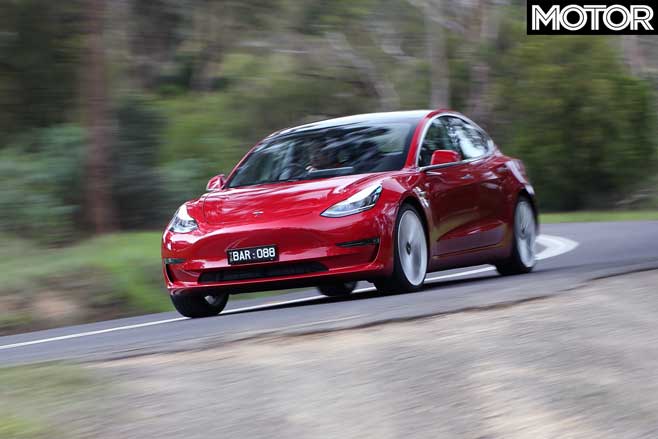
When it comes to going quickly, however, I’ll admit to being an EV sceptic. Outright pace is all well and good, but prior experience suggests that with no engine note, no gears to change, conservative ESP calibrations and strong regenerative braking, there’s little to engage the enthusiastic driver. The Model 3 Performance changes this. Yes, there is little noise and not so much as a paddle to pull, but the combination of its instant punch, clever torque distribution and soft yet balanced chassis makes it genuinely enjoyable to drive hard.
In fact, contrary to the ever-more-capable ranks of hot hatches, sports and supercars, the Model 3 Performance feels perfectly judged for the road. It doesn’t have masses of grip and the soft-ish suspension allows you to manipulate the Tesla’s weight at (relatively) modest speeds using the brakes, steering and throttle, which the electronics will allow as long as you’ve selected Track Mode.
Think of it as a rocket-powered Golf GTI and you’re close to the mark, with added wizardry like the ability to add more throttle in response to understeer, the motors reacting to claw tenaciously into the tarmac.
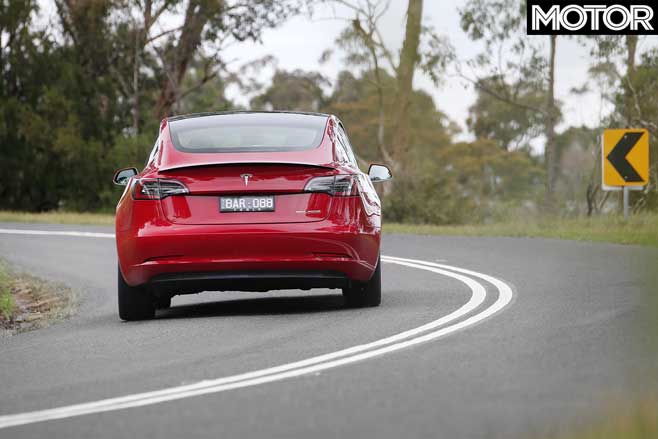
So far, so good, but can the Model 3 Performance really give a BMW M3 a bloody nose on track? No, not really, but that doesn’t mean it isn’t fun. We just so happened to have an M3 CS present at Haunted Hills hillclimb circuit while testing the Tesla and it’s remarkable how lethargic the BMW’s S55 engine feels in comparison – by the time the M3 has deciphered your throttle input, the Tesla is a car length up the road.
Track Mode does indeed allow oversteer on demand but it’s a bit contrived; the easiest way is to control the entry speed before adding plenty of throttle and riding out the slide, but the ESP is quite inconsistent in what it lets you do.
Which brings us to the main reason Tesla’s M3 can’t match BMW’s on track: the M3 CS responds to your inputs, whereas the Model 3 Performance requires you play by its set of rules. It’s like the parameters of performance driving have been programmed into the Tesla’s brain and as long as you stay within the lines it responds well; stray outside them and the Model 3 runs out of ideas.
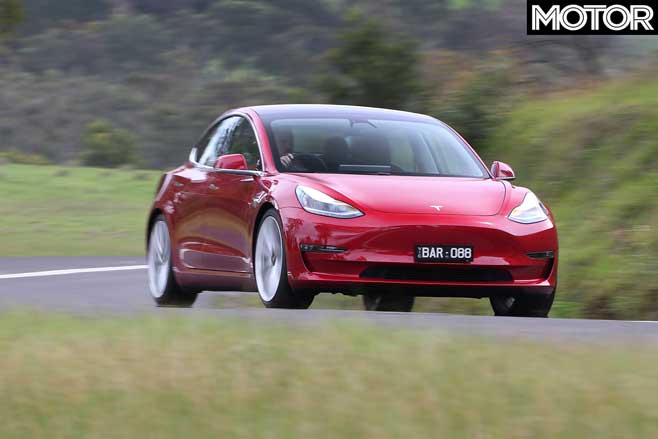
It’s worth remembering that this is Tesla’s first proper crack at the performance game and it’s a very impressive one. Musk made a rod for the company’s back by throwing out the M3 comparison, the two aren’t really competitors. Compare the Model 3 Performance to its actual rivals (which we plan to) like the BMW M340i, Jaguar XE S and Volvo S60 Polestar and it’s likely to be a close fight for the top spot.
It’s certainly difficult to imagine anything matching the Tesla for pure pace, in a straight line or on a twisty road. Personally, for the Performance’s $100K-odd ask I’d have a base Model 3 for daily duties and an MX-5 or 86 for the weekend, but there can be no denying Tesla’s hi-po Model 3 deserves proper performance car status.
FAST FACTS 2019 Tesla Model 3 Performance BODY: 5-door, 5-seat hatch DRIVE: all-wheel MOTOR: switched reluctance (rear); induction (front) POWER: 353kW (combined) TORQUE: 639Nm (combined) WEIGHT: 1847kg POWER-TO- WEIGHT: 191kW/tonne TRANSMISSION: direct-drive SUSPENSION: double wishbones, coil springs, anti-roll bar (f); multi-links, coil springs, anti-roll bar (r) L/W/h: 4694/1933/1443mm WHEELBASE: 2875mm TRACKS: 1580mm (f/r) STEERING: electrically assisted rack-and-pinion BRAKES: 355mm ventilated discs, 4-piston calipers (f); 335mm ventilated discs, single-piston calipers (r) WHEELS: 20.0 x 8.5-inch (f/r) TYRES: 235/35 ZR20 (f/r); Michelin Pilot Sport 4S PRICE: $99,554 ($110,854 as-tested)
PROS: Acceleration; chassis balance; practicality CONS: Needs to be let off the leash; build quality RATING: 4 out of 5 stars
The Strip
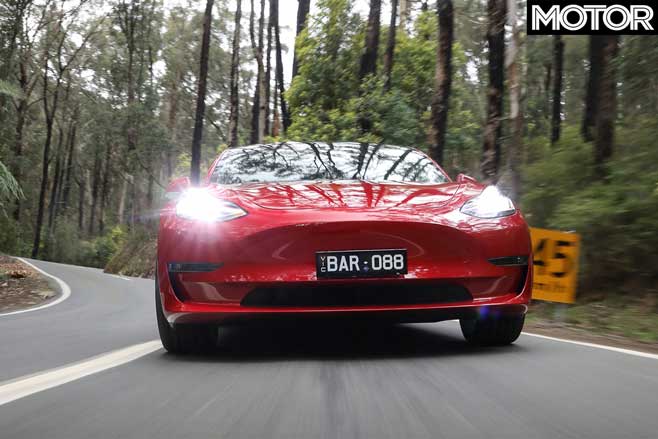
| Tesla Model 3 Performance | |
| 0-10km/h | 0.24sec |
| 0-20km/h | 0.57sec |
| 0-30km/h | 0.9sec |
| 0-40km/h | 1.23sec |
| 0-50km/h | 1.56sec |
| 0-60km/h | 1.89sec |
| 0-70km/h | 2.23sec |
| 0-80km/h | 2.63sec |
| 0-90km/h | 3.08sec |
| 0-100km/h | 3.60sec |
| 0-110km/h | 4.21sec |
| 0-120km/h | 4.92sec |
| 0-130km/h | 5.74sec |
| 0-140km/h | 6.66sec |
| 0-150km/h | 7.74sec |
| 0-160km/h | 8.96sec |
| 0-170km/h | 10.38sec |
| 0-180km/h | 12.05sec |
| 0-400m | 12.02sec @ 179.83km/h |
| 80-120km/h (Drive) | 2.3sec |
| 100-0km/h | 33.61m |
Heathcote, 17˚C, dry. No rollout applied Driver: Scott Newman *Manufacturer’s claim Official timing supplier: www.vboxaustralia.com.au
That’s right, there’s going to be another Fast and the Furious game, and it’s set to be released in May 2020 to coincide with the theatre debut of Fast & Furious 9.
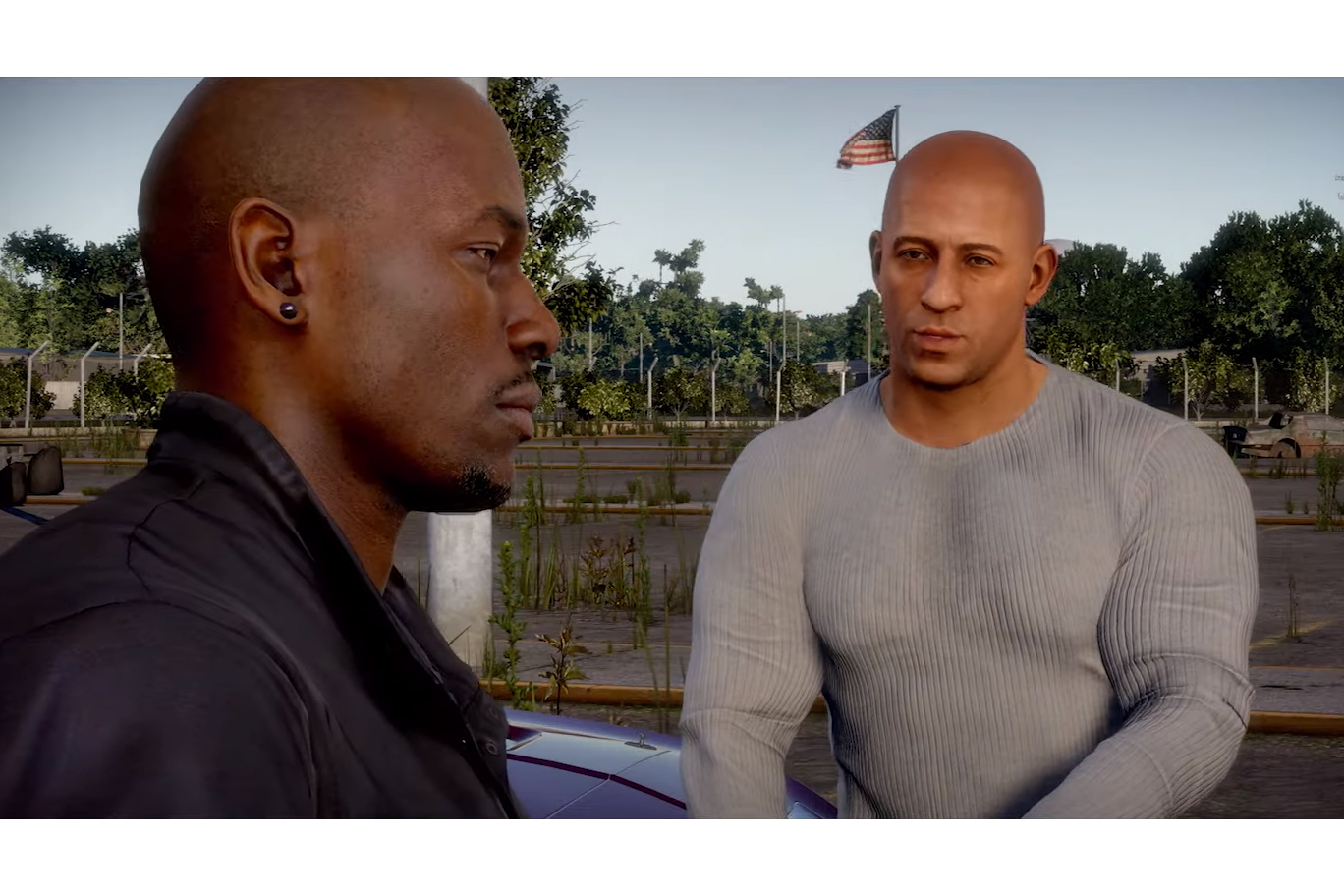
Dubbed Fast & Furious Crossroads, the game was announced at the The Game Awards 2019 event by Vin Diesel and Michelle Rodriguez, both of whom provide their voice for the digital representations of their respective FnF characters Dominic Toretto and Letitia Ortiz. Tyrese Gibson, who plays Roman Pearce in the franchise, will also star in the game.
What can we expect? According to publisher Bandai Namco, Crossroads will be a “team-based, vehicular-heist action game”, which should mean it’ll differ markedly from the basic arcade racing experience offered by previous FnF games like 2013’s Fast & Furious: Showdown.
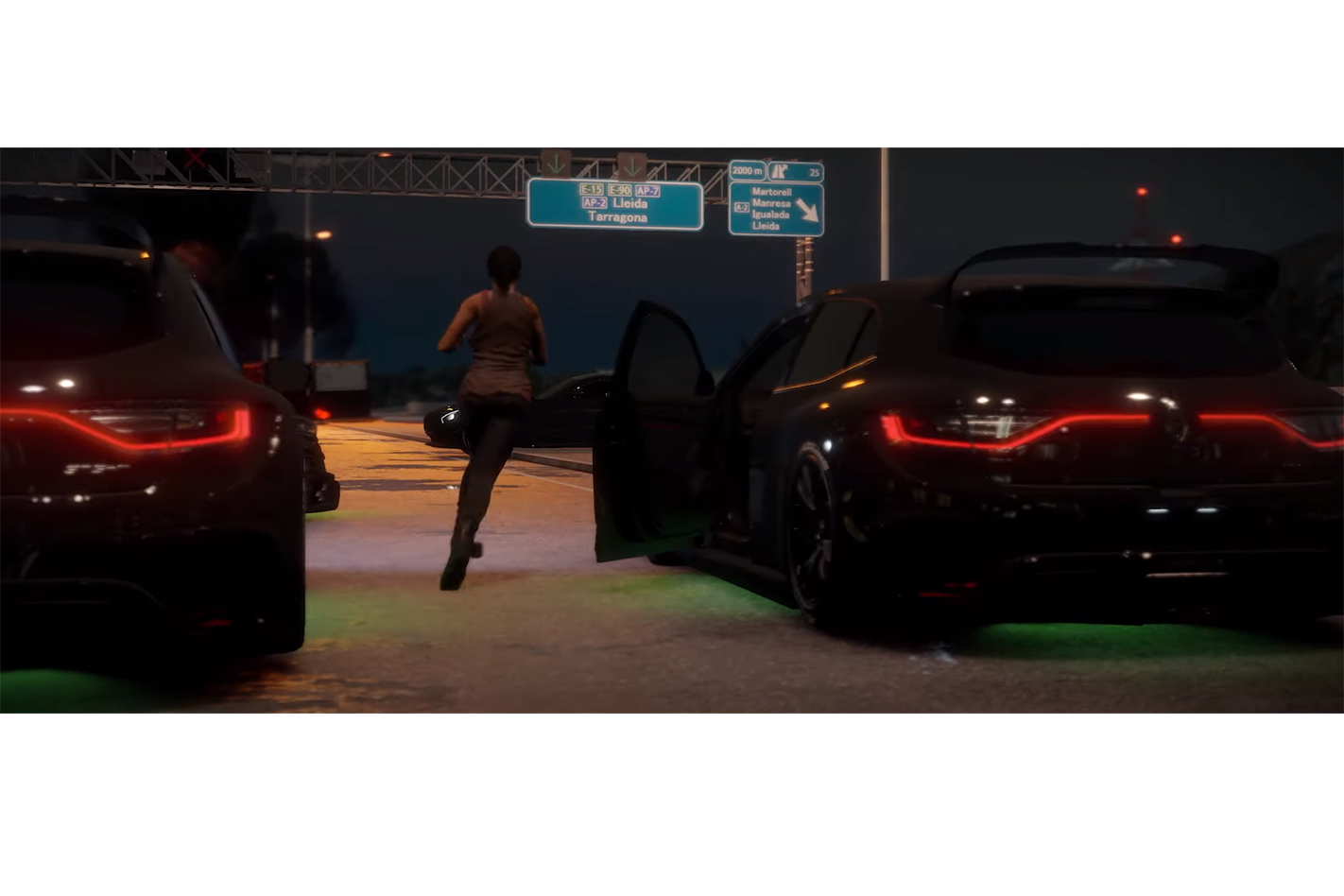
The teaser trailer appears to depict in-game graphics, but nothing that resembles actual gameplay. It also doesn’t really blow us away with its visuals either, with primitive light mapping and particle effects that make it look more like Grand Theft Auto 5 with better textures, rather than a modern video game.
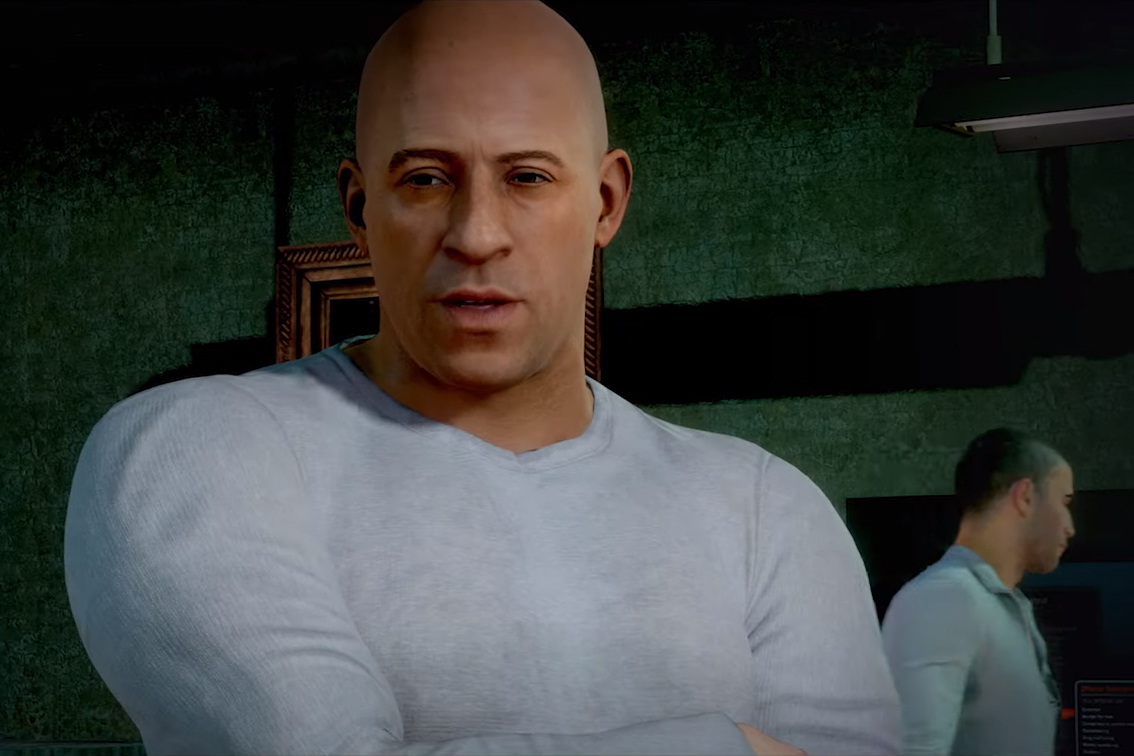
The character models do at least look reasonably true to the real-life actors that portray them, with Letty and Toretto’s faces being quite close to the source material. Toretto’s bizarrely chunky upper body, however, looks a little over-inflated – even for Vin Diesel.
Judging from the teaser video below it looks like Crossroads will be heavily story-driven, so we’re not expecting much in the way of a multiplayer experience. As to whether there’s a significant car customisation element (1999’s The Fast and the Furious was the catalyst for the original Need For Speed Underground, a customiser’s wet dream), or whether you’ll even have much say in what cars you drive in each mission, we have no idea at this stage.
We wouldn’t be surprised if the gameplay experience is heavily scripted, but for a game based on an action film that’d be fairly easy to forgive. If nothing else, the Hollywood connection should at least mean the cutscenes and dialogue shouldn’t be too cringeworthy – which is something we definitely can’t say of games like 2015’s Need For Speed.
Will it be a good driving game? We’ll have to wait until we boot it up in May, but the video doesn’t fill us with confidence. Cars appear to behave oddly, with a Land Rover Defender slamming onto the ground from six metres with just the barest amount of suspension compliance, and the most undramatic truck rollover we’ve ever seen. Given Slightly Mad Studios, the studio responsible for racing sim Project Cars 2, is behind Crossroads, that’s a bit of a surprise. We don’t expect amazing physics for this one, but we do expect some physics
Then again you do get to battle a giant hovercraft, Mad Max style. A lack of realism has its advantages sometimes.
Fast & Furious Crossroads will be released in May for the Xbox One, Playstation 4 and PC (and will be available on Steam for the latter). We’ll bring you more info as it comes to hand, but for now enjoy this bonus pic of a very lumpy digital Toretto.
The contenders
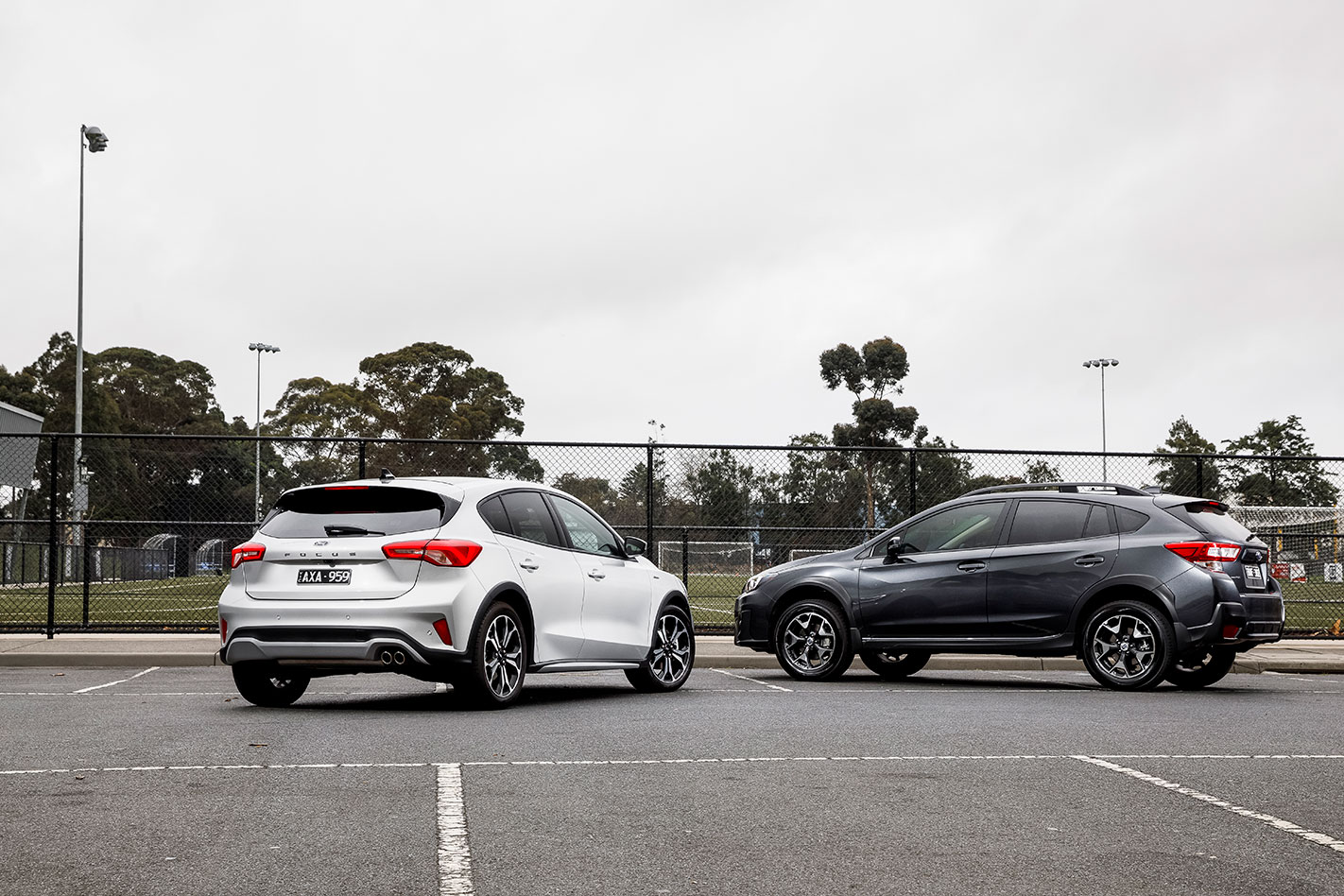
You’d have to think that just about all automotive niches have been filled these days, but Ford proves it’s not the case with the genre-jostling Focus Active. What it is, even according to the company, seems hard to define. However, it’s definitely not an SUV, hatchback or crossover. Yes, we’re still confused, too.
For $29,990 you receive a mid-spec Focus with 34mm ofadded ride height and some ‘look at me, I can go off-road’ body cladding. Two traction modes within the ESC add to the Active’s limited bush-bashing smarts.
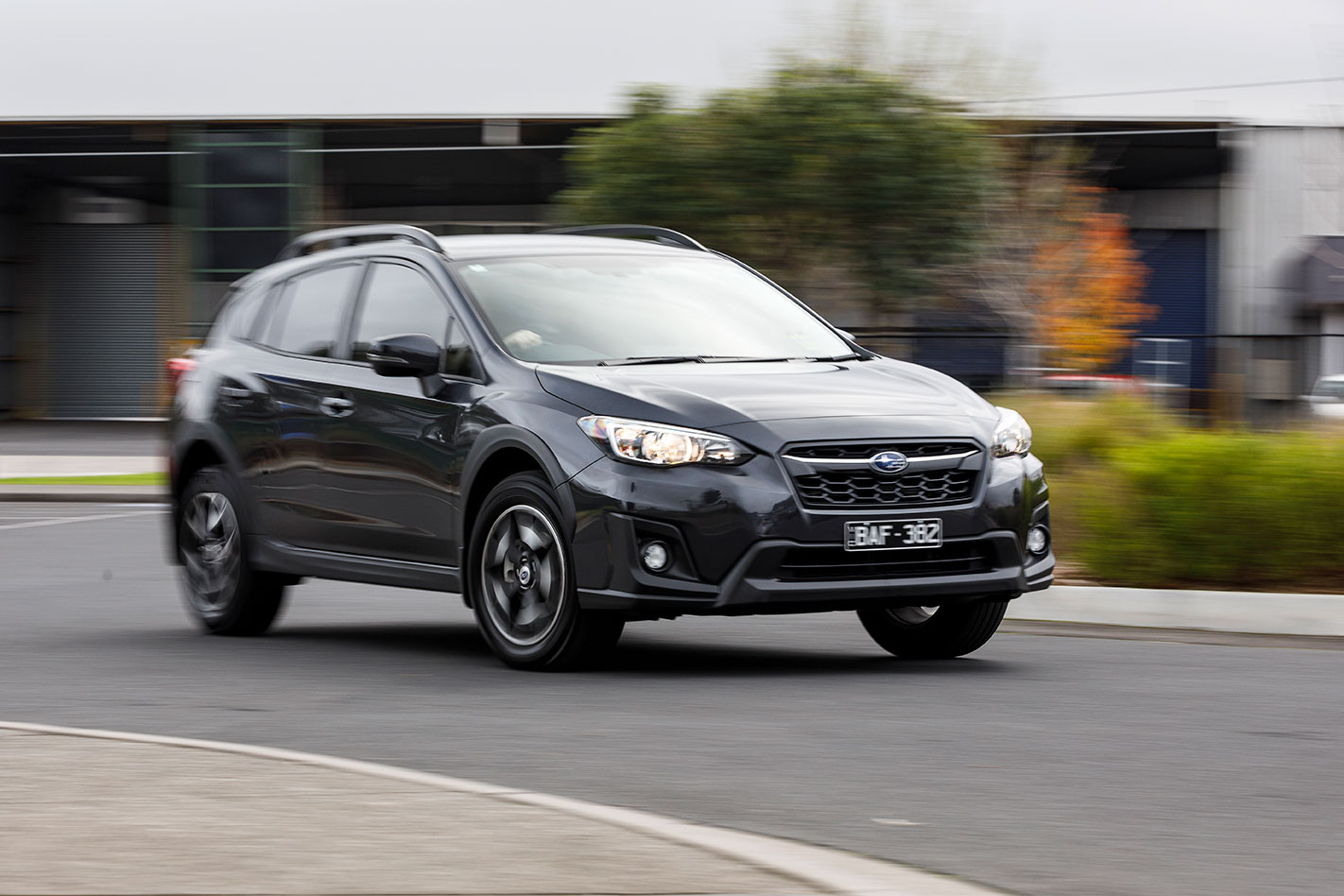
The Subaru XV defines the hatchback-cum-compact SUV game. The $30,640 2.0i-L affords a useable 220mm of ground clearance, compared to the Ford’s 163mm, and gains Subaru’s Symmetrical all-wheel-drive system with hill-descent control. Hence its body cladding and roof racks aren’t purely cosmetic as buyers will actually use its rough-and-tumble capabilities.
Equipment and value
The Ford is well kitted for its sub-$30K price tag, with items like AEB, lane keeping and departure warning, and a 180-degree reversing camera with sensors. SYNC3 infotainment with an 8.0-inch touchscreen is standard. However, the base price is misleading, as the $1250 Safety Package is a must-tick option. While the Active has a base-price advantage, the car we tested topped out at $35,040. The $1800 Design Package and $2000 panoramic sunroof aren’t essential options, meaning the Active we’d have is a more wallet-friendly $31,240.
Headlining the 2.0i-L’s equipment list is Subaru’s EyeSight technology, adaptive cruise control, lane keeping and X-Mode for the all-wheel-drive system. A glaring omission is that rear parking sensors aren’t standard.
Ultimately, both receive pleasing levels of equipment, but the fact the Subaru comes with more safety kit as standard makes it a better value proposition.
Space and comfort
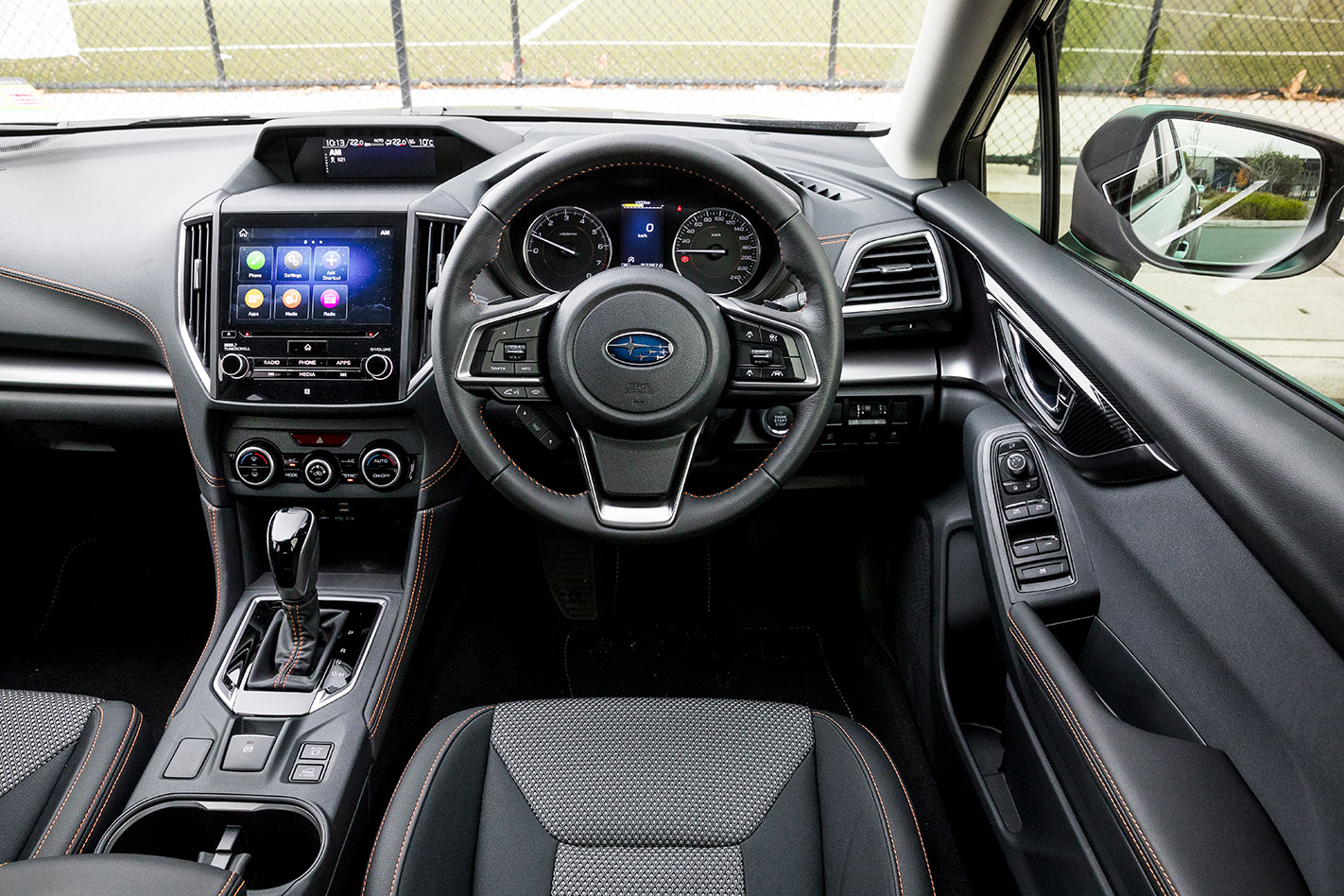
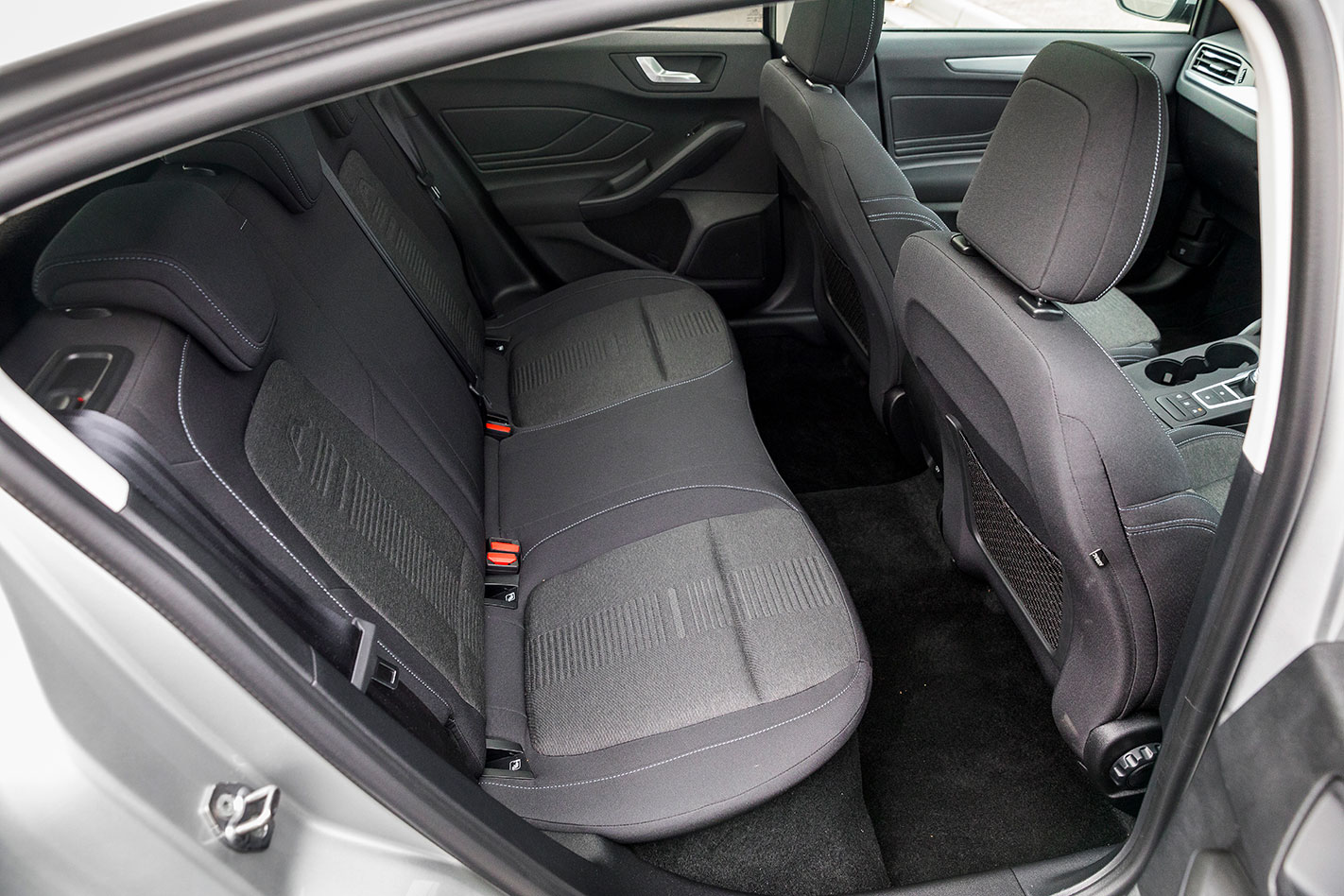
The Ford has the more inviting cabin. The cloth seats are aesthetically pleasing and comfortable, while the dash layout and digital instrument cluster prove ergonomically sound. What isn’t is the control wheel for the automatic transmission, which is counterintuitive in its action.
The Ford’s 375-litre boot is 65 litres bigger than the Subaru’s, but the Active’s rear seats don’t fold completely flat, leaving an awkward load lip. NVH levels are well suppressed in both hatches.
Dimensionally the XV is the bigger car, hence it feels airier inside and the rear seat is positioned higher for a better view out. However, it’s the tighter of the two in terms of rear legroom. Orange stitching livens the XV’s interior, and overall quality is high, though it just doesn’t feel as modern or premium as its rival, making the Ford the one you want to be in.
How they drive
The Ford’s 134kW/240Nm three-cylinder turbo engine is a charmer. It’s packed with torque and is more fuel efficient than the Subaru. The suspension is firm, yet it’s dynamically skilled, helped by its multi-link rear-end. Slippery and Trail modes, as well as chunkier tyres, add some credence to the Active name, but it lacks all-wheel drive and ground clearance to really go off-road. The eight-speed auto can also be jerky.
The Subaru is hampered by its 115kW/196Nm 2.0-litre boxer – especially when paired with a CVT that perches revs up high when a heavy throttle application is required. It sounds stressed, too, but calms at slower speeds. Frustratingly, there’s a capable chassis underneath with torque-vectoring all-wheel drive, but more tyre grip and a forced-induction boost is needed to exploit it. Despite being less capable off-road, the Ford is the better drive more of the time.
The victor
Both are of the same ilk but go about their business differently. If you live in the country and genuinely traverse muddy, gravely tracks, then the Subaru is going to fit the bill despite its underwhelming powertrain. However, for everything else, the Ford feels like the more upmarket car – especially if you stick to tarmac. The Active is a polished performer and the three-pot’s charm helps deliver Ford the win.
Sign-up here to get the weekly Wheels highlights

Duality of purpose. That’s what Bentley wants to stress about the new Flying Spur, and four-wheel steering is the perfect flag-carrier for its overall ability. Best of all, it mixes super-luxury with high performance.
Trouble is, practically everyone in the expensive-car game makes claims about delivering performance with luxury. There’s a danger of Bentley’s claims being lost in a melee of high-sounding verbiage – until you spend time in the new Flying Spur and establish beyond doubt that this mighty all-British sedan can accelerate like a Macca and ride like a Rolls.
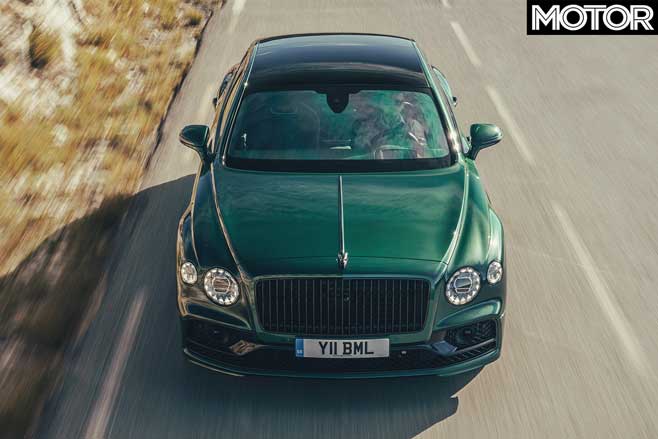
Its revised 5950cc W12 – now an amazingly efficient 467kW and 14.8L/100km courtesy of different high- and low-speed induction systems and cylinder deactivation – propels the car to 333km/h and delivers incredible 0-100 acceleration of 3.7sec.
With an aluminium-intense structure, it weighs 2437kg, respectable for a 5.3m limo, and major elements, like the rear suspension, have a close relationship with Porsche’s Panamera.
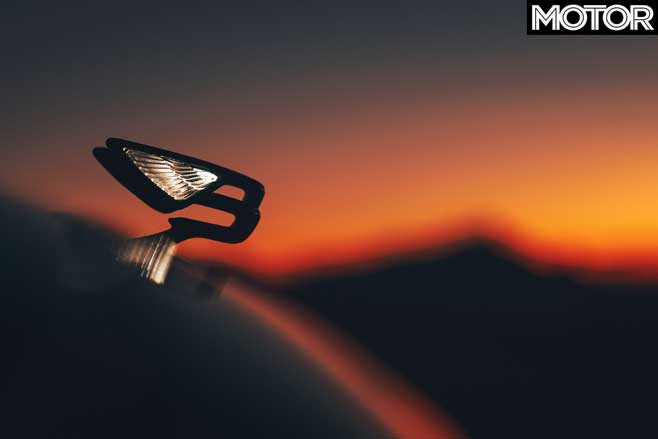
It’s a handsome beast. More haunchy than the outgoing car and with better-defined muscles to match its extra performance, it rolls on 21- or 22-inch wheels and has carefully designed details. There’s even a new, retracting ‘Flying B’ bonnet motif, perhaps to sharpen the rivalry with Rolls-Royce.
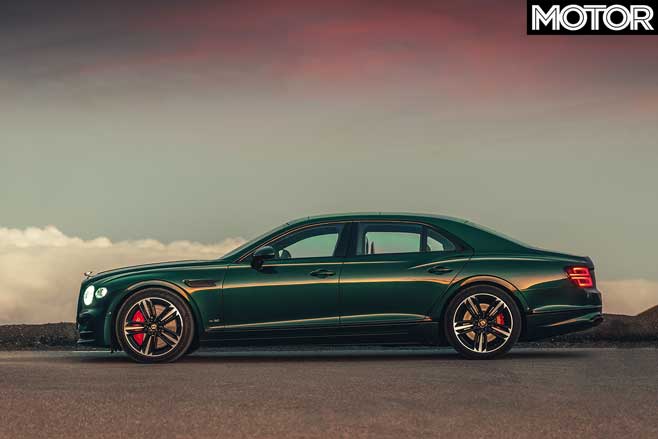
The interior is the best expression yet of Bentley’s love of luxury, especially in the rear, with a touchscreen remote to control blinds, climate, seat massage functions and lighting.
It glides along in near-silence with its air springs and cornering roll is nearly eliminated by a 48-volt system that uses tiny electric motors to adjust the anti-roll bars. Glide and the car glides. Throw the car around and it does its best to smooth your path.
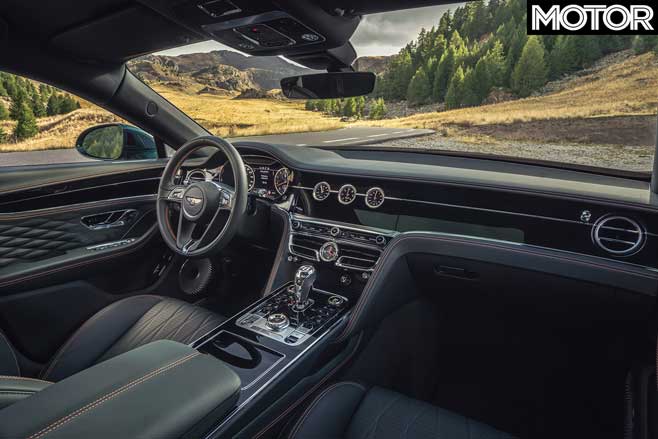
The 4WS provides sharp low-speed steering, a terrific turning circle and extra stability. The rim effort and accuracy is close to perfect.
Performance is stupendous. Floor the throttle and the car erupts off the mark, its intelligent all-wheel drive distributing torque mostly rearward, but keeping enough for the front to negate untidy wheelspin. In Sport mode the car is induced by its on-board electronics (which also control transmission behaviour, steering effort and ride) to behave like a rear-drive car.
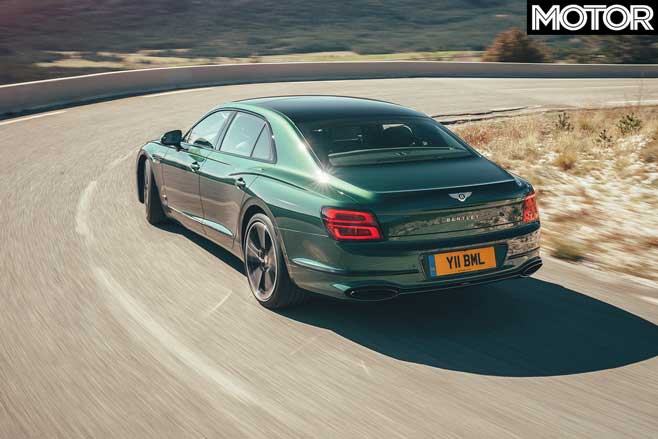
‘Bentley’ mode charts a near perfect course between the stiffness of Sport and slightly too much bounce in Comfort. You can create your own Custom setting, but few will bother.
Of course, the Spur is superbly comfortable, but it also has power and precision. And you keep being surprised by how well it fits into gaps and negotiates tight corners. But mostly your journey just slips quietly, enjoyably away. Is there another luxury sedan that does this stuff better?
BENTLEY FLYING SPUR SPECS Engine: 5950cc W12, DOHC, 48v, twin-turbo Power: 467kW @ 6000rpm Torque: 900Nm @ 1350-4500rpm Weight: 2437kg 0-100km/h: 3.7sec (claimed) Price: $460,000 (est)
Likes: Comfort; luxury; looks; four-wheel steering; mighty performance; all-wheel drive; robust quality; design quality; air suspension Dislikes: Too much money
Rating: 4.5 out of 5 stars
The year may be ramping down, but there’s no shortage of big news.
Word breaking that Holden will finally retire the Commodore nameplate from next year sent us down a nostalgia hole and raised a lot more questions, such as ‘Where to for Holden in Supercars’ and ‘The implications for owners and buyers in 2020’. We also tracked the Commodore’s demise in numbers and pondered what could potentially be Holden’s saving grace; the incoming Corvette or something from the Cadillac catalogue.
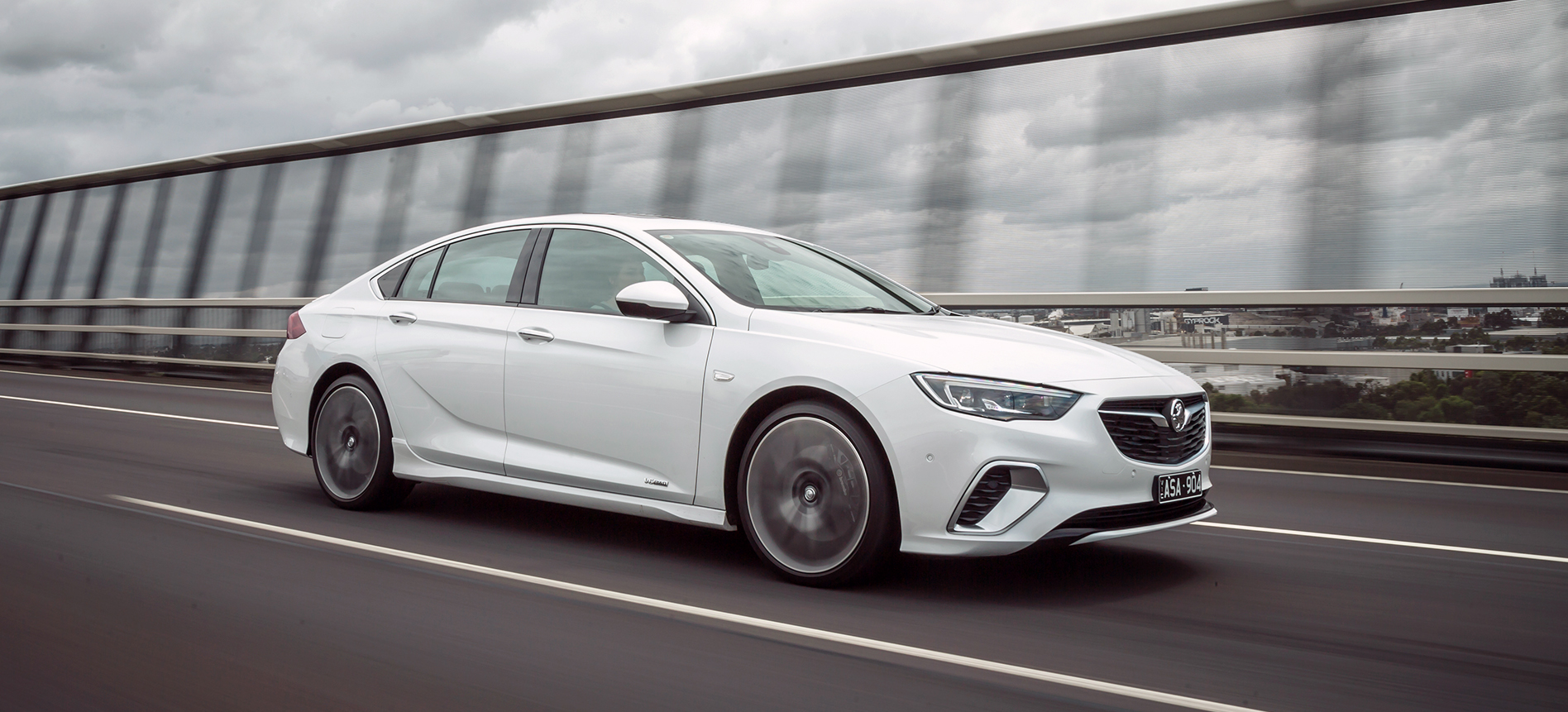
We also caught wind of proposals for certain councils in Victoria to reduce speed limits in a bid to reduce the skyrocketing road toll, discussed a lesser-known pollutant found in car aircon that’s more harmful to the environment than carbon dioxide and came across plans for a new motorsport hub situated in just outside Melbourne – hope the neighbours don’t mind!
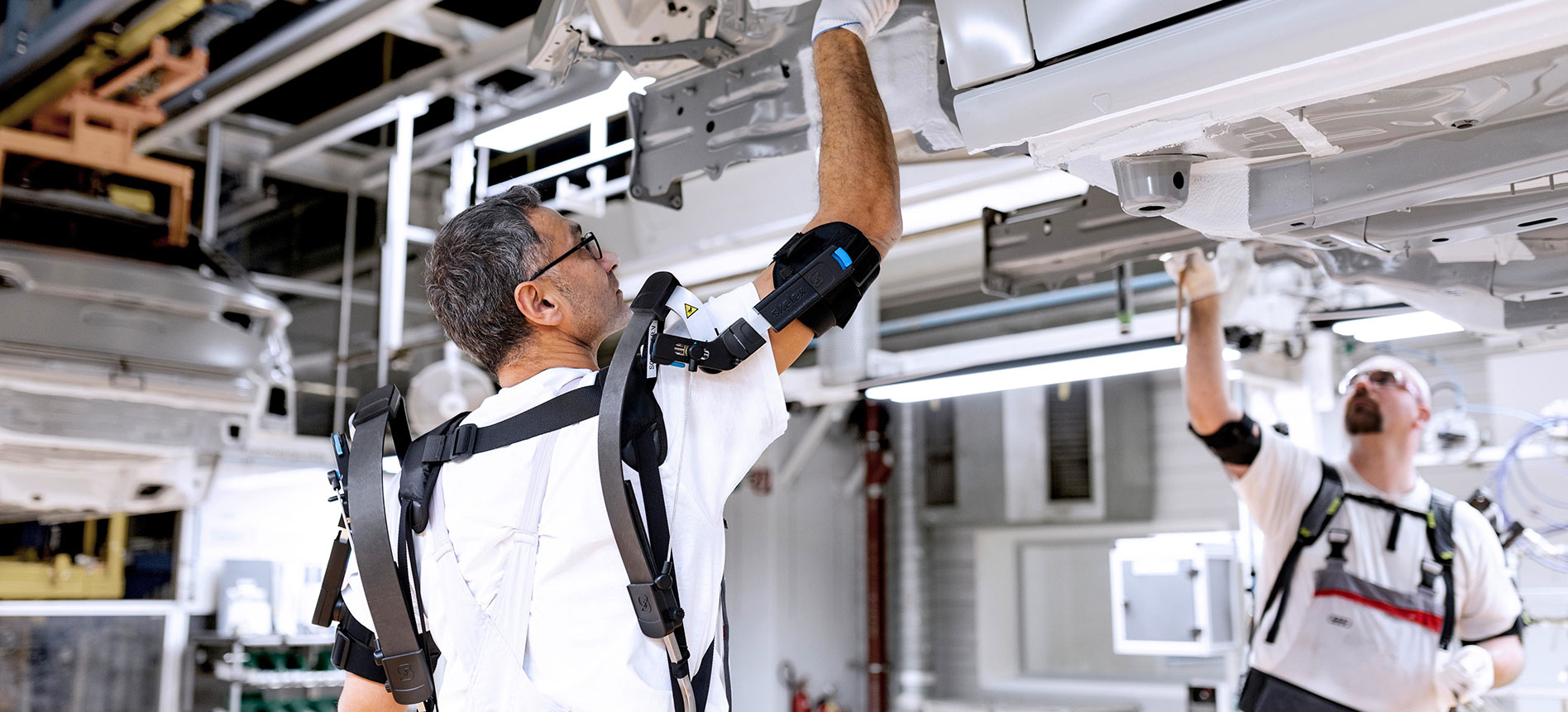
Looking into the future, Audi is experimenting with supplying its factory line workers with Iron Man-style exoskeletons, and Jeep outlined its plan that would see its entire line-up electrified come 2022.
There was plenty to talk about in terms of reveals, with Audi facelifting its RS5 performance sedan and coupe twins, Ferrari putting on a show for the local debut of its most powerful road car ever, SF90 Stradale, and the hype keeps on building around Hyundai’s entrant to the dual-cab ute space.
Contrary to the dual-cab market which continues to explode in popularity prompting cars like the Jeep Gladiator, Honda can’t seem to find a way for its new Jazz to enter the tough passenger car market. We’ll just have to wait to see whether Australia will lose yet another respected nameplate.
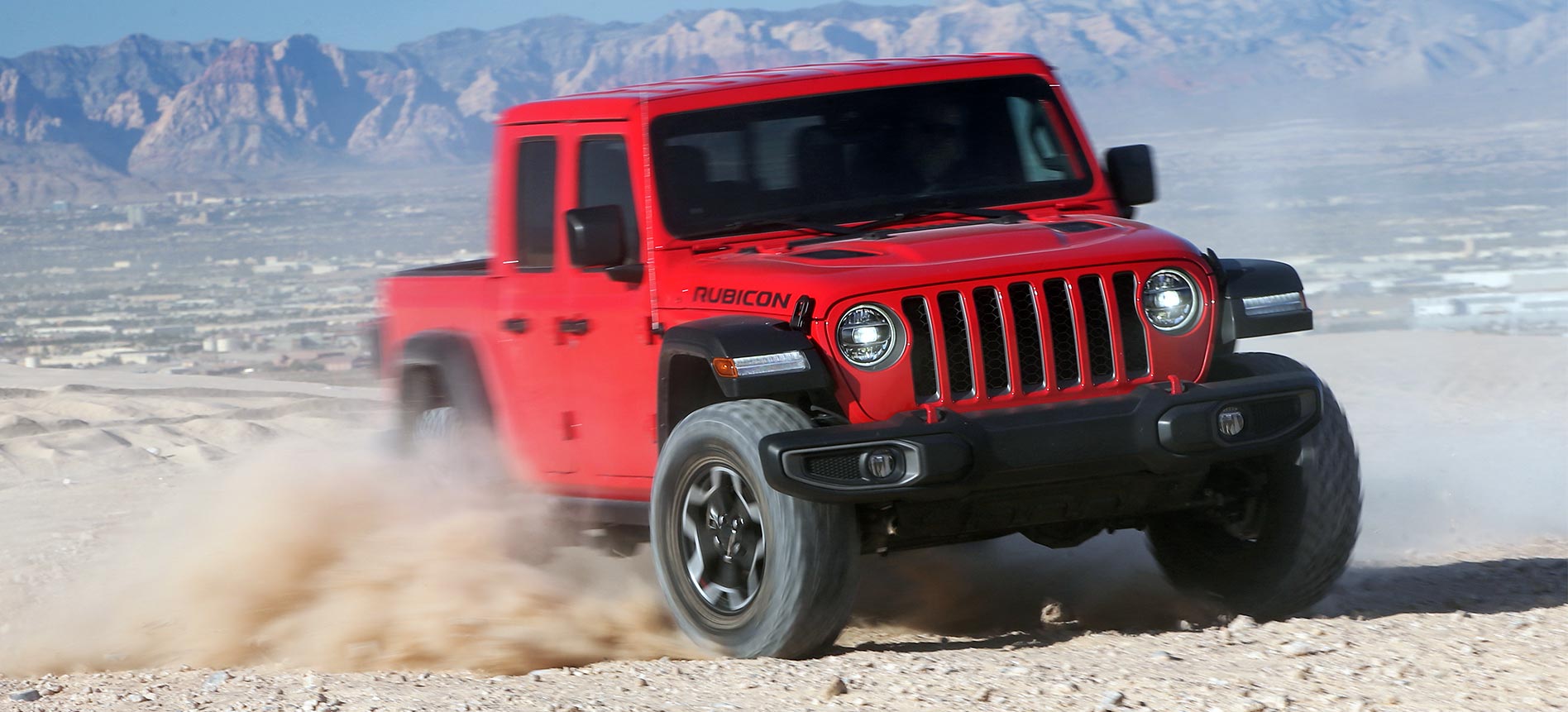
It was a busy week for new car launches as we got behind the wheel of the fastest Mini to grace our lands, the Mini JCW Clubman, took a brief spin in the style-oriented Porsche Cayenne Coupe, had our first look at the Nissan Navara N-Trek Warrior off-road hero, enjoyed a run in Honda’s new Accord and we detailed a recent trip to Mt. Fuji in Land Rover’s Disco 5.
We had a few audience-engaging spicy opinions to share, one of which addressed the emotional side of the Holden and Australia relationship, one that asked why the Commodore name was allowed to kick on after local manufacturing ended and another that looked at the detrimental impact of the dual-cab craze.
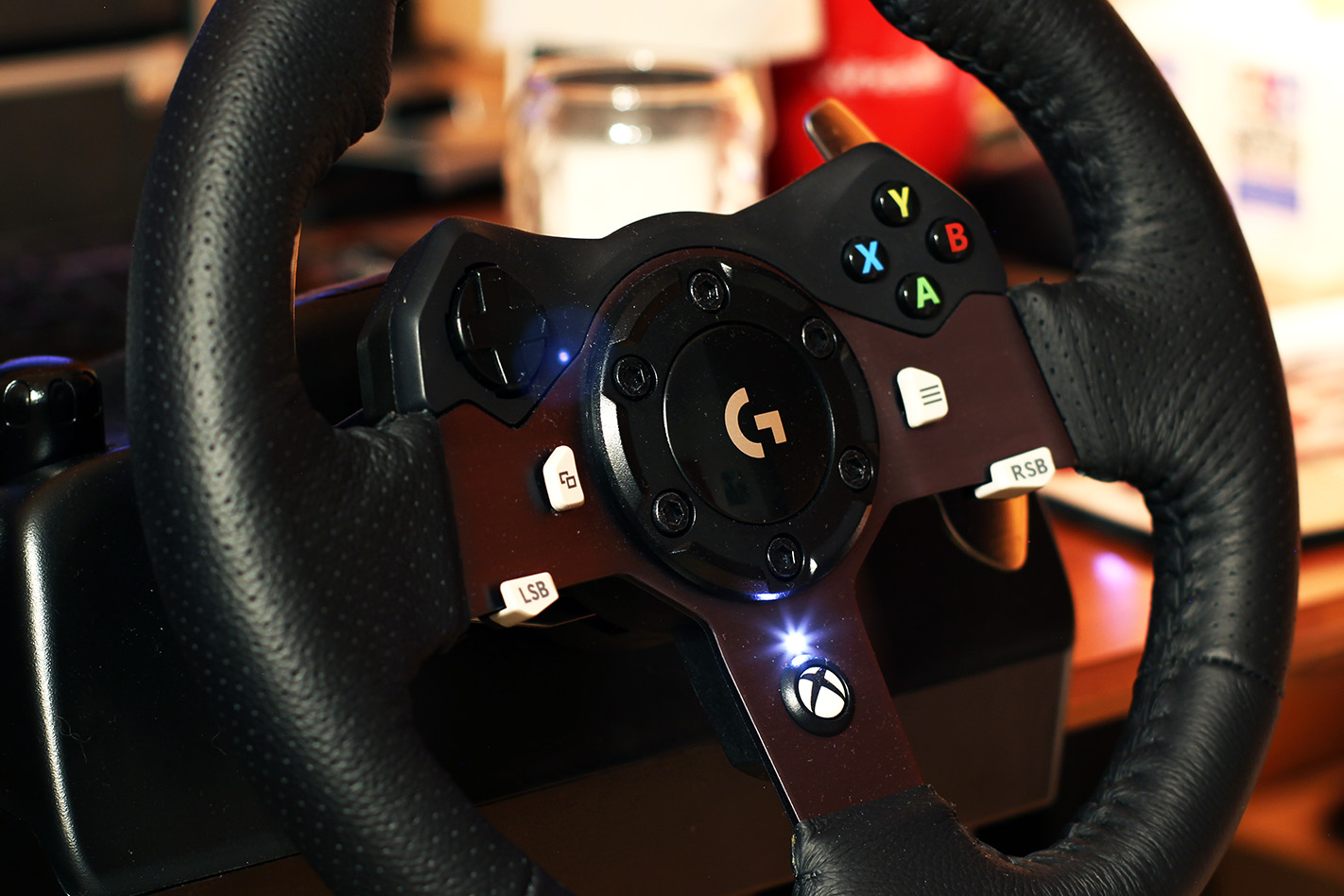
So you’ve been playing car games for a while now and your aching fingers are starting to get a little bit sick of manipulating your controller’s thumbsticks – or worse, your PC’s keyboard. It’s time to splash out on a proper gaming wheel.
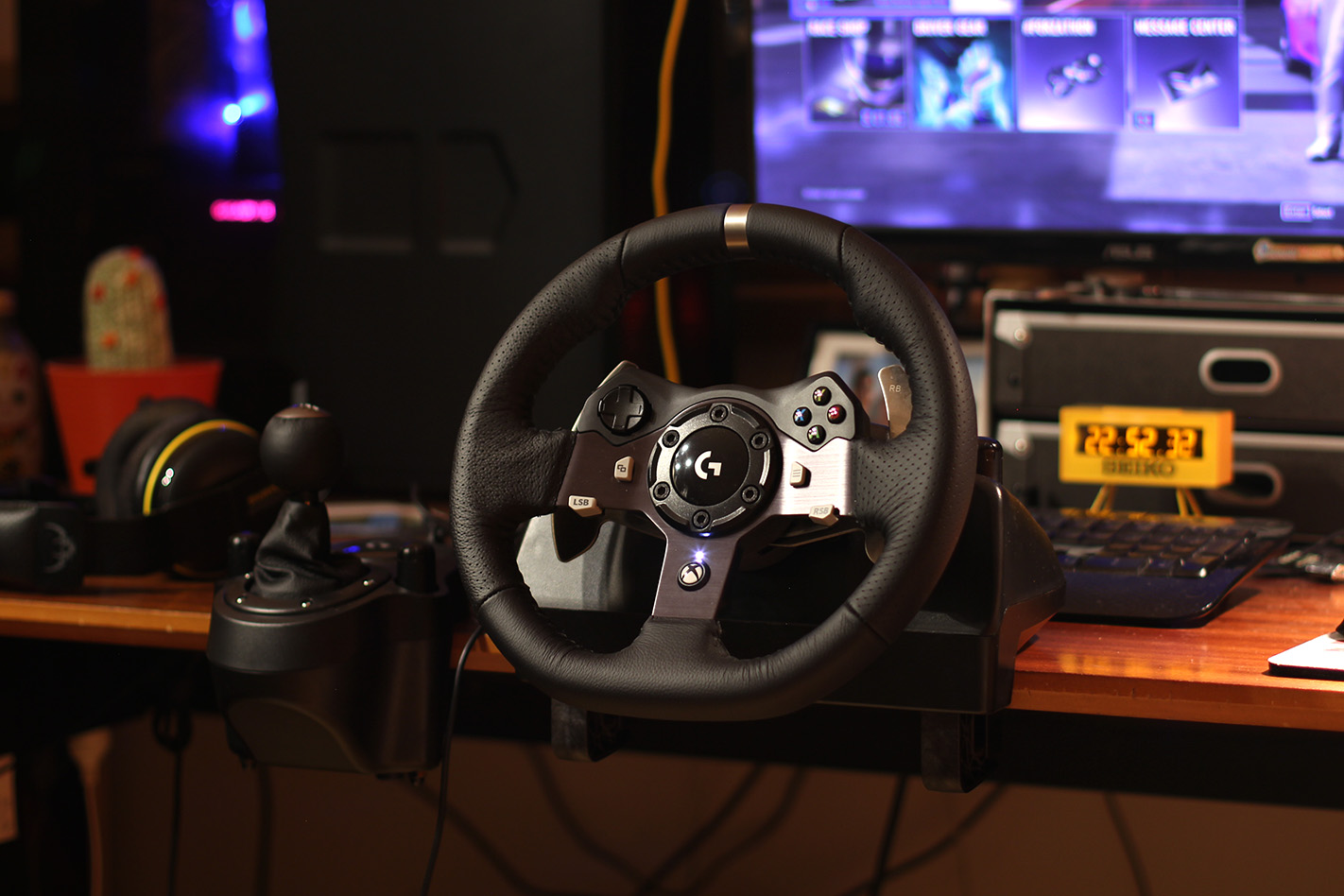
And if you want sim-essential features like force feedback and a clutch pedal, you’ll need to aim a little higher than the $100-200 ‘starter wheels’ currently on the market. For many gamers, the Logitech G920 (and its Playstation-specific twin, the G29) has been the go-to entry-level racing wheel since it debuted in 2015.
It’s a popular choice, but how does it rate? We at WhichCar spend most of our time gripping the wheels of real-life cars, so having a steer of Logitech’s tiller should be an interesting exercise. Here’s how the G920 stacks up.
What do you need for the Logitech G920?
The G920 is compatible with the Microsoft Xbox One, One S, and any PC running Windows 10, Windows 8, Windows 7 or macOS 10.1 and above.
How much does the Logitech G920 cost?
The G920 and its G29 Playstation-compatible twin both retail for $499, but with online stores like JB Hifi and Harvey Norman advertising them for $349 and $298 respectively, you’re kind of a chump if you pay the retail sticker. Want the six-speed manual shifter accessory too? It’s available from the aforementioned stores for $71-79, or as low as $59 from Kogan.
What’s it like?
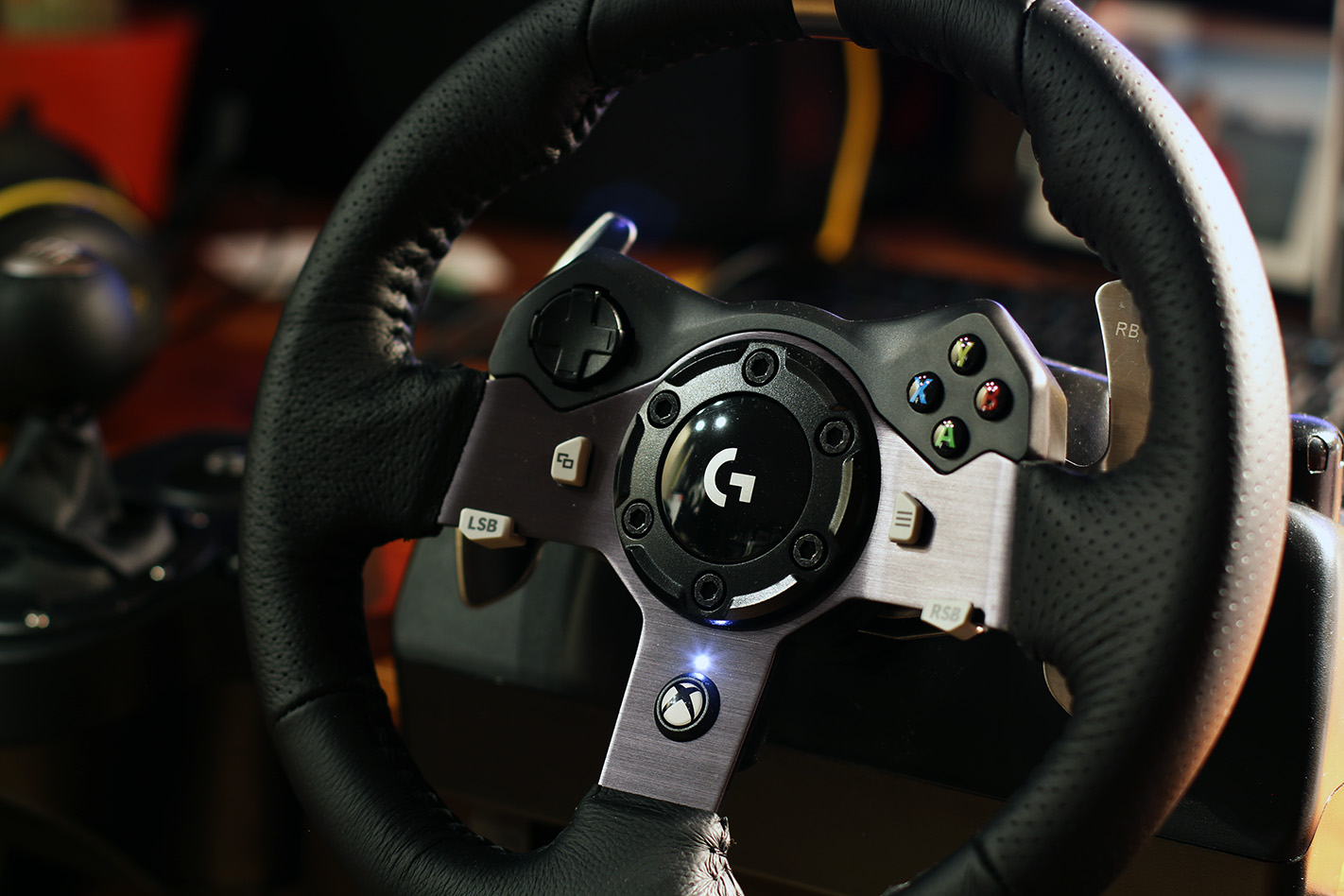
With a diameter of just 275mm, the G920’s leather-wrapped wheel does feel a little bit toy-like in adult hands. That said, it sure feels sturdier than you might expect of a gaming peripheral, especially one that’s priced at the more affordable end of the spectrum.
Credit that to an aluminium wheel hub that provides plenty of resistance to flex, and build quality that’s generally hard to fault. The faux leather rim feels great – there’s no slippery, cheap-feeling moulded urethane here, and it feels nicer to the touch than some car wheels.
That said, the clamping system for attaching the wheel and shifter to a tabletop could do with either a grippier material for the vice-style jaws, and/or a mechanism that’s less prone to slackening off over time.
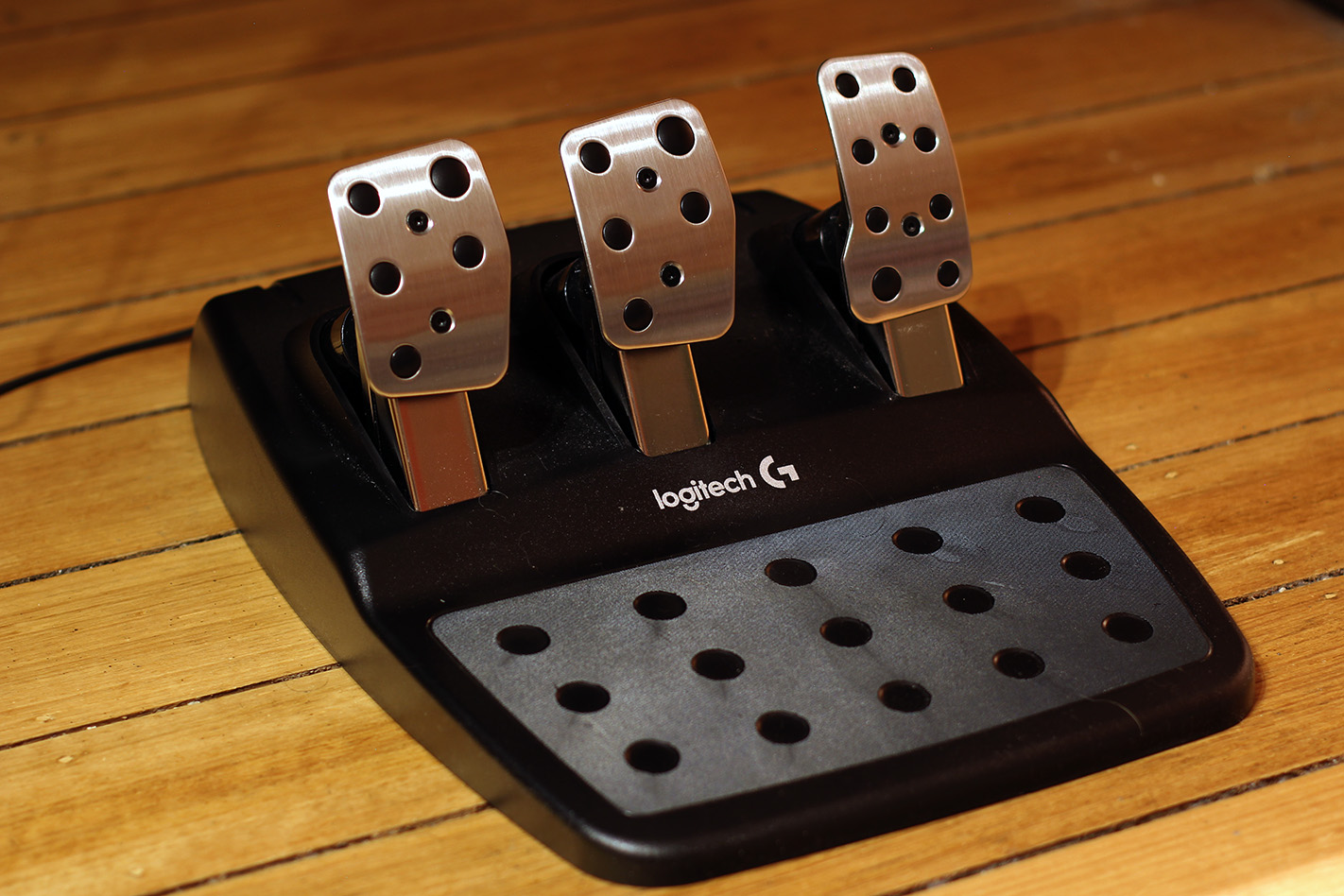
The pedal base has a big footplate for resting your ankles on, which also helps stabilise the pedal assembly during big jabs of the brake pedal. There’s a nifty retractable spike strip that grips carpet very well, but again, if you’re sitting them on a hard surface there’s not enough friction to keep the pedals in place, and stickier rubber feet would help greatly.
There are threaded holes to mount both the wheel and pedals to a dedicated sim seat setup (six holes on the pedals, two on the wheel), which in our opinion is definitely the best way to use the G920 – clamping to a desk and having the pedals slide around the floor simply isn’t ideal.
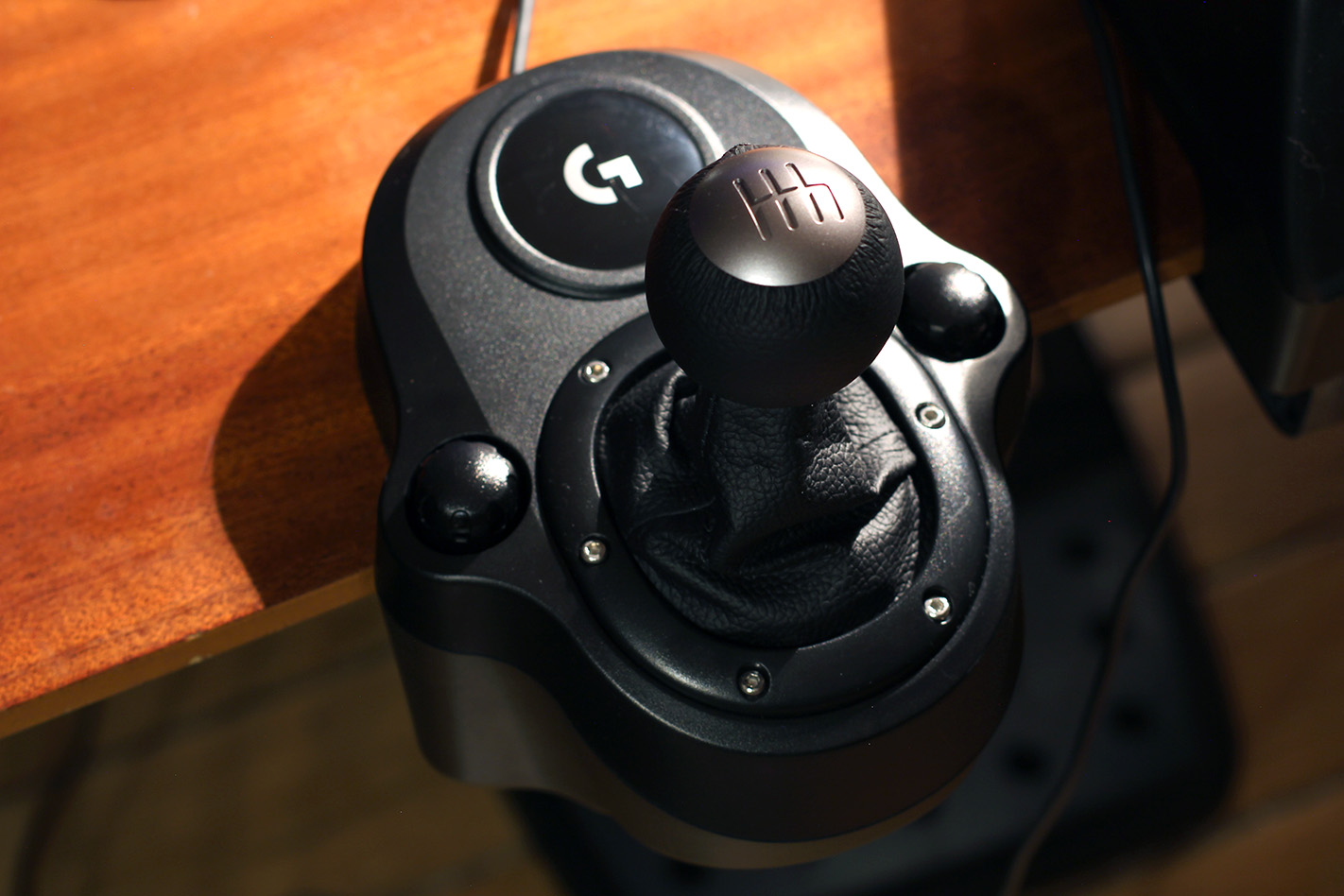
How about that shifter? The Driving Force shifter feels especially toy-like, but it’s got a well-defined six-speed gate plus a reverse gear lockout, and it feels a lot more authentic for games with road cars. Used in conjunction with the clutch pedal, it definitely adds to the immersion factor.
Using it with the Xbox couldn’t be any easier, with just a single USB cable and a mains power plug to plug in. Making it work on a PC was a little more difficult though, with no games able to recognise the wheel until we installed Logitech’s G Hub software. After that, it was plain sailing.
We tested the G920 across a number of racing games, everything from Forza Motorsport 7 to Farming Simulator 2018. One thing you’ll need to note, however, is that in nearly all games there was a significant amount of tuning to the wheel’s sensitivity and force feedback settings that needed to be done to make it feel natural.
Forza Motorsport 7 and Project Cars 2 required the most fiddling (PC2 having the most obnoxiously heavy force feedback response by default), but the end result of about half an hour of parameter-twiddling was a tactile feel that felt reasonably authentic. The G920’s dual force feedback motors (which are directly geared to the steering column) provide more than enough force to wrench the wheel around in your hands, and in most games we ended up winding back the force feedback settings to provide a more realistic feel.
Except Dirt 2.0. Right out of the box, the Logitech felt great in Codemaster’s rally sim without having to mess with any wheel settings, and given how important force feedback is for discerning how much grip you have on gravel, mud and tarmac, that’s a huge tick of approval. In fact, given the unique demands of a rally game and the variance in the surfaces that you race on, we’d say a wheel with the capability of the G920/G29 is crucial to maximising your enjoyment of Dirt 2.0.
And the same goes for other fairly serious sims. While Forza Motorsport 7 can be enjoyed with the standard gamepad, it’s a different story for Project Cars 2.
A wheel is virtually mandatory for this game (not to mention other sims like Assetto Corsa and iRacing), and a wheel with the feature set of the G920/G29 should be considered the minimum. Given PC2 does a stellar job of modelling tyre friction, having a wheel with decent force feedback is critical to being able to interpret that tactile information with your fingertips, and exploit it.
The G920/G29’s big 900-degree rotation is also a big advantage, especially for drifters and, we’d imagine, titles like European Truck Simulator and Mudrunner that put an emphasis on steering precision rather than speed.
Are there any downsides to the Logitech G920?
Besides the need to spend a fair bit of time testing and tweaking wheel settings (which, let’s face it, is a necessary evil for virtually all wheels) and the pedal base’s lack of grip on smooth floors, there are some other negatives worth noting. Logitech says the G920/G29’s helically-geared force feedback is supposed to quieten down the wheel, but it’s still quite loud when the system is working hard.
And when you counter-steer quickly against the force feedback, the wheel emits a horrendous rattle from within and it feels like the teeth on the force feedback gears are slipping. If you’re fond of virtual drifting or rallying where big counter-steering movements are common it may be an issue, but if you wear headphones it probably won’t. Either way, it doesn’t seem to affect the wheel’s long-term operation.
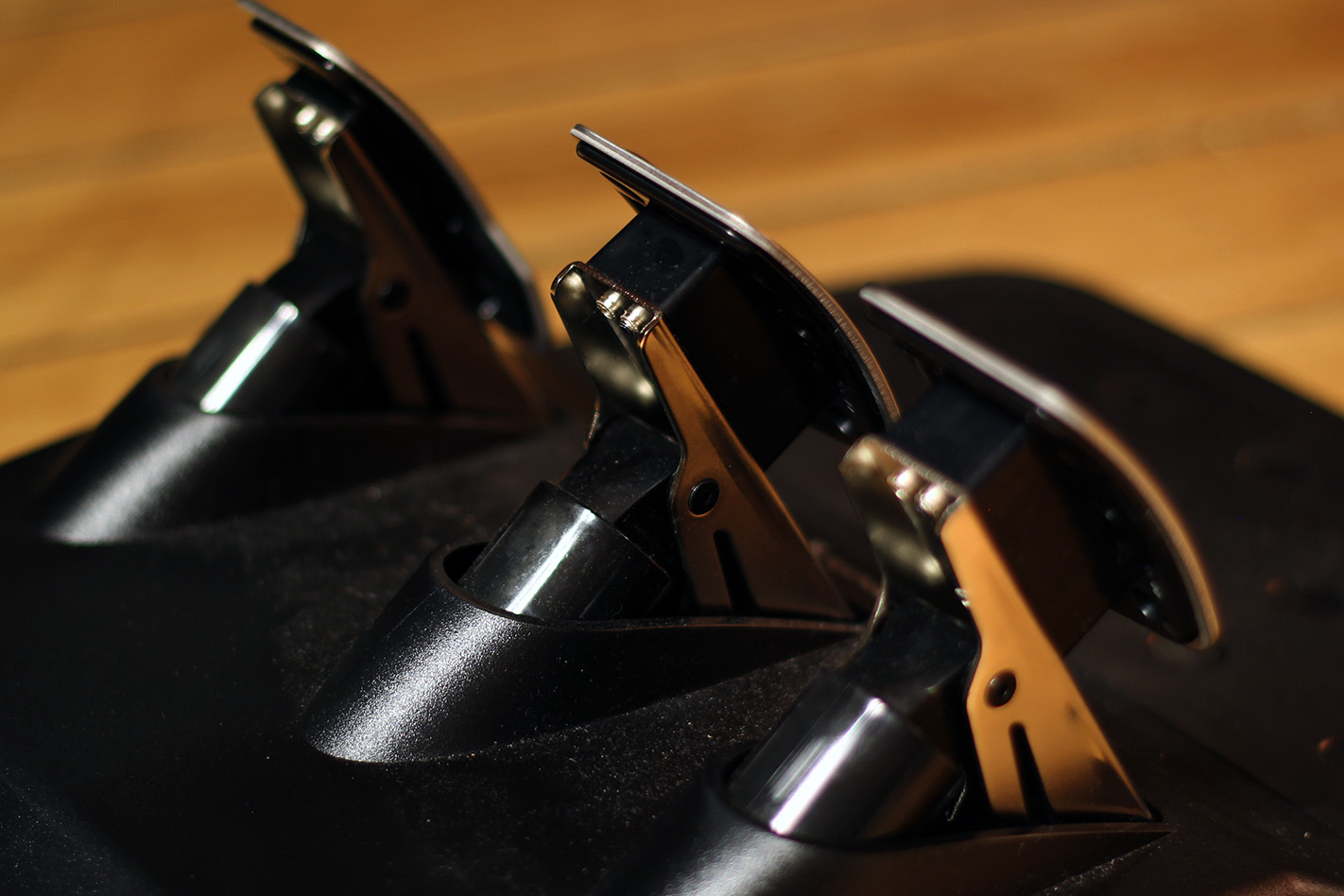
The heavily sprung brake pedal does a decent job of feeling like a real car’s middle pedal (though is really too firm if you’re using it on floorboards), while softly-sprung accelerator and clutch pedals feel accurate too. Pedal spacing between the brake and clutch is a little too close, however, especially if you like to left-foot brake. With just 30mm of air between them, accidentally pressing both brake and clutch at the same is a common occurrence.
The pedal faces themselves can be removed and flipped upside-down to enable easier heel-toe downshifts – a thoughtful feature on Logitech’s part, but not one that really solves the pedal spacing issue. If Logitech built in some lateral adjustability to the pedal faces, it would surely be to the benefit of those with larger feet.
Rally fans of sim drifters may also find the lack of a handbrake lever to be a drawback (pressing the B button just isn’t quite the same), but we can understand why Logitech couldn’t justify a peripheral that’s even more niche than the six-speed gearshift.
But if there’s a downside that’s eclipses any of the above, it’s the fact that you’re railroaded into buying a platform-specific wheel. If you’re a PC devotee then you’re fine: either the G29 or G920 will work on your machine. But if you’re one of those platform-agnostic gamers who has both a Playstation AND an Xbox sitting in your living room, then you’re gonna have to choose which one you like more – G29 for Playstation, or G920 for Xbox.
Verdict
For a wheel peripheral that can be found for quite a reasonable sum of money, the G920/G29 delivers some very respectable value. With a huge range of motion, three pedals, the option of a H-pattern shifter, a nice and firm brake pedal and strong force feedback (not to mention the hardpoints needed to bolt it all to a proper sim seat), it’s not hard to see why Logitech’s wheel has become such a popular choice for gamers making a start in sim racing.
It certainly adds to the immersion factor, giving you the ability to feel the severity and wheel-tugging effect of a racetrack’s kerbs or a dirt rally stage’s ruts, while also giving you the satisfaction of performing a proper heel-toe downshift while threshold braking. Play with headphones on to drown out the sound of the wheel’s motors, and it’s remarkably close to the real thing.
What did you drive when you turned 20? And how did you drive it? Was it something safe and responsible? And did you drive it safely and responsibly? Me either. That’s why the world is a little crazy right now.
If this century was a person, it would be leaving its teenage years and turning 20. It would be trading up from a third-hand Astra with an odometer like a phone number and a ‘Just Send It’ bumper sticker, and sliding into the driver’s seat of a second-hand Commodore like Han Solo reclaiming the Millennium Falcon. The 21st Century is out there right now lighting up the rear tyres in a cul-de-sac, all abuzz with adrenaline and hormones, and growing a scrappy Chia-pet beard to impress girls and hide its neck acne.
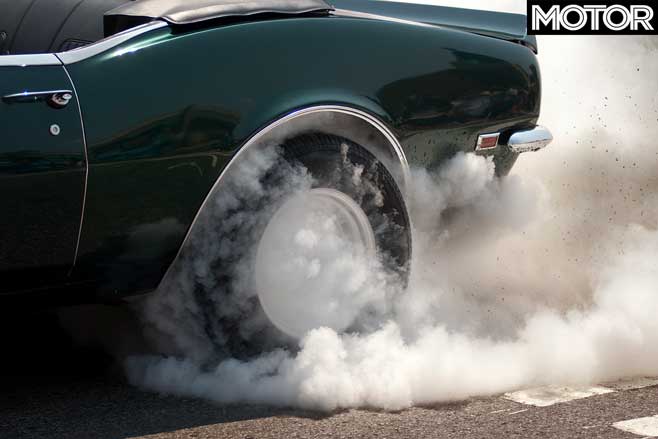
Centuries age remarkably like people. Look at the 20th Century. In its first 10 years, nothing much happened, because it was just a kid. But by the time the 20th Century was a teenager, it was an angry, moody little bugger – a world war alongside an anti-capitalist revolution, a decade of slamming doors and hanging posters of Marx on its bedroom wall.
Things got better in its 20s: it started throwing its newfound cash around, and it looked like the party was going to last forever, until everything got a little crazy and it Prohibited booze for a while. It suffered a bit of Depression in its 30s, and went through a bitterly contested divorce in its 40s, before settling in for a Baby Boom in its 50s.
It experimented with drugs in its 60s and 70s, dyed its hair purple in its 80s and then died in its late 90s while trying to figure out what the internet was. Basically, the 20th Century was your grandmother.
The 21st Century hasn’t reached that level of maturity yet.
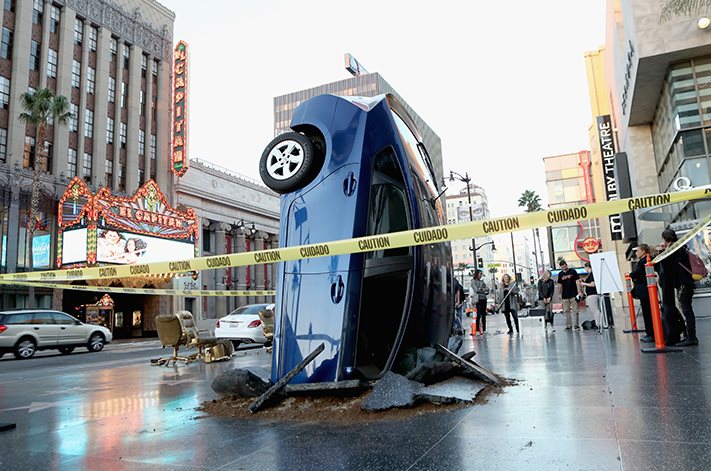
Your early 20s are perhaps your finest hooning years: old enough to afford something quick-ish, but not old enough to believe in your own mortality. It’s a giddy time of personal land speed records, and personal speeding fine records. It’s a time for expanding your horizons, pushing the envelope, and staining the back seat. Hopefully with a friend.
But it’s not an age known for prudent forward planning. Which means right now the 21st Century is at that age when it has blown its whole pay cheque on new rims before it remembers the rent is due. It’s at that age when it’s so focussed on the speedo down the straight it hasn’t noticed the hard right turn coming up fast. It’s an exciting time. It’s a dangerous time. It’s often an expensive time.
It’s why insurance premiums for young men are the last legally sanctioned form of discrimination in the country. In no other business is it okay to charge someone more than other customers based on their age and gender; but if you mention insurance to an anti-discrimination lawyer they’ll shrug sympathetically and ask, “Have you actually seen young men drive? They’re out of their freaking minds.”

If you tried to insure the 21st Century right now, the claims adjusters would blanch at the list of dangerous behaviours: droughts, fires, rising sea levels, missed Paris Accord targets, right-wing nationalism, actually releasing the Sonic the Hedgehog movie. If it feels as though the whole world is in a skid right now, headed for the Armco with the wheel twisting uselessly in our hands… well, this century wouldn’t be the first 20-year-old to stick it in the weeds.
But look on the bright side: by the time the 21st Century is in its 30s, it’ll be thinking pragmatic thoughts about depreciation and Isofix points. And by the time it hits 40, it’ll be driving a minivan. Boring for you. Good for the world.
So if things seem crazy right now, just hold on for another year, until the 21st Century throws its 21st birthday. That could get really messy.
And hope it doesn’t drive us off the road in the meantime.
A new era of rally inspired homologation special road cars is about to begin, and surprisingly, it is Toyota leading the charge.
Toyota has been teasing a hotter version of its all-new Yaris for a couple of weeks now, but Wheels has obtained exclusive images of an uncamouflaged production car ahead of its planned reveal next year.
Dubbed the Toyota GR Yaris (GR referring to the brand’s Gazoo Racing motorsport arm), the hot hatch is a homage to the company’s World Rally Championship winning Yaris race car.
While the WRC doesn’t require production-based homologation special road cars like it once did, this road car mimics its four-cylinder turbocharged all-wheel drive powertrain.
Official technical details have not been released, and aren’t expected to be confirmed until the official reveal, which is slated for the Tokyo Auto Salon in January 2020.
However, judging from the video and photos, Wheels expects the GR Yaris to have a turbocharged four-cylinder engine, with tuned suspension and bigger brakes.
Building the world’s angriest Toyota Yaris
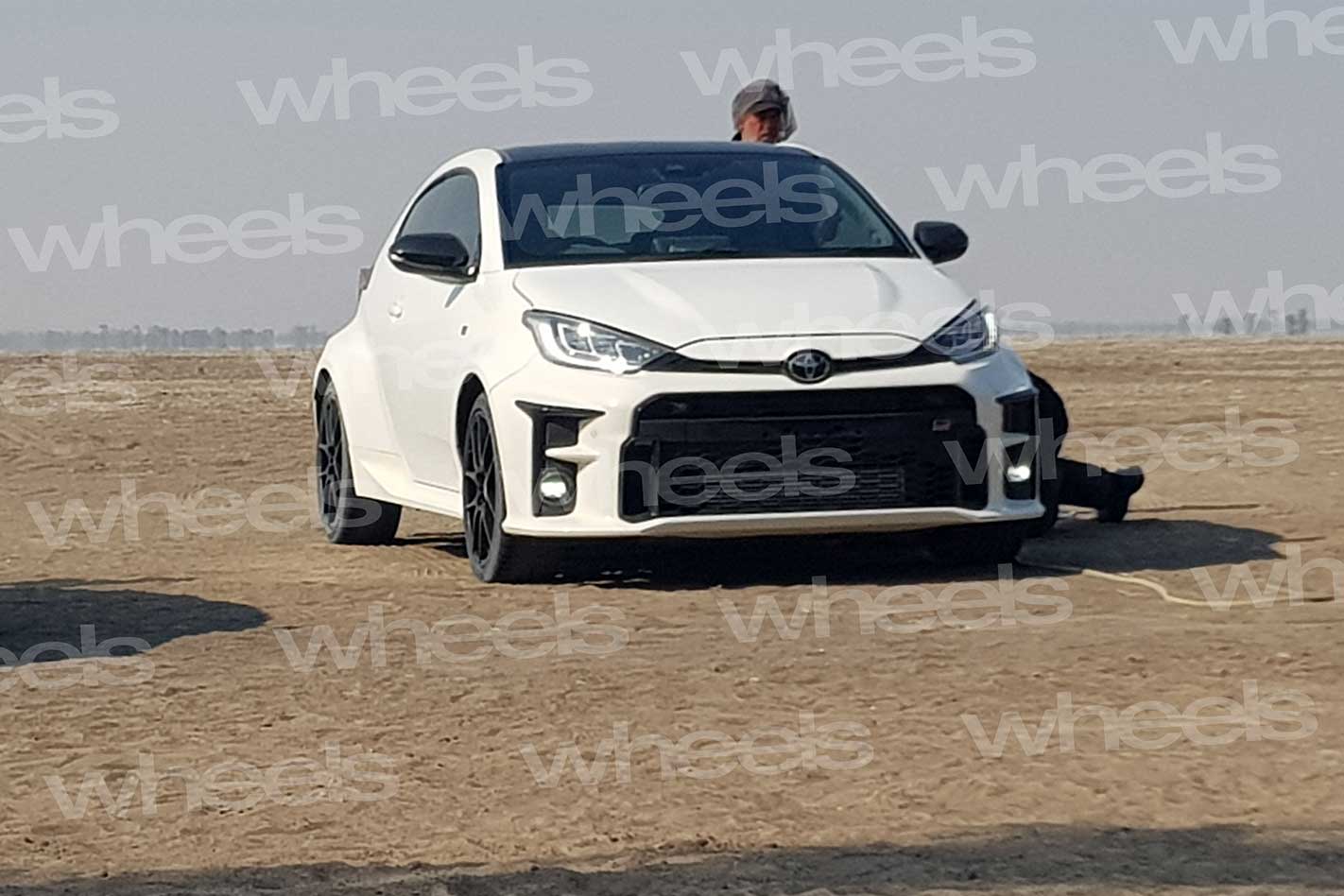
It’s uncertain how much power the GR Yaris will produce, with some outlets estimating as much as 200kW, which would make the hot hatch a rival to the likes of the Hyundai i30 N and VW Golf GTI.
Importantly, in keeping with the WRC car it pays tribute to, the GR road car will have an all-wheel drive system, along with a wider track compared to its tamer, more pedestrian, siblings within the Yaris range
The beefier brake calipers have GR branding, while flared arches can clearly be seen front and rear. Excitingly, a button on the dash between the door and steering column indicates the GR Yaris will have an intercooler water spray.
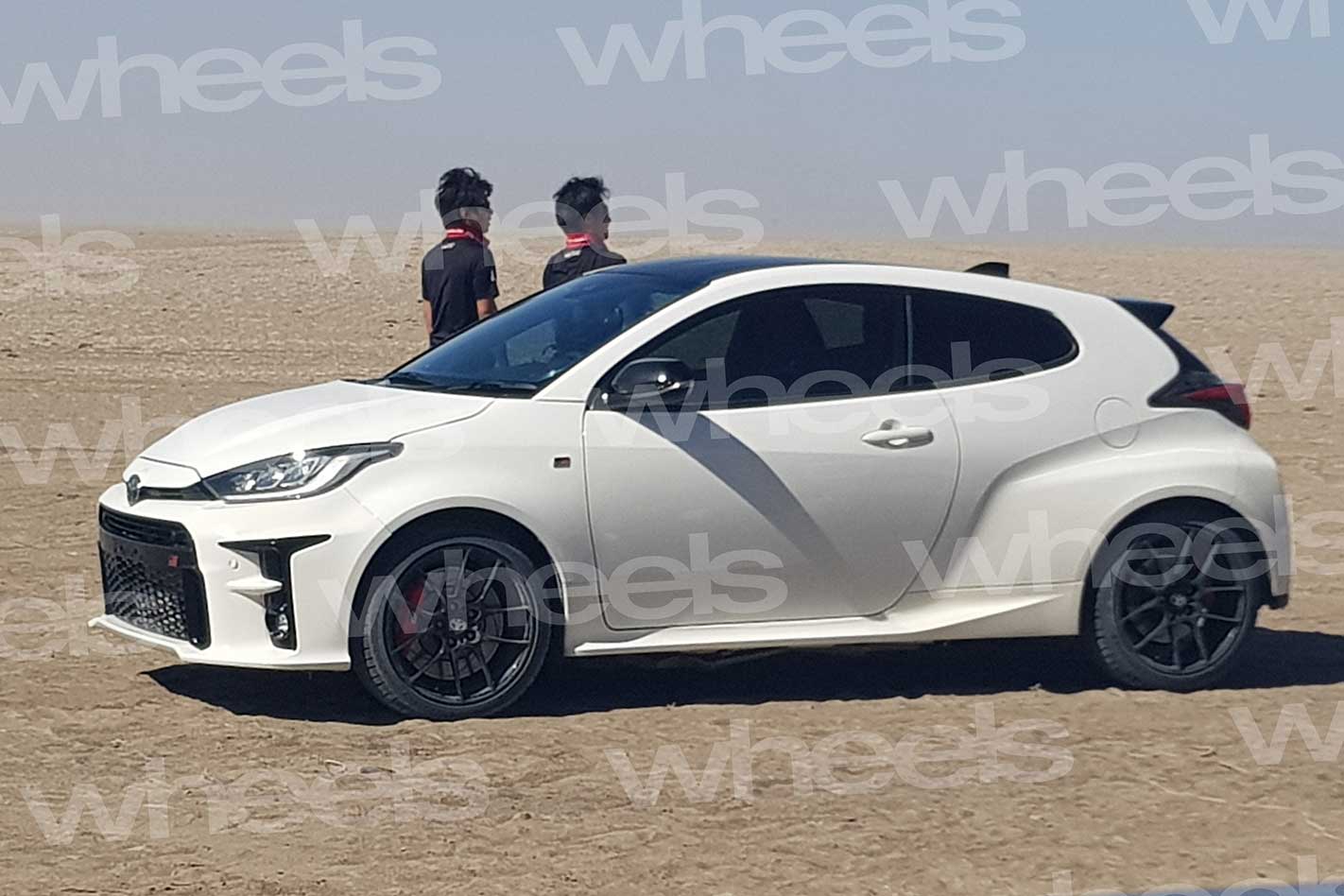
It appears the production car is riding on either 18- or 19-inch alloy wheels, which will be wrapped in performance-focused rubber.
It’s likely the GR Yaris will have multiple drive modes, controlled via the rotary dial on the centre console.
Driving enthusiasts rejoice, as interior pictures reveal a manual gearbox and old-school handbrake – the latter is a great addition given the car’s rallying heritage.
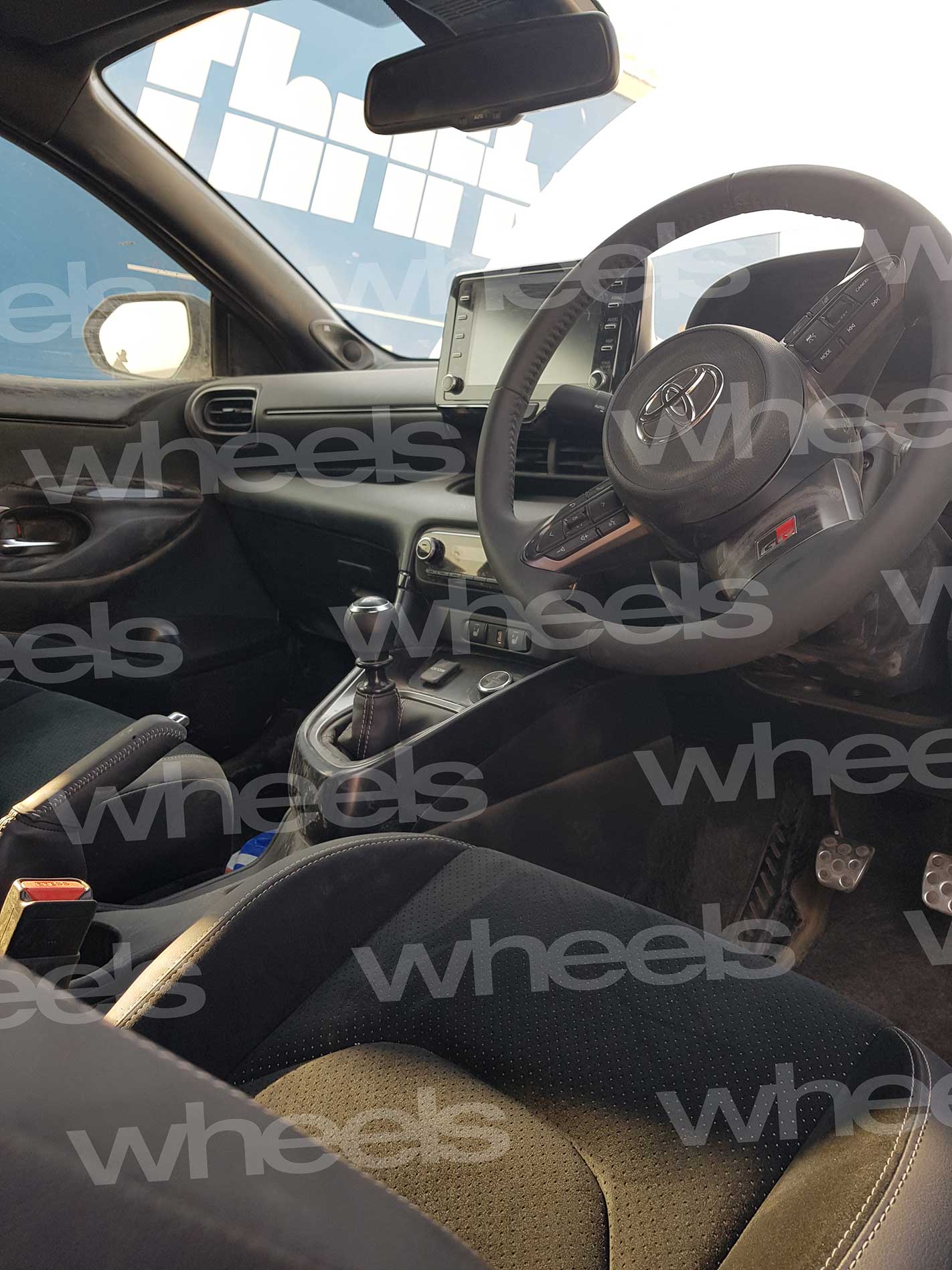
Wheels expects the transmission to be a six-speed unit, with no word on whether a self-shifting variant will be offered.
Toyota sold a sportier version of the outgoing Yaris overseas, badged as the GRMN, of which only 400 were built. We don’t expect the 2020 GR Yaris will have a production limit, and with a right-hand drive model spied, would be surprised if it wasn’t offered locally.
The 1135kg GRMN was powered by a 1.8-litre supercharged four-cylinder engine, sending 156kW and 250Nm exclusively to the front wheels via a six-speed manual, with a claimed 0-100km/h sprint of 6.4 seconds.
While the all-wheel drive system will mean the 2020 GR Yaris is likely heavier than the GRMN version, it should have more power, and accelerate quicker.
Performance alone will vault the GR variant above the rest of the Yaris range, but from our exclusive photos it is clear the hot hatch will have a very high level of specification.
There are LED headlights, front and rear parking sensors, seat heaters, lane-keeping and distance for radar-guided cruise control, sat-nav, dual-zone climate control, a JBL sound system, heated steering wheel, and auto high beam assist.
There seems to be no digital dash, with the leather and suede sports bucket seats adjusted manually.
Along with the white, uncamouflaged, bodywork, the production car has black wheels, roof, rear spoiler, and wing mirrors.
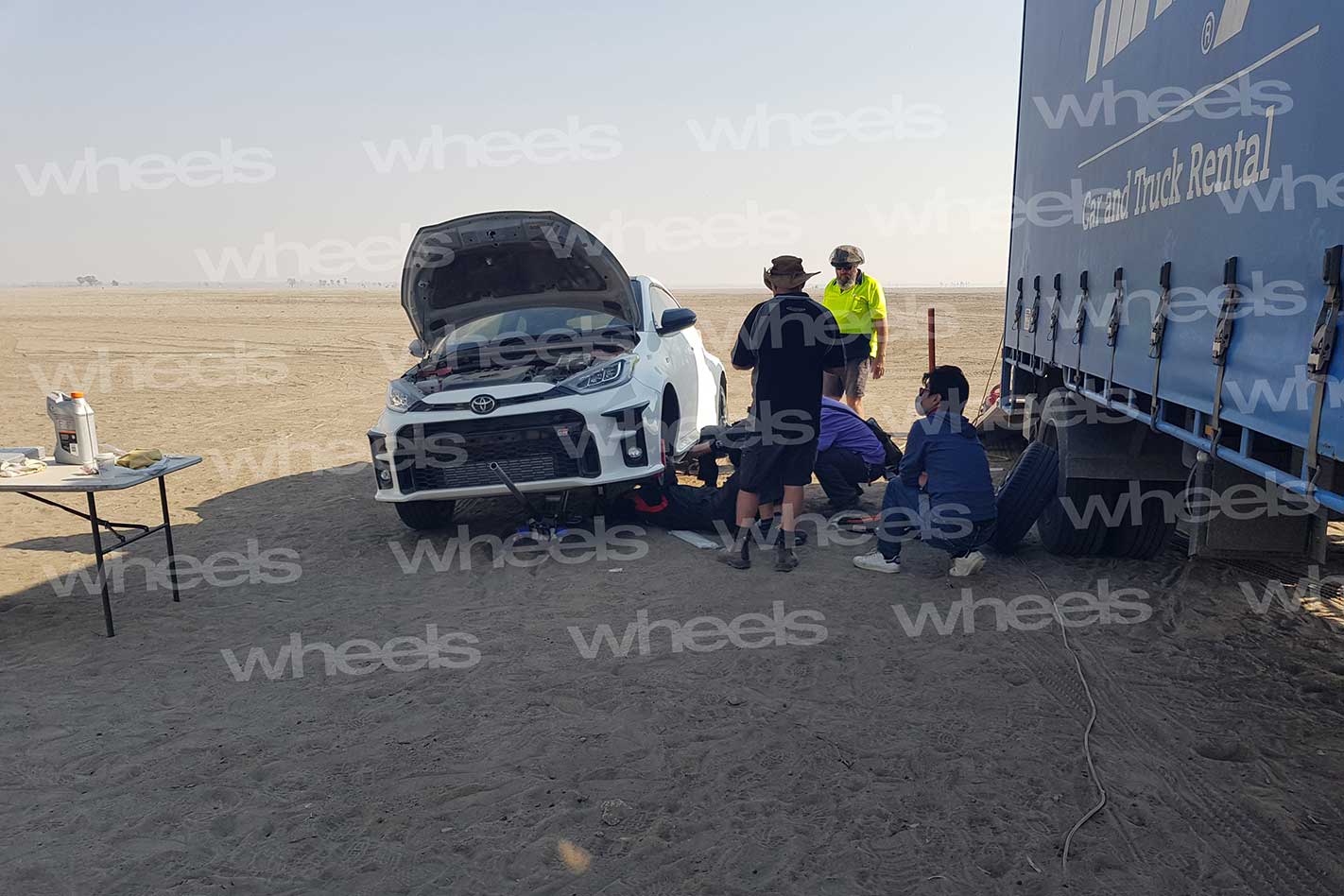
Our exclusive images and videos were obtained in the Australian Outback during what appears to be a promotional photo and video shoot, with the production cars seemingly transported in a Thrifty hire truck.
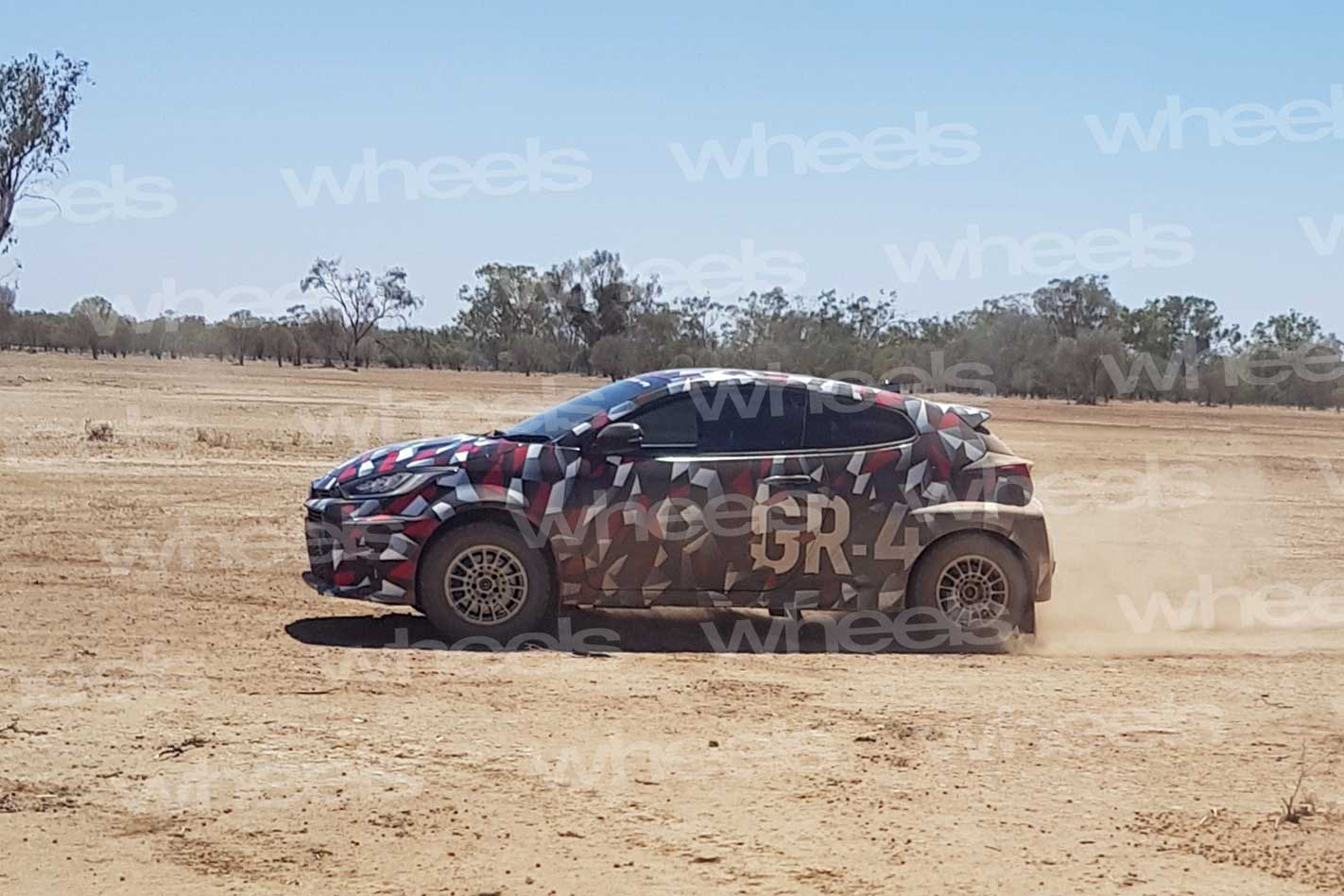
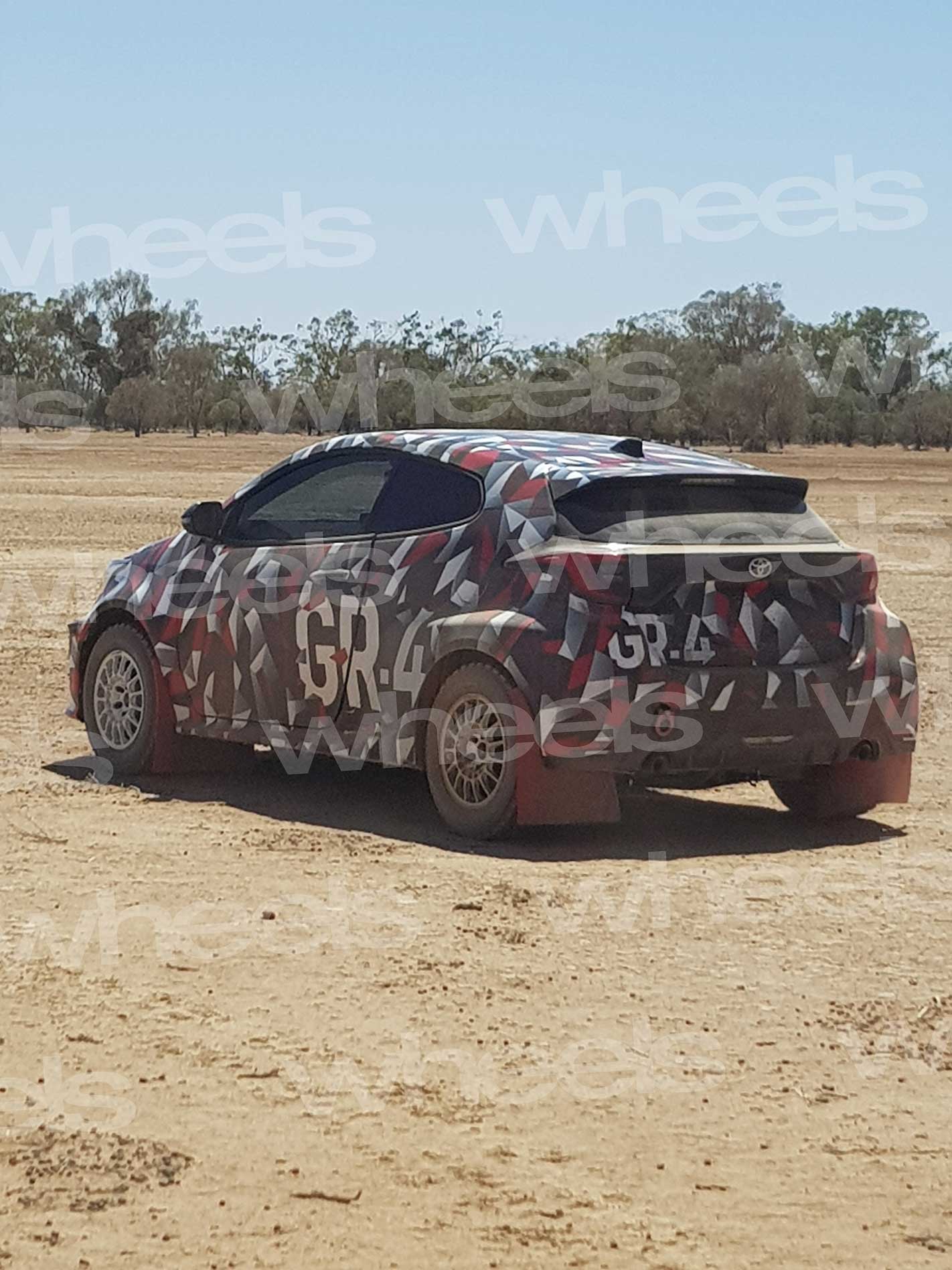
Wheels understands Toyota had originally planned to display the camouflaged car, which has rally tyres, wheels and mudflaps, at the season-ending WRC round in Coffs Harbour. Unfortunately, due to Australia’s ongoing bushfire crisis, the WRC round was cancelled.
Toyota GR Yaris specs officially revealed
Are you excited for the Toyota GR Yaris? Let us know in the comments down below.
Australia’s own supercar, the Brabham BT62, has set a new record.
This time, it’s taken to The Bend Motorsport Park to lap the west circuit in the quickest time possible. The attempt was made during The Bend Classic, which focuses on “unique classic, historic and modern cars.”
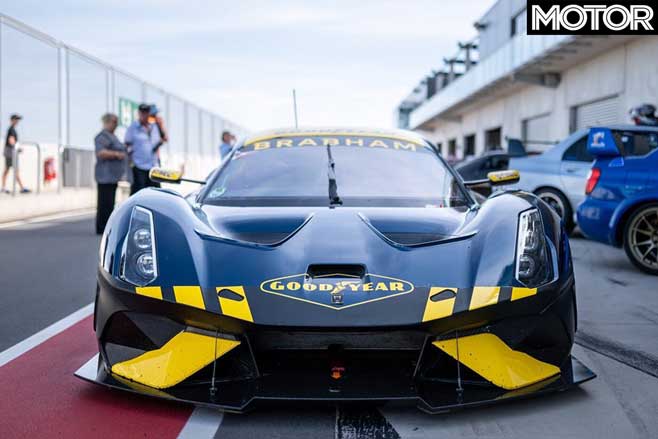
Former Erebus driver and current Brand Jones Racing co-driver Ash Walsh was behind the wheel of the BT62 for its lap, laying down a time of just 1:15.0214.
For reference, MOTOR ran a 1:24.0 lap in PCOTY 2019 testing with a Porsche 911 GT2 RS, driven by Rick Kelly.
The footage released by Brabham makes it a little hard to see the track, so we’ve supplied a map for you to follow, but the noise of the car and vision of Walsh at full attack makes it worth a watch.
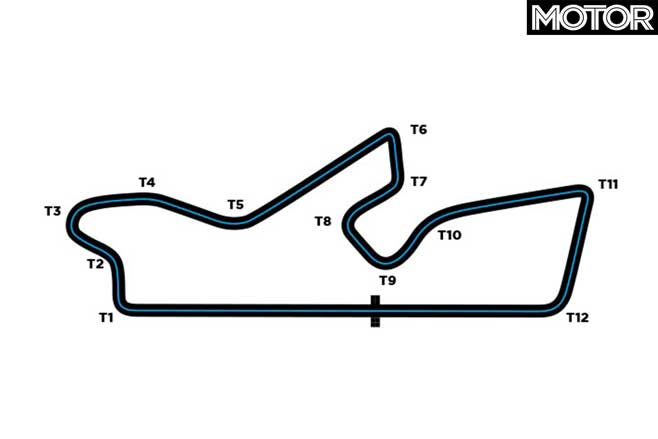
In a statement on social media, Brabham Automotive also pointed out the oppressive conditions
“Thanks to all who came to see the Brabham BT62 with Ash Walsh behind the wheel as he set a new lap record for The Bend’s West Circuit of 1:15.0214 seconds.
“The Bend Classic saw some hot conditions on Sunday, including a crazy 39°C during the Shootout when Ash drove the BT62 to the new lap record.”
Manthey Racing has officially launched kits to upgrade the Porsche 911 GT2 RS to ‘MR’ spec in Australia.
Choosing Porsche Centre Doncaster last night to announce the news, being one of only two dealers qualified to carry out the work, it revealed Aussie owners can now lift their 911 GT2 RS to another level with the MR kit for an eye-watering €79,911.
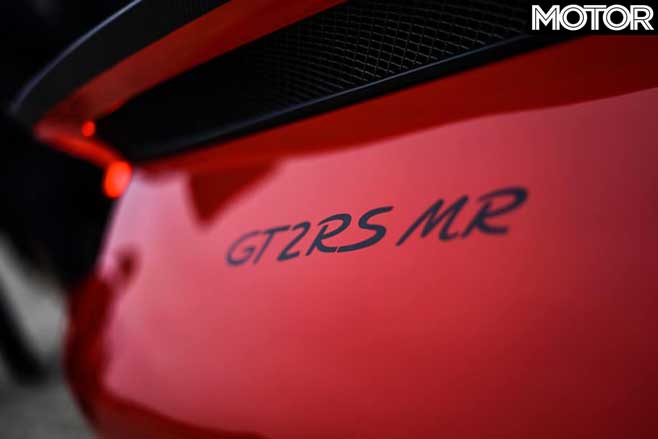
That price includes installation and according to Manthey Racing leaves your warranty intact. However you’ll still need to pay extra for shipping and convert the price to Aussie dollars – which at the moment comes to just over AU$128K.
That’s also on top of a regular 911 GT2 RS that costs $645K brand new (before on roads) when it celebrated the 991 generation 911’s end, and then easily topped $700K with the optional Weissach Pack.
Of course, you get front and rear carbon fibre aero, a modified damper system from the 911 GT3 R, a larger water injection supply tank, new magnesium wheels, rear chassis reinforcements and upgraded brake pads and lines.
Finally, everything’s adjusted on Manthey Racing’s special wheel aligners, a hardware system that costs as much as €20K (AU$32K), allowing them to dial in special camber and toe specs to ’Ring spec.
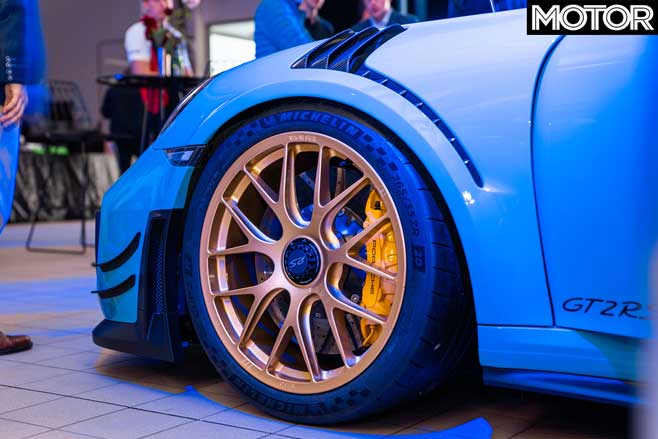
In the end, and more importantly, your Weissach pack equipped GT2 RS should be good for 6min 40.33min laps at The Ring.
Customers can approach either Porsche Brighton or Doncaster for the upgrade, while 911 GT3 RS customers will soon be welcomed into the MR family with a new package that is close to market-ready.
Manthey Racing’s sales manager Michael Grassl was on hand, himself an engineer who completes 1000 laps of The Ring each year, to extol its virtues as a road-legal track attacker.
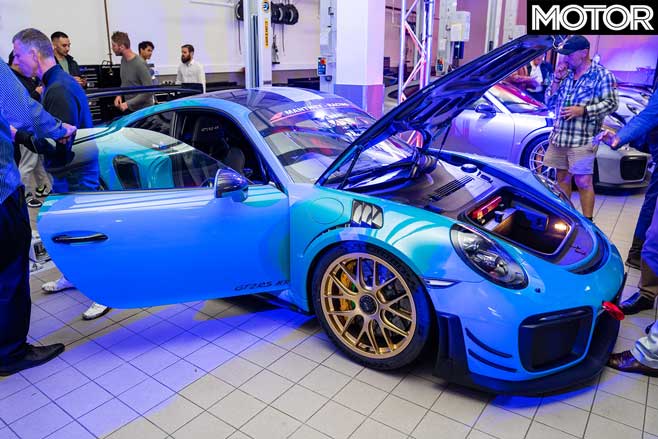
“[It’s] as easy [to drive] as the stock car. I travel with our record car 500km to my home. Easy.”
Keep an ear out for more news on Manthey Racing’s presence in Australia after the brand announced plans to set a record lap at our own iconic racetrack, Mount Panorama.
