
Skoda has boldly announced it will launch 30 new models in Europe in the next three years, and while we know that Australia will get two of the most important new models in this onslaught, we will miss out on potentially the most interesting ones.
WhichCar has already confirmed that the Skoda Scala hatchback and Kamiq compact SUV are coming to Australia. After chatting with senior Skoda management at the Frankfurt Motor Show, we can now narrow down their arrival time to April 2020. We can also confirm that higher-spec, sporty-looking Monte Carlo versions of both will be a part of the lineup from day one.
The Scala small hatchback will slot in between the tiny Fabia hatch and the Octavia hatch and wagon, and go head to head with the Toyota Corolla, Volkswagen Golf, Mazda 3 and others in the highly competitive small car segment. In typical Skoda fashion, the Scala will likely carry a price advantage over its Japanese and European rivals, suggestion a sub-$25,000 starting point for the base model.
But even though the Scala will be a volume player for the Skoda brand, don’t expect it to be a volume player in our market. Just two variants are expected to be offered initially.
European Scala buyers have a choice of 1.0-litre and 1.5-litre turbocharged petrol engines; it’s likely Australia will only see the latter, mated to a seven-speed dual-clutch transmission driving the front wheels.
Practicality is always a strong point with Skoda models; the Scala’s cabin has more space than the Golf, and its 467-litre boot is by far the best in class.
Standard specification is still to be confirmed. We’re expecting the full suite of safety equipment, which includes nine airbags, autonomous emergency braking, lane keep assist, rear cross-traffic alert and blind-spot warning. All Scala models will have a central touchscreen infotainment system with Apple CarPlay and Android Auto, which unites media, phone, satnav and trip computer controls.
The Skoda Kamiq is a small SUV which will slot in under the larger Karoq and much larger Kodiak. Based on the same VW Polo-derived MQB A0 platform as the Scala, the Kamiq will go head to head with the Mazda CX-3, Toyota CH-R and Volkswagen’s forthcoming T-Cross crossover.
For Australians with a more sporty bent, Monte Carlo versions of both the Scala (below left) and Kamiq (below right) debuted at the Frankfurt show. Don’t expect extra performance, however, because even though Skoda says “the Monte Carlo emphasises the sporty and dynamic nature” of the two models, the Monte Carlo is little more than an equipment grade which ups the visual ante outside and in.
Tinted windows, black alloys, and black touches on the grille, front and rear bumper ad visual presence, along with a panoramic black sunroof. Inside, the Monte Carlo model features leather sports seats and steering wheel, a unique instrument panel, and aluminium pedals among its various superficial upgrades.
Skoda also revealed its new iV ‘sub-brand’ focused on plug-in hybrid technology, which it calls “innovative, intelligent and inspiring”. Eventually, the iV brand will embrace fully electric cars, but for now, the only model potentially available to Australia is the Skoda Superb iV, a plug-in hybrid which Volkswagen Australia said “will not come to Australia.”
“It’s an interim technology; we will wait for fully electric models,” said a company spokesperson.
The gasps from me and my colleagues as we walked around the billowing curtain that hid the 2020 Audi RS7 from prying eyes are clearly audible. Squatting in front of us in a devilishly delicious semi-matte red hue over a set of simply enormous milled-alloy deep-dish rims, the new RS7 hits you right in that very special car funny bone right off the bat.
It. Is. Just… gorgeous. To my jaded eyes, it’s comfortably the best looking car Audi has done in the last decade – and maybe just ever.
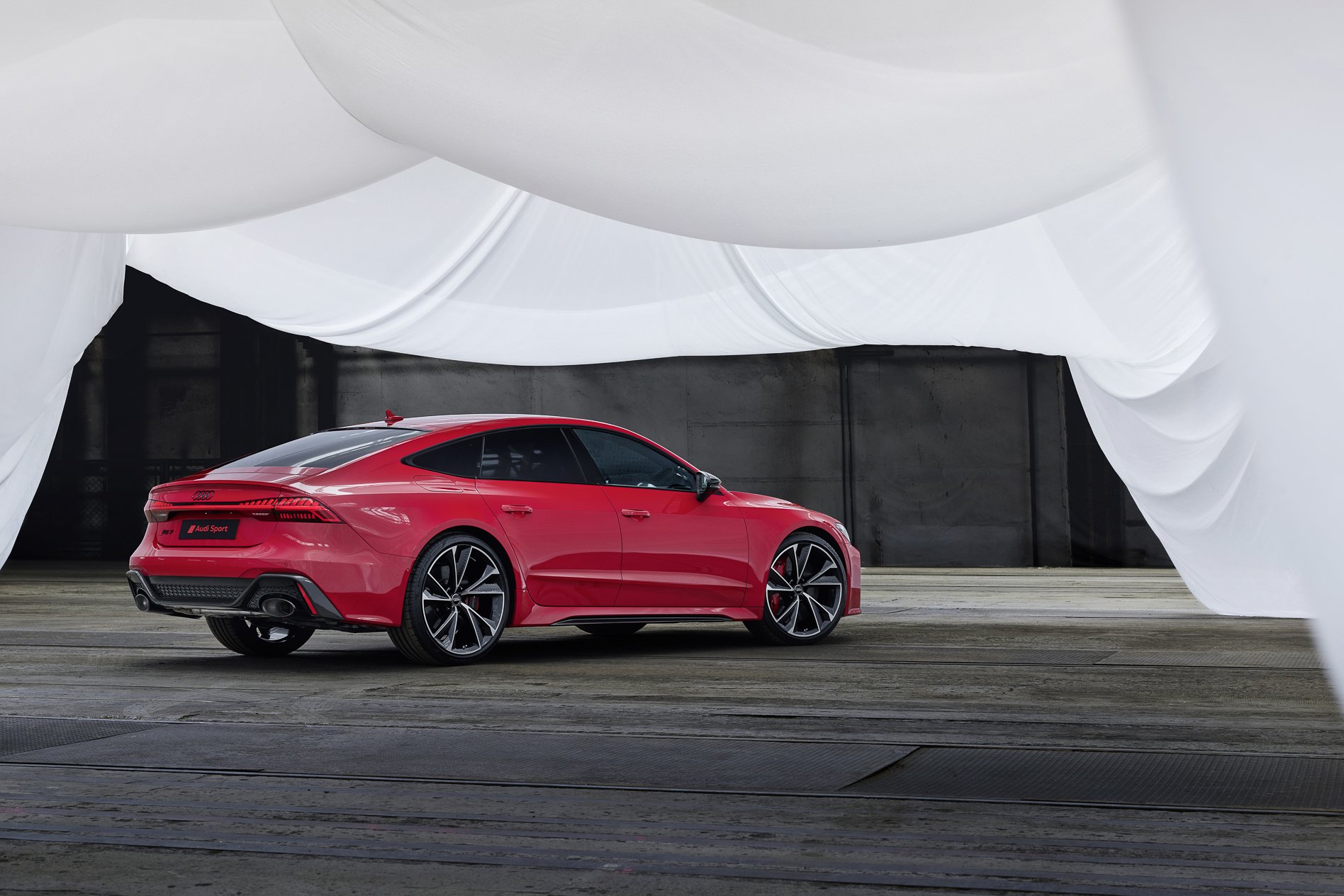
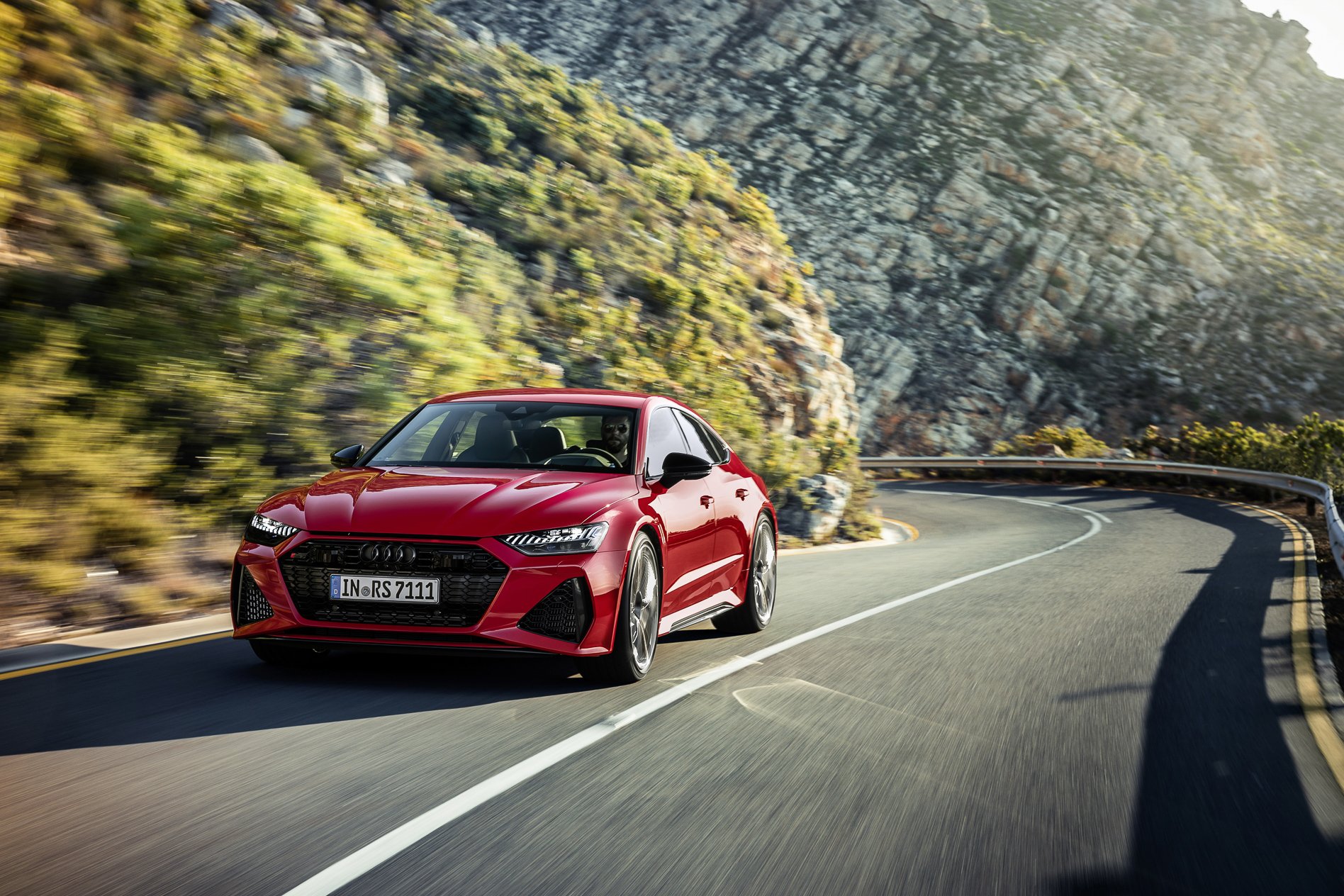
The tech team from Audi Sport are talking about minimising bumper surfaces and darker highlights, but I cannot tear my eyes away. Is it the broad yet smooth-shouldered guards? Those milled 22-inch rims? The slammed stance and long roofline? Dunno, but there is SO much want.
Between the sportback RS7 and the RS6 wagon – both of which will be on the Audi stand at the Frankfurt Motor Show – Audi Sport reckons you’ve got the best of both worlds.
“We want to give the customer the Gran Turismo design of the sportback version, without losing functionality. When we want to address the sportback to a sedan customer, they need full functionality,” said Michael Binder, the product manager for the RS6/RS7 program.
It’s the second generation RS7, and it’s due down under half-way through 2020 or so. The first-gen RS7 was only ever offered as a four-seater, but this one can be had with either two or three seats across the rear.
It’s 20mm per side wider per side than the standard A7, but its haunches are nowhere as squared off as the guards on the RS6, giving it a distinct point of difference.
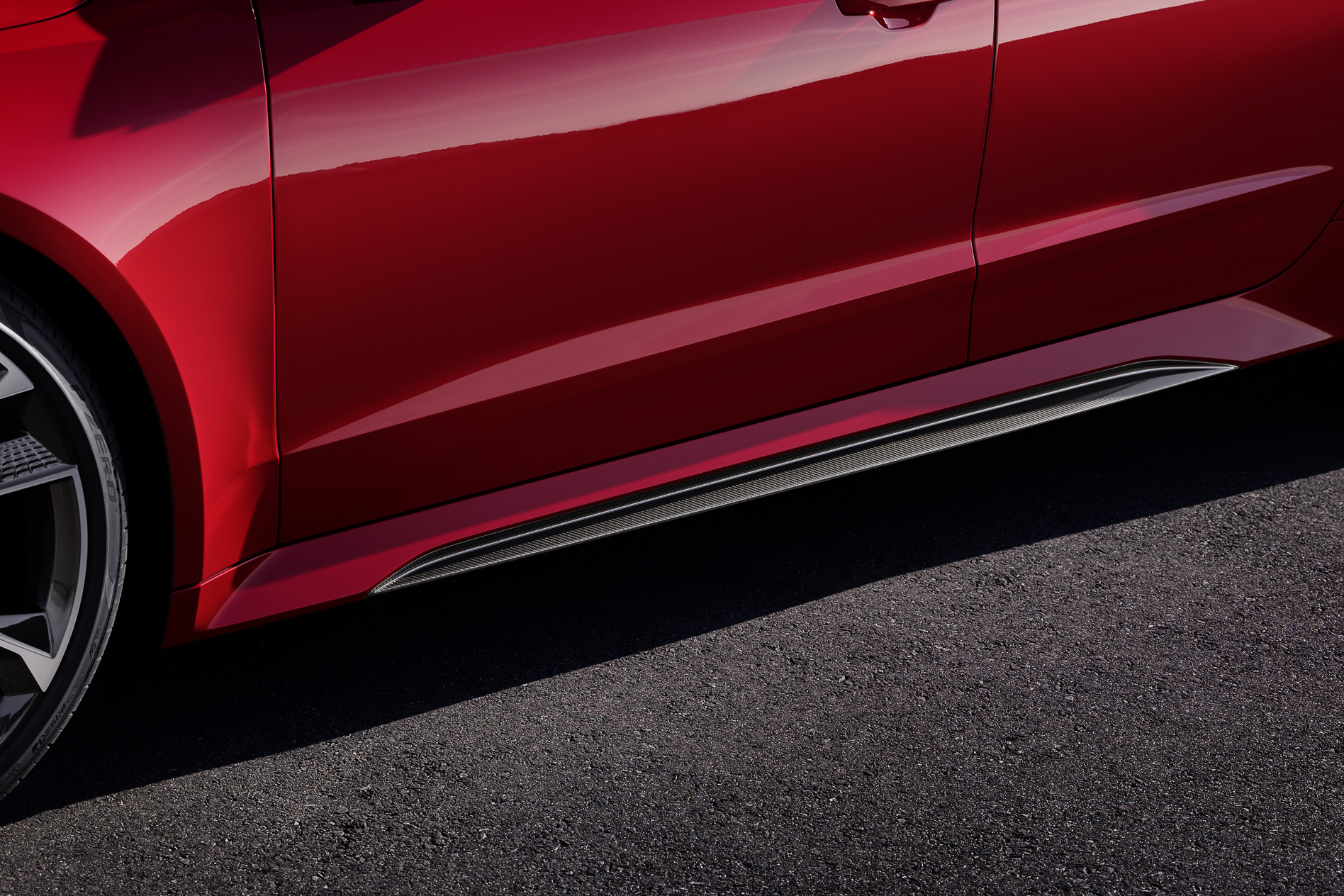
It shares its mechanicals with its blood relative, the RS6 Avant, so that means a 4.0-litre V8 engine, with two turbochargers nestled between its cylinder banks, powers the RS7.
The turbos have been revised with bigger impellers and juiced by 0.2BAR more to push the RS7’s outputs to 446kW and 800Nm, while Audi’s mildest-of-mild hybrid systems has been installed.
Sadly, the system doesn’t add fill-in boost; rather, it simply gathers a little energy from a new belt-drive starter generator and fires the big motor back up from a brief sailing mode stint.
It’s only a couple of kilowatts up on the outgoing model but offers a full 50Nm more torque, which shoves the sportback to 100km/h in 3.6 seconds, and to 200km/h in 12 seconds.
Option up the Dynamics package and top speed can be bumped from 250km/h to 305km/h.
The whole shooting match is backed by a torque-converting eight-speed auto married to an RS-specific AWD system that can send up to 85 percent of the goodness to the rear end if needed.
Dynamically, the RS7 uses a revised 50 per cent stiffer air-sprung suspension set-up, sitting 20mm lower than a standard A7 sportback. Whack it in Dynamic mode and it’ll drop a further 10mm.
The shocks, too, are connected diagonally across the car to help it sit flatter at higher speeds, while steel-sprung suspension is an option.
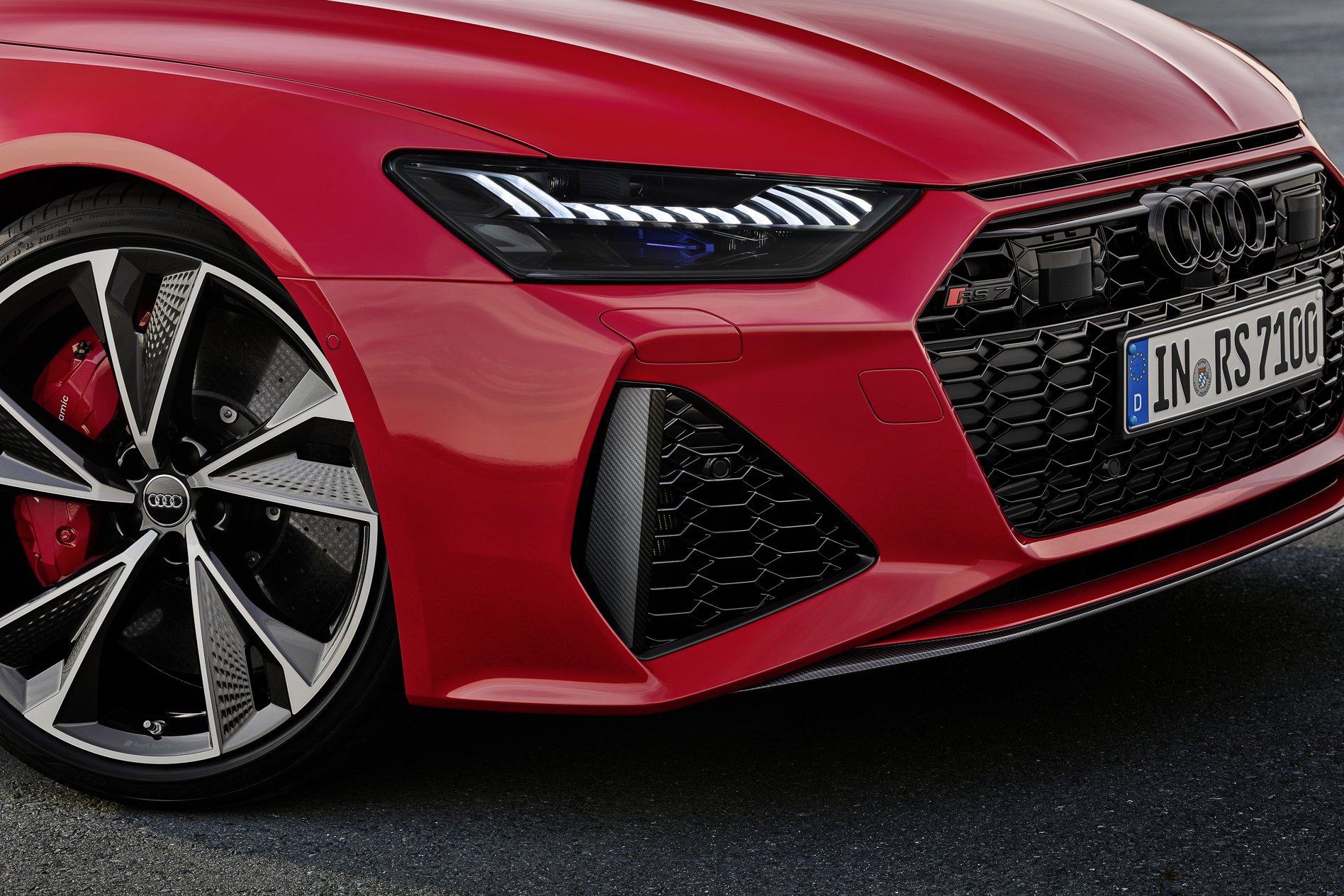
Peeking through the RS7-specific 22×10.5-inch milled-surface alloys are simply monstrous brakes; 440mm carbon front rotors are grabbed by ten-piston one-piece calipers with four brake pads.
The rear rotors are carbon, as well. Standard 420mm steel items are also on offer.
A new rear-steering system will tweak the rear wheels up to five degrees at lower speeds in a counter-steer to help low-speed manoeuvring, and two degrees in the same direction as the fronts at speed to help stability.
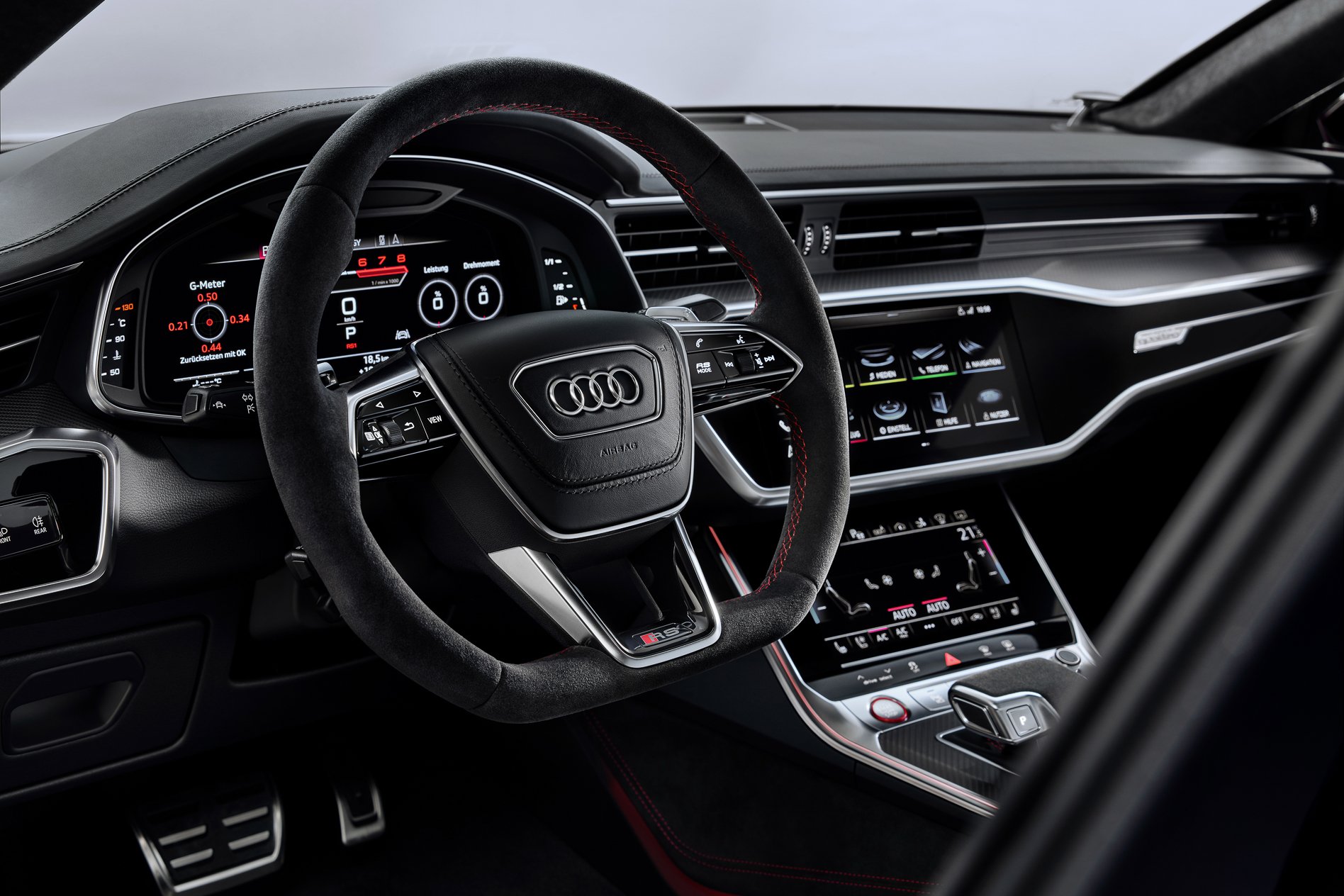
Inside, the RS7 is equally as incredible. High-spec cars will come with super high-quality Valcona leather and figure-hugging RS sports seats, while the digital dashboard and new touchscreen multimedia system both offer a bespoke RS mode that shows all manner of parameters.
Keep abreast of the 2019 Frankfurt Show right here
The flat bottomed steering wheel is new, and so are – hallelujah! – the new, beautifully sculpted alloy shifter paddles that replace the underwhelming items on the previous car.
As well, Audi has added RS buttons to the steering wheel that allows the owner to choose between mild and wild as they see fit.
Pricing and specs are a little way away, but it’s reasonable to expect that the new RS7 will probably cost more than the $261,800 of the outgoing car.
Australia is again likely to take a higher spec car as standard, so figure on goodies like the carbon brakes, amazing matrix LED lights and RS sports seats to come standard.
Don’t wrap mine, I’ll eat it here.
More Audi performance news right here
BMW Group Australia has issued a challenge to the high school students of Victoria: submit a plan for the perfect future mobility scenario.
The state-wide digital competition is designed to inspire the youths of Victoria to consider careers in science, technology, engineering and maths (STEM) in order to boost Australia’s technological development and future workforce.
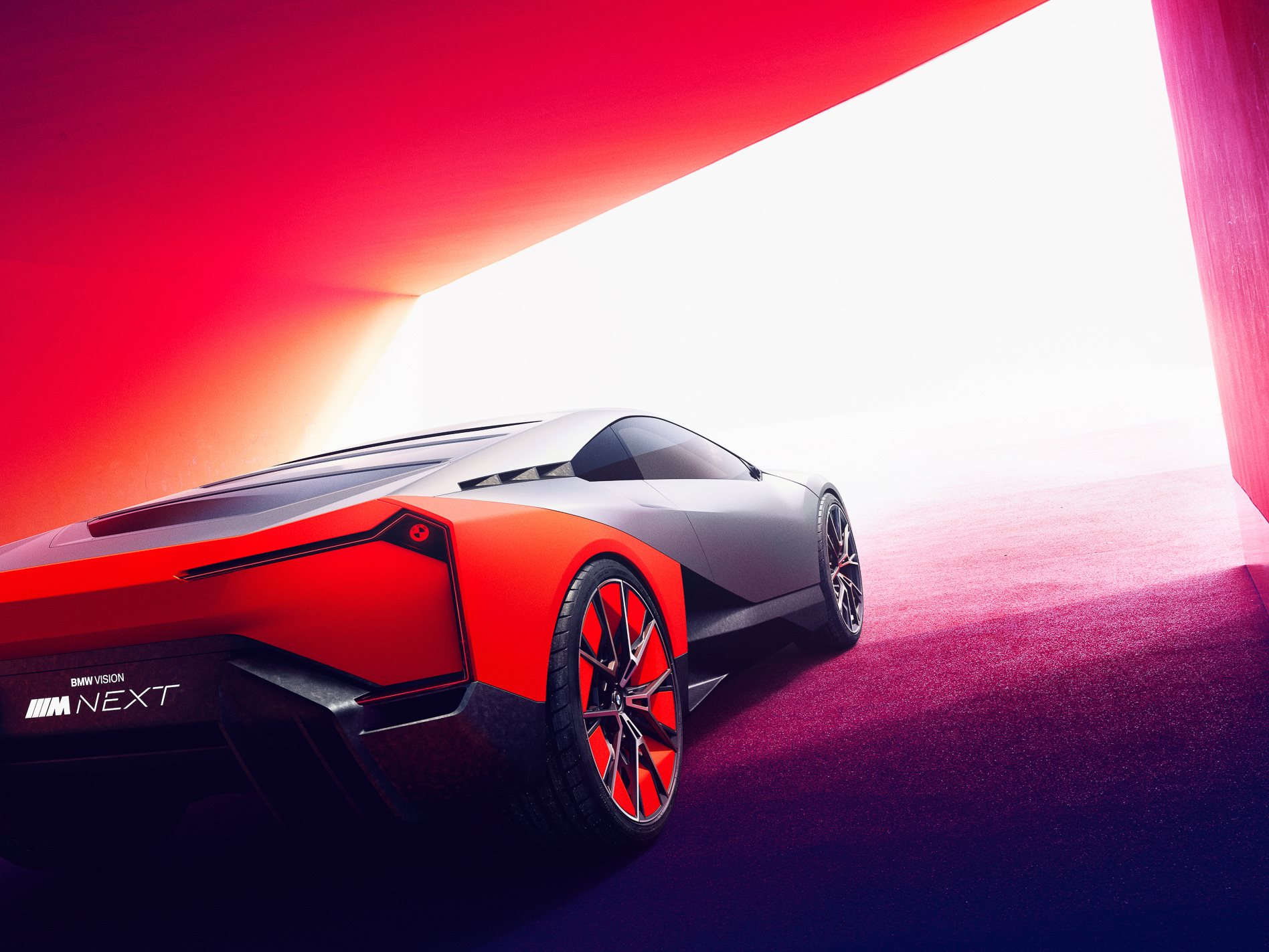
Entrants are asked how they would improve Melbourne transport network for the year 2040, and are posed the question: How will you travel around Melbourne in 2040? Does it look different to mobility of today?
Secondary school students are invited to submit their vision for what the future of mobility will look like through one of four topics: city design, transport infrastructure, sustainable mobility or transport technology.
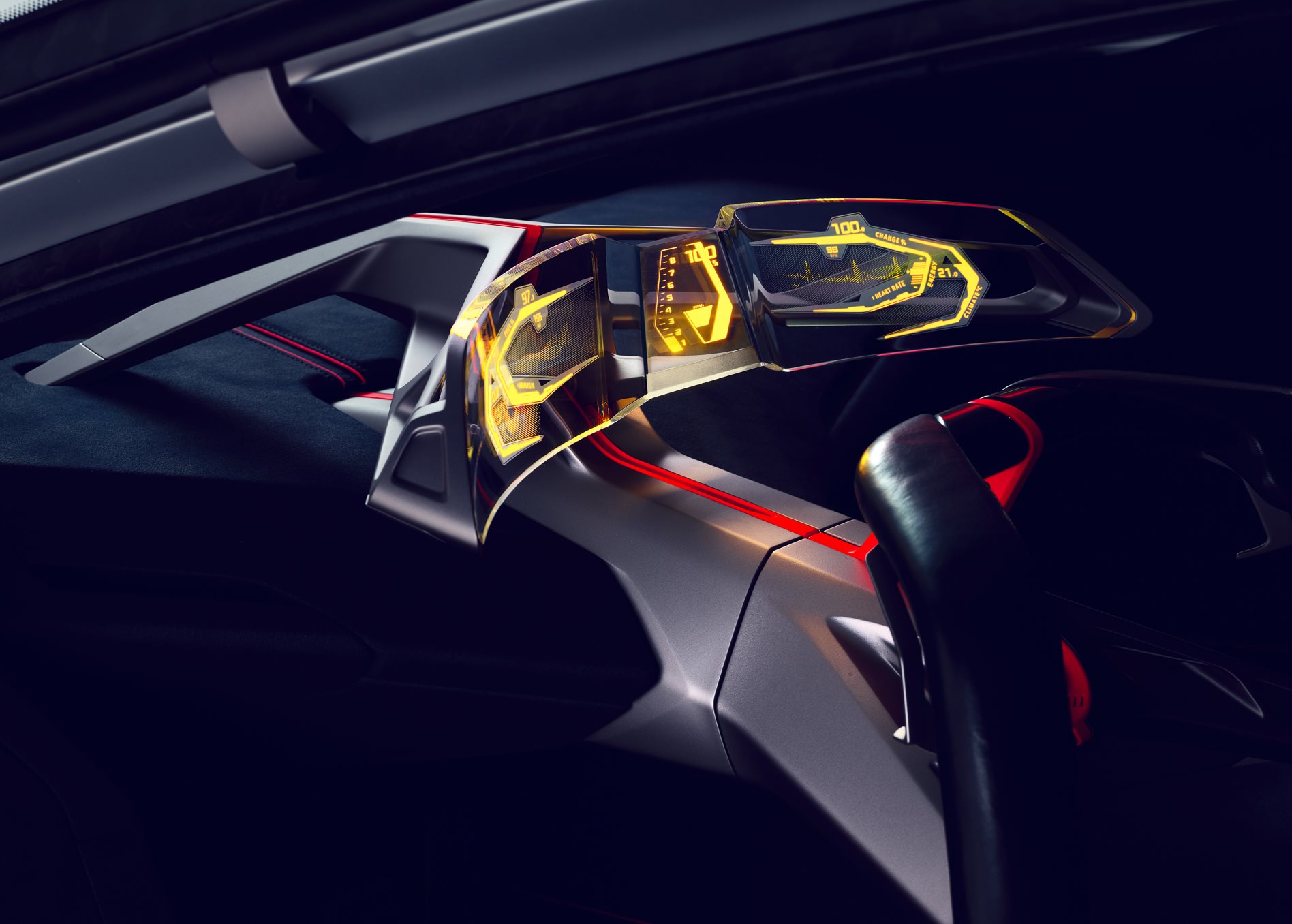
Entries are permitted as either 800-2000 word essays, up to eight sketches or illustrations, or as a video submission between 1-3 minutes.
Four winners will be chosen to receive a $5000 education grant and their families will enjoy a six month loan of a BMW or Mini plug-in hybrid car.
“The yourMelbourne competition shines a light on the next generation of visionaries, inspiring young Australians to realise their future mobility needs and that of the city of Melbourne,” said BMW Group Australia CEO Vikram Pawah.
Winning entries will be announced at the BMW Group yourMelbourne Festival on Sunday 20 October at the company’s headquarters in Mulgrave, Victoria.
Codemasters have been busy spooling up the hype machine ahead of the October 11 launch date of its latest chapter in the Grid franchise, recently confirming a 60-strong car list and 13 circuits for the new game titled, simply, Grid.
However, if you were hoping that your favourite tracks from the last Grid game, Grid Autosport, would carry over, prepare for some disappointment. Aussie players may be among those miffed by Grid’s track list, as Mount Panorama is nowhere on Codemasters’ list of confirmed tracks. Sacrilege.
Taking some of the sting out of Bathurst’s omission, though, is the inclusion of Sydney Motorsport Park – or Eastern Creek, for you traditionalists out there.
Scanning the car list, it’s clear why SMSP made the grade: it’s the venue for the World Time Attack competition, an event which attracts entrants to Sydney from around the globe, and there are no fewer than five cars in Grid’s Tuner category that are based on – or outright facsimiles of – some of those entrants.
The rest of the track list is made up of a mix of fictional street circuits (set in real-world cities), and actual circuits like Brands Hatch, Sepang and Silverstone, while Okutama and Crescent Valley are completely made up.
Overall, it’s a more limited selection than what was offered in Grid Autosport, which featured a total of 22 locations. That said, there’s always the possibility that Grid’s track list could expand with future updates.
On the car side, there’s a greater element of choice. Split into six categories – Tuner, GT, Touring, Stock, Prototype and Open Wheeler – there will be 60 vehicles to play with from launch, and Codemasters has hinted that a few more could make the cut by October 11.
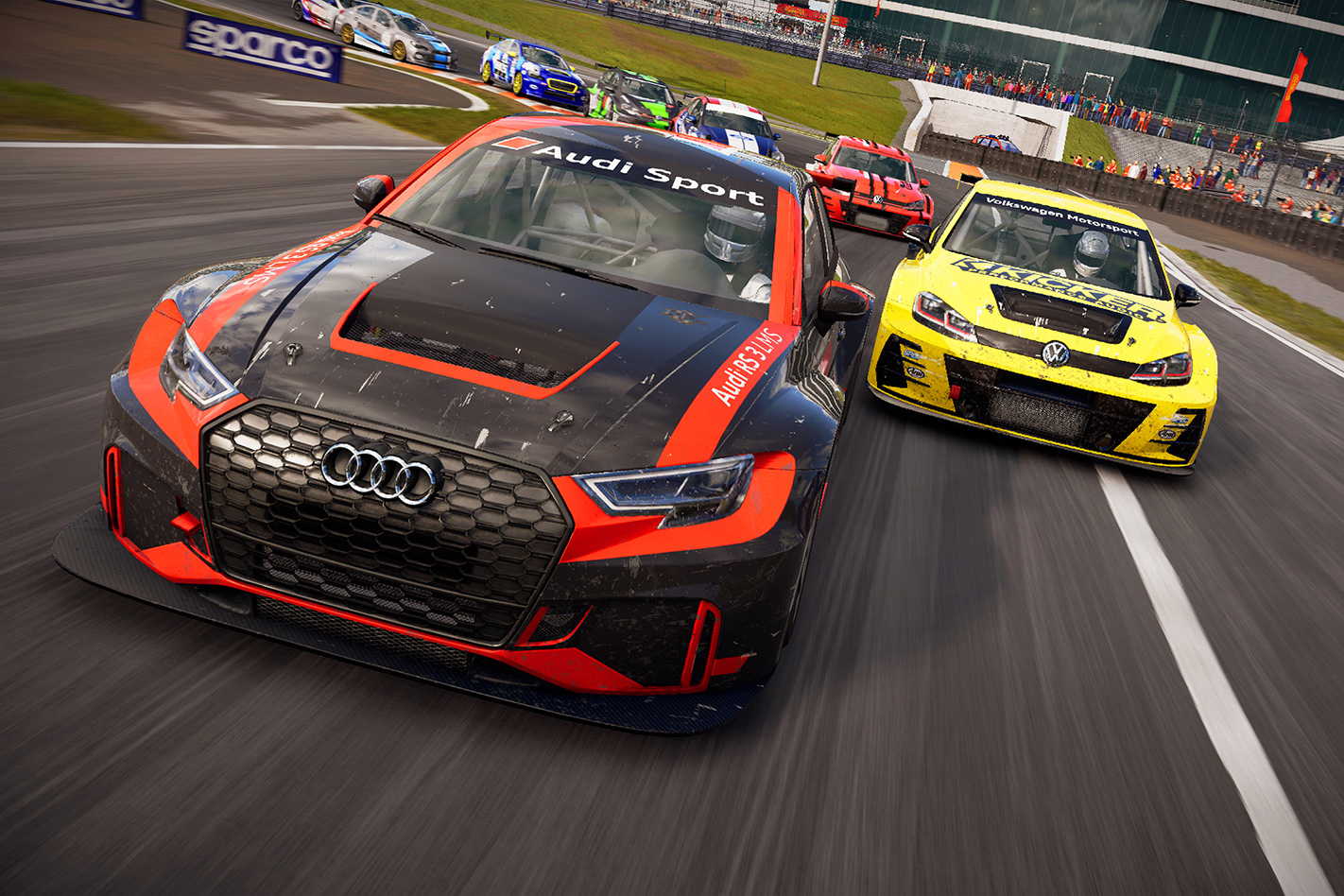
Touring car fans are well catered for with a bevy of production-based racers from the modern era and yesteryear, with standouts being the BMW M1 Turbo, Ferrari 512 BB LM, Porsche 935/78 and two Group A heroes: the Ford Sierra Cosworth and R32 Nissan Skyline GT-R. Shame there’s no Bathurst to put them on…
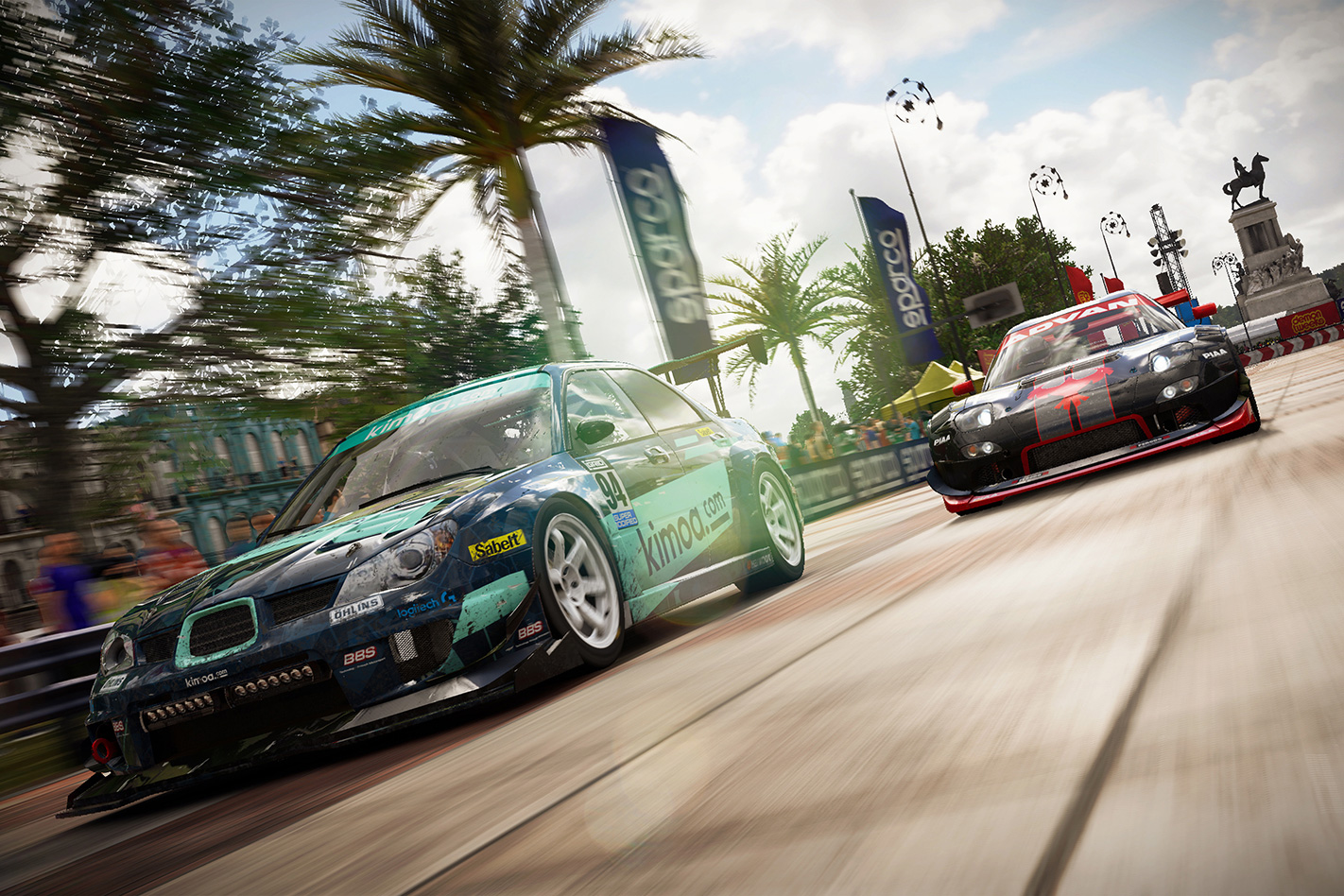
The GT category is similarly diverse, grouping race cars from GT1, GT3, GT4, GTE and beyond together, which should make for some interesting gameplay given the speed differential between those categories.
The Prototype and Open Wheeler categories are sparsely populated, with just two cars apiece, but the Tuner group should whet the appetite of time attack junkies.
The local hero, the MCA Nissan S13 Silvia ‘Hammerhead’ that was World Time Attack champion in 2016 and 2017, and runner-up in 2018, is modelled in full and should be a monster to drive. Japanese time attack specialist Tomohiko ‘Under’ Suzuki and his carbon-bodied S15 Nissan Silvia is another WTAC stalwart, and his car will be another playable vehicle in the Tuner category.
Other highlights include the Audi R8 1:1 time attack car, a pair of classic Nissans in the form of a 240Z and KPGC10 Skyline GT-R, while the Auto Gallery Yokohama R32 Nissan Skyline GT-R from Grid 2 also makes a return.
We’ve listed every confirmed car and track below. What are you most looking forward to drive in Grid 2019?
Grid 2019 Tracks
- Barcelona
- Brands Hatch
- Crescent Valley
- Havana
- Indianapolis
- Okutama GP
- Okutama Sprint
- San Francisco
- Sepang
- Shanghai
- Silverstone
- Sydney Motorsport Park
- Zhejiang Circuit
Grid 2019 Cars
Touring
- Alfa Romeo 155 TS – Touring
- Audi RS 3 LMS – Touring
- BMW M3 Touring Car – Touring
- BMW M1 Turbo Group 5 – Touring
- Chevrolet Camaro Super Tourer – Touring
- Ferrari 512 BB LM – Touring
- Ford Capri Turbo Group 5 – Touring
- Ford Sierra RS500 Cosworth – Touring
- Ford Sierra RS500 Cosworth Group A – Touring
- Ford Focus TC-2 – Touring
- Holden ZB Commodore Supercar – Touring
- Nissan Skyline GT-R Group A (R32) – Touring
- Porsche 935/78 Group 5 “Moby Dick” – Touring
- Volvo 850 Estate Touring Car – Touring
- Subaru WRX STI TC-2 – Touring
- Volkswagen Golf GTI TCR – Touring
- Aston Martin Vantage GTE – GT
- Aston Martin Vantage GT4 – GT
- Alpine A110 1800 Group 4 – GT
- Chevrolet Corvette C7.R – GT
- Chevrolet Camaro GT4.R – GT
- Ferrari 330 P4 – GT
- Ferrari 365 GTB4 Competizione – GT
- Ferrari F430 Challenge – GT
- Ferrari 488 GTE – GT
- Ford GT GTE – GT
- Ford GT40 – GT
- Ford Mustang GT4 – GT
- Lancia Stratos – GT
- Nissan 350Z (Z33) Gr.2 – GT
- Porsche 911 Carrera RSR 3.0 – GT
- Porsche 911 GT4 (997) – GT
- Porsche 911 RSR – GT
- SRT Viper GTS-R – GT
- Audi R8 1:1 – Tuner
- Datsun 240Z (S30) Modified – Tuner
- Mini Miglia Challenge – Tuner
- Mitsubishi Lancer Evolution IX Time Attack – Tuner
- Nissan 300ZX (Z32) Modified – Tuner
- MCA Hammerhead Nissan Silvia (S13) – Tuner
- Nissan Silvia Time Attack Spec (S15) – Tuner
- Nissan Skyline 2000GT-R (KPGC10) Modified – Tuner
- SUBARU BRZ Modified – Tuner
- Mazda RX-7 Panspeed – Tuner
- Mitsubishi Lancer Evolution VI Time Attack – Tuner
- Subaru Impreza WRX – Tuner
- Auto Gallery Nissan Skyline GT-R (R32) – Tuner
- Chevrolet Camaro SSX Concept – Stock
- Chevrolet Camaro Z28 Modified – Stock
- Dodge Challenger SRT Modified – Stock
- Dumont Type 37 (fictional) – Stock
- Ford Mustang Mach 1 Modified – Stock
- Jupiter Eagleray Mk5 (fictional) – Stock
- Jupiter San Marino Oval Stock (fictional) – Stock
- Pontiac Firebird Modified – Stock
Prototype
- McLaren M8D – Prototype
- Porsche 917/30 – Prototype
- JEDI F1000 – SPEC – Open-Wheel
- Renault R26 – Open-Wheel
What stands out?
How zippy the Accent has become, and how much space you get for the money. Renamed the Accent Sport and fitted with the 1.6-litre engine formerly reserved for the more expensive Accent SR, the least costly Hyundai is among the strongest of city cars, and it is bigger than most. Indeed, it is only slightly smaller than the Hyundai i30 and Elantra. The Accent is backed by a five-year warranty, and can be had as a five-door hatch or a four-door sedan.
You can also read our review of the Accent Active and SR that this car replaced.
What might bug me?
Getting comfortable in the driver’s seat: you can adjust the steering wheel for height but not for reach.That you can’t listen to music stored on CD – there’s no player.The small touchscreen. It’s only 5.0 inches in diameter, and so it doesn’t have much real estate for displaying Apple CarPlay icons or telling you which tune is playing on the radio.
What body styles are there?
Five-door hatchback and four-door sedan.The sedan is about 15 centimetres longer than the hatch but has no more space for passengers: all the extra length goes into the boot.All Accents are front-wheel drive, and the Accent is classed as a light car, lower priced.
What features do all Accents have?
A sound system with a radio, Aux and USB inputs, Bluetooth phone connectivity and audio streaming, and four speakers, controllable from a 5.0-inch touchscreen.Support for Apple CarPlay, which lets you display some apps (including maps) from your iPhone on the car’s touchscreen and control them from there.Cruise control.Height adjustment for the steering wheel, which carries controls for the audio and cruise control systems. Height adjustment for the driver’s seat, and seatbelt reminders for all five seats.Air-conditioning, and power windows. Cloth seat trim.Sixteen-inch alloy wheels (which don’t need plastic trim caps to look nice), and a full-sized spare wheel.Six airbags. Anti-lock brakes, and electronic stability control – which can help you control a skidding or sliding car. (For the placement of airbags, please open the Safety section below.)The Accent is covered by a five-year, unlimited kilometre warranty.
Which engine uses least fuel, and why wouldn’t I choose it?
Only one engine is available in the Accent Sport, a 1.6-litre four-cylinder. On the official test it uses 6.6 litres/100km in auto form, and a little less with a manual gearbox.This is the engine formerly reserved for the more expensive Accent SR. Hyundai calls it a 1.6 GDi engine, for gasoline direct injection (a relatively new and sophisticated method of delivering fuel for improved efficiency).It offers you about 35 per cent more power than the 1.4-litre engine in the former Accent Active. That is plenty around town, and enough for relaxed highway use.You can have it with a six-speed manual gearbox, or a six-speed automatic. (Where the former Accent Active used a CVT auto, the Accent Sport has a conventional auto like the former SR.)(Power outputs and all other Hyundai Accent specifications are available from the Cars Covered menu, under the main image on this page.)
What key features do I get if I spend more?
The only thing you can spend more for on an Accent Sport is automatic transmission, which adds about $2000 to the showroom price.If you choose the hatch you also get a rear windscreen wiper.
Does any upgrade have a down side?
No, except that Accent Sport autos use a wee bit more fuel than the manuals.White and yellow are the only standard colours, with the other four costing extra.
How comfortable is the Accent?
The Accent Sport presents well inside, with an unusual, golf-ball like dimpled texture on top of the dash and well laid out switches and buttons. It’s all very basic but logically presented.The seats feel soft and spongy, and once moving the suspension feels that way too, so that you are well looked after when driving around town.The sound system only has four speakers and the sound is more about making noise than musicality.It is at highway speeds, or on long trips, when you wish that the seats supported the middle of your back more effectively and that less tyre noise intruded into the cabin – the Accent’s tyre roar is quite loud on coarse surfaces.The Accent Sport’s 1.6-litre engine is almost as powerful as the engines of some larger, and more expensive, small cars, and so it feels quite perky in the compact and lightweight Accent body.Around town, acceleration is brisk. At highway speeds the engine does the job comfortably enough but it gets noisy and a bit rough if you ask it to work hard.The six-speed auto gearbox shifts cleanly and responds well when you push the accelerator.
What about safety in a Hyundai Accent?
The Accent Sport has anti-lock brakes, stability control, six airbags, daytime running lights, and seatbelt reminders on all seats.The airbags are in the usual places: one ahead of each front-seat occupant; one outside each front occupant to protect the pelvic and chest area from a side impact; and side-curtain airbags running down the length of the cabin to protect the heads of front and rear occupants from a side impact.Crash avoidance aids such as autonomous emergency braking are not available on an Accent. (Auto-braking systems use sensors to scan the road ahead, and can apply the brakes automatically to prevent you from crashing into someone in front.)The Australasian New Car Assessment Program (ANCAP) has rated the Accent’s safety at five stars, most recently in August 2011.
I like driving – will I enjoy this car?
The rorty engine in the Accent Sport makes zipping away from traffic a fraction more enjoyable than it would be in some similarly priced alternatives.That said, the Accent is more about value motoring than having fun. It is honest but basic, and won’t tickle your driving senses as enticingly as a Mazda2 or Renault Clio, for example.Drive with vigour and there is lots of noise to go with the zip – and unfortunately, it’s not a particularly pleasant noise.While the auto transmission is quick to slot down a ratio or two when you press the accelerator, it is just as quick to change back up when you lift off – rather than assessing the driving conditions and holding the lower gear when that’s helpful, as smarter gearboxes do.You can hold gears manually, however, using the manual override built into the gated shifter.As in previous Accents the steering in all models feels dull, especially through gentle bends and at other times when using the wheel near its centre position.If you try to perform a fast U-turn the power steering will load up from time to time, making it harder than usual to turn the wheel.The Accent Sport now has the bigger 16-inch tyres formerly reserved for the SR. Notwithstanding the better grip, the Accent’s steering and soft-ish suspension aren’t up to the zip of the engine.Roadholding is fine for tooling around town or cruising in the country, albeit with some leaning of the body through turns.Ramp up the pace and the Accent’s limits soon become apparent.
How is life in the rear seats?
By light-car standards there is good leg room and head room, although adults will find it a bit tight in the back and those taller than 180cm may find their head grazing the roof. The longer roof of the hatchbacks translates to an extra 13mm of rear head room.The rear seatbacks are unusually high, which gives good support to the upper back.While there are three seatbelts, the middle seat is a lot less comfortable than those outside it, with a higher position and no side-support.There are no rear air-conditioning vents.Cabin storage in the rear is light-on, too: there are no door pockets, and a seatback pocket only on the left-hand side.
How is it for carrying stuff?
The boot on the Accent Sport Hatch is quite accommodating, with a fairly wide floor, although there is a large lip to load luggage over. Rated capacity is 370 litres – that is a lot of space for a car at this price, and a match for many cars a size bigger. The 60-40 split-fold rear seat setup allows long items to extend into the main cabin if necessary.The longer body on the sedan translates to about 30 per cent more luggage space in the boot.However, with rear seats folded it remains easier to load awkward items such as bicycles into the hatchback.
Where does Hyundai make the Accent?
All Accents are made in South Korea.
What might I miss that similar cars have?
A reversing camera, which is standard on the Toyota Yaris and Honda Jazz, for example.Active safety features, such as automatic emergency braking. This is standard on the Mazda2 and the smaller Kia Picanto, and available on the Yaris and Suzuki Swift, for example.Among other light cars you might consider are the Renault Clio and Kia Rio.If you could be happy with less space, consider a Picanto, Holden Spark, or Suzuki Ignis.
I like this car, but I can’t choose which version. Can you help?
The Accent Sport hatch is arguably the pick for its easier parking (it is shorter than the sedan) and greater flexibility for loading big items of cargo. Go for the auto transmission, too: it teams nicely with the 1.6-litre engine, and an auto Accent will be easier to sell.
Are there plans to update the Accent soon?
The current shape Accent went on sale in 2011 and received minor updates and tweaks (including dropping the diesel engine formerly available) in 2012 and 2013.About September 2015 Hyundai removed the smaller i20 from its model range. The mid-price Accent Elite was dropped also. Accent Active models were given a smaller, 1.4-litre, engine with a CVT auto gearbox option and became the least costly Hyundais available, offered alongside the more expensive, 1.6-litre, Accent SR.Late in June 2017 Hyundai reduced the Accent range to a single hatch and sedan, replacing the 1.4-litre Active and 1.6-litre SR with the Accent Sport. The Accent Sport uses the direct-injected engine from the SR, and adopts its wheel and tyre package, its suspension, and most of its feature set (including cruise control). Unlike the hatch-only SR, you can have the Accent Sport as a sedan also.Late in September 2017 Hyundai gave the Accent’s nose and instruments a subtle restyle, for the 2018 model year.A new-generation Accent is expected some time in 2020, though Hyundai is yet to confirm this.
While Forza Horizon 4 has been on the market for almost a year now, we may be a long way from the next installment of the acclaimed open-world racing game. But that matters not, for Horizon 4 has been morphing and evolving since it hit shelves and servers, with the gaming experience today being markedly different from what was offered back in 2017.
And that’s a good thing for Forzafans. Given the next Forza Horizon is now expected to land as late as 2021 (a new Forza Motorsport title is next in line for release), these updates give Horizon 4 some fresh legs to bolster its appeal as a an accessible open-world arcade racer.
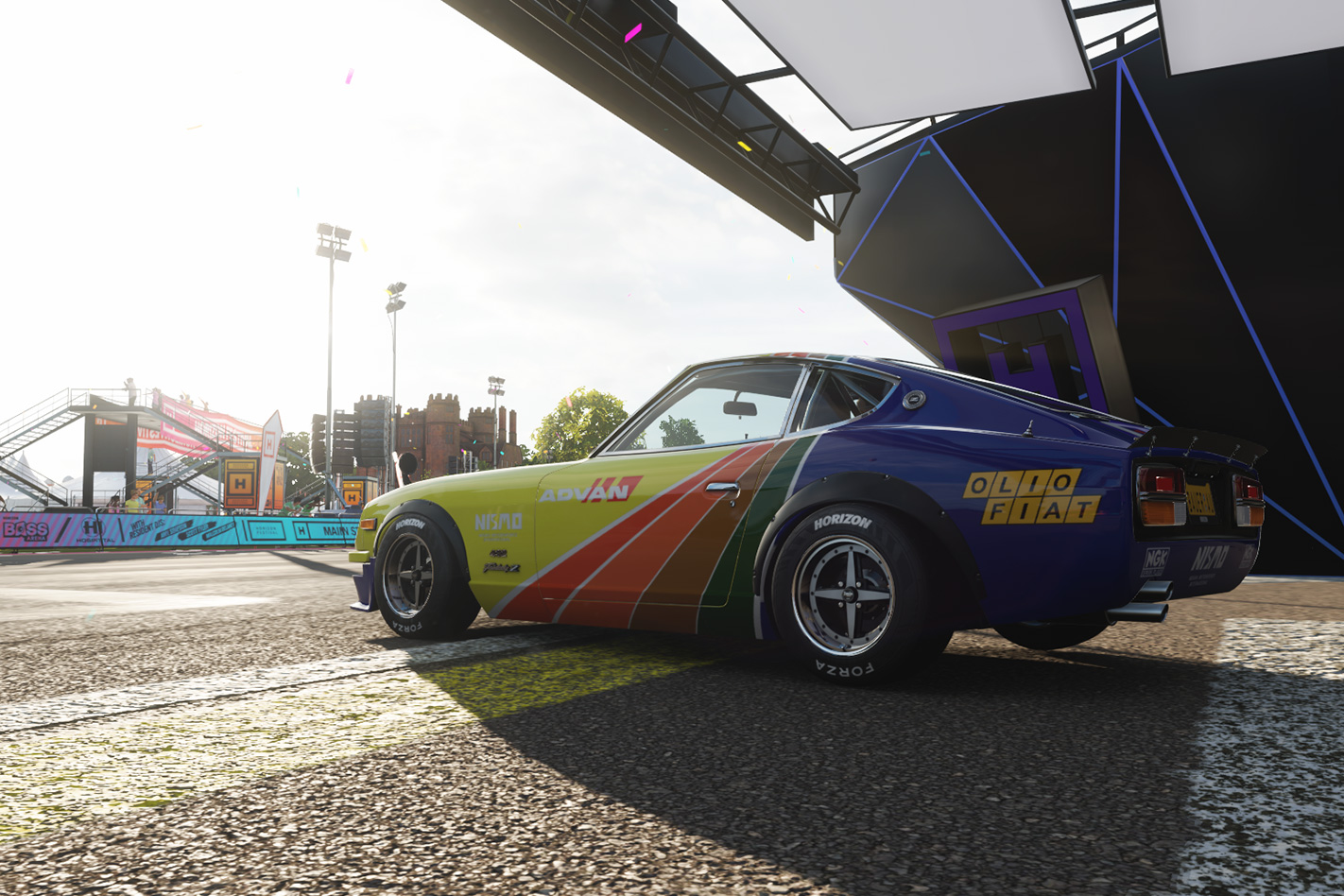
Horizon 4’s expansive sandbox-like world is still very much an attraction, and the developers have kept things fresh with two big expansion packs, numerous car packs and various free story updates to ensure there’s plenty to do across the virtual English countryside.
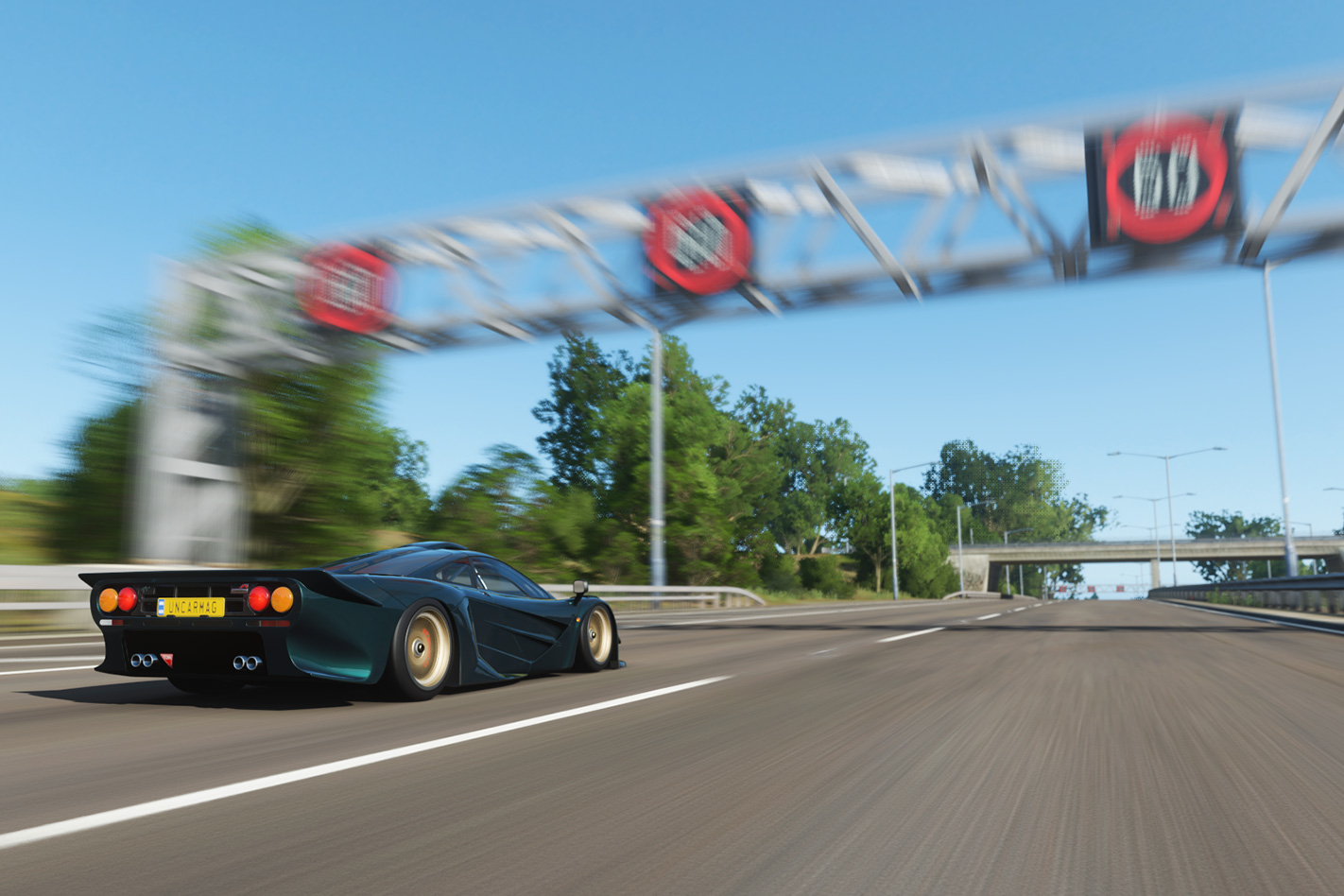
Before we go any further, it needs to be noted that the Forza Horizon series is either a love it or hate it franchise, and if you’ve already fallen on the negative side of that fence then this fourth instalment isn’t going to change your point of view.
Yet in our opinion, the Horizon franchise lands right in the sweet spot between intuitive sim-esque dynamics and arcade approachability. If you’re a razor’s edge sim racer, Horizon isn’t for you. But for the keen car enthusiast – you’ll find the game mechanics are far more natural than straight-out arcade titles such as Need for Speed.
What you need for Forza Horizon 4
The Forza franchise is a Microsoft-exclusive series, so you’ll need either an Xbox or a PC. Gaming wheel peripherals are supported, but don’t worry if you don’t have one – Playground Games coded Horizon 4 to work well with the standard Xbox gamepad.
How much does Forza Horizon 4 cost?
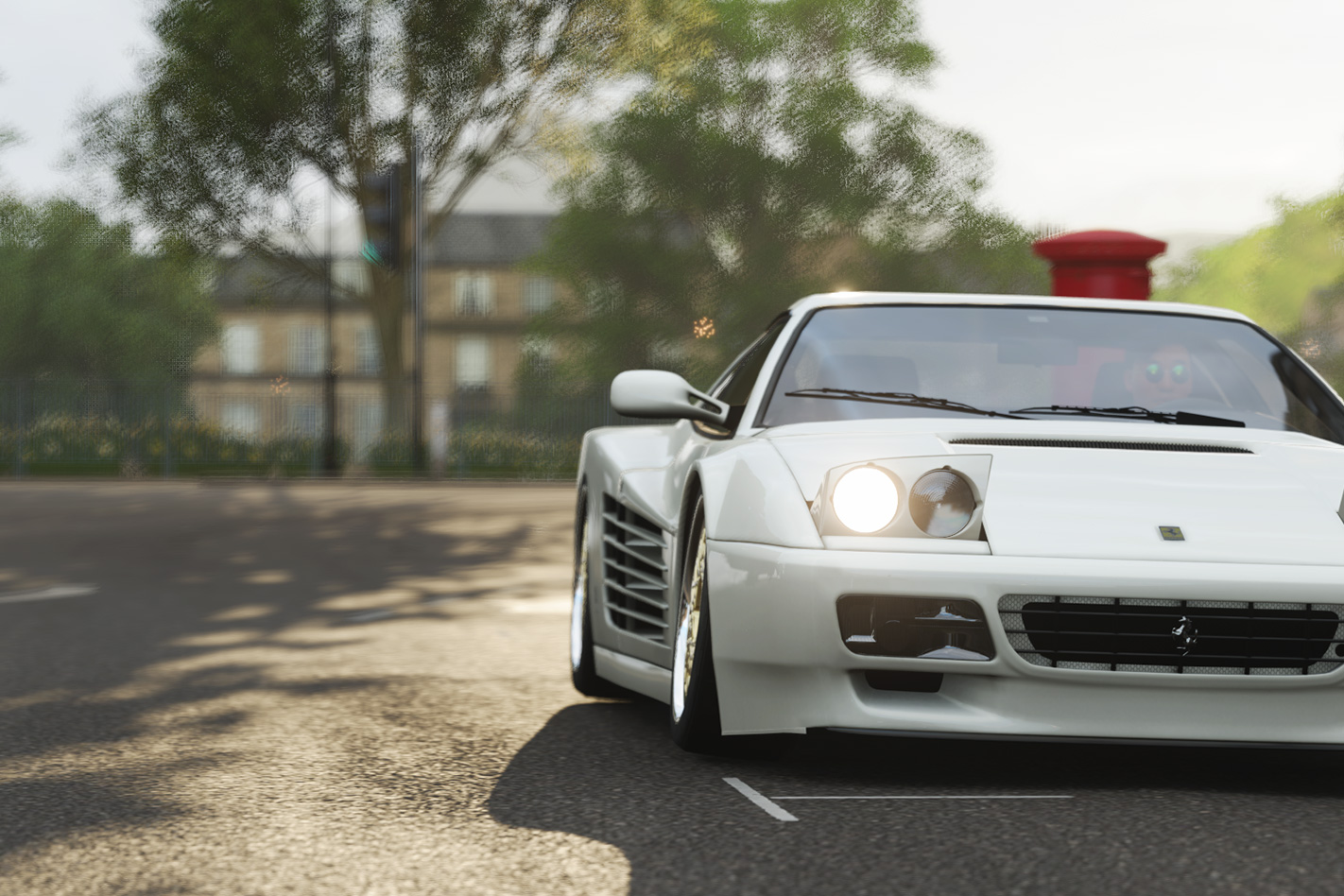
Forza Horizon 4 Standard Edition is listed on Microsoft’s website for $99.95 – or for free if you are subscribed to Xbox’s Game Pass.
Forza Horizon 4 Deluxe Edition (includes the launch pack of Formula Drift cars, and the Car Pass which allows free downloads of all successive ‘car packs’) is listed for $119.95 – or $95.96 with Xbox’s Game Pass.
Forza Horizon 4 Deluxe Edition (includes Car Pass, VIP Membership, Formula Drift Car Pack, Best of Bond Car Pack, and both the Fortune Island and Lego Speed Champions expansions) is listed on Microsoft’s website for $139.95.
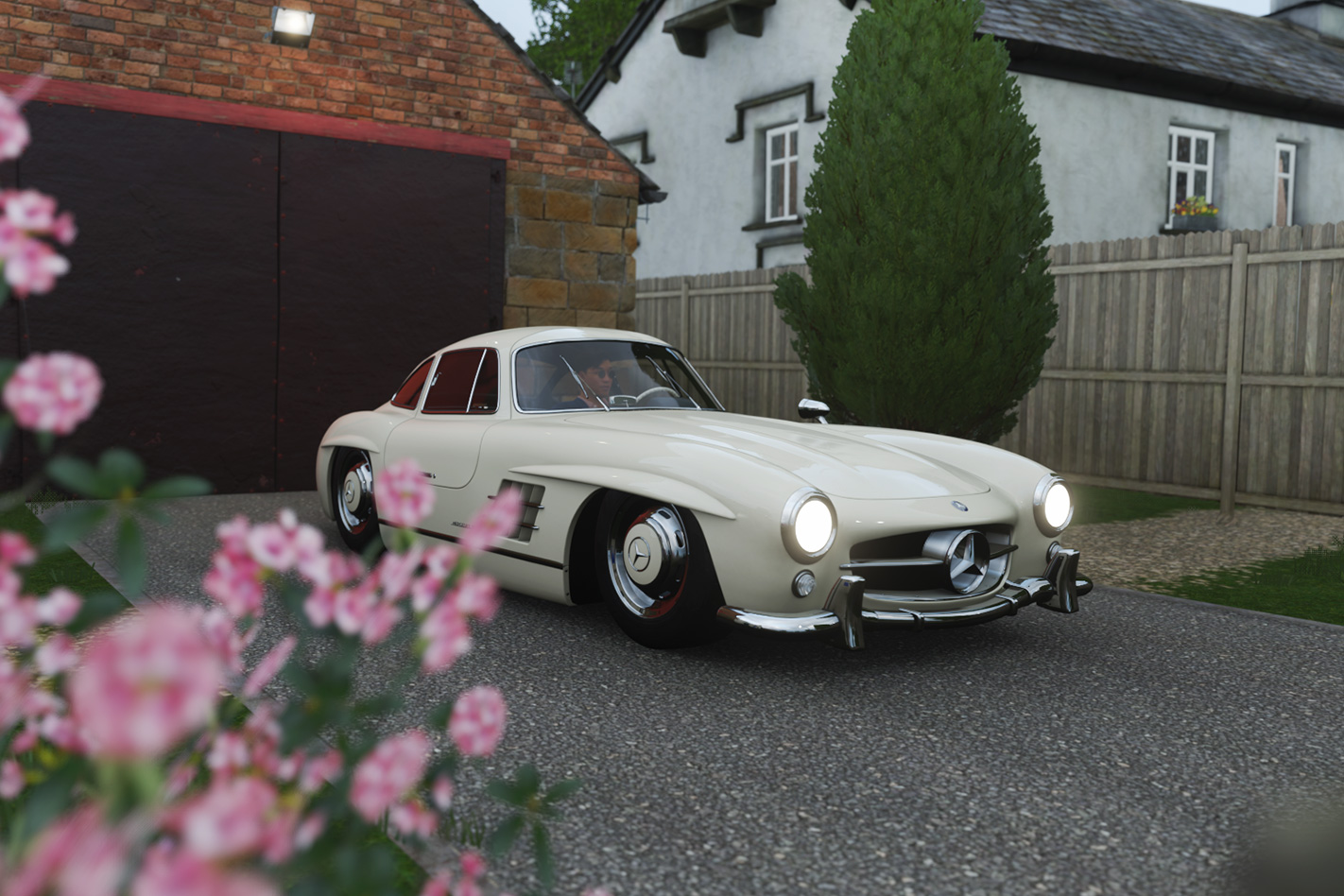
Having said that, be sure to check out your local game stores as there’s a fair chance you’ll find a pre-owned game at a reduced price.
Want more? The Fortune Island expansion sets you back $29.95, and the Lego Speed Champions pack, $19.99, if purchased separately to the base game.
What’s it like to play Forza Horizon 4?
The pure scope of Forza Horizon is its biggest strength, not just in regards to the expansive open-world map, but the way the game lets you indulge in whatever your automotive proclivity desires.
If you just want to race – auto-upgrade your car and select one of the many community-created liveries and go!
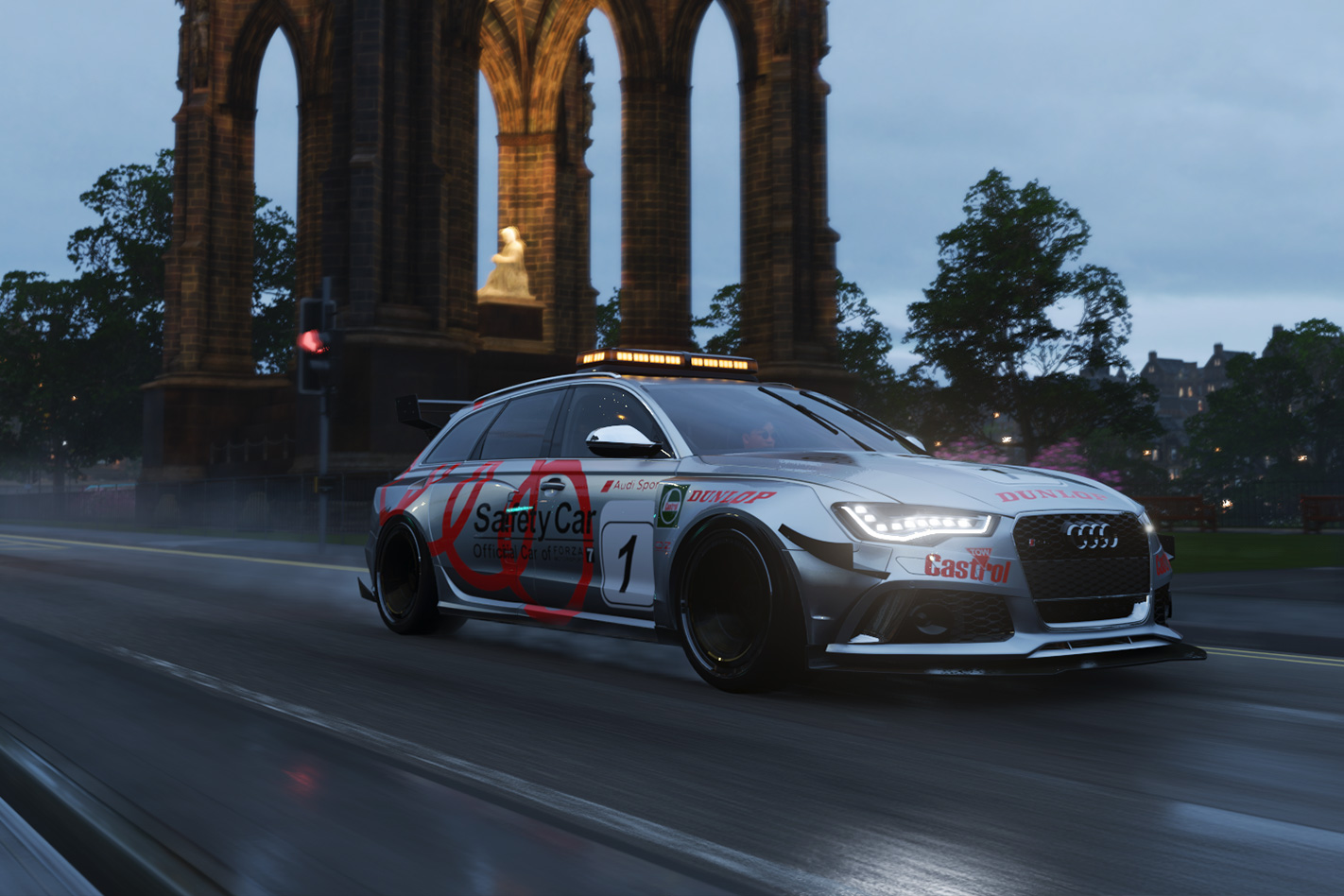
Maybe you see racing as just a means to buy and collect more cars, or perhaps you like building cars to sell at the auction house. Alternatively, there are hundreds of players with far more artistic flair than us who dedicate hours producing replica racecar liveries, or even designing their own (which earn you in-game money every time they’re downloaded, used or ‘liked’).
Or perhaps you just like doing weird stuff.
Want to drop a turbocharged motorcycle engine into a Peel P50 and cut 9sec quarter-mile times? Horizon 4 lets you do that. Want to slap some bolt-on fender flares onto a Bentley Bentayga, along with an eye-searing LED light bar, then smash your way through a Scottish forest? Welcome to the wild world of Horizon. You can even finally give the Ranger Raptor that V8 you’ve always wanted to!
For the uninitiated, the simple premise of the Horizon series is this: you’re dropped into an event best described as the love child of a music festival and a car meet – which happens to span an entire country. Look, don’t think about the logistics too hard, try not to listen to the cringe-worthy dialogue and enjoy the fact that entire English towns have allowed drifting competitions to take place in their leafy neighbourhoods.
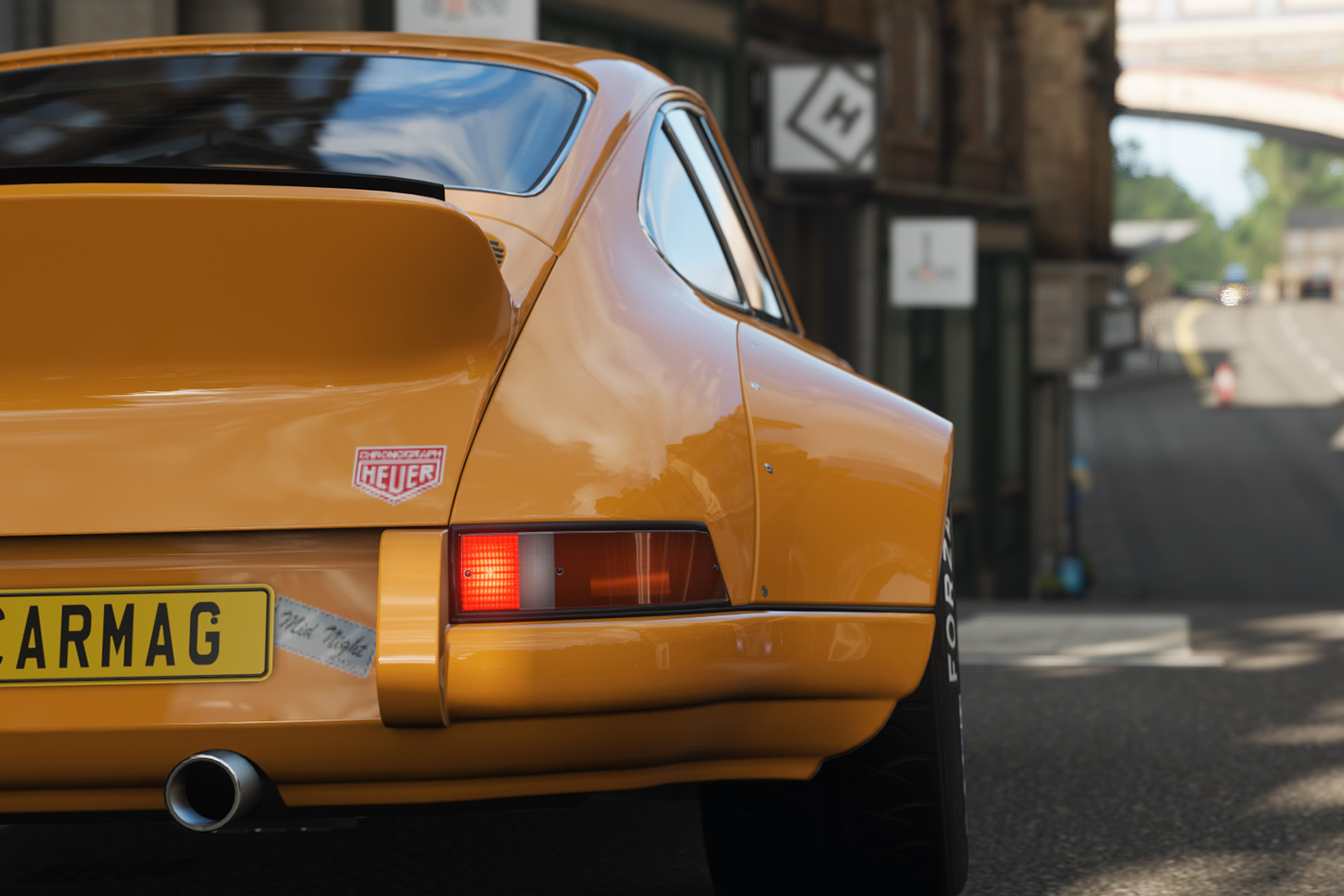
For Horizon 1 it was Colorado in America, then the South of France, before travelling to the Southern Hemisphere for an Australian extravaganza in Horizon 3. This most recent instalment takes place in a stylised blend of the landscape around Edinburgh and the Cotswolds. While it lacks the local familiarity that Horizon 3 provided, the Horizon 4 map feels more expansive, with a better mix of road styles and surfaces.
Car customisation is as extensive as before, with myriad engine swaps available, along with tuneable styling, suspension, brake, and drivetrain parameters. A welcome addition for Horizon 4 is the ability to modify track widths of certain vehicles to really nail the all-important stance.
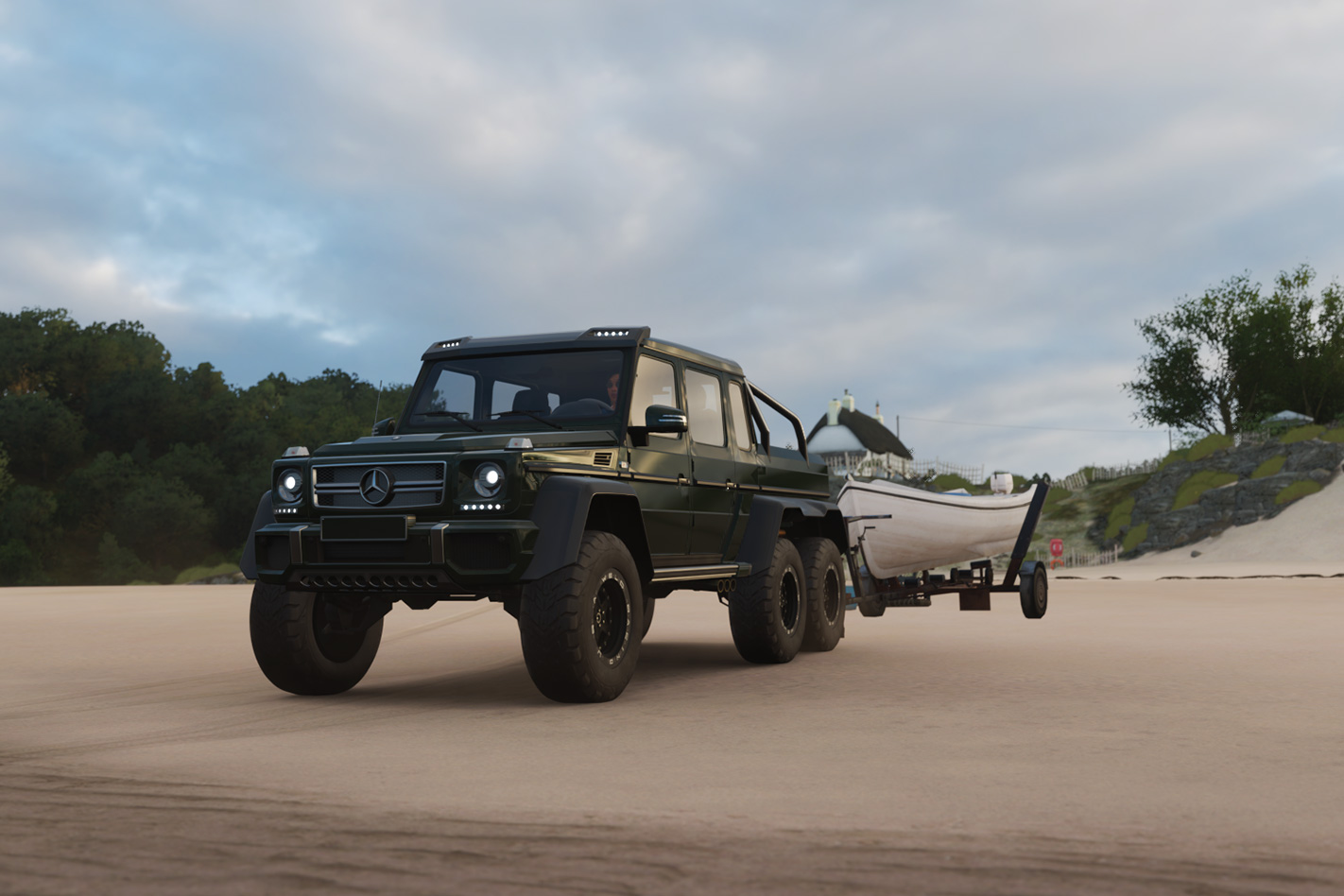
In-game driving dynamics are enjoyable, albeit erring on the arcade rather than simulator side of the spectrum. This isn’t a game for realism fanatics who want to feel every bump in the road. It instead straddles the line between accessible entry that’s quicker to pick-up and play; yet far more realistic and natural than any other open-world racing game around. Each vehicle does have a distinct feel, and the difference in road surfaces and weather conditions does play a significant part in the driving experience.
Racing in Horizon 4 can get a bit repetitive, with only a small selection of event styles, but when you tire of squeezing your twin-turbo 8.0-litre V10 RAM 1500 up the inside of on-screen rivals, you can simply take the same car and explore the open world to your heart’s content. Almost nothing is off limits.
Weather plays a core part in the Horizon 4 experience too, cycling through the four seasons each week. Snow and ice-covered roads prompt a very sideways experience, while Autumn begs you to thrash your creations on muddy backroads.
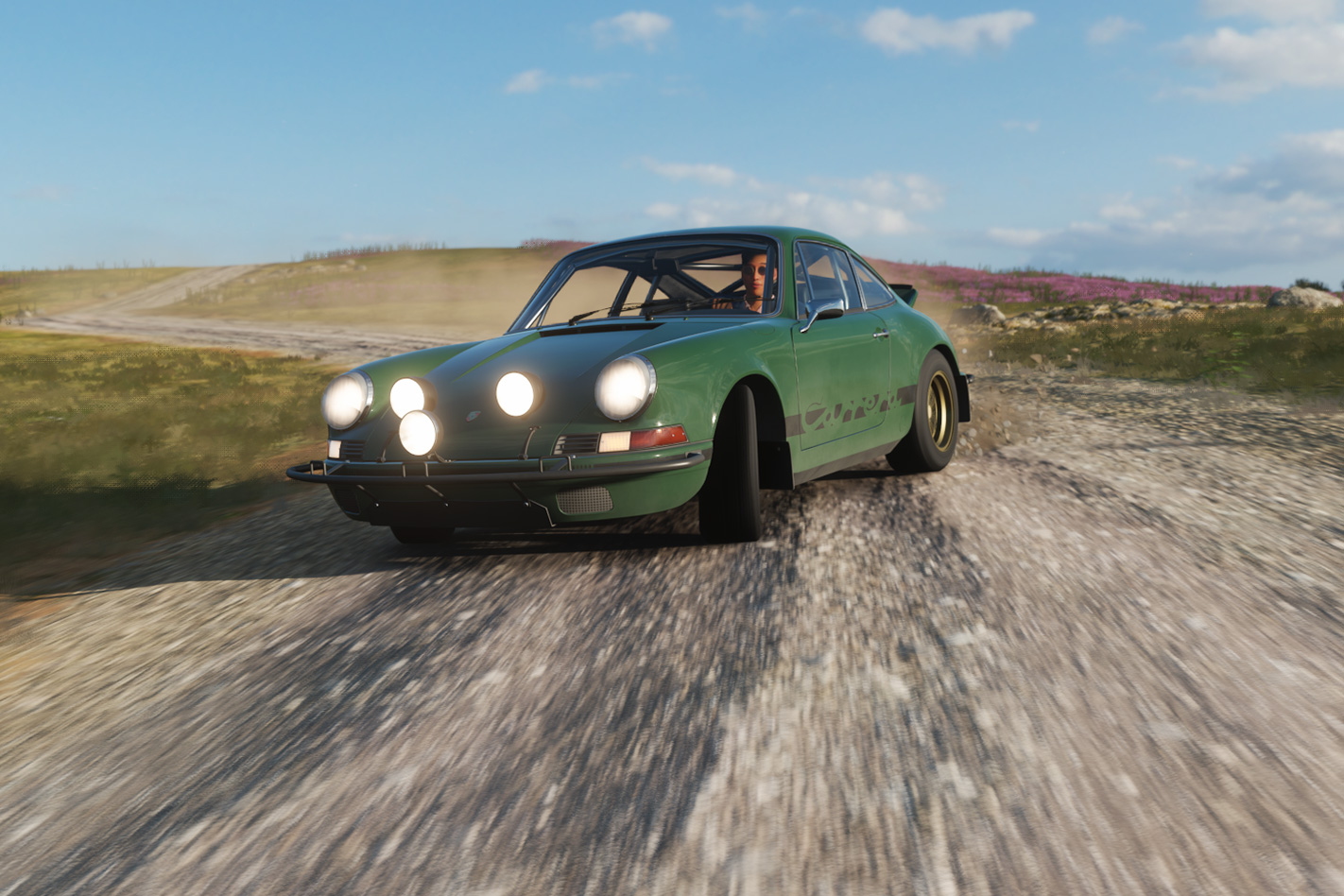
While most things from Forza Horizon 3 carry over into this latest edition, the car list has been worked over and is absolutely massive. Forza Horizon 4’s car list is massive. It offered over 450 cars on launch but with successive updates the game now provides a massive 647 vehicles thanks to post-launch car packs, cars unlocked via story progression, seasonal rewards and various other unique means of attaining rare vehicles – and that number continues to grow.
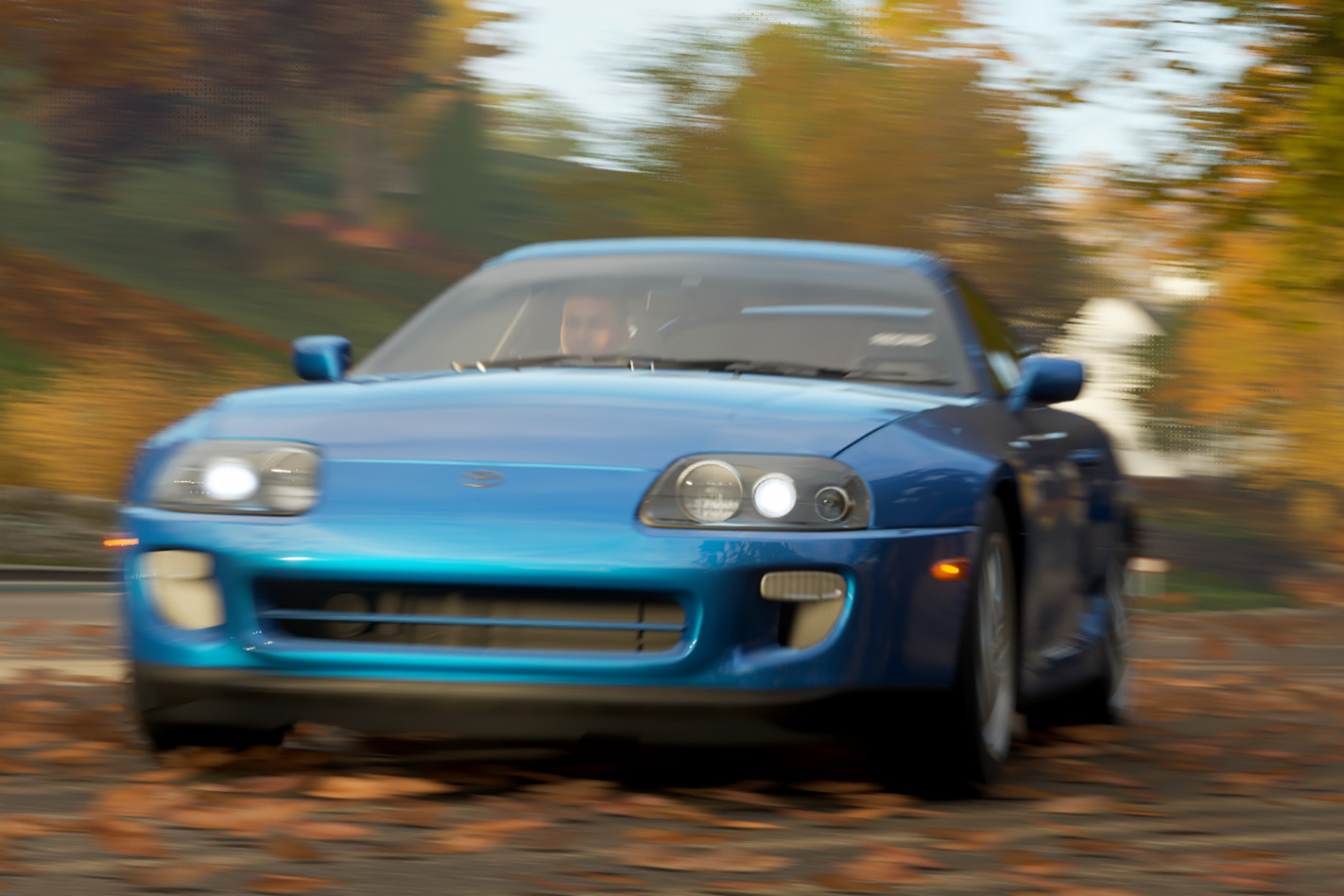
In fact, developers Playground Games recently announced the return of Toyota to the Horizon Garage – a move that means the Big T is no longer exclusive to Sony and its Gran Turismo series. The JZA80 Supra is now back on the car list, and the AE86 Sprinter Trueno is set to join it in the coming weeks. The car list isn’t the only thing that’s evolved since Horizon 4 launched, however.
With recent reports that Forza Motorsport 8 will likely launch alongside the new Series X console in the fourth quarter of 2020, it’s possible that we won’t be seeing a new instalment of the acclaimed Forza Horizon franchise until 2021 – assuming Turn 10 and Playground Games continue their traditional alternating annual releases.
But it doesn’t look like the developers are leaving FH4 to rest on its laurels, as a recent free update has brought with it a host of new cars, as well as a vehicular ‘battle royale’ mode called “The Eliminator”.
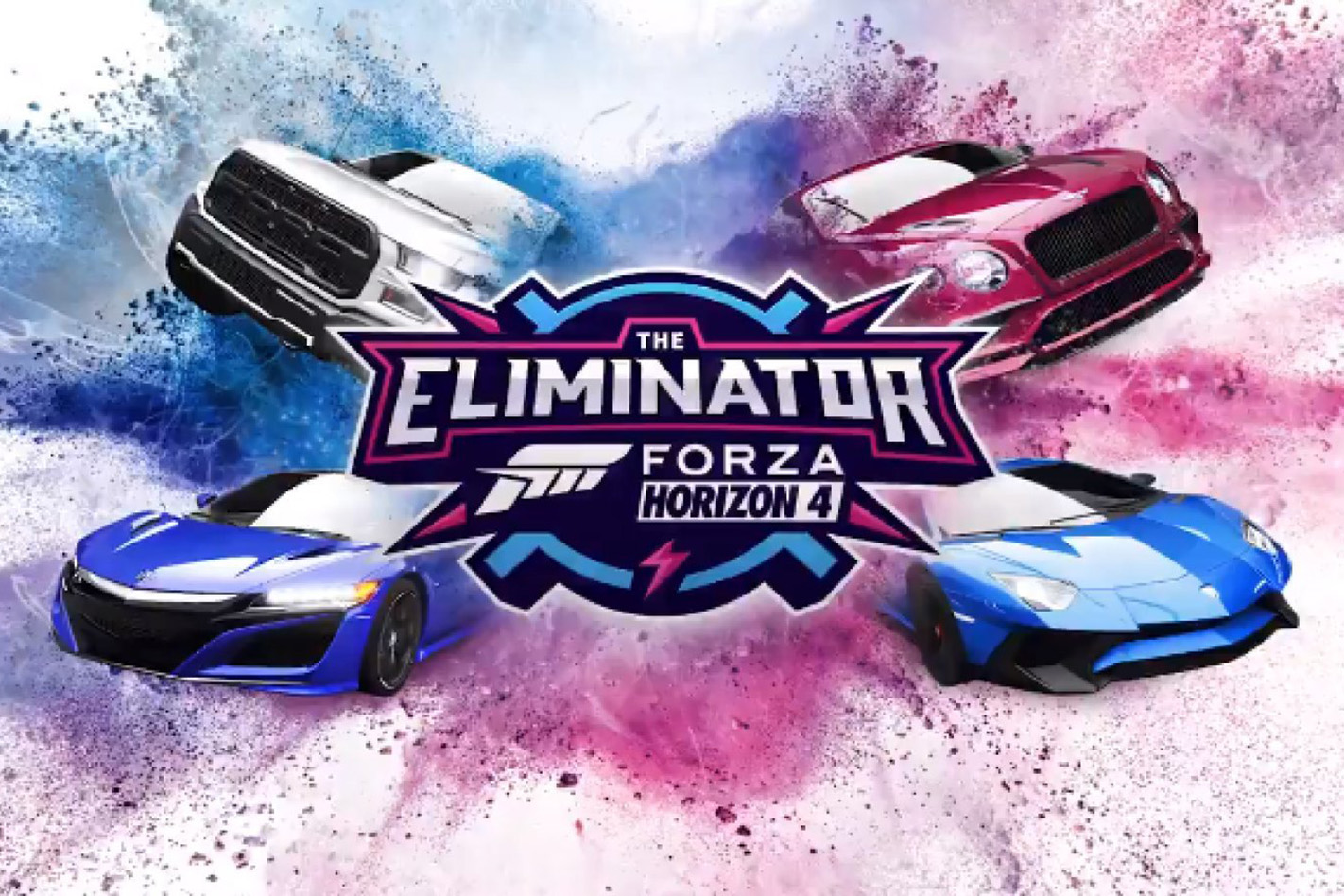
If you’ve played any of the recent crop of popular multiplayer battle games like Fortnite or PUBG, Forza Horizon’s ‘Eliminator’ mode will offer a familiar formula. The lobby allows for a maximum of 72 players, with only one left victorious at the end. You get to pick your drop point, and there are loot boxes in the form of better cars littered across the ever-shrinking map zone.
While there’s no gunplay, Forza’s family-friendly take on vehicular warfare sees players battle each other by impromptu point-to-point races. Lose, and you’re out. It’s a race against time, and perhaps a bit of tactics, to find an upgraded competitive vehicle and survive within the confines of the map.
Overall, Forza Horizon’s Eliminator mode is a fresh take on the current wave of popular online “battle royale” games, and provides more than enough reason to pick up the game if you haven’t touched it in a while.

As an added bonus, Playground Games have added numerous vehicles unlockable through their new Eliminator mode, as well as rare and fresh vehicles unlocked through their dynamic seasonal challenges.
Since Christmas, new faces in the game include the Ferrari 488 Pista, Lamborghini Diablo GTR, Toyota Supra (one of the few easily attained from the AutoShow); as well as a swathe of Renaults such as the Clio V6, Alpine A110, 2018 Megane RS and Clio RS 16 Concept.
The most recent update adds a number of ‘heavy hitters’ to the Eliminator game mode, including the Hummer H1 Alpha Open Top, Lamborghini Huracan Performante, Porsche 356C ‘Emory’ and the Toyota Trueno GT Apex. Some fictional additions include Master Chief’s M12S Warthog, and an off-road version of Final Fantasy’s Quartz Regalia.
Interestingly, both the Huracan Performante and Rod Emory 356 were a part of a leaked list of 120 alleged upcoming cars, found by sleuths deep within the game’s files.
Car names within the game’s internal files are not confirmed, but it does at least point to a whole host of additional content to tide us over until the next Forza Horizon instalment, which we could be seeing as late as 2021.
Are there any downsides to Forza Horizon 4?
A downside of Horizon’s evolution is its sound design, which has taken a backwards step. Not that the sounds themselves are bad, but there’s a lack of variety; many cars of the same cylinder count share identical exhaust notes. What is impressive are the detailed turbo whooshes, overrun crackles and backfires offering an immersive auditory experience. There are also a number of themed radio stations to tune into, should you need tunes to accompany your cross-country thrash.
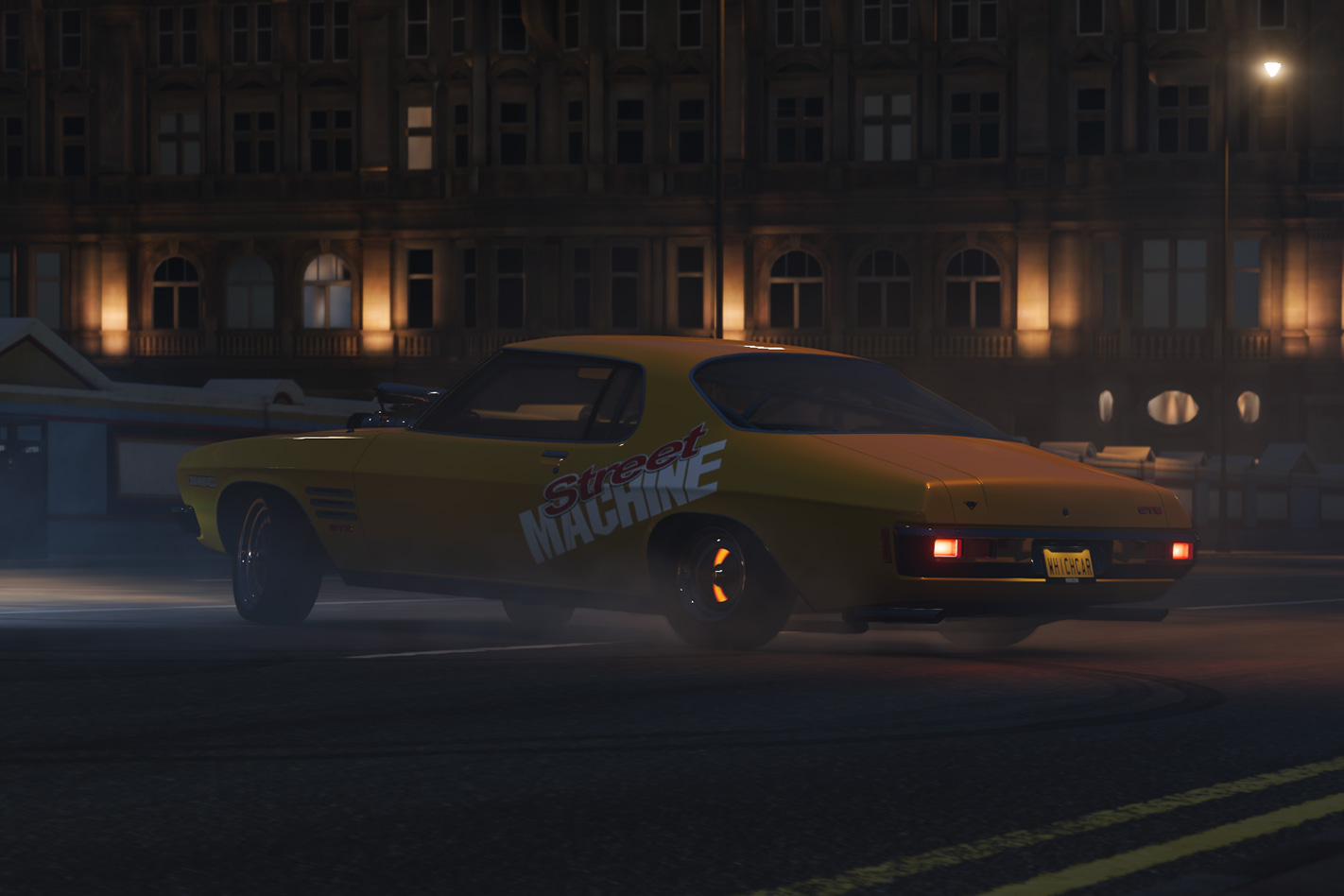
Again, we have to stress – if you’re a dedicated sim-racing fan, Horizon physics will leave you wanting. Play something else if you want realism.
Verdict
Horizon 4 is one of those rare racing games that truly lets you play your way. There’s absolutely no stipulation that you have to progress through the game’s “story” at all.
Native game mechanics allow you get the most out of the game with nary any adjustment at all – but for the most nerdy of car-gamers out there, the game also allows you personalise your car into infinity and even adjust the most minute of details such as tyre pressure, camber and castor angles, gearing etc. It might not be a hard-core sim like its brother, Forza Motorsport 7, but there’s still plenty of scope to nerd out.
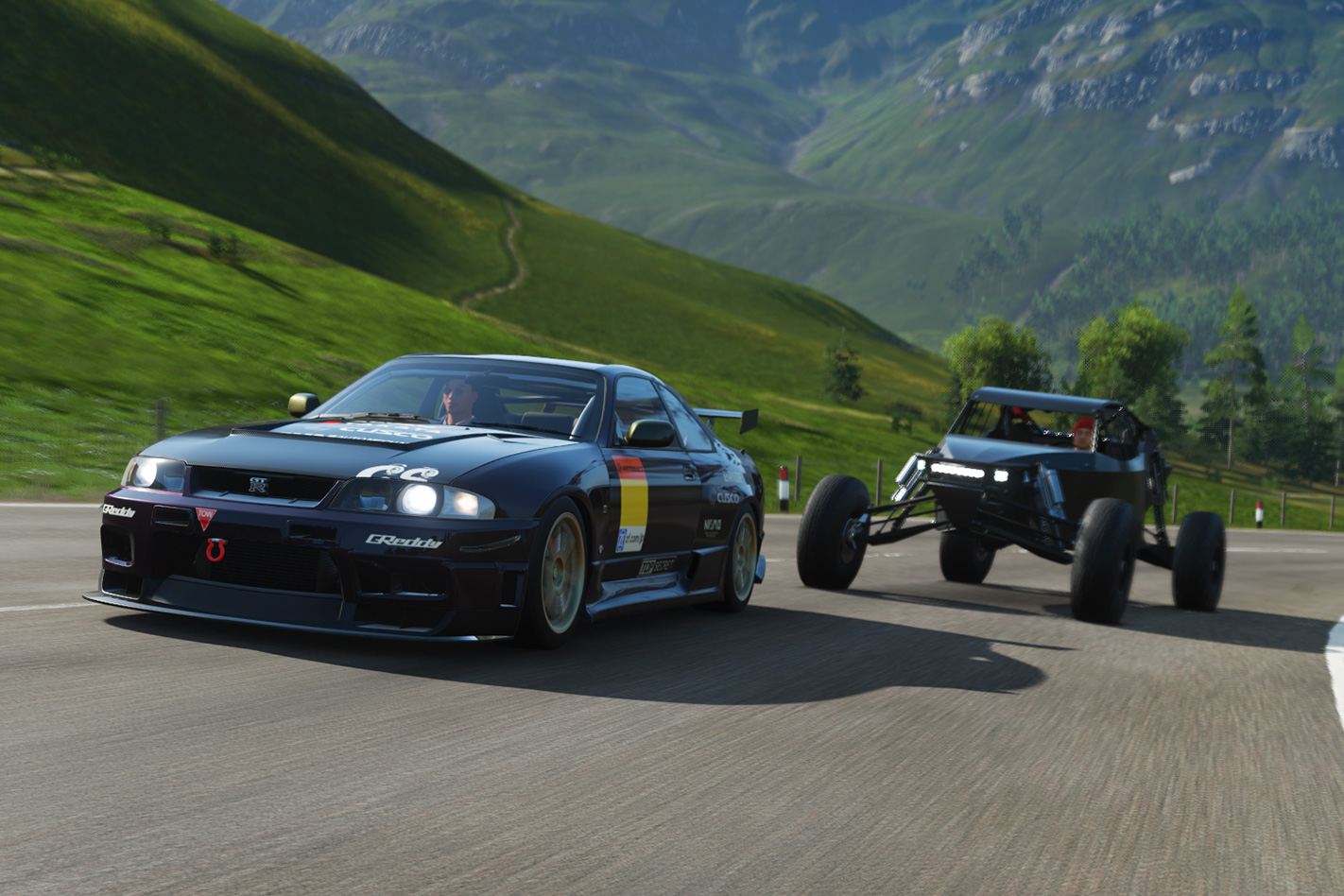
Yet no matter how deep into the details you want to go, the gameplay remains enjoyable throughout and punishes you for nothing.
Especially for those of us who don’t have hours to sink into a video game at a time, between work life and home life – the ability to jump into the virtual world of Horizon and escape reality in a car you’ve always dreamed of, sees this particular car game boast seemingly endless longevity.
This is it: the future of Volkswagen. Full stop.
As gambles go, betting the future of the world’s biggest car company on one roll of the dice is incredibly bold. Not even Kerry Packer, Australia’s most famous gambler who was known to risk a million dollars on a single hand of baccarat, had the gall to do that.
The Volkswagen ID3 small, fully-electric hatchback, revealed at the 2019 Frankfurt auto show, debuts a new electric-only platform that Volkswagen says has the potential to underpin every Volkswagen model in the future.
That’s right… everything from the Polo baby hatch to the Passat large sedan and wagon, the T-Cross crossover to the Touareg large SUV, could be built on this new ID electric car platform.
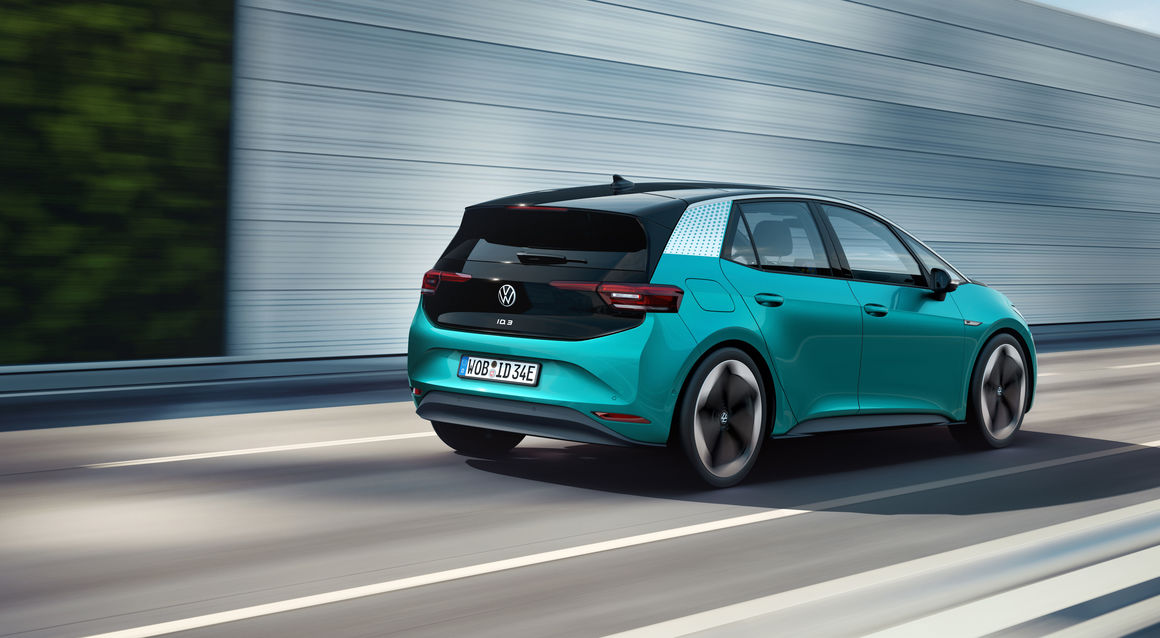
But before we dig into how Volkswagen plans to produce 15 million vehicles based on ID by 2028, let’s take a closer look at the ID3 hatchback.
“In a nutshell, the ID3 [hatchback] is as compact as a Golf, has the interior space of a Passat, and the [performance] punch of a Golf GTI. But it is silent and cool, and with zero emissions,” said Ralf Brandstatter, VW Chief Operating Officer for passenger cars, previewing the ID3 to WhichCar and other select media the night before the 2019 Frankfurt auto show.
“It has a range of up to 550km which means it can go a full week [of driving] without recharging. The ID3 is the first car worldwide with a carbon-neutral footprint to the customer.
“It will be the must-have for the generations to come.”
The Volkswagen ID3 hatchback will launch in Europe in 2020, and Australia in 2022, with up to three battery size options. The basic variant has 45kWh which should equate to 330km. A second variant will have 58kW/420km, and the third offers 77kWh and up to 550km.
VW says recharging can be as quick as 30min for 290km range if you have a 100kw charging outlet.
The ID3 won’t be cheap; the European price for the 45kWh version is Euro 30,000, which translates to around $45,000. Australian pricing is far from being set, as are specification levels, but Aussie early adopters really won’t care. What they will care about is getting their hands on a Volkswagen that offers everything the brand stands for, and emission-free, carbon-neutral mobility.
Jurgen Stackmann is Volkswagen’s global boss of sales and marketing. Speaking exclusively to WhichCar, he said the ID3 is the car for today and the future.
“It is launching at exactly the right time,” he said. “We are fulfilling the promise of keeping what consumers like in today’s cars – which is a Volkswagen car with the technology and reliability of a Volkswagen – and a very, very fresh and new design and a zero-emission footprint.”
And it appears consumers are taking notice, in Germany at least.
“We have reached more than 33,000 [pre-bookers] so far,” said Stackmann. “It’s rising daily. And we expect it to go even further after people see the car at Frankfurt.”
The first mass-produced Volkswagen ID3 will roll down the Zwickau, Germany, production line from November, ramping up to full-scale production by the first quarter of 2020.
“Handover of cars to customers will start in [the European] summer of next year,” said Stackmann.
The true importance of the ID3 is the platform on which it’s built, which has the potential to power models from Skoda, Audi and other Volkswagen Group brands – brands whose sales totalled 10.83 million vehicles globally in 2018.
Stackmann also confirmed the scalability potential of this new electric platform, which Volkswagen calls MEB – Modular Electric Toolkit.
“ID3 is our internal code for compact cars, but it will stretch to bigger cars and smaller cars in the future. It’s a very flexible platform; it can carry different battery sizes and obviously different sizes of vehicles on top.
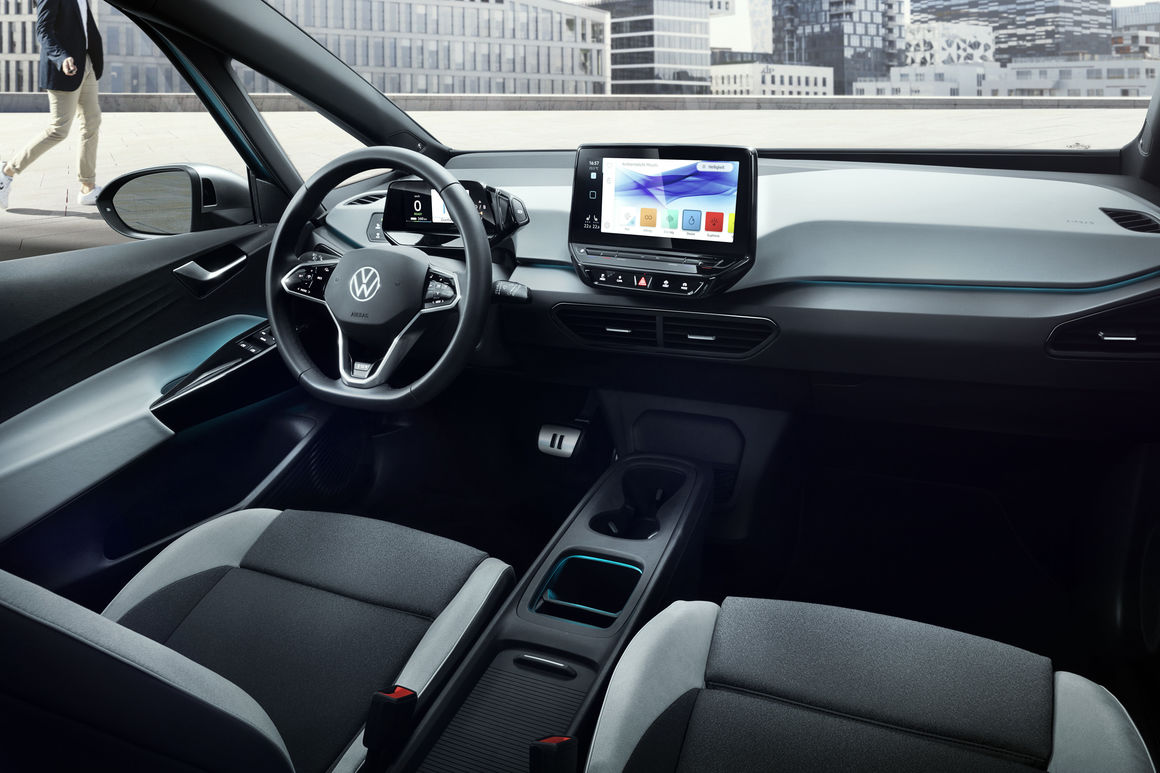
“We will see basically all shapes that you know around the world: from SUV to sedan to hatch and more on this platform.
“We will show tomorrow what else is coming.”
Volkswagen is already developing 27 different models on the MEB platform, and expects to ramp that up to 70 by 2028. By then, it expects that more than 15 million MEB vehicles will have been produced.
In case you’re still unsure how invested Volkswagen is in MEB, these words from the July 2019 announcement that VW will also supply Ford with MEB technology should put any doubts to rest: “Volkswagen ID is the start of the largest electric offensive in the automotive industry” – fighting words, and especially worrying for Elon Musk, whose Tesla Model 3 will come under direct fire from the ID3.
That 15 million presumably also takes into account Ford’s commitment announced in July to use the MEB platform under “at least one high-volume fully electric vehicle … for European customers starting in 2023”. Ford expects to deliver more than 600,000 European vehicles using the MEB architecture in the first six years.
Volkswagen is also actively looking for other MEB dance partners, presumably in an effort to recoup some of the $17.5 billion it has invested in its electric vehicle future to date.
Beyond electrification, the ID platform is also fully connected and future-proofed for autonomous driving: “Absolutely,” said Stackmann. “The platform is fully connected to the web, and it will be updateable and upgradeable as it goes.
“So, it’s a car for the future, not only in terms of zero-emission and a very positive CO2 footprint but it will stay fresh during the lifecycle.”
The 2019 Frankfurt motor show is next week, and on this page, we’ll guide you through all the key cars, launches and big news stories expected at this autumn’s Internationale Automobil Ausstellung (or IAA for short).
So, what to expect? There’s going to be tonnes of new metal at the 2019 Frankfurt Motor Show, but some highlights due to be shown at the Messe in the heart of the city include the long-awaited Land Rover Defender 4×4, the first all-electric Porsche – the Taycan – and the full production version of the VW ID3, which aims to do for Volkswagen’s EV ambitions what the Beetle and Golf did for its mainstream cars.
We’ve been waiting to see those three for several years now and we’ll shortly have the full story live from the show floor.
Alongside that trio, we’re expecting plenty more surprises, from the new Lamborghini Sian hybrid supercar to the rather interesting-looking Hyundai 45.
Every new car at the 2019 Frankfurt motor show: an A-Z preview guide
ALPINA XB7 The Alpina version of the X7 could appear in Frankfurt
AUDI (confirmed)
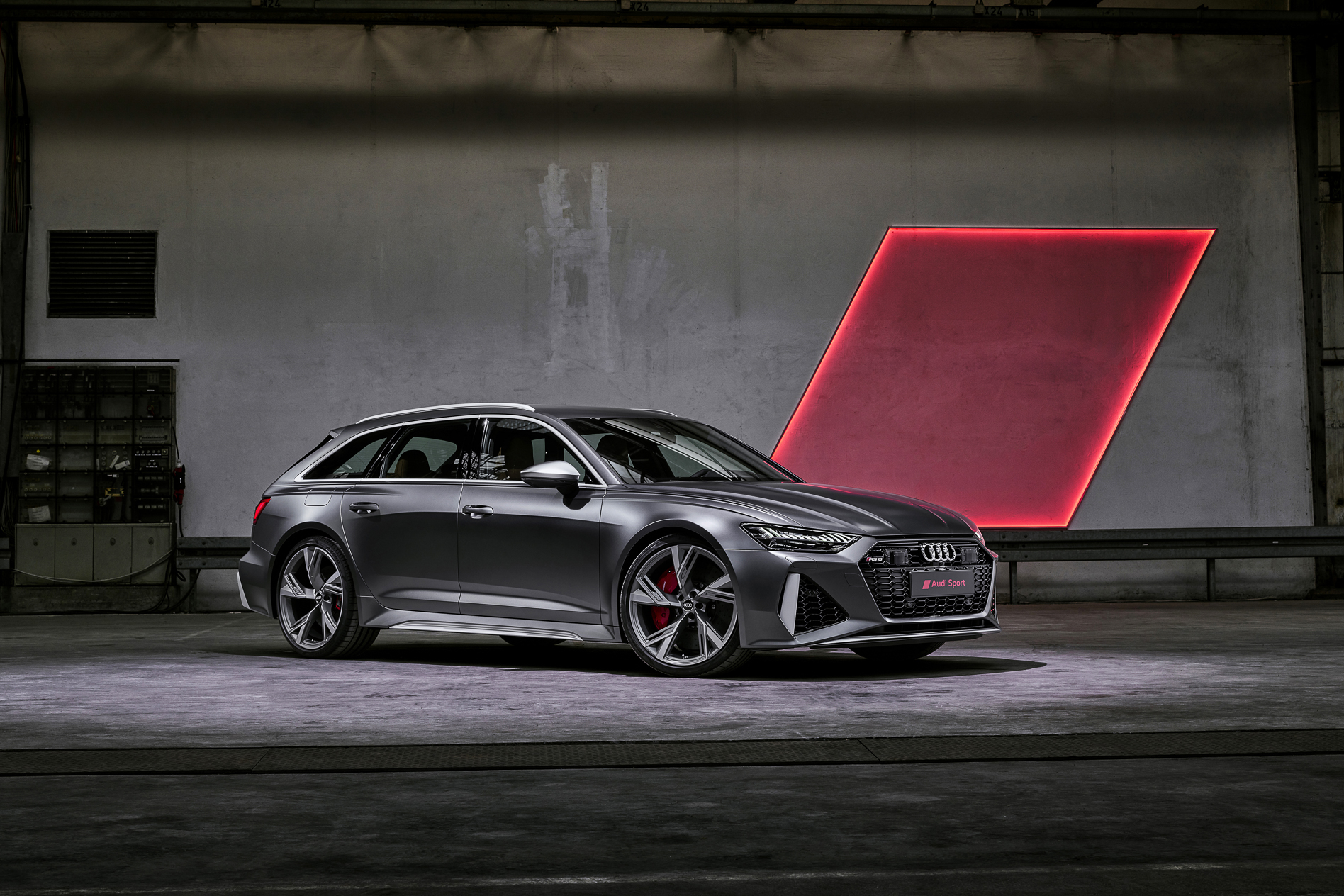
RS6 AvantFirst look at the new top-dog A6-based wagon (above) – for antique dealers in a hurry A1 CityCarverThink Allroad for the junior A1, and you’re on the money
Potential
RS7 Could we see the RS6’s sexy saloon brethren take the stand?
BMW X6We’ve seen the new X5, now’s the time for the sleeker, slammed coupe-roofed version. And a Vantablack show car, too! Vision M NextA look ahead to how even M division is going to have to electrify itself
HONDA
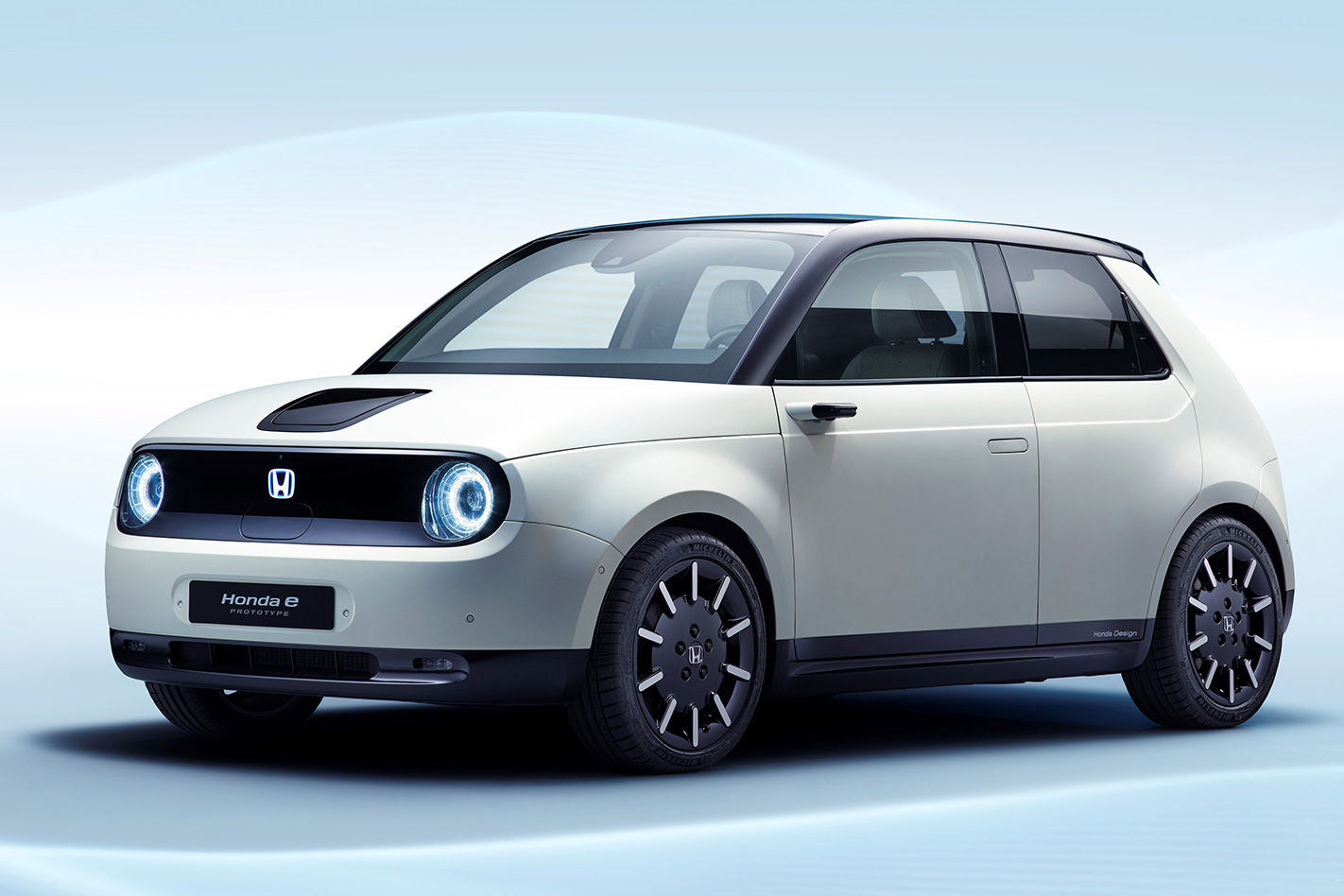
HYUNDAI i30 N Project C A lighter, snarlier hot hatch is coming to Frankfurt 45 electric concept Hyundai’s retro-modern EV will break cover (below)
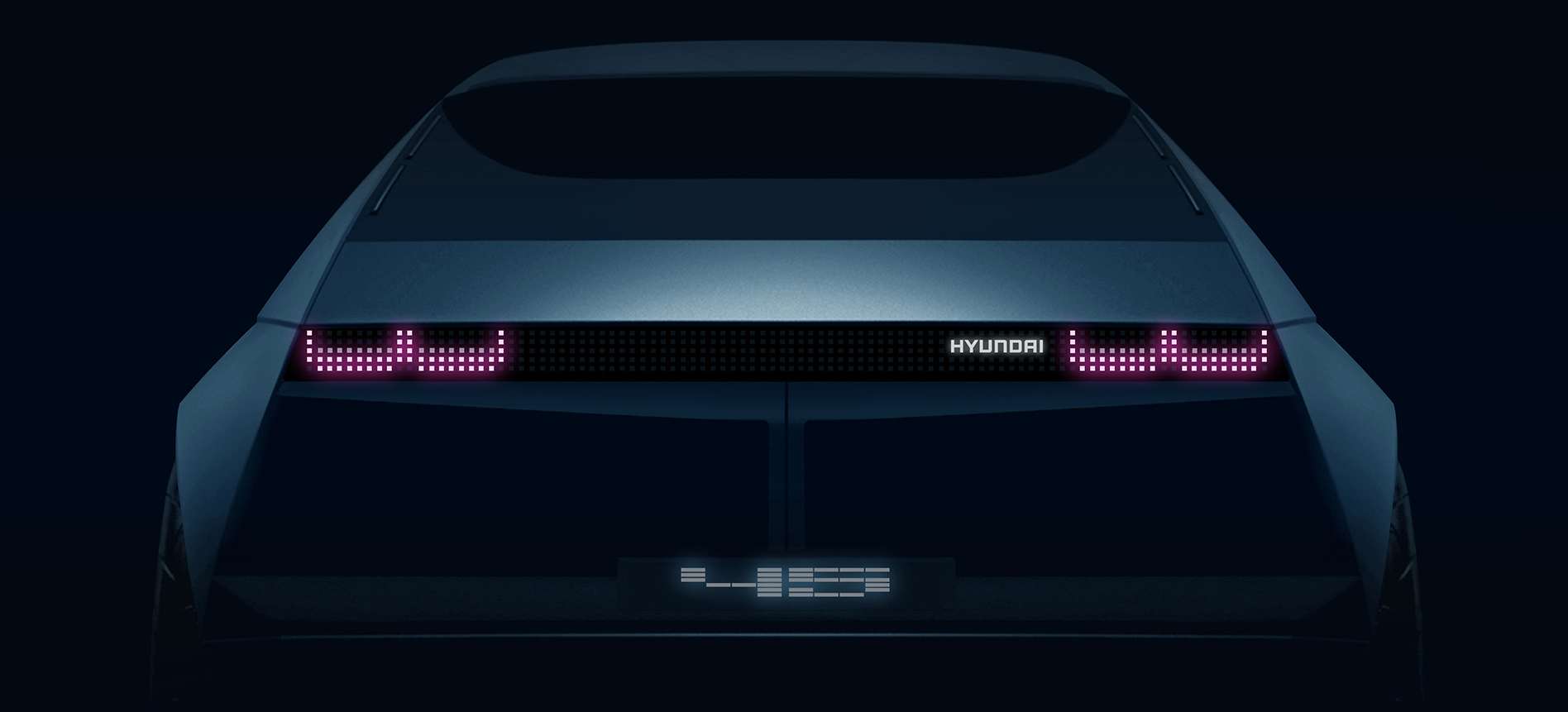
LAMBORGHINI Sian hybrid supercarLambo’s first hybrid production car makes its public debut
LAND ROVER Defender (below)Surely one of the biggest draws of Frankfurt 2019 – the new Defender 4×4 is eagerly awaited
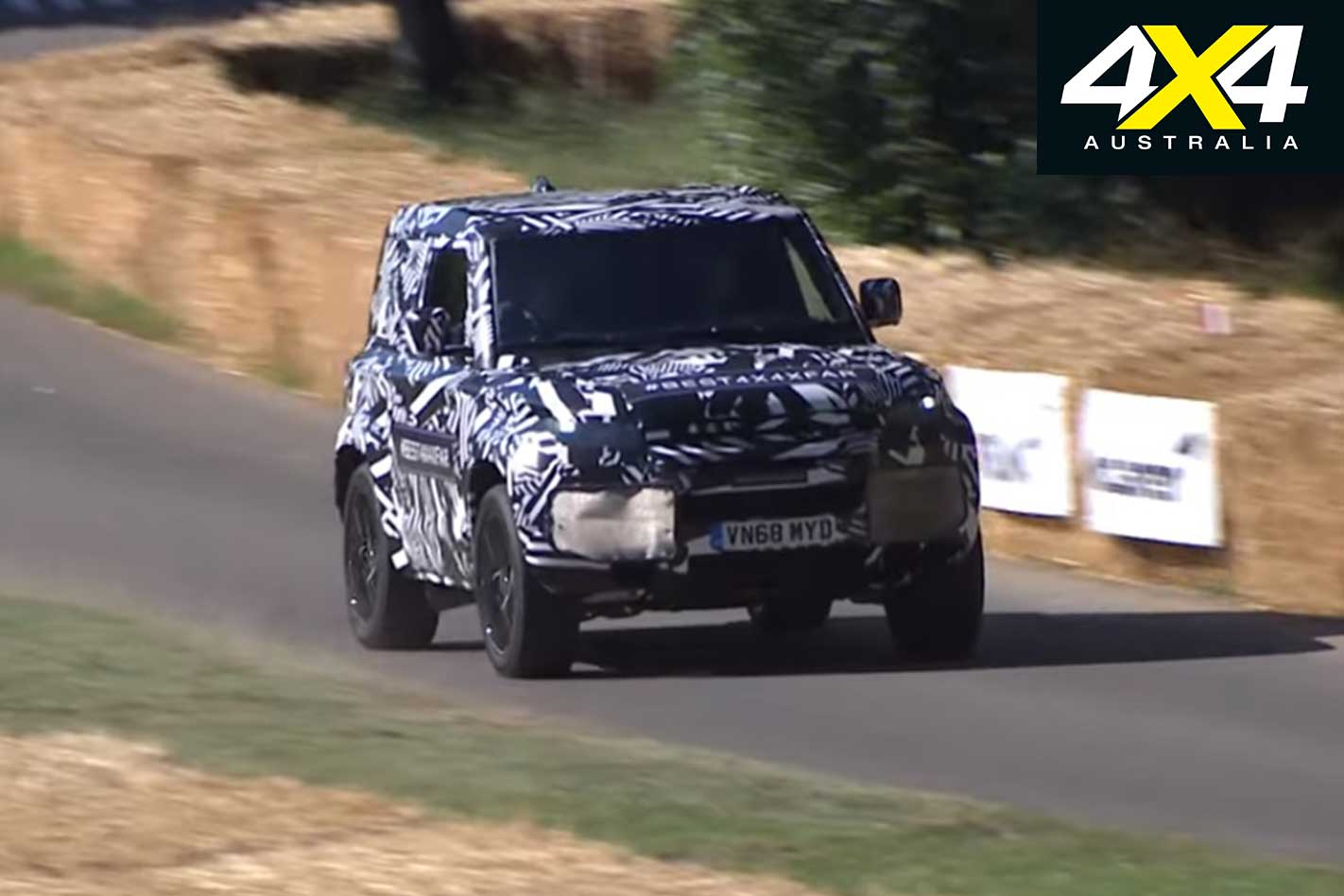
MERCEDES-BENZ A-Class HybridFirst look at the new stronger and more saintly Merc A250e plug-in hybrid EQVAlso shown at the Frankfurt motor show is the electrified bus from Merc. Urban hotels rejoice! GLB35 AMG Oh look, a ‘Coupe’ of an existing crossover. Again. GLE Coupe and AMG And the same deal again, this time with the GLE SUV
MINI ElectricThe full production version of the electric Mini hatch will make its debut at the 2019 IAA
PORSCHE TaycanA major launch, this: the first all-electric Porsche production car will make its public debut at the Frankfurt auto show
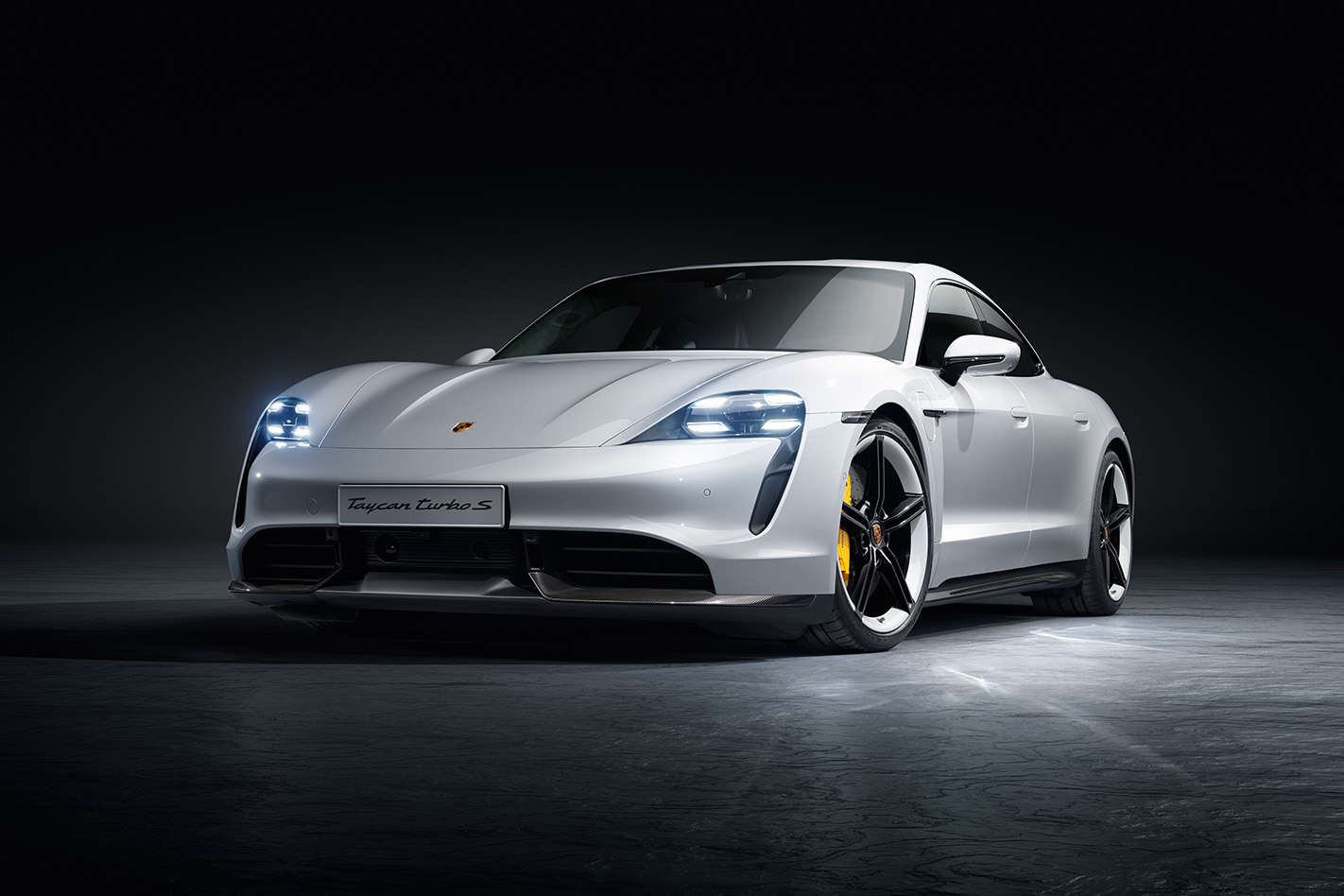
Macan Turbo Stuttgart’s newest iteration of its range-topping compact crossover makes its public debut
SKODA PHEV news We hear news is incoming on the next generation of plug-in models at Skoda
VAUXHALL/OPEL (HOLDEN) CorsaImportant new supermini launch, and there’s a fully electric one, too Astra Latest refresh for Astra range will be at the 2019 Frankfurt auto show
VOLKSWAGEN ID 3VW’s redemption starts here, with the world debut of its first, full-production MEB electric car T-Roc Cabriolet Yes, they really have gone and lopped the top off the junior SUV
This article was reprinted from Carmagazine.co.uk
Keep abreast of the 2019 Frankfurt Show right here
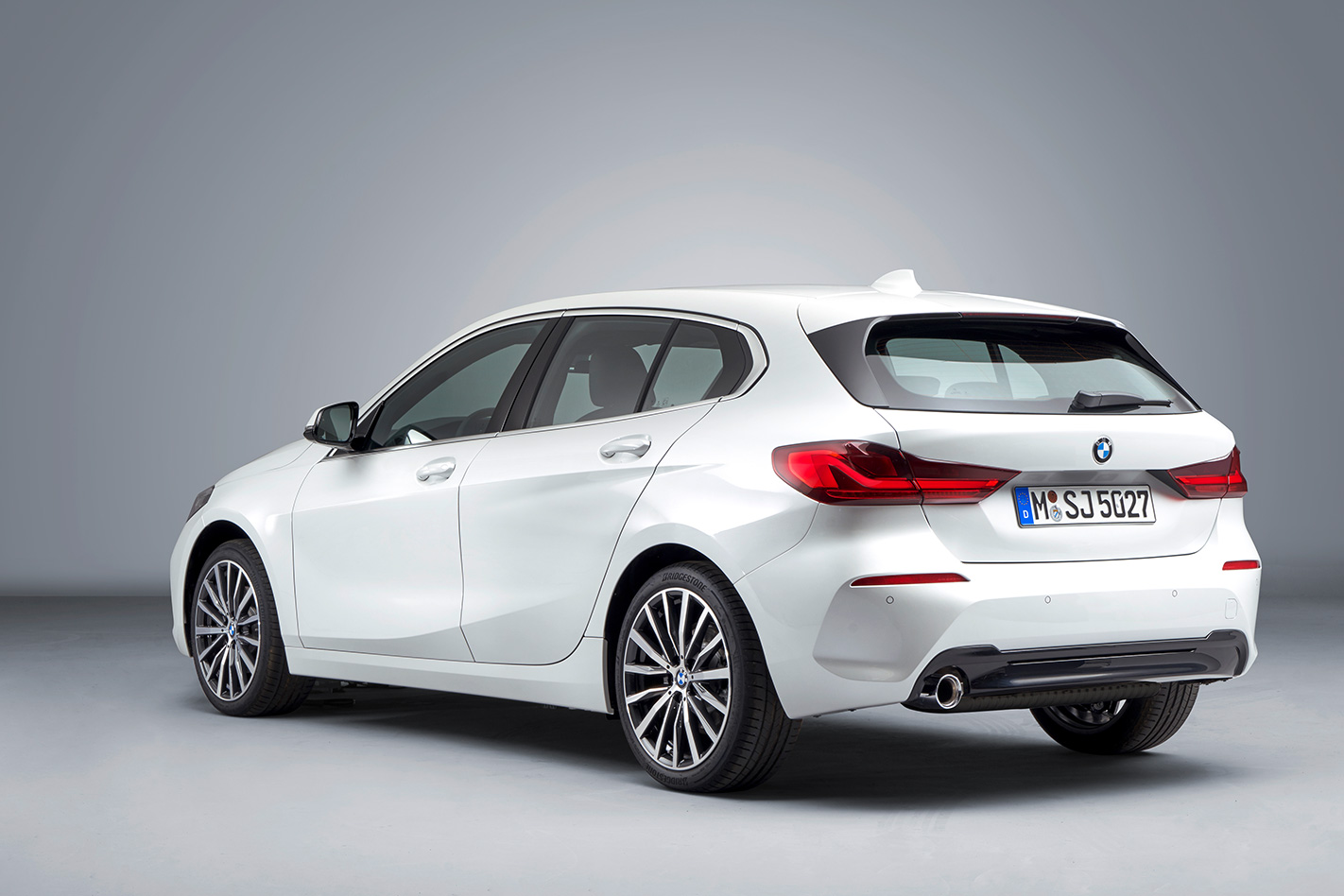
BMW has announced pricing for its all-new 1 Series hatchback, initially offering two extremes: the entry-level 118i and performance-focused M135i xDrive.
Launching in Q4 this year, the two-strong range will kick off from $42,990 for the 118i, extending to $63,990 for the M135i xDrive (both before on-road costs and options).
For now, let’s focus on the BMW 118i.
Read MOTOR’s run-down on the BMW M135i xDrive pricing and specification here
For the first time the 1 Series will be driven by its front wheels rather than its rear, as it was previously. And while some will bemoan the loss of rear-driven goodness, BMW attributes extra improvements in interior space and packaging to its new front-driven architecture which will become increasingly common in future products.
Size wise, the new 1 Series is five millimetres shorter than before, while 34 millimetres wider and 13 millimetres taller. This translates to 33mm extra knee room for rear occupants, 19mm more headroom and 67mm more width in the boot than previously.
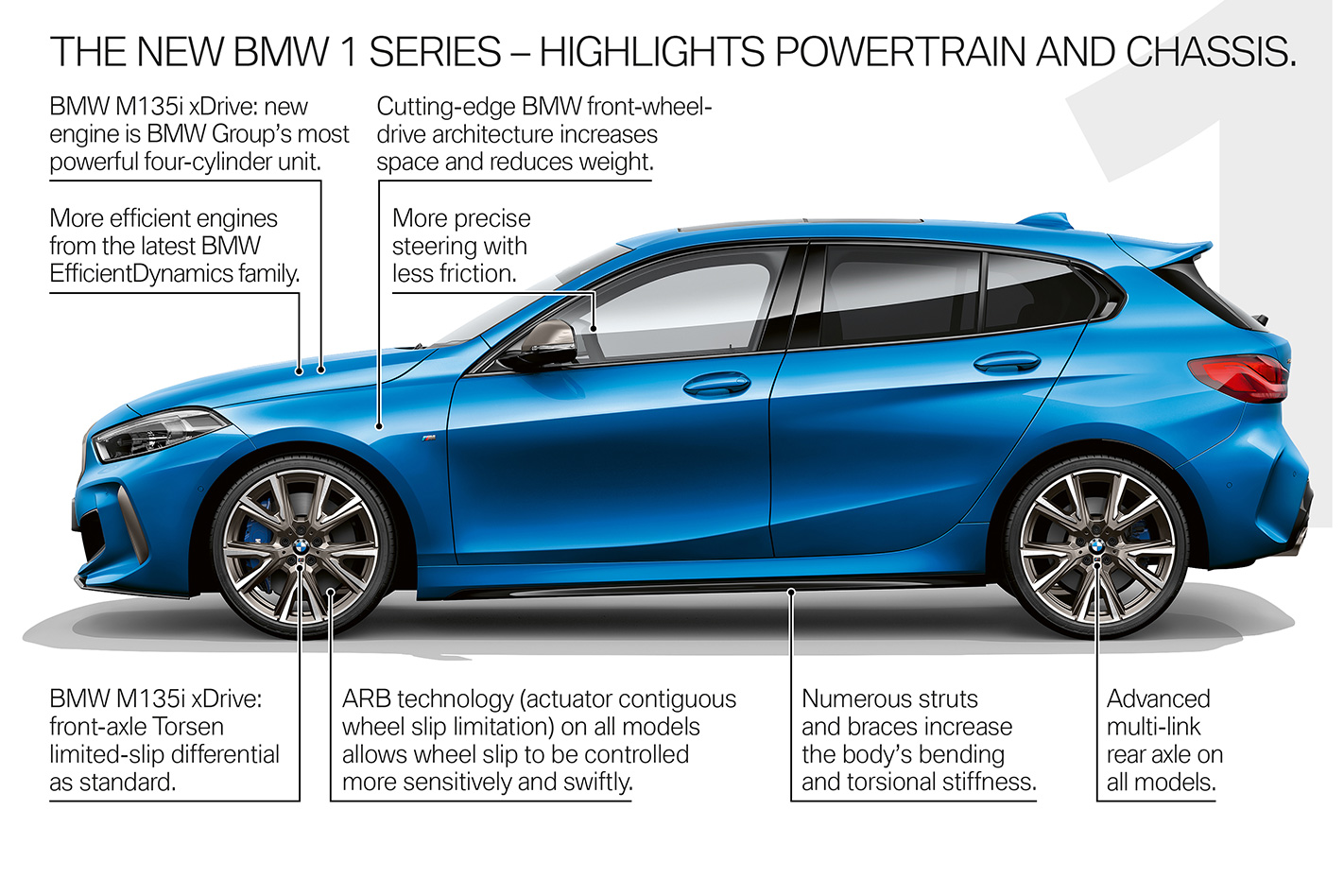
Powered by a 1.5-litre three-cylinder engine that already serves in BMW’s range, the 118i produces 103kW and 220Nm, and will complete a run to 100km/h in 8.5 seconds.
To help on-road agility of the new car, BMW has borrowed learnings from its i3 electric hatch, using its actuator contiguous wheel-slip limitation (ARB) tech. The system uses a slip controller located in the ECU rather than Dynamic Stability Control (DSC) system which is said to curtail wheel spin and aid traction 10 times faster than before.
BMW’s Reversing Assistant, which debuted with the new BMW 3 Series, will also feature within the new 1 Series. The system automatically remembers the steering movements and throttle inputs the car has just traversed, ready to reverse itself out of a tight spot in case you get stuck in a tricky alley, for example.
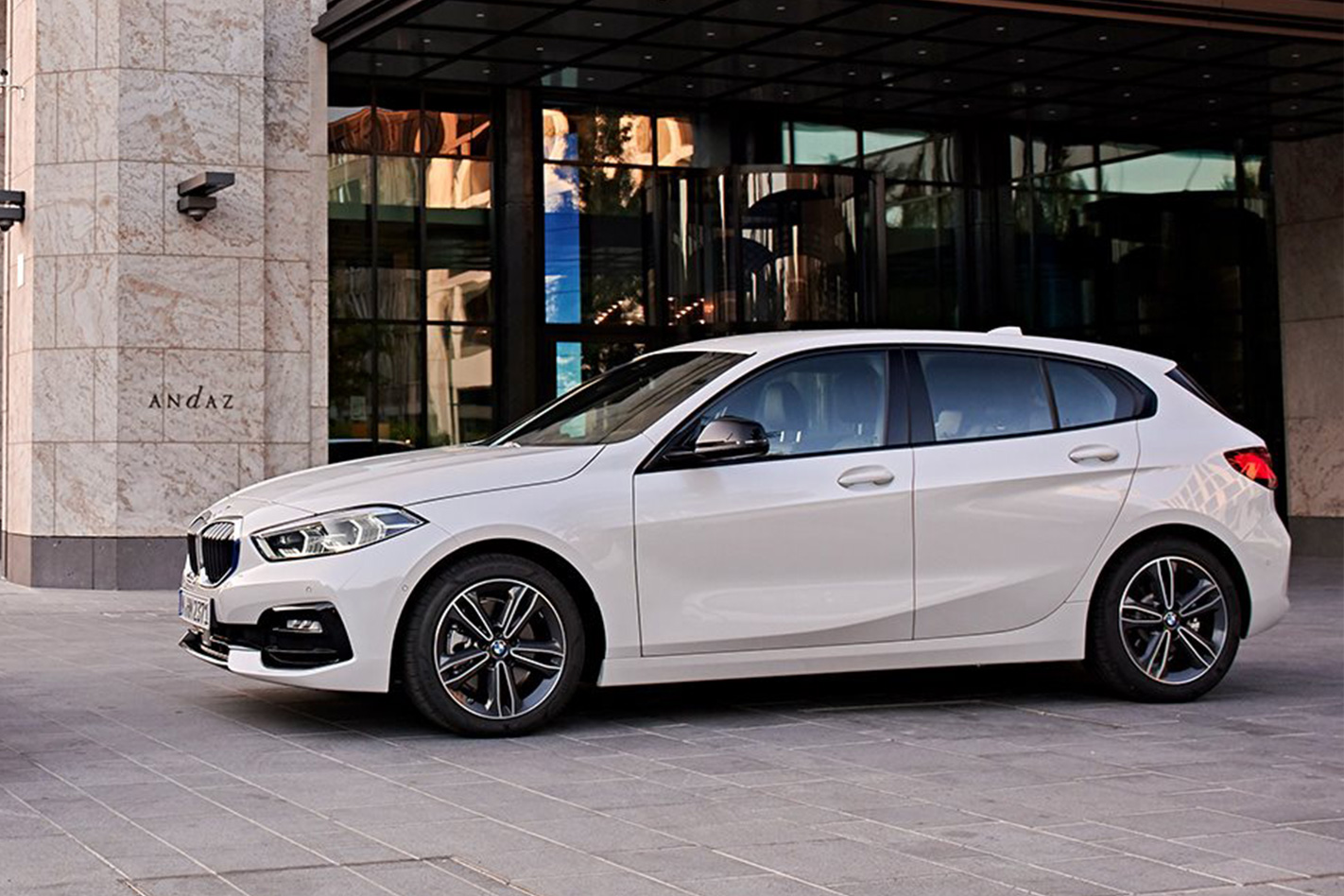
In terms of kit, BMW will notably offer its popular M Sport package as standard which includes an M Sport leather steering wheel, sports seats in cloth/Sensatec upholstery, dark grey BMW Individual headliner and 18-inch M Light Alloy double-spoke wheels to spruce up its kerb appeal.
The 118i also gets a head-up display, safety technology like lane-departure warning, lane change warning, rear cross-traffic alert, Live Cockpit Professional including two 10.25-inch screens which include a year’s subscription to Apple CarPlay, ambient interior lighting and a 100W six-loudspeaker stereo system as standard.
Buyers can further enhance the 118i package by optioning the Comfort Package which includes seat heating for the first row, electric seats, lumbar support and Comfort Access; Convenience package which brings an automatic tailgate, storage nets and through-loading system; Driver Assistance Package with active cruise control, tyre pressure monitoring and adaptive LED headlights; Enhancement Package including metallic paint, panoramic glass roof and finally; the full-fat M Sport Plus Package which offers M Sport specific seats, spoiler, seat belts, steering and brakes.
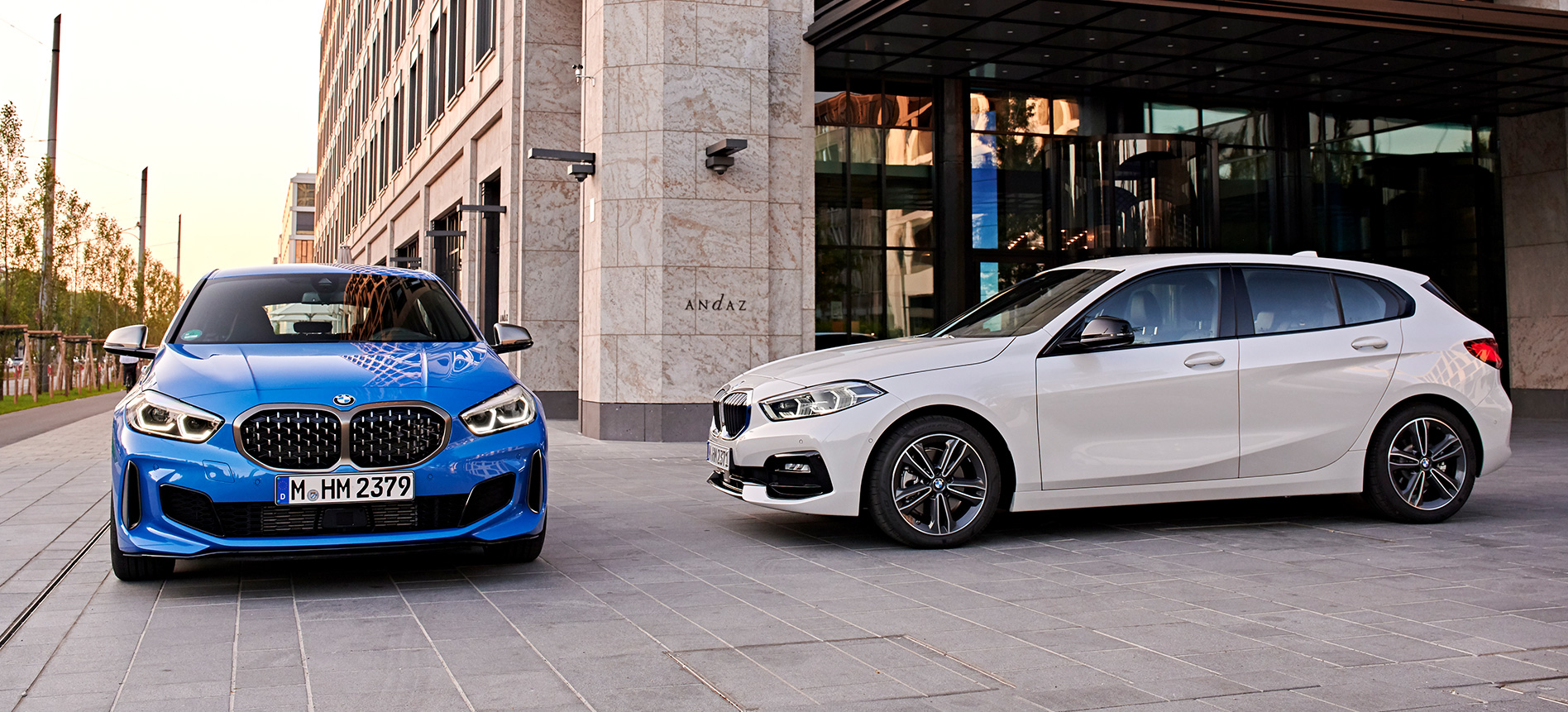
Both the 118i and M135i xDrive will launch in Q4 this year.
BMW 1 Series pricing:
- BMW 118i hatch – $42,990
- BMW M135i xDrive hatch – $63,990
- Enhancement Package ($2900)
- Comfort Package (118i: $2300, M135i: $923)
- Convenience Package ($1200)
- Driver Assistance Package (118i: $1000)
- M Sport Plus Package (118i: $2100)
The all-new BMW 1 Series has reached Australian shores.
Two grades will be offered initially, the 118i that we’re not that fussed with and the M135i xDrive which we most definitely are.
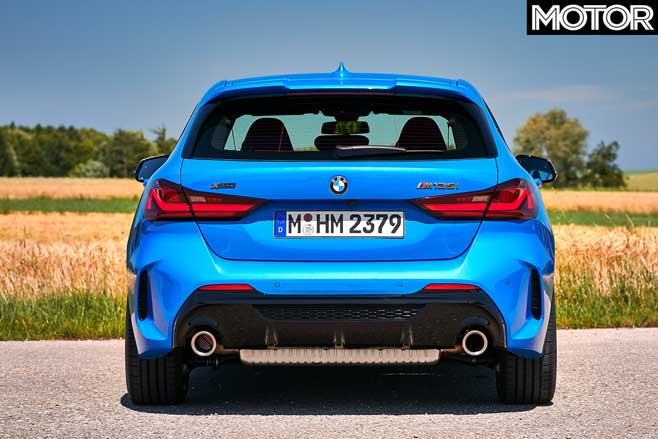
It’s the first time the 1 Series has been offered with all-wheel drive in Australia and the M135i launches into battle against the soon-to-arrive Mercedes-AMG A35 and soon-to-depart Audi S3, though a new one will arrive sometime in 2020.
Pricing starts from $63,990, a $4000 increase over the outgoing M140i, but BMW’s new hot hatch is a very different beast, trading its 250kW/500Nm 3.0-litre turbocharged straight six for a 225kW/450Nm 2.0-litre turbocharged four-cylinder. Nevertheless, performance is brisk, 0-100km/h claimed to take 4.8sec.
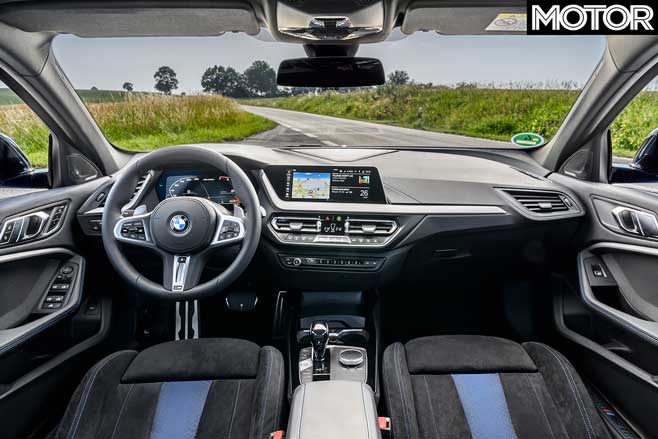
BMW Australia has offset the price hike with extra equipment, the M135i coming standard with the M Sport package, which includes a leather steering wheel, anthracite headliner, M Sport brakes, steering and rear spoiler and upgraded electric seats including integrated headrests and greater side bolstering.
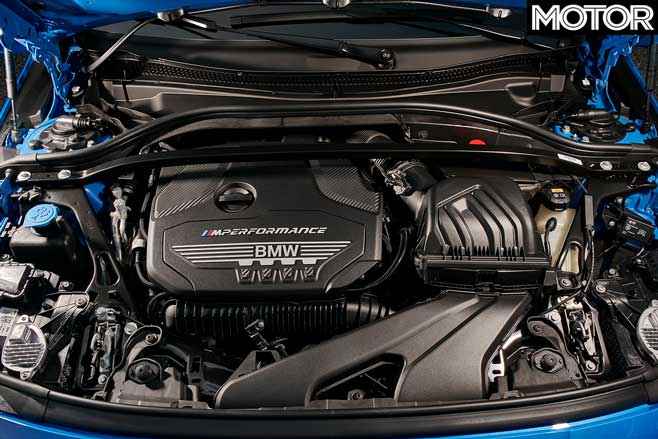
Also standard are 19-inch wheels, keyless entry and go, parking assistant with rear-view camera, a 10.25-inch infotainment screen with one-year of free Apple CarPlay, wireless smartphone charging, a 9.2-inch head-up display, leather upholstery, adaptive LED headlights with high-beam assist and a 16-speaker 464-Watt harmon kardon stereo system.
Option packages include the $2900 Enhancement package (metallic paint, panoramic glass roof, active cruise control), $923 Comfort Package (front seat heating and lumbar support; heated steering wheels) and $1200 Convenience Package (auto tailgate; luggage compartment package including storage net; through-loading system).
As you’d expect, active safety is well catered-for, the M135i packing automatic emergency braking, lane departure and lane change warning, rear cross-traffic alert and collision prevention and BMW’s new ‘ARB’ stability control system, lifted from the i3, which is claimed to control wheel slip 10 times faster than a traditional system.
Keep your eyes peeled for a first local review of the new BMW M135i xDrive.
