
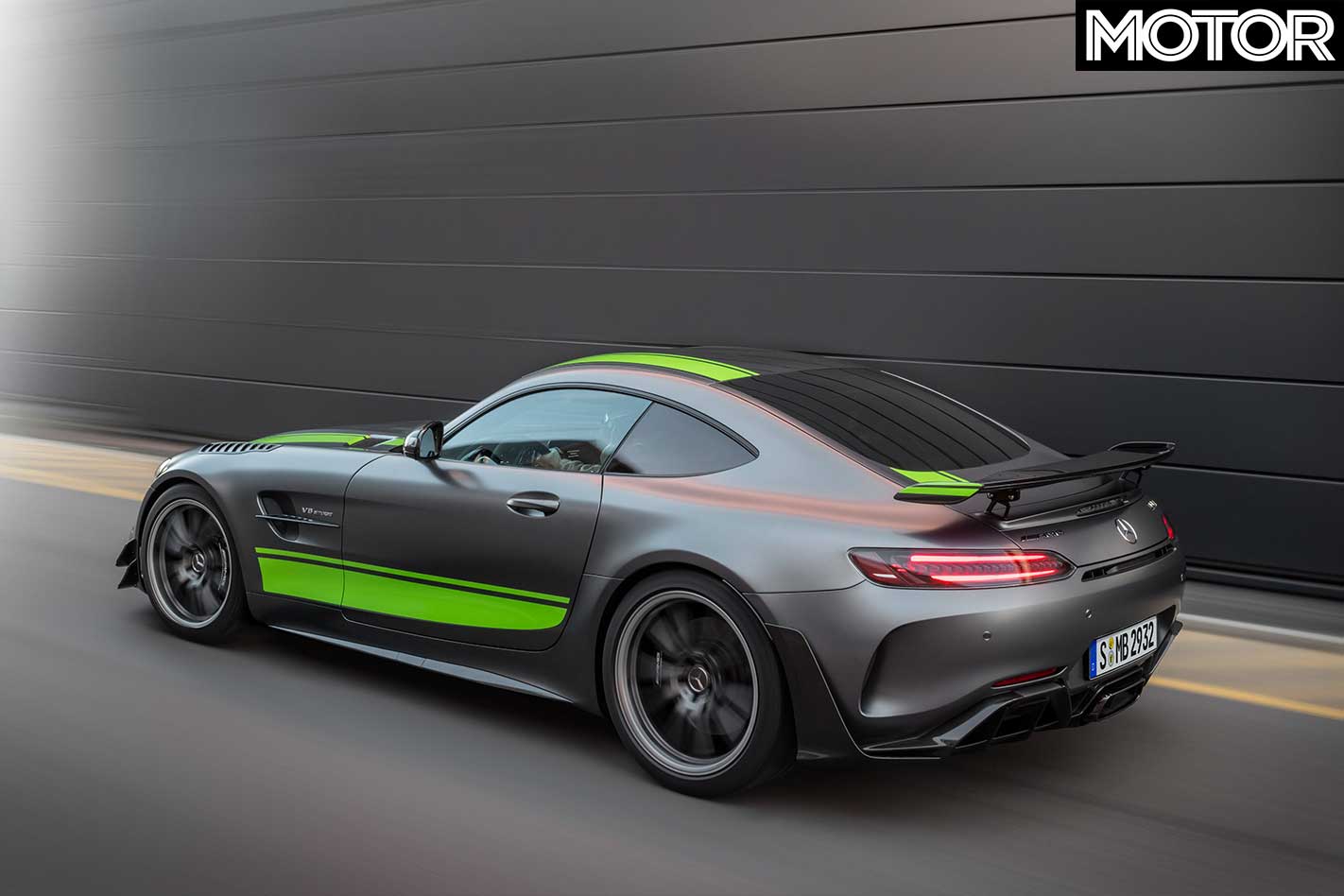
Affalterbach has waved the facelift wand over its GT range, and in the process delivered a new member – the track-focused 2019 Mercedes-AMG GT R Pro.
The car which AMG’s chairman Tobias Moers calls “the core of the brand” has been bestowed with the new-gen interior featuring a new instrument cluster and more customisable controls, as well as AMG’s clever TFT control buttons on the steering wheel, which itself is also new.
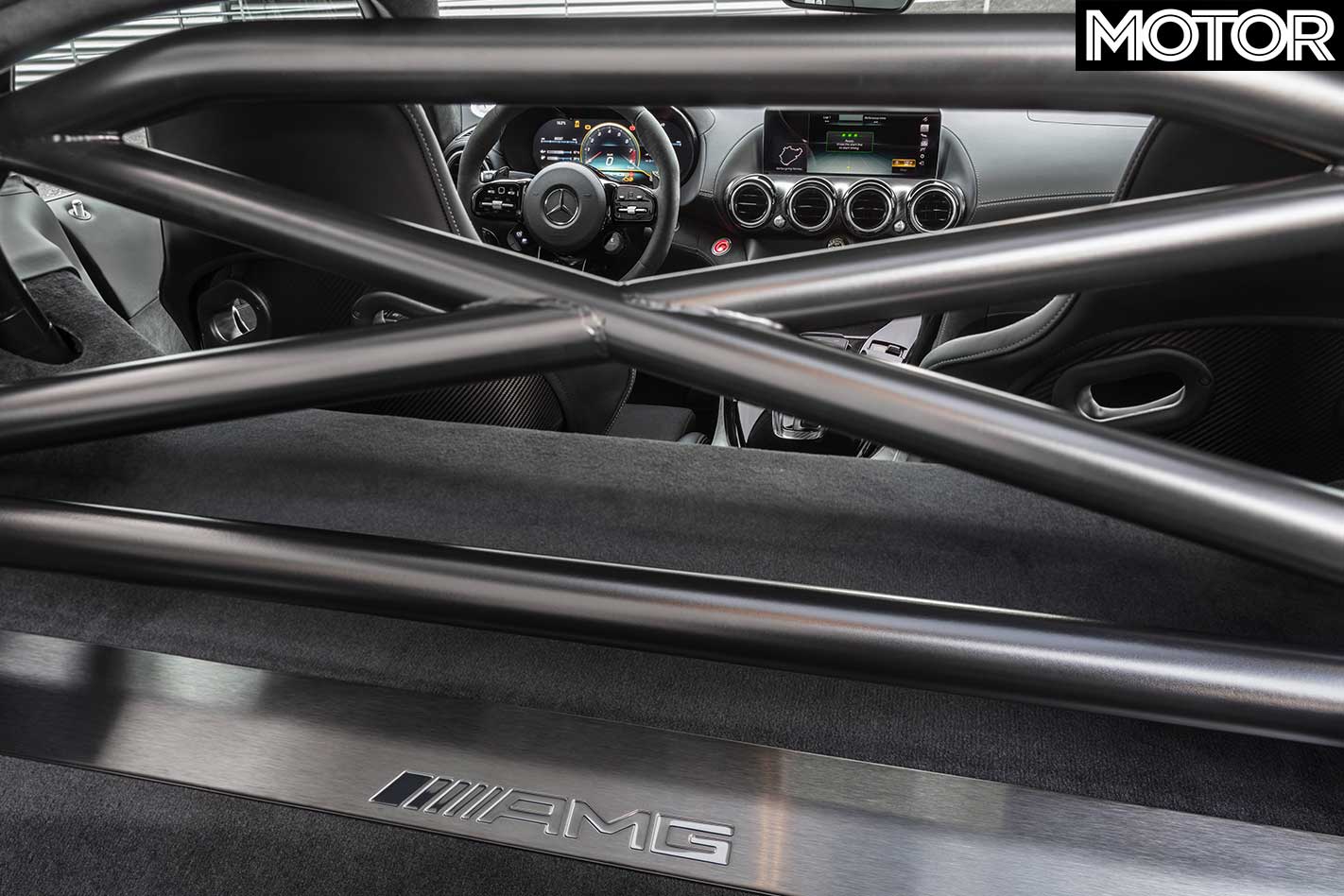
But the GT R Pro is the biggest source of excitement for those who enjoy a focused sports car, with Mercedes’ go-fast division adding to and altering its list of features to build a more track-ready car.
While it shares its 430kW/700Nm 4.0-litre twin-turbo V8 and other figures such as straight-line performance numbers with the ‘standard’ GT R, the Pro has been fettled to feature better aero, a sharper chassis, and optimised weight.
A new coil-over suspension setup features adjustment dial on each damper so the driver can set compression rates and other variables to perfectly reflect their driving style and the track they’re conquering.
Lighter carbon and hollow tube steel torsion bars, at the front and rear respectively, as well as the addition of spherical bearings for the rear axle’s upper wishbone create a stiffer setup and allow more accurate control in cornering.
A rollover protection system, 4-point safety harnesses and a 2-kg fire extinguisher also come thanks to the Track Package which is standard for the Pro, but optional elsewhere in the GT family.
Ceramic compound brakes, 5-double-spoke forged wheels, and AMG performance seats are claimed to reduce weight, while a new active aero setup keeps the GT R Pro grounded.
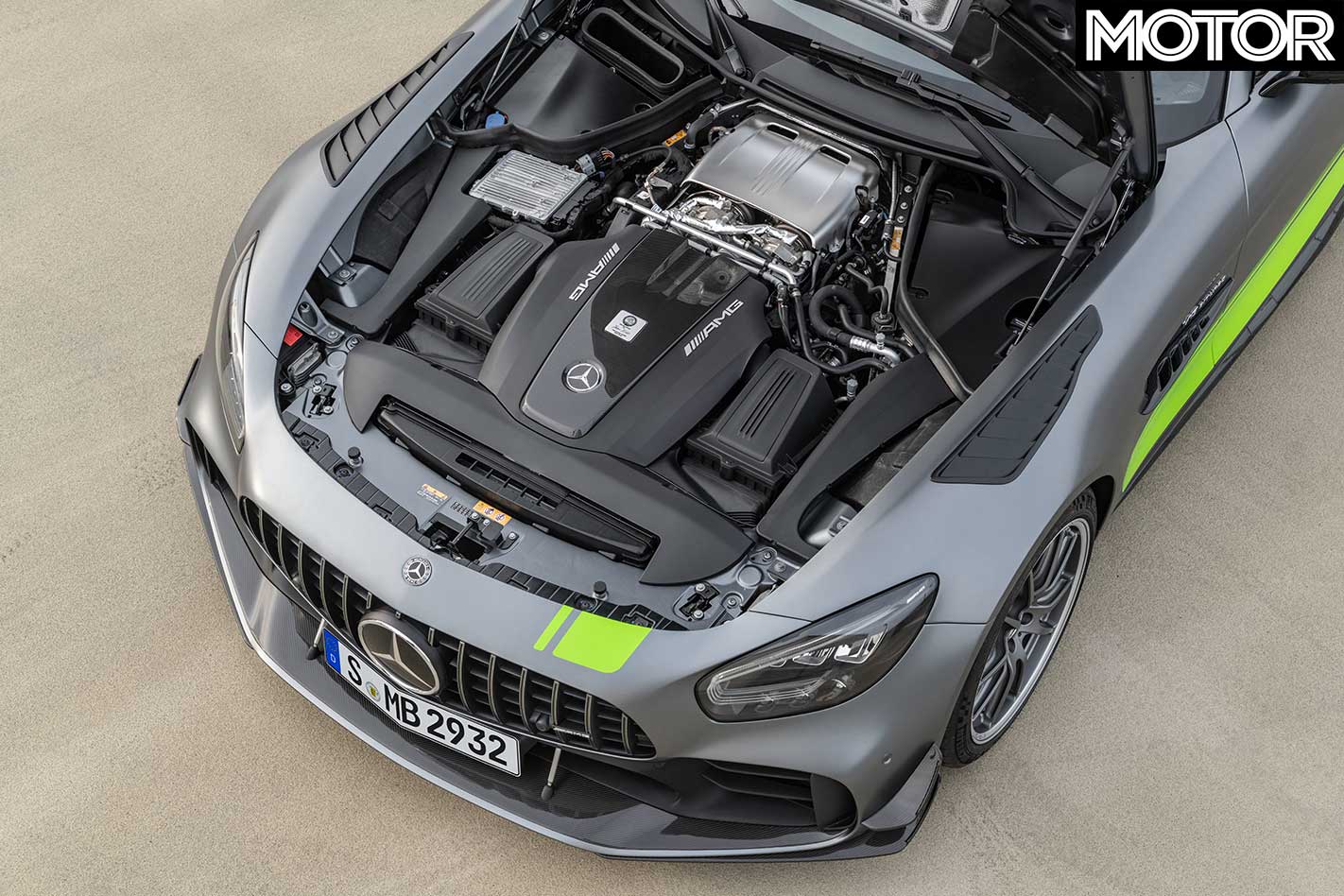
A new front bar now features prominent GT3-inspired ‘flics’ at each side, while the front wing has louvres AMG has included to reduce front lift.
The rear milled aluminium bracket-mounted aerofoil – or wing – also features a Gurney flap to balance the downforce at the rear.
To test the effectiveness of its upgrade, AMG hit the Nürburgring with its GT R Pro, and recorded a 7.04.632 lap time. Australian pricing and availability for the facelifted GT range and the GT R Pro is yet to be confirmed.
Shortly after the reveal of the new 911, Porsche has pulled the covers off the new, limited edition GT2 RS Clubsport, which Porsche says shares plenty of features with the 935 tribute which Porsche unveiled a couple of months ago.
Only 200 will be built, and they’ll all feature the ‘regular’ 515kW and 750Nm 3.8-litre twin-turbo flat-six from the GT2 RS, along with a race-ready LSD and seven-speed dual-clutch.
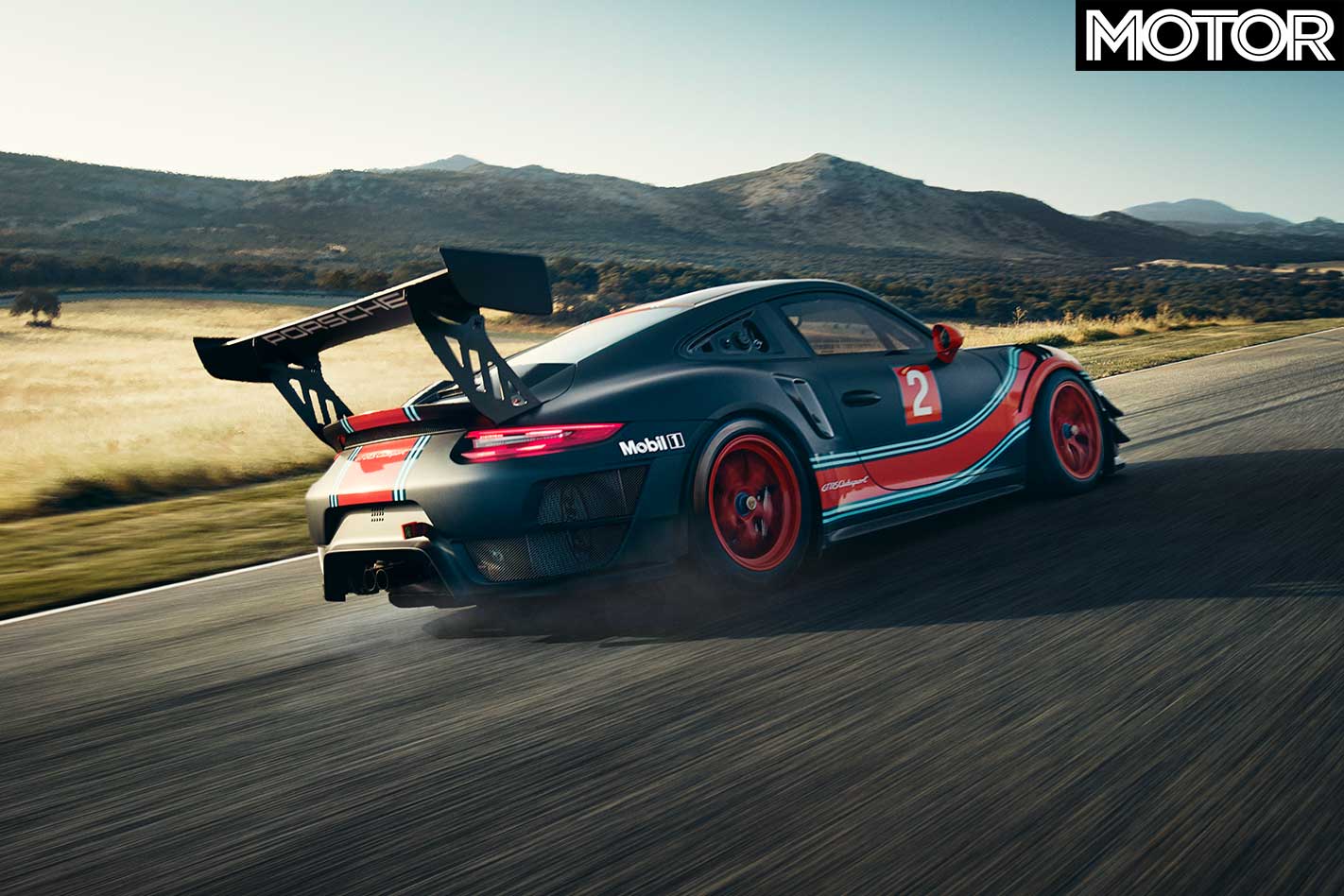
They’ll also feature adjustable ABS and Porsche Stability Management, racing slicks, three-way adjustable coilovers, and a carbon fibre reinforced plastic (CFRP) body that helps bring weight down to 1390kg.
Six-piston aluminium racing calipers, as well as four-pot calipers at the rear, bring the Clubsport to a stop, combined with 390mm and 380mm internally-ventilated and grooved steel brake discs at the front and rear respectively.
A carbon steering wheel and colour display complete the racecar feel, courtesy of the new Porsche 911 GT3 R race car, while a safety cage, and bucket seat with six-point harness keep the driver safe. The interior is also kept cool via air-conditioning.
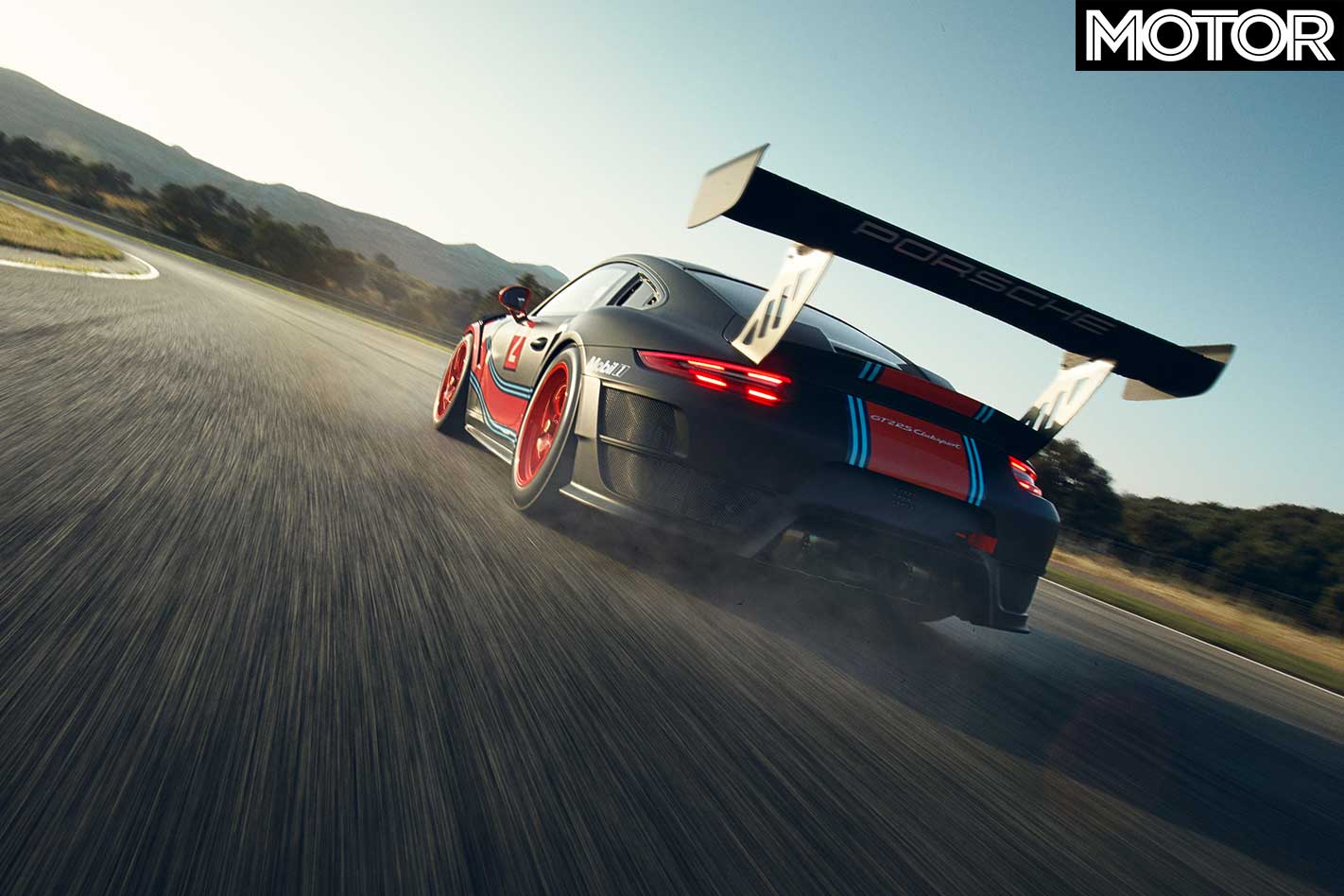
At the moment Porsche says it’s only fit for track days, so no road use unfortunately, but it may also be eligible for “international motor racing events” in future according to Dr Frank-Steffen Walliser, Porsche’s VP of motorsport and GT Cars.
“For the upcoming years, our customers will not only race the GT2 RS Clubsport on track days but also at international motor racing events.
“We are currently holding very productive talks with the race organiser SRO.”
You can order one for €405,000 before taxes over in Europe, deliveries start in May next year.
As Porsche was building up to the reveal of its new 2019 Porsche 992 911, it was filling the MOTOR inbox with historic pictures and information about each generation of the 992’s ancestry.
We’ve gathered it all up and put it into one place for you, with an easy gallery at the top of the page to scroll through some of the frankly gorgeous 911s Porsche has captured. Enjoy!
The original Porsche 911: 1963-1973
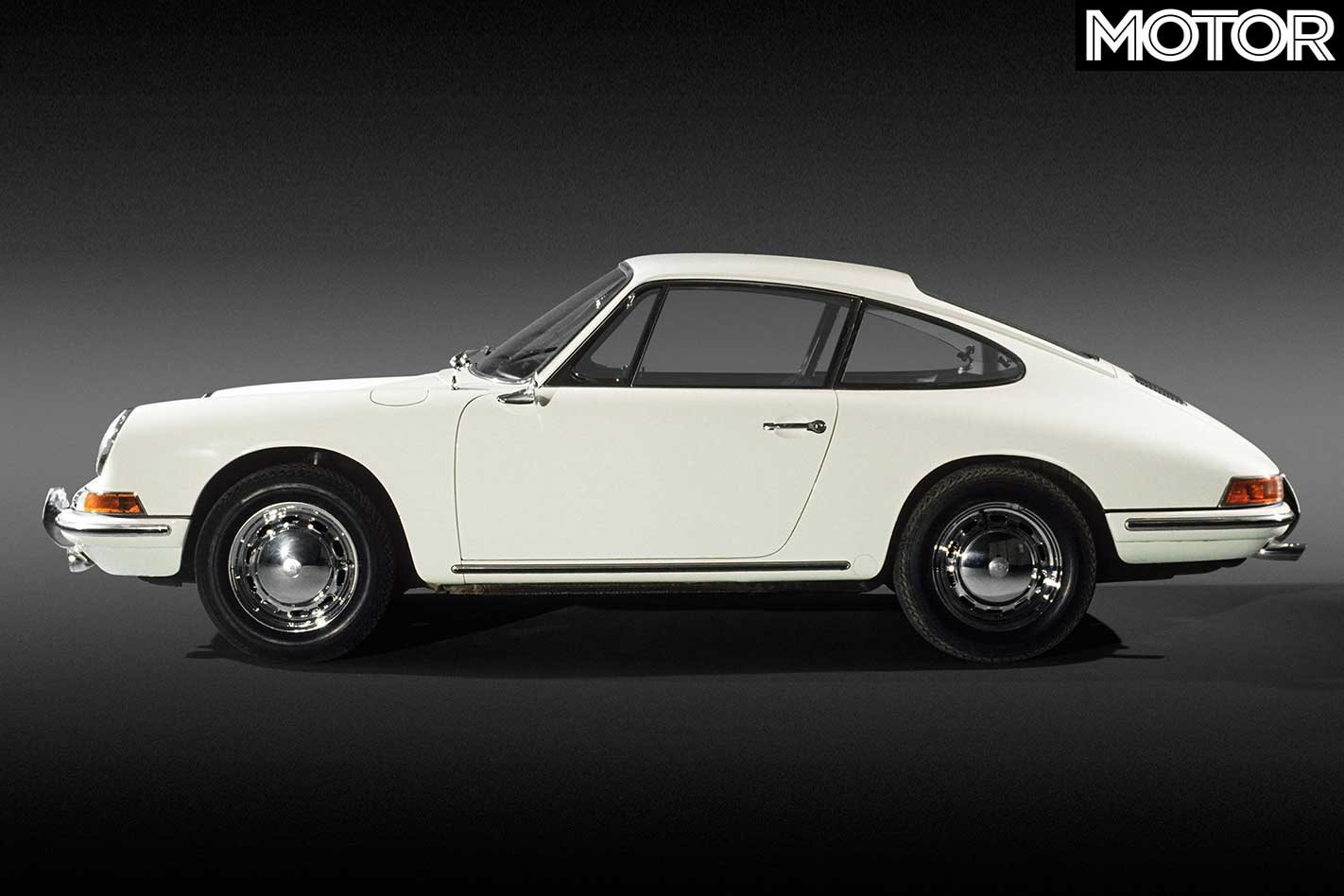
Originally called the 901, but changed to 911 due to a naming conflict with Peugeot, Porsche’s most iconic car was born in the early 1960s.
A total of 111,995 were built, according to Porsche’s data, with models ranging from the Targa to the king of the ‘firsts’, the Carrera RS 2.7.
The G Series Porsche 911: 1973-1989
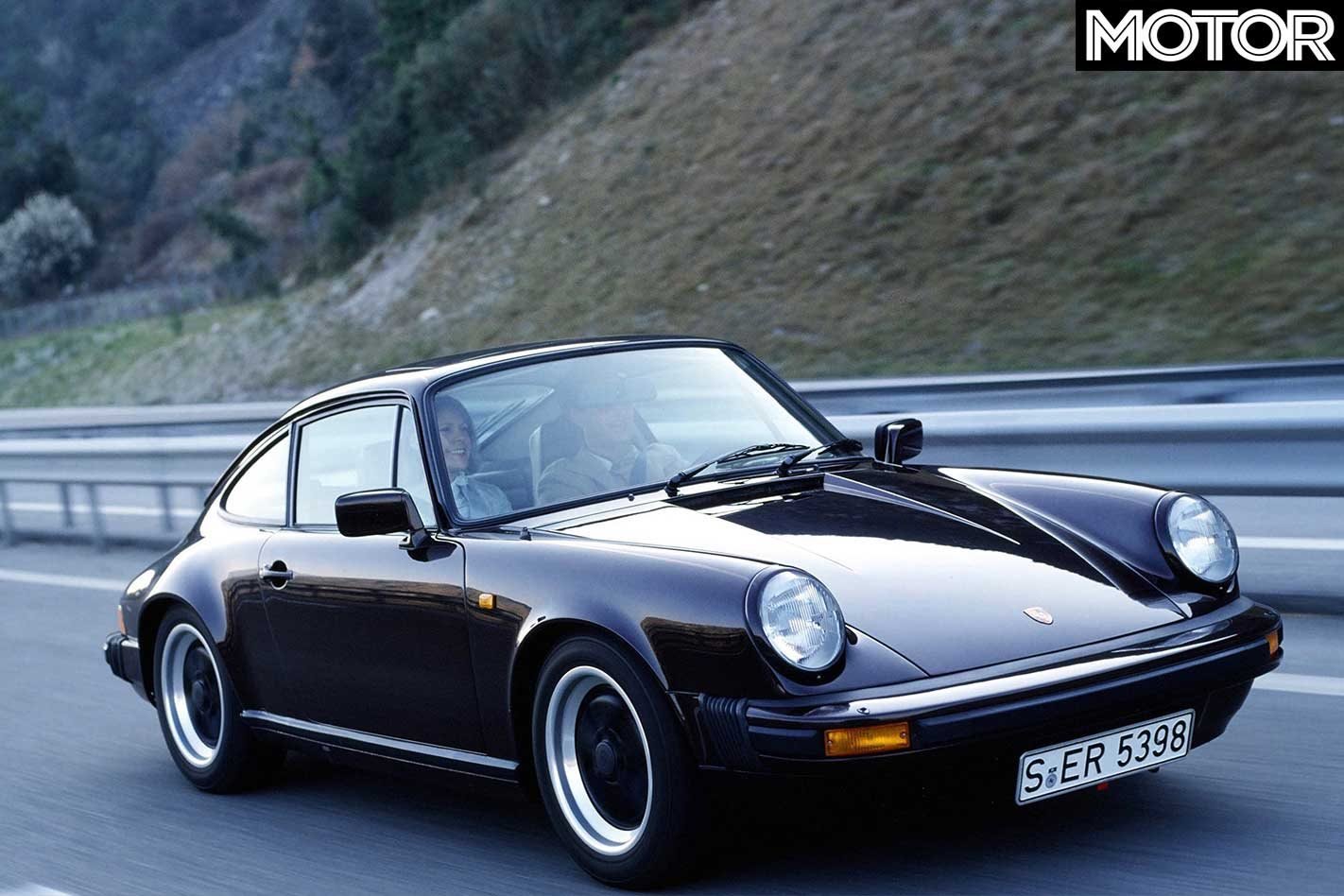
Only one year into the ‘G’ generation, the 911 Turbo is introduced, with the 3.3 sitting at the top of the range by the end of the G Series’ lifespan.
The fastest 911s were now hitting 100km/h in about 5.2 seconds, and topping out at 260km/h. In all, 198,496 G Series 911s were built.
Porsche ‘Type 964’ 911: 1988-1994
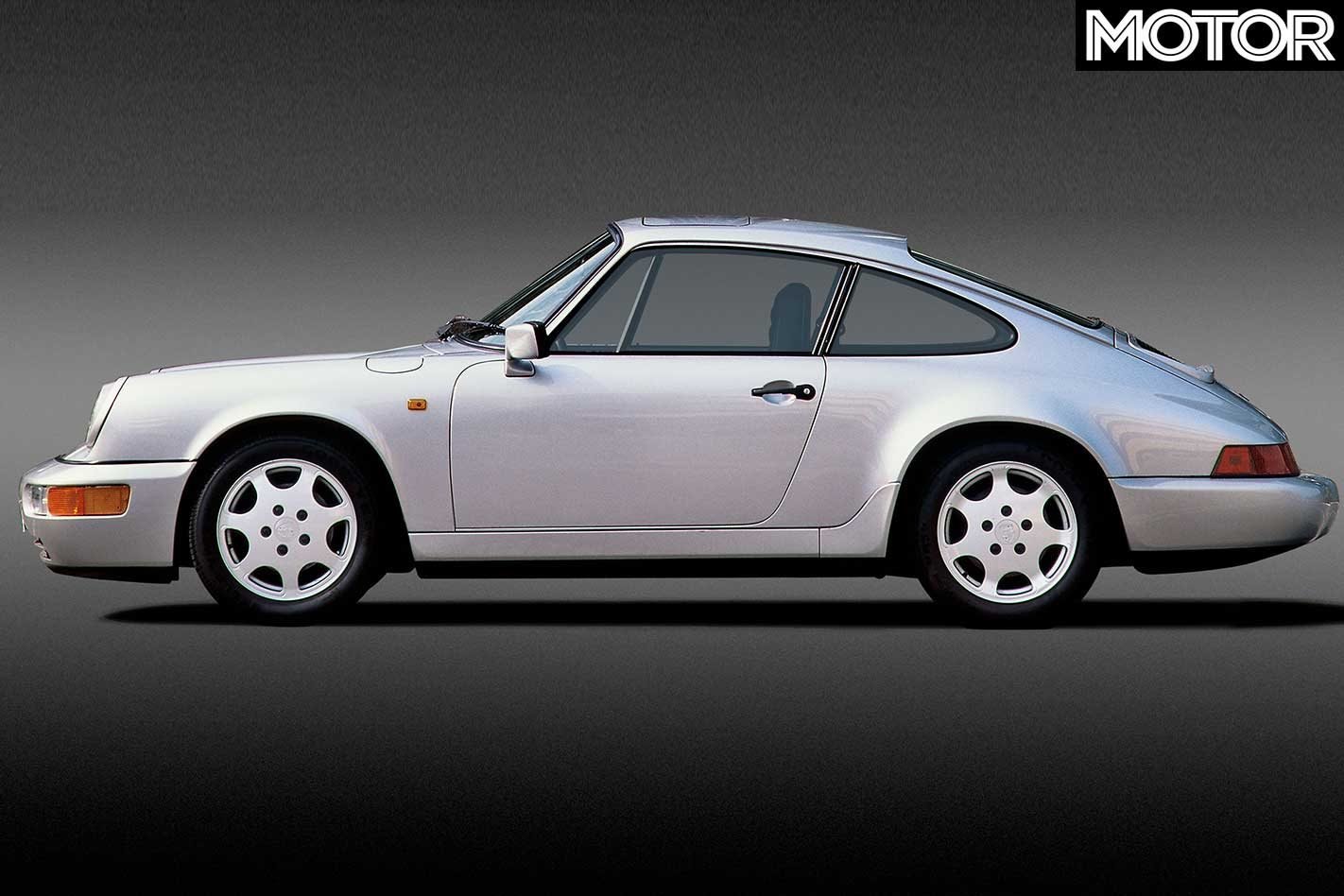
About 85 per cent of the 964 was new, meaning Porsche considers this a turning point for the 911.
“The first model variant immediately showed just how advanced the new 911 was: an all-wheel drive that Porsche had originally designed for the high-performance sports car 959 was introduced to the series for the first time on board the Carrera 4.”
The 964 911 Turbo 3.6 was the top of the crop for this generation, with 265kW and a 4.8 second sprint to 100km/h. Only 63,762 911s of this generation were built.
Porsche 993 911: 1993-1998
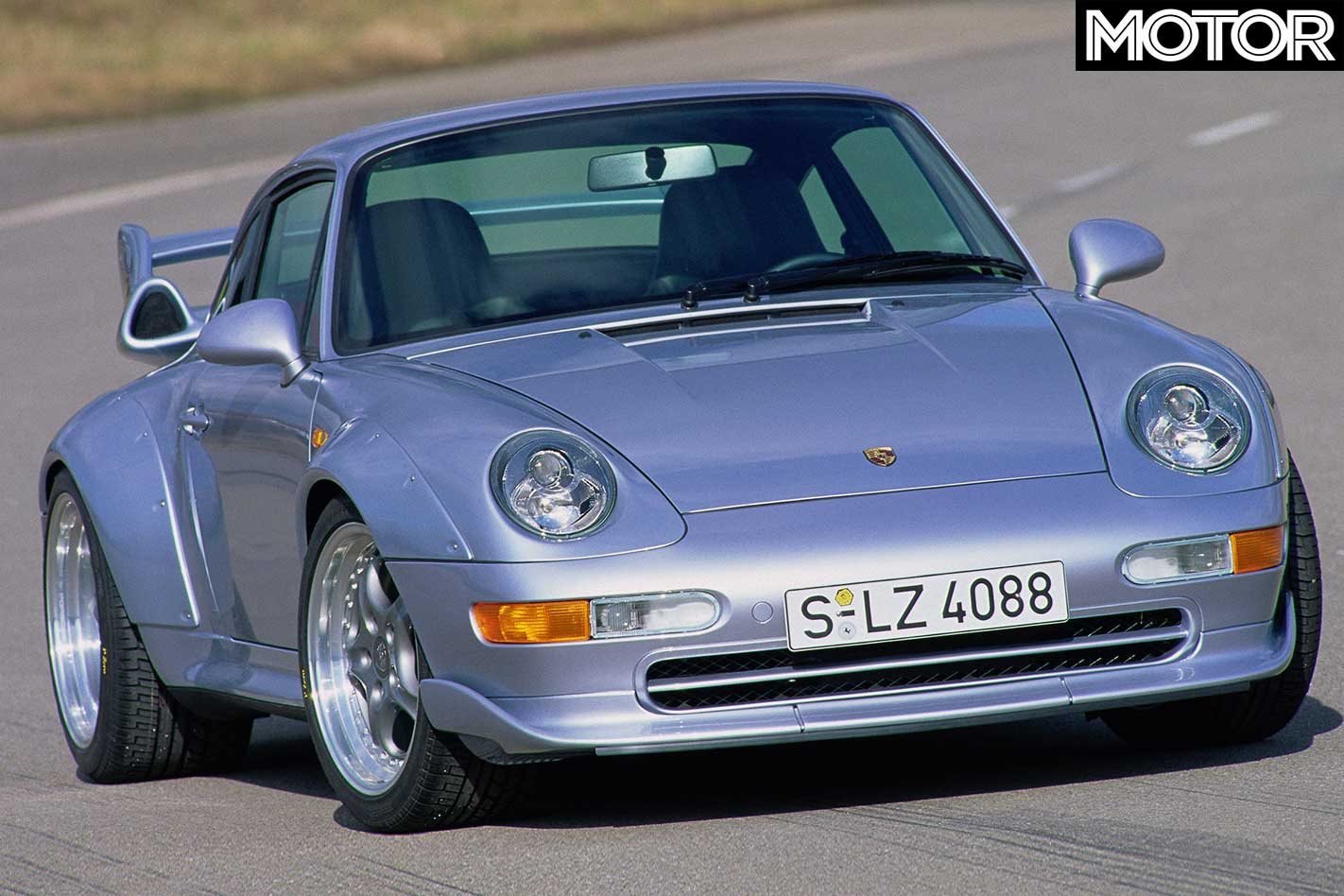
The last air-cooled Porsche is now a collector’s dream, but the pinnacle of that generation is surely the GT2 – the first Widowmaker.
Only 100 of the 331kW beasts exist (that power figure is now matched by the base 992), each able to hit 100km/h in 4.1 seconds and reach the 300km/h mark.
A total of 68,881 units of the 993 911 were built.
Porsche 996 911: 1997-2005
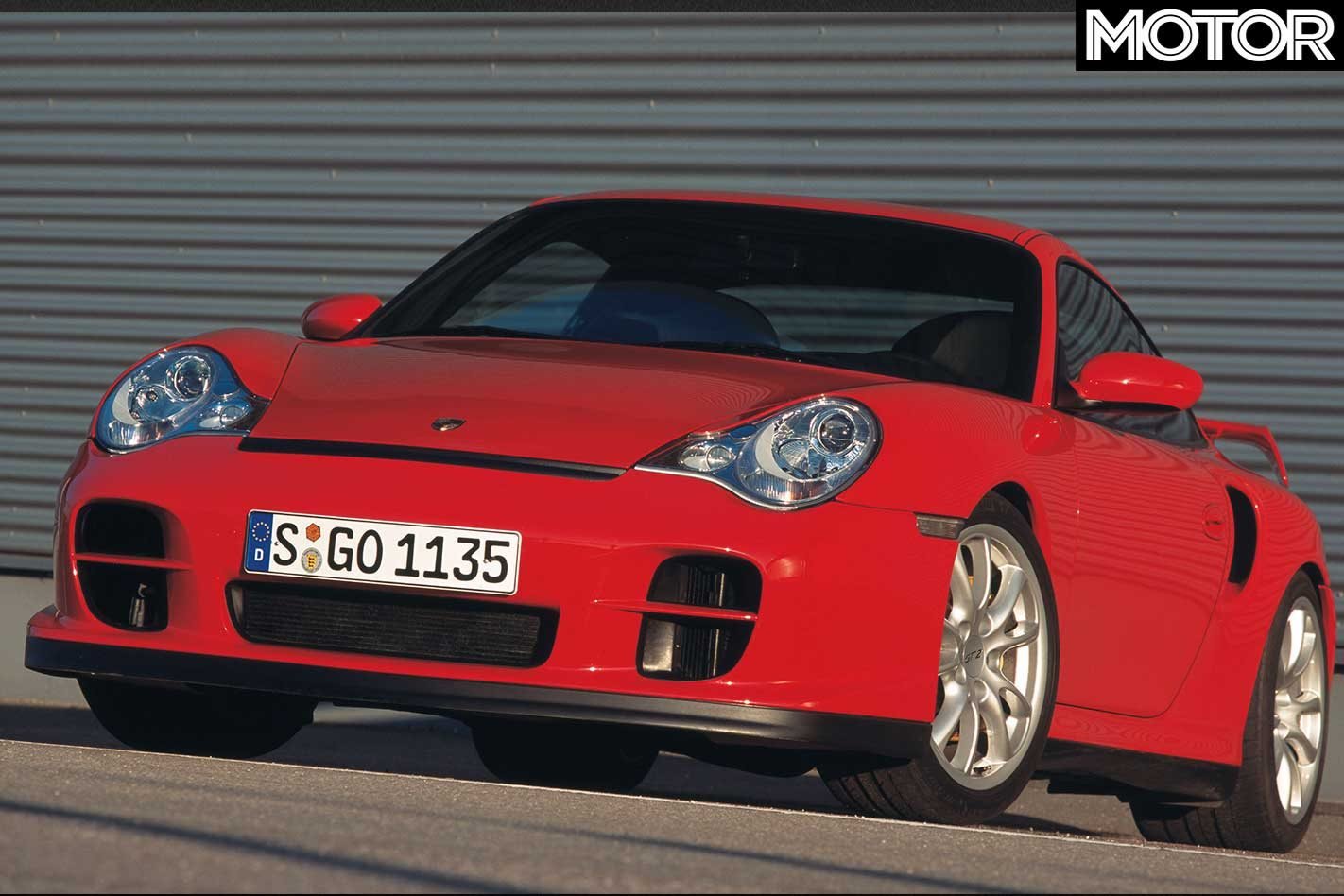
The millennium 911 was the first of a new breed, water-cooled and now able to produce more power, and go faster. Porsche also built more 996s too, with 175,262 having been created.
335kW and 600Nm were the headline figures for the second-gen GT2, which could hit 319km/h.
The 996 also debuted a new design, with the ‘fried egg’ headlights giving purists who missed the air-cooled days more ammunition.
This was also the first time the GT3 and GT3 RS were created, both badges that live on today to keep the atmo dream alive.
Porsche 997 911: 2004-2012
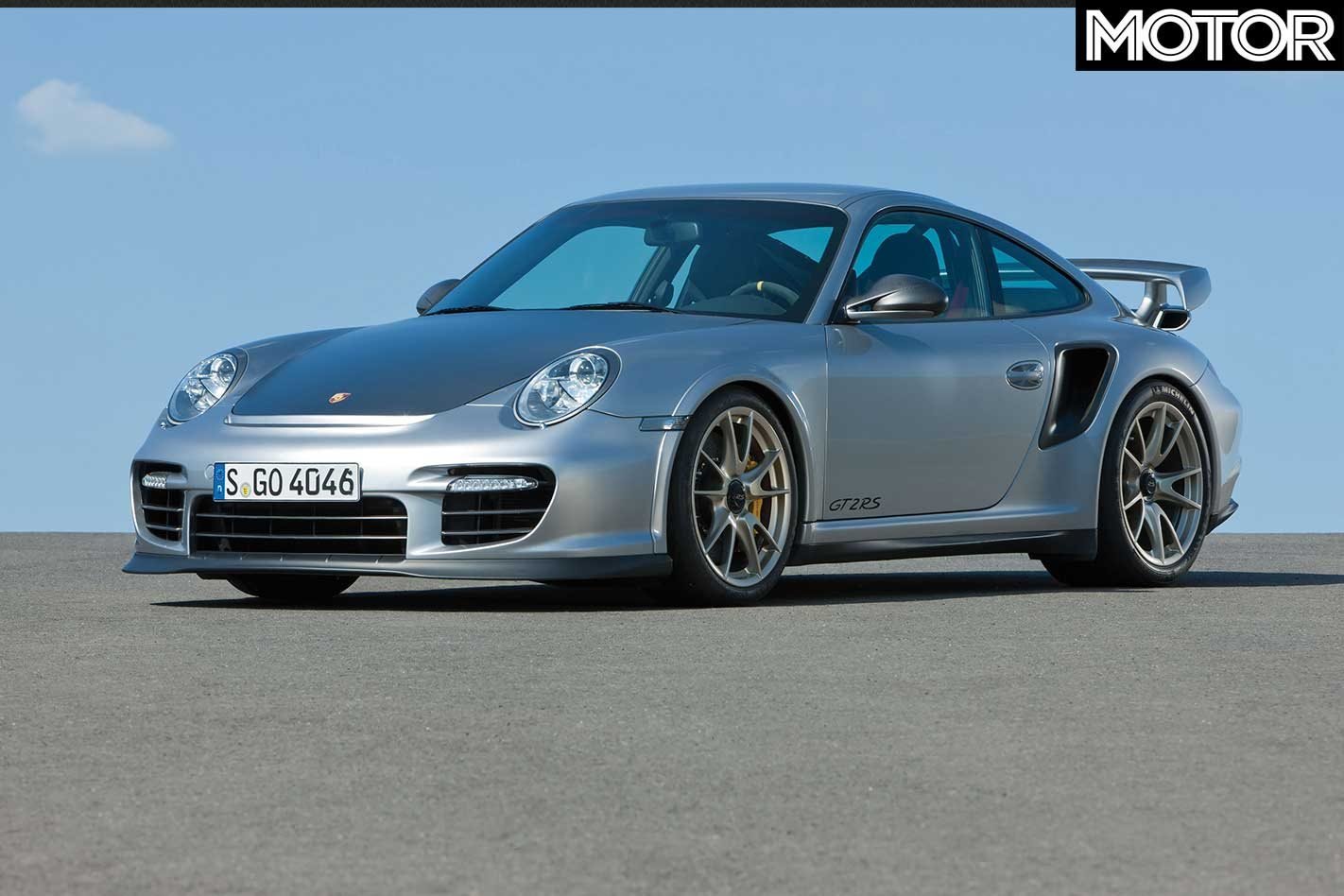
The most populous model to date, a total of 213,004 997s were built – a handful of those as the first generation of GT2 RS, a model which still sits at the top of the 911 family.
A 456kW turbocharged flat-six provided a 0-100km.h sprint of 3.5 seconds, and a lap timed at 7:18 at the Nürburgring.
The 997 ditched the ‘fried eggs’ and introduced direct fuel injection for a much more powerful and efficient lineup.
Porsche 991 911: 2011-2019
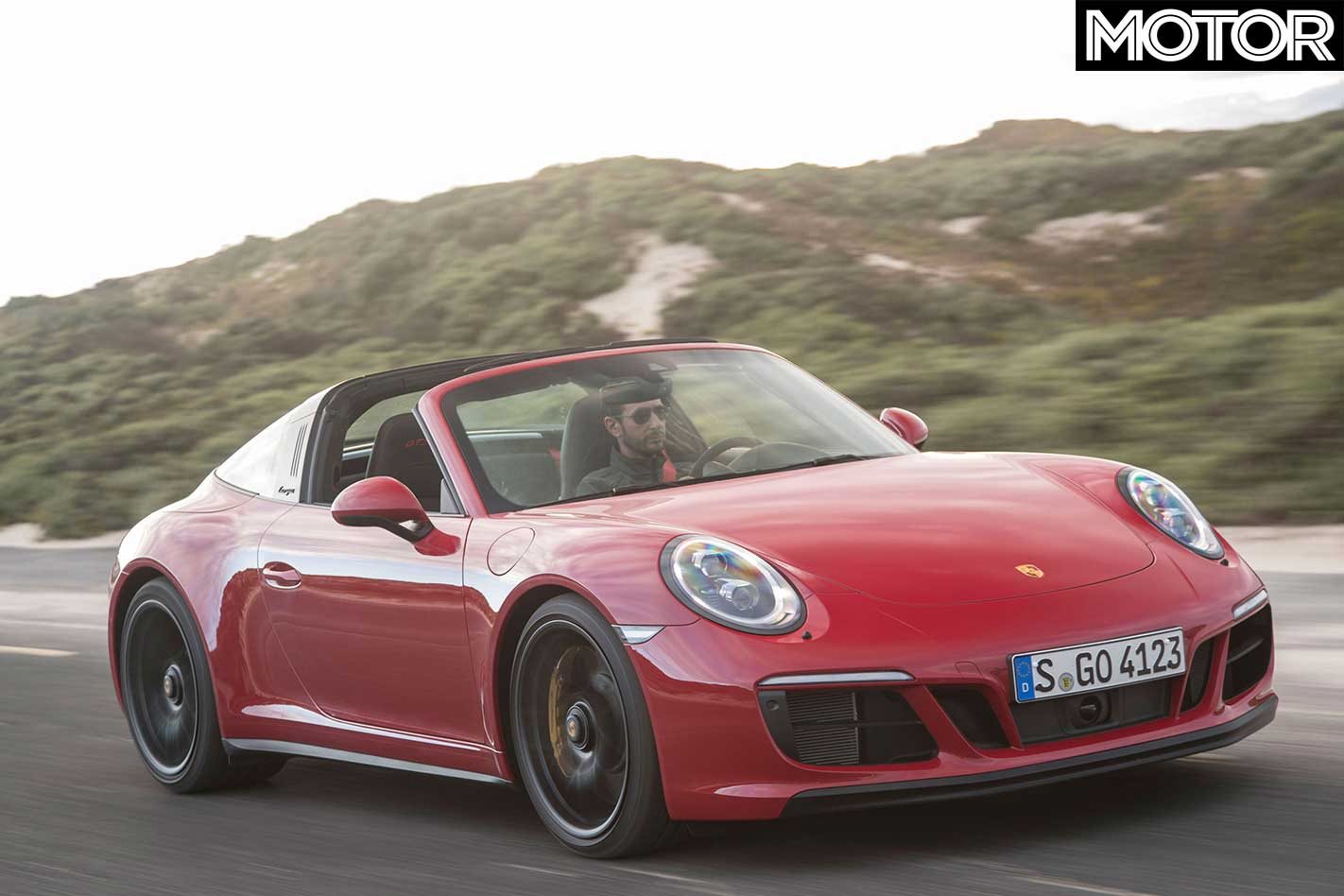
The ‘current’ 911 drove the ‘everyday sportscar’ into the ‘everyday supercar’ category, with the 991.2 911 GT2 RS now able to hit 100km/h in 2.8 seconds thanks to 515kW and 750Nm.
The very limited lightweight 911 R, as well as the reintroduction of a manual gearbox to the GT3 made this generation one to be celebrated, even if the GT2 RS no longer holds the Nürburgring record.
Porsche says: “The 991 generation of the 911 was the absolute best seller for Porsche. 217,930 units were built in the period from 2011 to 31 October 2018 and counting. In total, Porsche has produced 1,049,330 series 911s since its debut in 1963 to end of October 2018.”
JUST because there are features on Ferrari’s incredible 812 Superfast, Mercedes’ beautiful E53 AMG and on-road in Porsche’s box-fresh 992 doesn’t mean that we’ve gone a bit elitist for this issue of Wheels.
Nope, we’ve devoted a big section of the December issue to keeping it real, highlighting where we’d put our money had we not spent it all on speeding fines, smashed avo and caffeinated beverages. We’ve given Suzuki’s Swift Sport a warm welcome and then pushed it into the deep end when its back was turned, up against the Peugeot 208 GTi, the Renault Clio RS and the mighty Volkswagen Polo GTI.
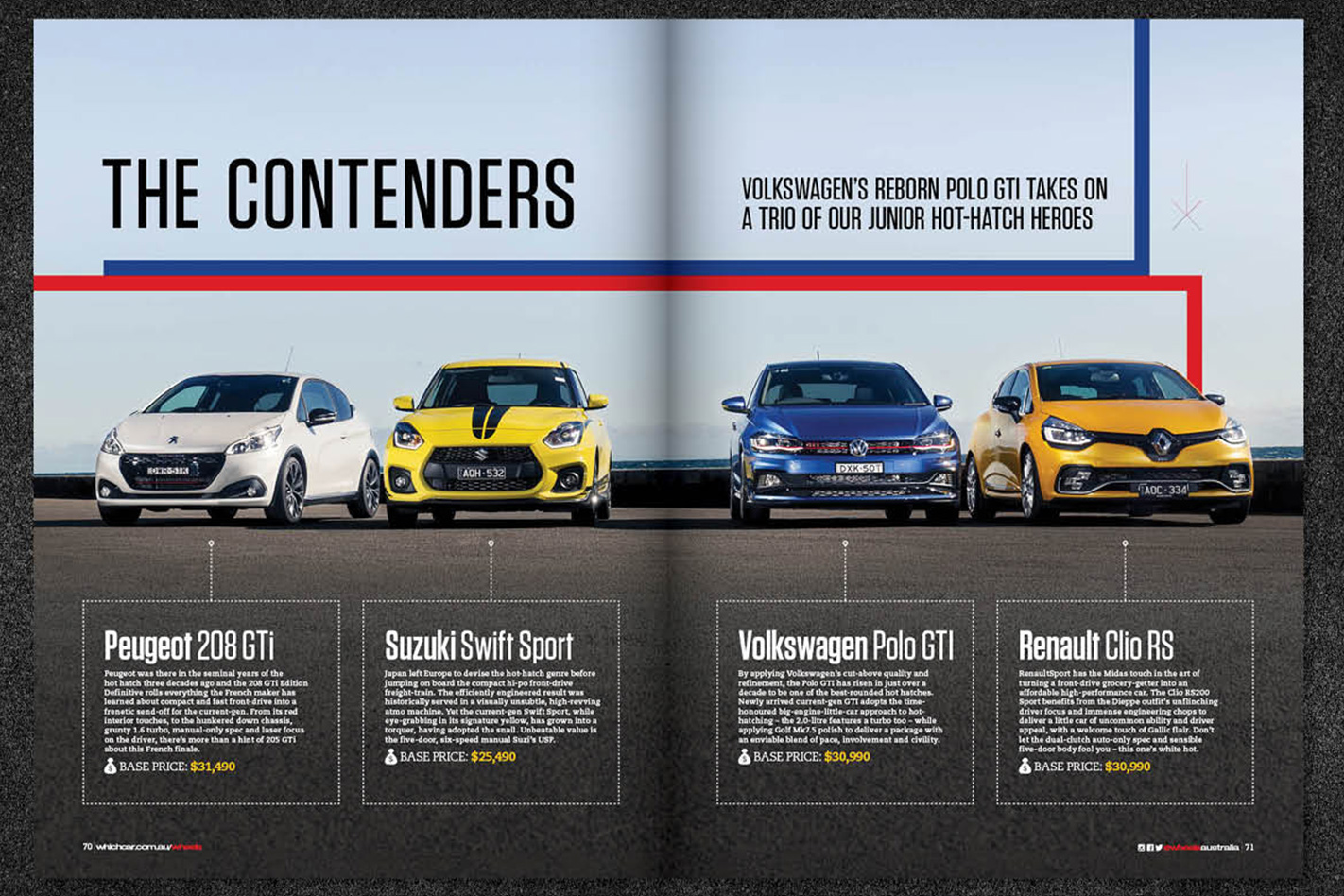
We packed Dan Gardner off to Japan to drive the latest and greatest MX-5, culminating in a giant Wankelfest at Fuji. Byron Mathioudakis argues the case for fun, cheap SUVs and you’re probably best advised to read his arguments before diving into a big ol’ stoush online.
Of course, should the budget blow out a bit, we spill the beans on one of Victoria’s great driving roads in the Ferrari 812 Superfast feature and drive the Mercedes E53 AMG from sea level to summit on Australia’s highest bit of bitumen.
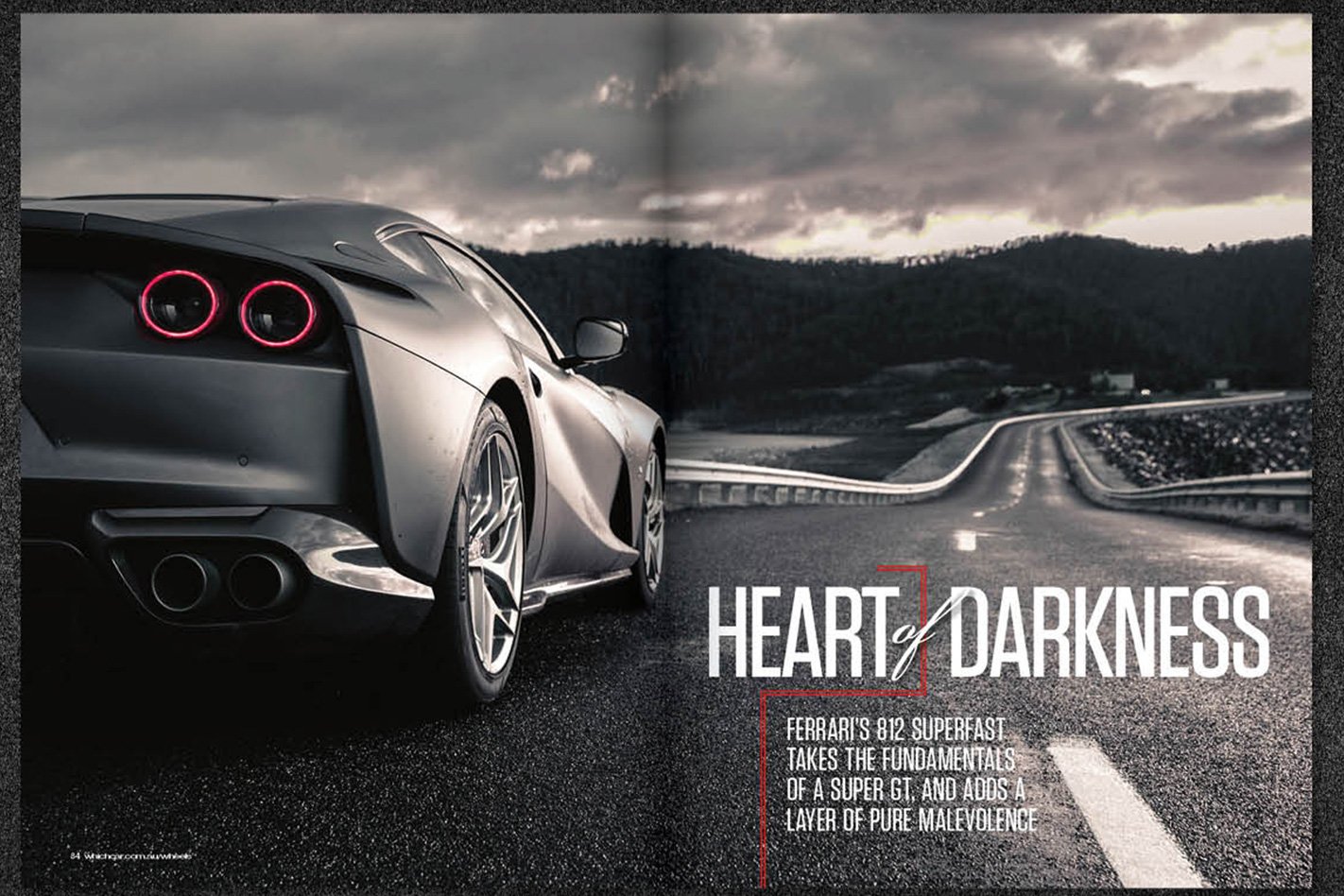
We get the inside griff on the new Porsche 992 with the engineering team in California, pitch Holden’s make or break Acadia against the Kluger, Santa Fe and CX-9 and deep dive the jaw-dropping McLaren Speedtail.

As if that’s enough, we’re coming with first drives of the BMW Z4, Peugeot 508, Merc C43, Rolls-Royce Cullinan, VW Amarok and Citroen C3 Aircross. Then there’s the Wheel garage of long termers, incisive opinion from Corby and Stahl and everything you need to know about the bottom falling out of Holden’s sales numbers. It’s fair to say we’ve been pretty flat-stick this month to bring you the best motoring magazine in Australia. Get after it.
THE 992 version of Porsche’s 911 doesn’t look all that different to its predecessor. Unveiled at the Los Angeles Show after a series of online leaks, the shape may well be familiar, but the car has changed fairly dramatically under the skin.
What’s not quite so apparent is how Porsche has stepped up the power war against key rivals. Back in December 2007, Peter McKay drove the 997 GT2 for Wheels.
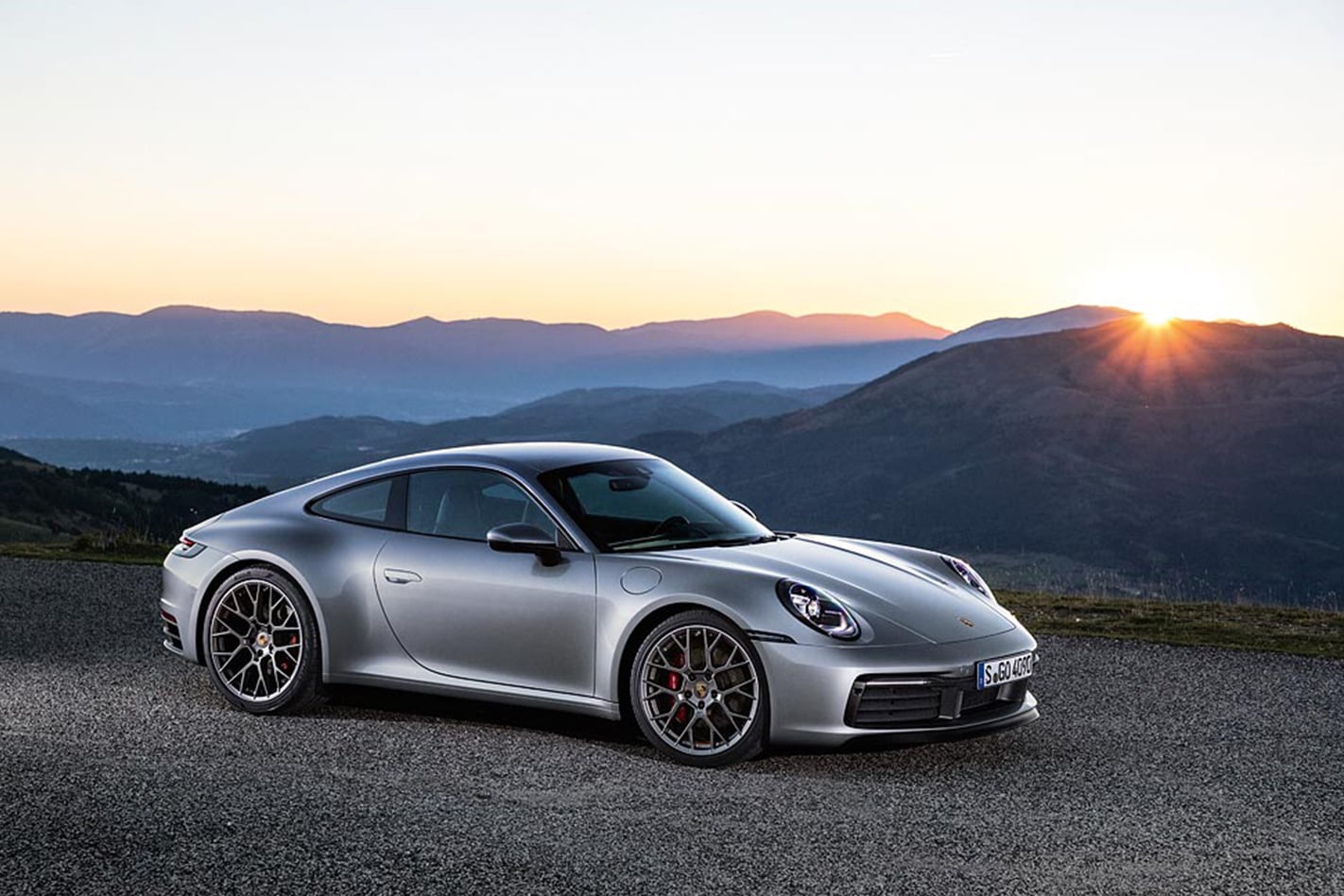
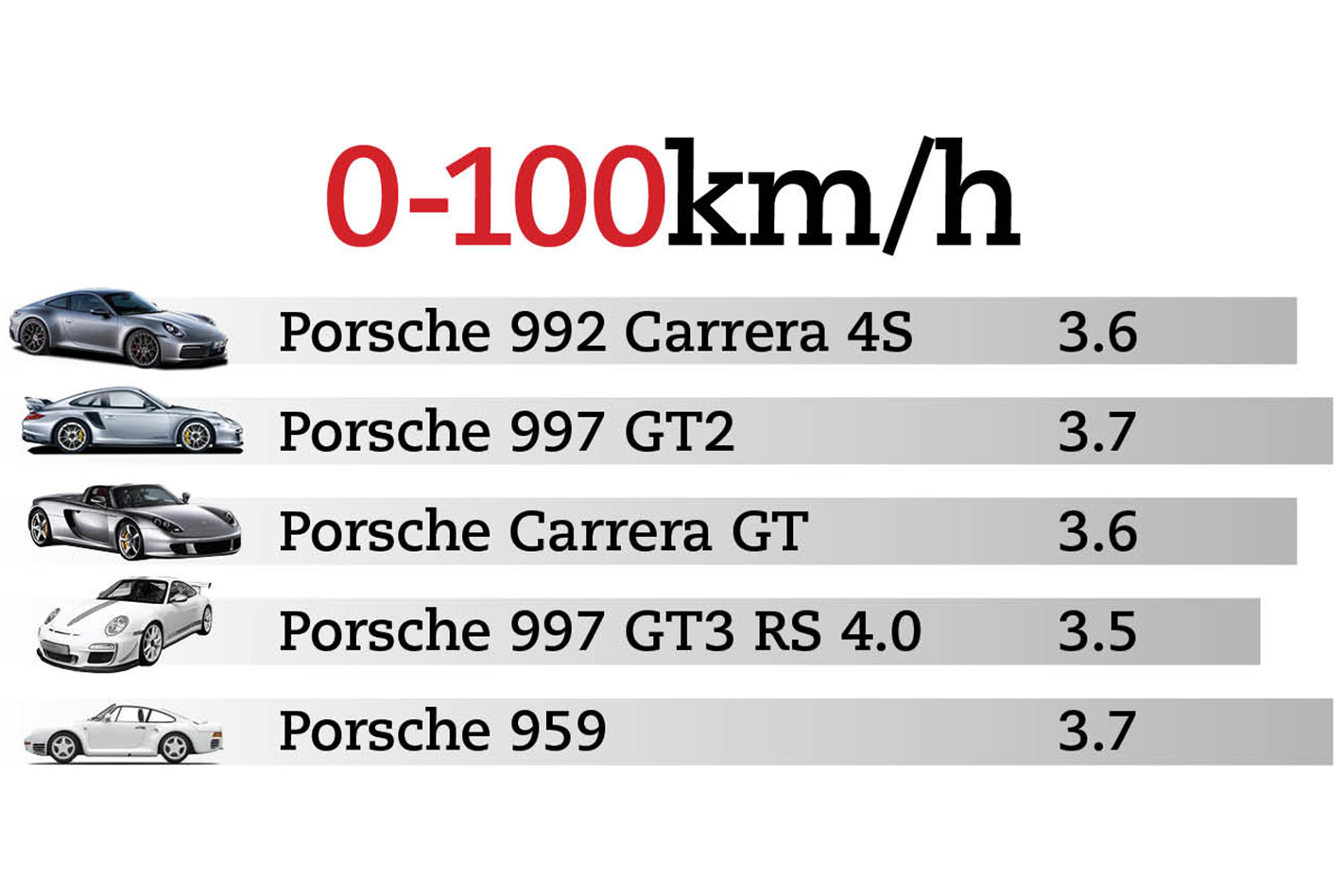
It was the fastest production Porsche ever built, and the first production car with launch control, smashing its way to 100km/h in 3.7 seconds. Which, incidentally, is an identical time to the cheapest 992 you can currently order, the $265,000 Carrera S.
Lay down $281,100 for the all-wheel drive Carrera 4S and you’ll outsprint the GT2, stopping the clock in 3.6 seconds. As the chart below shows, it’s in some pretty illustrious company.
0-100km/h
We put the 992 up against some Porsche legends to see just how quick off the mark it is. And the really scary thing? You can make the 992 Carrera S another 0.2s quicker to 100km/h with the optional Sport Chrono Package, so a little judicious optioning would see it become the quickest of this bunch.
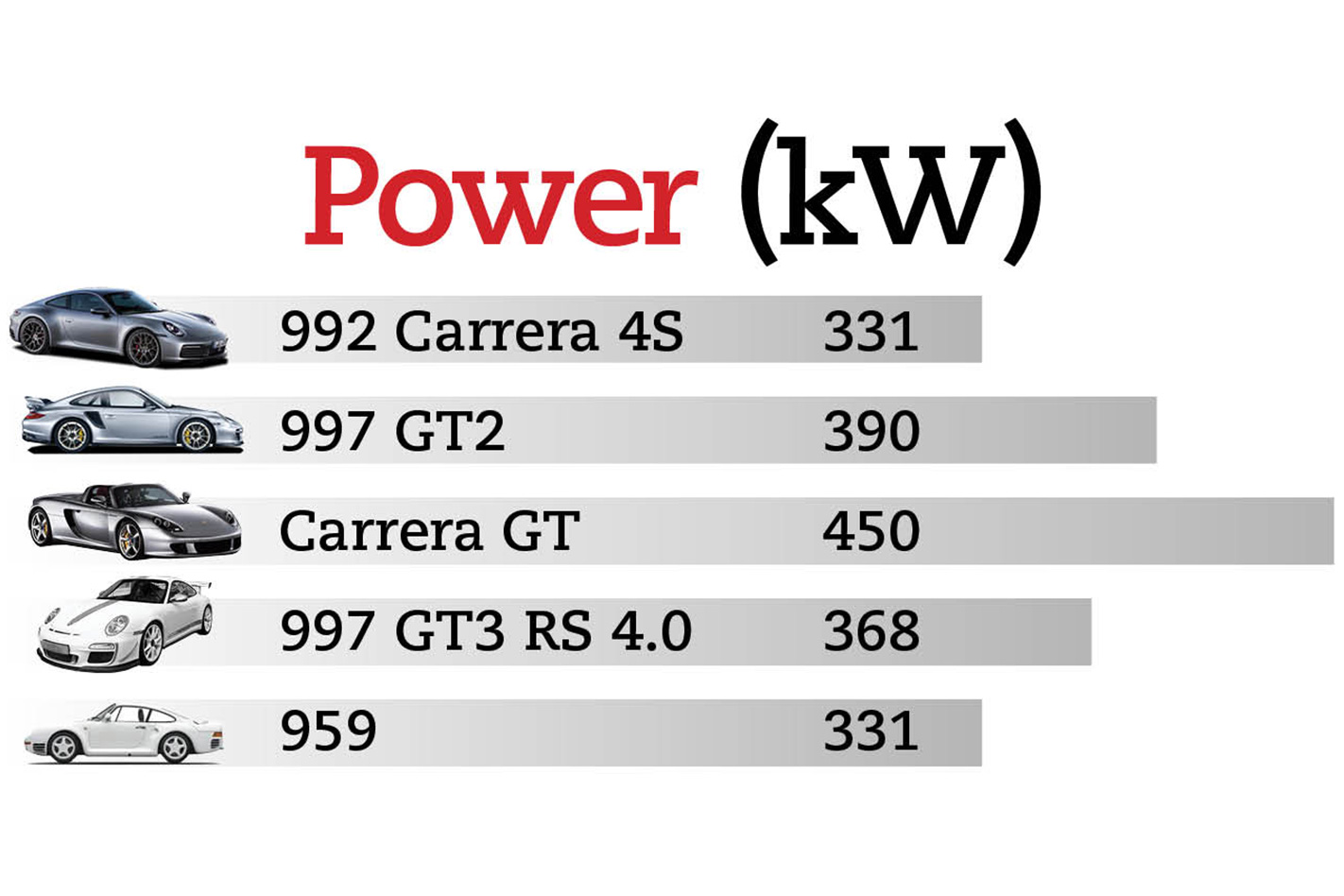
Power
Meanwhile, it’s clear that the 992 is leaning on its tech to do more with less. Despite that, it’s interesting that the 992 C4S’s acceleration and power figures are lineball with the vintage 959, although that was Porsche’s fantasy hypercar at the time and overall fuel efficiency has improved by 23 percent in the process. Weight has stepped up from the 959’s 1450kg to 1565kg though. Middle aged spread? No – it’s largely down to modern crash structures.
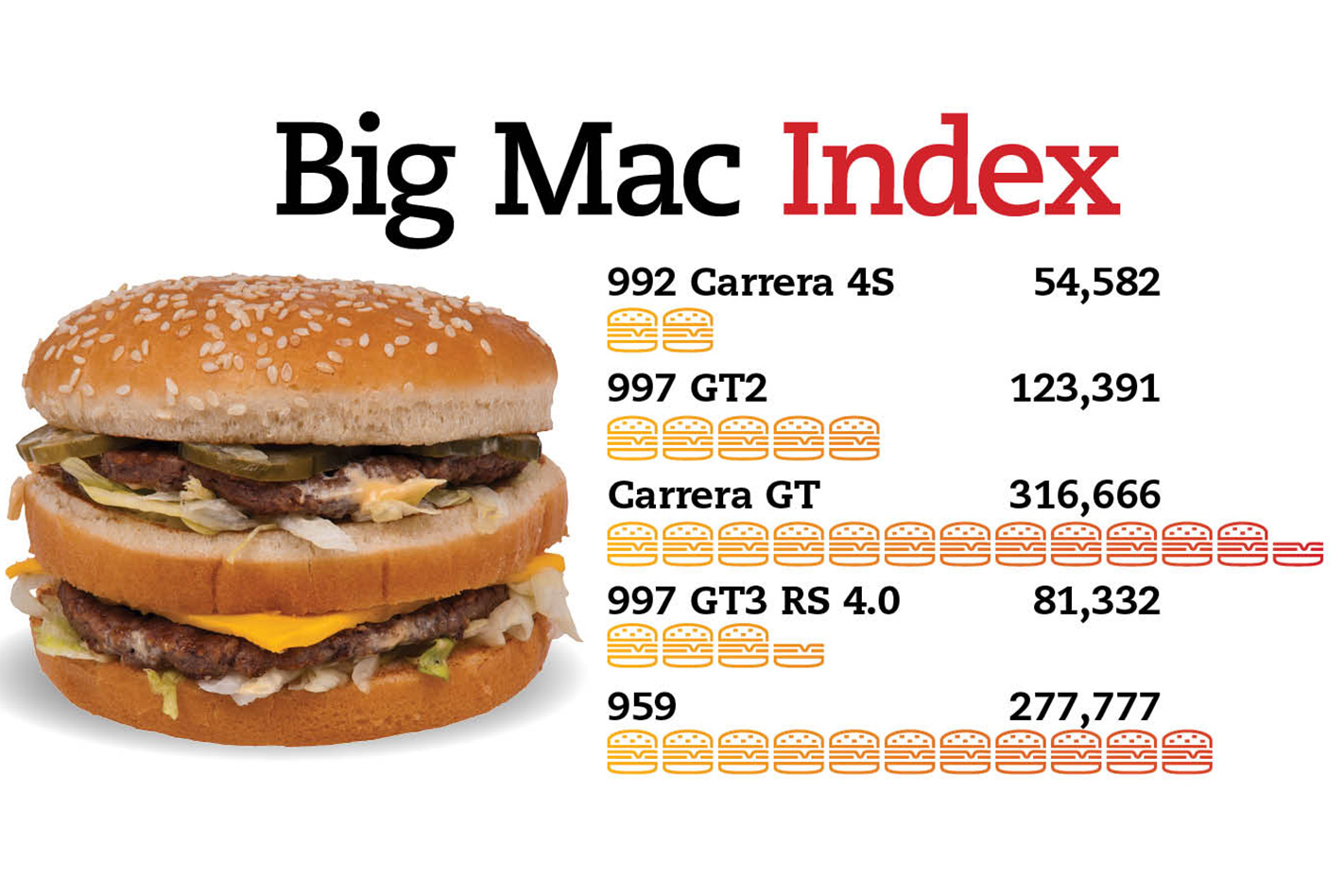
Value
Using that durably universal benchmark, the Big Mac, as our common currency, here’s how each car stacks up in terms of bang for your burger using historic local Big Mac burger pricing at year of launch. The 992 emerges as easily the best value, but that outlay is still the equivalent of Big Macs for breakfast, lunch and dinner for nigh-on fifty years. Morgan Spurlock would be proud of you.
The 2019 Porsche 992 911 Carrera S and 4S have been revealed at the LA Auto Show.
Porsche’s eighth generation 911 breaks cover with a host of power, technology and style upgrades that mark progress of solid evolution rather than revolution.
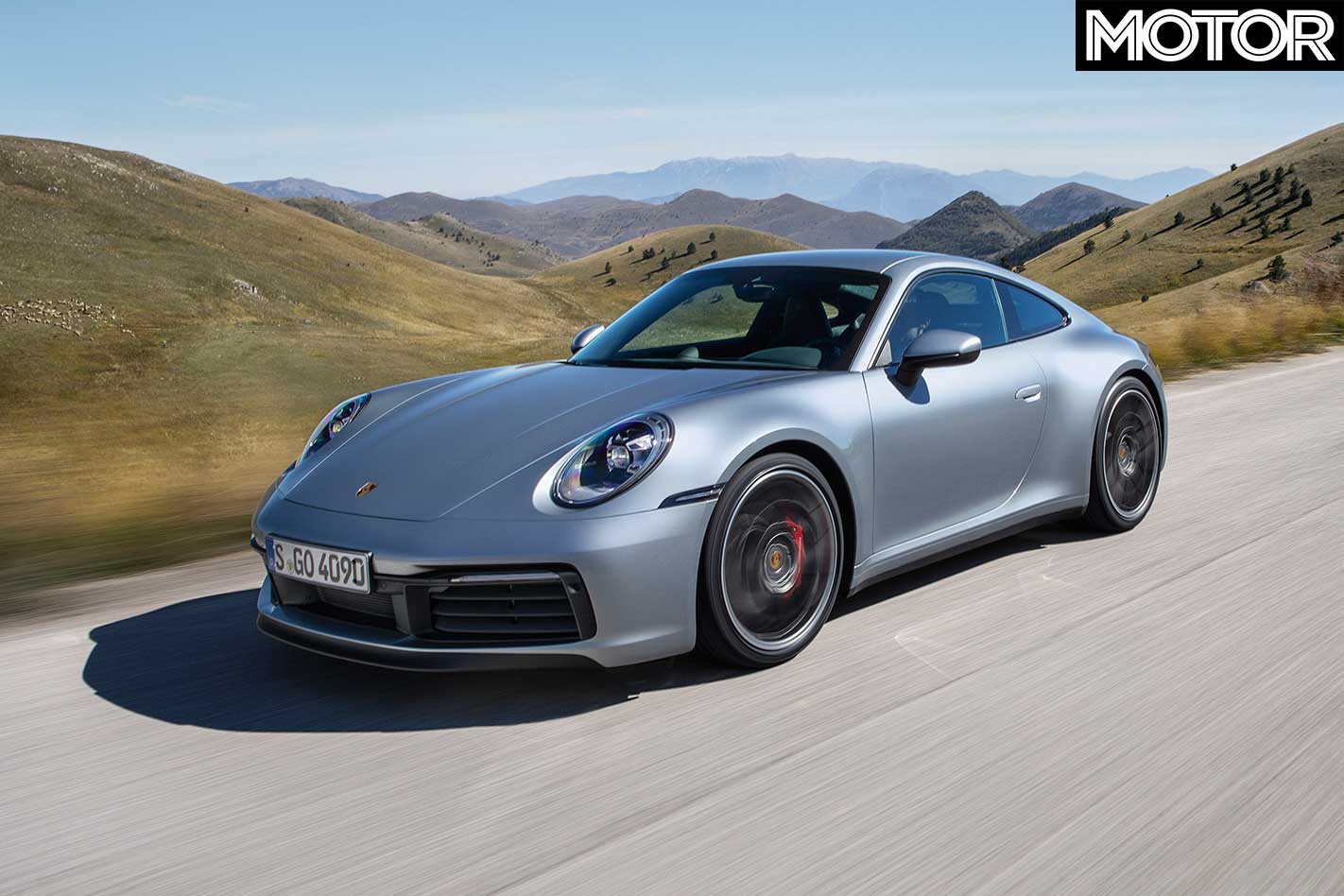
We currently only have specifications on the Carrera S and 4S, but they reveal the new 992 series will be significantly quicker than its predecessor when it arrives here in 2019’s second quarter.
Their 3.0-litre twin-turbo flat six engines have been upgraded with new injection strategies that complement a newly designed turbocharger and charge air layout. Despite the fitment of a petrol particulate filter, power creeps by 21kW up to 331kW.
Mated to the eight-speed PDK dual clutch that first debuted in the new Panamera, the Carrera S is claimed to reach 100km/h in 3.7 seconds. Add the all-wheel drive grip of the 4S variant and that drops to 3.6 seconds. That’s an improvement of four tenths on the current 991.2 car. We also understand Porsche plans to offer a seven-speed manual alongside the eight-speed PDK ’box.
As before, an optional Sports Chrono package can cut those figures by another two tenths, putting them at 3.5 and 3.4 respectively. For reference, a current Porsche 911 GT3 is claimed to complete the sprint in 3.4.
There have been a host of changes made on the 911’s outside as Porsche says the exterior design is completely new. The rear-end is now the same width across “all models” while the front is now 45mm wider.
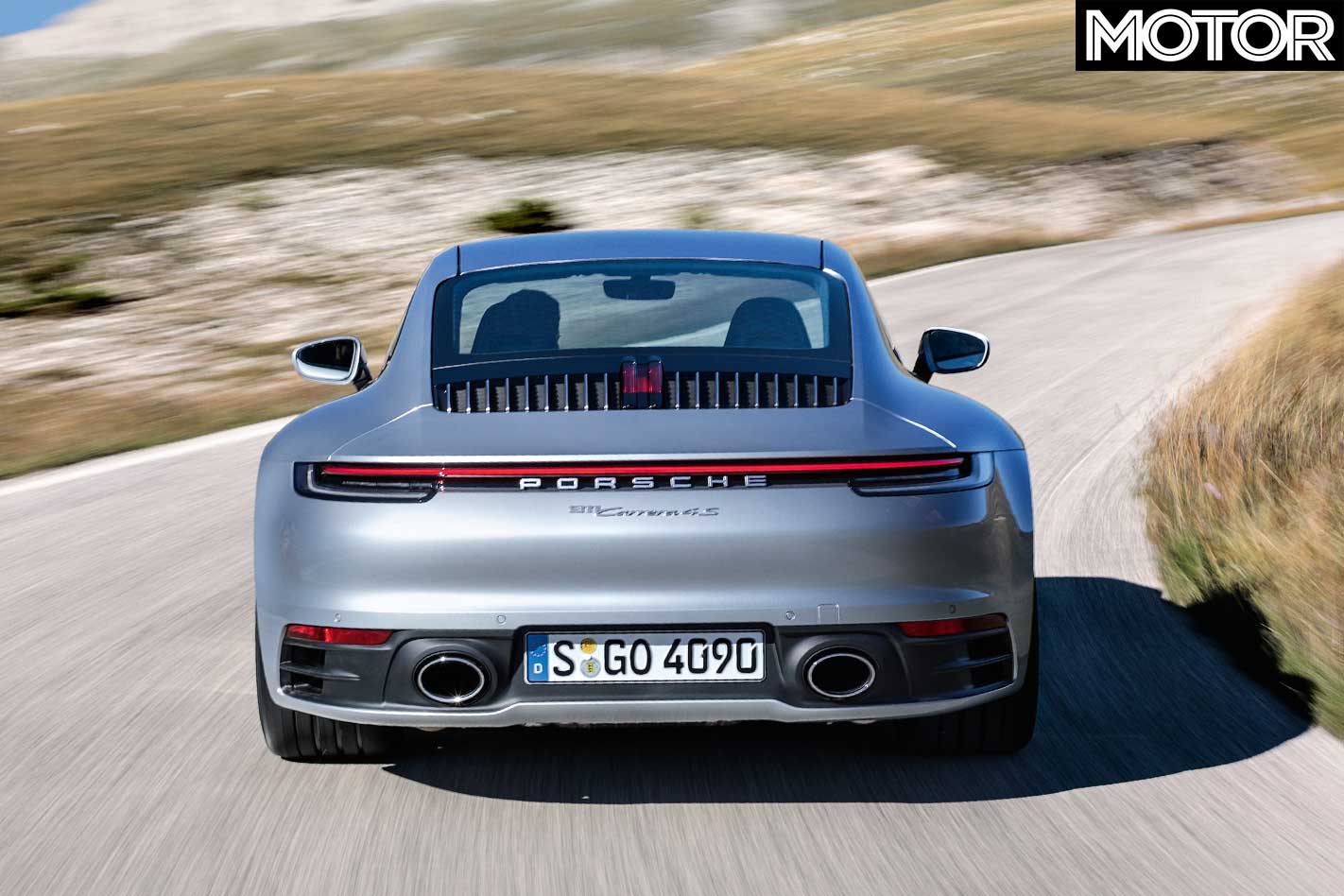
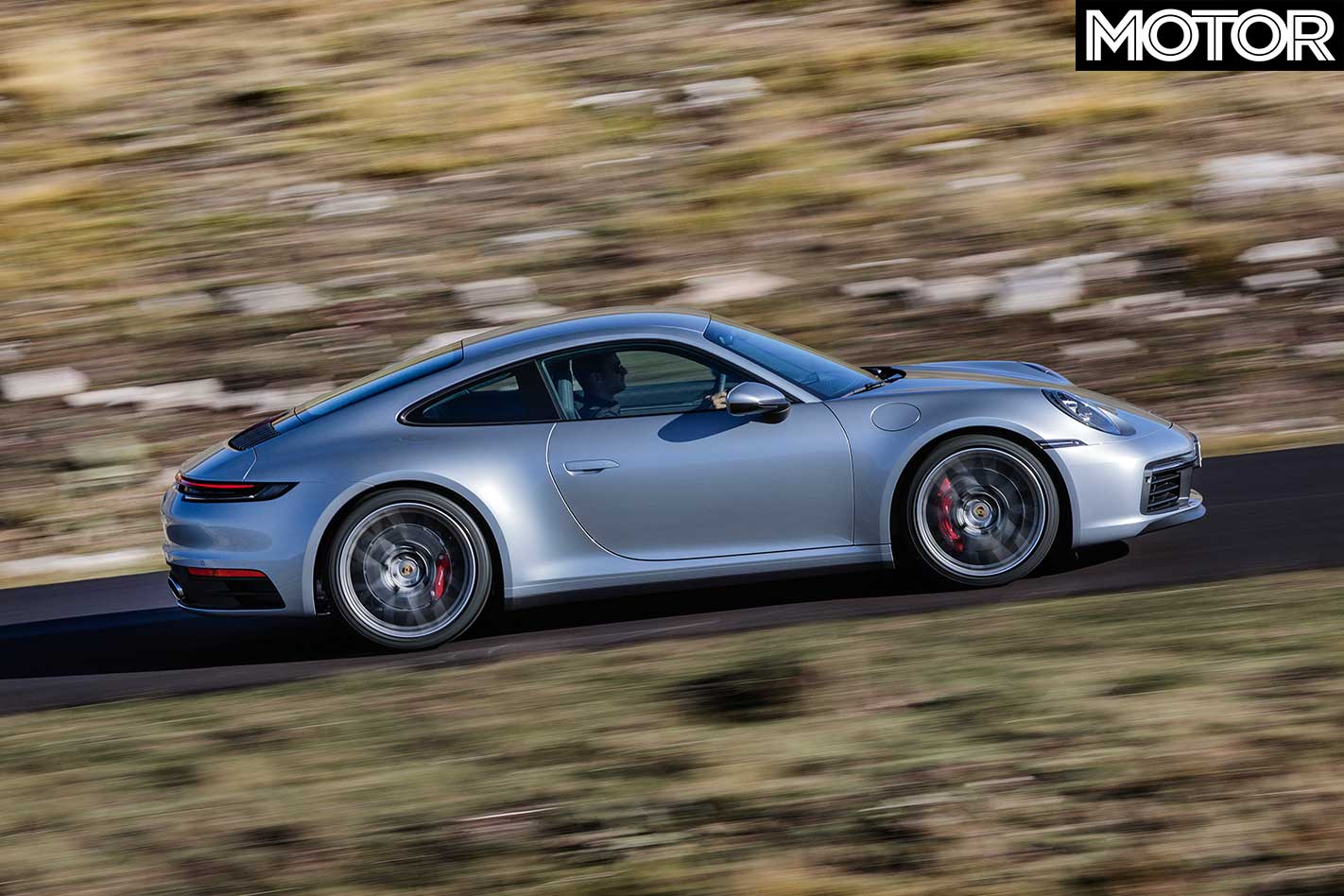
Other detail changes include recessed door handles, an indented bonnet that mimics an original 911’s, new front and rear bumper designs and solid arm side mirrors. Its integrated rear spoiler now spans across the car’s rear end and lifts from above the equally wide light bar. It’s complemented by new LED headlights. The 911 Carrera S silhouette is good for 308km/h while the 4S manages 306km/h at top whack.
Information on complete changes to the chassis were not available as we went to press but Porsche has adopted a staggered wheel height setup, arranging a 21-inch rear wheel behind a 20-inch front wheel. It also introduces a new Wet mode to its drive modes Normal, Sport, Sport Plus and Individual.
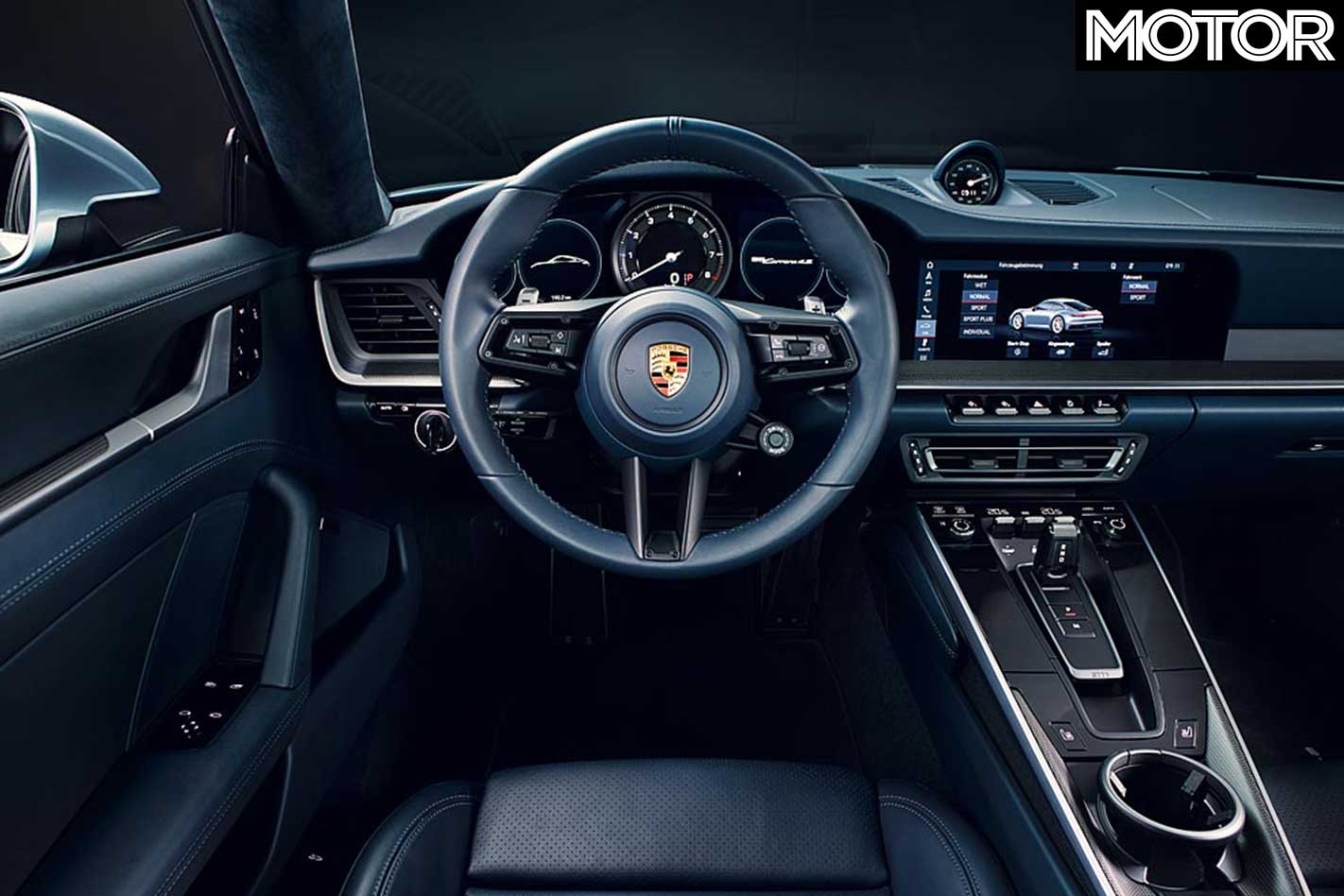
Panamera owners will find inside familiar. It’s dominated by a new 10.9-inch centre screen that overlooks a redesigned centre console. Switches that control vehicle functions like damper stiffness and ESC settings live between the HVAC vents and the main infotainment screen. In their old place are glass-panes flanking a shrunken gear lever. Ahead of the driver, meanwhile, a central rev tacho is flanked by digital screens that display extra information.
Safety hasn’t been neglected as adaptive cruise control now features alongside automatic emergency braking that’s fitted as standard. Porsche also promises a new ‘seating concept’.
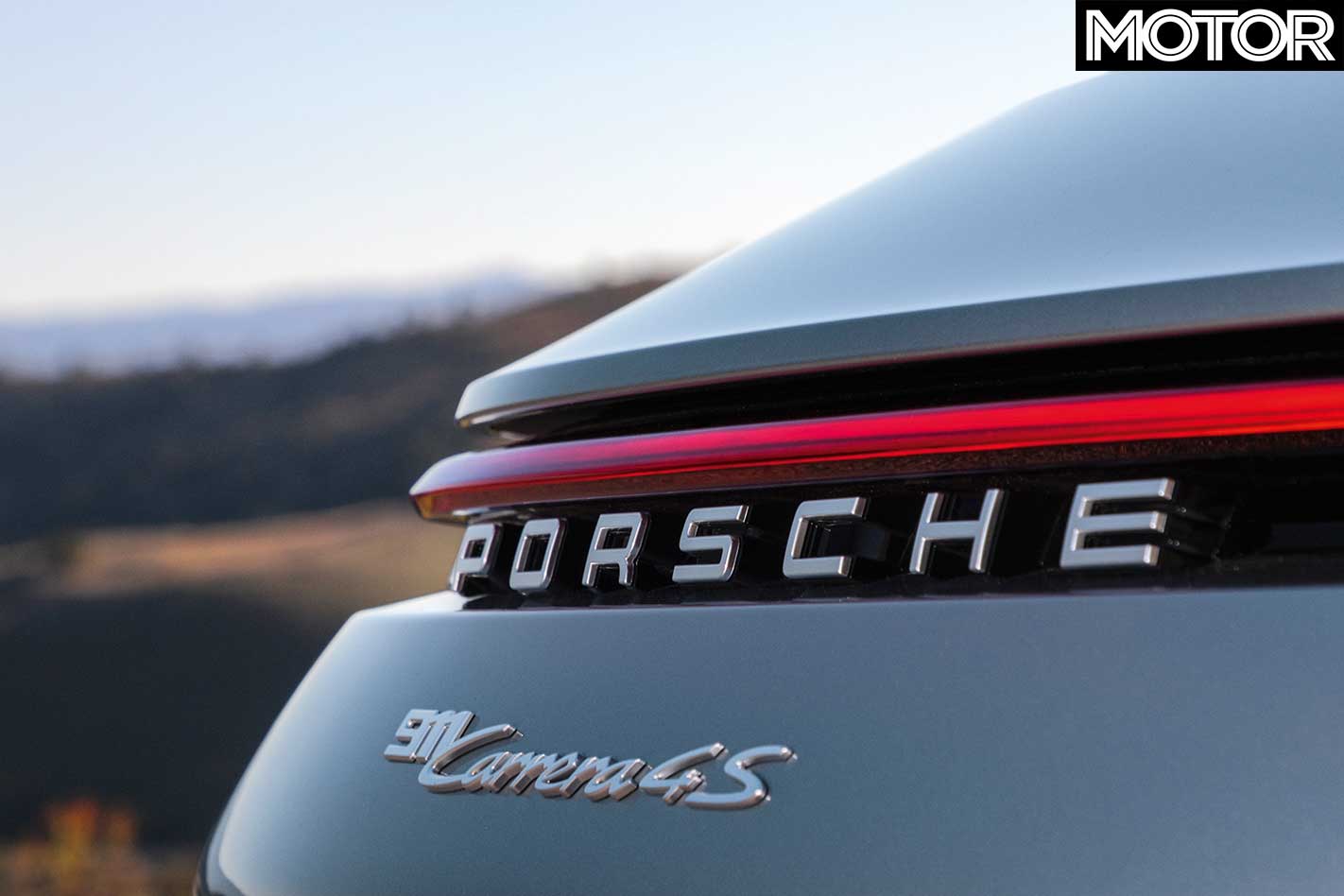
You’ll need to cough up $265,000 for the S variant which starts from when it lands in Australia. The 4S variant asks $281,100, revealing a price increase of around $10K for both variants on their 991.2 manual equivalents.
Prices on the full range, along with information on the base car, will be revealed in the near future.
AN ALL-NEW generation of Mazda’s evergreen small car is preparing to launch locally in mid-2019, handing one of Australia’s most popular vehicles a new lease on life.
Mazda whipped the covers off its fourth-generation Mazda 3 hatchback and sedan at a preview event in Los Angeles tonight, on the eve of 2018’s last major motor show.

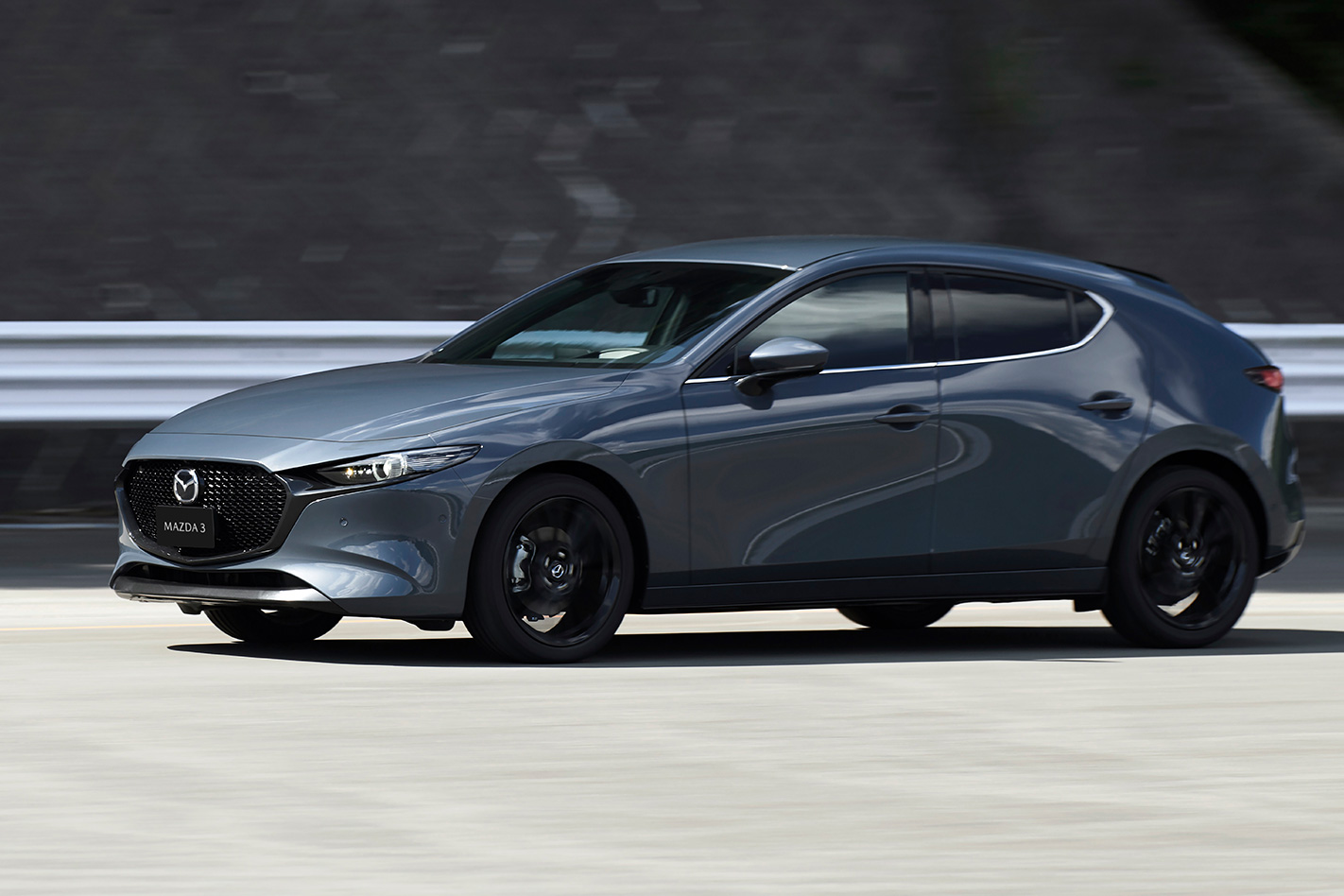
Heavily restyled sheetmetal for both body shapes introduces an evolved version of the brand’s now ubiquitous Kodo design language. The two models are distinctly different in appearance, sharing only their windscreen and bonnet. The hatchback is now slightly longer, narrower and taller than before, whereas the sedan is significantly longer, having grown by more than 80mm.
Stand-out design elements include extremely low bonnets that lead to oversized grilles and headlight assemblies pared back to the bare essentials. Their side profiles are almost completely devoid of character lines, the 3 instead relying on curves in its panels to add depth. A new colour called Polymetal Grey was developed to accentuate the effect of light and shade on its flanks.

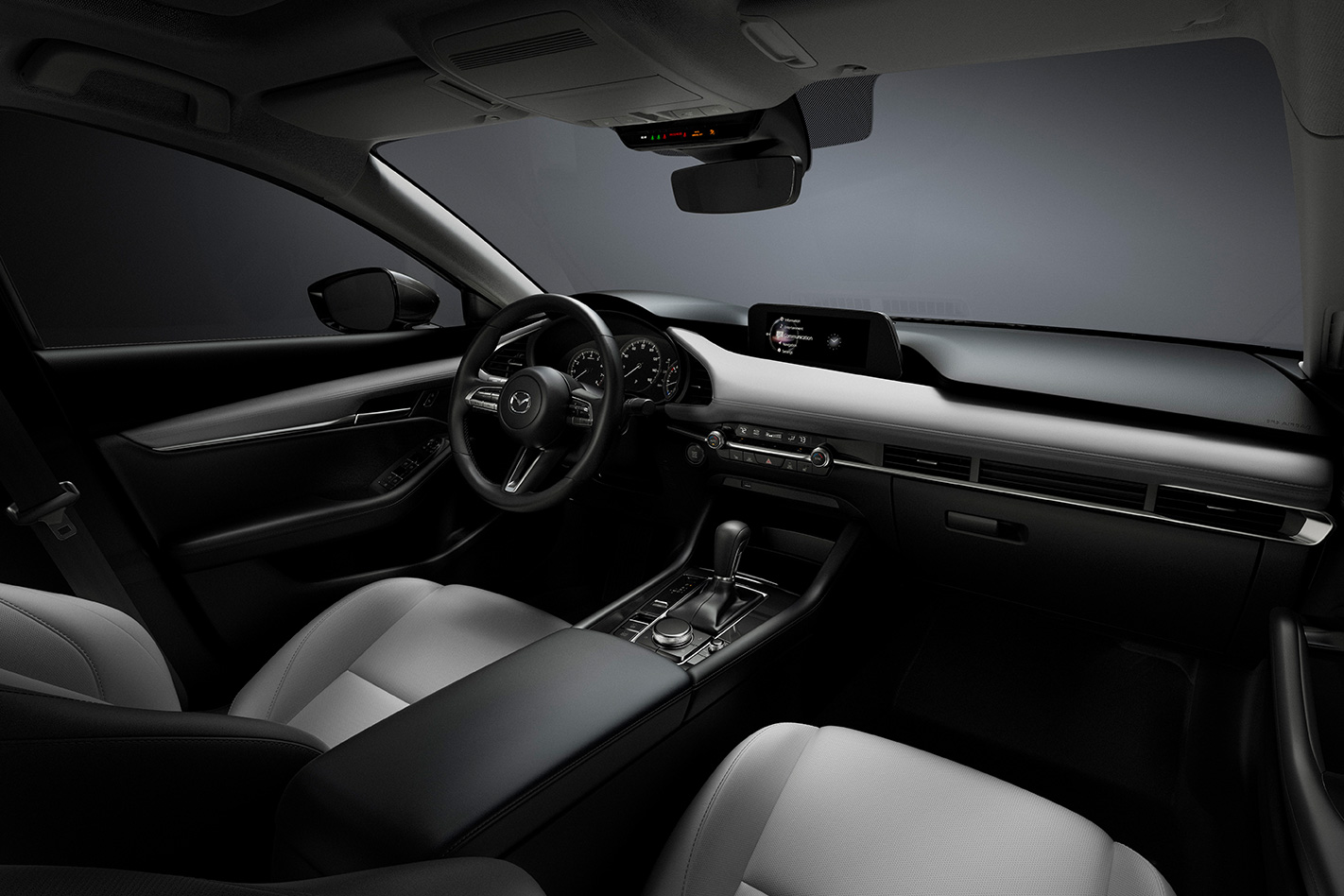
Mazda’s premium design sensibilities extend to the 3’s overhauled cabin in visual appeal and NVH refinement. The driver is the focus, with every element angled to face the driver’s seat. A long horizontal plane across the dashboard incorporates climate controls for a clean, minimalist appearance. New materials and colours have been added for this generation to widen its appeal.
Five Skyactiv engines are engineered to fit within the fourth-gen Mazda 3 so far, including three conventional Skyactiv-G petrol engines (1.5-, 2.0- and 2.5-litre four-cylinders), a 1.8-litre Skyactiv-D diesel, and a single Skyactiv-X unit, which introduces compression ignition to a petrol-powered engine for the first time in a production car. Exact outputs and performance data for each powertrain are yet to be released, as is information about what Australia will receive, though it is understood the Skyactiv-X engine will be coming for the range-topping variants.
Mazda’s i-Activ AWD system is also available in the new 3 for certain markets, working in conjunction with G-Vectoring Plus (GVC Plus) to control torque distribution for more efficient and responsive progress.
View latest news and reviews on the entire Mazda Range
Mazda has upped the use of ultra-high-tensile steel in body shell construction from 3 percent to 30 for greater rigidity. This improves passive safety qualities and works towards greater driving comfort and enjoyment, and a natural connection that the brand says makes the new 3 feel ‘like a tool you have been using for many years’.
In a potential backwards step, a torsion beam rear suspension layout has been adopted for all front-wheel-drive variants, rather than the more desirable independent set-up of the outgoing third-gen. Refinement is the cited reason, though future-proofing the platform with space for a hybrid battery pack is is likely to have had an impact. Whether Mazda has managed to maintain the 3’s dynamic capability with a torsion beam remains to be seen, though Peugeot has proved that it’s possible.
Another major focus of fourth-gen’s development was cabin calmness for all occupants; something the last car struggled to deliver. New methods of sound absorption and dampening promise ‘high-quality quietness’ without increased vehicle weight.

Technology upgrades include revisions to Mazda’s infotainment system and improved interaction between its commander controller and an 8.8-inch screen fitted as standard. Safety systems have been reworked to include a driver monitoring function that can detect fatigue and loss of concentration, on top of Mazda’s range of active safety technologies that will include cross-traffic alerts for this model.
Packaging improvements have broadened the range of adjustment in the driving position, while the centre console has been raised to place the gear selector and infotainment controls closer to the driver’s hand in both manual and automatic versions.

“The all-new Mazda3 we unveil today begins a new era for Mazda,” said Mazda CEO Akira Marumoto. “The next generation of Mazda cars will enhance the value of the car-ownership experience.”
Our market will receive both the hatch and sedan body styles, though specifics of the local model range are yet to be revealed by Mazda Australia. Further details will begin to roll out closer to its arrival, which is slated for the middle of 2019.
Just in case you reckon the bright yellow Lexus LC Coupe wasn’t already brash enough, the Japanese luxury carmaker has taken not-so-mellow yellow hue inside the cabin.
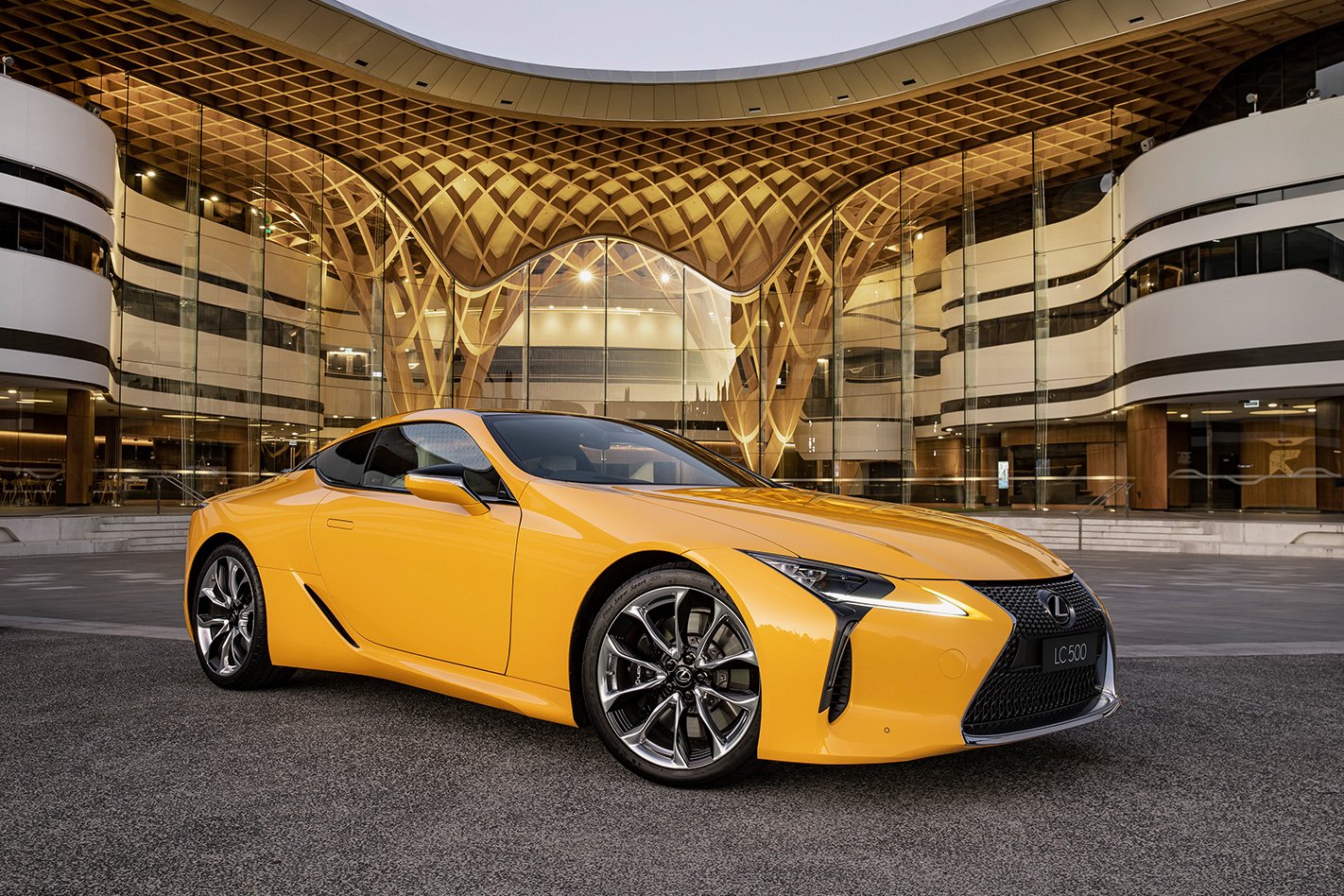
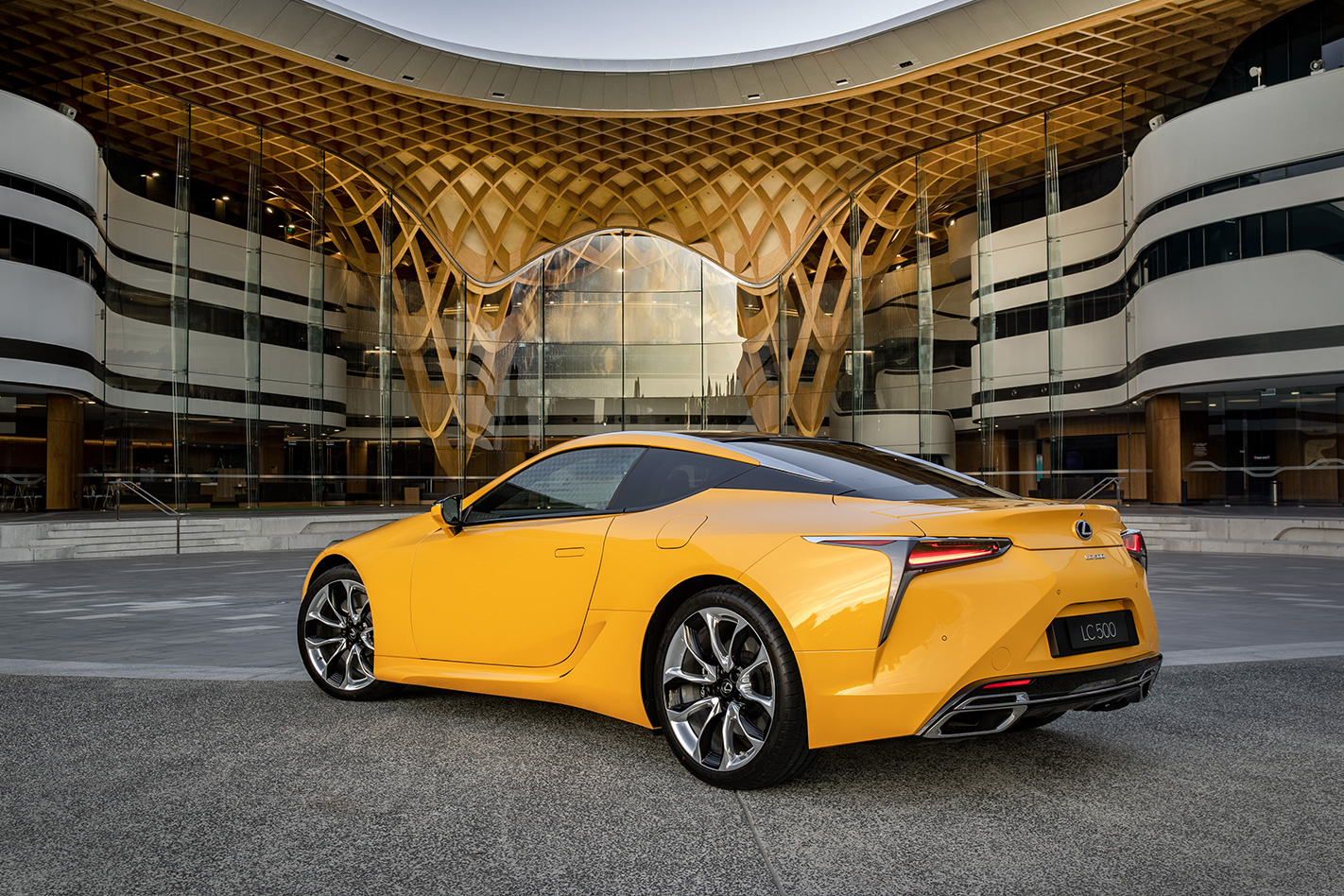
Available in either V8 or hybrid powertrain guise, the limited edition LC Coupe sports a polarising Zinnia Yellow exterior paint matched with a bespoke luxury cabin that features yellow Alcantaraca door inserts.
Working on the apparent design principal that too much yellow is never enough, Lexus’ designers have also used the same yellow shade for contrast stitching on the white leather-accented seats, instrument panel, steering wheel and centre console armrest.
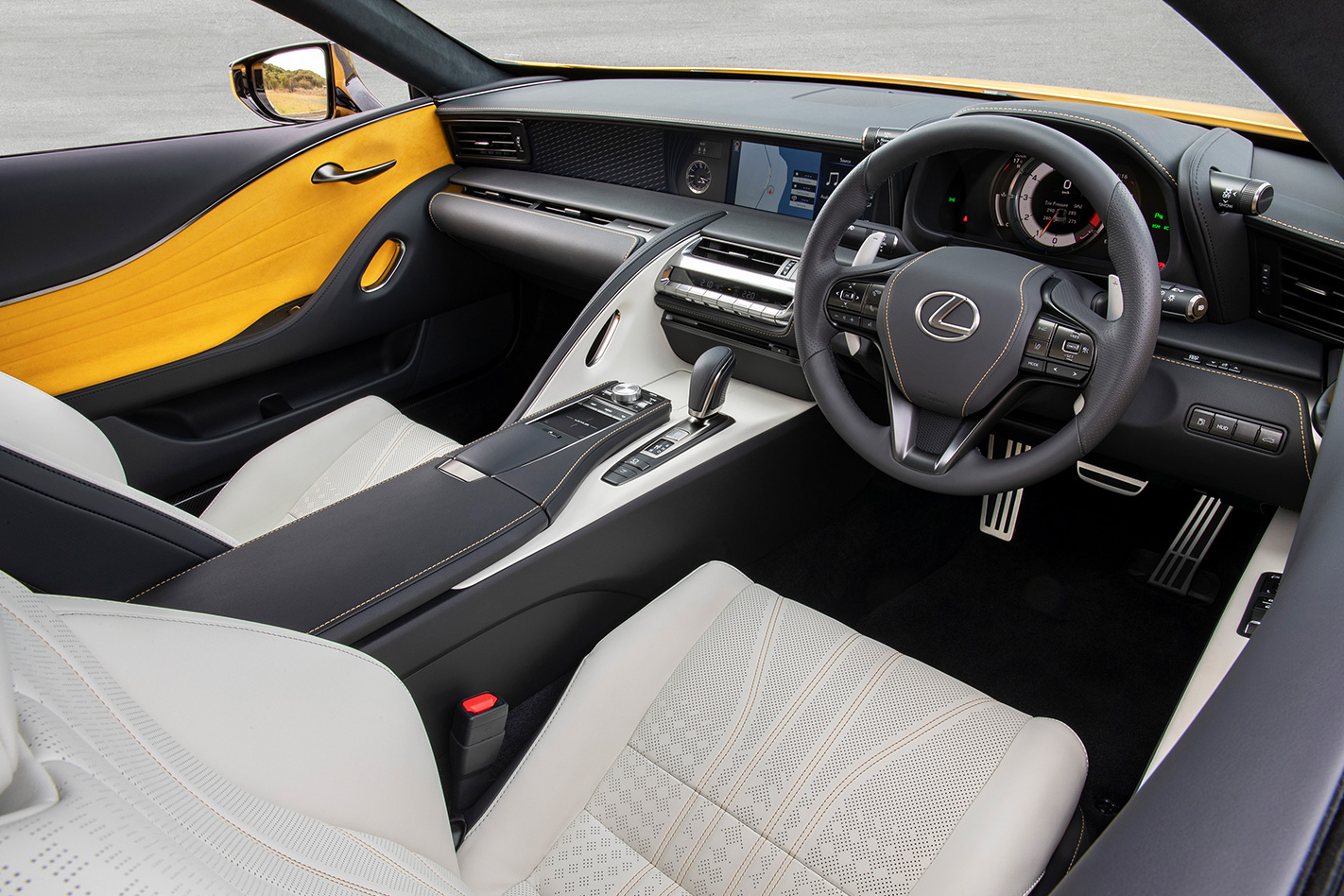
The limited-edition LC500 and LC500h variants are based on the $190,000 (before on-roads) LC coupe fitted with the $15,000 enhancement pack, with the extra splash of yellow adding just $200 to the $205,000 total retail price.
As with every LC coupe, the premium equipment list includes 21-inch forged alloy wheels, head-up display, Alcantara headlining and a 13-speaker Mark Levinson premium surround audio system.
2017 Lexus LC 500 long-term review, part four
All versions of the LC are also equipped with the Lexus Safety System+ that offers advanced driver assist features including autonomous emergency braking and lane-keeping assist.
The dazzling limited edition Lexus LC trim is now available at Lexus showrooms. Just take your sunnies.
Tesla founder and CEO Elon Musk has claimed the Californian-based tech-giant came within “single-digit weeks” of going out of business, during a TV interview in the US this week.
Musk also claimed he was working 22 hours a day, seven days a week through the initial production phase of the small Model 3 hatch, a car he has called a “bet-the-company project”.
“Essentially the company was bleeding money like crazy,” Musk told TV show Axios. “And just if we didn’t solve these problems in a very short period time, we would die. And it was extremely difficult to solve them.”
The PayPal founder and owner of Space X said he spent up to 120 hours at a time on the Model 3 shop floor, even claiming that he redesigned the battery pack production line and ran it for three weeks.
“This is very painful,” he said. “It hurts, it hurts my brain and my heart. It hurts. … There were times when I was working literally 120 hours. This is not recommended for anyone. I just did it because if I didn’t do it, then [there was a] good chance Tesla would die.”
“No one should put this many hours into your work. This is not good. People should not work this hard.”
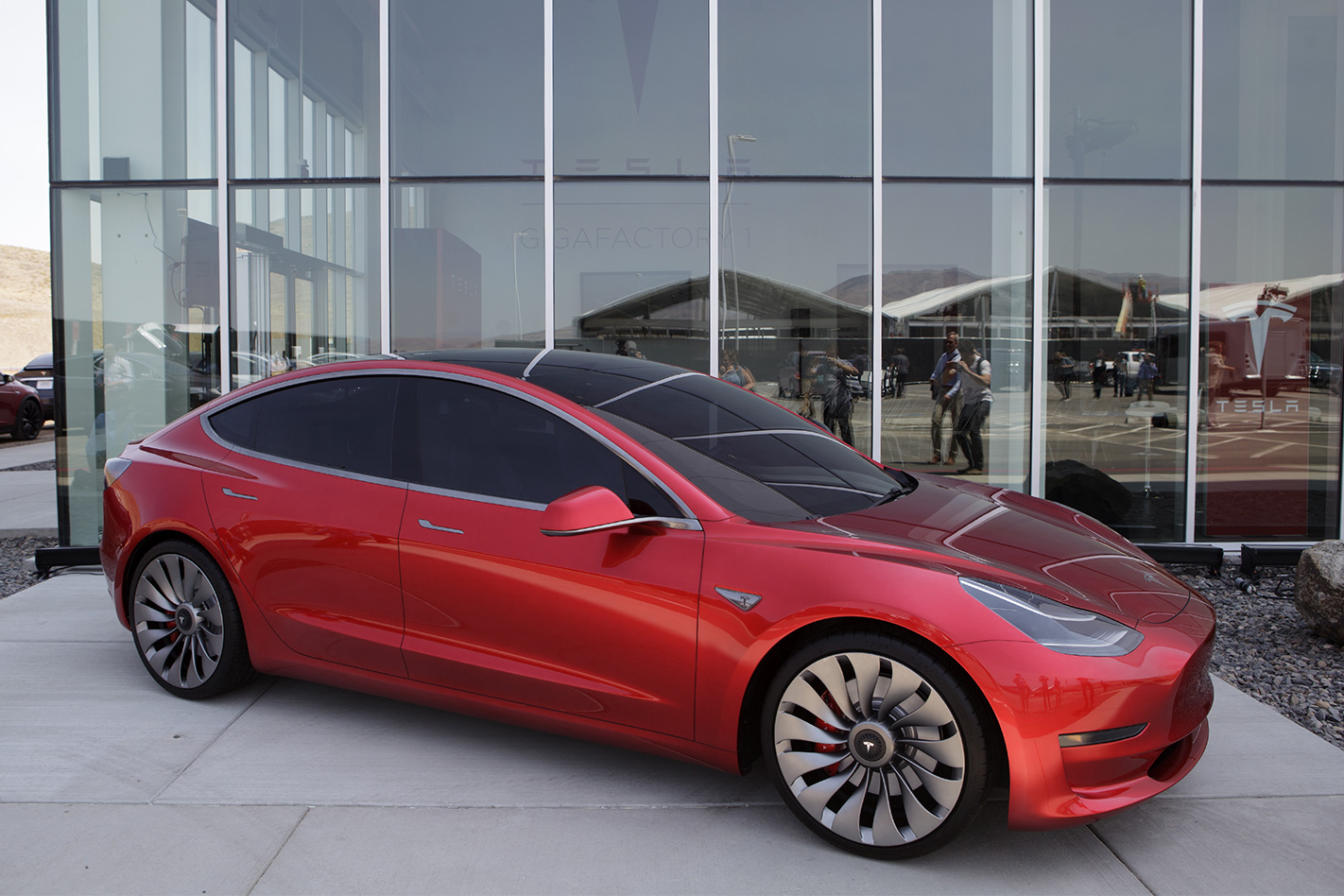
It’s been a trying few months for Musk, whose own erratic behaviour has seen Tesla’s share price – and reputation – take a big hit. He was recently forced to vacate the position of Tesla chairman in favour of Australian-born former Telstra chief financial officer Robyn Denholm.
Musk was forced to vacate the chair as part of a plea deal with US stock market security officials after he was accused of manipulating stock prices via a tweet about potential foreign investment in Tesla. As part of his punishment, he is barred from chairing Tesla for three years, but will keep his role as chief executive officer.
While the Model 3 is finally rolling out of the factory – with one production line built in a carpark with scavenged tooling from other lines to cope with demand – Australian buyers who plonked down deposits in early 2016 potentially have up to another year to wait before their cars arrive down under.
Tesla’s Australian website says that Model 3 deliveries to deposit holders will occur “in 2019”, while the company insists it will begin production of right-hand-drive cars in mid-2019.
Holden has confirmed overnight that the Australian arm of General Motors will be spared from the latest round of cutbacks announced yesterday in the United States.
Five GM plants – including its largest in Canada – will be shuttered in 2019, while the company is looking to reduce its North American workforce by more than 14,000.
Though the plant wind-backs will affect a number of GM models – in particular its sedan line-up – Holden confirmed that none of its current range, including the Tennessee-built Acadia 7-seat SUV and Mexican-sourced Equinox SUV, will be impacted.
“While the vast majority of steps announced overnight apply directly to North American operations, GM Holden continues to support GM’s global business objective by implementing its strategy to operate a lean National Sales Company focused on strengthening the Holden brand and growing sales,” Holden said in a statement issued overnight.
“GM is taking actions to support profitability and give flexibility to invest for the future. These are important measures to position the company for long-term success.”
As well, Holden reiterated that its local design and engineering team will not be impacted, despite GM referencing a change to its global planning strategy going forward.
“These announcements are not related to Holden’s product portfolio which remains unchanged and is the best and most comprehensive in our history,” read the statement.
“Holden’s local engineering and design capability was further strengthened earlier this year with investments at the Lang Lang Proving Ground and in Advanced Vehicle Development.”
Holden announced in August it would add 150 engineers to its Advanced Vehicle Development team, as part of a $120 million plan to accelerate research and development in autonomous, ride-sharing and electric vehicle technologies.
“We’re going to employ more Australians in this country,” new Holden managing director Dave Buttner told journalists at the time. “Our dealers see that, our employees see that. It buoys them, it lifts their heads to focus more strongly on the task ahead of us.”
Meanwhile, US president Donald Trump has told GM to replace the plant it’s planning to close in Lordstown, Ohio, saying “it had better put something else in”. Mr Trump actively campaigned in the area, telling residents in 2016 “don’t move. Don’t sell your house. The jobs are coming back.”
He has also previously threatened to impose a “big border tax” on GM products built outside the US.
The Lordstown plant builds the Chevrolet Cruze sedan for the US, which is on track to shed almost 50 per cent of its 2014 sales of 250,000 cars by the end of this year. Cheap fuel prices in the US and the rise of the SUV has seen many companies including Ford to strip sedans from their catalogues.
