
As far as the M3 is concerned, the Club Sport (CS) could be ‘the one’.
With the G20-generation rumours hinting at electrification (for a total output close to 368kW) and all-wheel drive, the $179,900 CS could be the last hurrah for the F80 M3 as we know it. Plus, no more than 1200 examples of the M3 CS will leave BMW’s Regensburg.
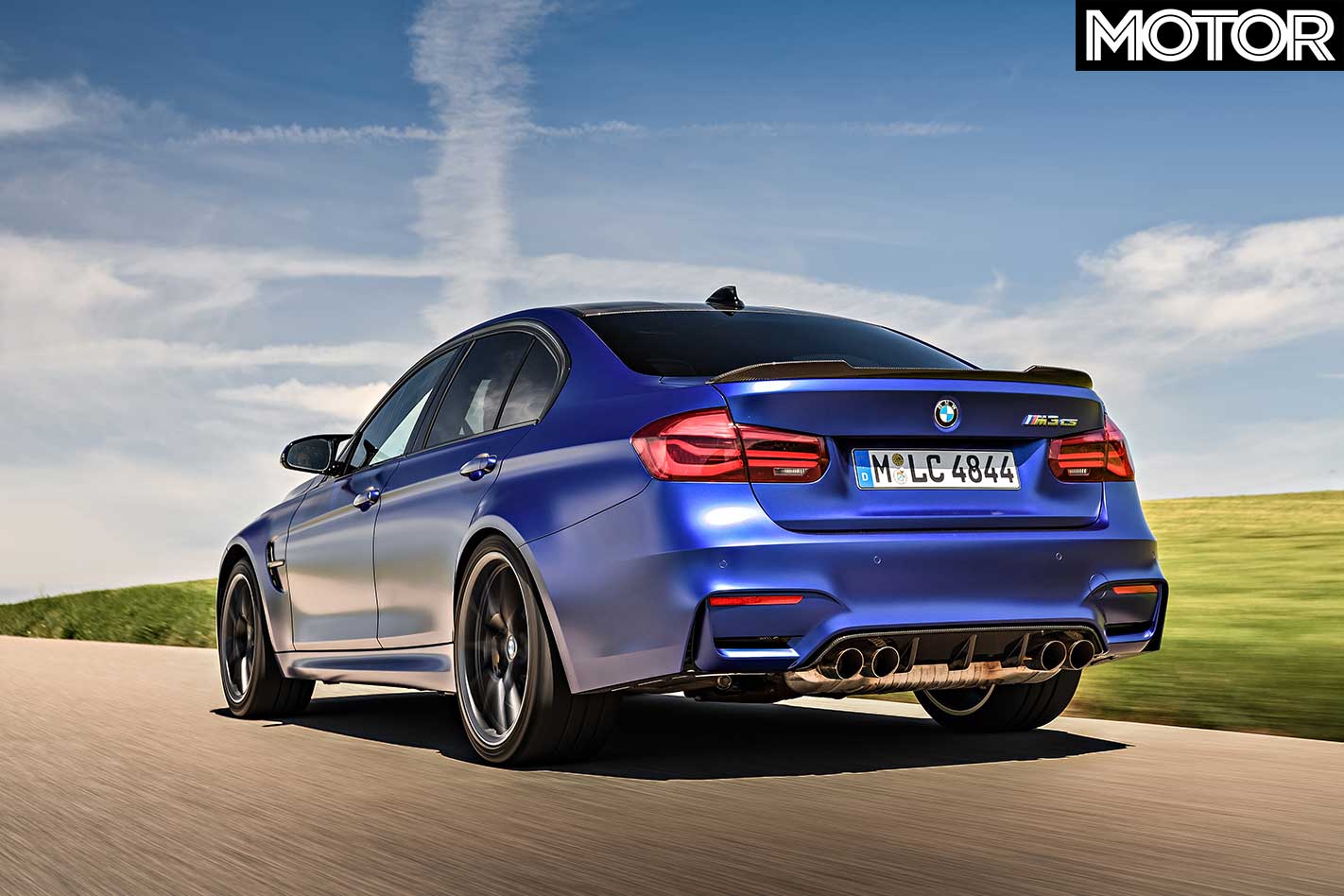
Painted on top, but naked underneath, so too is the bonnet full of carbon-fibre-reinforced plastic (CFRP) – it’s 25 per cent lighter than that of a standard four-door M3. And you can barely get a cigarette paper between the rear wheel arches and the semi-slick Michelin Pilot Sport Cup 2 tyres. They’re wrapped around lightweight forged alloy wheels, 20-inch at the rear and 19-inch at the front.
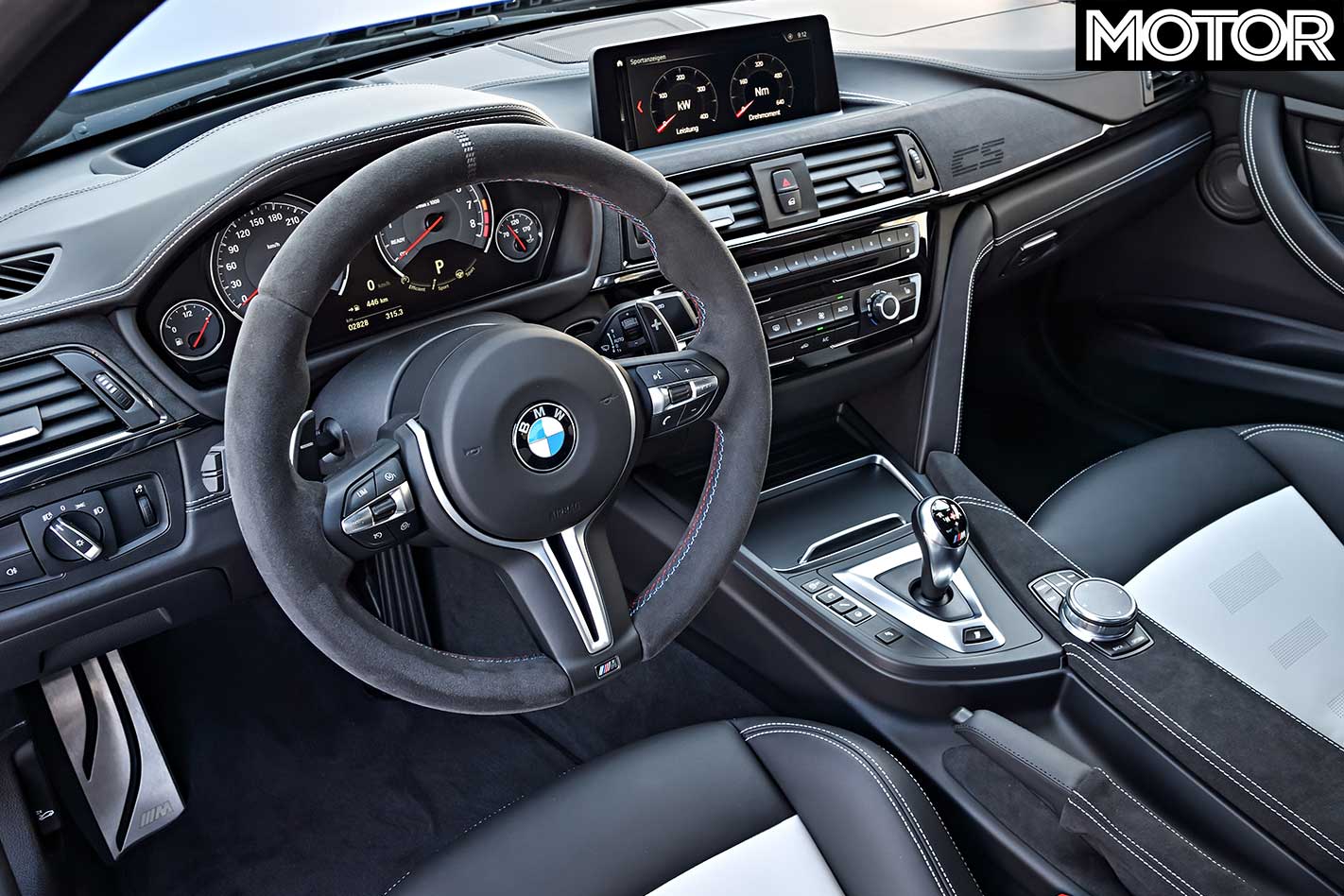
Inside the persona is hardcore, even if you don’t get the lightweight door cards from this car’s M4 sibling (which is a bit of a bonus).
Despite an asking price to make you wince, BMW’s S55 3.0-litre twin-turbocharged straight six doesn’t benefit from the water injection system of the M4 GTS. It doesn’t need that technology, developing only 7kW more than the 331kW you’ll find in a M3 Competition Pack. And honestly, does a sedan capable of reaching 100km/h in just 3.9sec before running on to a governed 280km/h need to be any quicker? No, but it could be lighter.
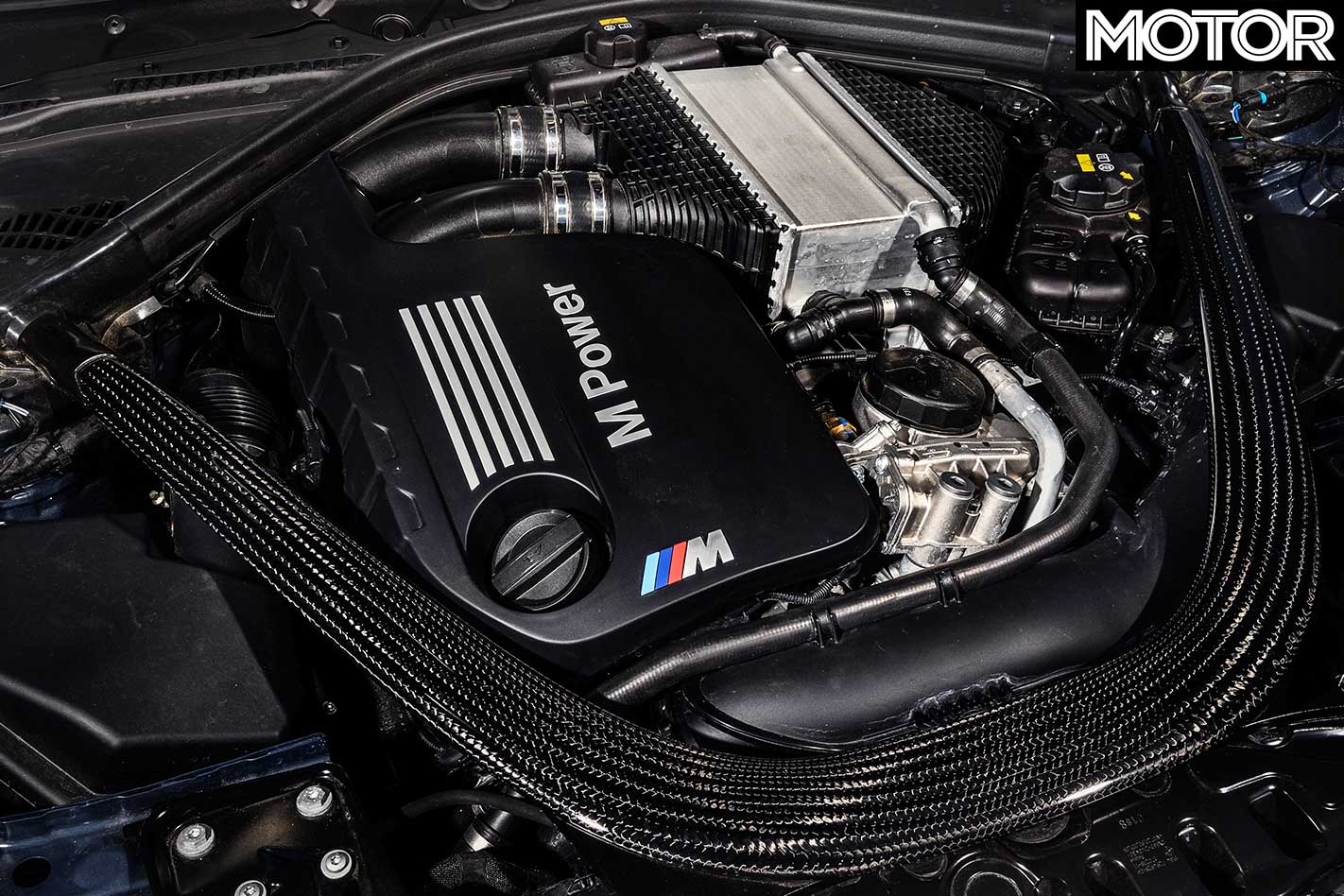
Strangely, this car’s substantial use of CFRP results in a saving of only 10kg over the Competition Pack car, but the centre of gravity is said to be usefully closer to the road.
Given the tyres in question, warm weather plays heavily into this car’s hands, and straight away the precision with which an M3 CS turns into corners is startling. Indeed, it’s only the trio of steering modes, those wheels and tyres, and the calibration of the electronic stability control and the active M differential in the rear axle that separate Club Sport from Competition.
The rack and its gearing remain unchanged, as do the spring rates and suspension geometry, so there is still roughly 0.5-degree more negative camber than on the standard M3. This is now a chassis of extraordinary composure, resulting from reserves of tightly controlled pliancy than you might imagine.
With less unsprung mass, there’s a predatory manner to direction changes, and a palpable feeling that the chassis sets itself a touch earlier during the entry phase than a M3 Competition Pack does.
Our test car has BMW’s optional carbon-ceramic discs (denoted by gold calipers) and they feel pleasingly light on assistance, biting firmly and progressively and permitting you to lean increasingly hard on a front axle that almost never wilts into understeer.

Such are the adhesive properties of the tyres, in fact, that third-gear sweepers can rapidly boil down to mind over matter, and you get the gratification of feeling that differential, recalibrated for vast grip, subtly nudging the nose inwards under power. The M3 CS then explodes out of corners with just a hint of squat and almost mid-engined poise.
Aside from a seven-speed dual-clutch transmission that seems reluctant to downshift early, our only objective complaint is that while the sensory relay from contact patch to steering rim is improved, it’s still a marginal affair.
The engine has never been the most affable device, although in this application, it barks viciously through a sports exhaust. It also seems to punch harder through the mid-range, which is the result of an improved electronic mapping. In the face of more powerful rivals, the M3 has long wanted for greater in-gear shove at moderate crank speeds, and now it has it.
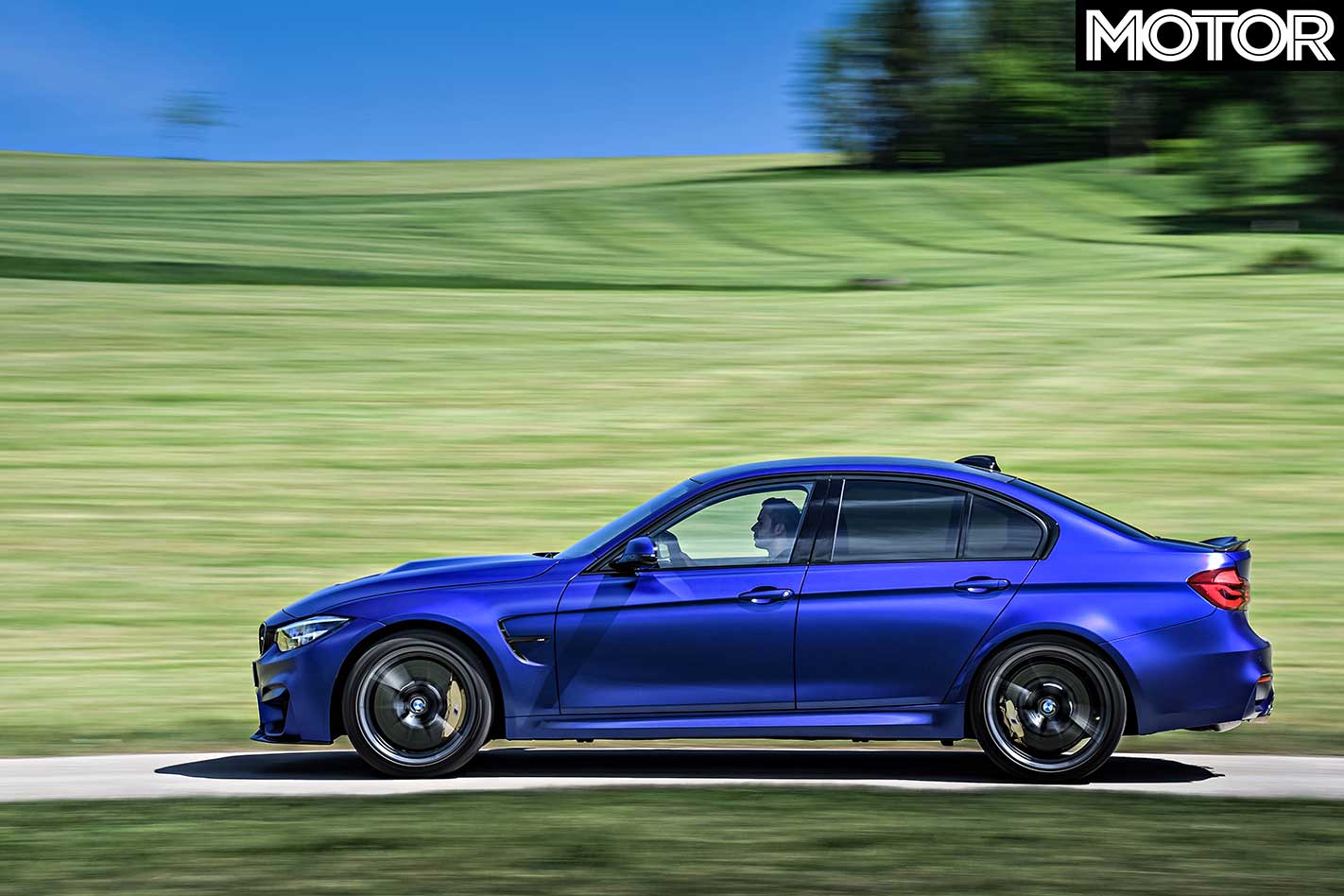
This F80 M3 has become deeply intuitive and likeable. As you may have surmised, from a driver’s perspective, the M3 CS is the most rewarding product M division currently offers. It is a deadly serious product, less playful or extroverted than an Alfa Romeo Giulia QV or Mercedes-AMG C63 S, but equally usable and fulfilling. It would also run rings around those cars at a track day against the clock.
Yet, in the cold light of day, even such a phenomenal bandwidth is not enough to justify the premium over an M3 Competition Pack. Then again, the contentment of owning ‘the one’ would linger long after the sting of that early expense had faded.

2018 BMW M3 CS SPECS: Engine: 2979cc inline-6, DOHC, 24v, twin-turbo Power: 338kW @ 6250rpm Torque: 600Nm @ 4000rpm 0-100km/h: 3.9sec (claimed) Weight: 1510kg Price: $179,900
Rating: 4 out of 5 stars Like: The best M3 yet, impressive level of agility and body control, strong engine Dislike: Price of entry, Cup 2s can be hard to ‘switch on’ in cold conditions, steering feel
The absolutely monstrous Volkswagen I.D R Pikes Peak has slashed more than 15 seconds off its namesake hillclimb’s overall record.
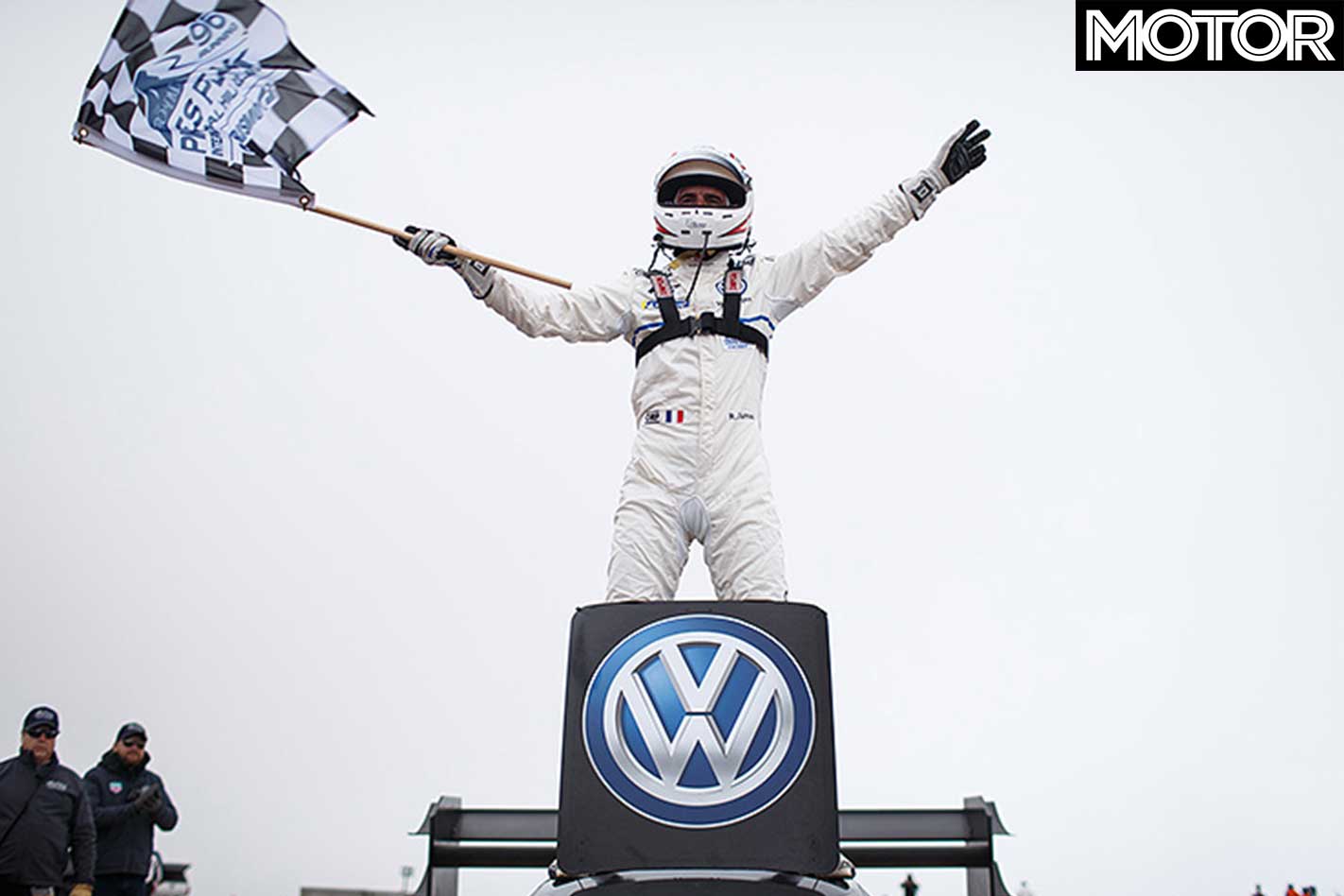
In just 7:57.148 Romain Dumas took out his fourth overall win at what is arguably the world’s most iconic hillclimb, leaving Sebastien Loeb’s 8:13.878 record in the red Colorado dust.
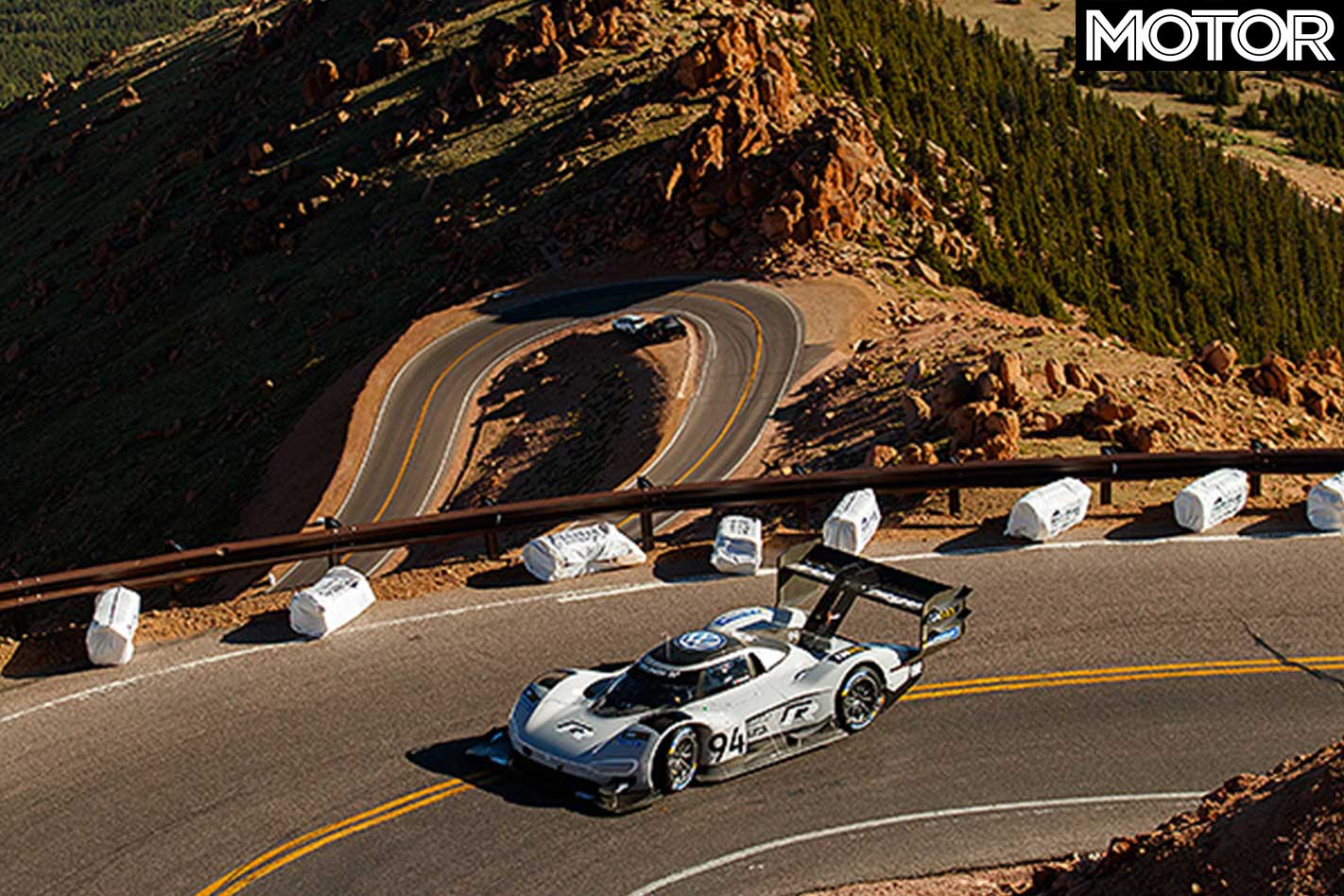
The sub-8 minute run had to cover 19.99 kilometres, with a total 156 turns, finishing roughly 4300 metres above sea-level.
After the record-breaking drive, Dumas said he was incredibly proud to have been the driver for the “awesome” achievement. Dumas has already won outright in 2014, ’16, and 2017.
“We exceeded even our own high expectations with that result,” the Frenchman said.
“Since this week’s tests, we have known that it was possible to break the all-time record. For it to come off, everything had to come together perfectly – from the technology to the driver. And the weather had to play ball too.
“That everything ran so smoothly is an incredible feeling, and the new record on Pikes Peak is the icing on the cake.
“I still cannot believe that Volkswagen and my name are behind this incredible time.”
Volkswagen also released some footage – though not an onboard video yet – of the I.D R’s run.
After the event, VW board member for technical development Frank Welsch said he was excited by what VW has and the team has achieved.
“The I.D. R Pikes Peak is the sporty forerunner of Volkswagen’s fully-electric I.D. family. Today, we saw what this technology is capable of,” Welsch said.
“Every Volkswagen employee can be extremely proud of today’s result. I congratulate the team from the bottom of my heart.
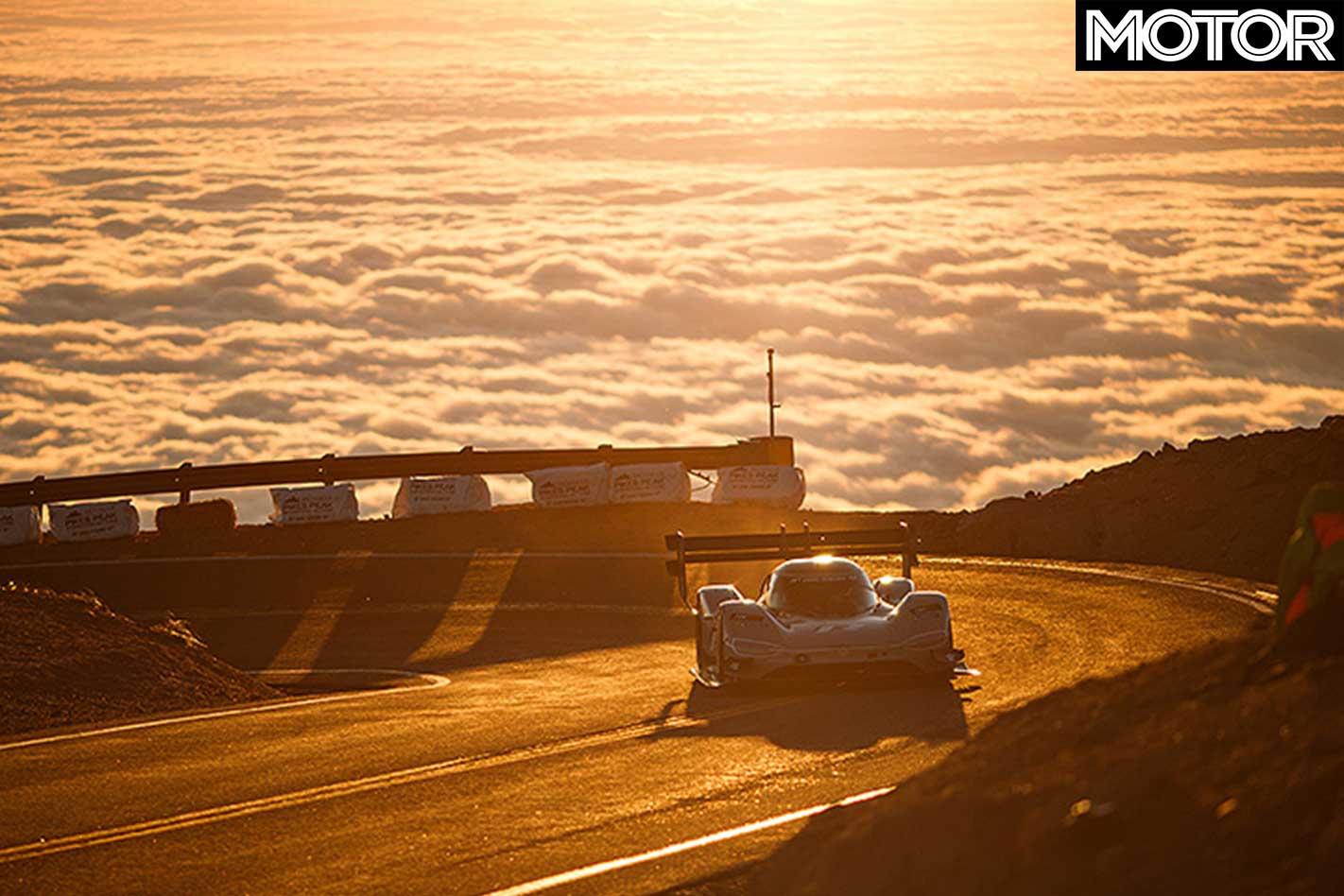
“With a combination of outstanding engineering skill, passion and commitment, the team has managed to create a fantastic racing car in just eight months.
“The Volkswagen I.D. R Pikes Peak has now set the fastest time in the history of this hill climb, which spans more than 100 years – that speaks volumes for electric mobility.”
THE Volkswagen ID R has set a scintillating 7:57.148 time in the 2018 Pikes Peak International Hill Climb, with Romain Dumas piloting the battery-electric racer to a new outright record for the event.
It is the first time anyone has completed the 19.99km climb, which includes 156 turns, in fewer than eight minutes.
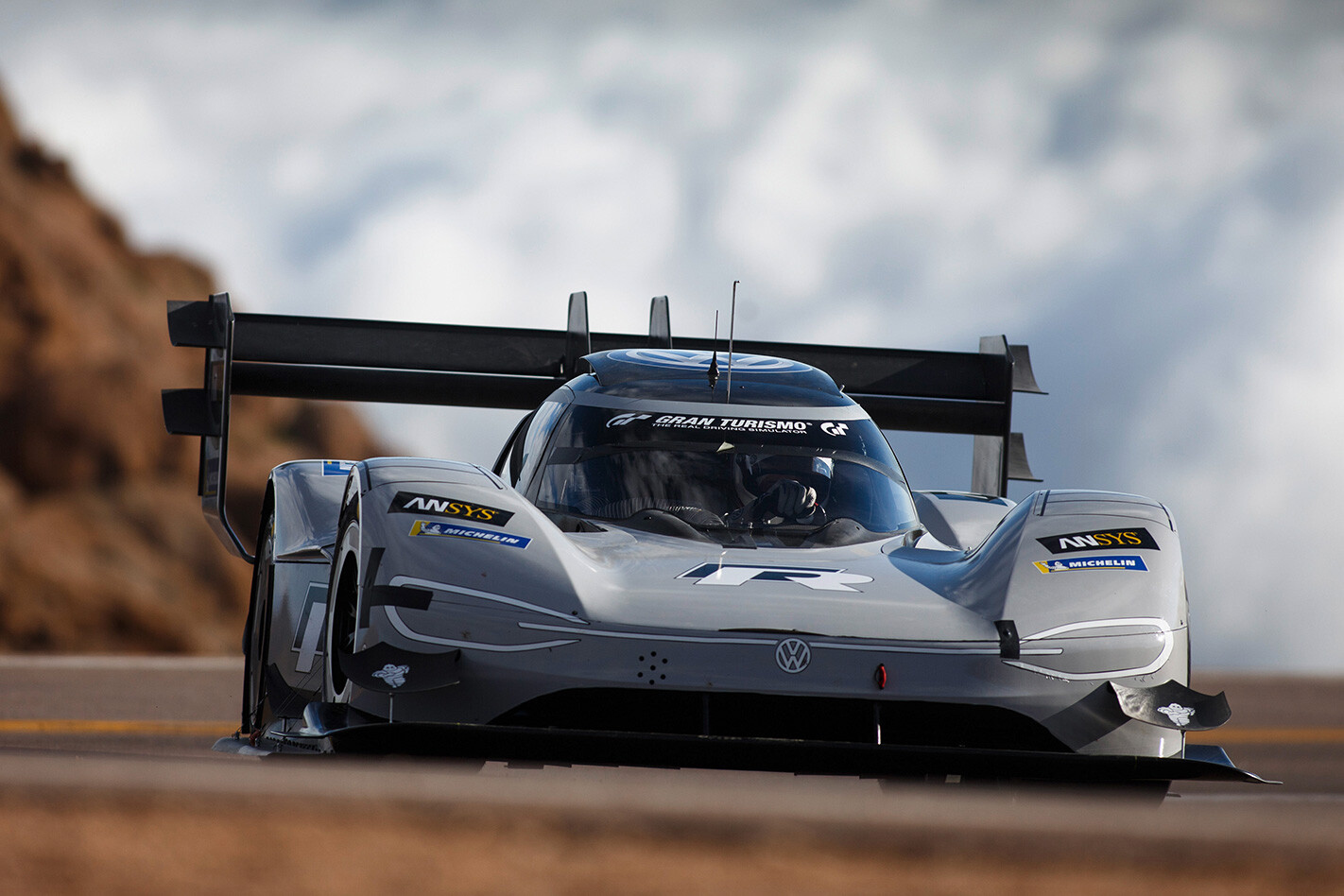
Dumas achieved the record-breaking time on only his first full run up the mountain in the bespoke, fully electric ID R, with the winning run delayed by 45 minutes following a crash that injured a spectator earlier in the day.
According to Dumas, the sub-8.0 minute time could have been even better.
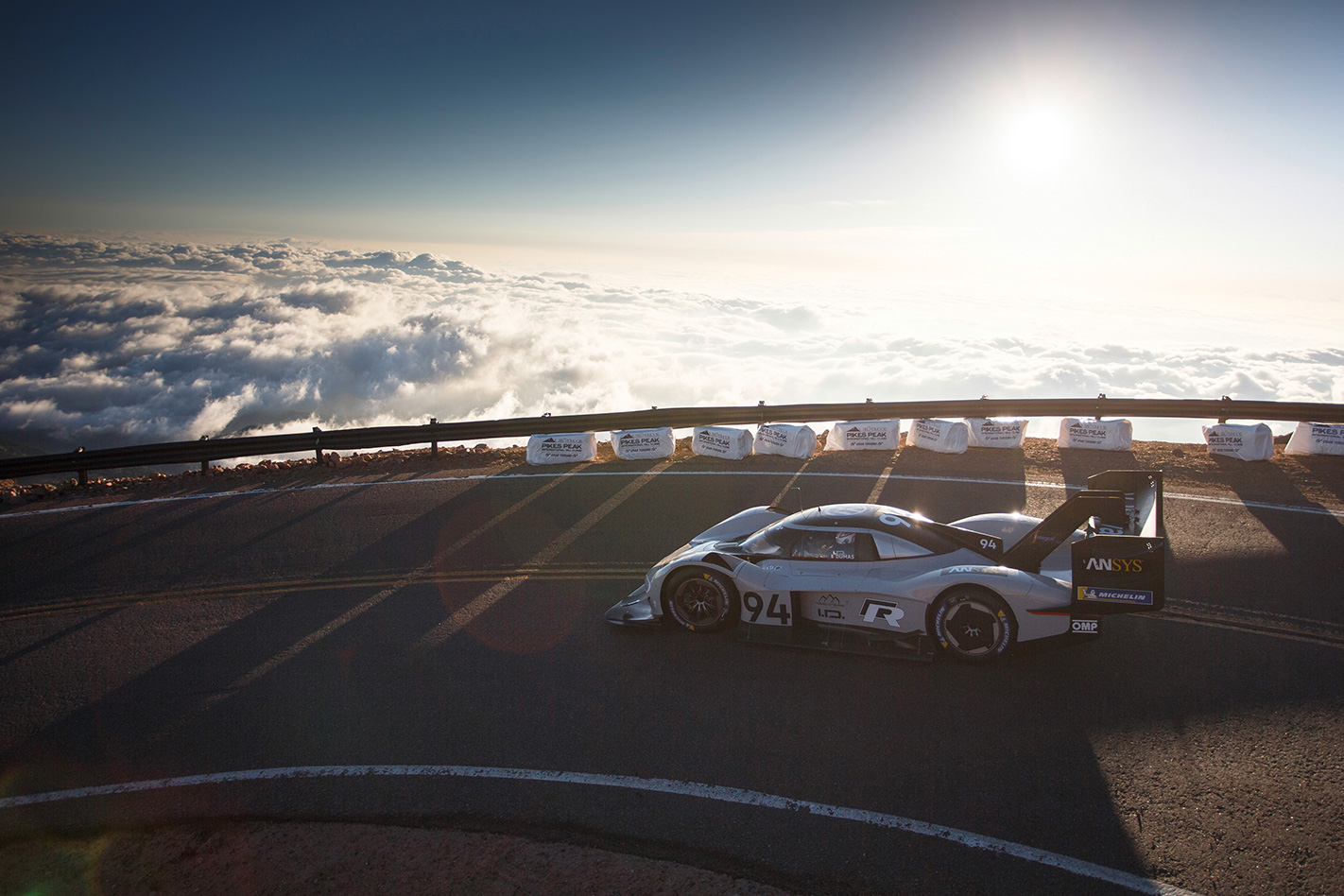
“I had some fog and it was quite humid with some damp in the second section,” he said from the summit. “I’m happy with this, but we could have gone quicker if that middle sector had been dry.”
The record Dumas obliterated was a 8:13.878, set by Sebastian Loeb in the 208 T16 in 2013.
VW’s ID R is the first fully electric car to hold the outright Pikes Peak record, recording an average speed of 150km/h on its ascent up the mountain.
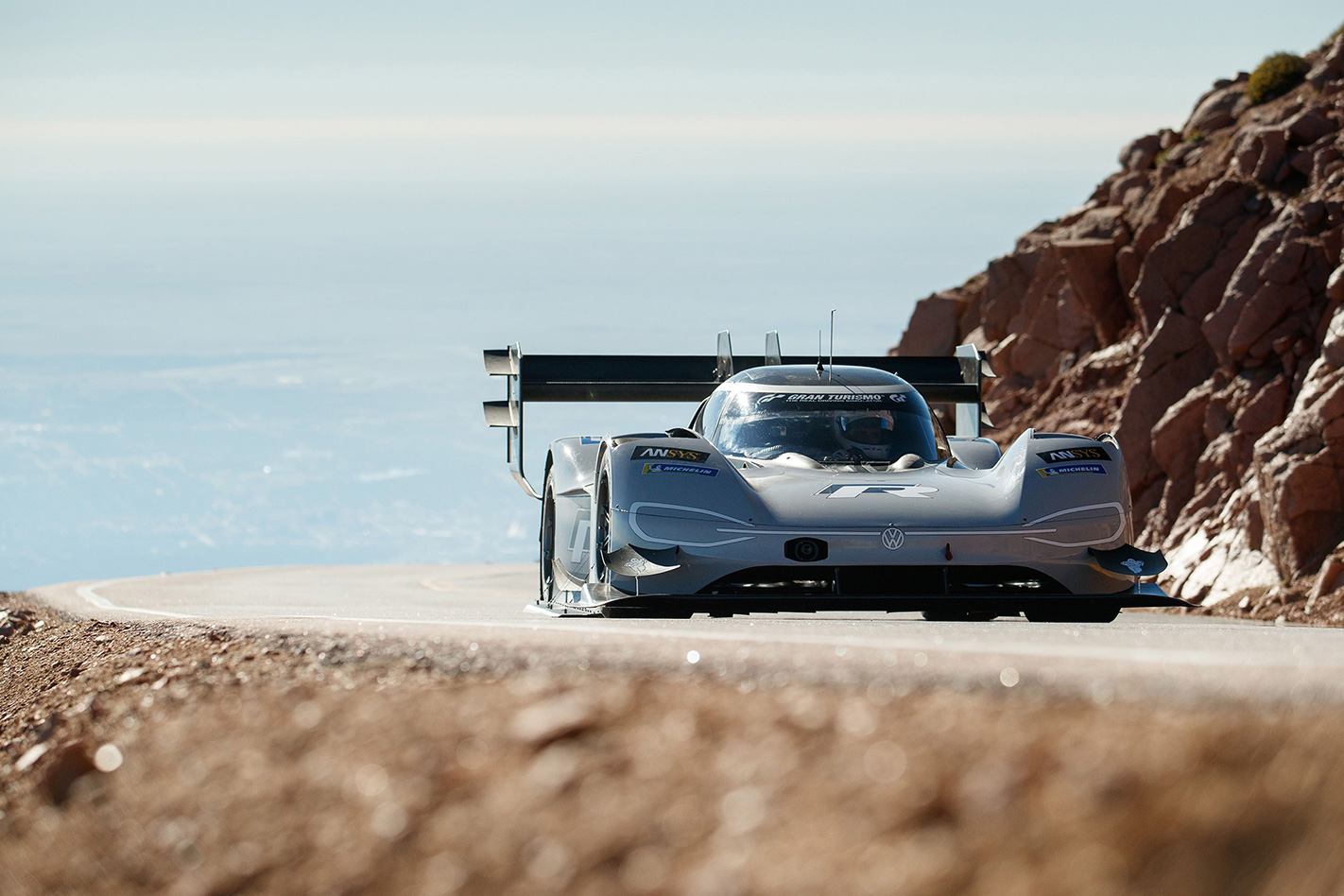
Volkswagen had originally targeted the electric record of 8:57.118 for its ID R racer, but the German manufacturer realised during early qualification runs that an attempt at Loeb’s outright record would be possible.
Dumas and Volkswagen’s win is unofficial until tomorrow, when finalised times are released.
Meanwhile, in the French countryside Lewis Hamilton cruised to a comfortable F1 victory at Paul Ricard.
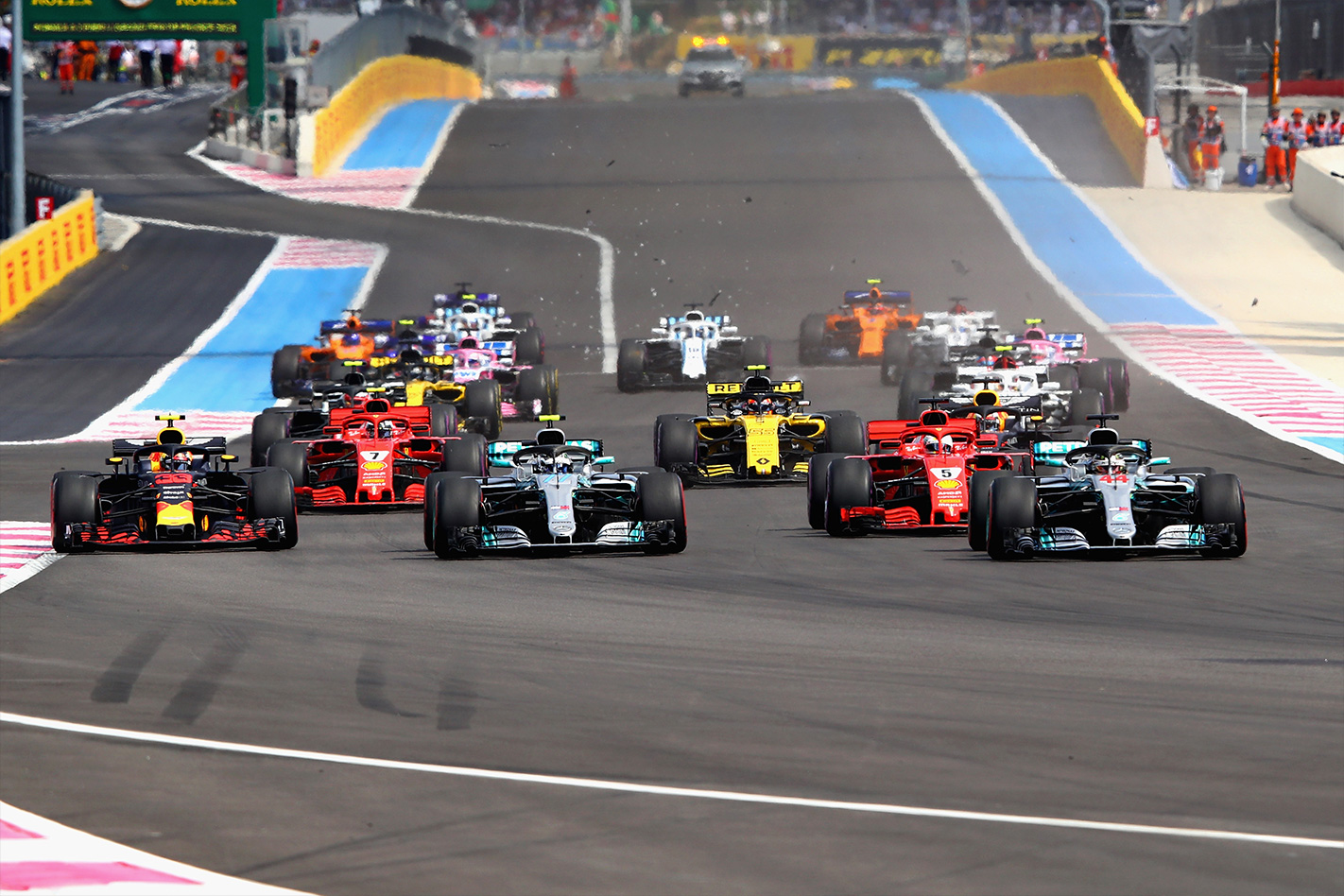
It was the first grand prix held in France in a decade, and the Mercedes-AMG driver was able to control the race following a first-lap clash between Sebastian Vettel and Valtteri Bottas.
The second- and third-place qualifiers’ first corner crash allowed Max Verstappen to slot into second place, where he stayed until the race’s end.
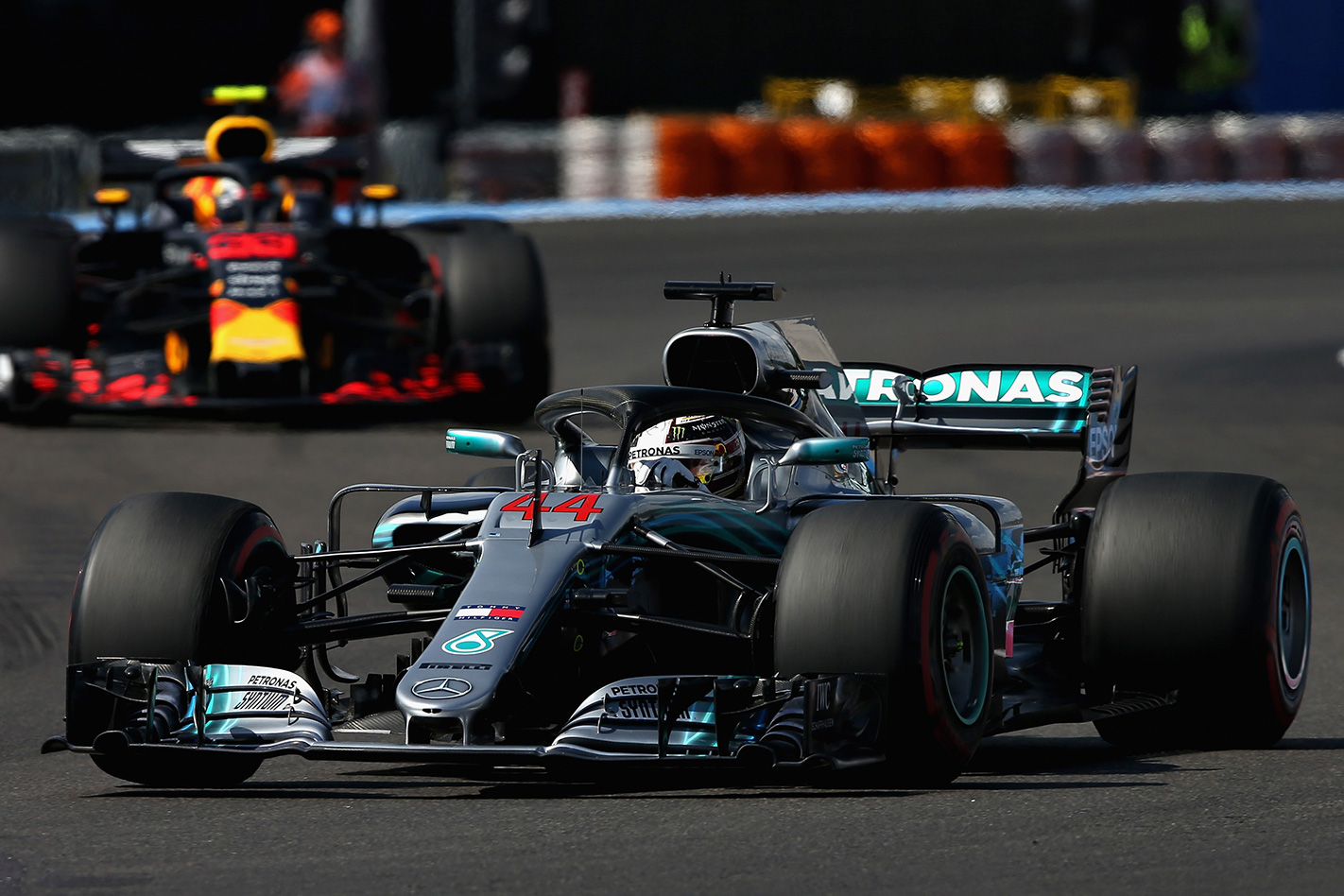
Ferrari’s Kimi Raikkonen stole third place from Australian Daniel Ricciardo in the dying laps, with the Finn using fresher tyres to his advantage.
Vettel, who dropped to second last following the first-lap shunt that also earned him a five-second penalty, fought his way through the field to finish the grand prix in fifth.
As a grid of 50-plus contenders rolled towards the waving tri-colour at the start of last year’s Le Mans 24 hours, two stood out from the high-tech crowd. Yes, Audi’s R18 e-Tron hybrid and R18 Ultra diesel locking out the front row was impressive, and Toyota’s pair of TS030 LMP1s created massive interest.
This feature was originally published in MOTOR’s May 2013 issue
But the duo in question grabbed just as much, if not more attention, simply because of their sponsorship livery and the history it represents.
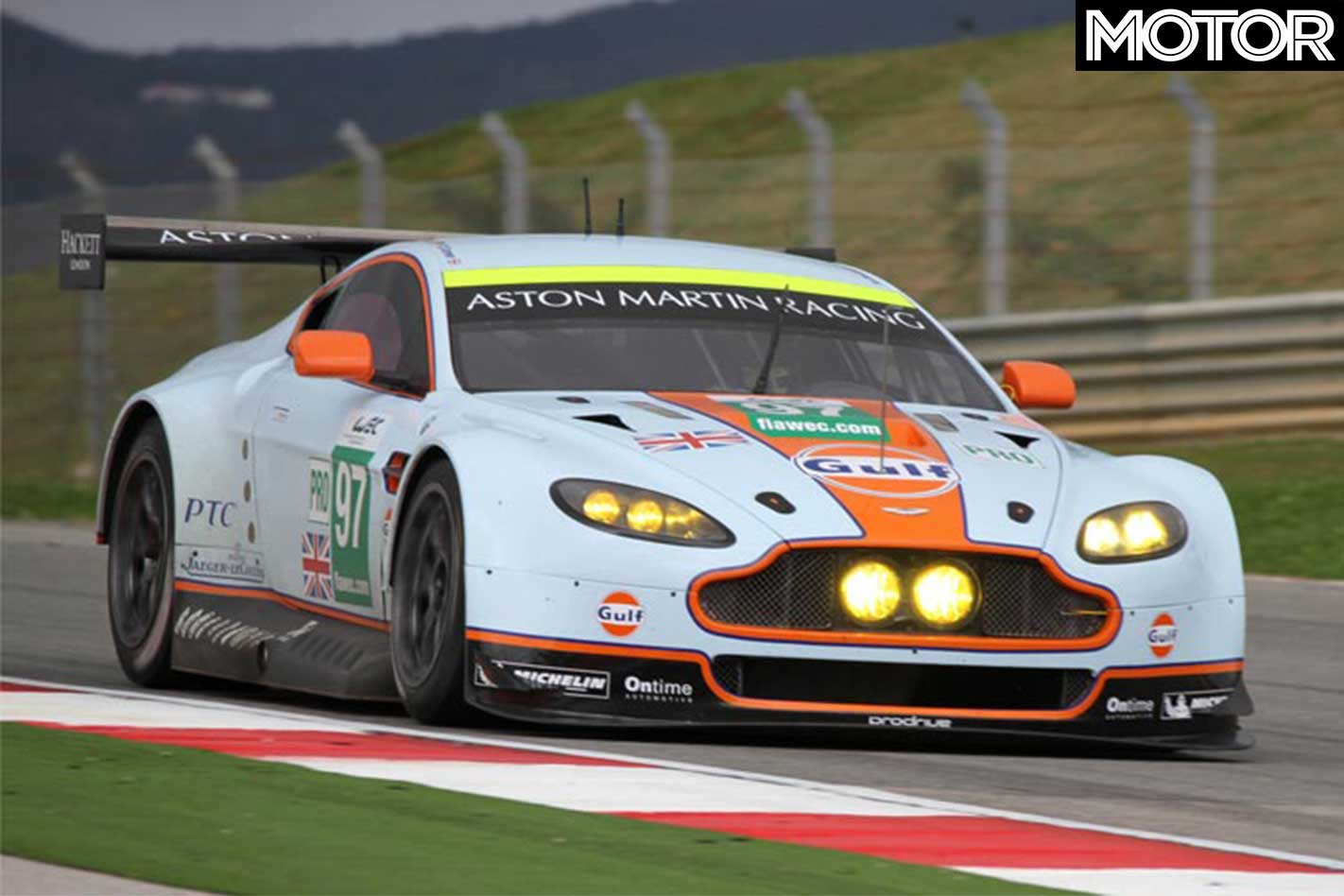
It was more their Powder Blue and Topaz colour scheme, underpinning iconic Gulf Oil logos that generated magnetic attraction for motor sport fans with even a hint of racing heritage in their veins. Put it this way, if the race was decided by on-track merchandise sales, Gulf would walk away with the silverware every time.
Founded in 1901 at Spindletop, Texas, Gulf quickly became one of America’s oil giants, involved in all aspects of the business, from exploration, through refining, to providing the world’s first drive-in service station (in 1911).
From around the 1930s, the company started dabbling in motorsport sponsorship, a marketing strategy that, for many, reached a high point in the 1960s, when British racer and engineer John Wyer led the world sportscar championship winning Ford GT40-based Mirage project.
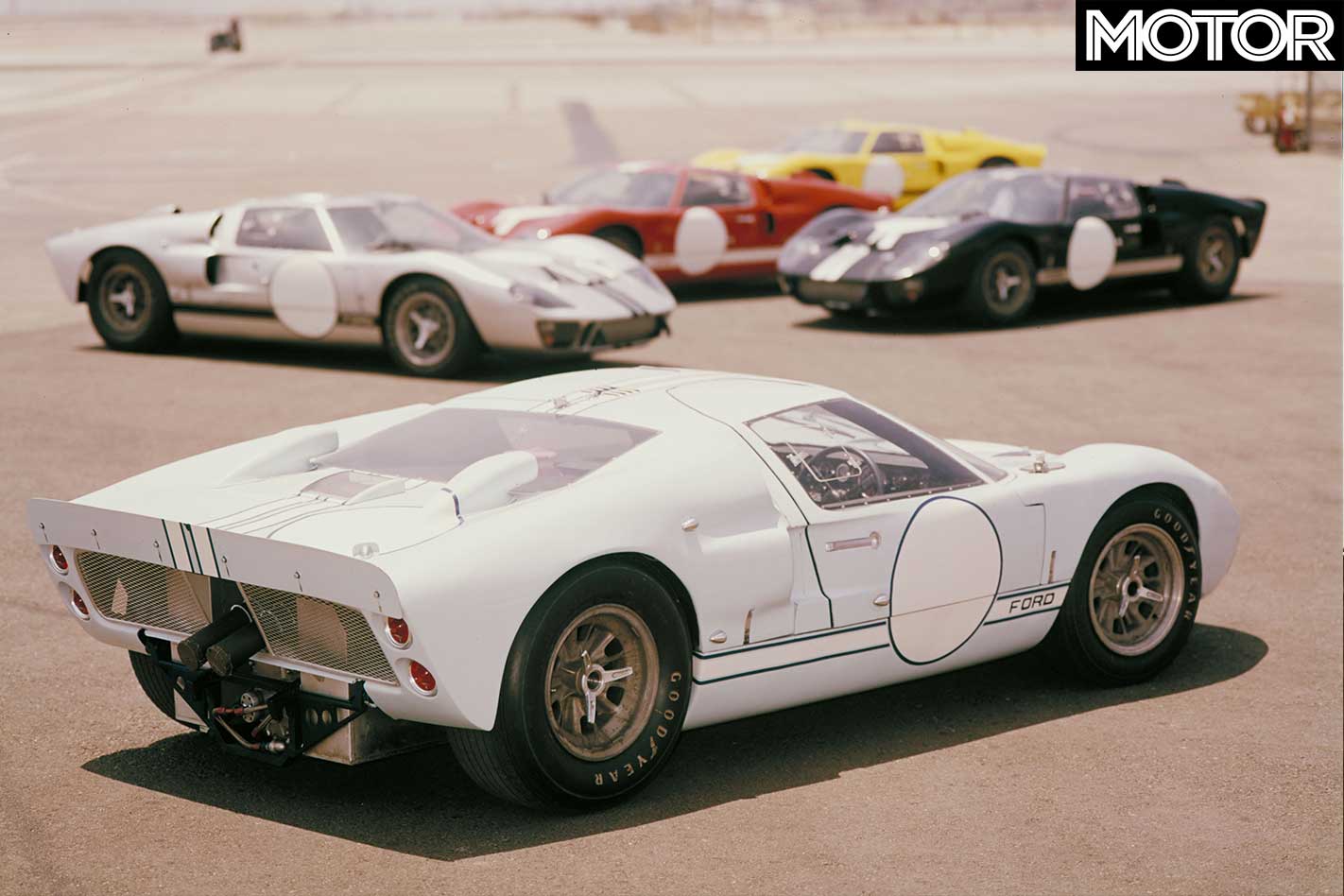
While these giant-killers became bedroom wall pin-ups for a generation of teenage petrol heads, a young German fan became obsessed with the idea of going one up on his mates’ scale models, and one day owning the real thing.
Roald Goethe hung onto that dream over 40 years, and in 2008, the now wealthy businessman tapped Adrian Hamilton, high-end classic car dealer, and son of famous English racing driver Duncan, to help him find one.
The eventual sourcing of an original JW Automotive Gulf GT40 was the catalyst for what has evolved into arguably, the most significant themed, private racing car collection in the world.
The ROFGO (as in ROald F Goethe ) Gulf Collection now contains 25 vehicles; specifically, 24 cars, as well as an original, Mercedes-Benz Gulf Porsche transporter.
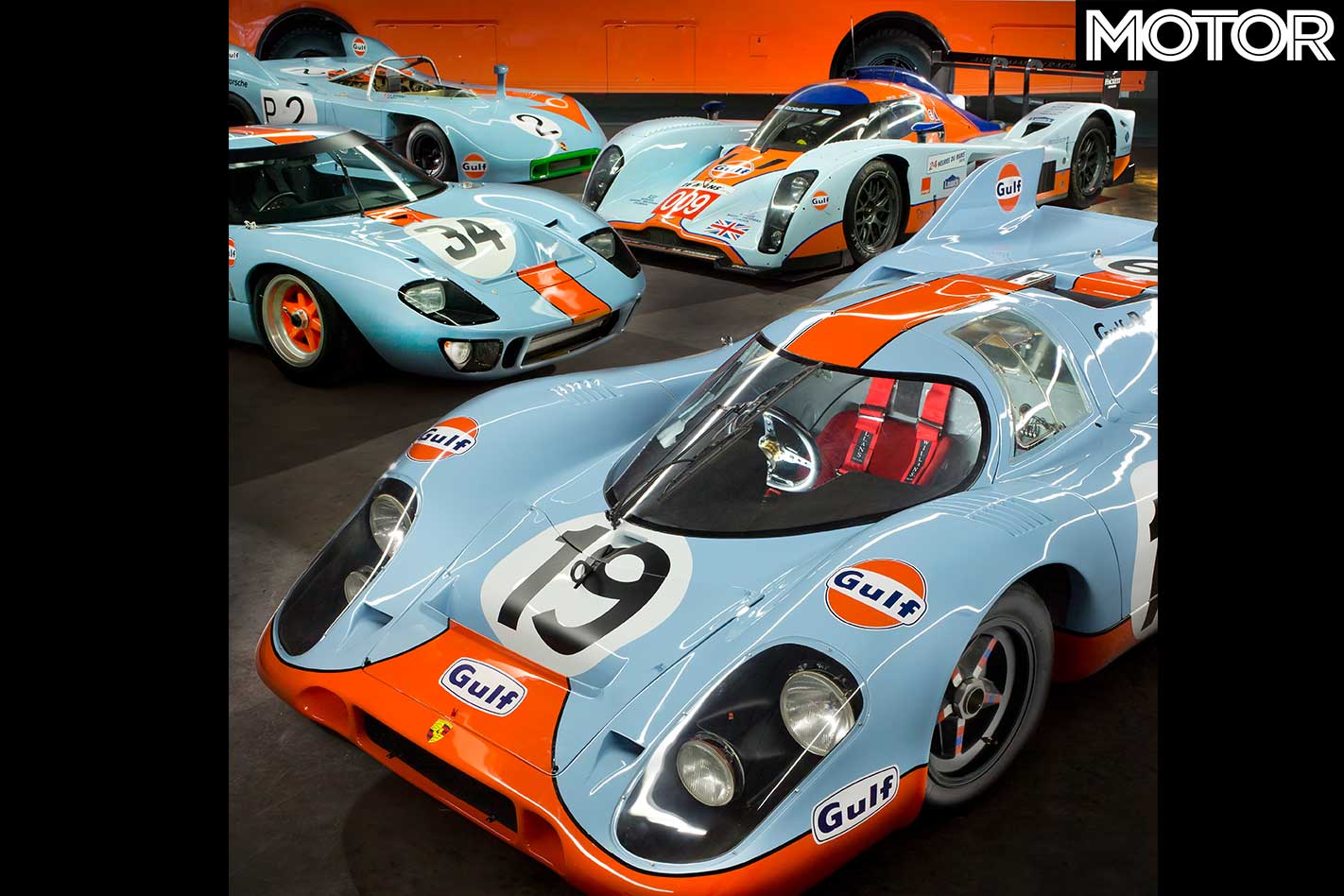
Starting with his original 1965 GT40, the collection stretches up to the current McLaren 12C GT3 Goethe races. It includes F1 and CanAm stars, but the single-minded focus is classic racing cars that wore the blue and orange livery in period.
None are museum queens, with Goethe determined all his cars should be used regularly.
While we could devote an entire issue to the full collection, we’ve drawn the line at eight machines that best embody the Gulf Racing spirit, including the custom built, workshop on wheels that some of them called home.
1967 Mercedes 0317 Transporter
When it comes to rarity, this fully enclosed, Mercedes-Benz-based Renntransporter is up there as one of the most sought after commercials in the classic vehicle world.
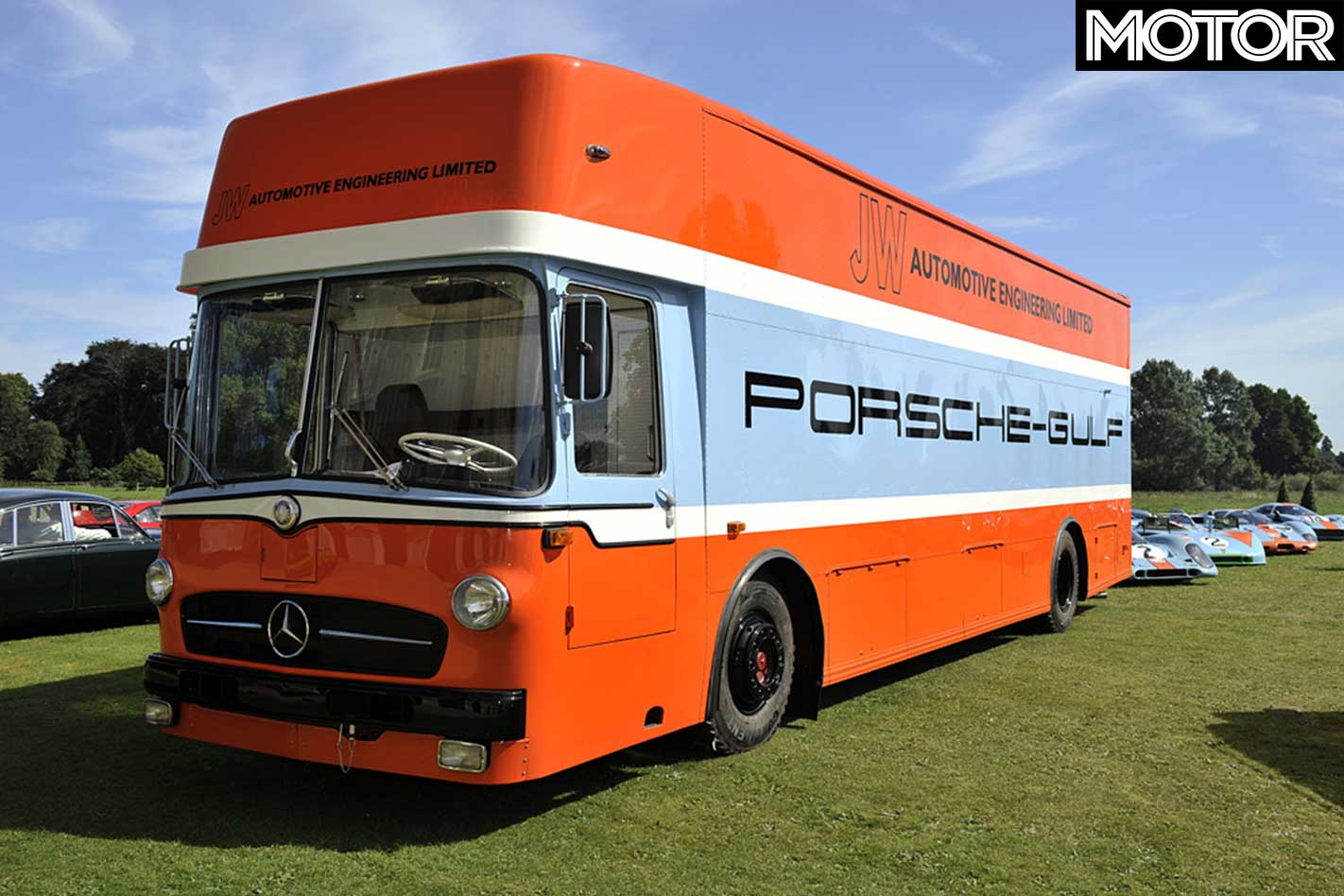
One of three produced by specialist body builder Robert Schenk in Stuttgart, the ROFGO transporter is the actual vehicle that carried the Collection’s Porsche 917 to and from Le Mans in 1971.
Measuring 11m long, 4m high, and sitting on a Mercedes-Benz 0317 bus chassis, the custom body provides load space for four (Porsche) racing cars and bunks for two crew.
Adrian Hamilton found this example in Florida, in Rothmans colours. Another of the trio resides in the USA, and the third is believed lost. According to Hamilton, it was in terrible nick. “It looked as if had spent the last 30 years on the floor of the ocean.”
Restoration was entrusted to Yorkshire-based specialist, WHF Ltd, supplier of support trailers and hospitality units for motorsport, including the Red Bull, McLaren, Williams and Mercedes-Benz F1 teams.
A full mechanical and ground-up body restoration took over a year to complete, and the now immaculate transporter is ready for hauling its precious cargo.
Powered by a 10.8-litre straight six diesel, producing a mighty 157kW, the transporter is in Class One condition, and the striking Gulf livery and period-correct JW Automotive branding is superb.
The cabin is spot-on, with even the driver’s seat suspension system given a complete overhaul. From the (near horizontal) steering wheel, to the vinyl door cards, chrome-trimmed sun visors and perforated panelling behind the bunks, this truck is as it would have been when it rolled out of the Schenk works 46 years ago.
Even a detail like sourcing the correct fuel gauge was a no-expense-spared exercise, with a replacement item ultimately found in Russia.
“It cost £300,000 just to restore, and a whole lot more to buy,” says Hamilton, “but the collection would not be complete without it.”
The transporter is a working team vehicle, already scheduled to carry the Porsche 908/3 and 917 to next July’s Le Mans Classic. What a paddock sensation that arrival and unloading will create.
2009 Lola-Aston Martin LMP1
In an era of late noughties diesel domination, Aston Martin’s then relatively new owners continued to dive in the deep end of world sports prototype racing, and the Lola-based B09/60 LMP1 was its weapon of choice for the 2009 season.
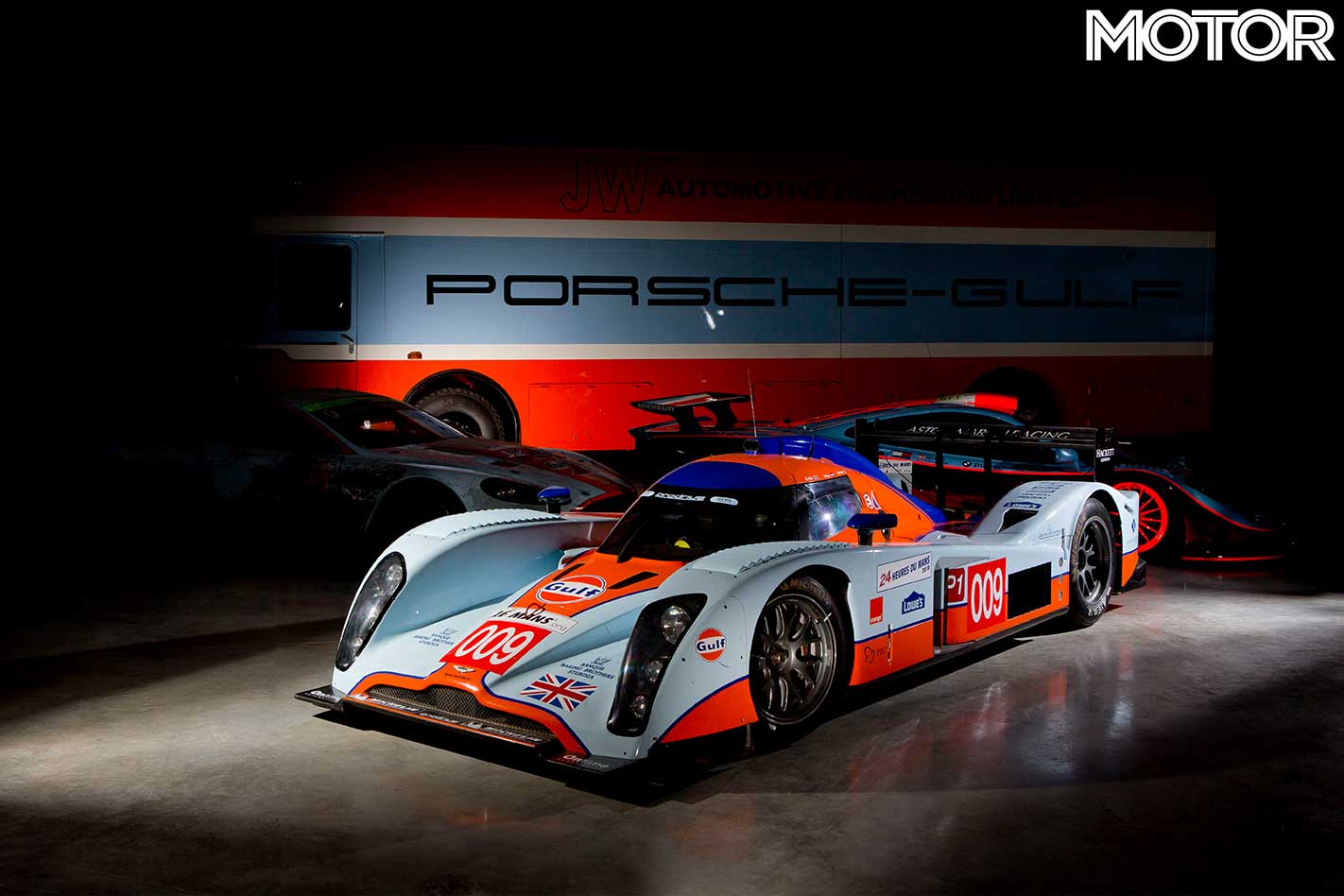
Powered by a race tuned, 485kW/770Nm version of the all-alloy, 6.0-litre, petrol V12 found in the Vantage road car, it’s an evolution of the previous year’s B08 chassis, with revisions to the bodywork, suspension, and a more compact Xtrac sequential six-speed ‘box, with wheel paddle operation.
As well, the B09 features rear facing brake cooling ducts, incorporating fans, cancelling out the need for intakes on the rear deck, and improving aero performance. Three chassis were built by Lola, with Prodrive managing the program, and Aston Martin developing the engines.
Despite a strong showing in Le Mans Series racing, the Aston was always going to struggle against the might of Audi and Peugeot at Le Sarthe. A modest air-restrictor concession for running a production-based engine helped, but the technical regulations were still stacked firmly in favour of diesel power.
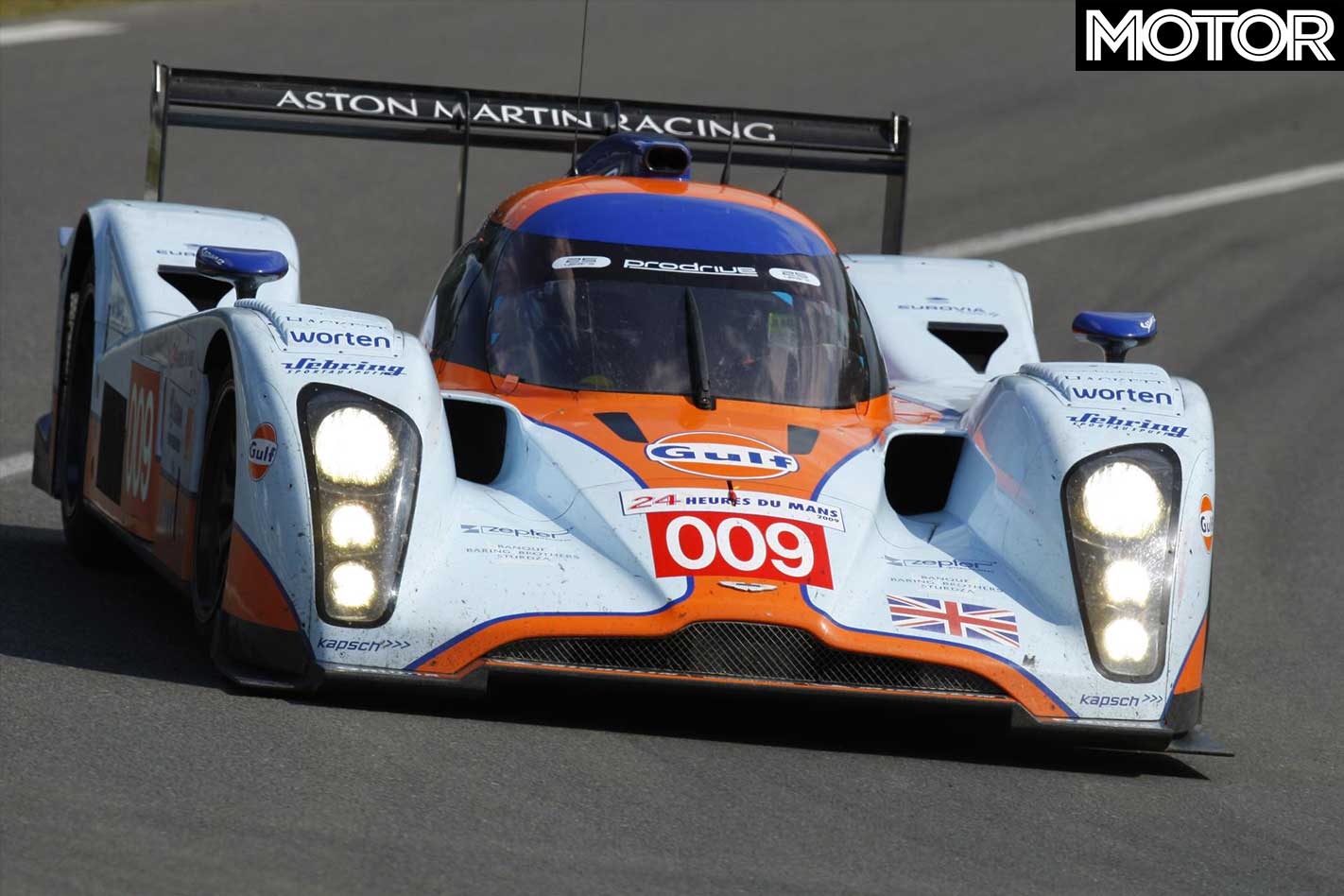
In the end, the team did well to come in fourth behind a Peugeot 908 one-two, and Audi’s R15 in third; Aston’s best result at the famous race in 50 years.
The ROFGO Collection car, in the hands of Anthony Davidson, Darren Turner and Jos Verstappen, ran as high as third outright, but an on-track altercation dropped it to 13that the finish. Two months later, it went on to record its best result of second at the Nurburgring 1000km (behind the winning sister car).
Sadly, an arm-wrestle over naming rights became public, with Lola demanding its fundamental role in the car’s development be recognised, while Aston wanted to call it the DBR1-2 in recognition of the 1959 Le Mans winner (as driven by Carroll Shelby and Roy Salvadori).
The factory even went as far as attaching DBR1-2 ID plates to the cars, but Lola eventually won the day, pointing out it is ultimately, an Aston powered Lola.
1997 McLaren F1 GTR Long tail
This is the car McLaren chief Ron Dennis and principal designer Gordon Murray said would never go racing. Built to be the ultimate road car, the McLaren F1’s ultra-light carbon construction, staggering dynamics, and mid-mounted, 6.1-litre, 467kW, naturally aspirated BMW M V12 re-set the ‘supercar’ bar. At launch in 1992 it instantly rendered the existing crop of exotic, hyper-sports cars second rate.
Sure enough, by the mid-‘90s McLaren’s competitive instinct had taken over, Dennis and Murray had eaten their words, and the car became a force in international GT racing. So much so, that in 1995 McLaren became the first marque since Ferrari in 1949 to take outright victory at Le Mans on debut, the F1 GTR proving it was no fluke by cleaning up in both years of the Global GT Series; courtesy of Thomas Bscher and John Nielsen in ’95, then Ray Bellm and James Weaver in ’96.
With Mercedes-Benz whispering about a comeback to top-tier sports car racing, the FIA was keen to accommodate the German giant, and the new for 1997 GT Championship was the result. Porsche had already introduced its 911 GT1 during the ’96 season; essentially a purpose-built racer with a handful of road cars built to satisfy homologation criteria, and Mercedes was set to follow suit in 1997 with the CLK-GTR.
The F1’s long travel, road-derived suspension and relatively high, ‘1+2’ cockpit suddenly put it at a huge mechanical and aero disadvantage. Revised engine regs for the new championship also meant the F1’s monster V12 was de-stroked to 6.0-litres, the consequent power loss partly offset by weight-saving additions like a compact, sequential gearbox.
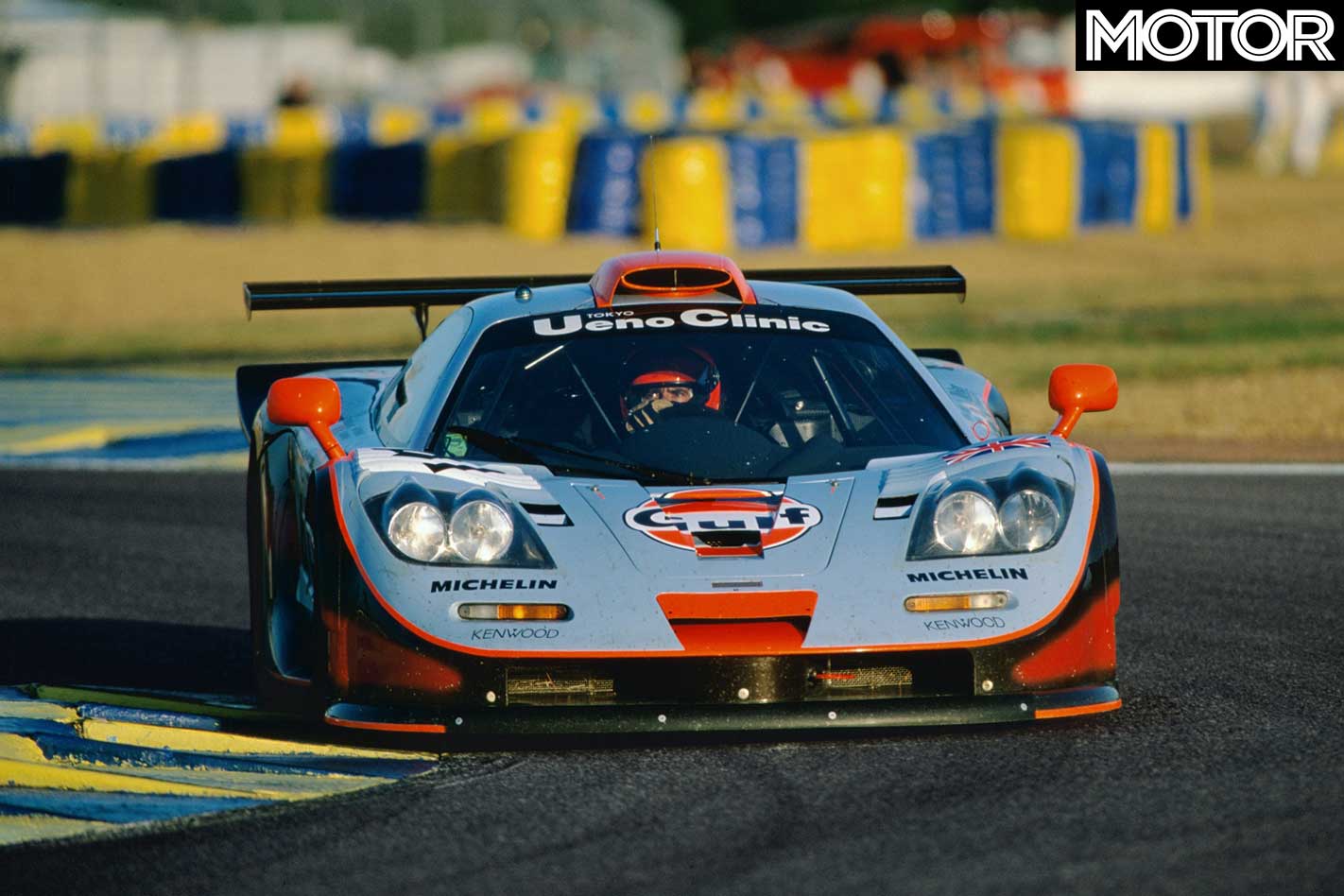
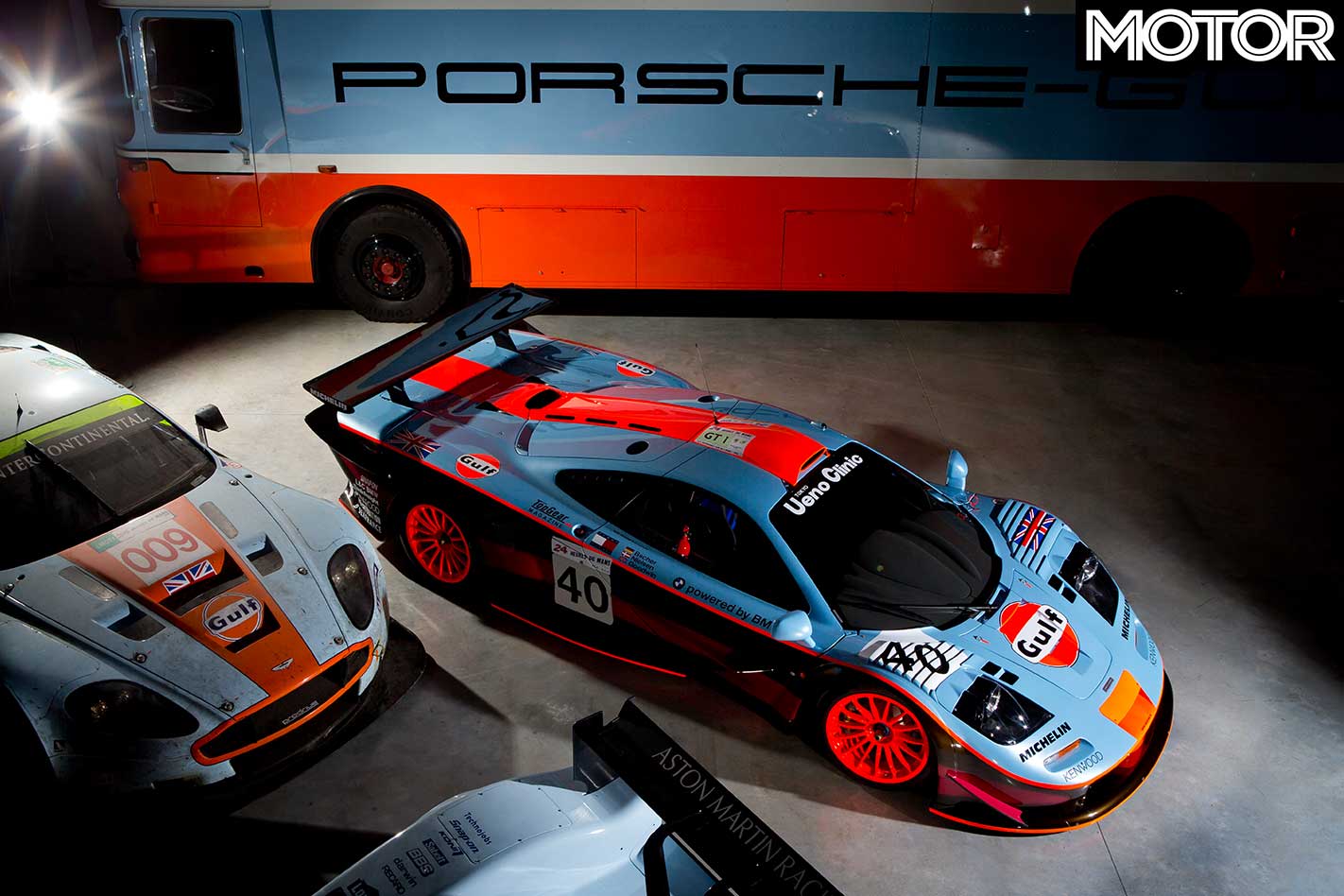
To claw back ground on the new competition Murray developed a ‘longtail’ version of the F1 GTR, with front and rear body work extended dramatically to deliver much-needed extra downforce. A determined weight loss campaign also trimmed overall mass to just 910kg.
After early season success for the F1, the radical CLK-GTR started to find its feet, and won the 1997 title, with McLaren team-mates Steve Soper and JJ Lehto tied for second.
The ROFGO Collection’s Gulf car was run by the ’95 BPR champs, Bscher and Neilsen, coming third at Hockenheim and Helsinki, and in ‘98 Bscher (sharing with Geoff Lees) used it to win the Monza 1000km.
1971 Porsche 908/3
In these conformist and politically correct times it’s hard to conceive of pure sports racers thundering around public roads for close to 800km, at speeds approaching 300km/h, watched by hundreds of thousands of race mad fans. Targa Tasmania is brilliant, but the ‘real’ thing, the Targa Florio that inspired it, was on another level.
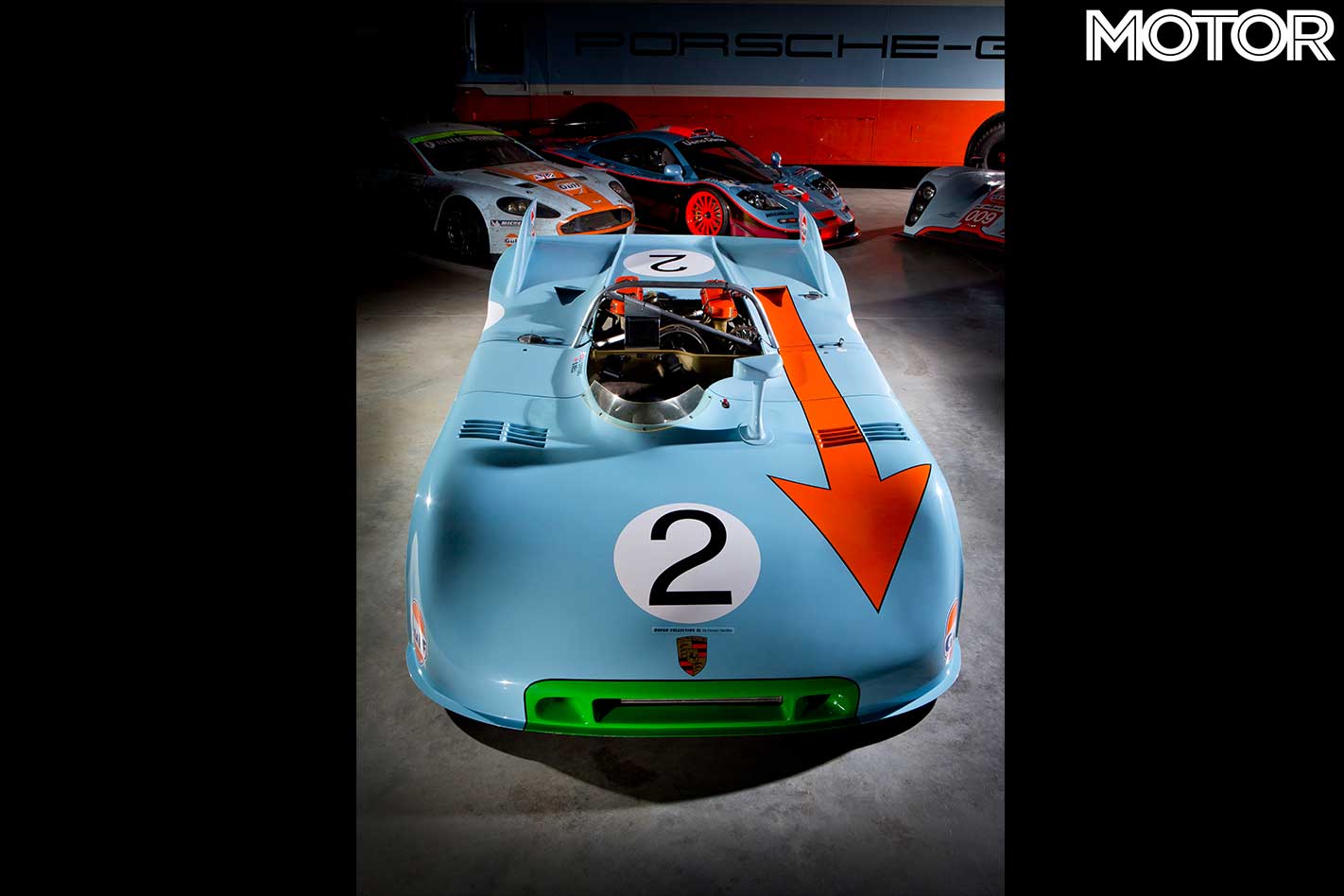
For over 70 years, until the final running in 1977, this amazing road race, around the Italian island of Sicily, captured the motor racing world’s imagination, and among the Bugattis, Alfas, Maseratis, and Ferraris that claimed victory over the decades, this Gulf Porsche 908 stands tall.
Specifically developed for tight, twisting events like the Targa, and Nurburgring 1000km, its 3.0-litre, air-cooled, 180 degree ‘flat’ eight cylinder engine, mid-longitudinally mounted in the alloy space-frame chassis, produces 269kW/365Nm.
The 908/3 made its race debut at this event, and in the hands of Swiss ace Jo Siffert and works driver Brian Redman, the lead Gulf entry took outright honours to register Porsche’s 10th Targa victory. The following year, German Kurt Ahrens and versatile Brit Vic Elford in the rival Salzburg team car took out the Nurburgring 1000km.
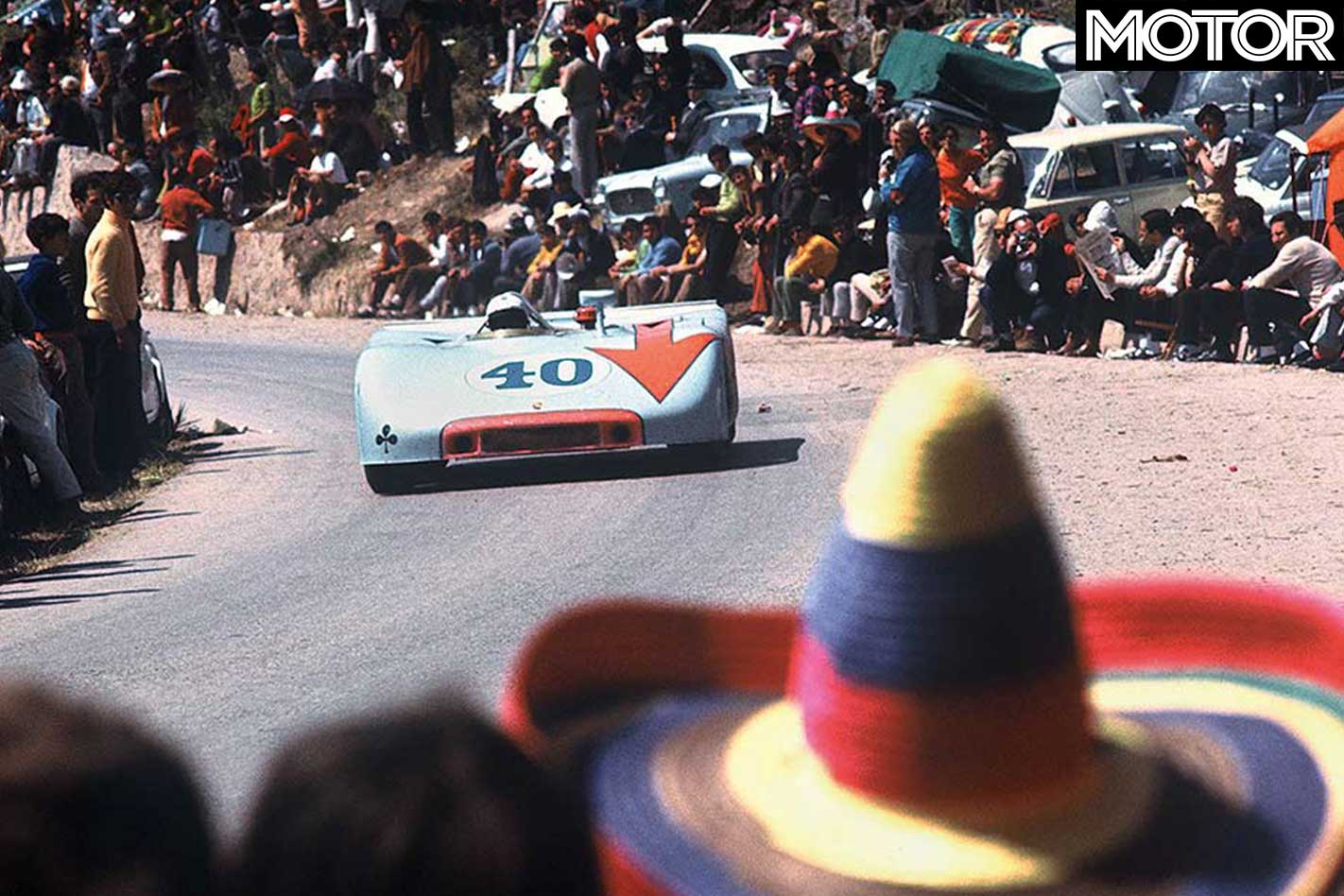
Although it carries the 908 designation, this third generation variant is essentially underpinned by the same chassis as the 1968 909 Spyder, that enjoyed huge success in hill climbs in the late 1960s. The close to central driving position, places the driver’s legs over the front axle, the wheelbase is just 2.3m long, and kerb weight a tiny 545kg .
To this day it’s Redman’s favourite. “A jewel of a car,” he says, “You look at that non existent wheelbase and think it must be twitchy as hell but nothing could be further from the truth. It was fast, friendly, and with that torquey flat eight motor, wide tyres and no downforce, it was an absolute dream to drive on the Targa.”
The collection example, chassis 12, competed once in Gulf colours, with Siffert and Derek Bell qualifying fifth for the ’71 Nurburgring 1000km, eventually retiring from second place with a broken frame. Bought by Reinhold Joest’s factory-supported team in 1974, it continued in competition until 1978.
1965 Ford GT40
Revenge may be a dish best served cold, but Henry Ford II’s outrage following Enzo Ferrari’s ‘nearly-for-sale’ flirtation with the blue oval in the early 1960s generated enough heat to win the Le Mans 24 Hours … several times.
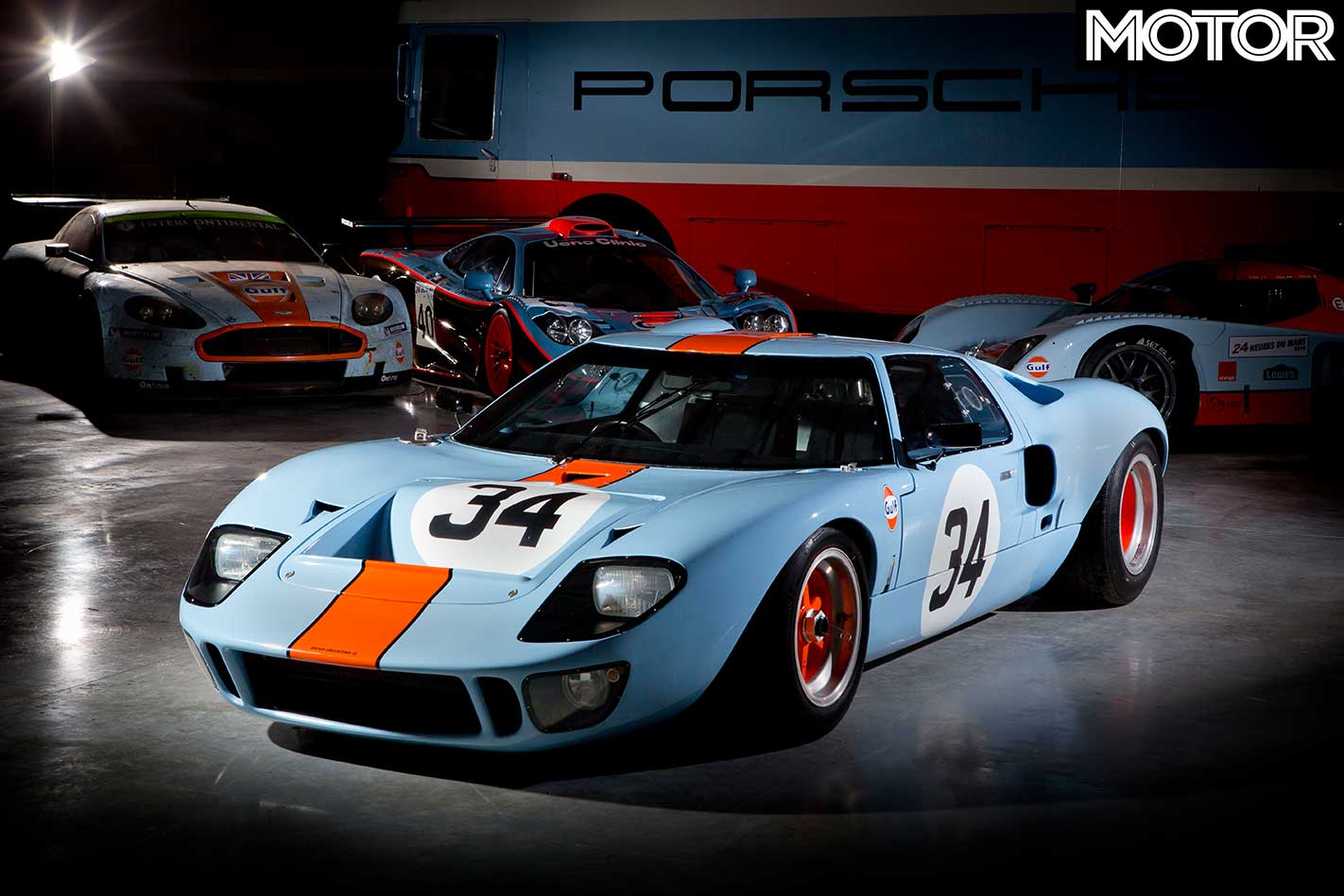
After initial overtures from the cagey Italian, Ford spent big bucks on pre-purchase due diligence, only to have Ferrari turn on his heels over issues relating to the scuderia’s racing program. In the aftermath, Henry II decided to hit Enzo where it hurt most, funding a motor racing program specifically designed to knock off Ferrari at Le Mans.
Ford fast-tracked development through collaboration with Lola Cars, and after a shaky couple of years, where the GT40 proved fast but unreliable, the decision was made to replace the Mark I’s 4.7-litre (289ci) V8 with a 7.0-litre (427ci) big-block monster.
The classic Detroit, ‘more is better’ solution worked brilliantly, and the GT40 MKII dominated Le Mans in 1966 with a 1-2-3 result. Just to make sure Maranello received the message loud and clear, the GT40 followed that up with victory in 1967, ’68 and ’69.
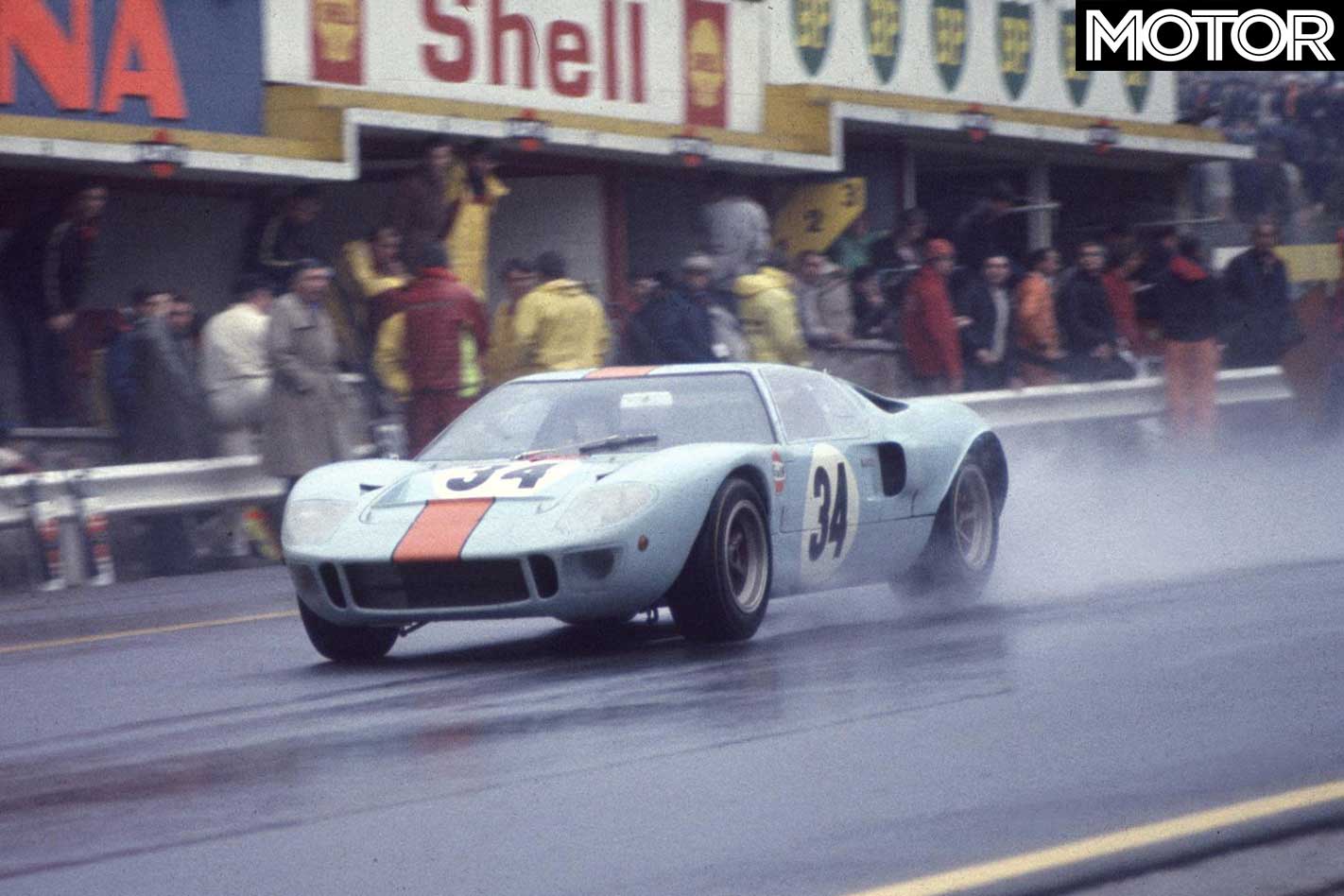
The ROFGO Collection GT40 was originally a private Rob Walker team entry, driven by Bob Bondurant and Umberto Maglioli in the 1965 24 Hour race. Head gasket failure sent it to the DNF column at the two-hour mark, and after the race it was unceremoniously returned to Ford Advanced Vehicles, stripped down and moved to a dark corner, where it sat for the next two years.
But fresh regulations for the 1968 season gave what would otherwise be an out-dated cast-off a new lease of life. Competing cars with an engine capacity of more than 3.0-litres needed to be supported by a run of 25 vehicles, which played perfectly into Ford’s hands.
The ex-Walker car was refettled, finished in Gulf colours, and given a new chassis number (P/1084). While its sister car, P/1075 took all the glory by winning Le Mans in 1968 (and in the ultra-close finish of ’69), P/1084 picked up fourth at the 1000 Kilometres of Spa, driven by David Hobbs and Aussie Paul Hawkins.
2006 Aston Martin DBR9
The ROFGO Gulf Collection wouldn’t be complete without Le Mans winners, and this is one of them. Still wearing the grime accumulated over 24 hours and 344 laps of racing in the 2008 event, this is the car Darren Turner, Antonio Garcia, and our own David Brabham drove to victory in the GT1 class that year.
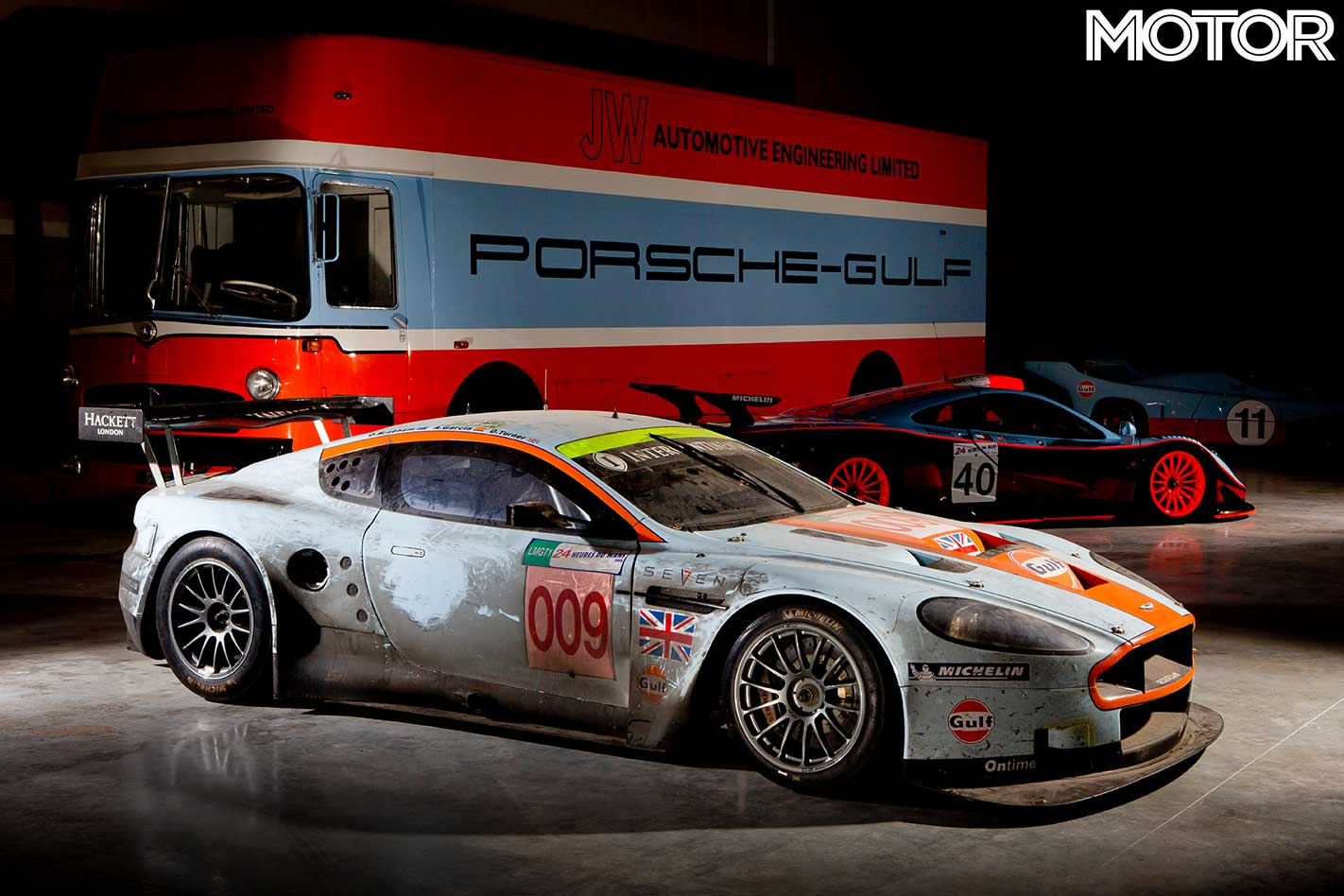
It had started life in 2006 contesting the American Le Mans Series, and finishing sixth outright at Le Sarthe. Enough, you’d think, to easily secure GT honours, but a lone Corvette, finishing an unbelievable fourth, put paid to that. Campaigned by BMS Scuderia Italia in the 2007 FIA GT Championship, it returned to the factory team at the end of that season.
But Aston’s DBR9 project had begun in 2005. Built around the DB9 road car, it took the output of its 6.0-litre V12 up from 350kW/600Nm to around 450kW/700Nm; the development standing the team in good stead for its step up to LMP1 with the Lola B08/60 in 2008.
At Le Mans in 2005, the factory team finished third in class behind a pair of Corvettes. The next year its best position was the collection car’s sixth, with that pesky Corvette grabbing the GT crown. But it was third time lucky when Turner, Brabham and Rikard Rydell climbed to the top step of the podium in 2007, finishing fifth outright and putting a full lap on the nearest Corvette in sixth.
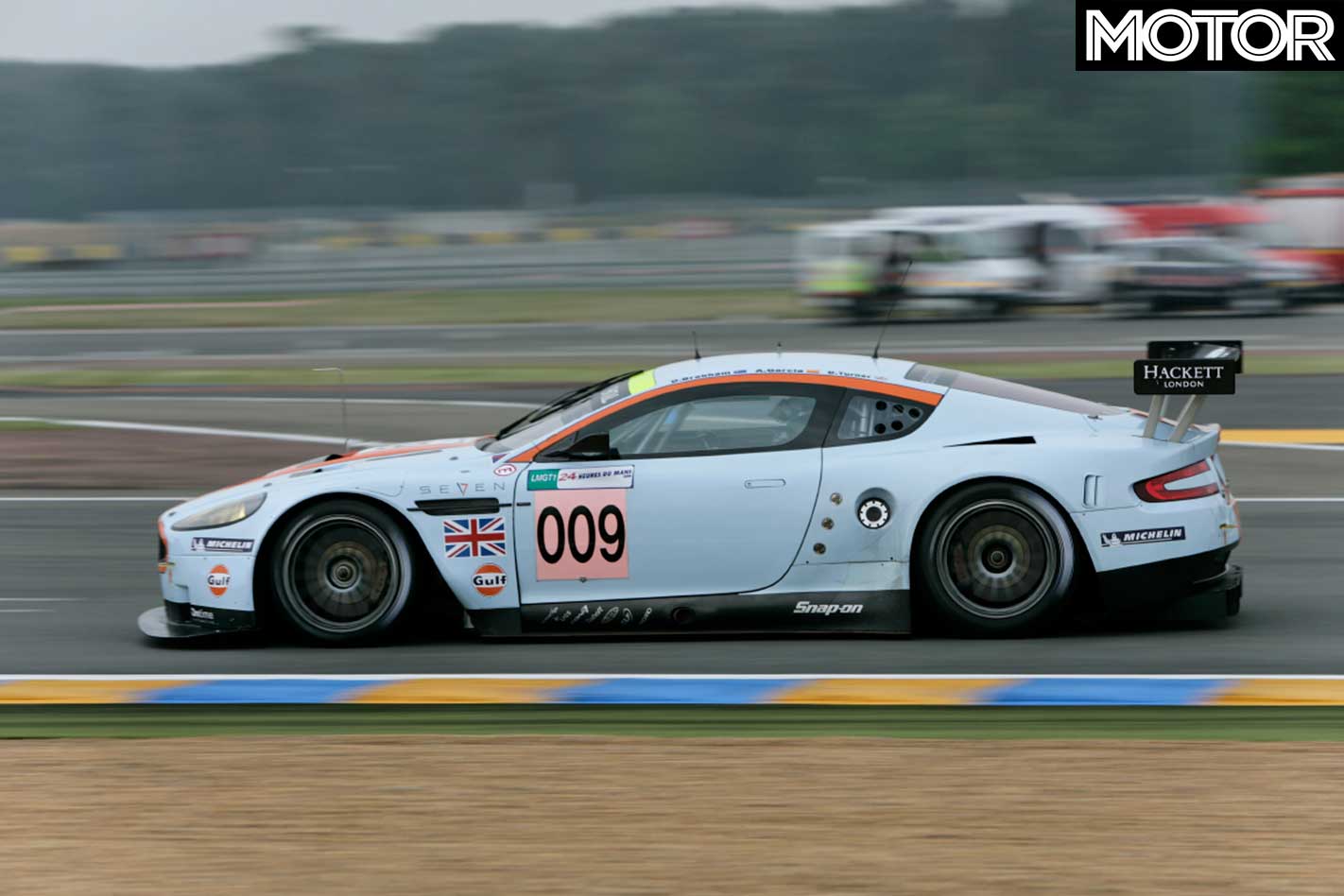
In the close to 50 years since Carroll Shelby and Roy Salvadori famously won Le Mans in the DBR1 (with the team managed by John Wyer), Aston Martin had been chasing sports car competition success. Project 212, 214 and 215 in the early 1960s, was followed by the Aston-powered Group C Nimrod in 1982, and the AMR1 in 1989.
All were nobbled by shaky company finances, and it wasn’t until cash from new owner Ford began to flow in 2004 that the racing program stabilised, and Aston martin enjoyed the taste of Le Mans victory with the DBR9.
1975 Mirage GR8
The thundering Porsche 917s and Ferrari 512s of the early ’70s, made even more famous courtesy of the Steve McQueen Le Mans feature in 1971, were consigned to history by the FIA’s revised ‘Group 5’ regulations for the 1972 sports car season.
The ‘oil crisis’ was biting hard, and maximum engine capacity for the premier category was set at 3.0-litres. As well the Automobile Club de l’Ouest (ACO) mandated a minimum 20 lap re-fuelling gap, and specific fuel tank capacities for Le Mans.
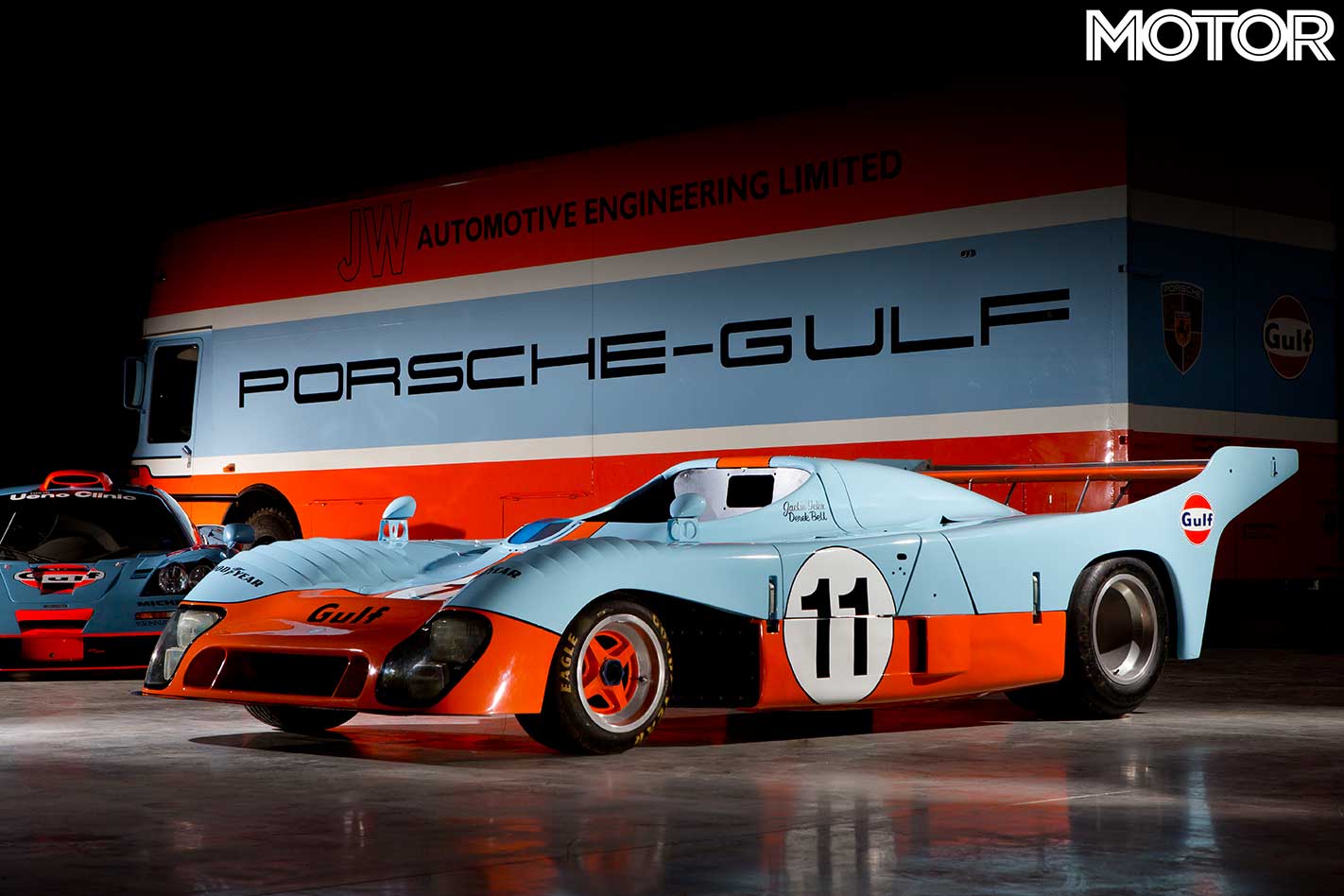
John Wyer had created the Mirage brand in 1967 to differentiate his team’s Gulf Ford GT40-based M1, as well as many others to follow, and it was attached to his team’s 1975, Group 5 compliant, Le Mans challenger.
After close to a decade, the JW Automotive team’s association with Gulf Oil was about to end, and Wyer was determined to give it a successful send-off, and the Mirage GR8, this exact car in fact, was ready to provide it.
Two GR8s lined up for Le Mans in 1975, each powered by a mid-mounted, 3.0-litre Ford-Cosworth DFV V8, detuned for long-distance reliability, and improved economy.
The emerging dream team of Jacky Ickx and Derek Bell was paired in one car, with local Jean-Pierre Jaussaud and our own Vern Schuppan in the other. Ickx and Bell qualified first, with Schuppan and Jassaud joining them for a front row lock-out.
After leading early on, electrical problems caused Schuppan and Jassaud to drop back during the night, but Bell and Ickx took over, eventually building a long enough lead to allow the team to change a cracked exhaust manifold on the Sunday afternoon, and despite bangs and graunches from what proved to be damaged rear suspension, won the race by a lap from the second place Ligier JS2. The second Mirage came home third.
At the end of the ’75 season, Wyer sold the team, including the Mirage name, but this very car had delivered the perfect retirement present. And the other Gulf GR8? It’s in the ROFGO collection, too.
1971 Porsche 917K
Ask a hard-core Le Mans fanatic to name the event’s most iconic competitor, and this is the car they’ll nominate.
The Porsche 917 walked away with Le Mans victory in 1970 and ’71 (the latter with current Red Bull advisor, Helmut Marko sharing the drive). But no matter what the McQueen film would have you believe, no Gulf 917 ever won the race.
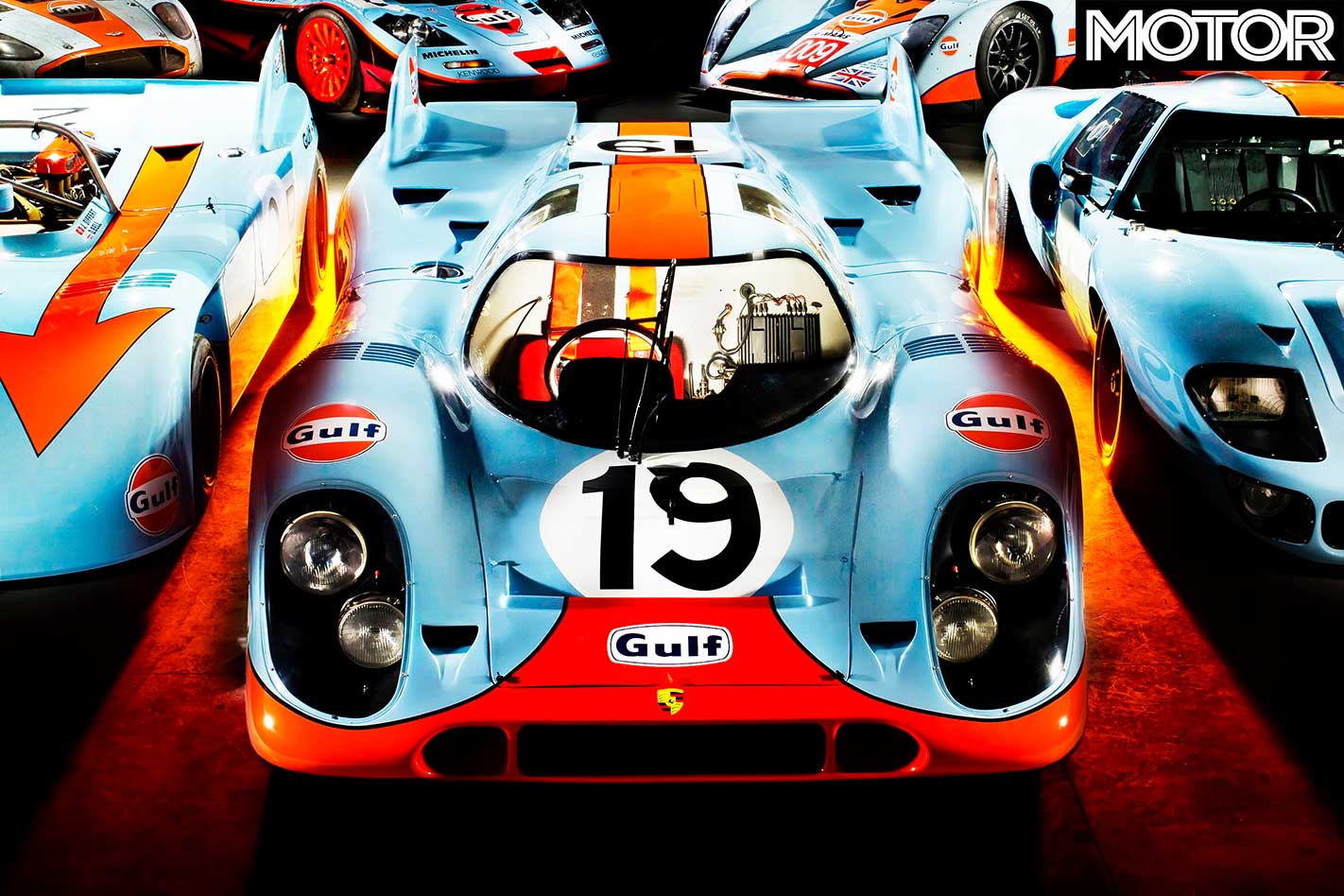
Despite that, this 1971 Gulf racer is without doubt the most spectacular and charismatic car in the ROFGO collection.
Then head of Porsche’s motorsport, and now VW Group chairman, Ferdinand Piëch, led development of the car, that included a lightweight alloy frame, and 450kW, 4.5-litre, air-cooled, naturally aspirated, ‘flat’ 12 cylinder engine. In later turbo iterations, the 917 would produce more than 800kW.
The collection example, 917/26, started life as a test car in 1969, but came off the bench and stepped up to the premier league the following year, competing at Le Mans in the hands of David Hobbs and Mike Hailwood.
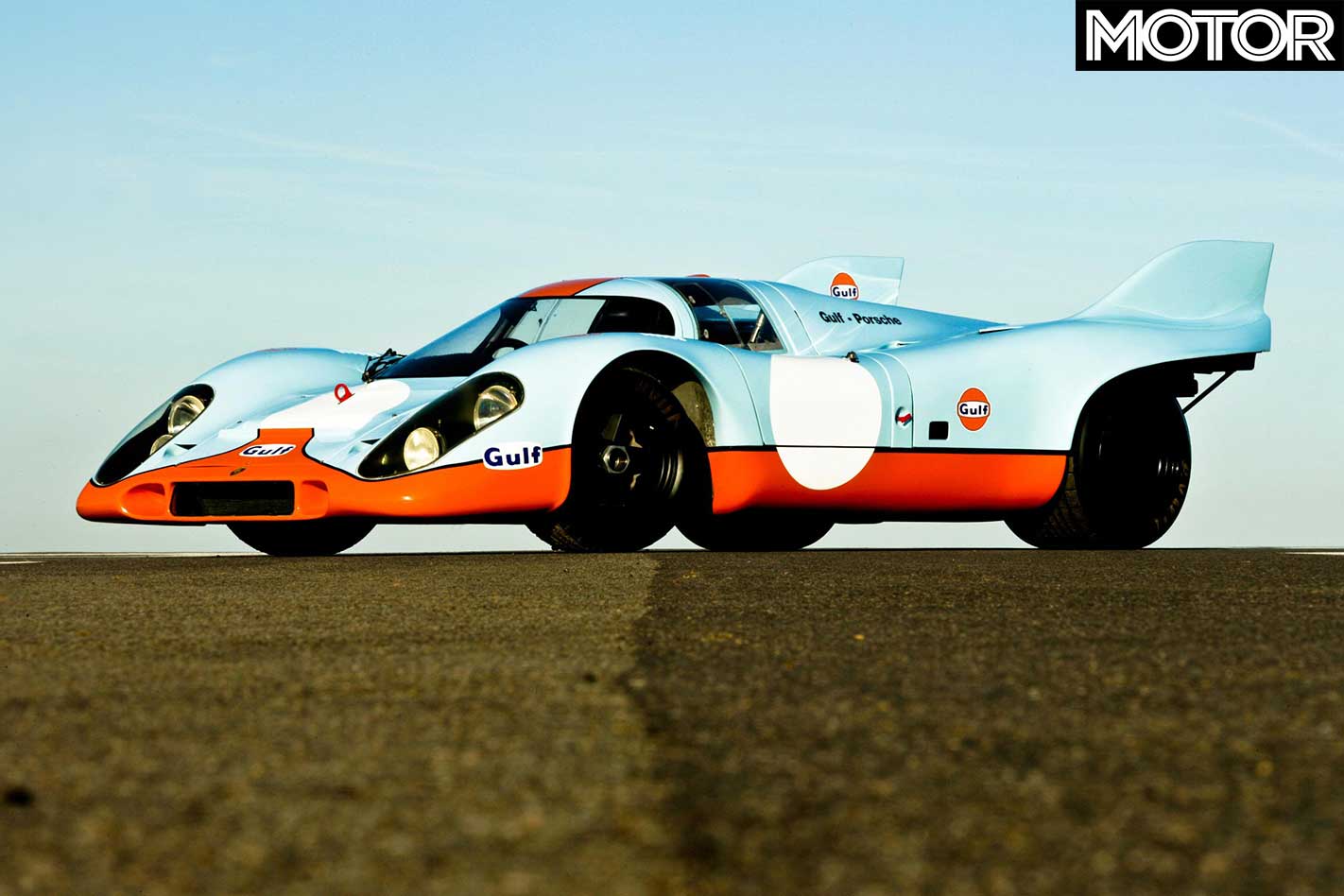
Multi GP bike world champion Hailwood must have thought he was still on two wheels rather than four, crashing the car so badly it required a new frame. Wearing a new chassis number (917/31), Brian Redman steered it to victory at Imola and the last championship race of the season at Zeltweg (sharing with Jo Siffert).
In 1971, Siffert and Derek Bell brought the car home in fifth place at Sebring, before 1970 Le Mans winner, Richard Attwood and dual Targa Florio winner, Herbie Muller delivered the best ever result for a Gulf 917 at Le Mans, finishing second, two laps adrift of the Martini 917 of Gijs van Lennep and Marko, which averaged 222km/h over 24 hours, the highest speed recorded to that point in the race’s history.
After a several relatively undistinguished seasons in Interserie and other similar events, the car was retired from active duty. But it’s now restored to full, Le Mans spec glory, complete with short-tail, finned bodywork, 5.0-litre engine, five-speed ‘box and that classic Gulf livery. A pristine example of one of the greatest racing cars ever made.
THE APPROVAL of unaffordable and overpriced car loans is endemic to the practises surrounding loans that originate from car dealerships, according to the Royal Commission into the Misconduct in the Banking, Superannuation and Financial Services Industry.
The concept of ‘flex commissions’ is at the root of the most unscrupulous practice highlighted during the inquiry. Under a flex commission arrangement, dealers can set car-loan interest rates above the lender’s base rate. The higher the interest rate accepted by the consumer, the larger the commission earned by the car dealer.
The Royal Commission shed light on the practice, which was formally banned last September by corporate regulator, the Australian Securities and Investments Commission (ASIC). Yet consumers remain exposed, with Westpac signalling its intention to continue with this commission arrangement until the ban comes into effect in November this year.
ANZ, meanwhile, has suspended its $2.5b car financing business, having sold its $8.2bn Esanda Dealer Finance portfolio back in October 2015.
An internal analysis by St George Bank in 2015 into the car loan commission structure found that “There are weaknesses in the design of remuneration structures and monitoring of sales practices for dealerships who are originating retail auto finance loans … current practises significantly increase the risk of unfair consumer outcomes where dealer behaviour may be influenced by commission plan design and the ability of a customer to negotiate.”
The Royal Commission has also heard from consumers whose ‘unaffordable’ car loans should never have been approved. Loan approvals based on unverified or falsified income details – including details swapped with those of guarantors – and with living expenses recorded as zero or not verified were shockingly common.
Car dealerships can operate in three distinct roles under the National Consumer Credit Protection Act 2009 (Cth), the most common of which, under an exemption from the credit licencing regime as a ‘supplier of goods or services’, places the obligation to ensure compliance on the Australian Credit Licence holder (the lender) rather than the car dealer.
Finance, as well as the sales of insurance, (and accessories, spare parts and servicing) contributes significantly to dealers’ overall profitability. Dealerships are likely to consider their margin on a car purchase on a whole transaction basis, and are often prepared to discount the car while making their profit elsewhere.
Autonomous emergency braking (AEB) has been a revolution for vehicle safety and while it’s not compulsory, customer demand has hastened its availability as standard equipment on a third of the most popular cars sold in Australia.
However, it can be difficult to know which models are fitted with AEB as each manufacturer has different, often confusing, names for the technology such as Audi’s ‘Pre Sense Plus or Volvo’s City Safety.
On the other hand AEB branding could help you work out what kind of auto-braking system the car has though. For example, the word ‘city’, usually refers to system only detecting and avoiding collision at lower speeds – which isn’t a bad thing as that’s where most rear-end collisions happen.
And ‘mitigation’ could mean the AEB is more likely to reduce the impact of a crash rather than avoid it all together.
Once you establish the car you want has AEB, be sure to have the car dealer explain how it works and any limitations.
While different manufacturers have their own name for AEB it’s worth noting that not all of their models or variants are necessarily equipped with the technology. Fortunately, the list of those that do is growing every month.
AEB systems by manufacturer
- Alfa Romeo: Autonomous Emergency Braking
- Audi: Pre Sense Plus
- BMW: Driving Assistant Plus
- Fiat: Forward Collision Plus
- Ford: Active City Stop
- Holden: Automatic Emergency Braking City Stop
- Honda: Collision Mitigation Braking System
- Hyundai: Autonomous Emergency Braking
- Jeep: Forward Collision Plus
- Kia: Autonomous Emergency Braking
- Land Rover: Autonomous Emergency Braking
- Lexus: Pre-collision Safety System with Brake Assist
- Maserati: Forward Collision Warning Plus
- Mazda: Smart City Brake Support
- Mercedes-Benz: PRE-SAFE Brake
- Mini: City Collision Mitigation
- Mitsubishi: Forward Collision Mitigation
- Nissan: Intelligent Emergency Braking with Forward-Collision Warning
- Porsche: Warn and Brake Assist
- Peugeot: Active Safety Brake
- Renault: Advanced Emergency Braking System
- Skoda: Multi-Collision Braking
- Subaru: Pre-Collision Braking System (Eyesight)
- Suzuki: Advanced Forward Detection System (with Autonomous Emergency Braking)
- Tesla: Automatic Emergency Braking
- Toyota: Pre-Crash Safety System
- Volkswagen: City Emergency Braking
- Volvo: City Safety
“Is it better than the Porsche 911?” That’s the question Aston Martin boss Andy Palmer asks his engineers and it’s not an unreasonable one for you to ask, too.
And the answer is? Well, as they’ll tell him and I’ll tell you over the next 1500 words or thereabouts, it’s not that simple, mate. In some ways, yes, it is better – in many ways, no, it isn’t – but, for the most part, it’s just different. And that’s fine, too.
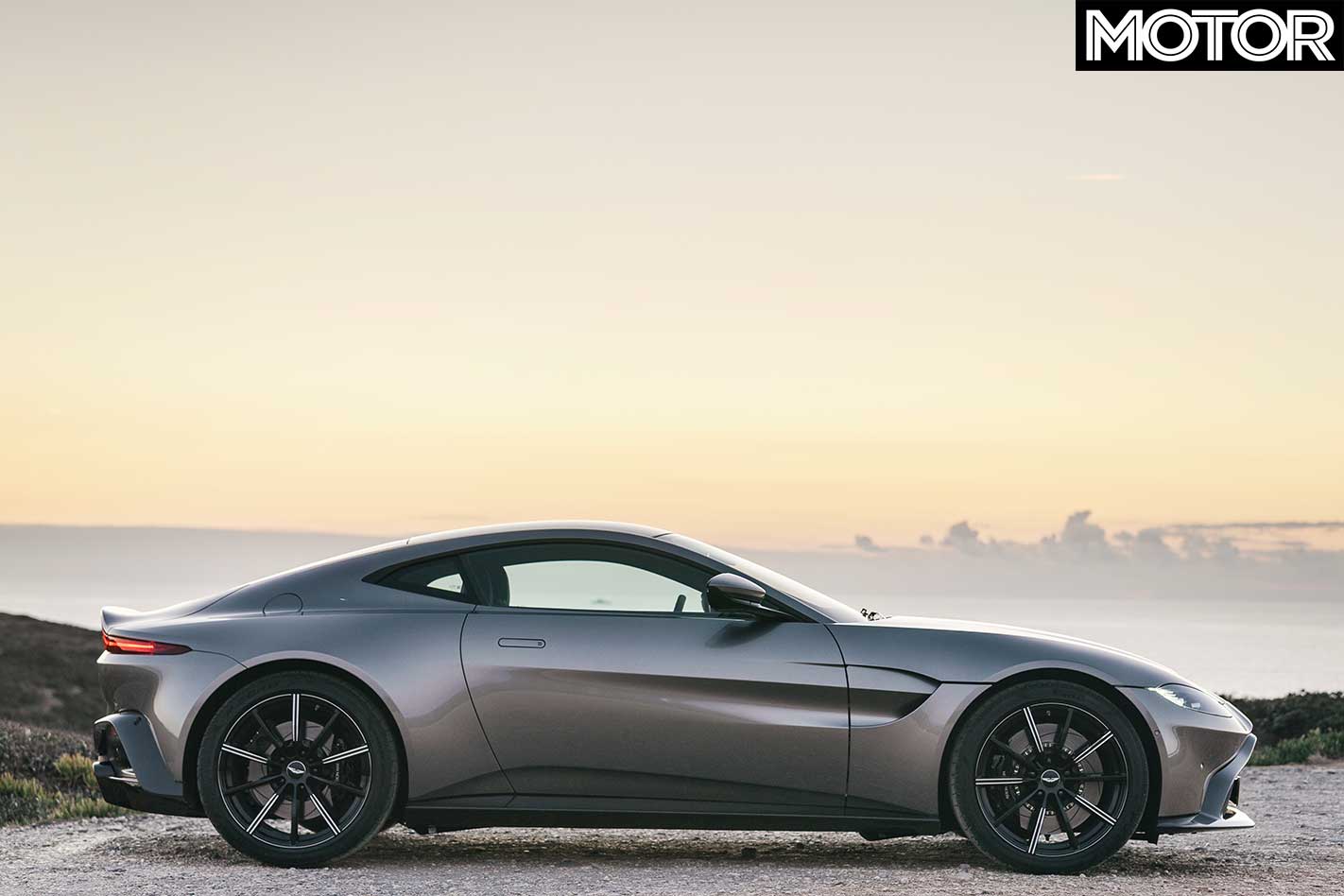
Like a normal car company. “It’s not rocket science,” says Palmer. First, then, was the DB11, the big, comfy grand tourer, at one end of the sports car scale, and now there’s the Vantage, which sits at the other end, but using a fair degree of DB11 parts.
It’s a strict two-seater, with a Mercedes-AMG 4.0-litre twin-turbocharged V8 engine sourced from Aston’s partner (and part-owner) in the front, and power going from there to the back via an eight-speed transaxle torque-converter gearbox and an electronically controlled limited-slip differential.
To see beneath the new Vantage’s skin is to see the advances Aston has made since the old VH architecture died and the new, still all-aluminium structure arrived. Only 33 per cent of the structure is shared with a DB11, which, at 4465mm, the Vantage is 274mm shorter than but, at 1942mm across the body (2153mm to the mirror ends), 2mm wider. A 911 is a thumb’s width longer but, at 1808mm, rather a lot narrower. Which could be important.
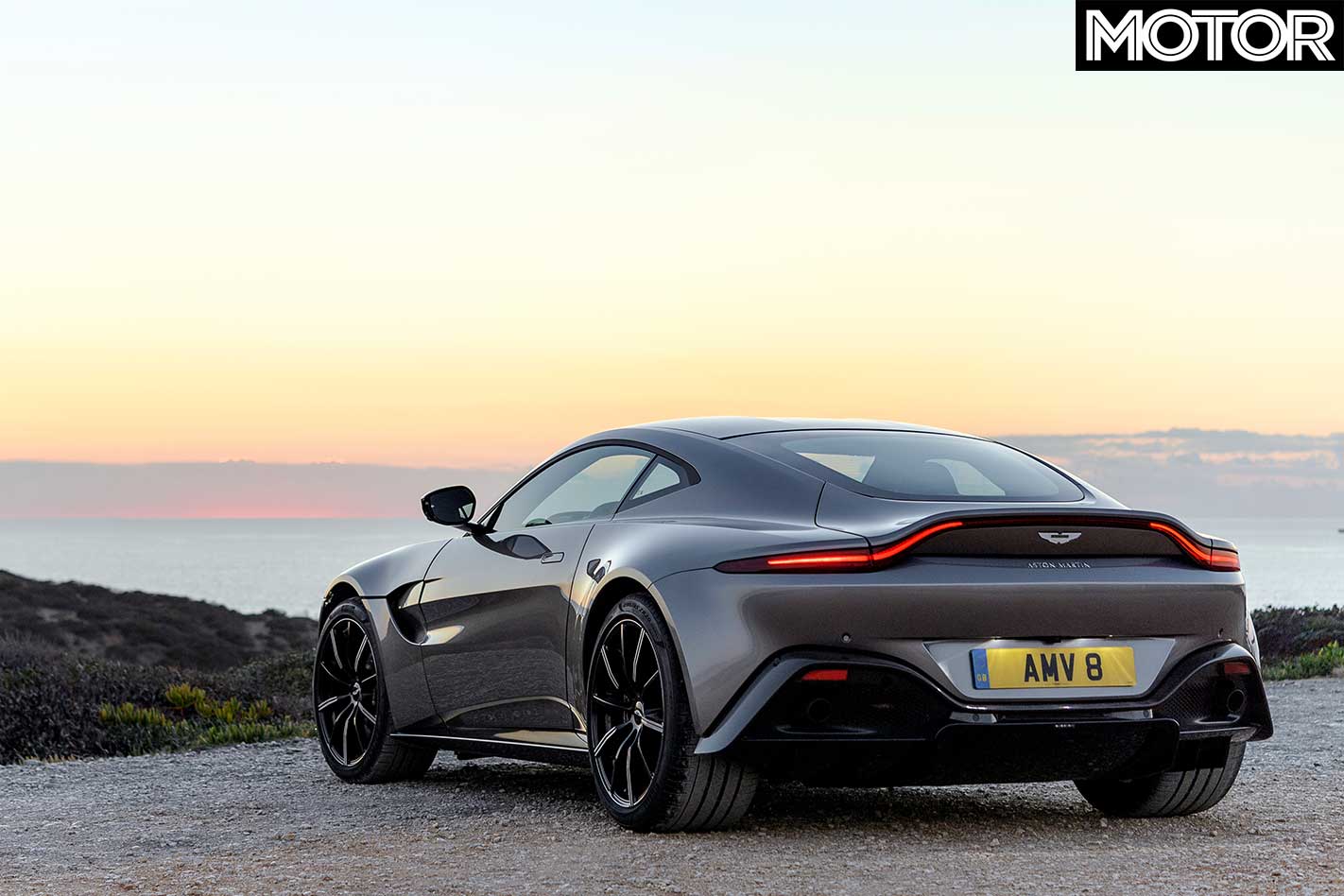
There are more pressings and castings than extrusions in an Aston’s make-up these days. They’re more expensive, but more space efficient for a given strength, so the Vantage seats two big people very comfortably and the boot, underneath a hatch tailgate, is big enough for two golf bags.
The skin is a mix of aluminium and plastic composites, and dry weight is quoted at 1530kg including the lightest options. A 911 GTS is less than that even full of fluids and with a statutory 75kg added to it to represent driver and fuel. Like for like, the Vantage could be 10 per cent heavier than a 911.
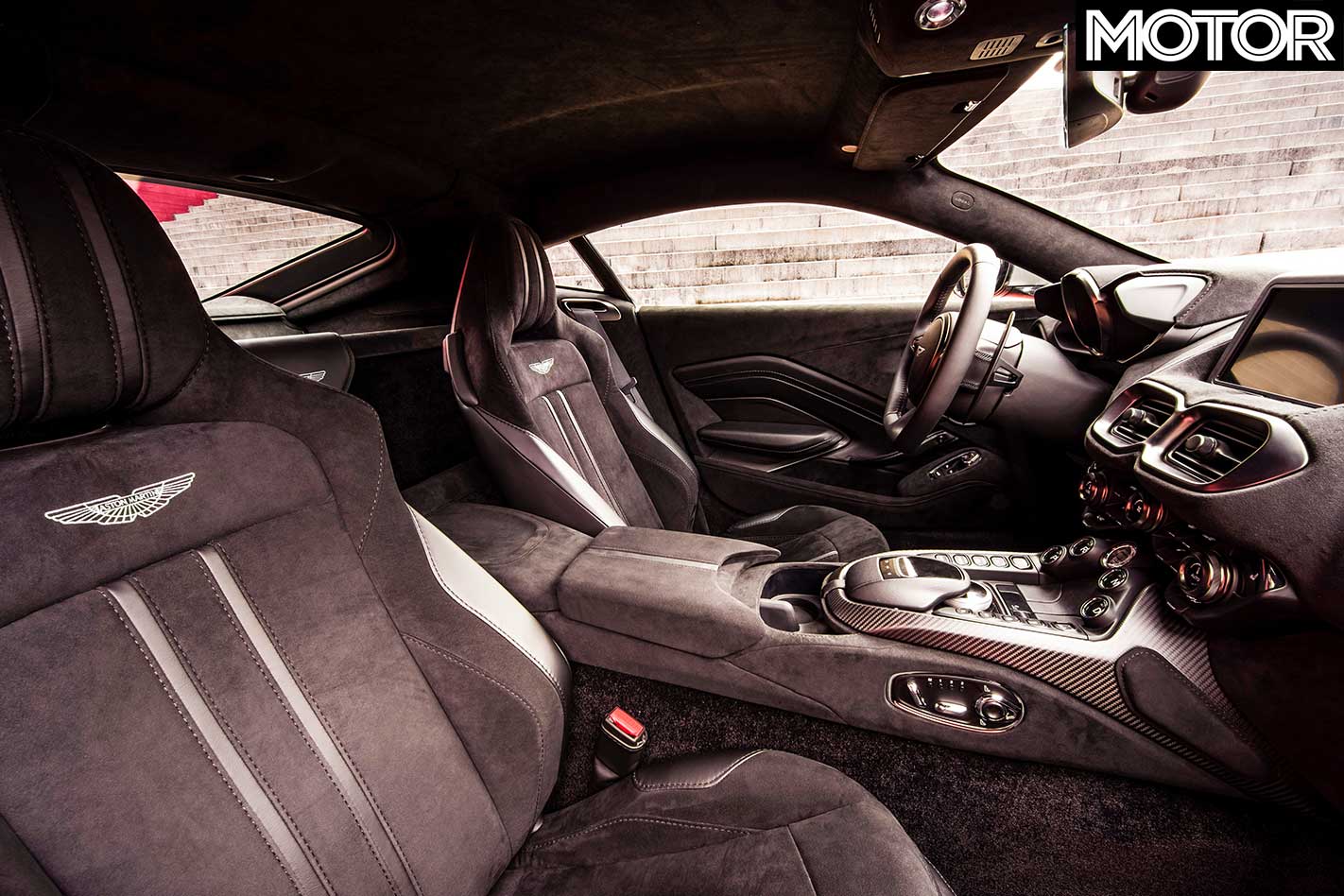
That could be important, too. For the first time in a generation, the Vantage is wilfully different from other Astons outside (do you like it? I do on three sides and the front I’m getting used to) and inside, too.
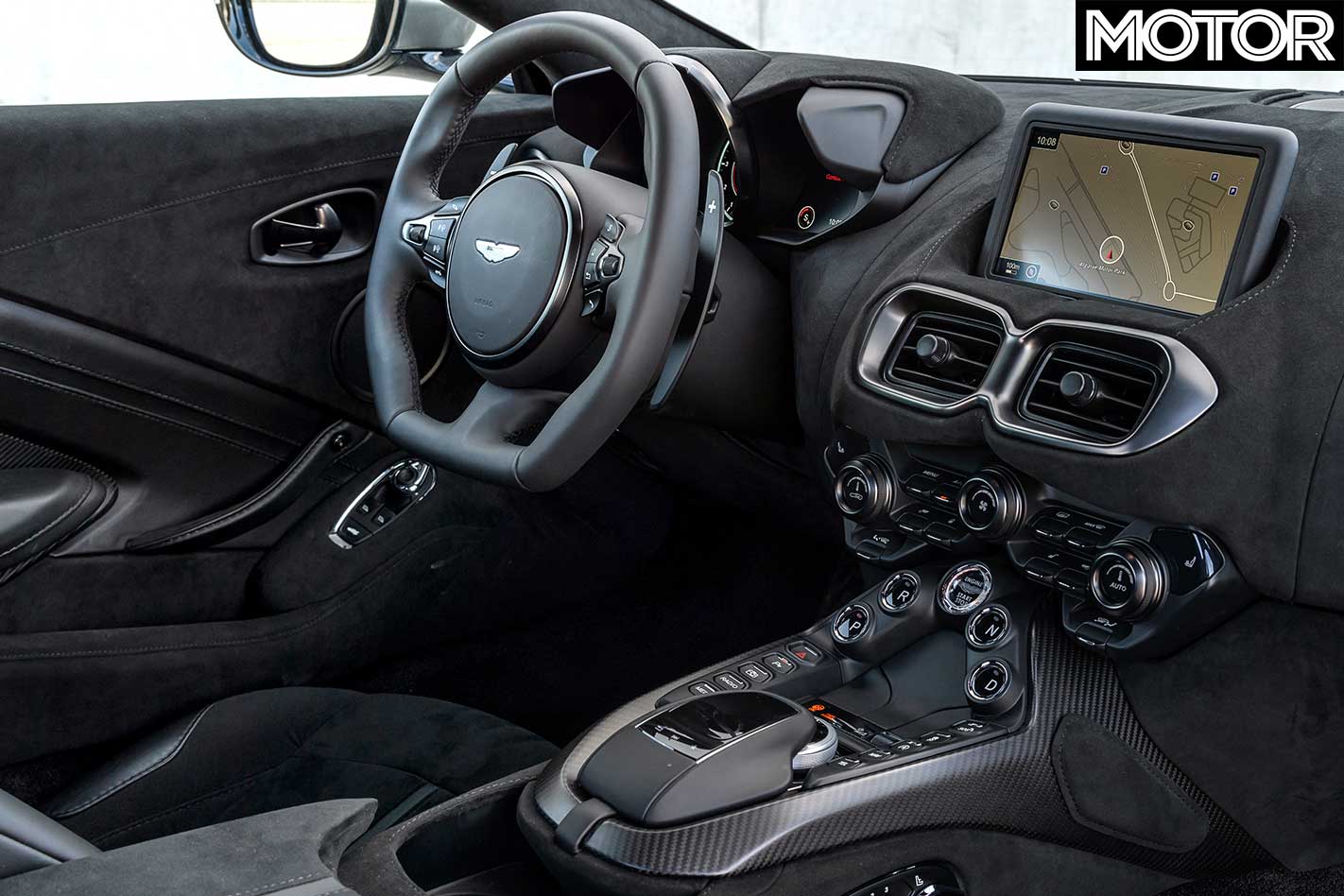
I like most of the inside as well: the finish is good, the plastic on the air vents grates a bit less in a sports car than a grand tourer and you can, apparently, have a round steering wheel. It all works most nicely with the racier Alcantara trim, to my eyes. The leather looks a bit stretched around some seams and stitches but, well, I suppose it’s a sports car. Shouldn’t things be pulled tight? A bit racy?
Mechanically, it sounds like they are. In the V8 DB11, which shares this engine and its 375kW tune, the engine’s note – so raucous and voluble in its AMG applications – has been turned right back. Here, they’ve let it rather loose again. A few years ago, you could have chosen any of several different Astons for the same job. This one, you’re in no doubt, is the loud one.
That extends to the drive modes, which, of course, it has. Ultimately, these policies mean more to Aston than us, but whereby the DB11 has GT, Sport and Sport Plus chassis settings, the Vantage’s dampers are shifted along an imaginary scale to Sport, Sport Plus and Track, all intended to be tighter, firmer, to the point that Track is arguably too stiff for bumpier race tracks.
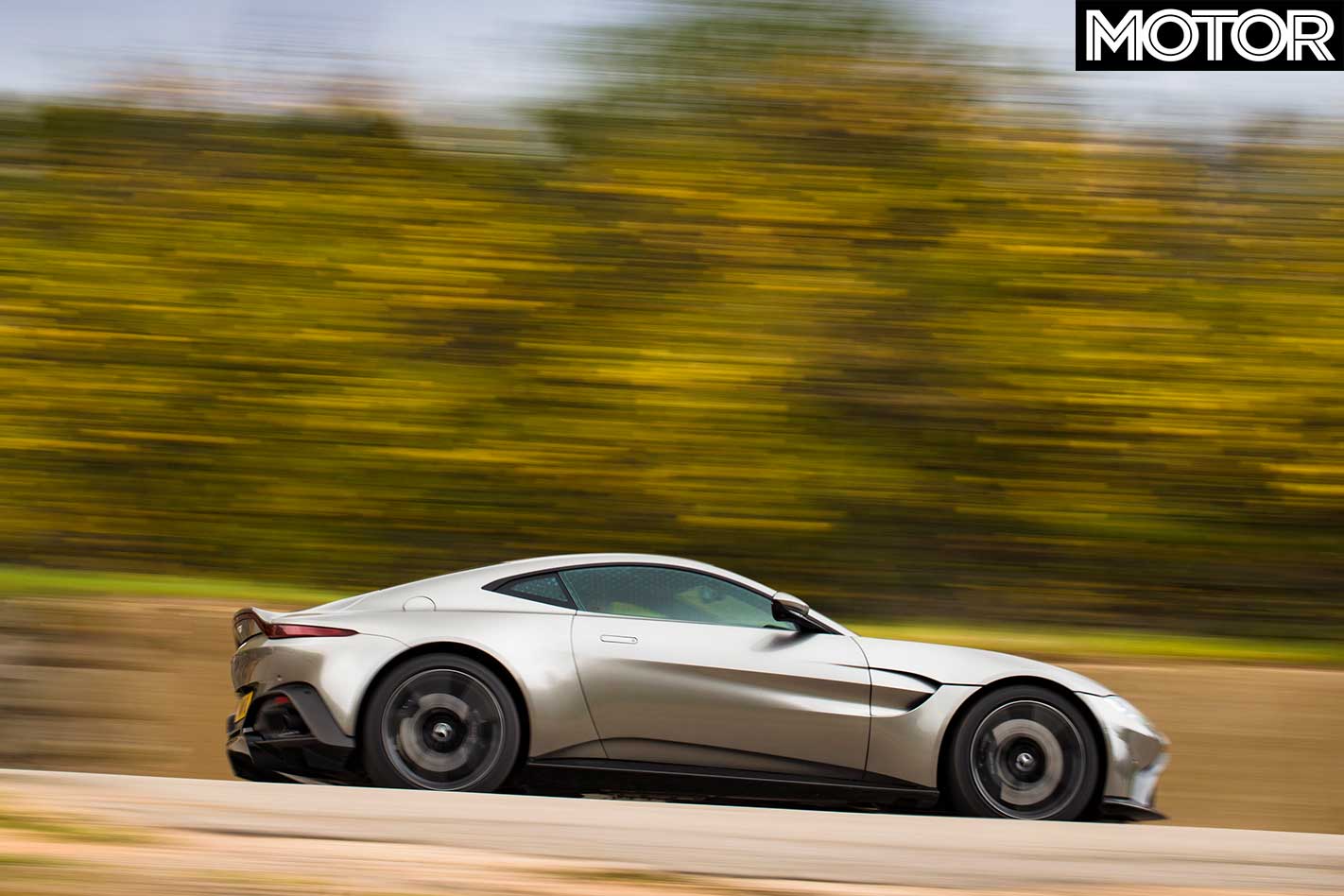
It’s good on those, though, Aston says. In fact, they say, it slides quite easily. Aston Martin is good at understatement. Remember a few things: yes, the Vantage is heavier than a 911, but the 1630kg or so it’ll weigh is competitive among the other company the Aston will keep.
Its mechanical layout (the entire block sits behind the front axle line) means that the weight distribution is 50/50 front to rear. Only one tyre option, a bespoke Pirelli P Zero, is offered.
It has all been engineered by people who believe that cars should handle properly beyond the limit. And off means off on the three-stage stability control… goody gumdrops.
On a circuit, then, the Vantage is terrific. The engine note is as raucous and hard as you’d want it to be, the (optional) carbon-ceramic brakes stop it brilliantly and hold out in warm temperatures, and the tyres resist wear better than 685Nm from 2000rpm has any right to allow.
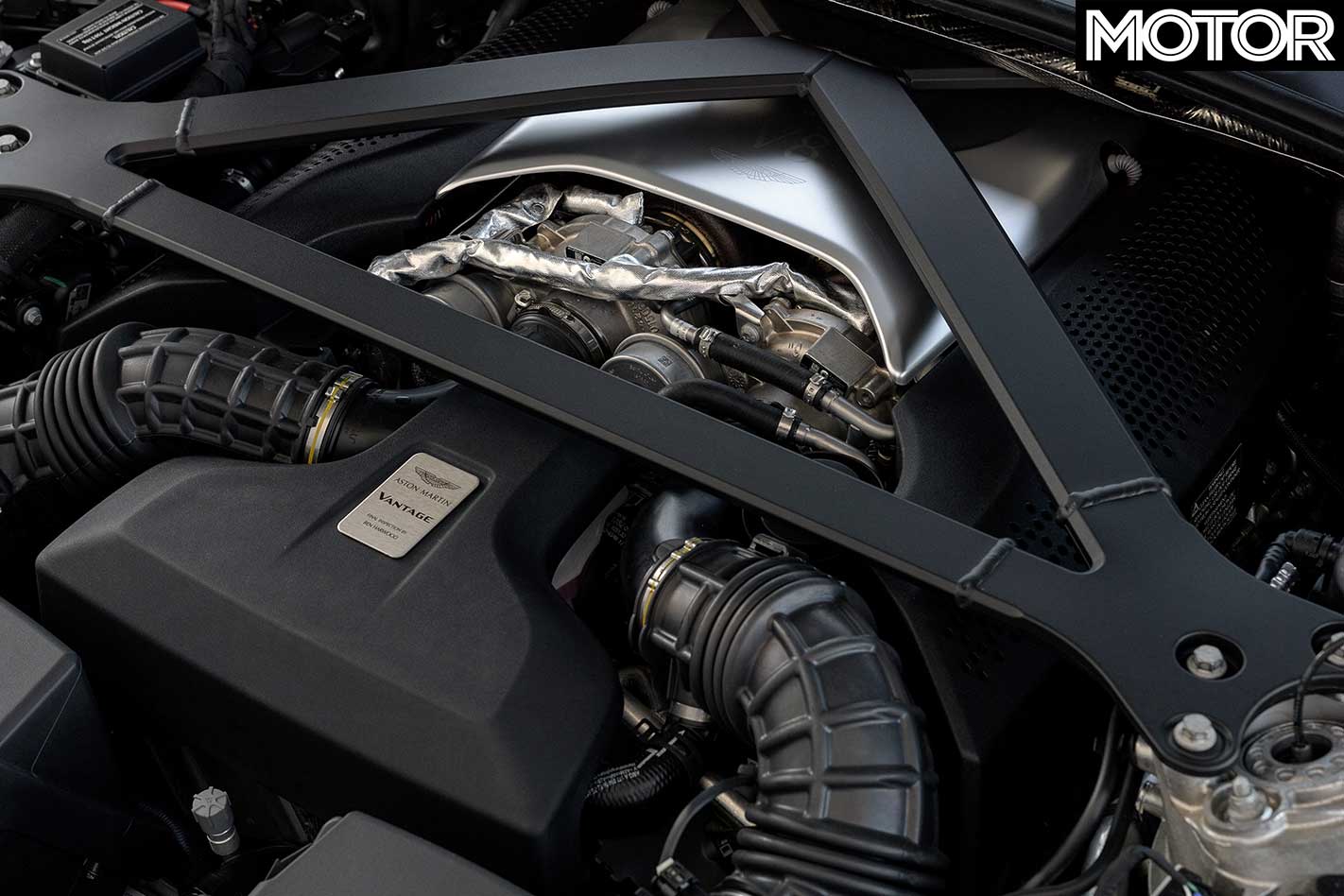
Body control is good, even in the slackest of suspension modes, and there’s a great sense of agility because it feels like the car pivots around its centre – where you’re seated.
The front goes where you point it and there’s a terrific level of control and precision over the rear. The rear subframe is rigidly, rather than squishily, mounted to the chassis and that apparently gives excellent lateral stiffness, so the car’s back axle does what the engine and e-differential (which can be fully locked or fully open, depending on what’s being asked of it) wants it to do.
Under power, on a track, what it wants to do is lock up to precisely your amount of bidding, making the cornering line entirely your choice. It’s not unlike a Ferrari 488 GTB in that fashion – only, because the engine is mounted low and at the front, the beyond-limit balance is even better, to the extent that I’m not sure there’s another current production car this docile on a circuit.
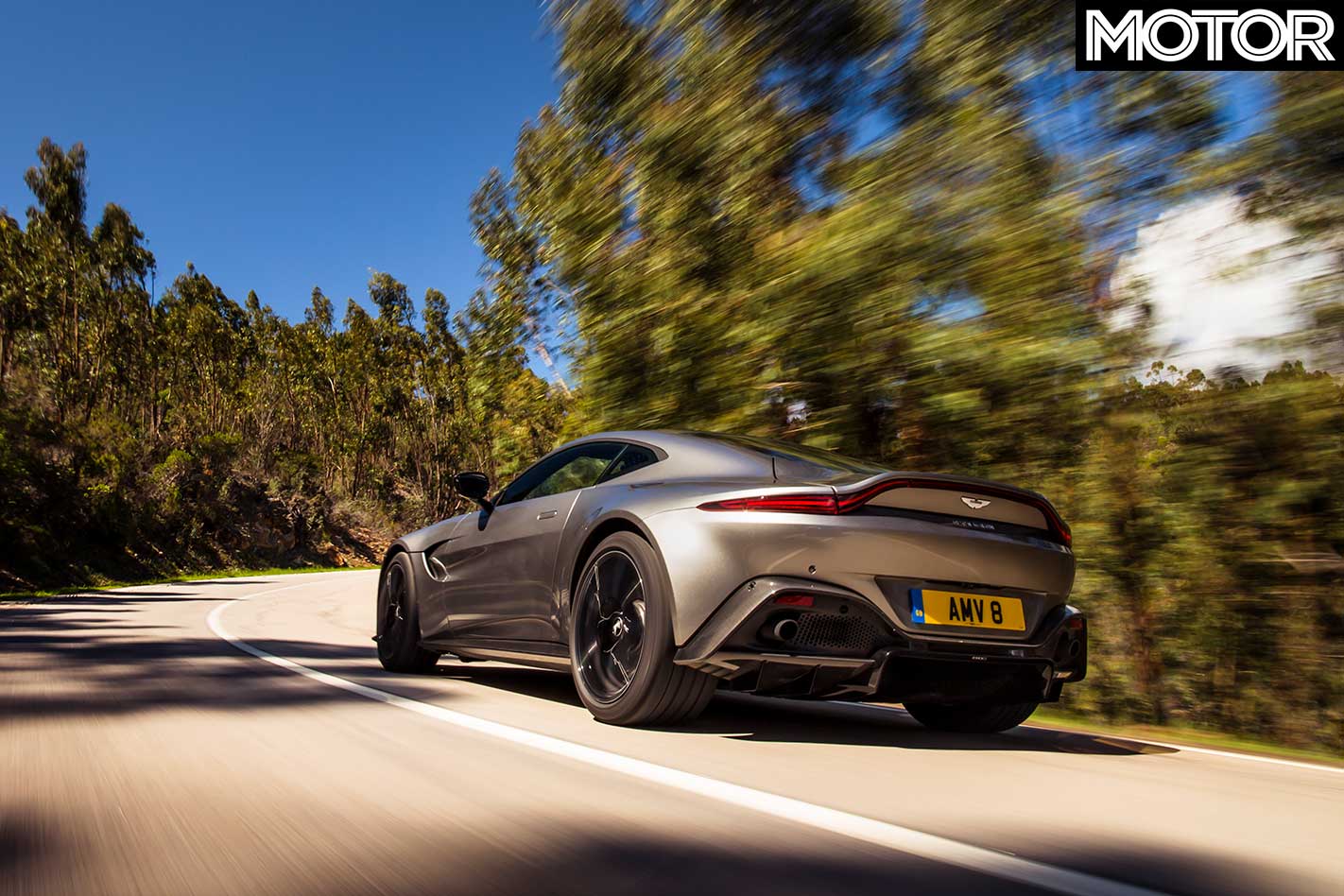
You can drive it in a racier fashion, too, where it’s still balanced and beautifully neutral, but less incisive than a 911. So they do different things better. The 911: nuanced steering precision. The Aston: antics.
Anyway, that’s all jolly, but this is a road car, after all. It’s one whose ride is composed and fluid, especially in Sport mode, but Sport Plus doesn’t usually throw it out of kilter.
The engine and transmission go through various stages of angry as you turn those up, but the moderate one is good for the road – grumbly and growly and plenty responsive enough – while the big, easy paddles, fixed to the steering column so they’re always where you left them, are some of the easiest to use in the business. Although, the column-mounted position isn’t always to everyone’s taste.
Pulling one puts you in manual mode, an extended pull of the upshift puts you back in D. All shifters should be like this, especially when mated to a gearbox that’s as smooth as the ZF eight-speeder. (It sometimes hesitates to give you downshifts on a circuit, though, which is a Mercedes-ish thing to do, so is perhaps down to the engine, not the gearbox.)
The steering? On track, it is full of feel, which, at lower cornering forces, naturally it doesn’t quite replicate on the road – a 911, which has a lightly loaded front end and less need of assistance, is, I think, more talkative – but that’s fine. It is smooth and fast, centres as it should and says as much as you’d hope.
The balance and poise are still there, too, albeit with the caveat that this is still a wide car, and from inside, you can see none of the exterior bodywork. So it’s just as well it is poised, responsive and predictable, because you’re relying on it to do the shrinking around you. To an extent, it does: with the aural and tactile cues this car gives you, it’s thoroughly enjoyable.
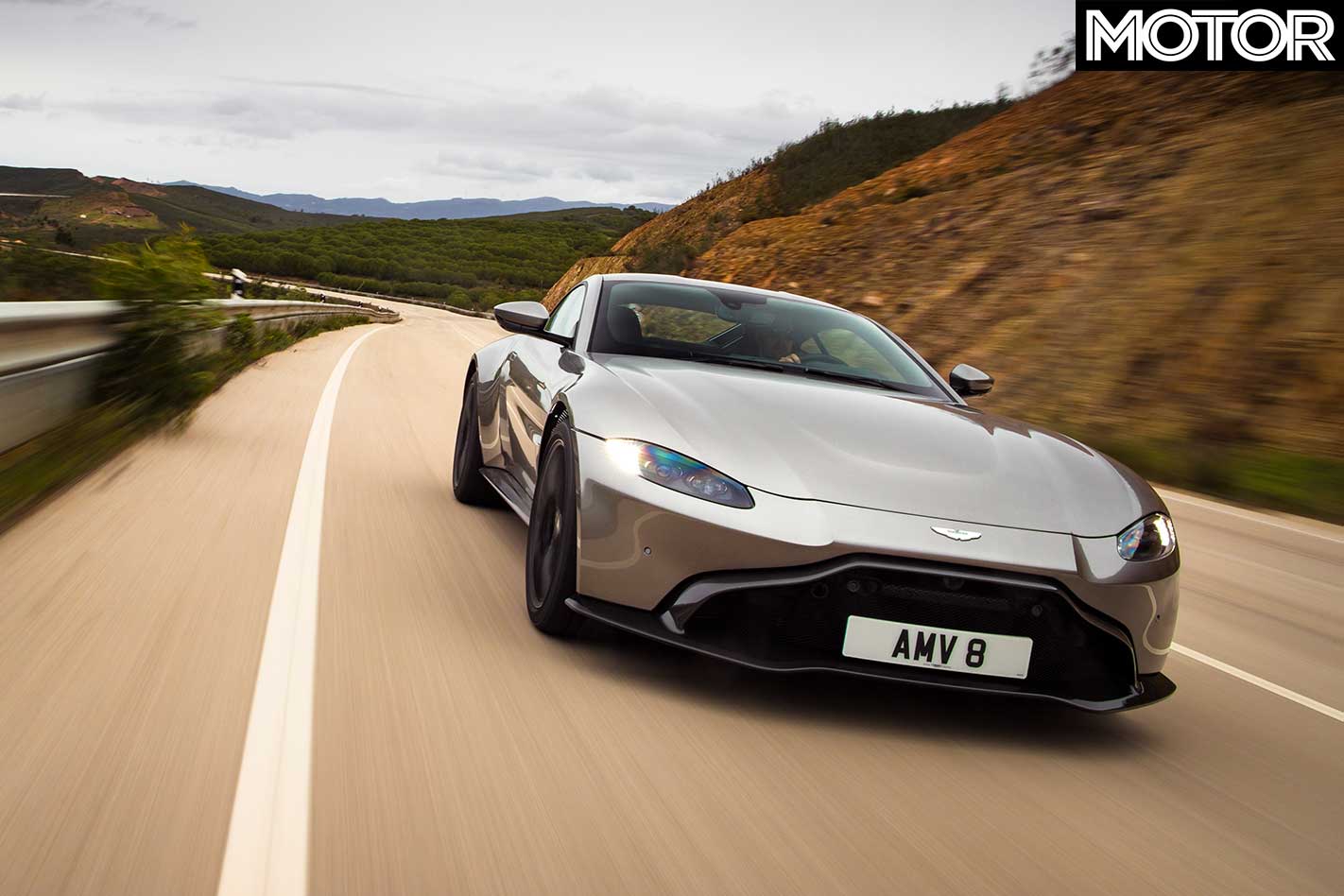
And here’s the thing: I’m considering the Vantage against consistently the best sports car in the business here, and it goes toe to toe with it. Are the others at the lofty $299,950 the Vantage demands? Some offer different things, better in one or two areas, but I’m pretty confident none is overall as complete and enjoyable as the Aston.
So is the Vantage better than a Porsche 911 GTS? Perhaps not. But it’s different enough. Crucially, it’s good enough in enough ways to be a genuine, desirable alternative to the status quo. To be considered different rather than worse. And to do quite a lot of things better. When you consider the respective sizes, budgets and facilities of Aston and Porsche, that in itself is a spectacular achievement.
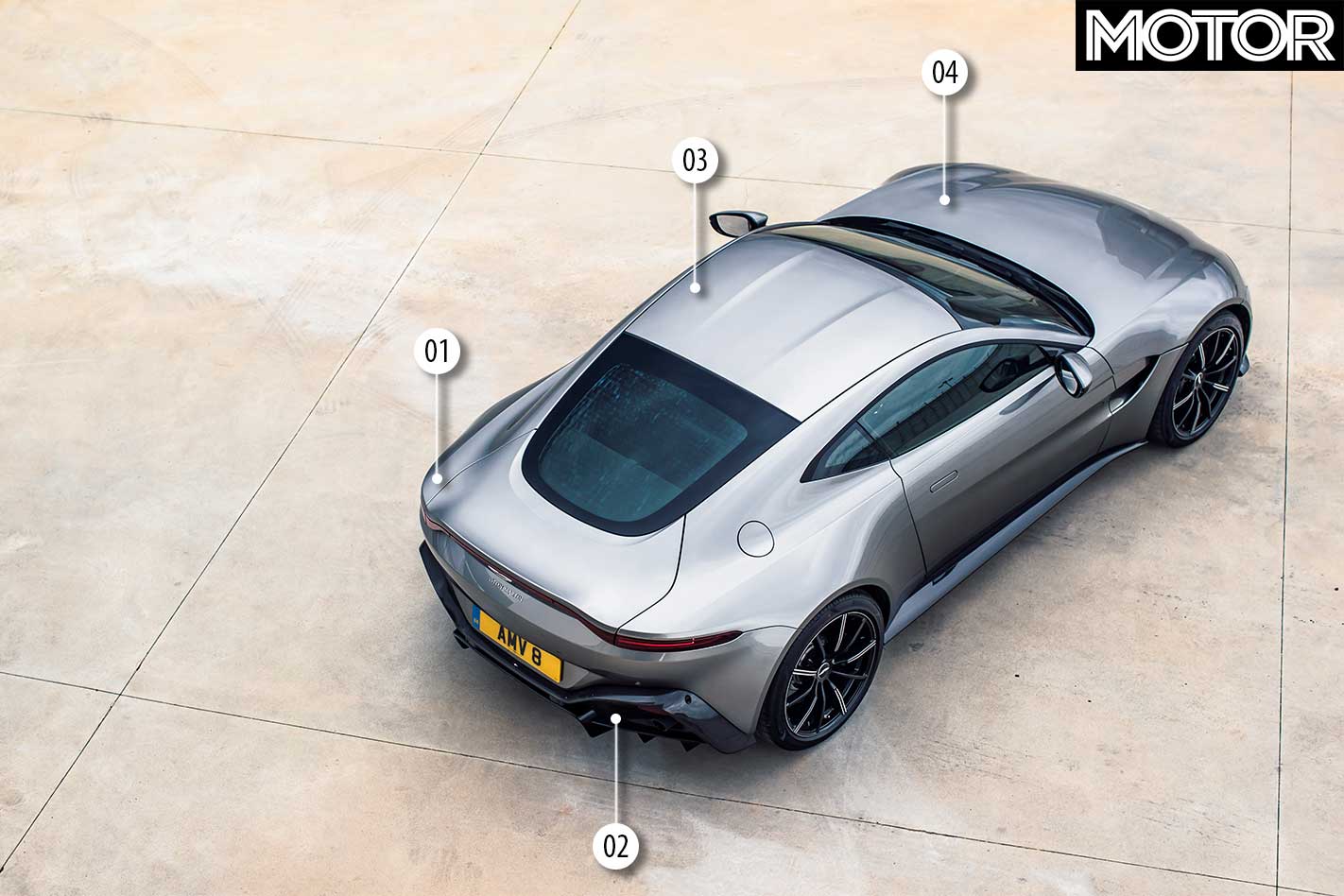
01/SKIN DEEP Inspired by the Vulcan, steel panels wrap around an aluminium body while the V8 hides under a clamshell bonnet
02/AERO GAMES The rear diffuser creates low pressure under the car, aiding air flow and helping achieve an overall 77kg downforce “at speed”
03/CABIN FEVER Form hasn’t taken over function as the driver-focused cockpit features a low seating position – there’s even a 350-litre boot
04/STRIP KING The Vantage isn’t just a catwalk star as its 0-100km/h time of 3.6sec and a top speed of 314km/h contradict its entry-level status
FAST FACTS 2018 Aston Martin Vantage
BODY: 2-door, 2-seat coupe DRIVE: rear-wheel ENGINE: 3982cc V8, DOHC, 32v, twin-turbo BORE/STROKE: 93.0 x 92.0mm COMPRESSION RATIO: 10.5:1 POWER: 375kW @ 6000rpm TORQUE: 685Nm @ 2000-5000rpm WEIGHT: 1530kg POWER-TO-WEIGHT: 245kW/tonne TRANSMISSION: 8-speed automatic SUSPENSION: struts, anti-roll bar, adaptive dampers (f); multi-links, coils, anti-roll bar, adaptive dampers (r) L/W/H: 4465/1942/1273mm WHEELBASE: 2704mm STEERING: electrically assisted rack-and-pinion BRAKES: 400mm ventilated discs, 6-piston calipers (f); 360mm ventilated discs, 4-piston calipers (r) WHEELS: 20.0-inch (f/r) TYRES: Pirelli P Zero; 255/40 R20 (f); 295/35 R20 (r) PRICE: $299,950LIKE: Raucous engine; riotous handling; it’s not a 911 DISLIKE: It’s not a 911; interior instruments RATING: 4.5 out of 5 stars
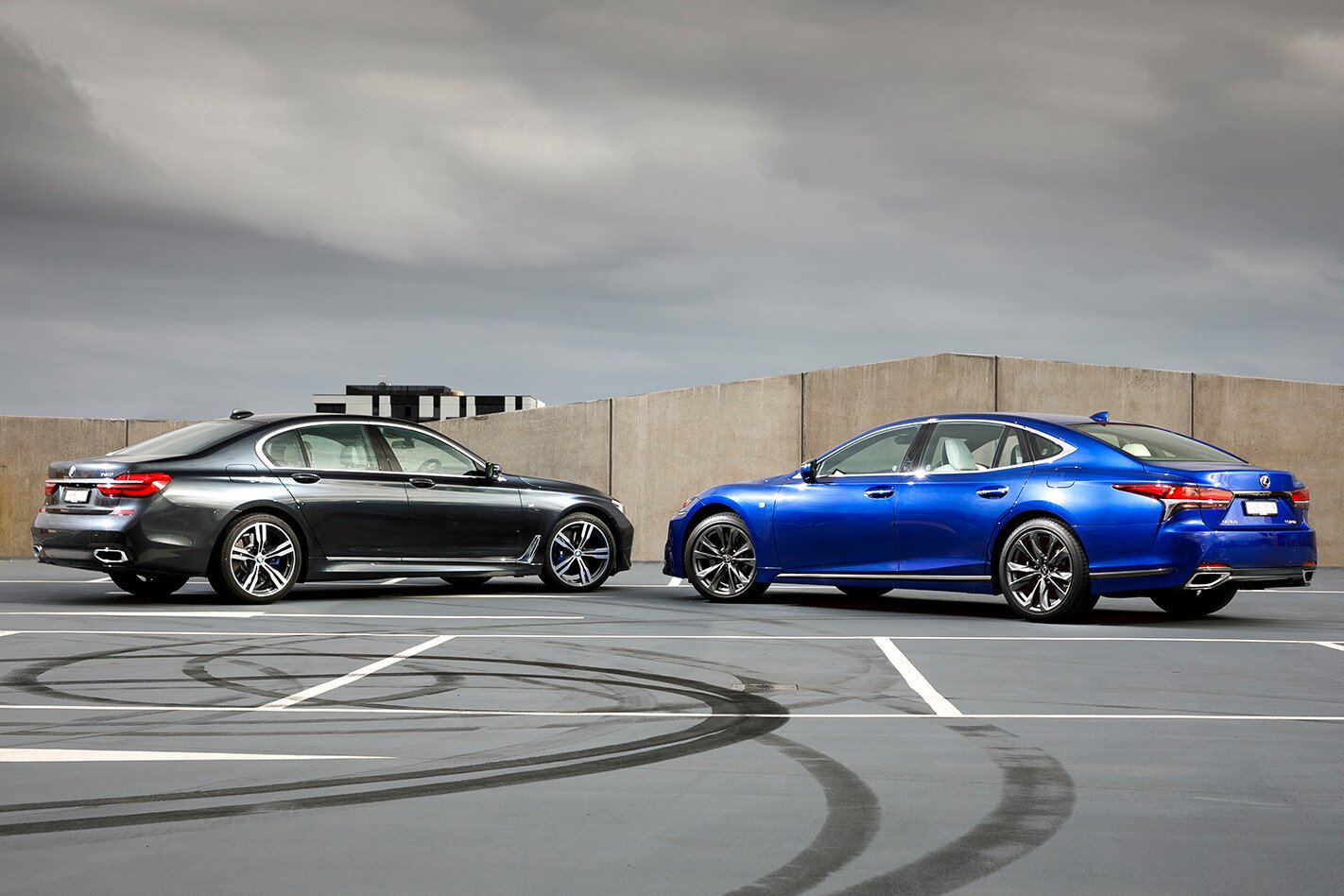
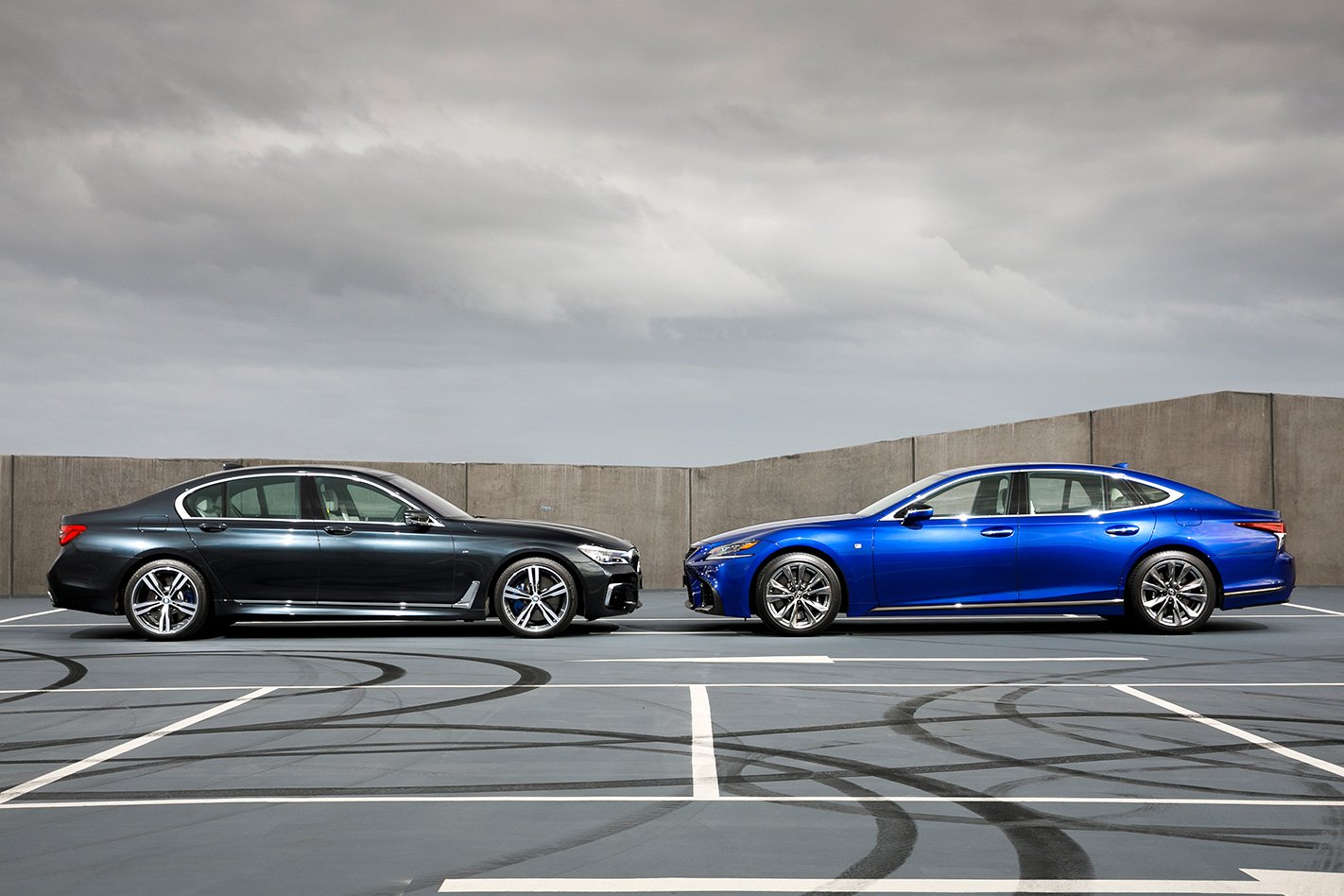
In this latest head-to-head, we pit the BMW 740i luxo-limo against the Japanese-giant, Lexus LS500.
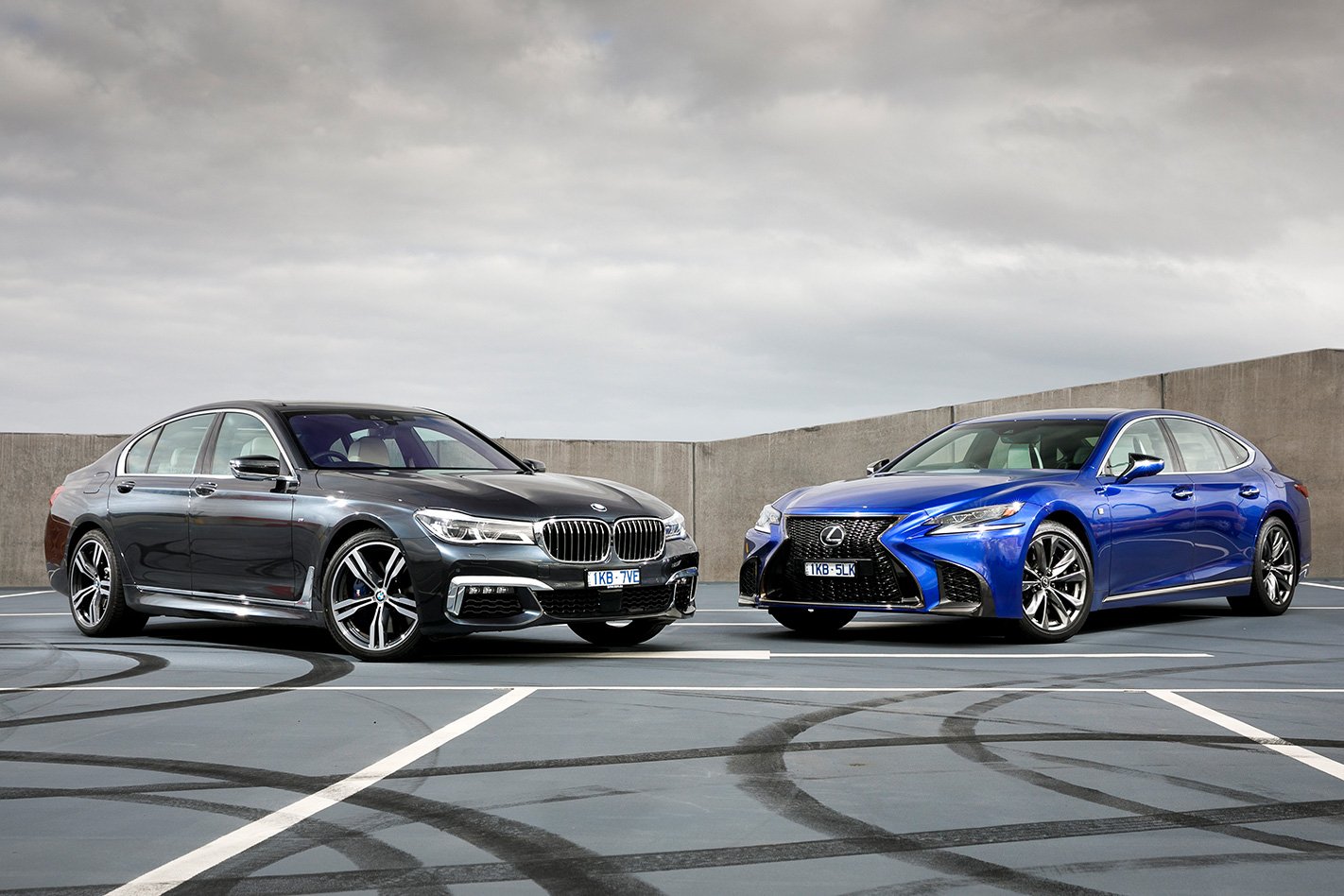
Price and Equipment – Winner: Lexus LS500
BMW 740i: BMW fits its executive suite with heated/cooled memory front seats (driver’s with a massage function), surround-view cameras, a tablet to control the rear passenger pews, and rear sun blinds. An M Sport package with staggered 20-inch alloys replacing 19s, Anthracite headlining, aero tweaks and the geriatric wood steering wheel swapped for leather wrap is a no-cost, no-brainer option. 17/20
Lexus LS500: It’s almost as though Lexus made notes on the BMW’s appointments, ticked them off one-by-one, and then cut the price. There are small differences, though; the rear doors lack sunblinds but the LS gets paddle shifters and more cameras ring the Lexus’s exterior. You also reap the performance benefit delivered by a larger engine with a pair of turbochargers. 18/20
Interior and Connectivity – Winner: Lexus LS500
BMW 740i: A strong Teutonic influence, manifest in styling that’s on the conservative side, makes the 740i feel more Munich hotel than Kyoto onsen. Traditional sedan profile (with part-carbonfibre construction) makes the BMW feel more spacious in the rear and yields a larger 515L boot. Like the Lexus, the cabin features active noise cancelling tech. Wireless smartphone mirroring ($623) is a big tick. 16/20

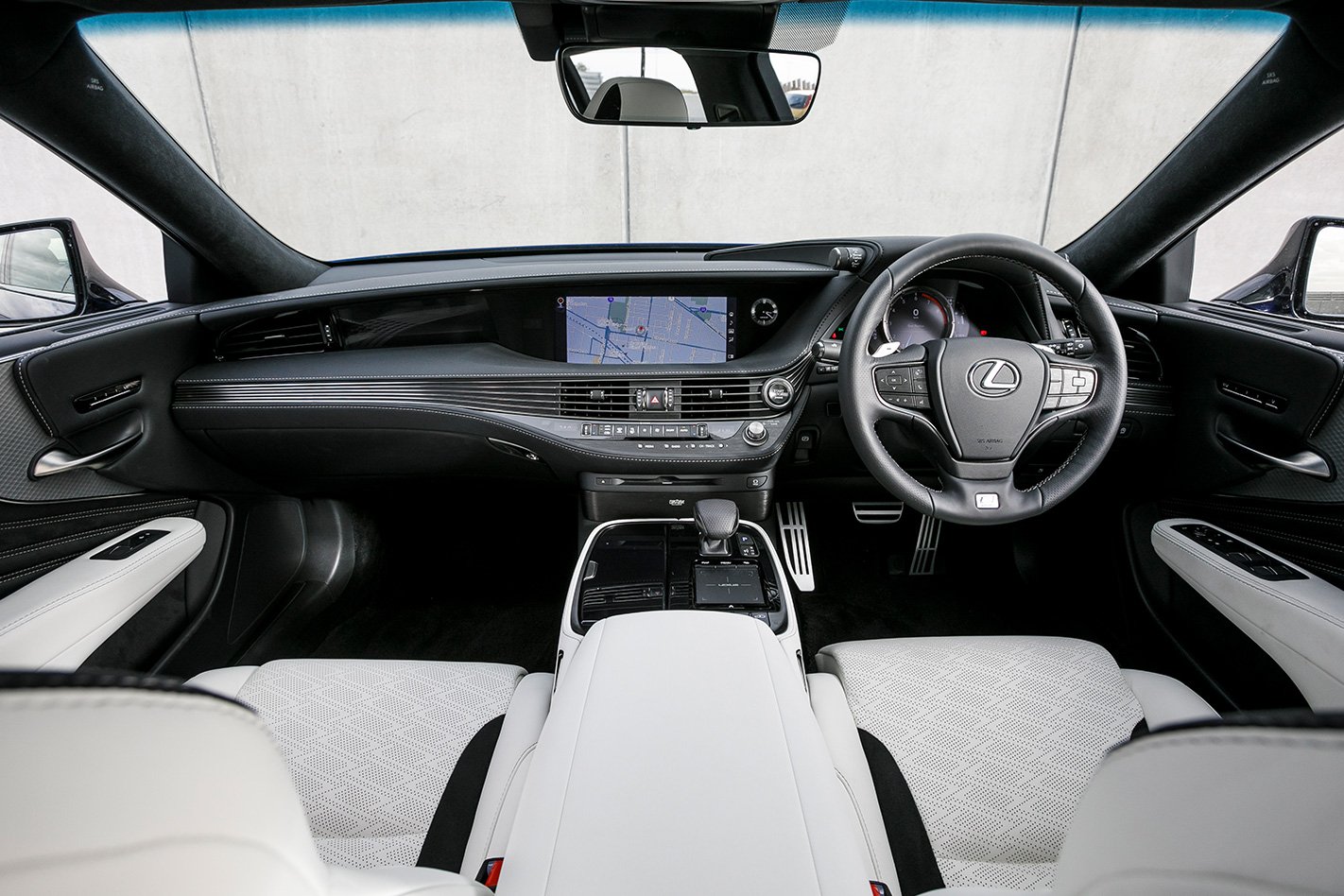
Lexus LS500: The interior you want to sit in; dripping with designer elements and sporting Lexus LC links, pleasing on the eye and supremely comfy with super-soft perforated leather. Coupe-like styling robs some headroom and contributes to a smaller 440L boot, but deeper, plusher carpet adds to the poshness. Awkward haptic finger pad and poor smartphone support are bugbears. 18/20
Ride and Handling – Winner: BMW 740i
BMW 740i: Both these cars ride on self-levelling air suspension to great effect. In comfort mode the 740i is syrupy and cosseting. Call up sport mode and it becomes considerably more alert, the run-flat Bridgestone Potenzas sending an occasional shudder through the chassis over rougher bits of road. Quick, talkative steering makes it feel like a smaller car on winding tarmac. It’s still the driver’s choice. 18/20
Lexus LS500: The LS500 carries significantly more kerb weight than the BMW (2235kg vs 1725kg) and nowhere is that more apparent than on a twisty road, where the all-wheel-steer Lexus will heave and lumber on its suspension while changing direction. In sport mode, the steering adds weight but little meaningful feedback. Grip from the run-flat Bridgestone Turanzas is confident, but … 16/20
Performance and Economy – Winner: BMW 740i
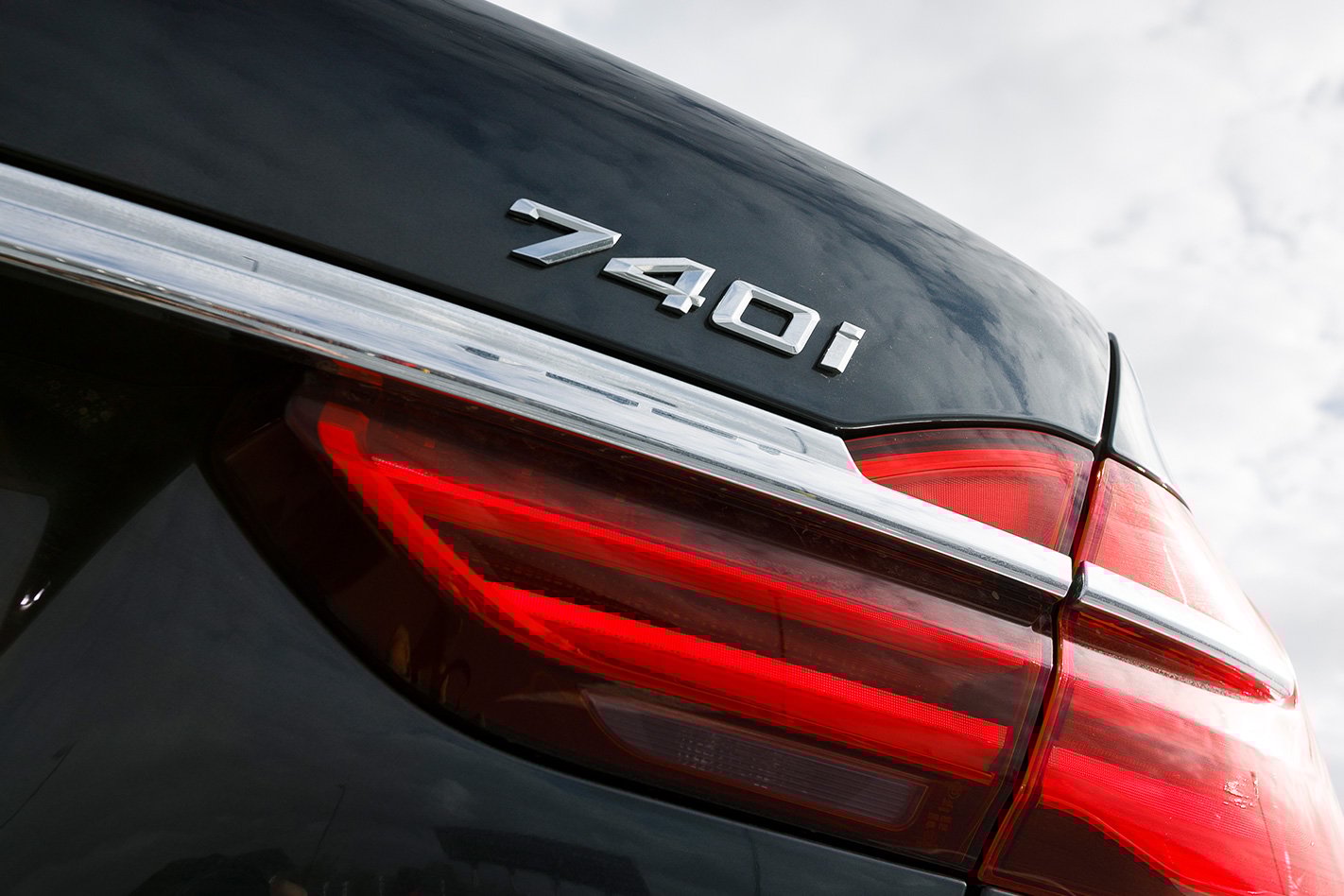
BMW 740i: It may lack the headline numbers, but the way the 740i’s in-line six builds pace via its eight-speed auto is more linear and polished – and it sounds much better, too. Punt it along and the fuel use will head for the high nines, but range is superior despite the smaller 78L tank. The BMW straight-six makes the Lexus V6 seem like it was built to meet a benchmark, not set a new standard. 17/20
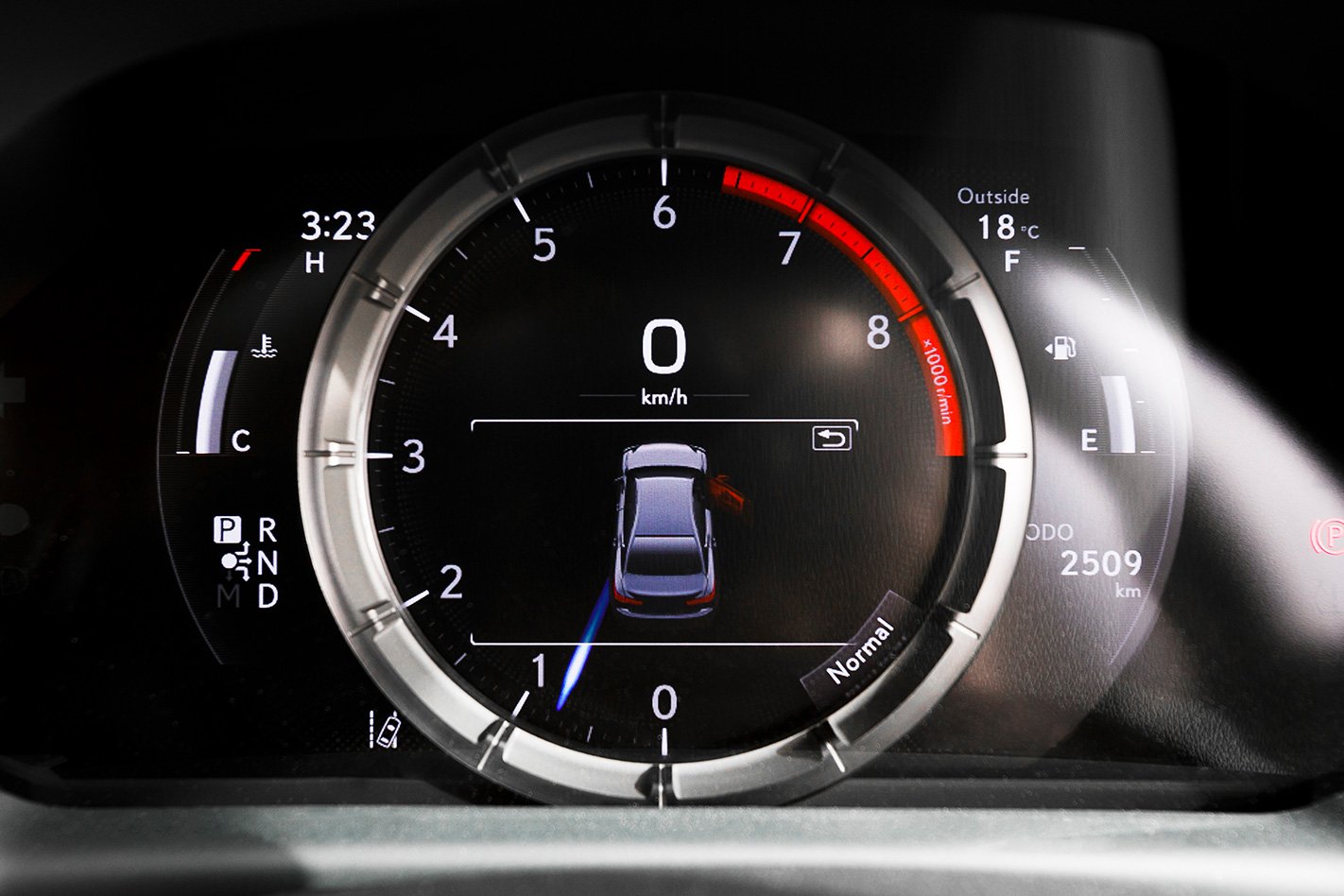
Lexus LS500: … mash the throttle and after a slight pause to pick one of 10 gears, the gutsy V6 releases a rush of torque that will have the stability control light flashing madly. Throttle mapping is well-judged in default mode, but the Sports and Sports Plus settings add an unwelcome hypersensitivity. And the 82L fuel tank will drain with alarming speed as real-world fuel use tips into the high teens. 15/20
Warranty and Servicing – Winner: BMW 740i
BMW 740i: BMW bundles the 740i with three years of warranty and as many kays as you can cover in that timeframe. The German luxury brand won’t ask you to dip a hand in your pocket for the first three years of servicing, and throws in three years of roadside assistance. ‘Condition-based servicing’ means the car decides when an oil change is due or scheduled maintenance is needed. 17/20
Lexus LS500: The standard Lexus warranty runs to four years and is capped at 100,000 kilometres, but there’s a whole decade of roadside assistance sweetening the deal. Make some space on your calendar, though, as you – or the Lexus employee sent to retrieve your LS500 – will have to nose that massive spindle grille into a service centre every 10,000km or six months, whichever comes first. 15/20
Verdict:
Overall, the BMW 740i manages to hold off Lexus’ challenger to remain the superior limo.
Stahl, taking an unusual approach to the subject, first introduced readers to two young hopefuls – Darren Hossack and Darren Pate – before spending wheel time in a Gibson Motor Sport Commodore V8 Supercar. Pate, just 23, and Hossack, 28, joined Wynn’s Racing team, run by Gibson Motorsport, race legend Fred Gibson’s longstanding team, for the 1998 V8 Supercars series.
Stahl’s quest was to discover what’s essential in order to operate at the top level of Australia’s premier race series. Hossack, who won the 1994 Australian Karting Championship, and Pate, an apparently brilliant networker – he turned up to meet Stahl in somebody else’s Lotus Esprit V8 – put fitness at the top of the mandatory list: personal trainers, gym-time and bike riding. Says Hossack,
“You need a mix of aerobic fitness and muscular endurance, but also a mixture of power and strength movements in your training – especially power movements, because they’re related to reaction times.”
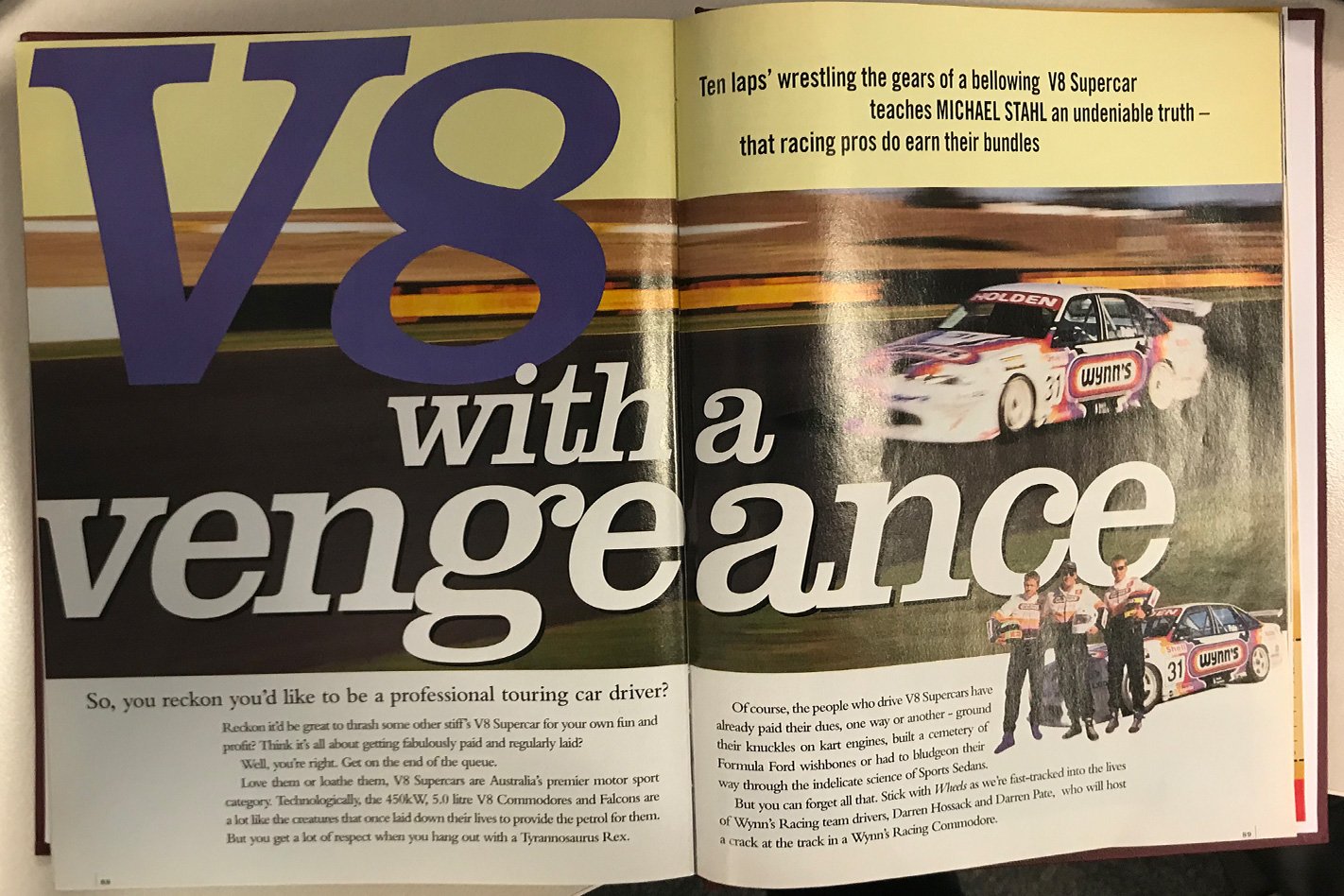
Pate also spent plenty of time chasing personal sponsorship. “Some days will be chock-a-block doing sponsors meetings, y’know chasing a lot personal sponsors. That’s what I really base myself on, which is what enables me to do this full-time. So that I can spend time training.”
It’s obvious from all the talk that both aimed for a career as a professional touring car driver.
Then it was Stahly’s turn: “Everything in your career has been building up to this 10-laps test at Calder Park”. There’s no sense of intimidattion in Stahl’s words – after all, he was sufficiently handy to take a class win in the 1997 Bathurst three-hour Showroom Showdown race when, in true Peter Brock-style, he set the fastest lap of the class on the last lap in the Falcon XR6 he drove with fellow journos Chris Nixon and Paul Gover.
“It’s obviously catapult-quick, but the linearity of the racing V8’s power delivery makes it feel little different from HSV’s hottest, 215kW road cars. Chassis, aerodynamics and tyres all help mask the fact that you’re dealing with more than twice that amount of horsepower.
“The biggest difference between this and a road car is the racer’s ability to just set into a corner and hang there; no lazy slewing or screeching on its sidewalls. Not that there is limitless grip. Throttle and the almost road-car-light steering inputs still have the same effects, but the responses are so much sharper and slicker.”
There can be no doubt this story helped Stahl earn the Australian Motoring Journalist of the Year award in 1998.
Red flagged careers
Neither Pate nor Hossack went on to conquer the world in V8 Supercars. They paired up to finish eighth in the ’98 Sandown endurance race and seventh at Bathurst, but no full-time drives followed. Hossack was Sports Sedan champion in 2004 and then spent 20 years as race manager at DPE Kart Technology before opening Hossack Motor Sport Services in 2017. Pate finished 62nd in the 1998 V8 Supercars series and then dropped out of motor sport. Today he’s the national sales manager at MotorOne, a car-care products company.
There are two sports cars they just don’t get wrong. Most manufacturers, even these ones, occasionally turn out a duffer, but in the case of two vehicles – the GT3 RS version of a Porsche 911 and the special series version of Ferrari’s mid-engined V8 – they simply don’t miss a trick.
This is, I suspect, because they’re engineers’ cars. Purists’ cars. The first 911 GT3 RS, of 2003, only came about because Porsche needed to homologate two suspension links for racing. And the first mid-engined Ferrari special, the 360 Challenge Stradale, also of 2003, helped justify the Challenge race series.
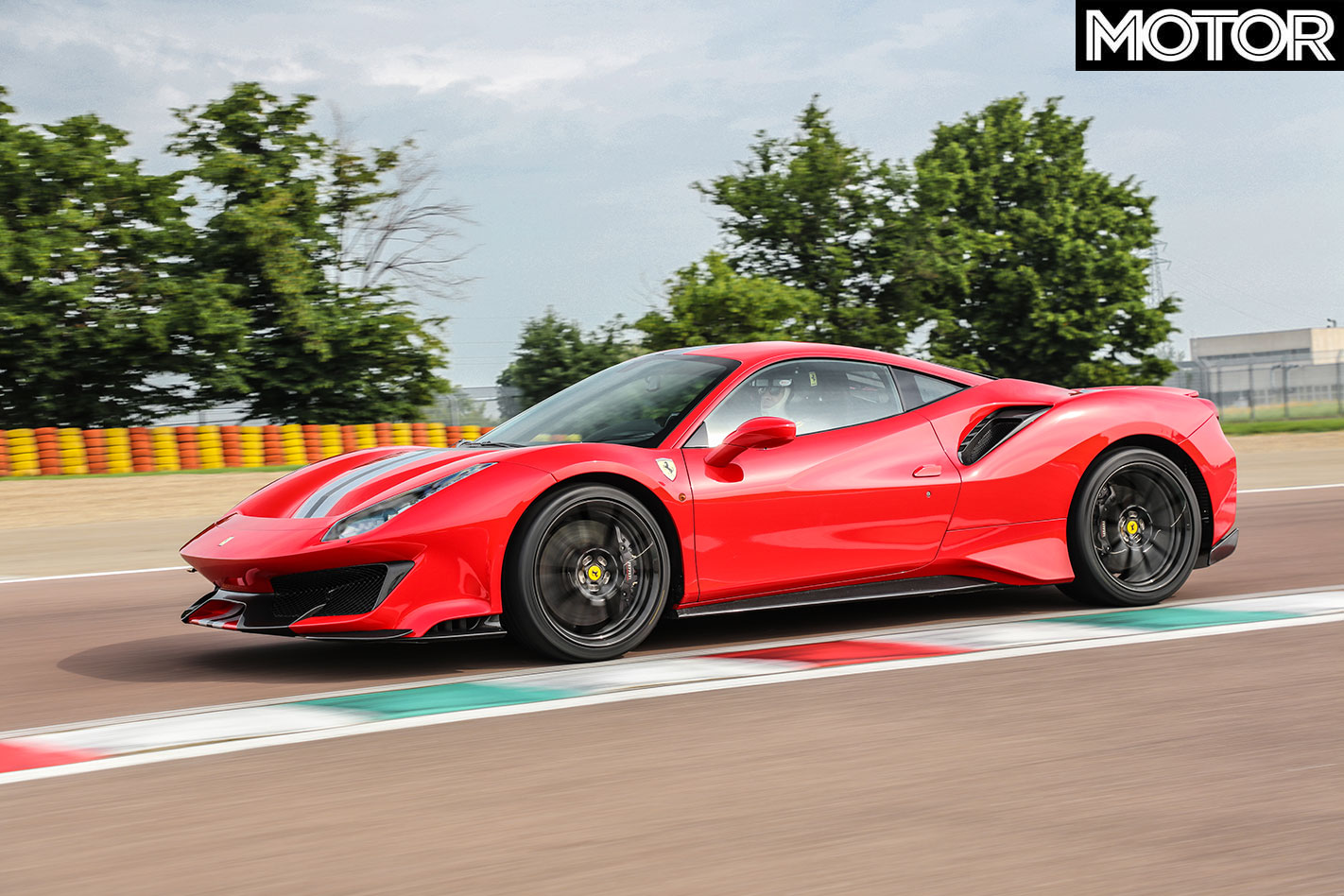
This, then, is Ferrari’s latest, the 488 Pista. The requisite link to motorsport is there, anyway. The Pista’s engine is, like a GT3 RS’s, effectively a racecar motor, here from the 488 Challenge car with an extra 38kW.
It retains a 3.9-litre V8, but it now makes 530kW at the same 8000rpm and 770Nm at 3000rpm (in seventh gear); torque is limited in lower gears to make what, since its launch, has been the best sporty turbocharged engine in the world feel less turbocharged, more naturally aspirated.
It drives the Pista’s rear wheels via a seven-speed dual-clutch automatic gearbox. While the time between clutch activations isn’t being reduced much (there’s not much to reduce), there’s now an overboost on upshifts, and in the appropriate aggressive drive mode it punches downshifts in a racier fashion, with increased engine braking.
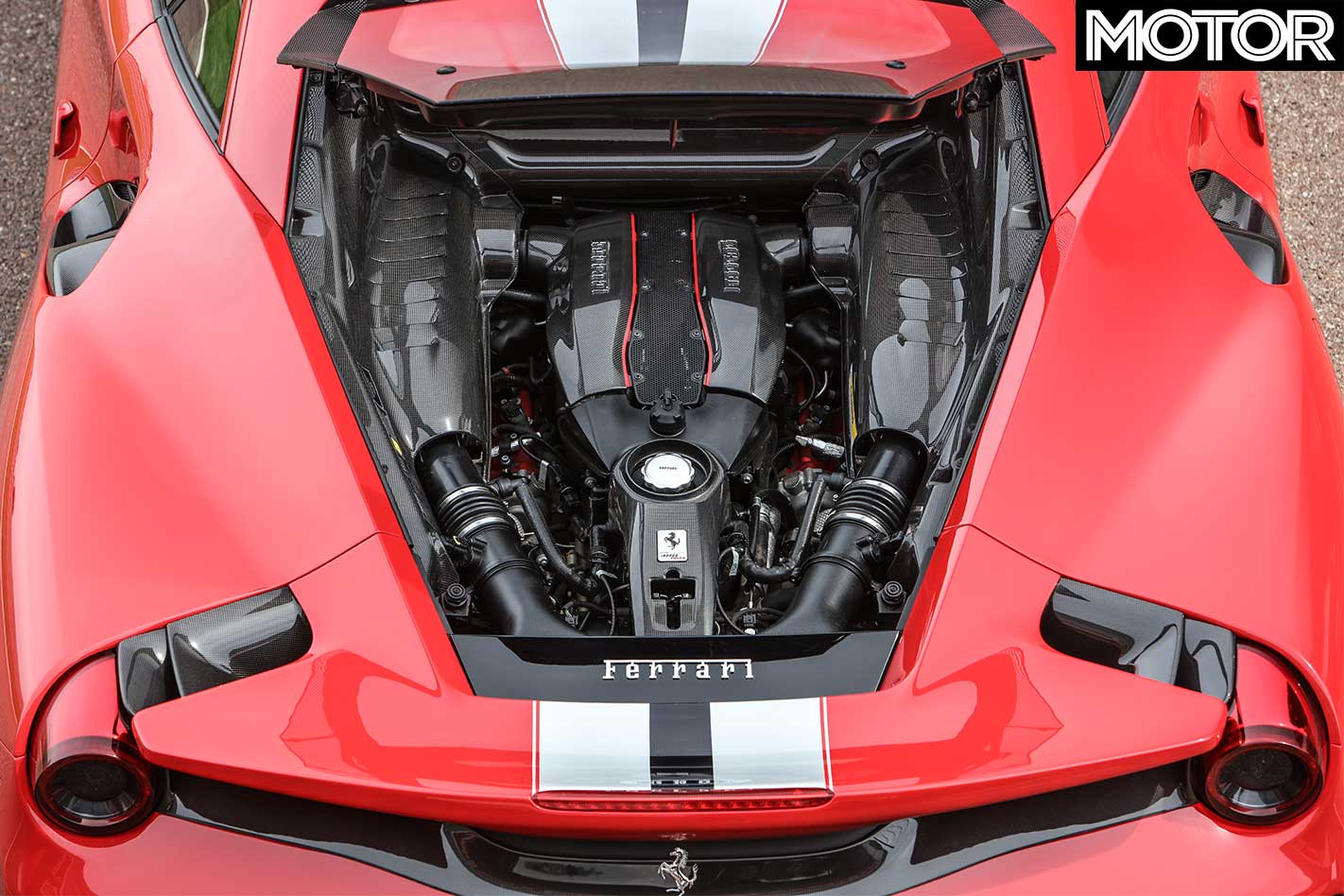
Specify the right options – including carbon-fibre wheels – and the Pista can weigh as little as 1358kg (kerb, not dry). That’s up to 90kg less than the 488 GTB. The Pista does feature carbon fibre for its bonnet, bumpers, intake plenum and rear spoiler. This is part of a raft of weight-saving additions that include an Inconel exhaust, a lighter flywheel, a lithium battery and titanium conrods.
Bodywork modifications include an S-duct at the front and a higher, longer wing at the back. The result is 20 per cent more downforce than that generated by the 488 GTB: 240kg at 200km/h, with only a two per cent increase in drag.
The Pista’s weight, power and aero, plus a newly developed Michelin Pilot Sport Cup 2 tyre (which leaves rubber on the road in rather more places than you’d realistically expect, so Lord knows how soft they are) mean that it’s lighter, faster and more aggressive than the 488 GTB everywhere.
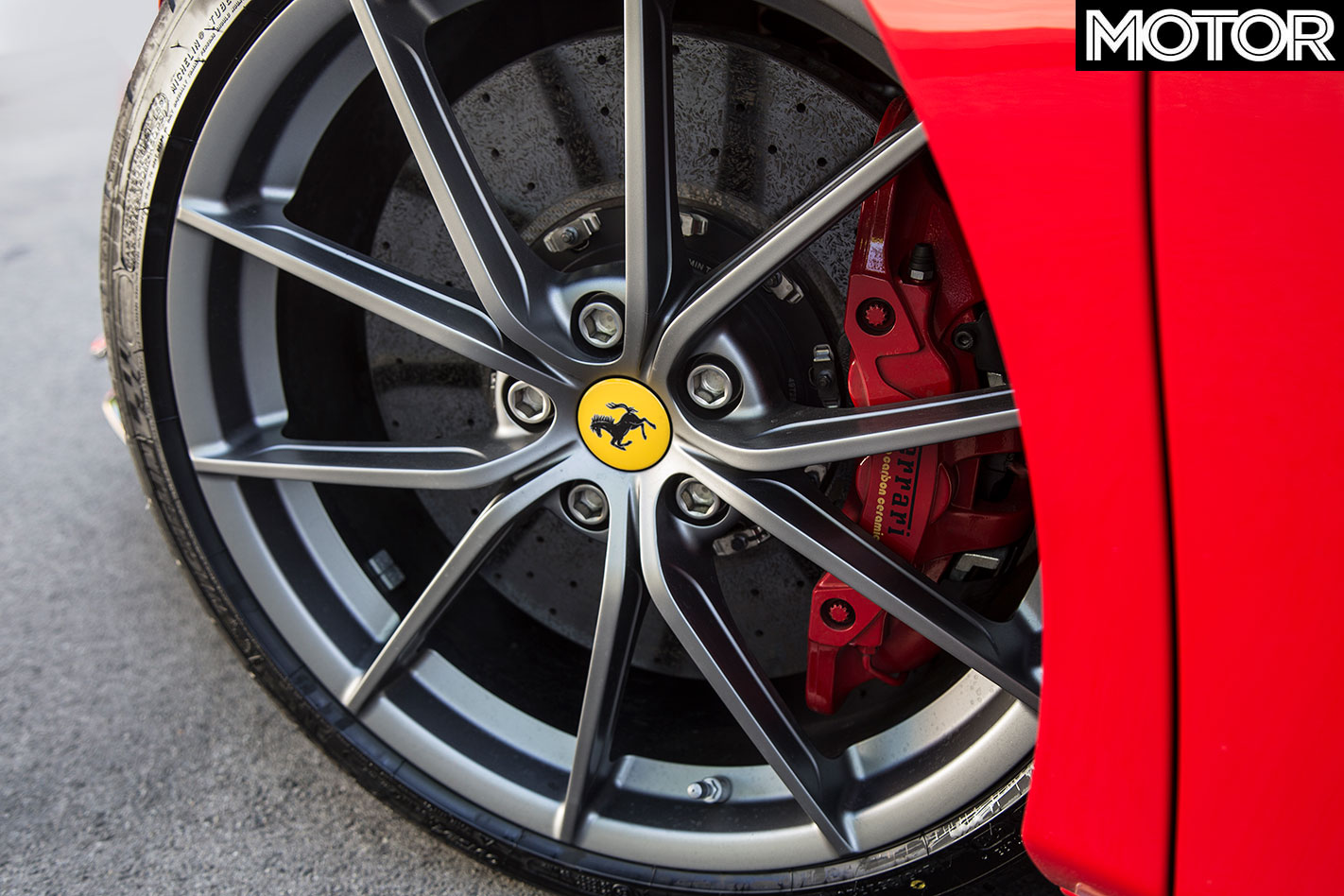
But it’s not, says Ferrari’s leading GT engineer, Raffaele de Simone, any more difficult to drive. The Pista’s meant to be just as playful and accommodating as the regular GTB, which given it has 492kW and is almost as docile as the Toyota 86, would be an achievement.
But bloody hell, it turns out he’s right.
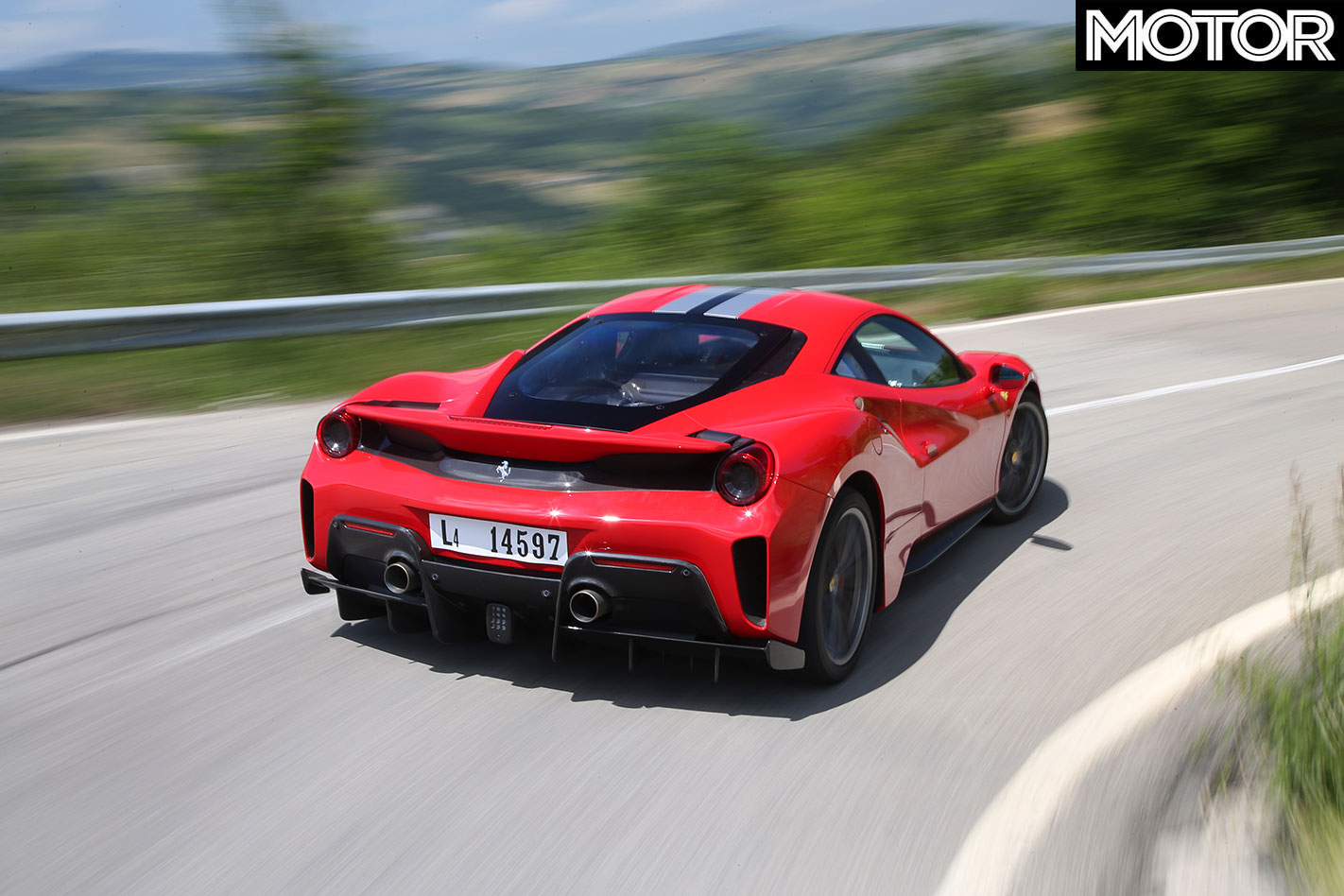
Our first go around Ferrari’s Fiorano test track with the Pista didn’t go to plan – the weather Gods weren’t on our side. However, this time around, Italy is back to its balmy self. The Pista is said to be two seconds faster than the 458 Speciale around here.
The Pista is in a different performance stratosphere from the Speciale: 0-100km/h takes 2.85sec and 7.6sec to 200km/h, compared with 3.0sec and 9.1sec for the Speciale.
It doesn’t take long to realise that the Pista is no more frightening than the GTB, but merely faster, everywhere. The steering rack, ratio, everything, is the same as the GTB’s. Anti-roll bars are unchanged, and while there is a stiffening of springs, it’s minor and only comes with a marginal decrease in ride height. The GTB’s friendly nature, then, is largely intact.
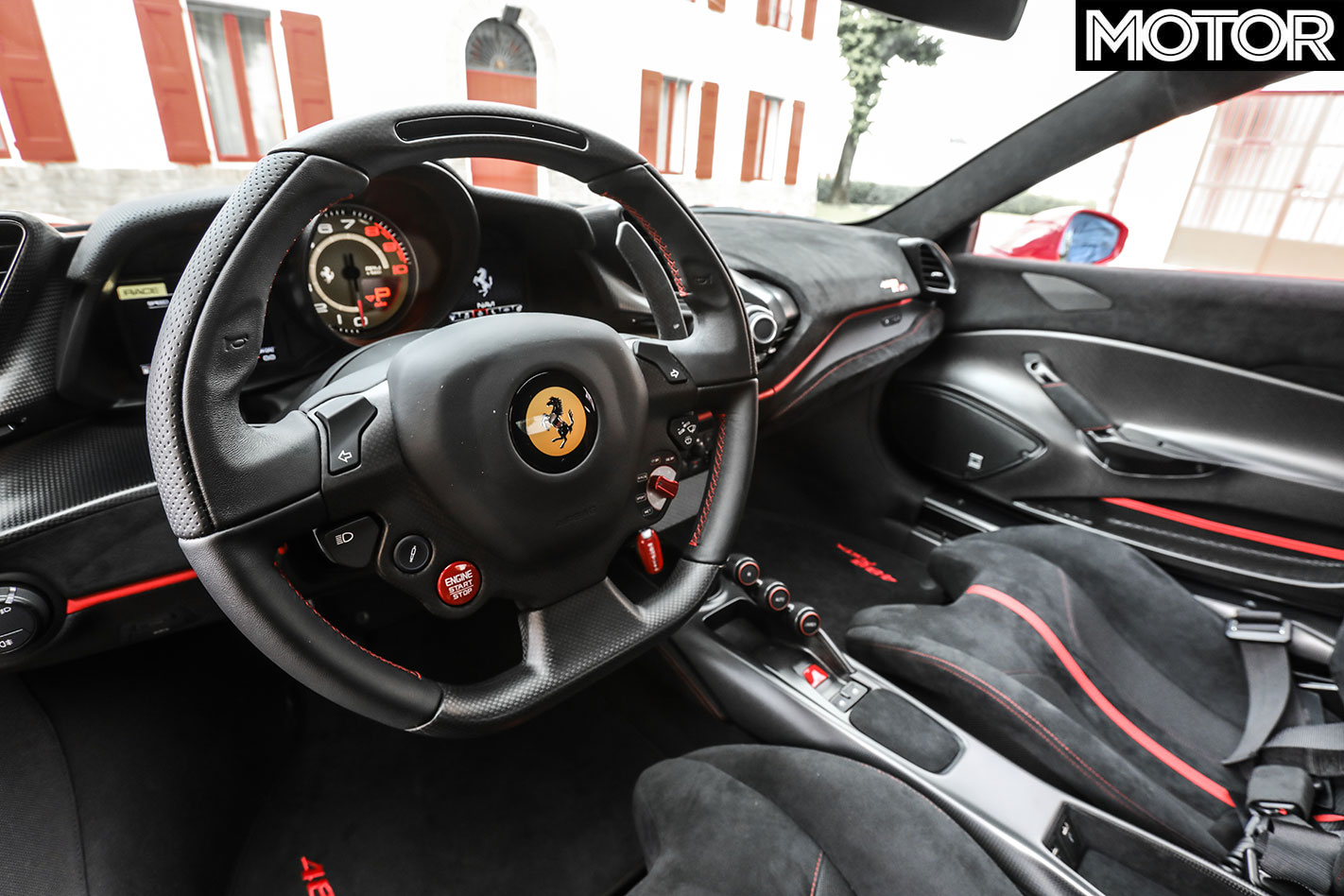
Ferrari uses an e-differential, and its latest ‘side-slip control’ program involves even more software, so if you turn in sensibly the diff stays relatively unwound, the Pista rotates beautifully and, as you come back on the power, it drives the car brilliantly. The side-slip control allows for a lot of adjustability.
Turn everything off and the Pista’s character is still docile. Peak torque comes in at just 3000rpm and the throttle response is better than any other turbocharged car’s.
What’s perhaps more remarkable is that this comes without any huge detriment to the experience on the road. Well, to the ride, at least: there’s a lot of road noise, owing to a lack of carpet and other soundproofing, so along with tyre roar you can hear stones being flicked up and chattering into the body, while the air-conditioning struggles on anything except its most shouty setting.
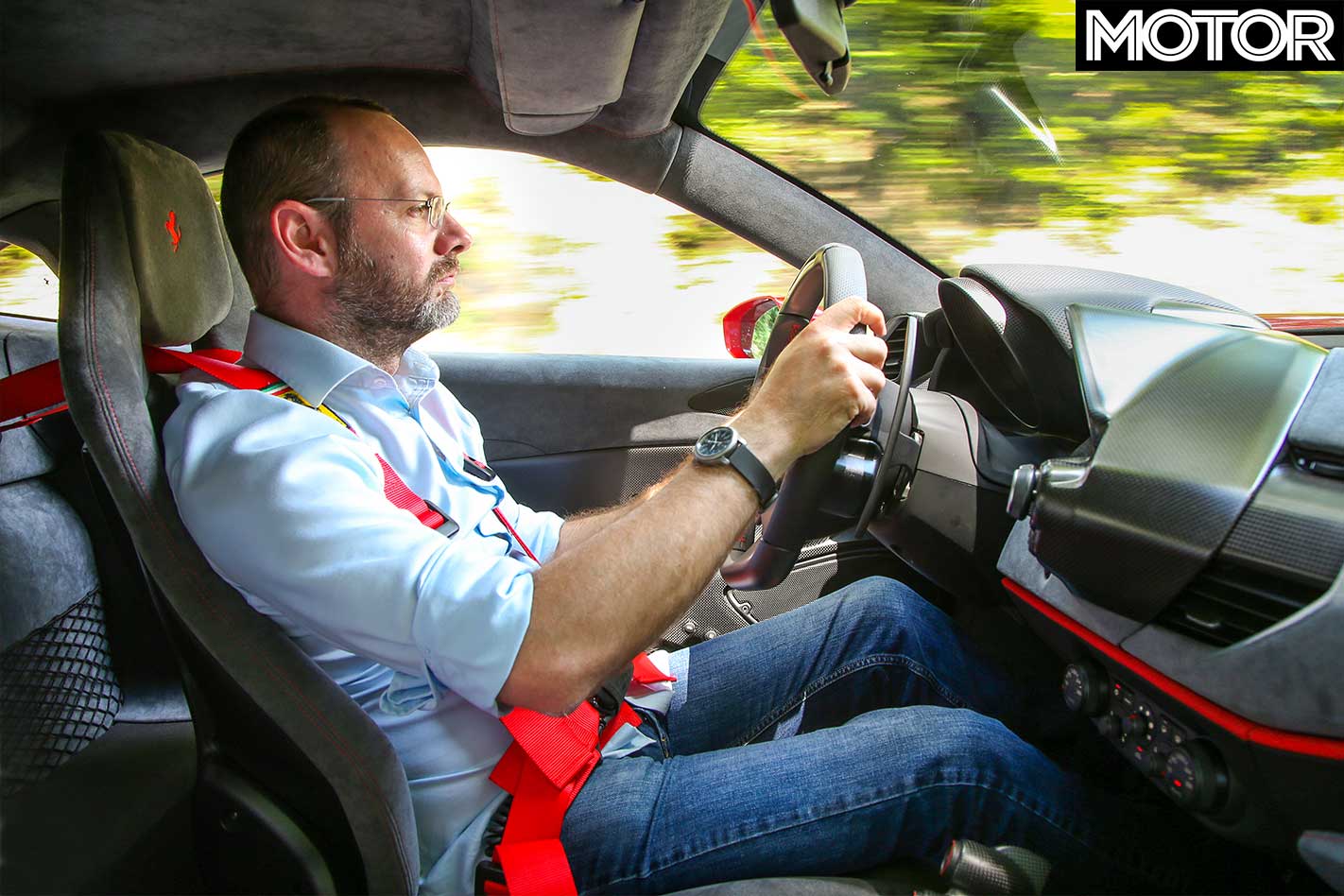
But the dampers retain two settings and, even on the firmer one, the Pista is far from unsettled. On the softer ‘bumpy road’ setting it’s remarkably compliant, yet controlled. These roads would really expose some laggy, harshly sprung track specials, but the Pista is brilliant here, riding with deftness and cornering with composure and loads of feel and finesse.
They also happen to form part of Ferrari’s development drivers’ test route, so you can see why the steering ends up being so fast, but it also explains why Ferrari likes using an e-differential. It, while heavier than a pure mechanical differential or an open one, unlocks to ease tight corner entry and locks up to provide brilliant exit-straightening. It’ll understeer if you’re clumsy and spin its wheels more than you expect if you’re lead-footed, but it’s generally more approachable and playful than its competitors.
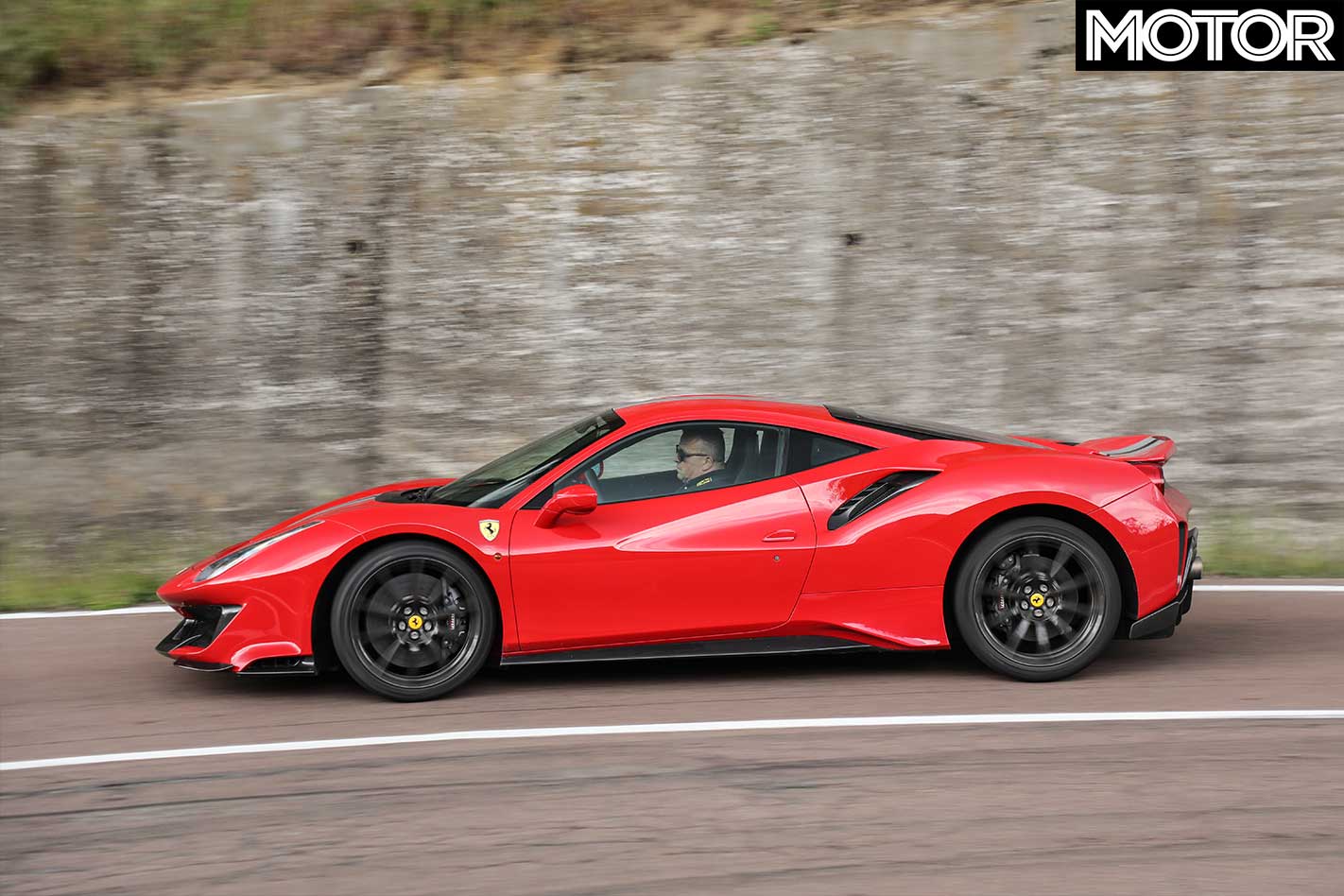
And while its engine is less intoxicating than Porsche’s naturally aspirated GT3 RS unit and the Lamborghini Huracan Performante’s V10, it has the measure of the 911 GT2 RS and any current McLaren.
More than that, though, it helps exploit one of the greatest chassis in the business. It doesn’t feel night-and-day different from that of the regular GTB. It feels like the ‘base’ car plus 20 per cent rather than a different animal. Put carpets and inertia-reel belts rather than harnesses in it and it could even just be the next 488.
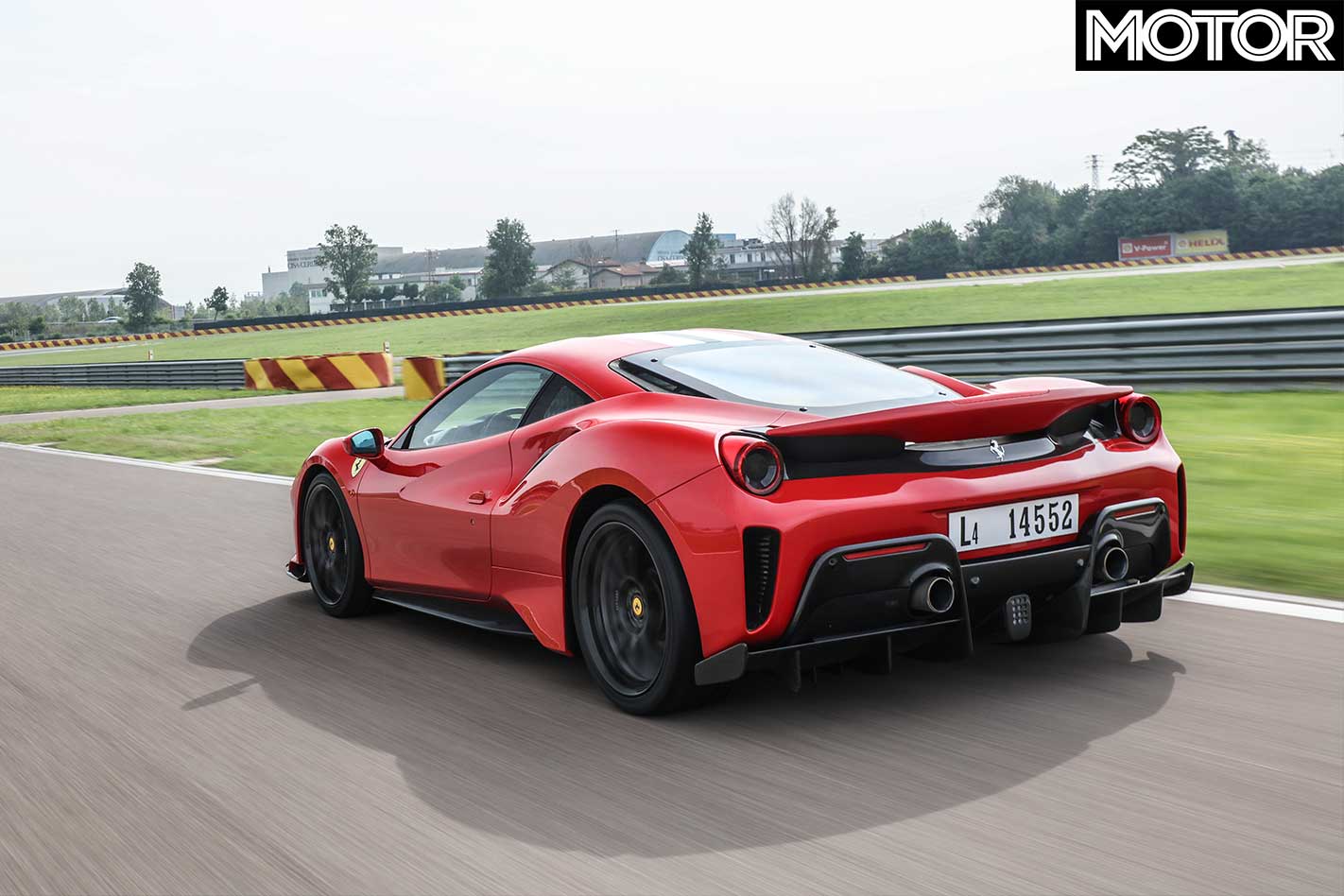
That, though, is important to those who buy them. V8 Ferrari-owners, even track-special owners, don’t tend to live on racetracks like owners of GT3 RS Porsches. They’ll go a few times to remind themselves they’ve made the right decision. And it won’t take long. About three corners ought to do it.
The Nemesis
3.8-litre twin-turbo flat-6, RWD, 515kW/750Nm, 0-100km/h 2.8sec 1470kg, $645,400
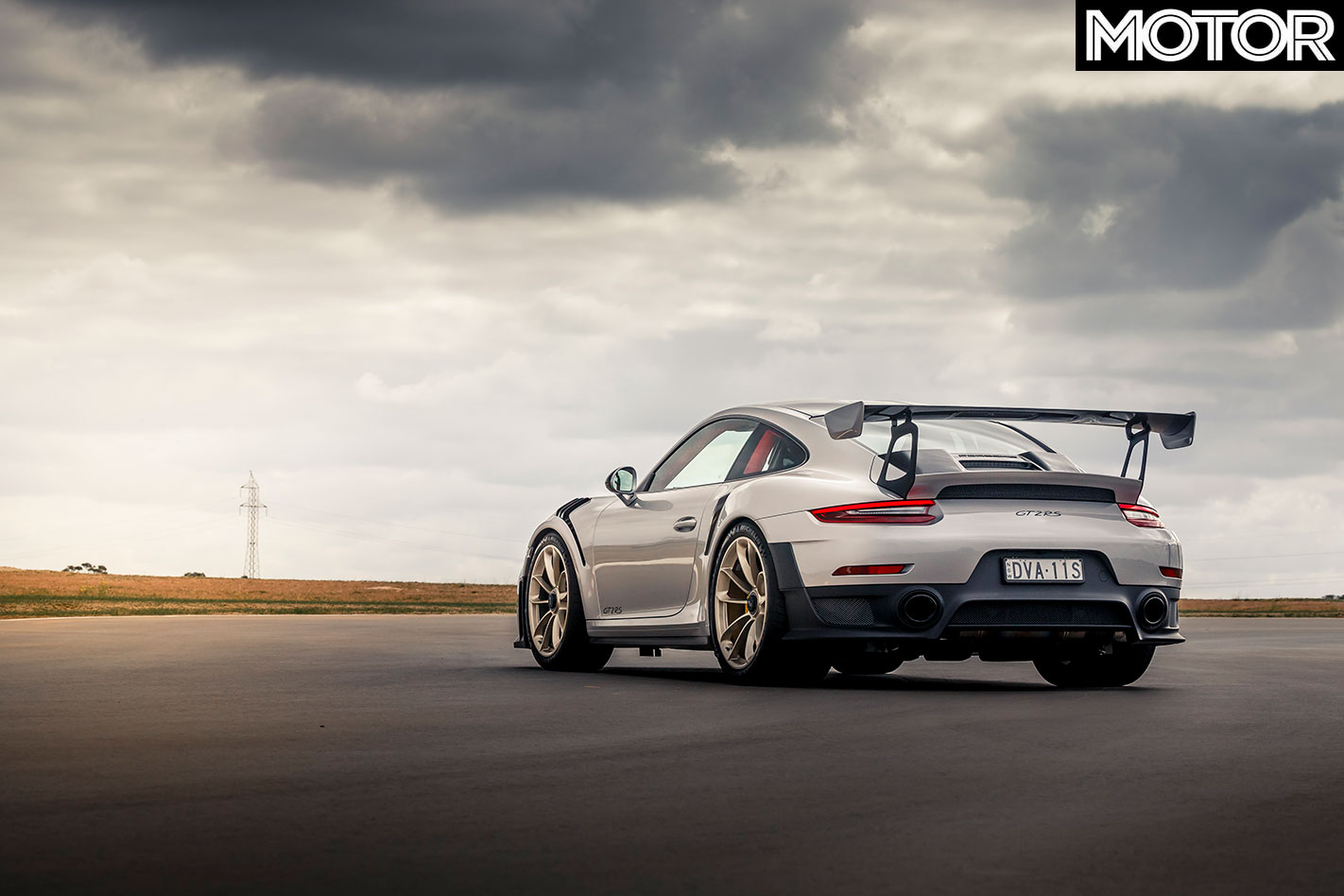
Its list of credentials, not to mention a production-car ’Ring record, is staggering. The GT2 RS has so much power, torque and handling prowess that it’ll be tough to beat. Game on.
2018 FERRARI 488 PISTA SPECS Engine: 3902cc V8, DOHC, 32v, twin-turbo Power: 530kW @ 8000rpm Torque: 770Nm @ 3000rpm 0-100km/h 2.85sec (claimed) Weight: 1358kg Price: $645,000
Rating: 4.5 out of 5 stars Like: More grunt and grip in an accessible package, atmo-like power delivery, chassis talent Dislike: Some still won’t agree with the soundtrack, getting your hands on one
