
Falken’s new Azenis FK510 is a solid all-round performer and worthy of consideration against more fancied products such as the Michelin Pilot Sport 4S, Continental SportContact6 and Pirelli P-Zero – particularly given a set of the Falkens is likely to work out a few hundred dollars cheaper.
While all the Euro brands will still pip the Japanese Falken for those final few degrees of wet and dry performance – and, occasionally, ‘wow’ factor – we’d be very happy with the FK510s when factoring in their competitive price, as we discovered after 500km of anecdotal testing fitted to our Ford Focus RS long termer.
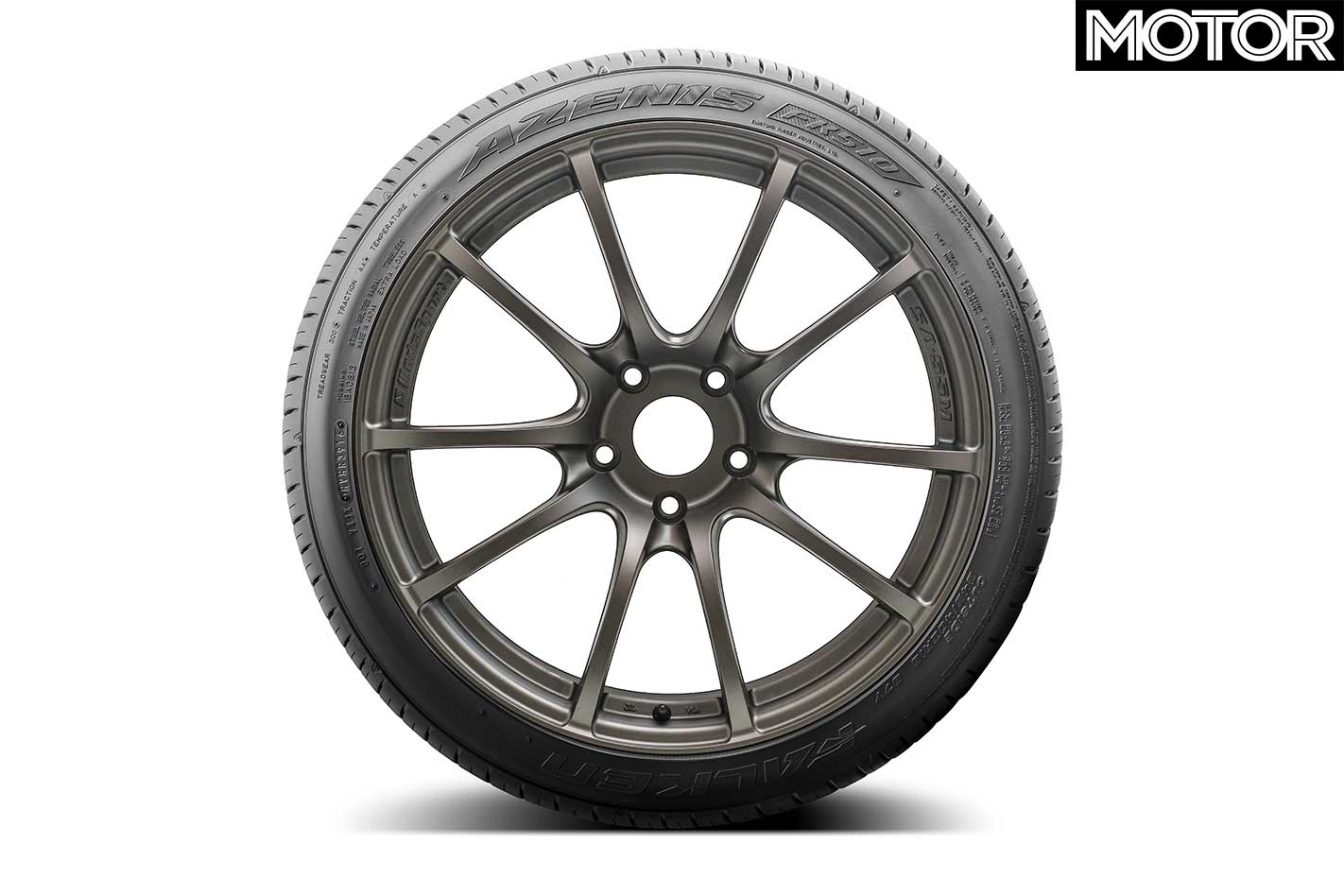
With strong, if not mind-blowing, wet lateral grip, the FK510s give you confidence to push up a saturated twisty road, holding on impressively and letting go in a predictable manner. The FK510s also seem to work with the car in giving you feel for what they’re doing – making them more fun than scary.
While neither noisy nor quiet on the highway, they did subtly improve ride comfort on our Focus RS having replaced that car’s firmer Michelin Pilot Sport Cup2 rubber (which also uses a much higher pressure).
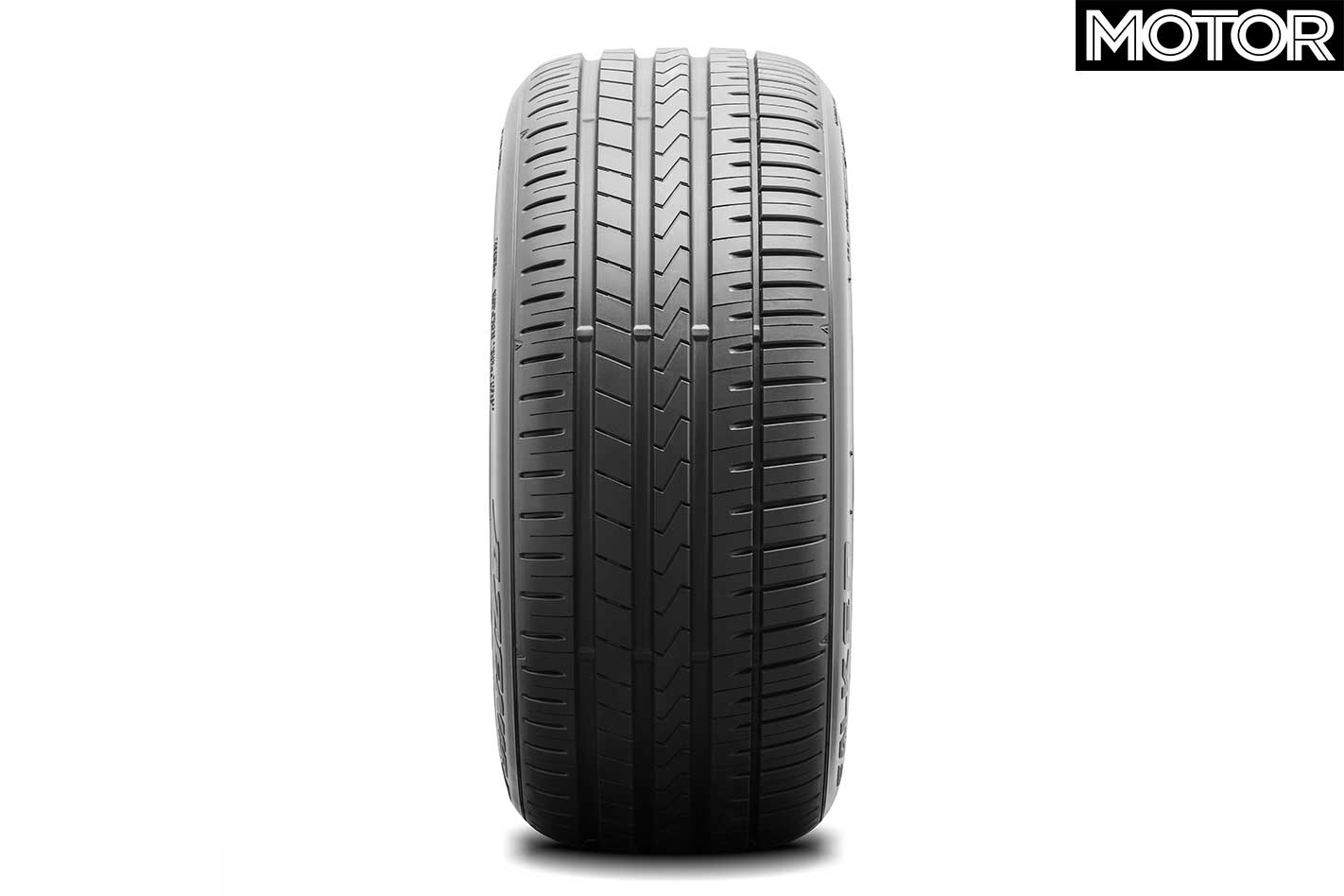
Nobody should ever buy a tyre for how it looks, but the asymmetric Falken clearly prioritises function over form with its purposeful, busy shoulderblocks.
The jury is still out a little bit on their dry performance as it rained for the entirety of our test, although a handful of dry corners would suggest the FK510 is another strong performer for dry tenacity and feel. We also can’t comment on their life; or durability during prolonged hard driving on an abrasive, twisty, dry road.
Based on our limited experience on the Falkens, we might miss the ‘wow’ moments you get from Michelin Pilot Sport 4Ss in the dry, or Conti SportContact6s in the wet, but the FK510s feel to strike an exceptional balance between performance and price. And will give you a truer idea of your chassis’ talent.
We find ourselves in all the fastest new cars at MOTOR.
Machines with wide tyres, humongous brakes and prodigious power, designed to scythe through the air at incredible speeds. And we often drive these cars on racetracks and in closed environments where it’s highly inadvisable and sometimes not possible to check the speed. So obviously, very often we drive these cars on the road and think to ourselves, god, the speed limit is low.
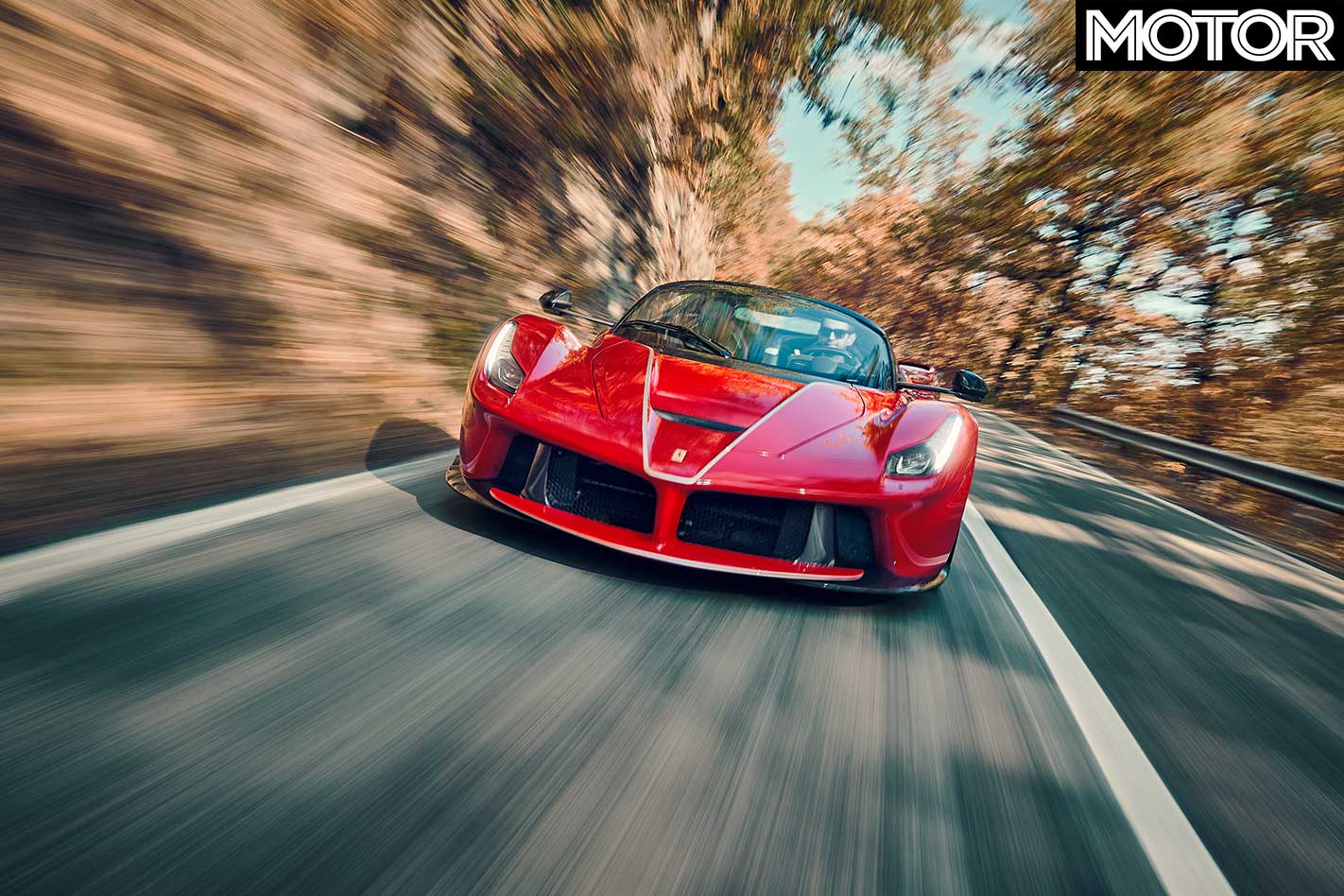
Now, we’re a magazine about high performance vehicles that doesn’t need to push its readers to become better drivers – you lot need no encouragement, allocating a great deal of time and money, by way of driver training and track days, to improving your skills. All of us are going to think many speed limits are too low.
Personally, up until this point, I will confess to never really thinking much about speed limits, other than when I get a letter in the mail about the one I exceeded.
Yes, I live in Victoria – which, at its current rate, will in 15 years pass a law requiring you to wear outdoors a hard hat with a spinning orange light on top of it – but whenever a speed limit felt too low, I just wrote that off to myself driving some sort of car that made 80km/h feel like a crawl.
I also had thought to myself, well, most of the population will be in autonomous cars before too long so why would any pollie put their head above the parapet by proposing we bump the antiquated 110km/h motorway limit to 130km/h? Think of the children, etc.
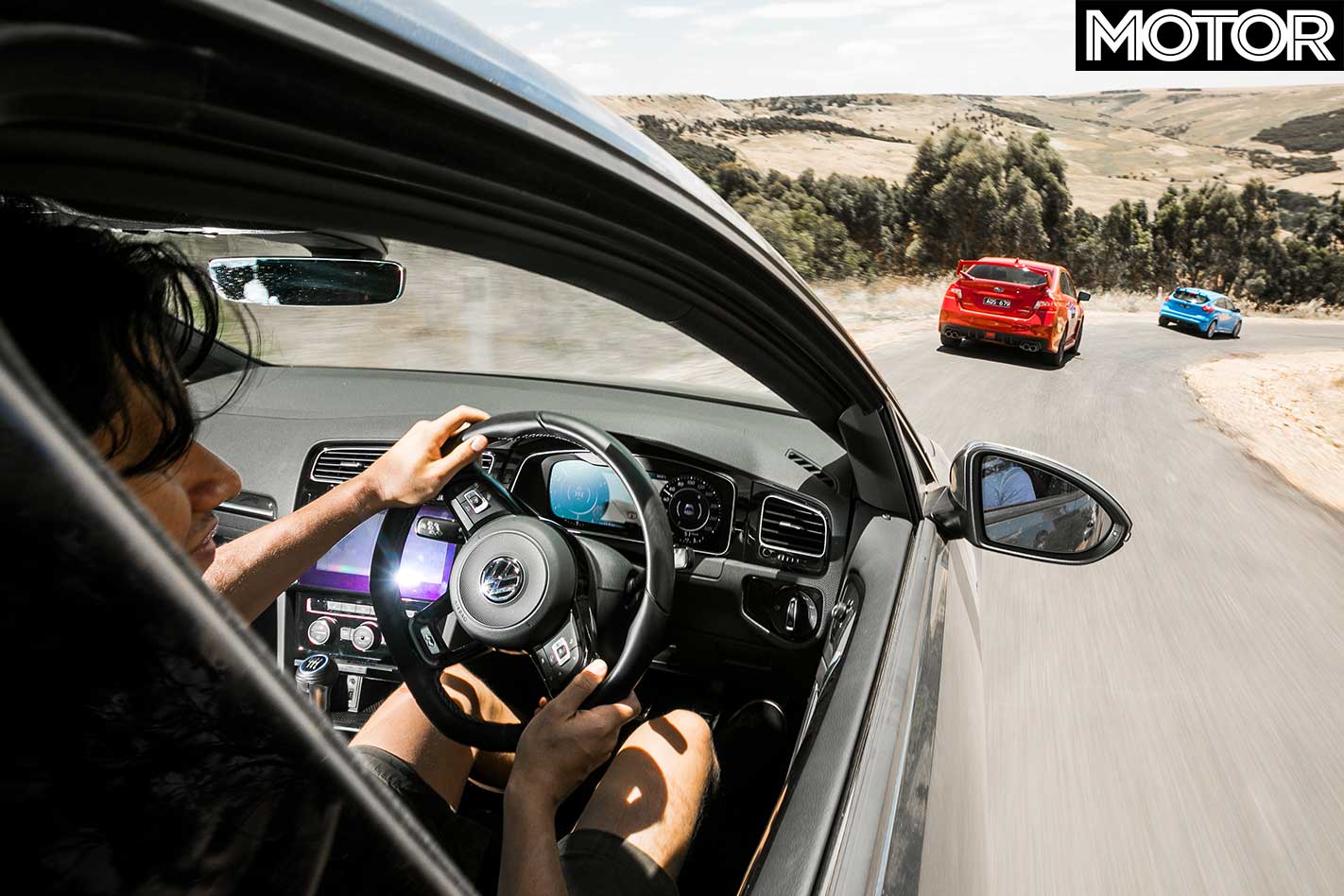
What I was most wrong about, however, was that I resigned myself to the idea that speed limits had to fit every member of the population from Jamie Whincup in a McLaren 720S to Aunty Dot in her KB Laser.
But then I remembered, it’s a speed limit. If a motorist does not feel comfortable at the limit, then go slower in the correct lane. Other motorists may wait until the next overtaking lane, which graciously there are more of than ever.
As I wondered if we’re all getting the speed limit wool pulled over our eyes, I turned to the internet for some clarity. Researching online, as with most things online, left me with more questions than answers, with data and studies stacked to the ceiling for and against raising speed limits.
Some academics advocate a 30km/h limit in built-up areas, presumably to protect against road-crossing daydreamers becoming Darwin award nominees. Elsewhere, municipalities all around the world have raised motorway speed limits with no impact to the road toll.
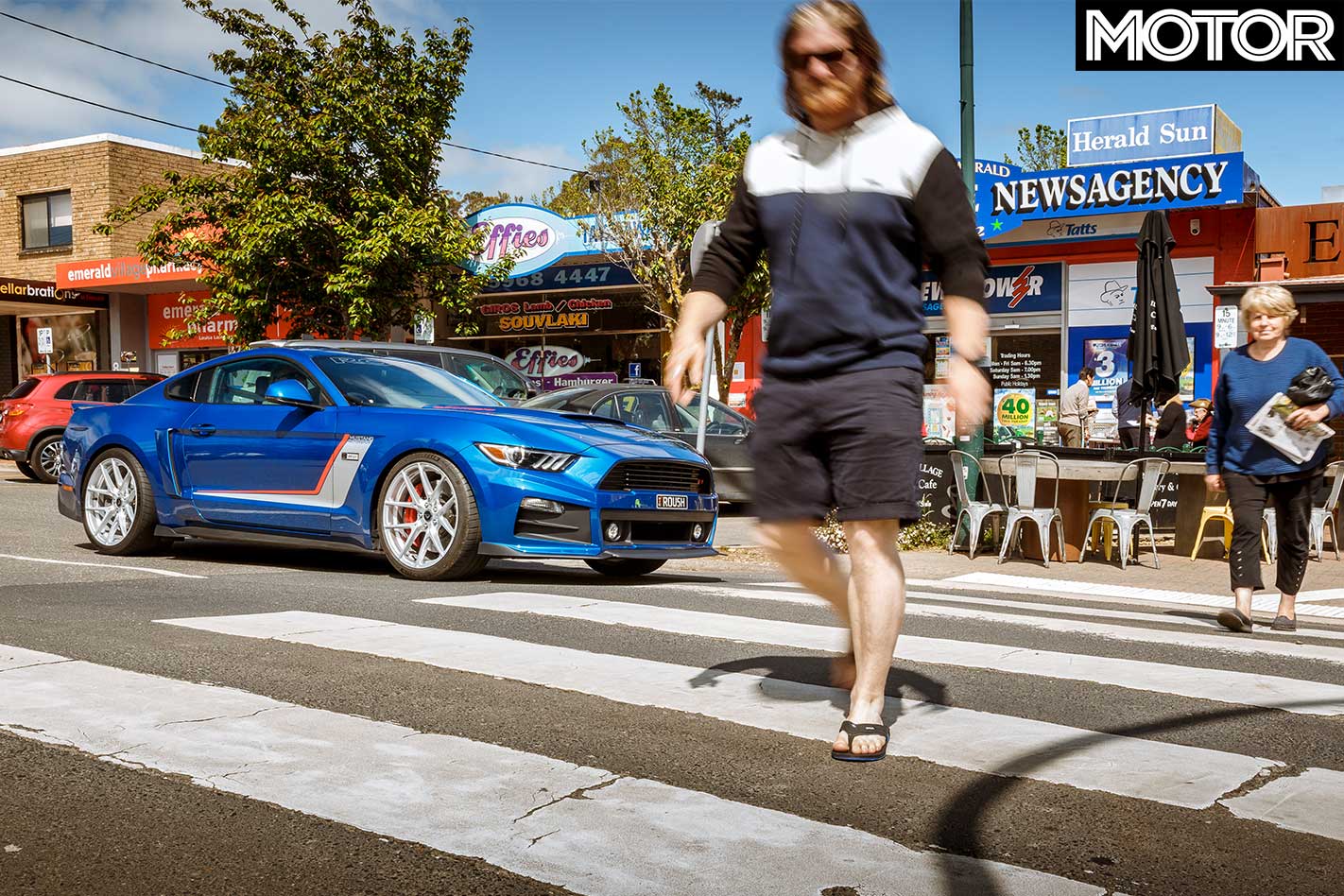
As ever with these things, in a sea of information and opinions, common sense finds a buoyancy.
Recently, I found myself in a new ZB Holden Calais on the Monash Freeway at 11.30pm on a weeknight, pasted to the 80km/h limit for fear of the plod hiding in some bushes. I was almost the only car within eyesight on this four-lane freeway which runs into the heart of Melbourne. It felt as if I could get out and run faster.
This does not make sense. Neither does 110km/h on the Hume Highway and yes, I’m aware of another magazine’s campaign to increase the limit to 130km/h, that didn’t get very far.
It seems that there are countless entities pushing for lower speed limits despite a majority of the population – not just car enthusiasts – groaning every time a limit is lowered in the face of safer cars, safer roads – and common sense.
So why do we all just keep rolling over and letting it happen?
THE GENIUS of hot hatches isn’t always easy to pin down. In some ways it’s the ability of a car manufacturer to cost-effectively transform something utterly banal, automotive white goods if you like, into something infused with magic.
Stay tuned over the next week as we count down through the field and arrive at the Hot Hatch Megatest winner.
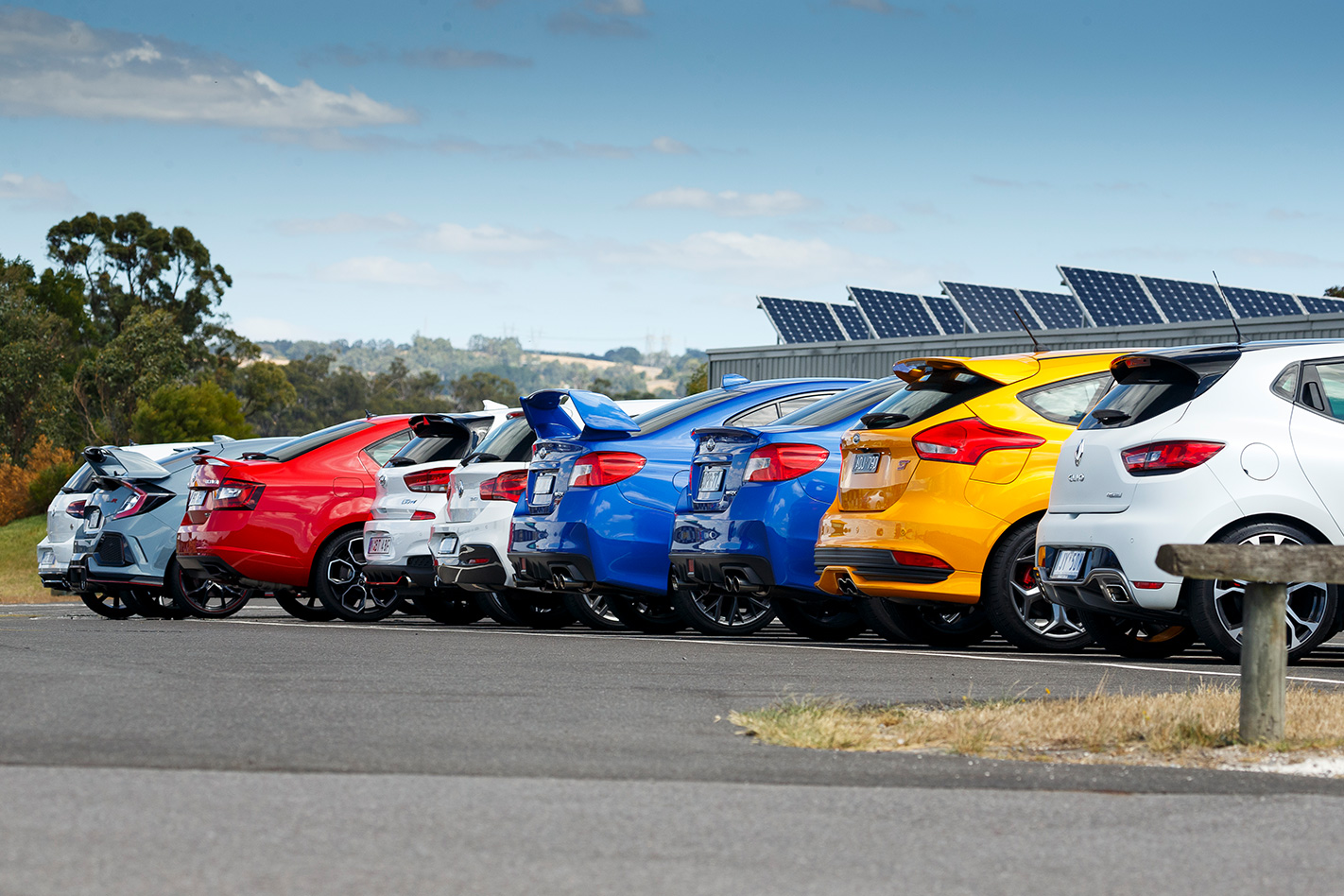
Volkswagen’s Golf GTI has defined this class for four decades, and has provided a durable benchmark of excellence. Yes, there have been a couple of dud vintages of the hot Golf, but it’s been on a roll since the Mk5 launched in 2003. Despite this test containing more overt claims on your attention, the Golf GTI remains the fulcrum; the standard by which the rest are measured. Additional terms of reference?
We’ve limited the upper price bracket to $52K, which lets a few very spicy entrants sneak in, but unfortunately omits the Ford Focus RS, which is now only offered in LE guise at $56,990. Before you ask, Renault was unable to get the new Megane RS280 to these shores in time.
With a front-wheel-drive record of the Nurburgring under its belt, the Honda Civic Type-R represents the most extreme end of our collection, with BMW’s 125i offering a suave rear-drive outlier at the other. Between those two bookends are ten mouthwatering choices, including a couple of Subarus that, if you’re being picky, aren’t hot hatches at all.
We included them because we know that if you’re choosing cars like these, you’re likely to cross-shop an all-wheel drive, flat-four sedan.
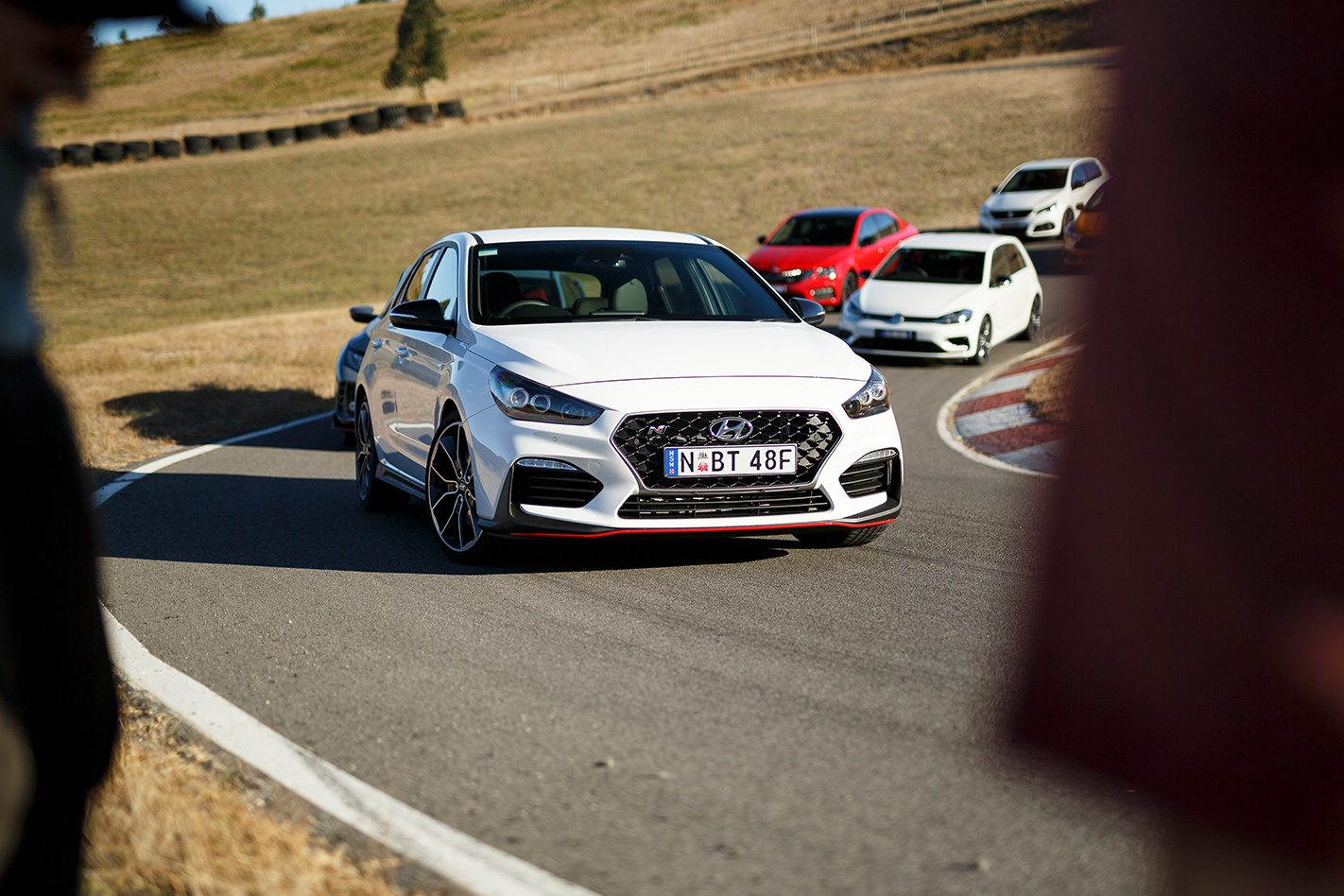
The car that spawned this test was Hyundai’s i30N, the marque’s first attempt at a genuine top-end hot hatch. Despite poaching the cream of BMW’s M Division engineering and product development nous, the odds of the Koreans getting it right first time seem pretty long. Getting within arm’s reach of the Mk7.5 Golf GTI would be a heck of an achievement for Namyang.
Peugeot’s 308 GTI 270 also had us intrigued, and we were also keen to pitch the aggressively priced Golf R Grid into the fray. In short, this test was one that was almost impossible to call, so we devoted a week to an exhaustive road and track evaluation, in order to deliver a definitive verdict on the current state of the hot-hatch art.
Haunted Hills – The track
Bryant Park in Gippsland, more widely known as Haunted Hills, almost seems purpose-built for hot hatches. There’s not a flat section on the track, it packs 15 corners into its 1400m length and throws all manner of malign cambers, blind apexes and fiendish radius corners into a crazily immersive lap of little over a minute.
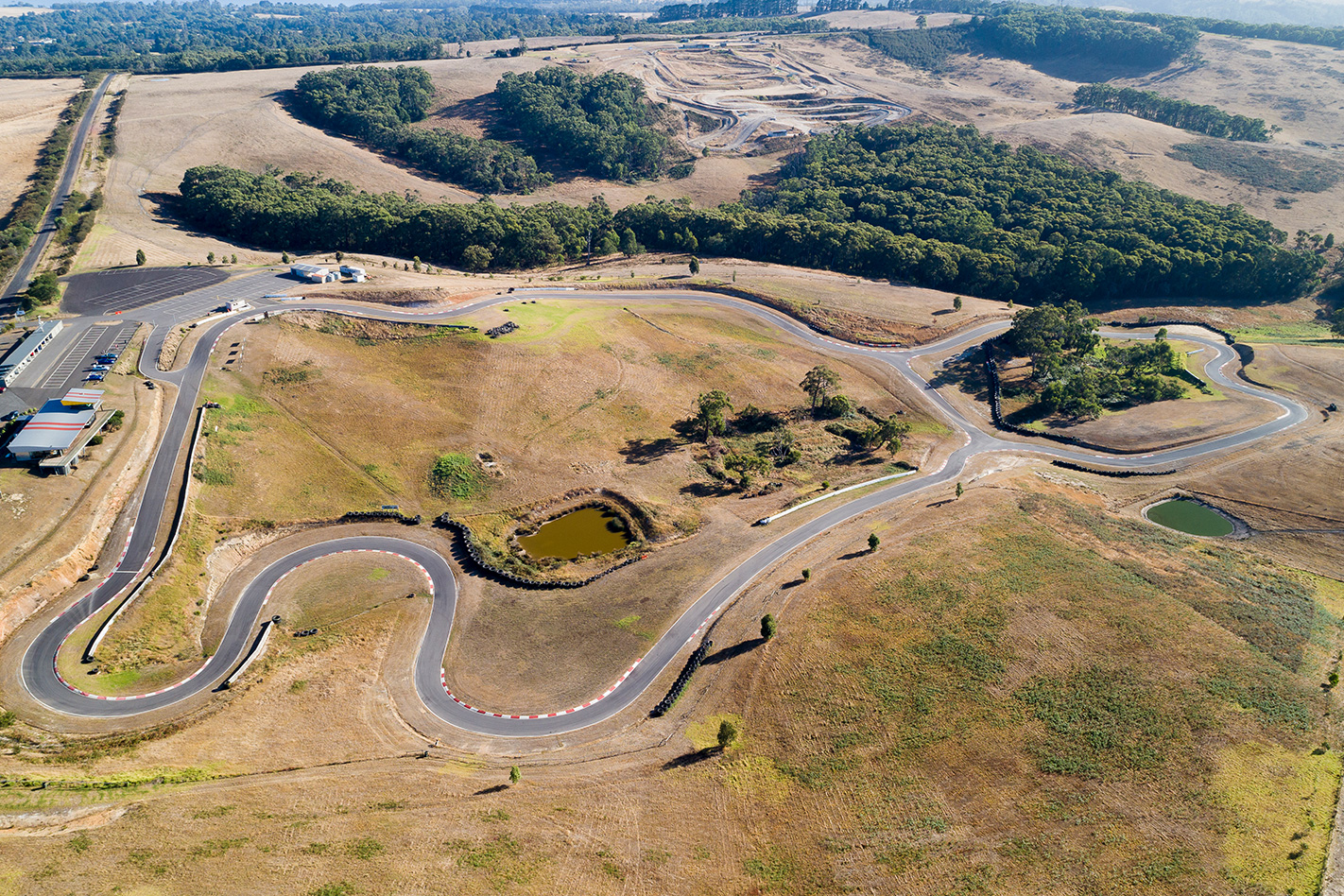
The lap starts at its highest point and then disappears into ‘Oh Shit’, an aptly named corner that loses camber and elevation with your runoff zone being an unyielding earth bund. In the track’s usual hillclimb configuration, this corner is taken from a standing start. We’d be running flying laps, so it turned into a heart-in-mouth, maximum attack scrabble.
From there, the track snakes downhill to a fierce compression, that leads into a series of clockwise mainly right handers that make up the bottom loop, before hitting a sharp ramp onto the back ‘straight.’ Then it’s into three gradually tightening, beautifully cambered hairpins that lead onto the short incline back to the start/finish line.
There are any number of places where missing the braking point, putting a tyre onto polished kerb paint or getting greedy with the throttle will result in bent sheetmetal. Or worse. The key to a fast lap of Haunted Hills is precision, steely car control, aggression in the right places and a vehicle with strong front end grip, on-demand torque and classy damping.
In short, it’s a track that rapidly separates the makeweights from the masterworks.
Renato Loberto

He’s proven his worth in any number of Wheels tyre tests, so it was natural we’d turn to Renato Loberto when we required metronomic precision of evaluation lap times at Haunted Hills. A Ferrari Corsa Pilota instructor and GT3 racer who’s stood on the podium at the Bathurst 12 Hour, Loberto also runs MotoKinetic, offering driver coaching, car set-up and automotive event management services.
Delivering control laps within a tenth of each other around the Haunted Hills circuit, Ren also offered feedback on each car’s track performance, contributing to the final judging process. His early-morning familiarisation laps on the first day were performed in a hired VFII Commodore, which gained in provenance what it lost in tread depth.
Stay tuned over the next week as we count down through the field and arrive at the Hot Hatch Megatest winner.
Hot Hatch Megatest Contenders
12th, Score 6/10: Mini Cooper S JCW
11th, Score 6.5/10: BMW 125i
10th, Score 6.5/10: Subaru WRX Premium
9th, Score 7/10: Subaru WRX STI
8th, Score 7/10: Skoda Octavia RS245
7th, Score: 7.5/10: Ford Focus ST
6th, Score: 7.5/10: Renault Clio RS220 Trophy
5th, Score: 8/10: Volkswagen Golf GTI Original
4th, Score: 8.5/10: Volkswagen Golf R Grid
3rd, Score: 8.5/10: Peugeot 308 GTi 270
2nd, Score: 9/10: Honda Civic Type R
Winner, Score: 9/10: Hyundai i30 N
THOSE who watched the Adelaide 500 race weekend in early March were almost witnessing a new chapter in Australian motor sport history. ECB SuperUtes racer Tomas Gasperak, at just 15, became the second youngest driver to compete at a national Supercars-level event.
Gasperak, born on June 5, 2002, missed out on the record by just a handful of days: new Supercar sensation Alex Rullo (born June 15, 2000) had competed in the Dunlop development series two years earlier.
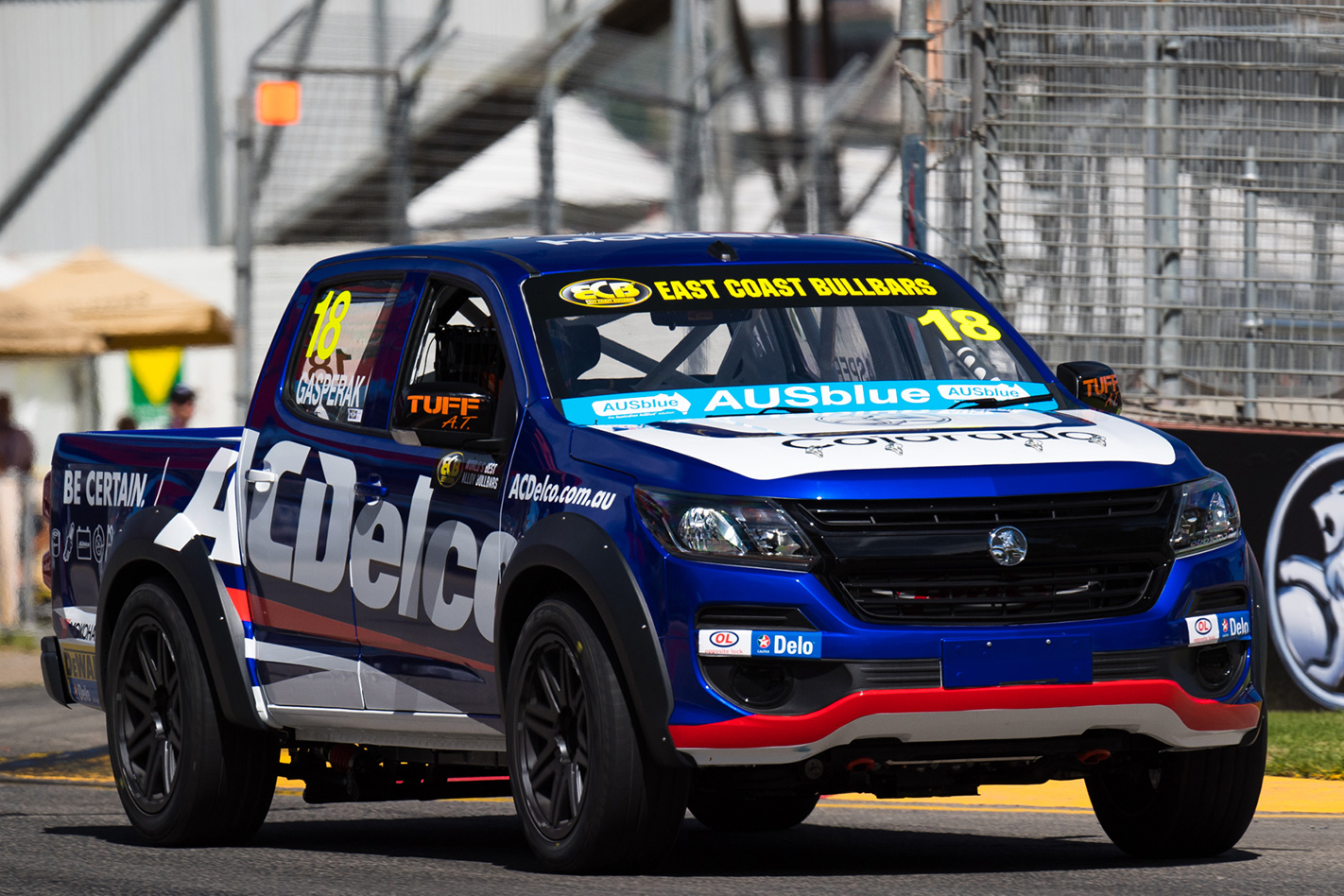
Being 15 means that Gasperak still has plenty of time to make history.
In Adelaide, he’d missed practice – “we were still putting the car together” – but stayed (mostly) out of trouble to come away from the weekend standing fifth (of 10) in the championship table. How old are the other drivers? “I wouldn’t know,” Gasperak shrugs. “I haven’t asked, but they all look like men.”
His Holden Colorado, run by Charlie Schwerkolt’s Team 18 – which runs Lee Holdsworth (above left) in Supercars – was built by Stone Bros Racing for the new SuperUtes regs. That means a 255kW, turbo-diesel V6, six-speed Tremec gearbox and Brembo brakes.
“I didn’t think the SuperUtes would drive very well, but they actually do,” Gasperak says. “They’ve got really good power down at the bottom end. It turns in pretty fast [but] it’s the rear that you’ve got to look out for. It likes to get a bit taily around the corners.”
It’s not the first proper racing car that Gasperak has driven: in 2017, he spent several months in North Carolina with Australian-owned Team Roo, doing five races in a NASCAR development program. It was a stepping stone from a karting career that began at age nine.
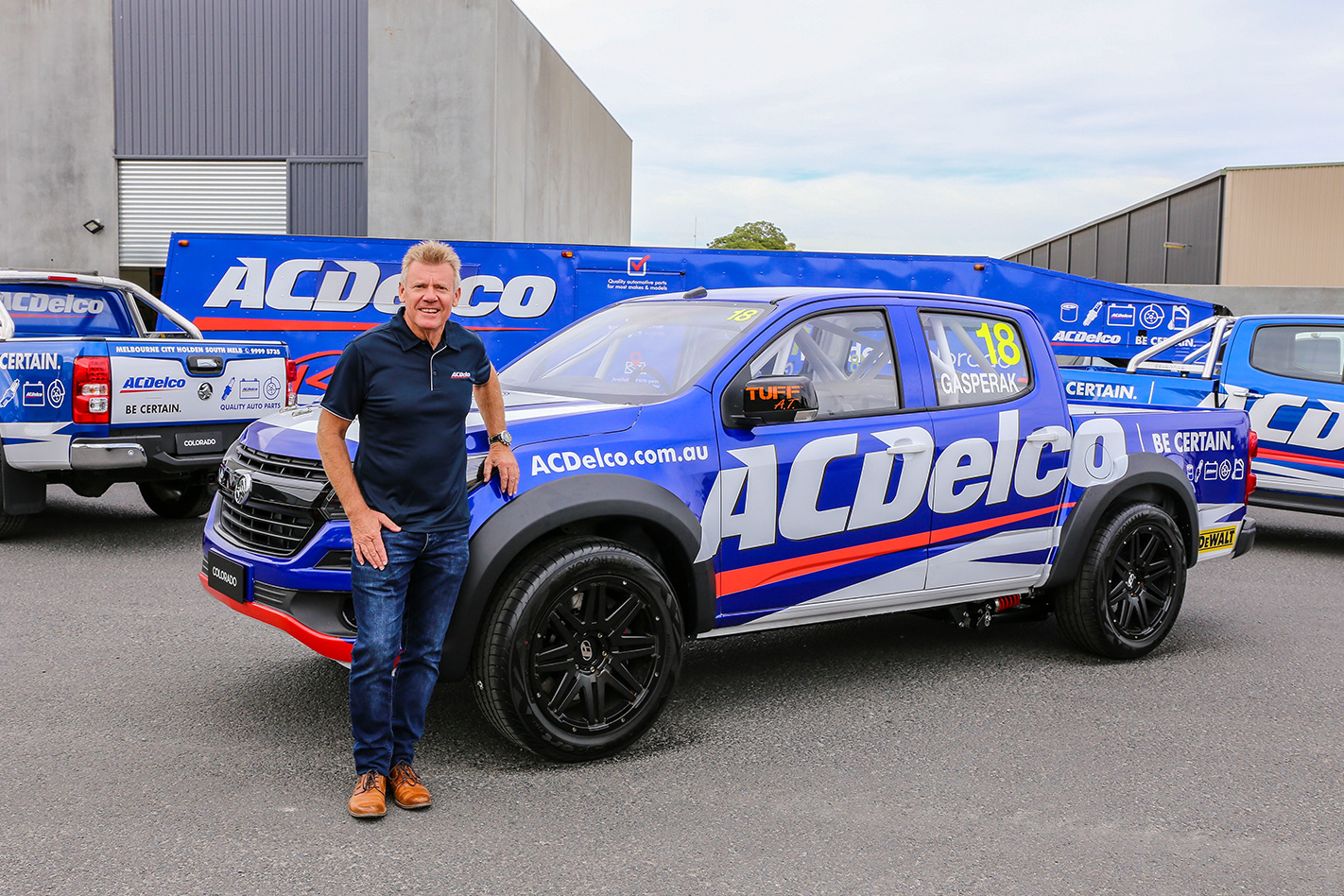
“My dad’s been into cars his whole life – he’s a car dealer – but there was never any racing history. He was looking at how all the Formula 1 drivers had started in karting and we decided to have a go, just for fun. And we were reasonably good at it, so we kept on going.”
The day after his 14th birthday in 2016, Tomas won the Queensland state championship for the Rotax Junior Max Pro Tour class. It came at his Ipswich home track where, a year earlier, there’d already been a career turning point.
“When I was 13, at the Rotax Pro Tour Grand Final I qualified second out of 45 karts” – in the reverse-grid final, he bagged the fastest lap – “and that’s when I thought, yeah, I can do this.”
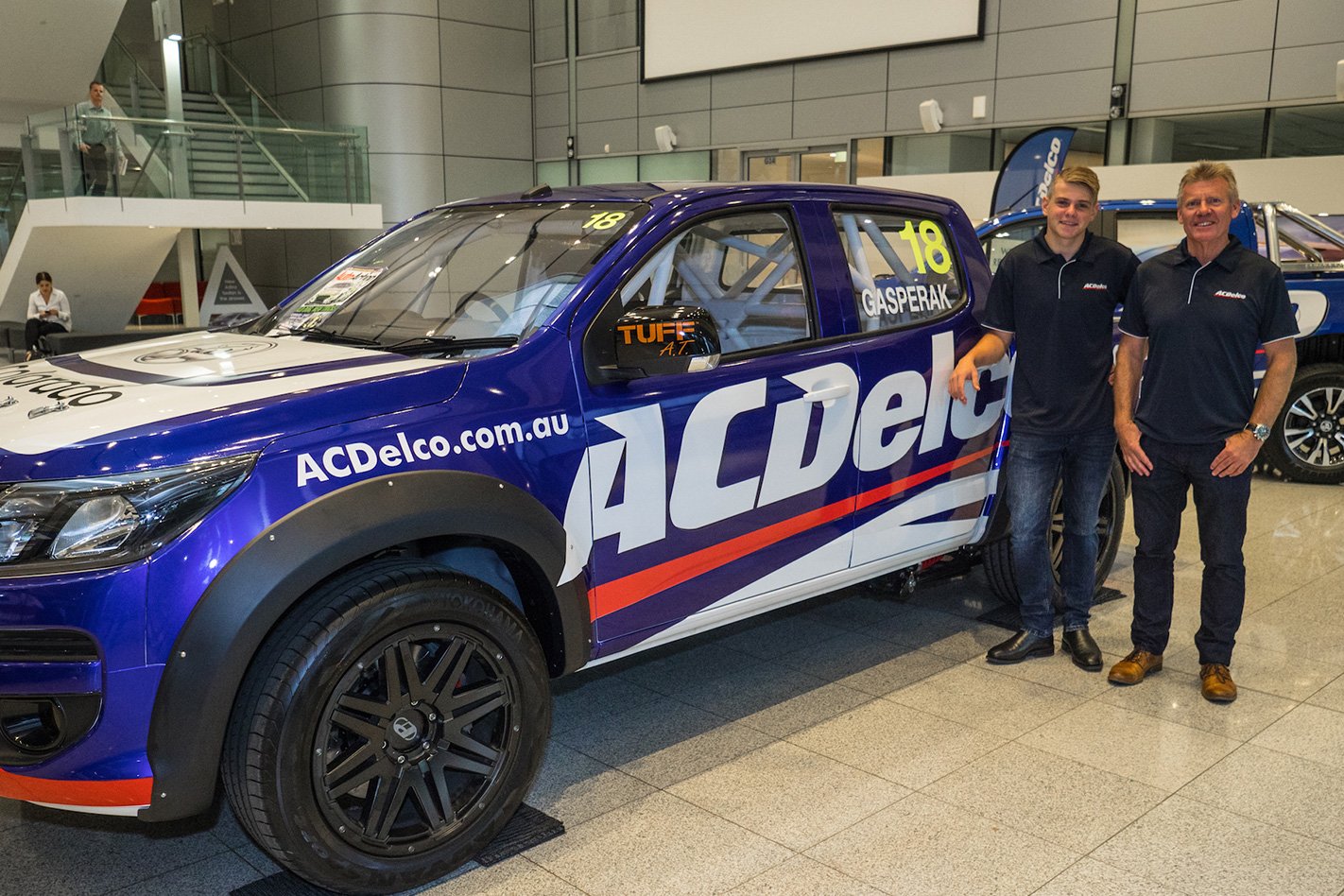
In 2016 he moved to the CIK series, becoming the youngest driver to be licensed for the hairy-scary ‘KZ’ karts; 125cc, six-speed machines capable of better than 160km/h. “They’re really physical, really hard to drive and everything just happens really quickly.”
His performances in KZ2, which included being the highest-placed Aussie in the 2016 Race of Stars meeting on the Gold Coast, prompted father and son to bite the bullet and contact Roo Motorsports.
“We went over to America for three months and we did five races in NASCAR,” he says. “We focused on one track, Hickory Motor Speedway, because it was a good track to learn on – it’s one of the shortest tracks and no two corners are the same.”
With his career now well on track, does he have any role models?

“Probably Lee Holdsworth, because he’s the first V8 Supercar driver I ever met. Well, I didn’t exactly meet him, but he presented my brother [Gabriel] with a trophy at a go kart race in 2014.”
Now that they’re effectively team mates, the plan is to loiter at test days and badger a drive in the Preston Hire Commodore Supercar, right?
“I’ve never actually thought of it that way. I’m going to keep that in mind.”
Cars are following aviation’s lead by using electronics to trim the number of moving parts to make control functions more efficient and better suited to autonomous systems.
One example is steer-by-wire, which does away with the steering column and rack by using a computer to convert steering wheel movement to electronic signals that that power the actuator, which changes the turning direction of the front wheels.
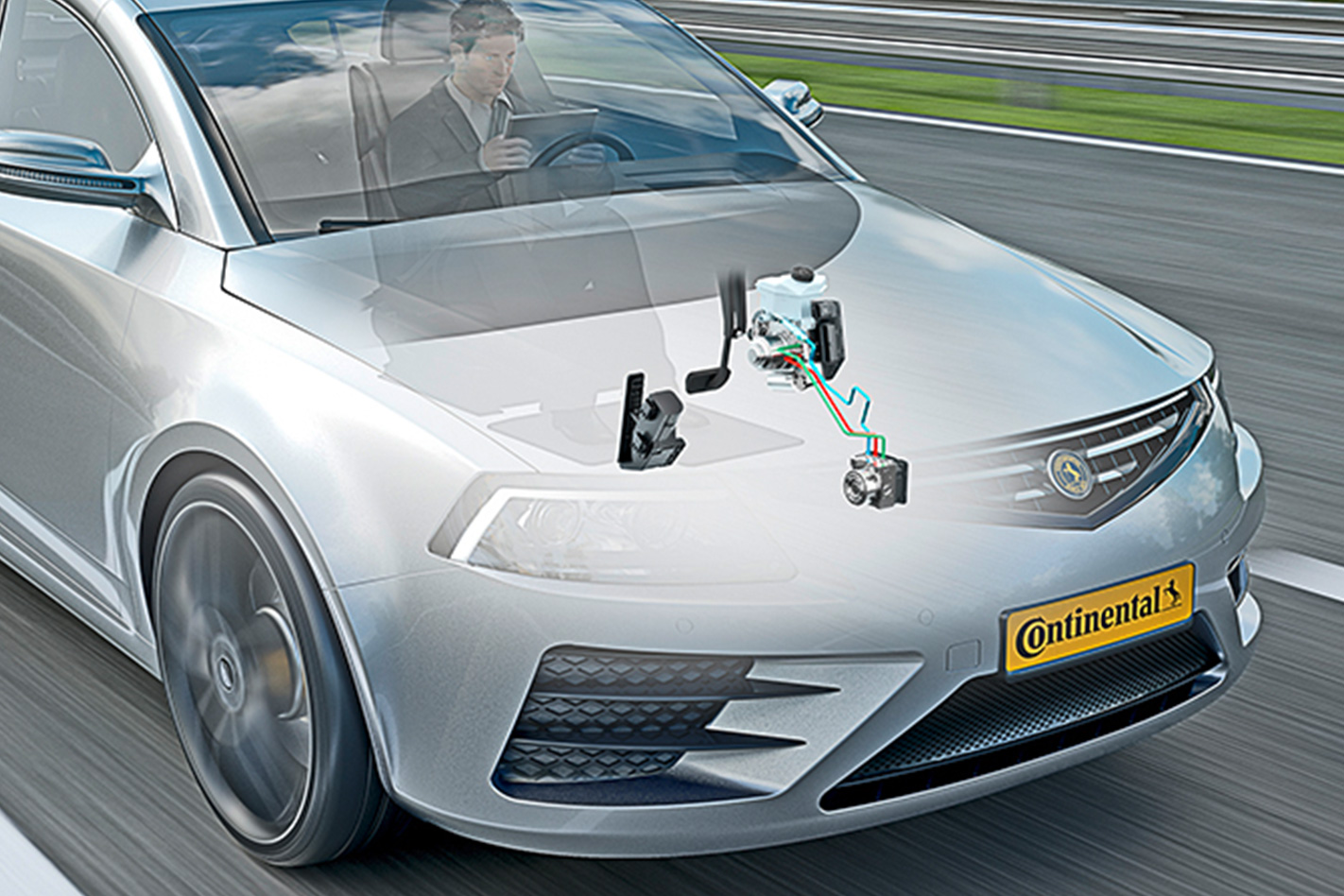
Advantages include fewer moving parts such as belts, and hydraulic pumps and hoses, which means less weight and maintenance. And the steering can be set to suit different driving modes.
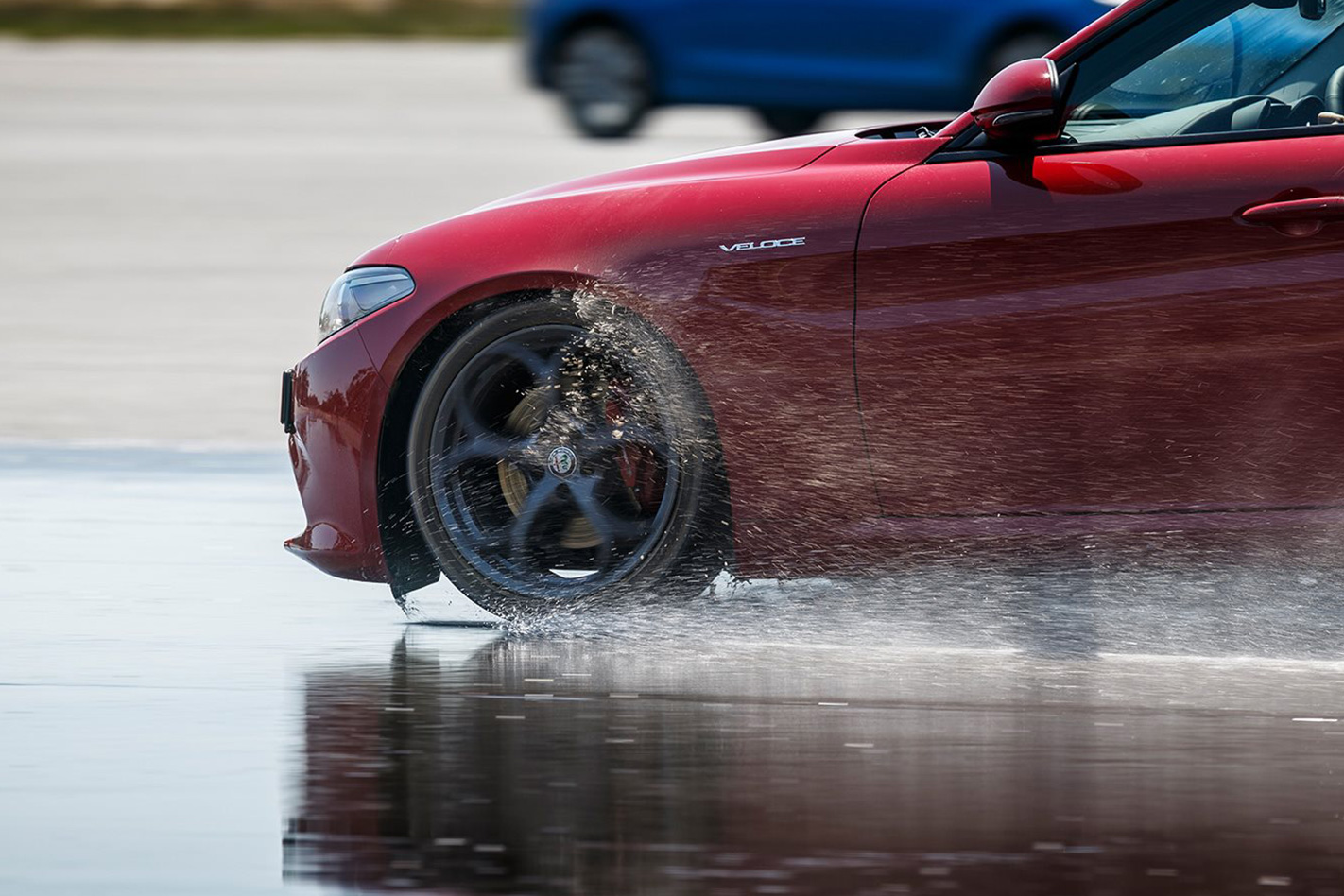
Another emerging drive-by-wire system is ‘brake-by-wire’, that’s being developed by Continental Automotive and is already in use on the Alfa Romeo Giulia.
So how does it work?
A traditional braking system requires a master cylinder, vacuum servo and pump for boosting brake force, but the Continental MK C1 solution replaces the servo and vacuum pump’s role with an integrated hydraulic pump that reduces the system to just one central component.
Like a traditional master cylinder system, the brake pedal is still directly connected to the MK C1 unit for fail-safe redundancy. But instead of the pedal pressure directly controlling brake force, the unit uses a travel sensor, which sends a signal to the pump to alter braking performance electronically.
If the system fails, mechanical pressure applied to the unit from the driver’s foot still allows the brakes to work, albeit without power assistance or electronic modulation.
The advantages of brake-by-wire include fewer separate components, which saves about four kilograms and is less complicated to install.
There are also performance benefits too. The system’s electric pump can apply more brake force than conventional vacuum assisted systems, which reduces stopping distances.
It also allows the braking system to be integrated into vehicle driving modes to suit a particular style of driving. A Sport setting can set the brakes to feel more responsive, while Comfort could have smoother braking action.
Finally, the faster acting system is better suited automatic emergency braking (AEB). By removing mechanical functions and separate components, a vehicle equipped with AEB can apply brakes faster in an emergency where every millisecond counts.
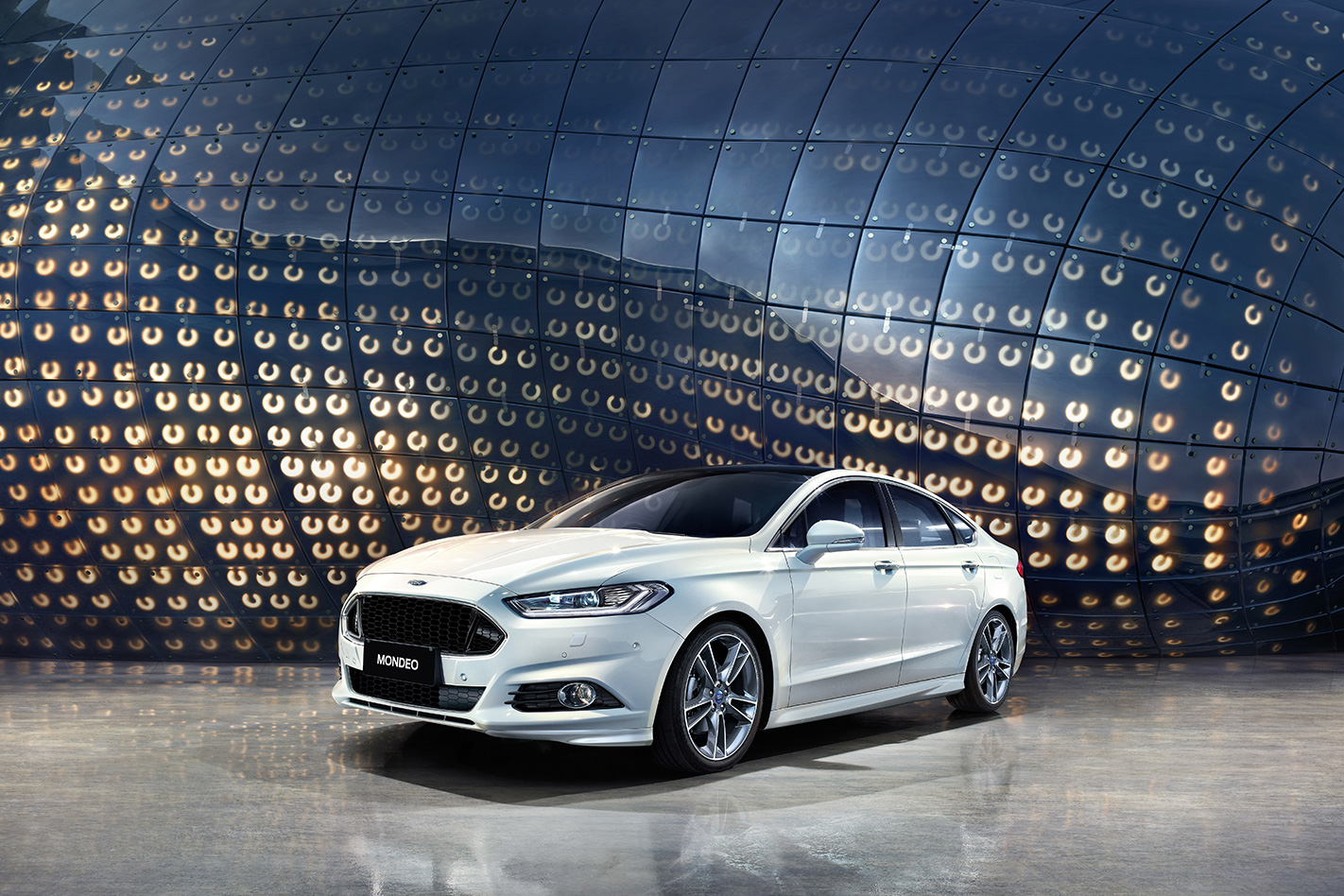
Ford’s largest sedan offering looks to step into the shoes of the now-deceased Aussie Falcon. But can it compete against a large and versatile group of competitors, while also being an attractive alternative to SUVs for families?
Tell me about this car
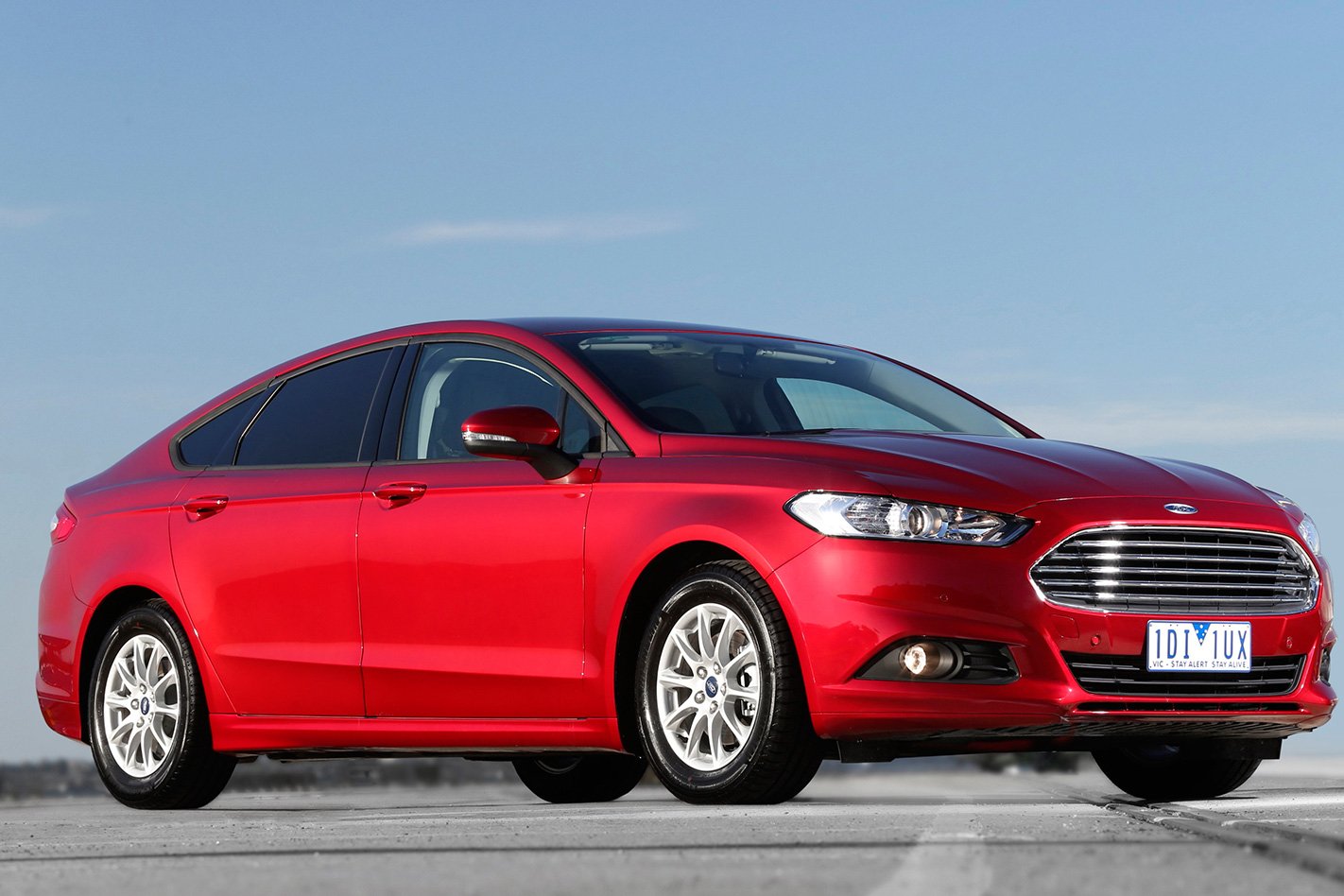
Ford’s current Mondeo sedan was last seriously updated in 2012, and is facing off against fresh-faced competition like the new Holden Commodore/Calais, and Toyota Camry. We got behind the wheel of the mid-level Trend hatch to see if it remains a compelling proposition for buyers looking for a mid-size, affordable liftback. The petrol-powered Trend has an MLRP of $37,790 and sits below the flagship Titanium grade, and above the entry-level Ambiente.
Strengths
- Engine: Powered by a 2.0-litre turbocharged four-cylinder which sends 177kW and 345Nm to the front wheels via a six-speed automatic, the drivetrain in the Mondeo Trend is one of its biggest assets. It isn’t class leading in terms of output, but has been calibrated in such a way that everyday driving is easy and enjoyable. The transmission’s logic ensures that it effortlessly plugs into the broad spread of torque without excess ‘hunting’ between ratios, and while the exhaust note is thrummy, it’s far from obnoxious.
- Ride: The suspension tune in the Mondeo rides the line between a firm ‘dynamic’ set-up, and ‘cruiser’ plushness. Because of this, it is neither the most comfortable, nor the most dynamically impressive, but it finds a sweet spot which is more than acceptable for most requirements. Potholes and poor road surfaces are dealt with well in the Mondeo, without the car turning to jelly in the corners. Ride comfort is aided by seats which are trimmed with a combination of leather and faux-suede, providing ample cushioning for longer drives.
- Equipment: With a sub-$40k price tag, the Trend is fitted with plenty of equipment that would traditionally be the preserve of pricier offerings. The driver is treated to memory seating with three different settings, both front passengers have heated seats, and a heated windscreen is fitted as standard. Power adjustable seats are also standard fit items.
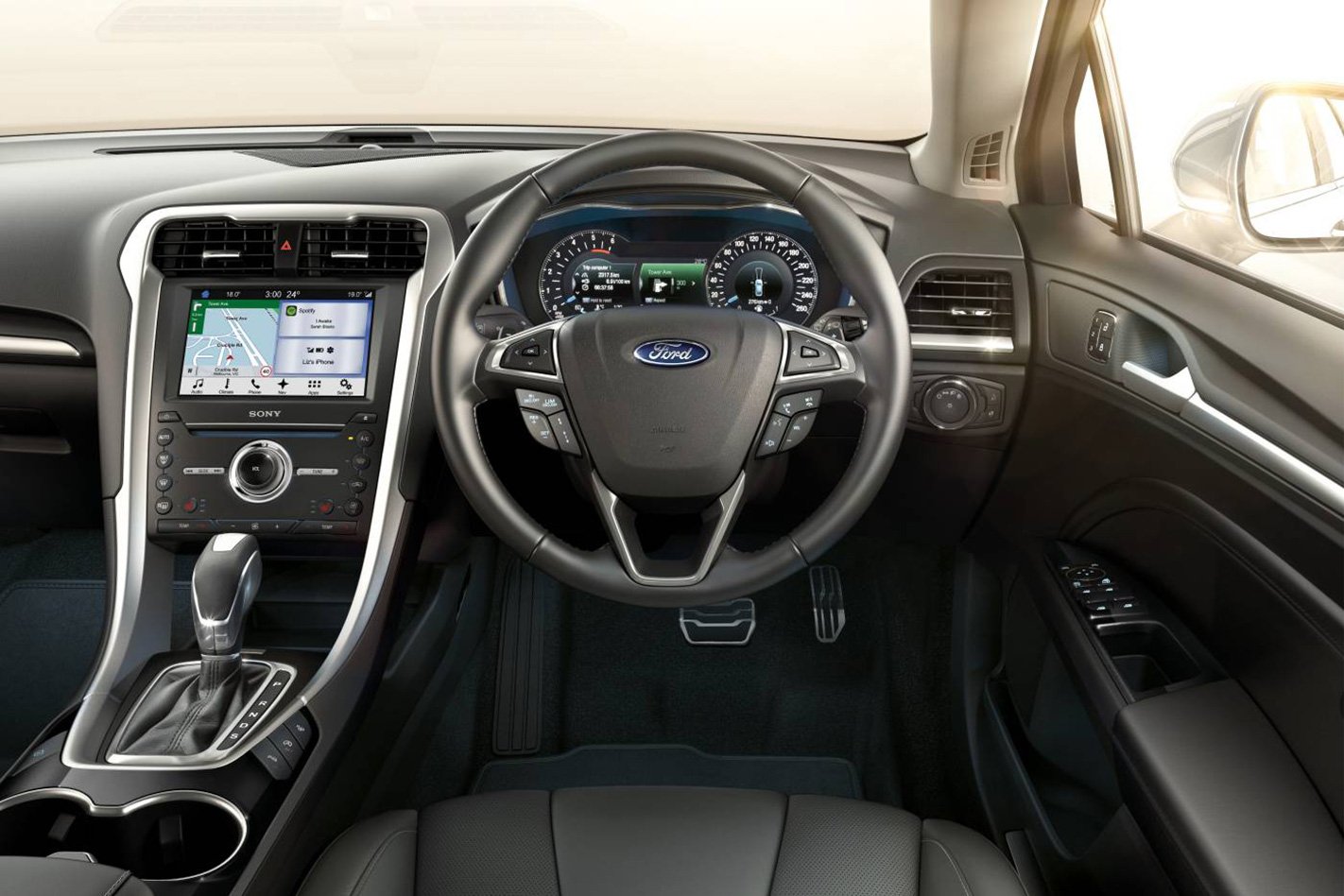
- Ageing platform: It’s hard to get around the age of the Mondeo when compared to its competitors. Things like the instrument design and ‘clap-down’ style windscreen wipers make the Ford feel a step or two behind its most modern rivals. The wipers in particular could use an update as they don’t provide enough coverage on the windscreen (although a rear-wiper is unique for this class, and handy in poor weather conditions). While AEB and adaptive cruise are standard, there is no digital speedo, which is becoming a must-have for some buyers. The design of the Mondeo, while classy and understated, is also getting long in the tooth. Those who really want to make a statement with their new car will almost certainly overlook the Mondeo.
- Interior plastics: A mix and match of interior plastics lets down what is a well-laid out dash architecture. Hard, scratchy plastics comprise the lower half of the cabin, while different grades of trim throughout the door cards and dash give a patchy feel to the trim that lacks cohesion.
- Rear roofline: Rear passenger comfort is not a strong suit in the Mondeo. Design of the rear seat pushes occupants to the outer edges, compromising forward vision. Though there is ample toe and leg room, that raked rear roofline cuts in heavily to headroom. Adult passengers will find the back of their head touching the roof lining before meeting a headrest.
Holden Commodore, Honda Accord, Hyundai Sonata, Kia Optima, Kia Stinger, Mazda 6, Skoda Octavia, Subaru Liberty, Toyota Camry
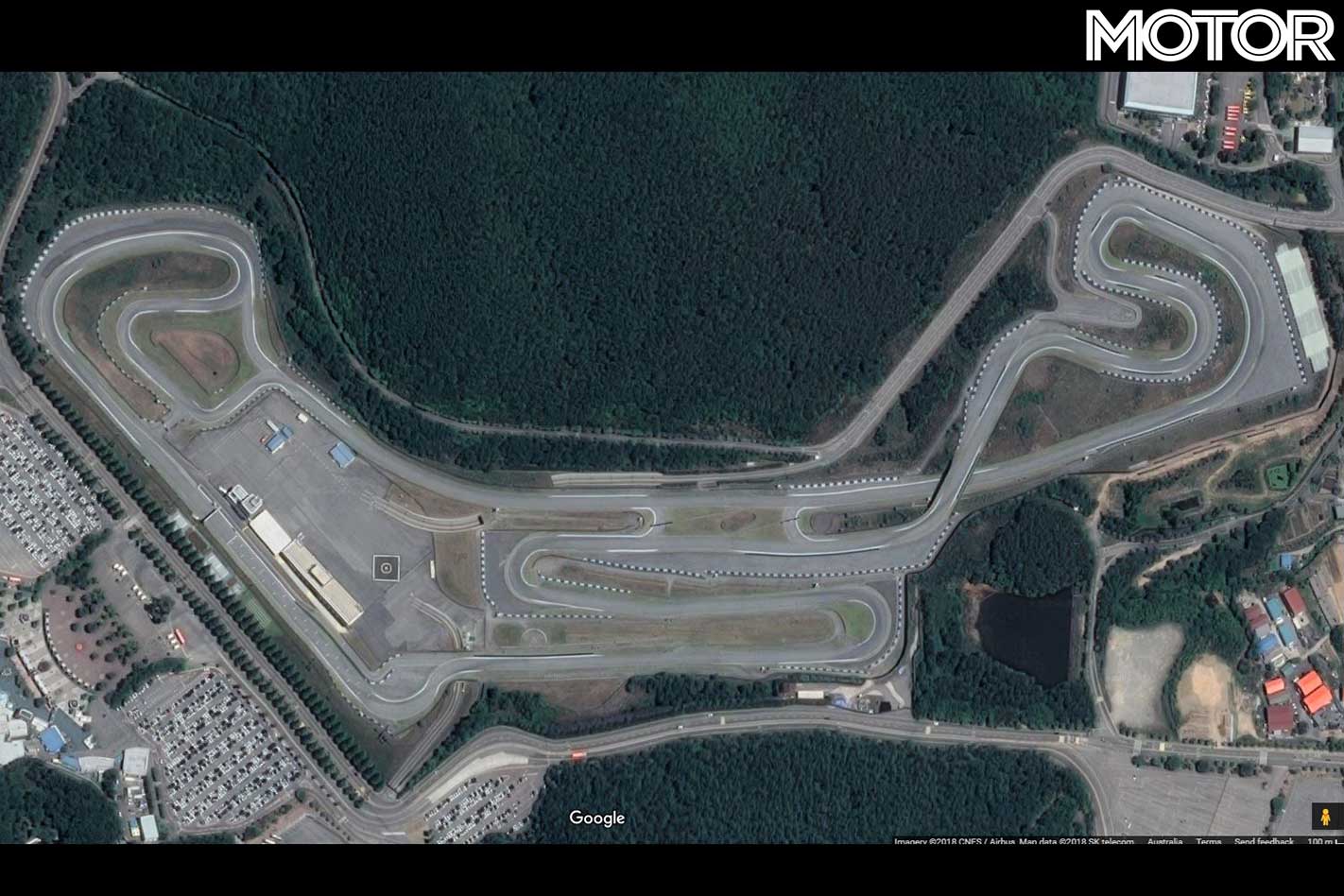
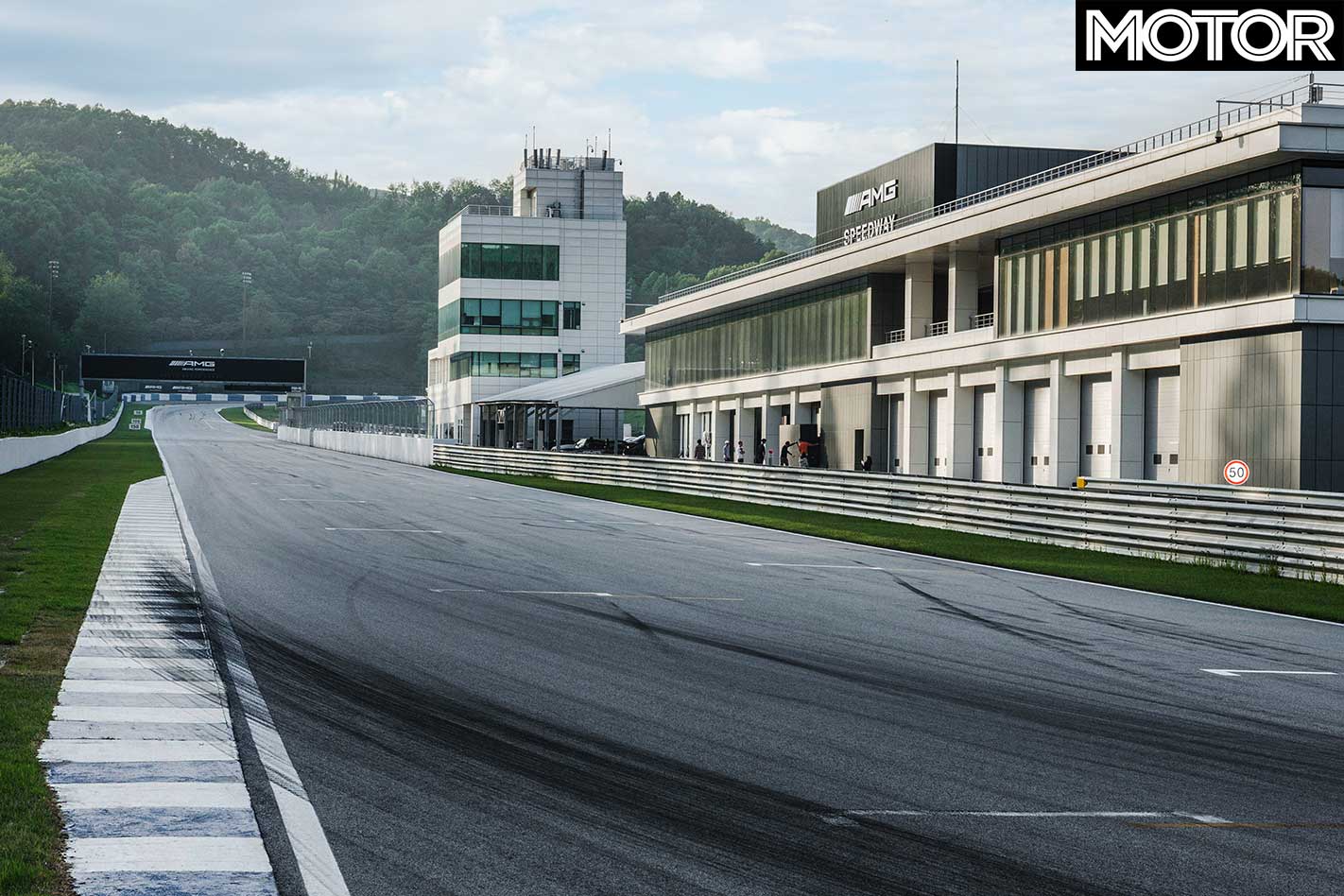
Over 4.3 kilometres and 17 turns, AMG Speedway is the newest motorsport addition to South Korea.
Built using a pre-existing track established in 1995, Mercedes-AMG has created its first track named after AMG, as well as featuring AMG branding prominently along the circuit.
The track, which also features an overpass, is located about 40 kilometres from the nation’s capital of Seoul.
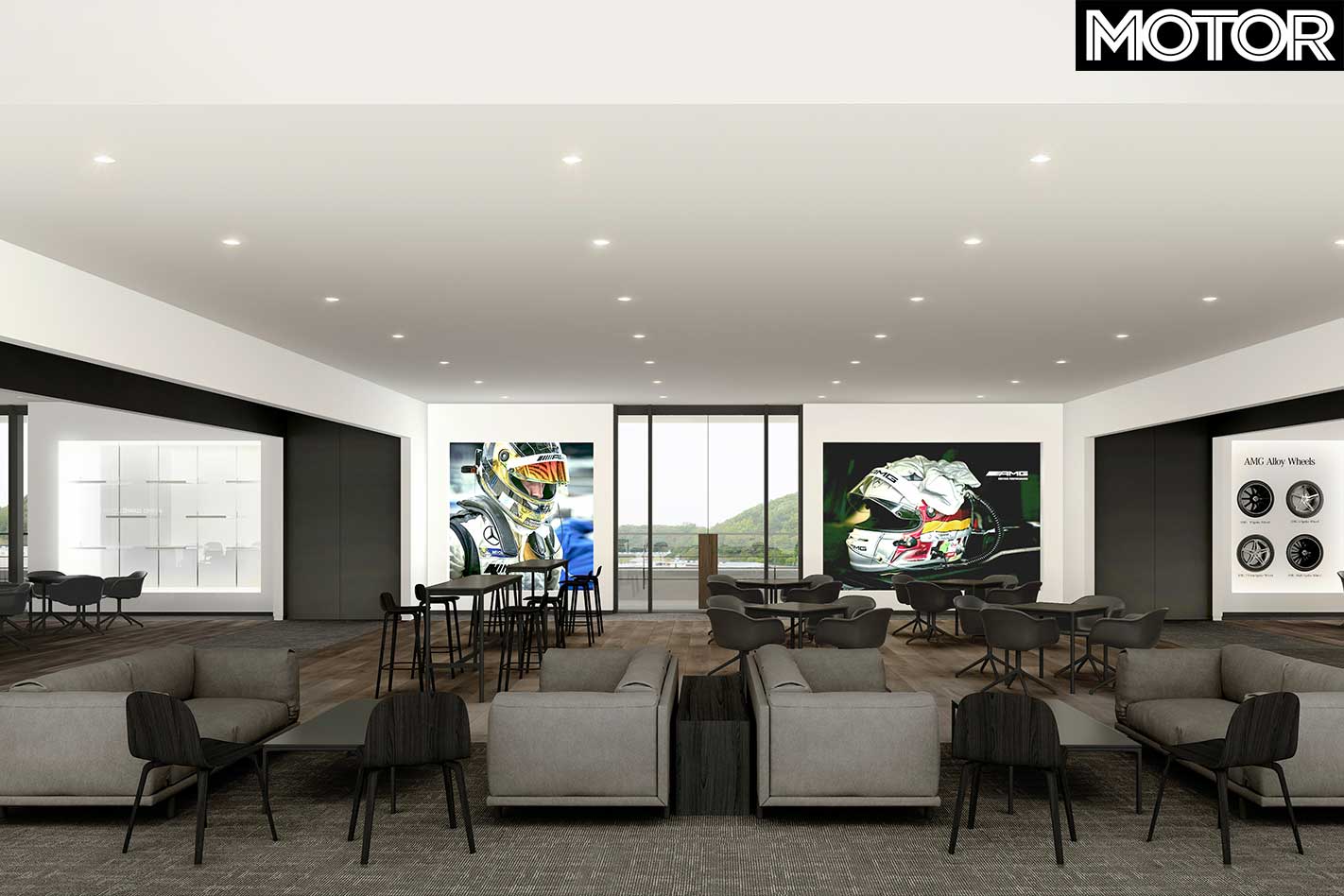
A lounge has also been built on the premises, which AMG says “provides an inviting setting for community discussions and personal exchanges with AMG experts.”
Mercedes-AMG CEO Tobias Moers says the decision to open a track in South Korea is based on AMG recording “a significant double-digit growth and a new sales record in 2017” in the country.
“The AMG Speedway is the world’s first racetrack bearing our name,” says Moers.
“This underlines the importance of South Korea as one of our main markets.
“The AMG Speedway is thus not only an important step in the further dynamic development of AMG in South Korea.
“It also stands for the strategic expansion of our face-to-face communication. Customers and fans can experience the essence of our brand here first hand.”
But AMG is not the first to open its own track in the country, as BMW beat it to the punch.
The BMW Driving Centre is closer to Seoul, and is the first of its kind for BMW. It also offers various ‘driving experiences’ for customers attending.
The AMG Speedway is likely to be used for product launches and other AMG events in the future.
The Lister Motor Company has revealed it is currently working to build the world’s fastest SUV.
Based, like most Lister cars, on a Jaguar (in this case the F-Pace SVR), the yet-to-be-named Lister SUV will reportedly be faster than any other SUV before it.
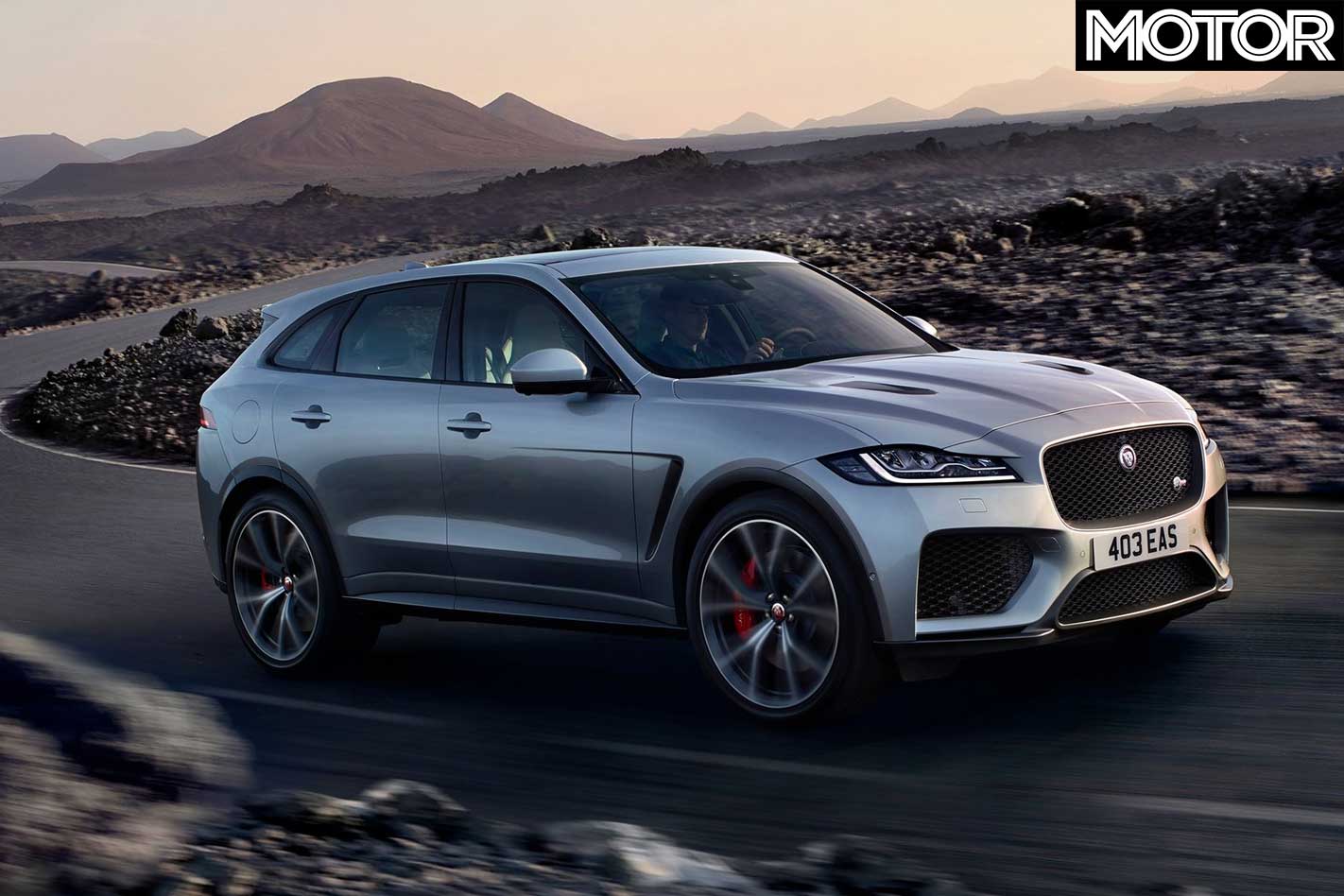
A single image has been released by Lister across its social media accounts, which distinctly depicts a Jaguar F-Pace from the side of the front, with a Lister logo badge in the centre cap and the company’s name badged on the vent.
When queried by a Twitter user whether the Lister SUV would have as much power as its recently revealed Lister Thunder, a 497kW (666bhp) re-worked Jag F-Type, Lister’s official account replied simply with “More!”
If it were to properly lock down the title of ‘world’s fastest SUV’, the Lister will have to beat Tesla’s Model X, an electric SUV with a combined ‘drivetrain’ output of 568kW/967Nm and a 0-100km/h sprint of approximately 3.2 seconds.
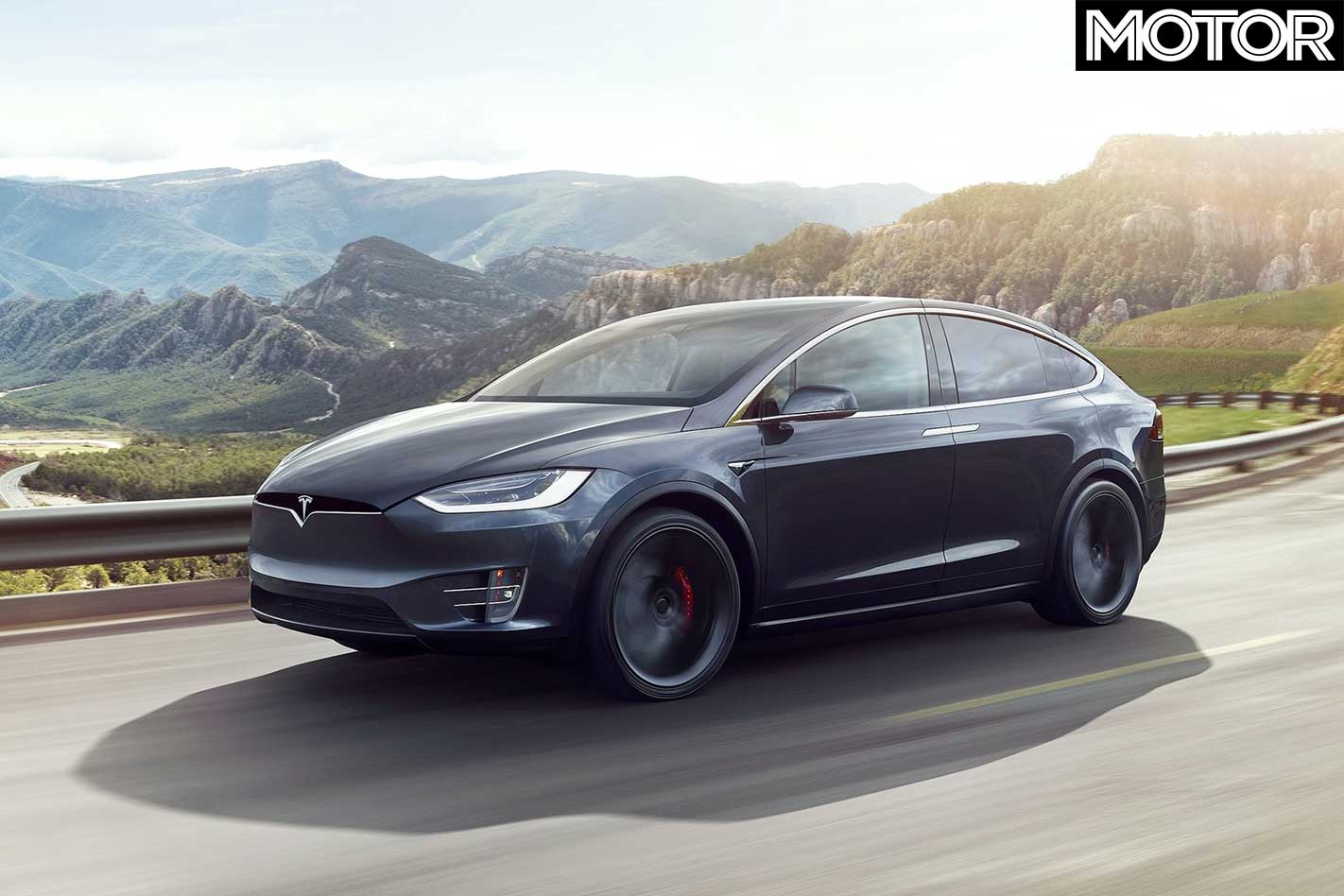
The 2468kg Model X does however have more to haul than the 1800-1900kg F-Pace, assuming Lister hasn’t undergone a mass-diet for the Jag.
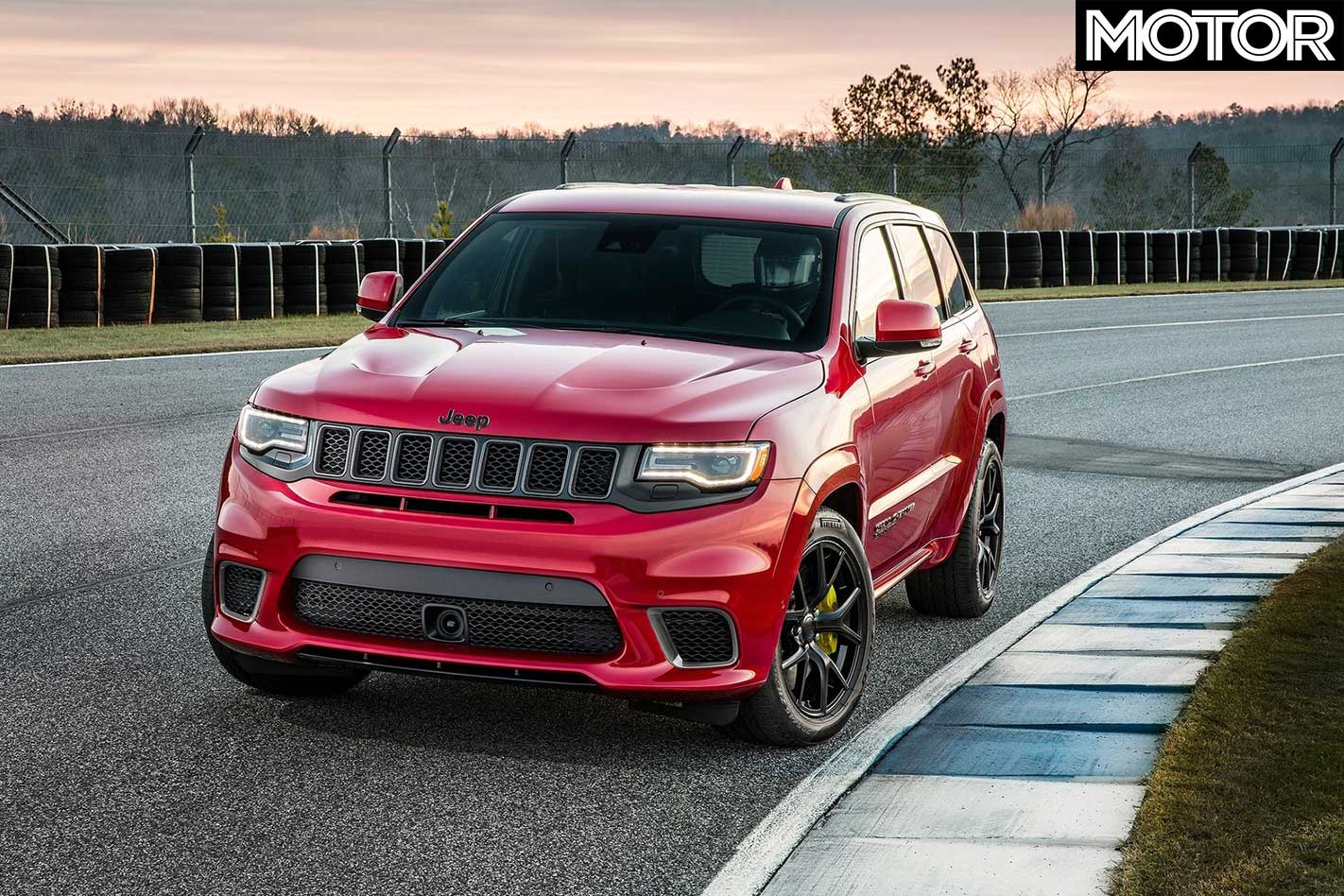
Also standing in the way is the Jeep Grand Cherokee Trackhawk, which has an astonishing top speed (for an SUV) of 289km/h. The F-Pace SVR already comes close with 283km/h, so it’s not unreasonable to expect Lister to smash that figure with more power.
Making more moves since being acquired by businessman Lawrence Whittaker and his father, Lister appears not to be departing from its tradition of tuning Jags.
In a discussion with Autocar, Whittaker said the F-Pace would produce as much as 500kW, and added that a production run of 250 would be planned.
The reasoning for using already-established Jaguar Land Rover products, according to the Autocar report, is for Lister to drum up enough funds to bring about the return of the iconic Lister Storm.
GLOBAL technology group 3M has developed a type of composite material that could make the cars of tomorrow lighter, faster and more fuel efficient – and the secret to the breakthrough is almost invisible.

Dubbed glass microspheres, the additive looks like a coarse powder. But it is millions of tiny glass bubbles that can be blended with the plastics used for car panels to increase durability and strength, but also reduce weight.
The tiny hollow spheres are specially developed to bond with a liquid resin or thermoplastic, forming a far stronger product than conventional plastic and filler formulas.
The secret lies in the inherent strength of a sphere, which can withstand large loads under both compression and tension yet is light thanks to its hollow construction. The process is like making foam by injecting air bubbles into a material, but without any loss of strength or rigidity of the finished product.
Glass is water- and temperature-resistant, non-porous and the millions of tiny air bubbles also impart better insulation properties depending on the application, further extending its list of potential uses.
3M says glass microsphere-reinforced materials have applications in countless industries including automotive, where lighter materials that do not compromise on strength have obvious advantages.
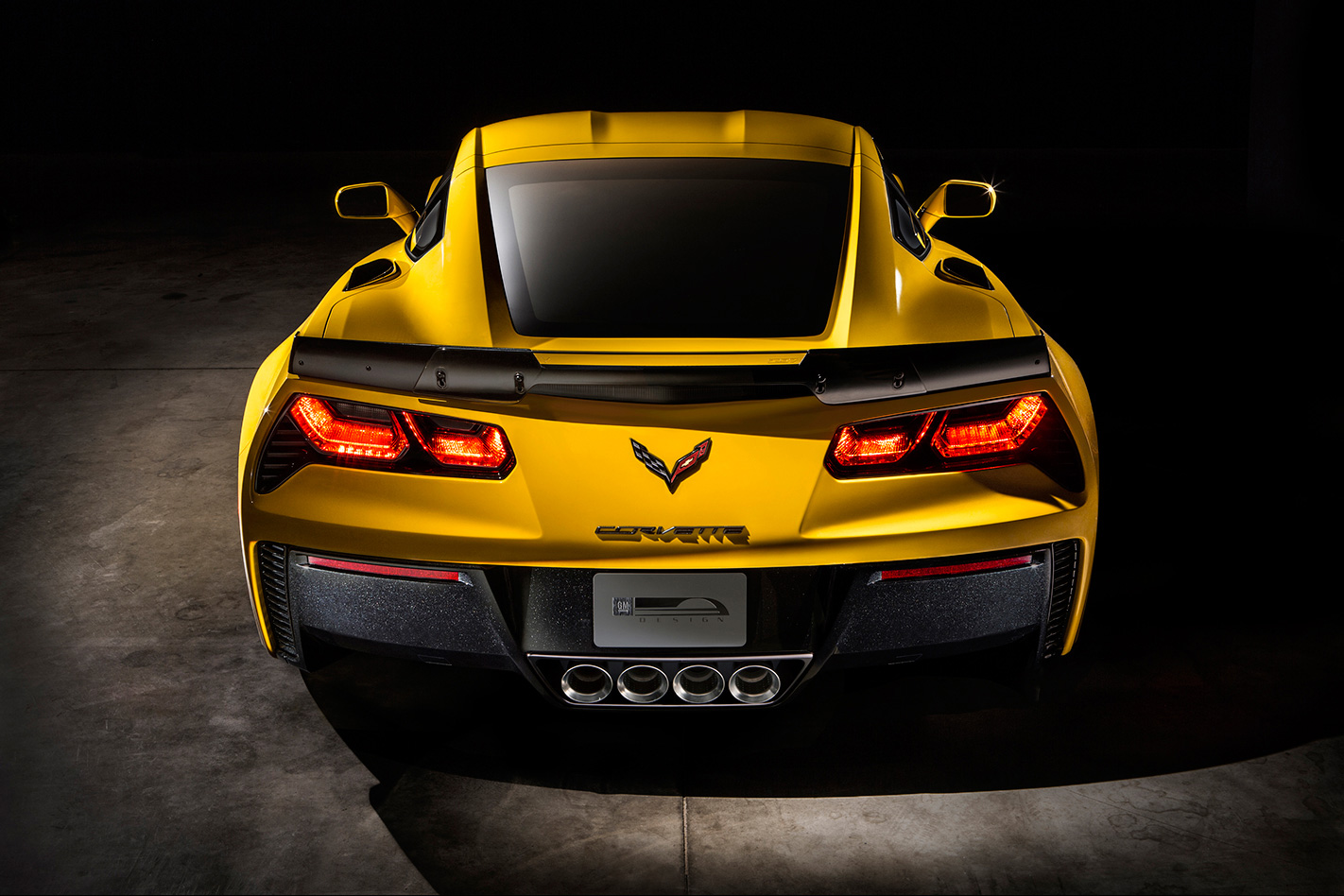
Chevrolet is already one step ahead, using the tiny glass bubbles to replace regular calcium carbonate filler in some of the Corvette’s plastics, saving about 10kg from the model’s bodyweight. That might not sound like much, but as more materials can be developed to use the glass bubbles, a greater weight loss is possible, says the maker.
The tiny beads are not a substitute for the high-strength carbon and glass fibres used in some composite materials, but can be used in combination with fibre reinforcement. The main advantage of the microspheres is in replacing ingredients in composites that do not impart strength such as excessive amounts of bonding resin.
Composite material manufacturers are constantly researching ways to reduce resin ratios. Microspheres are one solution that could boost carbonfibre and fibreglass performance to a new level.
Microsphere-enhanced materials have almost limitless applications in car design with everything from body panels, through engine manifolds and covers to dashboards and fuel tanks having the potential to lose weight without sacrificing strength.
BRABHAM lifted the silk from its BT62 supercar around this time last week, revealing a purpose-built track weapon that will be built in Adelaide, but though we’ve seen the car in full, there are still some secrets lurking beneath its carbonfibre haunches.
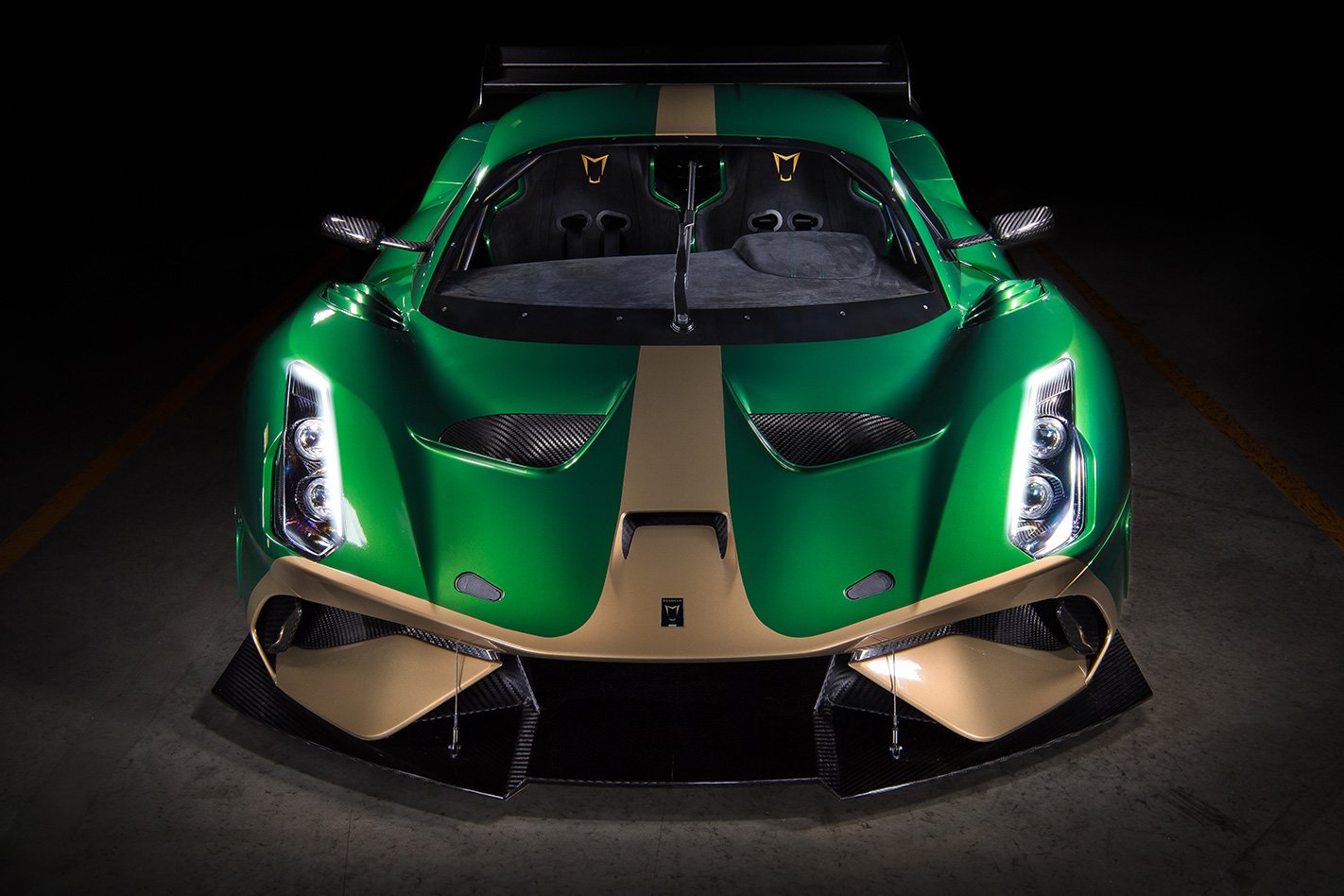
Most of the intrigue surrounds its engine. Outputs for the free-breathing mid-mounted V8 are confirmed, but there remains an unusual amount of mystery around some technical details – in particular, the origin and specification of the Brabham-branded engine.
According to official specs sent to Wheels by Brabham Automotive, the longitudinally mid-mounted V8 behind the driver’s – and optional passenger’s – seat has bore and stroke measurements of 94mm and 97mm, giving the bent eight a specific total displacement of 5387cc, or 5.4-litres. Further spec data reveals a compression ratio of 10.5:1, and outputs of 522kW at 7400rpm, and 667Nm at 6200rpm.
But where does it comes from? Speaking to Wheels in the days before the BT62’s launch, Brabham representatives confirmed that the engine is not built from scratch by the team, though the spokesmen were at pains to avoid revealing the unit’s provenance.
That doesn’t leave us completely in the dark, as there are tell-tale clues as to where the BT62’s power is sourced from.
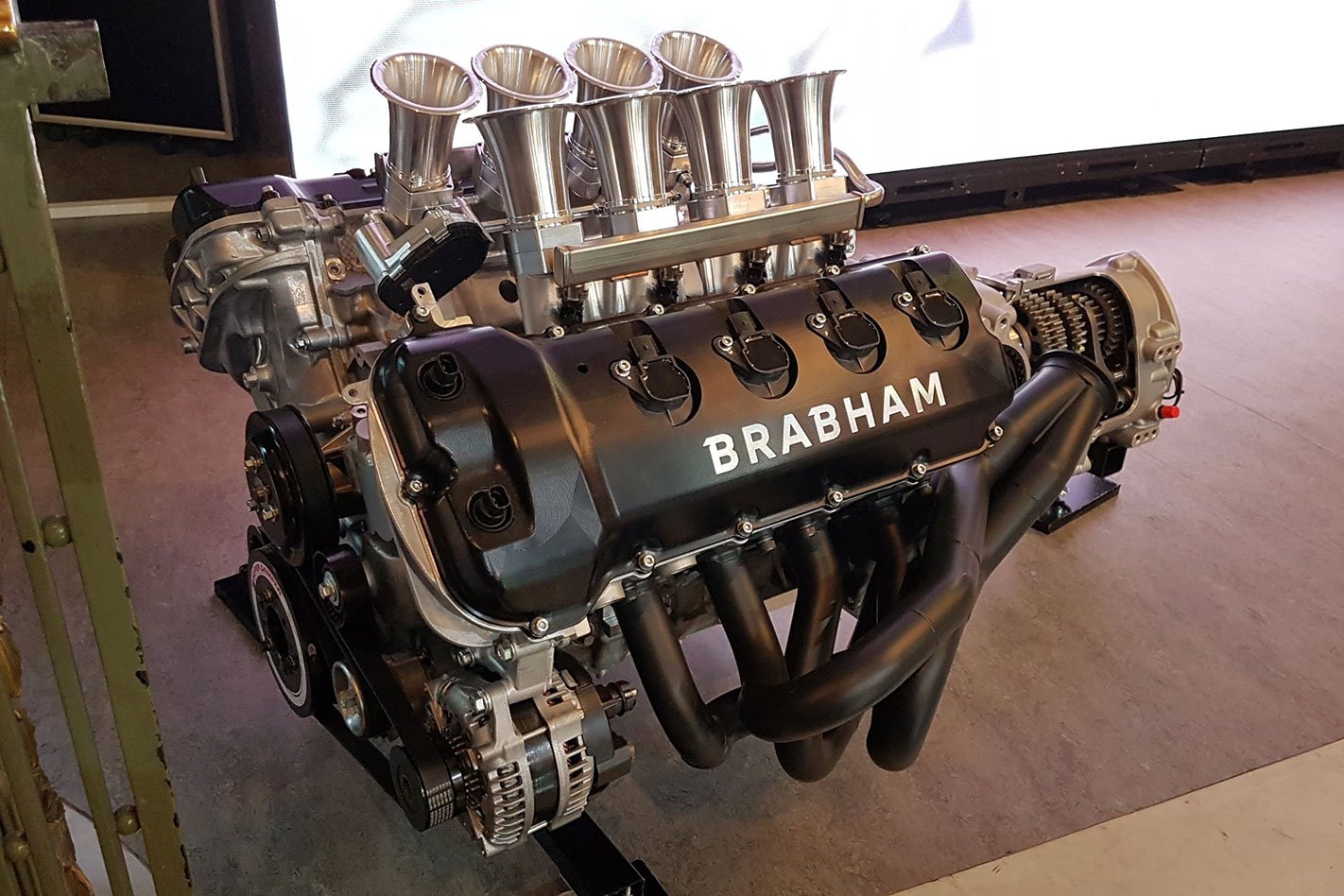
The first is a photo of the 5.4-litre unit sporting drool-worthy velocity stacks snapped during the BT62’s public reveal at Australia House in London.
The casting shapes of the Brabham-branded engine are practically identical to those seen on Ford’s Modular V8 engine family, most well-known in 5.0-litre ‘Coyote’ format, as used in the current Mustang.
Numerous versions of the Ford Modular V8 are available in production cars and as create engines. Ford uses a 5.2-litre variant called ‘Voodoo’ to power the 2018 Mustang GT350R. In that iteration the engine, fitted with a flat plane crankshaft, produces 392kW at 7500rpm and 482Nm at 4750rpm.
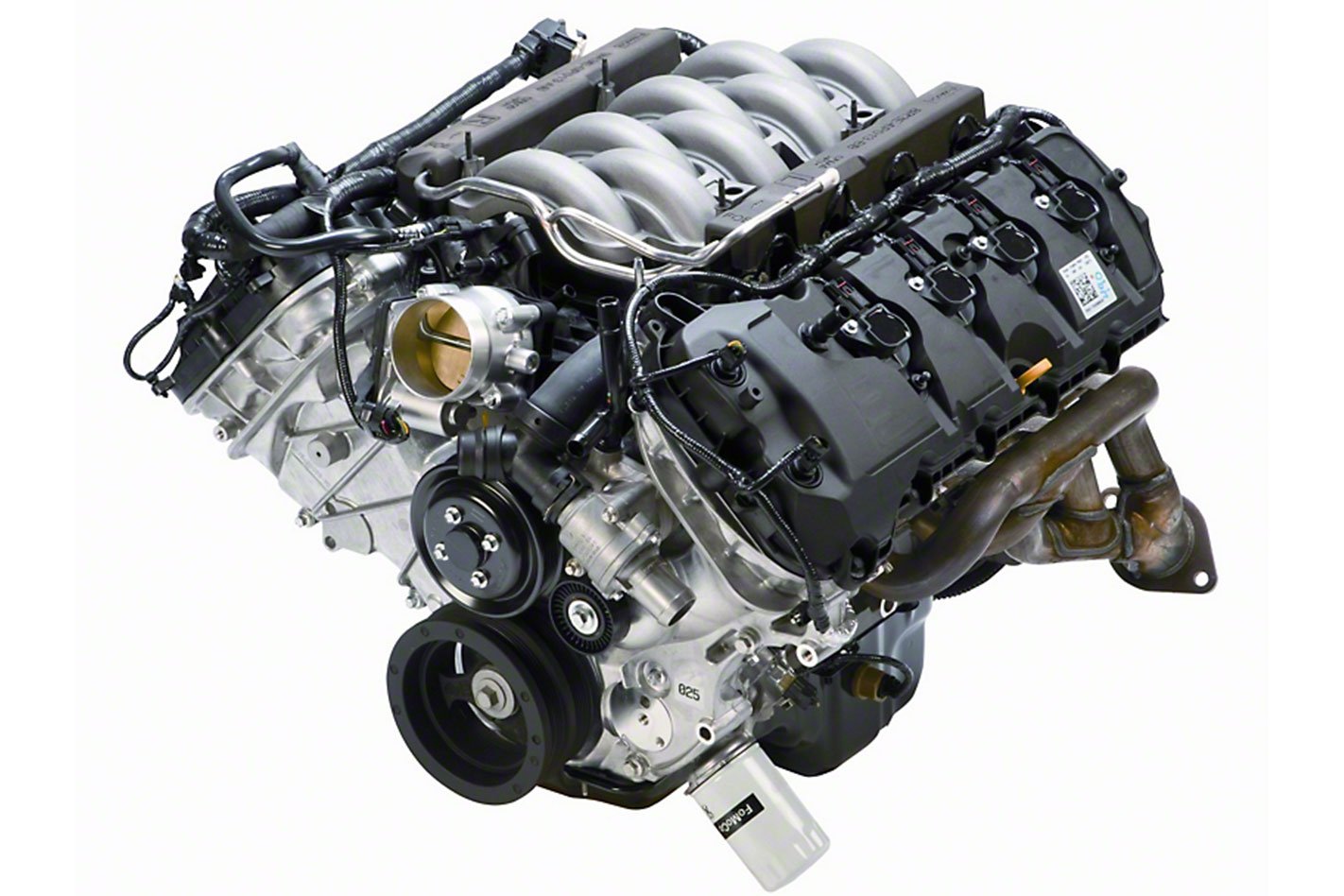
Ford Coyote 5.0-litre V8
While the Voodoo uses a higher compression ratio (12.0:1) it has the same 94mm stroke as the Brabham engine, though a narrower 93mm bore resulting in the smaller overall capacity.
Christian Reynolds, an Australian-based Brabham Automotive director who oversees the BT62’s manufacture at the Adelaide factory, confirmed that the V8 engine is supplied by a third-party, and then heavily modified by the company.
“We engaged an OEM and talked to them about a personalised development program,” he explained.
“They were supportive of engaging with us at that level, but we took an OEM engine and then we heavily customised it to suit the attributes and the DNA of a Brabham vehicle. And that’s been worked on and agreed with the OEM that the engineering work is such that the engine can be called a Brabham engine based on its departure from anything that they do in any sector of automotive.”
Reynolds refrained from commenting on the engine’s – possibly blue and oval – origins.
“It’s quite important if you look at the historic nature of the [Brabham] brand, and how the brand has been successful, it’s been the sum of its engineering and ingenuity from doing the right things at the right time,” he added.
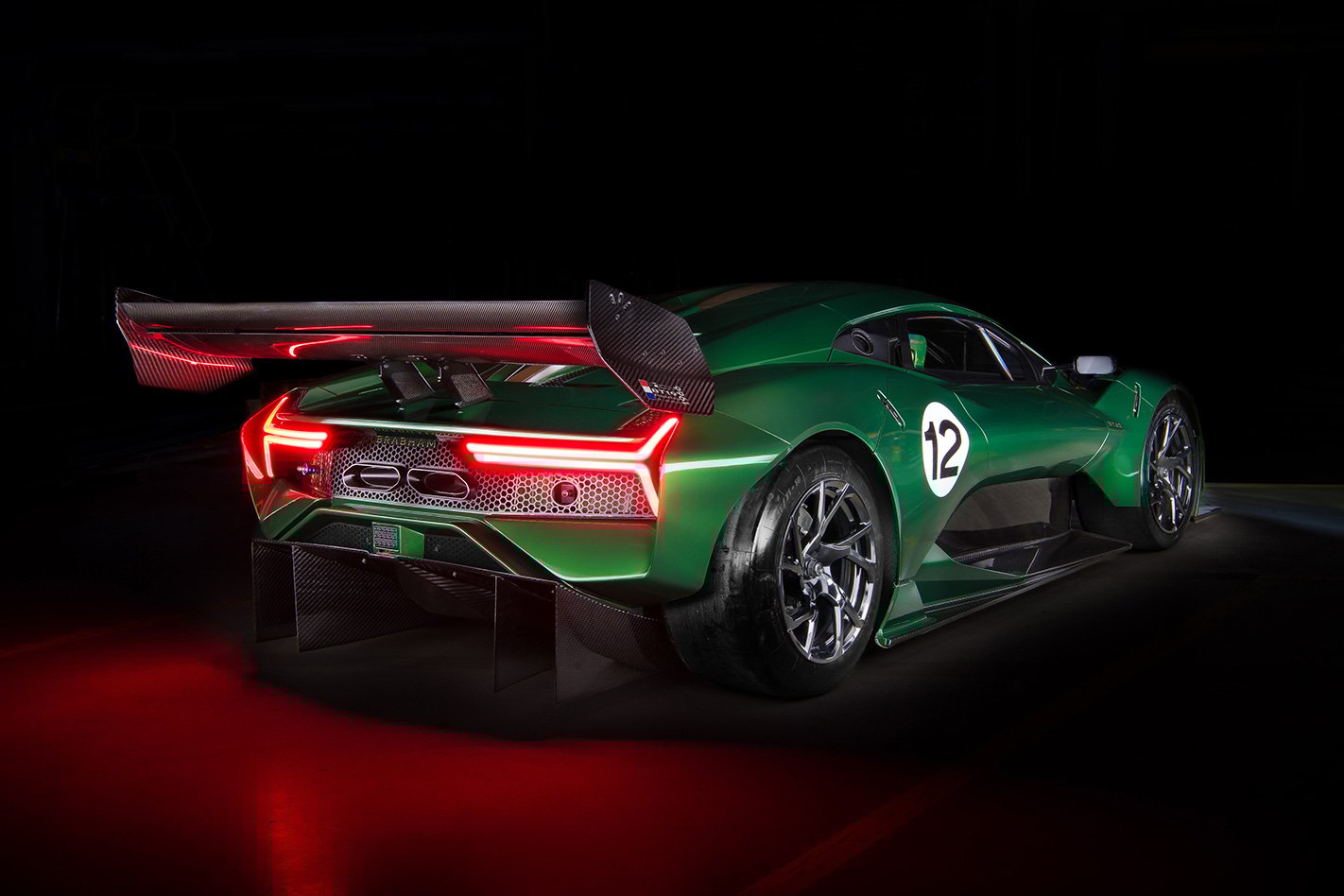
“We’ve done that with the engine. We’ve customised and re-engineered an engine to be very, very specific to this vehicle, so for me I’d like people to understand that this engine is Brabham’s engine. You cannot replicate this engine. The design specifications are under control of Brabham. You cannot go out and procure an engine of this configuration.”
While it’s highly likely the BT62 engine starts life as a Ford, how the team behind the track-only supercar has extracted so much power with a relatively low compression ratio and no forced induction is a point of interest.
Brabham’s version of the engine produces circa-100kW more than any other naturally aspirated V8 from the Ford family, though as a track car it doesn’t need to comply with any emissions regulations.
Wheels understands the BT62 has been specified with a flex-fuel sensor to allow the tanks to be filled with E85 juice, or premium unleaded petrol. High octane ethanol-based fuel can be used to ramp up outputs with the right engine tune.
In a relatively unrelated coincidence, Brabham claims to have squeezed precisely the same amount of power out of ‘its’ 5.4-litre naturally aspirated V8 as Dodge says it 6.2-litre supercharged ‘Hellcat’ donk can produce. We think a drag race is in order.
