
Australia has spoken. Despite initially stating that we’d miss out on the stiffened Cup chassis Down Under, the French marque has rightly overturned that decision due to strong feedback from the media and punters.
And thank heavens, because this third-gen Renault Sport hot hatch has a chassis even more biddable, poised and absorbing than you’d dare hope for, either from Renault’s in-house performance department or from a front-drive five-door.
However, in EDC dual-clutch automatic transmission form at least, it’s also a car of one or two frustrations. So what of the ‘other’ Megane RS? The one with the stiffened Cup chassis, six-speed manual gearbox, standard-fit Torsen helical limited-slip differential and optional lightweight ‘bi-metal’ brake discs? This, you’d suggest, is the specification in which most Australian buyers would order their cars.
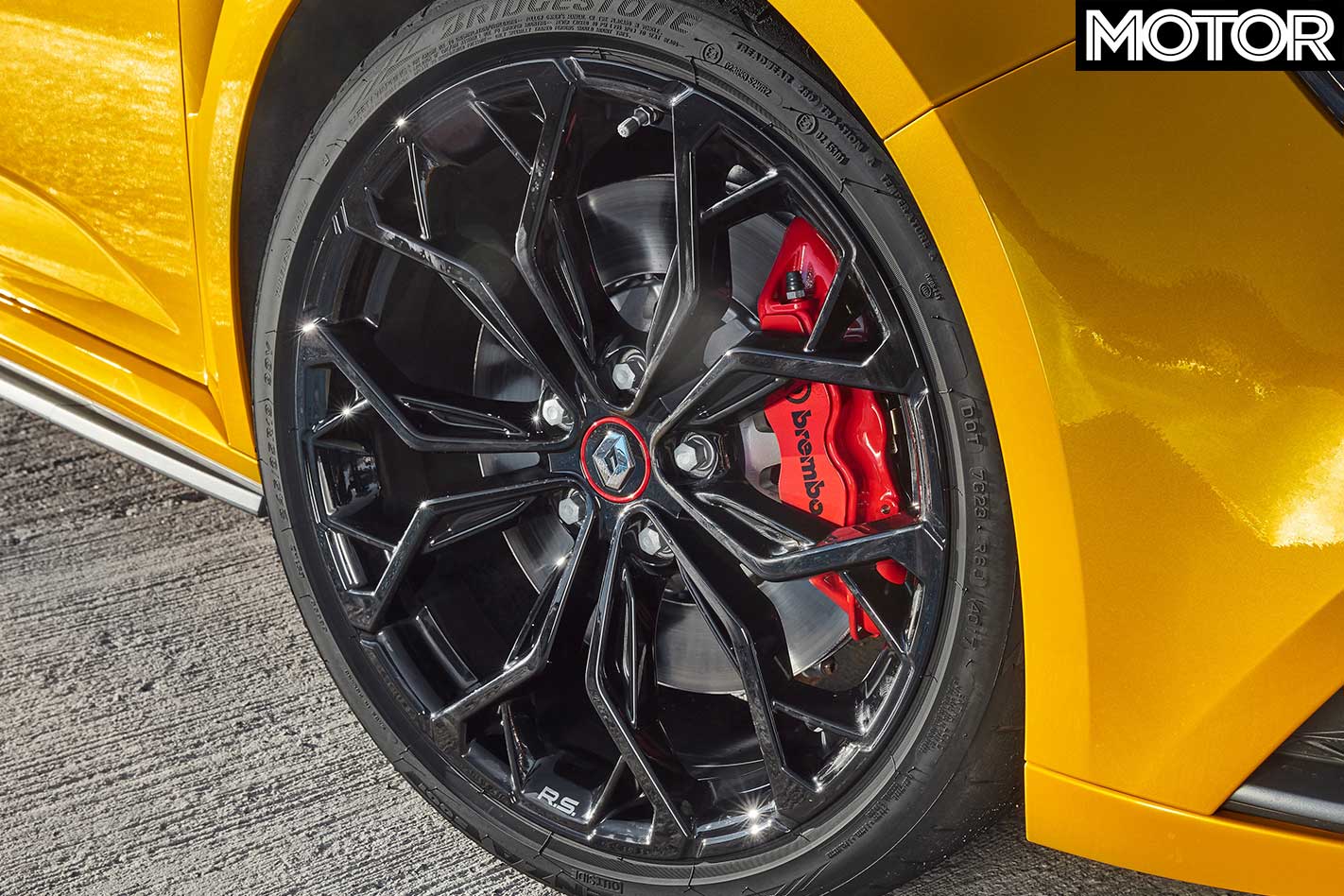
From what was apparent on a circuit at least, they’re in for a much simpler, more consistent and more gratifying ownership experience if they do. Back-to-back comparisons between Sport and Cup-spec Méganes weren’t possible at the press launch, and neither was it possible to take Cup cars out on the road.
Over the ridged kerbs of the Jerez circuit, however, the Cup version didn’t want for suppleness, and at no point around the lap did its heightened damper or anti-roll settings create aggressive or restless body control.
The Mégane RS 280 Cup handles with a touch more levelness and rotates underneath you with a smidgeon more zip than the Sport model, but it’s fair to say both are remarkable prospects for balance, adjustability and engagement thanks to Renault Sport’s brilliantly tuned four-wheel steering system.
With both cars there’s perhaps a little less perceptible contact patch feedback through the steering rim than the old Mégane 275 had, but there’s still plenty to work with. And the Cup LSD is quite delicately deployed, helping to channel torque to the road without setting your wrists a physical test.
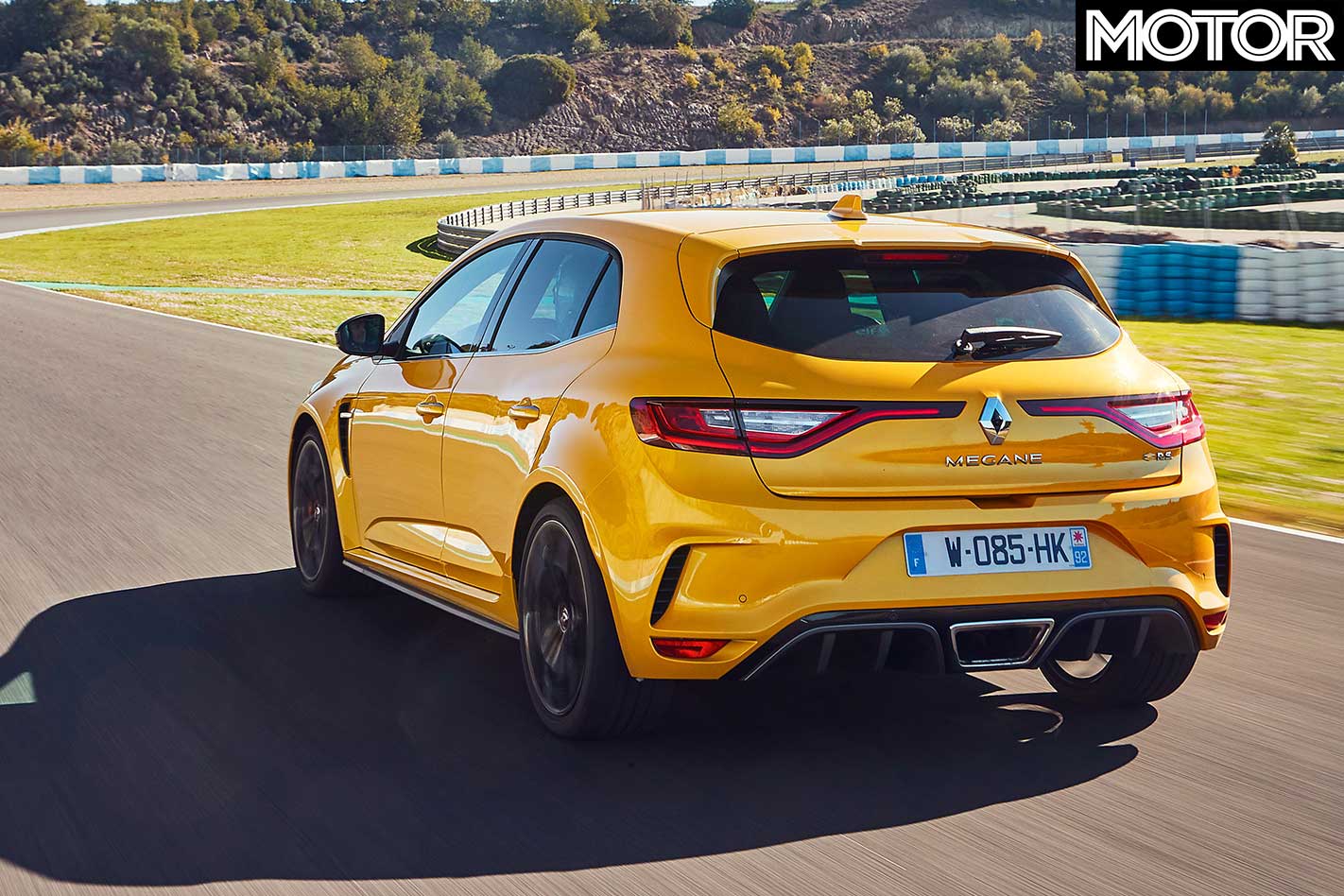
Renault confirmed that the Cup chassis will be available as a $1490 option as of Q4 this year. It’s too early to be sure, but we’d probably have it – unless you know that all your car will ever do is rattle along back roads, because the Sport-spec car is simply sublime at that.
The manual versus auto debate, meanwhile, is over before it’s even begun. It seems you can get what you want if you make enough of a fuss about it.
2018 RENAULT MÉGANE RS 280 CUP SPECS: Engine: 1798cc inline-4, DOHC, 16v, turbo Power: 205kW @ 6000rpm Torque: 390Nm @ 2400-4800rpm 0-100km/h: 5.8sec (claimed) Weight: 1430kg Price: $46,500 (est)
Rating: 4 out of 5 stars Like: Very fast; awesome handling from the Cup chassis; manual gearbox across range Dislike: Prices are still not confirmed in Australia; have only driven it on track so far
Don’t think of the 911T as a cut-price GT3. Instead think of it as a base Carrera that has had a smorgasbord of goodies added to it by Porsche, bundled together at an attractive price and available with options you can’t get on the base car. Once you understand what it’s about, it represents a tempting and cohesive package.
WHAT IS IT?
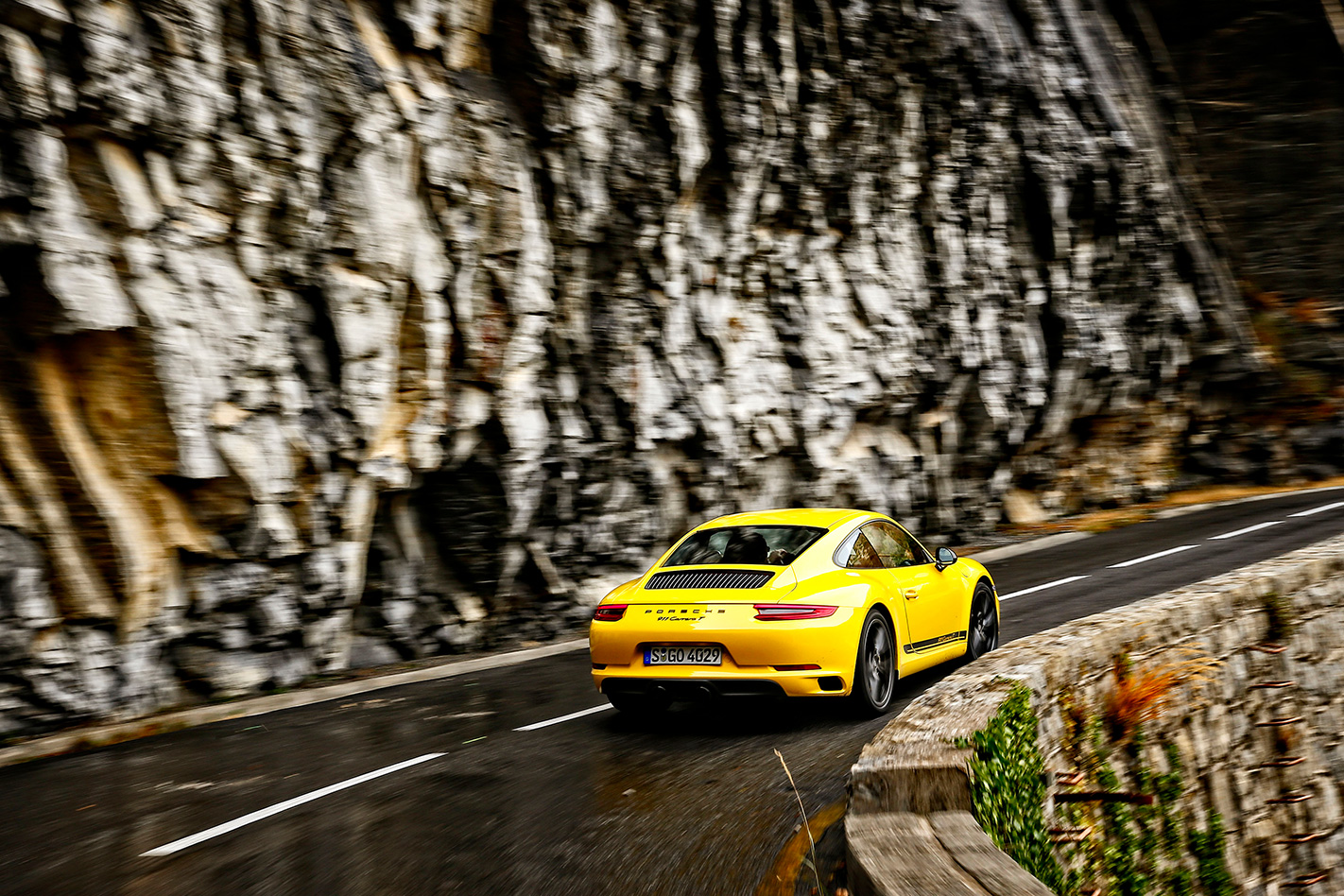
The Porsche 911 Carrera T shares its 272kW turbocharged flat-six with the entry-level 911 Carrera yet Porsche charges a $17,500 premium for the newcomer. It’s marginally lighter but may well be the go for those who value a Porsche of the old school.
WHY WE’RE TESTING IT
We’ve come away with a certain level of admiration, if not adoration, for the 911 Carrera and the promise of a potentially improved version was too good to turn down. The 911 Carrera T has copped a bit of a mauling from some outlets with unreasonable expectations. Let’s see if we can look at things logically.
MAIN RIVALS
BMW M4 CS, Mercedes-AMG C63 AMG Coupe, Nissan GTR
THE WHEELS VERDICT
If you’re shopping at the lower reaches of the Porsche 911 hierarchy, it’s been easy to feel a little hard done by. Start picking a few bits from Porsche’s options list and you’ve suddenly tacked twenty or thirty grand to the price of your 911 that won’t be reflected in its resale value.
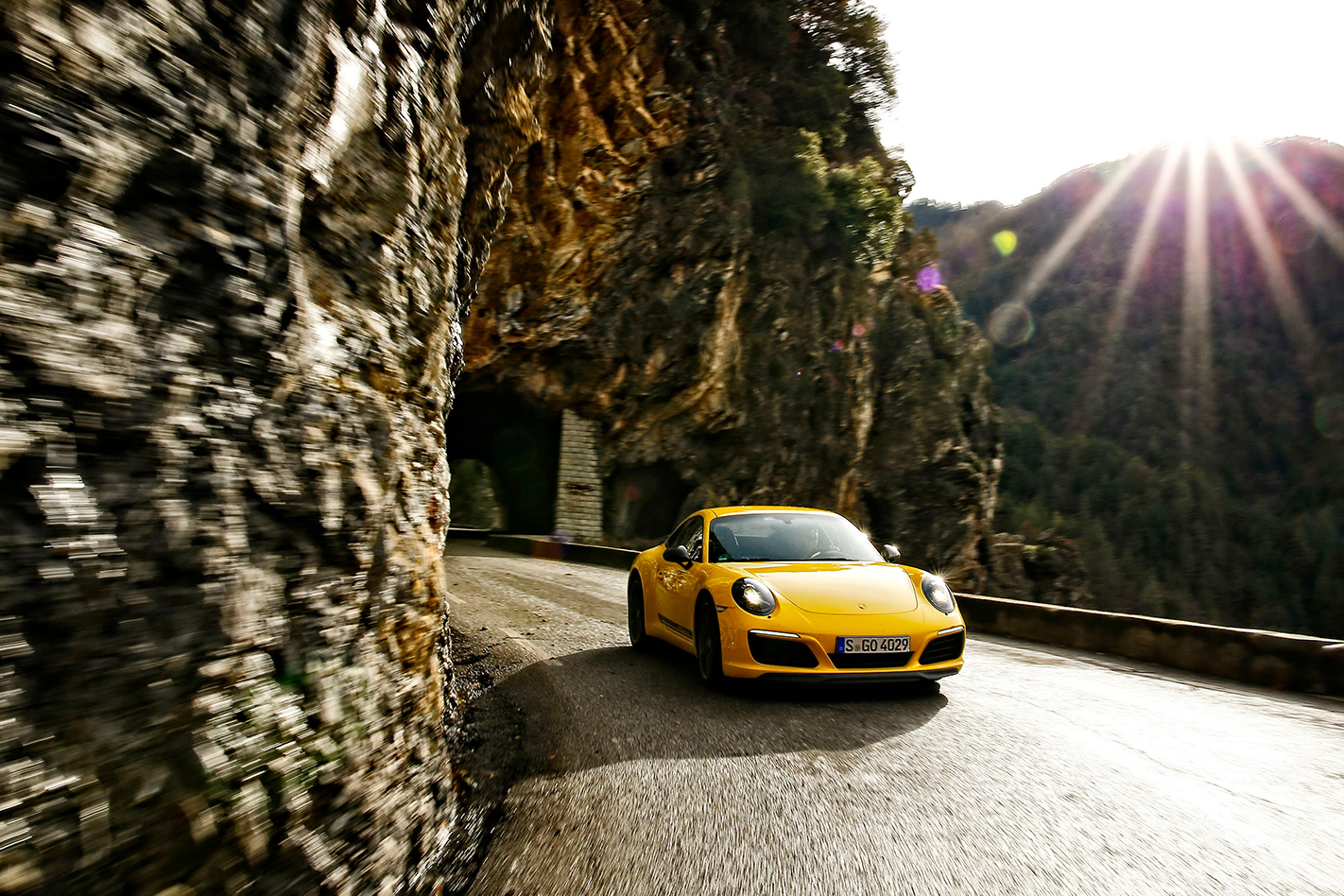
The Carrera T bundles a big package of extras in for $17,500 and drives extremely well. What’s more, you can specify four-wheel steering as an option that’s unavailable on the base Carrera. So while it’s hardly a headliner in the 911 firmament, the Carrera T is more than a worthwhile addition. Just don’t get too hung up on its weight saving spiel.
PLUS: Looks great; benign handling; sweet and tractable turbo lump MINUS: Fabric door pulls are cheesy; seven-speed manual not an outstanding ‘box; so-so fuel economy
THE WHEELS REVIEW
HOW MANY times have we had it drilled into us that light is right? Weight saving is the mantra for car manufacturers, keen to stress the virtuous circle of cutting weight and improving dynamics and efficiency. Porsche is no exception and its latest Carrera T model rides in on the promise of a lightweight alternative to the base Carrera, albeit at a price.
So for an additional $17,500, once you’ve put back the no-cost options of rear seats and infotainment system – because you’d be a fool not to – the T tips the scales at a mere five kilos less than a stock Carrera. Its thinner side and rear glass, reduction in sound deadening and fabric door pulls help offset the addition of extras like 20-inch wheels, a limited-slip differential and adaptive dampers, but don’t expect this car to feel like a budget GT3. It doesn’t. Not even close.
I know this because I’d had the opportunity to drive a manual GT3 Touring prior to the 911 Carrera T on exactly the same drive loop, and there’s a marked difference in personality between the two cars, as you might well expect given that they’re $88,400 and 96kW apart. The inconvenient truth for Porsche? As enervating as the GT3 Touring was, as a road car that would see everyday use, I think I’d be happier with the Carrera T.
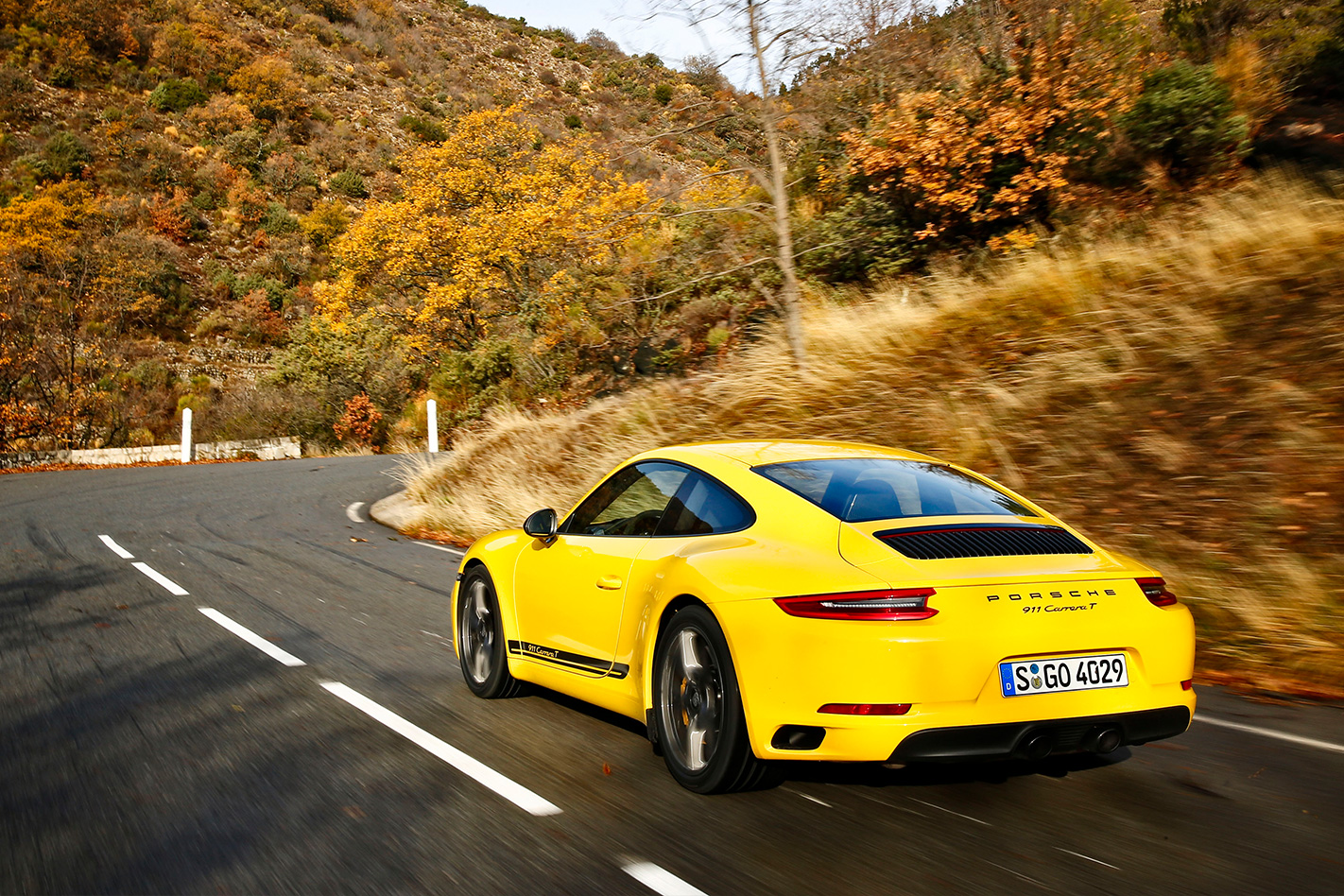
There’s not always a lot of dissent in the way that reviews deal with the Porsche 911. Most agree that the GTS is the ‘sweet spot’ of the range below GT3 level, but now the T has arrived, I’m really not so sure. For a start, it’s quick enough. In a straight line it’ll get to 100km/h in 4.5sec for the manual version and 4.2 if you opt for PDK. It’s also extremely nimble, especially with the $5490 rear-steering optioned in.
The combination of four-wheel steering, relatively light weight, slicker shift action, lowered gearing, wider tyres and the standard limited slip diff make the Carrera T feel agile on the way into corners and seamlessly quick on the other side. Granted, there’s not the manic rush to the redline that you get with a GT3, but the slight softness built into the ride, steering and throttle response is benign and reassuring, especially on bumpier roads.
The rear-axle steering system can’t be optioned on a Carrera, so if you want that agility from your 911, the Carrera T is the most cost-effective way to get it. That might well be all the justification some potential buyers will require, but there are other compensations to the car too. For a start it looks fantastic. The standard-fit PASM Sport Chassis lowers the ride height by 20mm, really hunkering the car down onto the 20-inch Titan Grey wheels that are straight from the pricier Carrera S playbook.
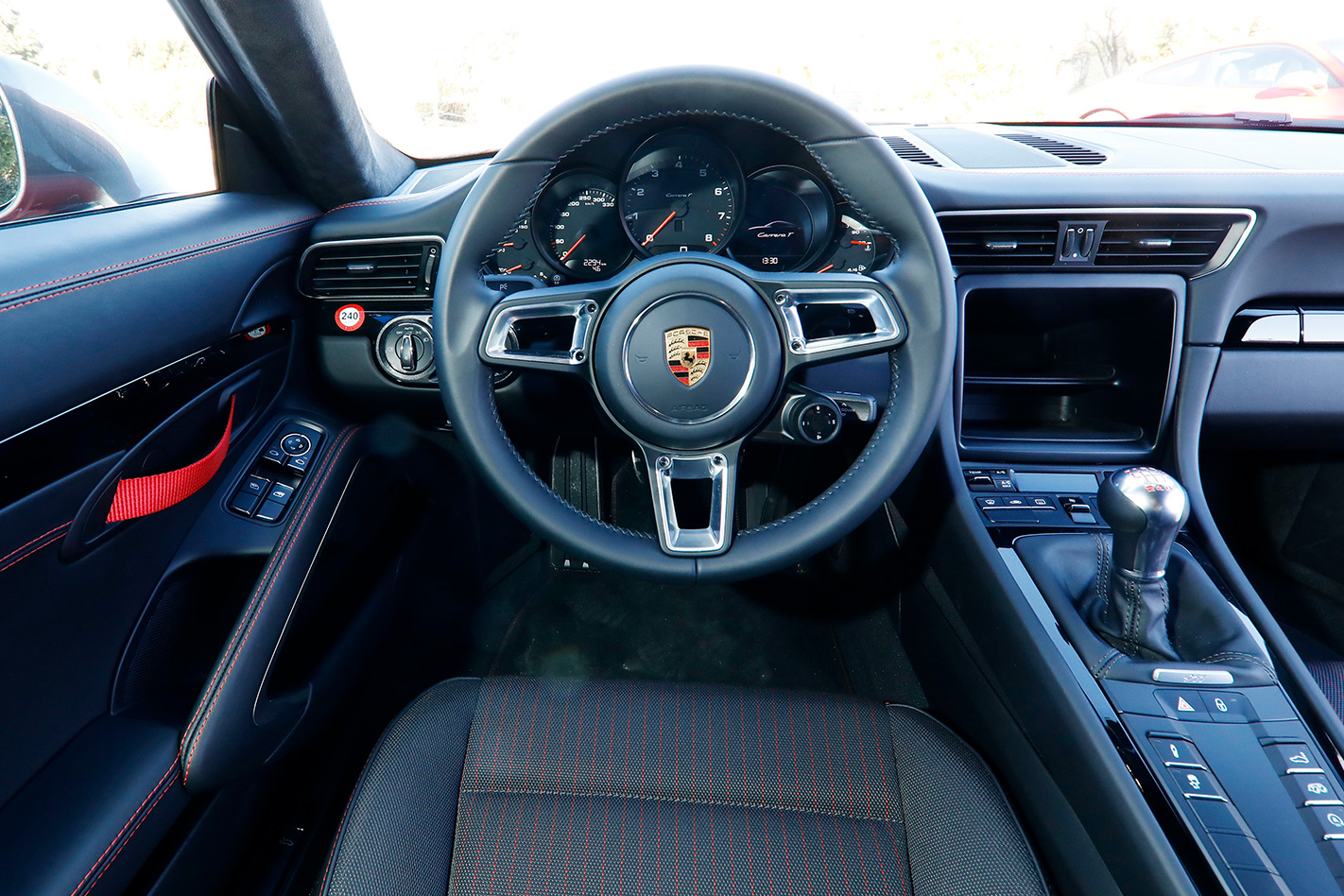
There are other visual clues too. The Carrera T has a deeper front splitter which adds 28mm to the overall length, and decals down the side and on the engine cover. The seats are trimmed in Sport-Tex material with leather bolsters. There’s Carrera T badging on the instrument dials and kick plates and there’s those incongruous fabric door pulls protruding from a fully stitched leather-trimmed door card. If you’re a genuine 911 tragic, you’ll also notice that the gearchange map atop the gear knob in the manual car is finished in red rather than black.
There are a couple of caveats though. Maybe because of that shorter gearing, fuel economy is worse than a base Carrera. A PDK-equipped Carrera will see 7.4L/100km whereas an equivalent Carrera T will net 8.5L/100km. That’s a 15 percent hit in efficiency for a supposedly lighter car with the same power. Maybe not such a problem in Australia, but in other markets where cars are taxed by carbon dioxide emissions, that could scotch the Carrera T’s chances. Also, I can’t help but think this car could have been slightly better planned in its specs. Turning the wick up just by a handful of kilowatts would have clarified the Carrera T’s proposition no end.
You’ll forgive it these issues on a good road. Unlike the sometimes staccato progress you’ll find on-road in a GT3, the Carrera T is an easier car to work into a sympathetic flow. You feel you’re getting something from it even when you’re not pinging the redline at some horrendous speed, which is very much in the ethos of the original Porsche 911 T from half a century ago. That car was a depowered budget version of the 911, but its latter-day successor doesn’t possess quite such a simple ‘elevator pitch’.
Think of the Carrera T as the relatively affordable 911 for drivers. Real drivers as opposed to those who just want a big power number to brag about. Porsche has gone through the 911 Carrera and added a suite of well-judged bits at reasonable prices. There will be some who question the logic of paying an extra $17,500 for a car that’s no more powerful, not a great deal lighter and significantly thirstier.
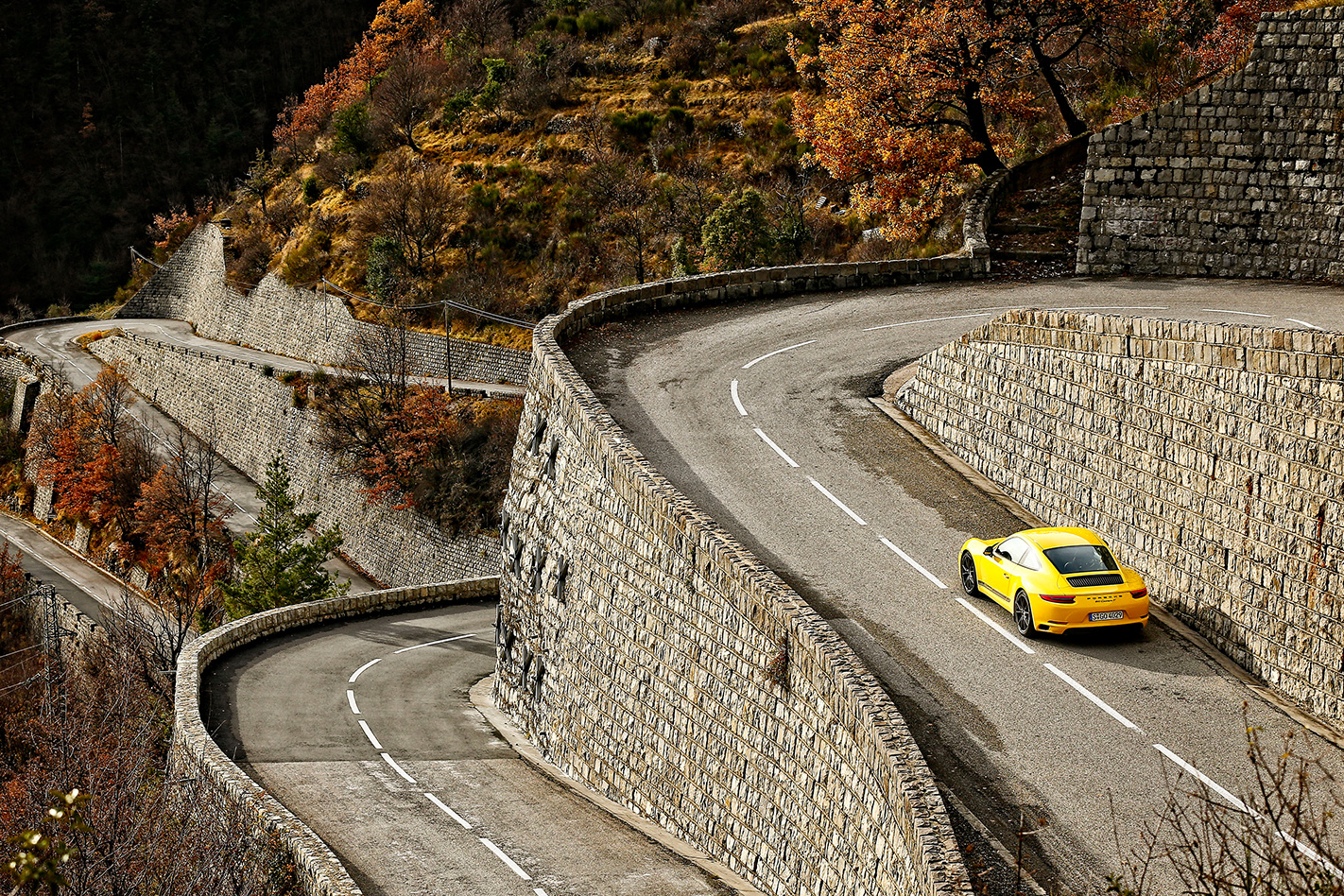
Nevertheless, almost everything about the Carrera T’s cornering dynamics feel honed by an additional 20 percent over the base car. On that basis at least, it’s a heck of a deal. But that would require somebody who knows what they’re doing – and what the car is supposed to be doing – when confronted with a corner. That is by no means a given, even amongst 911 customers.
So if you genuinely get it (and you’ll certainly get a nod of appreciation from any fellow Carrera T driver coming the other way), this car grants you access to the club within the club. Fabric door pulls notwithstanding, here’s the no-nonsense driver’s 911 Carrera we’ve been waiting for ever since the 991-generation car debuted in 2011. But keep that under your hat. This one’s too much fun to share.
SPECS Model: Porsche 911 Carrera T Engine: 2981cc flat-six, dohc, 24v, turbo Max power: 272kW @ 6500rpm Max torque: 450Nm @ 1700-5000rpm Transmission: 7-speed manual / 7-speed PDK Weight: 1425kg / 1445kg 0-100km/h: 4.5 sec / 4.2 sec Economy: 9.5L/100km / 8.5L/100km Price: $238,400 / $245,070 On sale: Now
Headlines around the world may have proclaimed Tesla as the star of electric vehicle (EV) performance, but an executive from its rival BMW i Division has pertinently pointed out that there is a world of difference between straight-line acceleration and handling.
Answering questions about why BMW i – which for the last five years has only sold the i3 EV and hybrid i8 Coupe – has not yet produced a challenger to Tesla, BMW i8 project manager Markus Pluntke states that batteries are not good enough to deliver sports-car handling.

“You do not want to put an 800-to-900 kilogram battery pack into a sports car to get the power, and we don’t want a sports car that would be like limited to where the customer lives and maybe just to take it out of the garage, show it off a little and then bring it back,” he tells MOTOR at a recent BMW i event in Europe.
“I think the battery technology one day could be good to do a really proper sports car. But … it’s about weight, weight distribution, and the very stiff body [of i8].”
Where a 1.5-litre turbocharged three-cylinder/electric motor i8 Coupe weighs 1535kg, for example, the battery pack in the Model S P100D contributes to a hefty 2241kg kerb weight.
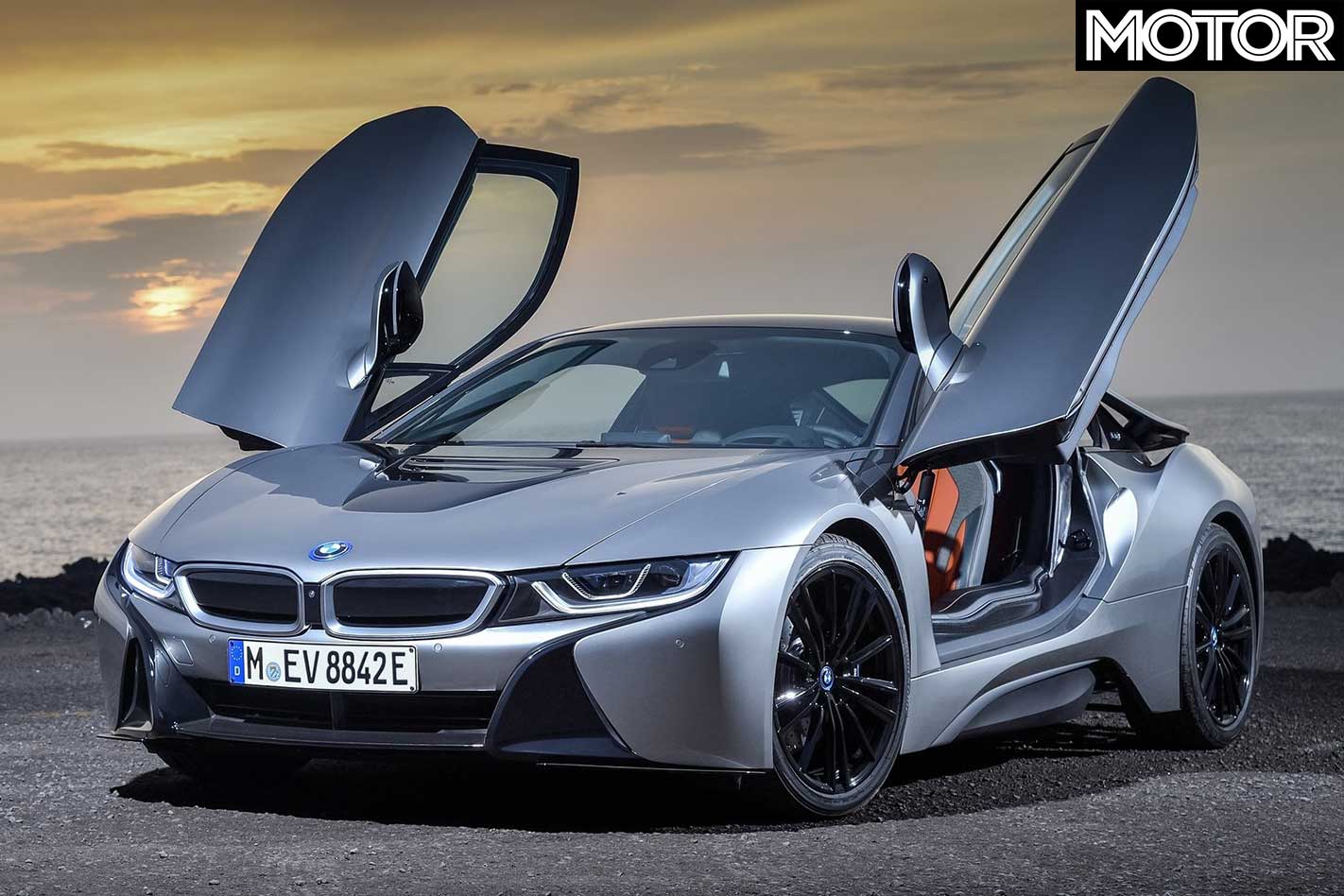
Plunkte promises, however, that “there will always be an electrified sports car by BMW” but that plug-in petrol-electric technology will still evolve for a long period of time from within the engineering halls of its Munich headquarters.
The ultimate goal, he reiterates, would have to be fast performance, long range and also a kerb weight figure that does not start with a ‘2’.
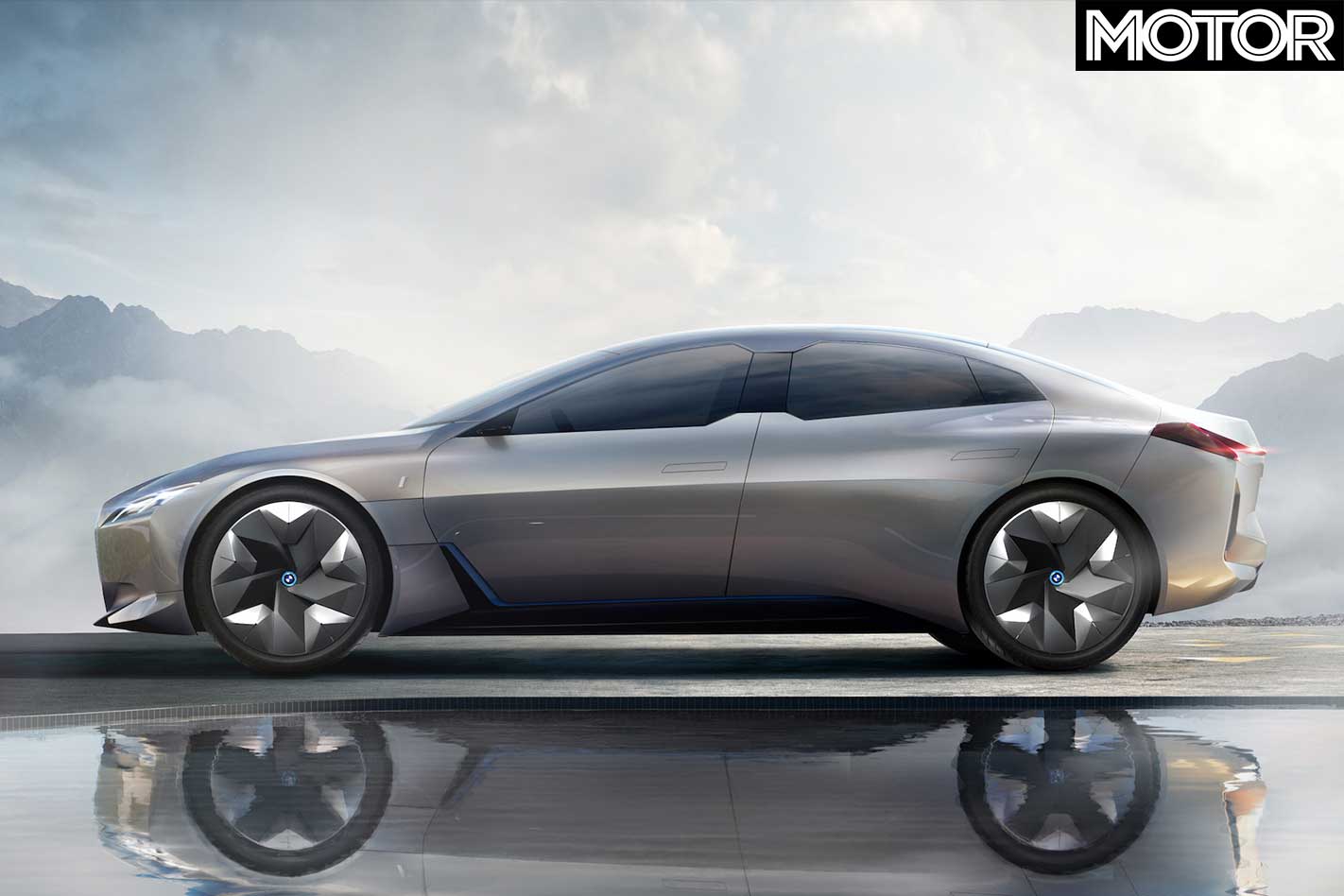
“Battery technology is evolving fast [and] I’m confident that there will be a day when you can do a pure electric sports car with enough range, with enough power and without having exceeded a two-tonne weight overall.
“[But] we will see when this technology moves to that point.”
BMW i Vision Dynamics medium liftback concept shown.
THE BMW 2 Series Active Tourer range has crunched down to a single variant as part of a mild makeover that ups the price of entry to $49,500.
The German luxury carmaker has dumped the previous $45,000 entry-level variant, the 218i, powered by a 1.5-litre turbocharged four-cylinder engine. In its place is the $49,500 220i Luxury Line, powered by a turbocharged 2.0-litre petrol engine and a claimed $2100 cheaper than the car it displaces. A diesel-engined option, costing $3000 more than the entry-level 218i, has also fallen from the showroom.
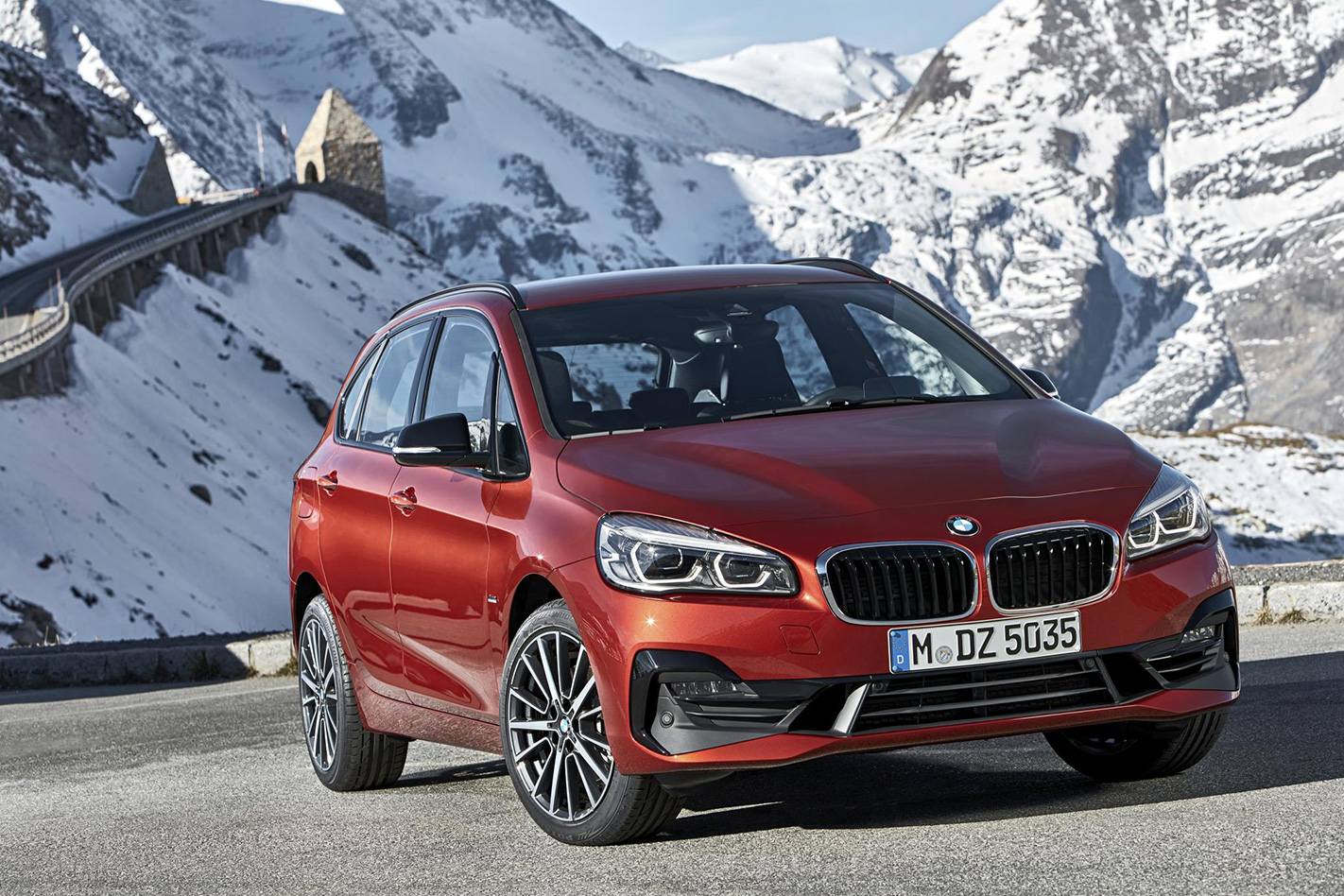
Hallmarks of the refreshed 2 Series Active Tourer include a revised front fascia and inclusion of LED headlights and LED fog lights as standard. Chrome Line exterior trim surrounds the windows and exterior trim while a new 18-inch alloy wheel design distinguishes the new Active Tourer.
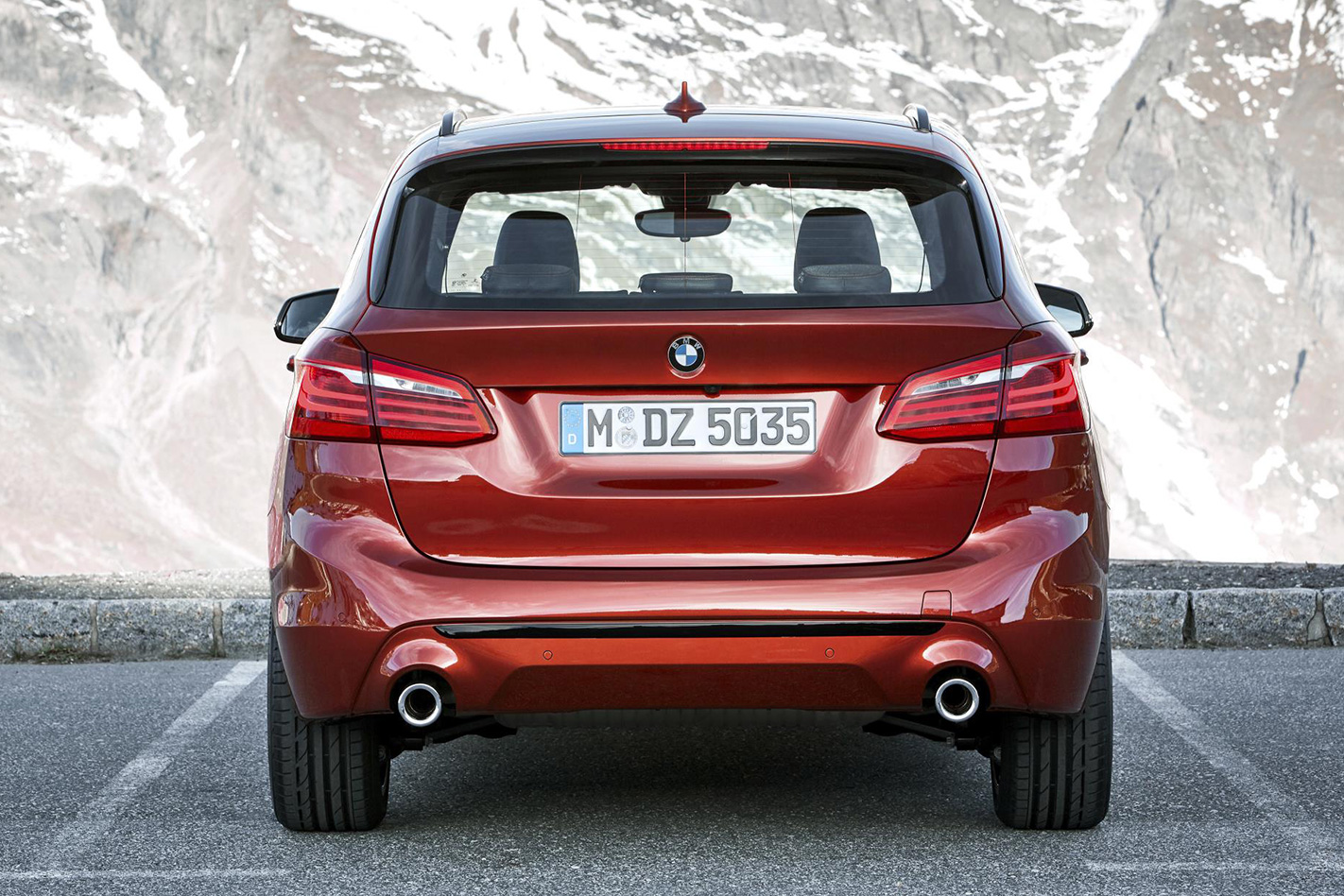
Down the rear, the 220i Active Tourer receives a redesigned apron with twin exhaust outlets.
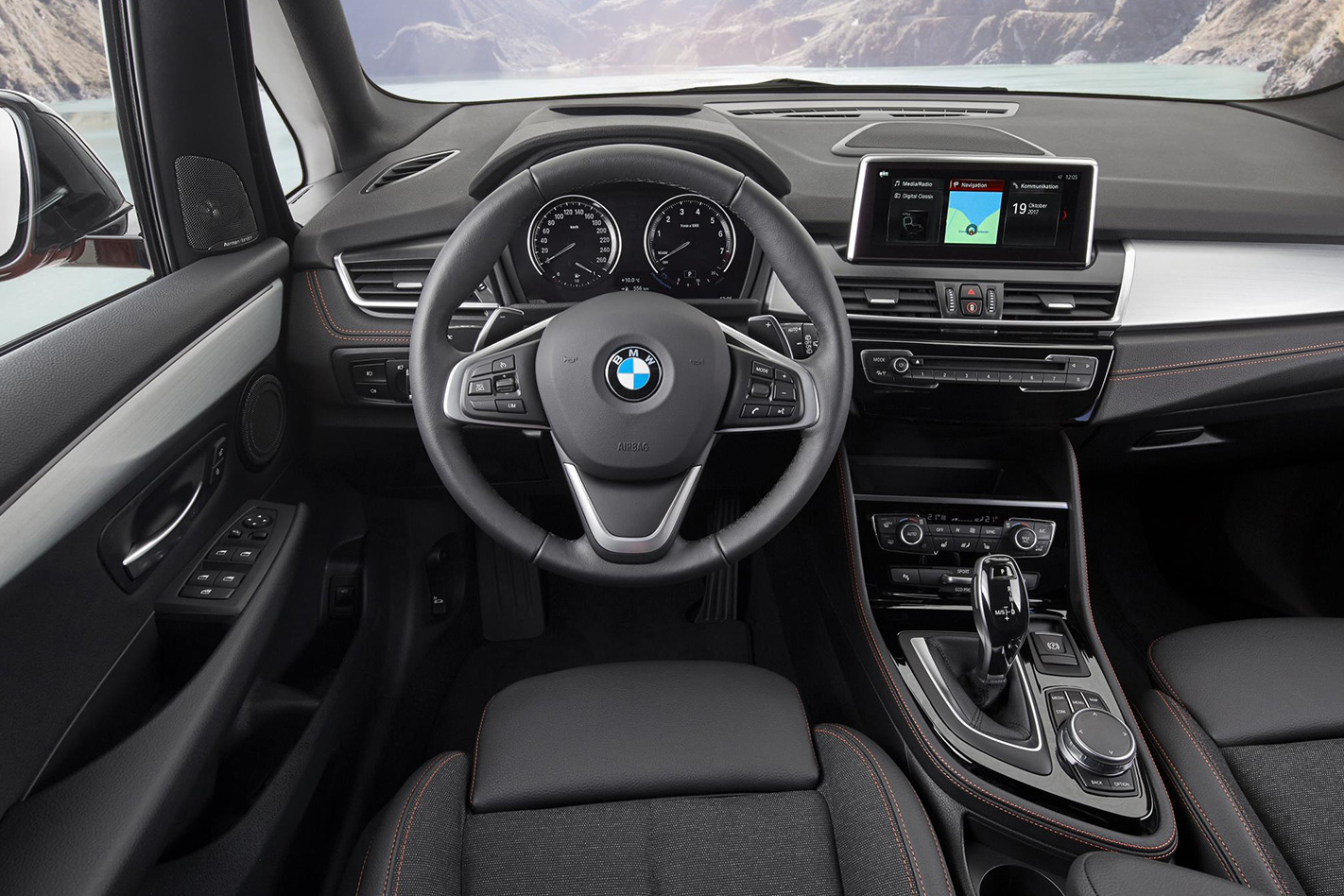
Inside, a redesigned gear shifter highlights the addition of a dual-clutch transmission. Dakota leather trim comes as standard on redesigned seats and BMW’s iDrive6 infotainment is offered in 6.5-inch and optional 8.8-inch forms.
Producing 141kW and 280Nm, the 2.0 turbo four- cylinder engine powers the front wheels exclusively.
The 2 Series Active Tourer is available in 13 different colours –notable additions are Sunset Orange and Jucaro Beige metallics.
Stump up the extra cash for BMW’s popular M Sport Package and you unlock Estoril Blue and a choice of five extra wheel options. Other items added with the M Sport Package are a firmer suspension set up, an M Aerodynamics package, Shadow Line exterior trim, sports seats and aluminium interior trim.
An Innovations package (which adds a head-up display, ConnectedDrive, active cruise control, a more feature-rich navigation with 8.8-inch screen) and Comfort package (which includes keyless entry, and electric-adjust front seats with lumbar support and heating) all options.
The 2 Series is BMW’s 11th best-selling model in Australia.
2018 BMW 2 Series Active Tourer pricing
220i Luxury Line $49,500
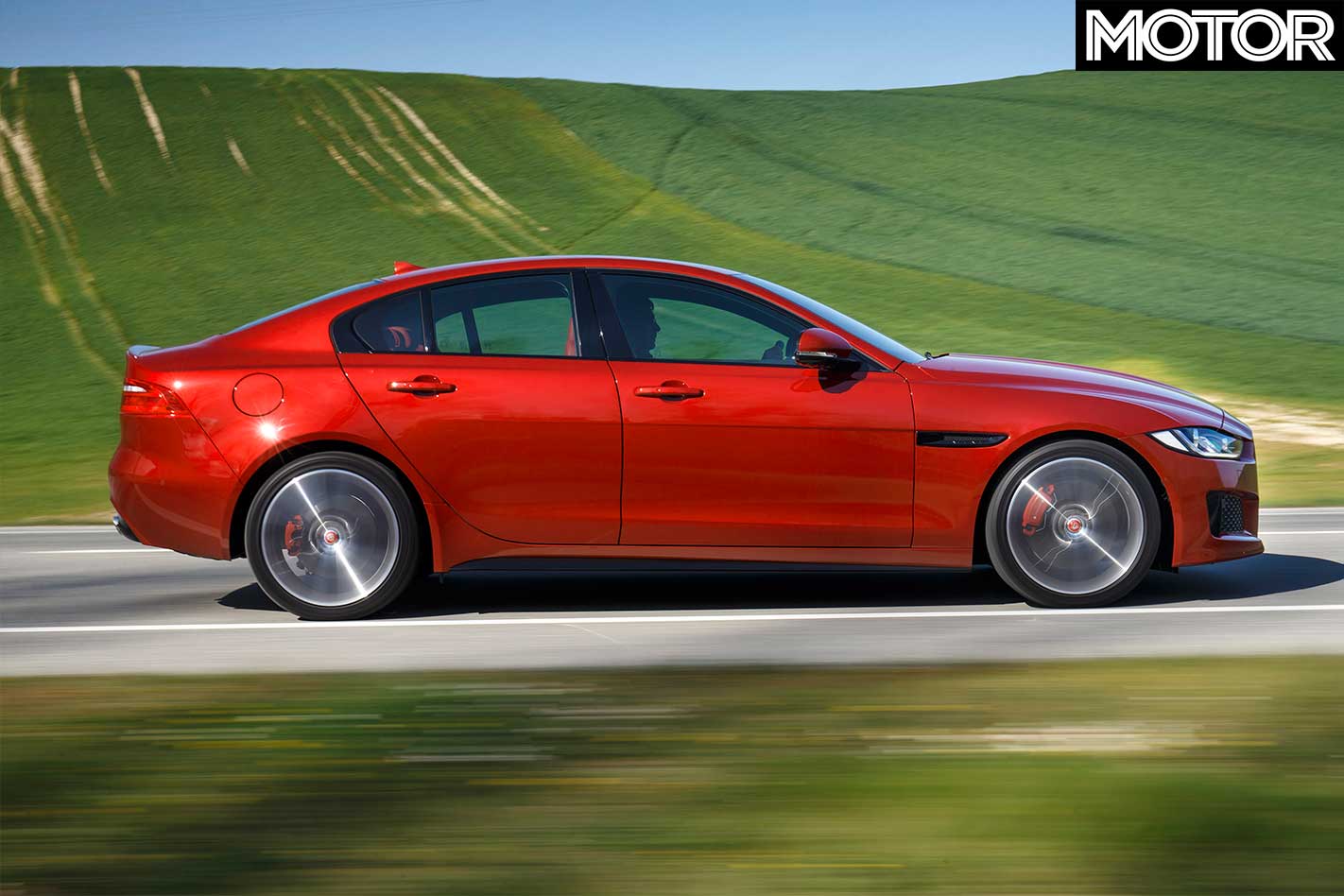
IF YOU’VE heard the old-school bark coming out of the back of a Jaguar F-Type V6 S, the thought of that engine in a stylish four-door sedan for $50K less probably sounds pretty appealing.
For the 2018 model year, Jaguar has extracted an extra 30kW at the top end from the XE S’s 3.0-litre supercharged V6, matching the S version of its sexier two-door sibling. Sadly, something has been lost in translation.
It’s a smooth, linear engine with plenty of power, but it doesn’t have that same sensual rasp as it does in the F-Type –maybe Jaguar reckons sedan buyers don’t want something that rowdy?
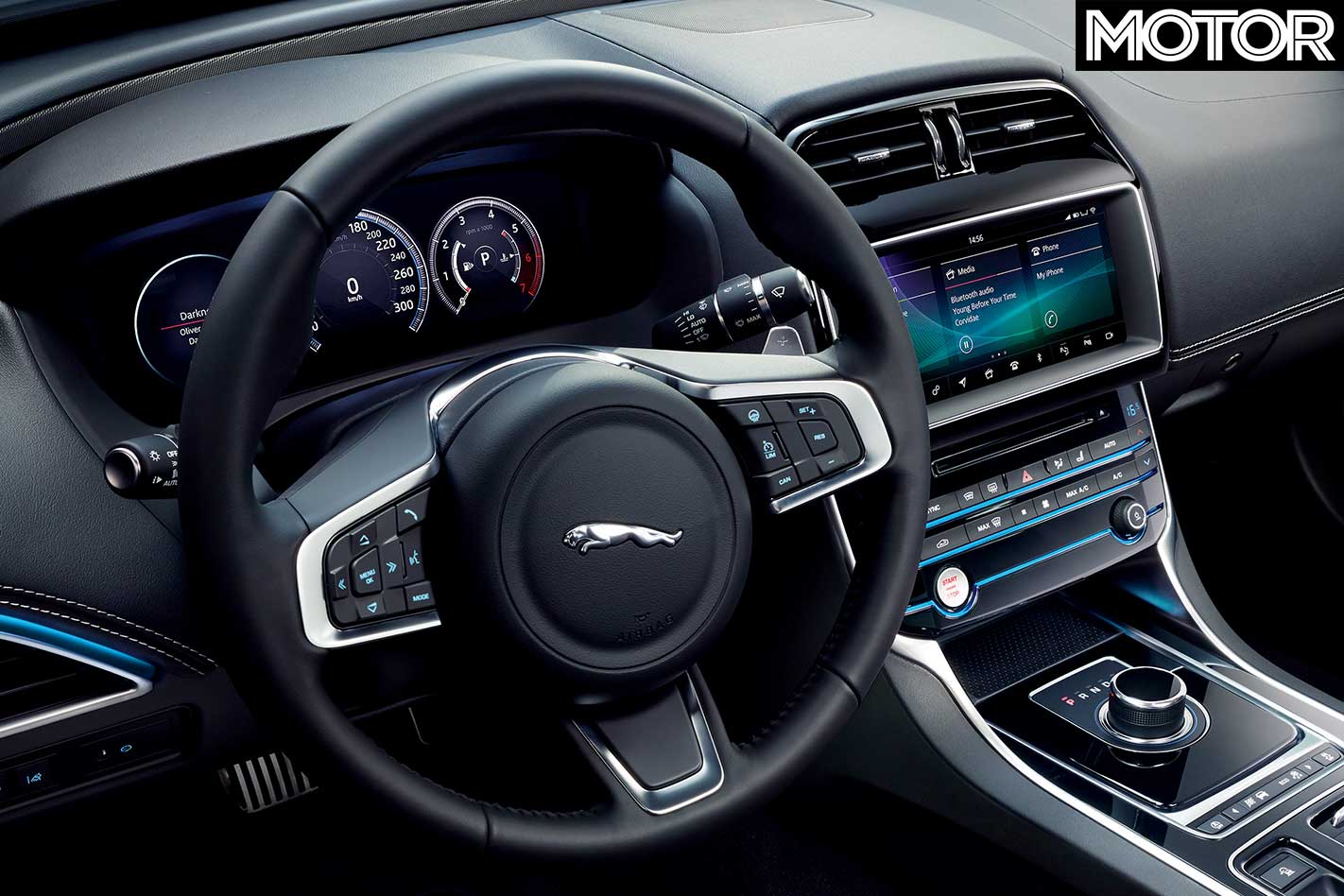
There’s plenty to like about the XE package, with handsome styling, a pleasant ride and balanced handling, but we suspect the engine that best exploits these attributes is the new 221kW/400Nm Ingenium 2.0-litre turbo four, which weighs almost 100kg less than the V6 S and can be had from just $70,200.
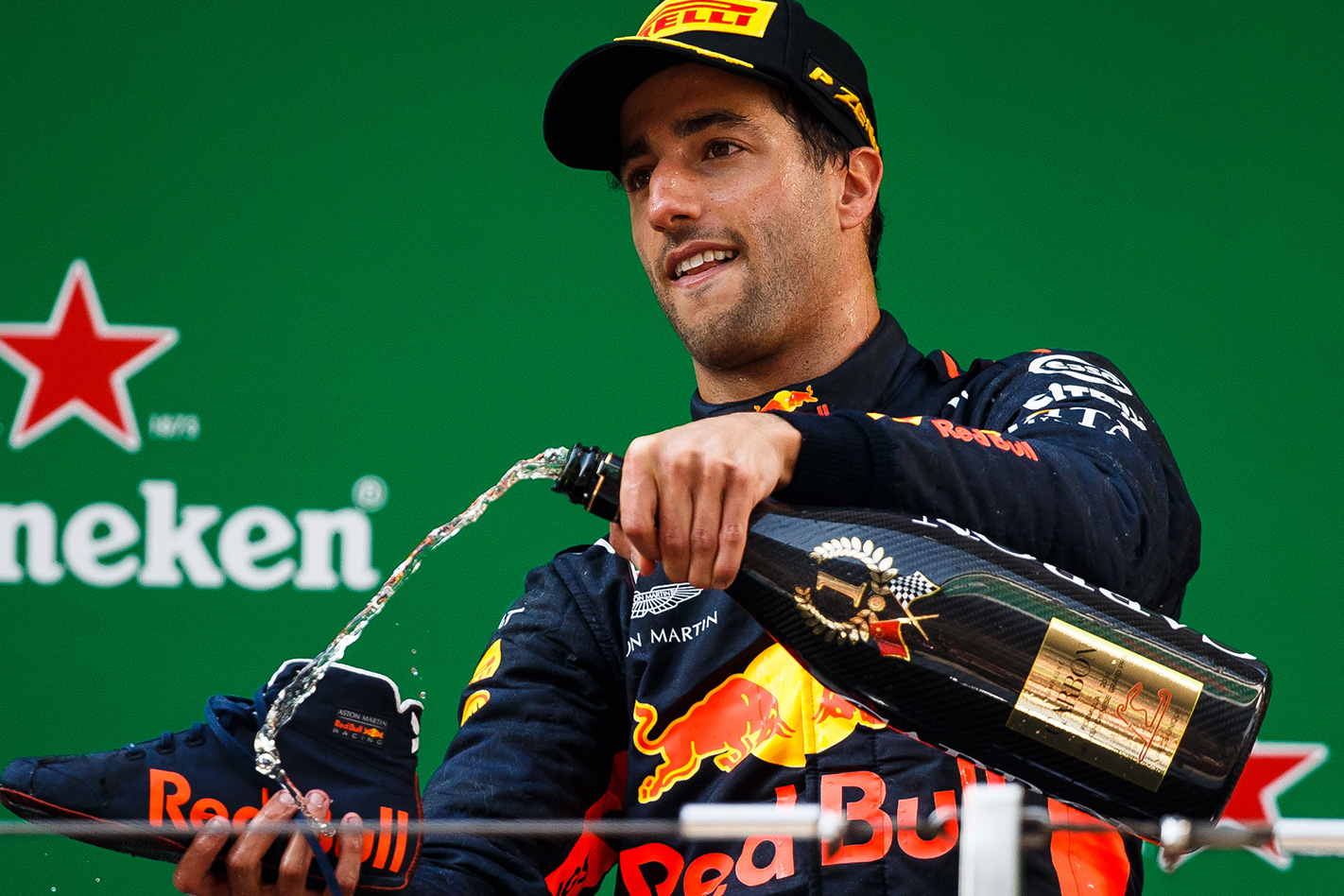
FORMULA 1’s new fun-seeking supremoes and the Queensland clothing brand credited with kicking off the tradition have both moved to protect their claims over Daniel Ricciardo’s popular post-race podium stunt.
F1 bosses late last year swung into action and registered a global trademark over the word “shoey”, which they were granted. However, the F1 trademark only applies to the things you would normally drink from, such as glasses, cups, tankards, beer mugs and bottles.
But representatives for Burleigh Heads-based The Mad Hueys jumped in first, registering the trademark for “shoey” months before F1 organisers twigged to the rising popularity of the act, and applying it to all manner of clothing – including the cup of choice for shoey aficionados, footwear.
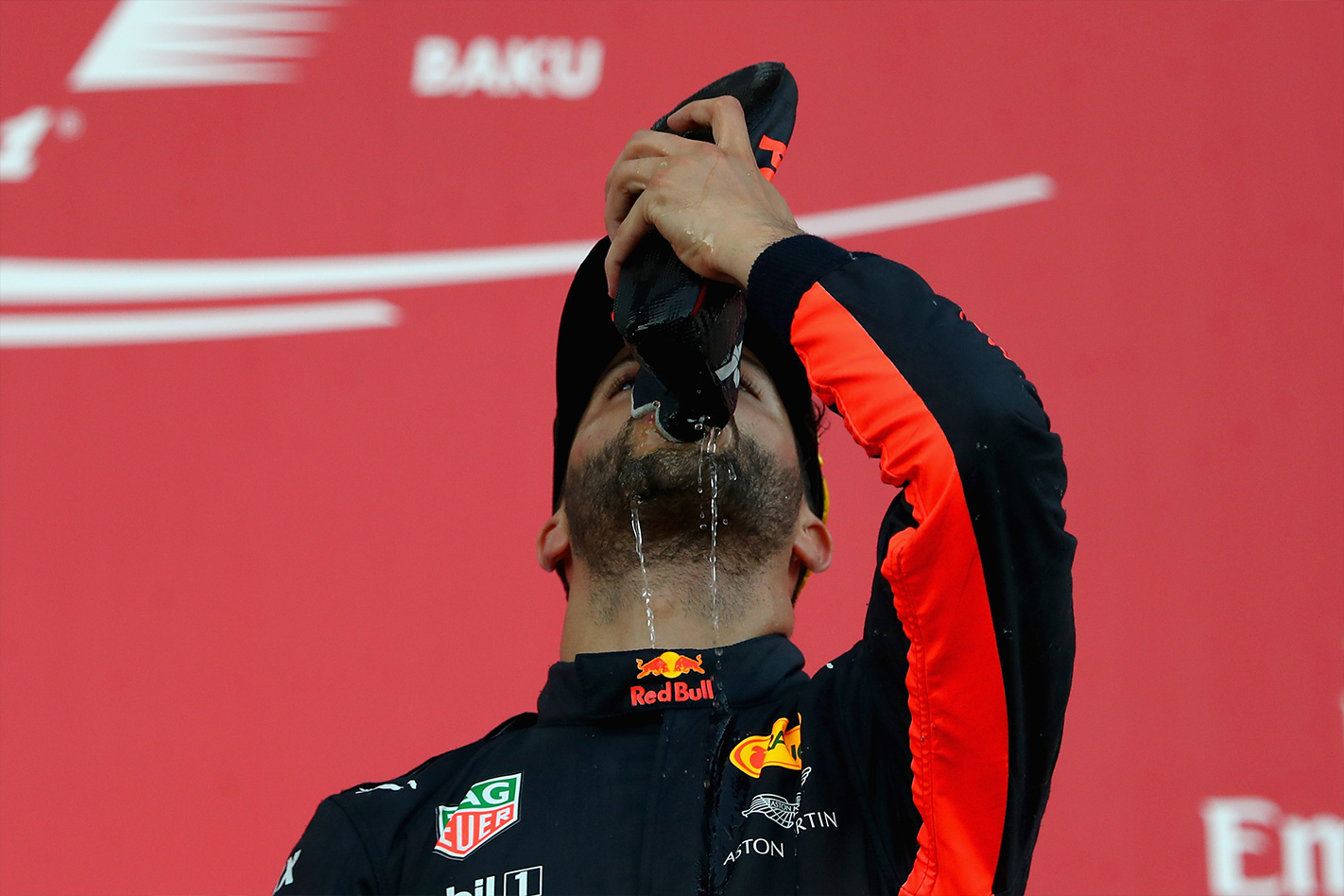
The Mad Hueys are credited with popularising the shoey, which the people behind the tradition claim kicked off in about 2002. The company’s Facebook page features numerous videos and images of people – and even the odd baby – taking deep draughts from footwear.
So, who owns the rights to the name of the post-race celebration that Daniel Ricciardo has popularised? And will Daniel – well, any Australian who has whipped off a shoe, filled it with beer and then chugged it – need to gain permission from either The Mad Hueys or F1 organisers before they next perform the stunt?
Queensland-based patent and trademark attorney Jack King-Scott, a director of IP Gateway, the law firm that helped to register the shoey trademark on behalf of The Mad Huey’s representatives, said it was common for similarly named trademarks on different things to “peacefully coexist” – unless they crossed each other.
“If there’s no confusion in the market with anyone using ‘shoey’ on clothing or footware, then it shouldn’t be a problem,” King-Scott said. “It’s up to the trademark’s owners to monitor and enforce their rights in respect of the trademark.”
That said, he said Ricciardo would still be free to carry on the tradition he introduced to the top tier of motorsport after finishing third in the 2016 German Grand Prix – and a few of his colleagues on later podiums including actor Patrick Stewart and former Red Bull Racing driver Mark Webber – as long as the word ‘shoey’ didn’t appear on anything covered by the trademarks.
“Daniel Ricciardo was doing it [the shoey] well before the F1 organisers entered the party,” he said.
Holden’s two-door pillarless coupe was a revelation for Australia, and one that’s proved to have enduring appeal among Aussie car fanatics. The Monaro GTS 327’s win at Bathurst in the same year – the first time that factory-supported Ford and Holden teams battled it out for V8-powered supremacy that sparked the rivalry that endures even today – certainly helped prove its muscle-car credentials.
We celebrate by going back to the Monaro’s first-ever road test, a review that set it on the path to the podium for the 1968 Wheels Car of the Year award.
We test the Monaro range and the husky Brougham
HOLDEN’S HOT ONES
In one bold move – predicted exclusively (and first) in WHEELS more than 18 months ago – GM-H hits the market with a one-two: lts own two-door super car and an answer to Ford’s hot-selling Fairlane.
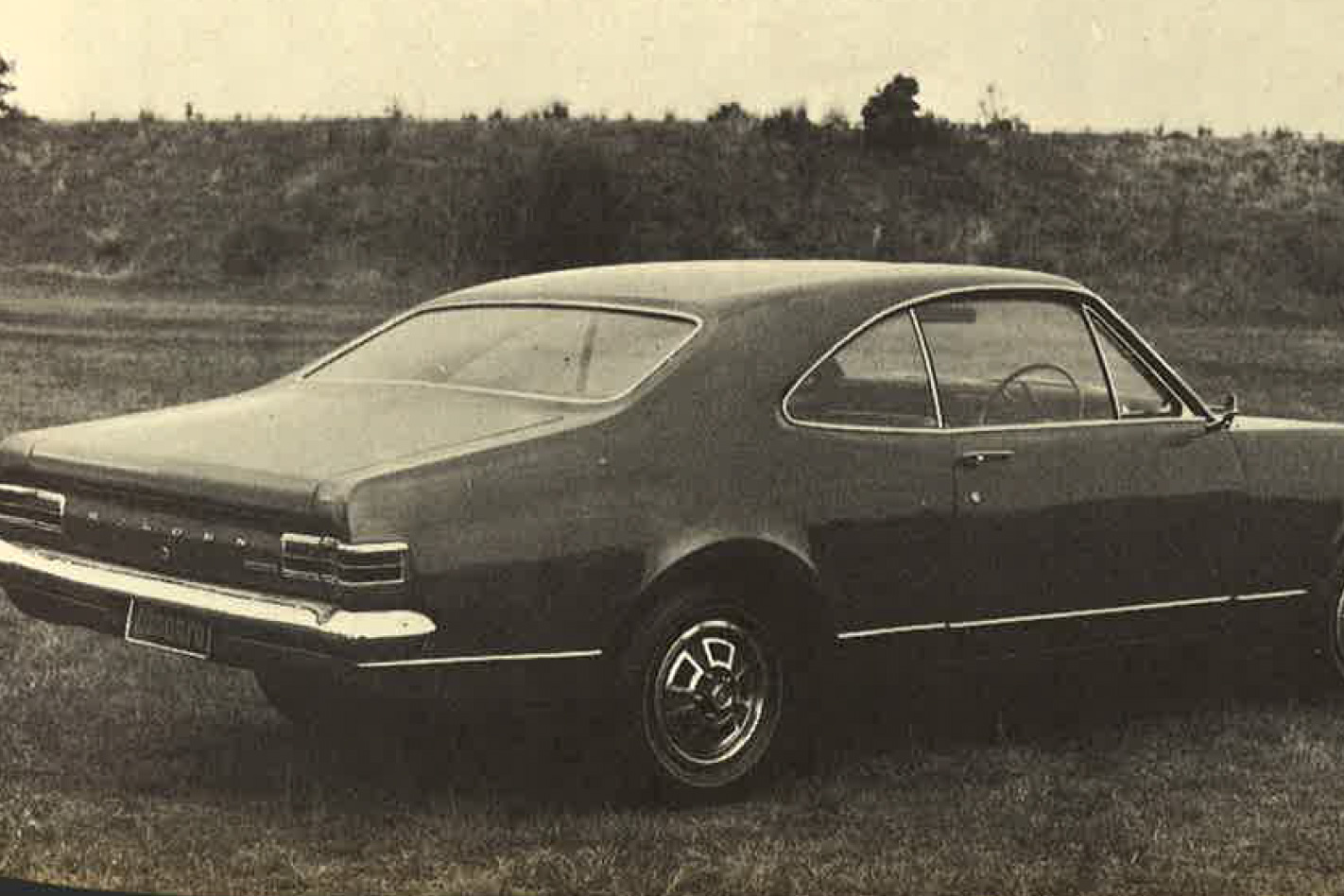
WITH predictable modesty the GM-H publicity boys have described the Monaro as a “shattering” car. And that’s about what it is. Though I might have thought twice about a word that conjures up pictures of boy racers wiping themselves off on telegraph poles.
Holden’s hot ones was first published in the September 1968 edition of Wheels magazine
At the very least, however, the car is startling. And if it follows current overseas (for overseas read US) trends it will sell as fast as it looks. Two-door, hardtop sporty cars are very IN over there and if it lives up to the promise it showed when we tested it a few weeks ago inside GM-H’s secret test track at Lang Lang near Melbourne it will do both.
The Monaro, the pillarless challenge to the Ford Falcon GT, comes in a bewildering combination of variations in line with the prevailing GM-H kick. It starts off with the bottom-of-the-line model with a 161 engine and drums all round turning out 114bhp and selling for $2500 or thereabouts. Prices were not announced when we went to press. From there it heaps option on option till you finally end up with the Genuine Article – the GTS “327”. It’s the top-of-the-line.
The ultimate. The absolute Monaro (that’s a native word for “the peak” or “‘high plane” or something pretty similar.) It is also the name of a mountain range near Canberra (political overtones?).
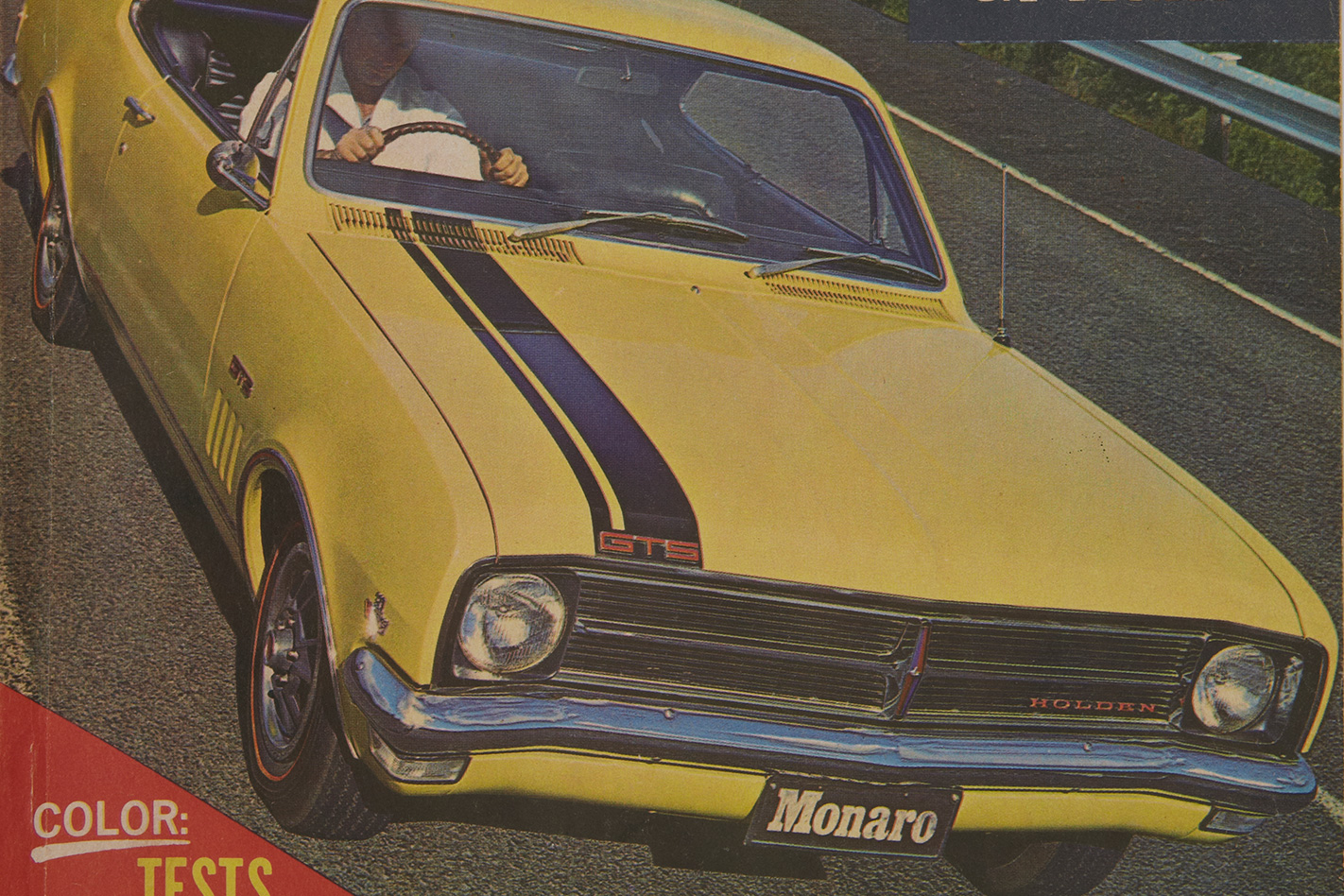
But it’s all car, man. And if it doesn’t give the Ford GTs the hurry-along at Bathurst some GM-H executives will be surprised.
GM-H calls it its “fun car” – and in some versions it certainly is (although the 161 is probably more likely the “funny car” of the troupe). But the mid-range machines, like the ones with the 186S “middle-of-the-line” engine, and the model which will probably be the big seller, definitely are. The 327 is definitely COMPETITION ORIENTATED.
It even sounds like it might be the young brother of Norm Beechey’s Camaro. Driving it the feeling is reinforced and you end up with a positive kinship with the latest addition to the super-car arena.
GM-H calls it “Australia’s first sports machine”. That may be a bit presumptuous but it certainly is sporty. And whether it will “drive you wild” (again the maker’s phrase) probably depends on how you drive it and the way you treat it.
It may not be all things to all drivers as GM-H hopes. But it comes pretty close. The basic 161-englned version is a good cheap buy for the family man who is still the terror or the tracks deep down inside there somewhere. It is economical (will probably give round 30 mpg at a 30 mph average) and the back seat is big enough for the kids and the boot is big enough for the family’s holiday luggage. Access to the back seat is adequate too – Unlike many other two-doors. The drum brakes are (again) adequate (and probably an advantage over discs in the country) and it even comes with a three-speed column change.
From then on you build your Monaro to suit your taste. On the hotter models the floor-mounted tacho is standard. But there is nothing to stop you ordering it on any of the seven basic versions.
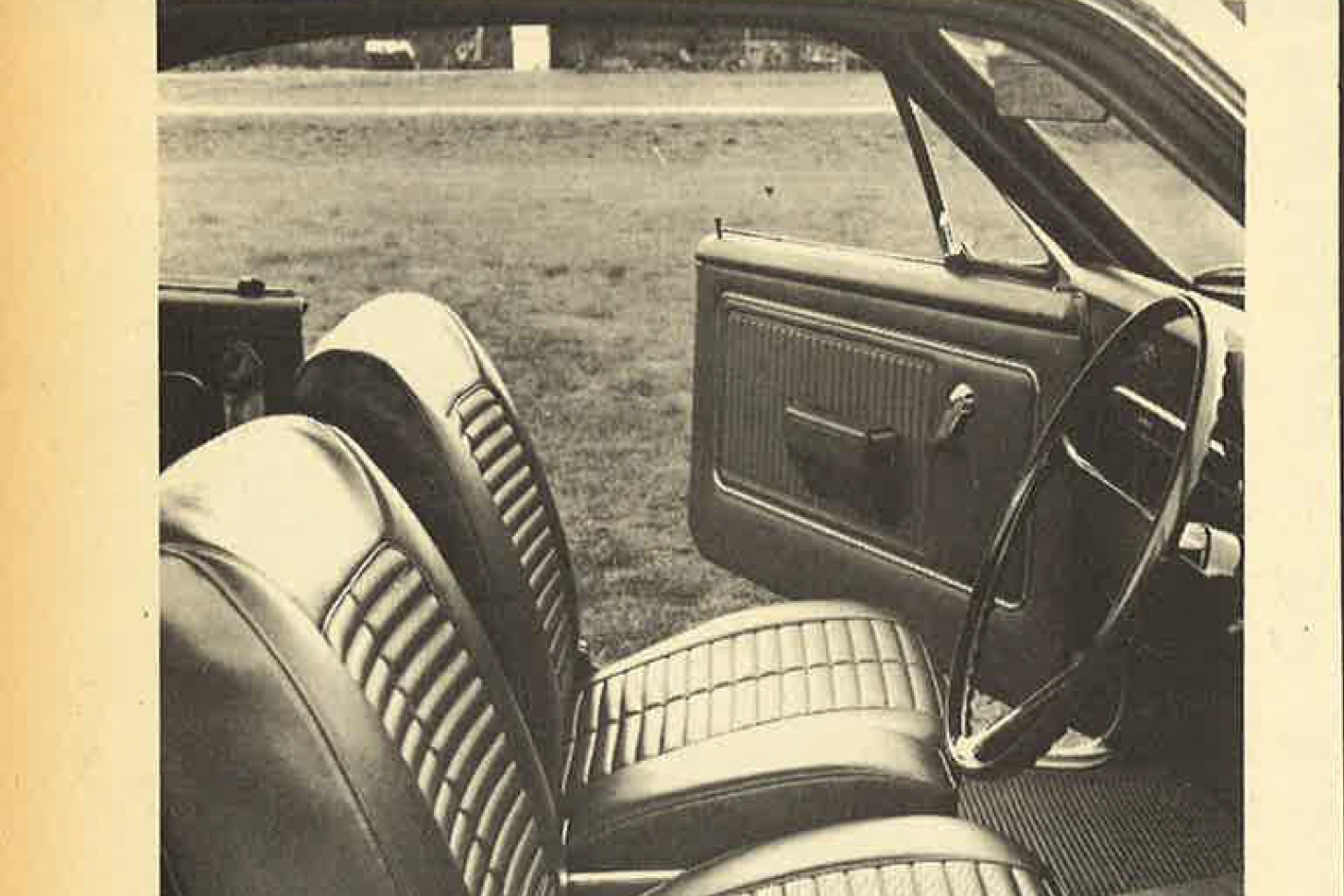
Gears can be manual or automatic, on the floor or on the column. Engines range from the 161 through the 186 (standard and “S”) to the 210 bhp V8 and the super-hot 250 bhp V8. As your engine goes up so does your fuel consumption, naturally.
The Monaro “186” engines gives 33 8 mpg at a steady 30 mph, the 327 in the GTS Monaro only 23.4. It’s a matter of not wanting to have your cake and eat it too and it’s all entirely up to you. Everything – almost – is optional. The “go faster” stripes come for no extra cost on the GTS Monaros. But if you feel they might embarrass you then the factory will delete them.
Standing quarter figures with the various engines were interesting.
Standing ¼ Engine1/2secmile GTS/ 32716.2 25.3 GTS/ 307 (4-speed manual) 18.028.3 GTS/ 307 (automatic)18.629.3 186S (4-speed manual)19.130.5 186 (3-speed manual)20.332.2
Top speed figures (mph) recorded were: GTS 327: 124.2 GTS 307: 109.6 GTS 307 (auto): 107.6 GTS 186S: 99.9 Monaro 186: 91.7
Figures from standstill to 60 mph varied from 8.4 secs for the red hot GTS 327 to almost 17 secs for the bottom-of- the-line 161. Handling varied considerably up through the range too. But the stick-with-itnessof the GTS 327 was eye-opening, thanks mainly to increased-rate front springs and special rear-axle radius rods. The latter will be a boon to the three GTS drivers in the London-to-Sydney Rally and won’t go amiss on the five that will probably contest the Hardie Ferodo 500 in October either.
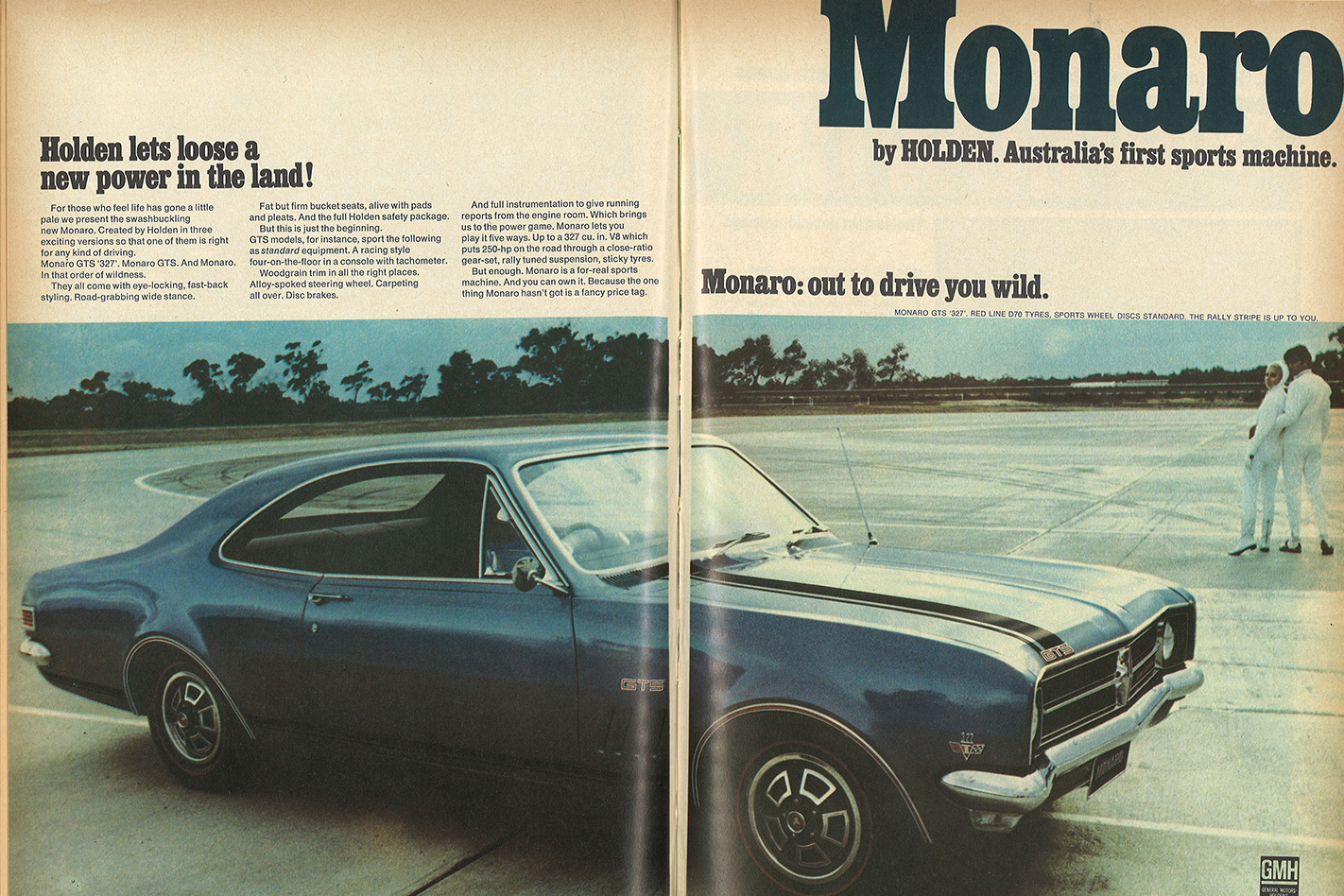
But then, good handling is only to be expected in a car costing nearly $4000 and designed expressly to thrash the Falcon GT. It has been hinted that only about 250 of the exotic machines will be built – just enough to homologate the car for the Bathurst race. If this is so, and the car catches the Australian imagination as well as we predict, then the car could have an astonishing resale value. But then if it gets to that stage the General will probably churn out some more.
The GTS 327 uses the same mill that powers the Impala and the Parisienne. Its gearbox is a close ratio, manual four speed. It is manoeuvred via a stubby, floor-mounted tennis ball-sized, imitation walnut wood-grained shifter. The steering wheel on the GTS versions is also imitation wood with alloy spokes.
Six-inch wide wheels are standard but the choice of rubber is in a mind-boggling variety that includes D70 high-speed red band 7.35 nylons and four-ply blackwall rayon 6.95s. You can choose from a range of 12 tyres in the rubber department. Wide 600-14 “rally” wheels are also optional.
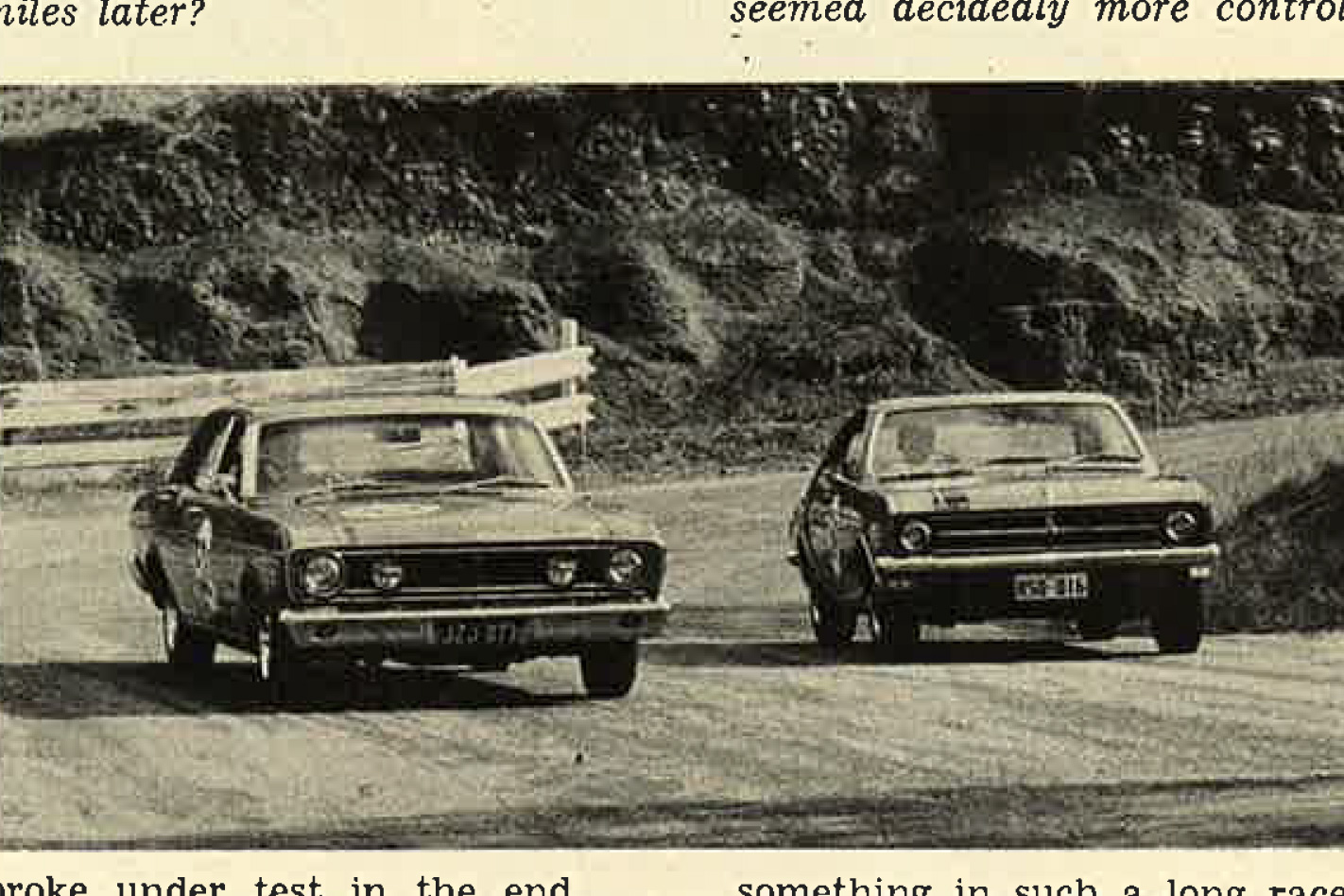
Rear axle ratios come in a choice too: 3.36 or 3.0B to 1. So do carbies. The 161 and 186 engines have a one-barrel downdraught Bendix Stromberg, the 1B6S a twin-barrel of the same, the 5-litre V8 a two-barrel Rochester and the 327 a four barrel Rochester. Fuel tank capacities vary also. Most hold 16.5 gallons. The 327, however, holds 25 – and needs it.
Facia is pretty well standard HK as are the inside door trim and control arrangements. Crash paddingeven in the 327 – is surprisingly minimal. Sun visors are pleasingly full width and fit around the wide, dippable rear vision mirror. Adjustable seats are options but the ones fitted to our Monaro were good in all respects except that you couldn’t recline them with the doors shut as the controls were too close to the door. The glove box is roomy with a fold-down lid that gives standing room for four glasses. There is also a giant cigarette box-cum-map container on the floor just behind the gear lever.
All in all – a mighty device. The General has excelled himself with this one. All he has to do now is sit back and hope the world-wide trend for two-door, pillarless hardtops will catch on in Australia …
The short-lived Mercedes-AMG E43 nameplate has been assigned to history in favour of the E53, which switches out the old car’s 3.0-litre bi-turbo V6 for a 3.0-litre turbocharged inline-six producing additional grunt with the help of Benz’s EQ Boost mild-hybrid tech.
The new engine with its conventional turbo and 48V electric compressor produces 320kW/520Nm, a marginal increase over the E43’s 295kW/520 Nm, but there’s another 16kW and 250Nm of electric assistance on tap thanks to the 48-volt EQ Boost starter-alternator that sits between the engine and transmission.

All told, the E53 boasts a 0-100km/h acceleration time of 4.5-seconds, on its way to a top-speed of 270km/h. That sprint time is just 0.1-seconds quicker than the E43, though Mercedes cites additional benefits including noticeably less turbo lag and a drop in fuel consumption from 9.3L/100km to 8.4L/100km.
Perhaps more importantly, the E53 is AMG’s first electrified step towards hybrid models with more electrical assistance. The new powertrain retains the AMG Speedshift nine-speed transmission and fully variable 4Matic+ all-wheel drive.
Inside, the E53 sedan and wagon gain AMG’s new Performance steering wheel wrapped in black Nappa leather with a red 12 o’clock marking.
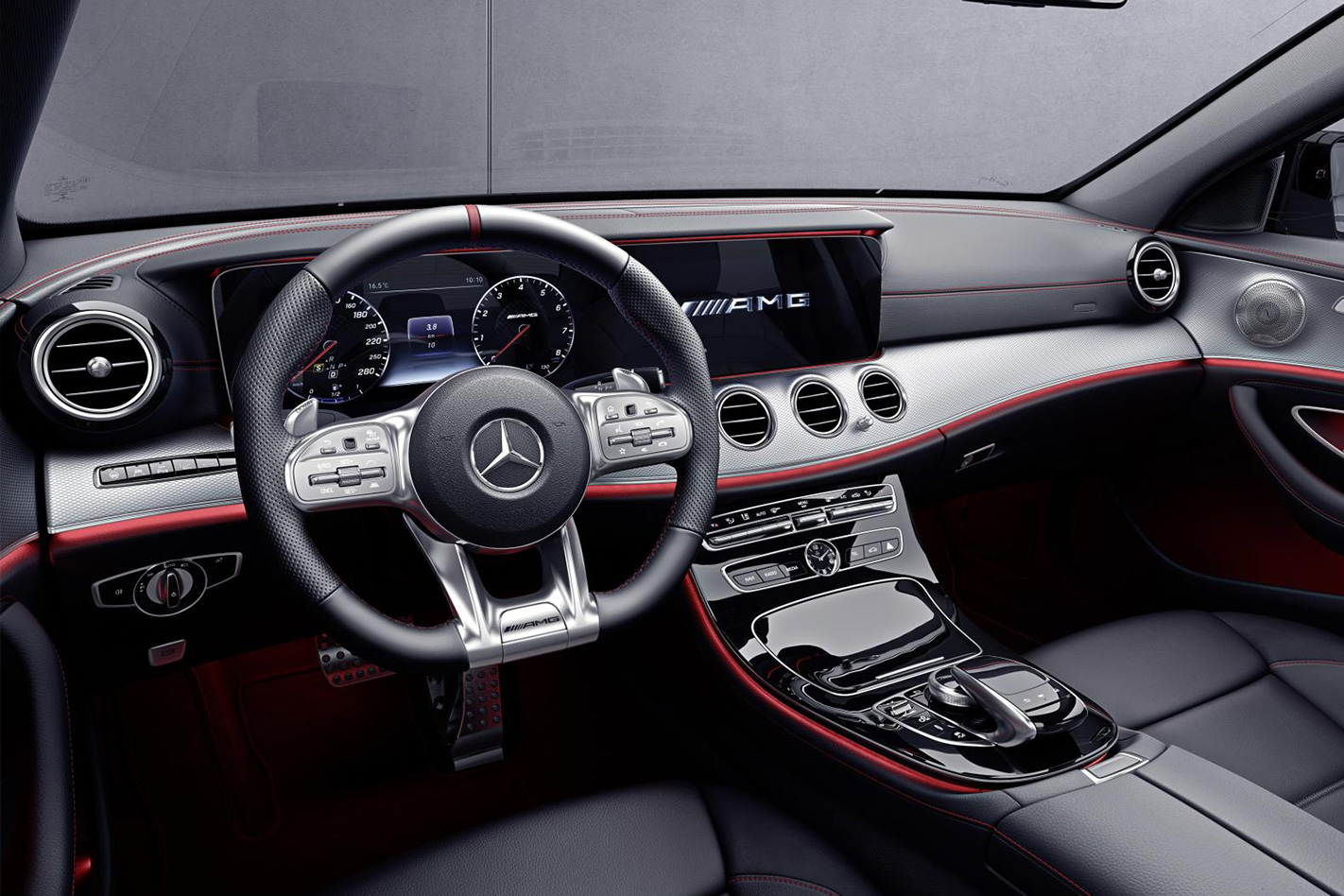
Other AMG E53 body styles complementing the sedan and wagon will include a coupe and cabriolet, and the CLS53, which is effectively a four-door E-Class coupe.
Mercedes-Benz Australia has confirmed the E53 sedan will arrive in Australia toward the end of 2018 along with the CLS53. Coupe and cabriolets will arrive after that. There are no plans to bring the wagon version.
THE Brabham name is about to make a comeback. The company behind the iconic name in Australian motorsport has already teased the BT62 road car that will reintroduce Brabham to the world later this week.
To celebrate, we’ve decided to look back at some of the best race cars to wear Brabham’s iconic ‘BT’ designation.
1966 BRABHAM BT19

One of a kind in so many ways, the BT19 is perhaps the car that defines Brabham as a company. Built with budget-constrained ingenuity, it is legendary in F1 circles.
The BT19 is the car Sir Jack Brabham raced to his first championship in 1966, and which toppled Ferrari on the way to the constructors’ title.
The car was built by Motor Racing Developments (MRD), a manufacturer Brabham co-owned with Ron Tauranac, and was designed to be sold to various racing operations on the F1 grid..
Brabham Racing Operations (BRO) was a completely separate company, owned solely by Brabham, which ran the titular race team.
A disagreement between Brabham and Tauranac over the latter’s involvement in the racing business saw MRD take over ownership of BRO for the ’66 season.
But only one BT19 was ever built, and it went on to be the first car bearing its driver’s name to ever win both the Formula 1 world drivers’ and constructors’ championships.
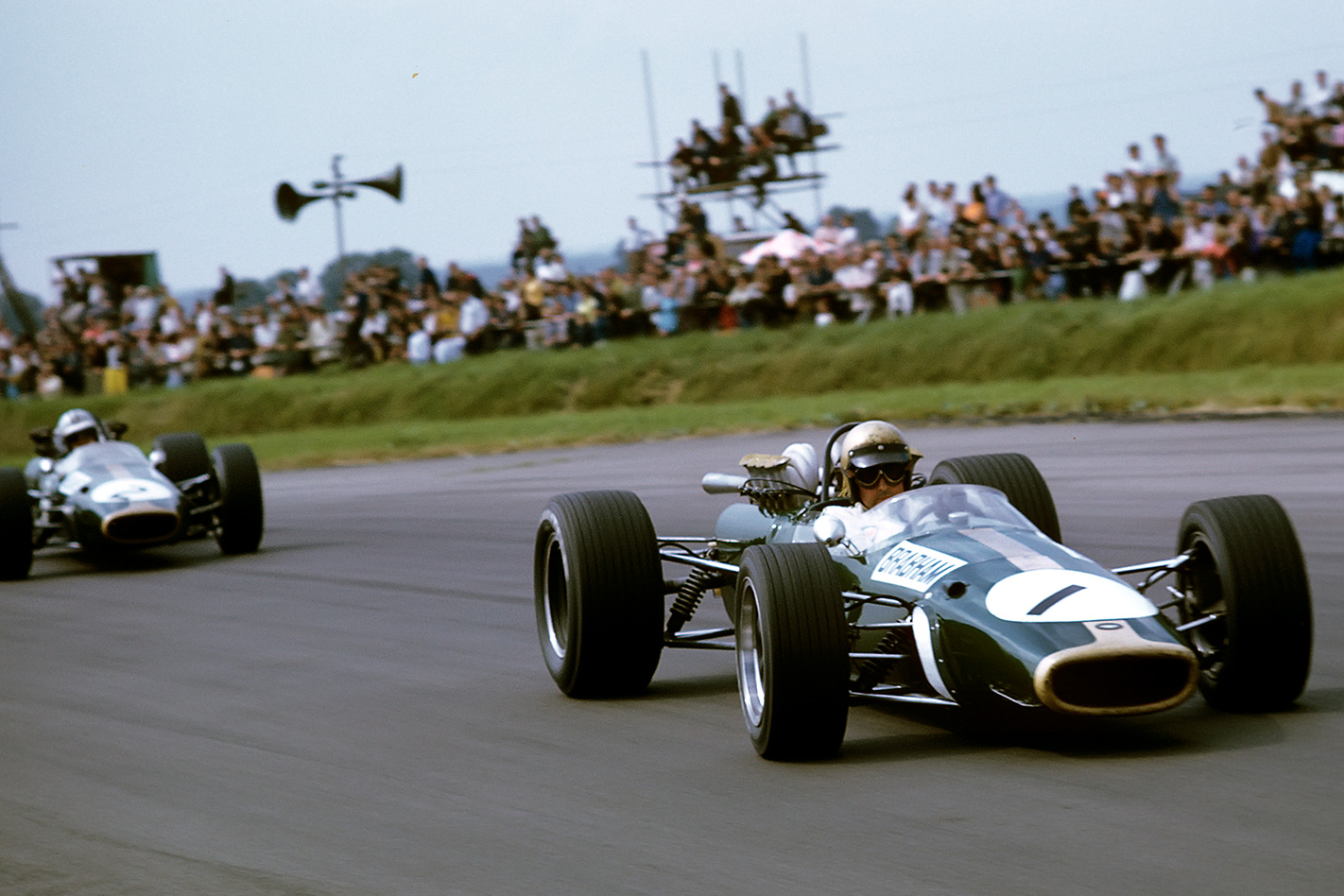
The BT19 was originally designed in 1965 with the intention of running a 1.5-litre engine. However, a rule change for the ’66 season meant it never raced in its original form. The FIA’s regulation changes doubled the allowable engine capacity to 3.0 litres, with Brabham convincing Repco to build a V8 to compete against Ferrari’s 12-cylinder unit.
Repco’s engine was less powerful than Maranello’s but it was lighter, more fuel efficient, and easier to fix, allowing Brabham and the BT19 to take home both championships that year.
From just 10 world championship races, the BT16 won six races, six poles, and earned a quartet of fastest laps.
1978 BRABHAM BT46B ALFA ROMEO ‘FAN CAR’
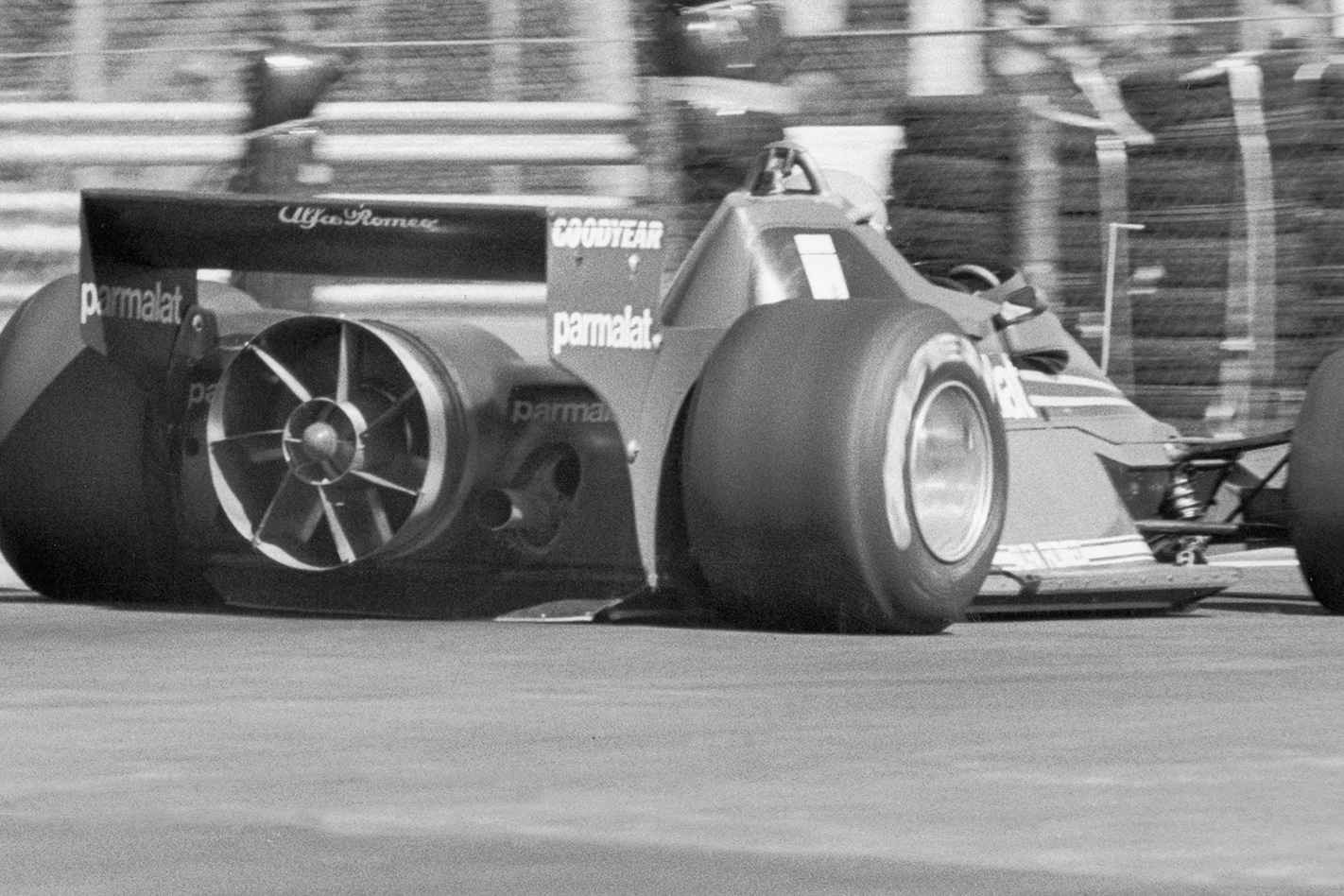
Depending on who you supported in ’78, the BT46B was either a brilliant innovation, or blatant bending of the rules.
Known commonly as the “Fan Car”, the BT46B was built by the Brabham team when it was owned by Bernie Ecclestone and competed as the factory Alfa Romeo squad. The BT48B was developed by legendary designer Gordon Murray, and campaigned just a single race.
An evolution of the BT48, the B variant was introduced in an effort to even the playing field against the Lotus 79 – a car using ground-effects to dominate the grid.
A large fan was placed at the rear of the car, under the pretence of increasing cooling for the engine, but in practice it helped generate huge amounts of downforce.
The car won its first, and only, race – the 1978 Swedish Grand Prix at Anderstorp – at the hands of Niki Lauda.
While rivals teams protested the car, the FIA ruled it could be used for the remainder of the season.
However, the ‘Fan Car’ would only compete once, with Brabham withdrawing the design after the Swedish Grand Prix, and the FIA closing the loophole that allowed it to exist at year’s end.
1981 BRABHAM BT49C
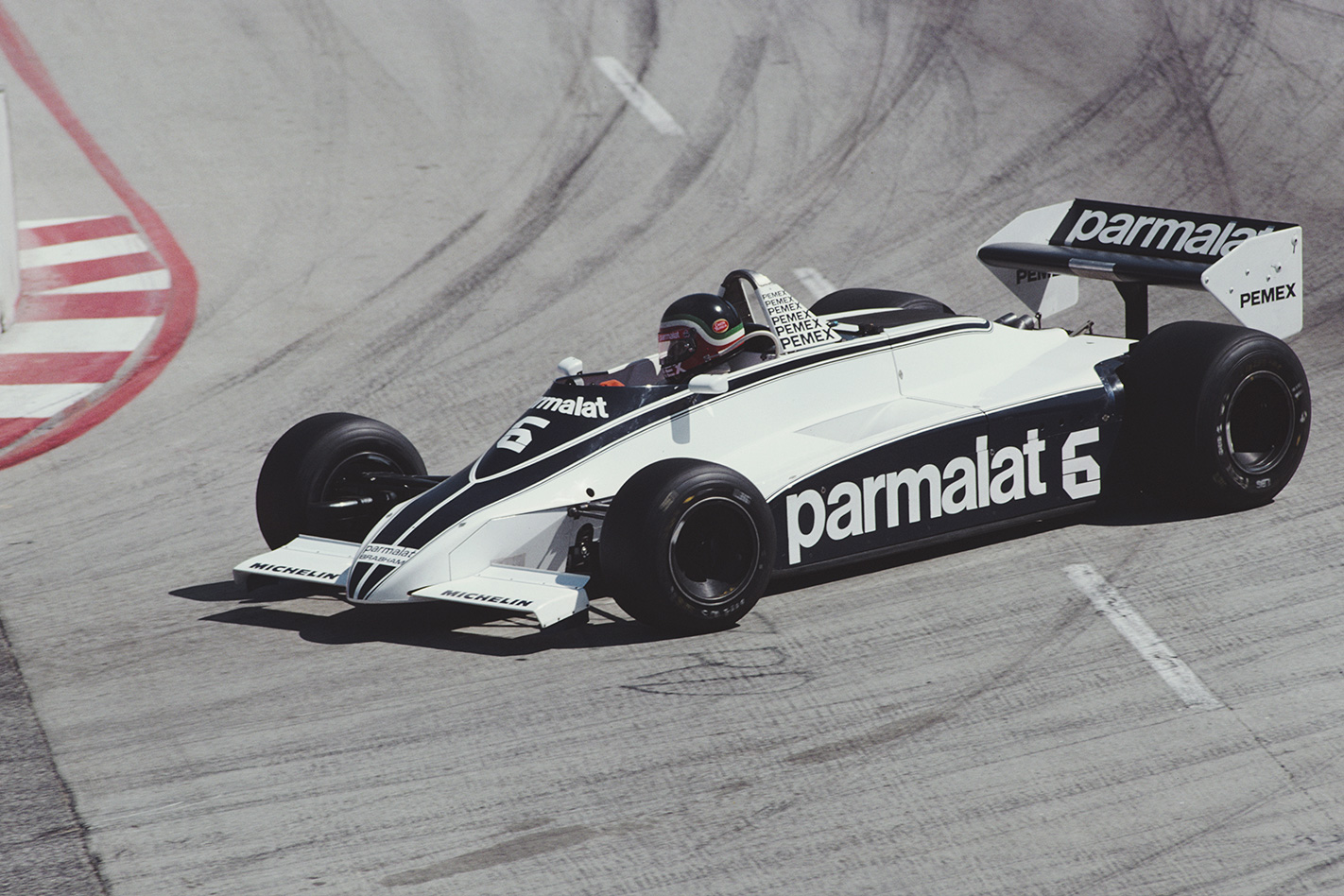
Technical regulations introduced for the ’81 season demanded a minimum ride height of 60mm, with sliding skirts banned – it was meant to limit the impact of ground effects and slow the cars.
An evolution of the BT49, the “C” variation added a front wing to make up for the lost downforce, while designer Gordon Murray devised a hydro pneumatic suspension system that rival teams claimed broke the rules.
The BT49C used soft air springs to support the car at the regulated height for inspection while parked up. But when at speed, where the ride height could not be measured, downforce compressed the air and the car settled to a much lower height, creating more downforce.
Then, in order to allow ground effects to work with fixed skirts, the suspension had to be stiff enough to allow a consistent seal around the sides of the car. At the end of the season, it was reported total suspension travel was just 38mm, with half of that coming from tyre compression.
Nelson Piquet used the BT49C to win the ’81 drivers’ championship, with Brabham finishing runner-up in the constructors’ battle.
1983 BRABHAM BT52

Another Gordon Murray creation, the BT52 took part in the ’83 F1 season, when ground-effects cars were banned for good after the FIA mandated all cars be designed with flat undersides.
The ruling was made with just six weeks until the season opener, and the Brabham team had already built three cars which were now useless.
Murray made a bold design choice in moving 70 percent of the car’s weight to the rear, with short angular sidepods designed to keep lift to a minimum and aid traction.
Driven by Nelson Piquet, it seemed the Brazilian might be able to win a second title with the BT52, but the Brabham driver suffered a humbling mid-season slump.
But Murray wasn’t done developing the BT52, and the car was updated after the Canadian Grand Prix to the “B” variant.
In the last seven races Piquet and the BT52B won twice, and finished on the podium at another two events on his way to the claiming the drivers’ title.
It was the first time a turbocharged car won the F1 drivers’ championship, with the BT52 powered by BMW’s fearsome M12/13 engine
1988 BRABHAM BT57 ALFA ROMEO 164 ‘PROCAR’
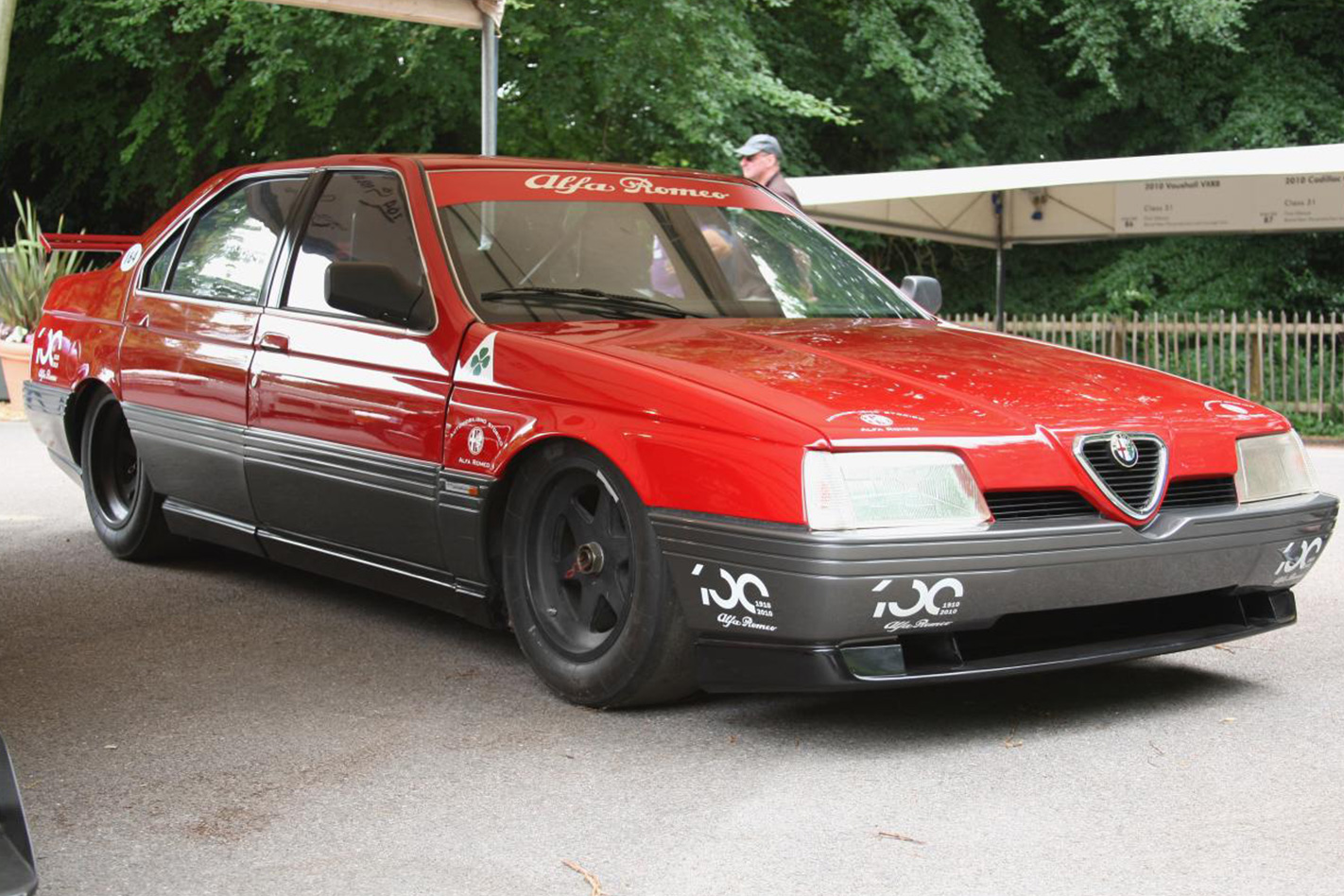
And now for something completely different. This is possibly the wildest ‘BT’ car – the Alfa Romeo 164 ‘Procar’.
What looks from the outside like a slightly beefed up ‘164’ road car is essentially a Formula 1 chassis and engine with the street car’s body stretched over the top.
Motor Racing Developments, the company that ran the Brabham F1 team from 1966 with various owners, was sold to Alfa Romeo in 1988.
While the F1 team did not compete that year, Alfa put the MRD engineers to work building a “procar” prototype of the 164 road car using a composite racing chassis and a mid-mounted V10 engine. It was given the BT57 designation, cementing its place in the Brabham lineage.
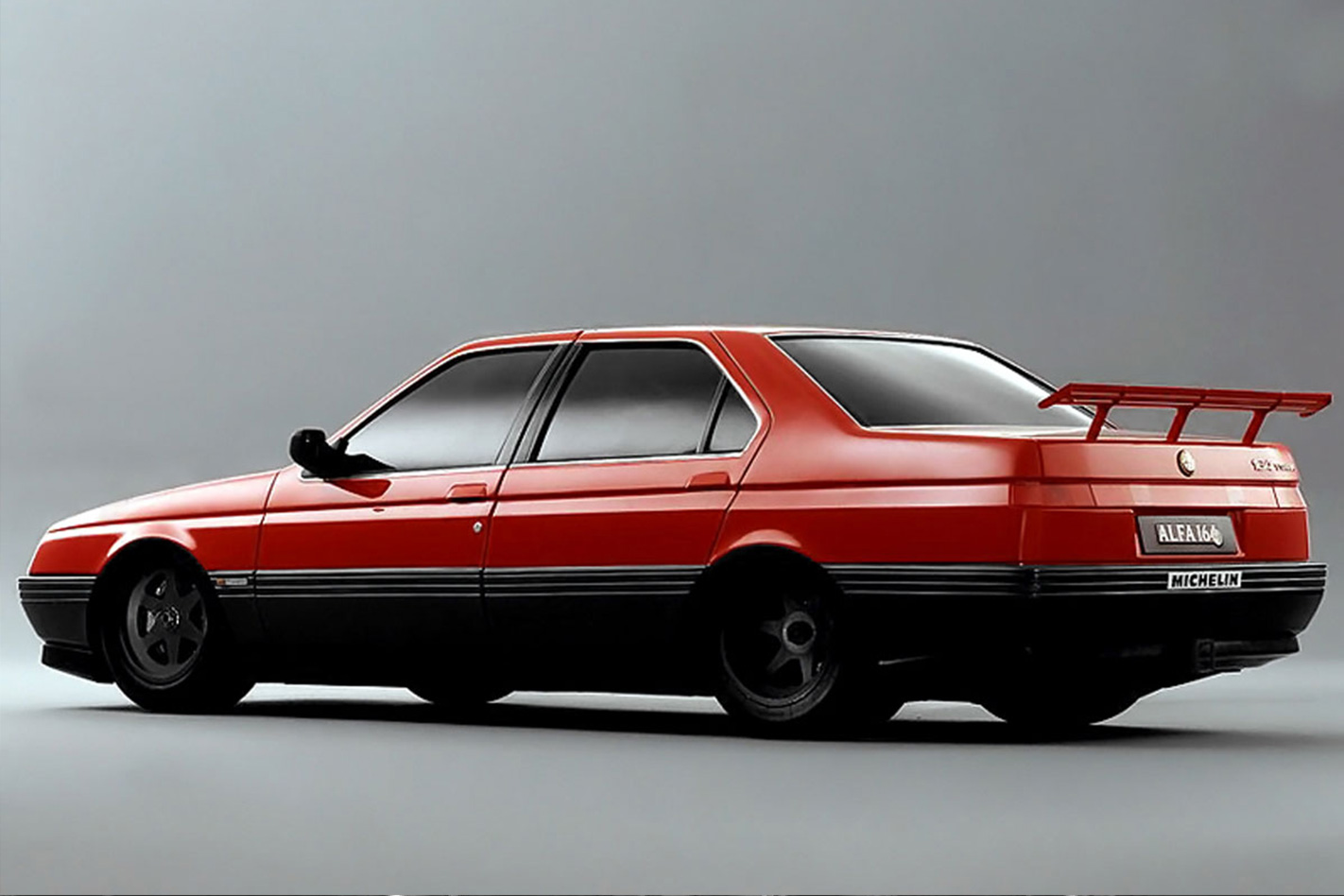
The mid-mounted 3.5-litre V10 was used by the Ligier F1 team, and produced 462kW at 13,300rpm, and 380Nm at 9500rpm.
In total the 164 procar weighed just 750kg, and was good for a 340km/h top speed and a 9.7-second quarter mile.
Although it was originally planned to run as a special support category at F1 events, the program was scrapped with just one example ever being built.
THE next-generation Toyota Corolla will launch in Australia with a version of the nation’s current best-selling passenger car packing a six-speed manual gearbox and 125kW/200Nm of punch.
But more importantly, manual versions of the the Corolla will automatically blip the throttle on downshifts, matching the engine’s revs with the speed of the clutch to put a little bit of electronically assisted rally ace behind every steering wheel.
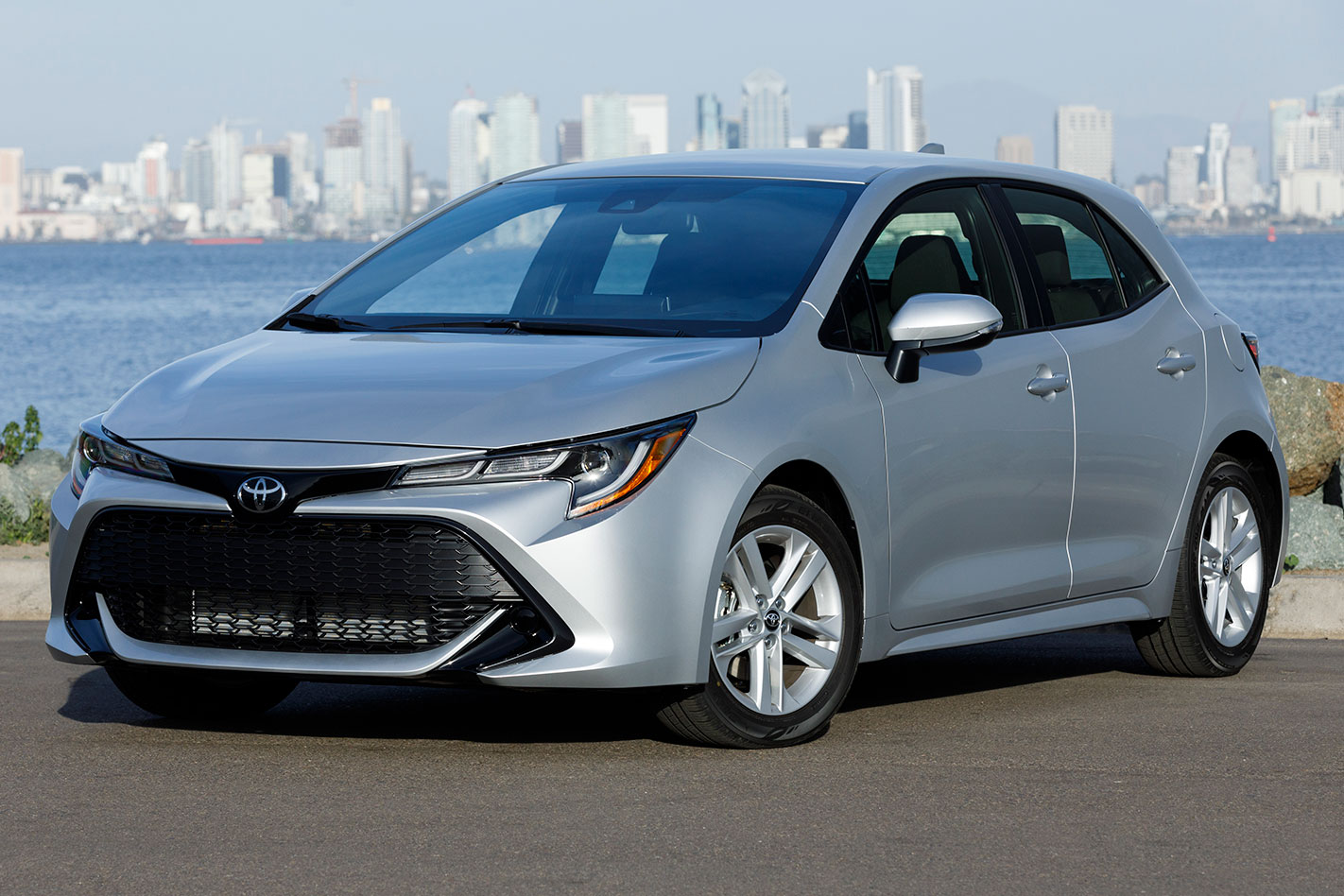
The TNGA platform has lowered the engine and seating positions, and therefore the centre of gravity, and made weight distribution more even over the wheelbase for the models it has superseded, resulting in what Toyota calls a “ sportier, more athletic design and a more engaging drive with improved handling and ride comfort”.
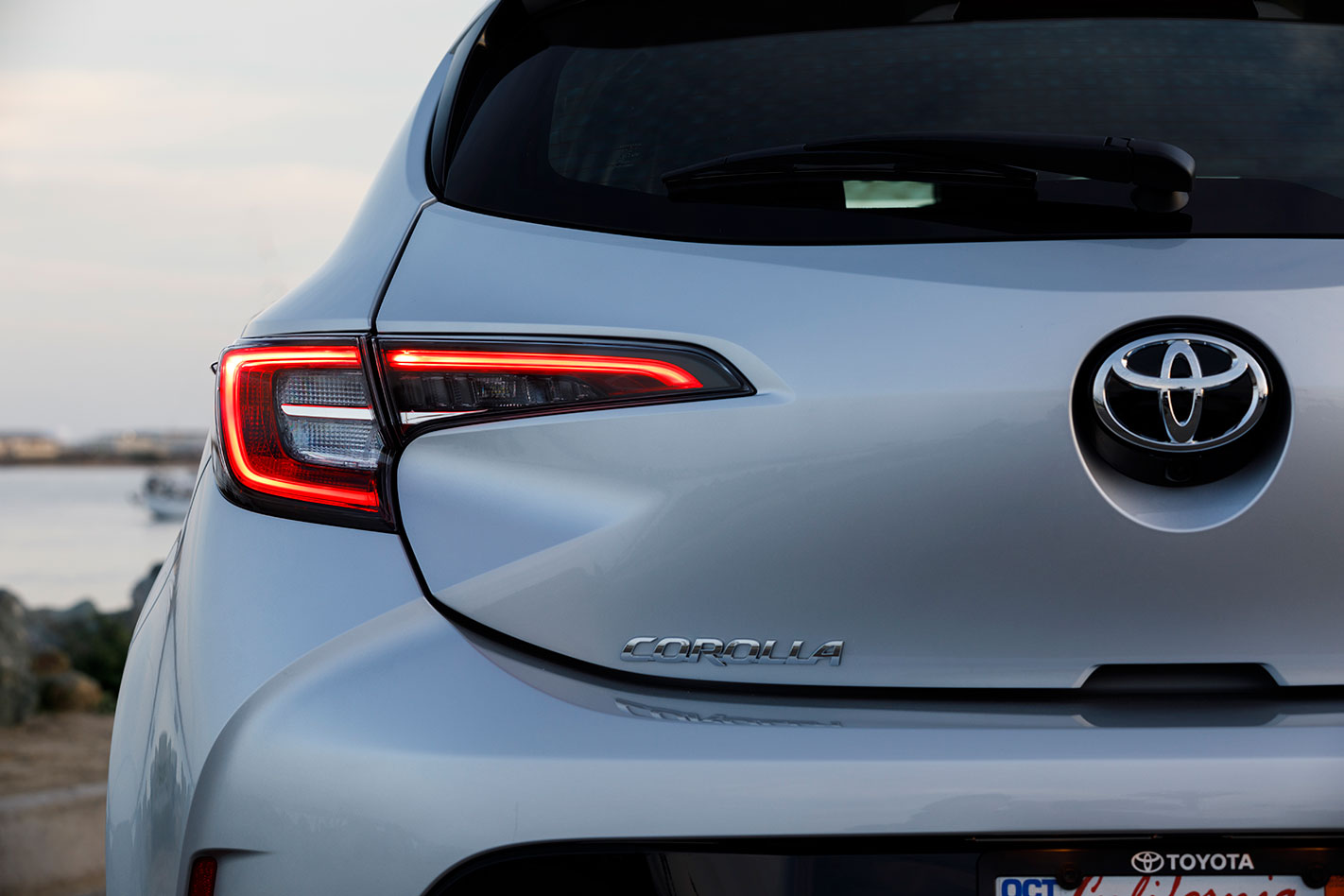
The new Corolla will also take a big step up in terms of safety, adding automatic emergency braking that includes pedestrian protection that works in both night and day, and daytime cyclist cover. As well, it will gain an active steering system that will keep the hatchback aligned to its lane in either slow-moving traffic or along the highway.
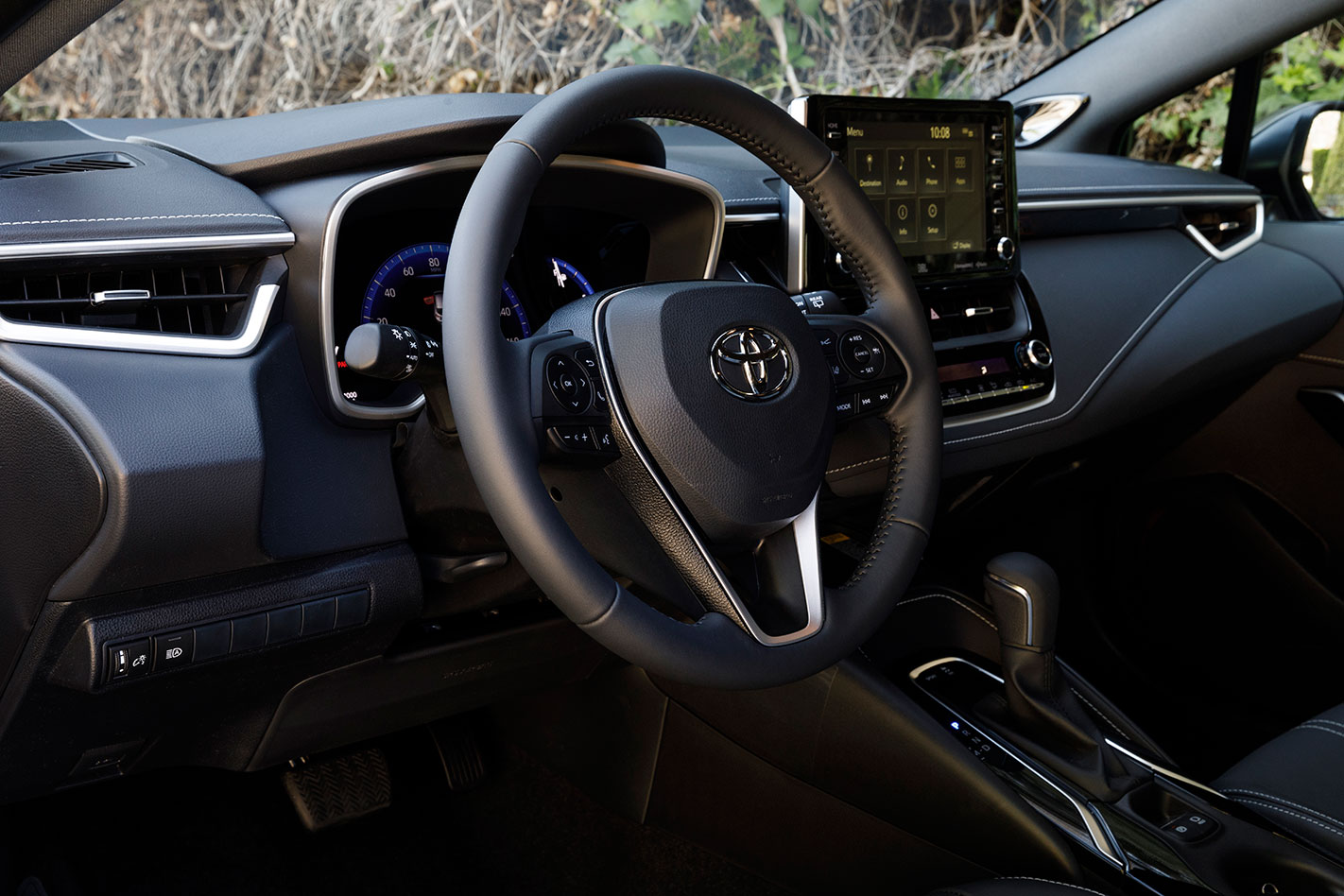
Toyota said the Corolla would remain “ very competitive and affordable” despite all the improvements.
MORE: Toyota Corolla Range Review MORE: Toyota Corolla Specs, Range & Price
