
The Hyundai i30 hatch now has advanced driver tech available across the entire range, as well as newly added petrol options for its upper-spec Elite and Premium variants.
At the lower end of the range, the entry-level Go and Active variants are now available with the SmartSense pack as a $1750 option, meaning buyers can add active safety to cheaper versions of the small hatchback without having to spend thousands more on a higher-spec variant.
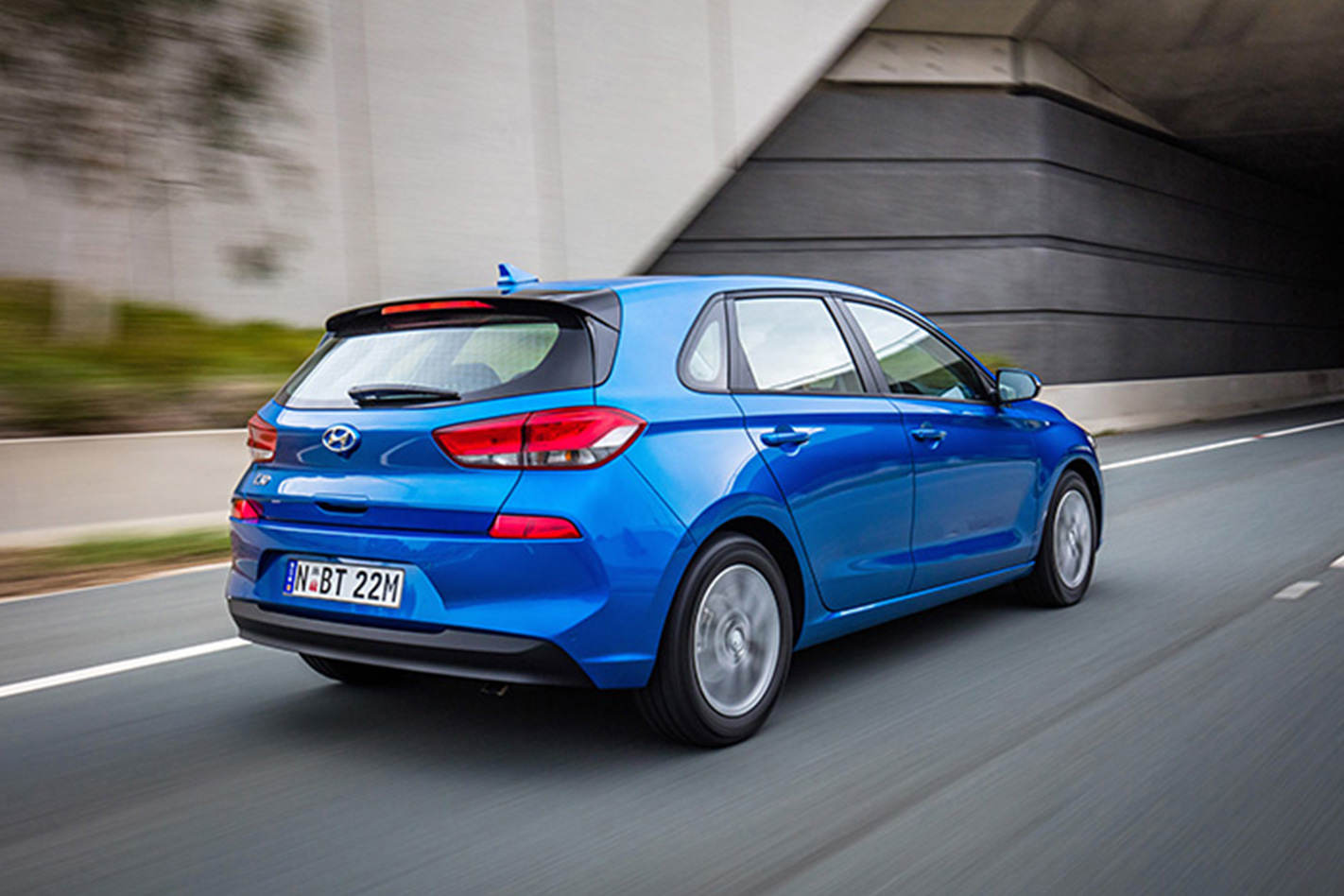
SmartSense, standard on higher-priced models, brings advanced driver assist features including automatic emergency braking with forward collision warning, blind spot detection, lane change assist, driver attention alert, and adaptive cruise control with a low-speed stop-and-go function. The extra spend also brings an electronic parking brake, rear-seat air vents, electric folding wing mirrors with LED indicators, and chrome front grille trim.
A partial leather steering wheel and gear knob are added to the Active’s standard features.
Further up the range, the i30 Elite and Premium spec levels are now more affordable, with a 2.0-litre petrol engine added as a perkier, and $2700-cheaper, alternative to the 100kW/300Nm 1.6-litre diesel powertrain.
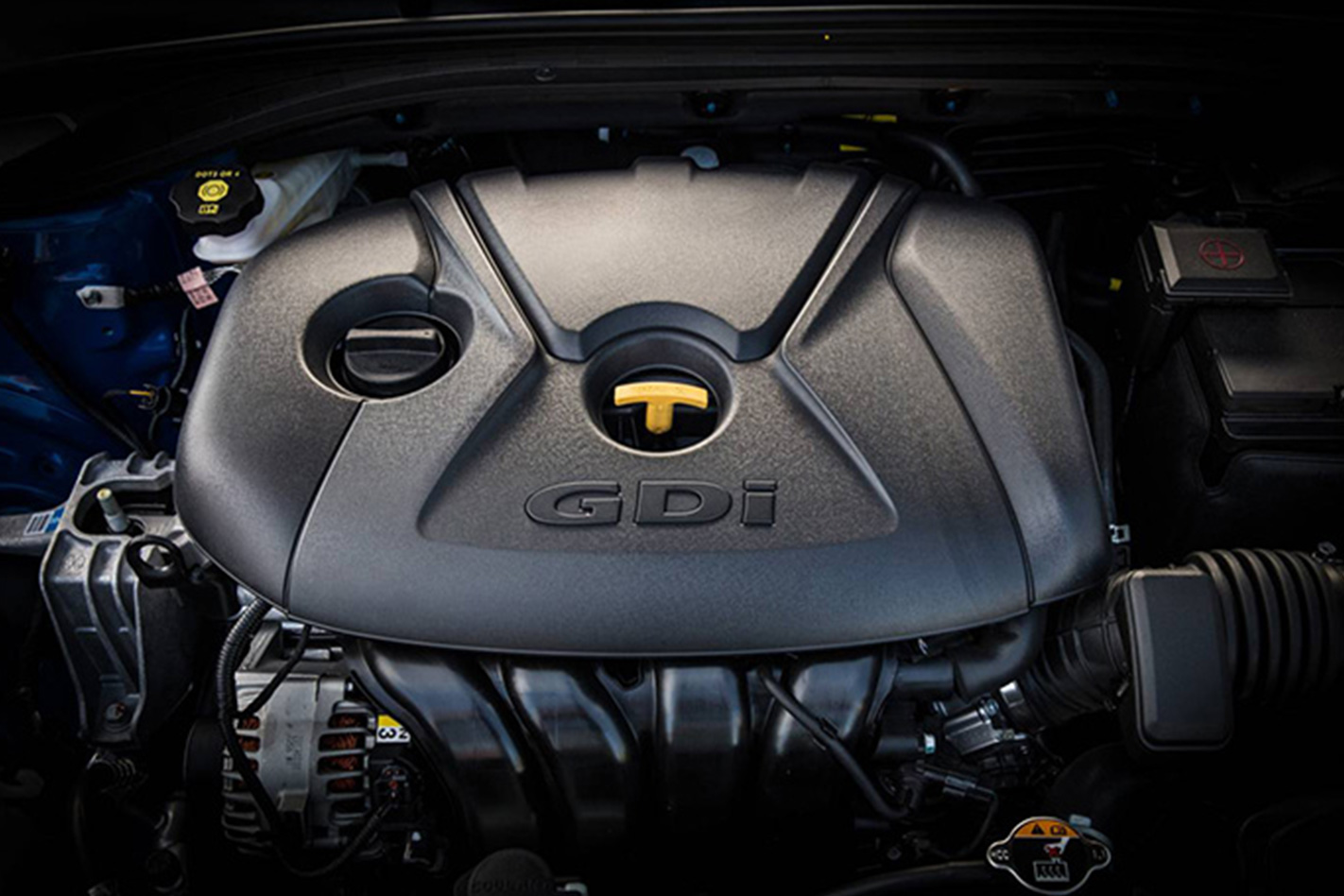
Already available in the Go and Active variants, the 120kW/203Nm 2.0L GDi is paired with a six-speed automatic in the higher-spec models The six-speed manual option offered on entry-level cars does not make its way up the range.
The Elite also gains satin chrome side moulding, while the Premium now has LED tail-lights. A seven-speaker Infinity premium audio system utilises an external amplifier that’s also been added to the SR Premium.
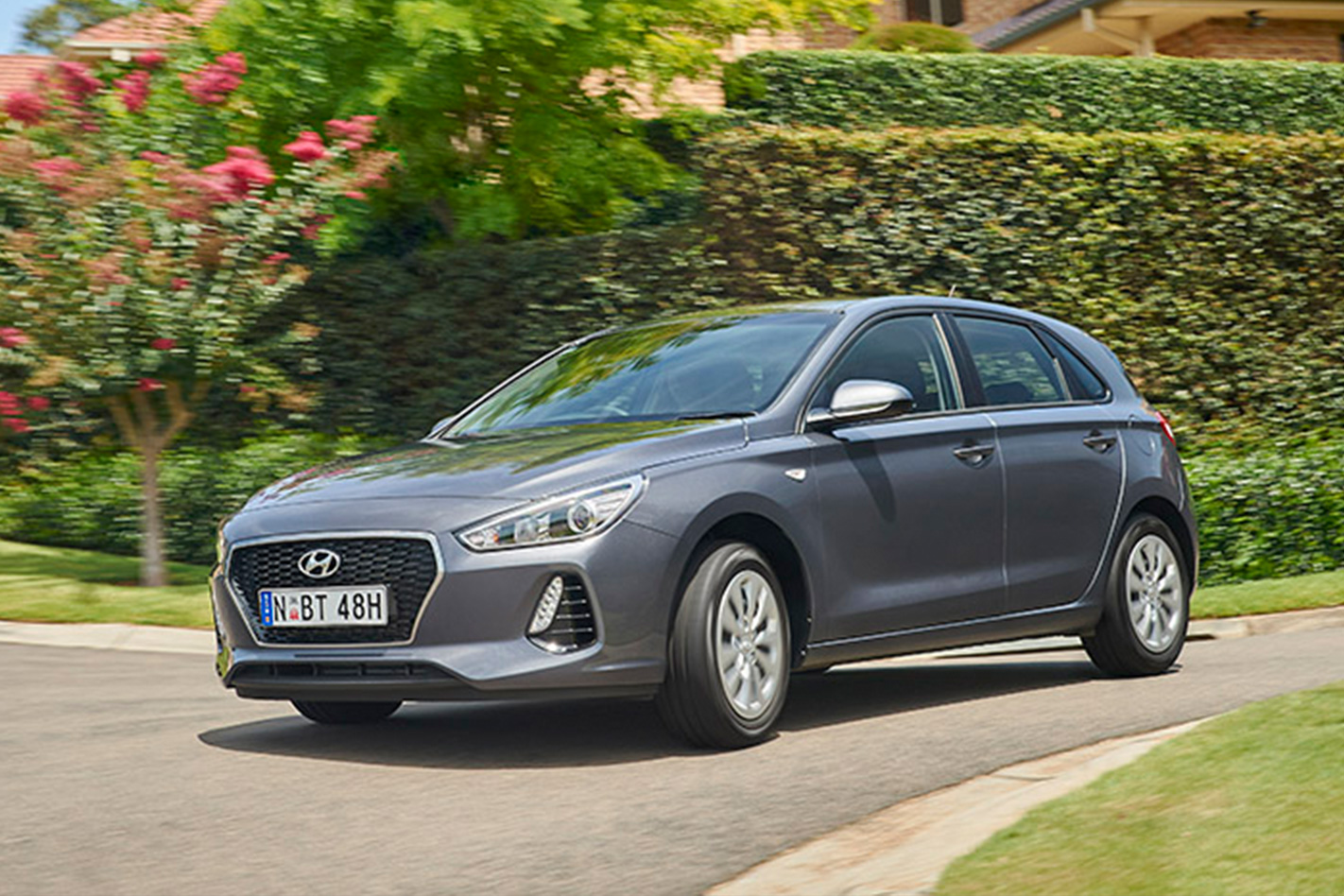
The i30’s entry-level price remains at $19,990, though pricing for some variants has risen by up to $1040.
2018 Hyundai i30 pricing
- i30 Go 2.0L petrol, manual – $19,990
- i30 Go 2.0-L petrol auto – $22,290
- i30 Go 1.6L diesel, manual – $22,490
- i30 Go 1.6L diesel, auto – $24,990
- i30 Active 2.0L petrol, manual – $21,090
- i30 Active 2.0L petrol, auto – $23,990
- i30 Active 1.6L diesel, manual – $23,590
- i30 Active 1.6L diesel, auto – $24,990
- i30 SR 1.6L petrol, manual – $25,990
- i30 SR 1.6L petrol, auto – $28,990
- i30 Elite 2.0L petrol, auto – $27,990
- i30 Elite 1.6L diesel, auto – $30,490
- i30 Premium 2.0L petrol, auto – $32,790
- i30 Premium 1.6L diesel, auto – $35,490
- i30 SR Premium 1.6L petrol, auto – $34,490
- i30 N 2.0L petrol, manual – $39,990
- SmartSense Pack (Go, Active) – $1750
- Beige interior (Elite, Premium) – $295
- Panoramic sunroof (SR, Elite) – $2000
- Premium paint – $495
MITSUBISHI could be the next brand to start swinging punches in the muscled-up trade ute brawl, hinting that it wants to bring out a version of its Triton named the Predator.
However, if it does enter the fray, the plumped-up Triton is expected to use a number of visual and off-road focused enhancements, just like the HSV-badged Holden Colorado SportsCat – rather than the seriously performance-oriented Ford Ranger Raptor’s muscled-up driveline.
Mitsubishi formally lodged an application for the Triton Predator trademark last week. A decision on granting the name to the Japanese car maker isn’t due until October, shortly before the highly anticipated, hi-po twin-turbo 2.0-litre diesel Ranger Raptor arrives in Australia.
Mitsubishi Australia was contacted for comment.
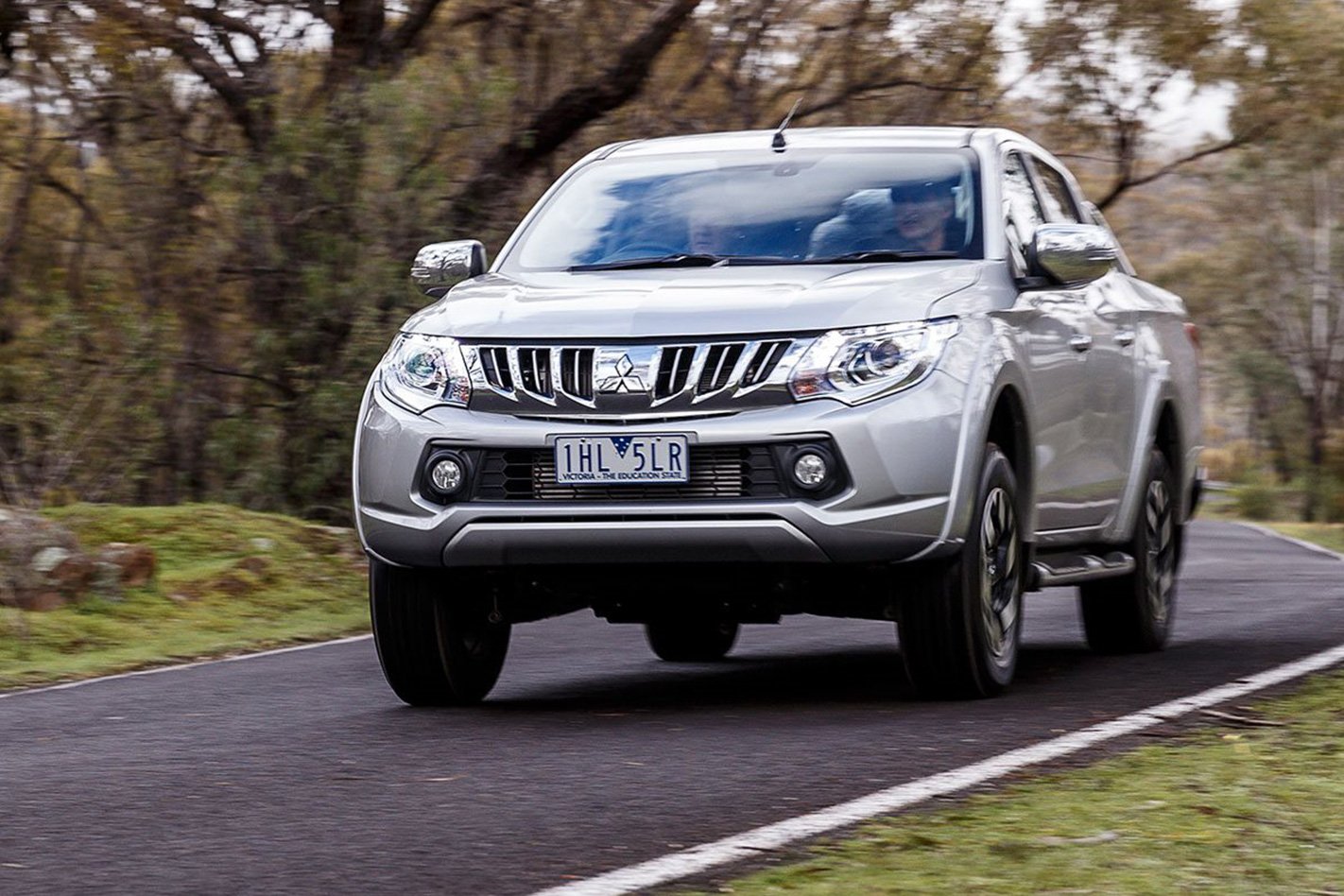
The SuperUtes version of the Mitsubishi – based on a roadgoing entry-level Triton GLX – includes a controlled rear suspension with adjustable SupaShock dampers, a Tremac six-speed gearbox (keeping a H-pattern) and a heavy-duty clutch. The race ute’s 2.4-litre engine is also highly modified, including significant changes to the turbocharger including its intake manifold and intercooler, a larger radiator and a modified sump to provide around 260kW and 550Nm, well up on the standard ute’s 133kW/430Nm.
Australia is fast shaping up for a top-end trade ute showdown. Joining the SportsCat and the Raptor soon are TRD-badged versions of the Toyota Hilux that will draw on visual appeal rather than underbonnet poke, the HSV-fettled Chevrolet Silverado that will fight for buyers against a number of other companies that import left-hand-drive versions of the light truck and convert them to right-hand drive, and the Mercedes-Benz X-Class that will add a more powerful 3,0-litre V6-engined version, to sell alongside the twin-turbo 2.3-litre four-cylinder version, late this year.
Volkswagen also has a 3.0-litre V6-engined version of the Amarok on sale in Australia, and has featured limited-run versions of the 2.0-litre utes – the V6 version will potentially soon introduce a special “Dark Label” edition featuring matte black exterior highlights that has been rolled out to four-cylinder models. Likewise, Isuzu allows buyers to add motorsport-inspired gear to their D-Max ute, including track-proven silicone hoses, a beefier suspension system and a sports exhaust.
The Ford Raptor Ranger will become Australia’s most expensive trade ute when it arrives later this year with a $74,990 price-tag. That makes it more expensive than the $65,000 entry-level HSV SportsCat, the $68,490 Volkswagen Amarok 550TDI and even the headline $72,000 HSV SportsCat+. Once it arrives the high-end V6 version of the Nissan Navara-based Mercedes-Benz X-Class – which will sell at a significant premium over the range-topping, $64,500 four-cylinder version – is expected to stand near the top rung of the expensive tradies’ ladder.
MORE: Mitsubishi Triton Range Review MORE: Mitsubishi Triton Specs, Range & Price
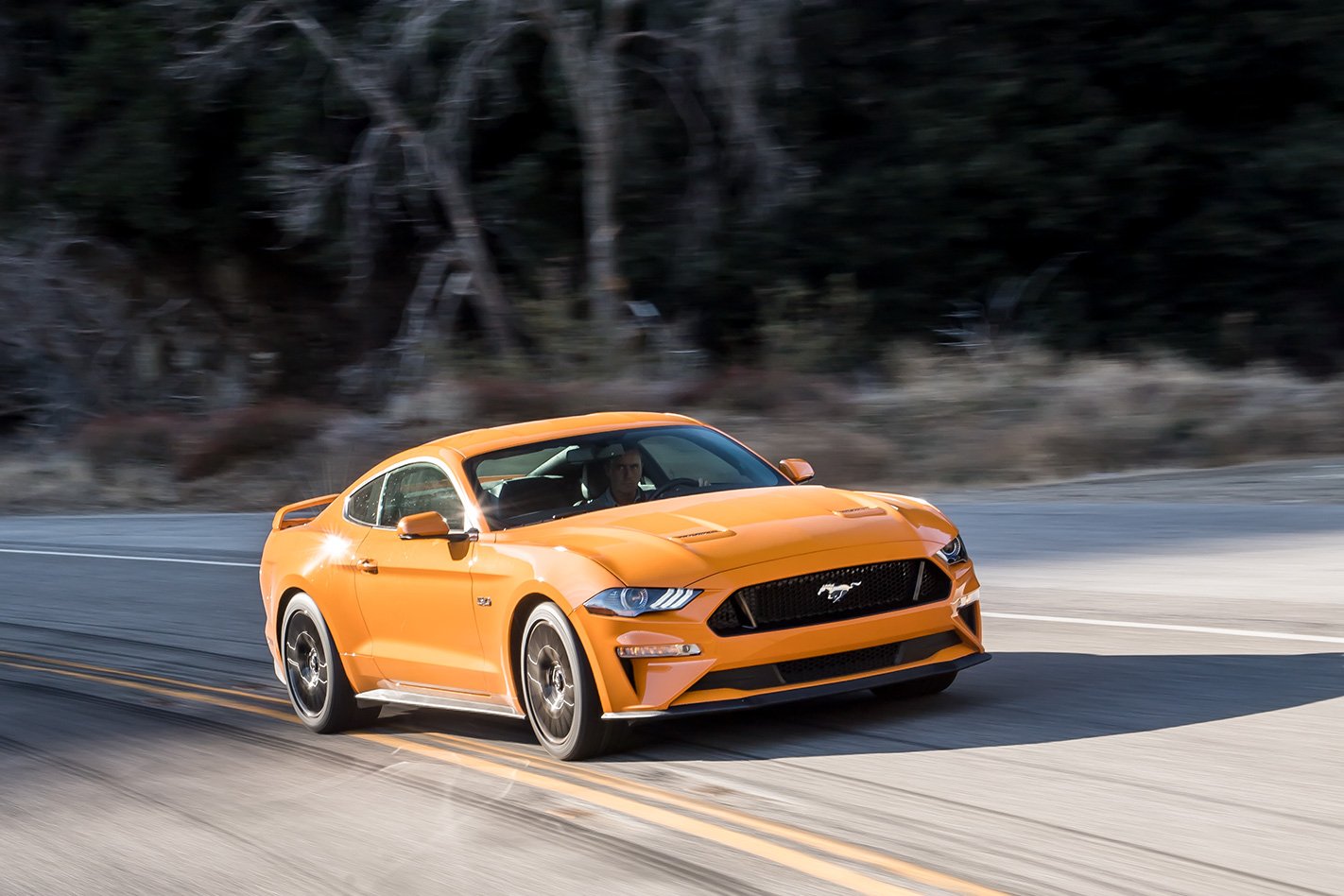
FORD Australia is set to announce official support for the Ford Mustang to race in Australia’s top-tier motorsport category from next year.
A media announcement by Ford is slated for tomorrow, where it is expected to confirm the news that both DJR Team Penske and Tickford Racing will field facelifted Ford Mustangs in the Supercars championship for the 2019 season.
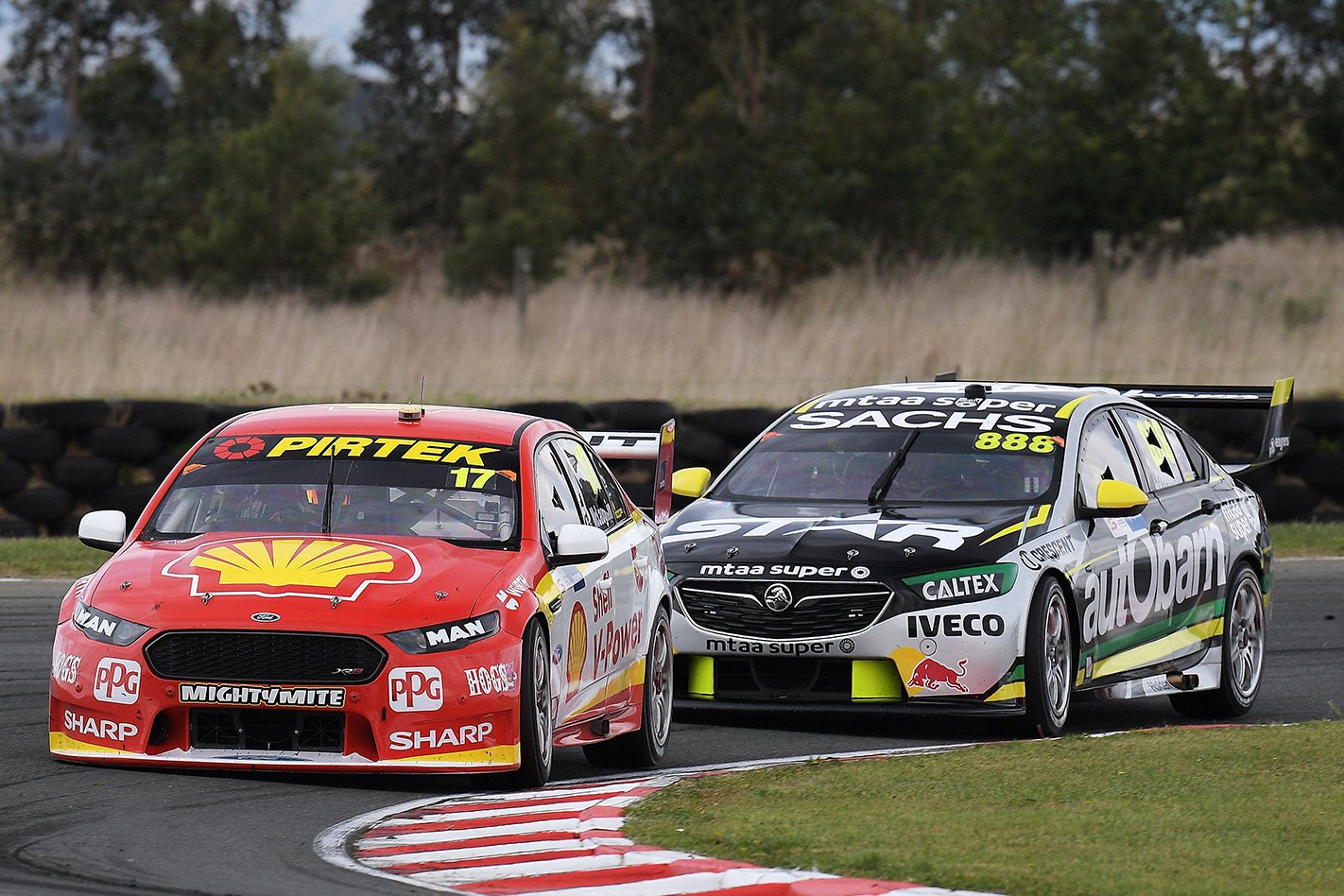
The report states Ford’s racing Mustang will be powered by a 5.0-litre V8, which is likely to be similar to the units already used by Ford teams, shunning a twin-turbo V6.
While not a full-blown factory effort, the Mustang Supercar is reported to have some financial support from Ford, and will be a joint venture between the two leading Ford teams on the grid, DJR Team Penske and Tickford Racing.
The news means a minimum of six Ford Mustangs will compete in the series from 2019 (two from Penske, four from Tickford). It will be the first time the iconic pony car has appeared on the grid of Australia’s premier touring car class in 33 years, and finally form a replacement for the ageing FG X Falcon, of which the road-going version ended production in 2016.
Holden’s ZB Commodore Supercar was the centre of controversy earlier in the season after Triple Eight developed composite panels to be used by Holden teams, allowing for a lower centre of gravity.
Auto Action reports the Mustang Supercar will use similar methods of weight saving in its co-development by Tickford Racing and DJR Team Penske.
Can’t wait to see the final score? Jump to the verdict now
NEARLY four years ago, Subaru’s unassuming and underrated Forester 2.5i-L emerged from the corner stalls to claim victory in our 2014 medium SUV Megatest. Dressed down in work-a-day threads, the Forester wowed us with its consummate all-round ability and its rather charming personality.
Little has changed in 2017, and for the most part, that’s a good thing. Subaru has since upgraded the multimedia system and added the odd flicker of visual sparkle, yet this deeply pragmatic vehicle continues to fly in the face of all that glitters. The Forester is simply about mucking in and getting on with it.
It continues to set the medium SUV benchmark for ride comfort and all-round vision. Indeed, the Forester’s super-low cowl and beltline deliver a panoramic vista, while its superb ride is so far ahead of the next cushiest (the Escape), it’s in a league of its own. As rivals bumped, thumped, jostled and jiggled, the supple Subaru devoured everything beneath it with impervious control and unwavering calm. If we had to pin-point a weakness, it’s the Forester’s middling level of tyre hum and wind rustle. But given that this is essentially a box on wheels pushing through air – almost as tall as it is wide – it’s more about sensing their presence than their offensiveness.

The benefit of the Subaru’s upright stature is highly effective passenger space. Decent front seats (with tilt-adjustable headrests) combine with an eminently supportive rear bench that, while lacking backrest-angle adjustment, gets all the fundamentals right to provide an airy, elevated environment. Despite its relatively short wheelbase, the upright Subaru provides plenty of room for most body types, and terrific entry and egress through wide-opening rear doors for parenty or elderly types. Its 422-litre boot is relatively small, however, in part owing to the full-size spare beneath.
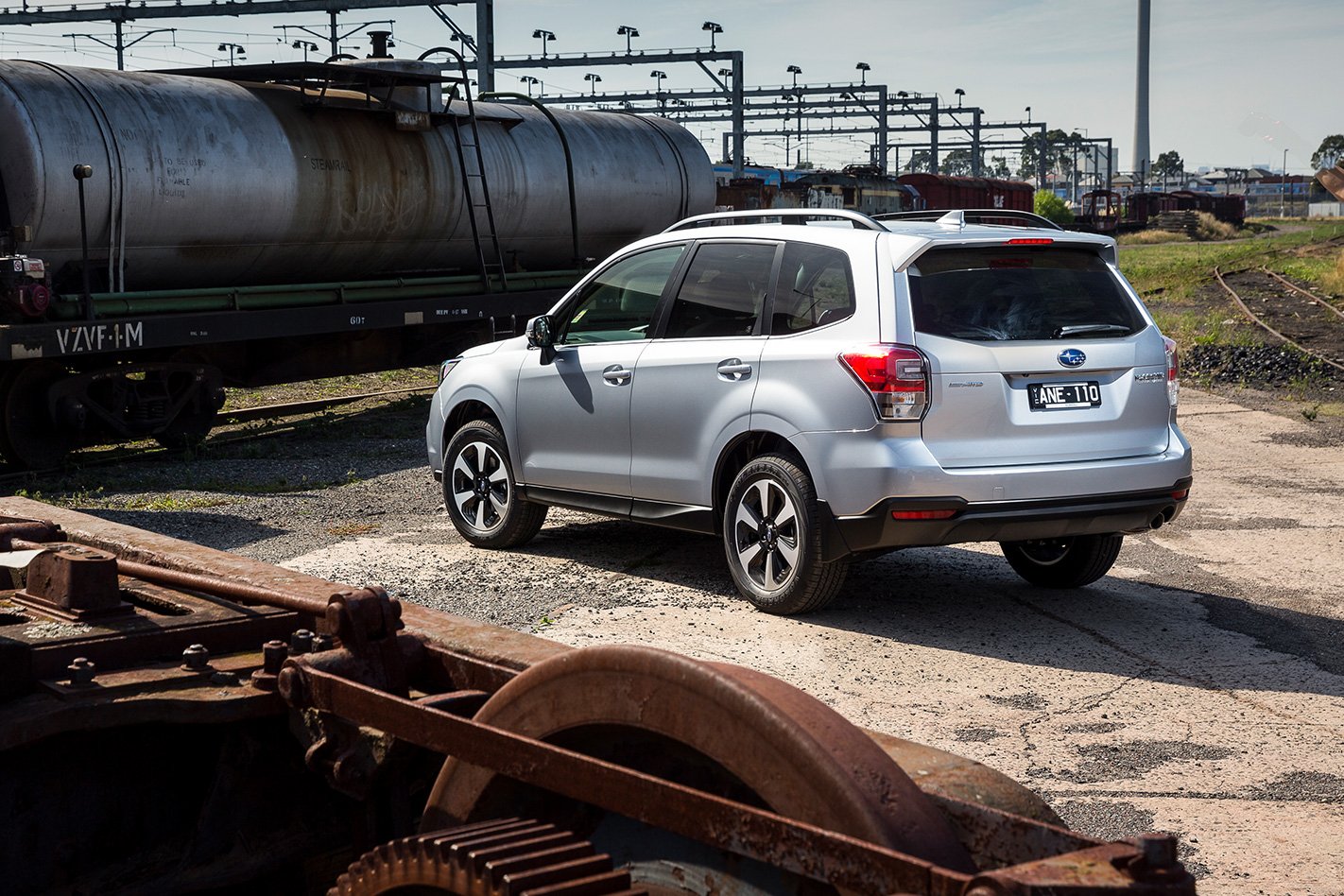
Continuing the Forester’s theme of effortless operation is its drivetrain. A 2.5-litre flat-four engine and CVT transmission combination may seem deeply underwhelming, but the reality is a responsive, refined performer that ties with the turbocharged Tiguan for 80-120km/h class honours (6.8sec).
With a dedicated ‘M’ position (for ‘manual’) in its shift gate, and seven stepped ratios accessed via steering-wheel paddles, the Forester offers similarly effective engine braking to the RAV4. Yet unlike the Toyota, the Subaru accelerates without faux ratio steps limiting the effectiveness of its performance. With standard all-wheel drive, the Forester also has no problem putting its powertrain to good use, regardless of the surface.

In typical Subaru fashion, the Forester’s dynamics are quite low-key, communicating enough feedback to achieve easy-to-place cornering fluency, yet always with more chassis poise than tyre grip. It rolls quite a bit, but it’s chuckable and confidence-inspiring, rewarding driver commitment with amusing handling (providing you don’t mind some howl from its all-season tyres running quite low recommended pressures). And if you want the peace-of-mind of Subaru’s comprehensive ‘Eyesight’ safety aids, add $4000 to the 2.5i-L’s competitive $33,240 list price, which delivers a package with a breadth of ability that sits right at the top of this competitor set.
So why has the humble Forrie slipped from grace? Blame the ageing process. Up against the razzle-dazzle of the new CX-5 and the slick proficiency of the Tiguan, the four-year-old Forester simply has neither the wow factor or quite the refinement to eyeball its fiercest rivals. And alongside the superb-handling Escape, the Forester’s more subdued abilities just edge it back a notch.
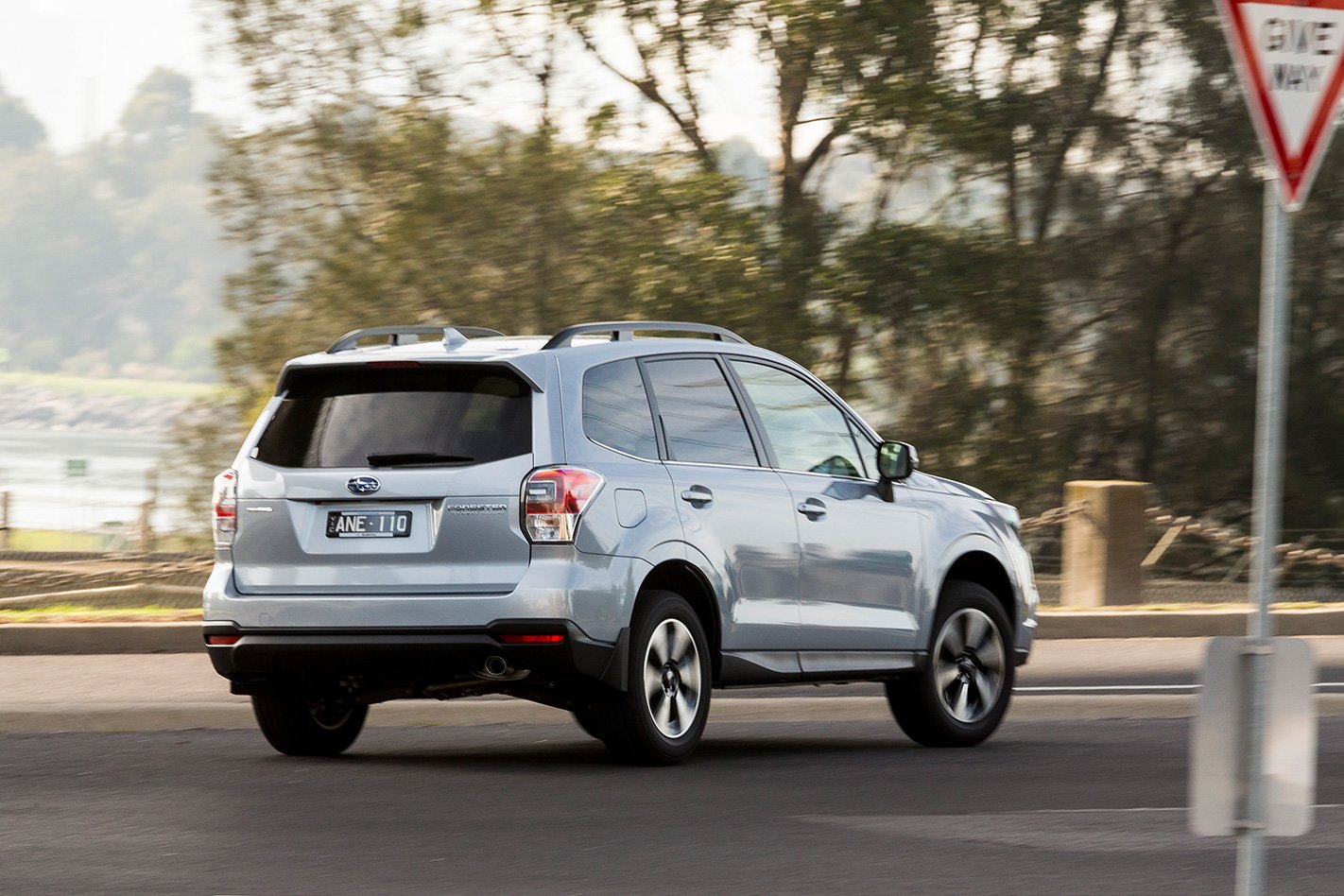
But what a deeply admirable thing the Forester is. If you champion function over form and lament the loss of great ride quality in modern cars, then welcome to Subaru country, where the weather’s always fine.
SCORE: 7.5/10 SUBARU FORESTER 2.5i-L SPECS
Model: 2018 Subaru Forester 2.5i-L Engine: 2498cc flat 4, sohc, 16v Max Power: 126kW @ 5800rpm Max Torque: 235Nm @ 4100rpm Transmission: CVT automatic Weight: 1568kg 0-100km: 9.9sec Fuel economy: 11.8L/100km (tested) Price: $33,240 On sale: Now
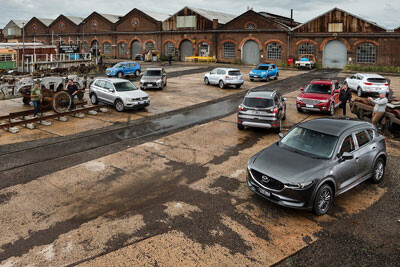 Medium SUV Megatest – Full coverage
Medium SUV Megatest Results
2018 Haval H6 Premium
Score 2/10
2018 Mitsubishi Outlander LS
Score 5/10
2018 Toyota RAV4 GXL
Score 6/10
2018 Hyundai Tucson Active X
Score 6.5/10
2018 Kia Sportage SLi
Score 7/10
2018 Subaru Forester 2.5i-L
Score 7.5/10
2018 Ford Escape Trend
Score 7.5/10
2018 Volkswagen Tiguan Trendline
Score 8/10
2018 Mazda CX-5 Maxx Sport
Score 8/10
THE Australian Capital Territory government will stop buying conventionally engined cars in 2021 as it tries to encourage its 400,000 residents to instead buy electric vehicles.
The move is part of the territory’s aim to become carbon-neutral by 2025, the Canberra Times has reported. The Barr government is expected to formally make the announcement this morning.
The move, which will also promote the use of electric bicycles, is part of the territory’s Zero Emissions Vehicle Action Plan. The plan is expected to commit to converting half the government’s passenger car fleet to EVs by 2019-20, with the whole fleet sourcing EVs by 2021.
Under the plan, all new multi-unit and mixed use developments in Canberra and its surrounding suburbs will need to include EV recharging station infrastructure.
“The electric vehicle market is taking off globally and while that is outside of the ACT government’s influence, what we need to do is make sure that we’re putting in place all of the steps to prepare Canberra for the arrival of electric vehicles on a larger scale,” ACT Greens representative Shane Rattenbury said.
The move will also allow electric and plug-in hybrid vehicles to use the territory’s transit lanes, which are normally reserved for cars carrying three or more passengers, buses, taxis, motorbikes and hire cars.
Rattenbury said if the ACT Government placed an order for 600 electric vehicles it would be the largest single order for EVs so far, and almost the same number of electric vehicles, including plug-in hybrid cars, that sold Australia-wide last year.
The ‘Swingin’ Sixties’ would’ve been a hell of a time. The mini skirt, The ’Stones, acid tripping, sun tanning, cigarette smoking, Hendrix, no country-road speed limits, no seatbelts, no pollution gear, cheap cars and cheap petrol.
This feature was first published in MOTOR magazine’s February 2009 issue.
As those who experienced it can attest, it was a never-to-be-repeated era of freedom – one that saw a revolution, so to speak, in the internal combustion engine and the introduction en-masse of foreign automotive brands to Australia. It’s interesting, then, that Mazda played such a large part in all of that.
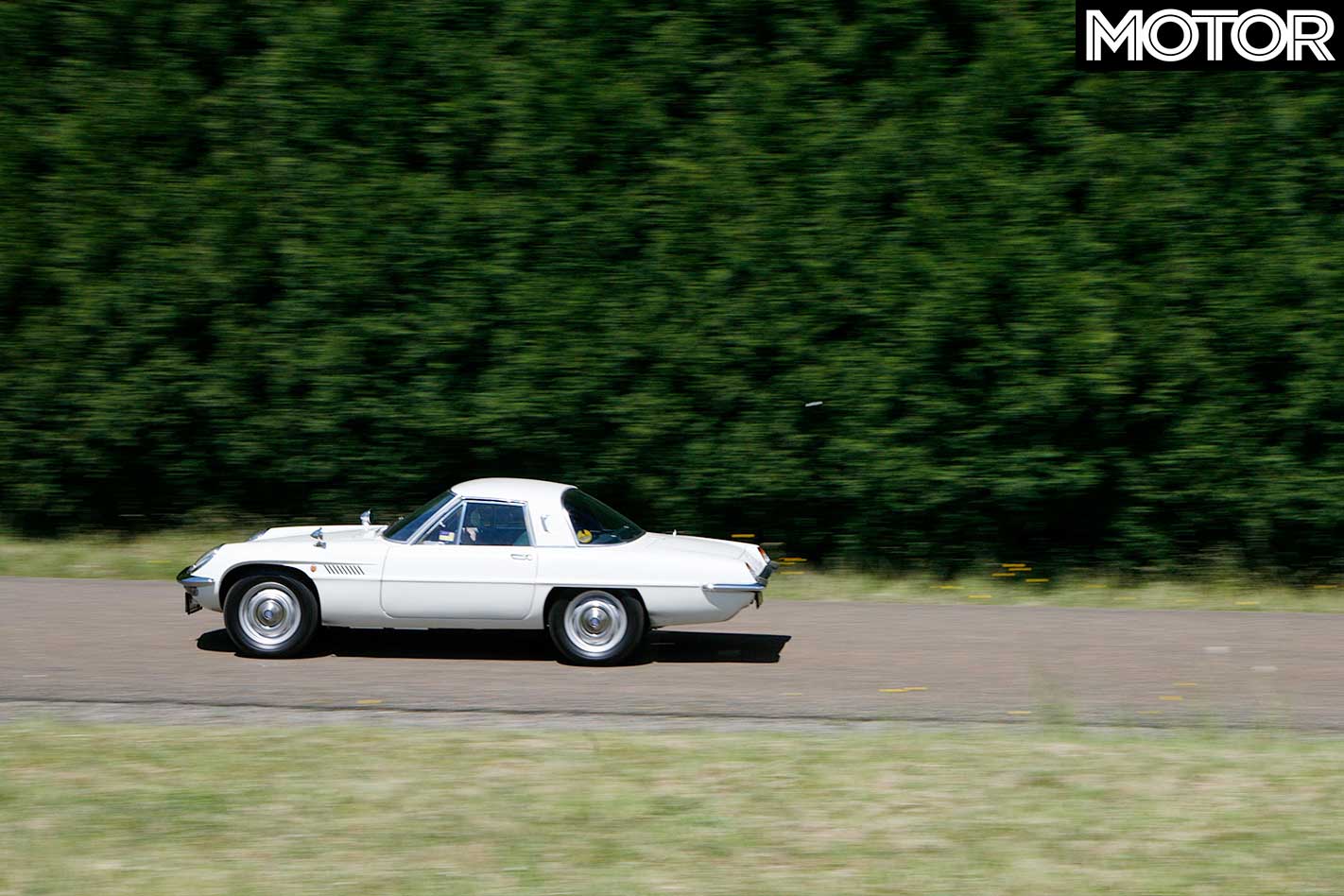
By 1964, Mazda had a prototype two-rotor sports coupe ready for display at the Tokyo Motor Show. And on May 30, 1967, the Cosmo 110S was born.
Fast-forward to 2009 – 40 years after the introduction of rotary power to the Australian market. NSU is long-gone, a victim of its own rushed development of the Wankel engine in the Ro80 sedan, and every manufacturer that also showed interest (GM, Mercedes-Benz, Citroen) aborted the idea long ago, leaving just one player – Mazda.
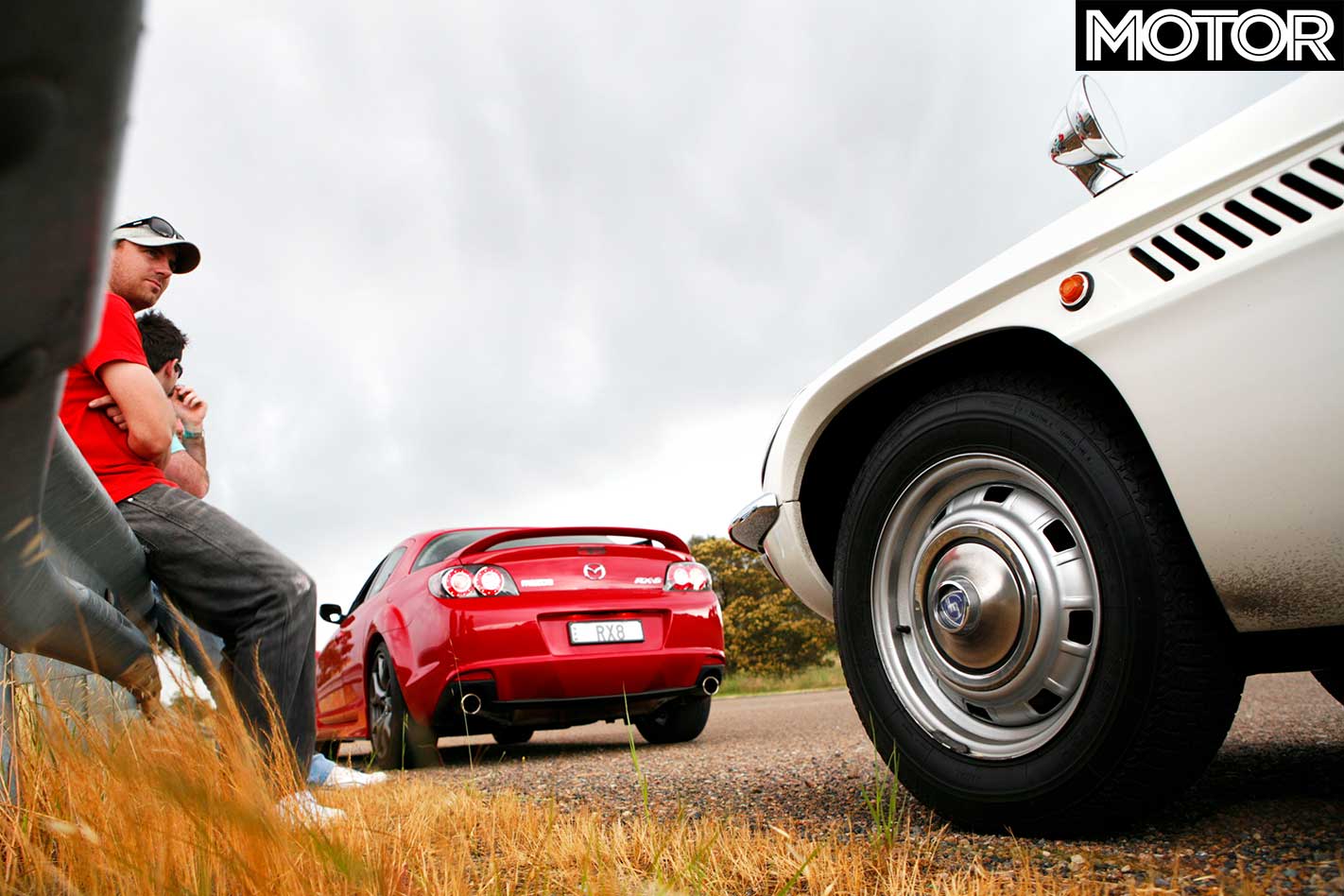
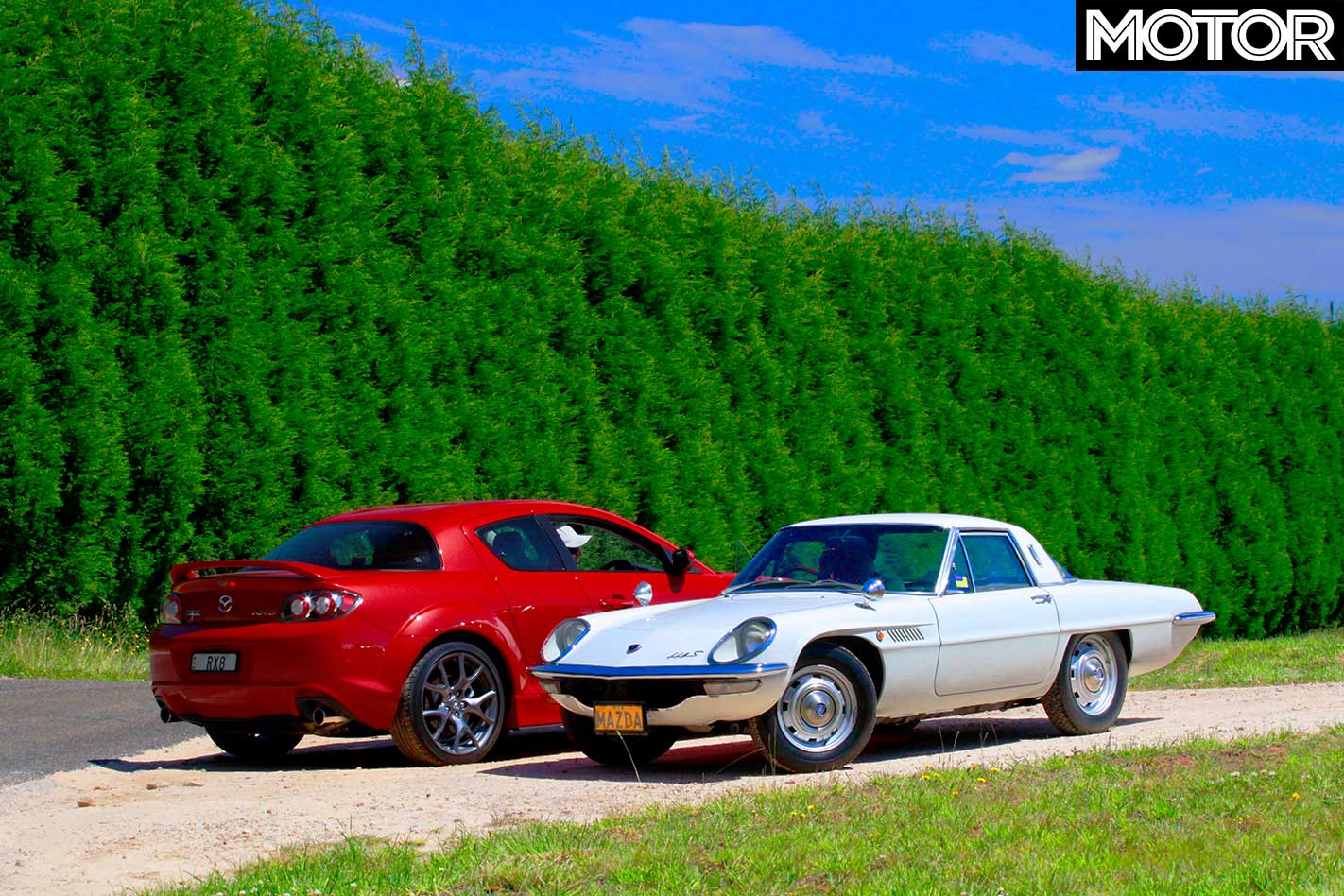
The Cosmo was never exported here, but it did make an appearance on Mazda’s stand at the 1969 Melbourne Motor Show, pre-empting the launch of its first official Aussie rotary, the R100 coupe, in July of that year. But in order to celebrate four decades of Mazda rotary power in Oz, we need to start with the first, a proper sports car – not a basic econobox with a rotary donk like the R100 – and then compare it with the latest, an RX-8 GT.
The Cosmo in question has been owned by Mazda Oz since the late-’80s and is the sole item of glamour in its soulless NSW foyer. It’s one of just 343 Series I Cosmos built before July 1968, when Mazda stretched the wheelbase 150mm, added another gear, and boosted power to create the Series II, and just 1519 Cosmos produced in total before its demise in September ’72.
And what a surprising, amazing car. A thorough inspection of the Cosmo before we take-off reveals some genuinely high-end stuff for 1967, like a reach-adjustable steering column, a power aerial, a two-mode horn (via a dash toggle – up for ‘country’, down for ‘city’), flow-through ventilation (via a knurled dial with a rotor-shaped opening on each B-pillar), a dash-mounted ‘eyeball’ map light, and a felt-lined glovebox.
In the RX-8, the glovebox is un-lined and the wheel still only adjusts in one plane (vertically). But the real eye-opener lies under the Cosmo’s bonnet – front-mounted rack and pinion steering, currently state-of-the-art.
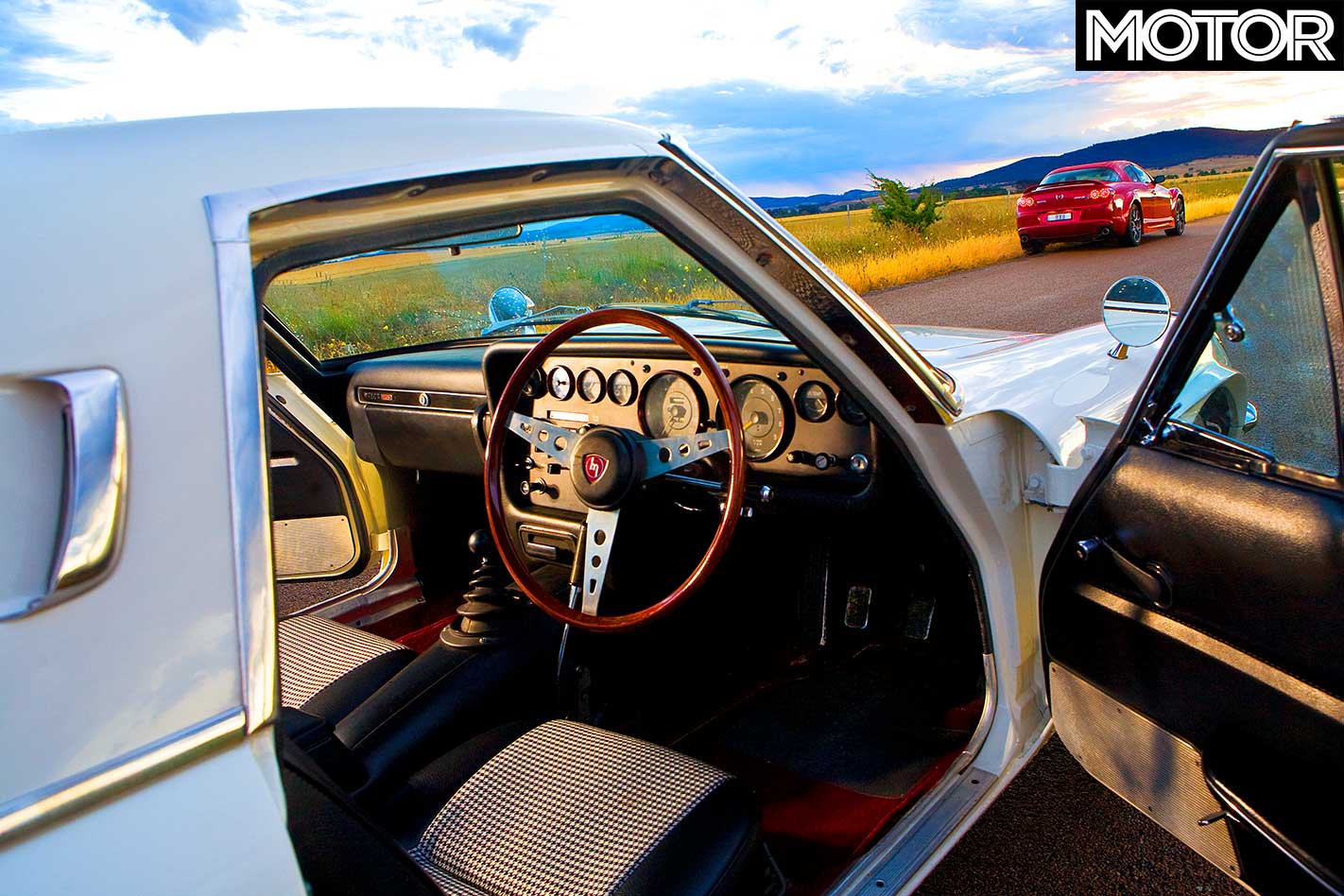
Exiting the carpark proves as much – the Cosmo’s steering is light and crisp, with a scant three turns lock-to-lock spanning a tight 9.8m turning circle. It’s wheel is a traditional flat-faced, wood-rimmed, alloy-spoked affair, adjusted in and out via a wonderfully substantial, finger-grooved aluminium dial beneath the steering column, and it looks appropriately Italian-esque.
But like several British sports cars of the era, the right side of the Cosmo’s steering wheel is curiously tilted towards the dash, meaning you don’t quite sit straight-on when facing ahead. It’s the only real ergonomic flaw in an interior chockers with quirky detail.
Vision through the spindly steering wheel to the large Denso intruments is expansive, as is the view forward over the typically low cowl the Cosmo shares with its RX-8 relative, and all the controls are marked in an idiot-proof fashion – namely ‘L’ (lights), ‘C’ (choke), and ‘CL’ (cigar lighter, though this car features a later-model item with a lit-cigarette icon).
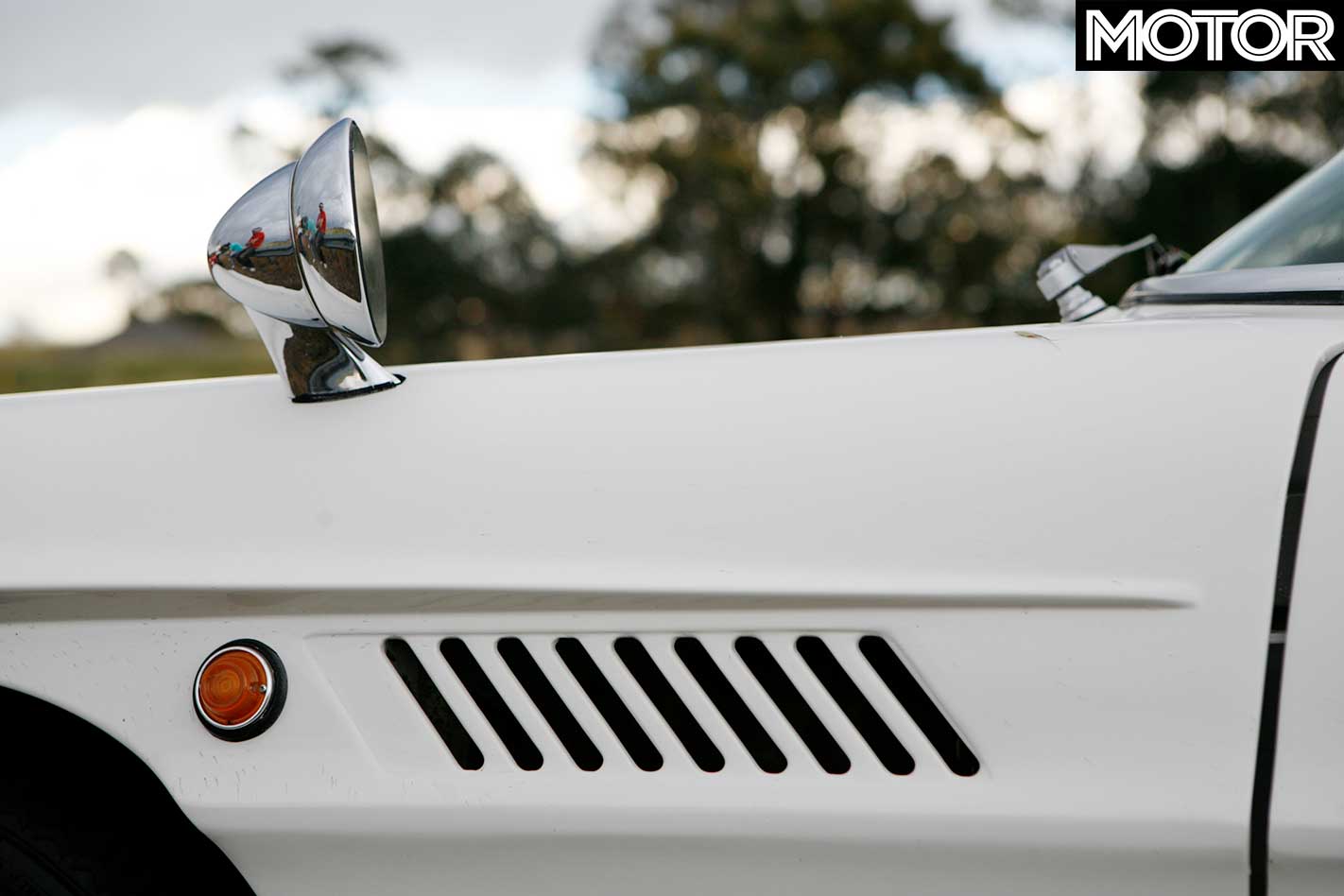
Even starting from rest, the metallic rasp from the rectangular exhaust outlet is to die for, and whenever the engine is under load below 3000rpm, it’s the dominating soundtrack.
At just 982cc total capacity, the Cosmo’s 10A rotary is the smallest ever offered by Mazda, yet the crispness of its throttle response and the sweetness and keenness of its rev-ability fail to betray its lack of size.
Maximum torque is a meagre 135Nm, but the point at where it swells (3500rpm) coincides with just over 110km/h in fourth gear, meaning the Cosmo is surprisingly effortless on the freeway providing you start feeding-in some throttle in advance of forthcoming gradients. As you did with old cars.
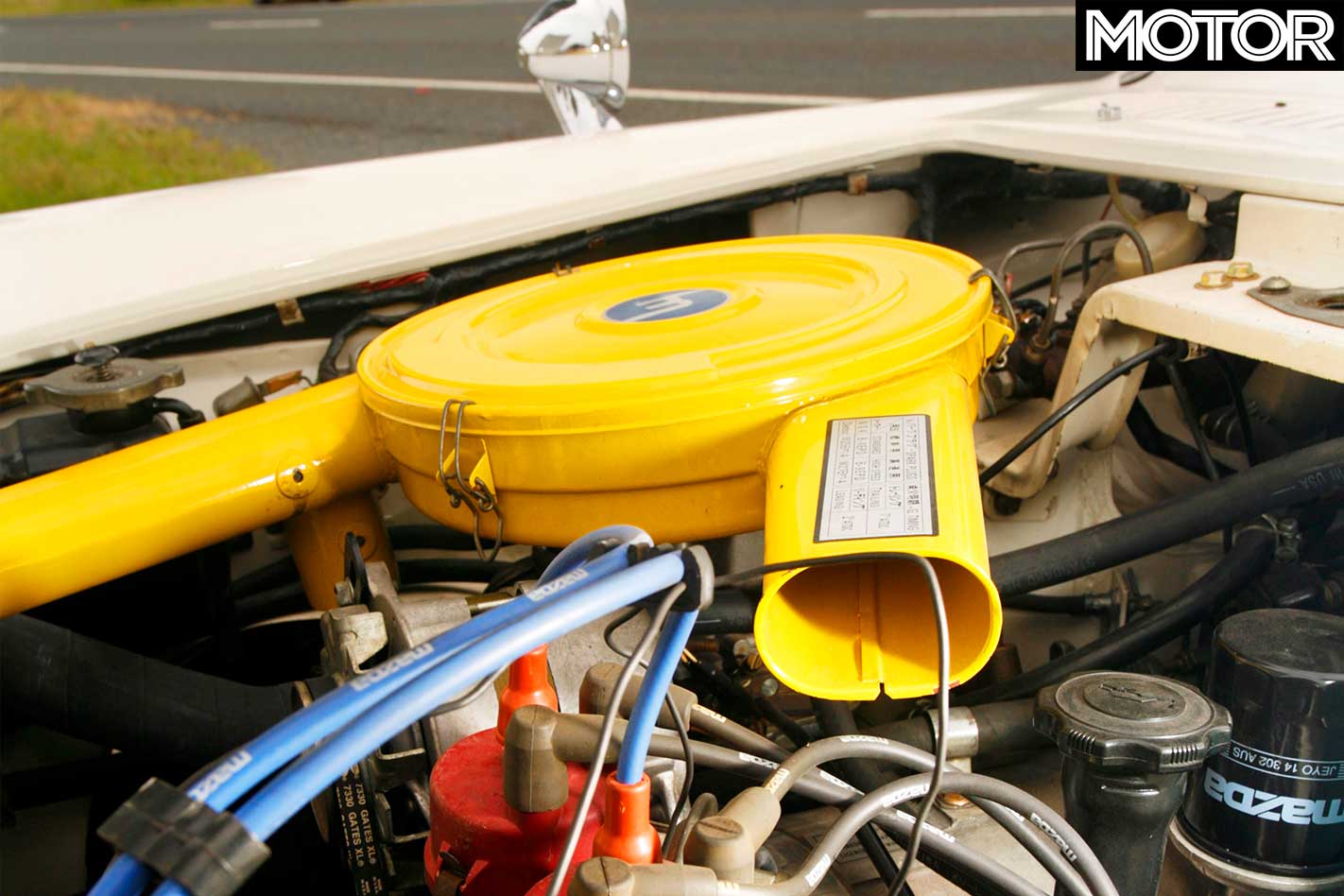
I decide that 6000rpm is a perfectly ample shift-up point, though only on the odd occasion, and become immersed in the Cosmo’s clean, keen, vibration-free shove, all backed by the most delicious naturally-aspirated rotary rasp I’ve heard in a very long time. Like the car’s it’s sitting in, Mazda’s first-generation rotary has as much character as the kinkiest Japanese cartoon.
Which brings us to its modern equivalent – the RX-8 GT. We pause at a Picton dunny-block in far south-western Sydney for a recoup, and after having warmed to the Cosmo’s charms over the previous 100km, it’s time for a contrast. And, flamin’ heck, what a difference!
After the old-school feel of the Cosmo’s clutch, gearchange, and even its steering off centre, the weighting of the RX-8’s controls feels alien.
Clutch movement is short and light, meaning little in the way of feedback, but depress the clutch correctly (early and quickly to the floor) and the RX-8’s six-speed ’box feels so slick, it might as well be shifting through air compared to the Cosmo’s very mechanical four-speed.
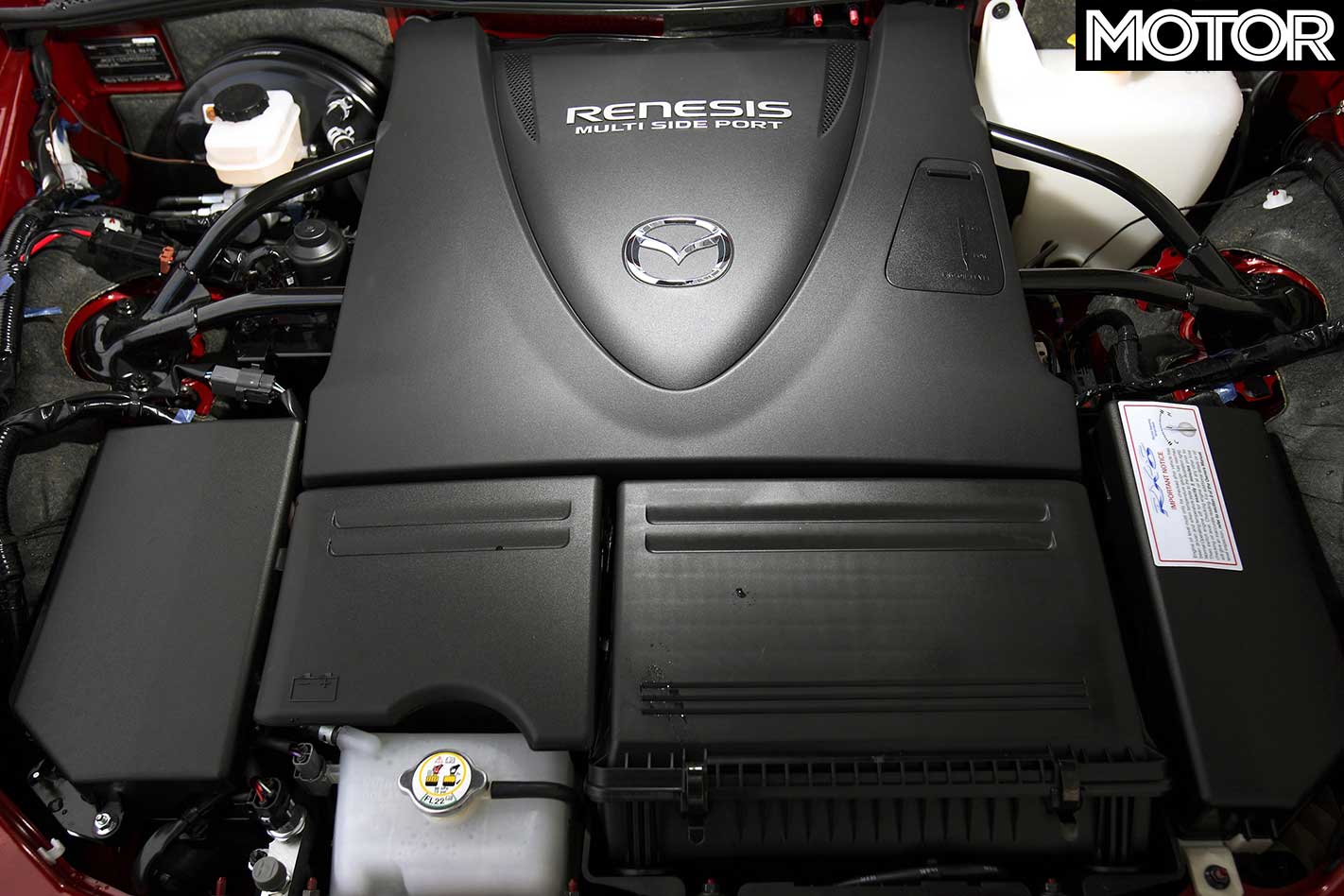
Steering is light, too, and the rotary’s tuneful single-pitch wail only sounds purposeful when the 13B Renesis is spinning beyond 5000rpm. The rest of the time, it’s sound-deadened and legislated into the background, which is disappointing after the Cosmo’s 10A has just demonstrated how lusty a naked rotary sounds.
Stooping back into the low-slung Cosmo, you’re reminded that this is indeed a real sports car. The pedals (with removable alloy covers dotted with small rubber pads) are perfectly aligned to the driver’s minimalist, chequered-cloth-centred bucket, and there’s even a left footrest, though the accelerator sits much lower than the brake, to the detriment of any heel-and-toe fantasies.
Admittedly, the Cosmo’s steering does feel fairly numb at dead ahead, which could potentially be attributed to its super-high-profile 165SR15 Michelins, but there’s very little play, and pretty much any steering input is rewarded with crisp response from its front end. And thanks to slightly rear-biased weight distribution (aided by mounting the fuel tank on top of the rear axle), even pizza-cutter tyres can’t slow the Cosmo when it’s hard up a set of corners.
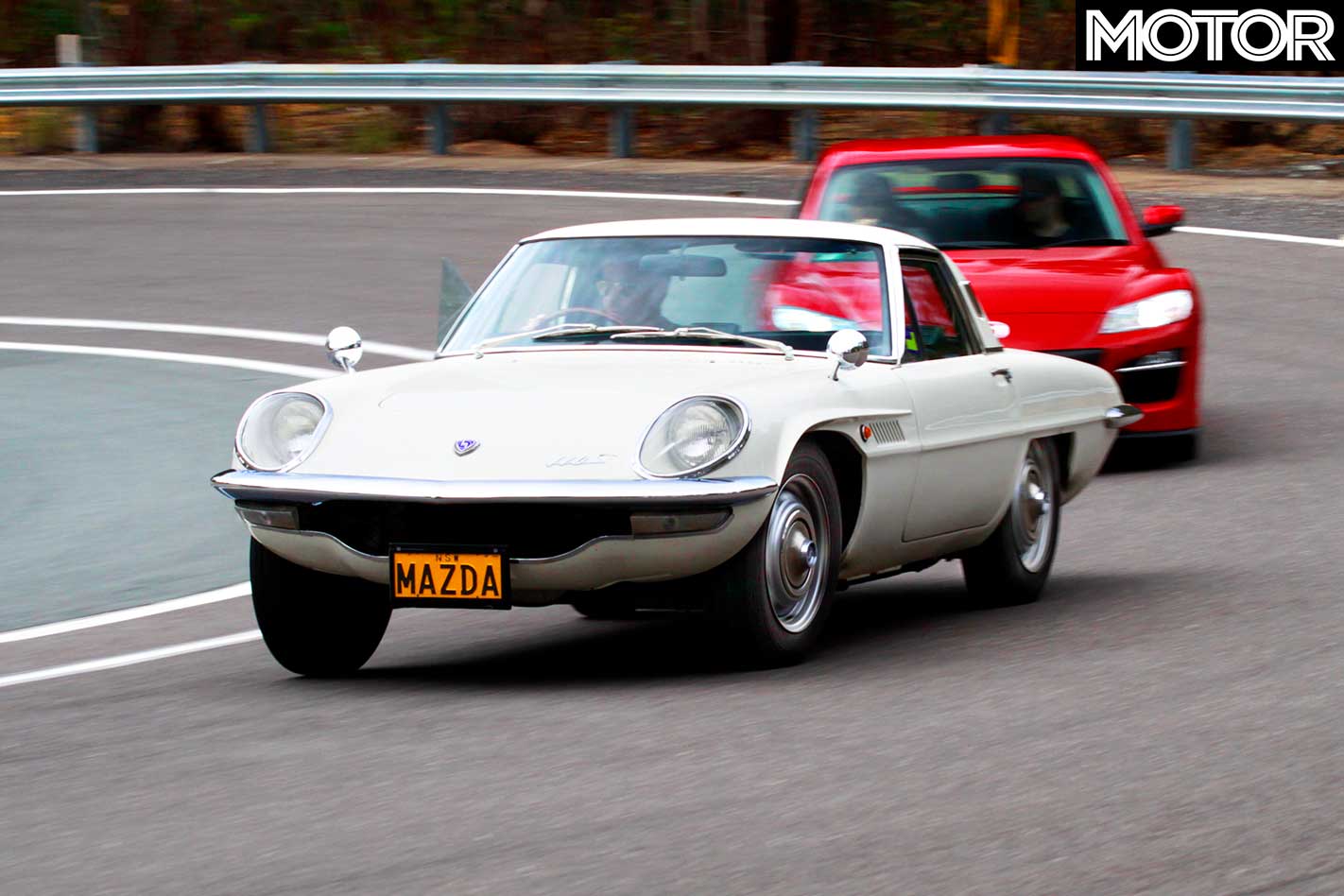
It’ll even produce oversteer into a hairpin if you provoke it (via a solid trail brake) and it will hold that attitude if you stay hard on the loud pedal in second gear. But it’s the effortless flow and tippy-toes adjustability of the Cosmo’s handling in faster corners – and the sensation of lithe agility that its athletic 940kg kerb weight promotes – that make it such a crack-up to drive. Even on a racetrack, would you believe…
The pointer to all this unexpected dynamic ability is the Cosmo’s rather unusual suspension set-up. Backing up its advanced steering gear is what appears to be a double-wishbone-type front end, using large lower A-arms, and rather more delicate A-shaped upper links to locate the coil-over-shock telescopic damper and spring units.
At the back is a de Dion axle, that links the wheels solidly via a tube to maintain camber (like a live-axle), but mounts the differential to the body (like an independent rear) to reduce unsprung mass, thereby mixing benefits of both.
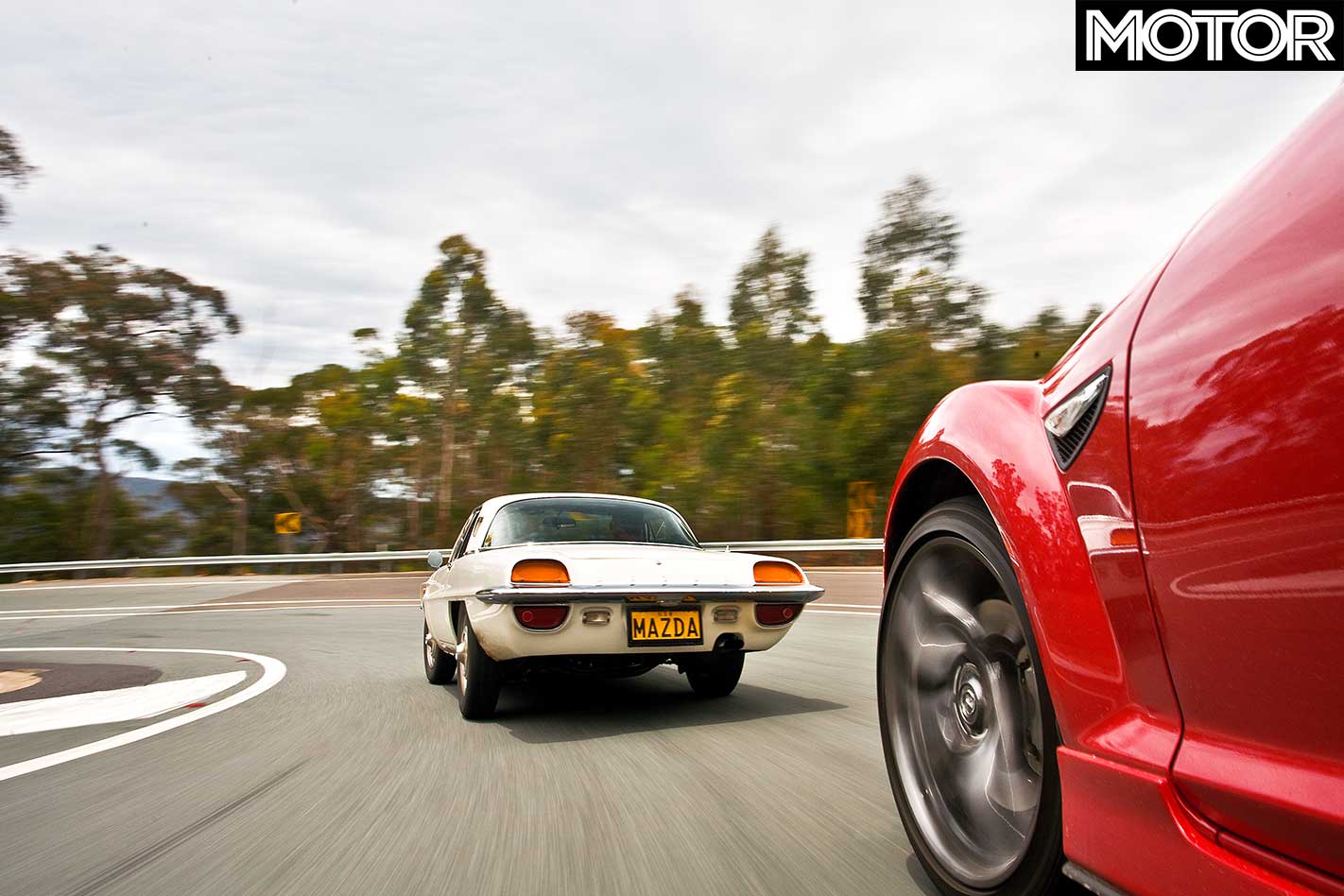
If we had to find fault somewhere, it would be the bobbing of the Cosmo’s long tail over undulating surfaces, and the mildly detrimental effect this has on composure if it cops a series of dips mid-corner. It doesn’t buck or jump, and absorbs most hits, but things can get a bit busy. Like any old car, the Cosmo isn’t immune to making you work.
So is there anything to be learnt by driving a 1967 car, followed by its 2008 successor? Bloody oath there is.
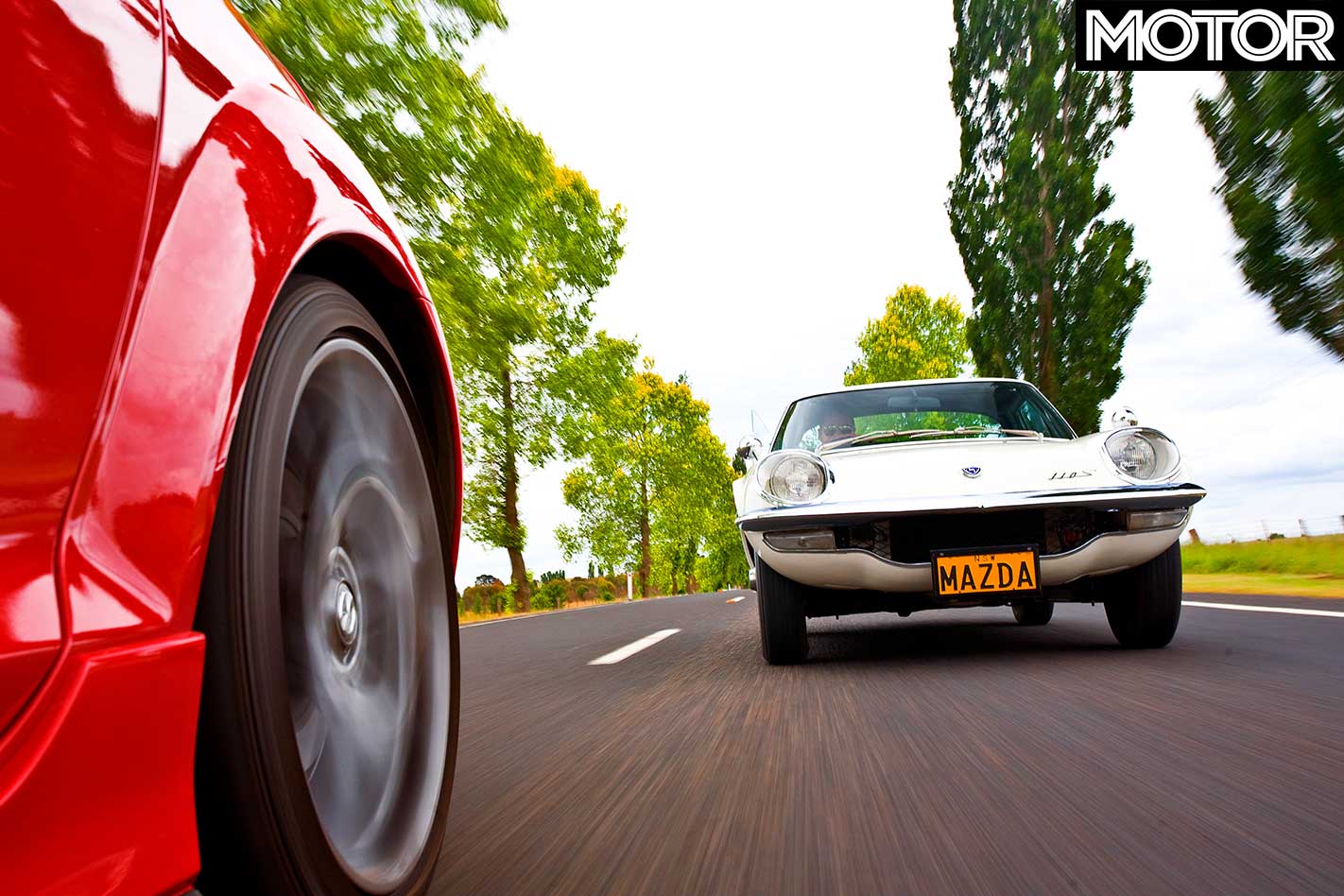
The RX-8 has all the elements that constitute a fine sports car – sweetness, balance, athleticism – but in being a two-plus-two-door coupe that comfortably seats four, it’s trying to please too many people to be a pure sports machine. And it weighs too much. Even at a respectable 1379kg, the RX-8 is overburdening its engine, and the perky little Renesis 13B rotary deserves to be free.
What the modern rotary engine really needs is a light, two-seater sports car to showcase it – in fact, a modern interpretation of the Cosmo 110S. Keep it under 1250kg, keep it perfectly balanced, and make it look hotter than hell and no one’s going to care whether it’s called RX-7 or not. But is that what the MX-5 is meant to be?
Either way, there’s definitely a rotary in Mazda’s future.
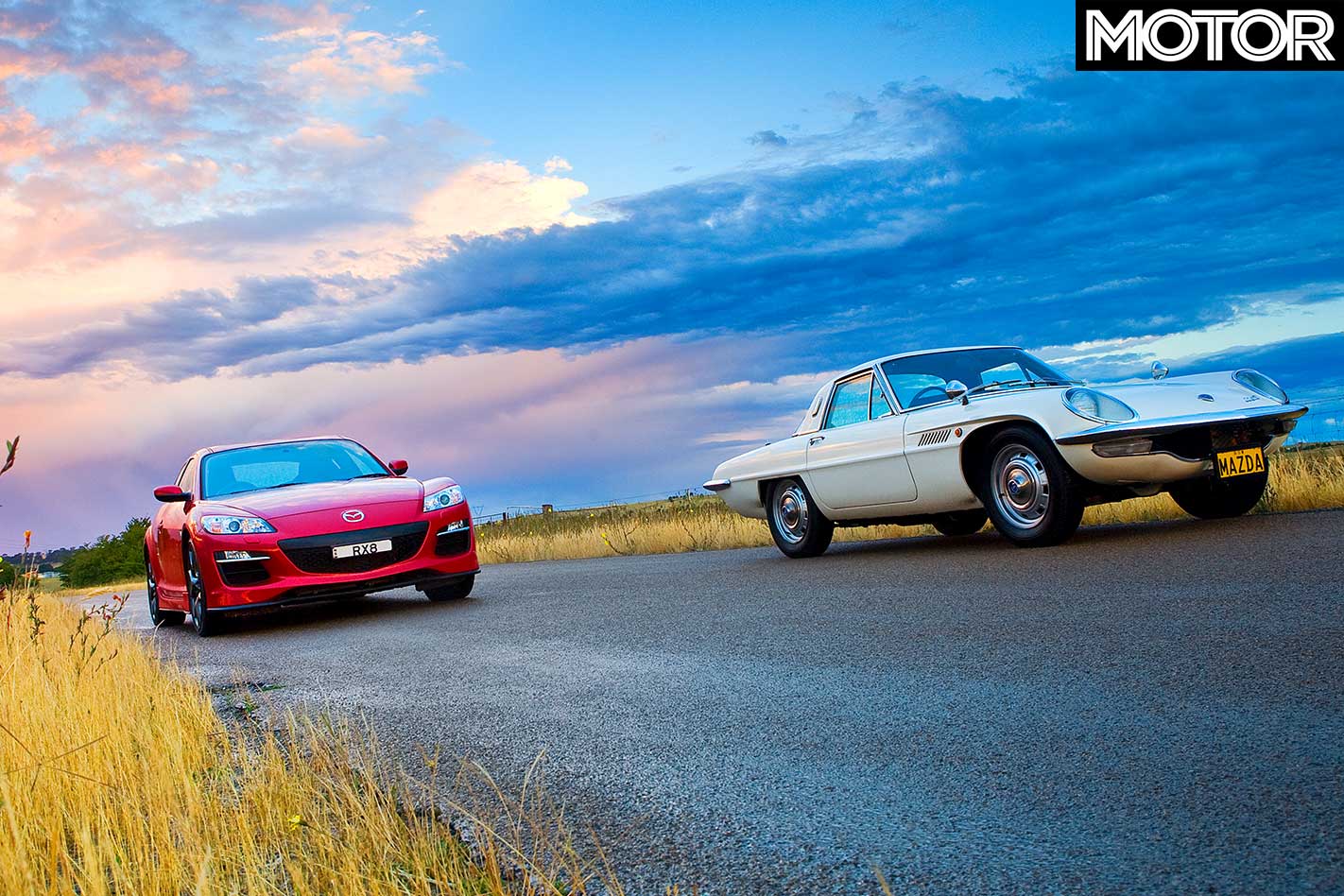
MAZDA’S Allan Horsley and Malcolm Gough bought this ’67 Cosmo in the 1980s, though restoration was only completed this decade. Everything has been kept as close to stock as possible, even the suspension tune, but the perspex headlight covers had to be hand-made, and the rear indicator lenses are simply sheets of old kitchen-cupboard glass with orange plastic glued to them.
The black-and-white cloth upholstery was found in a remnants shop and is not only identical to the original trim, but was the very last piece of material left. All 10A engine parts were still in stock at Mazda Japan, and the entire front suspension was found on Mazda Australia’s own database, just after it was computerised, at a dealer in far north Queensland!
Today, this Cosmo’s value exceeds $100,000, but its historical significance, and its greatness, make it priceless.
Mazda R130 Coupe
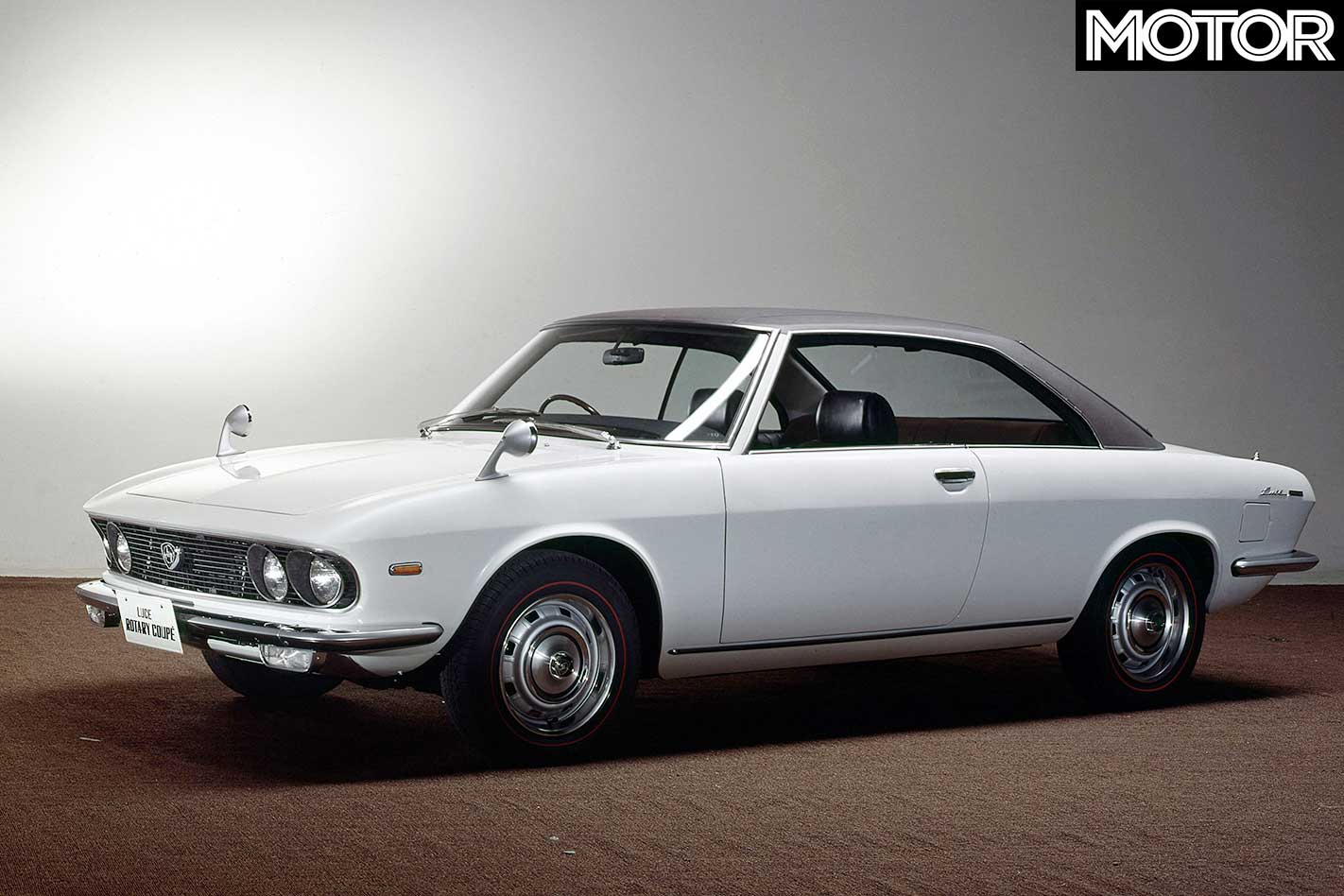
Less than 1000 were built before the RX-4 Hardtop replaced it, making the R130, along with the Series I Cosmo, one of the rarest Mazdas ever. With a 94kW 13A (1308cc) rotary and four-speed manual ’box, the R130 managed a 16.9sec quarter and could hit 193km/h.
Fast Facts
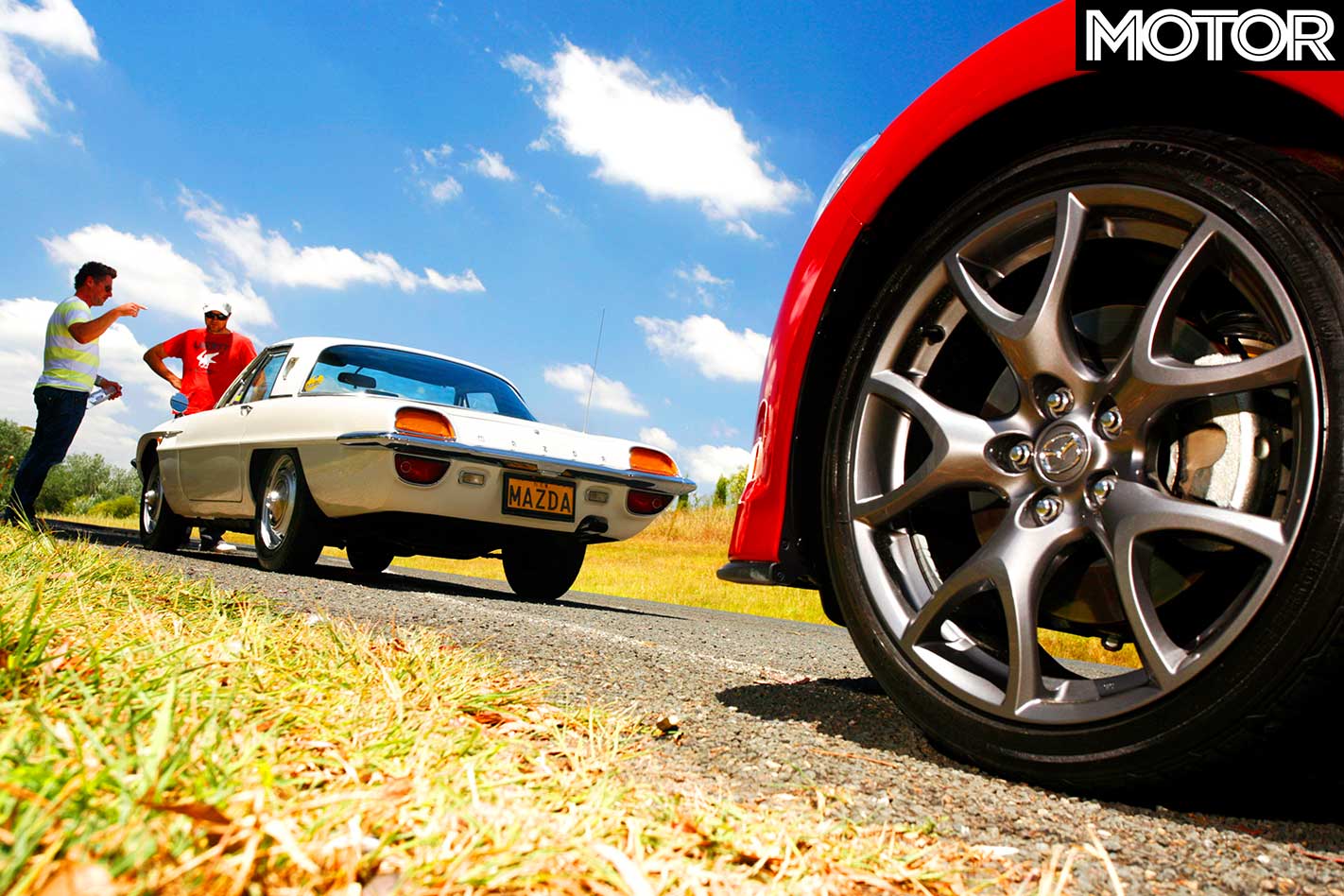
| u00a0 | 1967 Mazda Cosmo 110S | 2008 Mazda RX-8 GT |
| BODY | 2-door, 2-seat coupe | 2+2-door, 4-seat coupe |
| DRIVE | rear-wheel | rear-wheel |
| ENGINE | 982cc, in-line 2-rotor, side ports | 1308cc, in-line 2-rotor, side ports |
| MATERIAL | aluminium alloy | aluminium alloy |
| BORE/STROKE | N/A | N/A |
| COMPRESSION | 9.4:1 | 10.0:1 |
| POWER | 82kW @ 7000rpm | 170kW @ 8200rpm |
| TORQUE | 130Nm @ 3500rpm | 211Nm @ 4750rpm |
| WEIGHT | 940kg | 1379kg |
| POWER/WEIGHT | 87kW/tonne | 123kW/tonne |
| 0-100km/h | 8.7sec (claimed) | 6.4sec (claimed) |
| TOP SPEED | 185km/h (claimed) | 234km/h (claimed) |
| TRANSMISSION | 4-speed manual | 6-speed manual |
| GEAR RATIOS | 3.38/2.08/1.39/1.00 | 3.82/2.26/1.64/1.26/1.00/0.79 |
| FINAL DRIVE | 3.70 | 4.78 |
| SUSPENSION (f) | double A-arms, coil springs, anti-roll bar | double A-arms, coil springs, anti-roll bar |
| SUSPENSION (r) | de Dion axle, trailing arms, leaf springs | multi links, coil springs, anti-roll baru00a0 |
| L/W/H | 4140/1595/1165mm | 4470/1770/1340mm |
| WHEELBASE | 2200mm | 2700mm |
| TRACKS | 1250/1240mmu00a0(f/r) | 1505/1510mmu00a0(f/r) |
| STEERING | rack and pinion | electricu00a0rack and pinion |
| BRAKES (f) | 254mm solid discs,u00a0single-piston calipers | 323mm ventilated discs, single-piston calipers |
| BRAKES (r) | 200mm drums | 302mm ventilated discs, single-pistonu00a0calipers |
| DRIVER AID | N/A | ABS, EBD, DSC |
| WHEELS | 15 x 4.5-inch; steelu00a0(f/r) | 19 x 8.0-inch; alloy (f/r) |
| TYRE SIZES | 165SR15u00a0(f/r) | 225/40R19 89W (f/r) |
| TYRE | Michelin XZX | Bridgestone Potenza RE050A |
| FUEL/TANK | 98 octane/57 litres | 95 octane/65 litres |
| PRICE (in 2008) | $100,000 (est. 2008 value) | $57,625 (2008) |
| PROS | Itu2019s a real sports car, handling, steering, ride, exhaust rasp | Superb chassis balance, strong grip, sweet engine, innovation |
| CONS | Post-u201968 models look better, tiny boot, suspension bounce | Lacks Cosmou2019s wonderful character and singular focus |
| RATING | 9 out of 10 stars | 7.5 out of 10 stars |
More than 2000 lots were auctioned off this weekend from the D’Alberto Brothers Private Collection, with several classic and modern Holdens drawing huge sums of cash.
At the top of the results listing was a 1988 VL Commodore Walkinshaw Group A SS, bearing the build number #333, which has been owned by the D’Alberto family since it was new.
A total of 66 bids saw it reach its final selling price of $340,000, which is astonishing even for a flawless rarity.
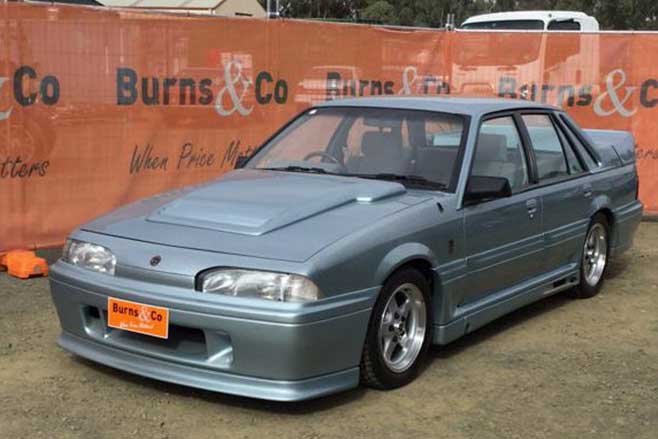
Following the Walky was an iconic Holden of a similar vintage, a 1985 VK HDT Brock Commodore Group A SS. The Blue Meanie also wears build number #333 and picked up $305,000.
Auction house Burns & Co says it’s showing 2375km and was also owned by the D’Alberto family since new.

The 313 miles (or 503.6km) showing and 4-speed manual gearbox go some way to explaining the $240,000 it sold for.
A 2008 HSV W427 was also in high demand, with number #93 of 137 built grabbing $220,000 after 44 bids.
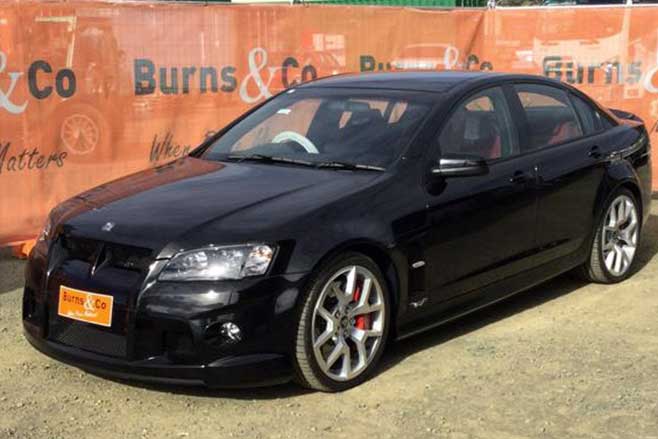
Several other cars also made six figures during the weekend’s bidding. A 1994 VN Commodore Group A SS picked up $210,000, due to its rare build number – #333 of 302.
“Given the situation of the D’Alberto Family already owning 3 other Group A models with the same build number, a special build # of 333 was assigned to this vehicle.”

Rounding out the six-figure club were a 2002 HSV GTS Coupe, grabbing $132,500 and an example of one of the first Holdens ever built, a 1948 48-215 Holden FX, build number 46, with 22,238 miles (35,780km) and a final bid of $130,000.
Other notable efforts were a rare 1999 HSV XU8 with only 389km showing which picked up $57,000. It’s #96 of 141 and one of only 69 built in manual.
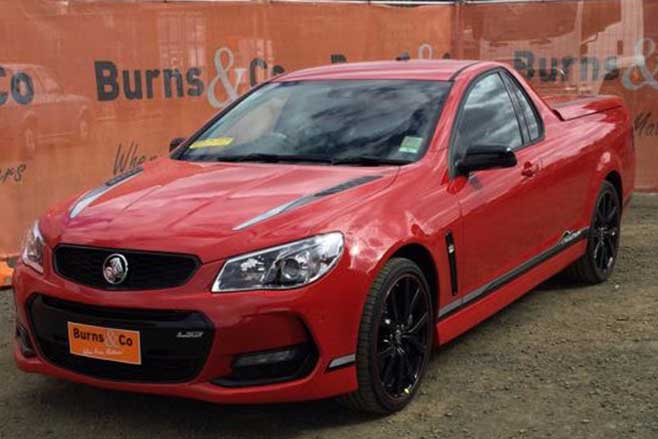
Though very few of the 2000 lots were actually cars, it’s worth looking through the results page at the Burns & Co site to see what a frenzy the auction was.
Australia’s Formula 1 hero, Daniel Ricciardo, has won an epic Chinese Grand Prix, after starting from sixth on the grid.
Ricciardo proved again why he is one of the best overtakers on the Formula 1 grid, keeping his nose clean to make a number of brilliant passes on both Lewis Hamilton and Valterri Bottas late in the race.
Bottas finished second, holding out a fast-charging Kimi Raikkonen who rounded out the podium positions.
Ricciardo has never won a Formula Grand Prix from a grid position higher than fourth, with the Chinese Grand Prix his sixth career victory. The win also came on the back of four retirements for the Australian in the last six races.
The first half of the race was processional, with Ferrari leading early before being mugged by Mercedes-Benz in the pit stops. A late safety car period set the stage for a titanic race to the flag.
Red Bull made the bold strategy call to pit both cars for softer tyres, setting up a scintillating passing show.
“I don’t know what it is,” Ricciardo said after the win. “I don’t seem to win boring races. They are all pretty fun.
“It was hectic, I heard safety car [called in lap 32 to clean up post-collision debris left by the two Toro Rossos] in T14. [Red Bull Racing] said we would double-stop. It happened quickly. That gave us a bit of grip on the restart. We didn’t think it would last that long but the tyres held up well and we had wicked pace on the softs.
“Once I was aware we had the pace, I wasn’t going to let that slip. Every win I’ve had has been in a similar circumstance. It was crazy, a lot of fun. It was decisive, winning moves from the team. Thanks a lot.
“Twenty-four hours ago, I thought we might be starting at the back of the grid (after the engine problem). Thanks to the boys yesterday. I thanked them after qualifying but today is the real reward. Thanks to everyone. The mechanics worked their butts off.”
Teammate Verstappen clashed with cars twice, first with Hamilton then spectacularly with polesitter Sebastian Vettel, the two spinning at the hairpin after Verstappen ran into the side of the championship leader.
Vettel finished in eighth, and downplayed the incident after the race, refraining from lambasting the young Dutchman for the move. Verstappen was handed a 10-second penalty for his clash with Vettel and finished in fifth.
Gran Turismo Sport has been available for a few months now and, when we first played it, we were a little surprised.
There was almost no reason to play offline unless you wanted to set lap times, and seemingly no reason to have your own garage. It was a departure from Gran Turismo that pushed us towards online racing, something you really have to be in the right mood for. But a recent update changed that, by reintroducing us to the AI-battling grind that is a career-style GT Mode.
GT Sport was already worth buying, even without the recent major addition, as it was good enough as a simulator and an opportunity to have some fun.
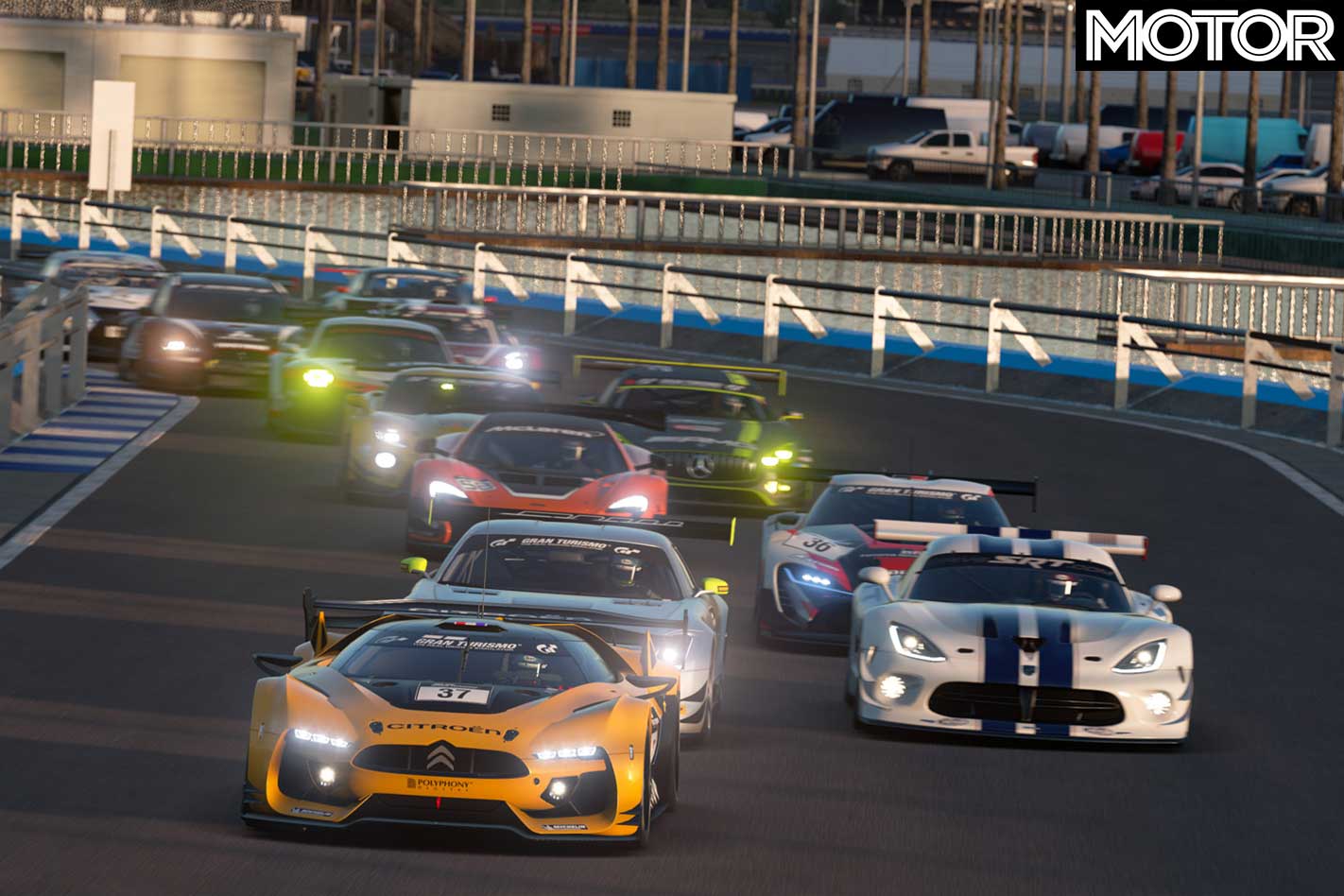
Turning electronics off is an excellent lesson in smooth driving, and those hoping cars will feel and sound more realistic than in previous titles are in for a treat. It’s a fairly basic simulator, but an effective one.
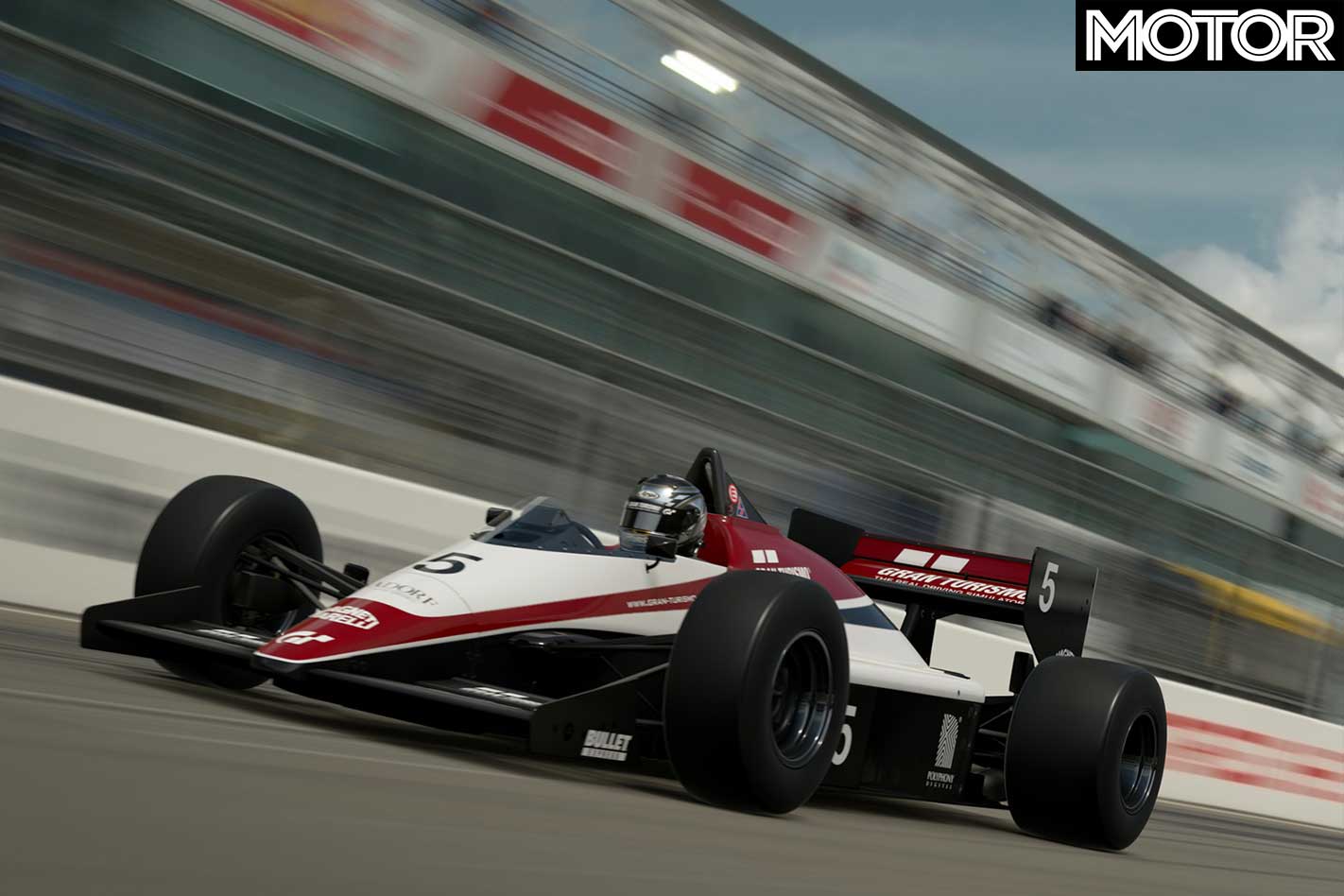
It’d be interesting to experiment with the same car on the same track in both GT Sport and a game like Forza Motorsport 7, Assetto Corsa, or Project Cars 2 (some of these are more realistic) to see which holds up as the best of the bunch.
Price: $79.95 Website: https://www.gran-turismo.com/au/products/gtsport/ Rating: 4 out of 5 stars
Can’t wait to see the final score? Jump to the verdict now
IT’S easy to lump Korean sister brands Hyundai and Kia together. But differences between the sixth-placed Hyundai Tucson and the Kia Sportage are apparent the moment you crack a door.
The Kia instantly feels a higher grade of car. The sweeping dash’s design looks and feels more premium, the multimedia unit’s graphics are sharper and more sophisticated, and there’s a strong sense that the Kia is better equipped.
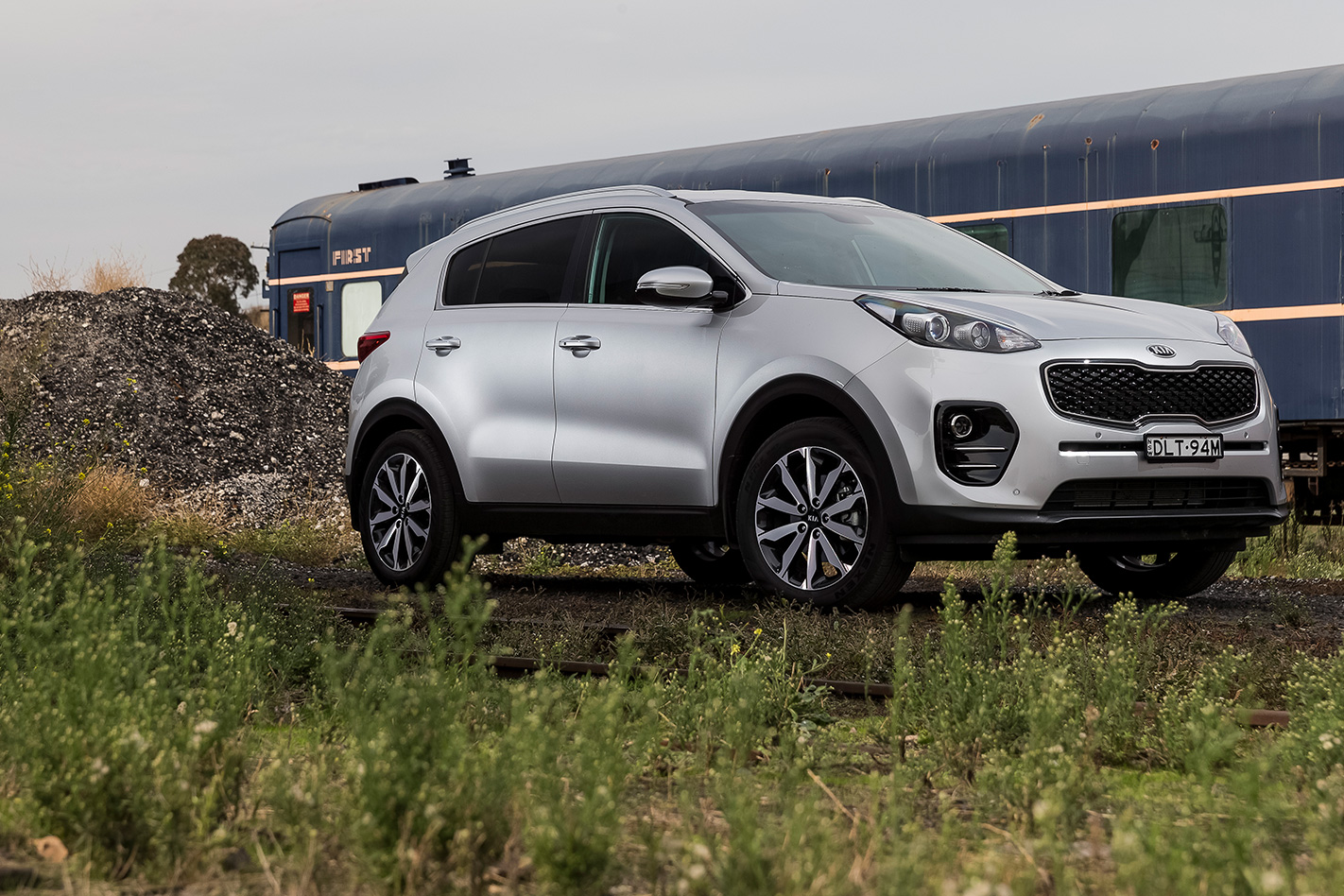
It is. Two 12-volt outlets straddle a USB slot and auxiliary port up front, a sat-nav map lights up on the screen, while dual-zone climate control dials grace the lower dash. You push a button to start the engine rather than insert and turn a key, the driver’s seat adjusts electrically (for superior comfort), and there’s a bunch of other surprise-and-delight additions that justify the Sportage SLi’s $1000 price premium.
But it’s the rear seat that expands the Hyundai/Kia divide. Backswept, elf-eared rear doors that offer the best access on test open up to a rear bench that appears to have been made with passengers front of mind, and not cobbled in as a begrudging afterthought. Okay, so the second-row seatbacks lack a bit of lateral support, but forward vision via a low-ish beltline and a long glasshouse that appears to wrap around the Sportage is excellent, second only to the Subaru for its sense of light-filled airiness.
Unfortunately, the Sportage is a half-step behind the Hyundai when it comes to what’s under the bonnet. Australia’s Korean-sourced Sportage continues with a 114kW/192Nm multi-point injection version of the long-serving ‘Nu’ 2.0-litre engine, whereas the MY17 Tucson gets direct-injection and 121kW/203Nm.
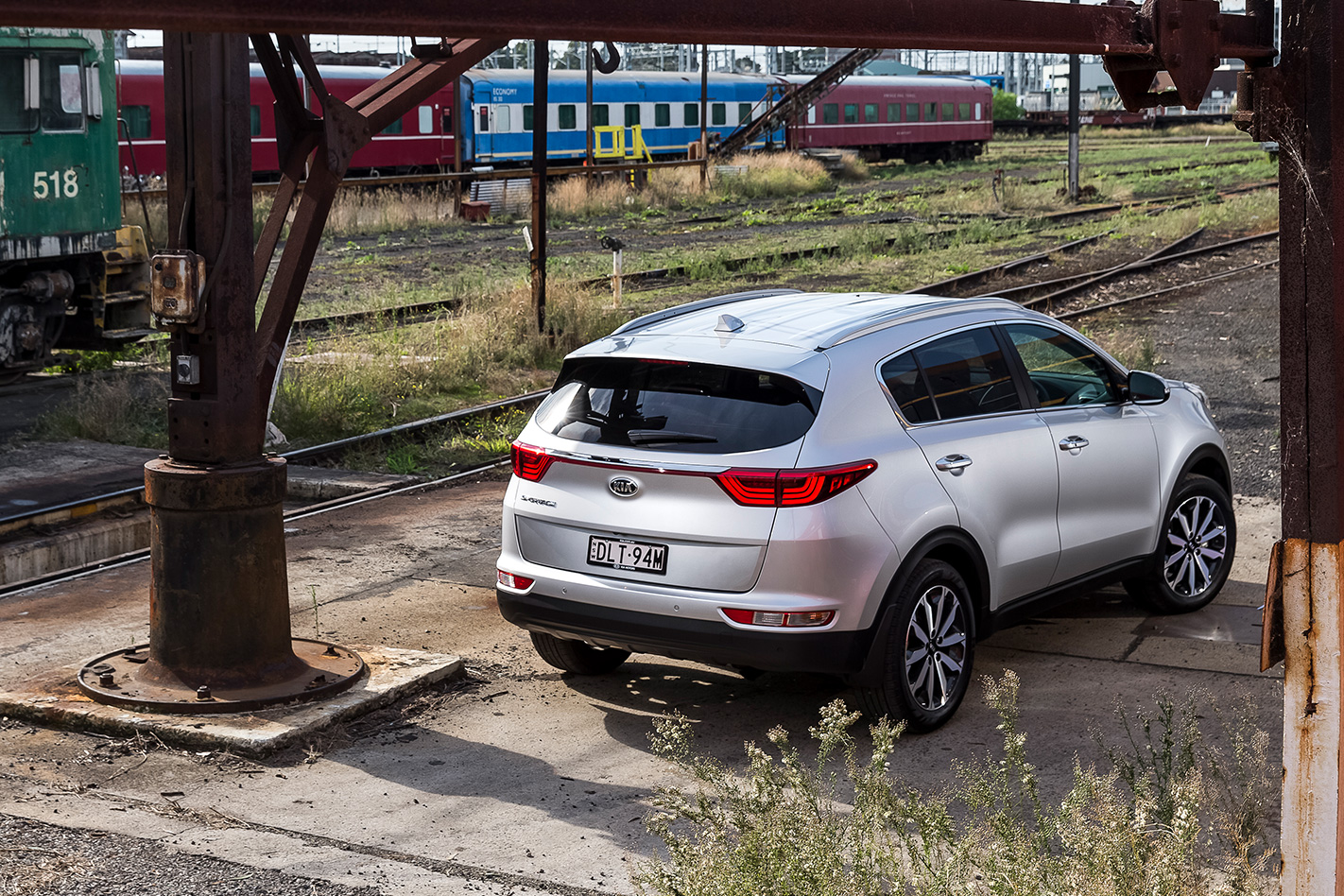
In reality, the difference is mostly down to refinement. Over the last thousand revs to the 6500rpm redline, the Sportage’s older engine is much more intrusive, making it less pleasant to punch hard. Yet when you do, the Sportage offers near-identical performance to the Tucson, not to mention the 2.0-litre CX-5. But neither of the Korean drivetrains can match the Mazda’s sweetly encouraging proficiency.
Where the GDI outshines the MPI donk is in fuel economy. The Sportage’s on-test consumption of 11.2L/100km was half a litre thirstier than Tucson’s. There’s something else that counts against the Kia. Higher levels of road and wind noise compared with almost all the other SUVs here tarnish the Sportage’s overall polish – think tyre roar and wind rush rising to about the same level as the previous-gen Mazda CX-5 – and its otherwise well-rounded ability.
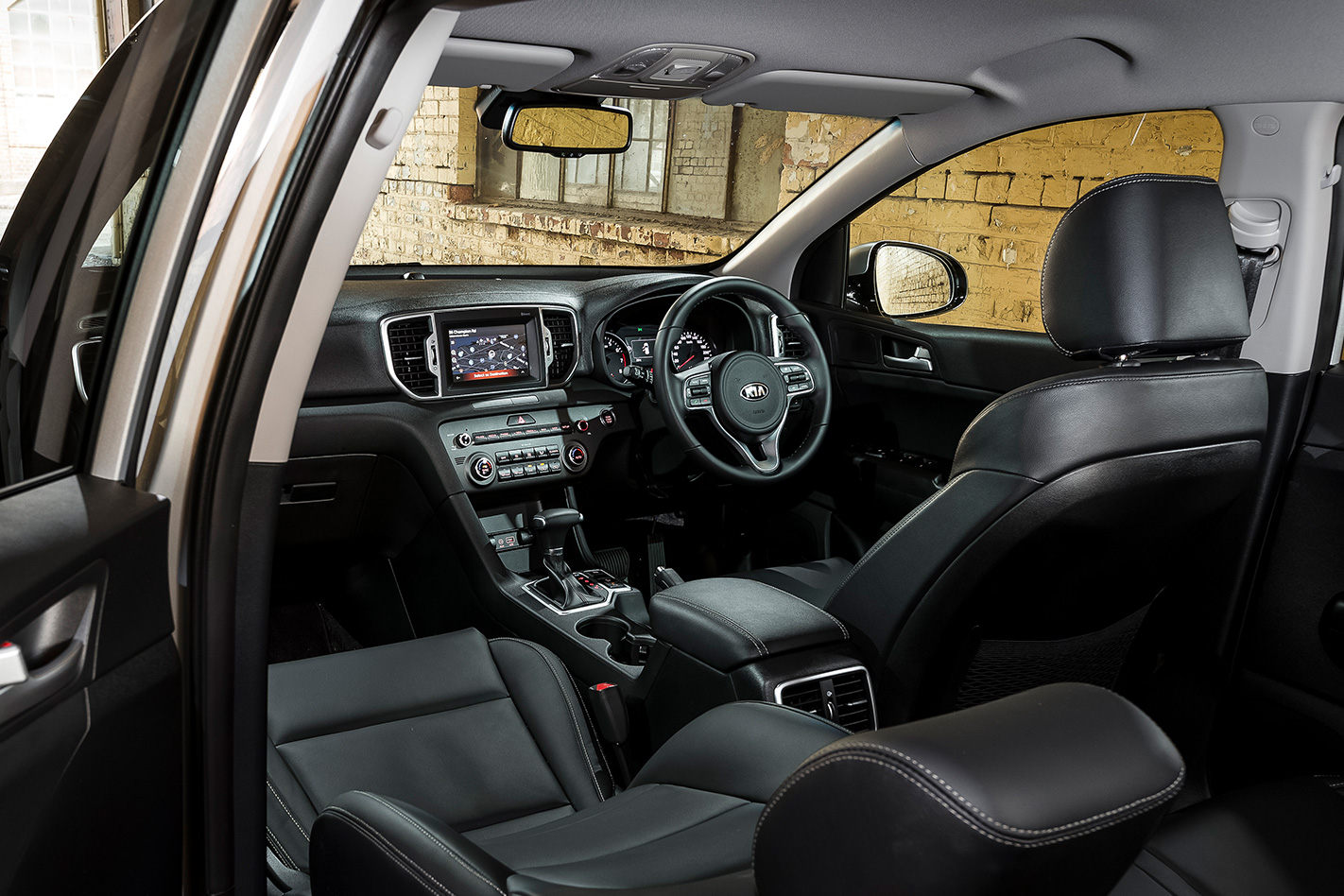
That’s a shame because the taut Sportage’s dynamics reward keen drivers, and are a credit to Kia Australia’s dedicated local tuning program.
The Sportage’s steering has slightly crisper feedback than the Tucson’s, even with the Drive mode left in Normal rather than the throttle-jumpy Sport or anaesthetised Eco modes. But it’s nowhere near as good as the Escape’s crisp precision.
With four bodies on board, or even one-up on our winding dynamic loop, the Kia enjoys stringing corners together, and feels more playful than its Hyundai equivalent. Pitch it into a corner and it clearly favours its rear end, as opposed to the more neutral Hyundai. Unfortunately, that encouraging playfulness can ignite the Kia’s Korean-tuned ESC, killing the fun faster than a coldsore on date night.
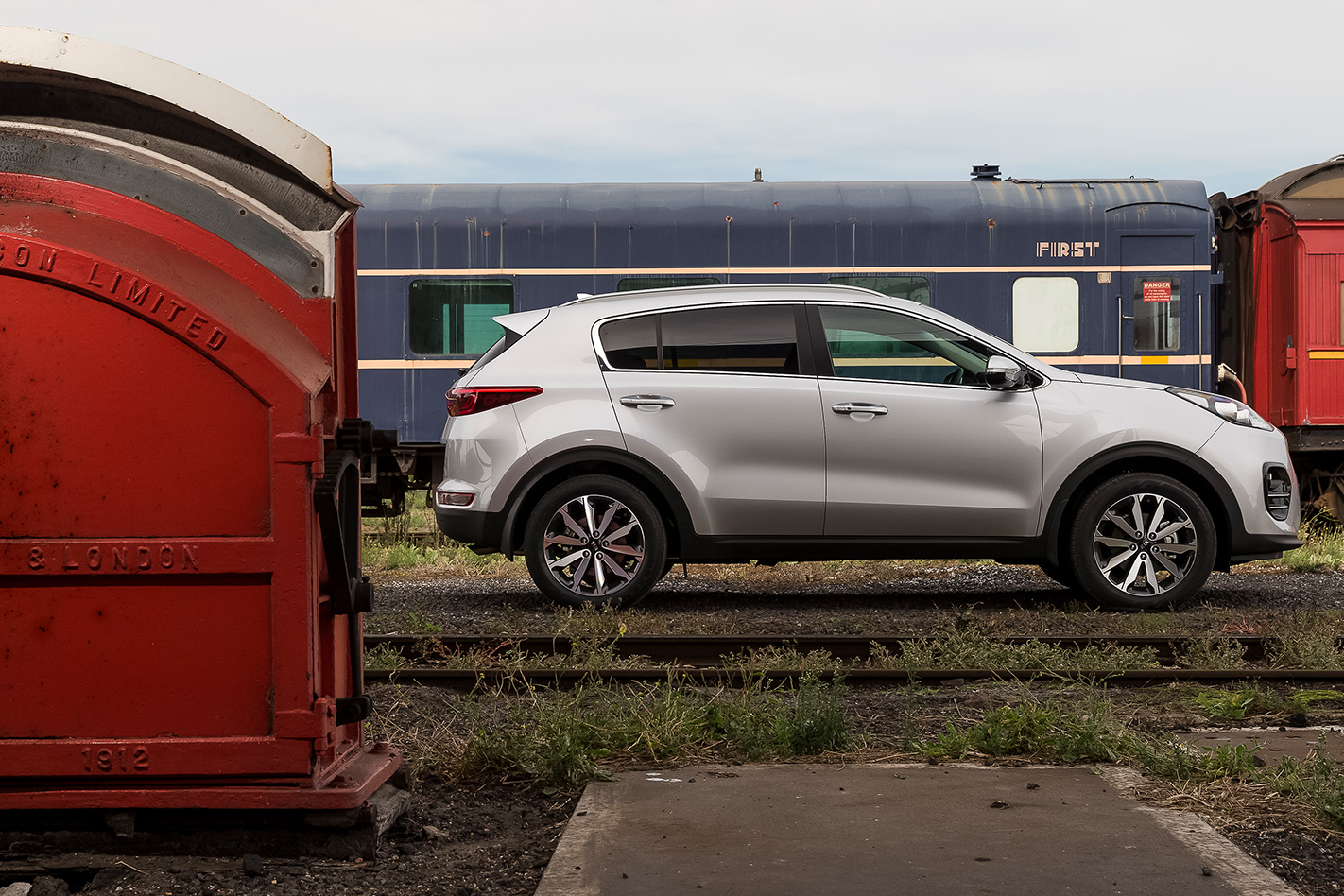
But we really like how the Kia Sportage exudes a youthful, fun-to-drive, almost European ethos. Useful, comfortable, well-appointed and individually styled, it doesn’t even need Kia’s unbeatable seven-year warranty to argue a strong case. While its Hyundai cousin toes a conservative line, the Kia doesn’t mind being different. If only that included its engine.
SCORE: 7/10 KIA SPORTAGE SLI SPECS
Model: 2018 Kia Sportage SLi Engine: 1999cc 4cyl, sohc, 16v Max Power: 114kW @ 6200rpm Max Torque: 192Nm @ 4000rpm Transmission: 6-speed automatic Weight: 1559kg 0-100km: 10.4sec Fuel economy: 11.2L/100km (tested) Price: $34,690 On sale: Now
Medium SUV Megatest – Full coverage
Medium SUV Megatest Results
2018 Haval H6 Premium
Score 2/10
2018 Mitsubishi Outlander LS
Score 5/10
2018 Toyota RAV4 GXL
Score 6/10
2018 Hyundai Tucson Active X
Score 6.5/10
2018 Kia Sportage SLi
Score 7/10
2018 Subaru Forester 2.5i-L
Score 7.5/10
2018 Ford Escape Trend
Score 7.5/10
2018 Volkswagen Tiguan Trendline
Score 8/10
2018 Mazda CX-5 Maxx Sport
Score 8/10
