
The Audi RS4 Avant exists in a rare sphere of fast compact executive estates that comprises only it and the Mercedes-AMG C63 wagon.
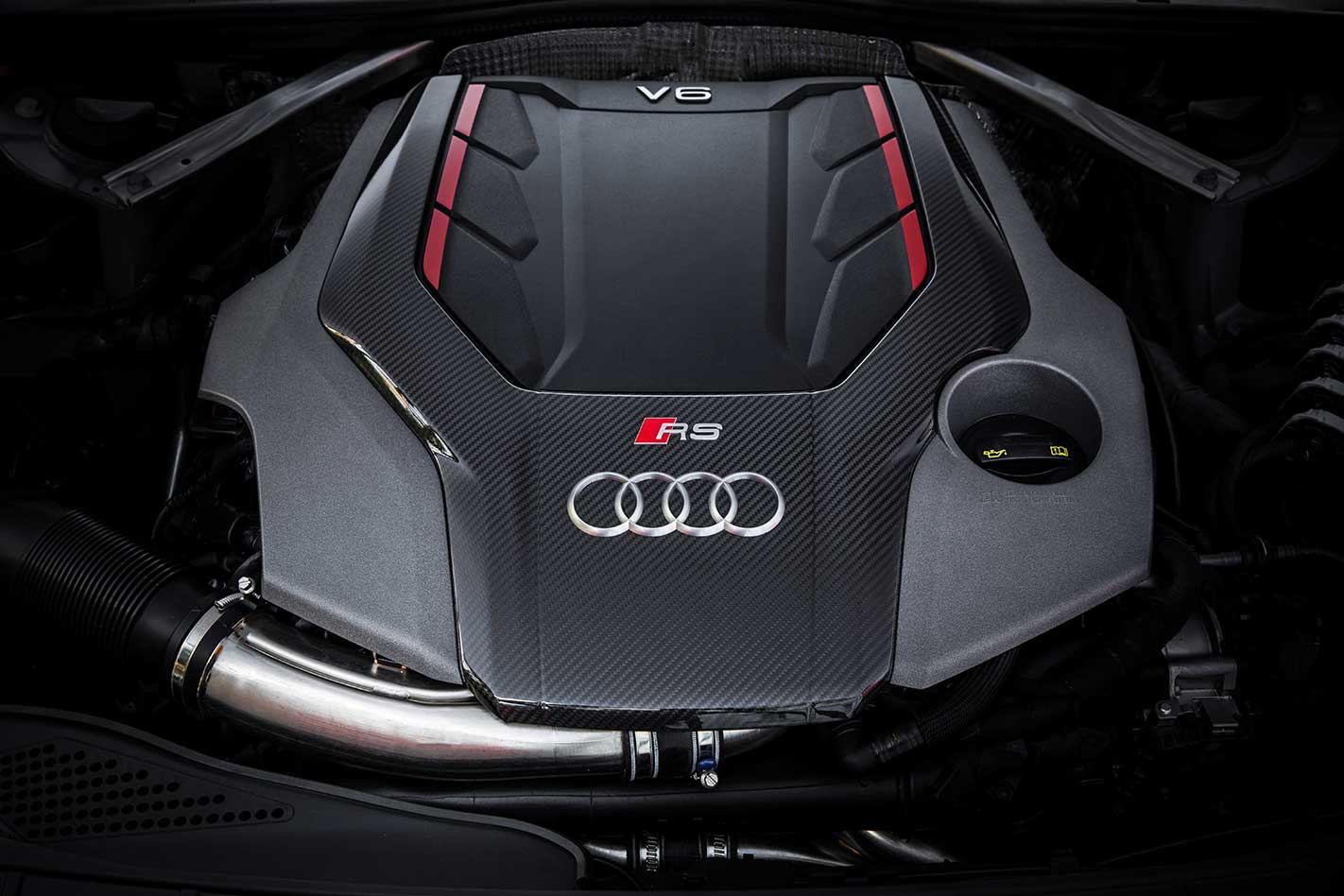
Now in its fourth generation, the RS4 also leaves the C63 as the only V8-powered car in this class. Like the RS5 of last year, the new RS4’s engine has been downsized to a 331kW 2.9-litre twin-turbo V6, having disposed of the previous generation car’s charismatic, naturally-aspirated V8.
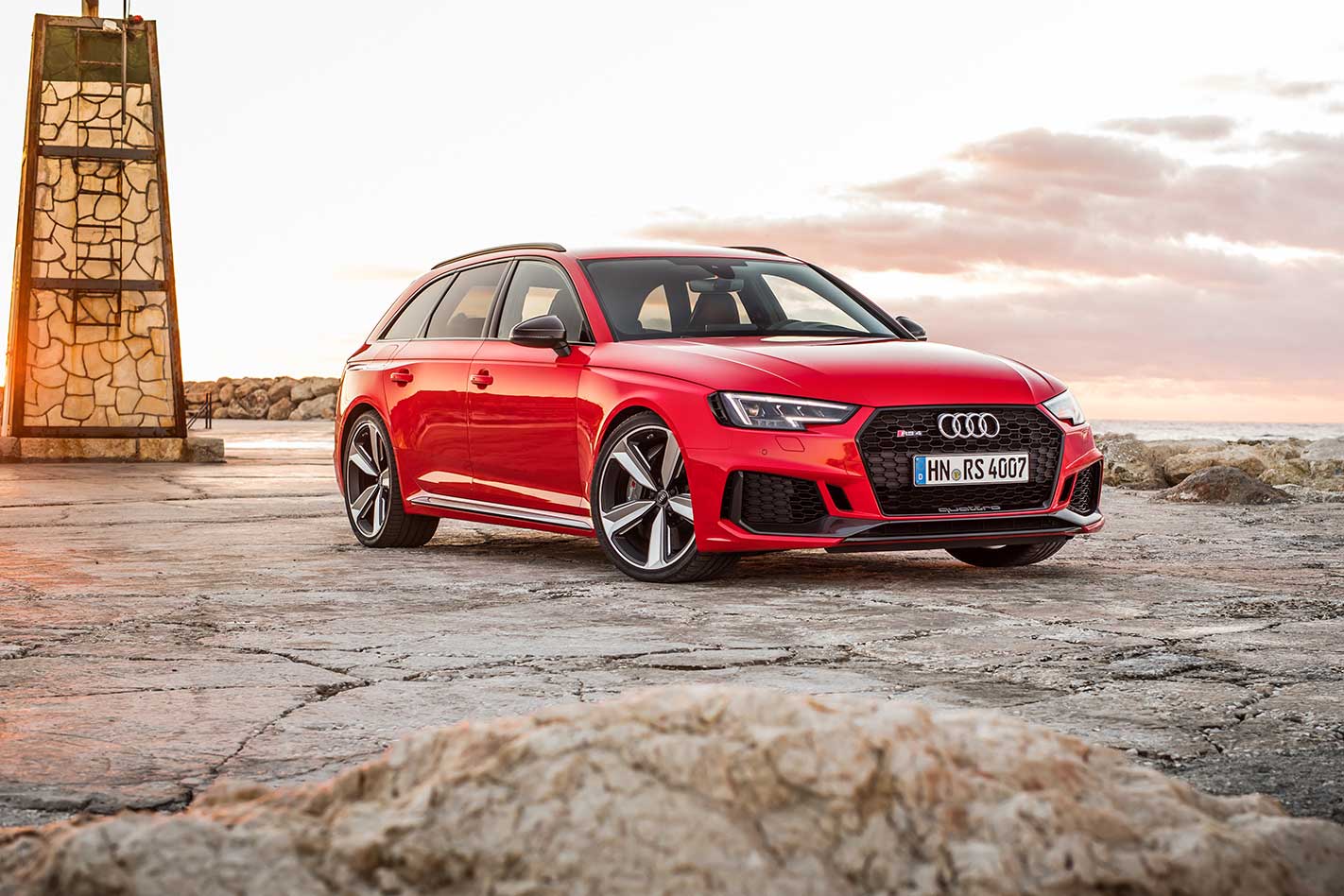
It drives through an eight-speed torque-converter automatic, to all four wheels, in a body given a bit more chunkiness and cooling and 30mm-wider arches.
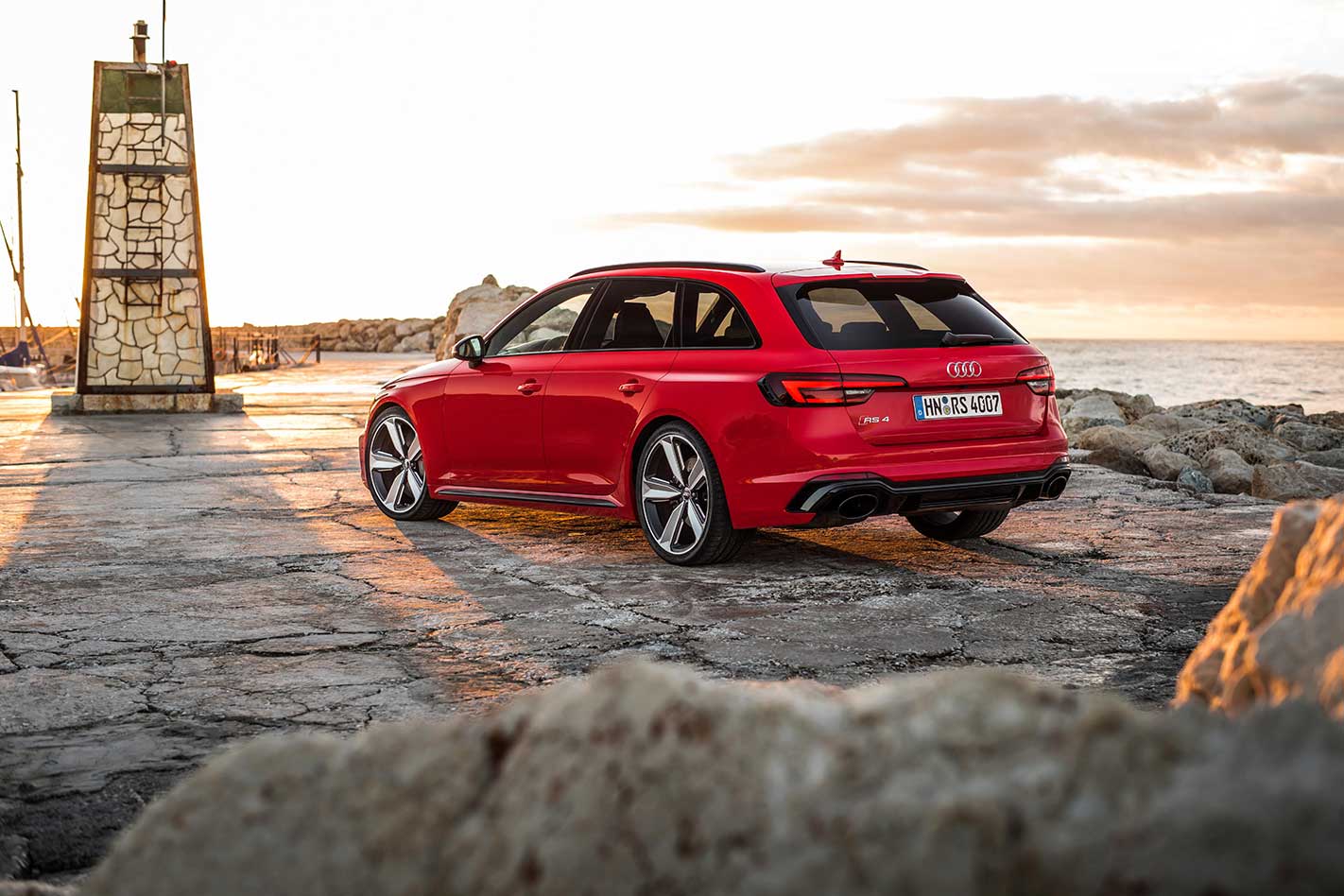
There are other suspension options, too: hydraulically-linked dampers reduce roll and pitch, dynamic steering and carbon-ceramic brakes. Other options include an expensive Carbon Pack. Wheels are 19s; or 20s with 275/30 R20 tyres. This generation of the RS4 is (up to) 80kg lighter than the old one, but is still a 1715kg car.
Like all Audi RS models, it’s fast, of course. As well as 331kW at 5700- 6700rpm, there’s 600Nm, which arrives at 1900rpm and hangs around until 5000rpm, so the RS4 has the kind of table-top power and torque graph that negates the need for the ultra-quick upshifts of a dual-clutch gearbox. As we found in the RS5, a torque-converter suits the nature of a car like this, smooth to pull away and smooth on both up and downshifts.
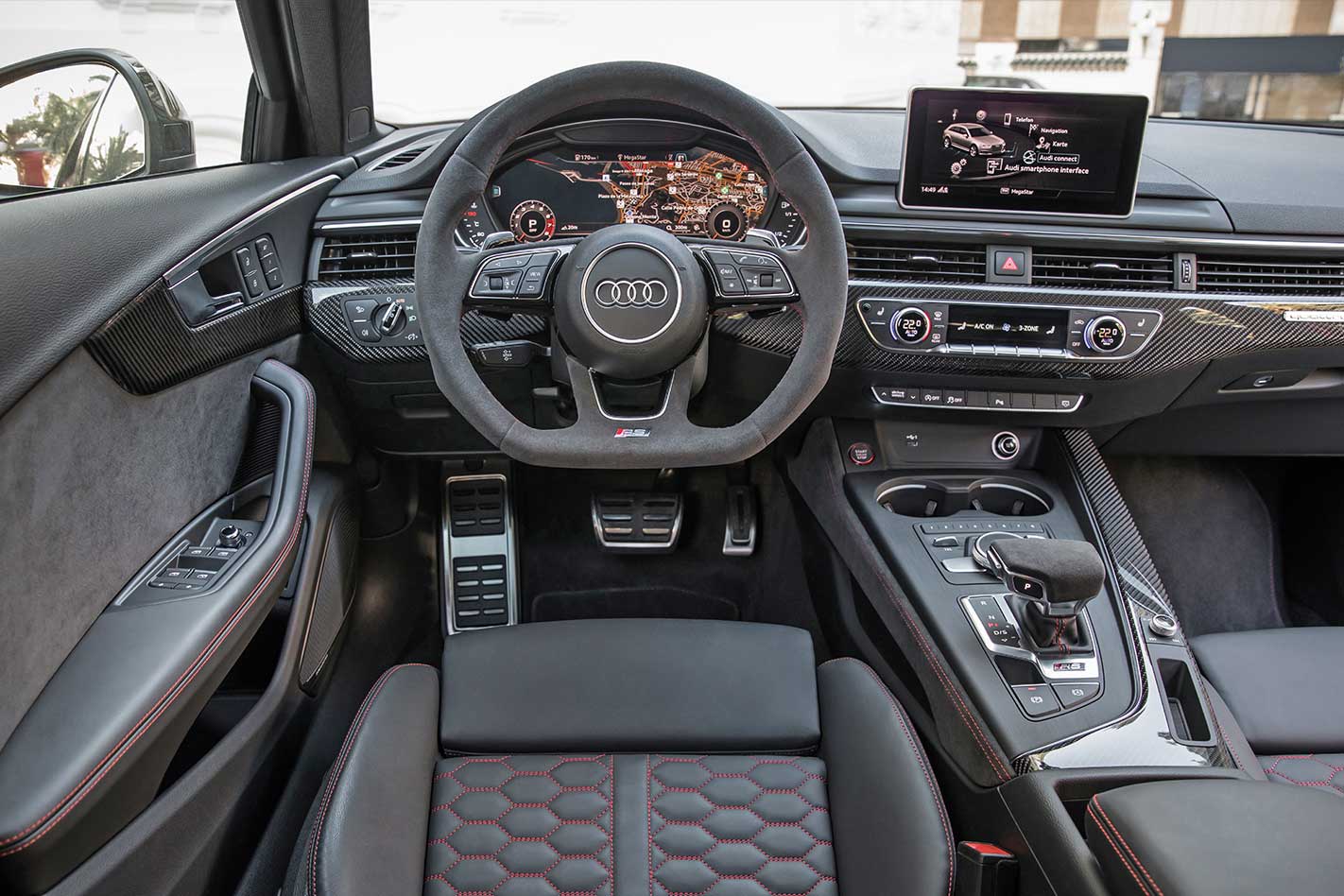
You can swap the drive modes between Comfort, Dynamic, Auto or Individual, in which you can set your own modes for the suspension stiffness, steering weight, and engine and transmission response. The RS4 has seriously high limits and its various driveline shenanigans make it feel far more agile than you’d credit.
Although the entertainment is that you’re largely astonished at what it can do, rather than being involved in the process. But it’s very effective. A C63 would be a slower and, I think, a less agile experience, but I’m confident a more enjoyable, and more analogue, one.
Slink the suspension into Comfort and the RS4 will do all this with more natural-feeling body roll, and a better ability to shrug off bumps in a straight line. There’s some odd diagonal pitch while it’s cornering like that, but it makes the straight bits preferable, because big road lumps can give your back a workout otherwise.
Maybe it’s easier to warm to an RS4 than it is, say, an RS5, even though the two cars do ostensibly the same dynamic things. That’s because those dynamic things seem more suited to an estate car than a coupe; which is either kind to the RS4 and mean to the RS5 or fair either way. I think it’s fair.
If the speed at which your luggage travels from one end of a mildly twisting road to another is important to you, fill your figurative, and literal, boots.
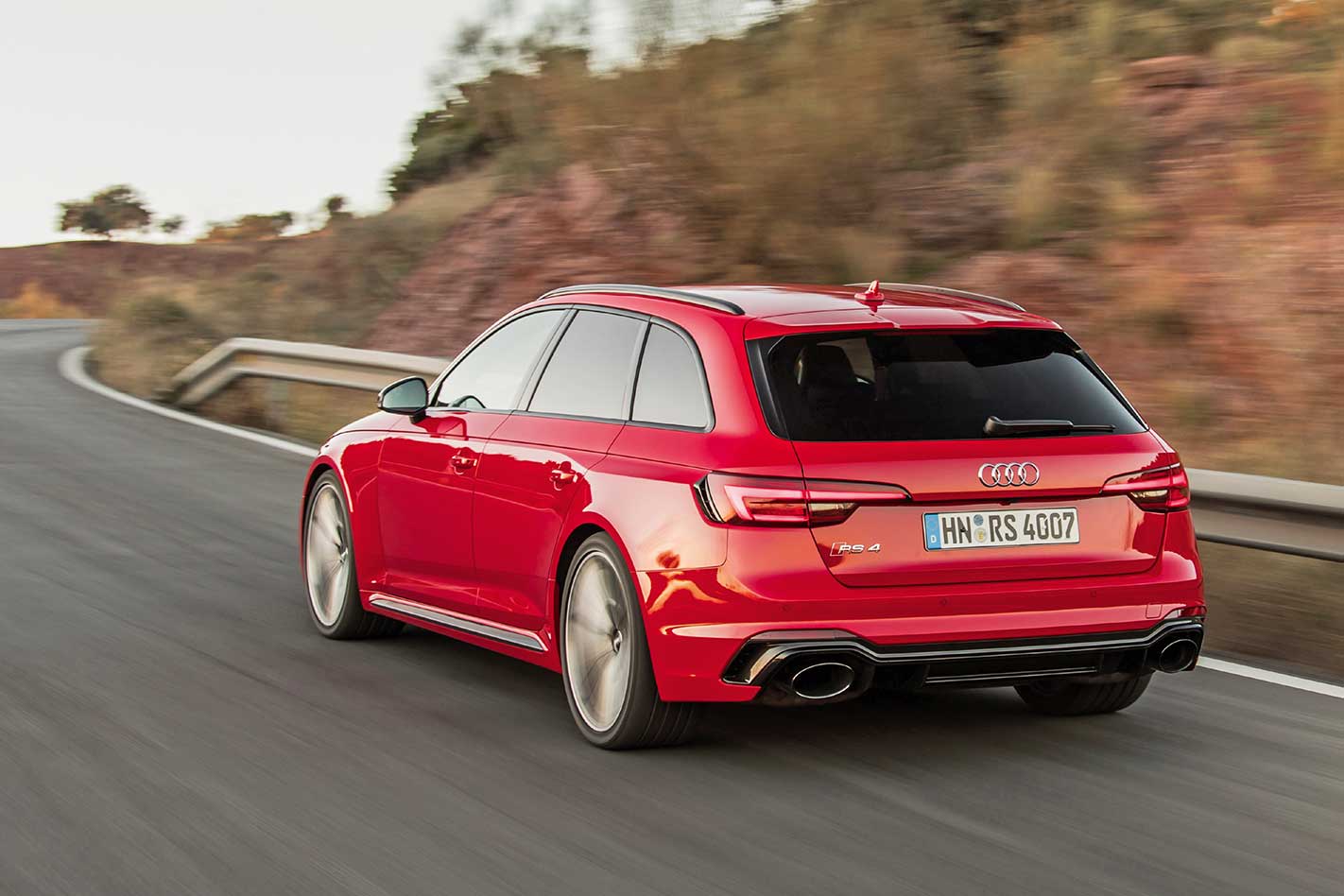
Like: Devastatingly fast; compliant ride; wagon practicality Dislike: Soundtrack of old is gone; needs to be in right mode Star Rating: 4 out of 5 stars
WHO would have thought that the frumpy, upright hatchback launched by Mercedes-Benz in the late 1990s would wind up having such an interesting journey?
Now 21 years old, the Mercedes-Benz A-Class nameplate has morphed from grocery-getter to perhaps one of the hottest hatches on the planet – and the next generation model promises to take the A-Class to new, more luxurious heights.
From humble beginnings to high-end aspirations, here’s everything you need to know about one of Benz’s most intriguing – and strategically important – models.
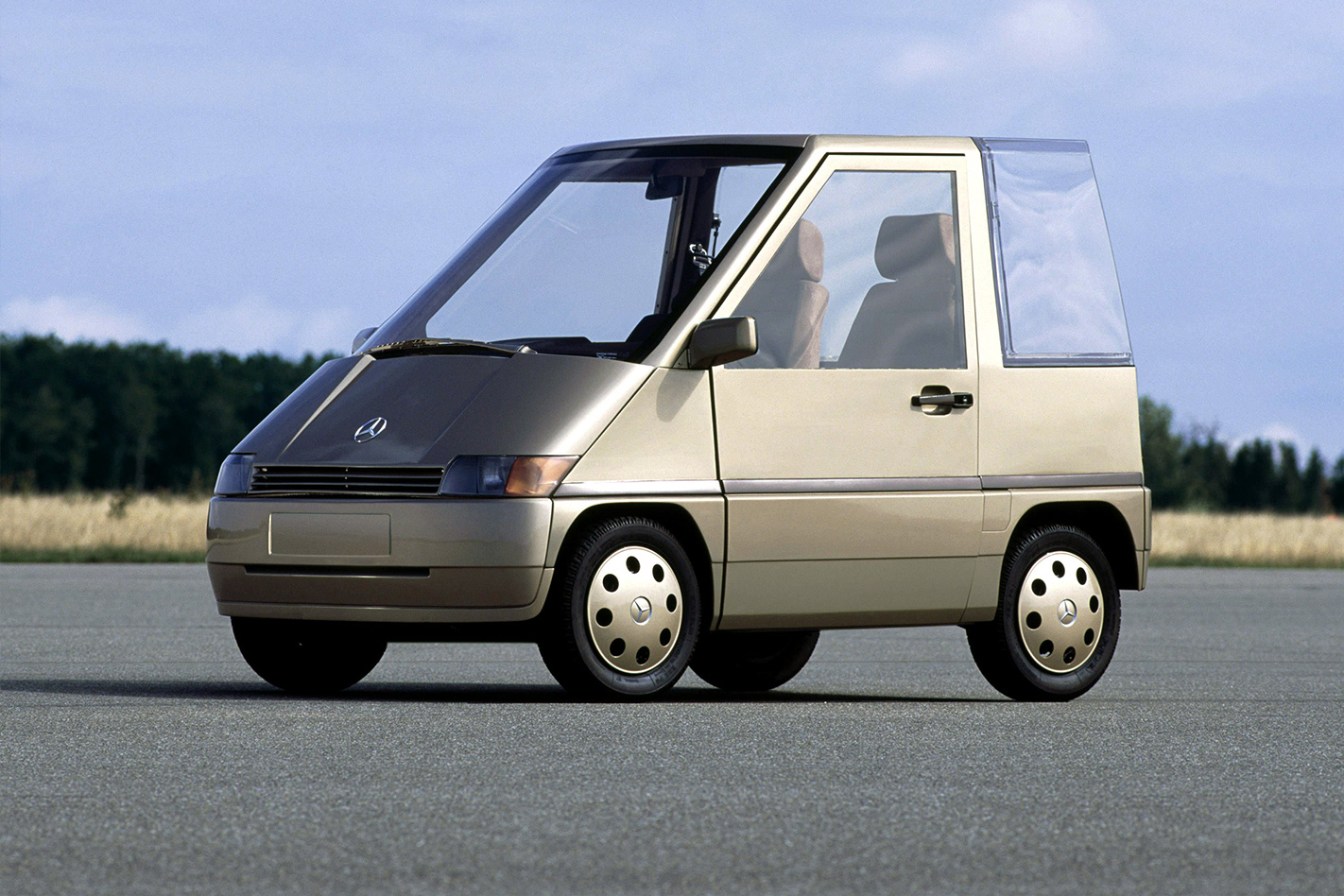
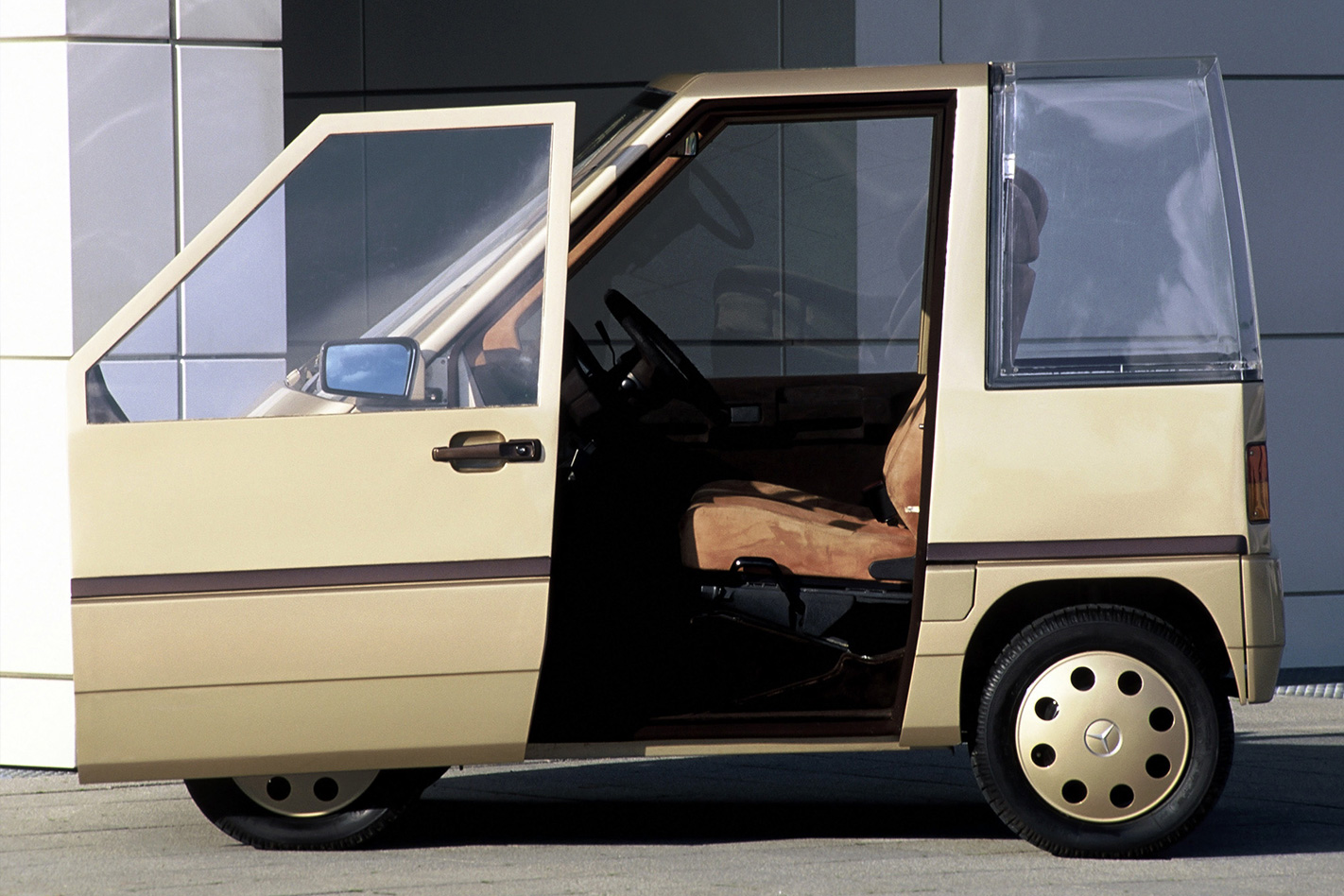
It looked like it rolled straight off the set of some dystopian movie too.
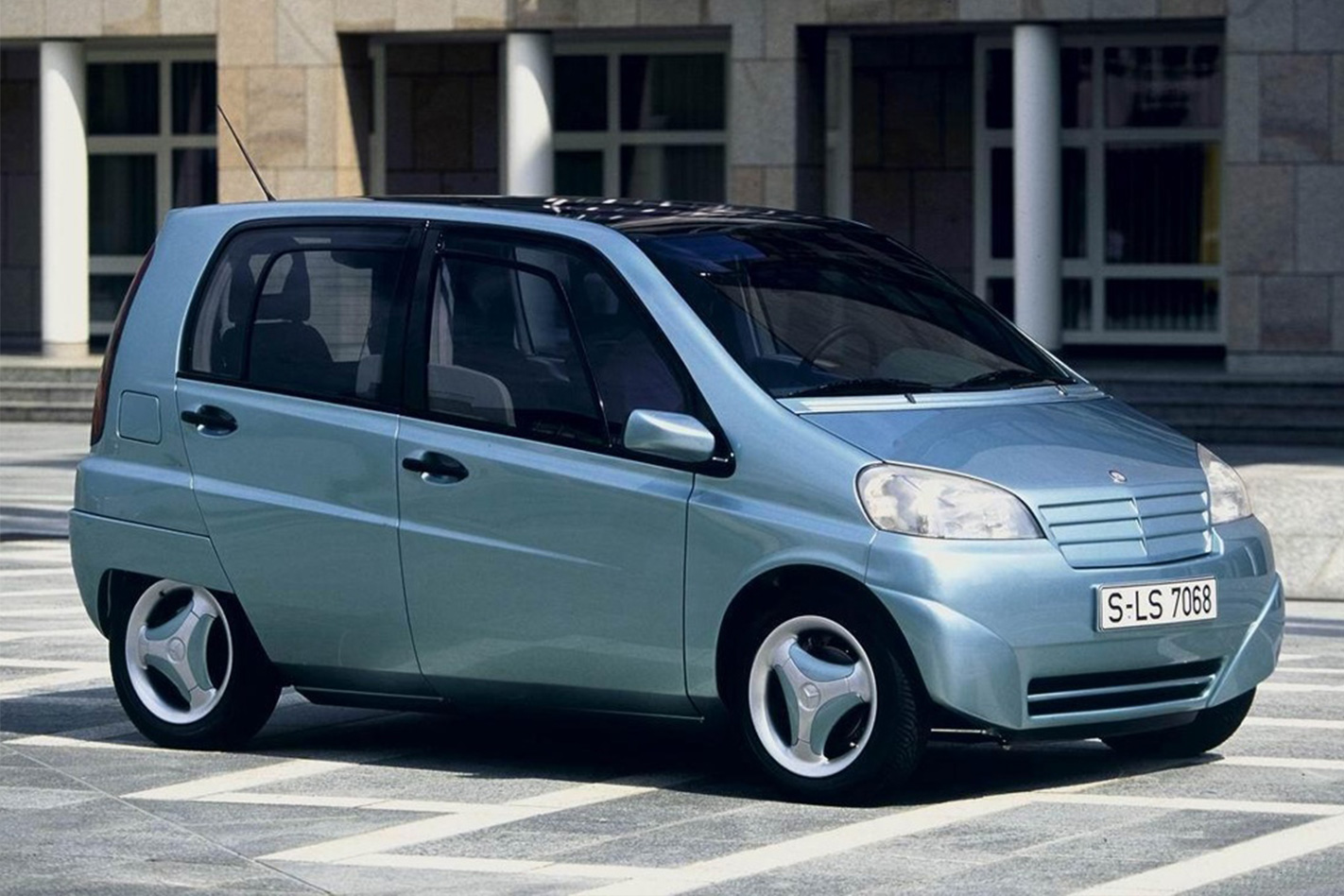
The styling would evolve a lot further before the production A-Class finally showed its face in 1996, however the Vision A93 set the template – tall body, five doors, and an innovative architecture underpinning it all. Read on.
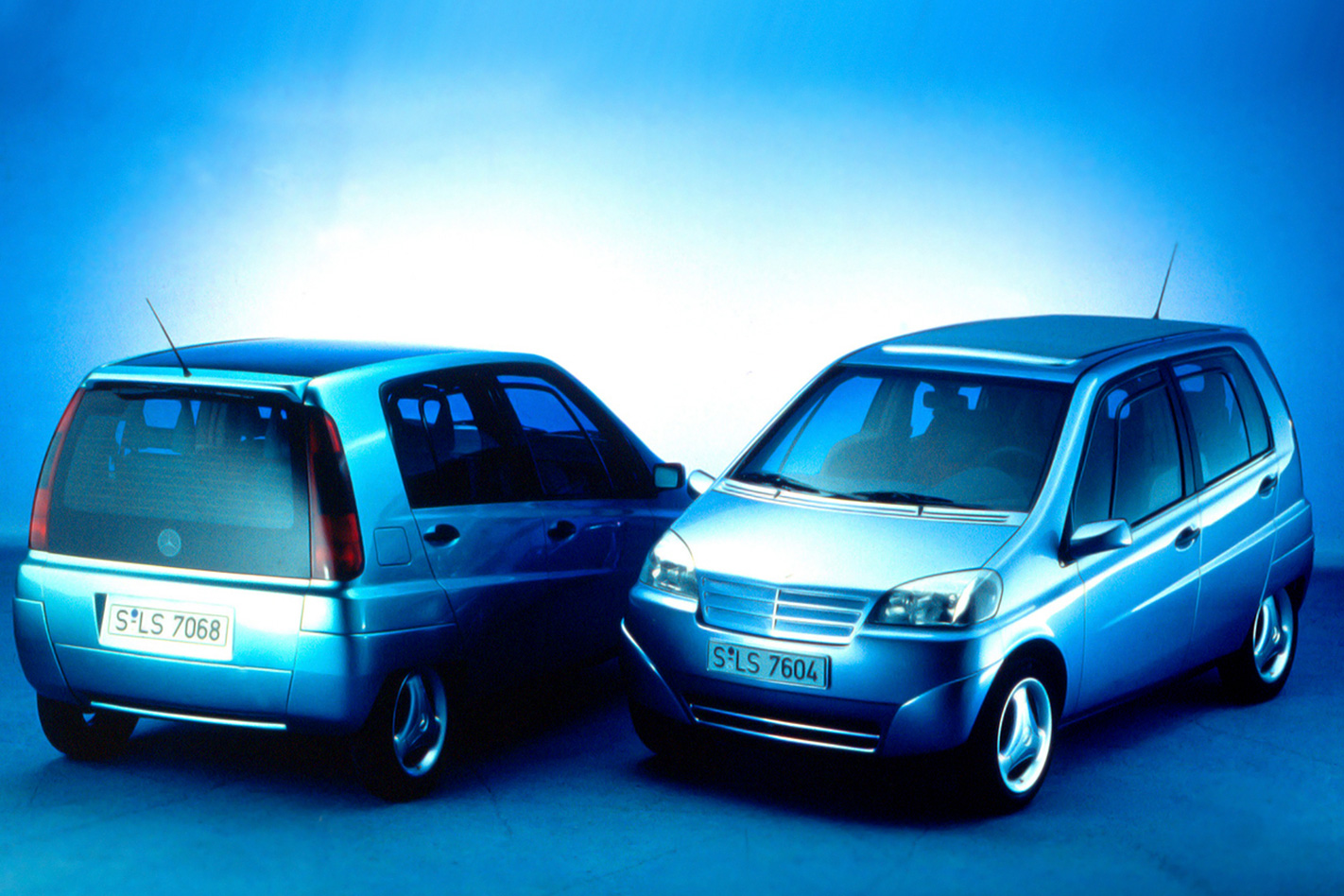
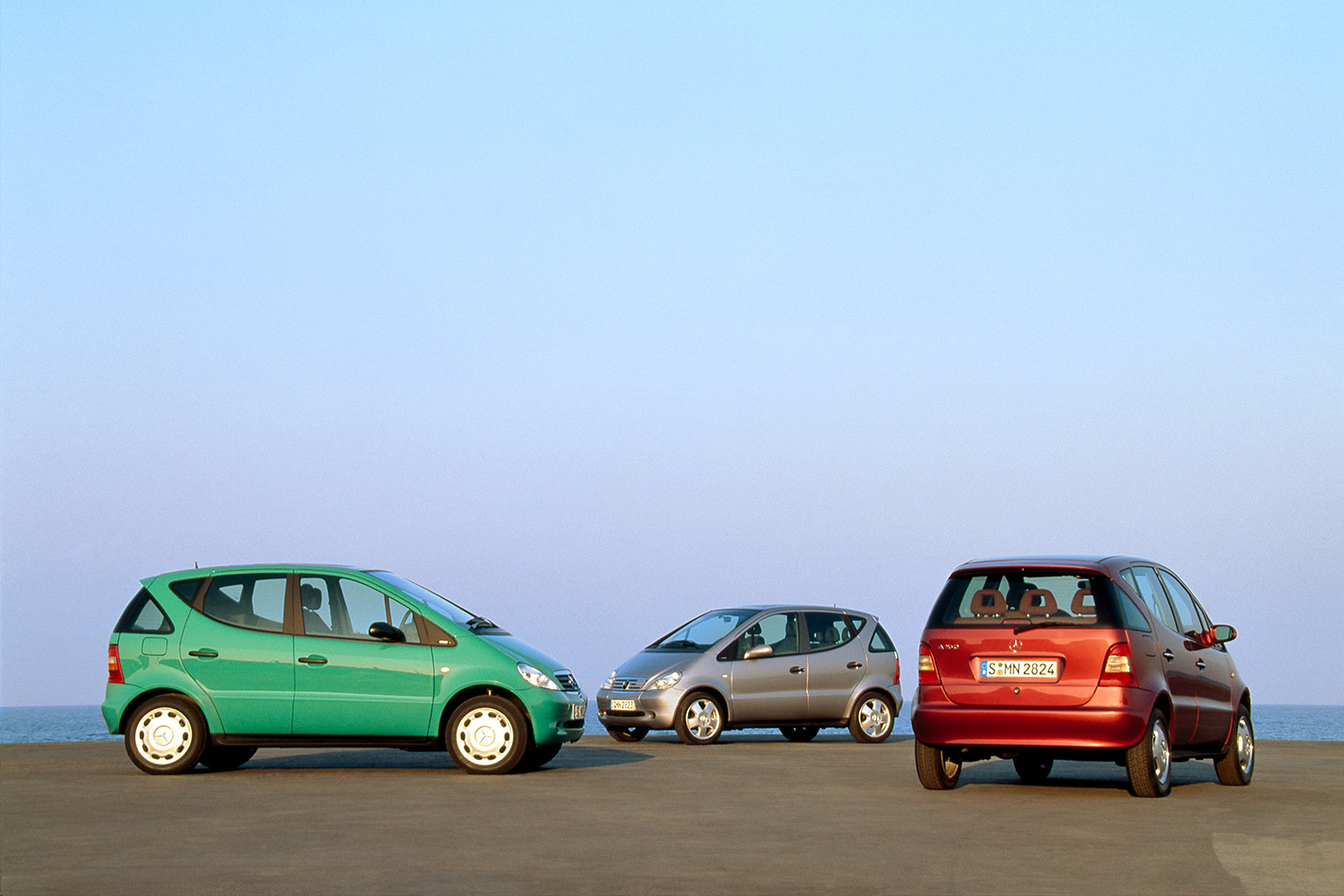
First generation – W168, 1997-2004
Debuted as Benz’s answer to Audi’s Golf-based A3 that arrived in Europe in 1996, the A-Class’ primary mission was to give prospective owners a means of putting a three-pointed star in their garage without having to spring for the bigger C-Class.
And it represented a major shift in thinking for Mercedes. Not only was it the first front-wheel drive hatchback to roll into its showrooms, which up until that point had been filled with longitudinally-engined, rear-driven sedans, wagons and coupes, but it also debuted a fairly revolutionary platform.
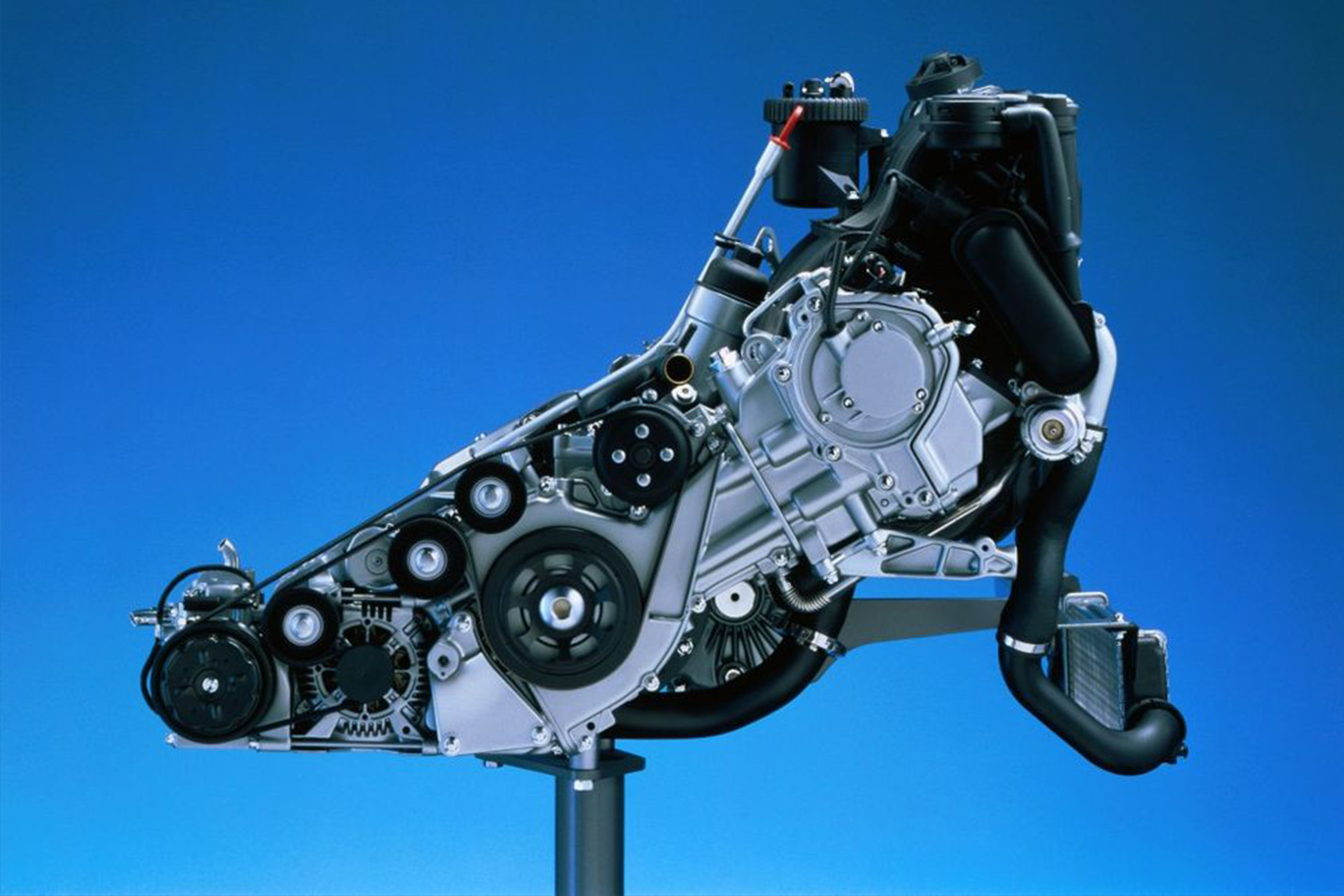
Not only did it allow Benz engineers to give the A-Class a cabin that was almost as long as the vehicle itself, but it also enabled the car’s mechanical package to slide underneath the cabin in the event of a crash, rather than push through the firewall.
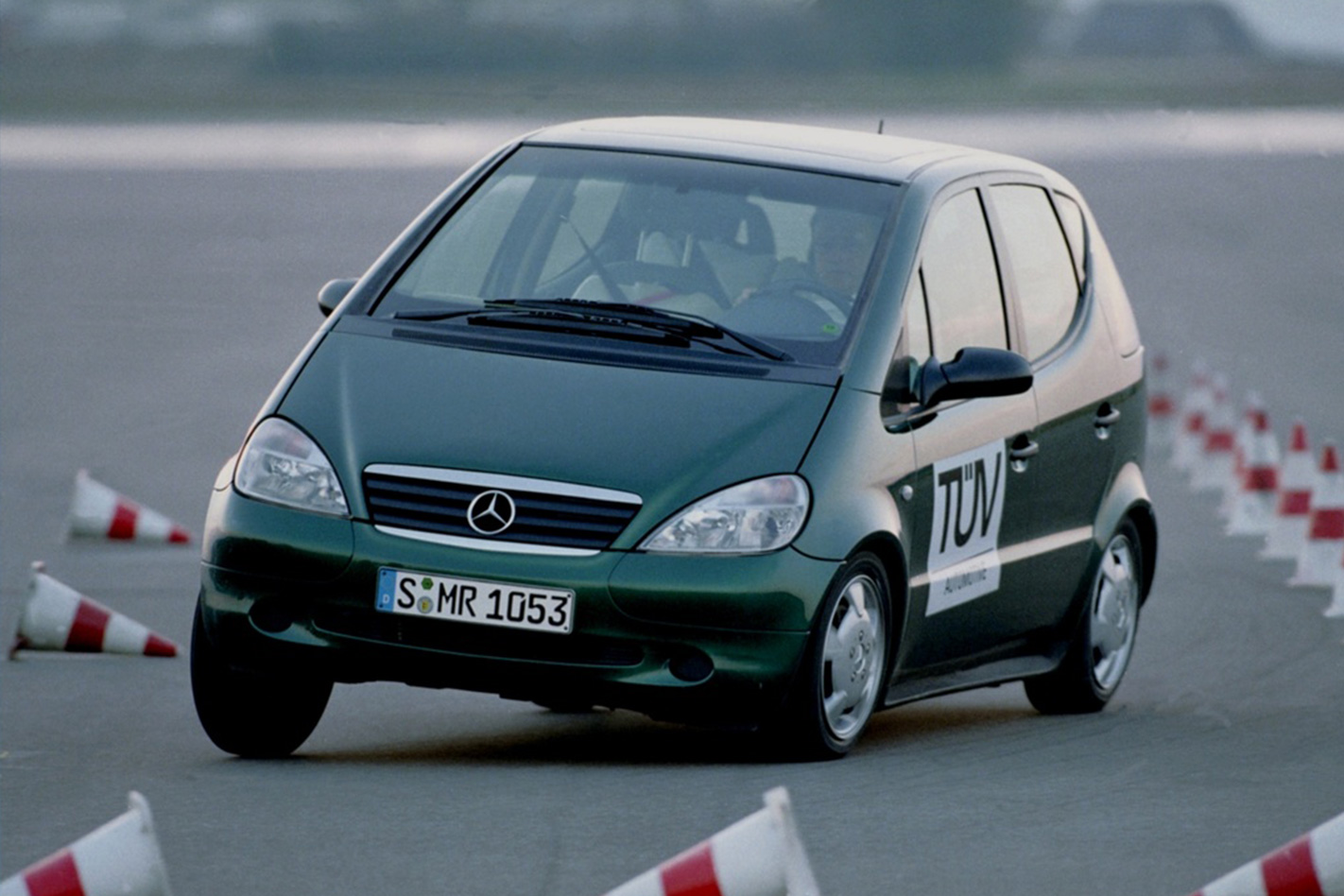
Safety, then, was a high priority for the A-Class, however that all came undone once Swedish magazine Teknikens Varld capsized a press car while conducting their infamous ‘Elk Test’. Inherent instability issues with the top-heavy and narrow-tracked A-Class were exposed, and weren’t rectified until Mercedes modified the suspension calibration and added electronic stability control.
The madcap device had the requisite bodywork and AMG-tuned suspension yet still retained a functional boot space. Only four are believed to have been made – two of which are said to be in Australia.
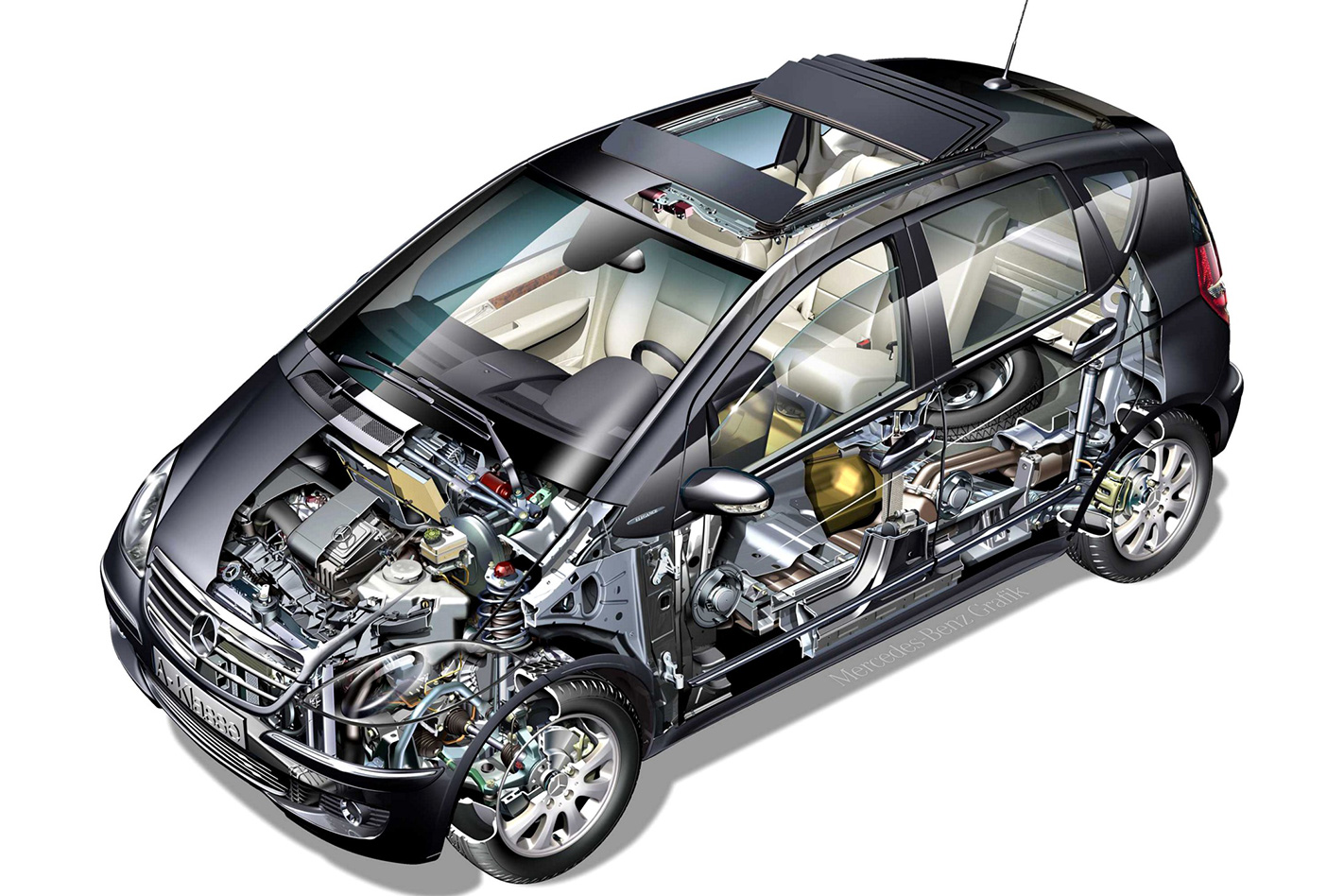
Second generation – W169, 2004-2012
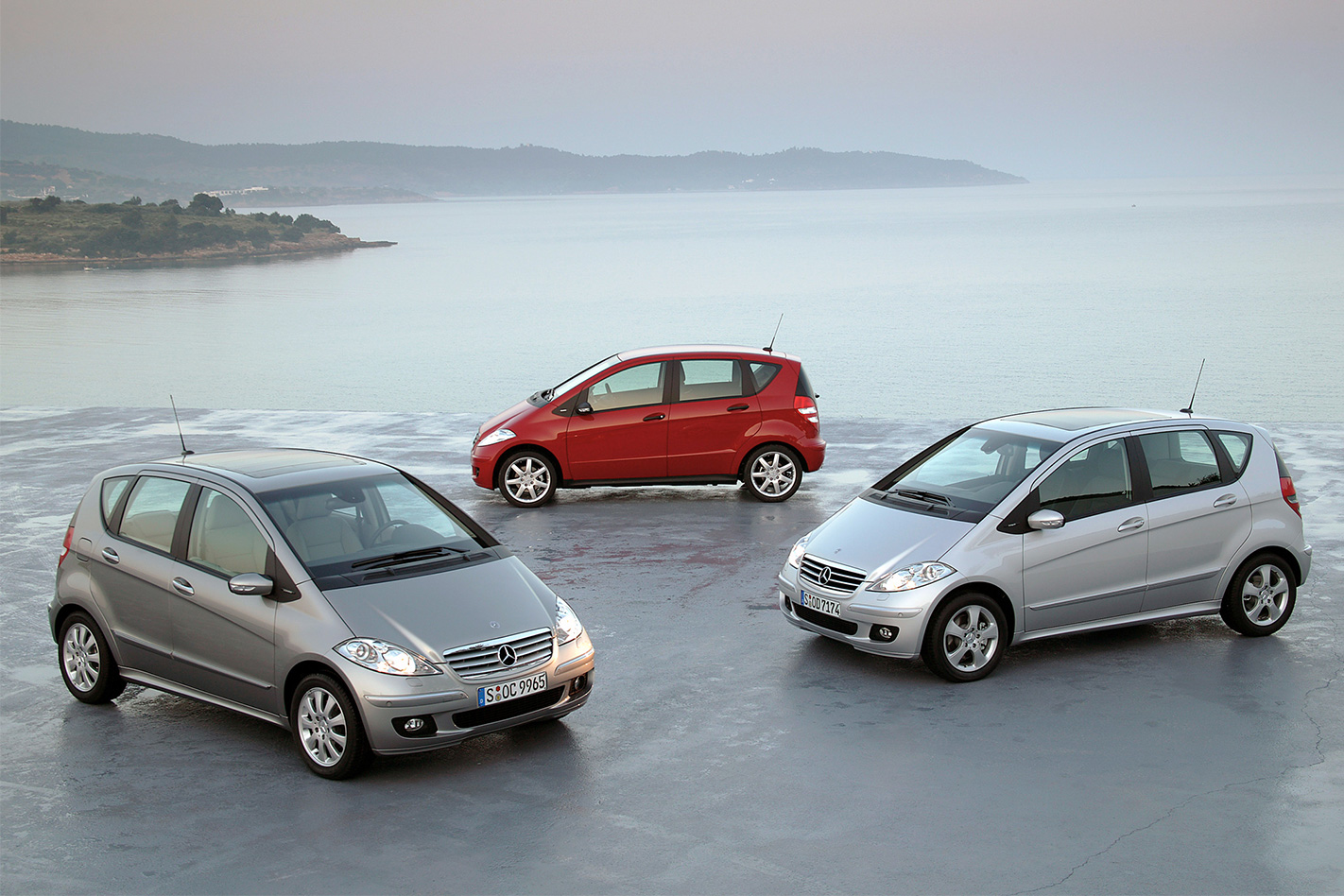
The second incarnation of the A-Class continued to utilise Benz’s Sandwich platform, however the design matured as Benz moved away from the organic curves of its late-90s lineup and toward a sharper design language.
A three-door bodystyle was added, the C-pillar lost its funky twin-window graphic and the headlamps became pinched to impart a sleeker look to what was still a fairly awkward and egglike form.
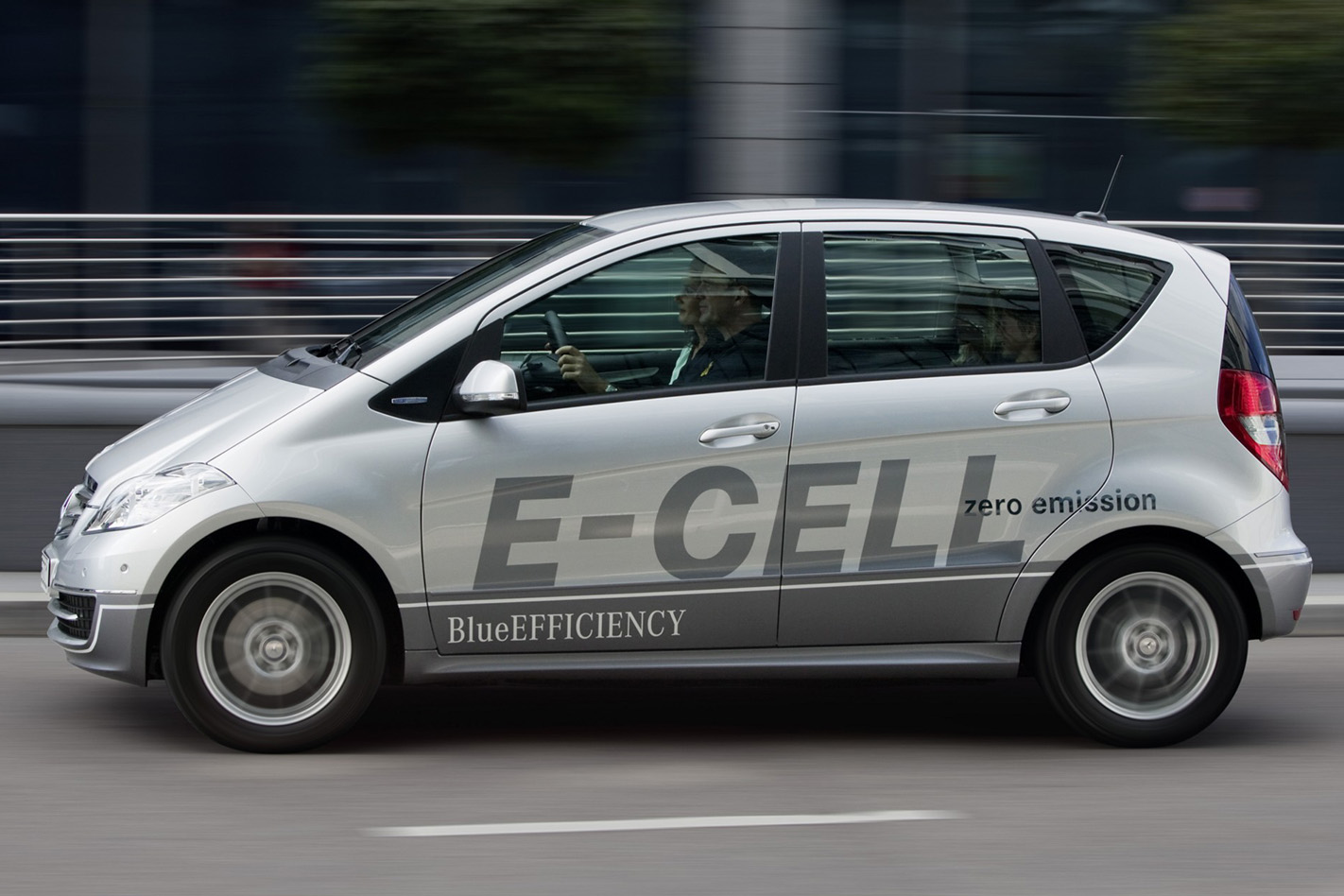
The potential of the Sandwich platform was explored further in 2010 with the A-Class E-Cell, a low-volume pure electric car that was never retailed, but was leased as part of an EV trial to select customers in Europe.
It was also the fastest A-Class to date, with a 5.5-second 0-100km sprint time putting it 0.2 seconds ahead of the twin-engined A38 AMG.
Third generation – W176, 2012-2018
In an effort to boost the appeal of the A-Class among younger, more aspirational buyers – and a tacit admission that the first- and second-generation models were about as visually interesting as a block of commission houses – Mercedes moved away from the ground-breaking Sandwich platform when it wheeled out the third-gen A. In the process, a huge 150mm was chopped from the car’s overall height and 409mm added to its overall length.
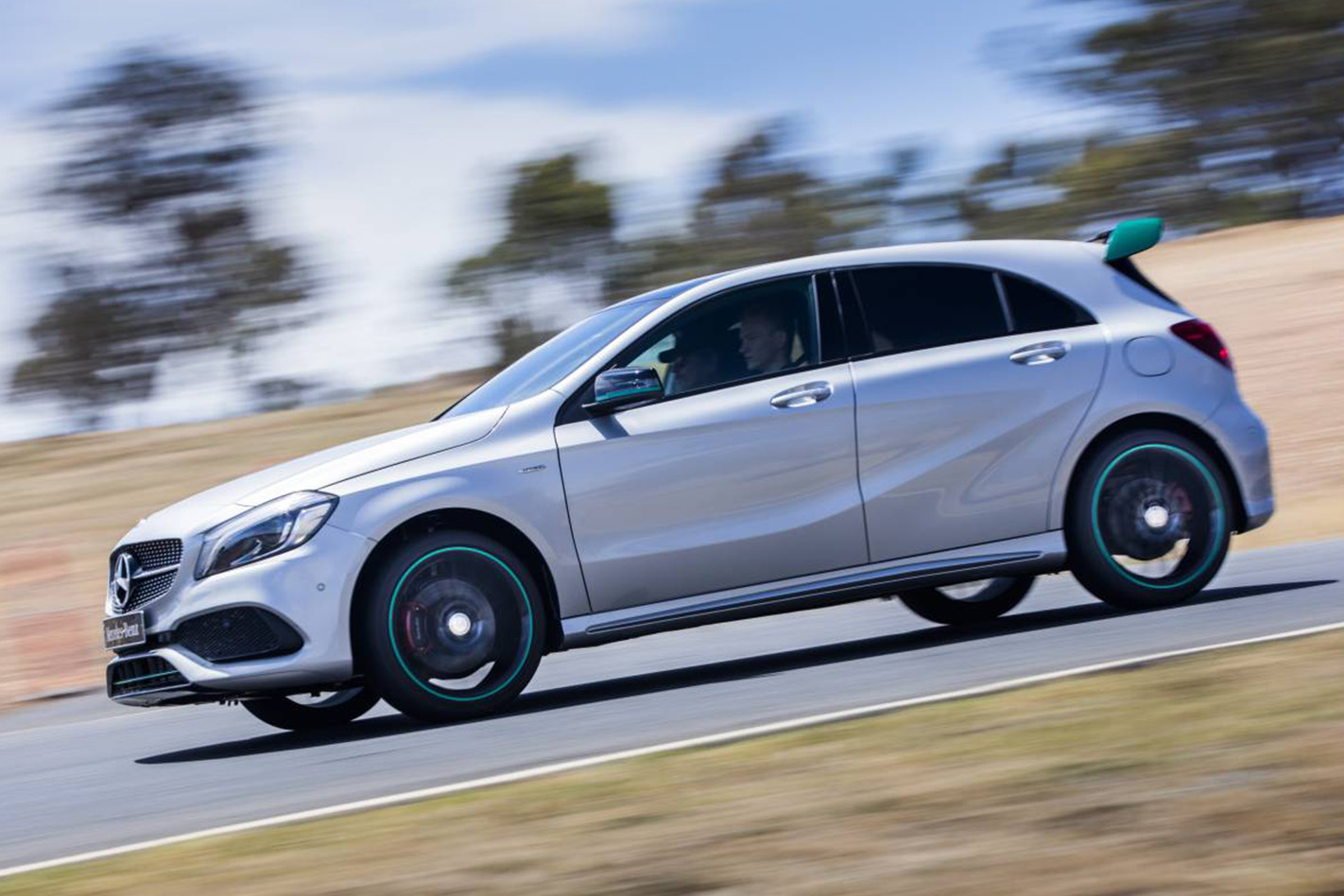
Since the third-gen A-Class launched in 2012, MFA has since gone on to underpin the CLA four-door coupe and shooting brake, the GLA small SUV and the Infiniti Q30/QX30.
And the move to a newer, more conventional platform brought new technology, such as all-wheel drive that didn’t require an extra engine to be grafted on by AMG’s madmen.
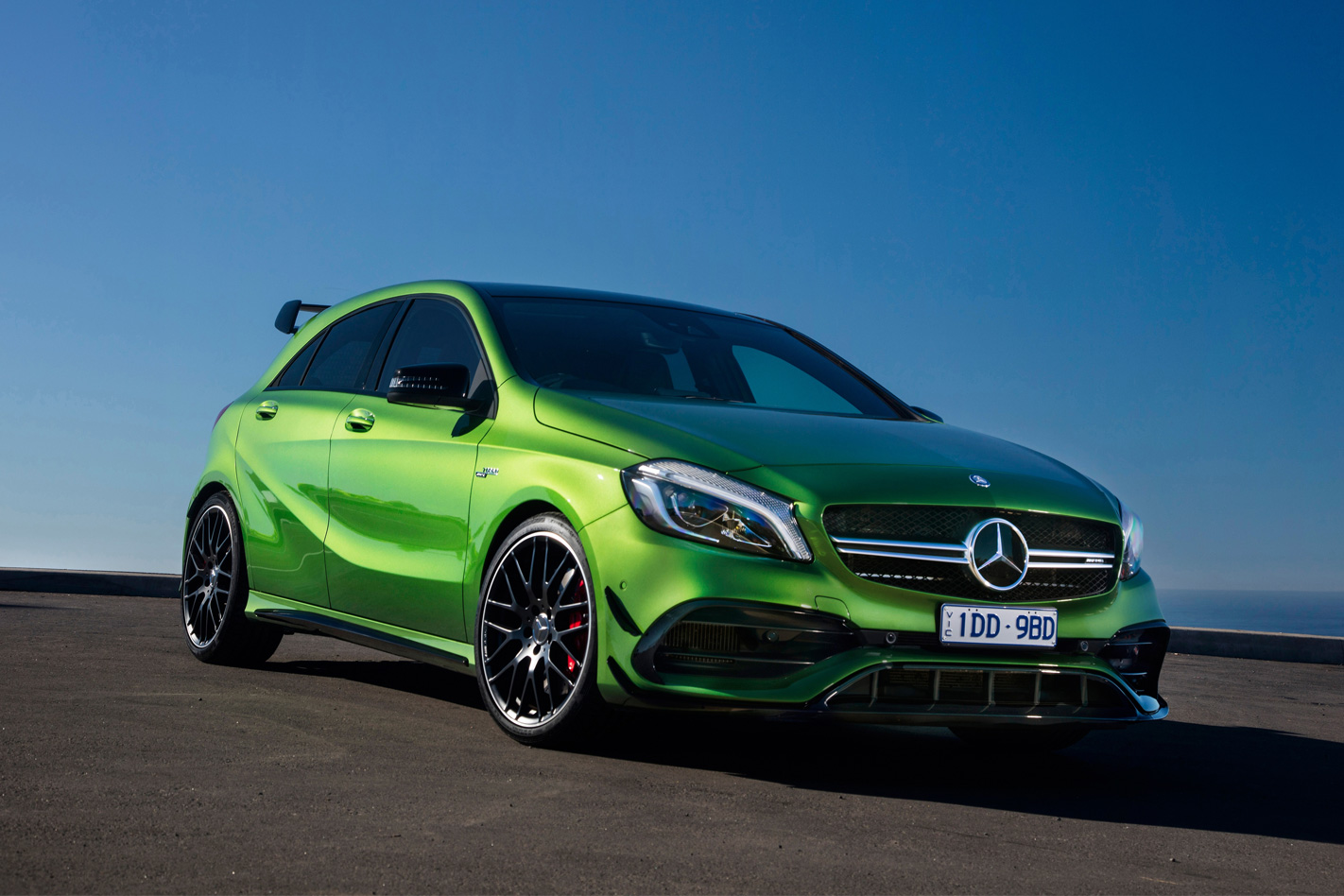
Beneath the mighty A45 was the A250 Sport, which arrived first as a front-driver before gaining more power (160kW/350Nm in total) and an extra set of driven wheels in a mid-life update that added 4Matic AWD. Other models in the range are less powerful, but Benz went to great lengths to impart a much sportier flavour in every variant’s appearance and handling in order to attract a younger clientele.
Fourth generation
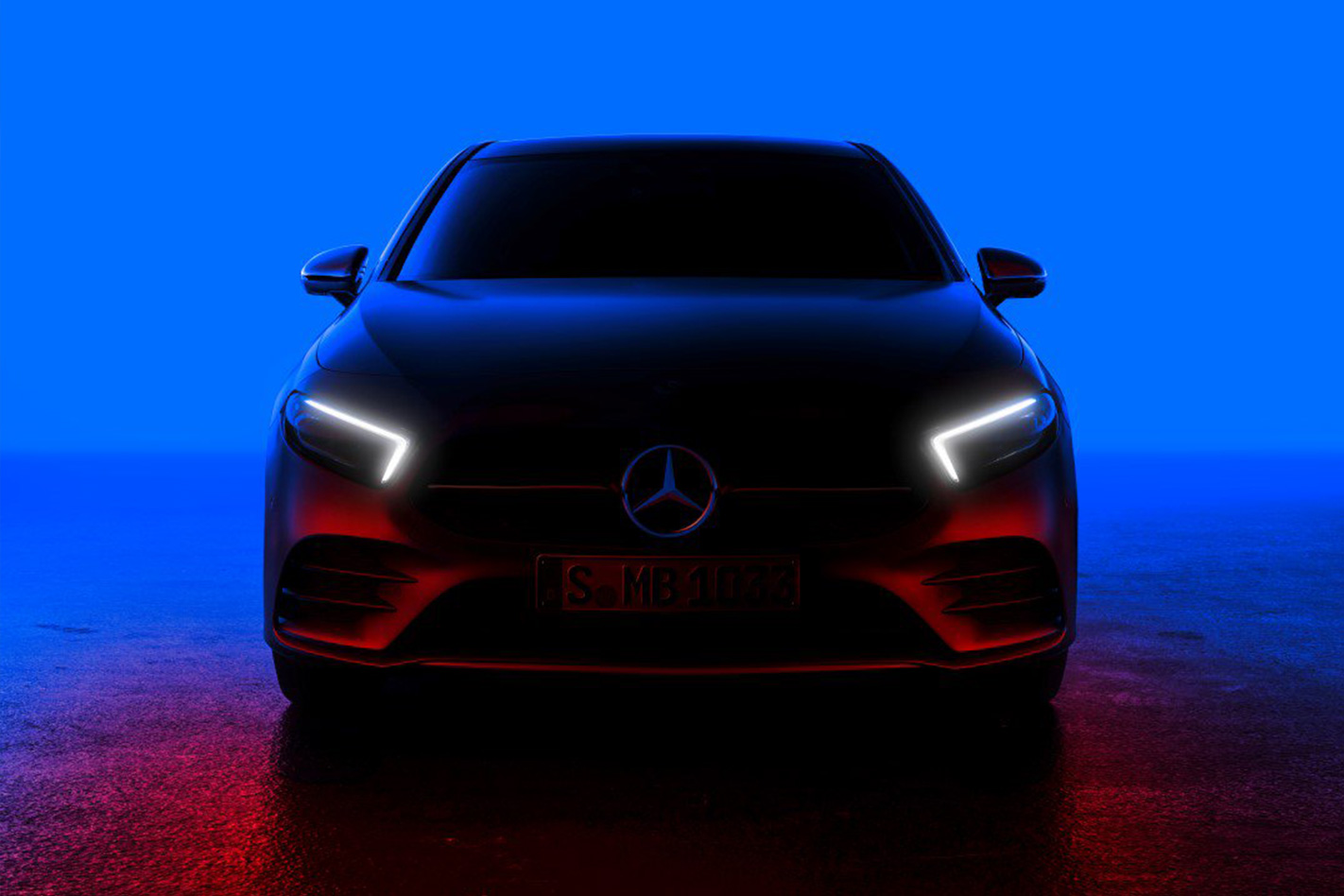
The fourth-gen model is being revealed later this week to the world’s media, and we’ll be there to cover it. What we know so far is this: Benz is aiming for it to have the most premium-feeling cabin in its segment, and will use it to debut its latest-generation infotainment suite. The days of the S-Class being the tech leader for Benz appear to be over.
A sedan bodystyle is also expected, which will be a first for the A-Class. Until now, the CLA has filled the role of a four-door C-segment vehicle in the Mercedes lineup.

And from what we’ve seen of the design, the new A-Class should look more dignified and elegant than before – a far cry from its awkwardly lanky beginnings.
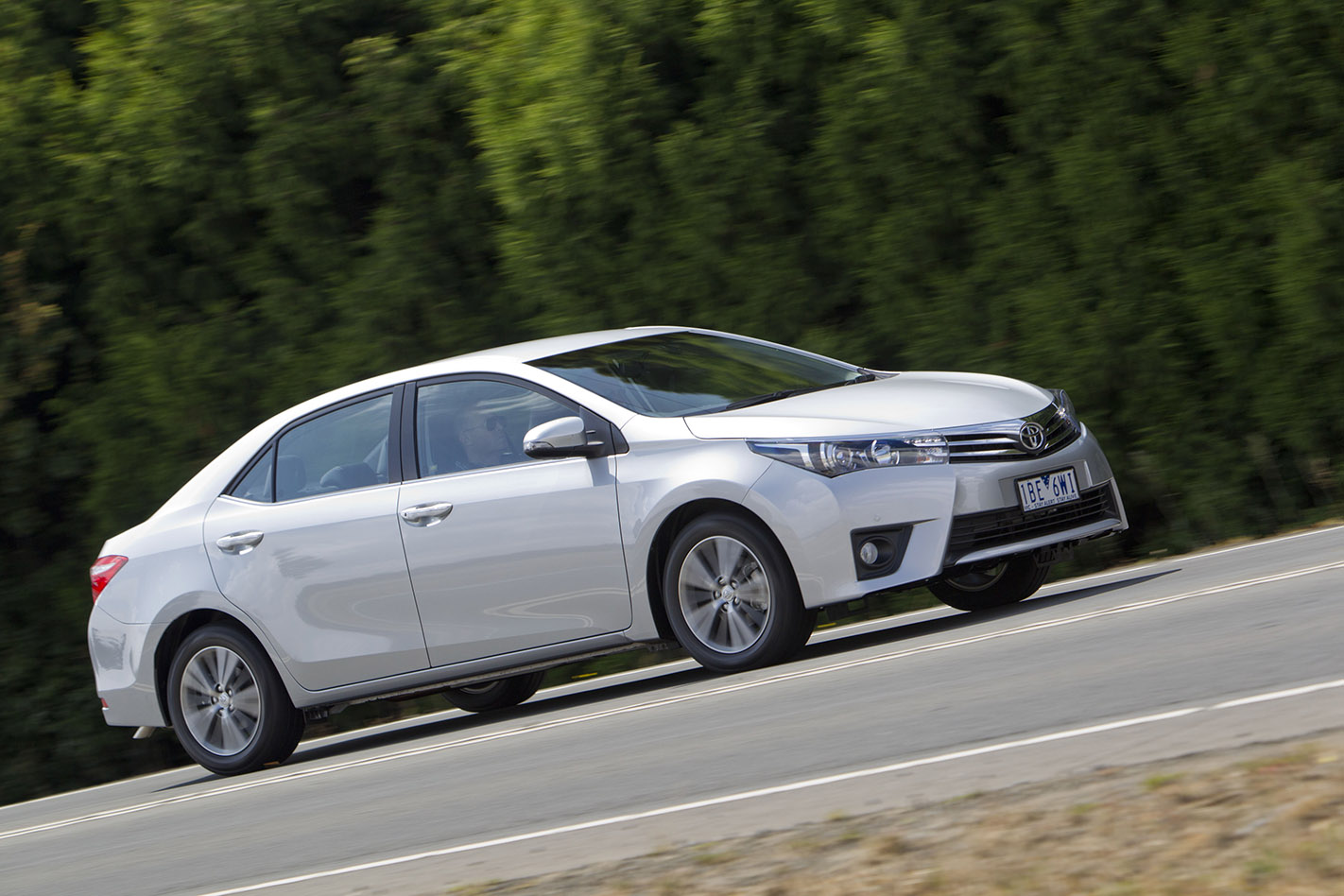
More than 25,000 Toyotas sold in Australia, including Hilux, Corolla Sedan, Fortuner and Prius models built between June and December 2015 are affected by the voluntary recall surrounding airbag sensors that can potentially fail to operate in an accident.
The recall also affects around 2000 Lexus RX and NX SUVs built between May and December 2015.
Many of the affected vehicles would have been sold or registered in 2016.
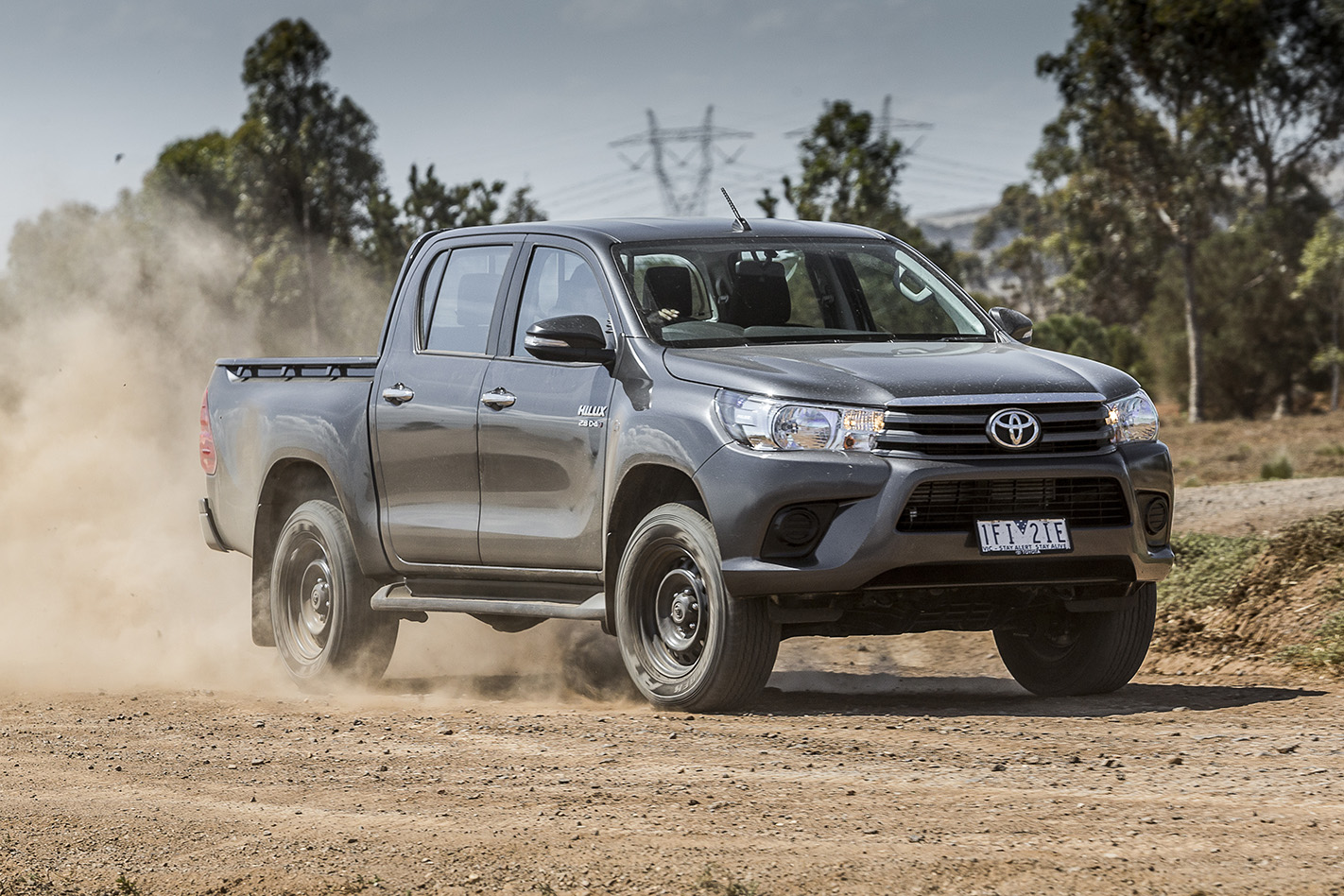
The affected vehicles in Oz are part of a 654,000-strong global recall, which is separate and unrelated to the massive Takata airbag scandal.
Toyota Australia says two individual manufacturing issues resulted in the possibility that insulation surrounding integrated circuit chips could peel over time, creating an open circuit in the sensor.
While this is most likely to result in the airbag warning light illuminating, it could also deactivate the side/curtain shield airbags and/or front airbags, meaning they won’t operate and offer protection in a crash.
There have been no incidents or injuries reported in Australia, or any reported overseas, as a result of the faulty insulation.
Toyota and Lexus will shortly contact affected vehicle owners advising them details of this recall campaign.
The replacement parts are expected to be available in the second quarter of this year, and owners will again be contacted when they arrive to arrange for a check at their preferred dealership.
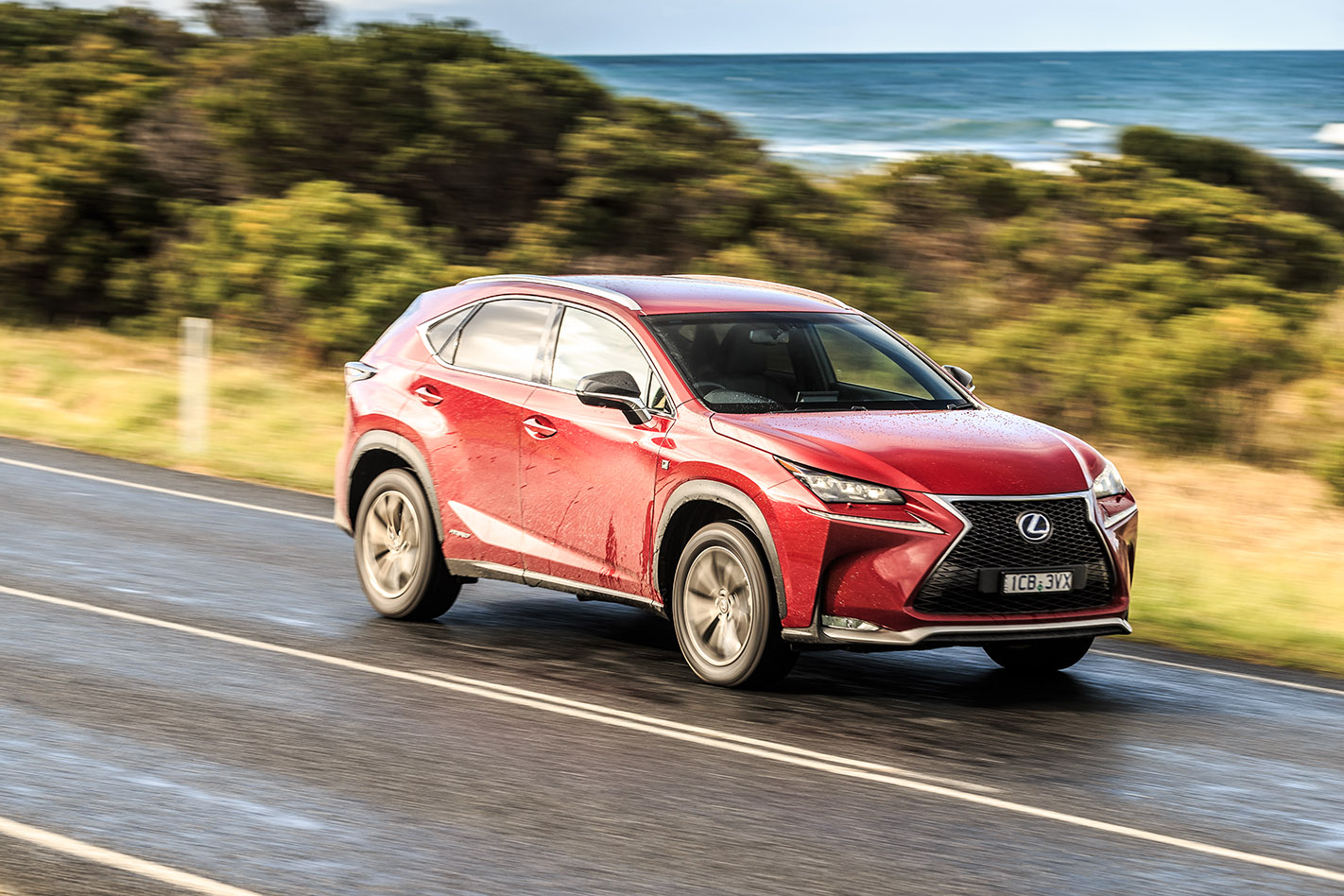
The inspection is expected to take 30 minutes, and replacement, if required, will take anywhere between one and seven hours depending on the vehicle model and number of sensors that need replacing. All work related to the recall will be carried out free of charge.
To find out of your vehicle is affected check the Toyota Recalls site or call 1800 987 366. Lexus owners can call 1800 023 009.
Be sure to have your Vehicle Identification Number (VIN) handy in each instance, and, if you haven’t already, check to see if the car is affected by the ongoing Takata airbag faults.
This one’s all action, folks.
The new issue of MOTOR has landed, and with it comes our first drive of the new Mustang, our Performance Car of the Year for 2018, and a whole lot more fun we’ve cooked up for you.
So, have a look at what’s in this issue, then go pick one up from a newsagent or subscribe to MOTOR through MagShop. Oh, and we have a digital version, too!
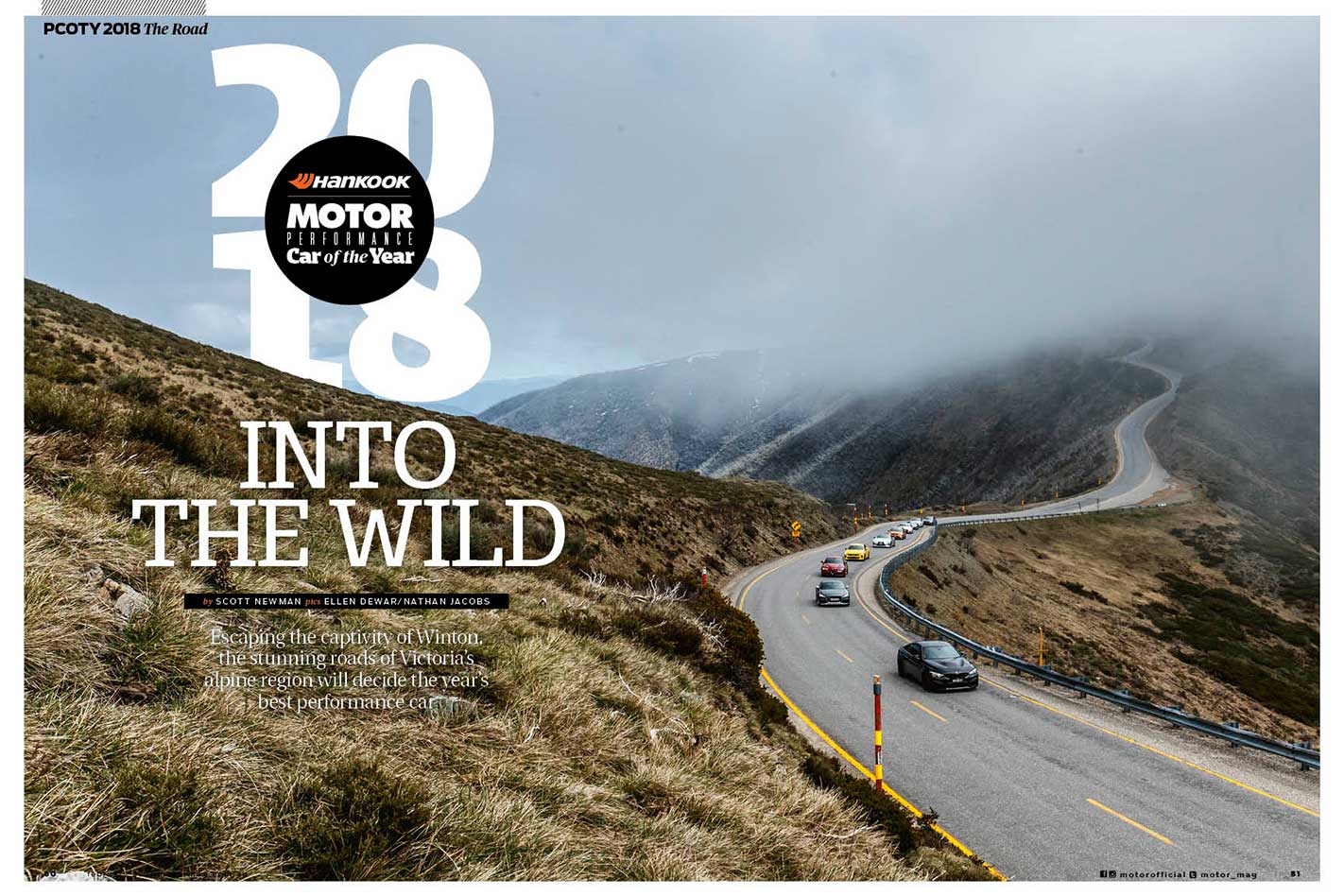
PERFORMANCE CAR OF THE YEAR 2018
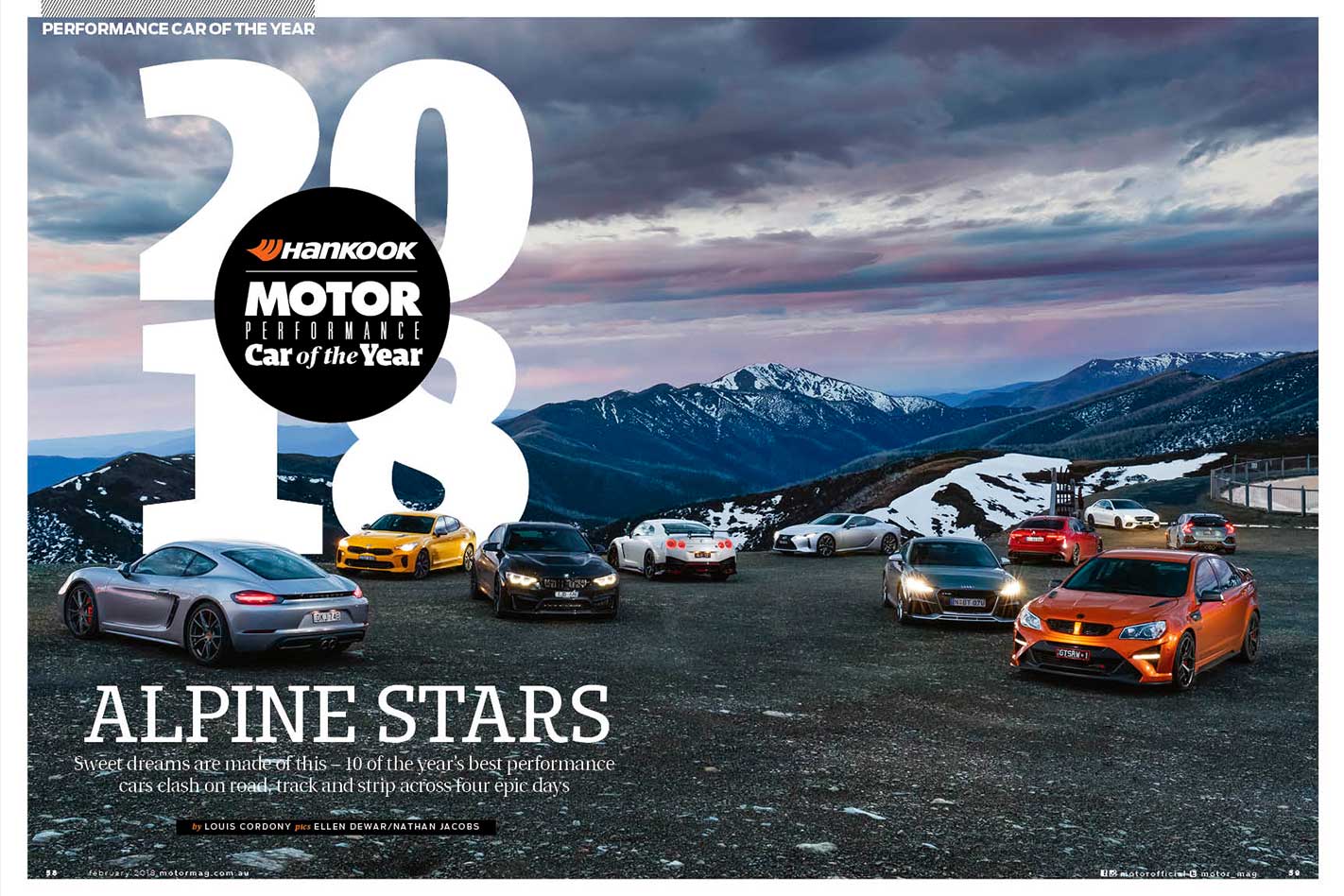
THE TRACK
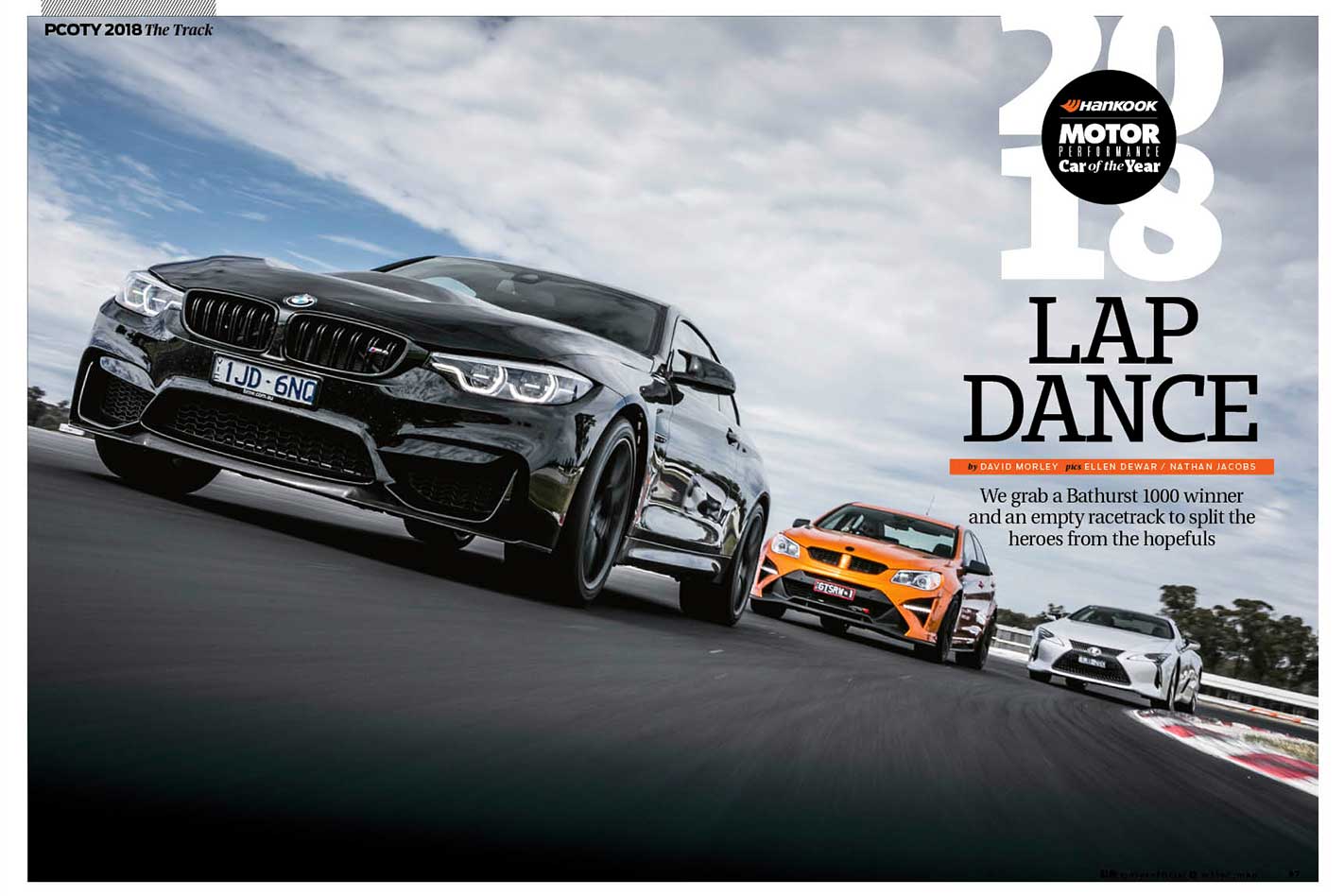
THE ROAD
MUSTANG FIRST DRIVE
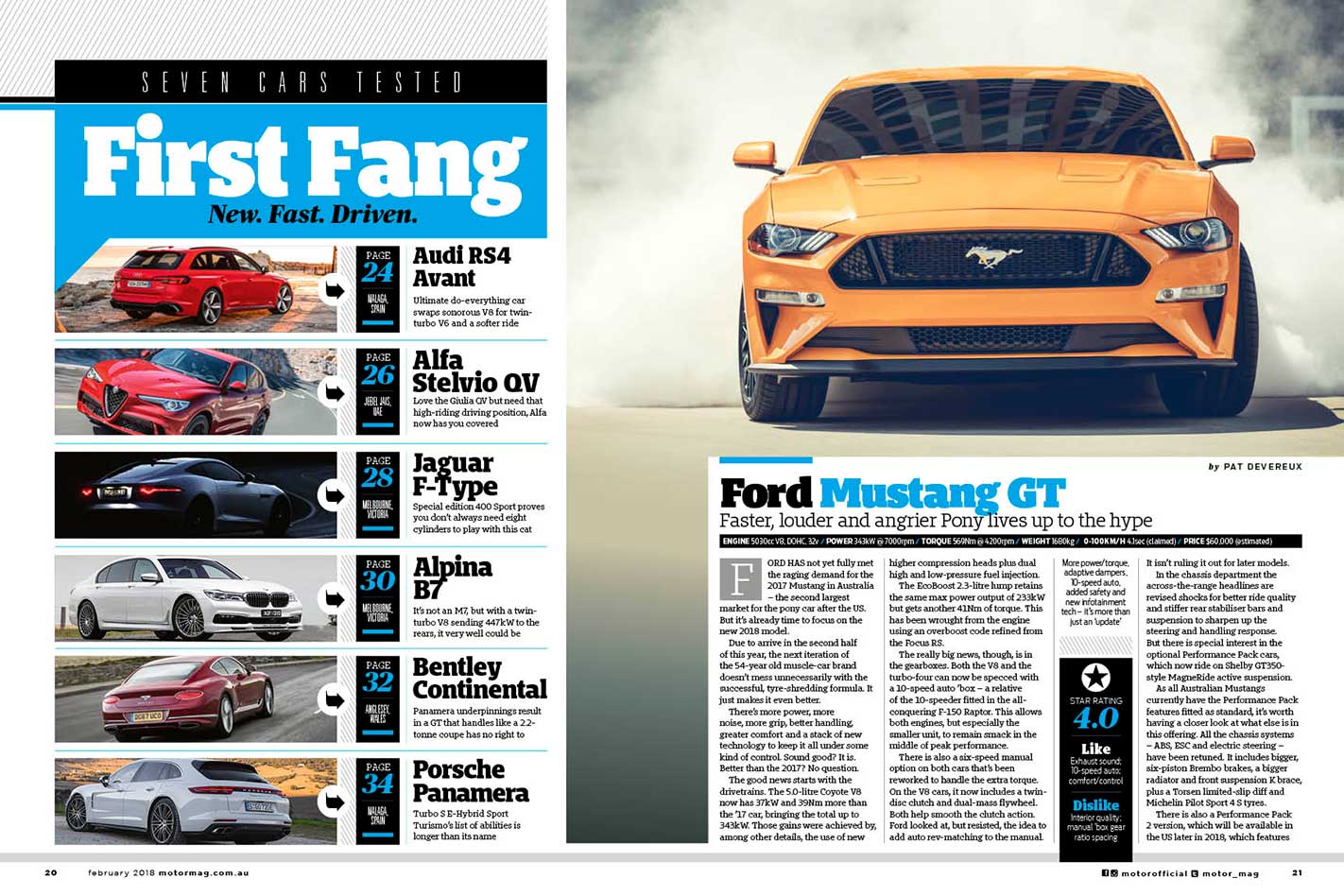
TUNEHOUSE SUBARU BRZ TURBO REVIEW
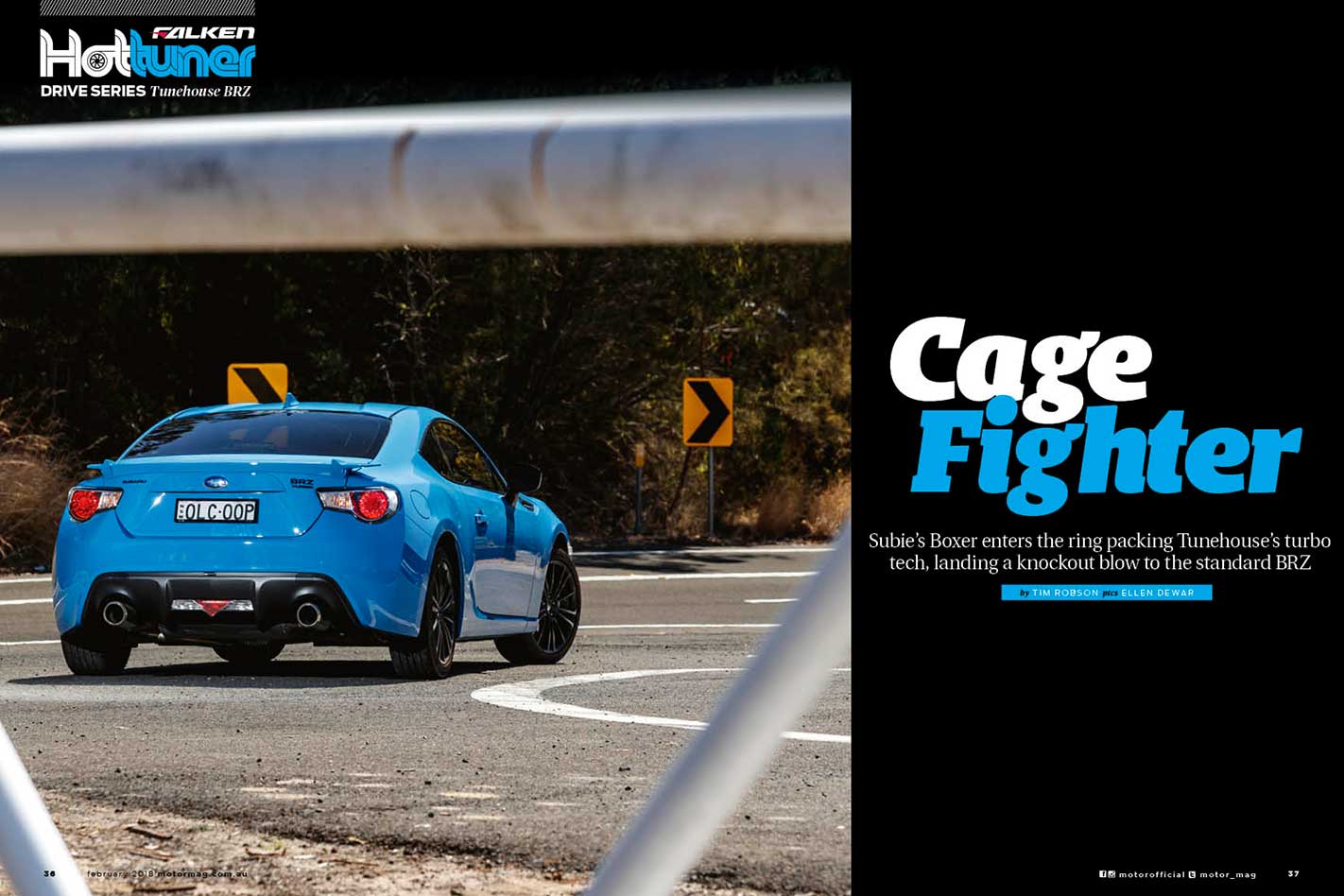
FORBIDDEN FERRARI – LA FERRARI APERTA DRIVEN
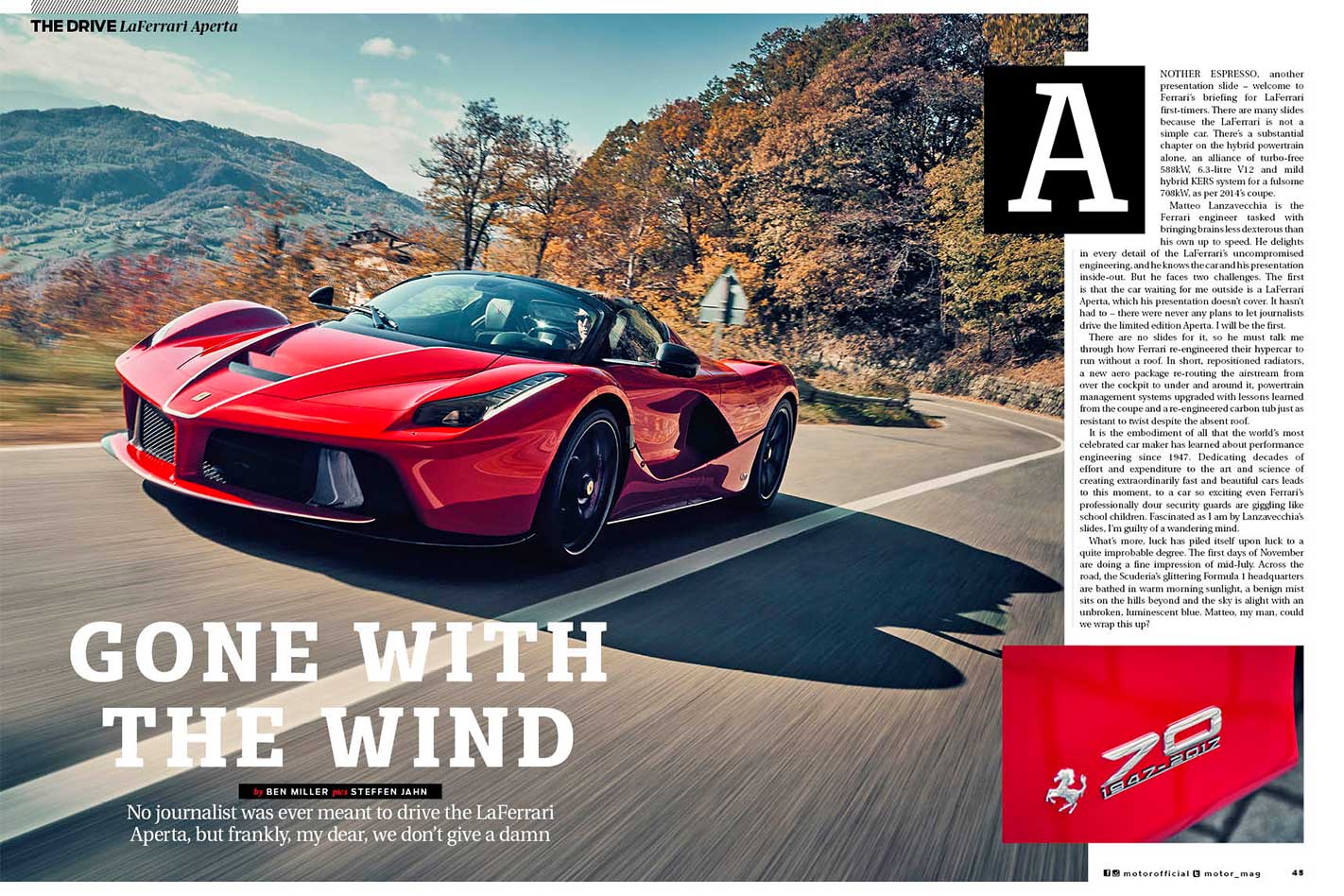
ALPINE A110 RETURNS, AND WE DRIVE IT
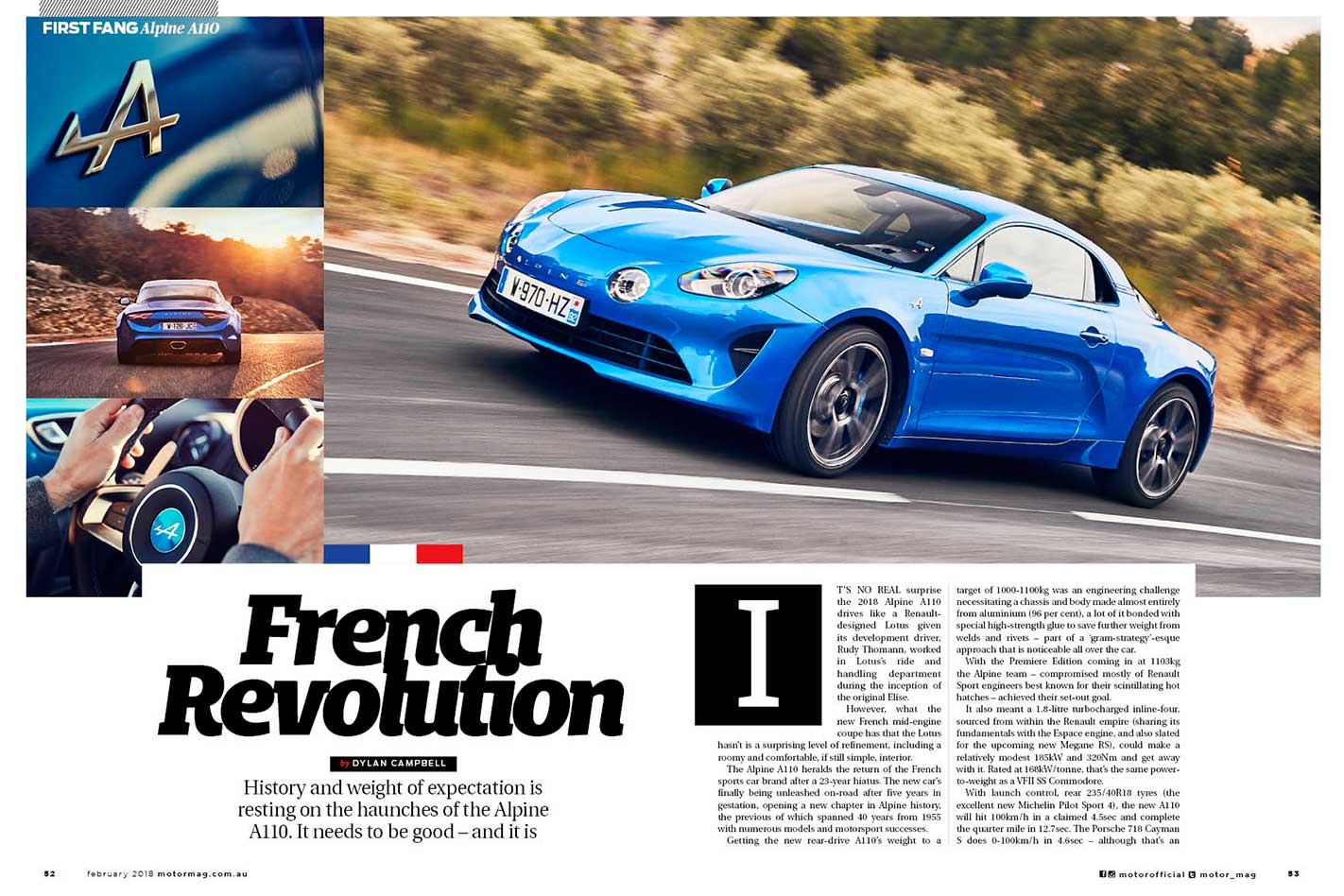
REVIEWS
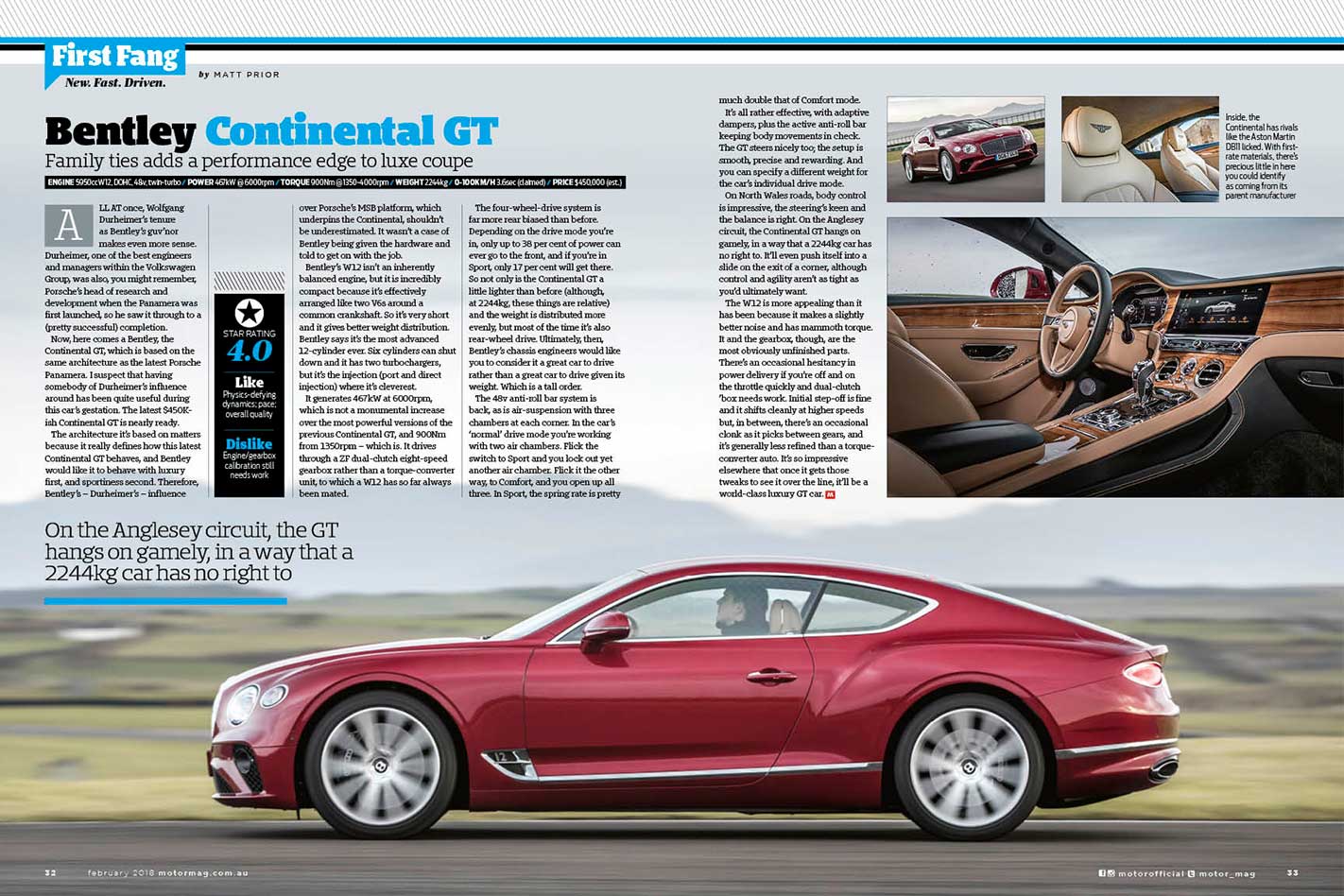
GEEK SPEAK
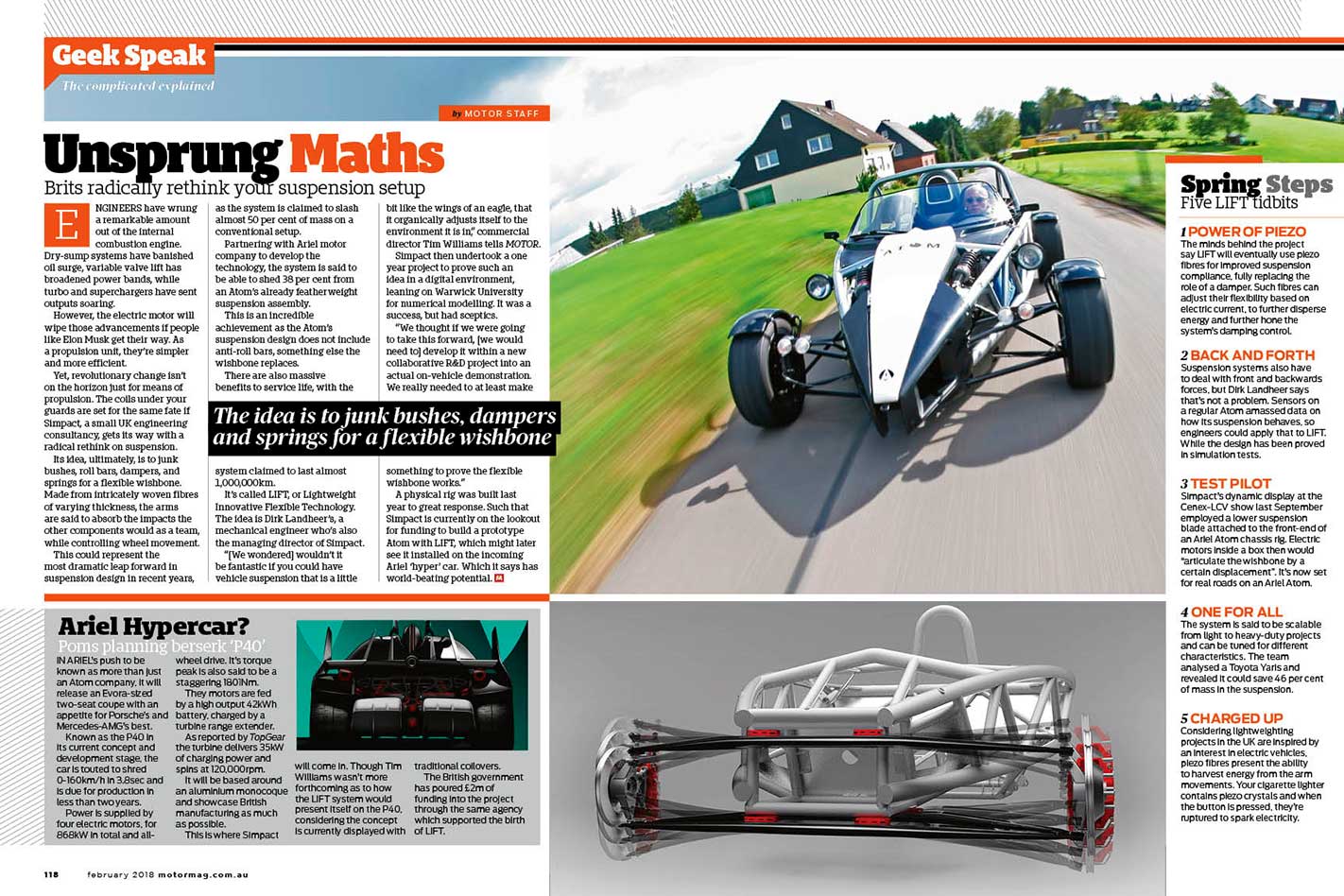
GARAGE UPDATES
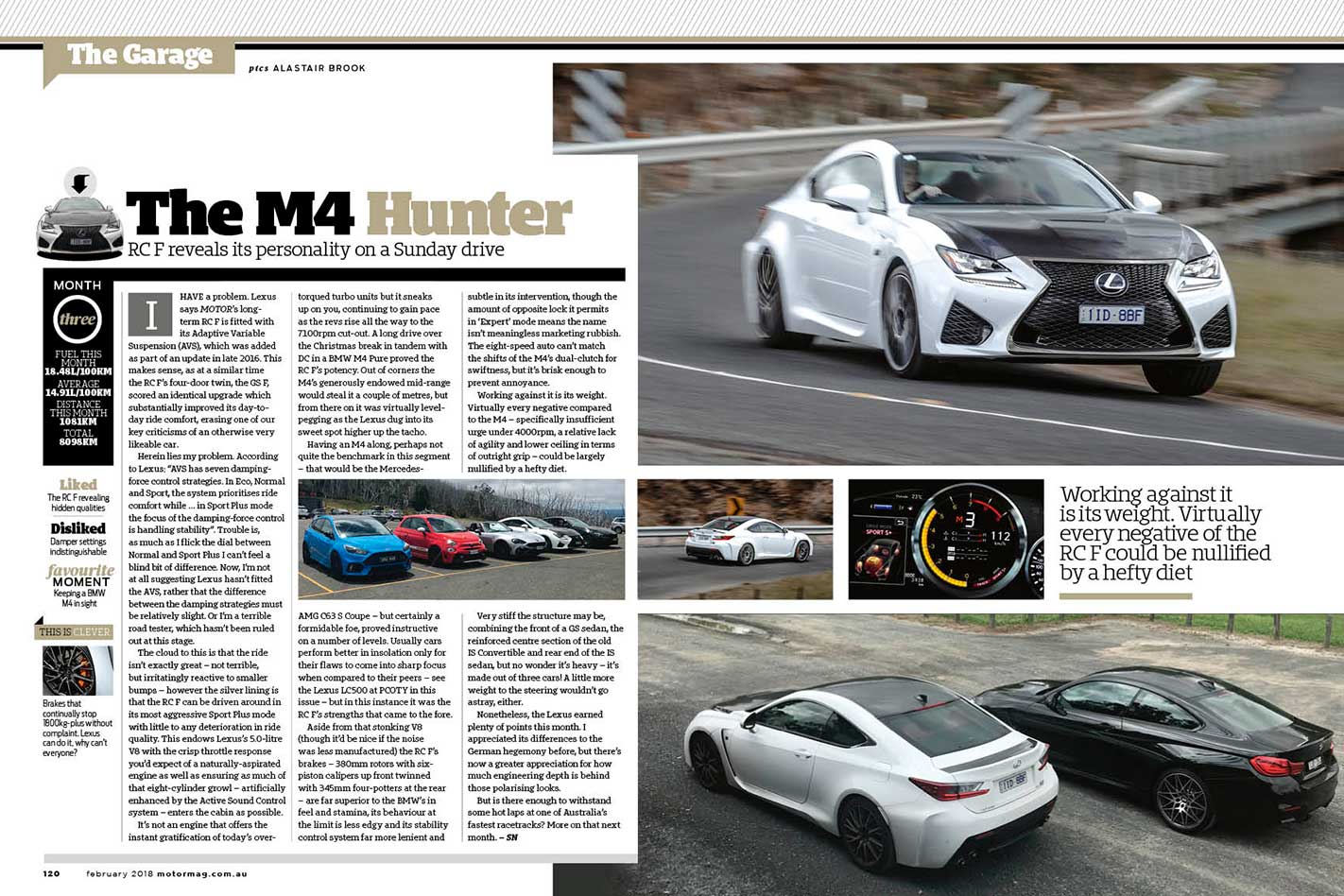
WHAT IS IT?
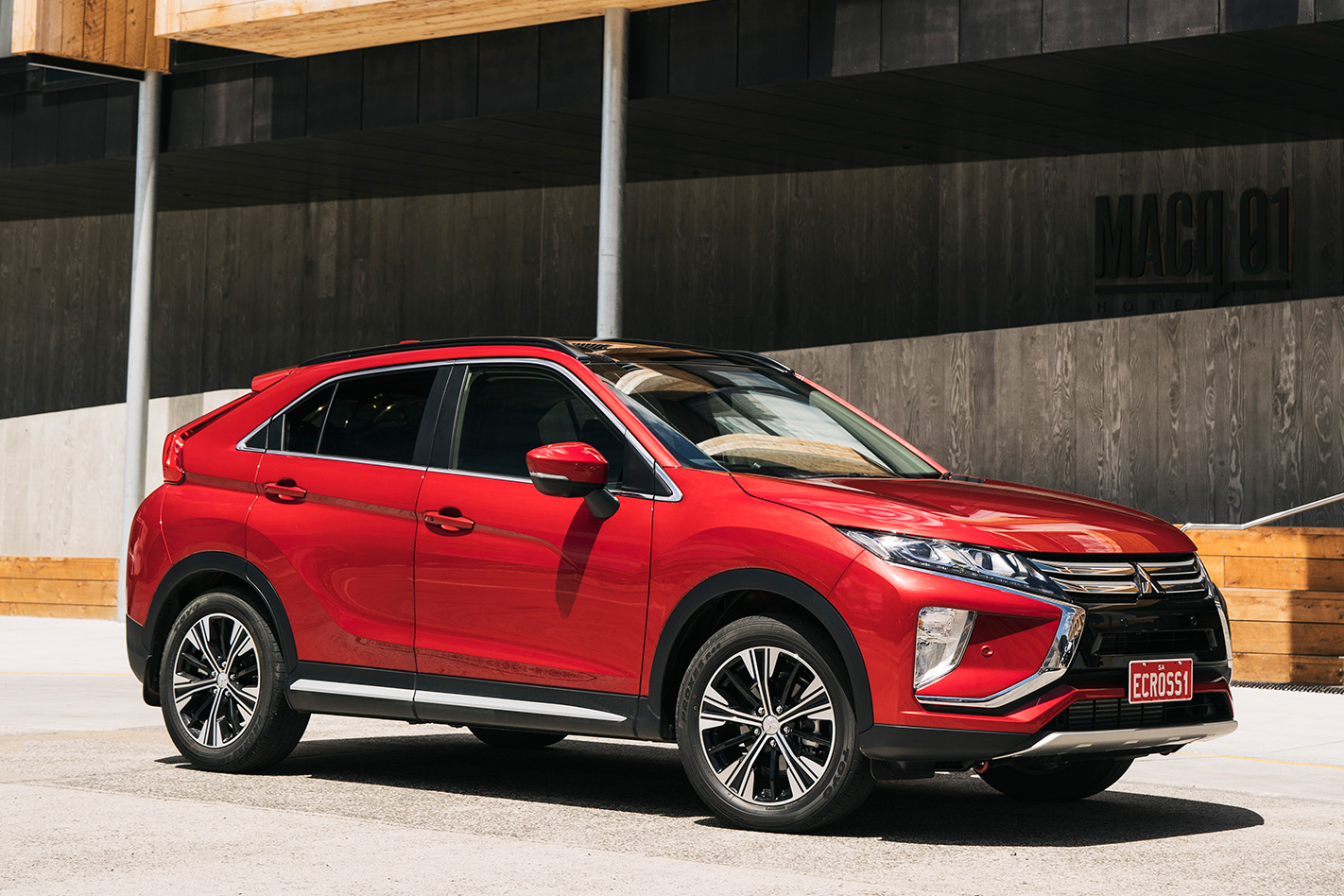
A design-driven compact SUV that’s slightly larger than some segment rivals, and likely to tempt a chunk of Mitsubishi’s showroom traffic away from the ageing (but still strong-selling) ASX.
WHY ARE WE DRIVING IT?
The Eclipse Cross debuts Mitsubishi’s new 1.5-litre turbo four, and the company claims its CVT overcomes a number of shortfalls inherent to the design. Plus we never say no to an opportunity to drive on Tasmanian roads.
Nissan Qashqai; Holden Trax; Hyundai Kona, Honda HR-V; Mazda CX-3, Subaru XV, Toyota C-HR
THE WHEELS VERDICT
The Mitsubishi Eclipse Cross doesn’t set any high-water marks, but in a segment not exactly bursting with brilliance, it arguably doesn’t need to. The focus on urban driveability, packaging, connectivity and equipment will be ample for it to find an audience.
MINUS: Not quick; mute steering; high-speed damping; rear vision
THE WHEELS REVIEW
NO ONE ever said mediocrity had to be an impediment to prosperity. Well, at least no one at Mitsubishi ever said it. There’s not a standout performer or Wheels comparo winner in Mitsu’s now-eight-strong model range, yet the company finished 2017 in fifth position on the sales chart, ahead of Ford. The raucous, pensionable ASX compact SUV is regularly the seventh or eighth best-selling passenger vehicle in the country. Clearly buyers in the SUV market have priorities that hinge on attributes not necessarily connected to dynamics, performance or refinement.
All of which bodes well for Mitsu’s latest addition to its SUV line-up. The Eclipse Cross squeezes into the line-up between the ASX and Outlander; a more design-led alternative to the former; more compact and affordable than the latter. It’s no gifted athlete, but it does get enough of the fundamentals right and has sufficient showroom sheen to elevate it above mediocrity.
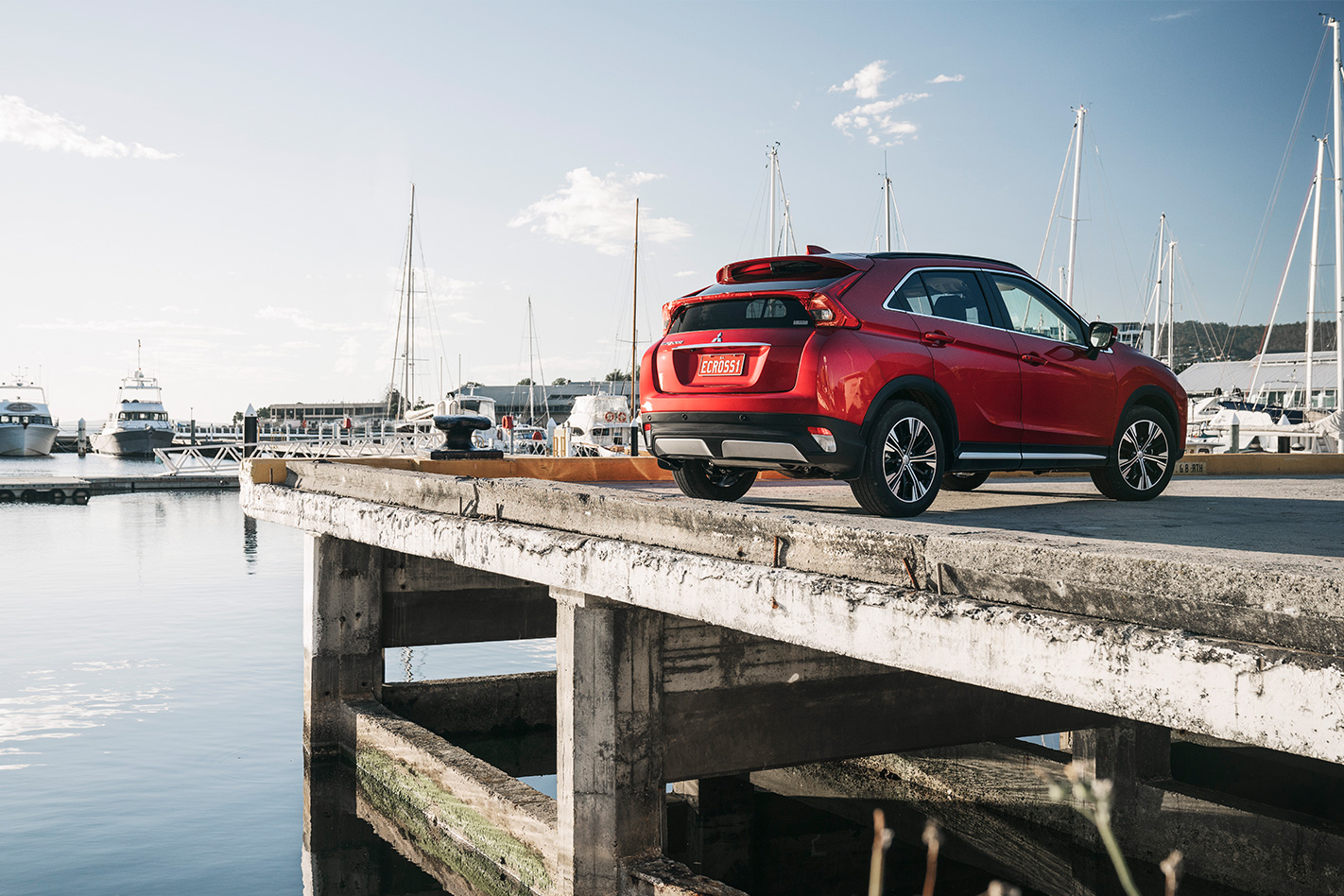
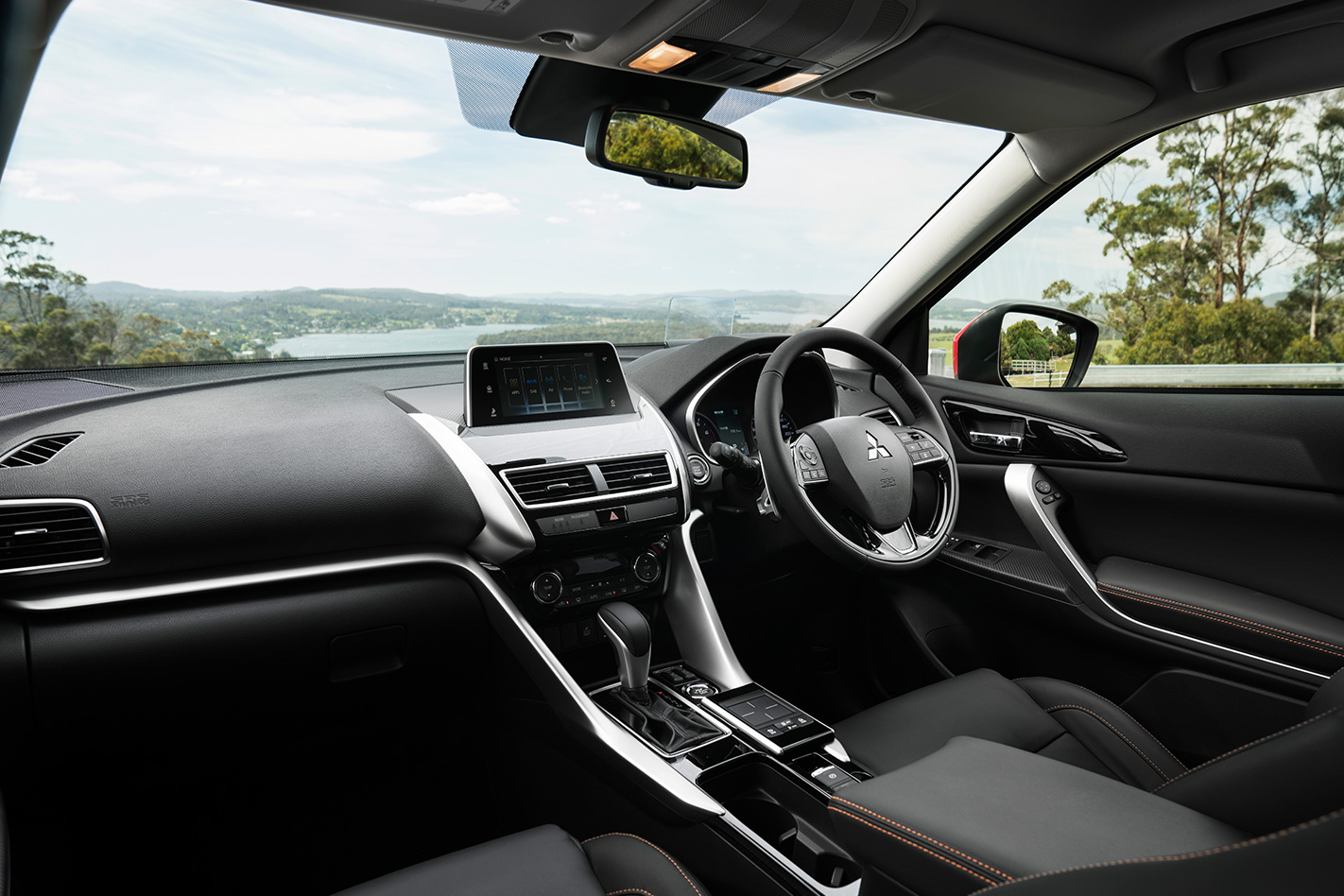
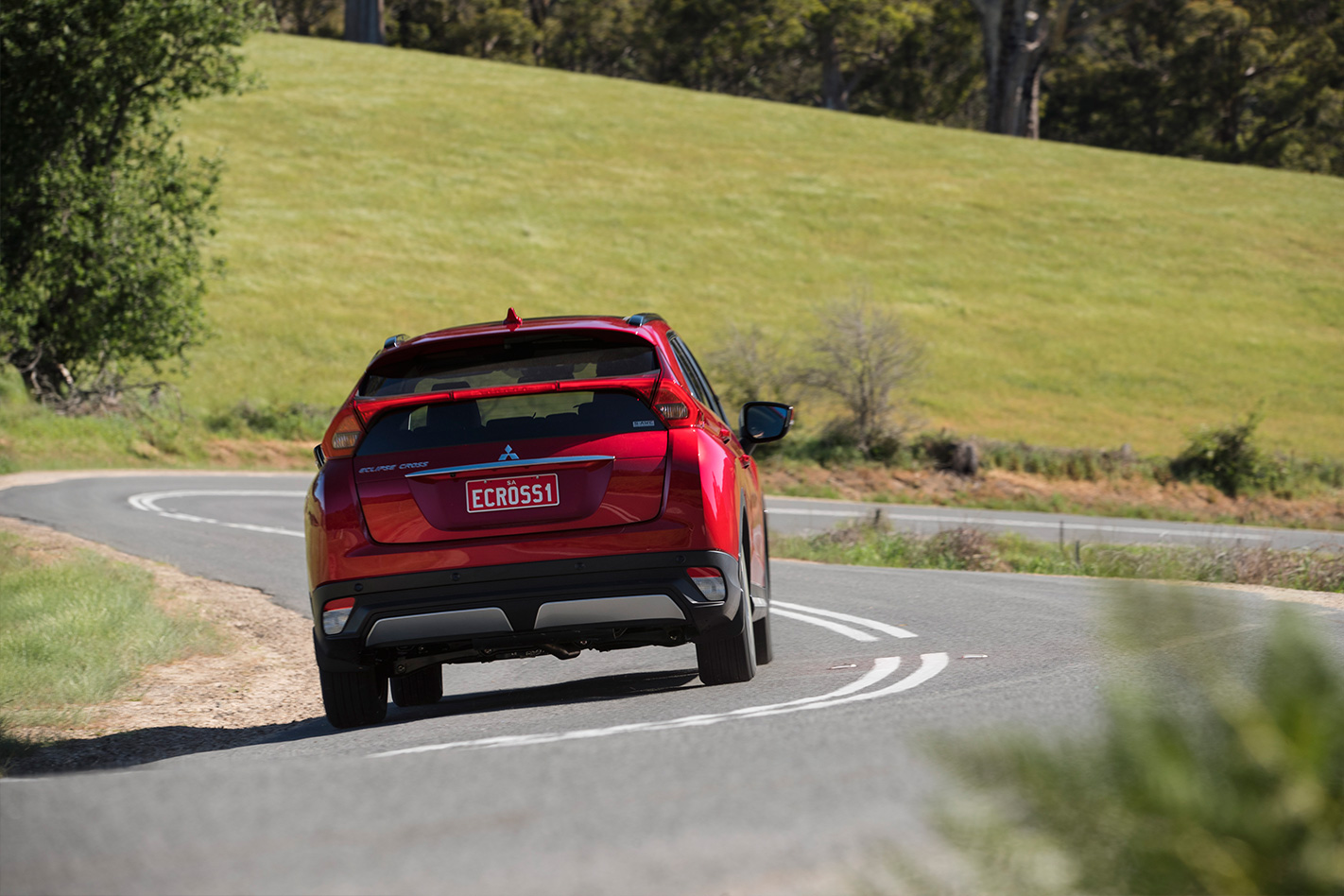
The Eclipse Cross lands early scoring shots for design, packaging and presentation. The coupe-esque profile and sloping roofline doesn’t unduly compromise rear headroom, while the rear bench slides fore and aft by 200mm and offers useful backrest rake adjustment. Three mid-teens across the back will just about fit, and three heads back there will distract you from the fact that the rear vision is compromised by the split-glass design of the tailgate.
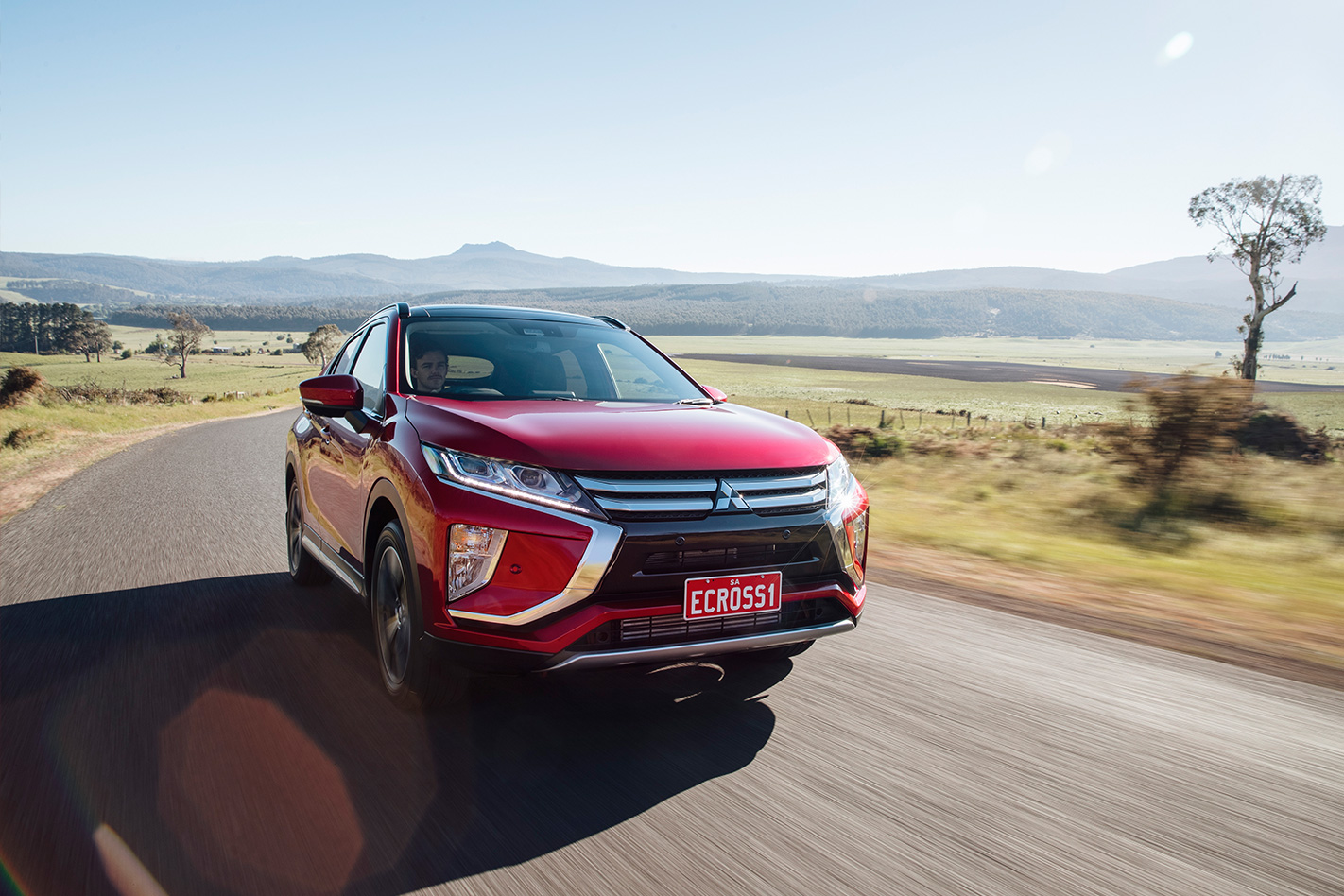
More credits quickly amass when sampling the engine for the first time in urban driving. This is Mitsu’s debut installation of the new 1.5 turbo, and it’s a decent little unit. The tune sensibly favours torque, rather than power – Honda’s same-size turbo four in the larger CR-V makes an additional 30kW – but the Mitsu mill boosts up early, delivers a mostly satisfying swell in the midrange, and remains unobtrusive until wrung past 5500rpm. The target market won’t go there, and neither did we, much, as power trails off quickly in the last 500rpm before the 6000rpm redline.
Claimed consumption is 7.3L/100km; we saw an indicated 10.8 over 500km of fairly vigorous driving. Overall, it’s a powertrain that easily has the measure of the atmo offerings in rivals such as the Nissan Qashqai and Honda HR-V.
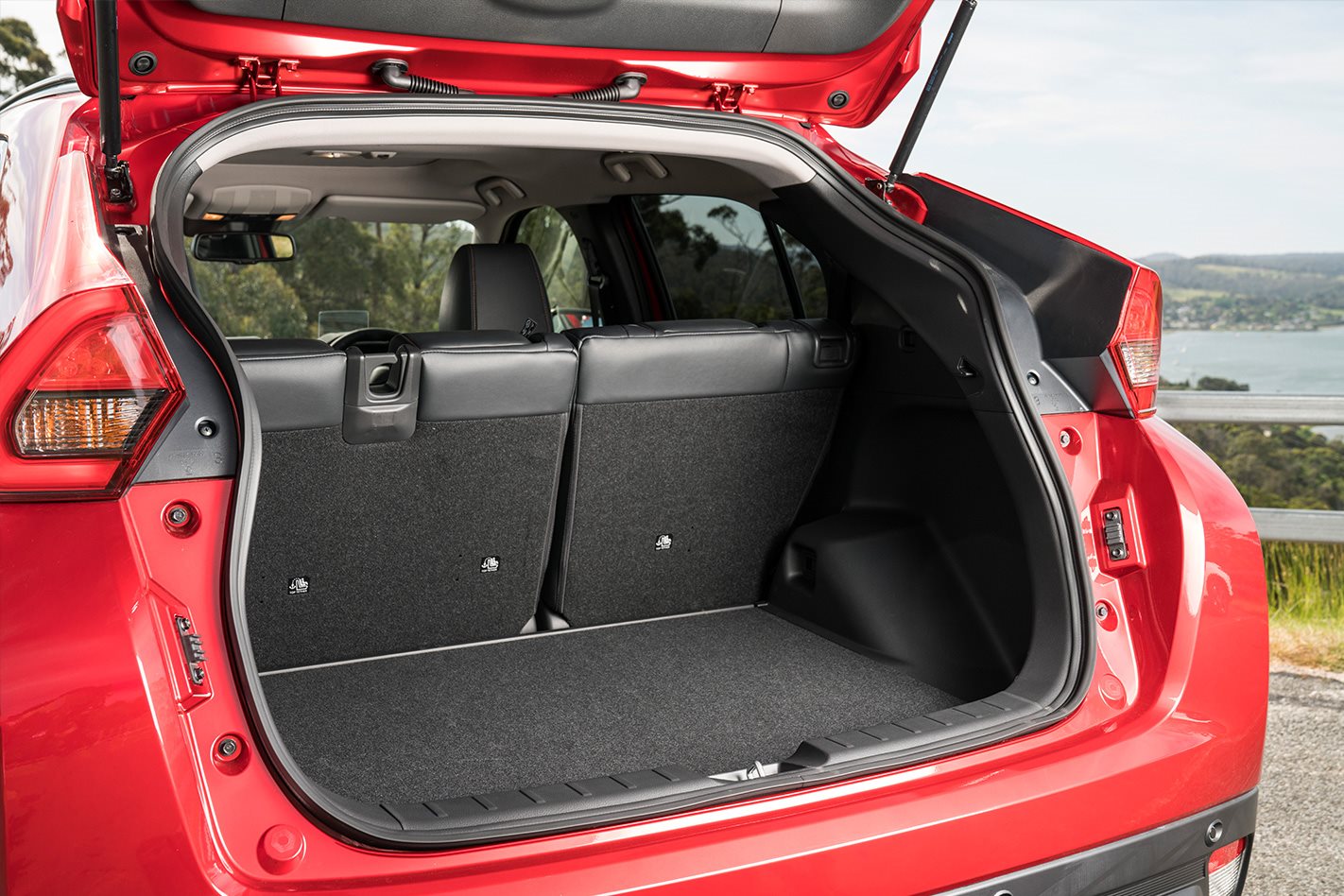
But will anyone know … or care? Of course not. The equipment level, even at the LS entry point, is high, the safety story strong in Exceed, the connectivity boxes ticked. Teamed with the rakish, slightly blinged-‘n’-creased styling, requisite elevated driving position and the option of all-wheel drive for a reasonable premium, and it’s quickly evident there’s nothing mediocre or ill-considered about Mitsu’s business plan.
SPECS
Model: Mitsubishi Eclipse Cross Exceed 2WD Engine: 1499cc inline 4cyl, dohc, 16v, turbo Max power: 110kW @ 5700-6700rpm Max torque: 250Nm @ 2000-3500rpm Transmission: CVT Weight: 1490kg 0-100km/h: 9.0sec (claimed) Economy: 7.3L/100km Price: $36,000 On sale: Now
THE governing body running Formula 1 has announced that the practice of using scantily-clad women standing in front of cars on Grand Prix grids has been abandoned, because it no longer aligns with the sport’s brand values nor reflects contemporary societal tastes.
A statement issued on Wednesday ditched the long-standing tradition not only for Formula 1 races but also for all supporting race series that take place on F1 weekends.
“Over the last year, we have looked at a number of areas which we felt needed updating so as to be more in tune with our vision for this great sport,” said Sean Bratches, the managing director of commercial operations at Formula 1.
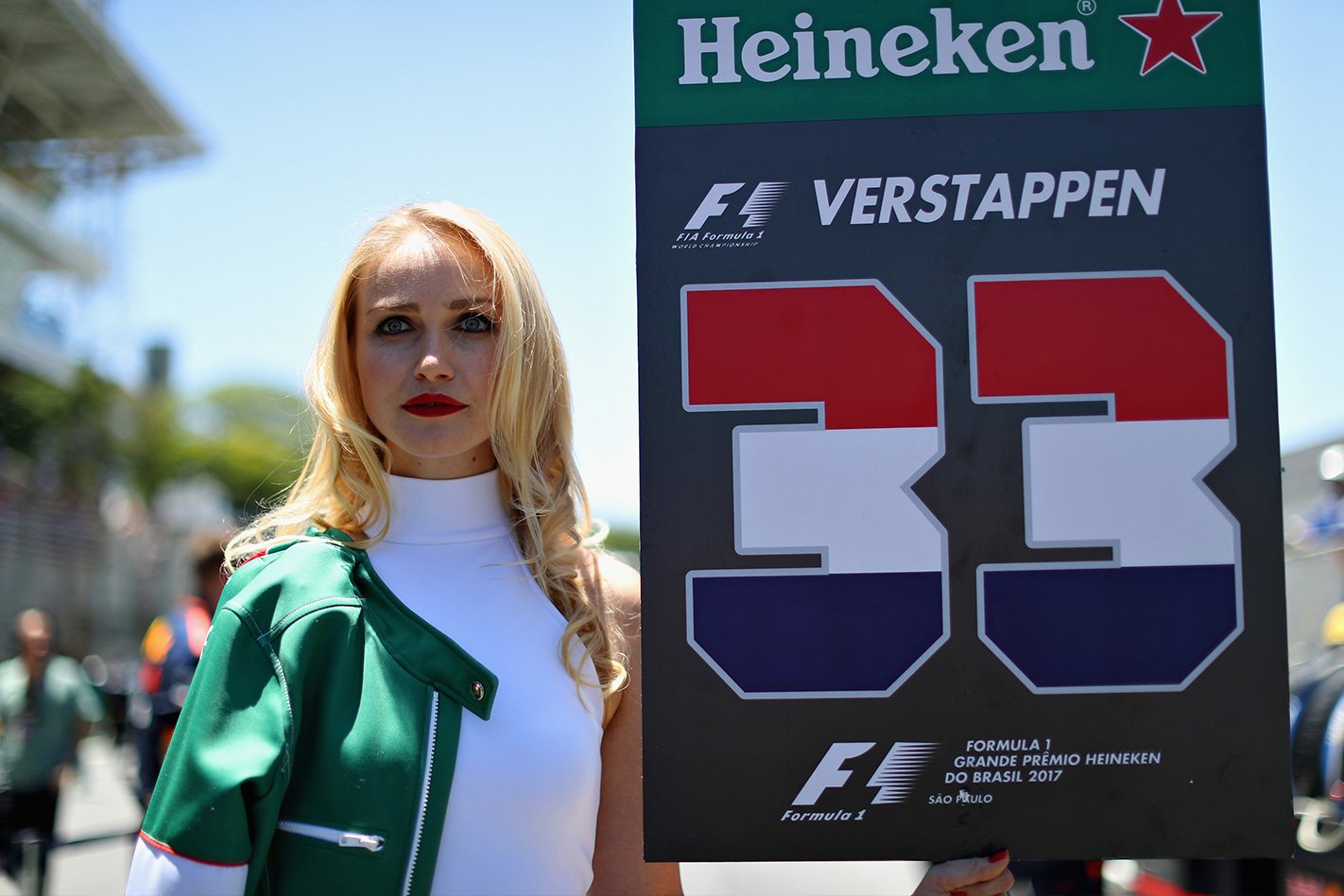
Under the aegis of Bernie Ecclestone, Formula 1 was never the most progressive sport in the way it represented the interests of anyone other than wrinkled billionaires, and this change has come belatedly, Formula 1 lagging behind the enlightened sport of darts in this regard; the Professional Darts Council announcing their ban on walk-on girls a few days prior to the Formula 1 decree.
There has been a slight unease within the Formula 1 community about the anachronistic nature of squeezing models into clothes too small for them and standing them in front of cars to hold a sign, doing a job that could easily be performed by a cardboard cut-out or a Roomba.
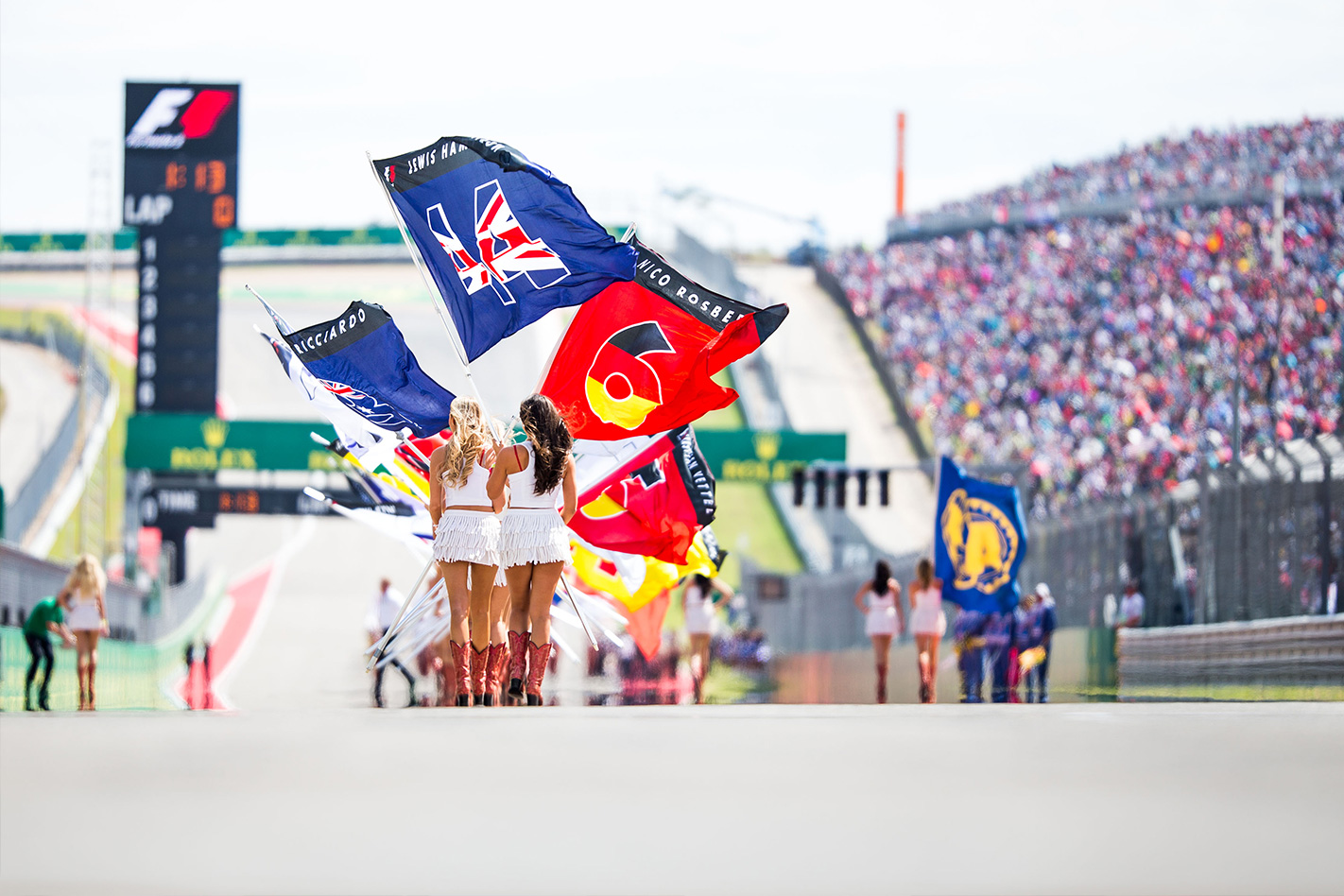
Vettel was outspoken again at the Brazilian GP, still miffed by the concept of sitting at eye-level with a bloke’s arse crack and told Das Bild, “There are grid boys here? I will go on strike! I will have to talk to Bernie Ecclestone about that.”
Niki Lauda had a similarly Blatter-esque opinion. “Grid boys is a terrible idea,” said the F1 legend, “especially in this land of the most beautiful women, Carnival and Samba.”
So, if you happen to see a beautiful woman with an oversized umbrella looking rather dejected outside a local Centrelink come March, you’ll know the score. Do you agree or disagree with the ruling? Hit the comments on Facebook to let us know.
The 2018 Formula 1 season starts next month, in Melbourne.
Race Day | Venue | Formula 1u00ae Grand Prix |
25 March 2018 | Melbourne | Australia |
8 April 2018 | Sakhir | Bahrain |
15 April 2018 | Shanghai | China |
29 April 2018 | Baku | Azerbaijan |
13 May 2018 | Barcelona | Spain |
27 May 2018 | Monaco | Monaco |
10 June 2018 | Montreal | Canada |
24 June 2018 | Le Castellet | France |
1 July 2018 | Spielberg | Austria |
8 July 2018 | Silverstone | Great Britain |
22 July 2018 | Hockenheim | Germany |
29 July 2018 | Budapest | Hungary |
26 August 2018 | Spa-Francorchamps | Belgium |
2 September 2018 | Monza | Italy |
16 September 2018 | Singapore | Singapore |
30 September 2018 | Sochi | Russia |
7 October 2018 | Suzuka | Japan |
21 October 2018 | Austin | USA |
28 October 2018 | Mexico City | Mexico |
11 November 2018 | Sao Paulo | Brazil |
25 November 2018 | Yas Marina | Abu Dhabi |
Welcome to the lucky 13th episode of the Performance Car Podcast.
In this episode Associate Editor Scott Newman is joined by long-time MOTOR contributors David Morley and Tim Robson to discuss the greatest ever fast Holden Commodores, fittingly, from inside the last and greatest performance Holden of them all, the HSV GTSR W1.
The episode was filmed on the way to Performance Car of the Year testing, in which the W1 was a participant, making it the last Australian-built car ever to take part in PCOTY.
Topics include their first exposure to a fast Commodore (1:10), on-track struggles (2:10), Holden’s response and their editorial support (3:00), Commodores in Europe (4:45), the best memories from 30 years of driving Holdens (5:30), Aussie engineering ingenuity (6:40), MOTOR‘s epic Around Australia drive (8:15), interviewing those in Holden’s inner sanctum (10:30) and Morley’s marriage counselling service (14:30).
Discussion then turns to HSVs that have made an impression and how they’ve evolved (17:00), the mighty GTSR W1 (26:00), improving the last of the breed (27:35) and thoughts on the factory closure (29:00), which had just taken place as this episode was filmed.
We look forward to bring you more podcasts in 2018 and as ever any topics, cars or guests you’d like to see featured please let us know on Facebook or via [email protected].
For those on the move the audio for this podcast is available on iTunes and Podbean, please subscribe if you like what you hear and leave us a rating!
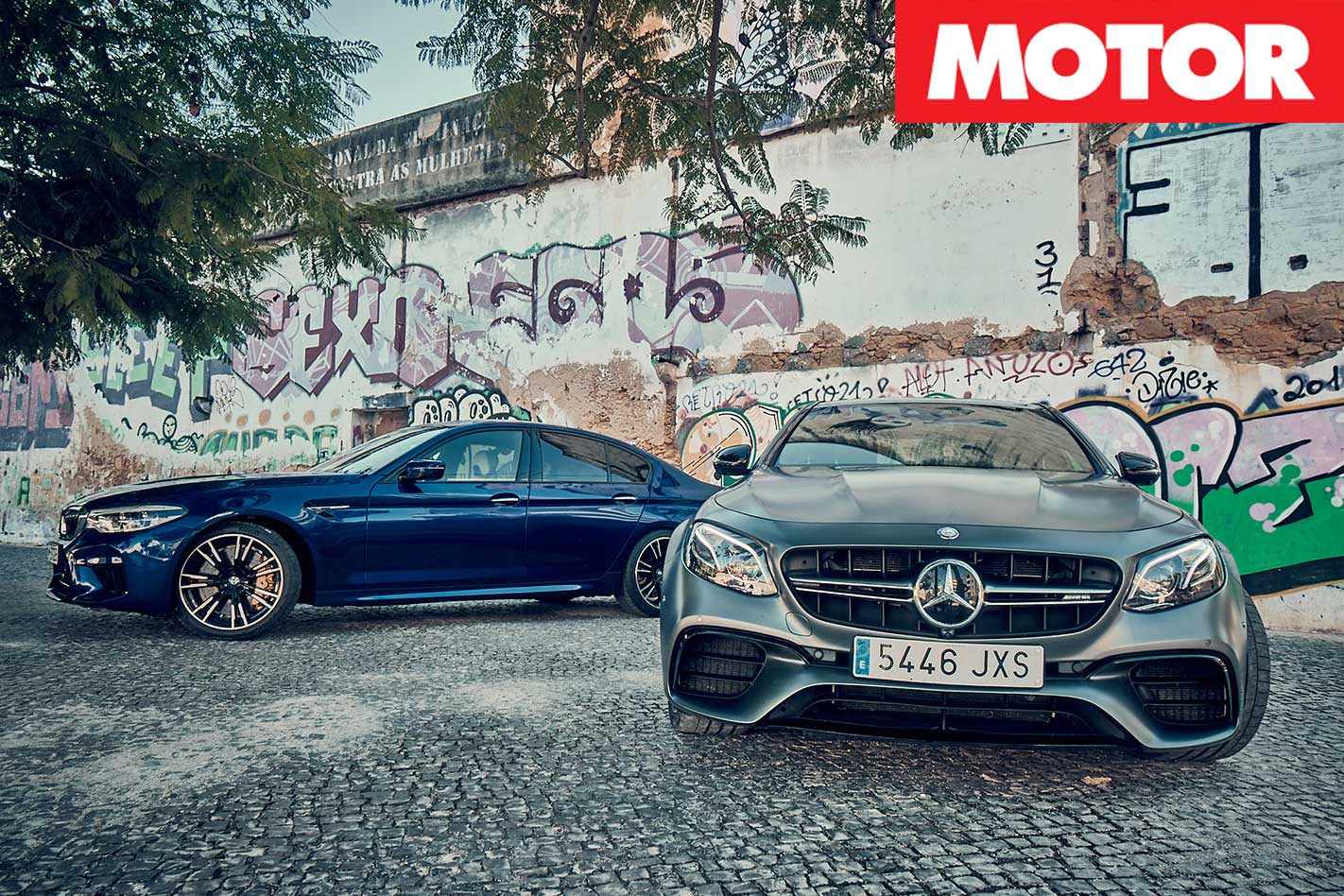
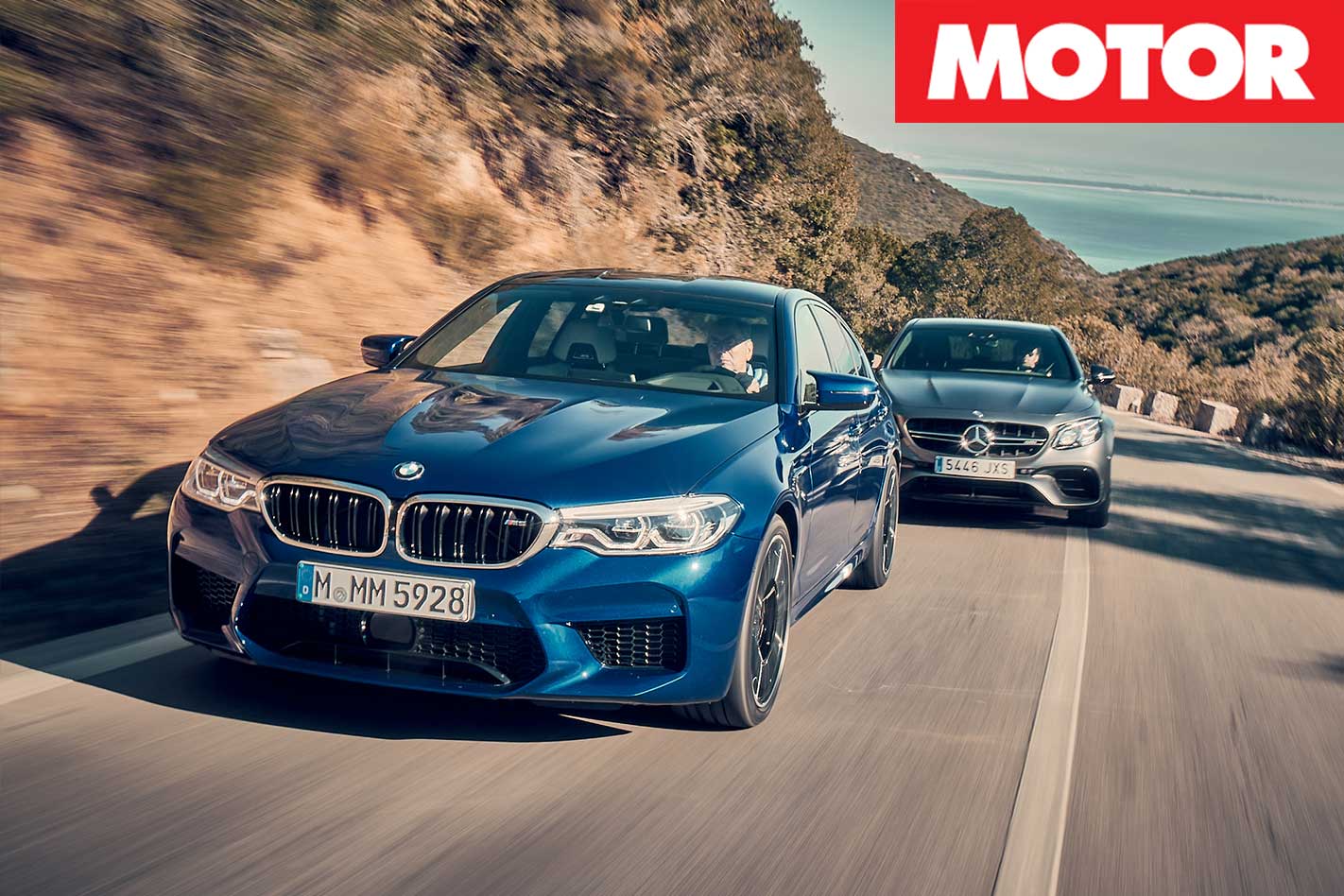
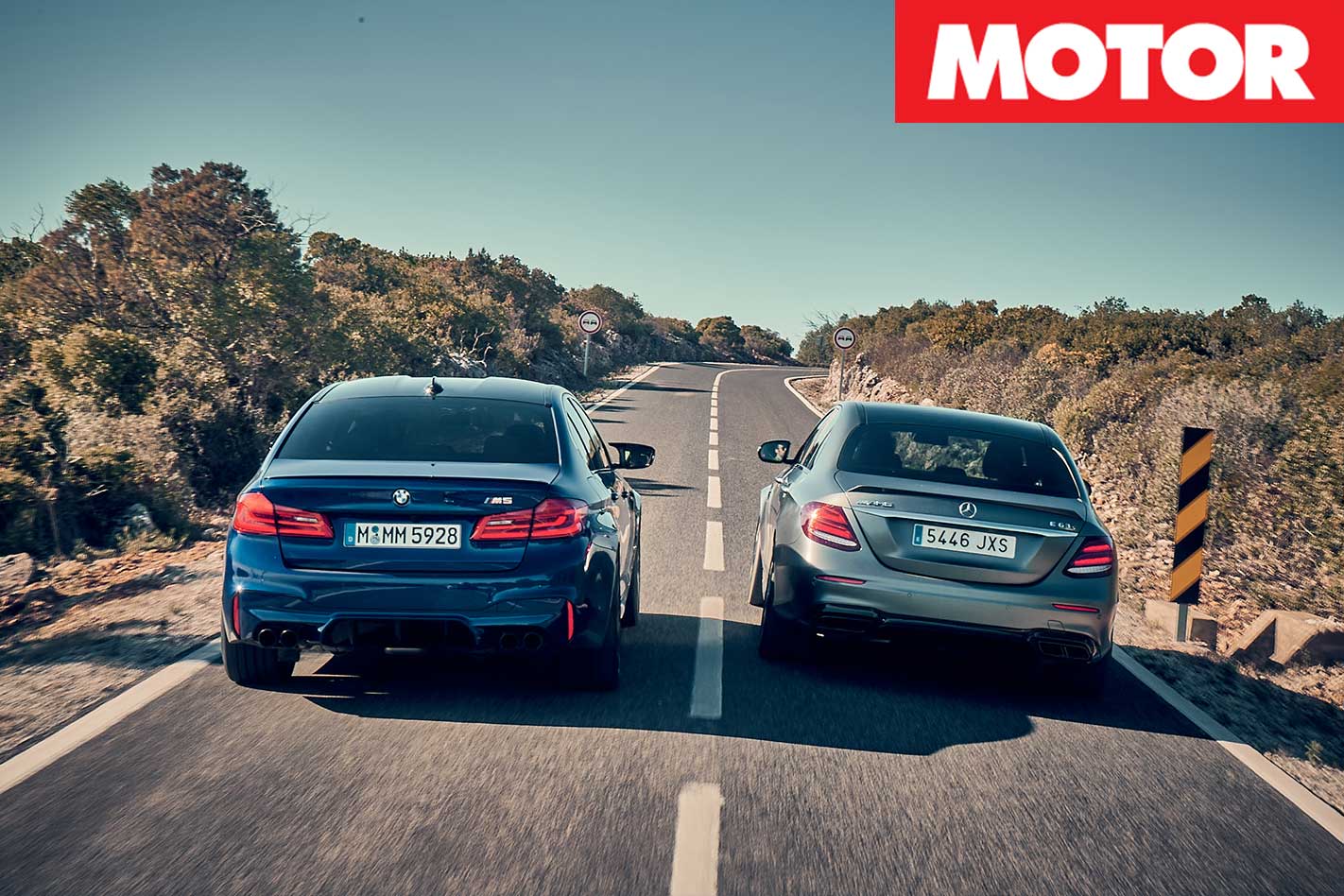
Welcome to the latest instalment of the M5 versus E63 battle for the title of world’s hottest sedan.
However, this duel now plays out with revised terms. BMW, like Mercedes-AMG did before it, has decided to join the four-wheel drive fraternity where its 441kW and 750Nm must be converted into sure-footed progress. Bavaria and Affalterbach are on an equal, twin-turbo V8 footing.
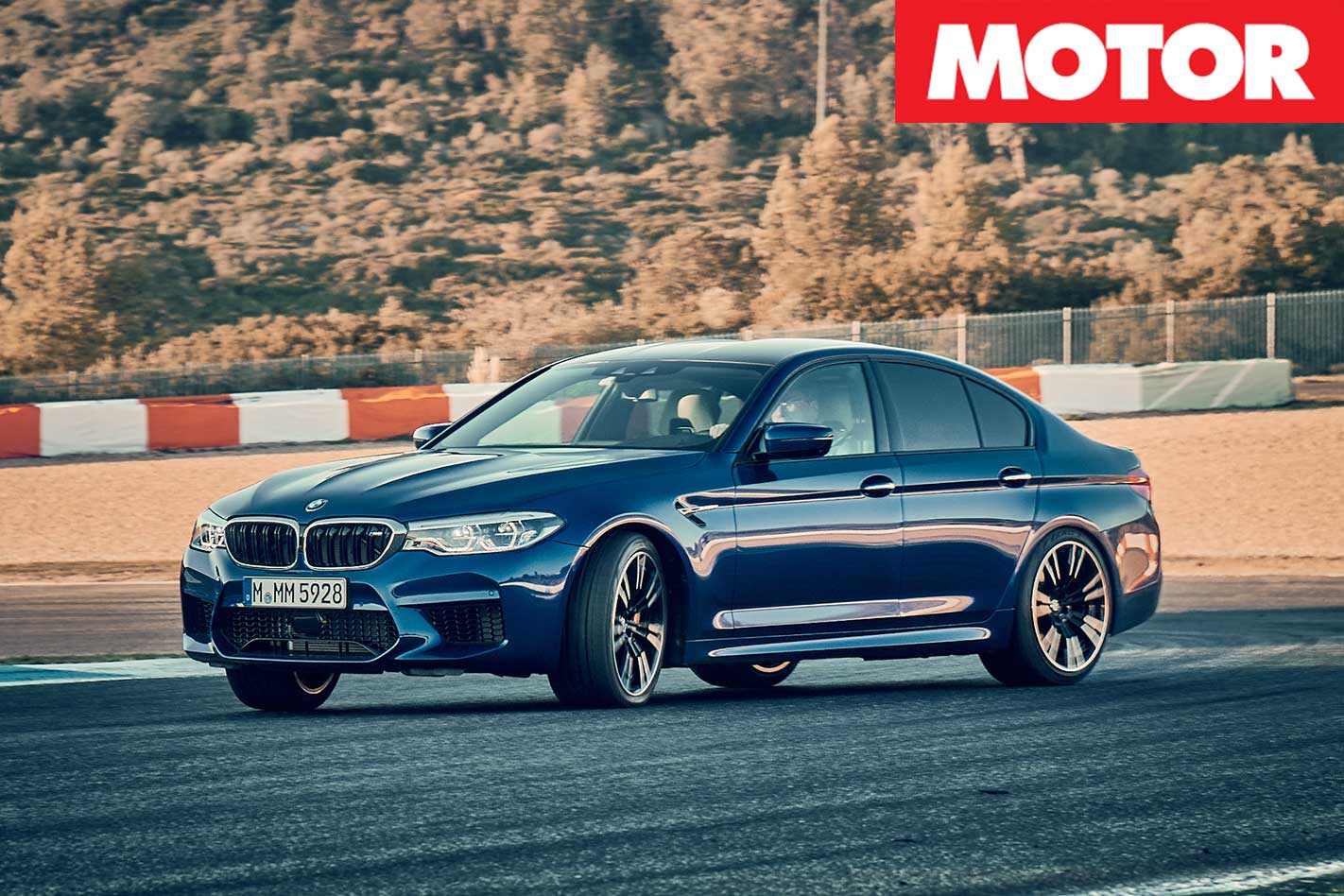
Visually, the team within the M Division have created a subdued fighter. Wider wheels, mildly flared shoulders, more intakes, myriad aero aids, LED eyes and four sizeable tailpipes sum up the mean, but not menacing visual DNA. The M5 is still more sleeper than boisterous brawler, unlike the 450kW/850Nm E63 S, but it’s easy to spot the details that reveal the sixth-gen F90’s intent.
Allaying our fears is the fact that you can send all the grunt rearwards, it’s just that the front axle is there to help assist getting all the oomph to the road more of the time. Transitioning between four- and two-wheel drive modes is progressive, smooth and imperceptible.
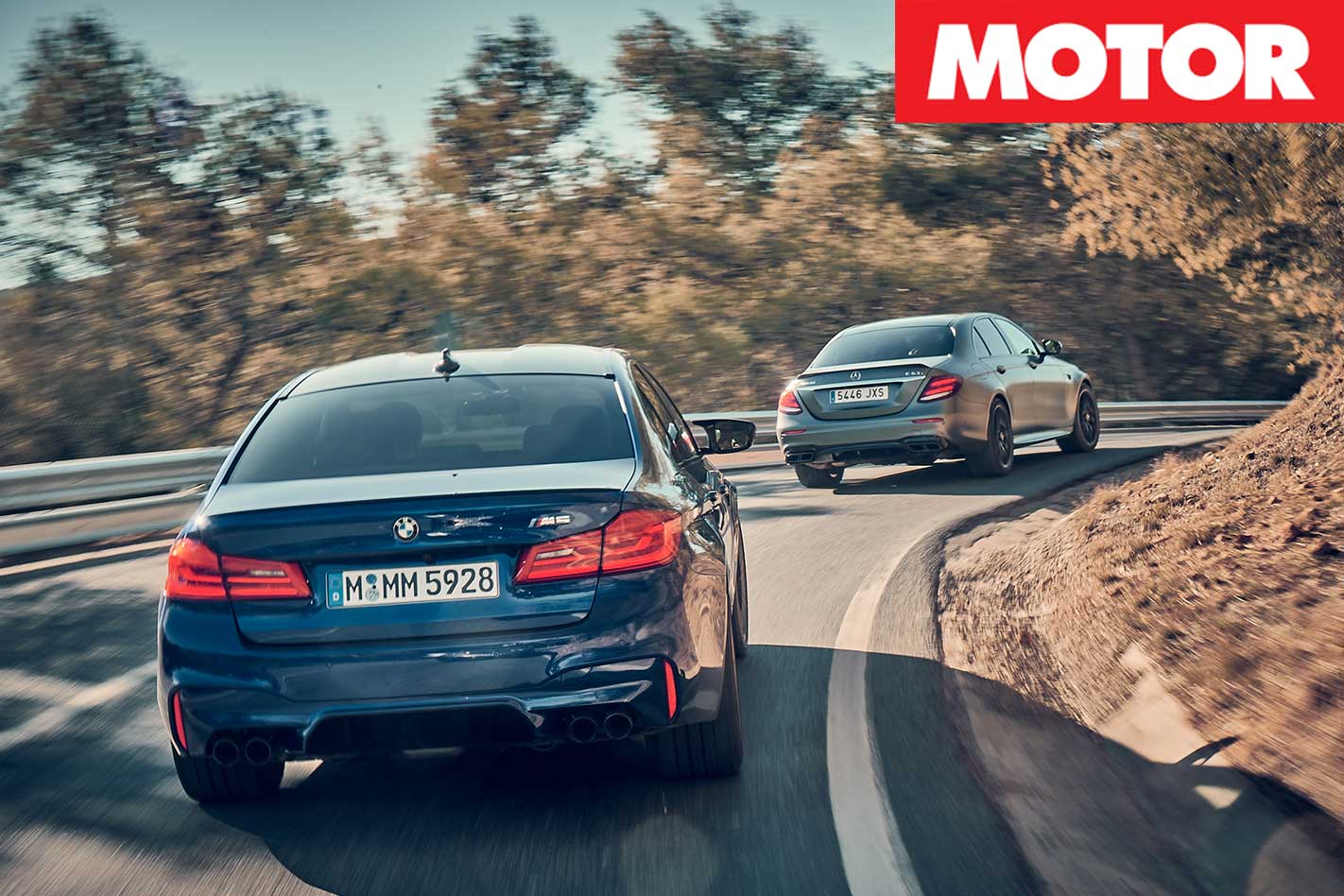
However, it’s time to put the theory into practice. Due to a long absence of rain at Estoril Circuit in Portugal, the dusty, dry tarmac is sanded down to primer, so grip is limited. Even with all the stability nannies at full alert, the rear ends of these super sedans on steroids keep wriggling, fidgeting and twitching under pressure.
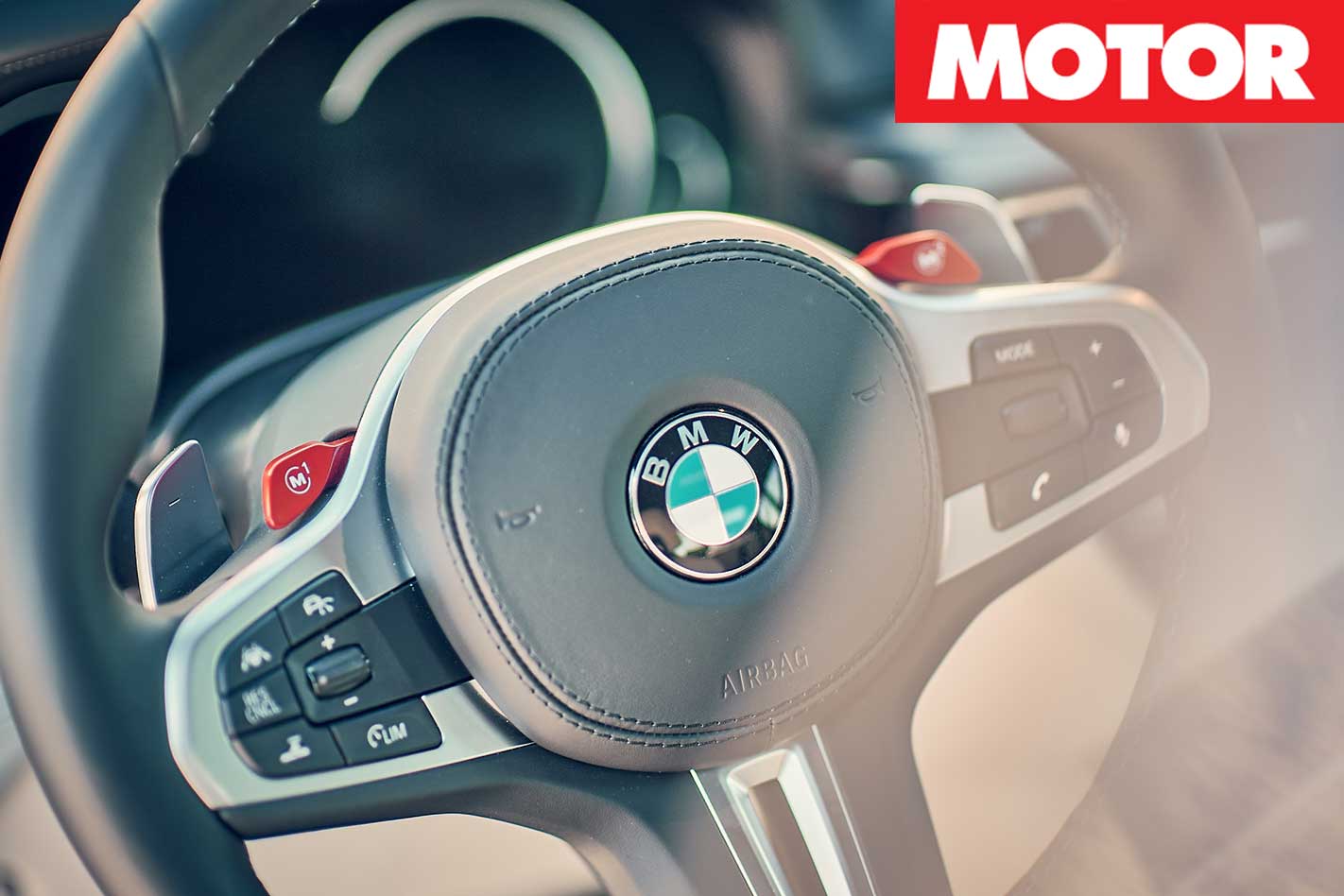
With no DSC and 4WD in Sport, the new M5 is at its very quickest. The exit speed out of fast corners is absolutely mind-boggling, the underlying rear bias remains a factor all the way into triple-digit territory, while traction and grip is epic. When all the M5’s might is sent rewards, the tyre-frying show returns.
Satisfying the urge to play appears to be the number-one priority. However, in order to burn rubber in these two wild things, we must first select the correct settings. The more hardcore your ambition, the deeper you must dive into the menu underworld. To satisfy the child inside, pulling out all stops in either steed is eye opening. After all, children like toys. Even if these toys happen to need a fresh set of rear hoops after only six hot laps of Estoril.
In Race mode, with the ESP switched off and the transmission in manual, all the power and torque is diverted to the rear wheels only – which in turn makes them yell for help and send smoke signals into the Portuguese sky. Up to 120km/h, it’s on the driver – and only the driver – to tame the 450kW beast. Beyond that marker the front axle rejoins the party. In contrast to the mega Merc, 2WD is not speed governed in the M5.
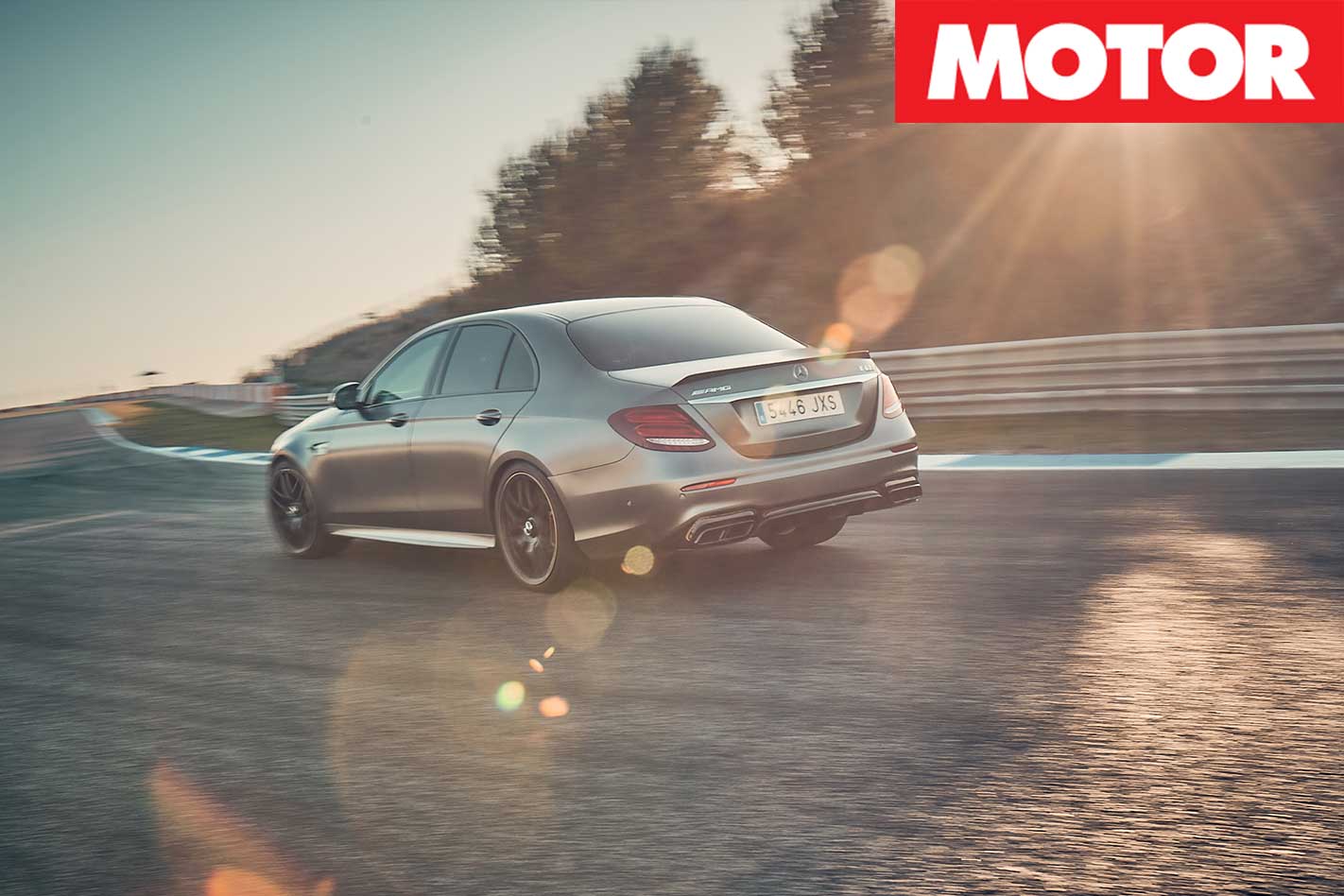
In the 0-200km/h dash, the M5 edges the E63 S, claiming just 11.1sec as opposed to 11.5 for the Merc. How come? Because the longer-legged nine-speed transmission fitted to the AMG makes one more upshift.
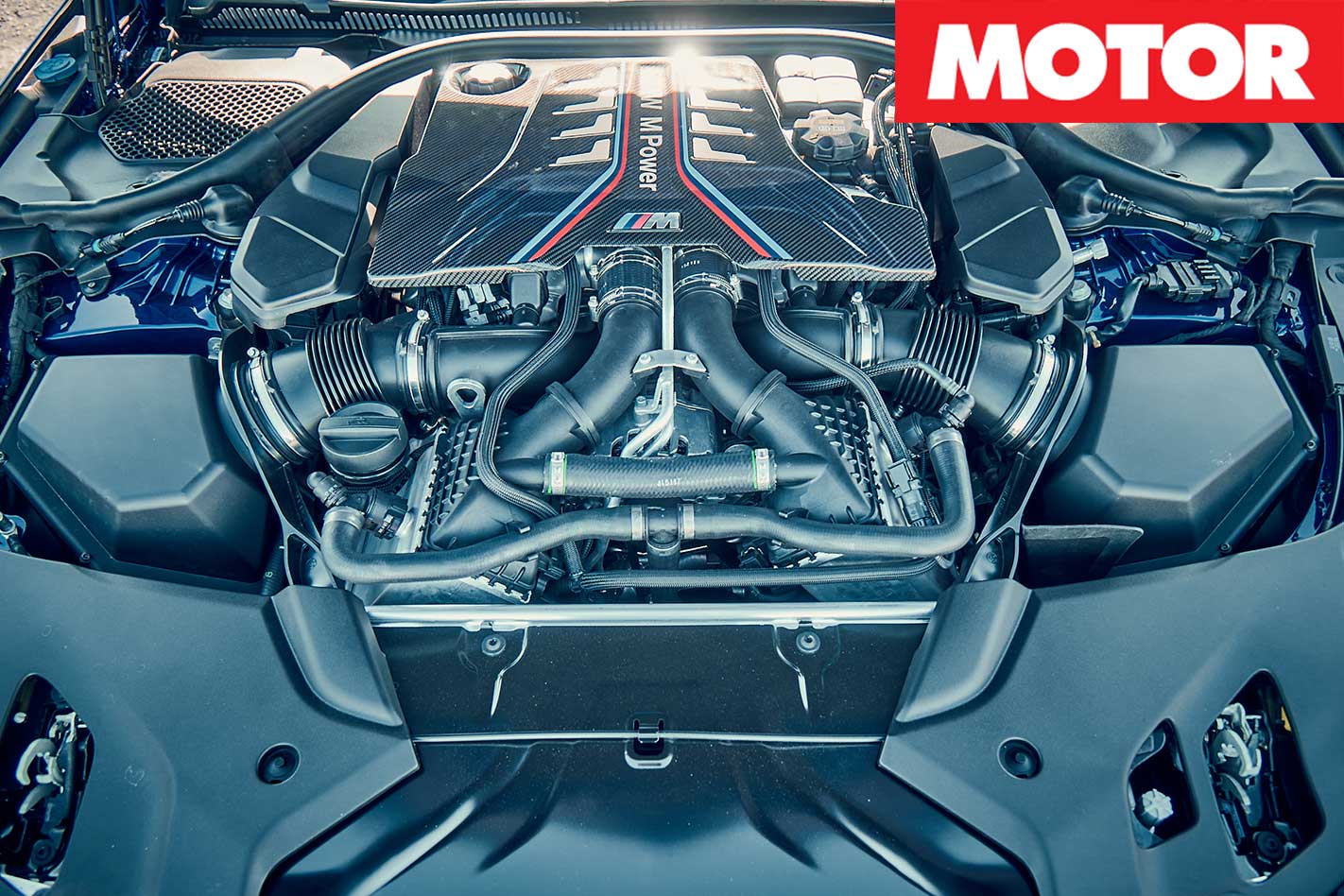
It’s not only the absolute stopping power that makes a big difference, but the constant pedal pressure and travel as well as the complete absence of fade. As far as the brake balance is concerned, the blue car performs on the same high level as the grey car. In the final analysis, it’s primarily the tyres which limit the deceleration potential, not the rotors or the calipers.
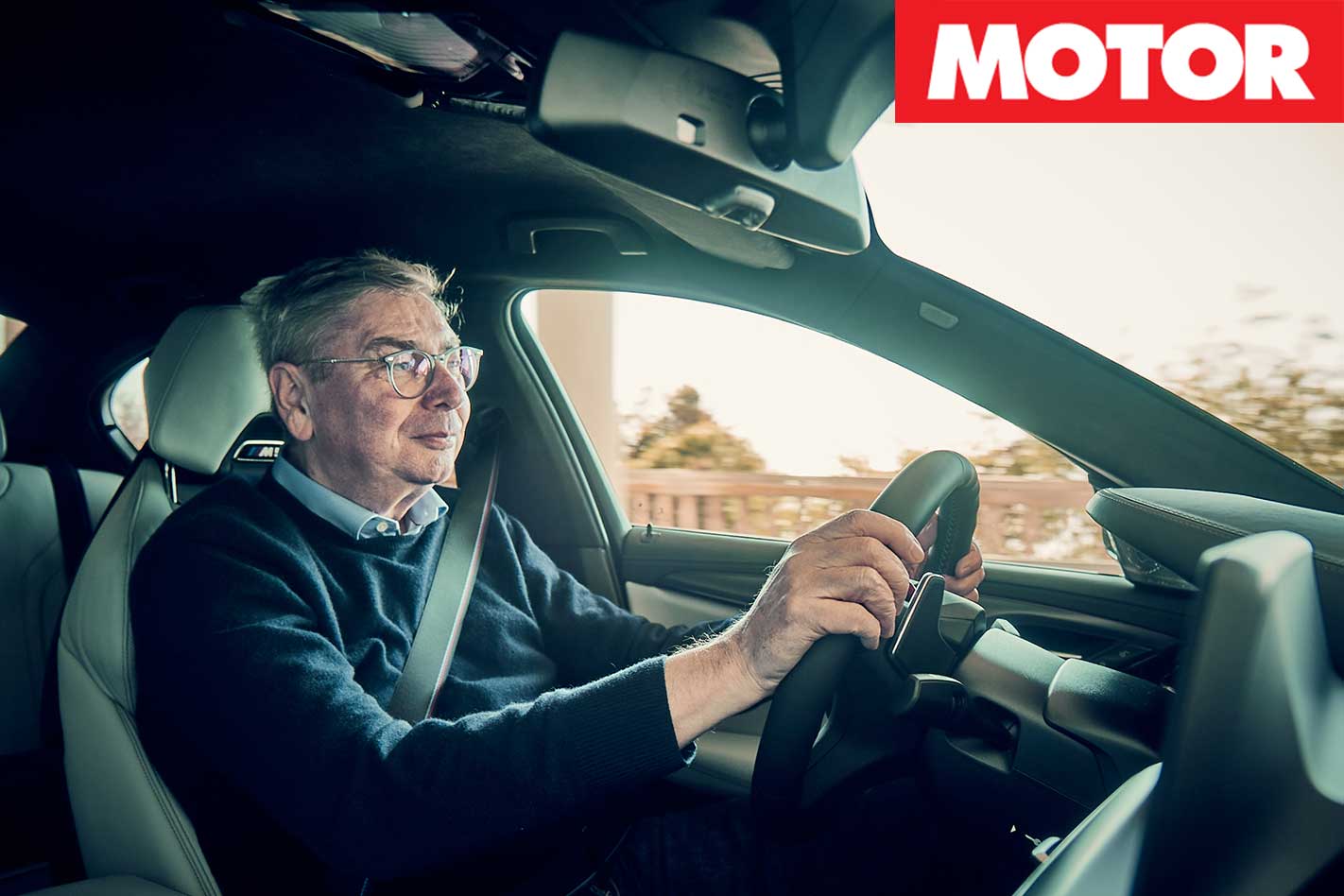
Wind on progressively more, and the feedback starts to blur a touch. When the tail eventually swings round, the steering response is quite light. In a nutshell, it’s a system that, sometimes, seems to be a bit too clever for its own good. Ultimately, the tiller in the M5 is more linear, and its response has more depth. Advantage BMW, but not by much.
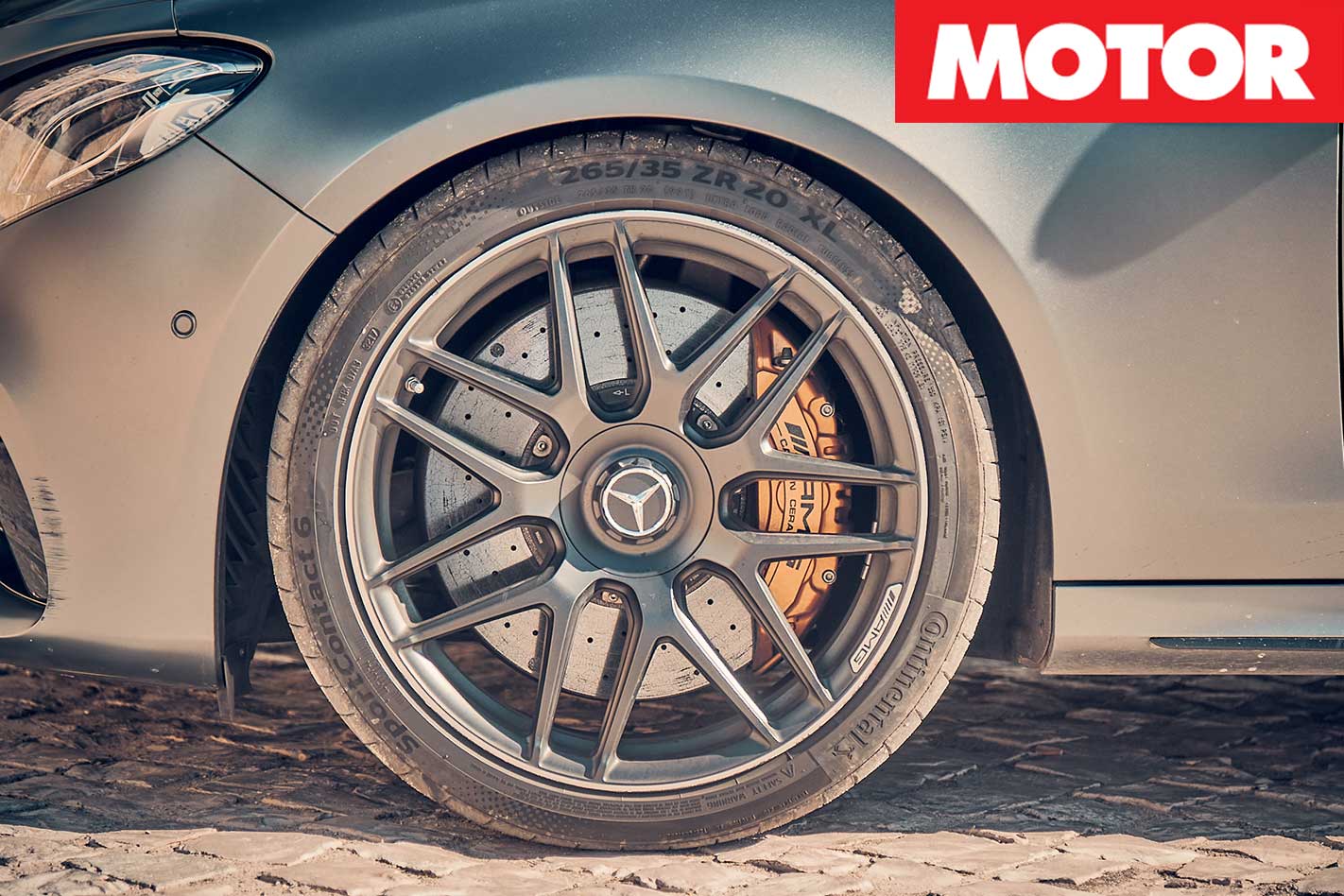
While the BMW’s Pirellis are evenly worn down to the indicators, the AMG’s Contis show an asymmetrical degeneration from the crown area all the way to the outside shoulder; more so at the rear than the front. This is allegedly down to the more aggressive suspension setup, which spices up toe-in and negative camber.
In theory, such an arrangement allows higher cornering speeds. In reality, the advantage expires at the breakaway point where grip lets go rather promptly. You can of course overdrive this peculiarity by stepping hard on the loud pedal.
Even though the Mercedes is equipped with new triple-chamber air suspension, any trace of cushiness is being absorbed by the firm dampers – and that’s before you select Sport or Sport Plus. The BMW offers a broader span of calibrations from reasonably comfortable to positively firm. It is the slightly less radical of the two contenders, sharp yet more accessible in varying conditions.
When it comes time to sign the cheque, you may be surprised to find that the two differ on price. The E63 S is the heavy hitter at $239,611 and the M5, a comparative bargain, is $199,900 if you’re lucky enough to get one. Conversely, you can step down to the 420kW/750Nm E63 for $209,611 or step up to the $229,900 M5 First Edition (no power upgrade).
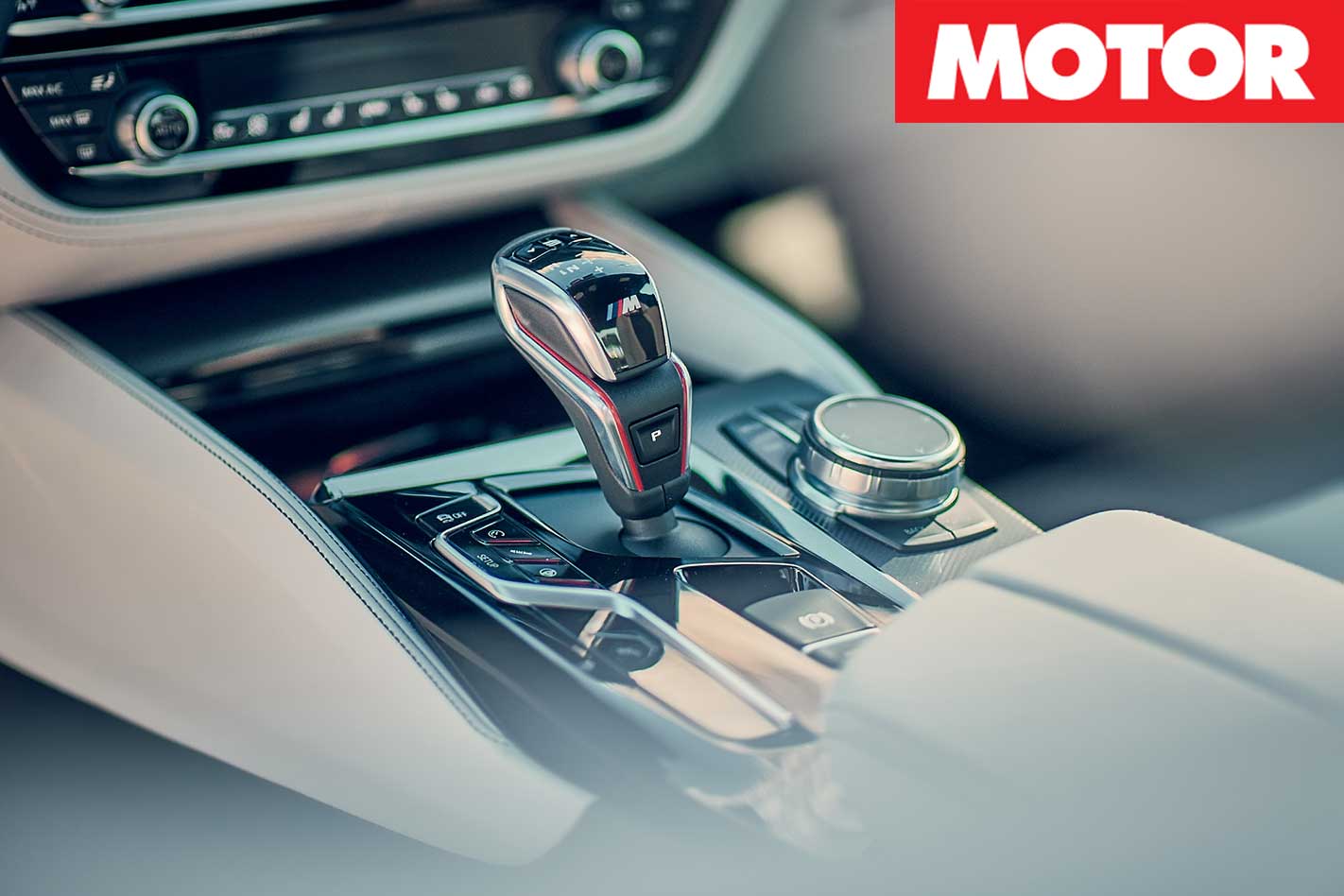
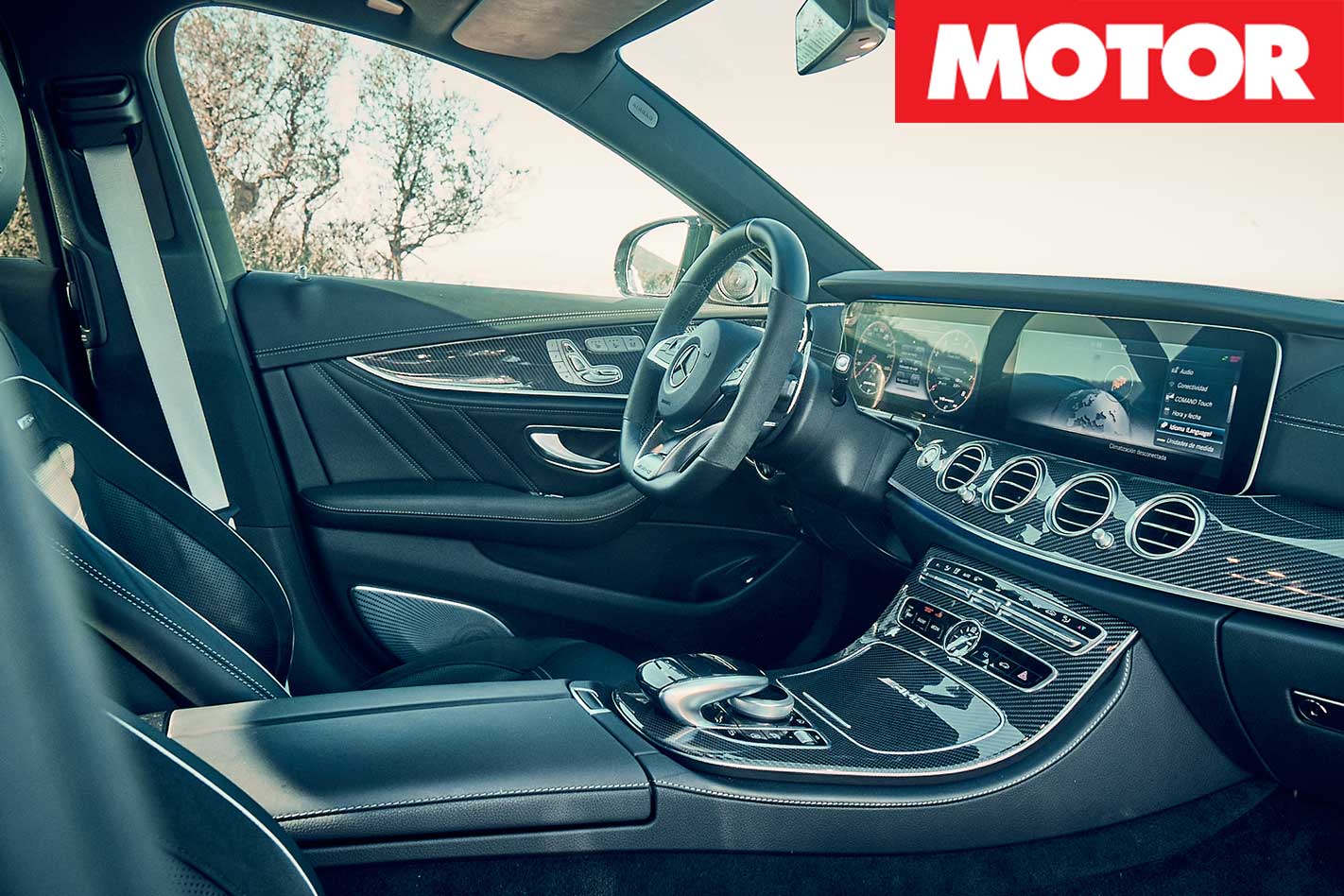
The E63 S is crammed with features – some nice to have, some thinly disguised gimmicks. Both boast about assistance systems which allow you to take your hands off the wheel, however, it’s only briefly. In more ways than one, these two would be a case for less equals more. That’s less as in distraction, complexity and choice. BMW and Mercedes-AMG try to bundle all your preferred settings into one button (M1 and M2 buttons on the steering wheel for the former and an Individual mode for the latter). However, both are far too complex to get ‘just right’.
In contrast, the M5 looks less menacing – because it is. It comes across as the more pragmatic (if an M-car ever could be) driving machine that’s also sweeter at the limit, always tactile and composed as well as being a tad more compliant. Surprisingly, it is pleasantly relaxed at five tenths, yet totally switched on when it really matters most. It wins, but only just.
| u00a0 | 2018 BMW M5 | 2018 Mercedes-AMG E63 S |
| BODY | 4-door, 5-seat sedan | 4-door, 5-seat sedan |
| DRIVE | four-wheel | four-wheel |
| ENGINE | 4395cc V8, DOHC, 32v, twin-turbo | 3982cc V8, DOHC, 32v, twin-turbo |
| BORE/STROKE | 89.0 x 88.3mm | 83.0 x 92.0mm |
| POWER | 441kW @ 5600-6700rpm | 450kW @ 5750-6500rpm |
| TORQUE | 750Nm @ 1800-5600rpm | 850Nm @ 2500-4500rpm |
| POWER/WEIGHT | 238kW/tonne | 230W/tonne |
| TRANSMISSION | 8-speed automatic | 9-speed automatic |
| WEIGHT | 1855kg | 1955kg |
| SUSPENSION | double A-arms, adaptive dampers, anti-roll bar (f); multi-links, adaptive dampers, anti-roll bar (r) | four-link axle, air springs, adaptive dampers (f); multi-links, air springs, adaptive dampers (r) |
| L/W/H | 4665/1903/1473mm | 4993/1907/1460mm |
| WHEELBASE | 2982mm | 2939mm |
| TRACKS | 1626/1595mm (f/r) | 1649/1595mm (f/r) |
| STEERING | electrically assisted rack-and-pinion | electrically assisted rack-and-pinion |
| BRAKES (f) | 395mm ventilated carbon-ceramic discs, 6-piston fixed calipers | 390mm ventilated carbon-ceramic discs, 6-piston calipers |
| BRAKES (r) | 380mm ventilated carbon-ceramic discs, single-piston floating calipers | 360mm ventilated carbon-ceramic discs, single-piston calipers |
| WHEELS | 20.0 x 9.5-inch; 20.0 x 10.5-inch (f/r) | 20.0 x 9.5-inch; 20.0 x 10.0-inch (f/r) |
| TYRE SIZES | 275/35 ZR20 (f); 285/35 ZR20 (r) | 265/35 ZR20 (f); 295/30 ZR20 (r) |
| TYRE | Pirelli P Zero | Continental SportContact 6 |
| PRICE | $199,900 | $239,611 |
| PROS | Performance; handling; steering; value equation | Crazy straight-line pace; epic sound; defies hefty weight |
| CONS | Doesnu2019t sound/look as angry as Merc; limited numbers | Tech overload (so is M5); ultimately not quite as sharp |
| RATING | 4.5 out of 5 stars | 4.5 out of 5 stars |
Two-time Formula 1 champion Fernando Alonso will find himself in the driver’s seat of Toyota Gazoo Racing’s TS050 LMP1 car at Le Mans this year, after confirming he will compete in the 2018 WEC season.
His WEC debut will be at Spa-Francorchamps in May, though his eyes are set on the prize of the 24 Hours of Le Mans.
With the blessing of his team at McLaren, Alonso will also compete in other WEC rounds that don’t conflict with the F1 calendar.
“I am very excited to participate in the Le Mans 24 Hours for the first time. It is a race which I have followed closely for a long time and it has always been an ambition of mine to participate,” Alonso says.
“Endurance racing is a different discipline compared to single-seaters and I enjoyed my first taste of it at Daytona.
“I am looking forward to working together with, and learning from, Sébastien and Kazuki, who are both very experienced endurance drivers.
“It will be a steep learning curve for me but I am ready for this challenge and I can’t wait to get started.”
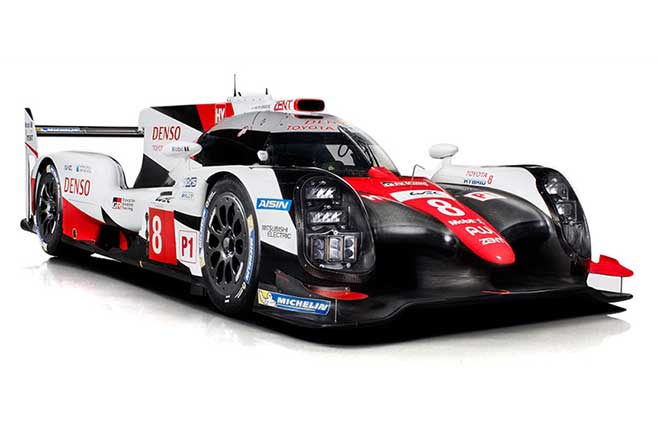
“Le Mans debut, 2018; Le Mans starts, 0; Le Mans best result, n/a; WEC starts, 0; WEC wins,0; WEC best season, n/a.”
Automobile Club de l’Ouest president Pierre Fillon notes that Alonso had expressed interest in the WEC in the past.
“For several years now, Fernando had shown interest in our event and the FIA World Endurance Championship. The conditions are now in place for this desire to come to fruition.”
TWO of the most popular budget luxury small hatches go head-to-head to determine which gives the most for the least amount of dollars. Audi’s A3 1.0TFSI has long held the title of “most affordable” in the segment, but Mercedes-Benz Australia reckons the newly-arrived and smartly-priced A180 City Edition can challenge it.
Price & Equipment
Audi introduced its three-pot A3 at the end of 2016 as a new entry-level variant to its popular small hatch family, stripping a cylinder from the previous inline-four powered base and turfing the independent multi-link rear suspension for a simpler (and less costly to manufacture) torsion beam rear instead.
Priced at $36,200 it easily undercuts every segment rival, however the Mercedes-Benz A180 City Edition, a limited-run special that will stoke sales until the arrival of the all-new fourth-generation A-Class in the middle of 2018, challenges the Audi with a $39,990 driveaway price that’s available until the end of February. After that point, it’ll become a $1925 option on top of the regular A180’s retail price of $38,700.
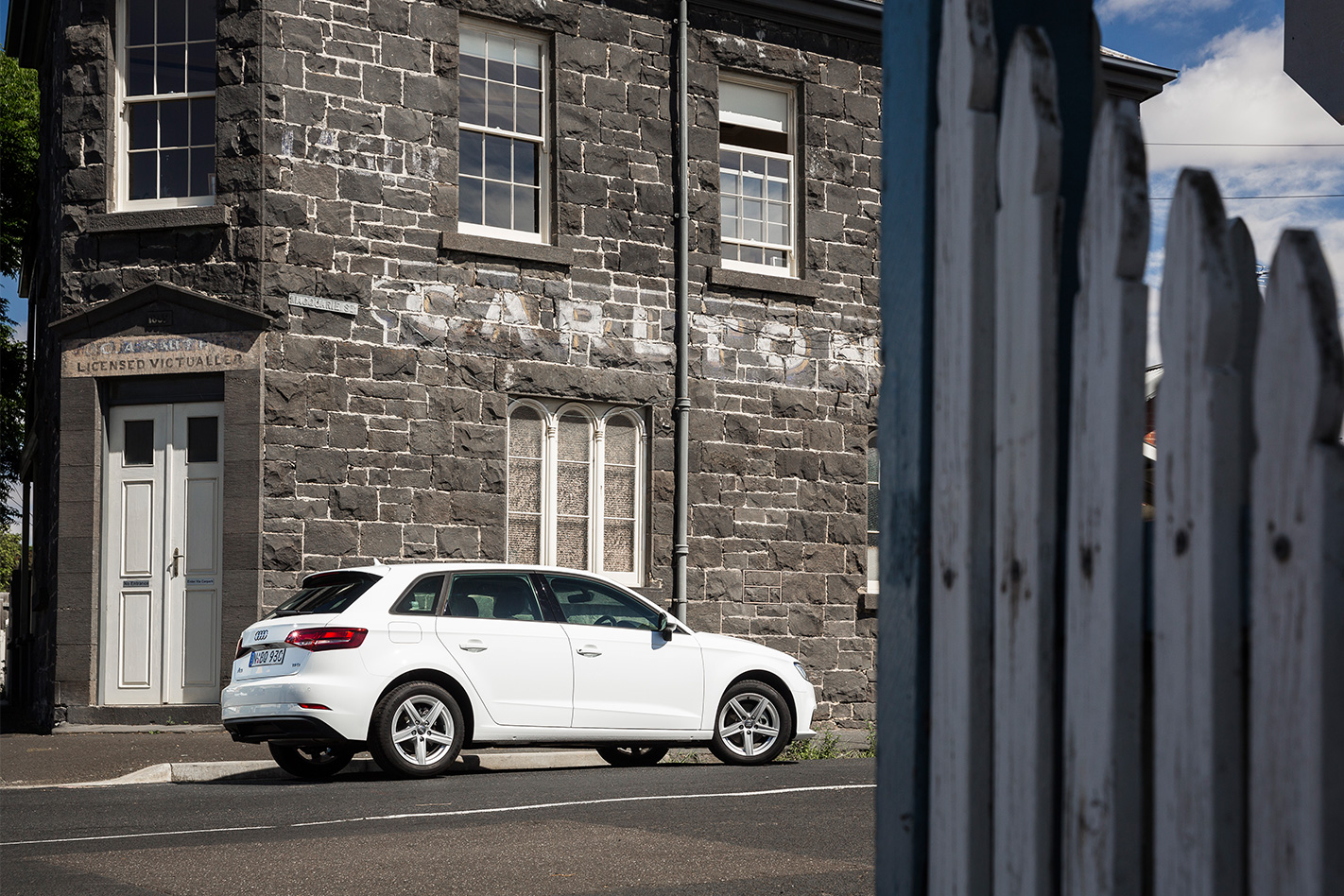
The A180 also packs keyless ignition, shift paddles, privacy glass and blind spot monitoring as standard, features missed out on by the A3. Both cars have AEB, but the Benz’s nine-airbag count puts more cushioning around occupants than the Audi’s seven ‘bags. The Audi might retail for less however that’s not enough to offset the A180 City Edition’s substantial lead in value-for-money – especially if you buy the latter before the end of February.
Interior & Connectivity
The Benz’s Garmin Map Pilot system looks quaint, with graphics that would have been cutting-edge ten years ago, but are terribly outdated today. The A180 may have a digital radio tuner as standard (a cost option on the Audi), yet the A3’s MMI infotainment setup shows it the way forward with a much slicker interface and more intuitive controls. Side-by-side, we prefer the Audi’s screen even though at 7.0-inches it’s smaller than the A180’s 8.0-inch unit.
But that’s all thrown upside-down by the Benz’s standard inclusion of Apple CarPlay/Android Auto smartphone mirroring, which brings a more sophisticated interface and web-enabled features just by plugging in your phone. It’s enough to have us looking on the A-Class’s infotainment in a more favourable light, even though the Audi’s has more polish straight out of the box.
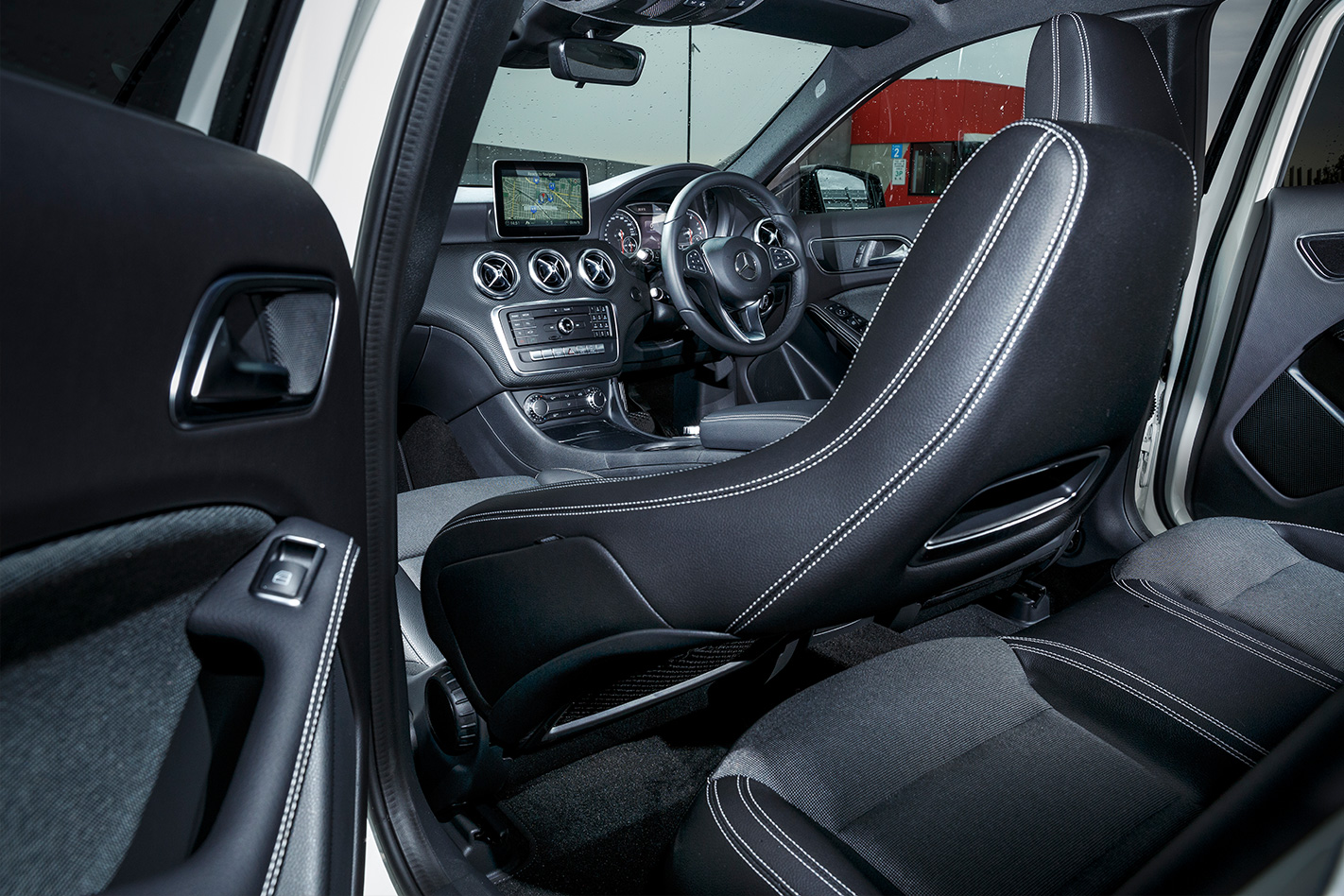
The A-Class also suffers from a claustrophobic rear seat thanks to its high beltline and low roof – things the notably roomier and brighter A3 isn’t burdened by. The A3’s glasshouse simply lets in more light thanks to an extra pane of glass behind the rear doors (which technically puts the A3 halfway between a wagon and a traditional hatchback). Audi wins the boot space competition too with its 380 litre seats-up capacity, versus the A-Class’ 341 litres.
Audi – 15/20 Mercedes – 13/20
Performance & Economy
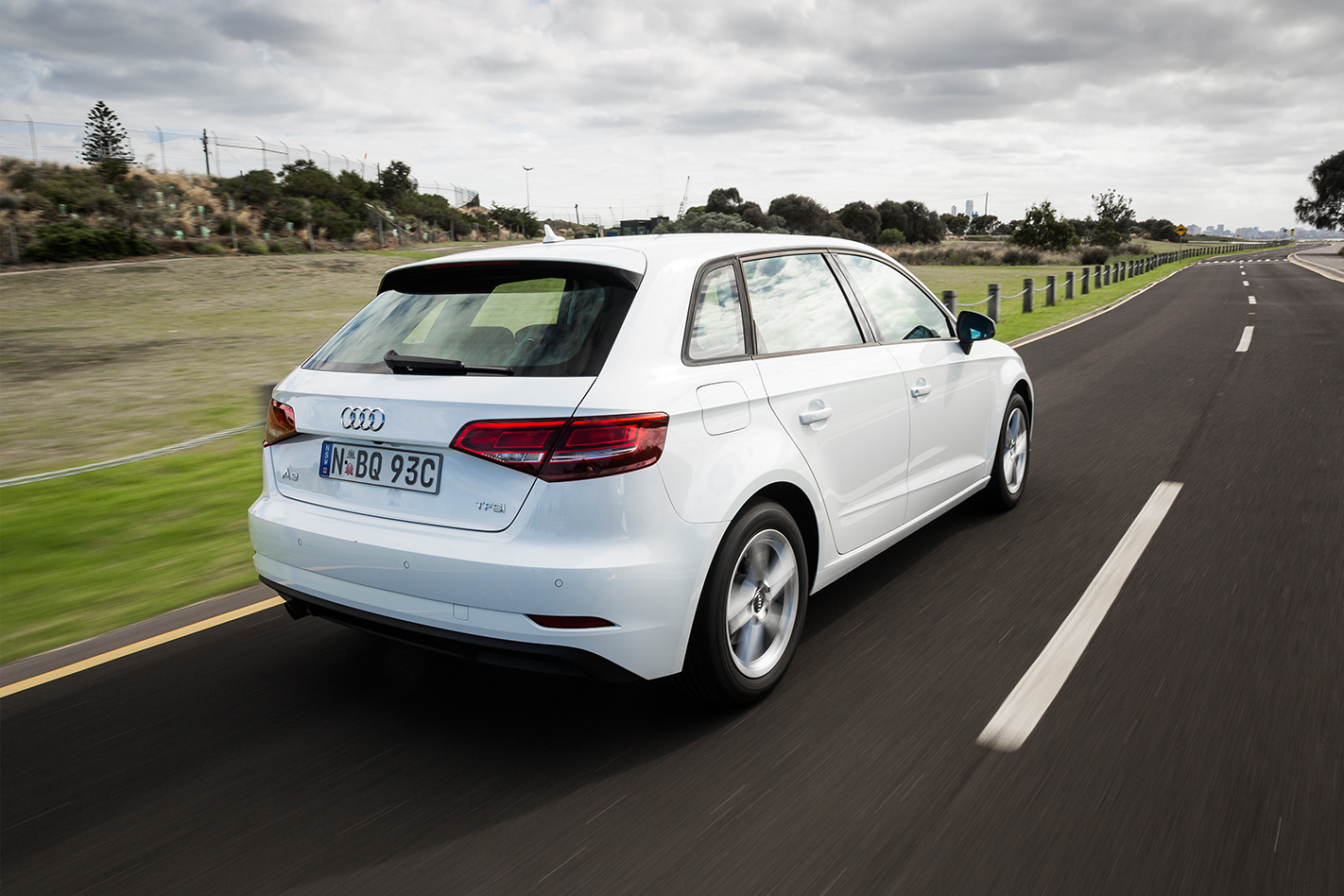
The A3’s 1.0-litre triple-cylinder turbo is a tiny engine compared to the bigger-lunged A180’s 1.6 turbo, but the Audi’s ace-up-the-sleeve is its 150kg weight advantage over the 1425kg Merc. Extensive use of lightweight materials and a less complex rear suspension help the A3 1.0 TFSI pare back the kilos, and though the 85kW/200Nm three-pot is 5kW behind the Benz’s motor, it’s the Audi that has more straight line zip.
The A3 will hit 100km/h in 9.9 seconds compared to the A180’s 10.6 seconds, while fuel economy numbers also favour the lighter car: the Audi sips 4.9L/100km on average; the Benz needs 5.8L/100km.
Meanwhile, the Audi’s transmission also has more talent. Both cars take power to the front wheels via seven-speed dual-clutch automatics, but the A3’s cog-swapper has smoother take-off from standstill, crisper gearchanges, swifter kickdown and more intelligent shift mapping that rarely leaves the engine outside of its torque band.
When rolling the Benz’s engine feels perky and lively, with a bit more meat in the middle of its torque band that allows it to shrug off modest inclines that would have the A3 downshifting, but it’s the low-speed performance of its dual-clutch drivetrain that subtracts some marks. Sometime snatchy, sometimes sluggish to respond, the calibration could use some finessing.
Audi – 17/20 Mercedes – 15/20
Ride & Handling
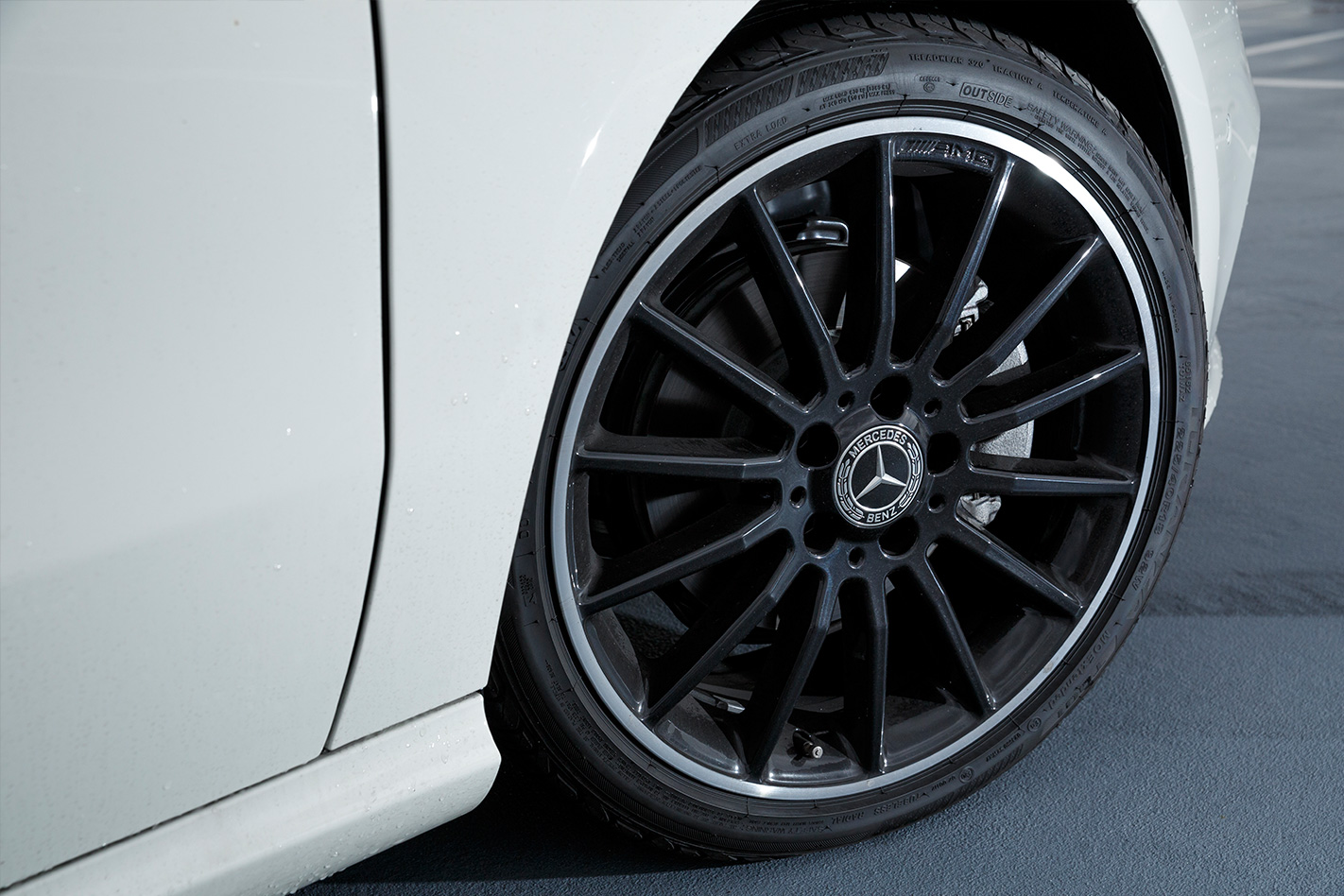
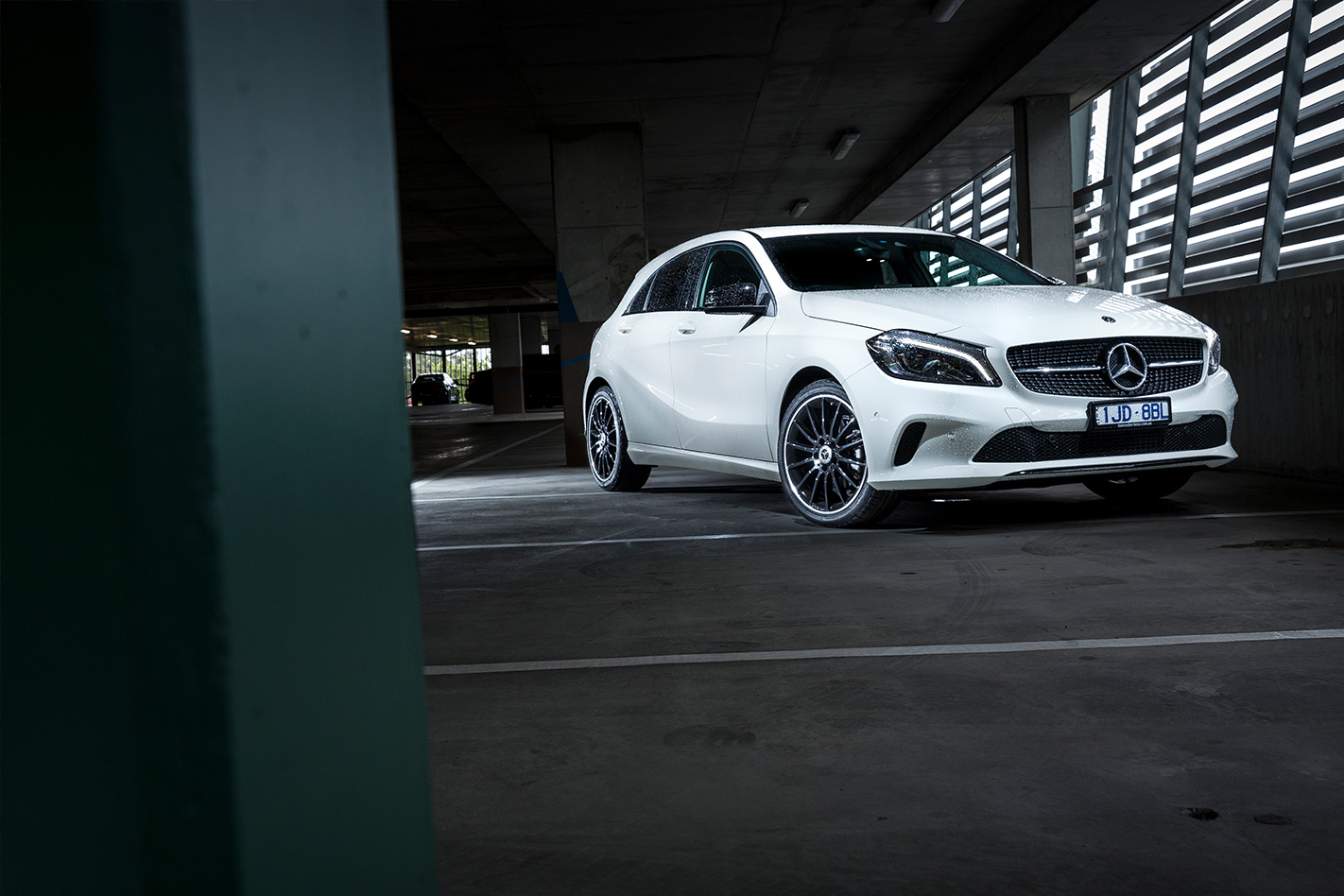
With 18-inch alloys and low-profile rubber at each corner the A180 is far from cushy, but it’s got go kart dynamics courtesy of its focused MacPherson strut front and multi-link rear suspension.
Firm and tied-down, the A180 City Edition has a warm-hatch flavour in the way it hunkers down in corners and pivots. Its steering is also nicely weighted and reasonably fast in its gearing, further bolstering that sporty aura. Who knew that a base model could boogie like this?
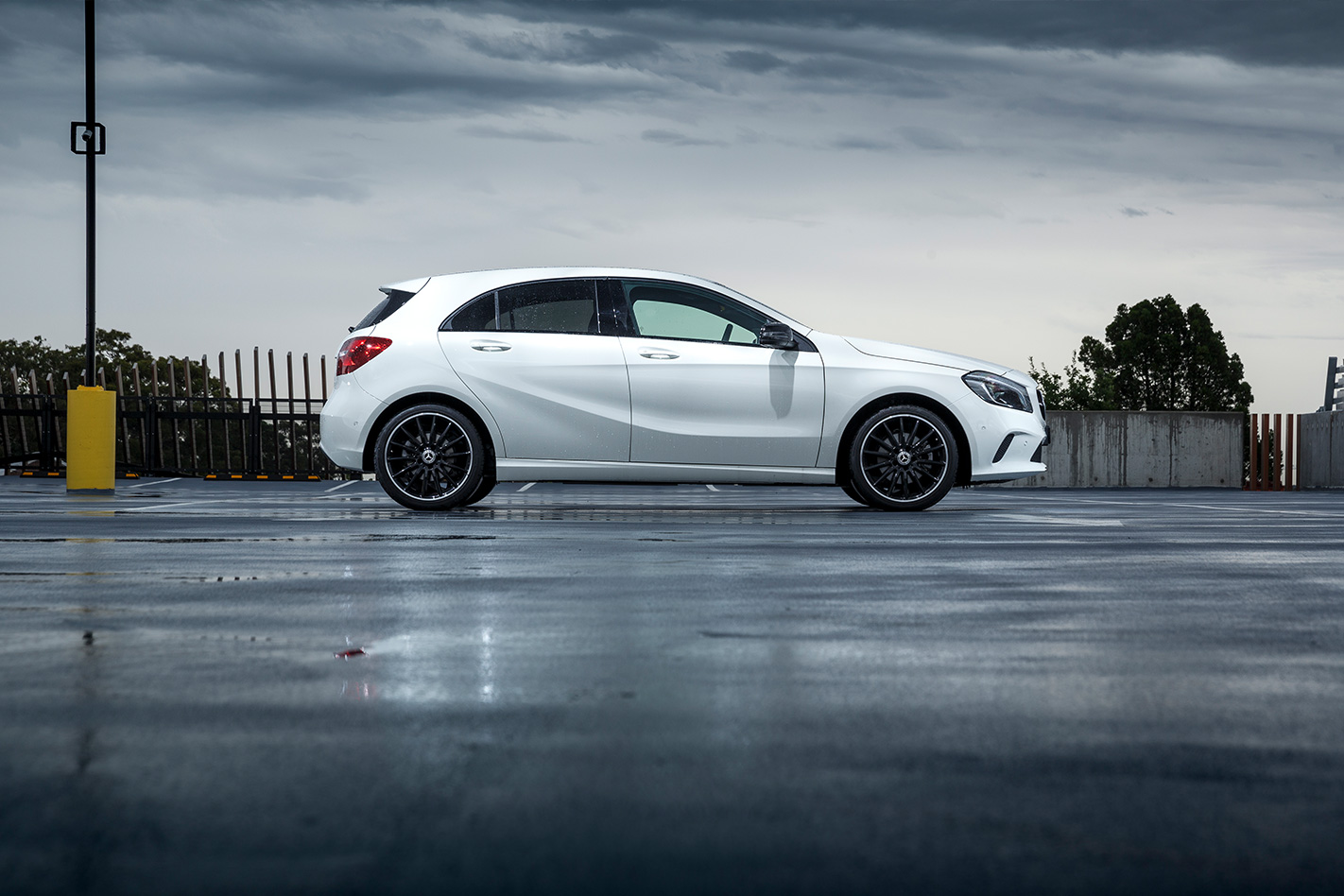
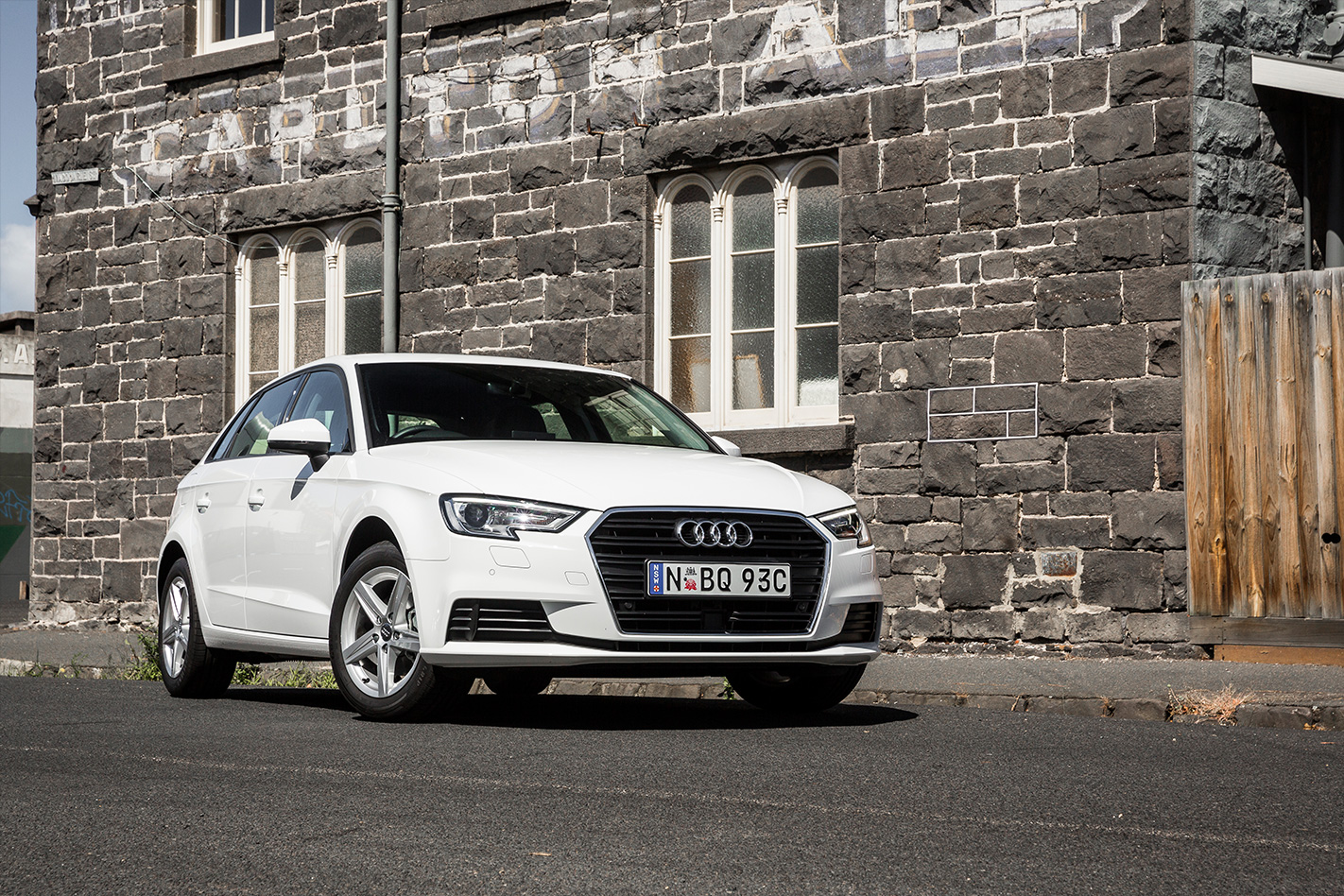
So the A3 is the more comfortable car then? Not quite. By fitting a penny-pinching torsion beam axle to the back of the entry-level A3 Sportback, Audi has spoiled the pliancy and ride quality found in regular multi-link-equipped A3 variants. It’s indisputably softer-sprung than the A-Class, but has a jittery response to corrugations while being a touch too reactive over high-amplitude bumps – even on the balloon sidewalls of its 16-inch tyres.
Overall, though the A-Class sacrifices some comfort for crisp handling, it nevertheless comes out ahead of the A3 thanks to its more secure and competent suspension.
Audi – 13/20 Mercedes – 16/20
Warranty & Servicing
Both cars are covered by three-year, unlimited-kilometre factory warranties, but only the Mercedes has a capped-price servicing scheme for scheduled maintenance. Applicable to the first three services, which are scheduled at intervals of 12 months or 25,000km, the A180’s first visit back to the dealership will cost $396, while the following two cost $792 apiece.
That tallies to a $1980 bill for the first three years or 75,000km of scheduled servicing on the Benz. However, while the Audi isn’t offered with capped-price servicing straight out of the box, Audi Australia does offer fixed-cost maintenance packages on its new cars. The Audi’s service intervals are set for 12 months or 15,000km, with the service package covering the first three of these at an overall cost of $1680.
Audi – 15/20 Mercedes – 15/20
Verdict
The Mercedes edges ahead of its Ingolstadt rival by virtue of its more sophisticated suspension and compelling value-for-money proposition. That’s not to say the A3 is without virtues – far from it, for its more welcoming cabin is a nice place to be even with boggo-grade cloth seats.
Audi – 73/100 Mercedes – 76/100
