
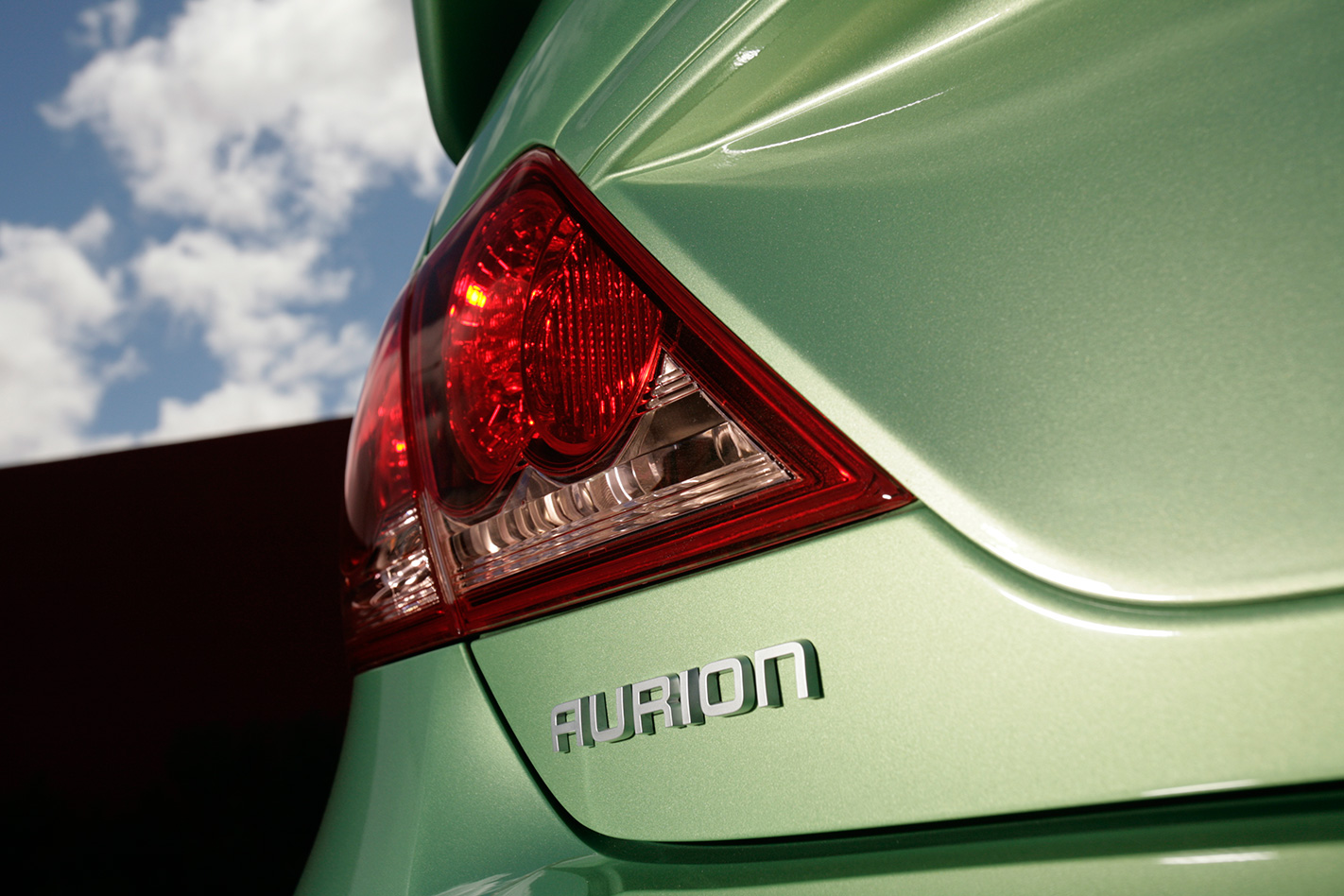
IT WAS billed as a replacement for the low-budget, lacklustre Toyota Avalon. But after two iterations, 11 years, more than 110,000 sales and 70,000 exports, the Toyota Aurion is no more.
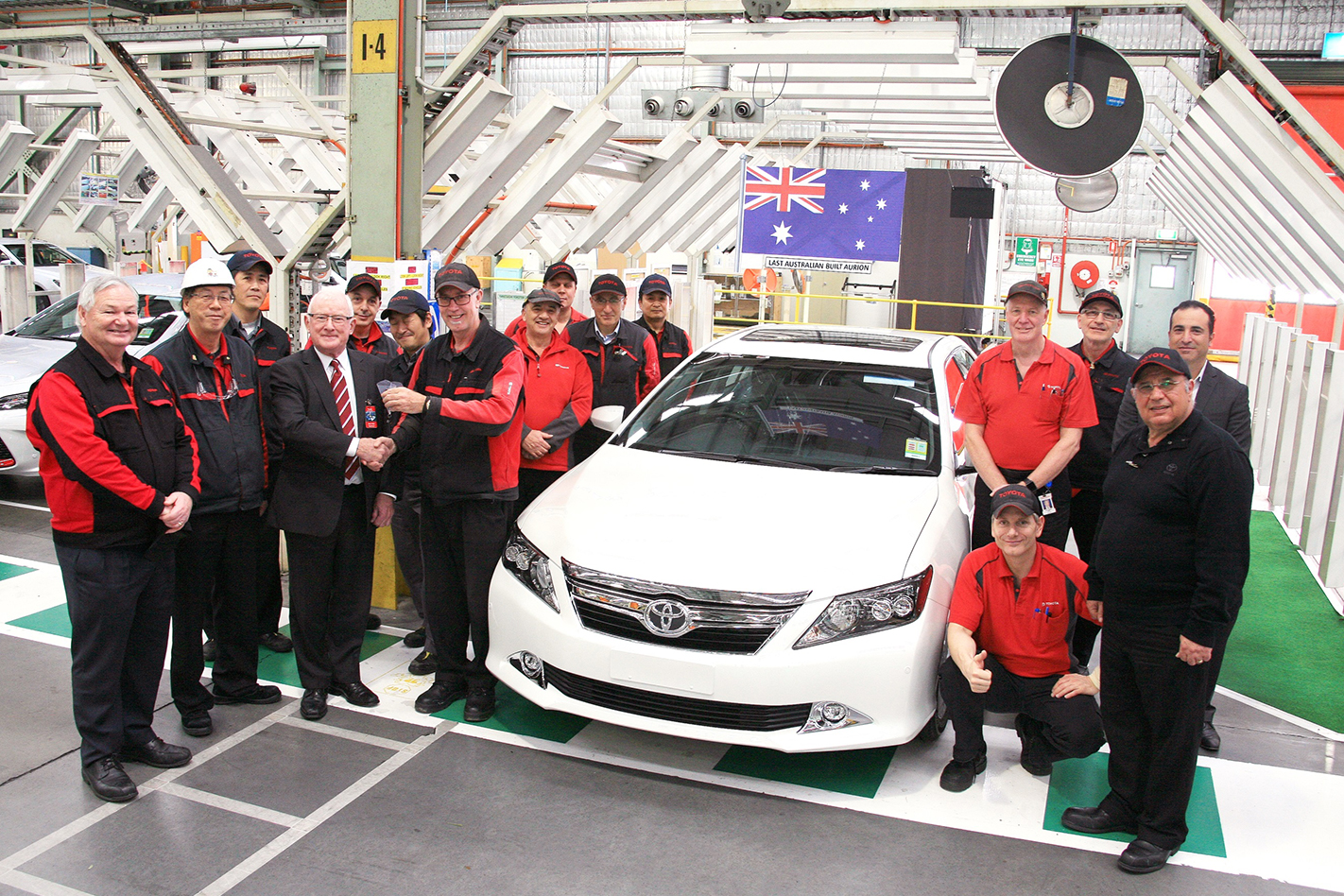
A single image was posted to social media yesterday of a white Toyota Aurion, parked to one side of Toyota’s Altona production line floor and wearing a handwritten sign taped to its shiny chrome grille. It read simply: “Last car, V6, best build.”
We’re a bit late with the news, as the last Aurion was built at Altona on August 17, and was handed over to Chadstone Toyota dealer principal Graeme Ward. Toyota had flagged in January that the last Aurion would be built in August, the last Camry Hybrid in September, and the last petrol-engined Camry on October 6.
Toyota Australia managed to convince its head office that a two-model strategy based around one platform was needed to make the all-new Camry a success here. In 2003, Toyota Style Australia designed and built a 380L, a large sedan prototype based on the Camry platform, that it said would be appropriate for the Australian market. After seeing it, Japan agreed.
Under the stewardship of Australian Nick Hogios, the Aurion took shape in Toyota’s studios in Nagoya and Melbourne as the 323L, the so-called “premium six” program.
Initial testing showed Toyota’s front-drive Aurion – billed by its rivals as taking a fight to the front-drive Honda Accord V6 or the then Mitsubishi 380, and not the traditional large rear-drive sedans – was quicker from 0-100km/h than the Commodore Omega, but slower than the base Ford Falcon.
Toyota will launch the eighth-generation Camry in Australia in November. Built on Toyota’s all-new TNGA platform that also underpins the Prius hybrid hatch and C-HR compact SUV, it will reintroduce the V6 badge to the Camry line-up for the first time in more than a decade.
Hyundai is about to set upon us its first proper hot hatch, the i30 N. The thing is, had Hyundai released its calmer SR brother a few years ago, they’d already have had a hot hatch.
With 150kW/265Nm, this surprisingly capable ‘warm hatch’ rivals the spicier five-doors of yesteryear. In the mid-2000s, a Mk V Golf GTI was putting out 147kW/280Nm from a 2.0-litre turbo four. The new i30 SR almost matches this while rocking just a boosted 1.6.
Once you’ve planted yourself behind the wheel of the SR, you’ll find little to complain about with the driving environment. Well laid-out controls and intuitive ergonomics make the car easy to get to know, while well-bolstered leather seats make for a comfy and visually pleasant space to steer from.
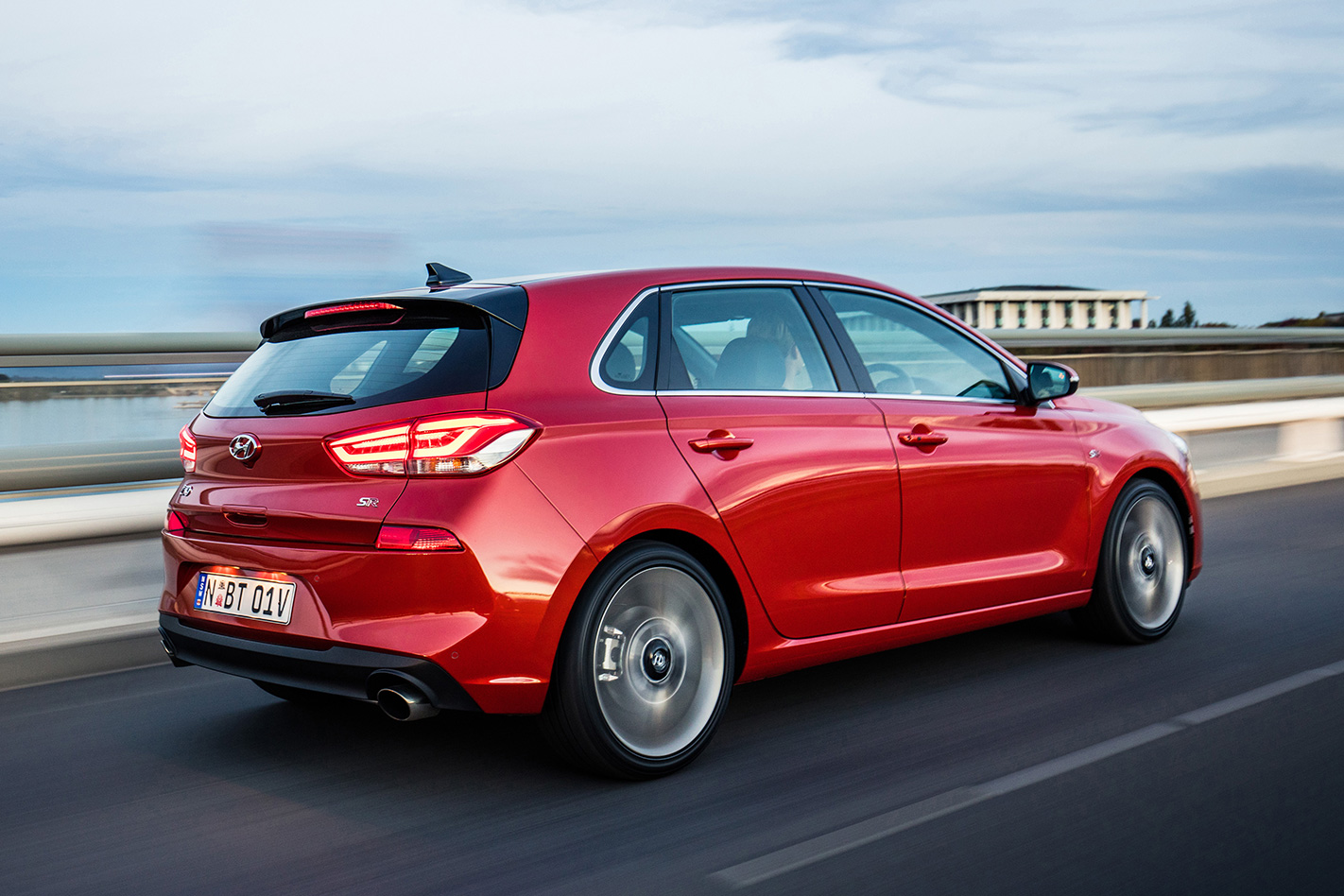
Switching to Sport and bringing the paddles into play helps matters, and there’s enough urge that a firm application of boot to pedal will result in a smooth, linear surge of turbo-assisted acceleration. There are no prizes for guessing it’s not mind-blowingly quick, but that’s not the point of the SR.
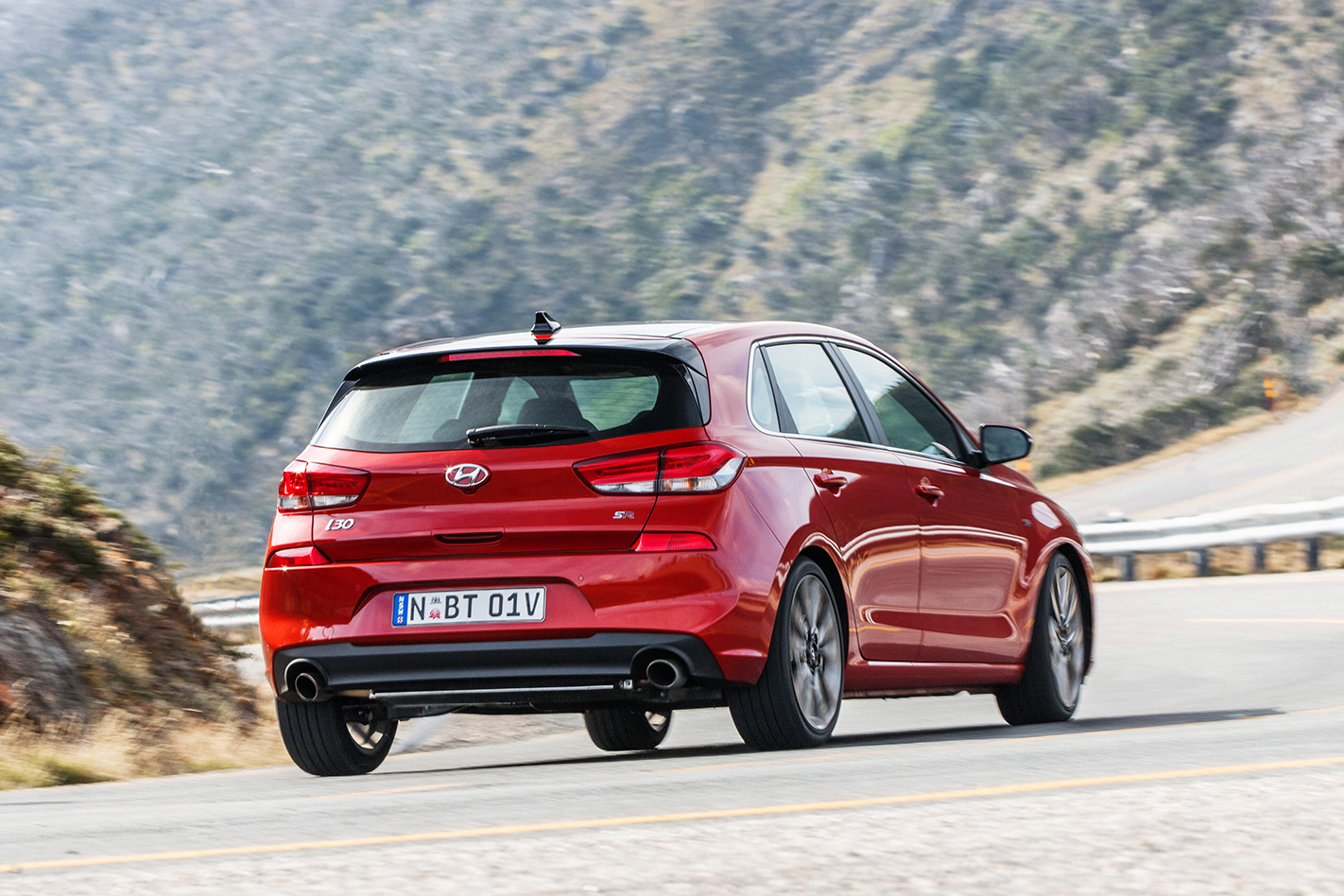
Attack a tight corner and even if you slightly overdo it the car will accept more steering lock with few complaints from chassis, tyres or ESP. The brakes are progressive and remain relatively unfazed at a brisk road pace, with even a proper mid-corner stomp failing to disturb its composure beyond the chirping of ABS and the hazard lights tsk-tsking their disapproval.
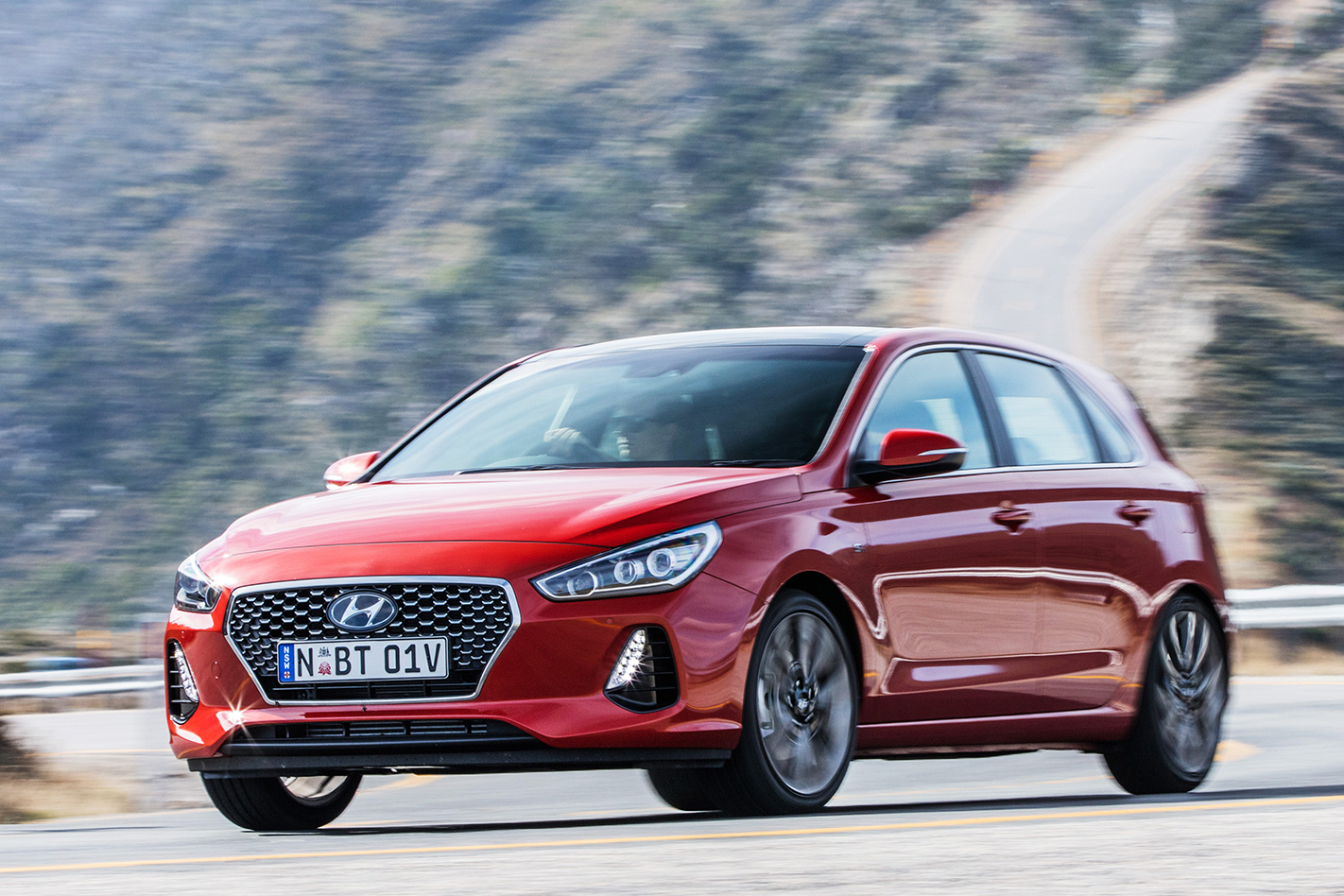
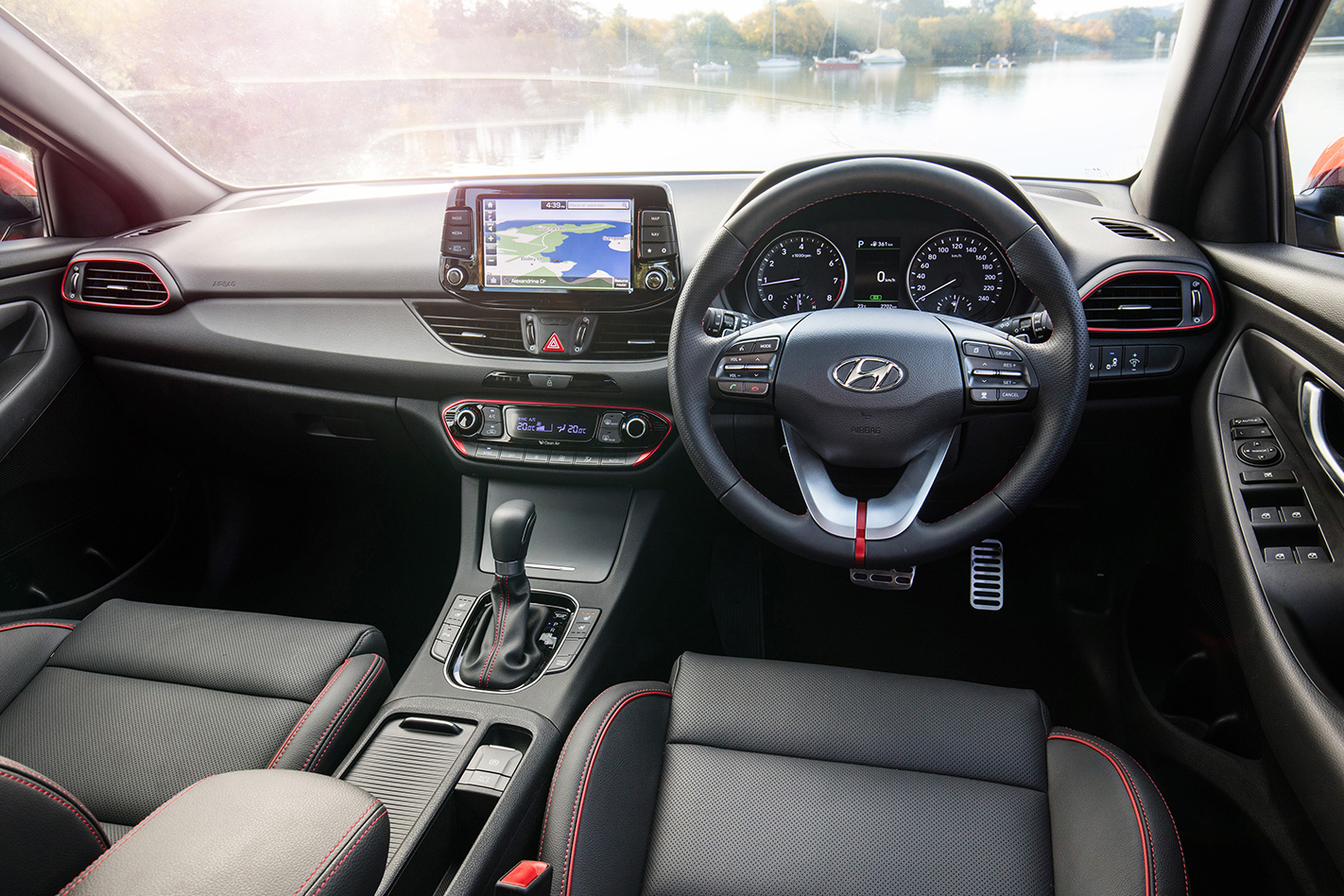
For keen drivers spending a little more, we’d be recommending the likes of the Renault Sport Clio or Peugeot 208 GTi.
3.5 stars out of 5 Likes: Refined performance Dislikes: Not that quick; not sporty enough
2017 Hyundai i30 SR Premium specs: Engine: 1591cc inline-4, DOHC, 16v, turbo Power: 150kW @ 6000rpm Torque: 265Nm @ 1500-4500rpm Weight: 1359kg 0-100km/h: 7.2sec (est.) Price: $33,950
What stands out?
The Suzuki Celerio has an inviting and airy cabin that gives you more room – and more space for luggage – than you get in most micro cars. It steers nicely, holds the road well, and is a lot of fun to drive. Vision out is exceptional. And for a car this small – and especially, this inexpensive – the Celerio rides very smoothly on the open road.
What might bug me?
Having to monitor the speedo on long drives. Cruise control is not available on a Celerio.That you damaged your new car so soon. The Celerio’s parcel shelf (which covers the rear luggage area) is not very strong, and breaks all too easily.Driving under 80km/h on your space-saver spare tyre until you can fix your full-sized flat.Getting comfortable behind the wheel. While you can adjust the Celerio’s steering wheel for height, you can’t adjust it for reach. And some people find the front headrests protrude too far forward for comfort. Nevertheless, most drivers will find settings that work for them.
What body styles are there?
Five-door, four-seat, hatchback only.The Celerio drives its front wheels and is classed as a micro car.
What features do all Celerios have?
An AM/FM radio, a CD player, and four speakers. A USB input socket. Bluetooth phone connectivity with audio streaming.Two cupholders and three bottle holders.Air-conditioning, with a pollen filter.Power-opening windows and power-adjusting exterior mirrors.Height adjustment for the driver’s seat. Fabric seat upholstery. Seat belt reminders on all seats.A rear-window wiper. A space-saver spare wheel.Electronic stability control, which helps you control the car if it skids. (Every new car must have this feature.)Six airbags. (For details of where they are placed, please open the Safety section.)The Celerio is offered with a three-year, 100,000km warranty.
Which engine uses least fuel, and why wouldn’t I choose it?
Only one engine is available in a Celerio, a 1.0-litre three-cylinder petrol. Even with an auto gearbox it uses just 4.8 litres/100km on the official test (city and country combined). Manuals use marginally less.In the real world it’s still very good. A Celerio auto averaged 6.1 litres/100km in comparison testing for the July 2016 issue of Wheels magazine, ranking – and by a significant margin – as the most thrifty of three micro cars reviewed.This engine feels quite smooth when you’re driving, with just a hint of raspy note when extended.A five-speed manual gearbox is standard on the Celerio. The optional automatic is a CVT (Continuously Variable Transmission). A CVT adjusts steplessly to road conditions and your demands, which usually means the car feels nippier than it would with a conventional auto and uses less fuel.
What key features do I get if I spend more?
A manual gearbox is standard on the Celerio. Spend more and you can have the CVT automatic.And that’s about it. Equipment levels are the same, and there is no other version. You can pay extra for metallic paint.Among a host of dealer-fit accessories available are wheels made from aluminium alloy, in the same size as the standard car’s steel wheels. The alloy wheels will look nicer, if you look after them, and they don’t need the steel wheels’ plastic trim.You can also get front fog lights, body decals, floor mats, and portable satellite navigation units. A Protection Pack comprises headlight covers, a cover for the front edge of the bonnet, weather-shields over the side-windows, and rubber strips across the doors.
Does any upgrade have a down side?
That’s an easy one: about the only upgrade is the metallic paint. And its downside is that it costs more than plain paint.The trick here is that only one colour is plain, and that’s white. So if you want a Celerio in any colour other than white, it will be a metallic colour and will attract an extra charge.
How comfortable is the Celerio?
The Celerio is outstandingly comfortable for a car this small and inexpensive.First, it’s easy to get in and out, thanks to a higher-than-average roof at 1.5 metres. That gets you tall doors – and inside, loads of head room. There is enough space for four adults, even long-legged ones.The driving position can accommodate a very wide range of people. (But it would suit some people even better if you could adjust the steering column for reach.)Though they may look flat, the seat cushions feel firmly supportive even after a couple of hours’ driving in them. Note however that the front headrests do protrude too far forward for some people.The Celerio has four face-level ventilation outlets (two at either end of the dashboard and a pair high up in the centre). All provide enough air volume to reach even rear-seat passengers, even on hot days.Novice drivers especially will appreciate the functional simplicity of the appealingly symmetrical dashboard, with its clear instruments, big dials, logical heater and vent controls, and a very straightforward audio system. The Bluetooth phone connectivity is also clear and reliable.Slim roof pillars and deep windows all round are a boon for tight city manoeuvring, reducing blind spots and making parking much easier than in many other cars.On some kinds of coarse bitumen you do hear tyre noise in the cabin, and it’s especially obvious in the back seat. Wet roads splash a lot of water-related sounds into the wheelarches, too.
What about safety in a Suzuki Celerio?
The Celerio comes with six airbags: two ahead of the driver and front passenger, one either side of the front occupants to protect the upper body, and head-level side-curtain airbags extending past both rows of seats.There is the mandatory electronic stability control, with anti-lock brakes.Active safety is aided by the excellent vision out, which maximises your ability to see other road users and reduces fatigue.However, no reversing camera is available, even as an option.Nor can you get auto emergency braking, or any other active driver-assist technology.The Australasian New Car Assessment Program (ANCAP) has awarded the Celerio four stars for safety (from a possible five).The main reason the Celerio was denied a fifth star was its merely average ability to mitigate crash injury inflicted on a pedestrian.
I like driving – will I enjoy this car?
The Celerio has not been designed especially for keen drivers. Nevertheless, Suzuki has created a surprisingly responsive and engaging micro car that is as enjoyable as it is economical.The 1.0-litre, three-cylinder engine delivers sprightly off-the-line acceleration. It will build speed quite strongly to about 120km/h, even with four adults on board and the air-con running. Lightweight engineering certainly helps here. After 120, the Celerio begins to run out of puff.The five-speed manual shifter is a breeze to use, which makes very light work of the downshifting needed for overtaking or climbing hills.The manual gearbox gets you more from the little engine than the automatic, since you can flick through the gears almost instantly. The CVT tends to respond more slowly, and may drone loudly in a tall gear if you try and accelerate hard.The Celerio feels better to drive than most micro cars, and holds the road as well as many bigger and more expensive light cars.Although it doesn’t need much effort, the steering has enough weight and feedback to promote confidence. That’s backed up by impressive stability, even at speed and despite a tendency for the car to lean a little in corners. Brakes bring everything to a stop quickly.An uncanny ability to soak up bumps contributes to a comfortable and settled ride that shames some cars costing twice as much.
How is life in the rear seats?
With its boxy proportions and relatively long wheelbase (just millimetres shorter than the larger Swift), the Celerio was designed to be the roomiest micro car you could buy. And that is especially clear in the back seat.Far from being tight and cramped, the rear seat area is tall, airy, and easy to access. Suzuki has certified the Celerio as a four-seater only vehicle, and there is more than adequate shoulder and head space for two adults. The cushion is flat but firm, and the backrest is set at a comfy angle: both are fine for long trips.Small door pockets take care of storing things such as phones. Deep rear-side windows wind almost all the way down, maximising ventilation.
How is it for carrying stuff?
A big glovebox, door bins, the lower console shelf, and cupholder recesses, provide more than sufficient storage.At 254 litres with the rear seatbacks upright, the cargo area in the Celerio is one of the best you’ll find in this class of car. Unclip the split-fold rear seatbacks and volume extends to 726 litres.Aiding practicality is a large and wide tailgate opening, offering a low loading lip and deep floor. A temporary spare wheel is located beneath the floor.Note, however, that the cargo cover is made of easily torn cardboard. And the rear seat cushions do not also tip forward, so that with the seatbacks folded the extended floor is not flat.
Where Does Suzuki make the Celerio?
All Australian-bound Suzuki Celerios are made in Thailand.
What might I miss that similar cars have?
A touchscreen on the dashboard that will display mapping and other apps from your smartphone, and allow you to control them without touching your phone. Suzuki’s micro-SUV, the Ignis, allows this, for example, as do the Holden Spark and Kia Picanto, via support for Apple CarPlay and Android Auto.Perhaps more peace of mind over possible manufacturing faults. The Picanto is warrantied for seven years, for example.Cruise control, which will hold a set speed automatically on the highway. The Ignis, Spark, and Picanto offer this, too.A reversing camera: this is a very small car, but you might still find a view from near the rear bumper handy. Again this is standard on the Ignis and Picanto.Similarly, Autonomous Emergency Braking is a rarity in cars this inexpensive. But you can get it in some cars a size bigger, notably the Mazda2.Among other cars you might consider is the Mitsubishi Mirage.
Are there plans to update the Celerio soon?
The Suzuki Celerio arrived about the beginning of 2015. You are not likely to see a replacement before the end of this decade, but equipment could be added in the meantime.Late in August 2017, Suzuki Australia said it had ceased to import the Celerio. The company cited reduced sales generally for cars of this micro-size, but said it might re-order the model if it saw renewed interest. Suzuki Australia distributes Suzukis in all states but Queensland.
I like this car, but I can’t choose which version. Can you help?
Only one variant of the Celerio is offered in Australia, so the choice is between manual and automatic transmission.We like the manual’s more responsive performance and marginally better fuel consumption. But the CVT’s effortless smoothness is a big drawcard for city use.
“It’s been in my blood since I was a kid.”
This story first published in MOTOR October 2014.
“When you’re growing up, you’re either Holden or you’re Ford, and I fell on the Blue side,” explains lifetime Blue Oval man, BA Falcon GT owner Rob Maricic, when asked “Why an FPV?”
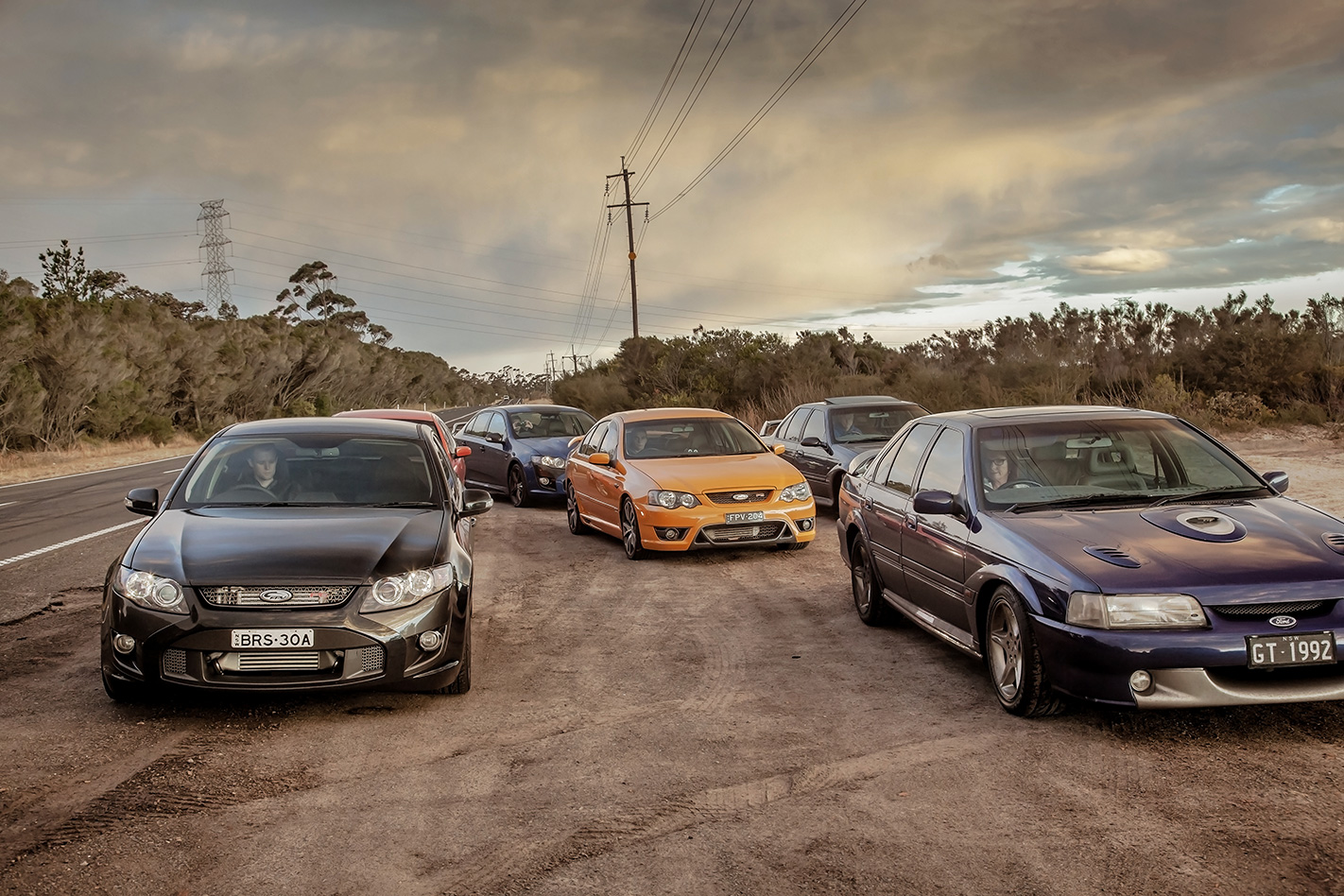
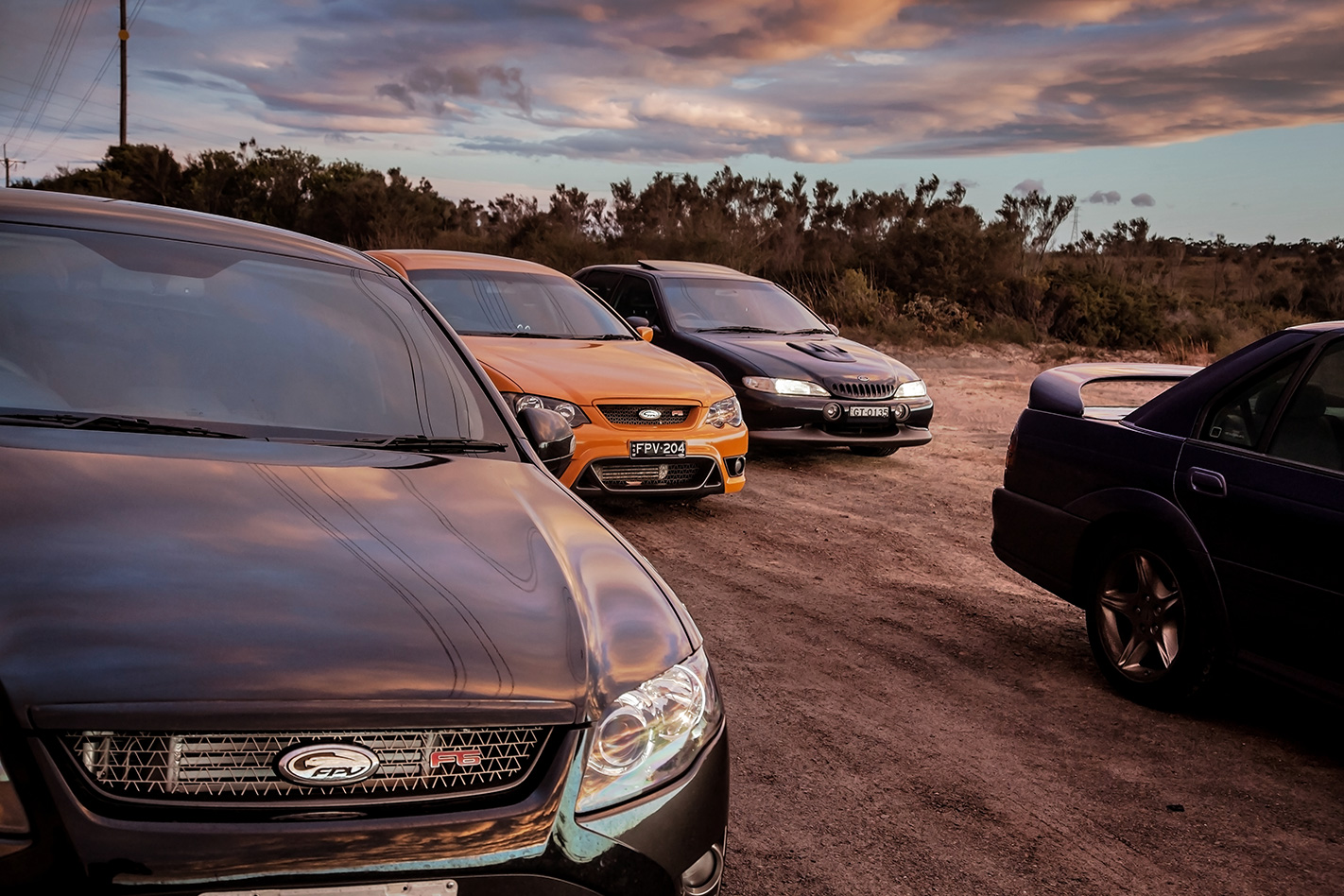
Sure, members of the FPV Tickford and GT club of NSW share an unwavering passion for Henry’s finest, but the theme is of acceptance of other marques and there’s a unifying love of high-performance cars.
Of course, with the last of 550 limited-edition FPV GT F sedans soon to roll from Broadmeadows, and the Ford-owned operation set to shut up shop later this year, they’re not exactly left much choice. However, you get the strong impression these FPV enthusiasts – and Aussie car buyers today – are worldly and opportunistic rather than naïve and rusted-on.
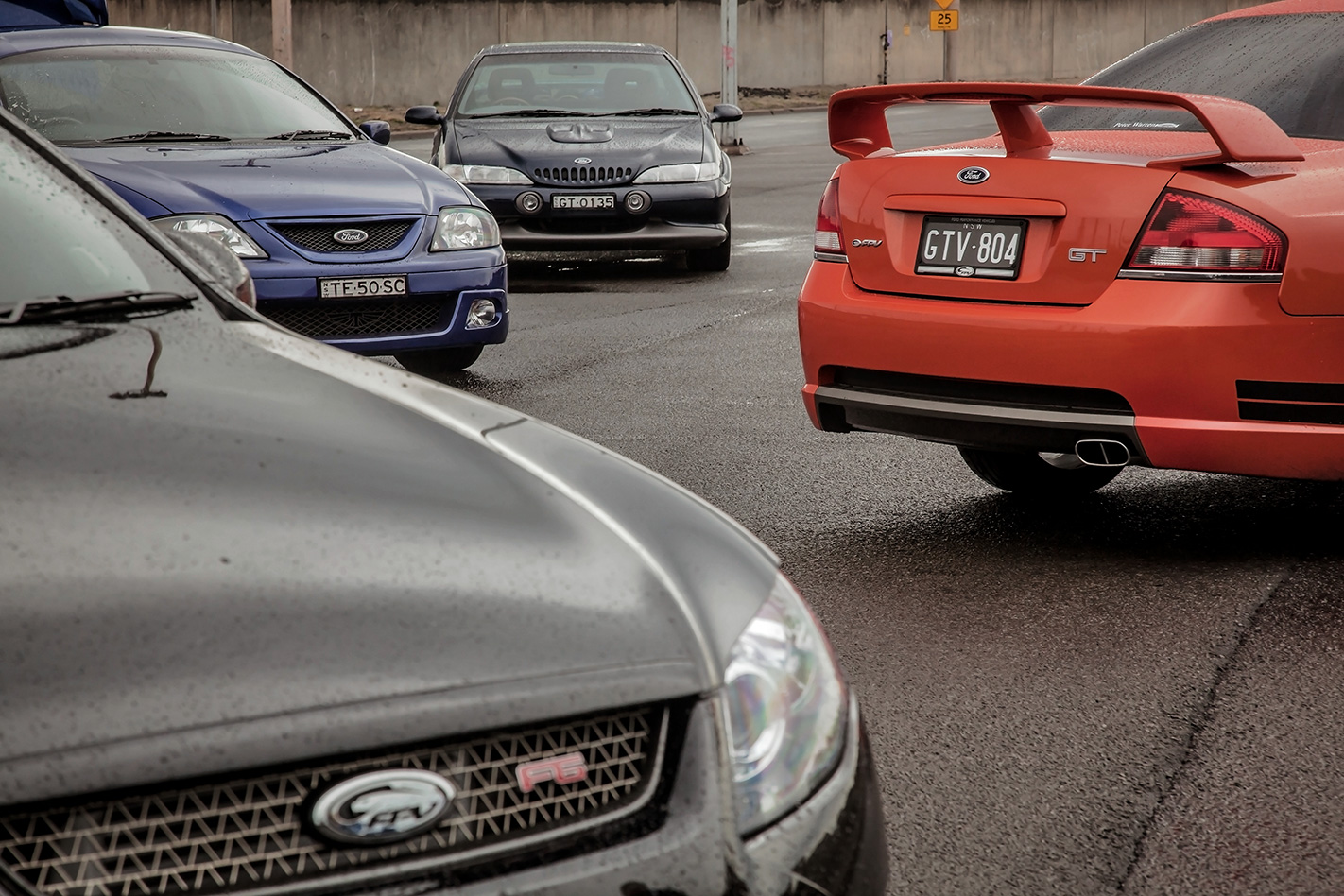
But this is a celebration, not a lesson in shifting buyer tastes or Australian manufacturing woes, and it’s no time to cry into our locally brewed lager.
Enthusiastic EB and EL Falcon GT owner Simon Roche certainly won’t be when FPV wraps up. While he reckons FPV’s demise is “a shame” his tastes are firmly ingrained in the Tickford chapter of the factory-fast Falcon story. He’s bored with V8 Supercars and finds many of FPV’s more recent offerings “too common.”
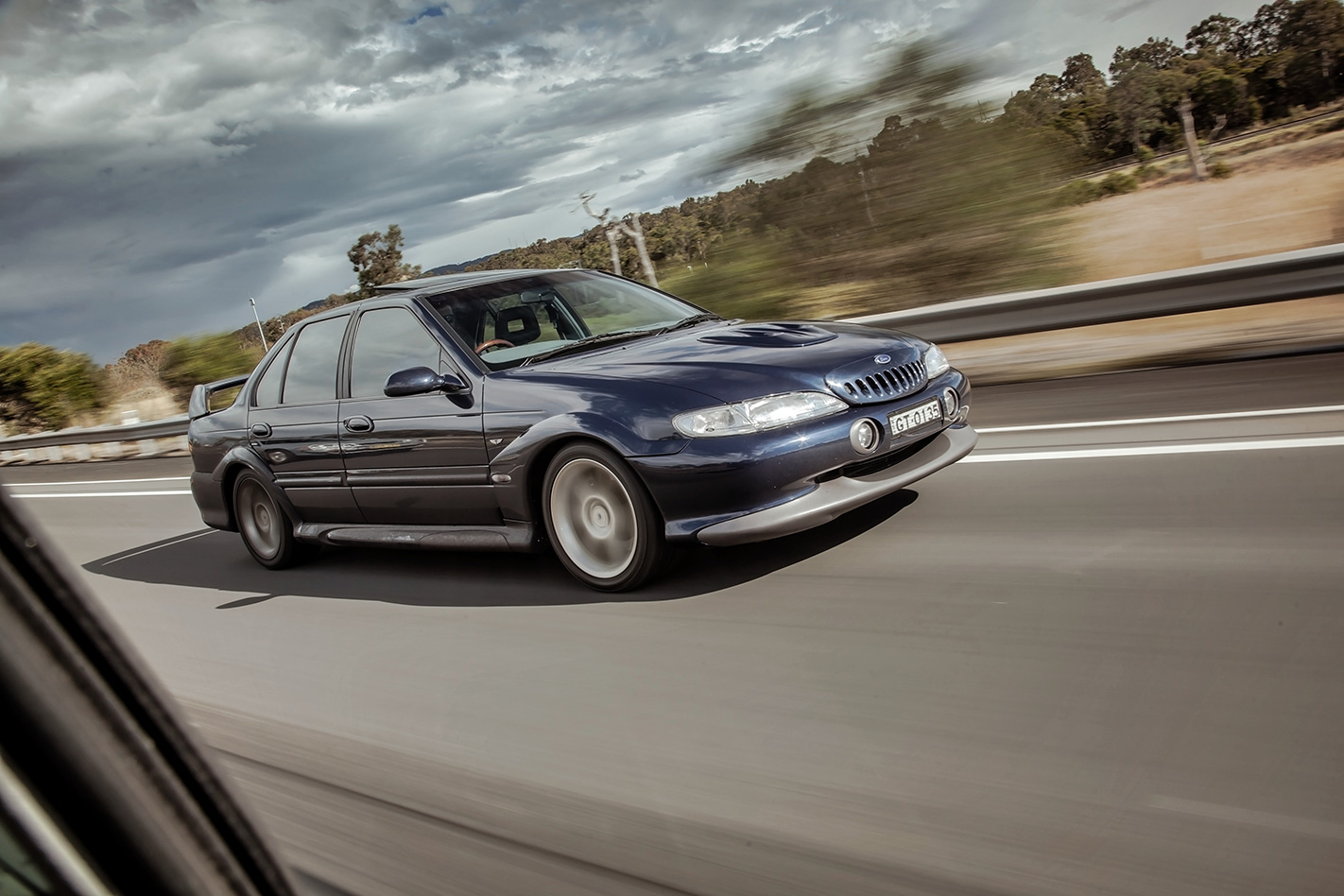
But, at the same time, it’s quite clear that his EL GT – owned from near-new – isn’t going anywhere, and he’s already at work on his wife Katrina for a 40th Anniversary FPV GT to park alongside the 25th Anniversary EB Falcon GT he bought recently as a 25th wedding anniversary gift to himself.
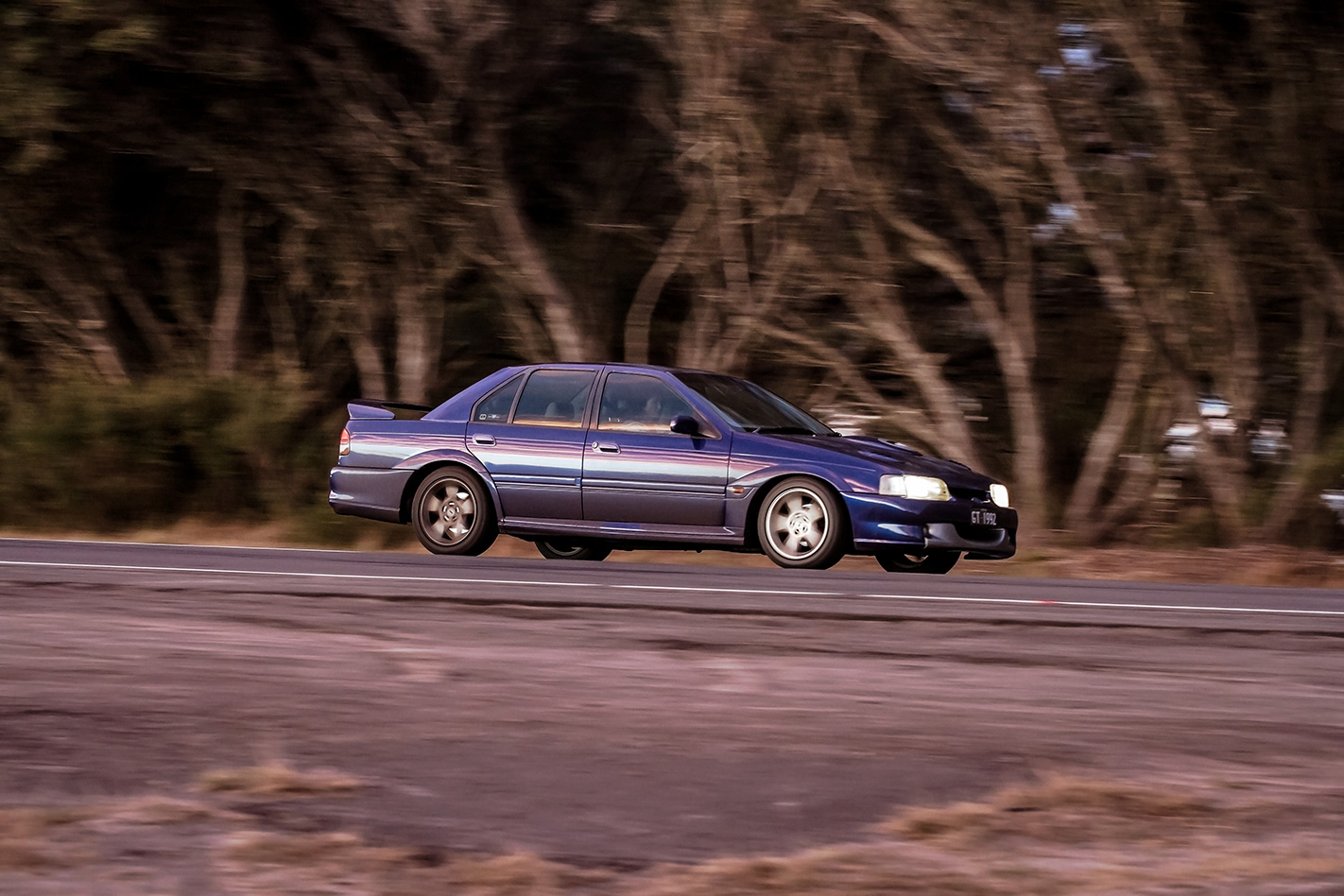
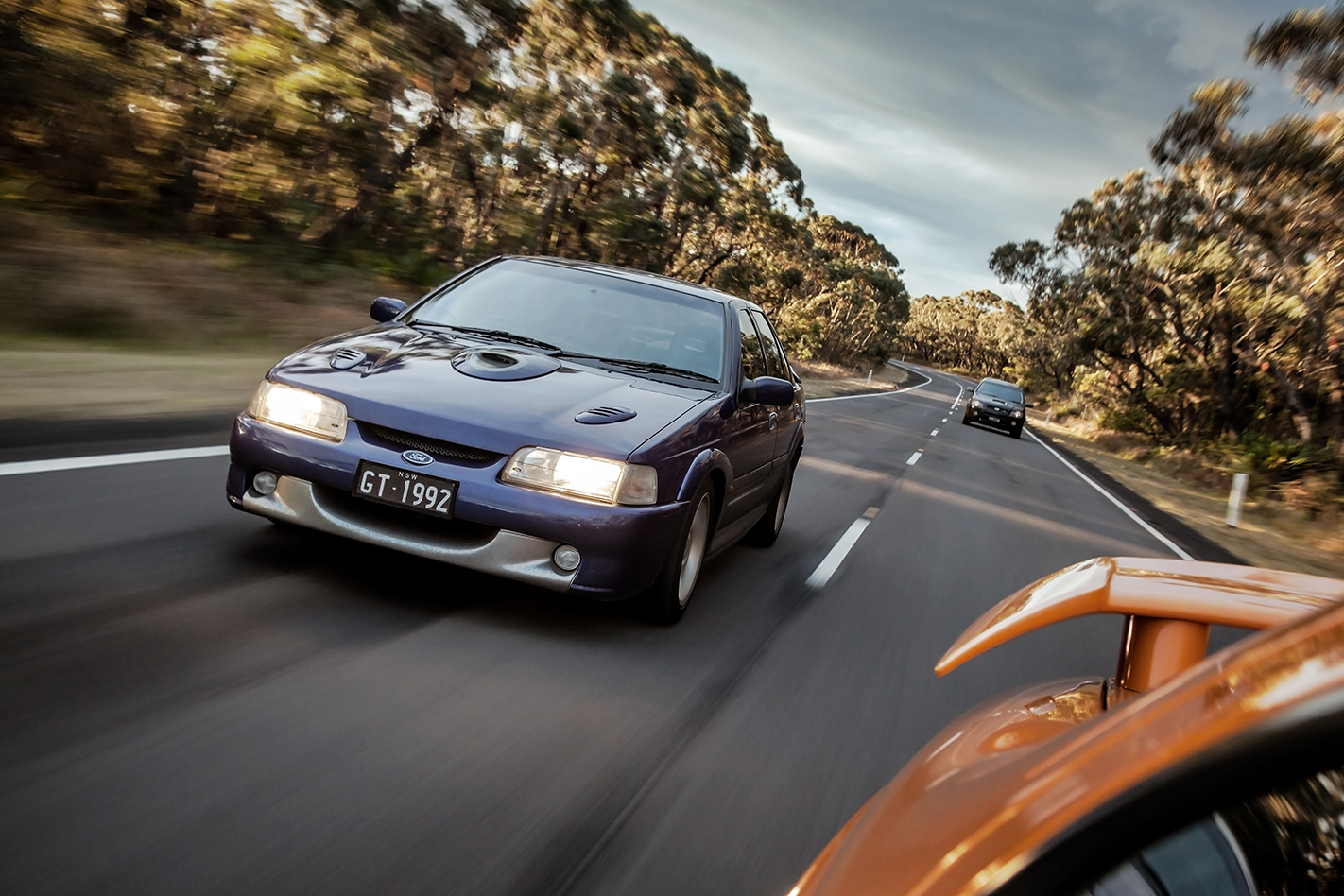
The reborn GT arrived in 1992 to kick off two decades of Tickford Vehicle Experience and Ford Performance Vehicles, and marks the intersection of the Aussie GT legend spawned by 1967’s XR Falcon and a Tickford story that began in Britain in the 1820s.
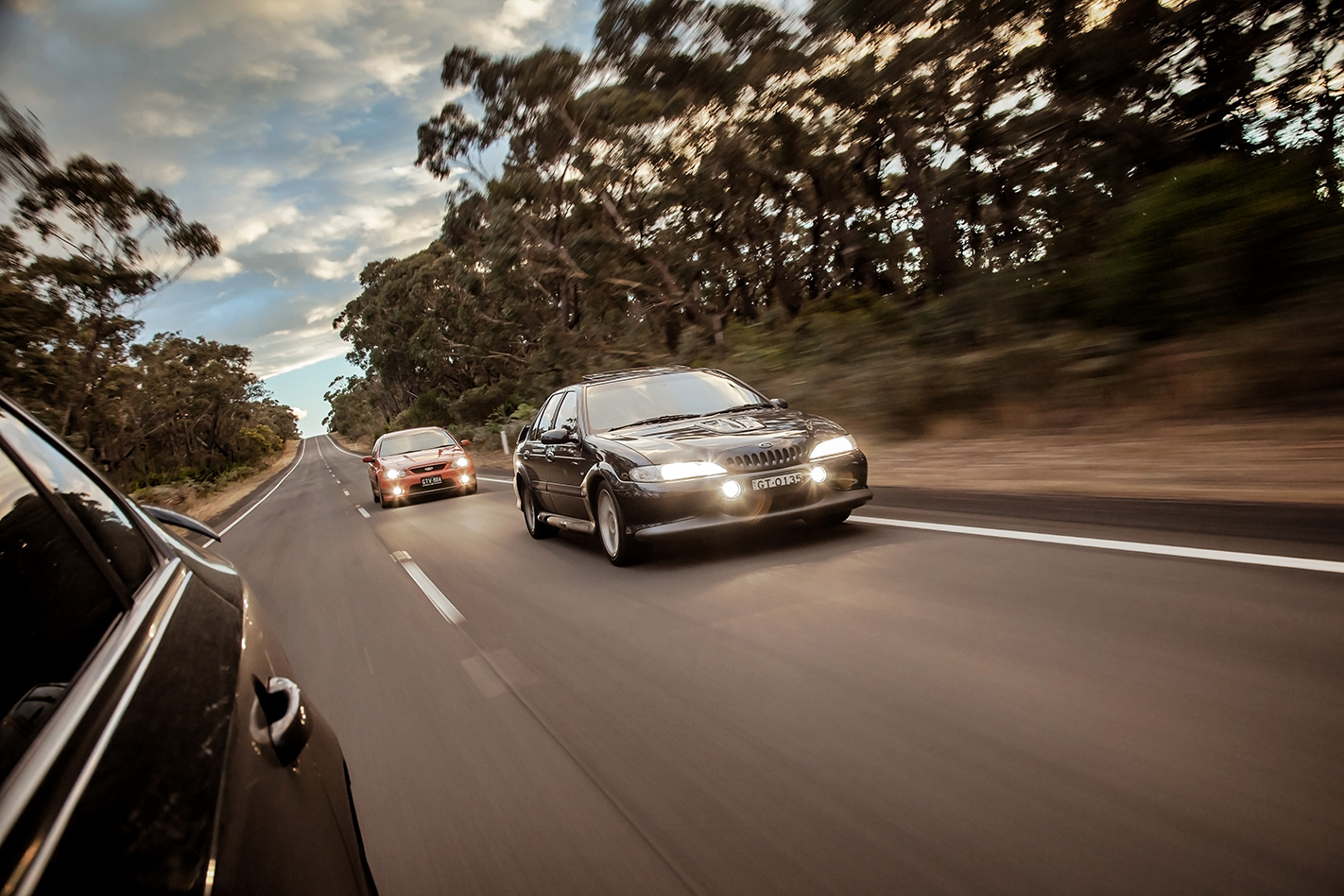
In the late 1950s the Tickford name vanished, not to resurface until 1981, as Aston Martin Tickford. It took on the role of engineering and tuning company and would be responsible for such motorsport icons as the Ford RS200 and Sierra Cosworth RS500 among other road and race cars.
In 1990, Tickford’s directors bought out the ailing company, reviving it and taking on R&D for Ford’s Focus RS. Then, in 1991, Tickford was chosen as partner by Ford Australia – Tickford Vehicle Engineering became the high-performance arm of Ford in Oz.
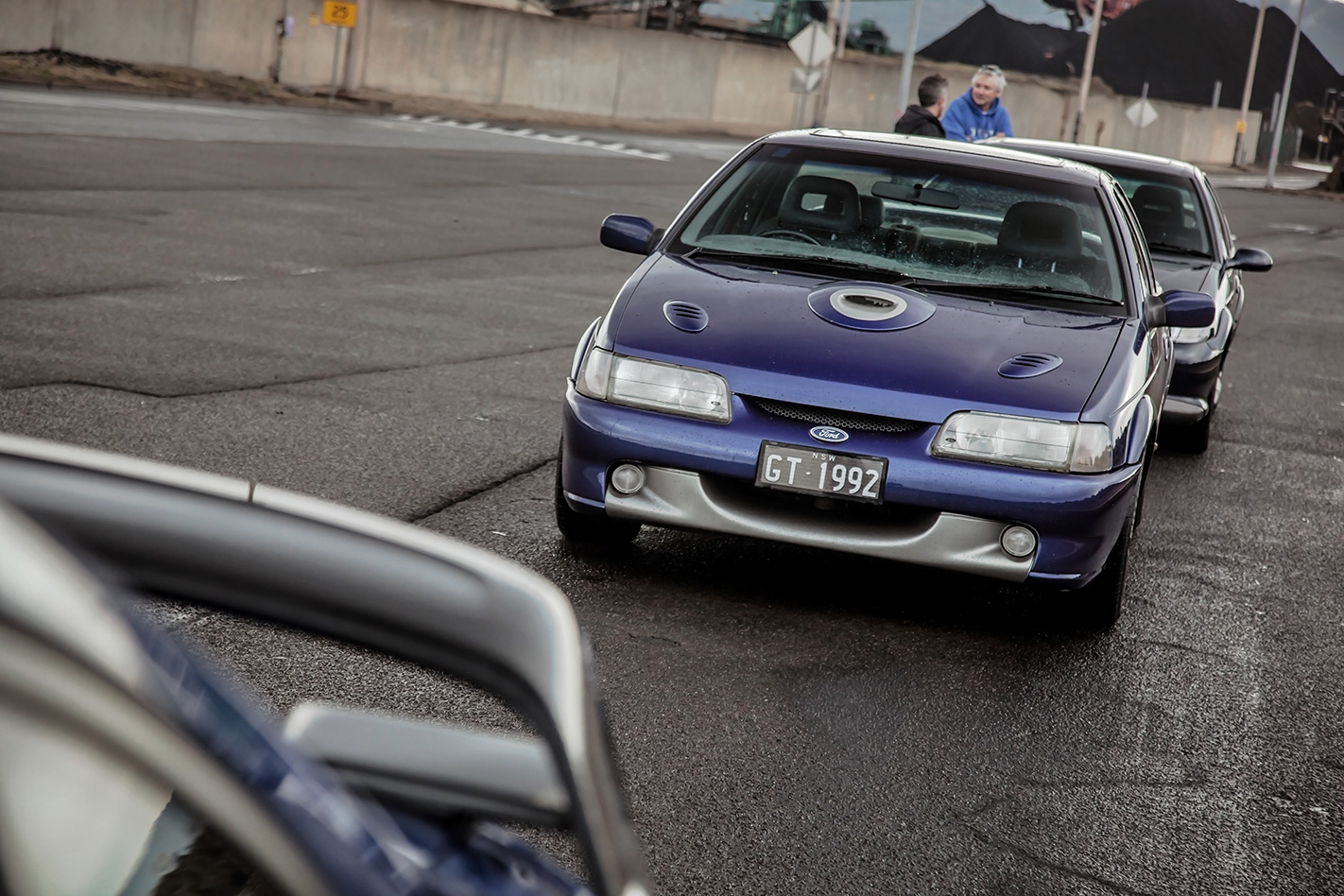
However, that certainly wasn’t possible in the early ’90s. Picture it. The Ford V8 had been on hiatus since 1982, when it had bowed out in 351 cubic inch Cleveland form in the XE Falcon. Now, the bent-eight was back in the form of the 302ci (5.0-litre) Windsor in a special hi-po version of the series two EB Falcon, which represented the first update of the fifth-generation model born as the EA in 1988.
The XR series aesthetic package was restrained, but their performance was attention-grabbing.
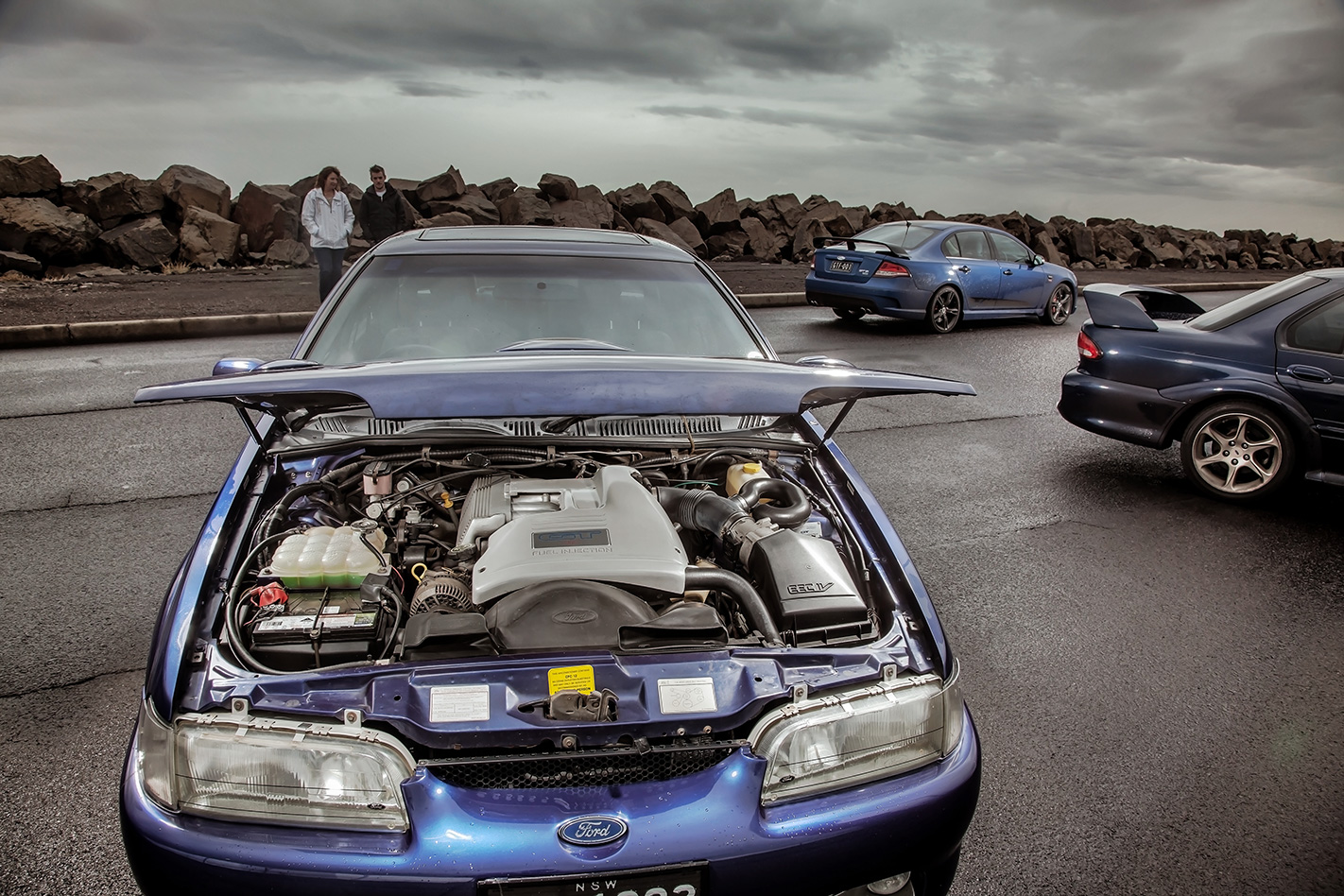
It took the limited run of 265 EB GTs to put the V8 back on its pedestal, though plenty of motoring pundits reckoned it lacked the performance to live up to the GT legend, which had been gathering dust since 1976’s XB GT. Contemporary road tests put it at mid 7s to 0-100km/h and mid 15s across the 400m – it was no Phase III.
At the EB GT’s launch the late Howard Marsden, Ford Tin Top racing mastermind, explained: “Thankfully, we now have a set of rules for touring car racing that spare participating car manufacturers from having to make road-registrable homologation specials like the GT-HO,” concluding that, “Like the latter-day GTs, the EB is not a race car.”
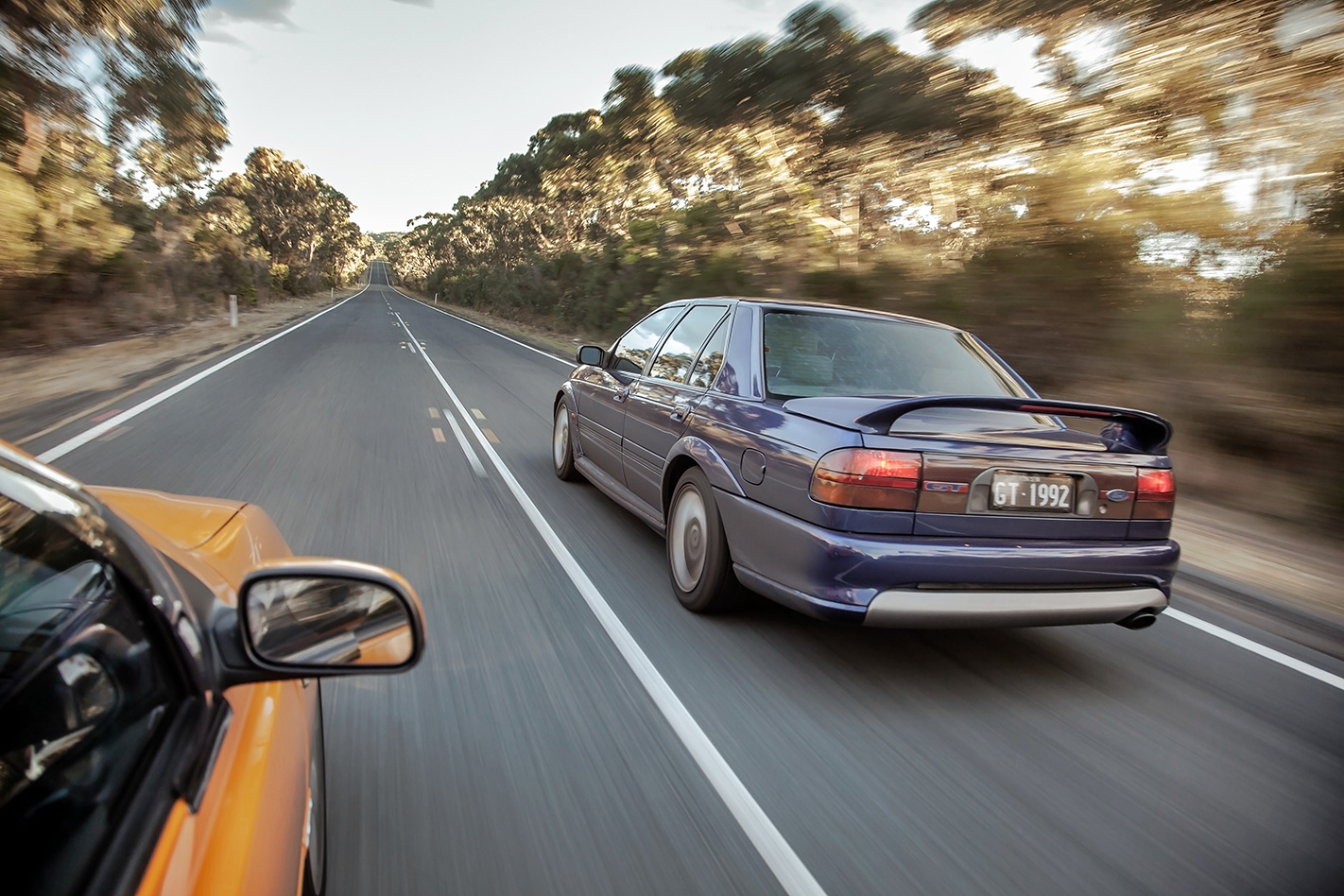
The EB GT’s sequentially fuel-injected overhead valve V8 was sourced from the US-market Mustang Cobra before being Tickford tuned via camshaft, cylinder head and air intake changes to deliver 200kW at 5250rpm and 420Nm at 4000rpm. Down the driveline, the only changes from the XR variants were gear ratio and auto shift points. Yep, the GT came as a four-speed slusher as well as a five-speed manual.
Surprisingly, the suspension was softer than that of the S-XR6 and 8 – GT now spelled Grand Touring rather than Bathurst special. At least it wore big (for the time) 17×8.5-inch wheels of an attractive five-spoke design.
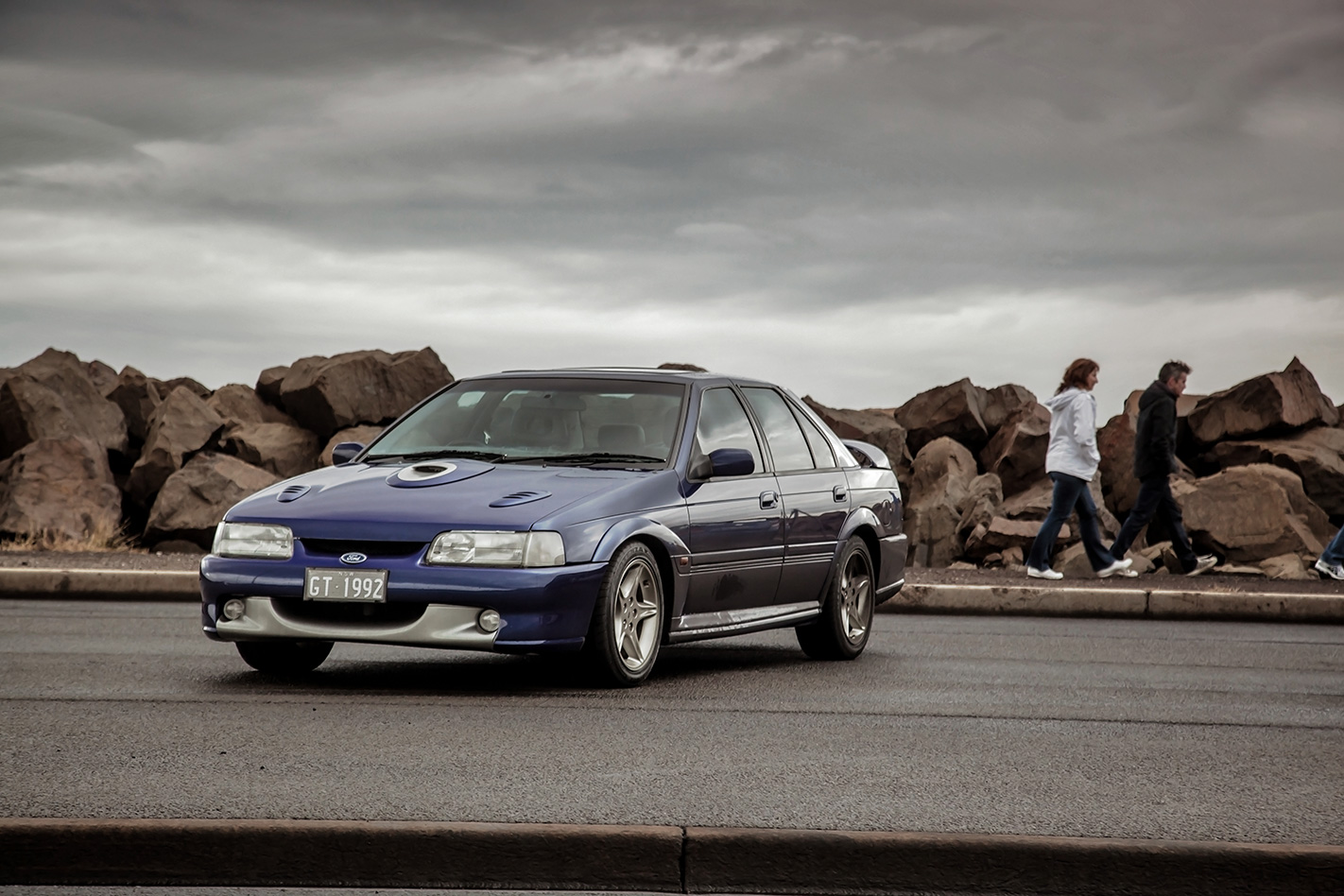
But the fact widespread collector’s car recognition has eluded the EB GT didn’t put Simon off. Rather, the model’s relative affordability helped when he finally bought his in March, a Cobalt Blue 1993 model. “I’ve always like the EB shape – maybe it’s something that I couldn’t afford back then when the interest rates were so high, and I thought … one day.”
Five years after the EB, there was a sense of déjà vu surrounding the arrival of the 30th Anniversary 1997 EL Falcon GT. It was again a case of too much luxury, not enough performance, but this time it came wrapped in a polarising styling package.
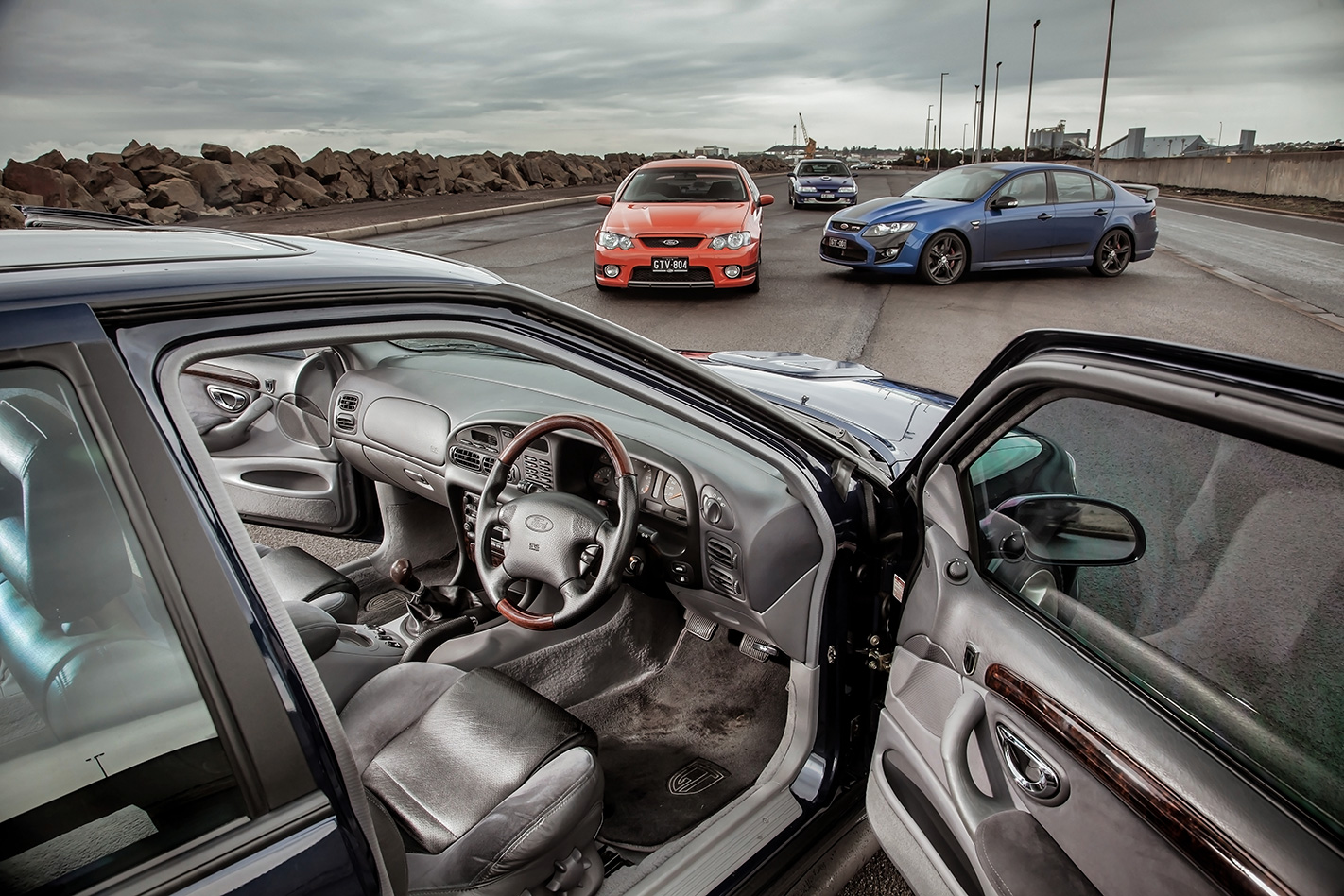
The frontal styling might have been a turn-off, but the mechanicals – and straight-line performance – improved subtly compared with the EB GT, although peak outputs were unchanged and kerb weight was up slightly to 1674kg (manual).
The 9.0:1 compression SVO GT40 5.0-litre boasted a large throttle body, free-flowing cylinder heads, big valves with heavy-duty springs, roller cam followers and a more sophisticated fuel injection system. Four-speed automatic and five-speed manual BTR transmissions were offered, powering down via a 3.45:1 Hydratrak limited-slip-diff-equipped live axle located by a Watts linkage.
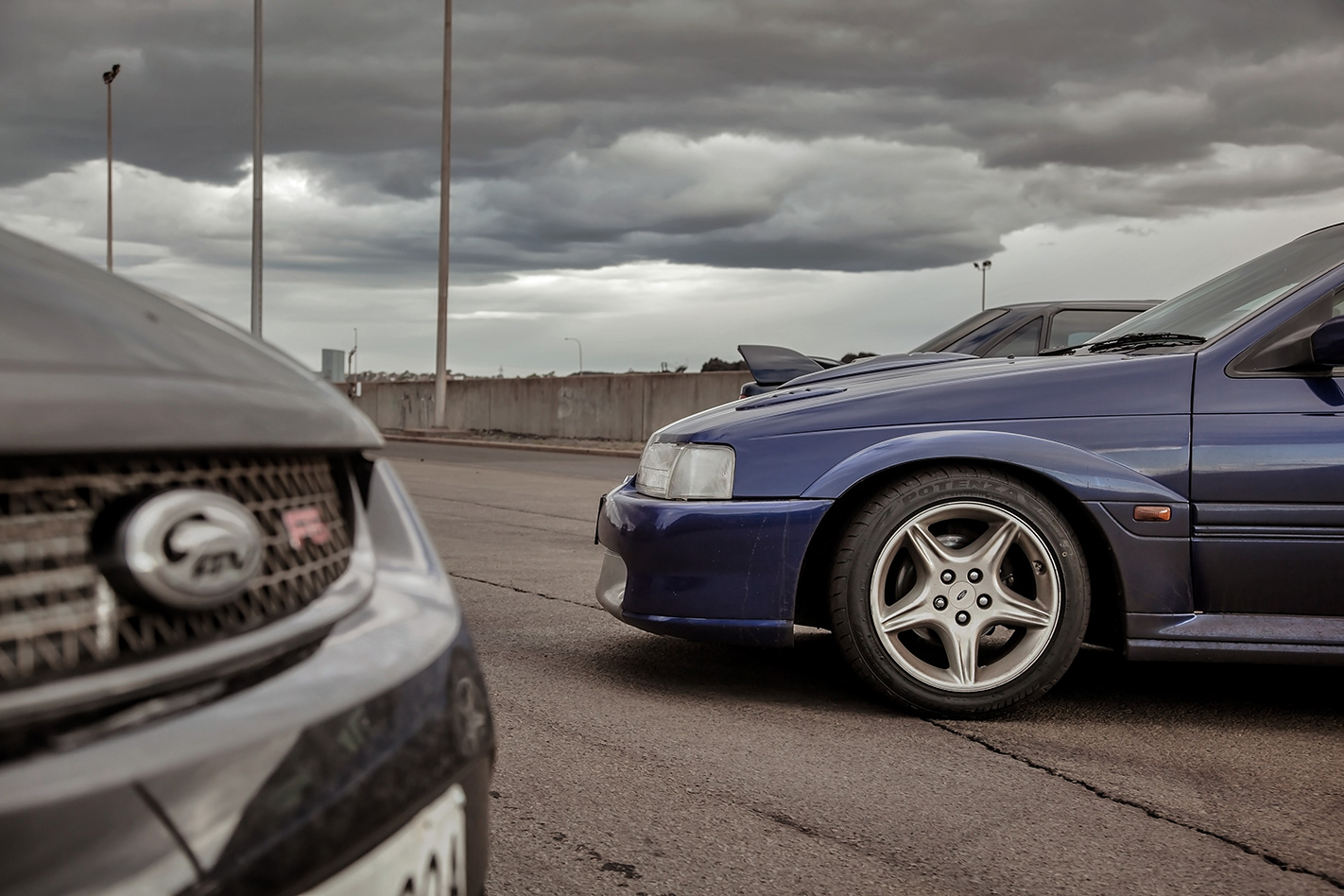
The brakes were upgraded with two-pot front calipers, and were cloaked by six-spoke 17×8.5-inch alloys.
If the familiar-sounding mechanical package – and story – wasn’t enough to motivate buyers, for some the Falcon’s revived presence on local motor racing circuits was.
Indeed, the availability, once again, of a V8 Falcon, had made possible 1993’s new bent-eight-friendly Group 3A Touring Car formula, which replaced our adopted Group A regulations and went on to become V8 Supercars.
Glenn Seton won the Australian Touring Car Championship in his EB Falcon in that inaugural year, while Dick Johnson Racing’s 1994 victory at The Mountain broke a five-year Blue Oval drought, and marked 13 years since a Falcon had taken the chequer.
Falcon ATCC victories in 1995 and ’97 were crowned by Jason Bright and Steven Richards’ 1998 Mount Panorama success at the wheel of the Stone Brothers Racing Pirtek EL Falcon. The GT might’ve gone a bit soft, but Ford was back on the local motor racing stage.
However, there was a loyalty test in store for hi-po Falcon fans. If they’d found the styling of the EL GT difficult to swallow, 1998’s New Edge AU Falcon brought confronting aesthetics to the entire sixth-generation Falcon line-up.
As the curtains closed on the ’90s, TVE, under its new Ford Tickford Experience banner, delivered its AU Falcon and Fairlane-derived T-Series range.
At this point, FPV’s cross-town rival Holden Special Vehicles comes firmly into the frame. Clayton’s Holden hot-shop had been on the scene since 1988 and, with its Clubsport and GTS front and centre, had enjoyed more than its fair share of the home-grown hi-po segment.
By the late ’90s, HSV abandoned the Aussie 5.0-litre V8 in favour of the 250kW US-built 5.7-litre Chevrolet LS1, in the context of which, FPV’s ageing 5.0-litre Windsor engine looked spectacularly underdone.
Meanwhile, both companies had struggled to strike a middle ground between the subtly sporty and the outright lairy. The AU’s styling was hardly the basis for a muscle sedan, however with the TE50, which brought in AU V8 Supercar cues, TVE had done a decent job.
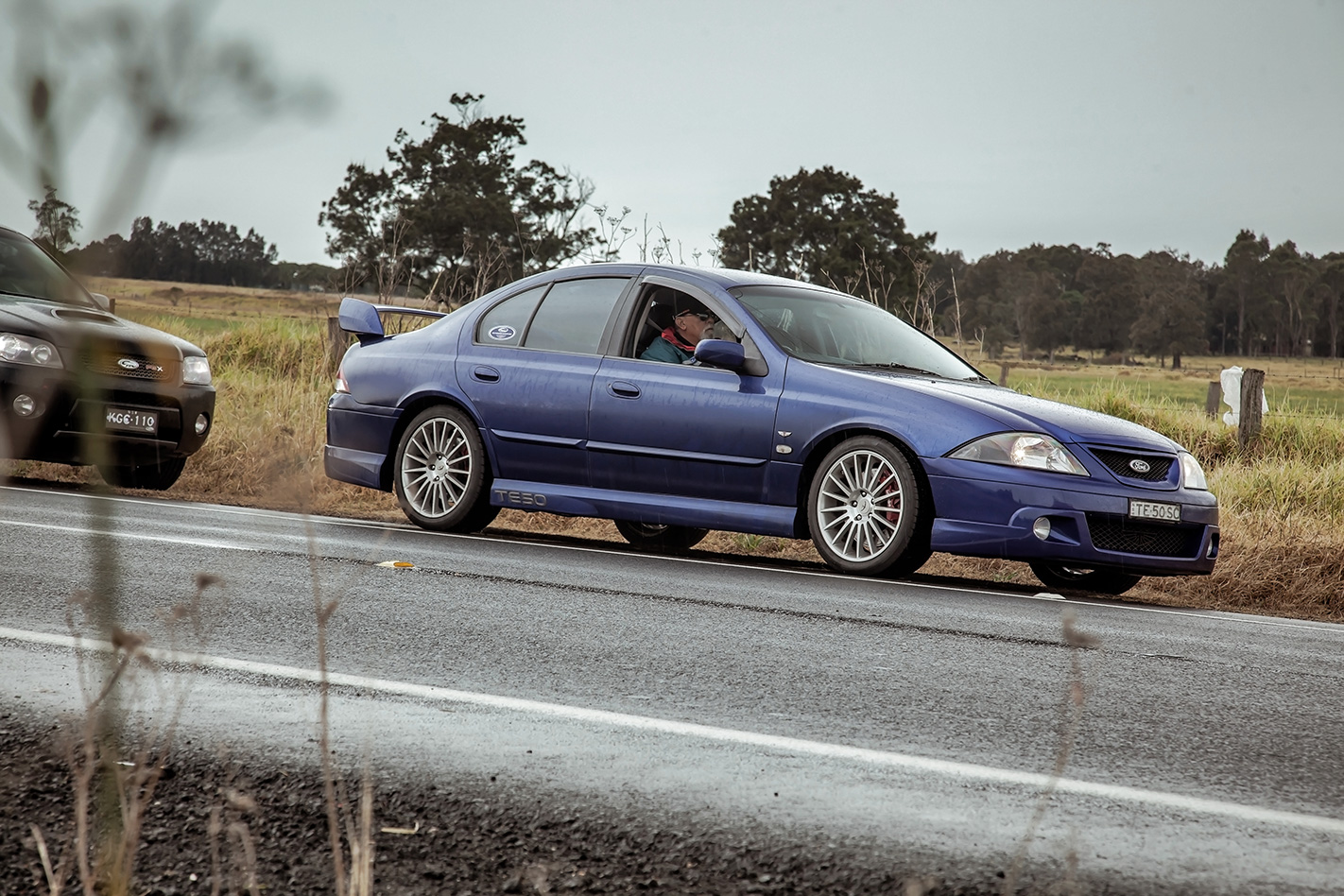
Developing the hand-built 5.6-litre ‘stroker’ from the 5.0-litre Windsor was no inexpensive exercise, but the result was a HSV-bashing 250kW and 500Nm and a fitting final iteration of a donk that dated to 1962.
Far more importantly than winning the spec-sheet stoush, the T3 T-Series was a genuine on-road match for its VX Commodore-based HSV contemporaries. Road-testers of the day were sold on the thumping torque on offer virtually from idle, which came backed by a delicious V8 grumble and crisp exhaust note.
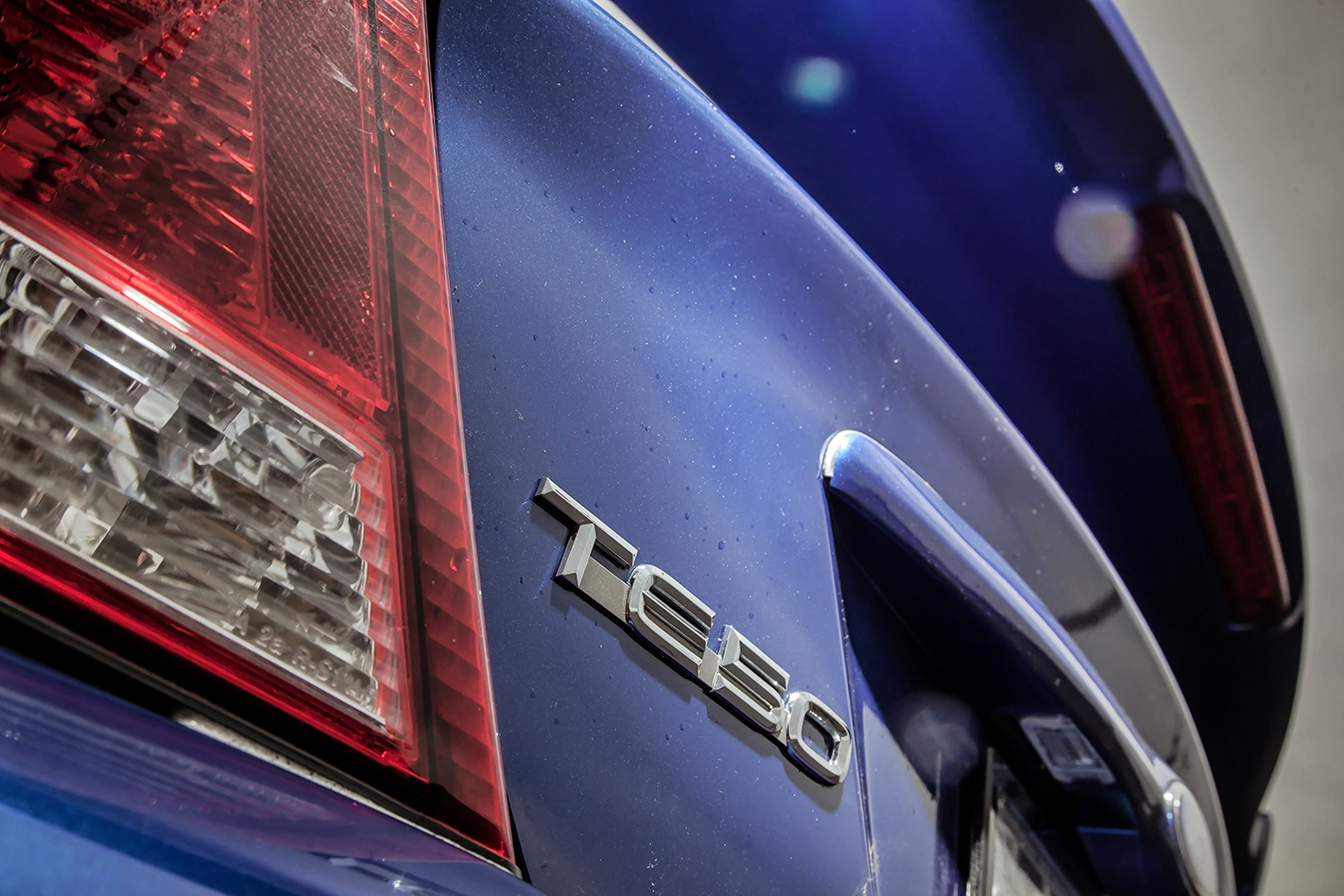
TVE built 204 TEs, 200-odd TSs and just 3 TLs, with four-speed automatic and five-speed manual transmissions. “The last count that I heard, at the T-Series Nationals in February at Bathurst there’s about 170 left on the road – and that’s Australia, New Zealand and South Africa,” says TE50 T3 owner Steve Carter (see breakout).
The Tickford Group’s sale to Britain’s Prodrive in 2001 signalled the end of Tickford Vehicle Engineering. In 2002, Ford Performance Vehicles was established as a partnership between Prodrive and Ford Australia. Ford’s BA series, which arrived in September that year, marked a turning point for Falcon, despite the fact it was a substantial $500 million redesign of the AU rather than a new-generation model.
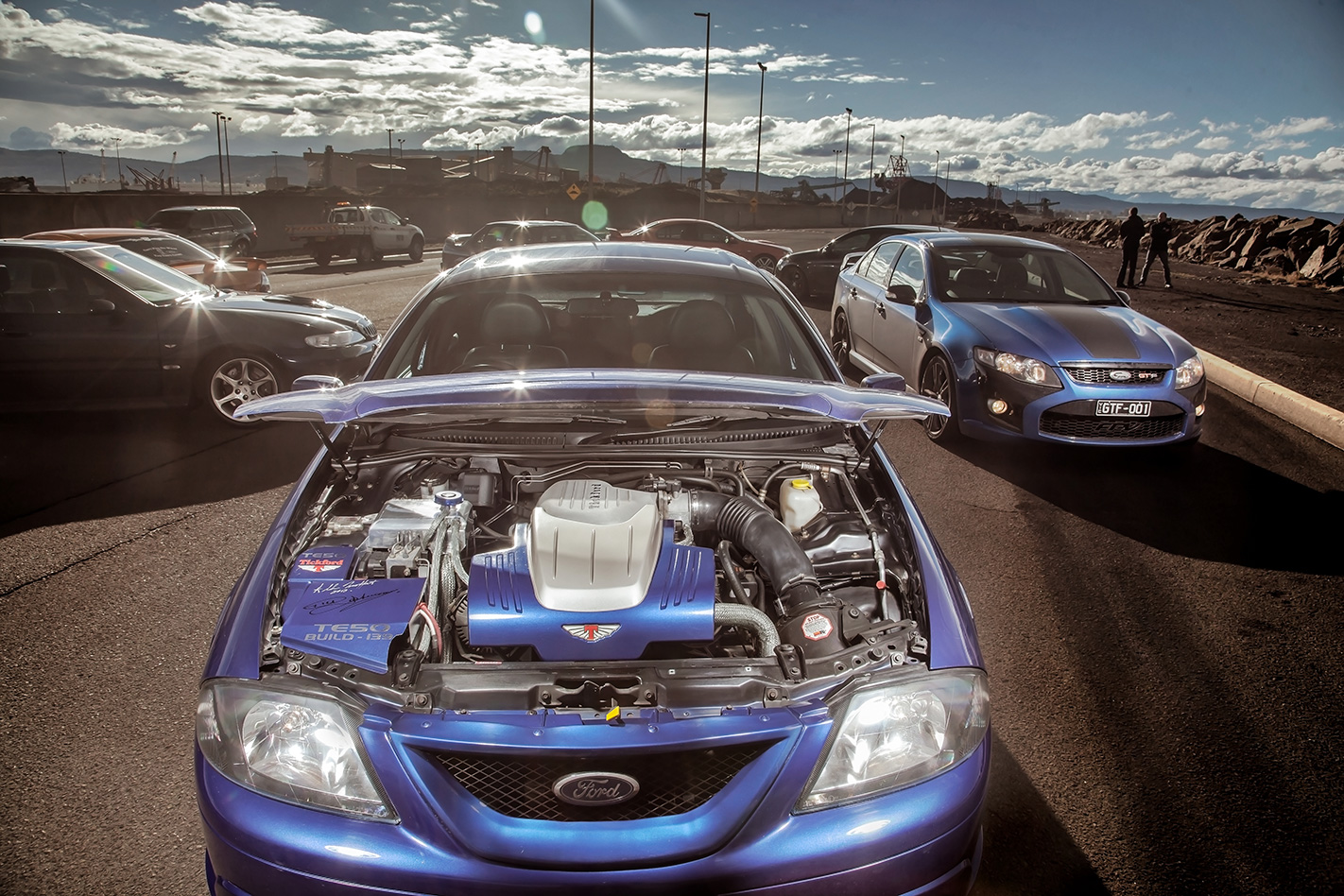
Just as excitingly, there was again a factory-backed team in local Tin Top racing in the form of the Ford Performance Racing V8 Supercars outfit. Prodrive had bought Glenn Seton Racing, renaming it before expanding its driver line up to include Craig Lowndes and David Besnard, and relocating into a new headquarters next to FPV’s Campbellfield, Victoria facility.
This reinvigorated motorsport effort was designed to draw a link between FPV vehicles and V8 Supercars. Meanwhile, the styling of the road cars tied them to the BA V8 Supercar.
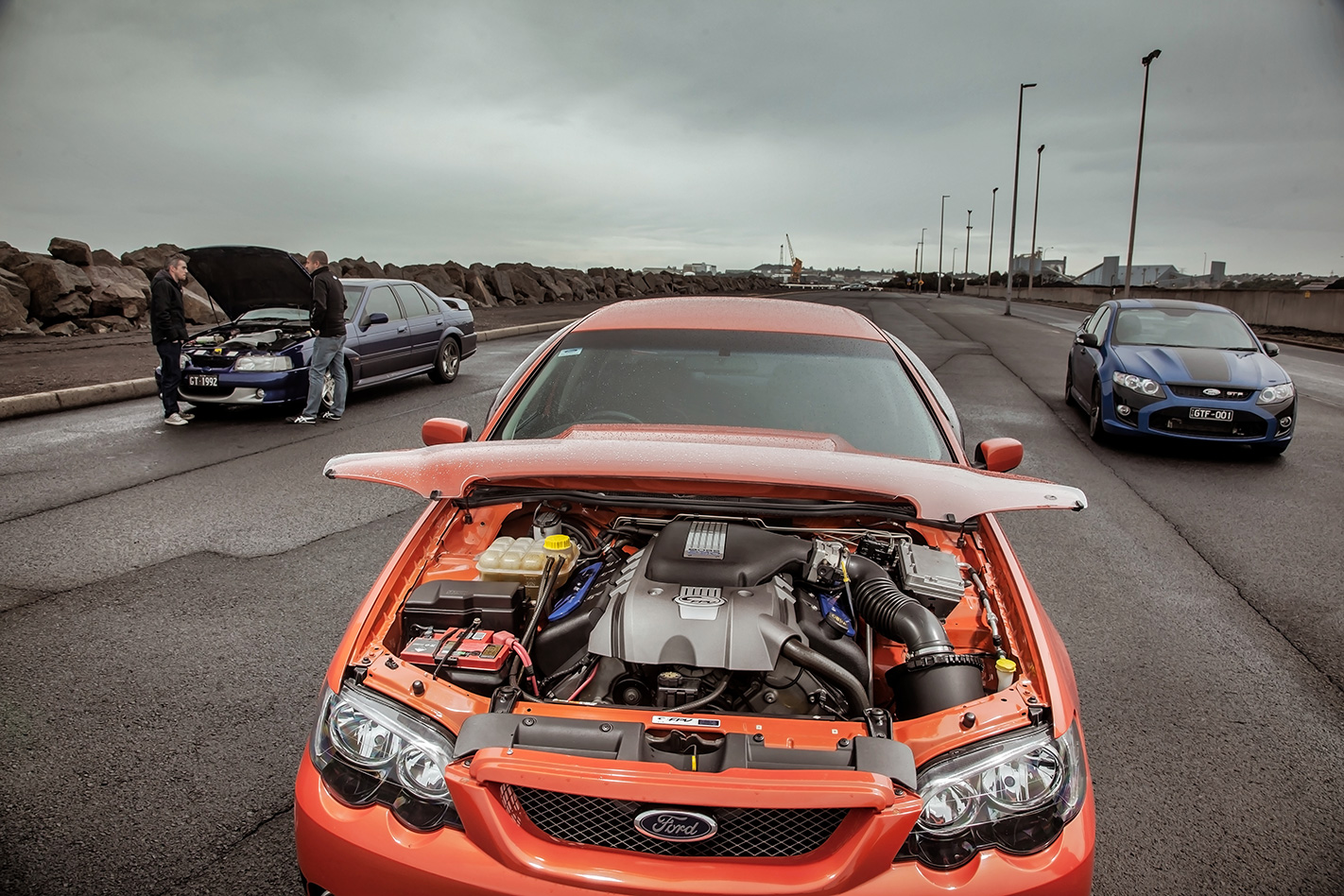
Slick, precise steering and innate rear-drive balance were strong points, but the chosen spring and damper rates left room for improvement. TE50 owner Steve’s assessment matches those of many road-testers at the time. “We had a BA GT – nice car – but I found the suspension and steering shithouse. It was all over the place like a mad woman’s breakfast.” Okay, so the journos weren’t quite so harsh, but you get the idea.
The Boss V8, while technically superior to the Windsor, needed to be extended for its deep breathing top-end to hit its stride. But the truck-derived bottom-end wasn’t exactly rev-happy.
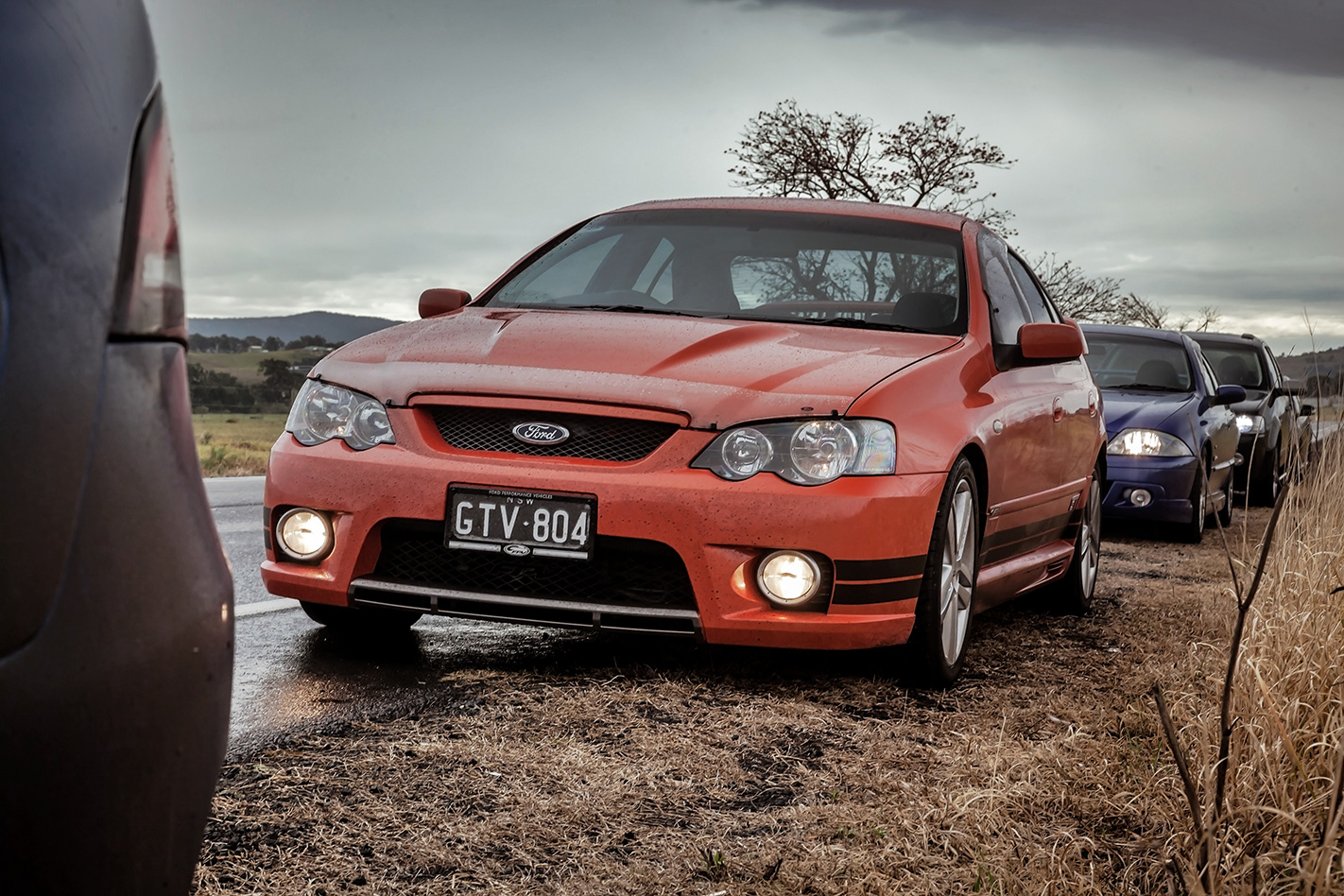
“This result is proof that the outstanding BA Falcon was the perfect platform to rekindle the passion for the GT,” said then-Ford Performance Vehicles Managing Director, David Flint.
“Our customers have made it perfectly clear that FPV has developed a credible vehicle to carry the legacy of one of the country’s most revered motoring names. We have re-created the essence of a GT, but with class-leading technologies such as the quad-cam Boss 290 V8 and control blade IRS”.
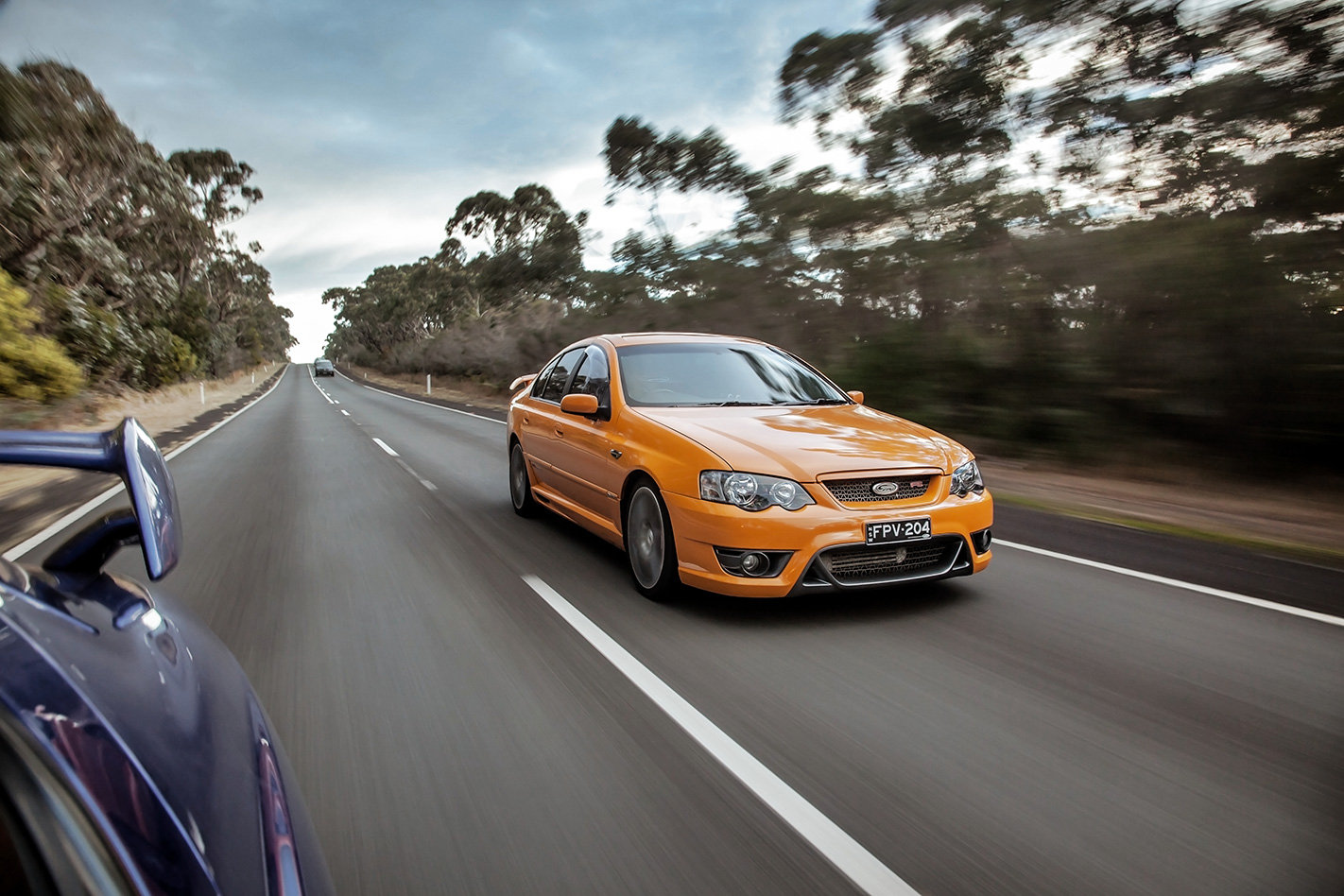
BA GT owner Rob Maricic’s solution was simple enough. “I owned an XR6 Turbo and then I thought, it’s time to get an eight. The XR6 is a runabout – the GT comes out for shows.”
It was the other way round for Typhoon man Tony Cordina “I originally went for the turbo and they only had the Boss 260 – I ended up buying that. Then I traded that in and ended up getting the Typhoon. It’s a lot better than what the Boss was – it’s a lot more responsive.”
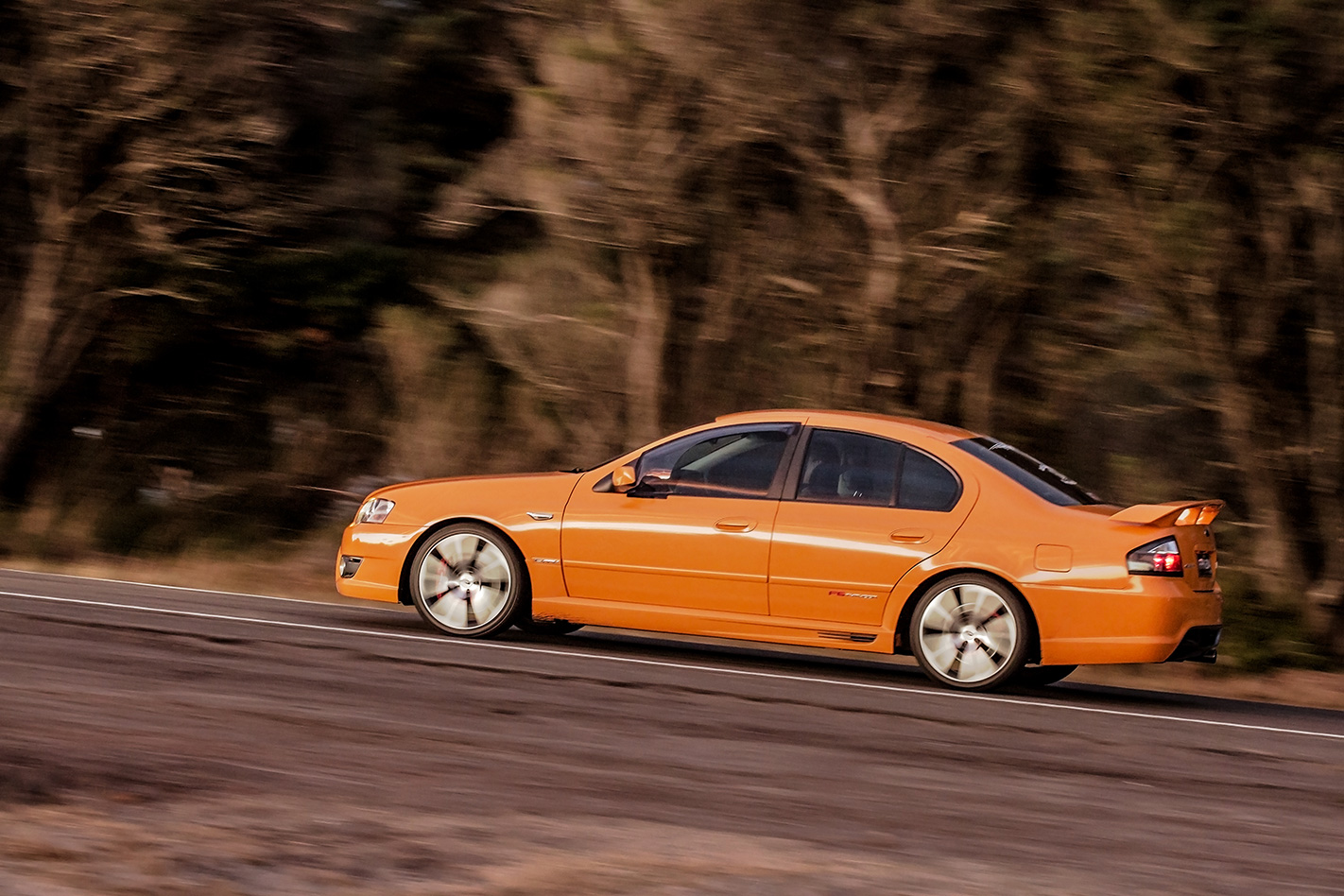
The BAII also brought new variant the Super Pursuit – a Pursuit ute equipped to GT-F spec – and an upgrade to 19s for the GT-P.
On the track, the big-budget FPR largely struggled to generate results. A Phillip Island round win for Lowndes in 2003 and second at Bathurst in ’03 and ’04 for Lowndes/Seton were the highlights. Like a Collingwood supporter, the fans stood by their side regardless, and would (eventually) be repaid for their loyalty.
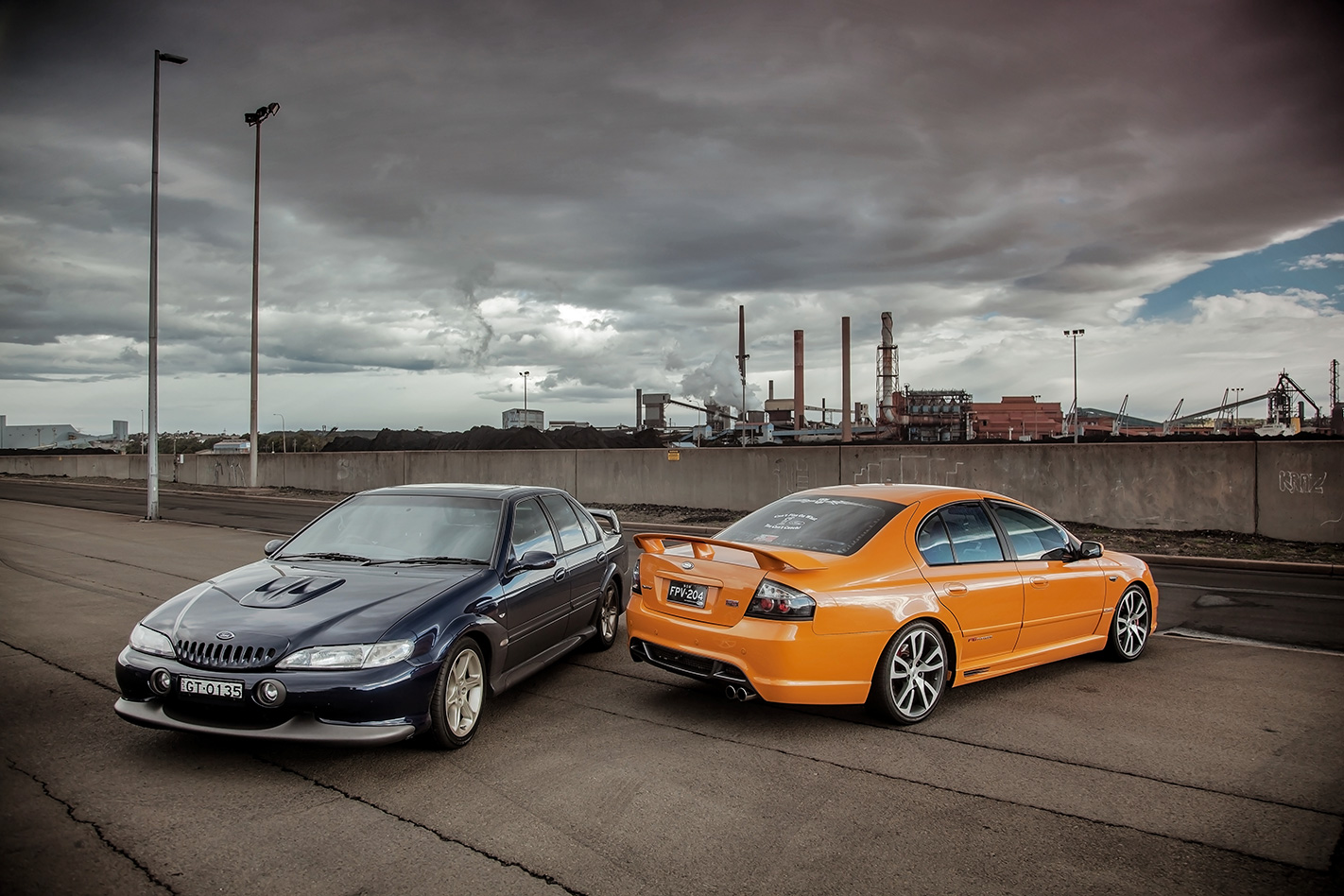
In 2006, the BF MkII saw 19s fitted across the range and a pair of new variants designed to take on HSV’s Senator, which had the hi-po luxo segment all to itself since 1992. The Force 6 and Force 8 wrapped GT and F6 Typhoon running gear in a more restrained visual package – think Fairmont Ghia with grunt.
In the last months of BFII production, FPV unleashed three limited editions. The XC Falcon-inspired GT Cobra and Cobra ute, questionably named F6 Typhoon R-Spec (arse peck?) and XR GT commemorative GT 40th Anniversary. All three were upgraded with firmer R-spec dampers, while only the Cobra copped a power increase, to 302kW and 540Nm.
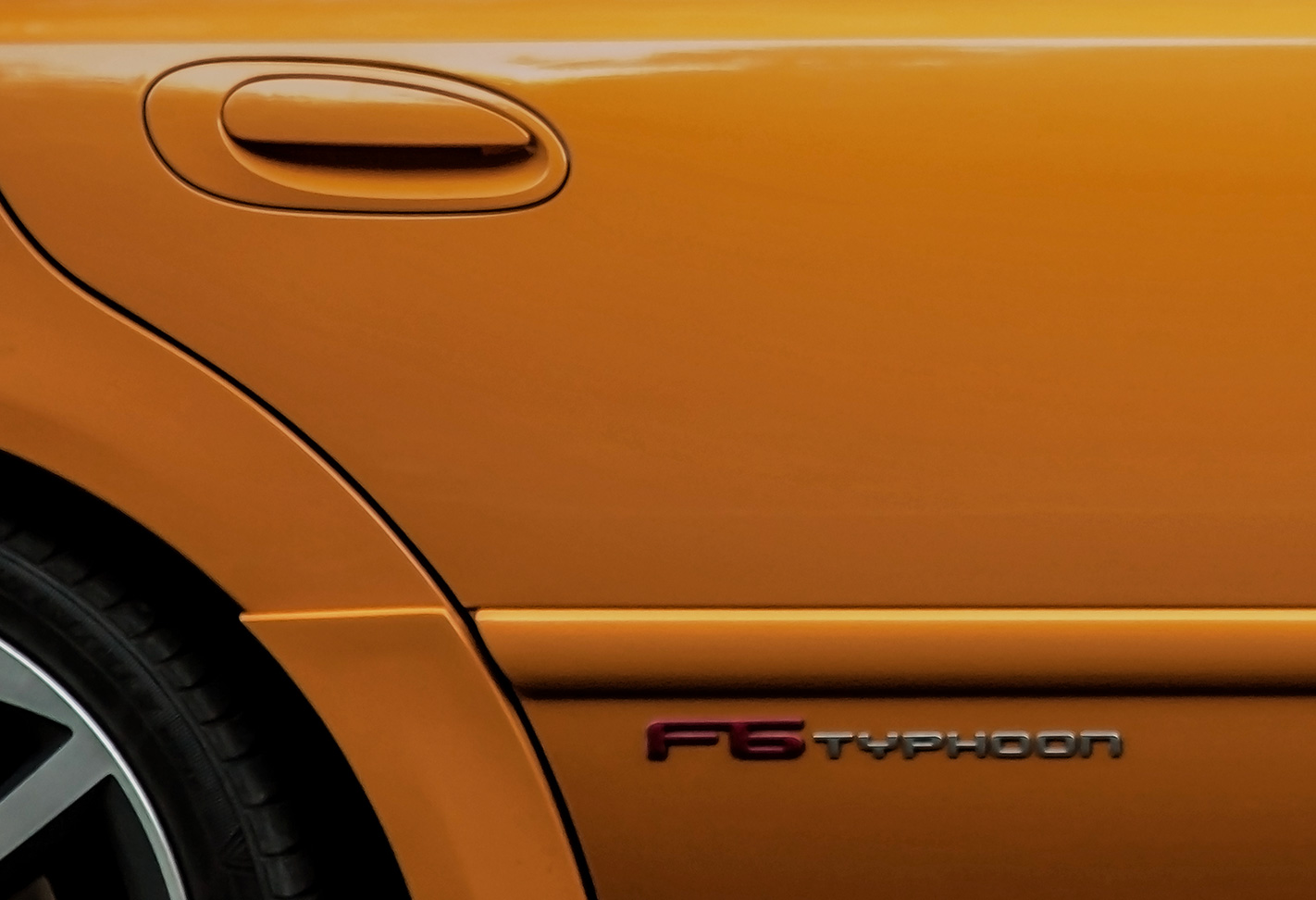
The limited editions were timed impeccably to capitalise on the classic muscle car boom, and the Cobra and GT 40th in particular whipped buyers into a frenzy, some of whom paid well over sticker price to own one. Unfortunately their values today don’t necessarily reflect that brief period of cashed-up craziness.
With the muscle sedan market a success, 2008 marked an attempt at diversification by Campbellfield Crew – an FPV SUV.
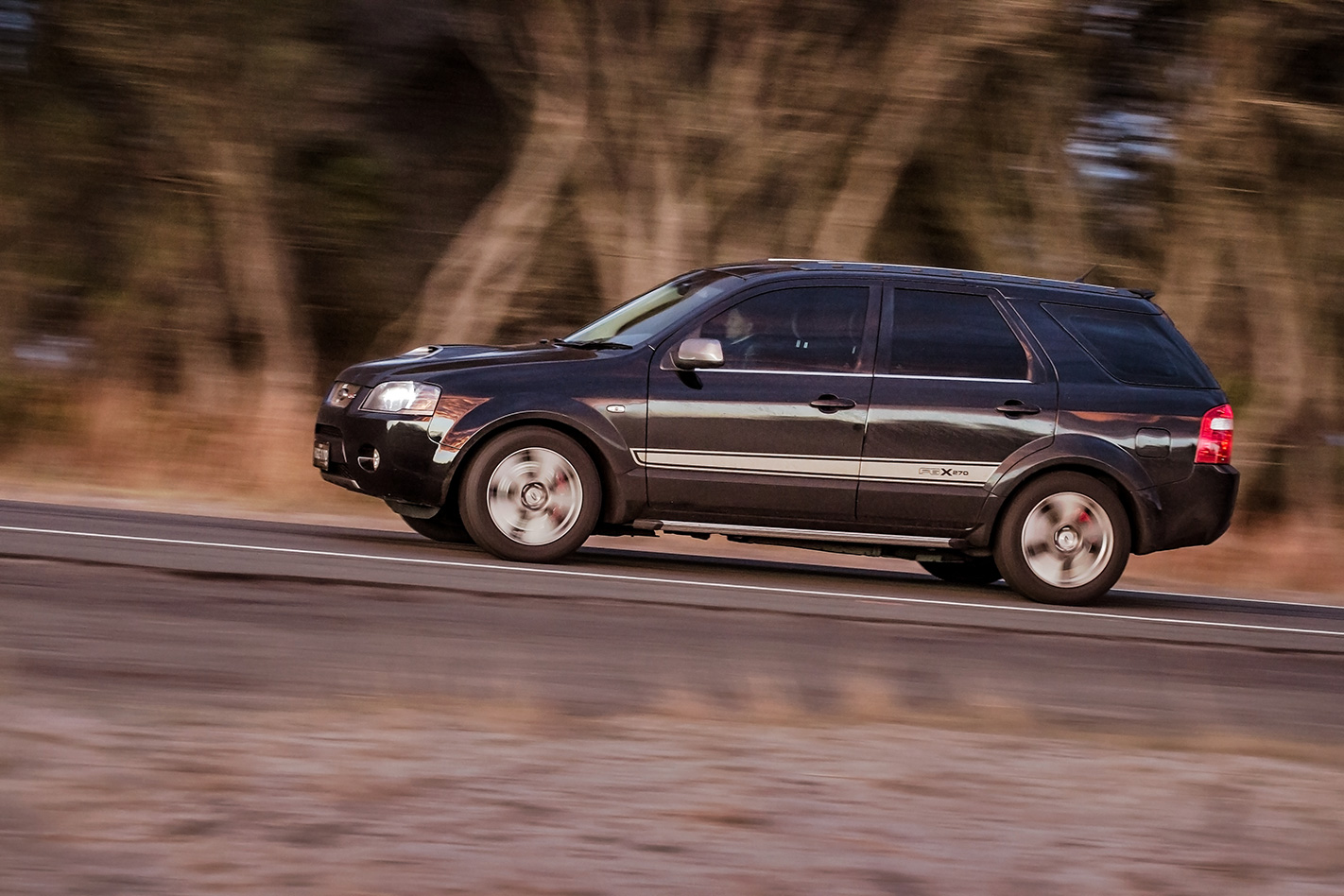
There were a few factors at play, but it wasn’t that the F6X was an inherently bad car. In fact, with a 270kW F6 turbo six powering all four wheels via a ZF six-speed auto and a relatively classy cabin treatment, it was an appealing package, as owner Kate Clark and her family found (see breakout).
“There is nothing wrong with the car,” said then-FPV General Manager Rod Barrett in 2009. “It is a great car, (but) it was the right car for the wrong time. The thing that has led to the decision we have made is that it was never aesthetically different enough from the mother car and probably had a price-tag that didn’t suit the market when it was launched.”
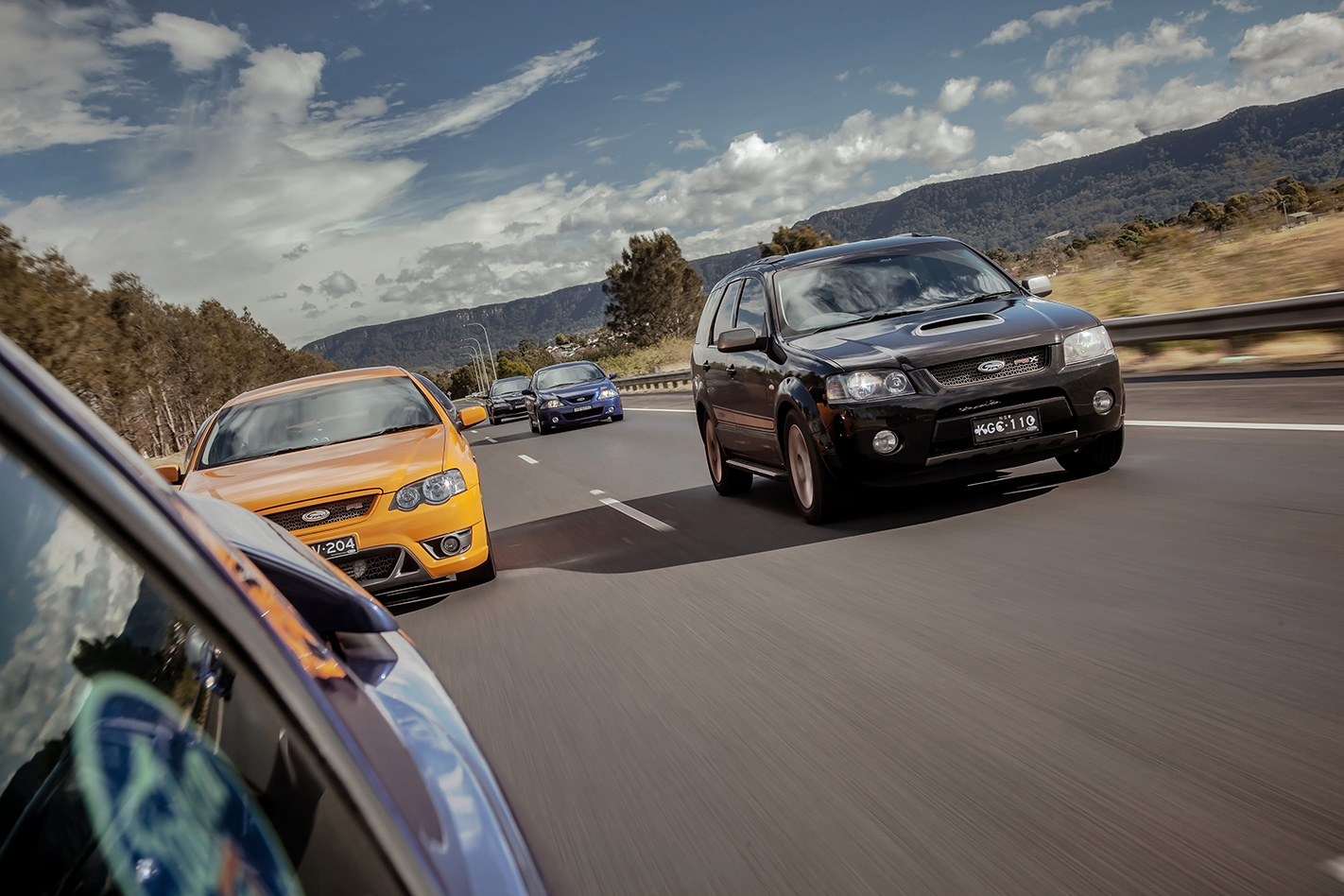
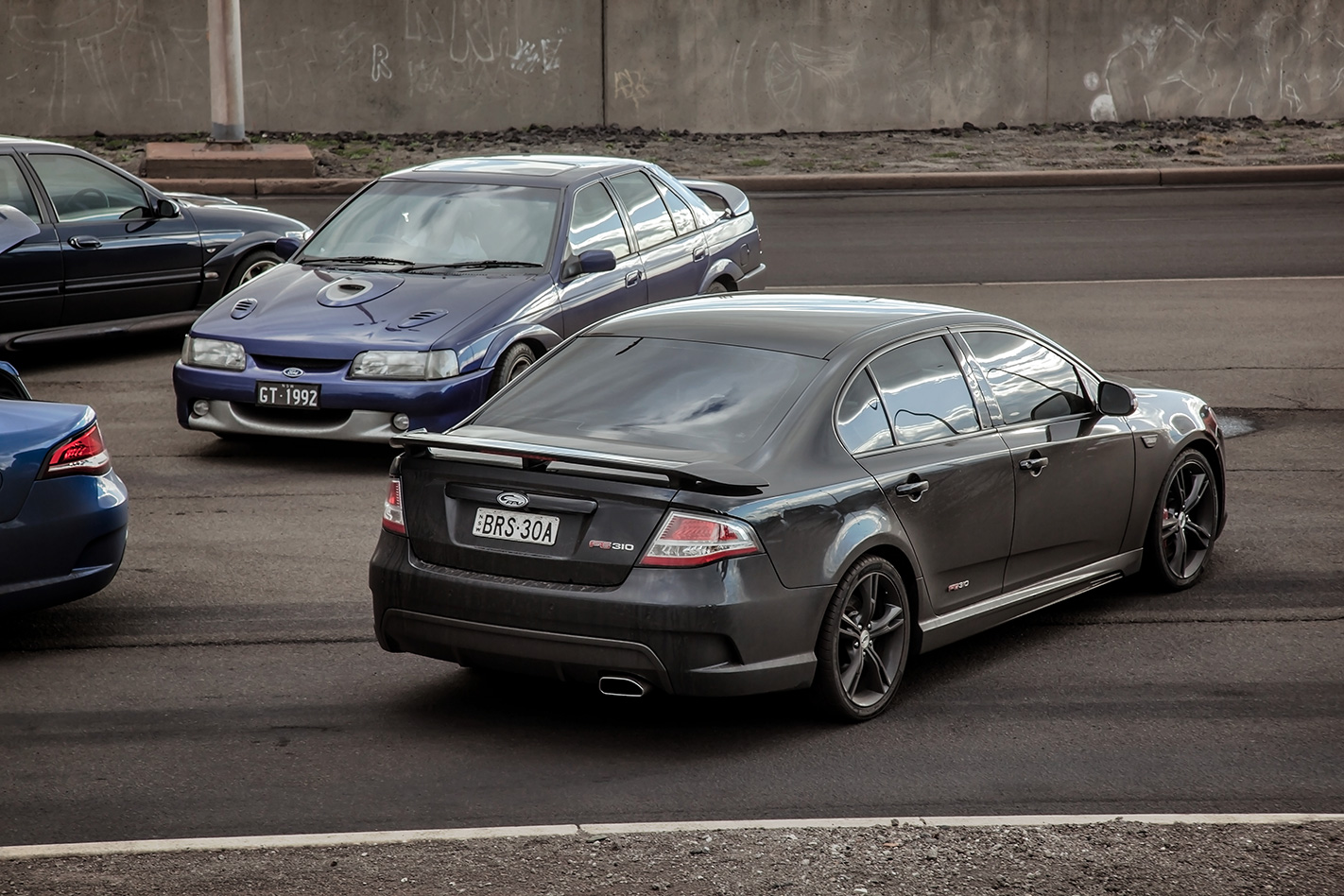
FPV club president Ben Schibeci’s FG F6 310 illustrates that point perfectly – the factory standard black automatic sedan is quicker than the heavily modified blown V8 BA it replaced in his garage (see breakout).
On the V8 front, Ford’s FG XR8 was upgraded to a Boss-spec 290kW and 520Nm. But Euro IV emissions regulations saw the XR8 and its bent eight phased out not long after, in June 2010.
The new mill – also known as the ‘Miami’ – reportedly cost $40 million and was three years in the development, but brought to flagship V8 models newfound effortlessness and low-rev punch with the outputs – and outright pace – to take the fight to HSV’s 325kW naturally aspirated Chevrolet LS3-powered E2 and E3 GTS.
With the XR8 gone, FPV filled the void with its limited edition GS – a more affordable variant detuned to 315kW (2kW less than an HSV Clubsport) and 551Nm. The GS series revived yet another classic pair of letters, which had first been applied in 1969 for an XW Falcon option pack. Elsewhere, the line-up looked familiar, including a new GT R-Spec, while new F6-E and GT-E variants took the place of the Force 6 and 8.
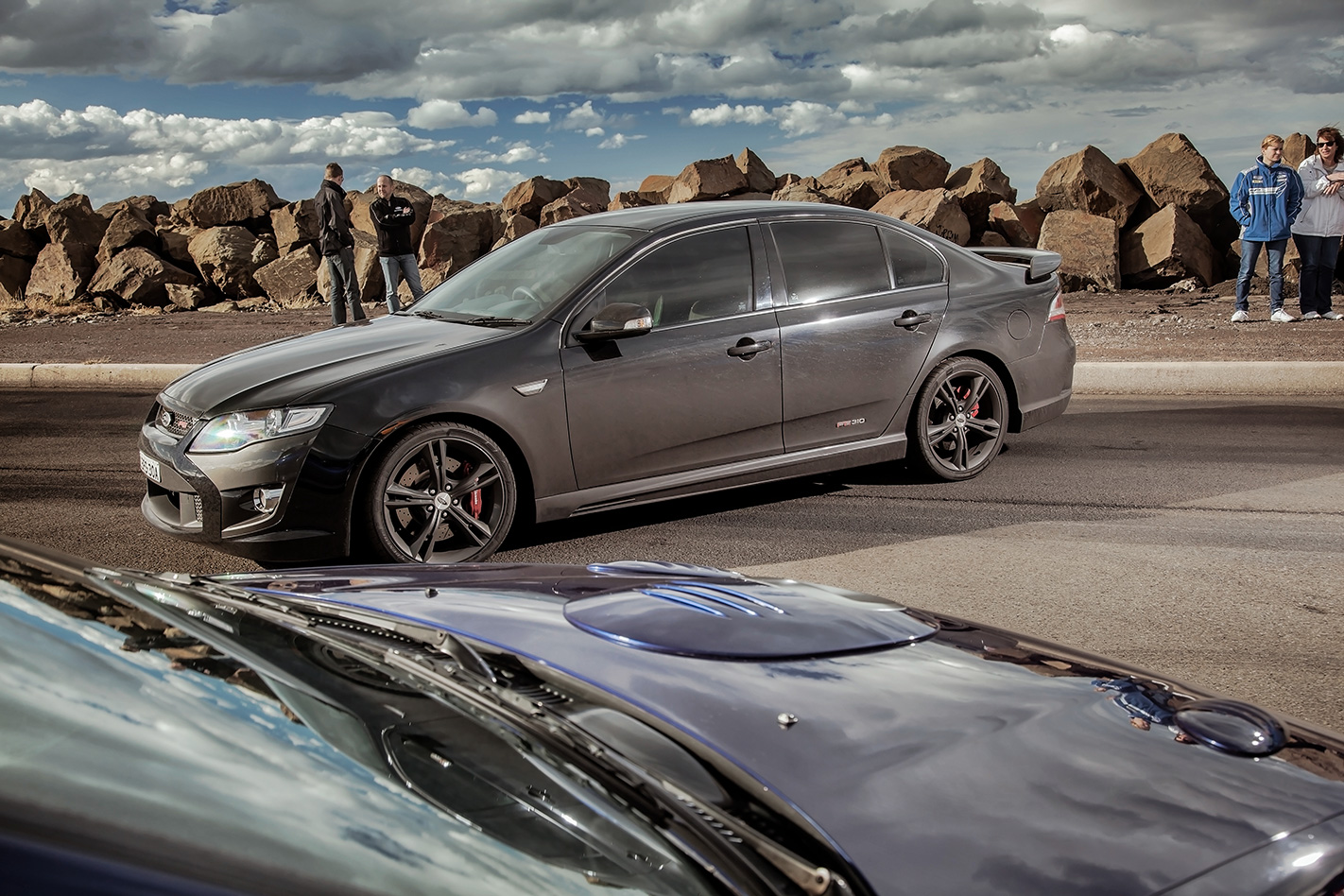
Jobs were lost as engine production shifted to Ford’s Geelong plant and vehicle assembly moved under one roof at Campbellfield. Ford boss Bob Graziano wasn’t giving much away.
“It’s too early to talk about any changes to the portfolio, and for the foreseeable future from an FPV prospect perspective they won’t see a significant change in the line-up.” However, in hindsight it’s clear that, with the writing on the wall for FPV, its best – and last – Falcon was in the works.
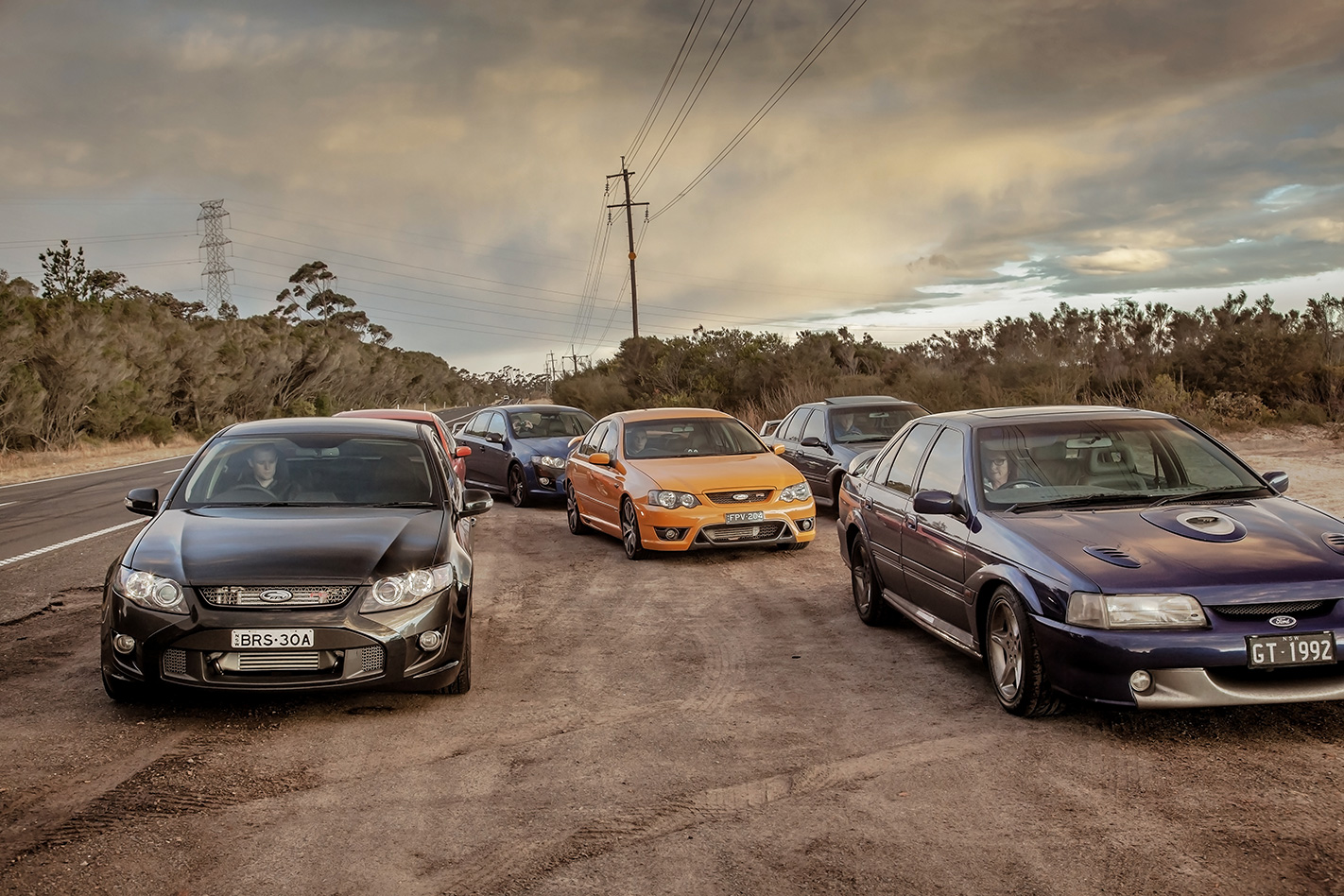
With last F6 stocks delivered earlier this year, and a facelifted Falcon due at year’s end, the FPV turbo-six story came to an anticlimactic close. The FG Mk III’s silver lining is it will see the XR8 badge return until the end of Falcon in 2016. There’d be one last FPV.
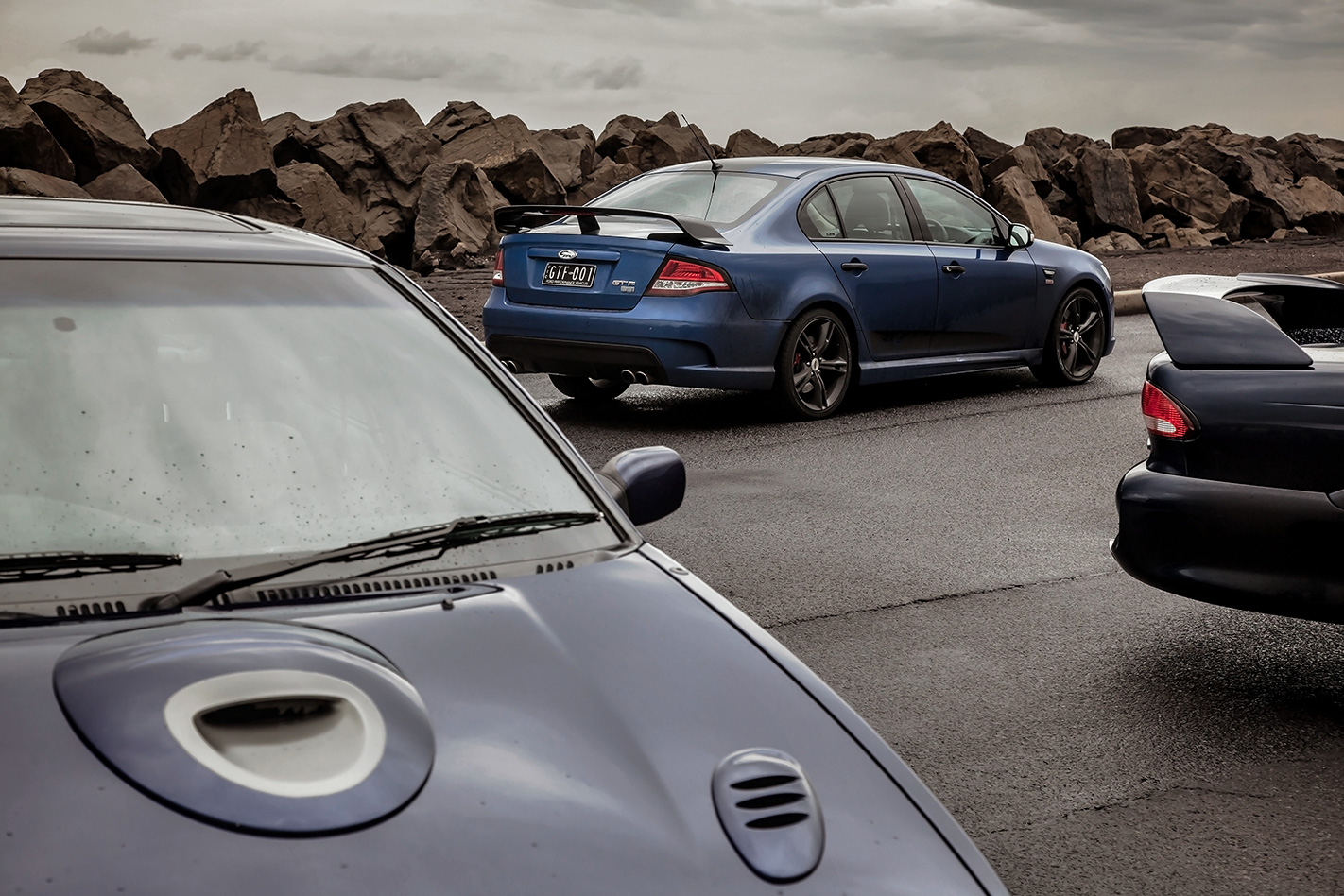
FPV’s 2014 GT F marks 11 years of FPV and 22 years since the Tickford era began, and is the full stop on 47 years of the Falcon GT.
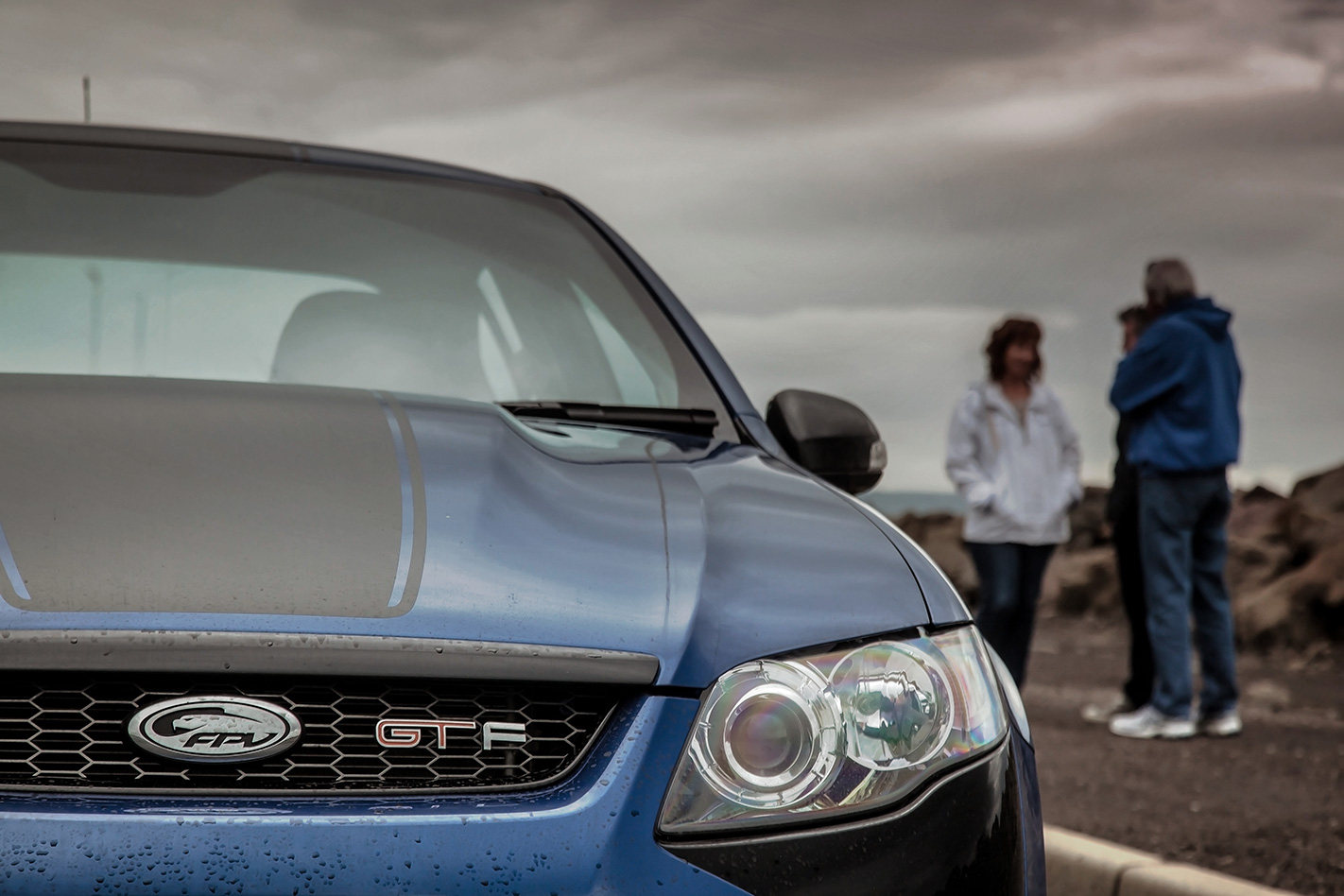
“All things come to an end I guess, but the way that manufacturing is in Australia I’m not surprised. I was surprised that they actually made it this far.
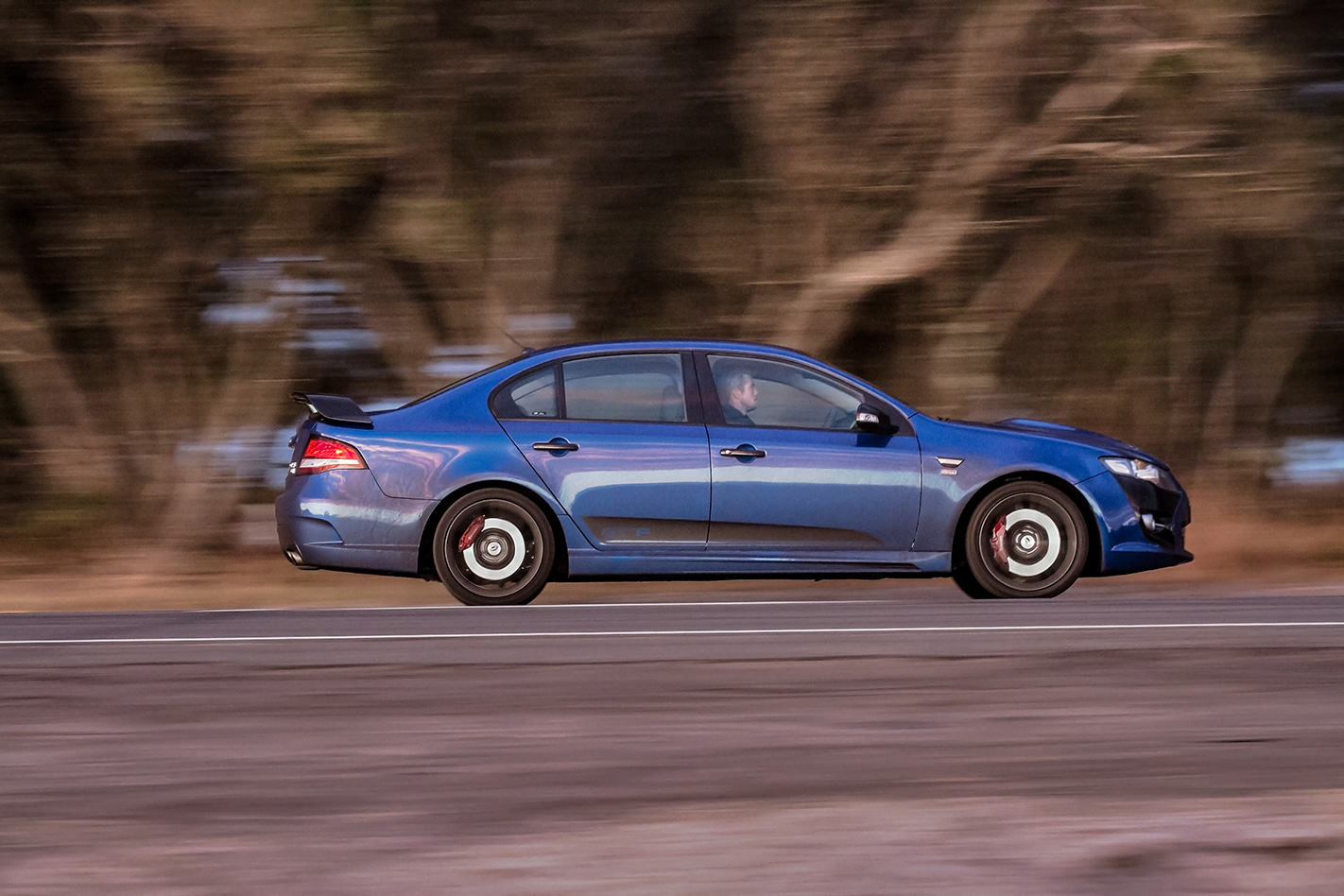
My personal opinion? It’s a fitting way to go. It’s the best Ford’s engineers could do with the budget they had.”
Our Heroes Big credit is owed to the FPV Tickford club of NSW along with Simon and Katrina Roche from the GT Club of NSW for providing all the glorious metal to be savoured on these pages. If you have an FPV and need a clan, head to fpvclub.com and falcongtclubnsw.com
Simon Roche – 1993 EB II GT
“Dad used to have a couple of big 351 Fairlanes, and as a kid my job was in the morning to pull the choke and start it up and have it warmed up ready for him to go to work. I think Bathurst as well, y’know, I’ve got the Ford 1-2 poster at home – that’s probably where my love of Fords came from.
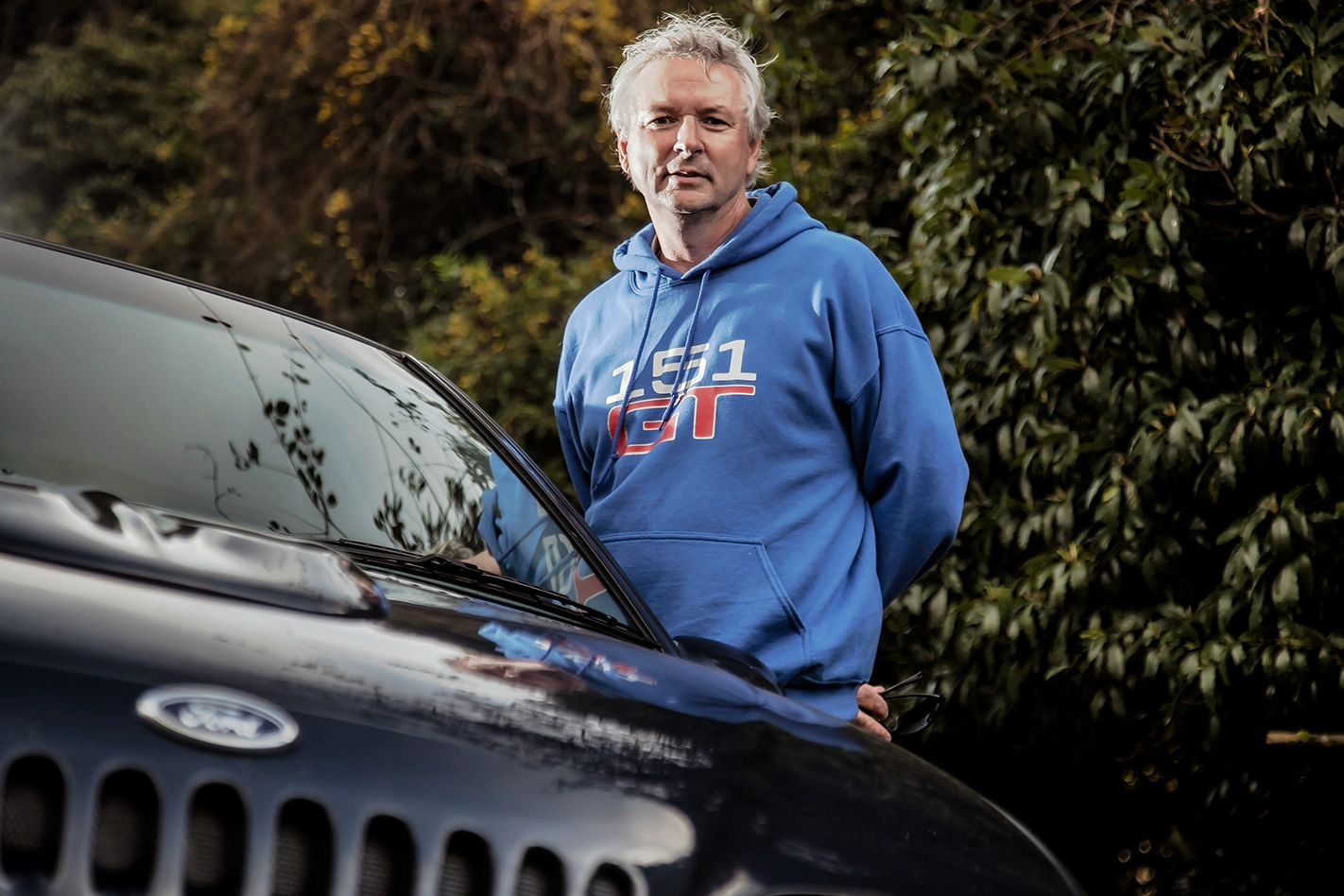
1993 EBII Ford Falcon GT Specs Price $62,500 (new) Engine 4942cc V8, OHV, 16v Power 200kW @ 5250rpm Torque 420Nm @ 4000rpm Kerb weight 1657kg 0-100km/h 7.3sec
Simon Roche – 1997 EL GT
“It was owned by a gentleman in Lithgow and it ended up in a consignment yard (in 1998) due to finances I think, and Katrina saw me looking at it in the yard and went ‘naah’.
She actually phoned [the yard] up and said we’ve got this Ford Raider, what do you think it’s worth, and they had brand new price on it – 75 grand – and she said I’ll give you 50 grand change-over. I laughed at her and said they won’t do that, and they did. It only had 2000 kays on it.”
1997 EL Ford Falcon GT Specs Price $69,500 (new) Engine 4942cc V8, OHV, 16v Power 200kW @ 4700rpm Torque 420Nm @ 3700rpm Kerb weight 1699kg 0-100km/h 6.9sec (claimed)
Steve Carter – 2002 TVE TE50 T3
“My first car was an FJ Holden, like most young blokes – I’m nearly 66 years old. My first Ford was a 1963 imported English GT Cortina and that’s where my love affair with Ford started. My eldest daughter bought and XR8, and I fell in love with ’em. We bought a series 1 XR6 – lovely car – and we just graduated. I saw the T-Series come out, I thought that’s nice.
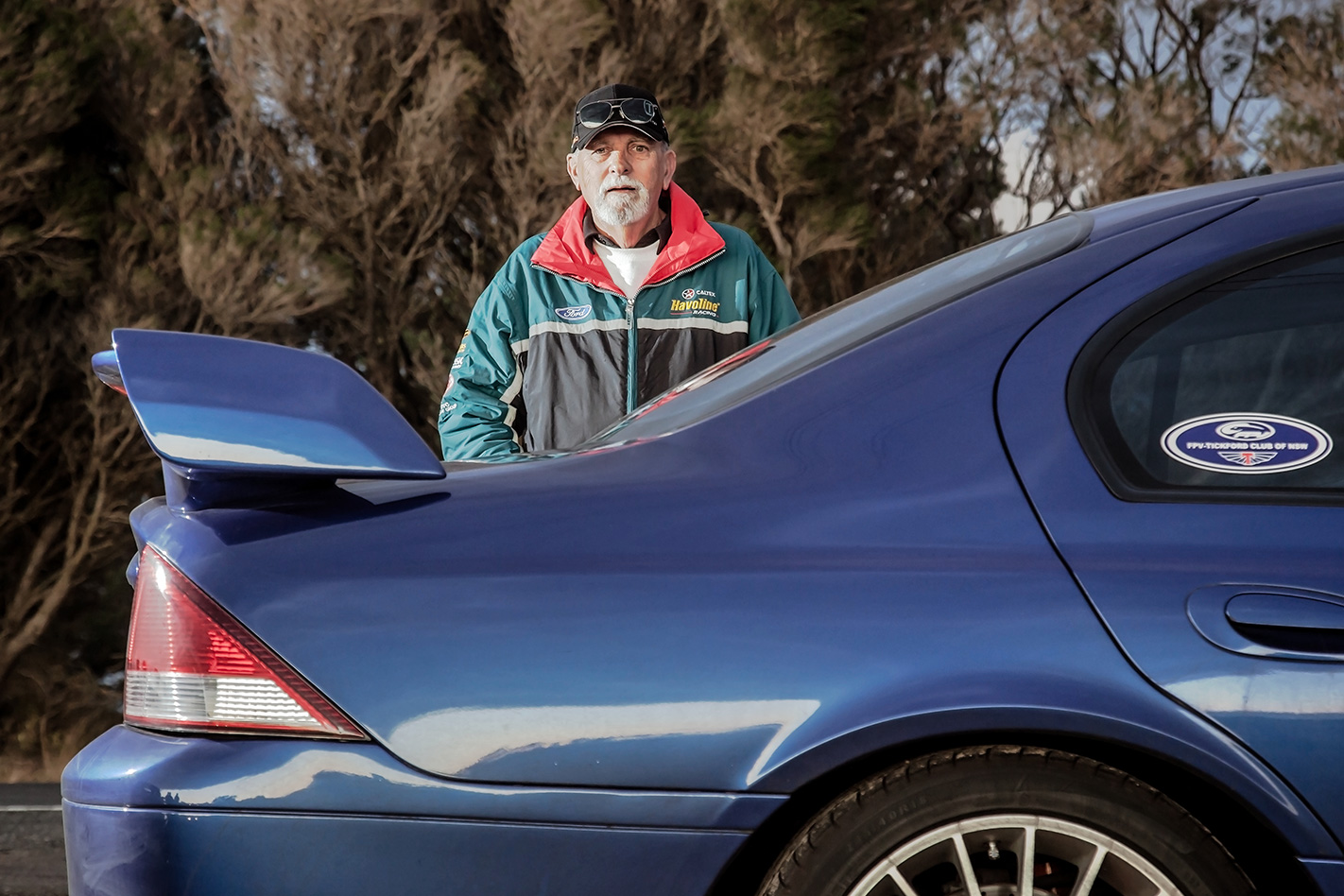
2002 TVE TE50 T3 specs Price: $58,350 (new) Engine: 5604cc V8, OHV, 16v Power: 250kW @ 5250rpm Torque: 500Nm @ 4250rpm Kerb weight: 1720kg 0-100km/h: 6.0sec (claimed)
Rob Maricic – 2004 BA GT
“As a kid I grew up watching Bathurst – Moffat, Brock, Dick Johnson – Ford’s been in my blood since I can remember. This came on the market, it was well looked after one-owner, so I purchased it – I’m building a bit of a mini collection. I’ve put an order in for a GT F, so the garage is getting full. I’ve got a son who also follows Ford.
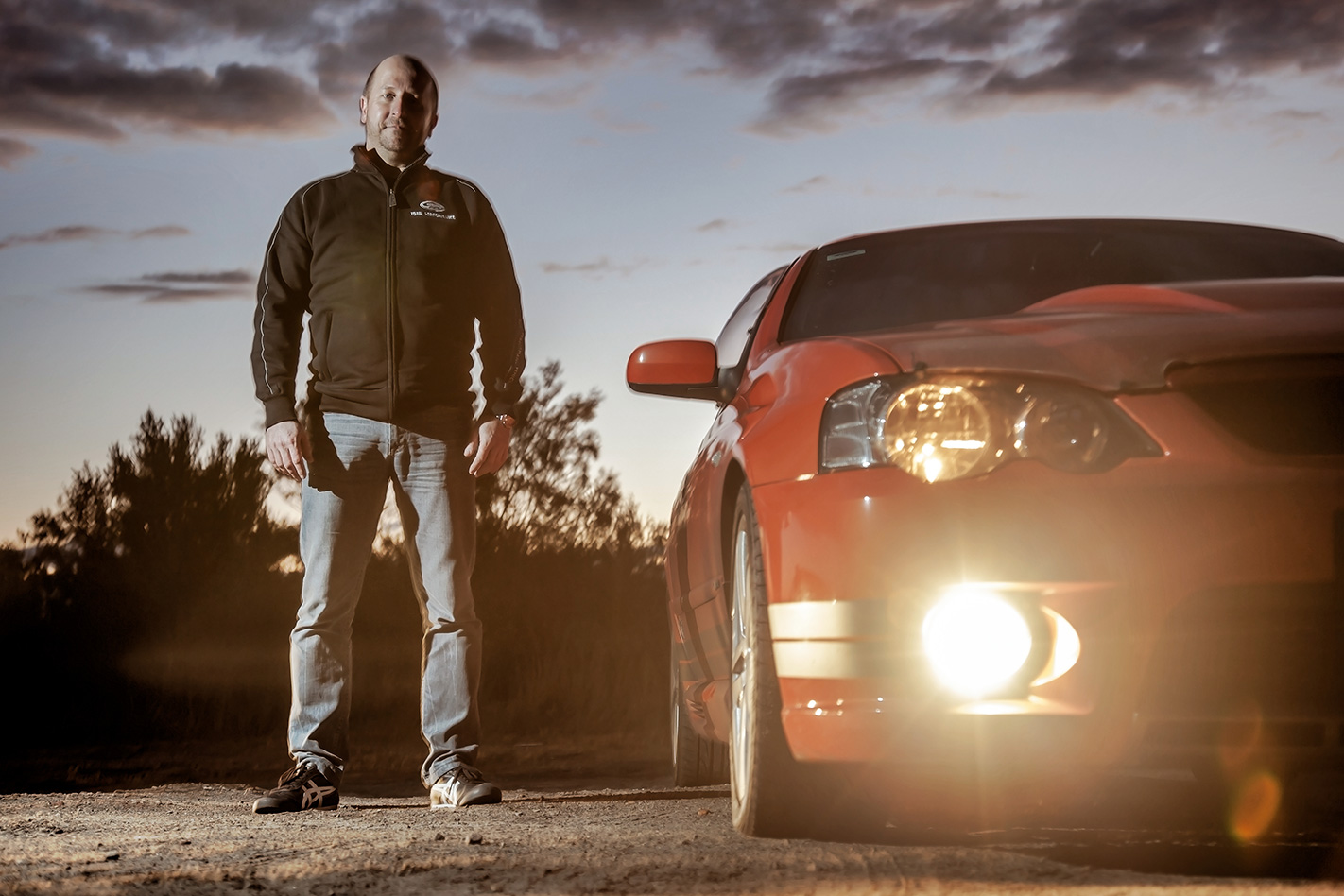
2004 BA FPV GT Price: $61,000 (new) Engine: 5408cc V8, DOHC, 32v Power: 290kW @ 5500rpm Torque: 520Nm @ 4500rpm Kerb weight: 1845kg 0-100km/h: 5.9sec
Tony Cordina – BFII F6 Typhoon
‘Can’t piss on what you can’t catch’ reads the sticker on the rear window of the BFII F6 Typhoon. You get the impression that for Tony Cordina, the F6’s appeal has as much to do with its untouchable bang-for-buck as its badge. Not that he’s any less the Blue Oval man than the next bloke. “I love watching the V8s. I’ve always had Fords since I started driving.”
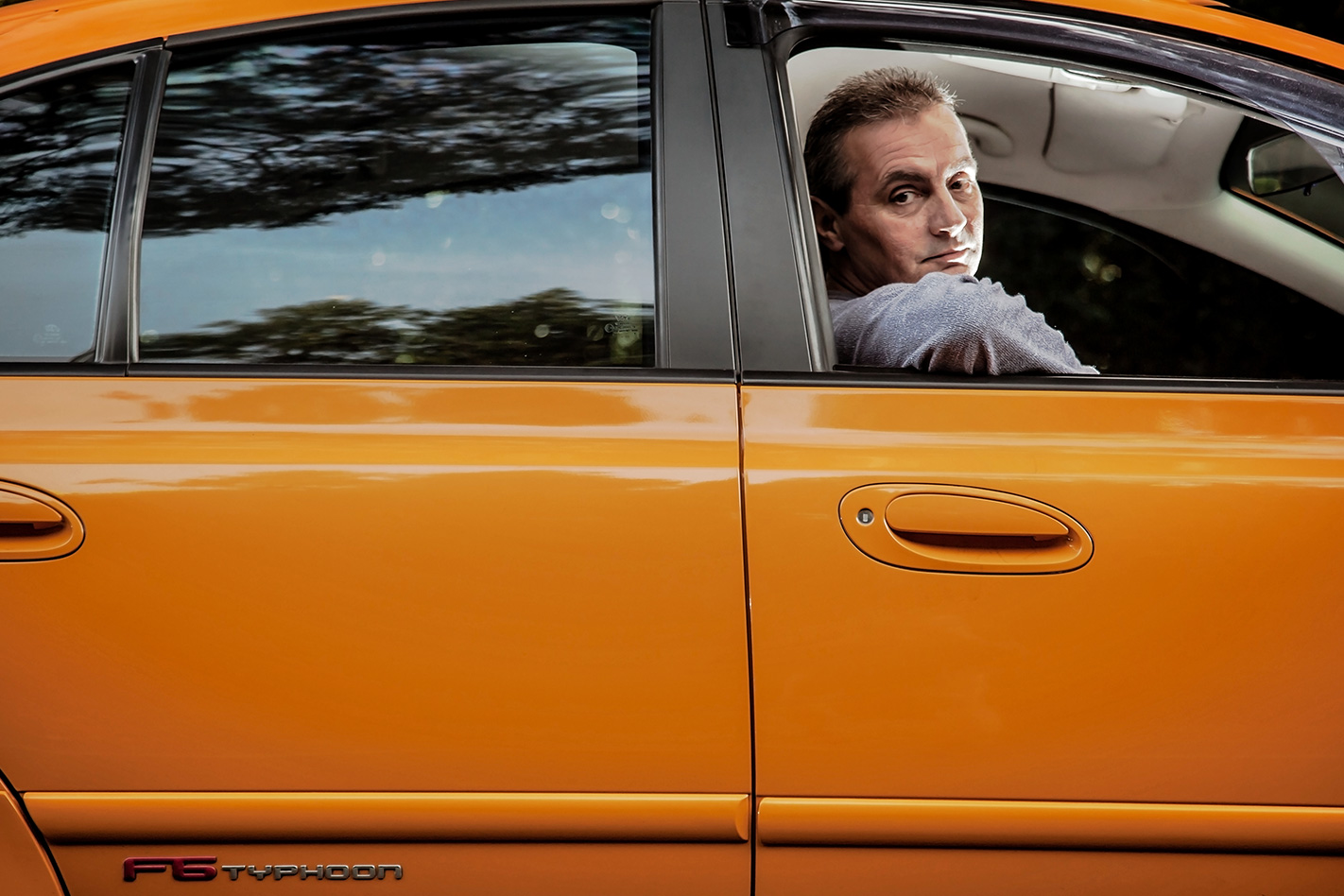
2006 BFII FPV F6 Typhoon Price: $61,810 (new) Engine: 3984cc in-line 6, DOHC, 24v, turbo Power: 270kW @ 5250rpm Torque: 550Nm @ 2000-4250rpm Kerb weight: 1815kg 0-100km/h: 5.7sec
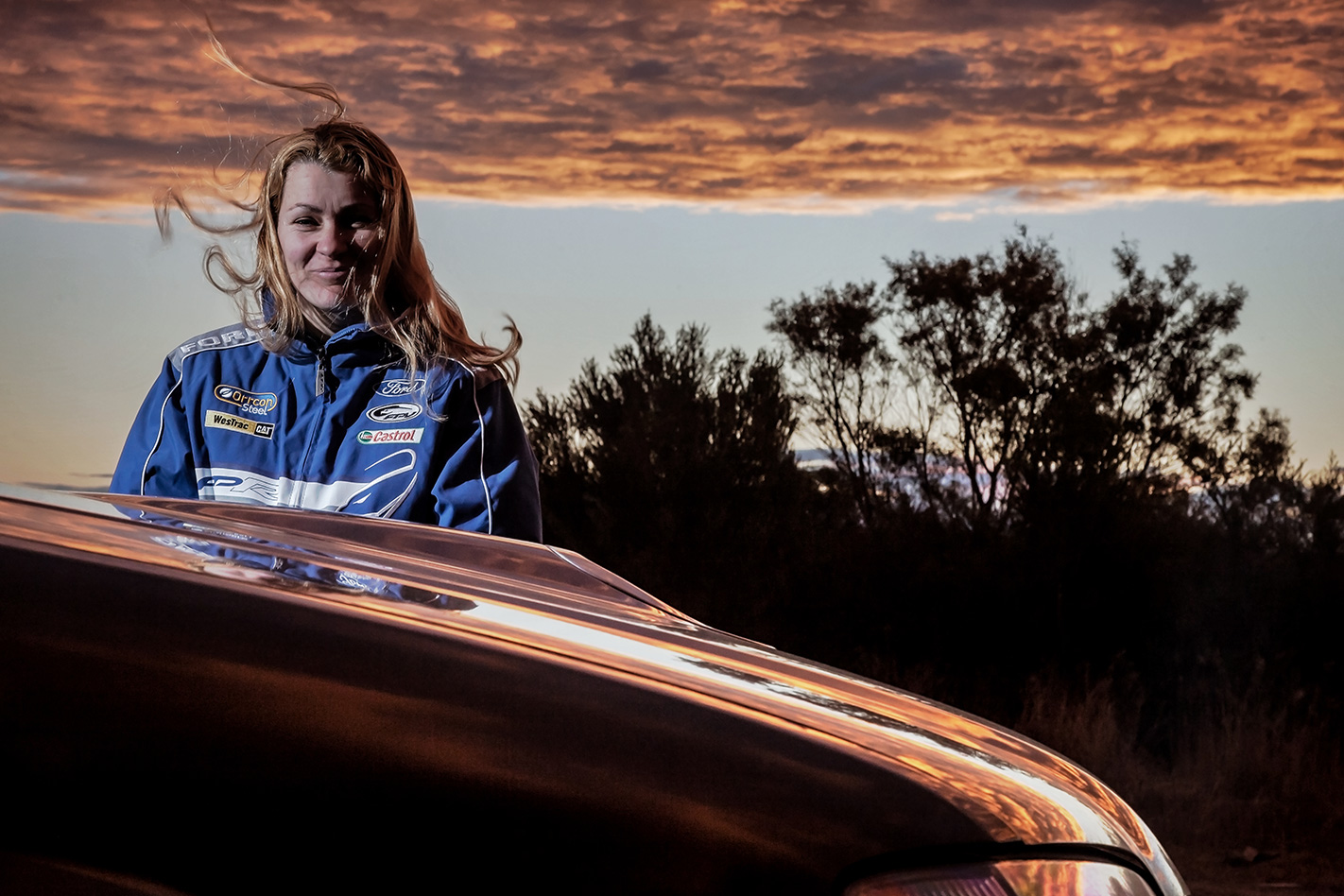
Kate Clark – 2008 F6X
“I’ve grown up with Fords all my life, my parents have had FPVs; my parents have had GTs. I finally bought mine in 2008. It was my husband’s ex-demo – we ended up buying it because we needed seven seats for the kids, and I wouldn’t part with it. I’m a car nut – always have been always will be.
2008 FPV F6X Price: 75,990 (new) Engine: 3984cc inline 6, DOHC, 24v, turbo Power: 270kW @ 5250rpm Torque: 550Nm @ 2000-4250rpm Kerb weight: 2155kg 0-100km/h: 6.0 (sec)
Ben Schibeci – FG F6 310
“My dad’s got an old GT – an XA rusting away – so we’ve always been a Ford family; Ford people. As soon as I could afford one I bought an XR8.
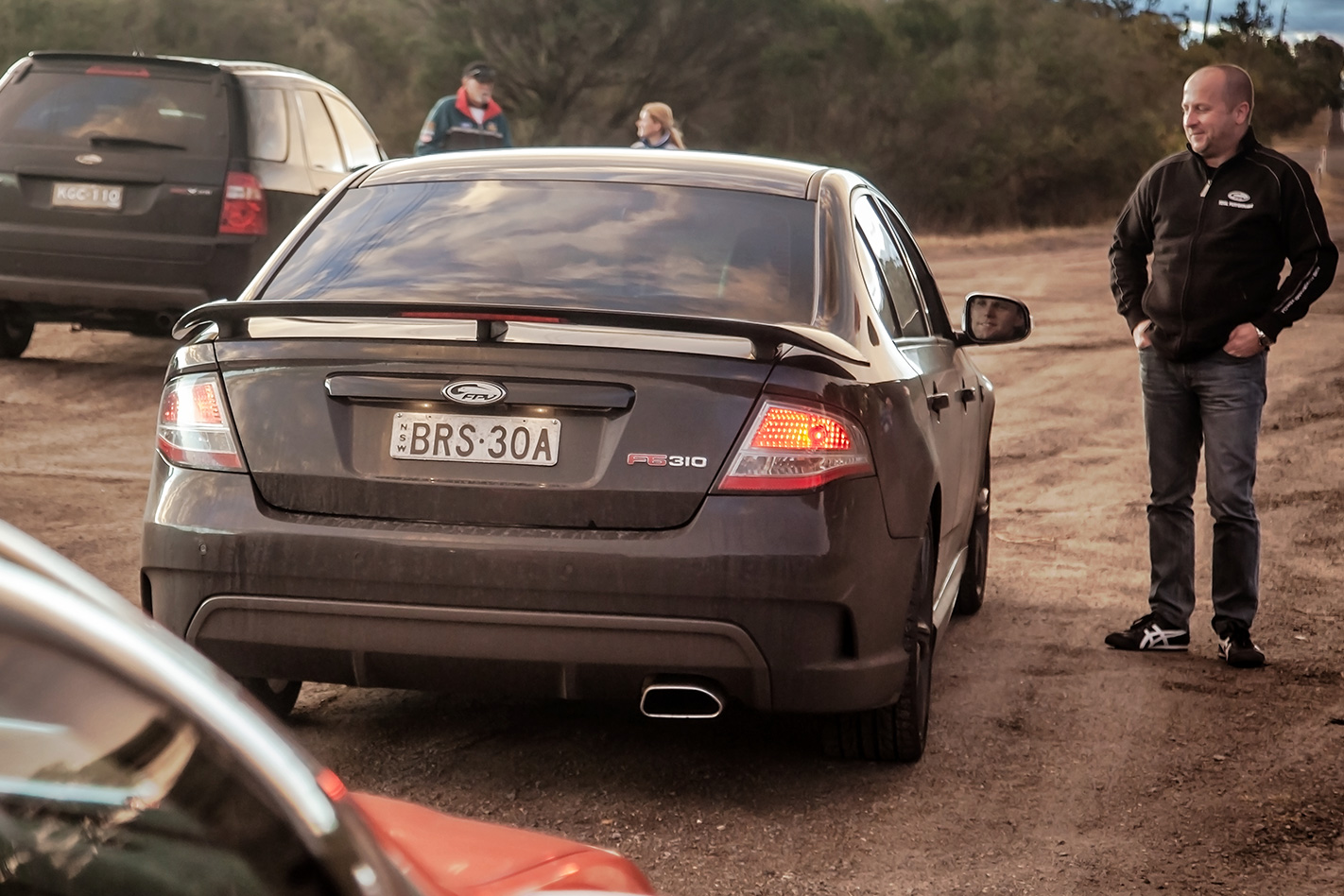
2014 FPV F6 310 Price: $64,390 (new) Engine: 3984cc in-line 6, DOHC, 24v, turbo Power: 310kW @ 5500rpm Torque: 565Nm @ 1950-5200rpm Kerb weight: 1778kg 0-100km/h: 5.1sec (tested)
Verdicts
EB GT Watered down return of the GT V8 was a slow seller. Mainstream collectability and appeal has eluded it, as has big-time appreciation, but rarity and first-of-the-series significance on its side today
EL GT Remembered for its out-there grille and body additions rather than game-changing performance. The GT had (again) gone soft, but paved the way for ultimate TE50 and birth of FPV
TE50 T3 It wasn’t until the third TE50 that TVE got the package right. T3’s ‘stroker’ 5.6-litre Windsor V8 a grunty cracker of a donk and more than a match for HSV rivals. AU styling proved more difficult to stroke
BA GT First-FPV significance with new-gen chassis and overhead cam V8 give the BA GT both collector and driver appeal, once you’ve upgraded the soft suspension. A massive hit back then and still holds enthusiast appeal
BFII Typhoon FPV’s each-way bet on the turbo six and V8 had well and truly paid off. Beloved of The Boys in Blue (for Highway Patrol duty) and Blue Oval fans. Typhoon’s enviable bang-for-buck even stronger now than new
F6X FPV’s foray into super-SUV realm didn’t pay off. F6X a well-sorted package but price tag and Territory Turbo-alike looks hurt its appeal. A limited edition, but this time build-count limited by demand, rather than supply
FG F6 310 F6 by now a fixture on Aussie hi-po landscape and perhaps the default local performance pick (over a V8). Storming grunt from the last ‘Barra’ 4.0-litre turbo-six
GT F Potent, 400kW-plus (on overboost) limited-edition muscle sedan a fitting FPV send-off. Great value at $77,900, if not the $100K being asked by opportunistic types. Run of just 500 (for Oz; 50 for NZ) should guarantee collectability
The Nissan Navara doesn’t traditionally have a reputation for being the toughest looking of the big dual cab utes, but that could change with a new N-Sport Black Edition model.
Limited to 500 units, the special edition Navara N-Sport Black Edition is based on the ST-X Dual Cab 4X4 and boasts unique accessories and decals including black nudge bars, a factory-fitted LED light bar and beefy black fender flares housing 18-inch black alloy wheels.
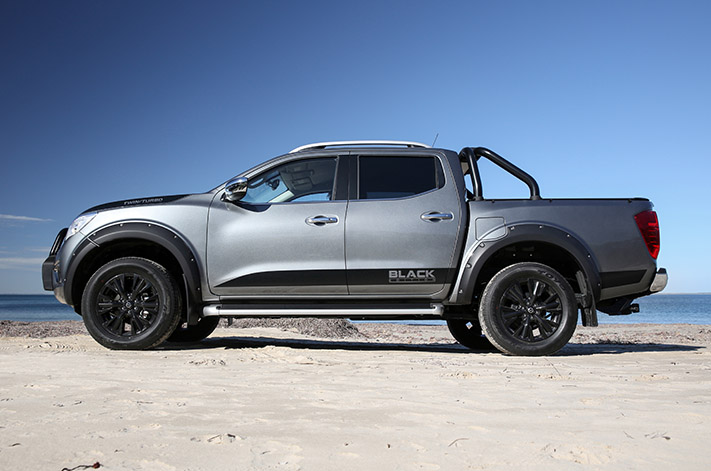
The black theme continues with a gloss honeycomb grille and smoky chrome fog lamp finishers, along with a black vinyl tonneau cover, N-Sport badging and ‘Black Edition’ decals to ensure you’re in no doubt.
Paint options include Cosmic Black, Slate Grey, Brilliant Silver and Diamond White.
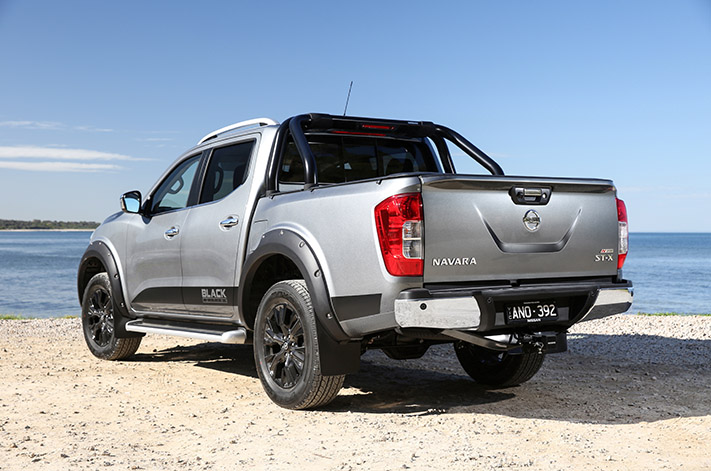
All that gear comes with a $2500 premium over the ST-X with the six-speed manual and seven-speed auto versions retailing for $54,490 and $56,990 respectively.
Like the ST-X, the N-Sport is powered by a 140kW/450Nm twin-turbo diesel and features coil suspension at both axles along with a 3500kg braked towing capacity.
It also shares all the range-topper’s features including a 7-inch touchscreen with satellite navigation and reversing camera and rear parking sensors.
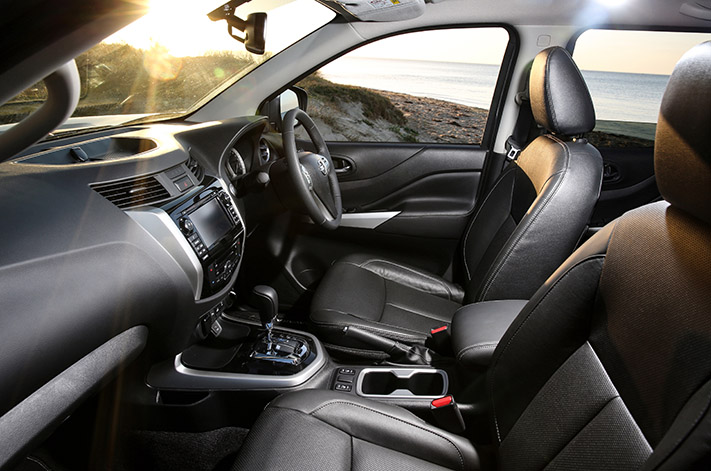
The Navara‘s shift-on-the fly 4WD system also equips the N-Sport, offering the ability to change between 2WD and high-range 4WD when on the move. A dual-range transfer case allows low-range 4WD to be engaged for the real rough stuff, where you’re also assisted by a brake-based limited slip differential, hill start assist and hill descent control.
The Nissan Navara N-Sport Black Edition is now on sale at Nissan dealers.
An online forum has unearthed the name of Jeep’s much-anticipated Wrangler utility – the Scrambler.
And the forum, aptly named jeepscramblerforum.com, not only reports with a high degree of certainty that “Scrambler” will be the official name of the JT-platform Jeep, but also that it will be offered solely as a dual-cab utility and powered by a 3.0-litre turbo diesel V6.
The Scrambler name has provenance, having been used by Jeep in the early 1980s for a lifestyle-oriented two-seat version of the CJ-series Jeep. Like the soon-to-be Scrambler, that Jeep was also a ute – albeit one that only had two doors.
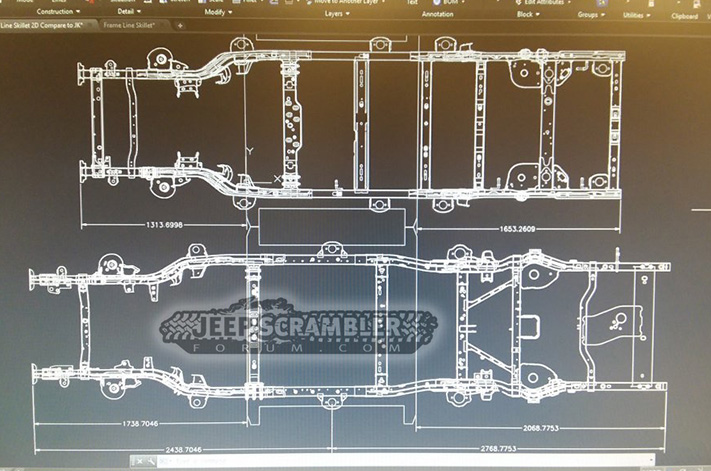
The new Scrambler will boast two more doors and a full rear bench for a seating capacity of five, which will put it in direct competition with the kind of dual-cab utes that are currently enjoying unprecedented sales success in Australia – vehicles like the Ford Ranger, Toyota Hilux, and Mitsubishi Triton. Evidence of a single-cab variant has yet to materialise.
Helping it do battle with those workhorse utes will be a longer wheelbase to accommodate a generously-sized tub. According the jeepscramblerforum.com, the JT Scrambler’s ladder-frame chassis will be roughly 830mm longer than that of a current-generation JK Wrangler four-door – a huge stretch.
However, unlike most dual-cab utilities, the JT Scrambler appears to forgo a load-lugging leaf spring rear suspension in favour of off-road optimised coil springs. Currently, only the Nissan Navara boasts a similar suspension layout.
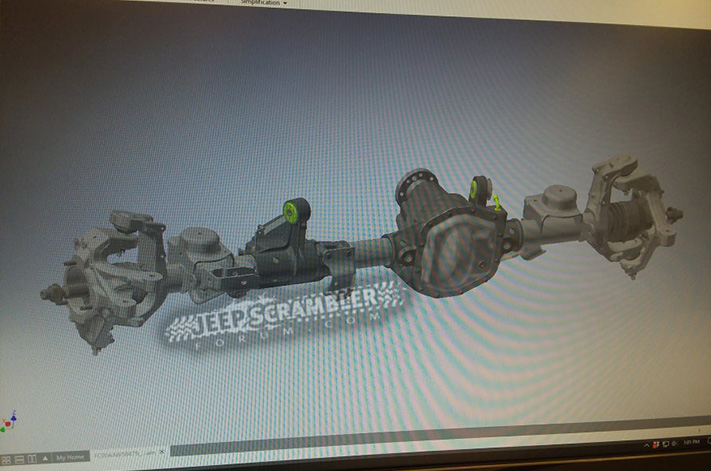
Like the current-gen Wrangler, the Scrambler will also use live-axle suspension at the front and rear to maximise rock-hopping grip – another point of difference with most dual-cab utes, which typically use an independent front suspension and a live axle rear.
The JT Scrambler will be available with three roof styles, with Wrangler-style removable hardtops in both black and body colour, along with a soft top option.
The JT Scrambler is expected to make its showroom debut in 2019.
TELL ME ABOUT THIS CAR
While it’s not an all-new model, the Volkswagen Golf 7.5 nevertheless is an improvement on Golf 7, while maintaining its reputation for quality and excellent handling.
The 110 TSI Comfortline sits in the middle of the range and is powered by the 110kW/250Nm 1.4-litre four-cylinder turbocharged petrol engine found across the non-performance Golf models coupled with a seven-speed dual-clutch automatic transmission.
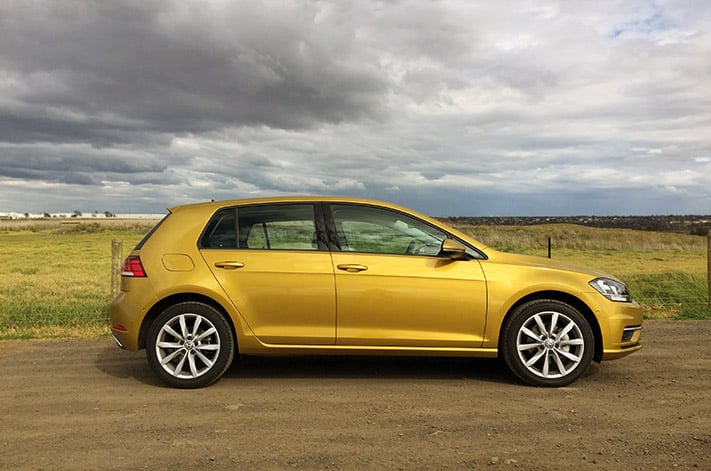
The Comfortline retails for $28,990 as standard, though the vehicle we tested also came with a $1500 Driver Assistance Package which includes adaptive cruise control and lane keeping assist, plus $2300 infotainment package with active info display dashboard. The addition of Turmeric Yellow premium metallic paint tips the price beyond $33,000 before on-road costs.
STRENGTHS
- Standard equipment is plentiful and includes automatic emergency braking, an 8-inch infotainment screen with reversing camera, Apple CarPlay and Android Auto smartphone mirroring, cruise control and speed limiter, premium cloth seats, a leather upholstered steering wheel, 17-inch alloy wheels, driver fatigue alert, tyre pressure sensors, rain-sensing windscreen wipers, auto headlights, LED daytime running lights, LED tail-lights, heated power-adjustable external mirrors, front and rear parking sensors, voice controlled satellite navigation and dual-zone climate control.
- The driver’s seat is a nice place to be, with controls and buttons laid out intuitively and a comfortable driving position on the cloth-upholstered and manually-adjusted seats. This includes the infotainment system which is easy to navigate and has a simple and quick Blutooth connection.
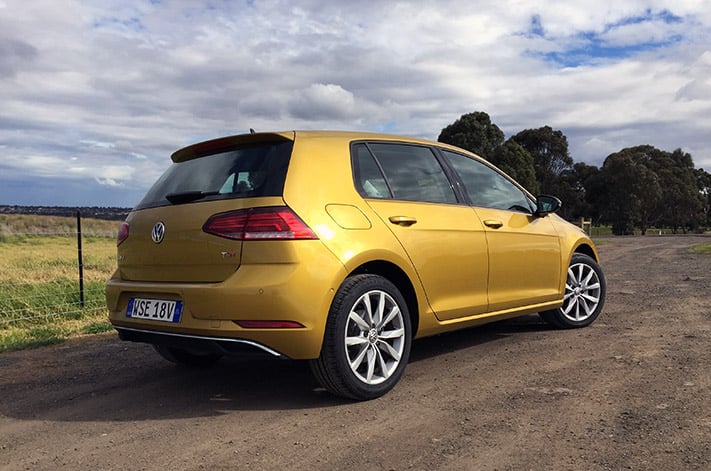
- The rear seats are also roomy and comfortable with good, leg, head and elbow room for two adults. The doors open wide making getting in and out easy while the rear windows are nice and big – even children will be able to see out.
- It’s great to drive too with excellent chassis control, precise steering and independent rear suspension that combine for excellent roadholding and minimal body roll. Unlike some small hatchbacks, the Golf Comfortline loves winding roads. It handles bumpy roads with aplomb too, despite the relatively firm ride.
- The 110 TSI engine experiences some turbo lag when you put the foot down, but it provides more than enough power once it winds up. It’s a flexible powertrain despite its size, with plenty of pulling power in a torque-rich midrange.
- The 380-litre boot is a decent size for a small hatch and extends to 1270 litres with the 60-40 seats folded down.
- It’s every bit as sophisticated looking at its bigger brothers such as the Passat and Tiguan
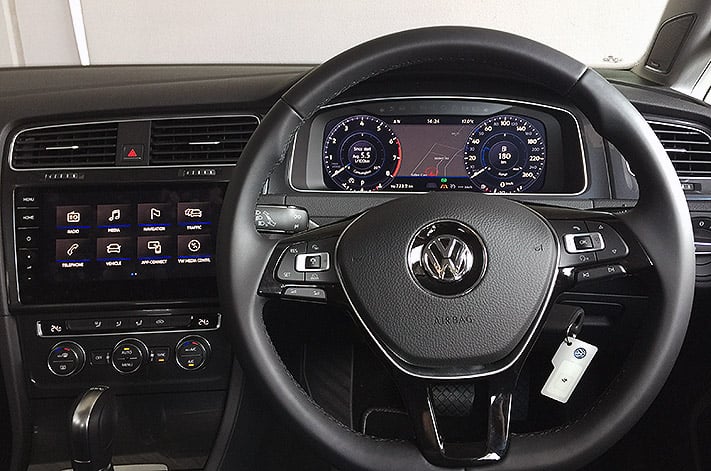
- The Infotainment Package really makes this car feel seem a lot more expensive than it is, with the Audi-style digital dashboard display, larger 9.2-inch touchscreen and excellent premium sound system with sub-woofer. It’s an option worth paying for, if you value cutting-edge technology.
- There’s no manual version of the Comfortline, which is a shame as the 110TSI with manual gearbox is almost as enjoyable to drive as the Golf GTI.
- As well as that turbo lag it’s a little sluggish off the mark because of the dual clutch auto, which is a little stiff and slow to respond in stop-start traffic. Make sure you factor that in if you need to pull out into fast-moving traffic.
The circa $30,000 retail price may seem a little high, but Volkswagen has shifted the Golf 7.5 more upmarket which makes the 110TSI Comfortline pretty good value against entry-level premium hatches such as the Audi A1, BMW 1 Series, Infiniti Q30, Mercedes-Benz A-Class and Mini Cooper.
You’ll have to look at the higher-spec versions of its traditional rivals for suitable alternatives which offer more by way of creature comforts if not technology. These include the Holden Astra RS-V, Ford Focus Titanium, Honda Civic VTi-L, Hyundai i30 Elite, Mazda 3 SP25, Renault Megane Zen, Subaru Impreza 2.0s and Toyota Corolla ZR.
If there’s anything more Aussie than lighting up the rears of a V8 Commodore ute at Summernats, we’re yet to find out what it is.
Add one of Australia’s most prolific racing drivers to the mix, and you’ve got yourself some smoked Australiana.
Summernats (which our sister mag Street Machine has strong ties to) is the universal centre for burnouts, so when Peter Brock showed up to Summernats 12 in 1999 to see what all the fuss was about, someone was bound to put him in an Aussie V8 and let his right foot do the rest.
Even without Brock behind the wheel, the 520kW Autotek ‘Beast’ VS ute has no trouble ripping up Pirellis, or burning them for that matter.
The next year, the MOMO-liveried ute showed up to Springnats in Shapparton and proved to be a fire hazard in the most spectacular fashion.
The rears didn’t stand a chance.
Thankfully, the CFA was on hand.
But Brocky’s not the only touring car driver who’s proven he can smoke up a storm. At Summernats 29 Jamie Whincup had a crack at smoking some Commodore tyres himself.
But they weren’t just any Commodore tyres. He brought along a V8 Supercar, because everyone else needed to see how it was done.
Well, not his own car exactly…
…it was Shane Van Gisbergen’s. But to be fair, would you do that to your own car? Those tyres aren’t cheap!
Check out the 1.15 mark in that video, too. A pit stop halfway through the burnout means more tyres to shred.
THROUGH luck or design, Kia’s foray in the luxury sports sedan arena is being compared to European competitors in the segment, whilst being sized up as a candidate to fill the void left by the departure of Holden and Ford’s muscle sedans.
It’s a tall order, and if the Kia Stinger stands even half a chance at filling the Aussie’s still warm boots while worrying some established European competition, performance will have to be on point, but until now, a zero to 100km/h acceleration claim is all we’ve had to go on.
We pulled on our lab coats and put the Stinger through the same rigorous performance testing applied to all performance cars that come through the Wheels garage, to see if the South Korean newcomer can match its paper performance claims on red dirt.
For our first blast on Australian asphalt, Kia had supplied pre-production versions of the 2.0-litre turbo T and the 3.3-litre turbocharged V6 GT – our focus for this story (For the full review of both, pick up a September copy of Wheels).

As part of their fettling, the cops had unplugged a few boxes that needed to be re-flashed with programs, which prevented us from nailing a full launch-control start but, as you’ll see, that didn’t stop the Stinger from putting up some impressive times nonetheless.
So what’s the claimed time? While a figure of 4.9 seconds is a popular number proliferating amongst the media, the official European release says the Stinger GT will crack 100km/h from a standing start in 5.1sec. You know what? That’s exactly what it did, even without a faultless launch function.

So how does that compare with what are being touted as the vehicles Kia has to equal, if not better? For that answer we have to look back at the three-way comparison Wheels conducted in its August 2016 edition, which pitched the Ford Falcon XR6 Sprint, its V8 sibling XR8 Sprint, and the Holden Commodore SS-V Redline in a three-way battle.
It’s a mixed bag with a 4.0-litre turbo in-line six in the XR6, a supercharged 5.0-litre V8 for its XR8 stablemate, whereas the Commodore has an atmo 6.2-litre V8, and the Kia weighs in with a turbo V6 and 3.3-litres. However, all offer seating for five, four doors, and two driven wheels at the back for around the $60,000 mark. It’s on then.
Conditions at the Sydney Dragway for the Aussie thrash back then were a little warmer than our Kia runs, but it was similarly dry and with the same driver at the wheel.
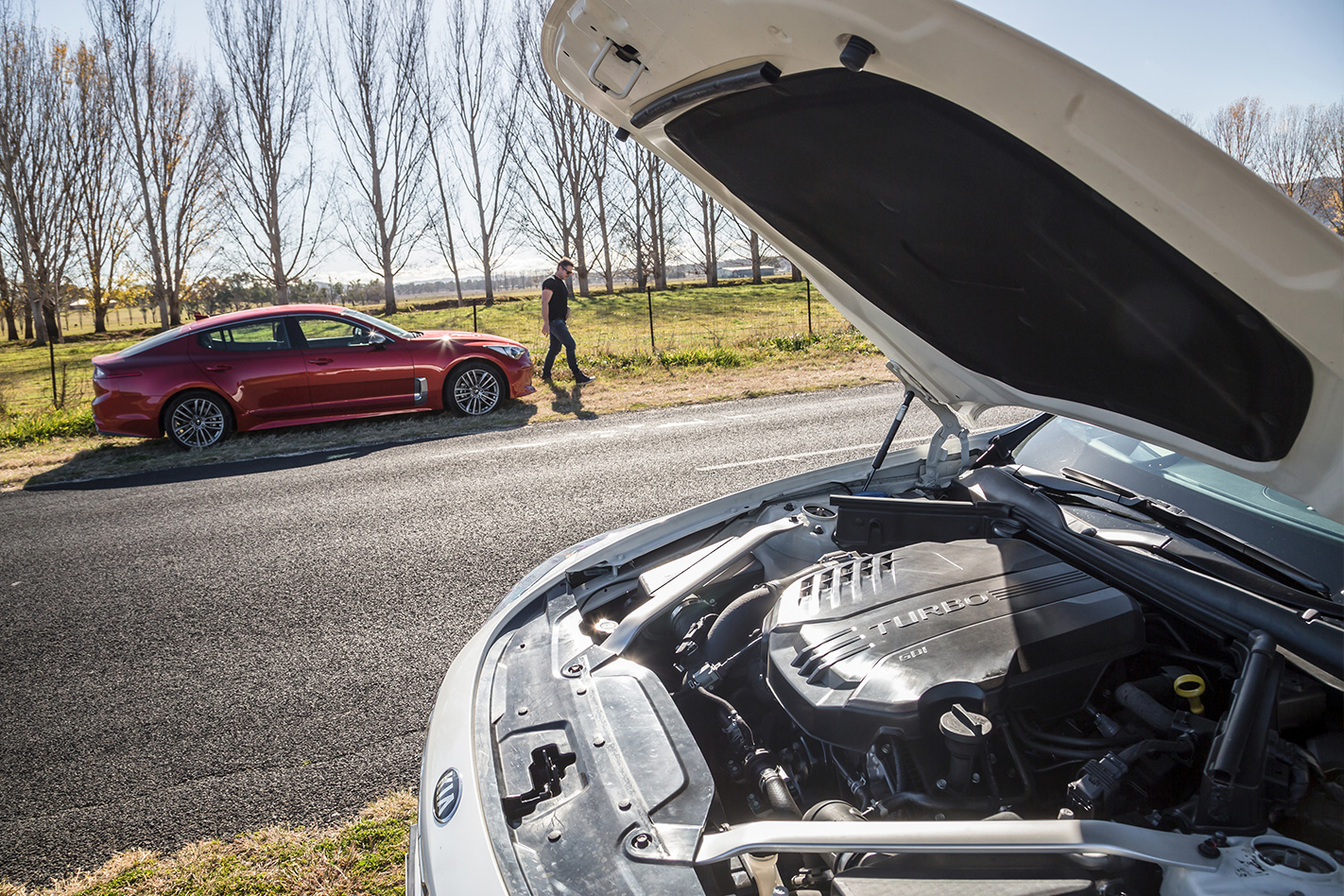
In a very close second place, the XR6 Sprint was slightly slower over the 400m course compared with its eight-cylinder sibling – it managed a time of 12.9sec (181.5km/h) versus the XR8’s 12.7s time and 186.8km/h terminal velocity. In the zero to 100km/h stakes though, the Fords were neck and neck at 4.8sec each.
Rolling acceleration is another barometer of overall performance and a useful real-world comparison. A test, interestingly, the Kia ranked in the middle of the pack.
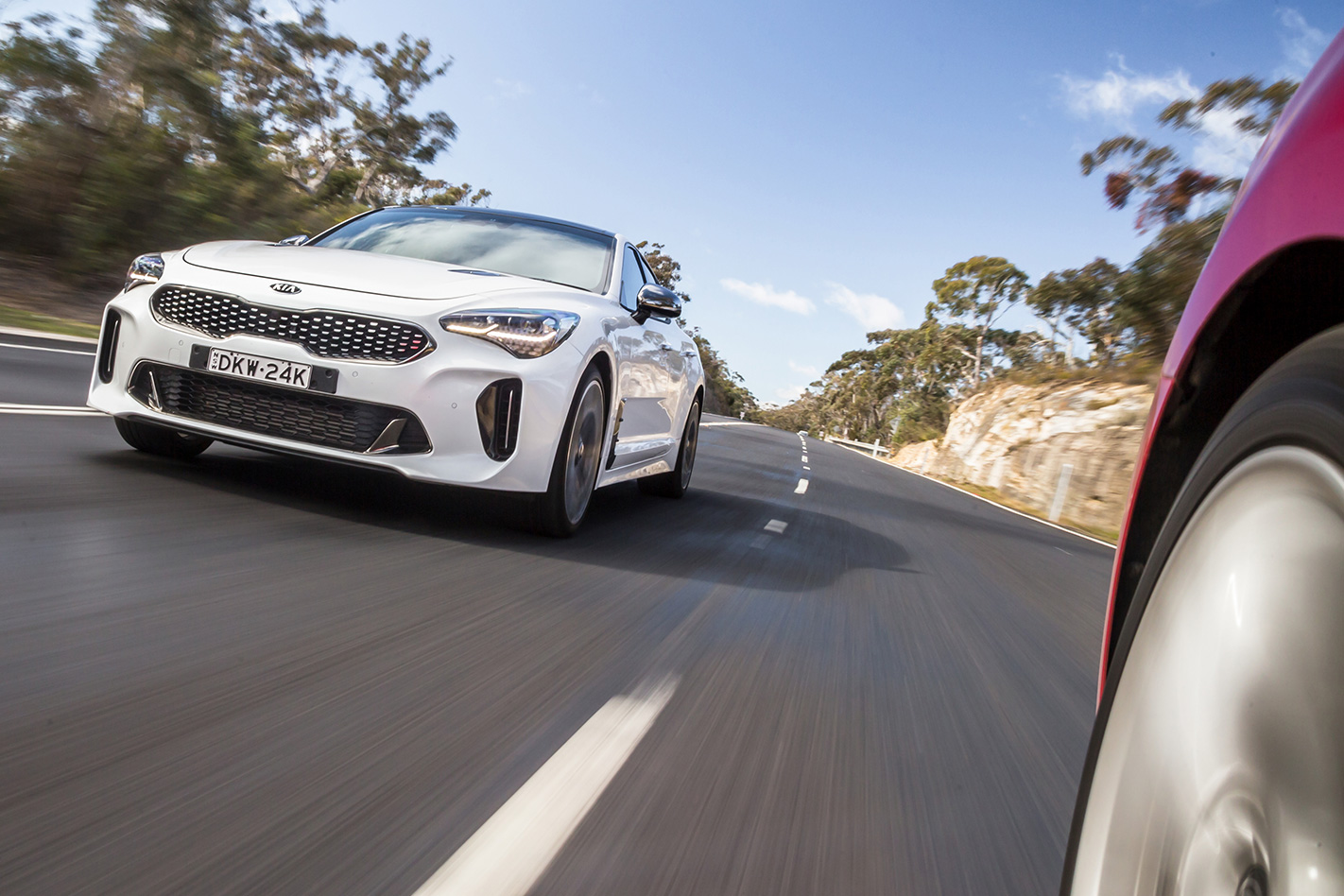
Until the production Kia Stingers start arriving on Australian soil with fully functioning launch electronics, the final verdict will have to wait but, the early signs at least show that, while the Kia is yet to match the Aussie cars’ drag strip ability, it’s getting close.
OH, WHAT a feeling.
Ford’s bid to bring a hi-po Raptor-badged version of its Ranger trade ute to Australia appears to have hit a huge speed bump – Toyota’s trucking division already has its fingers all over the Raptor name.
Hino Motors, the truck division of Toyota that is somewhat famous for being the first brand in Australia to include digital radio as standard across its vehicle range, currently owns the Raptor name after securing the rights to it in the early 1990s. Though it appears Hino has never used the name, it has ensured its hold over the name is regularly updated.
In an embarrassing case of deja vu for Ford, Toyota recently refused to release its hold on the Edge name, forcing the US car maker to buck the global name for the vehicle and instead badge its incoming Mazda CX-5 fighter as the Endura when it arrives in 2018. The US brand has now had to go and ask its Japanese rival if it can use Raptor here.
Ford is yet to confirm that it is bringing the Raptor-badged Ranger to Australia. However, the lengths it is going to in its effort to secure the Raptor trademark for the Ranger – and the as-yet unannounced-for-Australia F-150 Raptor – suggests its plans for performance trade utes are a little more than mere rumour, and could range a little wider than just the Ranger.
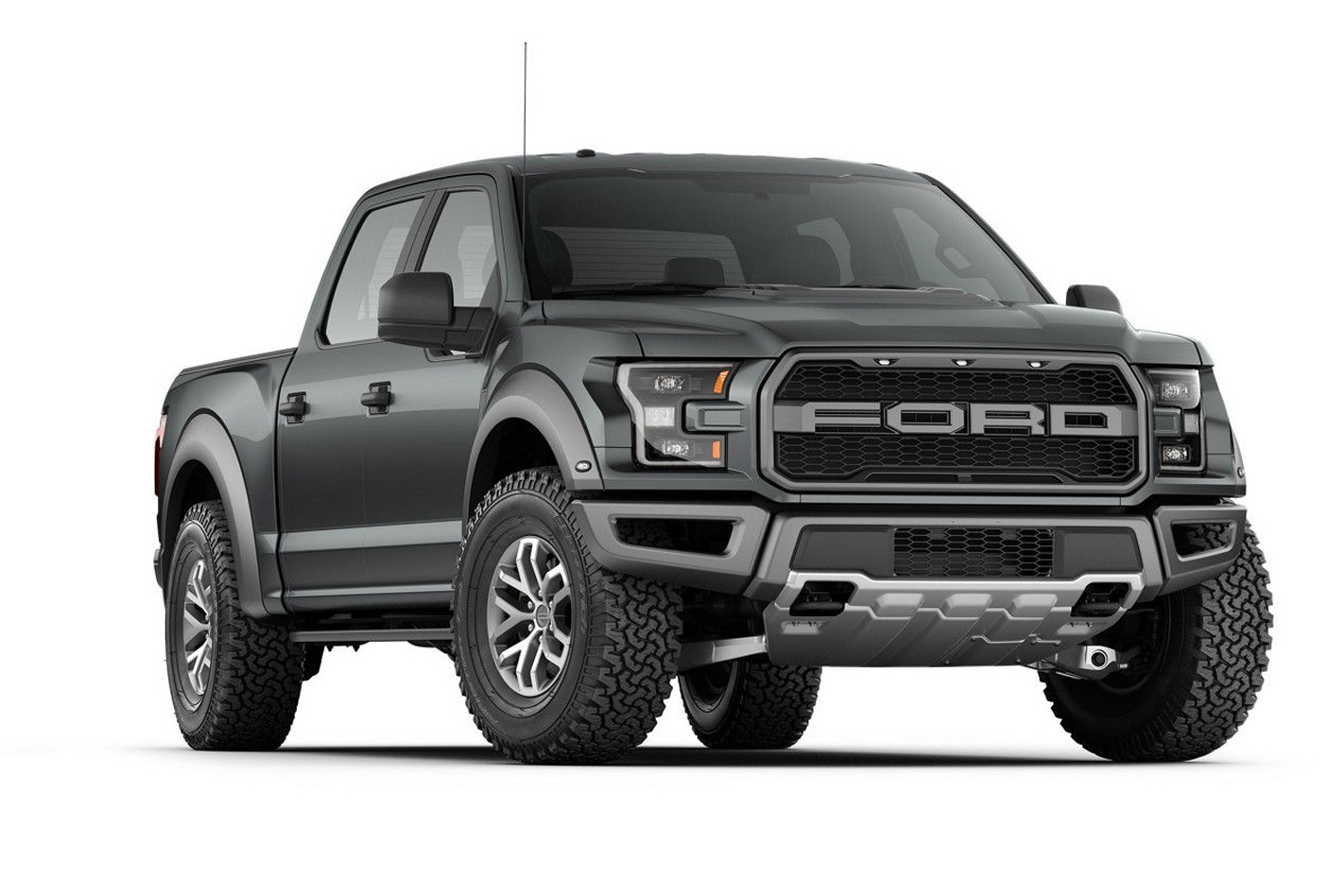
According to IP Australia, Ford Australia and Hino Motors have agreed to a “cooling-off period” while talks between the companies, aimed at coming to some sort of an amicable settlement, continue.
Ford and Hino were asked for comment.
Ford’s battle to secure the Edge name to fit to its updated five-seat Territory large SUV replacement was years in the making. Ford wanted the Edge name – used on limited edition Toyota Corolla and RAV4 models about a decade ago – to fit in with its new global strategy of starting the name of every SUV in its line-up with the letter “E”. Instead, it will endure with Endura.
