
There are still a few rough edges to be sorted out so it’s not perfect but a rugged 1000 km road test proves that Holden‘s $10,500 SL/E Reality is more than a match for any 30 grand European Image.
First published in the January 1979 issue of Wheels Magazine, Australia’s most experienced and most trusted car magazine since 1953
IN THE weeks between our first, pre-release, drive of the new Holden Commodore at The General’s Lang Lang proving ground and that memorable moment when we took the first road test Commodore out of the Pagewood, NSW, plant our enthusiasm for the car had waxed and waned.
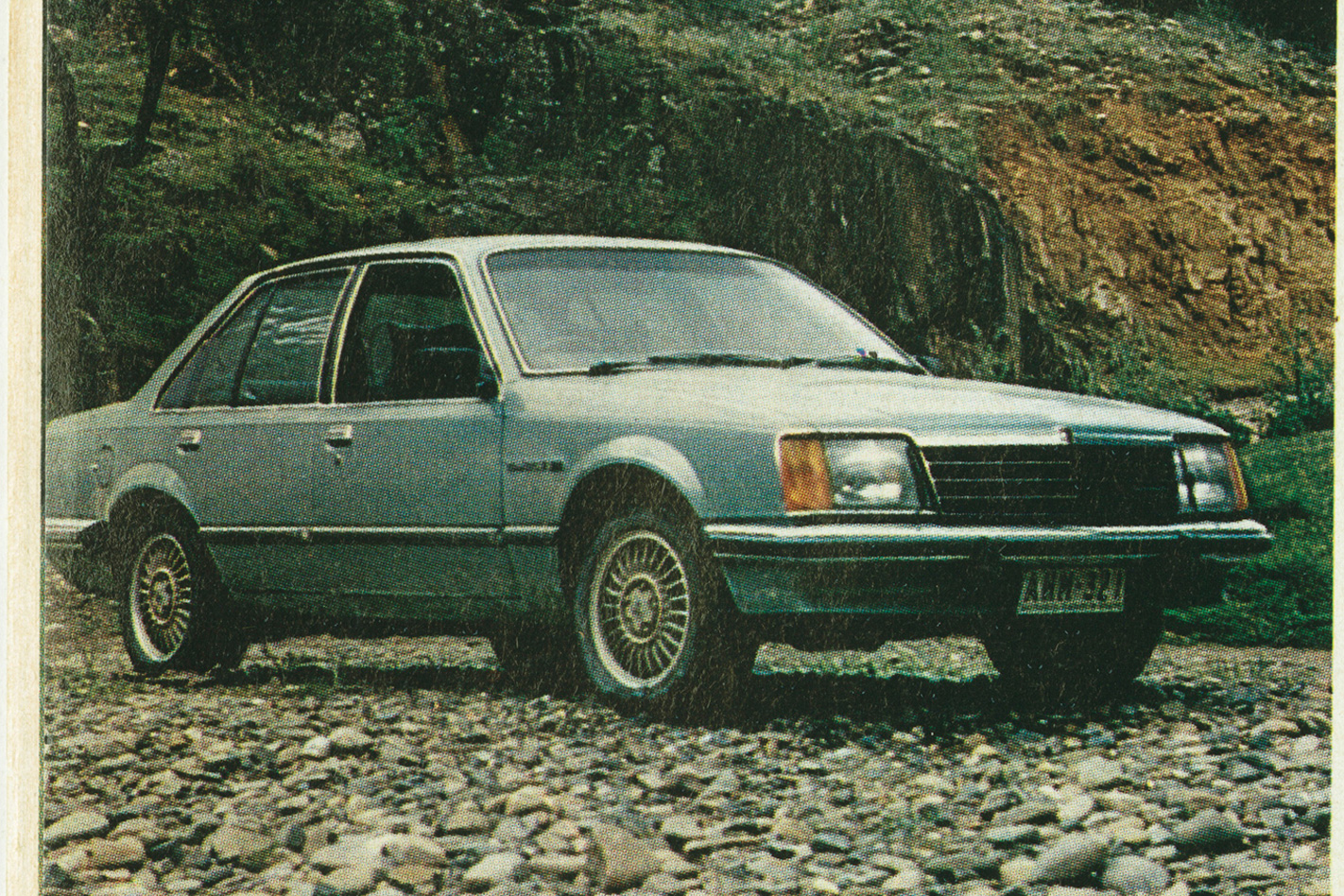
Still, we had been sure enough to claim, in WHEELS December, that the Commodore “is far and away the best Australian family car ever, and by a very big margin of merit”.
Now, after more than 1000 km in an SL/E which encompassed every road condition we could throw at it, we know we were right to trust our judgement and deny our scepticism.
In many ways – and especially dynamically – the Commodore is better than we ever believed and at the price – $6,513 for the base model, $7,813 for the SL and $10,513 for the SL/E – it is certain to cause heartache among the other local manufacturers and reduce many of the importers to trembling wrecks in the face of such a competitive onslaught.
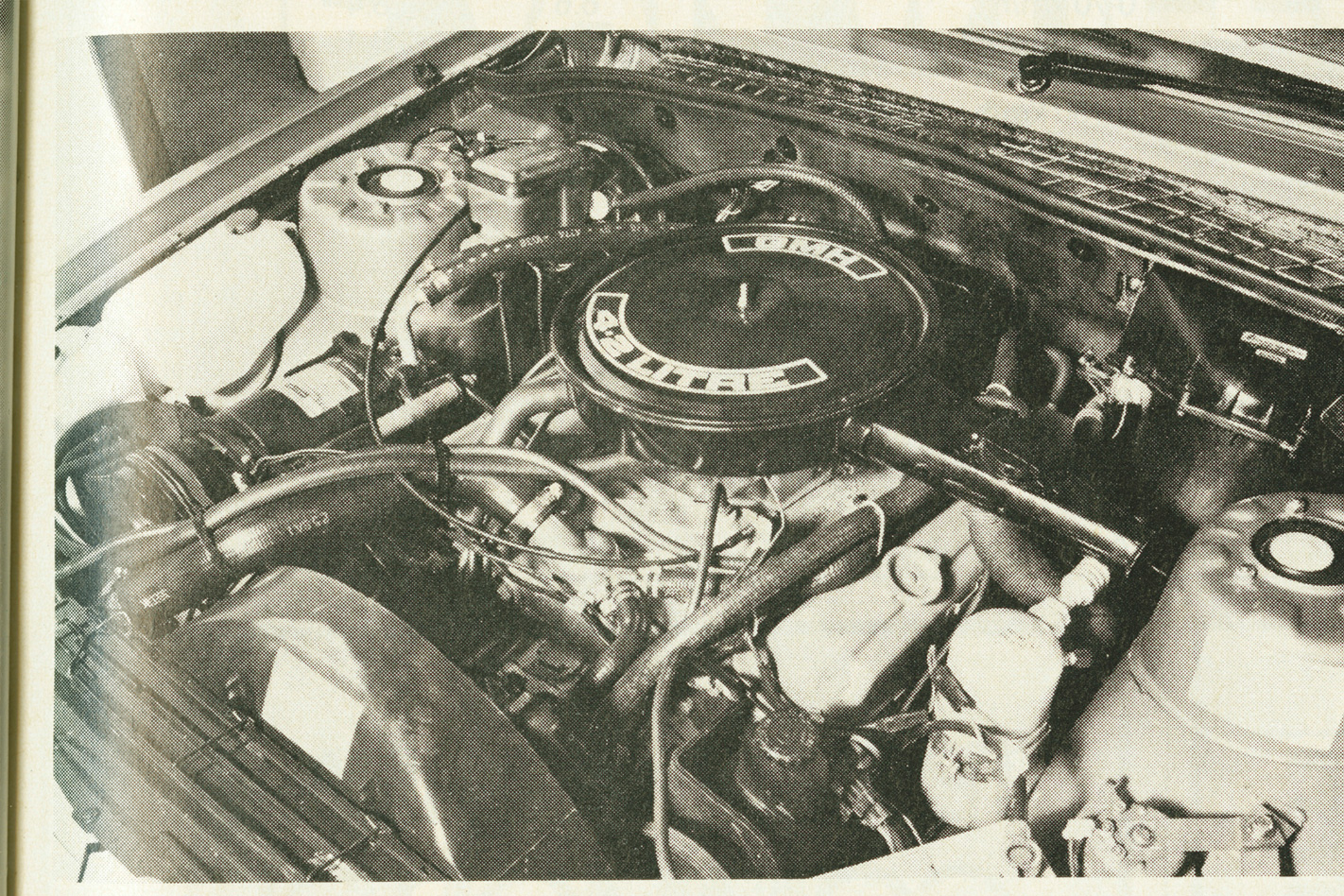
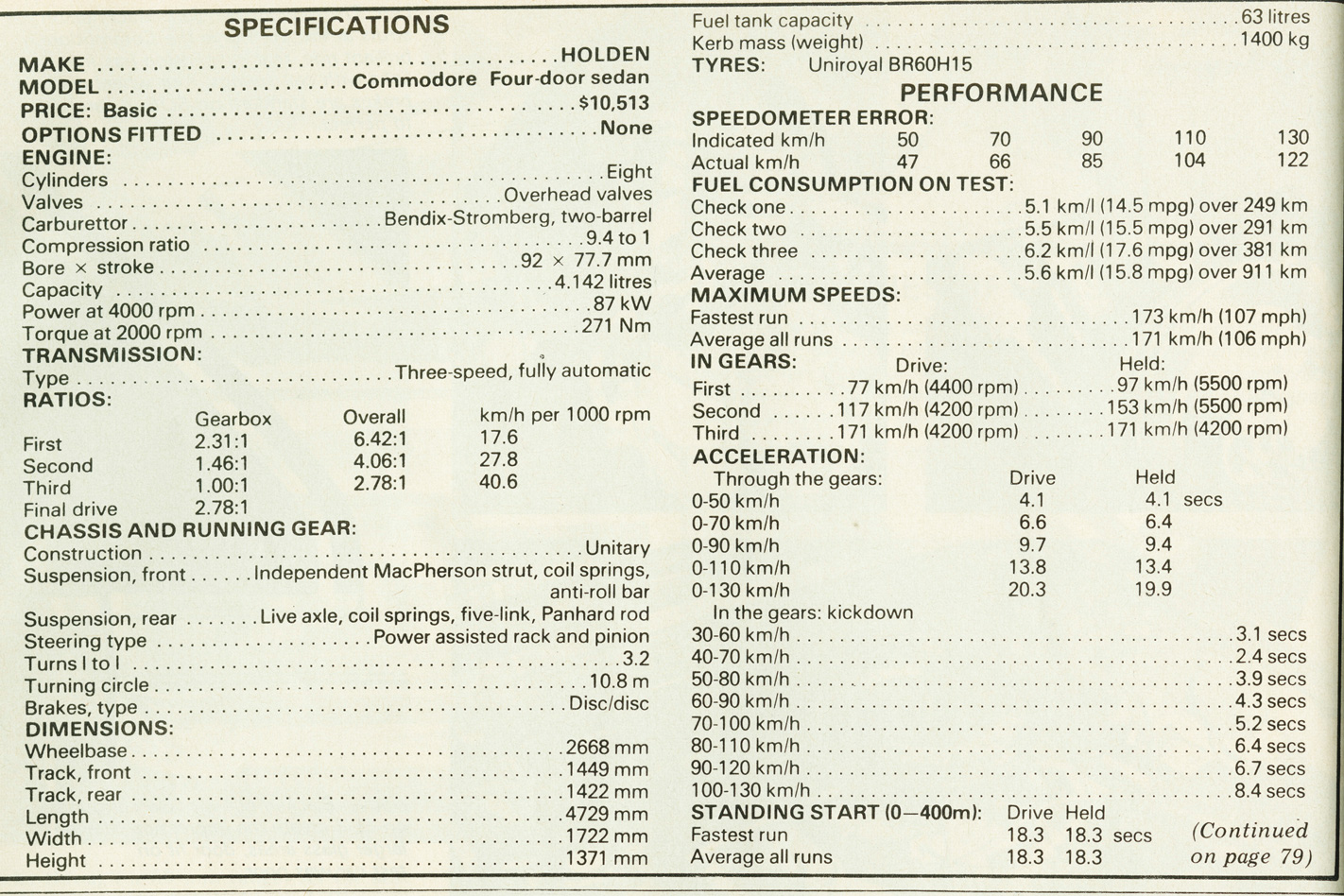
The Commodore has a few faults, some of them serious enough, to give the others a little hope for the future, but because it raises, in so many fundamental ways, the standards of cars that everyman can afford we welcome it as the beginning of a new era in local cars. We had asked GMH to supply us with an SL for our first test of the Commodore but in the rush to organise the first road test car delivered to an Australian publication we ended up with an SL/E – a standard SL/E but still the top-line model complete with 4.2-litre V8 engine, automatic transmission, power steering, four wheel disc brakes and cassette-radio.
After a saturation advertising campaign and a mountain of mostly highly favourable press column inches, most Australians must be aware that the Commodore is The General’s middleweight contender, sized midway between the Torana and the Kingswood. The more interested will also know of its German origins.
From the overwhelmingly enthusiastic response to our test car, which was on the roads nearly three weeks before the car officially appeared in dealers’ showrooms, the general public liked the car even if they found it hard to accept that it really was Holden and not a BMW.
Although our test was conducted before the massive advertising effort most people knew the Commodore was an additional model in the Holden range and that it was very different to Holdens of old. We got the impression they expected a lot of the first “different” Holden after years of the same old theme. Few, if any, expressed disappointment in what they saw. As one man said, ”The Germans design good cars, don’t they?”
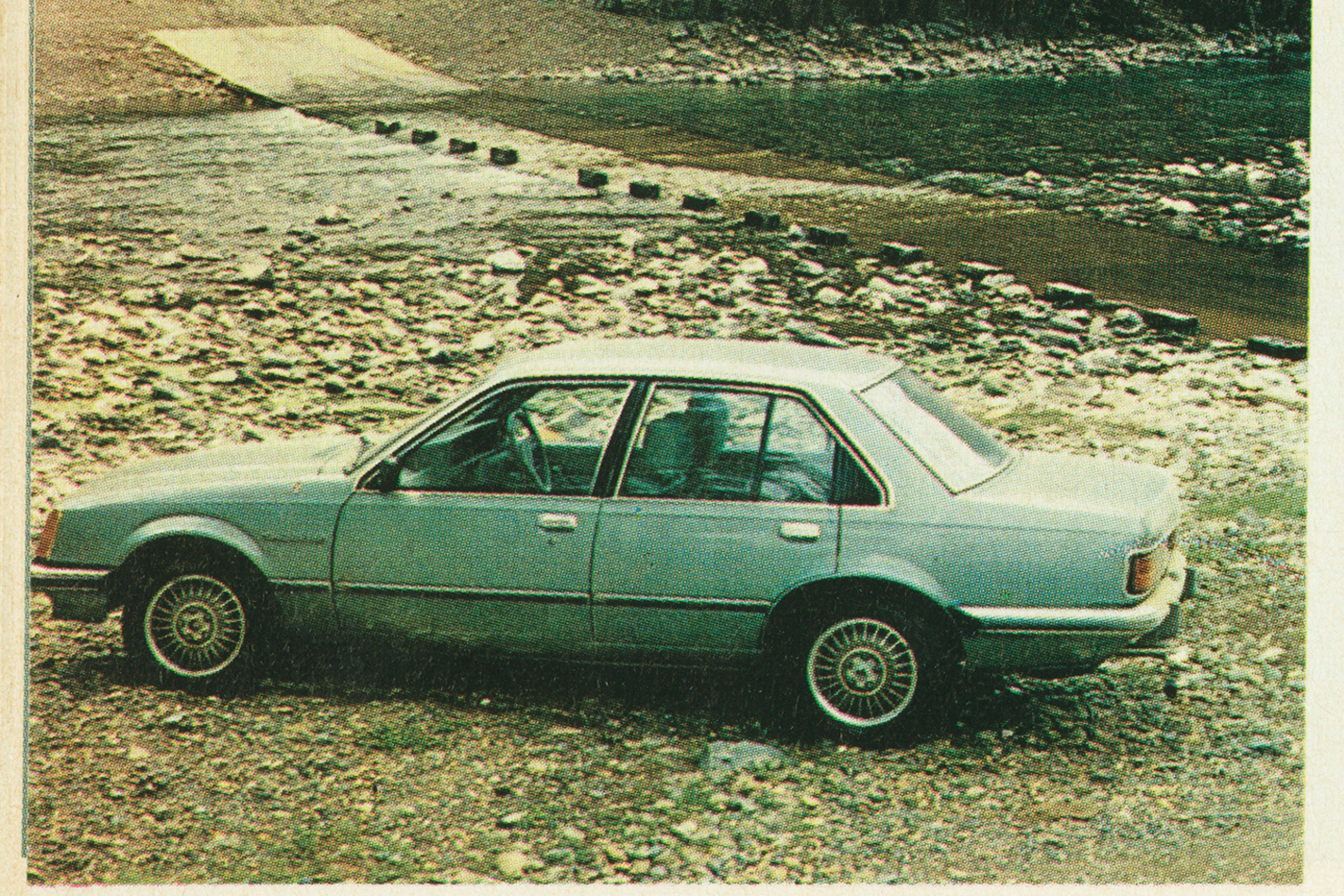
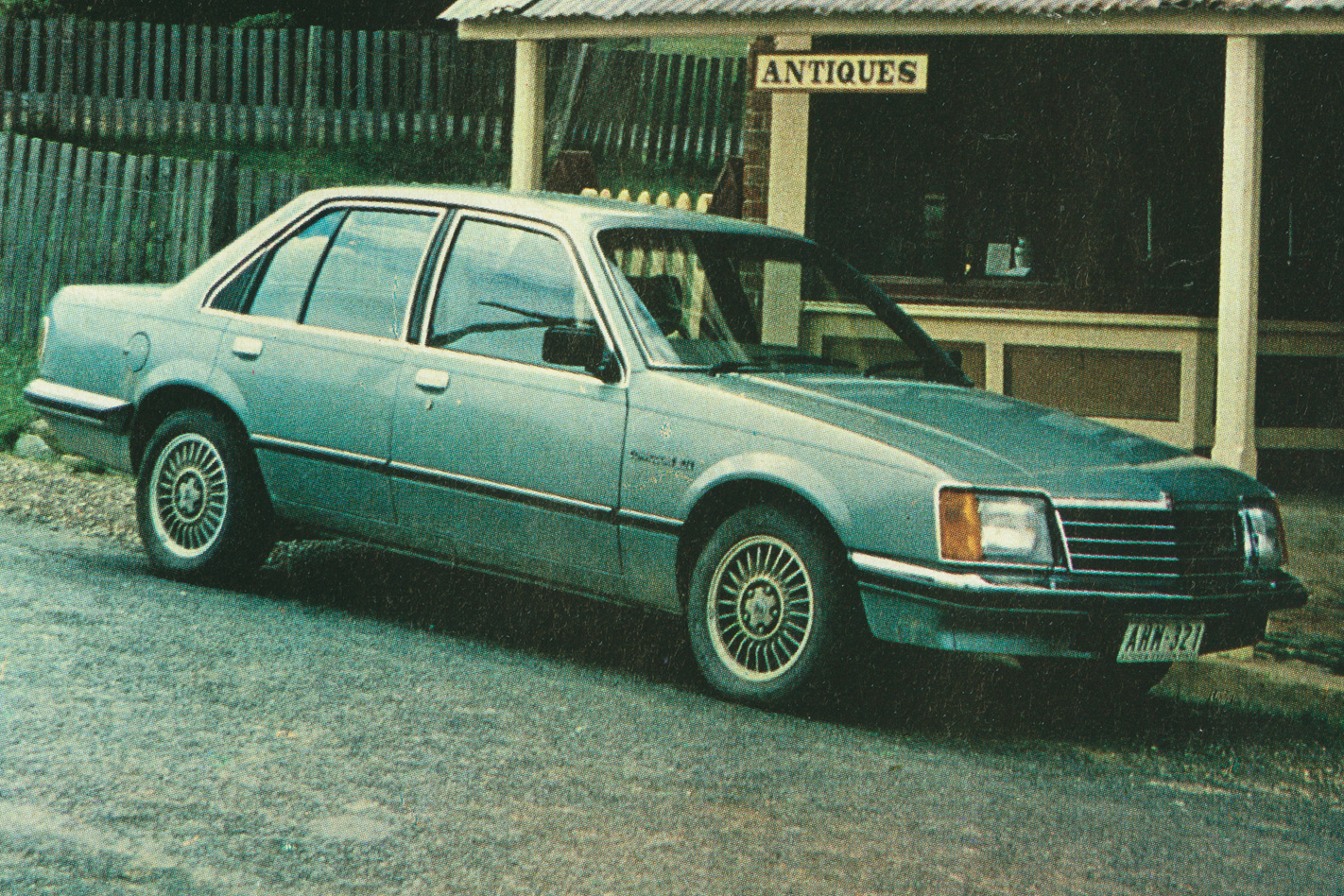
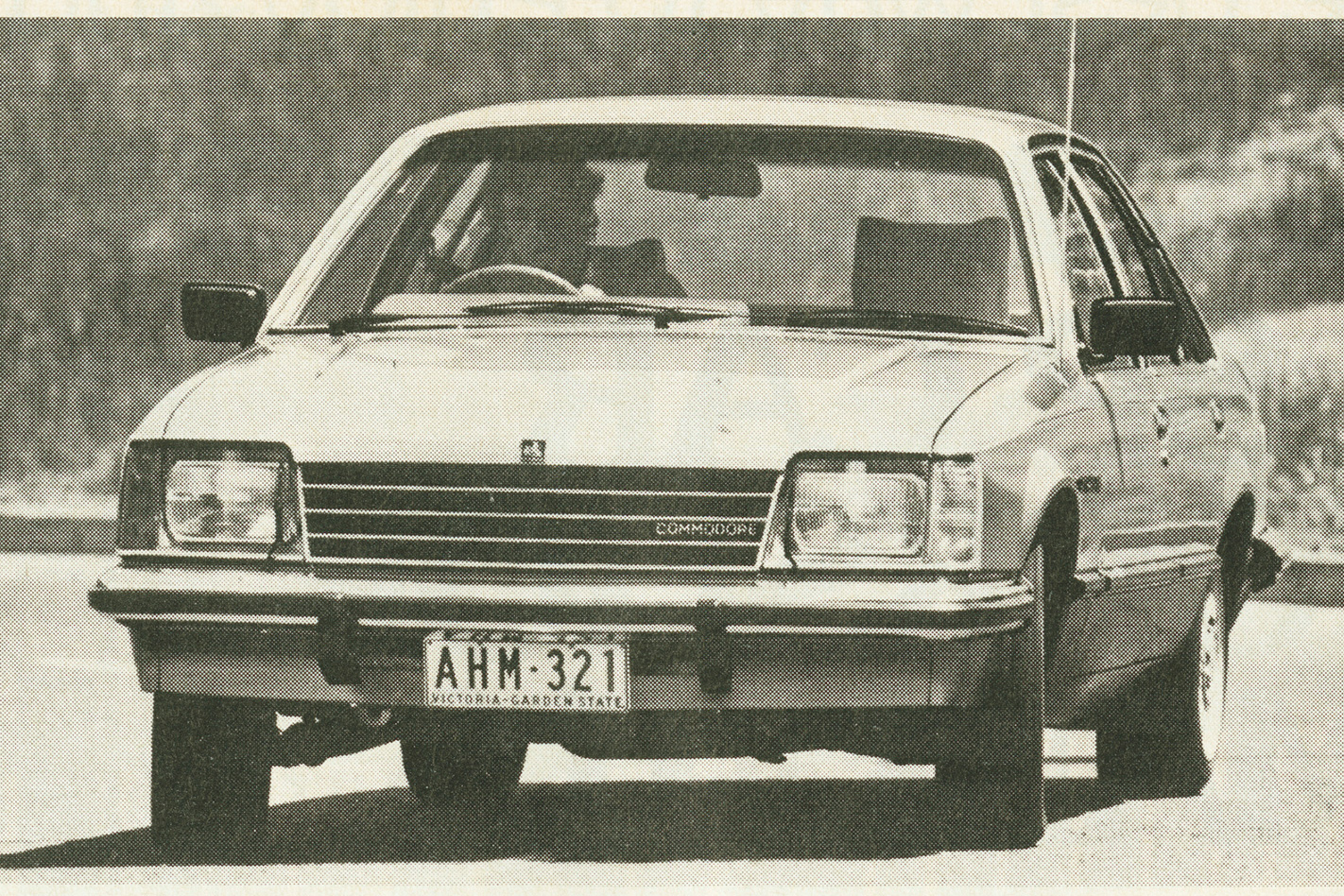
We think the Commodore’s styling works very well with its ultra-low waistline, flared guards, wrap around combination lights, sloping nose, deep glass areas, mildly curved but sweeping windscreen and raised bootline.
It ‘looks bigger in dark colors and perhaps a little narrow from the tail on. Surprisingly, only small lion badges on the bonnet and boot tell you it is a Holden; the emphasis is definitely on the Commodore theme. Most of the early build cars we examined displayed a most un-Holden-like fit of the panels. On the test SL/E the fit of the rear doors was poor and the gap between the trailing edge and the body was inconsistent. Dust had worked its way past the rubber seals although it hadn’t come into the cockpit.
Adjustment at the striker plate should eliminate this problem. We also noticed that the seam between the front fender and the base of the A-pillar was poorly matched and gave the impression of being hand-finished, that the line-up of the doors was irregular and that over rough roads the wide body rubbing strip, which is held on by plastic retaining clips, shook loose.
Okay, so they were early production Commodores and we’ve been assured quality will improve after the Christmas closedown when manufacturing modifications will be made, but it would be a tragedy if poor panel fit cost the car a reputation it didn’t deserve.
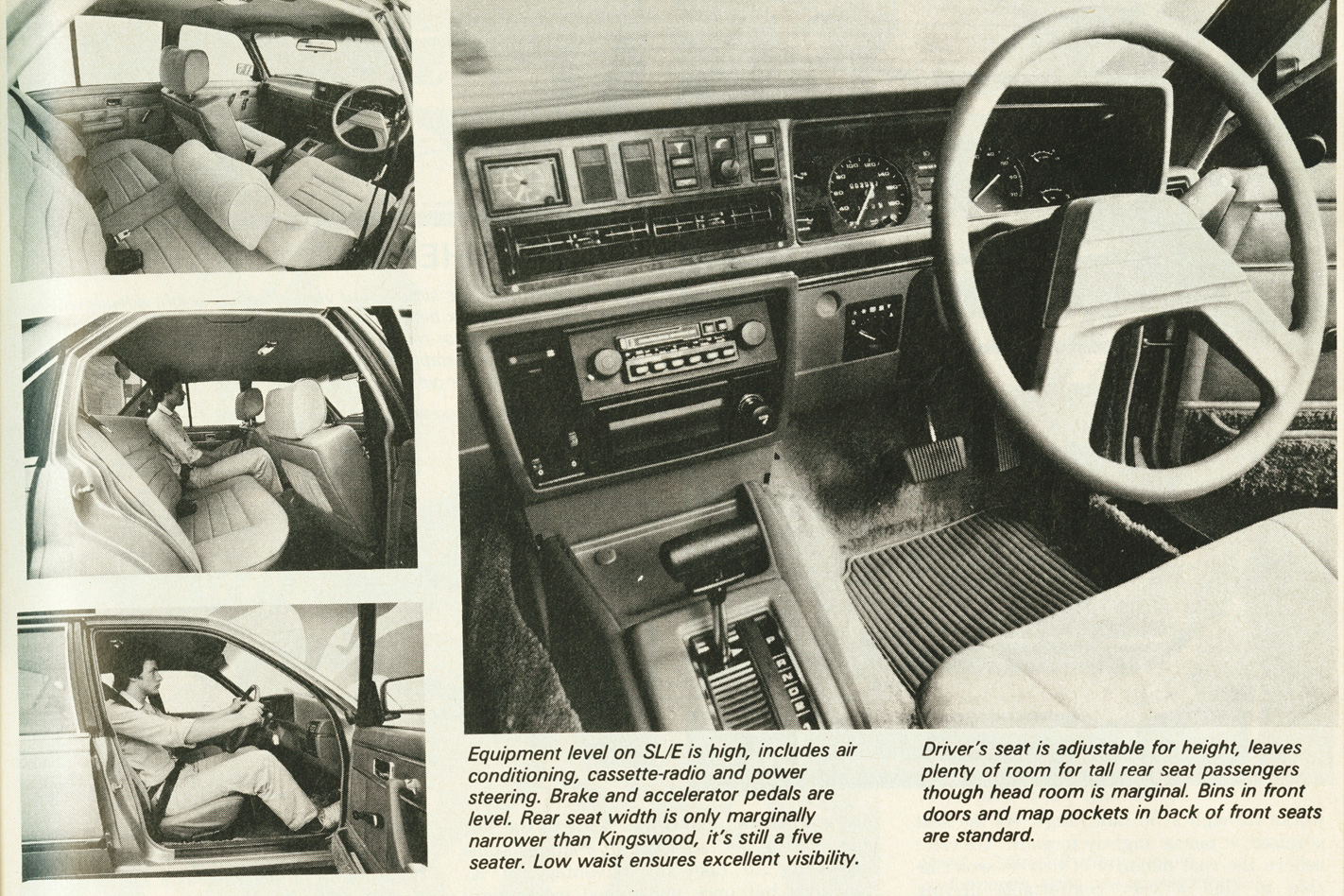
Strangely, it is likely to be tall front seat passengers who complain about a lack of leg room. Holden’s unique steering wheel – in design it is a little like the wheel found on the new Rover 3500 – is perfectly placed, our only criticism is that the horn is hard to find and requires the driver to move one hand from the wheel rim. The horn is operated by pushing the top two-thirds of the wheel boss but it takes a fair pressure and is going to catch many drivers out. It might be a very sensible idea if GMH dealers are instructed to show Commodore buyers where and how the horn works.
GMH’s rather large and slightly awkward twist steering column stalk for turn indicators, headlight flashers and wipers/washers is carried over from the Kingswood. All other controls – apart from a small switch for the hazard flashers – are located on the dashboard. Lighting is soft but effective in BMW-like style and all the controls are lit. Yes, this really is a Holden!
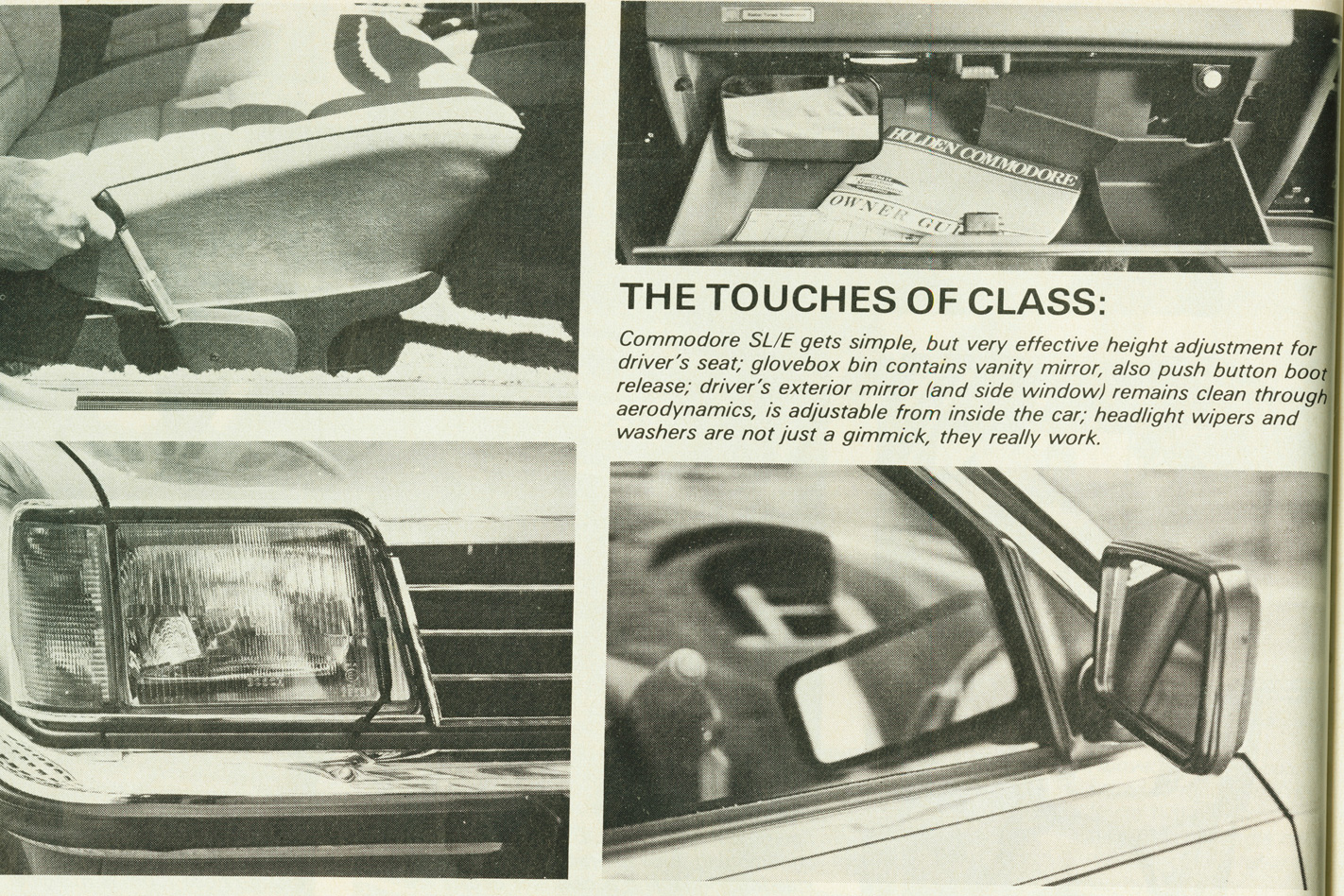
There are small shallow bins on the console and the SL/E also has large pockets in each front door. The glove box is more of a plastic bin and is quite roomy. There’s a useful tray on top of the dashboard in front of the passenger. Both external mirrors are adjustable from inside the car and GMH’s claim that the side windows remain clear was verified after both long dusty and drizzly drives. Visibility is excellent.
No, it doesn’t have the incredibly thin A-pillars of the HQ-HZ but the windscreen is very deep, the bonnet short and sloping away and the wipers clear all but a tiny portion of the glass. By using the height adjustment, it is possible for drivers of more than average height to see the extremes of the boot – how long is it since you could say that about a Holden?
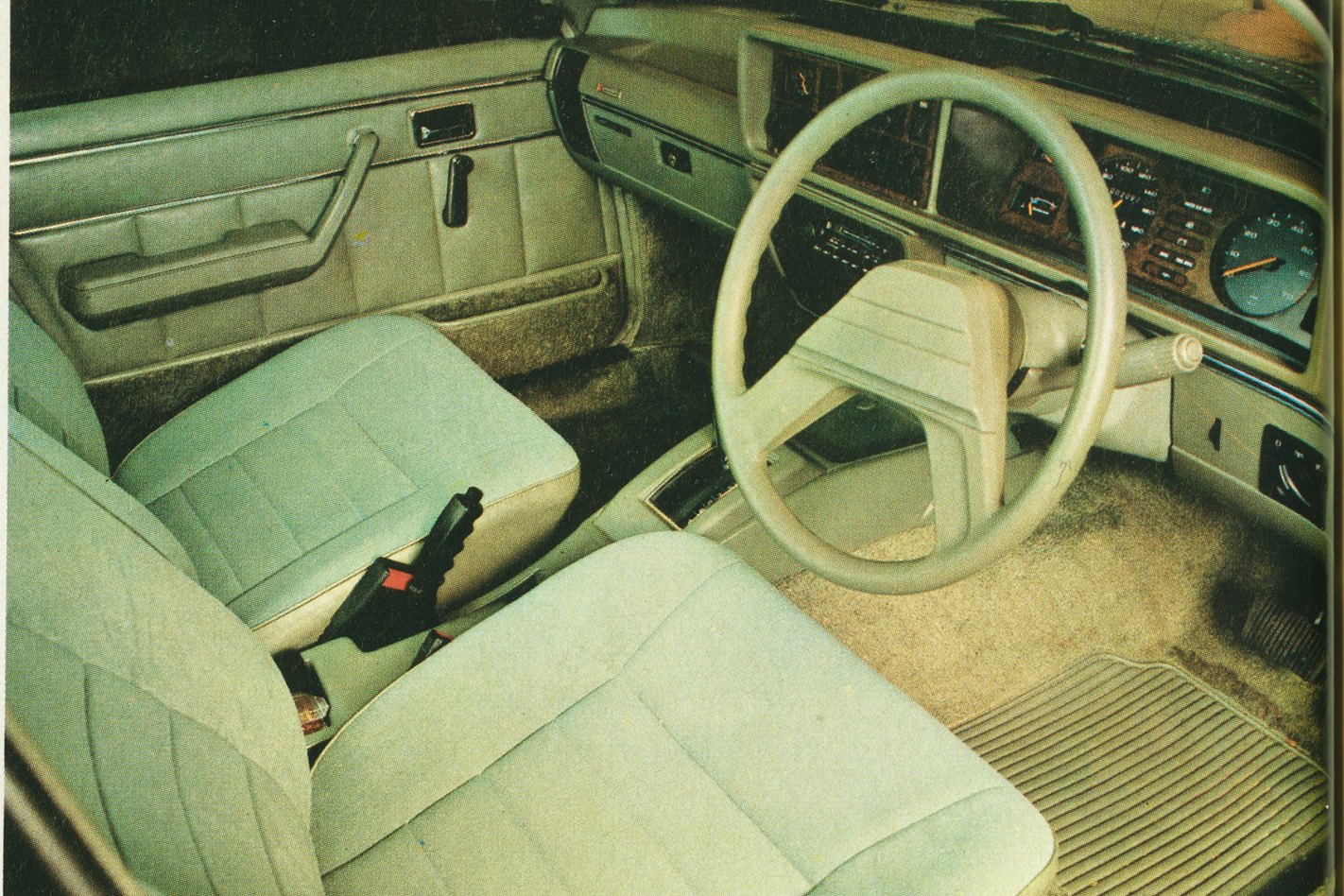
Rear seat leg and knee room are excellent, brilliant even, considering the car’s wheel base. Space efficiency really does mean something in the Commodore.
Interior finish was of a higher standard than external, nothing rattled and although the two coat hooks in front of the rear grab handles fell out we could find nothing to criticise unless you take exception to the rather drab and all-dominant color-keying of the interior.
So the interior package works very well and belies the car’s exterior dimensions. Those people who believe the Commodore will kill off the Torana rather than the Kingswood on the basis of interior room are going to be proved quite wrong.
The 4.2-litre V8 starts easily after turning over a couple of times. It idles reasonably smoothly and sounds remote from the cockpit although there is a mild jiggle to tell you it is working. Acceleration is brisk off the line and is somehow rather contradictory. The Commodore doesn’t feel to be accelerating particularly quickly – certainly the times we took are only average for a car of this engine capacity (standing 400 metres in 18.3 seconds) and weight – but it reaches high speeds so effortlessly and can maintain them so easily that it is deceptively fast.
The steering is perfectly weighted to provide good feel for the driver. It’s also precise, smooth and consistent in its behaviour. The turning circle is 10.8 metres and there are only 3.2 turns lock to lock, so it is high geared but not so high as to require concentration in the way of the new Rover which has a similar rack and pinion system.
The steering, like the rest of the car, is beautifully balanced and works in complete unison with the suspension. Opel – and hence Holden – made the switch to MacPherson struts to give improved control over damper movements and therefore provide a better ride. The improvement is dramatic for the Commodore has the kind of supple ride of the very best European cars with long suspension travel that is also well controlled.
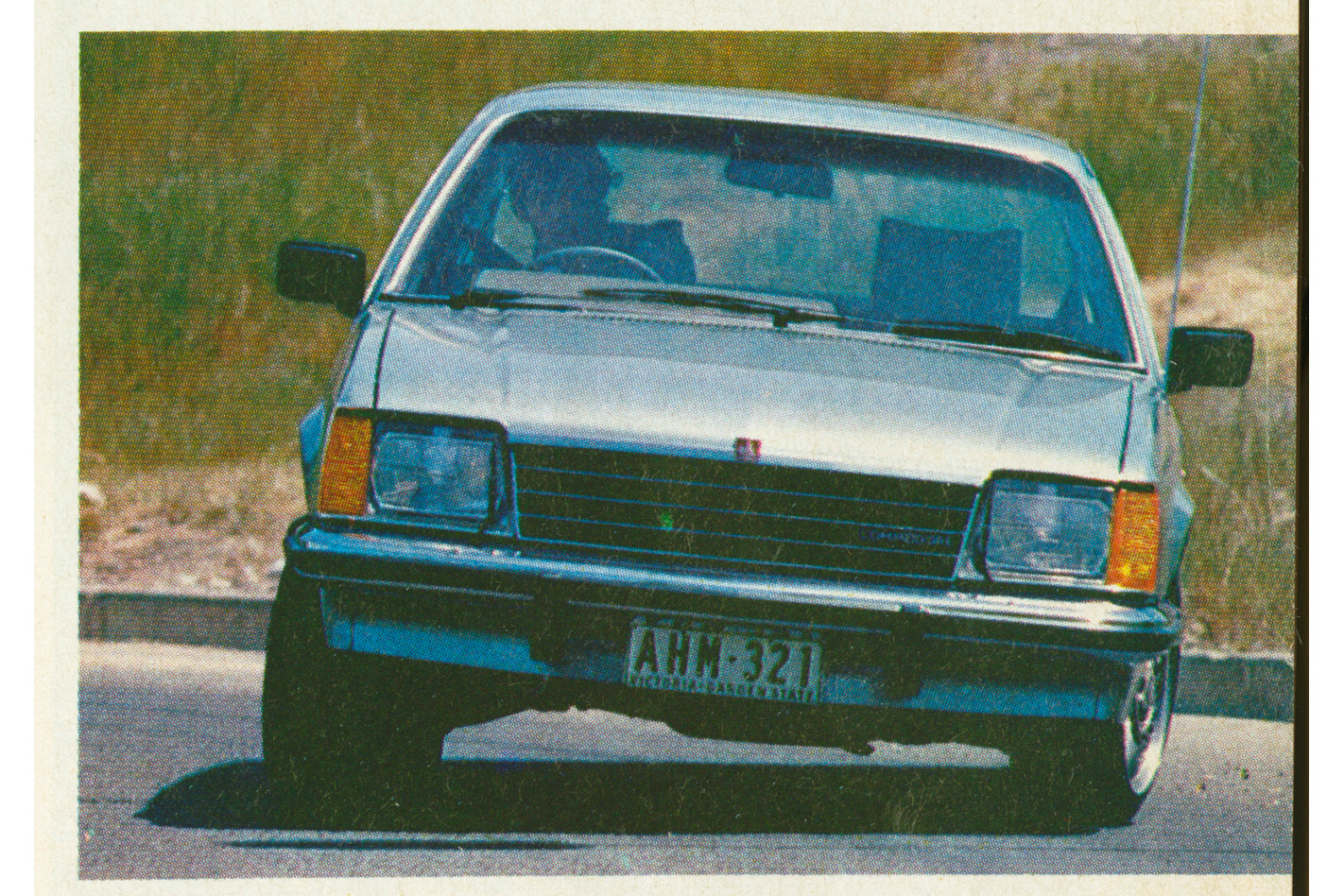
Side winds have virtually no effect. Handling is understeer initially with some body roll but this can be neutralised so easily by the throttle that it is more accurate to say the Commodore is one of those rare cars that simply goes where it is pointed. The ultra-low profile 60 series Uniroyal tyres provide very high levels of adhesion and few will be the drivers who discover that in ultimate terms it is the tail that breaks away first.
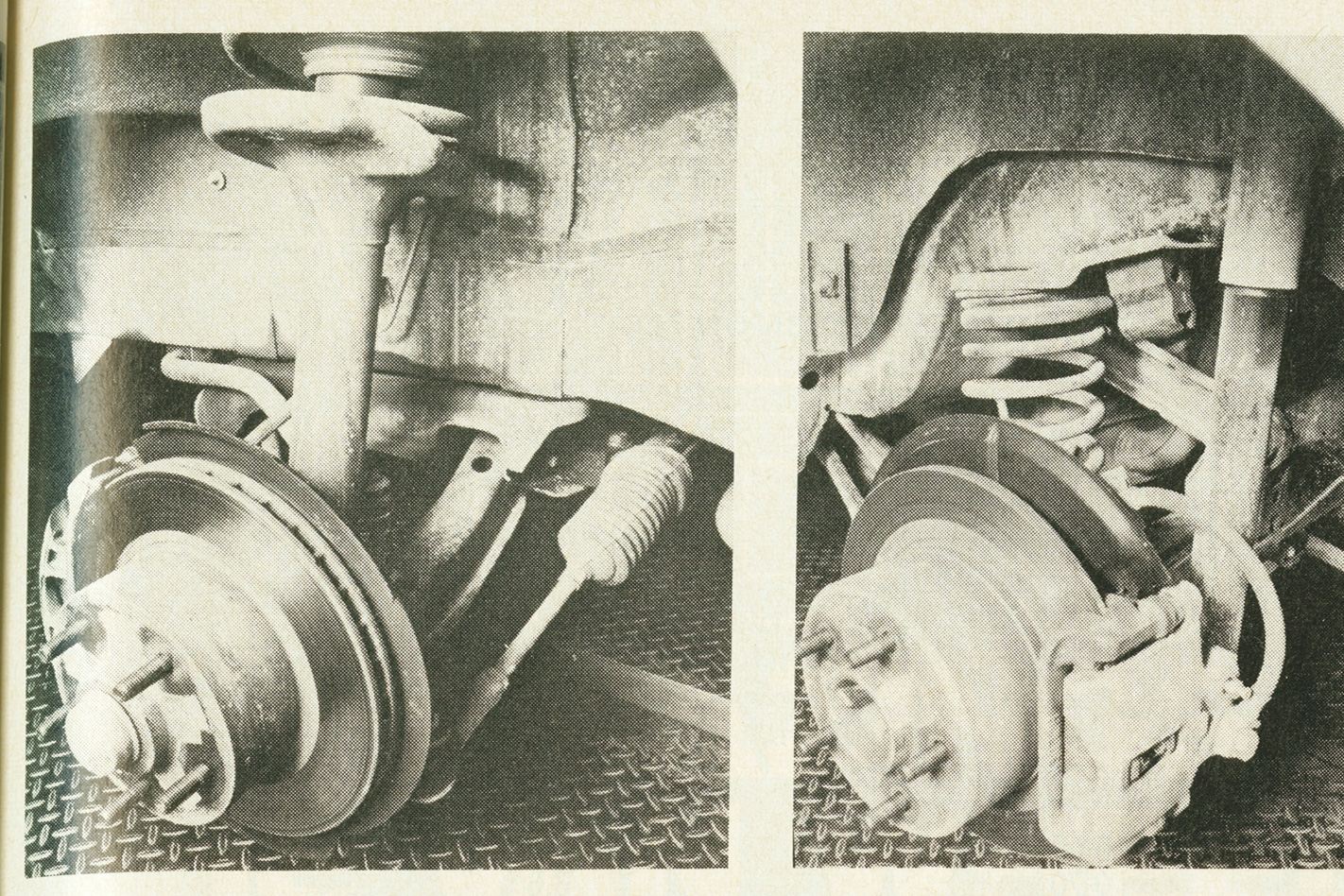
The brake pedal is very European in feel with just the right amount of servo-assistance to provide a progressive pedal. Even the brake pedal height is identical to that of the accelerator. Yes, we too have to keep pinching ourselves that this is a Holden.
Okay, so it’s not perfect but what are the car’s faults apart from the poor panel fit?
A fuel gauge which reads empty when there is still 10 litres of fuel left means the effective touring range is only between 250 and 300 km. With the Commodore’s mile-eating abilities, this is far too short. The 4.2 engine also idles inconsistently from 700 rpm to 1200 rpm depending upon whether it is in D or N or with the air conditioning on or off.
So our first test of the car only confirms our initial belief that here is a car of exceptional ability. Certainly the fuel consumption is disappointing. At this stage it is idealistic to talk about how it would be with a small high revving three-litre V6 so let’s not enter that argument as it’s another story entirely.
Today’s Commodore is smooth, relaxing, effortless, comfortable, a pleasure to drive with standards of dynamics that other Australian cars haven’t dreamt about. Get the minor problems cured and those people who buy a 30 grand European can only justify it on the grounds of image… not superiority.
In what BMW calls a ‘Life Cycle Impulse’ (or LCI), the 1 Series has been updated with new design features, new tech, and most importantly, a new price.
The 250kW/500Nm very-hot hatch will now be available to Oz punters for $59,990, around $5000 less than before.
The turbo 3.0-litre straight-six and the performance standing of the M140i is unchanged, and the car is still available in 6-speed manual at the same price as an eight-speed auto.
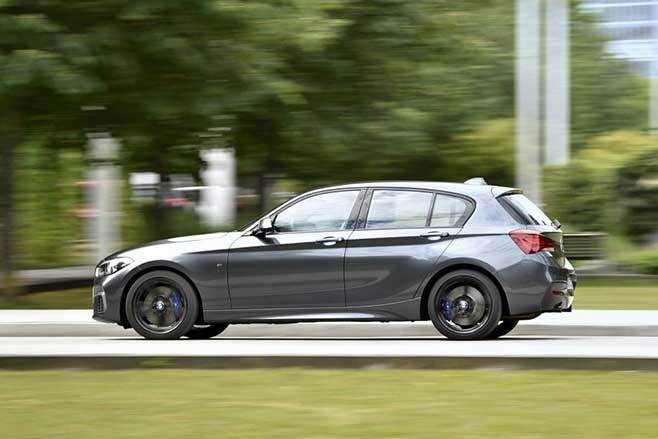
The car features new exterior and interior styling, with 18-inch double-spoke alloy wheels in Jet Black and a new paint colour made available, Sunset Orange metallic.
LED Headlights are now standard for the whole 1 Series range, with adaptive LEDs now standard on the M140i.
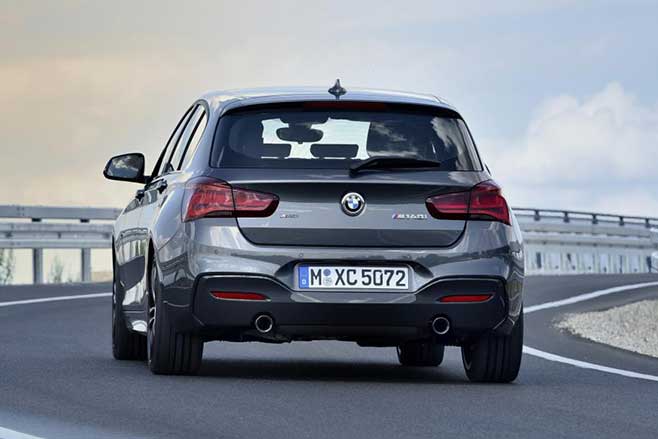
Additionally, interior trim can now be optioned with more chrome finishes, while leather upholstery can now be ordered in a ‘Cognac’ finish.
However, the second LCI for the BMW 1 Series range didn’t alter the asking price for the BMW 125i, a $49,990 offering which BMW says has been the most popular 1 Series variant so far in 2017.
SEBASTIAN Vettel heads into Formula One’s summer break with a 14-point advantage over nearest rival Lewis Hamilton after managing a steering issue on his Ferrari yesterday to claim a tense and tight Hungarian Grand Prix victory over teammate Kimi Raikkonen.
Australian Daniel Ricciardo’s hopes were torpedoed by a careless Max Verstappen in Turn Two of the opening lap when the young Dutchman locked a brake and slammed into the side of his Red Bull teammate, puncturing his radiator and inflicting terminal damage. Ricciardo labelled him a “sore loser”.
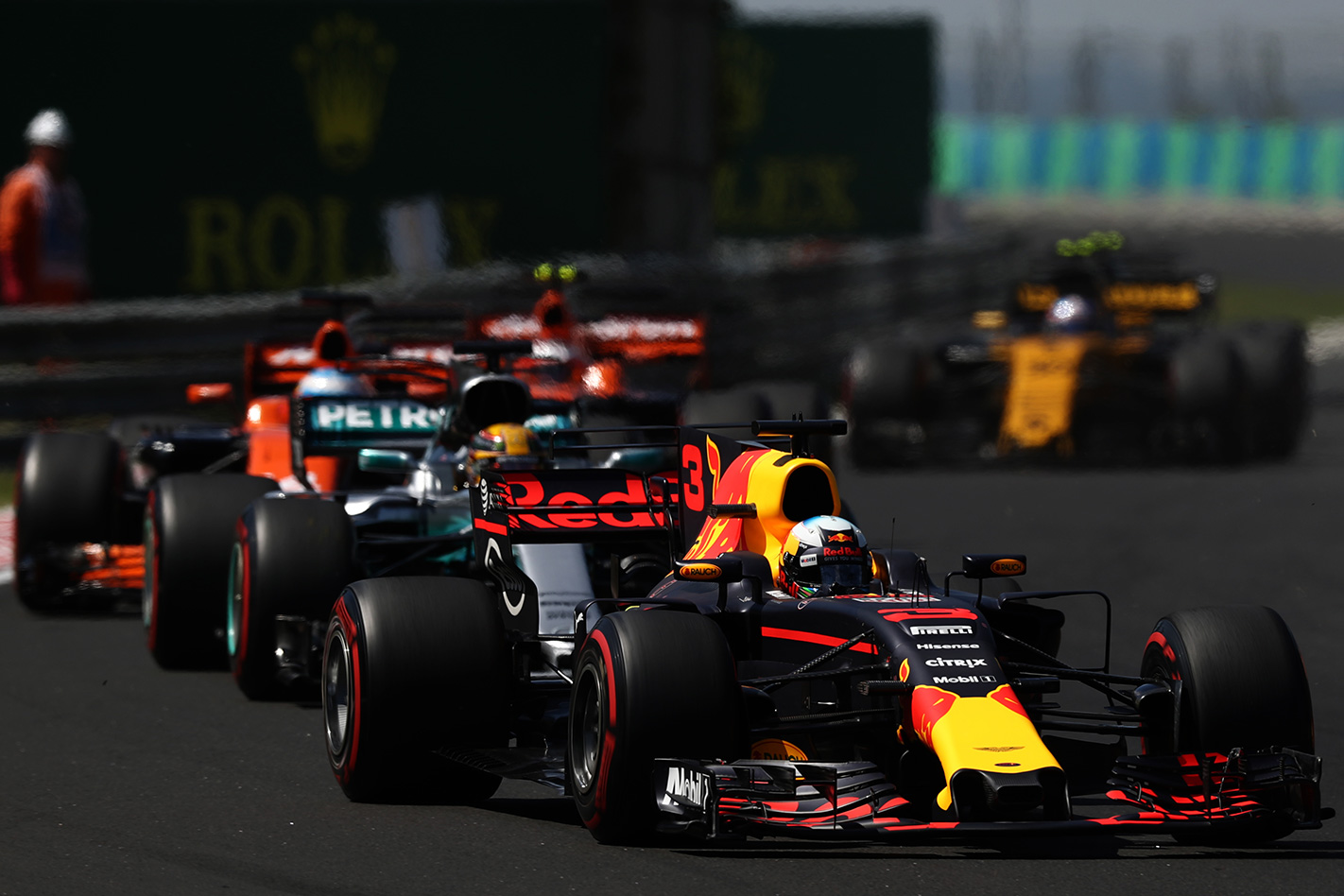
Right there it seems their professional relationship, for a long time relatively comfortable, has taken a swift turn towards toxicity.
Ferrari’s first win since Monaco in May didn’t come easily, despite the two drivers appearing to have the race well in control through the opening stint, while Mercedes’ Lewis Hamilton back in fifth struggled to find a way forward.
One potential problem was resolved by stewards, who punished Verstappen’s rashness with a 10sec time penalty to be taken at the first pit stop.
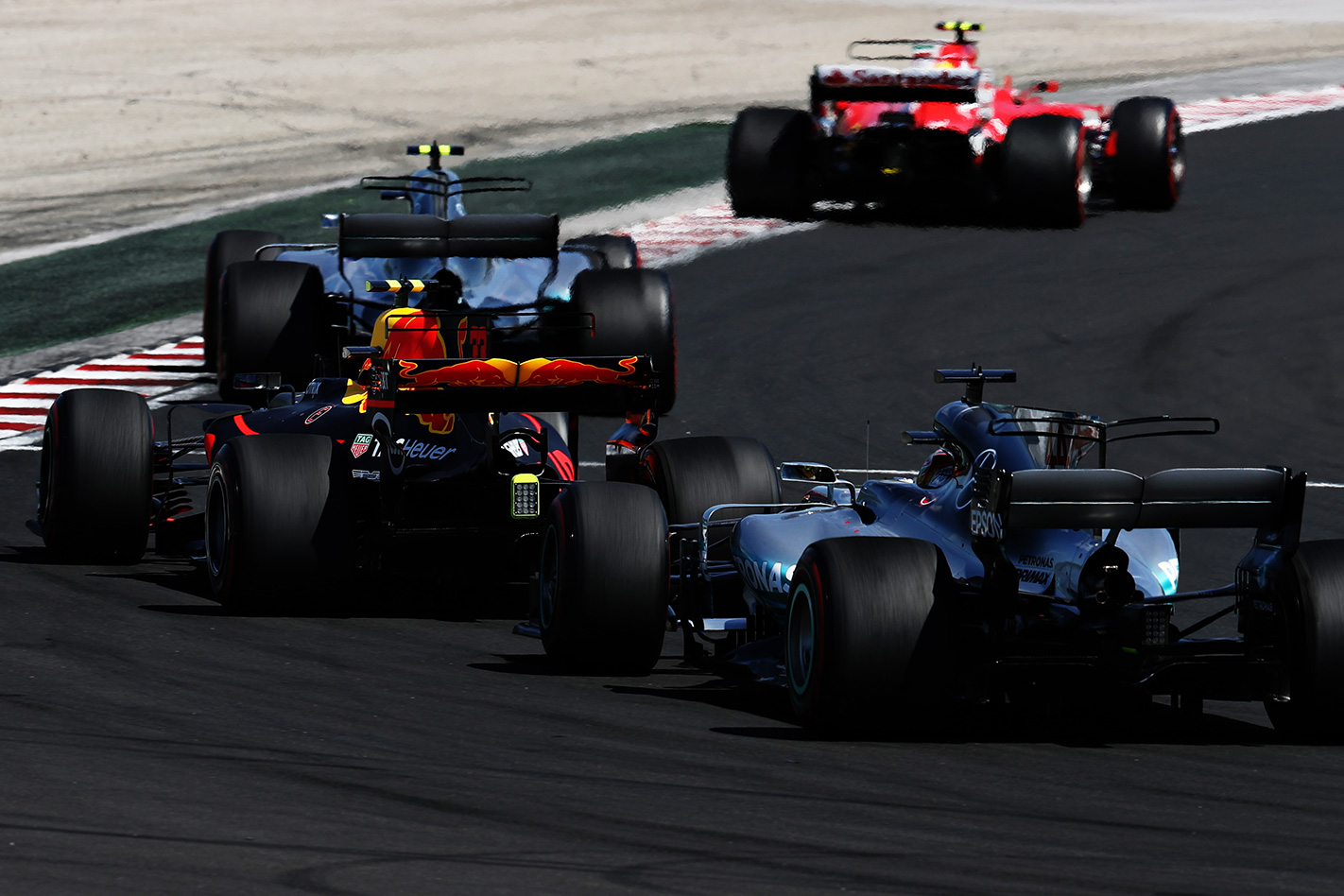
The mysterious steering problem on Vettel’s car was obvious in in-car camera shots and his time warned that he should stay away from and kerbs for the remainder of the race, costing him lap speed.
This put Raikkonen under pressure late in the race as Vettel’s Ferrari backed his teammate into the Mercedes drivers in third and fourth
In the second phase of the race, with Hamilton clearly faster than Bottas but bottled up behind his teammate, the Mercedes brains trust elected to swap its drivers, allowing the Briton to attack Raikkonen in the final 20 laps.
Raikkonen certainly looked quicker than Vettel for much of the GP but Ferrari strategists held their nerve and allowed the German to stay in front.
This proved significant in world title terms, particularly after Hamilton discovered that his pace was compromised in the turbulent air behind Raikkonen. Hamilton sportingly redressed in the final corner, upholding his part of the bargain to hand back third place to Bottas.
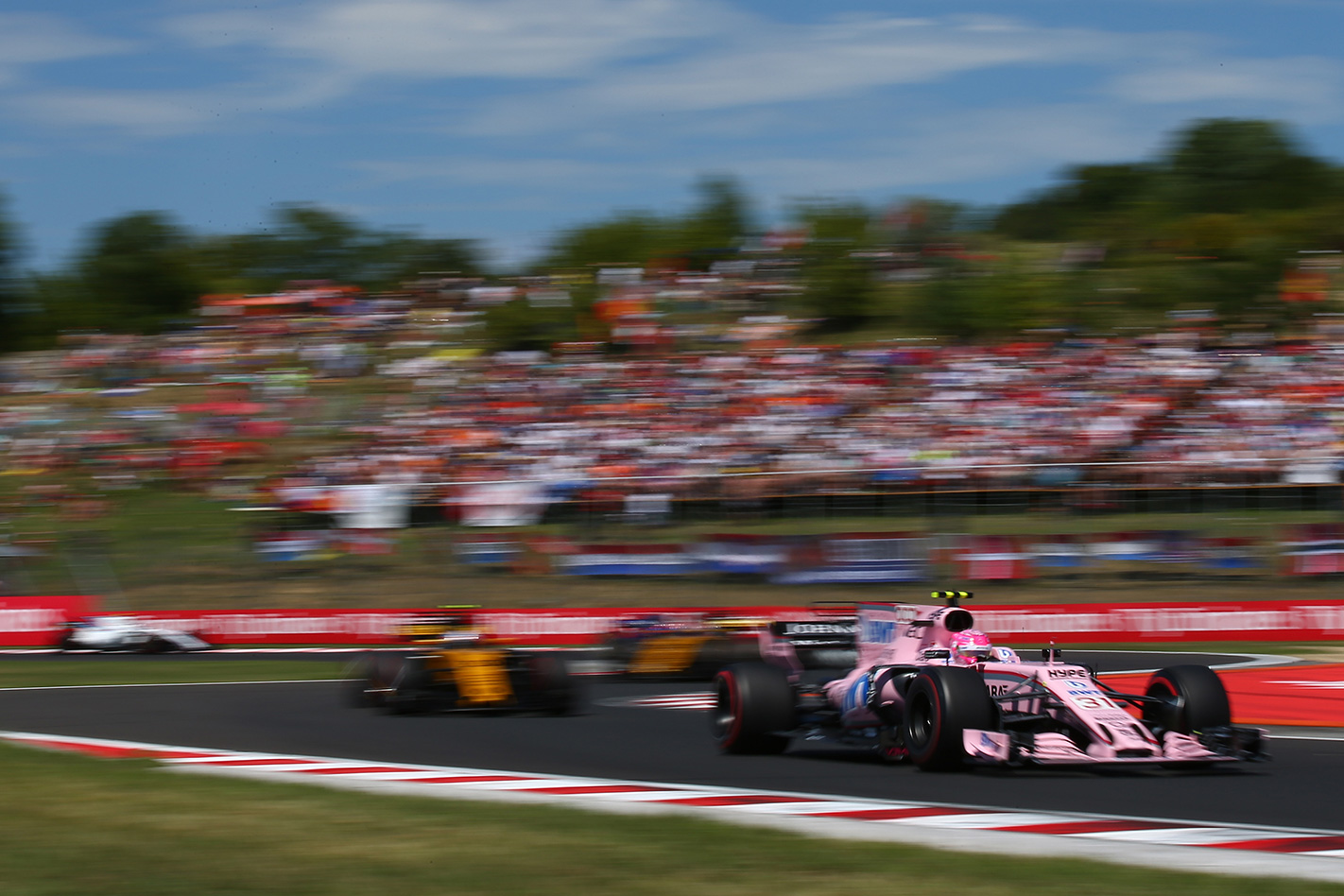
An incandescent Ricciardo, realising his chances of a great result were ruined his impetuous team-mate, by vented angrily at Verstappen, describing the move as amateurish and suggesting the pass was never on.
After the race, the Red Bull release quoted Ricciardo in a more measured way: “The start wasn’t too bad and I got a good exit out of Turn One, I saw Bottas on the inside of Turn 2 so knew I had plenty of room on the outside. I thought it was a good place to position myself and protect my position through the turn. I felt a hit but couldn’t see who it was, I knew Max was on my inside going into Turn 2 so assumed it must have been him.
“It’s really frustrating as we know our car has been better than sixth all weekend so we went out there to push for a good result and get on the podium. We will discuss the incident in de-brief this evening and me and Max will talk privately also and sort it out. I would have loved to race today and now I have four weeks to wait until I can get in the car again. It’s a shame to finish the first half of the season and head into the summer break in this way.”
Verstappen’s official mea culpa was lengthy and apologetic: “I think the situation started from Turn One. My start was actually quite good but then I got squeezed a bit wide on to the Astroturf and lost quite a bit of speed. Then Daniel and I were both fighting for position at Turn 2 so we braked quite deep into the corner.
“I had a car in front of me so I lost quite a bit of downforce and locked the front tyres, from there I was just a passenger. I was trying to avoid Daniel of course but unfortunately that was not possible. It is never my intention to hit anyone, but especially not your team-mate, and especially with the relationship I have with Daniel, it’s always really good and we can always have a laugh. This is not nice and I apologise to Daniel for that and also to the team because we could have scored some good points here.”
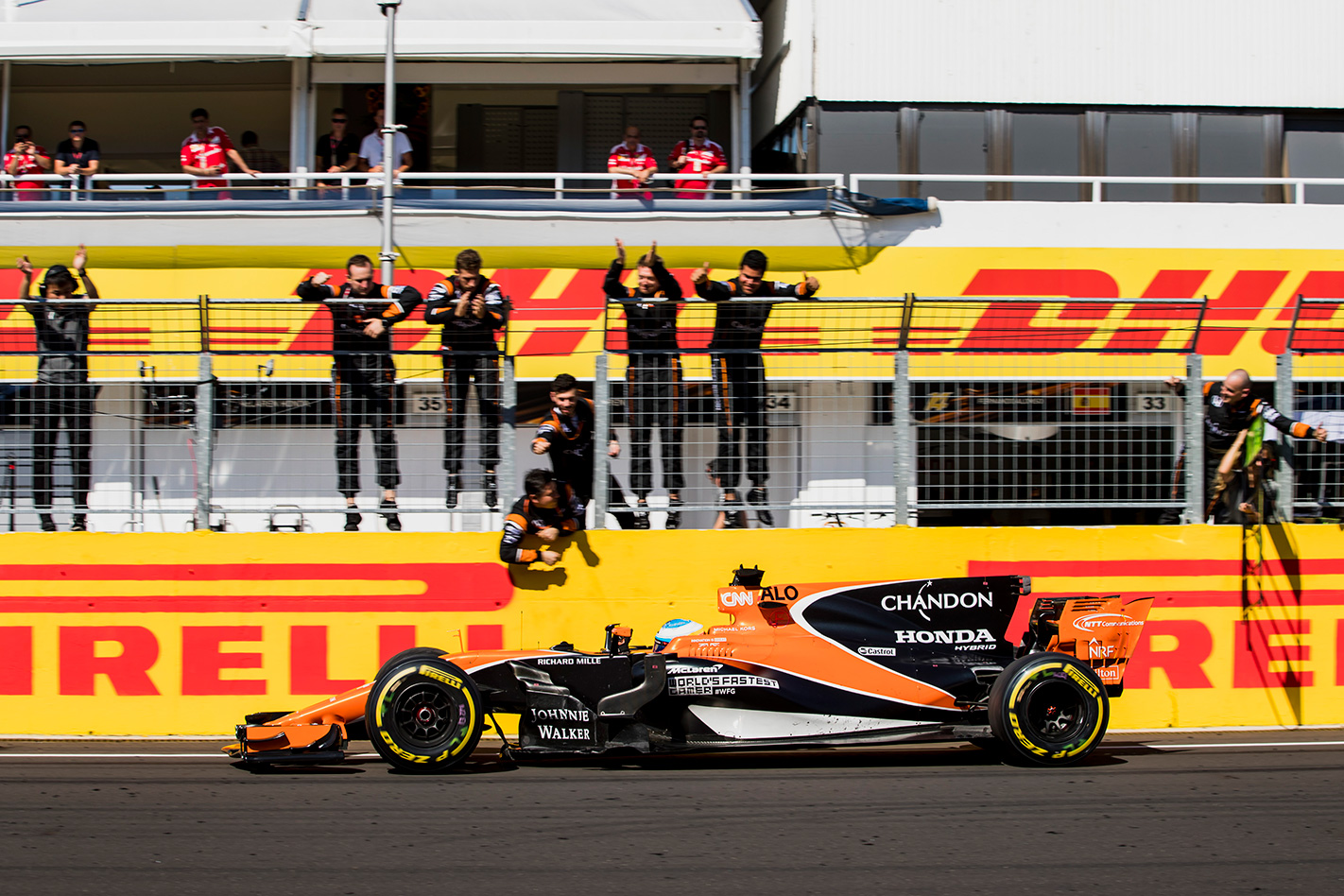
Fernando Alonso claimed a battling sixth position for McLaren-Honda, the under-pressure team’s best result of 2017. Adding to the McLaren smiles, Stoffel Vandoorne scored his first point of the season.
Praise to Paul di Resta, too, the Williams reserve driver called up to sub for the ill Felipe Massa just a half an hour before qualifying. The Scot had been expecting to fulfil commentary duties for Sky TV but instead found himself in an urgent briefing by the team.
Di Resta, who last drove an F1 car in anger in 2013, responded beautifully. In just four serious laps, he finished 19th fastest, only seven-tenths slower than Williams teammate Lance Stroll.
Even though di Resta failed to finish (outed with an oil leak on lap 60), many in the paddock were mightily impressed, including Mercedes team chief Toto Wolff.
Ricciardo began proceedings hearteningly when he was fastest in Friday’s opening two practice sessions, but had to sit out much of FP3 with car issues.
It was vital for Ferrari’s Vettel to stem the points bleeding to Hamilton in Hungary and he began in the best way possible.
Qualifying was a Ferrari crush, with Vettel snatching pole from Raikkonen to lead a neat queue – Mercs (Bottas then Hamilton) on row two, Red Bulls (Verstappen and Ricciardo) on row three.
Since May’s Monaco GP when the Scuderia hammered home a stunning one-two result, the world championship campaign has gone a little pear-shaped for Team Red.
The following four races realised just 79 points for Ferrari while Mercedes piled on 151 points.
Certainly the nature of the previous four grand prix circuits – Montreal, Baku, Red Bull Ring and Silverstone – possibly favoured the longer wheelbase of the Merc W08s.
The twisty Hungaroring should have suited the Ferrari. It did.
Conjecture over Honda’s future in F1 continued over the weekend, after Sauber announced it has changed its mind about its intention to use the Japanese power units next year. McLaren’s double points scoring result in Hungary probably won’t change things much.
A decision is expected in September.
Supercars: McLaughlin, Mostert share spoils at Queensland Raceway
Scott McLaughlin has stretched his lead in the 2018 Supercars Championship, the DJT Team Penske Ford young gun notching a win and second in a typically hard fought couple of races at Queensland Raceway.
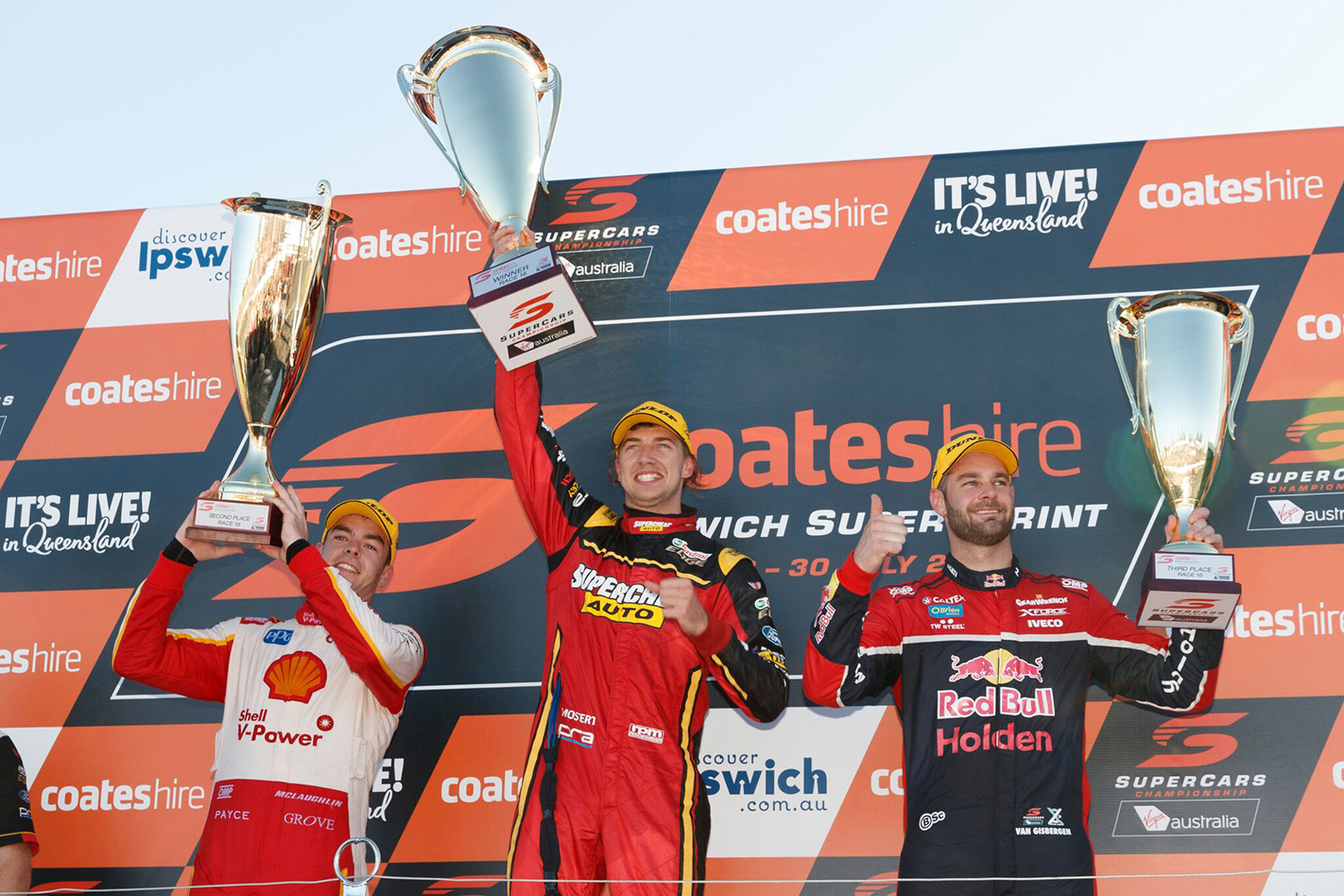
It was a tough Saturday for title contender Red Bull’s Jamie Whincup who had to deal with some demoralising setbacks. Firstly he qualified a poor ninth-fastest and then copped a further five-place grid penalty for an ill-advised pit release which resulted in contact with James Moffat. Then in the race he had to endure a lengthy delay during the pit stop due to a faulty coupling to the in-built jacks.
The team’s uncharacteristic fumbles on Saturday left Whincup a lowly 20th, but there was a commendable bounce back the following day with the six-times champ qualifying a competitive third behind McLaughlin and Mostert, and then racing well to take fourth. He took heart from this result.
Whincup’s Red Bull teammate Shane van Gisbergen lacked the car speed of the Fords ahead, but helped by sensible pit stop strategy and a late safety car on Sunday produced a pair of third place finishes.
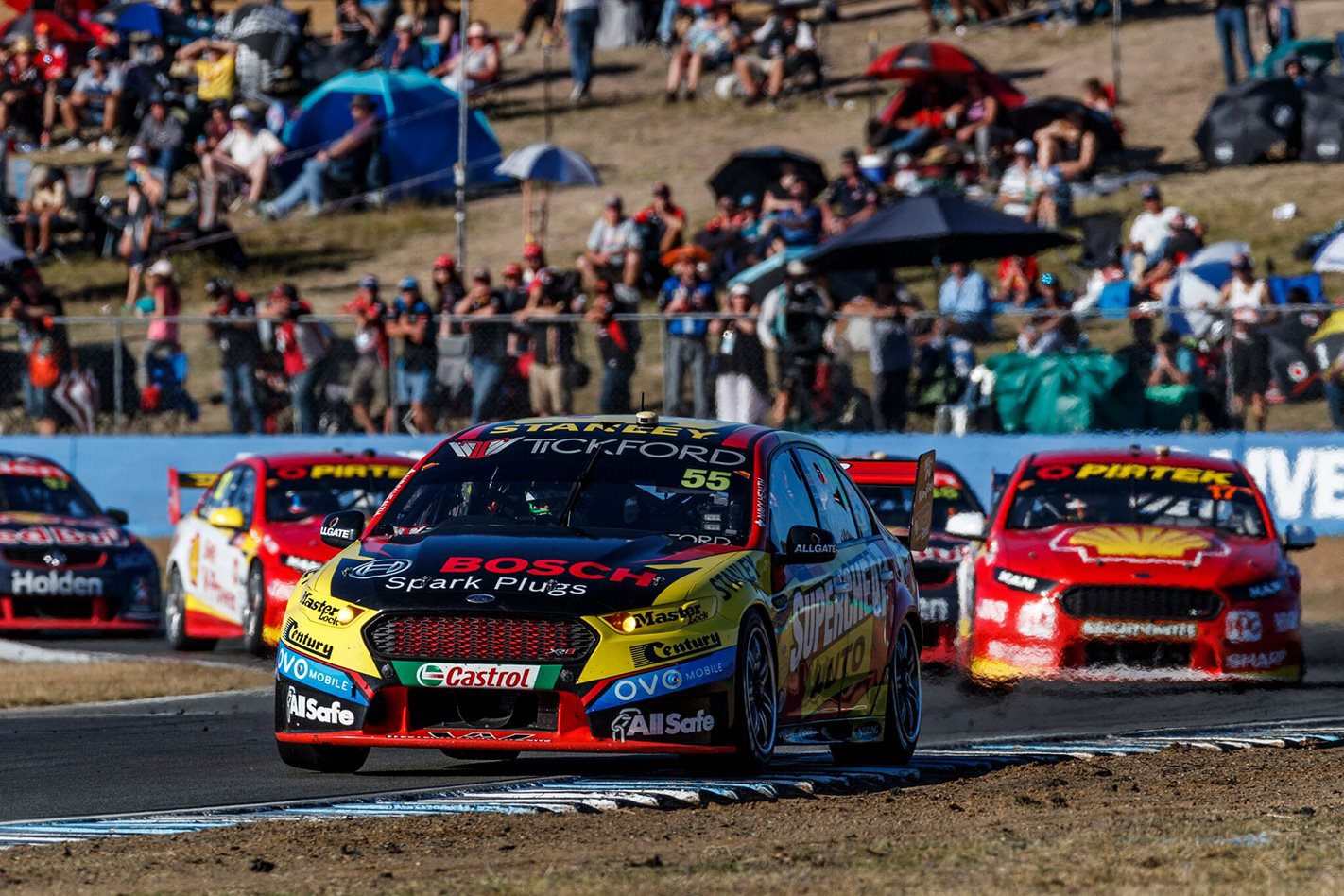
After the restart, Mostert managed to edge away from McLaughlin while van Gisbergen accounted for Fabian Coulthard and then Whincup in his late-race lunge at the podium.
“I was a bit annoyed with the safety car [call],” Mostert remarked. “There wasn’t much debris around and the guys behind had fresher tyres. I didn’t expect to hold on but I did what I had to.”
It was a good recovery for pole-man McLaughlin, who on the dirty side of the track dropped to fifth by Turn One, and then had to move to a different pit stop strategy to get back in the game.
McLaughlin now leads Whincup in the championship by 129 points ahead of next month’s Red Rooster Sydney SuperSprint.
WRC: Rookie Lappi rises to the top in Rally Finland
Local rookie Esapekka Lappi seized the moment to dominate the fastest and most spectacular round of the World Rally Championship after many established names struck trouble, made errors or crashed out of another memorable Rally Finland.
The 25-year-old Finn, driving for only the fourth time at the top level of the WRC, took a stunning victory for Toyota by 3.06sec ahead of Welshman Elfyn Evans, who won a thrilling three-car fight for second to match his career-best result.
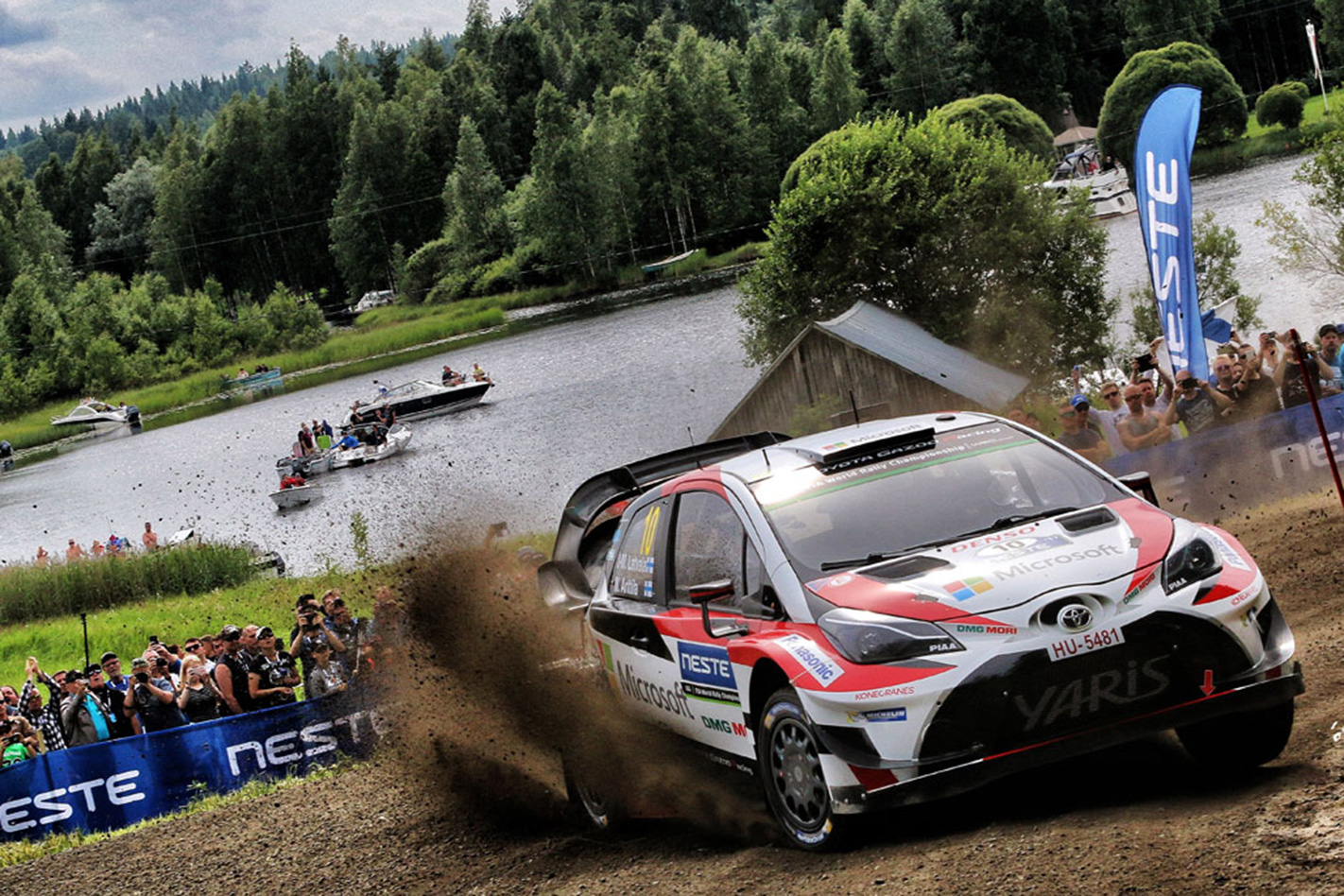
“Amazing, just amazing,” he said. “I’m on my home soil so I should have been strong here and I was, but a victory was beyond my dreams. I have to really say a big thanks to the team because they built such a fast car in such a short time.”
In the tightest title battle since 2009, Lappi is the sixth different winner in nine rounds.
Lappi grabbed the lead on Friday when he won eight of the 12 stages.
Teammate Jari-Matti Latvala fought back spectacularly to win five of the first eight stages on Saturday, building a 8.5sec lead over Lappi before his hopes of a fourth victory on his home event ended. His Yaris ground to a halt with a suspected electrical problem midway through the famous Ouninpohja special stage, leaving Lappi clear.
Evans started the final day in fourth in a Ford Fiesta behind Teemu Suninen and Juho Hänninen. The trio swapped places in every stage before Evans overhauled Hänninen in the final kilometres to secure the runners-up spot by 0.3sec.
The third place landed Hanninen’s first WRC podium and brought further delight to Toyota.
Suninen held a slender second until miscuing and crashing his Fiesta in the penultimate test. He finished fourth, 25.2sec behind Hänninen, a remarkable result for the 23-year-old Finn in only his second World Rally Car drive.
Consistent Irishman Craig Breen was the leading Citroën driver in fifth despite handling issues throughout.
Thierry Neuville’s sixth place brought the Hyundai driver level on points in the championship lead with M-Sport’s Sébastien Ogier, one of man to crash out or strike trouble.
Ogier’s big off into trees on Friday should have handed the initiative in the WRC fight to Hyundai’s Thierry Neuville, but the Belgian struggled all event to get good speed from his i20.
Neuville is now level on points with Ogier in the WRC lead as the fight is set to continue on asphalt at Rallye Deutschland, August 17-20.
IndyCar: Will Power second at Mid Ohio
Aussie Will Power has finished second to Penske teammate Josef Newgarden at Mid Ohio, the young American now taking a seven-second lead over Helio Castroneves with just four races to fight for in the 2017 IndyCar Series.
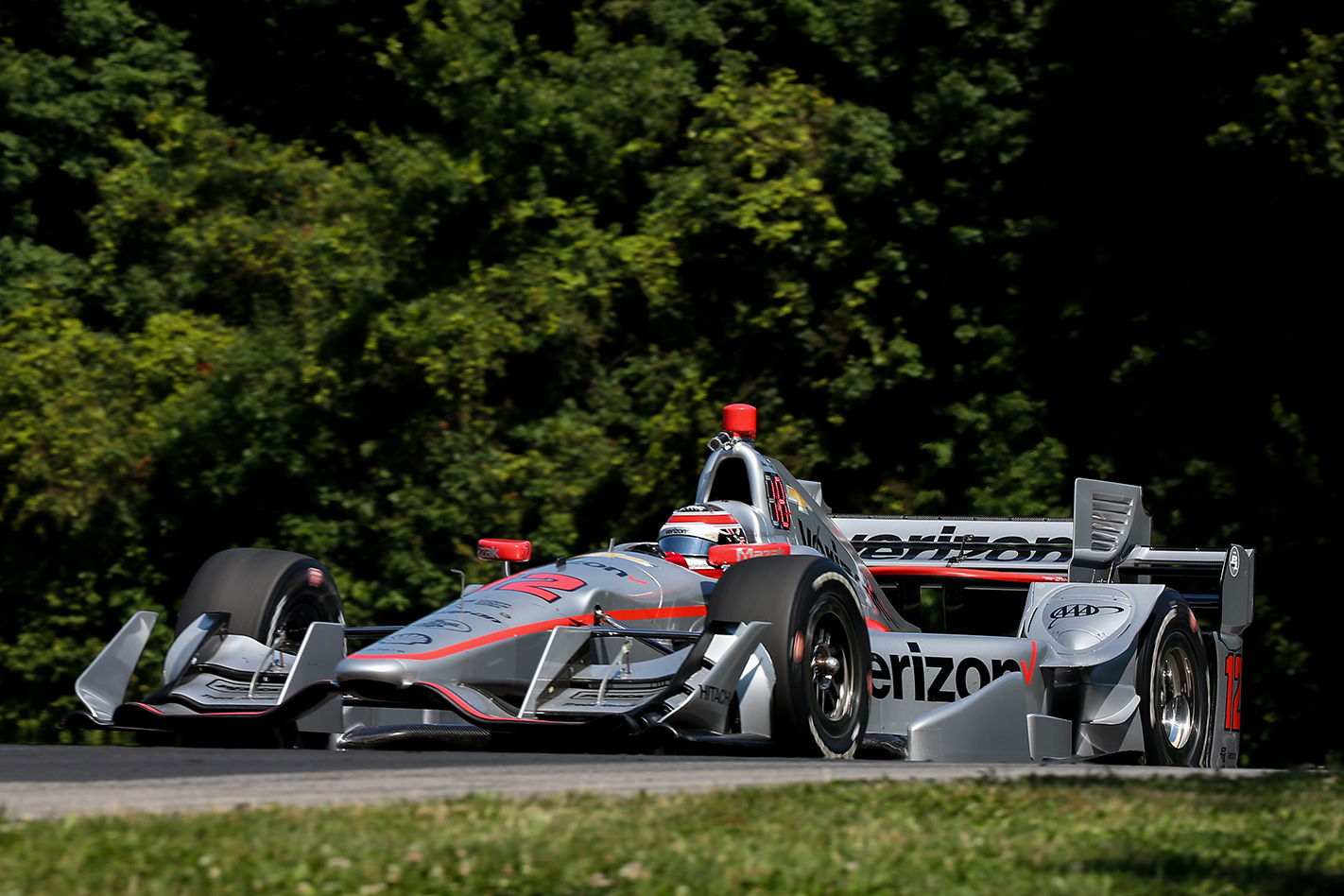
Newgarten, the best new local hope to emerge in recent seasons, is the first American to lead the IndyCar Series for three years.
Defending champion Simon Pagenaud, another Penske driver, was third at the undulating Mid Ohio road course.
Euro F3: Mawson lands three top 10 finishes at Spa
Despite unsatisfactory qualifying performances, Australian Joey Mawson clawed his way forward in all of the three races comprising the FIA Formula 3 European Championship at the Spa-Francorchamps circuit in Belgium, scoring three top 10 results.
Mawson finished fifth for Van Amersfoort Racing in the opening race after a strong surge on the opening lap from 11th on the grid.
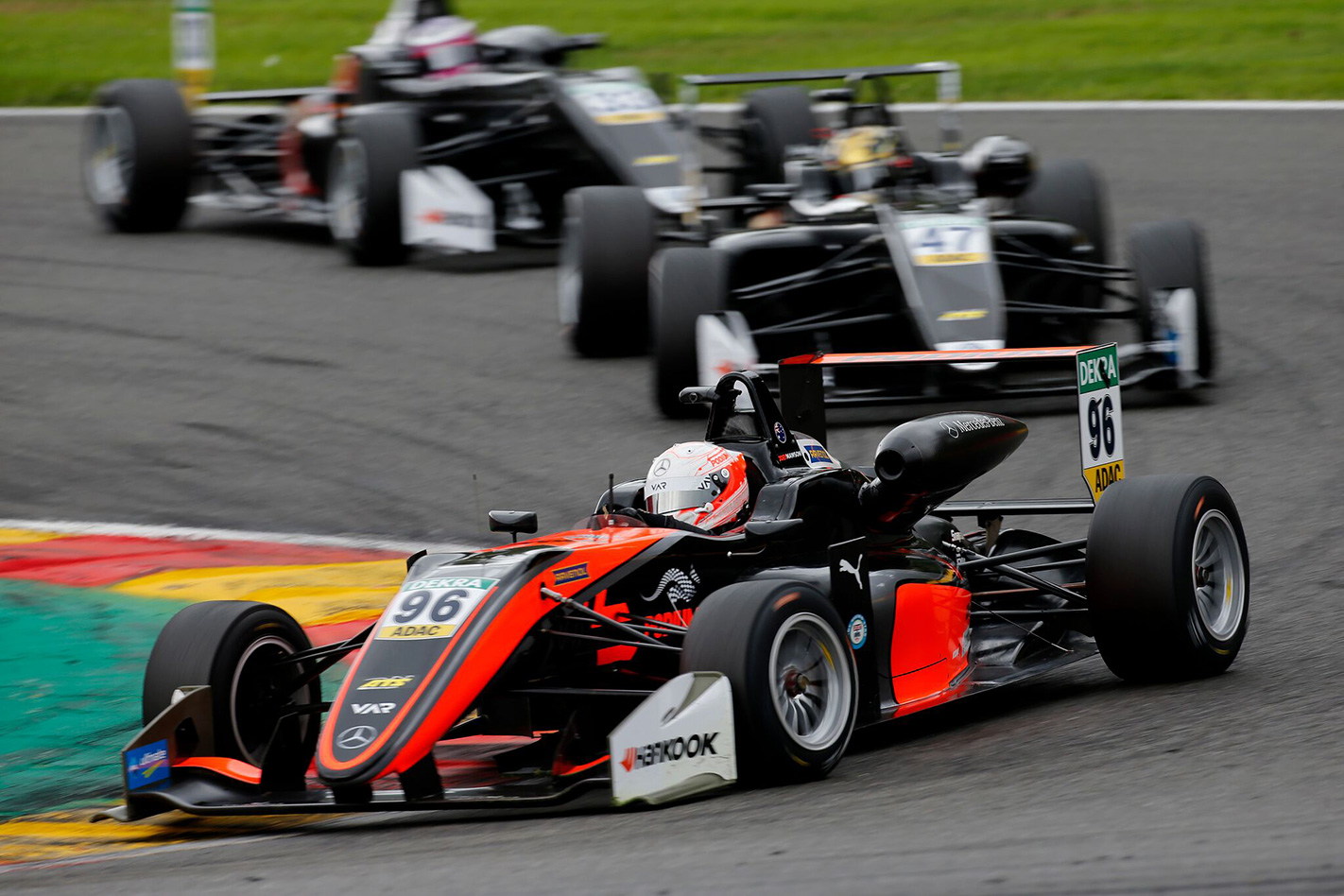
In the final race, Mawson converted a 12th into a 10th place result despite taking a hit from behind that cost him a couple of spots.
British driver Lando Norris, who will next week test with the McLaren Formula One team, won two races with Austrian Ferdinand Habsburg winning the other.
“It has been a solid weekend at Spa, to have three top 10 finishes was a real positive,” said Mawson.
The next race is at Zandvoort in the Netherlands on August 18-20.
Audi fights back to take Spa 24 Hours
Audi’s Sainteloc Racing has fought back from more than one lap down to take victory in the 69th running of the Spa 24 Hours, with drivers Markus Winkelhock, Christopher Haase and Jules Gounon sharing the winning R8 LMS.
Running as a factory-backed team for the first time, Sainteloc Racing scored a narrow 11sec victory over the M-Sport Bentley of Maxime Soulet, Andy Soucek and Vincent Abril at the legendary Belgian circuit. It was the fourth win for Audi at Spa.
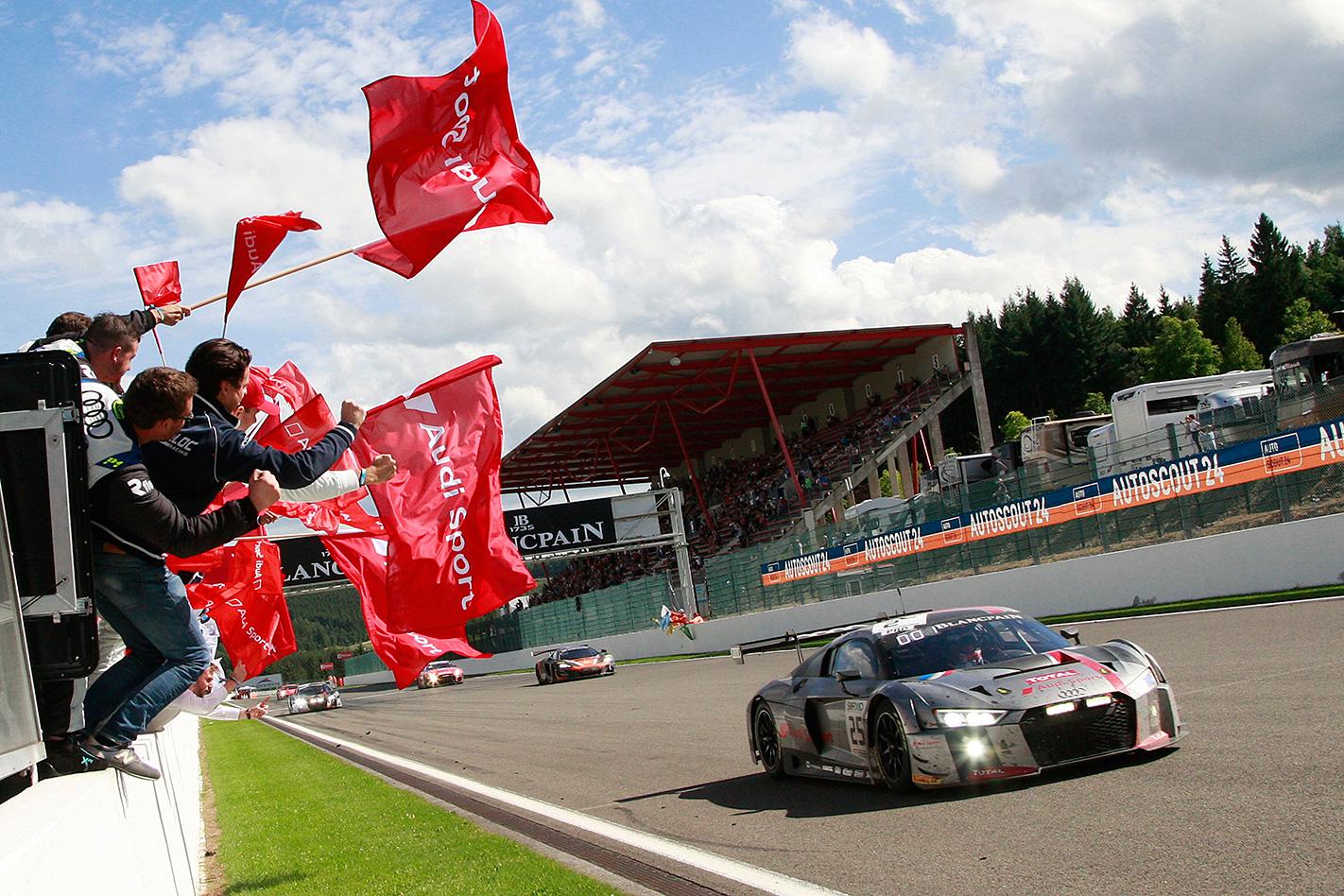
Haase, who has now added a first Spa victory to his two triumphs in the Nurburgring 24 Hours, said: “I can’t believe I’ve just won the Spa 24 Hours – it is incredible.
“We lost two laps in the night and came back. I’m done, but that’s the emotion of Spa.”
The runner-up #8 Bentley Continental GT3 also dropped a lap during the night, but surged back into contention on Sunday morning.
The Auto Sport Promotion Mercedes-AMG GT3 of Raffaele Marciello, Edoardo Mortara and Michael Meadows, which had led for good parts of the last 12 hours, lost second place to the Bentley when it had to be held in the pits at the final stop so not to infringe strict rules on the 65min maximum driver stint length.
It finished third, 40sec behind the Bentley.
The Tim Bernhard-run Porsche 911 GT3-R shared by Laurens Vanthoor, Kevin Estre and Michael Christensen took fourth place.
LUXURY manufacturers currently have a license to print money, as Australia enters a supercar boom time.
Demand for high-end exotica has pushed sales to an all-time high locally, with VFACTS reporting 1,737 sports cars costing over $200,000 were sold last year. To the end of June this year, a total of 910 megadollar sports cars have been sold – a 4 percent increase on the amount of precious metal that found owners in the first half of 2016.
The boom is possibly best highlighted by Ferrari Australia’s current predicament, with the entire allocation for the lifecycle of the 812 Superfast sold out 1.5 times over.
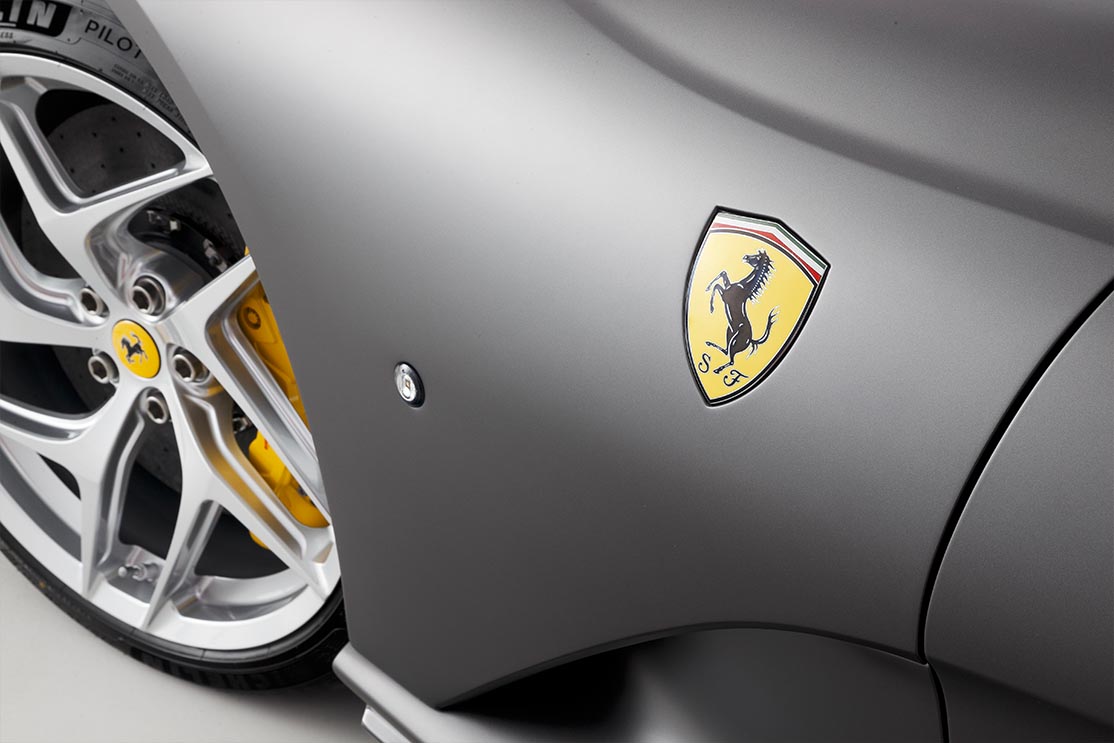
That’s five years of vehicles accounted for before the car was even officially unveiled, with another 2 and half year’s worth of customers waiting in the wings.
McLaren is enjoying similar success, having sold 60 cars so far in 2017 and more than doubling the number of cars it moved in the same period last year. Similarly, Aston Martin sold 73 cars so far this year, compared to 57 in the first half of 2016. Porsche’s evergreen 911 continues to do well too, with over 40 new 911s being sold each month on average
Australia now ranks eighth globally for Lamborghini sales, ahead of countries such as Switzerland and France. The US is top of the tree with 1,041 Raging Bull sales in 2016.
But when judged on a per-capita basis, Australian consumers are some of the most supercar-hungry.
“The executive team is looking at how they handle this, because it is now beyond funny,” Ferrari Australia CEO Herbert Appleroth told media regarding the Australia’s incredible appetite for Ferraris at the 812 Superfast launch.
“The supercar market is essentially in a boom in Australia.”
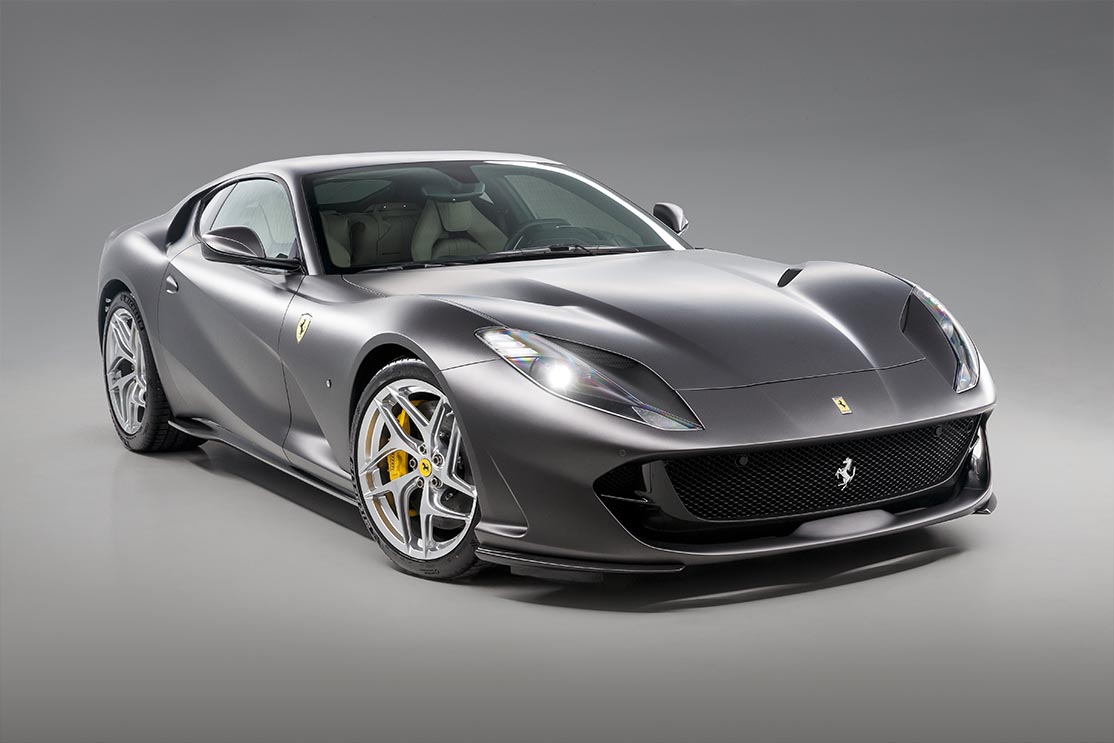
While discussing supply trying to catch up with demand, Appleroth admitted while Ferrari traditionally keeps allocations limited, a change needs considering.
“We have decided to have a nice progressive nine-, ten-percent growth each year to meet the markets demand,” he explained. “But now we have to do something.”
Appleroth confirmed 2017 is likely to usher in the largest allocation of V12-powered cars from Maranello that the Australian division has ever sold.
The insatiable hunger for high-end autos and growing wealth of the country means Australia will soon have its first hypercar sitting in a showroom.
Swedish manufacturer Koenigsegg, with the help of Brisbane-based distributor Prodigy Automotive, is planning to sell its 1100kW Regera in Australia for a cool $3 million.
Appleroth says Ferrari is having to tell potential customers it can’t guarantee they will be able to receive the car they desire, and are using its second-hand program as a stepping stone for those unwilling or unable to wait out the considerable waiting lists.
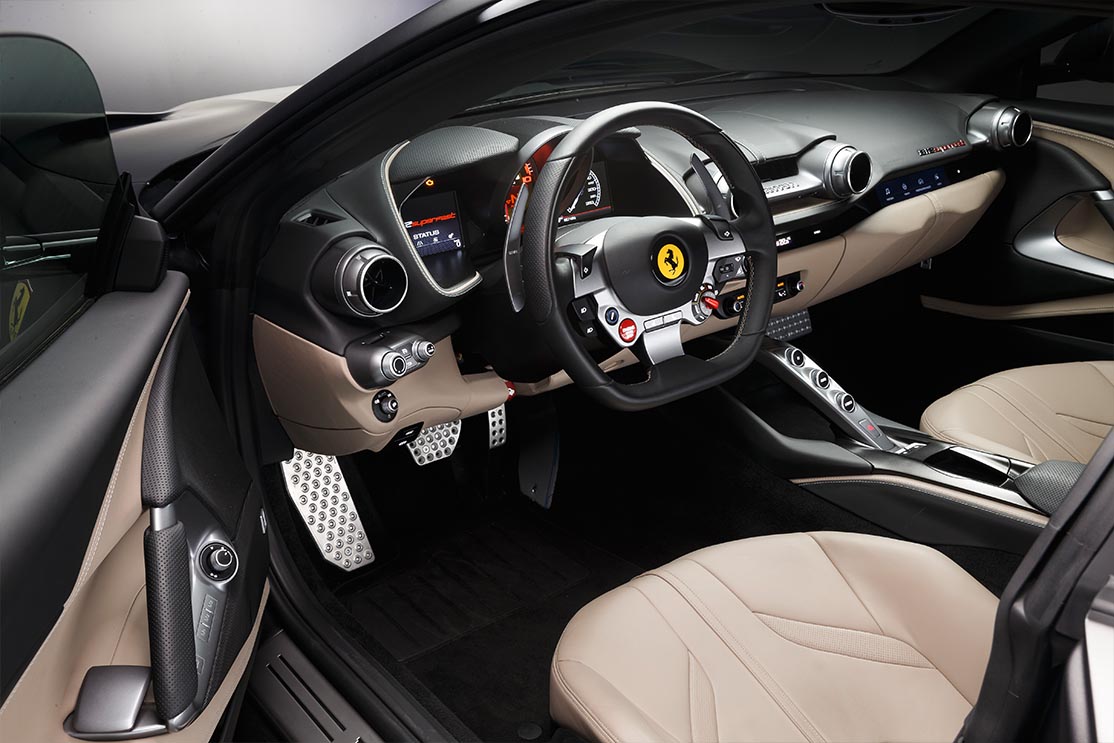
But even that is proving troublesome, with ownership habits also changing alongside the boom in sales.
“What we are seeing in Australia now is a shift,” Appleroth said. “Traditionally you had one Ferrari and then traded it in and got a new Ferrari. Now, what we are seeing is people owning multiple Ferraris because they are an appreciating asset.
“Now, that has caused some problems for us. We need a general stream of used cars to supply our new to Ferrari people.”
Whether intentional or not, supply is yet to match the demand for supercars, and doesn’t appear to be catching up any time soon.
So if you are in the market for a crown jewel of your garage, you may be forced to wait for several years. Or buy someone else’s.
The days of a charismatic car company boss ordering a new model on a whim, or a vendetta, are behind us, but it’s still natural to contextualise a company’s efforts and direction through the character of the person in charge.
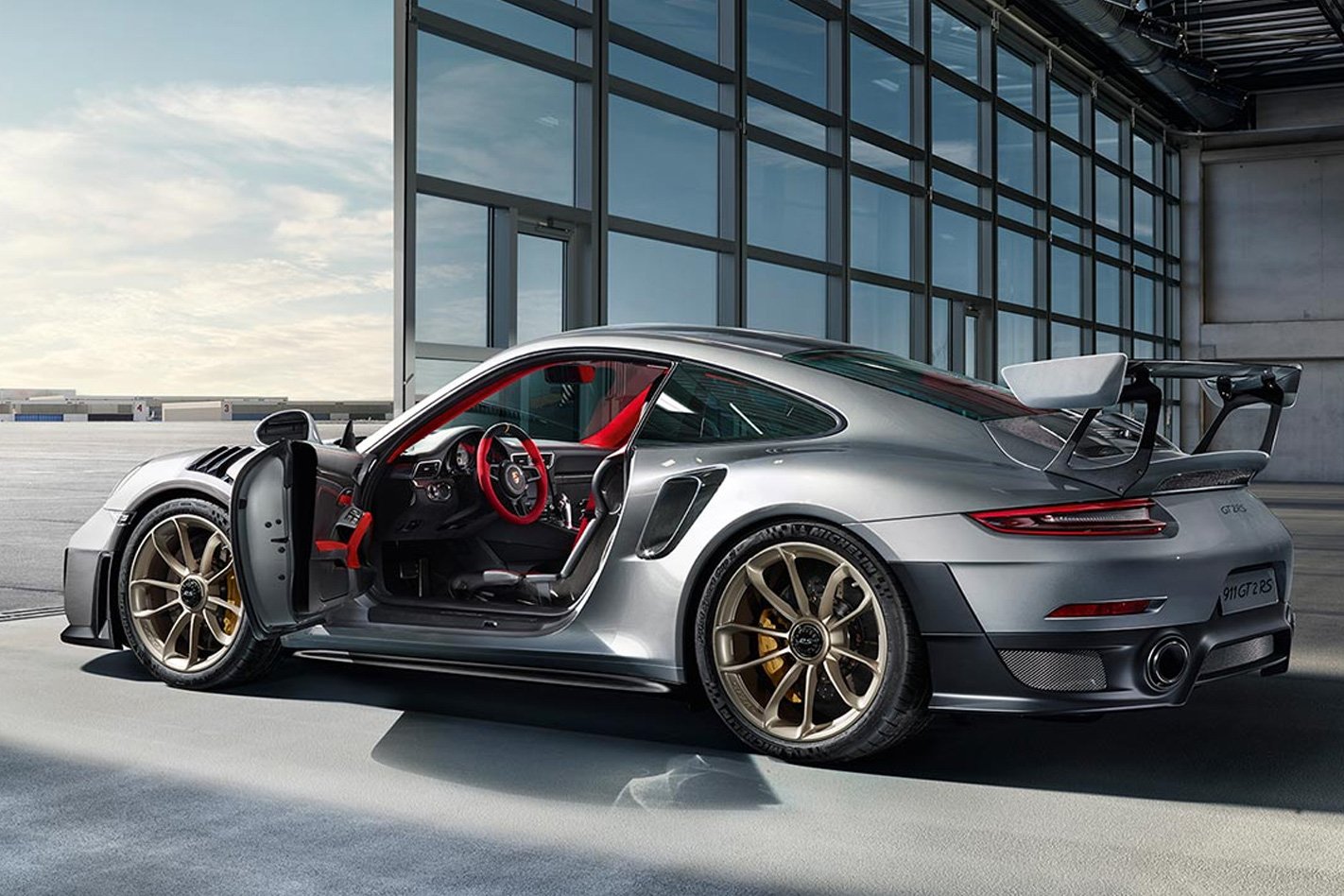
In the case of the road cars developed by Porsche’s GT Division – the ones that get to wear the GT and RS badges – that bloke is Andreas Preuninger.
While he’s predictably keen to argue we should see GT Division’s work as a team effort by the 200 engineers handling its racing and road car activities, it’s also hard to see past Preuninger as the perfect encapsulation of the brand he works for.
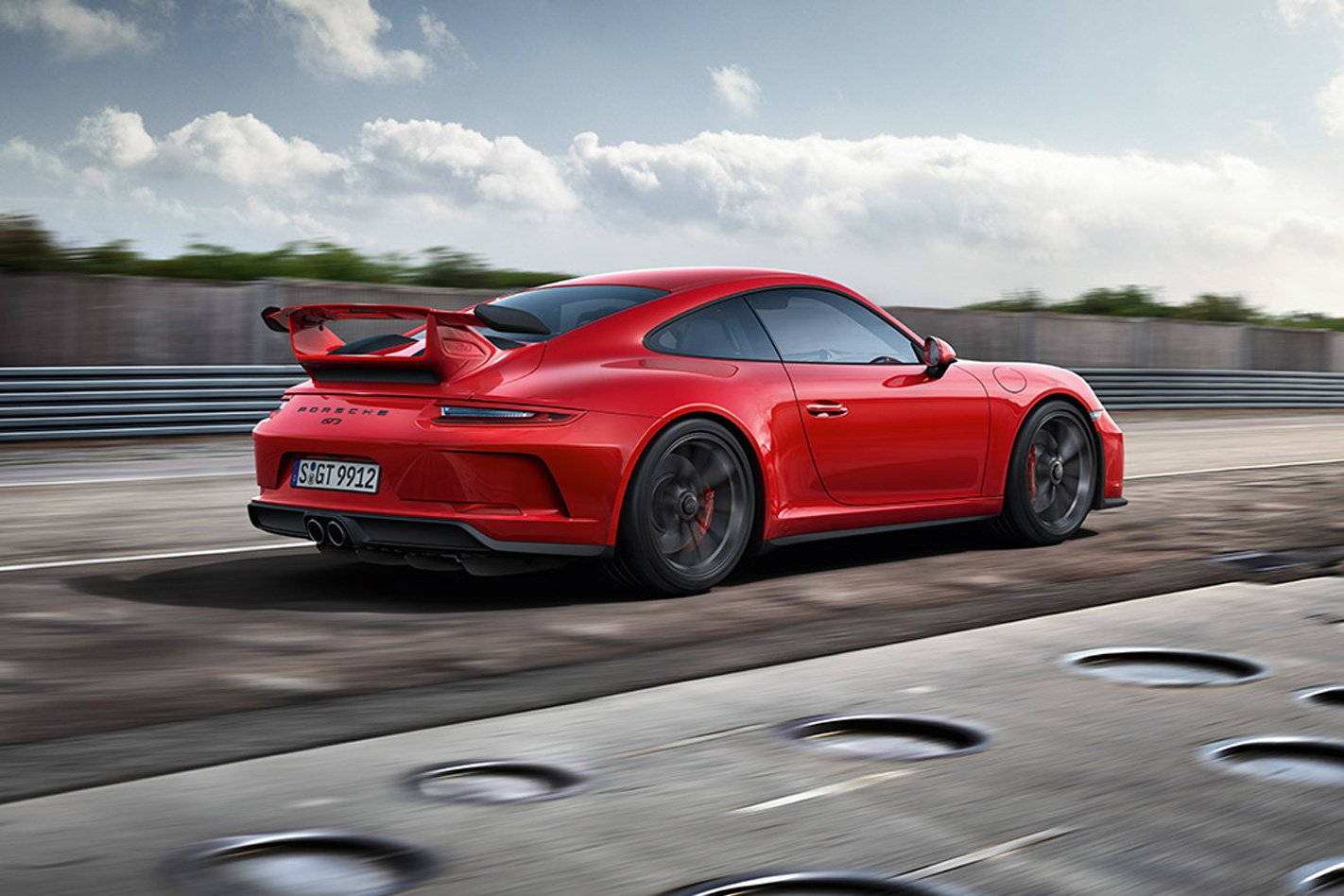
He wouldn’t share anything new on the next Porsche Cayman GT4, but he did confirm that GT Division isn’t working on any four-cylinder engines at present.
That, along with his evangelical enthusiasm for natural aspiration, backs up rumour about the GT version of the 718 Cayman sticking with a atmo six, most likely a detuned version of the Porsche 911 GT3’s donk.
“Natural aspiration is one of our main USPs,” he says. “We offer a car for people who want to feel something special; who want to have as much emotion as possible, as much throttle response and immediacy from a sportscar engine. And at [GT Division] we think that can be achieved a little bit better with an atmospheric high-revving engine.”
“We don’t think it would be a wise move to shy away and turn around at the pinnacle of success of these cars and try something else without any necessity to do it,” he says.
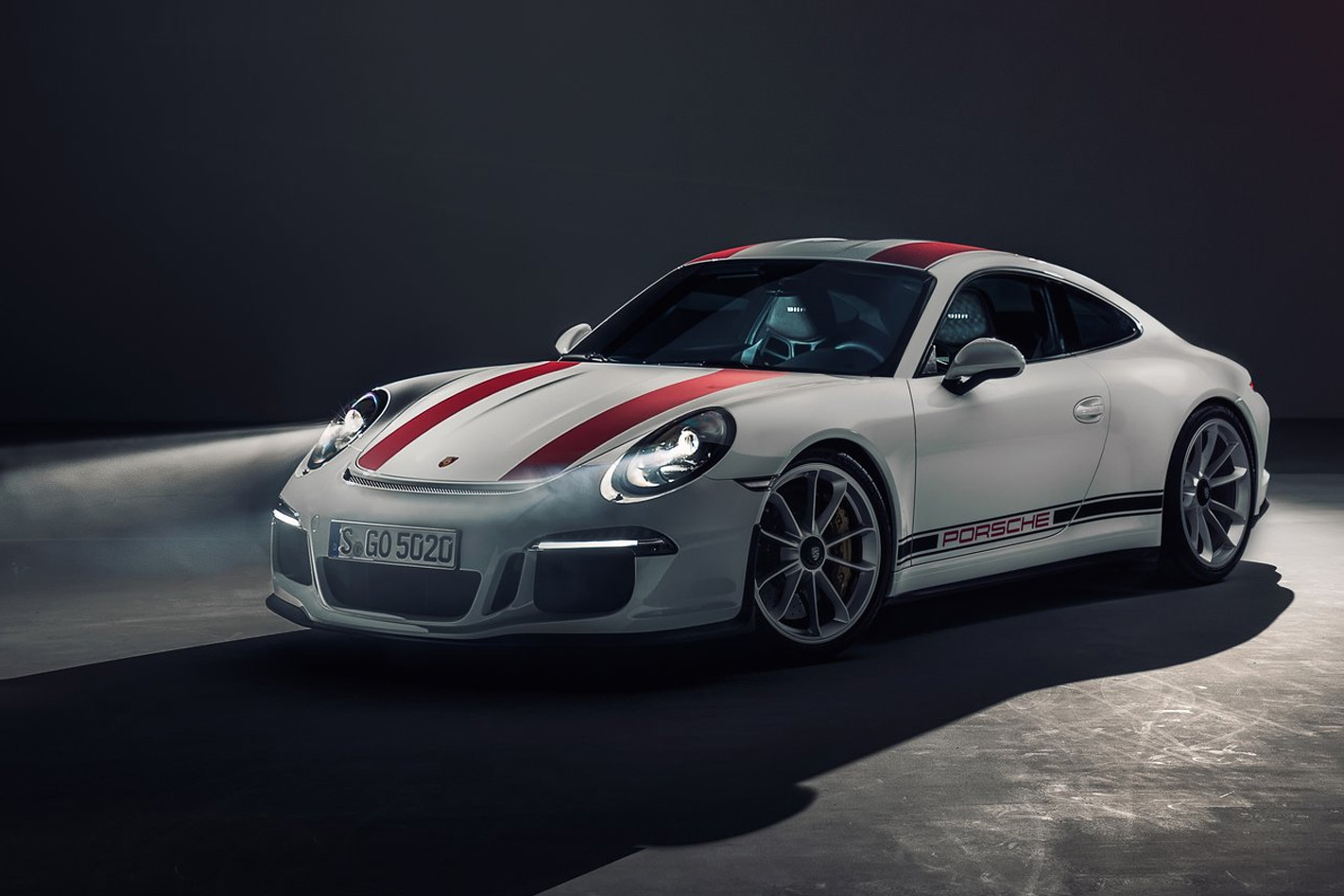
He makes the same point about manual gearboxes; an option offered again in the new GT3 after its predecessor switched to PDK-only – “giving choice is definitely our intention for the future.”
He admits it’s something the market will ultimately decide, saying that the engineering costs of creating the new gearbox for the GT3 and last year’s 911R were agreed on the expectation a reasonable number of buyers will go for them: “Let’s just say that if it’s less than 20 percent, then I’m in trouble,” he adds.
“I like to see my cars being used; if you’re flipping cars then I think it’s understandable that you won’t get on the list for the next car if we have more demand than supply. I think that’s just fair.”
Most reassuring is Preuninger’s insistence that commercial pressures won’t force GT Division to do anything that’s not right for it. While other manufacturers pile into uber-SUVs, we’ll never see a GT-badged one. Well, almost certainly not.
“The credibility of the GT car is based on direct bloodline to the race car,” Preuninger says.
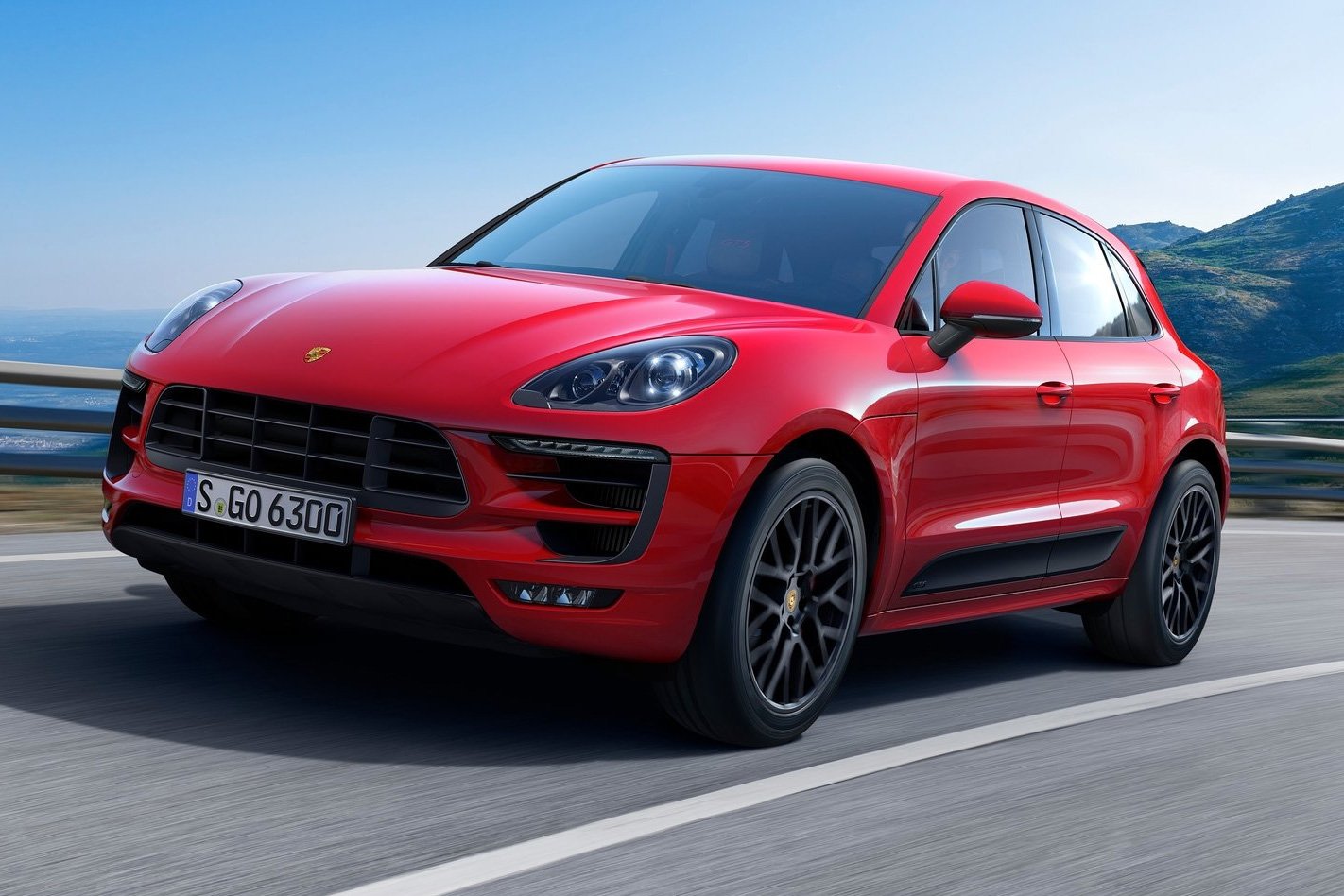
Things will continue to happen slowly at GT Division, but that’s the way it should be. The department’s total production is tiny compared to Porsche’s global sales, but Preuninger is happy with that. There will be more variants in the future, he says, and shorter gaps between them – but no expansion just to increase volumes.
Porsche’s crown jewels are in safe hands.
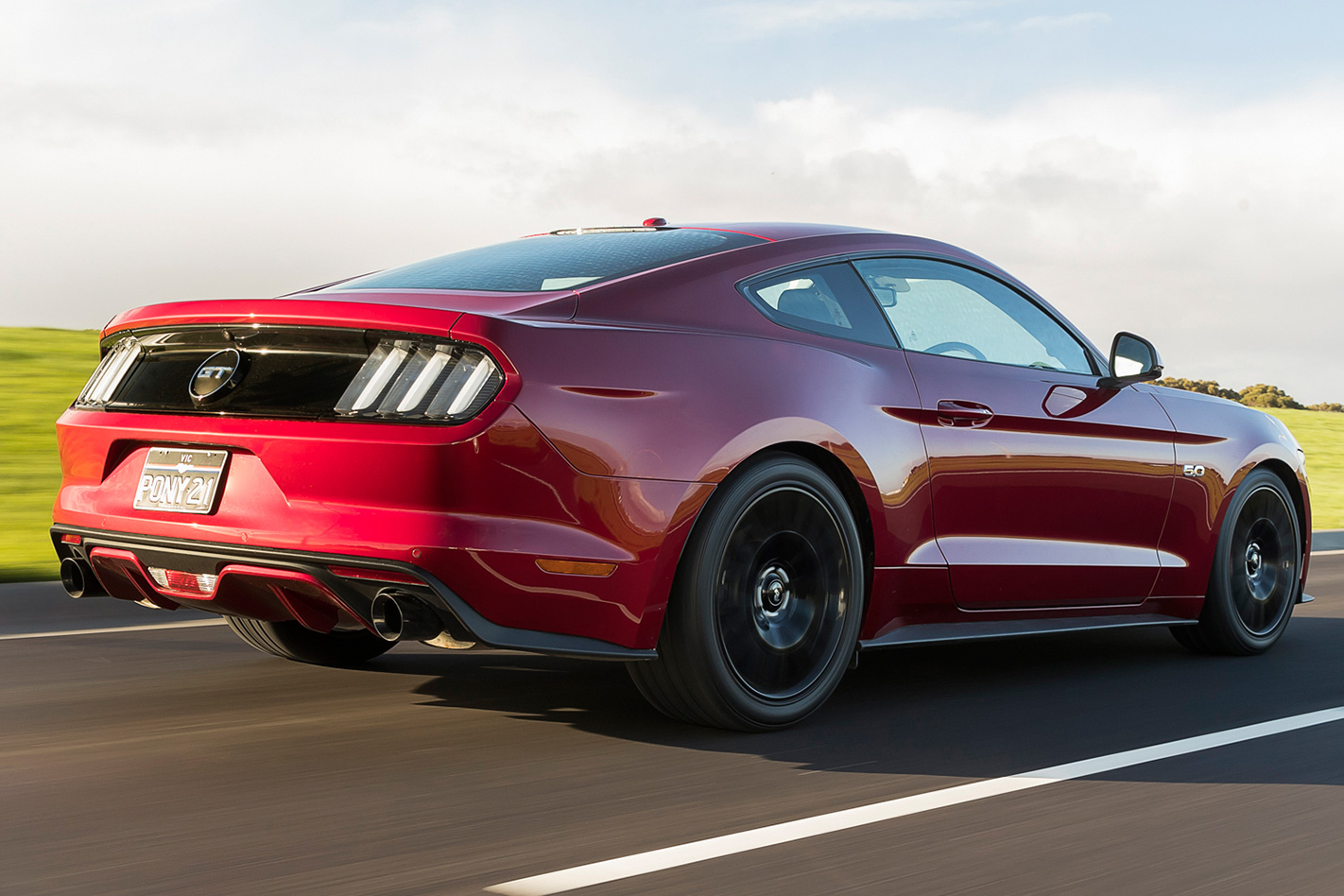
Supercharging Ford Mustangs is all the rage at the moment, but from where I’m sitting it’s tricky to understand why you’d go to the bother.
Obviously 11sec quarters are pretty appealing, but there’s not much wrong with the way the standard car rips through the gears. The 5.0-litre Coyote V8 is a wicked engine, with ample mid-range urge that continues to swell towards 7000rpm, in the process delivering a satisfaction only achievable with a naturally aspirated engine.
If we’ve had a criticism previously it’s that the experience has been a bit muted, but thanks to Ford’s new range of Performance Parts, owners can now have their Mustangs belt out a bent-eight bellow courtesy of a Ford Performance 2.5-inch cat-back exhaust system with 4.0-inch tips in chrome or black ($3584).
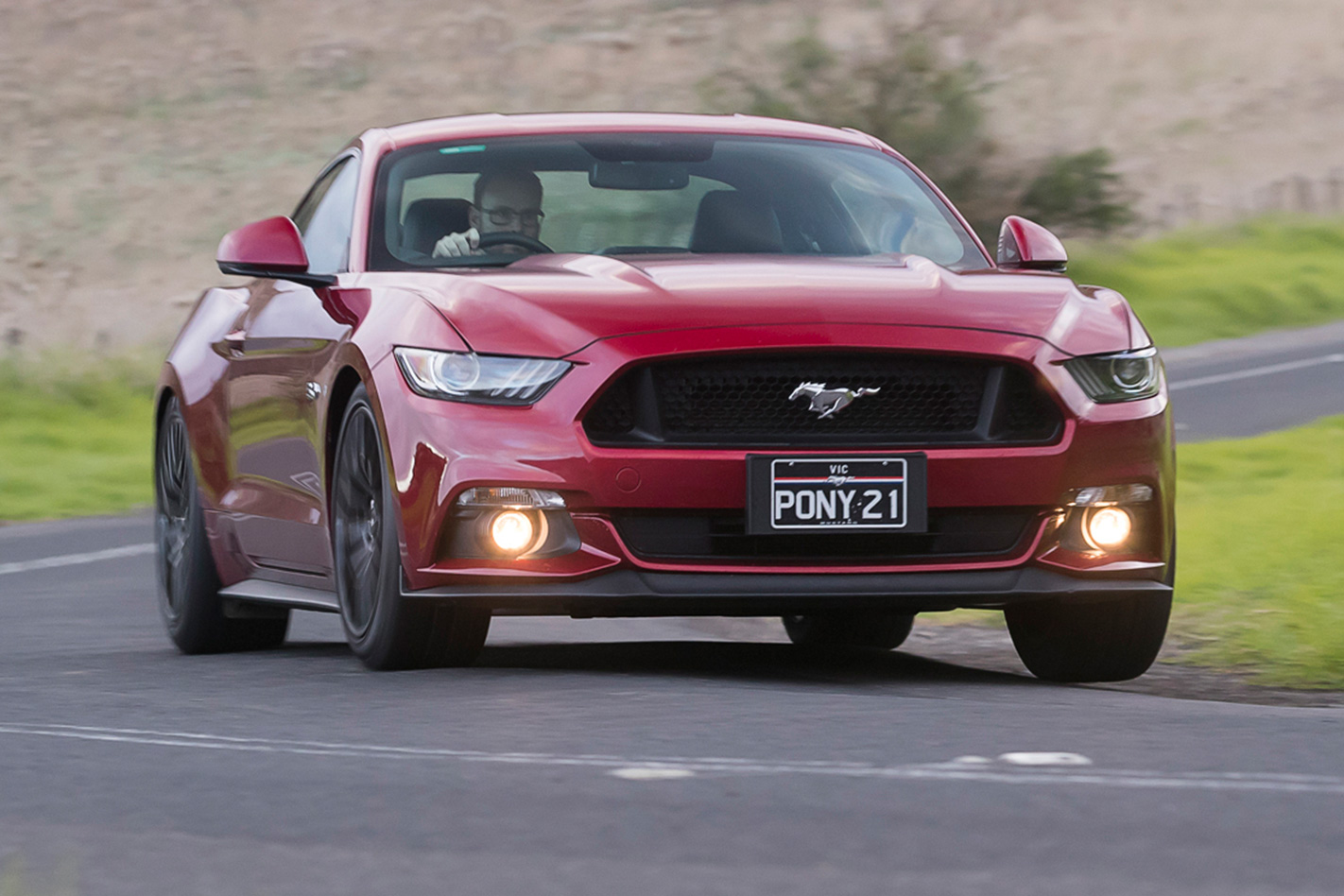
Nonetheless, according to Ford Australia President and CEO, Graeme Whickman, the upgrades go some way to “answering massive demand for factory-approved, fully warranted performance parts”. As you’d expect, our test car has the works, adding around $8500 to the $57,490 price, though that includes GST and fitting.
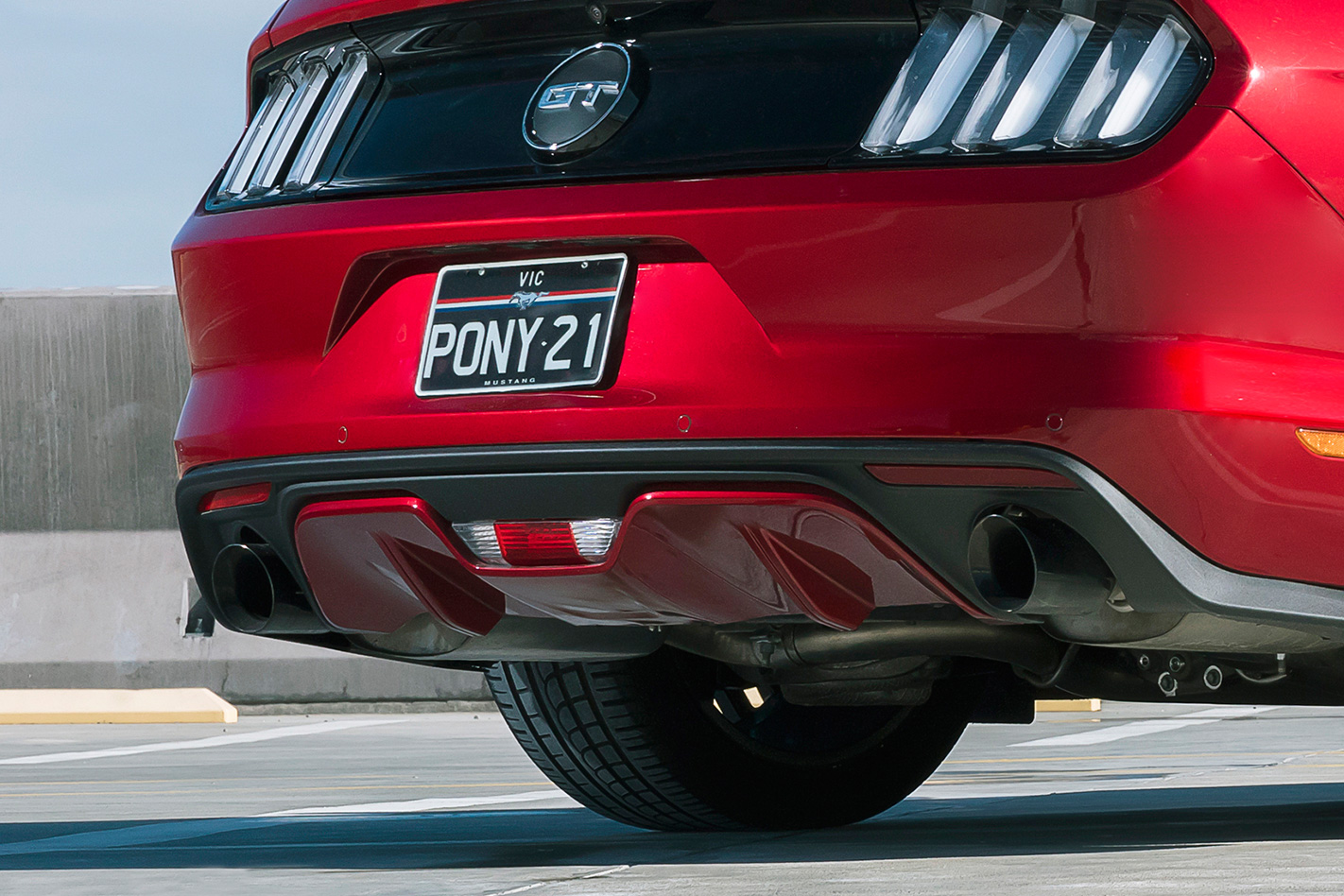
As you might have suspected from the opening paragraphs, the exhaust is a must-have, giving the Mustang the aural character it deserves. It might also liberate a few extra kilowatts, but regardless of whether the car is faster or not it certainly sounds and feels faster, which is arguably more important in the current motoring climate.
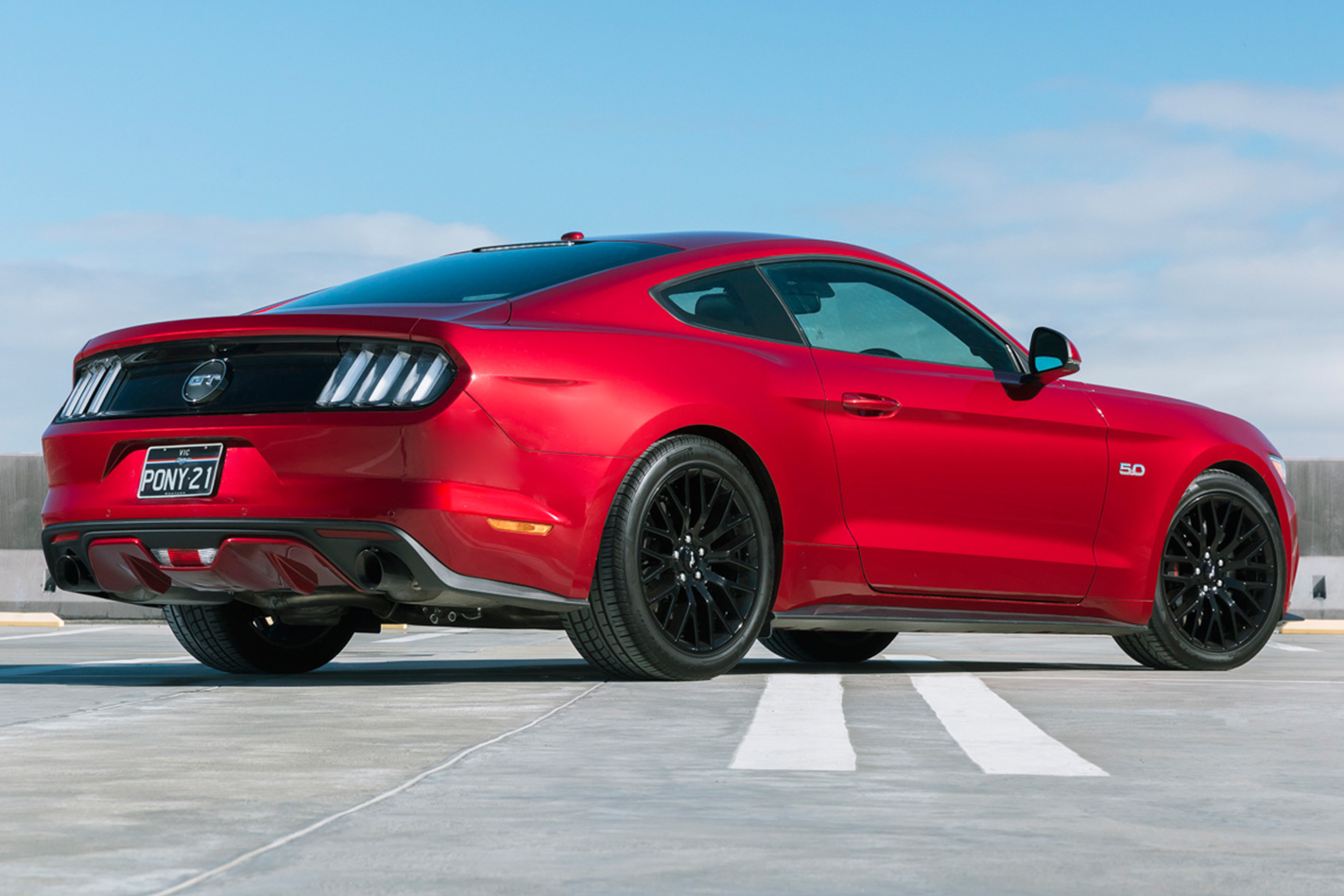
The number of admiring comments from colleagues regarding the Mustang’s inch-lower (25mm) stance suggests the lowered springs, which can be purchased separately ($1260), are well worth considering, though this new stance would be best paired with some guard-filling rims. Despite the lower and stiffer suspension, ride quality has not unduly suffered.
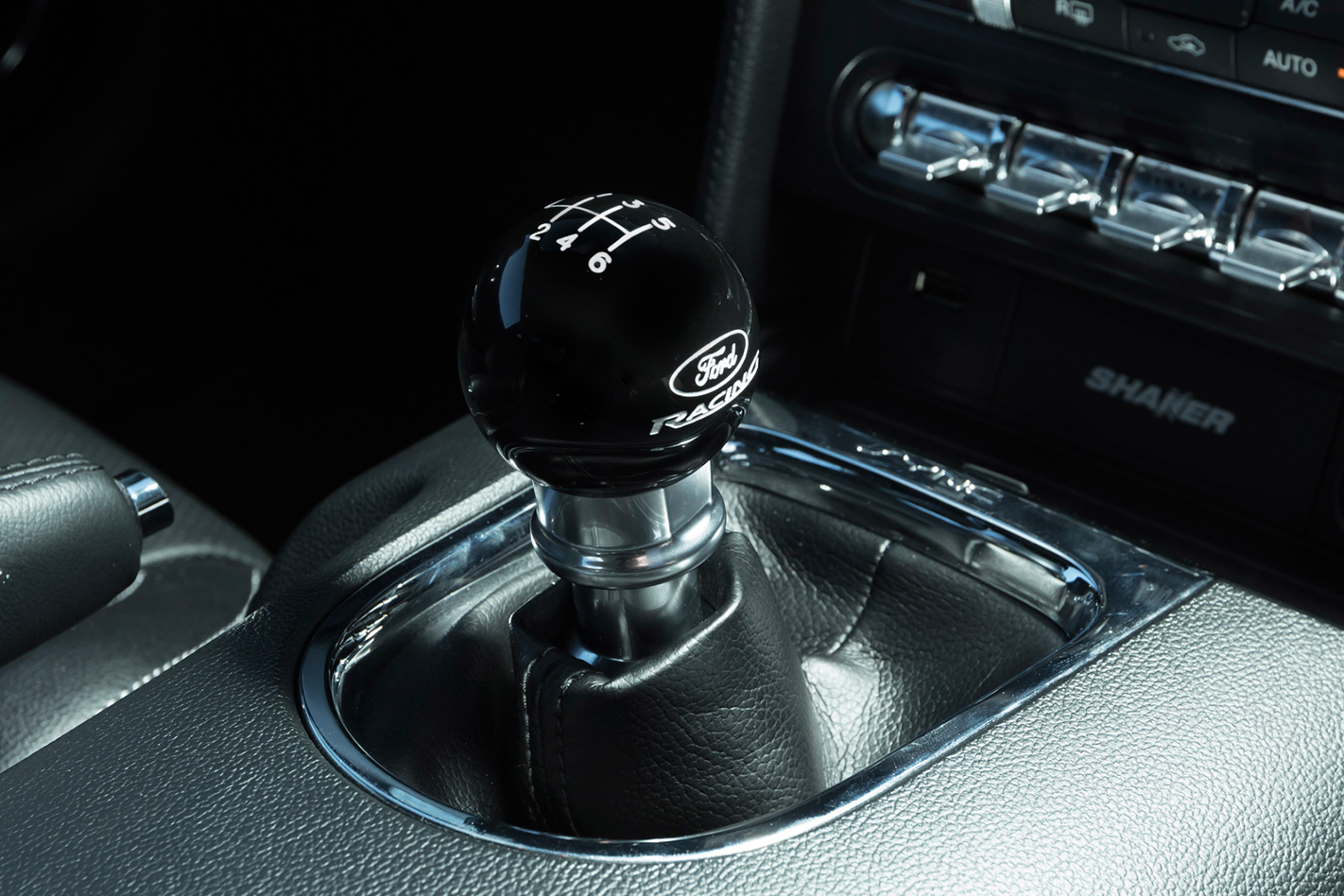
Despite the name, the pack doesn’t turn Ford’s new Pony Car into a modern recreation of Allan Moffat’s Coca-Cola Trans Am, but it does have quite an effect on the Mustang’s handling. One of the most impressive aspects of the latest Mustang is its compliance and this softness prevents it being the rowdy power-oversteerer you might expect, at least in the dry.
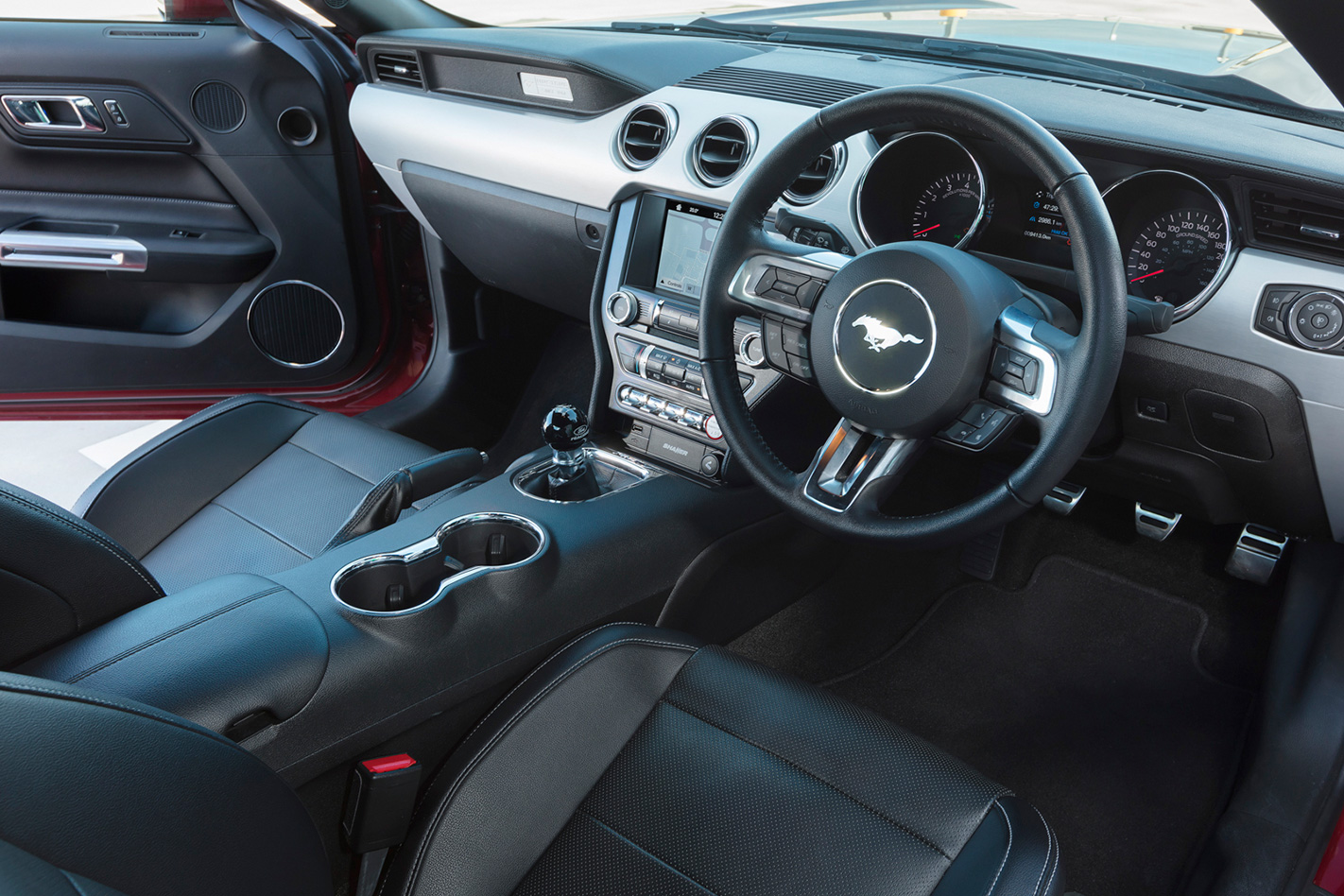
Does that make it a better car? Not sure, but it’s masses of fun. There are criticisms: As with the Tickford 360 we drove recently, the suspension’s sharper responses exacerbate the slow, mute steering and our test car emitted an odd metallic, bearing-like noise from the transmission area under hard acceleration.
If you want to tweak your Mustang but find the aftermarket a bit intimidating, there’s plenty to like here – just choose wisely.
4 stars out of 5
Liked: More V8 noise; more hooligan; better stance Disliked: Shift effort; odd noises; needs better wheels
Specs: Engine: 4951cc V8, DOHC, 32v Power: 306kW @ 6500rpm Torque: 530Nm @ 4250rpm Weight: 1739kg 0-100km/h: 5.0sec (claimed) Price: $65,990 as-tested
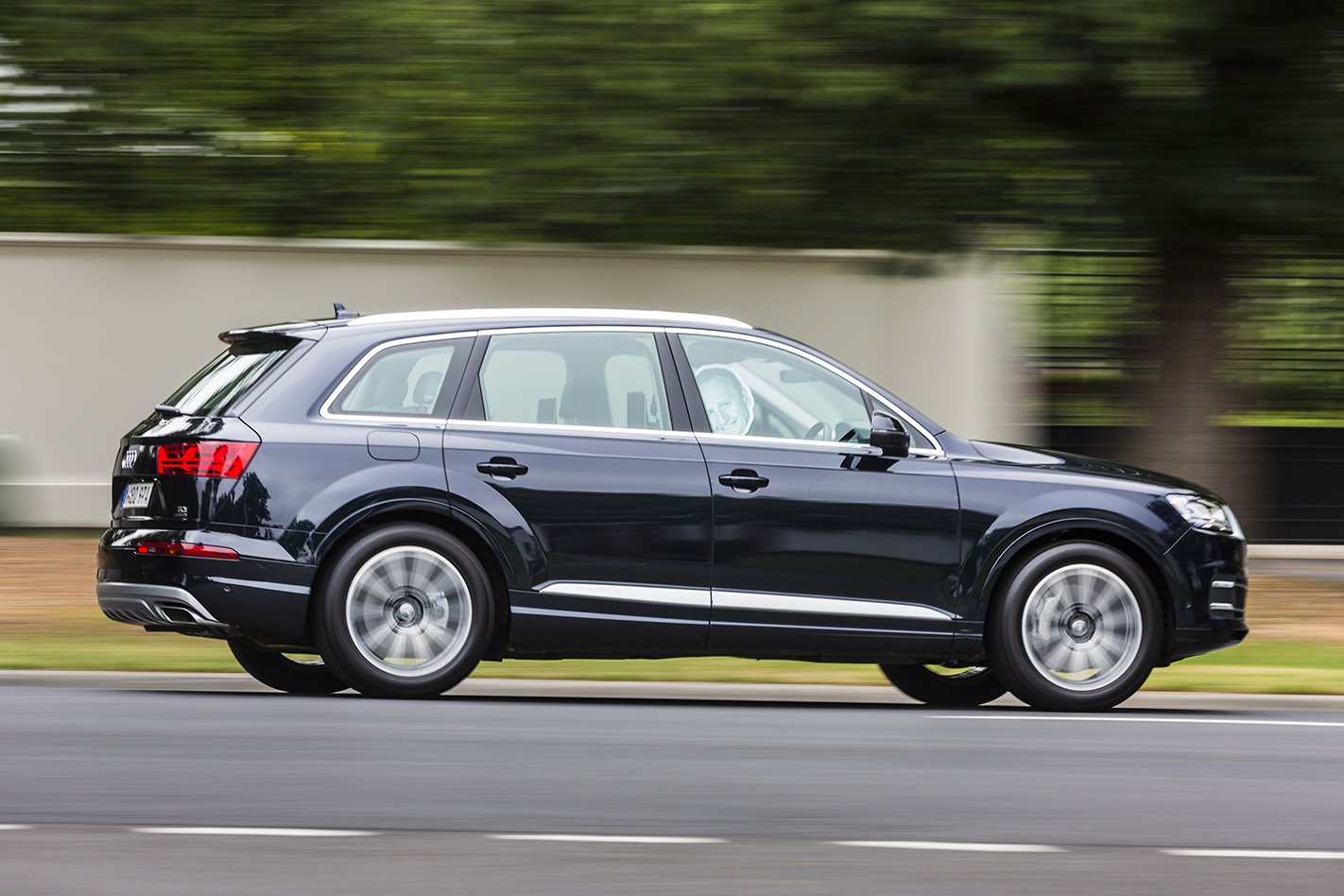
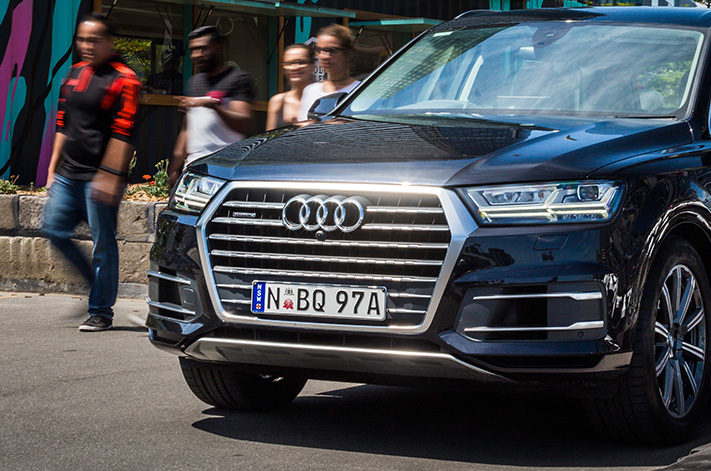
THE salesman looked aghast. He mumbled and stumbled and tried his best to move on from the awkward silence that had enveloped our until then, very convivial conversation.The poor bloke had just spent a half hour taking me through the many and varied features of our new Audi long-termer – to give it its full title, the Audi Q7 3.0 TDI 200kW Tiptronic quattro – relishing the opportunity to demonstrate his intimate knowledge of the big SUV’s extensive features list.
Audi HQ was eager to have Wheelsexperience the handover of a new car just the way a customer would, so arrangements were made to have the striking Ink Blue wagon, with Rock Grey leather, presented in the customer pre-delivery area at Audi Centre Melbourne.
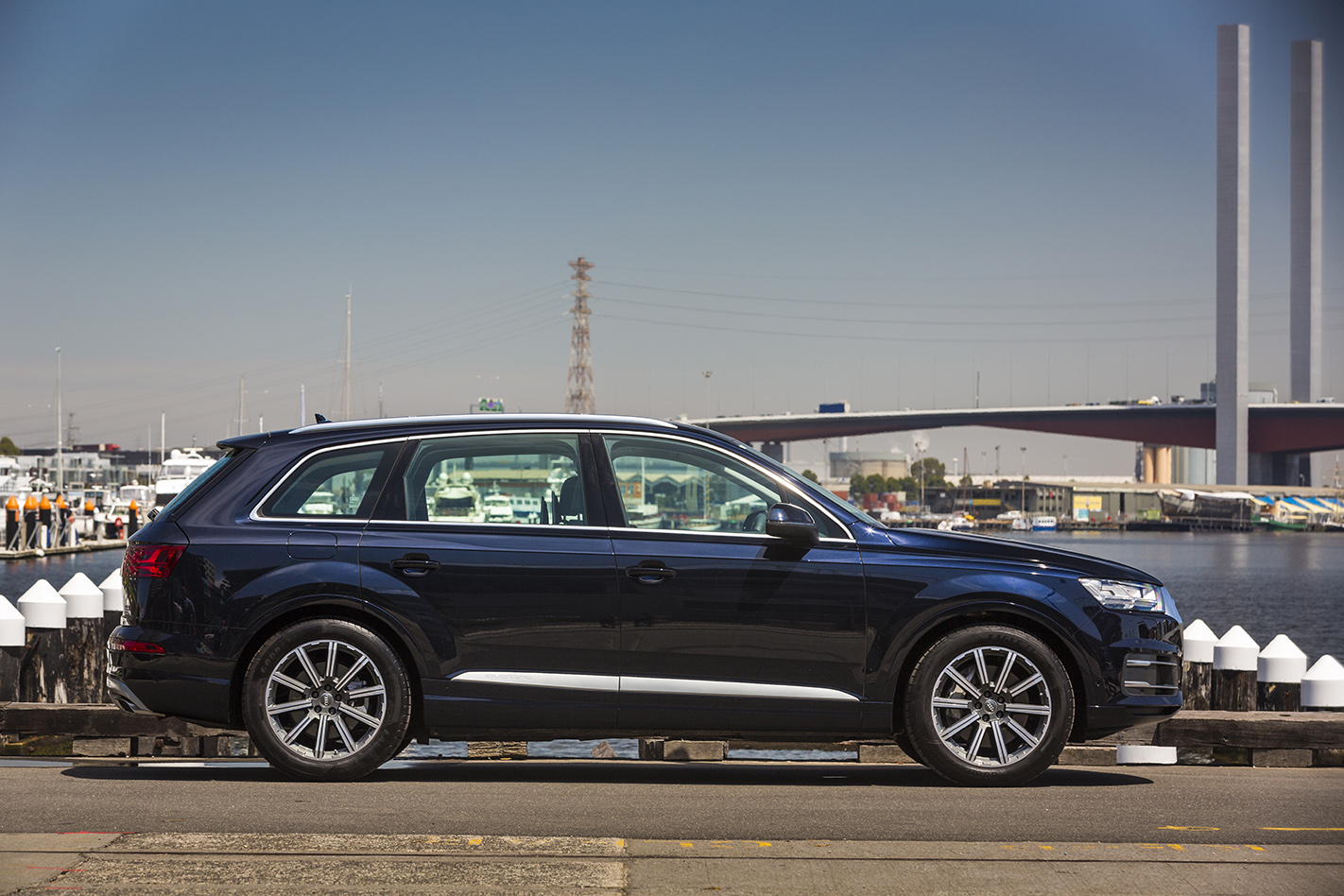
The salesman knew his stuff, patiently demonstrating everything from the Q7’s auto tailgate function, with its party trick of opening when you wave your foot under the bumper, to the electric-folding third row seats that glide elegantly into the floor at the push of a button. And the flexible 40/20/40 second row configuration that flips, slides and folds with impressive versatility.
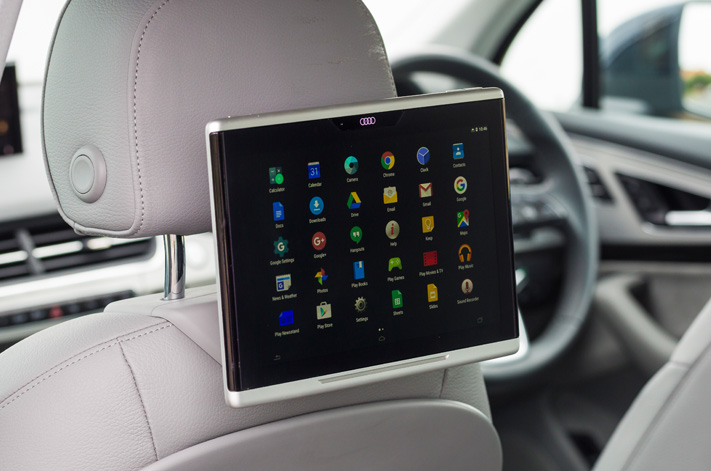
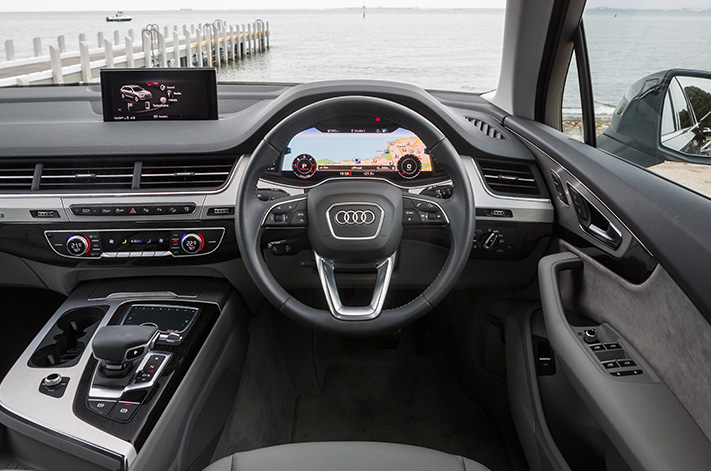
He moved on to the removable smart tablets in the second-row – with streaming internet functionality, no less – and the customisable 12.3-inch Virtual Cockpit dash that morphs at the press of a wheel-mounted button from a traditional arrangement to a reduced version of same, and on to a full technicolour nav-screen.
My Saturday morning pre-caffeine brain strained to take it all in as the presenter pressed on. I just hoped I’d remember some of it tomorrow, when the family and I planned to christen the new long-termer with a 800km interstate trip.
| Watch our Audi Q7 video review
At the very least, I had to recall how to play a DVD and stream internet to those rear-seat screens, lest there be a kiddie rebellion of frightening proportions.
To be fair, at its launch in 2015 Audi declared the Q7 “its most advanced mass-production car ever”, so most mere mortals with an IQ south of Stephen Hawking’s would struggle to commit all of its tech-tricks to memory after a 30 minute tutorial.
Our man ploughed on patiently, despite the occasional dumb question or request to rewind from his pie-eyed student.
Then came the moment that brought things unstuck.
The bloke was whizzing through the car’s connectivity functions and suggested it might make more sense if we did it with an actual phone.
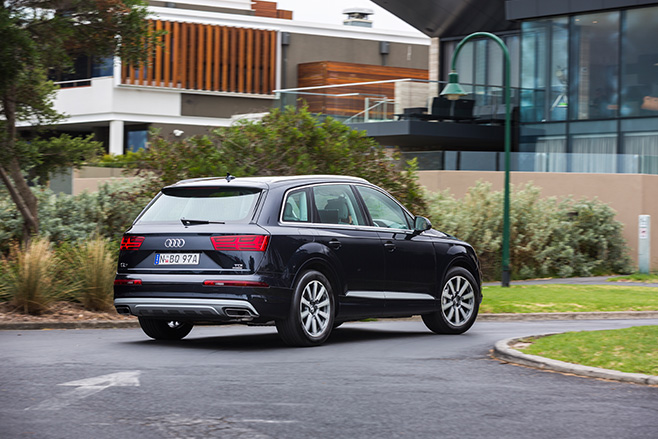
“Do you have your phone on you,” he asked, politely.
“Sure,” I said, producing the black rectangle from my hip pocket.
He grabbed the phone without looking and busily clicked away at the Audi’s sub-menus, preparing it to sync while explaining all of the many and varied functions I would soon be able to access via the retractable 8.3-inch colour screen.
Then he glanced down and a look that was equal parts dismay, confusion and sympathy scurried across his face as he stammered for the first time in what had been a peerless presentation.
“Err… that’s an old one, isn’t it,” he ventured tentatively, staring at the device in his hand as if I’d deposited dog poo there.
“Yeah, it’s an iPhone 4S,” I replied proudly, just to do his head in a bit.
Lost for words, the poor bloke got busy trying to get the old girl to sync, but I imagined he was wondering what would possess Audi to hand over $125K worth of technological tour de force to a bogan who can’t be bothered to keep up with mobile phone technology.
In my defence, ye olde 4S still makes calls, take photos, plays music, provides directions, connects to the internet and occasionally syncs temperamentally with test cars. So what’s not to like about it?
But yes, since the superbly sophisticated Q7 arrived in our lives, the 4S has begun to look a lot like grandad’s axe, so it might soon be time to scribble ‘phone shop’ on the centre console touch pad and follow the sat-nav’s plummy directions to The Future!
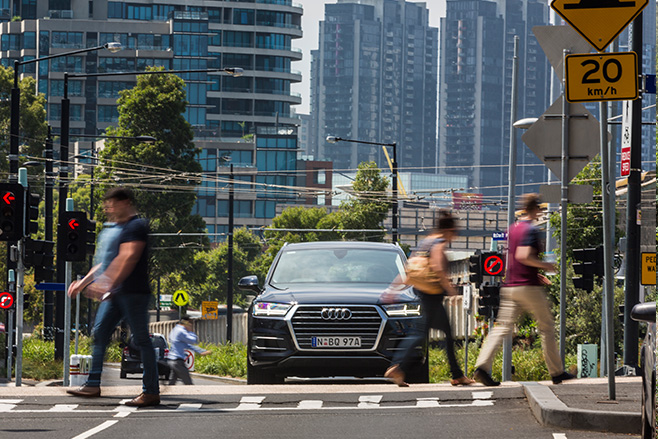
Update 1
Audi Q7 gets put through the ultimate test, the family road trip
An eerie silence enveloped the cabin. To my left, in the passenger seat, the wife dozed peacefully behind dark shades. Through the windscreen, the dotted lines of the Hume Highway were hauled in and spat back out in the Q7’s imperious wake. The faint growl of the 3.0-litre turbo-diesel V6 and the muted whoosh of 20-inch tyres on pavement provided a gently cosseting background track.
But something seemed wrong. Honed parental instincts told me that kids this quiet generally means one of two things: trouble, or an exhaust gas leak has rendered the little mites unconscious.
| 2017 Audi Q7 3.0TDI long-term car review, part one
Adjusting the rear-view mirror I glanced back to see which it was, only to be confronted by the sight of the two wide-eyed angels, bedecked in headphones and utterly engrossed in the wonders of the inter-web, courtesy of Audi connect, which uses an integrated Wi-Fi hotspot to enable internet connection to the rear-seat smart tablets while on the road.
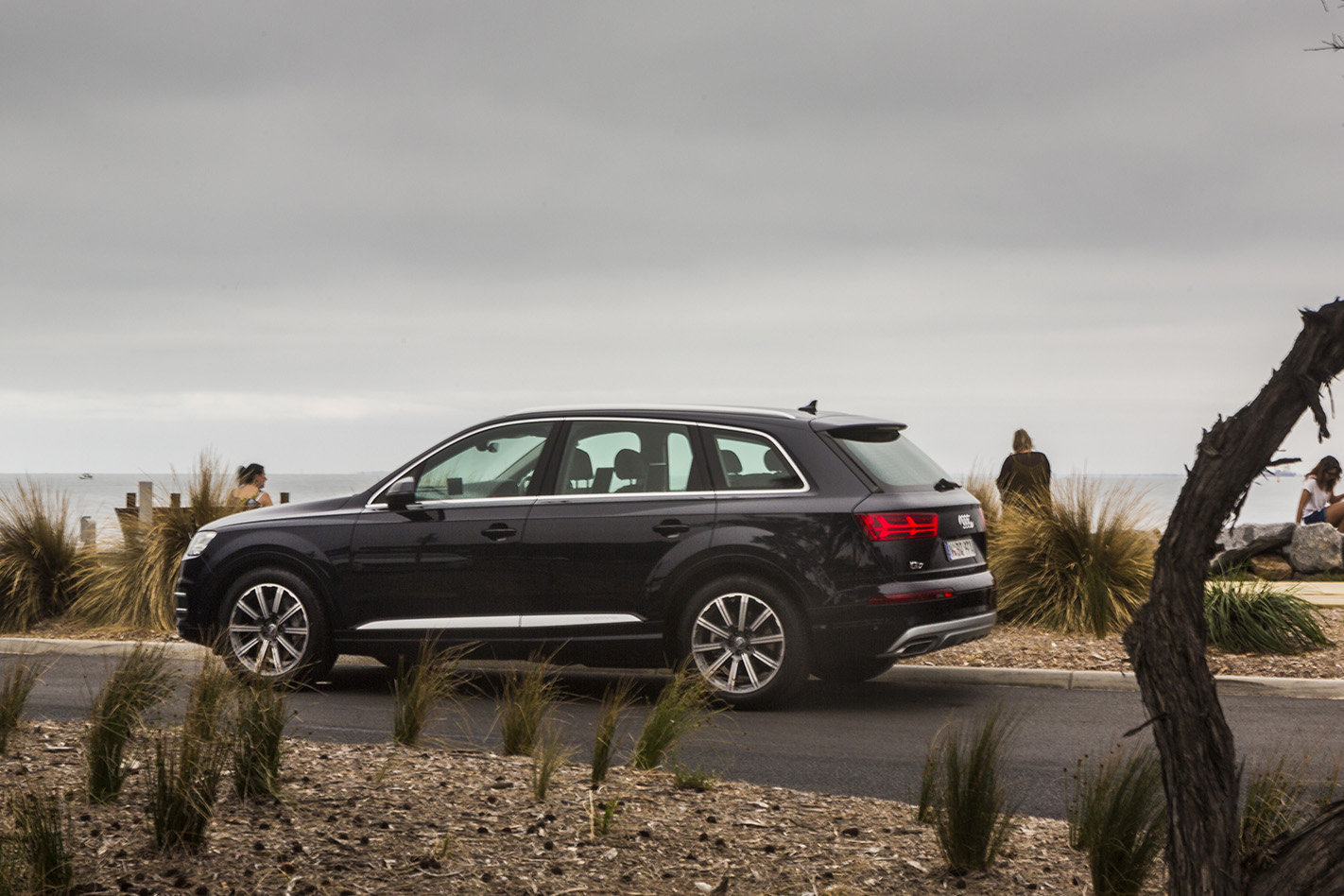
Satisfied that my parental paranoia was unjustified, I settled back to enjoy the rhythm of the road, adjusting the temperature on the individual climate control a few degrees lower on the wife’s side, just to annoy her. I could snap-freeze or bake the kids from here as well, with four-zone climate control at my fingertips. Hmm, Doctor Evil drives an Audi.
With cruise set to a conservative 115km/h I admired the Q7’s ability to doggedly hold its set speed with unerring accuracy. The big Audi deftly applies throttle and brake depending on the terrain, its eight-speed shuffling seamlessly up and down the ratios without any of the uncouth kick-down or rev flaring that accompanies such moves in lesser machines.
Somewhere south of Goulburn my reverie and the trip’s relative tranquility was shattered by an indignant outcry from the back seat. The long faces and frantic stabbing at the Q7’s seat-mounted screens confirmed the terrible news: we’d lost the internet connection!
Yes, sadly, even in this day and age, Australian children are being forced to take 10-hour road trips without the guarantee of uninterrupted internet connectivity between Melbourne and Sydney.
Shame, Australia, shame.
It was former PM Bob Hawke who famously declared back in 1987 that “by 1990 no Australian child will be living in poverty.” He was wrong, but that shouldn’t stop Our Malcolm from setting his government a similarly grandiose goal of making sure every family road trip is somehow connected to the NBN. After all, watching Australia’s beautiful and ever-changing landscape through panoramic SUV windows is soooo last century.
Update 2
After a brief sojourn in another exotic European car, Ged finds himself running back to his Q7 long-termer
The grass is always greener, or so the saying goes, and I was recently tempted to swap the keys of the Audi Q7 for a few days at the wheel of a bright-shiny new bauble from another renowned European brand.
It represented the car maker in question’s first foray into the automotive honeypot that is SUVs and, with the brand’s reputation forged in sports cars and performance saloons, my expectations were high.
However, after a week of enduring the leaden lump’s heavy steering, vast turning circle and lethargic diesel performance – all at a fully-optioned price tag that would have enabled me to park an S3 Sportback alongside the Q7 for similar money – I practically hugged the big Audi when the time came to reunite.
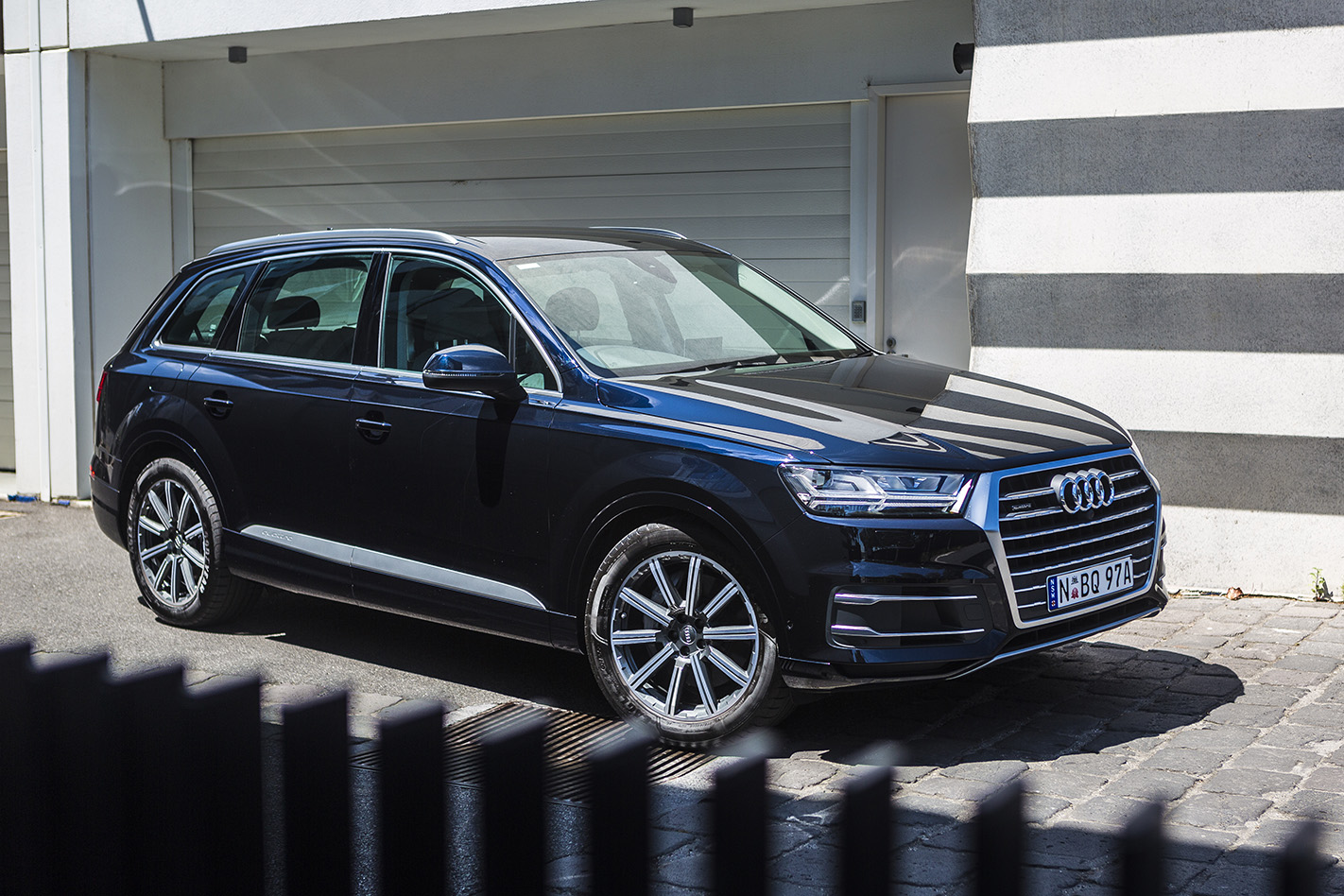
The incident reminded me that, a few months earlier, I’d run into a mate who’d purchased a Q7 and was eager to tell me how happy he was with his decision.
I was steering a Volvo XC90 diesel at the time, which said-friend had run the rule over during his due-diligence, but had chosen the Audi on the basis of its superior refinement.
I considered the XC90 a decently refined proposition, and thought him a bit harsh on what is arguably the Swedish marque’s most impressive product. But, having now spent decent wheel time in both seven-seaters, I have to concede he was spot-on.
It’s not so much that the XC90 is lacking in refinement; more that Audi has taken the whole noise-vibration-harshness business to another level, practically banishing unwanted diesel drone from the Q7’s cabin.
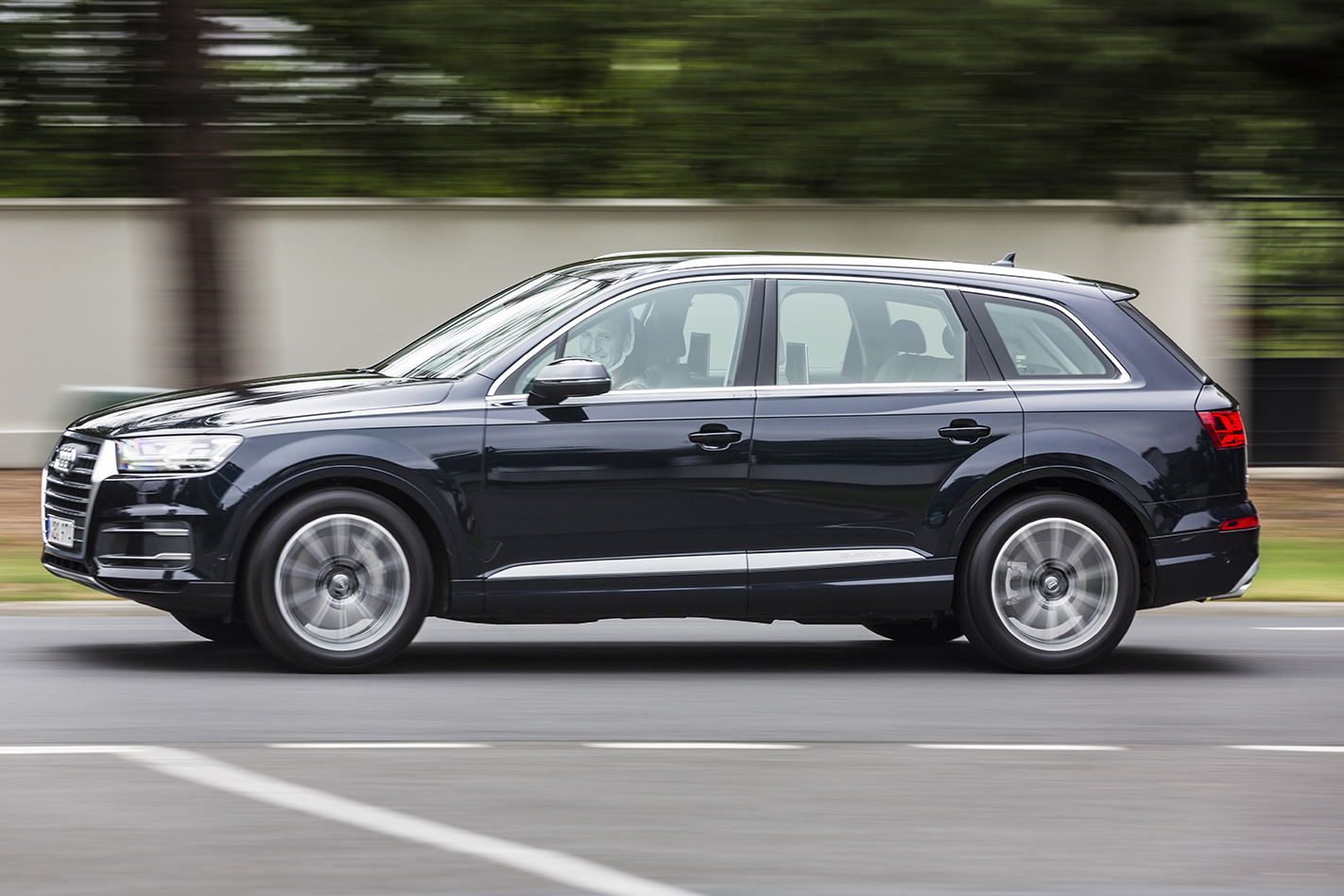
No doubt there’s plenty of noise-supressing cladding beneath the Q7’s handsome alloy skin, but at the heart of the matter is Audi’s remarkably responsive and free spinning turbo-diesel V6.
Hitched to a seamless eight-speed auto, this drivetrain combination ensures the Audi SUV is not just a refined and supremely relaxed tourer, but also an impressively engaging drive, with brisk off-the-mark acceleration and crisp throttle response.
Of course the Q7 isn’t exactly petite, so it’s understandable that it might seem an easy target for a spotty-faced P-plater in a rorty hatch seeking to make his mark at the lights.
But drop the hammer and the usually relaxed V6 springs to life, pouring on its 200kW and 600Nm in a relentless wave that surprises and delights as it propels the 2135kg wagon to a hot-hatch bettering 6.5 second 0-100km/h sprint.
Of course, all of this good drivetrain work might have been brought undone, had Audi’s chassis engineers bundied off and gone for an early bratwurst and pils.
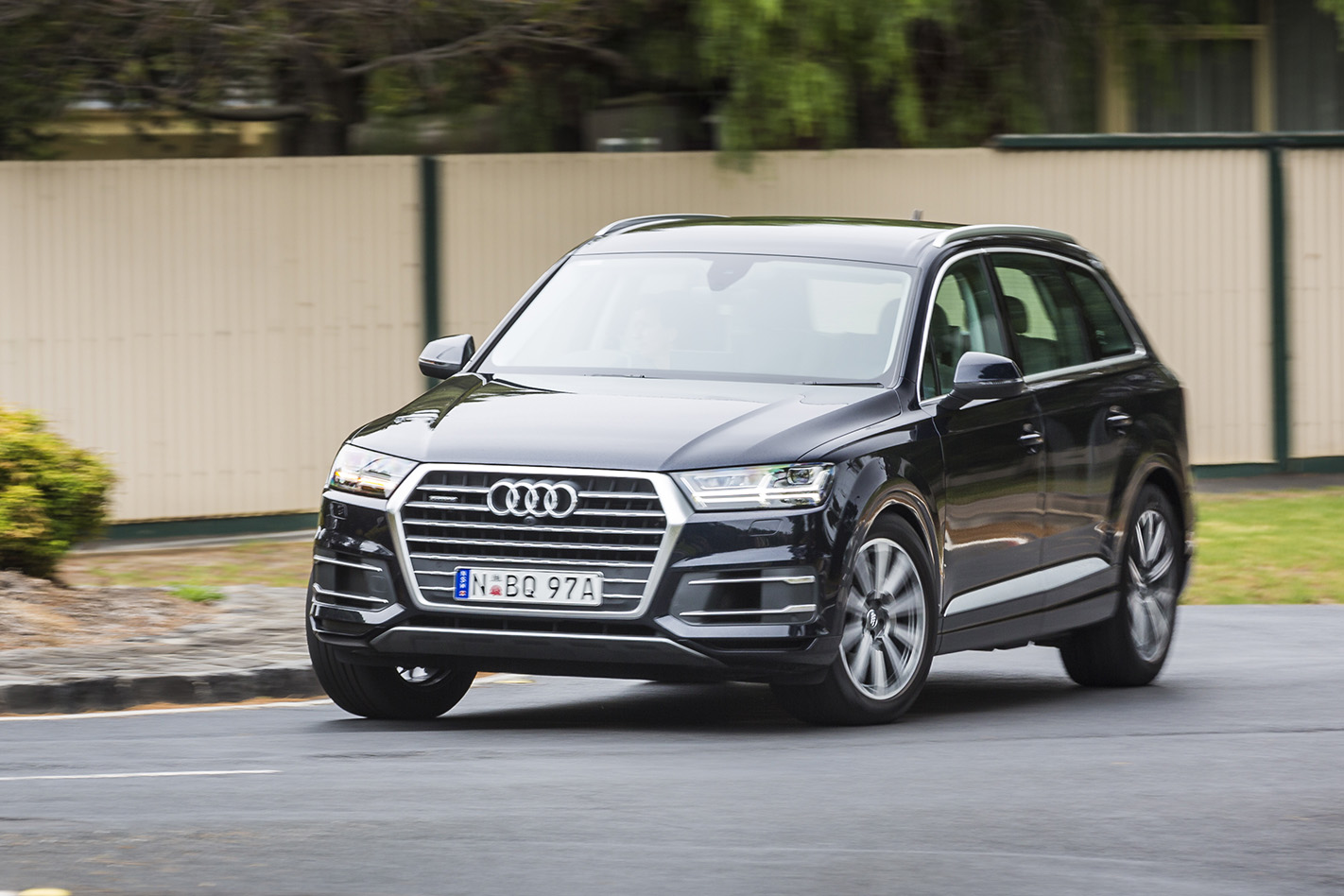
Fortunately, they’ve also aimed up, with the result that the Q7 also tackles corners with a sure-footed fluidity that makes it a pleasure to drive.
All of which explains why the Q7 and I have renewed our vows, and I’ve promised never to stray again.
Update 3
Audi’s Q7 may make you feel like you can take on the world, just be wary of any volcanic rock.
It was a dark and stormy night… No, seriously…
A band of wild weather had thundered in over Port Phillip Bay and rolled on across the city and suburbs, filling gutters with flooding rain, felling trees and generally announcing that Melbourne’s notoriously fickle winter had arrived.
I was late for dinner at the in-laws and might, perhaps, have slightly rushed my well-practiced reversing routine down our long, dog-legged driveway.
Fringed by overhanging trees and shrubs that a keener gardener would have pruned, and lined with abrasive volcanic rocks, a swift, smooth reverse down the drive is a badge of honour that I wear with pride.
Usually.
What I hadn’t allowed for was the extra degree of difficulty, due to the night being as black as tar and the total lack of illumination in the driveway itself.
So, I’m whizzing backwards on a wing and a prayer, trying to patch together a picture of what lay behind, through a combination of memory, murky reversing camera and rain-splattered wing mirrors when, WHUMP!
The rear end of the Q7 kicked skywards and I instantly cursed myself for not proceeding a tad more slowly.
Within moments the Q7’s dash was illuminated with warning alerts indicating a dramatic loss of that which tyres are meant to be full of.
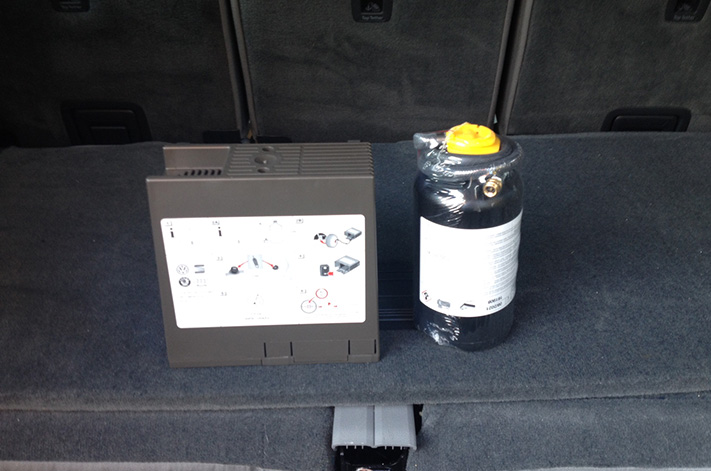
Donning the Drizabone, I popped the boot, not really expecting to find a full-size spare in there, but wondering: is there, perhaps, a space saver?
Instead, Audi offers Q7 owners an inflation kit neatly stowed in the space beneath the cargo floor where a spare would otherwise reside. I whipped it out and proceeded to read the fine print, before taking a closer look at the tyre.
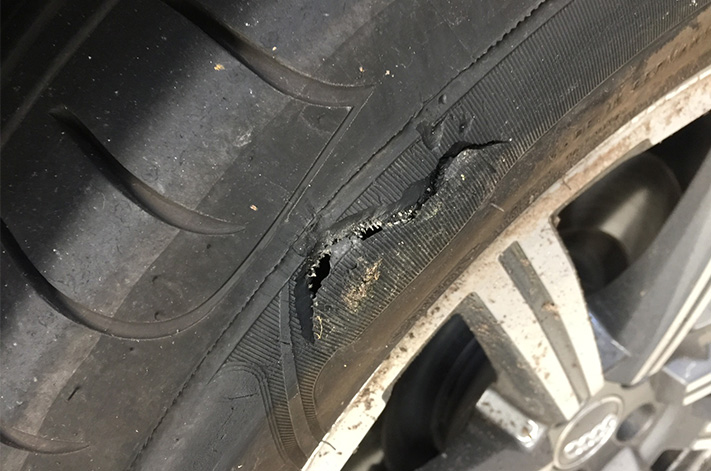
That volcanic rock is hardy stuff regurgitated from the earth’s churning gizzards a gazillion years ago, so a 285/45R20 Goodyear Eagle F1 is really no match. A hole in the sidewall big enough to poke my thumb through instantly told me the natty inflation kit was all-but useless, so I cancelled dinner and called AudiCare 24-hour Roadside Assistance.
After taking a few details, the pleasant woman on the end of the line advised that she’d send a flatbed as soon as possible.
A flatbed! I’ve blown a tyre, not a bloody head gasket! But the truck duly arrived the next morning, the Q7 was retrieved, the tyre replaced and the car returned, all within the day.
Aside from the cost of a replacement tyre, it’s all covered under Audi’s standard three-year warranty with roadside assistance, which proved an efficient and relatively seamless service.
The whole thing seemed like a lot of unnecessary drama, however, and gave me pause to reconsider a planned trip to show the kids a cattleman’s hut atop a high country peak. I can’t see Audi getting a flatbed up there if I have another puncture, so guess I’ll just stay home and prune shrubs instead.
Update 4
It was Al Pacino’s character Tony D’Amato, in the classic gridiron flick Any Given Sunday, who told his hapless Miami Sharks how “life is just a game of inches.”
He was referring to the footy field, in a spiel that’s regarded as one of the most rousing sporting pep-talks ever filmed, but I recently found myself mouthing his immortal lines as I grunted and gasped, trying to find just one more inch in our Audi Q7’s densely-filled luggage bay.
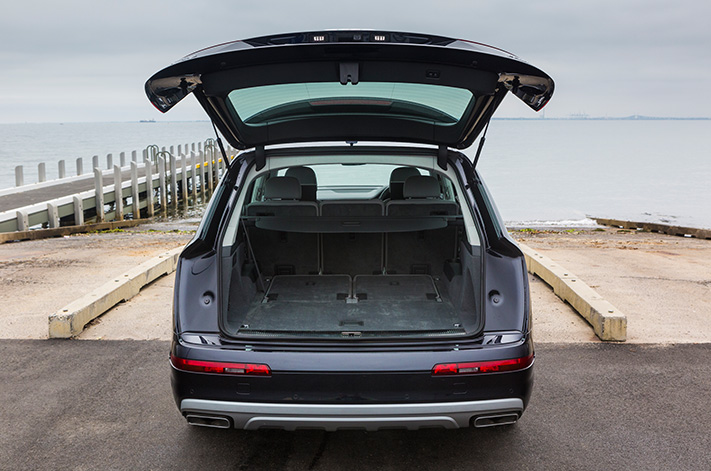
Pacino’s growling Coach D’Amato may have believed “the inches we need are everywhere around us,” but even with the Q7’s third row folded to liberate no less than 770 litres, I was struggling to find them.
Shouldering the electronic tailgate shut, I prayed it wouldn’t burst back open in protest, and willed that the locksmiths of Ingolstadt were up to the challenge of restraining this lot over a three-hour road trip. One slip here and the road north would look like a drunken Pro Hart had been let loose on it with a cannon, a carton of baked beans and the contents of a Vinnies bin. Again.
Fortunately, the latches held and, with the detachable mesh cargo net snicked in place behind the second row, the kids (or what I could see of them beneath the doonas and pillows), appeared comfy.
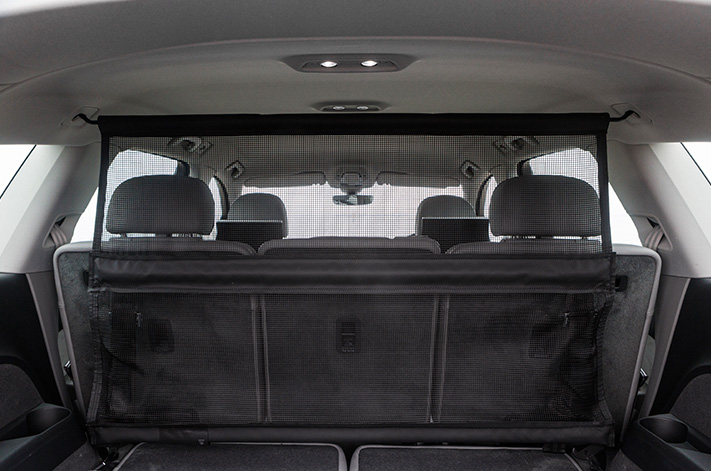
Motoring along to the muffled strains of ‘Kumbaya’ from the general vicinity of the back seat, I was reminded again of the quiet competence of the Q7’s suspension tune; supple but disciplined, the Audi’s ride quality and steering precision didn’t suffer much, if at all, from the added burden of four humans and their extensive accoutrements.
It helps that our Q7 boasts the optional adaptive air suspension and continuously variable electronic damping ($4690) that self-levels to ensure the body sits nice and flat even when loaded.
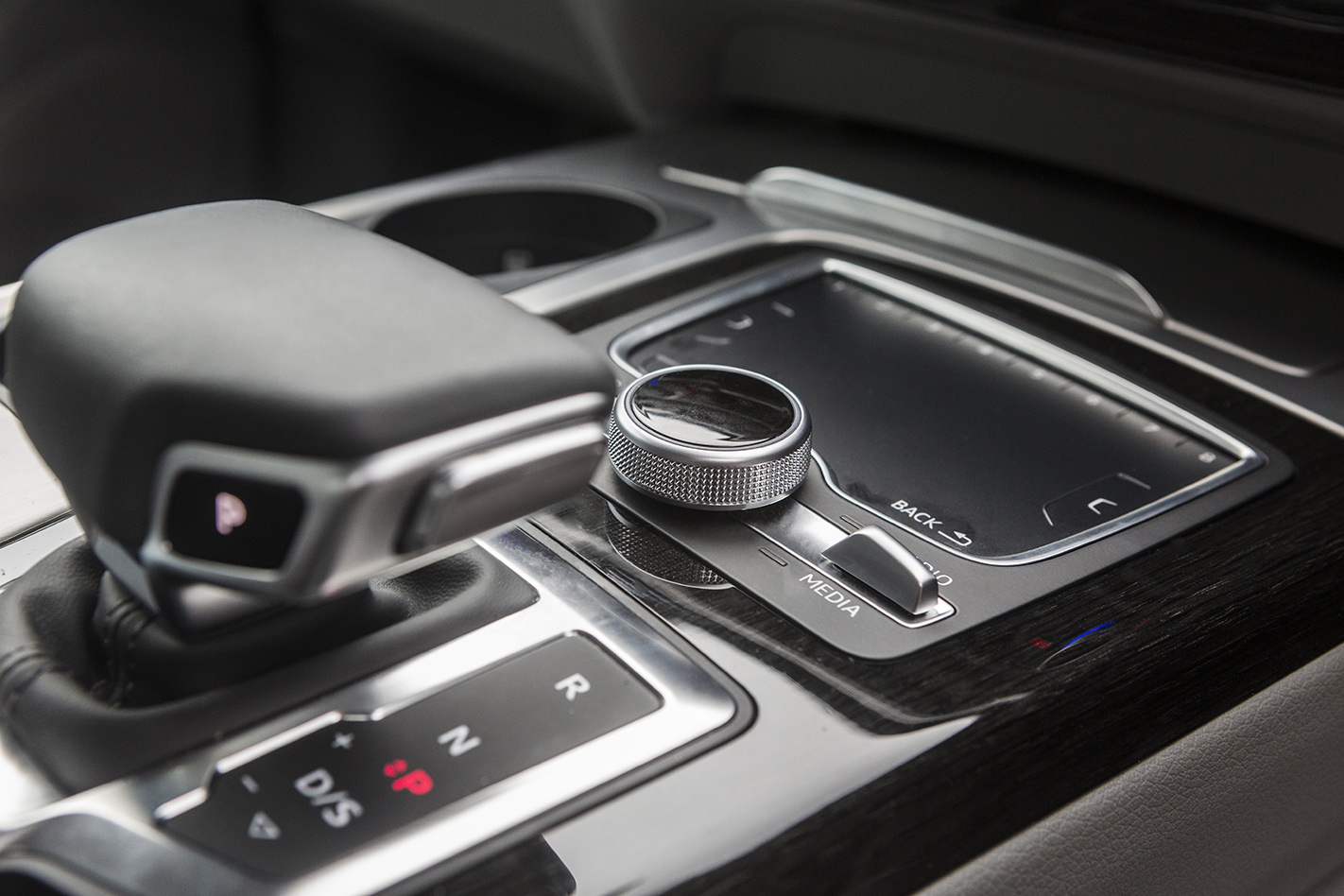
The air suspension also enables a choice of several ride-height modes, selected via the Audi’s MMI controller, encompassing lift, off-road, comfort, auto and dynamic.
Switching between dynamic and lift when stationary is a bit of a party trick as the car gently raises or lowers in stages. From the outside, there’s a good hand-width’s difference between the two beneath the wheelarch, but out on the road we preferred leaving it in auto, as dynamic tends to make the ride and the transmission response just a little too edgy.
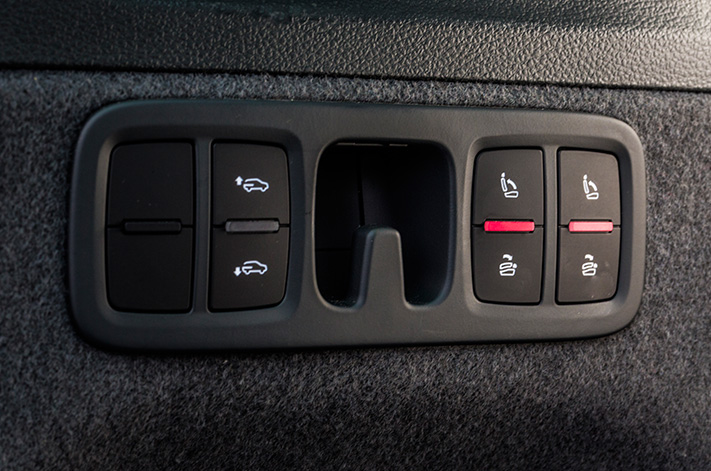
When it came time to unpack, the Q7’s loading mode, accessed via a switch in the luggage bay, drops ride height a handy 45mm from standard.
By my reckoning that’s just shy of two inches, which is about the extra space I needed when it came time to pack it all back in again two days later.
Yep, Coach D’Amato was right: life really is a game of inches.
Even better than the real thing
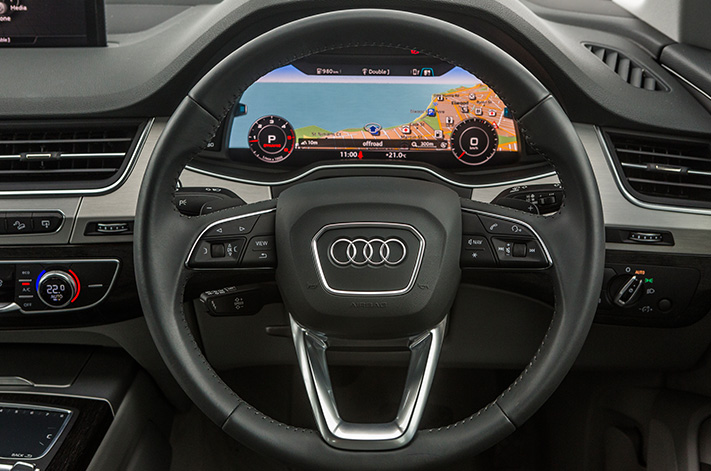
Audi’s digital dash display is one of, if not the best in the business, both in terms of graphics quality and ease of use.
I find having the navigation system enlarged in the customisable 12.3-inch Virtual Cockpit (that’s the instrument cluster by another name), and flanked by minimised speedo and tacho, an excellent alternative to reading the retractable 8.3-inch colour screen in the centre of the dash.
Update 5
Sometimes the writing is on the wall, at other times it’s right there on the dash in front of you.
The beginning of the end for our long-term Audi Q7 came via a message displayed in its handsomely rendered virtual cockpit: “Add at least 6L of Adblue.”
The prompt to add a drum of the urea-based liquid to the turbo-diesel’s auxiliary tank was a sure sign that the end was nigh; the Q7’s 15000km service mark was fast-approaching and, with that, retirement from the Bulmer household.
The kids took the news hard, grumpily collecting the crayons, dolls heads and other detritus of a half-year’s ownership, and grumbling about whether they’d ever again find a Wi-Fi-enabled car with internet connectivity that can stream their favourite shows to rear seat smart tablets.
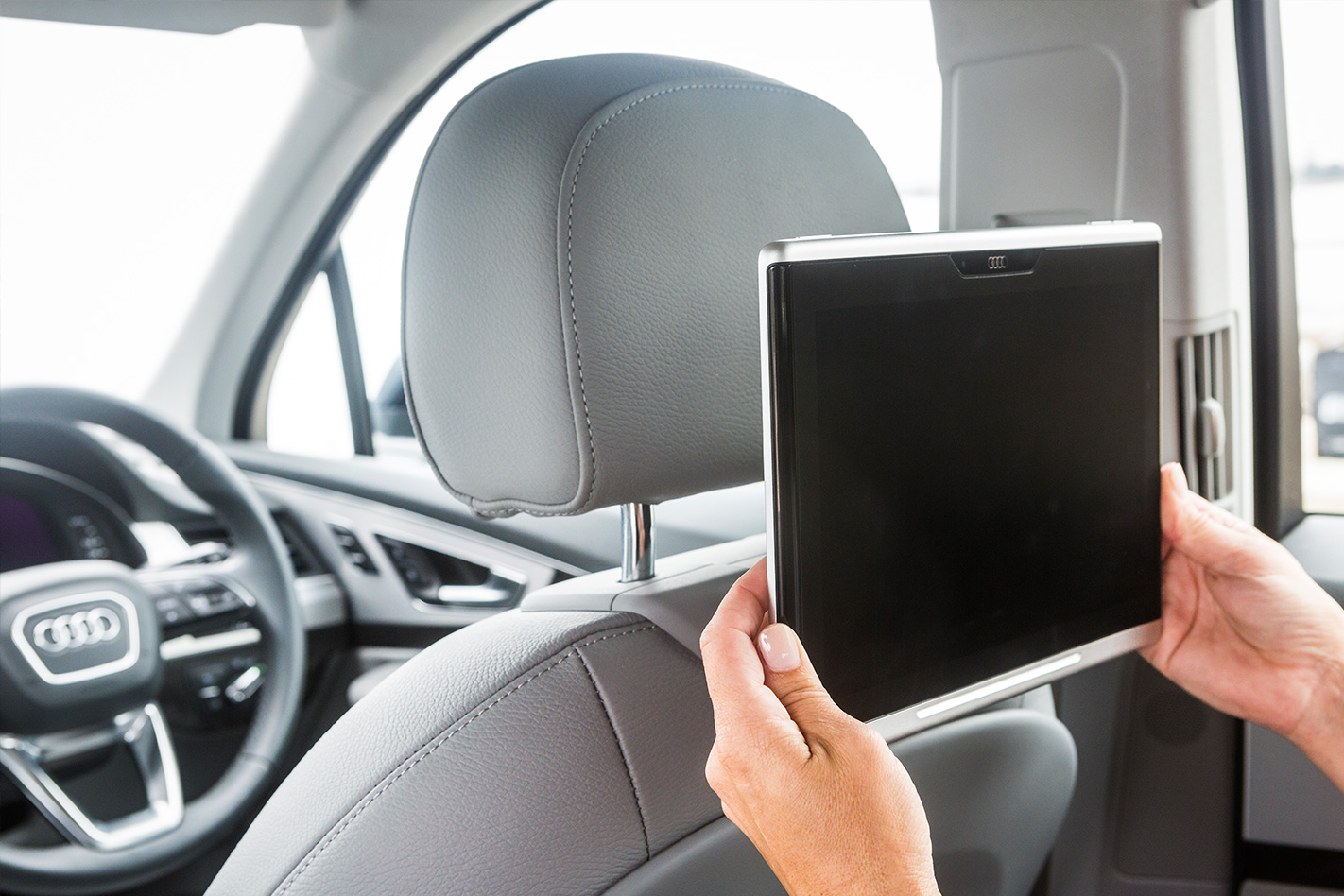
“Probably not, but harden up you little beggars and scrub that carpet!” I thought to myself while cooing gently in their ears that it would all be okay and daddy would make it better by buying them a new iPad.
Mrs. Bulmer was also bereft. Despite having complained from time to time about the Audi’s bulk while threading the needle of abandoned shopping trollies and wild-eyed grannies in dinged Nissan Tiidas, she knows a good thing when she drives one.
And the Q7 is certainly a very good thing, indeed.
In fact, I’d go so far as to say it’s as close as we’ve come to finding automotive utopia in modern family guise.
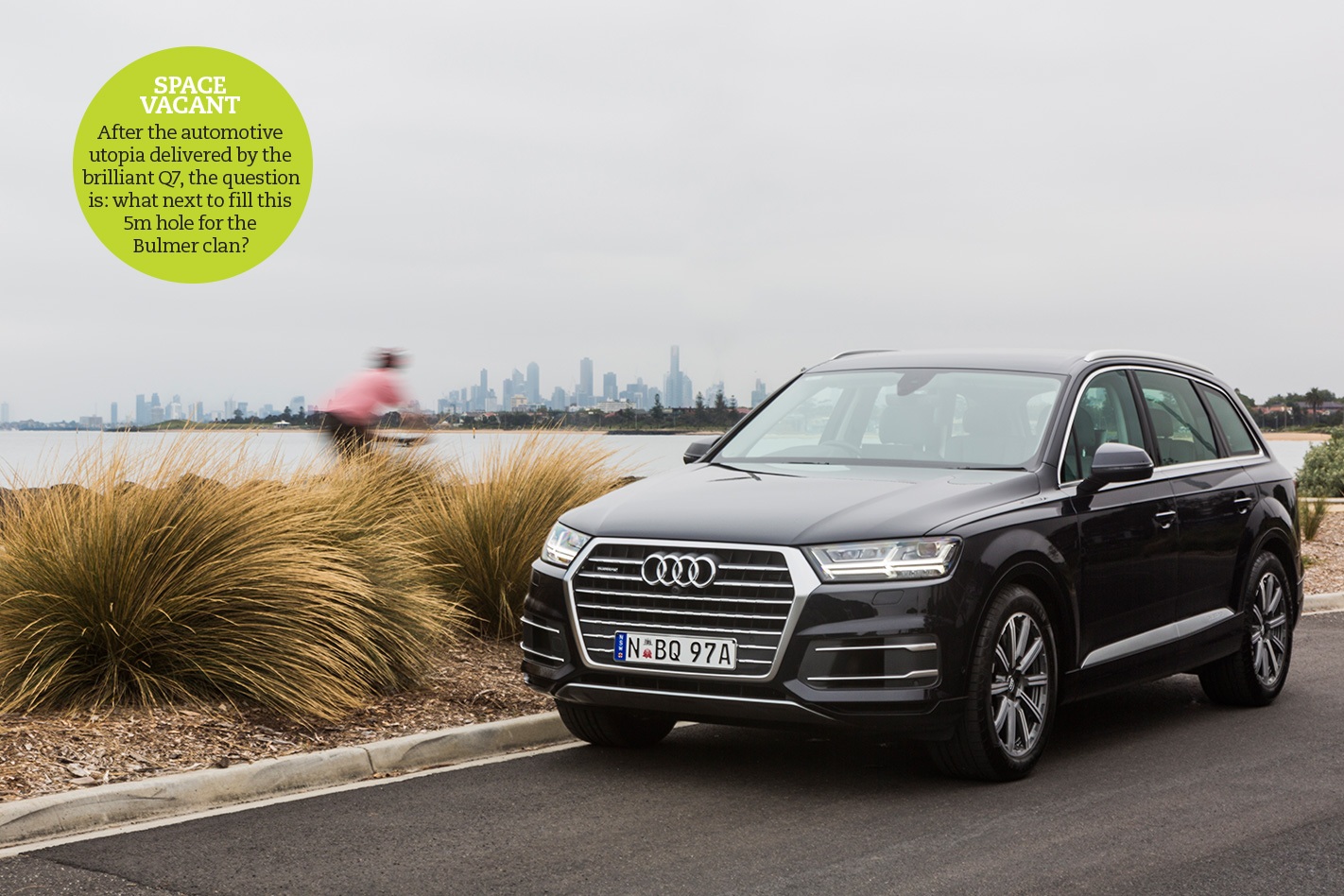
The latter is a world where 0-100km/h splits and ‘tendency to understeer at the limit’ take a distant back-seat to mundane considerations like cargo space, seating flexibility and ride comfort.
Space, for instance, is a big deal for families such as ours and any lack thereof can be a real deal-breaker.
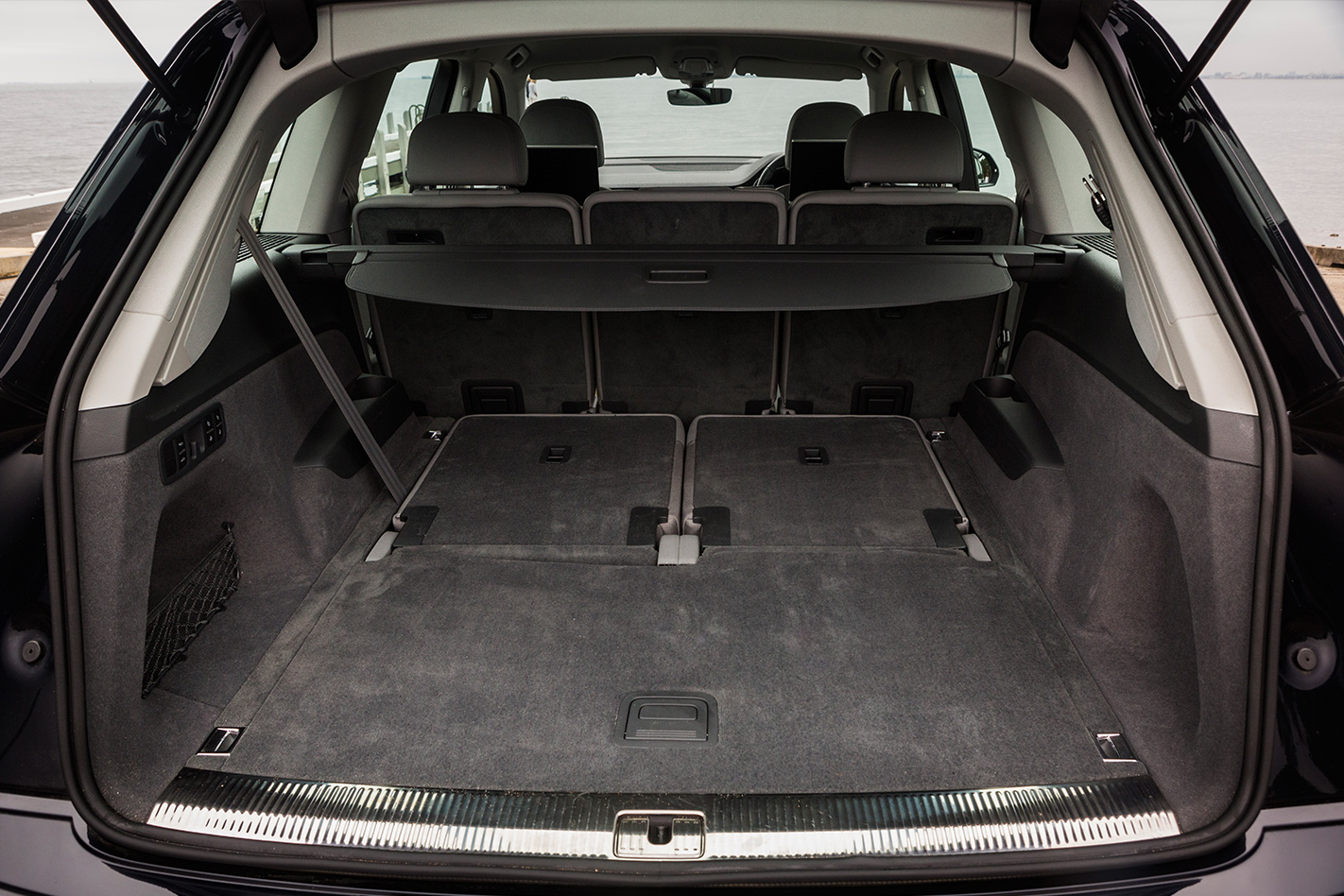
Here, the Q7’s standard 295-litre boot with three rows in place is okay, but flicking the switch to fold the electrically operated third-row liberates a whopping 770-litre usable space.
The detachable cargo net, which we deployed often when we travelled, provides peace of mind by safely separating luggage from passengers. Other neat touches include the Q7’s auto tailgate function, with its trick of opening when you wave your foot under the bumper; and the ability to automatically lower the air-sprung wagon’s ride height by 45mm when loading or unloading.
The above would be enough to earn the Q7 a handful of gold stars alone, but Audi has also endowed its family SUV with great dynamics, an excellent drivetrain, and superb refinement.
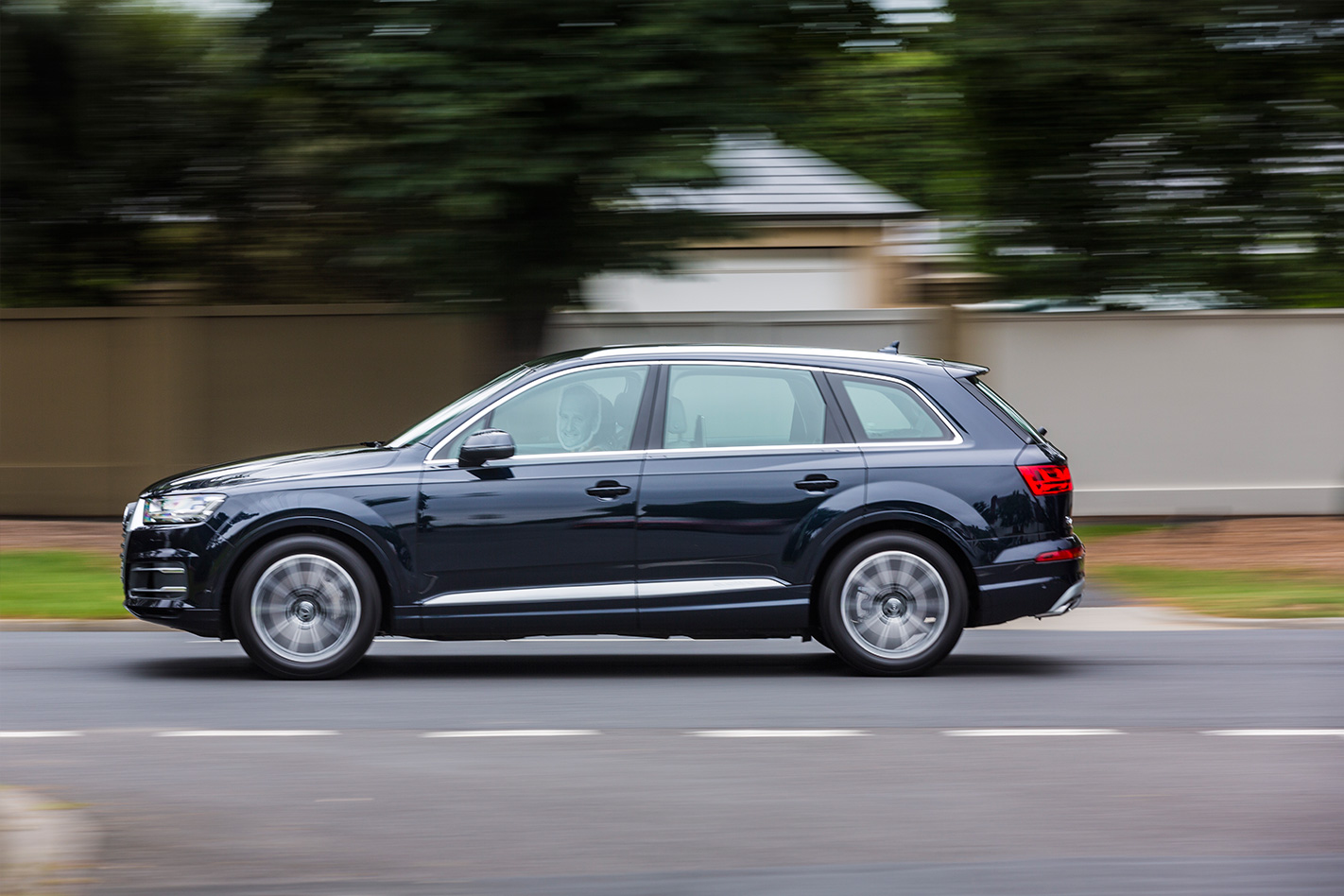
A responsive and free-spinning 200kW 3.0-litre turbo-diesel V6 mates seamlessly to a fluid-shifting eight-speed auto, creating a drivetrain that’s among the smoothest and most responsive in this category.
Disciplined handling matches the fluidity of the drivetrain, marking the Q7 as an above-average SUV to drive enthusiastically. Our test car’s optional adaptive air suspension and continuously variable electronic damping ($4690) played a major part here.
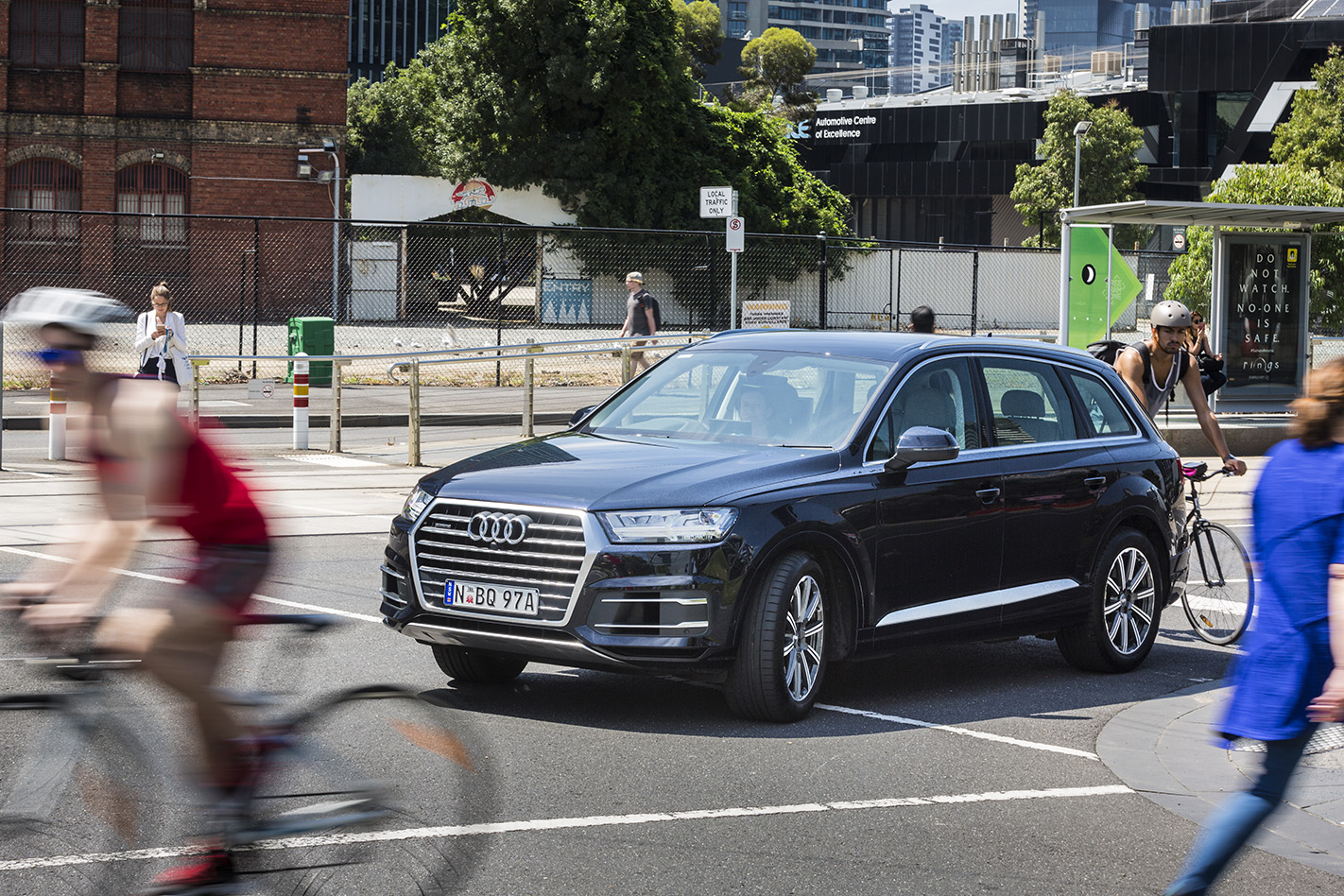
As for the inevitable downsides, the Q7’s circa $105k list price will present a formidable barrier for some, but measured against luxury SUV segment rivals like the BMW X5 and Mercedes-Benz GLE, the Audi is absolutely competitive. Certainly my wife had few complaints (about the car at least), and that’s as good as winning COTY in my experience.
Roomy, well built, luxuriously appointed, and superbly refined, the Audi Q7 delivers a superb blend of prestige, pragmatism and performance that we’re really going to miss, right kids?
A wee additive
Like many modern diesels the Q7 relies on Adblue to help reduce its exhaust emissions and meet Euro 6 standards. The high-purity urea solution is added to a separate tank alongside the fuel filler and is continuously sprayed into the exhaust, upstream of the Selective Catalytic Reduction system (SCR).
The additive helps convert diesel exhaust gases and their harmful NOx, or oxides of nitrogen emissions, into harmless gas and water vapour.
Social drinker
Over the course of 12,555km and some 14 refuels, the Q7 consumed a total of 1319L of diesel for an overall average of 10.5L/100km. Its best of 7.8L/100km was on a Sydney-Melbourne run down the Hume. Its worst, in stop-start urban traffic, climbed to 11.8L/100km.
As for servicing, those costs are always higher with luxury vehicles and Audi advises that the 15,000km fettling the Q7 is due to cop upon return should run to around $600, but owners will no doubt be up for more than that at the 30,000km major service.
REJOICE – the seemingly endless drip-feed of teasers and tweets is over. Tesla’s mass-market Model 3 is now rolling into customer garages, as a slew of official details and images are let loose by the Californian EV specialist.
First unveiled in March last year and detailed only in vague terms, the Model 3 has been the subject of intense speculation up until now. Few brands polarise people as much as Tesla, with the company’s brash CEO Elon Musk either regarded as a mad genius – or just mad – and the company itself has been surprisingly secretive when discussing the Model 3’s specifics, something that has only provoked the rumour mill.
At its unveiling last year, Elon Musk would only say the Model 3 would hit 100km/h in less than six seconds and be able to travel for a maximum of 345km on a single charge. Tesla’s Autopilot suite of autonomous-driving hardware would also be standard-issue, as they are in the Model S and Model X.
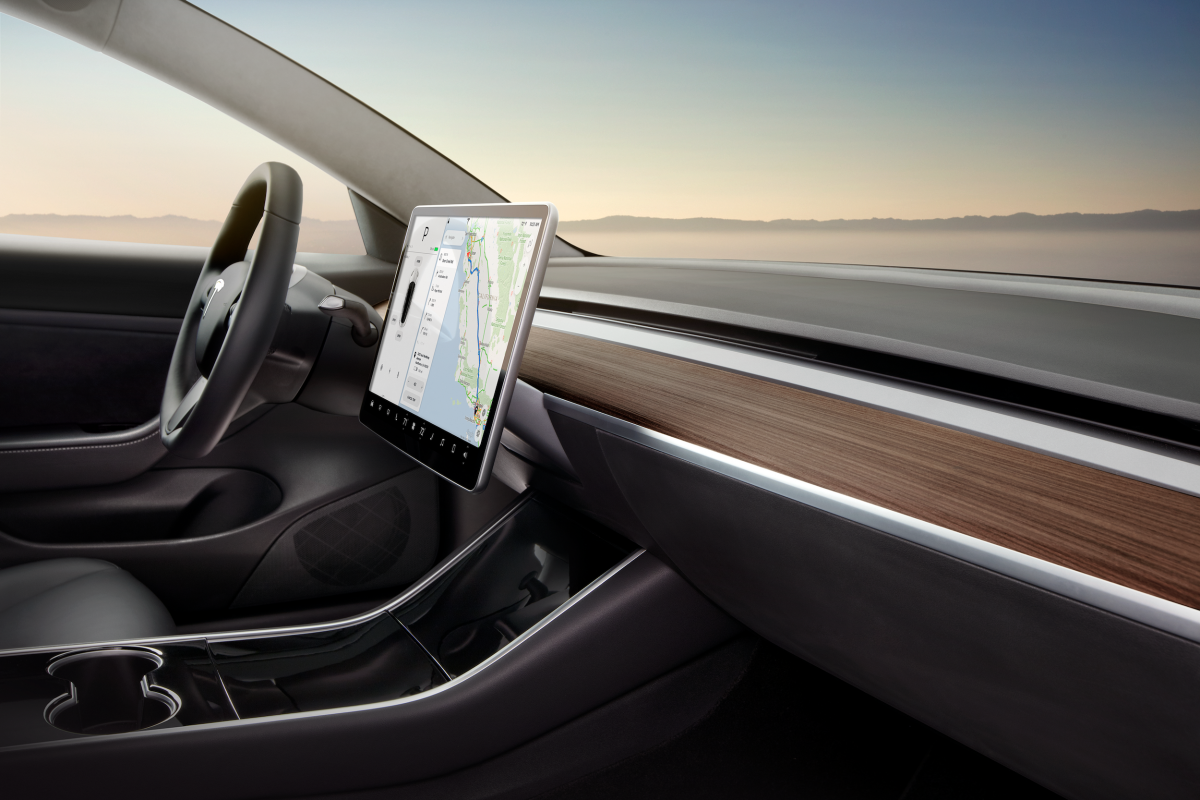
Pricing would begin at US$35,000, with Aussie Model 3s expected to lob with a 3-Series rivalling circa-$55k base sticker.
Rear-wheel drive and dual-motor all-wheel drive versions would eventually be offered side-by-side, with a performance-oriented variant in the product plan, but more concrete details weren’t forthcoming. Now, however, we no longer have to wonder and speculate.
There will be two main variants of the Model 3, the first is what we have become familiar with already. It’ll have roughly 345km of range, a sub-6-second 0-60mph (97km/h) time, and cost an estimated circa $55,000 once it lands in Australia.
The second, is a Long Range model. This extends the vehicles range to roughly 500km, with a US$44,000 pricetag. The more expensive variant has a 0-60mph time of sub-5-seconds according to Musk and is capable of 225km/h.
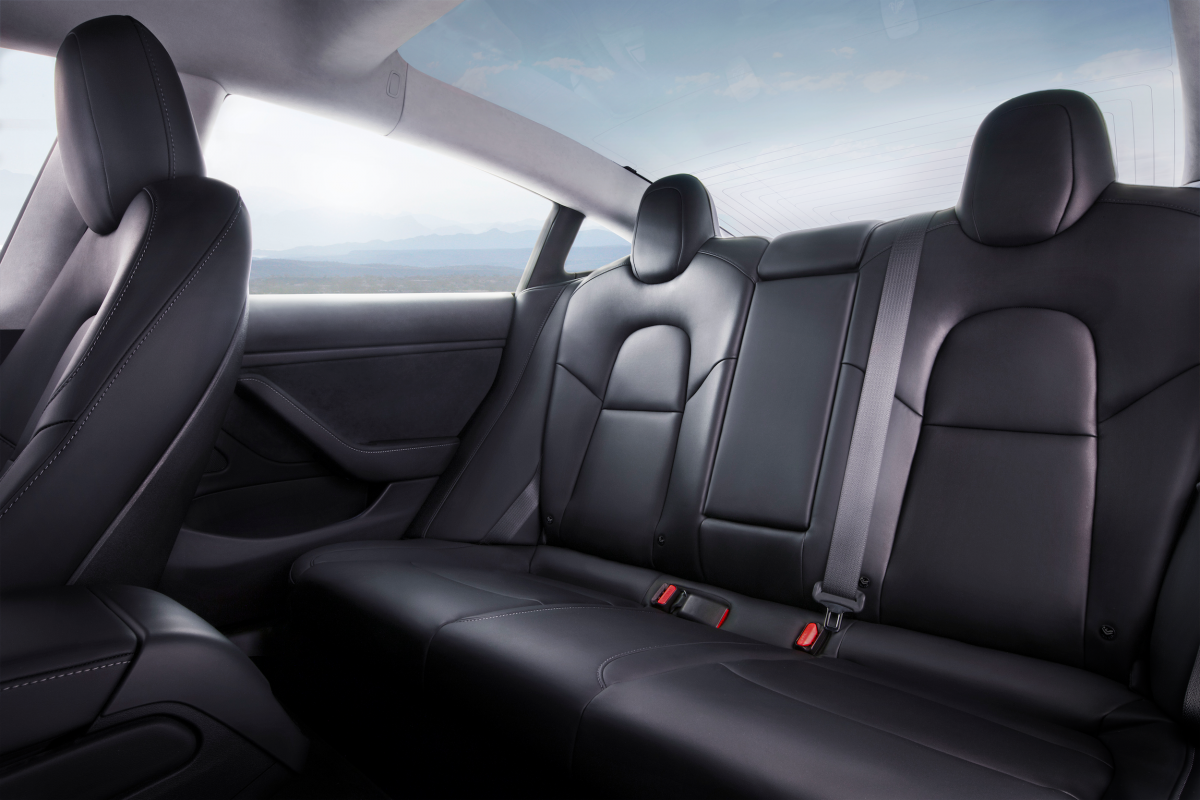
Much like the Model X’s front windshield, the rear window in the Model 3 is significantly larger than a traditional vehicle, stretching above the rear passengers to provide extra headroom.
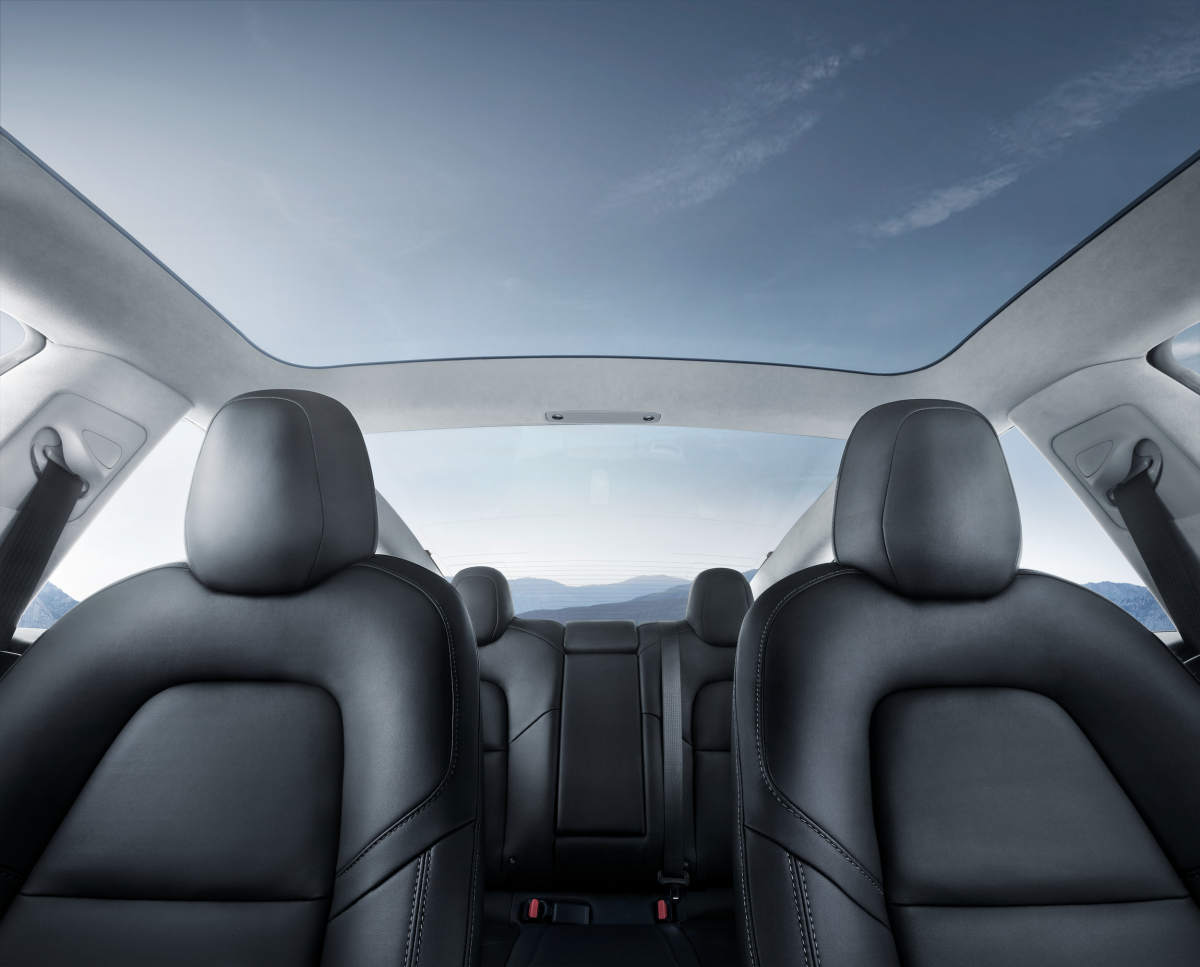
It was “one of the toughest design challenges of building the Model 3”, Musk said.
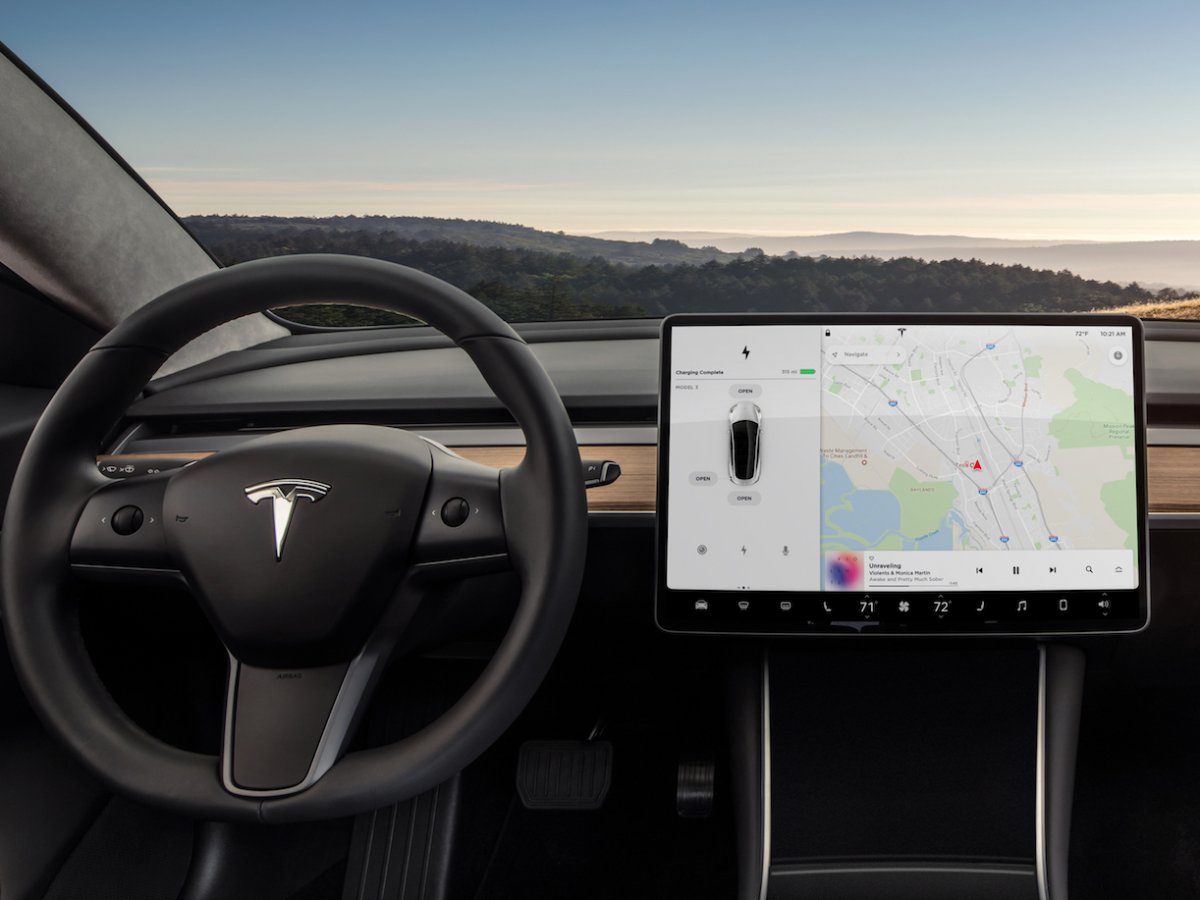
As for that instrument cluster – it’s located in the centre of the vehicle and there’s no information displayed directly in front of the driver – Musk claims drivers will hardly notice due to the Model 3’s autonomous capabilities.
“You won’t have to look at the instrument panel all that often,” he said.
Musk claims the company will be in “hell” at the start of production to meet the car’s not insignificant global demand.
“Welcome to production hell — that’s where we’re going to be for six months, maybe longer,” he stated.
Despite the information vacuum that’s surrounded the Model 3 until now, the hype generated by the mere prospect of an affordable Tesla compelled thousands of buyers across the world to place a $1500 deposit to secure their place in the production queue. Over 115,000 would-be owners slapped money down before the car was even revealed, and that number has since swollen past the 350,000 mark.
Tesla advises that new orders won’t be delivered until mid-2018 at the earliest, but that estimate only applies to US customers. Right now, a local arrival date for Tesla’s hotly-anticipated electric sedan has yet to be announced, but expect it to be late next year at the earliest.
BEING particularly useless at suspense, I’m going to start with a spoiler.
The Golf 7.5 isn’t markedly different to the Golf 7 it has replaced. Volkswagen’s claim to have digitised the Golf hasn’t altered its fundamental character. We know the Golf 7 was great, so expect more of the same from iteration 7.5. Are we focusing on plot rather than character development here? Is this as much of an intro as we need to really get under the skin of the “new” Golf?
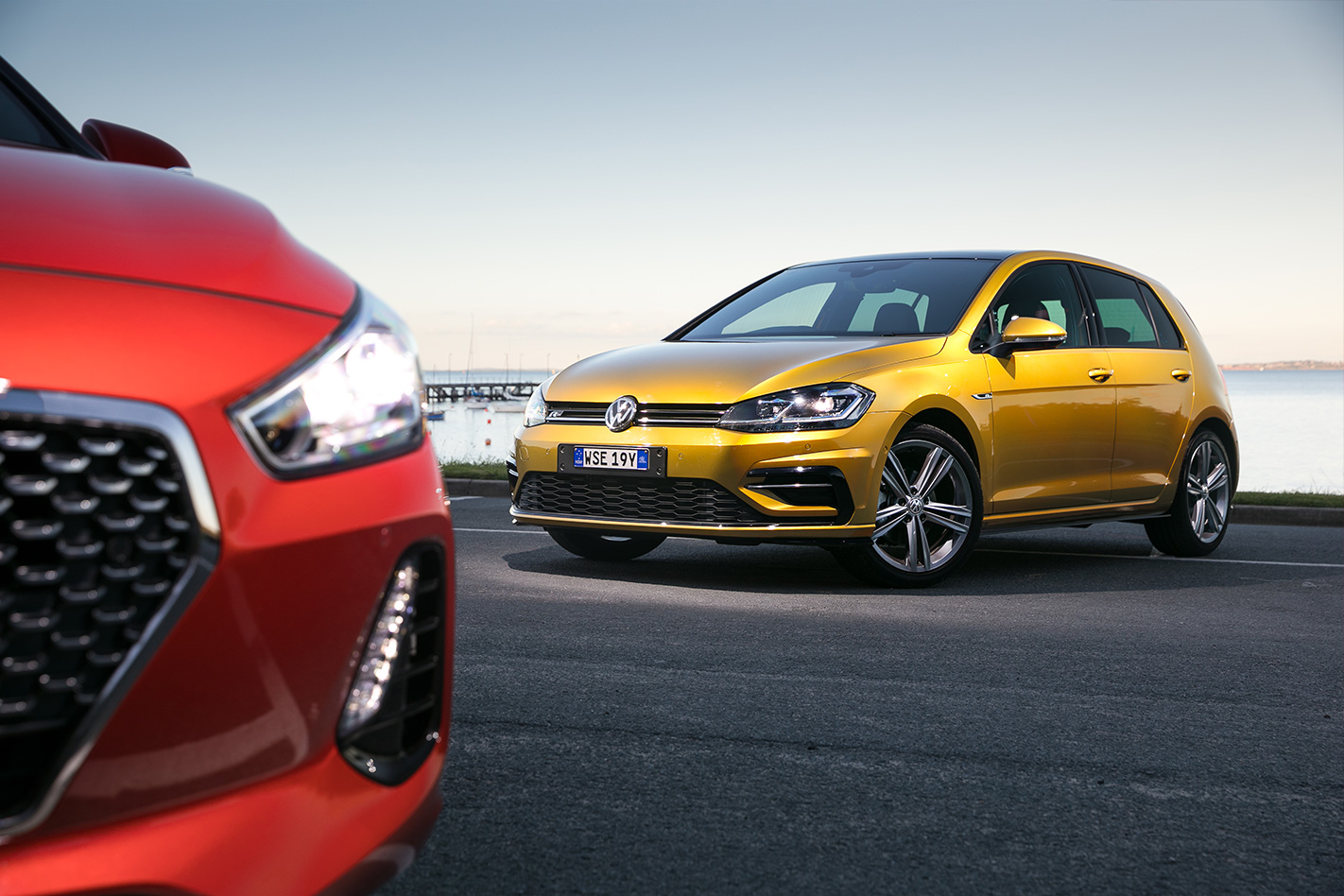
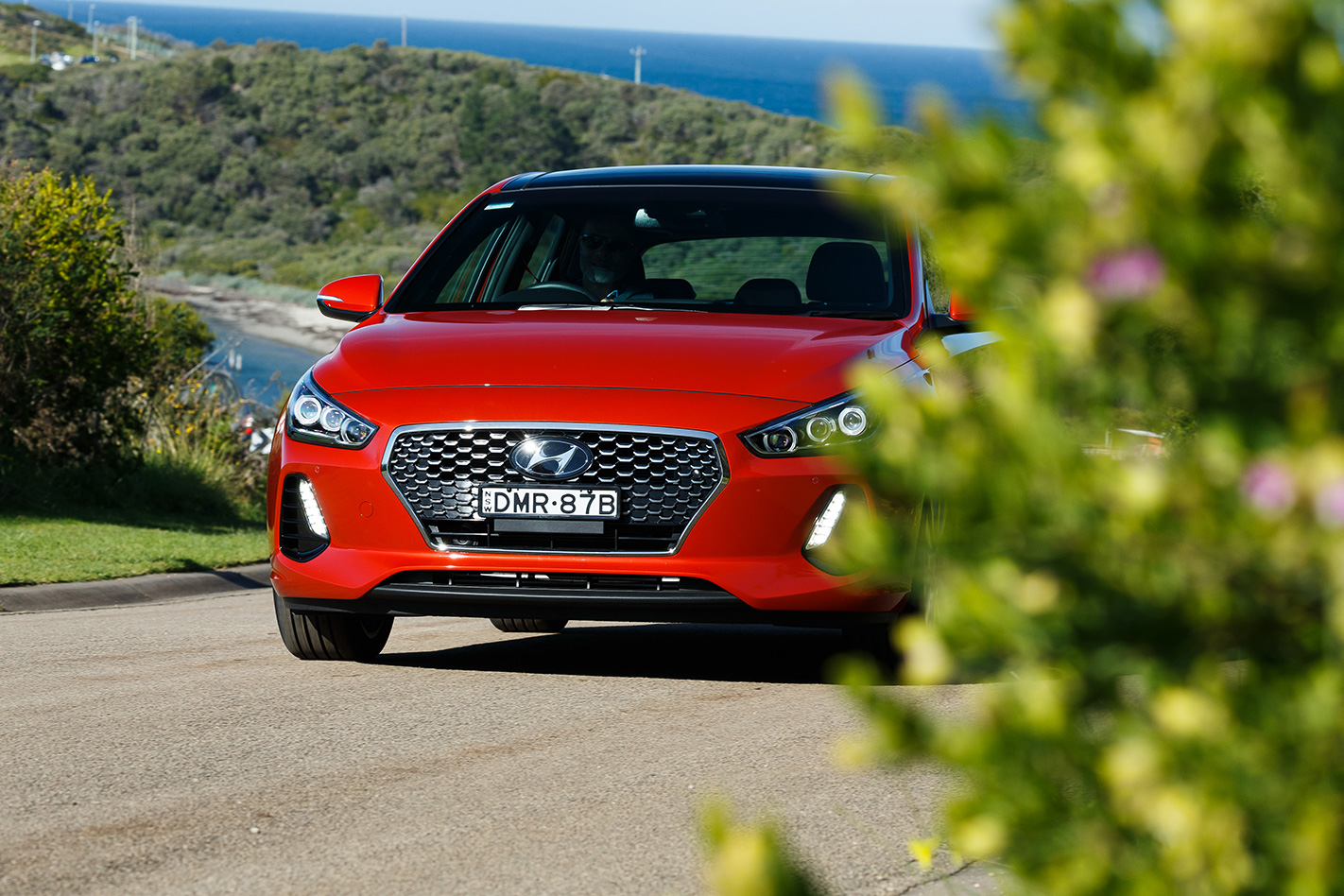
In other words this is a Golf 7 that’s been slugging back that energy drink that promises to improve you a bit. The Hyundai i30 SR Premium, on the other hand, can’t really be compared with what has gone before, so markedly improved is it in virtually every regard. Against the European haughtiness of the Golf, Hyundai still seems like a bit of an emergent brand, and the i30 SR a vehicle that in some prospective buyers’ eyes will need to perform twice as well to be thought of as half as good.
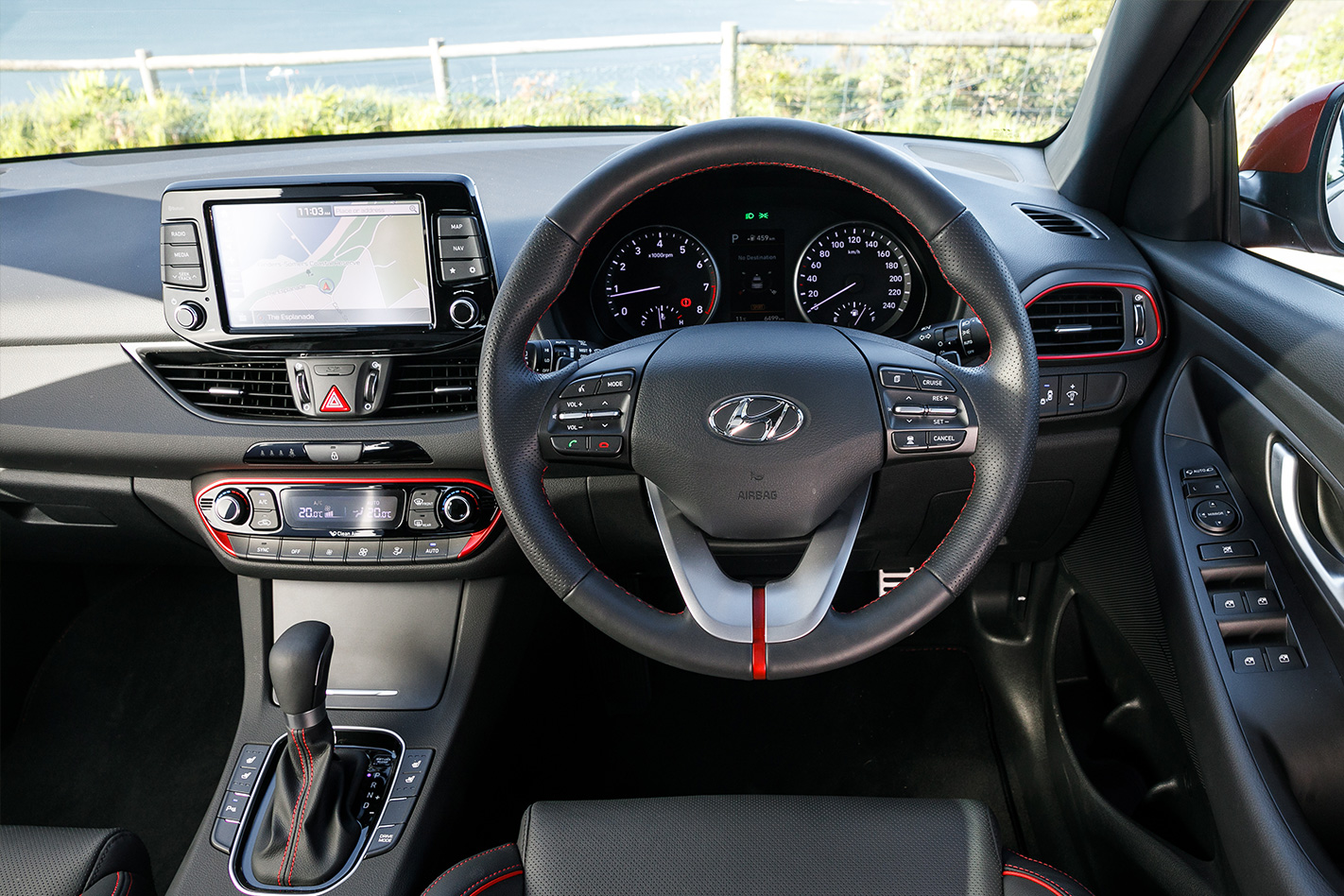
The Hyundai’s cabin is well finished, too, with anodised-look red details on the steering wheel, vent bezels and air con controls. I admit, this does sound terrible, but there’s just enough maroon in the palette to make them look anything but cheesy. The 1.6-litre SR Premium is a warm hatch and sometimes it doesn’t hurt to be reminded of that fact. The other way to alert you to its position in the i30 hierarchy is to mash the throttle pedal. At the Heathcote dragstrip, we recorded 0-100km/h in 7.3 seconds, with the 1.4-litre Golf a full second slower. Embarrassing admission time: the Golf was misfuelled with 95RON juice compared with the Hyundai’s 98RON, but even on a cold and rather damp track, it came within a tenth of Volkswagen’s quoted claim.
Pricing doesn’t help that perception. With no options and before on-roads, the i30 SR Premium costs $33,950, with the Volkswagen Golf 110TSI Highline adding $540 to that asking price. I can hear you wondering why you’d pay more for a car with a smaller engine, less power, a hugely inferior warranty, and which also consumes more fuel, has a smaller boot and a less-generous equipment provision. We did.
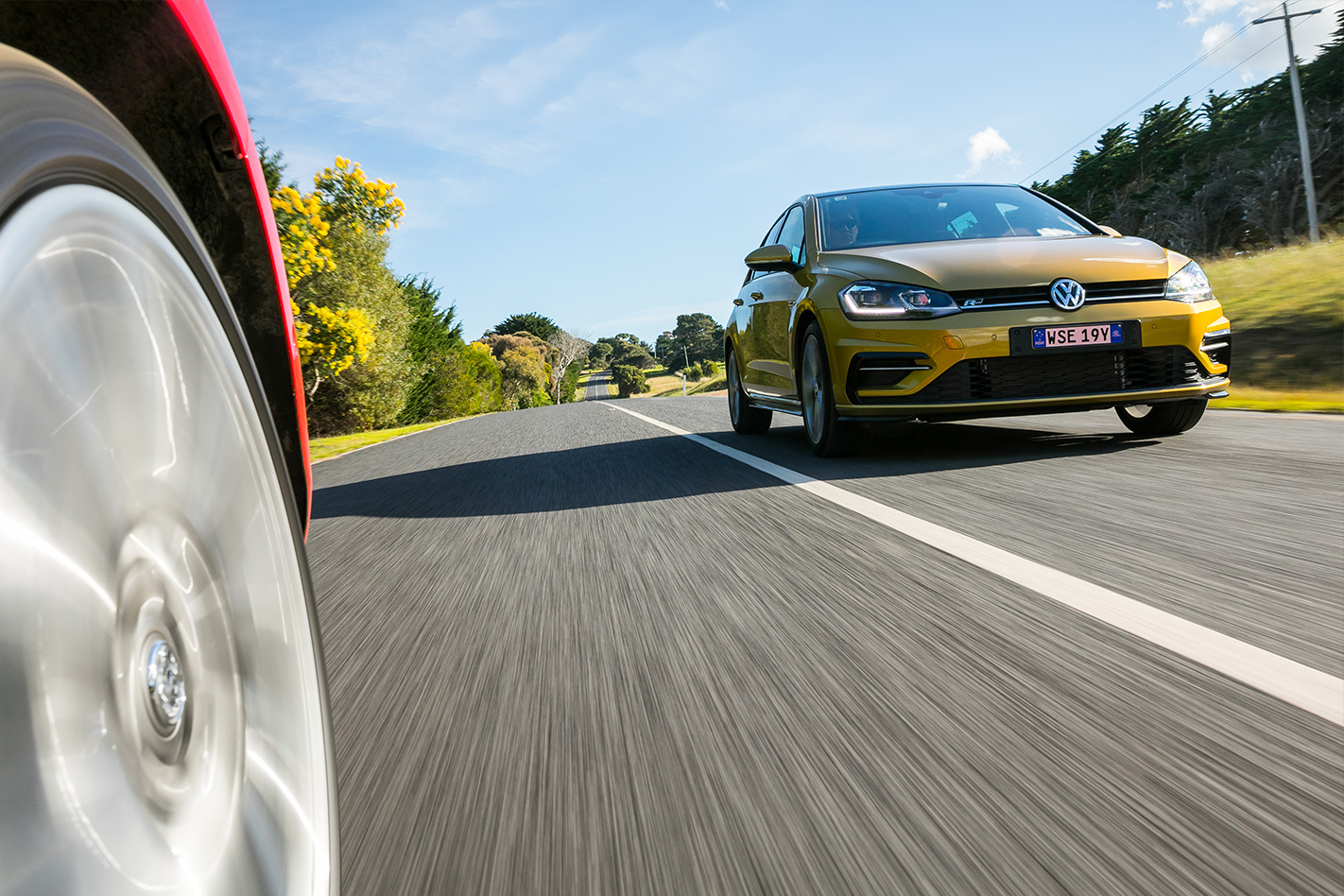
Hyundai’s a fast learner, and the i30 manages to land a few body blows on the Golf, but not enough to score a knockout. Or a decision on the judge’s scorecards, come to that. The Volkswagen is just too polished, the ergonomics are just so well thought through, the dynamics of the vehicle so exquisitely honed that it makes the Hyundai appear something of an arriviste. The genius of the Golf is in being better at all the things that aren’t immediately apparent; the aspects of a car’s development that require a deep and measured understanding.
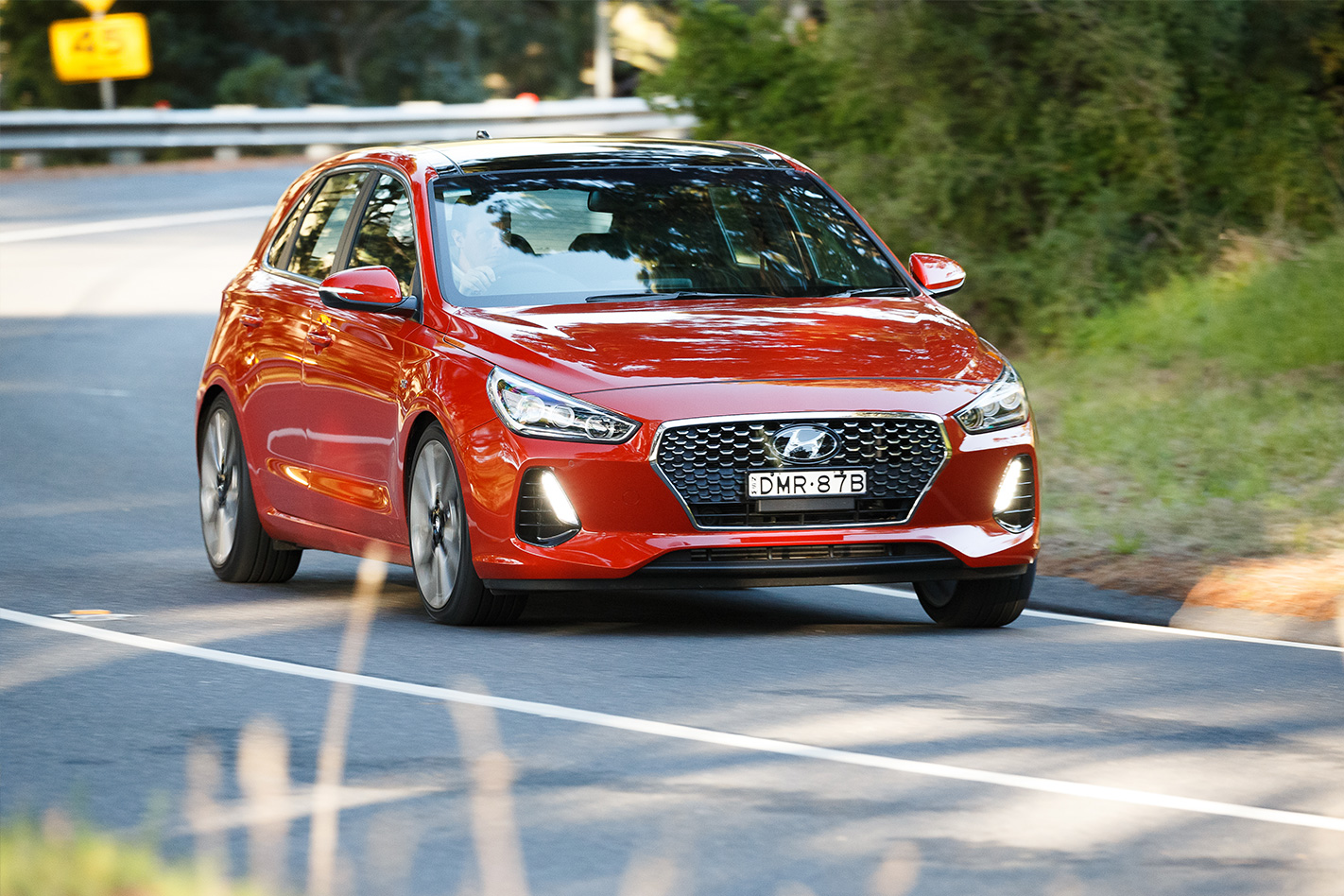
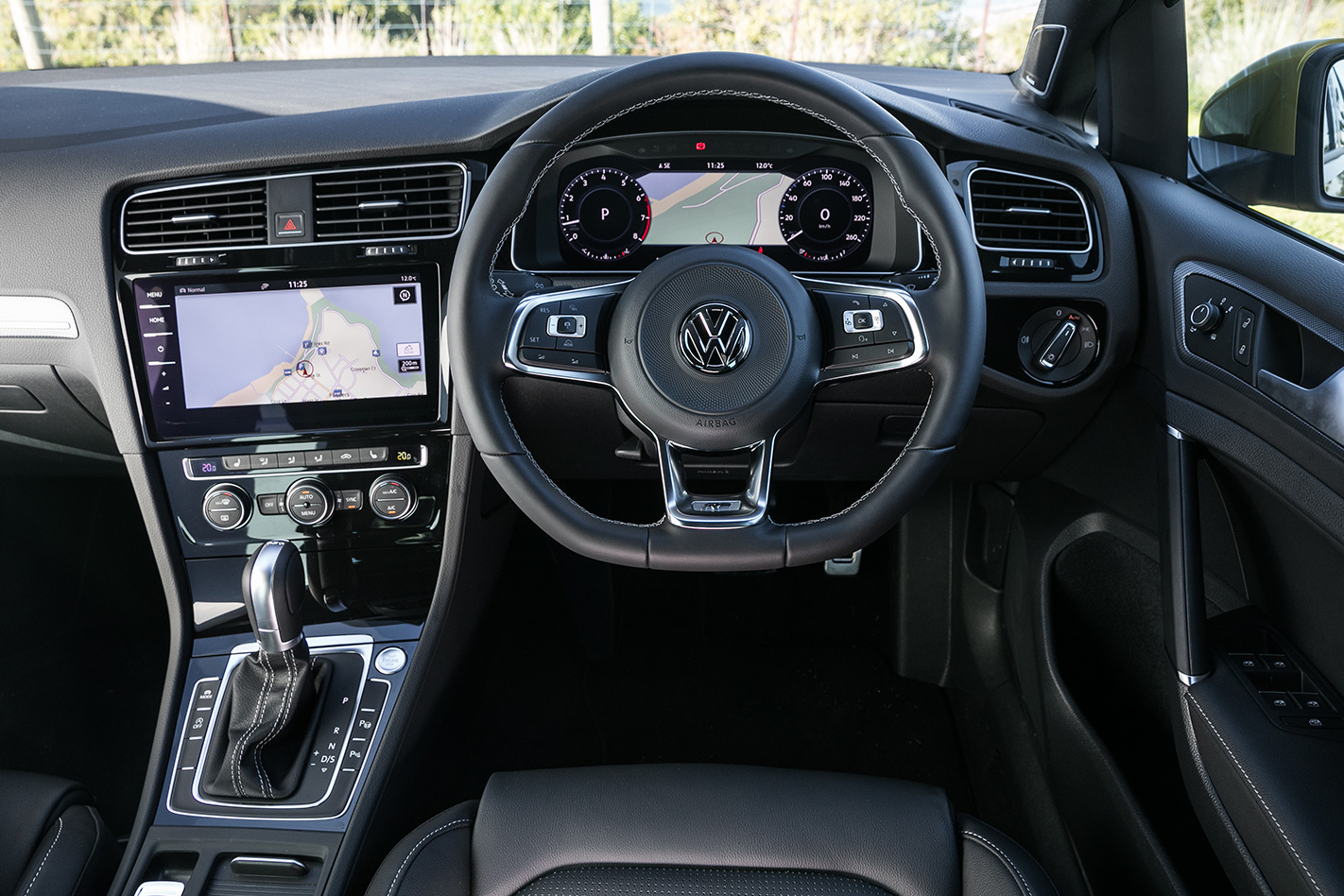
Even when you’re not driving like a berserker, you’ll appreciate the Golf’s classier interior touch points, the beautifully logical dial pack, the lower hip-point in the car and the better seats. An example of Volkswagen just coming up with a better solution is the starter button. On the Golf it’s in plain sight on the centre console next to the shift lever. Think through the actions you need to make to start the car. Brake pedal in, press button, move shift lever to drive. One fluid action.
So while we were extremely impressed by the Hyundai, to quote an old TV series: “Come at the king, you best not miss.” The i30 SR Premium is a very accomplished warm hatch, and it’s one that we’d issue a firm “buy” recommendation for. If the warranty holds significant value for you, it’s doubtful that you’d experience too much in the way of buyers’ remorse. But the Golf is just a more cerebral thing, a car with qualities that – we trust – Wheels readers will see the value of. But you knew that already. Like I said, I’m useless at suspense.
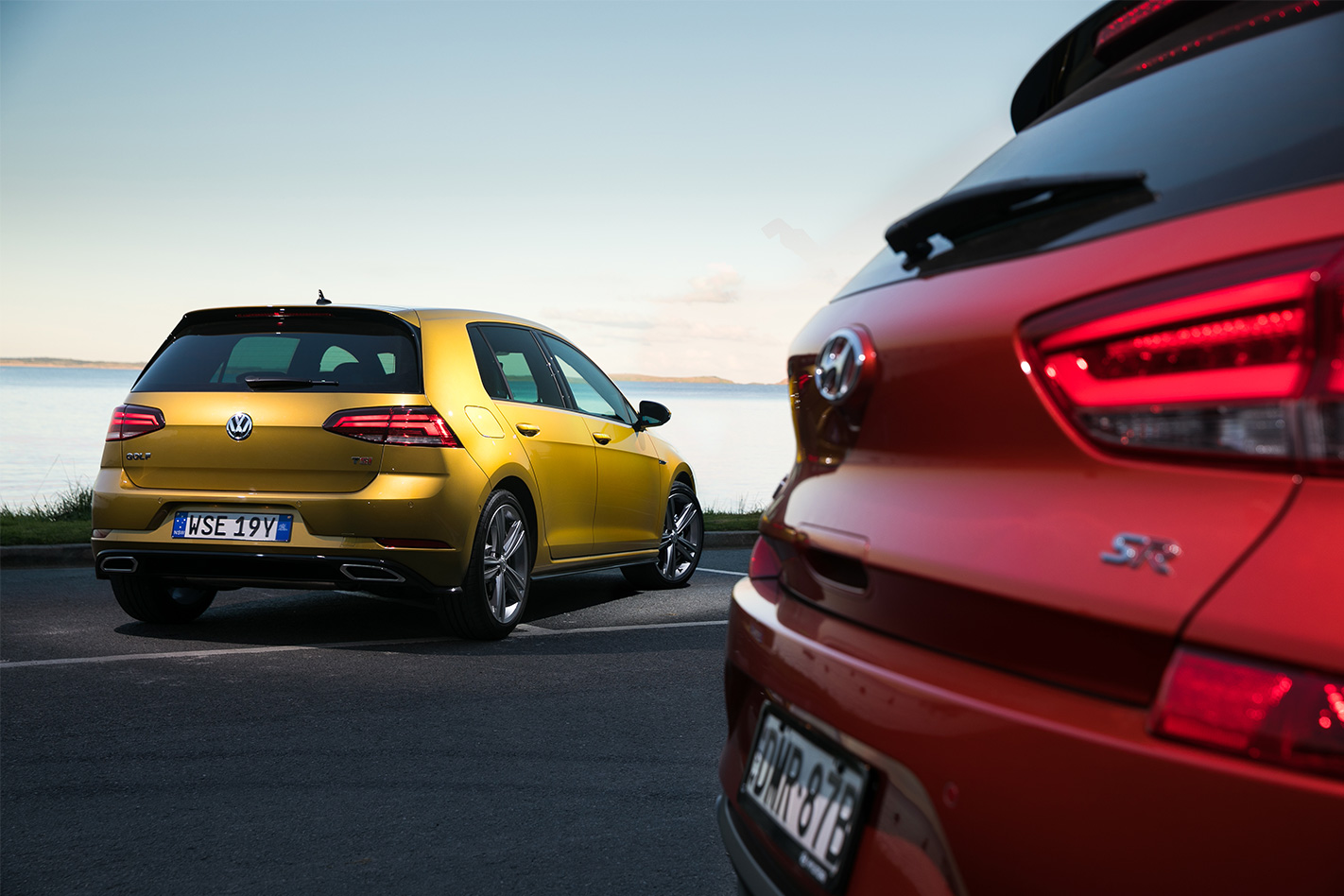
Engine: 1395cc 4cyl, dohc, 16v, turbo Power: 110kW @ 5000-6000 rpm Torque: 250Nm @ 1500-3500 rpm Transmission: 7-speed dual-clutch Weight: 1312kg Fuel economy: 8.5L/100km (as tested) 0-100km/h: 8.3sec (as tested) Price: $34,490 On sale: Now
Model: Hyundai i30 SR Premium auto
Engine: 1591cc 4cyl, dohc, 16v, turbo Power: 150kW @ 6000 rpm Torque: 265Nm @ 1500-4500 rpm Transmission: 7-speed dual-clutch Weight: 1436kg Fuel economy: 7.8L/100km (as tested) 0-100km/h: 7.3sec (as tested) Price: $33,950 On sale: Now
- The Mercedes-Benz X-Class ute will come in three main design and equipment lines ranging from the workmanlike Pure to the rugged but stylish Progressive and the high-end, full featured Power grade.
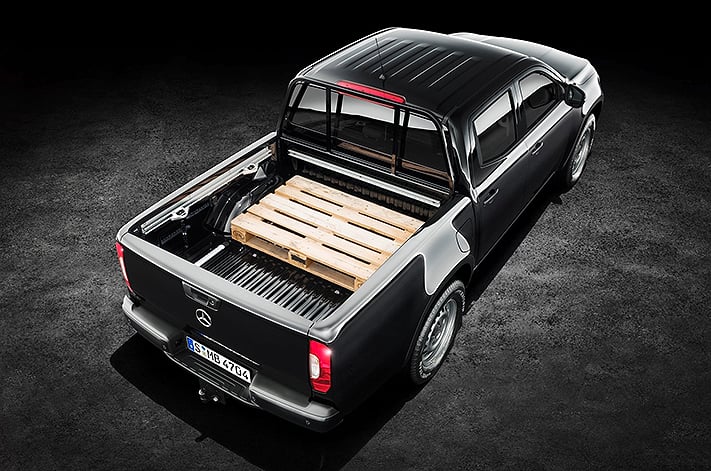
- According to Mercedes the X-Class can carry 17 full 50-litre barrels of beer in the cargo area. How about that for a uniquely German metric.
- Its 3.5 tonne maximum towing capacity allows the X-Class to “pull a trailer containing three horses or an eight-metre yacht”.
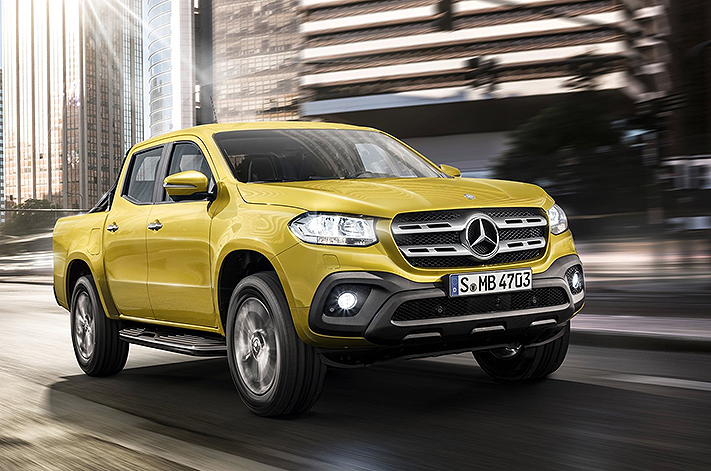
- Maximum payload capacity is 1042kg, more than main rivals including the Ford Ranger, Volkswagen Amarok and Toyota Hilux.
- Like the Amarok, the X-Class’ load bed can take a standard European pallet between the wheel arches.
- The X-Class shares underpinnings with the Nissan Navara and has the same 3150mm wheelbase and front and rear coil suspension. The 2.3-litre turbo diesel engine options are also the same as Navara’s.
- Australia-bound X-Classes will be built alongside the Nissan Navara at Nissan’s assembly plant in Barcelona, Spain.
- The top-spec 3.0-litre V6 turbo is very much a product of the German carmaker and produced 190kW/550Nm, significantly more than the Ford Ranger Wildtrak (147kW/470Nm), Toyota Hilux SR5 (130kW/450Nm) and Volkswagen Amarok V6 (165kW/550Nm).
- Australia will be one of the X-Class’s five core markets and it is expected to boost Mercedes-Benz sales here by up to 10 percent.
- The X-Class will be sold through the Mercedes-Benz Vans commercial division in Australia.
