Welcome to Episode Six of the Performance Car Podcast.
In this episode MOTOR Magazine Editor Dylan Campbell and Associate Editor Scott Newman discuss the Porsche 911 Turbo, the car which also forms our studio for this episode. The 911 Turbo has been the benchmark all-purpose supercar for decades, so with the recent release of the 991.2 update it seemed the perfect time to examine what makes the car so good.
The 991.2 Turbo S is our reigning Performance Car of the Year, continuing Porsche’s dominance of the event having secured 13 of the 21 PCOTY titles. For those who haven’t driven a Porsche, we attempt to explain why, in general, Porsche’s sports cars tend to be the best in the world and the characteristics it seems to nail better than almost every other manufacturer.
The Performance Car Podcast is also available in audio form through iTunes or Podbean, feel free to rate and subscribe to keep up to date with our latest episodes. As ever, any cars or topics you’d like us to cover let us know in the comments below or email [email protected].
A RARE Aston Martin DBR1 once raced by Jack Brabham could fetch more than $US20 million when it comes up for sale in August.
Built in 1956, this DBR1 was campaigned by the some of the biggest names in the racing world – Carroll Shelby, Roy Salvadori, Stirling Moss, and Aussie Jack Brabham all took turns behind the wheel of this beauty.

This particular car competed in a number of high-profile events, most notably the 1000km Nurburgring where it won overall in 1959 after previously entering in 1957 and 1958.
It also raced three times in the 24 Hours of Le Mans – where it made its debut in 1956 – and twice in the 12 Hours of Sebring.
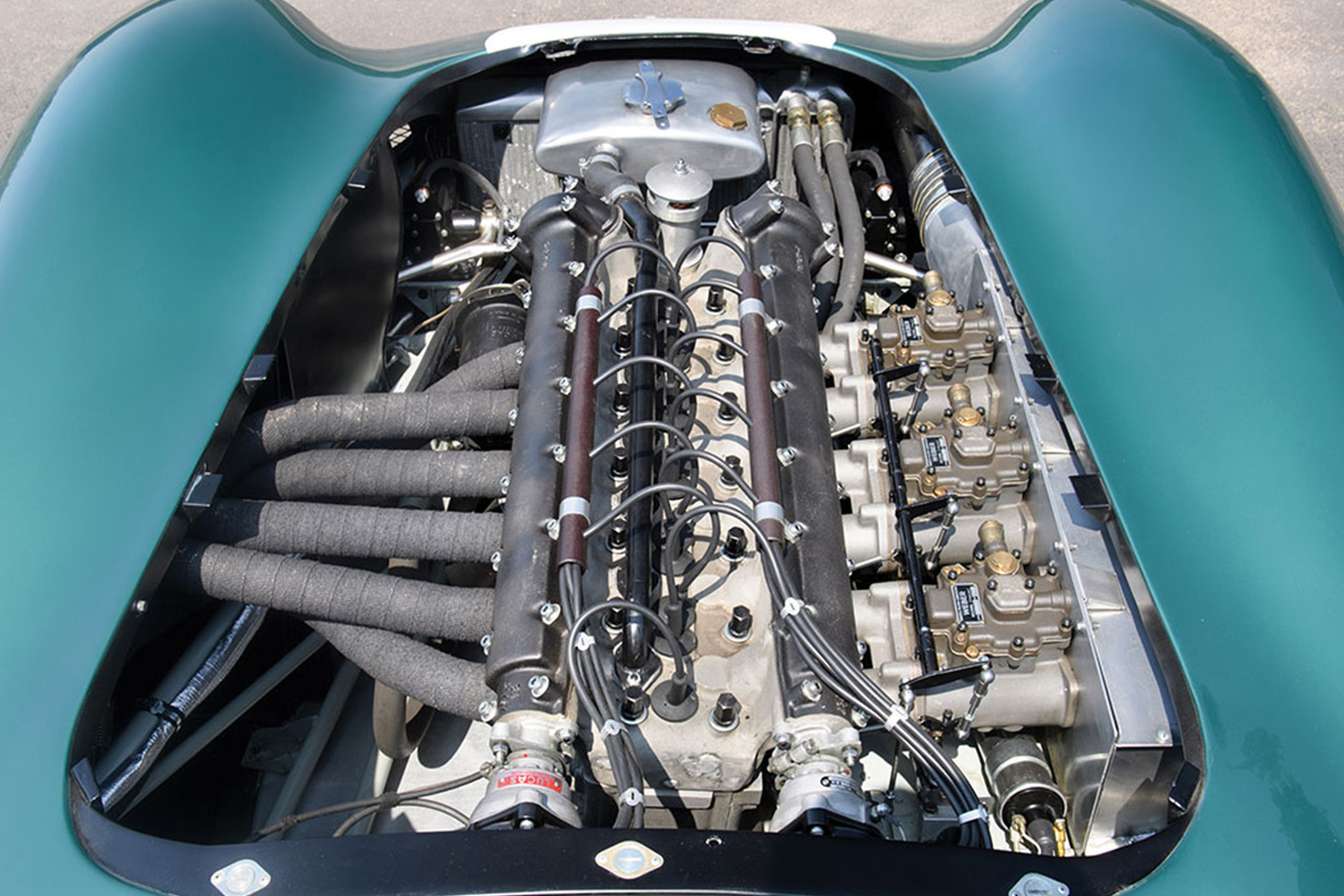
RM Sotheby’s – the auction house handling the sale – has claimed it to be “the most important Aston Martin ever produced”, which they would say as they are trying to sell it.
However, it’s easy to agree with them given this DBR1’s storied history.
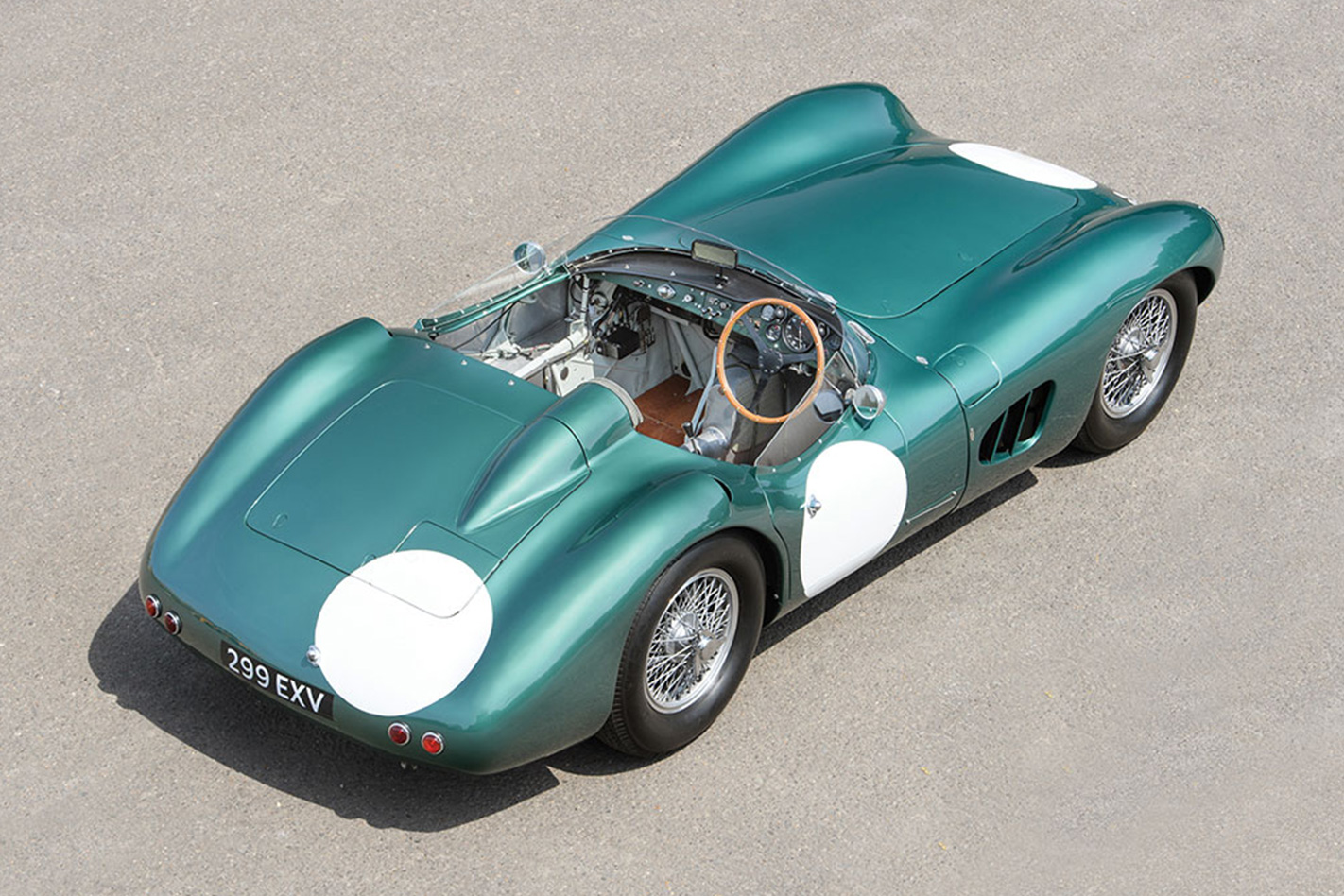
For those with a budget unable to stretch that far, three other Aston racers are listed among the Monterey lot – a 1935 Ulster Competition Sports, a 1959 DB4 GT, and a 2006 DBR9 are also listed.
As for us mere mortals lacking such boundless amounts of cash, at least we can admire the bite-the-back-of-your-hand beauty of this thing on our screens.
The first in-car tests for the next generation supercar engine have been undertaken by Holden.
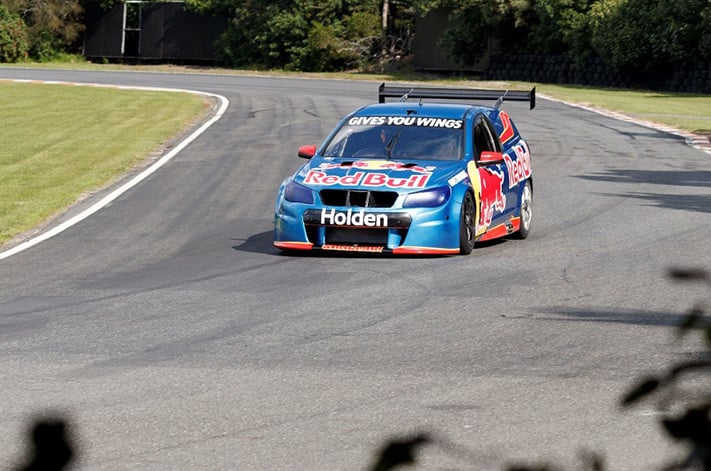
The twin-turbo V6 which will comply with Gen 2 Supercars regulations was shipped from GM’s Racing division in Pontiac, Michigan to be tested in the Red Bull Holden Racing Team Sandman.

Red Bull Triple Eight boss Roland Dane says the new engine has passed the preliminary test.

“The test has been about getting kilometres on the engine and understanding what it needs at this point to prepare it for racing in Supercars.”
Opinion: What next for V8 Supercars
Holden recently announced that the next gen Supercars will run V8s for 2018, though the twin-turbo V6 will be brought in by Triple Eight Racing as a wildcard entry at selected rounds next season before a full rollout in 2019.

Supercars doing 180-degree skids at Goodwood FoS
“It is a pragmatic and sensible approach by Holden and Triple Eight Race Engineering in introducing the new Commodore and a twin-turbocharged V6 powered engine to the sport,” he said.
“This phased introduction sets a clear path forward for not only Holden but existing and new manufacturers in the sport.”
HOLDEN’S factory racing team, Triple Eight Race Engineering, has held its first shakedown of the twin-turbo V6 engine that will make its Supercars debut next year.
The shakedown was completed at the Norwell Motorsport Complex on the Gold Coast in Queensland, with full-time drivers Jamie Whincup and Craig Lowndes attending. Enduro co-driver Steven Richards was also along for the ride.
The 3.6-litre twin-turbo V6 is a modified version of the engine used in the Cadillac ATS-V.R GT3 car in the US.
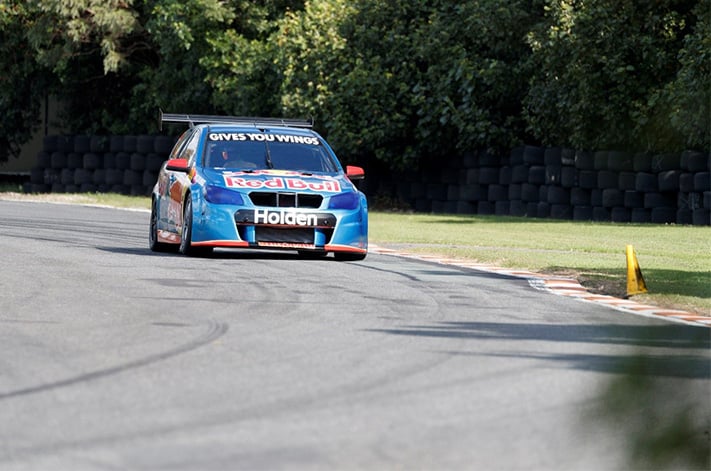
This is the first time the engine, co-developed by Triple Eight and GM Racing in America, has run in Australia.
Triple Eight will continue to use the 5.0-litre pushrod V8 next season in an NG Commodore body that apes the Insignia-based car, but expects to use the V6 turbo donk as a wildcard at select events before a full-season debut in 2019.
The brief shakedown was well received by the factory Holden squad.
“We are very happy with the initial running, GM Racing has given us a great base to work from,” team principal Roland Dane said.
“The test has been about getting kilometres on the engine and understanding what it needs at this point to prepare it for racing in Supercars.”
A road-going version of the twin-turbo V6 features under the bonnet of the Cadillac CTS large sedan. The next-generation Holden Commodore, due on sale next year and based on the Opel Insignia mid-size car, will use a normally aspirated V6, Holden has announced.
The lack of a turbo V6 in the bread-and-butter Commodore sedan, wagon and high-riding SUV-styled soft-roader tantalisingly leaves the door open to the possibility that HSV could one day use a fettled version of the circa-310kW road-going twin-turbo V6 for its Commodore-based spin-off.
If there’s no business like show business, then there’s no depreciation quite like European luxury-car depreciation.
But for those with a penchant for performance cars with a double-digit cylinder count, read on before you sign for that new turbo four-cylinder.
Jaguar XE S vs BMW 340i vs Mercedes-AMG C43 vs Audi S4 comparison review
With a fictitious buying budget of between $15,000 and $150,000 for vehicles built within the last 15 years, here are our top V10 and V12 used car buys – for when a V8 just won’t do.
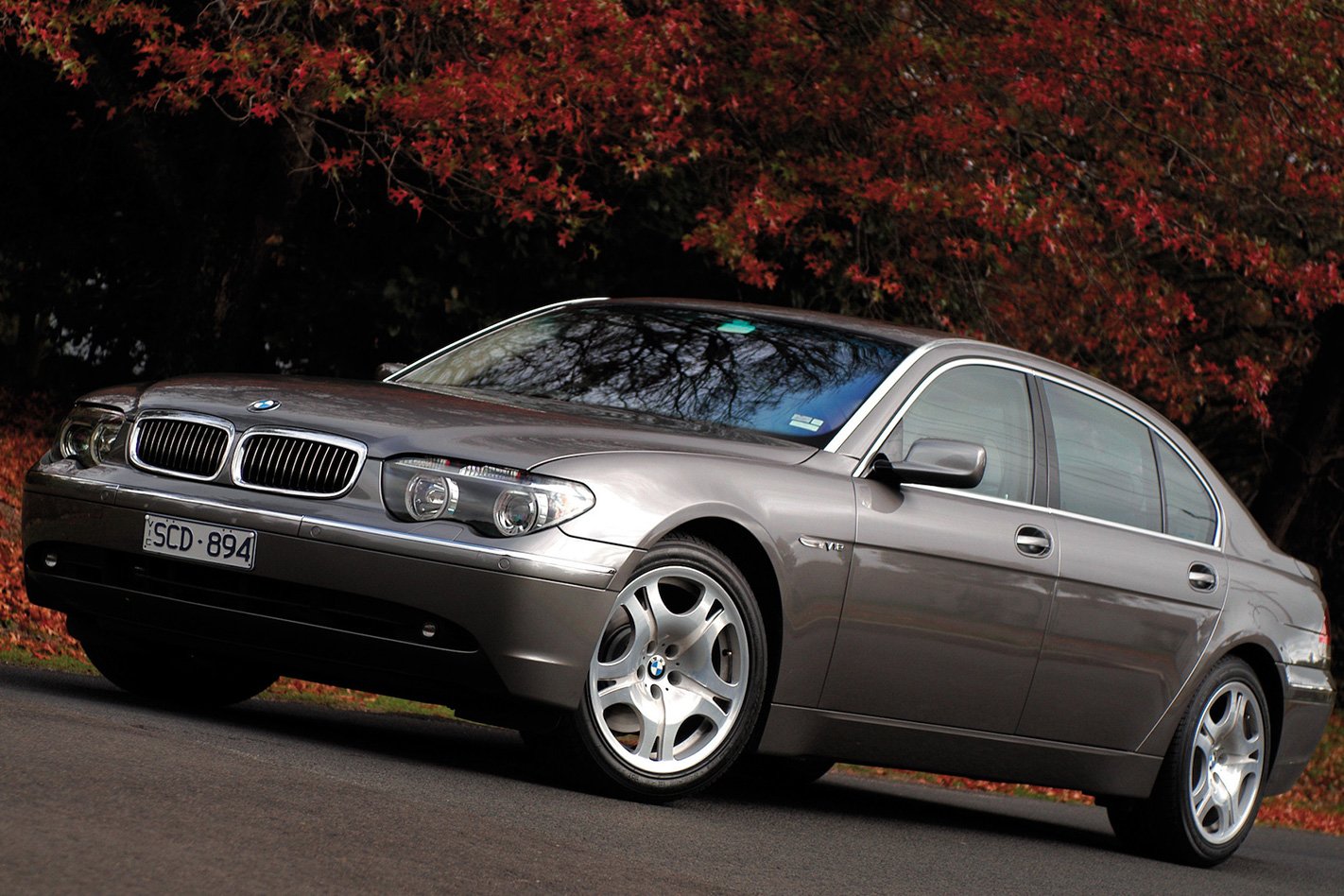
$15,000 – 2003 BMW 760Li
Bangle may have bungled BMW styling with AU Falcon-esque polarising designs, but time arguably has treated them very well. The E66 7 Series was first, and a 6.0-litre V12-engined 760Li can now be purchased for less (much less) than an E46 M3 or E39 M5 of the same era.
$30,000 – 2007 Audi S6
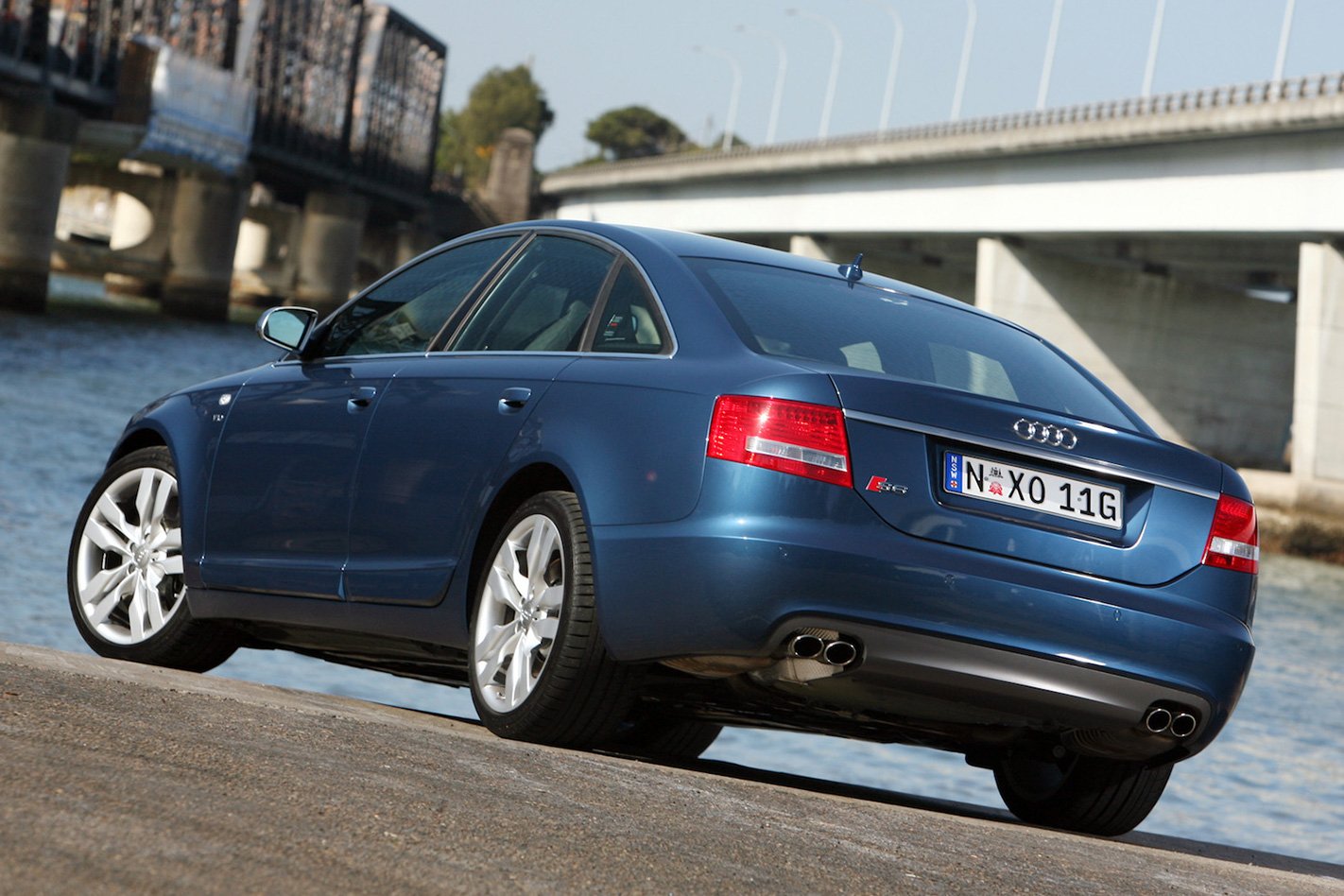
Remember when Audi first lowered a Lamborghini-derived 5.2-litre V10 engine into its R8 supercar? Well, a few years before that it was already in the demure S6 four-door sedan.
Five most affordable 300kW cars
Blame quattro all-wheel drive and a 4.9-metre-long body for the portly 1910kg kerb weight, but at least the styling holds up today. This slice of soaring, free-breathing V10 cost $200K new – but a decade later, it’s yours for $30K.
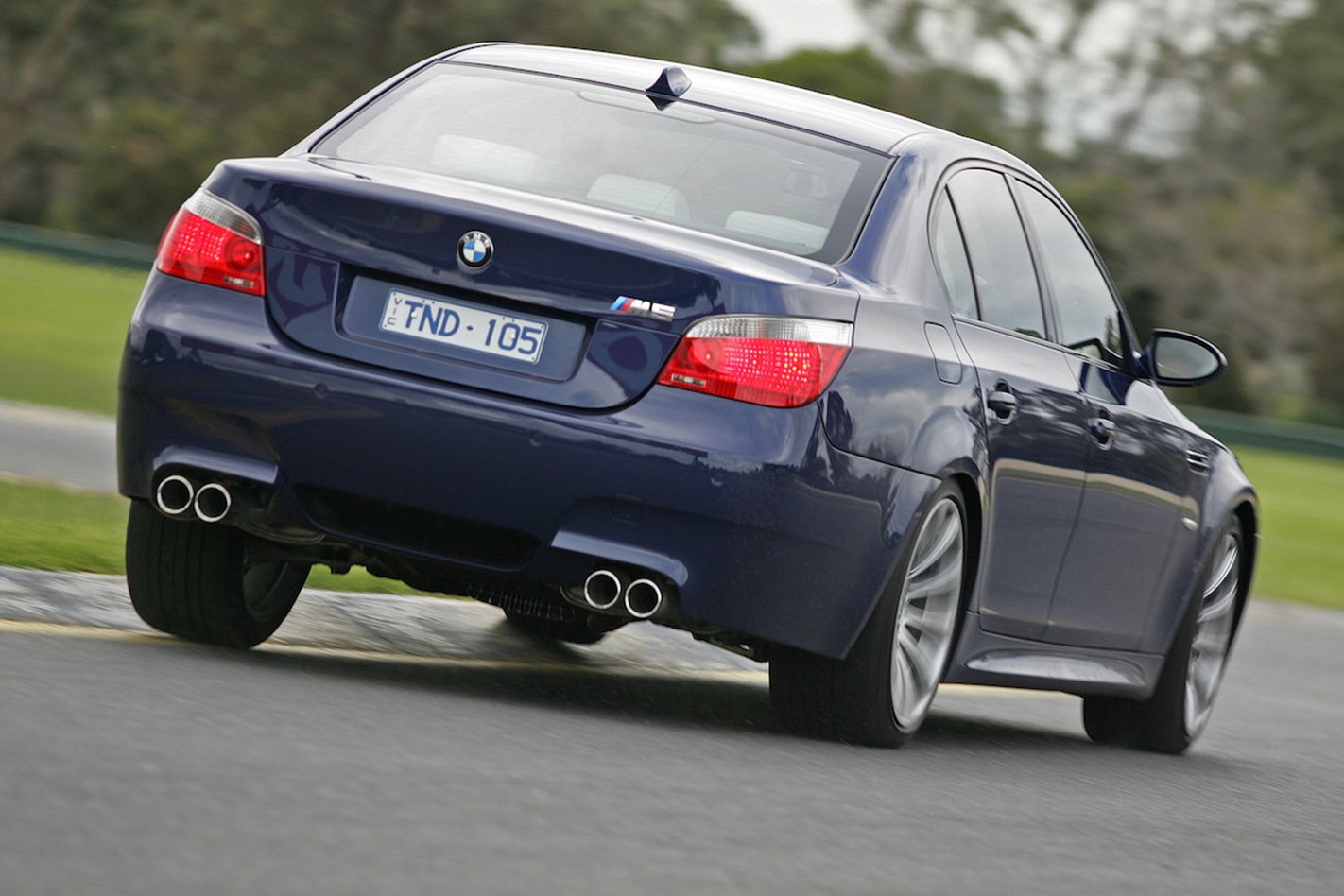
$45,000 – 2007 BMW M5
For a lesson in medium sedan versus large car depreciation, look at BMW’s E90 M3 and E60 M5. The former cost $150K, the latter $250K, yet if anything the epic 5.0-litre V10-powered model is now more affordable, at $40K-plus; though leave plenty of dough in the wallet to run it.
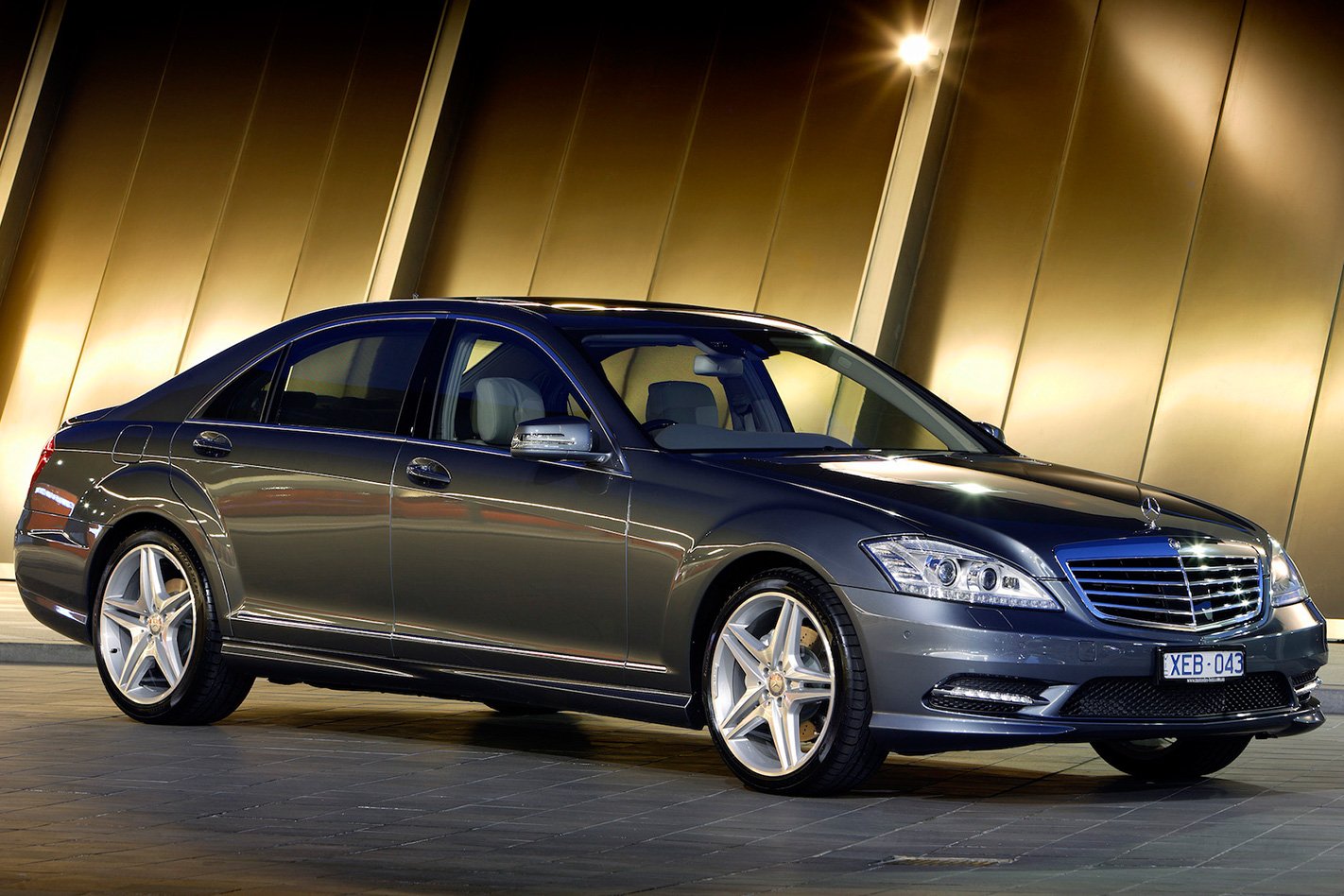
$60,000-plus – 2010 Mercedes-Benz S600 L
Enter the era of turbocharging. Times two. Of a 5.5-litre V12 engine to produce 380kW at 5000rpm and 800Nm between 1800rpm and 3500rpm. That is life in the driver’s seat of a seven-year-old long-wheelbase Merc S-Class that humbles its 2180kg mass with 4.6sec 0-100km/h performance.
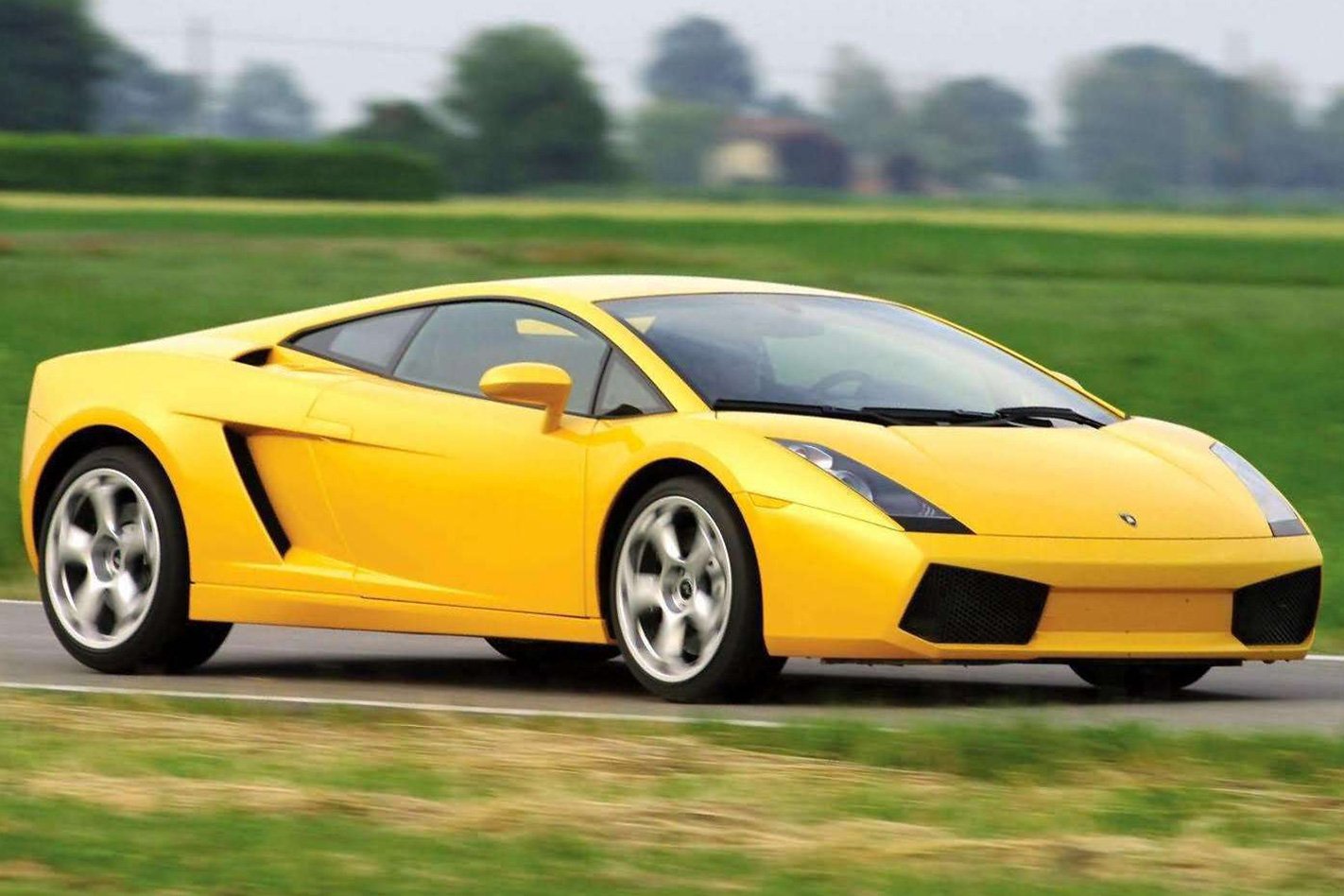
$100,000-plus – 2006 Lamborghini Gallardo
Rarely can a Lamborghini be described as a bargain. Look to the classifieds, however, and a decade-old Gallardo is now trading for around the same price as its blood brother, an original Audi R8.
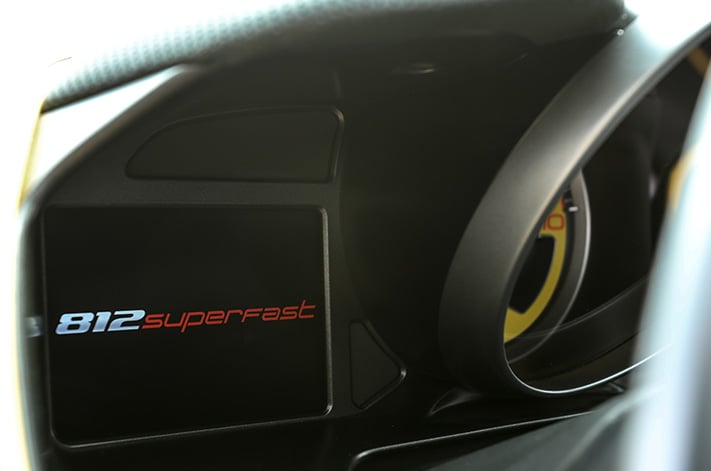
MARANELLO replaces the superb F12 berlinetta with something even better… meet the Ferrari 812 Superfast.
WHAT IS IT?
A two-seat rear-drive sports coupe with a fabulous 6.5-litre V12 under its long, long bonnet.
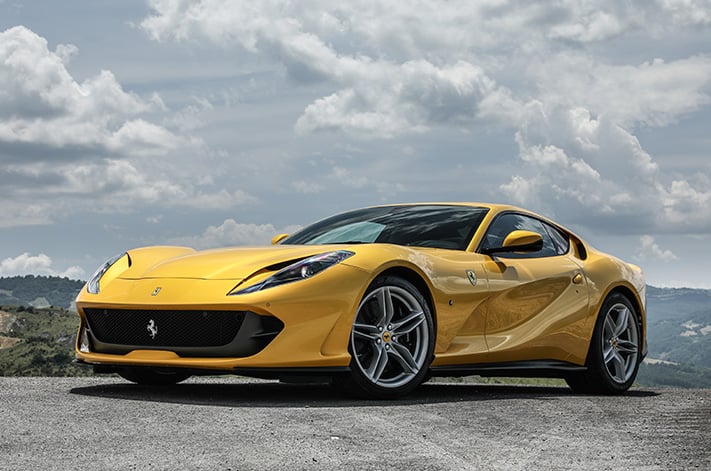
Dumb question! It’s a new Ferrari…
MAIN RIVALS
None, really. The Lamborghini Aventador comes from the same region of Italy as the Ferrari 812 Superfast and also has a 6.5-litre V12, but it’s a very different kettle of less tasty and more expensive mid-engined fish. While Aston Martin produces several models that share the Ferrari’s layout, none of them are as fast or as focused (or, to be fair, as costly).
THE WHEELS VERDICT
Brilliant and blindingly fast, the Ferrari 812 Superfast is simply the best sports coupe in the world.
MINUS: Cost and fuel use; few drivers will be able to use all it has to give
THE WHEELS REVIEW
FERRARI’S devotion to the dozen has never deviated. The company was founded on V12 power, and has been faithful to the format now for 70 years. And the V12 engine remains as exotic today as it ever was.
Seven decades ago it was a path to power few dared or cared to follow. This remained the case through most of Ferrari’s long road car history. Today there are more straightforward highways to hell-raising performance than 12 cylinders and high, high revs. But, at least for its elite models, Ferrari spurns them.
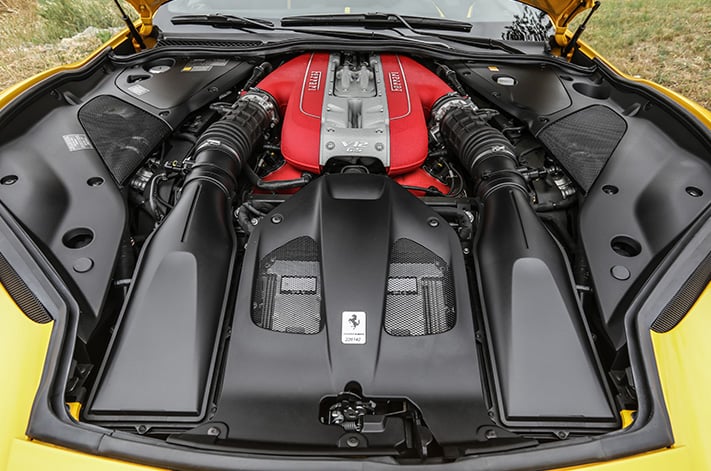
At the end of the 812 Superfast’s throttle travel there’s 588kW. Exactly 800 metric horsepower. So, with the exit to Fiorano’s tight Turn 6 hairpin coming into view, I squeeze the throttle until it squeezes no further. Just as I’d seen Ferrari test driver Fabrizio Toschi do during the two-lap, two-up familiarisation just minutes ago.
The 75 percent-new V12 has a little more capacity than the 6.3-litre of the F12 berlinetta. While the cylinder bore dimension remains unchanged, it has a new crankshaft to increase stroke by 2.2mm. New pistons and rods and cams, too. And all-new cylinder heads, the first in the world into production with new high-pressure, high-precision direct injectors made by Bosch. There are new hydraulically actuated but electronically controlled F1-style variable-length intake trumpets (made in-house) hidden inside an equally new intake plenum with enlarged throttle bodies.
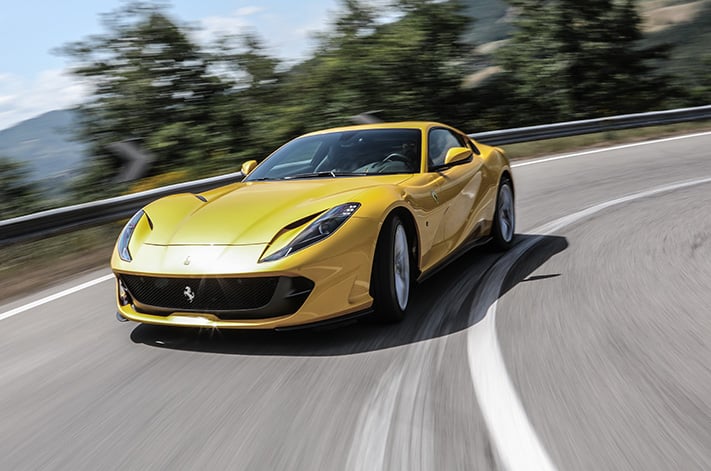
So Ferrari’s engineers naturally chose a set of shorter ratios for the seven-speed dual-clutch transmission for a smaller drop in engine speed with each upshift. With the throttle pinned, this means more power on tap in the higher gear. It will do 0-100km/h in 2.9 seconds, they say, and 0-200km/h in 7.9 seconds. Which is exactly what I’m experiencing…
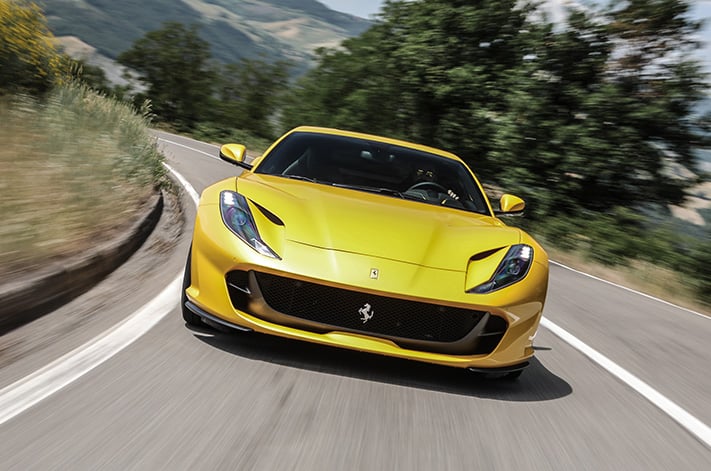
I’ve selected Race on the manettino, which enables the 812 Superfast’s uprated transmission actuators to shift even more speedily than the F12 berlinetta could in the same mode. Yet the gearchanges are firmly decisive rather than thumpingly brutal.
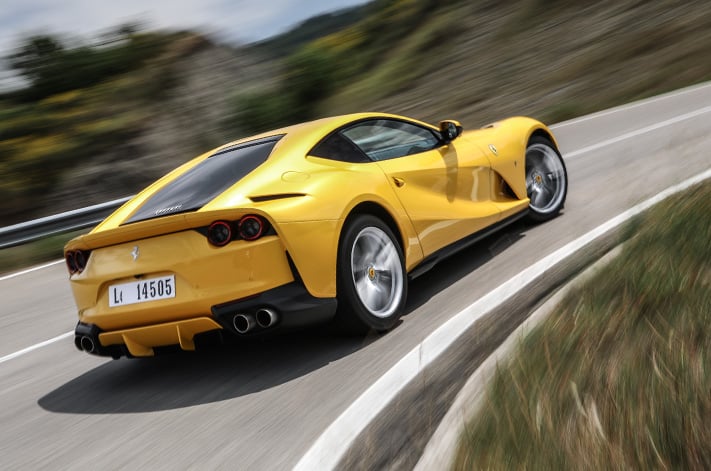
Wider front tyres are only part of the story. The 812 Superfast introduces a major change in steering hardware, adopting both electric assistance and the rear-wheel steering system Ferrari calls Passo Corto Virtuale (which translates as Virtual Short Wheelbase). PCV was first seen in the hot tdf version of the F12, and it’s updated to Version 2.0 for the 812 Superfast. The front and rear steering systems are now connected, but only by Maranello-scripted software. Ferrari’s rather good Side Slip Control system, introduced in the 458 Speciale, is also upgraded, to Version 5.0.
Around Fiorano the car’s grip, especially on turn-in, is simply phenomenal. There’s feel through the steering, too, though it doesn’t seem quite so direct and lively as the F12 berlinetta’s. The operation of the 812 Superfast’s PCV 2.0 is so totally transparent that it’s never a distraction. The aim of Ferrari’s engineers was to employ technology to enhance agility and stability, thereby boosting driver enjoyment. They did not fail.
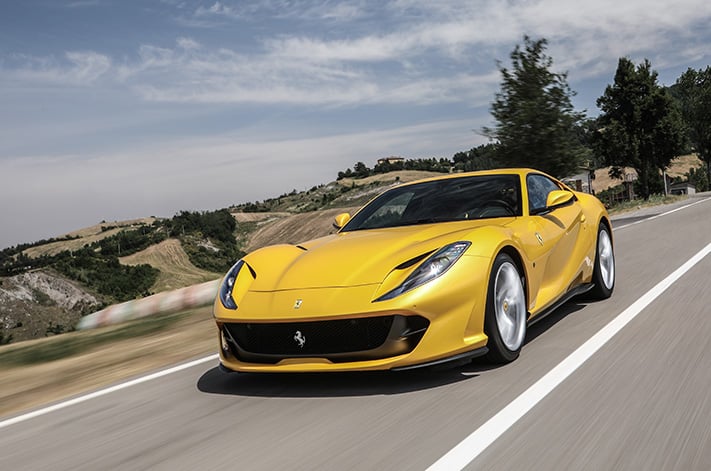
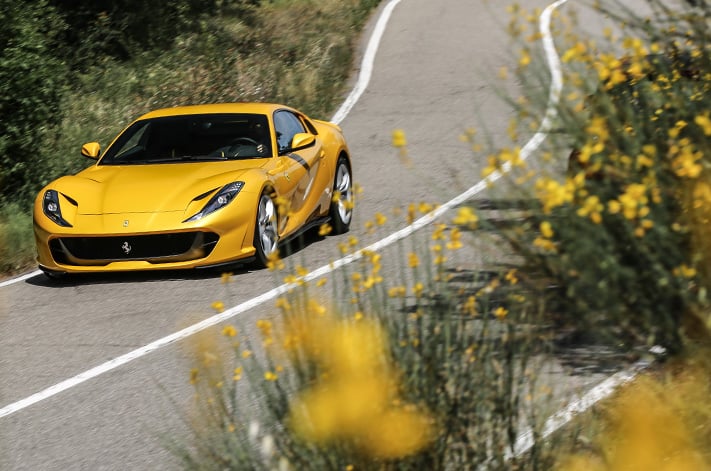
Once outside the Fiorano’s fences, it’s a shape that inevitably attracts attention. From Maranello we head south and climb into the Apennini, the 1500km-long mountain chain that runs groin to ankle down Italy’s leg-shaped peninsula. In a village near the halfway point of the 140km test route we drive into a car park hoping to find a coffee bar nearby. We’re followed in by a police car…
The female officer of the Polizia Locale admires the bright yellow Ferrari and is obviously thrilled when we tell her to try the driver’s seat. Still, she does ask to see the 812 Superfast’s prova plate paperwork.
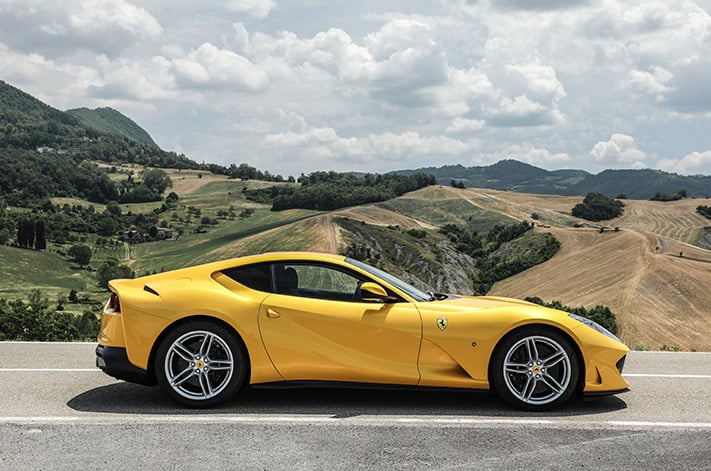
The winter cycle of freeze and thaw is hard on roads up here. There are lumps and slumps and cracks in the bitumen ribbons now taking us back down and north towards Maranello.
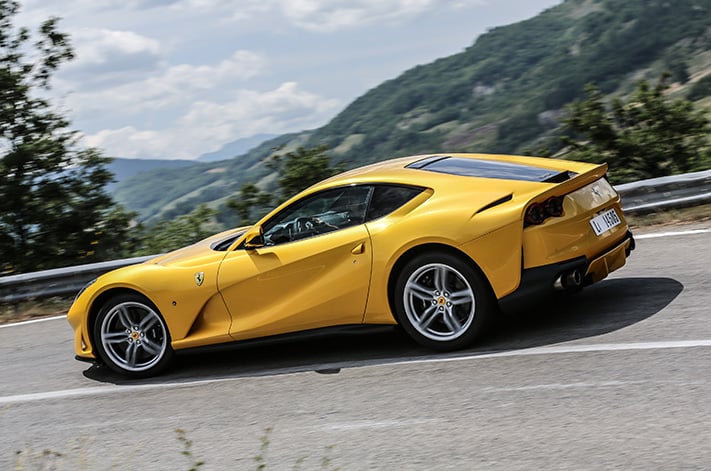
Only a supremely confident company would have chosen a test route like this, one sure to expose suspension shortcomings. The manettino now set to Sport, the right mode for everyday driving. While the Ferrari’s body motions are firmly disciplined, they’re never curt.
The 812 Superfast’s interior decor is different from the F12 berlinetta’s. The instrument panel is an all-new design that embeds modern technology in an expanse of immaculately handcrafted leather… and it somehow works.
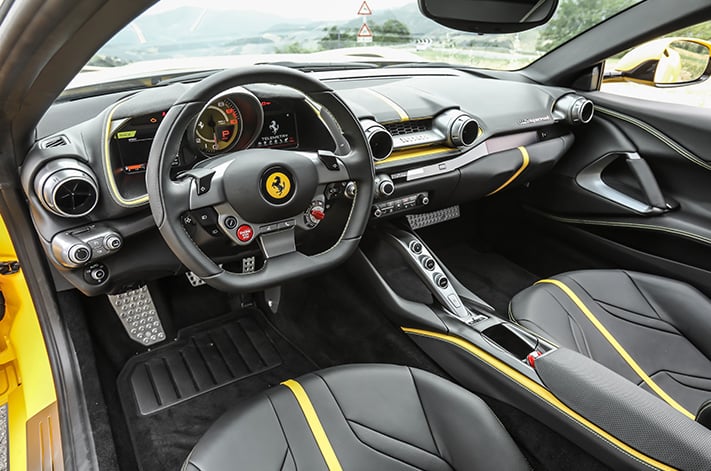
For sheer, breathtaking breadth of talent the 812 Superfast really is a car without any obvious rival. Or, given what it was designed to do, any serious flaw. It’s a great home for an even greater engine.
Air apparent
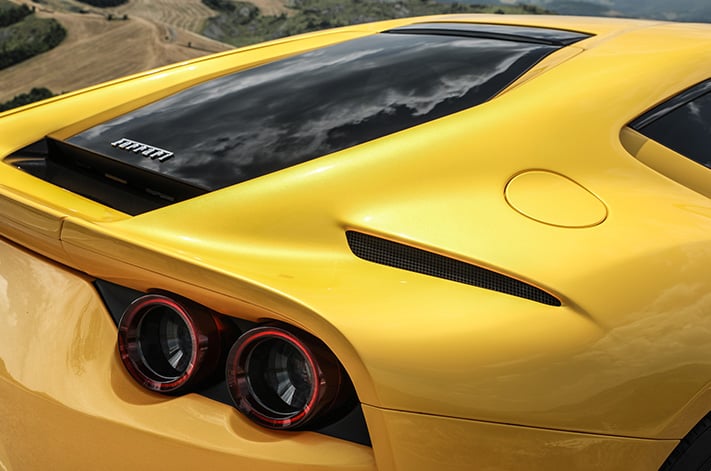
While the 812 Superfast’s key aerodynamic aids are similar to those of the F12 berlinetta, the details are different. There are still passive aero flaps embedded in the car’s nose and three electric-powered active flaps incorporated in the rear diffuser. But the new bi-bocca (double mouth) nose design does a better job of directing air through the same-size radiator, to the brakes and through the passive flaps. And the curved fences of the new rear diffuser improve its performance by boosting vorticity, which is engineering talk for swirliness.
Daily drivers
Ferrari customers obviously appreciate the company’s efforts to make its front-engine V12 two-seaters more user-friendly. According to data gathered by Maranello, they’re the primary car for a growing proportion of buyers. Back in the day of the 550 Maranello only 36 percent of customers said the car was their preferred daily drive. The number has grown over time, and the F12 berlinetta is the primary car for 54 percent of owners. It seems likely the 812 Superfast, despite its $610,000 price tag ($80,000 less than the car it replaces) will further increase this figure.
SPECS
Model: Ferrari 812 Superfast Engine: 6496cc V12, dohc, 48v Max power: 588kW at 8500rpm Max torque: 718Nm at 7000rpm Transmission: 7-speed dual-clutch Weight: 1630kg 0-100km/h: 2.9secs (claimed) Economy: 14.9L/100km Price: $610,000 On sale: Q1 2018
The next hot Honda Civic Type R will remain within grasp of most punters, with a reasonable price tag attached.
The 228kW, turbo 2.0-litre front-driver, is set to come to Oz in one “feature-packed” spec, priced at $50,990, putting it at almost $10K more than its German GTI rival.
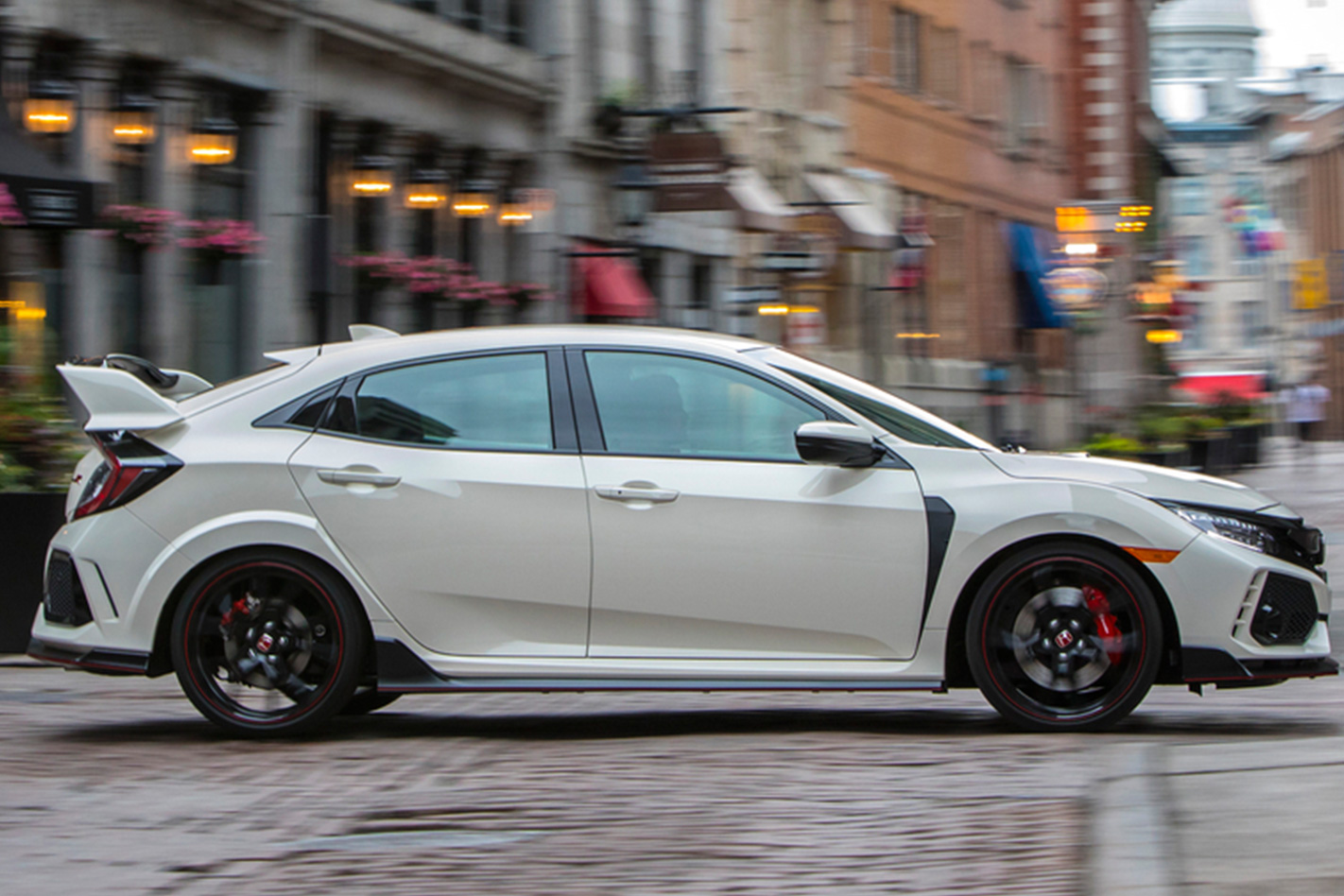
Honda Civic Type R caught in Australia
Honda Oz director Stephen Collins says the hot Civic arrives as the red Type R badge celebrates its 25th birthday.
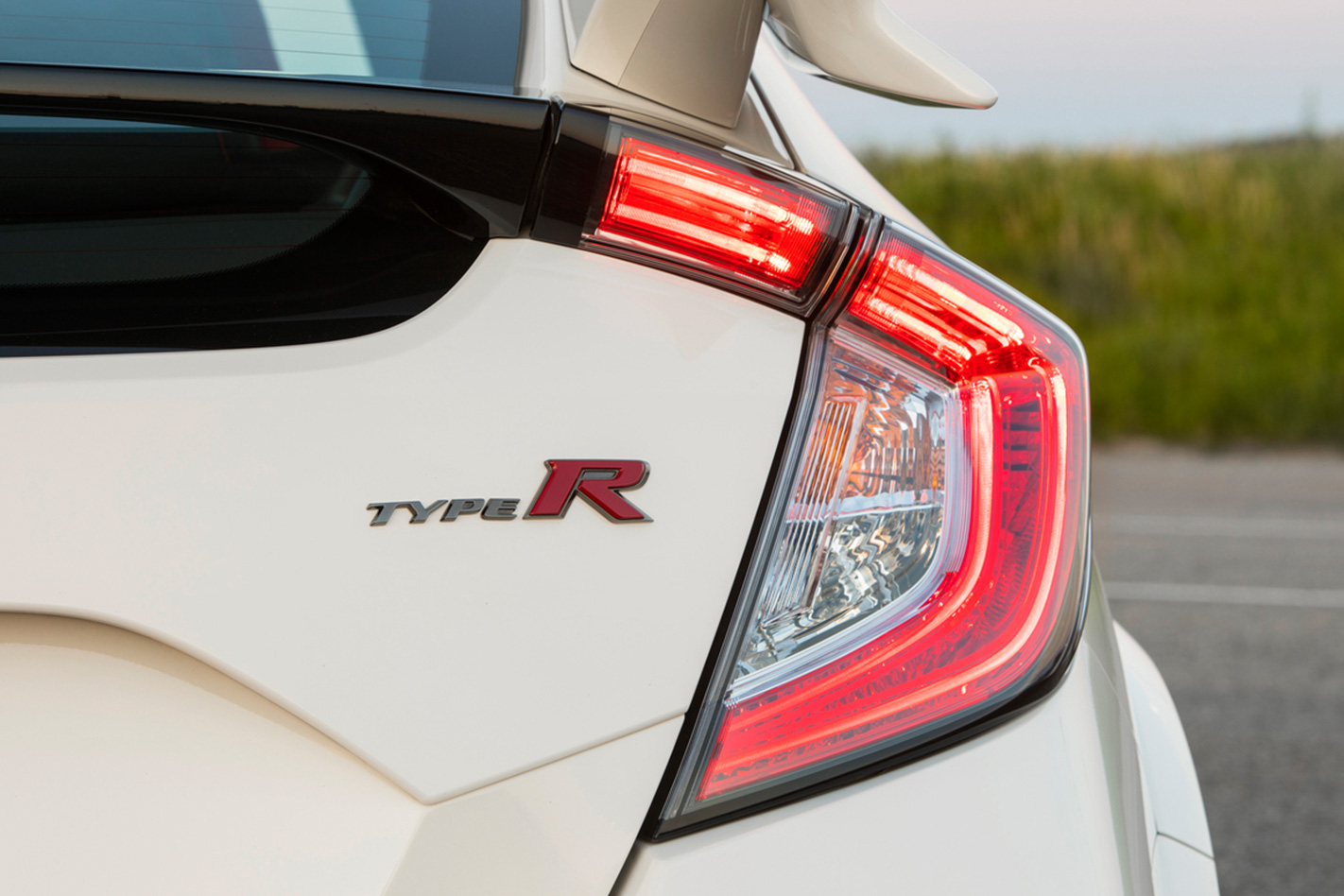
“As a record-holder around the Nürburgring Nordschleife, it’s clearly the fastest, most dynamic Type R model ever sold in Australia. Enthusiasts across the country are going to absolutely love it.”
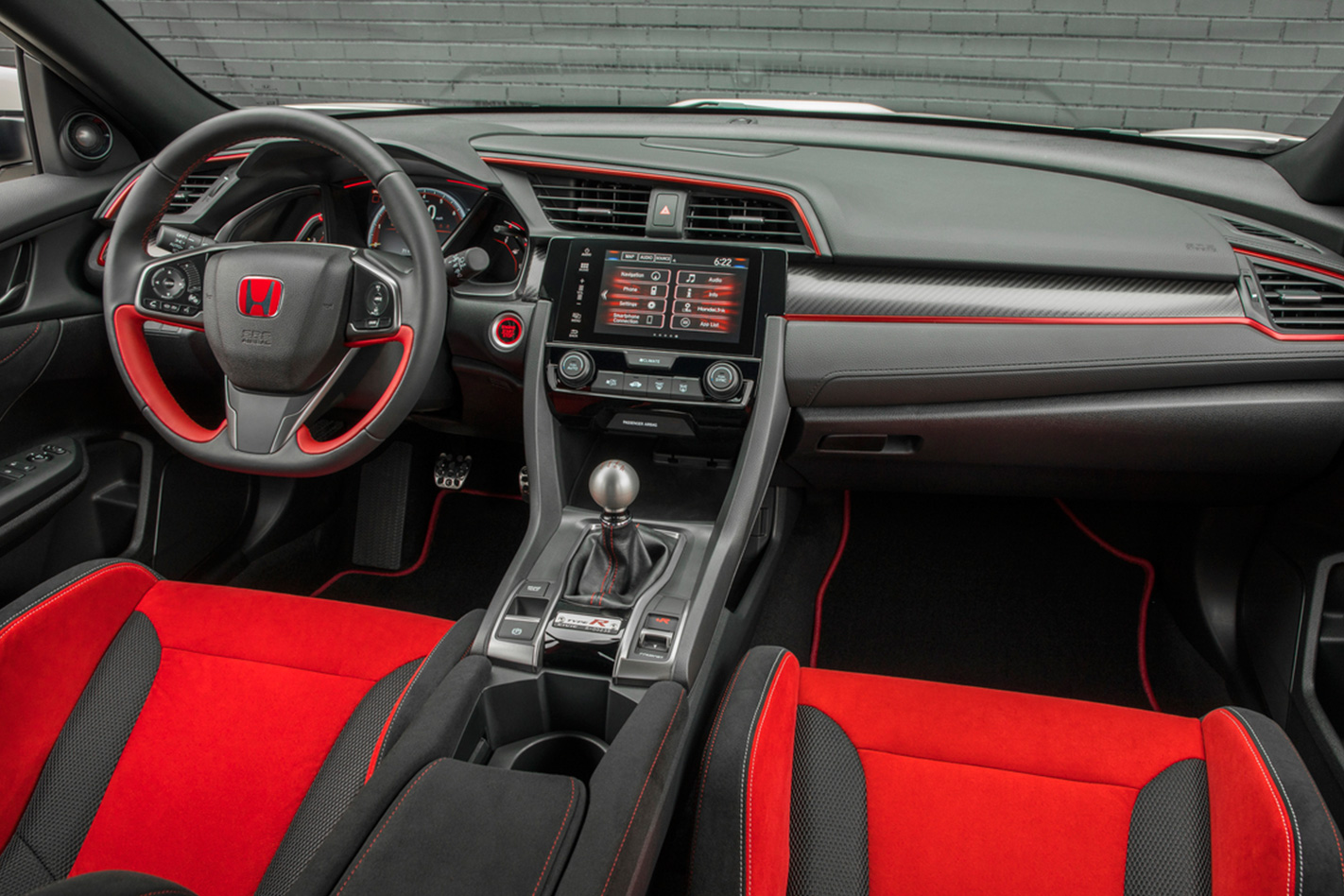
“We’ve also added the full Honda Sensing suite as standard which brings AEB capability, the convenience of adaptive cruise control, plus a whole lot more,” Collins says.
Like the base-spec Honda Civics already here, however, the Type R won’t have sat-nav.
The new Type R arrives here in October, though orders have been open since May.
HONDA is squaring up for a stoush with Ford after announcing a $50,990 list price for its new Civic Type R, making it a dollar-for-dollar match with the Focus RS in Australia.
Australian and US market Civic Type Rs will produce peak outputs of 228kW and 400Nm from a 2.0-litre turbocharged four-cylinder VTEC engine detuned for hotter climates and 95RON petrol.
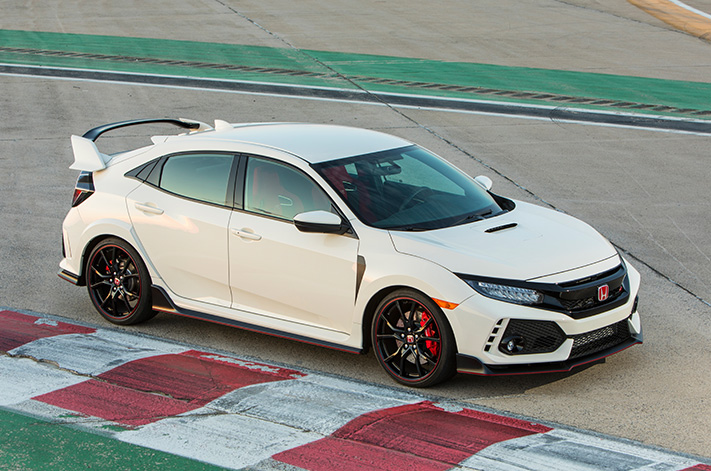
Ford Focus RS models in Oz use a 2.3-litre turbocharged four-cylinder engine that sends 257kW and 440Nm to an all-wheel-drive system through a six-speed manual exclusively. The Civic Type R powers its front wheels only.
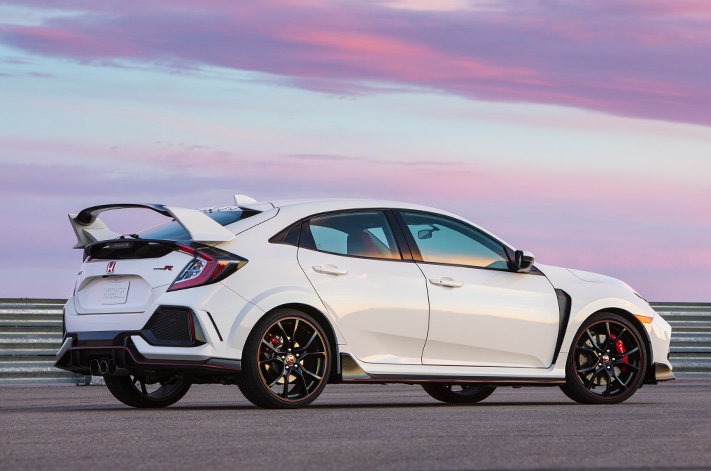
More than 200 firm orders for the front-wheel-drive Nurburgring record holder are held by Honda dealers in Oz, with its Championship White hero colour the most popular choice.
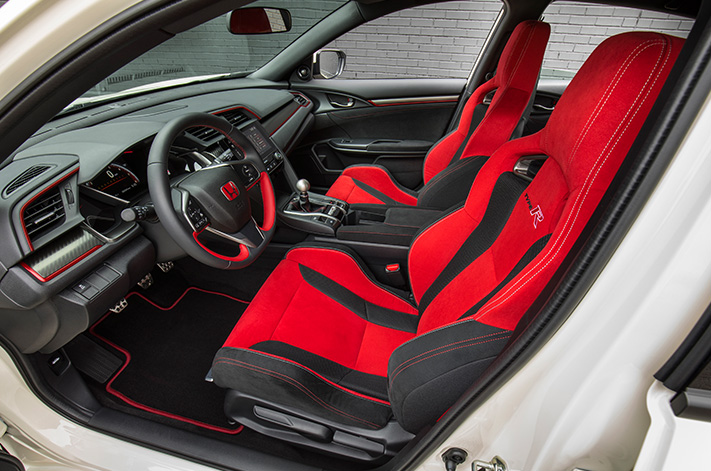
Just one variant of the Civic Type R is to be sold in Australia at launch. Key features include adaptive dampers, Brembo brakes, 20-inch alloy wheels and active safety functions including AEB and radar cruise control.
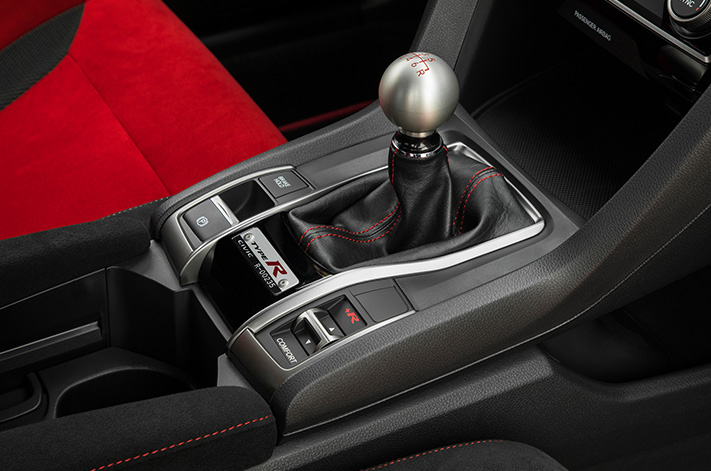
Multi-link rear suspension, adaptive, variable dual-pinion electric power steering and a helical limited-slip differential also feature on the Type R.
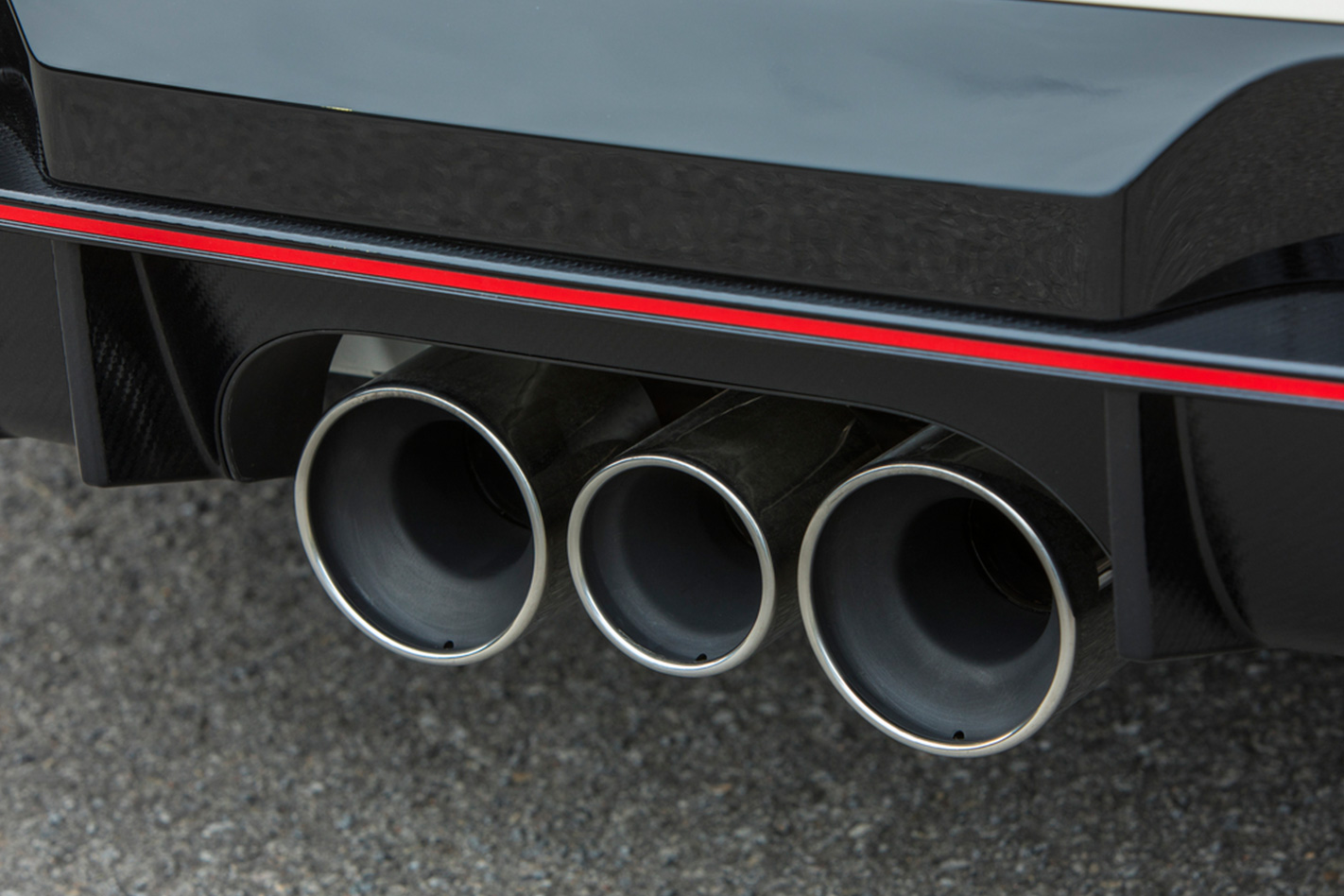
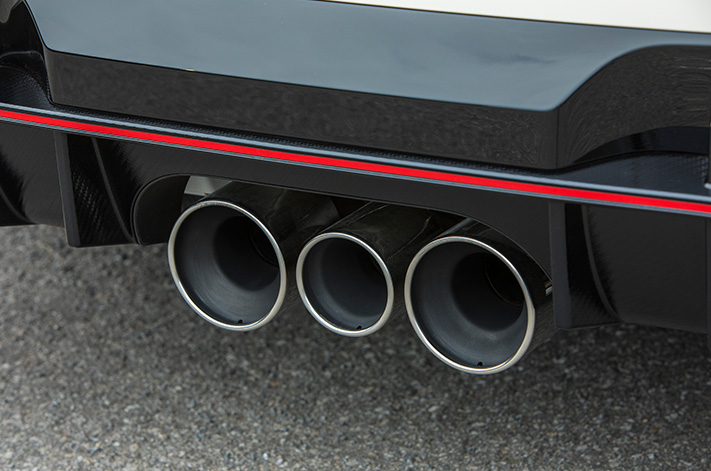
Civic Type R’s distinctive third exhaust pipe is designed to reduce cabin noise when cruising at sustained revs on highways. During high engine load exhaust gases flow through all three pipes, but at mid-load conditions the smaller middle pipe draws air in to cut ‘booming’ and improve occupant comfort.
Honda says the Civic Type R’s suede-effect sports seats are the lightest Type R seats it has ever produced. Colour choices for exterior paint include Championship White, Rally Red, Crystal Black, Sonic Grey and Brilliant Sporty Blue.
It goes without saying just how important a vehicle’s brakes are, and it doesn’t take a vivid imagination to consider the consequences of failure. Yet little thought is given for the vital systems each time you press the stop pedal.
Here’s what is going on when you lift off the throttle and ask your car to slow down via the pedal on the left.
THE BASIC BRAKING PRINCIPLE
In the simplest terms, a conventional braking system converts the kinetic energy of your moving vehicle into heat energy through friction. If the heat energy generated exceeds the energy making the car move, it will slow down.
In a little more detail – when you press the brake pedal, hydraulic pressure is fed to brake assemblies at each wheel through metal brake lines. At each corner, the pressure generated by your foot forces a lining surface that is fixed to the suspension, against the friction surface which turns with the wheel.
PROBLEMS
The accumulated heat needs to be dissipated to the surrounding air. If it isn’t, the friction surface will continue to increase in temperature until it starts to ‘fade’ – the point at which the material (commonly cast iron) cannot absorb any more energy from friction.
Fade can be caused by frequent heavy braking such as descending a steep hill or driving hard, while atmospheric conditions such as high ambient air temperatures can impede brake cooling, increasing the potential. The driver perceives fade as reduced brake effectiveness as the friction material reaches its maximum temperature.
Vapour lock is another symptom of excessive brake temperatures and is caused by the hydraulic fluid that forces the friction surfaces together actually boiling. As the liquid turns to a vapour it becomes compressible and the brake pedal starts to feel spongy, but in the worst cases the pedal can have no effect at all.
Incorrect brake fluid DOT rating or poor maintenance increases the likelihood of vapour lock by allowing atmospheric moisture to be absorbed by the fluid, lowering its boiling point. As always, the key is a good maintenance regime and getting your brake system checked as often as the manufacturer recommends.
BRAKE TYPES
For the most common car braking system, a disc provides the friction surface that turns with the wheel, while a caliper squeezes the rotor with the friction liner, or pads, to generate the friction and slow the wheel.
Drum brakes are less frequent on passenger vehicles – they’re mainly still used on cheap city hatchbacks – but are common on many commercial vehicles where they provide better braking for carrying heavy loads. In this case, a drum forms the friction surface while a pair of semicircular shoes, housed inside the drum, are forced outwards and onto the internal surface by a hydraulic cylinder.
Disc brakes are far more efficient at dissipating heat in high demand applications and are generally lighter which reduces unsprung weight for more favourable handling characteristics, but are more expensive. Drum brakes are a cheaper option but not as efficient in higher performance applications, limiting their use to more modest-performance vehicles.
With the advent of hybrid and electric vehicles, conventional braking as we know it took a quantum leap called regenerative braking. Regardless of the type of system, friction braking is a total loss process in that it wasting kinetic energy. However, EVs and hybrids can recycle that energy as electricity and feed it back into the storage batteries.
When the brake is pressed, instead of hydraulic pressure forcing friction surfaces together, regenerative brakes use the electric drive motor to generate electricity from the forward motion of the vehicle. When a generator or alternator is asked to produce electricity, it responds with an exponential resistance that is used to slow the vehicle.
If more braking force is required, conventional friction brakes take over as the pedal is pressed harder. Advantages include increased fuel economy and extended brake component life, although some drivers find the slightly spongy brake pedal feel takes some adjusting to.
GETTING EXOTIC
In the most extreme high-performance applications the basic disc systems fitted to many passenger vehicles cannot cope with the higher stress of track and fast road driving. But more exotic materials and technology can.
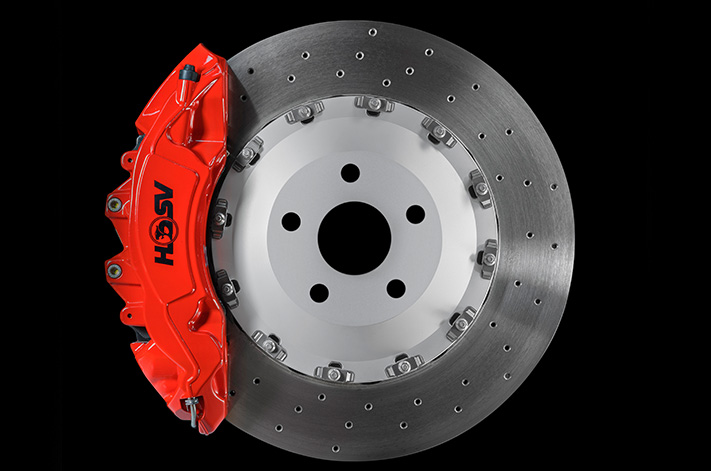
Conventional discs can be cross-drilled and slotted, increasing the cooling surface area and allowing the disc to cool more rapidly when under load. They also provide somewhere for water to escape for improved performance in wet conditions.
Traditional single-piece iron discs can swap out for composite rotors that retain the iron friction ring for high heat capacity, but use a lighter aluminium hub that has better heat dissipation qualities. The composite disc is also lighter than a pure cast iron component.
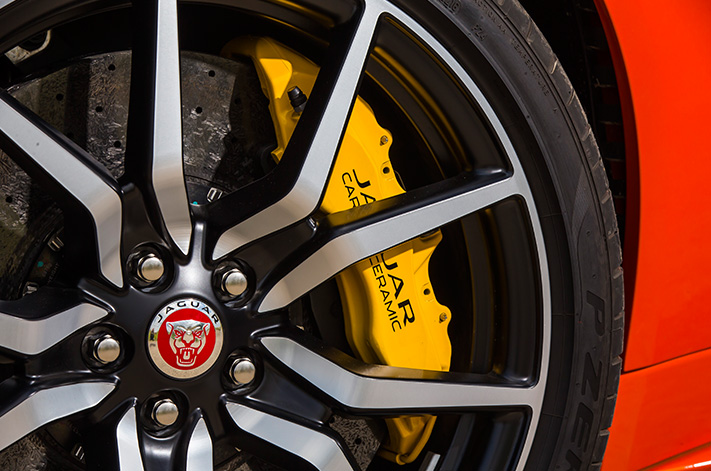
Beyond that, some manufacturers offer carbon-ceramic disc brake systems that use a rotor not made of metal, but of a sophisticated blend of carbon and ceramic materials. These discs possess extreme temperature tolerance but can also dissipate heat much faster than metal for prolonged stopping power under extreme conditions.
In both cases, the higher-performance discs are more expensive, especially the carbon-ceramic version, but they also have another disadvantage. Metal rotor thickness needs to be periodically measured to determine when they have worn to their minimum thickness and need to be replaced, but the wear of ultra-hard carbon-ceramic discs is almost undetectable.
Instead, the material becomes lighter as the resin holding the special materials together vapourises. The discs must be removed, and weighed, to determine when replacement is necessary.
GET A GRIP
Calipers can also upgrade for added braking performance. While basic disc brakes use a single-piston caliper that ‘floats’ as it pinches the disc, fixed position versions using multiple pistons increase clamping pressure and surface area with larger pads to generate heat faster and provide more braking force.
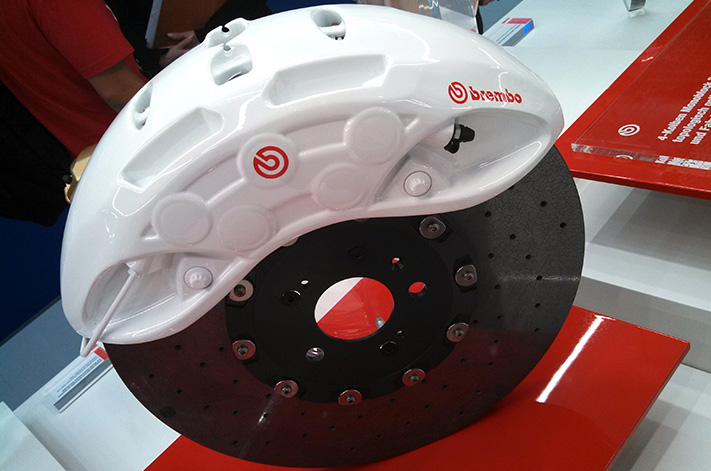
One of the world’s leading high-performance brake component brands, Brembo, offers a caliper with 10 pistons for the ultimate in clamping force.
Alloy high-performance calipers are also lighter than the equivalent cast iron version, offering more weight-saving potential.
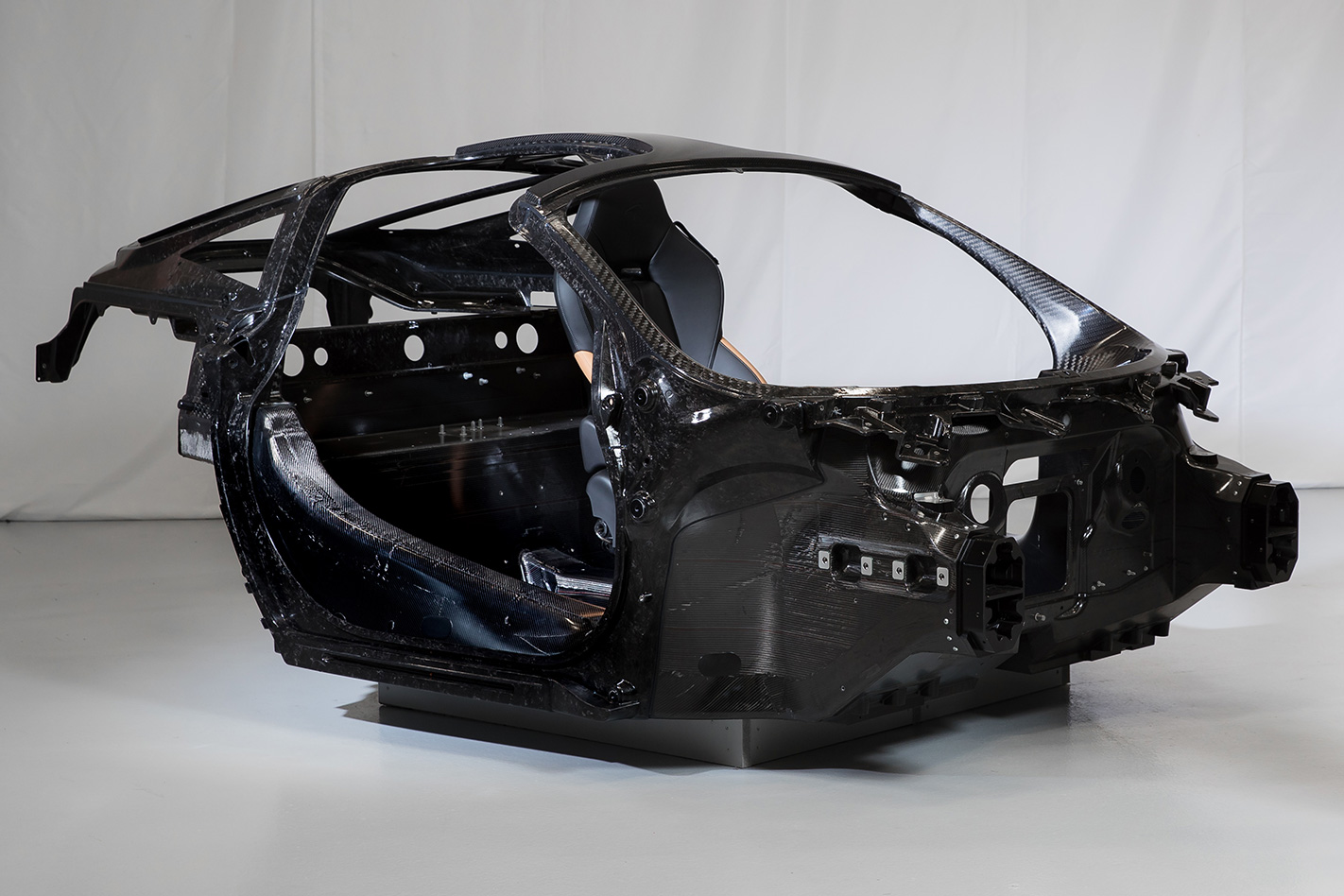
OPENING a new dealership on the Gold Coast has helped boutique sports car brand McLaren leap to a record year of sales in 2016, the company has announced.
The sports car maker and Formula 1 team owner delivered 3286 cars in 2016, well up on the 1654 it delivered a year earlier, to make a $A12.4 million profit – its fourth year running of reaching for the black ink instead of the red – off sales worth slightly more than $A1 billion.
Its strongest seller: the Sports Series, its entry-level line of performance cars that is in its first year of production. It alone accounted for 2031 sales, with most buyers slapping down their cash on the 570GT tourer and the 570S coupe.
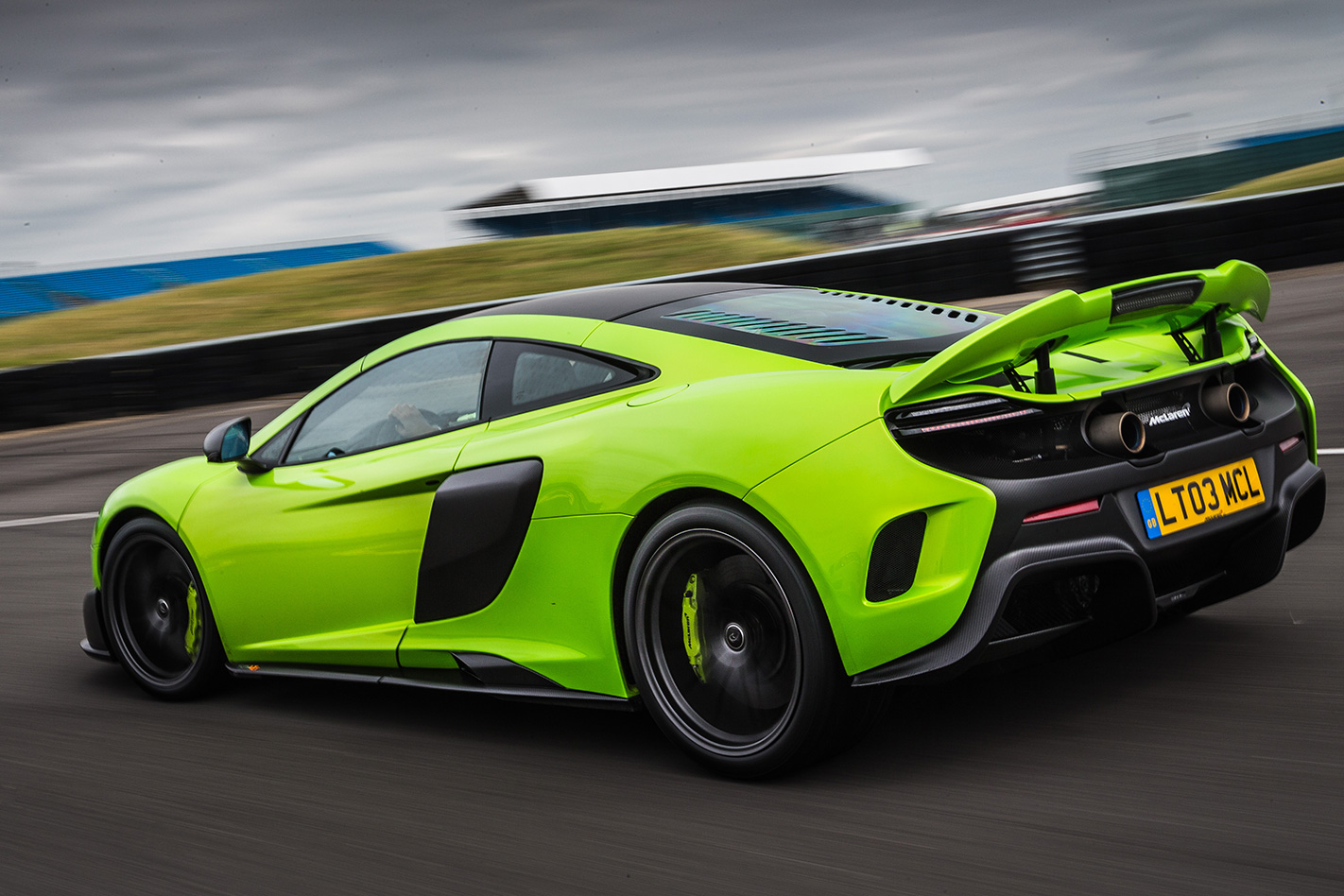
“Having both sold out in a matter of weeks, the limited production, even more driver-focused and higher-performance derivatives of the Super Series started production in mid-2015 but continued through 2016,” it said.
The first model in McLaren’s more hardcore Super Series, a lean and stripped-out 720S, accounted for 1255 cars sold in 2016, despite orders only launching in March.
”[Last year] was an extraordinary year for McLaren Automotive, with a near-doubling of sales and the completion of our 10,000th car,” sales and marketing executive director Jolyon Nash said.
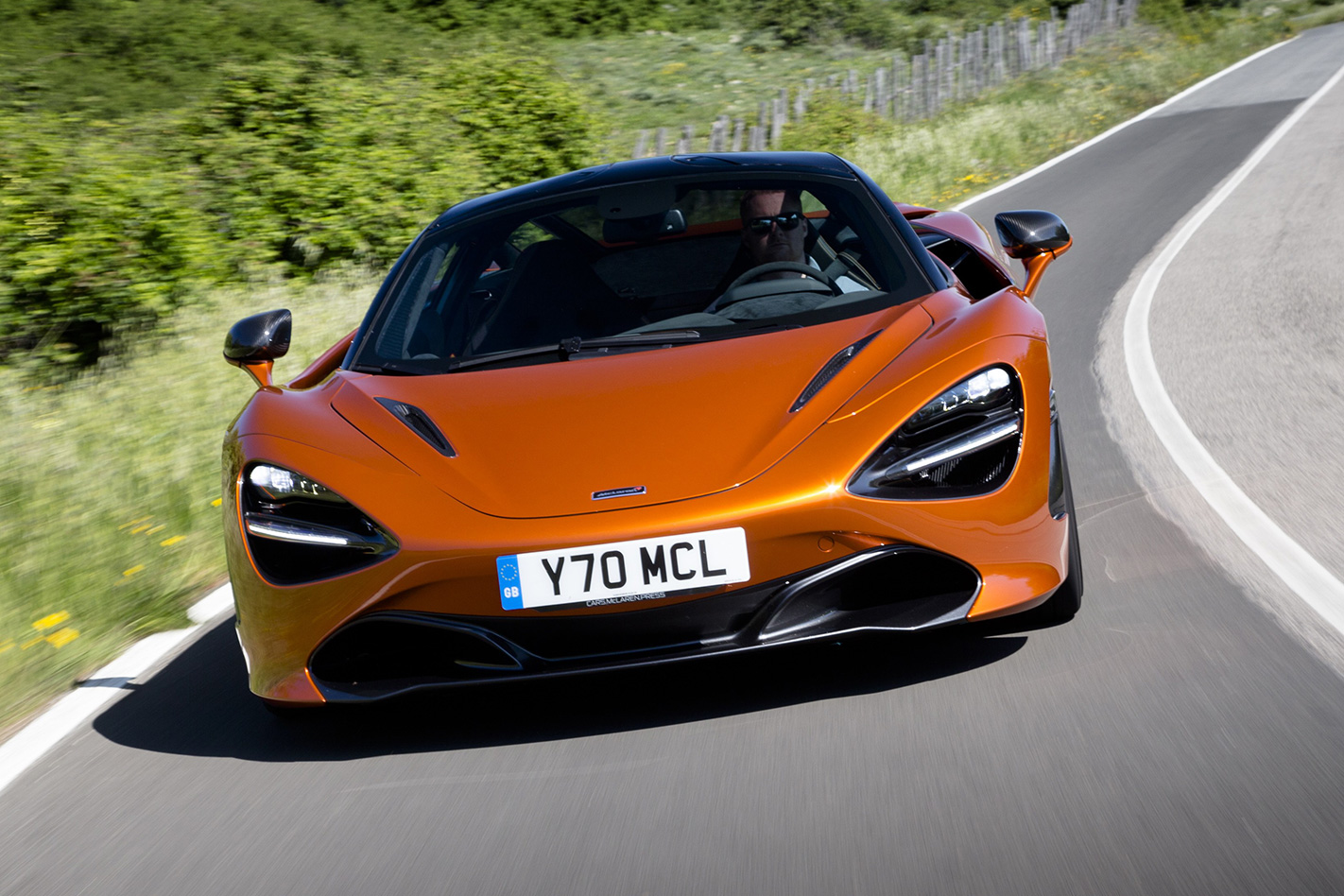
Sales in the Asia Pacific region, which includes Australia, rose by 90 percent, McLaren said. The car maker sold 93 vehicles here last year, and for the first five months of this year it has already attracted 51 buyers, leaving it 143 percent ahead of the same period last year.
Other areas making money for McLaren include McLaren Special Operations, the company’s bespoke division, and its aftersales unit.
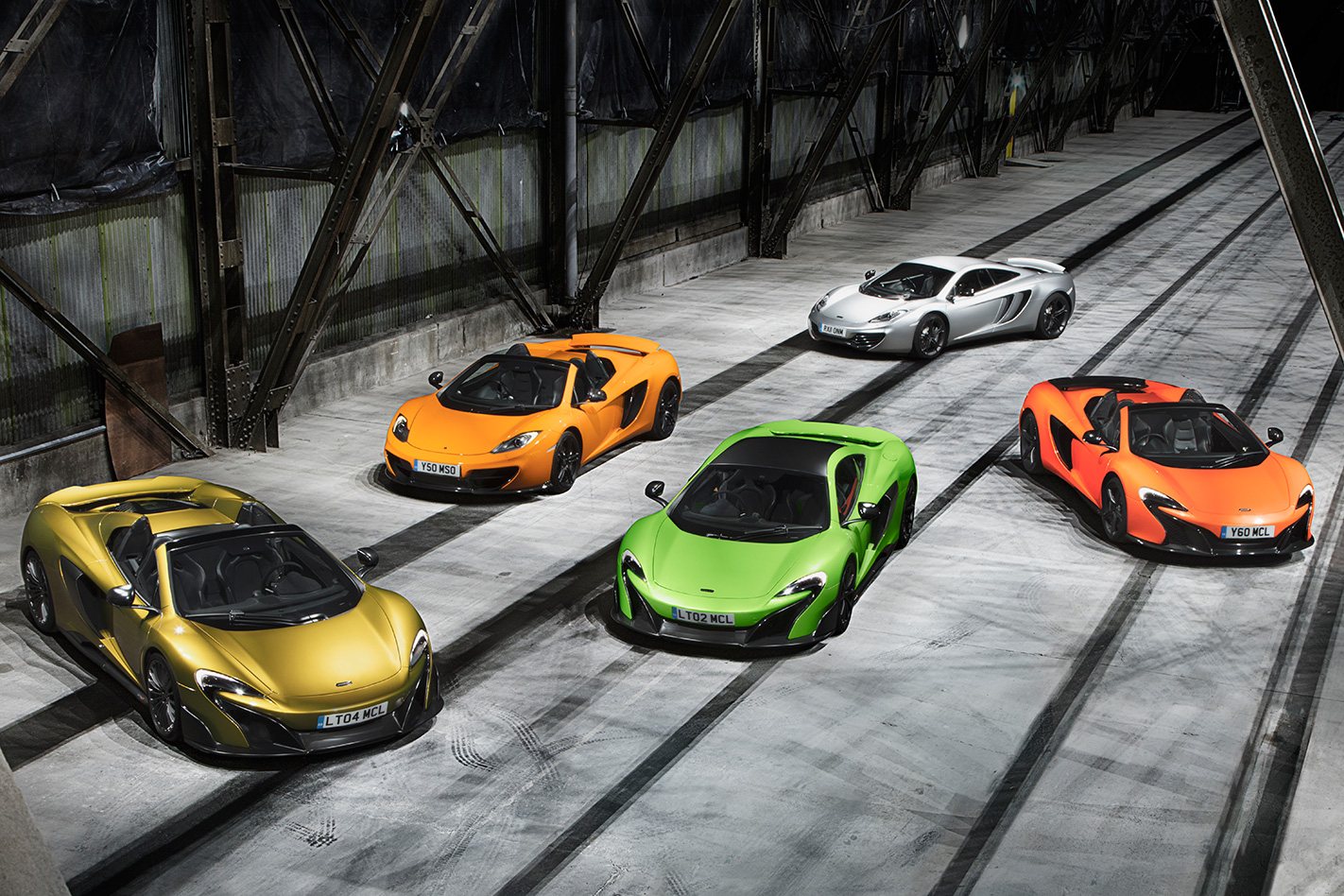
As part of its Track22 Business Plan, a six-year investment scheme that matures in 2022, McLaren will usher in 13 new models or derivatives over the next five years, including the development of an electric drivetrain that will feature in a concept car that may one day spawn an addition to McLaren’s Ultimate Series line-up.
It plans to sell 4500 cars a year by 2022, with at least half of them featuring a hybrid drivetrain. The addition of an extra shift at McLaren’s production centre has helped meet demand, with the factory now able to build 20 cars a day – enough to give it annual production of up to 5000 units.