
FOR a peerless 19th time Porsche has won the classic 24 Hours of Le Mans for sports cars, while the jinx continues for Toyota after failing yet again in the world’s best-known endurance race.
Touted as a showcase of modern auto industry technology and a pointer to future propulsion of the car, the prominent failures during this year’s enduro certainly left many asking questions about the fast yet patently fragile prototype LMP1 machines. Are the car makers pushing the technological boundaries too fast and too hard? All five of the outright LMP1 prototype hybrid rockets struck serious problems at Le Mans, with only two finishing.
Toyota has competed 19 times in total, finishing second on five occasions. Yep, more bridesmaid dresses than the David Jones formal wear department.
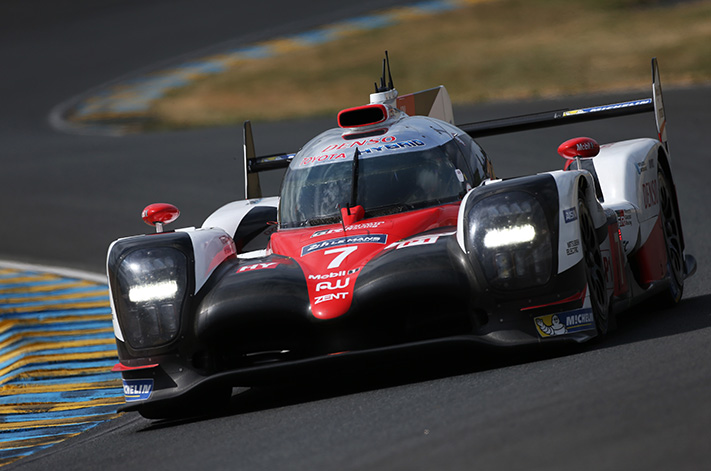
Last year, Toyota got within five minutes of a breakthrough triumph in the 24 Hours of Le Mans, its long-awaited maiden win ripped from the Japanese giant when its leading car failed cruelly and publically on the penultimate lap. Crushing.
Rather than be emotionally obliterated by heartbreak of 2016, Toyota regrouped, built a better mousetrap and returned utterly determined to finally post a win.
A new 2.4-litre V6 turbo-charged petrol engine and an upgraded hybrid system with lighter and smaller motor generator units, certainly gave the Toyota greater performance in 2017 and it went to Le Mans undefeated following World Endurance Championship wins at Silverstone and Spa-Francorchamps.
It took three low-downforce TS050 cars to Le Mans, while Porsche went with two 919 Hybrids.
And after posting a stunning pole, Toyota’s hopes were lifted higher. Porsche felt it may need a miracle.
It got one.
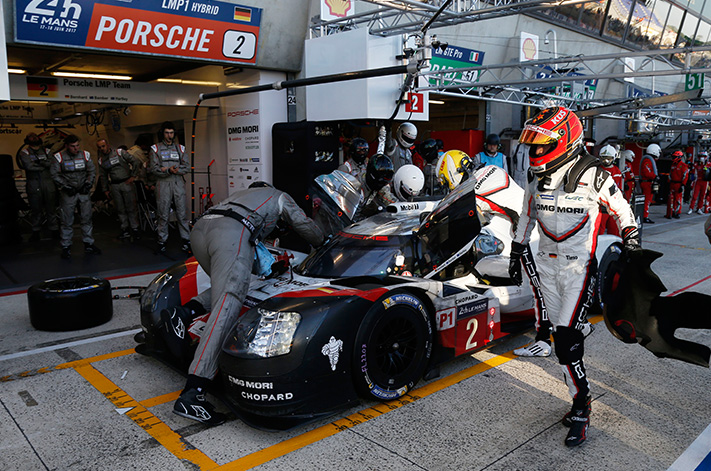
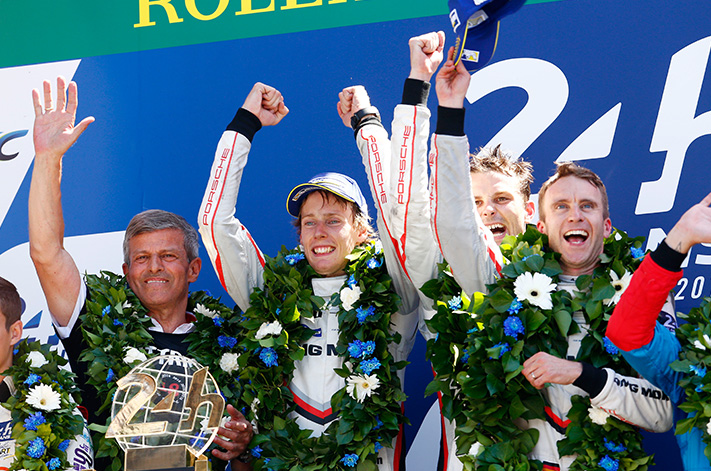
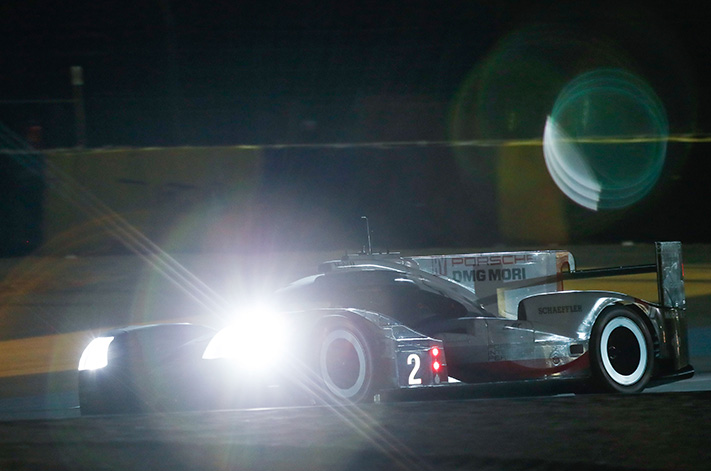
With unstinting efforts from their hard-working crew on the #2 Porsche, German Timo Bernhard and New Zealanders Brendon Hartley and Earl Bamber produced a quite remarkable victory out of an almost impossible scenario.
To the surprise of no-one and the delight of Toyota Motor Corporation president Akio Toyoda watching from the pit box, Toyota’s quickest car, the #7 of pole setter Kamui Kobayashi along with Mike Conway and Stéphane Sarrazin took control of the race early and into Saturday evening.
The #1 Porsche 919 of Andre Lotterer, Nick Tandy and Neel Jani struggled to stay in touch with the lead Toyota and ahead of the #8 rival of Sébastien Buemi, Anthony Davidson and Kazuki Nakajima.
The Toyota #8 lost all chance towards the end of the eighth hour when it was pushed into the garage for a time-consuming replacement front motor and battery.
Then came the pivotal moments of the race early Sunday morning when the other two Toyotas retired within half an hour of each other after a long safety car period to sweep gravel from the track.
“The car was running very well and we were just taking things steady, building a gap at the front. Then after the safety car, I just had no power,” car #8’s Kobayashi said.
Elevated into a huge lead by the LMP1 attrition, Porsche’s #1 drivers Andre Lotterer, Nick Tandy and Neel Jani rolled off the throttle to lap at a conservative pace through the sunrise happy hour and brunch time.
There was another twist to the tale.
Just after 11am local time, and when leading by 13 laps, Lotterer slowed with his combustion engine losing oil pressure. He was told to switch off and try using electric power to limp to the pits.
He didn’t make it, abandoning his 919 and leaving the 260,000 spectators with the almost unspeakable prospect of a mere LMP2 car winning Le Mans outright.
After all, the LMP1 cars, bristling with futuristic hybrid technology and 1000 horsepower, are pre-ordained to win. LMP2 cars, with only 600 horses from their off-the-shelf Gibson 4.2-litre V8 engines, are a support act, and maybe 10-14 seconds slower around a 13.629km lap of a circuit blending purpose-built racetrack with imperfect country roads.
Bewilderingly leading Le Mans was a Chinese-entered Jackie Chan DC Racing Oreca Gibson shared by hardened Pom and ex-Audi racer Oliver Jarvis, impressive teenage rookie Thomas Laurent of France, and Ho-Pin Tung of China.
The demise of the leading Porsche galvanised the #2 crew into a glory-or- bust mission to make up the several laps to the Oreca. Into the tense final hours, Hartley threw himself into the battle, frantically slicing through the slower cars as he charged towards the front. The speed difference looked scary but steadily the Porsche bridged the gap with finishing driver Bernhard eventually scooting into the lead 67 minutes from the 3pm finish and going on to win by a lap.
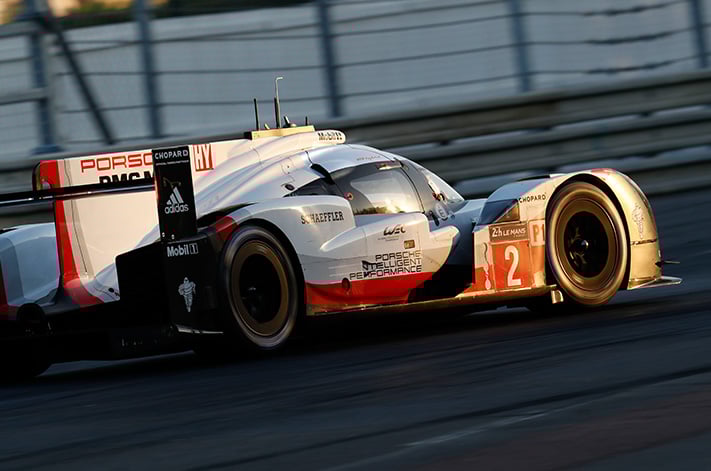
It was another manic, hard-to-believe, Le Mans. The look on the drawn faces in the Porsche garage suggested they knew it was a lucky win. From dead last the previous evening, to first. It was also Hartley’s first victory but the second for the other drivers of car #2.
Bamber, a winner two years ago, reflected on the dire situation Saturday night when he, Bernhard and Hartley returned to the track many laps down in the repaired #2, but somehow hopeful of some WEC points. “Then on Sunday morning the focus shifted to the possibility of a podium, and then soon after, we were chasing the win.”
Just 49 of the 60 starters got to the flag. Pointedly three of the five apparently fickle outright LMP1 cars gave themselves early marks, while the other two had long mid-race mechanical overhauls.
The LMP2 cars were very reliable, as were the production-based GT cars. Is there a message there?
A final word from Akio Toyoda, Toyota’s motor sports-loving president after the surviving TS050 Hybrid of WEC leaders Ant Davidson/Sebastien Buemi/Kazuki Nakajima finished ninth…
Congratulating Porsche, he apologised to the Toyota fans for not living up to expectations, and his team the drivers who couldn’t drive “all out”.
Then he added: “While the hybrid technology that has advanced through competition in the FIA World Endurance Championship puts its abilities on display in six-hour races, it might be that it is not yet ready for the long distance of the 24 Hours of Le Mans.
“The power of electricity is absolutely necessary for cars take on a more-emotional presence.
“Le Mans is a precious laboratory in which we can continue to take up the challenges related to the technologies involved, putting such technologies to the test in an extreme environment.
“We will hone our technologies even further and ripen them to provide our customers with technologies that will truly make them smile. And we, Toyota, will go on making effort after effort so that we can continue making ever-better cars.
“We invite you to look forward to what we will be able to achieve.”
An interesting sidebar to the tale; Le Mans-winning car #2 is the Porsche ride that Mark Webber walked away from and into retirement at the end of last year.
If the HSV W1 has a grand-daddy, it’s this car, the W427. No, the W427 of 2008 didn’t have a blower, but it was a genuine attempt at taking things to new heights, just as the W1 does.
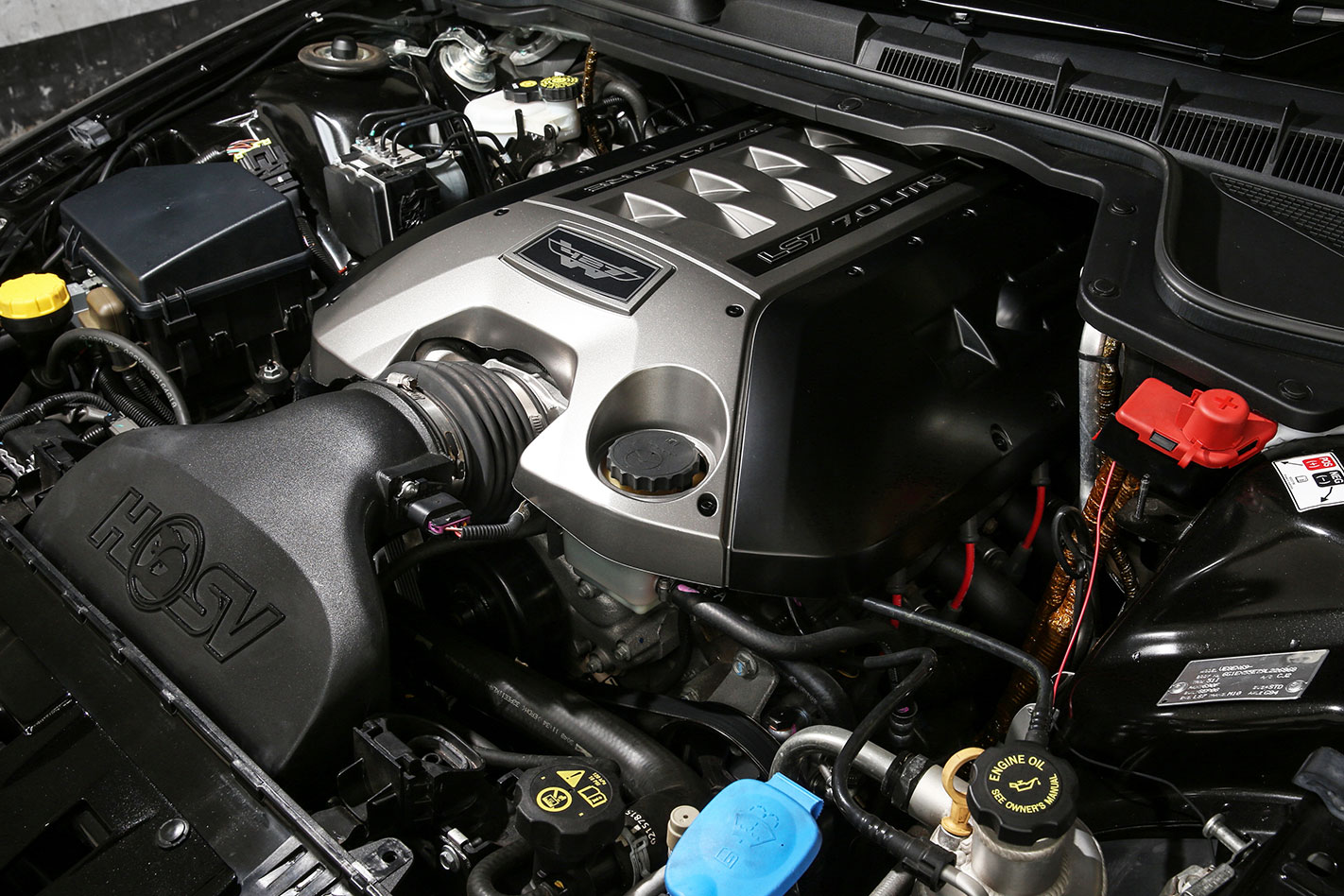
And the 427 didn’t need forced induction because, as the name suggests, it had 427 cubic-inches of alloy V8 to shunt it around. A full seven litres, the LS7 engine cranked out 375kW and 640Nm.
But don’t be thinking it was a big lazy lump of a thing; power peaked at 6500rpm and the torque was jammed way up high at 5000rpm, making it a fair old monster of a thing with its 11.0:1 compression ratio.
Archive: Tickford TE50 vs HSV Clubsport R8
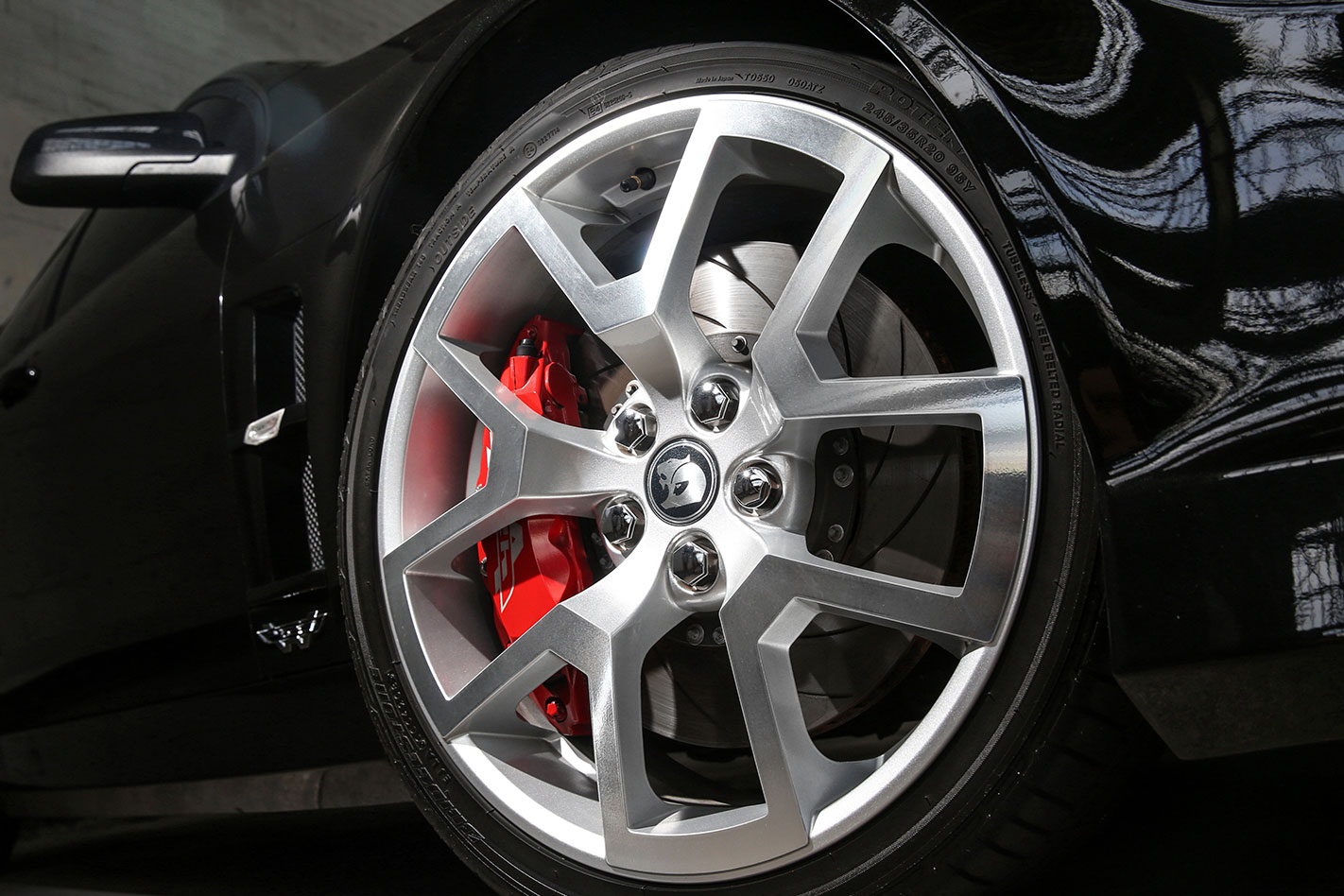
Fact is, everything about the W427 was huge. The wheels and tyres are a good starting point. Measuring 20 inches, the rims were clad in a 245/35 front hoop and a 275 rear.
And you can probably guess that a 265/295 combo would have been preferable but just wouldn’t fit. And suddenly the extra wide front guards on the W1 start to make sense.
For all that bigness, the W427 didn’t drive like a B-double; it was actually quite nimble and really demanded to be driven hard thanks to the way that big lump was cammed and tuned to deliver the goods way up high.
That said, we are still dealing with 427 cubes here, so even if the engine wasn’t completely revved up, it still packed a fair wallop pretty much from idle onwards. And when you did give it the berries, it was seriously impressive. The sort of supercharged grunt HSV is currently serving up is one thing, but a big-inch, high-comp atmo thrasher is another altogether.
Former HSV chief engineer Brad Dunstan owned one long after he’d departed HSV and, when the time came to trade-up and renew his lease, he couldn’t think of a suitable replacement and actually went looking for a another W427.
Part of the attraction was surely that the 427 didn’t look half as lairy as some of the cars it shared showrooms with. In fact, once you got past that huge, deep air intake, the W427 was more E-Series Senator than the Holden Clubsport in terms of its relatively restrained look.
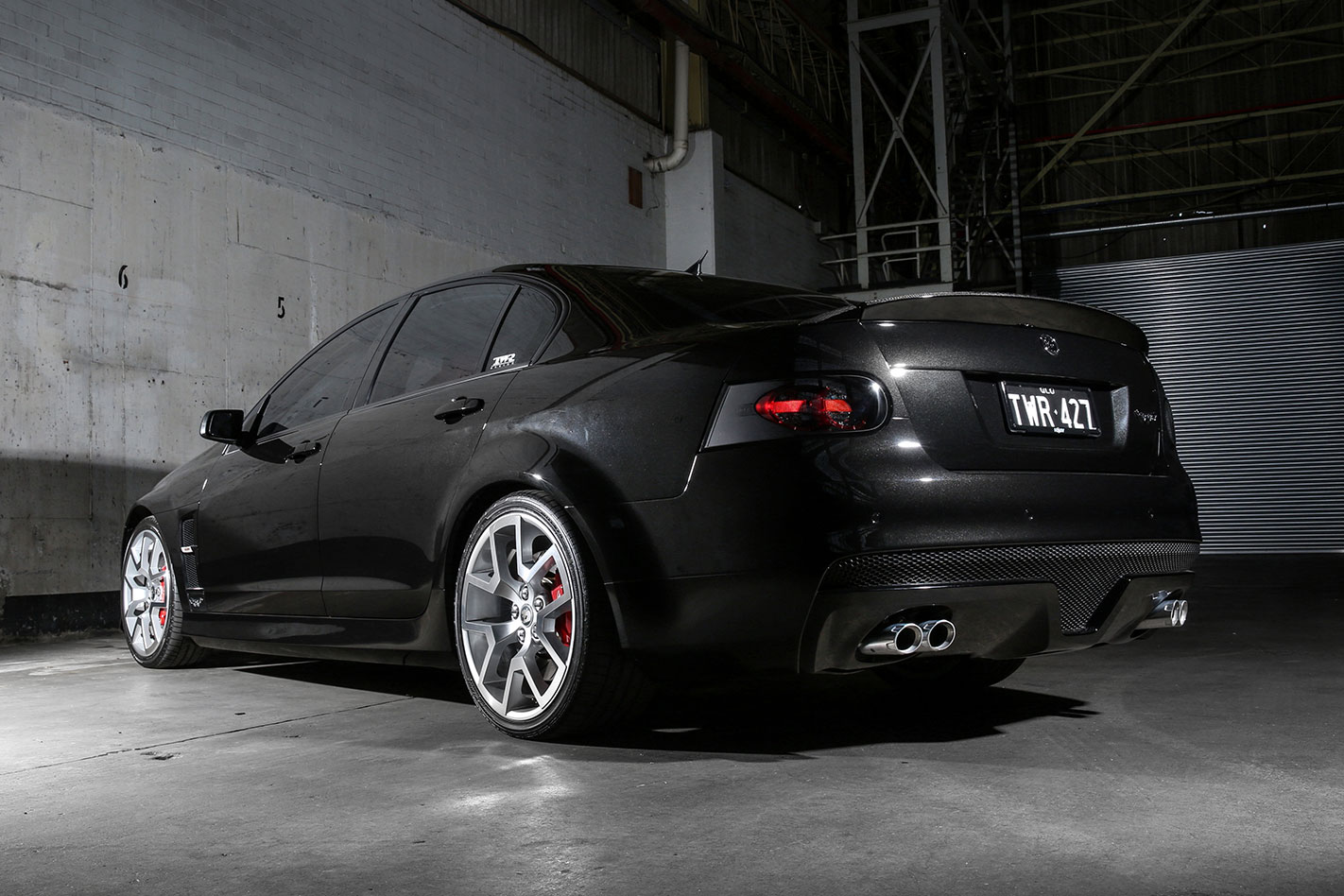
What happened? Well, it wasn’t that the car was a dud, but at $155,000, neither was it exactly a bargain. You could also factor in that this is the point in history when financial markets decided to melt-down one more time, creating the GFC and turning last week’s millionaires into next week’s Centrelink customers. Either way, you can see why HSV has capped W1 production at closer to 300.
Specs: Engine:7008cc V8 OHV 16-valve Power:375kW @ 6500rpm Torque: 640Nm @ 5000rpm 0-100km/h time: 4.7 sec (claimed) Weight: 1874kg Price when new: $155,000 Years on sale: 2008-2009
Audi loves to spruik the drivability of its cars, however some of its boffins are forecasting a future where Audi’s offerings go from being deluxe daily drivers to luxurious self-driving shuttles.
Their latest vision is the Long Distance Lounge (LDL) Concept, which takes the form of a road-going living room in a slick Audi A8-sized box.
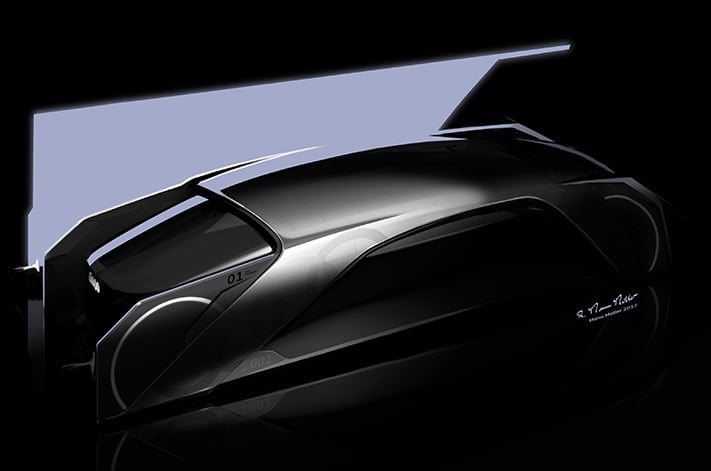
So far it’s just a static mock-up of the interior with images showing people chatting on comfy seats (including a power-reclining lounger and deep captain’s chairs), with a sizable table-slash-tablet being the centrepiece of the cabin.
While the LDL vehicle is still just a concept for now, idea it’s being designed with Level 5 Autonomy in mind, which requires no human intervention apart from starting the system and setting a destination.
With no driver’s seat and controls required, all available space can be used to provide greater luxury and Audi even envisages that seat belts won’t be required because there will be no crashes once humans are taken out of the loop – though good luck convincing government regulators of this.
There will be no engine to package around either. Flat pack batteries under the floor and in-wheel electric motors mean most of the car’s footprint can be devoted to carrying people and cargo.

The LDL also features augmented reality tech, where the windows have touchable text to tell you what you’re looking at – much like existing apps that tell you what stars, constellations or satellites you’re looking at when you point your phone skyward.
How it will work in the LDL is with brackets appearing on the windows and panoramic sunroof pointing out features outside. For example if you’re driving across the Sydney Harbour Bridge the brackets will appear on the window in the line of sight of the object in question, such as the Sydney Opera House, and provide information about them if you touch the associated bracket. Very sci-fi.
You can even flick that info to another occupant’s window or device, just in case you can’t bothered pointing and saying ‘hey, look at that’.
Don’t fret if you prefer to be in control of a car though. This technology is still around 30 years away – your steering wheels are safe for now.

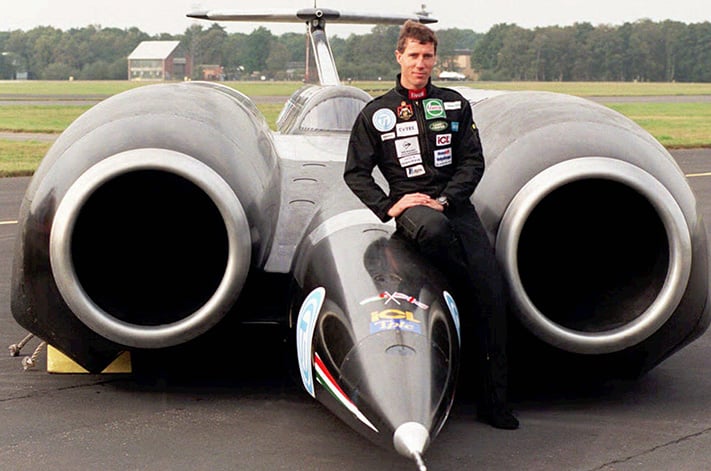
TWENTY years ago, Squadron Leader Andy Green climbed from the cockpit of Thrust SSC having just set a land speed record of 1228km/h in Nevada’s Black Rock Desert.
From the outside, the run looked perfect, culminating in a thunderous sonic boom that rumbled across the alkali playa, bouncing back to the assembled press corps from Old Razorback Mountain. Inside the cockpit, things were a bit more hectic. Due to certain design limitations, while approaching the speed of sound, Green had veered more than 50 feet off line and was holding 90 degrees of steering with the car swinging sideways.
Yet despite holding the Land Speed Record for longer than any other individual, Green’s looking to shift the marker still further, the Bloodhound SSC team aiming for 1000mph (1609.34km/h) on Hakskeen Pan in South Africa next year. Crazy? Not by any stretch. Compared to most Land Speed Record challengers, Green’s one of the sensible ones.
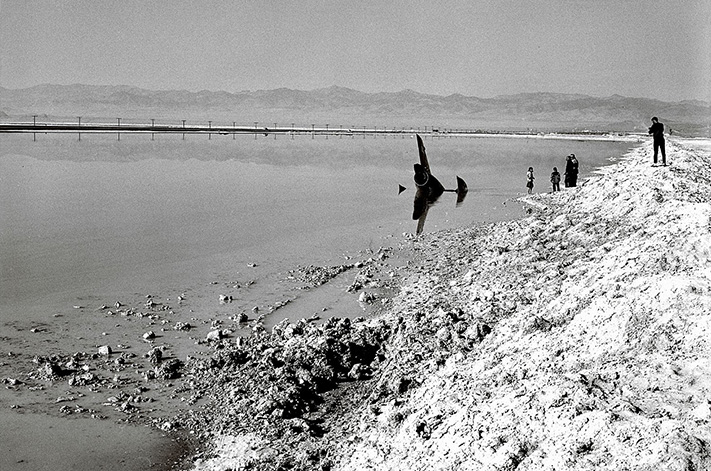
On October 15, 1964, his Spirit of America jet car logged a speed of 513mph (825.59km/h) over the first half of the Bonneville course. The mandatory return run – all land speed records need to perform two runs in opposite directions, within an hour of each other – saw the car’s drogue chutes fail, leaving Breedlove with nothing but feeble wheel brakes to retard his progress.
Gradually decelerating over eight kilometres, the car narrowly missed a telegraph pole, took a glancing blow off a second and then leapt an embankment before coming to rest in a salt pond. Utterly bent, the car nevertheless recorded a two way average of 846.97km/h. He only basked in the glory of being the fastest man on wheels for 12 days, as Art Arfons’ Green Monster would eclipse it and close out the 1964 season with an 863.75km/h mark.
Sometimes it’s the engineering that’s crazy. The Budweiser Rocket, a car piloted by Stan Barrett to an unratified 1190.37km/h back in December 1979 was powered by a hybrid liquid and solid-fuel rocket engine. That wasn’t enough. The engineering solution? Strap on a 12,000hp Sidewinder missile. That’s right, a Sidewinder. One of those things that blows MiGs to shreds.
The US Navy agreed to sell project director Hal Needham six of them, without the fuses and warheads, naturally, and one was bolted directly behind Barrett’s head. What could possibly go wrong? On the day, everything went well, Barrett went faster than anyone before but never got the official record, the tricycling ‘car’ not meeting FIA/FIM specs. Nevertheless, Barrett remains probably the only man who has aimed a Sidewinder at the back of his noggin, lit the blue touch paper and lived to tell the tale.

“I think in terms of one of the biggest advances made, although it was not strictly speaking a racing car, was Bluebird. Arguably for its time it was the most advanced vehicle,” Newey said in 2012.
The last outright land speed record car that was wheel driven, Bluebird featured aerospace tech such as an aluminium honeycomb chassis, and a head-up display, along with fully independent suspension and all-wheel drive.
“It was the first car to properly recognise, and use, ground effects,” said Newey. “The installation of the jet turbines is a nightmare, and it was constructed using a monocoque working with a lot of lightweight structures. It was built in a way that you build an aircraft, but at the time motor racing teams weren’t doing that.”
The 4000hp Bristol-Siddeley Proteus gas turbine engine was designed to do 805km/h, but poor surface conditions for the record attempt at Lake Eyre saw a maximum of 648.73km/h. It still brought the land speed record back to Britain but perhaps the most amazing thing about this car is that if an exact replica was built today, and if it achieved its design maximum, it would beat the existing record of 757.1km/h set by Don Vesco’s Vesco Turbinator in 2001. In other words, it could have held that record for better than half a century.

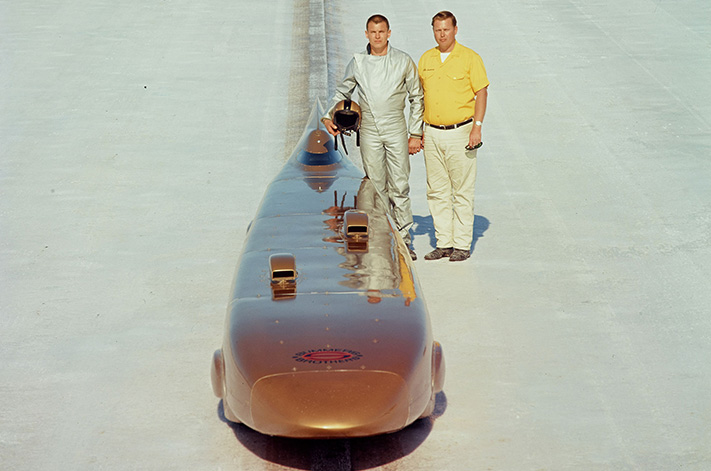
Bob and Bill Summers were a couple of car nuts who built one of the most beautiful and innovative record holders. Powered by four Chrysler Hemi engines mounted inline, the 2400hp Goldenrod held the wheel-driven record (658.64km/h) for 42 years, nine months and 14 days. The brothers were having a tough time figuring out how to pack in four engines, initially trying to set them in two rows side by side.
Richard Noble’s Thrust team aren’t bored with holding the record for 34 years. Their attempt to keep the blue riband of speed in British hands for the foreseeable future is by no means a foregone conclusion. Bloodhound SSC faces challenges from renegade Rosco McGlashan with his troubled Aussie Invader project and also the North American Eagle Project, which uses a Lockheed Starfighter body. Their aim is to beat the current record before Bloodhound can lift it out of reach.
Mad? Maybe. We tip our hats to each and every one of them.

Here was an Olympic-standard no-brainer. When Holden finally realised it had to build the Holden Monaro in 2001 (to avoid angry mobs of wannabe Monaro-owners storming dealerships) it became equally obvious that HSV would want in on it, too.
After all, if HSV could turn Commodores into such objects of desire, the sky was clearly the limit if it could get its hands on a car that didn’t look like the taxi meter was standard equipment. And so the Coupe GTO, GTS and, sometime later, the Coupe 4 were born.
Interestingly, the HSV versions were both released more or less at the same time as the Holden Monaro version, but they were priced high enough that Monaro sales weren’t really impacted.
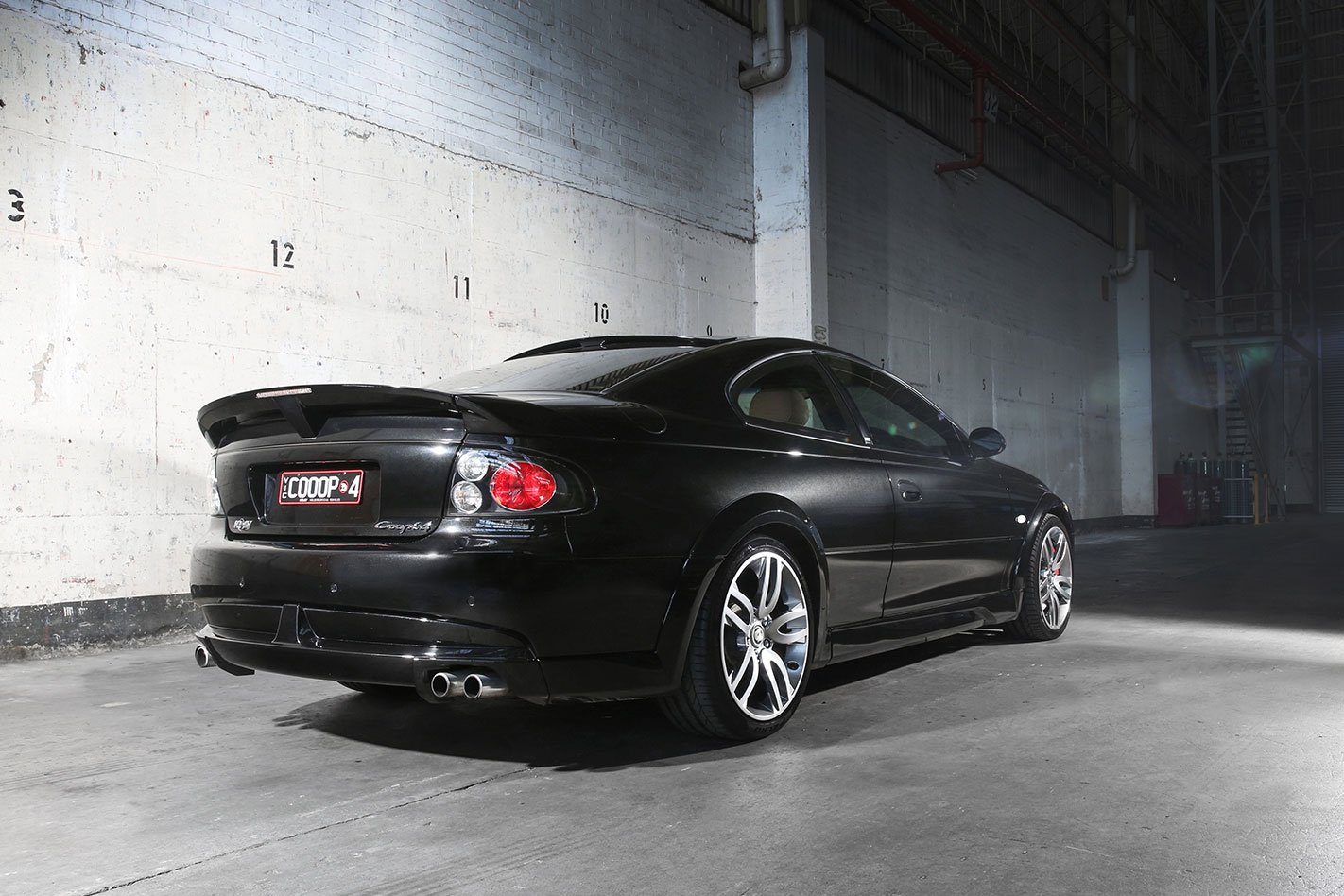
As well as the engine and suspension tweaks common to other HSV models, the GTO and GTS got specific body-kits to differentiate them from mere Monaros. Most noticeable was a deep, aggressive front spoiler which incorporated a new grille and gave the thing a pretty tough look. Many a Monaro grew a HSV front clip in the ensuing years. But the most controversial aspect of the body kit was the rear spoiler.
Holden’s then design boss, Mike Simcoe, who had designed the original Monaro concept in his spare time, was very keen on maintaining the purity of line that his big two-door had displayed from the very start. But, of course, Simcoe was not HSV’s styling meister, and HSV was worried that its customers would not relate to a coupe without the batmobile treatment.
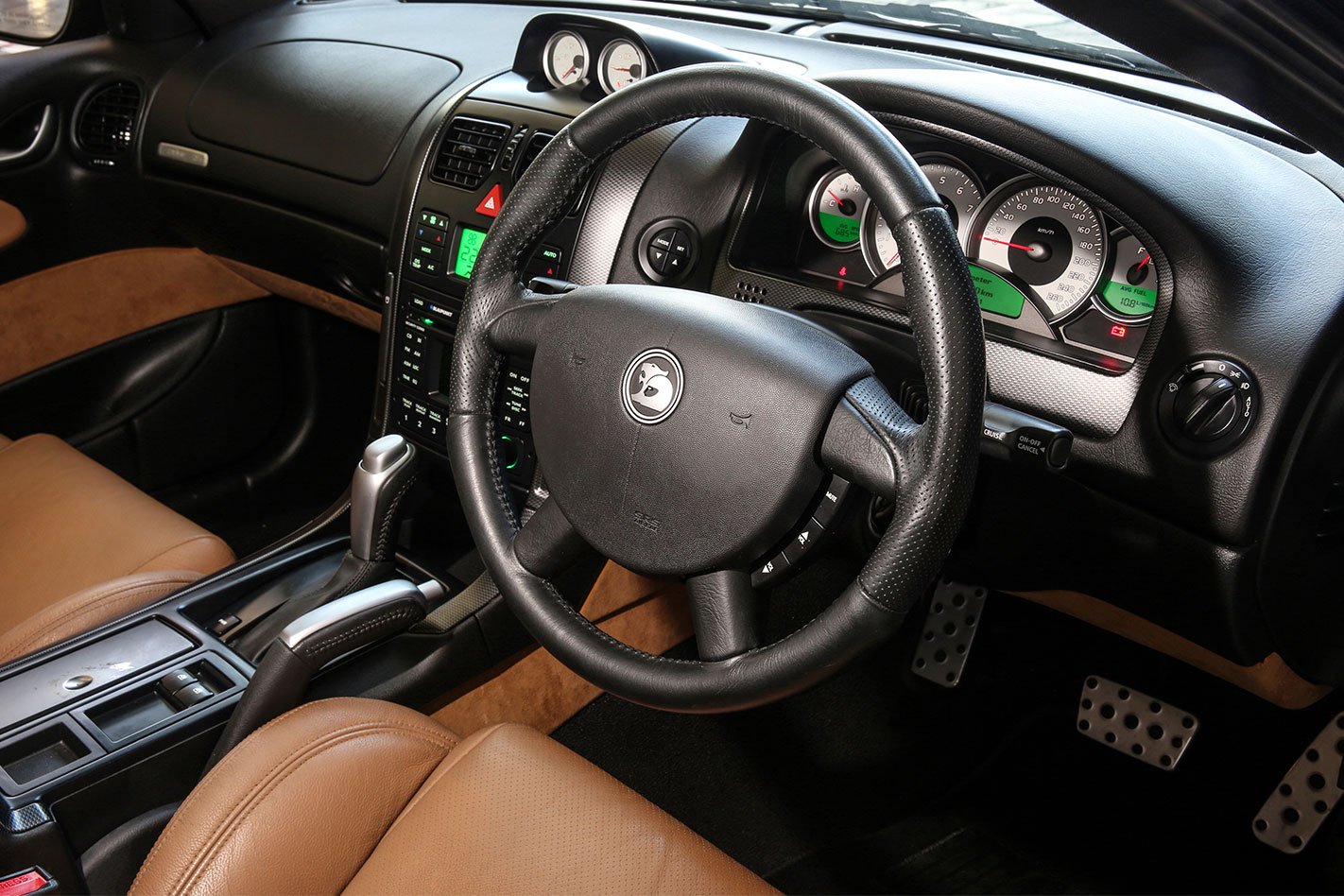
Driving the big HSV coupes was always good fun. They had plenty of poke and with the other changes Holden had wrought on the basic Monaro platform – most notably a slower steering rack to make the front end point a bit more precisely – it was all fun and games. The interiors were plush and even with that damned rear wing, they looked the goods.
The switch to V3 specification for the 2004 model-year mean that the GTO entry-level model got an upgrade to 285kW (in line with HSV’s other models) making the expensive Callaway engine option largely pointless. So, at that point, the GTS was dumped and the GTO went it alone for a little while.
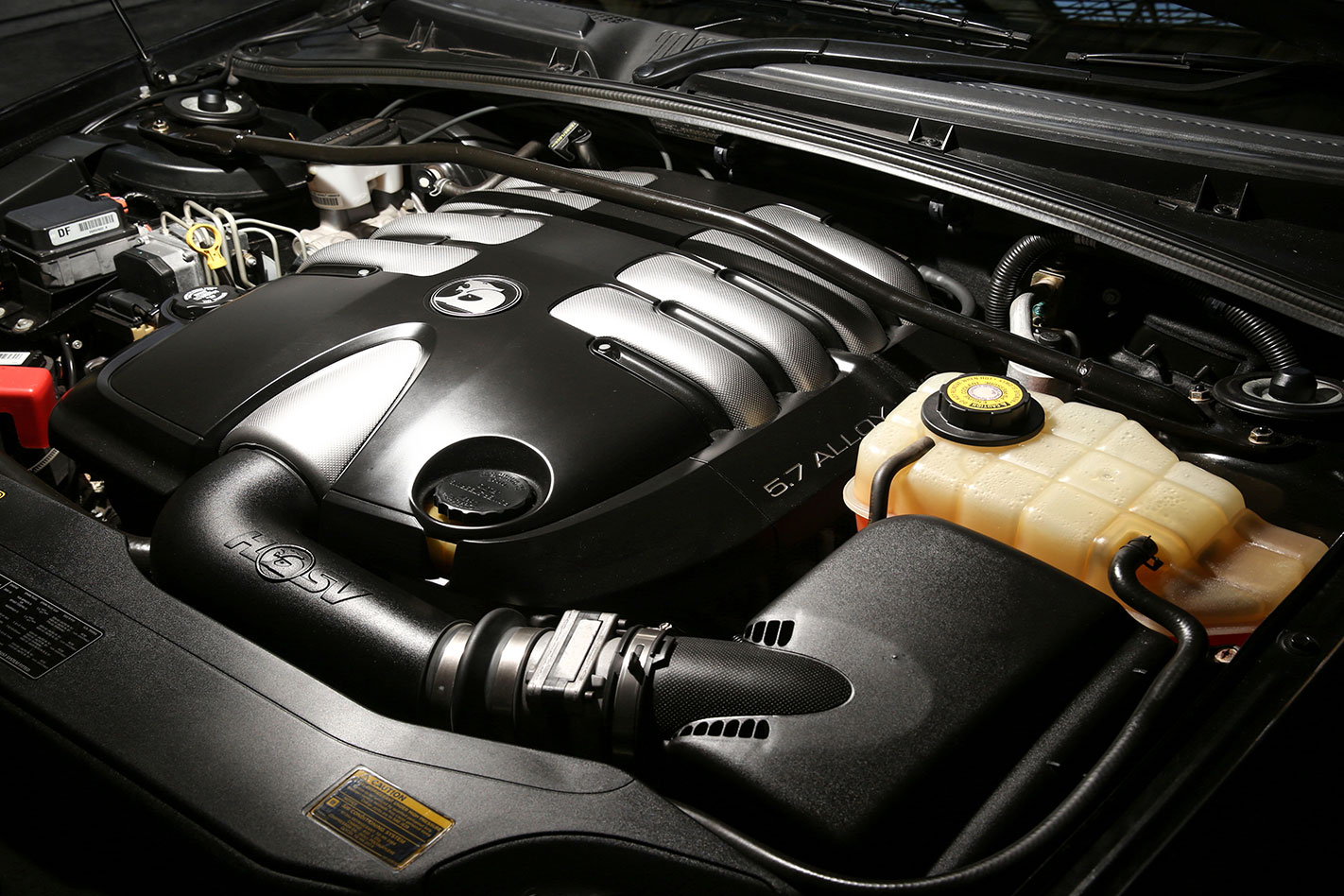
In the end, a compromised header design lopped quite a few horsepower off the top. In fact, at a time in history when the GTO had grown to a full six litres (as the Z Series) the Coupe 4 was still selling alongside it with 5.7 litres and 270kW versus the GTO’s 297. Also, the wider track of the all-wheel-drive front axle (which owed a bit to Hummer, apparently) meant that the Coupe 4 had to wear little wheelarch extensions which didn’t really work for us visually.
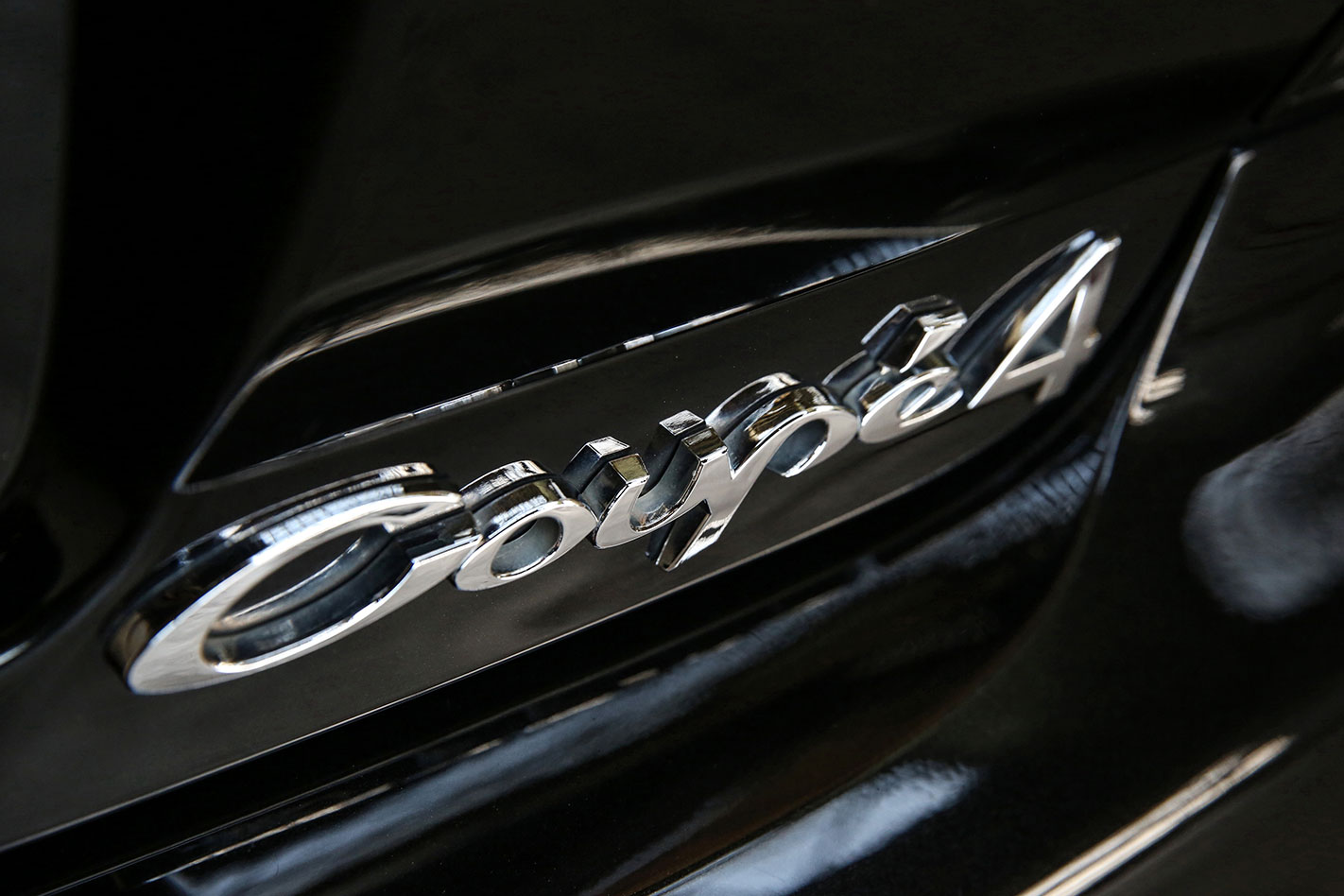
Specs: Engine: 5665cc V8, OHV, 16-valve Power: 270kW @ 5700rpm Torque: 475Nm @ 4000rpm 0-100km/h time: 6.1sec (claimed) Weight: 1830kg Price when new: $89,950 Years on sale: 2004-2006
I WANT a new Porsche 991.2 911 GT3, manual thanks. Or should I get a new Mercedes-AMG GT R, in the hero green, or silver? Actually, scrap both of those, I want a car with maximum cred on Aussie roads: a HSV GTSR W1.
However, there’s a problem. A glance in the bank account reveals that yep, the Nigerian prince I’ve been emailing still hasn’t deposited the US$5m that he’d promised, and even if he had, it doesn’t guarantee me keys to any of these cars. Not for the pricetag the manufacturer puts on them, anyway.
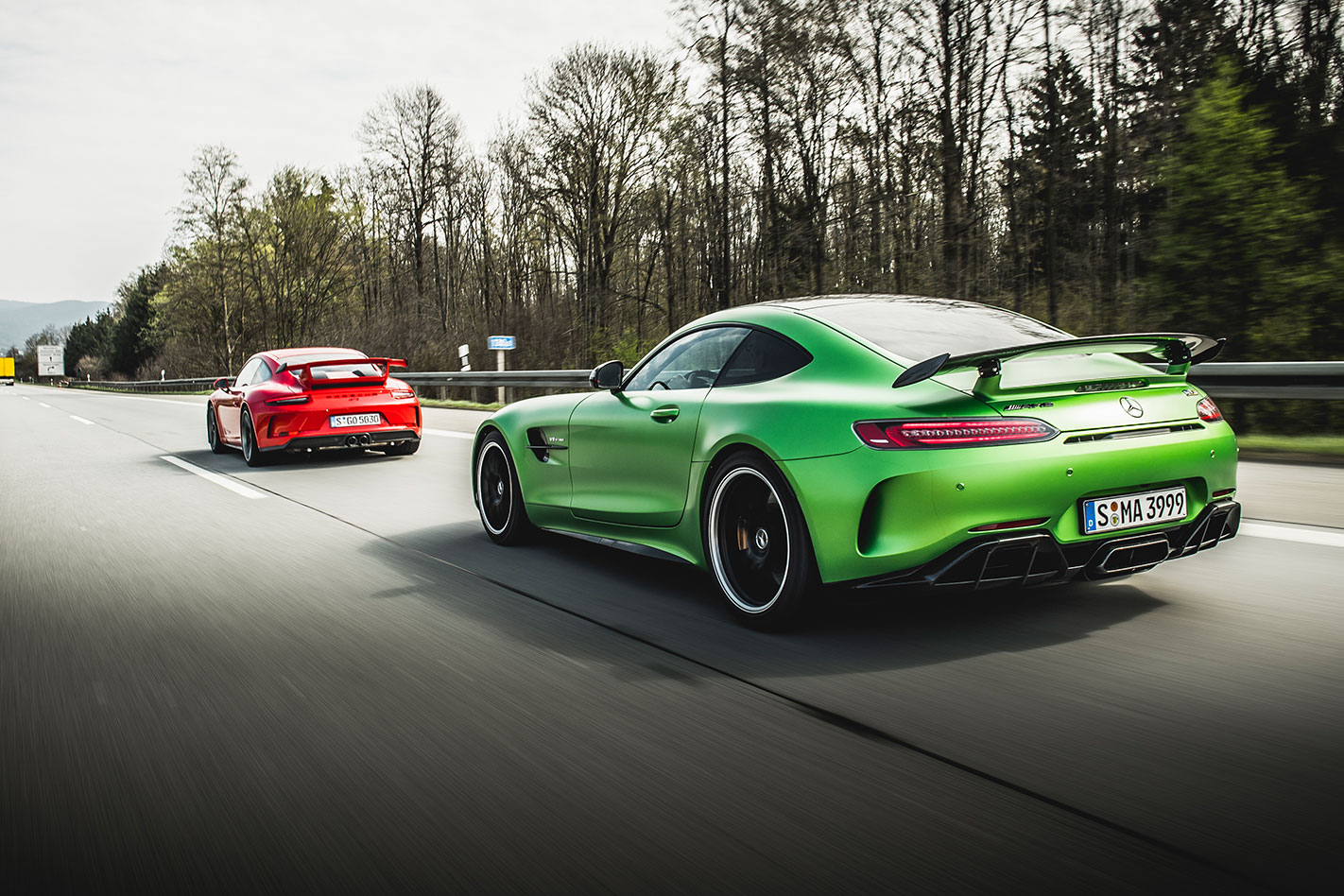
Except, none of these cars truly cost this. Porsche is apparently making 3500 GT3s and the majority of them are sold already. All Mercedes AMG GT Rs are sold. And all W1s are sold. Even if I camped outside the dealership for any of these cars the night before they went on sale, I still probably wouldn’t get one.
Porsche 911 GT2 RS revealed at E3
It’s great that demand is growing much faster than supply for many high-end performance cars, but it means people who’ve worked hard to own one of these cars are having these dreams squeezed out by politics of car purchasing.
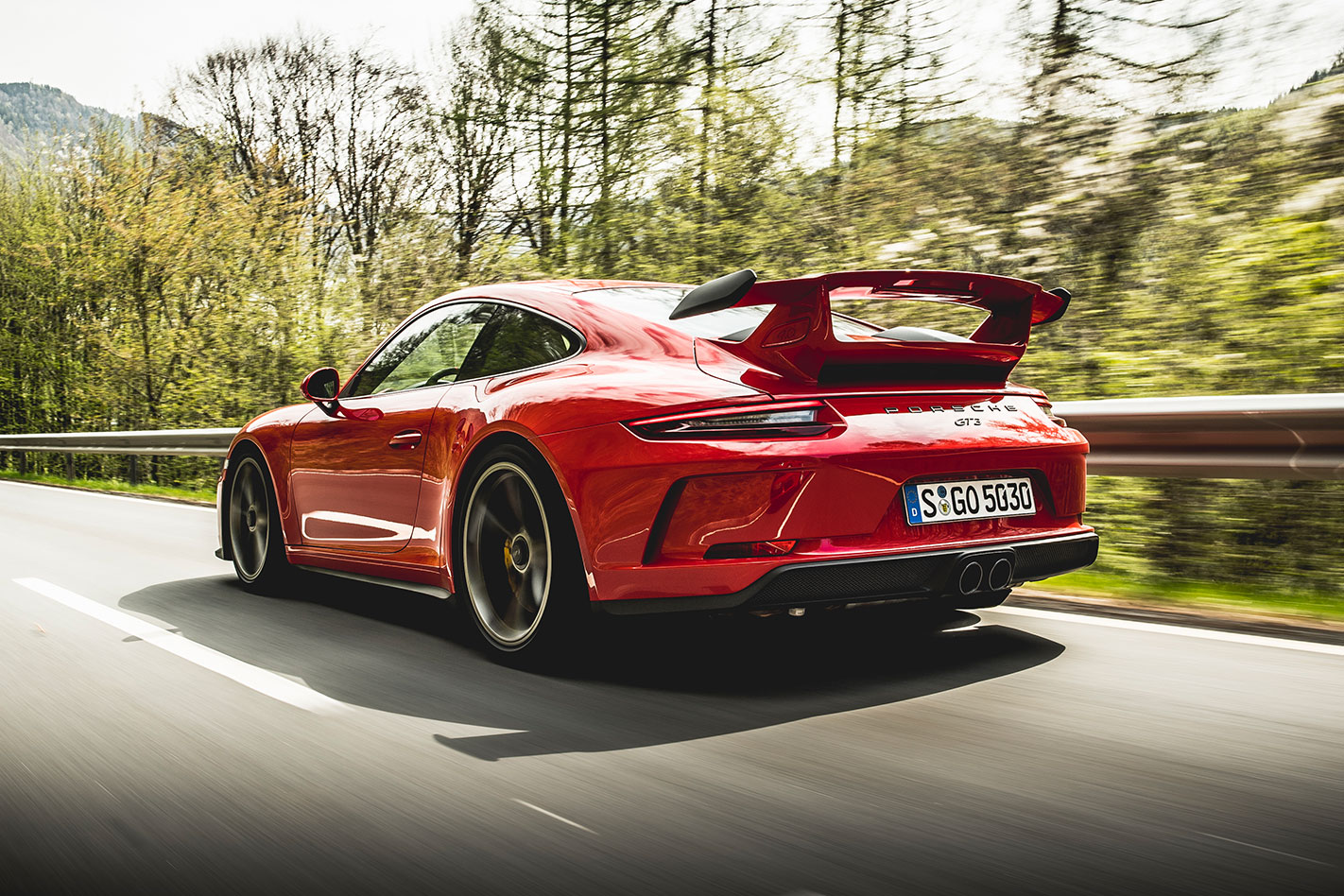
Six differences for the next Porsche 991.2 911 GT3
I understand loyal customers deserve to get first dibs on these highly desirable cars in short supply. But what really irks me is such limited supply drives up the value of these cars and makes them almost investment propositions, potentially attracting people who don’t know what natural aspiration means. And putting on kilometres is not good for appreciation.
We shouldn’t stop dreaming, but many customers of these brands, people like you and me, were encouraged to dream because owning these cars was always a distant possibility. Car companies would do well to nurture this.
IT’S zero-dark-six-fifty, I’m bleary-eyed, uncaffeinated and on my way to work.
Funnily enough this is one of the more enjoyable moments in my day, and I have my trusty moss-green steed to thank for that.
Though I’m yet to warm to the Holden Astra’s idiosyncratic interior, I’m definitely gelling with its joyously flexible powertrain. Its four cylinders may only displace 1.6 litres, but thanks to some clever turbo trickery this small-engined hatch has surprisingly muscular legs.
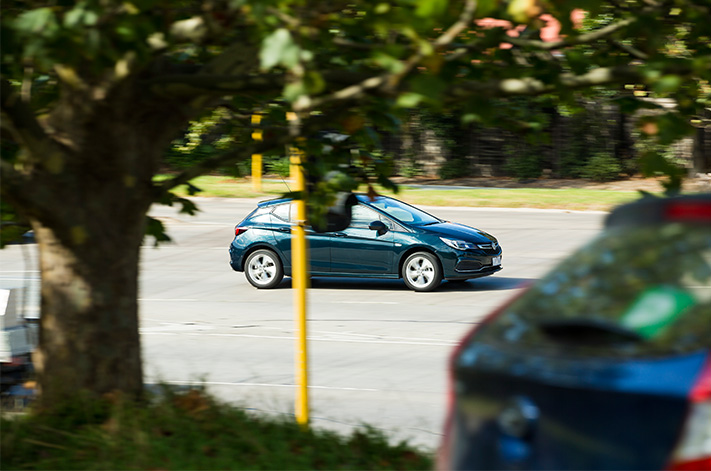
Torque is abundant from 1500rpm and up, and though my car is a theoretically terrible-at-commuting manual gearbox version, the flexibility endowed by this twist-happy 1.6 means that’s not such a big deal. Bear in mind, 300Nm of torque is huge for a small hatchback.
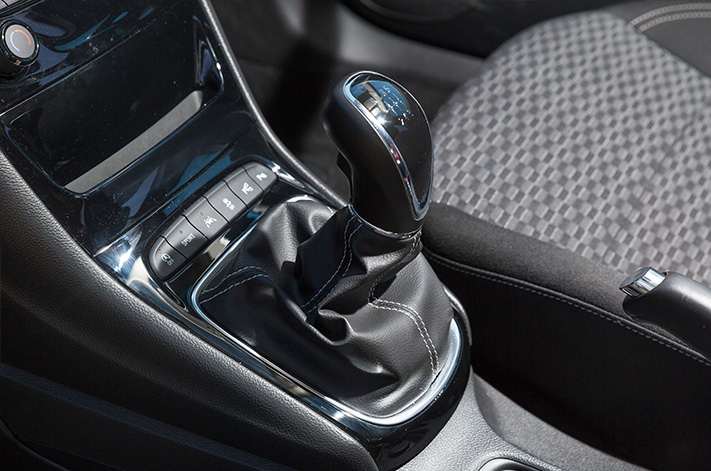
Skipping second gear is possible if you time it right, reducing the amount of times your left hand needs to meet the shifter. Fifth gear, meanwhile, covers a range of speeds that stretches from suburban cruising all the way up to 110km/h without feeling strained – but sixth gear is a better pick if you want to drop revs and conserve fuel on the highway.
School zones? Whatever. Keep it in fifth, it’ll happily deal with a forty-kay crawl without complaint.
And if the road is flat, slipping it into sixth at 50-60km/h is perfectly kosher. It happily lugs along in the lower reaches of its tachometer, sipping fuel with monk-like restraint. In fifth, it’ll lug up surprisingly steep hills at 60km/h thanks to the turbine’s willingness to spool from just above idle.
And this engine is quiet. Unlike some engines in the segment, especially naturally aspirated contenders, the Astra’s 1.6 is quiet and smooth throughout its rev range. It feels relaxed and understressed, which is precisely how cars in this segment should feel – hot hatches being the sole exception.
But to drive, the Astra feels a lot more substantial than your average hatch. Yes, it fulfils the functions of commuter/grocery-getter, but there’s a built-in sporty edge.
The Astra’s appeal is more multi-faceted than I first thought. There’s no question there’s proper warm-hatch performance in here that’s begging to be unleashed, and the Astra RS’s 147kW and 300Nm outputs back up that notion.
Remember: those stats would have qualified it for entry to the fast-hatch club ten years ago. Is the chassis of the same calibre? Methinks it’s time to head for the hills.
Read part one of our Holden Astra RS Long-term review herel
First published in the June 2017 issue of Wheels Magazine, Australia’s most experienced and most trusted car magazine since 1953.
YOU know you’ve hit peak weird when even the Japanese – a culture famous for talking toilets and selling dirty underwear in vending machines – stop and stare.
First published in the November 2016 edition of Wheels Magazine, Australia’s most experienced and most trusted car magazine since 1953.
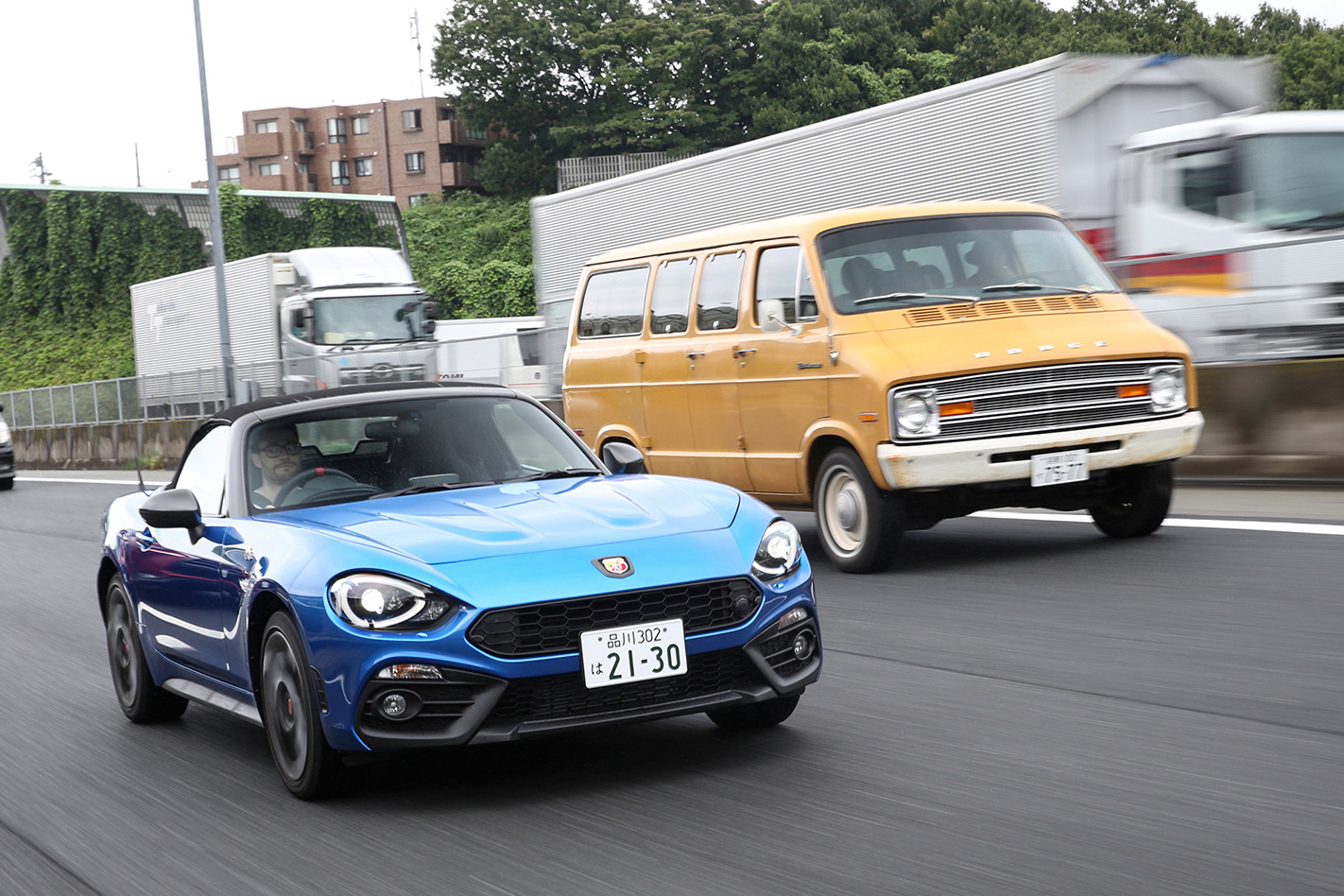
I’m at the wheel of a bright blue Abarth 124 Spider and next to me, squashed unceremoniously into the passenger seat, his expansive 180kg frame spilling into my side of the intimate cabin, sits a mostly naked and very sweaty sumo.
This is central Tokyo on a baking 32-degree day and, as I reverse our car down a narrow one-way street towards a tiny Italian restaurant, I realise we’re causing a scene. People point, others wait in silence, their stony faces masks of frustration (I later realise they’re too polite to ask us to move). But most film us, immortalising our comically lopsided sports car on Instagram and Twitter.
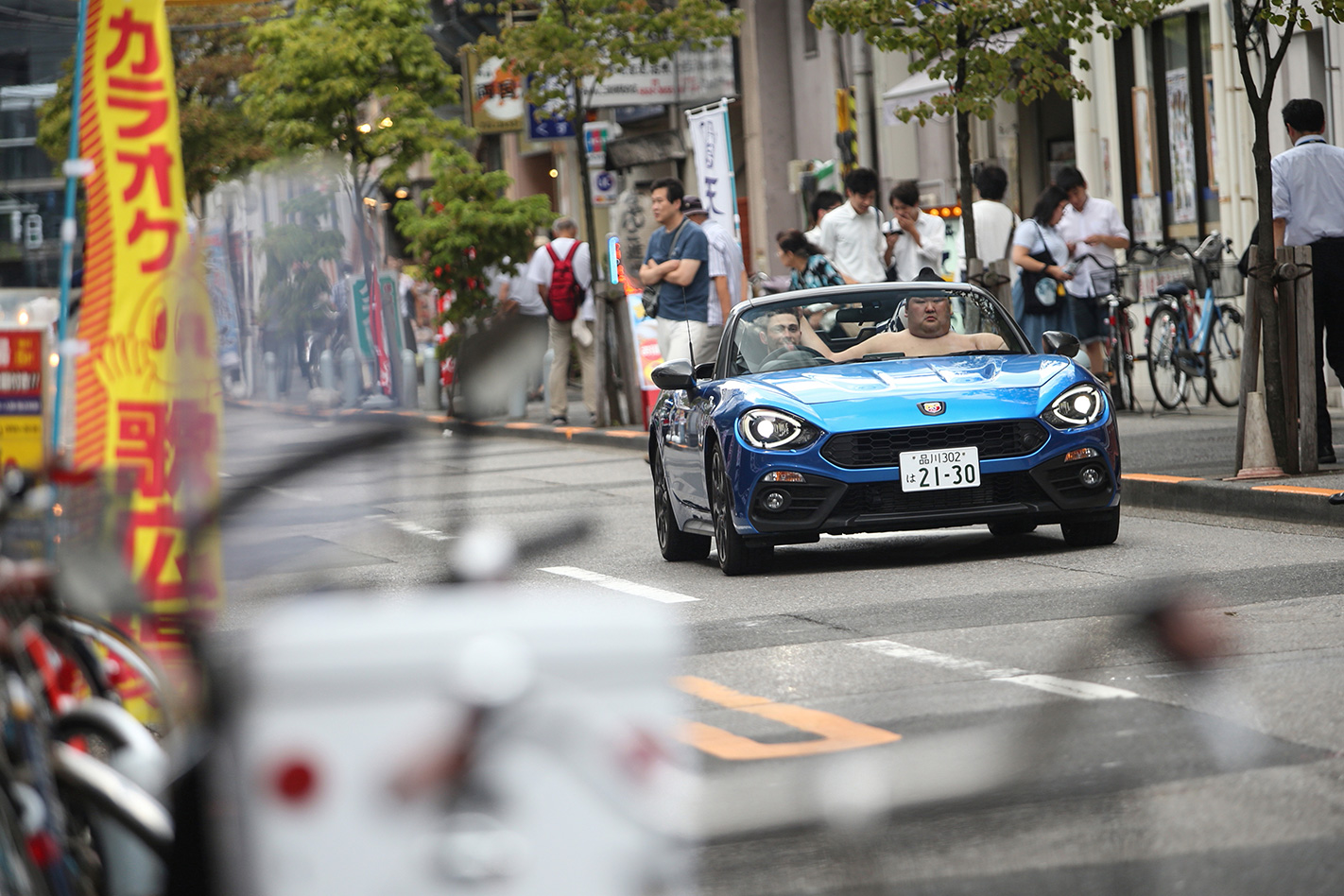
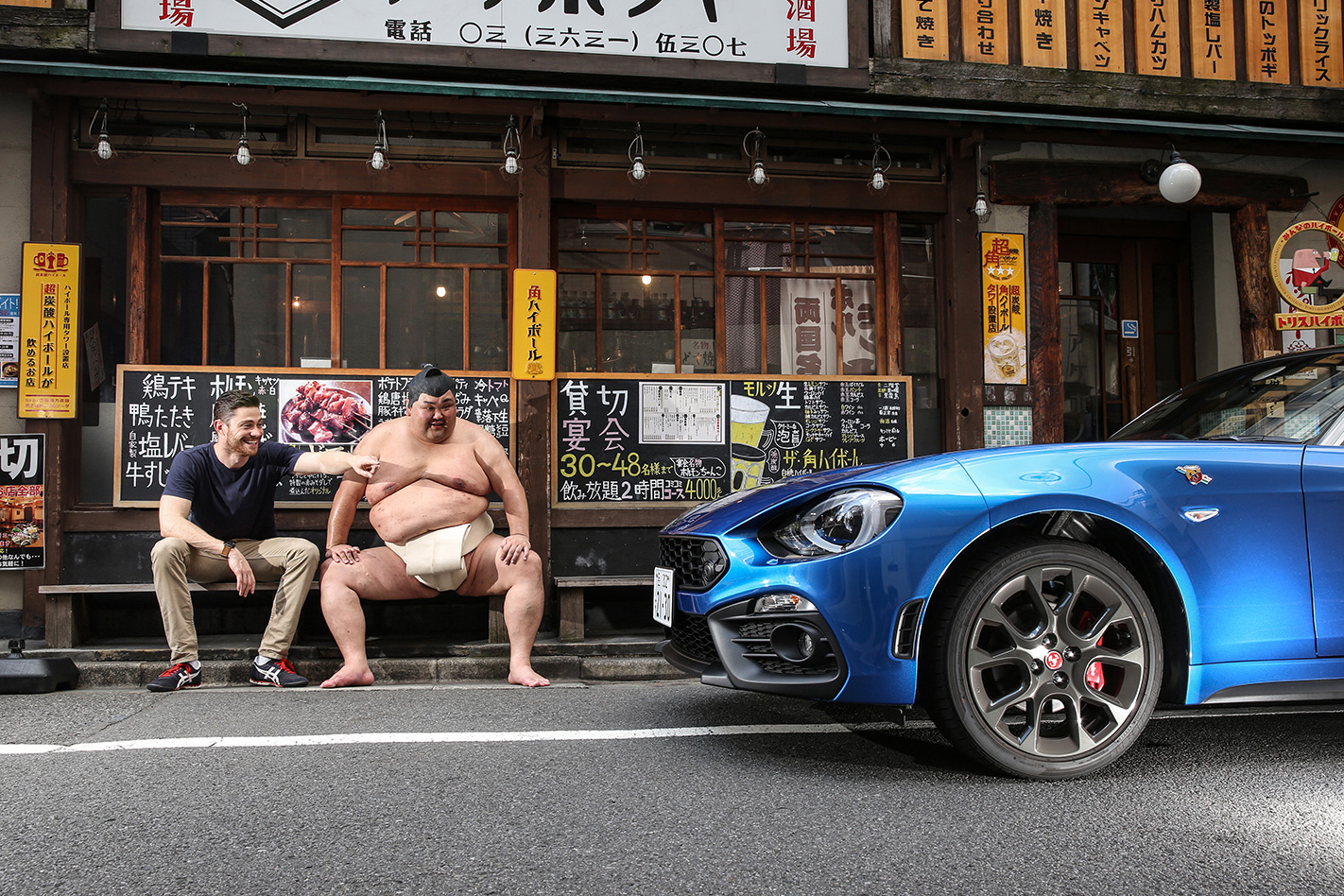
Then the sumo clambers out, his moist back peeling off the leather seat with a ssssssllllappp, and waddles over to a nearby vending machine. He pauses on the way to pose in a warrior squat, a move that sends the shutter of photographer Brunelli’s camera firing so quickly it sounds like a machine gun. But as much as the sumo is the centre of attention, it’s the Italian restaurant behind us that’s the most important prop here.
Wheels is in Tokyo as the first Aussie outlet to drive Fiat’s new halo car, though our visit has a deeper purpose. Our mission is to find ‘Little Italy’ in Japan, a clever twist on the Abarth’s multicultural heritage.
As much as Fiat will tell you the 124 Spider is a feisty Italian thoroughbred that harks back to the original 124 Spider of the ’60s, it shares most of its mechanicals with our reigning Car of the Year, the very Japanese Mazda MX-5. They were jointly developed, and use the same platform and a large portion of interior parts. The Abarth is even built in Japan, at Mazda’s Hiroshima factory.
Yet it would be unfair, and short-sighted, to dismiss the 124 Spider as a rebadged MX-5. While there are commonalities, the devil is in the chassis tuning. Abarth’s engineers have fitted firmer suspension with Bilstein dampers, a standard limited-slip diff and stronger four-piston Brembos, all designed to make their version feel feistier. And racier. And more Italian.
So the 124 Spider’s promise is obvious. If Abarth hasn’t mucked it up, it should deliver the same pared-back, beautifully balanced sports car thrills as the MX-5, only in a more focused, better-equipped, turbocharged package.
WE HAVE two days in Tokyo to tap into the Abarth’s potential, and to discover the essence of Italian culture in Japan. This little Italian restaurant, its tri-coloured flag hanging limply in the stagnant, humid air, is only the beginning. And the sumo? He’s a prop. A former pro and accused cheat turned gun for hire. For a few hours he provides a literal cultural clash: huge Japanese man meets small Italian car.
This is my first real opportunity to assess the Abarth, and straight away it’s positive. I love the way it looks, for a start. In photos, I’d thought the retro Italian design a little frumpy and ungainly, but in the metal the 124 Spider has presence. Its squared-off shoulders and wide, macho facia give it the flair and sense of swagger to distinguish it from the MX-5.
It’s the same inside. While the dash, sat-nav screen and steering wheel are all from Mazda, there are softer materials on the doors, the cabin feels slightly roomier and the leather seats are wider and more supportive. There’s a reversing camera, too, which is a glaring oversight in the Mazda. The only real visual complaint is the oversize, cheap-looking Scorpion badges glued to the nose and bootlid. They’re huge and tacky, like something you’d find in a cereal box.
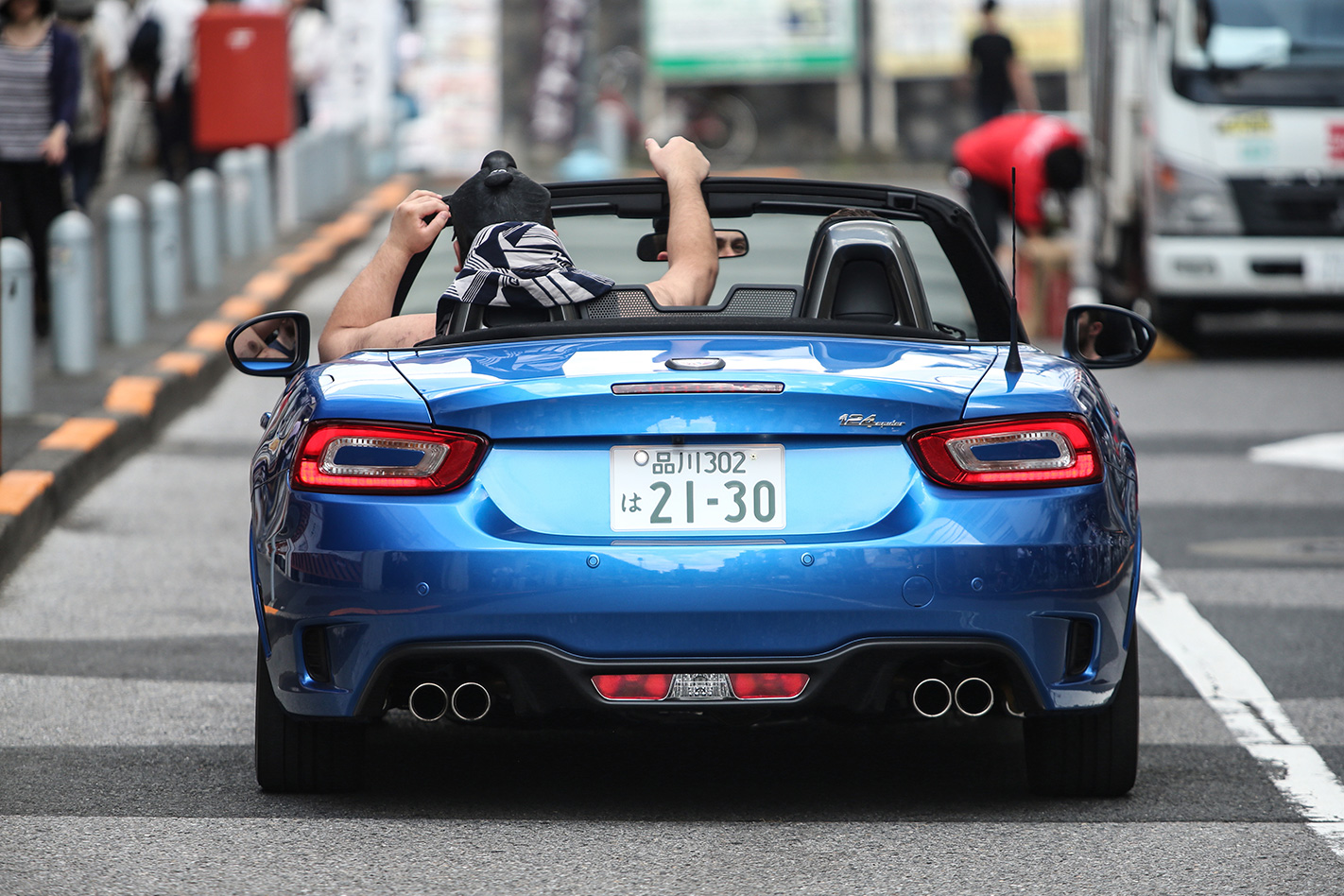
A more positive discovery is how the 124 Spider sounds. Abarth versions score a four-outlet exhaust and a Sport button, so it fires into life with a satisfying braaaap. But easing our way through Tokyo’s thick traffic, I’m not convinced the 1.4 turbo has the bite to match its bark. The engine is lethargic at low revs and off-boost; it feels anaemic and sluggish.
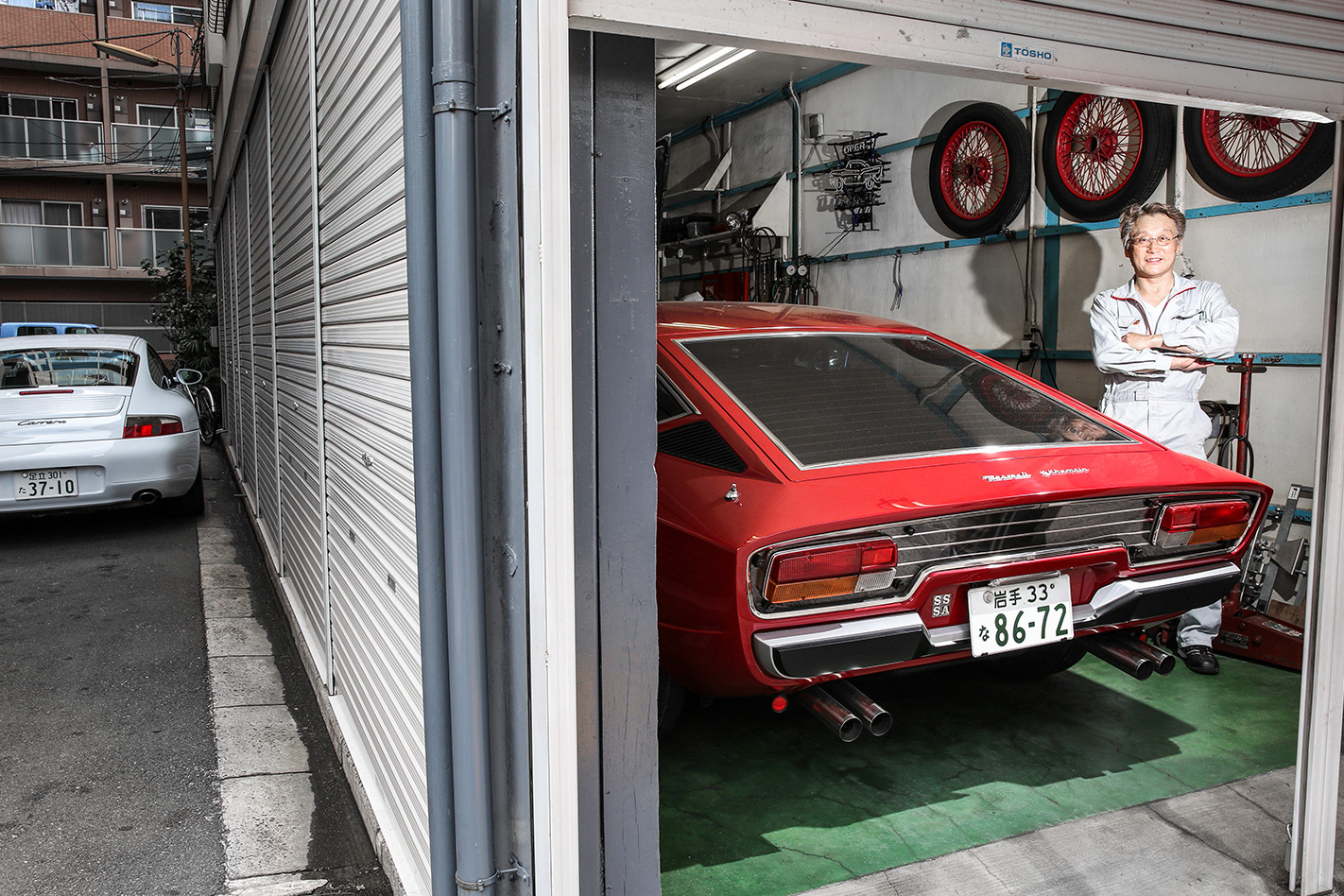
By the time I catch up, the metal roller-door is open and there, nestled in a narrow fluorescent-lit workshop, gleams a Maserati Khamsin. Under it, wearing immaculate blue overalls and wire-framed glasses, lies its owner, tinkering away with a handful of spanners. As my eyes adjust to the gloom of the cramped space, I see the shop houses another car – a baby-blue Ferrari 308.
The startled owner slides out and, with a slightly perplexed look, explains he’s been in this garage for 40 years. And while he’ll happily tune any car, he specialises in Italians. His shop is a tiny piece of Italy, hidden deep in the bowels of Tokyo, and it gives me hope. Little Italy does exist in Tokyo; you just need to look hard to find it.
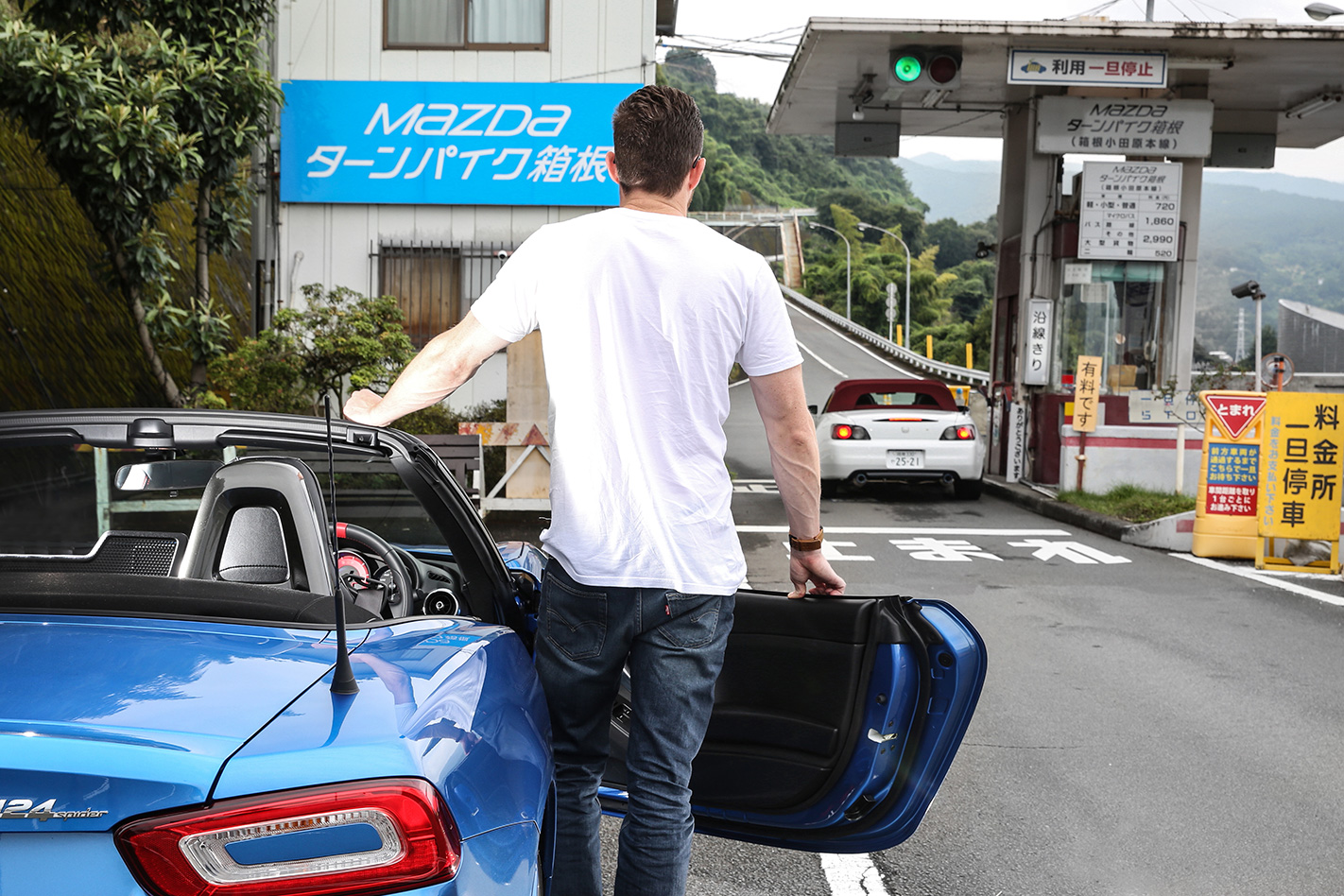
It’s humid and sticky as we thread our way along Tokyo’s endless maze of overpasses and tunnels, but even at this early hour, Japan’s love of cars is obvious. A silver R32 GT-R follows us, its owner staring intently at the Abarth’s blue exterior before he departs in a flurry of wheelspin and spent boost. A rare E60 AMG wafts past, its hulking black body and flared arches catching the light of the morning sun. We don’t see a single Italian car. Perhaps they’re all in the shop. It takes half an hour for the ugly square buildings that line the freeway to give way to the lush green fields of the Japanese countryside. Dark mountains silhouette the sky, their tops cloaked in cloud. I’m aiming for a piece of road I’ve wanted to drive for years, known as the Mazda Turnpike. It’s a 12km stretch of private toll road that winds up Mount Hakone, and is said to be smooth as a baby’s bum, wide and flowing. On a clear day it provides views of Mount Fuji.
I’m also told it should be virtually traffic-free, bar other like-minded enthusiasts out for a Sunday blast. But as we roll up to the turnpike’s entrance, I spot a problem. Beyond the boom gate is a speed sign, a black 50 painted in its centre. Japan’s love of rules and order means it’s likely to be strictly enforced.
Both cars are long gone, but exploring this beautiful piece of road alone is no hardship. Especially in a car that loves corners as much as this. Abarth’s engineers wanted a firmer chassis set-up – they weren’t impressed with the amount of roll in the MX-5 – and their efforts are instantly evident. It’s keener to turn in and, while the firmer dampers, springs and sway bars haven’t dialled out the chassis’ inherent playfulness completely, it doesn’t roll onto the outside tyre as readily as the Mazda. It feels more locked down, more composed.
The steering is heavier, as is the manual gearshift (the 124 has different ratios and internals to cope with the turbo donk’s torque), but both are still pin-sharp and precise. The brakes are also spot-on; the pedal is reassuringly firm and easy to modulate on the cusp of ABS, which gives me the confidence to dive deeper and deeper into the turnpike’s mix of hairpins and sweeping bends.
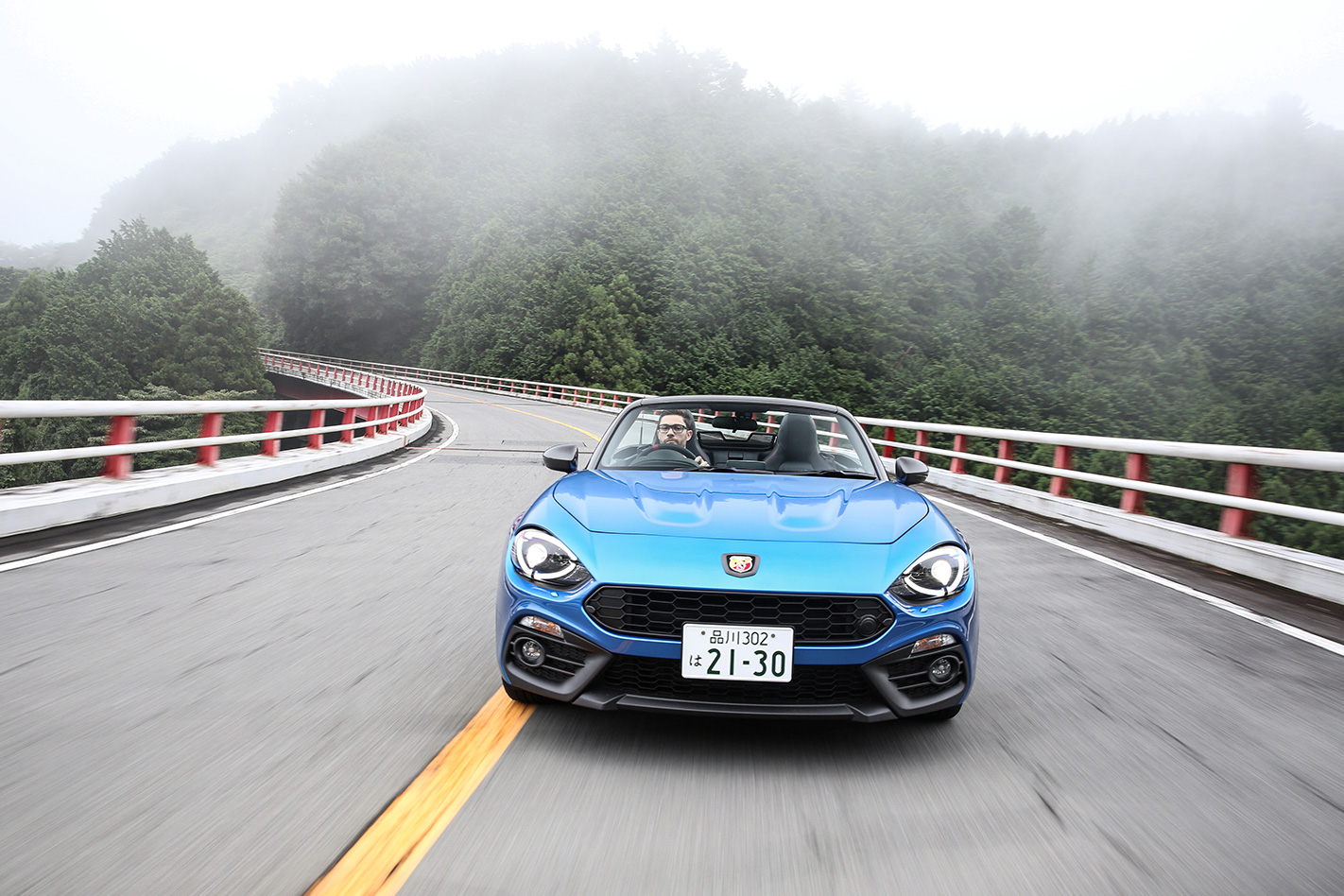
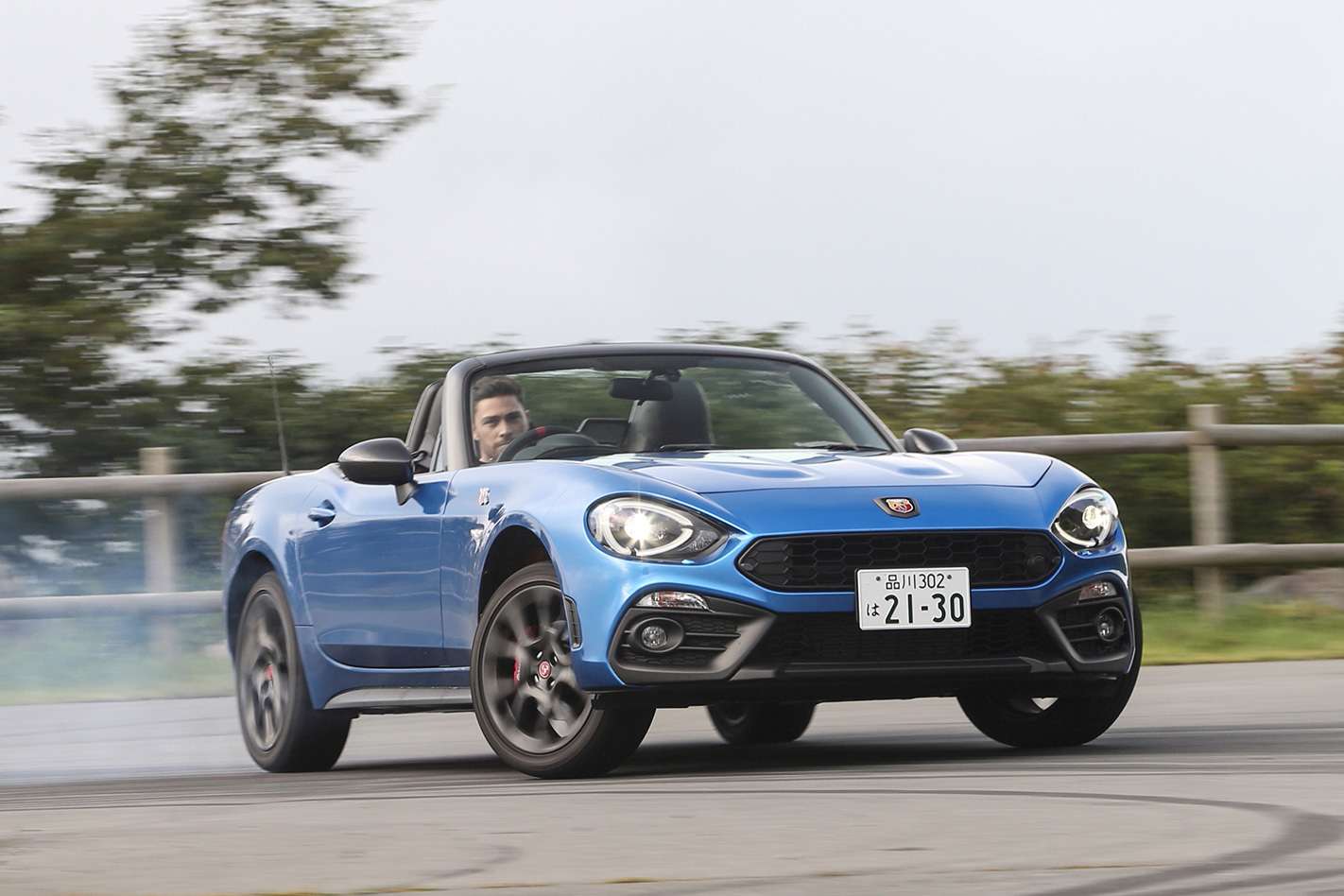
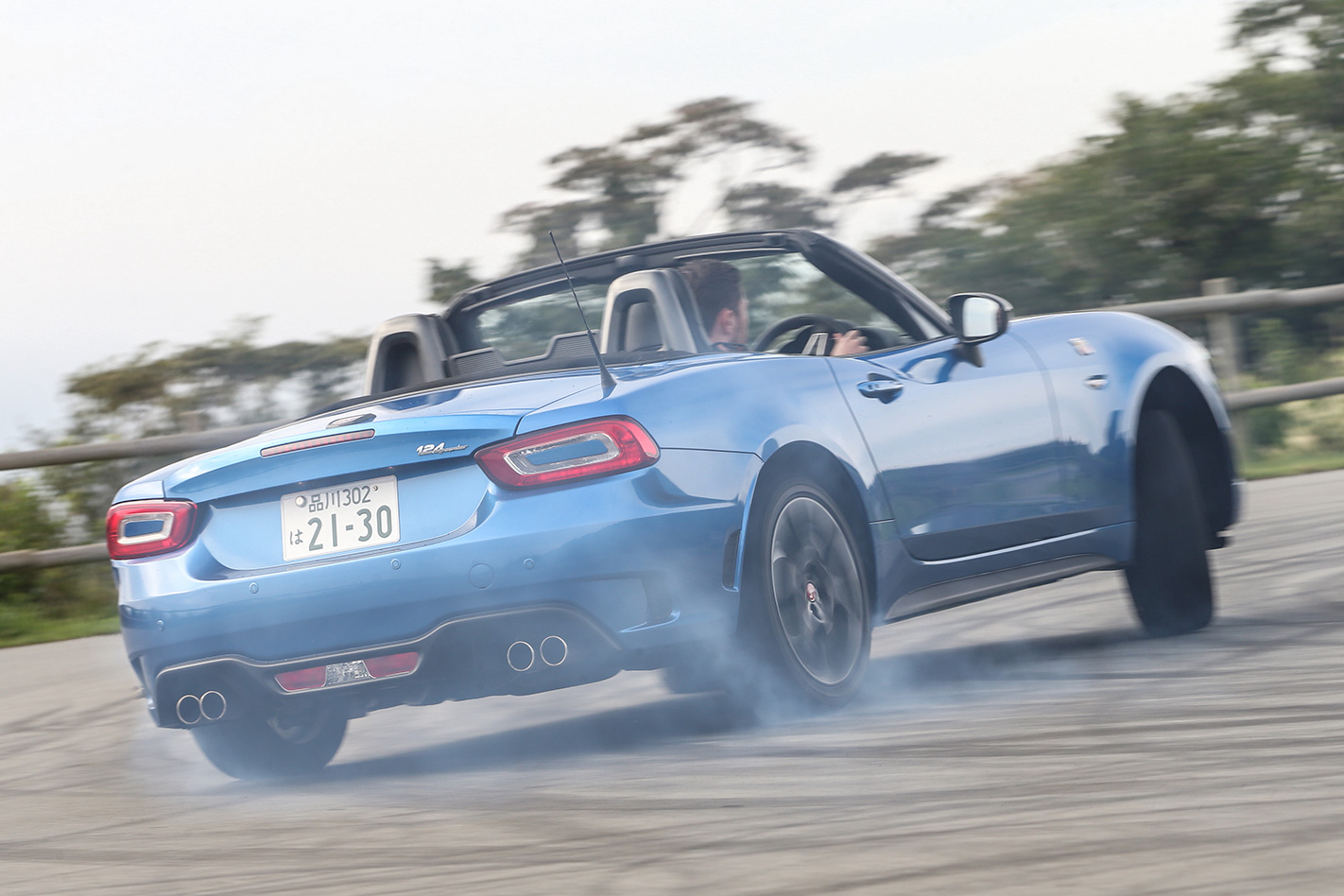
The fun increases further by dialling in Sport. This sharpens the steering and throttle response, and loosens the electronic nanny, but even with the safety net it’s possible to slide the rear 205/45R17 Bridgestones.
At 1060kg the Abarth is slightly heavier than the MX-5 – mostly due to the turbo engine, longer front overhang and curvaceous rear end (which boosts boot space by 10 litres) – but the chassis has a beautiful sense of balance. There’s little understeer and, as load builds and the weight transfers to the rear axle, oversteer is a doddle on corner exit. It’s brilliant.
We quickly devour the turnpike’s 12km stretch and pull into a restaurant at the top for lunch. It’s foggy up here, which conceals Mount Fuji, but the carpark is a melting pot of Porsches, Civic Type Rs, Toyota MR2s and, parked in a line, generations of MX-5s – a ratty red NA, two NBs and a white NC. I park the Abarth next to them, an Italian cousin completing the family tree.
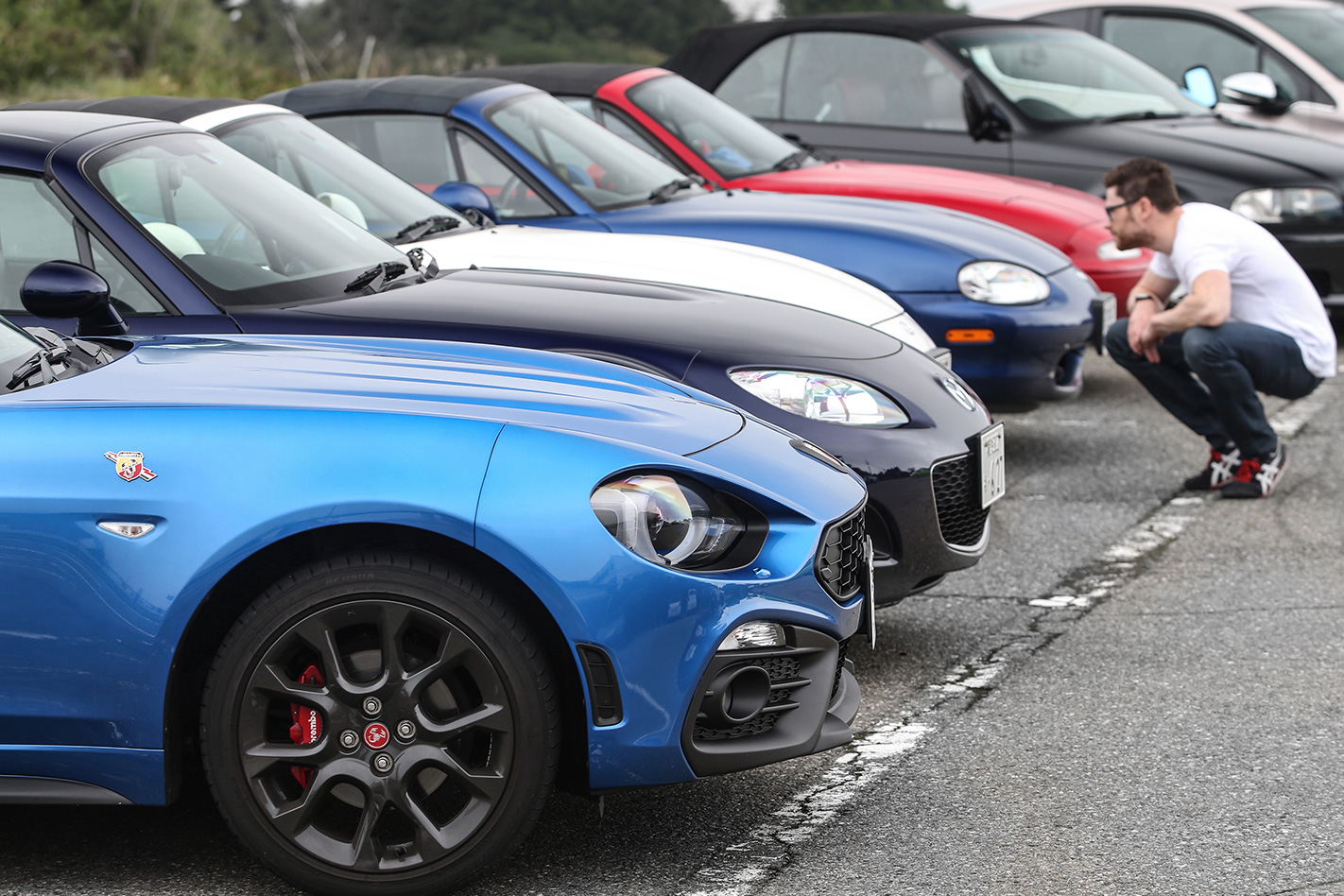
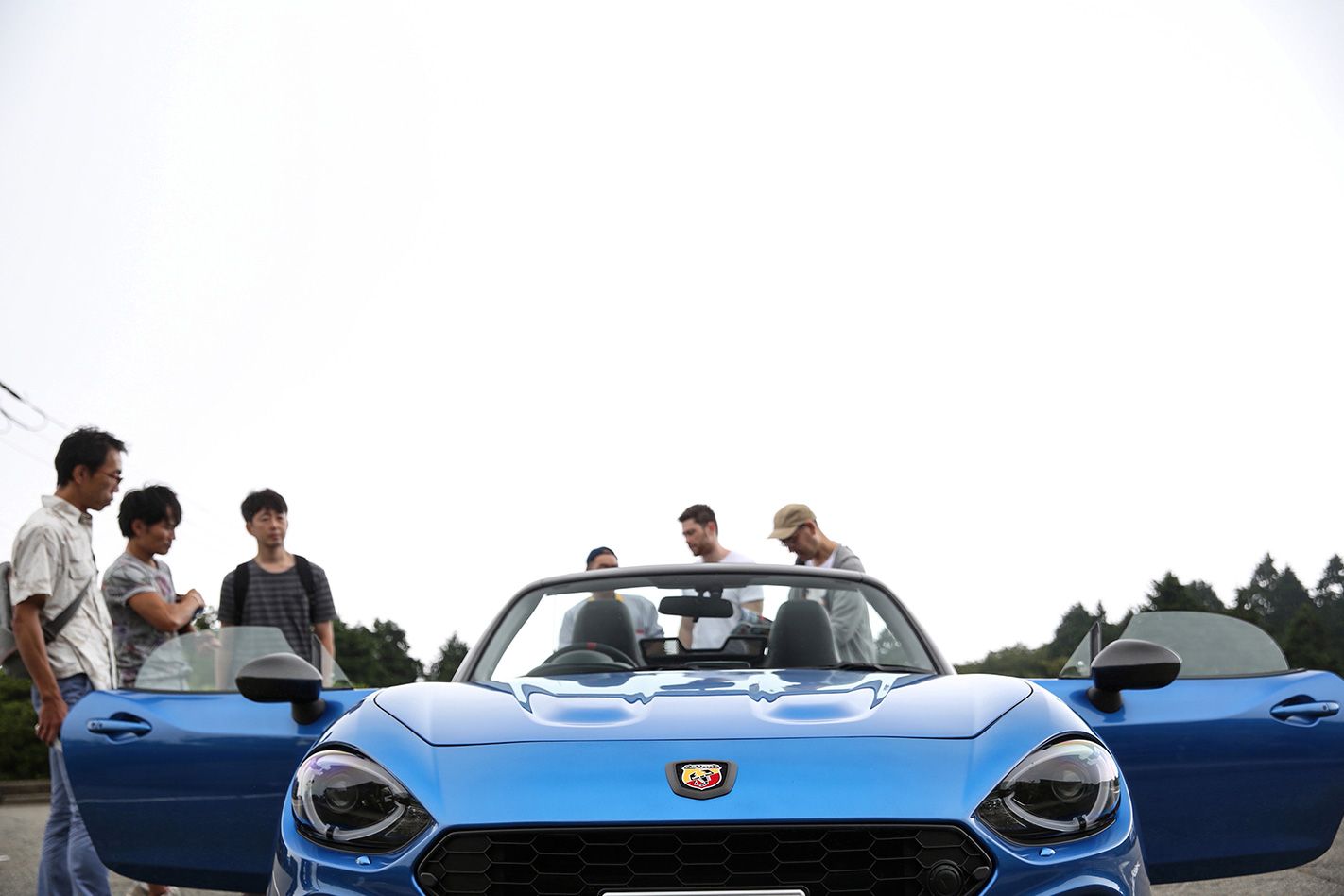
“It is… yours?” they ask in hushed whispers. One runs his hand reverently over the huge Abarth badge. Popping the bonnet intensifies their sense of awe. Fingers point straight to the silver snail mounted high on the right-hand side of the engine and in unison two of the group whisper “tuuuuurrrrbbboooooo”.
Another owner, a short man with a yellow shirt and a pink camera, is particularly excited and knows exactly what the 124 Spider is. “Italian MX-5,” he says, staring lustily into the engine bay.
“Yes,” I answer, “Do you like it?”
WE LEAVE the MX-5s behind and continue our search for the drift roads. Aside from some scattered tyre marks in a pull-out bay on the turnpike, Japan’s drifting culture has proven elusive. At least until we crest a hill on yet another breathtaking mountain road and get our first taste; a huge carpark, looking out to a barely visible Mount Fuji, its tarmac painted with rubber. Special attention has been given to a large rock monument, which is surrounded by endless rings of tyre marks. In typical Japanese style, they’re wonderfully uniform. Like a single black donut.
Admittedly, this isn’t really a drift road, but with the light fading and a two-hour drive back to Tokyo looming, I quickly add some of the Abarth’s rear rubber to the circle and head for the freeway.
Then, out of nowhere, I find them. Google maps has sent us down a narrow, tree-lined road that links hairpin after hairpin. The winding piece of tarmac is only wide enough for one car, but that hasn’t deterred the drifters. The tyre marks start halfway down and, as I stop so Brunelli can capture them on his camera, a silver NB MX-5 bursts into view, its tail tracing a perfect line around the hairpin below us. The driver, an ageing silver-haired man in a business suit, slows as he cruises past, drinks in the Abarth’s blue hue and our stunned faces, then drops a cog and slides further up the hill with precision.
“There’s no Italian neighbourhood here like you’d find in New York, or even in Melbourne,” he’d said when we collected the car. “But the Japanese love Italian culture. For them it’s quite aspirational and many people embrace it wholeheartedly. Everything in Japan is structured, there are so many rules; but the Italians have more flair, they live life to the fullest.”
It’s a sentiment that the Abarth embodies perfectly. While its Japanese bones are obvious, its flamboyant personality is pure Italian.
Is it better than an MX-5? A step beyond our reigning COTY? The purists will say no. It’s not as pared back or as true to the roadster philosophy, and the turbo has changed the fabric of its DNA. Where the Mazda comes alive high in the rev range as you wring every last drop of performance from its atmo engine, the Abarth is lazier. More muscular, its mid-range torque (and plusher interior) making it more relaxing to drive every day.
It’s way more Italian than that.
DESPITE their lack of muscle, sinew, blood, or brains, engines are filled with all the soul of a living creature.
They have unique personalities and sing their own personalised song. Some are mellow and calm, others belt out roaring ballads while thumping their chests.
Then there are those which have competed at the 24 Hours of Le Mans, the most iconic endurance race in the world.
Here, engines are pushed to their limit, racing twice around the clock in an unrelenting assault.
These engines have the souls of warriors, and bellow a harrowing tune that fills the French forests surrounding the Mulsanne Straight.
Through the ages, engines of many different shapes and sizes have taken to the Circuit de la Sarthe, these are just some of the best.
In 1989-1990 the Sauber-Mercedes C11 competed in Group C, powered by a M119 5.0-litre twin-turbo V8 engine. It produced 559kW and 800Nm, and was capable of clocking 400km/h.
Competing against the Sauber was Jaguar’s XJR-12. Under its rear cowl laid a 7.4-litre V12, producing similar numbers to the Mercedes powerplant. The large V12 is heard here screaming around a soaked Spa Francorchamps in Belgium.
A year later, Mazda brought its 4-rotor 787B to the French endurance race. It is the only Japanese car to ever win the event outright, a fact Toyota hopes to change this year. At full song, its wail could probably be heard from one of Jupiter’s moons, and would send banshees running for cover.
Audi is the second-most successful manufacturer to ever compete at Le Mans, with its R8 LMP one of the winningest of its fleet. Competing in 2000, it was powered by a 3.6-litre twin-turbo V8, making 454kW and 700Nm.
Porsche goes one further than Audi, with the most wins of any manufacturer at the event. The 917 is one of the brand’s most iconic sportscars, and powered by a 4.5-litre flat 12 engine. In 1970, it made 432kW, and was capable of 350km/h – incredible for that era.
While the modern era cars may not be as visceral as those that proceeded them (thanks in part to hybrid powertrains), they have their own spaceship-esque sound. Listen to this clip from last year’s test day, and bask in the cacophony of sound. If that’s not enough to give you your fix, tune into this year’s race for what is sure to be a thriller.
CSV is back – with a ’Stang. The Corsa Specialised Vehicles company that challenged, and often trumped, HSV in the 1990s and 2000s has turned blue to revive its bird-of-prey badge with a pony car capable of 800-plus horses.
It’s a decade since CSV one-upped its more established rival in the secondary-manufacturer stakes with the first local installation of GM’s Corvette 7.0-litre LS7 V8. Company founder Peter Dichiera will tell you CSV has never been away since the days of the CSV GTS, building and modifying cars for clients across Australia in the background while he focused on raising a four-kid family – and watching “everyone logging onto a computer, making some software and reckoning they were a tuner”.
“Basically, the Mustang turned up [in 2015] and we said, ‘Well, Camaro’s not coming so let’s not sit back and wait. It’s an American muscle car, it’s a good project, let’s have a go at it.’ So here we are,” says Dichiera.
I built ’69 Mustangs 25 years ago for people, I’ve built GT XYs… I build everything, I don’t love any one brand. Just because I made money from the GM-based cars in the early days doesn’t mean I don’t appreciate the opposition. I go where I can make money.”
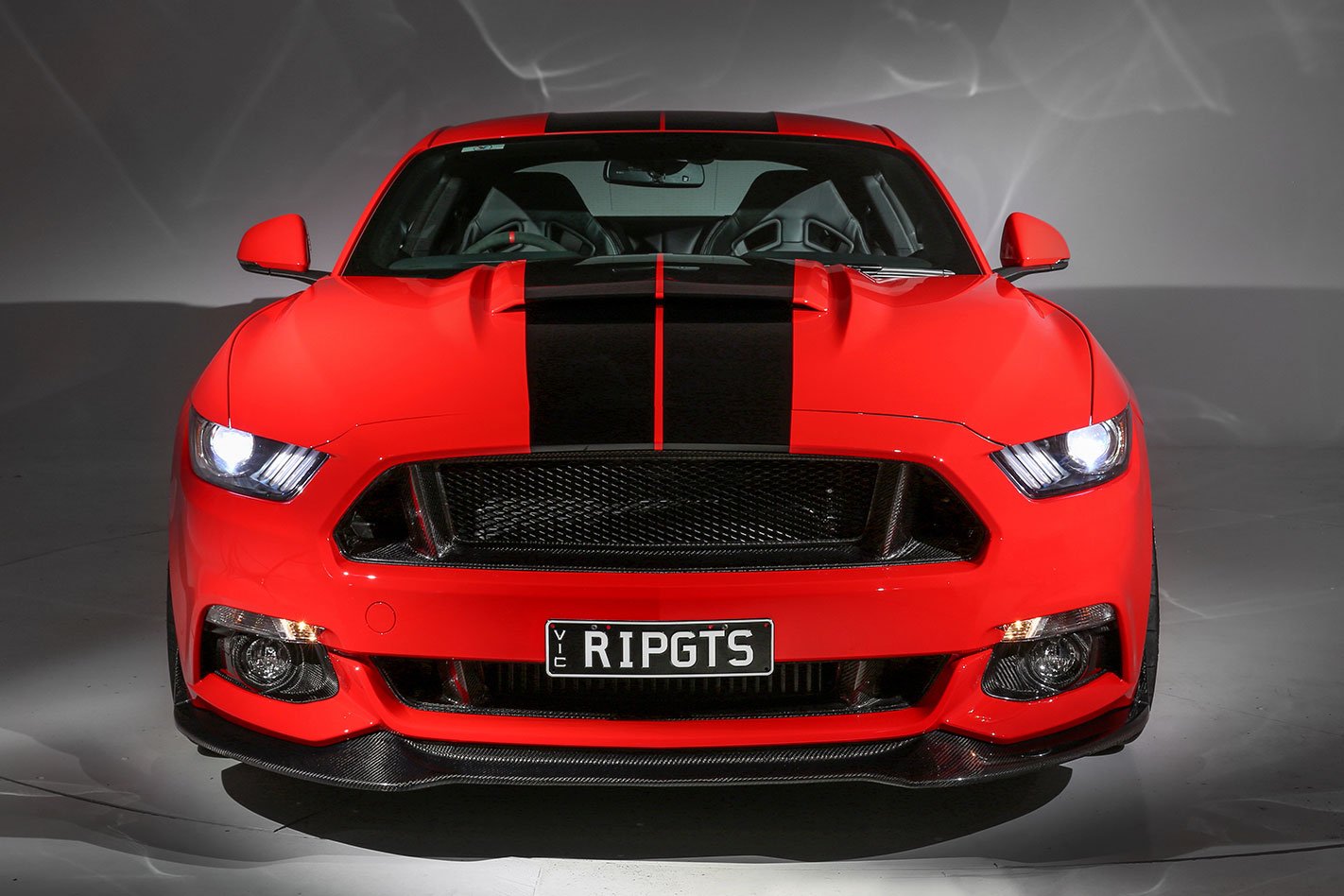
The menacing, red and black-striped manual Mustang pictured here is a far more extensively engineered and visually customised beast, brimming with carbon fibre and boosted by two turbos.
Opinion: Can YouTube teach you how to drive?
That’s reflected in a price tag CSV says will be about $125,000 to $130,000 – notably more than the circa-$95,000 sticker likely for the supercharged version and more than double the stock GT.
Potential power is also almost double the GT’s 306kW, whichever of the forced-induction Stangs you pick.
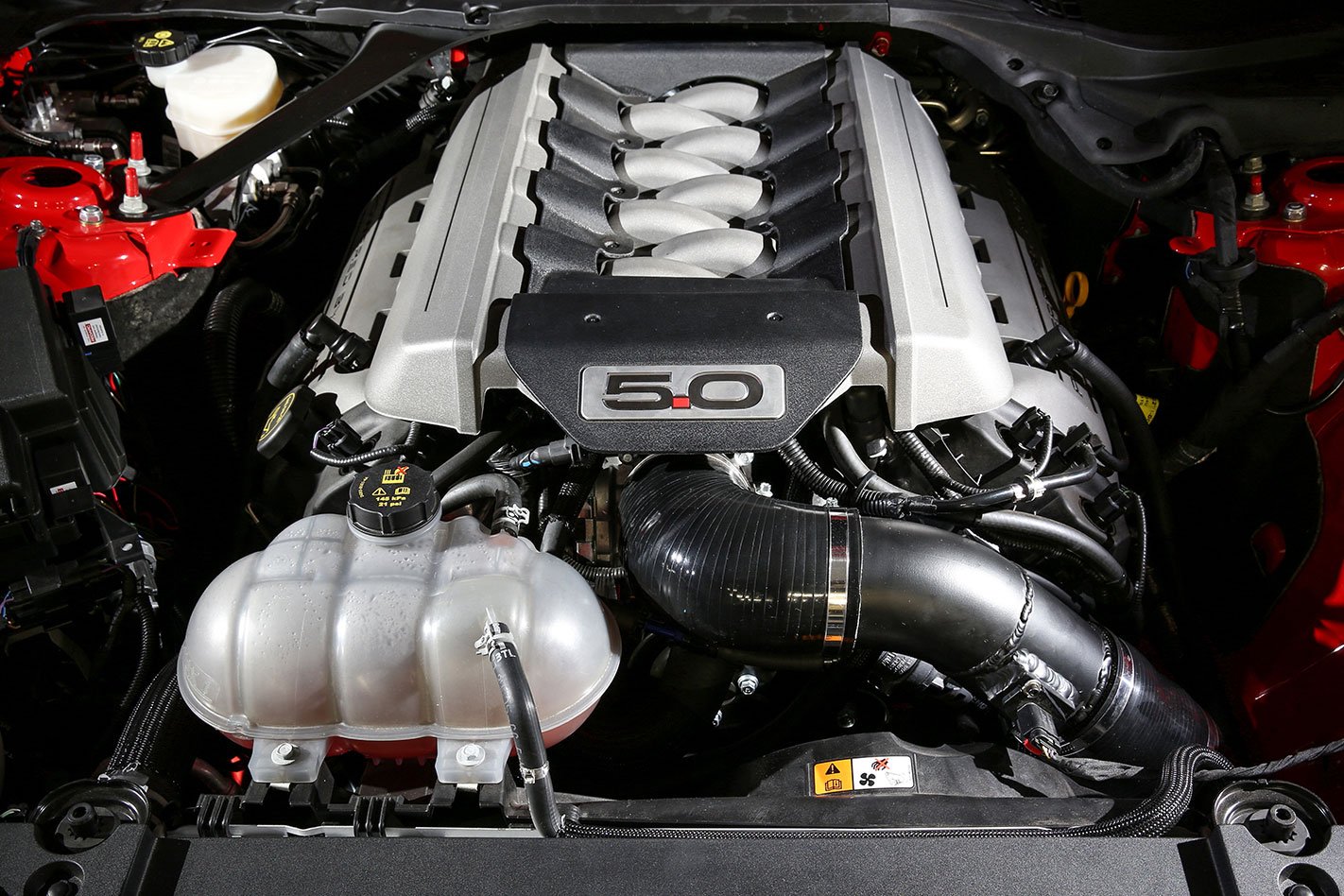
“Say it’s about a 20 per cent loss, it’s probably about 540kW. There’s a few little tweaks we’re [still] doing. Because they’re such a high-compression engine, if we do an E-85 tune on them, we’ll get to 600kW.”
Maximum torque should exceed 800Nm. Performance testing suggests that cheeky ‘RIP GTS’ promo plate should read ‘BYE W1’, while also setting CSV up for a stoush with Roush-enhanced Stangs.
Ford Mustang Performance Packs now available
The supercharged version has regularly achieved 3.8 and 11.7 seconds in the benchmark sprint tests, the latter at a velocity of 198km/h. Wipe off about another few tenths with the better purchase of drag-strip VHT, adds the man known in such an arena in the 1970s as the Mildura Maverick.
Getting all that power down in the manual may be a challenge not yet fully resolved through a trial of different clutches, yet Dichiera says the launch-control-aided turbo model has still clocked a 4.1 and a 12-dead despite wheelspin – both a tenth up on HSV’s $170K W1.
A taller final drive ratio – from 3.55 to 3.31 – was also applied to the stock six-speed manual to avoid time-consuming upshifts from both second and fourth – for the respective 0-100 and quarter-mile runs.
The turbo manual also features a Torsen limited-slip diff primarily intended to aid rear grip off the line but also beneficial for the track that CSV says is this variant’s targeted domain. (Dichiera hopes it will follow a couple of former CSVs into GT production racing.)
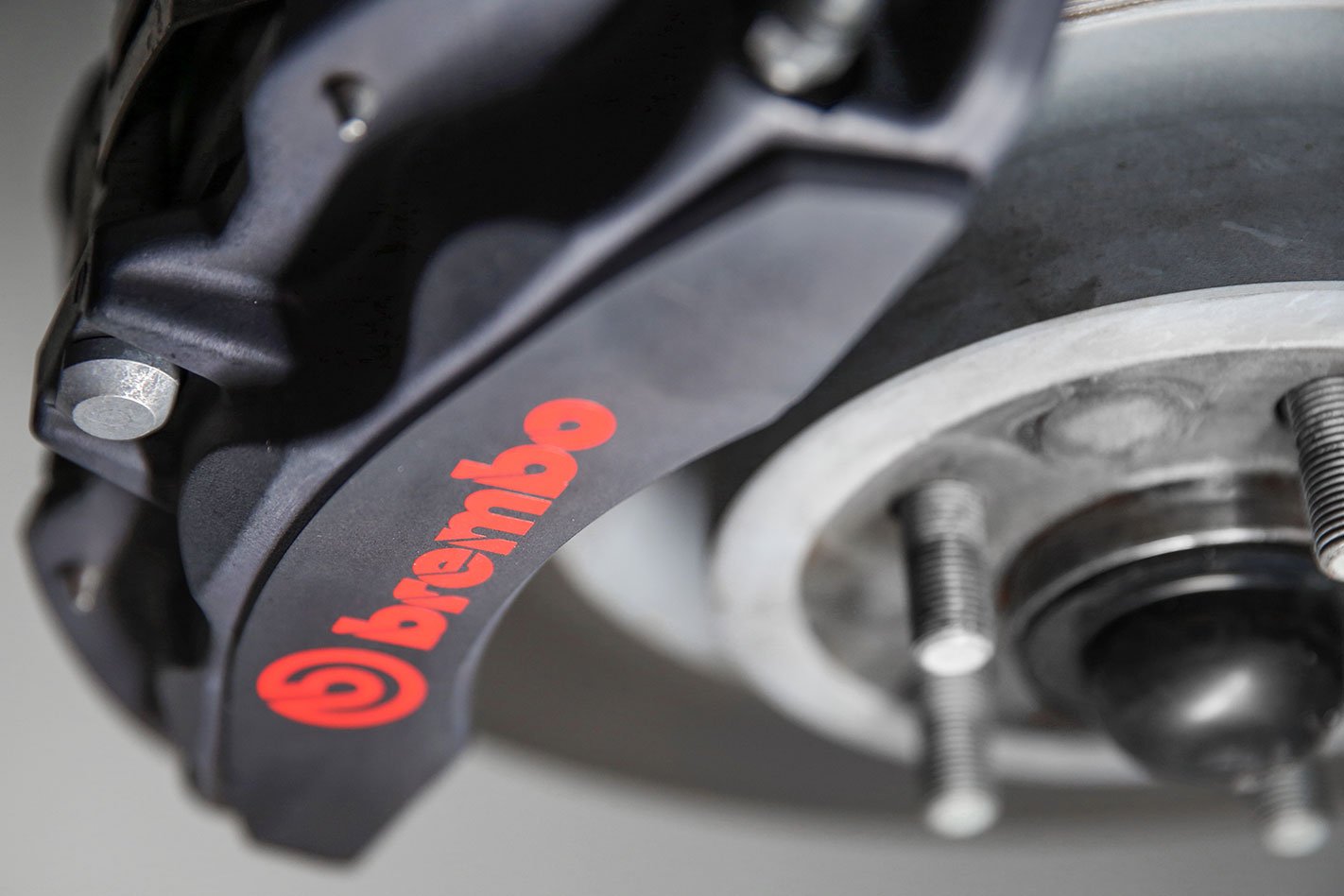
In addition to the beefier rear axle, new driveshaft and new exhaust system, the “racer” version features a $6000 KW Club Sport adjustable coil-over suspension, $8000 worth of aero body kit comprising front splitter, side skirts, rear diffuser and “NASCAR-style” rear wing all in carbon fibre, and a $12,000 wheel and tyre package.
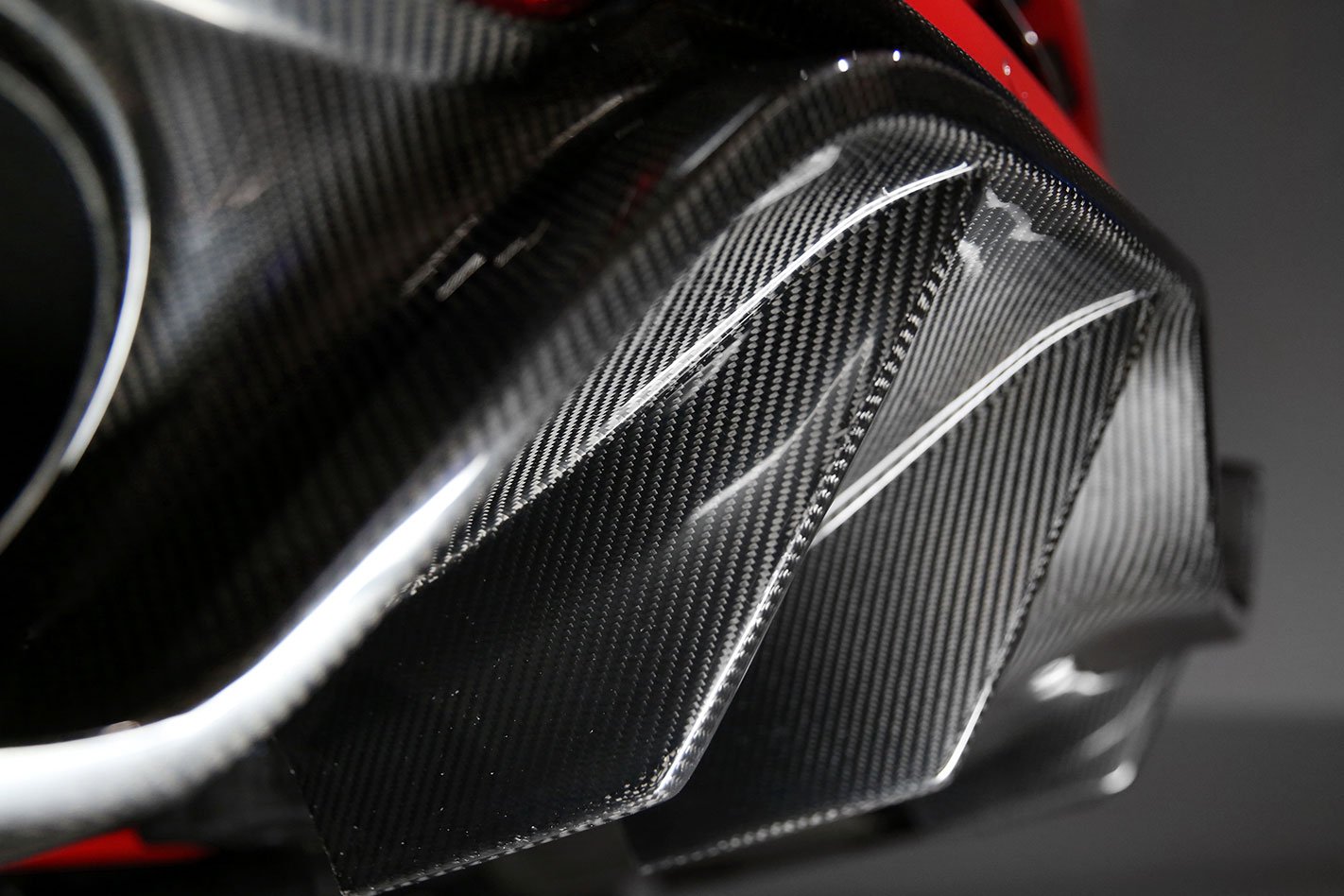
If it’s not unfair to say the CSV Commodores – including the Mondo interpretation of the Monaro – were a thing of beauty in terms of performance rather than aesthetics, there’s also no doubt its turbo twist on the Mustang is a looker.
Ford Mustang Goodie Guide: $25k plus
Under the customised bonnet with scoop, the two generously sized Borg-Warner turbos on each cylinder bank are well hidden, positioned where the catalytic converters used to be on the stock Mustang. In turn, the cats have been moved, in Dichiera’s words, “straight up the bum”.
Customised plumbing was simplified by blow-off valves being integrated into the turbos.
The 3.5-inch exhaust exits to dual 4.5-inch tips via central and rear mufflers. CSV hasn’t ruled out a bi-modal system for drive-by regs, though says the car “isn’t super loud”.
