
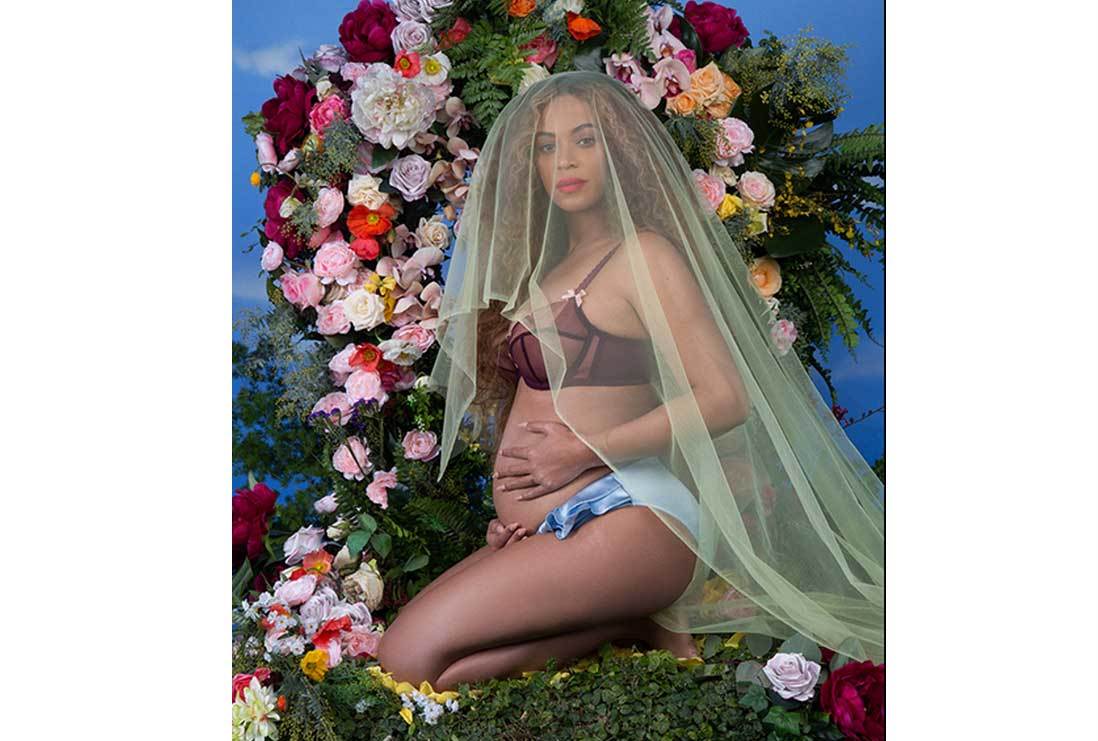
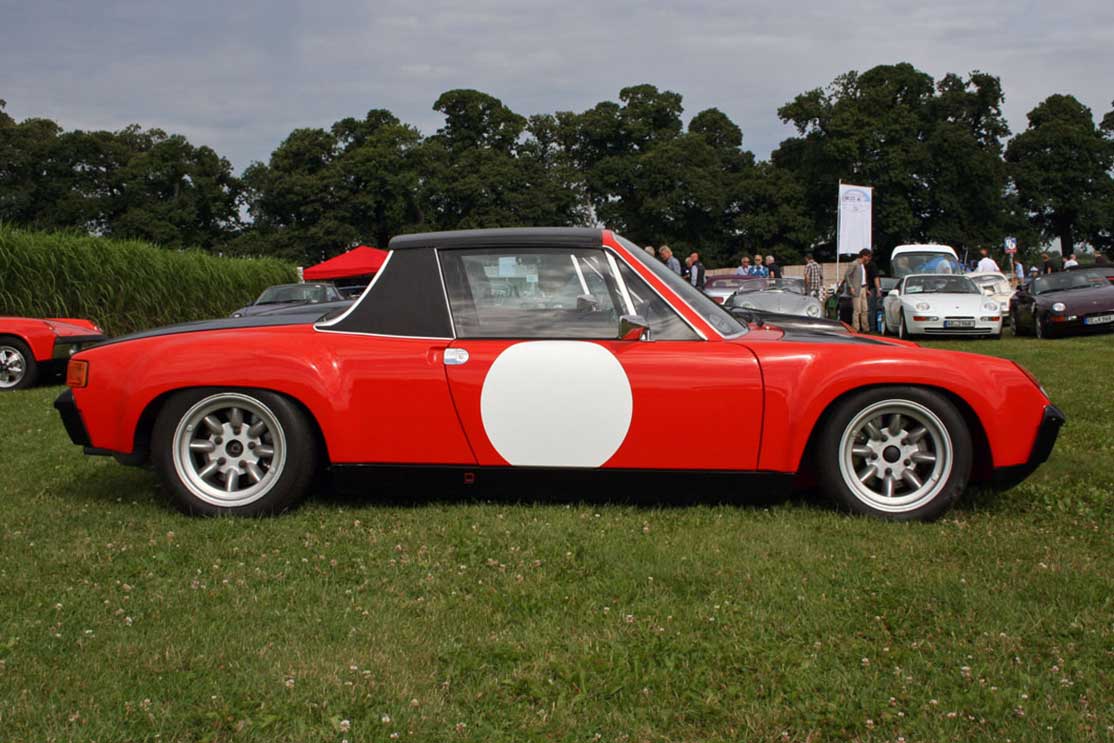
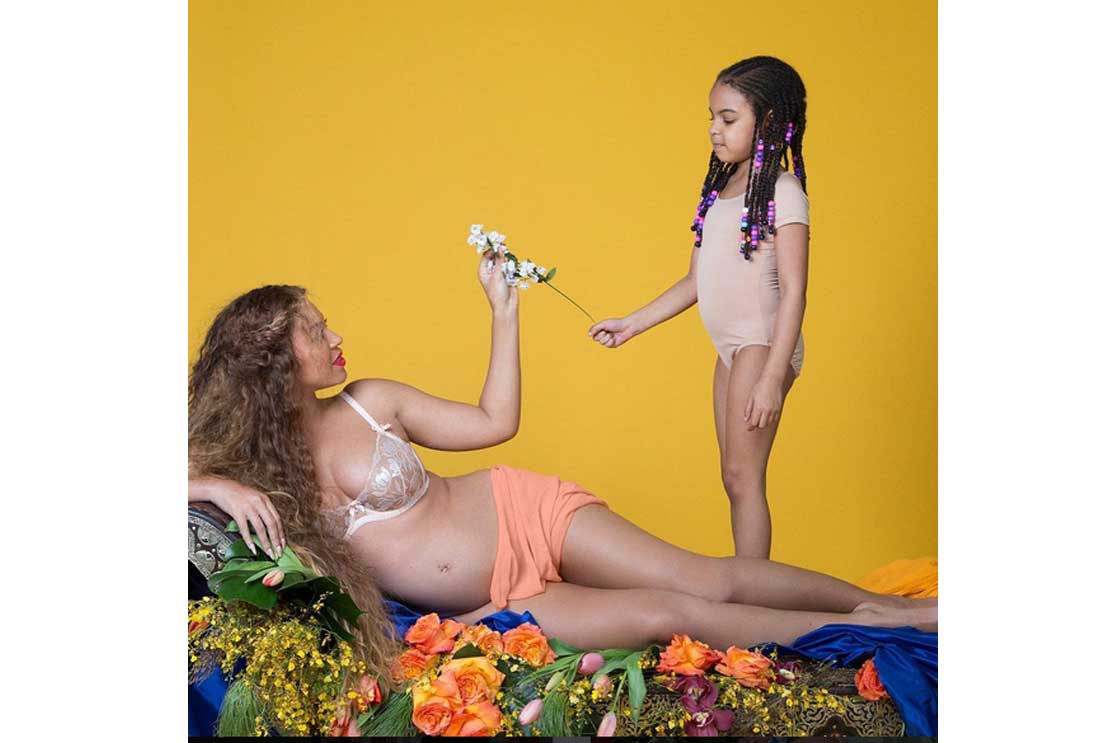
It’s very rare we write about celebrities announcing a pregnancy, but when it involves Beyoncé and an old Porsche 914, we couldn’t resist.Beyoncé’s double bombshell dropped yesterday when she announced via Instagram that her and husband Jay Z, are expecting twins.Already, the posted image of her kneeling in front of a floral array, dressed in miss-matched lingerie and covered by a veil, has stolen the title as the most liked Instagram photo of all time. As we write this story, the image has more than 8.8 million likes.
BEFORE THE 2017 Wheels Car of the Year was announced, and before we even revealed the finalists, we asked you, our faithful readers, to vote on what you thought should win the most coveted motoring award in Australia.
This year’s COTY contenders were one of the strongest fields in history, with the judges having a seriously difficult time witling down the six finalists. There was some intense verbal debate to decide on the final three of the Audi A4, Mercedes-Benz E-Class, and Mazda CX-9.
Ultimately the Mazda CX-9 won with our judges, and we can confirm it also won with readers.
The CX-9 was the most popular car as voted by you, closely followed by the Ford Mustang and BMW M2.
Voting is still open for our competition until February 17 to give you a chance at winning $1000 so be sure to get involved.
The CX-9 is only the second SUV in the 54-year history of COTY to win the coveted gong, and it appears consumers are as impressed with Mazda’s effort as our judges.
“It’s a great car and I love it, I’ve got the same colour, very quick and drives like a dream, excellent car,” one reader commented on Facebook.
“Great one, a car that a lot of people will buy, Mazda quality,” another added.
And finally: “The CX9 was always my bet to win. The price point is right for its target market. The features on the models are competitive. The integration of the features is generally intuitive. Aftersales care is comprehensive. Performance and dynamics exceed the required level for a seven seat SUV … and technology is utilised to maximise fuel consumption.”
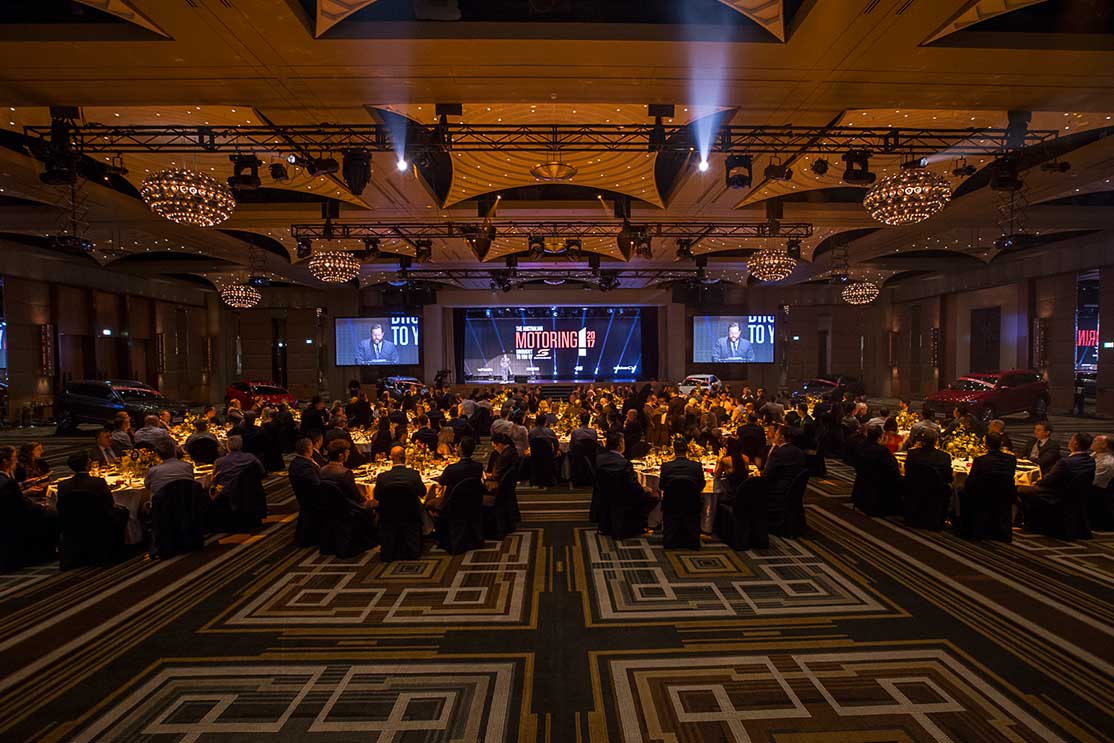
Now in its second year, the 2017 Australian Motoring Awards (AMAs) was a night of glitz, glamour and record-breaking results.
More than 200 automotive industry luminaries gathered at Melbourne’s Crown Palladium for the announcement of the coveted 54th Wheels Car of the Year, as well as the WhichCar Style Award, Motor’s Performance Car of the Year and 4X4 Australia’s 4×4 of the Year.
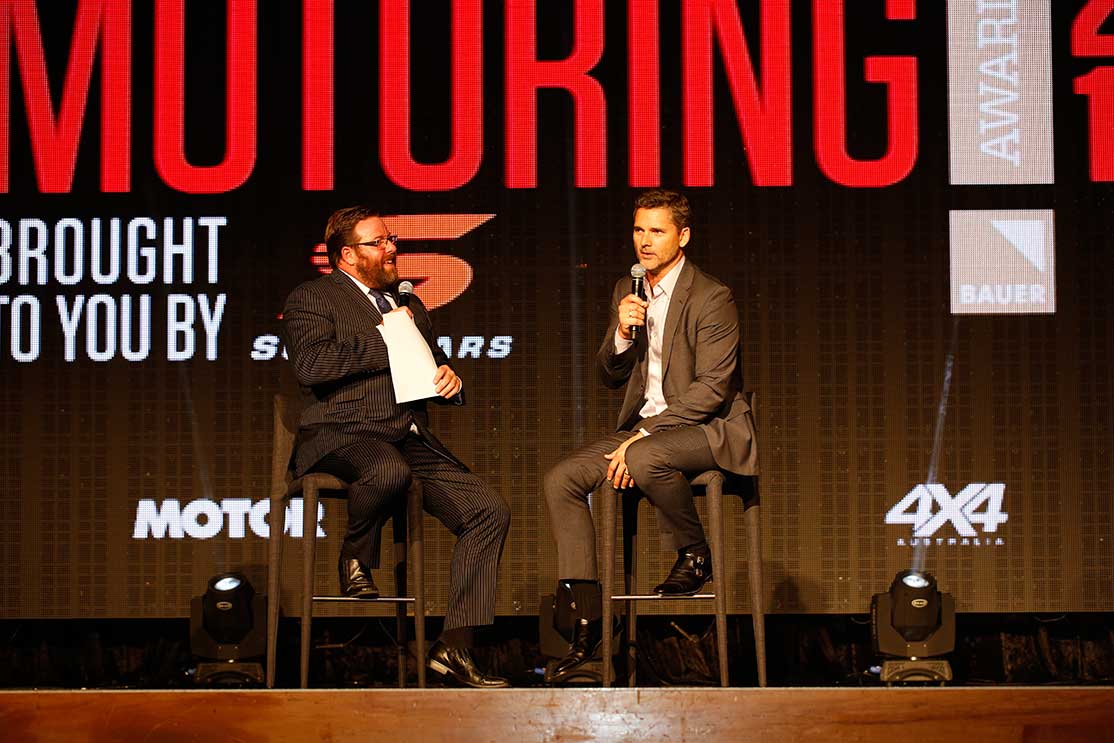
Australian actor and comedian Shane “Dunny Man” Jacobson hosted the night, with Hollywood superstar Eric Bana making a special guest appearance at what has fast become one of the most anticipated automotive award events on the Australian calendar.
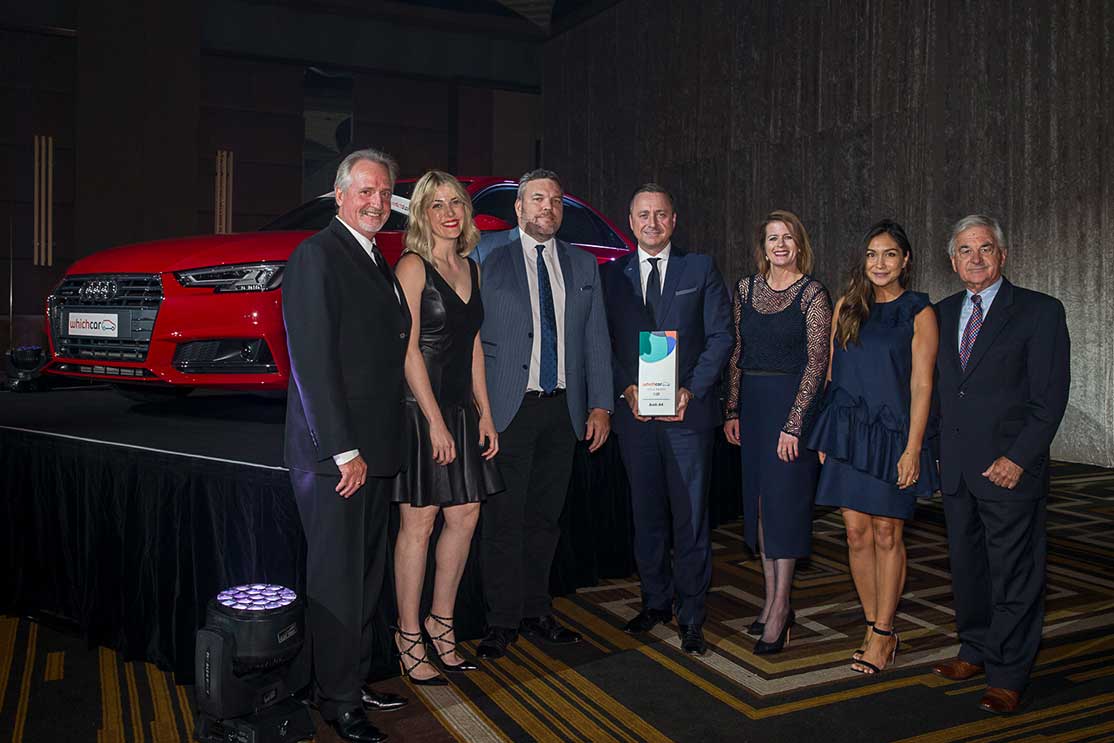
The WhichCar Style Award was the first presentation, with Belle editor Tanya Buchanan and automotive designer Paul Beranger announcing the sleek and sophisticated Audi A4 had taken the honours.
“We’re very proud of the car,” Audi Australia’s managing director, Andrew Doyle, said when accepting the award.
“What it’s achieved already since it’s been on the market, [and] what it’s giving the customers in terms of performance, efficiency, technology, design, quality and of course, style. We’re really thrilled about [the award].”
But if there is one award everyone in the room anxiously awaits it is the Wheels Car of the Year award, which this year went to the popular mid-size SUV, the Mazda CX-9.
This meant back-to-back victories for Mazda (The MX-5 won the 2016 COTY) and the CX-9 was only the second SUV to win the celebrated COTY.
“The CX-9 is such a convincing blend of eye-catching design, genuine practicality and performance, all with a sprinkling of driver appeal,” Wheels acting editor Alex Inwood said.
“The CX-9 blitzes the category for interior comfort and versatility, despite being smaller (and more than 130kg lighter) than the model it replaces,” Wheels senior journalist Nathan Ponchard wrote in the COTY 2017 issue of Wheels (on sale now).
But the night isn’t all about WhichCar and Wheels, and two other awards shared the night’s spotlight with history-making announcements.
4X4 Australia’s 4×4 of the Year went to the Toyota Land Cruiser 79 Double Cab GLX, finishing a solitary point ahead of the Volkswagen Amarok V6 in what was one of the tightest battles for top spot in the award’s history.
“This is actually the first time in the history of the award that a ute has won the accolade,” said 4X4 Australia editor, Matt Raudonikis.
“Our judges were won over with the Land Cruiser’s all-round ability and go-anywhere attitude. There’s nothing that could stop this car, so it’s a worthy winner of this esteemed award.”
The Porsche 911.2 911 Turbo S won Motor’s Performance Car of the Year in what was the car maker’s 13th time accepting the prize, more than any other manufacturer.
And for the first time ever, in what was arguably the strongest PCOTY field ever, a Ferrari was one of the contenders. The Ferrari 488 GTB only narrowly missed out on top spot, trailing the Porsche by just 6.5 points.
But alas, there can only be one winner.
“I feel both humbled and honoured to be here this evening to accept what is, in fact, our 13th Performance Car of the Year award,” said Porsche Managing Director Sam Curtis.
“This year’s award is particularly gratifying for us at Porsche when you consider the calibre of finalists.”
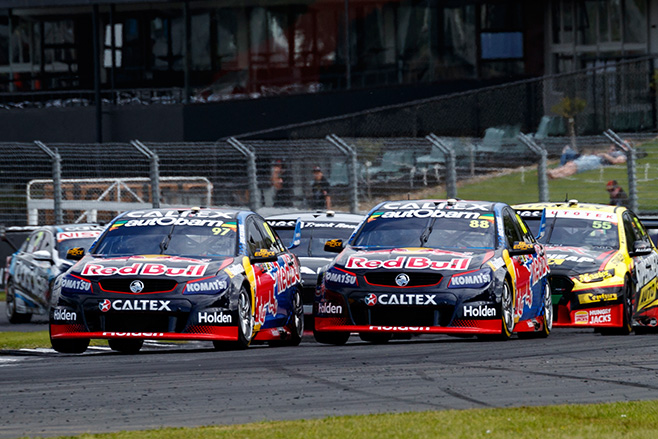
SUPERCARS Australia, the company behind the Virgin Australia Supercars Championship (VASC), is on the hunt to add more categories to its expanding portfolio.
Matt Braid, Supercars Australia managing director, revealed at this week’s at the Australian Motoring Awards in Melbourne that the business was looking to expand the number of categories it manages.
The Virgin Australia Supercars Championship was a naming-rights sponsor of the event.
Supercars runs and owns the main VASC series, along with its feeder category the Dunlop (or Development) Series. Baird revealed in his speech the second-tier category would soon be known as the Dunlop Super2 Series.
In 2016, Supercars took over ownership of the V8 Utes championship after the old management, Spherix, hit financial troubles, rebranding it as Super Utes. Supercars also took a half share of the Bathurst 12 Hour, being held this weekend, which it co-runs with Bathurst Regional Council.
“A few years ago we had complete focus on V8 Supercars, and what was the associated Dunlop Development series,” Baird said.
“As we move into 2017, we have transformed from being a category-focussed entity, into being a whole of sport business.
“Supercars as a business now includes the Virgin Supercars Championship, with the [manufacturer] support of Holden and Nissan directly, the newly branded Dunlop Super2 Series for our young and up-and-coming future champions, the new Super Utes category, which was specifically designed to link to the ultra-competitive, high-volume utes segment, as well as the Bathurst 12 Hour for the GT3 specification cars.
“And it won’t stop there; please expect some more categories to be added very soon.”
The Supercars MD went on to highlight the company’s ongoing work with Porsche and Toyota, which race at Supercar events with the Carrera Cup and 86 Racing Series respectively.
The Supercars Championship has a history of racing beyond Australian and New Zealand shores to varying success. A street race in Kuala Lumpur was scheduled for last year, but was ultimately cancelled as local organisers fought over the potential spoils.
However, Braid says a round of the championship held in Asia is still something the category hopes to achieve.
“Supercars as a category will continue to be the leading motorsport championship in not only Australia, but the region, as we continue to expand within Asia,” he added.
Details of the body and chassis technology used beneath McLaren’s second-generation Super Series models have been released ahead of the debut of the P14 (or 720S) at the Geneva motor show on March 7.
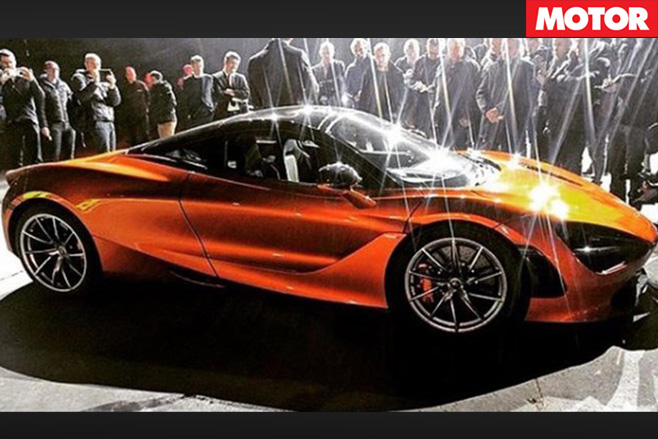
Although McLaren has officially teased P14 – its internal codename that is expected to translate to a 720S production name – a single leaked image has surfaced online showing the successor to the first-gen that spawned the 2011 12C, 2014 650S and 2015 675LT.
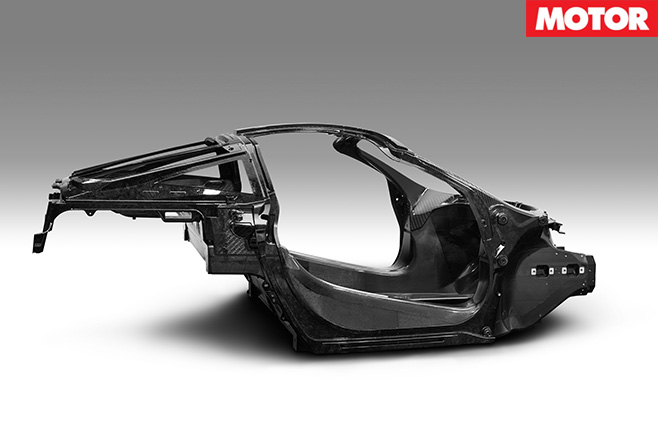
The grainy image shows a sharp, wedgy new front-end treatment and heavily sculpted sides that will again feature dihedral doors. Behind the styling, McLaren has officially detailed the new carbonfibre monocoque chassis of the P14 dubbed Monocage II.
The company has claimed the P14 will be the lightest vehicle in its segment, with a confirmed dry weight of 1283kg – about the same as a Volkswagen Golf – being 18kg lighter than the McLaren 650S. Buyers will also be treated to a ‘visible monocage’ option that leaves the carbonfibre bones exposed inside the A-pillar trim.
“Proactive Chassis Control II will deliver the optimal balance of cornering grip, dynamic response, and comfort to best suit the individual mode and the driving conditions,” the company said in a statement.
“[It] uses multiple sensors – 12 more than on previous Super Series models, including an accelerometer on each wheel hub – to ‘read’ inputs from the road and measure tyre contact patch. The information is analysed in milliseconds by the ‘Optimal Controller’ algorithm at the core of the system and suspension damping immediately optimised accordingly.”
Comfort, Sport and Track modes have been confirmed, but the most exciting addition is a Variable Drift Control mode that permits the electronic stability control (ESC) intensity “to be varied with the swipe of a finger across a control displayed on the central infotainment screen.” Just like Tinder, it seems.
“Super Series is the core of the McLaren business and personifies the blend of extreme performance, crafted luxury and unparalleled driver involvement that is the McLaren heartland,” said McLaren Automotive CEO Mike Flewitt in a statement.
“This is the first time we have replaced a product family and the new Super Series will be absolutely true to McLaren’s pioneering spirit in being a revolutionary leap forwards, both for our brand and the supercar segment.”
Not only is the P14 the first time McLaren has immediately switched to a second-generation version, but it represents the first of 15 new cars set to arrive before 2022, as defined by the British sports car company’s Track 22 plan.
MODERN RACE cars have a reputation for being about as closely related to their road-bound equivalents as Politicians and the truth.
Categories like the World Rally Championship and our own domestic Supercars are filled with cars that look like road registered vehicles, but share little, if any, DNA.
GT3 racing is bucking that trend, championing the idea that the cars filling the grids share the same backbone and heart as the road versions with which they share an outward likeness.
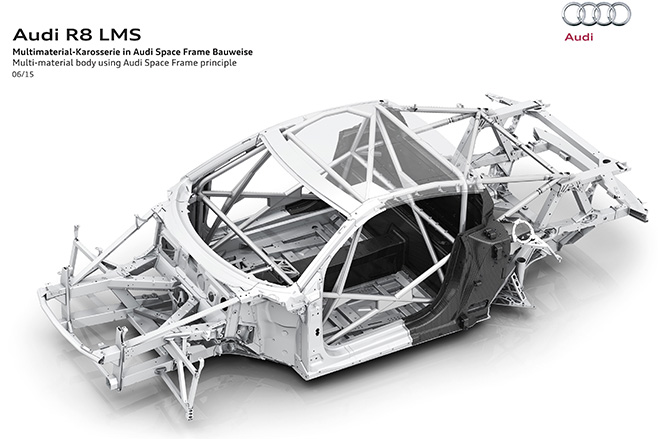
Both cars start life on the same production line, with their base chassis being built in a new manufacturing facility at the Böllinger Höfe industrial park in Heilbronn. The GT3 chassis is fitted with aluminium cast joints and a steel roll cage, but is otherwise identical to the road car.
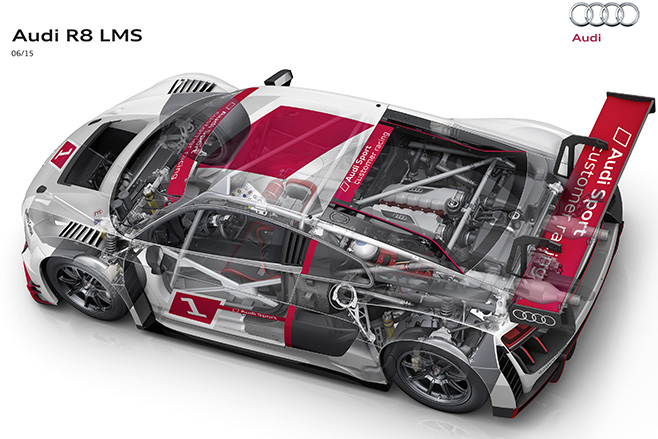
Audi boasts it uses production parts in the R8 LMS wherever possible. The major changes for the GT3 racer are the loss of all-wheel drive, the addition of wishbone suspension and carbonfibre bodywork, and a different six-speed gearbox. A stripped-out interior, bigger brakes, slick tyres, and racing aero complete the transformation to a vehicle capable of racing for 24 hours non-stop.
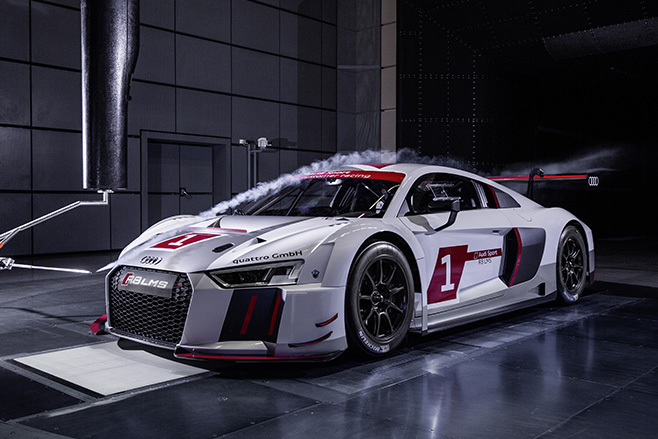
It is also invigorating manufacturers to return to the crucible of motorsport, allowing them to display their road engineering on the biggest tracks across the globe.
Sure, we can’t all go out and buy an Audi R8, but the win on Monday, sell on Sunday mantra is back – and the racing is bloody brilliant to boot.
Okay, so it is not exactly a Range Rover Sport SVR or classic MOTOR material.
But this original 1978 Range Rover marks the first vehicle officially restored by Land Rover’s official Classic division – and that’s a bit cool, and long before SUVs were seen to be.
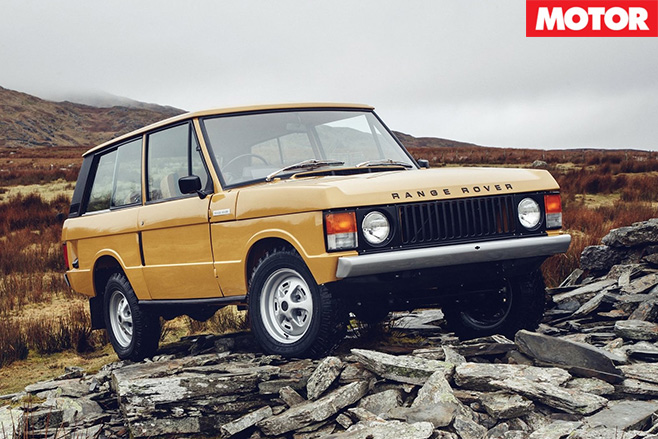
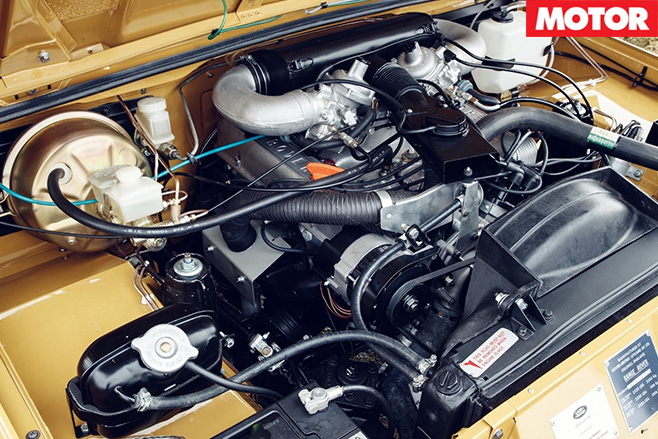
A team has converted this Bahama Gold example back to 1970s specification using original parts, in this case with a 3.5-litre carburettor V8 petrol engine producing 98kW at 5000rpm and 251Nm at 2500rpm, teamed with a four-speed manual and lockable centre differential.
Between its 1970 launch and 1981, the Range Rover was made singularly in three-door guise. The five-door version of the vehicle widely acknowledged as the first luxury SUV joined thereafter and continued the first-generation’s long production that ended in 1996.
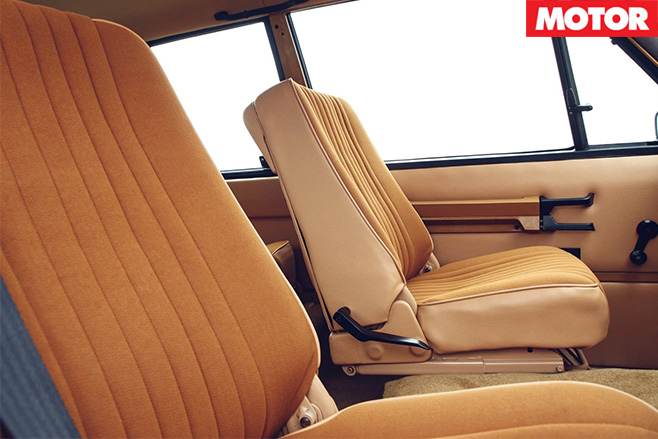
Land Rover Classic can also advise customers of the best used vehicle to purchase and have restored, “In terms of collectability, preferred chassis numbers and unique characteristics.”
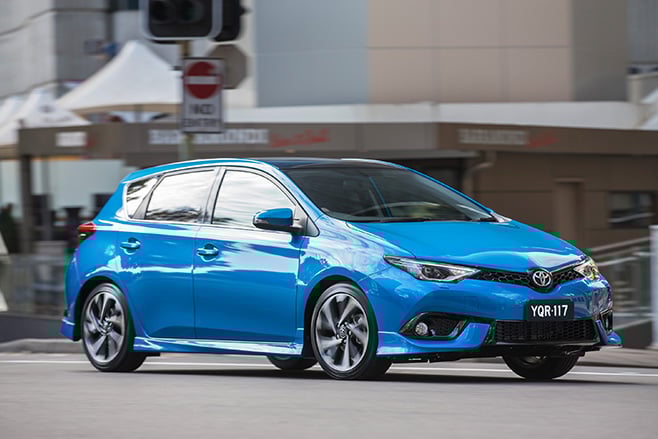
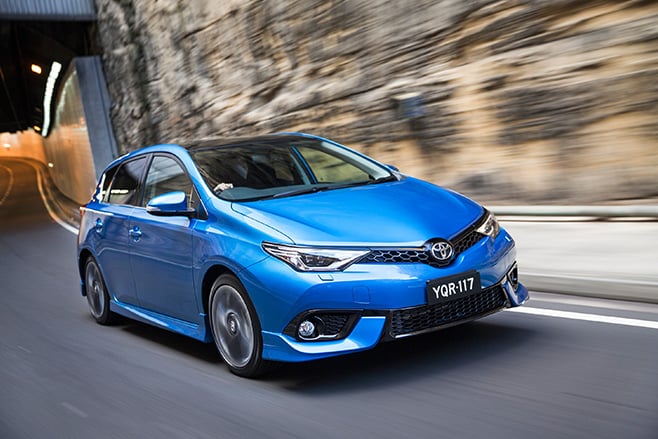
Australian new car sales figures for January show the Mazda3 and Toyota Corolla leapfrogging the Ford Ranger, Toyota HiLux and Toyota Camry, to come in at first and second place respectively. With lower buyer activity due to the holiday period and no end-of-calendar-year or end-of-financial-year incentives, sales were predictably lower across the board compared to last month.
The Camry is also notably absent from not only the top ten, but the top twenty. Despite selling 4850 Camrys in December 2016, the Big T’s locally-built mid-sized sedan could only muster 580 sales – around half as many as the 20th placed Hyundai Accent. However, that’s more a reflection of commercial fleet buying cycles as it is about demand from the private market.
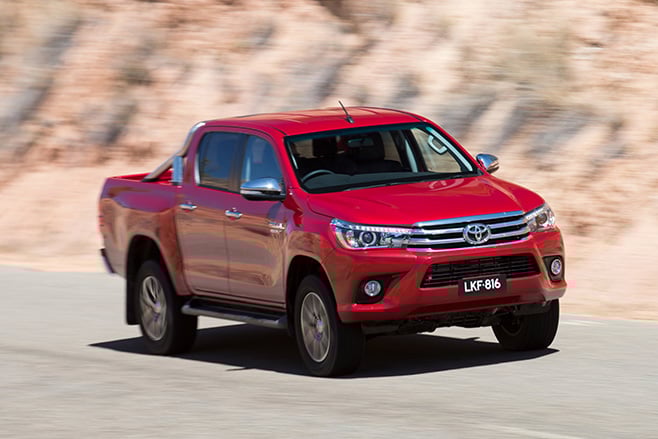
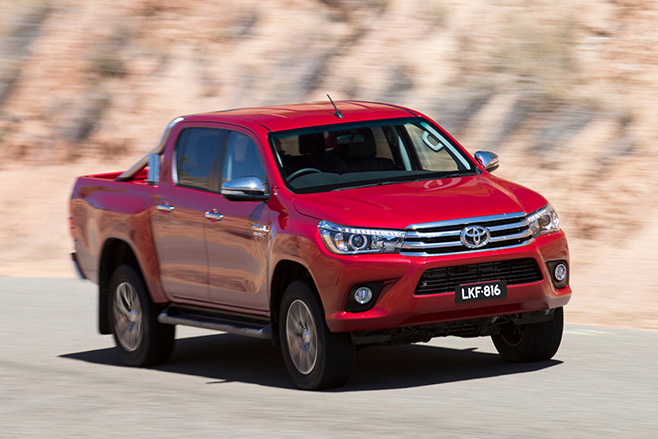
The Toyota HiLux, which managed to take the crown as 2016’s highest-selling vehicle, fell down the finishing order in January, to sit in third place behind the Corolla. Though it couldn’t repeat last month’s 3225-unit figure, the HiLux nevertheless racked up a healthy 2702 sales in January – 361 more than the same period in 2016.
Toyota also retained its position as top-selling manufacturer in January, recording 12,554 sales across its Australian showrooms last month.
The Ford Ranger dropped from third place to fourth in January with 2662 sales between its 4×4 and 4×2 variants, while the Hyundai i30 and Holden Commodore followed in fifth and sixth – one position up on their respective December results. Though now well into its final year of production, the arrival of new special-edition models helped Commodore improve on its January 2016 result by a huge 718 units, for a total of 1960 January 2017 sales.
Having slid to eighth position in December, the Mitsubishi Triton disappeared from the top-ten ranking in January allowing the Mazda CX-5 to move from ninth to seventh. With 1924 sales in January, the CX-5 was also one of few carry-over top ten cars to improve its sales relative to December – the other being the Corolla.
It’s a solid result for the CX-5, which also sold 174 cars more last month than it did in January 2016. It’s one of the oldest cars in Mazda’s local showrooms right now and an all-new replacement is coming later this year, yet it appears buyers are still in love with the Japanese automaker’s mid-sized SUV.
The Isuzu D-Max, like the Triton, also fell out the top ten, leaving three slots free for the Nissan X-Trail, Hyundai Tucson and Mazda CX-3 to move up into eight, ninth and tenth places respectively – all of which are no strangers to being in the top ten.
TOP 10 PASSENGER CARS FOR JANUARY 2017*
| RANK | MODEL | JAN 2017 | JAN 2016 |
| 1. | Mazda 3 | 3473 | 3722 |
| 2. | Toyota Corolla | 2943 | 2758 |
| 3. | Toyota Hilux | 2702 | 2341 |
| 4. | Ford Ranger | 2662 | 2481 |
| 5. | Hyundai i30 | 2018 | 1852 |
| 6. | Holden Commodore | 1960 | 1242 |
| 7. | Mazda CX-5 | 1924 | 1750 |
| 8. | Nissan X-Trail | 1759 | 1198 |
| 9. | Hyundai Tucson | 1678u00a0 | 2065 |
| 10. | Mazda CX-3 | 1486 | 1391 |
While the Mazda CX-9 lapped up the glory of being crowned 2017 Wheels Car of the Year, its smaller sibling, the Mazda CX-5 continued its reign in the all-important sales stakes.
Mazda’s second most popular model after the Mazda 3 was the best-selling SUV throughout last year and started 2017 in positive territory with 1924 sales last month, up from 1906 in December and 1750 in January 2016.
The Japanese carmaker has maintained its mid-sized soft-roader’s popularity , despite an all-new model being on the horizon, by adding more kit to its already well-endowed standard equipment list, including auto braking and blind-spot alert.
As well as topping the SUV chart it came in at seventh overall, just behind the Holden Commodore
The CX-5 led the charge that saw SUV sales increase by 3.2 percent to almost match car sales.
SUV sales accounted for 40.2 percent of the 84,910 cars sold last month, while sedans, hatchbacks and wagons made up 41.1 percent of sales.
The Nissan X-Trail had a good start to the year, thanks to some sharp drive-away pricing that saw its sales jump by 561 to 1759, to take second place.
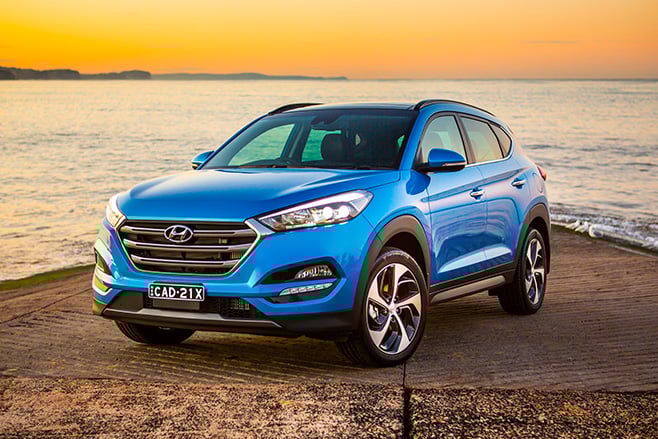
The Hyundai Tucson, which had incredible success last year after its update was in third place with 1678 sales, down from 2065 this time last year but up from 1384 in December.
It was also an excellent month for the Holden Captiva 7, with sales skyrocketing to 1251, up from 739 in December, on the back of considerable plate clearance discounts making it one of the few seven-seaters under $30,000.
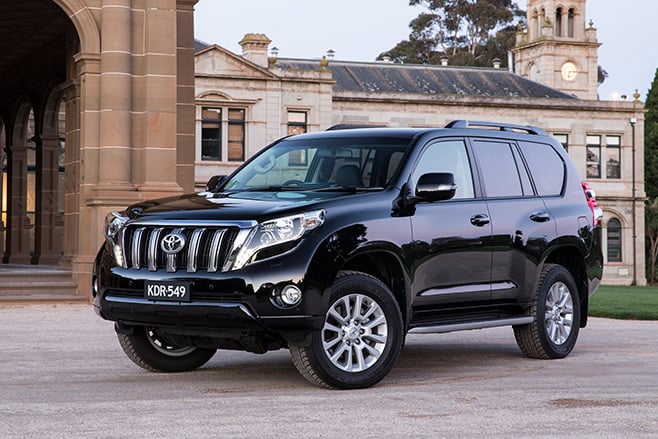
Apart from the Captiva, the only other large SUV, and sole serious off-roader, in the top-10 was the Toyota LandCruiser Prado, whose sales dipped slightly to 1063 with January being a quiet time for fleet sales.
For the record, 602 Mazda CX-9s, were sold in January, down from 799 in December.
| RANK | Model | Sales |
| 1. | Mazda CX-5 | 1924 |
| 2. | Nissan X-Trail | 1759 |
| 3. | Hyundai Tucson | 1678 |
| 4. | Mazda CX-3 | 1486 |
| 5. | Toyota RAV4 | 1394 |
| 6. | Holden Captiva | 1251 |
| 7. | Mitsubishi ASX | 1154 |
| 8. | Toyota Prado | 1063 |
| 9. | Kia Sportage | 1042 |
| 10. | Honda HR-V | 1023 |
* Preliminary VFACTS sales figures
THE Mazda 3 was Australia’s best-selling car in January, with 2017’s new car sales race already taking off at record-setting pace.
Preliminary sales data for January show 84,910 vehicles were sold in the month, a 0.6 percent improvement on the first month of last year’s record-setting volume.
It’s also the month where SUVs have crept within 793 sales of overtaking those of traditional passenger cars – 34,127 versus 34,920 – as the rise of the high-riding, tough-looking wagon continues to gain momentum.
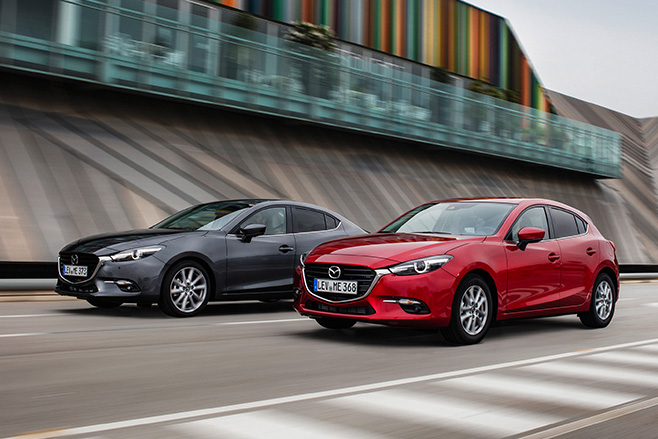
The Mazda 3’s 3473 sales – it was also January best-seller a year ago – outpaced last year’s runner-up, the Toyota Corolla (2943 sales) in a month where government, fleet and hire car company buyers go on holidays. It’s also traditionally the month when private buyers head into showrooms looking for a discount on cars built last year that won’t wear a “Made in 2017” badge – important for resale values where the year the car is made can count against it.
The Toyota Hilux trade ute finished at the top of the 2016 sales charts, but struggled in January’s results to finish third on 2702 units. It was able to just nudge out the Ford Ranger on 2662 sales – last year the two were locked in a month-by-month fight for the title of Australia’s best-selling trade ute.
Hyundai’s i30 is still a good seller for the Korean carmaker, falling into fourth place with 2018 sales for the month. It’s still sharply priced – Hyundai is sticking with a free auto deal that has buyers flooding into showrooms – but is nearing the end of its run. A much more modern-looking replacement for the current car is due in Australia in mid-2017.
Despite the fact Holden will end manufacturing of the local version in October this year, the Holden Commodore large car was the sixth best-selling model on the market in January, attracting 1960 buyers. Holden will soon only take orders for the Aussie-made Commodore – you’re not going to be able to walk into a showroom and buy one off the floor – ahead of the fully imported model’s introduction in 2018.
The Mazda CX-5 has had a strong start to 2017, making an early claim as Australia’s best-selling SUV – a title it held last year. Its 1924 sales easily placed it ahead of the Nissan X-Trail (1759 sales), the Hyundai Tucson (1678) and its smaller sibling, the Mazda CX-3 (1486).
Toyota (12,554 sales) has kicked off the year as Australia’s best-selling brand, a title it has held since toppling Holden (third with 7184 sales) from the top spot in 1991.
Mazda’s strong 10,067-sales result – it had both the best-selling passenger car and SUV for the month – was enough to place it as the second best-selling brand for the month.
A big surprise this month was Porsche. It snared 581 of the month’s total sales to slip into the top 20 list at number 18, ahead of brands including Lexus, Volvo and Jeep. It’s no longer a sports car brand; four out of every five sales were in its performance SUV range, the Macan and its slightly larger sibling, the Cayenne.
TOP 20 MANUFACTURERS FOR JANUARY 2017*
| RANK | MODEL | JAN 2017 | JAN 2016 |
| 1. | Toyota | 12,554 | 12,453 |
| 2. | Mazda | 10,067 | 10,016 |
| 3. | Holden | 7184 | 6824 |
| 4. | Hyundai | 6705 | 7001 |
| 5. | Ford | 5912 | 5504 |
| 6. | Mitsubishi | 5075 | 5007 |
| 7. | Nissan | 5012 | 5563 |
| 8. | Kia | 4015 | 3116 |
| 9. | Subaru | 4009 | 3405 |
| 10. | Volkswagen | 3995 | 4341 |
| 11. | Honda | 3470 | 2898 |
| 12. | Mercedes-Benz | 2973 | 3099u00a0 |
| 13. | BMW | 2104 | 2075 |
| 14. | Audi | 2025 | 2142 |
| 15 | Suzuki | 1481 | 1642 |
| 16. | Isuzu Ute | 1095 | 1384 |
| 17. | Land Rover | 1091 | 1173 |
| 18. | Renault | 864 | 718 |
| 19. | Porsche | 581 | 490u00a0 |
| 20. | Lexus | 566 | 635 |
*Preliminary VFACTS sales figures
