
TELL ME ABOUT THIS CAR
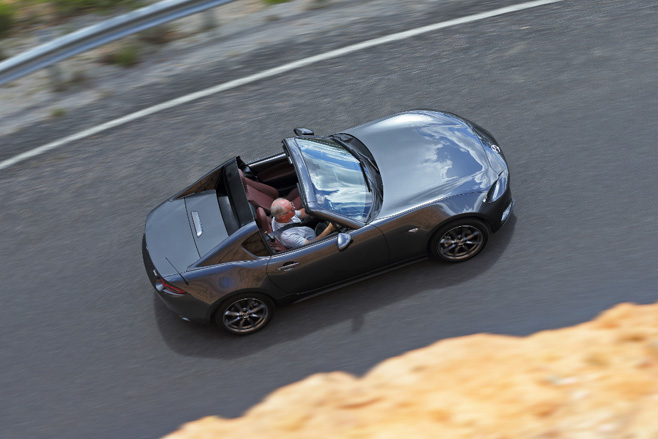
The Mazda MX-5 is the best-selling two-seater sports car in the world, and is now in its fourth generation. This version, the MX-5 Retractable Fastback (RF), uses a folding metal roof instead of the traditional soft-top. It is available in two model grades, RF and RF GT, both with a 2.0-litre four-cylinder engine producing 118kW and 200Nm. Pricing starts from $38,550.
STRENGTHS
- Fun. It’s what the MX-5 is so famous for. Mazda has stuck with a lightweight, rear-wheel-drive platform that gives the MX-5 its agility and will never get boring.
- Steering. Perhaps the most important element of a sports car is its steering, and the MX-5’s front end is precise and full of feel, with sharp turn-in and lots of grip.
- Roof. Nothing adds to the appeal of a sports car like an open roof, though soft-tops are noisier and less secure than hard-tops. The MX-5 RF is different to the normal MX-5 because it is both a hard-top and a convertible. Its hard-top can fold away to give the same big-sky sense of freedom that a convertible offers without the downsides.
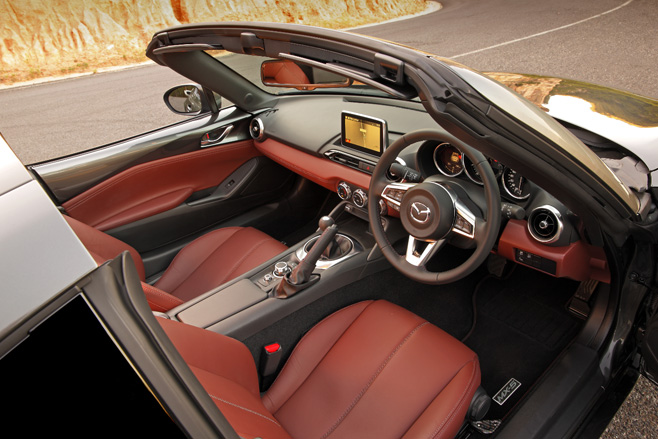
- Refinement. The RF’s solid canopy makes its cabin a little quieter than the normal MX-5. It also feels more upmarket whether the roof is up or down thanks to its premium design and attention to detail.
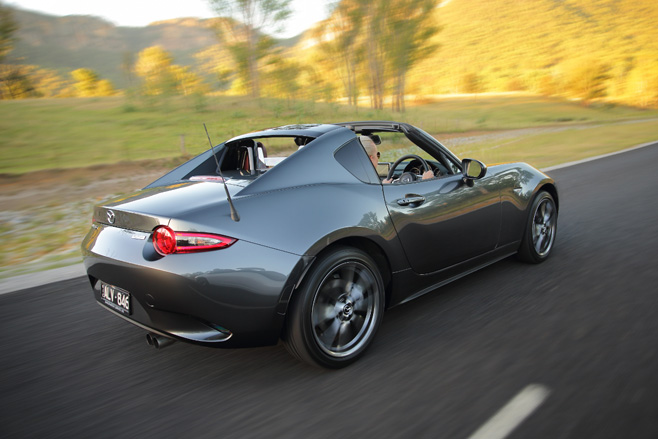
- Styling. The long, tapering roofline of the MX-5 RF is more appealing from the outside than the standard MX-5. With the roof closed it is almost seamless enough to look like a coupe with a fixed roof.
WEAKNESSES
- Noise. One by-product of the MX-5’s weight loss is less sound deadening. Tyre noise is a bit of an issue on some road surfaces, and even though the hard-top is quieter than the soft-top, there’s still some wind noise around the joins of the roof.
- Visibility. They may look amazing, but those thick rear buttresses sit in a tricky spot when trying to move out of a side street or car park. Mazda has added blind spot monitoring to the RF, which is good in traffic, but there are times when x-ray vision would be the only way to see what’s coming.
- Equipment. The MX-5 is quite good value, but there are some things that remain optional that some buyers might expect as standard. A reversing camera is one particular accessory, which costs an extra $485 regardless of which model you buy.
- Practicality. OK, the MX-5 isn’t exactly a family car, but it’s fair to imagine using one for a holiday somewhere. Well, there’s not much boot space or cabin storage, and while the RF’s roof design is very clever, it does take away a little of the precious boot space from the normal MX-5.
ANY RIVALS I SHOULD CONSIDER
Mazda builds the MX-5 with a different face on it for another company, it’s called the Abarth 124 Spider. That car pairs the MX-5’s masterful chassis with a 1.4-litre turbocharged engine and firmer suspension. Like the MX-5, the Abarth is fun to drive, though a little less friendly on bumpy roads and only available with a soft-top.
The Mercedes-Benz SLC180 is premium alternative to the MX-5. Similarly sized, with two-seats and a folding hard-top it’s a well-made car, though quite old underneath and more expensive to buy.
If the MX-5 appeals because of its affordable sports car status, then the Toyota 86 and Subaru BRZ coupes should be considered as they’re also former Wheels Car of the Year winners (like the MX-5), and are excellent fun to drive, though they’re not available in convertible form.
When you speak to Tanya Buchanan, the editor of the bi-monthly BELLE magazine, you walk away with a sense of calm and enthusiasm. Her style is sophisticated chic; she looks totally composed and you get the sense her home would be straight out of a picture in her magazine. Of course, as a mum and the editor of an iconic magazine with a 40 year history and more than 200 pages per issue, her poise is a testament to her – a sort of controlled captain of an otherwise dynamic ship.
It makes sense that Tanya embodies her BELLE audience – she’s worked on the title for close to a decade, as managing editor for seven years before taking on the editorship in 2014 following the resignation of The Block judge Neale Whitaker.
It’s her twin roles as a mother and esteemed editor of BELLE that saw Tanya invited as a judge of the WhichCar Style Awards for a second year.
Tanya defines style as unique and individual. “It’s an expression of how we see ourselves and how we want the world to perceive us. Our choice of cars, fashion and accessories is an expression of our personal aesthetic,” she said.
As a passionate supporter of the Australian interior designer industry, and also an enthusiast of the arts, Tanya brings her knowledge of home design to the automotive space as the judging panel explores design, textiles and functionality of each finalist’s style.
“The WhichCar Style Awards were a lot of fun as it is always great to be able to spend some time really looking at a car and its interior,” Tanya said of the day.
“It is also very educational judging with automotive designer Paul Beranger and it’s good to have editors from other magazines … As everyone has a unique take and is looking for something different when evaluating the style of a car.”
While Tanya’s daily businesses focuses on luxe homes, her daily runabouts speak a different story. With a car-loving father and hands-on work in interiors and styling, Tanya’s daily drives tell a far more serviceable story.
“At the moment I’m driving a 1985 Mercedes 280SE but my father loves buying cars so he sends me a different model every six months or so. I also have an old Mitsubishi Triton ute which is very handy when you work in interiors and styling as you need to be able to morph into a removalist at call,” she said.
When asked about the finalists, Tanya said the Mustang and Audi really captured her attention.
“The Ford Mustang was like a bit shot of testosterone – a good-looking car – that was pretty impressive, especially considering the price. And I loved the quiet luxury of the Audi A4. Its elegant lines and chic minimalist interiors with well-considered design features really appeal to me.”
Meet the 2017 Whichcar Style Award finalists.
It was an up and down year for Hyundai, much of it driven by what deals (and models) were in the market.
The death of the i20 in 2015 was always going to leave a hole and, despite trying to plug it with Accent, there was a net drop in volume. The return of the Hyundai Tucson nameplate only held pace with the ix35 it replaced and, while i30 grew impressively, it was on the back of massive discounts that saw sales leap and dive throughout the year. The mega deals were all about battling through a year in which new product was minimal (the Elantra early in the year was the biggest news); market share dropped as a result, although sales volume was about even.
RANK: 3RD 2016 SALES: 103K 2016 YTD RESULTS: 94,503 sales, down 0.4%, 8.8% market share 2017 FORECAST: 105K GRADE: B+
Opportunities
Hyundai desperately needs a small SUV, something set to arrive around September. That promises a kick in the second half of the year, albeit one that could come at the expense of other models, including i30, a new model of which, pictured left, is due around April. The i30 is by far Hyundai’s biggest-selling model so is crucial to any big sales play in 2017, and the new model promises big improvements to driving nous and a new Euro-designed interior that ups the game for a company that’s had some plasticky presentations on recent efforts. Hyundai will also make its foray into the eco-friendly hybrid market with the Ioniq plug-in, which is not about big volumes but will add some incremental sales and help establish the brand as more than a maker of good-value cars.
Challenges
Reducing the reliance on Hyundai i30. Sales of small cars dropped almost five percent in 2016, so it’s a declining market, yet one that accounts for 42 percent of Hyundai sales (once you include the Elantra sedan). Also, Hyundai has made it clear the new i30 will be sold more on merit than price, something that will see it fight more fairly with Golf, Corolla and Mazda 3 – which will make life a lot tougher for it. Hyundai is also under pressure from multiple levels; Mazda and Toyota keep applying pressure from above, while sister brand Kia and keen-to-recover Holden are charging hard from below.
Summary
Big sales, but many of them as a result of big discounts. Hyundai now needs to rely less on the deals and more on the cars, something that will provide plenty of challenges over coming years.
The program manager for the MX-5 Retractable Fastback points to the half-hexagonal line where the hard-top’s flying buttresses meet each rear quarter panel, explaining that it was inspired by the closing door of a Star Trek spacecraft.
But there’s more than trivial trickery at play with this tin-topped ND generation.Having to stow two of the three parts of the folding roof mechanism results in the Mazda’s boot space falling by just three litres, now 127L.
Nakayama-san admits that compared with the larger 2005-era NC there was 70mm less stowage length to work with, so if all three pieces were to drop it would have meant culling the boot or stretching the wheelbase – and neither were desirable options, so therefore some sorcery was required.
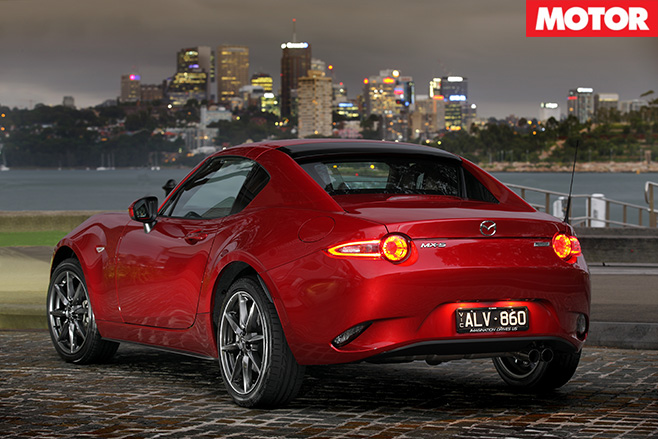
The rear glass acrobats into the same cavity where the manual soft-top is stowed, the final roof piece bunkering just above it. When the buttresses are brought back into place, it means the glass window behind occupants’ heads has vanished like magic.
An electric roof mechanism that can operate at up to 10km/h, and lower in 13 seconds, adds back some of the weight that ND engineers flushed from the NC.
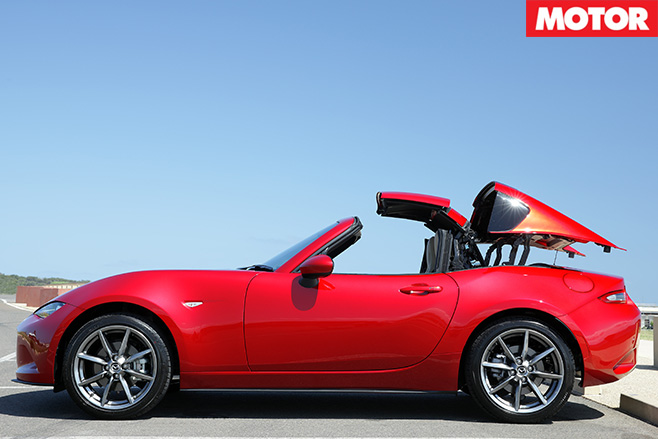
Particularly given there are no changes to the 2.0-litre engine, it’s no surprise that the MX-5 RF drives the same as the Roadster. Perhaps on really rough roads there is less steering rack rattle – although some remains – and the tin-top is decently quiet on smooth surfaces, only raising decibels on coarse-chip and with slight wind noise at speed.
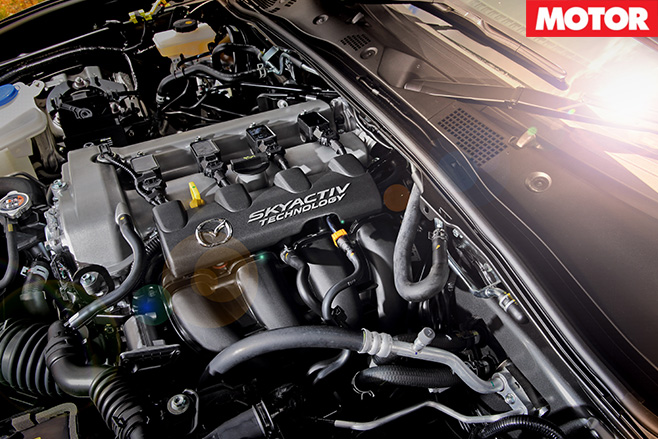
Thankfully there is a perfect manual shifter and a surprisingly intuitive and slick auto option. It’s the start of what remains a vehicle that is highly enjoyable to drive, delivering a supreme feeling of lightness, a sharp front-end that joins with excellent throttle response to enhance balance, a fabulous single-setting stability control setting and a beautifully resolved ride.
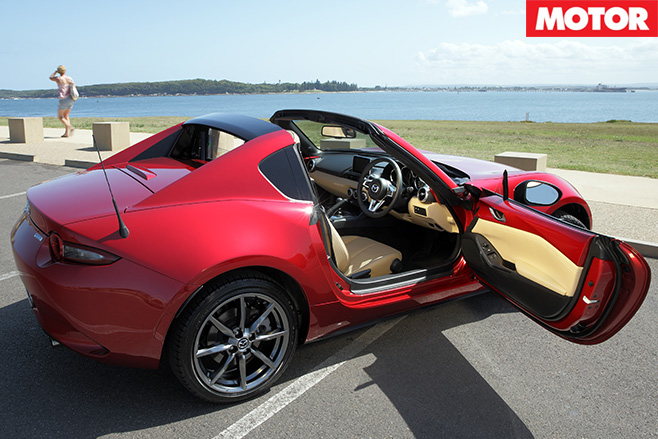
Mazda estimates that 60 per cent of Mixxer buyers will choose the tin-top despite only being available in pricier 2.0-litre guise and for around $4K above the equivalent soft-top.
The $38,550 MX-5 RF sits some distance above the $33,340 1.5-litre MX-5 Roadster, yet it will snare 18.0 per cent of sales (versus 10.0 per cent), while the $43,890 RF GT will poach 42.0 per cent. Around 70 per cent of buyers will pick a manual, too.
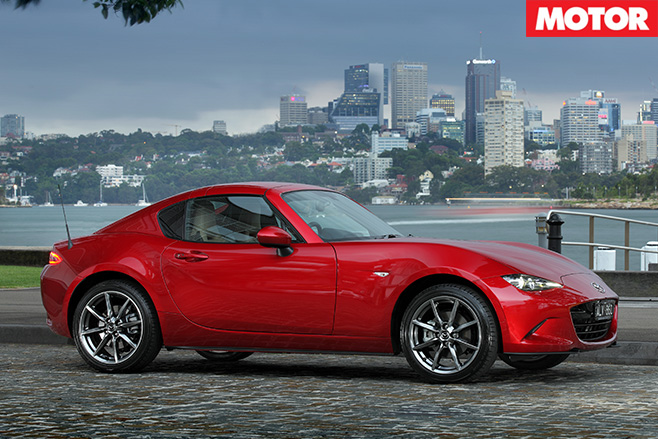
For absolutists – and perhaps the Bang For Your Bucks scorecard – it’s the cheaper pricetag and lightweight purity of the soft-top that still leaves it as the more spellbinding MX-5.
4.0/5
Like: Brilliant ride, handling, ESC calibration and gearshift Dislike: Driving position, steering not perfect, dull engine note
Specs Engine: 1998cc 4cyl, dohc, 16v Power: 118kW @ 6000rpm Torque: 200Nm @ 4600rpm Weight: 1080kg 0-100km/h: 6.6sec (estimated) Price: $38,550
A classier, more universally appealing version of Mazda’s revered and accessible sports car manages to keep the faith.
WHAT IS IT? Mazda’s brilliant ragtop roadster range has diversified and grown to include the Mazda MX-5 Retractable Fastback (RF), Mazda’s second attempt at a folding hard-top for its iconic sports car, but with a greater focus on coupe aesthetics and maturity.
WHY WE’RE TESTING IT Mazda worked off the flab and went back to basics with its fourth-gen MX-5. After such an effort to reference the original of 1989, does the hard-top MX-5 RF take away from the regular car’s revived purity?
MAIN RIVALS Abarth 124 Spider, Mercedes-Benz SLC180, Mini Convertible, Toyota 86/Subaru BRZ
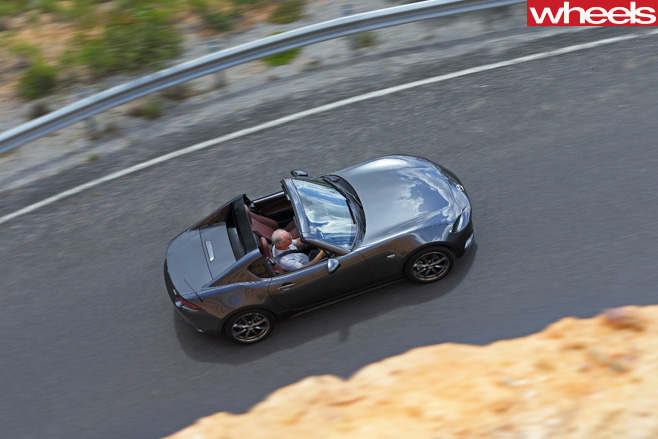
PLUS: Visual fascination, unchanged MX-5 dynamics, upmarket quality, improved refinement MINUS: Cabin noise, blindspots, lacks standard reverse camera
THE WHEELS REVIEW Mazda has a legacy of ambitious engineering exploits spanning seven decades, and the MX-5 RF bears witness to it. Its folding metal lid wasn’t envisaged until two years into fourth-gen MX-5 development, when packaging it without extending the wheelbase or greedily eating into cargo space became a complex conundrum to crack.
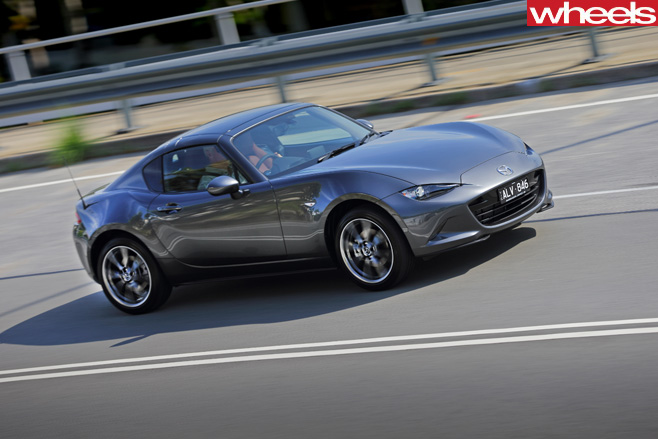
Crucially then, the four-piece roof mechanism adds more than just 47kg of moving parts. It brings maturity and a kerb-side allure the regular car lacks, with an imperceptible impact on its dynamic purity.
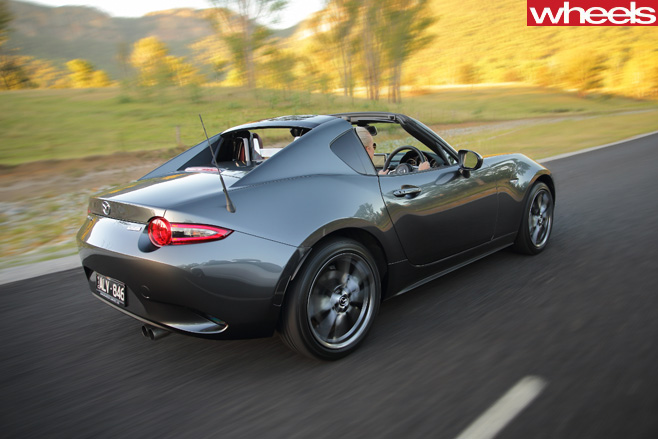
Mechanical changes are limited to a firmer front anti-roll bar, increased stroke for the front dampers and more compliant rear suspension bushes. The ride, though soft for a sports car, is brilliantly controlled; leaving the MX-5’s fabled steering sharpness and poised chassis unspoilt.
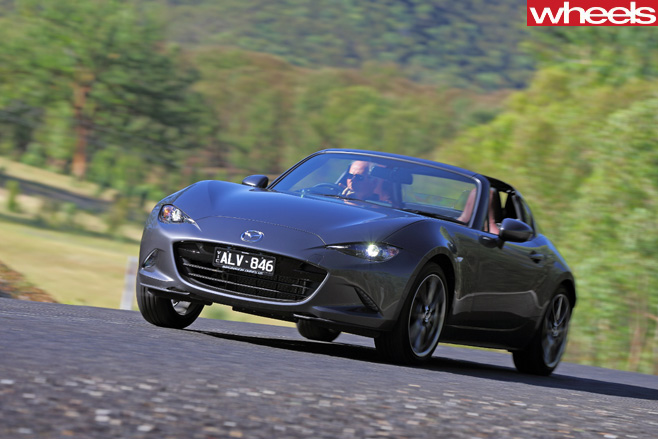
It takes 13 seconds to open or close the RF’s lid, which can be done at speeds of up to 10km/h. Mazda’s engineers laboured over the final stages of the roof’s articulation, and by slowing the servos at the end of their movement they managed a smooth and quiet latching motion, like soft-close drawers in a modern kitchen, that does a lot to realise the upmarket experience Mazda set out to achieve.
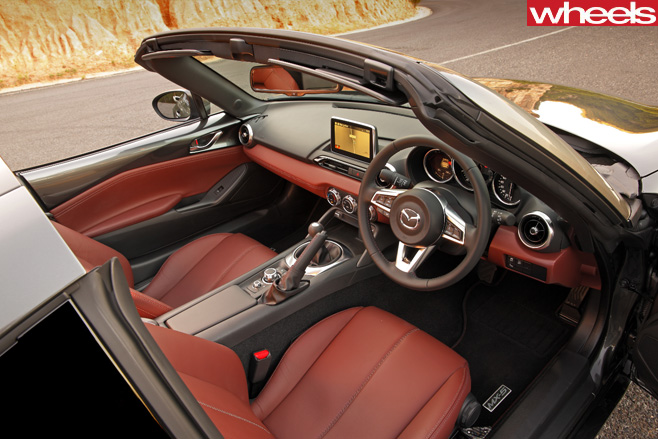
Additional safety systems include blind spot monitoring, which it needs considering the huge obstruction of the RF’s tapering rear buttresses. Sadly, a rear-view camera is still an optional accessory for all models.
The greater sense of freedom offered by an open-top car usually comes at the expense of security, sports credibility and roof-up looks. The RF manages to cover those bases without losing any of the Mazda MX-5 essence that charmed its way to the top of COTY 2016. And if it means more people get into one, then the RF deserves its place in the line-up.
SPECS Model: Mazda MX-5 RF Engine: 1998cc 4-cyl, dohc, 16v Max power: 118kW @ 6000rpm Max torque: 200Nm @ 4600rpm Transmission: 6-speed manual Weight: 1080kg 0-100km/h: 7.5sec (est) Fuel economy: 7.0L/100km Price: From $38,550 On sale: Now
The 2017 World Rally Championship kicked off in spectacular fashion in Monte Carlo on the weekend, with the historic event supplying all the uncertainty and drama for which it has become renowned.
Pre-event interest was higher than usual courtesy of the WRC’s new technical regulations providing a clean sheet for the four teams, as well as significant driver shuffles thanks to VW’s last-minute decision to end its WRC involvement.
The specialist nature of Monte Carlo means no clear picture has yet emerged as to the form guide, however here are nine things we’ve learned so far.
The new cars are brilliant
It appears that the 2017 technical regulations were the shot in the arm the WRC needed. The cars look outrageous, sound as if they are fuelled by pure testosterone and are unbelievably rapid.
Even better, they are spectacular to watch, with more power than grip, on icy, gritty French mountain roads at least. On loose surfaces the increase in wheelspin will make the car slide more and also increase tyre wear.
While the massive wings may stick the car to the ground on dry tarmac in Corsica, Germany and Spain, there the spectacle will come from the cars’ sheer speed. Watching the Saturday live stage the pace was breathtaking.
If you’re wondering how these cars compare to the monsters of the Group B era, simply put, there is no comparison. Depending on the surface, the 2017 cars are estimated to be around 5sec/km faster than the machines from the WRC’s wildest era.
Monte Carlo is the best rally
It may lack the outright speed of Finland, the crowds of Argentina or the spectacular vistas of the now departed Safari, but for sheer unpredictability and the spectacle of the seeing the best drivers in the world stretched to their limit the Monte is unsurpassed.
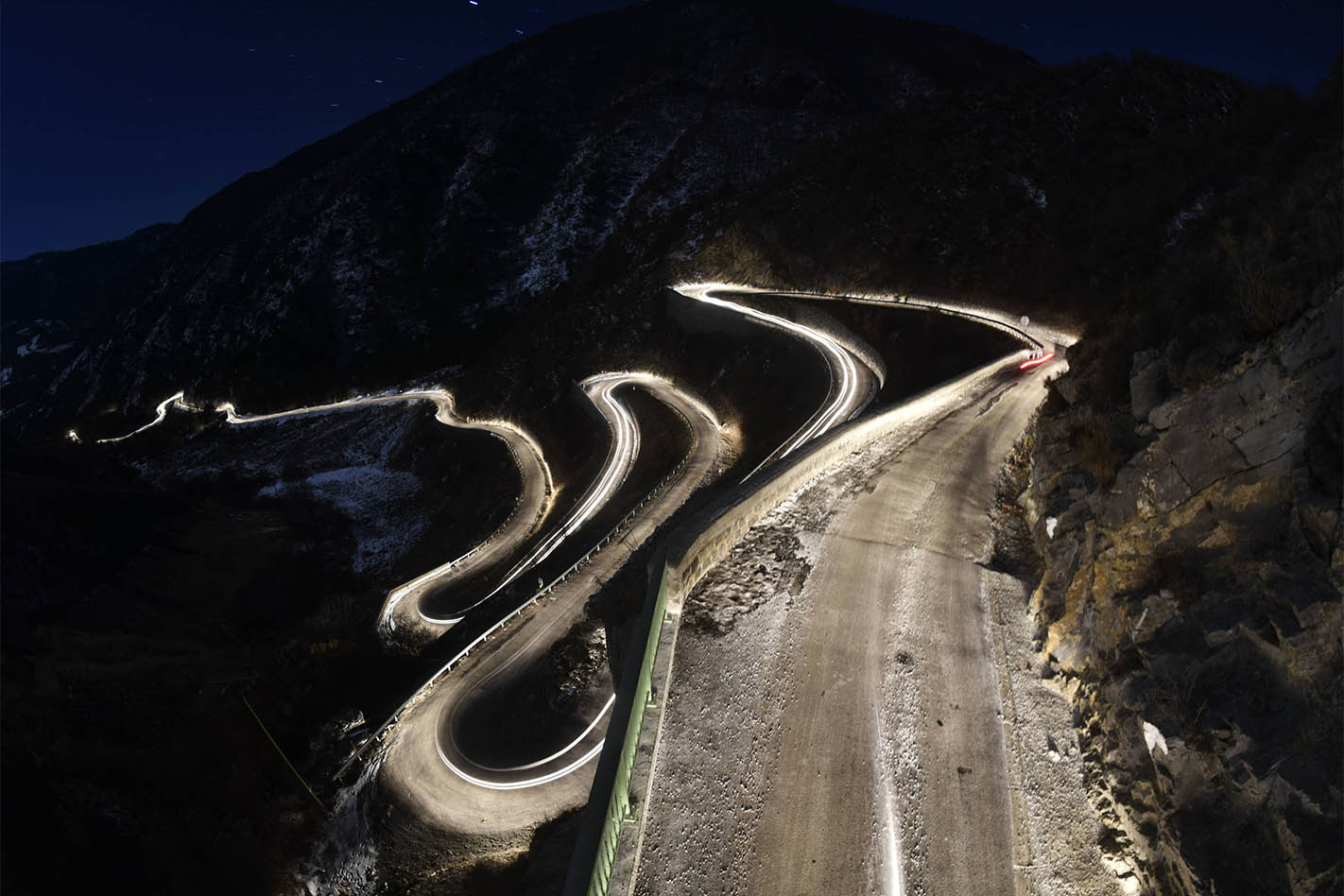
Hyundai driver Thierry Neuville discovered how cruel Monte can be, dominating for 12 stages only for the smallest of mistakes to break his rear suspension on stage 13, dropping him from hero to zero.
Even then, this year’s rally had one final sting in the tail, a change in weather during the last stage meaning drivers climbed the mountain on dry tarmac and descended on ice and snow.
Motorsport is dangerous
Sadly, this year’s WRC season started in the worst possible fashion when a spectator was struck and killed when Hyundai driver Hayden Paddon lost control on black ice during the opening stage.
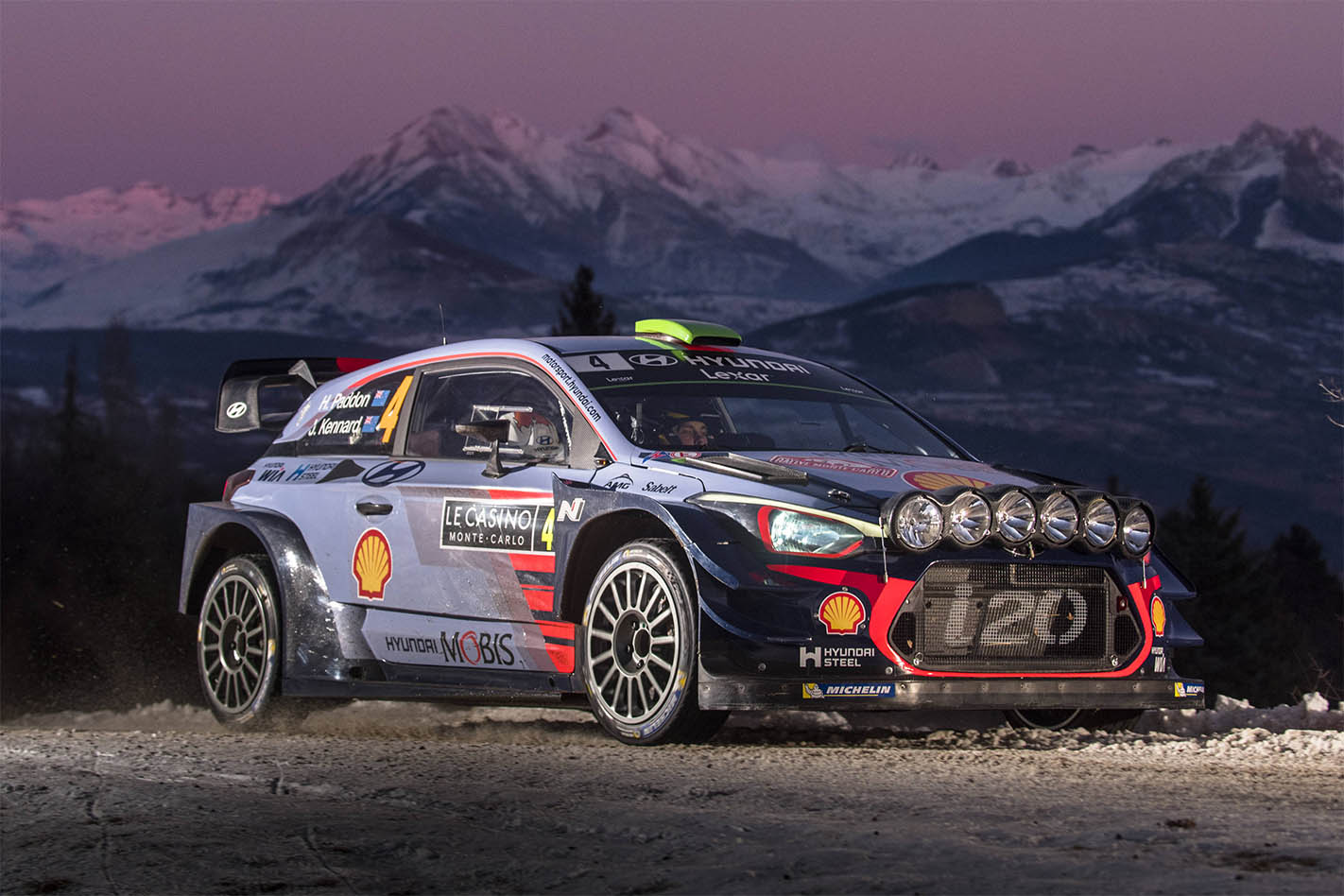
Paddon’s car was immediately withdrawn from the event.
Sebastien Ogier is a true great
If any doubt remained as to Sebastien Ogier’s place in the pantheon of WRC greats, his fourth straight Monte Carlo win should put it to rest. For the past four seasons he’s had the privilege of the best car, but that wasn’t the case this time.
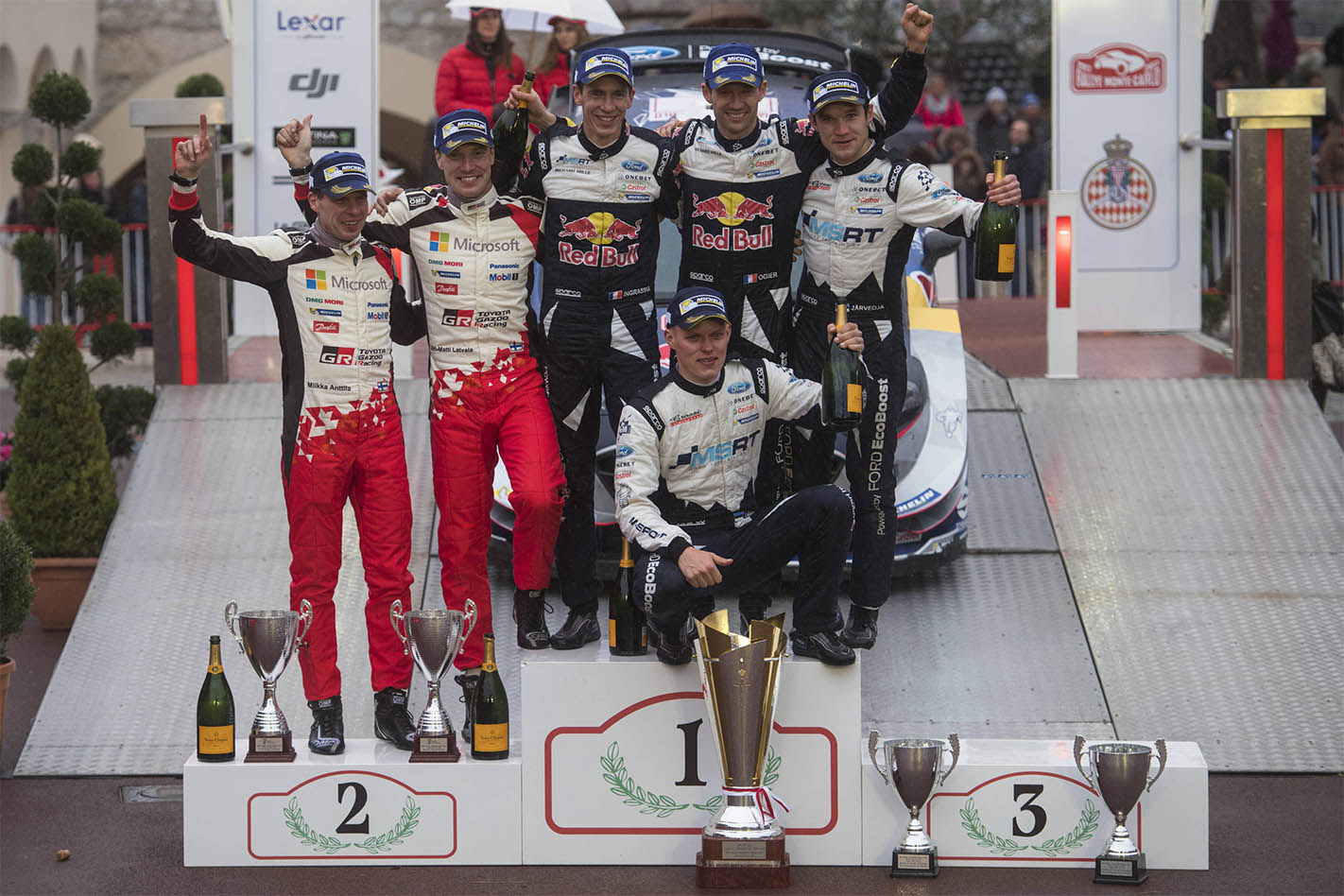
You could argue Ogier was lucky that Neuville had problems, but like all champions he made his own luck. Whereas Neuville left the road at a place he knew he shouldn’t (the corner was marked in his pace notes) Ogier’s own off-road excursion on stage 12 happened at a place he knew he could get away with it.
M-Sport can win the constructors’ title
With Toyota and Citroen not fielding three cars until the fourth round in Corsica, Hyundai’s stable line-up of three strong drivers (Neuville, Paddon and Sordo) looked to already have one hand on the constructors’ title.
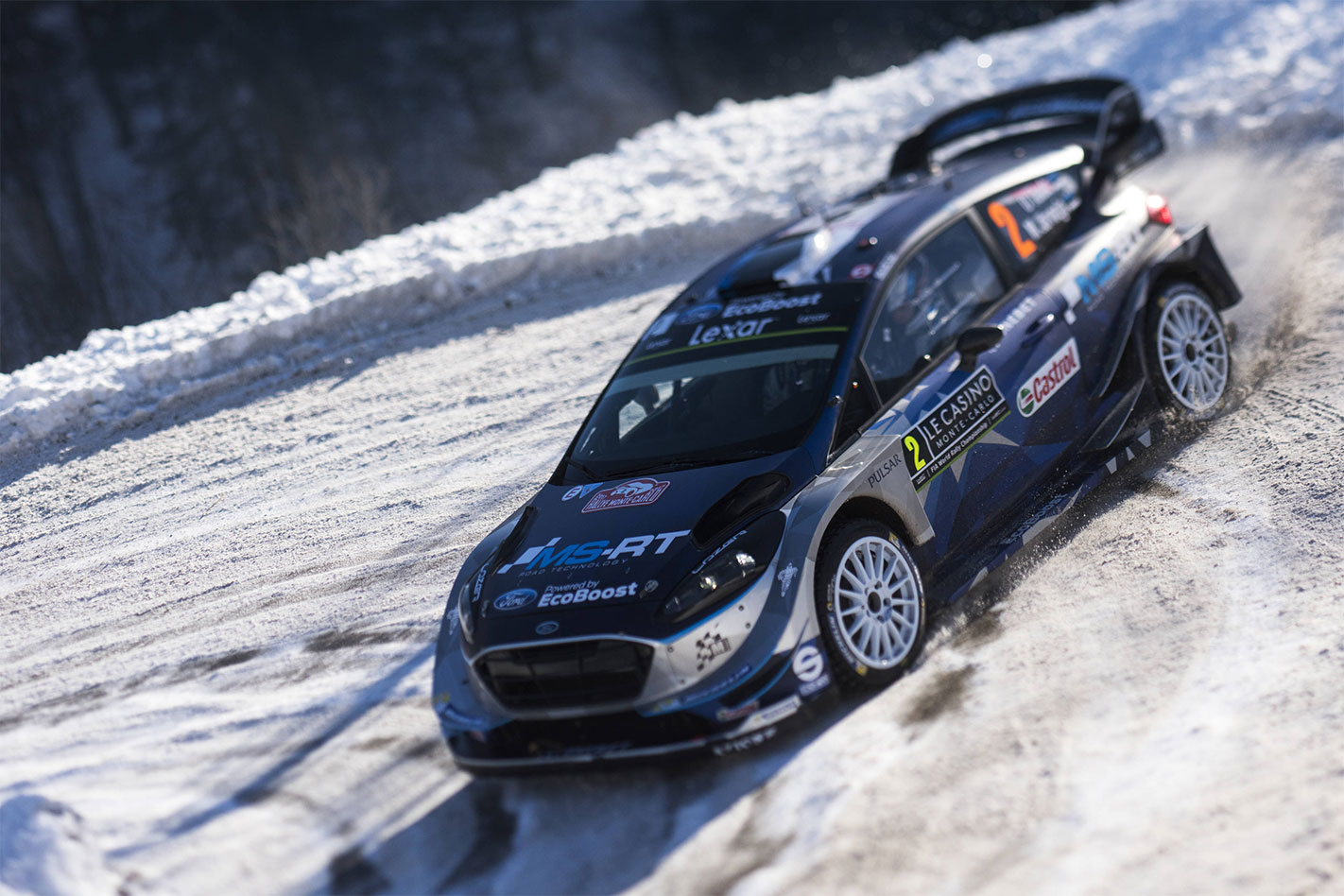
Meanwhile, the third car of Elfyn Evans, running on DMack tyres, struggled early on the ice and snow but scored three stage wins on the drier tarmac of the second day, the young Welshman showing brilliant speed in difficult conditions.
Thierry Neuville is a title contender
Hyundai’s lead driver has had a rollercoaster 18 months, however towards the end of 2016 refound his form to secure second in the championship. Nonetheless, his late re-signing with Hyundai meant he had limited mileage in the 2017 i20 before the season began.
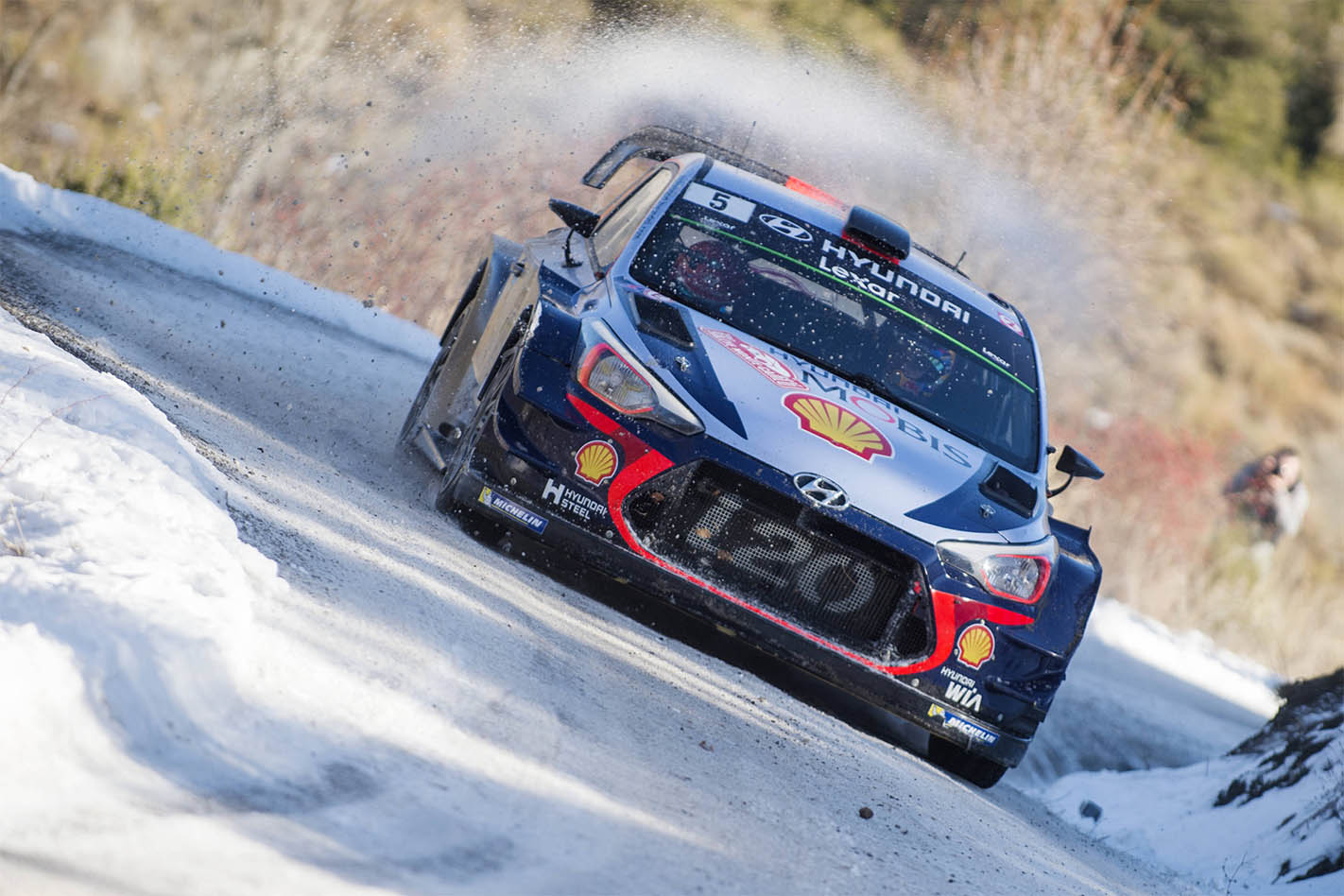
While five points from winning the power stage is a poor return for once of his best drives, the speed and consistency he showed means Neuville is absolutely in the running for the 2017 drivers’ championship.
Toyota has done a top job
Not in its wildest dreams could Toyota hace expected to secure a podium placing in its return to the WRC after an 18-year absence. Attrition definitely played its part, but more encouragingly the Yaris WRC showed real speed on damp and slippery tarmac, supposedly the car’s greatest weakness.
What’s more, it’s undoubtedly the most spectacular of the new breed of WRC cars. It looks like an extra from a Transformers movie, spits blue flames like a McLaren P1 and sounds vicious, a combination of chirps, growls and barks.
Monte is arguably lead driver Jari-Matti Latvala’s weakest event, and for a driver whose performance is so closely linked to his confidence, this second place is the dream start for the all-Finnish team.
Citroen has a lot of work to do
In stark constrast to Toyota, Citroen’s return to the WRC was a nightmare. Everything that could go wrong did go wrong. Both drivers of the new C3, Kris Meeke and Stephane Lefebvre, made major mistakes on the opening day before car problems struck both on day two, engine for Meeke and power steering for Lefebvre.
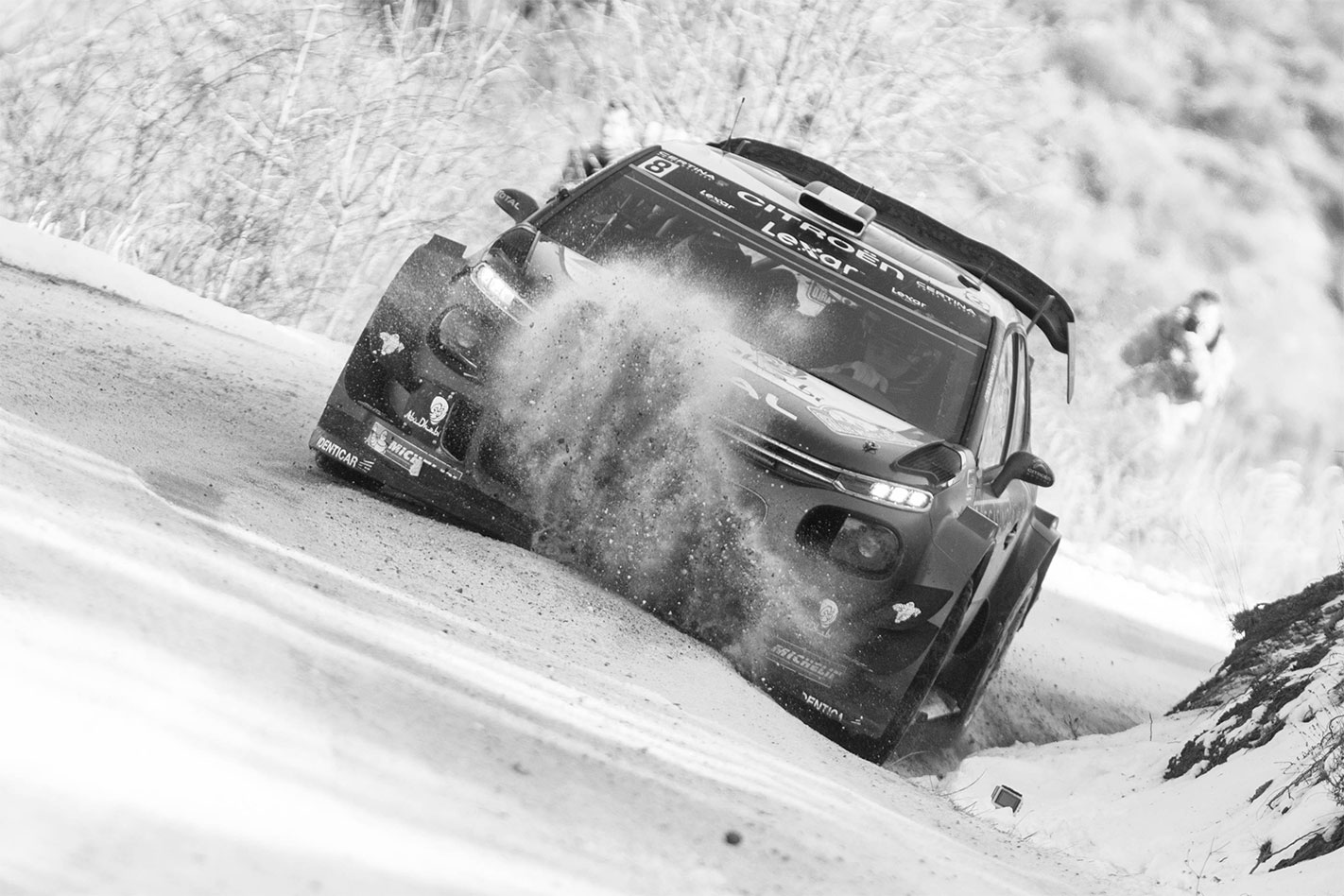
The one bright spot for Citroen was the performance of Craig Breen. The young Irishman was driving a 2016-spec DS3, yet was often faster than Lefebvre in the superior 2017 car and finished an incredible fifth outright, snapping at the heels of Dani Sordo. An amazing drive.
Andreas Mikkelsen needs a drive immediately
When the music stopped following VW’s departure late in 2016, it was sadly Andreas Mikkelsen who was left without a seat, a particularly cruel result given his dominant win in the season-ending Rally Australia.
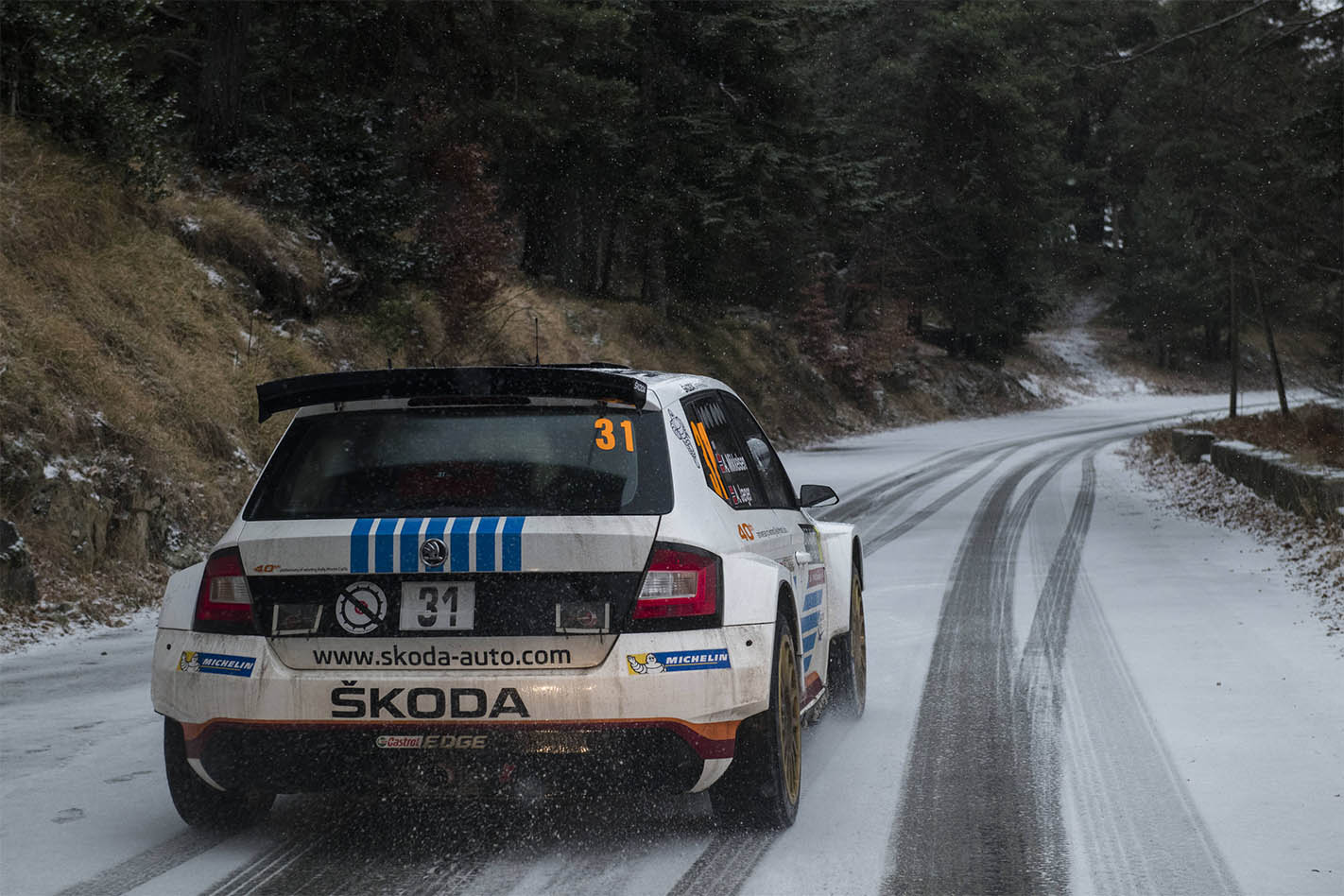
Mikkelsen has no drive for the upcoming Rally Sweden, however speculation is mounting the talented Norwegian will appear in a few rallies throughout the year in a private car.
The next round of the 2017 WRC championship is Rally Sweden on February 9-12.
THE 2017 Kia Rio is a smarter, classier package, let down by an ageing heart.
WHAT IS IT? Rolling on a new platform and sporting a new-found maturity, the three-tier range (S, Si and SLi) is now offered solely as a five-door hatch and has just one engine choice from launch – an aspirated 1.4L-litre mated to either a six-speed manual or four-speed automatic.
WHY ARE WE DRIVING IT? Because after years of lagging behind the top-three in the cut-throat small-car segment, this new-gen model is a chance for Rio to leap to the top of its class. And it has arrived spoiling for a fight with the Mazda 2 and Volkswagen Polo thanks to improved space and packaging, even sharper styling and the addition of crucial equipment like Apple CarPlay and Android Auto.
MAIN RIVALS Mazda 2, Volkswagen Polo, Peugeot 208, Ford Fiesta, Fiat 500, Holden Barina, Honda Jazz, Mitsubishi Mirage, Renault Clio
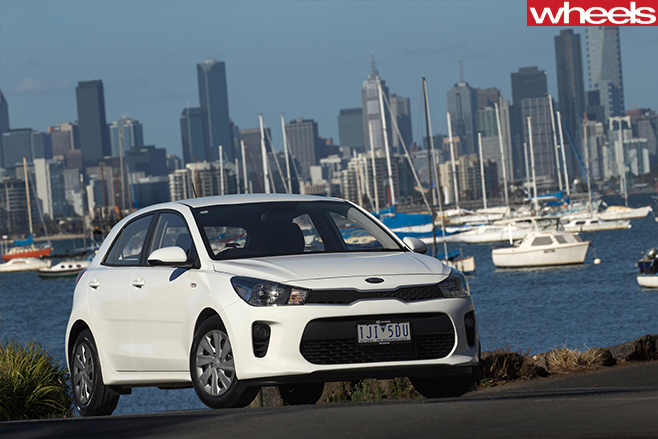
PLUS: Crisp, Euro-inspired styling; classy, roomy interior; handling poise; fluid steering MINUS: Ageing, uninspiring drivetrain; no AEB; premium price; hard plastics on dash and doors
THE WHEELS REVIEW GOOD, but not quite good enough to trouble the small-car elite was the story with the previous-generation Rio. Kia’s popular city car has long hovered on the cusp of segment leadership thanks to its locally tuned chassis, solid equipment levels and the assurance of its seven-year warranty, but it lacked the verve, the dynamic nous and the drivetrain sparkle to truly rival the likes of the Mazda 2 and Volkswagen Polo.
Enter the fourth-generation Rio. Now bigger, better looking and better equipped than before, the new-gen Rio brings a welcome dose of maturity to Kia’s small-car line-up. Riding on a new platform and a wheelbase that’s grown by 10mm (overall length is up 15mm), the Rio makes the most of its boosted dimensions with a crisp, well-proportioned exterior design that looks distinctly European.
Penned by Kia’s design centres in Germany and California , the Rio’s wider ‘Tiger’ grille and more conventional two-box shape is conservatively handsome in all three trim grades (S, Si and SLi).
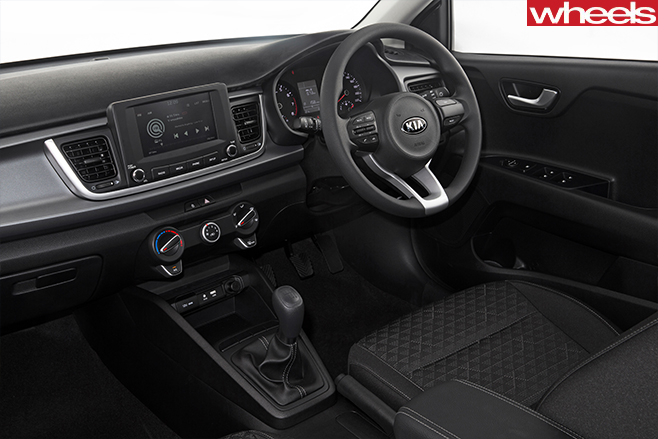
It’s the same story inside, where a floating 7.0-inch touchscreen which adds Apple CarPlay and Android Auto connectivity, and Audi-esque drop-down buttons for the air-conditioning controls provide a quality Euro feel. You notice the extra-space too. Leg and shoulder room has increased in both rows, and there’s ample headroom for 6ft-plus passengers in the rear seats. The seats (cloth in S and Si, fake leather in SLi) are firm but comfortable and provide decided back and thigh support.
Of course, this being a Kia, the interior ambience is dark and monochrome with none of the design flair or colour you find in a Mazda 2, but there is plenty of useful storage including large bins in the doors for water bottles and a two-level cubby in-front of the gearstick to place phones and wallets.
There’s plenty of equipment, too. Every Rio scores a reverse camera, keyless entry, auto headlights and power winders, while Si grades and above add sat-nav, digital radio and cruise control.
Where the Rio really stumbles, though is in the engine department. Kia has dumped the old car’s muscular 1.6-litre donk, meaning that for now, the sole engine option is an ageing, and uninspiring 1.4-litre aspirated four-pot. Carried over virtually unchanged from the previous-gen Rio, the atmo lump has undergone some efficiency improvements for a minor fuel consumption gain (6.2L/100km), a move that has seen outputs drop slightly to a modest 74kW/133Nm.
Gearbox choices include a six-speed manual (base S only), or a four-speed automatic, with the latter only emphasising the 1.4’s lacklustre power and torque. Performance is acceptable in city traffic thanks to decent step-off from the lights, but on the open road the auto’s lack of ratios expose a torque-light mid-range and a harsh top end, which can make hills and overtaking a noisy and lethargic experience.
At least the dynamics make up for the disappointing drivetrain. Like most of Kia’s range, the Rio has been fettled for Aussie roads by Kia’s suspension guru Graeme Gambold and the result is handling that feels taut, controlled and on twisty roads, even fun. The steering in particular is a highlight, and is well-weighted, fluid and accurate. So while the new Rio offers important steps forward in terms of design, quality, connectivity and dynamics, it’s a disappointing step backwards under the bonnet. And in this saturated, cut-throat section of the market, that’s enough to cruel the Rio’s attempt to leap to the top of its class.
SPECS Model: Kia Rio S Engine: 1368cc 4cyl, dohc, 16v Max power: 74kW @ 6000rpm Max torque: 133Nm @ 4000rpm Transmission: 4-speed automatic Kerb weight: 1162kg 0-100km/h: 11.0sec (est) Economy: 6.2L/100km Price: $19,090 On sale: Now
ETERNAL enigma Bernie Ecclestone is said to be Britain’s highest paid individual. Mark Fogarty looks at what is known about the little big man of Formula One.
First published in the January 1999 issue of Wheels magazine, Australia’s most experienced and most trusted car magazine since 1953.
Everyone in Formula One is scared of Bernie Ecclestone. Nobody who earns a living from F1 dares to criticise Ecclestone openly, much less cross him. For insiders, the consequences of getting on the bad side of Bernard Charles Ecclestone are too terrible to contemplate. Or so they say. The problem with trying to separate fact from fiction about Ecclestone’s fearsome reputation is that there’s plenty of hearsay, but no evidence to prove his reputed malevolence. There is no debate that he runs F1; the only discussion is whether he rules by fear or finesse.
 The Mysterious Mr E – January 1999
View this article in its original format in the archive.
There is nothing of any consequence in F1 Bernie doesn’t control or, at least, influence. At the heart of the Ecclestone empire is Formula One Holdings (FOH), the family trust-owned corporate umbrella for the businesses which administer the key operations of ‘F1 Inc’. Bernie is president of Formula One Administration (FOA), his letterhead company through which flows the main streams of revenue – TV rights and race franchise fees.
FOA controls the conduct of each grand prix and, in some cases, promotes the actual events, as well as being the absolute authority on TV rights and the allocation of paddock passes. Through his association with longtime confidant Paddy McNally’s Geneva-based Allsport Management, Ecclestone also has dominion over circuit advertising, promotional activities and corporate hospitality at each race.
And somewhere in his corporate labyrinth is the Formula One Constructors Association (FOCA), once the representative body of the teams but now an entity of indeterminate status. Additionally, Bernie Ecclestone manages to juggle the apparent conflict between his overtly commercial interests and his sporting duties as vice-president, promotional affairs, of the FIA.
Somehow, either through sheer savvy or masterful manipulation (or both), Bernie’s balancing act works. Works so well, in fact, that F1 and all those involved in it have prospered under his rule, while also making him spectacularly rich. So rich that he has been forced to emerge from the shadows in the past year or so.
Interest in his activities was triggered by the leak of his plans to tum FOH into a public company and the revelation he had donated £1 million to Britain’s Labour Party, which was linked to the Blair Government’s controversial concession to exclude F1 from its pre-election pledge to ban all tobacco sponsorship in sport.
Then came a damning cover story in a recent issue of Business Age, the maverick business magazine which loves lifting the lid on borse brawls. Under the headline ‘Can you trust this man to run a public company?’, the extensive story sticks the boot into Bernie, alleging he has been stashing it away at the expense of the teams.
It’s an inflammatory article which – if the facts, figures and assertions are true – explains why McLaren and Williams refused to sign the Concorde Agreement until the eve of last year’s Monaco GP, holding out for a bigger slice of the TV rights pie. According to Business Age, uncharacteristic errors by Ecclestone blew the gaff on the disproportionate share he takes from the revenue generated by TV and race fees.
“Ecclestone only has himself to blame,” the magazine says, reporting that his legendary judgment deserted him’ in 1996. “First, he allowed a series of financial and contractual disputes with circuit organisers to go to court instead of being settled. Then his company accounts were published, showing him to be Britain’s highest paid person. He also allowed ITV to reveal to the world what it was paying to seize the British TV rights from the BBC.”
Business Age claims that central to Ecclestone’s undoing was the revelation a year ago that in 1993 he signed a secret deal with the FIA, giving him exclusive ownership of the TV rights to F1 for 25 years. It alerted not only the teams to the riches they hadn’t realised TV revenue raised for Bernie, but also the EU’s Competition Commission, which smelt an illegal monopoly.
Informed insiders say that key data in charts accompanying the article – listing team budgets and incomes, and driver earnings – is wrong, casting doubts on the accuracy of the story. It is understood Ecclestone has initiated legal action against Business Age.
Despite all this unwelcome interest and uncertainty among F1 folk, Mr E – the moniker he uses on his fax header – is definitely Mr Big. Whatever the reasons, the simple fact is that his reputation precedes him. You only have to watch the diminutive despot scurry about the paddock at any grand prix to realise how pervasive is his authority. His presence parts crowds like Moses parted the Red Sea.
Ecclestone is a control freak. At his posh London office, visitors aren’t made to feel welcome so much as privileged. Whether it’s a psychological ploy or just extreme neatness, there is nothing on which to sit while you’re waiting in the reception area. You stand there, shuilling uncomfortably in front of the impassive receptionist, while FOH staff appear and disappear through doors which, when closed, are indistinguishable from the panelled walls.
When you are finally ushered into Mr E’s large and sumptuous office, which looks out onto manicured gardens, you sit before him on a chair so low you have no choice but to look up over the desk at him. It’s just one of the many ways he accentuates his imposing aura, which is very much at odds with his physical stature. Ecclestone is a short, slight and sprightly senior citizen – he admits to having seen 68 summers, although some suggest it is more – who peers at you through strong spectacles beneath a full fringe of grey hair.
Interviewing F1’s Little Big Man is intimidating and often frustrating. The power of his presence can unsettle even the most hardened hack, and he uses withering wit and skilful semantics to deflect insistent interrogation. He is a master of the implied, saying things in such a way that you infer more than there actually is in the transcript of his words. He embellishes his speech with intonation that is suggestive, but intangible in print.
Bernie is, however, renowned as a man of his word and he is forthright, if not always forthcoming. He is also unusually courteous, making a point of returning phone calls or relying to faxes – even if the reponse can take hours, days or weeks, depending on how busy his schedule is. It’s part of the Ecclestone enigma that despite his aversion to scrutiny, has no qualms fielding criticisms or provocative inquiries.
Ecclestone makes no apology for his autocratic approach to running F1, stating simply that he runs his business as he sees fit. “I just get on and do a job, and I do the job the way I think it should be done,” he shrugs. “That’s how it is and if it’s wrong, then chuck me out. When it (FOH) becomes a public company and they all sit down and say this Ecclestone’s doing it all wrong, they’ll probably chuck me out and get somebody else. So, until then, that’s the way I think it should be run … That’s the only way I know, anyway.”
After nearly 20 years at the reins of F1, Ecclestone is showing no signs of waning enthusiasm. His only concession to his advancing years is that he now limits his office hours to 8-6 and keeps non-GP weekends free to spend with his family. He maintains that he still enjoys his work – “I wouldn’t do it if I didn’t” – and has no plans to retire any time soon.
Ecclestone says his enthusiasm to float FOH is in response to the teams’ desire to ensure long term stability of F1’s commercial arrangements. “Originally, a few years ago, the teams wanted to know what would happen when Bernie’s not there any longer,” he explains. “They were worried the company would fall into the hands of my wife or the family or whatever. So we came up with a method where they could take the company over but that suited some people and not others. It didn’t suit Ferrari, for example, because they could see the English teams ganging up against them. Floating the company became a compromise solution.”
That plan appears to have been stymied, however, by the market’s unease with Ecclestone’s secretive style and the ongoing investigations by the European Commission’s competition directorate. Instead, Ecclestone now proposes issuing US$2bn worth of Eurobonds secured by current F1 earnings, with the possibility of flotation now sometime in the future. But financial pundits suggest the shaky economic climate will make risk-averse investors look elsewhere – and that questions over issues such as the future of controls on tobacco advertising and the likelihood the European Commission may rule against the Ecclestone monopoly remain unanswered.
In the most recent listing of Britain’s 1000 richest people, Ecclestone’s personal wealth was estimated at $4 billion, making him the sixth wealthiest person in the land. Despite his ability to amass a staggering fortune from brokering F1’s global appeal, he is adamant that money is merely a measure of his success, not his motivation.
“I think in all businesses, when you reach a certain level, that it (money) is a by-product of what you do,” he says tritely. “You know, we go to the next race and the guys that are driving can see if they’ve done a good job or not straight after the race. The team knows whether it’s done a good job. But how the hell do I know whether I’m doing a good job? The only way I can tell is profits. Money is the only real measure of a business person’s success.”
Ecclestone was one of the first to recognise sport’s value as a TV drawcard and the growth of F1 is directly attributable to his prescience. He has built the sport’s success on the foundation of worldwide TV coverage and is now pioneering the use of pay-per-view digital broadcasts, which enable viewers to tailor race telecasts according to their particular interests.
So far, Bernie’s expensive foray into digital pay TV – through FOCA TV, he has ploughed perhaps as much as $250 million into digital TV production – has had mixed success. While he acknowledges take-up has been slow in Germany, he claims there have been encouraging start-up audiences in France and Italy. Ecclestone accepts that only a small percentage of the audience will ever pay for the privilege of in-depth coverage but remains convinced that the concept is viable. “No way in the world do I have any misgivings,” he declares. “Without any shadow of a doubt, pay-per-view will be the way you watch major sport in the future.”
He also rejects claims coverage on free-to-air broadcasters suffered last year because he is trying to make digital telecasts more appealing. Critics cite the noticeable reduction in the variety of in-car shots made available for transmission by the host telecasters. “There is more in-car coverage than there’s ever been before,” Bernie growls. “You must remember that we (FOCA TV) provide the in-car footage for the broadcasters – they don’t do anything. It’s up to the director to use it in any way he thinks fit.
“The good thing about digital is that you could, if you wanted to, watch literally the whole race from on-board cameras or you can watch the main race – what I call the leaders’ race – or you could watch somewhere down the field where’s there’s a battle going on. You can also watch all the times, the pit stops and the replays.”
One of the big complaints about F1 is that the lack of wheel-to-wheel racing.
Bernie is convinced that the real appeal of F1 is the tension and expectation generated by the paucity of passing moves. He also believes that watching grands prix is an intellectual exercise as opposed to the instant gratification of, say, motorcycle racing.
“All this nonsense about overtaking and things like that is wishful thinking,” he sighs. “There’s not a lot you’ll ever do about that. People say to me that in Indycar or CART racing – or whatever it’s called – there’s overtaking all the time. But when you think about it, what they mean is that the lead changes a lot. The reason the lead changes is that there are generally four or five pit stops and the leader changes in F1 when there are pit stops.”
At the end of the day, Ecclestone has the last laugh. While F1’s critics carp, the sport’s popularity continues to grow, with more viewers in more countries tuning in each year and more nations vying to hold races. “We must be doing something right,” he chuckles. “And I always think that what we’re selling is an event rather than a race. That’s what it’s all about. People are all becoming event people. They want to see big events.”
Bernie Ecclestone, in fact, is laughing all the way to the bank.
Hollywood project a Sly move?
Rocky in a race suit? Don’t laugh. According to Bernie Ecclestone, Sylvester Stalone’s F1-based movie will be more like Rocky than Days Of Thunder.
“I think it will be a bit more of a human thing than about racing,” Ecclestone predicts. “It’ll be very, very, very, very F1 and there won’t be any doubt what the film’s about, but you don’t need to have an hour of cars running around.”
Bernie expects his new best mate Sly to start production this month, with the movie scheduled for release in 2000, around the time the USA GP is due to return to the world championship. Conspiracy theorists think the film is part of Ecclestone’s plan to raise the profile of F1 in the States, but he swears the timing is just a coincidence. “People have been saying for years, ‘Why don’t we have a film (about F1)?’”
Bernie is “absolutely” confident that the States, without an F1 race since ’91, will be back on the calendar by 2000. He’s negotiating with promoters in San Francisco, Atlanta and Las Vegas. His declared preference is Las Vegas, which he claims has shed its tacky image. “I think Vegas is good for us. It has more hotels, more entertainment, more of everything. It’s a big entertainment place. It’s not like it was… It’s not sleazy.”
“WHAT a lifeless, soul sucking piece of…” I’m pointing a handheld camera through the passenger window at John Carey who is delivering a withering assessment of the car he’s just returned from the ride and handling course.
A Jaguar F-Pace rolls past me with enough dirt and mud caked on the bonnet to look like it has just taken on the Dakar Rally, Byron Mathioudakis is at the wheel with a furrowed brow and a serious look in his eyes.
Alex Inwood has finished scrawling his notes for the Mercedes-Benz GLC43 Coupe, and is now snatching the keys of a Holden Spark for his next tour of Ford’s You Yangs proving ground, striding with the purpose of a man staring down the barrel of 12 hours of near non-stop vehicular assessment.
Welcome to the most comprehensive automotive awards in the world, the Wheels Car of the Year.
If the 2017 Wheels Car of the Year contenders were people, they would leave these tests battered and bruised, inspected to within an inch of their lives, and with confidence akin to a dropped ice cream cone left to melt on the pavement. And it’s just day one!
Growing up as a young boy with an insatiable appetite for motoring content, reading COTYs of the past I was always aware this was the toughest, and biggest motoring test conducted on Australian soil, and possibly worldwide. However, on a windy November day, as a bona-fide member of the Wheels team, I was about to witness for the first time the COTY machine in action.
My arrival at the Ford proving ground was greeted with celebration as I came bearing gifts of caffeine – essential for the punishing, week-long judging schedule. I was blown away by what lay sprawled out in front of me.
What reading COTYs of past did not prepare me for was the sheer scale of the event. With 28 models to be assessed – along with their many variants – it amounts to 66 cars; a daunting task, and akin to stepping into motoring nirvana. Numbers on a page have a habit of understating the scale of it.
Before a single wheel is turned, each car is scrutinised with more vigour than some courtroom interrogations. When the ignitions are finally hit and the cars fire into life, hold on, because the seven COTY judges, with enough combined road testing kilometres under their belts to rival some Boeing 747s, will put these cars through the wringer. An attempt to film Nathan Ponchard from the passenger seat of an Audi A4 on the ride and handling loop is quickly abandoned, the camera relegated to my lap as I grip the closest handle.
Judges’ assessments are crushing when deserved, and congratulatory if a contender is deemed worthy. And that is the biggest take away from my first Wheels Car of the Year experience – the single-minded purpose of it all. Everything from the location to the vast array of cars present, to the number of judges, is designed so the winner is held aloft without a single doubt that it is, indeed, the greatest car from the year that was.
If the first electric car was a battery powered Mercedes-Benz G Wagen that could reach 0-100km in 5.4secs on its way to a top speed of 183km/h with Arnold Schwarzenegger at the helm, we’d all be fighting over charging stations by now.
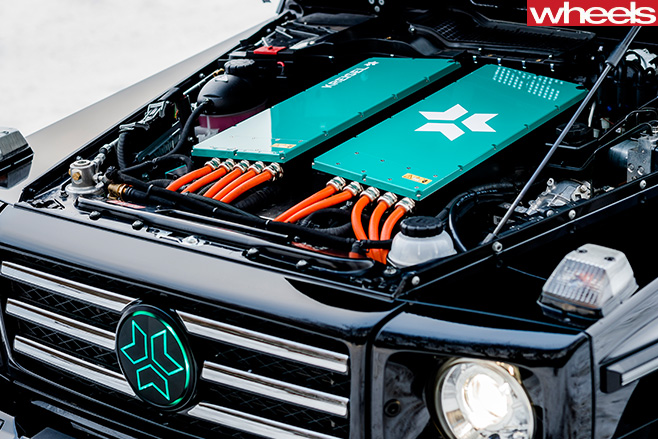
Launched in Austria yesterday, the ‘Electric G-Class’ is a modified Mercedes-Benz G35O d, which has had its 155kWV6 turbo diesel ripped out and replaced with a heap of batteries and a series of electric motors.
These combine to produce 360kW, which sends it from a standing start to the ton in exactly the same time as the 400 kW 5.5-litre V8 twin-turbo AMG G63.
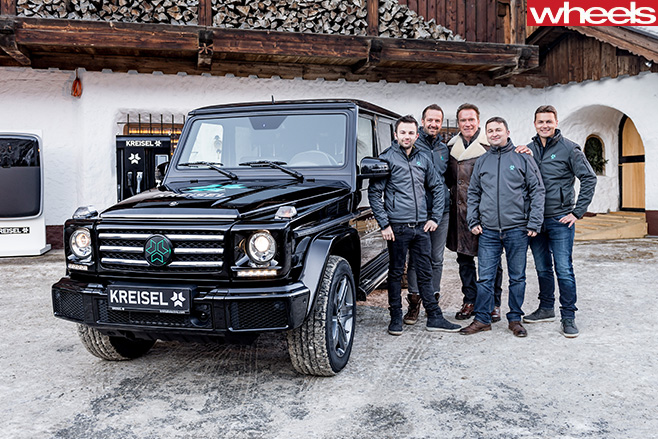
The luxurious Electric G-Class has a “realistic electric range” of 300kms with a single charge and is equipped with high-performance batteries with a total capacity of 80kWh that can be charged to 80 percent capacity in just 25 minutes.
The batteries weigh 510kg and are fitted under the bonnet and at the rear in place of the fuel tank, meaning space and comfort are not compromised. Kreisel also claims the car has the same off-road capability as the diesel version.
A long-time G-Wagen owner, the Terminator star apparently came up with the idea to modify his ride into an electric vehicle.
At the vehicle’s launch in Kitzbuehel, Austria the former Californian Governor said the car is a dream come true.
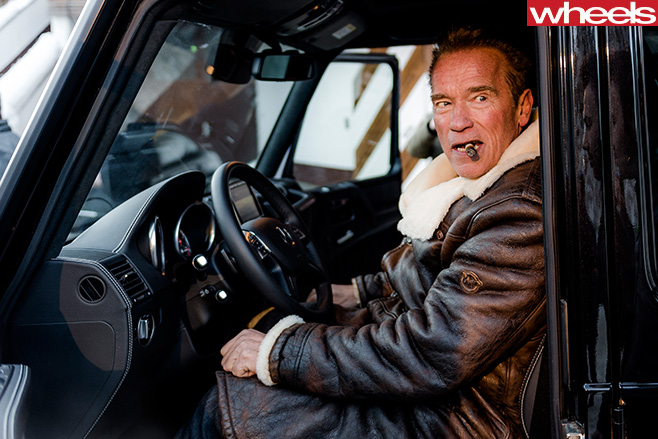
“The initial test drive was a real pleasure: The Kreisel is incredibly sporty and perfectly benefits from the advantages e-mobility has to offer.
“It’s all electric and 500 horsepower. Can you image that? This is the new deal,” he added before hopping in with trademark cigar in mouth.
Schwarzenegger will test drive the prototype in Los Angeles and continue to develop it further together with Kreisel Electric.
