
Mercedes-AMG’s Black Series family hasn’t had a new addition since the SLS in 2013, and according to company boss Tobias Moers, new Black Series models are no longer a guaranteed part of AMG model cycles – no matter how eagerly cashed-up buyers want them.
Speaking at the Detroit motor show, Moers opened up about future models wearing the infamous Black Series badging.
“It’s not finally decided. Black Series is not decided. We are so fully loaded with work, the expansion of the portfolio things like that. It needs dedication to do such a car.”
Younger AMG models and the brand’s own car, the GT, have already pushed capacity at Affalterbach.
“To do [AMG] GT R was really a lot of dedication. As you can imagine, life cycle wise, next generation [AMG GT] is something we will be working on, so there must be room for us to do so.
“Maybe that’s a self-fulfilling prophecy. Expanding the portfolio doing a lot of work, maybe you don’t necessarily have enough room to do Black Series. This is the internal discussion that we now have to do.”
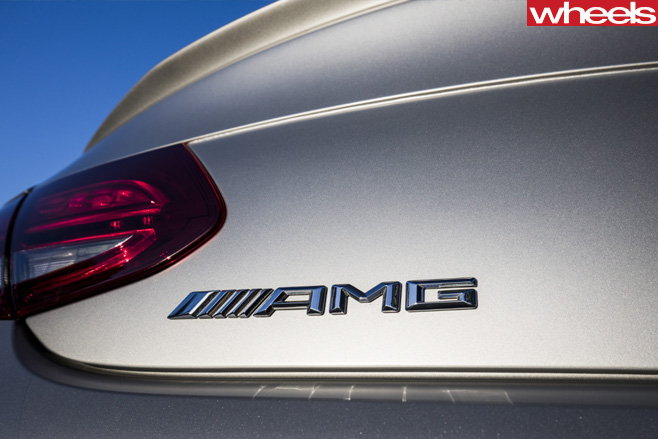
Moers admitted from a personal standpoint that an AMG GT Black would be the more attractive vehicle, and that if it were to happen a GT Black would need to be the flagship of the AMG range, with more power than the current top dog, the 450kW E63.
“We’re still working on ideas, collecting them all together for a Black Series in the future. We still have Black Series within the brand, we’re getting closer to a decision.”
Previously Moers said C63 S was as powerful as a rear-wheel-drive C-Class could be, raising questions about a possible 4MATIC all-wheel-drive C63 if it were chosen as the next Black Series platform.
“There’s no intention. Never say never but for now, C63 to stay RWD,” responded Moers.
“With C63 Coupe and the GT R we moved the bar so far. [Black Series] needs extra driving dynamics, on top of the standard car. This is what we are having a close look at now in the C-Class, in the GT as a family. There’s nothing decided so far.
However, Moers hinted that a development of the AMG GT R’s four-wheel steering could offer an alternative to all-paw drivelines for its currently rear-driven performance products.
“Rear axle steering is extremely supportive regarding tyre wear, for example on a race track. It shortens the radius and you can feel it in the GT when you are driving through a roundabout. Regarding driving dynamics it’s the next step, absolutely.”
A VIRAL video depicting two drivers coming to blows over a high-stakes drag race in Queensland is fake. We thought those punches looked a little soft…
The video has been watched over 600,000 times since it was uploaded on Friday and shows alleged owners of a Lamborghini Huracan and a modified Nissan Skyline R32 GT-R getting into a physical altercation after a $9000 wager at Queensland Raceway’s Roll Racing event on January 14.
Filmed by US Youtube channel 1320video, Wheels can reveal the viral video was completely staged. That $9000 wager seen at the start? It ain’t Monopoly money you’re looking at, but the bet itself is about as authentic as The Fast And The Furious.
Wheels can reveal the driver of the GT-R in the video is Mark Trueno, who in fact owns both vehicles.
Both drivers’ faces are blurred in the video, with a tile at the end of the video explaining this was allegedly done so the videographer’s GoPros could be retrieved from the Lamborghini. Plausible deniability? Not quite.
Due to the blurred numberplates there could be doubt over whether the bright green Lamborghini in the video is the same as the one owned by Trueno (and proudly displayed by him on social media).
However, Queensland Raceway officials confirmed to Wheels that both cars in the video are owned “by the same guy”. That information coupled with the unique appearance of the GT-R – which Trueno claims ownership of and is covered with distinctive XBox and StreetFX decals – should eradicate any doubt he is the sole owner of both vehicles.
Kyle Loftis, the man behind 1320video, was in Australia after attending the Summernats Festival. Following the Canberra event he visited Queensland, staying with Mr Trueno. There are multiple videos and photos of the pair travelling in the green Lamborghini featured in the fake video. A video on Loftis’ public Facebook profile shows him leaving the event in a green Lamborghini Huracan.
Mr Trueno, the founder of the popular ‘Street FX Motorsport & Graphics’ Facebook page, made headlines late last year after successfully appealing and overturning a Type 1 hooning offence handed to him by QLD Police for ‘wilfully creating undue noise’ in his Lamborghini.
Trueno’s public Instagram feed, @australian.psycho, and public Facebook page both show images and videos of the cars featured in the fake drag video.
https://www.instagram.com/p/BPFlJqxABtE/
Need more evidence? 1320video also posted a video to their Facebook page before the January 14 event, showing Loftis and Trueno driving in the green Lamborghini together. Best buds?
Queensland Raceways officials confirmed to Wheels both cars were entered into the event by the same owner, and the fight between the drivers was staged.
“It was a fully staged incident,” Keith Lewis, Queensland Raceways General Manager confirmed.
“No security or Queensland Raceways personnel were involved. The same person owns both cars.”
Mr Lewis also took a dim view on the fake wager placed in the video.
“We certainly wouldn’t encourage gambling or betting at the venue, we are not licensed to do so and don’t encourage it,” he added
“The roll racing events are a recreational event, we are not into serious competition, we are not into trophies, and it is purely recreational.”
Faking a stoush in a viral video isn’t illegal, but if you thought this race and the subsequent fight was legitimate then truth is you’ve been taken for a ride. Remember folks: don’t believe everything you see on the internet.
The Peugeot 2008 SUV (that’s the name of the car, not the year), will launch with a new model line-up, new tech, and a new look.
There is a brand-new frontal look, which gives us a sneak peak of the design language that’s spread through Peugeot’s entire SUV range.
The revised 2008 line-up refines available models to the Active, Allure, and GT-Line specs.
The GT-Line replaces the old Outdoor (manual diesel) spec, while the Active will feature an automatic transmission as standard (rather than the 5-speed manual of old).
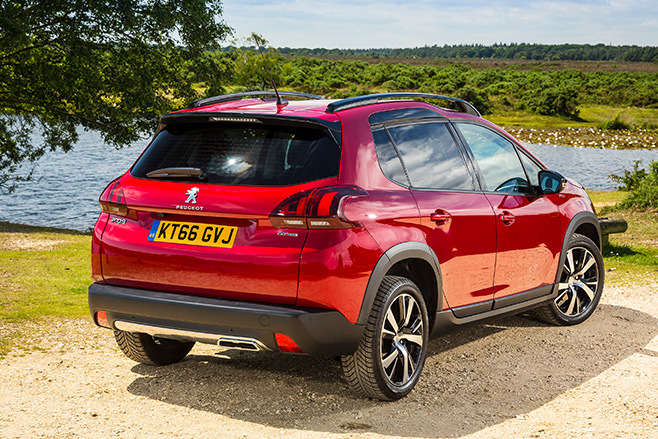
The Allure spec models remain the same as in previous iterations.
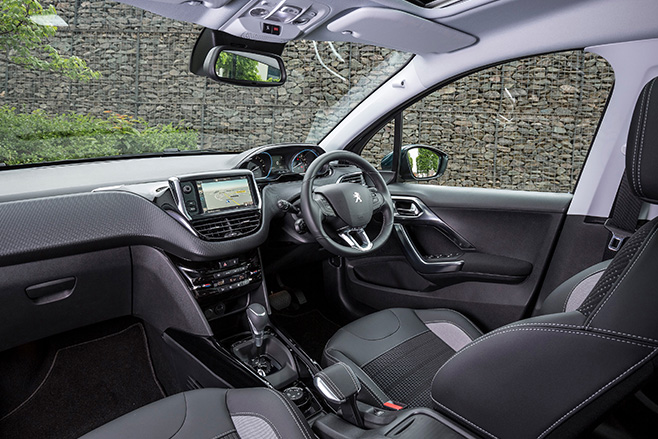
All models will receive a reversing camera, Apple CarPlay, Mirrorlink and a seven-inch touchscreen as standard.
The GT and Active models gain satellite navigation, Autonomous City Brake (AEB), and a system called Grip Control to help with traction in slippery situations.
All three models have a single powertrain available, a 1.2-litre three-cylinder producing 81kW and 205Nm, paired with a six-speed automatic transmission.
General Manager of Peugeot Australia, Kai Bruesewitz said he hopes the new 2008 will suit consumer demands.
“The 2008 SUV was always highly regarded for its smart packaging and stylish looks; now with new technology, new line-up and an all-new powertrain, the 2008 becomes the complete package for Australian customers,” he said.
“We have already proven with our 208 and 308 model lines that Peugeot’s award winning PureTech, turbo-petrol 1.2L engines can compete with larger capacity drivetrains of other players in the market and there is no reason this segment shouldn’t benefits from Peugeot’s advanced drivetrain,
“We are very excited about the introduction of the new-look 2008 range as it signals a significant year for the Peugeot SUV stable with the all-new 3008 and 5008 following hot on the 2008’s heels,” said Bruesewitz.
1. This is the fourth generation of Kia’s popular city car, the first of which appeared in 2000.
2. The new Rio is made at Kia’s Sohari factory in South Korea.
3. Kia has ditched the three-door version of the Kia Rio, going with an all-new five-door line-up.
4. Australia-bound models feature more advanced RS damper valves tuned to suit local conditions, meaning it should ride a bit better on our roads.
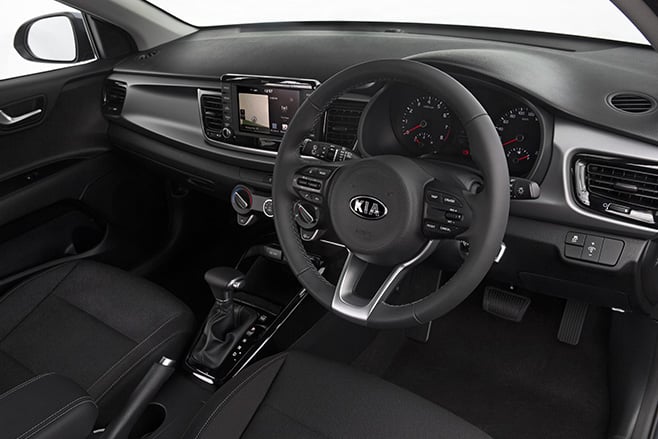
5. The looks of the new Rio, both inside and out, were penned by Kia’s design centres in Germany and California. They reported back to the carmaker’s Korean design headquarters, headed by former Audi design boss Peter Schreyer.
6. Luggage capacity has increased by 37 litres to 325 litres
7. It’s slightly bigger than the model it replaces – the wheelbase extends 10mm to 2850mm and length has stretched 15mm to 4065mm. It’s also 5mm wider, with its stance enhanced by a 5mm lower roofline.
8. The fuel tank has grown by 2.0 litres to 45 litres.
9. It will be available in seven colours in Australia: Clear White, Silky Silver, Platinum Graphite, Aurora Black Pearl, Signal Red, Mighty Yellow and Smoke Blue.
10. The Kia Rio is the first car in its class fitted with USB ports in both the front and rear of the cabin.
With small cars getting bigger, the light- or city-car segment is becoming more popular with many buyers still seeking something that’s nimble and fuel efficient. The Mazda 2 and Volkswagen Polo are considered two of the better quality cars in their class and now they have a strong competitor in the form of the fourth-generation Kia Rio which has just been released in Australia.
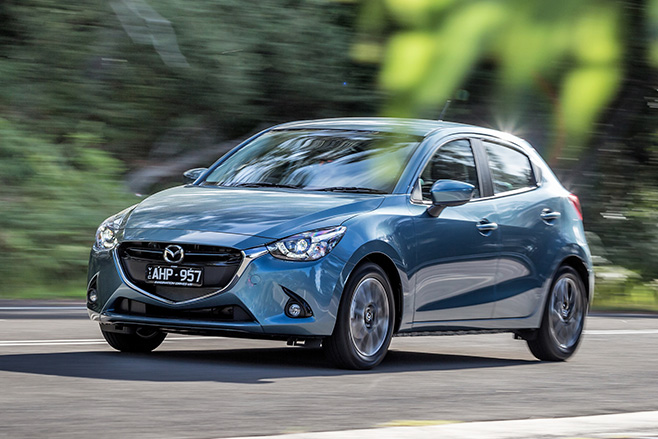
PRICE AND EQUIPMENT | WINNER: KIA RIO
Price ranges for all three vehicles are similar with the Rio priced from $16,990 – $22,990, the Mazda 2 $14,990–$22,690 and the Volkswagen Polo ranging between $16,990 and $29,990.
The Rio wins at the lower end with decent standard equipment for a light car including upmarket-cabin build and standard features including a 7.0-inch ‘floating’ central touchscreen, reverse parking sensors, reversing camera, keyless entry, automatic headlights, engine idle start/stop and Apple CarPlay/Android Auto capability.
The Polo comes very close for the same base price with impressive cabin quality, a reversing camera; 6.5-inch colour touchscreen to control info media functions such as Apple CarPlay and Android Auto, engine idle start/stop and daytime running lights.
The base-model Mazda 2 Neo costs $2000 less than the other two and lacks the touch screen and reverse camera, thought you’ll get similar features in the mid-range Maxx, which starts at $17,900, including 7-inch floating touch screen, reverse camera and engine idle stop/start.
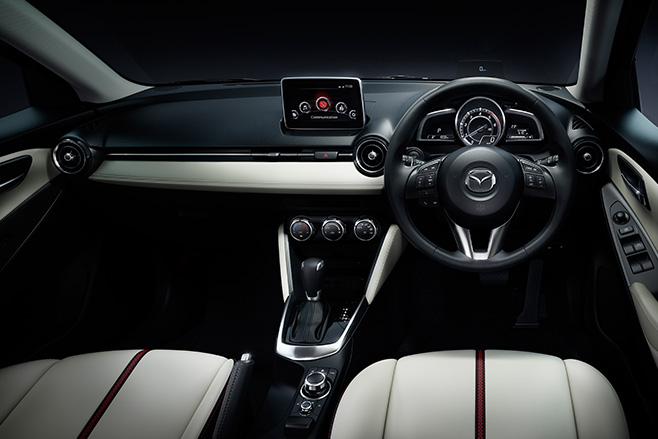
INTERIOR AND VERSATILITY | WINNER: KIA RIO
The interior design in all three cars is superior to most of their competitors.
The all-new Kia Rio’s interior design and quality is considerably improved over the previous model with a more-upmarket cabin that imparts a distinct European feel with greater use of horizontal lines to create a sense of improved space. It’s also bigger than the previous model resulting in a spacious cabin with improved leg and shoulder room in both rows and ample headroom – even for six-foot adults in the back. It also has a class-leading 325-litre boot space.
The Mazda 2’s interior is well put together and adds maturity found in few other cars of this size or price. Cloth-trimmed front seats provide good support and the driving position is comfortable. The rear pew offers good shoulder and leg room for two, and a comfortable cushion. The rising window line and large front headrests limit vision, which might be a factor for children. The hatchback’s boot capacity is 250-litres.
The Polo’s interior is well put together, and provides something for Kia to aspire to. It’s a little drab in the entry level 66TSI Trendline compared to the 81TSi Comfortline and GTI models which have brighter metal finishes. The front seats are comfortable and provide good body support through corners. The rear seats are pretty tight for leg room, but there’s good headroom and the low window line means passengers can enjoy the view. Boot space is just 280-litres, but there’s a split floor that offers flexibility.
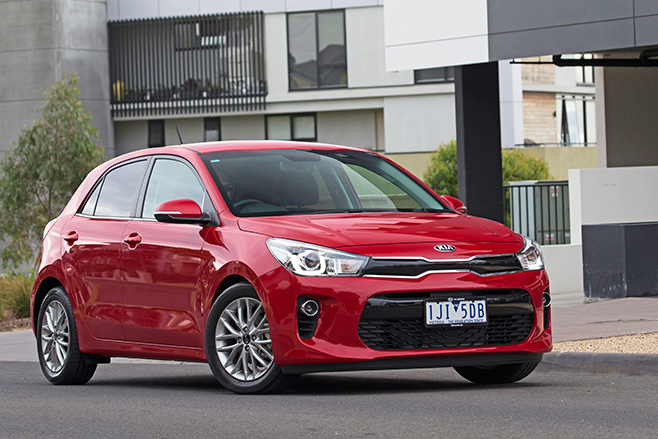
PERFORMANCE AND ECONOMY | WINNER: VOLSWAGEN POLO
The Mazda 2 and Volkswagen Polo are both fun cars to drive, offering decent grunt and fuel efficiency but the VW wins on points thanks to its turbocharged fours that provide greater response and choice.
The 1.2-litre four-cylinder turbo engines in the Polo 66TSI and 81TSI are the most fuel-efficient, both consuming about 4.8 litres/100km in the official test (urban and country combined). The engines names reflect their output – the 66TSI’s 66kW motor isn’t too powerful, but it’s pretty responsive particularly for everyday driving. The 88TSI naturally has more oomph.
The 141kW 1.8-litre petrol turbo engine in the GTI provides plenty of punch and a nice throaty sound. Its manual gearbox feels light and easy to operate, while the seven-speed auto is very smooth and quick in its shifts once moving. The GTI’s combined fuel efficiency is 6.1L/100km for the manual and just 5.7L/100 with the optional 7-speed auto.
The 66TSI comes standard with a five-speed manual gearbox, whereas the 81TSI and GTI get a six-speed manual. All can be optioned with a seven-speed twin-clutch automatic, which has two computer controlled clutches but operates much like a traditional automatic. The six-speed auto gearbox in all variants can be clunky in stop-start traffic.
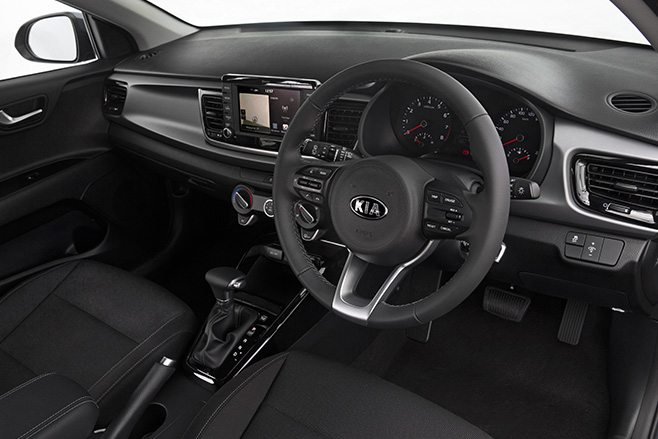
The Mazda’s 1.5-litre, four-cylinder, SKYACTIV-Drive petrol engine is more than enough and it is quite economical – 4.9L/100km with auto and 5.4L/100km with manual – despite revving well beyond 2000rpm at 100km/h in sixth gear. The short-shifting manual gearbox makes for enjoyable driving while the automatic goes through the gears decisively. It even has a throaty, sports-car-like exhaust note.
The Kia Rio’s drivetrain is its one big letdown, with a 74kW/133Nm 1.4-litre four-cylinder petrol carried over virtually unchanged that feels underpowered and uninspiring. The four-speed auto also feels antiquated. It’s not a huge issue in town, but on the open road, hills and overtaking can be problematic. Switching to the six-speed manual improves things – greater access to the torque that is there, though this option is only available in the entry-level S model.
RIDE AND REFINEMENT | WINNER: VOLKSWAGEN POLO
Like the previous model, the new Rio has undergone an extensive local suspension tune to improve the comfort of its ride on Australian roads. Handling is tidy, with enough grip and poise to keep a keen driver interested. The Rio’s chassis now feels solid and more rigid and its ride is a highlight. Noise suppression is also vastly improved.
The Mazda 2 also has excellent ride comfort for a light car, with occupants well protected from bumpy surfaces but not quite up there with the Polo. It’s also pretty noisy, particularly on course bitumen.
The Polo feels stable but agile and provides a smooth ride which recovers quickly over bumps. The suspension is noticeably harder in the GTI because of its sports tune, but not too uncomfortable. Where many cars of this size sound noisy and feel tinny, the Polo is surprisingly quiet.
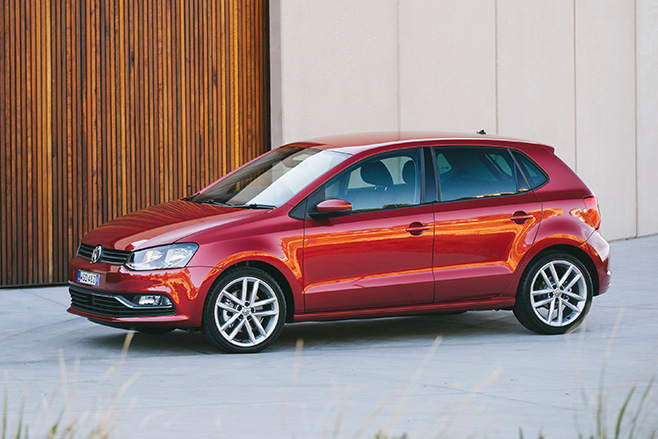
STEERING AND HANDLING | WINNER: VOLKSWAGEN POLO
The Rio’s chassis now feels solid and more rigid and its ride is a highlight. Steering is fluid and accurate though could use some more feel.
The Mazda 2 feels like a bigger car thanks to the chassis being a revised version of the Mazda 3’s underpinnings. It inspires confidence and is fun to thread along a favourite country road. Responsiveness and feedback from the smooth steering increase as you turn the wheel further into a corner.
But again the Polo shines through. All variants are a joy to drive with excellent car suspension that loves bends and feels like you’re driving something far more expensive. Its brakes also feel strong and responsive compared to other cars in its class. The Polo GTI is a genuine hot hatch, with excellent acceleration with 17-inch tyres that provide excellent grip.
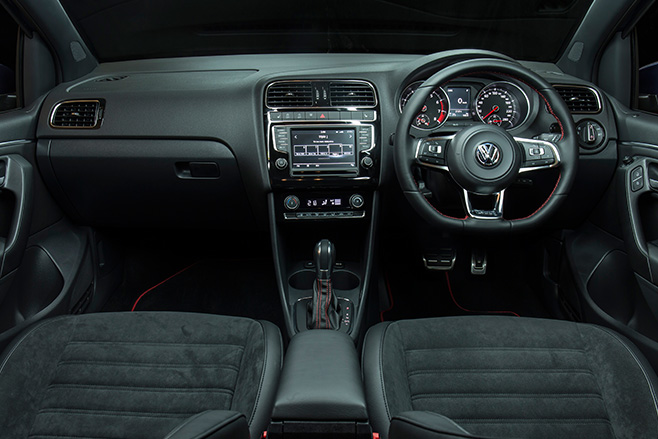
VERDICT | WINNER: VOLKSWAGEN POLO
The new Kia Rio is a much better car than its predecessor and has dramatically closed the gap between Korean light cars and their European counterparts in terms of quality and refinement. But it’s not quite there, mostly because of the lacklustre powerplant, which will be rectified in a GT version that is expected to have a gutsy 1.0-litre three cylinder turbo engine.
The Mazda 2 didn’t win any of the categories but its right up there as an excellent light car and preferable to more expensive vehicles in the small car category. It too rivals the Polo in terms of performance, ride and handling but the German’s turbo engines, underpinning and overall finish give it the edge.
Holden will soon close the order books to buyers who want to customise a Holden Commodore, the carmaker has revealed.
The current Holden Commodore has entered into its last nine months before the final locally made car rolls off the South Australian assembly line on October 20, ending almost 70 years of unbroken Holden car production. A fully imported version based on the European-designed Opel Insignia will replace it from 2018.
As part of its plans for the shutdown, Holden has revealed that customers will have until about April to walk into a dealership and request the body shape, colour and options they’d like to feature on the Commodore they will park in their driveway. Beyond that date, buyers will have to walk into a dealership and choose from one of the cars on show.
“We expect customers will be able to select a vehicle at dealers (rather than design themselves) later in the year,” Holden spokesman Mark Flintoft told WhichCar. “It’s difficult to put an exact timing on this so we’re encouraging customers to visit their local Holden dealer earlier rather than later.”
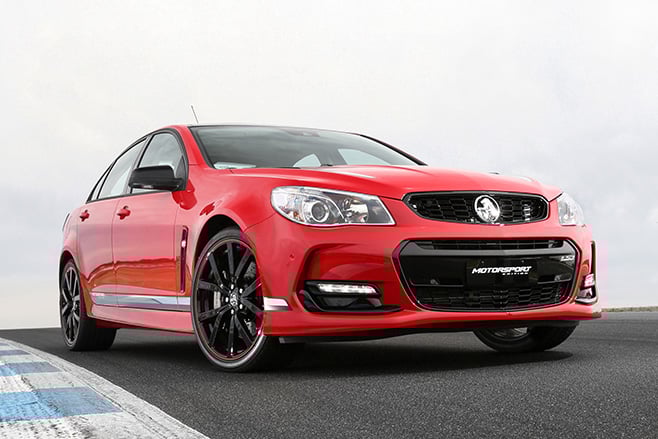
Holden has predicted it will build about 30,000 Commodore-badged cars this year – almost 4000 more than it sold in 2016. The carmaker plans to build the Commodore in all its variants – sedan, wagon and ute – right up to the October 20 deadline.
The carmaker has recently tweaked the Commodore line-up ahead of this year’s closure, including retiring the 6.2-litre V8-engined SS-V (bent-eight models now jumps from the SS to the range-topping Holden Commodore SS-V Redline), six-speed manual versions of the 3.6-litre V6-engined SV6, and the entry-level 3.6-litre V6-engined Calais Sportwagon from the range.
Those tweaks have included price jumps for V8-engined SS and SS-V Redline models, which have climbed $2500 – although Holden claims the higher cost is more than offset by extra features, such as a head-up display, bonnet vents and extra chrome highlights introduced to the range as part of running model changes.
It means the price of joining Holden’s V8 club, based on the entry-level $44,990 six-speed manual transmission Holden Commodore SS, rises to $47,490 before on-road costs.
In the lead-up to the shutdown, Holden has revealed limited-edition runs of its SS-V Redline-badged sedan and ute, and the more luxury-oriented, V8-engined Calais V to build interest in the Commodore range. The trio of cars also dips into the history of the brand, wearing the Magnum badge on the ute and the Director badge on the Calais.
Holden is expected to announce more details of how we will buy the last of the Aussie-made Commodores in the next week.
Scrolling through Emma Vidgen’s Instagram account, it’s glaringly obvious she is an aesthete.
Her collection of images let us into her world of lifestyle, where travel, food and her cats make up the foundation of her profile. But as you’d expect from the editor of a fashion-forward Australian interiors magazine like Real Living, all things homes also make up part of her patchwork, just not from your average standpoint.
Idiosyncratic photos of foil streamers, leafy silhouettes, and angular buildings make it clear Emma’s perspective comes from a place of individuality. Exactly what you need when judging the WhichCar Style Awards. It also helps that Emma confesses she’s a closet revhead.
“I really enjoyed getting to play with cars,” she said. “The only thing I was disappointed about was that I didn’t get to drive them!”
Working in publishing for more than a decade, across titles such as Cosmopolitan, Dolly, and Woman’s Day, Emma stepped into the role of Real Living editor last year when Deborah Bibby ended her 11-year term.
After years of working as an entertainment journalist, Emma said the move into homes and lifestyle was a natural progression.
“I’ve always loved interiors, they’ve been a personal interest.
“When the Real Living role came up, it was a dream opportunity. I was such a fan of the magazine and it felt really natural to me.
“Style is all about expressing your individuality and in the context of cars, it’s very closely linked to good design and the synergy between form and functionality.”
“The thing we always consider when looking at homes for the magazine is thinking about how people will live and use the space and that’s the same approach I took with the Style Awards.”
Emma said she took the target market into account when assessing each of the finalists, considering how they’d use the car, where they’d be driving and who else they’d be driving with – not too dissimilar to the way the Real Living team study a well-designed home or beautiful hotel room.
It was this deliberation that sparked Emma’s flame for the Ford Mustang, no surprise given her penchant for vintage clothing.
“I really got a buzz from the Mustang. It spoke to my love of vintage; the way that they managed to reference a really classic design from its past and then update it with modern touches. I thought that was really clever,” she said.
“But I also thought the Audi was incredibly elegant, understated and refined. Everything about that interior cabin was so carefully considered and beautifully executed, but there was nothing flashy about it. It was a class act.”
Meet the 2017 Whichcar Style Award finalists.
TESLA has flagged another big overhaul of the software used to control its cars is coming, but this time it has included physical tweaks to the car’s hardware as part of the update.
The “HW2” update, officially known as version 8.1, will take advantage of the self-driving hardware built into lnewer versions of Tesla’s cars – the Model S lift-back and the Model S seven-seat SUV – made since October last year that will introduce even more self-drive functions as part of its experimental Enhanced Autopilot system.
It has initially rolled out to 1000 vehicles in the US, which will test the software in the real world before the Californian electric carmaker makes a decision later this week on whether to deploy it globally. In the past Tesla’s global software roll-outs have made their way into Australian cars soon after their global release, and have contained the same updates as the US cars.
Tesla Australia said the free update had started rolling out to cars here yesterday.
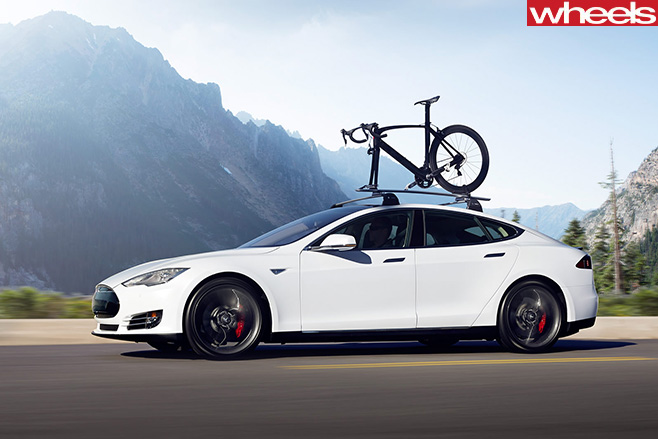
The HW2 update – it marks the second generation of the carmaker’s driver-assist technology that Tesla claims is smart enough to eventually allow the vehicle to drive itself – will need a visit to Tesla’s service technicians to adjust the cars’ camera pitch angles to work properly.
Changes to functionality include a smarter “summon” feature that can allow the Tesla to drive itself down a curved section of road when the driver calls for it via a smartphone app, and an automatic lane change function that moves around slower traffic instead of just slowing down to sit behind it. There’s also a beta “test” version of active cruise control, forward collision warning, and low-speed Autosteer.
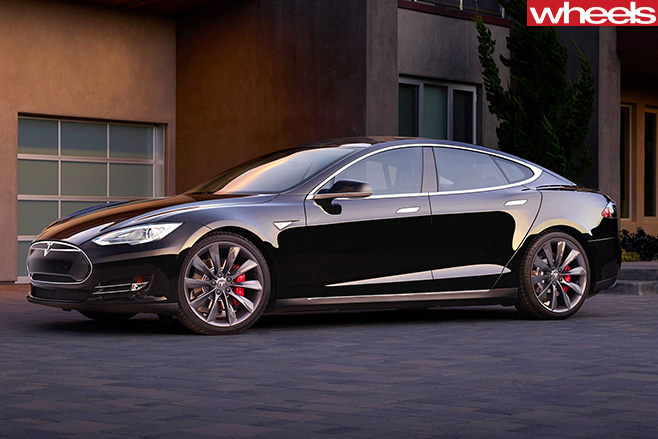
The update also comes in the wake of a government inquiry into Tesla’s “Autopilot” self-driving function in cars. The National Highway Traffic Safety Administration (NHTSA) last week cleared the carmaker’s self-driving function of contributing to the mid-2016 death of a driver who was using the experimental autonomous mode outside of its comfort zone.
The US road safety watchdog also separately reported that Tesla recorded a 40 percent fall in crashes after an update to a previous version of its Autopilot software that rolled out “Autosteer”, a function introduced to Tesla’s older cars that helps the driver keep the car inside its lane while cornering.
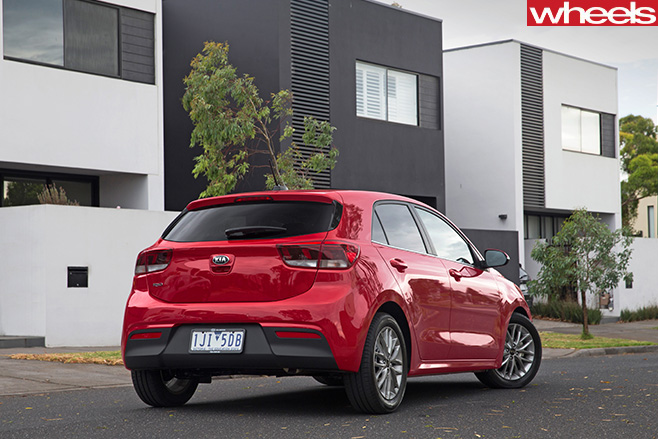
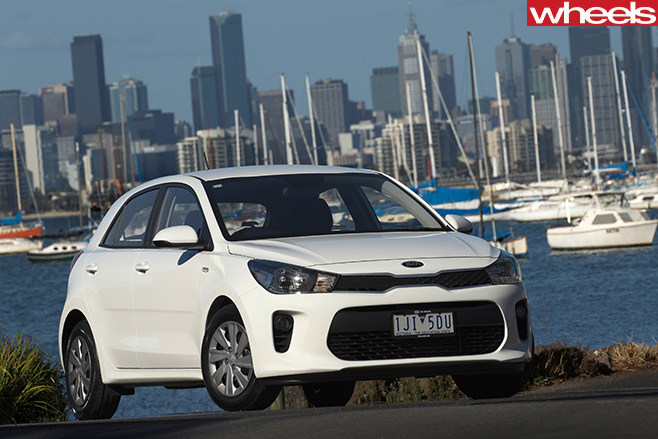
KIA is tipped to add a sportier, and safer, GT variant to its all-new Rio range, which will bring crucial safety additions such as Autonomous Emergency Braking, and a more advanced 1.0-litre turbocharged three-cylinder engine.
Currently being evaluated by Kia Australia’s engineering team, the GT will act as a flagship for the fourth-gen Rio range, and sport unique styling upgrades, more equipment and a unique chassis tune to bolster its ride and handling.
“…This is unchartered territory,” said Kia Australia product planner, Roland Rivero. “Fundamentally we need that halo variant, it’s a vision not coming from us, but from Albert Biermann. There’s an opportunity there to add some emotion…and it’ll have a performance focus.”
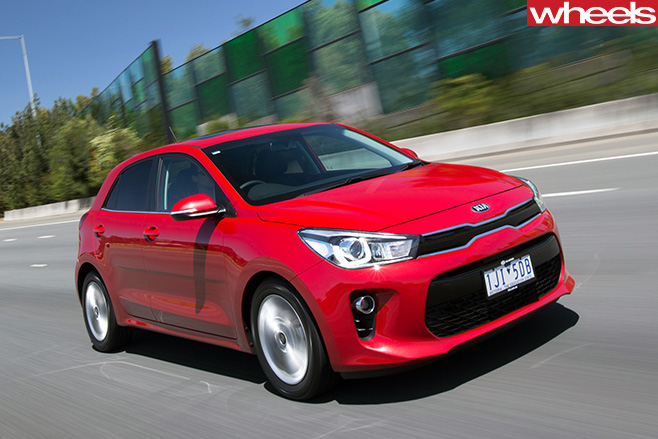
“We’re still evaluating it and it’s not official, but we’ve homologated the 1.0-litre engine [for Australia],” said Rivero. “There are two tunes of the 1.0-litre turbo, there’s a bit of an ECU tweak to get it there, but the one we chose is the upper one that is 88kW/172Nm.
“But I don’t want to just add the engine on its own to the range, it deserves more than that in ride and handling, cosmetics. I want to stand out. To be distinctive on the road and how it drives. It’ll be a flagship model, that’s out desire.”
“I wouldn’t attribute that to being the only reason Proceed met its demise, but in essence we want it [Rio GT] also to be a DCT,” said Rivero. “That would appeal to a broader demographic and a broader market.”
The GT’s addition of Autonomous Emergency Braking (AEB) is also a high priority for Kia’s local arm, given the potentially life-saving technology is currently unavailable on the new-gen Rio.
“Technically, AEB hasn’t been developed for the 1.4, it’s strictly developed for the 1.0-litre,” said Rivero.
“Everything with that car, that variant to come, is still under study,” he said. “But the thing to take note of is this car [Rio] has at least a five year model life. We’re not going to throw everything at it from launch, we have plans to stimulate demand as the product ages.”
No word on pricing either, but given the GT’s expected equipment, performance and styling upgrades, expect it to start north of the current Rio range, which tops out at $22,990 for the SLi automatic.
You’ve probably heard of this car, and if you haven’t, you should have.
Rod Millen’s wild Pikes Peak Celica is one of Toyota’s most iconic race cars, however until very recently actually seeing it in action in its intended environment has been almost impossible.
Thankfully, YouTube has allowed all manner of archival motorsport footage to surface, including annual highlights from Pikes Peak, however the rare video above, unlisted on YouTube, gives us one of the best looks at Millen’s monster in action.
Of course, calling it a Celica is stretching the truth a little. In reality it’s a tube frame chassis covered in a Celica-shaped one-piece carbon fibre body with leftover aero parts from Dan Gurney’s All American Racing Formula 1 operation.
It weighed just 885kg and was powered by a 633kW 2.1-litre 3S-GTE turbocharged four-cylinder, an engine which appeared in everything from Toyota’s IMSA and Le Mans prototypes to the famous Castrol-liviered Toyota Supra JGTC car.
It was built to dominante the famous US hillclimb, which is exactly what it did. On its debut in 1994 Millen smashed the existing record by almost 40 seconds to set a time of 10min04.06sec.
Millen and the Celica would win twice more in 1996 and 1997 but was unable to beat that original time, though he came close in ’97 with a time of 10min04.54sec. Set when Pikes Peak was still completely unpaved, the record will stand forever.
Nobuhiro ‘Monster’ Tajima would finally break Millen’s mark in 2007, but by then the course was partially paved before becoming all-tarmac in 2012, allowing Sebastien Loeb to set a stunning 8min13.878 time in 2013.
Millen followed the Celica with an even wilder mid-engined Toyota Tacoma, which carried over the Celica’s engine and drivetrain but with much more sophisticated suspension geometry. You can see it in action at the Goodwood Festival of Speed above.
However, despite two further wins at the mountain in 1998 and 1999, the Tacoma was unable to beat the Celica’s record, its best time of 10min07.7sec coming in 1998.
