
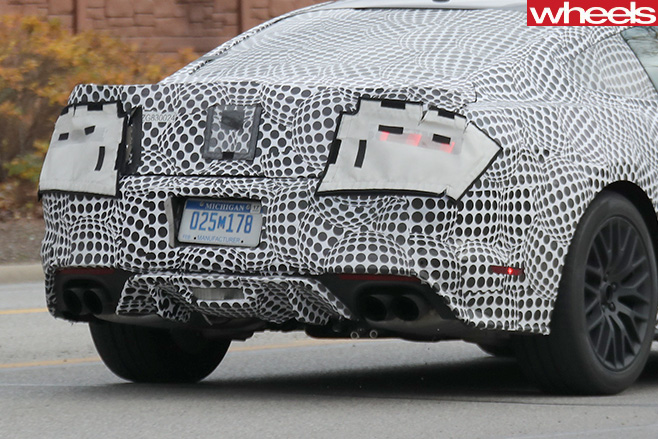
THE hot-selling Ford Mustang may only be a year old in Australia, but early prototypes of the 2019 model-year makeover indicate a new nose cone, revised rear end styling, and Shelby GT350-style quad exhausts.
Don’t hold your breath, though, because while the S550 facelift sprung here wearing swirly camo is set for the Detroit show after next in January 2018, production probably won’t start until later on that year, meaning early 2019 is a real possibility.
This is Ford, after all, and witness how long the Ford Edge SUV is taking to reach our shores…
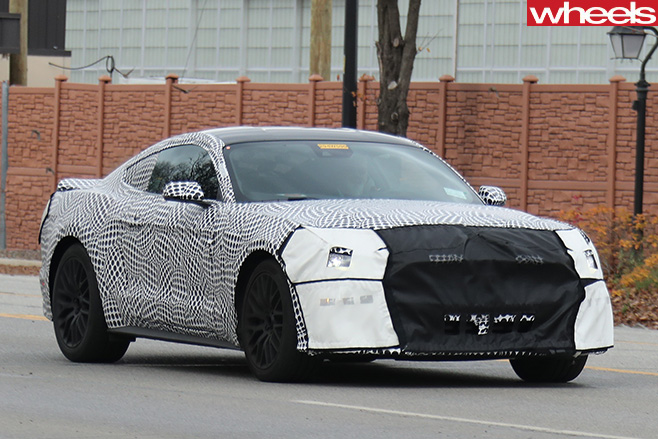
These include an all-new dashboard promising better quality materials, the long-awaited 10-speed automatic transmission (consigning the current Mustang’s six-speeder to history), and the availability at last of adaptive dampers.
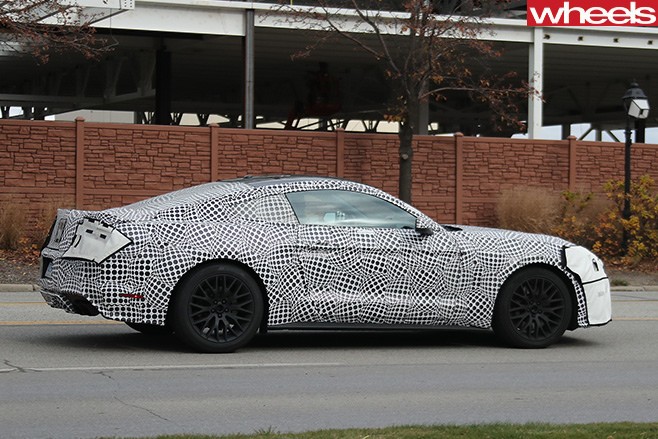
More intriguingly, though the pictured prototype’s body kit points to this being a fairly stock Mustang, the quad exhausts poking from the diffuser underneath suggests Shelby GT350, so is a significant performance upgrade imminent for the standard V8?
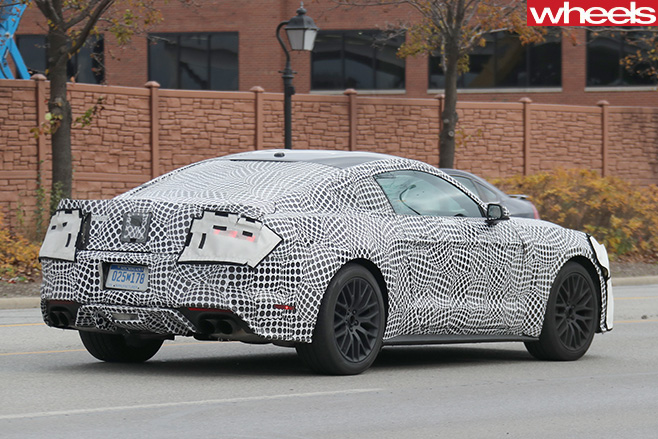
Finally, new alloy wheel designs and updates to the colour pallet should complete the 2019 Mustang facelift. Prices should remain in line with today’s models, meaning from $45,000 for the 2.3-litre four-pot turbo, to nearly $70K for the range-topping V8.
Watch this space…
Have spy pics of your own? We’d love to see them. Just email them to [email protected]
1971 Mercedes-Benz 300 SEL 6.8 – “The Red Pig”
Six years after the doors opened at AMG, it finished second overall at the 24 Hours of Spa. Its oddball racer was a highly modified Mercedes-Benz 300SEL 6.3 that became known as The Red Pig. Up against a grid of lightweight, thoroughbred race cars the hulking Benz was a sight to behold, and it was a proper hot rod under the bonnet to keep up with the competition. AMG stretched the 6.3-litre V8 to 6.8-litres, taking outputs to 319kW and 607Nm.
For an outfit that began life with a staff of two (Aufrecht and Melcher) tuning engines in a rural barn, the class win and overall podium finish was a staggering achievement. It created enough buzz to catch the attention of Mercedes-Benz, and represents the first major milestone in AMG’s history.
1986 Mercedes-Benz 300E 5.6 AMG – “Hammer”
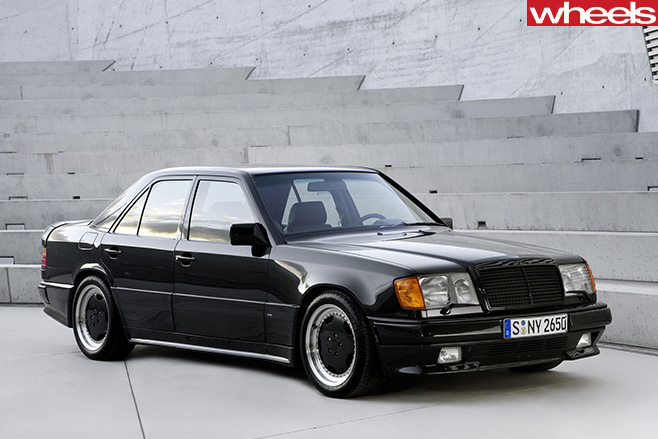
Outputs peaked around 280kW, which was enough to hang with supercars of the day.
This was the car that truly put AMG on the map as one of the world’s most formidable tuners. Before this car, AMG was only building its performance models in small numbers. Things changed with The Hammer, and by 1990 AMG had joined forces with Mercedes-Benz to go worldwide.
1995 Mercedes-Benz C36 AMG
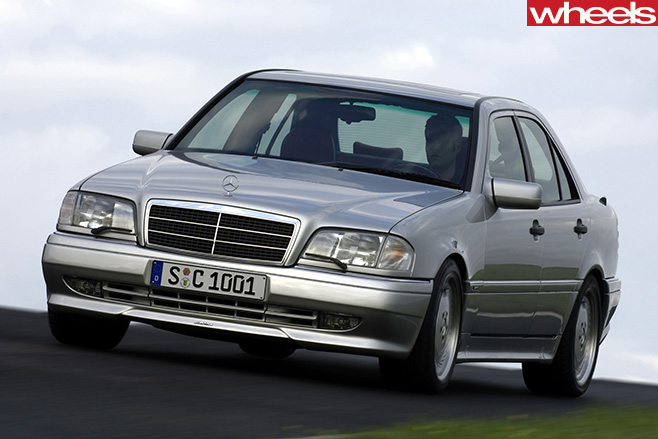
AMG took the regular C280 sedan from Benz, bored and stroked the 24v 2.8-litre straight-six out to 3.6-litre, mated it to a special auto ‘box and assembled the whole package (with a unique body kit to finish) at its own factory.
Wheels described it at the time as “certainly the most engaging – and exciting – driver’s car in the entire Mercedes-Benz line-up.”
Other engine tweaks included different camshafts, upgraded tune, and sodium-filled exhaust valves. Bigger brakes, lower suspension and a 17-inch wheel and tyre package further set the AMG version apart.
It was around $25,000 more expensive than the M3 to buy in Oz, but it was more highly featured with electric, leather seats; traction control and cruise. The C36 served to jumpstart our local love affair with the go-fast brand from Affalterbach.
2006 Mercedes-Benz CLK63 AMG
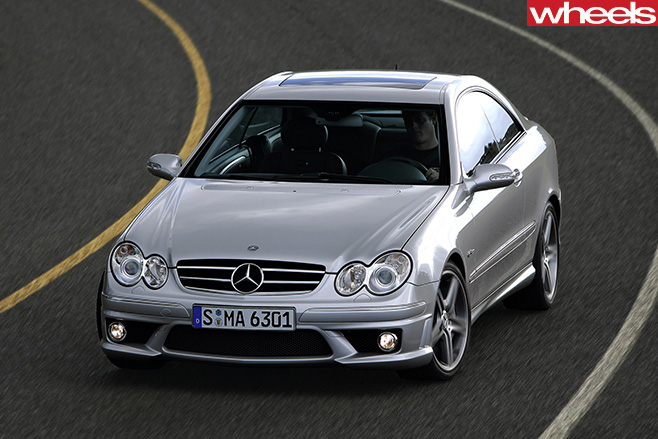
The CLK63 featured AMG’s M156 6.2-litre naturally aspirated V8 engine, developed in-house by the company originally for the DTM racing series in which it competed.
It had already been seen in higher-end Merc’s like the Mercedes-Benz E63 and S63, but its introduction to the smaller, sportier CLK was a turning point.
When the CLK63 arrived in Australia in 2006 it had 354kW, 630Nm, and an exhaust note that nobody could forget. The engine was the star attraction, and the car is iconic almost solely because of it. AMG kept using the M156 in various states of tune right up until the current C63 launched in 2015 with AMG’s new performance hero, the 4.0-litre twin-turbo V8.
2013 Mercedes-Benz SLS AMG Black Series
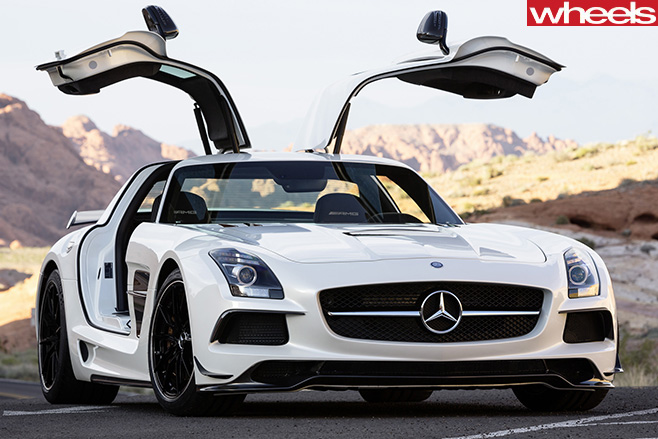
The SLS model is a significant brand landmark in its own right. However, it’s the SLS Black Series that makes the list as not only the most desirable SLS ever, but also as the host to the pinnacle version of AMG’s 6.2-litre V8.
The M159 (as it became known for the SLS) is the more extreme version of the M156 used in the CLK63 (and others) mentioned above. In the SLS Black it produced 464kW and 635Nm.
AMG has since developed the AMG GT, its second ground-up car, and it is a superior car in many ways, but the SLS holds a unique place in AMG history for its ambitiousness (gullwing doors!) and as the first of its kind.
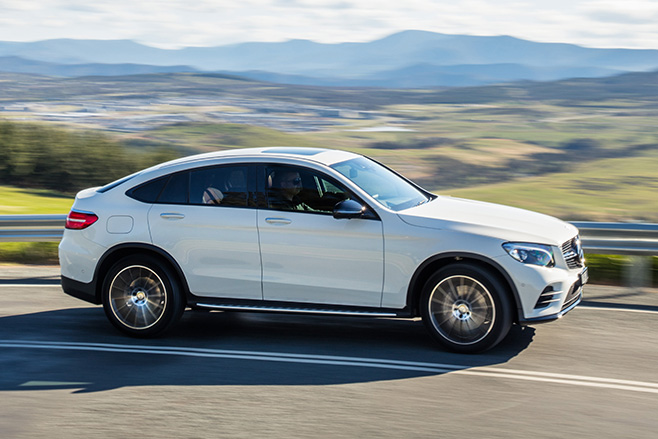
THE boxy five-door version of Mercedes-Benz’s GLC-Class small SUV isn’t to everyone’s tastes. That’s where the fastback-styled GLC Coupe steps in, offering sharper looks wrapped in five-door, soft-roader styling.
TELL ME ABOUT THIS CAR
We have the trendsetting BMW X6 to blame for a sudden rush by all the other luxury carmakers to create a coupe-styled SUV, the so-called answer to the question that no one ever asked. The fastback looks combined with a tough exterior is wooing buyers, so it’s a no-brainer that Mercedes adapt it for what is likely to become the brand’s best-selling soft-roader.
STRENGTHS
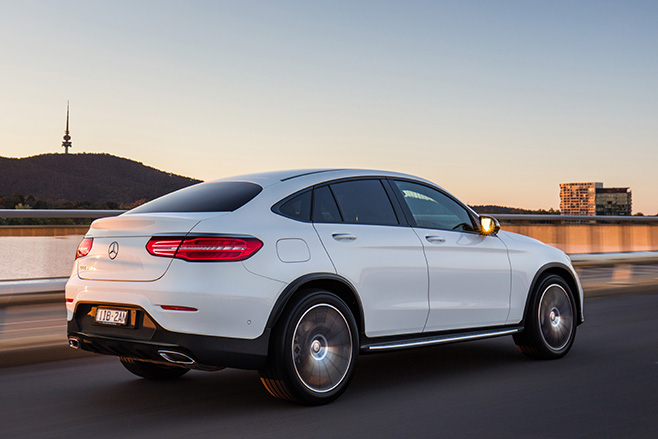
- It definitely has style. The stacked proportion of side height to glass creates a muscular, big-hipped and hunched shape that works well with the plumped, bloated SUV proportions of the GLC
- The diesel engine is a very good match. The 250d uses a punchy twin-turbo 2.1-litre four-cylinder diesel engine that feels bigger than its displacement suggests. It’s gravelly – standing outside the car it sounds like a tractor – but has enough low-down torque to move the GLC Coupe’s almost 2.0 tonnes without much fuss. It’s economical, too; we saw figures around 8.0L/100km on test.
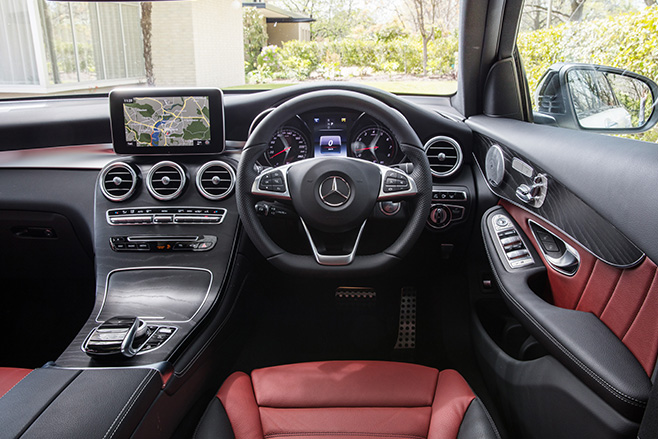
- It’s well equipped inside for its $82,100 price tag. Our test car had contrasting red and black leather sports seats – a no-cost option – keyless entry and start, dual-zone climate control, decent interior lighting (you can even change the colour), a surround camera system including a reversing camera (more on that later) linked to front and rear parking sensors, a powered hatchback, and sports-style metal-capped pedals. It does miss heated seats, though …
- Outside looks pretty sharp. Think 20-inch wheels, side steps, active LED headlights that peer around corners, and – thankfully – no roof rails spoiling the falling roofline’s sleek profile
WEAKNESSES
- The boot space is okay if you’re buying a lot of flat-pack furniture to haul, but poor for everything else. The hemmed-in rear severely limits the depth of the boot space, making it shallow and long. That’s good for grocery shopping, but bad for bulky goods such as a pram. The rear seats split-fold down, but more to make room for surfboard-shaped packages
- The rear seats are a claustrophobic nightmare. A rising waistline and falling roofline pinch in to give the back pews of the GLC a dark, hemmed-in feel that isn’t helped by dark plastics and a lack of side and rear glass. Even the sunroof is too far forward to break that sensation of being deeply closeted
- There’s too much weight. All that high-riding mass has a negative effect on how the GLC handles around corners. The car tends to squat on the offside rear wheel as the centre of gravity – higher than for a conventional passenger car – shifts rearwards
- The suspension is skewed in favour of inner-city driving. The GLC has a pleasant, floaty low-speed setting as its default, but it has a significant disadvantage at freeways speeds: sharp bumps are transferred straight into the cabin, adding roughness, while the rear takes too much time to settle after hitting bigger lumps
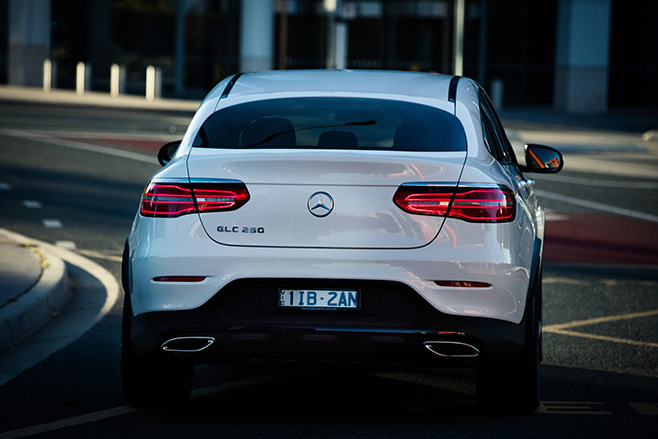
- Rearward vision is inadequate. The liftback’s window is tiny – you get a pleasant view of the sky behind the car – and over-the-shoulder sight lines for head checks are generously described as poor. The GLC not only feels as though it needs its standard reversing camera, but it also needs the reversing sensors that look further than the camera can see. Reversing is more by sensor “feel” than sight, while the forward-facing sensors help with locating what’s in front of the tall bonnet
- All that fastback SUV madness. Yes, they look good, the work colleagues will be suitably jealous and just like that Apple Watch on your wrist, they’re at the cutting edge of fashion, not function. And that’s the rub; coupe-styled SUVs come with so many compromises – space, weight, usability and more – that the more sensible choice of a conventional Mercedes-Benz C-Class wagon won’t have to make
ANY RIVALS I SHOULD CONSIDER?
Top of the list if the three-pointed star is the main driving force for the GLC is a Mercedes-Benz C-Class Estate. It has more room than the SUV coupe, arguably equally good looks, and won’t need replacing once the word “family” pops into polite conversation. You’d also be pretty smart to have a look at the regular, more boxy but still smart-looking GLC that fixes many of the problems highlighted with the fastback-styled coupe version of the same name.
But if your heart is unrelentingly set on compromise, add a BMW X4 or a Range Rover Evoque to the list.
KPM Motorpsort has been a fixture of Hot Tuner since the very first time we assembled the country’s leading tuners and let them loose in the interests of science.
Hot Tuner 2016 is brought to you by Valvoline SynPower
Straight away, KPM impressed us. You may remember that big, burly, ever-so-purple VE Commodore that turned up at Hot Tuner 1 to scare the kids and outrage pensioners. So, yeah, MOTOR and KPM have some history.
This time, KPM was back with a Mustang. Now I know the Mustang is the big must-have at the moment. It’s fast, it looks great, it’s new and it’s the future for fans of Blue Oval performance now that the local shop has shut its doors for the last time. But when KPM has finished with a brand-new Mustang GT, the results are not likely to be for the faint-hearted.
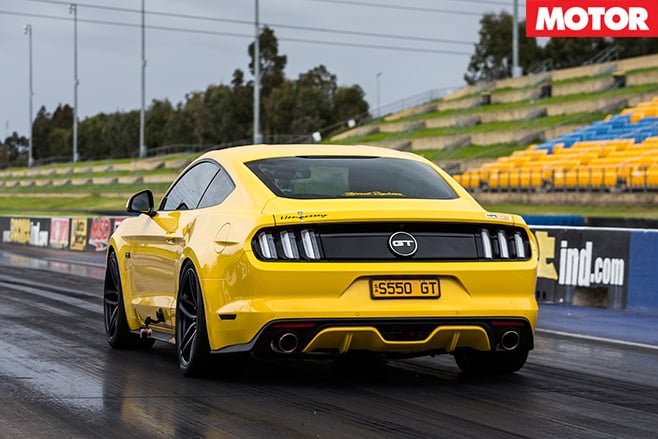
The modifications are the guts of what’s called the Hennessey by Streetfighter HSF670 package. According to KPM honcho David Roscio, the Hennessey gear got the nod simply because that’s what his customer (and the understanding owner of the car) ordered.
“It’s a customer car and the customer wanted a Hennessy package,” Roscio explained. “So that’s what we’ve built him. But using a Mustang as the base makes lots of sense. It’s simple and clean in its looks and it’s effective in its output. I really like the simplicity of the presentation. And it’s a straight forward package… it does what it says on the box.
“The other thing worth mentioning is that our package is fully ADR-compliant, and there’s a three-year, Australia-wide KPM driveline warranty.”
The price of $15,890 includes the installation, all the gaskets and fluids, the badging and under-bonnet identification plate and, of course, that all-important ADR-compliance certificate to keep in the glovebox for when you-know-who wants a chat.
If you have a bit more to spend, you could pony up for the option package which gets you a Hennessey 132mm throttle-body, Hennessey airbox, Streetfighter oil breathers, ceramic-coated headers, high-flow cats, lowered suspension and an even bigger injectors. All that will add another $8000 to the price tag.
But as seen here, that lot will get you into the realms of KPM’s claimed 3.8-second 0-100 time and, in perfect circumstances, a quarter mile in a mid-11. Like we said at the start of this, we didn’t actually get a representative time out of the KPM ’Stang, but seat of the pants says a lazy 12, with very definite 11-second potential.
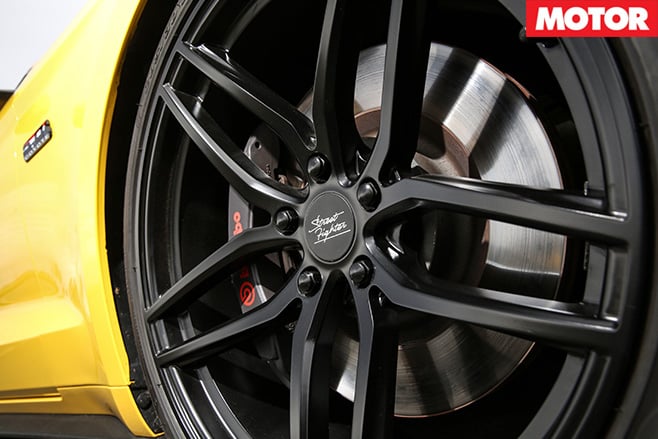
SPECIFICATIONS Drive: rear-wheel Engine: 4951cc V8, DOHC, 32v, supercharger Gearbox: 6-speed manual Suspension: struts, anti-roll bar (f); multi-links, anti-roll bar (r) Brakes: 380mm ventilated discs, 6-piston calipers (f); 330mm ventilated discs, single-piston calipers (r) Wheels: 20 x 9.5-inch (f); 20 x 10.5-inch (r) Tyres: 285/30 ZR20 (f); 305/30 ZR20 Pirelli P Zero
PARTS AND PRICES Supercharger kit: $15,890 Exhaust: $4935 Handling pack: $2732 Wheels/Tyres: $7340 Total mods cost: $30,897 Vehicle cost(mSrp): $57,490 Total cost: $88,387
Looking for some reading material for the Holiday season? We have your back!
Our bumper Summer Edition hits shelves this week, and has all the best automotive content you will need for your time off.
Find yourself a comfortable chair, an appropriate beverage, and settle in for some of the best features of the year.
Senior Journalist Nathan Ponchard has the in-depth analysis from Wheels’ hands-on drive of the 2018 Holden Commodore Prototype. No V8, no manual, and no rear-drive option. Will Aussies warm to this import-only Commo?
Plus, we have your traditional columns from the venerable Inside, John Carey, and Stephen Corby.
Polarising newspaper columnist gives us the most entertaining recap of the wild year that was 2016, covering all the best (and worst) news from the automotive world.
Our European correspondent takes the new Alfa Romeo Guilia QV for an epic mountain blast, tackling the five biggest Italian alpine passes in the M3-hunting Alfa Romeo.
Michael Stahl makes the trek to Japan to celebrate 55-years of the Wankel engine, and meets the fanatical fans which have made the Rotary a cult hero.
On home soil, we take the Porsche Cayman, BMW M2 Pure, and Ford Focus RS for a multi-day showdown. All have three-pedals and are absolute thrill machines. You’ll have to pick up the issue to see who we think is a worthy winner.
Our other mega showdown is between two Italian sportscars from opposite ends of the spectrum, with the Lamborghini LP580-2 battling the Fiat Abarth 124 Spider on the daunting Haunted Hills course. Which Italian comes out on top, and will our brave pilots survive unscathed?
We sent Stephen Corby on a mission to find the craziest garages from around Australia, and he came back with some doozies.
Finally, John Carey goes for a trip into the future, by travelling to the end of the world in the BMW i3.
All that, plus our regular load of the best news, reviews and insights.
Pick up your copy, on sale this Thursday!
VOLKSWAGEN has received the official go-ahead to fix another 61,000 Australian cars affected by the growing Dieselgate scandal.
The announcement today is believed to come after several months of tense talks between Volkswagen and the Federal Government over how the recall for Volkswagen and Skoda-badged cars would roll out.
It also brings the number of Australian cars with a recognised fix to almost 70,000, with a software update for more than 8600 Volkswagen Amarok trade utes announced in March.
About 30,000 more Audi, Porsche, Skoda and Volkswagen-badged vehicles – some that may also need new engine components to comply with their stated emissions standards – are still to have a fix announced.
There is also still no word on compensation for Australian owners, a bone of contention with many of those affected who have joined Federal Court class actions against the German premium brand.
Volkswagen is also facing court action from the Australian Competition and Consumer Commission over claims it misrepresented vehicle emissions in advertising, with the carmaker facing millions of dollars in fines.
The carmaker is disputing the claims.
According to Volkswagen, the software solutions “are immediately available for more than 35,000 of these newly approved vehicles with the balance to come online shortly”.
“The update implements changes to the software which manages the vehicle’s engine and, in some vehicles, involves a minor hardware update,” VW said in a statement.
“Performed by a Volkswagen dealer technician, it is expected to take less than an hour. It is free of charge.”
Volkswagen Group Australia managing director Michael Bartsch said major progress had been made in the Dieselgate recall process.
“Our confidence in this solution is based on the experience of thousands of Amarok owners in Australia and more than 1.7 million customers internationally who have had the update implemented,” he said.
“The type approval authorities in Europe conducted a review and certified that following the update, the fuel figures and CO2 emissions originally listed by the manufacturer were confirmed. Engine performance, maximum torque and noise emissions were unaffected.”
Affected owners will be sent a letter asking them to come in and have the Dieselgate fix applied to their cars.
Australian buyers appear little affected by the growing Dieselgate scandal that is expected to cost the German carmaker billions of dollars in compensation to European and US owners.
The carmaker’s Australian sales year-to-date to November lag last year’s numbers by almost seven percent, although November’s monthly result is up almost 10 percent to last year’s numbers that relate to shortly after news of the emissions cheats broke.
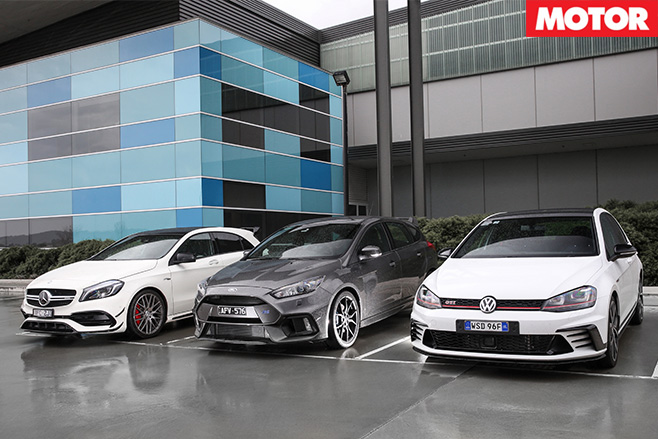
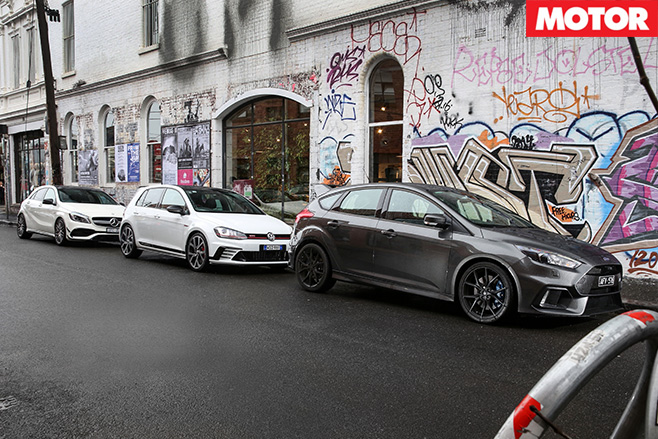
It takes a pretty special kind of car to alter perceptions. But, in its own way, each one of these three hot hatchbacks has done just that.
The AMG A45, for instance, caused more than one punter to wonder aloud if they really needed the C63 or E63 after all. With all-wheel drive, a banzai launch-control system and 265kW (back then; 280kW these days) the A45 could sure as hell walk the AMG walk.
It might not have been a conventional AMG, but it was clearly cut from the same cloth. The A45 was also the car that made AMG buyers sit up and take notice of turbocharging so again, it broke new ground and expanded horizons.
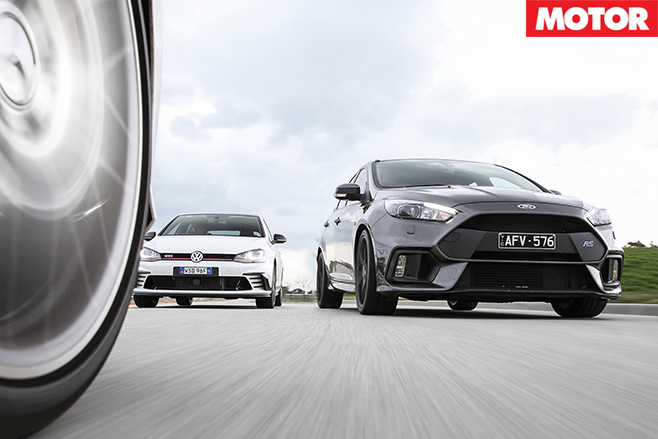
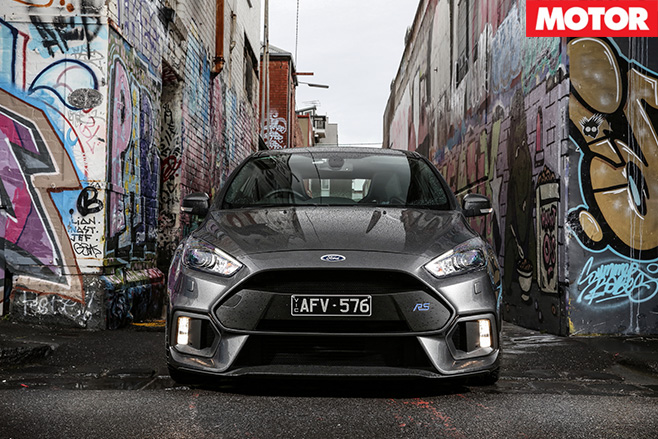
On a bigger scale, the whole RS franchise has been, for decades, convincing people that their ideas about Ford only building ho-hum, get-you-to-work transport modules is wrong. There’s no cultural cringe with a Ford if it wears the RS tag.
And then there’s the granddaddy of all hot-hatches, the Golf GTI. Of course, conventional wisdom these days is that to go V.F. Fast in a Golf, you need the all-paw R model. But, in keeping with that altered perceptions thing, every time I’ve ever driven a Golf GTI Performance (on which this 40th anniversary model is based) I’ve walked away wondering if I really do need a Golf R.
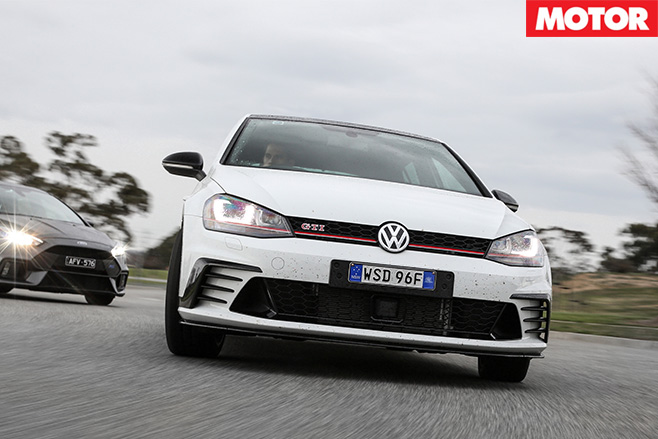
Straight-line thrust was once the preserve of big-inch, rear-drive cars, in this country anyway, but that’s really one of the first perceptions that gets hacked to bits by this fiery little brigade. The conventional wisdom about mid-range thrust and overtaking ability also takes a bath in this company, because here are three very fit turbomotors with as little lag as you’re likely to find.
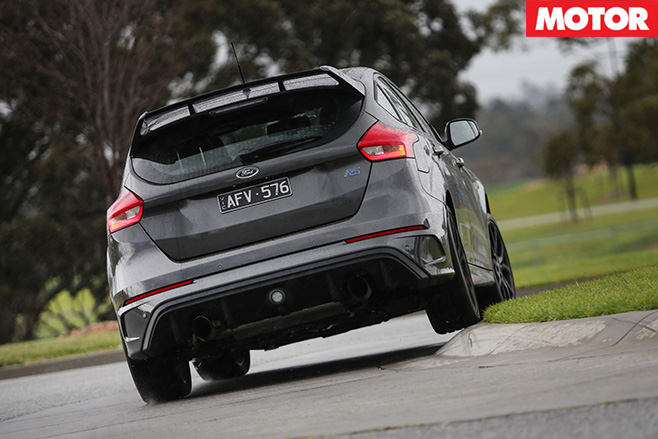
And because there’s so much grip, it’ll scuttle off down the strip even faster. And for those that thought the clutch in an all-wheel drive car was going to be the fuse: guess again, because even with such abuse, the clutch felt rock-solid. Didn’t make any sulky smells, either.
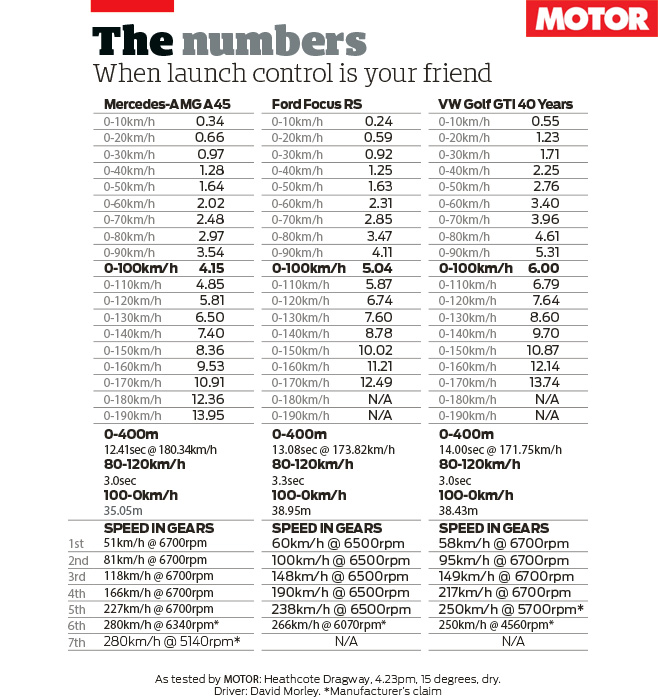
If anything, there’s a tiny delay between each upshift banging home – maybe that helps save the clutch a little. Get it spot-on and you’ll cover the first 400m in 13.08sec with 100 coming up in 5.04sec. It’s not the silkiest engine though, with a bit of vibeyness that kind of reminds me of a five-cylinder, but while it’s a bit grainy, it’s also the angriest and shoutiest, especially when you’re smacking it hard, when it sounds for all the world like it’s mid-stage somewhere in a Finnish forest.
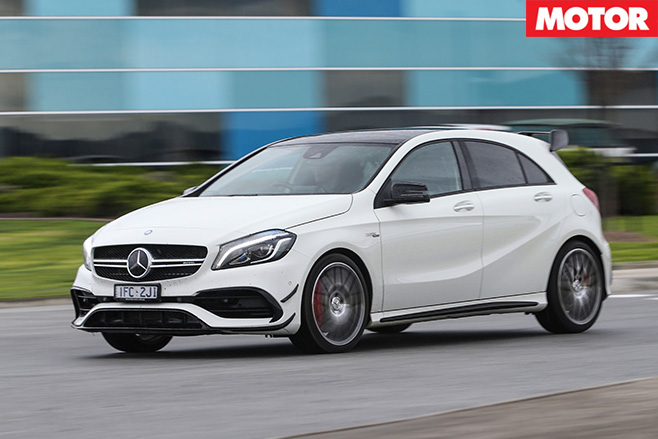
The launch-control is, in the manner of these things, pretty violent, but you can’t argue with the results. The 2.0-litre also has some real personality with plenty of banging and popping on the over-run and lots of rushing-air noises. Use the paddles to short-shift it and you can almost play tunes. Farty, burpy tunes, but tunes nevertheless.
All of which makes the Golf GTI look a bit flat. I mean, 14-dead and 6.0sec to 100km/h is not mooching about with your hands in your pockets, but still… It’d be quicker if its launch-control wasn’t the polar opposite of the AMG’s.
Beyond that, it’s fine. Of course, even with the equal of the AMG’s launch control, and not even because of the whole front-drive thing, the GTI’s 195kW would still feel a bit light on (in this company, you understand). But, man, is it a sweetie. The torque curve feels very linear and while there’s a feeling of some real meat in the delivery and feel, it’s tractable and has plenty of personality.
It’s not just straight lines where this lot excel, of course. None of them have what you’d call a boulevard ride, but if you can live with that, then not too much is going to be quicker A to B on a twisty section. Actually, a lack of plush in the ride department is more than just something you might comment on, because on longer runs over patchy turf, you might just find them too uncompromising.
The Focus is at the other end of the scale and, over rough stuff, feels like a prizefighter just before the bell for round one, bobbing up and down on the balls of its feet, just waiting to swing the first haymaker. And, like a boxer, it seems pretty keen to beat you to a pulp if you don’t dodge the lumpy, knuckly bits. The adjustable suspension does make a difference but you won’t be needing the sportier settings much.
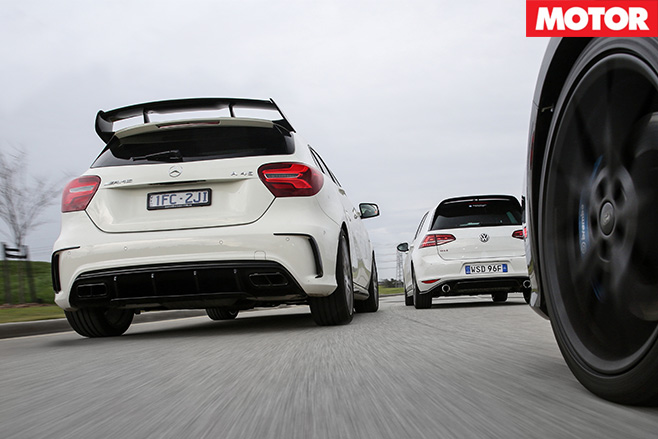
What saves the A45, though, is that it feels like it has more suspension travel. It’s not exactly lopey, but it does feel like it’ll soak up a bit more crap at the extreme end of things – with the dampers switched to Normal – even if a bump with some lock on briefly reveals the unsprung mass of that all-wheel drive set-up. It also relies on its front end and there’s a distinct front bias, which makes it benign on back roads.
The VW probably owns the steering-feel trophy and, again, it backs up the theory that the Volkswagen-Audi Group product has nailed electronic power-steering the best. It’s certainly the most natural steerer and the only gripe is that the tiller plays a little dead when you’re right in the entrails of the torque curve and the front end simply has too much to deal with, at which point torque-steer appears briefly and banishes the last few per cent of feedback.
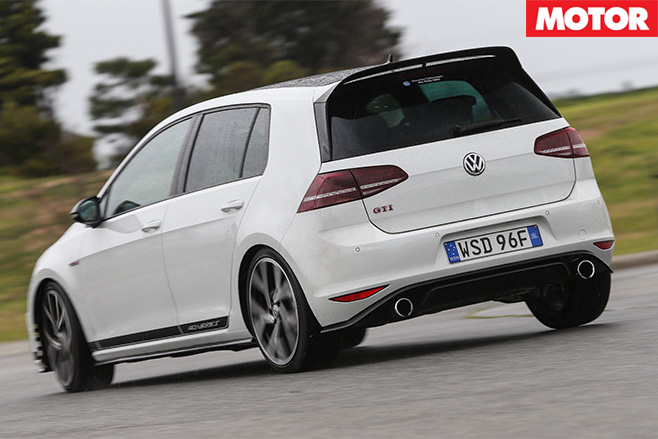
At the very real risk of oversimplifying this, the AMG is probably going to be the quickest point to point, the VW the comfiest and the Focus the most entertaining. Bear in mind, however, that to anyone, they’re all fast from A to B, all jolly good fun but only the VW is anything approximating comfy.
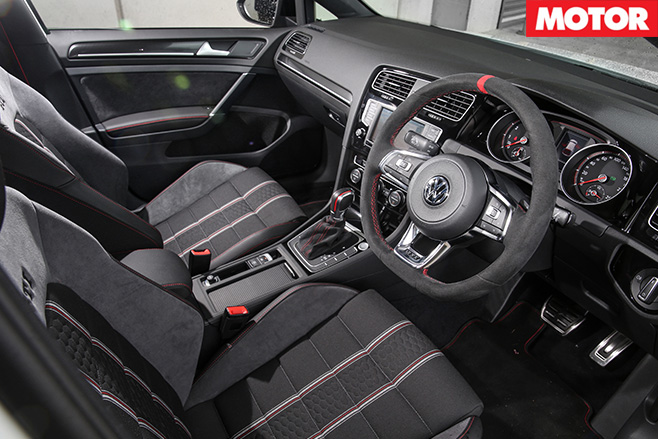
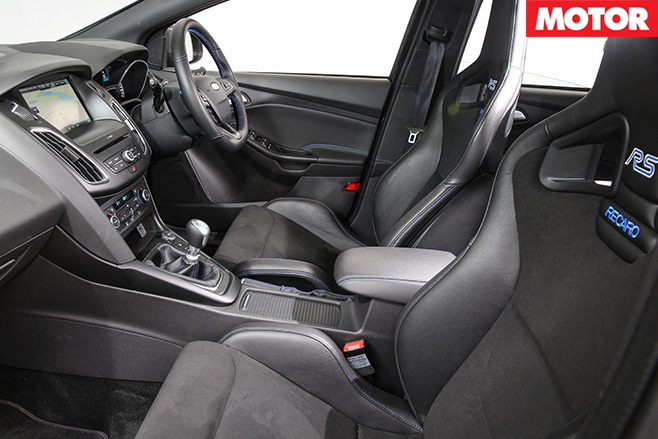
Given that none of these cars costs peanuts, it’s interesting to see the different approaches to making an interior look and feel the part. While the GTI 40 Years ditches the retro tartan seat trim for a racier set of stripes, the overall effect works well with the rest of the package. What is wrong is the shifter’s manual mode (yes, I know it also has paddles) that – to me – works the wrong way around, with upshifts handled by pushing the lever forward.
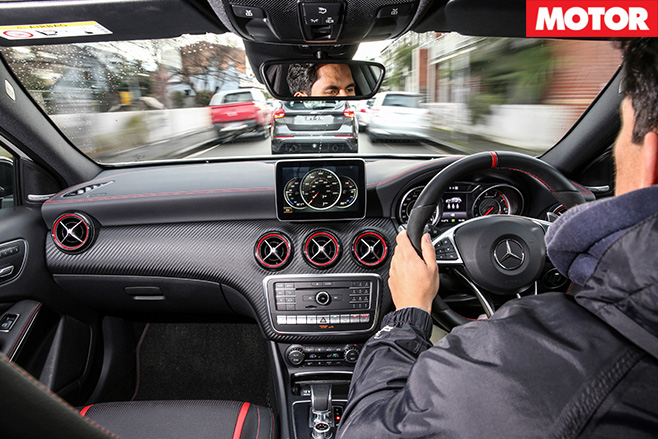
The AMG, by rights, should be the luxo-interior king, what with its price-tag and all, and in a way it is. It certainly makes a bold statement. It’s the only one with powered chairs and although the front pews are hard, they’re actually really nice to sit in even if you have to lever your butt-cheek over the side bolster to get in or out. The wheel, though, is lovely and my only real question surrounds the carbon-fibre-look dashpad.
For one, I’m not a fan of using CF in a non-structural application. Second, I’m even less fond of fake CF, which it is in the AMG. But thirdly, I’m absolutely baffled as to why you’d bother with fake carbon-fibre and then make it soft-touch as AMG has, when any nerd knows that it’s the rigidity of CF that give it cred. Those crazy Chermans!
The Volkswagen is next best and although there’s still plenty of room, it hasn’t come at the expense of seat padding, and the bench is a lot plusher than the Ford’s while also being quieter and there’s more headroom. All of which makes the AMG first choice for a three or four-up trip to the snow. There’s a bit less headroom thanks to the styling, but the A45 has clearly the best rear-seat ride.
The other caveat imposed by the styling is that the view out from the rear is very restricted if you’re short and can’t see over the waistline. And nothing separates a nipper from his or her stewed pears quicker, we’ve found.
Which leaves me with the Volkswagen which I could happily own and love and drive like a mad bastard for the next 20 years. Provided, that is, I was never made aware of the existence of the Focus RS for roughly similar money. Because the Focus really clicked with me; it’s hooligan, perky, fun and decent value. And like I said earlier, when you’re talking a Ford with the RS badge stuck to it, there’s no cultural cringe. Quite the opposite, in fact.
Numbers that matter
It’s not the size of the dog in the fight…
MERCEDES-AMG A45 Body 5-door, 5-seat hatch Drive: all-wheel Engine: 1991cc inline-4, DOHC, 16v, turbo Bore/stroke: 82.0 x 92.0mm Compression: 8.6:1 Power: 280kW @ 6000rpm Torque: 475Nm @ 2250-5000rpm Power/weight: 189kW/tonne Transmission: 7-speed dual-clutch Weight: 1480kg Suspension(f): struts, coils, adaptive dampers, anti-roll bar Suspension(r): multi-links, coils, adaptive dampers, anti-roll bar L/W/H: 4367/1780/1417mm Wheelbase: 2699mm Tracks: 1557/1561mm (f/r) Steering: electrically-assisted rack-and-pinion Brakes(F): 350mm ventilated/drilled discs, 4-piston calipers Brakes(R): 330mm ventilated-drilled discs, single-piston calipers Wheels: 19.0 x 8.0-inch (f/r) Tyre sizes: 235/35 ZR19 91Y XL (f/r) Tyre: Continental ContiSportContact 5P Price as tested: $77,816 Pros: Incredible pace; improved ride; brakes Cons: Not that involving; expensive in this company STAR RATING: 4 STARS
FORD FOCUS RS Body: 5-door, 5-seat hatch Drive: all-wheel Engine: 2261cc inline-4, DOHC, 16v, turbo Bore/stroke: 87.38 x 94mm Compression: 9.4:1 Power: 257kW @ 6000rpm Torque: 440Nm @ 2000-4500rpm (470Nm o/boost) Power/weight: 163kW/tonne Transmission: 6-speed manual Weight: 1575kg Suspension(f): struts, adjustable dampers, anti-roll bar Suspension(r): multi-links, adjustable dampers, anti-roll bar L/W/H: 4390/1823/1472mm Wheelbase: 2648mm Tracks: 1547/1524mm (f/r) Steering: electrically-assisted rack-and-pinion Brakes(f): 350mm ventilated discs; 4-piston calipers Brakes(r): 350mm ventilated discs; 4-piston calipers Wheels: 19.0 x 8.0-inch (f/r) Tyre sizes: 235/35 R19 (f/r) Tyre: Michelin Pilot Super Sport Price as tested: $50990 Pros: Potent performance; handling wizardry; price Cons: Stiff ride; bland interior; sit too high STAR RATING: 4.5 STARS
VW GOLF GTI 40 YEARS Body: 5-door, 5-seat hatch Drive: front-wheel Engine: 1984cc, inline-4, DOHC, 16v, turbo Bore/stroke: 82.5 x 92.8mm Compression: 9.6:1 Power: 169kW @ 4700-6200rpm Torque: 350Nm @ 1500-4600rpm Power/weight: 124kW/tonne Transmission: 6-speed dual-clutch Weight: 1364kg Suspension(f): struts, coil springs, anti-roll bar Suspension(r): multi-links, coil springs, anti-roll bar L/W/H: 4268/1790/1442mm Wheelbase: 2631mm Tracks: 1538/1516mm (f/r) Steering: electrically-assisted rack-and-pinion Brakes(f): 340mm ventilated discs, single-piston calipers Brakes(r): 310mm ventilated discs, single-piston calipers Wheels: 19 x 7.5-inch (f/r) Tyre sizes: 225/35 R19 (f/r) Tyre: Dunlop Sport Maxx GT Price as tested: $48490 Pros: Great steering; brilliant diff; interior quality Cons: Limited build numbers; firm ride on 19s STAR RATING: 4 STARS
If you thought you were having a bad weekend, just be glad you didn’t drive a rare $10million hypercar into a ditch and get charged with careless driving.
That’s exactly what happened to a 65-year-old Australian man who was taking part in a tour of New Zealand with 30 other McLaren drivers to pay homage to the company’s founder, Bruce McLaren.
The McLaren F1, a supercar icon and for a long period of time the fastest car in the world, left the road and ended up in a ditch near Queenstown on Saturday.
Fairfax Media reports the Aussie driver, who is said to own several McDonalds franchises in Victoria, was treated for a broken or sprained thumb, while the sole passenger was uninjured.
He was due to front court today on charges of careless driving.
The F1, which is estimated to cost more than $10million, is the only McLaren F1 registered in Australia, and was shipped to New Zealand for the event.
Fairfax media reports that news crews faced opposition when trying to capture footage of the crashed McLaren, stating stewards allegedly attempted to bribe freelance photographer James Allan from snapping pictures of the car.
The F1 was placed underneath a protective cover as it lay stricken in the ditch.
This isn’t the first time the Aussie F1 has been crashed either, infamously being binned by a mechanic from a BMW Dealership.
The owner of the car shouldn’t stress too much, actor and noted car enthusiast Rowen Atkinson infamously crashed his McLaren F1 twice, with McLaren piecing the car back together after a A$16million insurance claim.
The high value of a McLaren F1 would outweigh any worries surrounding repair costs.
With the iconic model being so rare, it is not unheard of for McLaren’s Special Operations heritage team to piece repair F1’s back to their former glory after being crashed.
WITH official new-car sales figures for November released today, WhichCar details the brands and vehicles that were rocking or rolling for the month.
WINNERS
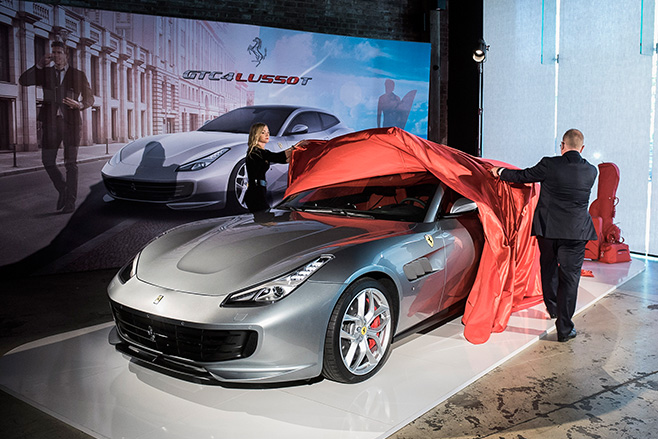
Winner: Ferrari
The Prancing Horse brand may be struggling in Formula One, yet it’s clearly not affecting customer mindsets in Australia. Ferrari sold 23 models in November – well above both the November 2015 tally of 7 and the 15 supercars it has been averaging per month in 2016. Total 2016 sales have now reached 169.
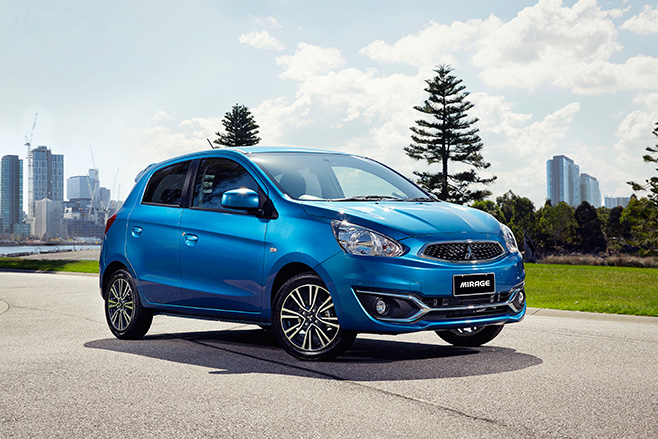
Winner: Micro cars
Australia’s smallest vehicle segment jump 90 percent in November – contrasting with a negative year-to-date figure of 9 per cent. Keys to the result were the Mitsubishi Mirage (up 189 percent for a segment-topping 434 units), the new Kia Picanto (second overall for the month with 327 units), Nissan Micra (up 53 percent) and Holden Spark (up 35 percent). The Suzuki Celerio was the class’s biggest loser, with a 77 percent drop year on year.
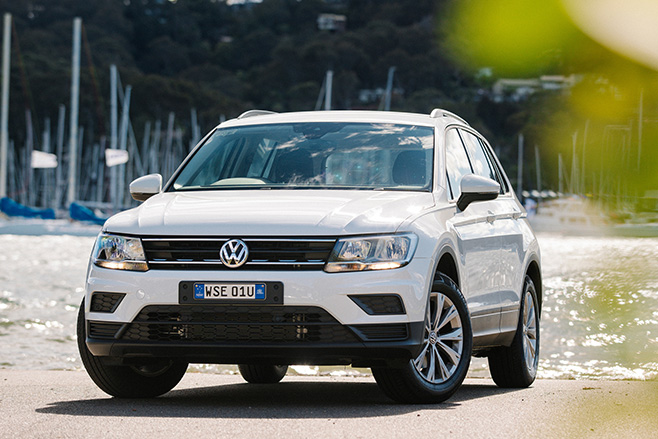
Winner: Volkswagen Tiguan
The original Tiguan was great to drive but hampered by a small boot even by class standards. VW has rectified matters with the second-generation model, and it seems customers are already responding. A new monthly record of 1028 sales in November added to 800-plus figures for both September and October for a three-month running total of 2657 units. If the Volkswagen Tiguan can maintain that monthly average of 886 sales, it will smash the nameplate’s best previous annual sales total – the 6871 of 2012 – on its way past the 10,000 barrier.
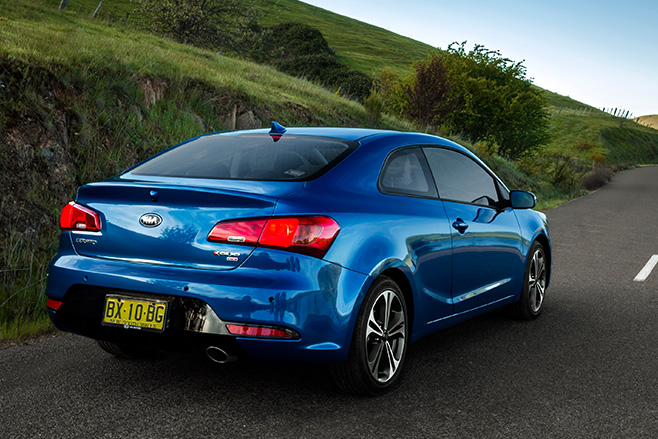
Winner: Kia
Kia continues as Korea’s fastest-growing brand in Australia. Even if Ssangyong’s struggles means it’s only truly relevant in the context of parent company Hyundai, Kia sales were up 19 percent in November compared with a 5 percent decline for Hyundai. Kia Australia’s 39,354 sales year-to-date are a long way from Hyundai Australia’s 94,503, but the former reflects a 26 percent rise while the latter has flatlined (down 0.4 percent).
Winner: Mazda CX-9
Mazda’s biggest SUV has hit the ground running since being released in July. After a nameplate record last month of 863 units, 921 CX-9s were sold in November. A 39 per cent year-to-date increase has contributed about a quarter of Mazda’s four percent overall increase compared with this period last year.
LOSERS
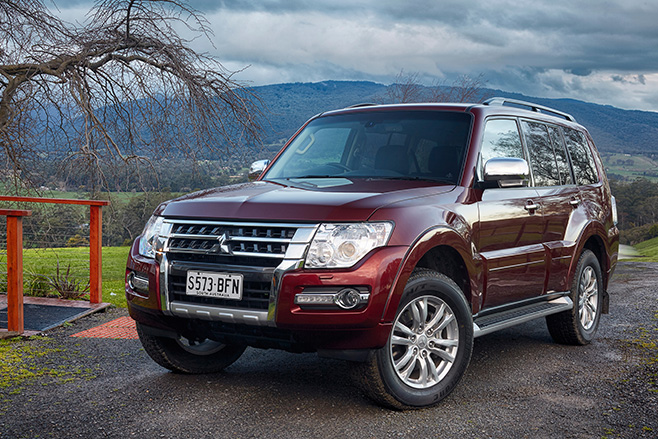
Loser: Mitsubishi Pajero
The long-running Pajero was never troubled by the Challenger SUV but the latter’s moniker-stealing replacement – the Pajero Sport – has trumped it in sales. Mitsubishi Pajero sales fell 78 per cent year on year in November – from 672 to 145 units. It’s also down 20 per cent year-to-date. Where did all those sales go? Well, let’s just say the Pajero Sport sold 601 units in the same month. Mitsubishi is unlikely to be concerned – as long as people are buying one of their models.
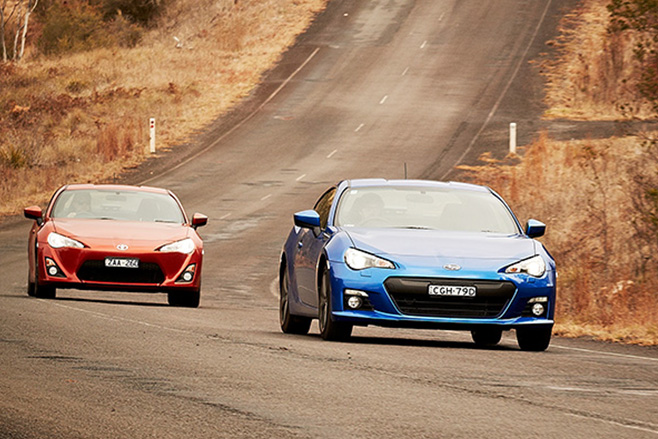
Losers: Toyota 86 and Subaru BRZ twins
After three years as Australia’s best-selling sports car, in 2016 the Toyota 86 will lose its crown to the Ford Mustang. An update introduced in November hasn’t fired sales, either, with 136 units down 35 percent on this time last year. Year-to-date sales are down 31 percent and while the 86 should pass 2000 units for 2016, it will still be about a third of its peak sales figure of 6706 achieved in 2013. Its near-identical twin, the Subaru BRZ, was similarly updated last month but only three units were sold.
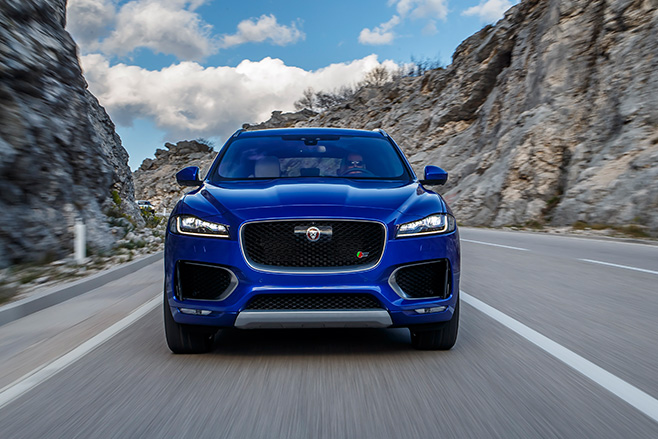
Loser: Jaguar sedans
The British brand’s three four-doors all struggled in November, each slipping year on year: the mid-sized XE fell 48 percent, the large and still-new XF dropped 24 percent, and the XJ limo saw sales halved (albeit from just 2 to 1). The Jaguar F-Type sports car leapt 44 percent last month, though, while the biggest reason Jaguar sales were up 26 percent for November and ahead 136 percent year-to-date is the new F-Pace SUV. With 102 sales, it accounted for more than half of Jaguar sales in November.
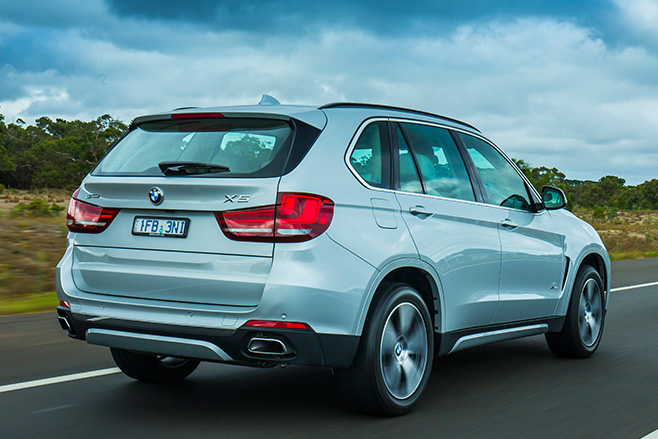
Losers: Large Luxury SUVs
Large SUVs were the only sports utility segment to post a negative figure for November. Models priced at less than $70,000 were down five percent, though those above that price mark lost almost a fifth (down 18 percent) compared with November 2015. Nameplates contributing to the decline included the BMW X5 (down 17 percent), Land Rover Discovery (down 64 percent, but an all-new model is due in 2017), Range Rover Sport (down 32 percent), Lexus RX (down 34 percent), and Porsche Cayenne (down 33 percent).
Loser: Porsche
It’s been a topsy-turvy year for Porsche Australia – featuring as both a WhichCar Winner and Loser across 2016. The German brand is back in the wrong section for November, however, after recording a 22 percent slump. The enduring 911 (up 15 percent) was the only model to post year-on-year growth. The Boxster and Cayman convertible/coupe twins were both down (43 percent and 50 percent respectively), no Panamera four-doors were sold, while not even the Macan (down eight percent) or Cayenne (down 33 percent) SUVs could register growth. Porsche sales, however, are up almost 10 per cent overall for the year.
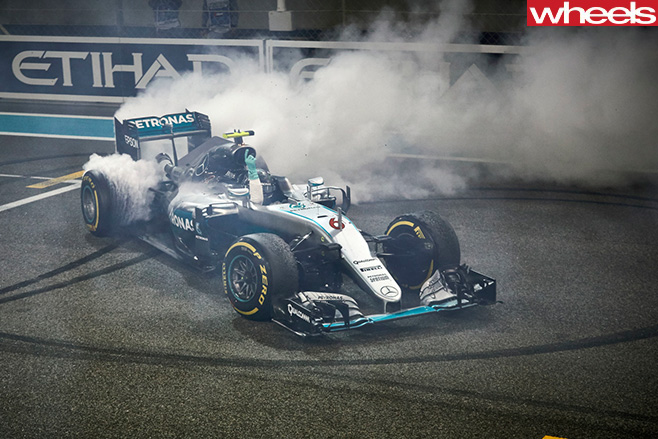
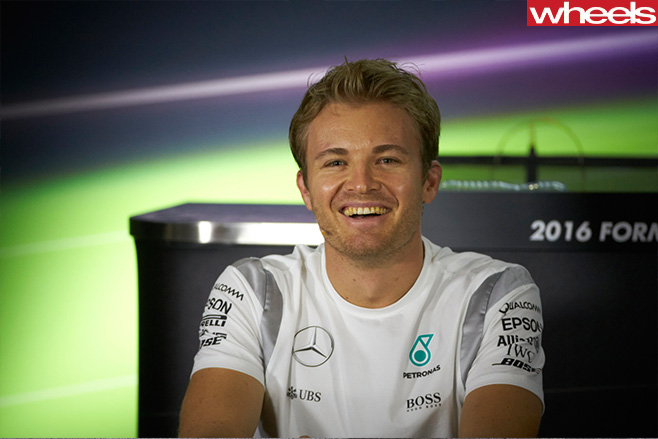
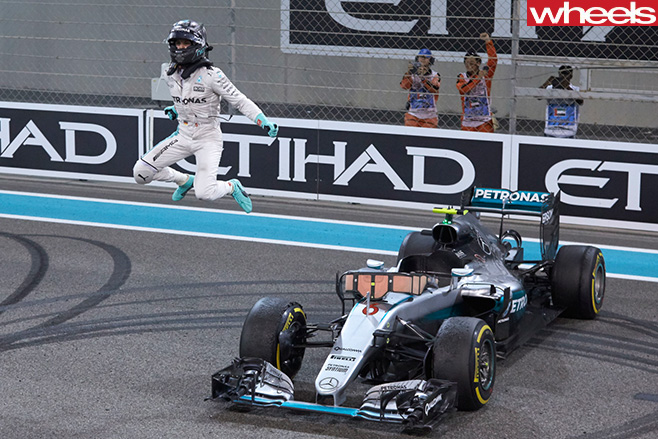
VERY few saw this one coming. Just five days after Nico Rosberg celebrated his narrow title win over Lewis Hamilton in the 2016 Formula One World Championship, the motor racing world was rocked with the announcement that he was quitting the sport, effective immediately.
The 31-year-old German had been celebrating his first world title triumph with his team, family and sponsors.
The first reigning world champion to end his career since Alain Prost in 1993, Rosberg raced in a total of 206 grands prix and won 23.
“Since 25 years in racing, it has been my dream, my ‘one thing’ to become Formula One world champion,” Roberg said as he explained his decision to walk away.
“Through the hard work, the pain, the sacrifices, this has been my target. And now I’ve made it. I have climbed my mountain, I am on the peak, so this feels right.
“My strongest emotion right now is deep gratitude to everybody who supported me to make that dream happen.”
He said he had to push like crazy in every area after the disappointments of the last two years, fuelling his motivation to levels he’d never experienced before.
The tension-filled title campaign had a major impact on his family. Rosberg, who became a father late last year, singled out his “incredible” wife Vivian.
“She understood that this year was the big one, our opportunity to do it, and created the space for me to get full recovery between every race, looking after our daughter each night, taking over when things got tough and putting our championship first.”
“On Sunday morning in Abu Dhabi, I knew that it could be my last race and that feeling cleared my head before the start. I wanted to enjoy every part of the experience, knowing it might be the last time… and then the lights went out and I had the most intense 55 laps of my life. I took my decision on Monday evening. After reflecting for a day, the first people I told were Vivian and Georg [Nolte, from Nico’s management team], followed by Toto [Wolff, the head of Mercedes-Benz Motorsport].”
Asked if there was any chance of a return to the F1 cockpit, Rosberg responded: “No, definitely not. End of story. Done.”
Rosberg’s decision to quit early but while on top ranks up with the retirement calls made by undefeated heavyweight champ Rocky Marciano, who was 32, and tennis ace Bjorn Borg, 26 at the time.
“This is a brave decision by Nico and testament to the strength of his character. The clarity of his judgement meant I accepted his decision straight away when he told me.”
Wolff praised his now ex driver, suggesting he has a special combination of natural talent and fighting spirit that have brought him to where he is today.
“Throughout his career, people have thought he was on a golden path to success just because his father was a world champion; in fact, I think in some ways that made the challenge greater – and meant he had to fight even harder with the weight of expectation on his shoulders.
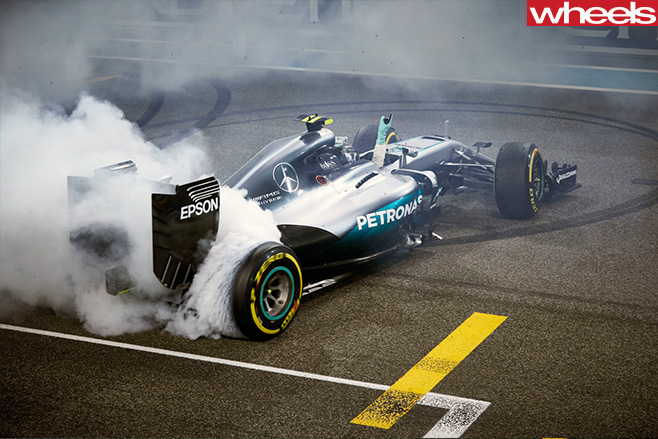
Niki Lauda was less thrilled, bluntly declaring Rosberg had left his team awkwardly placed to secure a worthy replacement. Half the drivers on the grid had been in touch, sounding out job prospects, he said later.
Rosberg made his F1 debut for Williams at the 2006 Bahrain Grand Prix.
In his farewell season, Rosberg won nine of the 21 grands prix, beating three-time champion Hamilton by five points.
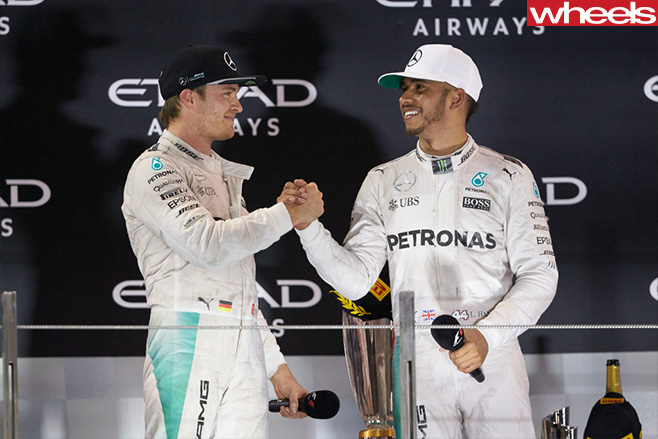
Churlishly, he declared: “This is the first time he’s won in 18 years, hence why it was not a surprise that he decided to stop.
“He’s also got a family to focus on, and wants more children, and F1 takes so much of your time. Will I miss the rivalry? Of course.”
Hamilton added that he “doesn’t care” who replaces Rosberg at Mercedes.
Hopefully it’s someone who might put F1’s biggest spoilt prat in his place.
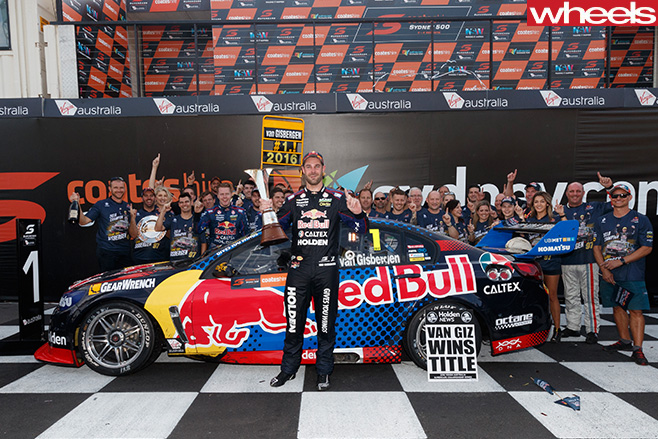
Van Gisbergen seals his maiden Supercars title
After an uncharacteristically tentative start to the title-deciding weekend on the streets of Sydney, Shane van Gisbergen clicked into gear during the Saturday 250km leg of the Sydney 500 to lock-up his first Australian Supercars Championship.
When the Kiwi was rightly hit with a drive-through penalty for turning around reigning champion Mark Winterbottom in a clumsy passing move early into the race, it looked like the Red Bull Racing driver might have to wait another day to clinch the crown.
But shaking off his bad start to the race and the penalty (which dropped him to 22nd), van Gisbergen uncorked the fighting spirit and aggressive driving that had propelled him to the championship lead this season, picking off car after car to fire back up the leaderboard.
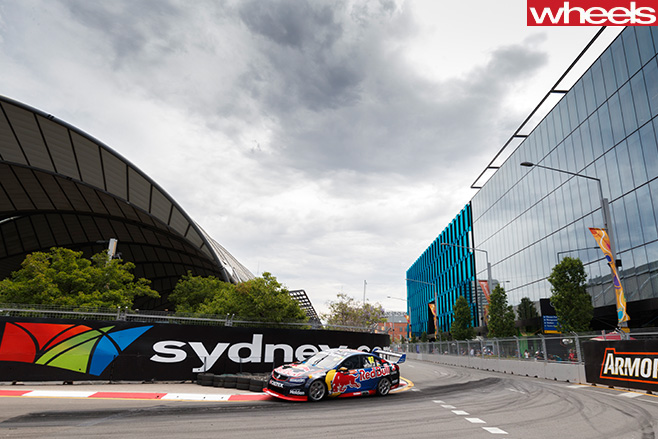
Van Gisbergen began the Saturday race with his Commodore on pole and 191 points ahead of his only title rival, Red Bull team-mate Jamie Whincup, knowing he needed to finish fifth to bag the championship.
Helped by clever strategy-on-the-run moves by his team and a late safety car period which closed up the field, van Gisbergen went on the hunt when racing resumed.
He decisively climbed back to sixth, but then in swift succession nipped past Craig Lowndes’s Commodore, Scott McLaughlin’s Volvo and James Courtney’s struggling HRT Commodore to make it on to the podium in what had been a driving masterclass.
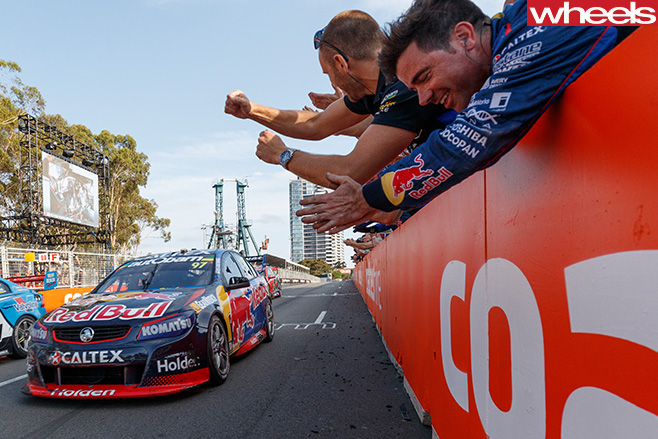
Van Gisbergen’s third place lifted him to an unassailable 170 points ahead of Whincup with just one race and 150 points to fight for.
“It’s been an awesome few years in the Supercars series and taking the championship has always been a lifetime goal so I’m stoked,” van Gisbergen said.
After a huge intra-team scrap that has raged all season, Whincup acknowledged van Gisbergen and his crew deserved the title success more than anyone else.
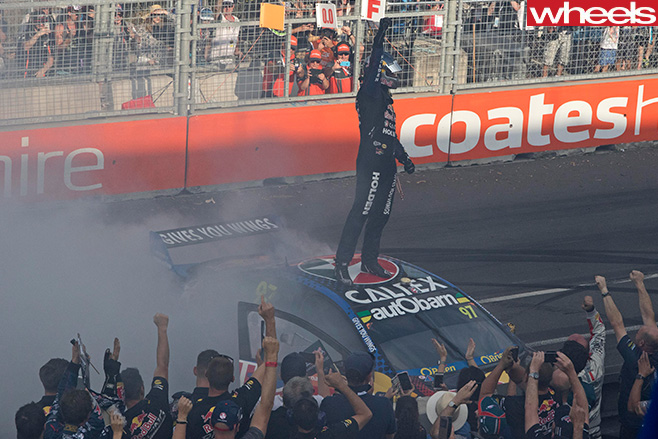
Van Gisbergen joins Jim Richards (four-times winner) and Robbie Francevic (once) as New Zealanders to have won the Australian touring car/supercars championship since it began in 1960.
McLaughlin finished fourth to edge his way past Craig Lowndes into third place in the championship.
With the title in SVG’s keeping, Sunday’s 250km contest was largely meaningless bar the unresolved fight for third place between McLaughlin and Triple Eight’s Craig Lowndes.
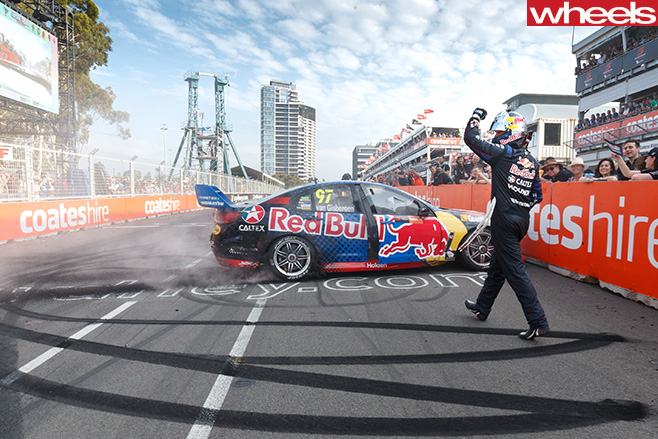
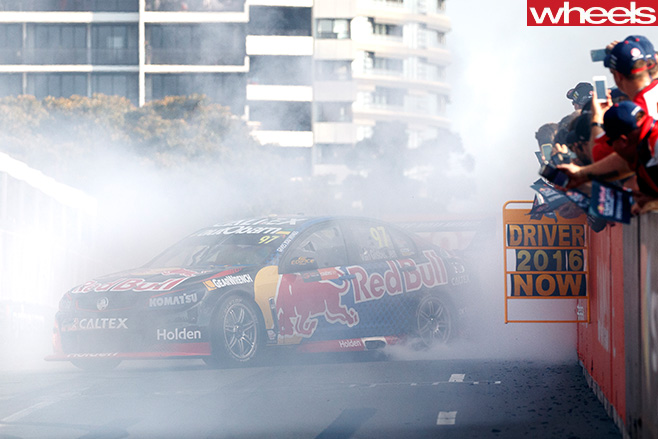
But van Gisbergen was also very keen to have a strong concluding race, finishing his championship year on a high and do a spectacular celebratory burnout.
Whincup soured his chances of a consolation win when he stuffed up his shootout run and finished 10th.
Tander jumped perfectly when the lights went out, to bolt away from van Gisbergen, Reynolds and Courtney.
On lap 20, van Gisbergen moved past Tander with Reynolds as impressive as ever on street circuits, looking to give Erebus its first podium of the year.
What looked to be an unsafe release by Red Bull at the first round of pit went unpunished even though van Gisbergen and Tander came together.
A few safety car interventions at the end of a long, hot day closed up the pack but the new champion stayed up front to place an exclamation mark on a dream season.
Third in the Sunday race was Reynolds, who withstood relentless pressure from Whincup to trouser his best result of the year.
SVG’s final margin over Whincup in the championship was an even 200 points.
McLaughlin gave GRM a nice parting gift by taking third in the standings from Lowndes.
Oh, and SVG did manage the killer burnout he promised.
The replacement street course venue in Newcastle needs to be so much better in every way.
In an ideal world, the money should go into a permanent motor sporting venue to serve the Hunter, but that’s a whole new argument for another time.
Standout Brown is Toyota 86 series winner
Toowoomba teenager Will Brown has stormed to an impressive victory in the inaugural one-make/one-model Toyota 86 Racing Series, reinforcing his class with dominance of the final weekend on the mean streets of Homebush.
Brown, 18, won two of the three races on the schedule at Homebush while the remaining race 14 was not resumed after a big shunt on the opening lap (see video).
With three wins at Bathurst, and two in Sydney, Brown wrapped up the series with five consecutive wins – some feat in a competition where all cars are theoretically equal.
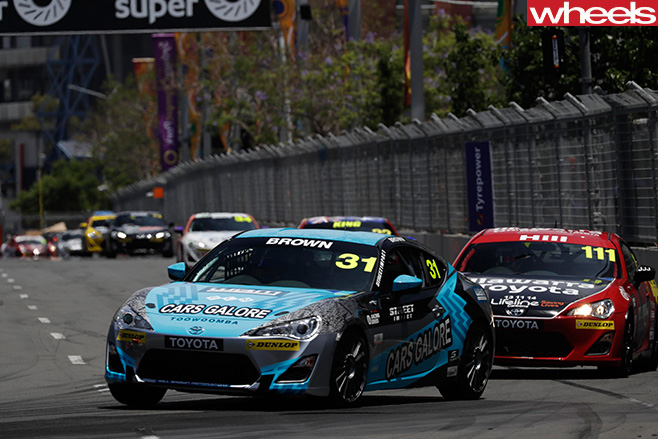
He finished 164 points clear of second placed Sydneysider David Sieders, with Cameron Hill narrowly third by 14 points.
The Toyota 86 series victory caps a phenomenally successful year of racing for the busy and versatile Brown, who earlier clinched the Australian Formula 4 Championship and took second in Australian Formula Ford.
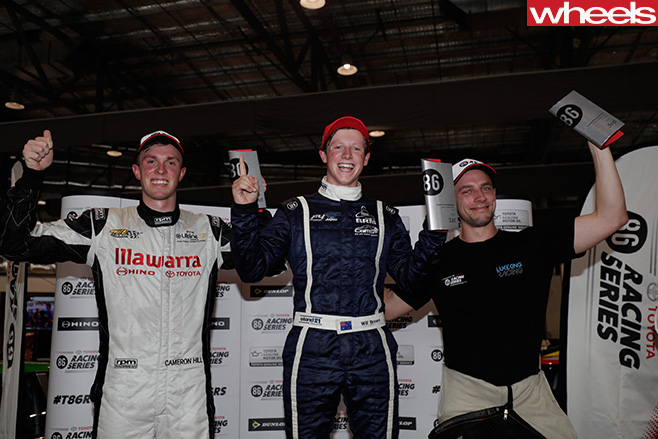
The Toyota 86 Racing Series was run over five weekends, all in conjunction with Supercars rounds.
20 races in 2017 F1 championship
The Australian Grand Prix to be held on march 26 has been confirmed as the opening round of a 20-race Formula One world championship for 2017 – one fewer than this year.
We’ll see and hear the new noisier, faster F1 cars racing in anger before anyone else.
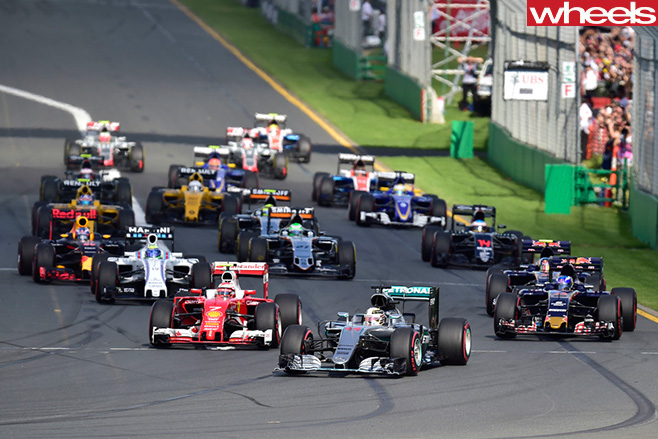
The Canadian Grand Prix in Montreal, which had also been in under question, has been confirmed.
Another significant change is the moving Baku back a week to avoid a clash with the 24 Hours of Le Mans.
The 2017 calendar
March 26 – Australia (Melbourne)
April 9 – China (Shanghai)
April 16 – Bahrain (Bahrain)
April 30 – Russia (Sochi)
May 14 – Spain (Barcelona)
May 28 – Monaco (Monte Carlo)
June 11 – Canada (Montreal)
June 25 – Azerbaijan (Baku)
July 9 – Austria (Spielberg)
July 16 – Great Britain (Silverstone)
July 30 – Hungary (Budapest)
August 27 – Belgium (Spa-Francorchamps)
September 3 – Italy (Monza)
September 17 – Singapore (Singapore)
October 1 – Malaysia (Sepang)
October 8 – Japan (Suzuka)
October 22 – USA (Austin)
October 29 – Mexico (Mexico City)
November 12 – Brazil (Sao Paulo)
November 26 – Abu Dhabi (Abu Dhabi)
