
When the world’s biggest hoon meets a supercharged Aussie muscle car, tyre destruction is inevitable.
The date was 2011 and the location was Calder Park. Ken Block was in Australia to compete in the Australian round of the World Rally Championship in Coffs Harbour, however took the opportunity to add Oz to his Gymkhana World Tour.
MOTOR was lucky enough to score a ride in Block’s incredible 480kW Ford Fiesta HFHV (Hybrid Function Hoon Vehicle), but our former sister mag Top Gear Australia took it a step further by bringing a different Ford product along for Ken to try, an FPV GT-P.
Despite claiming “rear-wheel drive really isn’t my game” Ken had no trouble lighting it up for the cameras, quickly demolishing a set of rear tyres – all in the name of photography of course – before performing a series of donuts around the FPV in his Fiesta.
The event also allowed Block and V8 Supercar drivers Will Davison and Mark Winterbottom the opportunity to do a car swap, the Aussies sampling the HFHV while Block got familiar with an FG Supercar.
It’s fair to say that all three were well out of their comfort zone, Block spinning on the first corner in the Supercar while Davison and Winterbottom struggled to adapt to the unique techniques required to drift an all-wheel drive, techniques that Block makes look all too easy.
That’s it. The Paris Motor Show is over for another couple of years. But while most of the mega-buck launches will be beyond your budget, it won’t be too long before your daily drive is impacted by what was revealed amidst all the hype and laser beams.
Here’s five things we took home from Paris.
1. THE ELECTRIC VEHICLE’S FUTURE IS A LOT CLOSER THAN YOU THINK
Tesla was at Paris but you’d hardly know it. While the specialist electric-vehicle producer didn’t show anything new, several established brands from Mercedes to Mitsubishi revealed new cars or concepts based around all-electric or hybrid powertrains. Most notable was Volkswagen, which announced it aims to sell a million EVs by 2025.
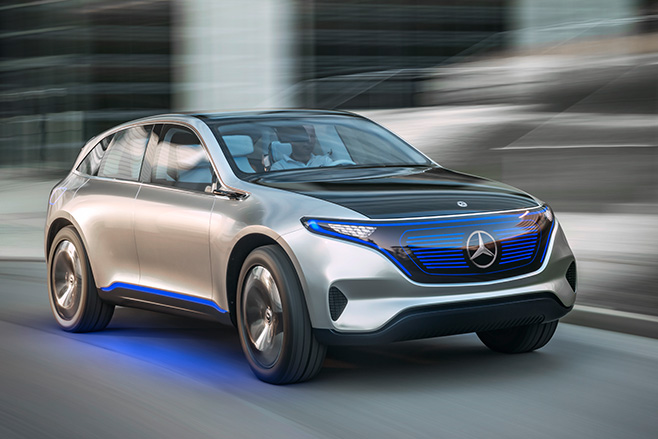
Lithium-loaded launches and concepts included:
- The Tesla-challenging Mercedes-Benz Generation EQ SUV
- The spectacular Renault Trezor Concept
- A Mercedes AMG F1 hybrid hypercar
- The Mitsubishi GT PHEV Concept SUV
- The Volkswagen ID that the company says will be around the same exterior size and price as a diesel Golf (but the interior space of a Passat) when launched in 2020.
- The plug-in hybrid Citroen CXperience Concept
- The GLM G4 – a four-seat Japanese electric supercar that pushes 400kW/1000Nm and that supposedly does 0- 100km/h in 3.7 seconds
- Jaguar’s answer to the Tesla Model X SUV, the X590
- The Luxus UX concept
When Audi comes out and says it’s less than 12 months away from having a fully autonomous car on the road, you better take notice. The German company has revealed the all-new Audi A8 flagship limousine due for release in 2017 will be equipped with what Audi engineers call “Stage Three” autonomous systems, which will allow drivers to take their eyes, and hands, off the steering wheel for indefinite periods of time.
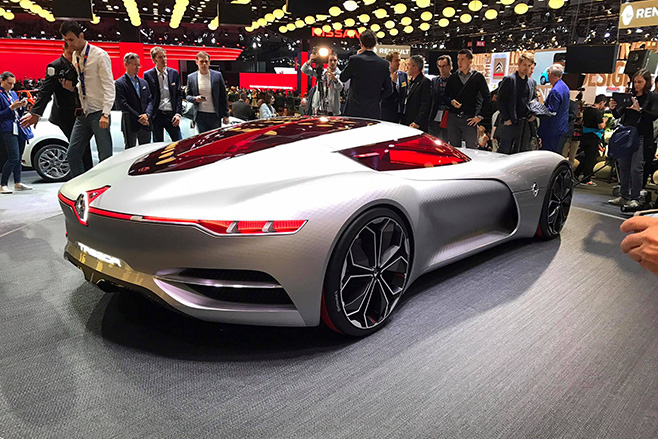
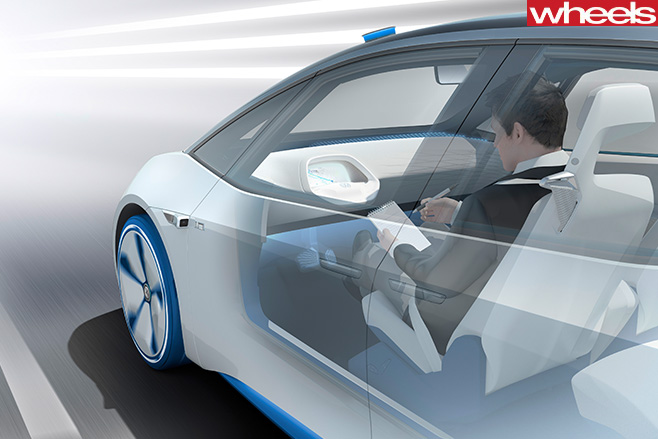
Renault went one better with the Renault Trezor Concept based around allowing the driver to kick back and play games with their passenger as the car barrels down the highway. The French carmaker concedes the technology isn’t here yet, but reckons it’s only a matter of time with the biggest obstacle being government regulation.
According to Nissan Renault Alliance chief executive Carlos Ghosn: “This is something all manufacturers are working on for the simple reason that it appeals to the consumer.
“It’s not going to be just on the highway, it’s going to be in the city, and most of the car companies will be there around 2020, I maintain that will happen. It’s just about it being accepted by regulators in big cities like New York, Paris and Mumbai.”
3. SUV GROWTH SHOWS NO SIGN OF SLOWING
Whether they’re EV, hybrid, petrol or diesel there was no shortage of SUV action at the Paris Motor Show including concepts and highly anticipated launches, including:
- The second generation Audi Q5
- BMW Concept X2 compact SUV
- Lexus UX concept
- Land Rover Discovery 5
- Peugeot 3008
- Peugeot 5008
- Skoda Kodiaq
- Suzuki Ignis
- Toyota C-HR
From AMG to Honda there was enough heavy metal on display at Paris to ensure it wasn’t just a glimpse into a boring world of electric cars that drive themselves.
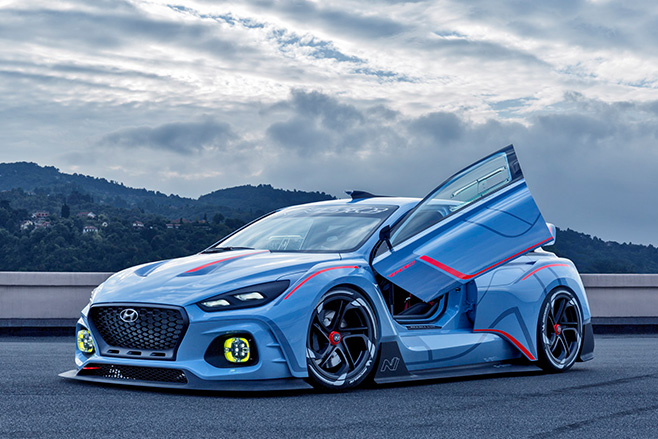
Among the most exciting were:
- The Hyundai i30-based RN30 concept sporting a 2.0-litre turbocharged engine delivering 280kW/451Nm
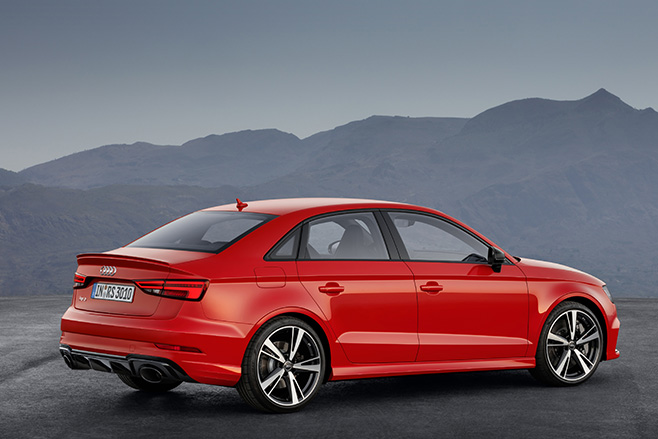
- The Audi RS3 sedan with its 2.5-litre five-cylinder turbo engine producing 294kW/480Nm
- Another concept car pointing towards the next-generation Honda Civic Type R
- The Hyundai i20 World Rally Championship race car
- The Mercedes AMG GT C Roadster
- Ferrari’s V8-engined GTC4 Lusso T and the open-topped LaFerrari Aperta
ASIAN MANUFACTURERS ARE MAKING SMALL CARS WITH EUROPE IN MIND
New small car offerings from Japanese and South Korean manufacturers seemed pretty Euro-centric in terms of design, production and initial distribution. For example:
- The new Hyundai i30 is German-designed, which shows in its new upright design. The Korean brand’s car will be made in the Czech Republic for the European market.
- The Kia Rio, another Korean car, has also undergone a Teutonic-inspired overhaul with straighter lines to broaden its appeal.
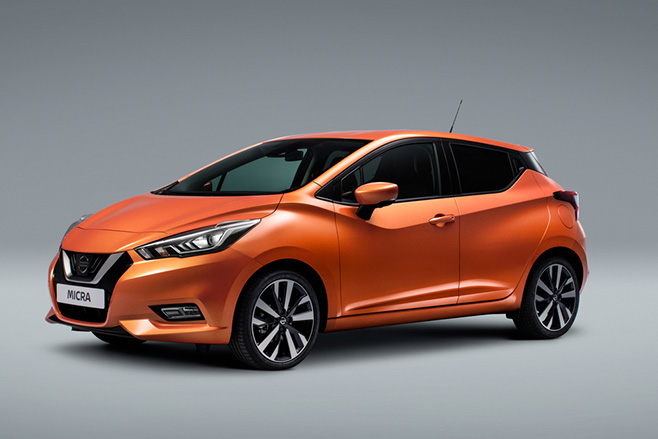
- The new Nissan Micra has ditched the bland. While the Japanese brand’s small car looks a little bit like the Kia Rio used to, the company admits it has its sights firmly set on Europe
- The Honda Civic Type R will be built in the UK and first launched in Europe before heading to Asia-Pacific
It didn’t take long for Jag to drop a V8 into its first-ever SUV.
JAGUAR Land Rover’s SVO division has been busy building a new high-performance flagship for its just-launched SUV: the Jaguar F-Pace SVR. Out goes the standard supercharged V6 of the F-Pace 35t, and in its place goes a supercharged V8.
Spied performance-testing at the Nurburgring, the F-Pace SVR’s V8 note can be clearly heard as the camouflaged prototype launches from apex to apex. It’s not as loud or bassy as the Range Rover Sport SVR nor is it as raw and crackly as the F-Type SVR, but the sound of eight cylinders is very much evident.
What’s also evident is the F-Pace’s, er, pace. Captured at maximum attack, the F-Pace SVR prototype shows surprising agility for a midsize SUV, despite this car’s plentiful body roll.
As for the all-important numbers, it’s too early to say. JLR’s 5.0-litre supercharged V8 is a staple of Jaguar and Land Rover performance models but comes in several states of tune: from the Range Rover Autobiography’s 375kW/625Nm version though to the 423kW/700Nm of the F-Type SVR.
The F-Pace SVR will likely take a low-spec engine, forgoing the 404kW and 680Nm of the Jaguar XJR and F-Type R for a relatively modest 375kW and 625Nm tune. Though it might sound like Jaguar is leaving plenty on the table, a 375kW engine would give the F-Pace SVR a significant power advantage over its chief rival, the 294kW/550Nm Porsche Macan Turbo.
And that power will go to all four wheels via a paddle-shifted eight-speed automatic, with a unique calibration for both to give it the traction and gearing to make the most of its sizable outputs.
With the V6-powered F-Pace 35t already capable of a brisk 5.5-second 0-100km/h run, we can expect the SVR to achieve a sprint time somewhere the high four-second range. That would put it in good stead against the Porsche Macan Turbo, which zips to triple-digit speeds in 4.8 seconds.
Other competitors include the diesel-powered Audi SQ5 Plus (which is capable of a 5.1-second 0-100km/h time), while Mercedes-Benz’s AMG division is rumoured to be cooking up a GLC 63 super SUV.
Expect to see the F-Pace SVR surface sometime in 2017.
Performance hero gets down to some dirty business.
ACCORDING to a UK survey, moving house is more stressful than divorce. Having just done exactly that – the house bit (for the fifth time in six years), not the divorce part – I reckon that’s probably stretching the truth a bit. The actual moving part isn’t the issue. It’s the aftermath of dust, boxes, clutter and mind-boggling mess. Did I mention dust?
Given the chaos of winter 2016 in our household, it’s no wonder the Mercedes-AMG C63 S has been restricted to commuting and ferrying duties. But in doing so it proved there’s a lot to be said for the often-ignored practicality of a roomy medium-sized sedan.
In the C63, full pack-horse duty requires a press of the boot button (either on the driver’s door, the keyfob, or squeezing under the numberplate plinth) before it electrically opens, then flicking a latch on each side under the rear parcel shelf to drop the 60/40 split backrest to a near-flat position.
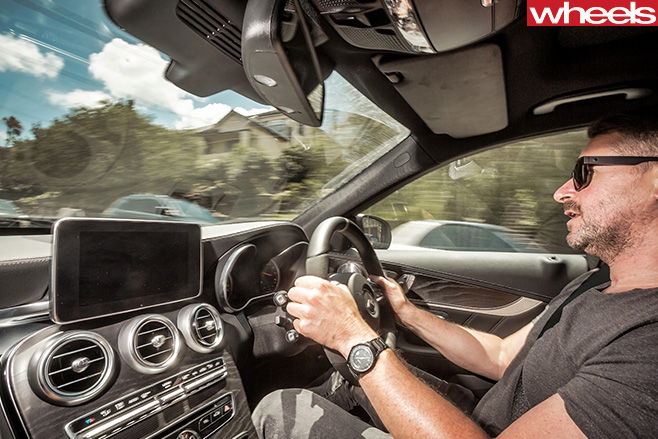
My haste to get the century-old wooden sash windows in our bedroom restored, and the domino effect of discovering missing counterweights and ill-fitting glass panes, meant I spent days running around Sydney like our carpenter’s PA (admittedly, in an AMG). I went to Bunnings three times in four hours, so if you noticed the C63’s heinous fuel consumption this month, there’s a reason why. Frustration. But boy does that engine and its exhaust note soothe the pain.
Unfortunately the AMG had to be sidelined for my final PA job. Picking up our beautiful primered window frames with 12 new rectangular panes of glass puttied in place was a task too big for the C63’s ride. I simply couldn’t risk driving at snail’s pace trying not to break a window when a perfectly acceptable Honda Civic VTi-S was available, waving its far superior ride quality in my face.
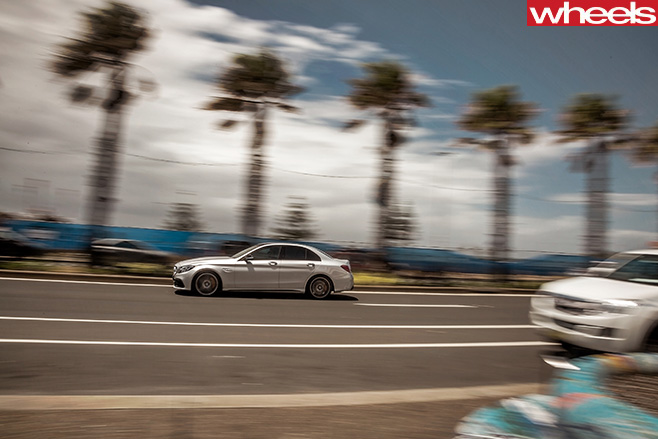
A smaller cut-out through to the cabin, more intrusive panelling in the boot sides and rear-seat backrests that don’t fold as flat unexpectedly marked the new-gen front-drive Civic sedan as inferior to the more practical, better-trimmed, rear-drive C63 S. Honestly, who knew?
Hard and fast
That describes the C63’s ride alright, though because it’s so well-damped you don’t get that springy, vertical pitching sensation that was the Audi S4’s nemesis for so many years. This baby is tied down as tight as a drum, though at times it feels like an air-sprung billycart.
Besides the brilliant winged-back driver’s seat and its sophisticated layers of Nappa leather, there’s little cushioning between tyres and buttocks. But so long as you treat speed humps, potholes and road joins with respect, the C63 is a loveable rogue.
Read part four of our Mercedes-AMG C63 S long-term car review.
Mercedes-AMG C63 S Price as tested: $165,610 Part 5: 269km @ 25.2L/100km Overall: 4024km @ 15.3L/100km Odometer: 6537km Date acquired: December 2015
First published in the July 2014 issue of Wheels magazine, Australia’s best car mag since 1953.
Crushing rumours of a 375Kw-GT-HO send-off, Ford has said it won’t happen.
There will be no big bang ending for the Ford Falcon. Hopes had been raised that a higher performance Falcon, perhaps even wearing the GT-HO badge, would be released before the model is retired in 2016.
But those hopes have now been dashed, with Ford insiders telling Wheels that no such model is planned. That means the current 335kW/570Nm FPV GT will be the last hot production Falcon.
What makes this news so disappointing is that Ford’s engineers had developed a 351kW GT as part of the FG supercharged V8 models introduced in 2010.
Unlike the regular 5.0-litre ‘Miami’ V8, this engine was fitted with an air-to-water intercooler for enhanced performance. The uprated GT made it well down the development path, but was killed off due to concerns raised over differential durability.
Another option for Ford Australia was recently proposed by PremCar, an engineering firm headed up by key engineers from what was the local arm of Prodrive before it withdrew from Australia – leaving FPV to Ford, with input from Ford performance master Rob Herrod.
With a power output of more than 375kW, the GT-HO featured several custom drivetrain components to ensure reliability.

“We have been losing so much money that this kind of thing is just not going to get approved,” said one.
The budget allocated for the facelifted Falcon, due mid next year, is so tight that no specific Ford Performance Vehicle models, with unique bodywork, will be produced. That means no FPV-badged Falcons.
That doesn’t mean the end for the supercharged Miami V8, though. A Ford-branded model is planned, likely wearing the XR8 badge.
Ford engineers are currently working on the facelifted Falcon package. There are no performance upgrades in the program.
The vehicles do feature revised engine mapping, adopting new global Ford protocols, and the naturally aspirated 4.0-litre six will switch to a Chinese-made ZF 6HP21 six-speed automatic, which was introduced on the four-cylinder Ecoboost Falcon last year.
The turbocharged six-cylinder and supercharged V8 will continue to use the sturdier, German-sourced 6HP26 six-speed automatic, which ZF will stop producing next year.
Ford Australia is currently negotiating a bulk purchase of all the high-torque ZF six-speed automatics it will need to get through to the end of Falcon production in late 2016.
Lower engine speeds and low rolling resistance tyres are part of the company’s bid to reduce fuel consumption by 0.5L/100km.
Unlike the Ford Territory, the facelifted Falcon will not be fitted with more efficient electric power steering.
Only the four doors remain – every other panel as well as the front and rear windscreens are new; however, changes to Ford’s new Falcon reach much deeper than its aesthetics.
This article was originally published in MOTOR magazine September, 2002.
It started as a simple mid-model grille-and-headlight facelift in the spring of 1998. The timing was right for Falcon. A year earlier and perhaps the new Falcon would have remained just a grille-and-light job.
In 1998, the design culture at Ford was to change dramatically, and Falcon would benefit from top-level staff changes at Ford Corporate HQ.
Steve Park, head of design at Ford during AU, was posted to the US soon after AU Falcon was launched in September 1998. His replacement was American Scott Strong, who worked closely with Ford’s new global vice president of design J Mays, who had come from Audi to replace the legendary Jack Telnack.
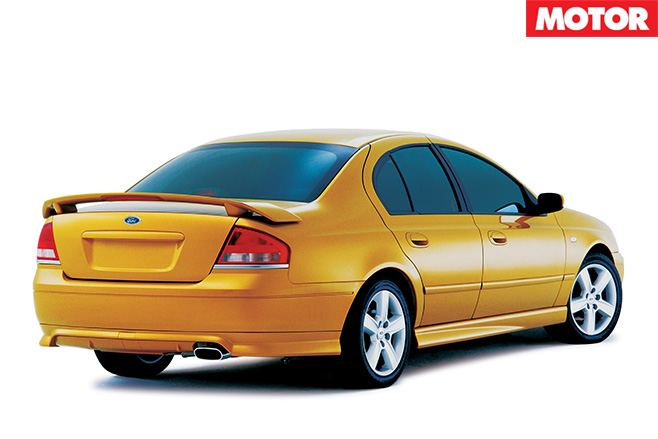
The new BA Falcon – codenamed Barra – will have cost Ford Australia half a billion dollars to design and develop. The changes are immense and include a new interior, new inline six-cylinder and V8 engines, and new independent rear suspension.
Is it a make or break car for Ford Australia? Polites says no, Mays says definitely yes. A make vehicle, perhaps, in terms of design credibility. Without BA, there’s doubts Ford would be doing the R7 wagon.
In the summer of 1998 – a month after the AU Falcon’s launch – Mays, Strong, Falcon’s exterior design manager Graham Wadsworth and a team of clay modellers worked to get Barra’s basic proportions right. It was clear that Barra would follow a European design bias (not necessarily Ford Europe) rather than an American bias.
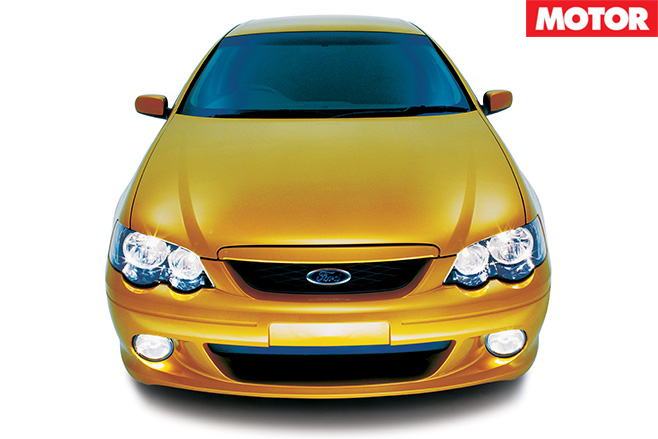
Where the AU was heavily influenced by Ford ‘New Edge’ styling, the BA Falcon marks a return to proportions, presence and width. “We were having a long hard talk about the integrity of design rather than fashion statements,” declares Mays.
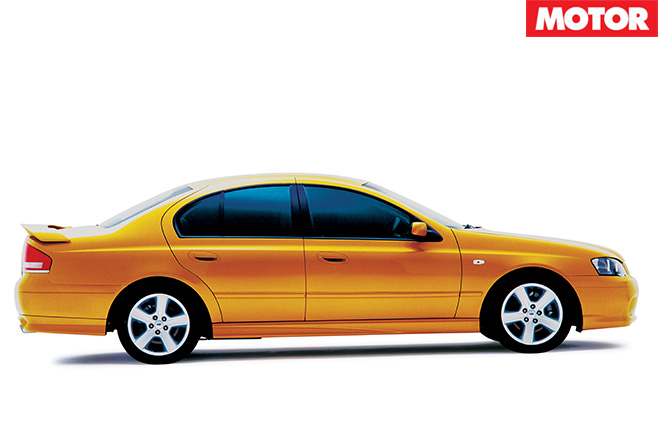
“We raised the deck, we pulled the wheels back, we raised the hood, we brought the quarter panel out, we brought the fenders out, and we flattened the roof. That’s roughly it, a no-nonsense approach,” said Wadsworth. “All the basic architecture was done within a few weeks in late ’98, early ’99. For the next two years, we finessed and refined it.”
Said Mays: “I had been down for the launch of the AU; that was my first press launch with Ford. Seeing that car compared to what was going on in the rest of the world was worthwhile. The thing that was on my mind, and this may be me coming out of a German company, was looking at Ford Europe and US and Australia and the products they had.”
“I think it is going to be a make vehicle,” says Mays confidently, and the key to BA Falcon’s success is the base-model Forte.
That is precisely Strong’s approach to Barra, and he never held back in letting everyone know it; his rantings are legendary at the Broadmeadows design studio. “We wanted the base Falcon to look like a car you really want to own, rather that what you buy because you can’t afford a more expensive car,” explains Strong from his office in the US. In 2001, he was promoted from Chief of Design Ford Australia to Director of Ford Passenger Cars, North America.
He fought every design battle, including the long S-shaped cutline where the rear bumper joins the quarter panel. When suppliers claimed they couldn’t produce a good panel fit, Strong showed them German cars that did. “We have to manufacture as well as anybody in the game,” insists Strong.
Butterworth’s input will be seen in the details. He insisted on lowering the ride height across the range, and dropped the ride height of XR6 and XR8 even further. He uses terms like ‘animalesque’ and ‘predatory’ to describe the BA Falcon, but it is the XR, with its new headlight treatment and wide-open air intake, that speaks dynamic aggression.
Strong arrived at Broadmeadows and met the motoring press with an awkward question: How important are the quad headlights to XR?
Strong felt the fussy panel fit of the moulded front bumper around the four independent headlamps was a mess of inconsistent panel gaps. “Scott was passionate about the Barra XR not being dealt with that way. In the year 2002, you can’t go and take two headlamps off the shelf and put a front clip on it and think you’re going to call it an XR,” says Wadsworth.
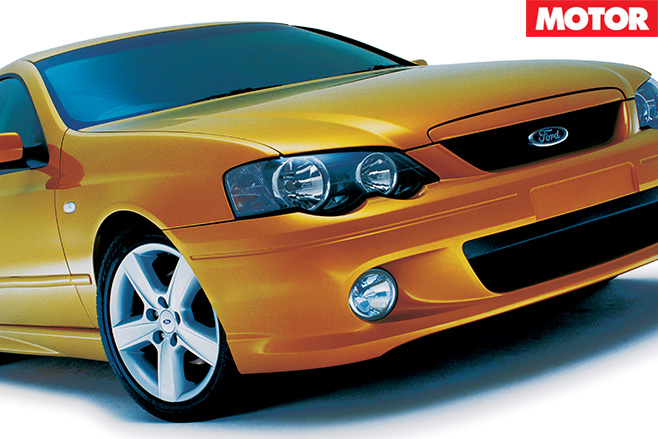
“There were people within Ford and Tickford who wanted to perpetuate the twin rounds, and it just wasn’t going to work. It was not the right look for 2002,” explains Wadsworth.
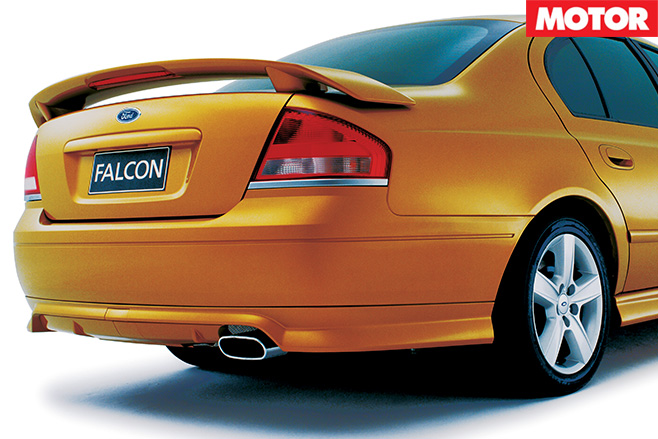
The headlamps were the focus of change, and in the end the BA XR range is now more integrated from its large air-swallowing intake to the deck lid spoiler and oval exhaust. The XR6 and XR8 will carry the same front and rear bumper mouldings with a single exhaust.
There will be no twin exhaust for the 5.4-litre XR8. Butterworth claims the V8 required some unique design changes. “The cooling requirements for this car are pretty phenomenal. We had to work closely with the cooling guys and aero guys to achieve sufficient cooling for the V8. About 60 per cent of cooling air comes through the lower grille opening.”
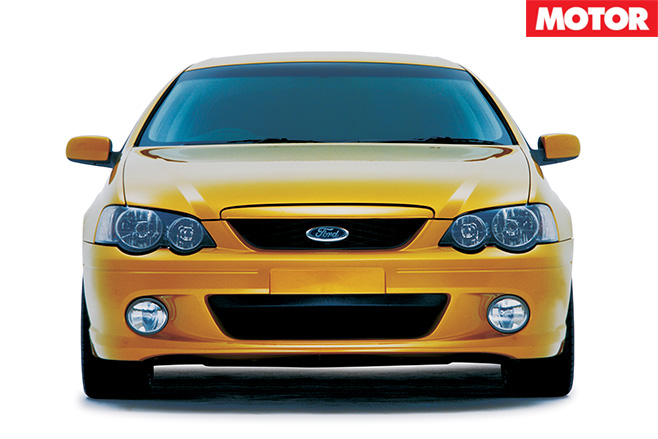
“One of the most satisfying moments in the design of the XR is when the first one came down the production line and the workers kept coming over and looking at it,” remarked Butterworth. “We left it at the end of the line where everyone could have a look and they stood 10 to 15 deep. The reaction to the car was so positive.”
SPECS Body: four-door sedan Drive: rear-wheel Engine: front-mounted 5.4-litre DOHC 32-valve V8 Power: 260kW @ 5750rpm Torque: 500Nm @ 4250rpm Compression: 10:1 (est) Weight: 1585 kg (est) Weight/power: 6.1 kg/kW Specific power: 48.1 kW/litre Transmission: five-speed manual Suspension: double wishbones, coil springs, gas dampers, anti-roll bar (f); double wishbones, coil springs, gas dampers, anti-roll bar (r) L/W/H: 4970/1870/1430 (est) mm Wheelbase: 2810 mm (est) Track: 1566 mm (f); 1567 mm (r) Brakes: 329 mm ventilated discs, two-piston calipers (f); 287 mm solid discs, single-piston calipers(r), ABS Wheels: 17 x 8-inch (f & r), alloy Tyres: 235/45 ZR17 (f & r) Fuel: 68 litres (PULP) List price: $50,000 (est)
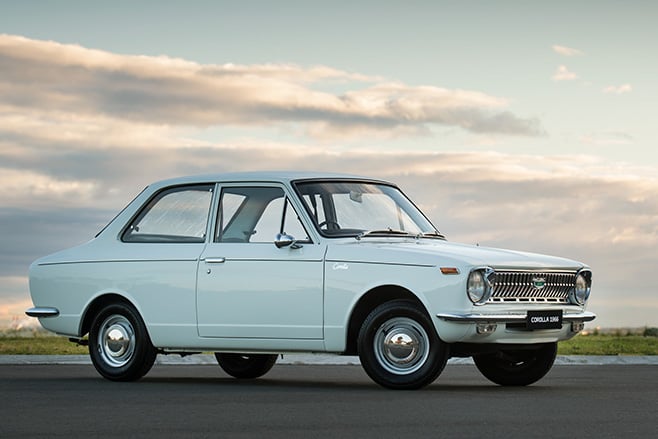
The Toyota Corolla turns 50 this month and remains the world’s most popular car with more than 44 million sales, easily putting previous record-holders like the Volkswagen Beetle (21.5 million) and Ford Model T (16.5 million) in the shade.
And the diminutive Toyota’s impact has been especially profound here in Australia, since the initial shipment of just 15 cars were placed on a ship bound for our shores just one month after its Japanese launch in October 1966.
These were the first Corollas to be sent overseas and, like the introduction of many exotic species into Australia, its numbers steadily grew to the point where it became the dominant type, squeezing out larger native species not accustomed to being preyed upon.
Toyota’s audacity in the face of Ford and Holden supremacy paid off during the 1970s when rising fuel prices suddenly made the small, fuel-efficient and reliable Corolla a desirable option for a generation of drivers raised on a diet of big sixes.
Annual Corolla sales in Australia reached 20,000 for the first time in 1975, climbed through the 30,000 mark in 2000 and topped the 40,000 milestone in 2005. It has been Australia’s best-selling car for the past three years and cumulative local sales have now exceeded 1.35 million.
As well as being the Corolla’s first export market, Australia was aslo the first country to build Corollas outside Japan. More than 666,000 were assembled locally from 1968 to 1999 at Victorian plants located in Port Melbourne, Dandenong and Altona.
All up, there have been 11 generations of Corolla since the first KE10 model rolled off the Takaoka production line in October 1966. Here’s a list of the more notable Corolla models that played a significant role in its path to Australian dominance.
1ST GENERATION COROLLA (1967)
Chief engineer Tatsuo Hasegawa and designers set out to capture the hearts of the general public with a car that was sporty in look and feel.
This revolutionary new car adopted new technologies not seen before in the Japanese market, such as MacPherson strut suspension and a four-speed manual transmission. Australian buyers were offered a two-door sedan and Australian production began at Port Melbourne in 1968.
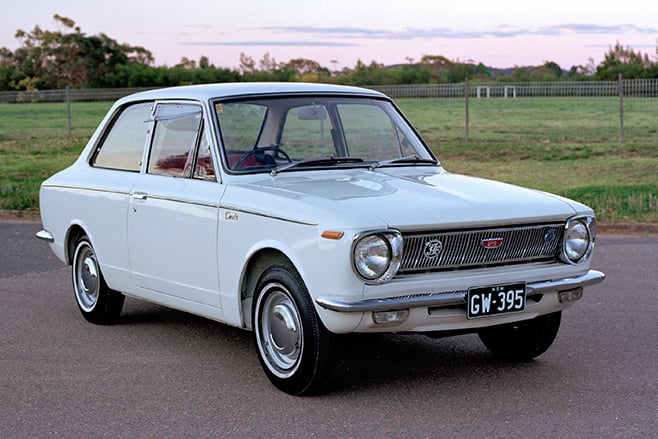
3RD GENERATION COROLLA (1975)
The second update saw Toyota become a household name in Australia thanks to its modern looks and improved fuel efficiency, making it popular in the wake of the global fuel crisis. The updated interior also proved popular and buyers were now offered a choice of two-door, four-door hardtop, wagon and van bodystyles.
Annual sales in Australia topped 20,000 for the first time in 1975 and have grown ever since.
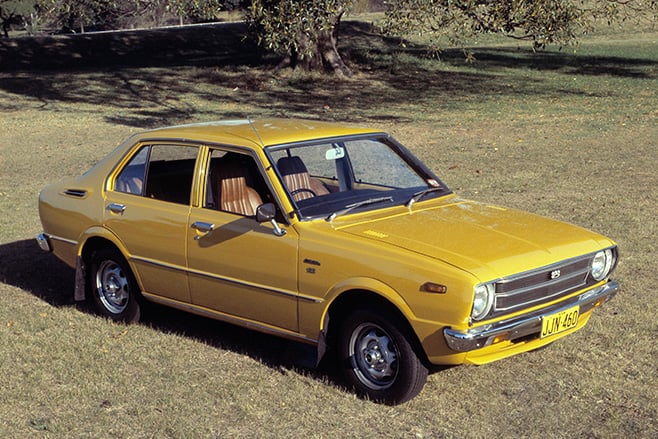
5TH GENERATION COROLLA (1985)
With state of the art computer design, the Corolla was transformed into a modern front-wheel drive car and became the world’s first mass-produced small car to feature twin-cam multi-valve enginee technology.
It was a genuine performer too, entering the Guinness Book of Records with 24 consecutive class wins in the Australian Touring Car Championship (1985-86).
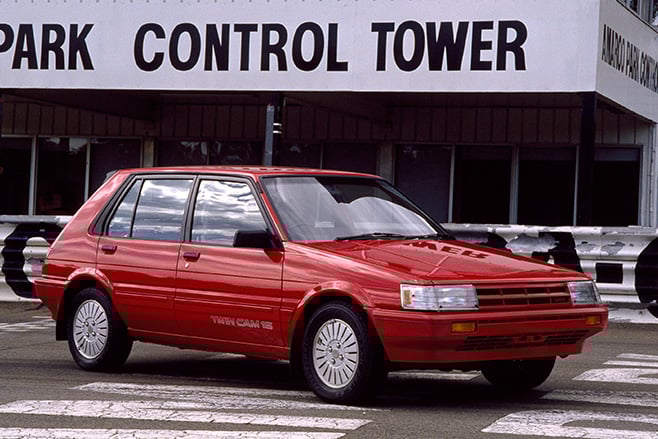
This was a period in which Corolla won its class in the Bathurst classic eight years in a row from 1985 to 1992 – marking 10 class victories in total.
And its success on the racetrack translated into sales in the showroom, with the Corolla playing a pivotal role in Toyota becoming market leader in Australia for the first time in 1991.
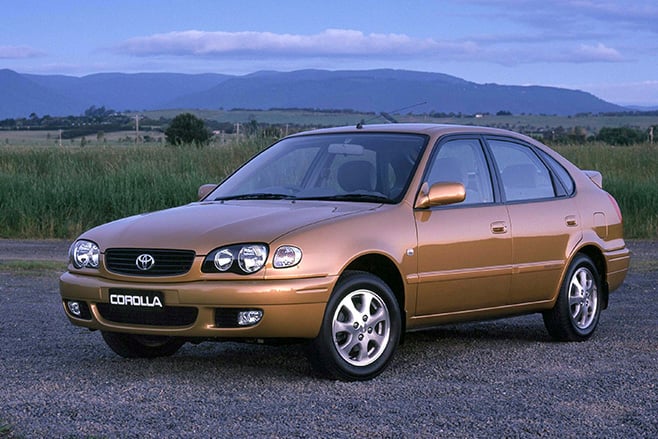
7TH GENERATION COROLLA (1994)
Toyota launched a 13-model locally manufactured range and it was the first vehicle to be built at Toyota’s Altona plant – which is still building the Toyota Camry and Aurion.
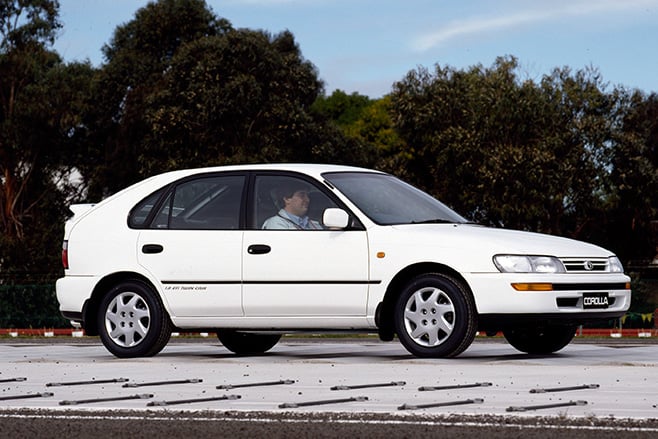
10TH GENERATION COROLLA (2007)
This generation introduced a new 1.8-litre four-cylinder petrol engine, six-speed manual gearbox and variable valve timing on both the inlet and exhaust camshafts. It pushed cumulative Australian Corolla sales past the 1 million mark in late 2007.
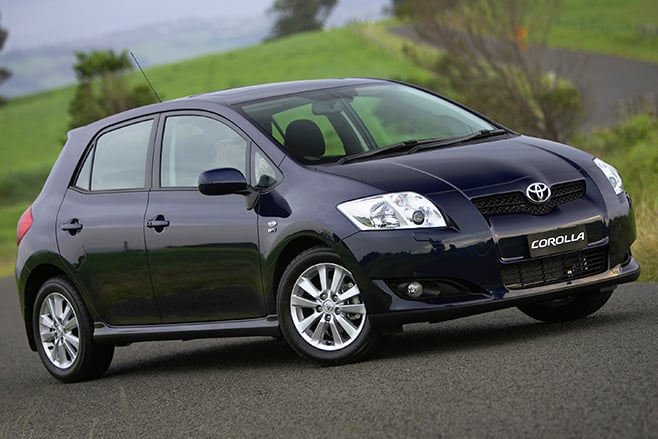
11TH GENERATION COROLLA (2012)
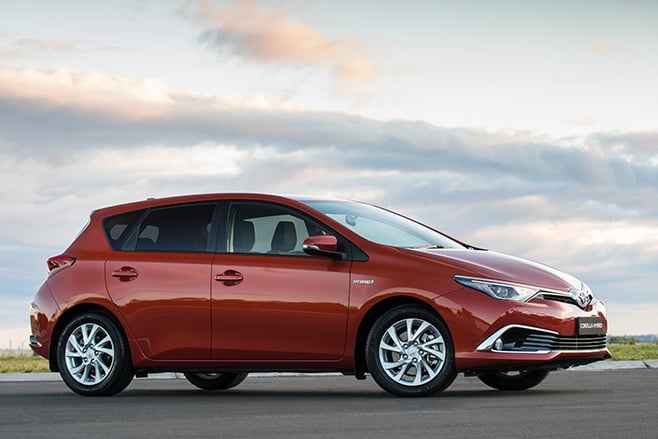
Australia’s best-selling car for the past three years had a hybrid powertrain added to its line up earlier this year.
Mercedes-Benz is only weeks away from revealing more details of the one-tonne trade ute that will carry the German luxury brand into the muddy middle ground between luxury cars and workhorses.
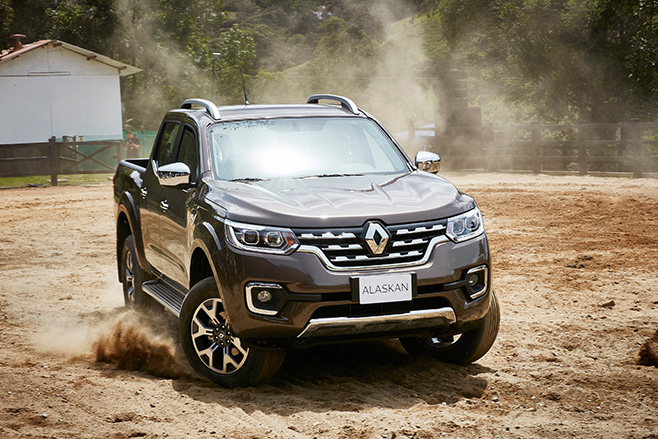
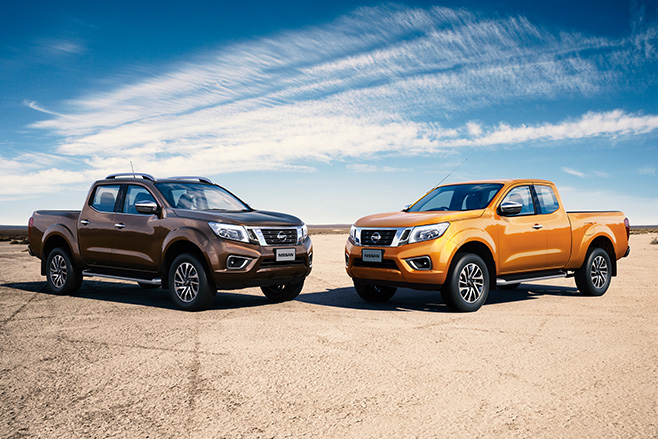
The revelation comes as the Nissan-Renault Alliance, which makes the Nissan Navara trade ute on which the Mercedes-Benz GLT will be based, says it is almost ready to kick-start production of yet another version of the Navara, called the Renault Alaskan.
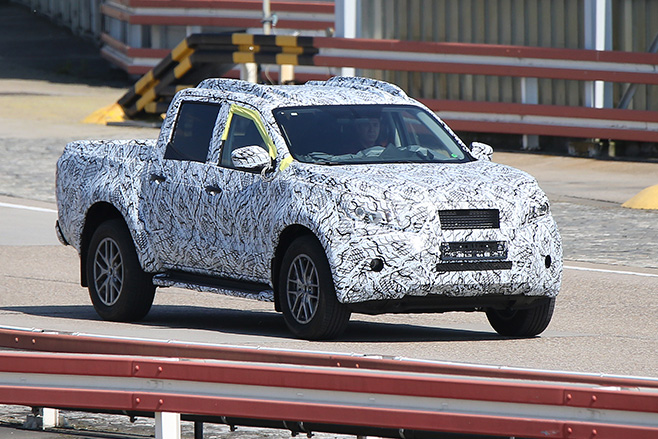
“The new [Mercedes-Benz] pick-up will share some of its architecture with the all-new Nissan NP300 [Navara],” the alliance said in a statement released just as the Paris Motor Show kicked off.
“It will be engineered and designed by Daimler to meet the specific needs of its customers in Europe, Australia, South Africa and Latin America,” it said.
“The vehicle will have all of Mercedes-Benz’s distinctive characteristics and features. Production of the Mercedes-Benz pick-up truck will take place at the Renault plant in Cordoba, Argentina, and at Nissan’s Barcelona plant in Spain, where the Nissan NP300 Frontier and the Renault Alaskan will also be produced.
“In October, Mercedes-Benz will provide further insights into the new pick-up truck’s design, strategy and markets.”
The Mercedes-Benz ute isn’t likely to get to Australia until late 2017 at the earliest, meaning the Renault-badged version of the Navara is likely to arrive here months before the one wearing the Three-Pointed Star does.
The Mercedes-Benz version of the Navara is expected to use a similar interior to the V-Class van range, which combines some elements of the German brand’s commercial vehicles blended with passenger car comforts.
What’s not yet known is what will power the Benz-badged ute. We can guess that it’s likely to be Mercedes’ twin-turbo 2.1-litre diesel engine, although a turbo V6 producing around 200kW and 600Nm – along with a full load of leather, wood and brushed aluminium – will help justify the premium $70,000-plus price tag expected for the range-topping version.
However, Australia is likely to see the GLT ute ahead of everyone else for a very different reason – Mercedes-Benz has flagged that because Australia is expected to be one of its most important markets, part of its development will take place here.
How well would a self-driving car have coped with your commute this morning? Yeah, thought so …
I’M THINKING of investing in one of those wearable sandwich boards so I can go forth, possibly naked, and proclaim the ugly truth for all to see – “The End is Nigh”.
Not because of Trump, or Hanson, or even the crushing weight of our nanny state; no, I mean it’s The End for car enthusiasts, because I’ve just spent press day at the Paris Motor Show, where car companies are quite cheerily prognosticating the end of driving as we know it.
Audi has announced it will sell a Level Three, “look mum, no hands, and I’m reading a book” autonomous production car, not next decade but next year.
Board member Dietmar Voggenreiter says the new A8 will revolutionise the world, wipe out road deaths entirely and eventually lead to a way of life in which humans don’t drive at all, and steering wheels, gear shifters and pedals are only to be found in car museums.

As is often the case, we have no one to blame for this but everyone else, as Nissan/Renault CEO Carlos Ghosn pointed out in Paris.
“This is something all manufacturers are working on for the simple reason that it appeals to the consumer,” he said.
“Consumers are saying autonomous is something that we like, particularly when provided with connectivity so we can be doing something else in the car. It’s not going to be just on the highway, it’s going to be in the city, and most of the car companies will be there around 2020, I maintain that will happen. It’s just about it being accepted by regulators in big cities like New York, Paris and Mumbai.”
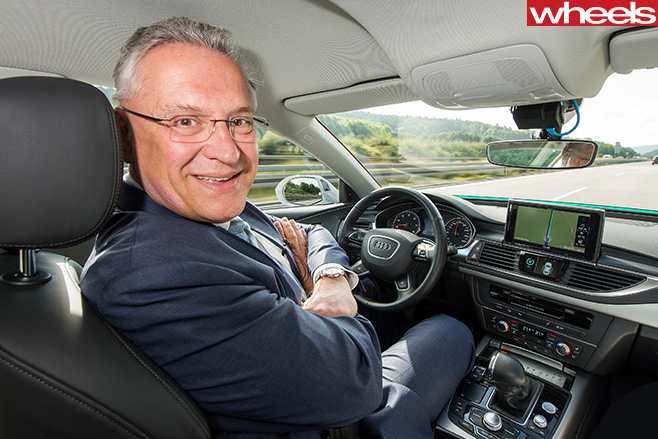
Similarly, Ford’s recent announcement that it will go driverless, and steering-wheel-less, by 2020 made it all feel more real. Premium companies are always showing off amazing tech tricks, but now even the Model T blokes are at it.
The fact remains that many average punters who don’t go to the Paris Motor Show press day, don’t accept that it’s inevitable. My wife, who, despite her inexplicable choice of life partner is fairly normal, simply thinks I’m talking my usual poppycock when I try to convince her that autonomous cars will put me out of a job within 20 years. Or at least make it very boring.
Her main argument, which I’d had trouble fighting with until today, is that legally no car company is going to take responsibly for the potentially enormous payouts that would occur if their self-driving car killed or maimed someone.
“If you take over responsibility and allow the drivers to take their hands off [the steering wheel], then you [the car company] are responsible,” he told us.
“This is the legal situation, it’s not big news. If we take the wheel and the driver is allowed to sit there and write emails, then we are responsible.
“Next year we will open up the world of autonomous driving in a real way, with the new A8.
“When you’re driving on a freeway in a normal urban situation, at speeds of up to 65km/h, you’ll be able to take your hands off, and the car will do the braking, the accelerating, the changing lanes, and you can really read a book or whatever you want to do.”
The only remaining hurdle, then, and you can bet it’s going to be higher and wider than Donald Trump’s wall when it comes to Australian governments, is the acceptance of the technology by authorities.
Both Audi and Renault believe the Americans are ready to go with autonomous laws, and Germany is reportedly friendly to the idea, but some countries may hold out for some time.
As Ghosn points out, in some cases this might be a good thing.
“Obviously you need to go into countries where the maps are very exact, where you have the cartography right down to the centimetre, but you also have to have driving rules that are respected, because autonomous cars follow the rules,” he said.
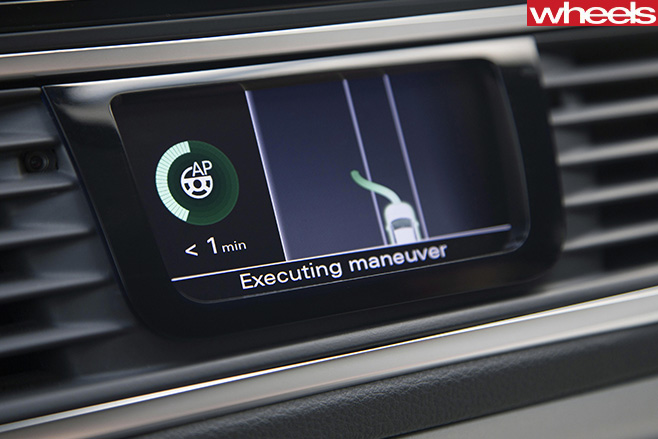
“Or in India, where people sometimes go the wrong way around roundabouts. You can’t put an autonomous car somewhere like that.
“You have to have a country where the rules are respected. So I think mainly it will happen first in very disciplined driving countries, like Japan or France or Germany.”
Funnily enough, even his own autonomous-driving engineers (Renault has said it will deliver 10 new cars with “delegated driving abilities” by 2020), who looked deeply intimidated when we told them what Audi had announced, because they admit they’re still years away from Level Three tech, say that some of the intersections in Paris are utterly beyond self-driving cars.

So there are still issues, clearly, but the Germans, in typical style, are not concerned about them, and are driving straight over them. As VW Group’s tech leader, it was always going to be Audi that paved the way, but you can bet it won’t take long for the technology to trickle down into a Volkswagen Golf.
Volkswagen has announced its vision of a world with zero road fatalities, and Voggenreiter agrees that it is a very real possibility, once autonomous driving gets to Level Five – no steering wheel, no pedal, no stupid humans on the road at all.
It sounds fantastical and far off, but when you hear the people who need to start planning for this now, because they’re already and always working on cars we’ll be driving – or not driving – in five to seven years talking about it, you know it’s not. It’s very real indeed.
The End is Nigh.
The grunty Hyundai Elantra SR Turbo is now on sale in Australia, with the Korean automaker’s unassuming small sedan transformed by a new independent rear suspension and turbocharged 1.6 litre turbo engine.
And at $28,990 for the manual-equipped model ($31,290 for the auto) the Elantra SR Turbo is Hyundai Australia’s most affordable performance car, undercutting the quirky Hyundai Veloster SR Turbo three-door coupe by $660.
The Veloster donates its 150kW/265Nm 1.6-litre turbo engine for the Elantra SR Turbo, but unlike the Veloster, the Elantra SR Turbo is gifted with a proper multi-link independent rear suspension instead of the cheaper, simpler torsion beam axle used for regular Elantra models, improving handling.
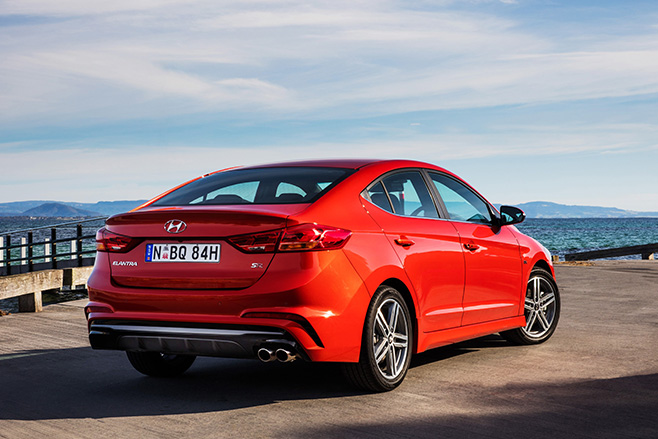
Essentially the same rear suspension hardware as used by the next-generation Hyundai i30 small hatch, the Elantra SR Turbo’s back axle has also been fine-tuned by Hyundai Australia’s local engineering team to tailor its ride and handling to local conditions.
Larger front brakes and a faster steering ratio round out mechanical changes for the Elantra SR Turbo, though it’s worth noting that auto-equipped Elantra SR Turbos come with a seven-speed dual-clutch transmission. Elantra models fitted with the 122kW/192Nm 2.0-litre non-turbo engine receive a conventional six-speed automatic.
Hyundai doesn’t mention performance numbers, but with the SR Turbo outperforming other “sporty” turbo small sedans like the 132kW Holden Cruze SRi-V and 140kW Nissan Pulsar SSS, Hyundai’s hot Elantra should be one of the quickest in its segment.
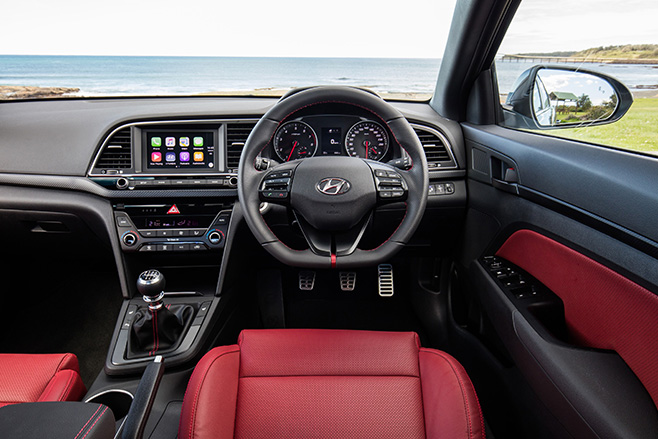
As the flagship model of the Elantra range, the SR Turbo also comes with a long list of standard equipment. Features such as blind spot monitoring, lane change assist and rear cross traffic alert are standard issue on the SR Turbo, as are bi-xenon headlamps, a sporty body kit, alloy pedals, black headliner, a flat-bottomed sports steering wheel and front parking sensors.
Both the SR Turbo’s front seats are heated and feature fatter bolsters, the driver’s seat has 10-way adjustment, there’s a sunroof, an extra USB outlet in the centre console, optional red leather upholstery and Apple CarPlay and Android Auto smartphone mirroring.
The only options are a red leather interior (which replaces the standard black cloth) for $295, and metallic paint at $495.
Though its local launch timing has yet to be announced, we can expect Hyundai’s next-generation i30 SR to take a near-identical feature set to the Elantra SR Turbo – 165kW engine and all.
Click here to the full review on the Hyundai Elantra range.
