
TELL ME ABOUT THIS CAR
The Mini Cooper Clubman has all the quirky characteristics of Mini’s of old, but it’s bigger in almost every way. A longer wheelbase means this modern Mini offers buyers more space and practicality, while holding on to Mini’s signature styling and driving gusto.
The 2.0-litre turbocharged four-cylinder engine in the Mini Cooper S may give more power, but the Cooper Clubman’s little 1.5-litre three-cylinder engine will still produce 100kW and 220Nm. You never feel like it’s lacking power.
STRENGTHS
- Mini by name, roomy by nature. Minis aren’t synonymous with spaciousness, but the Clubman’s longer wheelbase has upped the ante with the English brand even claiming this is a ‘family-friendly’ Mini. It’s not the most competitive family-car on the market, but it can sit two adults in the back seats comfortably (providing they’re not too tall), so why not kids too?
- There’s a uniqueness in the detailing that makes it quintessentially Mini. There’s only one word to describe their interiors; circular. While the new generation Clubman has fewer rounded edges than its predecessor, it’s still got a very globular feel to it. First impressions have you wondering if you’re involved in some kind of reality mind-buster game (how many circles can you see?), but then its design starts to grow on you and you wonder how you ever managed without a massive circular infotainment system and door handles. From the hidden chevron detailing in storage spots, to the textured patterns throughout the interiors, and the barn-like boot doors, Mini has a very peculiar yet particular style – and it owns it!
- Not only does it look as stylish as only a Mini can, but the Clubman is fun to drive. The zippy little three-cylinder engine, teamed with its “go-kart-like” handling – as described by Wheels magazine – provides enough oomph to give you that go-get-‘em feeling.
- While the Clubman certainly doesn’t lack individuality and style, its use of plastics and sub-par textiles means it doesn’t quite live up to the sophistication and class of some of its rivals.
- It may be fun to drive and handles well, but it loses points thanks to its unsettled ride. It’s certainly not the worst in class, but if it is a problem, adaptive dampeners are an optional extra to combat the problem.
- Its biggest design feature is also the Clubman’s biggest let down. The barn-like doors to the boot – while a signature trait of Mini – create an annoying split through the already-small rear window. To begin with, the big thick pillar splitting your rear vision in two will cause you to double take, making it less than ideal when setting up the rear-vision mirror. Additionally, the foot-activated boot is a bit glitchy, and when you finally get the doors to open, you’re standing right in its opening path. If you value your legs and prefer to avoid bruises, then this will be a problem for you.
If you’re looking for something that feels a bit more luxurious than the Clubman, then you might want to look into the Audi A3 or VW Golf, which come at a similar price. If you’re looking for something a little less kooky and a slightly lower price tag, then the Ford Focus could be your best bet.
Click here to read the full review on the Mini Cooper Clubman range.
The chief engineer of the Toyota 86 has claimed “enormous” improvements to the body rigidity, suspension and stability control tune of its facelifted coupe.
Criticised in some quarters for looking like a minor mid-life facelift after four years on-sale, the MY17 86 gets only 4kW and 9Nm extra from its 2.0-litre naturally aspirated boxer four-cylinder engine, now 151kW/214Nm.
However speaking with MOTOR at the Festival of 86 event in Canberra, where the locally-styled 86 Shooting Concept debuted, chief engineer Tetsuya Tada revealed that he began work on overhauling the current coupe soon after it launched.
“Just after launch of current 86 I started, already working (on facelift),” Tada-san started.
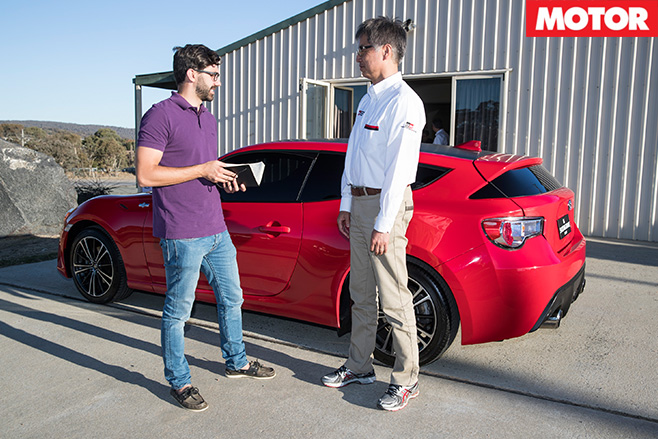
Toyota has only officially claimed a “revised shock tuning and a spring rate change” for the facelifted 86, but Tada-san was happy to go into more detail, claiming that four years of increased suspension technology has meant he was able to achieve greater ride comfort around town and sharper on-track handling.
“I can’t say softer or harder (suspension tune), but ride comfort also very improved and suspension for the track,” he continued, agreeing with the assertion that there are “a lot of bumps” on Australian country roads.
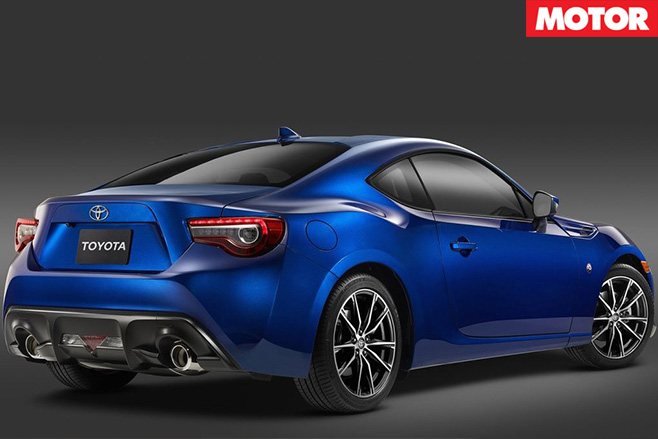
“Dampers are completely different from current generation. I don’t need to have any explanation when you have a chance to drive.”
We asked Tada-san whether he agreed that the current Sport function of the electronic stability control (ESC) could be quite lenient to a point, but then abrupt in its intervention, to which he responded with vigorous nodding and explained the change.
“Ah, yes I know that,” he said.
“It is next generation (ESC), different, completely different. No (more) sports mode, we gave it a track mode. More sports, more exciting, much more responsive.
“We try it, you must be surprised.”
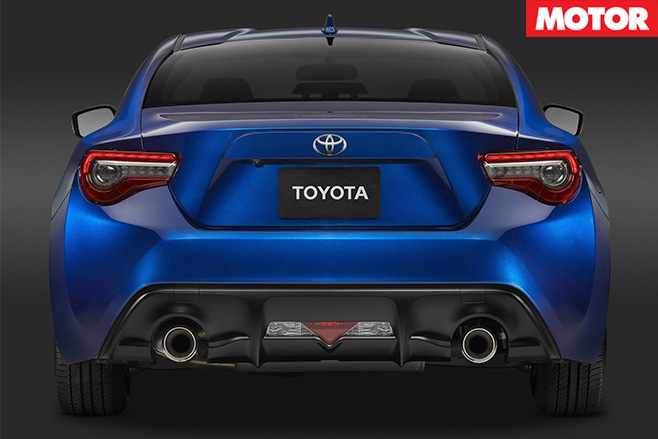
“Weight not so different, about the same, but interior quality also extremely better than the current car,” he added.
The steering system will remain the same, but the facelifted 86 will get a smaller steering wheel with a new, grippier material, Tada-san explained. He also said Subaru will pick up the changes for its BRZ near-twin.
Asked whether the new 86 could take the fight to the recently launched Mazda MX-5, Tada-san responded, “No comparison … expect the next one will be much better.”
It took Lamborghini 17 years to reprise the legendary Countach.
IN 1973 Lamborghini’s Countach sliced up our expectations of a supercar. The V12-engined wedge, in production for 17 years, was always going to be a hard act to follow. And to sit in. And to see out of. And to actually drive or park.
Lamborghini naturally turned to the same designer, Marcello Gandini, for its successor. The process of developing Project 132, the highly anticipated replacement, began in 1985, when the company was under the ownership of French sugar barons Jean-Claude and Patrick Mimran.
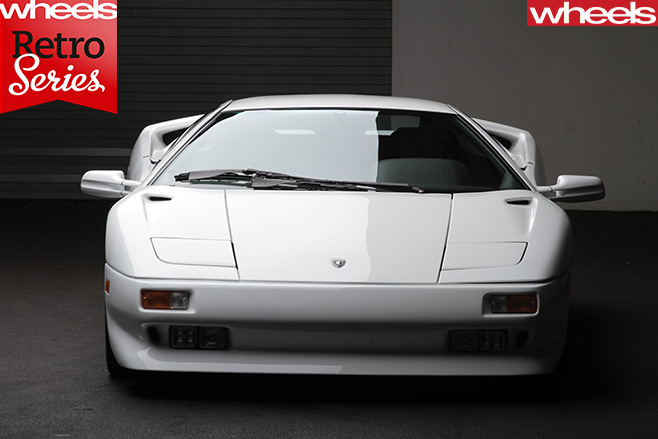
Finally, the P132, dubbed Diablo – named after yet another famed Spanish bull, but also meaning ‘devils’ in Spanish – was released in 1990. Judge Chrysler’s efforts for yourself; Gandini’s original shape appeared the following year, in the short-lived Cizeta-Moroder V16T.
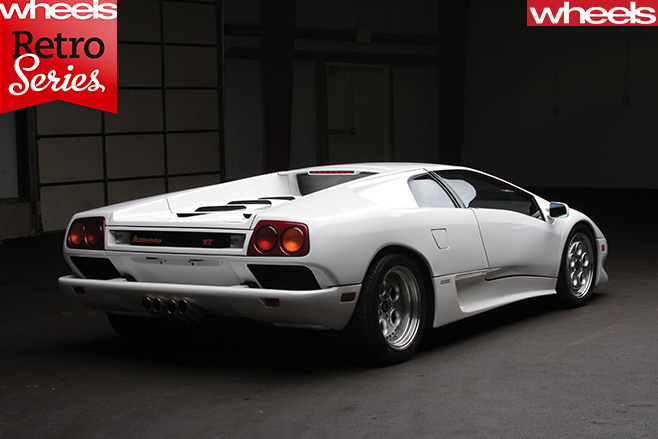
From the outset, one of P132’s primary targets had been a minimum top speed of 315km/h. It was later officially listed at 325km/h. Diablo also brought a good measure of American comfort and visibility. Despite a combination of aluminium and carbonfibre panels, weight increased to 1576kg, some 86kg more than the Countach 25th Anniversary.
Even more sophistication and weight came in 1993, with the Diablo VT (Viscous Traction). This all-wheel-drive version also brought much-desired power steering, a hydraulic clutch and redesigned seating. The VT tipped the scales at some 1700kg.
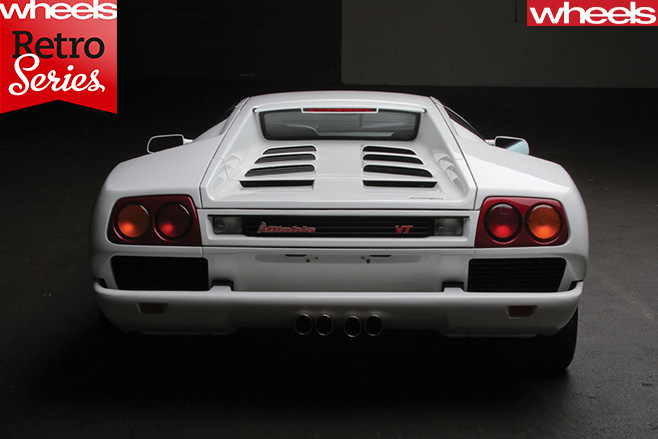
Chrysler, however, was far from happy with production pootling at 150-210 cars per year, and annual losses of up to $US20m. In 1993 it offloaded Lamborghini to mysterious Asian investors. Discussions in late 1997 with Audi to use the German company’s 4.2-litre V8 in a longed-for ‘baby Lambo’ model line would change the brand’s history.
Sump plugged
Diablo’s 5707cc version of Lambo’s long-serving V12 had dohc heads, 48 valves and made 367kW at 7000rpm and 580Nm at 5200rpm. As in Countach, it’s mated to a five-speed gearbox at the front of the car, with drive taken back to the rear wheels (also in VT) via a propshaft running through the engine’s sump. 0-100km/h took 4.1sec.
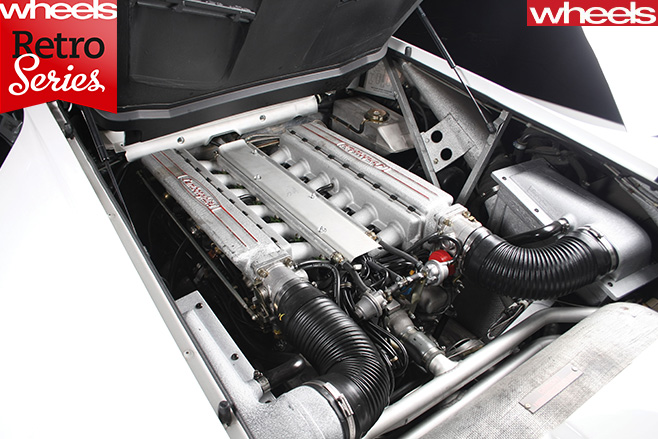
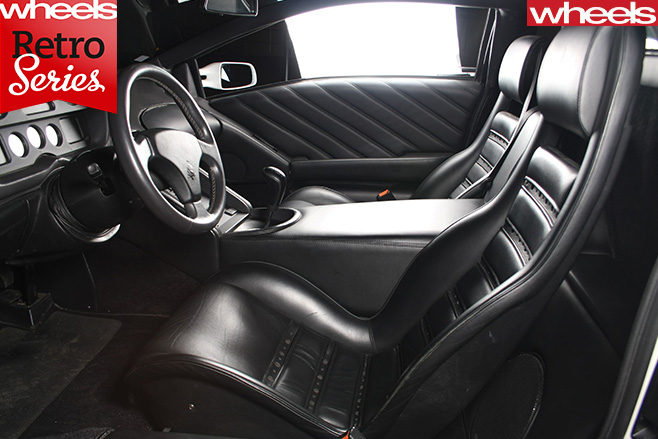
Steel tube spaceframe chassis that underpins Diablo is clad with a mix of aluminium and carbonfibre body panels, the latter including engine cover, bootlid and bumpers. Visibility was much improved by the curved side windows and lower engine lid. The suspension, via double wishbones, featured four-mode, electronically variable dampers. Early, unassisted rack-and-pinion steering was a handful.
Smooth inside and out
Fast & factual
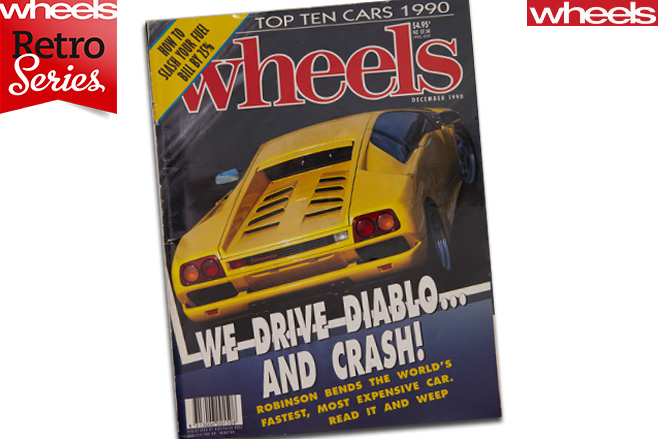
1. CRASH AND BURN
Bedevilled celebrity Diablo owners have included Jamiroquai’s Jay Kay (purple 1994 SE30, crashed) and Hulk Hogan (yellow 2001 VT, burned)
2. STRETCH AMERICA
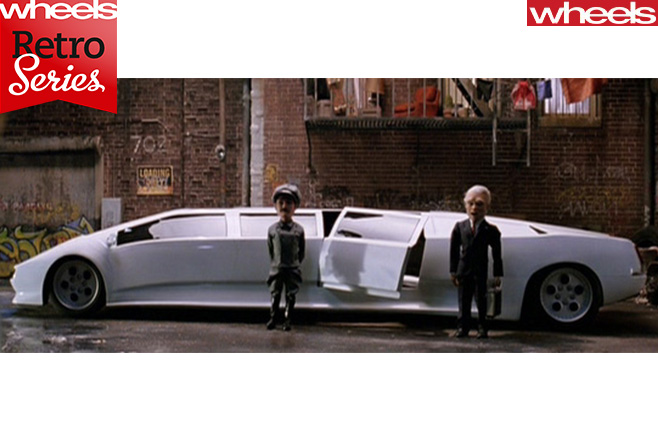
3. TRUMP THAT
A ’96 Diablo VT Roadster originally owned by US presidential hairdo Donald Trump recently sold for $US300K. The coupe pictured here sold for just $US99K in 2014
4. DEVIL OF A DEAL
A 1992 Diablo coupe chassis, completely burned but with possibly salvageable suspension, fetched $US4600 on eBay in December
5. INCREASINGLY RARE
We’ve had Porsche’s 911 GT3 RS through the MOTOR office this week.
There will be a full feature in an upcoming issue and video as well, but in the meantime who better to give you a taste of its ultimate abilities than two-time world rally champion Walter Rohrl?
The venue is the fiendishly difficult Bilster Berg driving resort in Germany, designed by F1 circuit architect Hermann Tilke, supposedly with input from Rohrl himself.
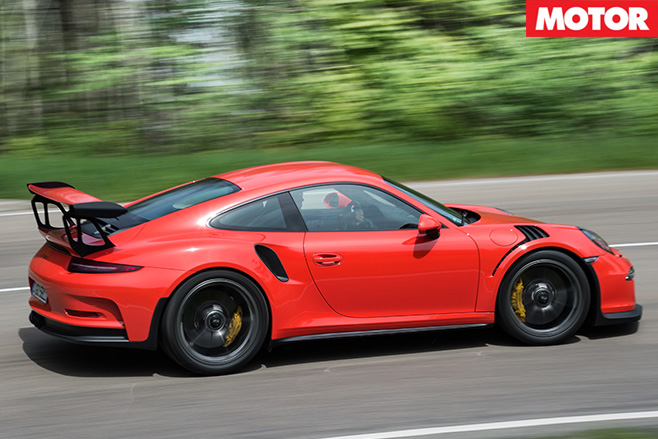
As mentioned, you’ll be able to read all about it in a future issue, but suffice to say it’s a pretty special car, with an engine that deserves to be regarded as one of the greatest naturally-aspirated units of all time.
Demand for Ford’s final Falcon Sprint models has been huge, with only a handful of cars believed to remain unsold.
However, if you’re prepared to pay a little over the odds, here’s your opportunity to secure XR8 Sprint No. 001 and help out a good cause at the same time.
Ford has donated the first production XR8 Sprint to the Juvenile Diabetes Research Fund, which is auctioning the car to fund research into the treatment of type 1 diabetes.

Bidding currently stands at $84,000 and the auction will run until midnight on May 31. For more information or to register a bid click here.
Toyota’s grip on Australia’s best-selling brand trophy could slip even further in coming months as the ripples from the recent Japanese earthquakes roll out across the carmaker’s global markets.
The brand confirmed today that while the number of Japanese-made vehicles built during April and May was unaffected by a three-week shutdown in the wake of the April earthquake that shook Kyushu in the nation’s south, their delivery to Australia would suffer delays.
“April and May production vehicles will be unaffected in terms of their quantity, however they will be delayed due to the production stoppage,” Toyota Australia corporate affairs manager Beck Angel said. “Production of all affected vehicles will be delayed by at least one week.”
“We are currently confirming the updated shipping and arrival dates of all vehicles and will advise our dealers shortly.”
It may not sound like much, but the issue for Toyota is that the production stop hits several of its key best-selling models, including the Corolla hatchback (the sedan version is sourced from Thailand), the Prado and LandCruiser off-roaders, the Yaris hatch and sedan, the Toyota RAV4 mid-size SUV and the Prius range, including the Yaris-sized Prius c and the Prius v people-mover. Also affected are the FJ Cruiser off-roader and the Tarago people-mover.
Between them, all these vehicles accounted for 72 percent of Toyota’s 11,689 passenger car sales in April, giving a scale of how much even a week of an interruption to their supply can impact the carmaker. Commercial vehicles added another 4878 sales for the month.
April was troublesome for Toyota, with sales of its usually strong-selling Corolla range already down 14.3 percent over the four months of this year. The Corolla is about to be overtaken in the sales race by the Mazda 3, which at 12,733 units for the year so far is only 51 sales behind its rival for the title as Australia’s best-selling passenger car.
Toyota has continually lost market share since 2012, where it accounted for one in every five new-car sales in Australia. In 2015, it ended the year with a 17.8 percent slice of the market, and for the first four months of this year it had slipped more, down to 6.9 percent.
Toyota’s loss has come at the gain of brands such as Mazda – arguably Australia’s best-selling carmaker when bulk sales to government, business and car rental buyers are factored out of the numbers – and Korean carmaker Hyundai, which in April surprised the market by snaring the number two spot on the list of Australia’s most popular brands for the first time.
The vehicle that helped Hyundai snare the number two spot was the Hyundai i30 hatchback – one of the Corolla’s main rivals in the Australian market.
We’re surrounded by heavy traffic and thick fog just outside Lamborghini’s home town of Sant’Agata, so not exactly the ideal environment in which to sample the raging bull’s new rear-drive Huracán LP580-2.
But for now, at least, the dud conditions are serving a purpose. That is, to highlight the new-found duality of character this weapon possesses.
Chief test driver Mario Fasanetto is in the passenger seat and, at his urging, we have the car configured to chill-out mode. Vehicle ‘DNA’ steering wheel switch in Strada, ESC engaged and transmission in automatic.
The 5.2-litre V10 – slightly detuned in this rear-driver, more to preserve the model hierachy, rather than really limit what is flung at the rear tyres – growls with a distant, subdued menace, while the dual-clutch transmission slips quietly between sixth and seventh depending on gradient and throttle position. The Lambo’s latent aggression is masked behind a veneer of civility.
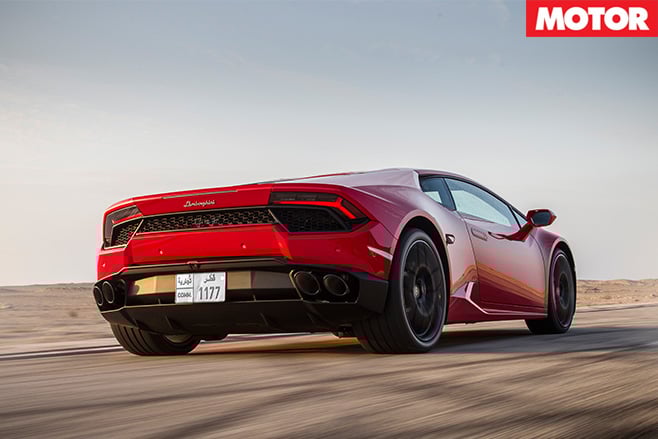
In a fast-forward blaze of colour, noise and fury, the red coupe rips past the unassuming van, just about leaving it rocking on its springs in our wake. Moments later, rolling out of the throttle, we’re back into sixth then seventh, and heavy metal thunder transitions back to easy listening.
“It’s a safety thing,” explains Fasanetto, with a completely straight face. “Even in the comfort-focused Strada mode, full throttle signals that the driver demands maximum performance, and that is exactly what he gets.”
Unlike the previous rear-drive Gallardo (the LP 550-2), which was half a nutcase pretty much all the time, the new rear-drive Huracán LP580-2 is capable of transitioning from psycho to sedate and back again before you’ve barely left your neighbourhood.
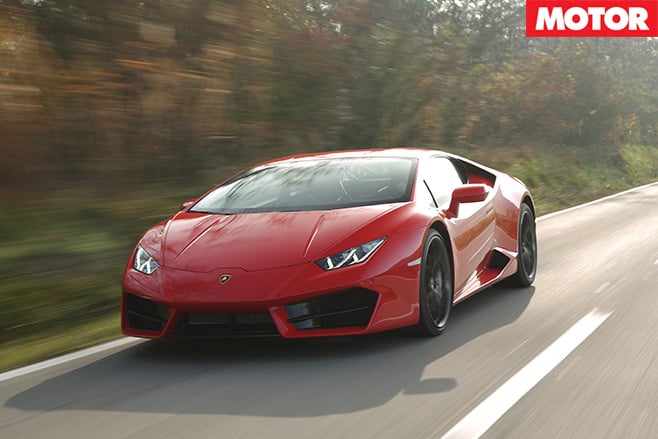
We follow the route Fasanetto plotted a couple of years ago for the Aventador’s shakedown. It’s a comprehensive collection of the worst of all topographic worlds: half-finished resurfacing work; deep gatorback grooves embossed by generations of buses and trucks; glassy tarmac peppered with random gravel patches; and, of course, countless corners of all shapes and radii.
Time to switch from Strada to Sport. In the 580-2, this adds a pinch of pepperoncini to the drivetrain. In the test car, which is fitted with adjustable dampers (MRS), dynamic steering (LDS) and wider 20-inch wheels (all optional), this also stiffens the ride and sharpens the turn-in response.
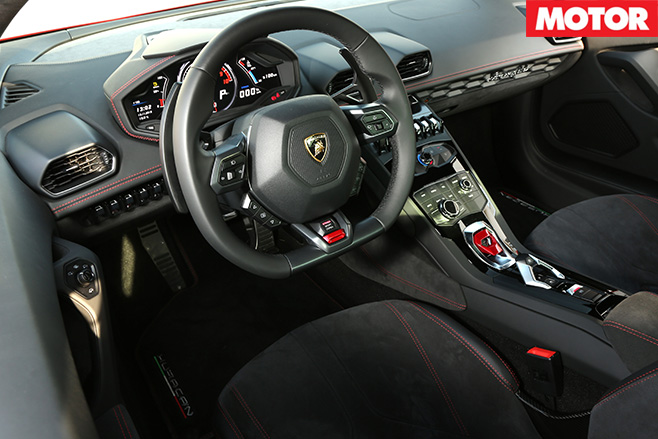
This Huracán does without AWD, but that’s about the only concession the buyer who has just saved around $50,000 on the $428,000 LP 610-4 model must make. All the other spine-tingling, grin-inducing, heart-stopping ingredients are still there in full force.
Like the steering wheel covered with alcantara, the pleasantly unambiguous jet-fighter controls in the centre stack, and the extra-large shift paddles attached to the column, not the wheel. There is the customisable instrumentation, which can generate more readouts than an Airbus A320 cockpit and more functions than an Apple watch.
Subtle it is not, but the full-size rev counter and the prominent gear indicator get their message across loud and clear. No head-up display, but one may specify a rear-view camera and parking sensors (which put a handful of ugly warts on the rear bar).
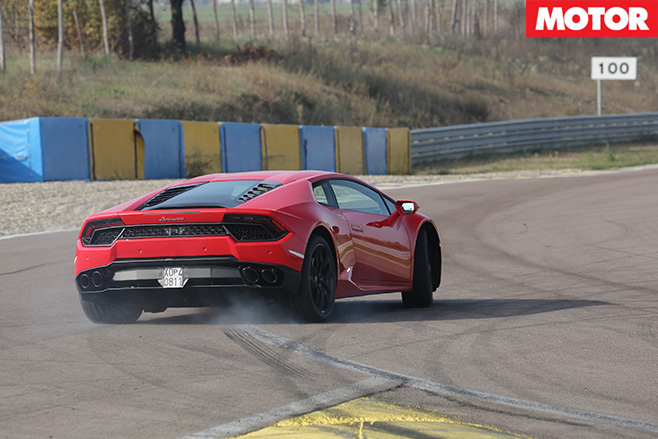
The top speed is down an inconsequential 5km/h to 320, and the fuel consumption is virtually on par. The missing 22kW can (theoretically) make a difference, however compensations come with less weight (down 33kg), the less nose-heavy 40:60 weight distribution, and the fact that the maximum torque of 540Nm no longer finds an outlet at the front wheels. Speaking of torque, it is worth noting that 75 per cent of the punch – 405Nm – is available just above idle at 1000rpm.
The Gallardo LP550-2 was a bit of a beast, rough and raucous; so sharp-edged it should have carried a liability warning. Not so the LP580-2. Its ride is more compliant than we remember of its AWD brother, the electronic watchdog is kept on a longer leash, and breakaway is smoother and more progressive.
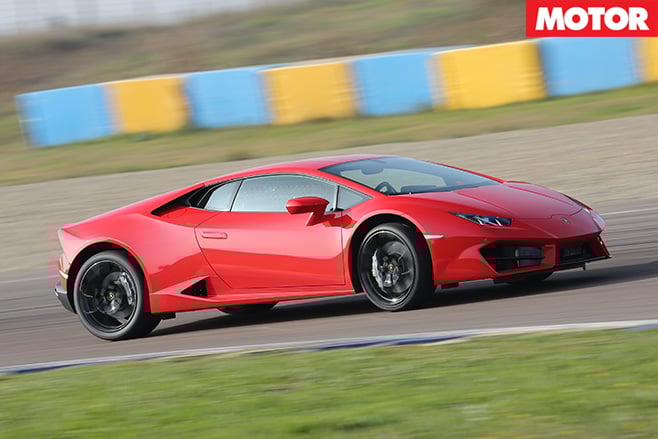
To dial in exactly the right amount of sidewall stiffness, traction and slip angle, Pirelli developed a new-generation P Zero MkII compound, which allows those four contact patches to provide both extra grip and transparency.
To put it all properly to the test, we head to Autodromo di Bologna, a small but challenging circuit hidden away between vineyards and farmland. The longer of the two straights sees the LP580-2 touching 220km/h, but the most rewarding section consists of three consecutive third-gear corners.
First, I try Sport mode with the ESC switched off (though it still keeps a watchful eye on things), but it doesn’t quite do the trick. Especially when the apex is paired to the mildest elevation change, and understeer prevails just long enough to kill a decent drift for the initial 75 per cent of the radius. Even though the handling balance is more playful now, too little is happening too late.
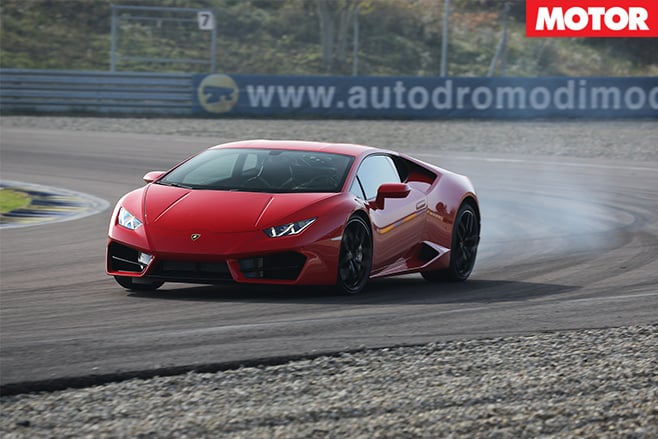
Do it properly and the reward is a long, smooth slide accompanied by the howl of tortured Pirelli rubber and more than just a whiff of smoke. At that moment, happiness really is a red Huracán LP580-2, a heavy right hoof, a firm grip at the wheel and a pair of eyes fixed on the next apex.
Like so many desirable cars, this one grows on the driver with every kilometre you put on the clock. And like all powerful rear-wheel drive efforts, regardless of engine location, the new Lambo is a handful in the wet with ESC off, as well as around town where over-the-shoulder visibility is a guessing game.
The software is largely up-to-date, though it could do with certain upgrades like a separate damper control button – a drive select program allowing you to blend different shock absorber, drivetrain, steering and ESC calibrations – as well as tweaked transmission software to permit coasting.
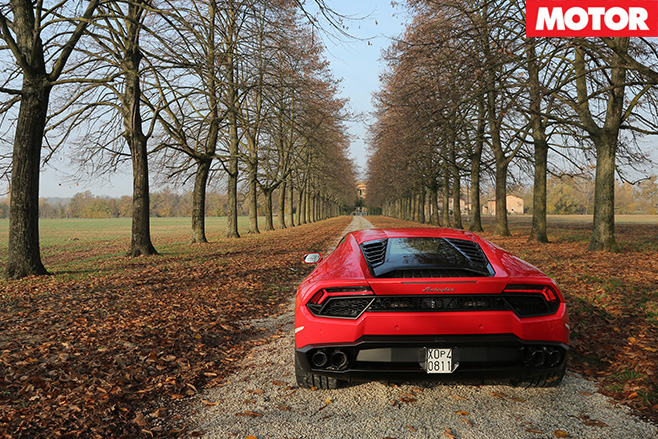
We finish the day where we started, in the Modenese hinterland, where the fog has long since lifted and the rush hour has not yet begun. Fully unleashed, the rear-drive Huracán is anything but a cold and soulless performer. Instead, it grabs you by the hips and ignites your senses.
Like only the very best sportscars, it’s involving and emotional, tactile and communicative, challenging and rewarding. Once car and driver have agreed on terms and conditions, the LP580-2 will take you on a tour de g-force, which will never be deleted from the memory bank inside your head.
4.5 OUT OF 5 STARS
SPECS: LAMBO HURACÁN LP 580-2 Body: 2-door, 2-seat coupe Drive: rear-wheel Engine: 5204cc V10, DOHC, 40v Bore/stroke: 84.5 x 92.8mm Compression: 12.7:1 Power: 427kW @ 8000rpm Torque: 540Nm @ 6500rpm Power/weight: 307kW/tonne Transmission: 7-speed dual-clutch Weight: 1389kg (dry) Suspension(f): A-arms, coil springs, adaptive dampers, anti-roll bar Suspension(r): A-arms, adaptive dampers, anti-roll bar L/W/H: 4459/2236/1165mm Wheelbase: 2620mm Tracks: 1168/1620mm Steering: electrically-assisted rack-and-pinion Brakes: (F) 380mm ventilated discs; 8-piston calipers Brakes: (R) 356mm ventilated discs; 4-piston calipers Wheels: 19.0 x 8.5-inch (f); 19 x 11.0-inch (r) Tyre sizes: 245/35 R19 (f); 305/35 R19 (r) Tyres: Pirelli P-Zero MK II Pros: Increased involvement; sharp pricing; that engine Cons: Can be a handful; strong competition Price: $378,900
In detail: the Lambo drifter
Less power, less weight, but not the lesser sibling
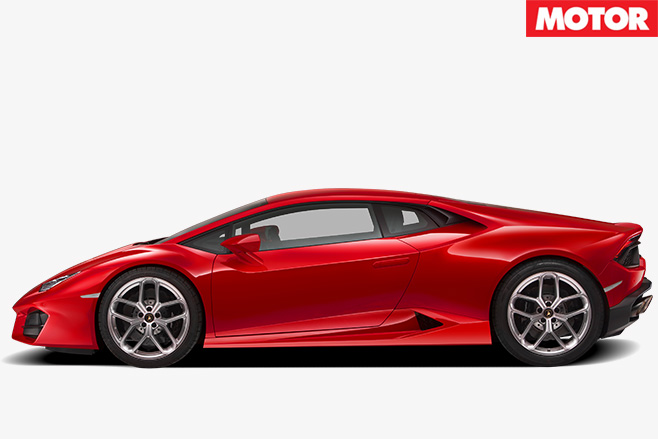
ONE: DESIGN BRIEF LP 580-2 differentiated from its all-wheel drive sibling by new front and rear bumpers with matching aerodynamic aids and a new design of wheel – 19s standard, 20s are optional. Carbon-ceramic brakes also optional, though the standard stoppers are more than adequate.
TWO: NO OPTIONS Steel suspension and fixed-rate dampers are standard with magnetic dampers and Lambo’s controversial Dynamic Steering optional. Standard setup so good the optional extras seem unnecessary.
THREE: INSIDE STORY Unlike Lambos of old, the driving position is spot-on and the Audi-derived switchgear – including the clever digital instrument cluster shared with the TT – works well.
FOUR: DIET TIME Hybrid aluminium/carbon construction identical to the all-paw car, however weight drops 33kg thanks to the deletion of the all-wheel drive mechanicals. Weight distribution shifts from 42:58 to 40:60.
FIVE: POWERHOUSE Decrease of 22kW/20Nm largely academic, as the Huracán’s 5.2-litre V10 remains ferociously fast and outstandingly vocal. Revs to 8500rpm and produces 427kW/540Nm; 0-100km/h takes a claimed 3.4sec.
AN all-out American civil war is looming, as General Motors prepares the fastest and most powerful iteration of the iconic Chevrolet Camaro Z/28 to take on the latest Ford Mustang Shelby GT350.
Sprung testing at the Nürburgring, and due out Stateside sometime next year, this thinly disguised prototype sports the lairiest body kit yet seen on the US pony car, including a serious aero bumper upgrade, tabletop boot spoiler, and a very wide set of rubber boots.
All underscore the four-seater coupe’s extreme track focus, suggesting that a helical limited-slip diff and uprated (ceramic) brakes might also make their way to the Z/28.
Reports say that a naturally aspirated 6.2-litre V8 is the most likely engine, rather than the LT4 supercharged version powering the current flagship ZL1, with torque channelled to the rear wheels via a seven-speed manual gearbox. Whether the ZL1’s 10-speed automatic also gets a guernsey – instead of the regular Camaros’ eight-speeder – remains to be seen.
There is also a rumour that the next Z/28 might score a new twin-turbo V6. It would have to be something very special out of the box if the latter is to match the Mustang Shelby GT500 5.2-litre Flat Plane Crank V8’s 392kW/581Nm output.
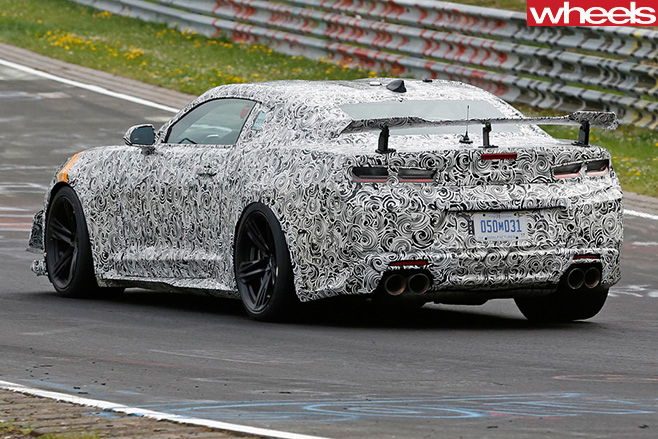
To keep you up to speed with the Camaro, this is the sixth-generation version launched in May last year, based on GM’s Alpha Platform ( and also underpins the Cadillac ATS and CTS sedans). Though it appears very similar to the 2009 version that used the Holden-developed Zeta architecture, this one is almost all-new according to Chevy, since it’s shorter, narrower, and nearly 100kg lighter, with no shared body panels and a completely redesigned interior.
Whether Australians will actually get a chance to see the Z/28 is anybody’s guess, as Chevrolet hasn’t announced any right-hand drive plans for this-gen Camaro. However, with the spectacular success Ford is enjoying with the latest Mustang globally as well as Downunder… well, we wouldn’t rule it out.
Have spy pics of your own? We’d love to see them. Just email them to [email protected].
EVERYONE loves a road trip. Even more so when someone possessing the talent, passion and appreciation of prose as when former Wheels editor Bill Tuckey was moved to take up the quill. Part Hunter S Thompson, part Kerouac, but so uniquely Tuckey, sit back and re-live Romsey Quints’s classic piece of longform motoring journalism from 1977 – Long Day’s Journey into Johtown.
He had been whining and snivelling for too long so we put him in a Jaguar XJ-S and headed him away from Sydney in the faint hope that he would get lost, somewhere in another State, never to be seen again.
And he did get lost for a time and finally found his way home and he had many adventures and this is the fairy tale about those adventures. ROMSEY QUINTS will never be the same again.
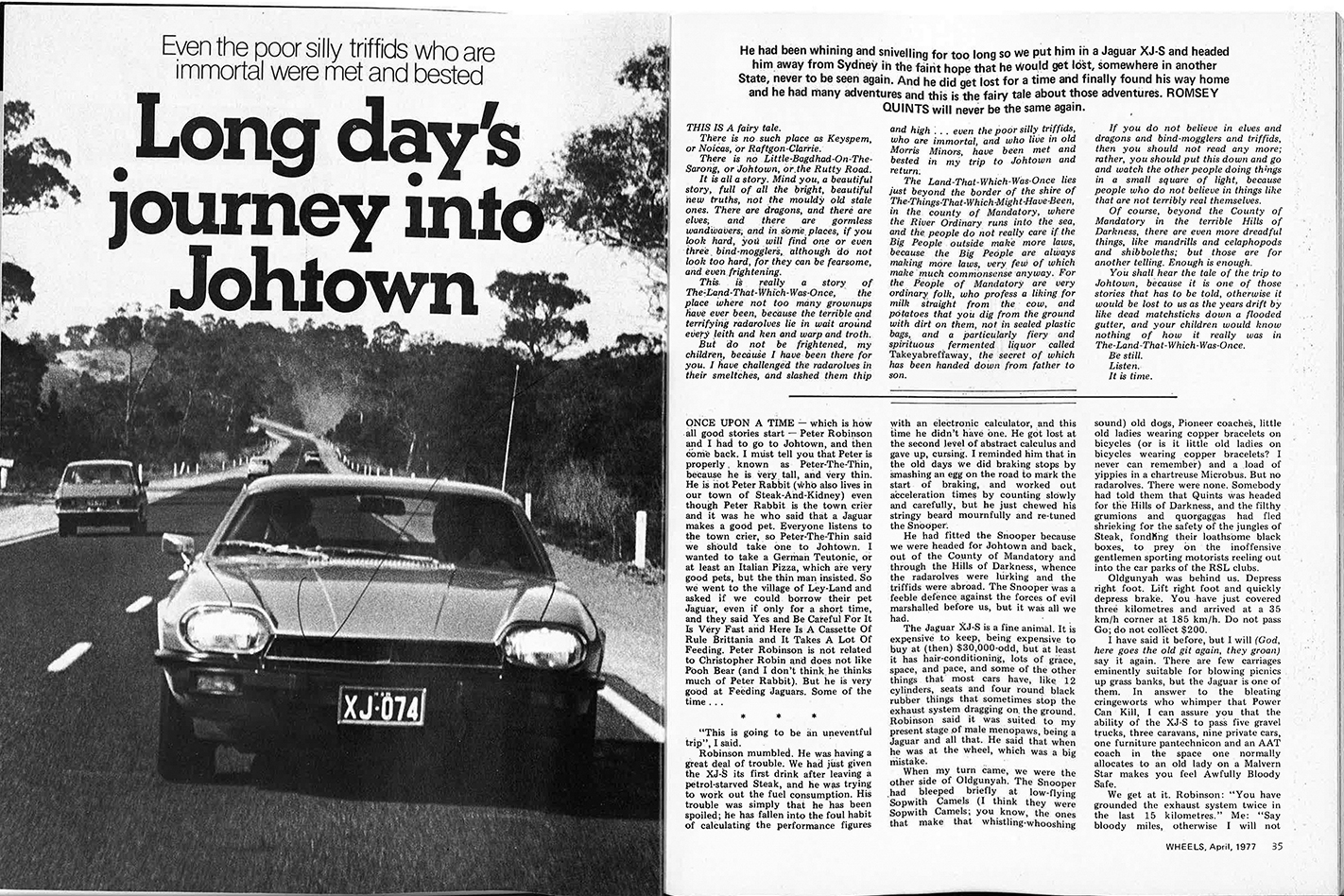
THIS IS A fairy tale.
There is no such place as Keyspem, or Noicas, or Raftgon-Clarrie.
There is no Little-Bagdhad-On-The-Sarong, or Johtown, or the Rutty Road.
It is all a story. Mind you, a beautiful story, full of all the bright, beautiful new truths, not the mouldy old stale ones. There are dragons, and there are elves; and there are gormless wandwavers, and in some places, if you look hard, you will find one or even three bind-mogglers, although do not look too hard; for they can be fearsome, and even frightening.
This is really a story of The-Land-That-Which-Was-Once, the place where not too many grownups have ever been, because the terrible and terrifying radarwolves lie in wait around every Ieith and ken and warp and troth.
But do not be frightened, my children, because I have been there for you. I have challenged the radarwolves in their smeltches, and slashed them thip and high … even the poor silly triffids, who are immortal and who live in old Morris Minors have been met and bested in my trip to Johtown and return.
The Land-That-Which-Was-Once lies just beyond the border of the shire of The-Things-That-Which-Might-Have-Been, in the county of Mandatory, where the River Ordinary rum into the sea, and the people do not really care if the Big People outside make more laws, because the Big People are always making more laws, very few of which make much commonsense anyway. For the People of Mandatory are very ordinary folk, who profess a liking for milk straight from the cow, and potatoes that you dig from the ground with dirt on them, not in sealed plastic bags, and a particularly fiery and spirituous fermented liquor called Takeyabreffaway, the secret of which has been handed down from father to son.
If you do not believe in elves and dragons and bind-mogglers and triffids, then you should not read any more; rather, you should put this down and go and watch the other people doing things in a small square of light, because people who do not believe in things like that are not terribly real themselves.
Of course, beyond the County of Mandatory in the terrible Hills of Darkness, there are even more dreadful things; like mandrills and celaphopods and shibboleths; but those are for another telling. Enough is enough: You shall hear the tale of the trip to Johtown; because it is one of those stories that has to be told, otherwise it would be lost to us as the years drift by like dead matchsticks down a flooded gutter, and your children would know nothing of how it really was in The-Land-That-Which-Was-Once.
Be still.
Listen.
It is time.
ONCE UPON A TIME – which is how all good stories start – Peter Robinson and I had to go to Johtown, and then come back. I must tell you that Peter is properly known as Peter-The-Thin, because he is very, tall, and very thin. He is not Peter Rabbit (who also lives in our town of Steak-And-Kidney) even though Peter Rabbit is the town crier and it was he who said that a Jaguar makes a good pet. Everyone listens to the town crier, so Peter-The-Thin said we should take one to Johtown. I wanted to take a German Teutonic, or at least an Italian Pizza, which are very good pets, but the thin man insisted.
So we went to the village of Ley-Land and asked if we could borrow their pet Jaguar; even if only for a short time, and they said Yes and Be Careful For It Is Very Fast and Here Is A Cassette Of Rule Britannia and It Takes A Lot Of Feeding. Peter Robinson is not related to Christopher Robin and does not like Pooh Bear (and l don’t think he thinks much of Peter Rabbit). But he is very good at Feeding Jaguars. Some of the time …
* * *
“This is going to be an uneventful trip”, I said. . . Robinson mumbled. He was having a great deal of trouble: We had just given the XJ-S its first drink after leaving a petrol-starved Steak, and he was trying to work out the fuel consumption. His trouble was simply that he has been spoiled; he has fallen into the foul habit of calculating the performance figures with an electronic calculator, and this time he didn’t have one. He got lost at the second level of abstract calculus and gave up, cursing. I reminded him that in the old days we did braking stops by smashing an egg on the road to mark the start of braking, and worked out acceleration times by counting slowly and carefully, but he just chewed his stringy beard mournfully and re-tuned the Snooper.
He had fitted the Snooper because we were headed for Johtown and back, out of the County of Mandatory and through the Hills of Darkness, whence the radarolves were lurking and the triffids were abroad. The Snooper was a feeble defence against the forces of evil marshalled before us, but it was all we had. . .
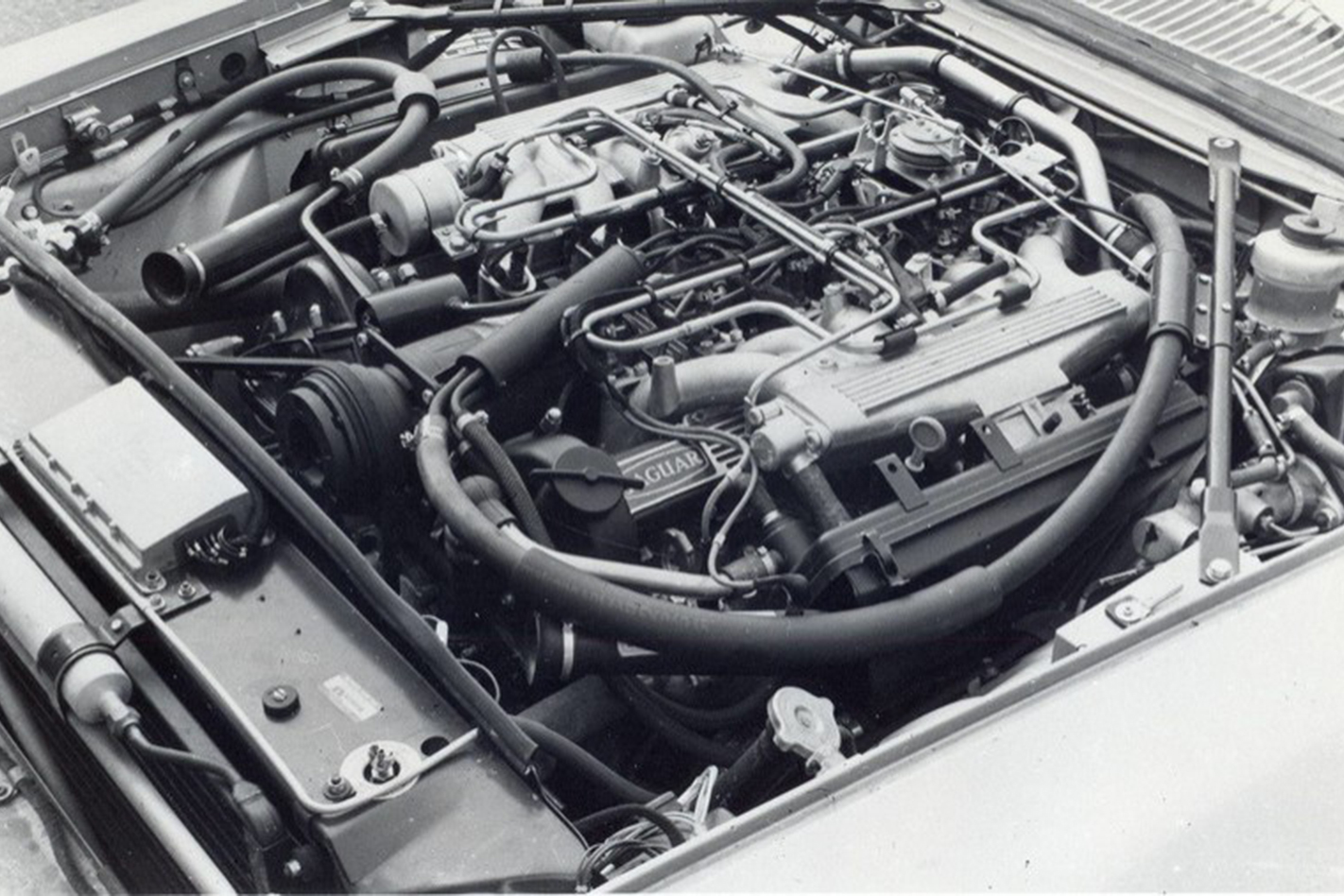
The Jaguar XJ-S is a fine animal. It is expensive to keep; being expensive to buy at (then) $30,000-odd, but at least it has hair-conditioning, lots of grace, space, and pace, and some of the other things that most cars have; like 12 cylinders, seats and four round black rubber things that sometimes stop the exhaust system dragging on the ground.
Robinson said it was suited to my present stage of male menopaws, being a Jaguar and all that. He said that when he was at the wheel, which was a big mistake.
When my turn came, we were the other side of Oldgunyah. The Snooper . had bleeped briefly at low-flying Sopwith Camels (I think they were Sopwith Camels; you know, the ones that make that whistling-whooshing sound) old dogs, Pioneer coaches, little old ladies wearing copper bracelets on bicycles (or is it little old ladies on bicycles wearing copper bracelets? I never can remember) and a load of yippies in a chartreuse Microbus. But no radarolves. There were none. Somebody had told them that Quints was headed for the Hills of Darkness, and the filthy grumions and quorgaggas had fled shrieking for the safety of the jungles of Steak, fondling their loathsome black boxes, to prey on the inoffensive gentlemen sporting motorists reeling out into the car parks of the RSL clubs.
Oldgunyah was behind us. Depress right foot . Lift right foot and quickly depress brake. You have just covered three kilometres and arrived at a 35 km/h corner at 185 km/h. Do not pass Go; do not collect $200. I have said it before, but I will (God, here goes the old git again, they groan) say it again. There are few carriages eminently suitable for blowing picnics up grass banks, but the Jaguar is one of them. In answer to the bleating cringeworts who whimper that Power Can Kill, I can assure you that the ability of the XJ-8 to pass five gravel trucks, three caravans, nine private cars, one furniture pantechnicon and an AAT coach in the space one normally allocates to an old lady on a Malvern Star makes you feel Awfully Bloody Safe.
We get at it. Robinson: “You have grounded the exhaust system twice in the last 15 kilometres.” Me: “Say bloody miles, otherwise I will not understand you. Besides, I don’t make the roads. How’s the differential calculus going?”
(I have to say at this stage that the ride is incredible. The XJ-S is a heavy-ish car, and the roads of the State of Ordinary are awfully brillig, and more often than not the slithy toves gyre and gimble in the wabe. Yet it wafts daintily across the most agonising graunches and ripples without a murmur; the exhaust system has grounded because I am driving it as hard as you would on the billiard-table autostrada down to Milan.)
Robinson: “You old bugger; you still remember how it’s done.”
Me: “Give the car some credit. Make sure that Snooper’s working.”
The radarolves have not yet emerged from the dank and dripping undergrowth, but the gormless wandwavers are appearing. Over a blind brow at 170 km/h and the first of them – the bright Orange-Vested male of the species – is there. His gormless wand is waved, then frantically bobbed up and down. He starts to jump about a bit – as the species is wont to do when approached by one of the Jaguar species – and he is obviously considering dropping his wand (they grow another one later) and vanishing into the shrubbery when he realises we will, after all, slow down. He then nonchalantly proceeds to fiddle with his Ready Rubbed, a type of self-abuse practised by this common species at times of stress.
At Taree, Robinson shrieks to a stop and hurtles out of the car, yelling and waving his arms. He has spied a Czechoslovakian Tatra, rear-engined air-cooled V8 and all, and is totally overcome. Me, I can take it or leave it. We find it has been sold to a Sydney dealer. I hope the Czech doesn’t bounce.
On, on. We have miles to go before we sleep (alright, Robinson, kilometres).
(Robinson says the car is very nimble, very agile, despite its bulk, and I have to agree with him. We whistle into some really good uphill stuff beyond Cowdahlia and find that you can tweak it across under brakes, getting off them in time to slide the back a little bit further, because they are the kind of brakes you ·can squeeze on after you get over the initial titchy deadness … you want another centimetre of stop, you squeeze another centimetre – that kind of thing.)
We roll gently into Keyspem, the Snooper silent, because we have still not seen any of the terrible radarolves. At the service station we fillerup and check the tyre pressures. Robinson is aghast, because I had earlier told him I thought the left front was 2psi down – and it was. He pulls at his beard, mumbles. The service station owner’s wife, 10 months pregnant, cleans the windscreen and peers at the underbonnet maze, a hieroglyph of electrics, castings, oobligahs and froffledamps. “Under all that”, she says, “is undoubtedly a V12 engine”. Robinson chokes, trips over the air hose and straightens up to hit his head on the paper dispenser.
Rolling out, Robinson driving.
“Did you hear that?” (The kid is still young, gets emotional about some things; I’ve seen it all before.)
Me: “Yes. Do you know what she owns?”
Robinson (breathlessly, expecting at the very least an Alvis, at the best an original Morgan): “No. No … what?”
Me: “A Toyota Crown. Do you want a Mintie? It’s moments like these … “
At that moment we both notice the grumbling from the rear (those bloody slithy toves again) and we stop. It sounds like a flat, but all those round black things are still round, so we U-turn back to the garage.
Up on the jack it goes. The main bracket for the offside exhaust system, perched over the uprights, has come away, and the front muffler is sagging and graunching on the driveshaft. The elves have struck. On a Jaguar, to fix this, you probably need Special Tool Number 2311, but we are at Keyspem near the Hills of Darkness and Ley-Land is another country.’
Thump. Grunt. Heave. She should be okay now.
Off goes Robinson. The noise has gone. We did not need Special Tool Whatever Number. Faith heals all. Just keep the offside section offa dem slithy toves.
As we refill at Raftgon-Clarrie, I suggest we should try to break the record for the 102 km (64 miles) from Raftgon-Clarrie to Noicas, a fine piece of bitumen ifested with wobblies but known to be clean of radarolves, triffids and dragons. I last covered it in 48 minutes, but my good friend The Chocolate Frog (who shall be nameless on account of the fact that the fuzz in three States are looking for him) put a P76 V8 across it in 47 minutes.
Robinson climbs out from behind the wheel.
Greater love hath no man.
Of course, he hadn’t been across this delectable bit of road (mainly because this is all a fairy tale, and he doesn’t believe in fairy tales either). For those of you who have been in The-Land -That-Which-Was-Once, the distance is measured from the Big Street Bridge to the 60 km/h sign at Noicas; neither has Robinson yet been across the other delectable bit of road from Raftgon-Clarrie to Innes-Ireland, one of the few places in this benighted country where a Porsche Turbo or an XJ-S or a Fazzazz or a Porkpuccini will turn your brain to mush and your knees to water and pucker the upholstery irreparably.
But we were off to Noicas. Drop the hanky.
You run out of Raftgon-Clarrle through winding rows of trees bordering mixed farms and you hold the automatic in second and just keep lying on the longish push of the accelerator as the V12 builds and builds and builds until you nudge the little neat black pointed T-bar into Drive and count one-two and it goes in clunk because the gearbox is still Jaguar-clumsy but the tacho has gone by four· and a half and is winding and you have to lift your line of sight up and up again to as far as you can see, watching for farm gates and tractors and anything moving because they don’t expect anything to be going that quickly … but within minutes there is nothing up front except scrub and a long, black, smooth road with long, easy, fat bends and thick white lines either side and nothing up front except for the now-and-then squashed cat or wallaby body or a quiet dun grey FB Holden that you go past at three times its speed and pop the ears of the inoffensive triffids inside who never saw you coming anyway … just saw the strange rear end of the silver car going away with that characteristic rocking motion Jaguars have had since the first 3.4 …
(We are running between 180 and 225 km/h, letting the contours of the land decide the absolute speed, easing up as we arrive at the tops of slight rises because beyond is unseen, hardly lifting off for the big, gentle bends; it’s then that you write on the scratch pad of your brain the analysis of the Jaguar’s Bishop-designed power steering. It’s a little light, a little fine; it needs to be sharper, to have more load information; you find yourself in bends just squeezing on a poofteenth too much steering so you can feel the front tyres bite more, then backing off that same amount to keep the line. It will wear out front tyres, so that’s an expensive way of getting information, but the steering’s absolutely way out front of the V12 E-type, which was downright bloody terrifying over 140 km/h.)
Robinson is talking, relaxed. When we indicate 230 km/h I say so, briefly, trying not to sound like a pilot calling Mach One in a Mirage. He nods. “Doesn’t feel like it. You really knew about it in a Phase Three GTHO.”
Robinson believes only in GTHOs and Morgans, but is still the best motoring writer in the country, so I am flattered that he sits so quietly. About then I back off quickly for a utility treating the road like the track to his lumber camp and the air behind fills with grey smoke. Robinson: “All the V12s do that, but they don’t use oil like you’d think”. But at the same time I am checking the marvellous vertical-drum instruments and the temperature gauge is right up into perspiration level and I decide to back it off. We run the last 15 kilometres into Noicas at around 100 km/h, and as I pass the 60 km/h sign Robinson says : “Forty-three minutes”. Oh well. Eat your heart out, Chocolate Frog, wherever you are.
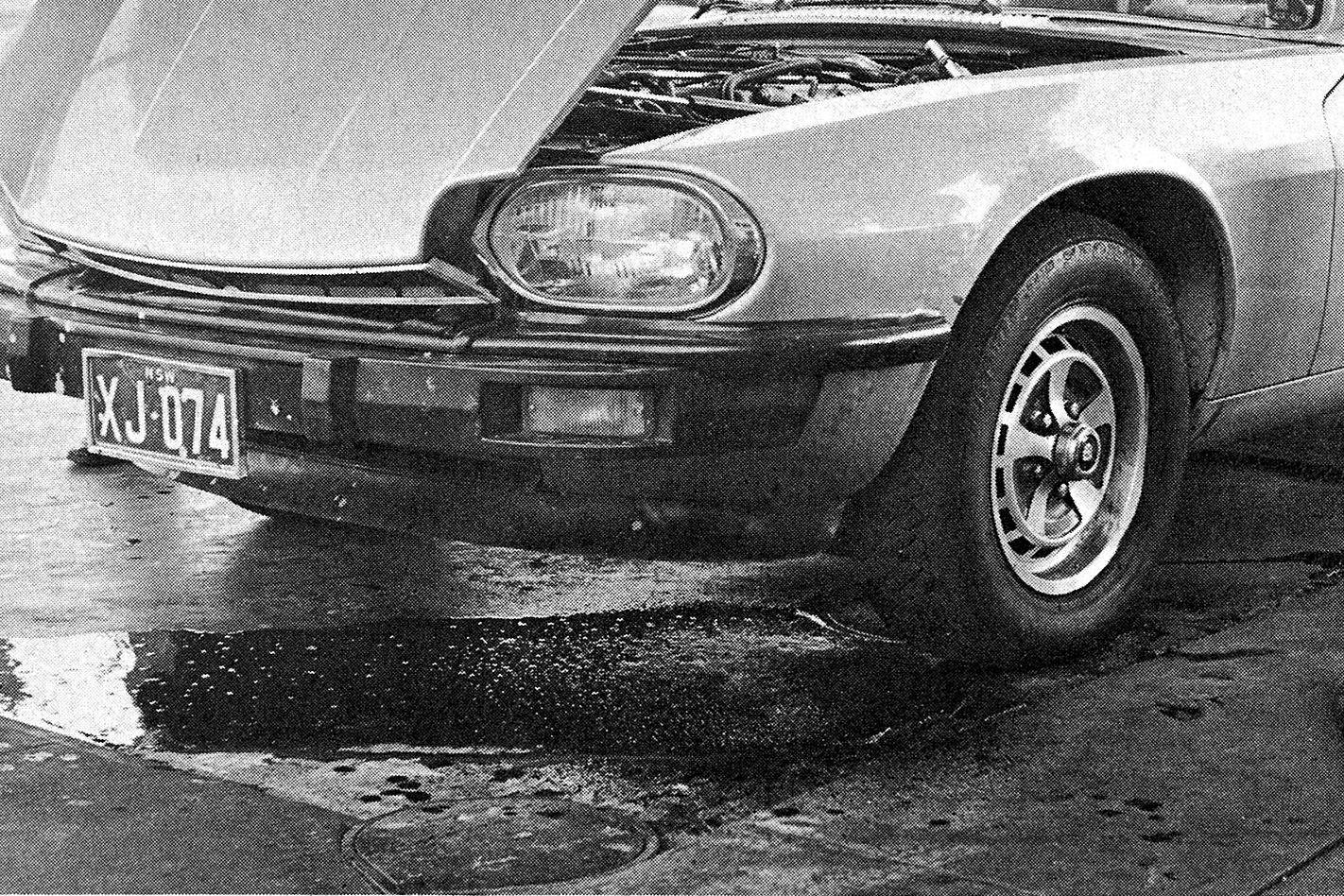
At the service station we pull up with the XJ-S going click-hiss-zizz and pop the bonnet. It starts to haemorrhage blue coolant down the driveway from the overflow. The young garage owner stands there smiling; a crowd begins to gather. I say to Robinson: “You know, they’ve never seen a car like this before. Off the beaten track. Back on the highway they get blase about the Porsches and Bee-Emms fanging it up to Little-Bagdhad-On-The-Sarong”. We get the usual conversation: “Wotsit cost?” “Thirty”. “That’s not a car for the workin’ man”. “No, I guess it’s not.”
Robinson removes the header tank cap and a whole lot more blue coolant spews out . Reflectively, I say to the owner that there are only a half dozen of these in the country, and we will need the special coolant to refill. He says Yes, I Saw You Down Town About Four Hours Ago. And I say that we have just flown (sic) in from mumblemumble and how could he? To which he retorts that this is an XJ-S isn’t it and it is silver isn’t it and oh I see the number plate is different but it’s the same car.
God save me. We are miles (alright, Robinson, alright – kilometres) from anywhere, and I’ve bragged to Robbo about how I know the country and they’ll be totally freaked out by this car and we find not one but TWO XJ-S Jaguars in this shitfight country town on the same day. This shitfight country town with no special Jaguar coolant.
Robinson: “You said it would be an uneventful trip”.
Me: (To the service station owner): “What’s considered to be the outright record from here to Raftgon-Clarrie?”
Service station owner: “Well-lll-ll, you can believe it if yer like, but a traveller comes through here regular and he reckons he’s done it in his V8 Facon in 48 minutes, but, Jesus Christ, you wouldn’t believe that”.
Me: “Robinson; don’t you ever again call me an old bugger.”
Robinson: “Terrific. Now tell me how we get the special coolant that your record has helped to distribute all over this nice clean driveway.”
He has a point there. We ponder, and look up the manual, and find that on no account can you use water in the system, but we try a bit and it seems to mix all right, so we top up and set off.
Robinson is driving because I am exhausted. I have been quicker between Raftgon-Clarrie and Noicas than Stirling Moss was in the C-type Jaguar down Mulsanne Straight at Le Mans and Robinson still expects me to sort out his cooling problems.
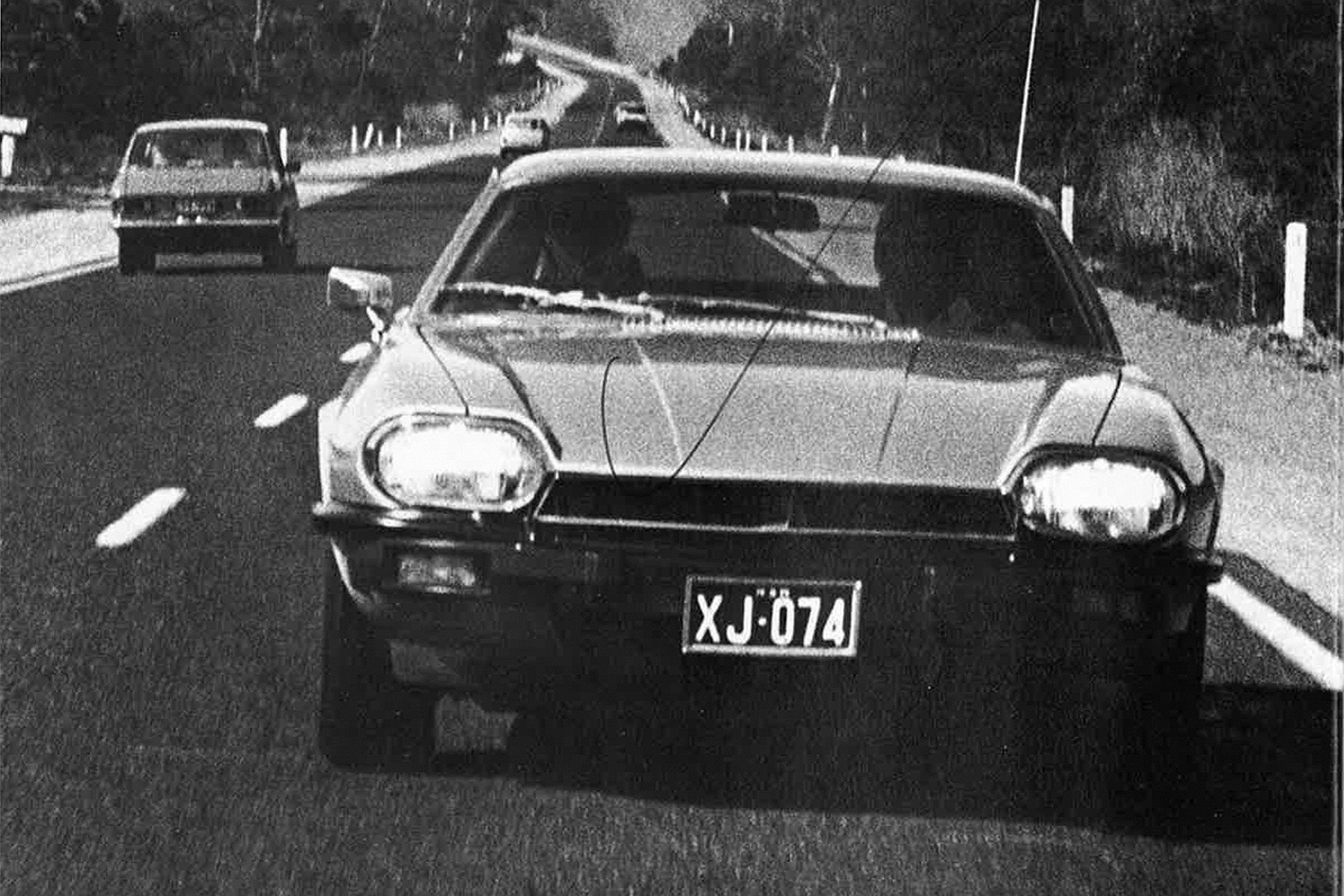
After some distance, with the engine temperature still up in the sweaty zone and the aircon switched off to help it run cooler, I suggest we pop the forward-hinged bonnet to help it cool. This helps a little, as does the aftermath of a hailstorm we run into. A Holden Sandman gives us two fingers as he passes in a 60 km/h zone and Robbo blows his doors off a few minutes later, which doesn’t help the temp gauge, but we manage to hobble into Little-Bagdhad-On-The-Sarong only nine hours out of Steak despite the hassles.
Peace.
In three fills our pet Jaguar has drunk at the rate of 12.4 mpg (4.4 km/L), 12.1 mpg (4.3 km/L) and 10.7 mpg ( 3.5 km/L), thus frustrating Robinson’s lifelong ambition to return less than 10 mpg (3.5 km/L) from a test car. Cost of petrol ranged from 14.3 to 18.3 cents a litre, which is all a little hard to understand for a tiny brain like mine.
One of the things we have come to do is attend a Saab conference to unveil the 1977 models of that unusual, effective Swedish device – and to talk to the huge and appropriately overpowering Erik Carlsson, who drove Saab into more rally wins than I can think about and on the way married Stirling Moss’ sister Pat. Saab regard the Jaguar with some sadness, and offer us an EMS to drive back to Steak.
The local embassy of Ley-Land the next morning tells us that the exhaust system needs a few bits that they may or may not have and one thermostat is out to lunch and a smidgin of re-timing might help but would take some time.
We decide on the Saab. The Jag stays.
And so, hey nonni·no to Johtown, except the Snooper is left in the Jaguar so I am proceeding carefully along the left-hand side of the carriageway yeronner at 100 km/h no more no less when we come across a bind-moggler. Actually it’s probably a triffid, and we have a brief argument about the nature of the beast as I perform what is best described as a Phenomenal Avoidance Successful Mainly Because Of My Incredible Skill And Daring, through an atmosphere thick with bouncing play pens, cots, mattresses and assorted bric-a-brac that has just fallen off the trailer in front of us. Robinson says it’s a bind-moggler, but I know a triffid when I see one. He says: “It’s going to be an uneventful trip,” and smirks and chuckles. May all his chooks turn into emus and kick his fowl house down.
The Saab soon heads out of Johtown towards Steak down a road different to the ones we used on the way up, in case the grumions and quorgaggas have set up road blocks through the Hills of Darkness to wreak their revenge on us for escaping them before. But it soon becomes apparent that it will be hard to escape from Johtown because there may be not only radarolves – all the signs say so – but also local county grumions may be lurking in what looks increasingly like Deliverance jungle.
Like America’s Deep South, they might pull you over for chewing gum in the wrong side of the mouth while in motion and haul you in front of a friendly quorgagga who fines you $93,000 or seven years, or $50 if you drop it in the Grumion Gratuity Fund collection plate there at your left elbow, sah. Johtown gives you funny feelings like that. At least it did me until Robinson, patting my shoulder gently to calm the great wracking tormented sobs of anguish, pointed out that we were wearing Transylvanian number plates and Johtown grumions only attacked those wearing Newtrout number plates, because they were generally regarded as loathsome carrion, bearers of vile diseases and strange philosophies. Some of them had even been known to think that Our Queen meant the friendly neighbourhood poofta.
We stop at the inspection gates and I ask the large, red-faced man if we are now in Newtrout, and he says You Have Been For Half A Mile and I kiss him on both cheeks and he smashes me over the ear with a confiscated hydrangea. A triffid in disguise, no less. Robinson takes the wheel. I relax.
But we have some 900 or so kilometres to go and are still running-in the new Swedish pet. It is really a lovely tricky car, with things like mudflaps in front and behind the rear wheels, seat cushions adjustable for height, a left-hand corner light for dark driveways, and two litres of fuel injection under the bonnet.
(The long road unwinds. As we get quicker, the more the Saab feels like a bigger, taut Mini-Cooper S, minus the kidney massage and sonic -boom. The steering is heavy at 3.4 turns, but it only has a little of the familiar fwd gyroscopic kickback and no transmitted road thump. Sure, it understeers, but only on slow, tight stuff; on anything else, it’s pin-sharp and tracks truly. It is awfully easy to drive, and after a while we settle at a comfortable 140-150 km/h and the little metallic maroon metre-muncher loves it. It feels like it’s carved out of one solid piece of steel – not a hint of body noise, disc squeal, door creak, wind, or rattle or rumble. You just sit in it and point it there and it goes there. No fuss, no drama, no hysterics. Easy).
Still no radarolves in sight, Nor Are There Grumions. And it stays that way, despite a rather silly affair with Fred in a Mazda RX4 who tailgates the Saab at 160 km/h in the straight bits but goes all cross-eyed trying to keep up in the bent bits when I don’t even lift off. That little car just gobbles up the distance until Dingletown, where we stop for petrol. That’s when Robinson points out that the seats must be good because we haven’t noticed them. And we have averaged 25 mpg (8.9 km/L).
(The seats are better than good – they ‘re brilliant. They cuddle you around the side of the rib cage and finish exactly where they should under the thigh; only a hard headrest spoils them. They sit you at exactly the right angle – once you have adjusted them every which way – behind the little canted padded wheel and as you may well expect that the gearlever FETH – Falls Easily To Hand, as we motor noters are wont to say. The instruments are all totally clear and beautifully lit, and it’s hard to find anything wrong with the car except that the wipers aren ‘t set for right-hand drive, the clutch rest is still in front of the passenger, and there’s some reflection from the wide, flat dashboard cowl into the windscreen. But things like a windscren angled so far from you that you don’t find insect blotches until you look for them and a superbly simple seat belt comprising a single continuous strap that locks under a central bar between the seats make this car so sensible it makes most other cars look and feel clumsy.)
From Dingletown it is down the Rutty Road, through the Dark Forest as dusk closes in, and Robinson is in his element. I am tired, and headachy, for I am old and tetchy, but Peter-The-Thin settles down behind that little wheel and the great white lights and flies down 150 km/h of very difficult road to home. The last five kilometres are his brake fade test route, where everything has ended without stoppers except a Peugeot 504 – and now the Saab, not even breathing hard after it all.
The only things that have gone wrong are a failed offside rear trafficator globe and the five tenths decimal in the odometer that occasionally hiccuped as it rolled over. It’s a great, great car.
There never were any radarolves and we didn’t even see, a single gormless wandwaver on the way down and our only bind moggler was back near Johtown (I still say it was a triffid .)
It was an uneventful trip, really.
And like all the best fairy stories, it ends well.
The Jaguar was returned shortly after to Ley-Land, and the Saab proved to be beautifully run in and married a happy owner. And I hold the new record from Raftgon-Clarrie to Keyspem. The Jaguar appreciated by something like $7000 while it sat in Bagdhad, for that was the weekend that First Light Fraser announced a 17.5 percent devaluation.
Jeepers, now I’ve done it. I forgot that Robinson was a mate of First Light Fraser. What’s that rustling in the hedge. No – it couldn’t be! It is! It’s the Commonwealth Grumions!
Now I’ve really done it!
Run for the hills! Run!
Too late – too late …
A-a-a-a-a-ar-r-r-r-g-g-g-h!
Long Day’s Journey Into Johtown originally appeared in the April 1977 edition of Wheels.
A report into how Australia needs to prepare itself for the age of driverless cars has found we’re a long way from being ready to hand control over to our virtual chauffeurs.
The National Transport Commission report, which flows out of a three-month interim study of current road rules to work out what would need to change to allow self-driving cars, raises questions as simple as how can self-driving cars help injured people after a crash, how they obey directions from police, and even who needs to pay a toll – the car or the human.
“Automated vehicles could significantly improve road safety outcomes by preventing crashes and reducing deaths and serious injuries, yet the technology cannot be fully used unless our current regulations are reformed,” the discussion paper from the federal roads policy agency says.
“Lack of certainty relating to who or what is in control of an automated vehicle, and the concept of the driver in legislation, are the key regulatory barriers to more highly automated vehicles.”
Flagged as potentially “[the] biggest change to our transport system since cars replaced horses”, the NTC said any changes to legislation would need to cover both fully automated cars that don’t need a driver, and expanded forms of current technology that still need a driver’s input behind the wheel.
But there’s more troubling issues, too. The report states that insurance claims could be affected by the technology, more so if someone is injured.
“It is also not clear whether people injured in a crash with an automated vehicle will always be able to claim insurance under compulsory third party insurance or state-based accident compensation schemes,” the report warns.
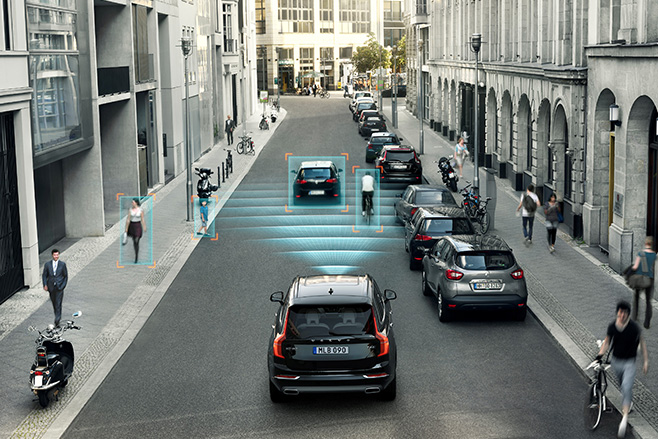
It also suggests that drivers should be given access to the data the car collects, just in case questions arise as to who was at fault if the vehicle crashes or breaks the law.
The report says state and territory governments will need to be careful about rolling out proposed road rule changes giving more space to driverless and semi-driverless vehicles, rather than rush through legislation to keep pace with emerging technology.
South Australia has become the first Australian government to adapt its road rules to allow autonomous car trials on its roads – a move it hopes will give the state’s long expertise in automotive manufacturing a much-needed bump along.
It allowed the state to hold Australia’s first-ever autonomous car trial on a public road in November last year, with a self-driving Volvo XC90 showing how it could keep itself in its lane, automatically stay a set distance from the car ahead, and even come to a full stop by itself and roll off in congested traffic.
Perth, meanwhile, is about to trial a French-made driverless electric bus that can transport up to 15 passengers at speeds of up to 45km/h.
The Navya bus uses a combination of cameras, lasers and GPS systems to navigate a route, with its maker saying it’s ideal for urban areas such as town centres.
Now that the NTC believes it knows what needs to change and how quickly – it predicts the first self-driving cars will be ready to ply our roads in as early as three years, even if the legal framework is not ready – it wants the community to say whether it is on the right track.
Public submissions can be made via http://www.ntc.gov.au until July 4.
