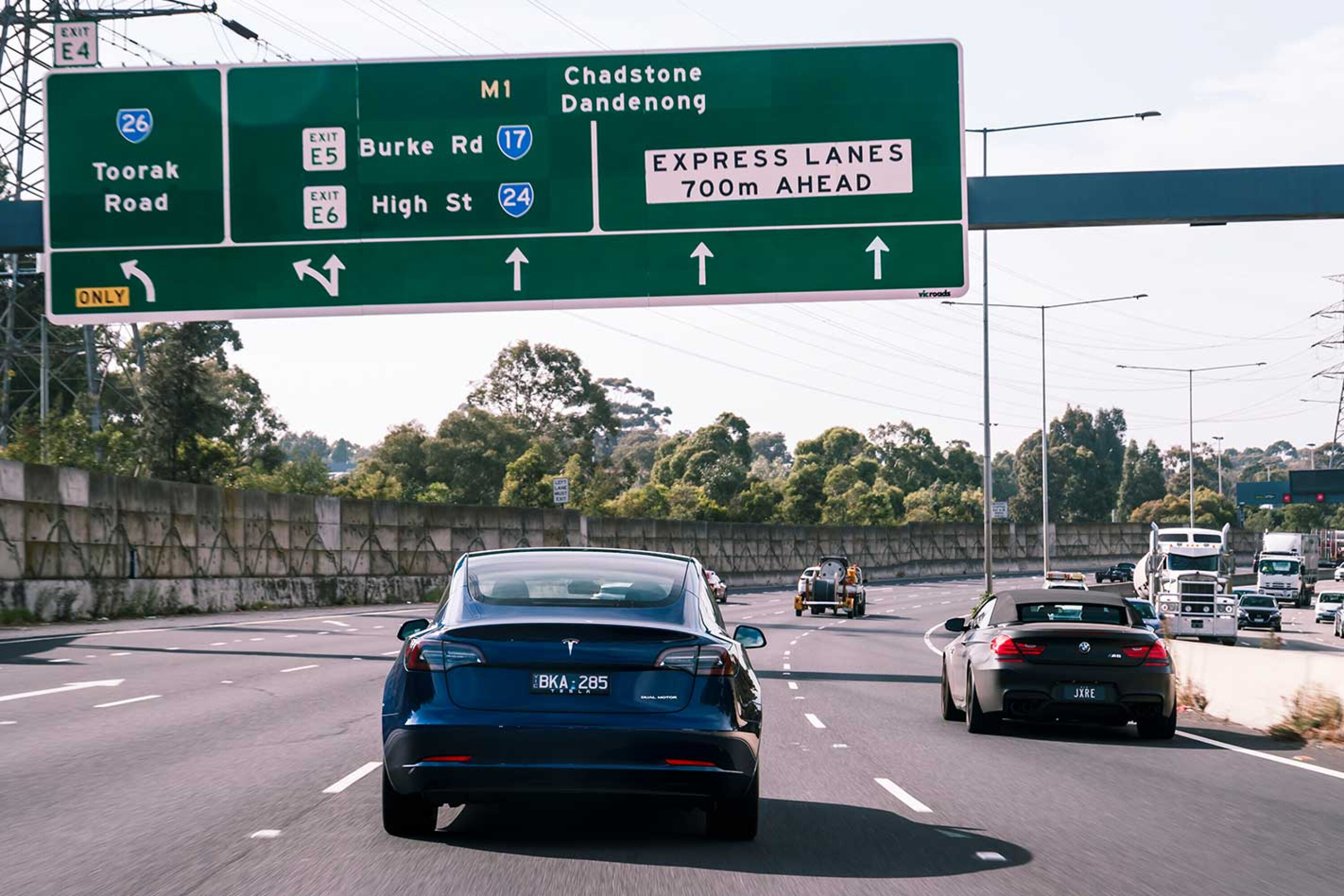
A transit lane is a designated lane on the road, set aside for vehicles carrying a specified minimum number of passengers.
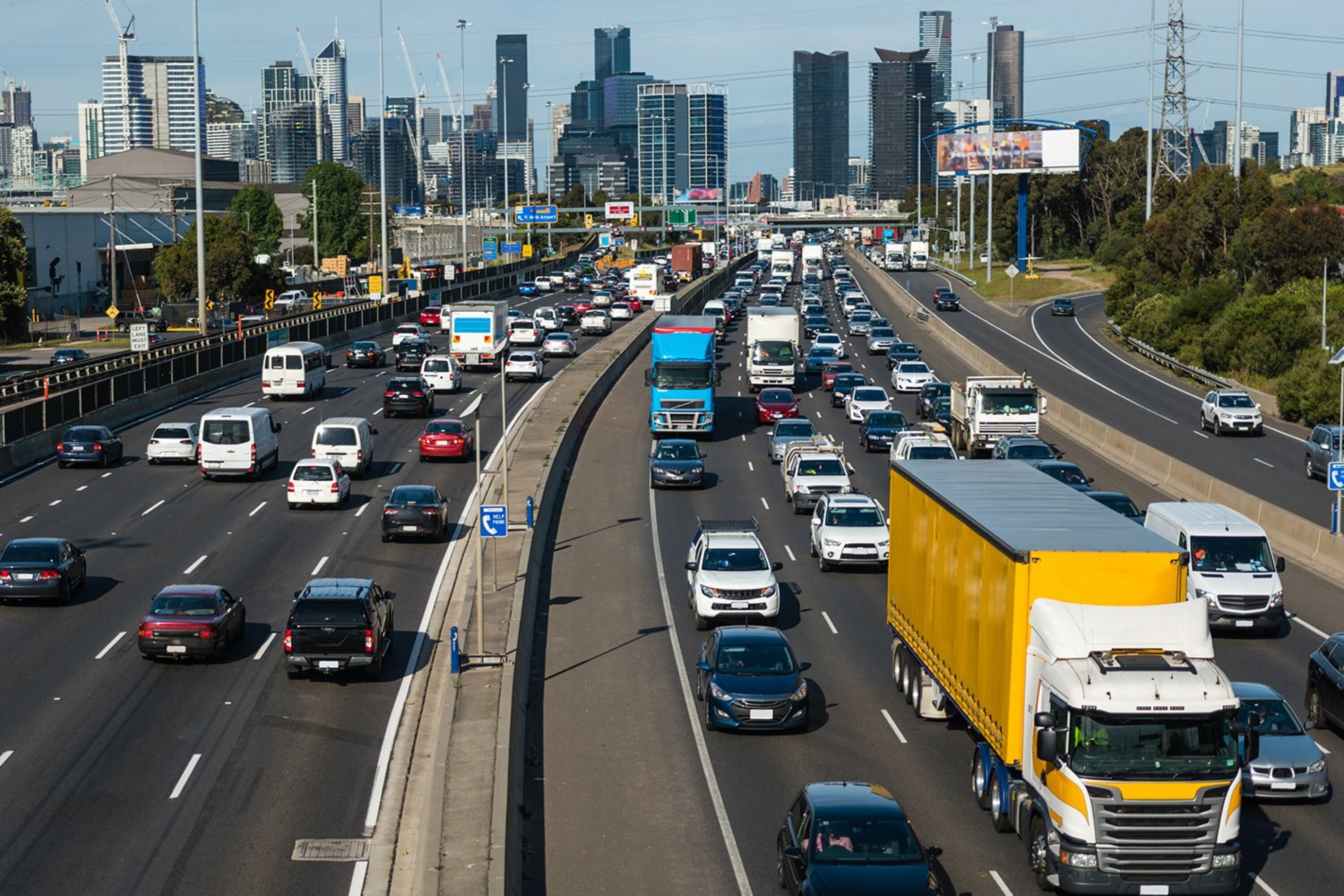
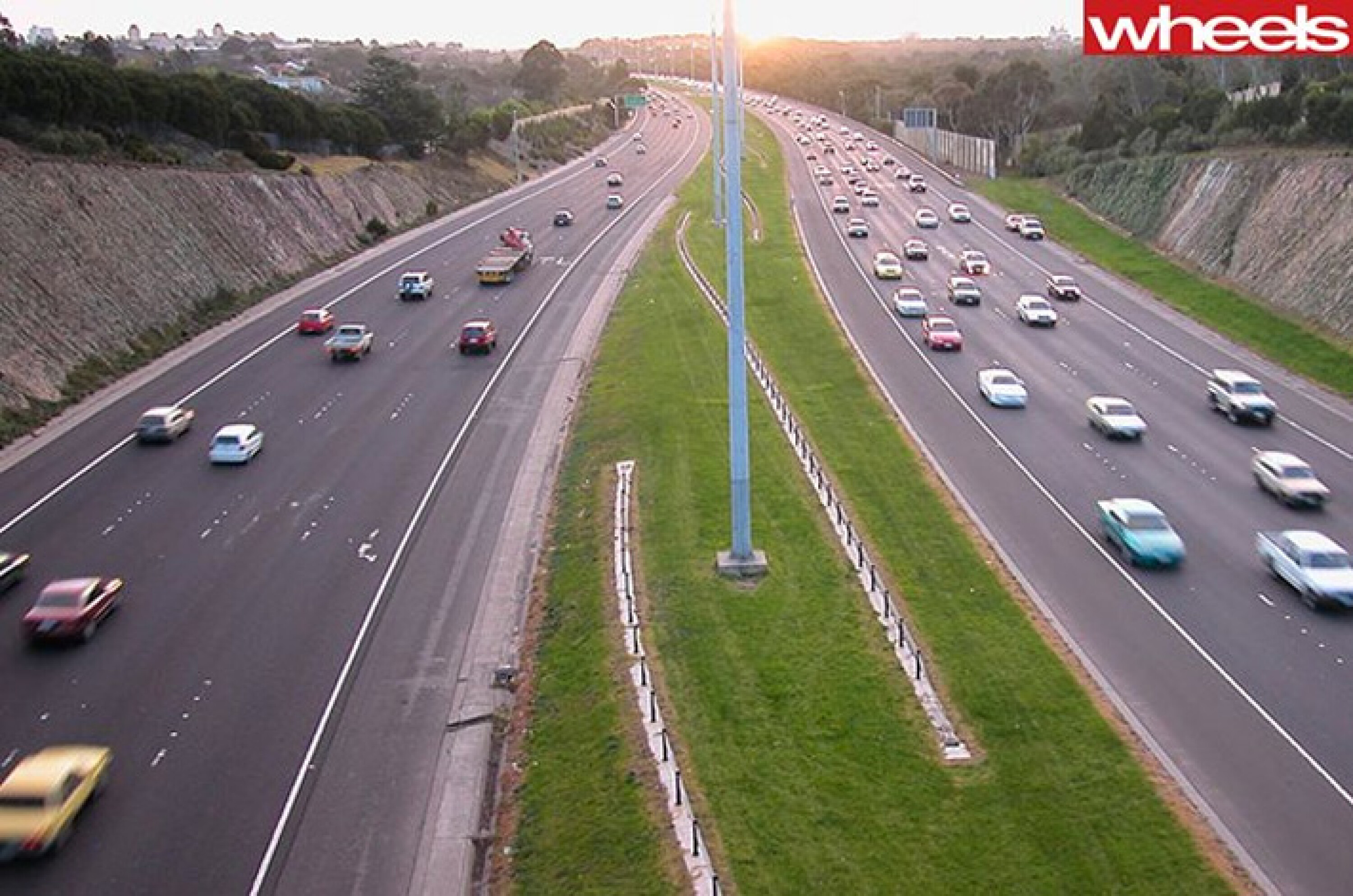
Transit lanes are often found on highways and freeways in busy urban areas and are usually in effect during certain times of the day. They were introduced to reduce traffic congestion by encouraging carpooling.
So the idea is, if you pick up a couple of colleagues on your way to work then you’re entitled to use the transit lane, ideally resulting in a shorter commute time.
You may have heard of people inflating companions to be able to use the lane but we won’t get into all the problems with that.
1
What is a T2 or T3 lane?
On the transit lane road signs, the letter “T” stands for transit and the number following refers to the minimum amount of vehicle occupants required to use the lane.
So in the case of a T2 lane, as the driver you’ll need to have at least one passenger, and similarly in a T3 lane there will need to be a minimum of three occupants in the vehicle to use the lane.
1
How far can you travel in a T3 lane?
The distance you can travel in a T3 lane can vary and will depend on the rules of the area where the lane is.
In general, once you enter a T3 lane, you can stay in it as long as you meet the occupancy requirements (i.e., at least three people in the vehicle).
Some areas may have specific rules about when and where you can enter and exit these lanes, for example: 6am-10am on Monday through to Friday.
All road drivers can use transit lanes for up to 100 metres. This can be to overtake a vehicle, use a freeway exit or avoid an obstruction.
1
Who is allowed to use a T2 or T3 lane?
In addition to vehicles carrying two or three (plus) people, the following vehicles are allowed to use transit lanes regardless of the number of occupants:
Buses
Emergency vehicles – ambulances, police cars, firetrucks etc.
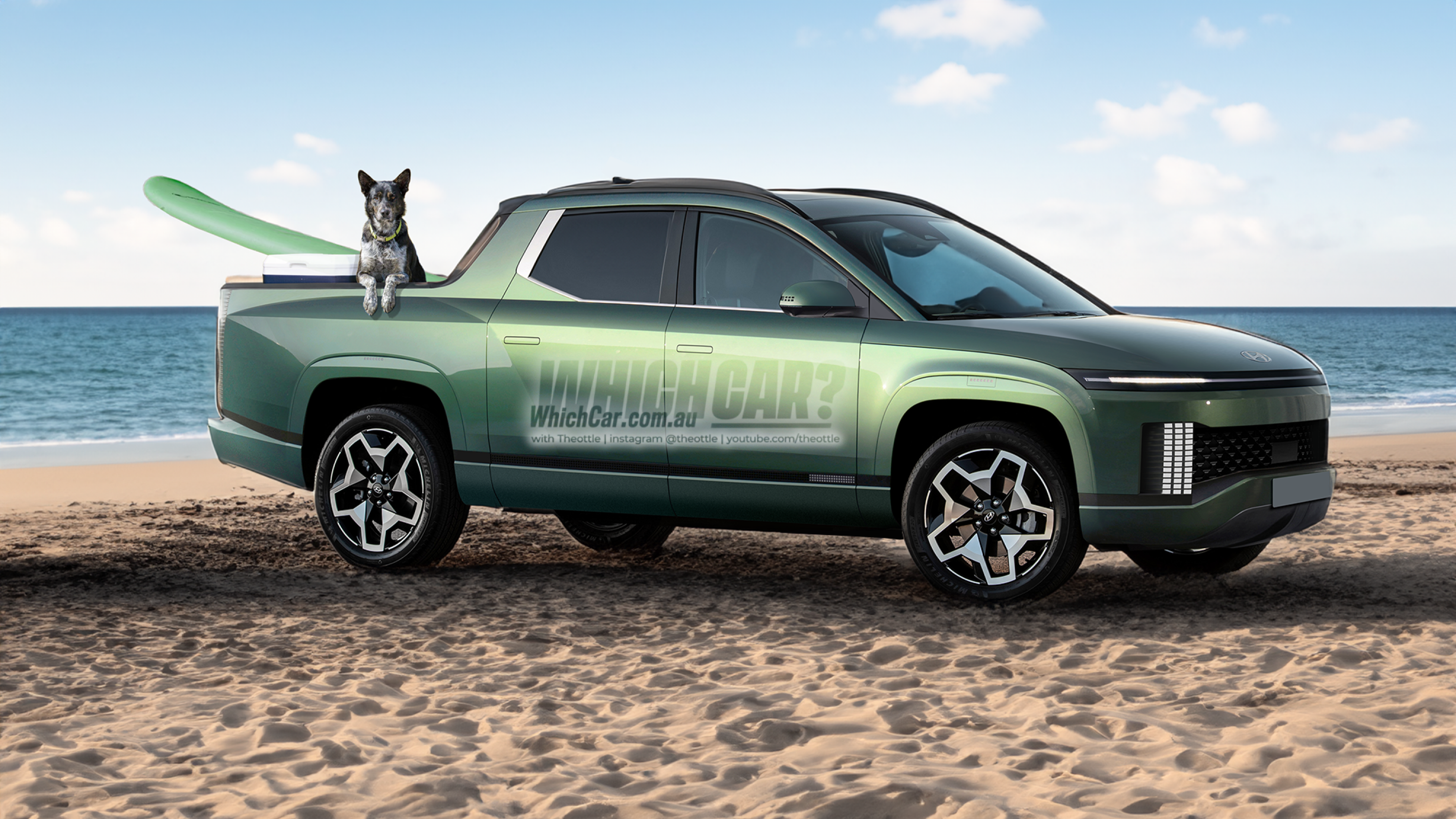
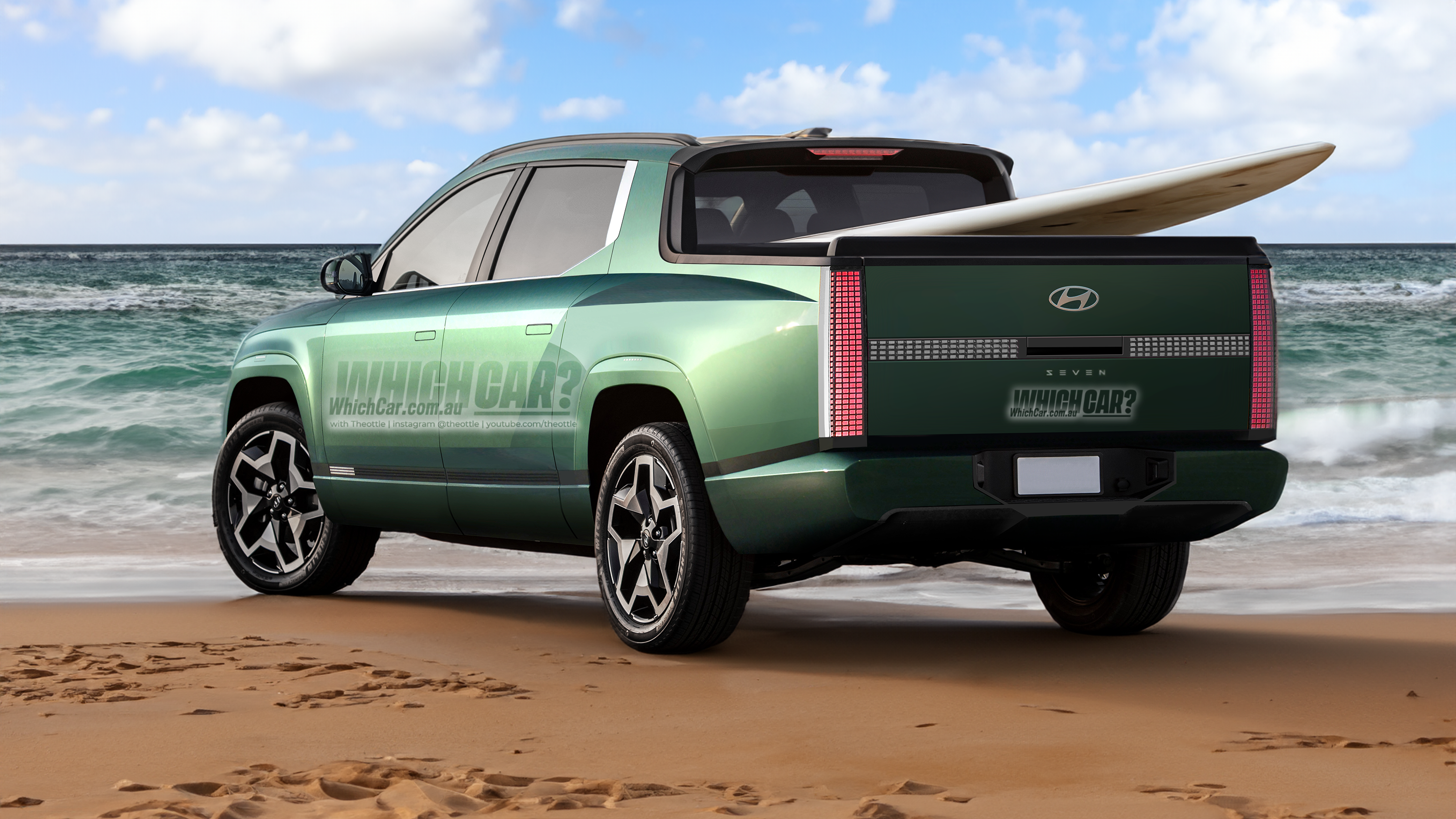
A car-based, electric companion to the Hyundai Santa Cruz ute will debut in the near future, helping the Korean giant towards its goal of two million EVs sold annually by 2030.
At this stage, we can’t know exactly how it’ll look, but we do know it won’t be a body-on-frame electric ute like the hugely popular Ford F-150 Lightning.
Instead, a monocoque design will be built on the company’s upcoming new Integrated Modular Architecture (IMA) that will replace its existing E-GMP EV platform.
1
In June, the company told an audience of investors that the Hyundai ute will be similar in size to Australia’s traditional utes, making it larger than the petrol-powered Santa Cruz ute it currently sells in North America.
We don’t yet know if the new model will come to Australia, although Hyundai’s local boss has been plenty vocal in telling media that a “real bloody ute” is coming.
Whether that information was based on earlier plans for a combustion-powered companion to the upcoming Kia Tasman, or if an electric model is what Hyundai now considers a “real” ute – only time will tell.
1
What do you think of our imagined design for the upcoming Hyundai electric ute?
Germany is a peculiar place. Full of rule-followers, sticklers, and deeply-ingrained – borderline superstitious – habits. The sort of country where speeding comes with stiff consequences.
Yet it also houses the largest network of roads with no speed limits on Earth, the longest permanent racetrack, and builds some of the fastest vehicles in the world. The people are also much friendlier than the stereotypes would have you believe, too.
The perfect place for petrolheads to let off some steam, then, and that’s exactly what we’re here for. We’ve sketched in a plan that includes the 24 hours of Nurburgring (think German Bathurst 1000), hitting V-Max on the Autobahn and lapping up some automotive history.
4
The S58 demolishes the dense evening air, combining it with 100 Octane at an alarming rate as it rushes towards V-Max
To get the trip started, we needed some wheels, which involved catching Munich’s efficient public transport from the quaint CBD to Garching. What we failed to realise was that this particular Monday was Ascension Day – a public holiday – and if there’s one thing Germans and Aussies have in common, it’s that we take public holidays seriously.
We were promised that a security guard would be there on arrival to let us into BMW’s compound, but she’d stepped outside for a smoke, and in the meantime, a gust of wind had blown the door shut… with the keys inside. Not the ideal start to a packed schedule.
1
In an hour or so, the palaver was sorted; Addi and I were invited inside BMW’s softly-lit press garages.
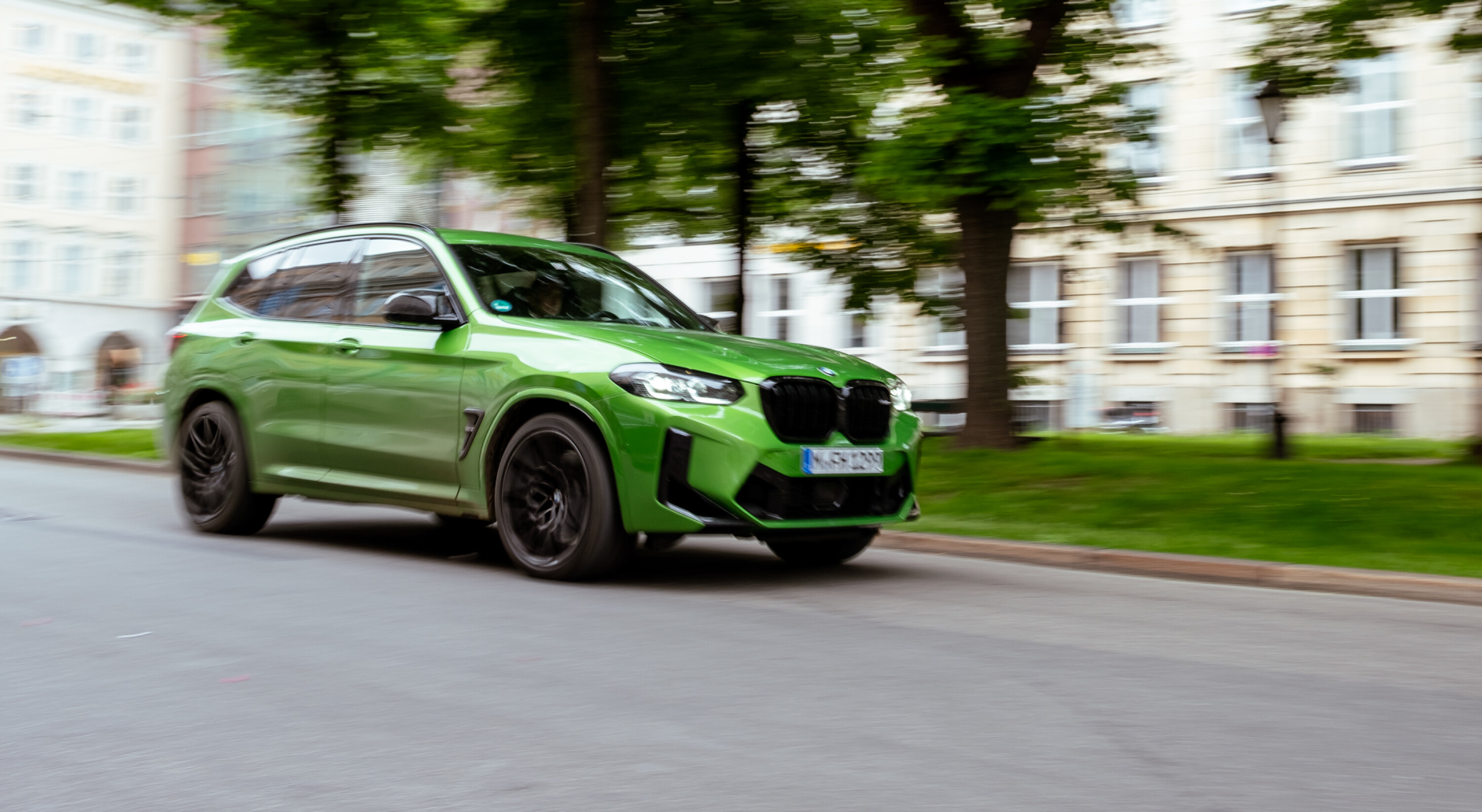
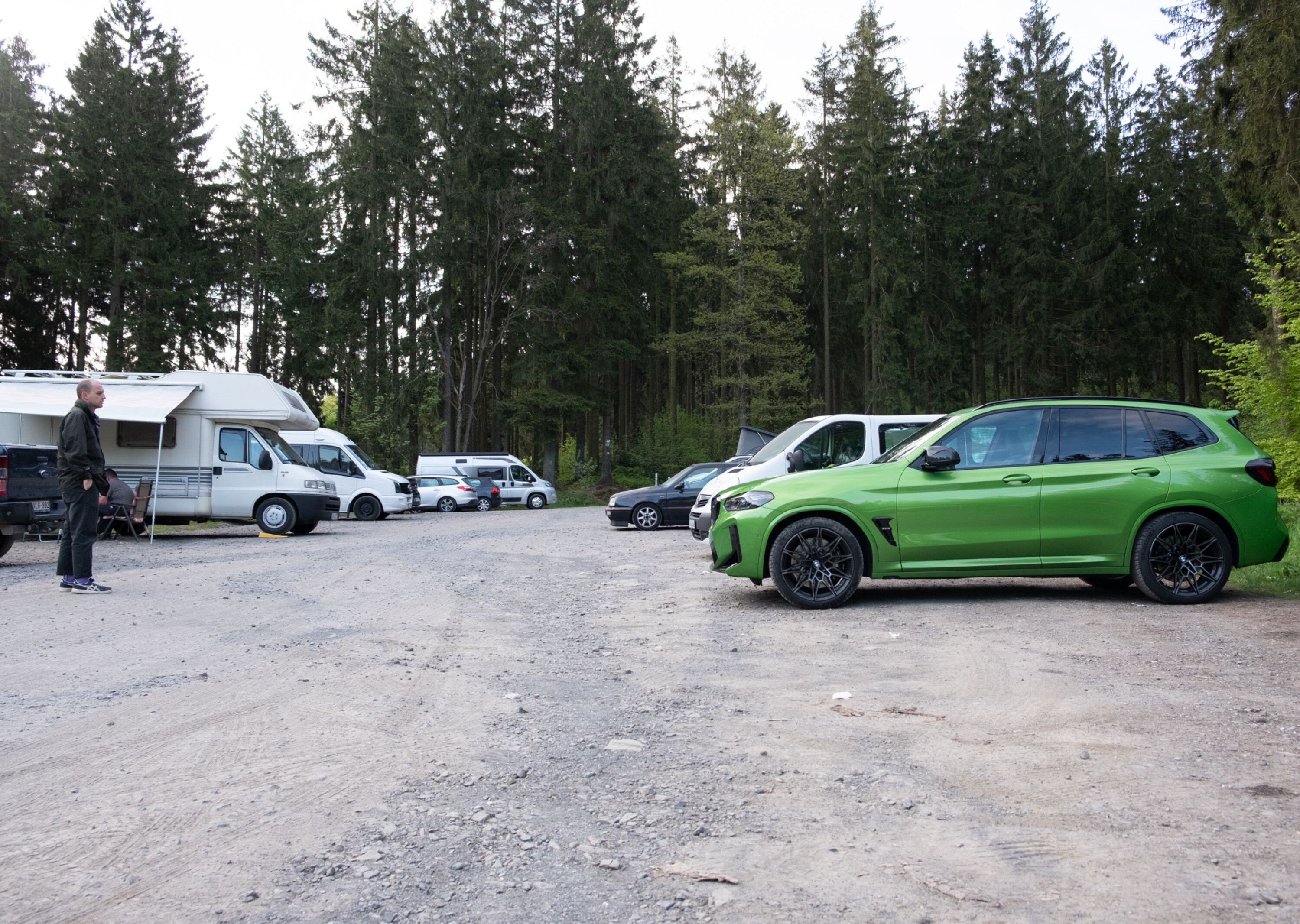
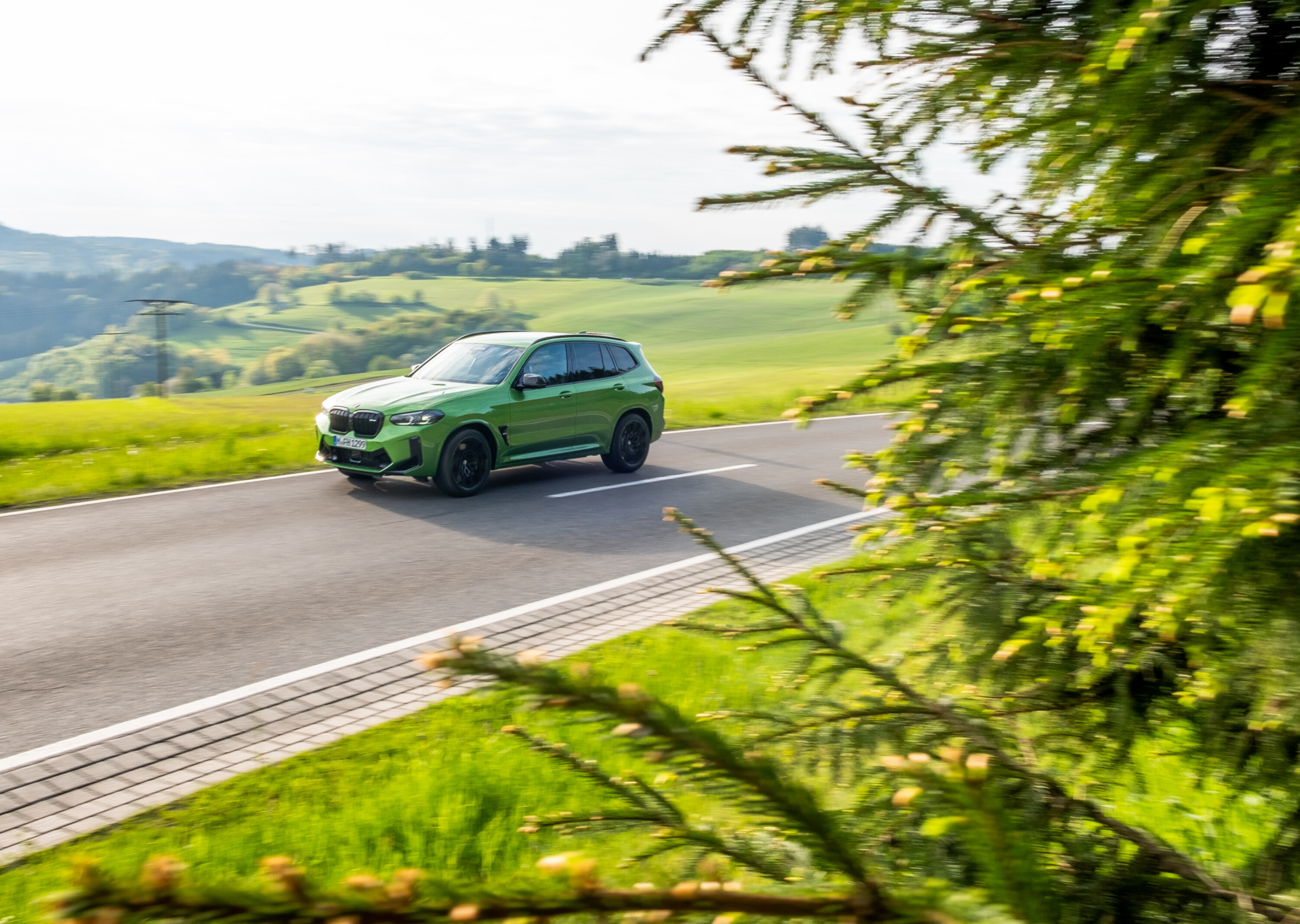
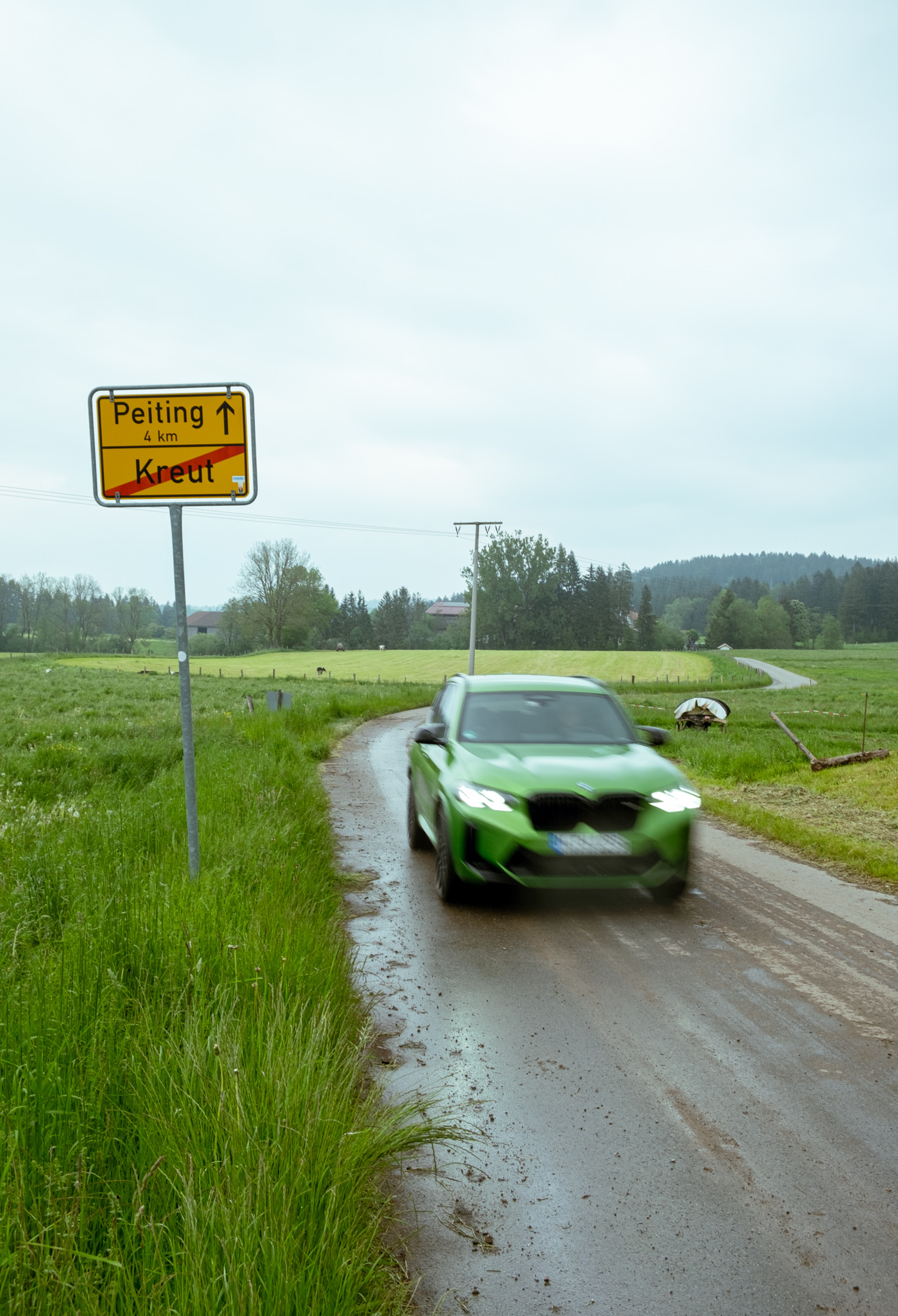
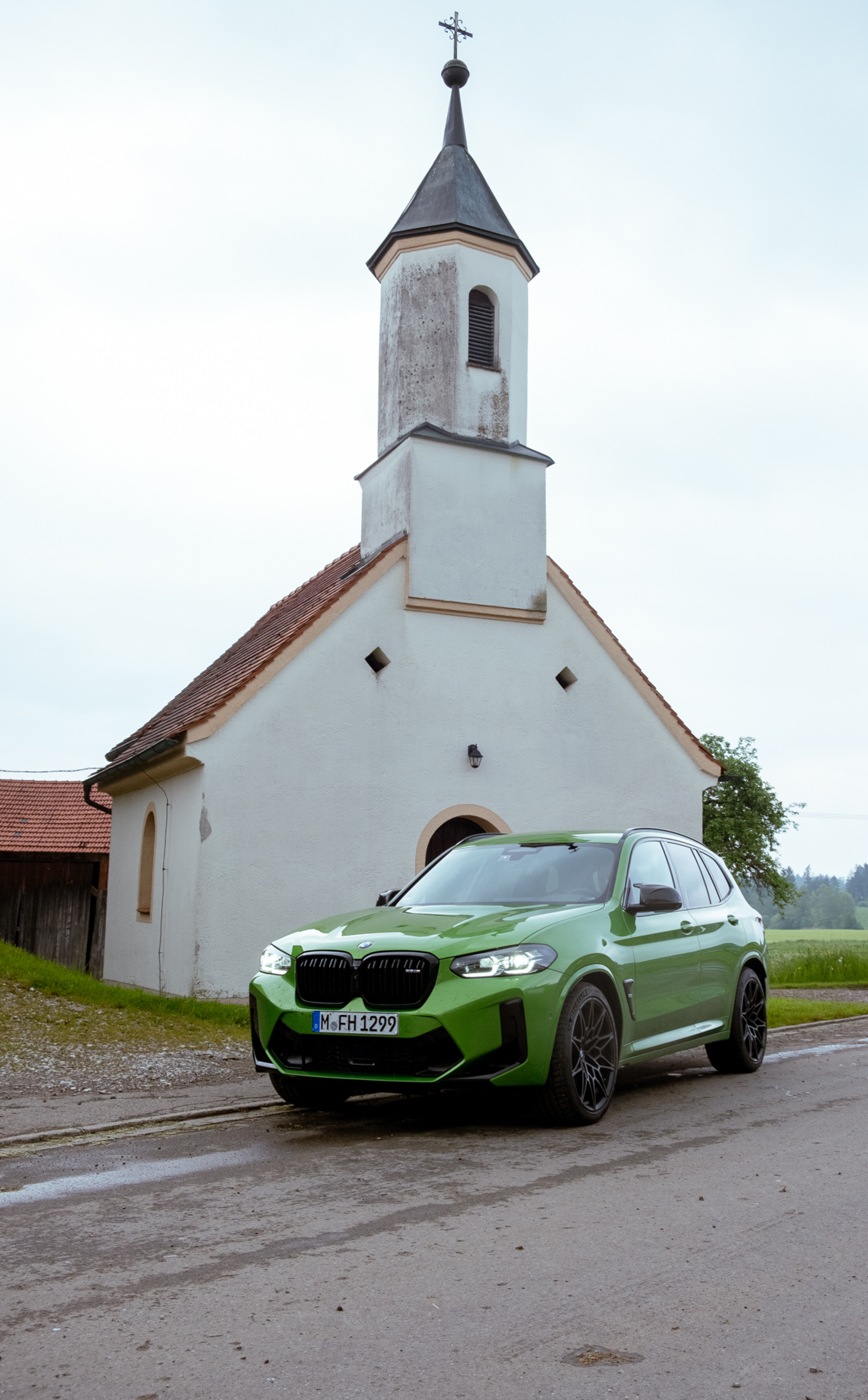
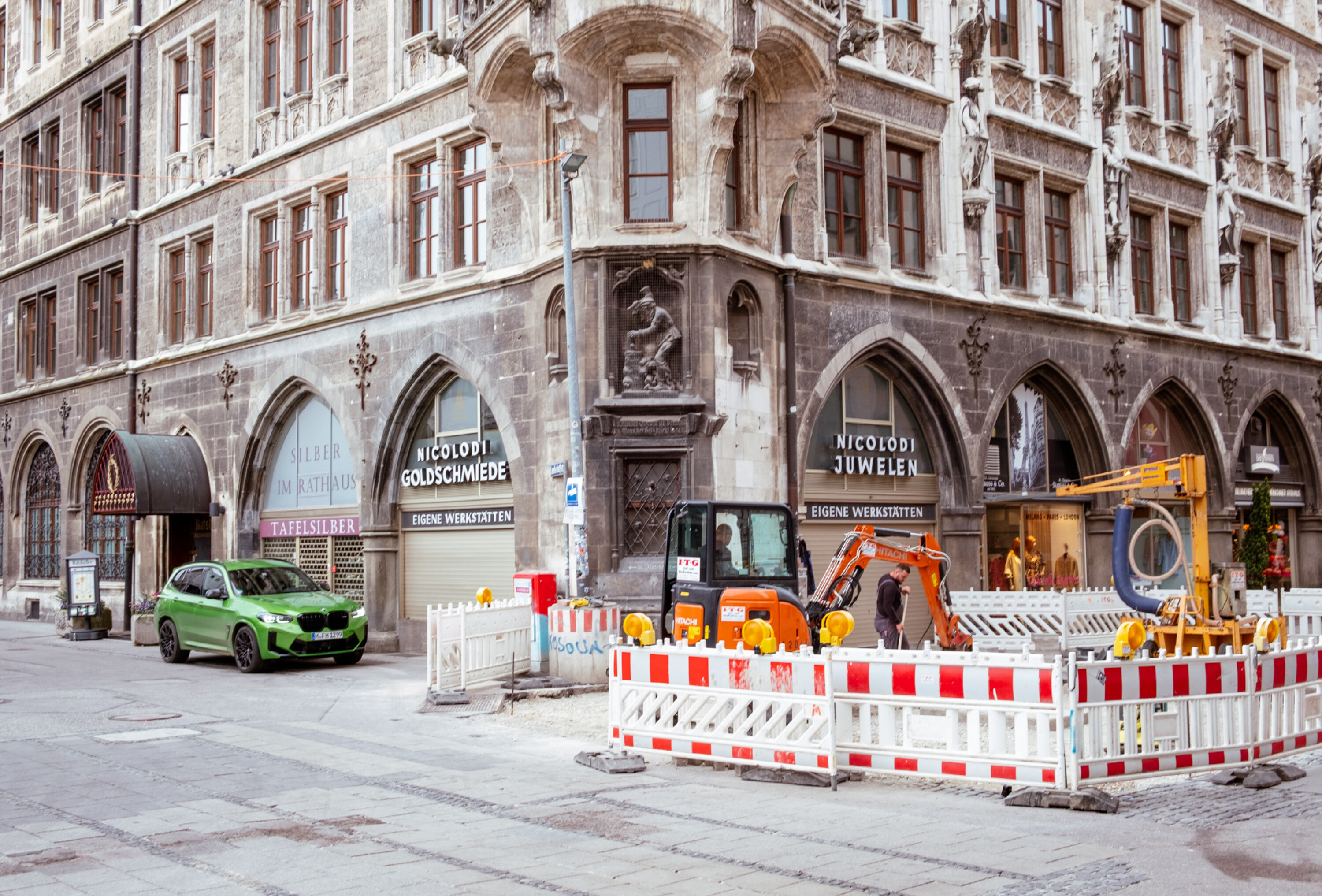
There were lots of things to look at, a host of new M3 Tourings in various lurid hues did their best to distract us but there wasn’t much outshining ‘MFH1299’ – our Java green X3 M Competition.
It’s time to start making up time – something the 3.0-litre twin-turbocharged ‘S58’ straight-six producing 385kW (at 6250rpm) and 650Nm (2750-5500rpm) was only happy to oblige. I’ll admit to being sceptical about the whole idea of an X3 M. At 2085kg, it’s 95kg heavier than an M3 Touring, so surely its responses and specialness are blunted?
Having not driven one yet, I’d also heard rumours about uncompromising ride quality.
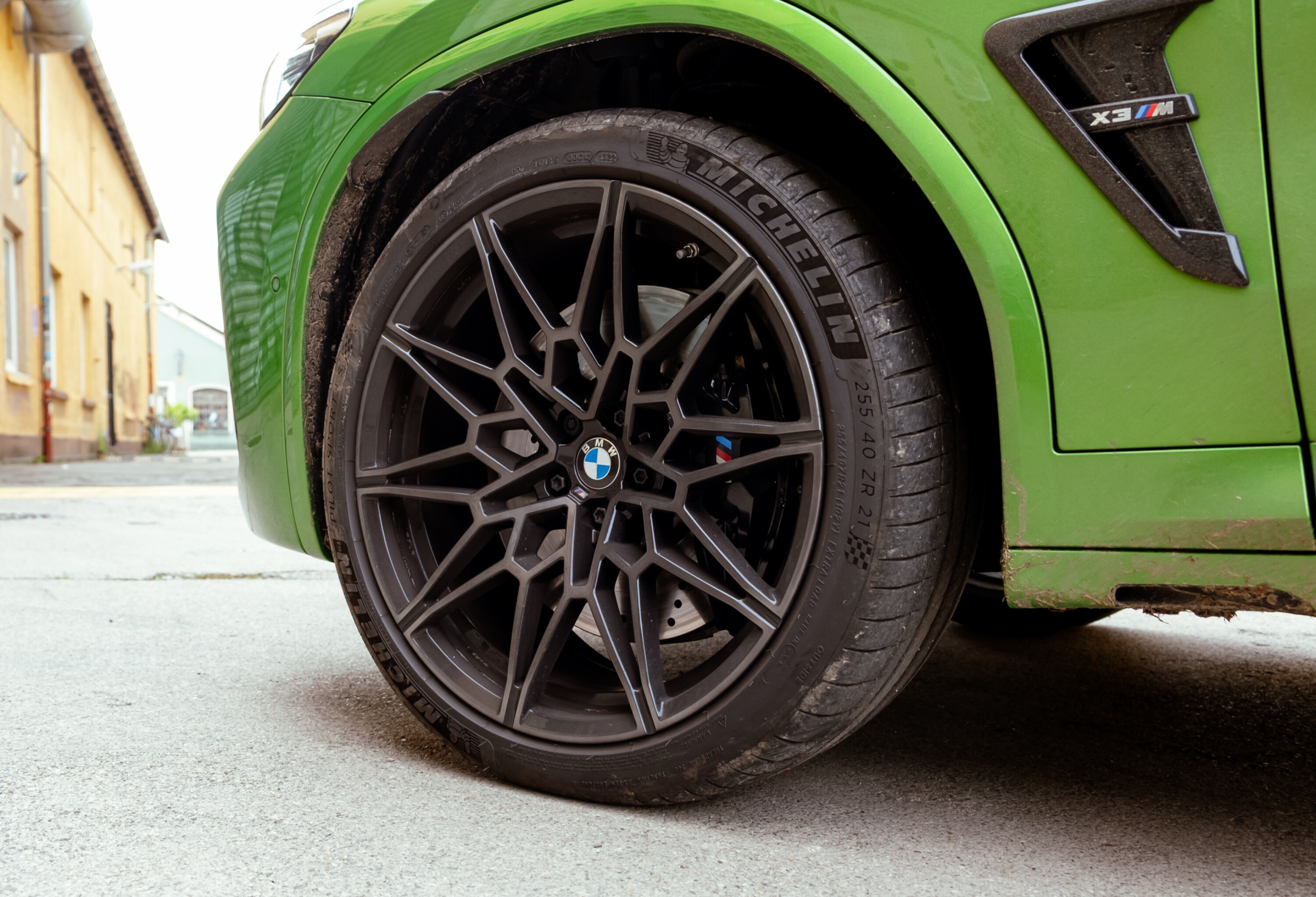
And the rumours aren’t wrong; even on Germany’s billiard-table smooth asphalt ‘Comfort’ (a misnomer) is the only usable mode for the three-stage adaptive dampers as the steel springs and 21-inch ‘892M’ alloy wheels transmit every micro-crack and fissure into the cabin.
The X3 M Competition is also massive in a Euro context. At 4716mm long and 1897mm wide it’s firmly mid-size back home but ‘The Green Machine’ dwarves the Bavarian capital’s 12th Century streets.
All is good when leaving the city, though. We stick to the rather fiercely enforced speed limits (there are lots of sneaky speed cameras around) and the broad X3 feels more comfortable on speed-restricted three-lane Autobahn.
2
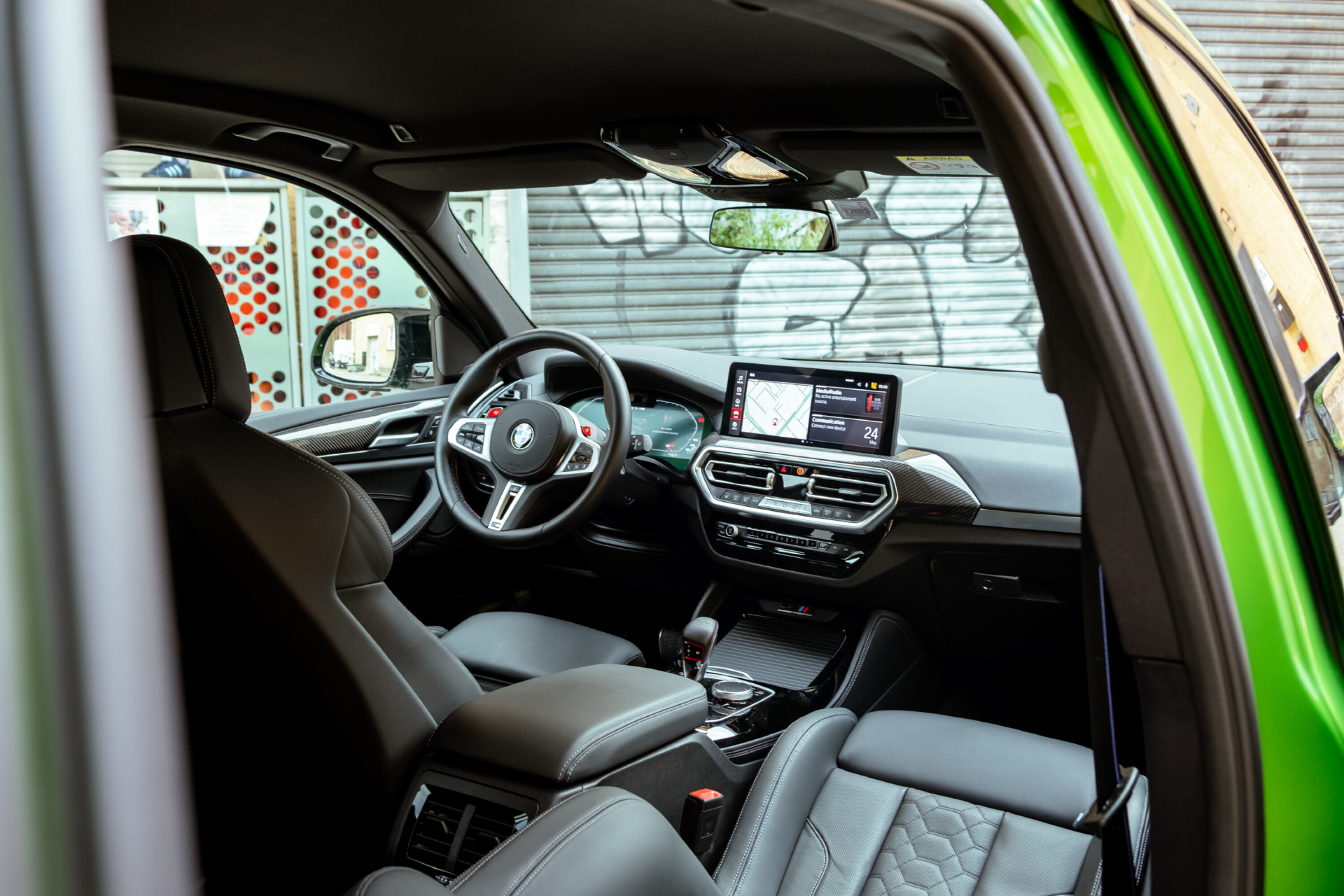
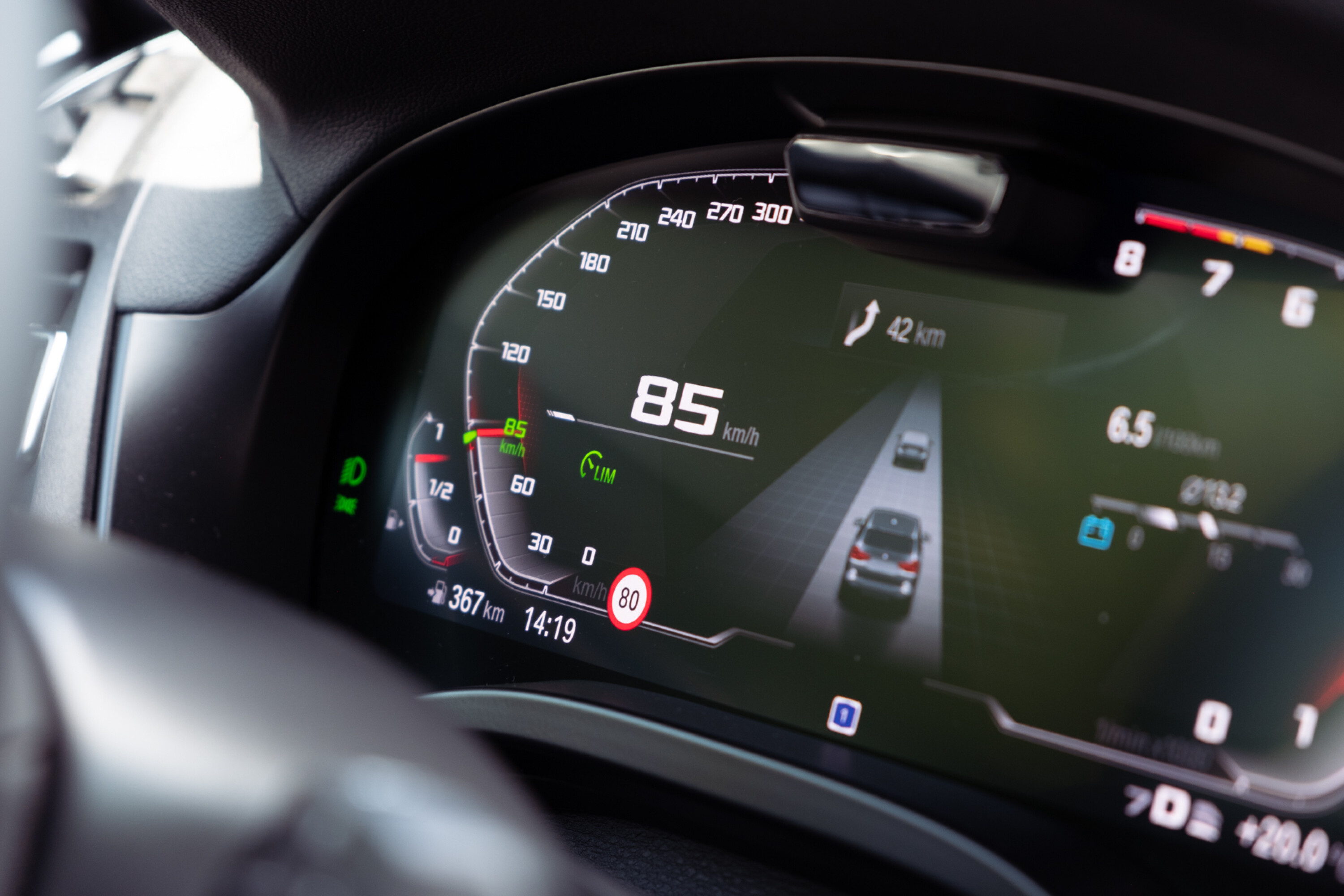
Unceremoniously, the X3 M Competition’s speed sign recognition changes from displaying ‘120’ in the 12.3-inch digital instruments to the tell-tale derestricted sign.
Without seeing the sign myself, I decided to hold steady… until I spot an Audi RSQ8 bearing down on us. It’s time to go.
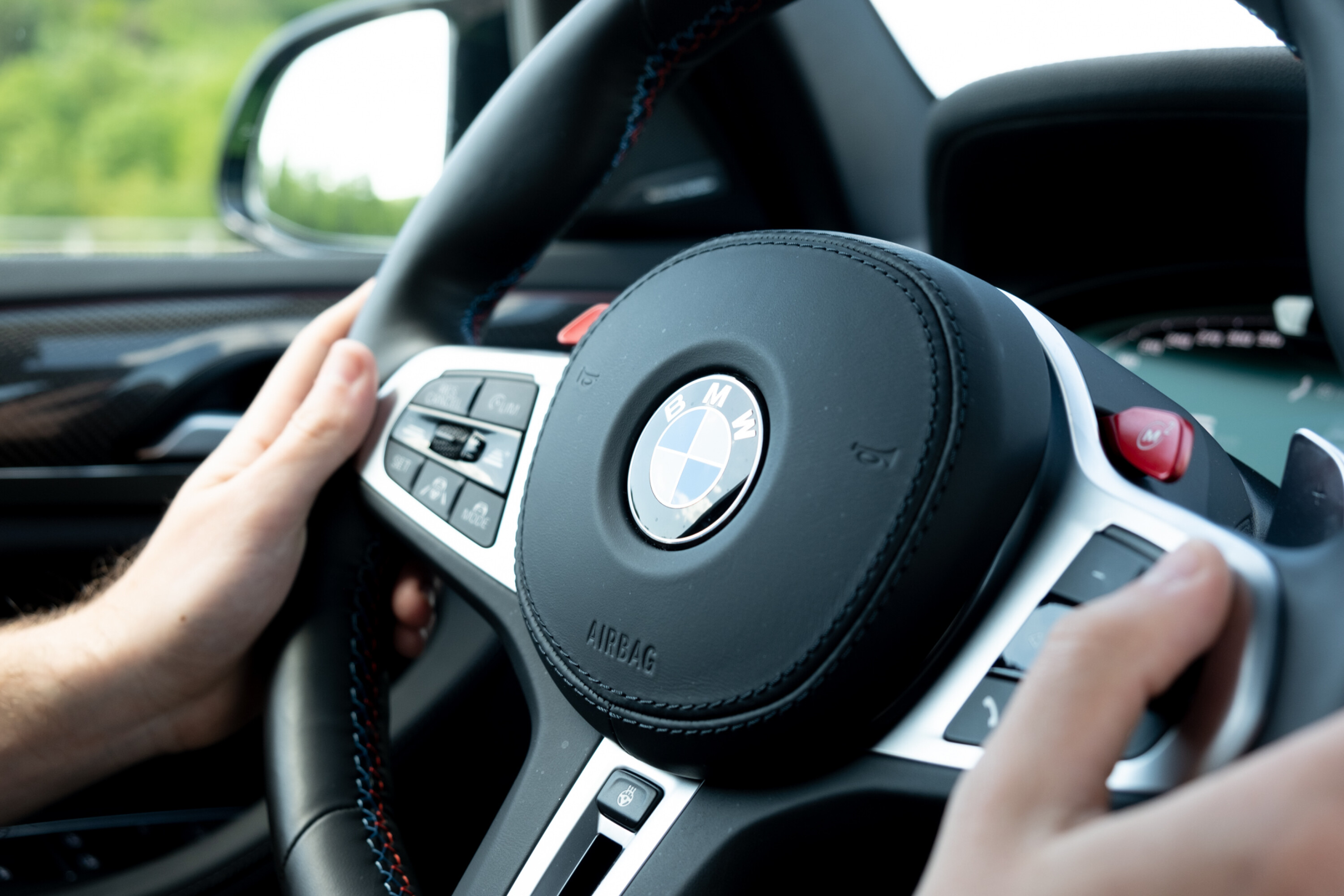
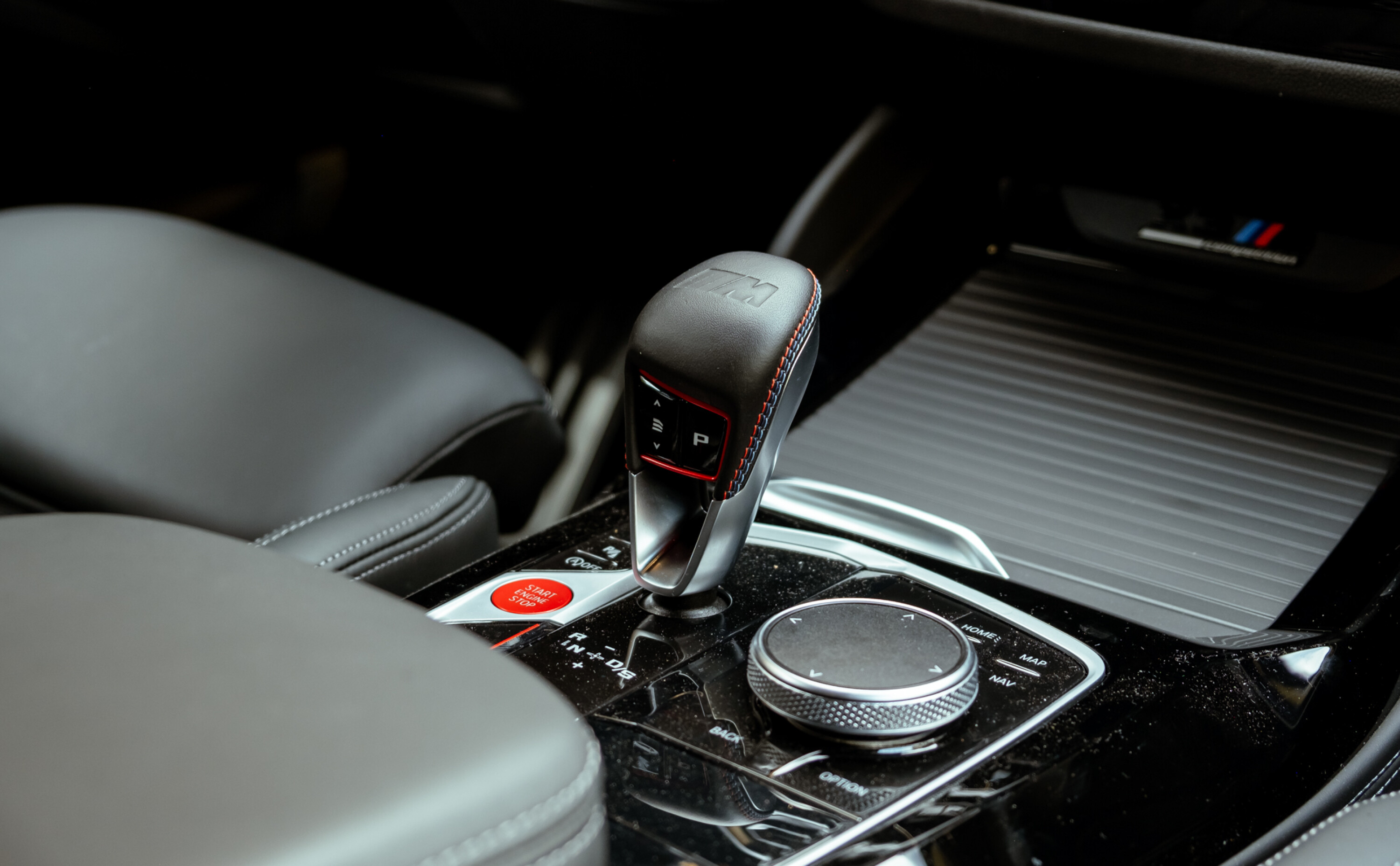
Locking in my customised ‘M1’ mode using the big red paddles on the wheel (engine, eight-speed auto and exhaust sound in maximum attack with dampers relaxed back to Comfort), nailing the throttle kicks the eight-speed auto back down to third, and as the turbo spools the X3 M squats on its 265/40R21 Michelin Pilot Sport 4S rubber as it sends the speedo effortlessly to 220km/h.
1
That’s a blast. But it’s barely a teaser of what’s to come over the day’s 600km.
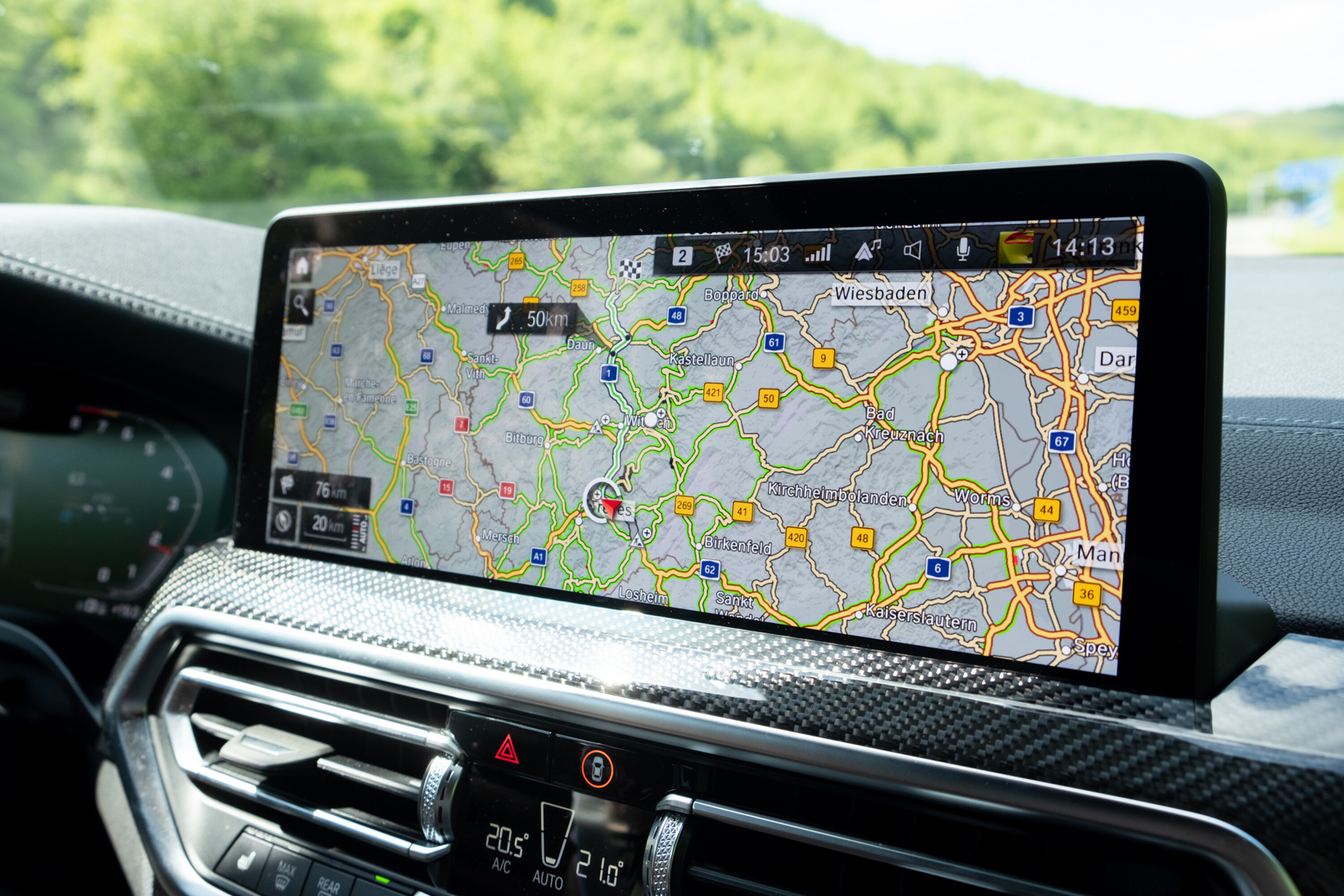
BMW’s live-traffic navigation system initially says it’ll take us about seven hours on our less-than-direct route via Stuttgart, Karlsruhe, the Hockenheimring, and ‘Autobahn 1’ on the edge of France and Luxembourg. Total moving time ended up being about five hours.
Autobahn 1 provided the X3 M with a chance to stretch its legs for the first time and revealed what exactly the Sport damper setting is for.
1
Above 240km/h – not a typical testing speed, I know – Comfort’s relaxed rebound control means the X3 M’s body goes light and wanders.
Sport mode ties it down immediately and, at this speed, low-frequency bumps aren’t a thing, the layer of palm sweat (and the X3 M’s thick wheel rim) helps cushion them.
It also reveals why the X3 M’s brakes felt warped around town – as a base model French-registered Citroen C3 pulls out when we’re travelling at over 220km/h, those four-piston front calipers clamp down on the steel ventilated and cross-drilled rotors with real conviction.
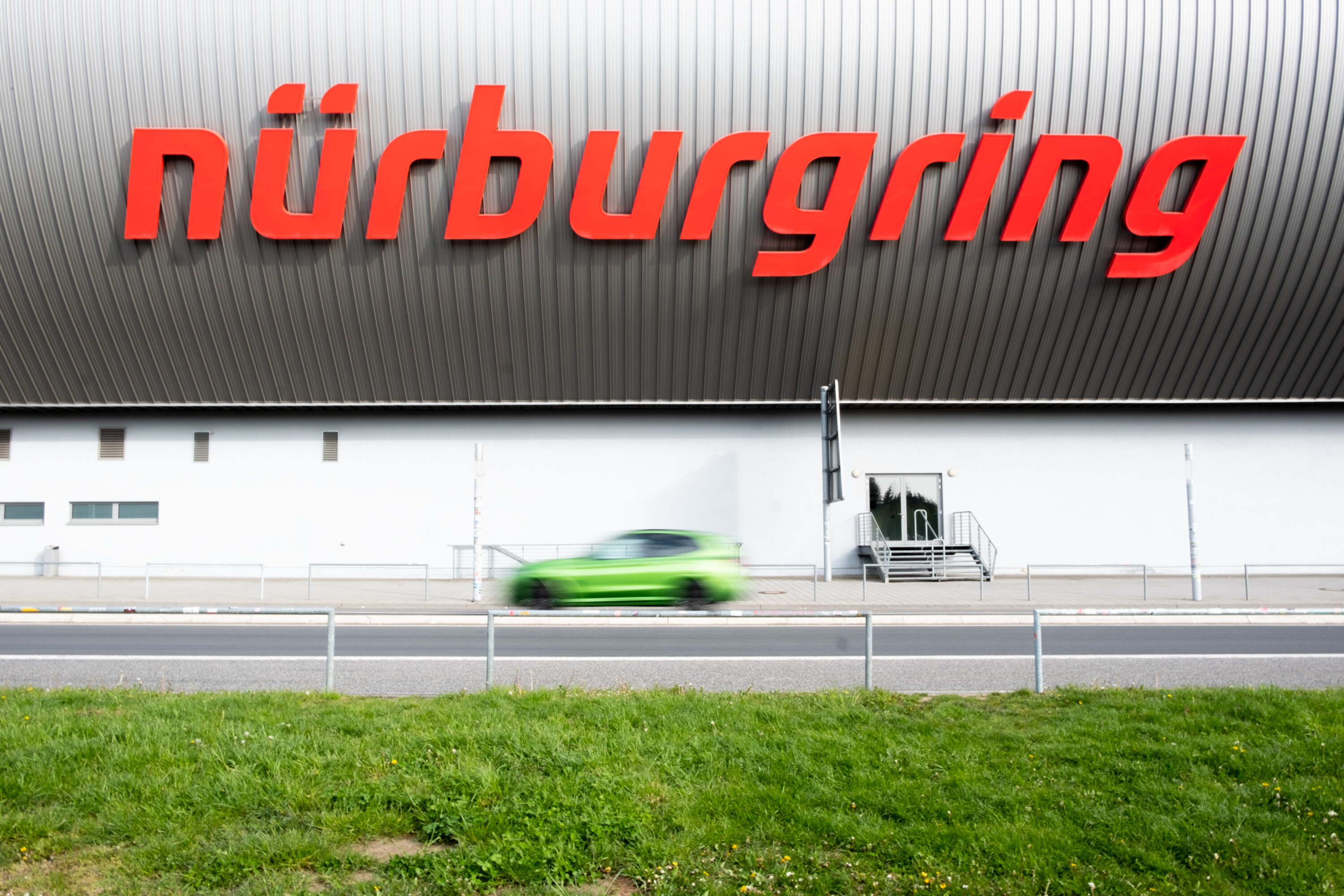
Arriving at the Nordschleife brings its own set of challenges; firstly finding a spot to park the X3 M to watch Friday’s qualifying. The traffic jams are epic, with stripped-out and caged BMW E36 3 Series and Porsche 911 GT3s making up most of the cars around us.
3
Get on the gas and the xDrive system happily sends power rearwards to help with a little over-rotation on exit
If, in the motorsports world, Formula 1 is equivalent to the FIFA World Cup then the Nurburgring 24 Hours is like the Ashes.
Endurance racers like Kevin Estre and Adam Christodoulou are top-flight athletes, make no mistake, but they’re humble and approachable with no Hamilton-esque entourages separating fans from the cars and drivers in the pitlane.
It’s at this point I check my emails to confirm that I’ve booked accommodation on the right dates… I haven’t. Bugger. It’s not a cheap place to stay on race weekend, and there are no rooms available anywhere. Double bugger. What are we going to do?
2
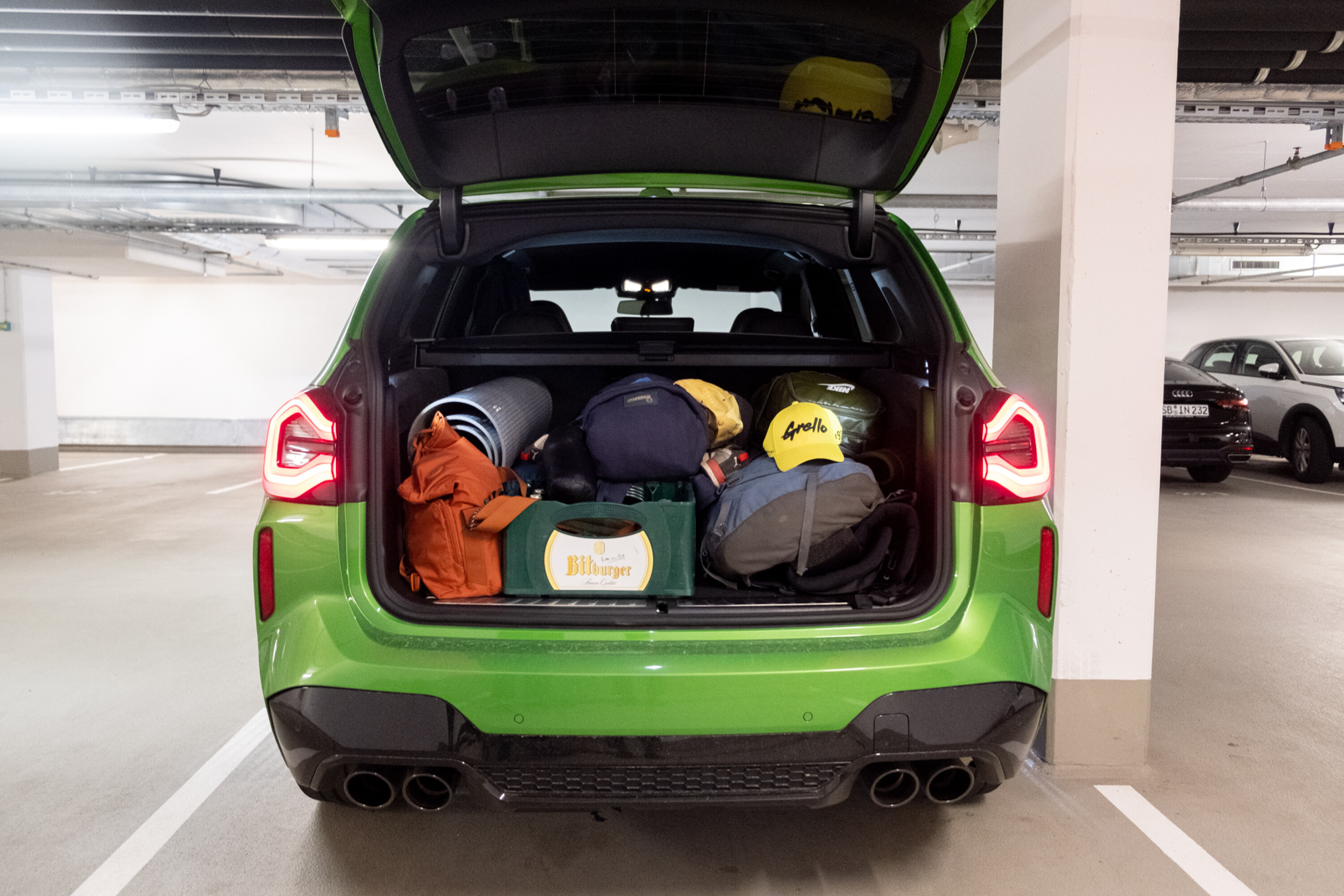
Standing 188cm tall, sleeping in less-than-ideal locations is something I try and avoid, but an exploratory fold of the X3’s rear bench increases boot space from 550L to 1600L, which is just about enough space to snooze.
An hour roundtrip to the local Decathlon later, we have €10 foam ‘mattresses’ and €20 sleeping bags for the back of our $178,000 track-focused SUV.
We head down to Breidschied to enjoy the evening qualifying (and some Bitburger stubbies). The spectacle of the GT3 and GT4 cars streaking down the hill to overtake a race-prepped Dacia Logan and Opel Manta is one you don’t get anywhere else.
1
Nor is the excitement when the cars finish up for the night and the fans descend on the ’Ring, dancing to hardstyle and rapping German hip hop lyrics (not as export-friendly as German sausages, beer, or cars) as they leave their marks with spray paint.
The atmosphere is hectic and charged as Sunday’s race start approaches, with the first showing of Ferrari’s 296 GTB race car, and fairly fresh rivals such as Porsche’s mid-ship 992 and BMW’s brawny M4 GT3 disappearing off the GP track for the warm-up lap.
Watching the competitors barrel into the first hairpin corner, you wouldn’t guess it’s a 24-hour race, the fan favourite 911 GT3 ‘Grello’ with Estre at the wheel dive-bombs and shoves rivals out of the way as he desperately scrambles through the pack to contest the lead.
2
As the drivers settle into a rhythm the atmosphere relaxes, a good thing as we attempt to find parking spots around the circuit big enough for the X3 M.
Stopping at Quiddelbach and Döttinger Hohe along the way, we hear rumours and then see a replay proving Kevin’s Grello met its maker during an optimistic backmarker overtake – the ’Ring takes no prisoners.
As we and the X3 M make our way back to Breidscheid, the middle section of the race moves in and darkness falls over the track. Watching LED beams scythe through the night-covered Eiffel Mountains is mesmerisingly beautiful, a borderline ceremonial spectacle.
1
As the next day rolls in, it’s time to leave the Nurburgring. After two remarkably comfortable nights in its boot, the X3 M is starting to really endear itself to us.
The S58’s feline growl sends buzzes and vibrations into the cabin at low speeds in a way only a motorsport-derived engine can. In fact, this block forms the basis of the ‘P58’ straight-six installed in the ROWE racing M4 that was piloted to second place by Dries Vanthoor, just behind the Frikadeli racing 296 GT3.
3
As we leave, nearly every Nurburgring spectator’s tired eyes are tracking the X3 M. Seriously, even with more 911 GT3s and Ferraris than you’ve ever seen in one spot, the Java Green Bimmer stands its ground. The gawking continues on the cruise toward Stuttgart.
Seat heating on its most gentle setting soothing our sore backs (from sleeping in the boot), the X3’s pews provide immense comfort – supportive for both lateral loads and the lower back, these chairs make the busy ride almost bearable.
When you don’t feel like listening to the engine, choose whatever Australian artist you want to listen to via wireless Apple CarPlay (or Android Auto) to keep the homesickness at bay, and sit back as the 16-speaker Harman Kardon surround-sound audio wraps the cabin.
3
Our only complaint is that the head-up display becomes all but invisible from behind Aussie-spec polarised sunnies but otherwise, the X3 M was a surprise treat on the ‘Bahn blast back to the home of Mercedes-Benz and Porsche.
Two days in Stuttgart and you notice that the prevalence of Mercedes and Porsche has something to do with the dull colour choices. The Java Green Beast again stood right out within the German rainbow.
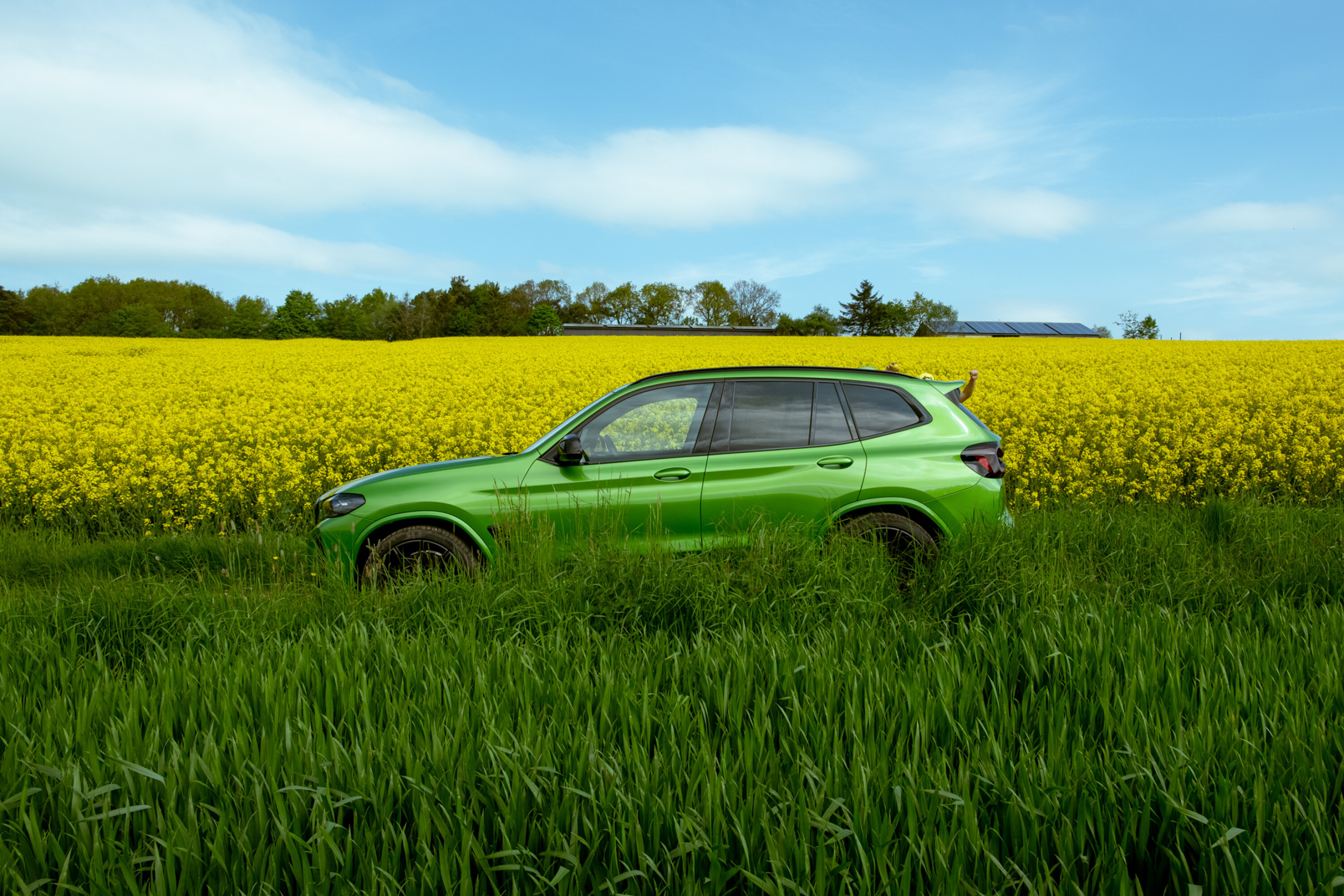
Leaving town on the way to Munich after a marathon day of car museums, the European summer left us plenty of sunlight for exploration. We headed roughly toward the Austrian border, detouring around the inland seas and foothills of southern Germany to find some roads that weren’t Autobahn.
3
As fun as travelling at high speed in a straight line is, corners are better.
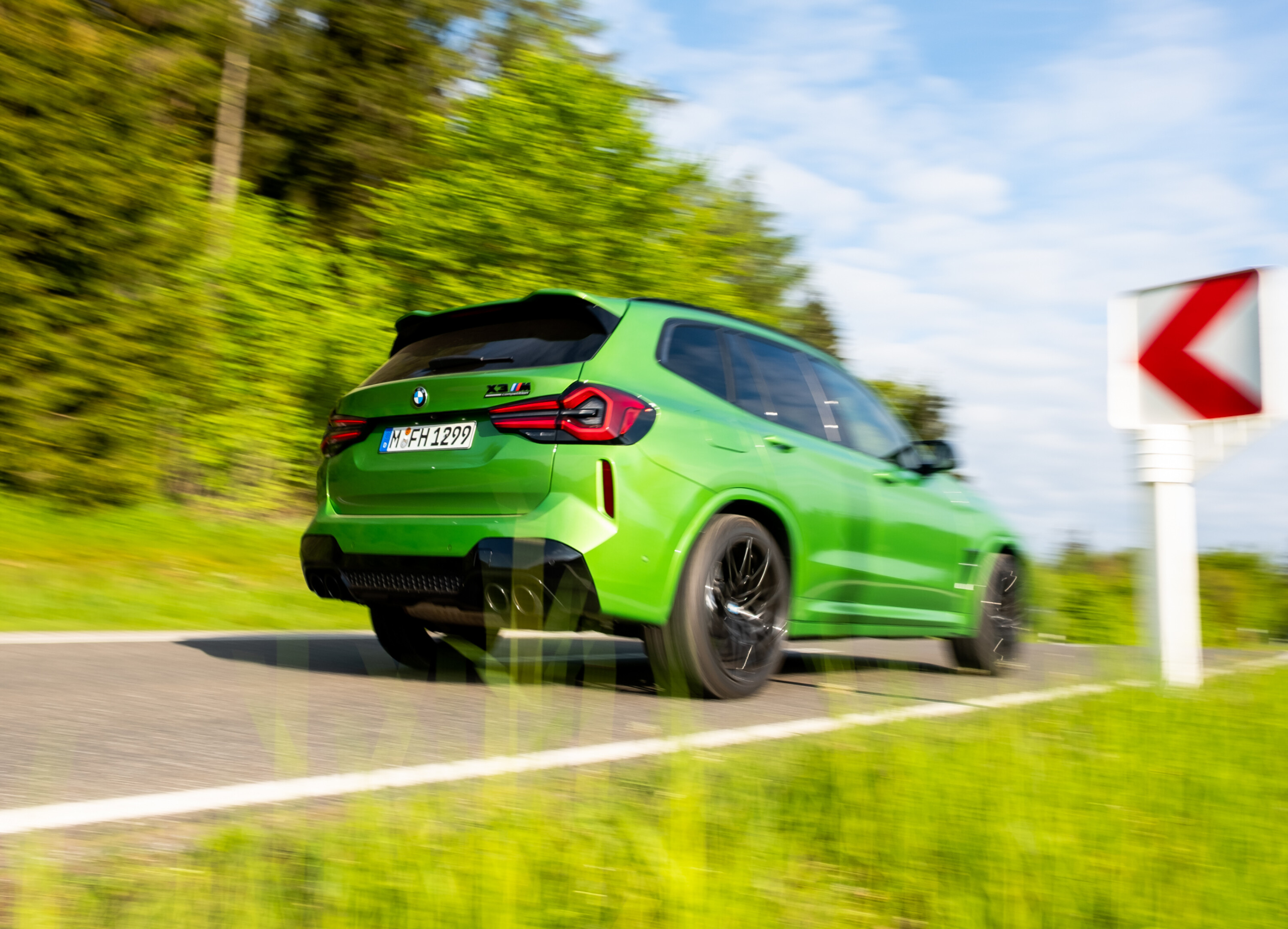
Back into M1 mode, the sheer agility of the X3 M Competition is astounding. It wrenches those 255mm-wide front Michelins into bends, you can almost feel the tarmac buckling under the strain as its rear axle follows faithfully around.
Get on the gas and the xDrive system happily sends power rearwards to help with a little over-rotation on exit. Keep feeding in right pedal and, with the gearbox amped to its fastest of three settings, each of the eight ratios hits home with a theatrical thump. And it never refuses downshifts under braking.
2
Problem is, you feel like a bit of a dick. The X3 M takes up a lot of road, it’s loud, and in any colour, people are going to notice you.
The accurate steering, too, is devoid of feel. That thick rim robs any feedback that might’ve made it through from the tyres. M has made an immensely capable SUV with the X3 M, but not a rewarding one on a twisting country road.
Luckily, we’re not really here for technical bends, and it’s back to the freeway. Except now it’s half-past nine on a Wednesday evening and the roads are completely empty.
We stop to fill the car up about 15km from our room for the night. Another 65 litres on our way to a 13.2L/100km average consumption figure – painful when a litre of 100 Octane costs $3.50.
1
On exit, it’d be rude not to experience the 3.8 seconds 0-100km/h sprint one more time.
Except that, because the four lanes are completely empty, this quickly turns into a 0-200km/h run, another sense check is passed and the boot is kept in.
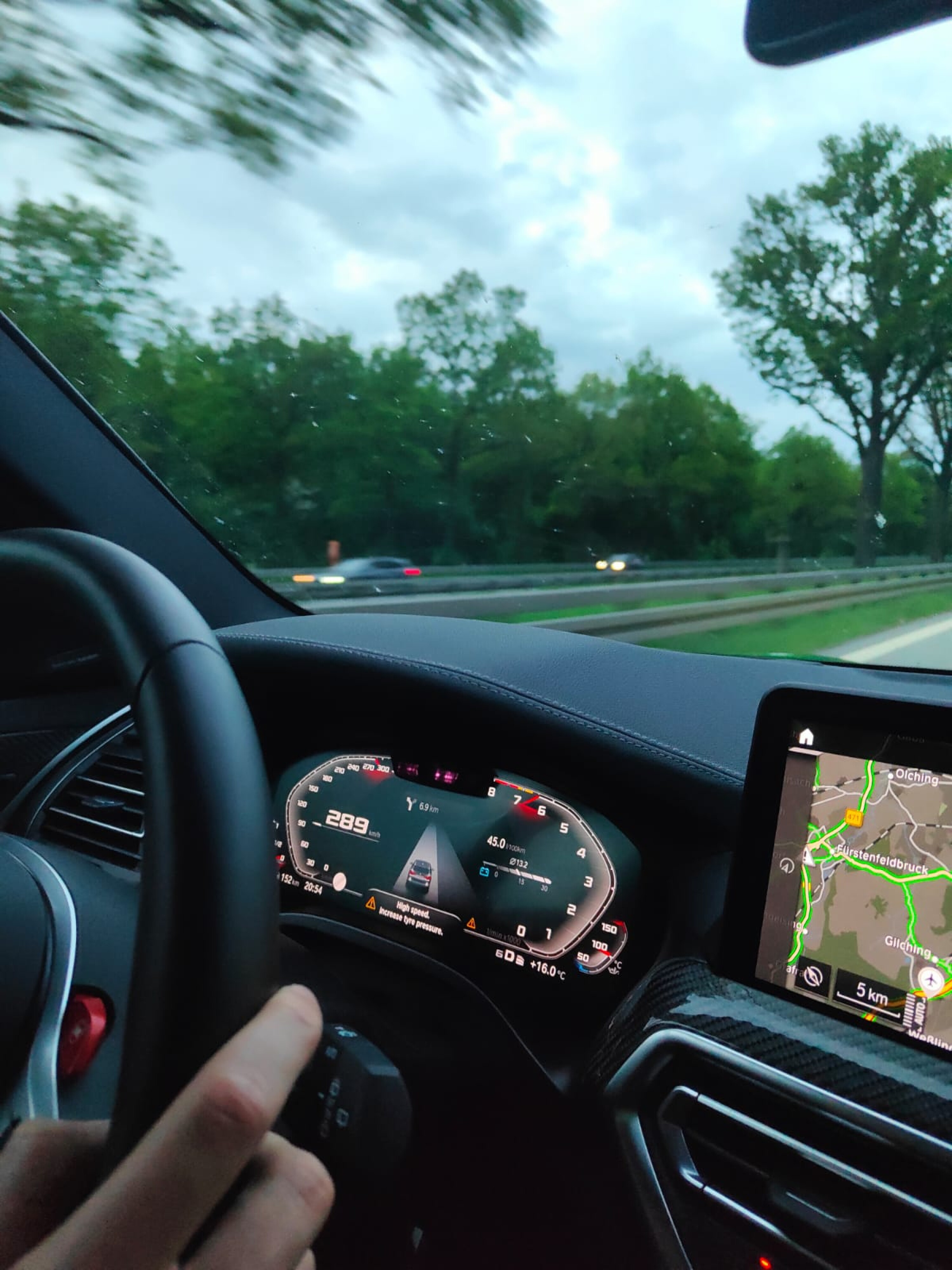
The S58 demolishes the dense evening air, combining it with 100 Octane at an alarming rate as it rushes towards V-Max. Shifting into seventh gear at about 250km/h, there’s a slight pause as the 0.38Cd figure becomes a little much for the engine to overcome, but then the X3 M continues its march – it’s definitely fitted with the optional Driver’s Pack – to the limited top speed of 289km/h (on the speedo, or 285km/h actual).
1
A fitting final send-off, and one that I won’t forget in a hurry. Around 1500km, 200L of Germany’s finest unleaded, and a week in its home country was enough to fall in love with ‘MFH1299’… this tends to happen on short European flings.
Would an M5 CS or M3 Touring have done the job better? Perhaps. But like any car that treats you to an experience like that – from Veyron to ‘Vauxhall Corsa or similar’ – a part of that X3 M will live with me for life.
And I’m glad, because this kind of vehicle, with its tingling and buzzing combustion engine, won’t be around forever.
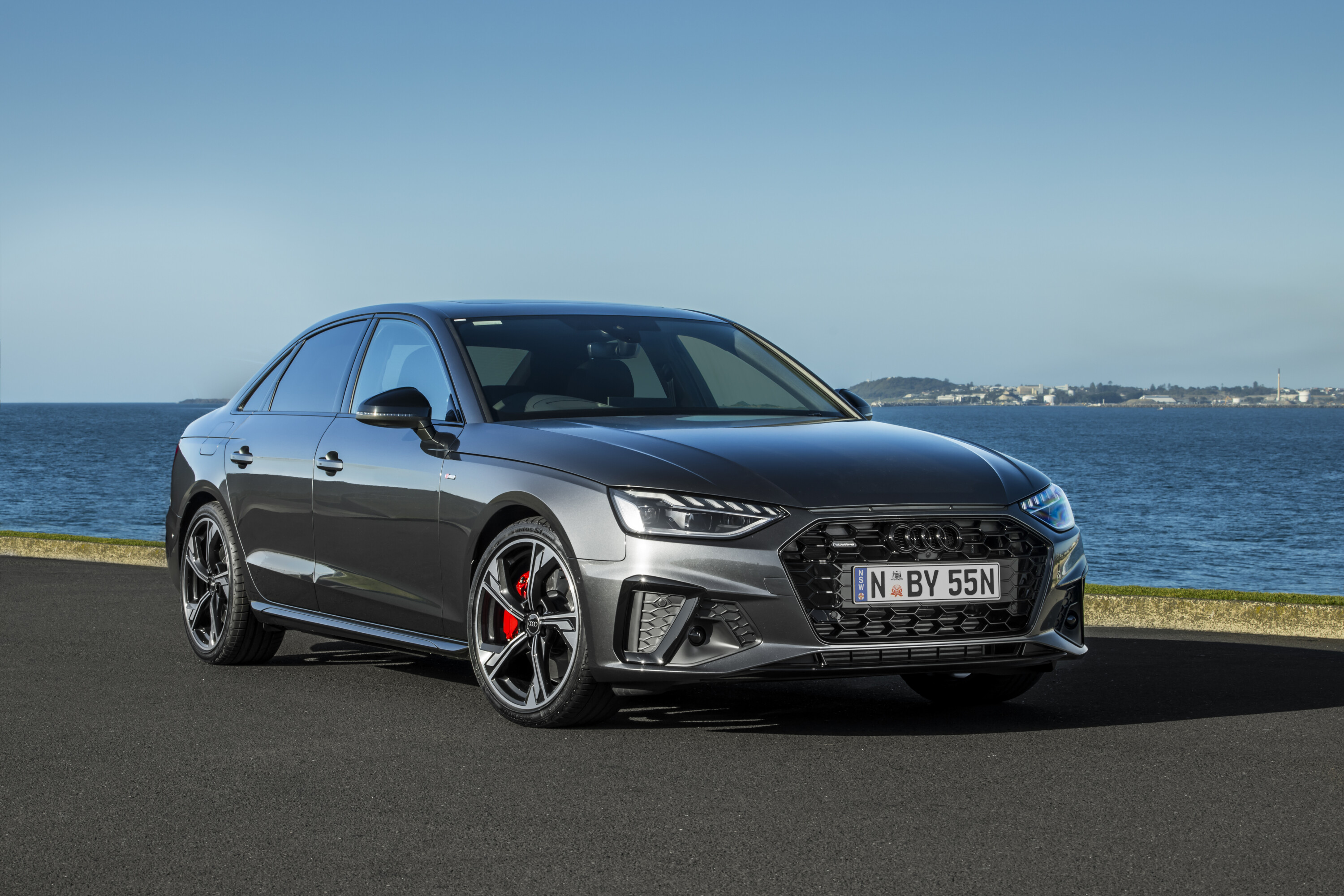
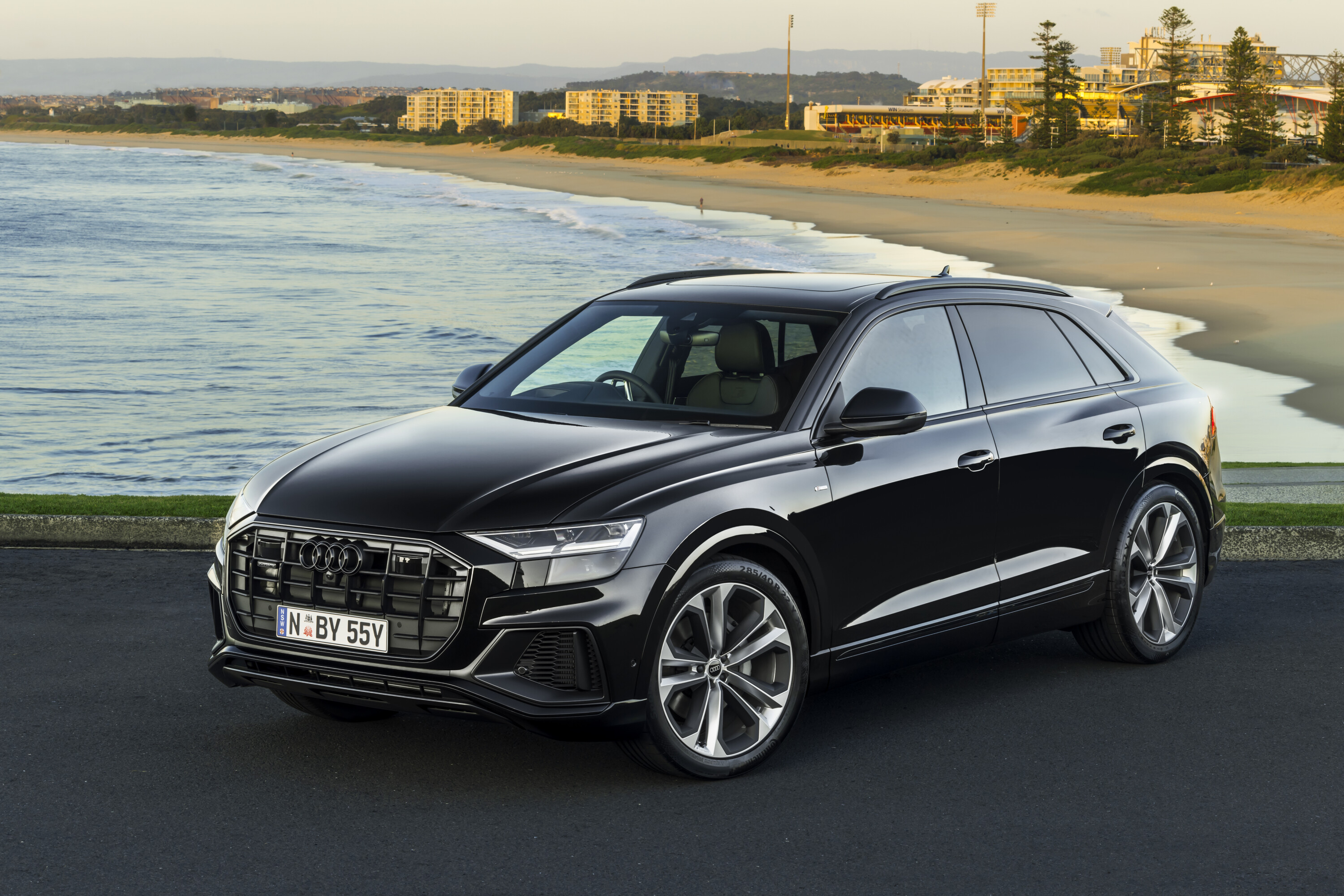
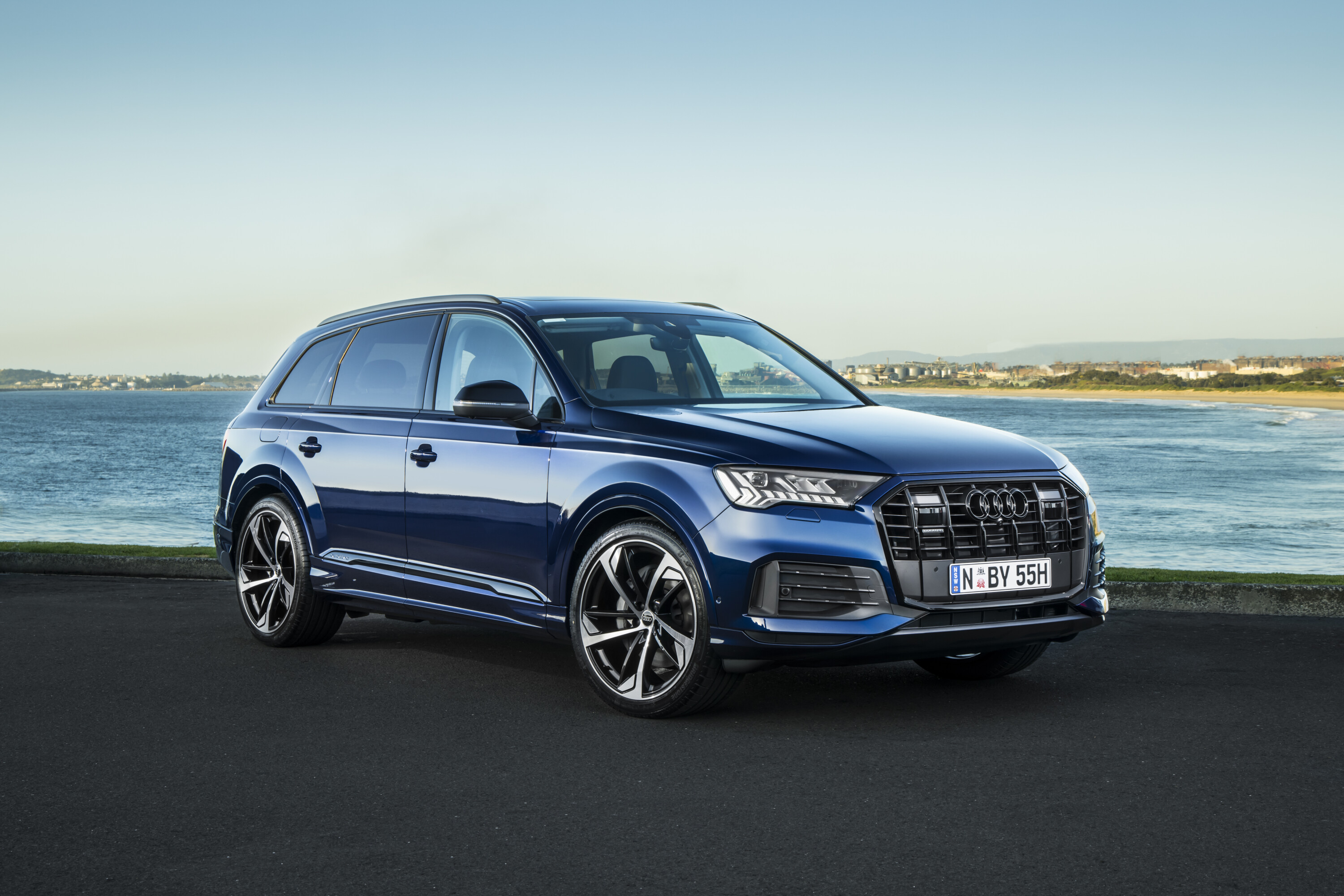
The 2023 Audi A4, A5, Q2, Q3, Q5, Q7 and Q8 are now available with blacked-out styling treatment in Australia.
Available for “some of the most popular Audi models”, the Dynamic Black range features darker metallic paint finishes, blacked-out exterior trim and alloy wheels, and added equipment.
Audi Australia said the Dynamic Black models are “arriving now”. It is unclear how many units will be produced for each vehicle.
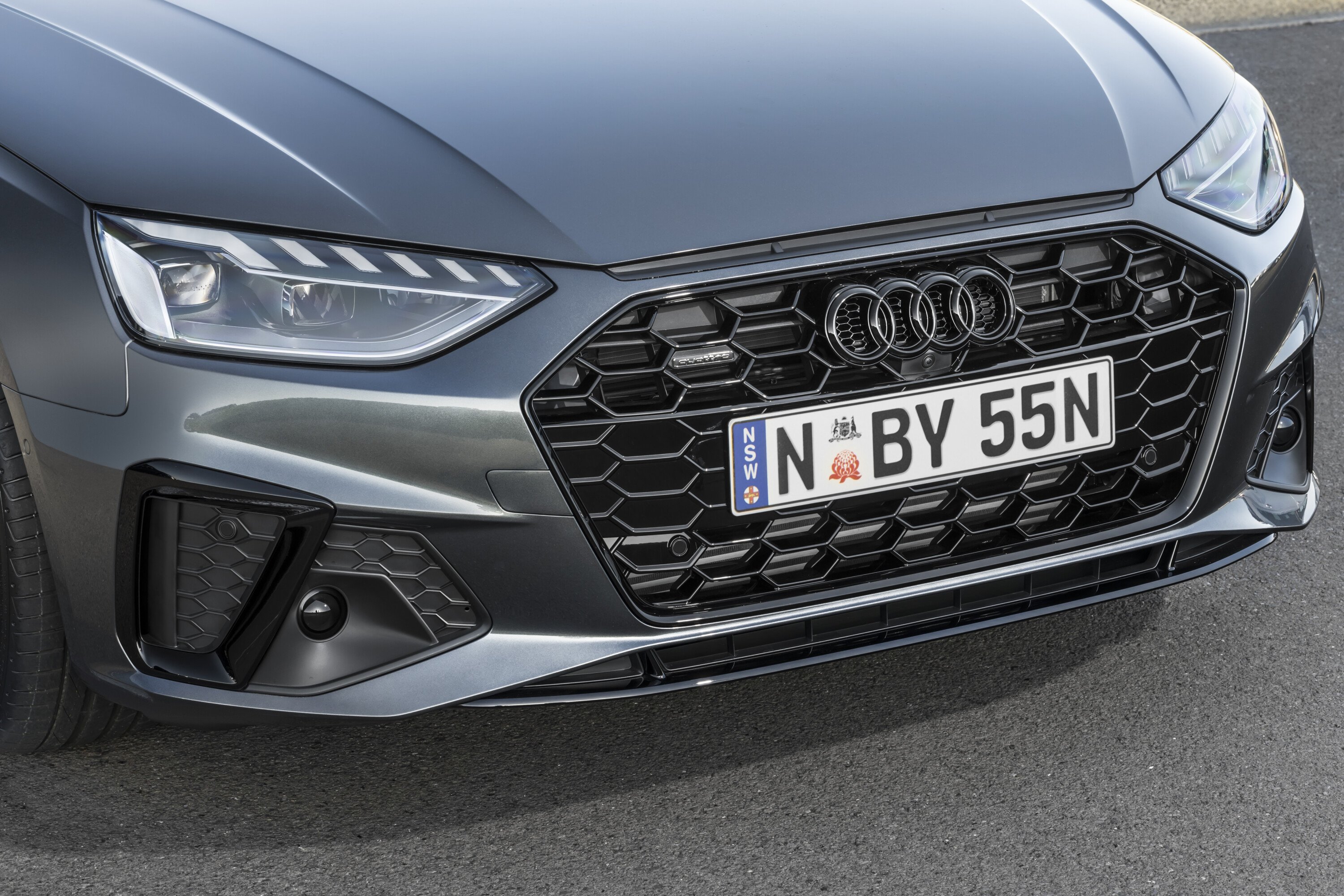
For the A4, the Dynamic Black variant is available in 35 TFSI form for the sedan, and 45 TFSI AWD S-line for the sedan and wagon, adding 19-inch Audi Sport alloy wheels and an ‘extended black exterior package’ with dark Audi badging and black roof rails for the wagon.
It also features red brake calipers, a colour ambient interior lighting package, and black headlining – plus the deletion of the engine designation badge, which applies to all Dynamic Black vehicles.
Also limited to the 45 TFSI AWD S-line trim, the A5 Dynamic Black features identical changes, plus larger 20-inch five-twin-spoke alloy wheels, rear privacy glass, fine Nappa leather upholstery, and massaging front seats.
A carbon package is available for the A4 sedan and A5, adding a carbon-look rear spoiler, side mirror caps, and Audi’s logo at the bottom of the rear doors.
The entry-level Audi Q2 35 TFSI Dynamic Black is available with two 19-inch alloy wheel options, both finished in black, and standard metallic paint with colour-matched body cladding.
2023 Audi Q3 Dynamic Black
Audi Q3 models – available in 35 TFSI in standard or Sportback forms – feature black roof rails, grey-finish 19-inch alloy wheels, rear privacy glass, heated and power-adjustable front seats with four-way lumbar support, colour ambient lighting, and aluminium inlays.
The mid-size Audi Q5 Dynamic Black is available in 35 TDI and 40 TDI diesel or 45 TFSI turbo-petrol form, with five-arm 20-inch matte black alloy wheels and colour ambient lighting.
The 40 TDI and 45 TFSI also add red brake calipers, a black interior theme with grey contrast stitching, and an extended upholstery package.
2023 Audi Q7 and Q8 Dynamic Black
The Audi Q7 45 TDI Dynamic Black adds 22-inch alloy wheels – the largest ever offered with this diesel powertrain in Australia – and black exterior trim, rear privacy glass and colour interior ambient lighting.
The same revisions apply to the Audi Q8 large SUV, with the Dynamic Black package available in 50 TDI or 55 TFSI S line form.
As a full licence holder in Australia, you’re allocated a maximum of 12-13 demerit points over a certain period of time, depending on the state. Exceeding this limit may result in a suspension of your licence.
You start with a clean slate of zero demerit points, and committing traffic offences such as speeding, using your phone while driving, or running a red light leads to the accumulation of these points.
Life’s never-ending list of admin can take so much time. Whether it’s renewing this or updating that, there’s always something that you need to check in on. But when it comes to knowing your current demerit points, or how many you have remaining, it’s definitely something you don’t want creeping up on you.
See how you can check your demerits points by state below.
Alternatively, you can call 1300 728 977 for an automated service that allows you to check your balance or head into any VicRoads branch with proof of identity.
New South Wales licence holders can check their accumulated demerit points via the MyServiceNSW website [↗] using their driver’s licence details.
A current 12-month trial [↗] is offering drivers the opportunity to “have a demerit point scrubbed from their licence record” for those who maintain a clean driving record for a year.
Check my demerit points in Tasmania
To verify the total demerit points you’ve accrued in Tassie, you’ll need to contact Service Tasmania [↗] at 1300 13 55 13.
Service Tasmania will only reflect the demerit points that have been officially recorded, and won’t include offences that are either unpaid or pending court hearings.
Logging onto the MVR website [↗] will require your NT licence details and your MCR customer ID, which can be found on your Driver Licence or Vehicle Registration Renewal Notices.
Once submitted you’ll be able to see your point balance.
Using your licence number, expiry and date of birth, you can log into the Department of Transport website [↗] and check your demerit points.
To dispute an infringement you will need to reach out to the Management and Operations department of the Western Australia Police at (08) 9374 4555 rather than through the portal.
Check my demerit points in the ACT
In the ACT you’ll need to apply for your licence history [↗] via a search of records application and pay the current fee of $28.60. You can also call Access Canberra on 13 22 81.
The documentation along with your contact details for payment can be emailed to the Access Canberra office.
Kia has unveiled the all-new K3 light sedan in Mexico this week, but the bold and edgy Rio successor won’t come to Australia.
Snapshot
Sharp-looking K3 revealed
Modernised design, larger, more tech
Rio successor not for Oz
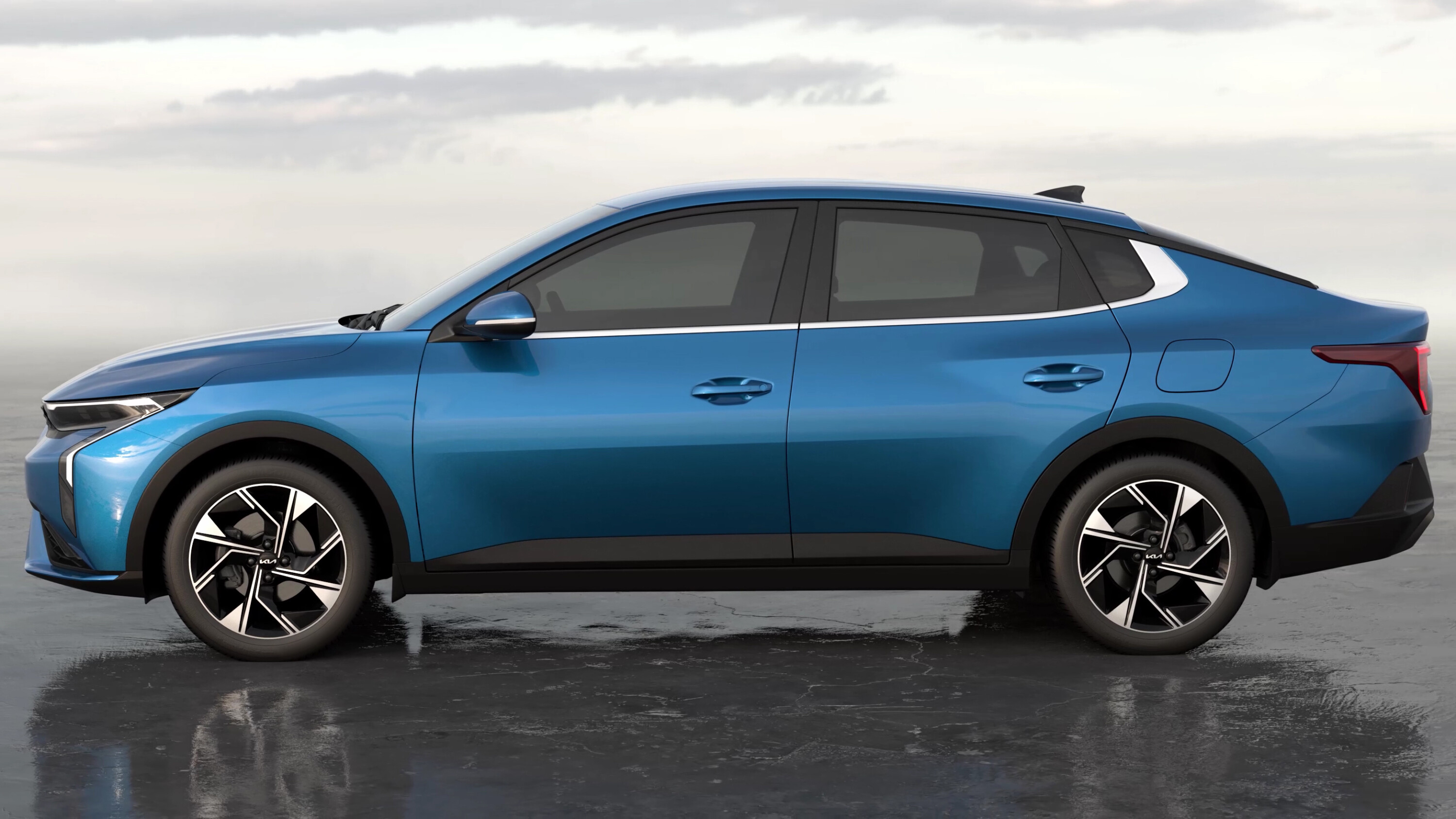
The fifth-generation Rio, now rebadged as ‘K3’ – a name still used for the larger Cerato in South Korea and China – features the company’s latest ‘Opposites United’ design theme reminiscent of the facelifted Picanto city car and Seltos small SUV, while retaining the traditional ‘tiger nose’ front grille.
Despite the liftback-style roofline, it has grown in size with a 2670mm wheelbase and 544-litre boot capacity with a traditional sedan door opening.
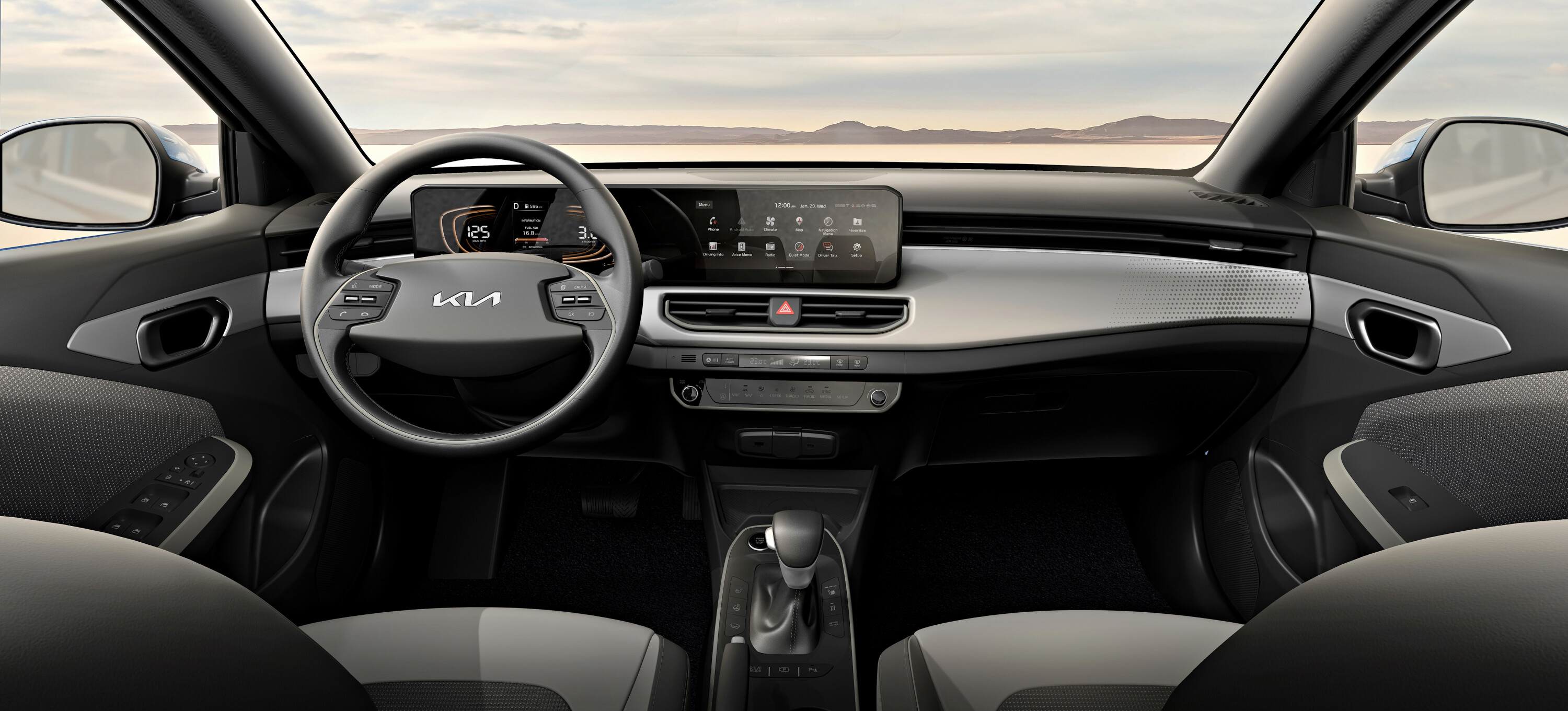
The interior has undergone a modern overhaul, featuring a combined 10.25-inch touchscreen and 4.2-inch driver’s instrument display, wireless Apple CarPlay and Android Auto capability, Qi wireless charging pad, and 64-colour adjustable ambient lighting.
1
The car also seems to introduce a simpler version of Kia’s dual-function, touch-sensitive climate control strip, and rear passengers benefit from air vents for the first time.
Furthermore, the K3 will offer safety assistance technologies, including blind-spot assist, rear cross-traffic assist, and front autonomous emergency braking – the former two not available on the outgoing Rio.
In Mexico, it’ll be offered with a 1.6-litre four-cylinder petrol engine making 90kW of power with either six-speed manual or automatic transmissions, while the top-spec GT-Line variant features a new 112kW 2.0-litre engine and is auto-only. A 1.4-litre powerplant will be available for export markets.
The new Kia K3 will be available in select markets from the fourth quarter of this year (October to December inclusive). It will be made at its Nuevo Leon, Mexico factory, which produced the outgoing Rio for the North American market.
6
Is the Kia Rio still available in Australia?
Wheels understands about 300 new examples remain in stock for the outgoing 2023 Kia Rio light hatch in Australia.
Kia has teased its next-generation Rio successor – but it won’t be coming to Australia.
Snapshot
Kia K3 sedan teased, reveal next week
New-gen Rio successor wonu2019t come to Oz
Supports K3/Cerato/Forte renaming rumour
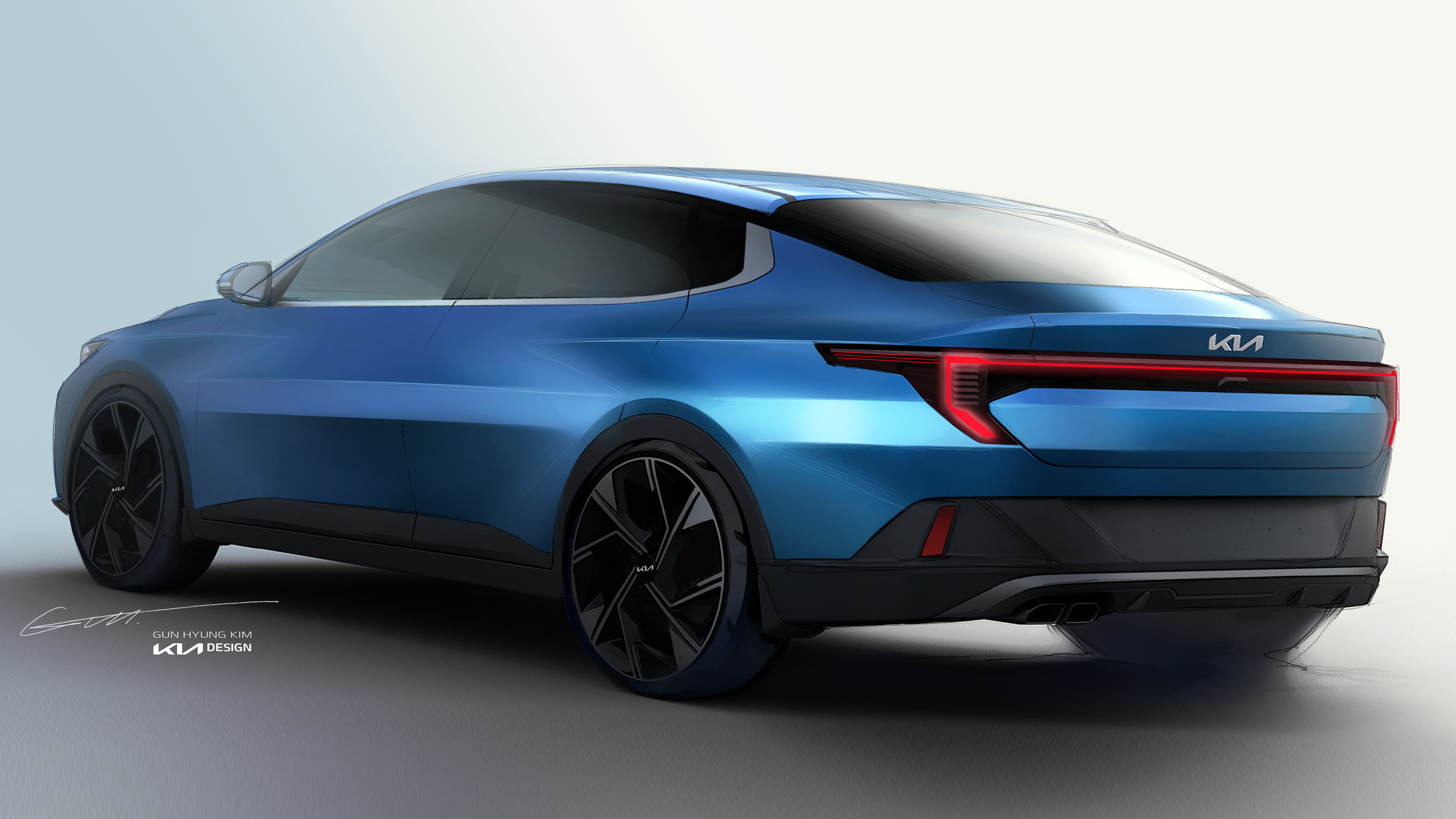
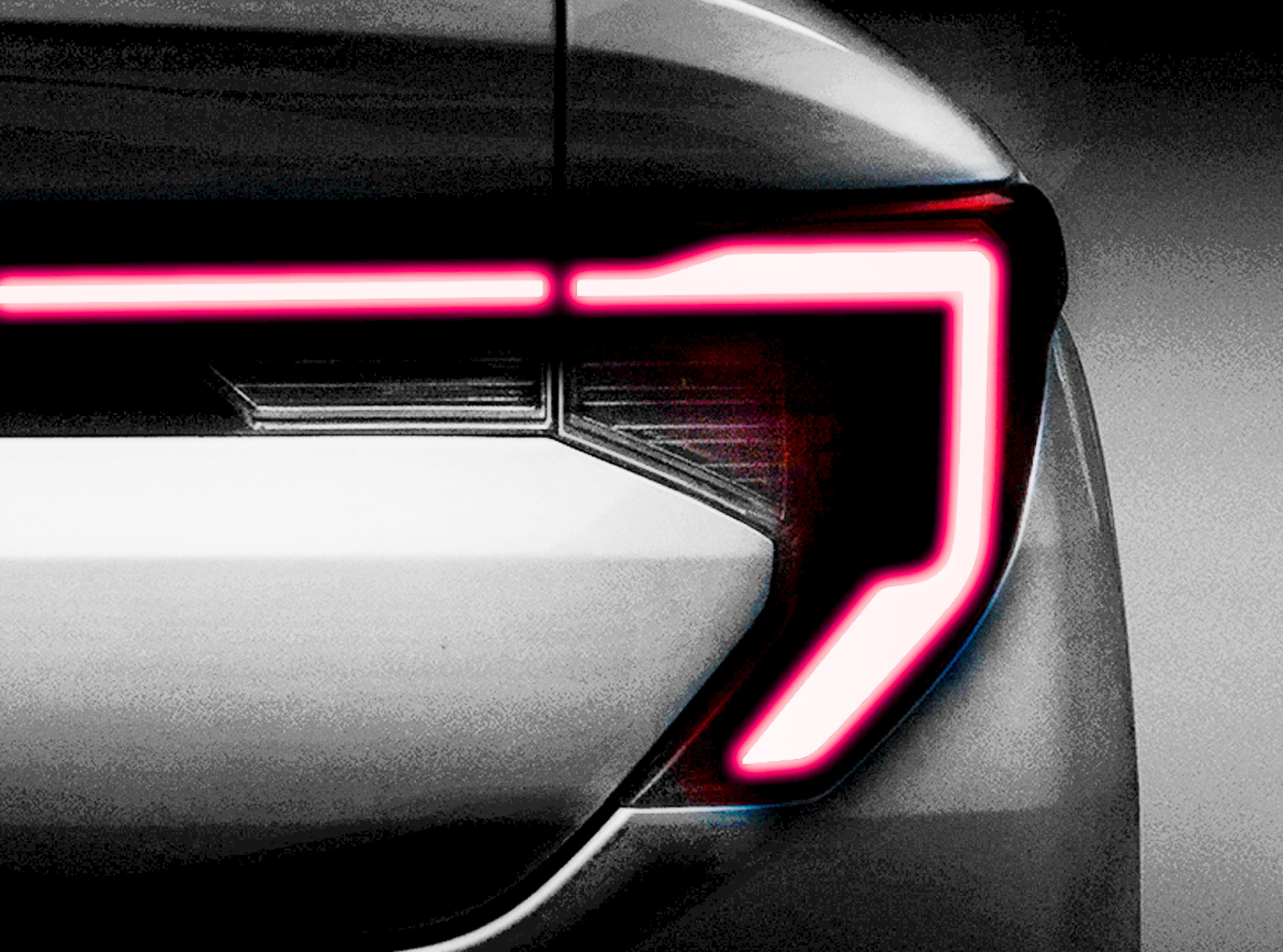
To be known as the K3, the typically shadowy image only depicts the small sedan’s full-width LED tail-lights, reminiscent of the facelifted Seltos small SUV and in line with Kia’s edgier design theme.
Turning up the exposure also reveals indicator and reverse bulbs in a separate unit – which appear to be incandescent as per the Seltos line-up.
2
Interestingly, the teaser states that it will be “redefining market segments and drawing attention from upper-segment buyers” – which could hint at a higher SUV-like ride height.
Spy shots from 숏카 Shorts Car [↗] suggest the sedan will feature a higher ground clearance akin to the Polestar 2 electric liftback, larger dimensions, and a sportier sloping roof similar to the Hyundai i30 Sedan.
It will debut in Mexico, where the Rio is currently built for the North American market, on August 9 at 12pm AEST.
Wheels understands the next-generation Rio will be called the K3 in North America, which is the current badge for the larger Cerato in South Korea.
Kia Australia confirmed to Wheels in February that the budget-friendly Kia Rio light hatch won’t live on locally since the next generation won’t be made in right-hand drive.
Fourteen years after Mitsubishi introduced the ASX, along comes another all-new affordable small SUV that will be built at the brand’s Krama Yudha Indonesia plant.
Snapshot
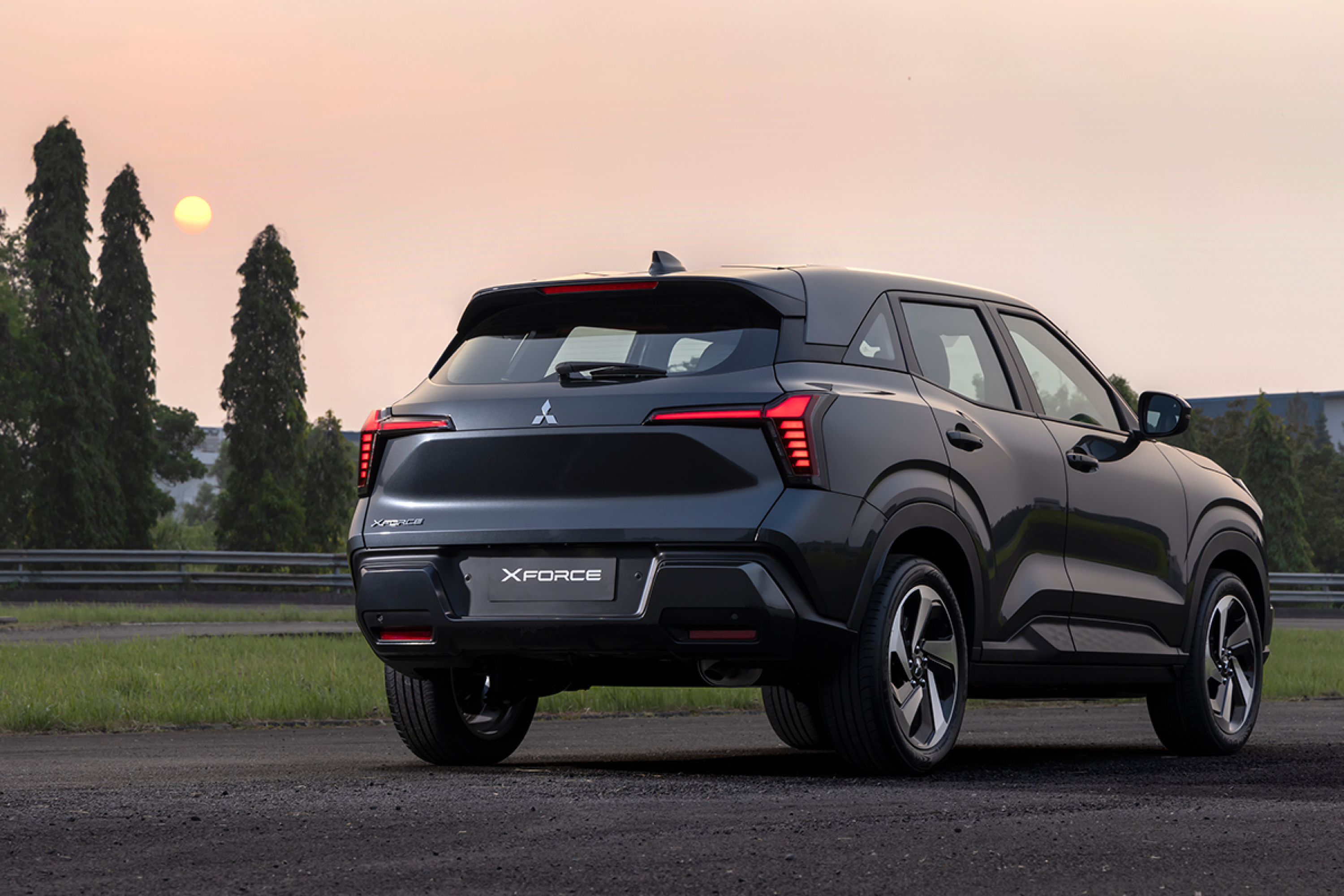
Mitsubishi XForce revealed
Built in Indonesia on existing XPander platform
Unlikely for Australia due to lack of safety features
It’s known as the 2024 Mitusbishi XForce, teased in concept form as the XFC. We now have all the details of this ASEAN-market-focused vehicle – and it won’t replace the ASX without some heavy modifications.
“We are studying [XForce for Australia], but it might be difficult because of regulation issues”, Takao Kato, president and CEO of Mitsubishi Motors, told Wheels.
“How we upgrade the performance or function to meet the requirements is the question for us right now. We are currently studying that issue”, he added. There’s a slim chance that the XForce could make it to Oz, but Wheels understands a local release will only happen if Mitusbishi decides to invest in significant upgrades of the safety equipment and powertrain.
The XForce was developed on an existing platform that no longer meets current ANCAP requirements.
1
What is the Mitsubishi XForce?
The XForce is a small SUV built on an existing platform – the same found under the ASEAN-market Xpander people mover.
It also uses that car’s 1.5-litre multi-point injected four-cylinder producing 77kW/141Nm with drive sent to the front wheels via a CVT automatic – a third less power than our base model ASX ES 2.0-litre. Hardly inspiring stuff.
The dimensions are mighty similar to the existing ASX, though it’s a little smaller. At 4390mm long and 1810mm wide, the XForce is firmly a small SUV. It rides on a 2650mm wheelbase, seats five, and tips the scales at 1245kg.
It uses a conventional suspension design with struts up front and a torsion beam for the rear axle. There appears to be no provision for a more advanced multi-link system you’d find on a Nissan Qashqai.
1
Inside the XForce
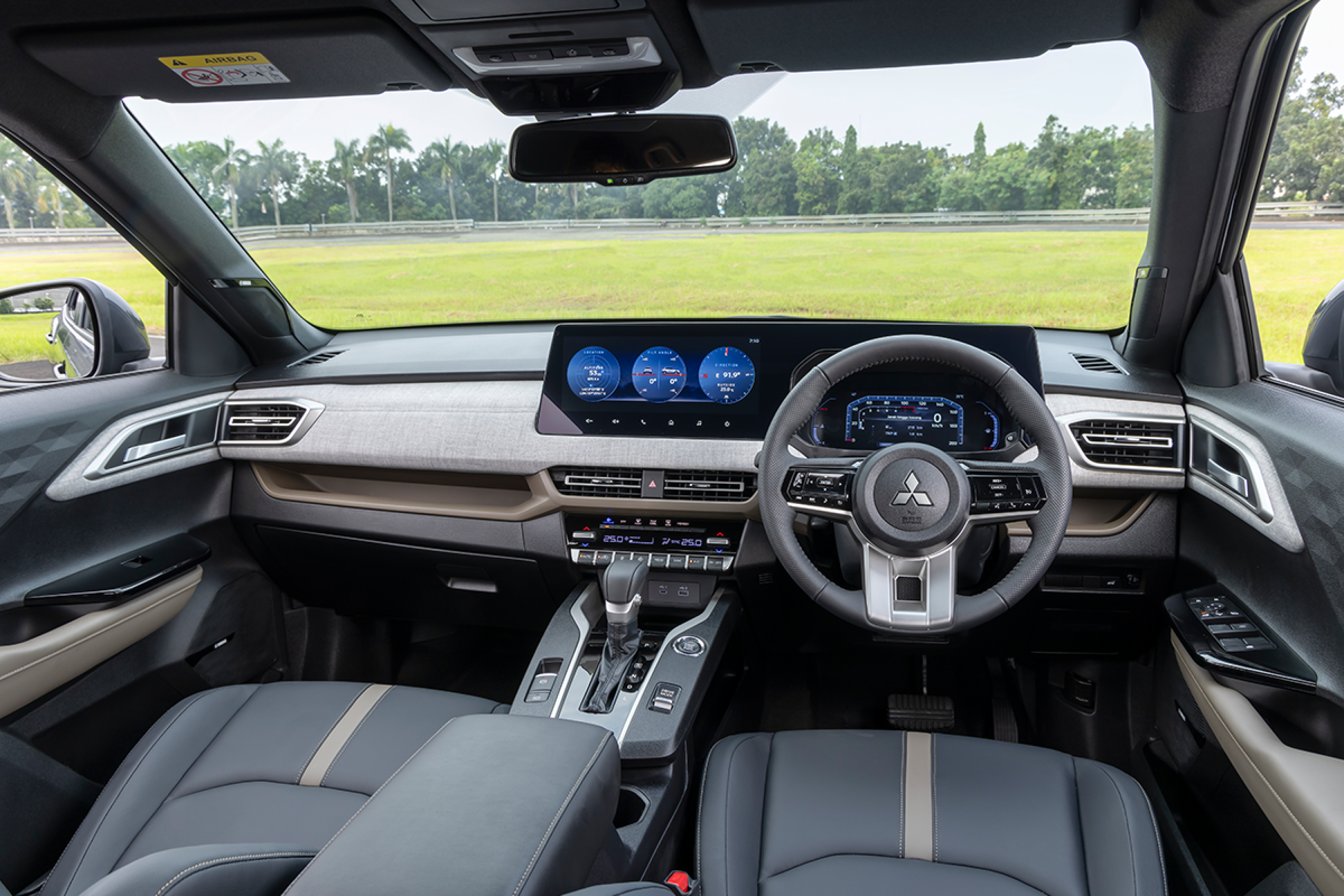
Matching the XForce’s crisp and modern exterior appearance with sharp LED lighting and dramatic lines is an interior that’s right up-to-date for the class and a lot more stylish than the ASX’s.
There’s a chic ‘melangé’ fabric upholstered insert on the dash, above which sits an equal-class biggest 12.3-inch touchscreen with wired Apple CarPlay and Android Auto capability. It’s hooked up to a Yamaha-tuned sound system, and there’s an 8.0-inch digital driver’s display, too.
Mitsubishi cheesily calls the design direction of the XForce “best-suited buddy for an exciting life”, but it sounds like there’s real substance to cabin storage. Mitsubishi claims there is space for 21 600mL bottles throughout the vehicle.
A mixture of regular USB and fast-charging USB-C ports are found throughout the cabin for charging devices, too.
2
What’s holding the XForce back from replacing the ASX?
“The reality is that the XForce was developed on an existing platform that no longer meets current ANCAP requirements,” said Mitsubishi Australia CEO Shaun Westcott.
Mitsubishi’s official press release does not name any advanced driver assistance features for the XForce, let alone list the number of airbags or an official safety rating. These are evidently not major concerns in the ASEAN markets that the XForce is targeting.
There’s also the fact that the XForce is built around a dated engine that doesn’t produce the kind of power Australian consumers would expect, which is a shame because the small SUV’s sharp looks and chic cabin could resonate with Australian buyers.
The current ASX will continue for now. It continues to perform well with the Australian public, finding 435 new homes in the month of July.
It’s a big slip on last July’s performance (858) and is down 30.7 per cent year-to-date, though it continues to find nearly as many homes as the Volkswagen T-Roc (494 in July).
On average, a Ford F-150 truck was sold every 49 seconds last year in America.
The F-Series has been the US’s most popular truck for 46 years and is making a return to Australia this September.
So what better way to understand the enduring appeal of the F-150 than driving one in its native habitat – and the opportunity arose during the recent US launch of the 2024 Ford Mustang.
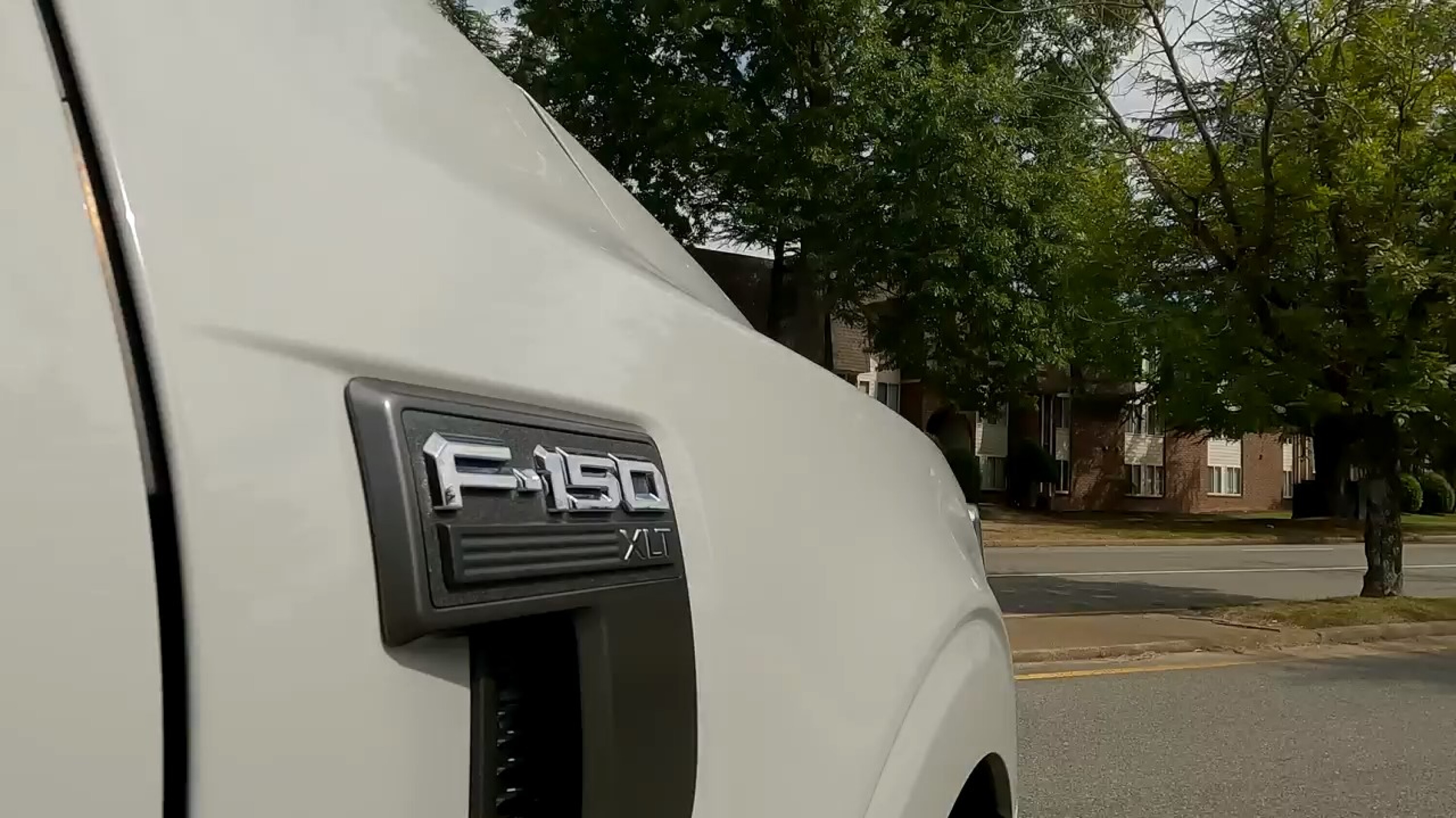
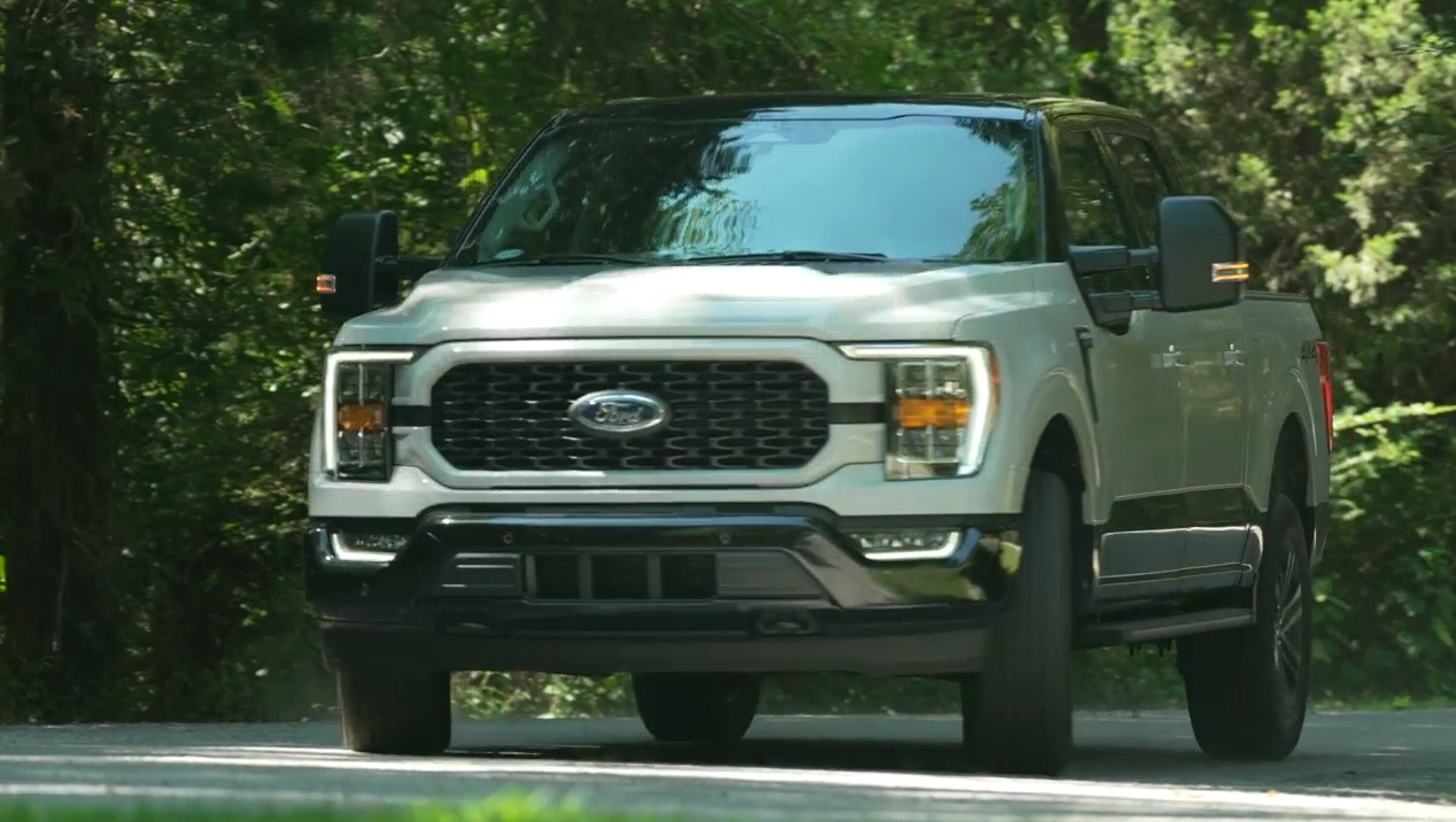
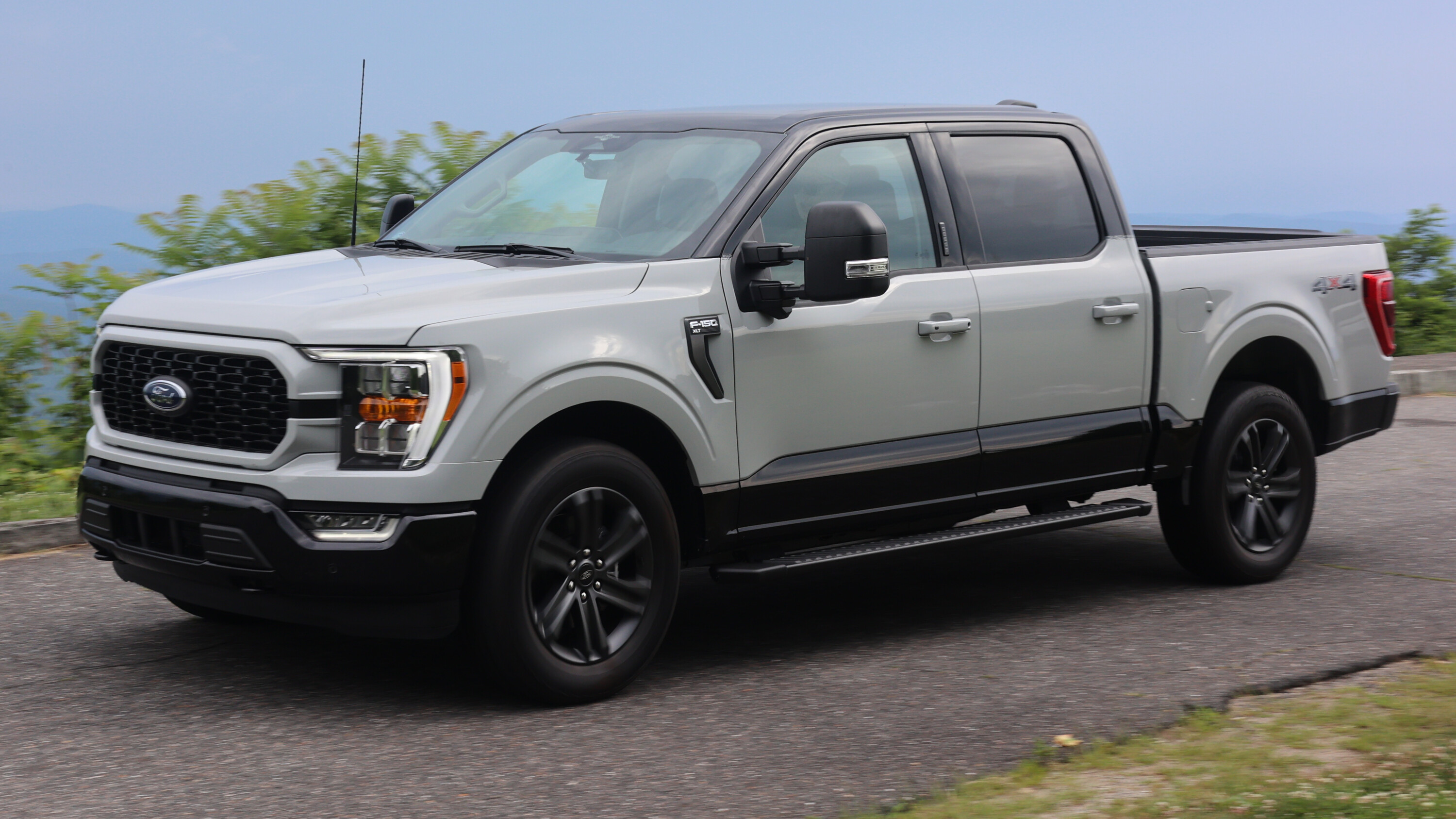
Our test car in North America was an XLT Heritage. The Heritage part of the badge is new for 2023 – to mark 75 years of the F-Series.
It creates a distinctive two-tone look for our test car – featuring a black roof and pillars, Avalanche-beige main body, and black lower body work and bumpers.
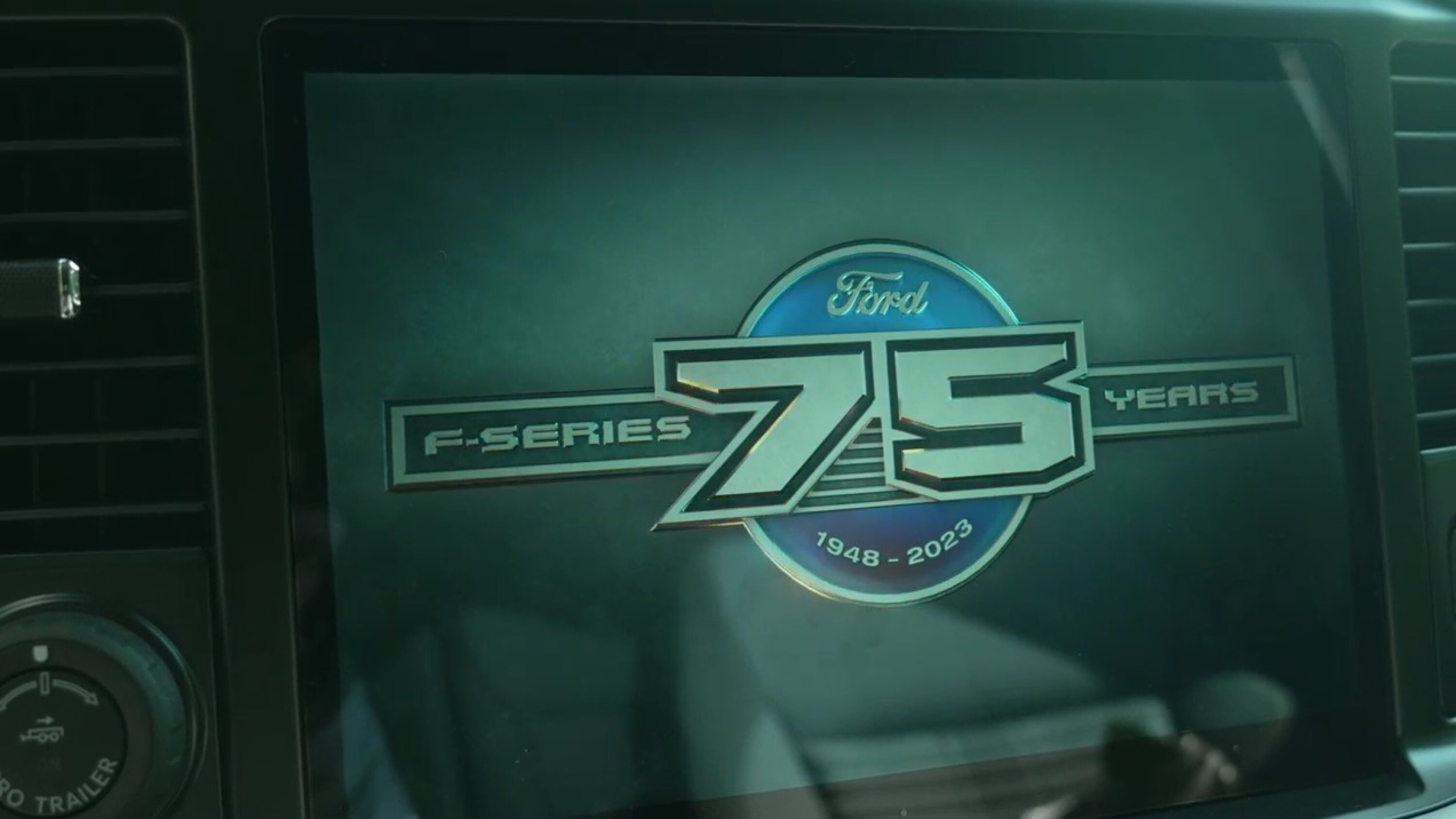
The cabin gains unique seat inserts, a console-bin lid with ‘Heritage Edition’ embossing, and there’s a ’75 Years’ logo on the infotainment start-up screen.
The XLT part is particularly relevant, though, as this represents what will be the entry model in the local two-variant line-up.
1
In the States, you can buy an F-150 from as little as the equivalent of A$52,000.
There’s a mind-boggling array of choices, with Regular, Super Cab (extended cab) and SuperCrew (four-door) body styles and eight trim grades – and that’s before even considering the electric F-150 Lightning.
Australian buyers have a far less complex scenario, with just the dual-cab Super Crew being offered from launch – in either XLT or Lariat grades.
2023 Ford F-150 XLT standard equipment
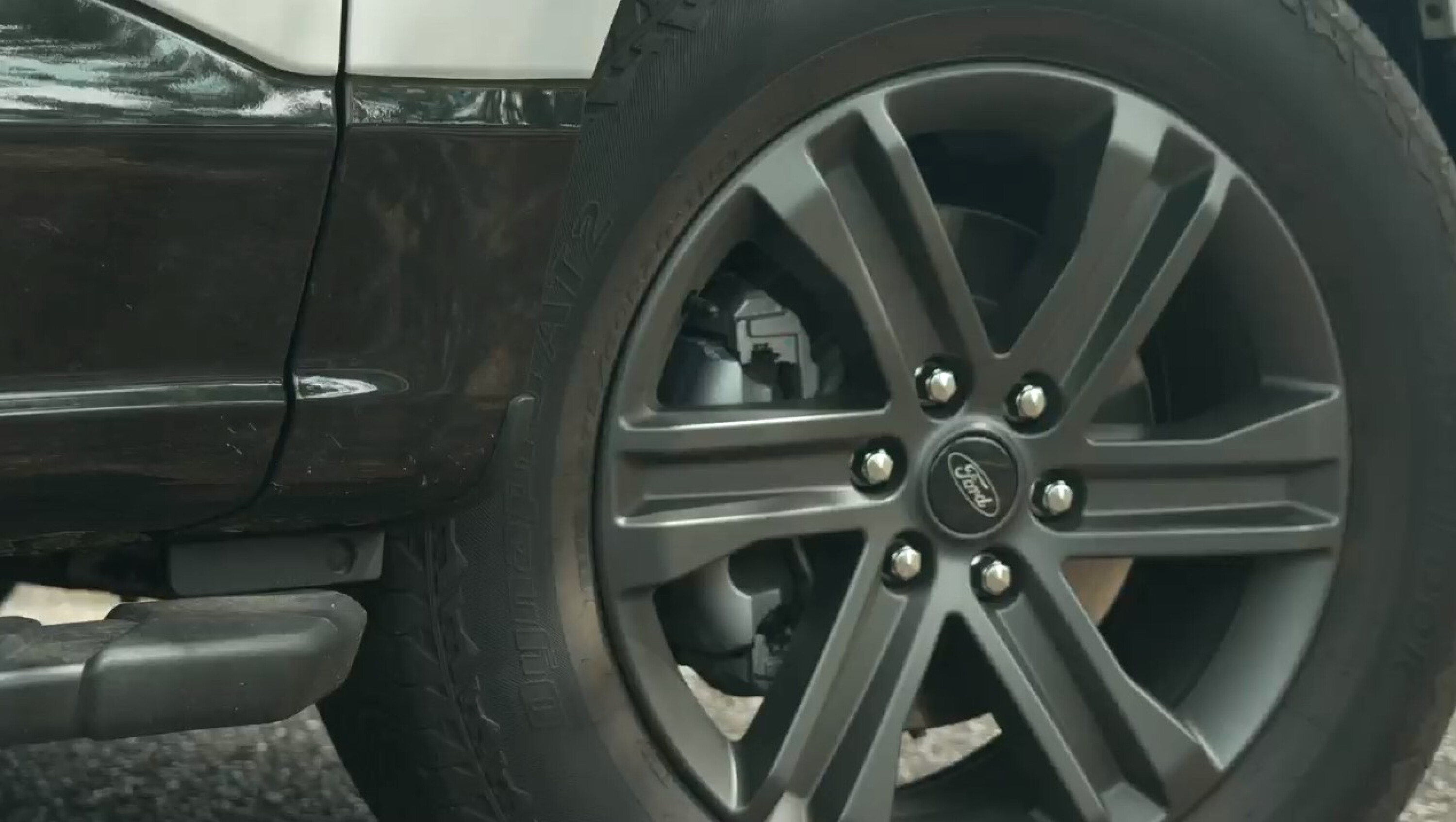
20-inch six-spoke alloy wheels
Satellite navigation
Chrome front and rear bumpers
Seven-speaker sound system
Black platform running boards
8.0-inch digital dial pack
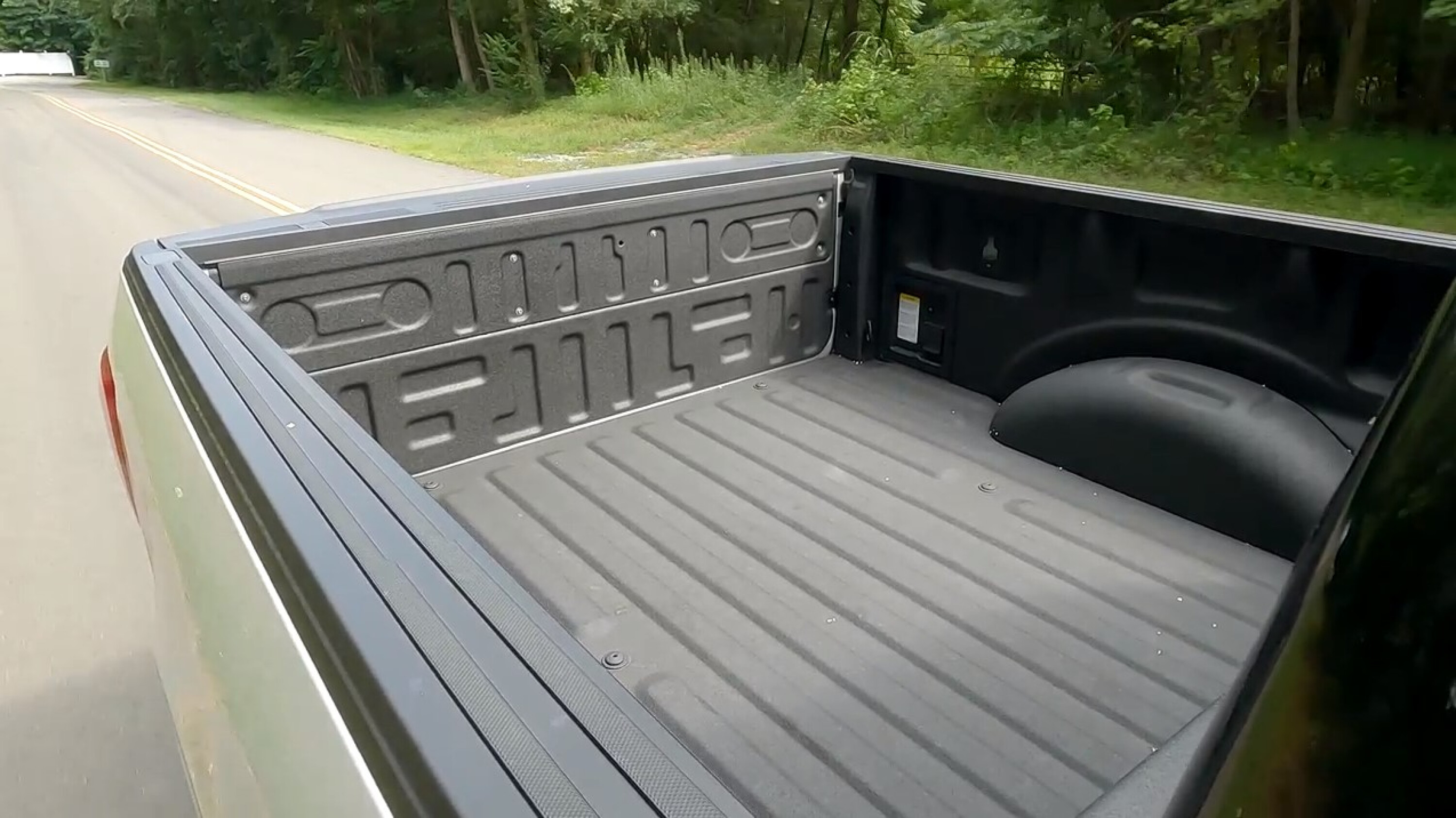
Tailgate with flexible step and work surface
Dual-zone climate control
Spray-in tubliner
Reversing camera
Column-mounted gear shifter
Power adjustable foot pedals
12-way power cloth driver’s seat
Rear parking sensors
10-way power cloth passenger seat
Cruise control
8.0-inch centre touchscreen
1
An XLT dual-cab costs about A$72,500 in North America, but that’s without any options.
Start adding some of the kit that will be standard in Australia, and it’s closer to A$95,000 – making the $106,950 RRP (approximately $117,000 driveaway) seem quite reasonable for a RHD conversion vehicle.
It’s a $995 option to have a longer wheelbase. The LWB adds more than 30cm between the front and rear axles – to nearly four metres. This also stretches the tray from 1676mm to 1981mm.
A more highly specified Lariat model costs from $139,950.
Mesh insert for the front grille with chrome surround
Heated rear-seats
Adidtional chrome on wing mirrors, door handles, tow hooks and running boards
12-way power adjustment for driver & passenger seats
Two-panel panoramic sunroof
Floor-mounted gear shifter
LED headlights and tail-lights
12.0-inch centre touchscreen
Power release and close tailgate
12.0-inch digital instruments
Power sliding rear window
18-speaker B&O sound system
Leather accented seats
Front-parking sensors
Heated/cooled front seats
Wireless phone charging pad
1
2023 Ford F-150 Australian pricing
XLT SWB
$106,950
XLT LWB
$107,945
Lariat SWB
$139,950
Lariat LWB
$140,945
1
The F-150 is big, so can we presume the interior is more spacious than the Ranger’s?
That’s a big ‘yes’. The F-150 is about 52cm longer than the Ranger, about 11cm wider, and the truck’s wheelbase has a 41cm advantage – and it doesn’t waste those bigger dimensions.
The Ranger is in the lower half of its segment for rear-seat space but in the F-150 there’s an abundance of room for adults. It’s no coincidence that many of the journalists in our group were happy to ride in the back for chunks of a multi-day drive covering the states of North Carolina, West Virginia, and Virginia before ending up in Washington DC.
1
Comfort is increased by backrests that have a more natural angle than the bolt-upright seats found in some HiLux-size utes.
The bench provides excellent under-thigh support, too.
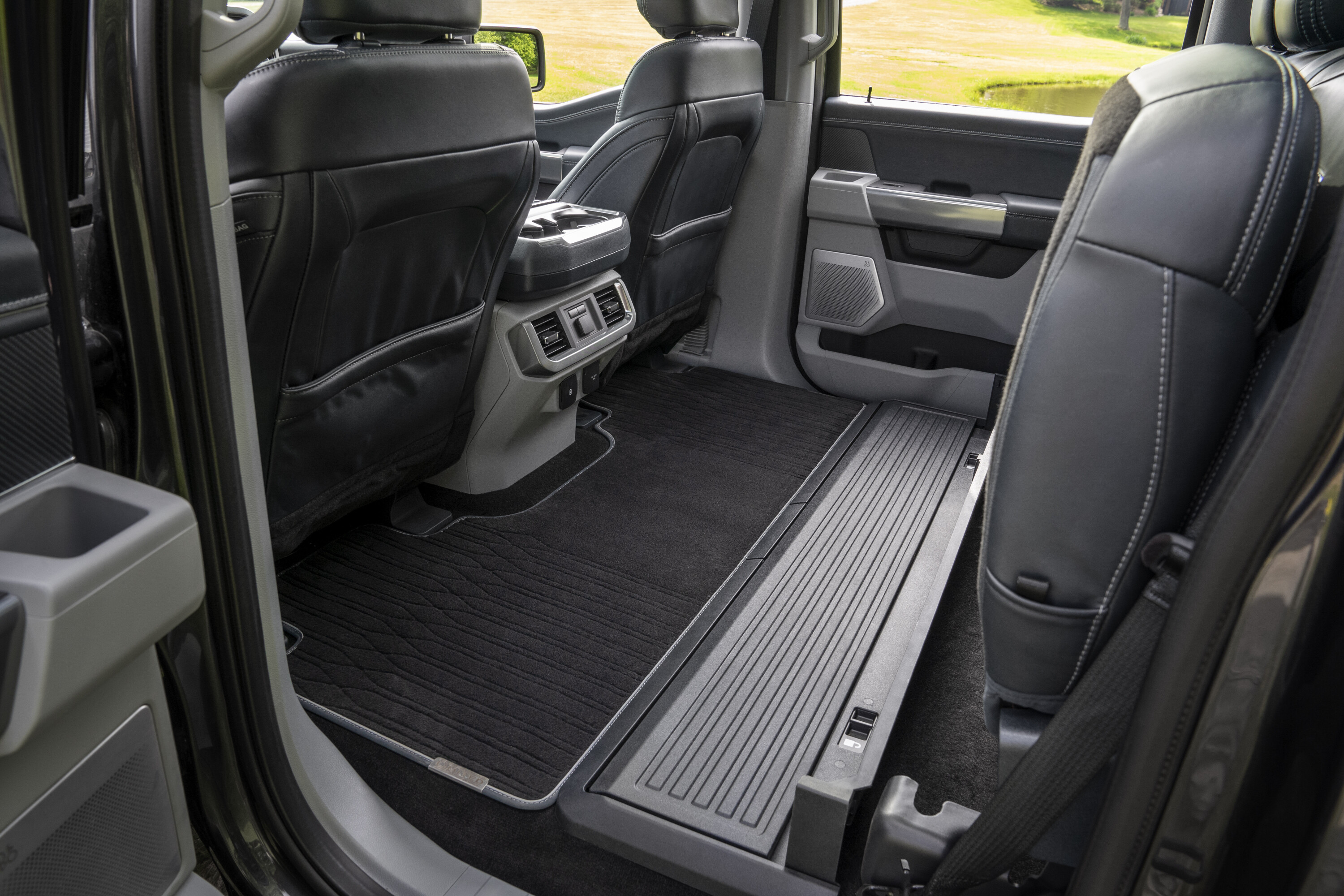
The F-150’s rear cabin is also highly practical. Smaller bags can be stored beneath the ‘floating’ rear bench, and the rear seats can be flipped up individually to create wider storage space for larger items. This is particularly useful for transferring items from the tray when leaving it parked somewhere.
USB ports and a power outlet, plus air vents, are provided on the rear of the centre console.
1
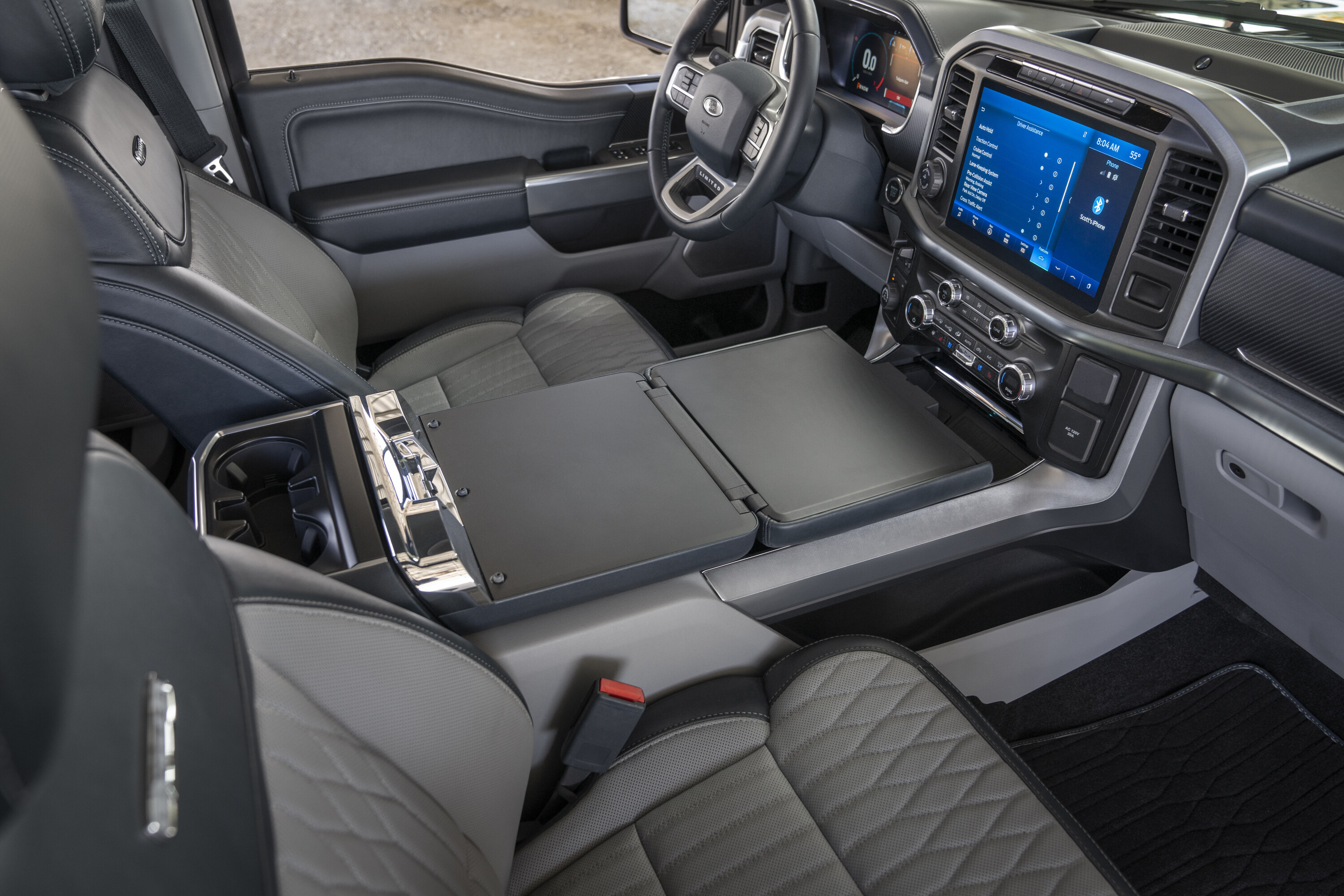
That centre console is very wide, and up front that creates a generous distance between front occupants.
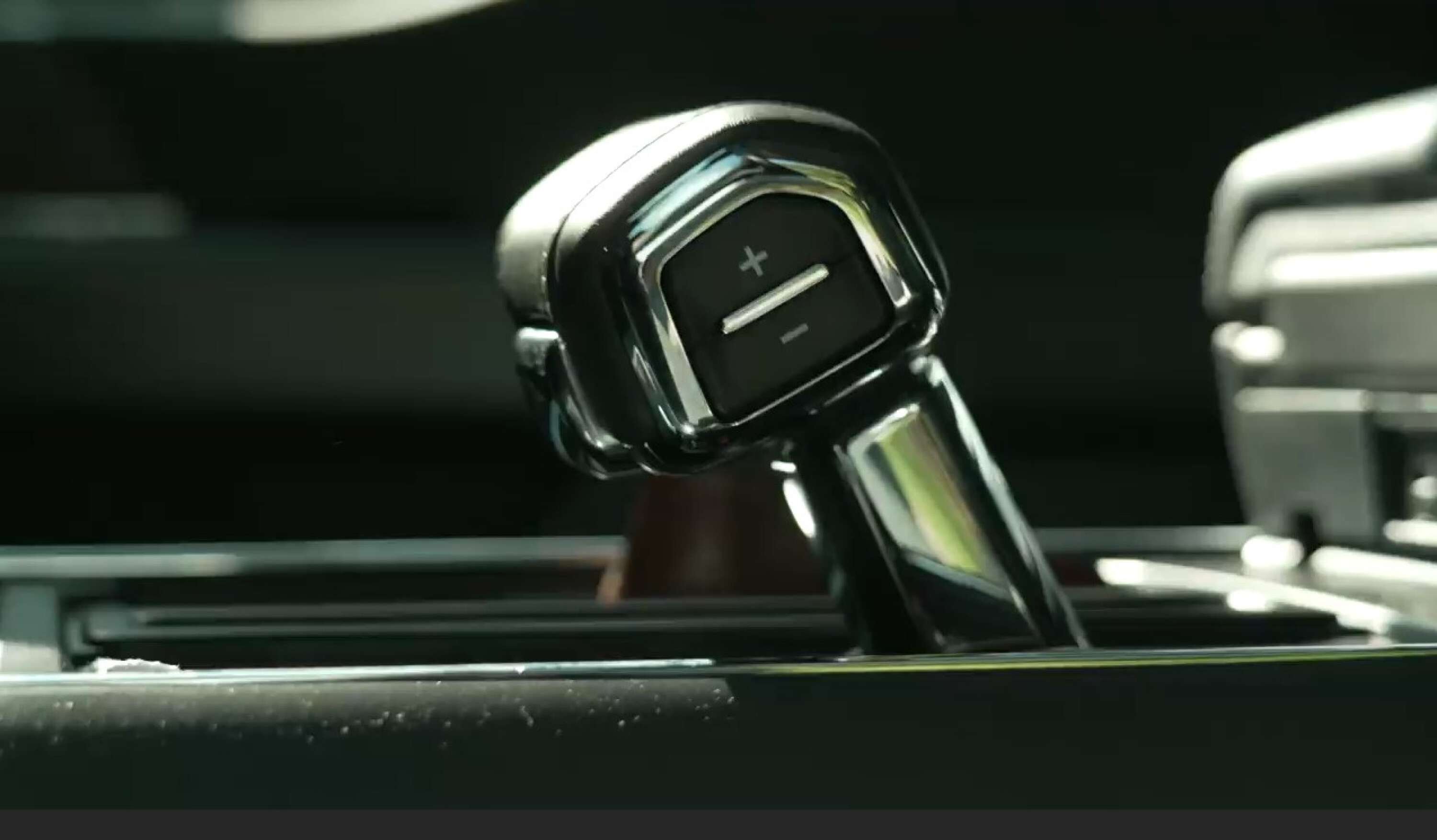
It also features an ingenious ‘office workspace’, where the console lid can be folded towards the dash to create a flat table. In our US XLT and the Aussie-spec Lariat, one extra step is required: pressing a button to fold down the console-based gearlever. The Aussie XLT will feature a column-mounted shifter, which adds convenience beyond extra console space as the front passenger can use the table during driving.
More USB ports and power outlets feature up front.
1
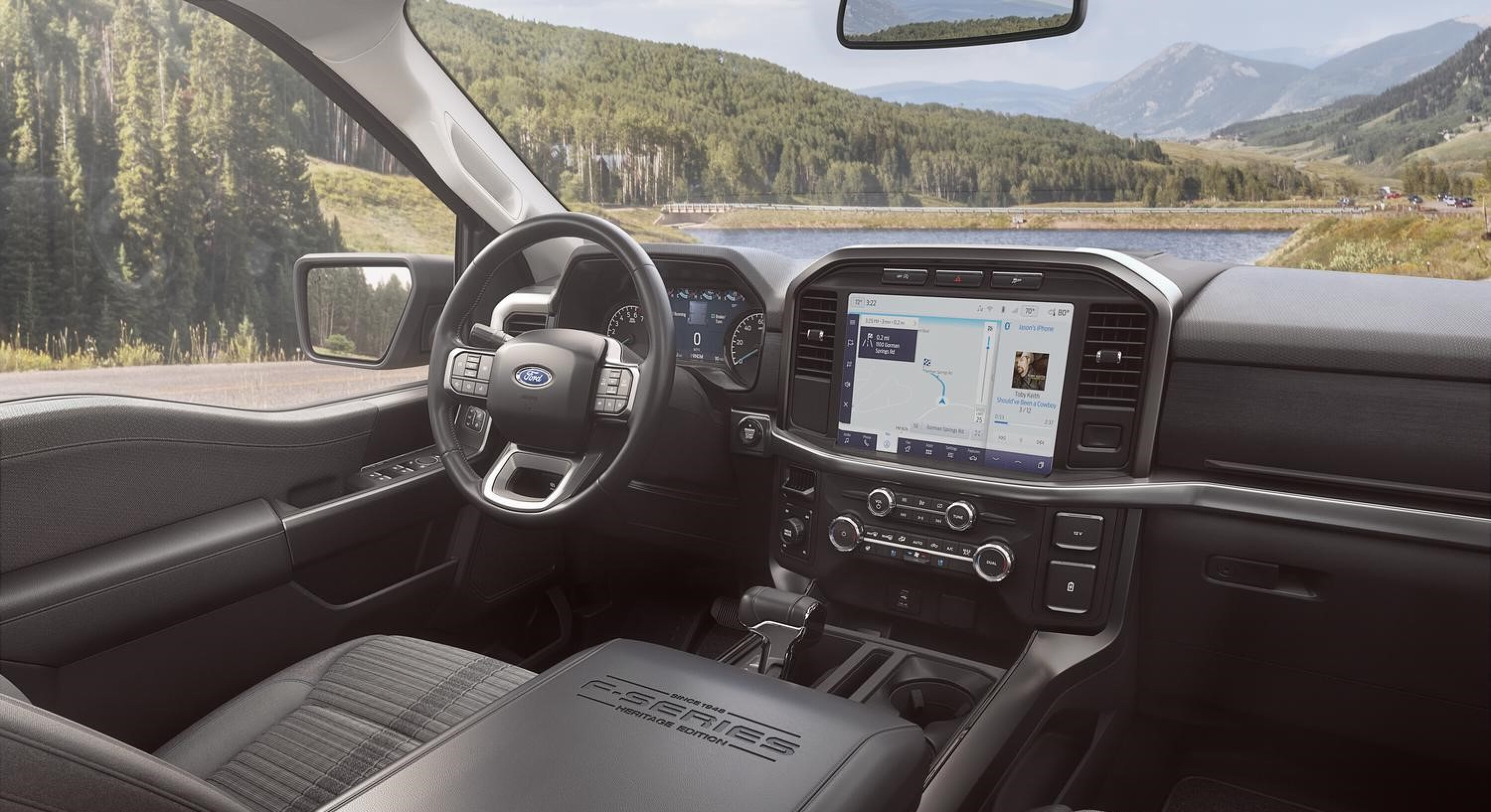
Our test XLT included the largest infotainment touchscreen, a 12.0-inch display with Ford’s familiar Sync 4 graphics and menus.
The Australian XLT comes with an 8.0-inch version that may be fine in a Ford Puma compact SUV but looks weirdly dwarfed in the F-150’s huge dash.
Similarly, the XLT gets a smaller digital driver’s cluster compared with the Lariat – and again it’s 8.0 versus 12 inches.
As with dual-cab utes, American pick-up trucks have come a long way in terms of driving manners, refinement, and safety.
On open roads and freeways in a big country like the US (and similar to Australia, of course), this big Ford is brilliant at devouring long distances while minimising fatigue.
A more definitive verdict on ride quality is only weeks away, but over lots of miles in America the F-150 defied its relatively basic suspension and platform – independent front, leaf-spring rear and ladder-frame – to deliver wonderfully cushioned transport.
2
While the suspension is occasionally wallowy, the passive damping generally excels at keeping vertical body control in check.
Our test XLT was fitted with optional 20-inch wheels, which helped mirror the experience we’ll have locally as 20s are standard on both trim grades.
Local F-150s are also powered exclusively by the engine we sampled in America: a 3.5-litre V6 ‘EcoBoost’ petrol engine, paired to a 10-speed auto.
The twin-turbo motor produces 298kW and 678Nm, and it proves its grunt credentials with four adults and a week’s worth of luggage for each on board.
1
It’s responsive at low revs and has no trouble pushing the F-150 into quick overtaking bursts – accompanied by a suitably meaty soundtrack.
We’re unlikely to shock by suggesting frugal fuel consumption isn’t one of the F-150’s greatest assets, though we averaged a respectable 13L/100km after two long days of driving, though this comes with a caveat of mainly country roads and freeways being used.
Towing capacity is one of the major drawcards of these big trucks, and 4500kg braked is confirmed for the F-150 in Australia – exactly a tonne above the Ranger. Payload has yet to be confirmed but is about 800kg in the US.
The cloth seats, featuring tastefully ribbed centre sections for backrest and cushion, add to the touring comfort, as does plenty of electric adjustment to achieve the ideal driving position.
1
An expansive glasshouse and ‘Dumbo’ Trailer Tow side mirrors also reduce the intimidation factor of driving such a big vehicle.
At least until you get to underground or supermarket car parks, when you become nervously conscious of the F-150’s width – especially with those optional chunky Tow mirrors – and length.
Australia’s XLT comes standard only with rear parking sensors; a step up to the Lariat is required for a surround-view camera and front sensors.
Another disappointment is that our XLT has only standard cruise control, with the notably more expensive Lariat featuring adaptive cruise with stop-go functionality.
Should I hold off on that RAM 1500 or Chevrolet Silverado purchase?
If you’re not beholden to a particular brand, then it’s worth waiting just a month or so to see how the biggest-selling truck in the world stacks up in local spec against its two key rivals. (Which will become three from early 2024 when Toyota introduces the Tundra.)
The F-150 may not be cheap but it is competitively priced against equivalent versions of the RAM 1500 and Silverado 1500.
Our US drive experience of the Ford revealed plenty of promising qualities that should transfer successfully to Australian roads. We’re looking forward to exploring the locally converted versions in more depth and setting up a fascinating big comparison of the big American trucks.
Advancing the auto industry is often tasked to the Mercedes-Benz S-Classes of this world with technology left to trickle down to mere mortals. But change comes in many forms.
The real champions of the automotive world are those that revolutionise the mass market. The original Volkswagen Golf is a perfect example of this, and the 2024 MG4 Essence? Well, for Australians, it may be the car that makes electric motoring truly accessible.
Tesla’s Model 3 and Model Y have already changed the semi-premium landscape, arriving loaded with technology in huge numbers at tempting prices. The Model Y even outsells Toyota’s RAV4, proving price isn’t as much of a barrier as you might expect.
An MG4, though, with its $38,990 starting price (before on-road costs and incentives) is a car that an even larger slice of the population can afford.
Like the Model Y, it might be able to outsell Toyota’s incumbent in the small car segment, the Corolla hatch.
Although the official forecast was for 3000-or-so MG4 sales by the end of 2023, typically bullish MG Motor Australia CEO Peter Ciao reckons this figure could climb as high as 2000 each month – if there’s enough demand. For reference, Toyota sold 2145 Corollas last month.
The MG4 will be vying for sales supremacy in a trio of affordable Chinese rivals with the BYD Dolphin and GWM Ora set to launch imminently. We’ll be sure to have a comparison test between the three, but right from the off MG’s effort oozes maturity and sensibility that the others trade for bright colours and cabin gimmicks.
We nabbed an MG4 fitted with the medium 64kWh (gross, 61.7kWh usable) ternary lithium-ion battery pack for 435km of WLTP driving range in Essence trim – the top spec in Australia until the XPower hot hatch arrives.
It costs $47,990 before on-road costs and government incentives, so splits the difference between price leader and more premium rivals such as the Tesla Model 3 sedan.
Underpinning the MG4 is the brand’s new ‘MSP’ scalable architecture. Developed in collaboration with IDIADA, a Spanish company that provides design, testing, engineering, and homologation services for automotive companies, it boasts a ‘perfect’ 50:50 weight distribution paired with front struts and five-link independent rear suspension.
1
You also get sheet metal designed with input from MG’s Longbridge design centre in the British Midlands.
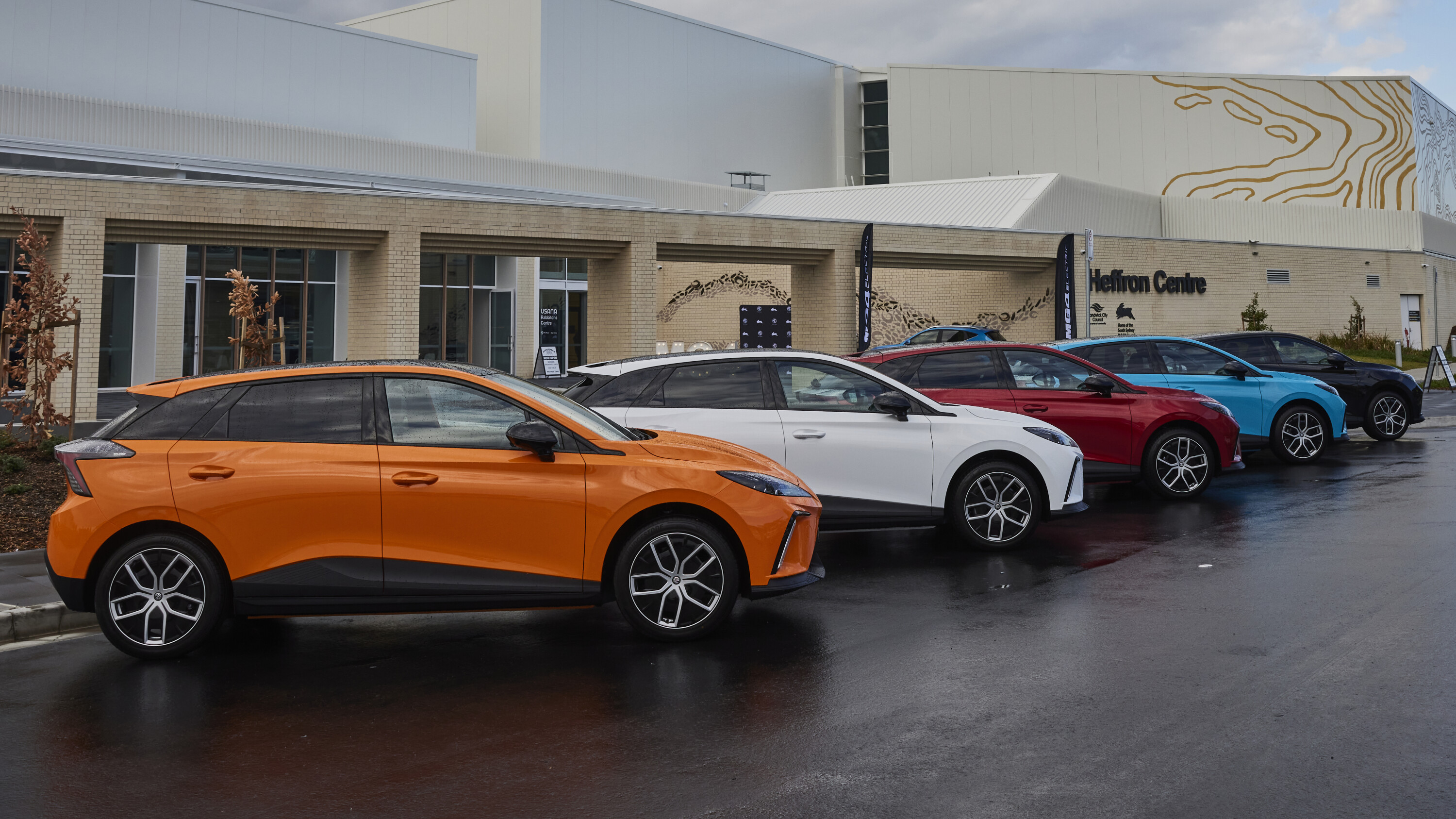
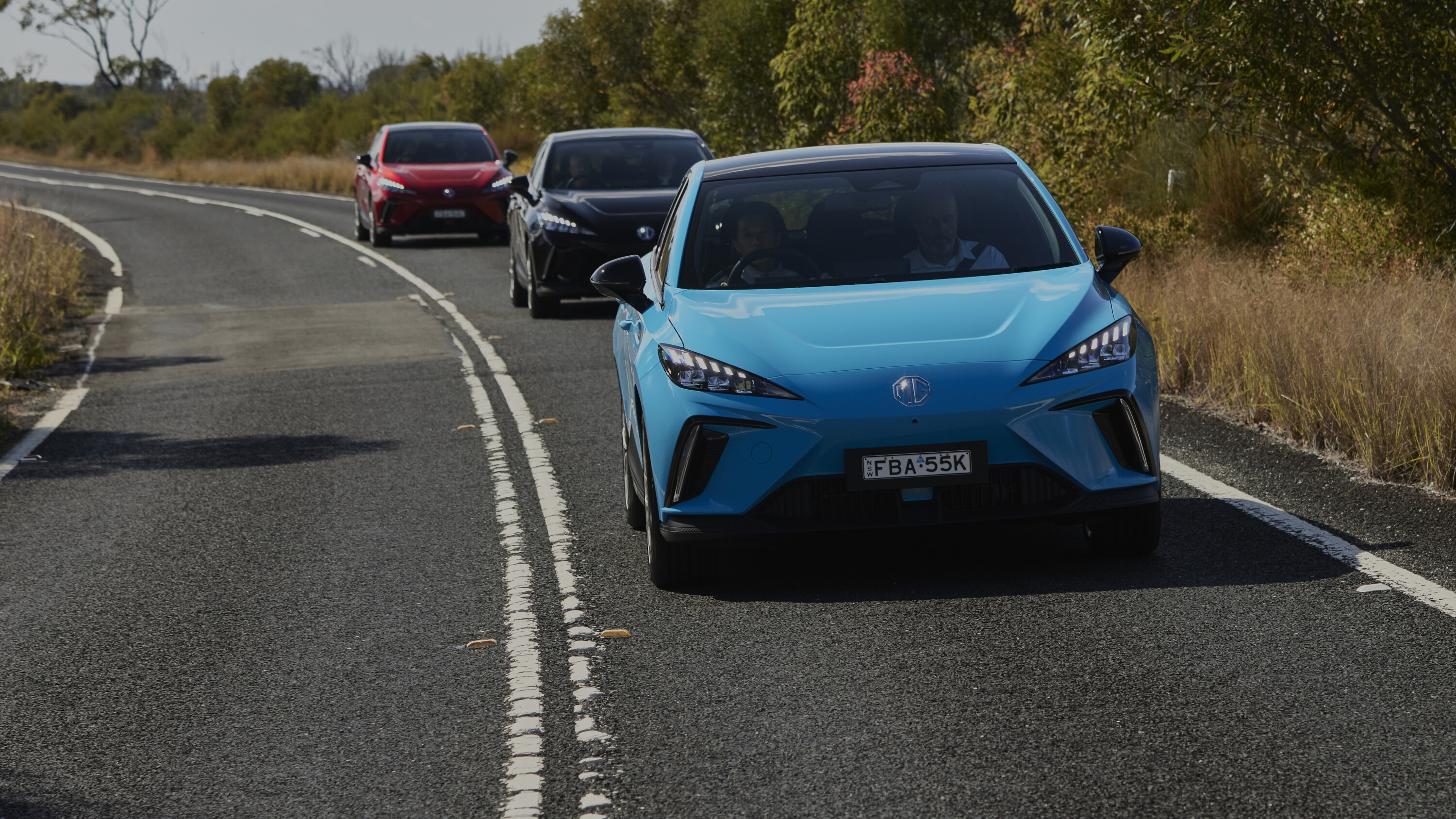
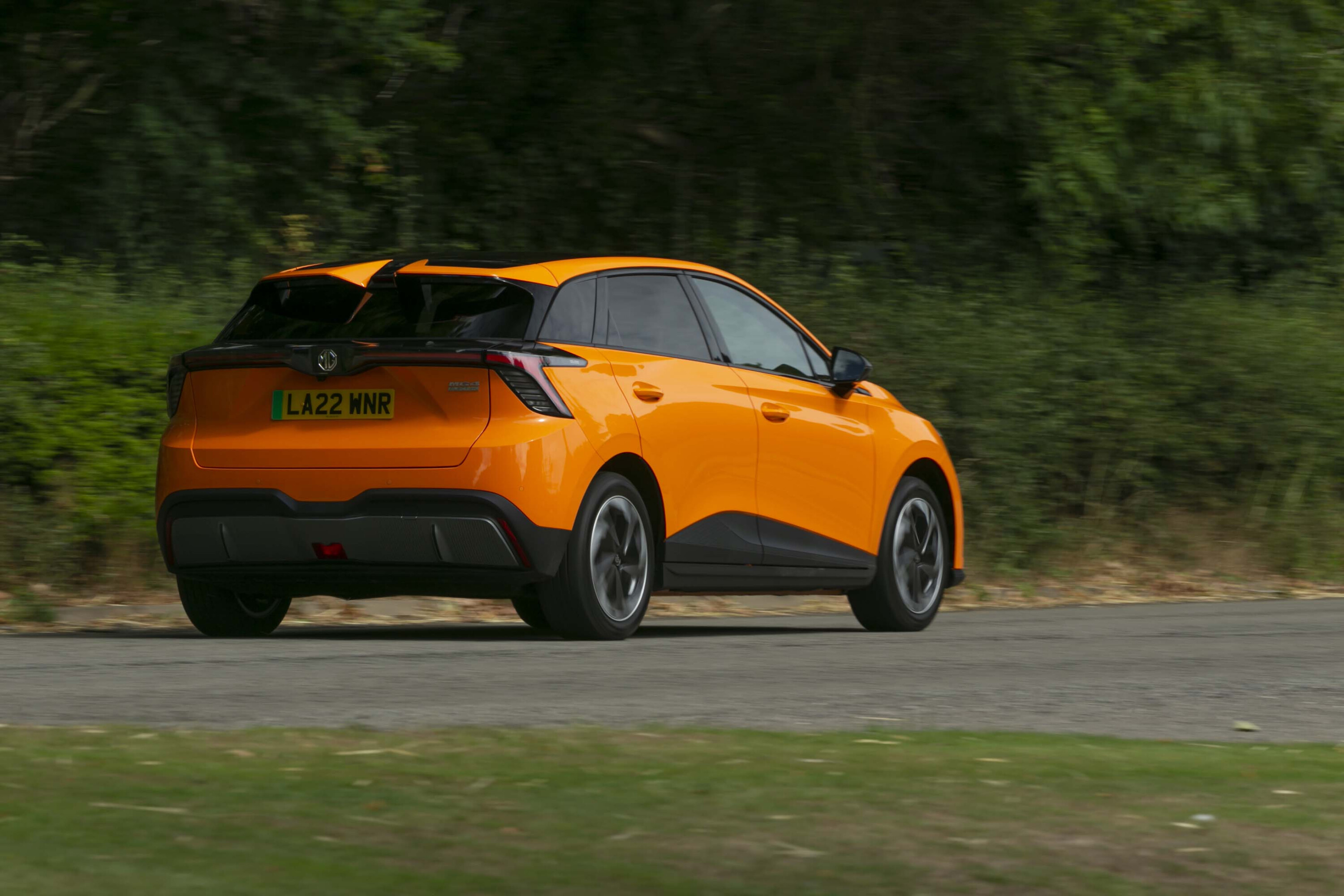
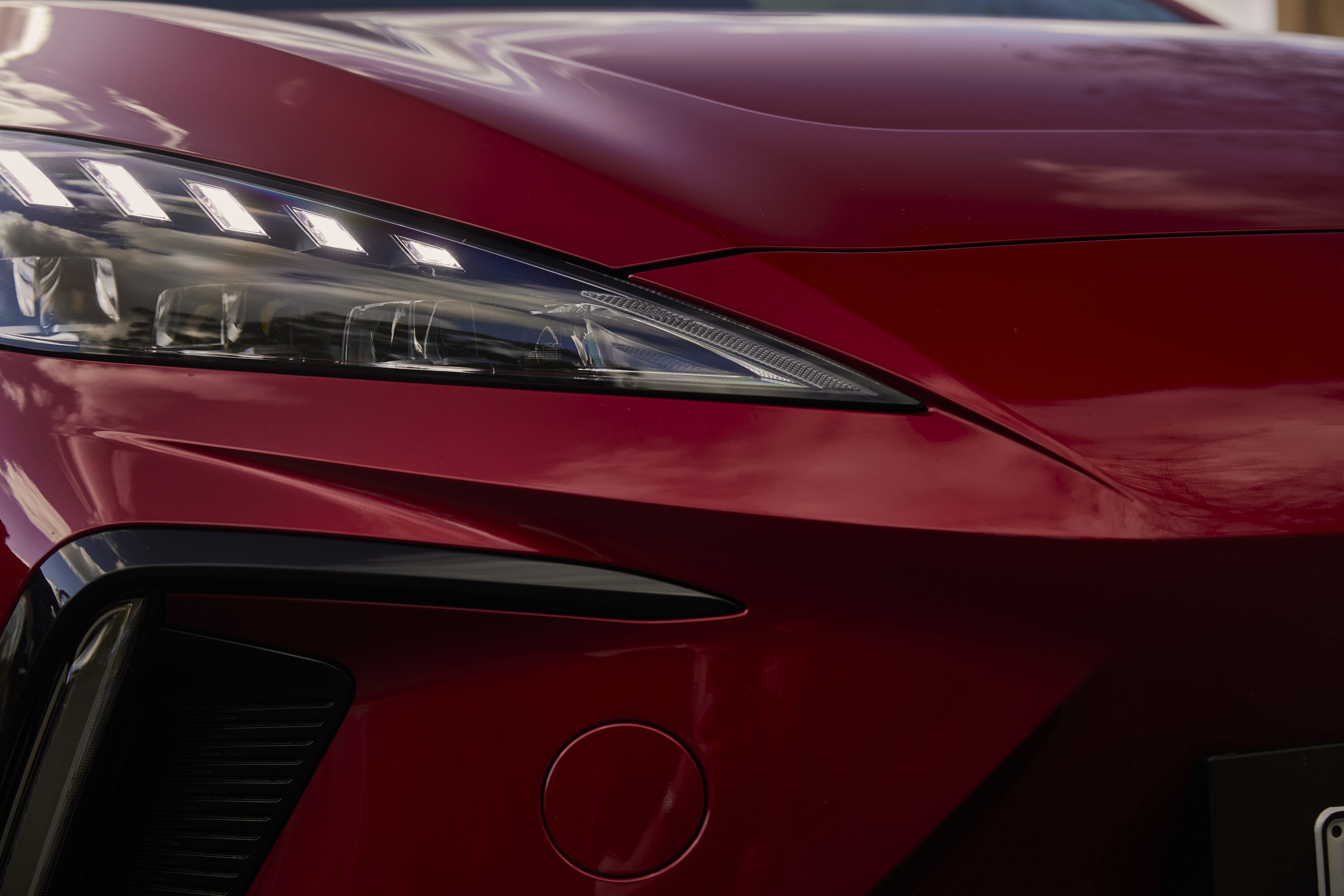
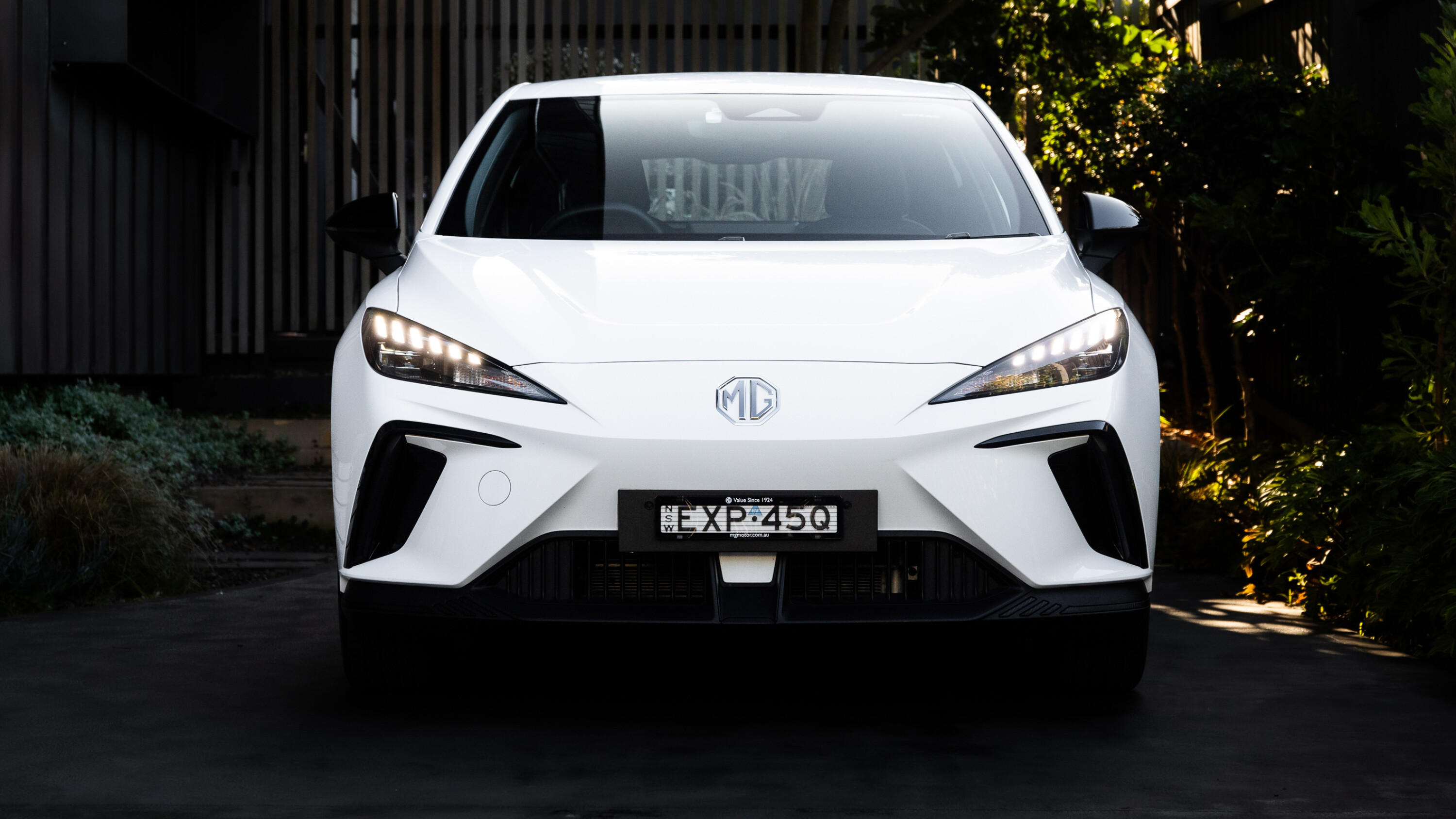
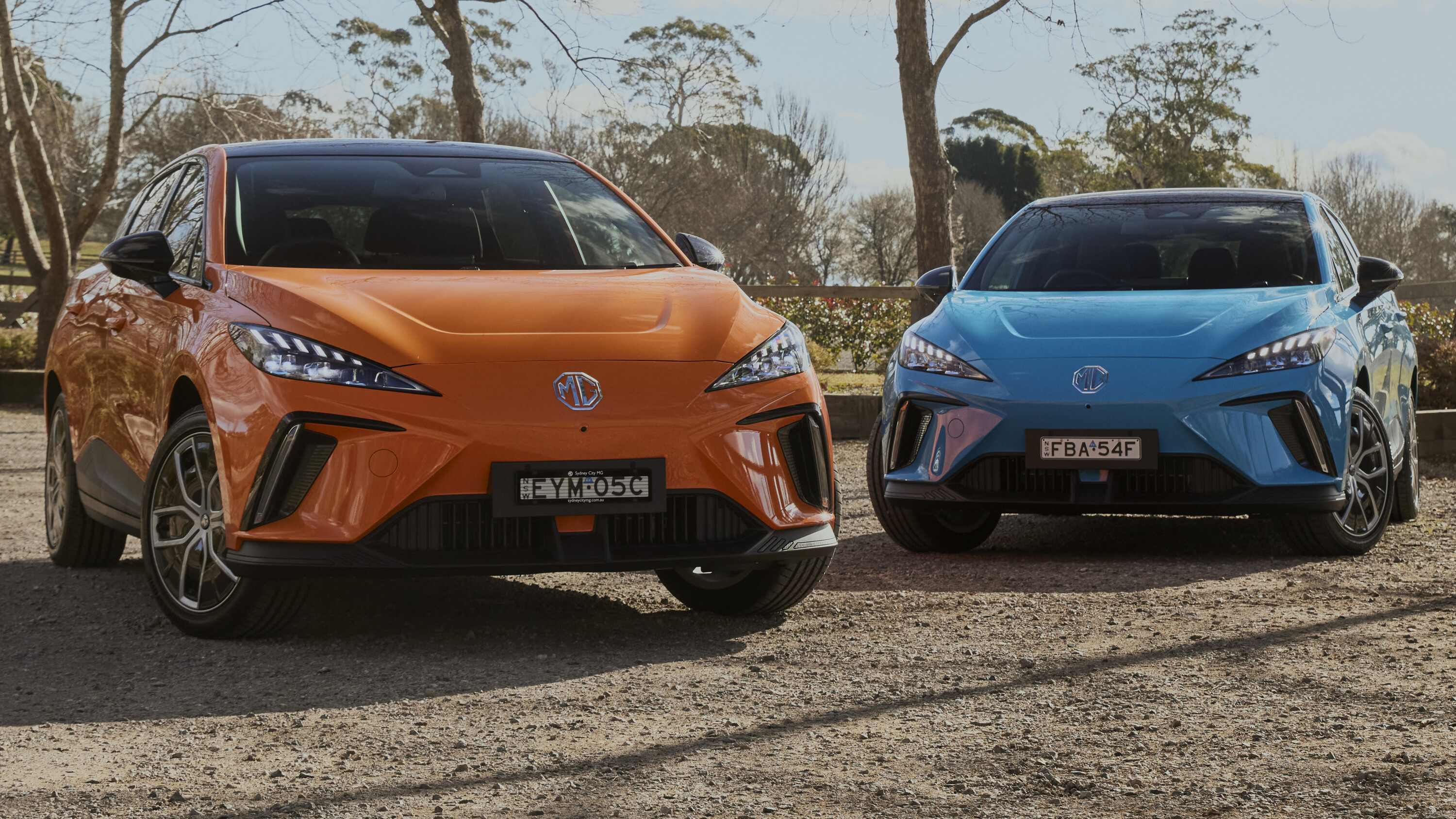
Although some of the detailing is a little fussy and the car’s appearance is not entirely conventional, in bright colours such as Volcano Orange and Brixton Blue, the MG4 cuts an attractive and memorable silhouette.
Compared to the base car, the Essence features more technology as detailed below.
2023 MG 4 Essence features
18-inch alloy wheels
7.0-inch digital instrument cluster
10.25-inch infotainment system
Door open warning
Wired Apple CarPlay and Android Auto
Satellite navigation
Voice control
u2018iSmartu2019 connected-car service.
Wireless phone charging
Cloth/synthetic leather upholstery
Rotary gear selector
360-degree camera system
Six-speaker audio system
Two-tone roof
Roof spoiler
Auto-dimming rear-view mirror
The Essence also brings driver assistance technology such as blind-spot monitoring, rear cross-traffic alert, and an excellent 360-degree camera.
MG said it sees the Essence being bought by fleets, but we reckon this ‘Goldilocks’ combination of decent driving range and extra creature comforts that remains under $50K is the MG4 sweet spot.
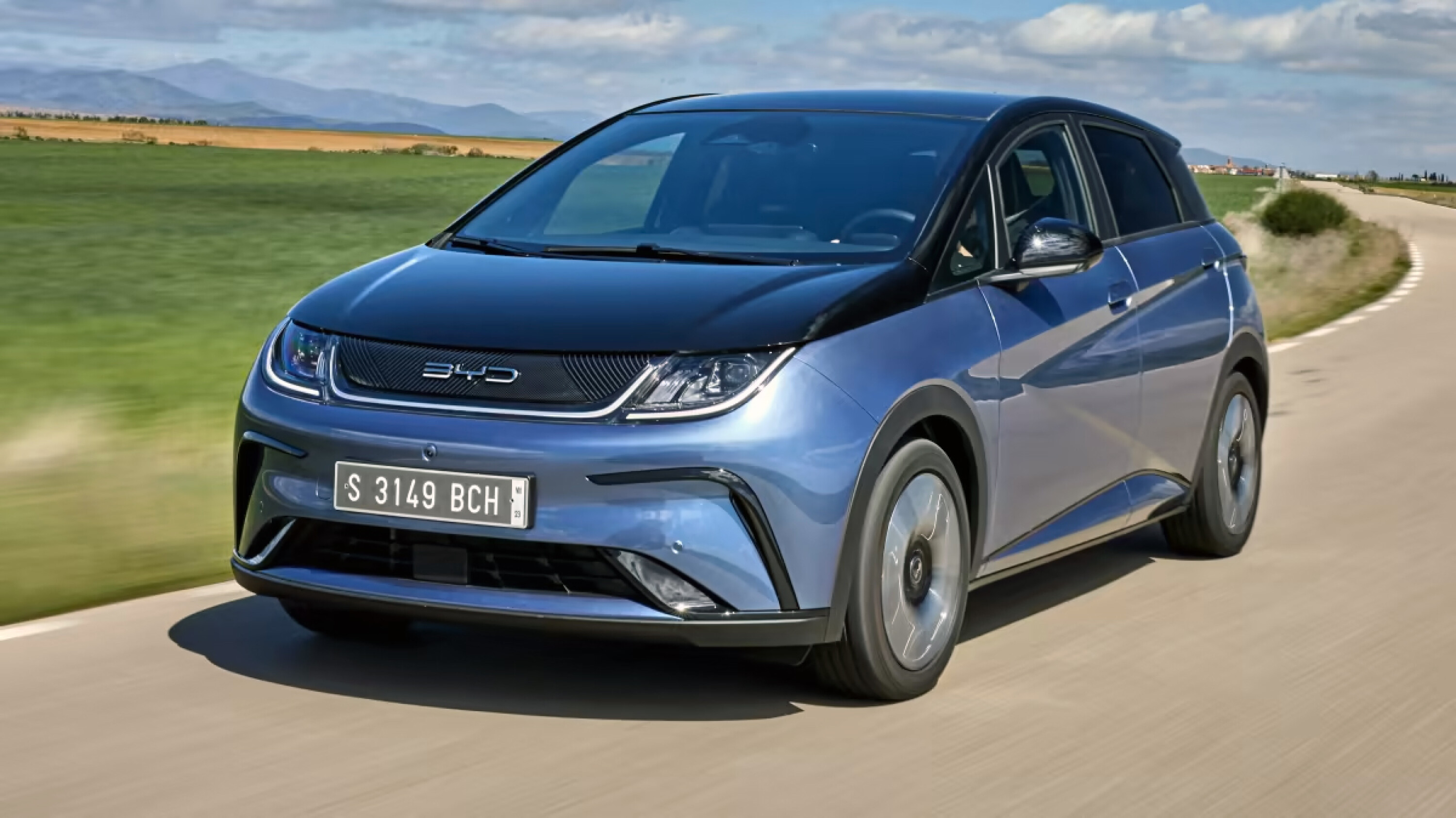
The MG4 is not the cheapest brand-new electric vehicle on sale right now – that accolade goes to the BYD Dolphin ($38,890 before on-road costs), though $100 here goes a lot further than a regular green bill would.
Compared to the BYD Dolphin, it’s 4.6 seconds faster to 100km/h with 11km more driving range.
We aren’t driving the base MG4 today, and the Essence measures up well against its EV price-mates. It’s rated with a greater driving range than the equivalently priced Dolphin and Ora, and has comparable levels of cabin technology.
Given the MG4’s more conventional design and presentation than a Tesla, it’s also likely to be cross-shopped with typical family hatches. A Volkswagen Golf 110TSI R-Line has comparable straight-line performance and similar levels of interior technology but is $7500 more affordable to purchase before incentives.
The MG4’s dimensions line up with the conventional family hatch, measuring 4287mm long (identical to a Mark 8 Golf) and 1836mm wide.
Its party trick, though, is a 2705mm wheelbase (70mm longer than a Golf). With the added benefit of no combustion engine to package up front, the MG4 offers stacks of cabin space.
The central seating position of the MG4’s rear bench sits proud and there’s a small hump in the middle of the floor. Although five will fit, four passengers will be very comfortable thanks to plenty of headroom, a supportive, well-cushioned bench, and plenty of knee room.
1
Beneath the floor are some battery gubbins so there’s no provision for a spare tyre.
It isn’t perfect – behind the power-adjustable driver’s seat there’s limited toe-room (the front passenger seat has fixed height; great for foot room but not ideal for taller occupants) and although there’s a USB charge point, the MG4 lacks vents and a fold-out armrest in the rear seat.
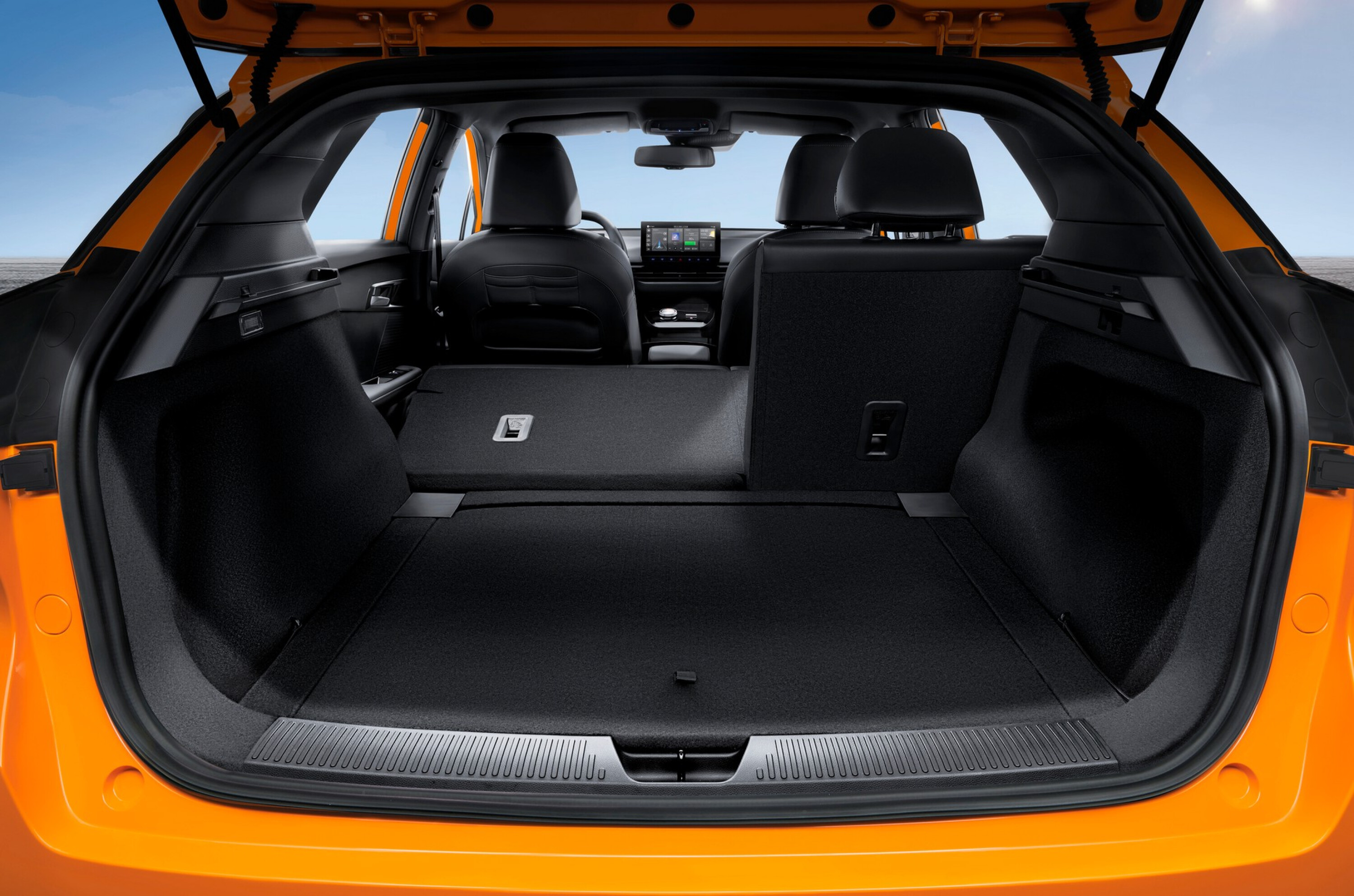
The 350-litre boot with adjustable height floor is of reasonable size. The MG4 doesn’t come with a cargo net, but there are cordoned-off cubbies to the side and some shopping bag hooks. Beneath the floor are some battery gubbins so there’s no provision for a spare tyre.
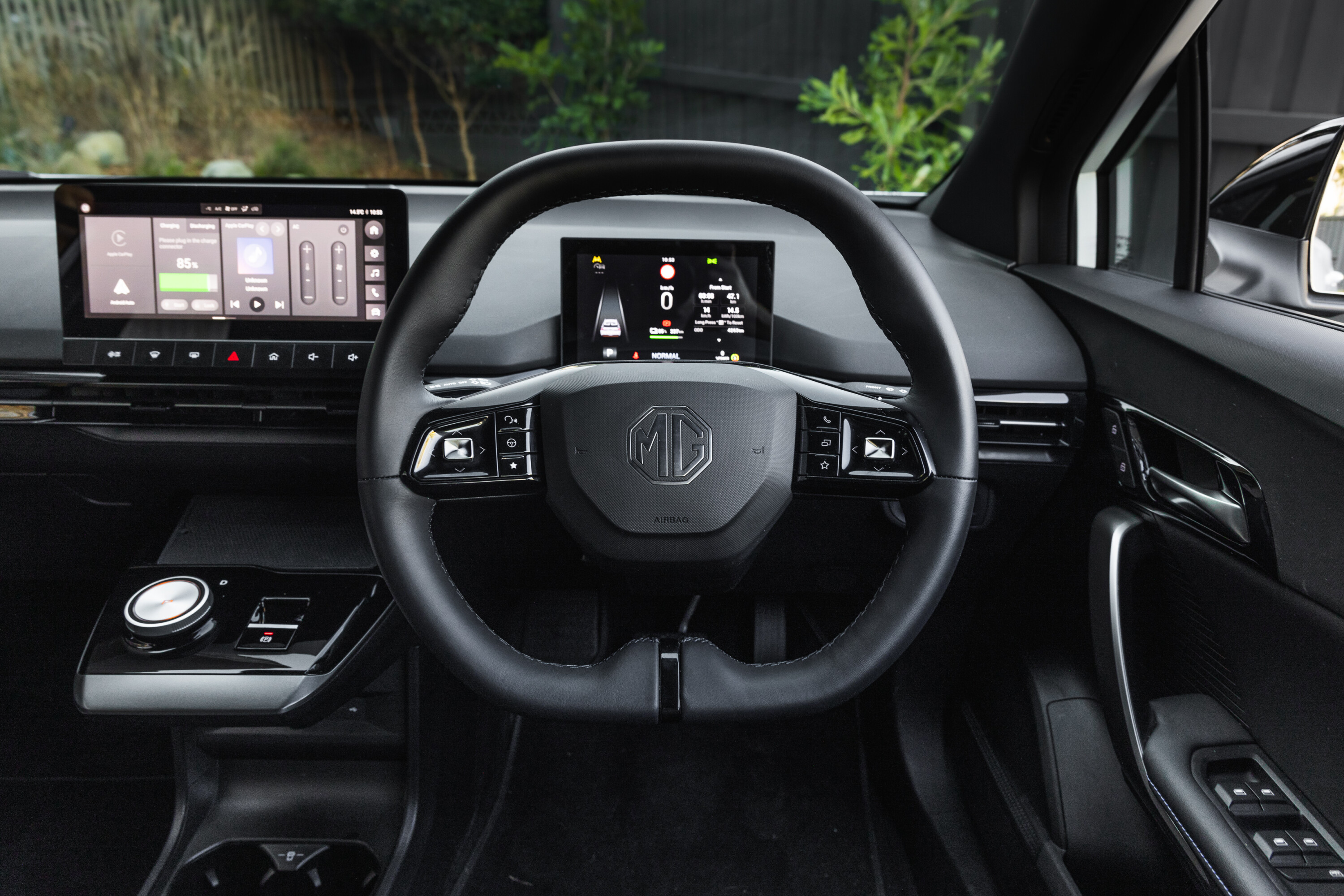
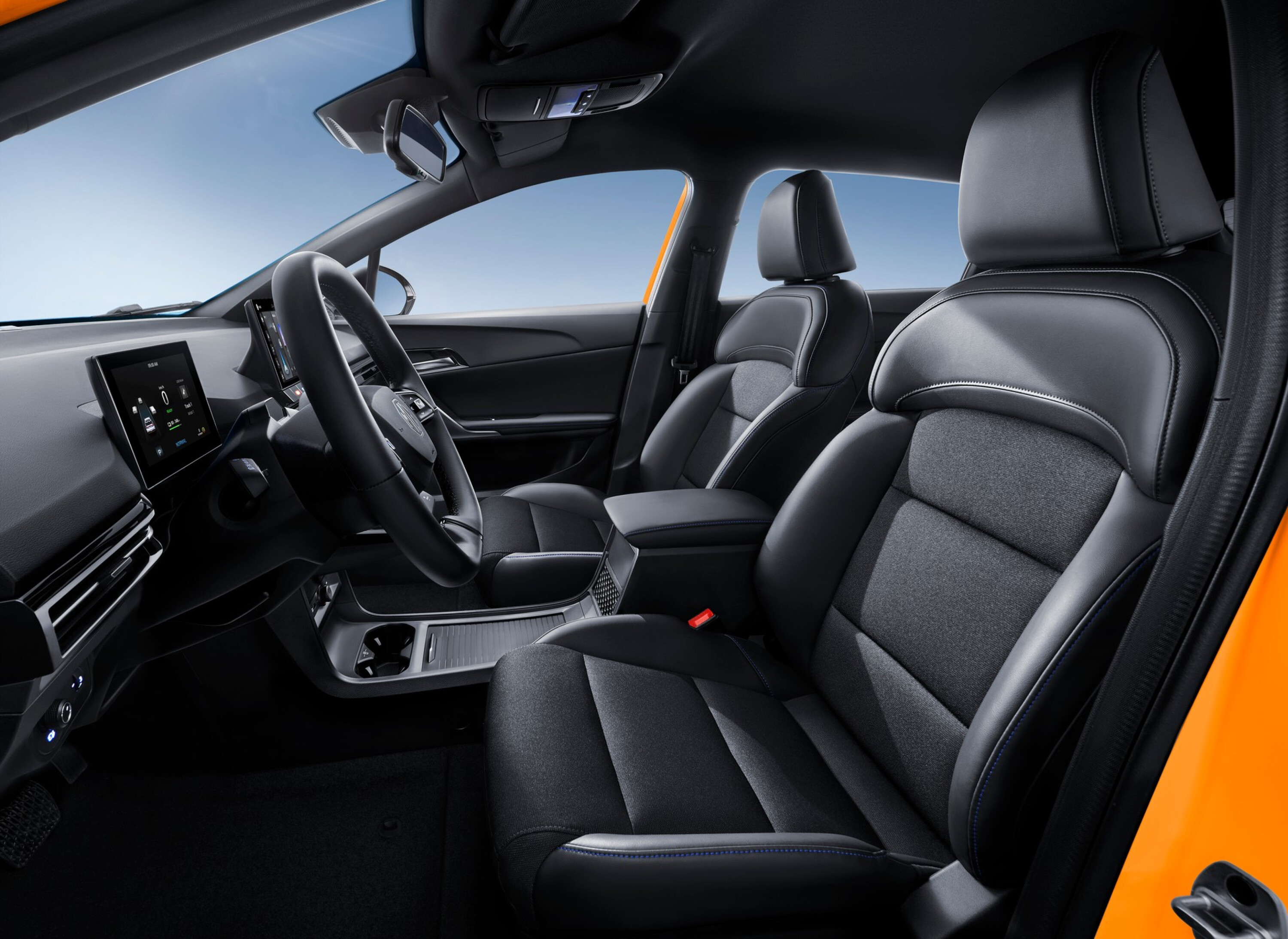
Front seats are very comfortable and – the driver’s seat at least – can be set low in the car for an excellent driving position. The not-round two-spoke steering wheel wears leatherette upholstery with real stitching.
1
Although unconventional in shape (and a little bit Lotus Emira-ey) it proved ergonomic while driving.
MG’s done a good job of material selection, not cheaping out on the flat, broad dashtop with soft material to minimise reflections and noise. The door cards are hard to the touch, but pleasant patterning and moulding choices make them feel more high quality than those you’d find in a dearer Kia Niro.
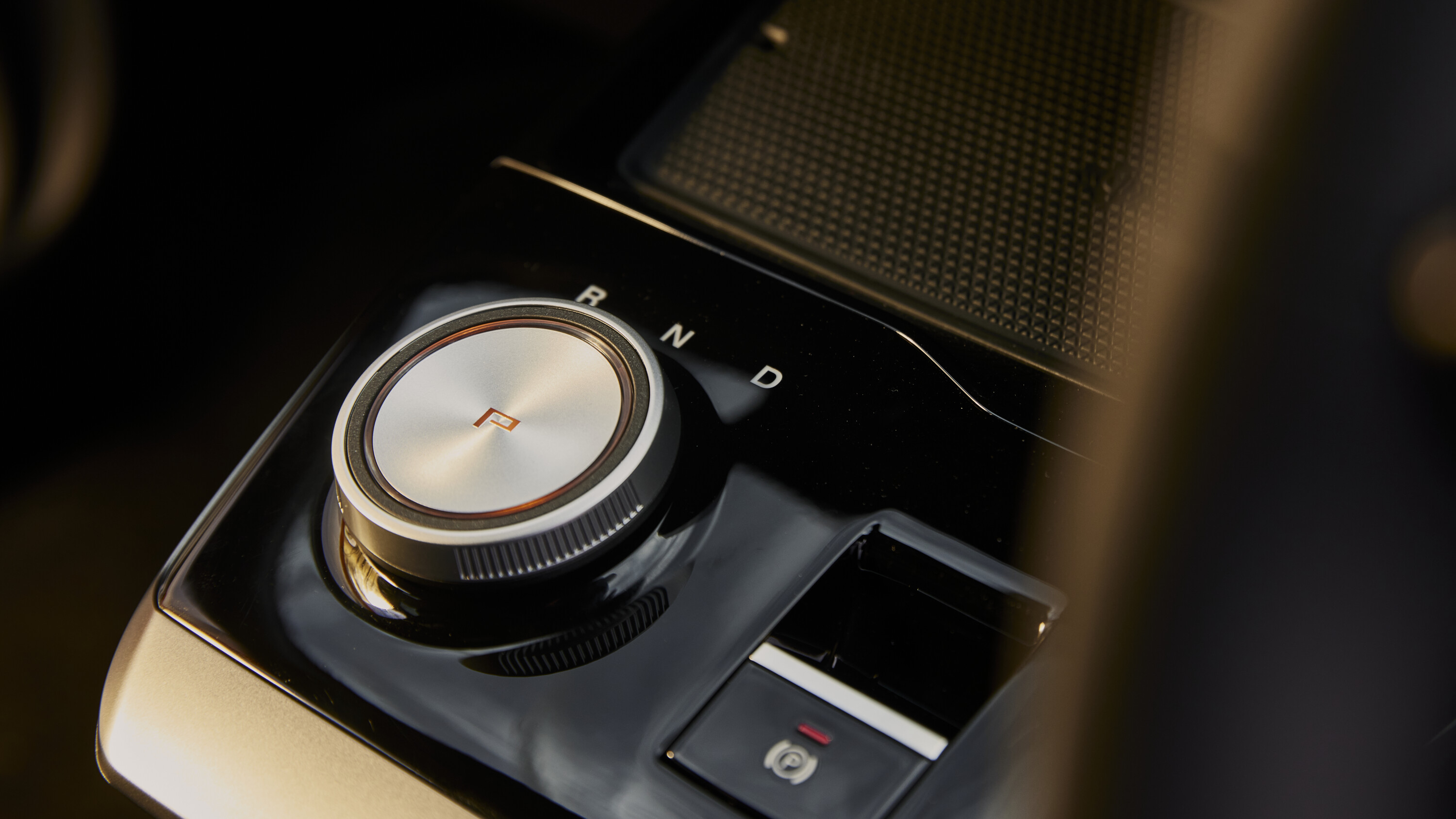
The Essence’s rotary gear selector is proudly presented atop a piano black console. Its action is well-damped, and the knurled edges add to the high-quality feel.
1
The cabin design is simple but in no way boring with elements of VW in the air vent that sweeps across the dash, and the shapely indicator stalks remind me of an Audi A4‘s.
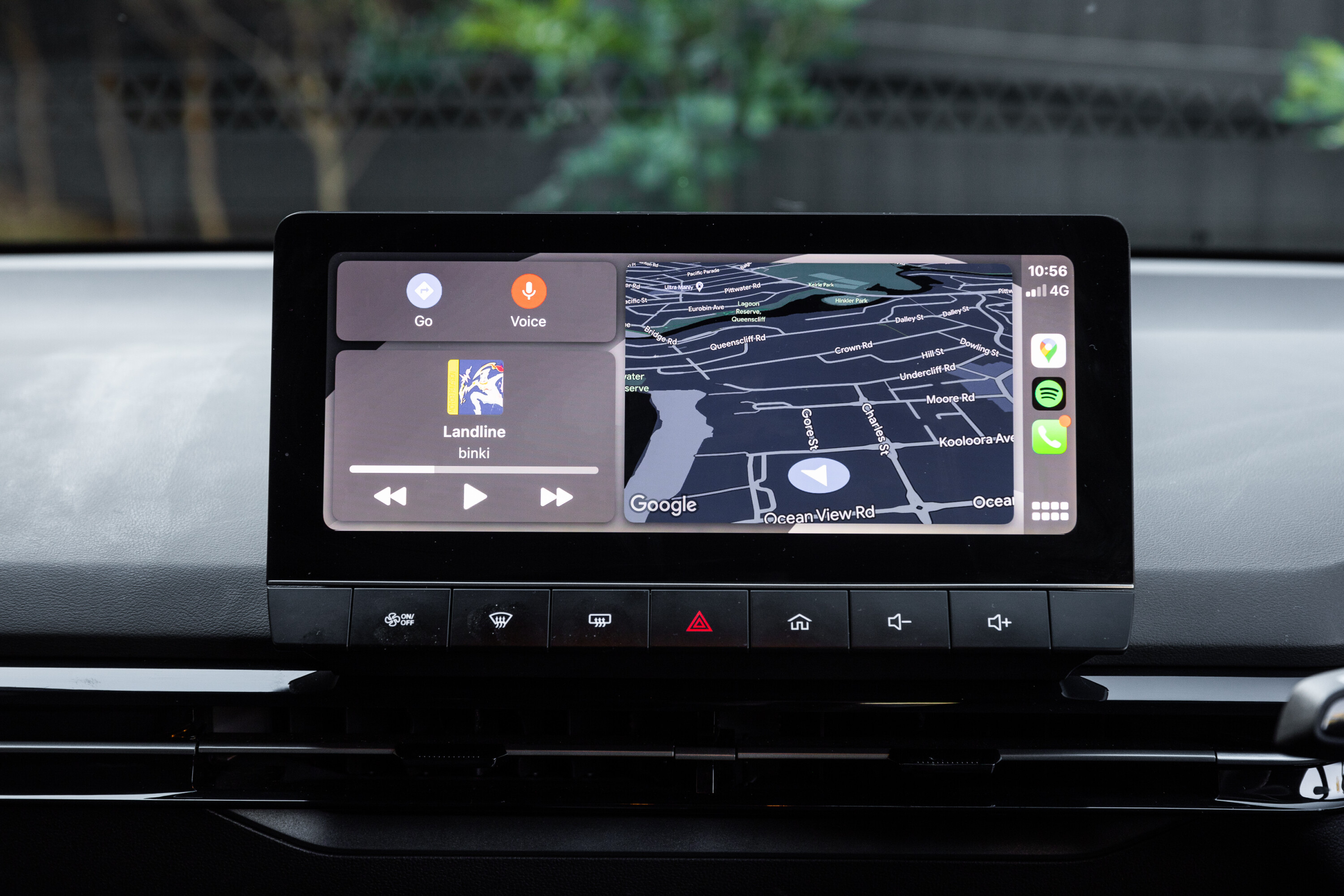
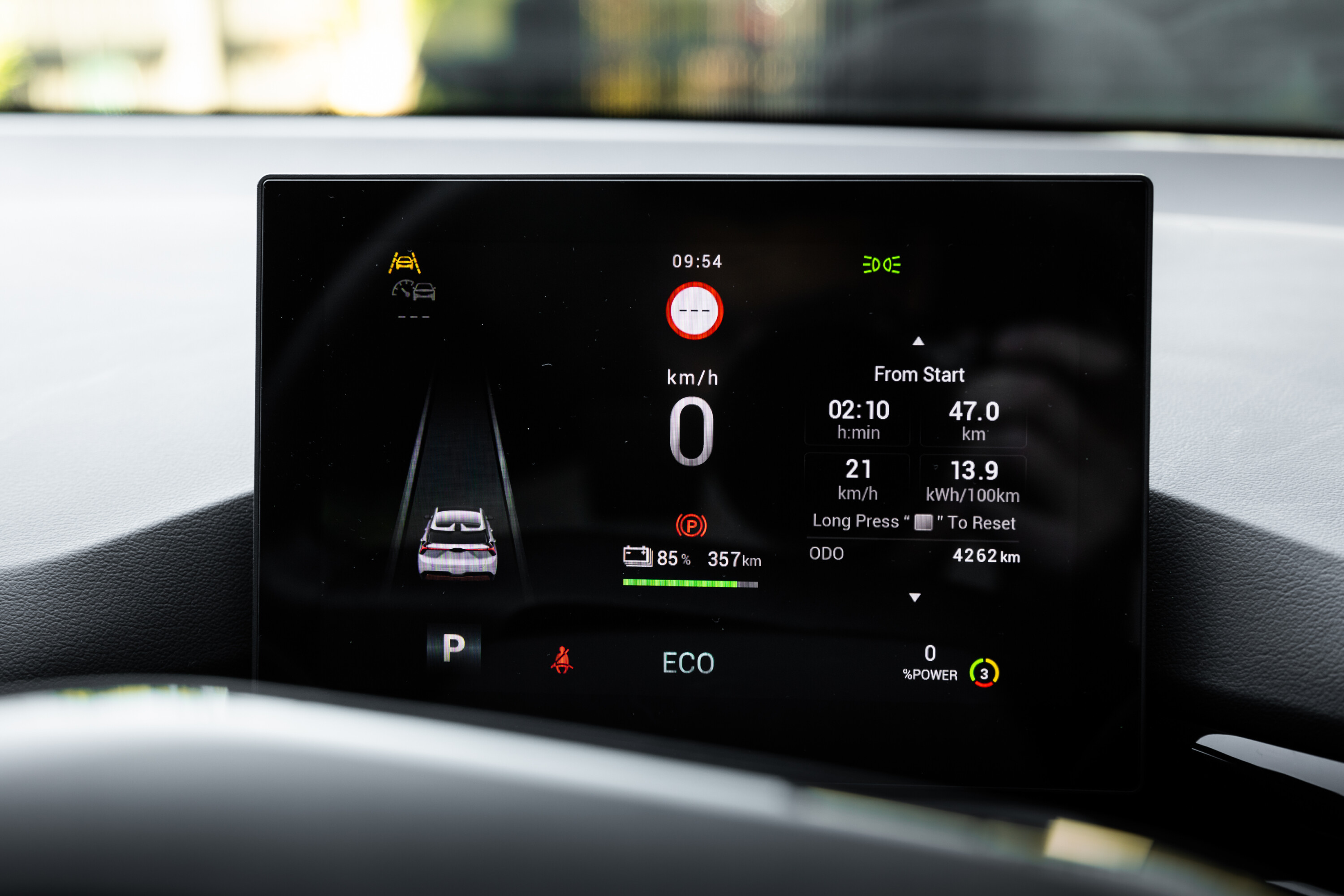
Technology is taken care of by a 10.25-inch central touchscreen and a 7.0-inch digital driver’s display. It features wired Apple CarPlay and Android Auto, while the Essence gets live traffic navigation, a wireless charging pad, and an average six-speaker sound system. The steering wheel buttons and software are unfamiliar at first, though it’s likely you’ll get used to interacting with the MG’s tech over time.
Beneath the touchscreen is a row of shortcut buttons that aid menu navigation, but the choice of front and rear demister shortcuts and an air-con off button is baffling. The physical controls would be better assigned to air recirculate and either fan speed or temperature up/down.
1
At least the up-spec Essence has a responsive voice control system that allows you to adjust fan speed, temperature, and other settings without touching the screen.
Cabin storage is another win for MG, and is clearly influenced by the expectations of UK buyers. The airy centre stack has a large area for odds and ends storage, with a roller cover to hide valuables.
There are two cup holders, another deep cubby under a squishy centre armrest and a neat elastic netted pocket perfect for a pack of chewing gum or the car’s key.
MG’s first attempt at an electric car, the original ZS EV, had an absence of body control that was unnerving and borderline dangerous. The MG4, though, is a different story.
The ground-up MSP architecture underpins a hatch that rides and handles admirably. The MG4’s dampers run smoothly through their travel and round out sharp-edged hits around town, yet hit an offset spoon drain or speed hump a little too fast and the body remains entirely in control.
There’s a sporty edge to the MG4’s ride that limits lean mid-corner. It feels as though MG benchmarked the Peugeot 308 and Volkswagen Golf, and the team has done a good job getting close with a great balance of chassis feedback and control.
1
Aside from a rear axle that could do with a little more rebound control to settle it on big mid-corner bumps and lifeless steering (that, to be fair, is accurate and easy to turn in town), the MG4’s chassis is excellent.
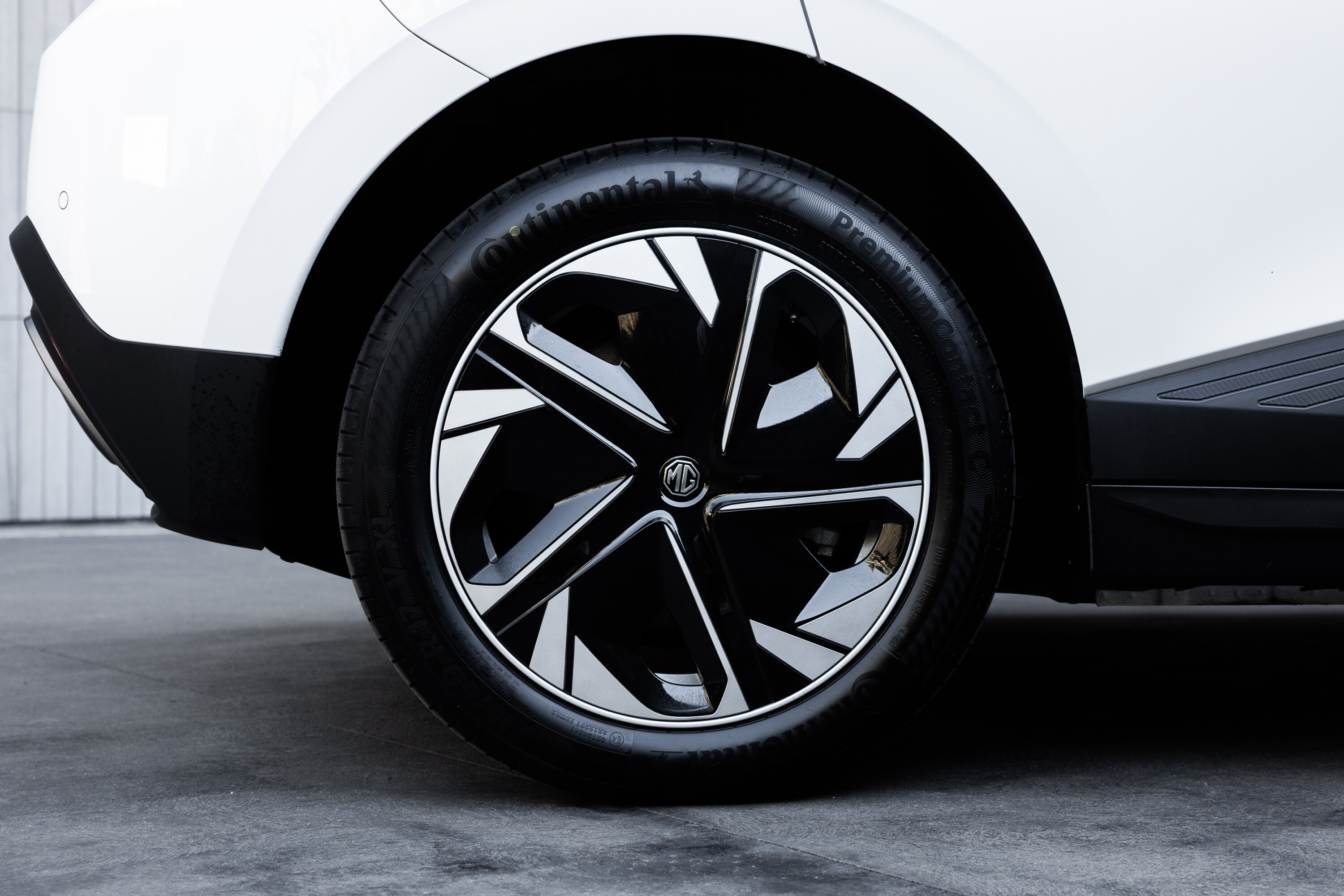
The 235/45 R18 Bridgestone Turanza T005 EV tyres don’t introduce any undue harshness so there’s no need to limit yourself to the 17-inch alloyed base model. The compound is grippy enough and, because they’re EV-specific, the tyres are quiet on open roads and during freeway driving.
In fact – aside from some wind whistle from the driver’s side mirror above 100km/h – the MG has excellent NVH insulation, something that not all EVs can boast.
1
Only on particularly craggy coarse chip bitumen can you hear resonant frequencies, but cruising at 110km/h on the Hume – even in the back seat – it’s easy to hold a conversation.
Starting the MG4 is a little unconventional for those used to combustion cars; you simply hop in with the proximity key (after pressing a little button on the door handles to unlock), twist the gear selector to Drive, and you’re off.
With the Essence 64kWh able to hit 100km/h in 7.2 seconds it’s plenty brisk on the move. The 1672kg Essence’s 61.7kWh battery is paired with a 150kW/250Nm eight-layer hairpin permanent magnet synchronous motor and a single-speed reduction gear; top speed is limited to 160km/h.
You can choose from three levels of regenerative braking and a true one-pedal drive mode.
None feels quite as natural as Polestar and Tesla’s integration, and the brake pedal requires quite a push to bring the car to a stop as the motor regen blends out and the physical brake calipers bite.
As well as five drive modes from Eco and Snow to Sport, there is a Custom setting. Normal and Sport have the most natural blend of response from the steering and throttle, with Eco being a little too dull.
The Long Range’s 77kWh battery is paired with a 180kW/350Nm motor that shoots the MG hatch to 100km/h in a Cupra Born-beating 6.5 seconds. Worth it if you want a warmed-through hatch, but for most buyers the 150kW power unit will be plenty – those after a hotter version should wait for the 320kW AWD MG4 XPower that’s confirmed for Australian release.
Whatu2019s the MG4u2019s driving range and charging?
Across the MG4 line-up, the WLTP driving range fluctuates between 351km-530km. The Essence we drove is rated at 435km in the combined WLTP cycle from a full charge of its 110mm-thick 61.7kWh battery.
On the MG4’s national media launch south of Sydney, we averaged 19.7kWh/100km over 160km of brisk driving. That equates to 313km of range, though the route wasn’t representative of an everyday driving scenario.
With the higher output battery, the MG4 can fast-charge at up to 140kW on public DC infrastructure, rejuvenating battery percentage from 10-80 in 26 minutes.
For home charging, the MG4 takes AC electricity on at a rate of 6.6kW for a 0-100 per cent charge of around 10 hours.
MG recommends only charging the 61.7kWh battery to 80 per cent to preserve its life, and not letting it fall below 20 per cent where possible.
Using MG’s ‘iSmart’ telematics app, owners can schedule charge times to take advantage of cheaper electricity prices, or best utilise their home solar power – this can also be done using the MG4’s on-board infotainment system.
The iSmart app can also pre-condition the climate control and lock/unlock the vehicle but the physical key is still needed to drive off. A 12-month subscription is included in the purchase, and afterward, MG will offer customers the ability to continue paying for the features. Pricing is yet to be confirmed.
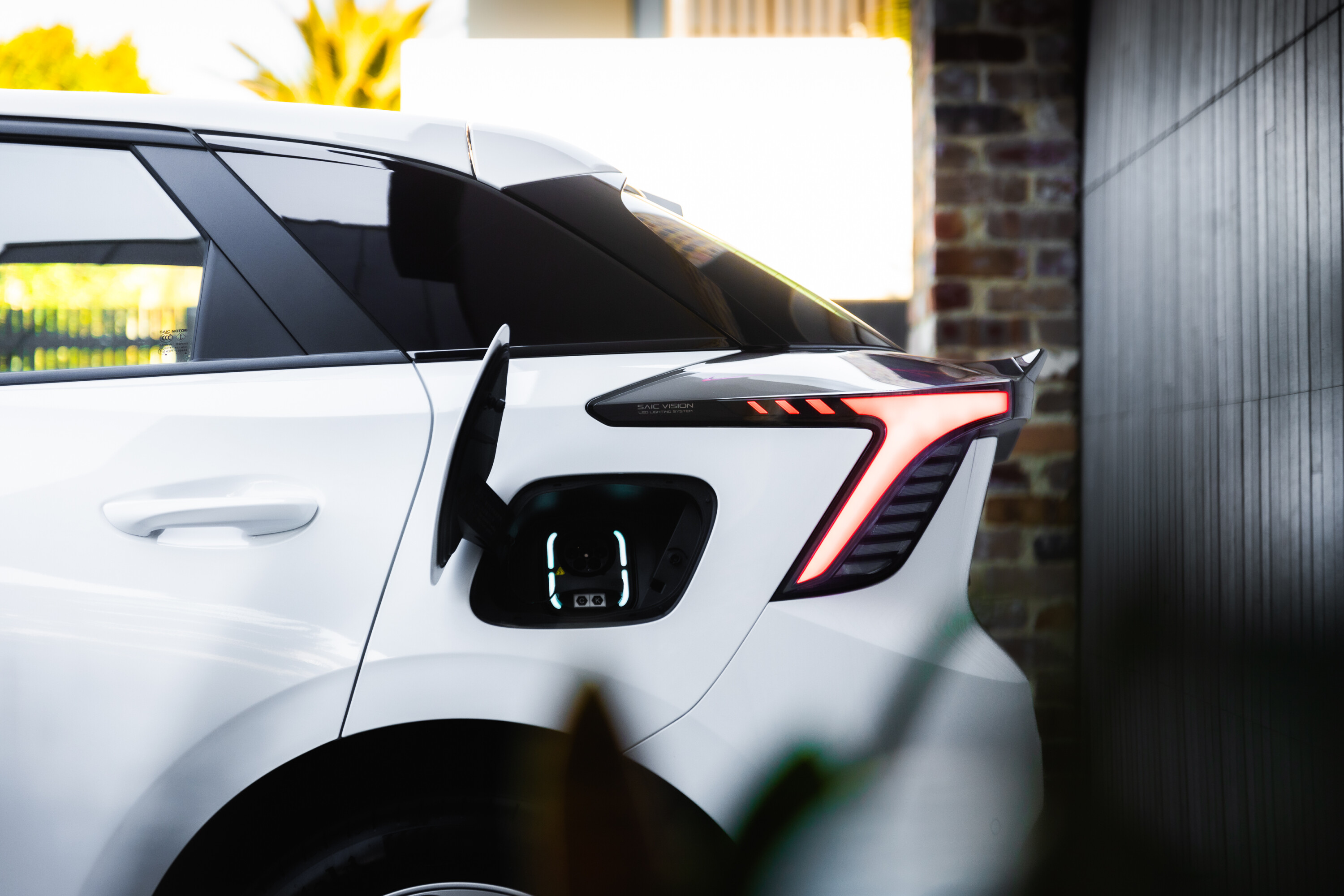
The MG4 is also capable of vehicle-to-load (V2L) functions. Using the onboard cable and 10-amp controller, you can plug into the front charge port and dish out 2.5kW of electricity.
The 2024 MG4 was awarded five stars in ANCAP testing under the 2020-2022 criteria.
ANCAP’s scoring was promising across the board, with good scores for adult occupant (83 per cent) and child occupant (86 per cent) protection, as well as solid vulnerable road user protection (75 per cent) and decent safety assist (81 per cent).
The car does miss out on a centre airbag, bringing its total to six, though is fitted with driver assistance systems such as AEB, adaptive cruise control and lane-keep assist. The MG4’s calibration is better than we’ve experienced from other Chinese brands, such as GWM/Haval and Chery, as well as MG’s previous efforts.
The MG4 is backed by a seven-year, unlimited-kilometre warranty and an equal period of capped-price servicing.
The MG4 can travel 24 months or 40,000km between visits to the dealer. Over six years/120,000km, servicing will cost $1478. Twelve months of roadside assistance is included.
If Tesla’s Model Y has become the must-have electric automotive accessory, the MG4 electric hatchback is an egalitarian electric car.
The MG 4 brings electric car ownership to the Australian masses in a complete and pragmatic package – the same sort of revolution the Volkswagen Golf ushered in at its 1974 launch, or more recently, Hyundai’s transformative FD-gen i30 did in 2006.
1
There are a few gripes – the lack of rear air vents and fold-down armrest are two we’d love to see addressed.
A petrol car still gives you more bang for buck on a spec sheet, too, but this electric hatch exudes maturity and completeness in a way its EV price rivals don’t.
The MG4 is a normal car with an electric powertrain, and it’s all the better for it. This mid-spec Essence 64kWh is our pick of the bunch, with all the technology, safety, and creature comforts you need for under $50K.
Missing active safety features that are assessed by safety organisation ANCAP include lane-keep assist, lane departure warning, and speed recognition and driver monitoring systems.
The entry-level MG 5 Vibe is also not fitted with rear seatbelt reminders, while all variants lack blind-spot and rear cross-traffic alerts.
ANCAP assesses active safety equipment in its ‘safety assist’ and ‘vulnerable road user’ categories – with minimum scores of 70 per cent required to achieve a five-star rating or 60 per cent for a four-star rating.
MG Australia chief executive officer Peter Ciao said the brand has no plans to provide MG 5 vehicles to ANCAP. If the safety organisation plans to assess the MG 5, it would need to purchase the test vehicles.
When asked if an ANCAP rating below five stars could affect MG 5 sales, Ciao said the brand made a choice between lower prices or more-advanced safety features.
“With each model, what [a five-star safety rating] really is, is a business decision, not a technical one. Because when we develop each model, we will decide, we will make a choice: How much? And what kind of technology to provide?” he said.
“We can provide any model with five-star [credentials] but that costs money, you know, and now in Australia this safety requirement is now so high it’s ridiculous.”
Speaking previously with Wheels Media, ANCAP CEO Carla Hoorweg said that “safety-related costs are undoubtedly a factor in vehicle pricing, but only one relatively small component,” something that MG and other brands don’t necessarily agree on.
“We do not apologise for encouraging increasing levels of safety when too many lives are lost, and serious injuries are still occurring on our roads,” added Hoorweg.
“The technology is available and becomes even more important for purchasers of smaller cars given the fundamental mass differences between them and larger vehicles they mix with on our roads today.”
1
Without a five-star ANCAP rating, the MG 5 would be excluded from some government and business fleets, and popular ride-share service Uber, if an exemption isn’t provided.
The MG 3 light hatch – which dates back to 2011 – is not fitted with any form of active safety technology, and neither is the four-star-rated ZSsmall SUV.
Both vehicles are the cheapest in each segment – and highest-selling – with the MG 3 light hatch priced at $19,990 drive-away and ZS small SUV at $23,990 drive-away.
“[MG] launched in Australia six years ago but the business decision is survival first, so we focus on affordably priced [cars] under $20K and under $30K,” added Ciao.