
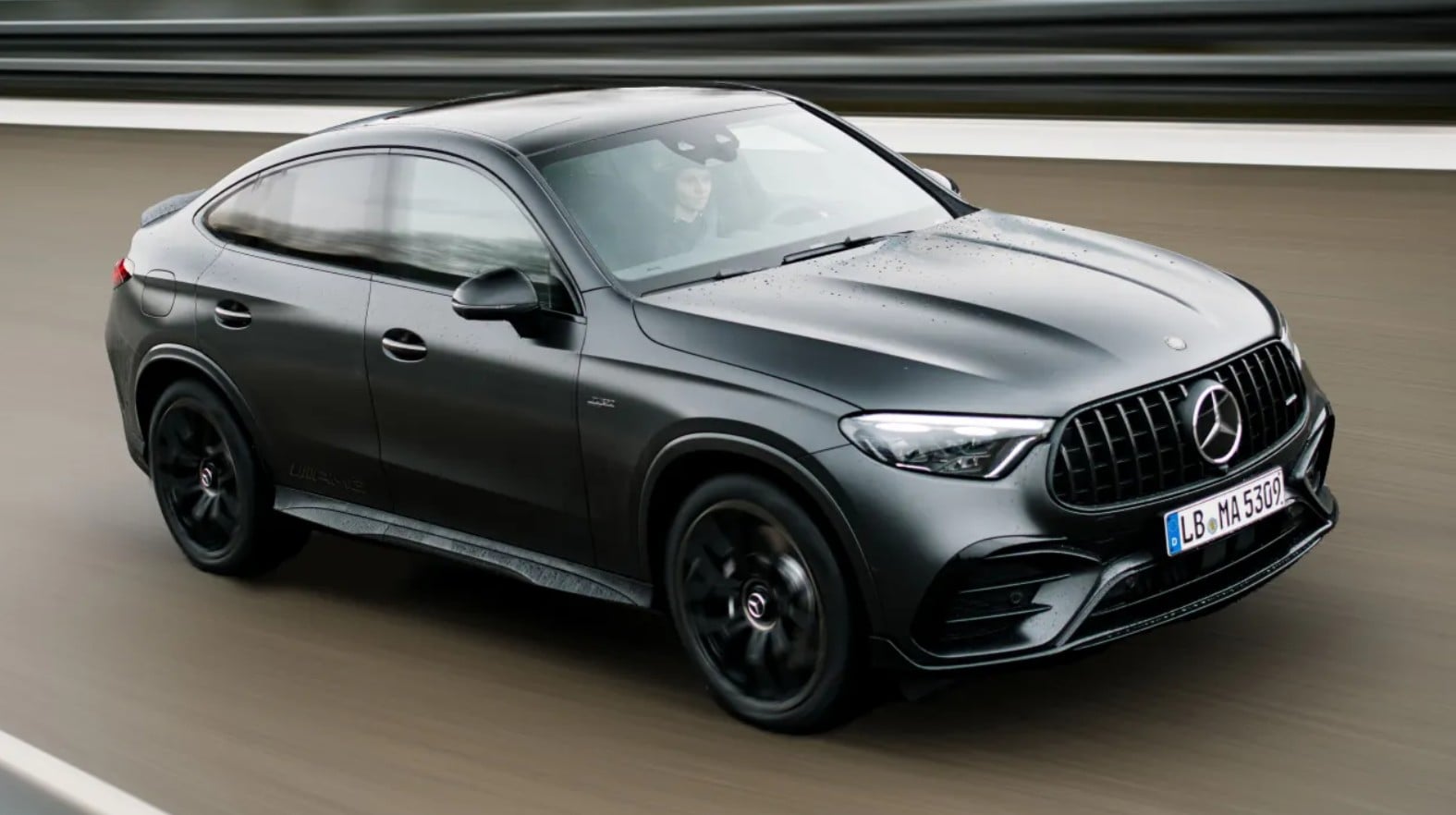
Mercedes-AMG has officially revealed the new GLC 53 SUV and Coupé, and while the badge suggests a familiar mid-tier performance model, the significance runs deeper. The latest GLC 53 effectively signals AMG’s retreat from its controversial four-cylinder performance strategy, re-establishing a larger-capacity six-cylinder engine at the heart of its compact performance SUVs.
In doing so, the GLC 53 steps in to replace both the outgoing GLC 43 and the range-topping GLC 63 S E Performance. Rather than matching either outright, the new model splits the difference, offering strong performance without the complexity or cost of the plug-in hybrid flagship.
Power comes from a heavily revised 3.0-litre turbocharged inline six-cylinder petrol engine, already familiar from the CLE 53 range but significantly upgraded for duty in the heavier GLC. Changes include revised cylinder heads with new camshafts, a larger air intake and a redesigned intercooler to improve response and high-rev performance.
3
The turbocharging and 48-volt mild-hybrid systems have also been refined. An integrated starter generator and an electrically driven supercharger work together to reduce turbo lag and broaden the torque curve, with the electric supercharger now delivering 50 per cent more output than before.
Total system output is rated at around 330kW, with a further 16kW briefly available from the mild-hybrid system. Peak torque sits at 600Nm, rising to 640Nm during short overboost windows. Mercedes-AMG claims a 0–100km/h time of 4.2 seconds, while top speed is electronically limited to 250km/h, increasing to approximately 280km/h with the optional AMG Driver’s Package.
Drive is sent through AMG’s nine-speed automatic transmission to an all-wheel-drive system that favours the rear axle. Drift Mode allows the system to run purely rear-wheel drive, supported by a standard electronically controlled limited-slip differential.
2
Chassis upgrades include rear-wheel steering and a more substantial braking package than the standard GLC, with large ventilated discs and multi-piston front calipers. Fuel consumption is quoted between roughly 9.2 and 9.9 litres per 100 kilometres, depending on body style and wheel size.
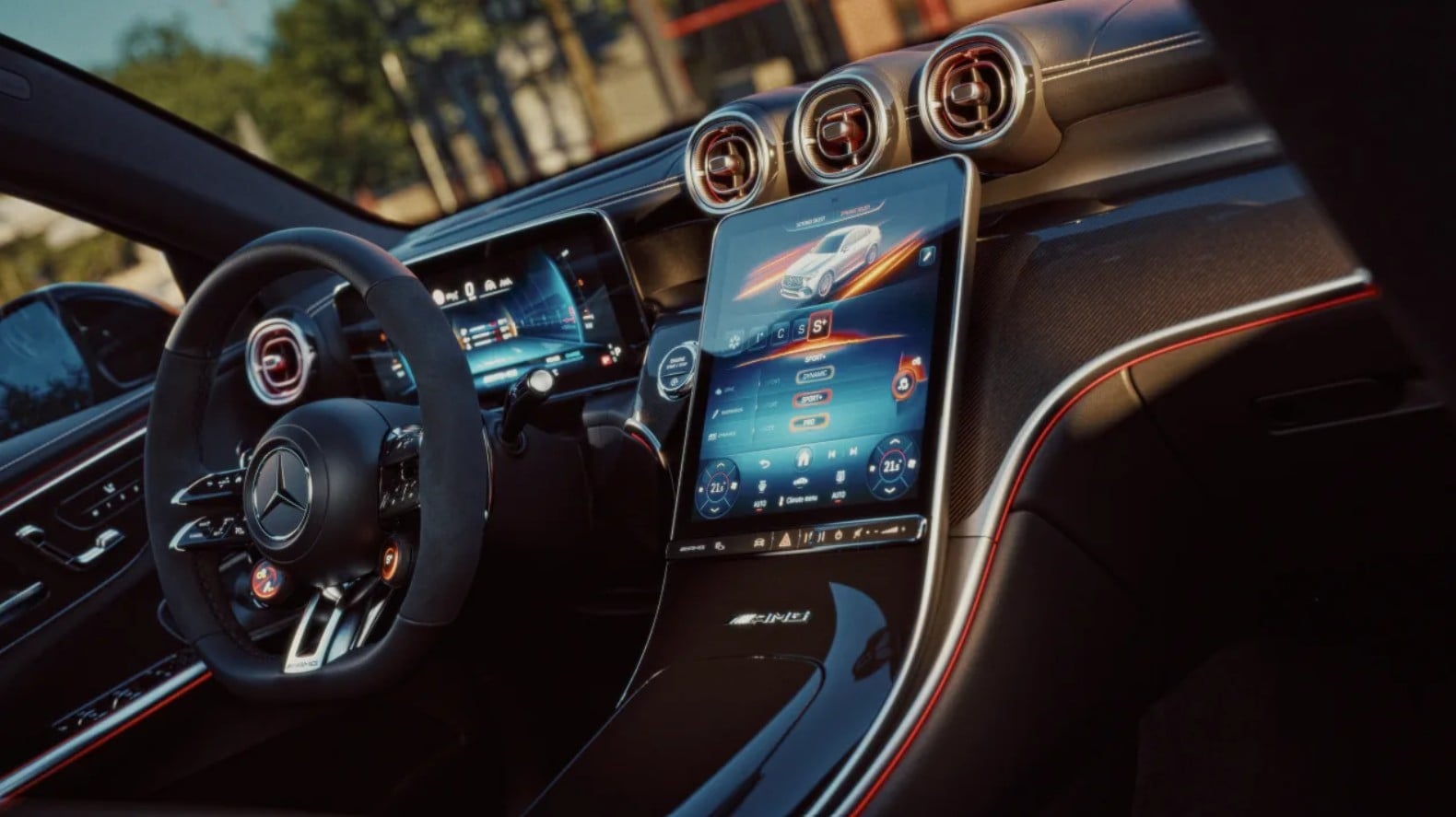
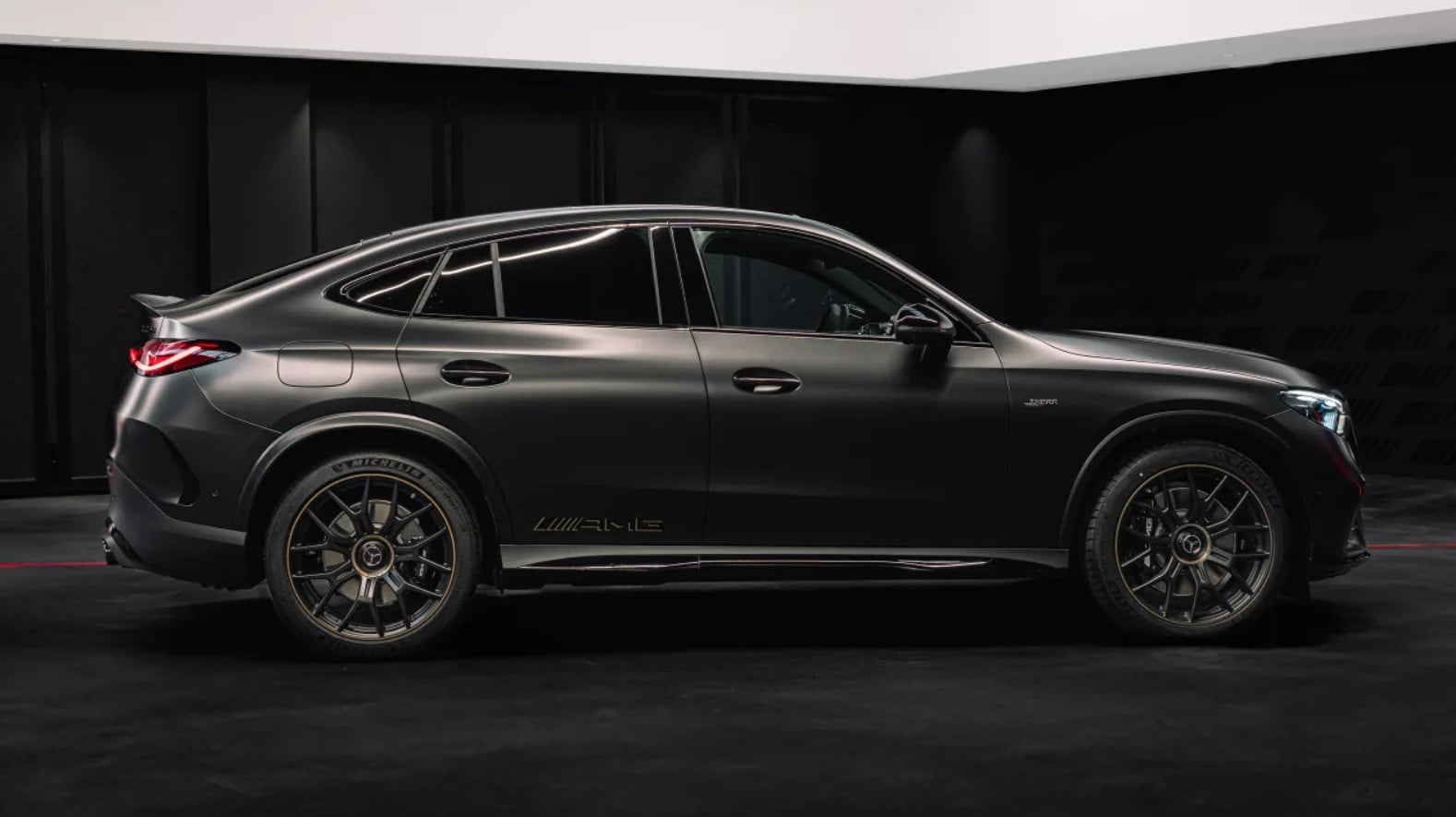
Visually, changes are restrained. Styling remains close to the previous GLC 43, with new wheel designs and colour options providing differentiation. Inside, the cabin layout and AMG-specific digital displays carry over unchanged.
Australian pricing has yet to be confirmed, but the GLC 53 is expected to slot between previous AMG variants, positioning it against rivals such as the BMW X3 M50, Audi SQ5 and petrol-powered Porsche Macan GTS.
4
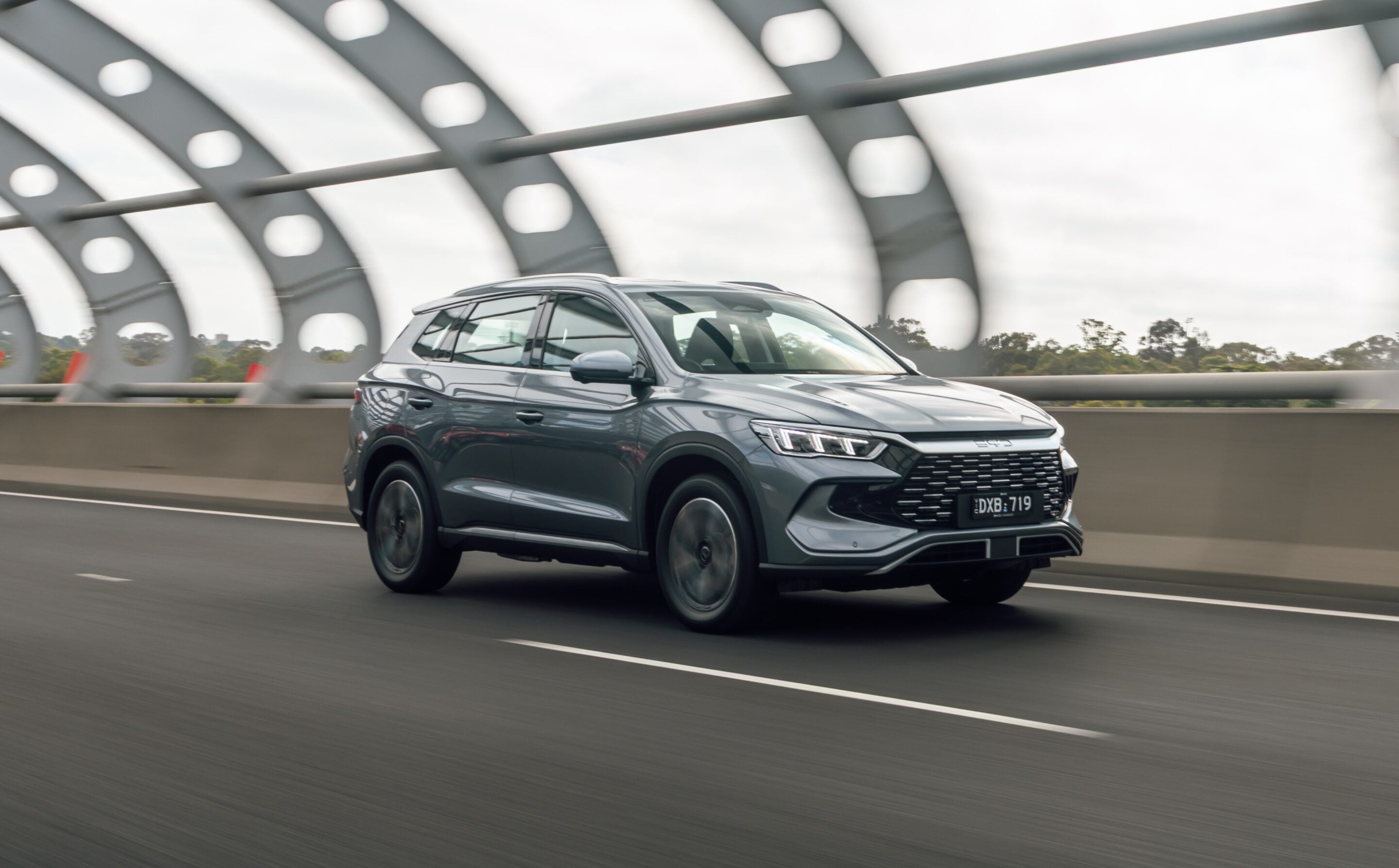
Firstly, the sharp pricing is the undeniable focus – Essential starts from $33,990 and Premium starts from $37,990 – both before on-road costs. Both models are FWD, and mechanically the same, except for the capacity of the battery pack, and therefore the electric-only range they offer.
The petrol engine is a 1.5-litre, four-cylinder, naturally aspirated unit, delivering 72kW and 122Nm. The electric motor adds a further 145kW and 300Nm, but as is the case with hybrid tech, the numbers don’t total, so BYD claims a system power output of 156kW.
Essential gets a 12.9kWh battery pack, while Premium steps that up to 18.3kWh. As such, BYD quotes its ‘Blade Battery’ as delivering an electric-only range of 71km and 100km respectively from it’s Lithium Iron Phosphate construction.
4
BYD quotes 1.2L/100km and 1.3L/100km for the two models respectively, which as Wheels readers know, covers the first 100km of the standardised testing cycle. However, BYD has gone further to also quote the fuel consumption when the battery dips below 25 per cent, with the Sealion 5 using 4.5L/100km and 4.6L/100km respectively in that scenario. If you’re looking for a comparison, market favourite RAV4 Hybrid, uses a claimed 4.7L/100km.
BYD is no joke in our local market, with serious sales success already, overtaking Tesla in EV sales figures, based primarily on value. Ask the brand whether it wants to be seen as ‘affordable’ and it will tell you the focus is ‘value’ across the range. Specifically, ensuring the buyer feels like they are getting a lot for their money, regardless of what they’ve spent.
In essence, the theory that for $33,990 you can cover the average Aussie’s daily commute without using any fuel, will make sense to a lot of buyers – more so if the drive experience is a good one.
3
BYD is fast becoming known for its battery technology – not just capacity, but also efficient usage of the capacity available – and that’s been a large part of the success in our market.
As Wheels has stated previously, if you’re enticed by the idea of an electric vehicle, but not yet ready to fully commit, a plug-in hybrid is worth considering, especially one as cost effective as the Sealion 5. BYD also states that its blade battery technology means you can charge the battery pack to 100 percent without fear that it will degrade quickly over time.
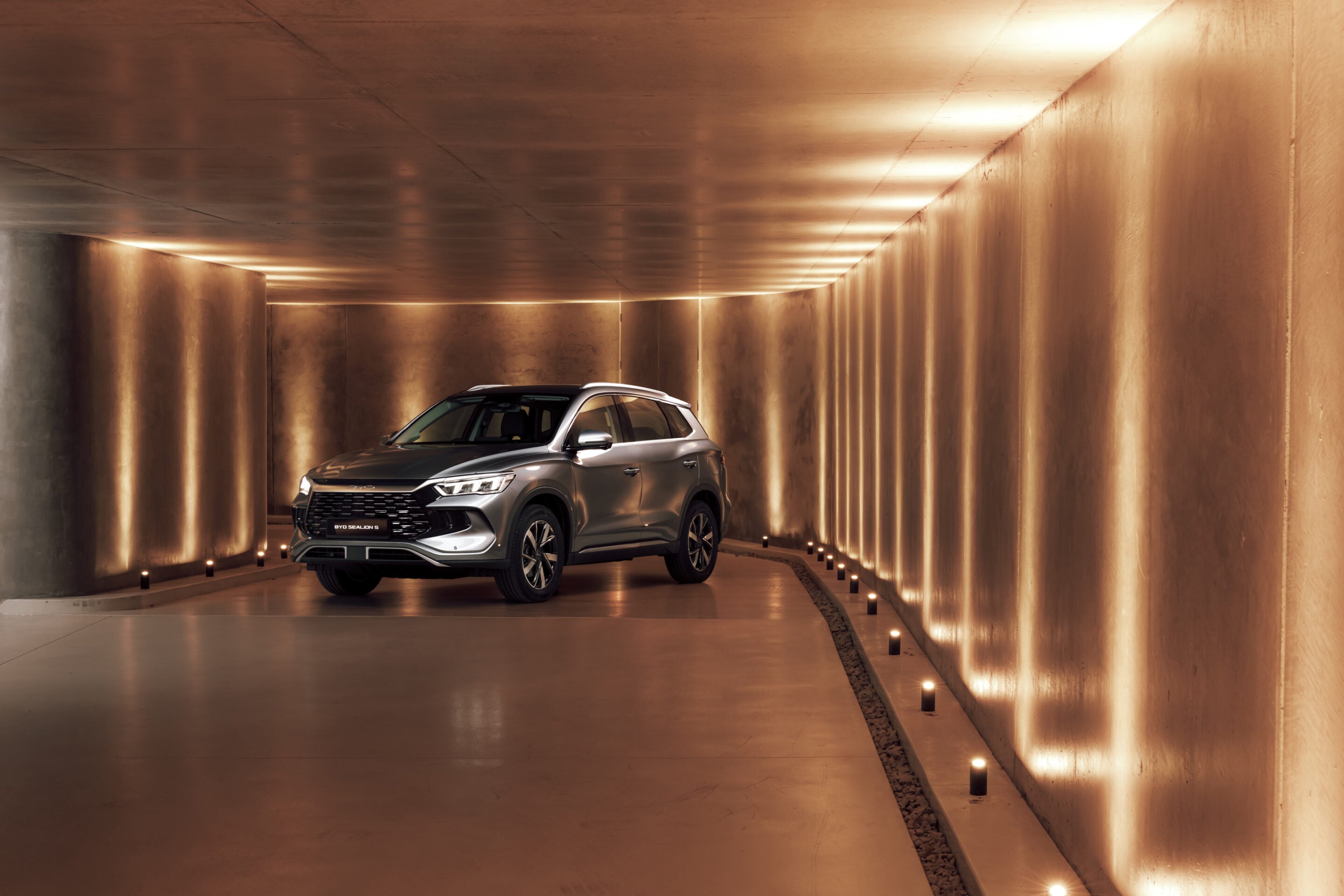
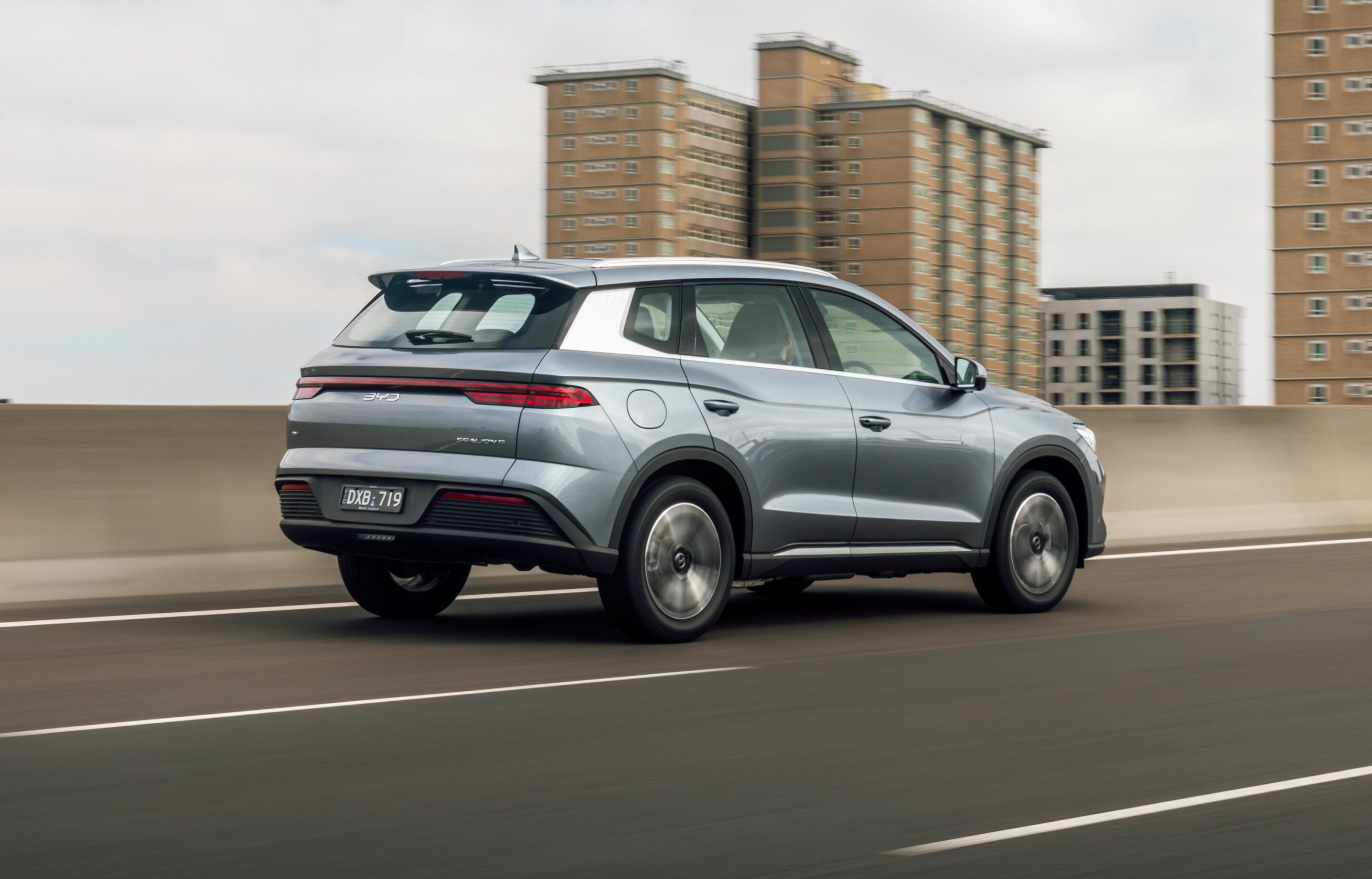
The exterior styling isn’t quite as contemporary as other new BYDs on the market, which makes sense, given this model traces its roots back to 2019 in its home market in China. Still, Sealion 5 is different enough to stand out in a sea of SUVs on the road. Both models get 18-inch rims and 225/60/18 Hankook tyres. Sealion 5 is 4738mm long, with a 2712mm wheelbase.
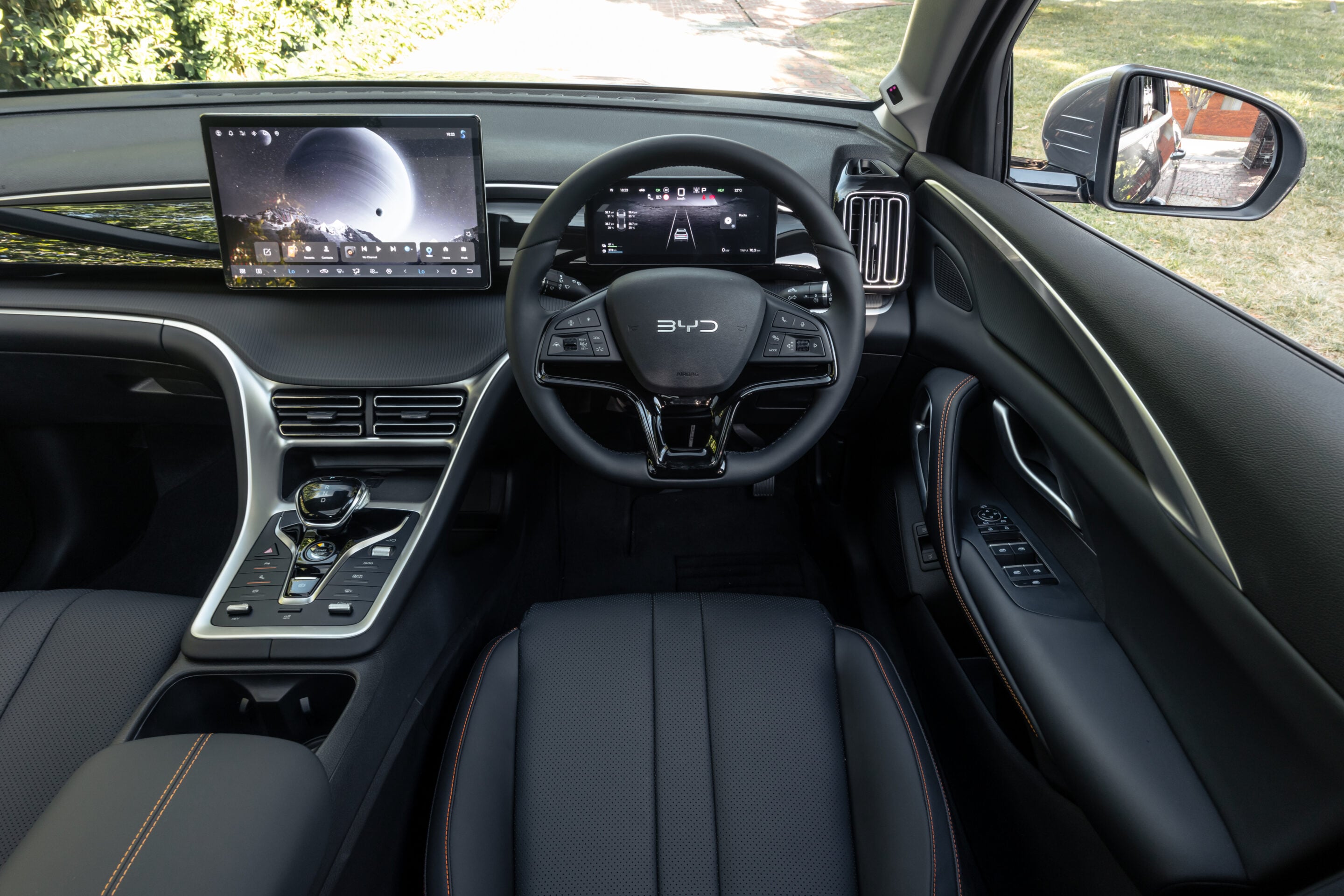
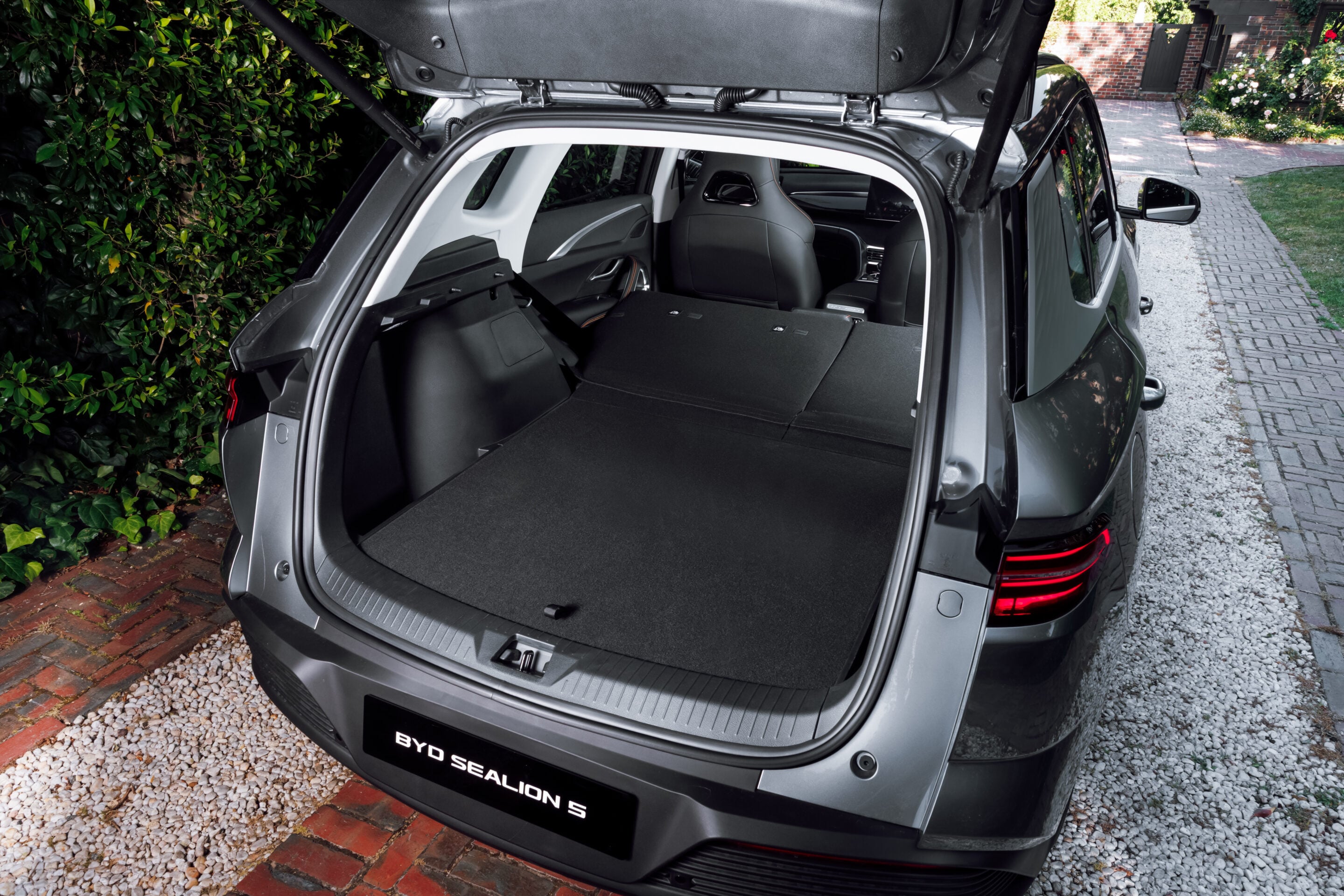
Even the base model Essential, feels like a good buy when you’re inside the cabin, certainly not like it’s been built down to a price. Both models get synthetic leather trim, bit if you step up to the Premium, you get niceties like electric seat adjustment, a panoramic sunroof and electric tailgate. Given you don’t ‘need’ any of those features, you won’t feel like you’re shortchanging yourself if your budget doesn’t stretch to the Premium. Cabin space is what you’d expect for the segment, and the boot offers up 463 litres with the
second row in use or 1410 litres with that row folded down.
4
Essential features a 10.1-inch infotainment touchscreen, wireless smartphone connectivity, six-speaker audio system, proprietary satellite navigation, DAB radio, and various USB A or C ports for charging. Both models get a clear 8.8-inch digital driver’s display, which was easy to see, even in harsh sunlight.
Sealion 5 is currently untested by ANCAP, and is unlikely to be by the time you read this, so we can only quote the standard safety equipment as per the specification sheet – 64 per cent high-strength steel, seven airbags, ultra high-strength hot-stamped steel for the A and B pillars as well as the door beams, roof frame and front and rear sections. BYD’s ‘Di-Pilot’ system includes front and rear collision warning, electronic brake force distribution, lane-keep assist, lane-change warning, bling-sport detection, rear cross-traffic alert, adaptive cruise control and intelligent high-beams.
Our brief first drive indicates inherent smoothness from BYD’s DM-i Super Hybrid drivetrain, with no nastiness evident in the transition from electric to petrol power. Take up from standstill is smooth, too, with that effortless EV feel, albeit without the whiplash-inducing outright power a pure EV offers. Do you need such frivolity for the dail commute? Not at all, and the Sealion 5 delivers relaxed commuting ability. Still, the 0-100km/h run takes a respectable 7.7 seconds for the Essential and 8.1 seconds for the Premium.
Bump absorption is on the softer side of the equation, meaning the Sealion 5 is comfortable in dealing with urban nastiness, but can roll a little if you tip it hard into a corner. Again, you don’t really need or want to drive an SUV of this type in that manner, and Wheels would take comfort over outright handling in this segment.
1
The steering itself is what we’d expect for a mid-size SUV, but it’s worth noting that the lane-keep assist is a little too enthusiastic sometimes. We did test the Sealion 5 on country roads, where you’re often trying to avoid potholes or debris at the edges of the road, so you might not need to be fighting it quite so much in the city, but we’d like BYD to tune it down a little to enhance the driving experience even more.
The general feel of the Sealion 5 out on country roads is one of comfort and ease. There’s no doubt it would make for a relaxed family cruiser, for those of you attracted to a country road trip. You will notice some tyre noise inside the cabin at 100km/h but it’s not so intrusive as to be annoying.
Longer distance testing awaits for Wheels, but on first impressions, there’s a lot to like about the BYD Sealion 5. It’s not a standout in terms of styling or driving dynamics, but it does offer a genuinely affordable take on the smarts of plug-in hybrid technology and efficiency. Crucially, it looks like being an important cog in the brand’s march further up the sales charts in this market.
1
Specs
| Model | BYD Sealion 5 Essential |
|---|---|
| Price | From $33,990 plus on-road costs |
| Motor | 1.5-litre four-cylinder plug-in hybrid |
| Engine peak outputs | 72kW/122Nm |
| Electric motor peak outputs | 145kW/300Nm |
| Combined peak power | 156kW |
| Transmission | Single-speed, front-wheel drive |
| 0-100km/h | 7.7 seconds |
| Battery | 12.9kWh |
| Peak charge speed | 3.3kW |
| Claimed electric range (NEDC) | 71km |
| Fuel consumption (claim) | 1.2L/100km (full charge), 4.5L/100km (low charge) |
| Dimensions (length/width/height/wheelbase) | 4738/1860/1710/2712mm |
| Boot space | 463 litres (rear seats up)/1410 (rear seats folded) |
| Kerb weight | 1724kg |
| Warranty | 6-year/150,000km (vehicle), 8-year/160,000km (battery) |
| On sale | Now |
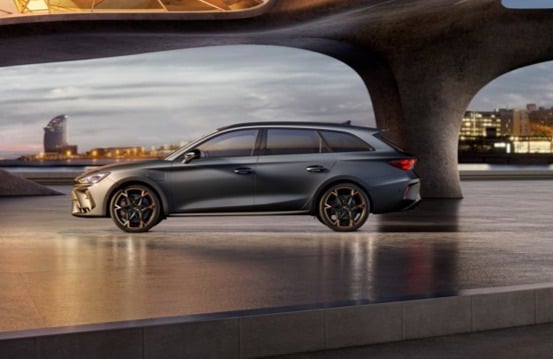
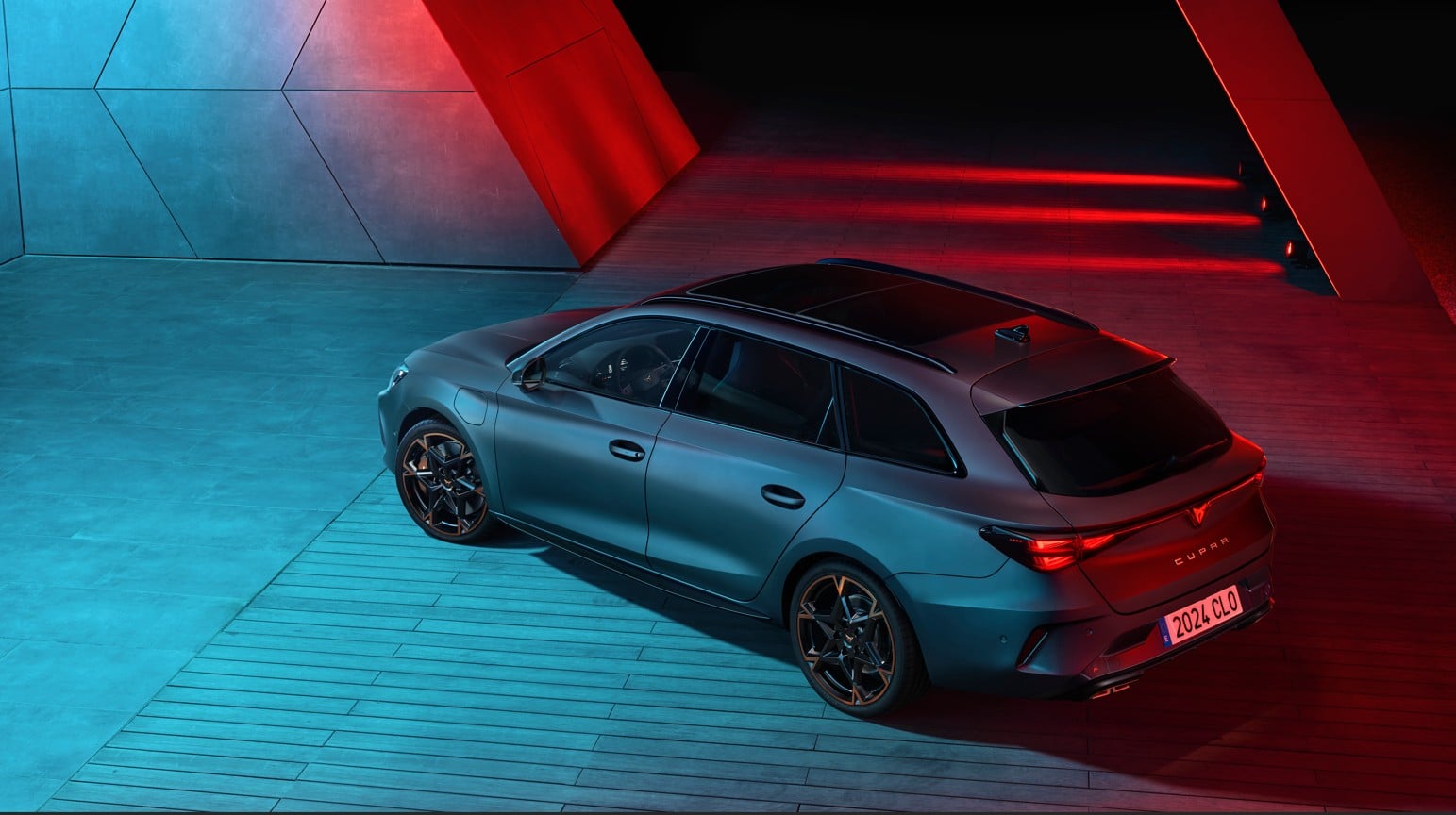
CUPRA has broadened the appeal of its Leon VZe Sportstourer by making its Extreme Package available on the plug-in hybrid wagon for the first time. Previously limited to the Leon hatchback, the package is now offered exclusively as a build-to-order option for the Sportstourer, following sustained interest from buyers seeking a more performance-oriented take on the electrified model.
The Extreme Package is designed to sharpen the Leon VZe Sportstourer’s dynamic and visual character, aligning it more closely with the sportiest versions of the Leon range. It introduces a suite of hardware and design upgrades that mirror those already offered on the hatchback, carrying the same $7,600 price premium.
Among the key changes are upgraded braking components, with Brembo four-piston front callipers fitted to improve stopping performance. Inside, CUP bucket front seats upholstered in Enceladus Grey Seaqual and Dinamica materials replace the standard chairs, while darker gloss interior accents contribute to a more focused cabin atmosphere.
1
Exterior revisions are equally noticeable. The Extreme Package adds aerodynamic elements such as side skirts and an extended rear spoiler, while upgraded matrix LED high-beam headlights are included to enhance night-time visibility. Together, the changes aim to give the Sportstourer a more assertive stance without altering its core mechanical package.
The move reinforces CUPRA’s positioning of plug-in hybrid vehicles as performance-focused alternatives rather than efficiency-led compromises. The Leon VZe combines petrol and electric power in a drivetrain intended to deliver strong on-road response alongside reduced fuel consumption, and the new package is intended to underline that balance.
CUPRA’s Australian line-up is increasingly centred on electrified models. The Terramar and Leon Sportstourer are already available locally with plug-in hybrid technology, and the next-generation Formentor PHEV is expected to be revealed soon. The brand has also indicated that a Leon hatchback plug-in hybrid could be added to the range in the future, although no formal announcement has been made.
1
The introduction of the Extreme Package to the Sportstourer reflects CUPRA’s willingness to adjust its offerings based on market feedback. Local customers and media have consistently highlighted demand for a more aggressive specification of the wagon, particularly one that matched the hatchback’s highest-performance trim.
The Extreme Package is available to order now on the Leon VZe Sportstourer. Full specifications and pricing details are outlined in CUPRA’s updated model information through its Australian dealer network.
Ferrari has revealed both the name and dashboard of its first electric vehicle, the Ferrari Luce. The name is Italian for ‘light’ and differs from ‘Elletrica’, which was used in its development. The controversial new Ferrari EV will debut in May 2026.
And while we’ve previously heard details about its 1000hp output, 2.5 second 0-100km/h time and 310km/h top speed, we can now see its iPhone-inspired dashboard and physical buttons.
Compared with many modern cars, the dashboard of the Ferrari Luce is quite simple, and uses a lot of buttons for controlling its many features. That’s because both it and the exterior have been developed by design firm LoveFrom, which was part-founded by former Apple design chief Sir Jony Ive, who oversaw the styling of products such as the iPhone, iPad and Apple’s iOS operating system.
Ive’s influence can clearly be seen in the interior of the Luce with its glass and aluminium finishes, made by Corning. The 10-inch moveable central touchscreen is also quite iPad-like in its design, and the placement of buttons around the cabin is Apple-like with simplistic and functional design.
4
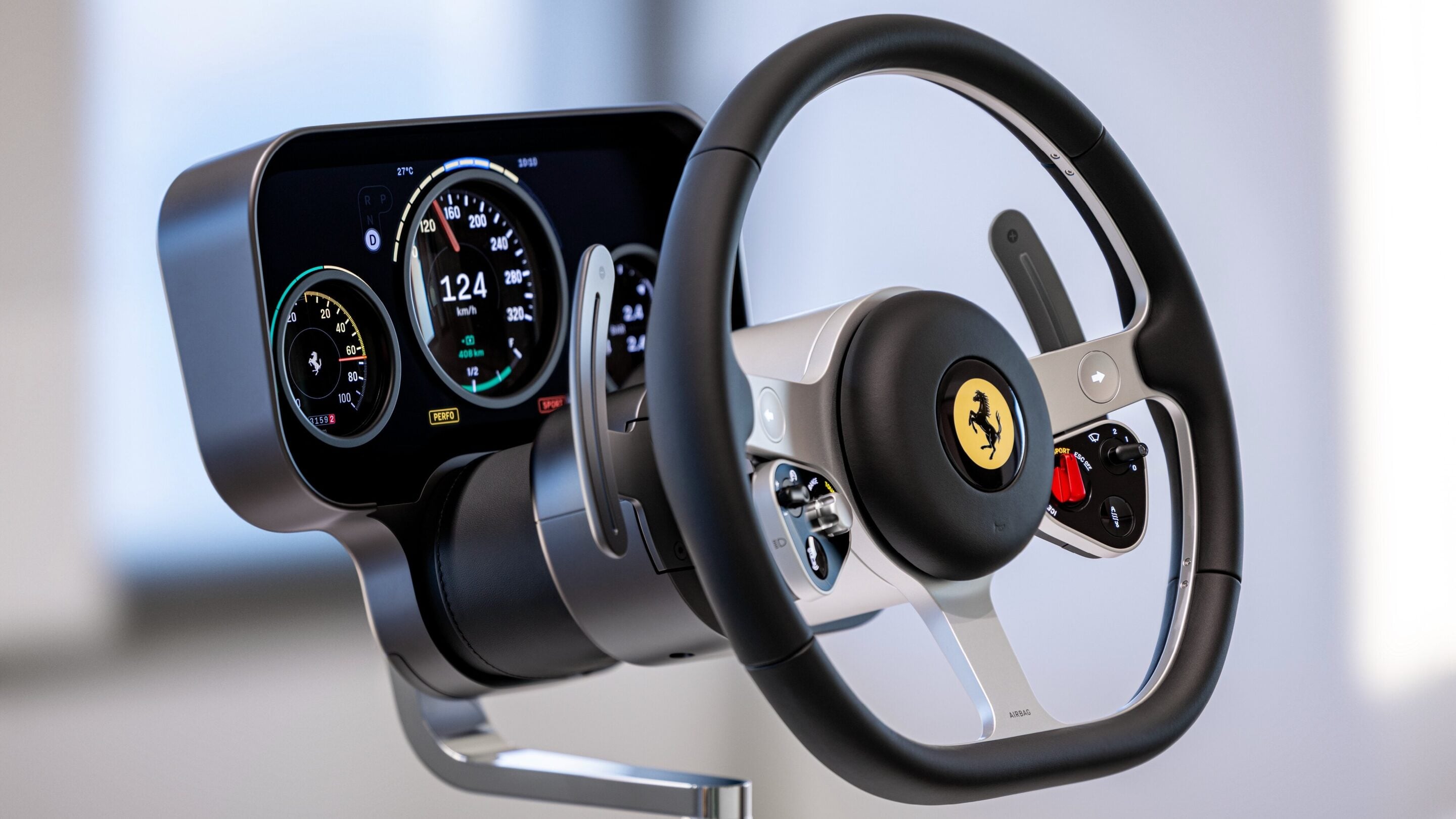
The 12.5-inch digital driver’s display, however, is much more analogue in its look, made up of three individual dials with power useage on the left, the speedometer and battery level in the centre, and trip computer information on the right. Impressively in this digital age, the speedometer’s dial is physical and not digital. The whole set up is covered by an OLED screen and was designed to be both modern and nostalgic, much like the rest of the cabin.
Other features in the cabin of the Luce include a traditional Ferrari ‘Nardi’ three-spoke steering wheel design with buttons and a manettino on each side (one for the powertrain modes and one for the powertrain settings), plus steering wheel paddles to manage torque.
Below the touchscreen are a number of physical buttons to control the climate and media, as well as a handle bar to both rest hands on and move the screen. A physical clock with a digital face, so users can also switch to either a compass or lap timer, features above the screen.
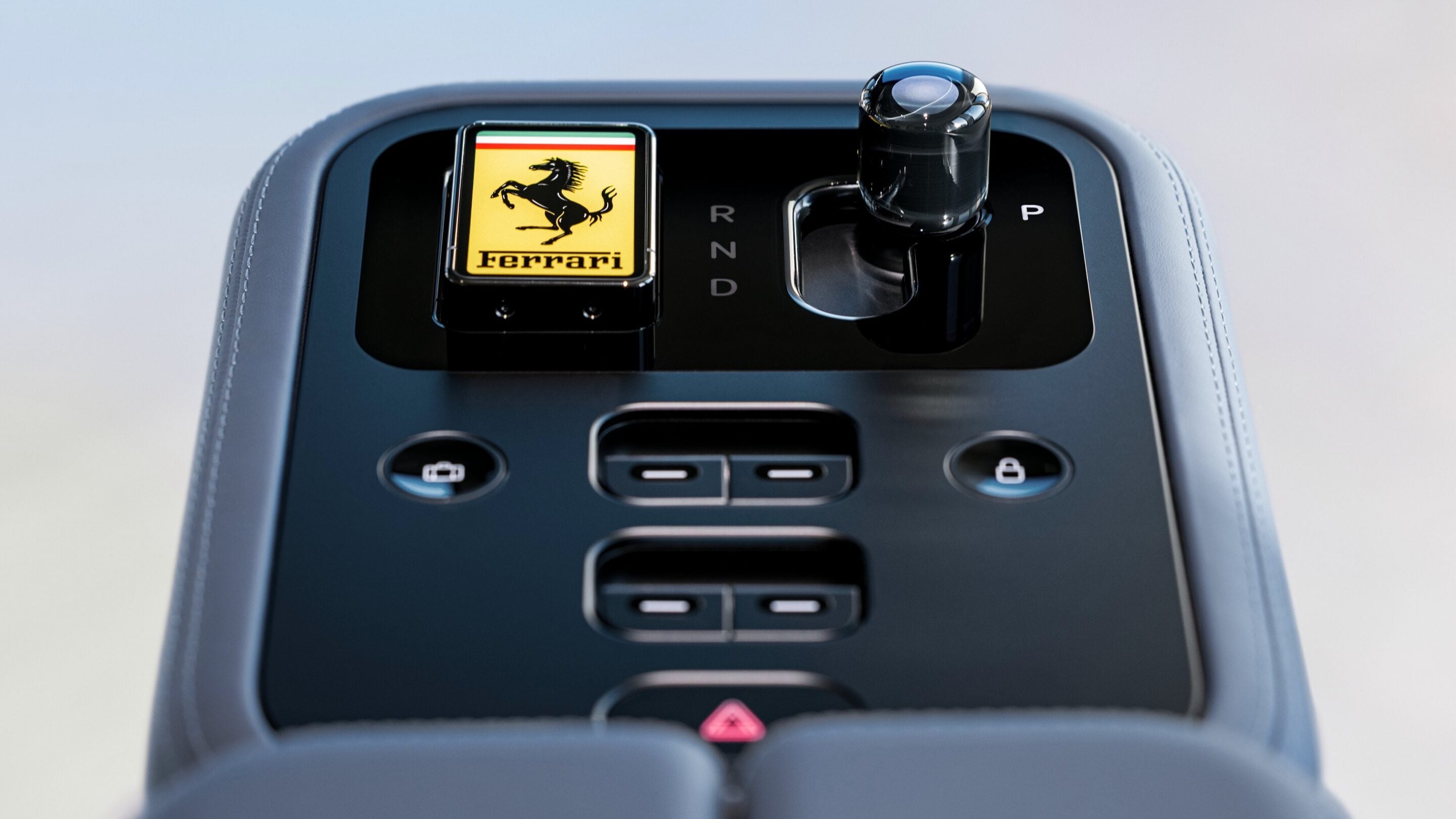
The centre console of the Luce is designed to appear as if it’s floating and reportedly uses both leather and glass materials for a high quality finish. There are two storage areas, two cupholders, physical buttons for the boot and locking, and then four window switches. In addition to that is the L-shaped gear shifter, which is also made of glass.
On the roof is the pull handle for the launch mode, as well as headlight and demister settings, and the SOS button that’s mandatory in all new cars sold in the European Union.
5
As previously revealed, the Ferrari Luce will use four independent electric motors with two on each axle to develop over 1000 horsepower – that’s 746kW of power – which is similar to the new petrol 849 Testarossa. However, in launch mode, the Luce develops 11,500Nm of torque for a claimed 0-100km/h time of just 2.5 seconds and a top speed of 310km/h.
Full details about the battery and efficiency stats are yet to be revealed, but the Luce will use a massive 122kWh unit for reportedly more than 530km of range. Its maximum charging speed will be 350kW, so it will be able to charge quickly, and new ‘tall pouch’ battery cells allow for a high energy density, reducing the unit’s weight.
The Ferrari Luce will be revealed in May with local timing yet to be revealed.
The rise of EVs built in China and rapid advances in battery capability have started to eat into Tesla’s once formidable market-leading position on electric vehicles, but the Australian boss of BYD thinks his company’s success runs deeper than that alone.
And, he’s not surprised by how quickly BYD has risen up the sales charts in Australia.
“It wasn’t a surprise, and I mean it wasn’t a surprise to us,” Collins told Wheels. “You know, I don’t sit in my officer and we don’t sit in meeting rooms, obsessing about Tesla. We’re doing our own thing, and how they drespond, whether they reposed, is 100 per cent up to them.”
5
Rather than early adopters, BYD is keen to reiterate its strength in the numbers of buyers and owners who might otherwise be called mainstream. “What we’ve found is a mainstream buyer across a number of segments and models that is really accepting the technology that we’re delivering,” Collins said. “I think the short answer is, we don’t sit there, obsessed by Tesla. For us, it’s all about what we’re doing and what we can do better, and what they do is up to them.”
Is there a clear line, then, between whether price is the driver, or range is the driver in the mind of the buyer?
“I think very strongly, it’s value,” Collins said. “Value more than price specifically, so prices are part of it, but for us, it’s the value component – the combination of the technology, the connectivity, the range, and the standard specification.”
For BYD, then, the brand will continue to focus on not just batteries, or range, but on what it knows it can bring to market at a competitive price.
“It’s multifaceted, and I guess what we’re trying to do is concentrate on all of those facts, not just what the lead price is,” Collins said. “And, when we talk about price, our strategy has to be to launch as aggressively as we can, and to maintain price integrity, because we know in the future residuals are important and we know what supports good residuals and what can kill good residuals.”
If you’re searching for a new car, practicality is likely to be near the top of your criteria, if not the most important feature. That’s understandable… life is busy and we all need our cars to be capable of carrying whatever we throw into them. With that in mind, if you’re searching for a car with a large boot for under $50,000, what are your best options?
Here’s the WhichCar by Wheels guide to the 10 biggest car boots under $50,000:
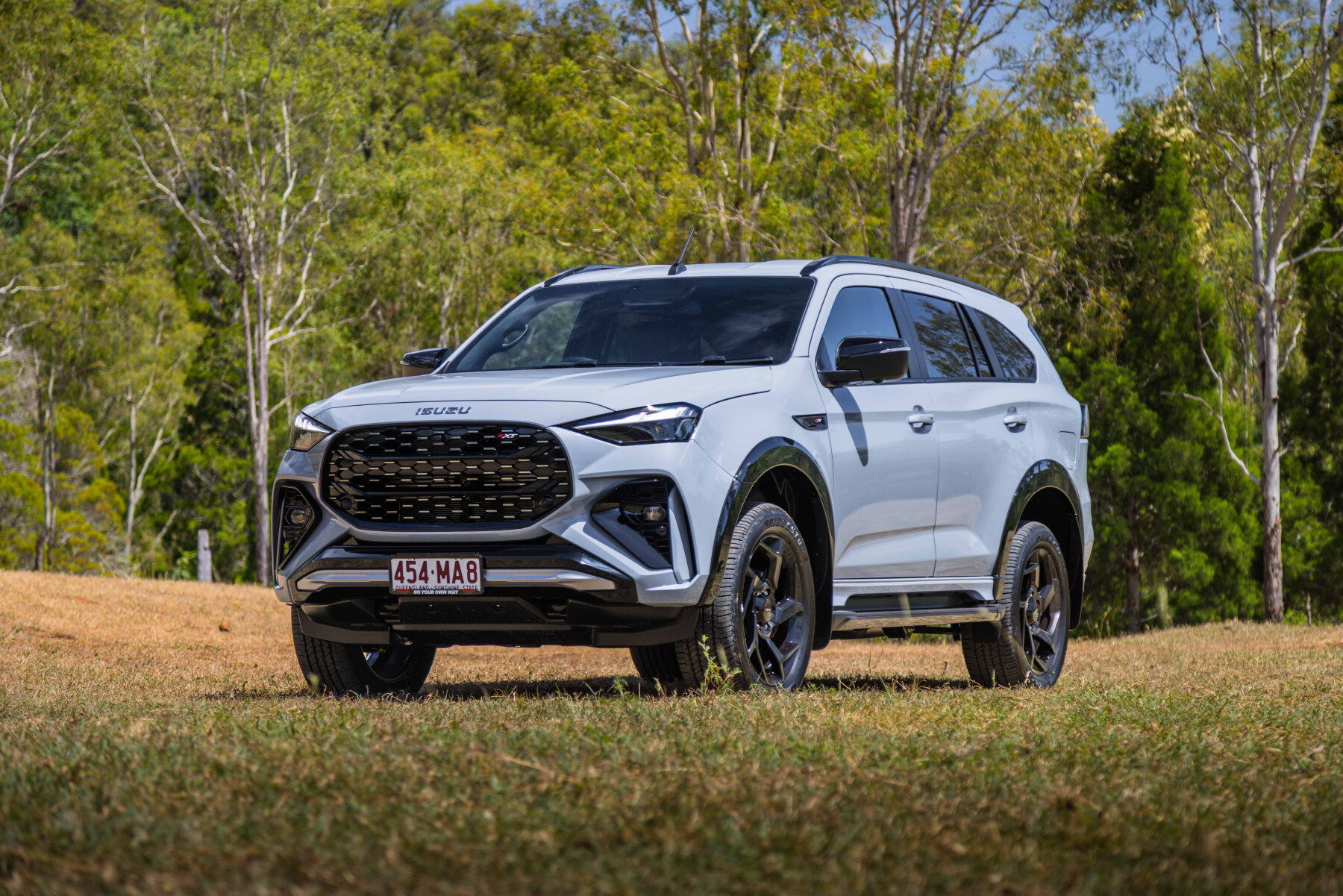
1) Isuzu MU-X
4

1
Price: From $49,900 plus on-road costs
Boot size: 311 litres (all rear seats up), 1119 litres (third row of seats folded) 2138 litres (all rear seats folded)
Drivetrains: 2.2-litre or 3.0-litre turbo-diesels, RWD or 4WD, six- or eight-speed automatic
If you’re searching for the largest boot in a car for under $50,000, the Isuzu MU-X is the car for you. Uniquely in this list, the MU-X is a seven-seater across the range, and if you’re willing to move up the range away from the entry-level model and spend over the $50k mark (as most MU-X buyers do), you’ll find a four-wheel drive system with features like low-range gearing for proper off-road ability.
But regardless of the model chosen, the MU-X’s basic practicality remains the same. Behind the third row of seats is a reasonable 311 litres of space, but fold them down and a massive 1119 litres is available, or more than double the capacity of most other options on this list. But fold the second row as well, and a humungous 2138 litres of space is available, which is definitely more than large enough for helping friends move or trips to buy flat pack furniture.
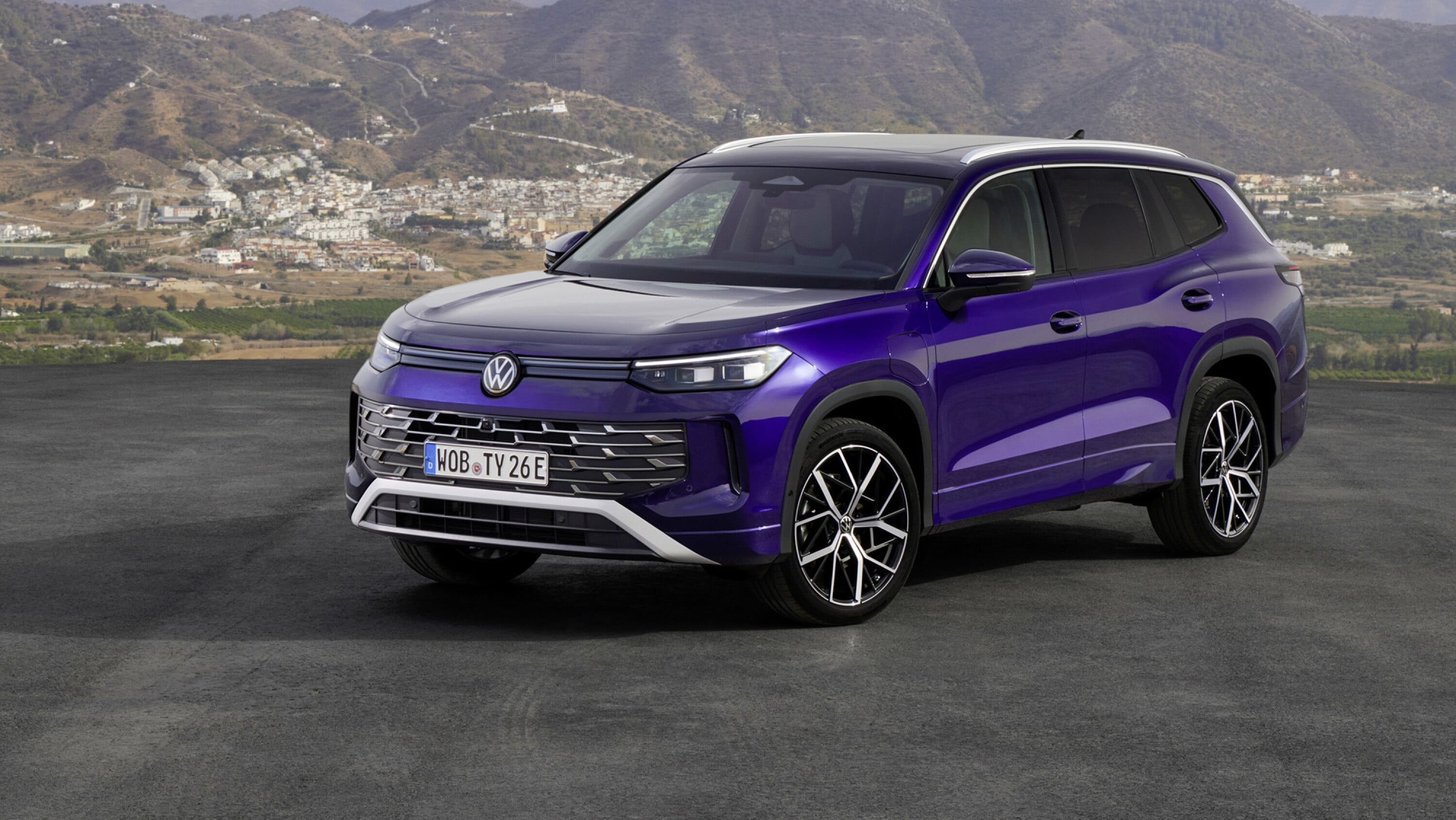
2) Volkswagen Tayron
2
1
Price: From $48,950 plus on-road costs
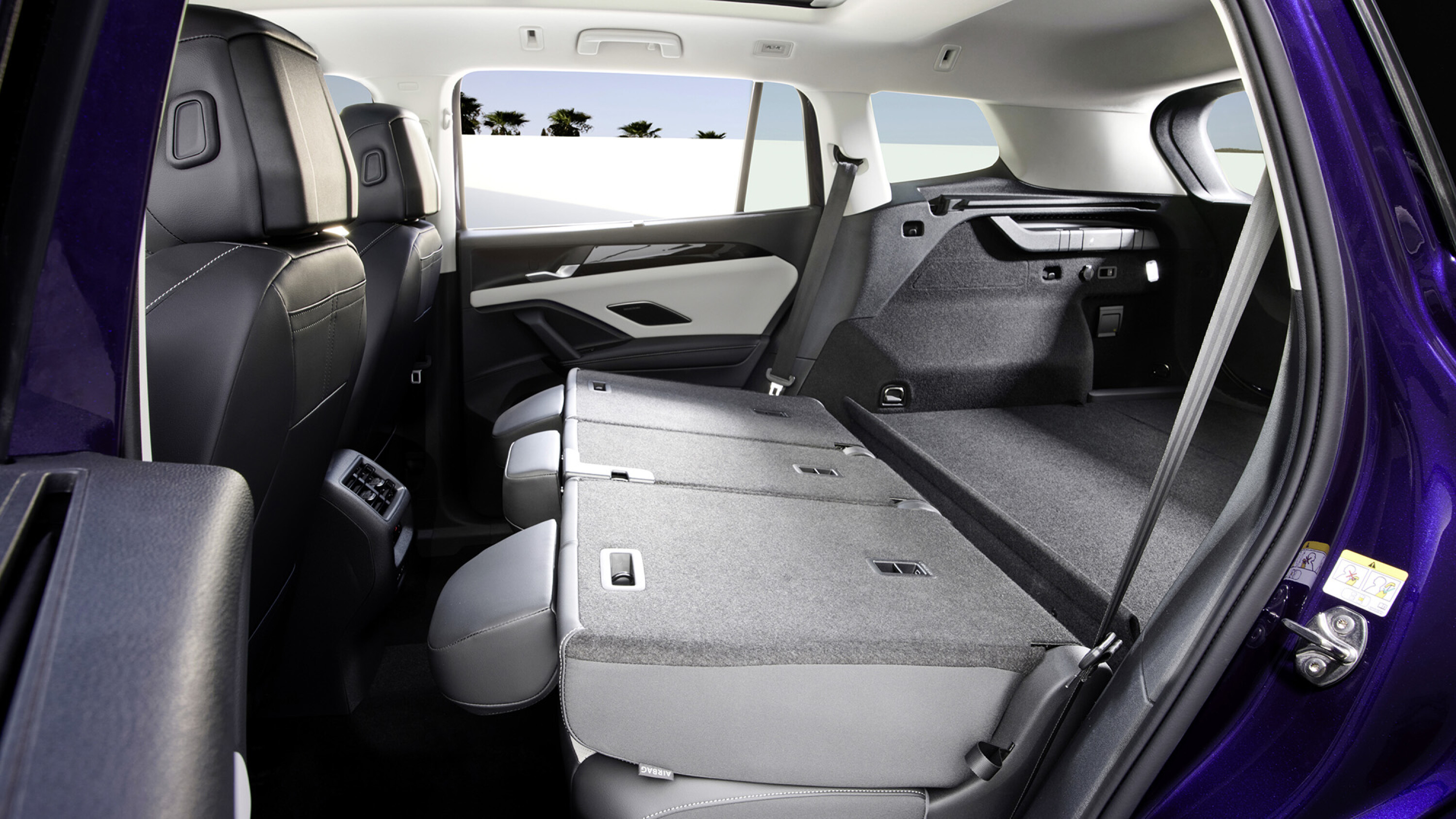
Boot size: Seven seat: 345 litres (third row up), 850 litres (third row folded), 1905 litres (all rear seats folded); five-seat Tayron 150TSI Life: 885 litres (rear seats up), 2090 litres (rear seats folded)
Drivetrains: 1.4-litre or 2.0-litre turbo-petrol, FWD or AWD, seven-speed dual-clutch
Replacing the former Tiguan Allspace, the Volkswagen Tayron is a new addition to the brand’s line-up and is available in both five- and seven-seat layouts with big space on offer. Choosing the seven-seat models gives you two whole litres more than the Hyundai Tucson with the rear seats folded, but the five-seat Tayron Life 150TSI is even larger at 2090 litres.
But even the seven-seat models are hugely capacious with 345 litres behind the third row, a massive 850 litres with the third row folded and the five-seater offers even more at 885 litres behind the second row. Importantly too, the Tayron offers features such as remote-folding second row seats, hooks to hang bags and a quick electric tailgate that can be activated by waving your foot.
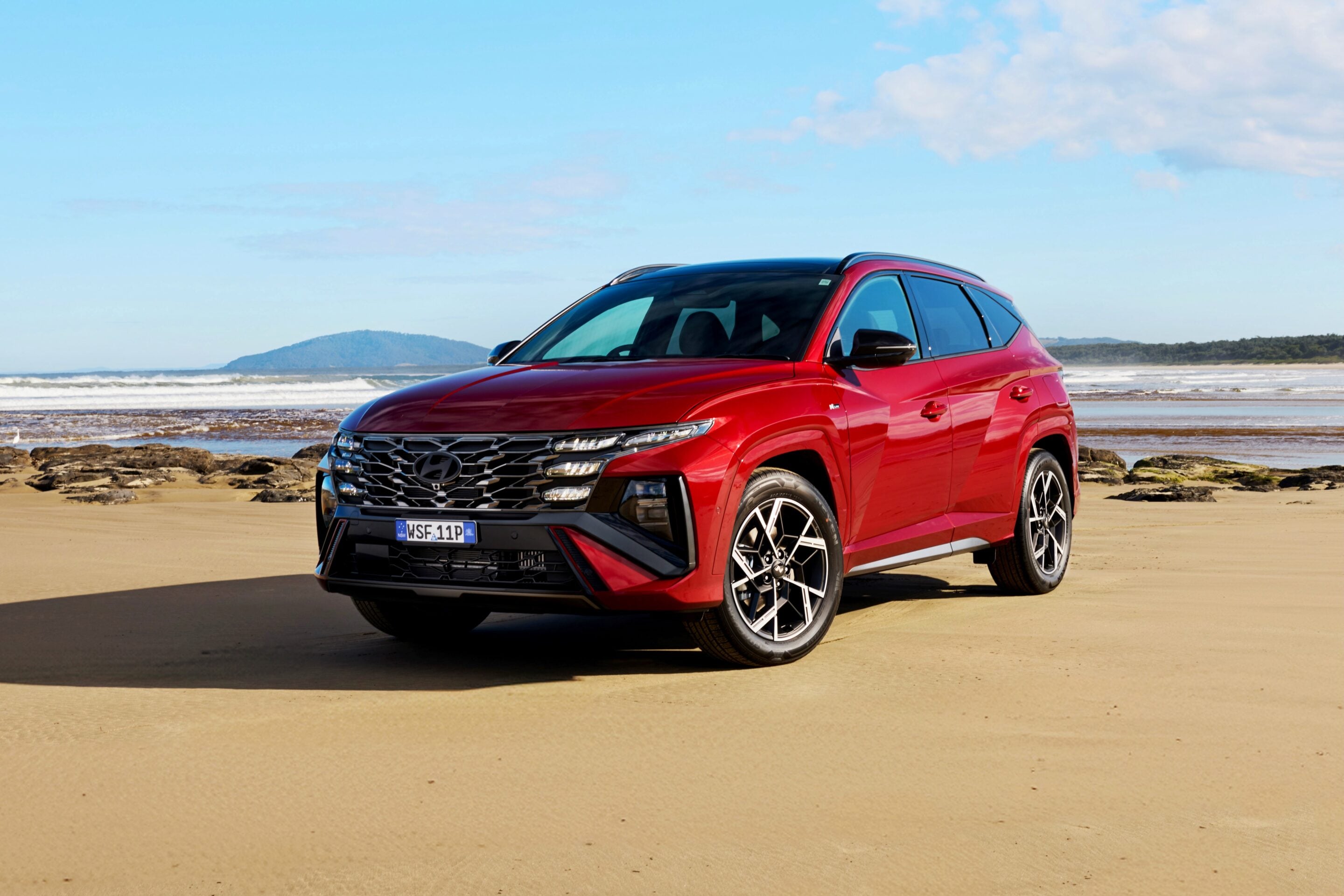
3) Hyundai Tucson
2
1
Price: From $38,350 plus on-road costs
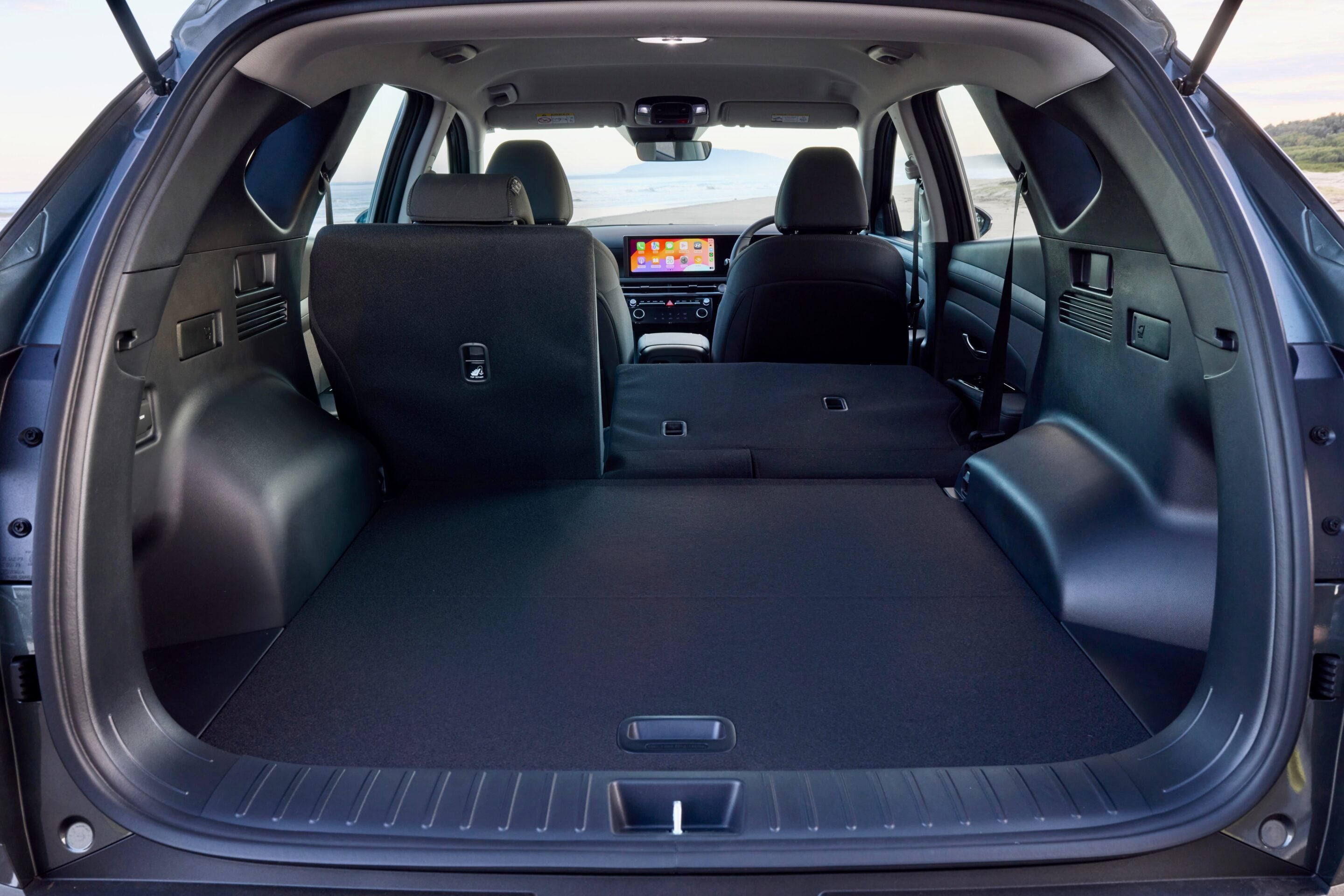
Boot size: 582 litres (rear seats up), 1903 litres (rear seats folded)
Drivetrains: 2.0-litre petrol or 1.6-litre turbo-hybrid petrol, FWD or AWD, six-speed automatic
Our reining Best Medium SUV, the Hyundai Tucson is a great all-rounder that also just happens to offer the overall largest boot in the mid-size SUV class, and the third largest boot available for under $50k. More than just numbers, the Tucson‘s boot is deep and square and features include a dual-level boot floor, a small loading lip and remote releases for folding the rear seats.
With the hybrid drivetrain – which you should definitely choose if you’re considering a Tucson – the Tucson’s boot measures up to 1903 litres with the rear seats folded, which is larger than any other mid-size SUV. Choosing the petrol engine actually reduces the capacity to 539 litres with the rear seats up and 1860 litres with them folded because it features a full-size spare wheel. That is 43 litres less than the hybrid, but still quite large.
4) Kia Sportage
3
1
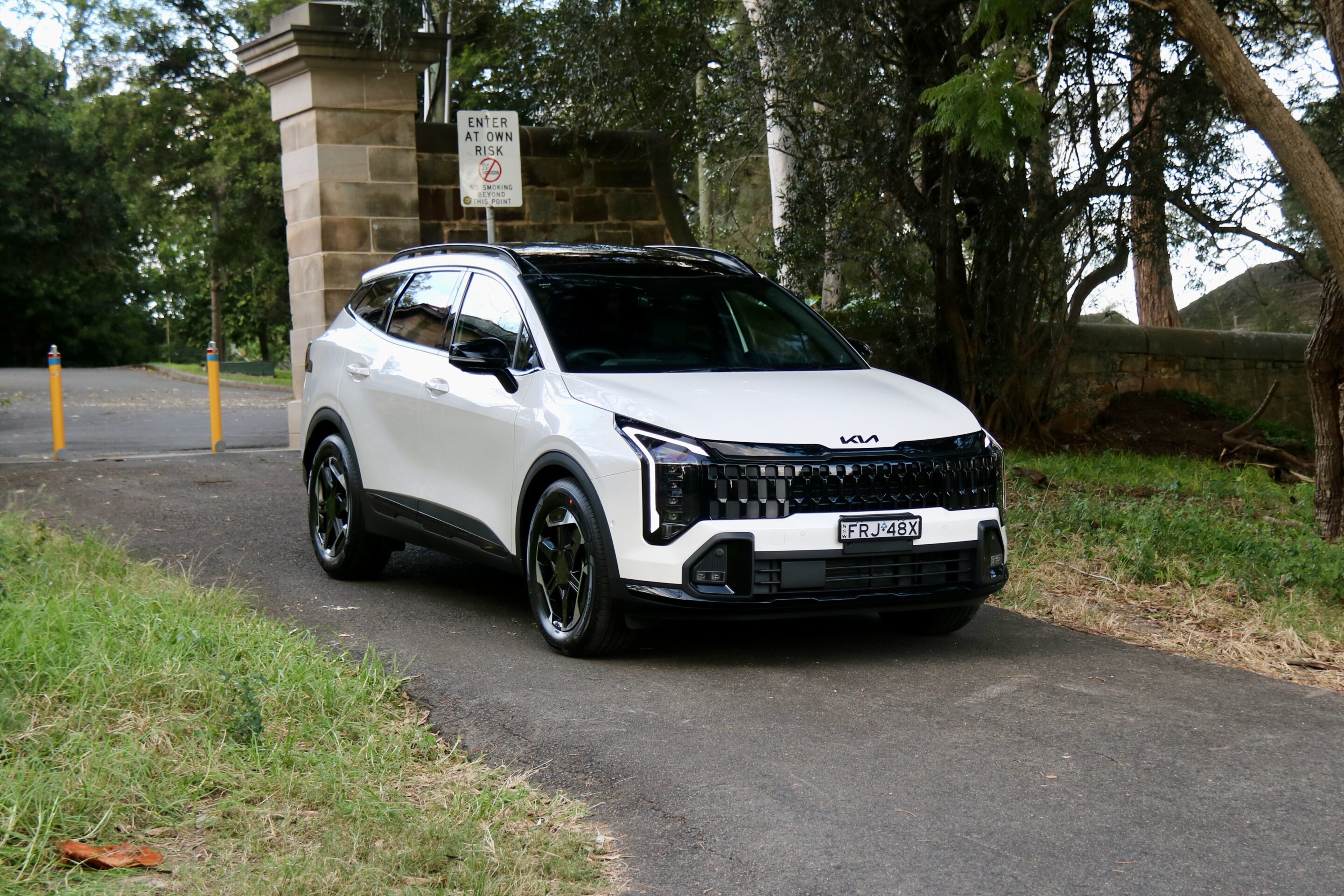
Price: From $38,490 plus on-road costs
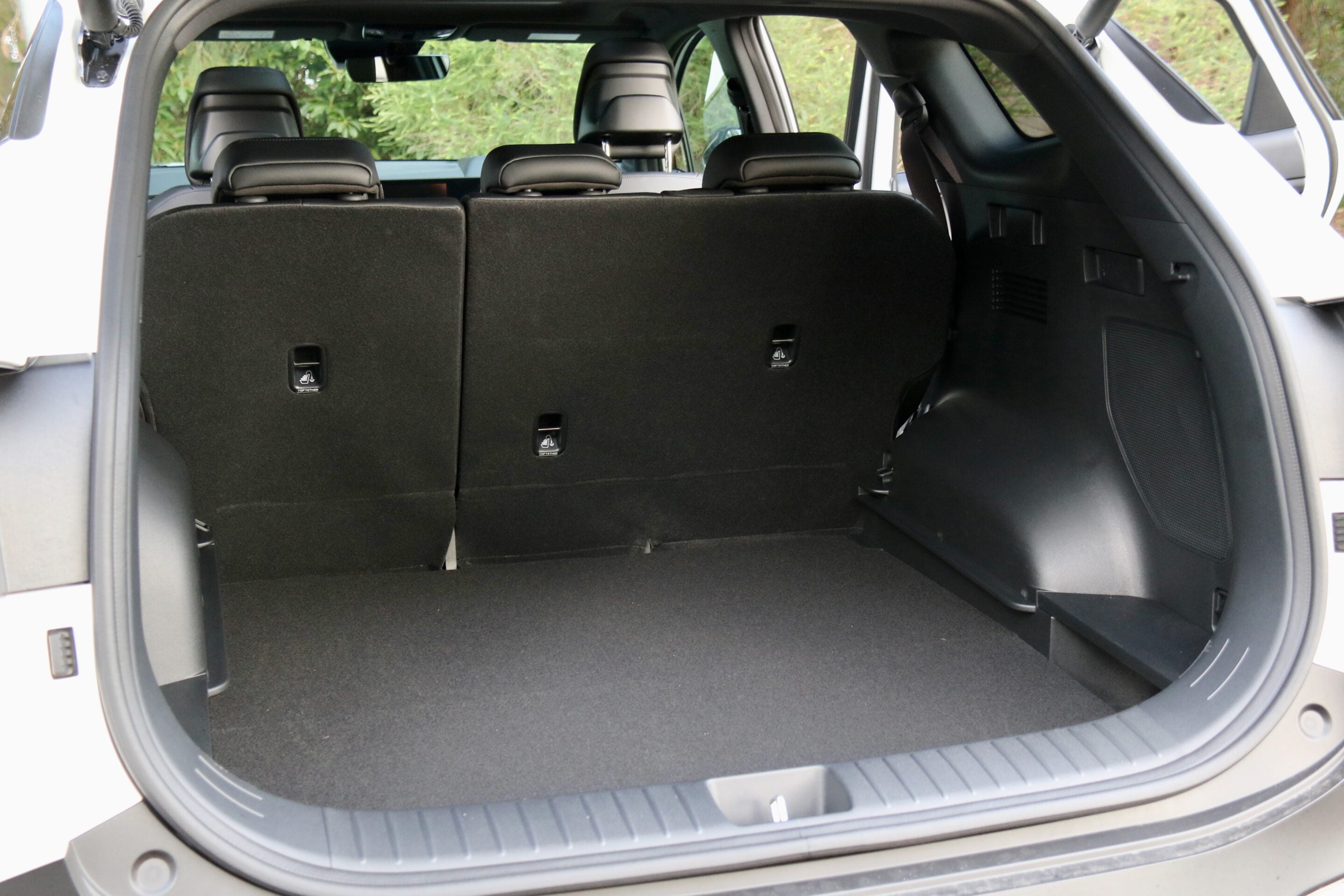
Boot space: 586 litres (rear seats up), 1872 litres (rear seats folded)
Drivetrains: 2.0-litre petrol, 1.6-litre turbo-petrol, 1.6-litre turbo-hybrid petrol or 2.0-litre turbo-diesel, FWD or AWD, six- or eight-speed automatic
The Kia Sportage is the Tucson’s twin-under-the-skin – both models use the same platform and mechanicals. The Sportage’s different dimensions mean that it’s slightly less practical in numbers, with its 1872-litre capacity officially 29 litres less than its Tucson cousin, but still large enough to place third in this company.
Like the Tucson, the Sportage’s boot is at its largest with the hybrid drivetrain because that employs a space-saver spare wheel that robs less space than the full-size spare of other drivetrain variants and non-hybrid variants instead pack 543L/1829L of available space in. Like the Tucson, the Sportage’s boot offers extra practicalities such as a dual-level floor, remote releases for rear seat folding and a deep square space.
5) Mazda CX-60
3
1
Price: From $44,240 plus on-road costs
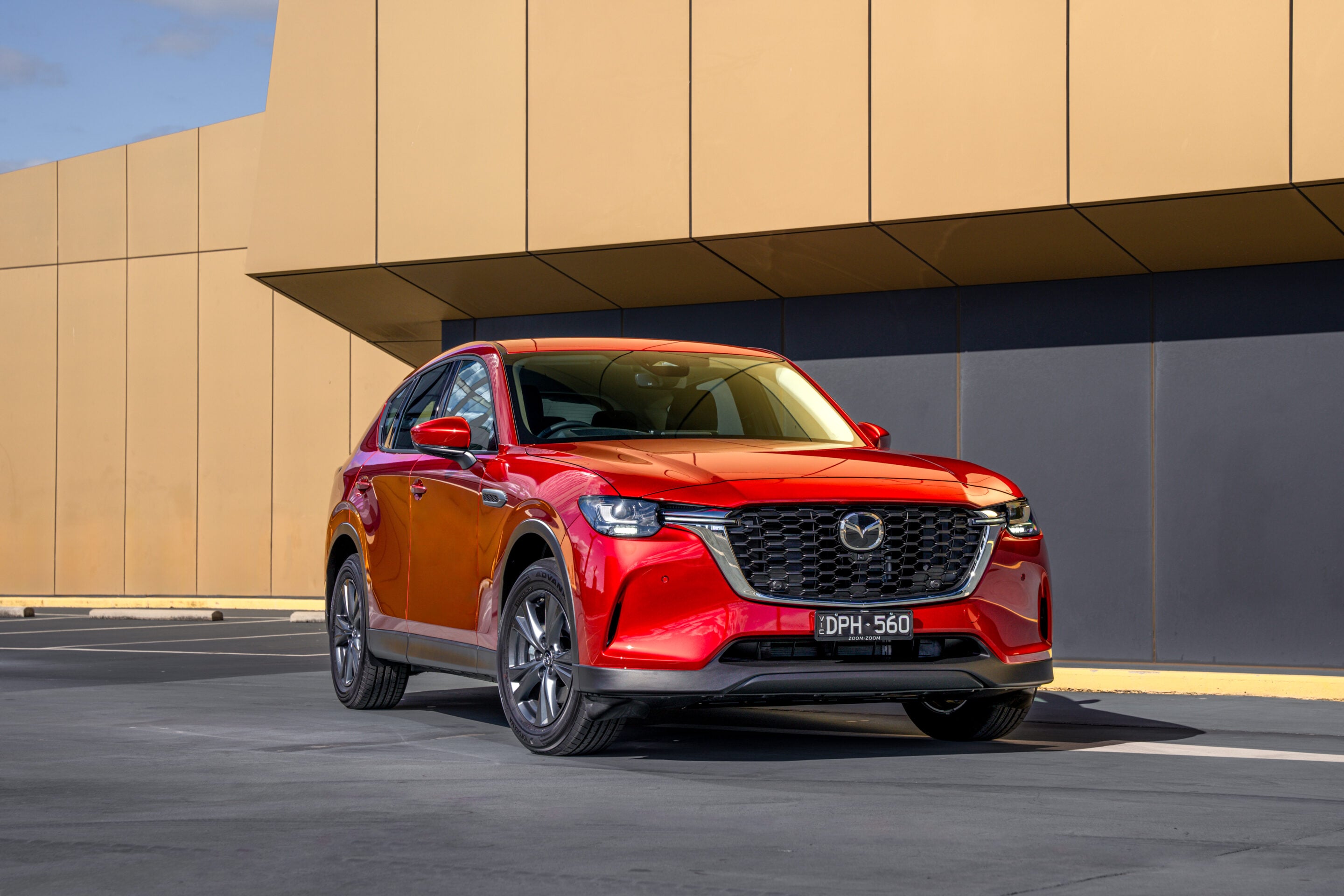
Boot space: 477 litres (rear seats up), 1726 litres (rear seats folded)
Drivetrains: 2.5-litre petrol, 3.3-litre turbo-petrol, 3.3-litre turbo-diesel or 2.5-litre plug-in hybrid, RWD or AWD, eight-speed automatic
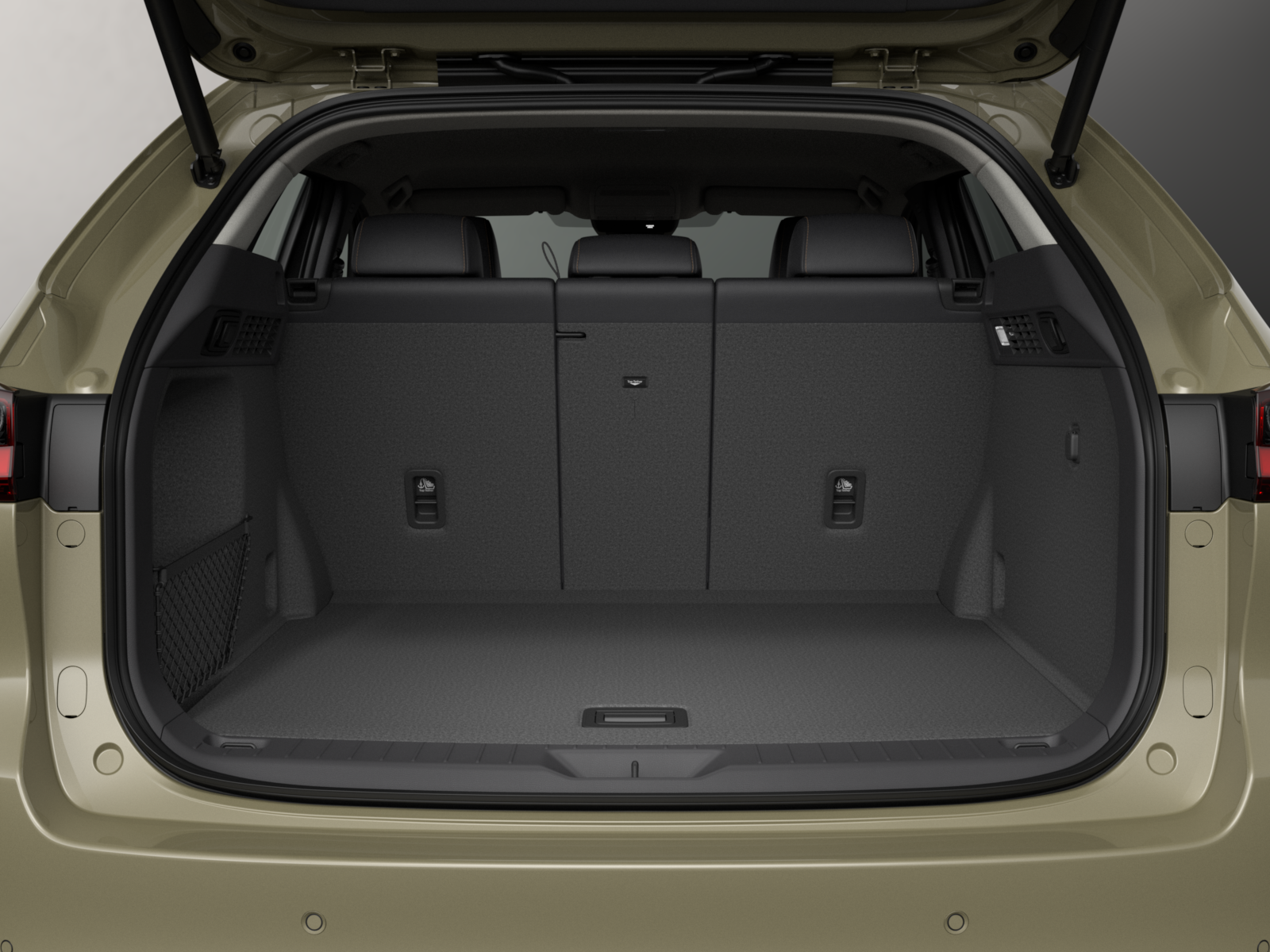
Surprisingly given Mazdas usually sacrifice some practicality for style, the CX-60 mid-size SUV is the fifth most commodious car you can buy for under $50k. Offering 1726 litres of space with the rear seats folded, the CX-60 eclipses most of its rivals but also its smaller – and more popular – CX-5 sibling by 386 litres.
While its 477-litre boot with the rear seats up is eclipsed by some rivals, it’s still a practical and well-finished space with a 40:20:40-split rear seat, high quality carpeting, remote rear seat releases, some under floor storage and Mazda’s innovative cargo blind that connects to the boot and automatically opens with it.
6) Subaru Forester
3
1
Price: From $43,490 plus on-road costs
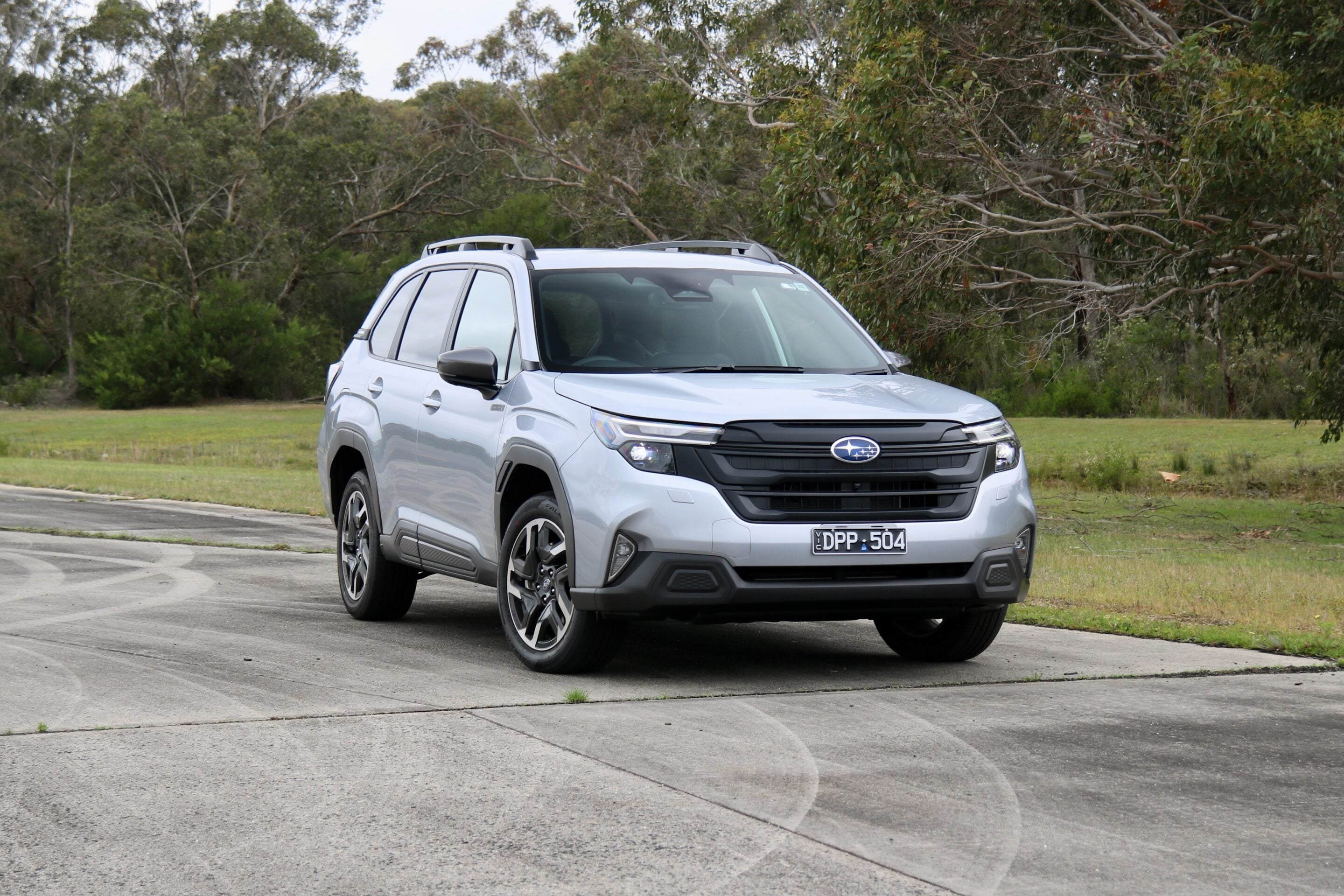
Boot space: 496 litres (rear seats up), 1719 litres (rear seats folded)
Drivetrains: 2.5-litre petrol or 2.5-litre hybrid petrol, AWD, CVT automatic
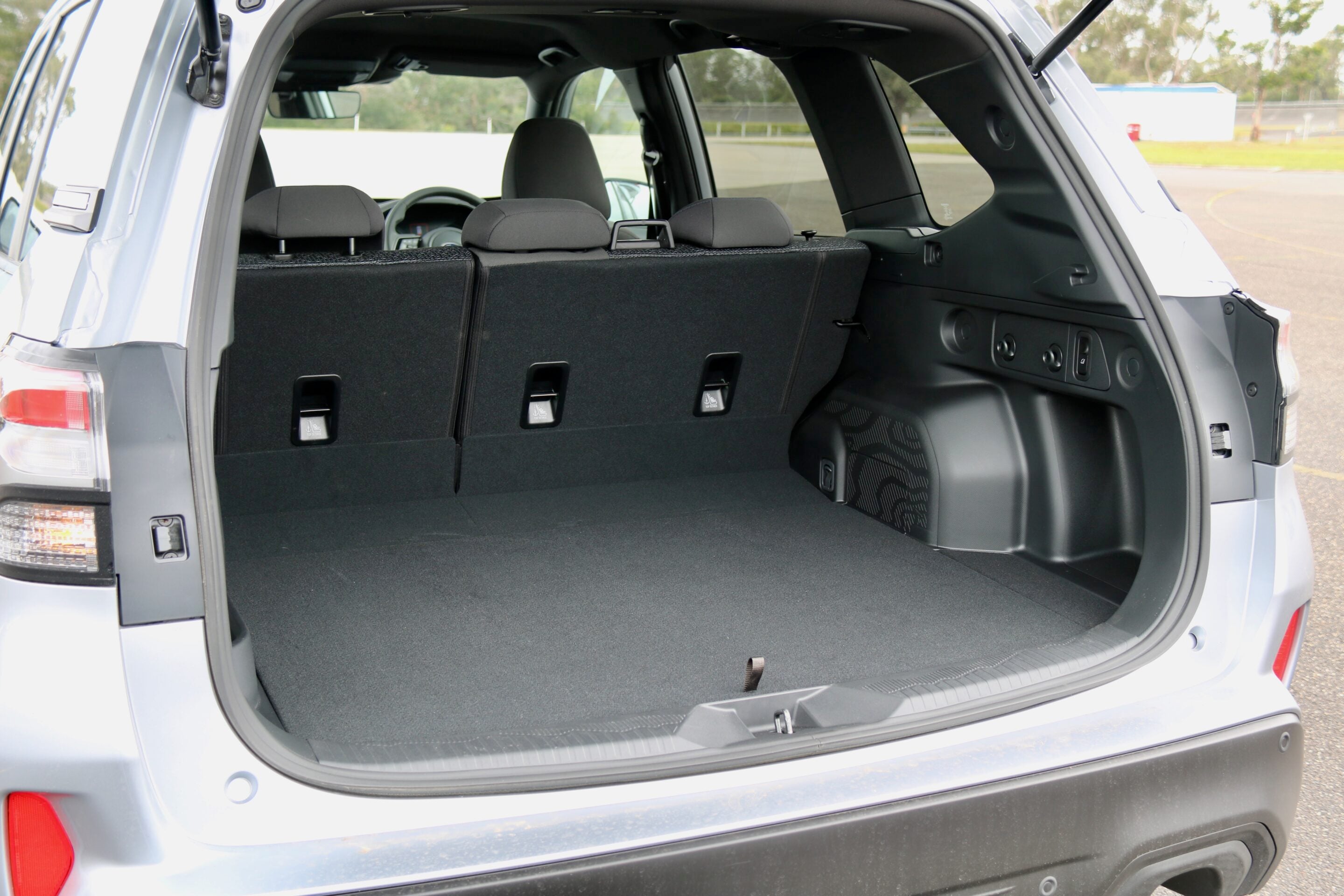
Subaru is a brand that’s synonymous with practicality and the latest-generation Forester does not disappoint. Just look at it: It has tall and box-like styling, and with 1719 litres of space with the rear seats folded; that styling clearly helps with practicality. Unlike a lot of others on this list, the Forester’s rear seats lie completely flat, making loading longer items a breeze.
There are also a lot of practical extra details that help further, like the lack of a step from the boot entry to the boot floor, bag hooks, remote releases for the rear seats and both side- and under-floor storage. We also appreciate the details such as mountain scapes etched into the boot opening, while they don’t add to the practicality, they do add an extra layer of design flair and show that Subaru is definitely considering practicality when designing its products.
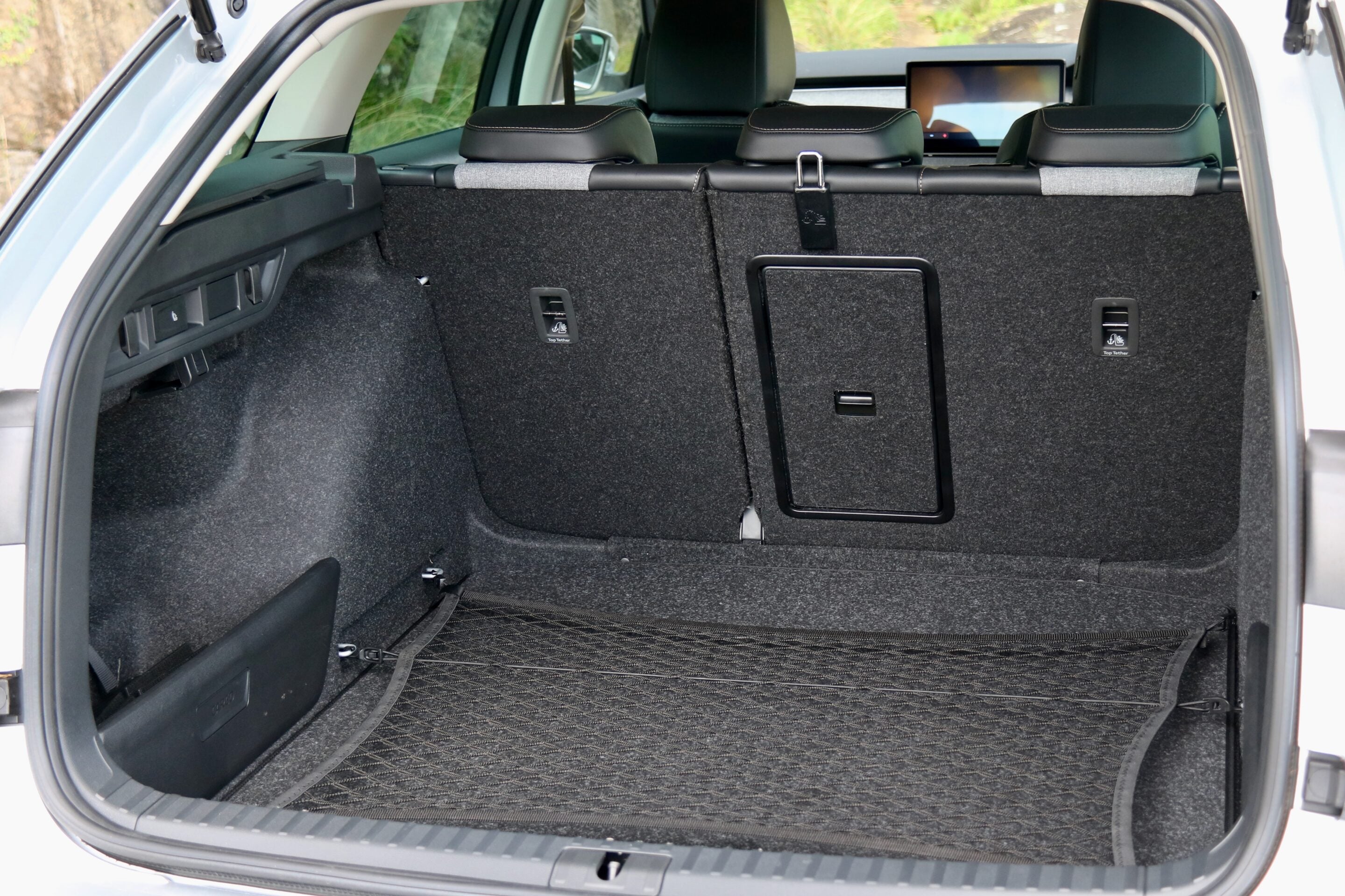
7) Skoda Octavia wagon
3
1
Price: From $43,990 drive away
Boot size: 640 litres (rear seats up), 1700 litres (rear seats folded)
Drivetrains: 1.4-litre or 2.0-litre turbo-petrols, FWD, eight-speed automatic or seven-speed dual-clutch
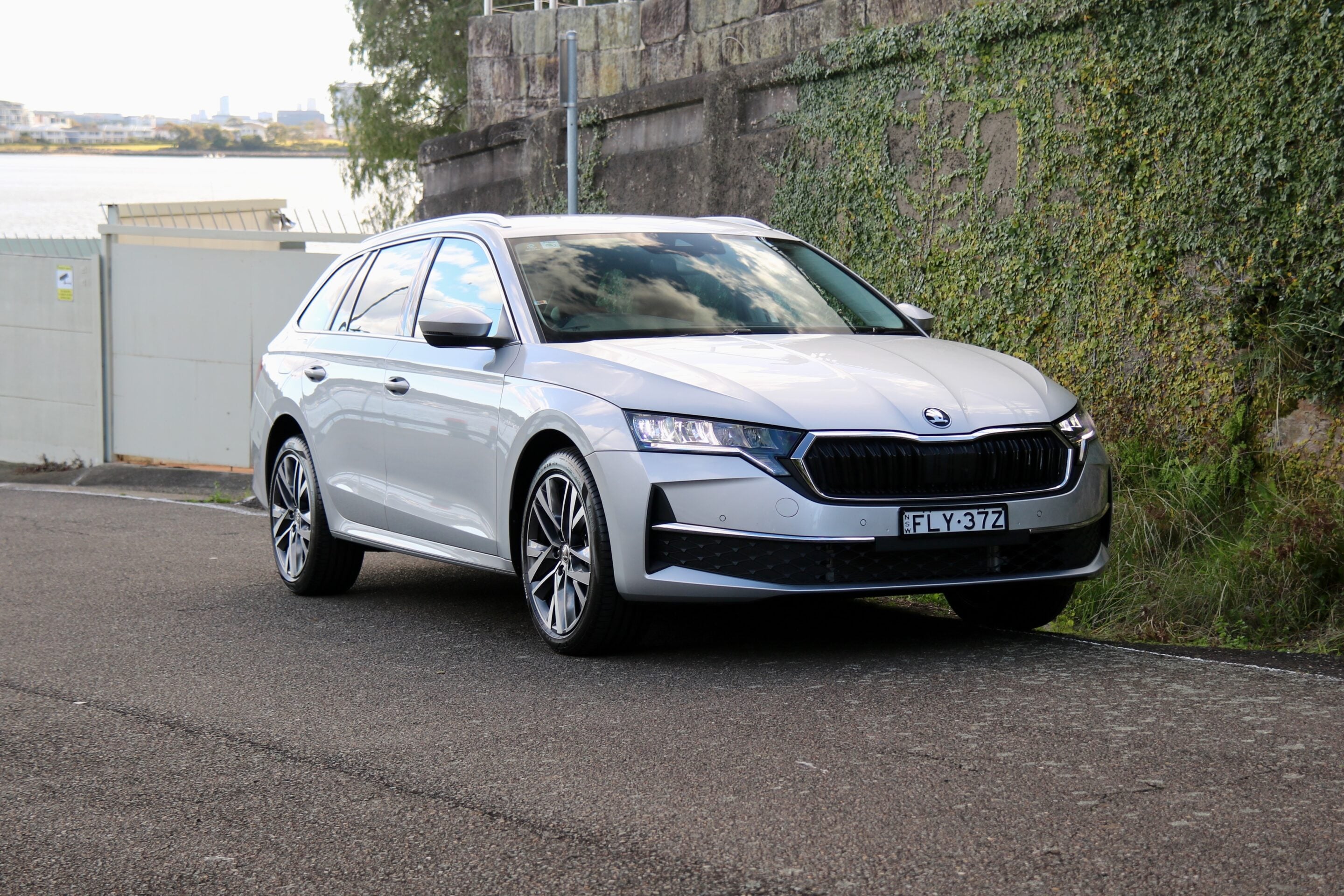
The Skoda Octavia is the only wagon on this list – it’s actually the only new wagon available for under $50k (disappointingly) disappointingly but it’s a great reminder that although wagons don’t have the ride height of their SUV siblings, they’re still extremely practical. Its 640-litre boot with the rear seats up is the third largest on this list, while 1700 litres with the rear seats folded is certainly nothing to sneeze at. It also has length on its side, as it’s quite a long space disappointingly longer than many SUV rivals, so flat pack furniture will fit easier.
Unlike every other rival here, the Octavia also fits a number of small ‘Simply Clever’ features into its boot like side storage, various hooks and nets, a double-sided boot cover (one side with carpet and one side plastic that can be washed more easily), remote releases for folding the rear seats, a ski pass through and even plastic dividers so that precious cargo can be secured.
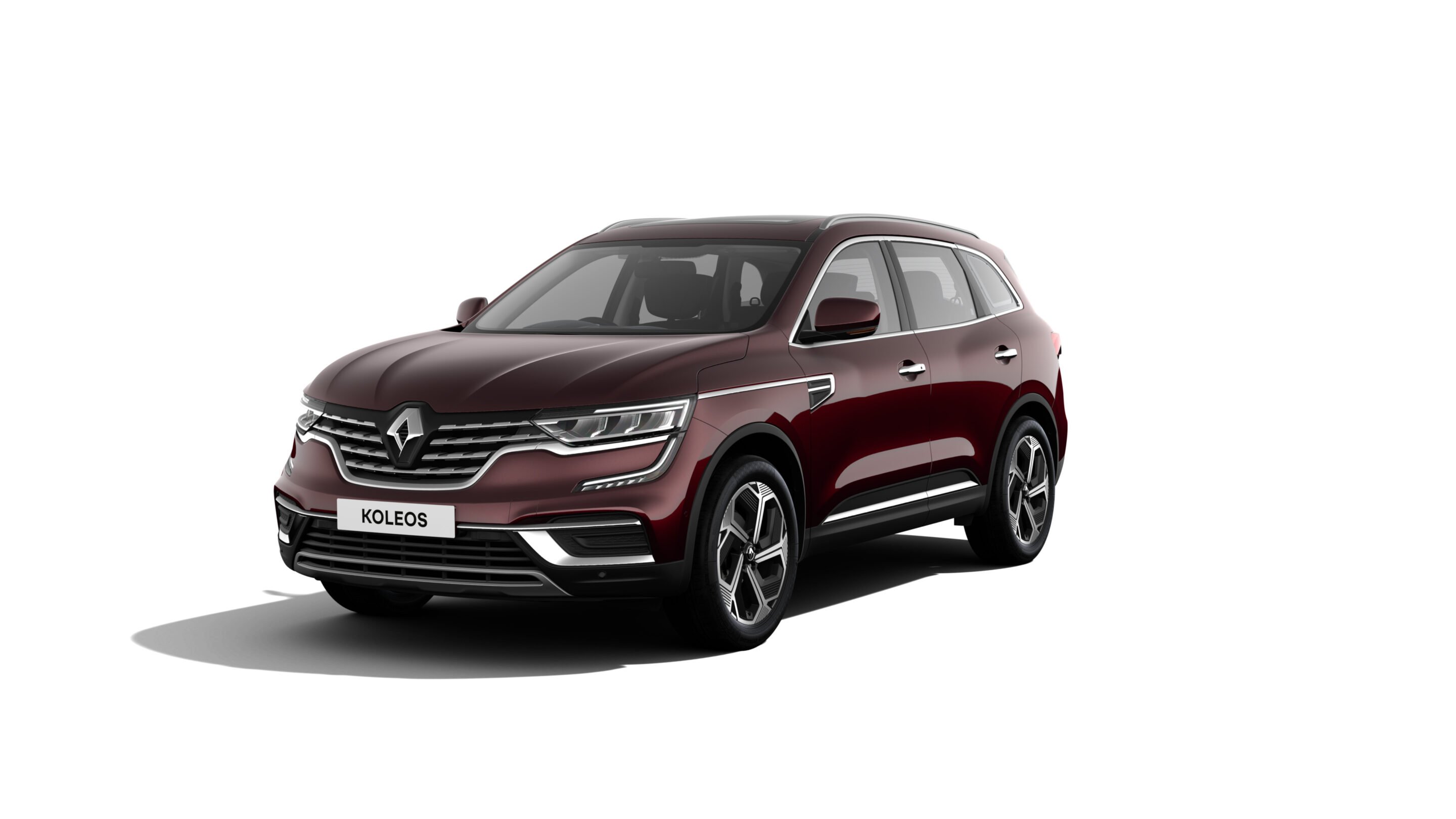
8) Renault Koleos
2
1
Price: From $34,990 plus on-road costs
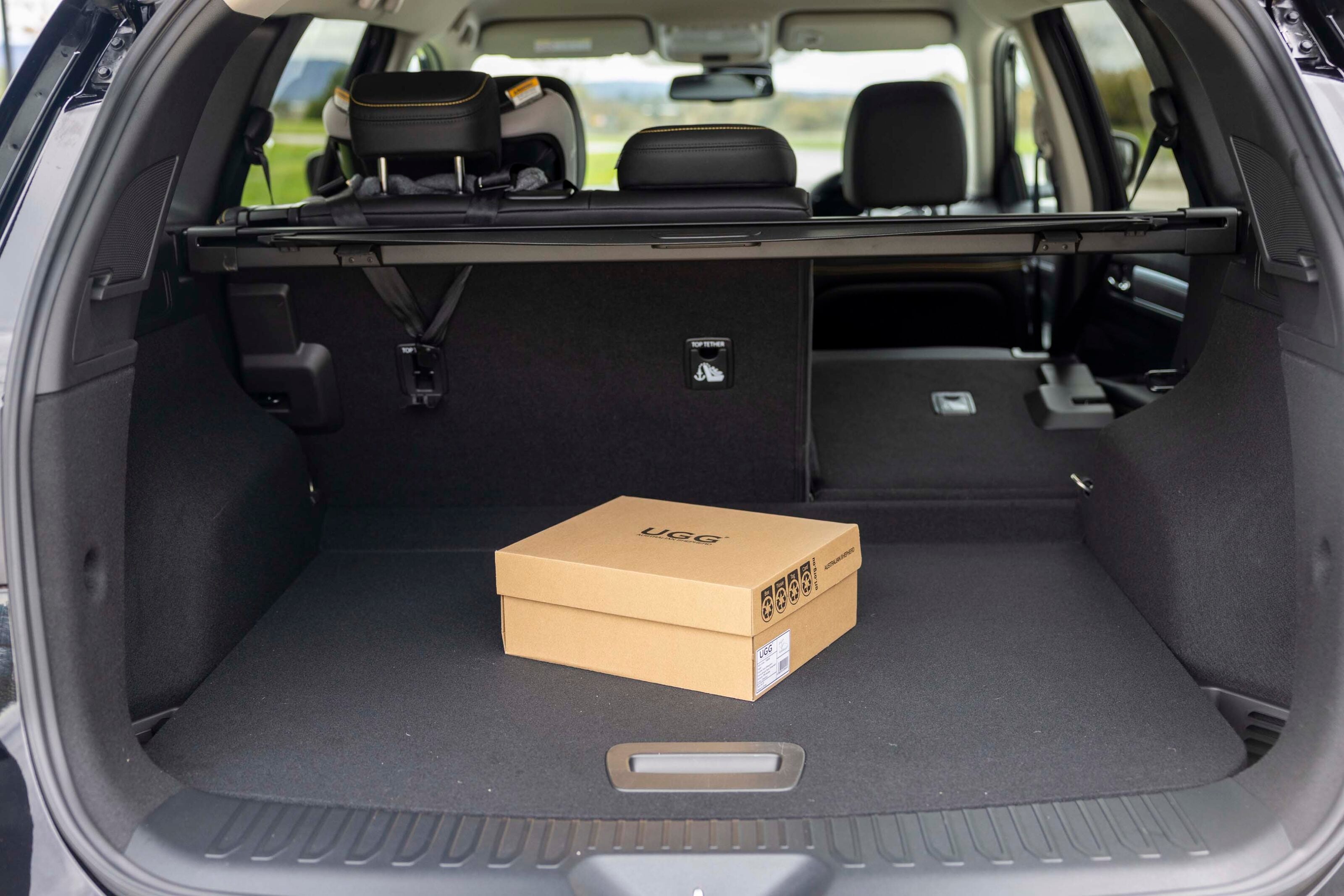
Boot size: 458 litres (rear seats up), 1690 litres (rear seat folded)
Drivetrains: 2.5-litre petrol, FWD or AWD, CVT automatic
It may be almost 10 years old, but there’s still plenty of life – and practicality – left in the Renault Koleos. It’s been the brand’s strongest-selling passenger car locally for a long time and with good reason: it’s good value for money, it’s well equipped and with a boot that opens up to 1690 litres, quite capacious as well.
The 458-litre boot (with the rear seats up) is a good size, with side and under-floor storage as well and remote releases to fold the rear seats. Once done, the boot floor is nice and flat, making it easy to push longer items to the front.
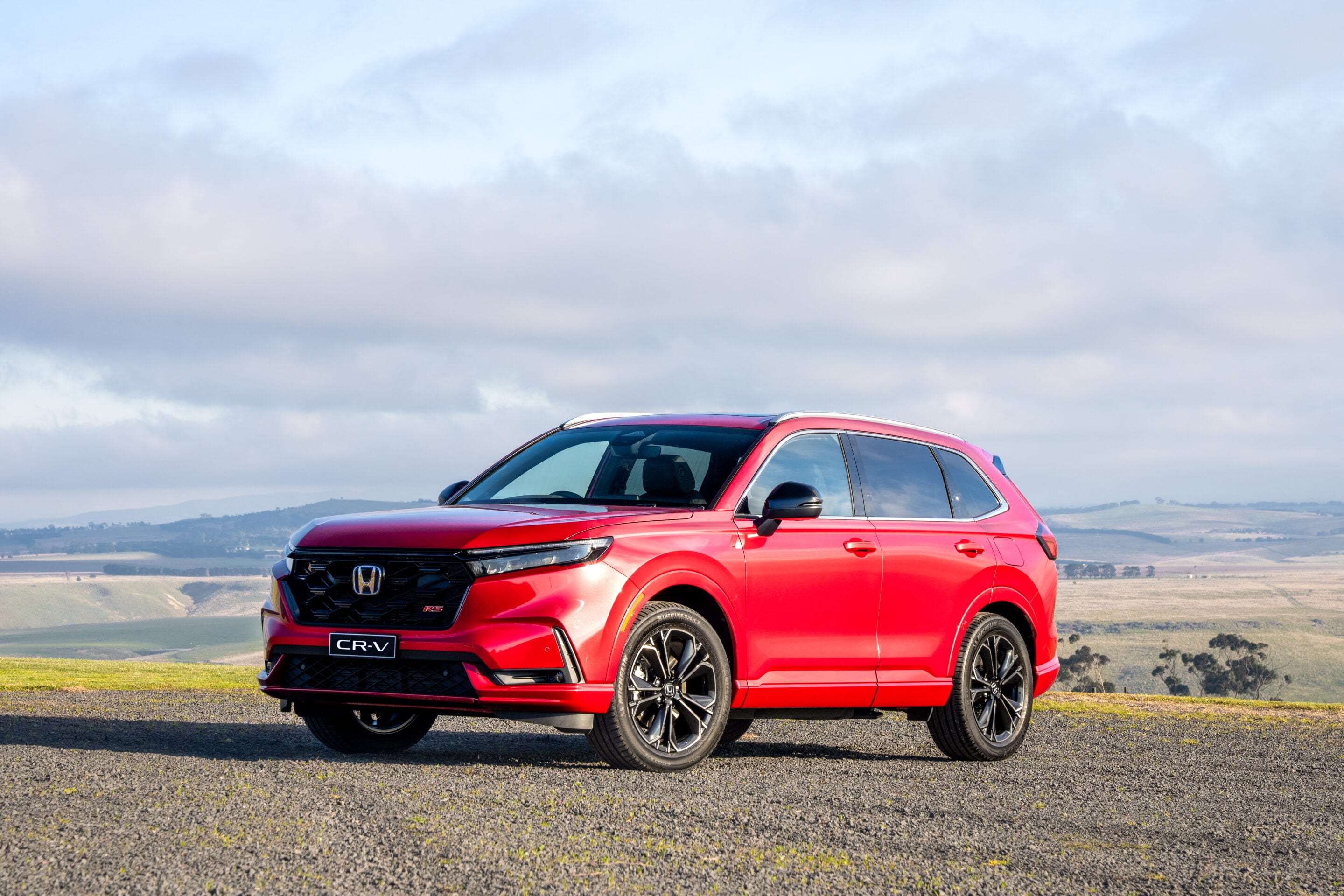
9) Honda CR-V
2
1
Price: From $41,900 drive away
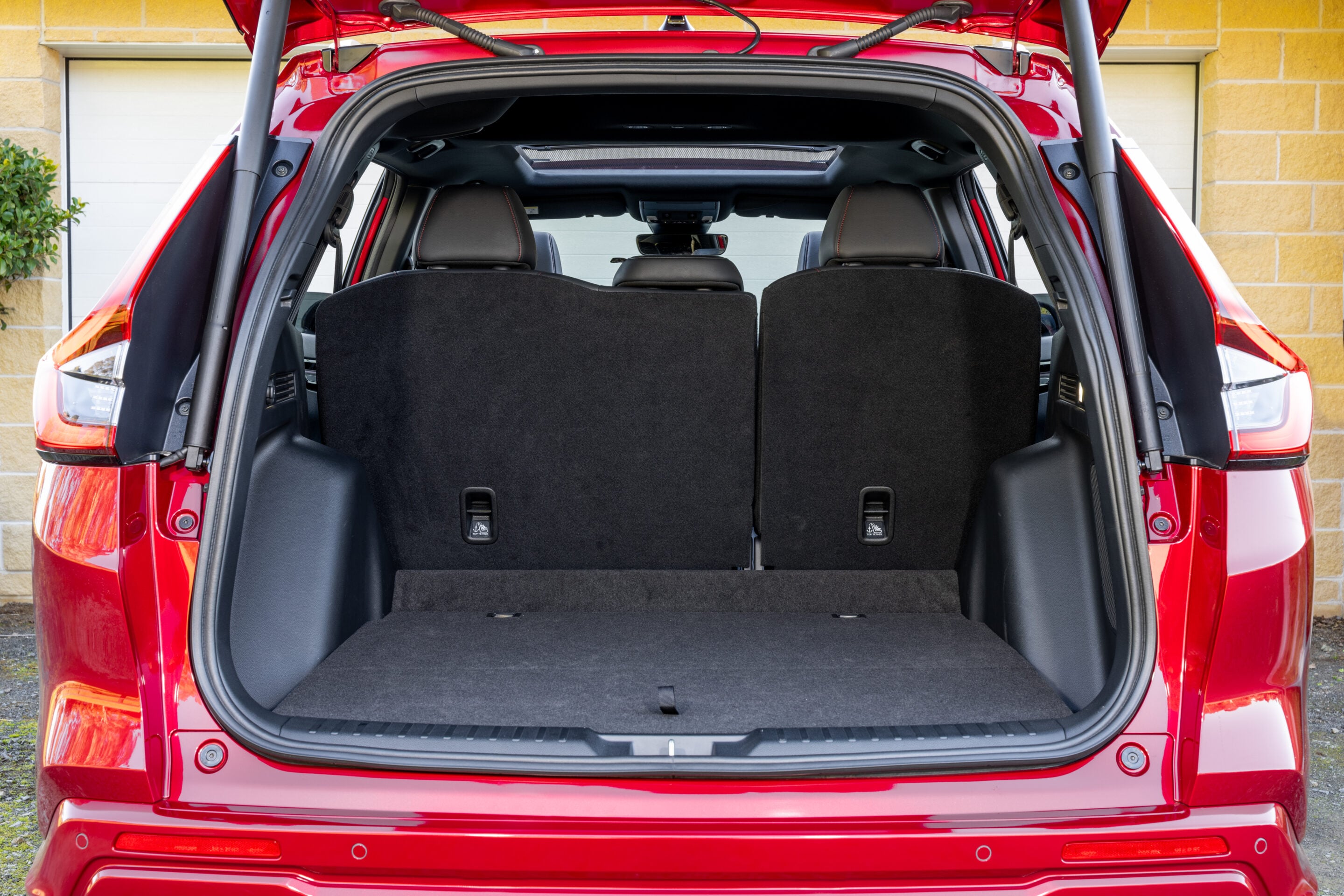
Boot size: Five-seat: 589 litres (rear seats up, hybrid: 510L), 1671 litres (rear seats folded); five-seat hybrid: 581 litres (rear seats up), 1636 litres (rear seats folded); seven seat L7 variants: 150 litres (third row up), 510 litres (third row folded), 1450 litres (second and third rows folded)
Drivetrains: 1.5-litre turbo-petrol or 2.0-litre hybrid petrol, FWD or AWD, CVT automatic
As it’s always been since its 1995 inception, the Honda CR-V is one of the most practical mid-size SUVs you can buy with its large boot and extra practicalities such as side storage and hooks to hang bags off. Up to 1671 litres of space is available with the rear seat folded, which is large, and its height also helps with loading in taller items.
Fairly uniquely in the segment, Honda sells the CR-V with both hybrid and petrol seven-seat options, both of which reduce overall space. For example, the hybrid offers a bit less than the petrol five-seater with the rear seats up, at 581 litres, and the seven-seater reduces that further to 510 litres. Behind the seven-seat model’s third row is just 150 litres, though it does have a large under-floor section.
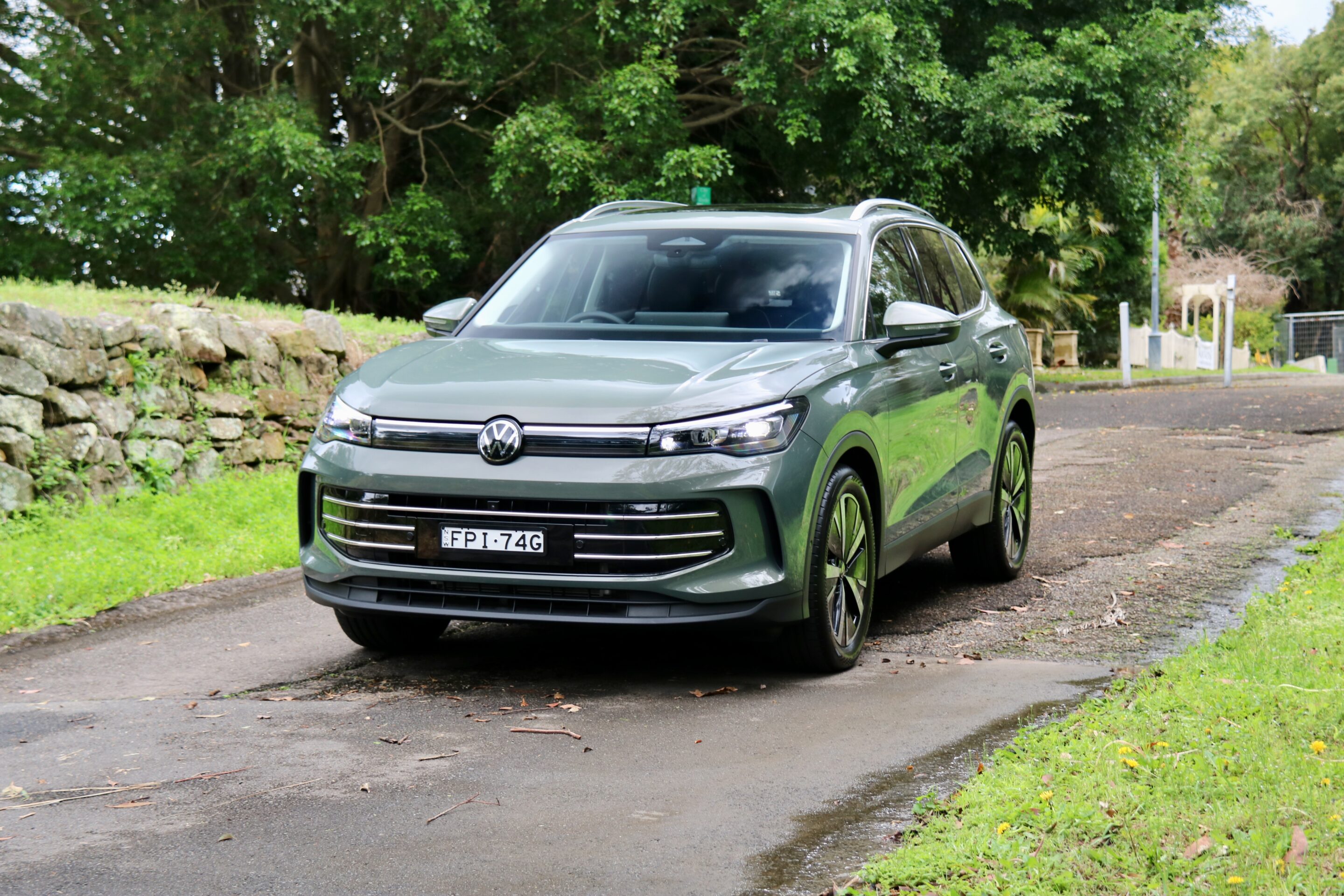
10) Volkswagen Tiguan
3
1
Price: From $45,650 plus on-road costs
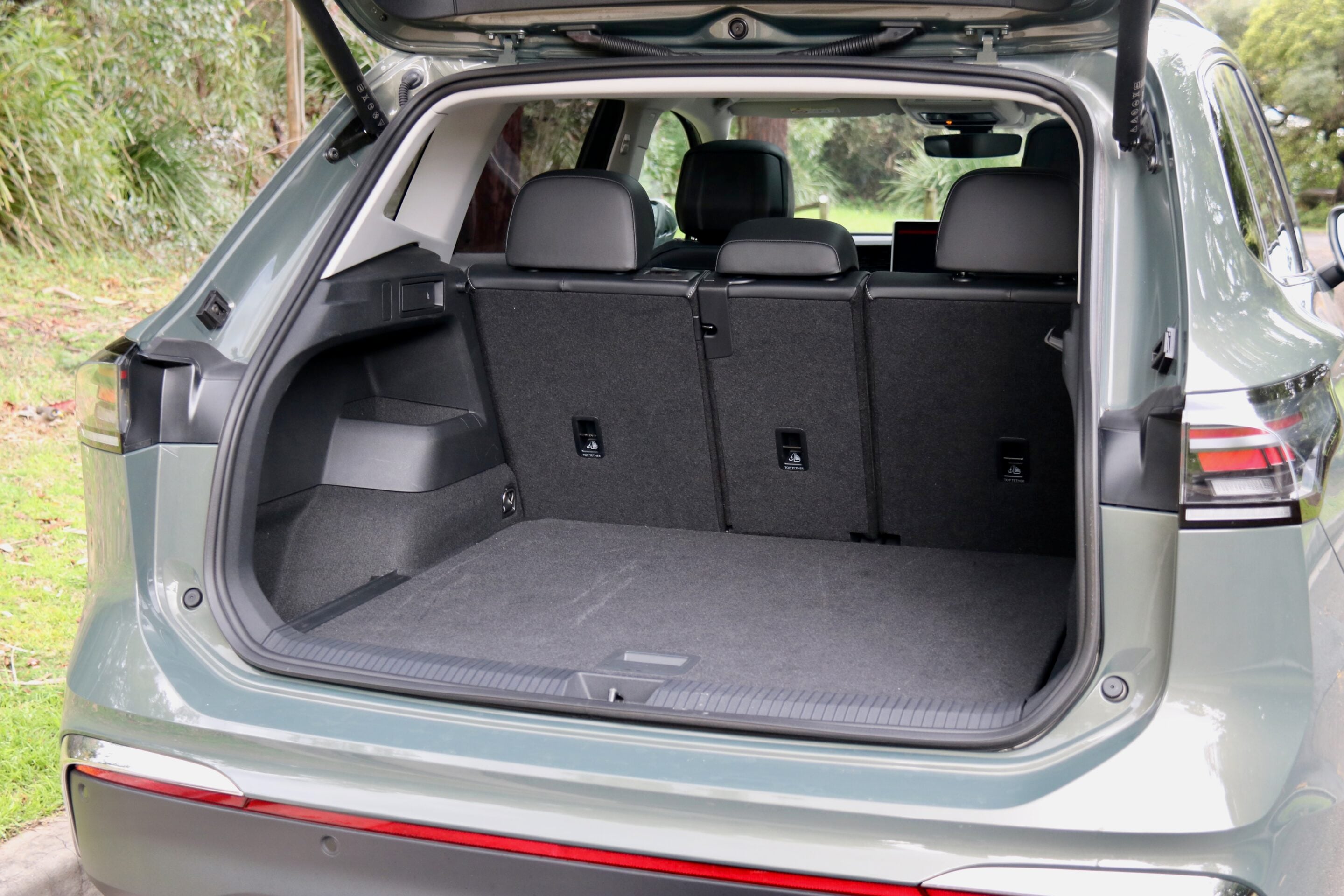
Boot size: 652 litres (rear seats up), 1650 litres (rear seats folded)
Drivetrains: 1.4-litre or 2.0-litre turbo-petrols, FWD or AWD, seven-speed dual-clutch
In its previous generation, the Volkswagen Tiguan was one of the most spacious mid-size SUVs you could buy – especially in extended Allspace form – and the latest-generation that launched locally in 2025 is even more practical thanks to a growth spurt. With the rear seats folded, up to 1650 litres of space is available, but even with the rear seats up, 652 litres is on offer and that’s the largest amount for a five-seater on this list.
Helping practicality further are the Tiguan’s sliding and reclining rear seats, which is helpful for increasing available boot or rear seat space, and details such as a ski pass, remote releases, under-floor storage and hooks to hang bags off.
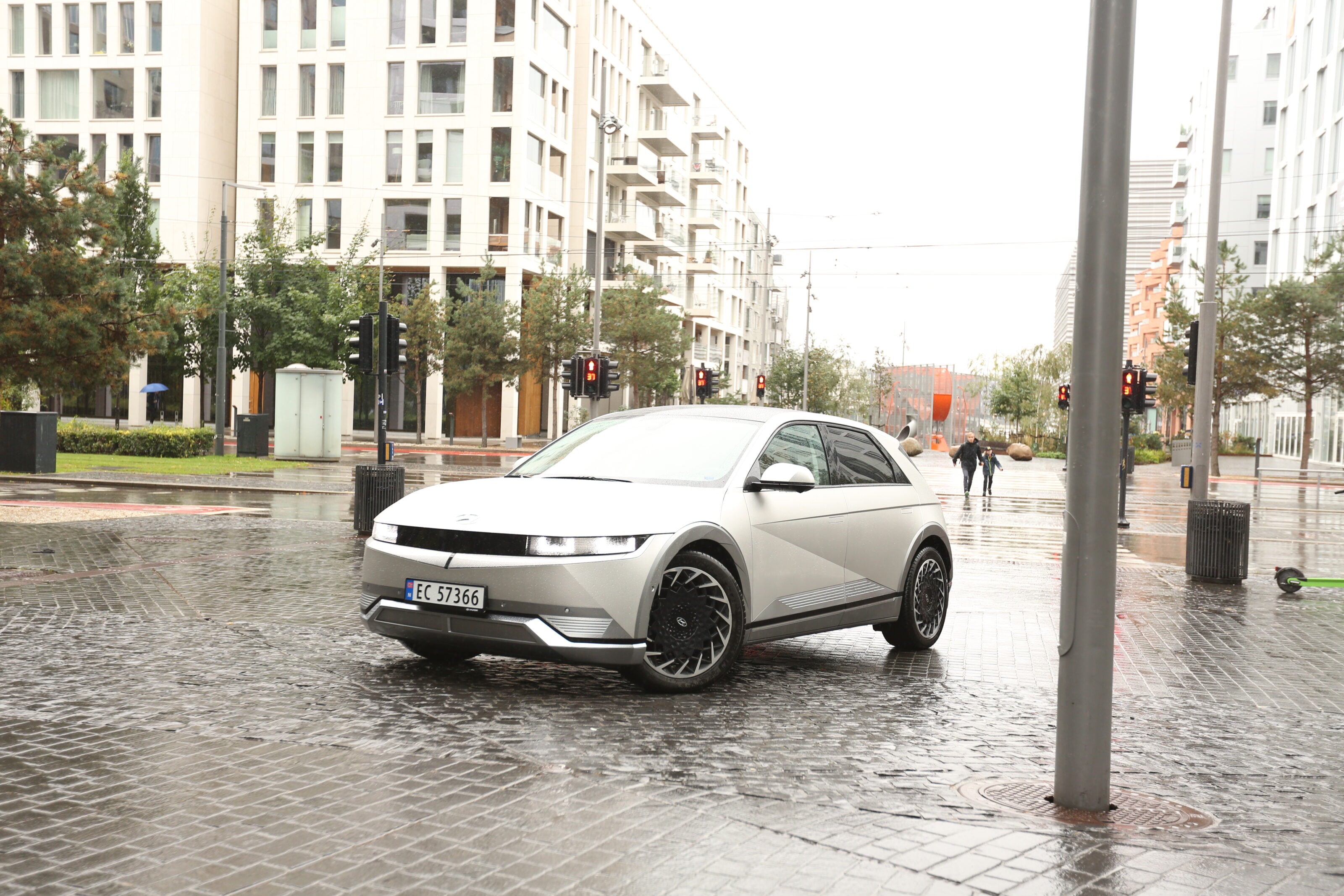
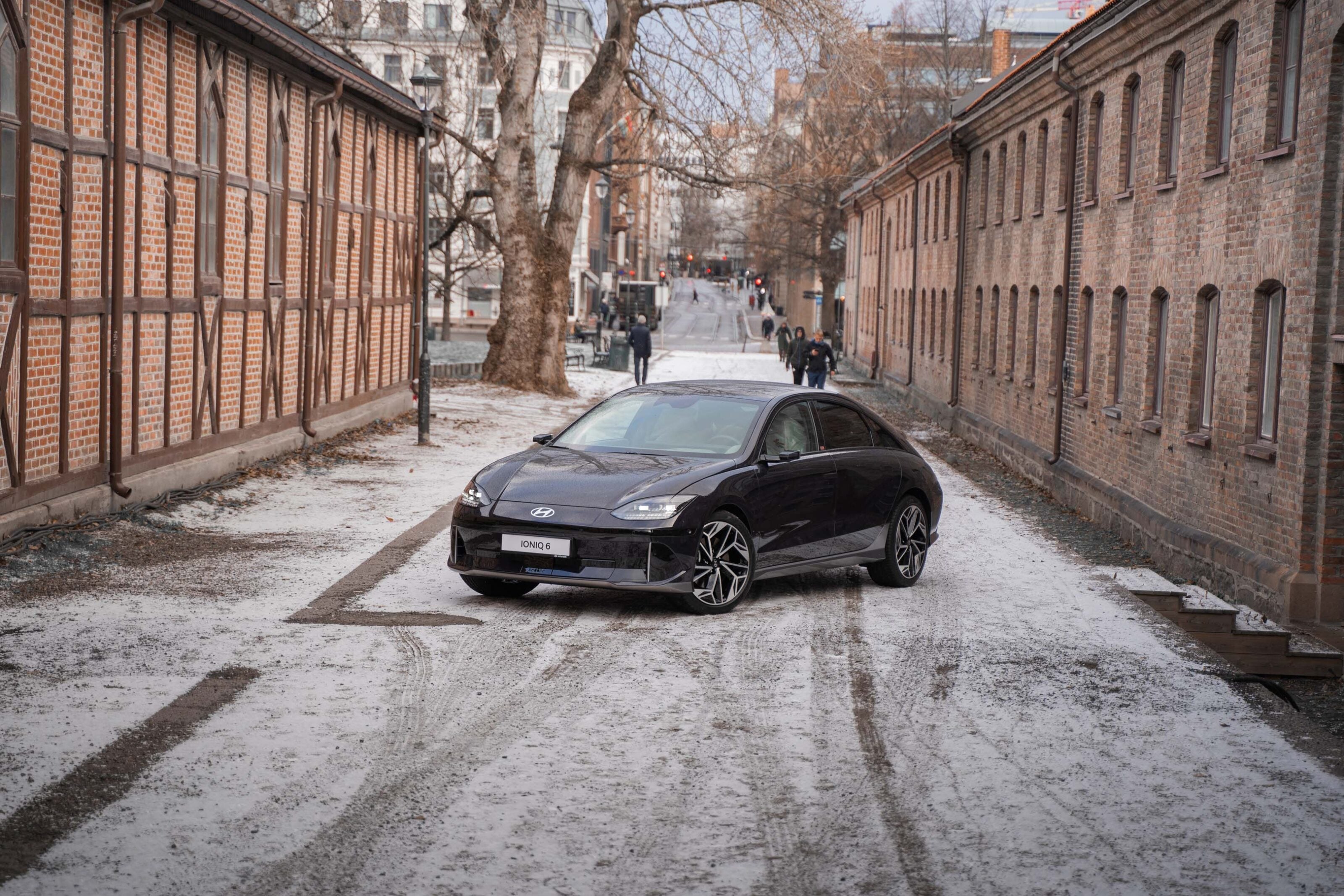
Sales of internal combustion engine cars hit a new low in Norway in January, with the Scandinavian country reporting that just seven new petrol cars were registered last month.
That’s according to data from the Norwegian Road Traffic Information Council (OFV) which shows a total of seven petrol, 98 diesel and 29 hybrid cars were registered in January.
In stark contrast, 2084 new electric vehicles were registered last month, just under 94 per cent of the new car market.
1
However, sales of new cars were significantly down compared with December when 35,000 new cars were registered in a market that usually accounts for between 10,000 to 15,000 new car sales per month.
According to the OFV, the sharp decline in January can be attributed to new sales tax that came into effect on January 1.
“Tax changes just before the turn of the year create artificial sales peaks and sharp declines, resulting in an unnecessary stop-and-go market,” read a statement from the OFV. “Therefore, the January figures are not a sign that demand has stalled, but rather a result of the extraordinary final spurt before the New Year. We expect registrations to pick up again as the market stabilises.”
Norway has long been a pioneer of battery electric vehicle uptake. In 2025, BEVs accounted for 95.9 per cent of the new car market while data from the OFV shows that BEVs accounted for 22 per cent of Norwegian used car sales last year.
1
BEV uptake grew across Europe in 2025, now accounting for 17.4 per cent of the new car market according to data compiled by the European Automobile Manufacturers’ Association. Sales of hybrid vehicles accounted for 34.5 per cent of the market while traditional petrol and diesel vehicles represented 35.5 per cent, a sharp drop of almost 10 per cent compared with 2024.
In Australia, BEVs represented 8.3 per cent of all new car sales in 2025.
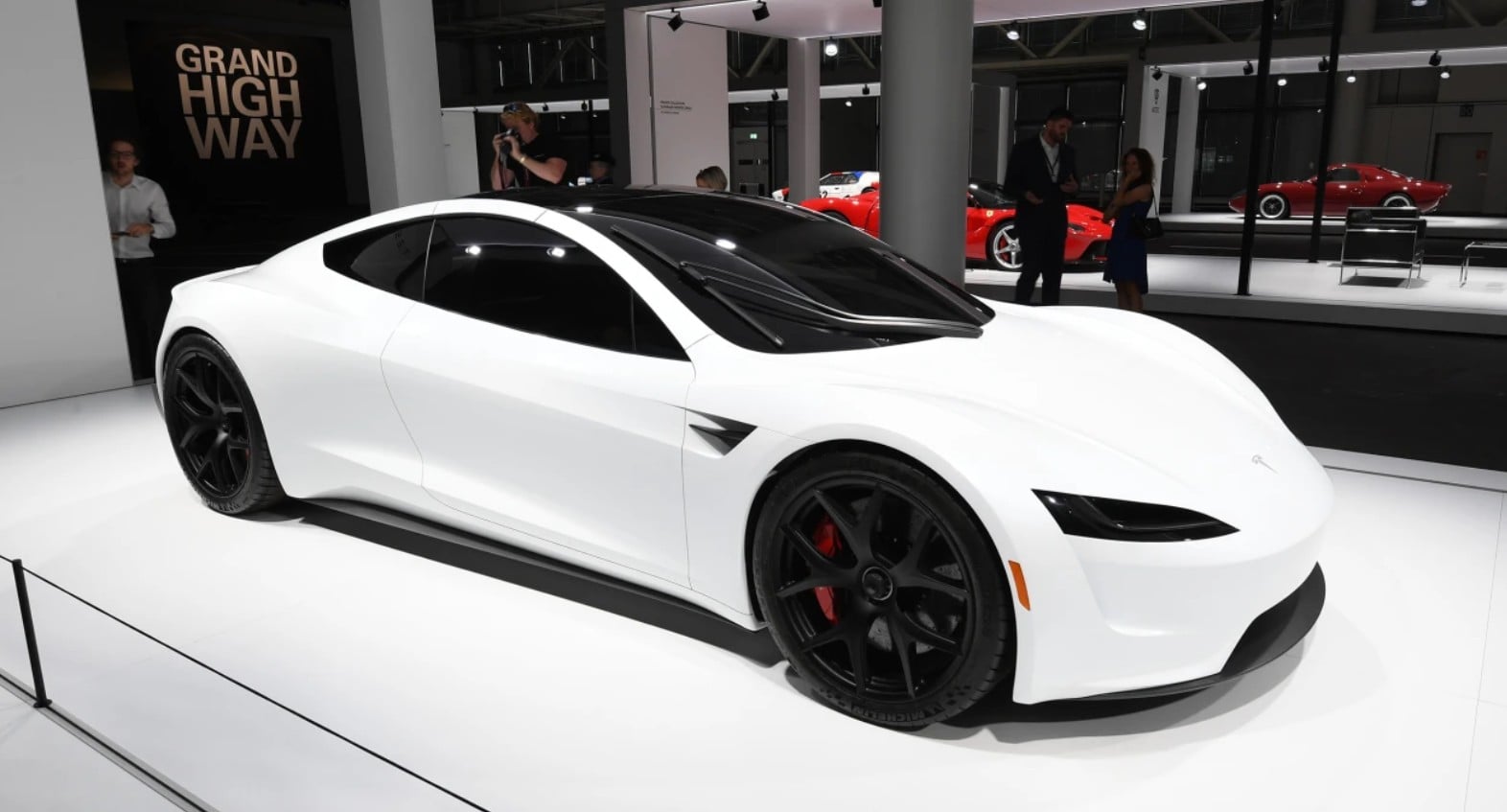
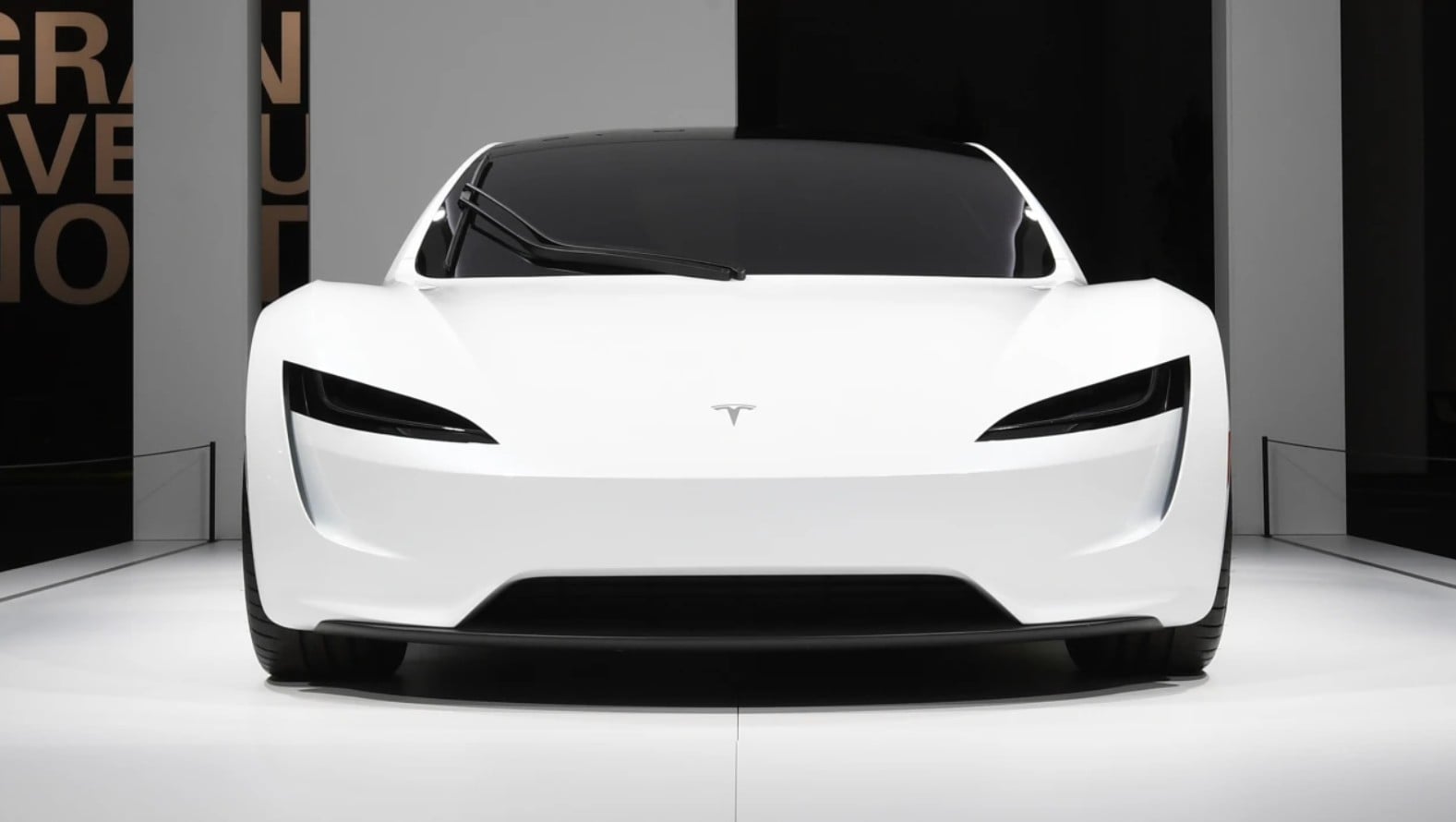
The second-generation Tesla Roadster may finally be inching towards reality, with new trademark filings suggesting the electric supercar’s long wait could soon be over. Two trademarks, lodged with the US Patent and Trademark Office on February 3, have reignited speculation that Tesla is preparing to unveil the Roadster after years of delays.
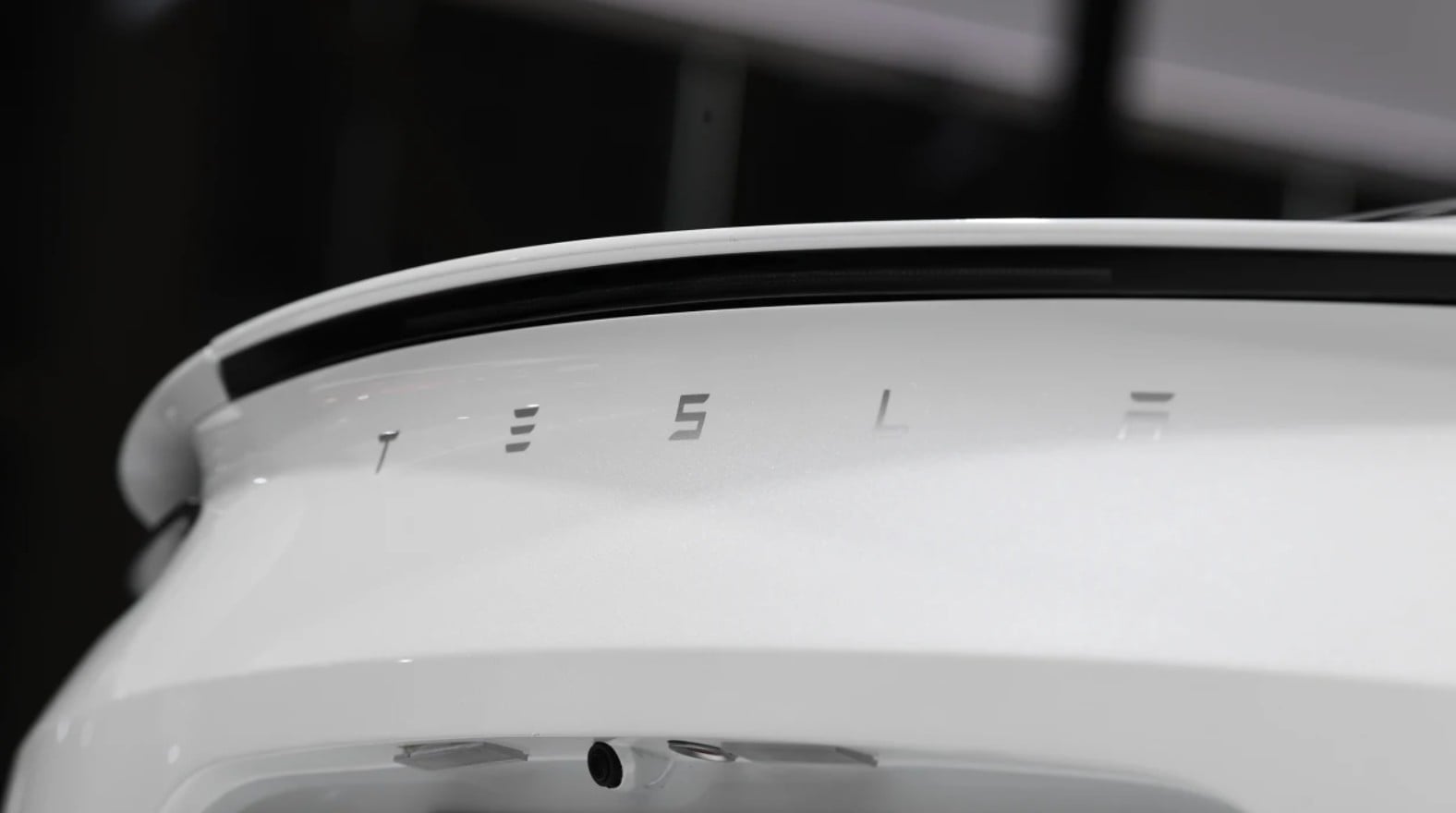
One of the filings shows a minimalist side profile of the Roadster, sketched using just three lines. Despite the simplicity, the low, cab-forward proportions typical of a supercar are clear, although the rear haunch appears squarer than the dramatic prototype revealed back in 2017. That change aligns with Tesla’s evolving design language over the past decade. The second trademark covers a stylised ‘Roadster’ wordmark, hinting at branding preparations for a production-ready car.
Timing-wise, the filings arrive shortly after Tesla CEO Elon Musk flagged a possible spring reveal. Speaking on the Joe Rogan Experience podcast last October, Musk described the Roadster as having the potential to be “the most memorable product unveil ever”. More recently, during Tesla’s Q4 2025 earnings call, he doubled down on the hype, calling it “the best of the last human-driven cars” as Tesla pivots toward autonomy-first vehicles.
2
If the Roadster is revealed soon, production is still expected to be 12 to 18 months away, which would likely push first Australian customer deliveries into late 2027 at the earliest.
Originally announced in 2017, the Roadster has suffered repeated delays as Tesla prioritised higher-volume models and projects like the Cybertruck and Robotaxi. Musk has previously thanked “long-suffering deposit holders”, while admitting the Roadster is more of a halo project than a business-critical model.
Tesla is already accepting reservations. Based on earlier pricing, the entry-level Roadster is expected to start at around A$285,000, with a deposit of roughly A$64,000. A limited Founders Series, capped at 1000 units globally, will require a much steeper upfront commitment, with deposits previously quoted at around A$350,000.
3
Performance remains the Roadster’s headline act. Tesla claims the tri-motor all-wheel-drive setup will deliver staggering acceleration, with 0–100km/h in around 2.0 seconds and a top speed of more than 400km/h. Musk has also suggested a combined torque figure of 10,000Nm and a quarter-mile time of 8.8 seconds.
Range is equally ambitious. A massive 200kWh battery pack is claimed to deliver up to 1000km of driving range on a single charge, thanks to next-generation battery architecture.
Despite its hypercar credentials, Tesla insists the Roadster will be usable day-to-day, featuring a 2+2 layout, front and rear storage, and a removable glass roof panel. Interior details remain under wraps, but if Tesla delivers on even half its promises, the Roadster could redefine expectations for electric performance cars.
2
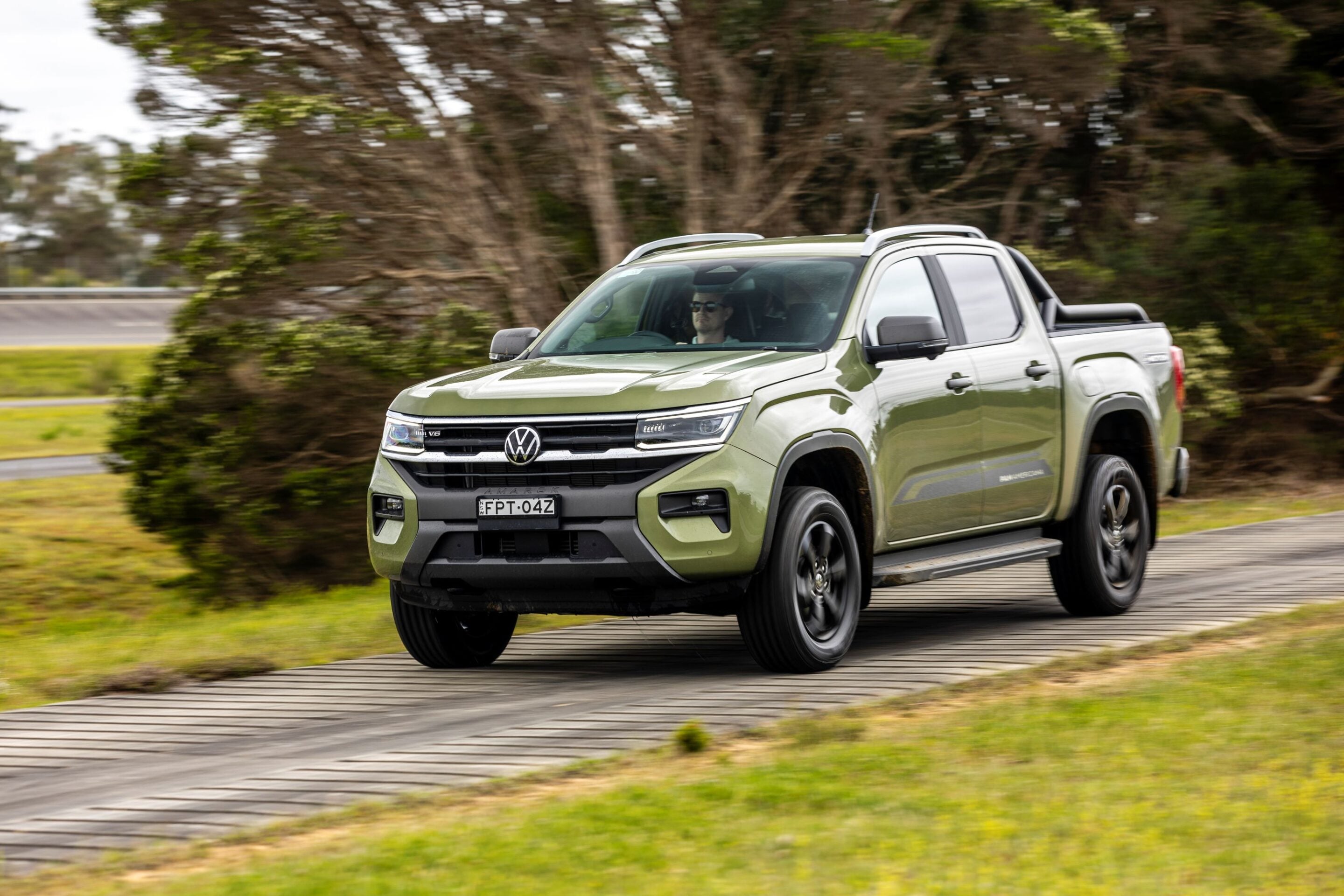
When we reference how much the dual-cab segment has changed, the current Volkswagen Amarok is a case in point.
Presented to the public in early 2010, Amarok was designed, engineered and built by Volkswagen at great expense. On one hand, you could say that it was simply a case of Volkswagen identifying and wanting a slice of the pie that was exploding in popularity. On the other, it could also have been a very expensive case of ‘me too’ automotive accounting.
In Australia, the original Amarok was a solid success. A smooth and efficient 2.0-litre turbodiesel and excellent automatic was available, full-time 4WD, great cabin comfort and ergonomics, and ride quality the envy of every other dual-cab.
3
At the time, a Mazda BT-50 was a Ford Ranger under the skin, and a Holden Colorado was an Isuzu D-Max, and every other dual-cab wished it was as refined as an Amarok. The emergence of the excellent 3.0-litre V6 turbo-diesel moved the game forward even further and stood Amarok alone as the effortless performance alternative.
Fast forward to Wheels’ UOTY testing this year, and the development cost of the Amarok had become so overwhelming, that the German manufacturer decided to partner with Ford for the all-new Amarok. That means the Amarok the judges are testing now is very different, fundamentally, to the original.
It’s why there was so much anticipation when Volkswagen launched the new generation Ford-developed Volkswagen Amarok. Would it be VW enough? Would it feel VW enough? Crucially, would it drive like it was VW enough? And would rusted-on Amarok owners buy a Volkswagen that was, in fact, a Ford under the skin?
1
The initial popularity of the new Amarok would indicate that, yes, it is resonating with the right buyers, even at the price point, which at the top end has marched well past $70,000. It’s worth noting, of course, that you can get into an Amarok from the mid-50s before on-road costs if you’re happy to forgo some of the creature comforts.
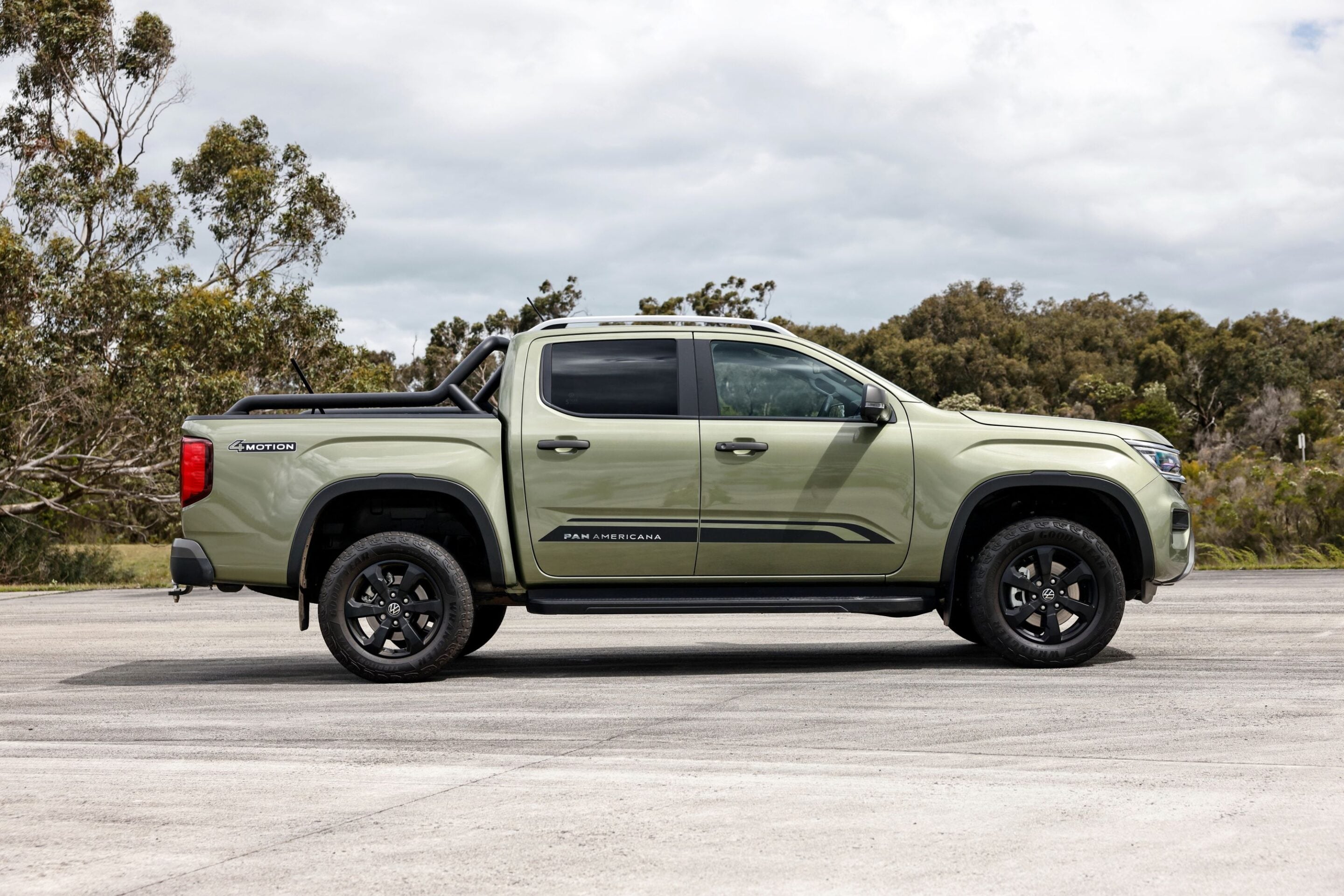
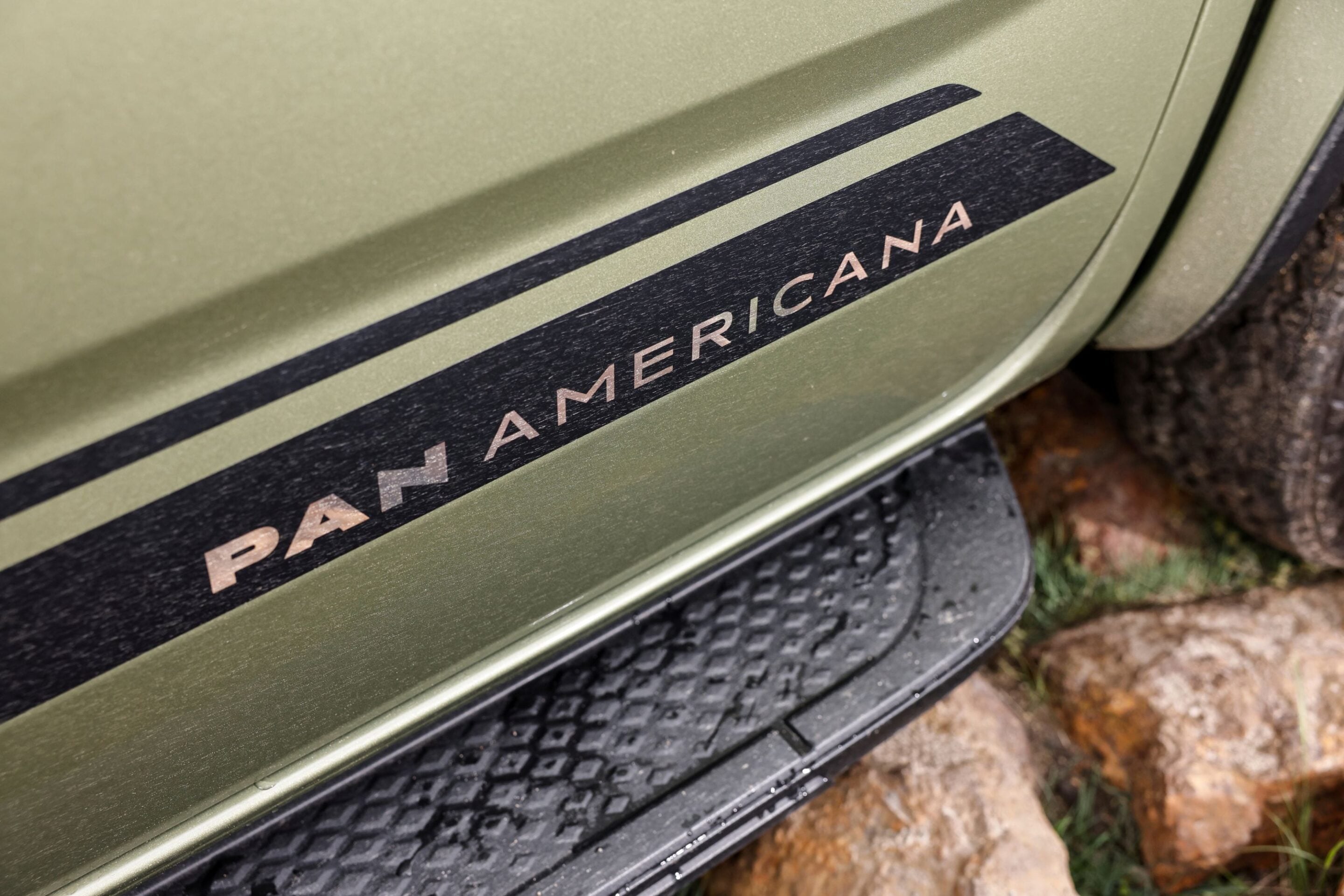
On test for Wheels’ UOTY we have the second from top-of-the-range PanAmericana. In theory, Amarok might have been more competitive, had we been able to access a more affordable Style variant, but PanAmericana was the grade that Volkswagen was able to supply.
At $78,990 it’s difficult to argue the value equation, as it is with much of the segment now. Ford’s Ranger and Isuzu’s D-Max both start beyond $70,000 before on-road costs, and against new brands that aim to deliver sharp pricing, the top end of town is nothing if not expensive.
3
Has that stopped Aussies buying them? Absolutely not, but it does register with the judges in UOTY judging. Beyond the price though, there’s a lot to like about the Amarok, with the 3.0-litre engine delivering 184kW and 600Nm, mated to the same competent 10-speed automatic you’ll find in Ranger, and a combined fuel use figure of 8.4L/100km. During testing, we used an average of 11.0L/100km, which is where the majority of the heavy hitters in this segment sit. There’s a five-year/unlimited kilometre warranty and a five-star ANCAP safety rating. Across five years of servicing, you’ll only have to part with $1801, a smart move by Volkswagen, keeping it in line with the Ranger.
All of the strong points that make the Ranger the enduring best in segment, resonate when you’re behind the wheel of the Volkswagen Amarok – unsurprisingly. The cabin ergonomics and comfort levels remain the best in segment, visibility is excellent, and general drivability – from inside the cabin – is fantastic around town.
The judges agreed that the ride is as good as leaf springs get, but Amarok couldn’t quite match the all-round competence of the Ranger, especially on the bumpy sections of Lang Lang’s ride and handling circuit. PanAmericana as tested here, gets a more off-road focused suspension tune, which softens the overall ride – not so bad at lower speed but means it can feel less composed on higher-speed bumps. There’s also some added body roll that doesn’t add to the around town chops of the Amarok. If off-road work is your thing though, this is the spec to have.
3
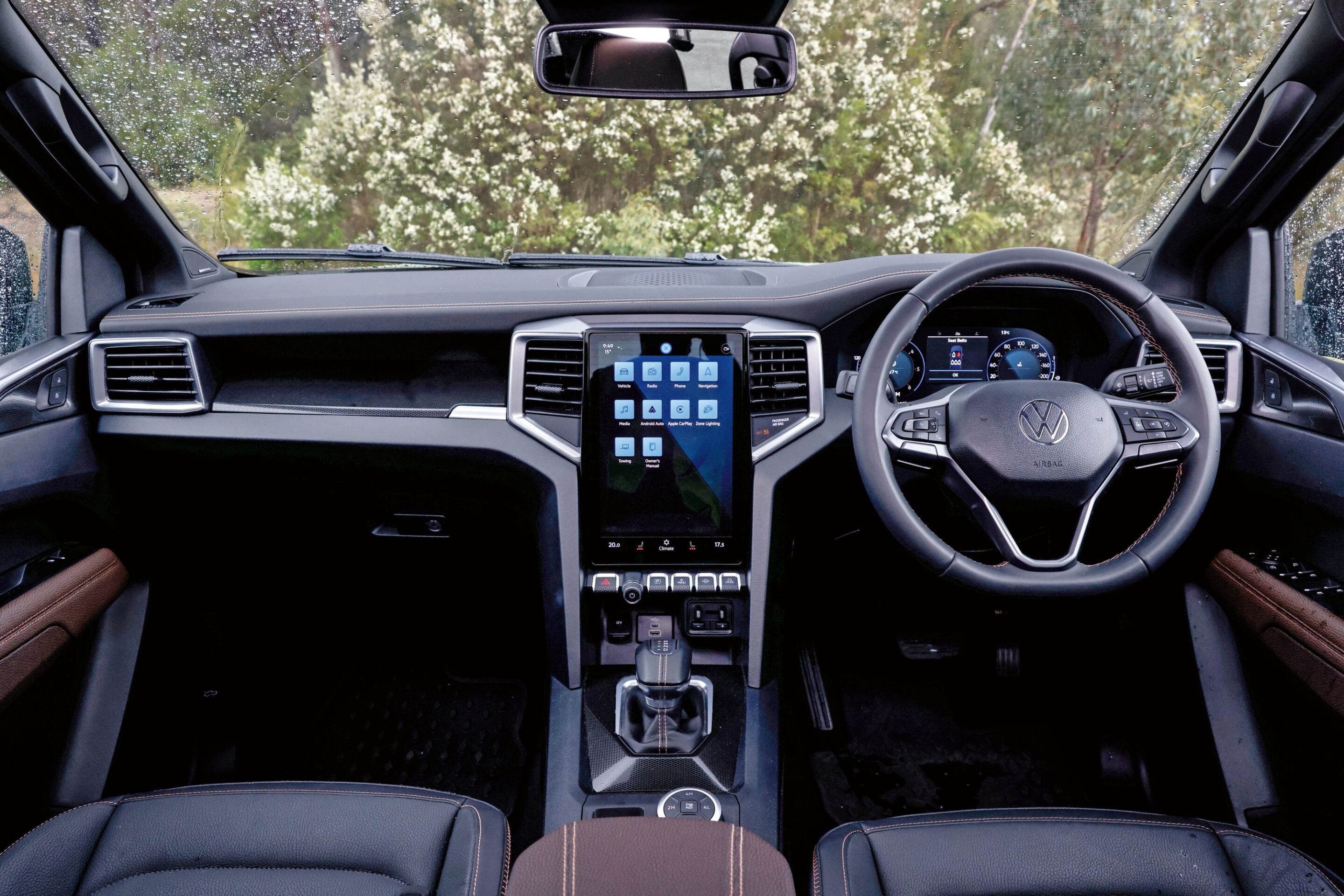
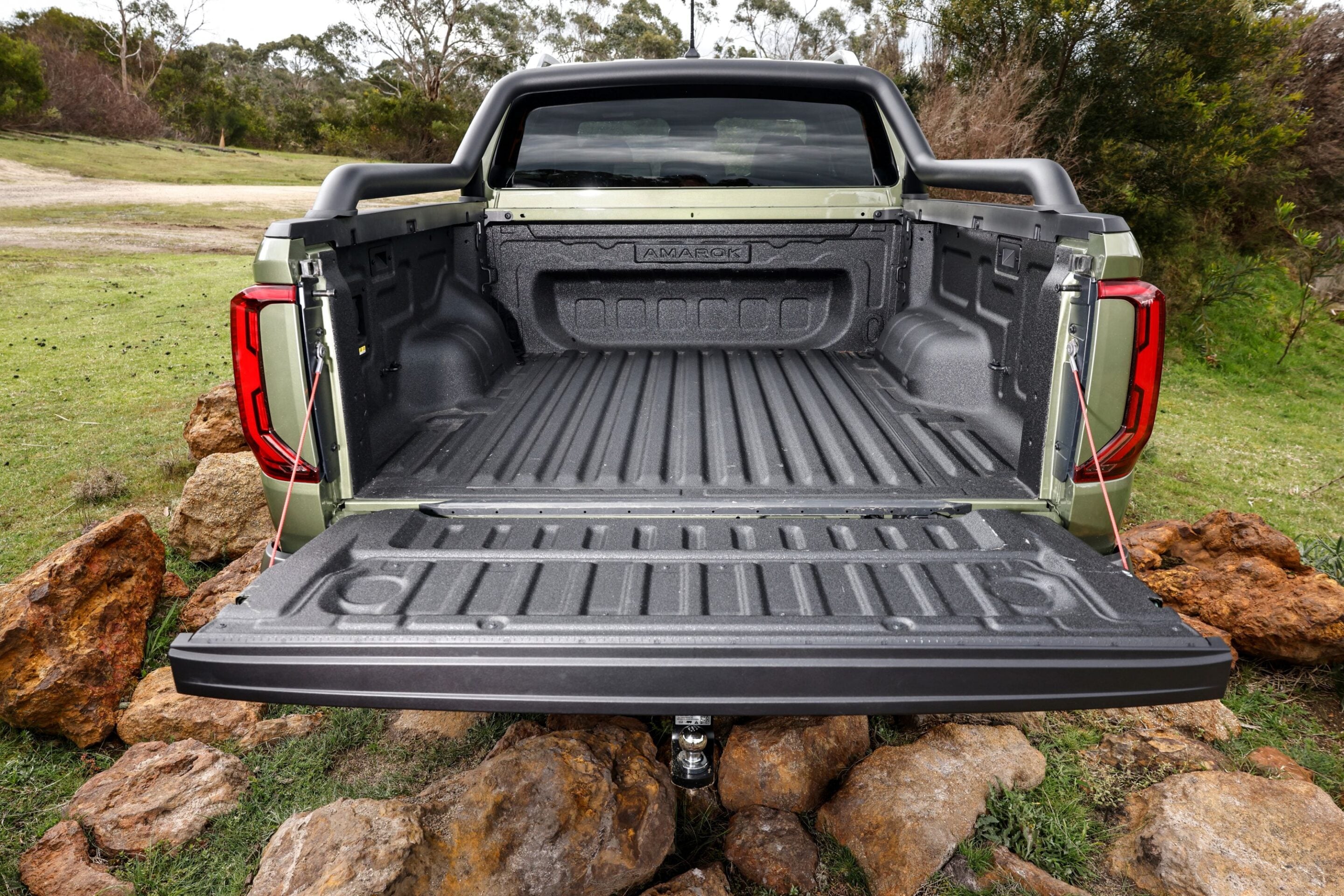
While it’s very obviously a Ranger, there is a certain level of quality to the cabin that dips the lid to Volkswagen interiors. The new Amarok can’t feel as Touareg-like as the old one – obviously – but it’s comfortable, quiet and refined. The big step forward from the old platform is safety – the original didn’t even have second-row airbags – and space in the second row. Like Ranger, the new Amarok is genuinely comfortable in the back seat, even on longer trips.
The judges had some minor glitches when connecting Apple devices, but none with Android – something we’ve noted in regular testing since the Ranger was released with the new operating system. That aside, there’s nothing nasty to report from what is an otherwise excellent dual-cab.
As with D-Max and Ranger, the new Amarok is the other one to choose if you like long-distance touring. Its effortless engine and transmission makes for a comfortable long-hauler, and it might have given the top three a run if a slightly more affordable variant was available. However, as we saw with Ranger, it couldn’t quite crack the top two for this specific testing either.
3
Specs
| Price | $78,990 (MSRP) |
|---|---|
| Body | Dual-cab, five-seat ute |
| Drive | Dual-range 4×4, incl. auto mode |
| Drivetrain | 3.0-litre V6 turbodiesel |
| Power | 184kW @ 3250rpm |
| Torque | 600Nm @ 1750-2250rpm |
| Transmission | 10-speed automatic |
| Consumption | 8.4L/100km |
| Kerb weight | 2387kg |
| 0-100km/h | NA |
| L/W/H/W-B | 5350/1910/1886/3270mm |
| Payload | 963kg |
| Warranty | 5yr/unlimited km |
| Safety rating | 5 star ANCAP (2022) |
If there’s a blueprint to be studied on how to gain traction in the Aussie new-car market by a challenger brand, MG’s approach might be the one to pay close attention to. Hot on the heels of increased market share, the Chinese manufacturer has added a dual-cab to its showroom in the form of the slightly left-field U9.
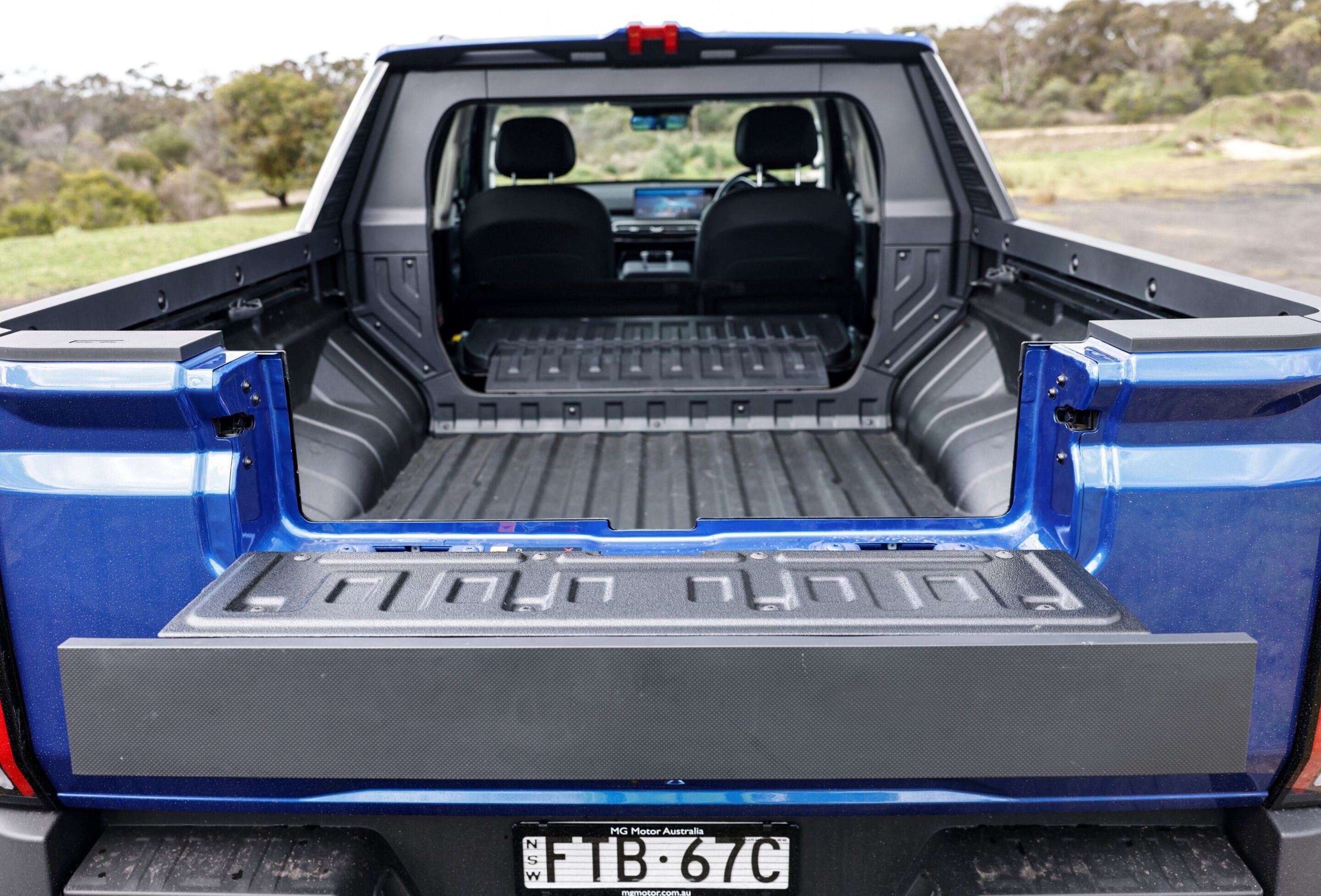
Why left field? Well, it does some things that are, let’s say, unconventional. The rear seat folds out of the way and you can drop the firewall section behind it to open up a vast open space. Makes for a breezy run up the freeway too.
Does a dual-cab need such theatrics? No. Does it work? If you’ve got something longer to move that won’t fit into the tray for example, you can utilise this clever optional feature.
3
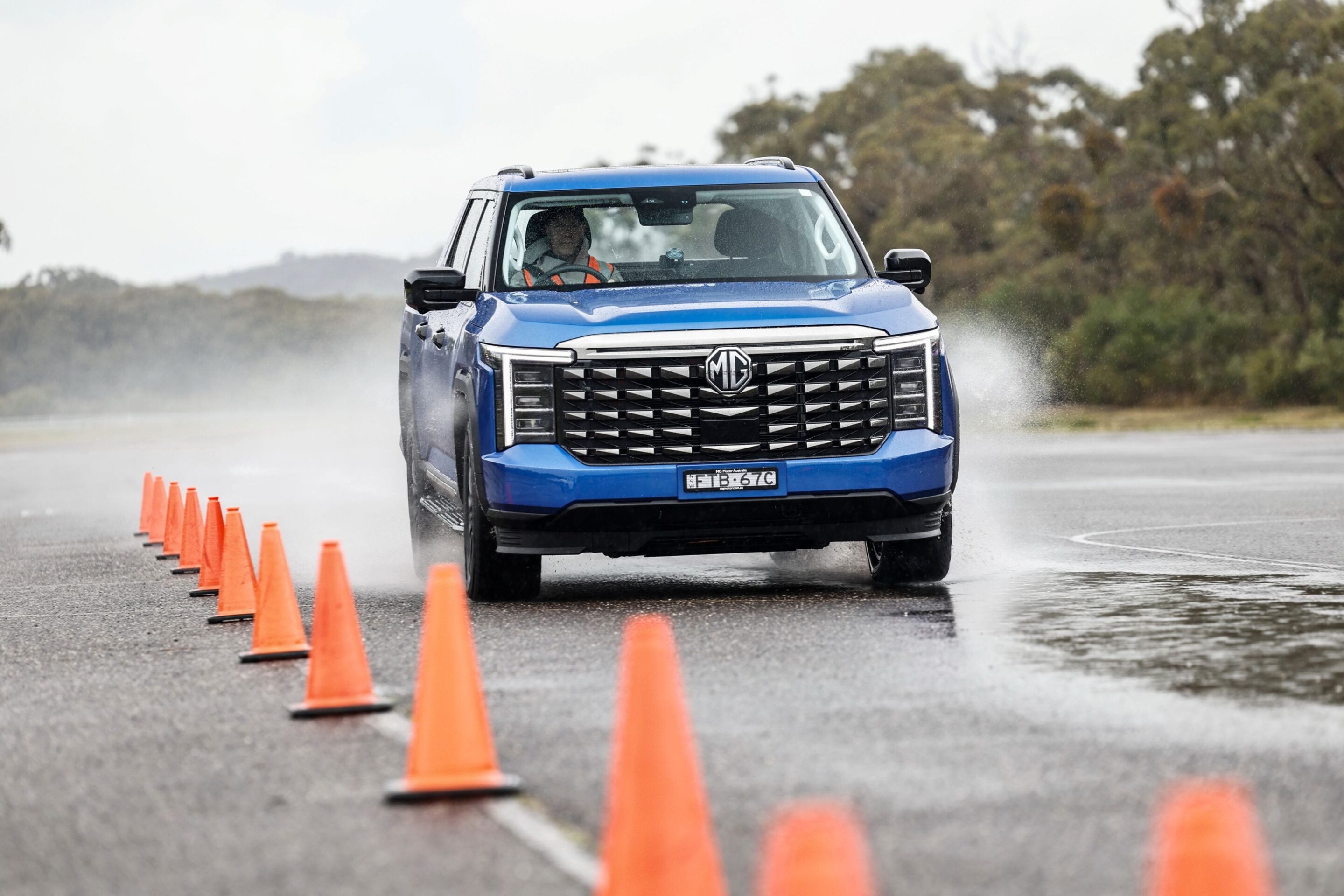
We’ll get to the driving in a minute but the factor that most closely attracts Wheels UOTY judging criteria is the price. At the time of testing, you could buy the full-fruit Explore Pro we have here for $60,990 drive-away, which positions it as significantly more affordable than any established dual-cab with similar levels of standard equipment. Keep in mind, too, that the range-opening U9 Explore starts from $52,990. In other words, MG’s determination to pursue an aggressive pricing structure in this segment could prove to be a stroke of genius. Time will tell.
So the value equation is nailed, but what else does the U9 do, or not do? When you look at the standard specifications and outputs on paper, its only challenge in this segment is that it’s untested. That’s even more the case when you think about something like Ranger that has been setting the standard in the segment for a decade or more.
Tackling Ranger and HiLux head on will be no easy feat for MG, even with that sharp pricing. An unconditional five-year/unlimited kilometre warranty adds to its value, though.
We noted in our initial testing of the U9 that it was a clever move to partner with component suppliers with trusted credentials. There’s the eight-speed ZF automatic, a Borg Warner 4WD system, and Bosch electronic stability control. Rather than go it alone, MG is onto something here using crucial components from suppliers with a long history of robust quality.
Therefore, it’s in the driving the U9 most impresses, aside from the quality of the cabin and technology on offer. Despite some of the U9’s shortcomings, Morley noted as much in his assessment.
2
“Is an independent rear suspension enough to save the MG from being seen as a rebadged LDV Terron 9?” Morley asked. “No, as it turns out. Nor does the sophisticated rear end add much to the formula beyond a better ride in some circumstances. This is proof that not all the Chinese makers have got a complete handle on the dual-cab just yet.”
Where the independent rear might hinder the U9 in heavy-duty towing conditions, for example, it assists around town in regard to the better ride referenced by Morley, where U9 nailed the NVH and suspension course, designed to put even the most competent systems to shame.
On the low-speed cross-axle articulation stretch for example, U9 was as good as, if not better than, every other dual-cab on test. It doesn’t deal with high-speed, high-amplitude corrugations as well as some, but around town, at city speeds, it’s comfortable and easy to live with.
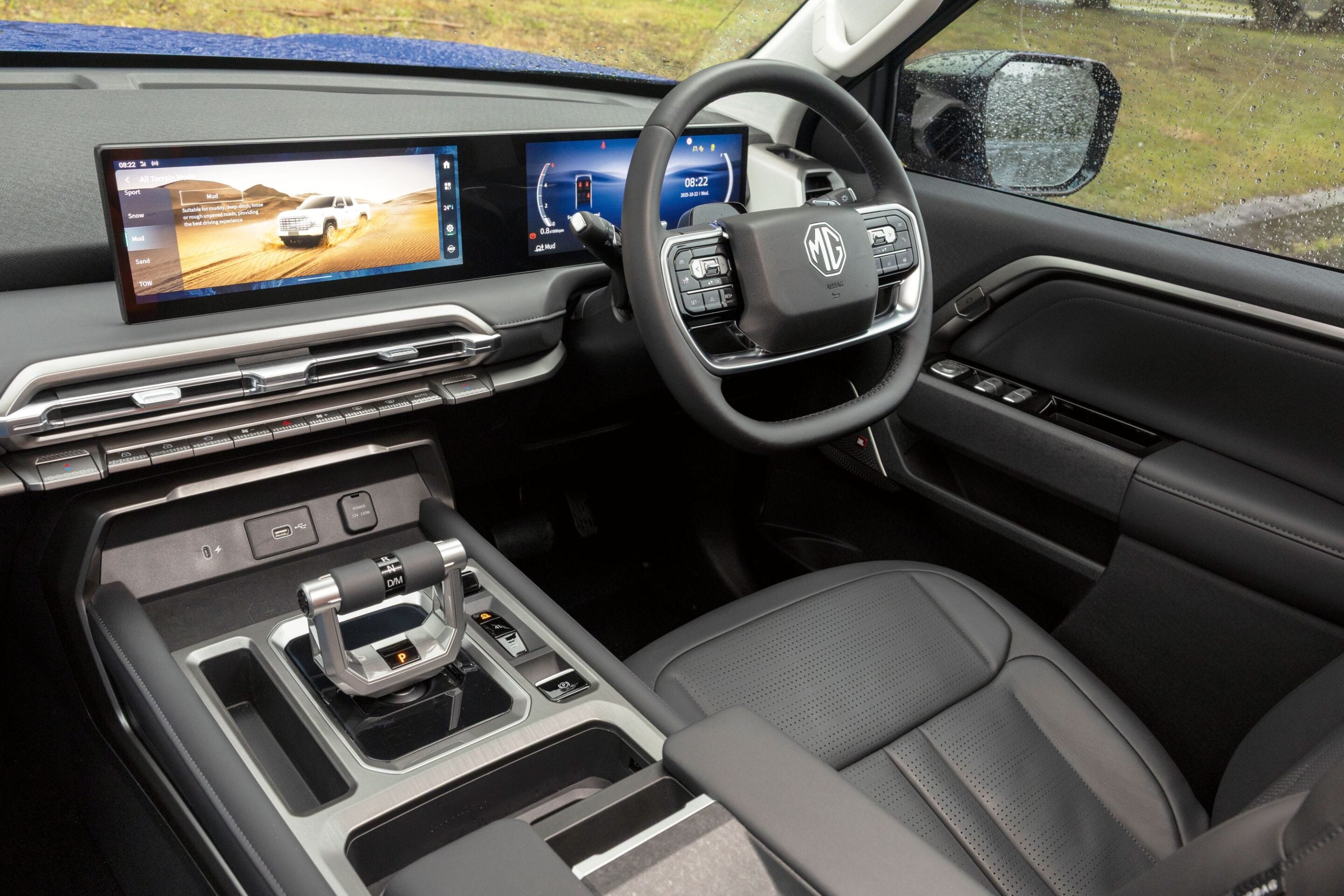
The other U9 strong point – take the fancy folding firewall or leave it – is cabin technology and comfort. Like the BYD Shark 6, U9 feels half a segment larger than the traditional dual-cab entrants, and that’s most keenly felt inside the cabin. The experience once you close the door is quite premium, there’s no creaking or other weird noises coming from the retracting firewall and rear seat, and the technology that has been included looks and feels right.
3
Big screens, modern graphics, clear camera images, plenty of space and ‘vegan’ leather trim (whatever that really is), combine to deliver an insulated driving experience that steps the U9 away somewhat from the diesel engine under the bonnet. It’s quiet from inside the cabin, even though you can tell it’s a diesel from the outside. On the engine, MG has delivered specs and outputs that start the U9 off on the front foot.
The 2.5-litre, turbocharged four-cylinder is a conventional diesel chugger, and paired with the excellent ZF eight-speed, it churns out 160kW and 520Nm, more than acceptable for the four-cylinder competition. It’s actually quite a smooth engine, in terms of the way it feels and responds from behind the wheel. Keep in mind, smooth in this segment is relative, with really only the petrol-hybrids delivering passenger-car-like refinement and noise suppression.
The MG U9’s most obvious strongpoint is directed squarely at those of you wanting to take a punt on a new-generation dual-cab from a challenger brand. Where a PHEV Shark 6 or Cannon Alpha present too much of a leap into the future, the MG U9 offers a gentler step in the form of an affordable way of tackling the segment big guns. Yes, it’s unproven in this market and in Australia’s harsher parts, but it’s significantly more affordable, has plenty of cabin space, behaves well around town, and has all the standard features you want.
1
Specs
| Price | $60,990 (DA) |
|---|---|
| Body | Dual-cab, five-seat ute |
| Drive | Dual-range 4×4 |
| Drivetrain | 2.5-litre four-cylinder turbo diesel |
| Power | 160kW @ 3800rpm |
| Torque | 520Nm |
| Transmission | 8-speed automatic |
| Consumption | 7.9L/100km |
| Kerb weight | 2550kg |
| 0-100km/h | NA |
| L/W/H/W-B | 5500/1997/1874/3300mm |
| Payload | 770kg |
| Warranty | 5yr/unlimited km (min), 7yr/200,000km (conditional) |
| Safety rating | 5 star ANCAP (2024) |
