
THE shift to soft-roaders has left a clear divide between the can-dos and those that look like they can. But there is still a core group of off-road SUVs, the types of wagons that don’t shy away from rocks and rubble. They’re the cars we’re rewarding with our Off-road 4×4 category.
Each contender must be able to tackle serious bush tracks, beaches, mud holes and more. Importantly, it must be able to get you back again. Our field includes old favourites from Toyota and Land Rover as well as newcomers from little known brands. Big and small, budget-priced and more premium, there’s something for anyone who dreams of one day leaving the blacktop.
GOLD – Suzuki Jimny
SUZUKI has been a stalwart of compact off-roaders and the latest Jimny continues that theme. At $27,990 with an auto transmission, it’s among the most affordable four-wheel drives on the market.
It’s also one owners have been queuing up to own, something that helps with its exceptional 68 per cent Redbook prediction on five-year resale values. Not having to outlay much in the first place and not losing much over the ownership period accounts for the biggest advantage for the tiny Suzuki.
But despite its inexpensive sticker price the Jimny comes with proper off-road hardware. There’s a dual-range transfer case to make the most out of the diminutive four-cylinder, as well as live axles that ensure good wheel articulation.
It’s ultimately not as capable as a Jeep Wrangler or Land Rover Defender, but it’s nuggety, tough and surprisingly capable, its short wheelbase and short overhangs reducing the chance of snags or damage. Being light and nimble also puts less wear and tear on components, helping contribute to cheap servicing.
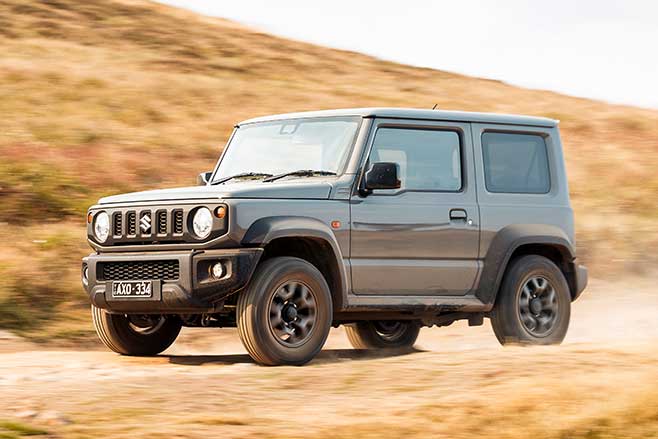
Where the Jimny falls short is on the blacktop. What it has in character it loses in roly-poly dynamics and average cornering grip. The 1.5-litre engine also needs to be worked if you want to maintain a decent pace.
The equipment list is also skinny. Key active safety systems simply aren’t available and storage is light-on. Apple CarPlay and Android Auto are as high tech as it gets.
Oh, and if there’s more than two of you then you’ll want to make sure no one has luggage, because this two-door has either a boot or back seats – not both. But that doesn’t stop it being a great off-roader and one that lays down a terrific canvas for people to build on with modifications and upgrades. The bones are there, the rest left to the imagination of adventurous owners – safe in the knowledge that the whole Jimny off-roading experience won’t cost the earth.
SILVER – Jeep Wrangler Sport S
JEEP’S most iconic model is also its most capable and recognisable vehicle. Priced from $51,190 it’s a mix of proven old-school components and modern technology in a retro-infused body that looks ready for business. The Wrangler gets off to a great start with terrific resale forecasts of 74 per cent. That means annual depreciation averages out to about $2700 over the first five years, among the best of any car on the market.
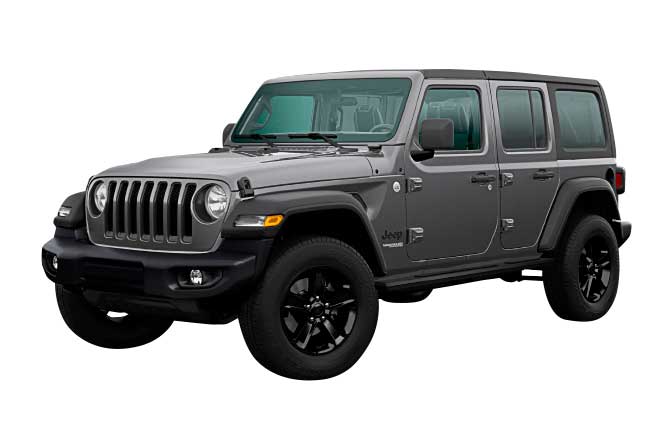
And while many will limit their Wrangler experience to the suburbs – where newfound on-road maturity quells some of the old model’s wayward ways – they’re doing themselves a big disservice. Because it’s the hardware beneath that makes the Wrangler such a capable car. Excellent wheel articulation and low-range gearing make almost any surface easy to negotiate. It’s an immensely capable car.
The V6 engine of this entry-level S tends towards thirsty, but it needs only regular unleaded, helping keep those fuel bills a tad less frightening than they might otherwise be.
While safety could be improved – the crashworthiness was questioned by ANCAP – that’s less of an issue on bush tracks. And with good connectivity inside it almost allows you to overlook some bugbears, such as the lack of space for the driver’s left foot.
BRONZE – Toyota LandCruiser Workmate 70 Series
WHEN it comes to icons of the Aussie bush nothing comes close to the Toyota LandCruiser – and it’s the 70-Series that best embodies that go-anywhere mentality. From Bourke to Broome the trusty 70-Series is the weapon of choice with so many farmers, adventurers and others chasing reliable transport.
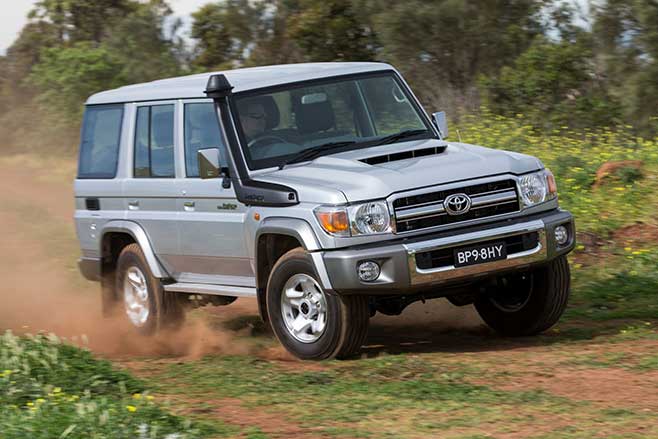
Ultimately it’s that reliability and tough nature that makes the old school LandCruiser a perennial favourite. It also helps endow it with exceptional 75-per-cent five-year resale prospects, helping offset the substantial $67,400 price of entry.
Jump to
- How we rate Australia’s Best Value Car
- Light/City Cars
- Small Cars
- Budget luxury cars
- Family Cars
- Small SUVs
- Five-seat SUVs
- Seven-seat SUVs
- Premium SUVs
- Prestige cars
- Kid Carriers
- Dual-Cab 4x4s
ABOUT one in five new vehicles sold in Australia these days is a ute. It’s an astonishing number, and one that’s been boosted over the past decade by the enormous growth in dual-cab 4×4 utes.
Rather than basic load luggers, the new breed of family-friendly utes have stepped up comfort, safety and design. Yes, they still lift heavy things, albeit wearing sharper suits than their basic workhorse origins once relied on.
For this test we’ve focused on the sweet spot of the market: the dual-cab off-roaders with a ute body style (rather than a cab-chassis). While some still offer a self-shifting transmission it’s the autos we’ve chosen to compare, because that’s what more buyers are gravitating to.
From bargain-priced newcomers to American behemoths, it’s a category that dishes up some surprising value – and no shortage of diversity.
GOLD – Toyota Hilux Workmate
IT’S not the most exciting or the best to drive or loaded up with the most trinkets, but the Toyota Hilux is a top seller for good reason: it’s a great all-rounder. Within our dual-cab requirements the one that best hits the value criteria is the most affordable Workmate. It does without side-steps, carpet and alloy wheels.
The front seats are also more basic, no variable intermittent wipers and there are only two front speakers for the sound system. Like all Hiluxes, there’s no vanity mirror for the driver, part of a long-running marketing tagline that played up to the ruggedness of its owners. But there’s still an 8-inch touchscreen incorporating Apple CarPlay and Android Auto, and a reversing camera.
The Workmate gets Toyota Safety Sense that includes autonomous emergency braking (AEB), active cruise control and speed sign recognition. For $48,790 with an auto transmission there’s plenty of ute thrown in.
More importantly, the Workmate gets most of the ability and toughness of more expensive models. Rugged suspension means it doesn’t shy away from a big load (the payload is 980kg) and there’s a dual-range transfer case for heavy-duty off-roading. The main piece missing is a locking rear differential, but our testing has repeatedly shown that the standard traction control system does a good job of getting you across loose terrain anyway.
Helping the Hilux Workmate’s value rating enormously is bulletproof resale values. Selling a good quality Hilux after a few years is easier than offloading a Bondi apartment with a view. Buyers queue to own them so resale values are typically rewarding.
Respectable fuel use from the 2.4-litre turbo diesel – which is less powerful than the 2.8 in other models – also keeps costs down. Early services are cheap, just $250 each for the first six, the negative being that it needs check-ups every six months or 10,000km. But by the time you get to the four-year service it’s over $700, so be prepared.
Still, it doesn’t detract from the excellent all-round value of a solid, dependable ute.
SILVER – Mitsubishi Triton GLX
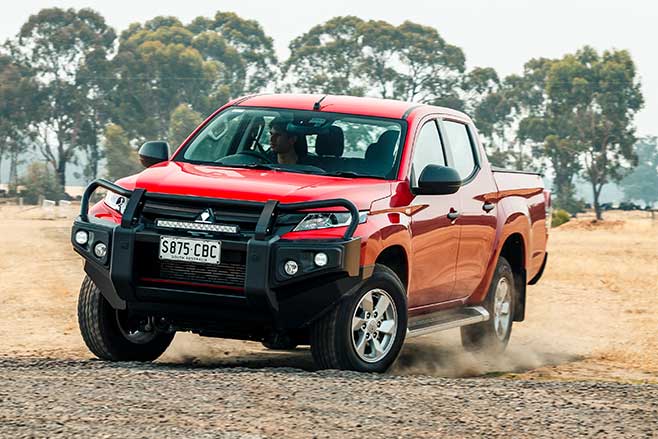
UTES from lesser-known brands may undercut key rivals, but they often fall well short on resale forecasts, because their lack of brand recognition leaves them off the shopping lists of second-hand buyers.
Not so the Mitsubishi Triton, which not only has a good reputation but also sits in a nice middle ground under some of the top-end utes, priced from $40,490 as a GLX auto. Throw in solid resale prospects, affordable insurance and servicing, and acceptable fuel consumption and the Triton mounts a solid case.
While auto emergency braking (AEB) tech is part of the deal, you need to pay more for the latest smartphone connectivity, indicative of an equipment list that touches on the basics without overdelivering. A GLX+ is a worthy step up, albeit slicing into the budget a tad more.
The Triton’s cabin is also slightly smaller than many rivals and its back seat is not as adult-friendly as class leaders.
But it drives nicely, the 2.4-litre engine is honest and predictable, the cornering manners sound. It’s competent off-road, too, rounding out a solid all-round package that also happens to be great value.
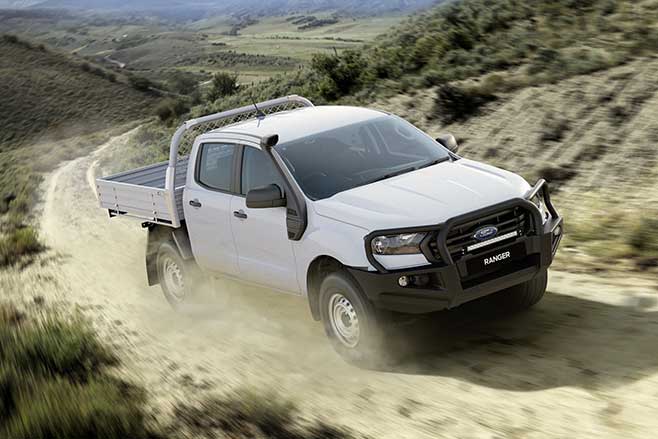
BRONZE – Ford Ranger XL
IT’S about to blow out 10 candles on its birthday cake but that hasn’t stopped the Ford Ranger celebrating with healthy sales and well-earned respect. The truck that repeatedly lands at the pointy end of our multi-vehicle comparisons also happens to be great value, at least in basic XL guise.
At $48,690 with an auto it’s by no means the cheapest dual cab, but that price is offset with an expectation you’ll retain 58 per cent of that value after five years – an important factor in earning it value cred. Servicing that is among the most affordable in its class also helps.
And while the 2.2-litre turbo diesel has only modest outputs, it makes up for it with some of the best ute driving manners on the road.
Jump to
- How we rate Australia’s Best Value Car
- Light/City Cars
- Small Cars
- Budget luxury cars
- Family Cars
- Small SUVs
- Five-seat SUVs
- Seven-seat SUVs
- Premium SUVs
- Prestige cars
- Kid Carriers
- Off-Road 4x4s
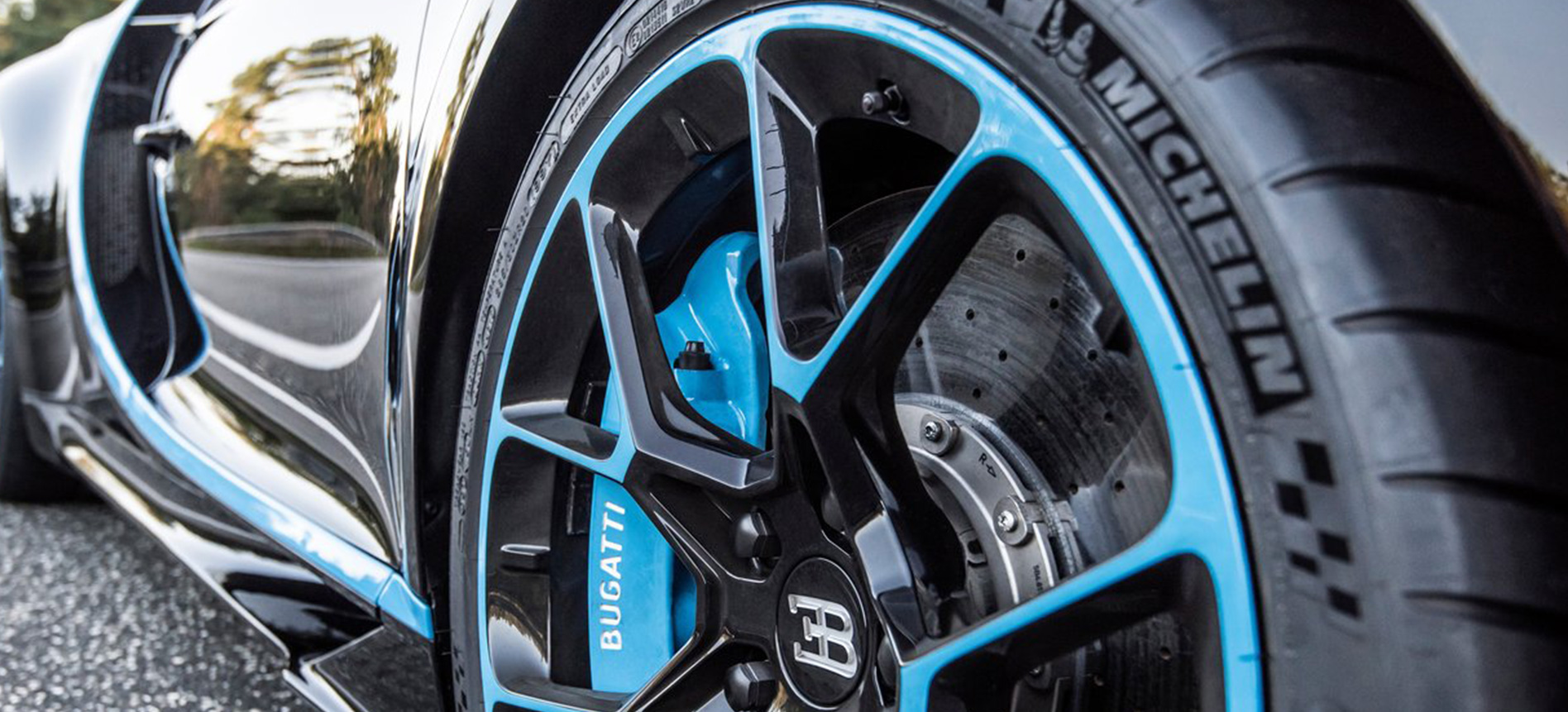
Michelin has committed to a 100 per cent sustainable production and lifecycle of its tyres by 2050.
Today’s Michelin tyres are comprised of more than 200 individual components. The French tyre manufacturer wants all aspects of tyre production to be ultimately sustainable, and it’s achieving its goal through investing in new ways of manufacturing, using recycled materials.
Explained through a neat Youtube cooking video (below), Michelin shows how biowastes like wood, rice husks and corn stover can be broken down into the chemical compound butadiene.
Butadiene can combine with styrene (from broken down polystyrene) to produce a sustainable and synthetic rubber.
As well, plastics can be broken down into regenerated plastic braids and old tyres can be ‘cooked’ into recycled carbon black, both of which can be used in tyre production.
The company is confident in its endeavours, touting its some 6000 engineers, researchers, chemists and developers who will work towards Michelin’s goal.
It’s also working towards using as little materials as possible, while retaining its tyres’ signature performance and comfort. Michelin’s holistic approach also involves getting the rubber industry itself to become eco-friendlier.
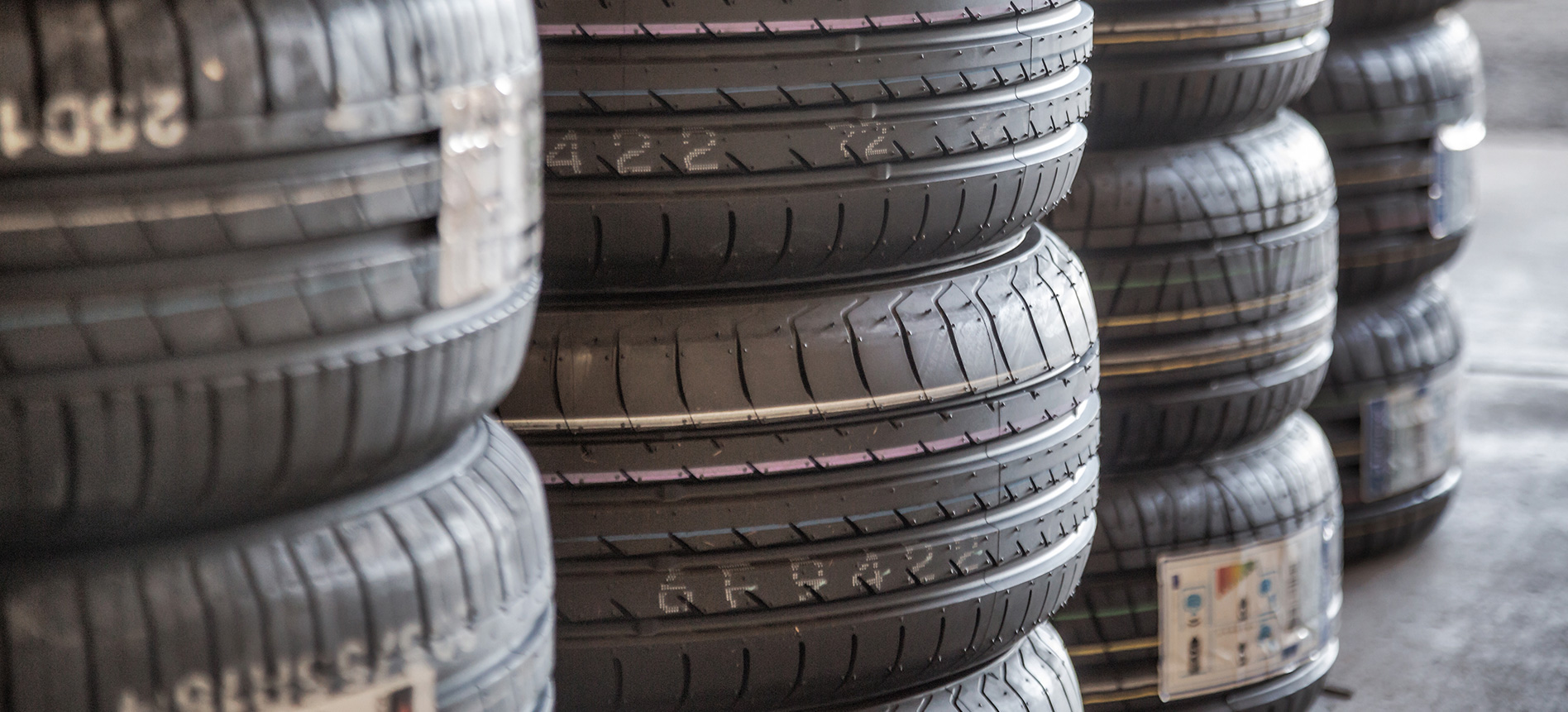
Acknowledging that the goal is ambitious, but not unobtainable, Michelin has already begun production of the eco-responsible e.Primacy range which addresses all lifetime environmental impacts.
Michelin has taken steps to offset the CO2 emissions resulting from the e.Primacy tyre during its production phase, from raw materials extraction to the transportation of the end product.
Among advantages of the forward-thinking tyre is a 27 per cent reduction in rolling resistance when compared to rivals in its category.
Over the lifetime of the e.Primacy tyre, Michelin predicts that it will deliver a 174kg reduction in CO2 emissions.
The e.Primacy tyre is set to go on sale worldwide at the start of March 2021.
A common concern about electric vehicles is their impact on the environment when it comes to disposing of old batteries.
While lithium-ion batteries do eventually lose enough capacity to no longer be effective for vehicle use, they can be repurposed for a range of other duties.
One Melbourne power solutions company is leading the way, and has just received a $1.49 million grant from the Australian Renewable Energy Agency (ARENA) to advance its commercial scale battery and inverter system using repurposed second-life electric vehicle (EV) batteries.
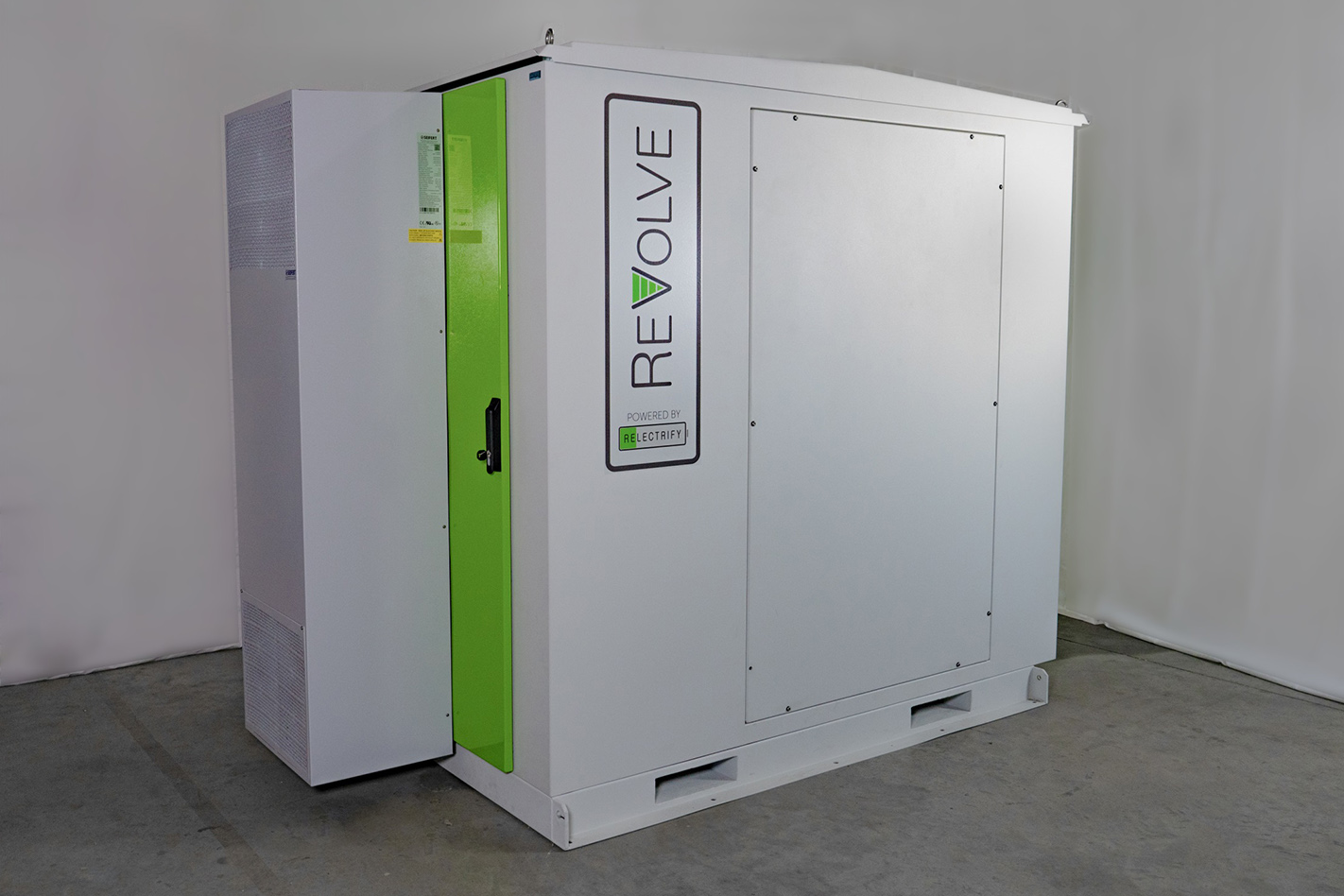
The money will contribute to a $3.3 million project that will see Relectrify finalise development and undertake certifications ahead of the roll-out of 20 36kW/120kWh battery units across commercial and industrial customer applications throughout Australia.
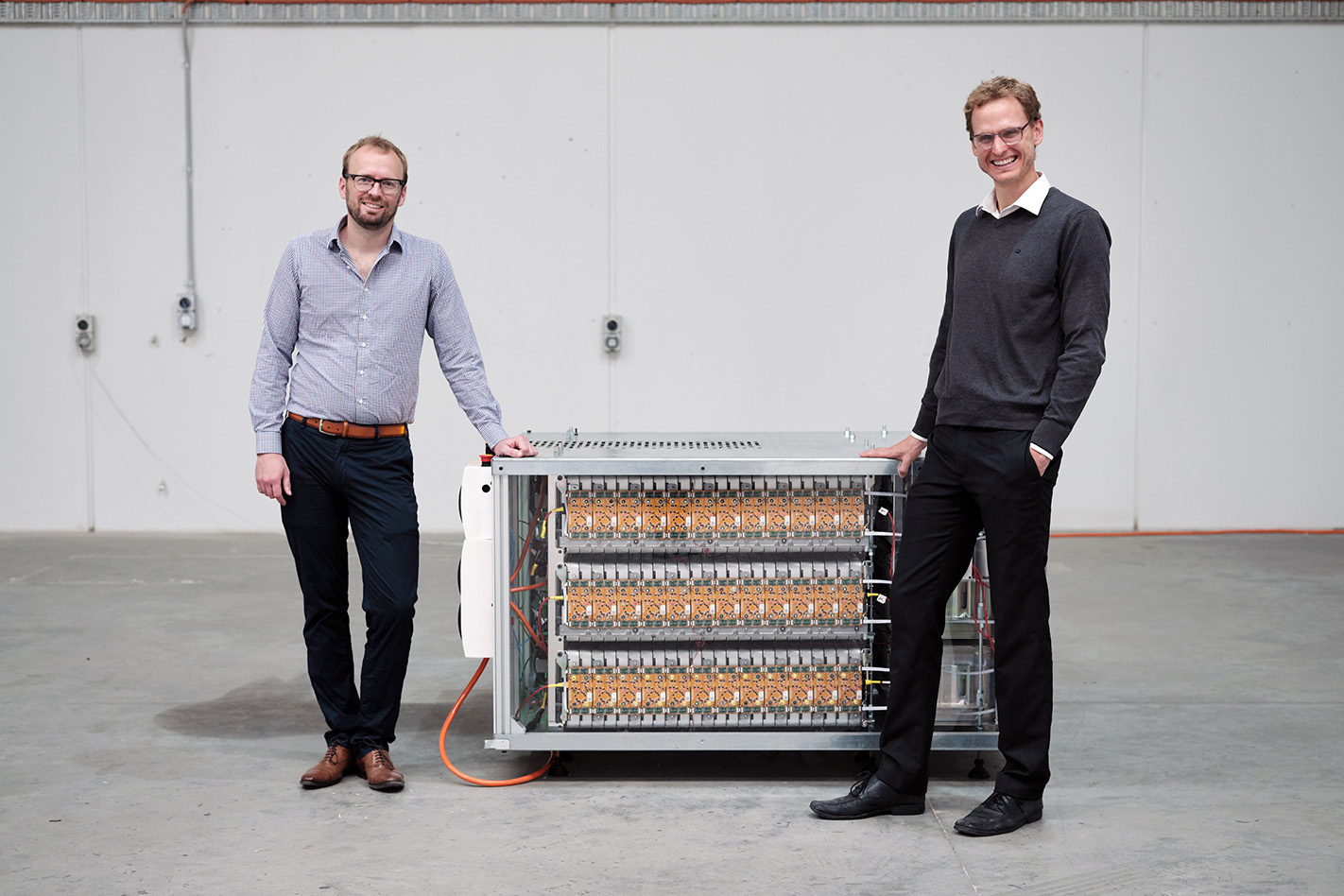
The advanced BMS+Inverter battery control technology can boost the lifetime and performance of batteries, while reducing battery system costs. The technology, which was developed with support from ARENA in 2018, combines both hardware and software.
EV batteries are often considered to have reached end of life when their batteries have degraded to 80 per cent of their initial capacity. While EV drivers may seek a new battery to improve driving range, the second-life battery remains a valuable and useful asset in stationary storage applications.
Relectrify’s project will showcase the capability of its technology to extend the lifetime of batteries, while also highlighting the opportunity to reduce battery cost further using second-life batteries.
The new commercial-scale battery – roughly ten times the size of a Tesla Powerwall 2 – will provide a cost-effective form of battery storage for use in commercial and industrial settings.
Relectrify will offer their batteries to selected Australian customers and electricity network businesses.
Prospective customers include utilities, industry and communities, both grid-connected and off-grid.
ARENA CEO Darren Miller said the project will also help to reduce costs and improve pathways for battery storage to be installed at commercial scale, particularly in industrial settings.
“Battery storage is already playing a crucial role in supporting the transition to renewable energy within industry, however, we need to do more to make it commercially viable,” Miller said.
“Relectrify’s battery technology could be rolled out in a range of applications such as solar integration, providing backup power on farms and to microgrids, deferring the need for network upgrade and replacing diesel generators.”
RIGHT NOW, you can order more than 30 different BMW models with an M badge on them. Back in 1998 it was a different story. The Garching plant found the cupboard surprisingly bare. With no M5 model on the market, and the M-built 850CSi similarly deceased, focus instead switched to the ageing E36 M3 and the new Z3 based M Roadster being assembled at BMW’s Spartanburg plant in South Carolina, neither of which were, at the time, particularly lauded iterations of the M-car lineage.
The M Roadster spawned a vehicle that Auto Motor und Sport claimed looked like “a bullfrog with a damaged hip”. You can thank Burkhard Goschel for that one. Heading up a group of five engineers on an after-hours project, his brief was to sort the chassis flex of the M Roadster. Off came the wings and a shooting brake-style coupe body was grafted on.
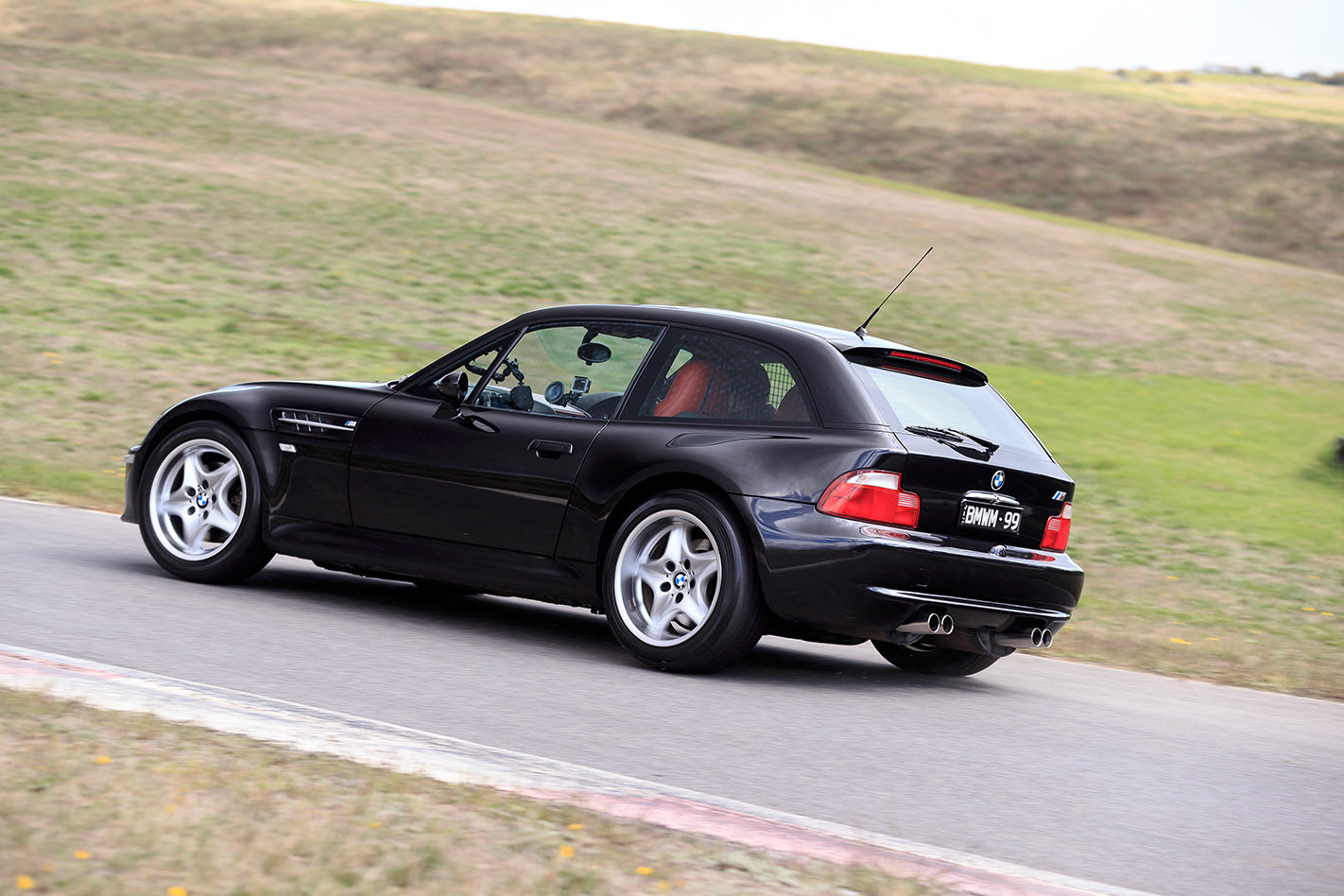
The design they came up with was shocking, challenging and quite unlike anything BMW had ever produced. Yet the M Coupe redressed a lot of the failings of the roadster. Although mechanically identical, the fixed roof served to stiffen the chassis ensuring the semi-trailing arm suspension wasn’t overburdened. Introduced in September 1998, the coupe found immediate favour with buyers, outselling the identically priced M Roadster by nearly three to one.
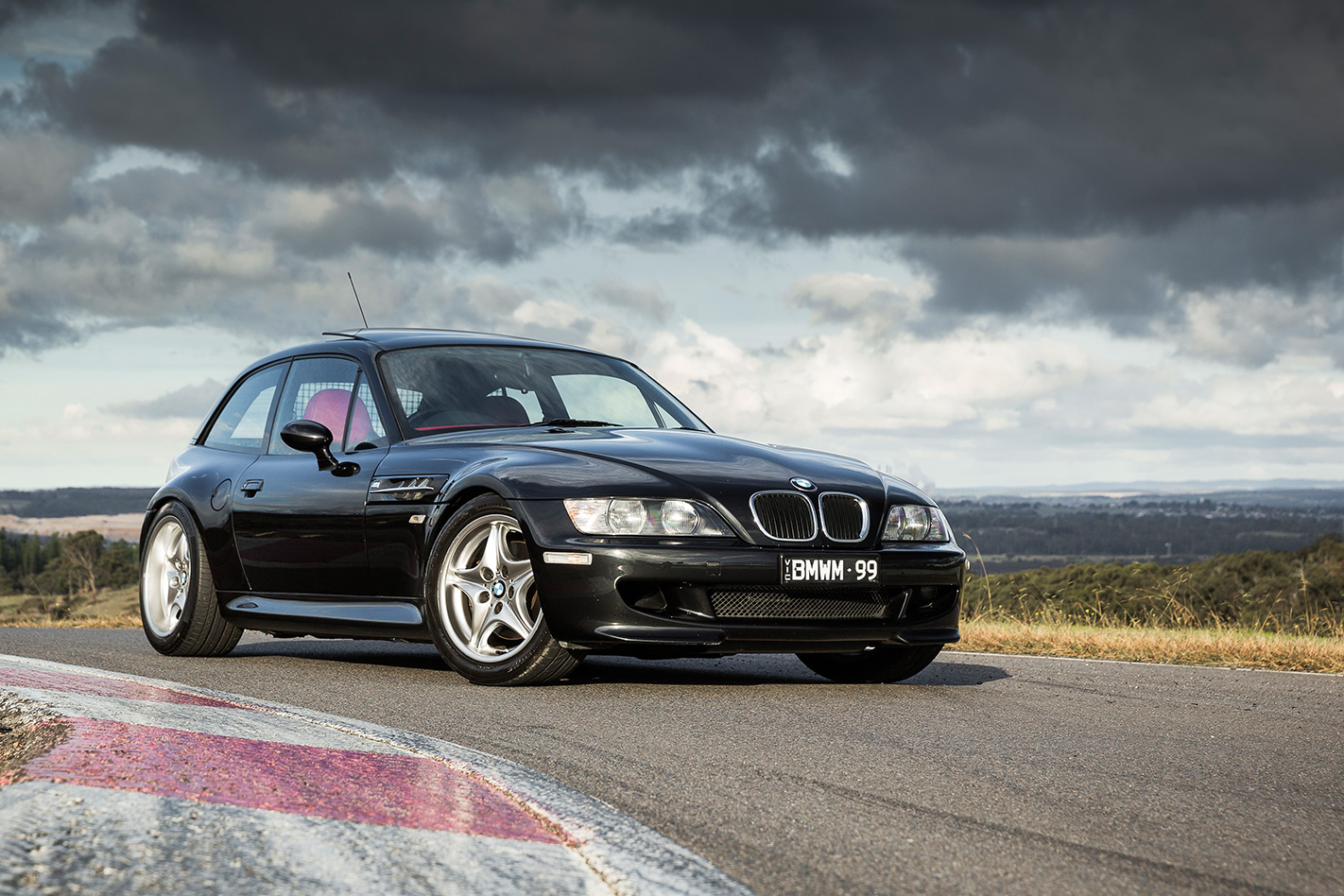
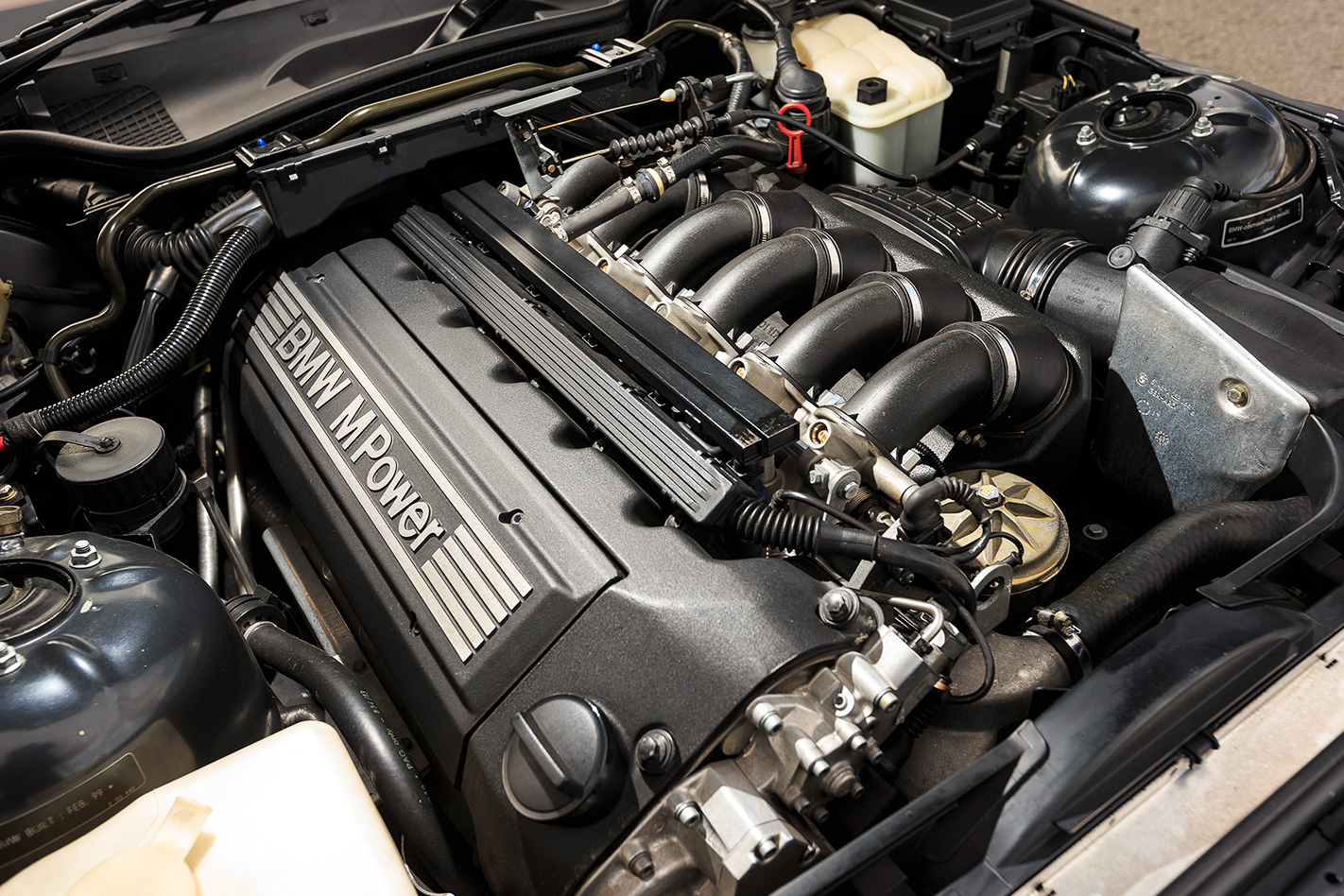
Developed in Garching, but built in Spartanburg, North Carolina, the M Coupe was built with three engine options. The US specification car got the short straw, with a 179kW 3152cc S52 six. In Europe, the M Coupe was offered with the more exotic S50 3201cc double VANOS lump good for 236kW. All official Aussie imports feature the S50 unit.
From June 2000, the M Coupe was offered in Europe with the 3254cc S54 engine. Marginally more powerful at 239kW it also got switchable stability control. Whichever version you chose, it came with a ZF Type C five-speed manual gearbox with a limited-slip differential with a maximum locking of 25 per cent.
The chassis? The team at Garching did a great job, M Coupe emerging with a static twist resistance 2.6 times that of the roadster. At the time, it was the most torsionally rigid car BMW had ever built. One of the few real downers is the tiny 51-litre petrol tank, which can see the fuel light blink on after little more than half an hour of spirited driving.
IN THE MARKET
The Z3 M Coupe might have outshone its soft-topped sibling, but it was never a big seller Down Under. Much of that came down to price. At $132,810, it was within a sniff of the E36 M3 coupe and more expensive than a Porsche Boxster S, so it was perhaps unsurprising that sales were hard to come by. BMW built 6291 Z3 M Coupes but only 821 of that number were right-hand drive S50 versions, with the UK and South Africa accounting for most of these. A mere 45 were divided between Australia and New Zealand, with the car in market between August 1998 and May 2002. A combo of cult status and rarity now means you’ll be lucky to find a car for less than $85,000 with really nice examples easily topping six figures.
BODY & CHASSIS
The bodies generally last well, but check for corrosion around the bolt on outer sills and guards as well as the tailgate lock. Flex from the diff can pop both rear cross member welds and boot floor spot welds, so give these the once-over. The front spoiler can also be easily damaged by grounding. Finally, check for accident damage. Look for overspray under the bonnet and on the boot floor or signs of misaligned crash structures.
ENGINE & TRANSMISSION
Listen out for rattly VANOS units that don’t offer power at low revs and keep an eye on the temperature gauge. Head gasket failures are not uncommon, so make sure the water temperature gauge doesn’t shift from the 12 o’clock position. The ZF five-speed manual ’box is a pretty solid unit with a 3.15:1 final drive and drives through a limited-slip diff with a 25 per cent locker.
If the ’box is recalcitrant when shifting into first or second, it’s usually down to worn shift pins. If the gear lever rests in front of fifth gear when in neutral, you’ll need a detent repair kit. A much simpler problem to rectify is a stretched throttle cable on cars with the S50 engine, a symptom of which is a sticky pedal action. If the cable has fatigued and stretched, it won’t allow the engine to deliver full power, but it’s a quick fix to replace the cable. BMW developed a drive-by-wire throttle for the S54 engined M Coupes, eliminating this issue.
SUSPENSION & BRAKES
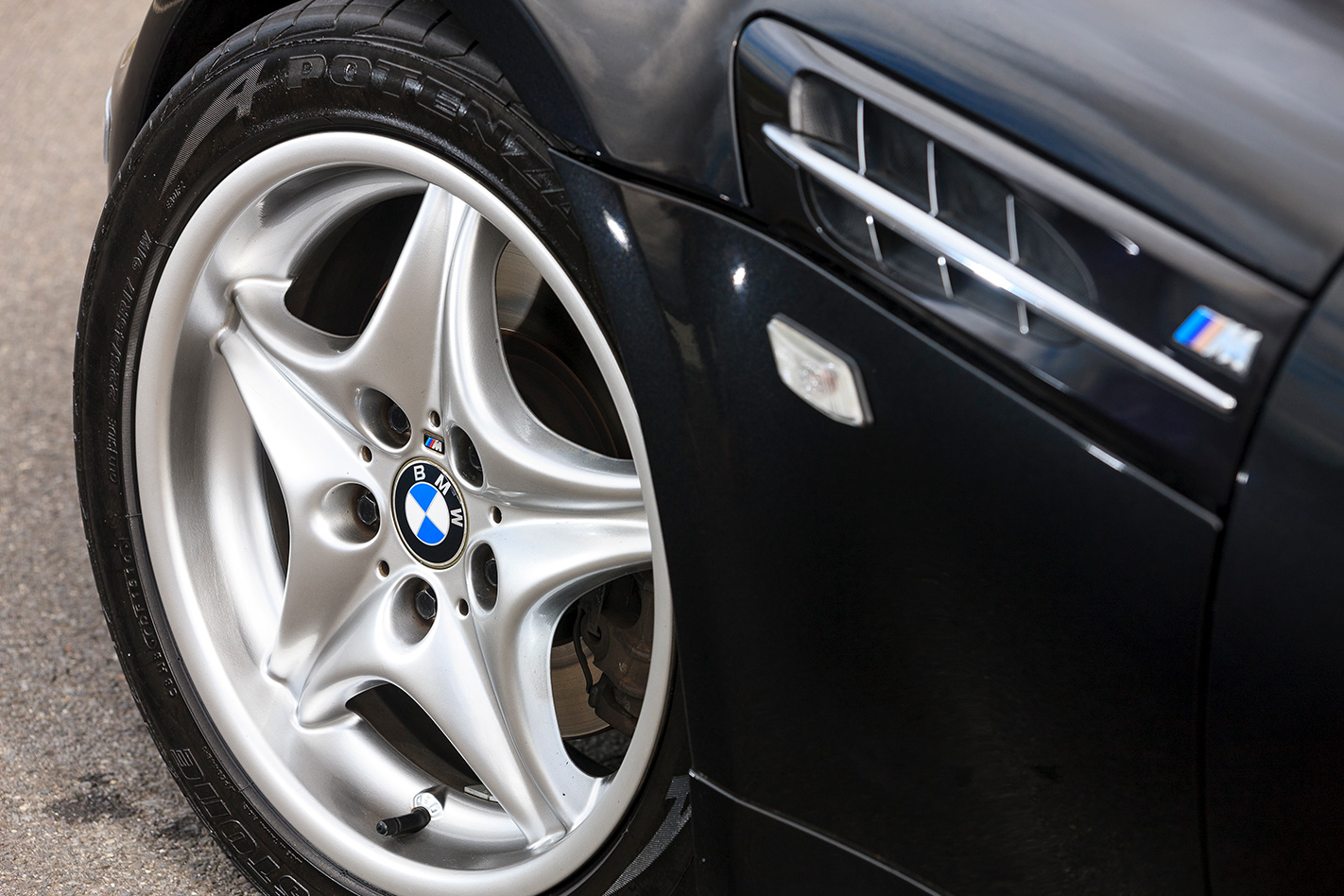
The M Coupe can trace the lineage of its suspension right back to the E30 3 Series, and the uprated dampers and springs at the back help counter the sometimes unnerving rear-end squat of other Z3 models. If looking for aftermarket wheels, bear in mind the offset of the rear alloys is just 8 ET, so getting wheels to fit without huge spacers can be tricky.
INTERIOR & ELECTRICS
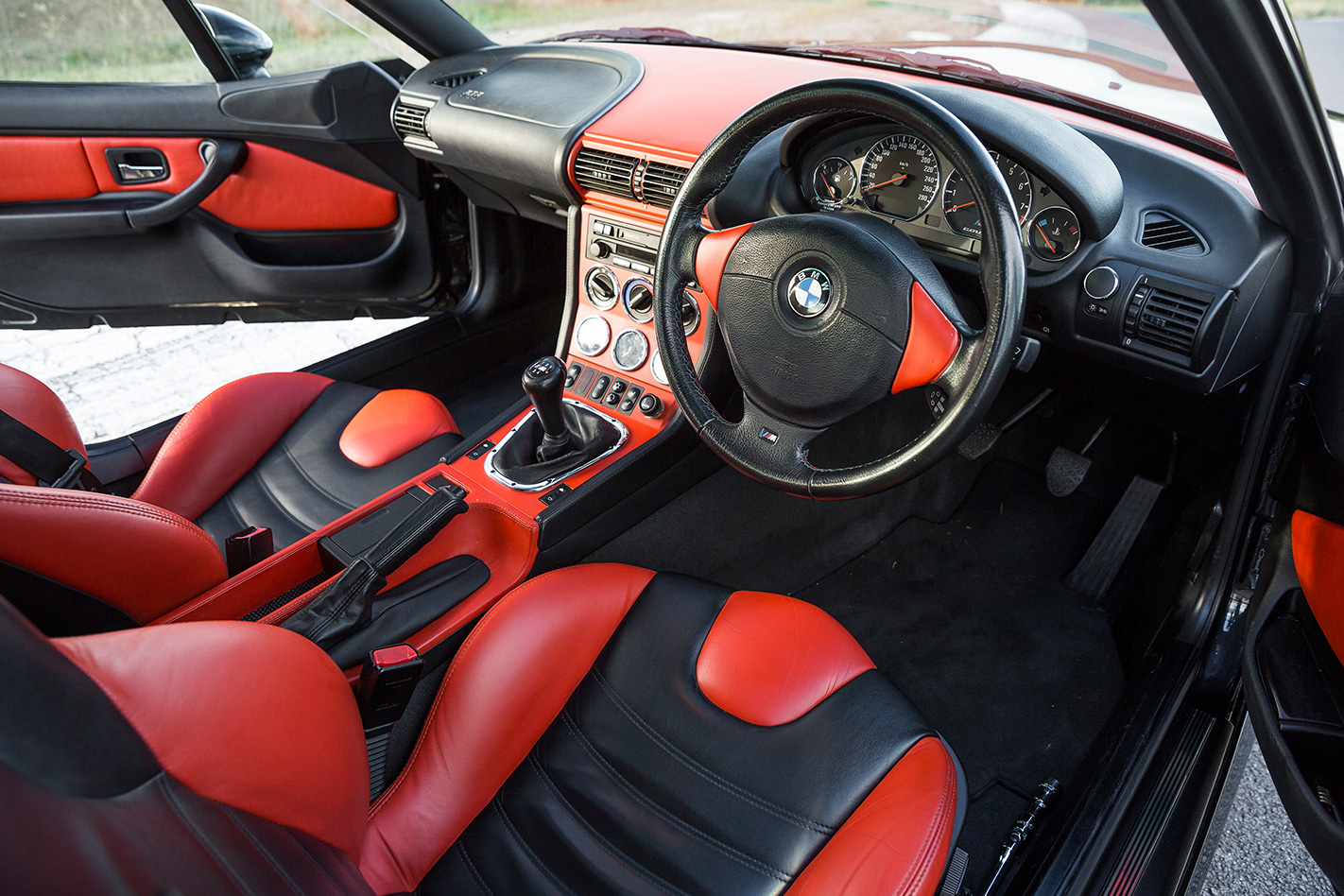
The cabin can be a little ‘German fashion’ for some with the lairy colour combos, chrome-ringed gauges and leather facings. It was cool in the ’90s, but there’s no denying the great driving position and excellent all-round visibility. Materials durability is so-so, with dashtops fading badly (especially the reds) and the driver’s seat plastic bushings often failing. You’ll notice that one the first time you accelerate hard. Seat motors can fail, and unless re-greased religiously, bonnet-release mechanisms can get sticky.
THREE OTHER OPTIONS YOU MAY CONSIDER
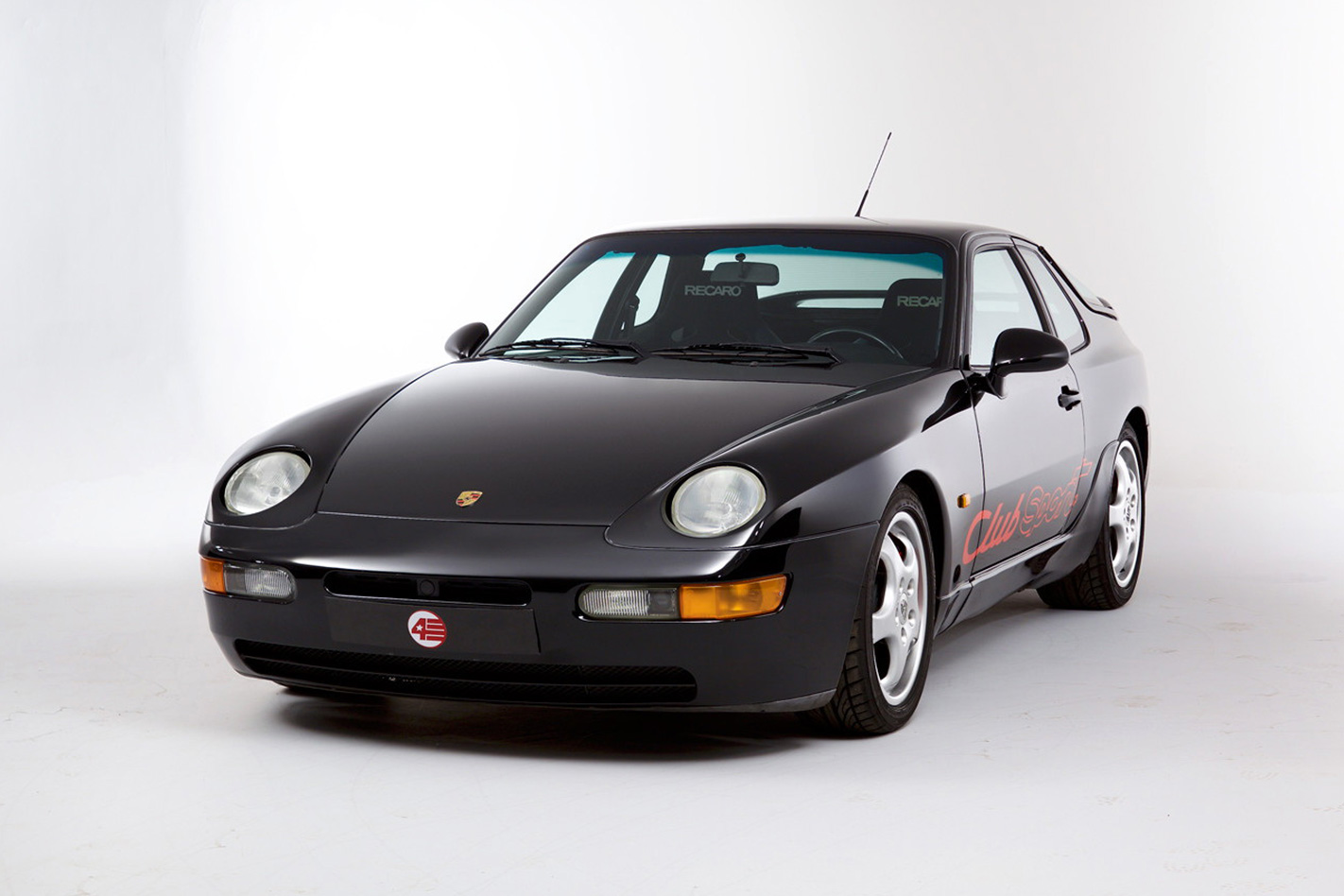
1. Porsche 968 Clubsport
You like rear-drive collectible coupes, right? They don’t come much better than the 968CS. While the four-pot 3.0-litre engine lacks the shock and awe of the M crew’s six, in terms of handling purity, the Porsche still stacks up well in comparison with some of today’s best.
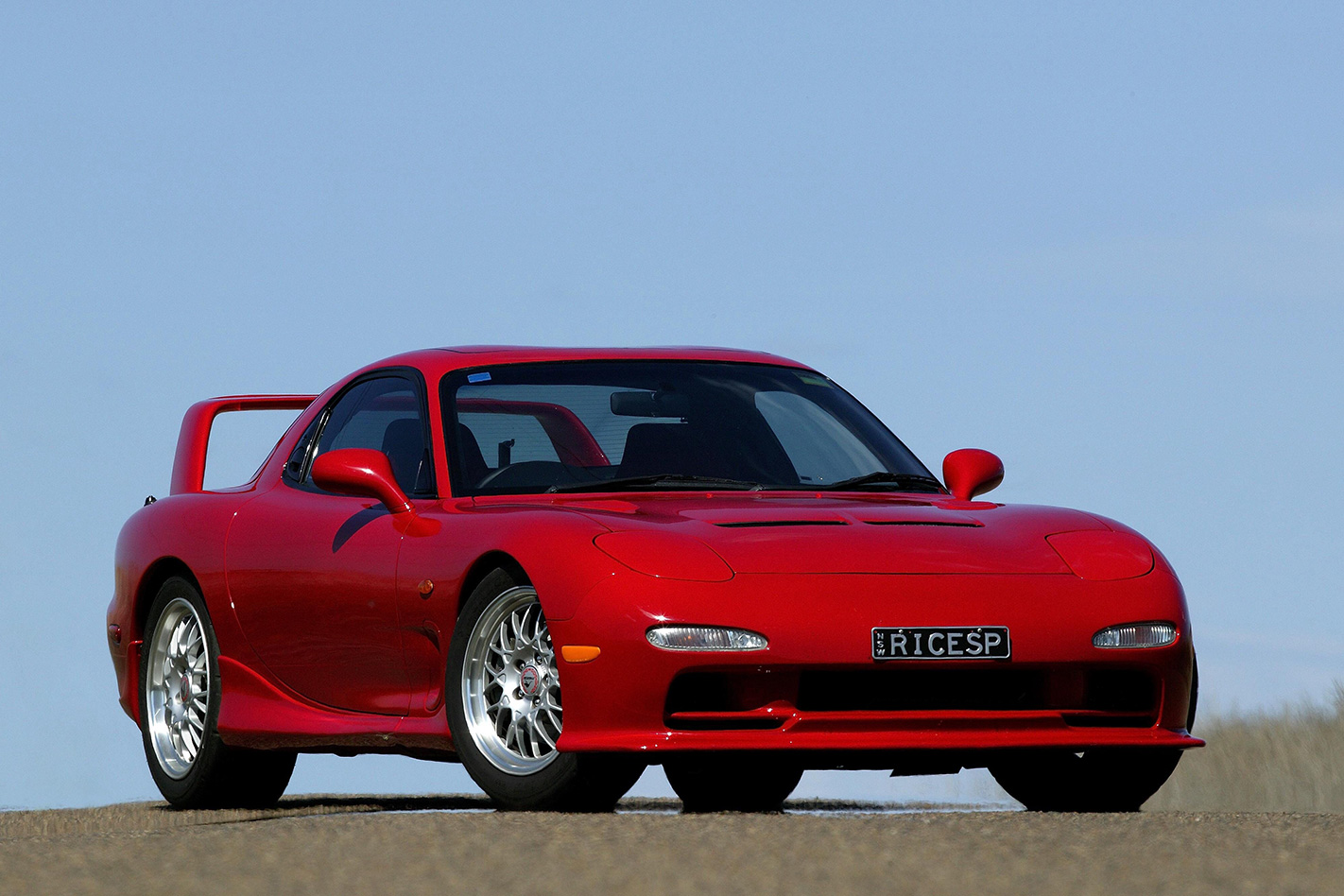
2. Mazda RX-7 SP
This Aussie special enjoyed a run of a mere 26 road-going units and featured a 204kW twin-rotor, bigger brakes, a 100-litre carbon fuel cell, 17-inch alloys and a 4.3:1 rear diff. DJ and JB beat the Porsches in one at Eastern Creek in the ‘95 12-Hour. A true collector’s item.
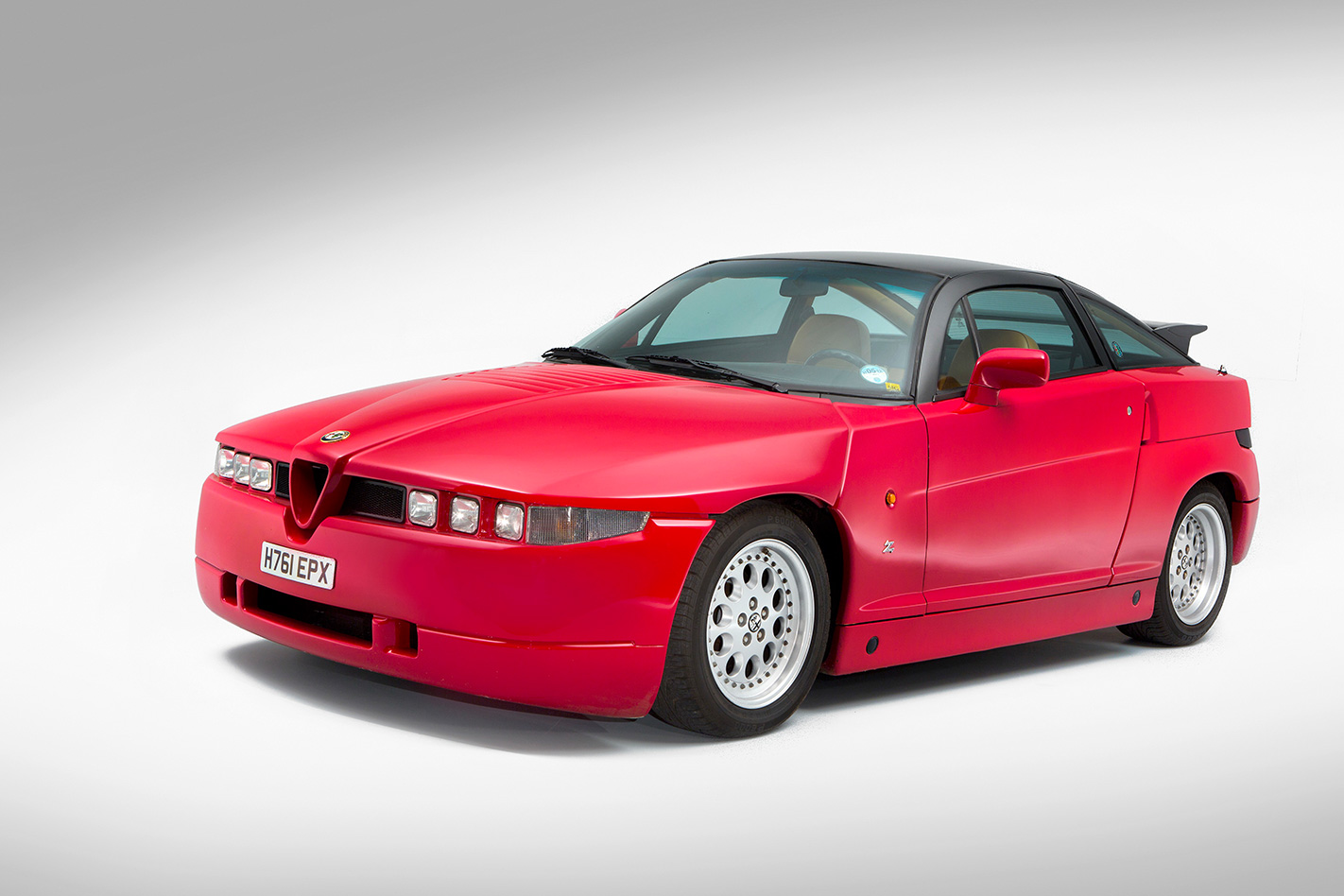
3. Alfa Romeo SZ
‘Il Mostro’, the charming but exotic Zagato-styled Alfa Romeo SZ (‘89-91 with a production run of 1036) was loosely based on the mechanicals of the Alfa 75 and only packs 154kW, yet delivers huge grip and a supersized serving of charisma.
1998-2002 BMW Z3 M Coupe specs
Body: 3-door, 2-seat coupe Engine: 3201cc Inline-six, DOHC, 32v Power: 239kW @ 7400rpm Torque: 350Nm @ 3250rpm Transmission: 5-speed manual Weight: 1390kg Used range: $85,000-$120,000
Car manufacturers and the Federal Chamber of Automotive Industries (FCAI) are urging Australian motorists to check the status of their vehicle in relation to the long-running Takata airbag recall, or risk having their car registration cancelled.
This comes as a number of state and territory governments are taking steps to implement registration sanctions in cases where vehicle owners have ignored repeated manufacturer recall communications.
Owners will be unable to legally drive their vehicles on public roads, and will likely risk their insurance policies if they do.
As a refresher, the Takata airbag recall saga involves airbags that can potentially kill or seriously injure vehicle occupants in the event of a crash, by way of metal shrapnel exploding from the airbag with disastrous effect.
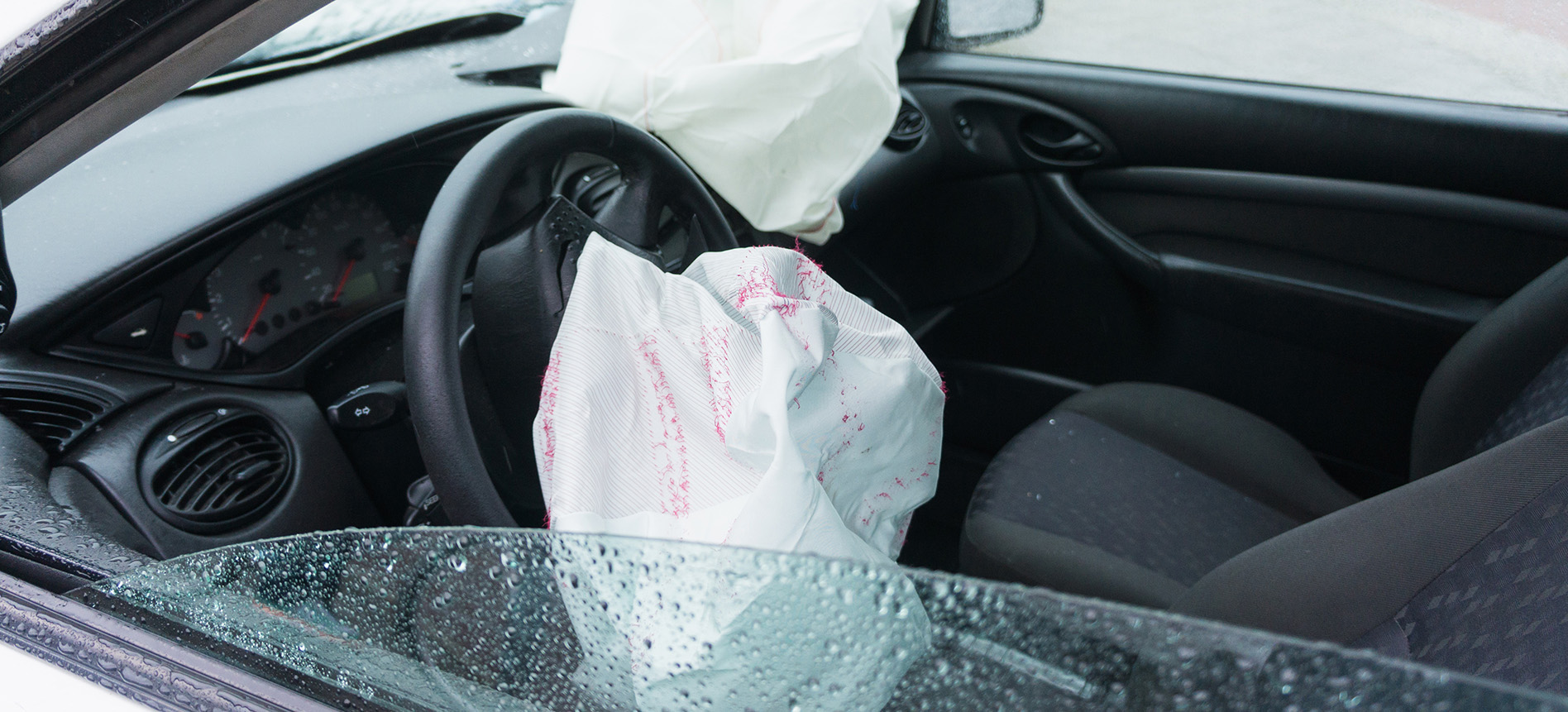
Worldwide, 32 people have been killed and more than 350 have been seriously injured as a result of these faulty Takata airbags.
Buyers and sellers of used vehicles should also check whether the car’s airbags have been replaced, too, otherwise ownership transfers may be denied.
This messaging comes as a last resort from the FCAI, as chief executive Tony Weber noted that 99.9 per cent of recalls have been completed.
“Our industry has completed more than 99.9 per cent of the 3.06-million-vehicle recall. This is an outstanding result and reflects a determined and cooperative effort by manufacturers, dealers and vehicle owners,” Mr Weber said.
The formal recall period was ended on December 31, 2020, though Mr Weber said manufacturers still had a small number of outstanding vehicles to inspect.
“It is critical these vehicle owners do not ignore any manufacturer or government agency communication. The industry is committed to promptly assisting them to ensure their vehicles can safely stay on our roads.”
Owners can check the recall status of their vehicle by using www.ismyairbagsafe.com.au or by texting TAKATA to 0487 247 224. Unregistered vehicles can be checked with the manufacturer directly.
Hyundai took a risk launching its N-Line, erm, line in late 2018 on the back of its fledgling N performance brand.
Without the cachet of something like AMG, M or Audi Sport, it was hard to gauge how N-Line would catch on.
However, the i30 N-Line has returned to the range after a mid-life update, suggesting the variant is doing well.
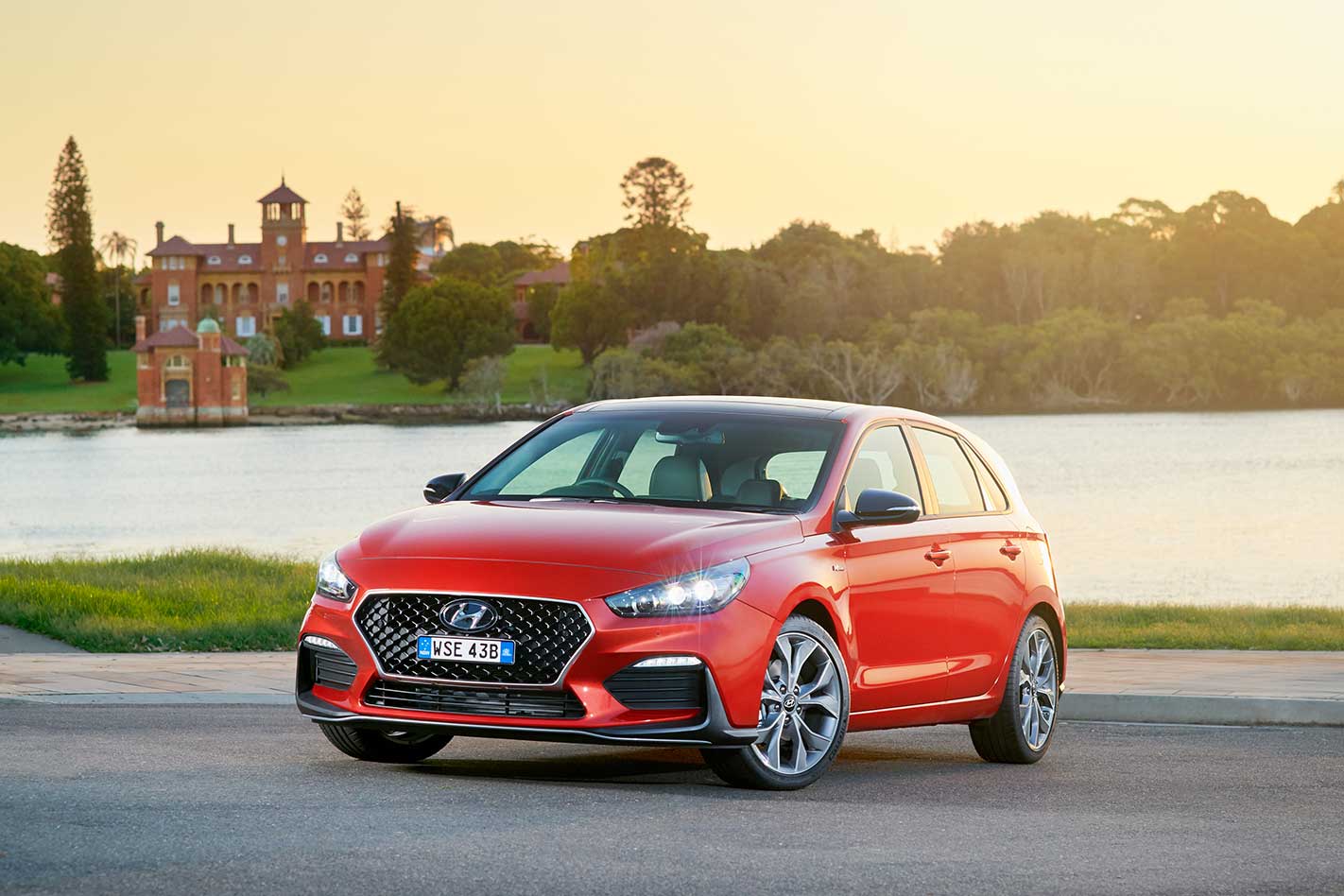
The N-Line recipe is much the same as before, using a turbocharged 1.6-litre four-cylinder petrol engine and a more expensive rear multi-link suspension setup.
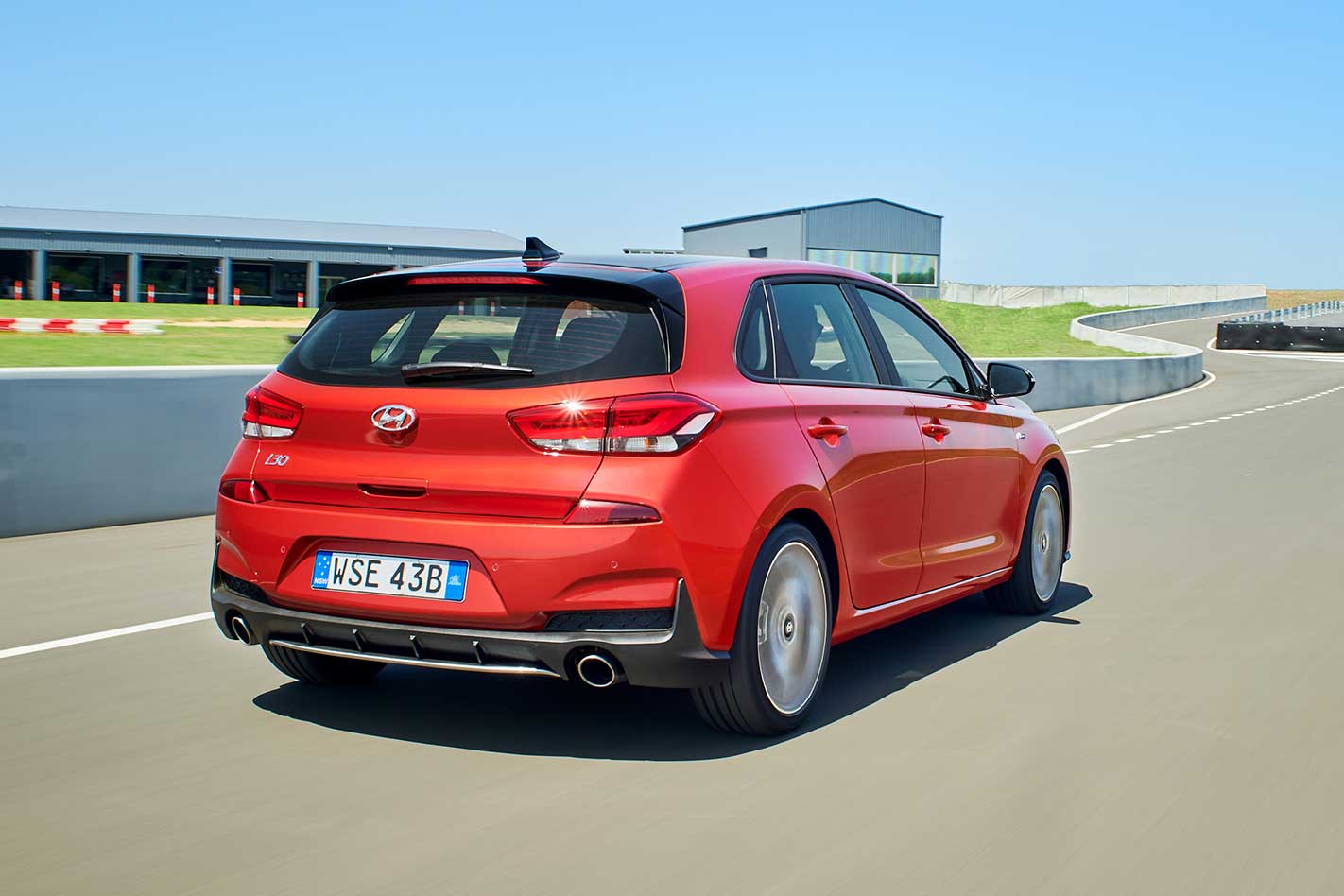
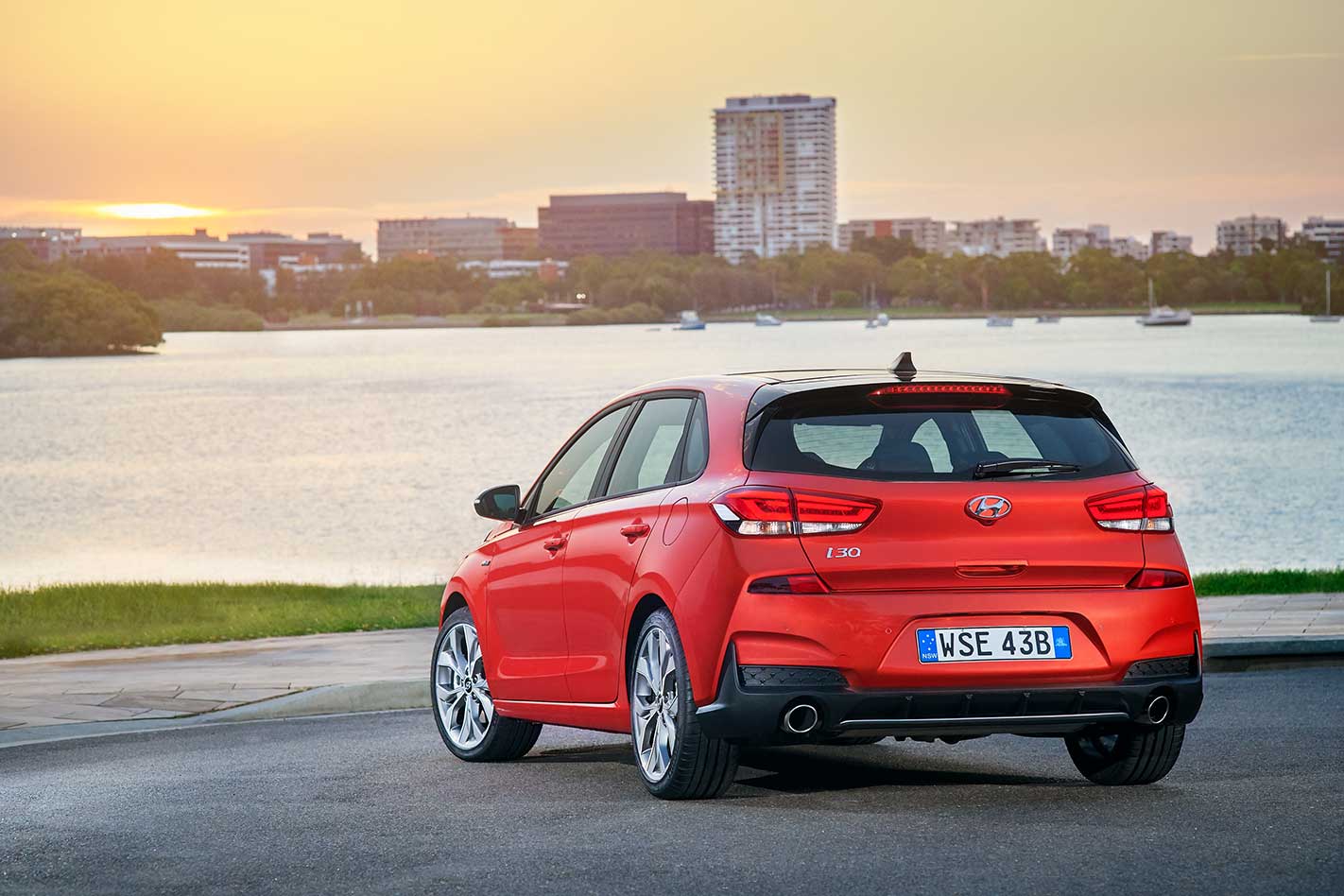
As you might notice, it also looks very familiar. Because the Australian-market i30 N-Line comes from Korea, it misses out on the facelift sold elsewhere, so our i30 range carries over the same exterior design.
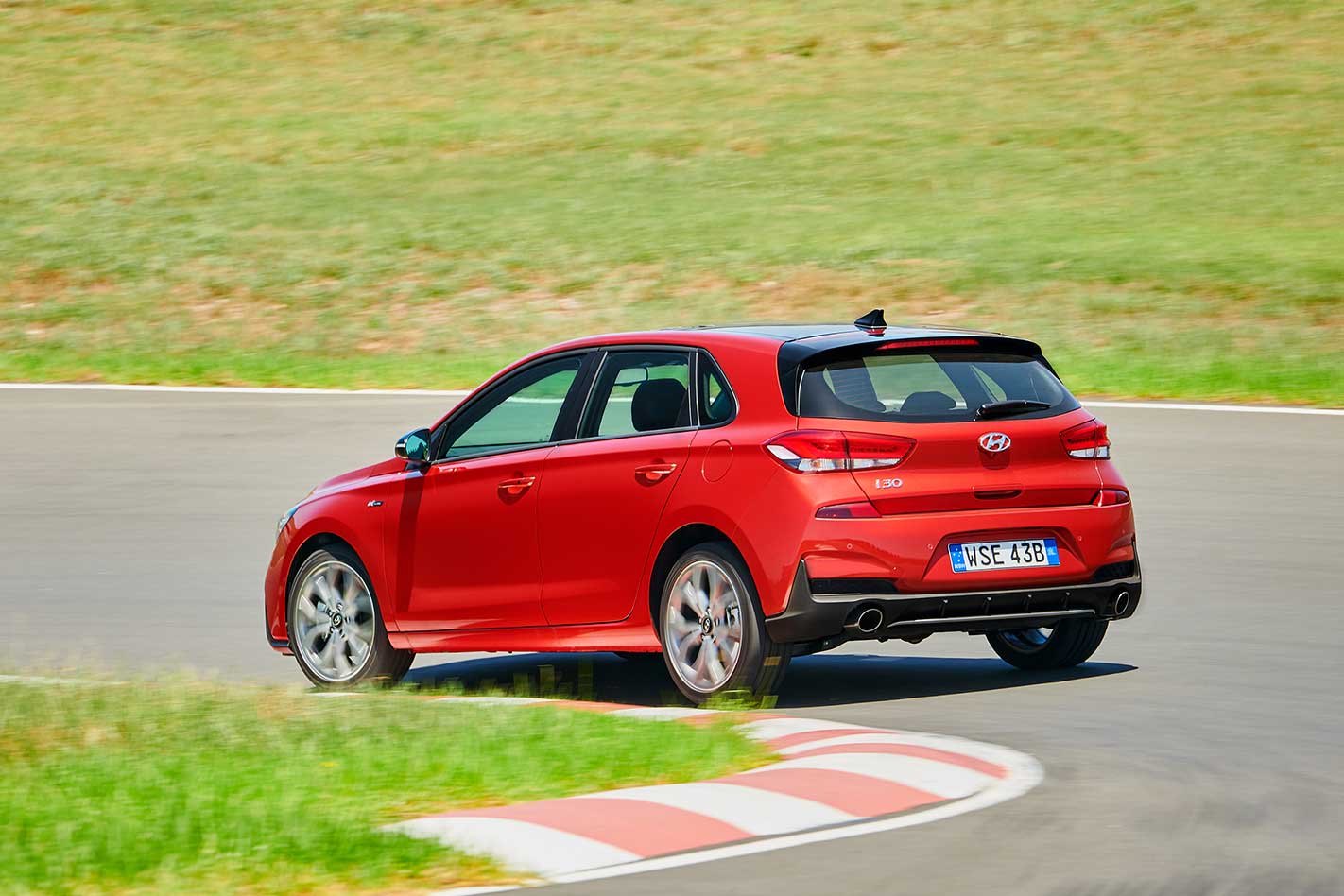
Still, it’s worth pointing out the N-Line has a unique black front and rear bumper apron, a dedicated 18-inch wheel design with wider Michelin performance tyres and a dual-tip exhaust system.
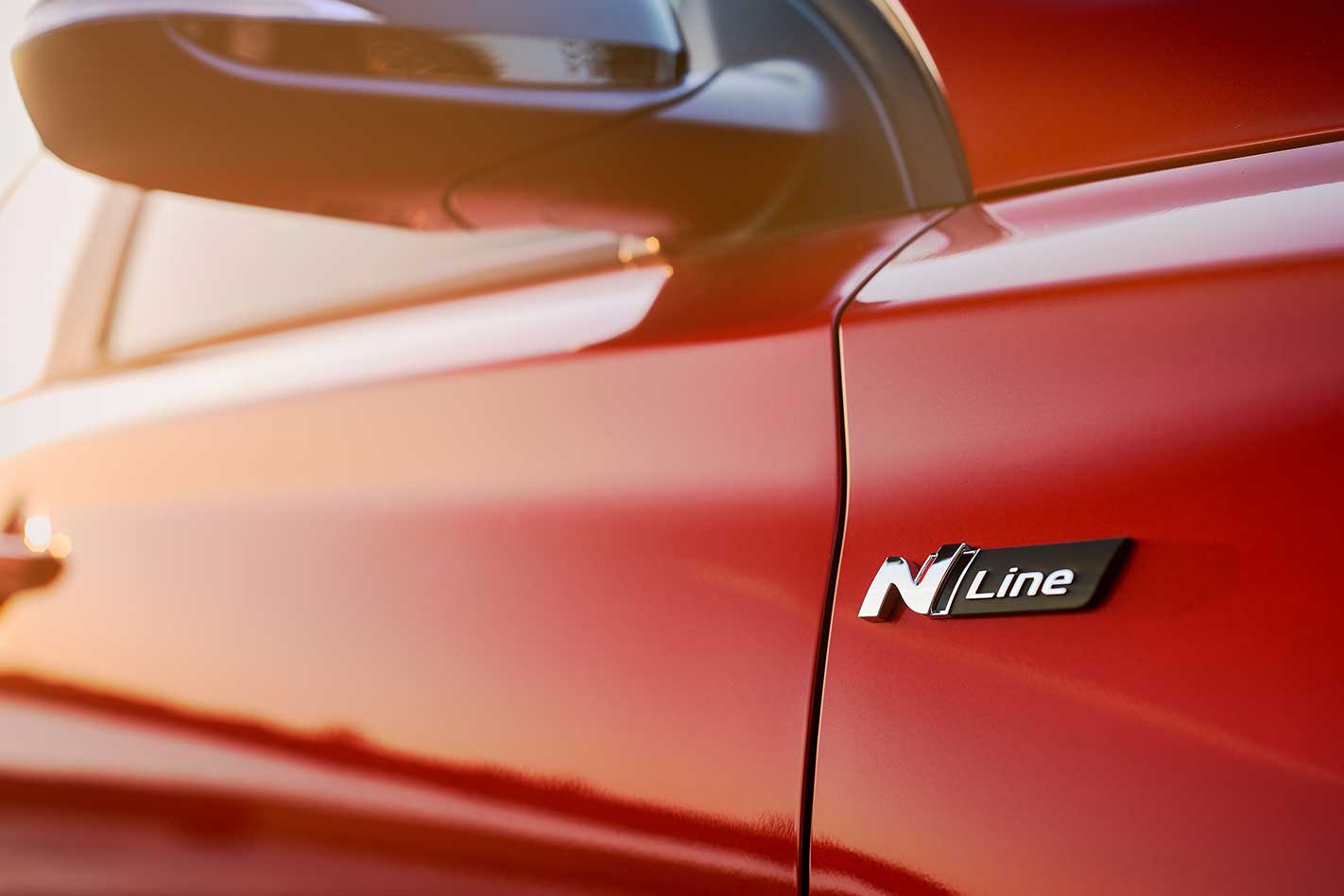
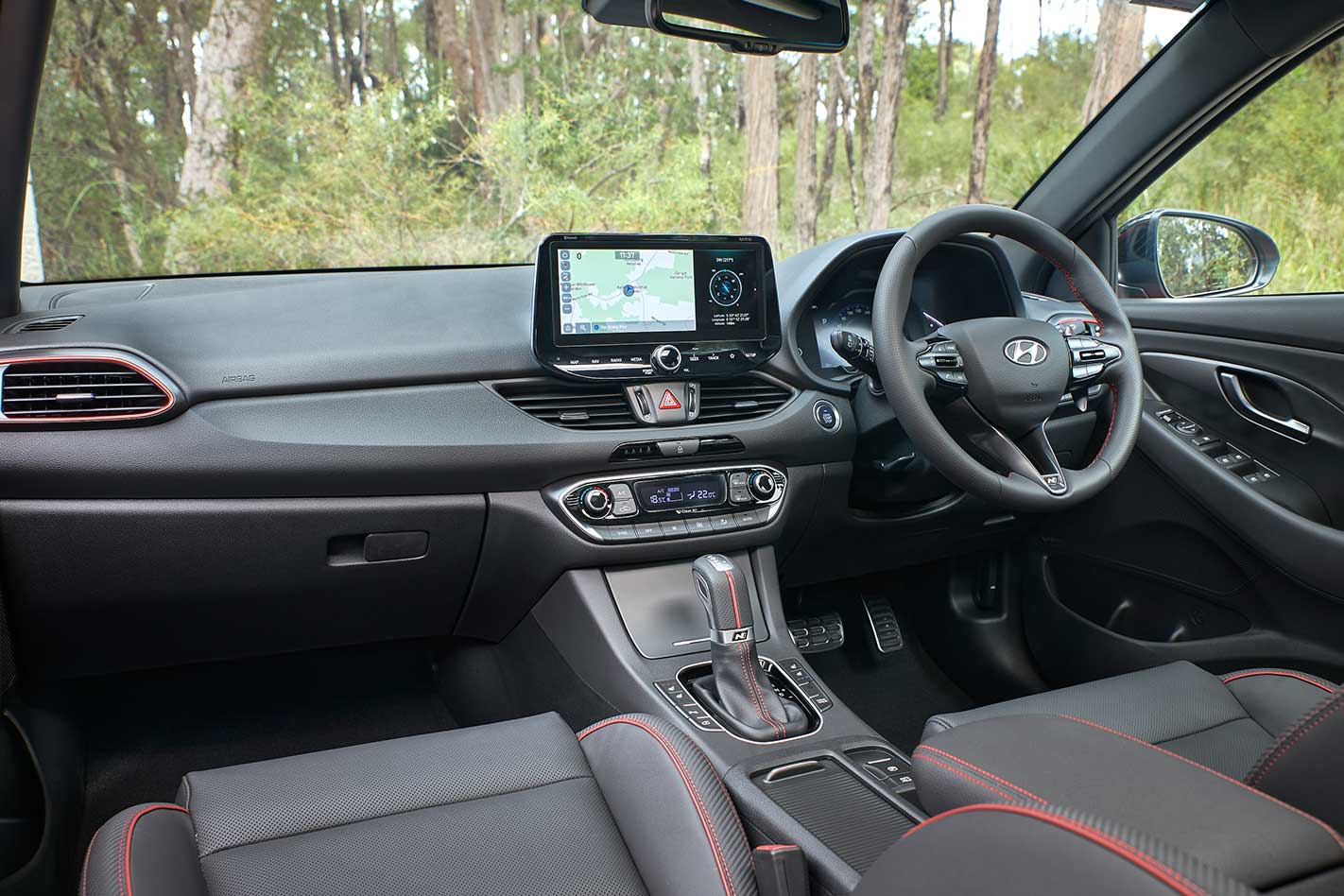
Inside, the N-Line also scores sports seats, red interior stitching, coloured seatbelts and black headlining. Our top-of-the-range Premium grade adds a cloth headliner finish, while the steering wheel, gear lever and alloy pedals are other N-Line exclusive touches.
Price and features (6.5/10)
Competition for the N-Line ranges far and wide, beginning with the Ford Focus ST-Line at $29,490 (before on-roads), then finding the Toyota Corolla Sport automatic for $32,965, Kia Cerato GT for $33,690, Peugeot GT-Line for $34,990 and Alfa Romeo Giulietta Super TCT for $35,590. And finally, it finishes with the Mazda 3 G25 automatic for $38,590.
At $36,220, our Hyundai i30 N-Line Premium DCT sits at the pointy end of this bunch, commanding a $4800 premium over the regular N-Line with a dual-clutch transmission.
Priced online, Hyundai says the i30 N-Line Premium would cost us $40,343 driveaway in Victoria, with two packs offered as options.
First is the Interior pack, adding a cargo liner, tailored carpet floor mat and dash mat. The Sports 18 pack adds satin black alloy wheels and an N lower door decal in gloss black. Metallic paint adds $512 to the driveaway price.
Ownership costs (7/10)
An N-Line presents as a typical ownership prospect for a Hyundai thanks to a five-year unlimited-kilometre warranty and lifetime service plan.
If you purchase pre-paid servicing, this averages over five years to a cost of $229 per year, but the plan is limited to 50,000km.
Only Ford, Mazda, Kia and Toyota can match that warranty package, while Ford, Mazda and Toyota can also go the distance with lifetime capped price servicing.
The i30 N-Line Premium is relatively good at the bowser. Despite a higher-performance engine, the N-Line can tolerate low-grade 91 RON petrol and small-concentration ethanol blends like E10.
However, while Hyundai claims the N-Line with a dual-clutch is the most frugal i30 hatch available, we could not verify its 7.1L/100km claimed consumption figure. Our drive, comprising a mix of highway, spirited and city driving, returned an 8.2L/100km figure on 98 RON.
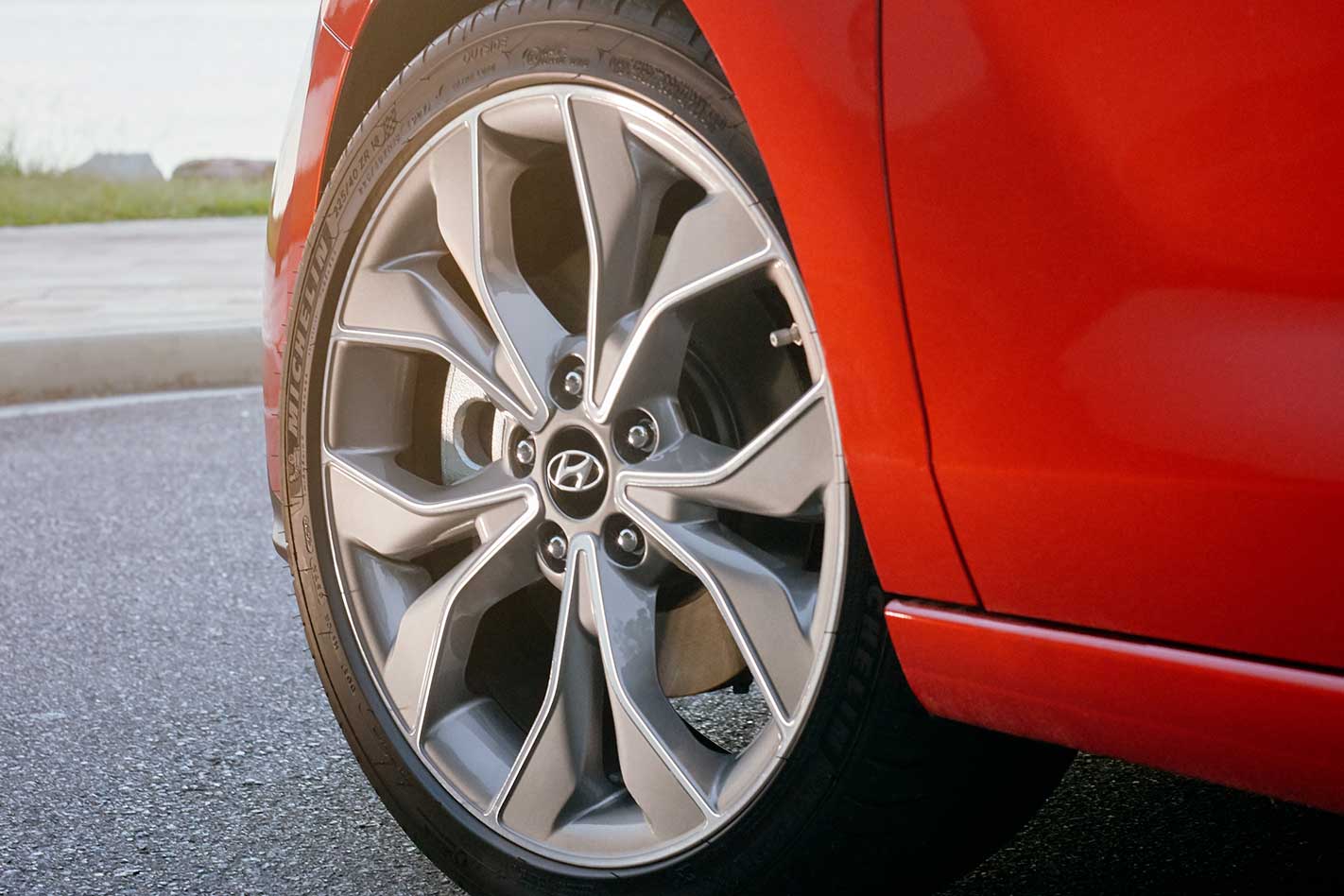
Other things to consider on a higher-performance car like this are the Michelin Pilot Sport 4 tyre set that can cost $900 to $1100 at leading tyre outlets to replace.
Comfort and convenience (8/10)
While the new i30 Sedan upgrades to the Hyundai K3 platform, the hatch remains on K2 architecture. So instead of a new interior, the i30 N-Line Premium only debuts a 10.25-inch multimedia screen.
The screen is hard to ignore, but the crisper and updated graphics modernise the cabin even if the software is no more intuitive than before.
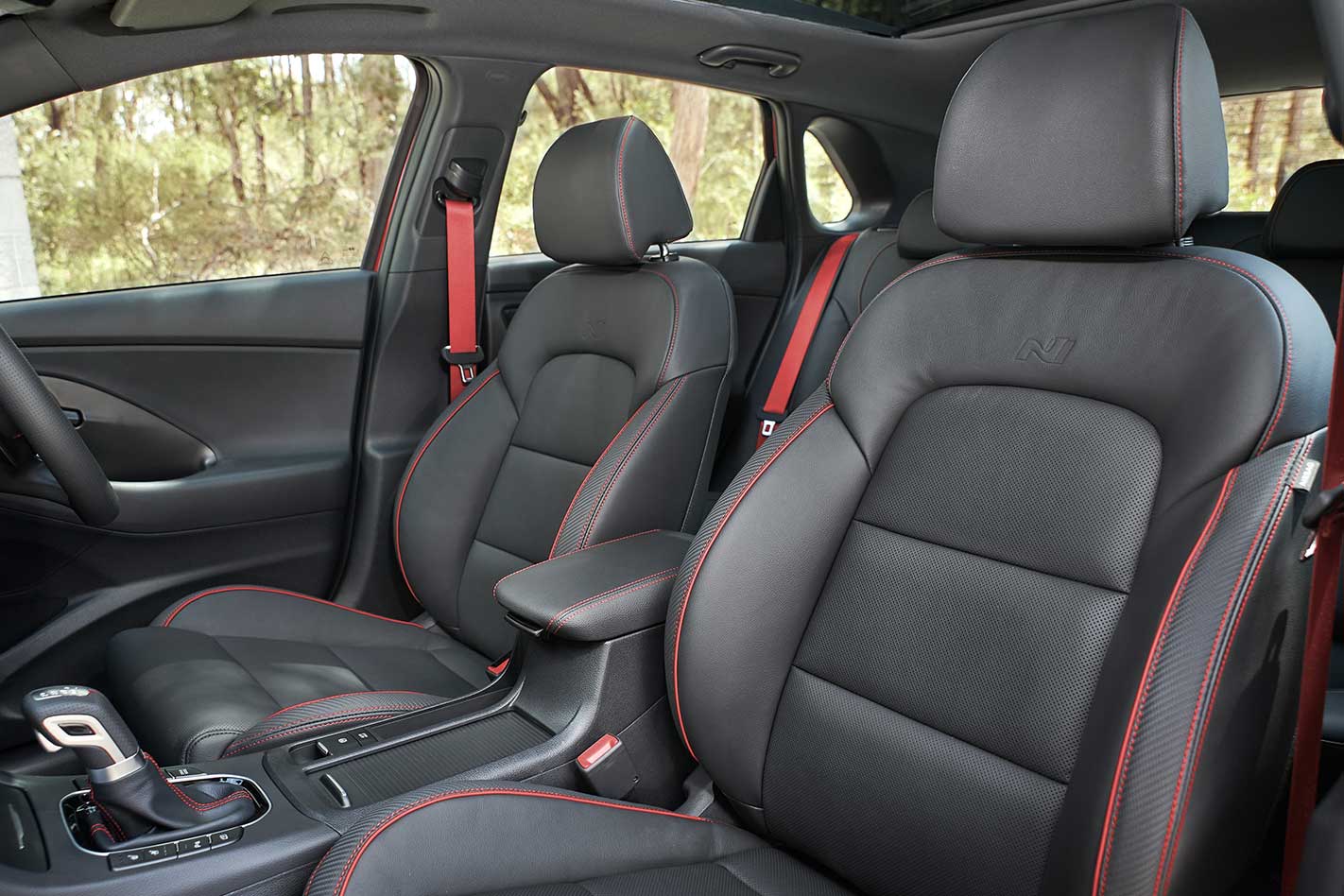
Elsewhere, the N-Line Premium adds a panoramic sunroof, solar control glass, sun visor extensions, self-dimming mirror, power outlet in the boot, ventilated/heated front power-adjustable seats, rear courtesy and map-reading lights, and a luggage net.
Premium audio, digital radio, satellite navigation and parking guidance with a front-view camera round out the other steps up in luxury. They go some way to adding class and the supportive seats are nice, but the i30’s centre stack and console are starting to look dated.
Safety (7/10)
The N-Line Premium’s SmartSense safety suite includes adaptive cruise control, autonomous emergency braking, lane-keeping, lane-following and high-beam assist systems plus driver attention monitoring.
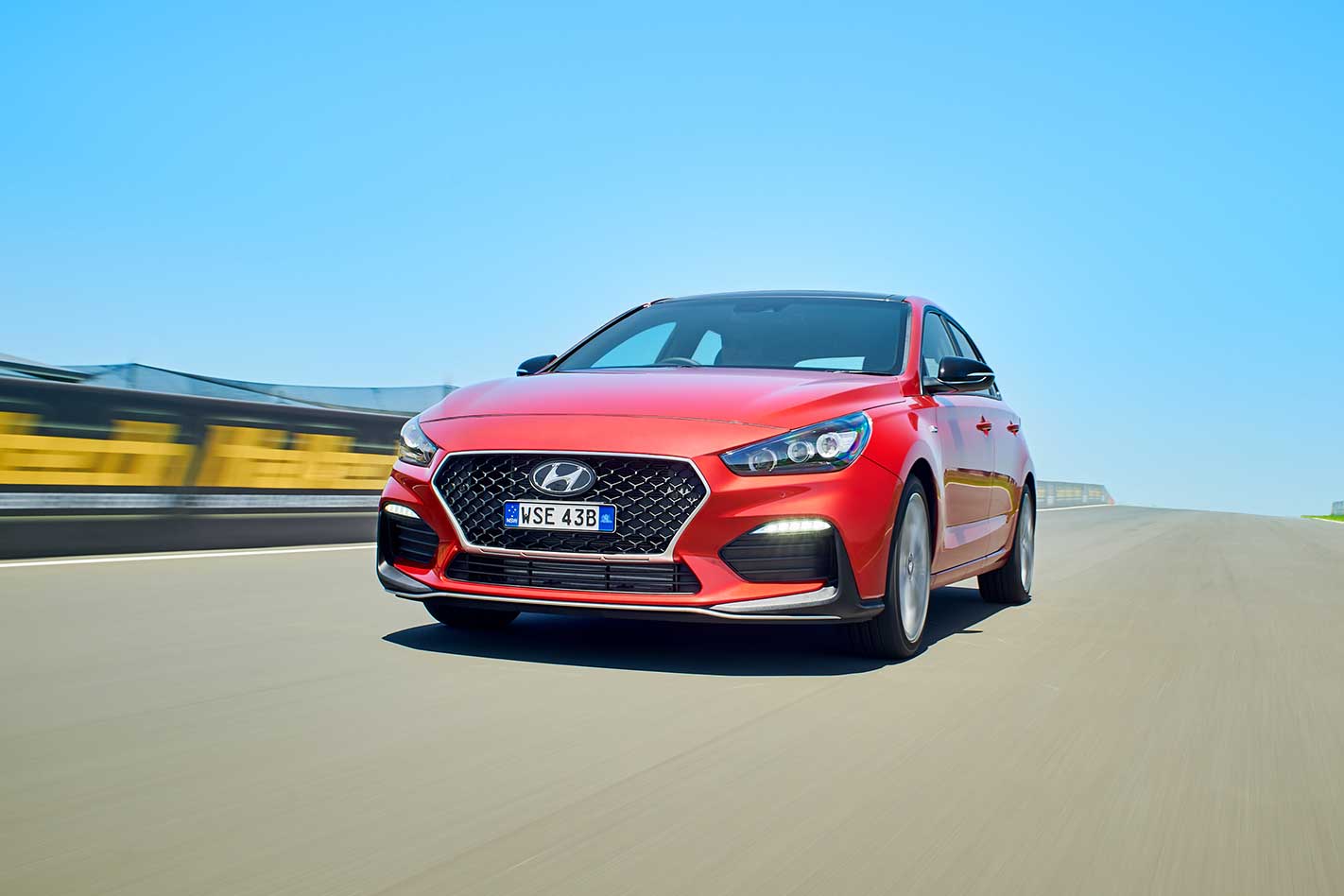
Curiously though, the N-Line Premium foregoes some features found on the i30 Elite, like rear-cross traffic alert, safe exit warning and blind-spot collision warning. And if your i30 N-Line Premium is manual, it also misses out on distance-keeping cruise control.
Out on the road, its active safety systems work well, with good radar detection and progressive intervention on the brakes and steering.
Power and performance (9.5/10)
Fun, winding roads are where the N-Line Premium comes into its own in the i30 range, courtesy of a turbocharged engine that delivers 150kW and 265Nm, or 30kW and 62Nm more than the regular i30.
All that extra power equals stronger acceleration. And while there are no claimed performance times, you can feel it is noticeably faster in a straight line and well into warm hatch territory for grunt and response.
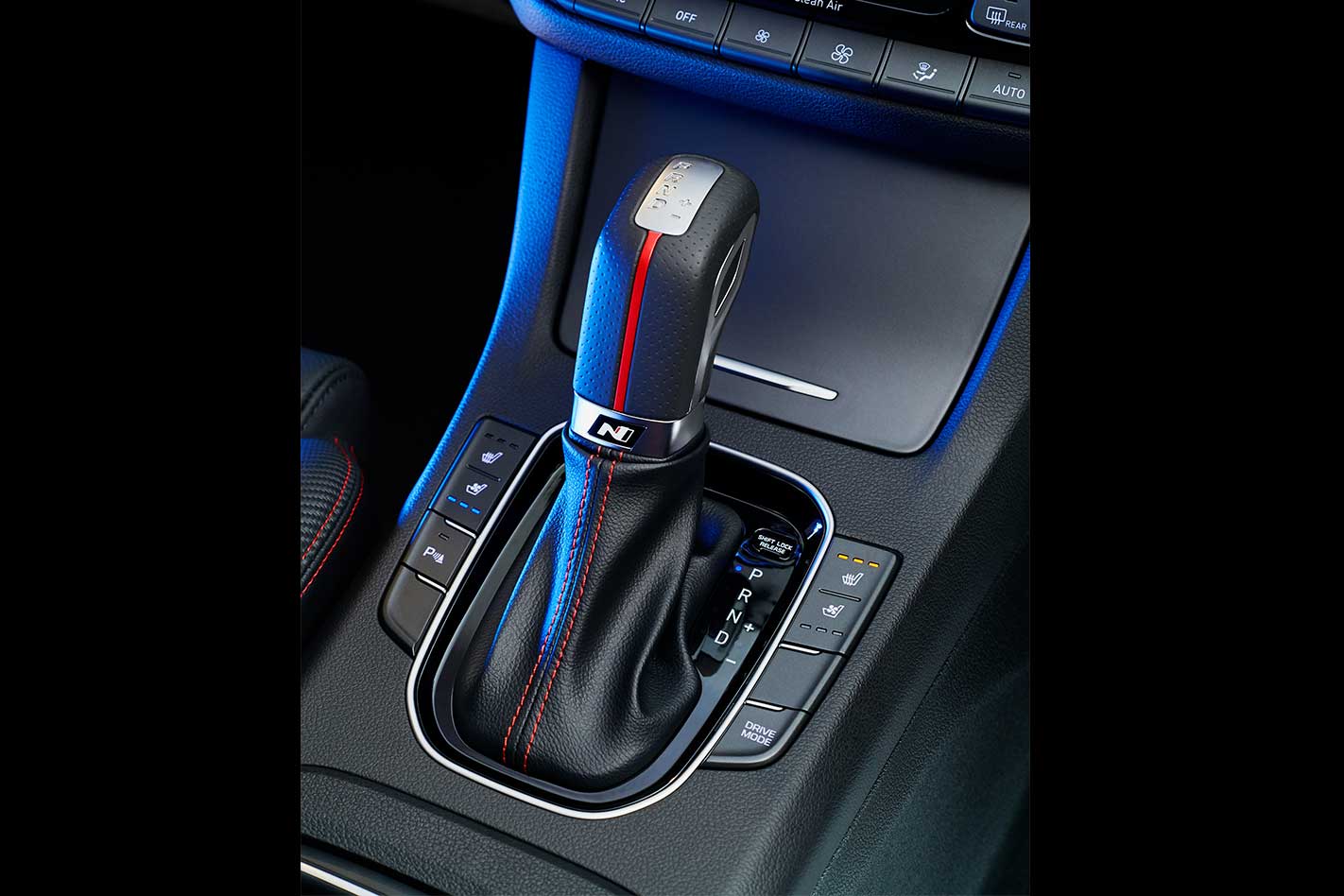
Mash the accelerator, however, and the turbocharger needs a moment to keep up with how quickly the transmission can downshift into a lower gear.
If you have more rugged use in mind, Hyundai says both the manual and dual-clutch transmission N-Line Premium can tow a 600kg trailer without brakes, or a 1300kg trailer with brakes, while the maximum tow ball download weight is 75kg.
But we would think about an i30 N-Line equipped with a manual for towing, given their reputation as a more robust option.
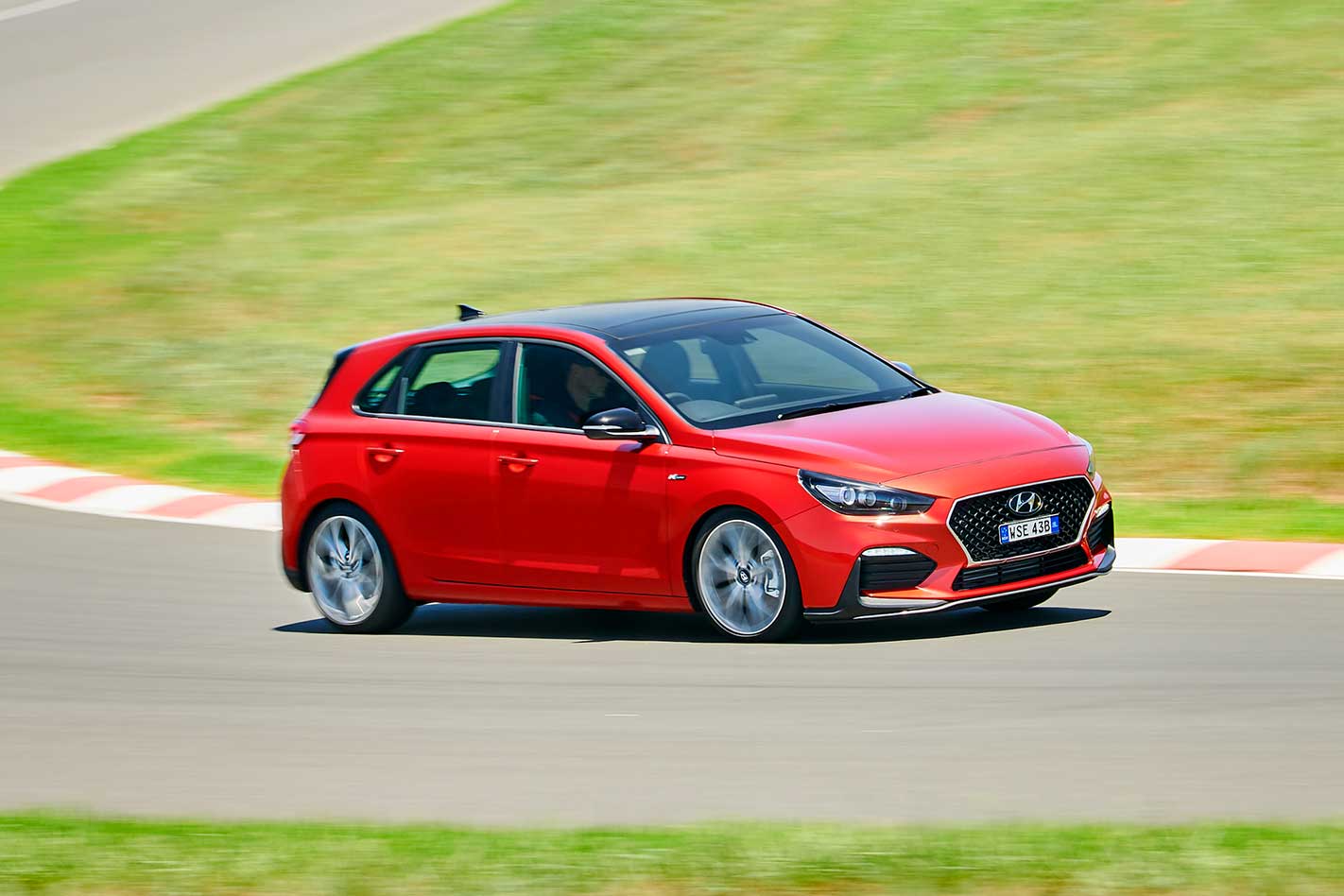
Driving it only a week after the new i30 Sedan, which rides on the lower, stiffer K3 platform, reveals how well engineers did to achieve the levels of body control and steering response the i30 N-Line offers on its older, higher-riding platform.
Corners are where its heavier steering comes alive. The N-Line feels planted and in control at all times, encouraging you to have a go. The front wheels can also handle most of the engine torque when accelerating hard out of corners, avoiding wheel spin.
Verdict (7.5/10)
The i30 N-Line nails its brief. As something designed to water down Hyundai’s i30 N into a more accessible package, it delivers good back-road fun, rival-thumping grunt and genuine everyday road manners without the traditional compromises that come with a hot hatch.
The N-Line is a car you would genuinely take for a drive for the sake of it. When you consider that its mechanical package costs as little as $31,420 for the base N-Line DCT, making it more affordable than half of its rivals, you can see why Hyundai wants to keep it around – even if it misses out on a fancy new European face.
And if it’s luxury you’re after, then you should look towards Mazda’s classier 3. But as far as a driving experience goes, Hyundai’s risk paid off.
Like: Handling, transmission response, grip, noise
Dislike: Price, un-facelifted update
Specifications
Body: 4-door, 5-seat hatch
Drive: front-wheel
Engine: 1591cc inline-4cyl, DOHC, 16v, turbo
Power: 150kW @ 6200rpm
Torque: 265Nm @ 4700rpm
Fuel economy: 7.1L/100km (claimed)
Transmission: 7-speed dual-clutch automatic
Weight: 1344kg
Price: $36,220 (before on-roads)
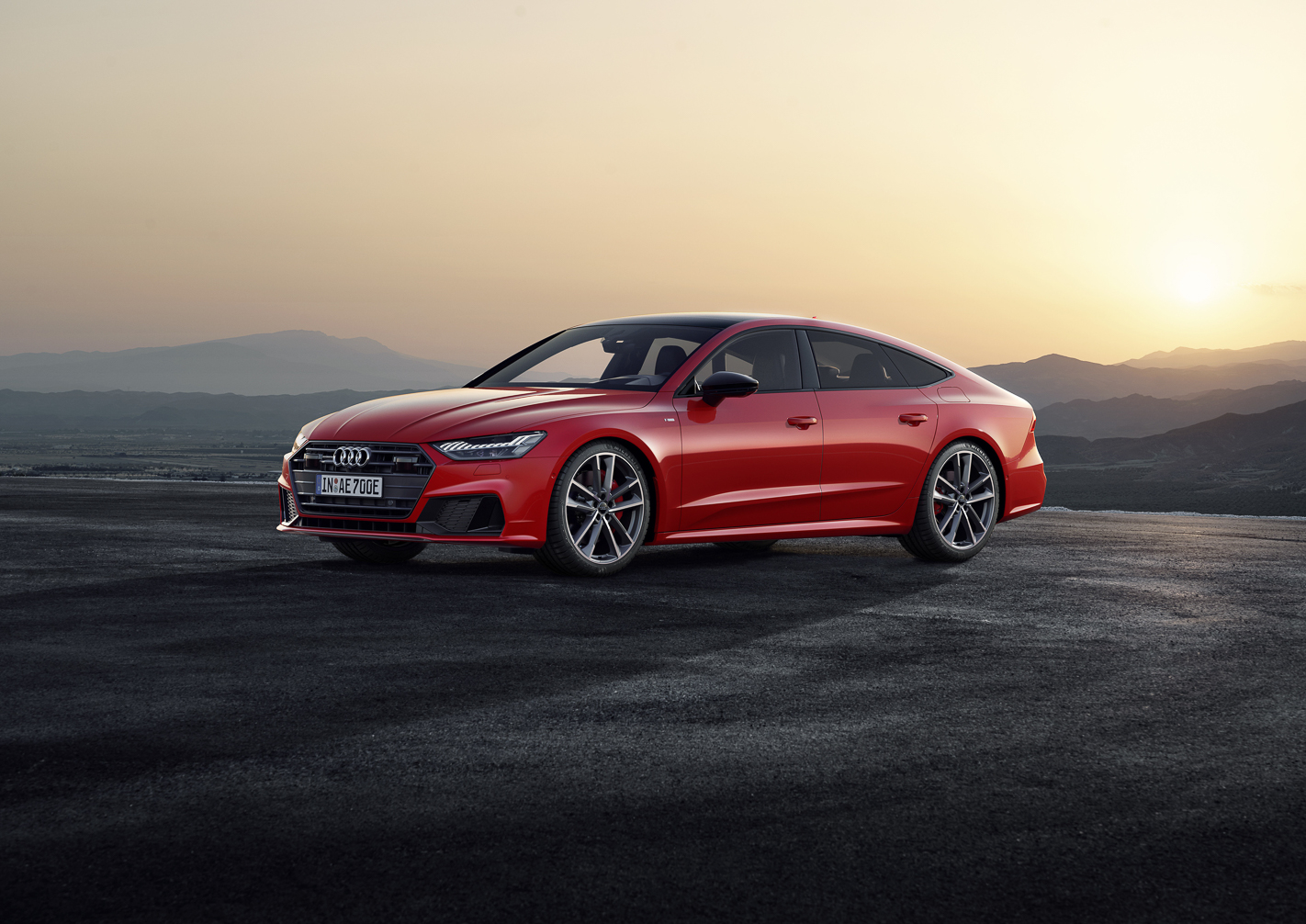
Larger battery cells have been equipped to plug-in hybrid variants of the Audi Q5 SUV, A6 and A7 sedans allowing a longer all-electric range.
So far, none are available in Australia, with Audi’s local arm focused on a rollout of pure-electric models rather than the mere electrification of petrol models.
European buyers will see the trio receive a new 17.9kWh battery instead of the previous 14.1kWh unit, borrowed from the larger Q8 TFSI e quattro.
This allows the Q5 TFSI e quattro to travel 61 kilometres (WLTP tested) on all-electric power – enough for the bulk of a daily return commute for most Aussies – while its Q5 Sportback sibling is set to get the increased-capacity battery too.
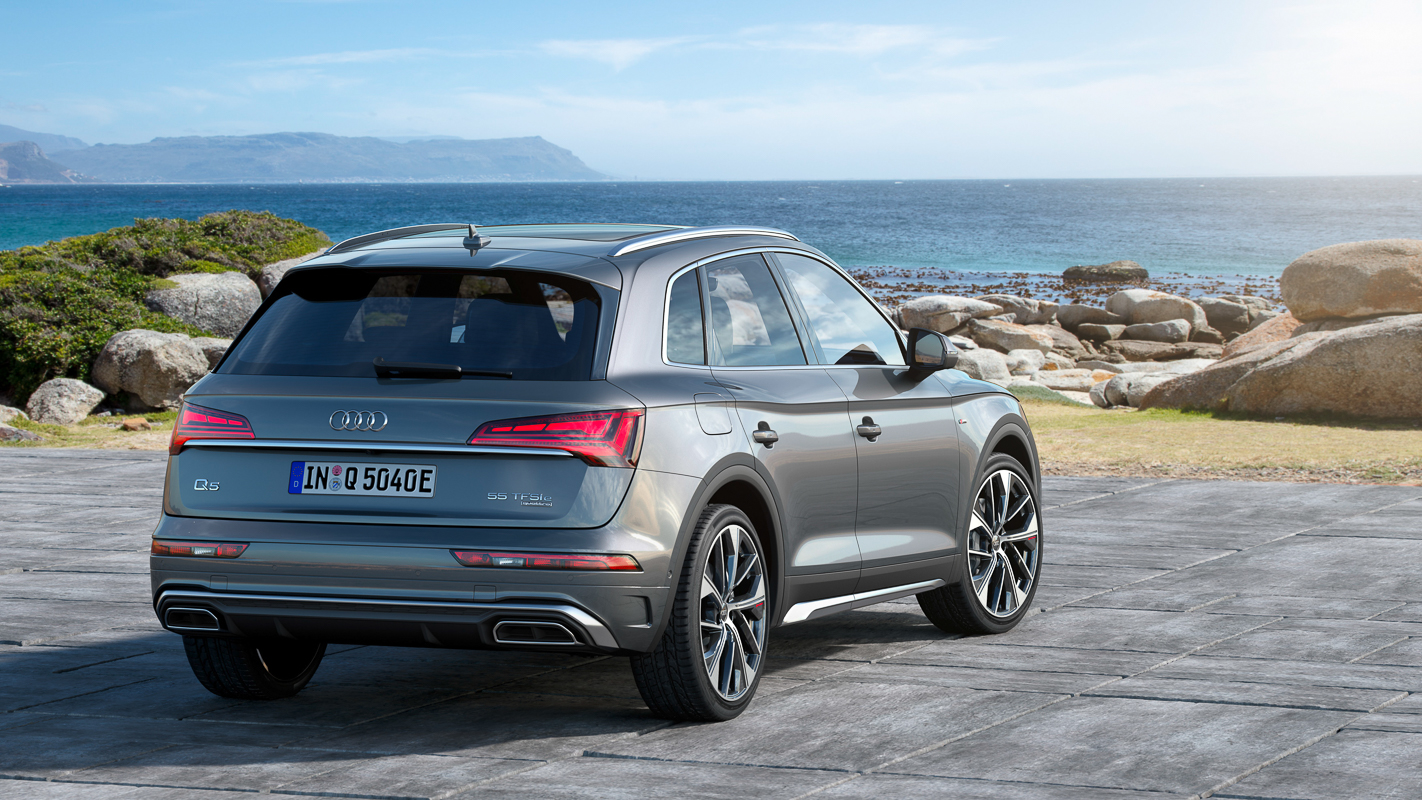
As before, the electric batteries supplement a 2.0-litre turbocharged four-cylinder engine in two tunes, offered on all three models. Combined output for the 50 TFSI e produces 219kW, and the uprated 55 TFSI e stocks 269kW of power.
Despite the battery capacity upgrade, nothing has been changed in the charging system. AC charging capacity is capped at 7.4kW, which means a full charge from empty should take around 2.5 hours.
On a household outlet, Audi says charging is more likely to take over eight hours. Fast DC charging is unavailable.
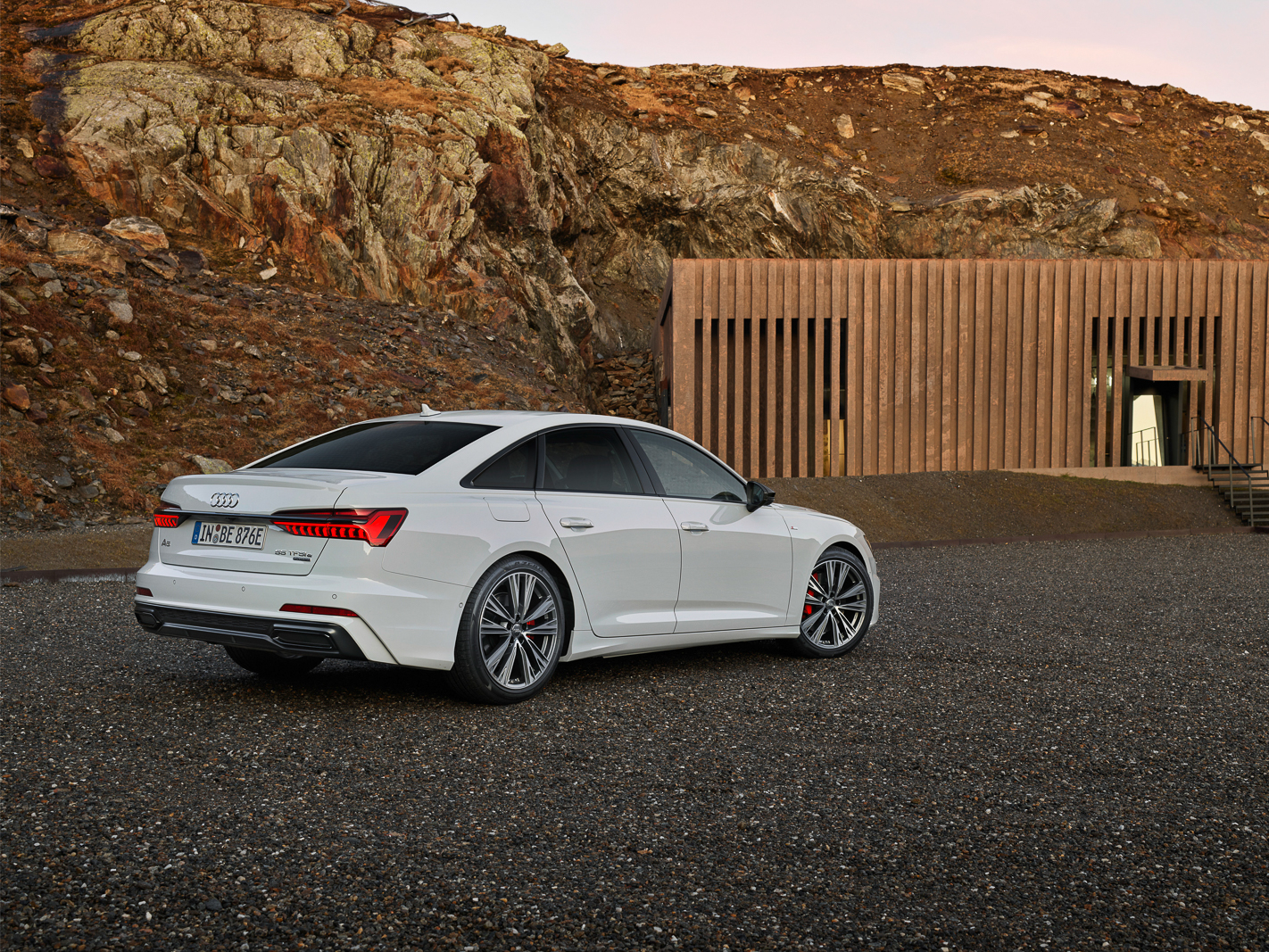
Audi is continuing its electrification efforts overseas with this latest upgrade, the three models joining a model line-up that includes plug-in hybrid versions of the A3, Q3, Q7, Q8 and A8.
Audi Australia is not likely to adopt any of the new plug-in hybrid variants locally, instead choosing to skip ahead to full electric vehicles like the Audi E-Tron and E-Tron GT.
We’ve contacted Audi’s local arm for comment.
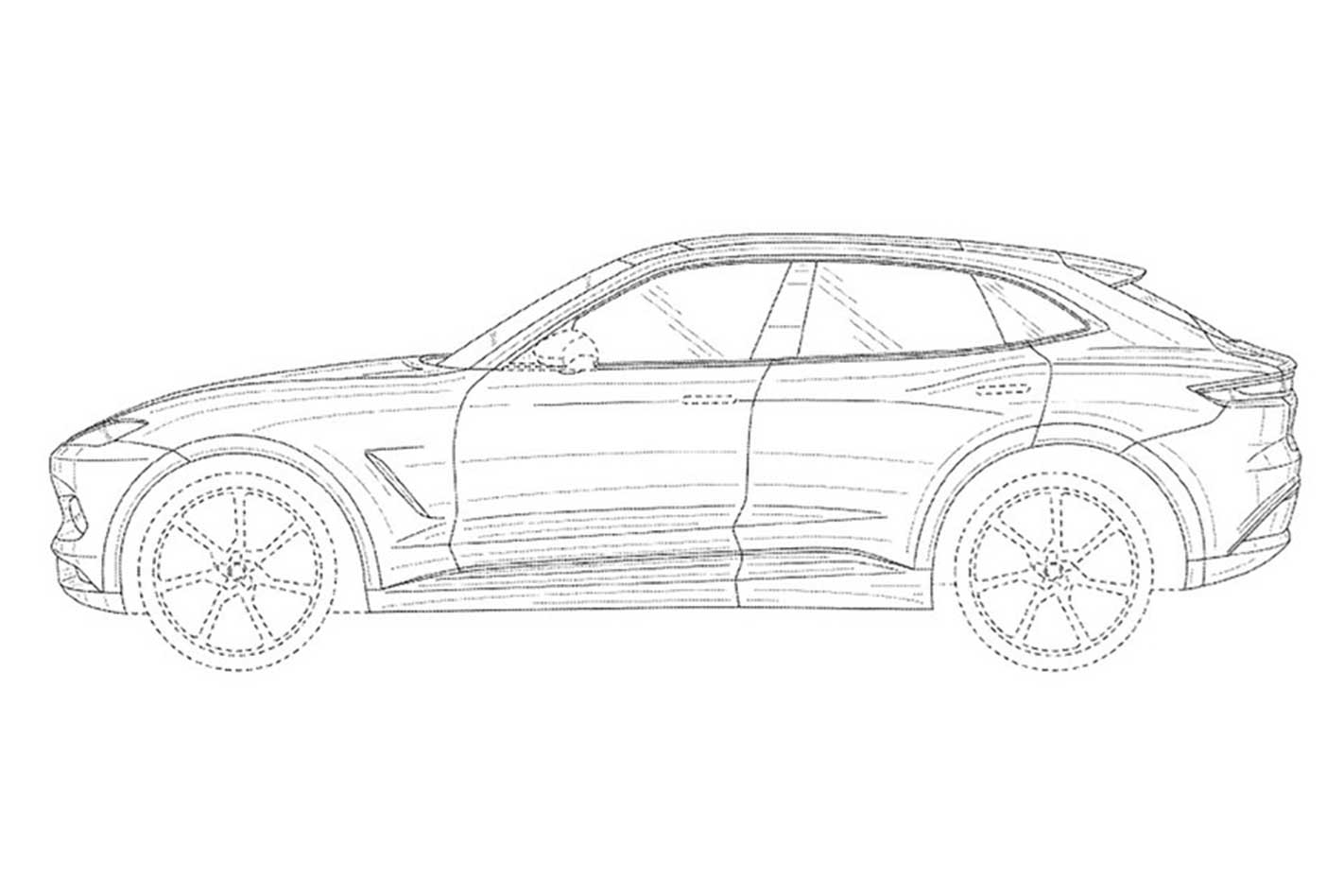
Renders from Karma submitted to the United States Patent and Trademark Office have been leaked, revealing how an electric SUV from the company – said to be named the GX-1 – could look if it reached production.
The Chinese-owned American company Karma is on a product offensive, after it announced the GS-6 sedan this January, and these pictures suggest an electric SUV is on the way to challenge the Ford Mustang Mach-E and Tesla Model Y.
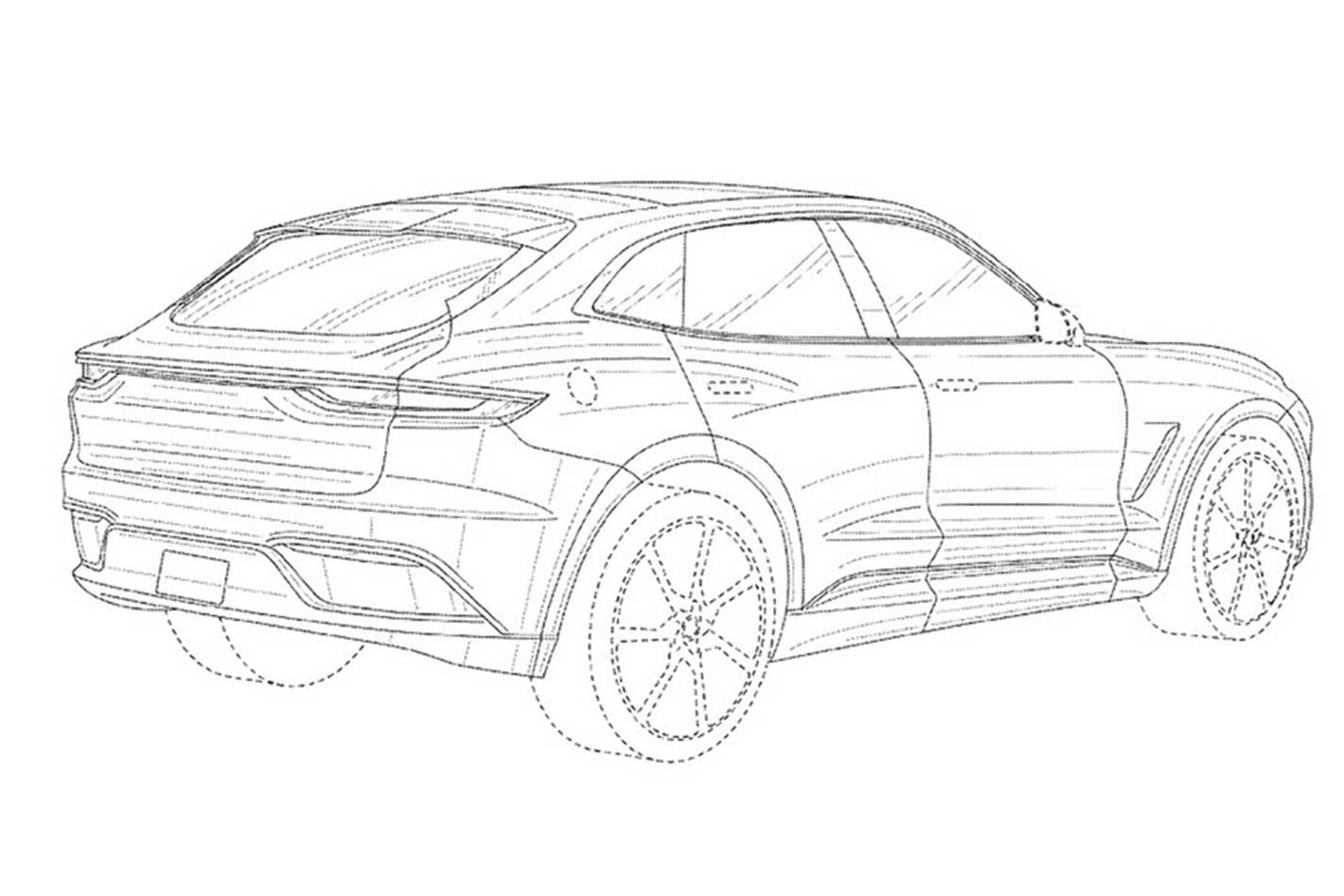
Since the SUV features a very cab-rearward silhouette, speculation suggests its bonnet could hide an internal combustion engine to supplement either an EV or hybrid powertrain.
The Revero can go 128km on pure electric battery power. But it also has a plug-in charging capability.
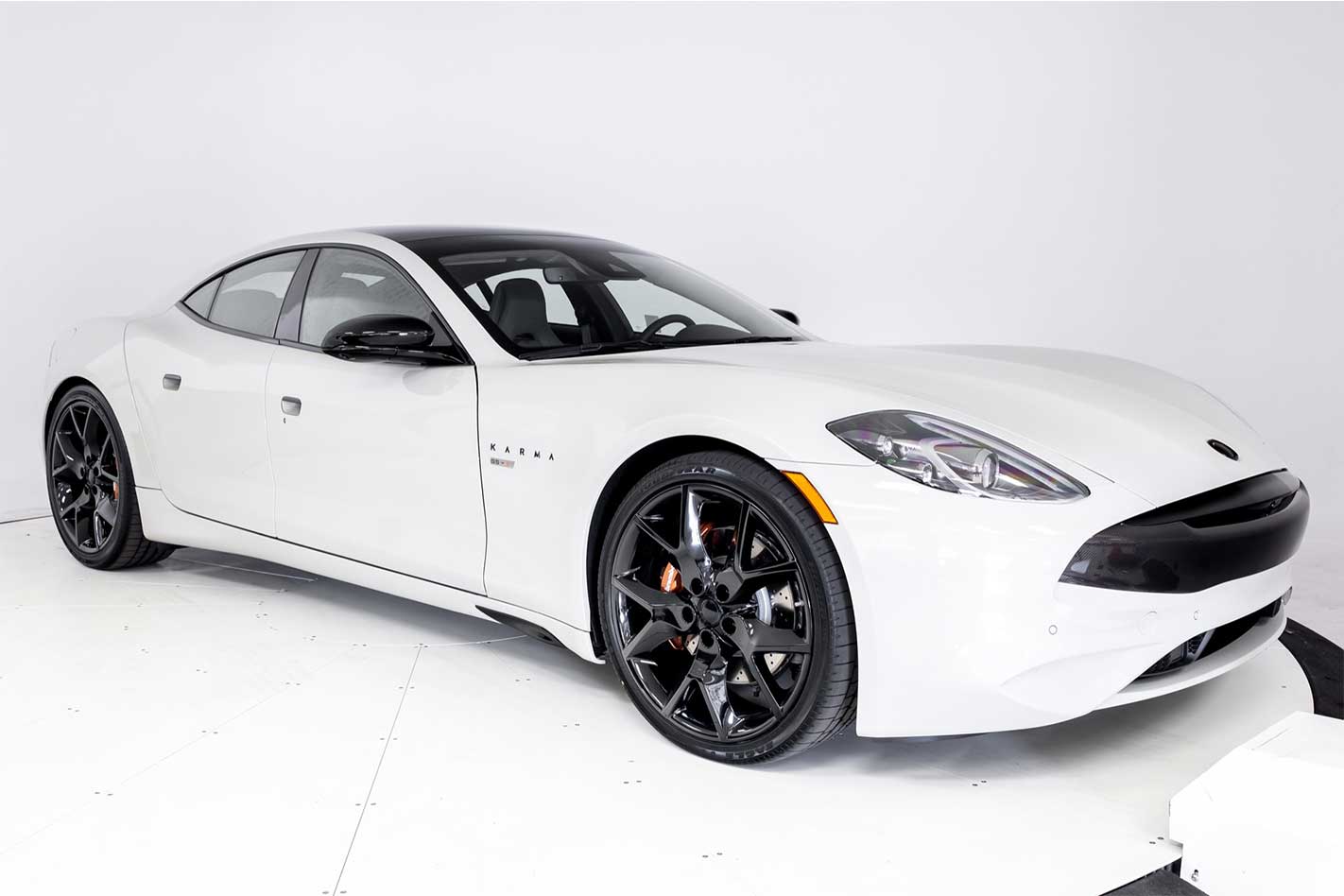
Ironically, if it debuts, the Karma GX-1 will battle the Fisker Ocean, an incoming SUV created by Henrik Fisker. Fisker is the man behind the failed Fisker Karma sedan, which eventually became the Revero after Fisker Automotive filed for bankruptcy.
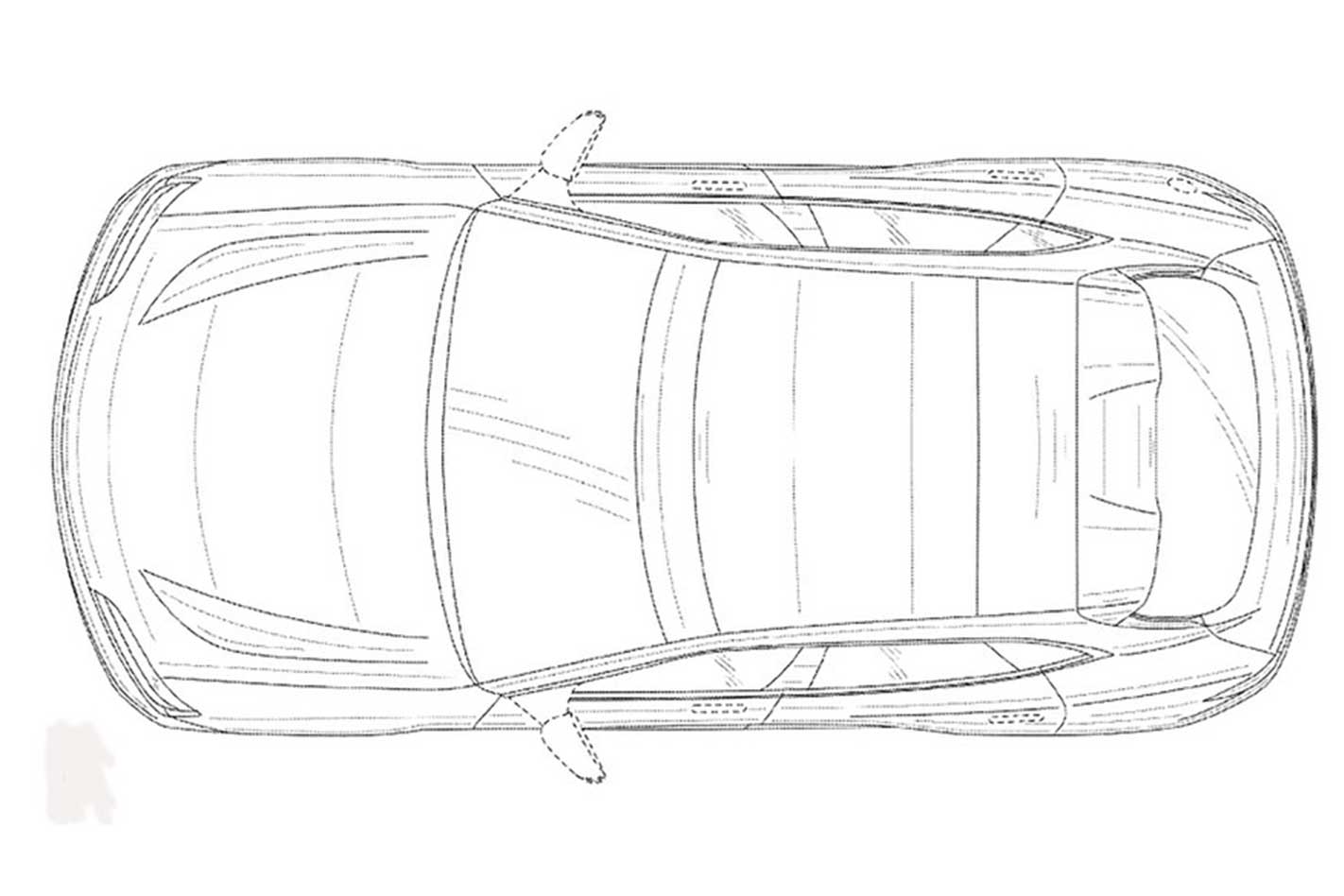
Karma currently sells the Revero for US$130,000 (AU$161,400) and is expected to introduce the entry-level GS-6e, which is all-electric with zero emissions, for about US$80,000 ($AU101,200) in America.
Whether you’re preparing for a track day, shopping for a gift – or just yourself – here are the coolest car-related pieces of gear that we’ve come across in our travels online.
1. 2020 50c ATCC GT-R coin – $15 – auspost.com.au
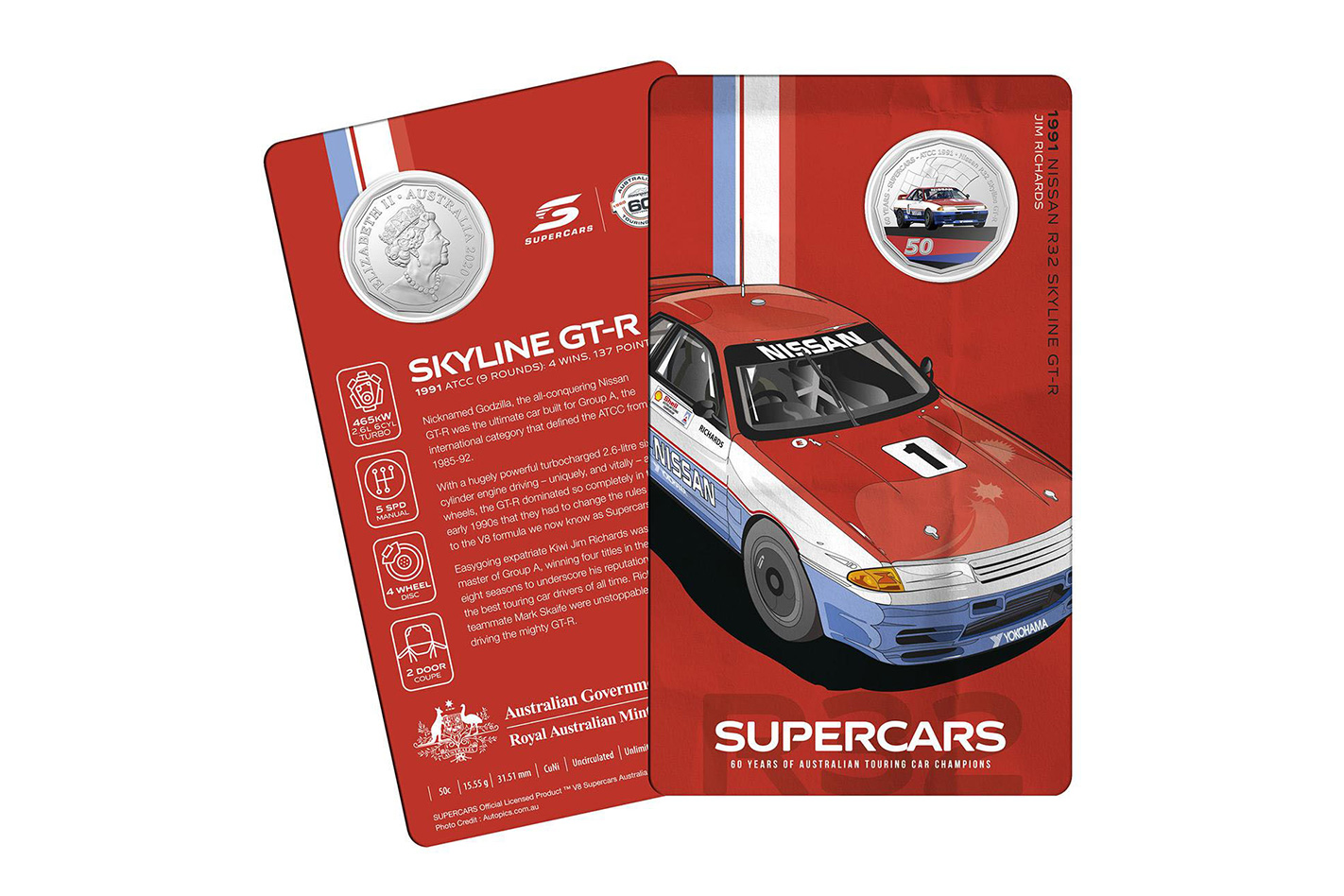
Celebrating 60 years of Aussie touring cars, the Royal Mint has released a range of uncirculated coins featuring some of our most iconic racing cars.
2. GTi Socks – $17 – heeltread.com
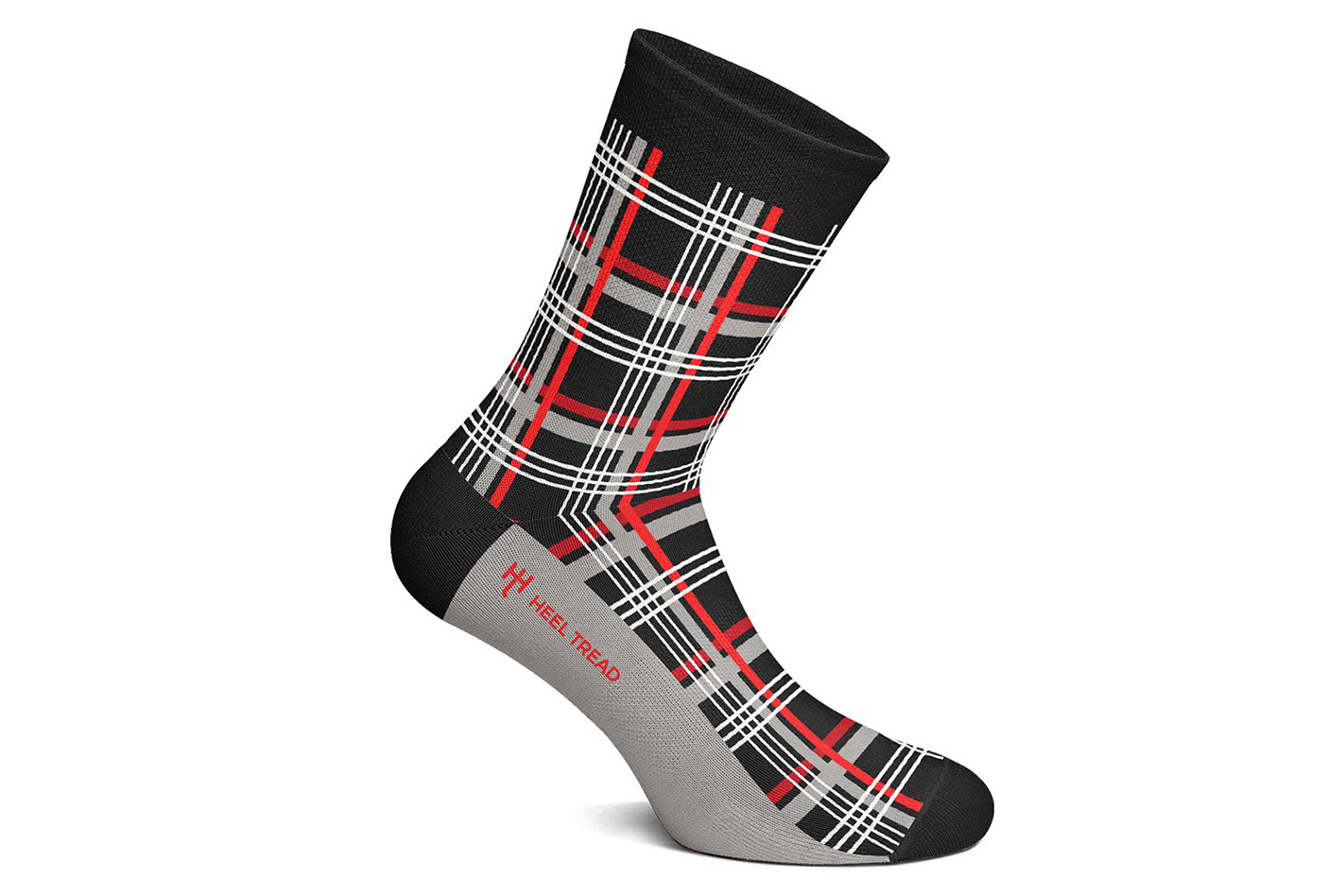
Not the socks your nanna got you for Christmas. Heeltreads has everything from iconic racing colours to production car signatures like this original Golf GTi tartan motif.
3. Sparco Sky RJ-7 Helmet Carbon – $1760 – Sparesbox.com.au
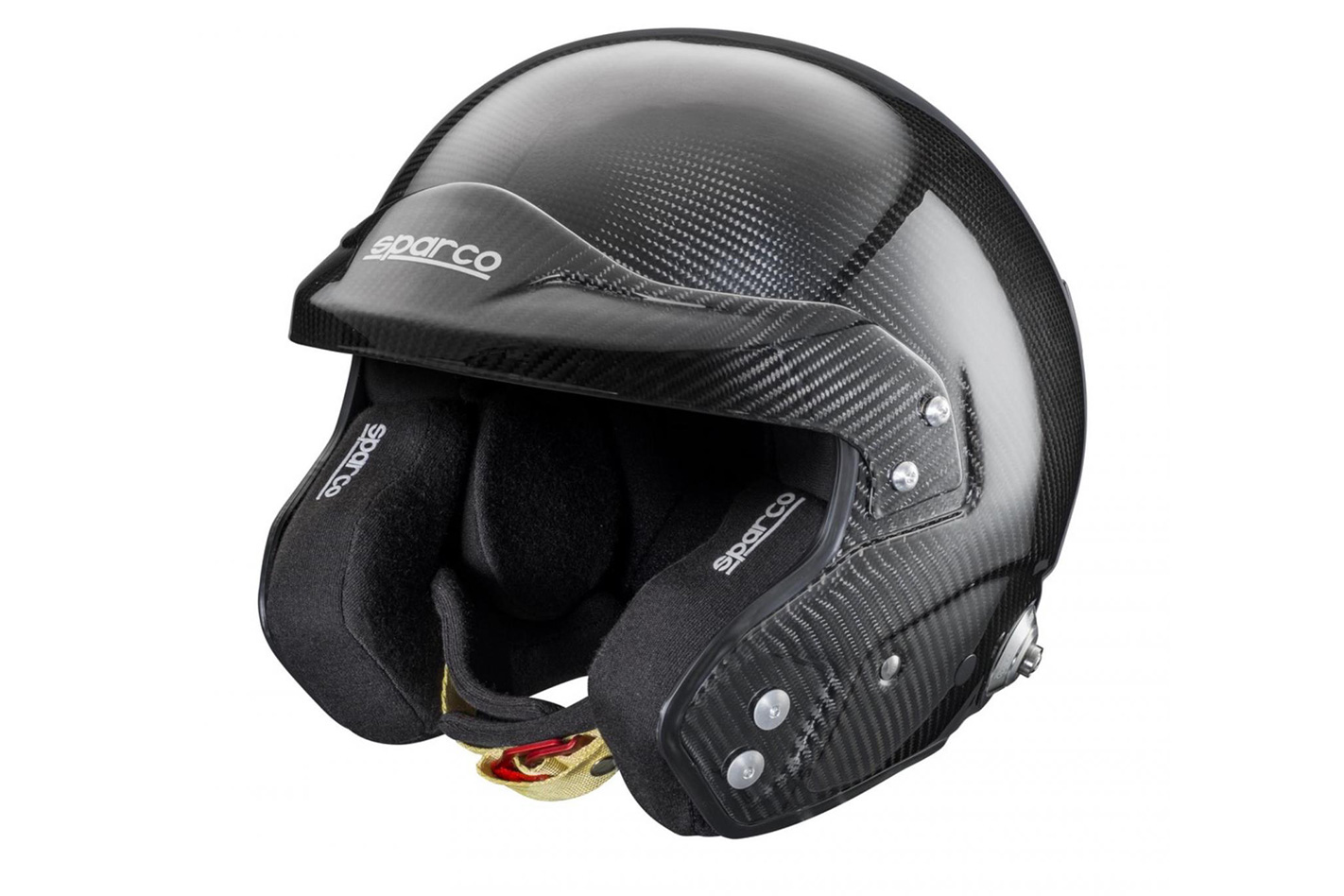
Safety first, style a close second, with this Sparco carbon-kevlar open face. Removeable and washable padding, HANS clips and FIA-approved.
4. RE-FD Artwork print – $37 – getnowherefast.com
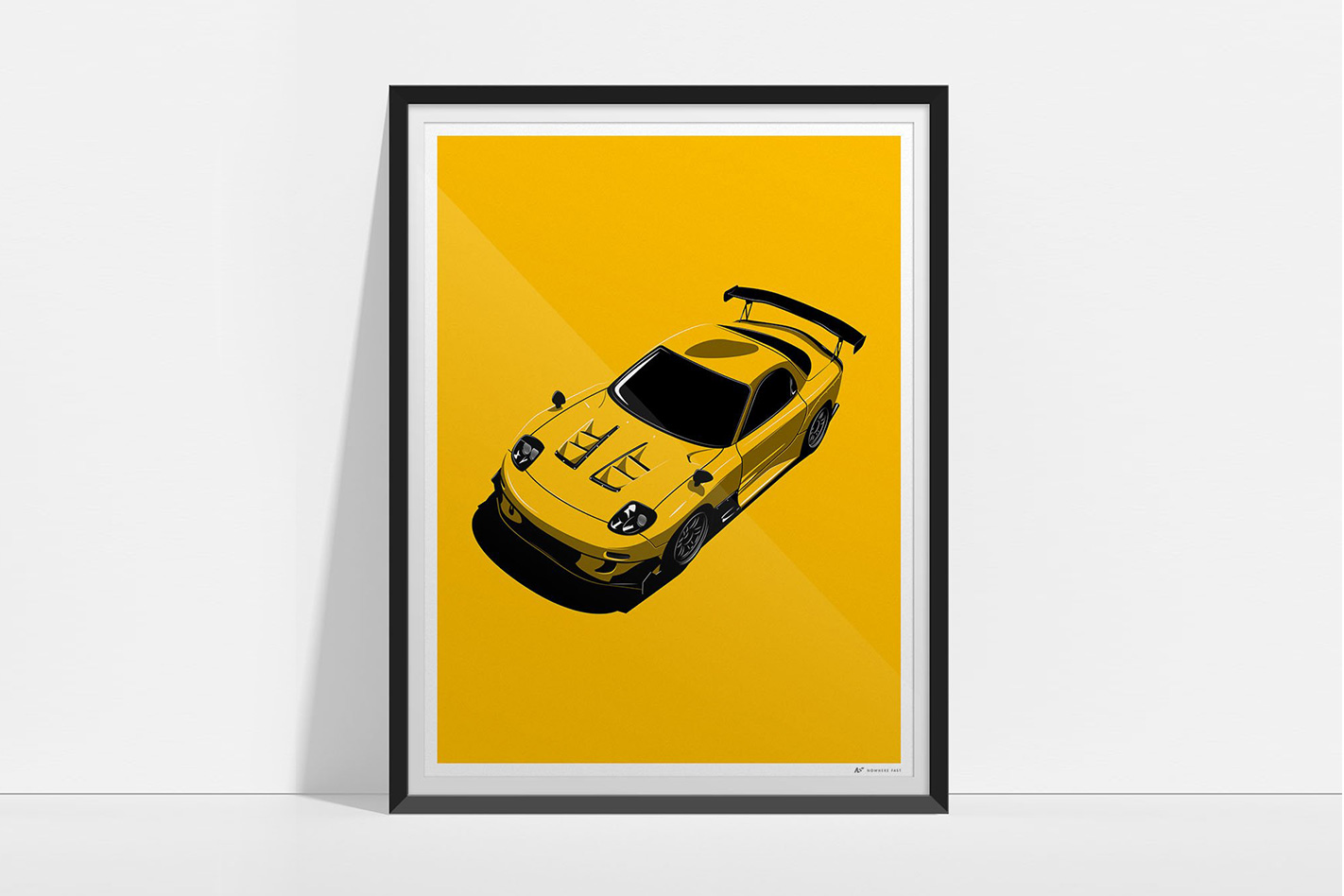
Need some wall art? This mob has a bunch of highly detailed JDM-inspired 18×24-inch prints, this one showing a neat RE-Amemiya SuperG RX-7.
5. A Man and His Car – $60 – dymocks.com.au | Ed’s pick – Straight to the pool room
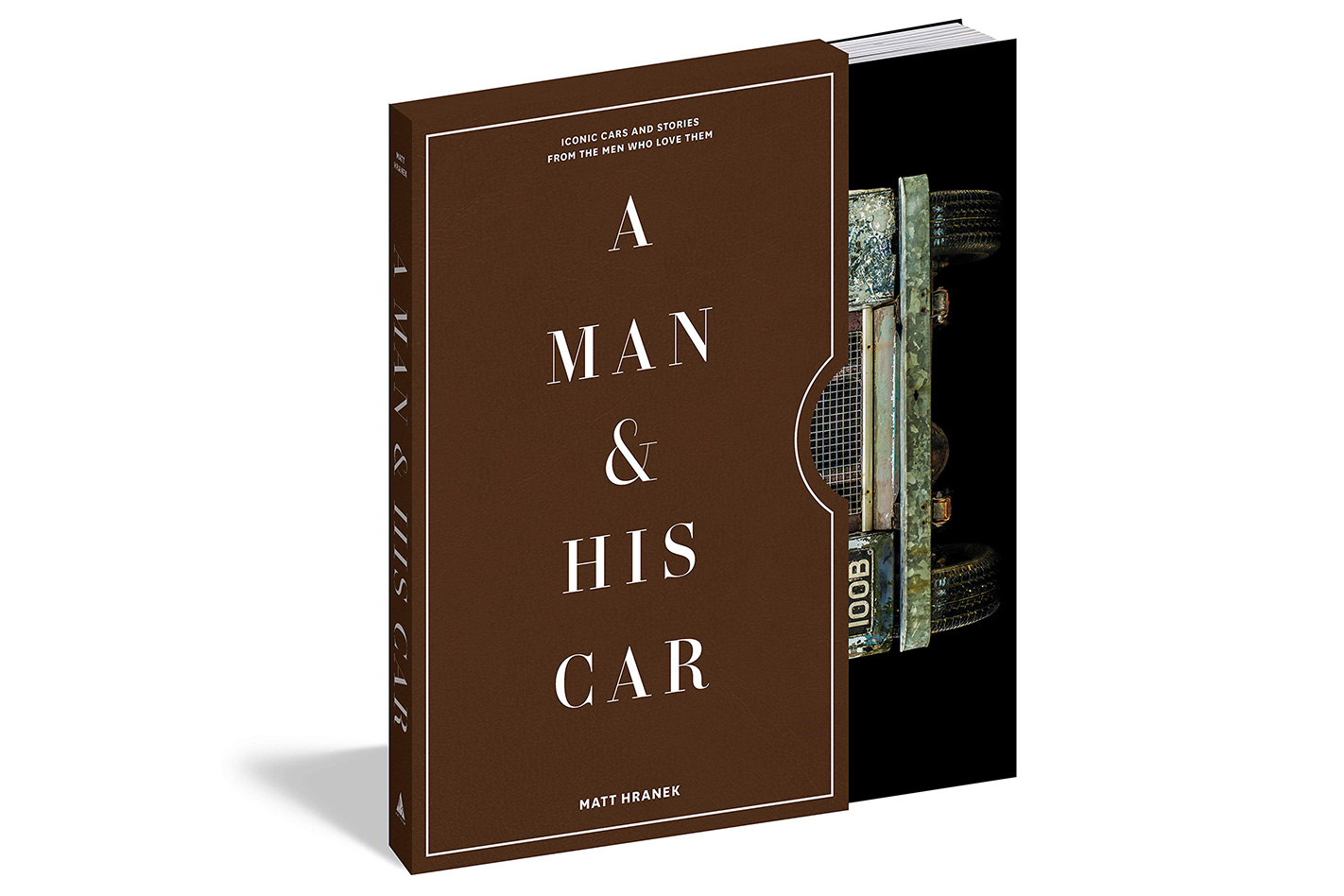
Featuring everyone from Jay Leno to Snoop Dogg – this coffee table book explores cars as vehicles for pop-culture moments, pioneering achievements, heirlooms, friendships, and more.
6. Tag Heuer Carrera 160 Silver Edition – $9350 – tagheuer.com | Ed’s pick – Product of the month
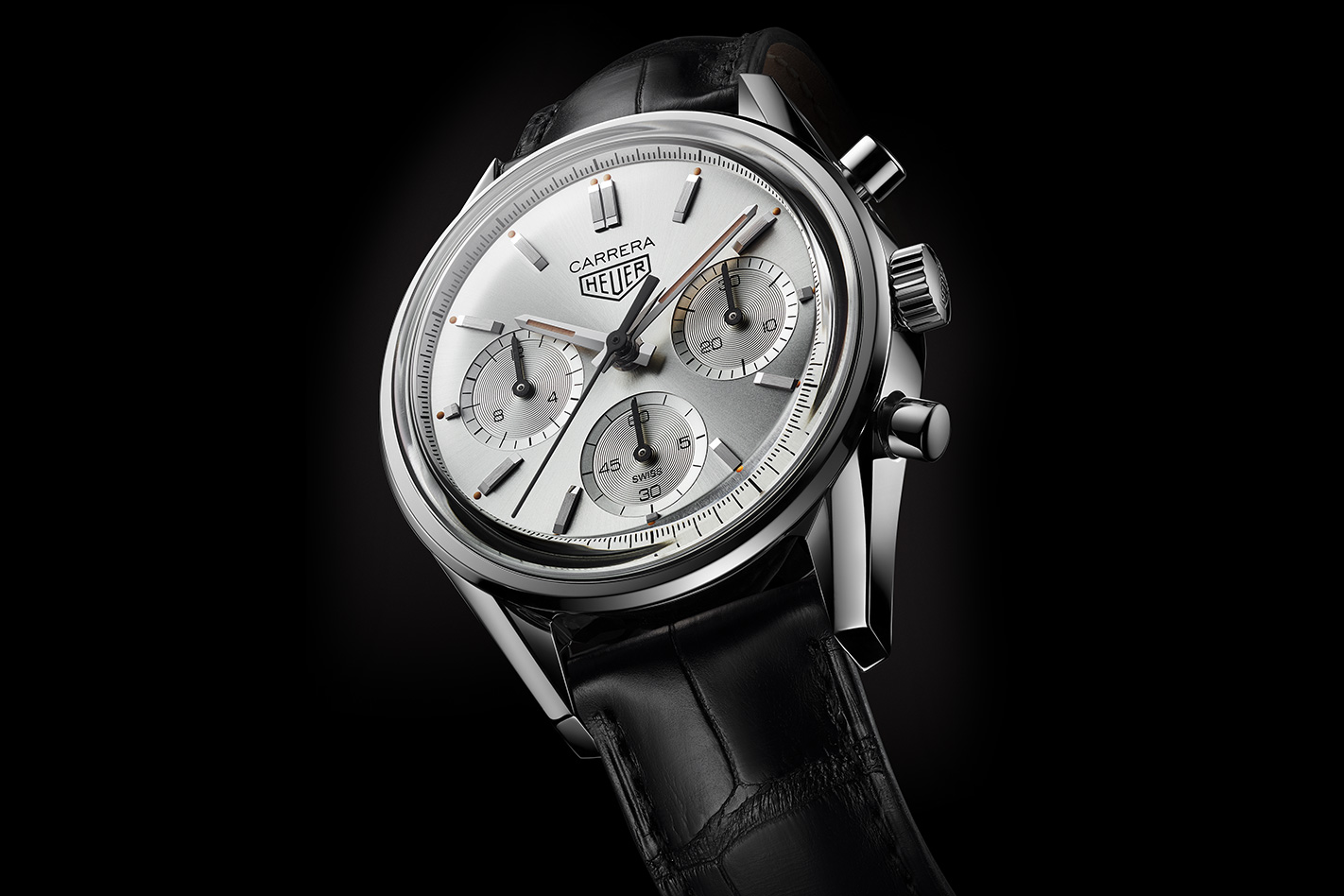
Before Tag Heuer, it was just Heuer (think AMG pre-Daimler buyout). This limited edition (1860 pieces) reissue mimics the old with TAG’s prolific 02 automatic movement inside.
7. Porsche Unseen – $120 – booktopia.com.au
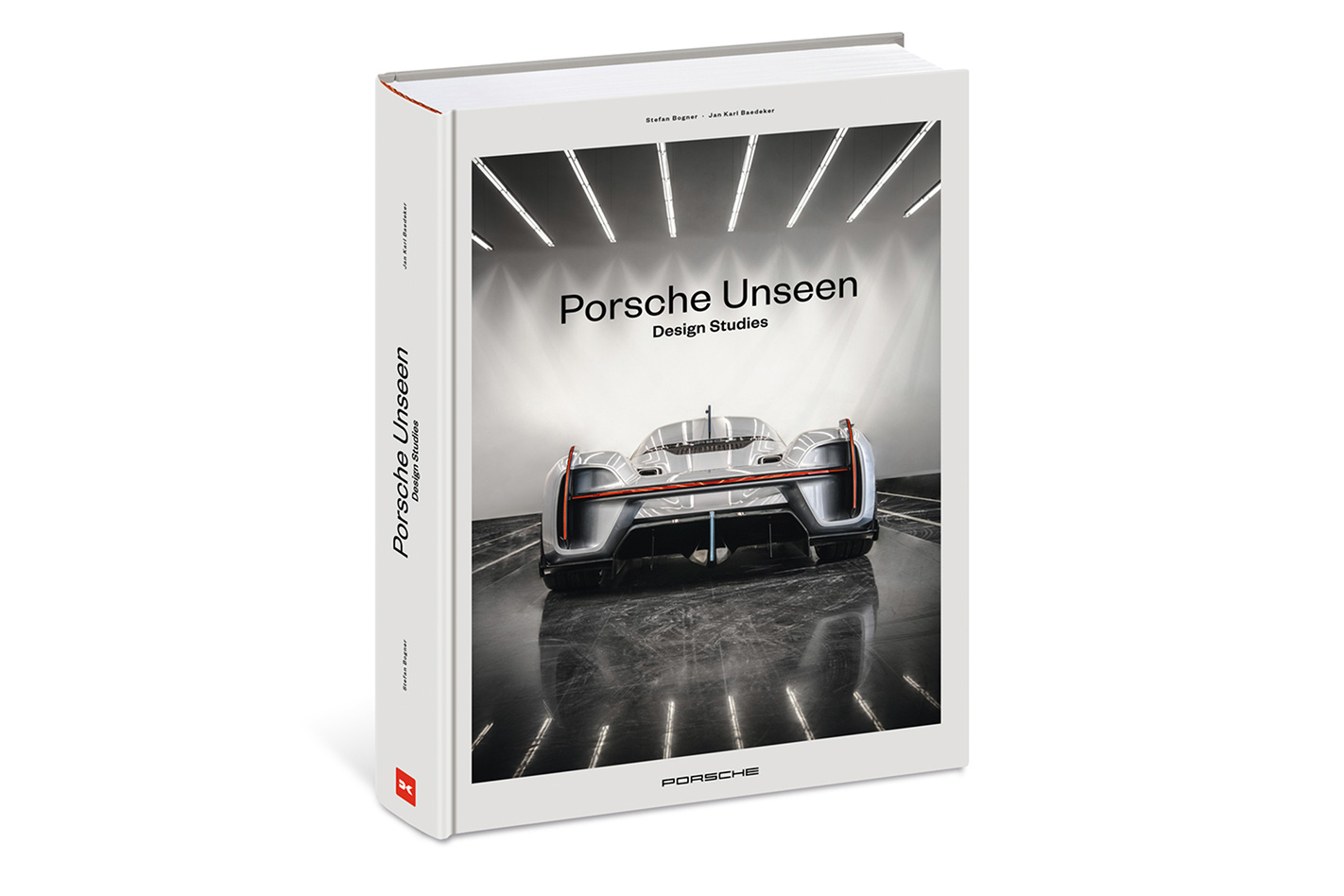
An extraordinary study in Porsche design, full of unexpected and never-before-seen vehicles and concepts from the depths of the Porsche Design vault.
8. Velo GP90 seat – $935 – racerindustries.com.au
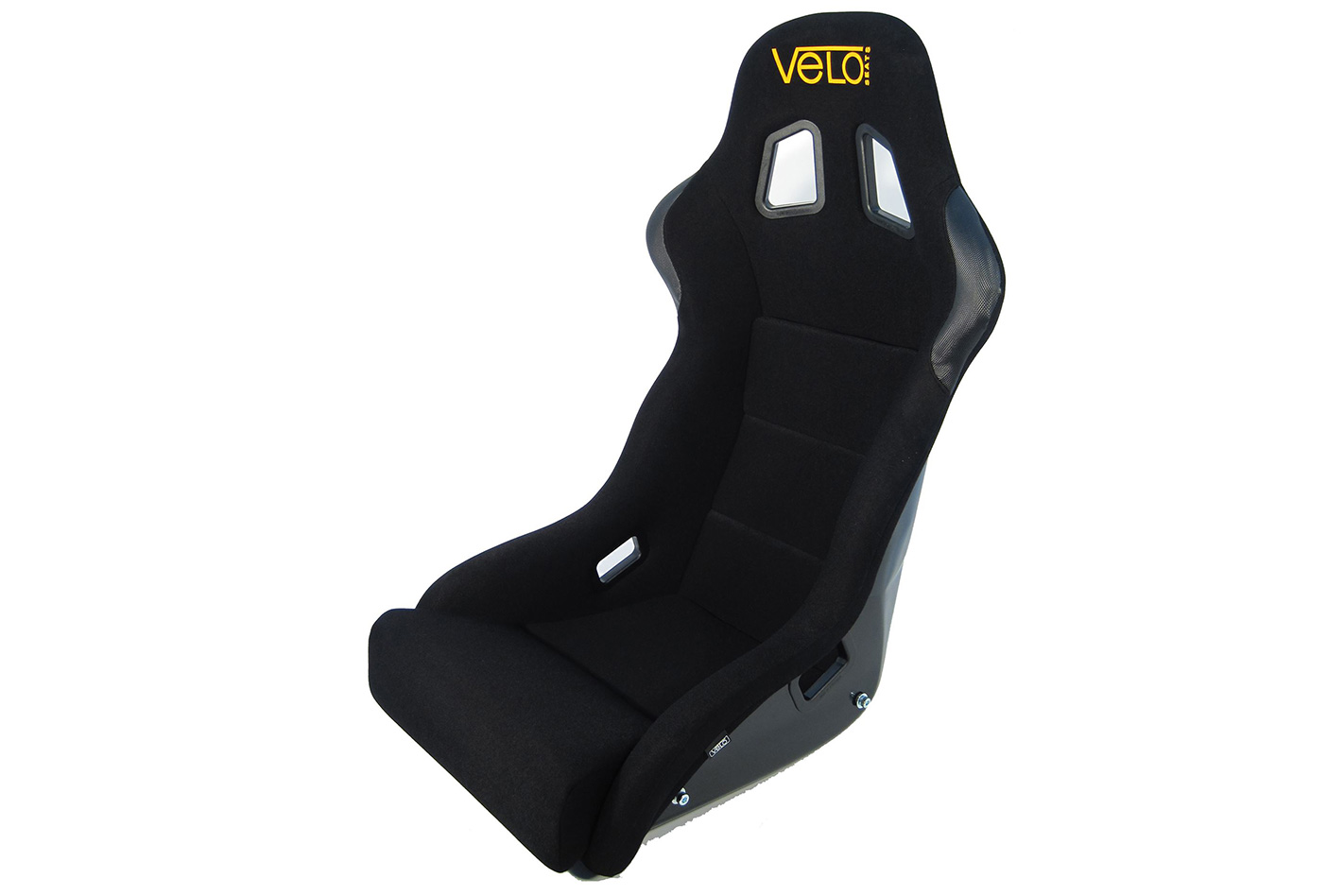
Velo’s GP90 is a versatile all-rounder suitable for grassroots motorsport applications, as well as coming with ADR approval for the road.
9. Petrofina long sleeve – $60 – periodcorrect.com

Contemporary workwear inspired by motorsport liveries of the past. This slick long sleeve taps 90s-era Fina DTM colours.
10. Tamiya 1:12 Renault 5 Turbo – $200 – hobbyco.com.au
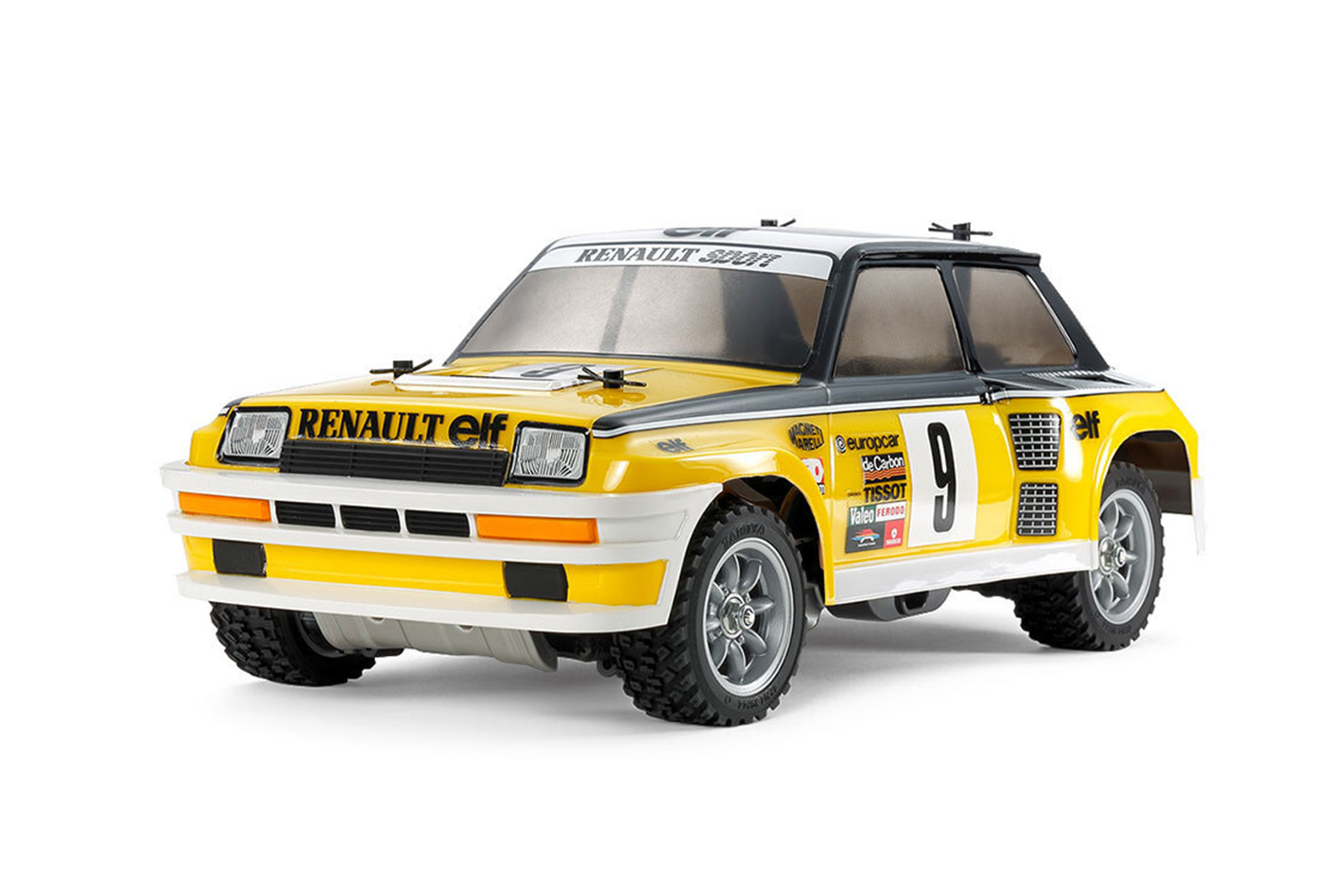
Unleash the inner child with this awesome little off-road Renault 5 Turbo RC car from Tamiya! Independent double wishbone suspension and more.
