
What is the Subaru XV 2.0i-S?
Based on the Subaru Impreza, the XV is one of the few small SUVs that offer a decent off-road capability. It’s well-equipped too, particularly in this 2.0i-S spec, which is the priciest of the non-hybrid variants.
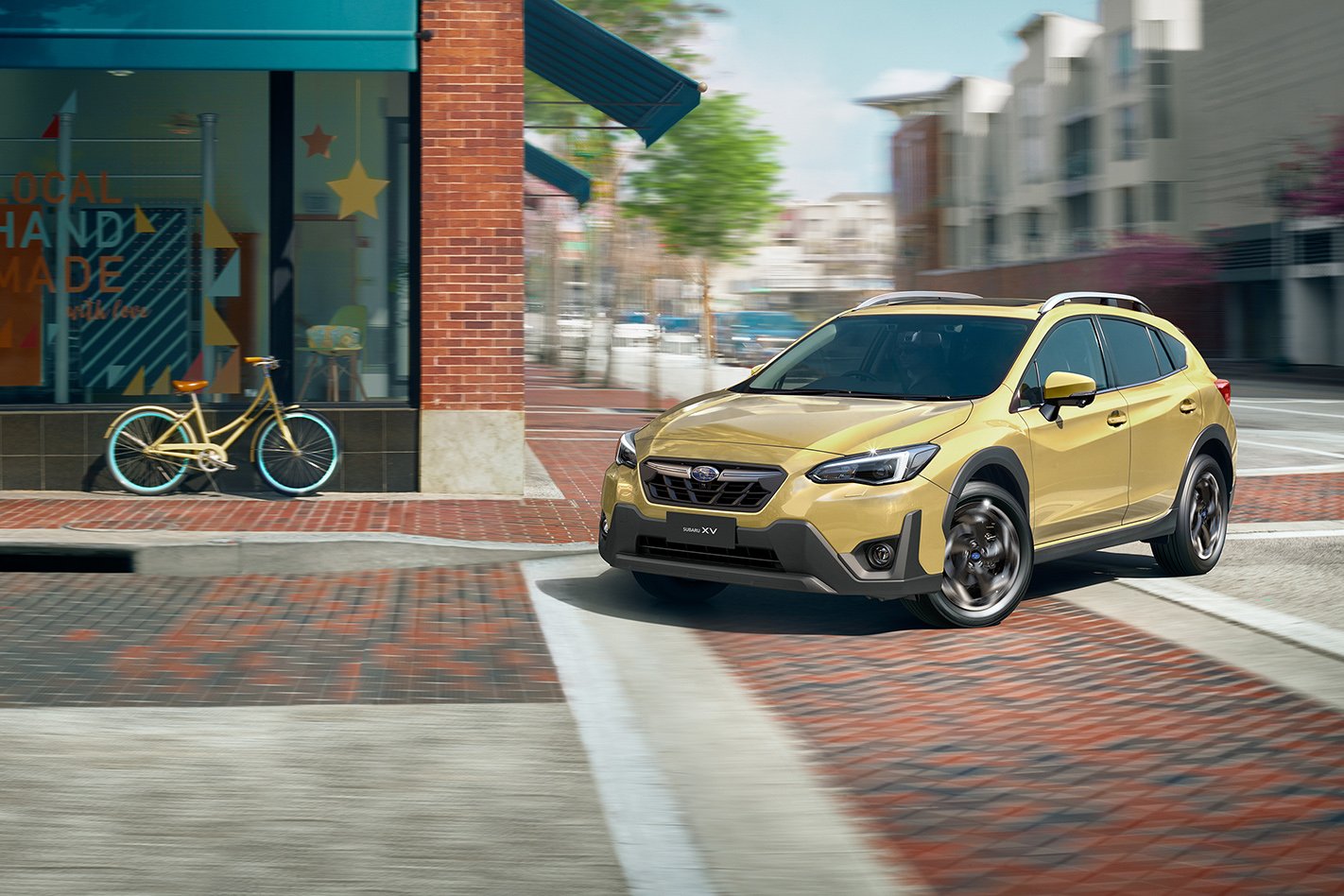
With sharp looks that convey a sense of adventurism, the XV fits the ‘sports utility’ description more than most. Its AWD running gear makes it initially pricier than most of its rivals, which include the Toyota C-HR, Mazda CX-30, Honda HR-V and Hyundai Kona but that doesn’t prevent it from being one of the top five best-sellers in its class.
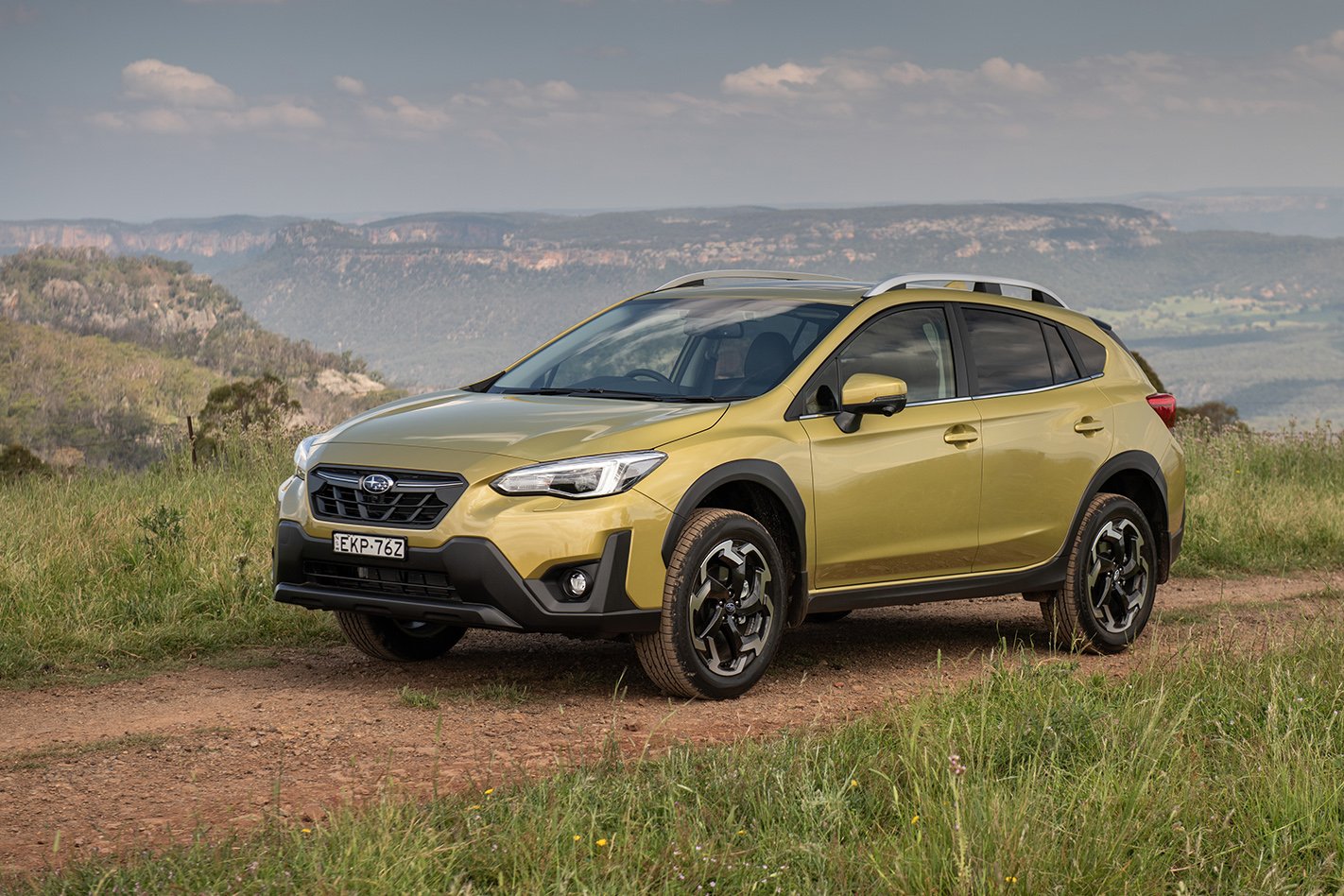
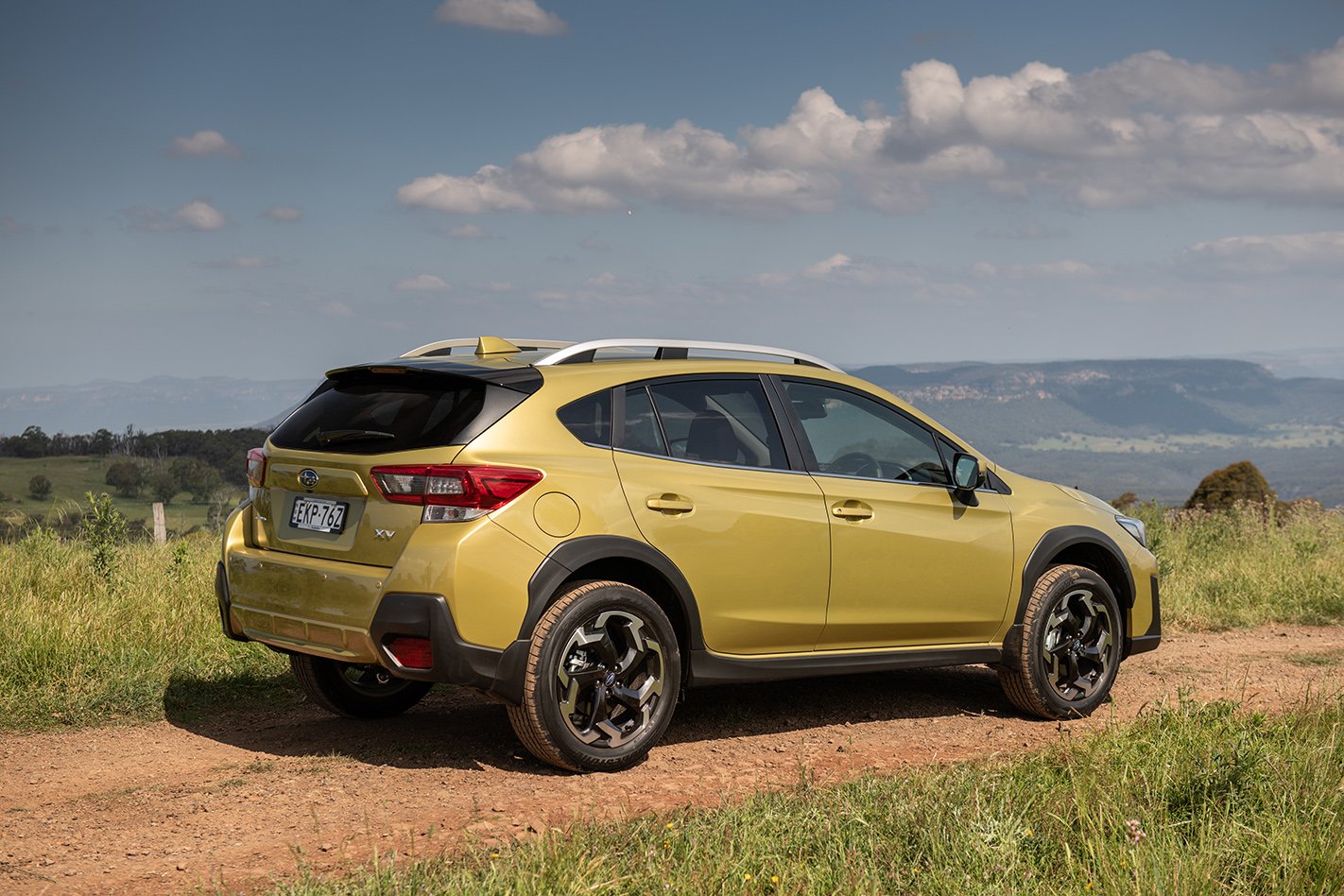
Subaru recently gave the second-generation XV crossover mid-life update that brought a minor facelift, additional kit and retuned suspension, so we jumped in a striking Plasma Yellow Pearl example to see how it differs from the 2020 version.
We’re driving the highest of four specification grades, the Subaru XV 2.0i-S, which retails for $37,290 with a driveway price of $41,899.
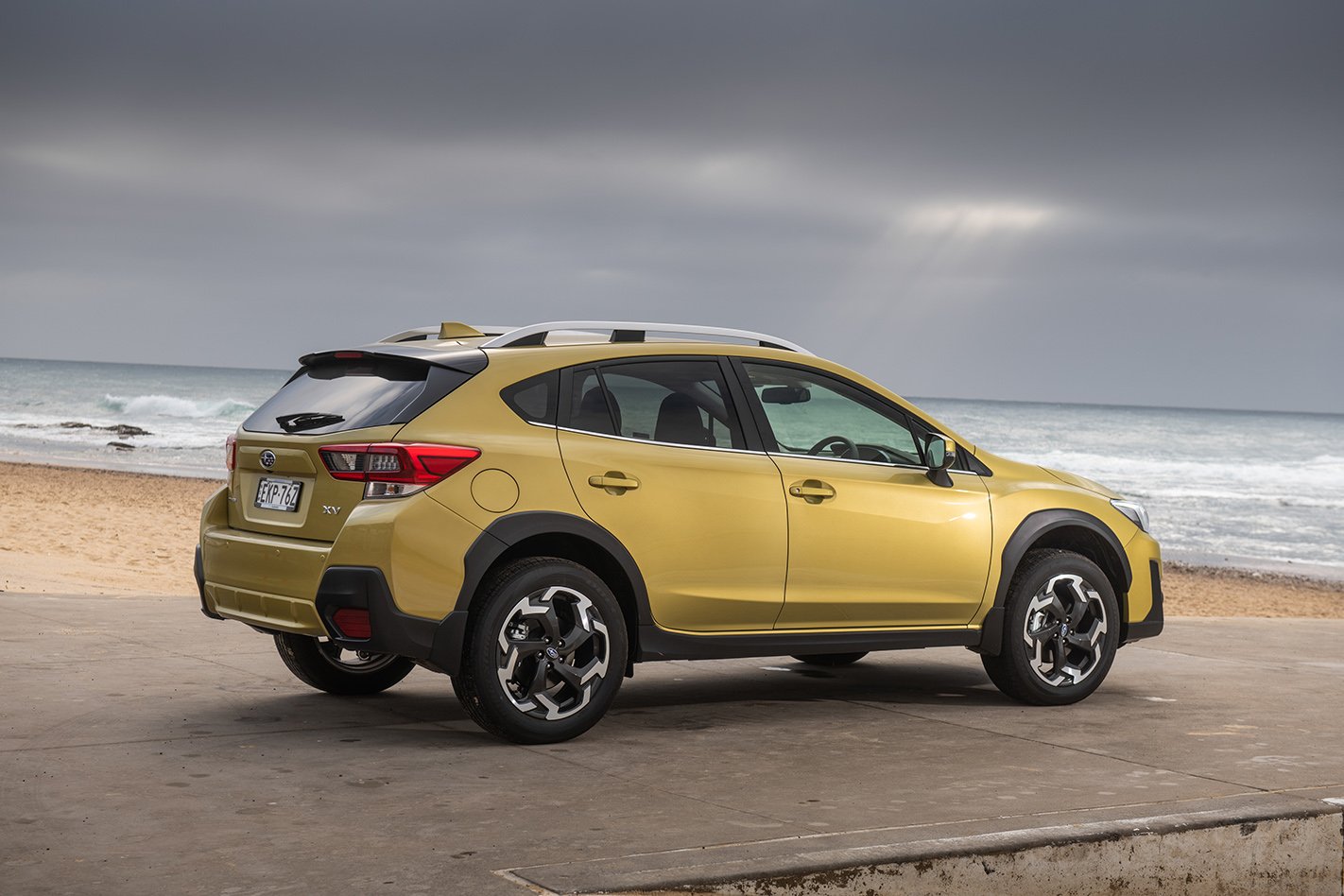
That represents a $7600 premium over the entry-level XV 2.0i, the extra money bringing additional safety features including the Subaru Eyesight semi-autonomous driving system and Vision Assist advanced driver assist system (ADAS) which we’ll detail below.
It also gains a host of extras also found in the mid-spec XV2.0i Premium ($34,590) a bigger 8.0-inch touch screen, dual-zone climate control, powered sunroof and satellite navigation.
Unique upmarket features in this spec include part-leather seat trim, eight-way power-adjustable driver’s seat, heated front seats, auto-dipping passenger side mirror, door-mirror position memory, and 18-inch alloy wheels instead of the standard 17s.
Apart from accessories, there are no extra-cost options for the XV and its price includes any of the nine paint options.
The XV 2.0i-S price and inclusions stack up well similarly against AWD competitors such Toyota CH-R Koba ($37,165), Mazda CX-30 Touring ($38,490) and front-wheel-drive 2.0-litre Hyundai Kona Highlander with the sunroof option ($40,200) that has a few extra bells and whistles including a head-up display and ventilated front seats.
What is the Subaru XV 2.0i-S like to live with?
The XV 2.0i-S comes with everything available in an XV, so you’re not exactly short on creature comforts.
The interior design, which is identical to the Impreza, came through the recent facelift untouched but it still looks sharp and has a quality feel to it with soft-touch surfaces highlighted by attractive contrast-stitching that also adorns the leather-trimmed seats.
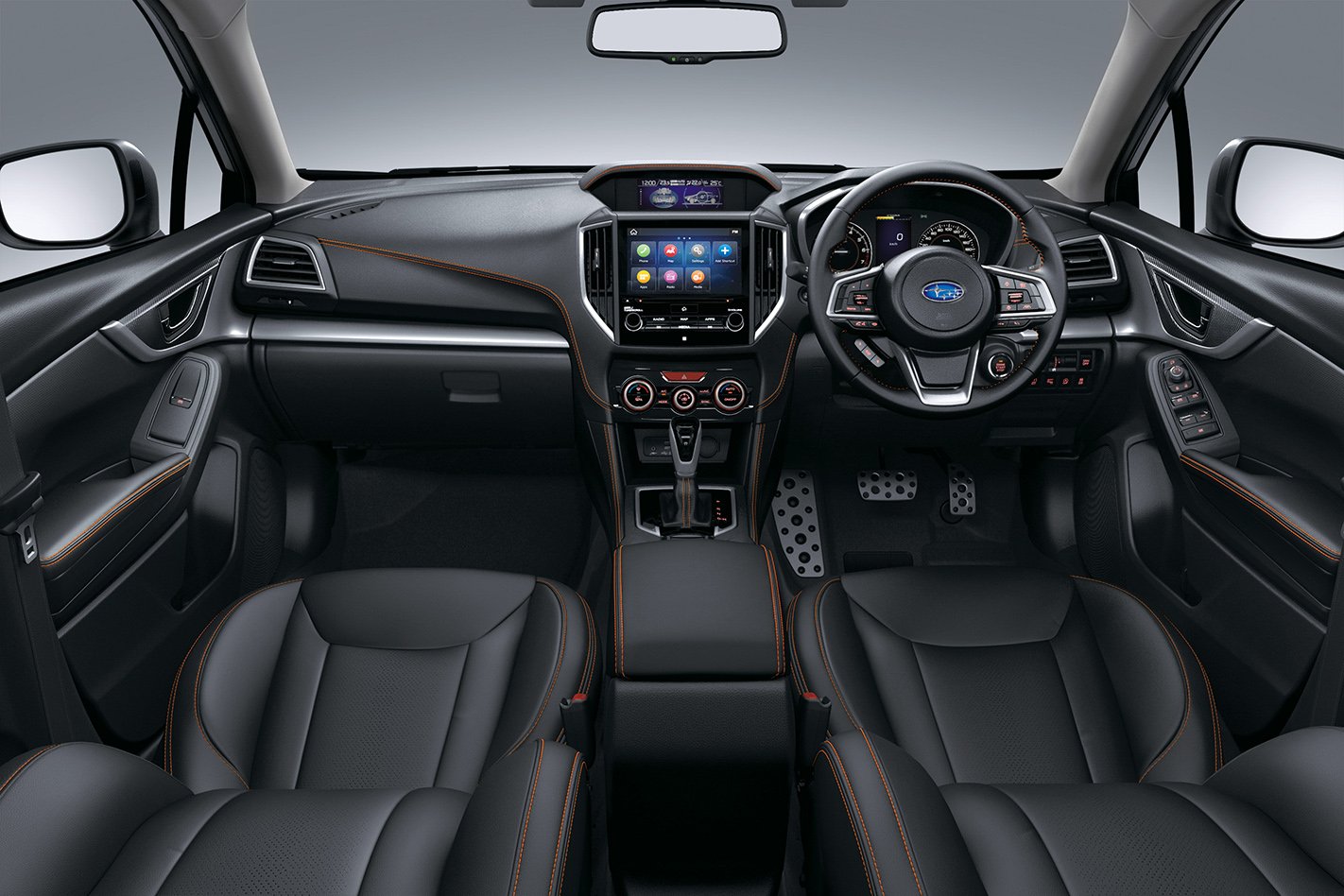
The seats themselves are firm but comfortable, the driver benefitting from eight-way power settings to help find a good driving position and both front seats are heated. That said, I prefer the woven cloth seats in the cheaper versions.
Rear-seat space is great for a small SUV with plenty of leg and shoulder room to keep two big adults quite happy. The stadium-style seating provides good forward vision as well, and there are vents for heating and cooling.
Cabin storage includes a smallish centre console bin with stitched leather-trimmed lid and a front centre tray to hold a phone. There are also two front centre cup holders, two rear cup holders in the fold-down centre armrest, bottle holders in each door bin and map pockets behind the front seats.
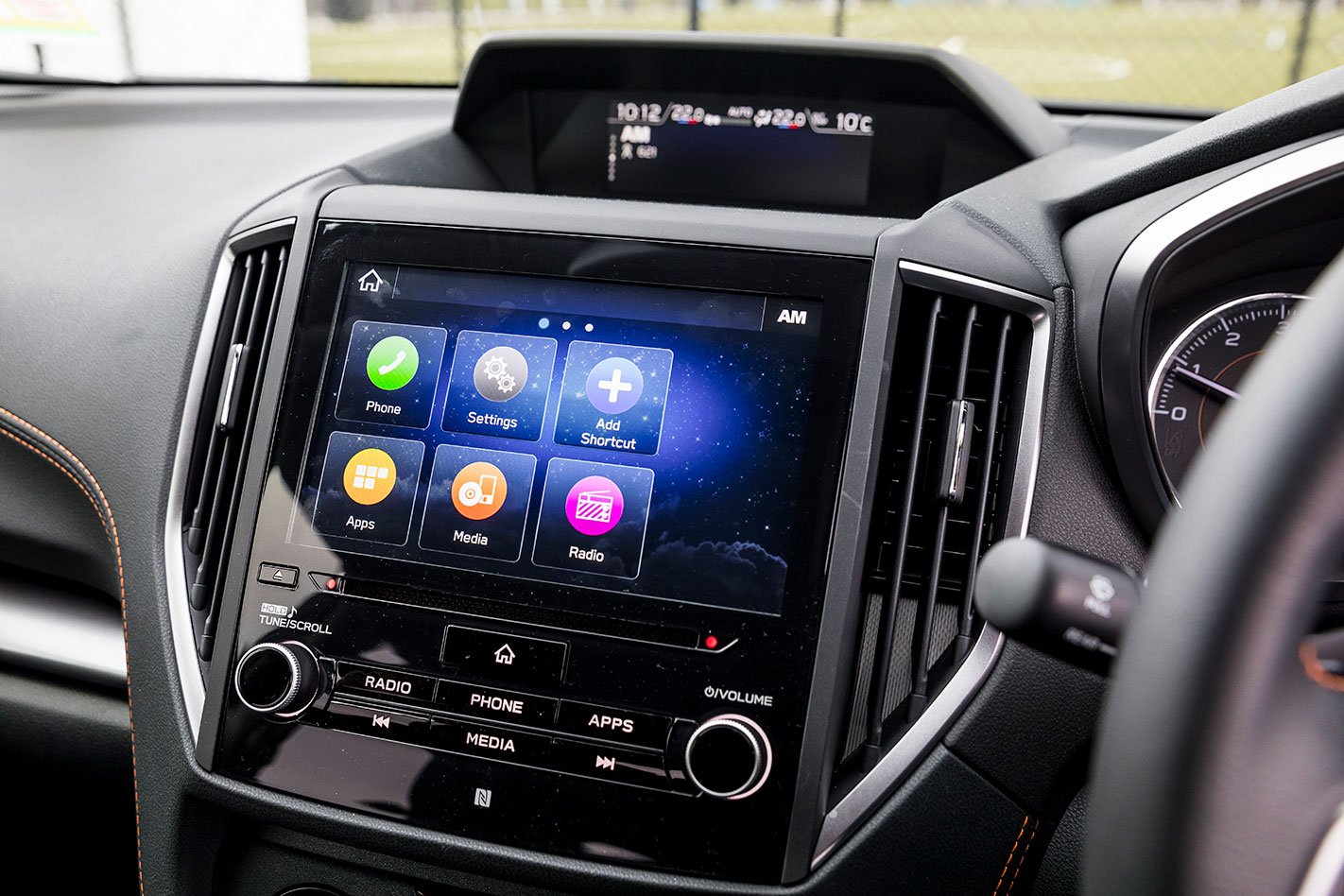
There are two USB charge ports in the centre console that can be used by front and rear occupants plus a couple of USB sockets in the dashboard to sync devices to the infotainment system via Apple CarPlay or Android Auto. Each location also has a 12v/120W power socket.
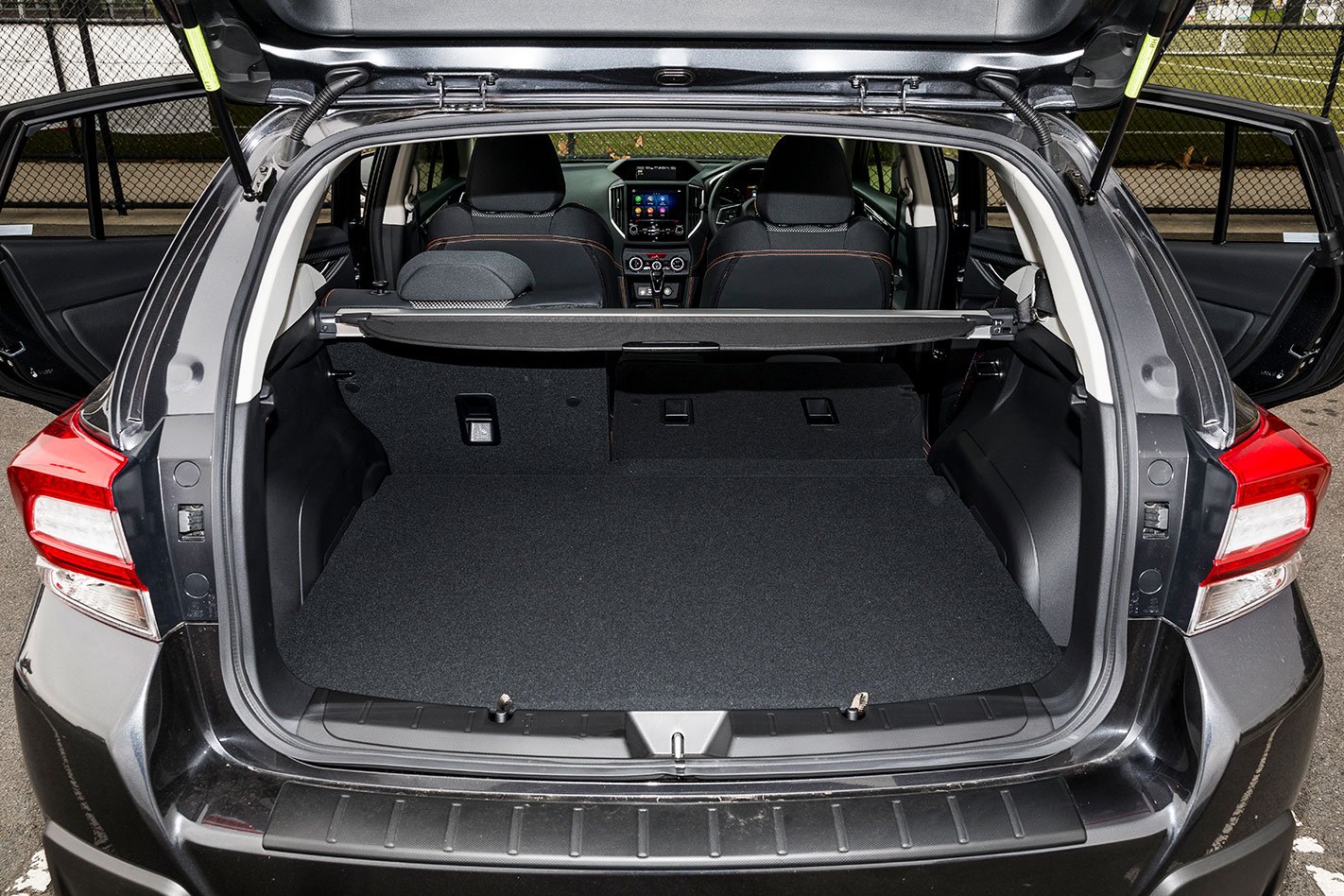
The XV’s 310-litre boot space is below average for a small SUV, though this is partly due to carrying a full-size spare wheel under the floor, which would come in very handy should you need to replace a tyre while offroad. The rear seatbacks split 60:40 to extend load space up to 765-litres.
Petrol XVs can legally tow a braked trailer weighing up to 1400kg.
All Subaru XVs come with a five-year warranty with no limit on kilometres travelled for private use.
Service intervals are 12 months or 12,500km. Subaru offers capped-price servicing for the first five years, which includes a free check-up after the first month with subsequent annual servicing priced at $341, $591, $347, $797, and $353 respectively.
Fuel economy is a little higher than you’d expect for a car this size. Official fuel consumption is 7.0L/100km and I averaged about 8.5L/100km over seven days with a mix of freeway and urban driving.
The XV only requires RON 91 unleaded petrol when filling the 63-litre fuel tank.
What is the Subaru XV 2.0i-S like to drive?
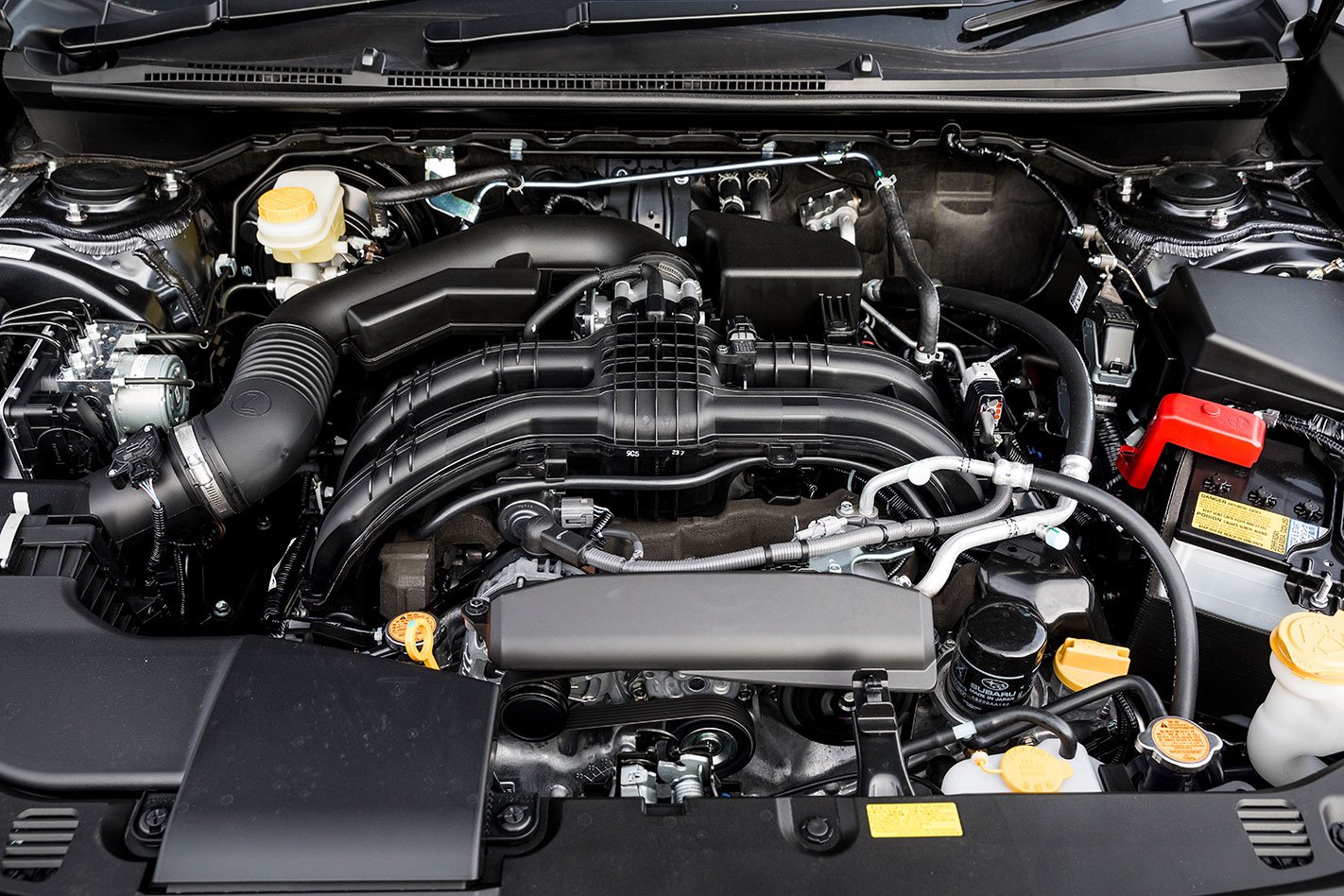
All petrol XVs are all-wheel-drive and are powered by a 115kW/196Nm 2.0-litre four-cylinder horizontally opposed ‘Boxer’ petrol engine coupled with a CVT auto that’s also shared with the Impreza.
Because the XV weighs a little more than the Impreza, its engine has to work a little harder. You won’t really notice this in most situations but things do get a little loud and sluggish when putting the foot down to overtake or join freeway traffic.
All XVs feature SI-Drive, which is like Sport mode in other cars. Selecting S that changes the rev mapping to delay upshifting for sportier acceleration, while I is an ‘intelligent’ mode that throttles up gradually for smoother and more economical driving.
The XV handles as well as the Impreza despite the jacked-up ride height. One of the most noticeable things about the 2021 update is retuned suspension, which involved tweaked damping force to allow the front suspension to move more smoothly.
The ride feels soft but not spongy and while you feel it bounce over road imperfections, it settles very quickly.
The steering feels a little light but active torque vectoring and the flat-four engine’s low centre of gravity compensates for the higher ride height and keeps the front end pointing where you want when driven with enthusiasm through bends.
But while it’s a great city car, the XV is truly in its element on dirt and gravel tracks, with its 220mm ground clearance, all-wheel-drive system and sharply-tuned electronic stability control keeping things stable on loose surfaces.
Off-road capability is further enhanced in the 2.0i-S with X-Mode dynamic off-road traction control that helps it climb slippery slopes, and has hill descent control that helps you back down without having to touch the brakes.
How safe is the Subaru XV 2.0i-S?
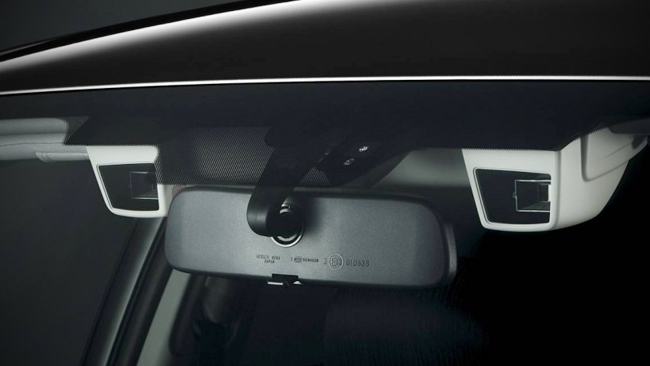
All XVs, except the entry-level 2.0i, is equipped with the third generation of Subaru’s EyeSight active safety suite, which uses stereo cameras to operate autonomous emergency braking with pedestrian detection, lane-keeping assistance and adaptive cruise control.The 2.0i-S improves on this with a Vision Assist suite, which uses radar-based sensors to bring other ADAS functions such as blind-spot monitoring, lane-change assist, rear-cross traffic alert, high-beam assist, and reverse automatic braking.
The XV’s compact size makes it easy to park and safely negotiate tight spots. It has good all-round vision, with additional help from a reversing camera, as well as front- and side-view monitors to help you see below the window lines at low speeds.
Passive safety includes anti-lock brakes, stability control, seatbelt reminders for all seats, seatbelt pre-tensioners on the front and outer rear seats.
There are also seven airbags: one apiece ahead of the driver and front passenger; a knee airbag for the driver; an airbag outside each front occupant at chest level to protect from side impacts; and side-curtain airbags extending past both seat rows at head level, protecting occupants front and rear from side impacts.
Child safety includes two rear-seat ISOFIX anchor points, three top tethers and rear-door child locks.
The Subaru XV was awarded a five-star ANCAP safety rating in May 2017.
The Verdict
The XV is still one of the better crossovers, with a ruggedly handsome high-riding hatch aesthetic that other brands haven’t quite managed to emulate. It’s almost alone in its ability to competently handle most road and weather conditions and is very well equipped, especially in this top-spec 2.0i-S guise.
It’s not often we recommend a top-spec variant as there’s usually a more affordable mid-spec version that has everything you actually need, but the 2.0i-S brings some decent kit to the table not found in the other XVs, not least X-Mode, to justify the $2700 over the 2.0i Premium – so while you’re spending more you’re getting better value.
Of course, the S spec is also available with the hybrid powertrain, but I don’t think that does enough in terms of fuel economy and performance to justify spending an additional $3500.
Score: 8/10
Pros: Safety, styling, driveability, versatility Cons: Engine and gearbox lack sparkle, fuel consumption
Specifications
Price: $37,290 Engine 1995cc, 4-cyl, direct injection ‘Boxer’ petrol Max Power 115kW @ 6000rpm Max Torque 196Nm @ 400rpm Drivetrain: AWD Transmission: CVT Fuel consumption: 7.0L/100km combined Wheels: 225/55 R18 98V Weight: 1440kg Dimensions: L 4485mm x W 1800mm x H 1615mm – Wheelbase 2665mm ANCAP Safety: 5 stars
Mercedes-Benz has revealed the next-generation C-Class that brings additional interior space, S-Class levels of technology, and a game-changing plug-in hybrid version with a 100km all-electric range.
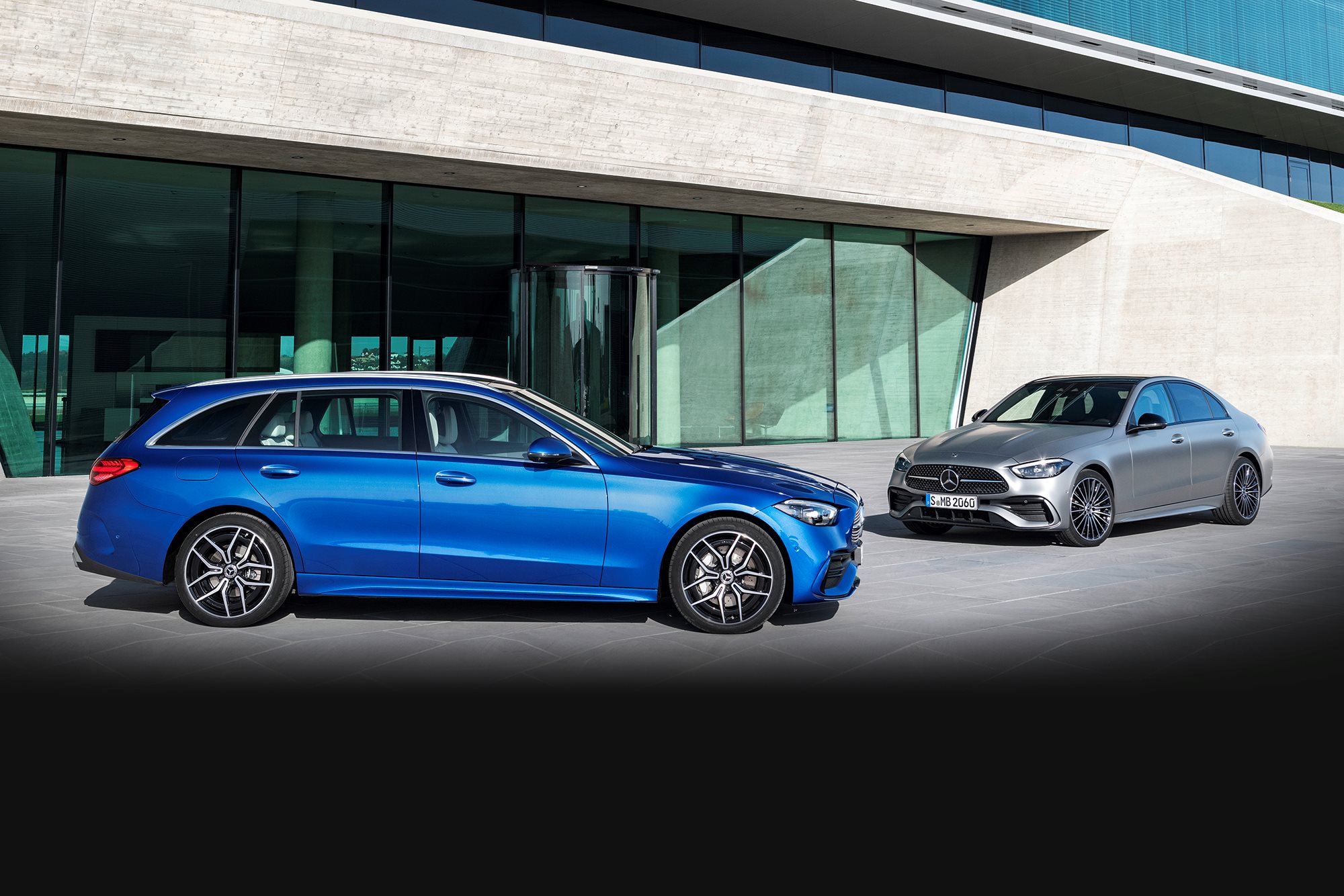
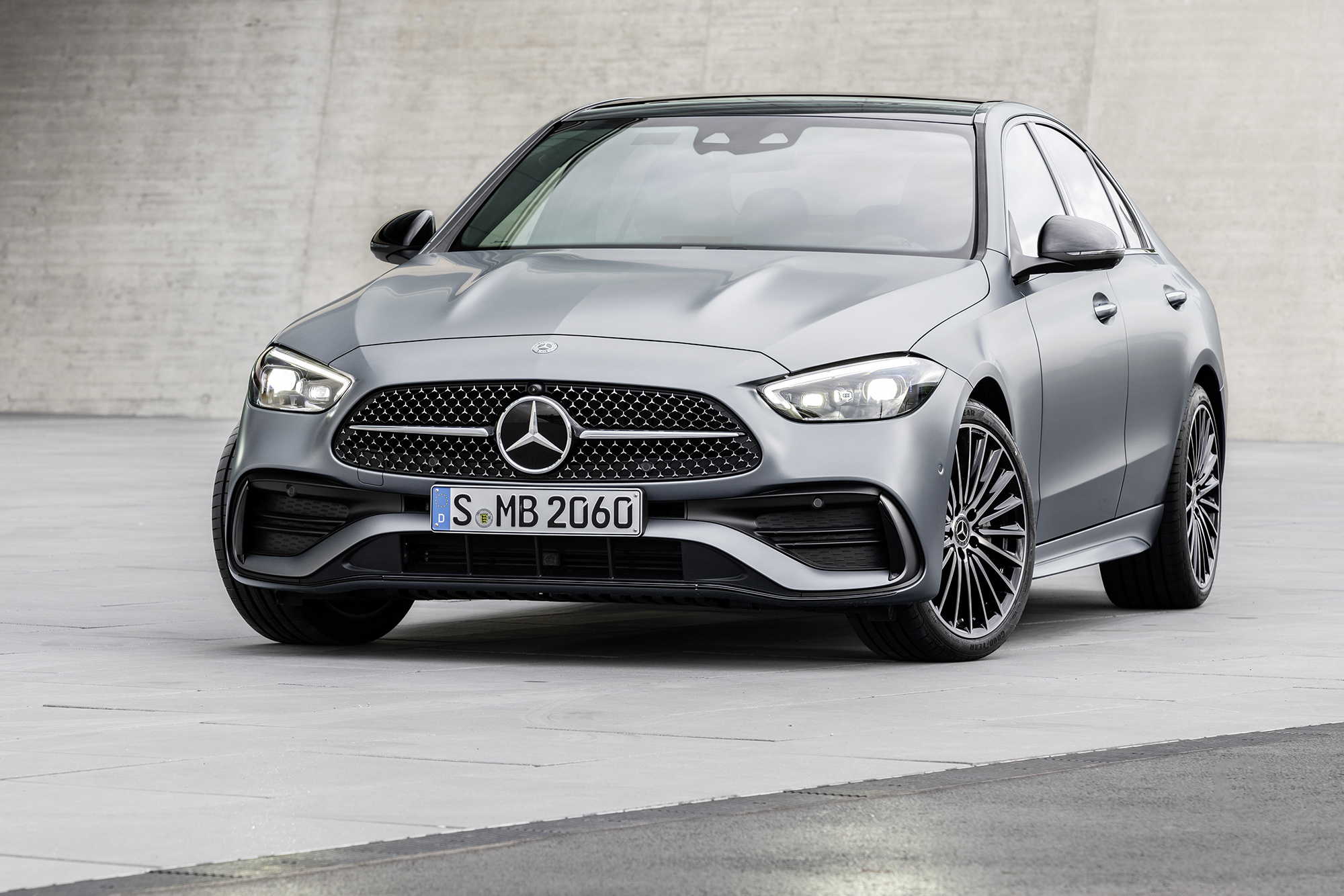
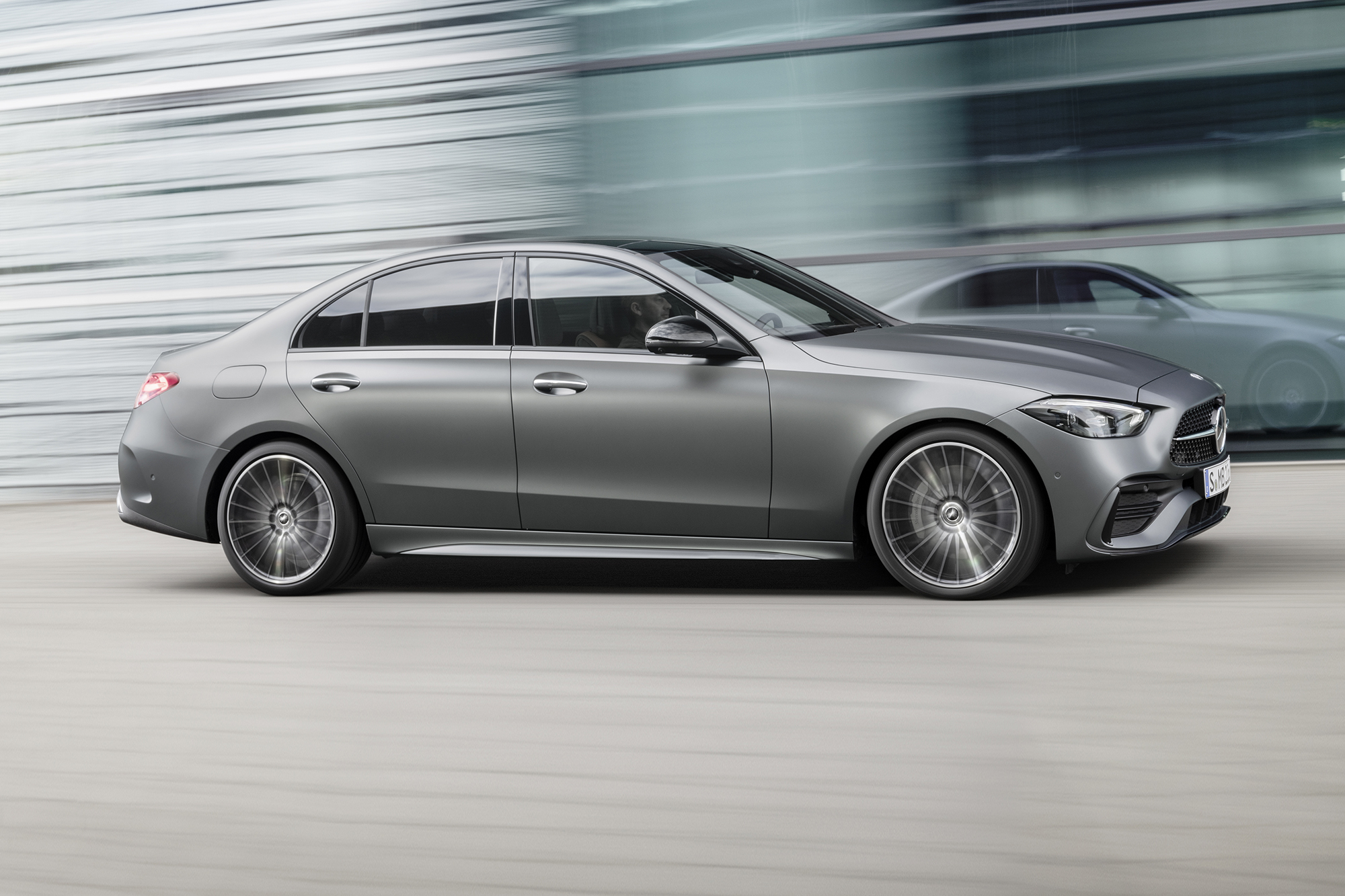
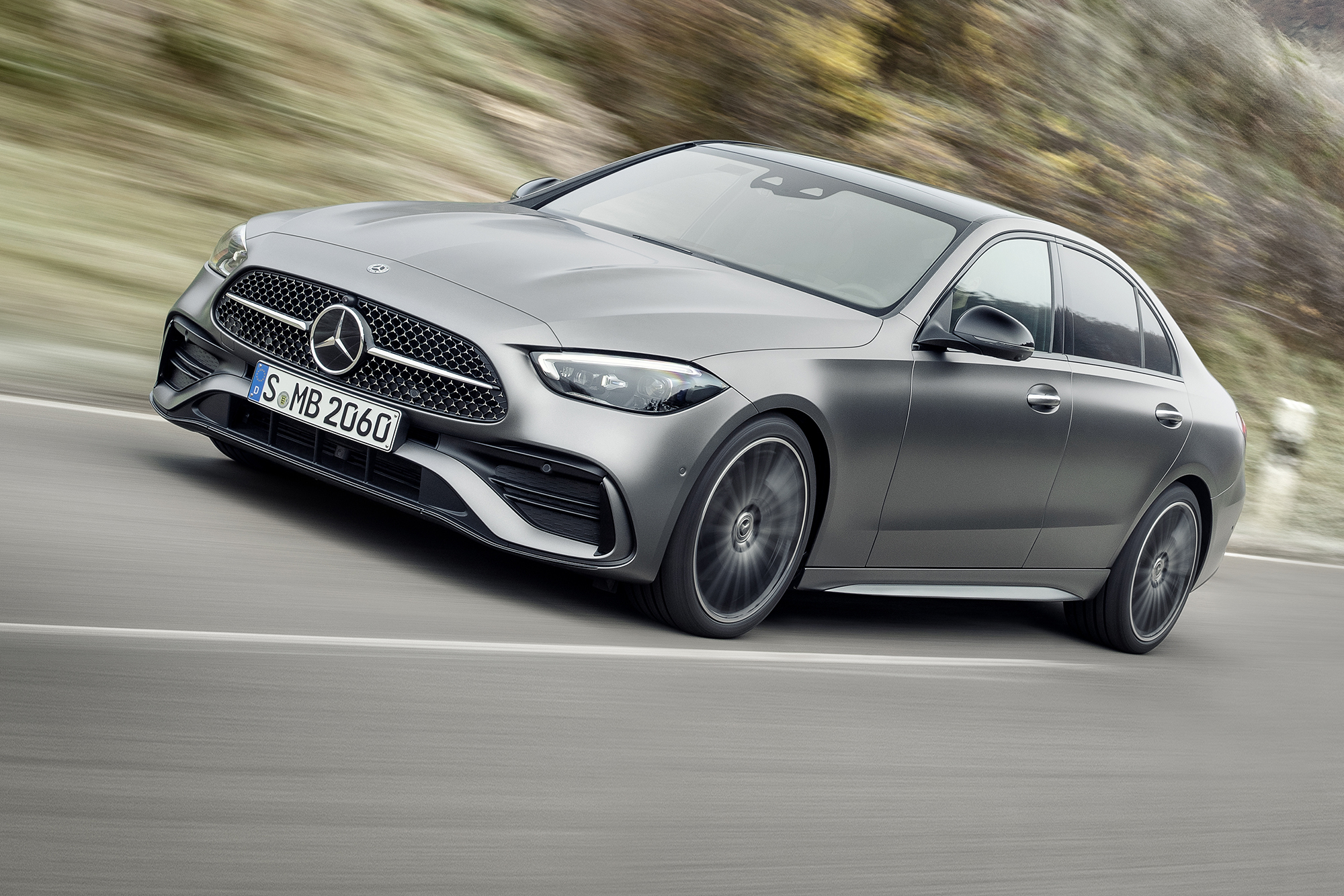
The W206 C-Class brings sporty aesthetics with a combination of short overhangs, long wheelbase and an elongated sculpted bonnet that was achieved by moving the windscreen and passenger cell rearward, otherwise known as “cab-backward design”.
It also shares design attributes with its bigger E- and S-Class stablemates including slim headlights, high waist line and two-piece triangular tail lights separated by the boot lip.
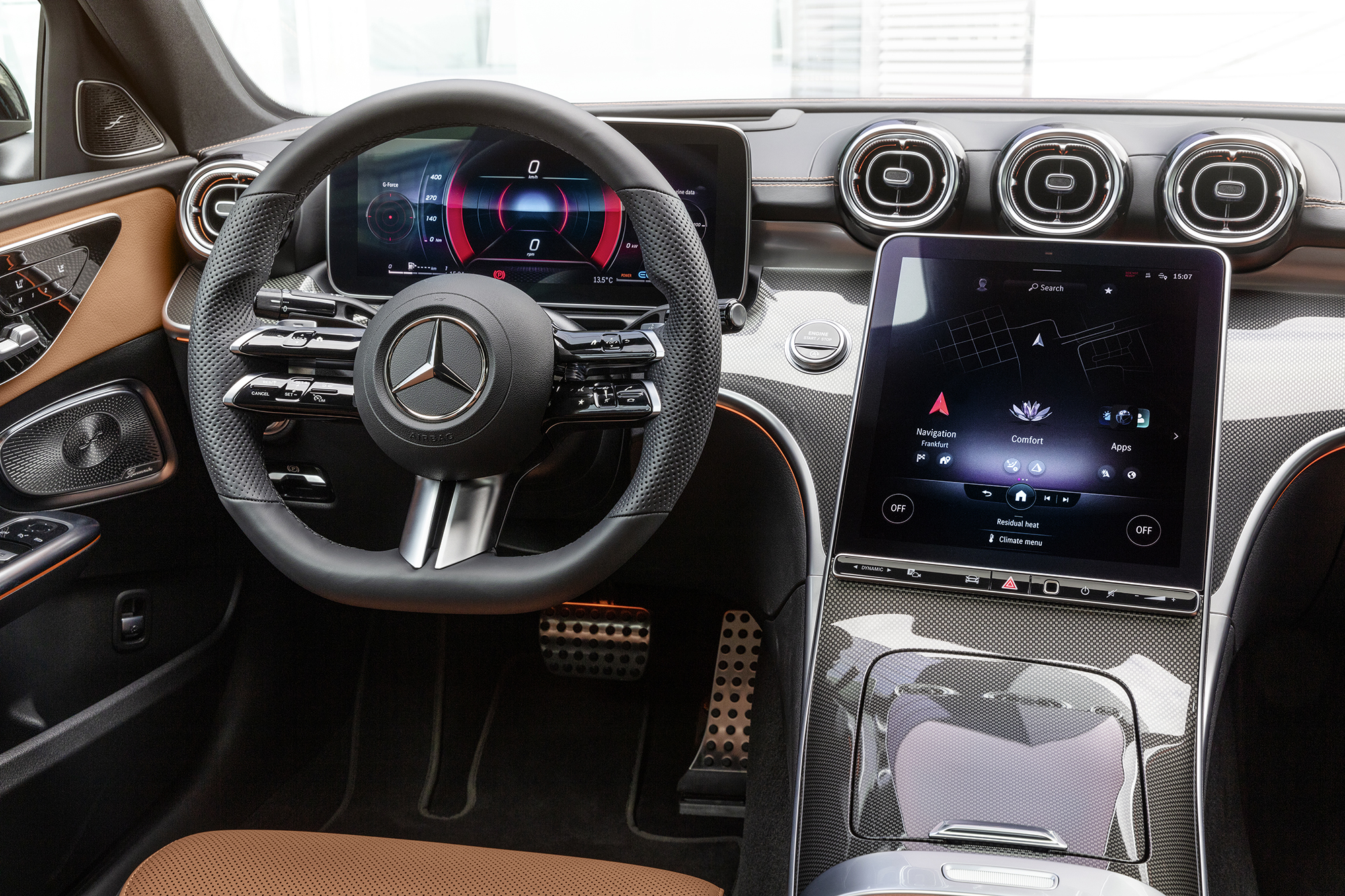
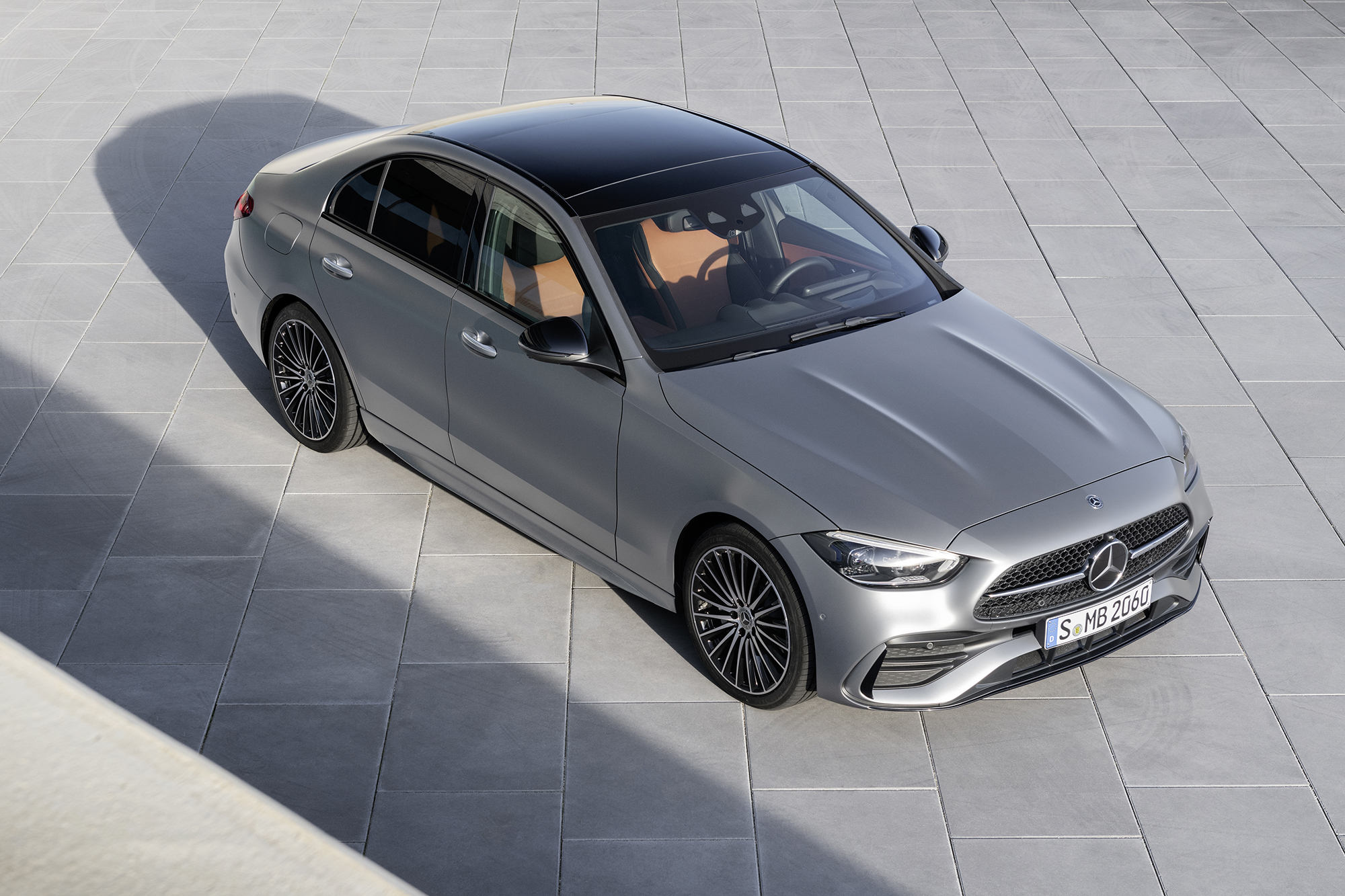
Mercedes-Benz’s mid-sized luxury passenger car dials the luxury up another notch with interior highlights shared with the S-Class flagship, including the ‘waterfall’-look dashboard that descends into the centre console.
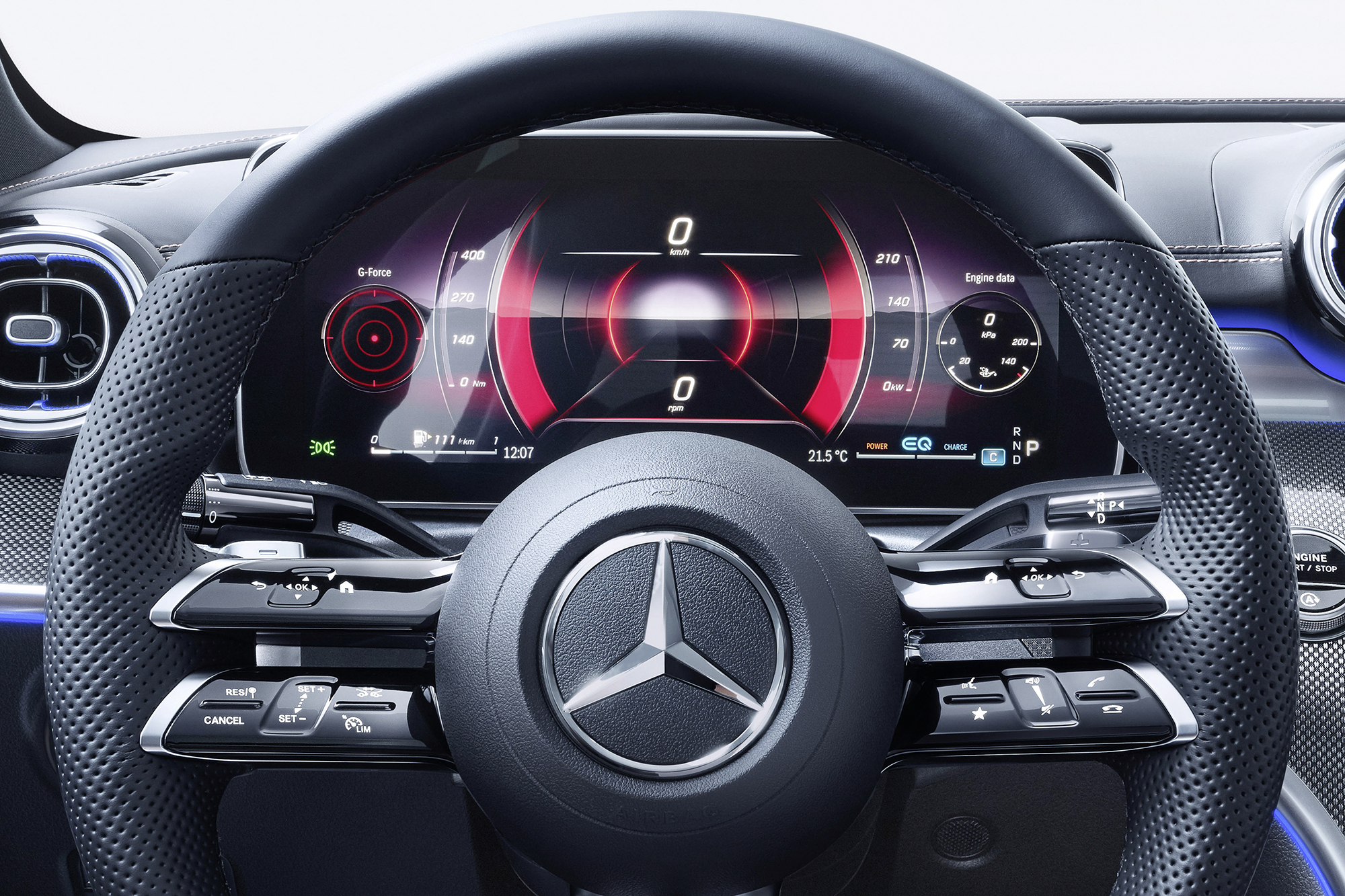
Like most Mercedes-Benz models, it’s the screens that impress when you first slide into the front seats. Driving information is viewed via free-standing hi-res LCD instrument cluster screen, which will be standard across the range, totally doing away with analogue dials.
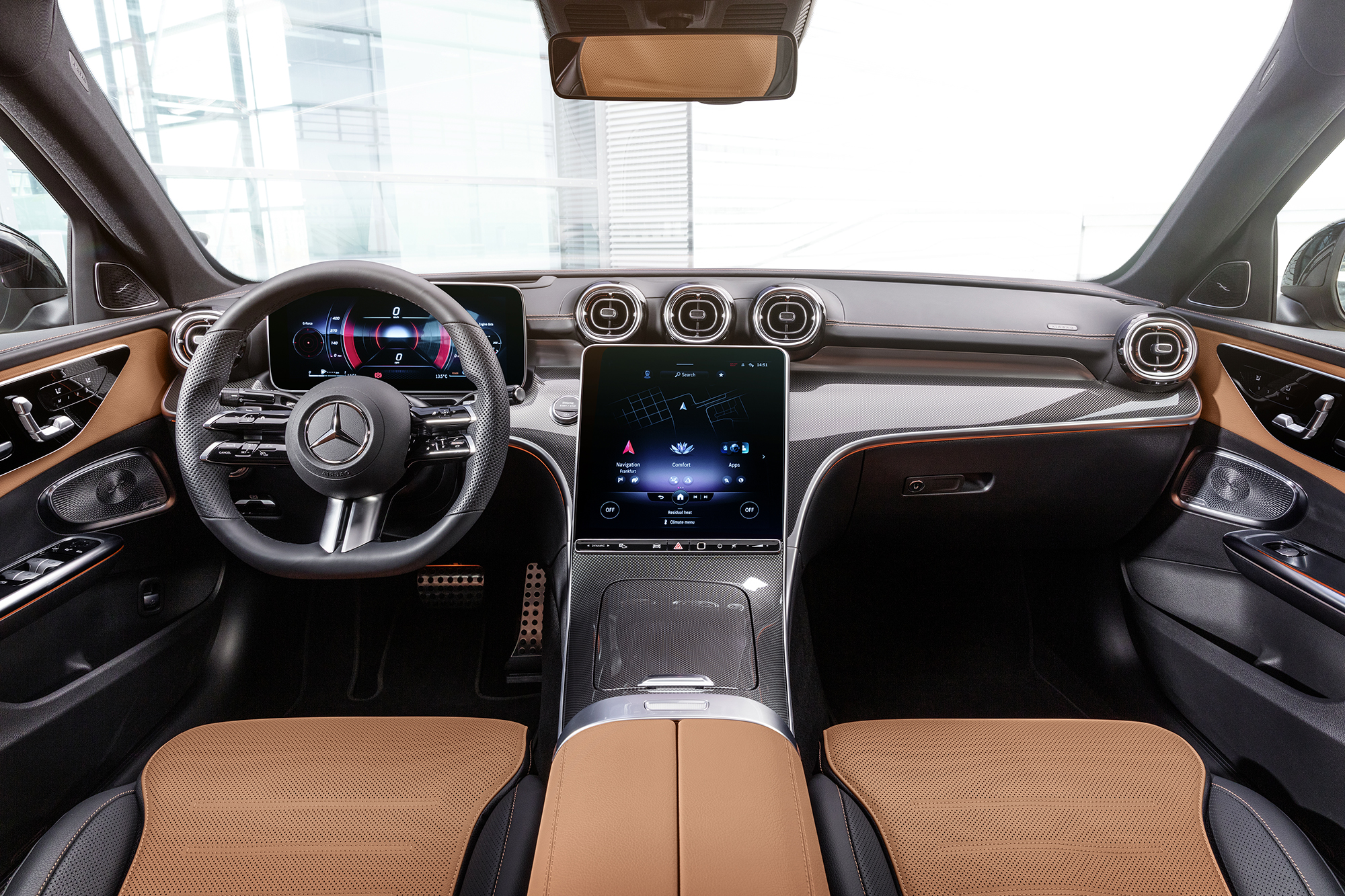
Where Mercedes-Benz previously pioneered a single piece of glass joining the digital gauge cluster and infotainment screen, the two are separated again, with the floating infotainment touchscreen dominating the centre of the dashboard in a Tesla-like portrait orientation. The screen is slightly tilted towards the driver and comes primarily as a 9.5-inch display, with a bigger 11.0-inch version also available.
The look of each screen can be individualised with three display styles (Discreet, Sporty, Classic) and three modes (Navigation, Assistance, Service).
In “Sporty”, for example, the colour red is predominant and the central rev counter has a dynamic design.
Another party trick is the Digital Light system, that also debuted on the S-Class, and is available on the new C-Class as an option.
This revolutionary 2.6 megapixel headlamp technology allows new functions, such as the ability to project guide lines or warning symbols onto the road ahead.
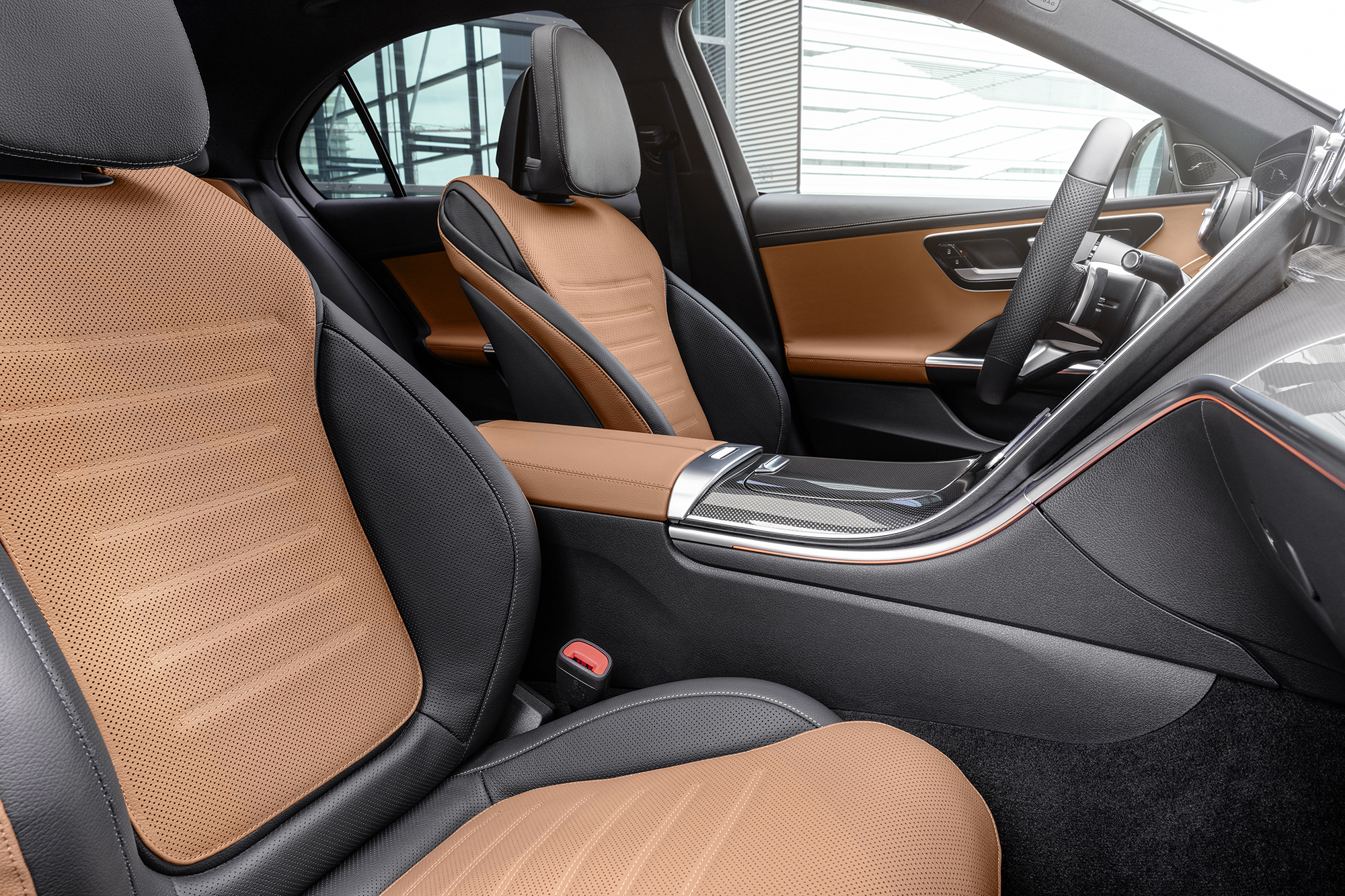
Back inside, redesigned seats feature all-new headrests that are attached to the backrest with a sealed piece of trim under which the adjustment mechanism is located.
Front and rear passengers benefit from a slight increase in exterior dimensions that sees elbow room stretched by 22 mm in the front and 15 mm in the rear over the previous model, with rear knee room and headroom also seeing a slight increase of 35mm and 13 mm (wagon, 11 mm) respectively.
The 2022 C-Class sedan and wagon are also bigger than their predecessors overall, with a length of 4751 mm and a width of 1820 mm, and the wheelbase increased by 25 mm to 2865 mm.
Boot space remains at 455 litres for the sedan, with the wagon gaining 30 litres to carry 490 litres overall, or up to 1510 litres with the rear seatbacks folded down.
New MBUX infotainment
The new C-Class also features second-generation MBUX infotainment with more advanced functions, sharper graphics and an improved user experience.
The “Hey Mercedes” voice assistant becomes more interactive and, if asked, can explain how different vehicle functions work and recognise different occupants’ voices.
As well as operating vehicle systems, MBUX can also operate smart home functions such as lights and electrical appliances, and can even tell you if there is an intruder at your house.
Other highlights include optional augmented video to make finding addresses or traffic signs easier, a colour head-up display, a fingerprint scanner to log into MBUX more securely.
Powertrains
The 2022 Mercedes-Benz C-Class has dropped six- and eight-cylinder engines in favour of four-cylinder petrol and diesel powertrains and a plug-in hybrid, all coupled with a nine-speed automatic transmission.
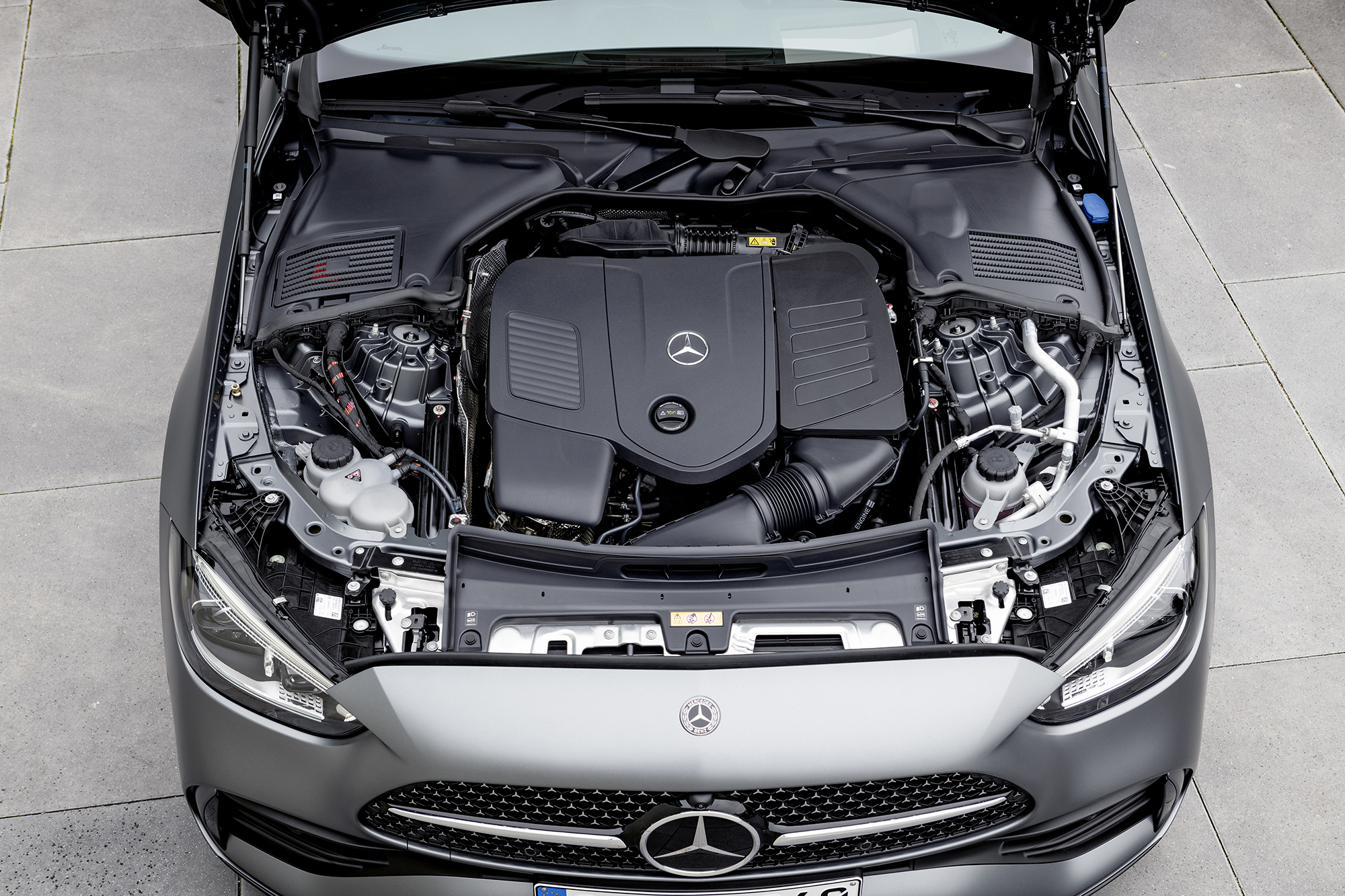
These include three M254 1.5-litre turbocharged petrol engines in various tunes ranging from the 125kW/250Nm C180, 150kW/300Nm C200 and C200 4MATIC (AWD) and 190kW/400Nm C300 4MATIC that’s capable of 6.0-second 0-100km/h acceleration.
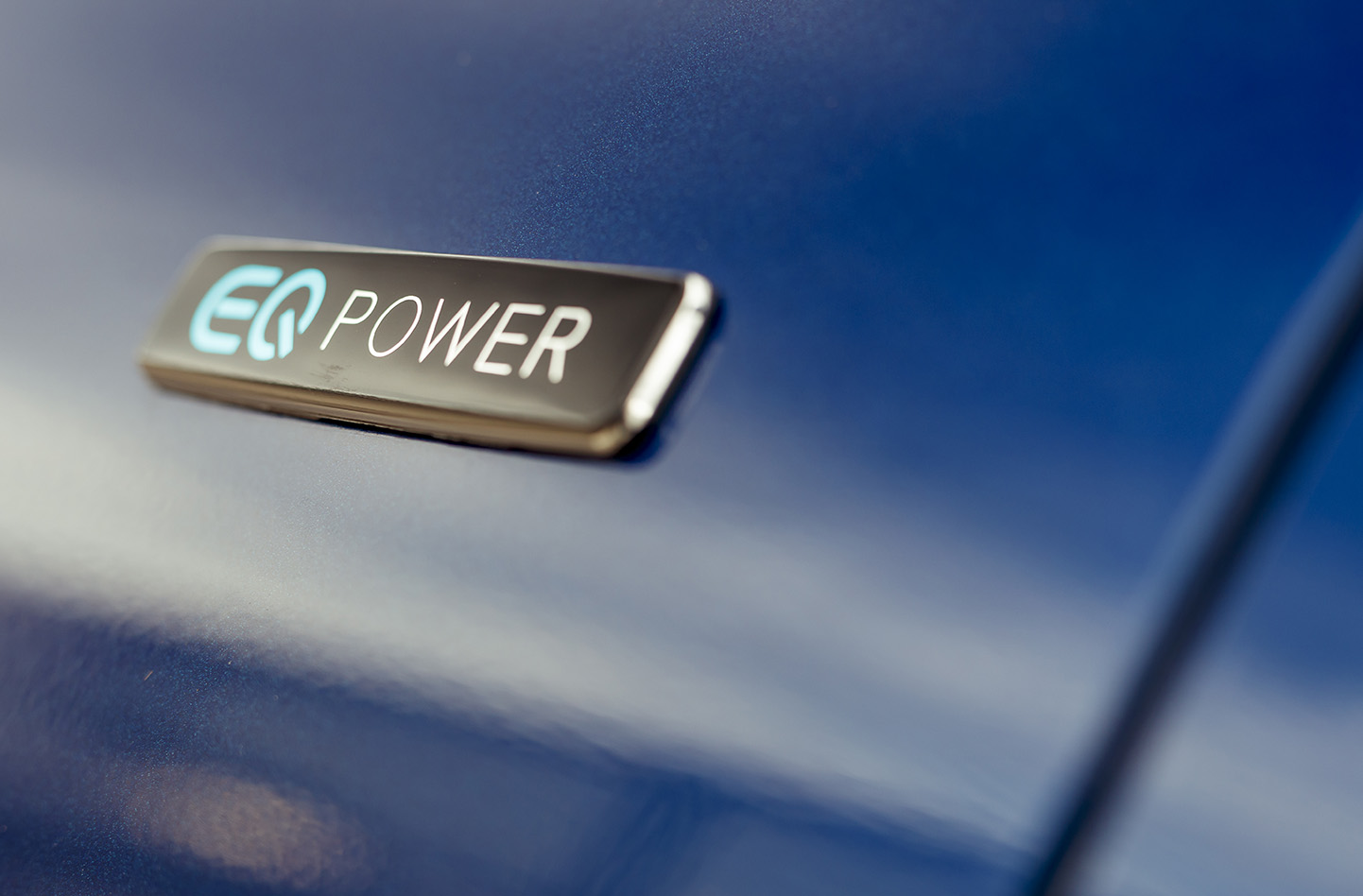
New to the C-Class, each engine features a second-generation EQ Boost integrated starter-generator that provides a quick 15 kW boost under heavy acceleration.
Diesel powertrains, which are unlikely to be sold in Australia, include the 147kW/440Nm C200d and 195kW/550Nm C330d, which are the first diesels to feature the integrated starter that provides the 15kW EQ Boost as well as mild-hybrid functions such as electric gliding and energy recovery.
Game-changing PHEV
An all-new fourth-generation plug-in hybrid (PHEV) powertrain will follow soon after launch and, according to Mercedes, will have a 100km all-electric range, one of the longest of any PHEV vehicle.
The PHEV powertrain will feature a 147kW/320Nm 2.0-litre version of the M254 petrol engine as well as an electric output of 95kW. Peak torque of 440Nm is on tap right from standstill, resulting quick acceleration and dynamic driving performance.
In full EV mode it can be driven up to 140 km/h, at which point it is softly capped.
The extra range and power comes from a 25.4kWh battery that’s about twice the capacity of most PHEV batteries, and is capable of being charged from a 55kW DC rapid charger. Charging time from empty is said to take just 30 minutes.
A new diesel PHEV powertrain is set to arrive at a later date.
Mercedes says ride comfort has been refined with a new four-link axle at the front and a multi-link rear axle at the rear mounted to a subframe. Air suspension is standard on PHEV variants.
And you can make the C-Class more agile with optional rear-axle steering that reduces the turning circle by 43 centimetres to 10.64 metres.
When does it arrive?
The all-new 2022 Mercedes-Benz C-Class will be first go on sale in Europe from mid-2021, with Australian customers having to wait longer.
Expect it to arrive in Australia during Q4 of 2021, with a petrol and PHEV line-up similar to the current model.
The Nissan X-Trail medium SUV has been updated for the 2021 model year, a refresh that will see it through until the all-new model arrives in 2022.
The update sees the X-Trail become the latest Nissan model to score Apple CarPlay and Android Auto, which is standard across the range and viewed through a 7.0-inch touchscreen with updated graphics. Voice recognition is also included.
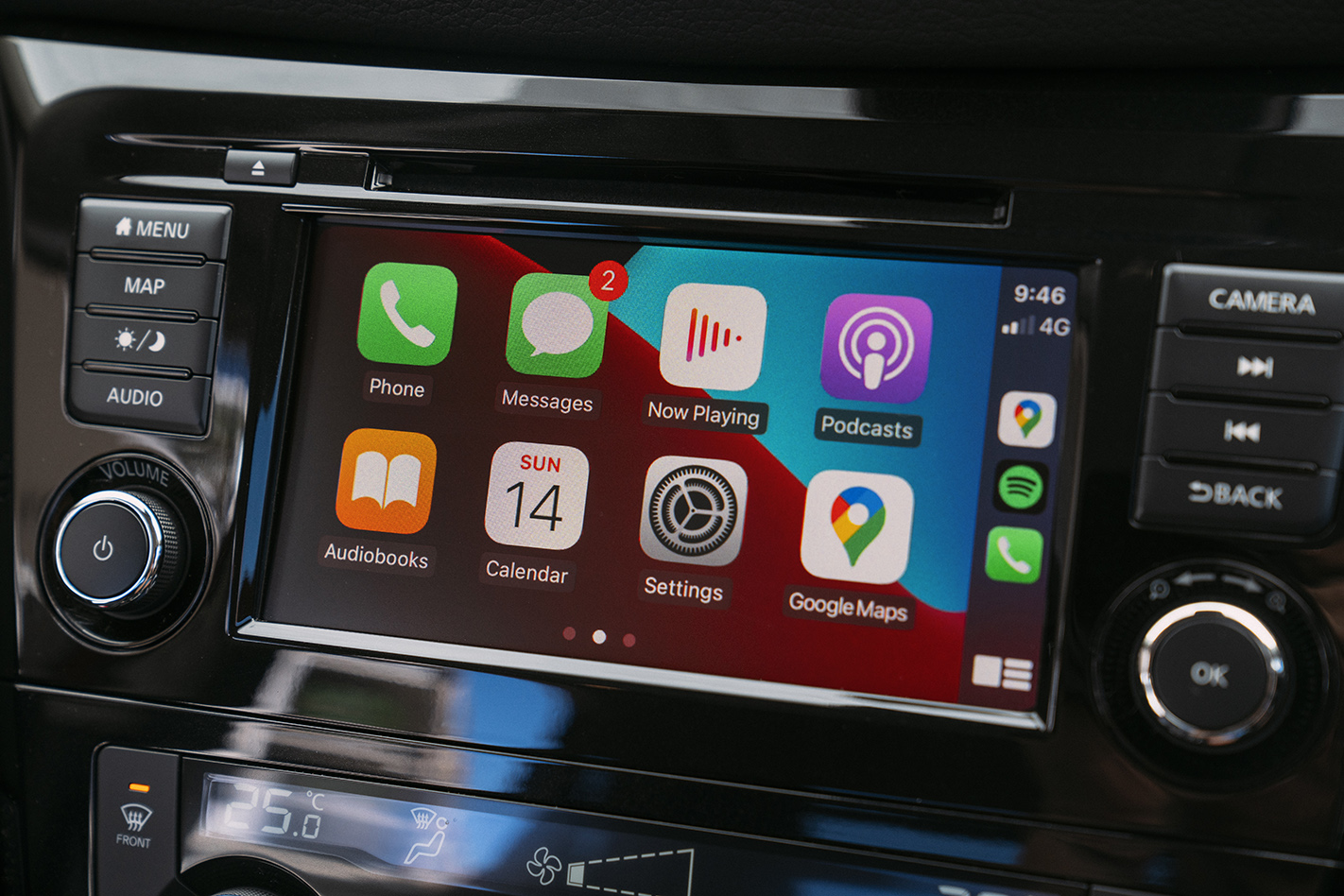
The X-Trail ST and TS grades also gain digital radio, which was already available in the upper-spec ST-L and Ti.
Meanwhile, the ST-L sees its alloy-wheel size grow from 17- to 18-inches, while it and the range-topping Ti gains an intelligent driver alert system that, at speeds above 60km/h, uses steering sensors to detect erratic driving and audibly warns the driver and advises they take a break.
Prices have gone up between $475 and $675 across the range, according to information sent to dealers that has been leaked on the internet.
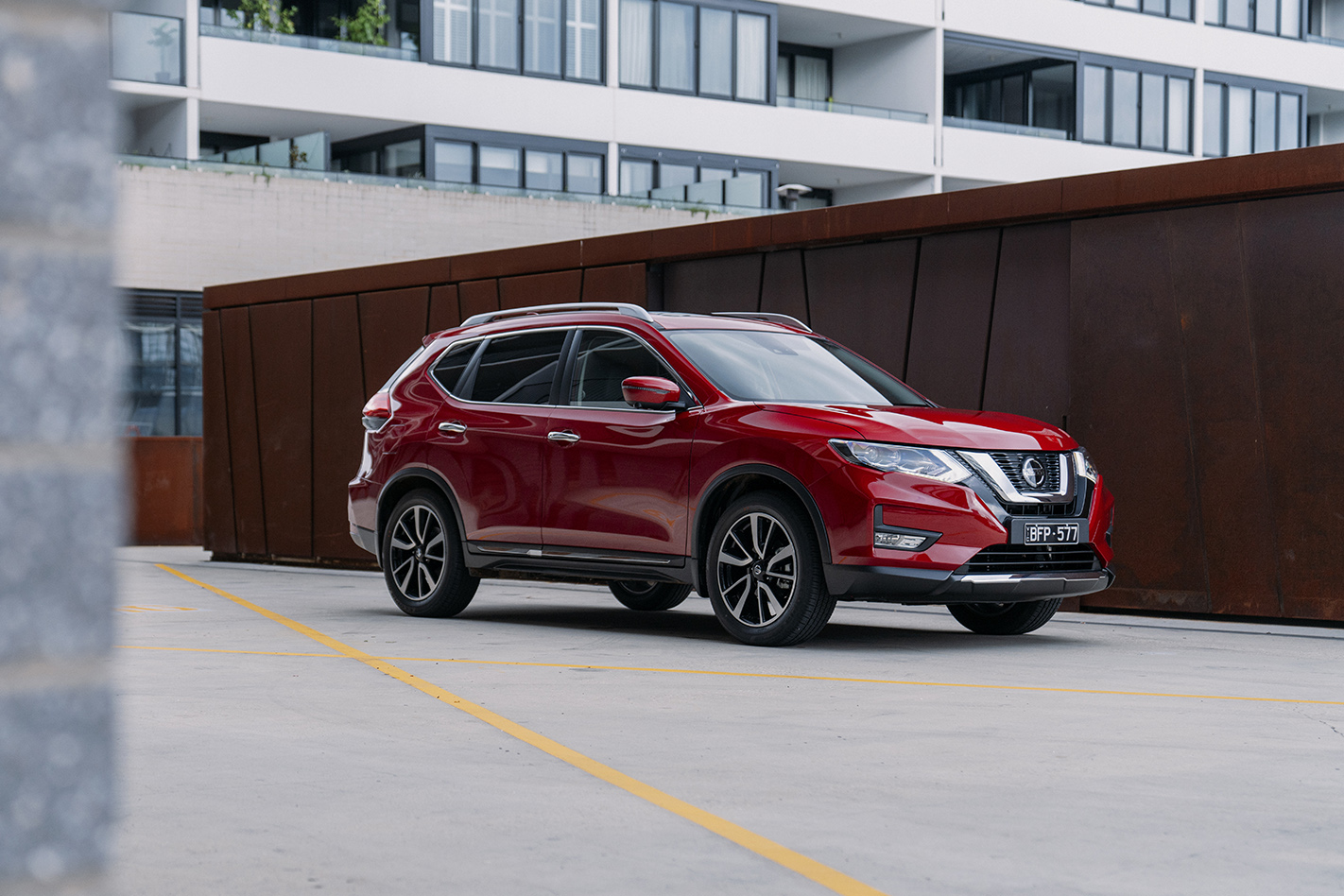
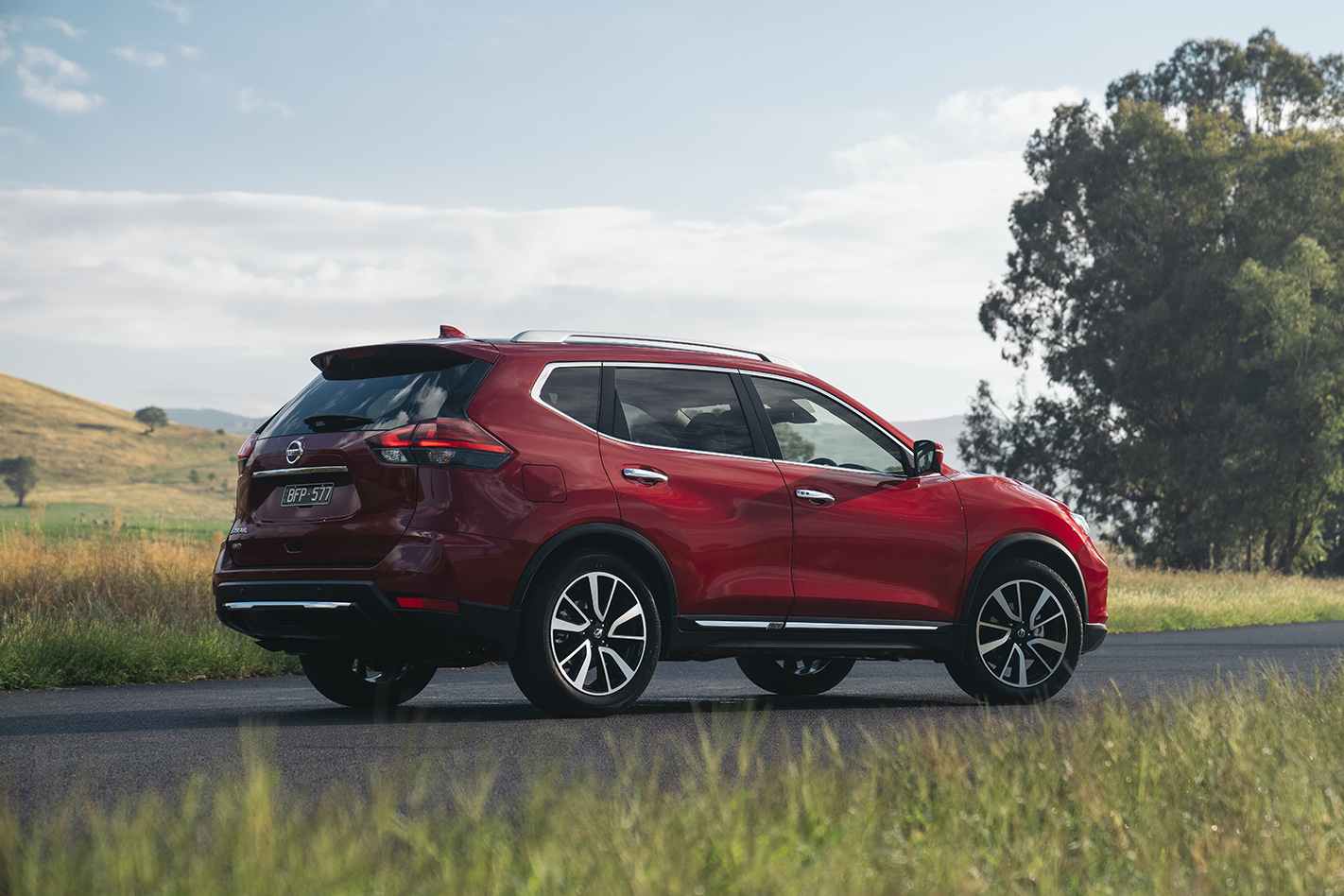
Apart from new alloy wheel designs, there are no aesthetic changes compared to the 2020 X-Trail.
It also retains the same powertrain line-up, which includes 2.0-litre or 2.5-litre petrol engines with a choice of 2WD or AWD. The 2.0-litre turbo diesel AWD also remains but only in the mid-spec TS variant, with the range-topping TL deleted from the range.
All variants but the entry-level ST 2.0-litre petrol manual come with a continuously variable transmission.
The range still includes two seven-seat versions that come with either ST or ST-L spec grades.
This will be the final instalment of the third-generation T32 X-Trail, which first went on sale in Australia in April 2014 and received a significant upgrade in May 2017.
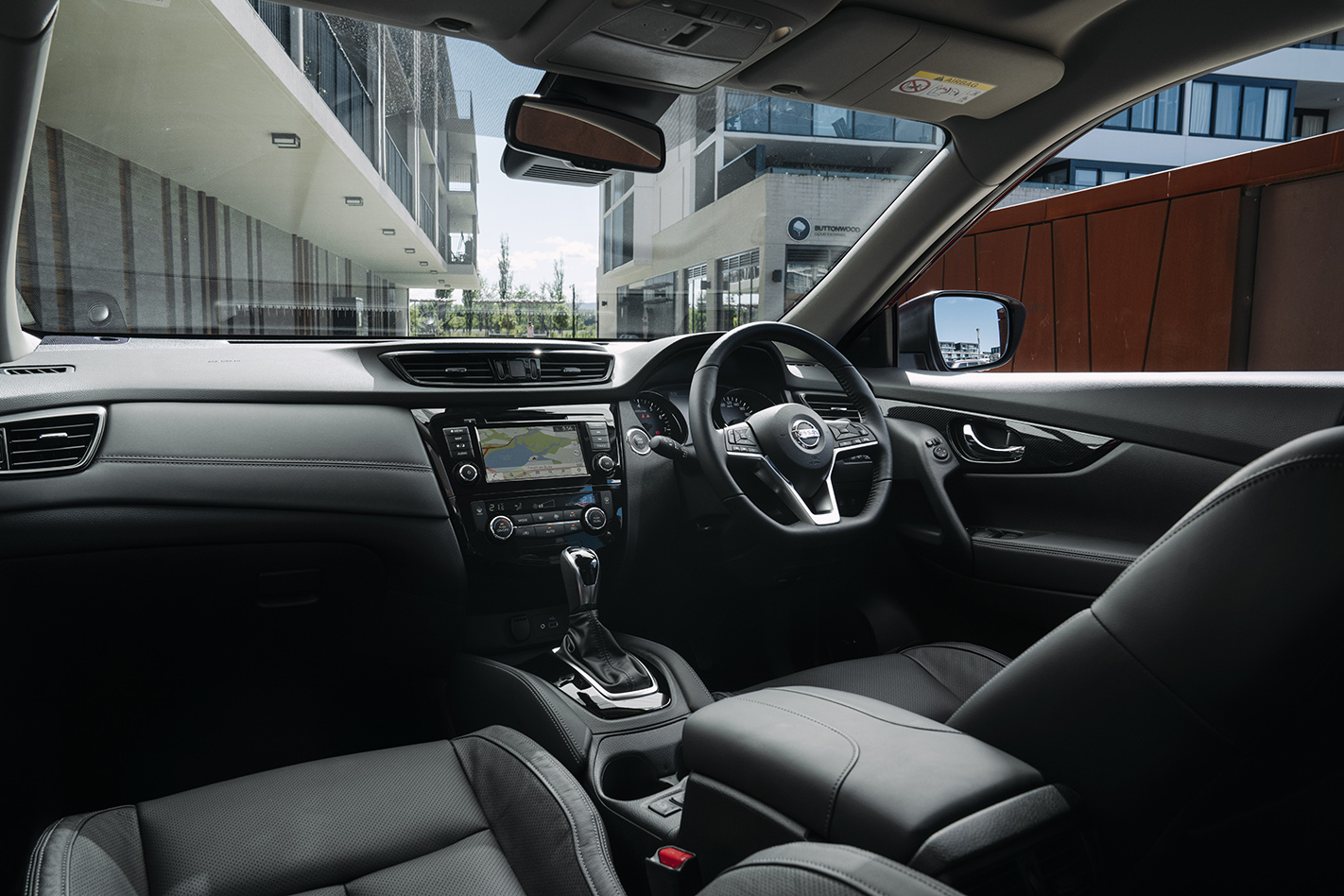
It will be replaced by the fourth-generation Nissan X-Trail in 2022, which will usher in new looks inside and out, new tech, a bunch of added safety gear and a more powerful 2.5-litre four-cylinder engine set to produce 135kW/245Nm.
The interior will be one of the most impressive aspects of the new car, showing off a completely redesigned cabin that features a new dash design, centre console, a new 9.0-inch infotainment screen, with higher-spec models gaining a 12.3-inch digital instrument cluster and a head-up display.
MY21 Nissan X-Trail pricing
X-Trail variant | 2021 | 2020 |
ST 2.5L manual 2WD | $30,665 | $30,040 |
ST 2.5L 2WD | $32,665 | $32,040 |
ST 7-seat 2.5L 2WD | $34,265 | $33,640 |
ST 2.5L AWD u00a0 | $34,665 | $34,040 |
TS 2.5L diesel AWD | $37,465 | $36,840 |
ST-L 2.5L 2WD | $38,525 | $37,850 |
ST 7-seat 2.5L 2WD | $40,125 | $39,450 |
ST-L 2.5L AWD u00a0 | $40,525u00a0 | $39,850u00a0 |
TI 2.5L AWD u00a0 | $45,965 | $45,490u00a0 |
All listed prices exclude on-road costs.
Cupra is marking its third anniversary as a standalone brand from Seat, with a fiery five-cylinder Formentor VZ5 high-performance version. It’s the 2.5-litre TSI engine familiar from the hottest Audi RS3 and TT, promising a punchy 287kW and 480Nm in this application.
The Spanish car maker – a Volkswagen sub-brand that doesn’t sell cars in Australia – lauds performance as a cornerstone of its brand values, and the Formentor VZ5 doesn’t disappoint.
UPDATE, June 2021: Good news everyone, Cupra is coming to Australia. Learn more on our Cupra brand page.
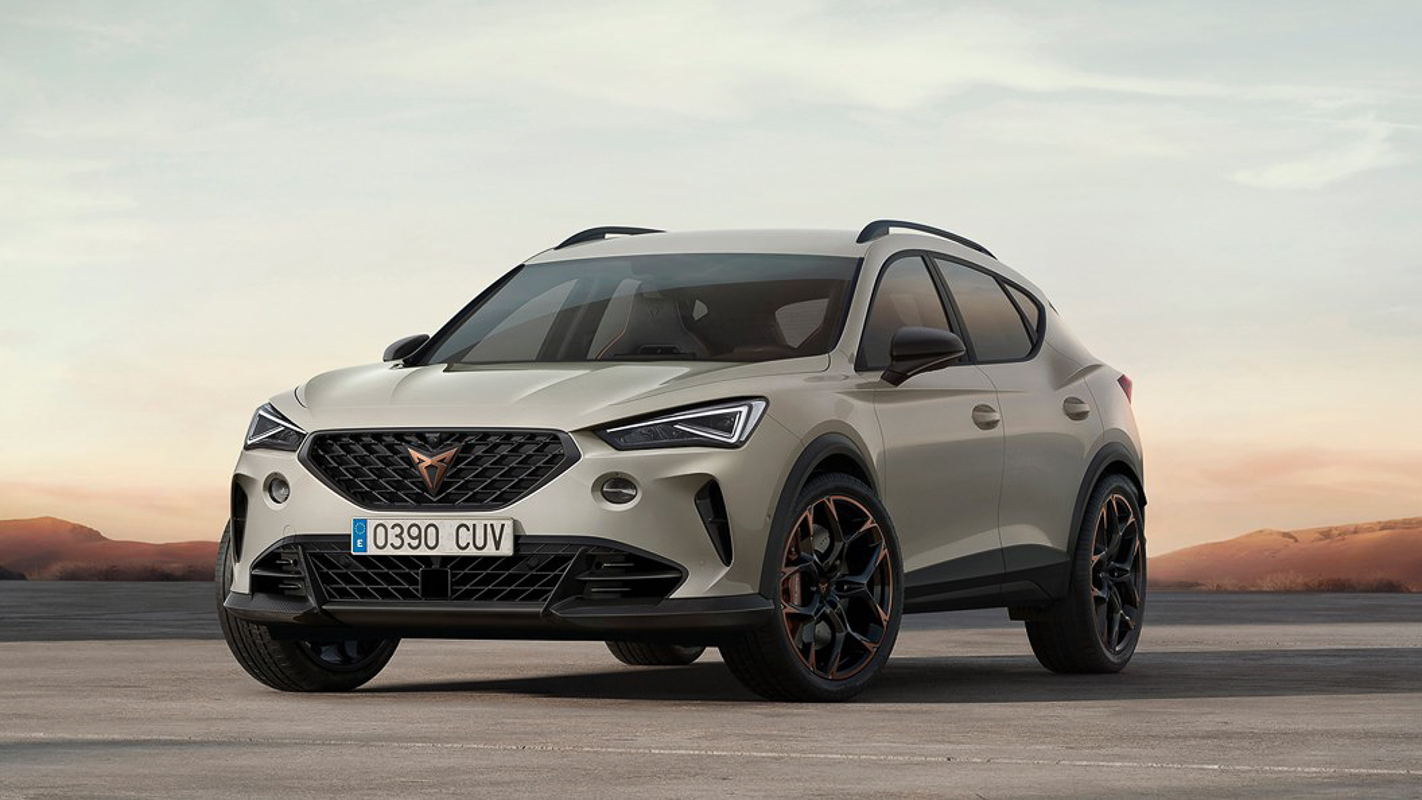
It dispatches the 0-100km/h sprint in a remarkable 4.2 seconds, while top speed is pegged at 250km/h. Tellingly, the news focus at the anniversary debut was all about those performance credentials – emissions and economy weren’t mentioned once.
Befitting a halo car sitting at the top of the range, the VZ5 gets a full athletic makeover: quad exhaust pipes hint at the fireworks beneath, extended wheel arches wrap around engorged 20-inch alloy wheels, and more serious Akebono six-piston brakes keep all that speed in check.
The Formentor’s chassis is tuned to handle the extra grunt, dropping 10mm for a sportier stance while the standard 4Drive all-wheel drive is designed to prevent wheelspin and keep you pointing in the right direction.
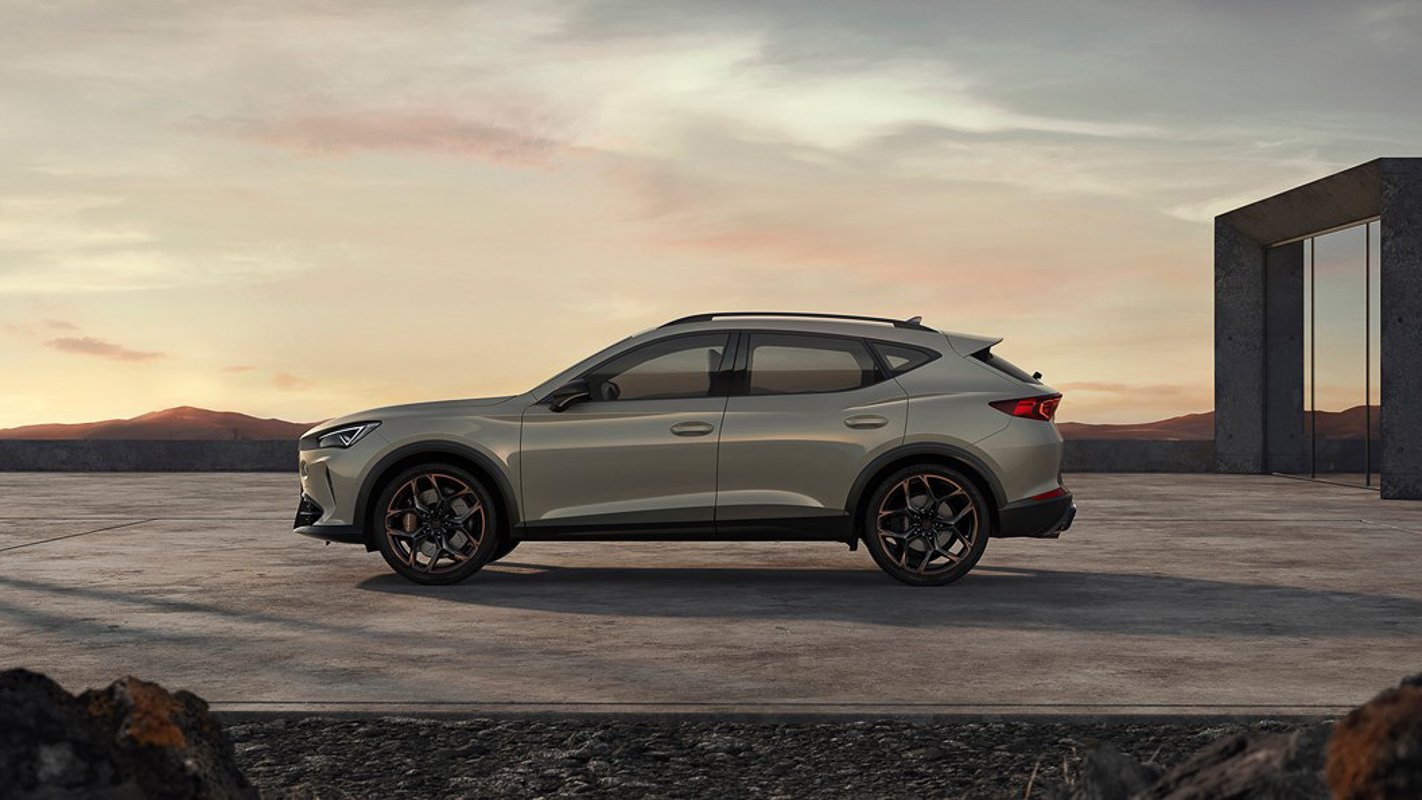
This is the most brutal Cupra yet, and they haven’t held back with the sporty accoutrements.
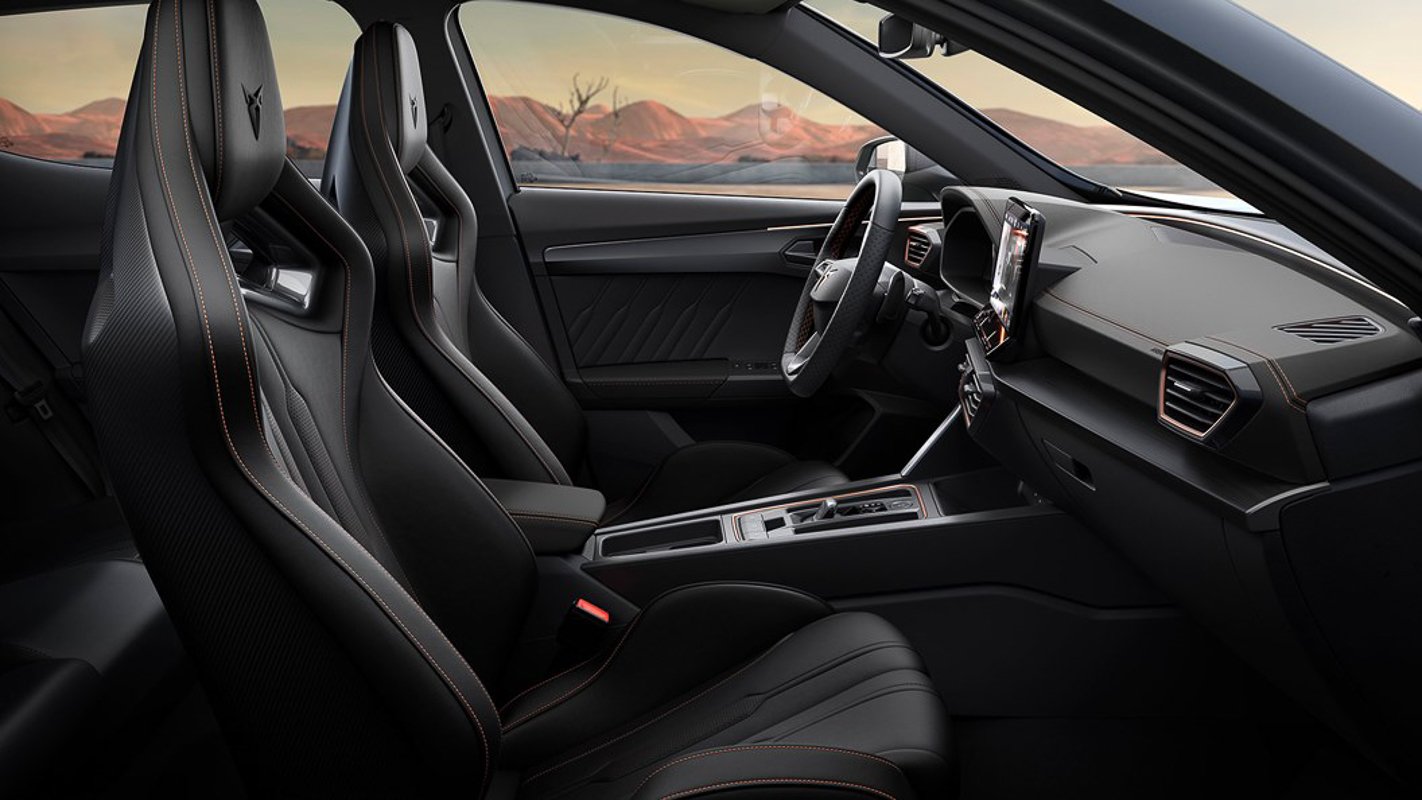
Unique bonnet and real carbon fibre splitter at the front? Yep. Flared wheel arches, rear faux diffuser and copper-tipped exhaust pipes? Check. Aggressive bucket-style seats and lashings of bronze detailing complete the interior fizz.
It’s all remarkably focused and old-school hot hatch, which might explain why Cupra will limit production to just 7000 units. The VZ5 will go on sale in autumn 2021 – and they’ll all be left-hand drive.
The VZ5 sits atop a growing brood of Formentor models.
Remind me… What is the Cupra Formentor exactly?
It’s the first standalone model launched under the breakaway Cupra nameplate.
While the rest of the family comprises spicier Seat Atecas and Leons, you won’t find an equivalent Seat version of the Formentor. It’s a rakish crossover that passes for more of a hatchback-on-stilts than the traditional SUV vibe of the Ateca.
The concept car was first shown at the 2019 Geneva motor show, and little-changed production versions went on sale in late 2020.
The name Formentor comes from a rugged cape on the northern tip of Mallorca, and definitely isn’t a ghoulish soul-sucker from Harry Potter (although the Cupra badging does lend a certain cartoon superhero flavour).
It’s a good-looking car, with dramatic rear haunches lending an athletic air to this crossover, and it’s not short on the Cupra brand’s nascent styling language: sharp angular headlights, a single light bar at the rear and copper-tipped accents galore, as per Cupra tradition.
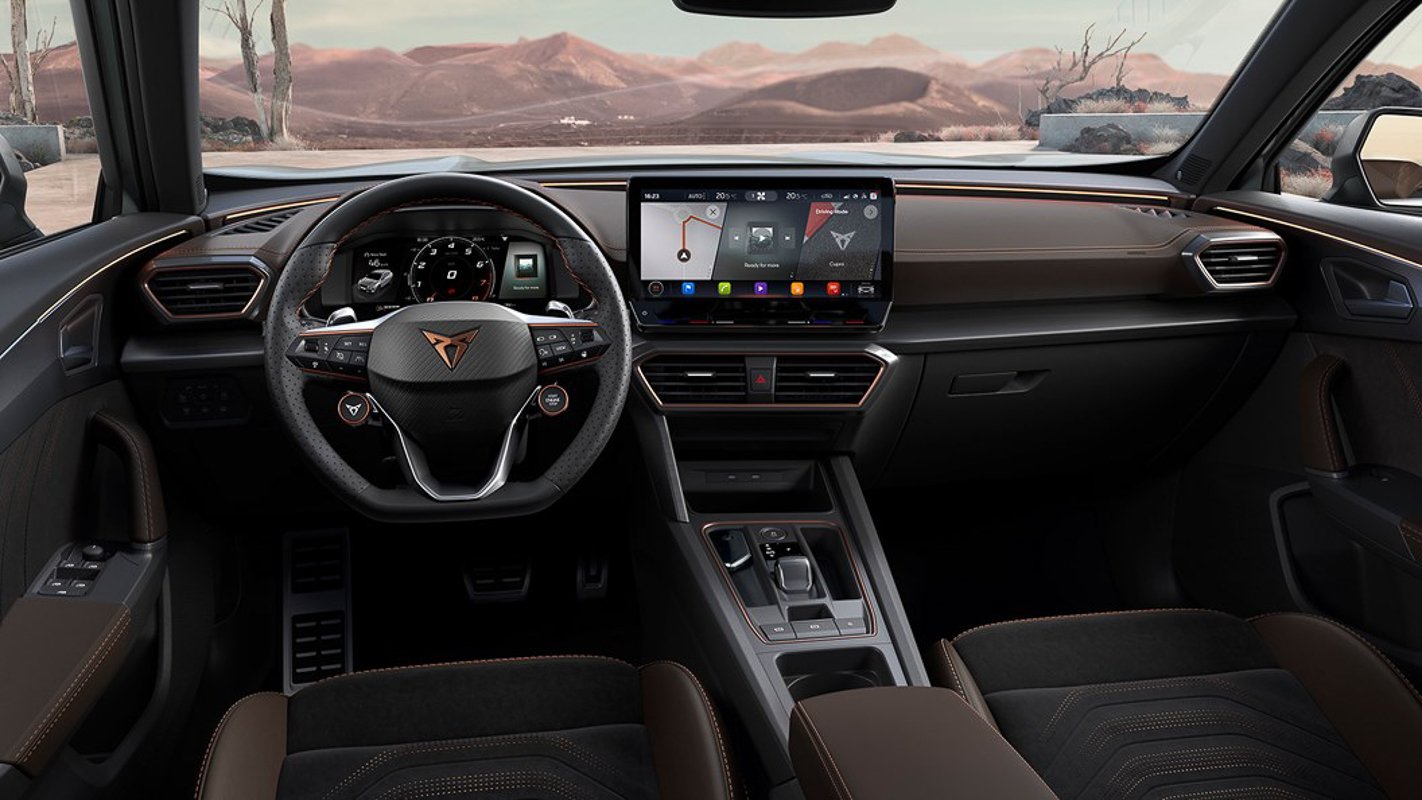
Inside is, again, a lot like the new Cupra Leon, with which it shares the family Golf-alike MQB platform. This brings a big 12.0-inch central touchscreen, digital dials and all the latest connectivity features, including Apple CarPlay, Android Auto, online services and a big suite of safety kit.
A version of this story was originally published at carmagazine.co.uk
Lexus has reintroduced its special Crafted Edition variants across its luxury SUV range, which bring bespoke trim features and an enhanced ownership experience.
Available with UX, NX and RX small, medium and large SUVs, each version features enhanced exterior aesthetics, unique wheel designs and moonroof, with the UX 200 version adding some interior bling.
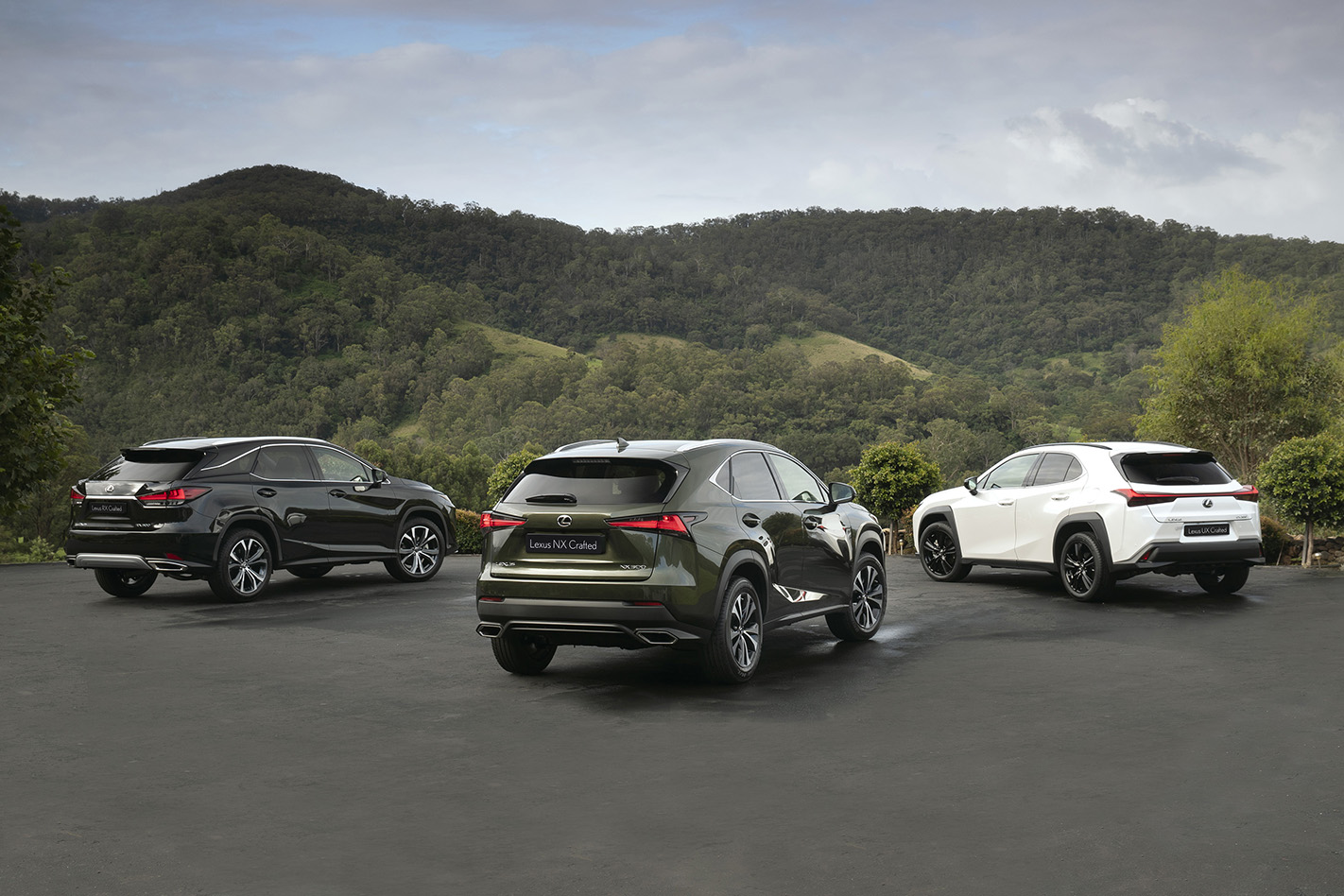
As a bonus, owners are offered a complimentary three-year membership to Lexus’ Encore Platinum owner benefits program that offers the ability to swap into another Lexus to suit lifestyle or travel needs and offers eight valet parking vouchers at participating shopping centres.
That’s on top of standard Lexus Encore membership perks such as capped price servicing, roadside assistance, service loan-cars, hotel partnerships and Caltex fuel discounts.
UX Crafted Edition
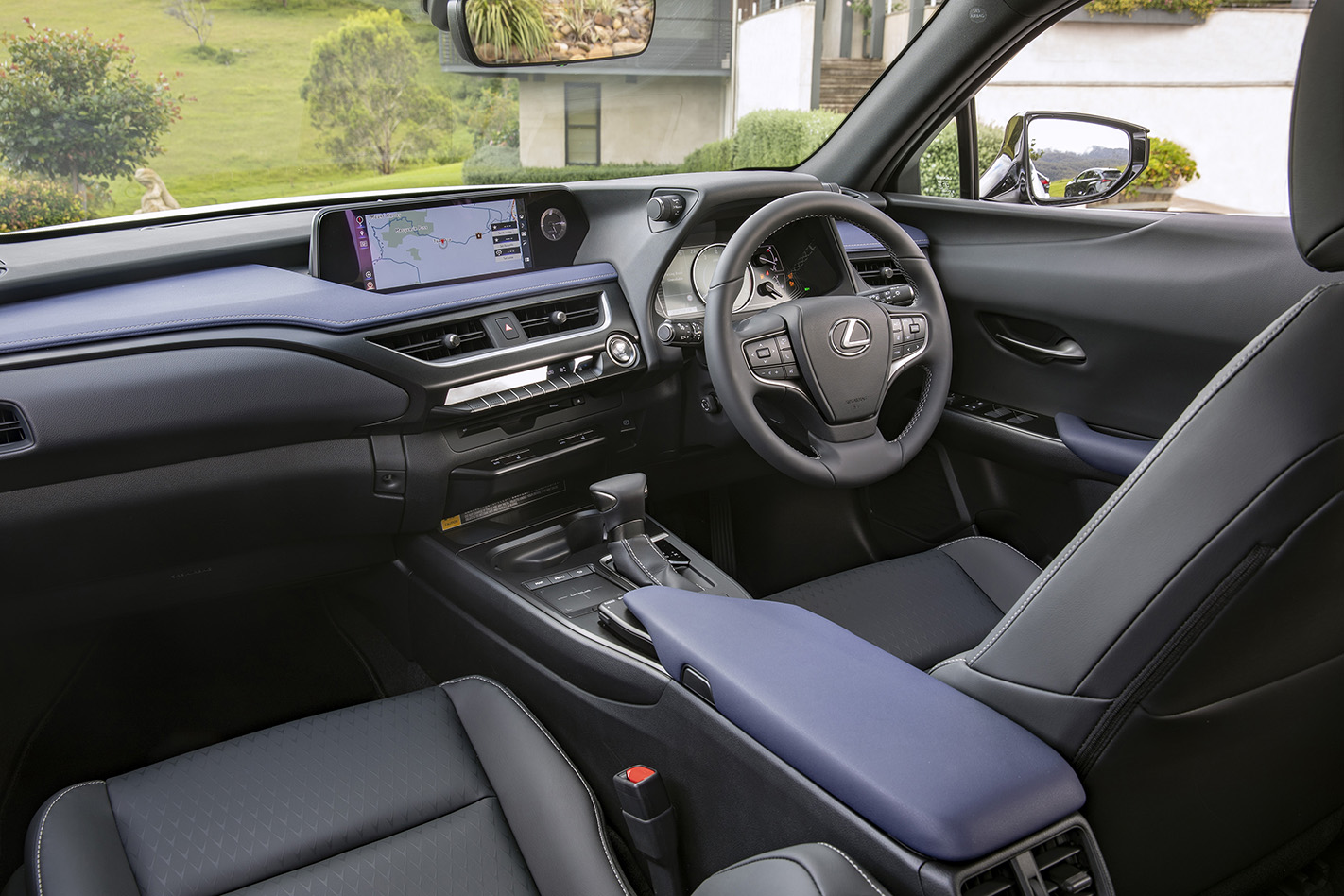
Priced at $55,075, the UX 200 Crafted Edition costs about $9000 more than the entry-level UX200 Luxury small SUV with Enhancement Pack 2 on which its based. The extra coin brings sharp dark chrome accents on the grille moulding, black-accented grille, headlight surrounds, side marker lamps, roof rails and mirror caps – all complemented by black 18-inch alloy wheels.
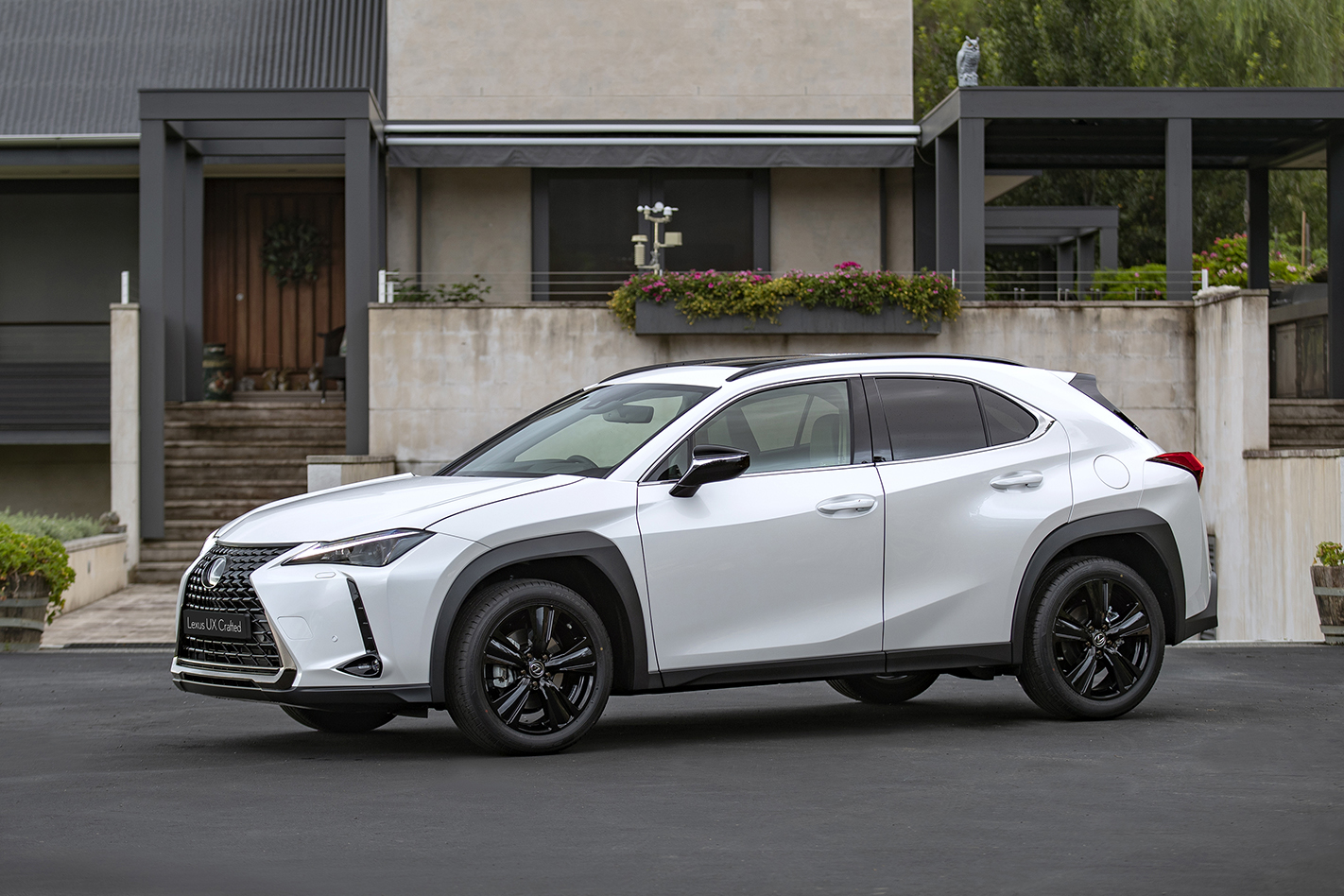
It also gains a moonroof and door puddle lamps, while inside there’s an exclusive black and blue interior colour scheme with unique light grey stitching tailored to this special edition.
Additional tech includes smart key-card entry and a head-up display. Metallic paint is also included.
NX Crafted Editions
Priced from $61,500, the NX Crafted Editions are available with 2WD and AWD versions of the NX300 Luxury and hybrid NX300h Luxury medium SUVs. It is distinguished by its black grille, grille moulding and mirror caps, plus unique-design 18-inch alloy wheels.
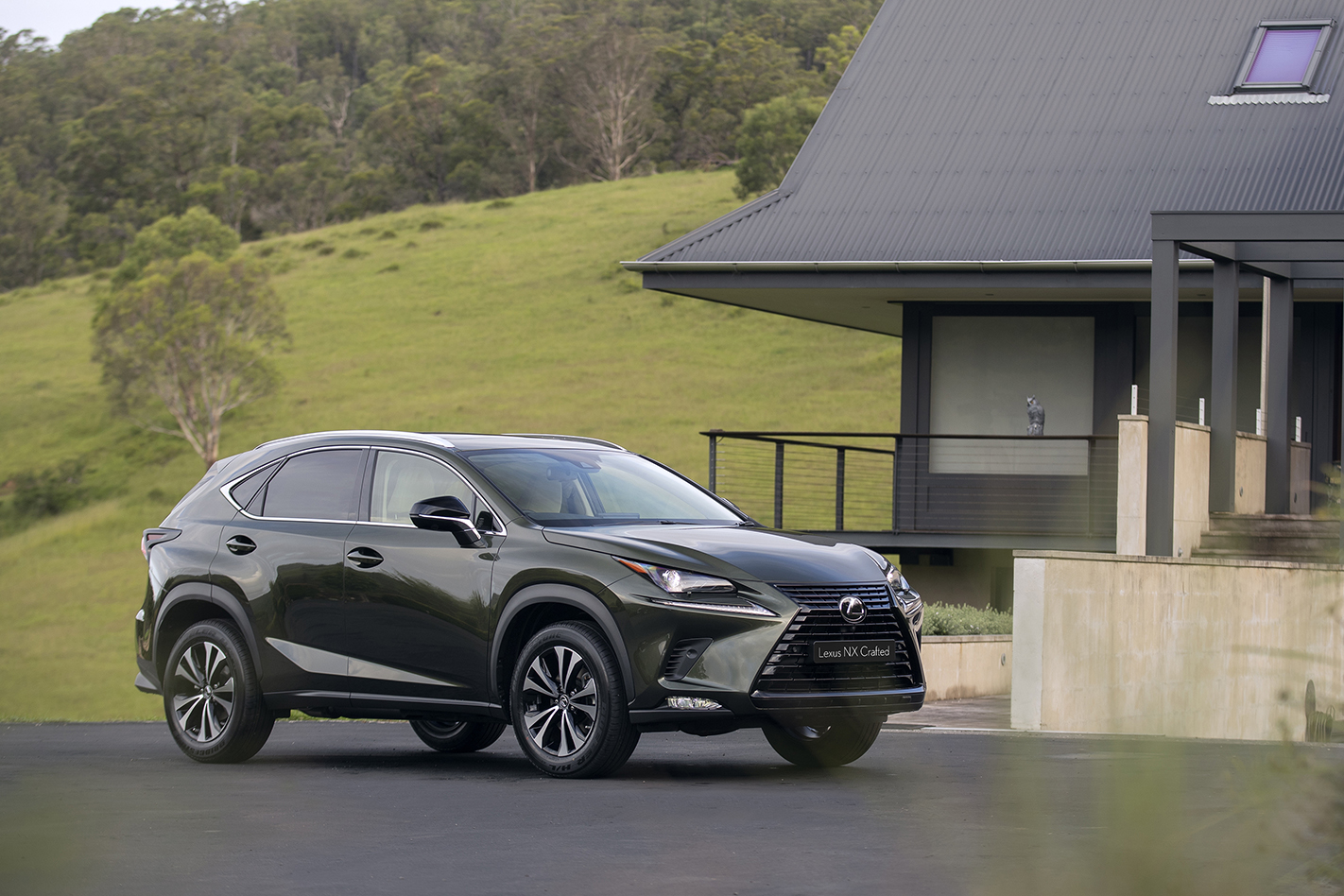
Additional extras include illuminated scuff plates, moonroof, smart key-card entry and panoramic-view monitor.
The Crafted Edition extras attract a $4000 premium over the standard NX300 and NX300h Luxury variants.
RX Crafted Editions
Like the UX and NX models, the larger five-seat RX Crafted Edition variants feature similar bespoke black exterior accents for the grille, grille moulding and mirror caps. The RX300 Crafted Edition gains the same stylish 20-inch alloy wheels that are fitted standard to the RX350.
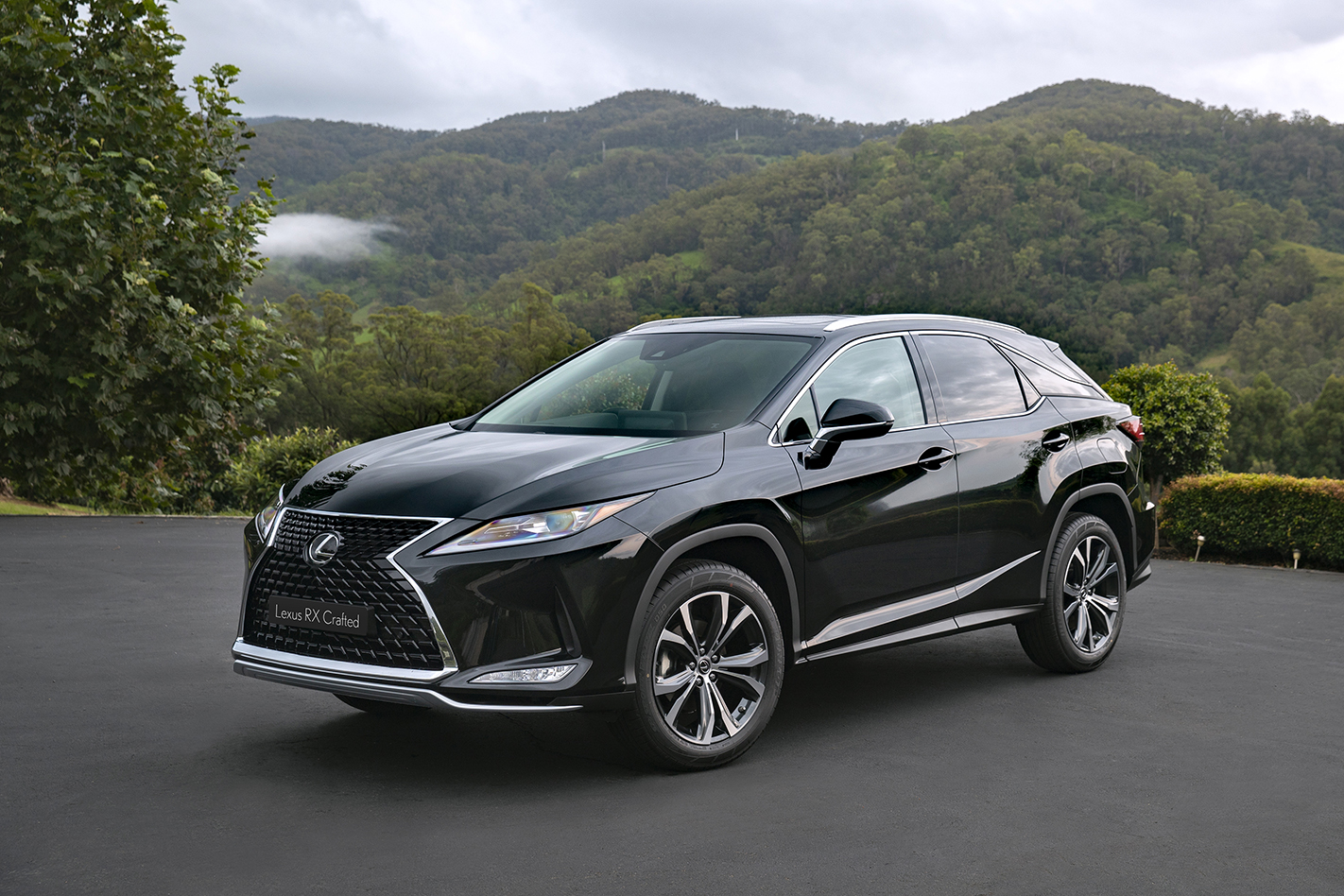
Priced from $76,886, two RX Crafted Editions are available based on the 2.0-litre turbocharged four-cylinder RX300 and V6 RX350 Luxury versions. Both also gain a moonroof and courtesy lamps.
The additional features attract a premium of $3800 and $3000 over the RX300 Luxury and RX350 Luxury, respectively.
Crafted Edition pricing
- UX 200 Crafted Edition – $55,075
- NX 300 2WD Crafted Edition – $61,500
- NX 300 AWD Crafted Edition – $66,000
- NX 300h 2WD Crafted Edition – $64,500
- NX 300h AWD Crafted Edition – $69,000
- RX 300 Crafted Edition – $76,886
- RX 350 Crafted Edition – $86,136
The good news today is that a new V8-powered Lexus IS500 F Sport Performance variant has been revealed. The bad news? This sorta-kinda IS F successor has been developed exclusively for the United States.
Revealed overnight, the Lexus IS500 F Sport Performance “ushers in a new era of F Sport Performance models that will appeal to passionate driving enthusiasts”.
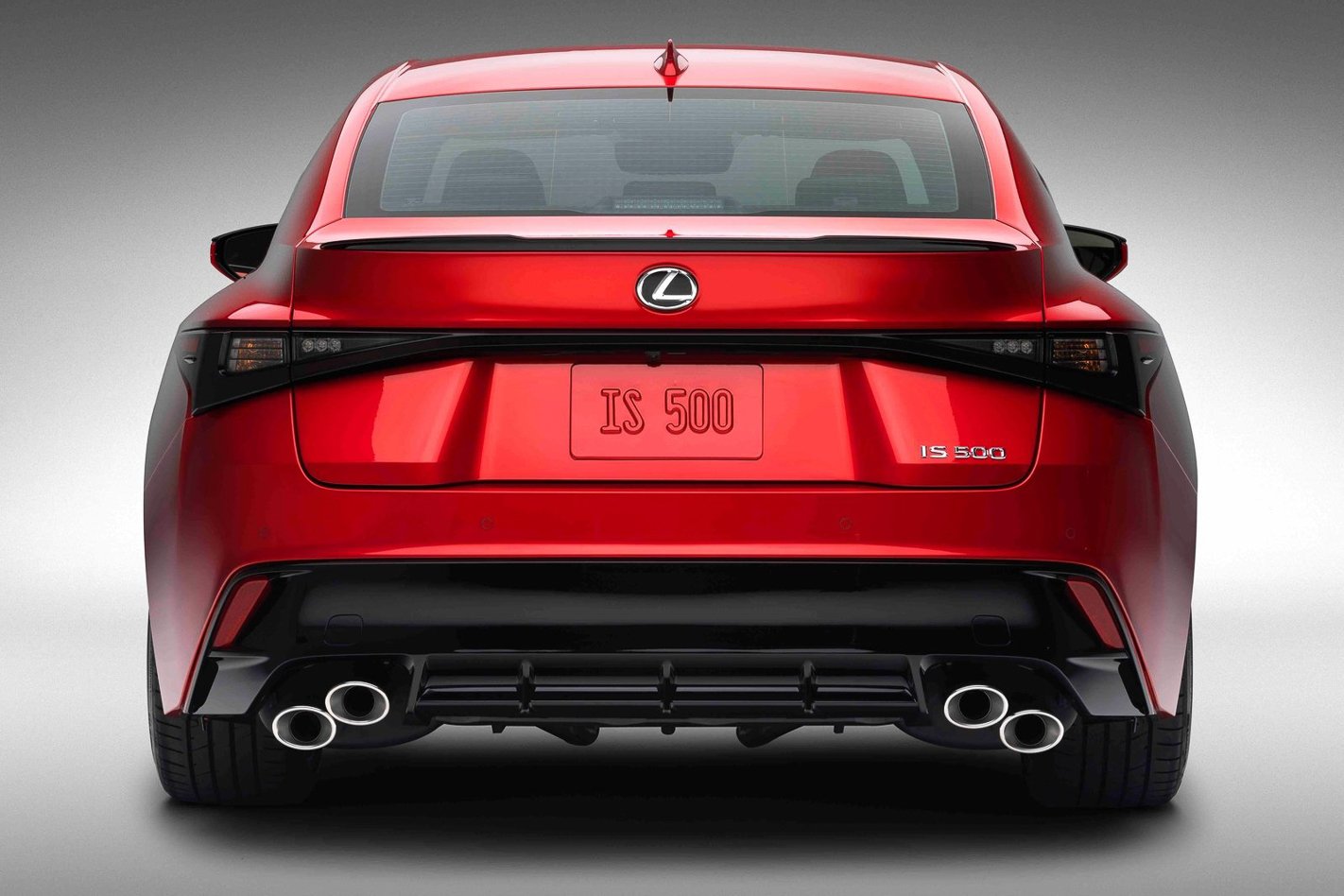
Our teaser story last week suggested we could be about to see the arrival of an IS500 V8-powered sedan, which is something the market has been crying out for since the Lexus IS F was discontinued in 2013.
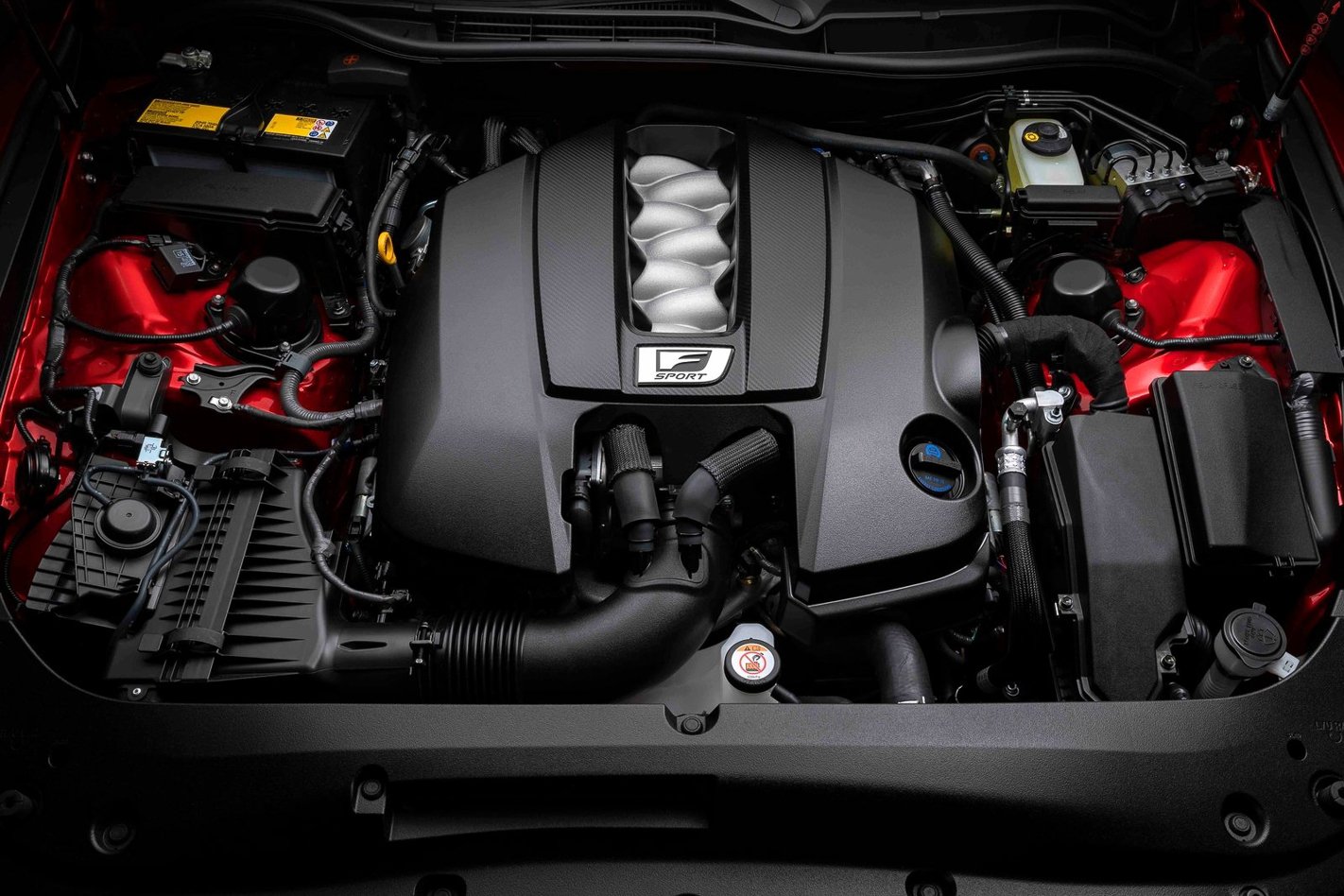
The new model shoehorns a 5.0-litre naturally-aspirated V8 engine under the bonnet, while adding subtle styling enhancements such as a raised and sculpted power bulge in the bonnet, 19-inch Enkei alloy wheels, revised rear diffuser with new quad exhaust outlets, and dark chrome window trim.
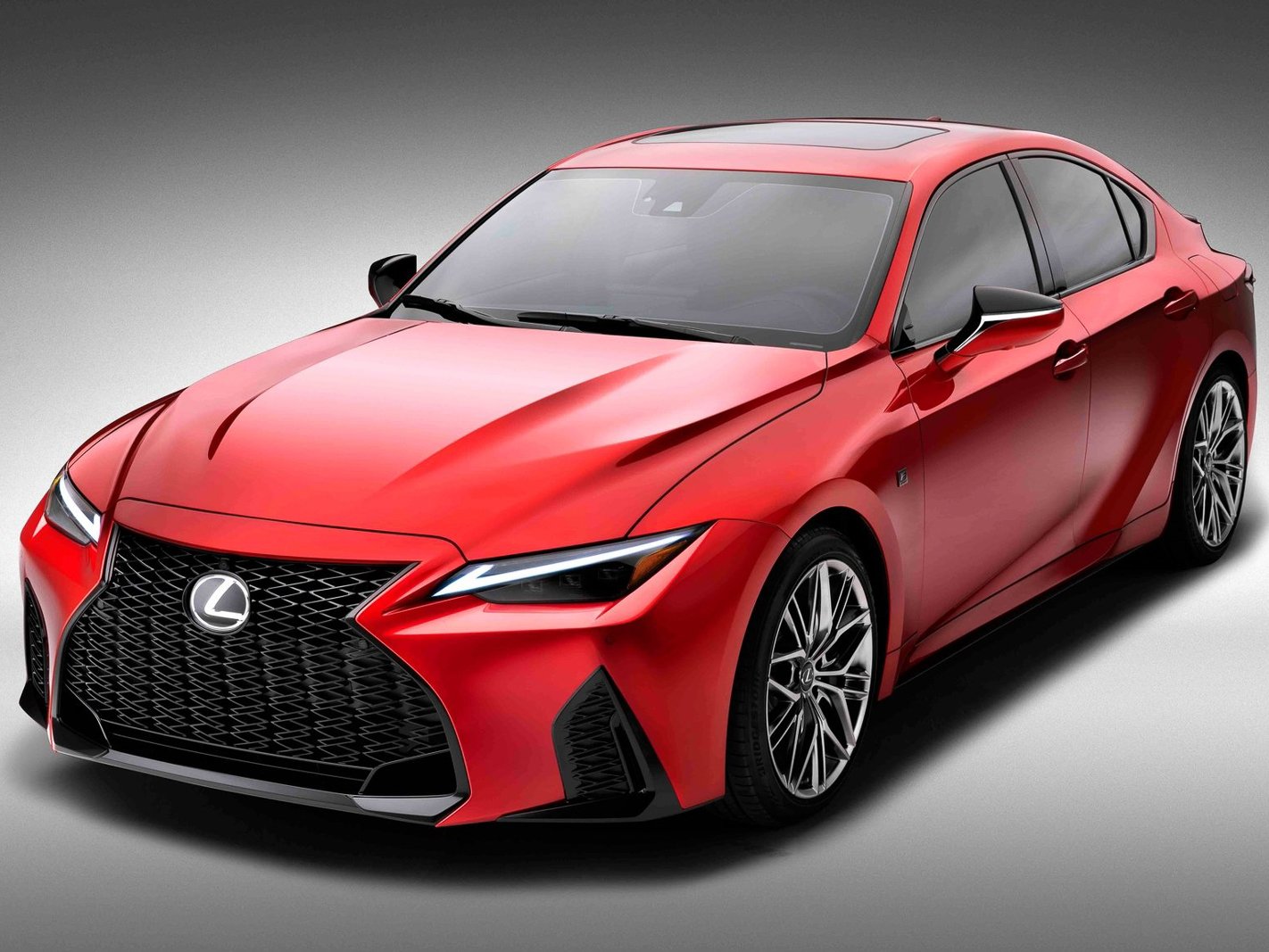
The V8 engine outputs 351kW and 535Nm to the rear wheels through the standard eight-speed automatic transmission as the IS350.
It stocks a number of supporting componentry including upgraded brakes, uprated cooling, limited slip differential and revised suspension. The IS500 can sprint from zero to 100km/h in 4.5 seconds.
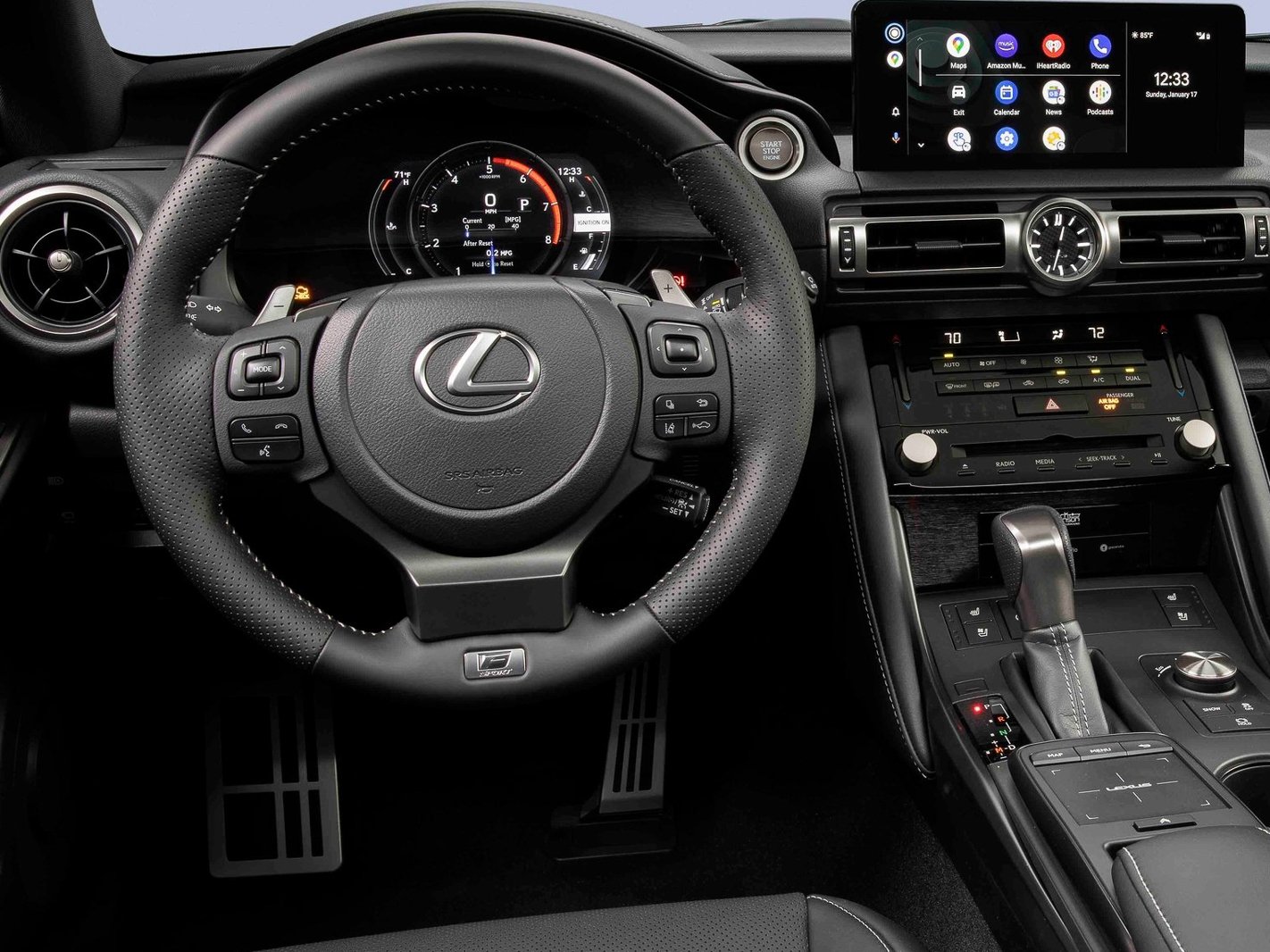
On the inside, the IS line’s new hero model is distinguished by F Sport Performance badging on the steering wheel and door sills, while the instrument cluster features a start-up animation specific to the IS500.
Lexus says: No IS500 for you
Sadly, the Lexus IS500 F Sport Performance is intended exclusively for the North American market, and will only be sold in left-hand drive guise. It will go on sale in the US market in the second half of this year.
Interestingly, Lexus says the IS500 is the first vehicle in a “new line of F Sport Performance vehicles”, indicating that this is not the only car we should expect from the new performance branch.
Fingers crossed there’s more of where this came from.
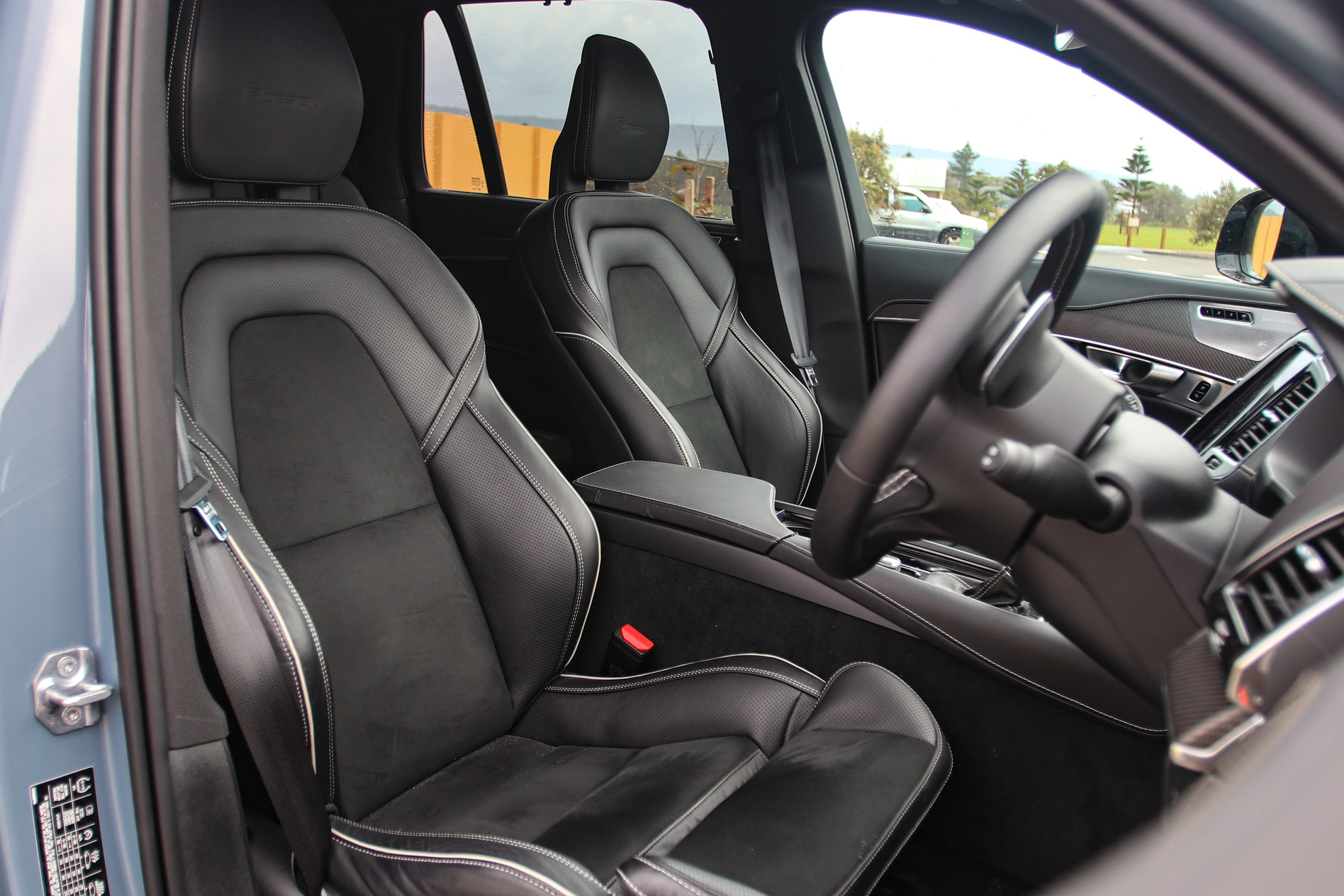
Volvo has recalled 57 XC90 large SUV after a defect relating to the SRS airbags was discovered.
The recall issued on the Product Safety Australia website describes the fault: “the SRS control unit may not be tightened to the vehicle’s body correctly.”
In that circumstance, the airbag system light would illuminate showing an error message on the instrument panel.

This is a problem that could be hazardous in the event in the event of a crash – the airbag may not deploy. Obviously, that’s bad news for vehicle occupants who could be at enhanced risk of injury or death.
Volvo is attempting to contact the owners of the affected vehicles in writing to request that they make an appointment with their preferred dealership to get the problem rectified free of charge.
The 57 vehicles with the fault were available for sale between October 1, 2020 and January 31, 2021 and encompass vehicles sold under the 2021 model year.
A full list of affected Vehicle Identification Numbers (VIN) can be downloaded here.
For more information, contact Volvo by phone on 1300 787 802 or email [email protected].
Alpine-obsessed automotive designer Arseny Kostromin has been at it again dreaming up another hyperbolic interpretation of the French brand’s bantamweight and high-achieving models, this time with a concept dubbed the GTA. But he might have gone too far this time.
Taking the Alpine A110 as its basic layout, the Russian former Genesis, Renault and Volkswagen designer has created a case study that imagines what the latest entrant to the Formula 1 series might add to the road car line-up if it had an open sandbox and unlimited budget.
While it might be immediately recognisable as a relation to the 2019 Alpine A110, there’s not a lot left to technologically tie Kostromin’s wet dream to the production version, with a host of performance-focused features that go beyond anything before it.
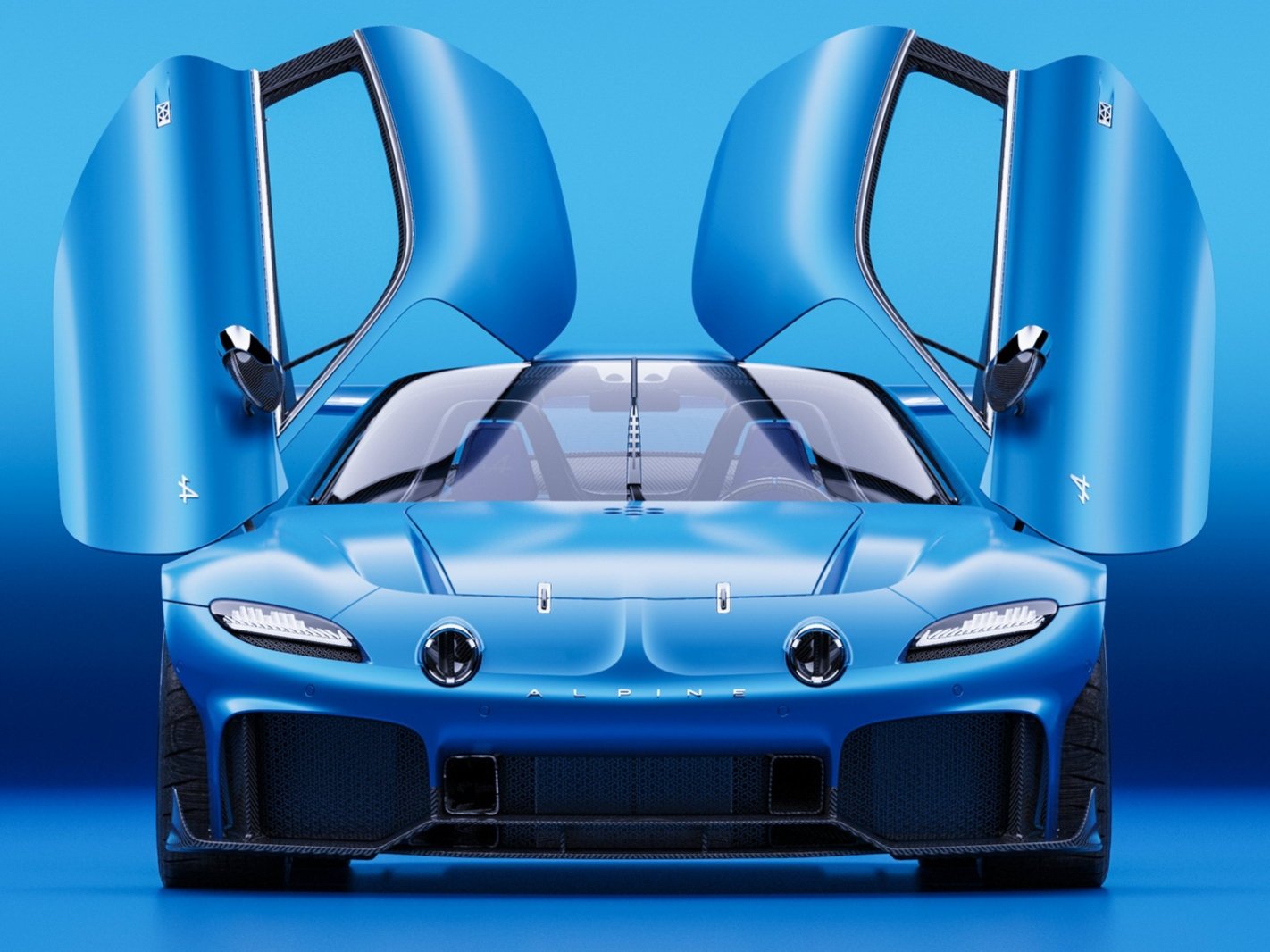
On the outside, chrome-effect trims are applied around the windows and door mirrors as a nod to the original A110, while bonnet vents/DRLs mimic the driving lights of the original rally hero, but that’s very much where the old world ends.
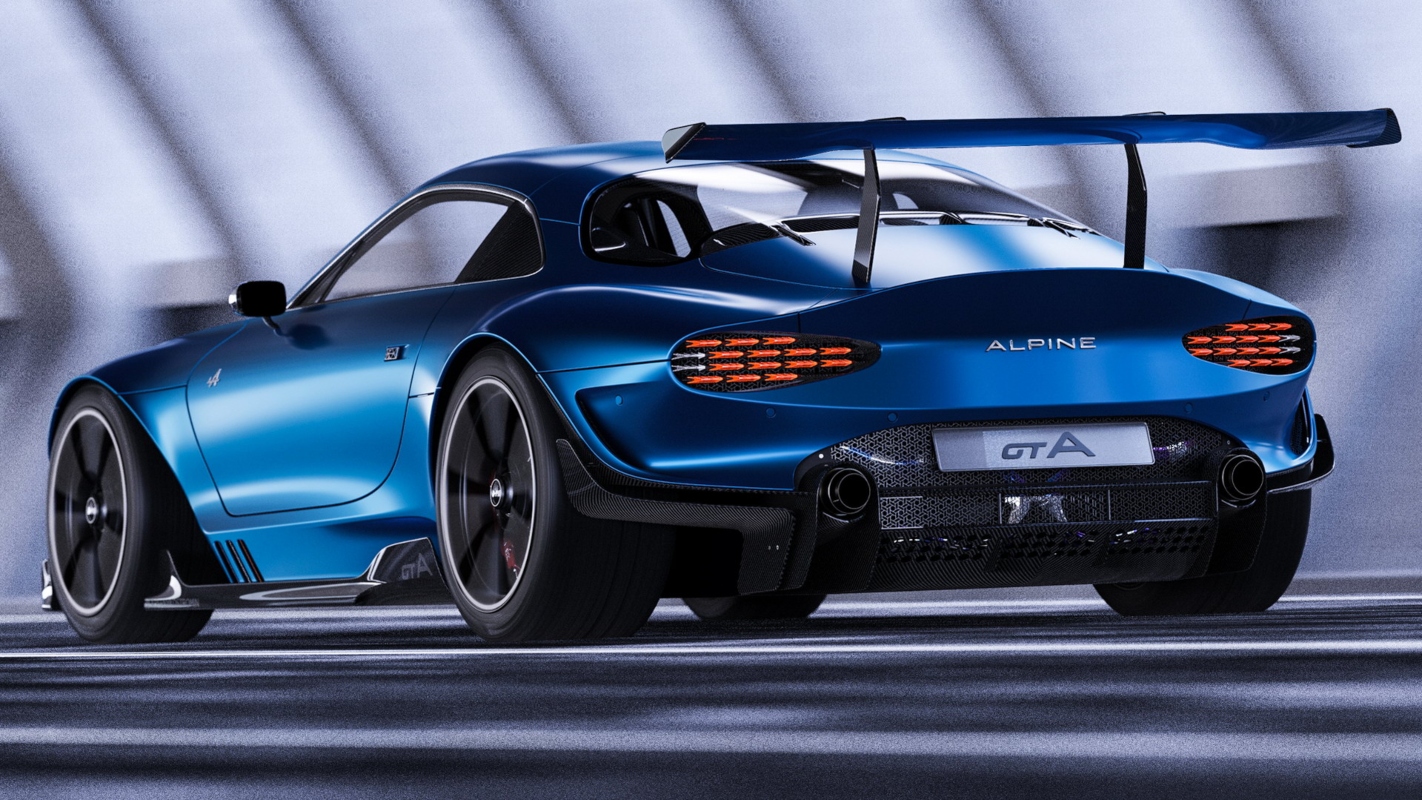
Vast carbon-fibre side fins, rear diffuser, spoiler and butterfly doors couldn’t be further from the subtlety of the A110 road car, along with LED matrix tail and headlights set into fine rhombus-weave pattern mesh for maximum cooling.
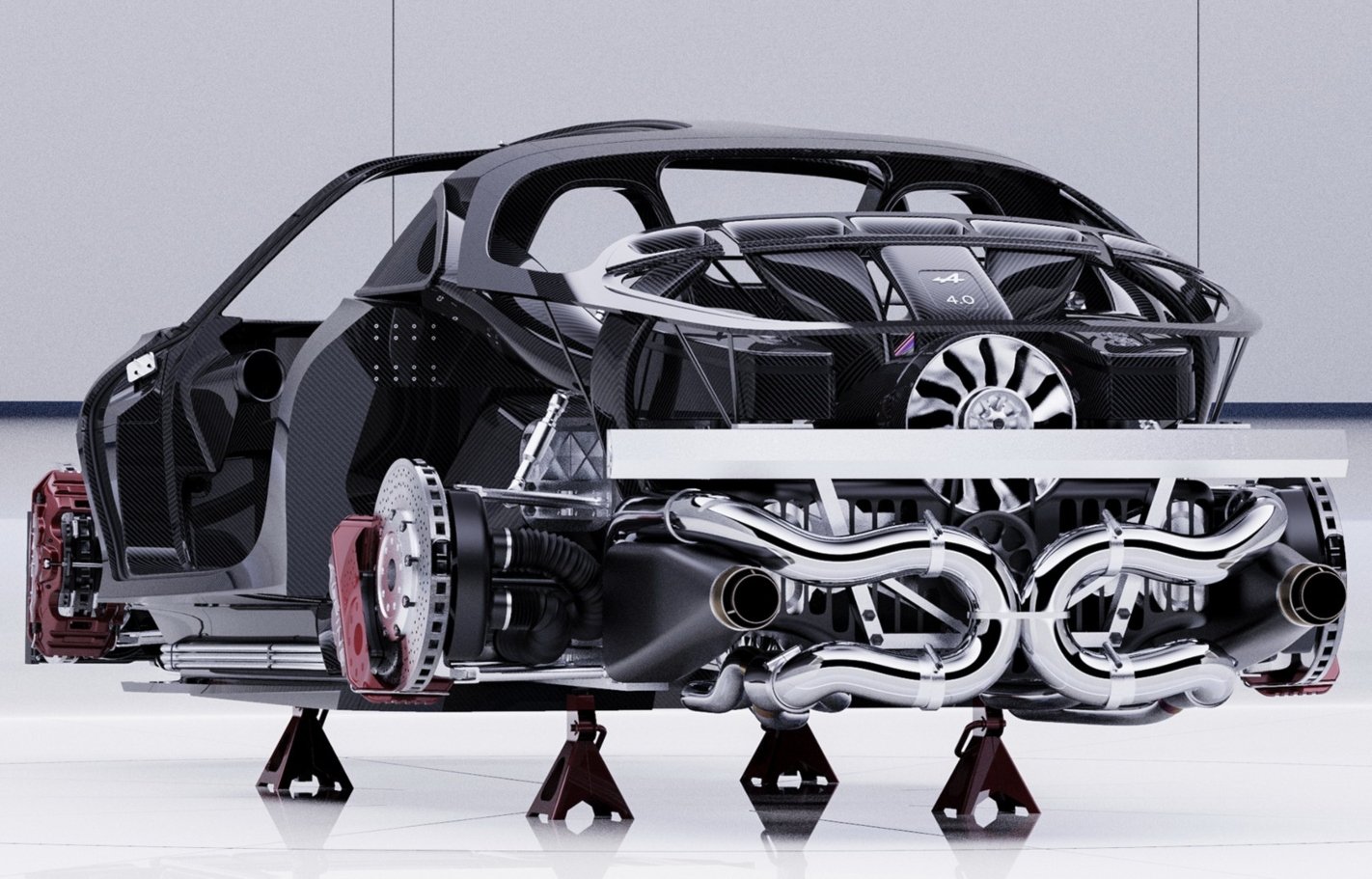
A front bumper hints heavily of Porsche 911 GT2 RS with massive air vents filled with huge radiators – confusing, as the GTA is apparently powered by a naturally aspirated and air cooled 4.0-litre Gordini flat-six engine. That’s a lot of oil cooling and AC capacity.
The engine burps what we suspect will be a very satisfying note out through a titanium Akrapovic exhaust, while inboard suspension, massive carbon-ceramic brakes are also likely pinched from Alpine’s F1 store room.
Measuring 4115mm long and 1100mm tall, the GTA is shorter in both directions than the A110 road car, but is nearly 30mm wider at 1826mm. Those proportions create a seriously capable appearance and an imposing stance, although overall weight is yet to be confirmed and how it compares with the not-exactly-fat 1100kg A110.
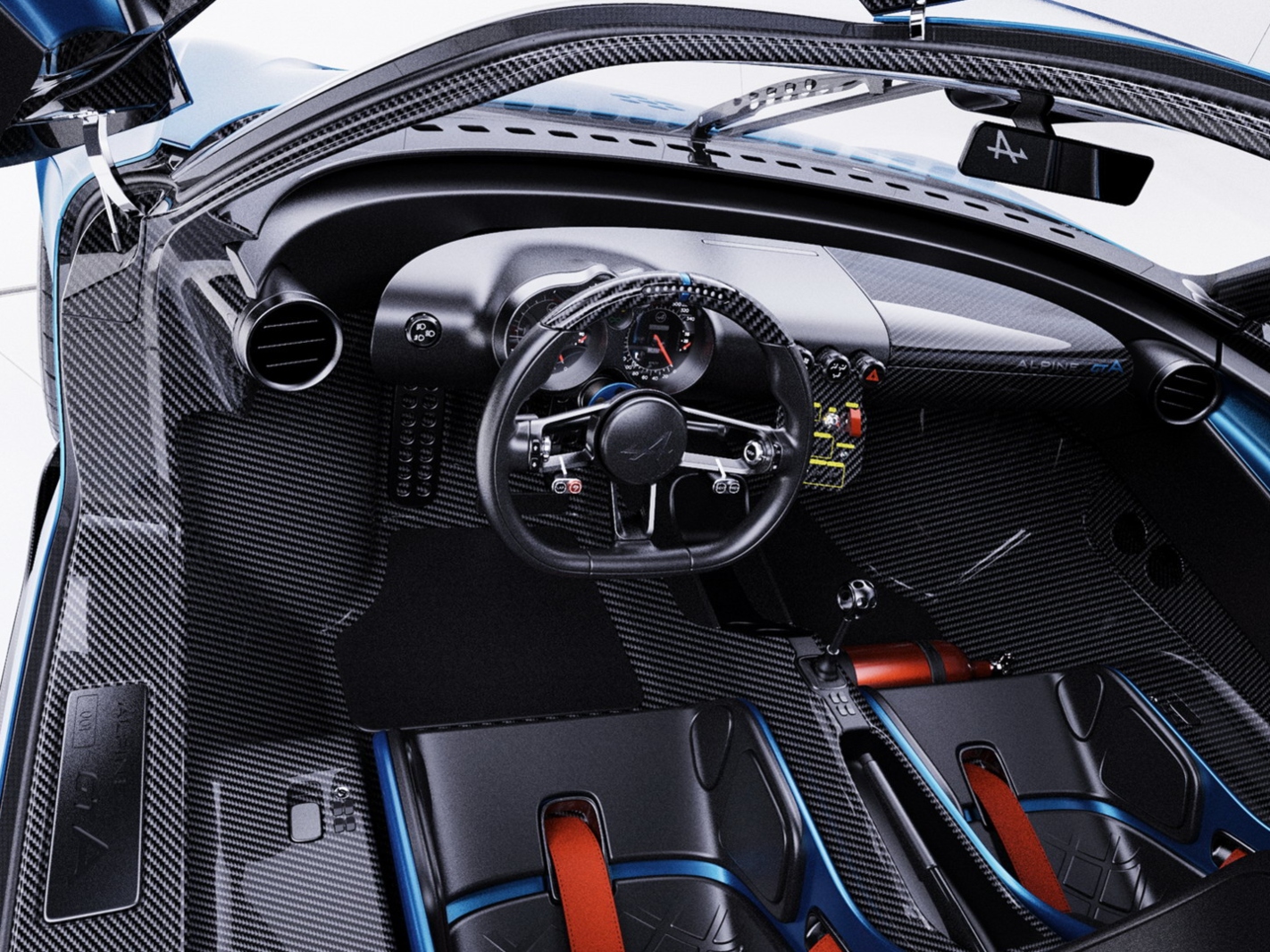
On the inside, the GTA’s cabin hides nothing of its construction with unpainted carbon fibre everywhere, a polarising manual gearbox lever and a pair of harnessed racing seats that appear to have less padding than the seat you’ll find in Alonso’s company car.
The GTA is not the first example of Kostromin’s passion for the Alpine brand. Fresh out of Moscow State Technical University, the graduate revealed his interpretation of an A110 revival – long before the current model was born, and after that he lobbed the Thesis which, ironically was after his thesis.
Is his latest design folly a little too over the top though? And does it detract too far from Alpine’s philosophy of finesse and minimalist engineering to be taken seriously?
Either way, the most recent (and arguably extreme) homage to Alpine past and present slots in among countless concepts and mockups including the A110 SportsX mild off-roader and even a Gordon Murray revised vision that turned out to be nothing more than a schoolboy getting overexcited on social media.
NOW WATCH Alpine A110 vs BMW M2 in the high country
Ultra-light and ultra-responsive, with a central driving position, downforce enhanced by a fan that sucks the car onto the road and powered by a screaming naturally aspirated V12 engine that revs to 12,100rpm and drives through a six-speed manual transmission, Gordon Murray’s new GMA T.50 hypercar promises to be as fast and thrilling as the McLaren F1 he designed 30 years ago.
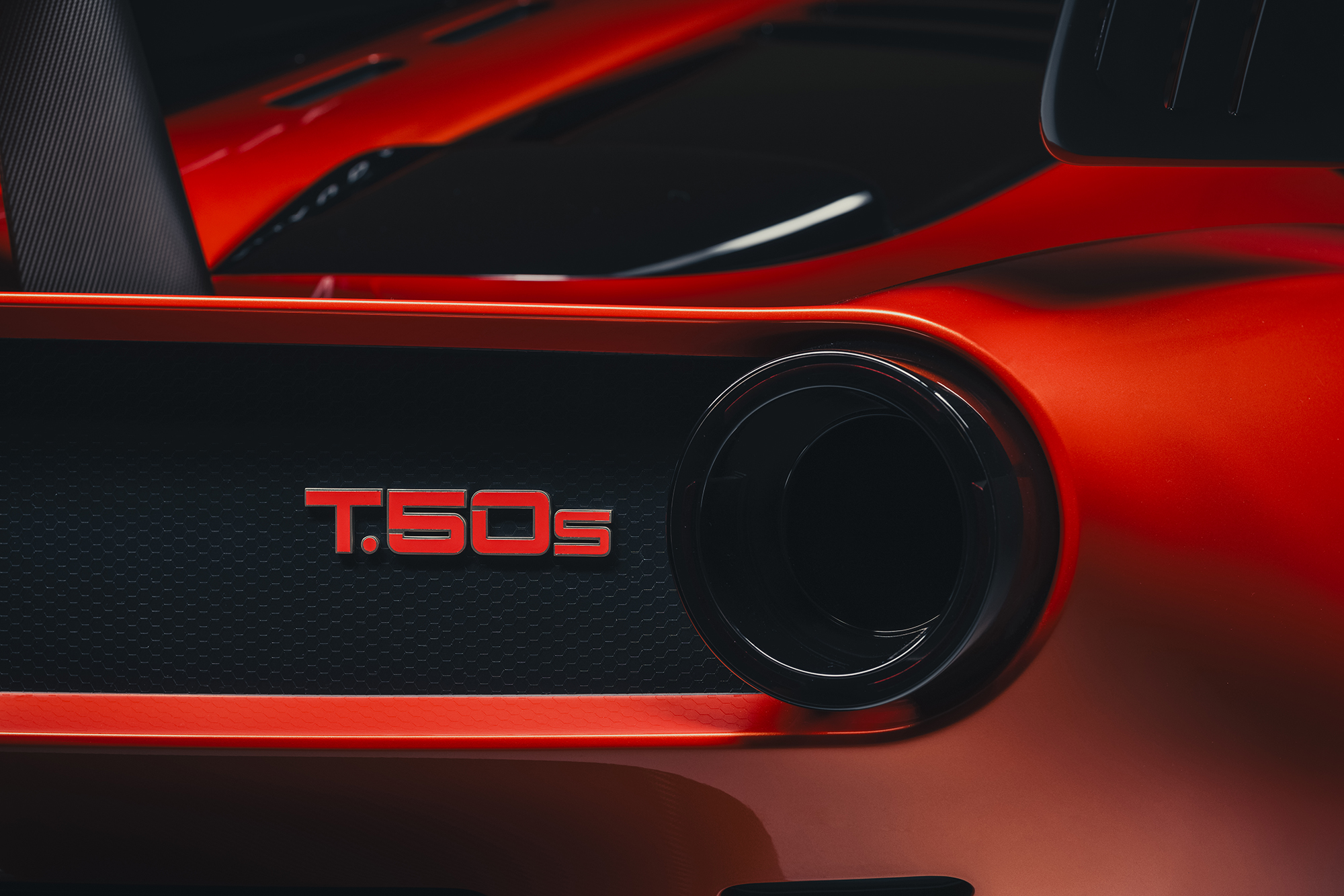
A hard act to follow? Not if you’re Gordon Murray. Meet the GMA T.50s Niki Lauda.
The T.50s Niki Lauda (named after the three-time F1 world champion who drove the Murray-designed Brabham BT46B, which had similar fan-driven ground effects system, to victory in the 1978 Swedish GP) is the track only version of the road-going T.50.
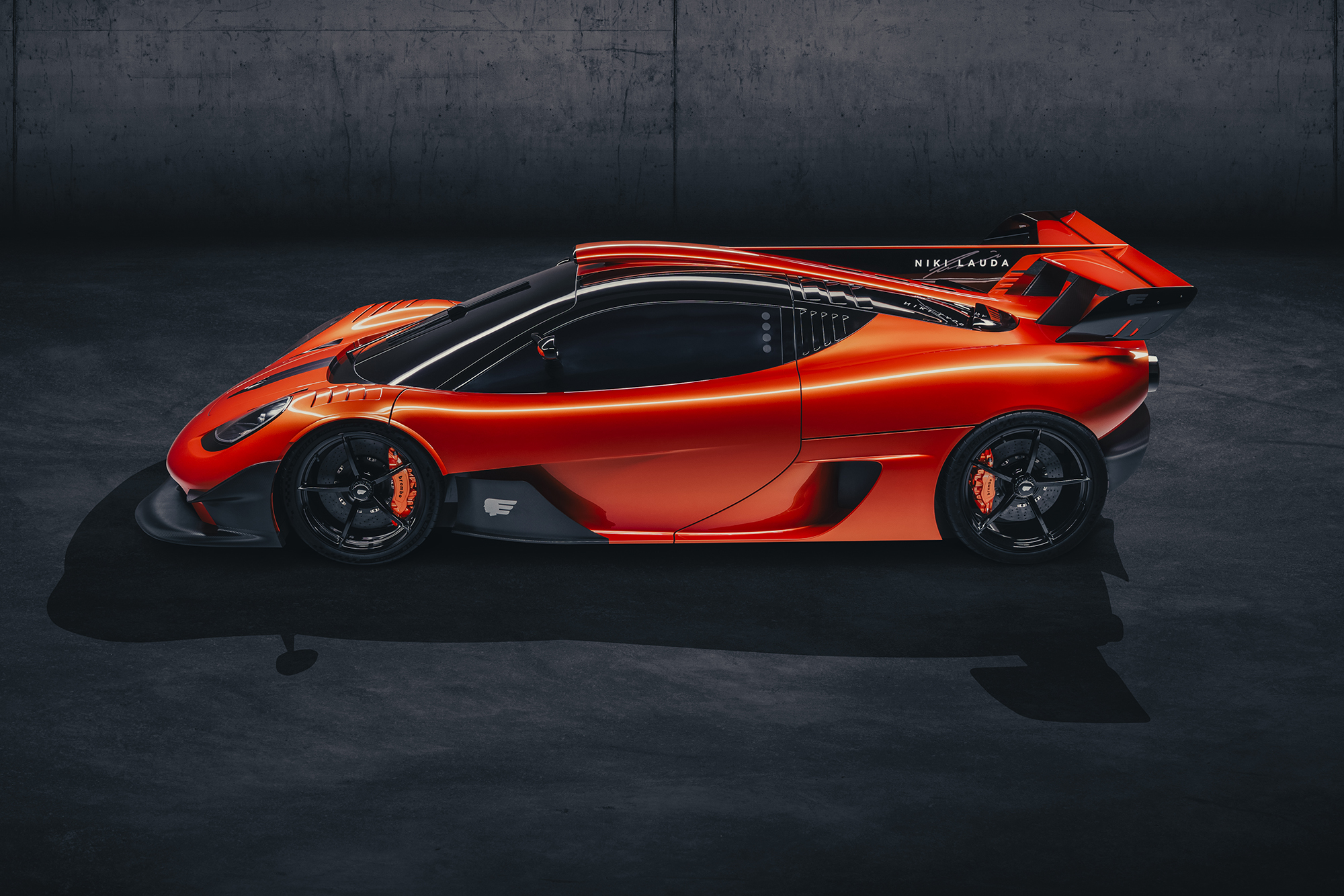
Only 25 will be built, each costing the equivalent of $5.6 million (plus tax), or roughly 30 percent more than the 100 T.50 road cars currently under construction.
What that buys you is an intriguing mix of more and less T.50 – more power, more downforce, less weight.
The Cosworth-built 4.0-litre V12 makes up to 60kW more than the regular T.50 engine, punching out 522kW at a dizzying 11,500rpm, and as much as 541kW when the roof-mounted scoop of the ram-air induction system starts working at speed.
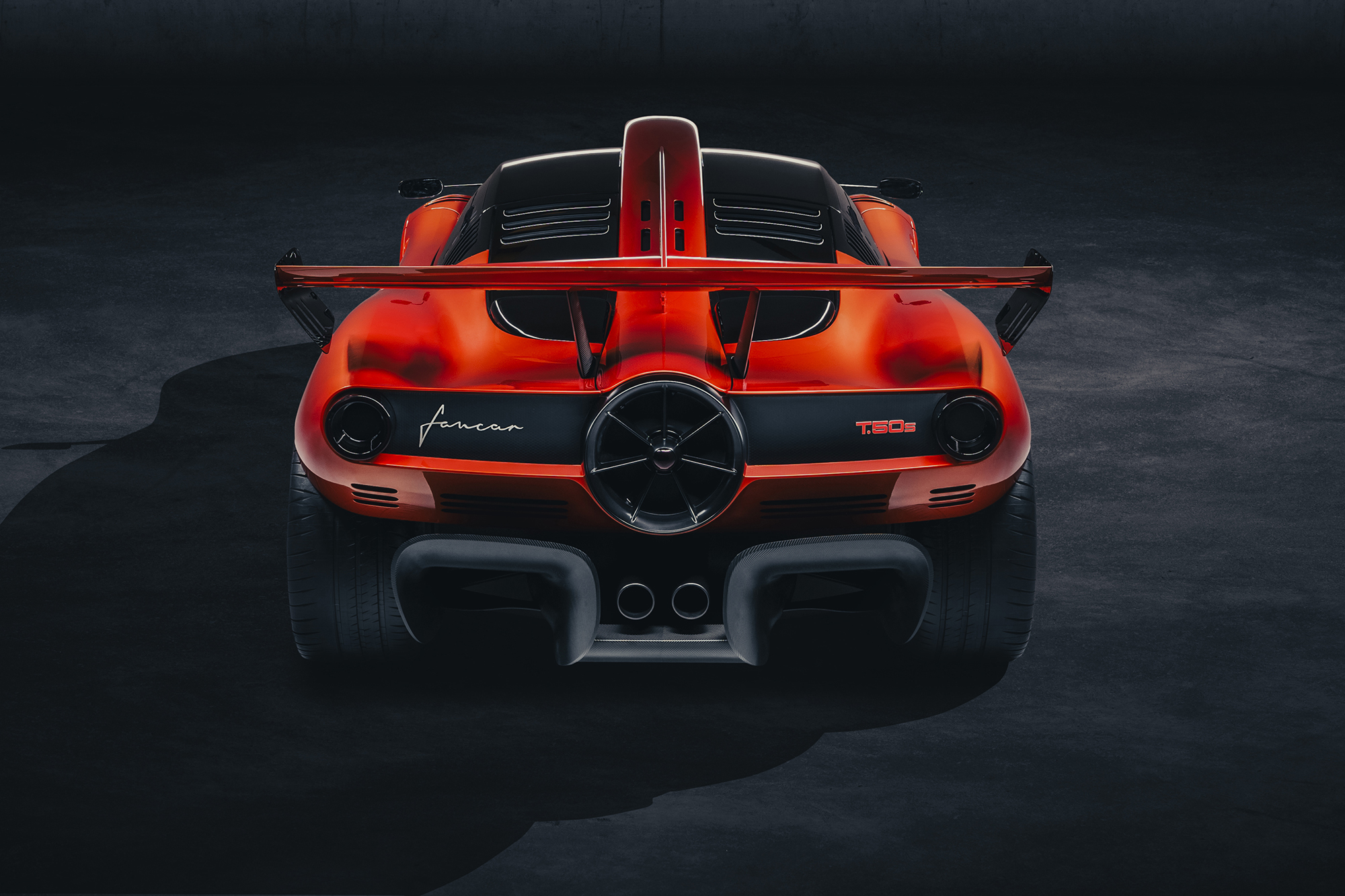
A completely revised aero package – every exterior panel has been redesigned – delivers a staggering 1500kg of downforce. And the T.50s Niki Lauda is 134kg lighter than the already feathery T.50 road car, weighing just 852kg.
The T.50s Niki Lauda is not just a T.50 with road car luxuries removed and race car goodies added.
“The T.50s Niki Lauda was designed in parallel with the T.50,” says Murray.
“For the T.50 our target was clear – to make the best driver’s car for the road. With the T.50s Niki Lauda it was equally clear – to make it the best driver’s car for the track.”
The T.50S Niki Lauda’s carbon-fibre monocoque is therefore built using a lighter construction method than the regular T.50.
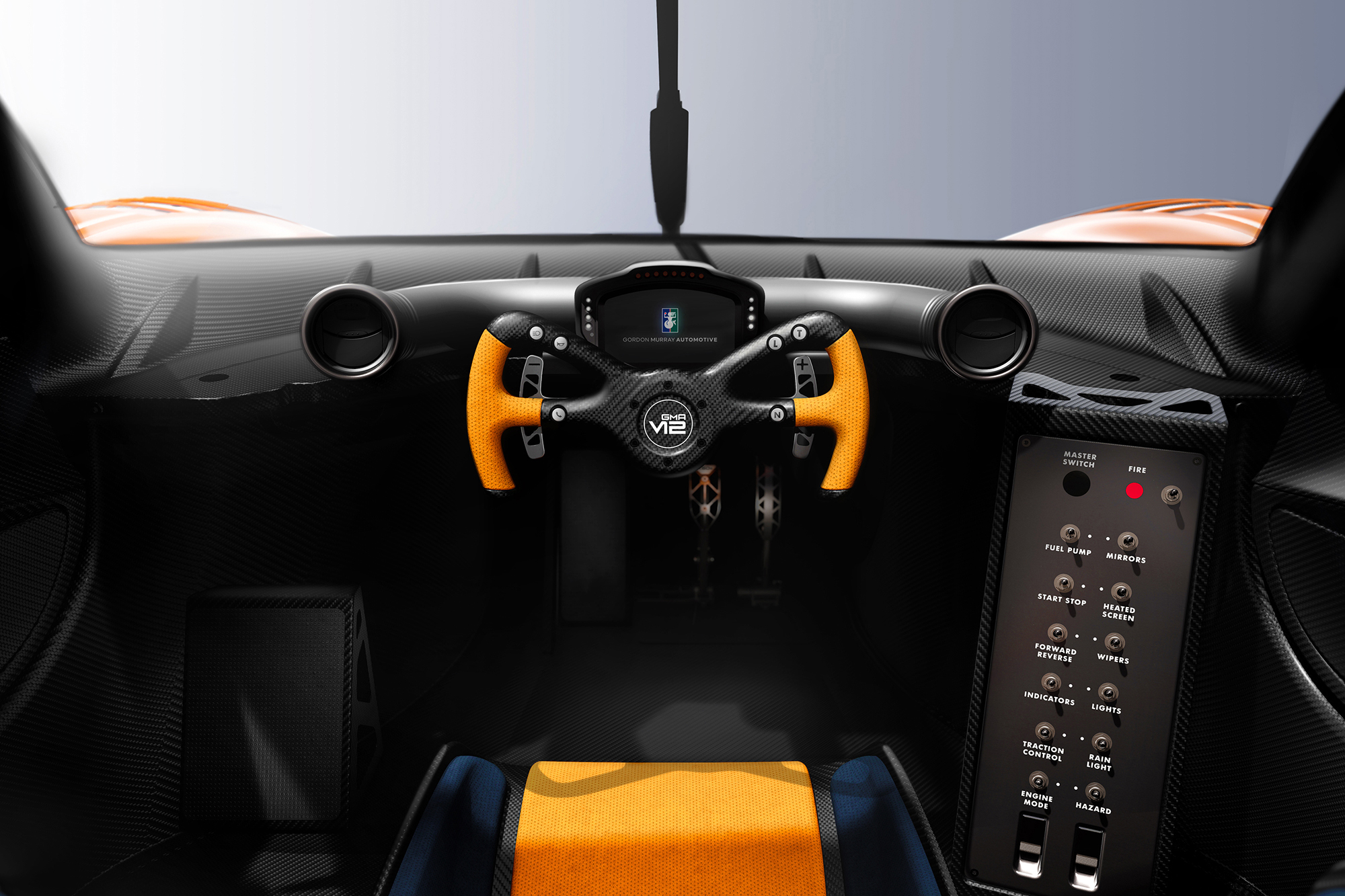
In addition to adding titanium inlet valves, a 12 throttle body induction system, and a straight-through exhaust with thinner-wall Inconel tubing, Cosworth also redesigned the V-12’s cylinder heads and dumped the variable valve timing system to reduce the engine’s weight by 16kg to just 162kg.
And instead of the conventional six-speed manual of the road car, the T.50s Niki Lauda has a bespoke Xtrac six-speed paddle-shift transmission with a patented gear pre-selector system that delivers ultra-fast shifts.
The T.50s Niki Lauda shares its forged aluminium multi-link suspension with the road car, but the springs, shocks and anti-roll bar have been respecified to optimise track performance, and the ride height lowered to 87mm at the front and 116mm at the rear.
The 400mm ground effects fan at the rear is the same as that of the T.50, but it only operates in high downforce mode, spinning at 7000rpm.
Also carried over from the road car are the Brembo carbon ceramic brakes with six-piston calipers up front and four-piston units at the rear, though new ducting has been added to improve cooling.
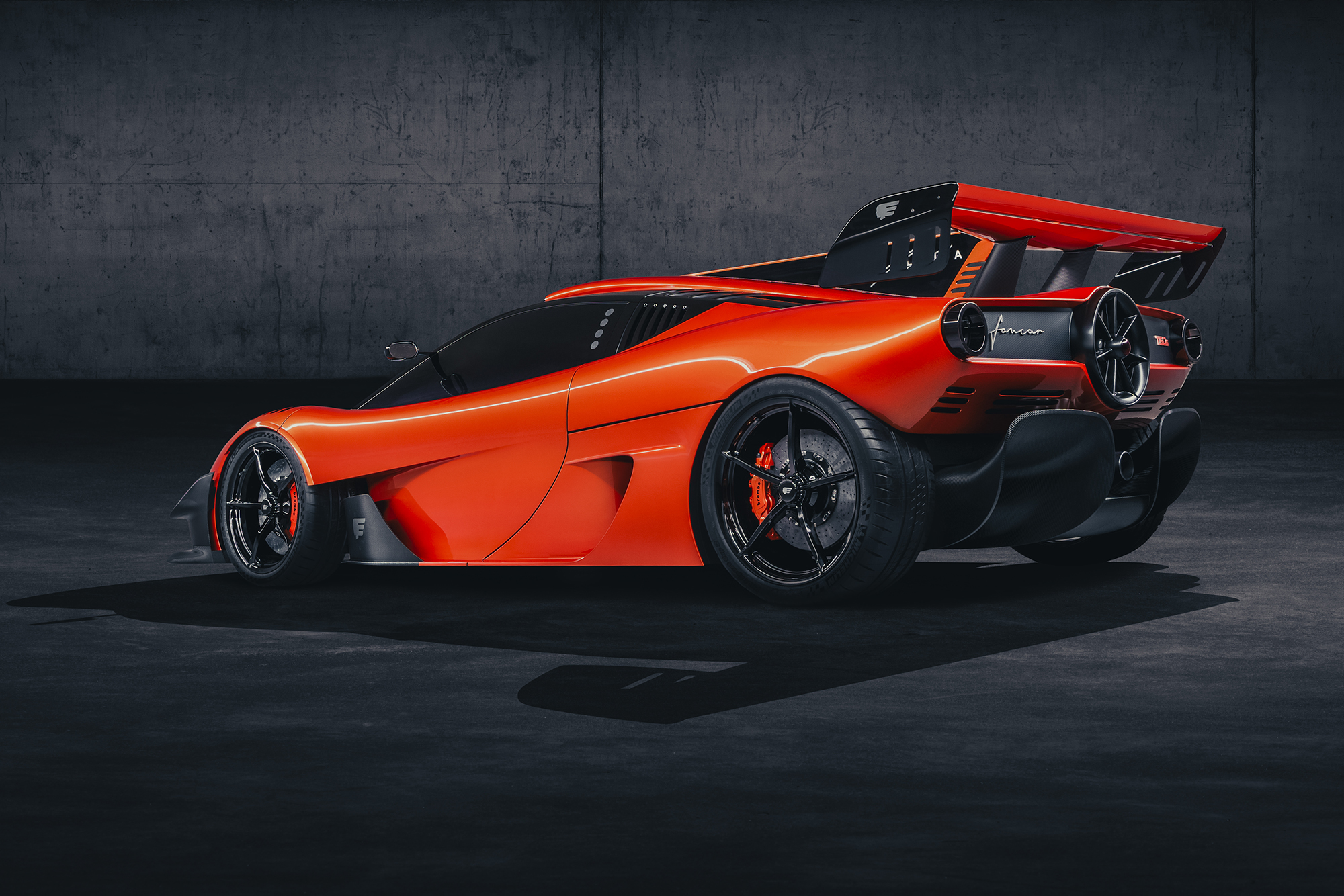
A large delta rear wing straddling the central dorsal fin, a new splitter and barge boards up front, and a redesigned diffuser help deliver race car levels of downforce.
Combined with the grip from the bespoke Michelin tyres mounted on forged magnesium alloy wheels that weigh less than 6kg each, Murray says the T.50s Niki Lauda can generate 2.5-3.0G of deceleration under brakes.
What he won’t talk about, though, are potential lap times. “It’s pointless all this business of being fastest round the Nürburgring,” Murray insists.
“I want the car to be accessible to good amateur drivers. Take it to the circuit, check your tire pressures, start the engine, warm the oil up and off you go.”
WHEELSPIN! THE TOYOTA 86 GTS demands opposite steering lock as its chassis tweaks a few degrees. Its rear tyres flick loose gravel out behind us as they scrabble for grip. But you mash the throttle, not needing to worry as there’s only 147kW to wrestle with, and feel the track-tuned ESP meter out the exact amount of Newtons needed. As the rear boots bite it begins another ascent to its heady 7400rpm redline, dipping into that infamous torque hole along the way.
Yes, nothing has really changed since this car was last updated in 2016. It’s still rear drive, very un-turbocharged and, as it reminds us every encounter, still the go-to for cheap thrills. Or is it?
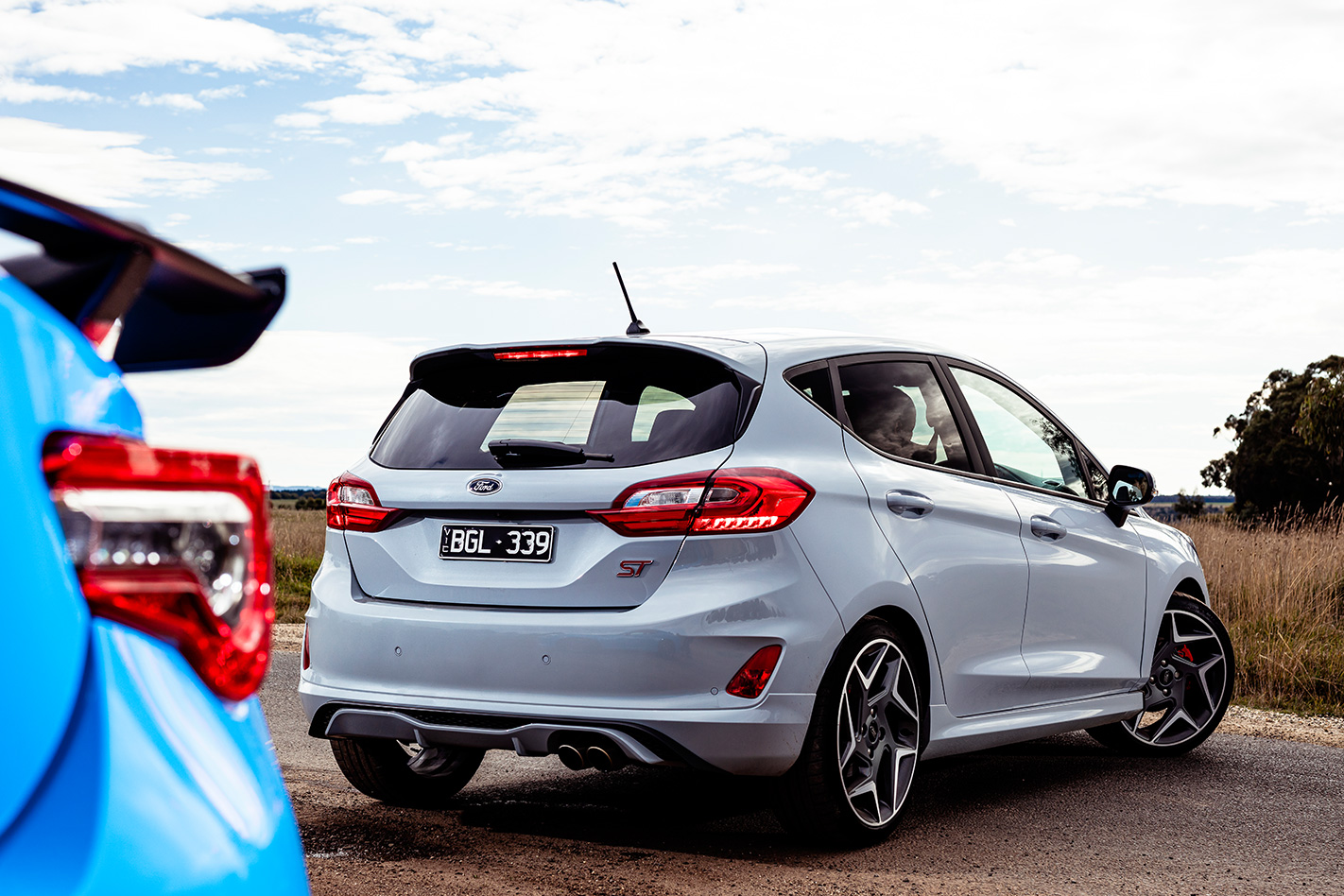
Ford’s Fiesta ST, finally here after two years, would like to chat outside about that, its five-star first drive rating from a few months ago says otherwise. On top of that, Ford Australia’s fight to import an ST variant when the rest of the new German-built Fiesta range eludes Australia should fill it with more confidence. It’s wanted Down Under. But one caveat could dull its shine. Priced at $32,290 it asks for an extra six grand compared to the previous 1.6-litre four-cylinder version.
There’s a fair bit included with that, not limited to the Performance Pack that’s optional overseas, which we’ll get to later, but even after accounting for five years’ inflation its price has still risen $5K. The new figure closes the gap to the Toyota 86, but not as much as we’d like for our comparison’s sake.
The sole 86 made available to us comes in Apollo Blue, signifying a top-of-the-range colour combination with black exterior bits. It’d be $36,640 if not for a Performance Pack that adds $2950 for an as-tested price of $39,590. That gets you special Sachs dampers with upgraded Brembo brakes, but you can also add this pack to a lower-trim 86 GT for a total of $34,340. It’s also worth bearing in mind the absolute glut of 86s on the Australian used car market, these days for as cheap as $15K.
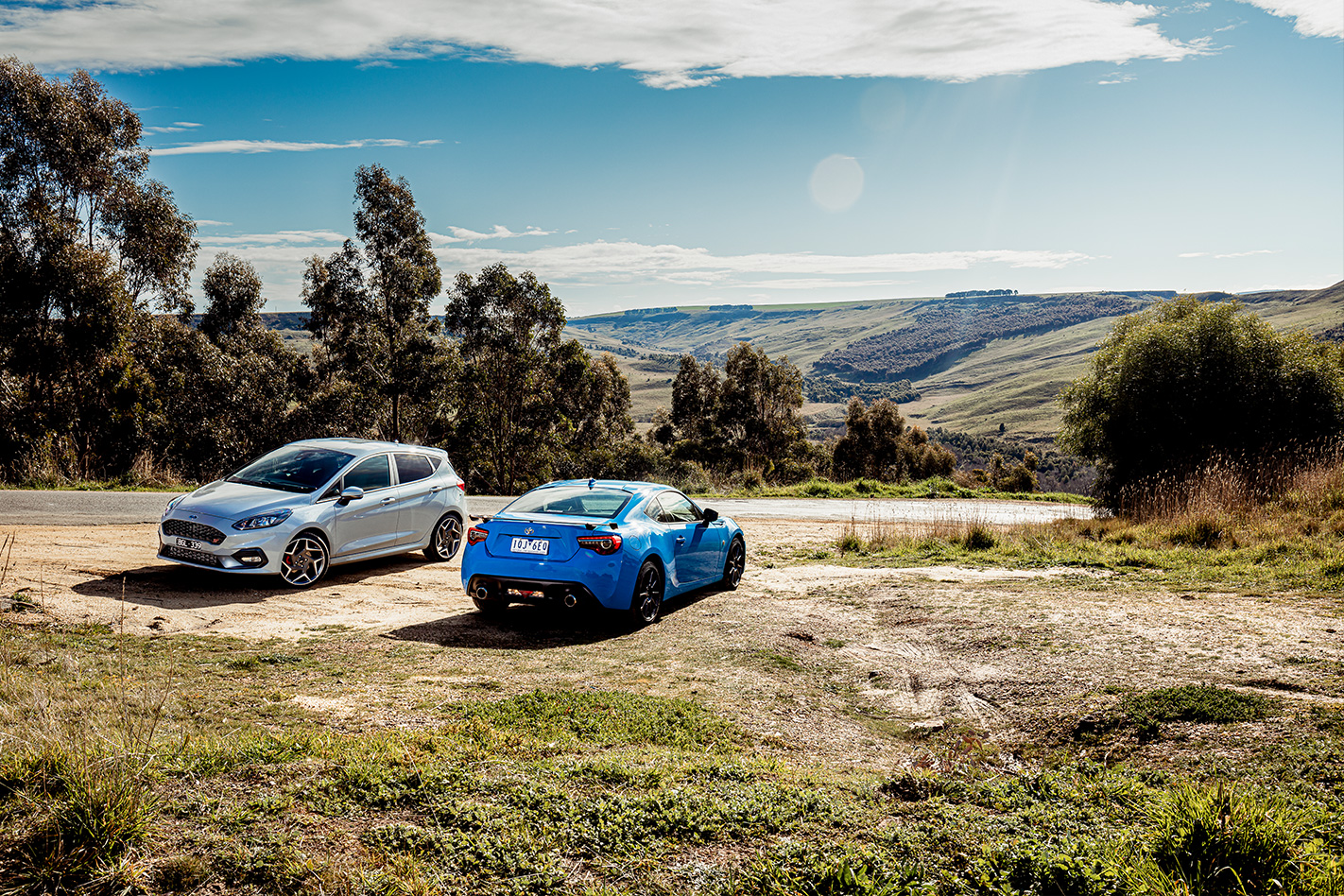
Yet while they’re closely matched on price and concept they are vastly different under the skin. The Fiesta’s ‘puller’ layout and humble origins should dash its hopes of matching the 86’s pure rear-drive dynamics, but Ford’s Sports Technologies team worked hard to minimise any handicap starting with a five-door chassis only 93mm longer compared to the 2015 three-door version. The wheelbase is only 4mm longer, however the tracks are wider by a massive 33mm out front, 16mm rear.
New steering knuckles relocate the front-end geometry and the steering rack is supposedly the quickest in Ford’s stable. Extra body bracing increases shell stiffness 14 per cent. The ST team has also thrown the kitchen sink at its suspension. New “frequency selective” damping, patented “force vectoring” springs in the torsion-beam rear suspension and a Quaife helical LSD (included with the Performance Pack) promise it’ll make the most of Pilot Sport 4 tyres. Joining that Performance Pack is a new launch control function, designed to tame its 1.5-litre inline three-cylinder through a six-speed manual.
Thanks to some clever turbocharging, dual-injection and independent variable twin-cam timing the engine is smaller but also deadlier than ever, matching the old 1.6-litre turbo four’s outputs on overboost with 147kW and 290Nm. That would have matched the Toyota 86 kilowatt for kilowatt before 2016, but ever since engineers bolted a ported intake manifold with longer runners on top of its flat four and some larger exhaust pipes underneath, the 2.0-litre has been good for 152kW. That’s 5kW more than the ST, although interestingly both cars share the same 121kW/tonne power-to-weight ratio. We’ll see how that translates with opposing axles doing the power-down in each car, at Heathcote Raceway’s drag strip.
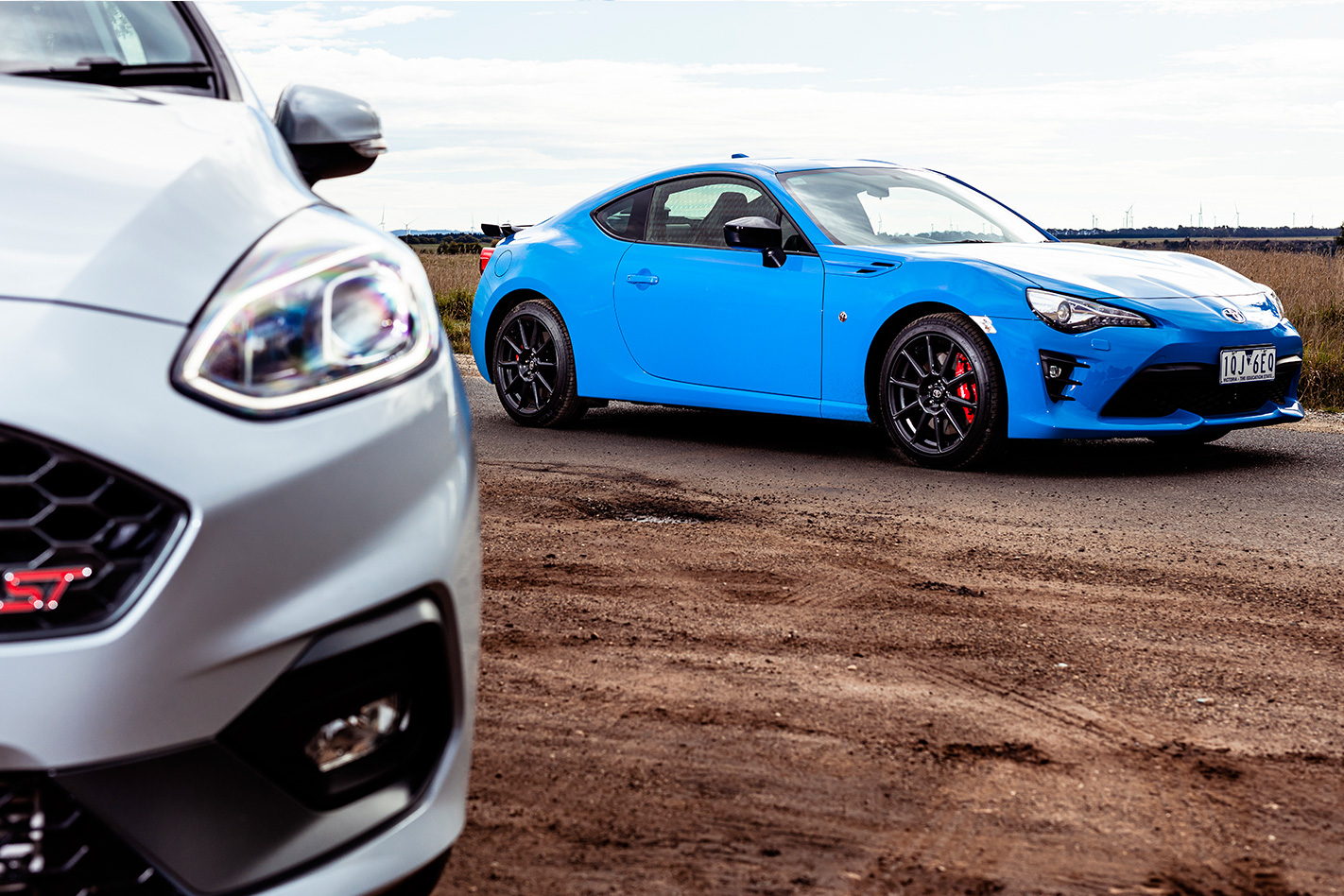
Our fact finding mission starts with the 86, although it’s obvious that Victoria’s winter has all but frozen the strip’s VHT given the 86 vaporises its 215mm-wide Primacys after stepping off the six-speed manual’s clutch with a good chunk of revs. This is with ESC ‘off’, mind you, and things don’t improve. Lowering the launch rpm highlights not only the gaping torque hole between 3000-4500rpm but the long wait for power to arrive at 7000rpm as well. Eventually we discover the concrete surface lying between each launch pad can hold a 5000rpm clutch drop. You’ll need to keep an eye on the revs to be able to both sweep through power peak and avoid clipping the 7500rpm limiter that arrives right after. Second to third doesn’t like being rushed, either, even though the 86 offers a nice, direct shift most of the time and chirps on each upshift.
In the end, our best effort logs a 7.47sec sprint to 100km/h from rest and 15.27sec run across the 400m mark at 149.53km/h. We’re slightly disappointed to fall short of times extracted from an 86 GTS at Winton in 2017 – where MOTOR nailed a 7.12sec and 15.13sec – but it’s nice to still best the manufacturer’s 0-100km/h claim by over a tenth.
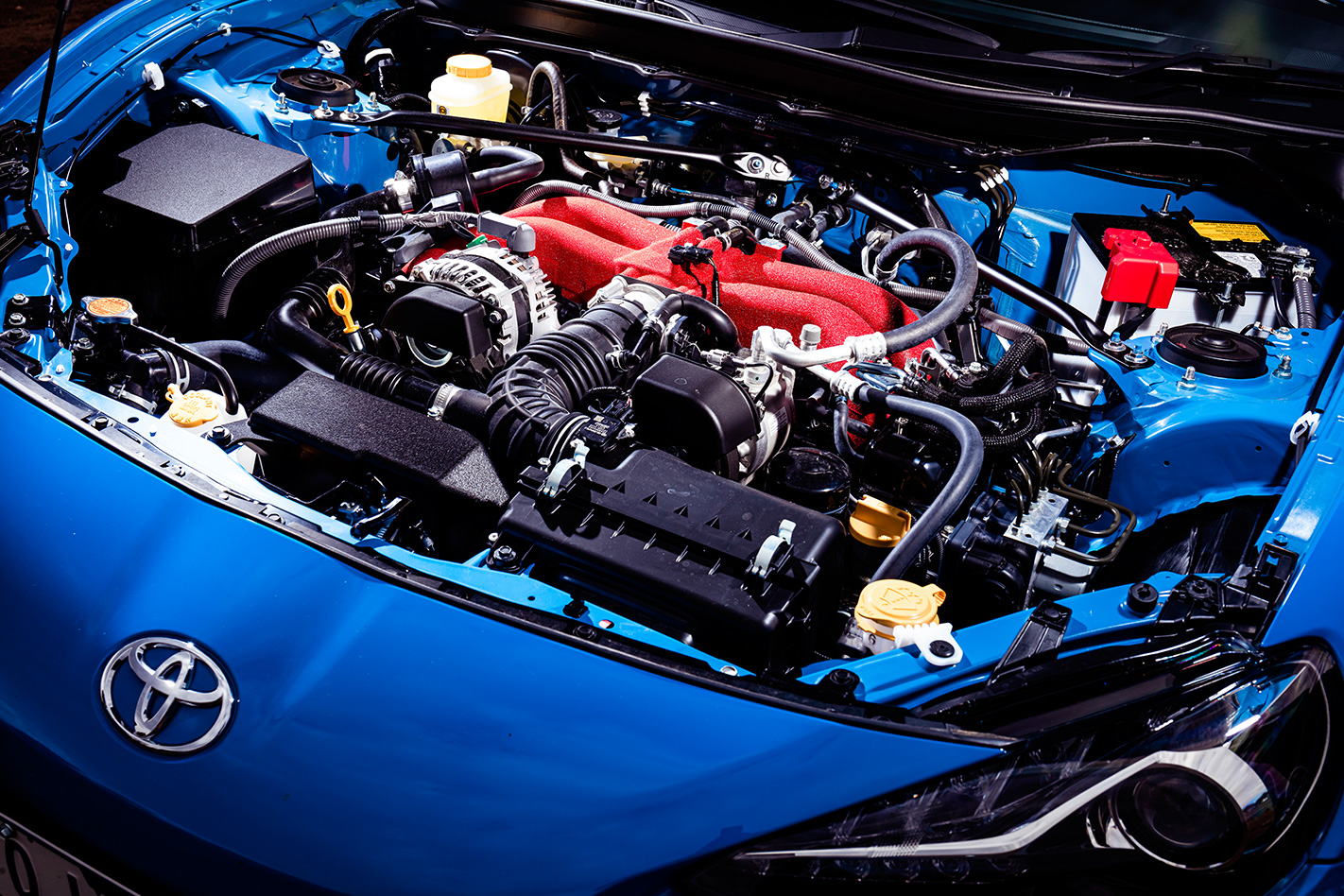
Now it’s time for the Ford. Despite its higher seating position and upright stance, sliding into the Ford’s hugging Recaro pews immediately sets the tone in the ST. This isn’t just some lowered grocery getter, it’s a serious performance car, and we’re hoping it’s going to prove it. Despite fixed suspension, the ST’s powertrain and electronics can switch between Normal, Sport and Race modes.
Fish through the central digital cluster a little longer and you’ll find the launch control program, which is activated with the right button pad on the steering wheel. The six-speed manual’s knob sits nice and close to hand. Slot first, dip the clutch and pin the throttle. The revs pulse at 3000rpm. But once we’re off, launch control seems to limit torque, even in Race mode that relaxes the ESP. So our next run we switch it off. Dial up 4000rpm and… success! Extra wheelspin throws the ST down the strip with pace. The shift action might be slightly vague, however it falls into place as if the stalk is magnetised to each gate. The engine’s eager to please and spreads its mid-range punch high enough to carry you to its 6000rpm power peak, but the shift light flashes early, warning there’s not much point in spinning beyond 6000rpm. In the end the ST clips 100km/h from rest in 6.93sec and crosses the finish line in 15.01sec at 154.58km/h.
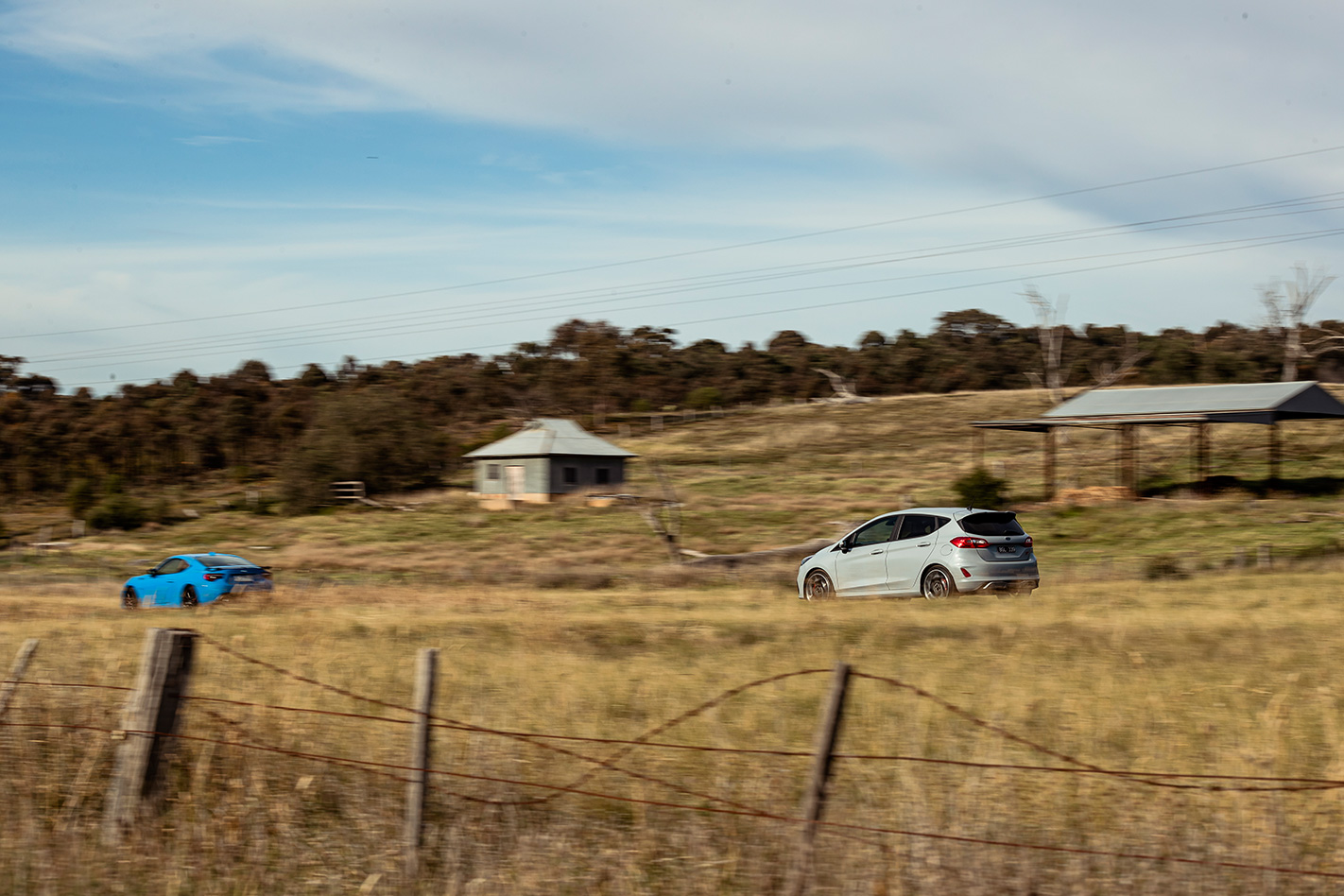
This is far off Ford’s 6.5sec 0-100km/h claim, but the figures shave 0.55sec and 0.26sec off the 86’s time, with a big difference in top speed. Despite the identical power-to-weight ratios their unique engine and drive layouts put it to use at different ends of the strip. The Toyota, for instance, launches quickest. After squatting on hard, skinny rear tyres it finds just enough grip from its Primacys to momentarily handle a violent clutch drop. So, despite a slower 0-100km/h time, it stays ahead of the Fiesta over the first 150m. The lead begins to slowly turn with each gearshift, however, when each car’s revs drop afterward. Here, the ST’s superior mid-range grunt punches it forward. And once it’s on a roll a front-wheel drive’s superior efficiency transmits more kilowatts to the road, allowing the ST finish two car lengths ahead at the finish line. With the ST landing a big hit on 86, the battleground moves on to a place our lead-tipped lightweights were made for.
Setting off along Victoria’s highways presents a quick chance to assess each car’s liveability before we find some twisting roads and from where you sit in the 86 its interior feels a generation old, even with fancier dash trim and climate control in the GTS. Get past that, however, and you’ll realise the things that matter are spot on. The legs-ahead driving position is complemented by good steering adjustability and perfect placement for the shifter, handbrake and pedals. Ergonomically it’s hard to fault and its ride is commendable. Those Sachs dampers inject the 86 with more longitudinal stability as if its wheelbase is actually 100mm longer than it really is.
The ST, meanwhile, has also improved its ride quality. It pitches gently on softer damping compression and even though it’s on stiffer spring rates than before, the wider footprint does well to absorb impacts. But while it’s a step forward in its own right, it can’t match the 86’s more evolved independent suspension. The coupe is simply more compliant and the road noise from the ST’s Pilot Sport 4 tyres is worse. These flaws fade from mind, though, once we finally arrive at some corners.
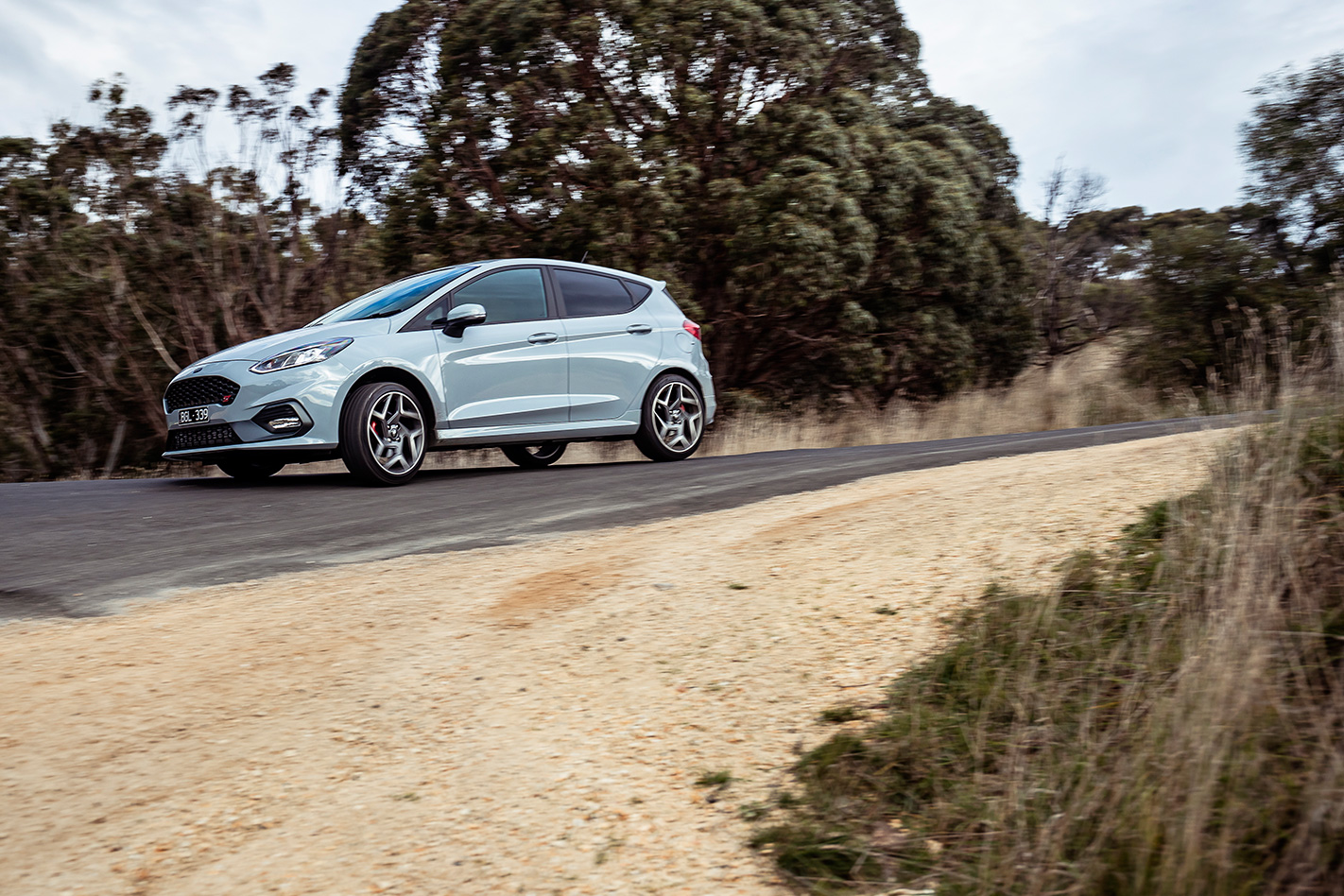
The ST has loads of grip and shows us how a front-drive car ought to use it. Pelt it at a bend, squeeze the brakes and it’ll hoist its bum in the air to point its nose at an apex. Get on the gas, feel the LSD engage, and it’ll hold your line with some assistance from the front brakes, deploying its modest grunt to pull you along. Unlike the old version’s hair raising lift-off oversteer, it’s easy to judge the rear axle’s intentions in the new ST. It cocks a leg to show you’re driving it the right way.
The 86, however, hunkers down for its approach. It still needs to move weight around to find grip, but with a centre of gravity hovering somewhere around that flat engine’s crank, it relies on coaxing its tyres, rather than rear roll stiffness, to the limit. Great brakes help. The Fiesta’s weedy 278mm front discs lag behind the 86’s big Brembos in power and feel. Breakaway is also more progressive on the 86’s low-grip Michelins than the ST on its stickier hoops, as once the ST’s tyres reach temperature it becomes increasingly harder to fling around. So while the 86 dances with a touch more flair up a mountain pass, the ST charges hard.
That three-cylinder lives to give, pumping grunt through the front axle from low in its rev range and on noise the three cylinders sound like a Ford BDA engine through a phone speaker. Synthesised engine noise is laid over the active exhaust’s note, but it’s not the only one messing with acoustics. The 86’s amplified intake noise is almost as cringe-worthy, however wringing every last rpm from a 7400rpm redline is far more involving. And while crisp throttle response does not mask its lack of grunt or linearity, on tight hill climbs its gears are more consistently spaced, helping you keep it in the right powerband.
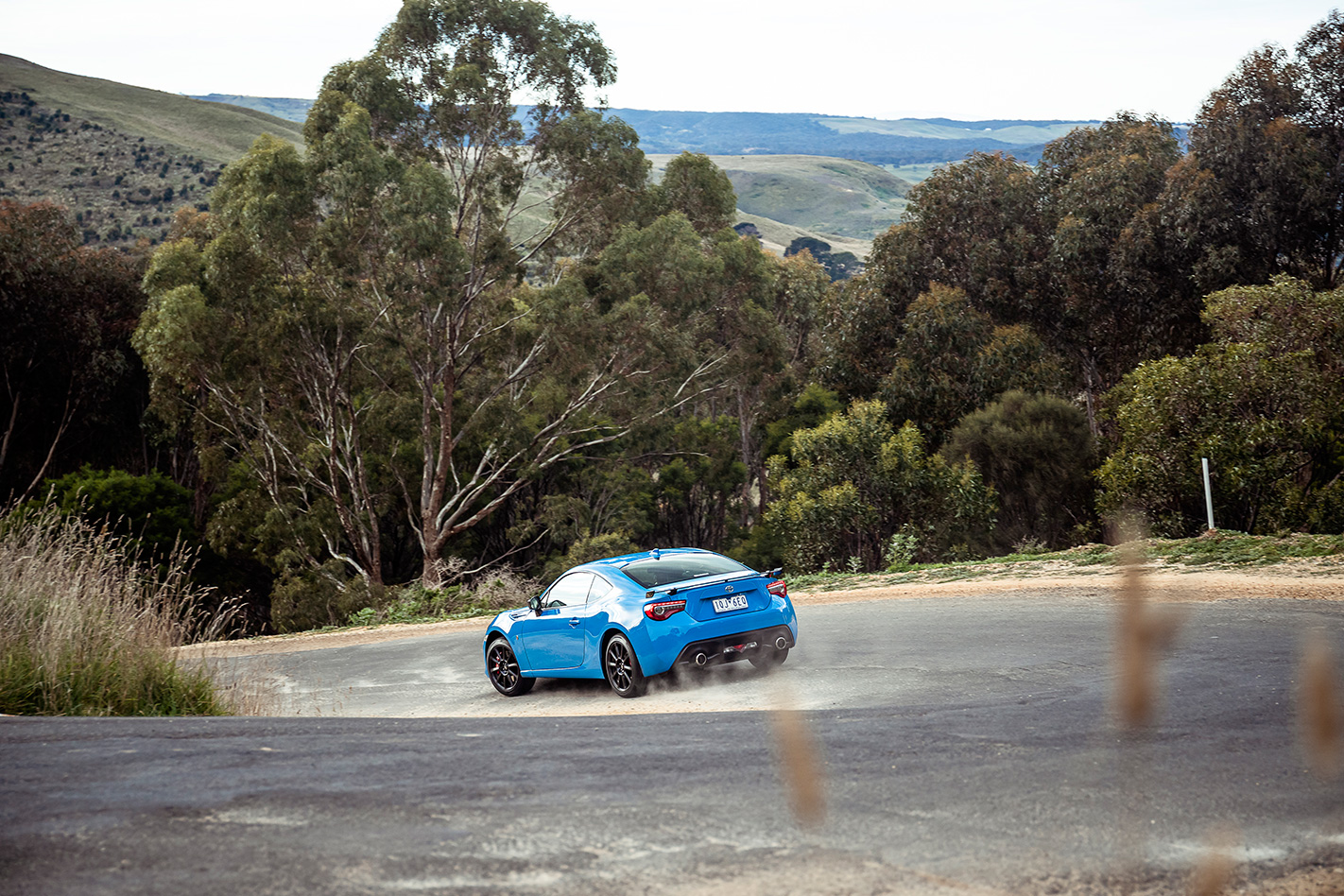
While they’ve felt closely matched until now, trading blow for blow, our next road loop delivers a knockout punch. It may as well be straight from a WRC stage. Long steady 100km/h corners with huge ruts and rippled tarmac lead into gravelly hairpins with questionable cambering. The 86 remains unfazed. Its damping reveals no compromise on high or low speed tuning and steam rolls the road with poise, insulating the car’s creamy steering from disturbance and keeping the pure connection between your hands and its front wheels intact. You can smash the brakes or pin the throttle in confidence the tyres are stuck to the surface while our ST struggles to match its stoicism.
The surface overwhelms the ST’s damping and leaves its springs to control larger 18-inch wheels. The wheels deflect often, pushing you off line when on the throttle or corrupting the ST’s sweet, light and accurate steering when you’re not. Meanwhile the higher centre of gravity encourages a wobble over mid corner bumps. Here, the 86 gives you the confidence to push it harder. But that’s what a ground-up sports car like the 86 should deliver, since its engineers would have made fewer compromises.
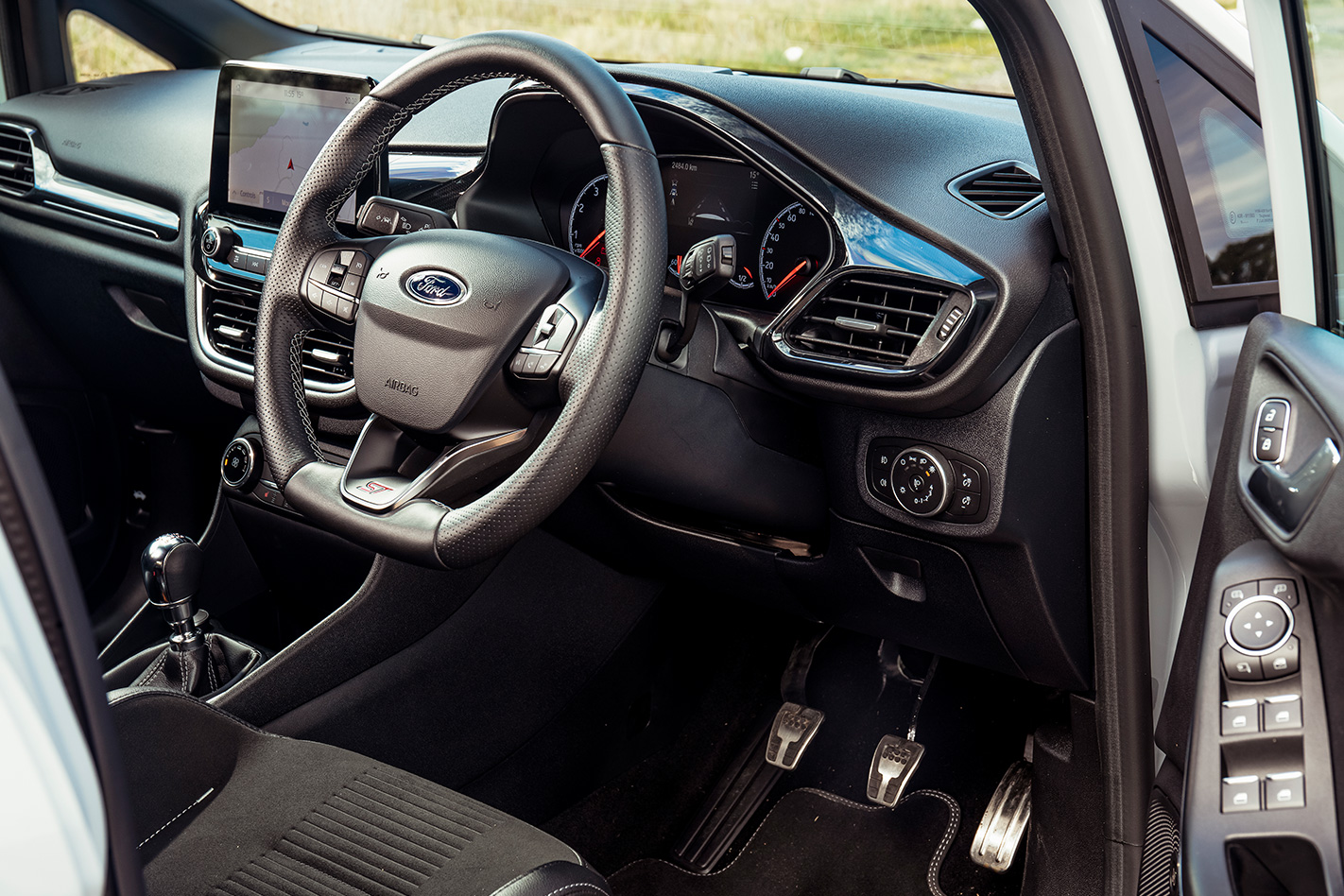
The ST does benefit from its consumer origins, boasting B&O audio, Recaro seats, more luggage space and a superior infotainment system. Those five doors will also prove a blessing if you are eyeing off either car as a daily and it’s almost better looking every angle other than front-on. It is in isolation a big jump forward for small hot hatch performance. You’re getting a lot of car for $32K. And the Fiesta ST will be keen to flex its authority as the ultimate cheap thrill if it gets a run at Bang For Your Bucks.
However an 86 GT with Sachs dampers and Brembo brakes charges only $2050 more. And while both cars are going to dial up plenty of smiles, the 86 just pips it for fun. Sure, it is not as nice inside in either GT or GTS specification, nor has the car itself changed much in eight years. And while rear-wheel drive adds another dimension to its experience the ST cannot, that’s the point here.
The 86 is a finely honed driving machine and only Toyota’s economies of scale could justify building something like this for under $40K. Its low-grip, high-slip thrills will never age. And before an all-new generation arrives in 2021 to possibly change it for better or worse, this ageing warrior remains worth celebrating.
READ NEXT:
Ford Fiesta ST Technical Specs
Body: 5-door, 5-seat hatch Drive: front-wheel Engine: 1497cc inline-3, DOHC, 12v, turbo Bore/stroke: 84.0 x 90.0mm Compression: 9.7:1 Power: 147kW @ 6000rpm Torque: 290Nm @ 1600-4000rpm Weight: 1217kg Transmission: 6-speed manual kw-per-tonne: 121kW/tonne Suspension: struts, coil springs, anti-roll bar (f); torsion beam, coil springs (r) L/W/H: 4068/1735/1469mm Wheelbase: 2493mm Tracks: 1506/1476mm (f/r) Steering: electrically assisted rack-and-pinion Brakes: 278mm ventilated discs, single-piston calipers (f); 253mm solid discs, single-piston calipers (r) Wheels: 18.0 x 7.5-inch (f/r) Tyres: 205/40 ZR18 (f/r); Michelin Pilot Sport 4
Rating: 4.5/5 Price as-tested: $32,940 PROS: Three-wheels like a hero; grunty three cylinder; seriously frugal; nice interior CONS: Not as compliant or involving; it’s not rear-wheel drive
Toyota 86 GTS Performance Pack technical specs
Body: 2-door, 4-seat coupe Drive: rear-wheel Engine: 1998cc boxer-4, DOHC, 16v Bore/stroke: 86.0 x 86.0mm Compression: 12.5:1 Power: 152kW @ 7000rpm Torque: 212Nm @ 6400-6800rpm Weight: 1258kg Transmission: 6-speed manual kw-per-tonne: 121kW/tonne Suspension: struts, coil springs, anti-roll bar (f); A-arms, coil springs, anti-roll bar (r) L/W/H: 4240/1775/1320mm Wheelbase: 2570mm Tracks: 1520/1540mm (f/r) Steering: electrically-assisted rack-and-pinion Brakes: 326mm ventilated discs, 4-piston calipers; 316mm ventilated discs, 2-piston calipers Wheels: 17.0 x 8.0-inch (f/r) Tyres: 215/45 R17 87W (f/r); Michelin Primacy HP
Rating: 4.5/5 Price as-tested: $39,590 PROS: Enchanting chassis, steering and brakes; revvy top-end; direct shift CONS: Hardly a looker; torque hole; dated looking interior
