
Victorians who own electric vehicles will have to self-report how many kilometres they have driven when paying the new Zero and Low Emission Vehicles (ZLEV) Road-User Charge, to be introduced from July 2021.
According to a state government ZLEV Road User Charge fact sheet, drivers will need to report their odometer readings to VicRoads.
“You can do this when you pay your vehicle registration using the myVicRoads online portal. The myVicRoads online portal will generate a bill based on your reported odometer readings.
As with vehicle registration, you can pay your ZLEV road-user charge quarterly, semi-annually or annually, based on what works for you.

“VicRoads will be contacting vehicle owners to provide more detail on their reporting obligations and the billing and payment process.”
Unlike the fuel excise, which is paid in relatively small amounts whenever you refuel, ZLEV drivers will have to pay a higher lump sum on top of their registration bill.
How much will ZLEV owners pay?
Under the ZLEV Road-User Charge zero-emission vehicles such as battery EVs and hydrogen fuel-cell vehicles will incur a 2.5c/kilometre charge, while plug-in hybrid vehicles will be charged at a rate of 2.0c/kilometre because they also contribute to the federal government’s fuel excise.
This means a BEV that travels 15,000km in a year will be up for a ZLEV charge of $375.
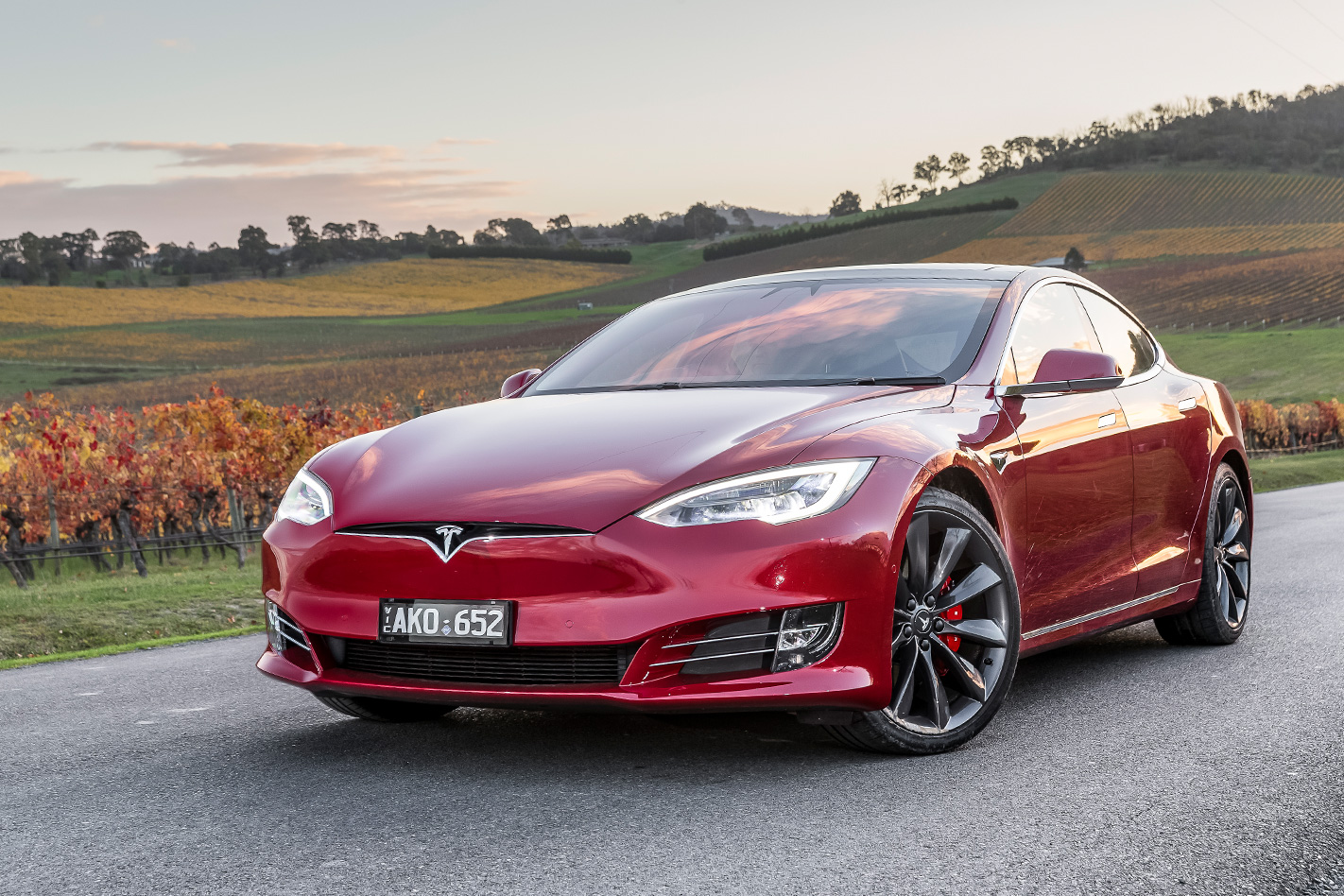
The fact sheet presents different scenarios including Patrick, who usually uses his Tesla Model S to commute to work and to get around on the weekends.
He typically drives 10,000km a year. Patrick will need to pay 2.5c/km – $250 a year in total – in distance-based charges.
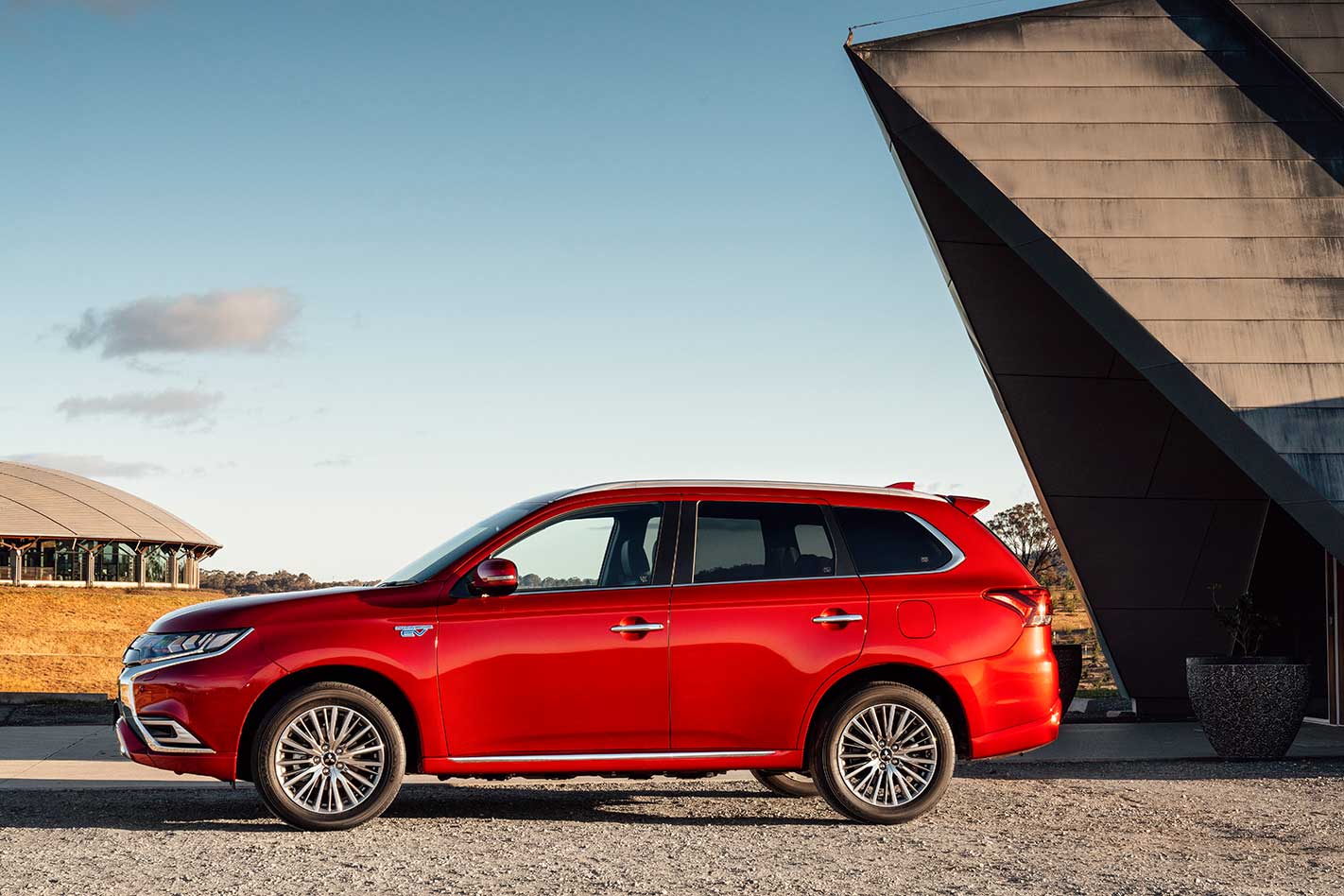
Then there’s Natasha, who owns a Mitsubishi Outlander PHEV.
“She drives about 20,000km per year. Natasha will need to pay 2.0 cents/km, or $400 per year, in distance-based charges. Natasha usually remembers to charge her car at home each night but sometimes she forgets,” said Patrick.
“On those days, she fills her car with regular unleaded petrol and pays the associated fuel excise. She still needs to pay the ZLEV road-user charge, even when using petrol.
“That is why PHEVs are charged a lower per-kilometre rate than electric and other zero-emission vehicles.”
Conventional hybrid vehicles will not be subject to the ZLEV. However, they will no longer benefit from the $100 concession from their annual registration that BEVs, PHEVs and hydrogen fuel cell vehicles will continue to receive.
Defending the ZLEV charge
The Victorian Government has come under heavy fire from motoring and environmental groups when it announced the ZLEV at the weekend prior to the belated Covid-19 affected State Budget.
Electric Vehicle Council chief executive Behyad Jafari said the charge would dramatically set-back EV uptake and likened it to “replacing declining tobacco excise with a new tax on nicotine patches”.
Federal Chamber of Automotive Industries (FCAI)’s chief executive Tony Weber, said would kill EV technology at its infancy.
But the Victorian Government justifies the ZLEV saying it is needed to ensure all vehicles make a fair contribution to the road network, “while recognising their environmental and health benefits”.
It says the charges have been structured so owners of these vehicles continue to pay less in taxes or charges than other vehicles.
It also points out the ZLEV does not impact existing incentives which promote the take-up of low emission vehicles, such as the motor vehicle stamp duty concession for all low emission passenger vehicles which produce 120 grams or less of carbon dioxide emissions per kilometre travelled, or the $100 registration discount.
The fact sheet also states the state government “will use the revenue raised from the first few years of this charge to invest in accelerating the adoption of zero and low emission vehicles. This will include new electric vehicle-charging infrastructure and reforms to enable electric-vehicle-ready new buildings.”
How many vehicles will the ZLEV charge affect?
According to the state government, around 21,100 ZLEV owners are expected to be affected by this new distance-based charge, and around 30,300 conventional hybrid owners will no longer receive the $100 annual registration concession.
There are only so many hours in a day, right? But what if I told you that you could extend the number of daylight hours by driving due west on the longest day of the year? Exactly how many extra minutes you might gain is down to your stamina. And your car.
Enter the McLaren 720S Spider. I completed this trip with WhichCar journalist Tony O’Kane back on December 22nd 2019 and our plan was simple: leave Bondi at first light on Sunday morning and drive as far west as possible, stopping when the sun went down.
Could a 530kW twin turbo V8 actually get you further on the longest day of the year?
We didn’t get off to a good start. Savage bushfires were raging on Australia’s east coast and as we went to sleep the night before our drive, the Blue Mountains were on fire.
Road closures and impenetrable smoke were genuine concerns, though we still left the ghostly shores of Bondi at 5:17am and headed west.
As we climbed the Great Dividing Range, the smoke grew thicker and thicker, until around Blackheath, Tony, who refused to put the roof up on the convertible McLaren, opted to put his N95 mask on. By choice – crazy, I know.
The sound of fire-bombing Hueys filled the skies, but the smoke was so dense we couldn’t actually see them. We could, however, see the flames flicking over the tops of the tree lines.
Somehow, we scraped through the mountain range and down Victoria Pass.
A quick spin around Mount Panorama was essential, followed by the back route from Bathurst to Orange via Ophir Road (an absolute must if you are looking for a brilliant driving road in the Central West). Then it was highway miles for the rest of the day.
By 1pm we had made it past Dubbo and Tony was beginning to boil in the harsh Western Plains sun.
The smoke was still thicker than the Pirelli rubber on the McLaren’s rear wheels, but the heat was turning him into, as he put it, a big piece of human jerky.
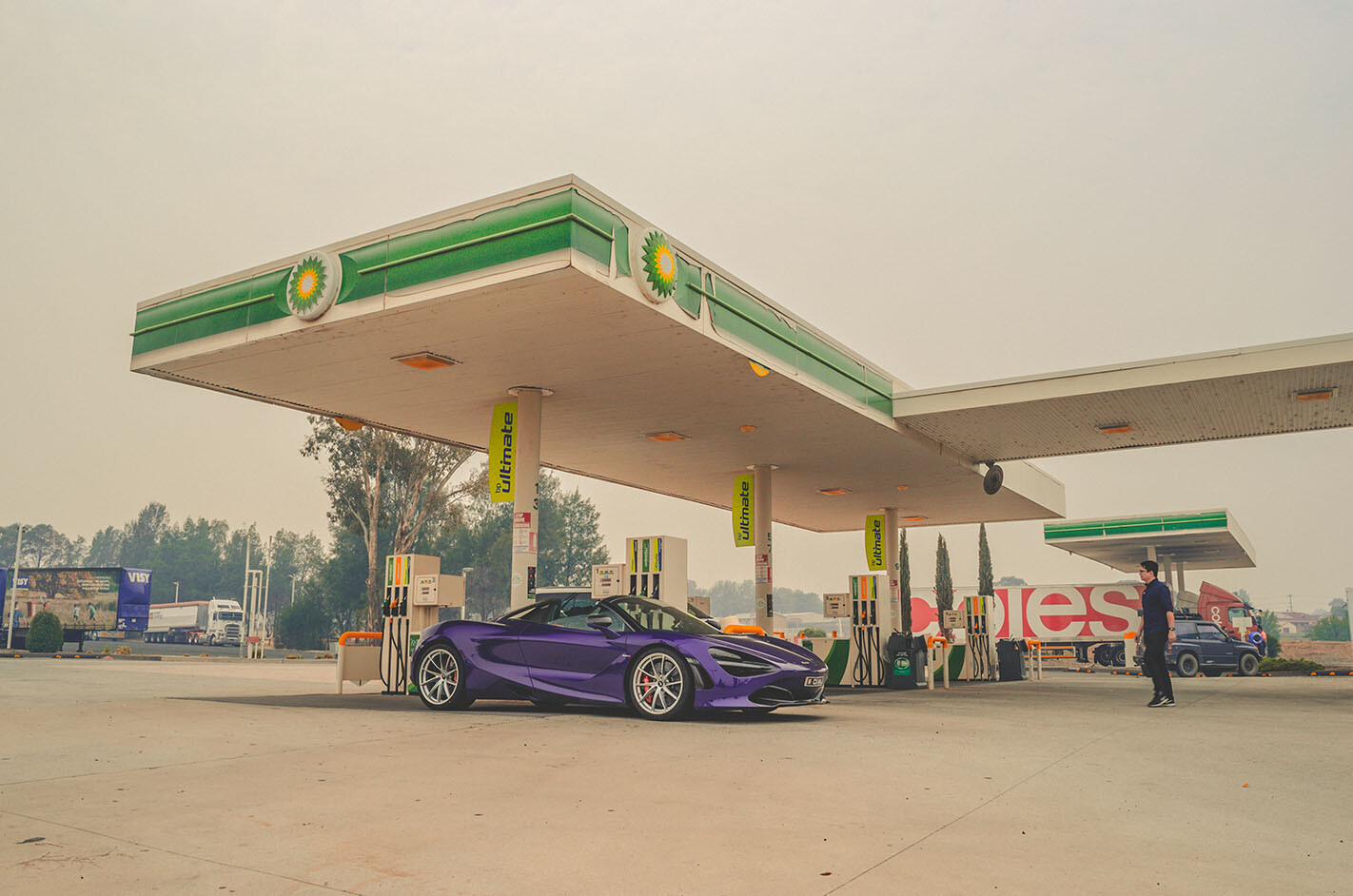
We stopped in Nyngan for fuel and a photo op around 4pm, before our final charge to see just how far we could get. The smoke was pretty clear by this point and the soil was red, but the McLaren wasn’t skipping a beat.

The Sun finally dipped below the horizon at around 8:30pm. We were about 100km past Cobar, saltbush lining either side of the road.
We were pretty sure a McLaren had never set foot in this part of town before, but what was most impressive was how it completed our 14-plus hour road trip with such ease.
It had suffered huge amounts of bushfire smoke, leagues of bugs and 750km of outback highways and yet, it was more than ready to keep going.
And as for us? We were tired but our backs were fine; testament to the McLaren’s excellent seats and surprising ride comfort.
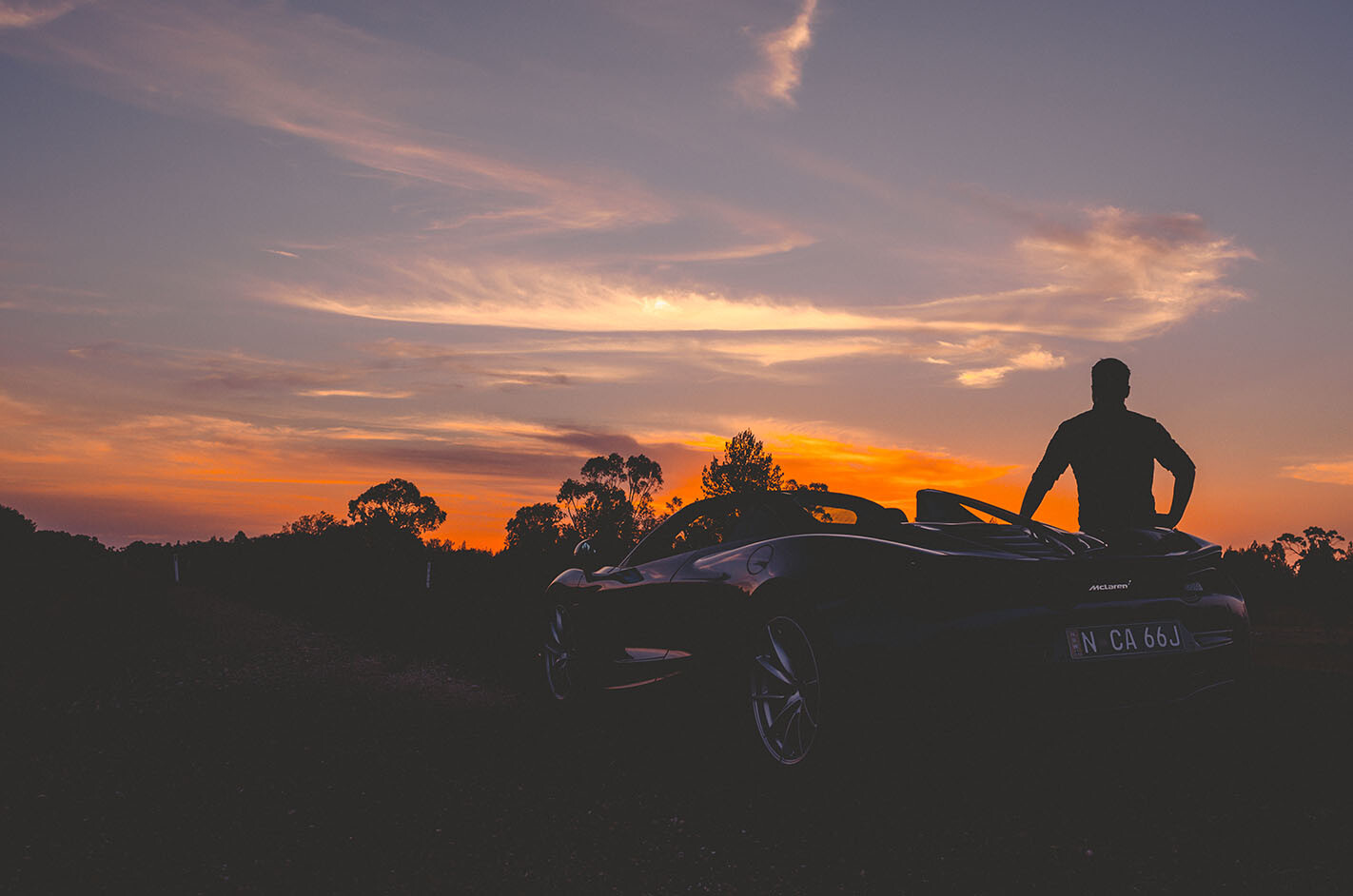
How much extra daylight did we get? About 30 minutes. But put it this way… that’s an extra 30 minutes with the roof down in one of the best supercars money can buy, and a sunset you simply can’t put a price on.
The first-generation Audi RS Q3 was a curious machine.
It had prodigious pace, a playfulness that isn’t always present in Audi Sport products and more character than most of its rivals thanks to that growling 2.5-litre turbocharged five-pot.But there were drawbacks: it was small inside, the interior was dated and the model itself felt a bit like an afterthought.

What is the Audi RS Q3?
Still, that’s the past, this is the present and there’s now a new Audi RS Q3 to discuss, which is also available as the more svelte Sportback tested here.
The question is whether this new RS Q3 addresses the shortcomings of its predecessor or simply offers more of the same?
Well, it’s a different shape for starters; the new model has grown by 96mm in length but only 10mm in width and shrunk by 23mm in height.
Prices and specs
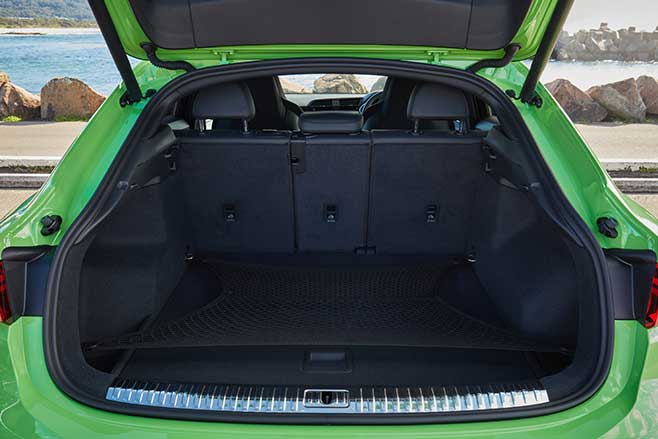
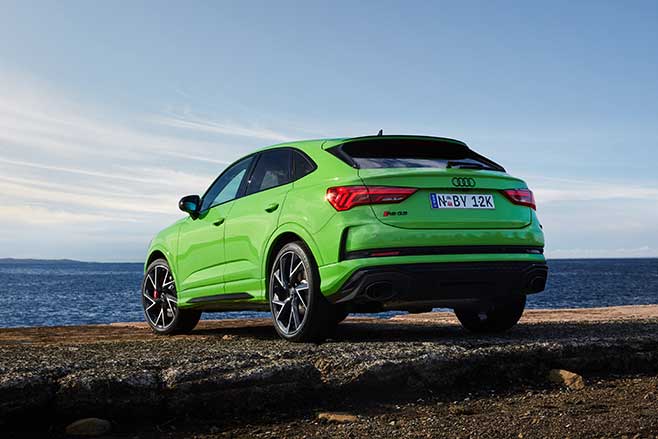
The Sportback adds $3000 to the regular RS Q3’s $89,900 ask, robs a little boot space but does look pretty flash, especially in retina-searing Kyalami Green.
Expect comments and plenty of attention.
The interior has also jumped forward two generations with an impressive list of standard gear.

So as an SUV the new RS Q3 has taken impressive steps forward, but what about the ‘performance’ bit? Well, there’s further good news.
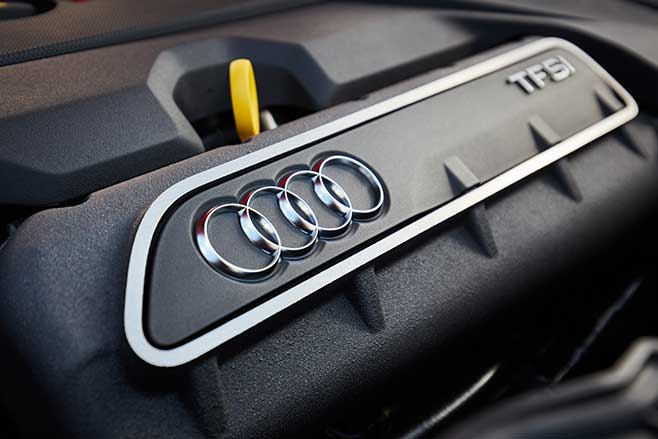
Despite the increased dimensions, kerb weight has dropped by 30kg with 26kg of those coming from the nose courtesy of Audi’s latest alloy-crankcase five-pot.
What’s the Audi RS Q3 like to drive?
Loose surfaces show the RS Q3 has the ability to wag its tail under brakes or throttle but there’s too much grip to do so on tarmac; nevertheless, it’s an entertaining drive, with an impressive resistance to understeer and composure in hard driving that you might not expect.Selecting Dynamic mode doesn’t turn it into a hard riding, syrupy mess, either, though it feels more natural to relax the steering and suspension and save the combination into the new RS Mode button.
The good news about the list of Australian state and federal incentives for EV ownership is it takes just 30 seconds to read.
The bad news is, the lack of incentives means Australia still lags behind much of the developed world in terms of EV ownership, which means most Aussies are missing out on the opportunity to own a car that’s cleaner, quieter and more affordable to run.
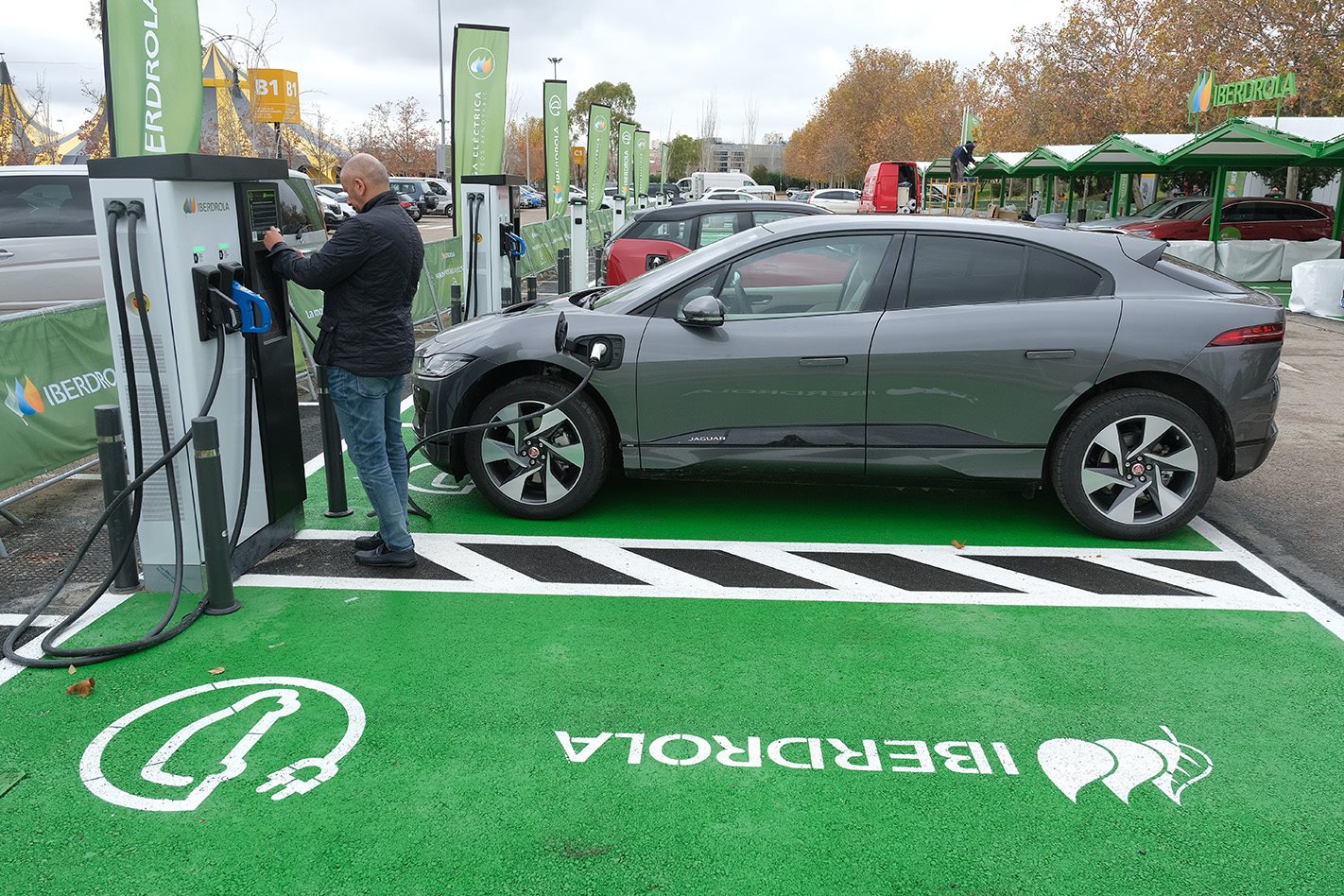
According to Australia’s Electric Vehicle Council, key incentives toward broader EV ownership can include financial subsidies to help bridge the gap between the cost of an EV and internal combustion engine (ICE) vehicle.
These include tax rebates, infrastructure subsidies, stamp duty exemptions, and registration discounts. Non-financial incentives, such as access to bus lanes and parking, could also help.
Such incentives would have a flow-on effect by encouraging manufacturers to bring more battery-electric vehicles (BEVs) and plug-in hybrid vehicles (PHEVs) to the Australian market, which increases choice and competition to further bring prices down.
Federal Government EV subsidies
There are no national incentives directly aimed at making EVs more affordable, however, some battery electric vehicles (BEVs) benefit from a higher Luxury Car Tax threshold for fuel-efficient vehicles consuming less than 7.0L/100km or less, from $68,740 to $77,565.
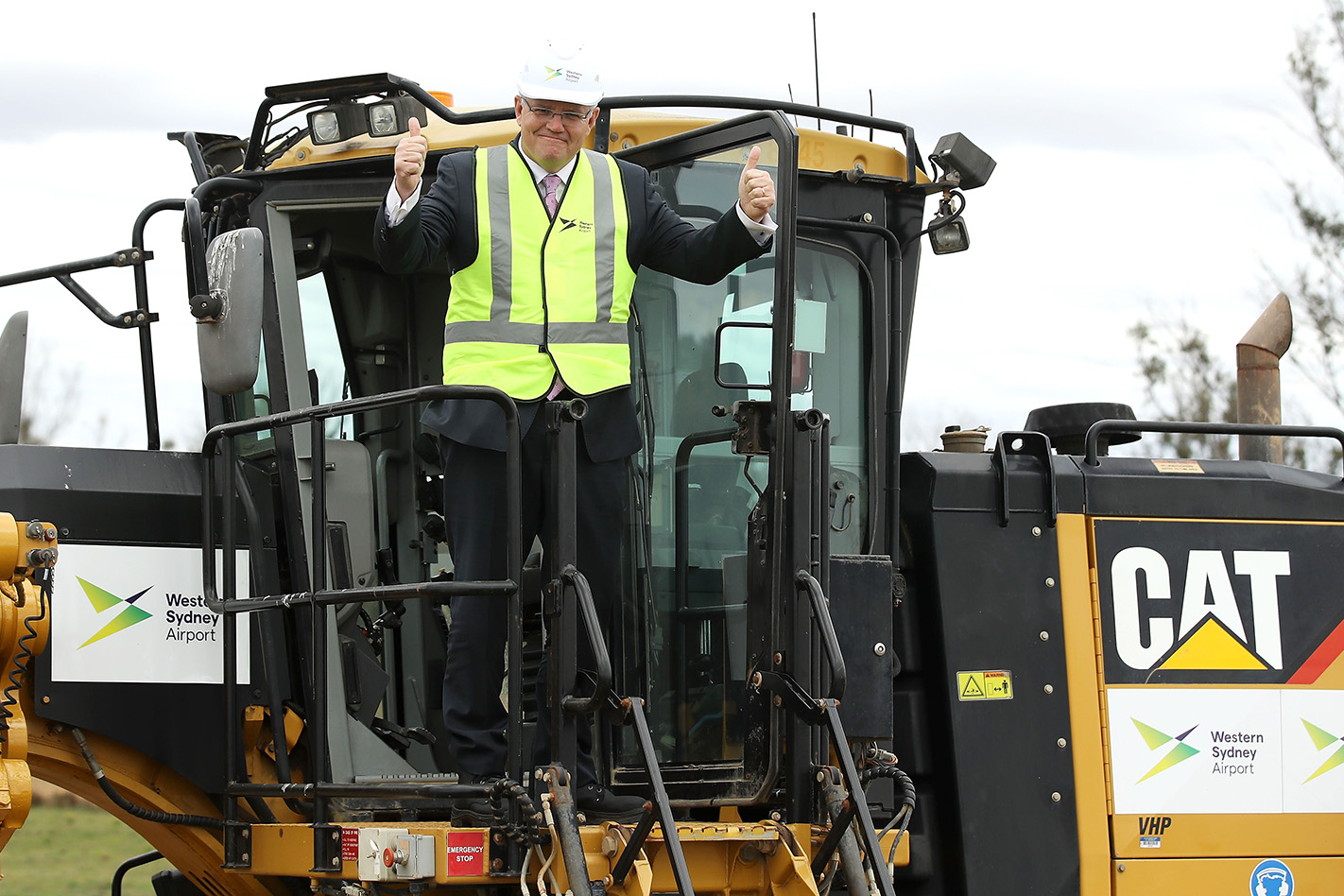
This only benefits BEV models that fall within this price range, such as the Tesla Model 3 Plus and BMW i3 S.
State government EV subsidies
Just three Australian states and territories offer discounts on stamp duty and registration including the Australian Capital Territory, Queensland and Victoria.
ACT
No stamp duty is charged for new BEV purchases and owners.
Free registration: Drivers of emissions-free vehicles current receive 20 percent discount in their registration. This has been extended to free registration for the first two years to come into effect soon.
Interest-free loans: In November 2020 the new ACT Government announced zero-interest loans of up to $15,000 to assist with the upfront costs of investing in zero-emission vehicles.
Queensland
Stamp duty discounts: The Sunshine state offers a slight discount on stamp duty for BEV and hybrid buyers – $2 per $100 up to $100,000, and $4 per $100 for more than $100K.
By comparison, internal combustion engine (ICE) vehicles priced below $100,000 charge between $3 and $4 per $100 depending on the number of cylinders, or between $5 and $6 for cars costing more than $100K.
Victoria
Stamp duty rate exemptions: EVs, or any vehicle that emit less than 120g/km of carbon, are exempt from the state’s “luxury vehicle” rate of stamp duty, paying a flat rate of $8.40 per $200 of market value.
This has no impact on vehicles priced up to $68,740 – such as the Hyundai Ioniq and Kona Electric or Nissan Leaf – but does offer considerable savings for vehicles priced beyond that amount.
Registration discount: BEVs and hybrids also receive a $100 annual discount on vehicle registration.
Road tax: Unfortunately, Victoria’s modest EV subsidies have been swamped by a 2.5c/km road tax on zero-emission vehicles such as BEVs and Hydrogen Fuel Cell vehicles and 2.0c/km on Plug-in Hybrids. South Australia and New South Wales have proposed similar taxes.
No real incentive
Even before you include the state road taxes, the above subsidies don’t do much to bring the entry-level pricing of EVs to a more affordable level.
The cheapest EV in Australia the Hyundai Ioniq Electric Elite retails for $48,970, which means the only benefits it receives are stamp duty concessions in the ACT and Queensland and registration discounts in ACT and Victoria.
In each case, we’re talking less than $1000 during the year of purchase, which is far from the discount required to bring it anywhere near parity to say a similar sized and equipped 2.0-litre petrol Hyundai i30 Elite priced at $30,790.
So how much cheaper will the Ioniq be if Australia followed the lead of countries with generous EV incentives, such as the UK and Germany?
UK EV subsidies
National subsidies
Purchase grant: Buy an EV or plug-in hybrid vehicle (PHEV) in the UK and Boris will throw in 35 percent of the cost up to £3500 ($6440) depending on the model.
Excise duty discount: All EVs costing less than £40,000 ($73,600) are exempt from the annual Vehicle Excise Duty (rego) which is £500 ($920) for a 2.0-litre hatchback that emits 170g/km of carbon like the Hyundai i30.
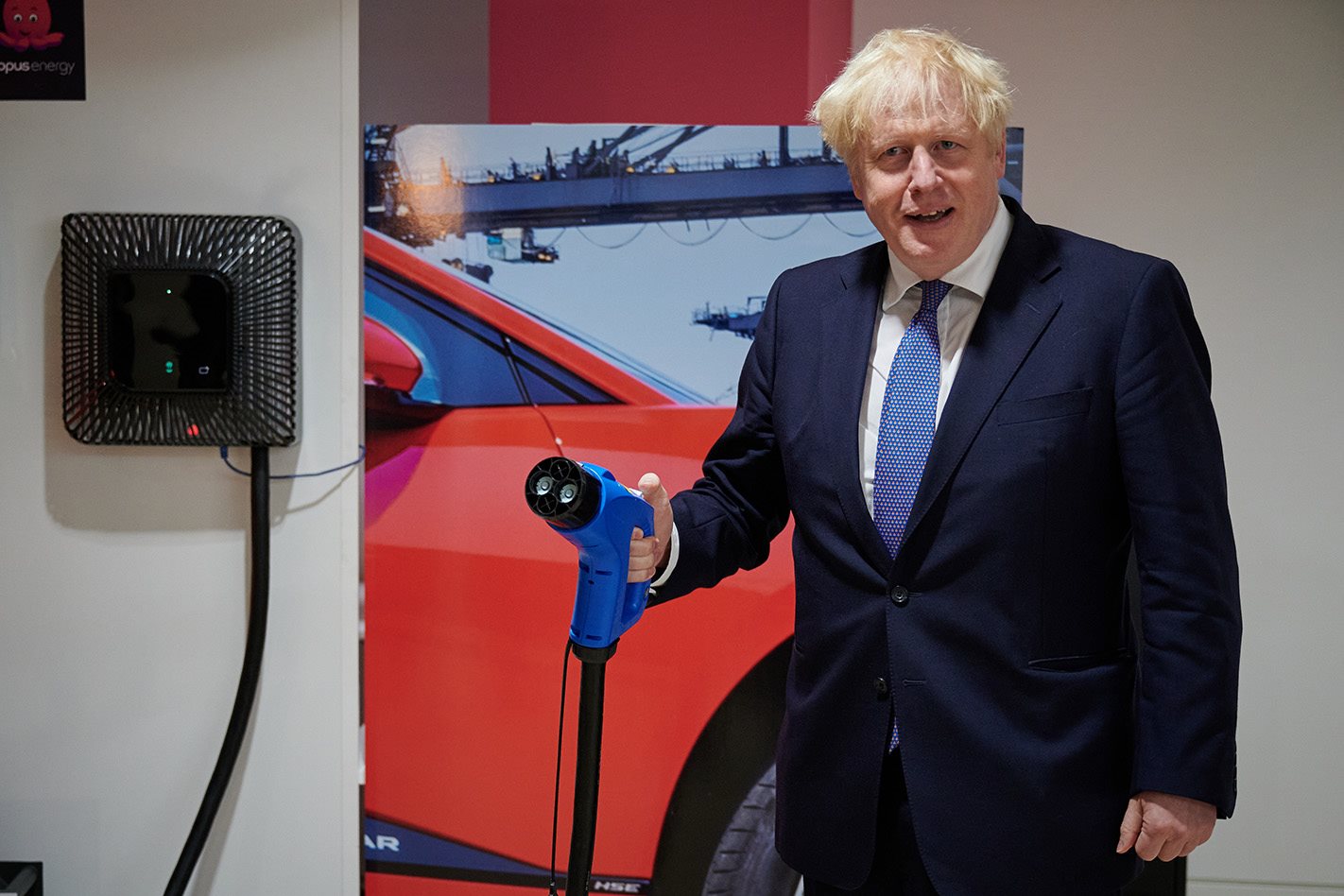
Business tax incentives: There are also a 100 percent purchase price write-downs for businesses that purchase EVs.
If Australia had similar subsidies to the UK, the $48,970 Hyundai Ioniq would now cost $42,520 before taking into account rego and regional subsidies.
Regional subsidies
Interest-free loan: Scottish EV buyers can benefit from an interest-free loan of up to £35,000 ($64,400) to switch to an EV or hybrid vehicle.
Pollution tax exemption: If you’re in London all EVs and PHEVs are exempt from the £15 per day ($28) Congestion Charge until 2025.
Free parking: Many local government areas offer free and discounted parking for EVs.
Charger grants: The UK government even provides a grant of up to 75 percent off the price of a home EV charger capped up to £350 ($650).
Germany
National
Purchase grants: In June 2020, the German Government doubled its EV grant from €3000 to €6000 ($9950) until the end of 2021.
In addition, the EV manufacturers are throwing in another €3,000, bringing the total available incentives up to €9000 ($15,000) for vehicles up to €40,000 ($66,400) which brings many EV models close to parity with their ICE equivalents.
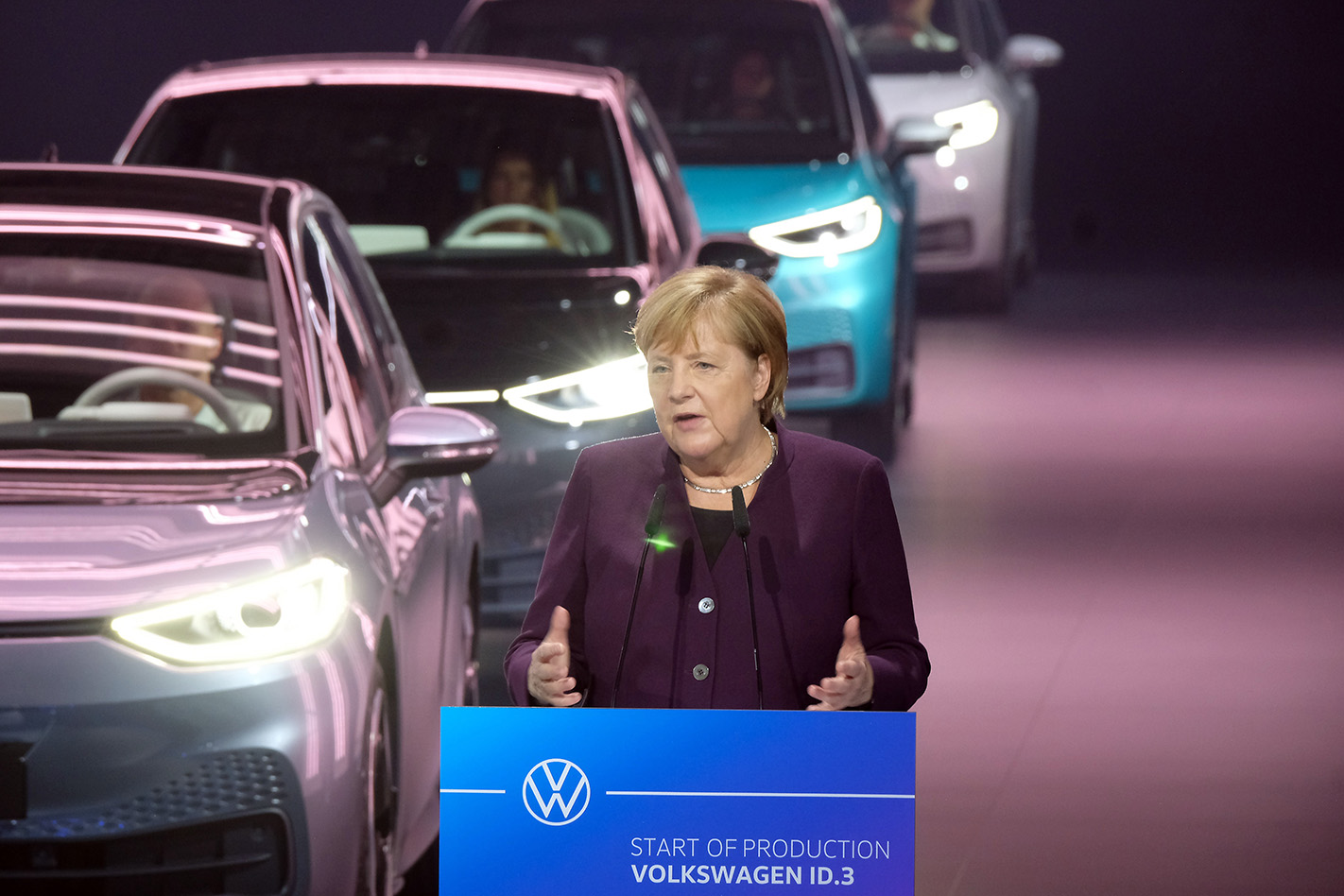
A combined incentive of €7500 (€12,500) is available for EVs costing between €40,000 and €65,000 ($108,000).
We doubt Hyundai Australia would be able to keep up with demand if the Ioniq Elite suddenly cost just $34,000.
Tax benefits: German EV buyers also receive a 10-year exemption from the annual ownership tax that varies depending on the vehicle but averages out to about €195 ($325).
Until the end of 2020, the VAT (value-added tax, which is like our GST) on EVs is reduced from 19 to 16 percent.
Regional
Depending on where you live in Germany you might be eligible for a €1,500 ($2500) EV purchase grant on top of the national EV grant.
And most German jurisdictions apply the 2015 Electromobility Law that provides EVs benefits such as free parking, reserved parking places, and use of bus lanes.
Charger subsidies
Home chargers are also heavily subsidised in Germany which makes it affordable to install a fast or rapid charger at home. Subsidies include a payment up to:
- €3000 ($5000) for purchasing wall charger up to 22 kW.
- €12,000 ($20,000) for purchasing DC chargers up to 100 kW.
- €50,000 ($83,000) for purchasing DC chargers above 100 kW.
Other generous EV subsidies around the world
China
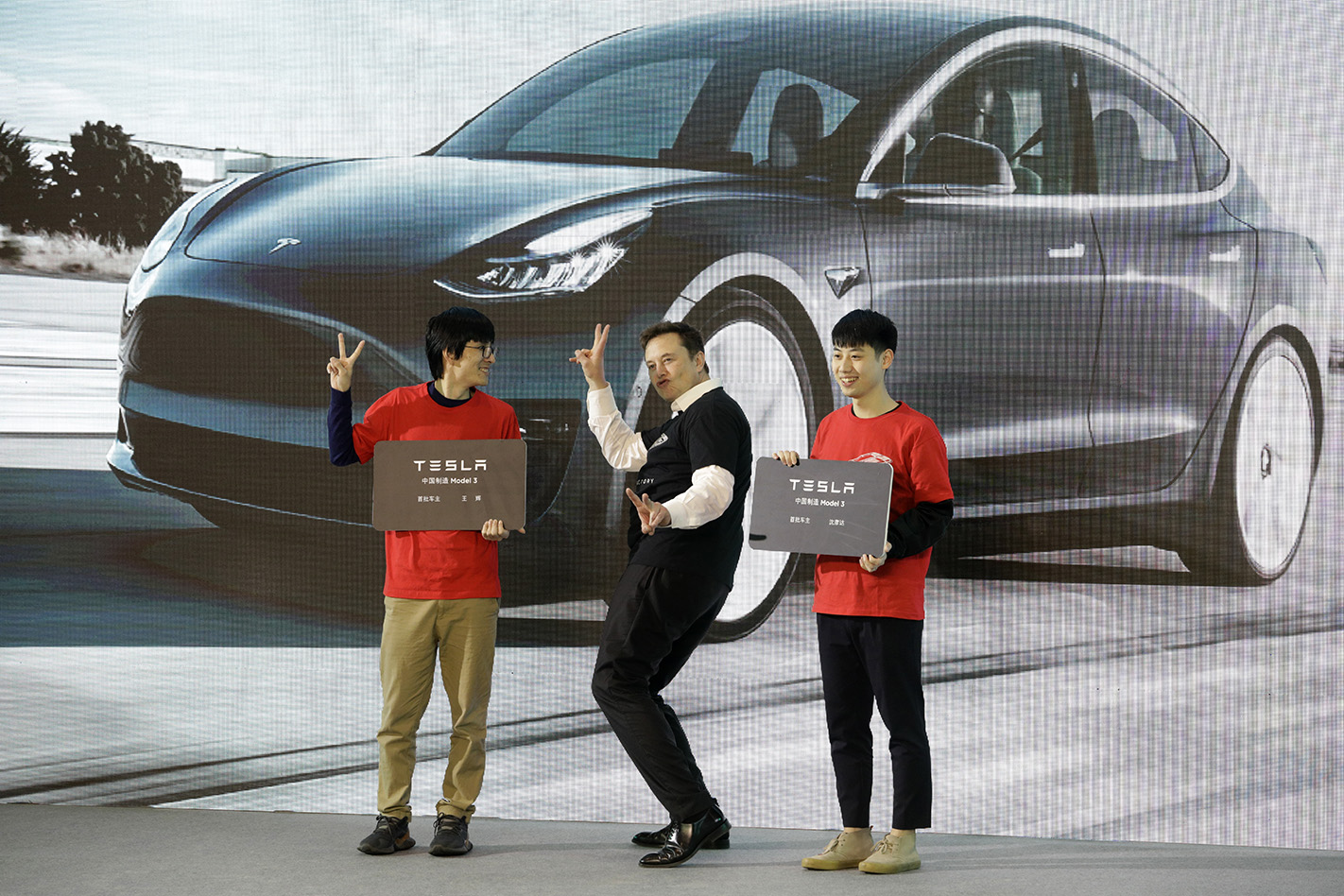
EVs in China with a range between 150km and 399km garner a 40,000 CNY ($8500) rebate, with 50,000 CNY ($10,600) doled out to cars with ranges of at least 400km.
Finland
Buyers of new EVs are eligible for a €2000 ($3300) grant for vehicles costing less than €50,000 ($83,000) until November 30, 2021.
Greece
The Greek Government will cover 15 percent of the cost of a new EV up to €5,500 ($9100) for private passenger and light commercial vehicles. Vehicle owners who retire their old ICA vehicle at the same time as purchasing an EV receive an additional bonus of up to €4150.
Car charging expenses are also tax deductible.
Hungary
Electric vehicles are eligible for a 21 percent rebate up to 1,500,500Ft ($6800) and are exempt from registration tax.
Iceland
All EVs receive a VAT exemption up to ISK 6,000,000 ($60,300), with the normal rate applied to the remainder of the price. EVs and hydrogen fuel cell vehicles shorter than 5m also receive free parking in the city centre for up to 90 minutes.
Ireland
Irish buyers can claim an additional grant of up to €5000 Euro ($8320) toward the cost of a private EV. EVs are also exempt from the Vehicle Registration Tax (VRT) up to €5,000 and attract the lowest rate of annual road tax, which is based on emissions.
Italy
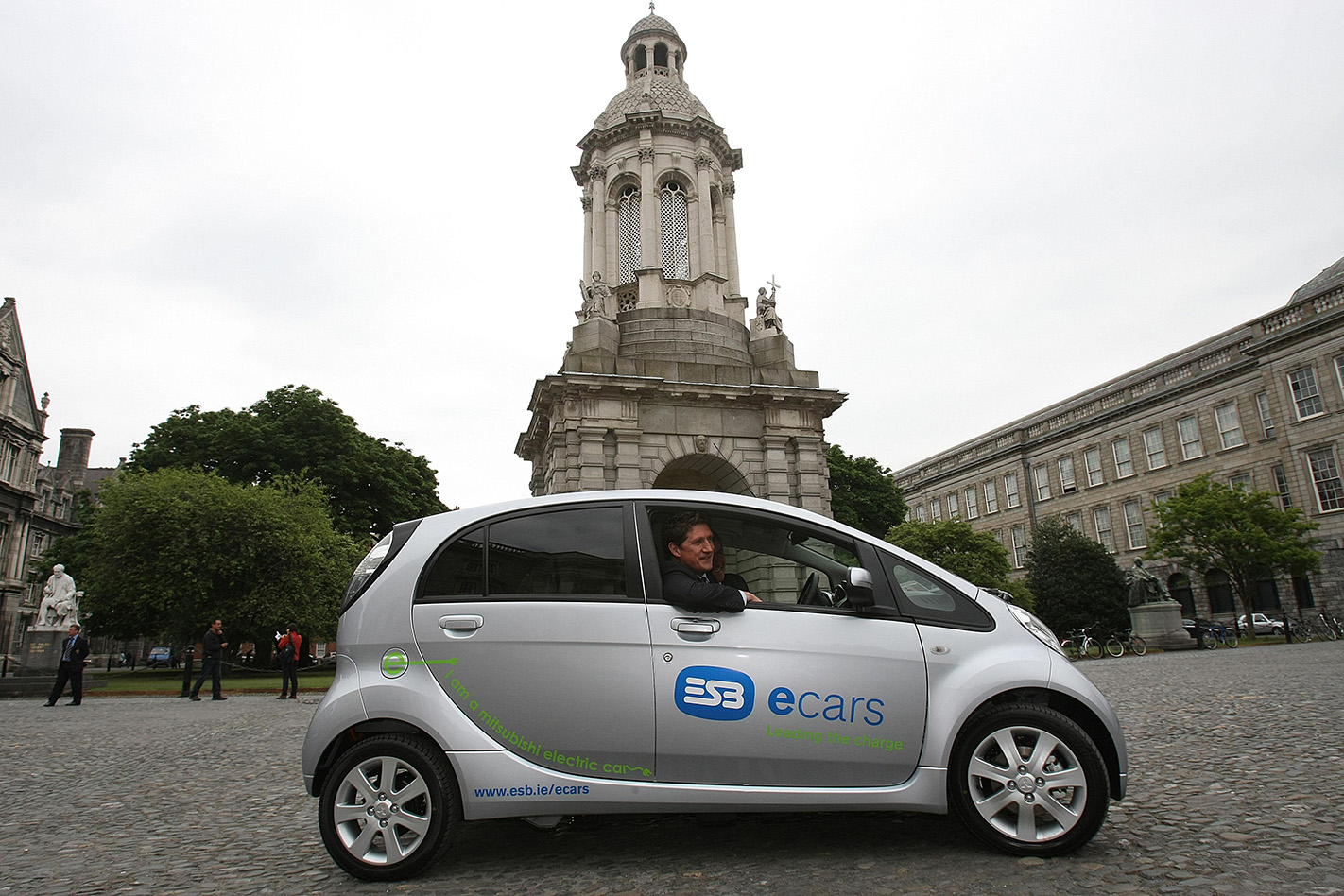
EVs benefit from a subsidy that sees low emission vehicles eligible for grants from €1500 ($2500) to €10,000 ($16,600). They are also exempt from the annual circulation tax, and ownership tax for five years from the date of their first registration.
After that, they only attract about 75 percent of the tax compared to similar-sized ICE vehicles.
Monaco
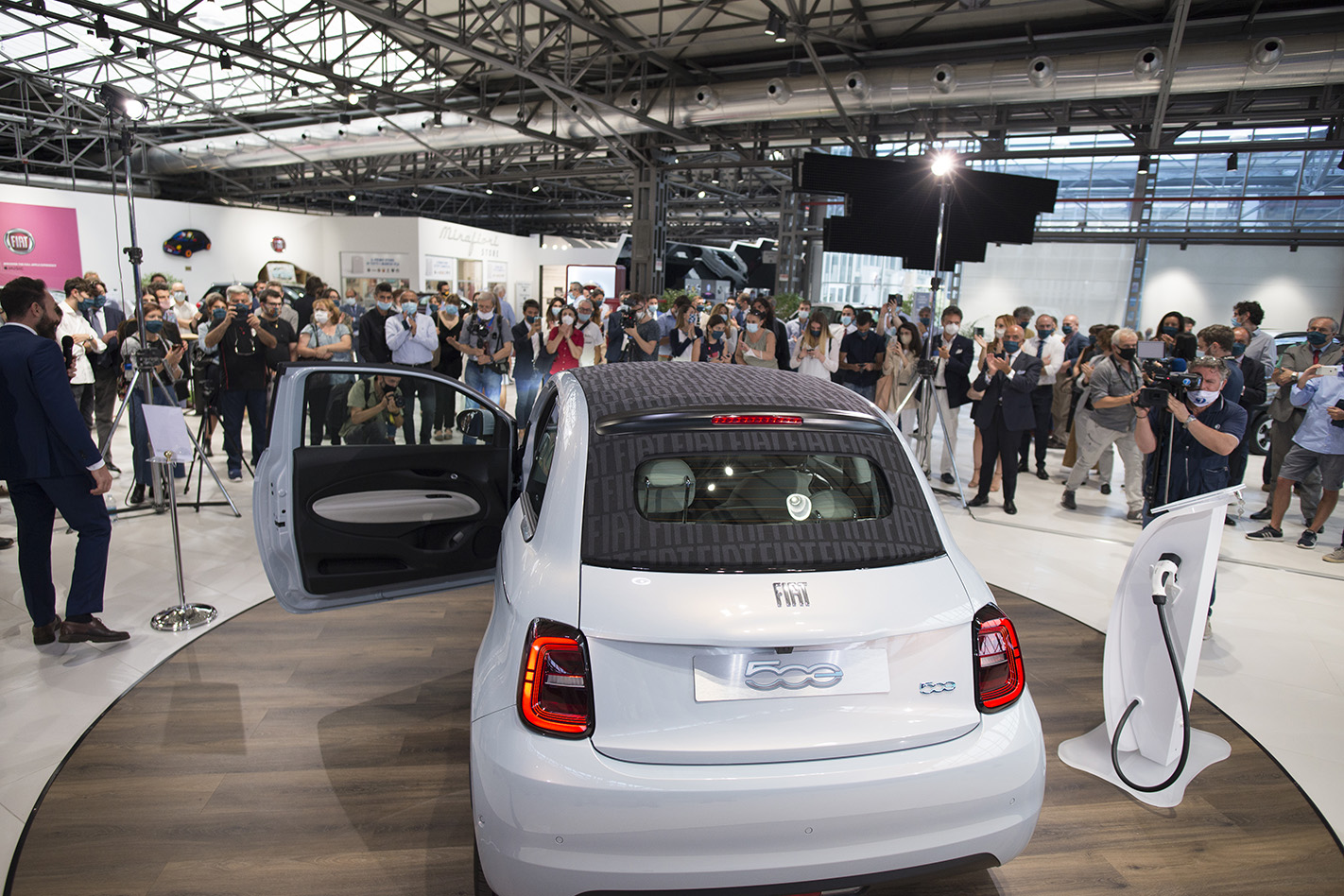
EV buyers are eligible to receive a €9000 ($15,000) purchase grant and can park free at any public parking facility.
Romania
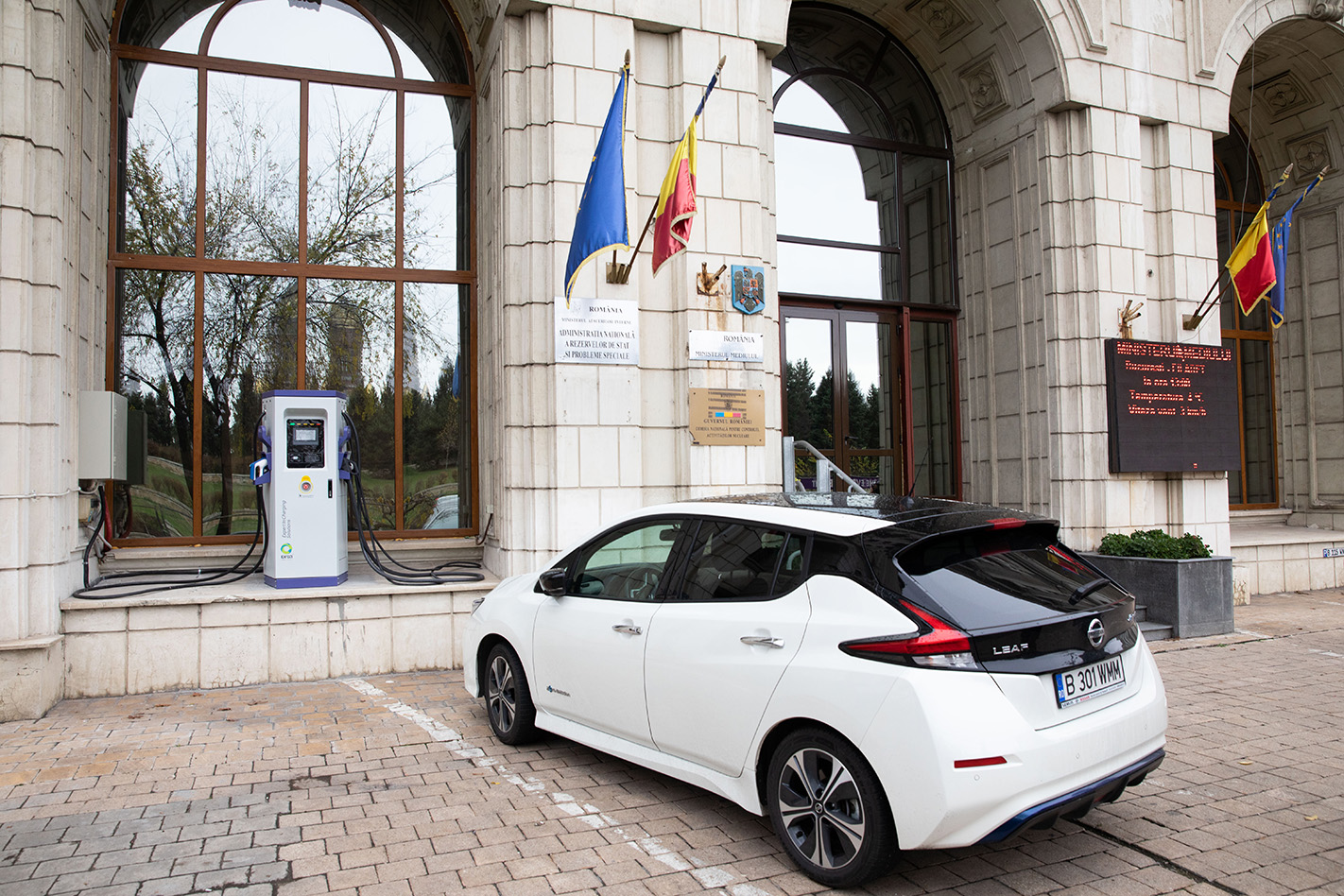
Romania’s ‘Rabla Plus’ grant program provides €9000 ($15,000) for the purchase of an EV and buyers receive an additional €1400 ($2300) if they retire of a car older than eight years.
Spain
The Spanish government offers direct subsidies of up to 25 percent of the purchase price of an EV before tax up to €6000 ($10,000) per vehicle. Several regional governments grant and additional €6000.
Sweden
EV buyers in Sweden receive a 60,000 SEK ($9500) rebate.
There’s a real sense of pride in the WhichCar office today – our good friend and former Australian rally champion Molly Taylor has made it through to the final night of TV’s newest reality smash hit, SAS Australia.
We’ve long known how tough she is, but watching her battle the elements and her competition – including Australian rugby union star Nick ‘Honey Badger’ Cummins and WAFL legend Sabrina Frederick – has shown the rest of Australia just what it takes to get to the top of any sporting discipline.
Molly headed overseas to carve a path in the world of rallying when she was barely 20, sleeping in barns and on couches as she relentlessly pursued a dream to make it to the top rungs of the World Rally Championship.
Podiums in WRC2 and terrific results across a variety of categories put Taylor in the frame to return the factory Subaru team to the winner’s circle in Australia, claiming the 2016 Australian Rally Championship as the youngest ever winner and the first female.
It’s easy to see her steely determination as she guts out some of the most evil training regimens we’ve ever seen, but what people haven’t seen on telly is just what a nice, regular human she is.
Molly makes it her mission to be inclusive and accessible, and – like her mum, multiple ARC championship winner Coral Taylor – she has encouraged a lot of young girls not just to follow a motorsport path but to ‘get after it’ in life in general.
Enjoy this terrific yarn that we did in 2019 with Molly, and make sure you tune in to channel Seven tonight to cheer Molly on. It’s not often motorsport has a chance to get one up on football!/Tim Robson
—–
I’m certainly no relationships expert but I do know that a genuine interest in your partner’s occupation can be the difference between marital bliss and a night or two on the couch, and one of the best ways of tangibly investing is the so-called ‘take your partner to work day’.
In the name of domestic PR and world peace, I spent a day following my partner Molly through a day in her working life, and couldn’t recommend it more highly.
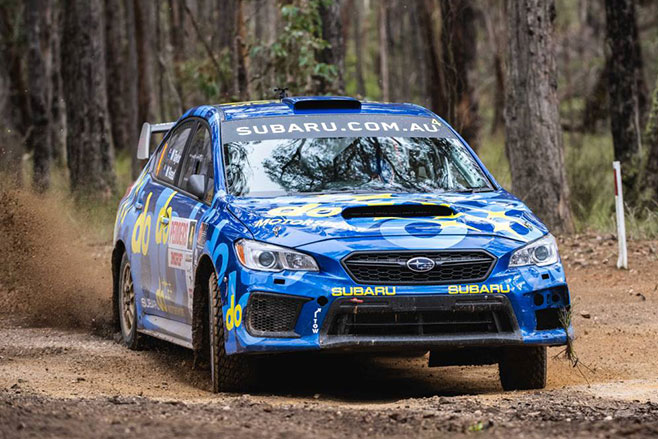
It didn’t take much twisting of my arm since Molly is the Subaru do Motorsport factory driver competing in the Australian Rally Championship, and a typical day for her is arguably even more car-immersive than mine.
But let’s first settle one misconception about motor racing as a career. It is not as glamorous as it might appear from the outside and, like virtually every other professional racing driver, Molly is just as flat-out when she is away from the track.
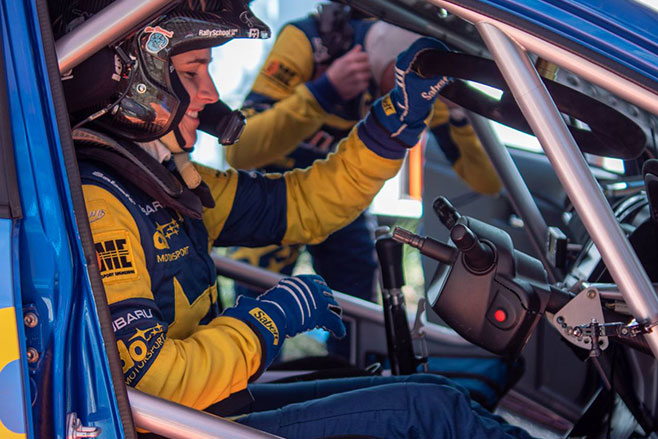
To name just a few, her day is packed with Sisyphean tasks including exploring new sponsorship possibilities, looking after existing sponsors, fulfilling ambassadorial duties for charities as well as Subaru, rigorous training to stay race-day fit, and fronting endless media interviews. Bloody journalists.
My day sharing her ‘office’ however, coincided with one of the best days in the job – pre-race testing. Ahead of the penultimate 2019 rally in the Adelaide Hills, I was offered a ride in the co-driver’s seat and the experience will stay with me forever.
A deftly despatched handbrake turn onto the start line was the first indication that this short ride would be all about fun and flair rather than meaningful stage times. Molly flicked the engine management into ‘stage map’ pinned the throttle and the crackling of anti-lag was followed immediately by staggering off-the-mark acceleration.
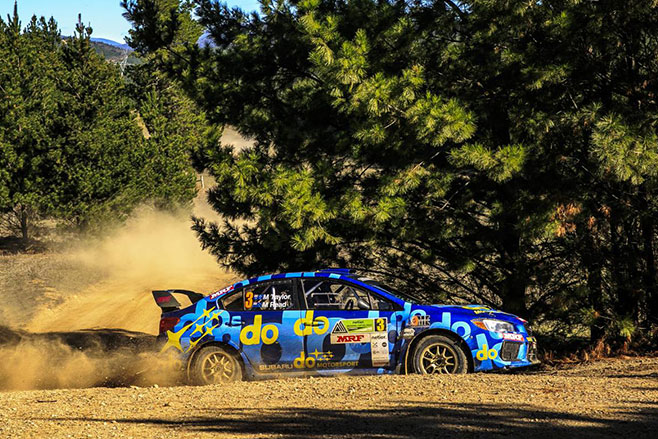
Yes Molly’s PRC WRX STI has permanent four-wheel drive but the combination of MRF dirt tyres, bespoke differentials and Reiger suspension meant this incredibly specialised car explodes from a standing start on gravel faster than the standard road car would on asphalt.
At the hands of the Orange Motorsport Engineering team, the standard car underwent a dramatic transformation, shredding the weight to a little more than 1200kg and even though its engine is 500cc smaller than the factory STI and has a regulation restrictor fitted, it produces more power.
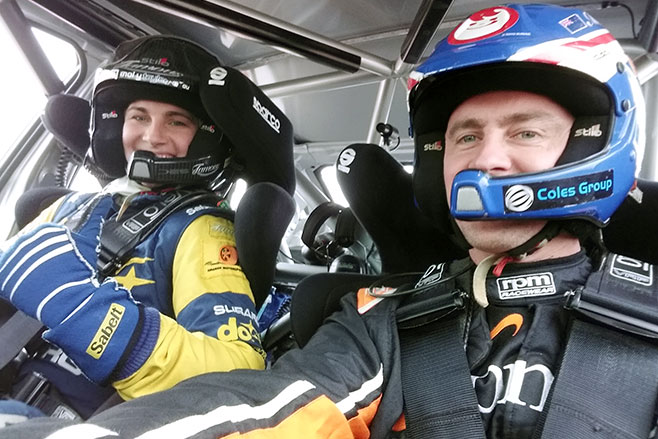
Beautiful attention to detail was taken to build the car, with lead engineer Jason ‘Whitey’ White substituting every non-controlled steel nut and bolt for titanium, manufacturing door trims from carbonfibre and expertly dissecting heft from key areas. He even replaced the steel shackle on the spare wheel strap for a bespoke titanium version.
The combined result of all this work shows spectacularly.
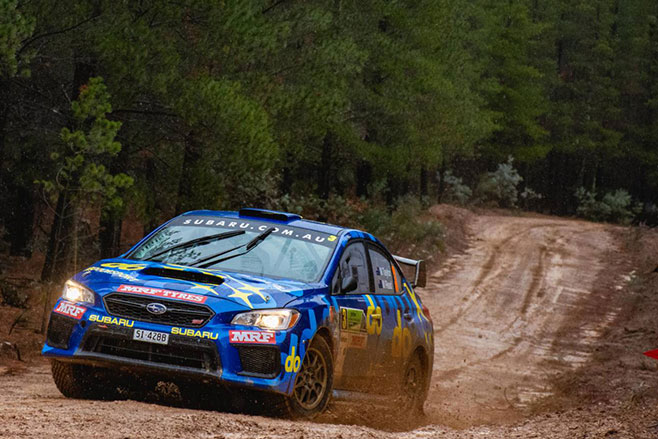
A full-power turn into the first bend somewhat predictably steps the tail out into a heroic drift that’s held with surgical precision. There’s a theatrical lean with the G-force, highlighting the suspension’s compliance and travel and it absorbs potholes that would shatter a standard road car’s wheels.
As the corner flattens out, Molly holds the tiller left, transferring the weight over to the opposite side seamlessly continuing the powerslide through a left turn and the tail wags wide right.
Just as astonishing as the acceleration is the car’s ability to scrub speed. There’s no ABS or power assistance, just four big pistons on each front wheel and brute force. A yank of the hydraulic handbrake snaps the tail into a tighter right and progress through the short course is almost entirely sideways.
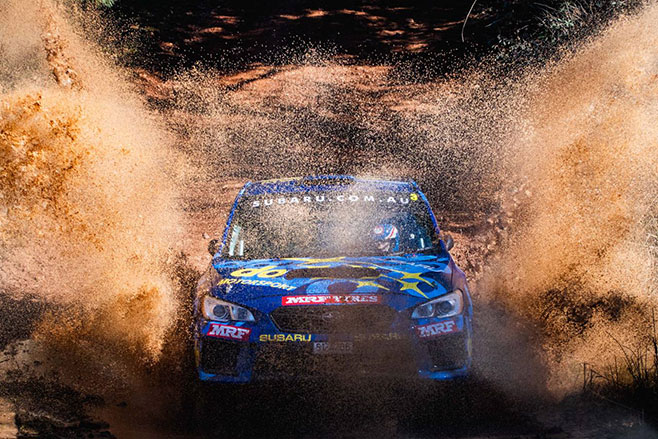
Watching this car tear through stages all over Australia through the course of the year, it’s impossible to appreciate just how brutal the environment is when you’ve squeezed into the roll-cage, strapped on the six-point harness and lit the blue (and yellow) touch paper.
Between lightning direction changes, I take a minute to admire what co-driver Malcolm does from the same seat. While I’m struggling to keep my eyes open and say something witty, the bantamweight Kiwi manages to concentrate on the attitude and position of the car whilst faultlessly calling the pace notes.
Another faster section of the course allows Molly to pull another gear through the Melbourne-made Modena Engineering six-speed sequential transmission and carry what I assumed was a completely unfeasible amount of speed through one of the final turns.
Once again the car finds traction on surfaces that would trouble a modified Hilux and blast out of the final corner.
Amusingly, the team would later report the car had developed a differential problem and would hardly drive in a straight line. Molly’s response was simply “how was I supposed to know? I wasn’t trying to go straight”.
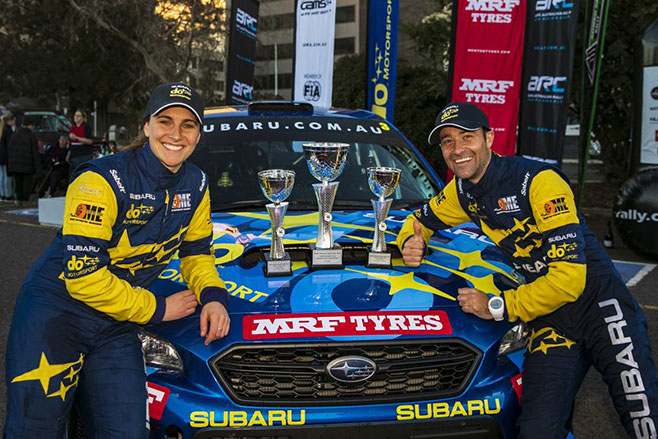
It’s not the first time I have gone fast in a car, and nor is the sensation of travelling sideways in a car completely alien to me, but just when you think you’re getting a bit handy at this steering thing as many car journalists do, you hitch a ride with someone who is truly talented and you realise you are in the equivalent of driving pre-school.
It’s only as we are rolling back into the service area, brakes stinking, titanium exhaust ticking as it cools and gear backlash clattering through the car that realise just how hard Molly’s job is. Quite how anyone maintains such a balletic composure over hundreds of kilometres of gnarly forest tracks is completely beyond me.
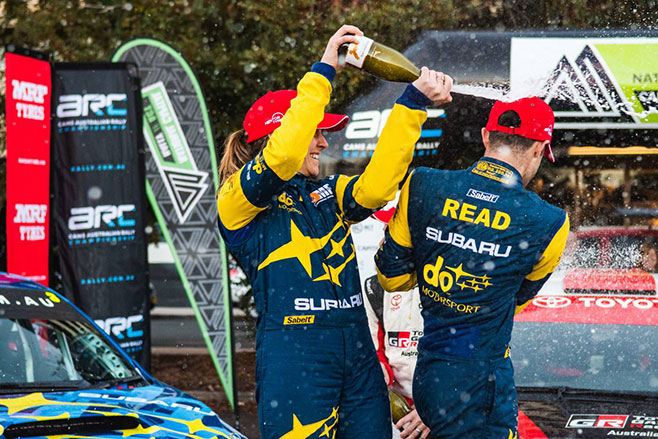
It’s a bit like finding out your mum is a secret agent or your most puritanical teacher at school was into swinging. Either way, I have never admired what all racing drivers do for a crust more, especially this one.
I used to think I had the best job in the world, but that was until Molly took me to work for a day. She had better appreciate it.
When I grow up…” It’s a defiant line trotted out by kids when they realise an argument has reached a stalemate and they aren’t going to win. It’s a default retort out of frustration, as if their underdeveloped minds are trying to say “I’ll show you one day”. It’s a state of play that’s only resolved through hindsight and maturity. Essentially when we grow up.
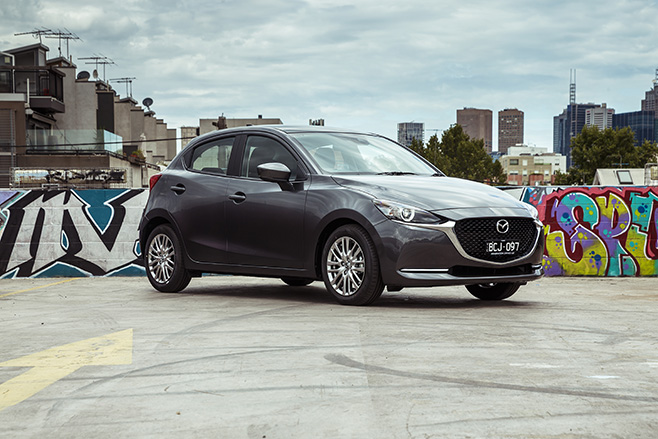
The three assembled small hatches resemble that progression out of adolescence. They’re still among the tiniest tots of their respective families, but each asserts a newfound level of maturity with high spec levels and fully grown pricing.
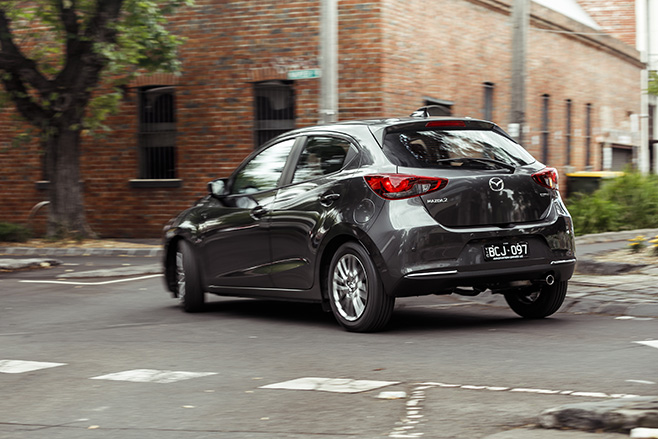
That’s especially true of the freshly updated Mazda 2. It has been stuffed with extra kit and there are styling tweaks to the front and rear bumpers as well as the grille for a more mature design, but the fourth-generation 2 is pretty much the same as when it came out in 2014. And yet you will need at least $20,990 to get behind the wheel of the entry-level G15 Pure – or $24,490 for the G15 Evolve tested here. Considering that all the mechanicals transfer over virtually unchanged and the fact the previous base hatch was $15,570, it’s a big jump.
SUBSCRIBE to Wheels Magazine and save!
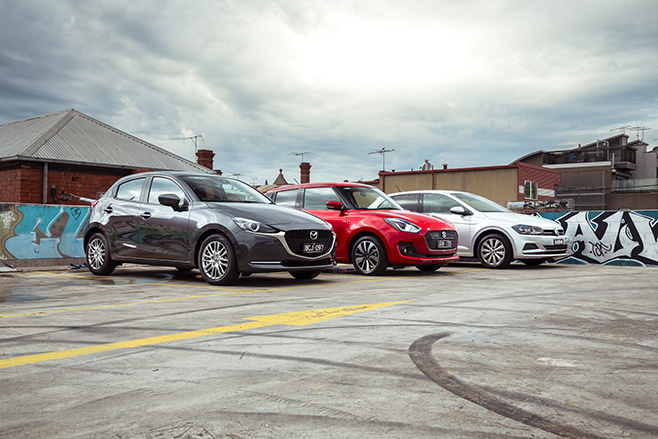
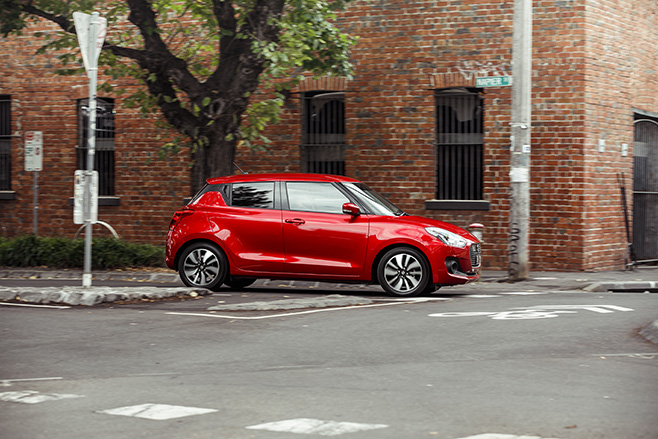
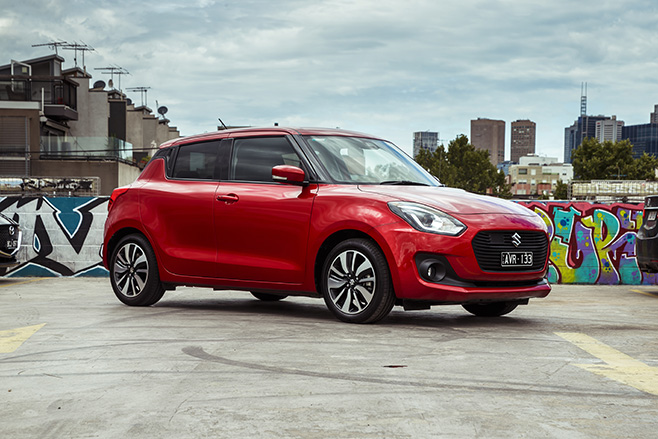
However, when it comes to the Suzuki Swift GLX Turbo you’re paying extra for the oily bits. It’s the only model in the Swift line-up to use the 1.0-litre three-cylinder BoosterJet engine, and it’s a little sweetheart worth paying for, even if it does bump the price up to $22,990. Extra goodies like rear disc brakes, auto LED projector headlights, four speakers, telescopic steering-wheel adjustment and digital climate control are added over the $18,990 GL Navigator safety pack.
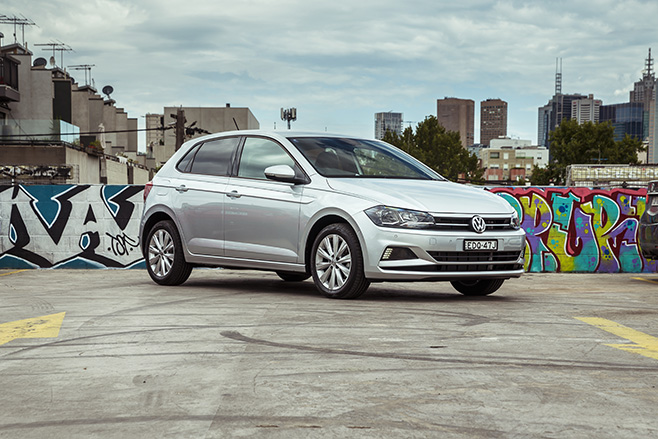
It comes as no surprise, but the Volkswagen Polo Style is the most expensive. Even more so when you consider the $1500 Driver Assistance package and $600 metallic paint needs to be added to the $25,390 list price. That pack includes adaptive cruise, blindspot monitoring with rear traffic alert, park assist, city emergency braking and proactive occupant protection system.
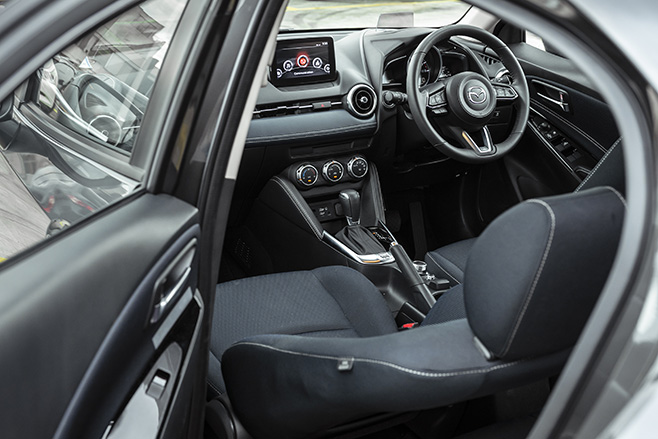
Visually, Mazda has done its best to keep the 2 looking fresh. The exterior tweaks, like the extra bits of chrome and gaping grille, point to a more sophisticated design, as do the 16-inch alloys. But you could be forgiven for missing it as the updated DJ generation. The same could be said for inside, where the changes are incremental at best. Sadly, the new front seats are the least supportive and narrowest of the bunch, while there’s a dearth of premium materials to match the premium price – apart from the blue cow hide on the dash. After the likes of the next-gen 3 and CX-30, it’s hard not to feel a tad short-changed.
The Swift’s cabin is liberally plastered with hard, scratchy plastics. Concessions can be made for this because the GLX Turbo is based on a $16,990 runabout and it’s by far the lightest of this group. Like the Polo, the Swift has radar cruise, but then it doesn’t have rear parking sensors – strange. Lane departure warning is standard, but it has an annoying warning without the steering intervention offered in the Polo and 2.
In terms of feel-good factor, the Polo has this group licked. The upmarket ambience is undeniable, with soft-touch materials and an overt feeling of solidity shining through. Ergonomics are well sorted – you won’t be accidentally selecting Manual mode instead of Drive like in the Swift – and there is a sense of cohesion to the form and function.
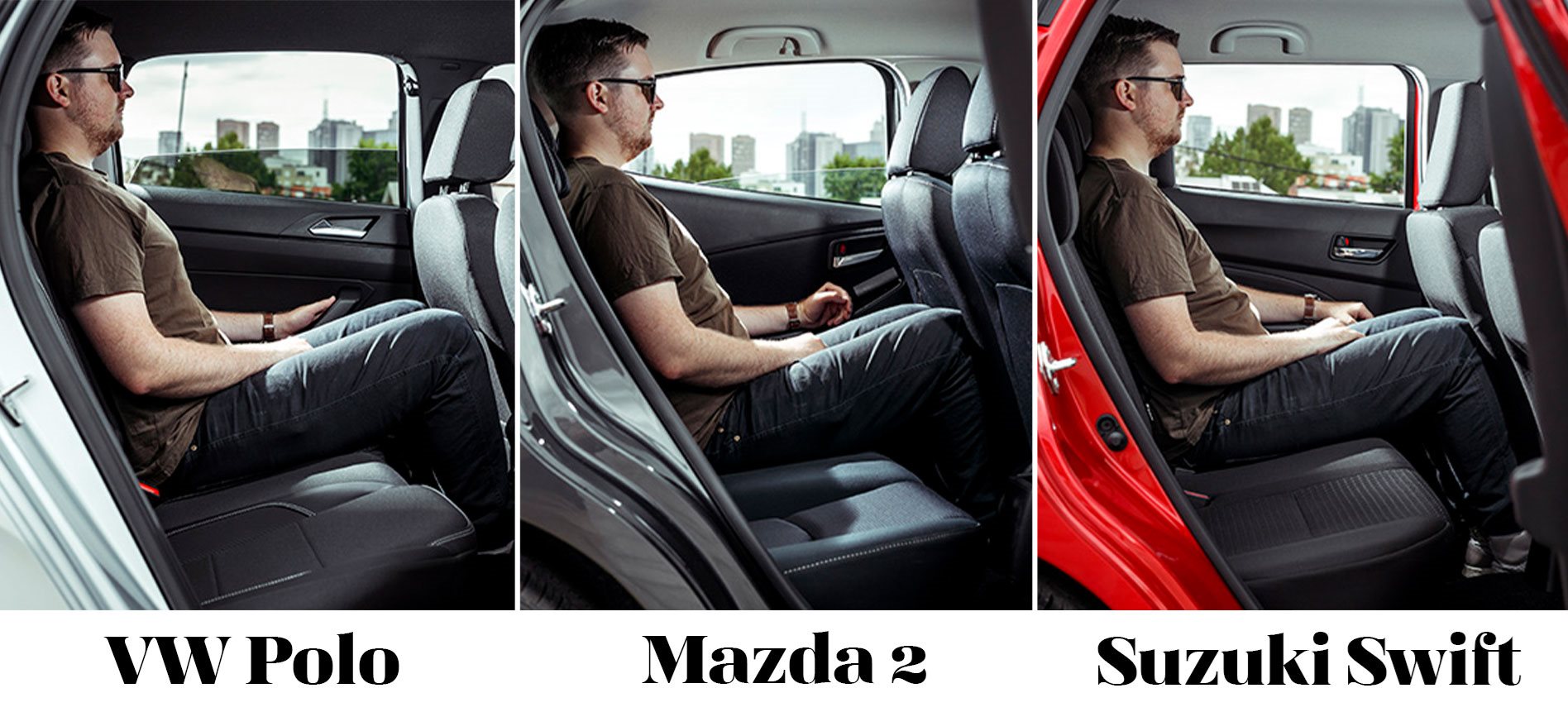
Despite having the longest wheelbase of the three, the Mazda 2 is the shortest on rear-seat legroom. The poor packaging continues, as the rising beltline and tapered roofline creates the least headroom, with visibility in the back also hampered. None of these cars has rear air vents, but the general ambience for second-row passengers in the 2 is a bit gloomy. At 250 litres, the boot is comparatively meagre too when you consider that the 4065mm overall length is respectively 12mm and 225mm more than the Polo and Swift.
Conversely, the Swift is a packaging delight, its diminutive dimensions still providing almost the best rear-seat comfort in terms of leg- and headroom. There are map pockets and a general airy atmosphere compared to the confines of the 2. However, you can’t take and take without consequences; that Tardis-like cabin results in a boot with a rather miserly 242-litre capacity. Credit must be given for the underfloor spare (the Mazda and VW have them too), but the Swift would struggle swallowing the weekly shop let alone a driving holiday.
Thanks to its bigger footprint, the Polo wins the space race. Not only does it generate the most rear room, but the sculpted back bench, centre armrest and dual USB ports make it the most enjoyable rear of the three. A C-pillar three-quarter window also aids over-the-shoulder visibility. For this class, the cargo capacity is capacious; at 351 litres, you’re going to be able to fit a lot more gear in the VW than its competition.
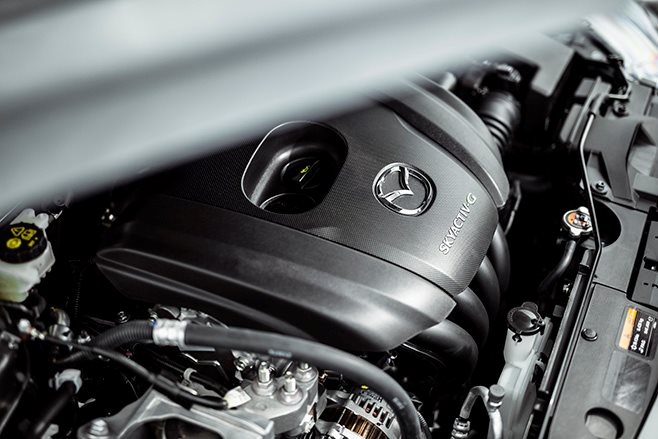
Nestled up front in the Mazda is the carryover 1.5-litre four-cylinder petrol, which has been tickled, ever so slightly, to 82kW at 6000rpm and 144Nm at 4000rpm. Unlike its counterparts, the SkyActiv-G unit has no forced induction, which means it can’t rely on a surfeit of torque to shift its 1070kg. The 2 requires revs as it searches for power, rendering the six-speed auto rather restless. Hence its tested 0-100km/h time of 10.5sec is the slowest, as is its 80-120km/h result of 7.6sec. That means highway overtakes need more forward planning, and under hard provocation the engine sounds raucous at best. The 2 claws some ground back by being as efficient as the Polo (6.8L/100km test average), but neither usurp the frugal Swift (6.1L/100km).
Performance is relative, and in this company the GLX Turbo shines on paper and in practice. The BoosterJet three-cylinder turbo engine might be tiny, but it uses all of its 998cc to great effect, with 82kW at 5500rpm and 160Nm between 1500 and 4000rpm. Thanks to a lissom 945kg kerb weight, the Swift is the quickest to 100km/h, scampering to the target in 10.2sec. It also has far more mid-range kick than the Mazda and even the boosted Polo, with the best 80-120km/h time of 6.8sec backing up the seat-of-the-pants impression. It sounds cool too, with an offbeat thrum that, believe it or not, has flat-six Porsche tones littered throughout its soundtrack. Not something you expect from a small hatch.
Despite touting the best outputs – 85kW between 5000 and 5500rpm and 200Nm from 2000 to 3500rpm – the VW is only second-quickest to 100km/h. That’s thanks to the Polo’s weakest link, the seven-speed dual-clutch transmission. Yes, the DSG changes rapidly on the run (both up and down ratios), but when puttering around it can be slow and indecisive. It simply can’t match either torque-converter autos for obedience. Still, thanks to the healthy Newton count, the Polo is sprightly on the run and, like the Swift, has a charming engine tune, although it is a little more hushed.
Which means it’s surprising to discover that the Polo isn’t the quietest in the cabin out on the open road. Testing each car at 80km/h on the same road with the reader placed in the same location revealed that the Mazda 2 offers the most serene cabin at 70.4dB, only just edging out the VW’s 70.5dB effort. This backs up the impressive results found in the Mazda 3 at Car of the Year 2020. Mazda has transformed the NVH that were previously an Achilles heel of the marque. Finally, the cost-cutting at Suzuki reveals itself in the sound deadening, or lack thereof, with the Swift coming in at 74.9dB.
Dynamically, the 2 remains adept, with its torsion beam rear suspension (all three use the same) and MacPherson struts up front returning a settled persona. The ride quality is firm but not harsh, while rough roads are dealt with handily. The steering is slightly sticky on-centre, but it frees up when lock is applied, and has a nice hefty feel. One sore point is the braking, with the 2 recording the longest stop from 100km/h at 40.4m (Swift 39.6m; Polo 36.1m). In 2020, Mazda really should have disc brakes on all four corners – rear drums just don’t cut it. The 2 is competent, but just lacks that final veneer of Polo polish and the verve that permeates the Swift.
With a small on-scale figure and a powertrain that punches above its weight, the Suzuki feels peppy and light on its feet. Of the three, it’s the GLX Turbo that wants you to drive with a bit of cheek. However, it doesn’t deal with poor surfaces well, skipping and hopping over bumps, with big hits heard in the cabin. The steering also translates bumps in the road by way of intrusive kickback. Still, there’s something about how the Swift goes about its business that is very endearing. It’s the kid who acts up, but knows how to charm its way into forgiveness.
The Polo adds a layer of sophistication to both ride and handling. It is the most comfortable and confidence-inspiring, with a ride quality that displays a higher level of control and damper refinement. Occupants are far more cocooned in the cabin, and the suspension s more supple. The wider footprint and better tyres aid cornering grip, and while the Polo might not exude fun, it’s the most pleasing and rounded experience – like an older head on younger shoulders. The steering also offers the best weighting and most natural feel.
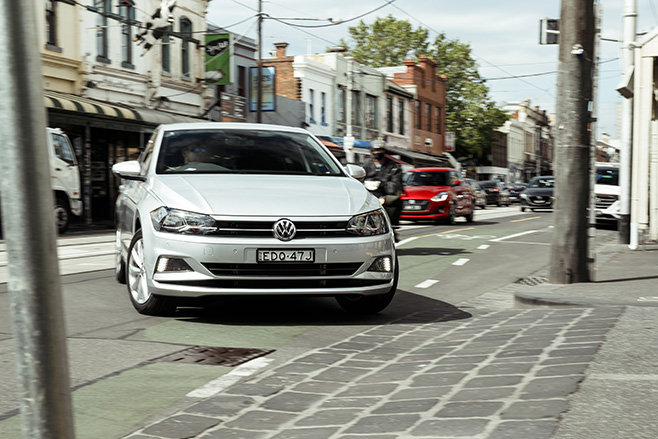
When it comes to deciphering a pecking order, the Mazda 2 falls to the bottom of this trio. The latest update sees it priced similarly to the Polo, but it doesn’t feel like an almost $25K car. Mazda is currently doing so many things well with its next-gen cars, but right now the 2 is a not-so-shiny beacon of the past. An all-new generation can’t come soon enough.
You could place the Suzuki in the same boat in regard to its interior. However, there’s a loveable nature to the GLX Turbo that’s lacking in the 2. And it must also be noted that the Swift is virtually batting above its average here, but was added to the field due to a previous comparison win. While you’re essentially paying a premium for a gem of an engine, whether or not buyers see worth in this is the real question. We do.
But the Polo’s win here is decisive. There’s real daylight between first and second. At $25K for the Style variant, this Polo is Golf money, but then it’s pretty much all the Volkswagen hatchback you’ll ever need. It looks and feels premium while offering abundant practicality on its bigger footprint. Out of all the small hatches, it’s the Polo that has truly grown up. And it’s certainly showing everyone how to do it.
TECH TALK
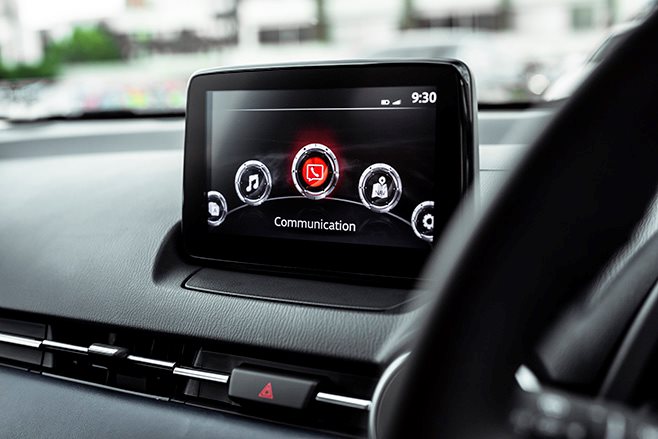
Each small hatch comes with a colour infotainment display with Apple CarPlay/Android Auto, but not all are equal. The Mazda 2’s 7.0-inch screen (top) isn’t touch-enabled, but it does offer Stitcher and Aha internet radio. The Swift (centre) also uses a 7.0-inch display but it requires precise inputs. Best in class is the Polo (lower); its 8.0-inch touchscreen is the most responsive and easy to use. Its only letdown is the sat-nav graphics.
REAR ROOM
Polo is the pick for ferrying adult-sized occupants. With the widest door aperture and rear-seat head/legroom, the VW caters best for passengers and baby seats. The Swift gains an honourable mention.
THREE CARS, THREE THINGS
1. Line Of Sight: A clear view out isn’t an issue, as the A- and C-pillars don’t intrude on vision too much. The low beltline aids visibility in the back, and there’s next to no rear three-quarter blindspot.
2. Old School: Despite an appealing instrument cluster design, the Swift is the only hatch here without a digital speedo. Seen as naff in an XF Fairmont Ghia, it’s now commonplace instrumentation.
3. My Humps: A flat floor is a bit too much to ask with boots this small. So all three have a noticeable hump when the rear seats are folded. Forgiveable given that all have spare wheels.
1. Heads Up: The Mazda 2 might be the only contender with a head-up display, but it’s a dinky little screen that pops up out of the dash. It isn’t as classy as the system used in the Mazda 3.
2. Steer Clear: While all three of these hatches have multifunction steering wheels (and the Polo has the most tactile leather), the 2’s button arrangement is clean and simple to use.
3. Handy Knobs: Despite the MZD Connect’s screen lacking touch capability, the control wheel located next to the handbrake is intuitive. There’s a volume knob and buttons for the home screen.
1. Razzle Dazzle: VW calls it an Active Info display, but it’s simply a different version of Audi’s Virtual Cockpit. The digital display is 10.25 inches and offers crisp and configurable readouts.
2. Disc Jockey: The Polo Style is essentially a rebranding of the Beats edition. That means it’s endowed with the same 300-watt Beats by Dre stereo and keeps the VW ‘down with the kids’.
3. Cool Runnings: If your personal thermostat runs to a different level, the Polo’s dual-zone climate control is a boon. With a digital display, it also fits in with the sophisticated, ergonomic cabin.
Compact hatchback specifications and pricing
u00a0 | Volkswagen Polo Style | Suzuki Swift GLX Turbo | Mazda 2 G15 Evolve |
u00a0Price | $25,390/Tested $27,490* | $22,990/Tested $22,990 | $24,990/Tested $25,485* |
u00a0 | * Driver Assistance package: | u00a0 | * Premium paint ($495) |
u00a0 | Drivetrain | u00a0 | u00a0 |
Engine | in-line 3cyl, dohc, 12v, turbo | in-line 3cyl, dohc, 12v, turbo | in-line 4cyl, dohc, 16v |
Layout | front engine (east-west), front drive | front engine (east-west), front drive | front engine (east-west), front drive |
Capacity | 999cc | 998cc | 1496cc |
Power | 85kW @ 5000-5500rpm | 82kW @ 5500rpm | 82kW @ 6000rpm |
Torque | 200Nm @ 2000-3500rpm | 160Nm @ 1500-4000rpm | 144Nm @ 4000rpm |
Gearbox | 7-speed dual-clutch | 6-speed automatic | 6-speed automatic |
u00a0 | Chassis | u00a0 | u00a0 |
Body | steel, 5 doors, 5 seats | steel, 5 doors, 5 seats | steel, 5 doors, 5 seats |
L/W/H/Wu2013B | 4053/1751/1446/2548mm | 3840/1735/1495/2450mm | 4065/1695/1495/2570mm |
Track (F/R) | 1521/1501mm | 1520/1525mm | 1495/1485mm |
Weight | 1152kg | 945kg | 1070kg |
Boot | 351 litres | 242 litres | 250 litres |
Fuel/tank | 95 octane/40 litres | 95 octane/37 litres | 91 octane/44 litres |
Economy | 6.8L/100km (test average) | 6.1L/100km (test average) | 6.8L/100km (test average) |
Suspension | Front: struts, A-arms, anti-roll bar | Front: struts, A-arms, anti-roll bar | Front: struts, A-arms, anti-roll bar |
Steering u00a0 | electric rack-and-pinion | electric rack-and-pinion | electric rack-and-pinion |
Turn circle | 10.6m (2.6 turns lock-to-lock) | 9.6m (3.2 turns lock-to-lock) | 9.8m (2.9 turns lock-to-lock) |
Front brakes u00a0 | ventilated discs (276mm) | ventilated discs (252mm) | ventilated discs (258mm) |
Rear brakes | solid discs (230mm) | solid discs (228mm) | drum (200mm) |
Tyres u00a0 | Falken Ziex ZE914 | Bridgestone Ecopia EP150 | Dunlop Enasave EC300+ |
Tyre size | 195/55R16 | 185/55R16 | 185/60R16 |
u00a0 | Safety | u00a0 | u00a0 |
ANCAP rating | ***** (Aus) | ***** (Aus) | ***** (Aus) |
u00a0 | Performance | u00a0 | u00a0 |
u00a0 | Power-to-weight: 74kW per tonne u00a0 | Power-to-weight: 87kW per tonne u00a0 | Power-to-weight: 77kW per tonne |
u00a0 | Redline/cut-out: 6600/6000rpm | Redline/cut-out: 6250/5700rpm | Redline/cut-out: 6500/6700rpm |
u00a0 | Speed at indicated 100km/h: 96 | Speed at indicated 100km/h: 97 | Speed at indicated 100km/h: 98 |
u00a0 | Standing-start acceleration | Standing-start acceleration | Standing-start acceleration |
u00a0 | 0-20km/h: 1.4sec | 0-20km/h: 1.2sec | 0-20km/h: 1.2sec |
u00a0 | 0-40km/h: 2.9sec | 0-40km/h: 2.6sec | 0-40km/h: 2.6sec |
u00a0 | 0-60km/h: 4.8sec | 0-60km/h: 4.6sec | 0-60km/h: 4.6sec |
u00a0 | 0-80km/h: 7.2sec | 0-80km/h: 7.1sec | 0-80km/h: 7.0sec |
u00a0 | 0-100km/h: 10.3sec | 0-100km/h: 10.2sec | 0-100km/h: 10.5sec |
u00a0 | 0-120km/h: 14.6sec | 0-120km/h: 13.9sec | 0-120km/h: 14.6sec |
u00a0 | 0-140km/h: 20.8sec | 0-140km/h: 19.8sec | 0-140km/h: 21.3sec |
u00a0 | 0-400m: 17.5sec @ 131.8km/h | 0-400m: 17.3sec @ 132.3km/h | 0-400m: 17.3sec @ 129.8km/h |
u00a0 | Rolling acceleration | Rolling acceleration | Rolling acceleration |
u00a0 | 80-120km/h: 7.4sec | 80-120km/h: 6.8sec | 80-120km/h: 7.6sec |
u00a0 | Braking distance | Braking distance | Braking distance |
u00a0 | 100km/h-0: 36.1m | 100km/h-0: 39.6m | 100km/h-0: 40.4m |
Verdict | 8.5/10 | 7.0/10 | 7.0/10 |
u00a0 | Track: Heathcote Raceway, fine. | Track: Heathcote Raceway, fine. | Track: Heathcote Raceway, fine. |
u00a0 | Warranty: 5yr/unlimited km. | Warranty: 5yr/unlimited km. | Warranty: 5yr/unlimited km. |
Mazda has previewed an updated version of its popular 3 hatchback in Japan, which promises to improve on the original.
Suspension improvements for one of Australia’s best-selling cars, improved engine outputs for Skyactiv-X variants and changes to the safety systems are all part of the raft of changes previewed in Japan over the weekend.
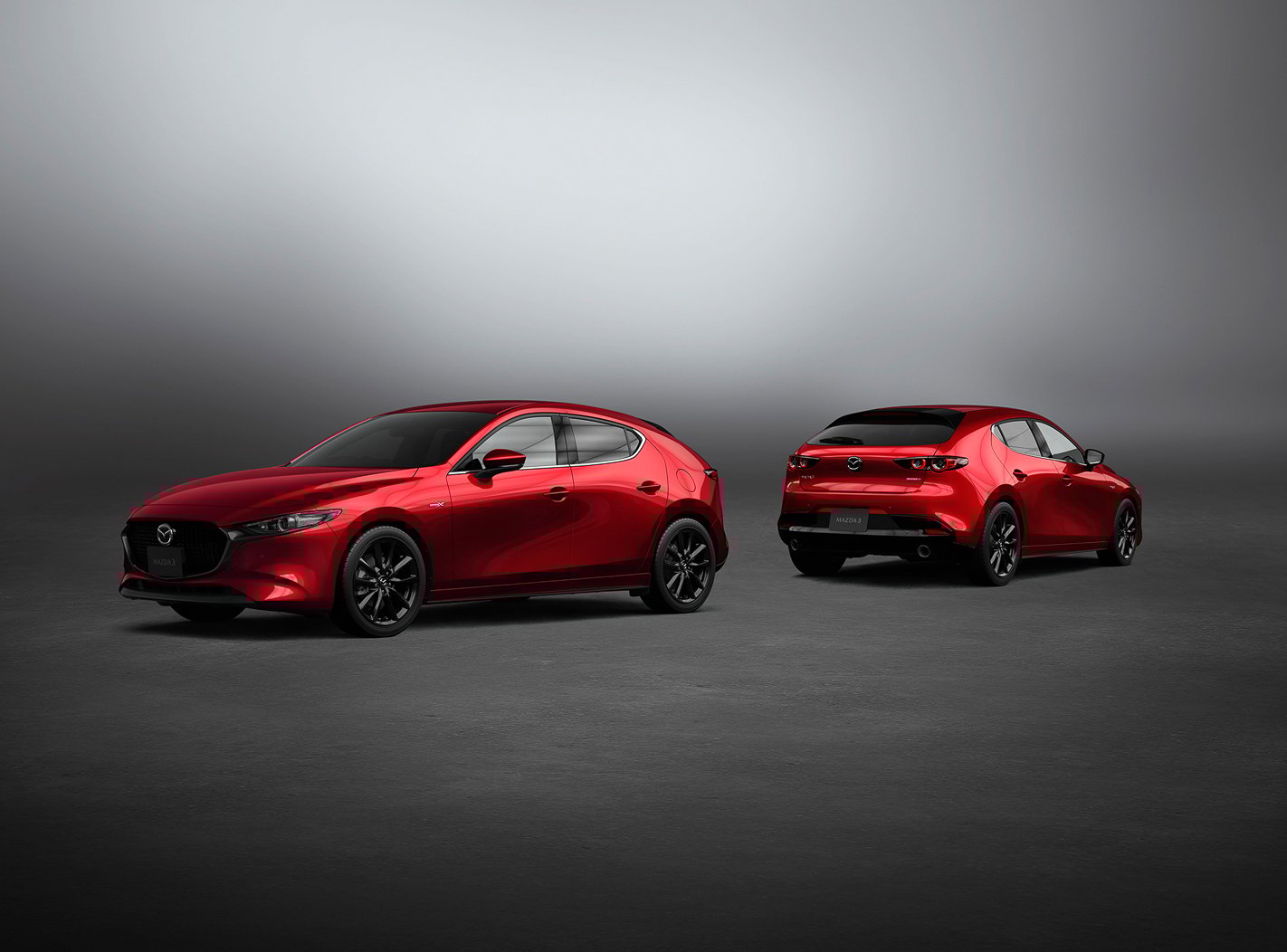
The changes to the 2021 model year Mazda 3 are said to reflect Mazda’s ‘joy of driving’ philosophy.
Specifically, next year’s Mazda 3 will sport tweaked spring rates and shocks for a claimed smoother ride and improved handling.
A power bump is slated for the range-topping Skyactiv-X mild-hybrid engine, too.
The new car will receive an 8kW/16Nm boost equating to a total of 140kW/240Nm, thanks to improvements to the Spark Controlled Compression Ignition (SPCCI) system of Skyactiv-X cars.
New Skyactiv-X cars will benefit from a key software update that improves the response of the accelerator pedal, as well.
Two safety features will also be improved, with a greater range of capability coming to the Cruising and Traffic Support system which actively controls the throttle, brake and steering in slow-moving traffic.
That system can now function at higher speeds than before, and Mazda says the radar cruise control system now operates more fluidly – a criticism we levelled at our Mazda 3 long-termer earlier this year.
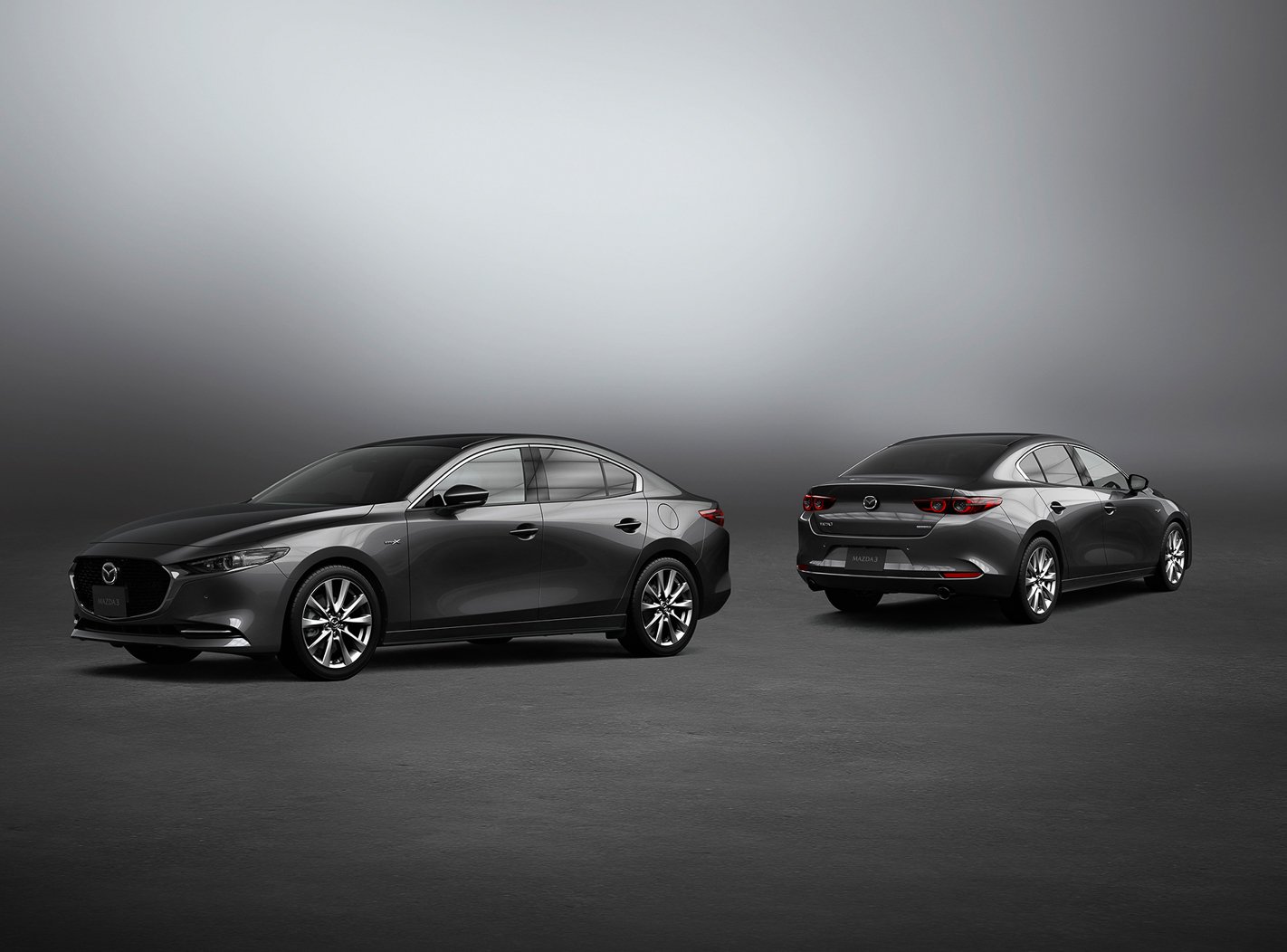
While the entire range benefits from the safety and suspension fixes, only the Skyactiv-X cars will receive increased power and torque outputs.
Mazda Australia is yet to provide insight into what this update means for Australian customers, insisting this 2021 update relates only to the Japanese domestic market for now.
If you’re squeamish, look away now… for the destruction of a brand new, seemingly perfectly good Ford Mustang GT500 will be tough to watch.
But this is the fate that recently befell a pre-production prototype Ford Mustang GT500 in Dearborn, Michigan, recently – and while it’s something that usually happens to lesser cars, the Mustang is no less a suitable tool for rescue training.
But bloody hell… really?
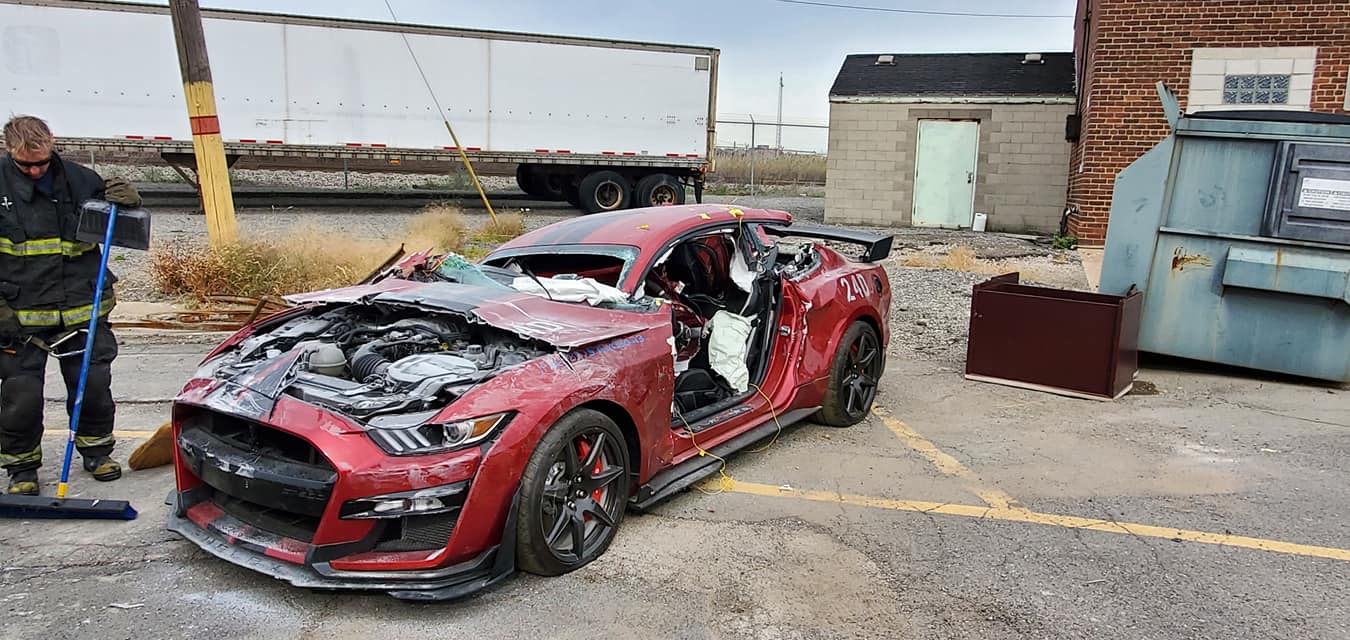
“This week we trained on vehicle extrication,” reads a post from the Dearborn Fire Department – and the Ford faithful amongst you will note that Dearborn is the home to the Ford Motor Company in the US.
“It almost broke our hearts to cut up this 2020 Ford Shelby Cobra GT 500 test vehicle.”
Vehicle extraction is an ever-changing job, with stronger steels and different materials like carbon-fibre and updated aluminium alloys requiring rescue teams to ensure that their tools are up for the job.
In the case of the GT500, the airbags had been detonated before the fire crew started work on it, but was otherwise intact. Even the Australian-made carbon fibre rims are still on the car.
More on the mighty Ford Mustang GT500
- This is the first Mustang GT500
- 2020 Ford Mustang GT500 driven
- Can you get a Mustang Shelby Cobra GT500 in Australia?
As hard as it is to see, the fate of this GT500 was sealed the moment it rolled off the production line as a regular Mustang. Used as a test mule for the GT500 development program, the car was never intended for sale.
It can’t even be sold as a race car, because that runs the risk of the GT500 being rebirthed and sold as a road car by less scrupulous types.

The GT500 is a monster in every sense, with a 5.2-litre supercharged V8 producing 567kW and 847NM of torque. Ford claims this mighty motor makes the GT500 the most powerful Ford road car ever.
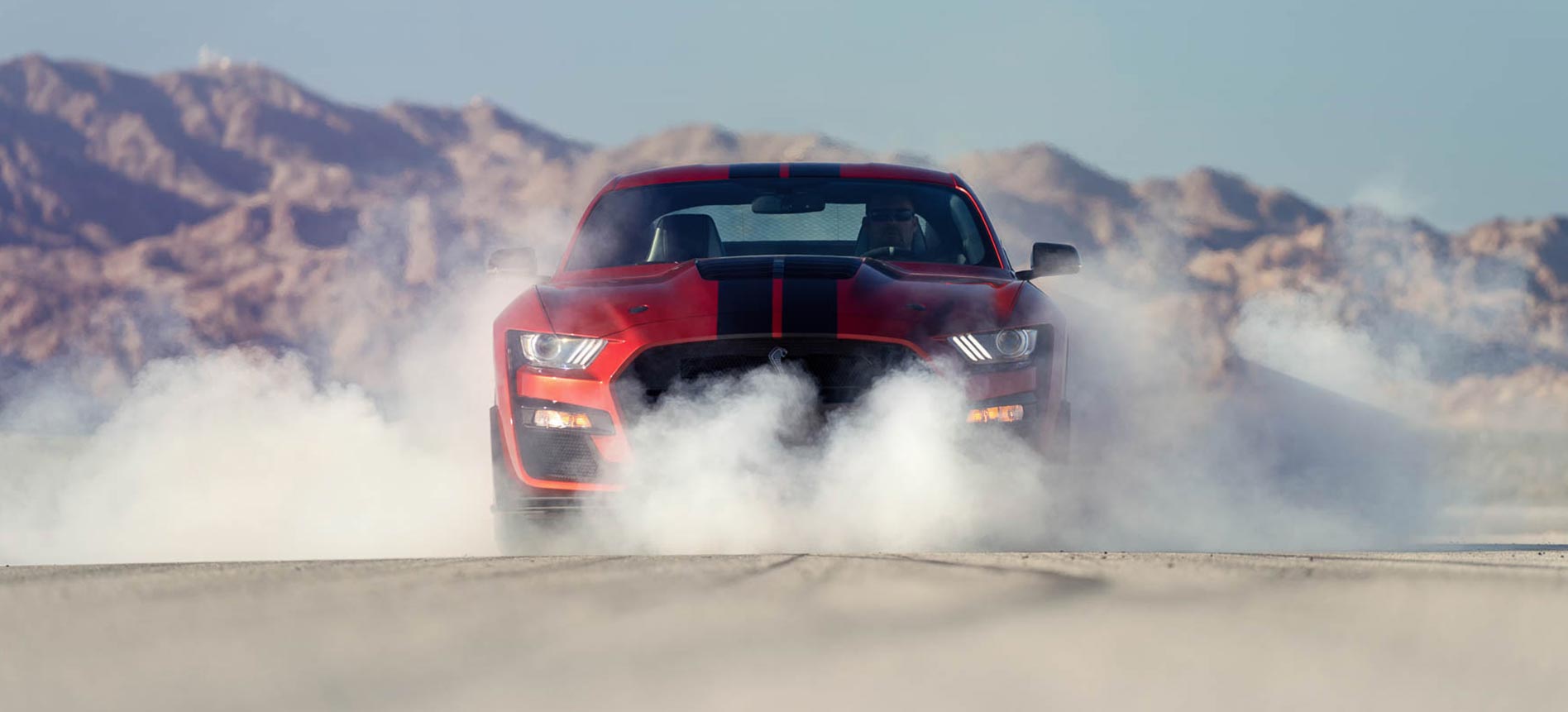
With a specific output of 109kW per litre, the GT500 even outguns the Dodge Challenger Demon‘s 626kW engine of 101kW per litre.
Huge brakes, a bespoke Tremec gearbox, a customised interior and wild bodykit also set the GT500 apart from the pack.
As for our sad and sorry sacrifice, the parts will be returned to Ford to be scrapped, and this GT500 will be erased from the history books.
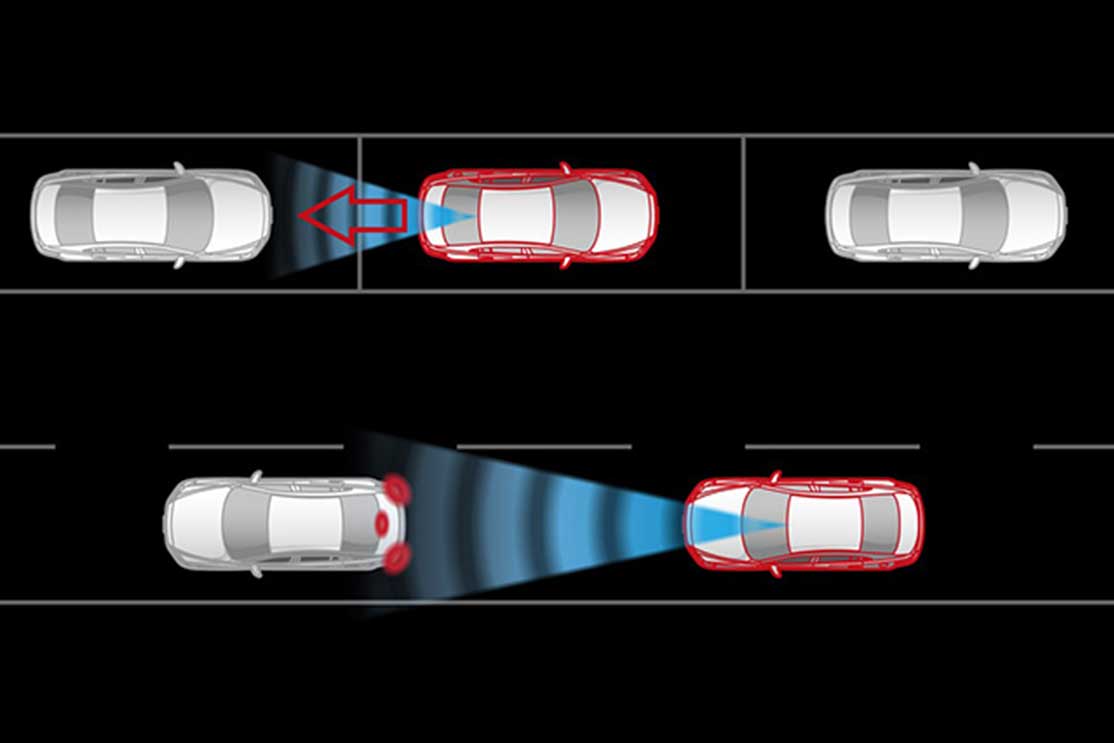
Not all autonomous emergency braking systems are created equal, according to a detailed report by the Australasian New Car Assessment Program.
The independent crash test authority has retested five of Australia’s top 10 selling vehicles to enable a direct comparison with newer top sellers already assessed to the more stringent ANCAP criteria.
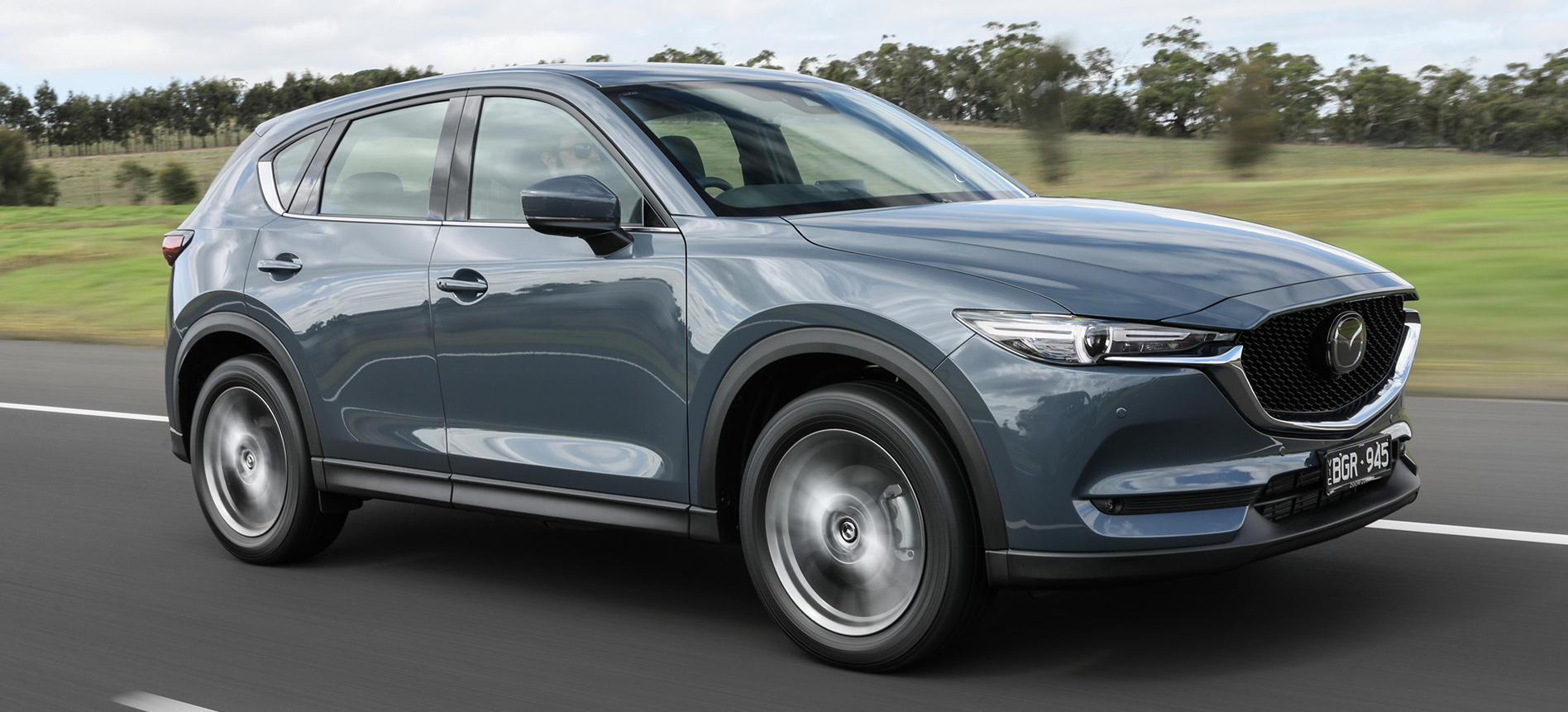
The results show varying effectiveness of AEB systems between makes and models – and, typically, it’s older cars that have less effective AEB.
Of those five models retested, just one – the Mazda CX-5 – received the maximum “advanced” rating, suggesting high effectiveness of the car’s auto braking system.
The Hyundai i30, Mitsubishi Triton and Mitsubishi ASX were all ranked “basic”, the second lowest of the four-tiered scale.
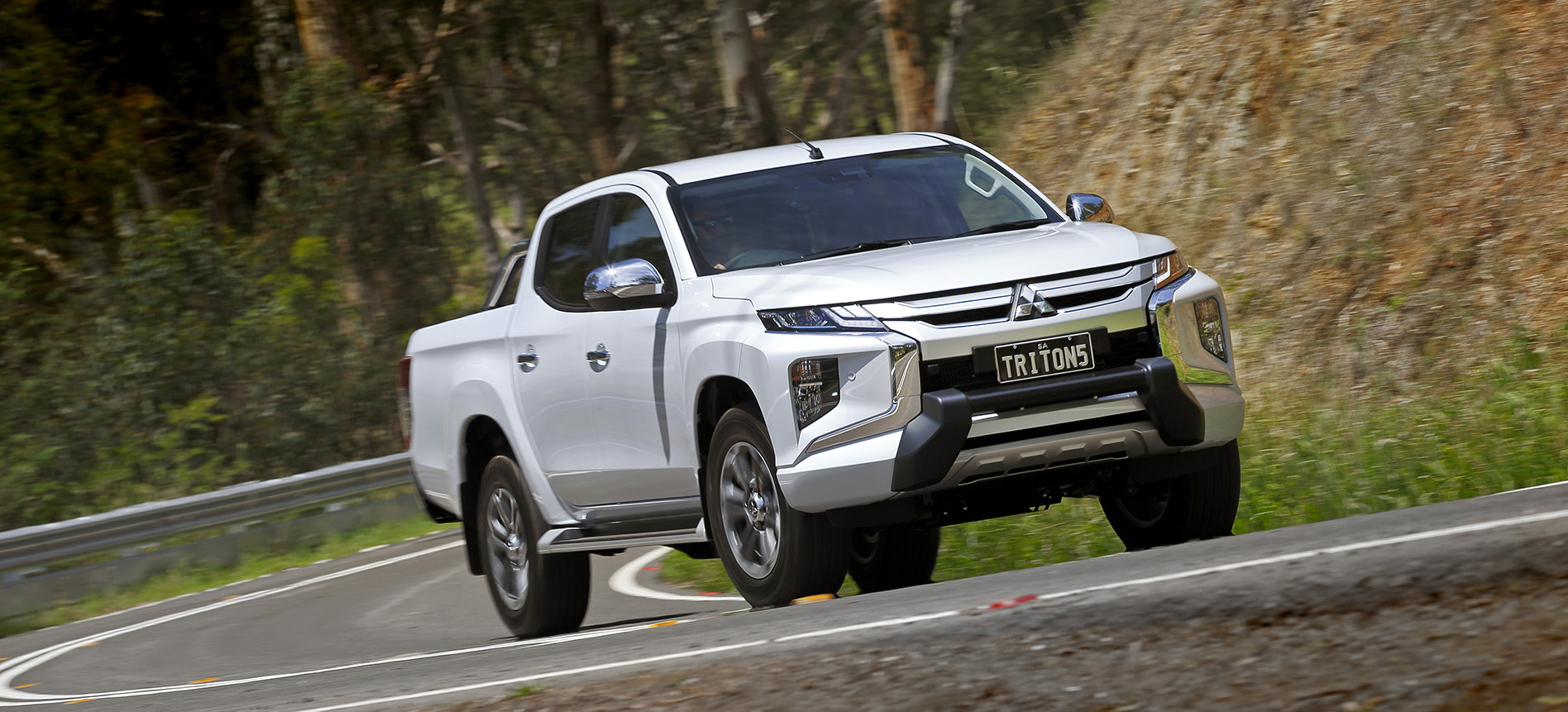
ANCAP found they were “not as effective in detecting and avoiding collisions with pedestrians – particularly at night”.
The Ford Ranger scored “intermediate”, slotting between “advanced” and “basic”.
Four of the five models evaluated in 2018 and 2019 scored the highest “advanced” rating, while only the Kia Cerato dropped a level down to “intermediate”.
ANCAP director of communications and advocacy Rhianne Robson said it was not surprising that newer models generally performed better in AEB testing, something she expects to continue as the technology improves.
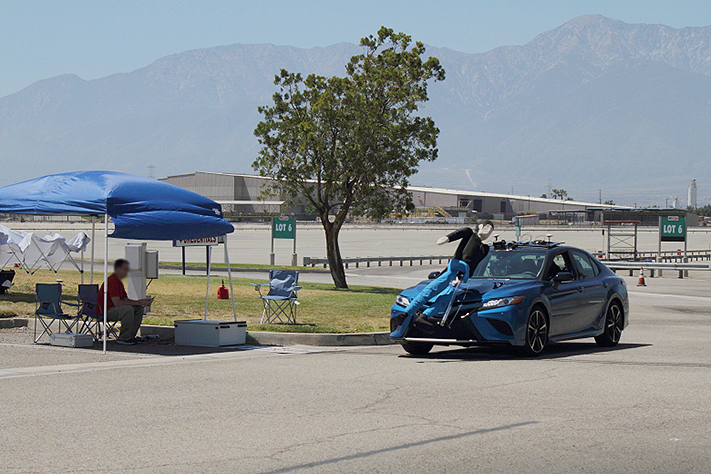
“Vehicle safety technology continues to advance at a rapid rate with more sophisticated systems entering the market through new market entrants and model facelifts, and as these vehicles are updated, we expect their performance to improve,” said Mrs Robson.
Just as early anti-lock braking systems and stability control were often rudimentary in their performance, it appears many AEB systems could do with improvement.
Despite retesting those older models, ANCAP will not be incorporating the results in the overall vehicle safety ratings, saying “the results from this analysis do not replace or alter existing ANCAP safety ratings or contributing scores”.
So even though there is clear room for improvement with the AEB performance on some vehicles they will maintain their five-star ANCAP ratings earnt up to six years ago.
Crash avoidance systems are the new battleground in the quest to make cars safer.
While there are dozens of systems – including lane departure assistance, intersection crash avoidance and blind spot warning – AEB is considered one of the most effective, especially for avoiding nose-to-tail crashes.
Morgan’s oddball 3-Wheeler, in its current form, is in its final throes. To celebrate the car’s life and history, the brand has announced a new, final edition named P101.
The edition name derives from Project 101, the codename for the reborn 3-Wheeler that launched in 2011, with only 33 models being produced to see the car out into 2021.
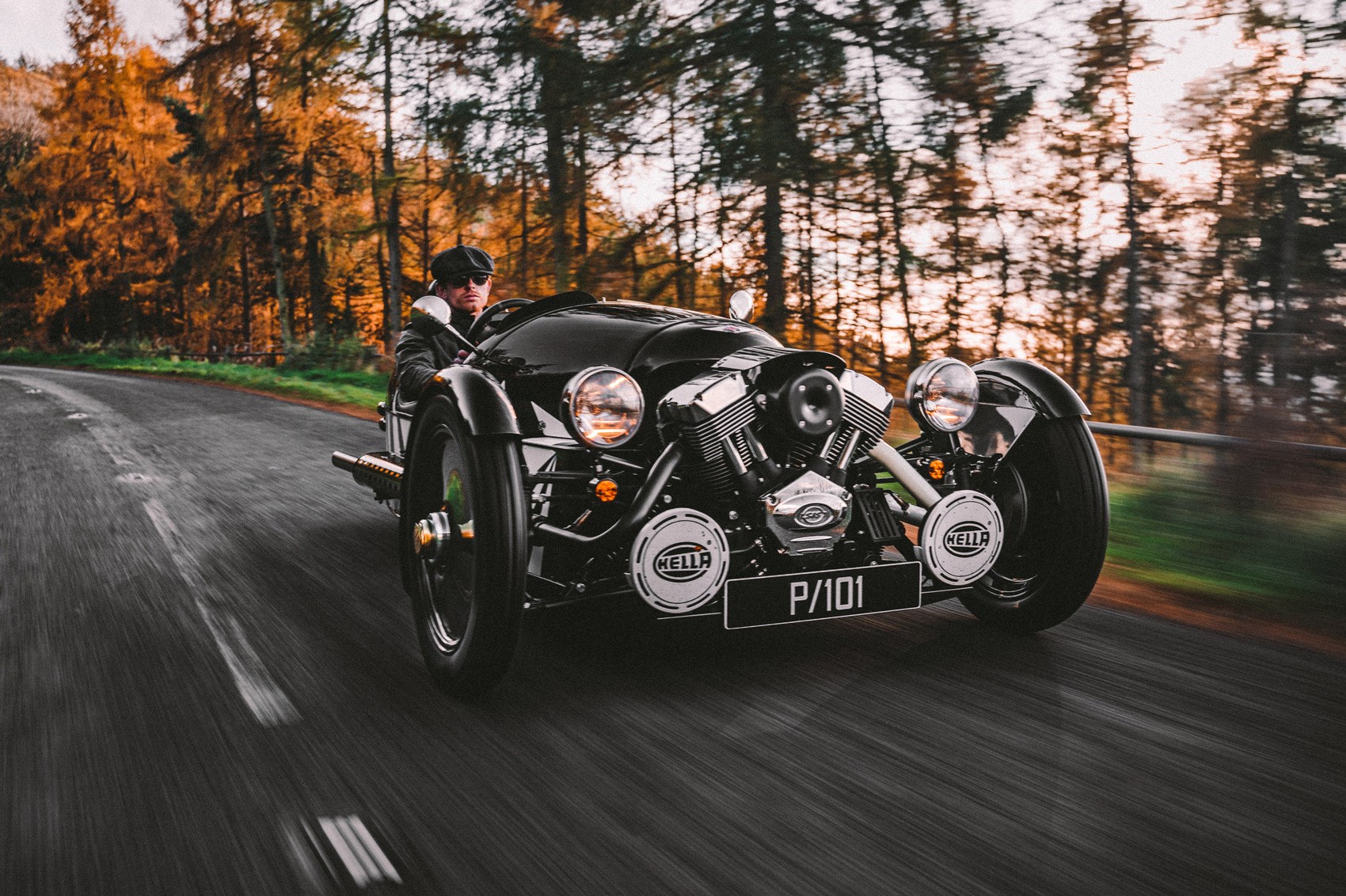
For the P101, the Morgan 3-Wheeler benefits from ‘aero-disc’ wheels, rather than the 3-Wheeler’s usual wire ones, and a metal tonneau cover for the passenger seat – something that debuted on the dead EV3 project.
As for the colour scheme, you can spec the P101 in black or white with one of four decal packs: The Belly Tank, The Dazzleship, The Aviator or The Race Car.
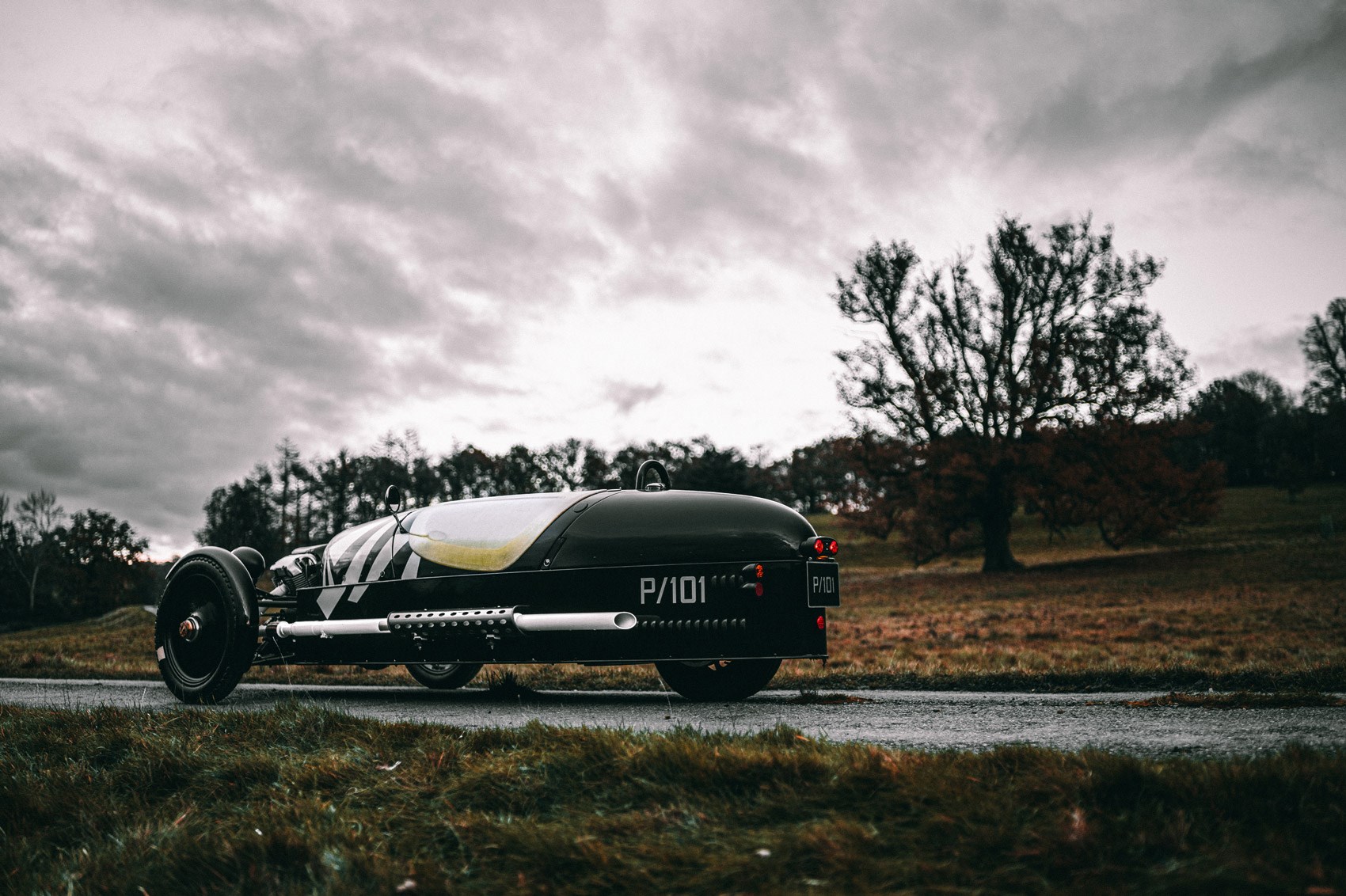
Belly Tank is a reference to the hot rod racers that were built using drop tanks from aircraft, Aviator is an extension of the Second World War-like decals on the current 3-Wheeler, and Race Car adds stripes and roundels. The one pictured is Dazzleship – a graphic pack that is a nod to the camouflaged paint schemes of naval war ships and military vehicles.
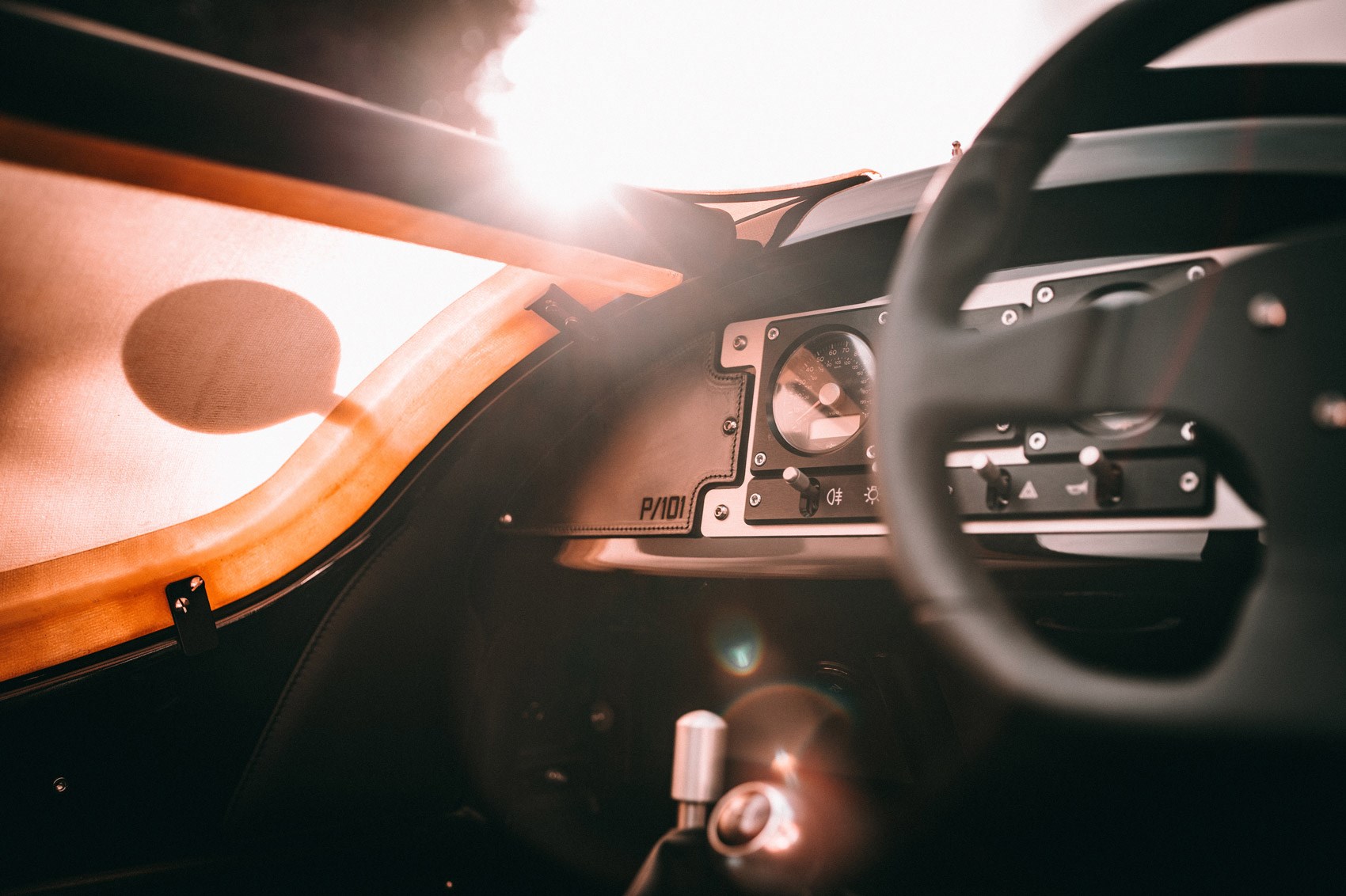
More than 2500 3-Wheelers have been made since the car’s debut in 2011. Want a P101? You’ll need to get in quick in order to get your hands on one. After that, Morgan has promised that the 3-Wheeler will return at an unspecified date in the future.
This article was originally published at carmagazine.co.uk
