
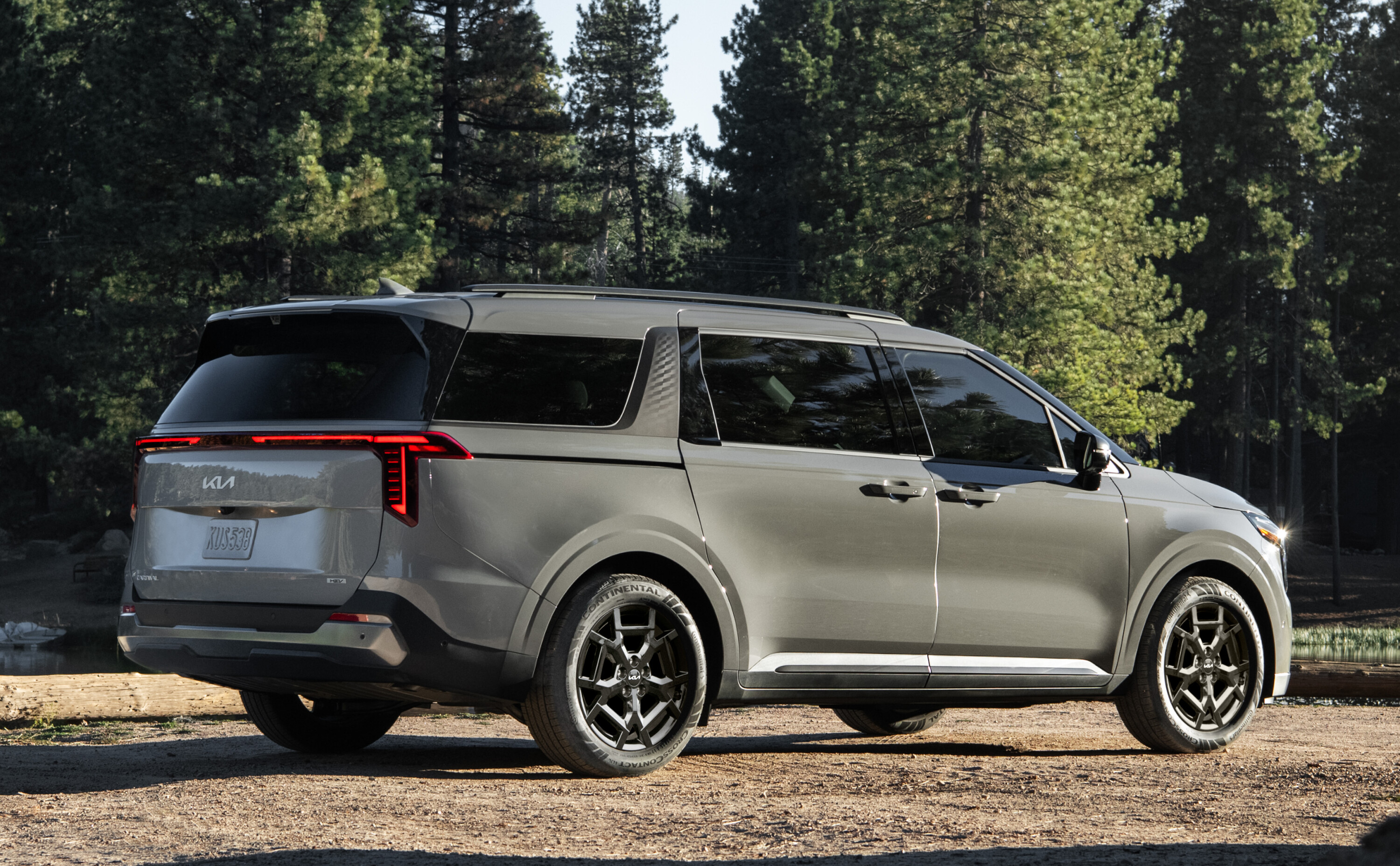
The 2024 Kia Carnival Hybrid has been approved for sale in Australia.
It will arrive in local showrooms later this year, while facelifted petrol V6 and turbo-diesel Carnival variants are due around March or April.
The Carnival Hybrid will become the first people mover priced under $100,000 with an electrified powertrain to be officially sold in Australia, with the Japanese Toyota Alphard and Estima (Tarago) hybrids popular in the grey import market.
1
The Lexus LM hybrid and Mercedes-Benz E-Vito Tourer, EQV, and LDV Mifa 9 electric cars are available in Australia with much higher price tags.
Government approval documents confirm the electrified people mover will offer a 1000-kilogram braked towing capacity in Australia, down from 2000kg for petrol V6 and turbo-diesel models. Its unbraked towing capacity is unchanged at 750kg.
With its added electric components, including a high-voltage battery, the Carnival Hybrid weighs around 100 kilograms more than the turbo-diesel at 2288kg, while it is 10mm taller.
Kia Australia has listed 17, 18 and 19-inch wheel options for the Carnival Hybrid, though it’s currently unclear what variants will be offered locally.
1
As with the related Sorento Hybrid, supply will be limited, with the hybrid line-up likely to be restricted to the flagship variant – which should retain the Platinum name – and possibly a fleet-focused base model at launch.
The Carnival Hybrid features a 1.6-litre turbo-petrol hybrid powertrain shared with the Sportage and Sorento Hybrids but with higher 183kW/367Nm outputs – up from 169kW/350Nm.
It is matched to a six-speed automatic transmission, which exclusively powers the front wheels like all other Carnivals.
In Korea, the hybrid has a claimed fuel consumption of 7.1L/100km– compared to 7.6L/100km for the diesel and 11.1L/100km for the petrol V6 in that market.
The diesel is rated at 6.5L/100km on the combined cycle in Australia, while the V6 is listed at 9.6L/100km.
1
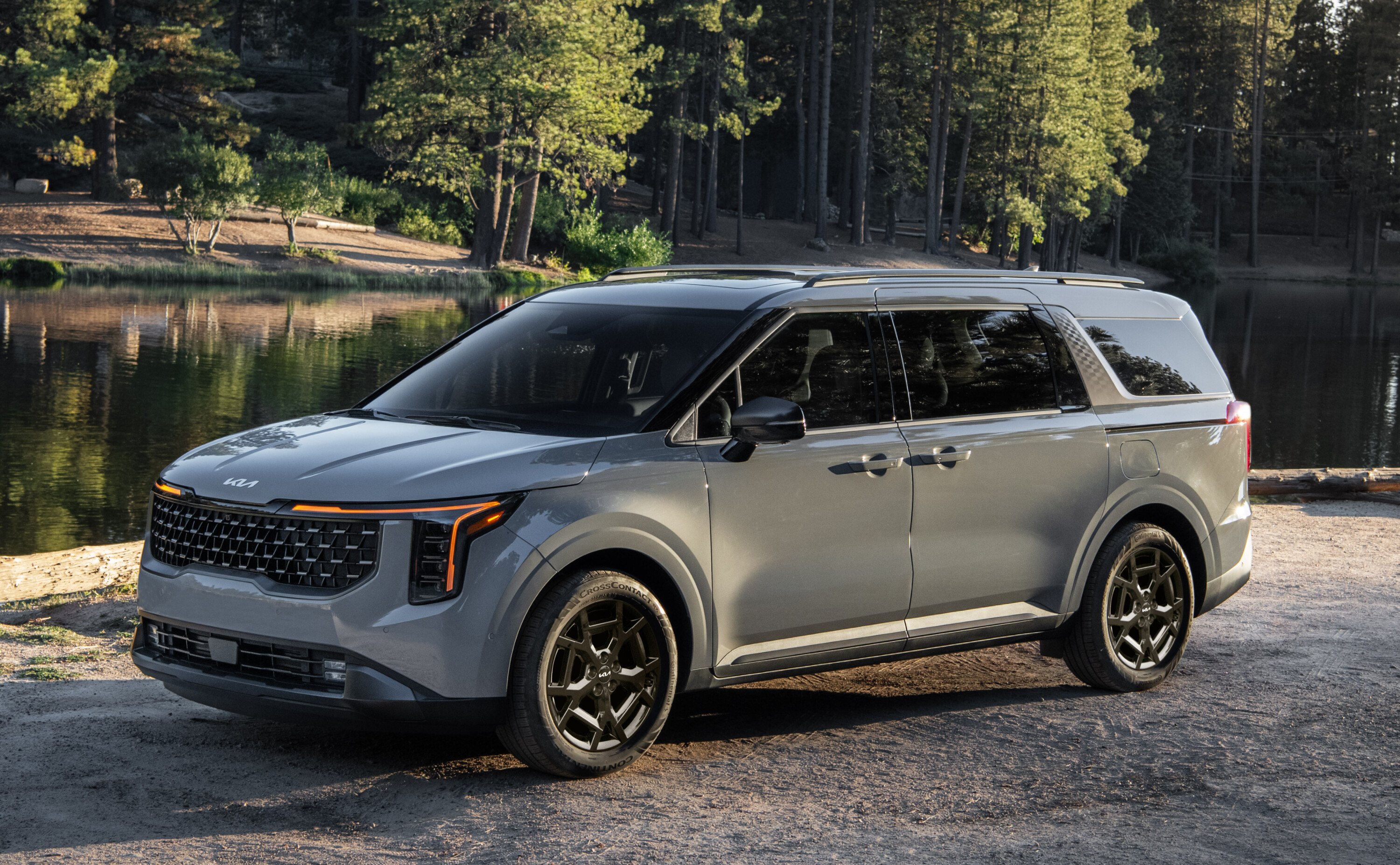
A specific 18-inch alloy wheel design and ‘navy grey’ interior option are offered for the hybrid model overseas.
As detailed here, the facelifted Carnival has a revised look with vertical headlights, ‘star map’ daytime running lights, a wider grille, and updated tail-lights with a full-width light strip.
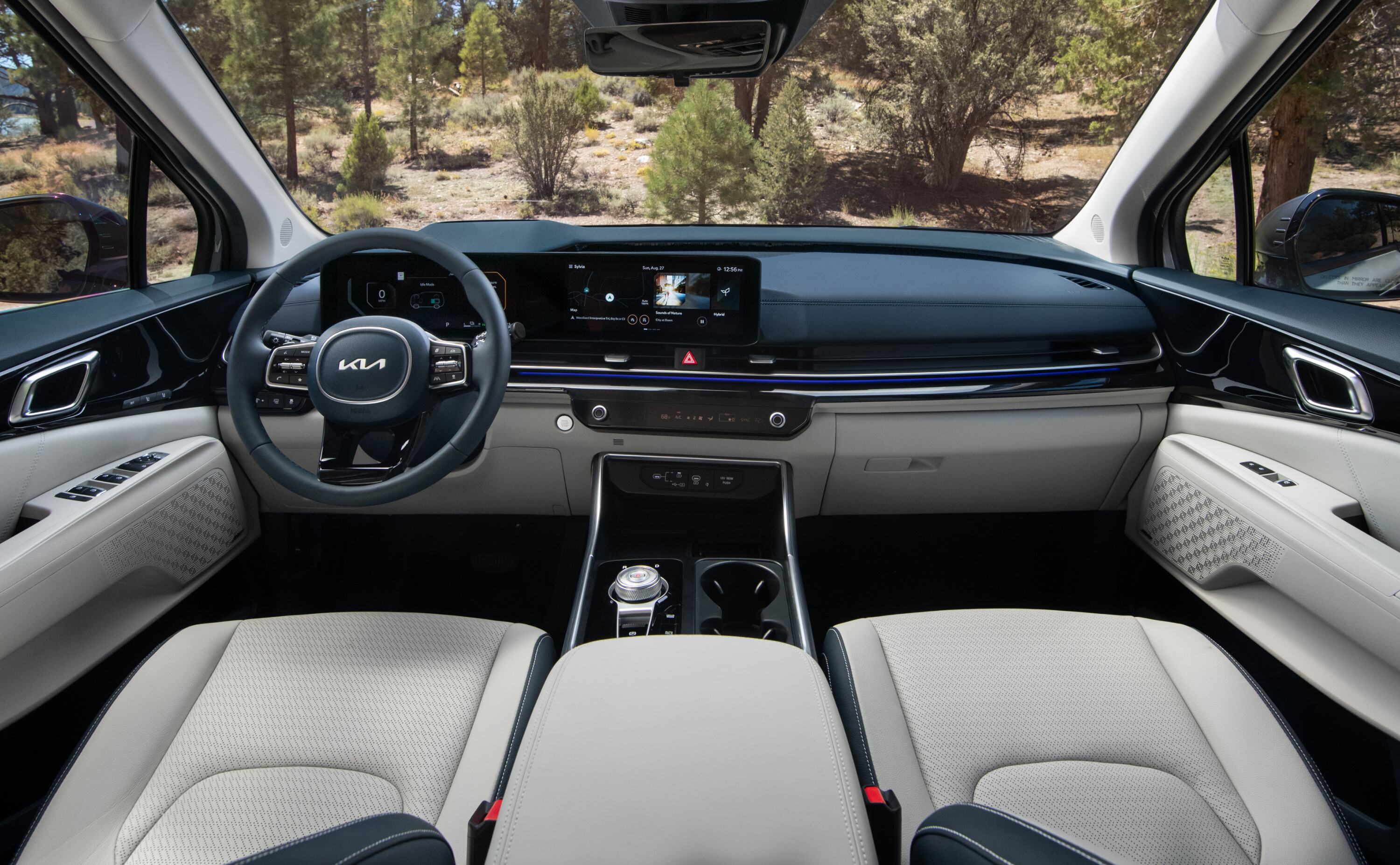
Interior enhancements include a new curved display panel with dual 12.3-inch screens, an updated ‘CCOS’ infotainment system with over-the-air updates, digital key functionality, and USB-C ports.
It also has a switchable climate/audio touch panel like the EV6, Niro and Sportage, along with configurable ambient lighting that extends from the dashboard into the door panels.
Newly added active safety systems include oncoming vehicle detection, evasive steering assist when overtaking, semi-autonomous ‘Highway Driving Assist 2’, and intelligent speed limit assist.
It is now fitted with a front-centre airbag to help prevent head clashes in serious side impact collisions, taking the airbag count to eight.
In Australia, the facelifted Carnival will likely receive missing features already available overseas, including a full-digital instrument cluster, rain-sensing wipers, a blind-spot view monitor and Kia Connect.
MORE
Everything Kia
MORE
PHEV and Hybrid Cars
JUMP AHEAD
- Is the 2024 BMW X2 critical?
- What does the 2024 BMW X2 and iX2 range look like?
- How does it drive?
- Is it worth waiting for the 2024 BMW X2?
Is the 2024 BMW X2 critical?
There’s a battle raging in the compact SUV realm and none more fierce than at the premium end of the spectrum where all the key players are vying for a bigger chunk of a growing audience.
But in a market where choice is king, more esoteric – or perhaps exclusive – coupe-profiled models are the hottest property.
In recent testing, BMW’s new-generation X1 has proved itself as a force to be reckoned with, bowling over consistently impressive contenders such as the pervasive favourite Volvo XC40 while keeping confident newcomers such as the Alfa Romeo Tonale firmly in their place as proteges yet to come to the front.
1
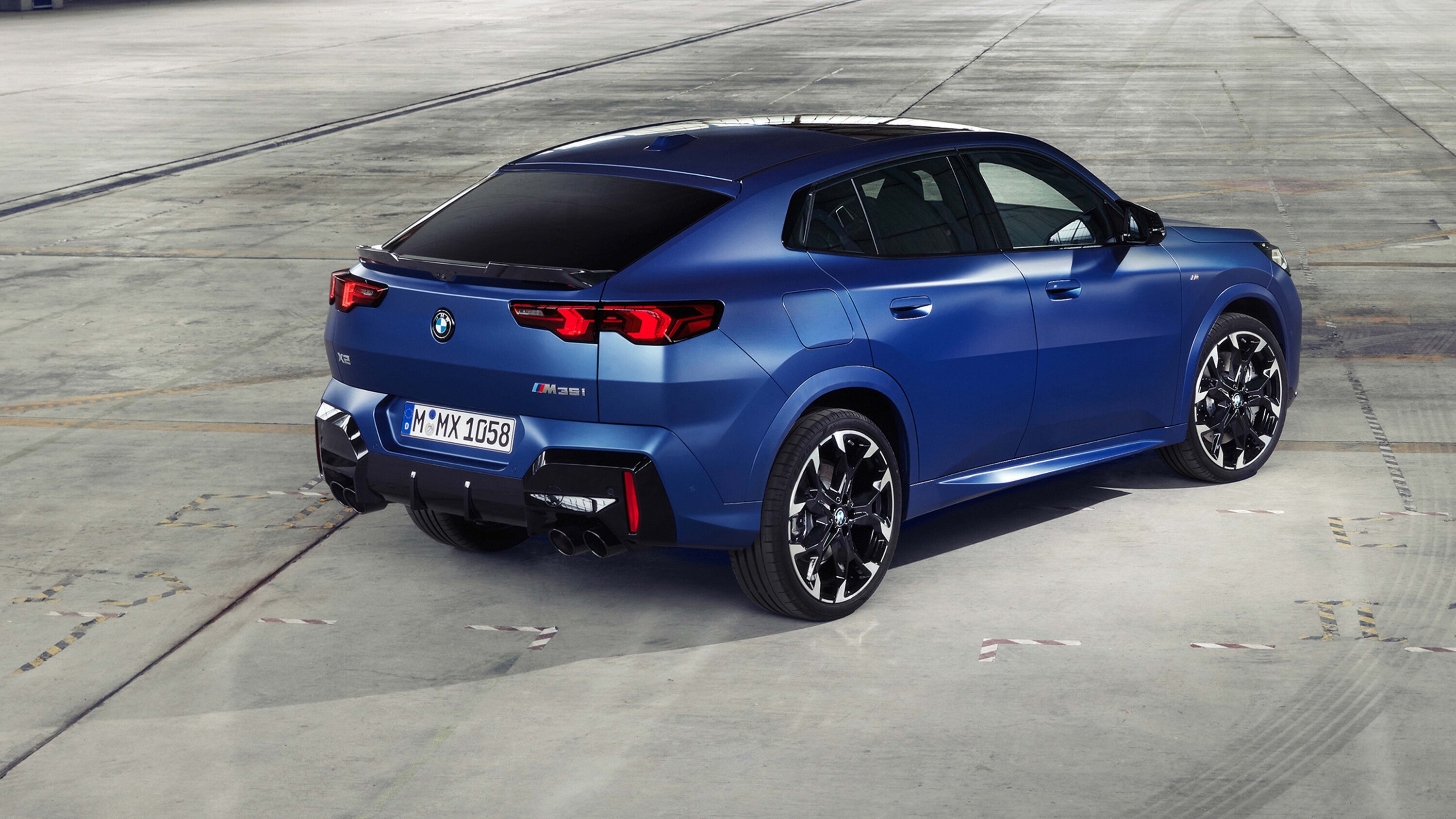
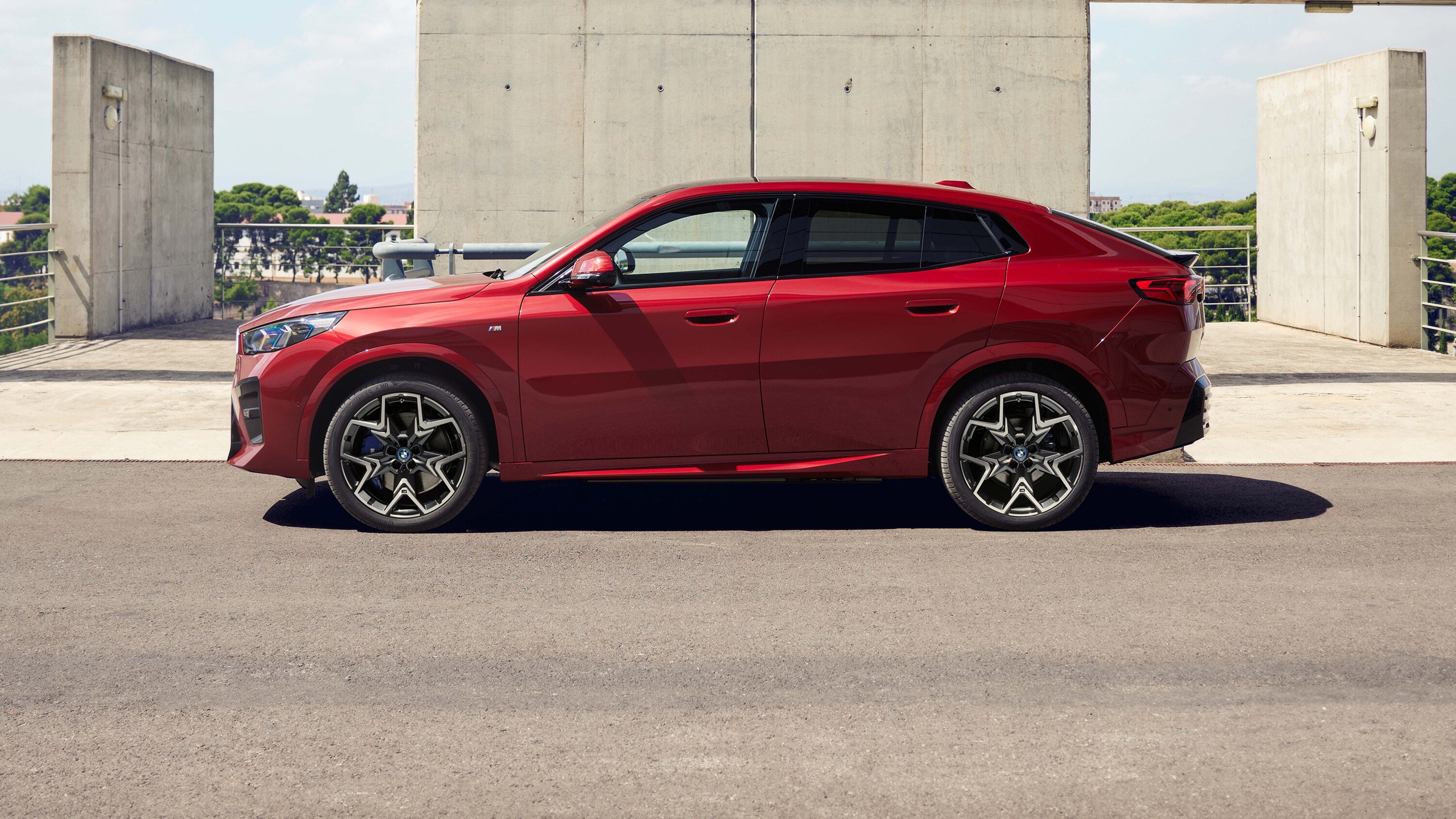
Now though, the Munich brand has reinforced its compact SUV offering – or SAV (Sports Activity Vehicle) as it prefers – with the sportier sibling arriving in two distinct forms.
While the X2 introduces a high-performance option with all-wheel drive and a potent petrol powertrain, the iX2 delivers the same aesthetic and proportions but with pure electric propulsion.
1
What does the 2024 BMW X2 and iX2 range look like?
Australia will get two of each, with an entry X2 xDrive20i for $75,900 and single-motor iX2 eDrive20 costing $82,900 (both excluding on-road costs).
The pointy end of the range will be looked after by the iX2 xDrive30 ($85,700 (before on-road costs) and X2 M35i xDrive, which, from $92,900 before on-road costs is as sporty as it gets for now with a 2.0-litre turbo B48 four-cylinder engine coupled to all-wheel drive via a seven-speed dual-clutch transmission.
Unlike its European 221kW equivalent, Australian versions will get a hearty 233kW and 400Nm – enough for 0-100km/h in 5.4s.
Beamer geeks will notice that’s a full half-second slower than the previous version and will most likely also note the $14,100 price increase. So what’s the rub?
2
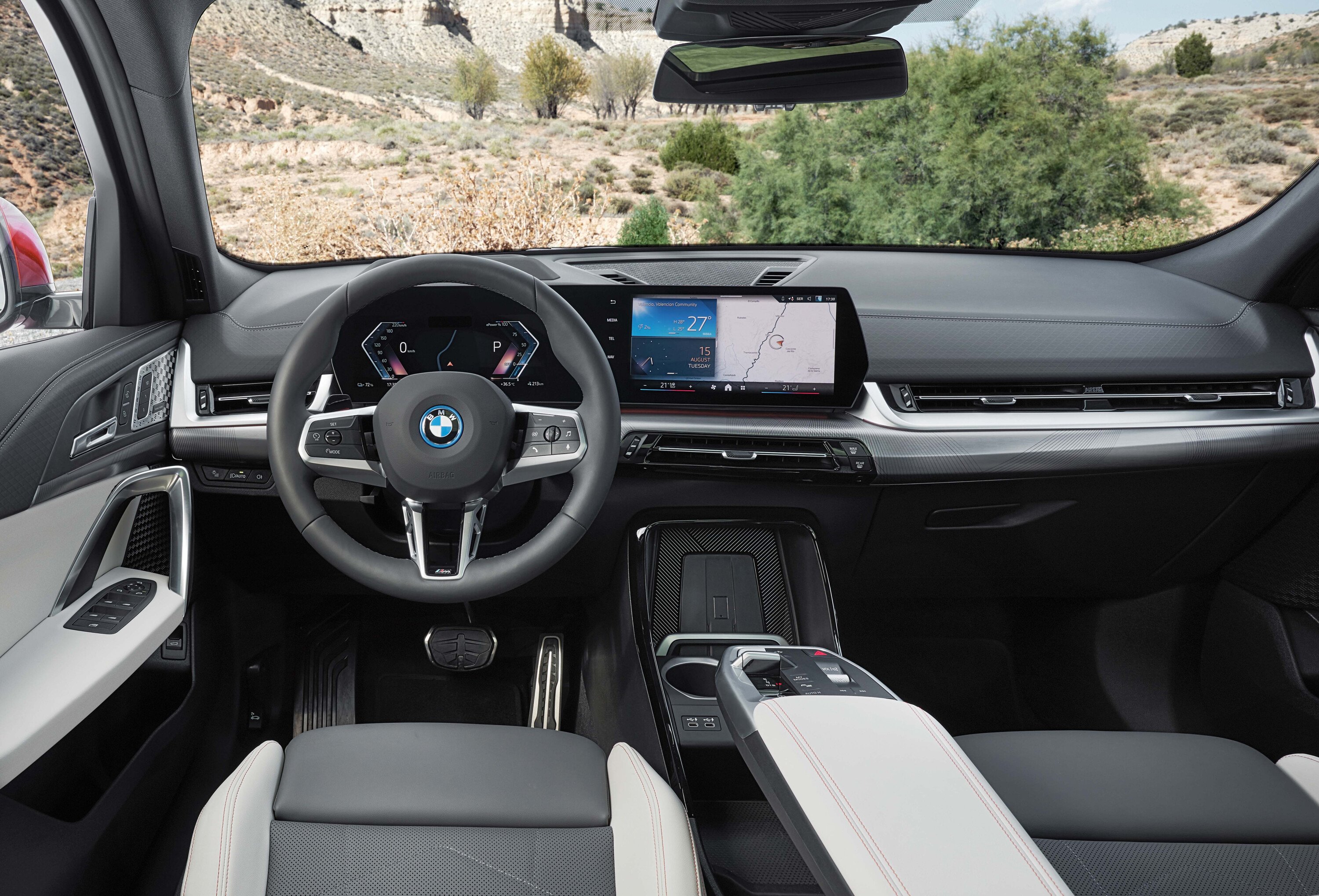
For a start, the 2024 version now has BMW’s excellent Operating System 9.0 which introduces a beautiful 10.3-inch digital instrument cluster butted to an even larger central touchscreen under the same curved pane.
The latest BMW tech brings a host of alluring features such as smartphone access and engine start along with remote vehicle status, gaming and video streaming as well as a boost to driving assistance and safety tech.
Next, there’s the hardware included in the price. 21-inch wheels, adaptive M suspension and vast front brakes with four-piston calipers, while differentiating X2 from X1 is a comprehensive exterior and interior redesign.
1
How does it drive?
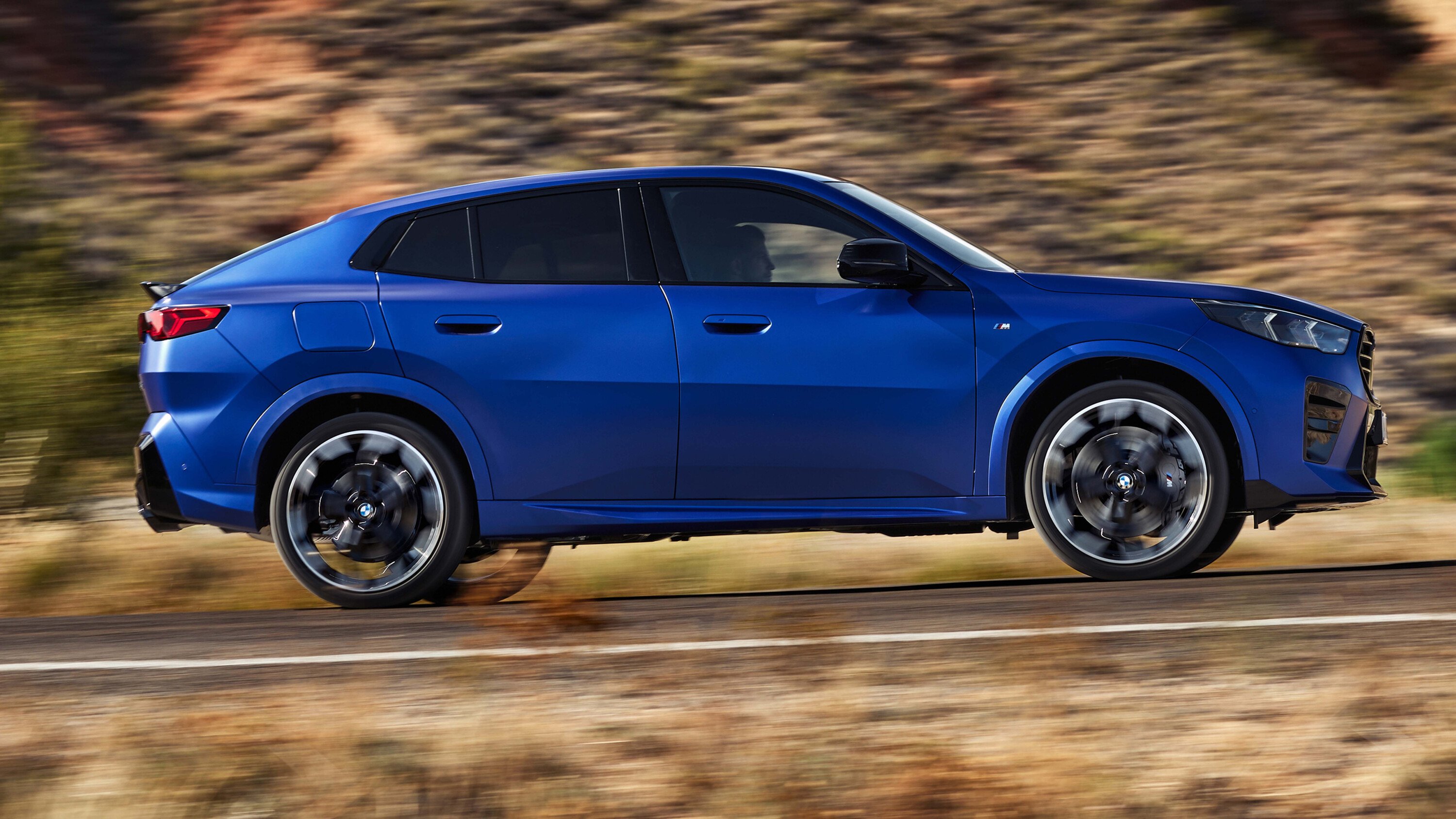
The driving experience is refreshingly M with strong acceleration that feels almost as rapid as the predecessor, noticeably improved steering feel and feedback but no unnecessary added weight.
Added to that, the ride manages to be taut but compliant and there’s minimal road and wind noise, while the body control and resistance to roll encourage a good time at the wheel.
The cause of an occasional ride choppiness was hard to identify but possibly down to adaptive dampers struggling to cope with Portugal’s, at times, horrendous conditions.
1
Even if acceleration is down a little, wonderfully fast throttle response and flat torque development are welcome consolation. That, and a great exhaust note which sounds mostly real.
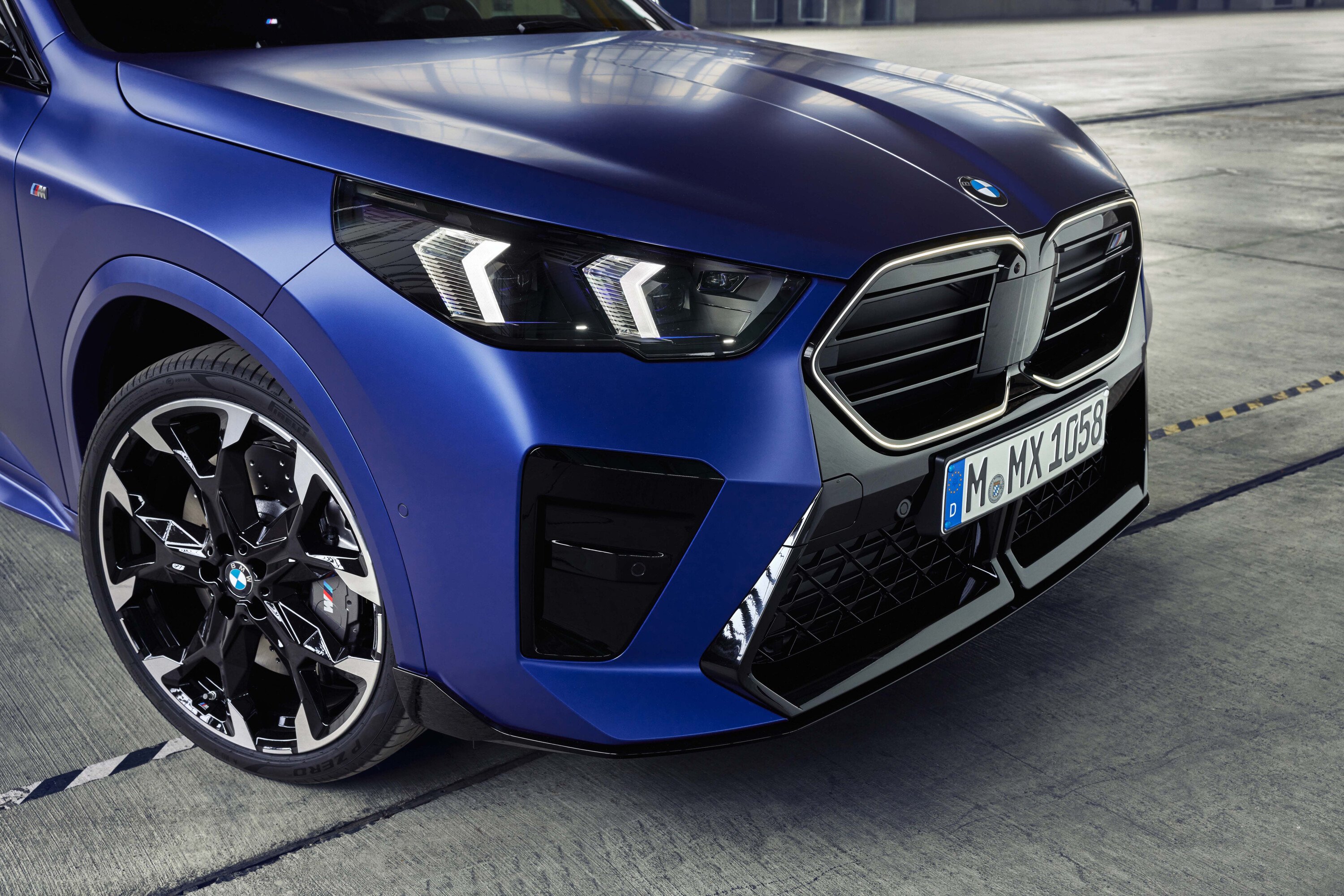
Although wildly different in its method of delivering performance and dynamics, the iX2 xDrive30 is surprisingly similar in nature. Like its petrol compadre, the higher-spec electric version also has all-wheel drive thanks to two electric motors and a comparable 230kW/494Nm for classic electric shove with no fuss.
Traction is staggering despite some European winter blues, and lateral acceleration was correspondingly sticky with imperceptible trickery keeping all four wheels delivering maximum poke.
1
While better than many EV rivals, the slightly foggy steering and bouncy ride were the only detractions from a vehicle that makes going fast feel effortless.
Despite some electron-torturing driving, our test car appeared capable of delivering close to the claimed range of 432km and we liked the carefully calibrated regenerative braking that adapts to terrain and even the behaviour of traffic ahead.
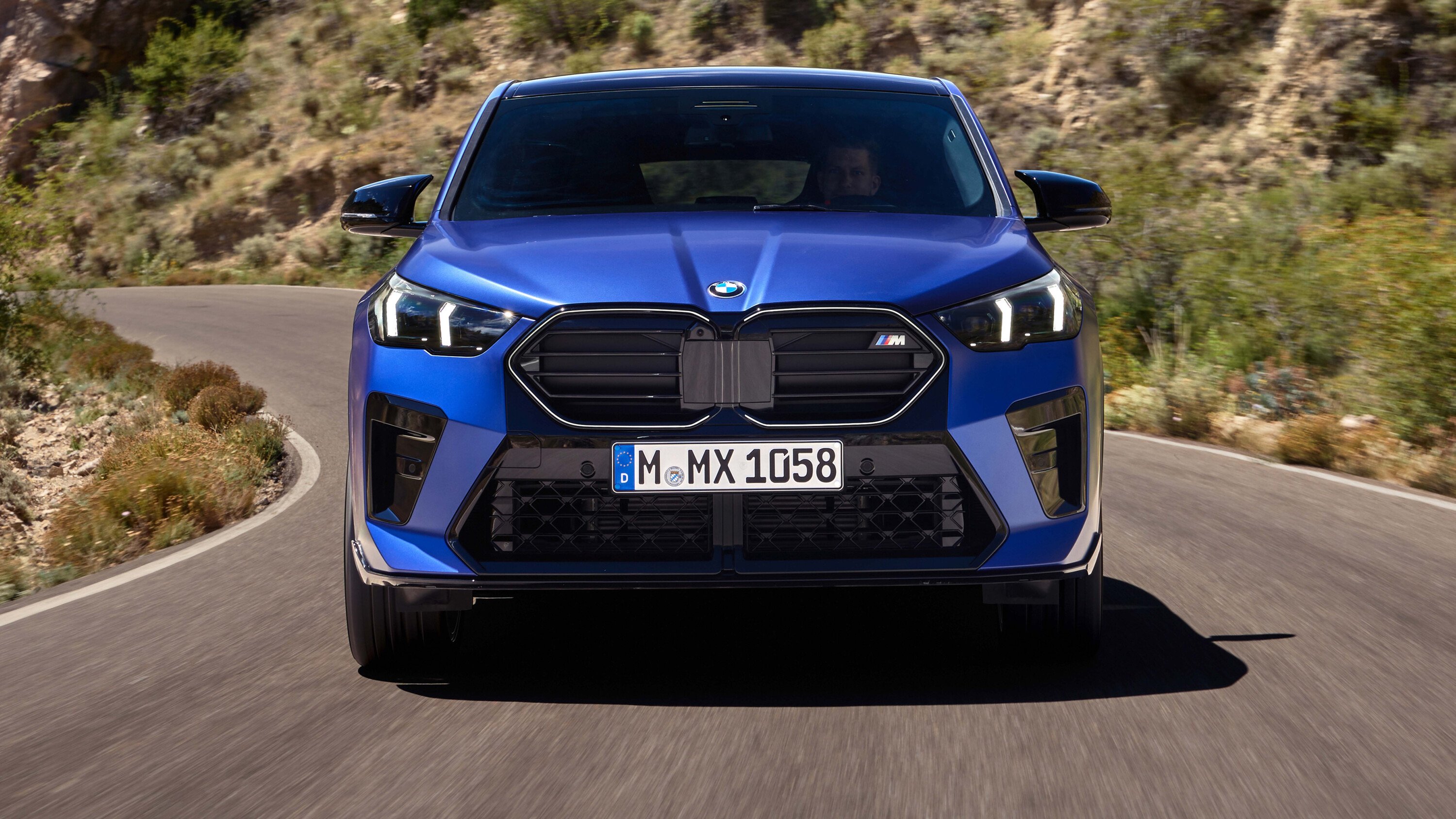
Our only gripe – common to petrol and electric versions – was at the outward view which is obscured by fat A-pillars in the forward direction and a skinny letterbox rearward view thanks to that coupe profile.
1
- What is a Powertrain or Drivetrain?
- Power vs torque
- Car suspension explained
- Automatic transmissions (‘gearboxes’) explained
- Chassis control systems explained
- Car vs Ute vs SUV: How the vehicle you buy should guide the way you drive
- What is the WLTP emissions and range test?
On top of boosted tech levels and wholesome all-round performance, the pair also bring one more important element to justify a heftier price.
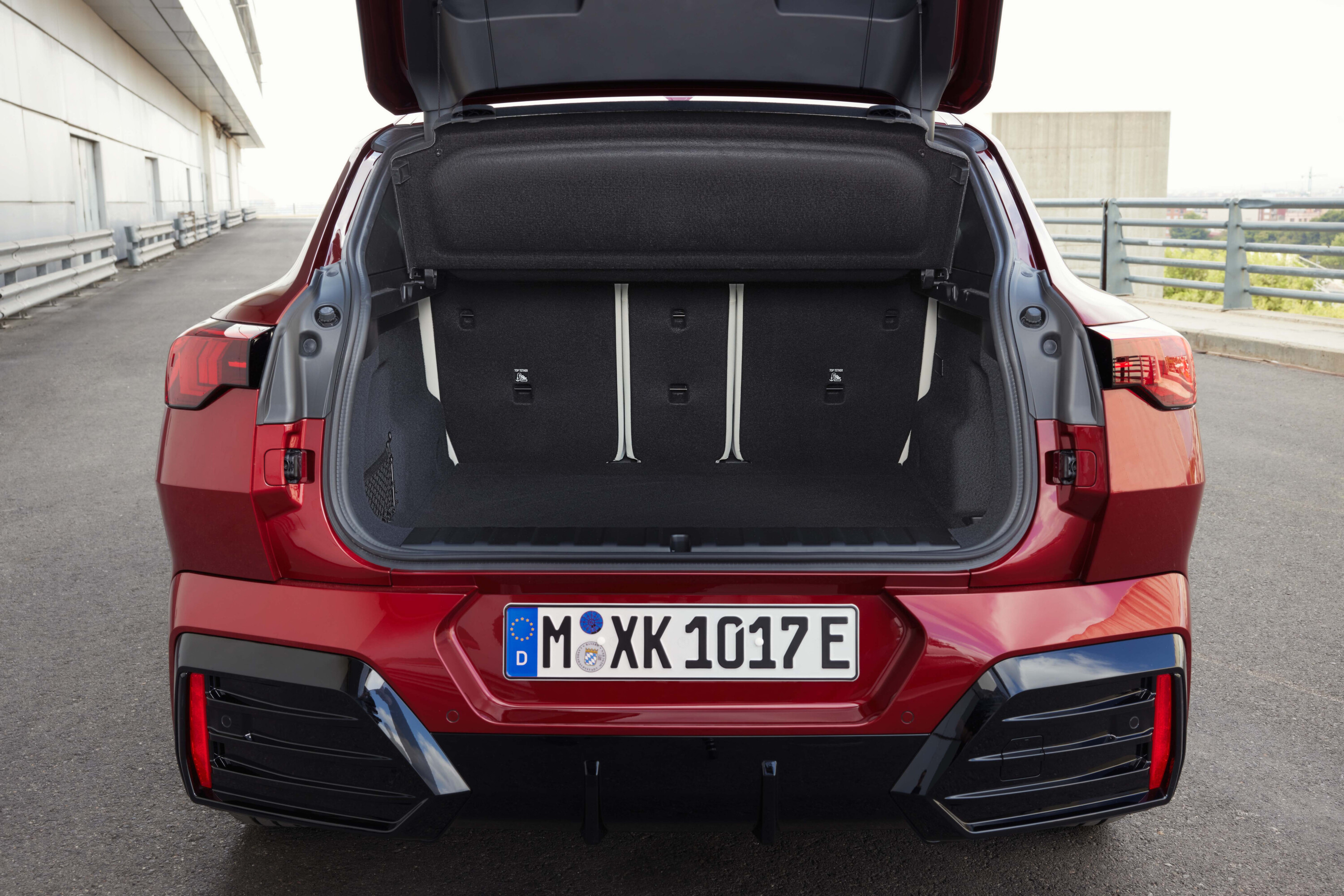
The new X2 is now larger in all directions including nearly 200mm added to the length. In fact, with an overall length of 4.55m, the X2 deserves to be regarded as borderline mid-size.
It results in more space everywhere including a boot that measures up to 560 litres for the X2 (90 litres more than previously) or 1470L with the seats folded as well as surprisingly accommodating space in the second row thanks to a scalloped roof liner.
A first taste of the entry pair will complete the picture when the full family arrives Down Under in Q2 2024 but the most potent versions of BMW’s second-generation X2 suggest this model has made a rapid transition into new levels of sophistication … and size.
MORE
Everything BMW
February 2024: The Apple Car is dead
After more than a decade of work, Apple has reportedly abandoned its plans to build an autonomous electric car.
According to Bloomberg, Apple has told the more than 2000 employees still working on the long-running program — known as Project Titan — that it has been discontinued, with the tech giant instead shifting its focus towards generative artificial intelligence.
Apple will reassign some staff to its AI projects, reports Bloomberg, however others have been given 90 days to find other roles within the company or they will be let go.
The news, which was reportedly delivered to staff by Apple’s chief operating officer Jeff Williams and Project Titan vice president Kevin Lynch brings an end to the hugely ambitious project which began in 2014.
At its height, more than 5000 employees were working on Project Titan, with Apple targeting an on-sale date some time in 2026.
https://www.instagram.com/p/C33sWFdyCtG/
May 26, 2022: Former Tesla exec leaves Apple
After just seven months in the job, Christopher ‘CJ’ Moore has left Apple, where he was rumoured to be heading up the company’s push into the automotive space – a project known as ‘Project Titan’.
A former Tesla executive responsible for its often derided Autopilot technology, Moore was believed to have been poached by Apple to lead development of the oft-reported, never official ‘Apple Car’.
Moore will head to Luminar Technologies, an autonomous driving developer that has partnered with Volvo to offer a self-driving ‘Ride Pilot’ subscription service in California sometime beyond 2022.
According to business paper Bloomberg, Moore’s exit is just the latest in a run of departures from the project over the past two years, although many have since been filled with executives poached from Ford and Rivian, among others.
It’s believed Apple’s next big iPhone-level product play will be some sort of augmented-reality glasses or virtual-reality headset, but if Project Titan is ever revealed to be an actual car, it will surely be the most pivotal moment in recent history for the tech giant.
February 2021: Hyundai backs out of manufacturing talks with Apple
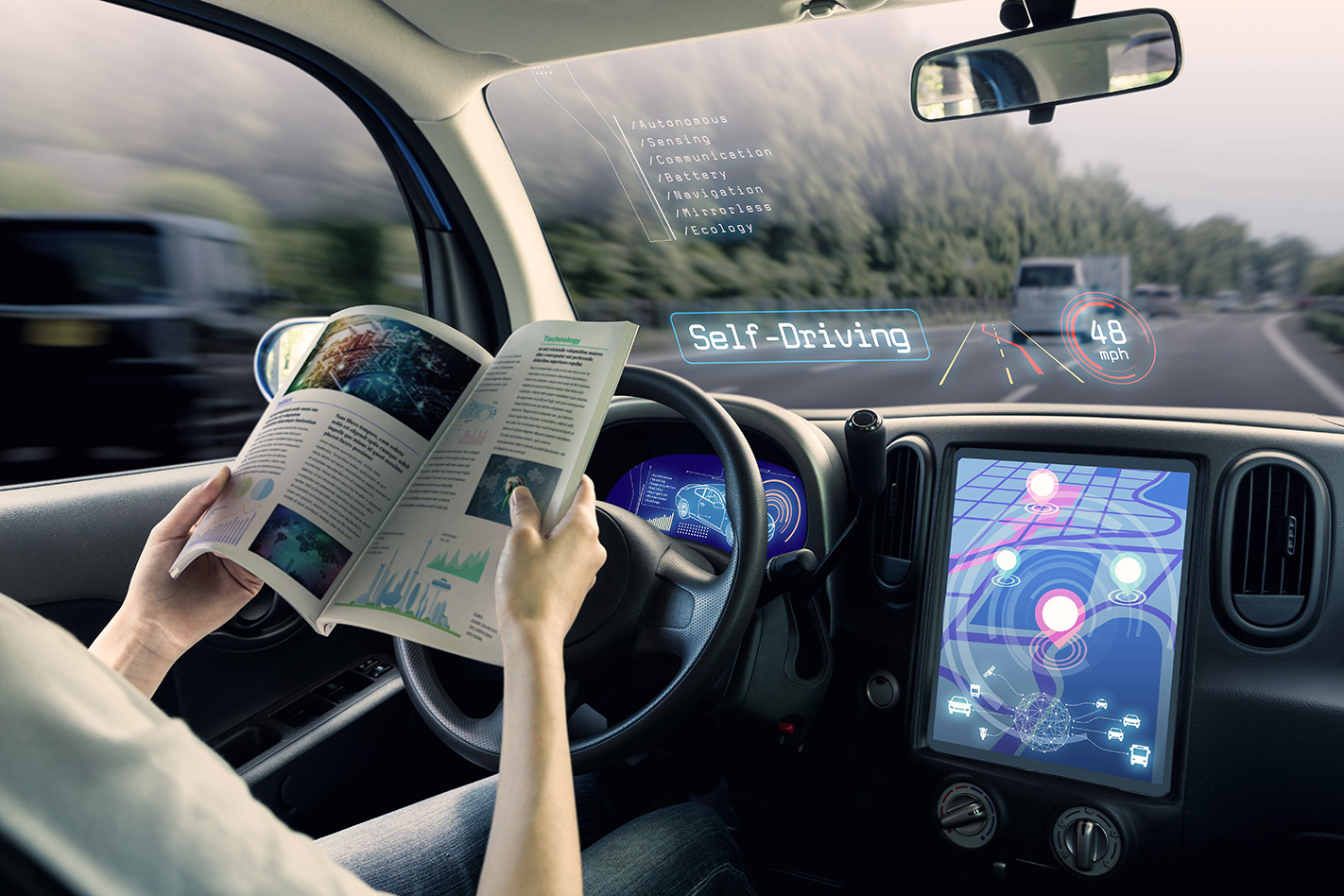
Hyundai has backtracked from earlier claims that suggested it was working with Apple to develop an autonomous electric vehicle.
The Korean motoring giant and its affiliate Kia said they are no longer in talks with the tech giant, exactly a month after the former released a statement saying: “Apple and Hyundai are in discussion, but as it is at early stage, nothing has been decided.”
According to Bloomberg business news, the fledgling relationship seemed to turn sour when Apple announced it had discussed similar plans with other auto manufacturers.
Not to be outdone, the South Korean carmakers said they too were in talks with multiple companies about autonomous EVs.
As a result of the news, Hyundai shares dropped by 6.2 percent in Seoul, having jumped by 24 percent when it announced it was in talks with Apple last month, while Kia slumped by 15 percent.
1
The seemingly failed Korean liaison is the latest twist in the ongoing saga facing Apple, the world’s richest company, ever since it revealed in 2014 that it had begun work on a mysterious automotive project.
Reality got solidly in the way of its grandiose plans, which seemed to wither on the vine – however, a Reuters report in December 2020 suggested it was still keen to get into the car game.
Run under the Project Titan moniker, Apple is reportedly looking at 2024 as the year it will launch its first car, with or without Hyundai and Kia’s help.
Reportedly slated to be a mass-market passenger vehicle, the Apple car will supposedly also feature “next level” battery technology, which will extend the car’s range and reduce its cost.
Project Titan kicked off in 2014, reportedly with the aim of building its own fully autonomous car, but the iPhone maker wound back its lofty goals a couple of years ago to focus on the software side of autonomous driving.
Up to 190 people have reportedly been laid off from the project since then, as Apple’s focus turns towards partnering with an automotive supplier to build the car itself.
But a joint-venture with Hyundai, which is well on the road in its own push to embrace new technologies such as electric, driverless and flying cars, could bring Project Titan back on track.
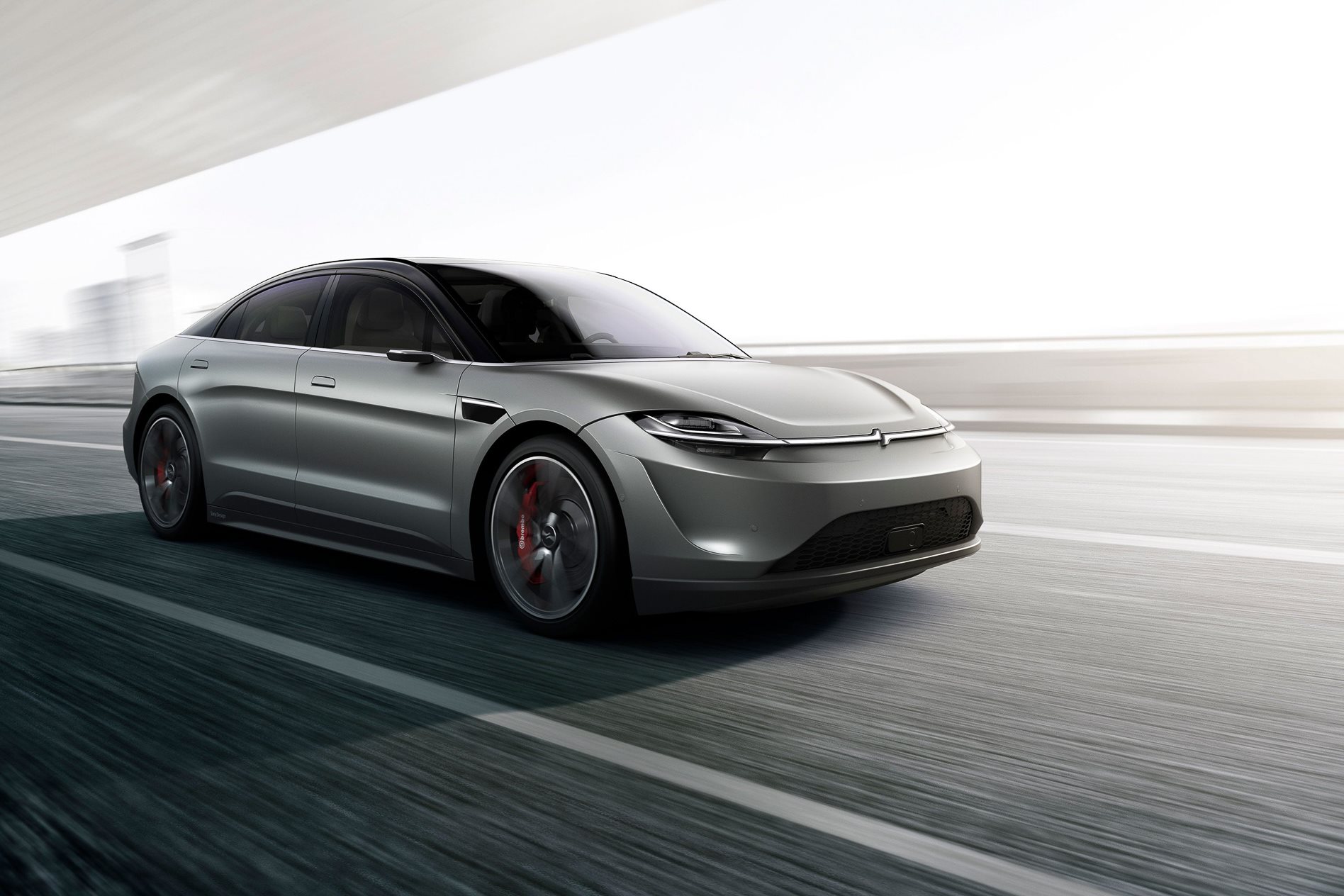
Apple had previously been in negotiation with tier-one automotive supplier Magna Steyr – who will build the Fisker electric car and who also built an EV for Sony – to manufacture its vehicle.
Interestingly, Magna Steyr – which has built 3.7 million cars for brands like BMW and Mercedes-Benz – is actively courting customers in North American, where it’s planning to build a factory that will likely focus on the production of battery-electric vehicles.
1
There are other EV startups that the tech company could collaborate with to produce a limited run of cars, too.
Electric truck and SUV maker Rivian is one of those companies, given its access to a relatively modern car plant.
There are also reports from Taiwan that large orders of key electric vehicle parts like motors and power integration systems have been made by Apple, though these are unsubstantiated.
The fledgling US EV maker may also be interested in the purported battery breakthrough that Apple is planning on bringing to the EV party.
According to the Reuters report, Apple also plans to do away with the pouch or packet structure of lithium-ion battery production, freeing up room inside the battery housing for more cells to increase its energy density.
1
It’s not, however, a new technology; both Tesla and General Motors are developing batteries that don’t rely on the module model.
It’s also looking towards lithium-iron phosphate technology, which allows for a more compact and potentially cheaper battery.
This technology already exists; Tesla has partnered with a Chinese company, CATL, to source complete lithium-iron phosphate batteries for its Model 3 and Model Y.
There is also the possibility that Apple will position itself as the supplier of autonomous software tech that could allow car companies to fast-track their way to higher levels of self-driving autonomy.
Either way, the first Apple car won’t be seen until 2024 at the earliest, according to the report.
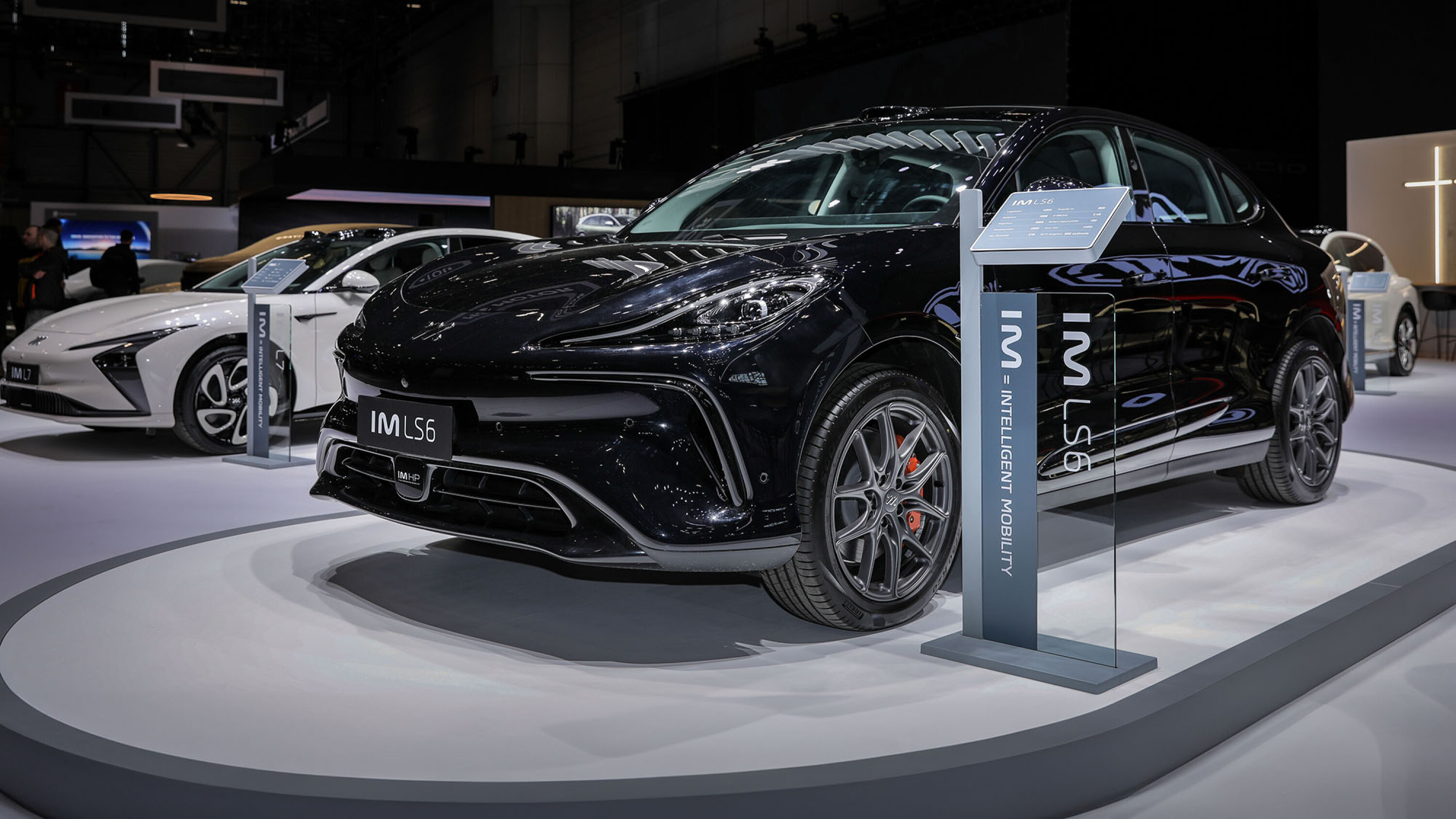
February: MG IM LS6 shown among others in Geneva, Australia still under consideration
It’s no secret that MG views Australia as a key market, but the brand has far many more models available elsewhere than we might ever see in Australia.
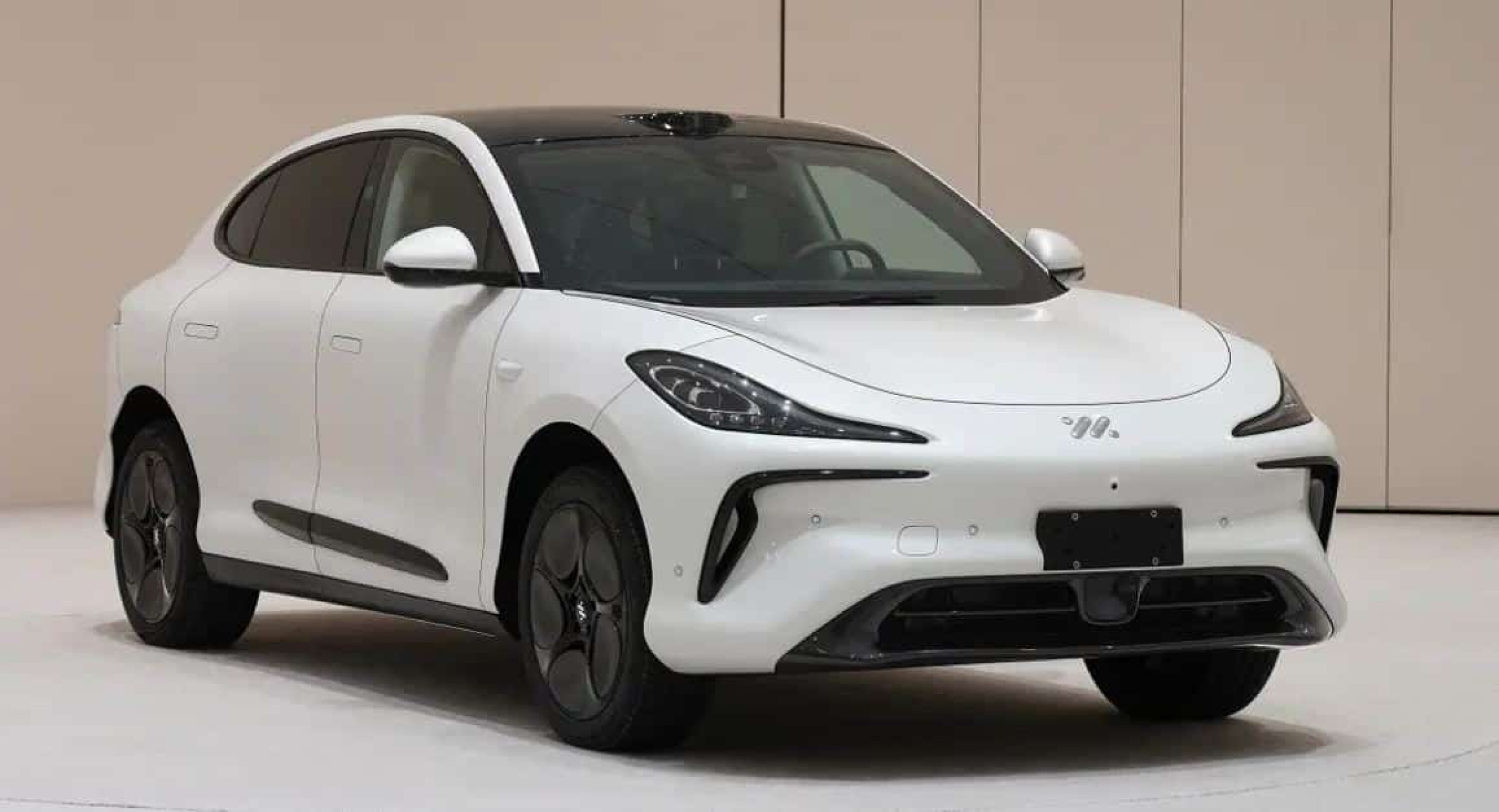
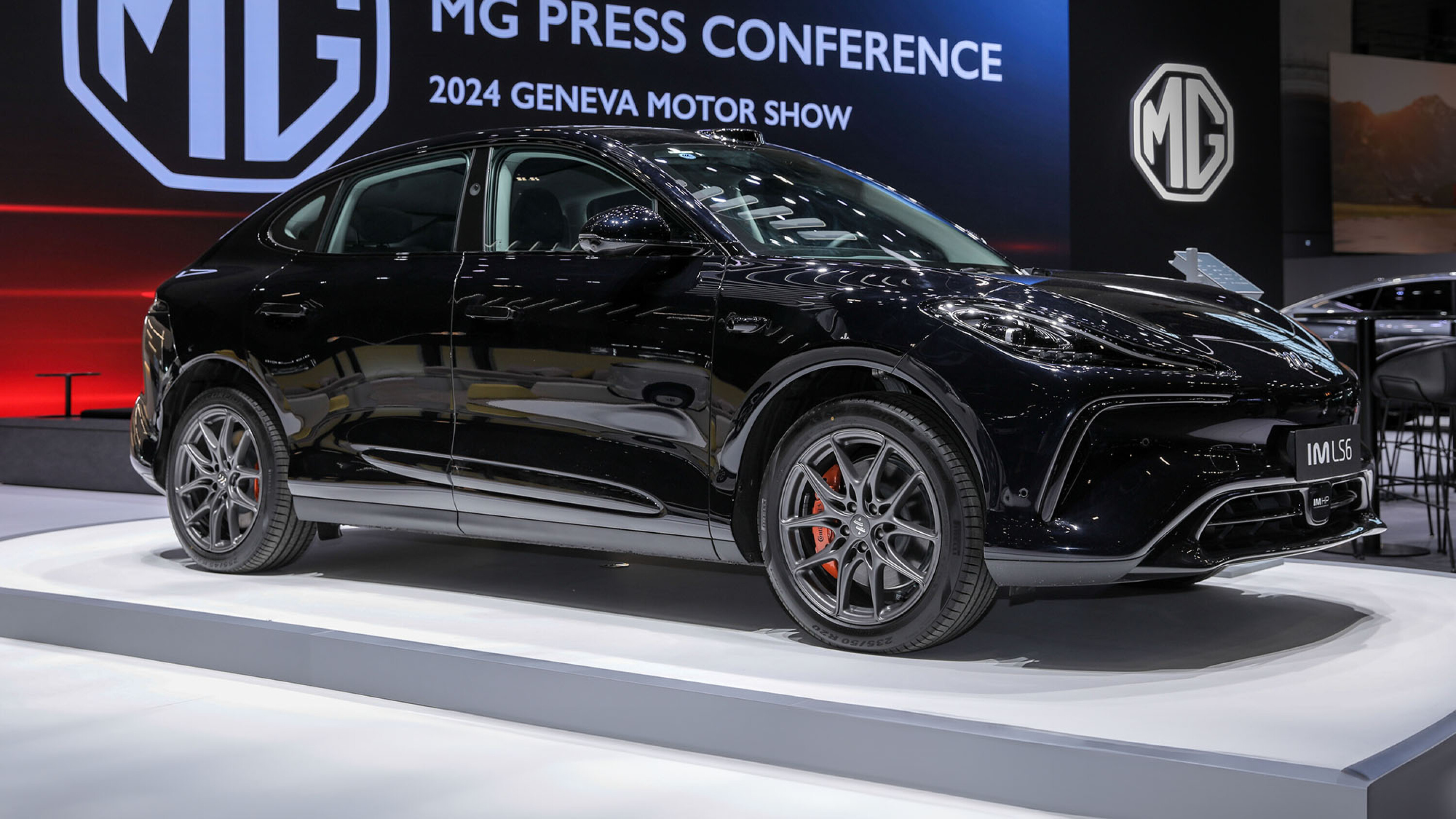
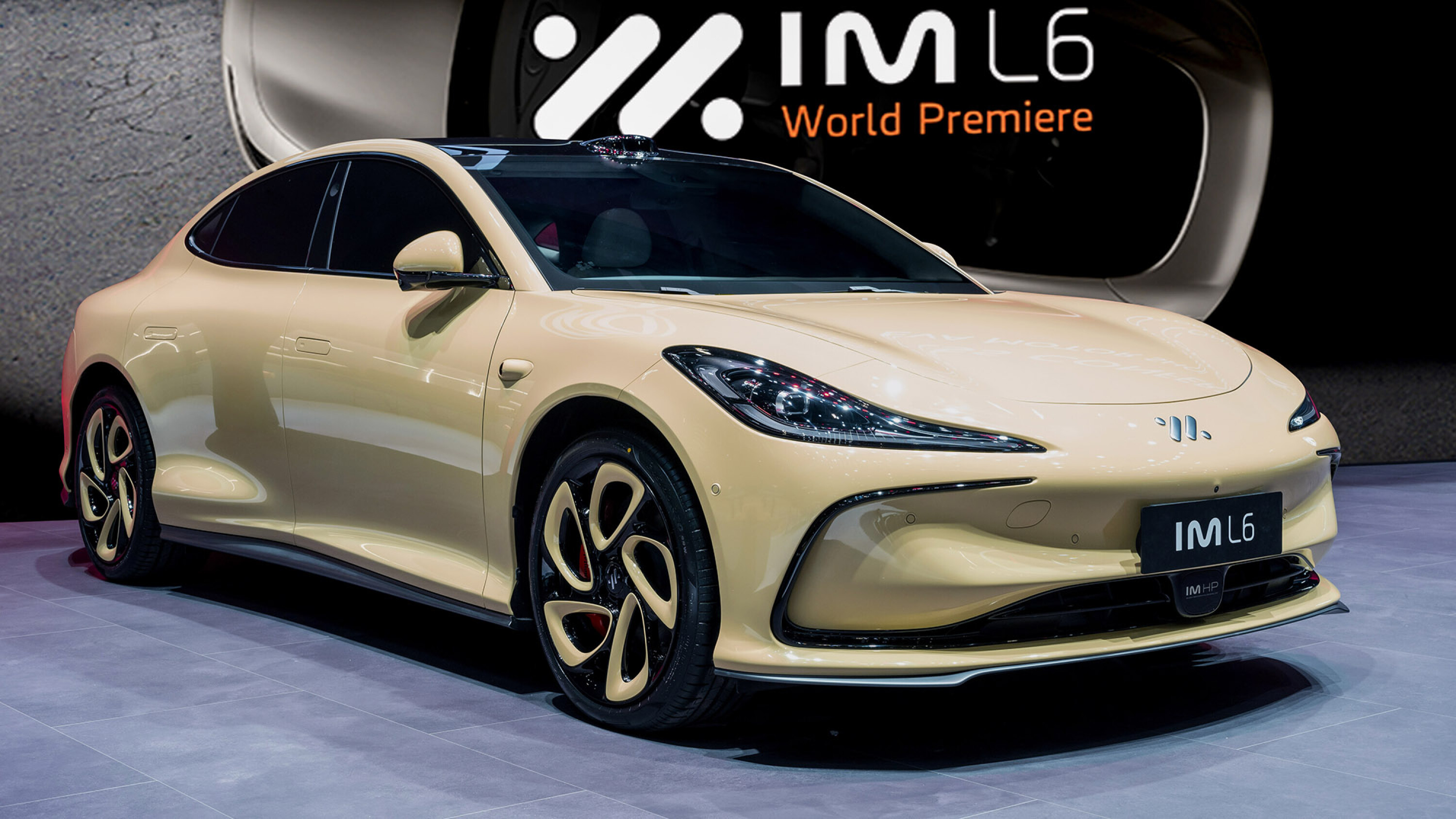
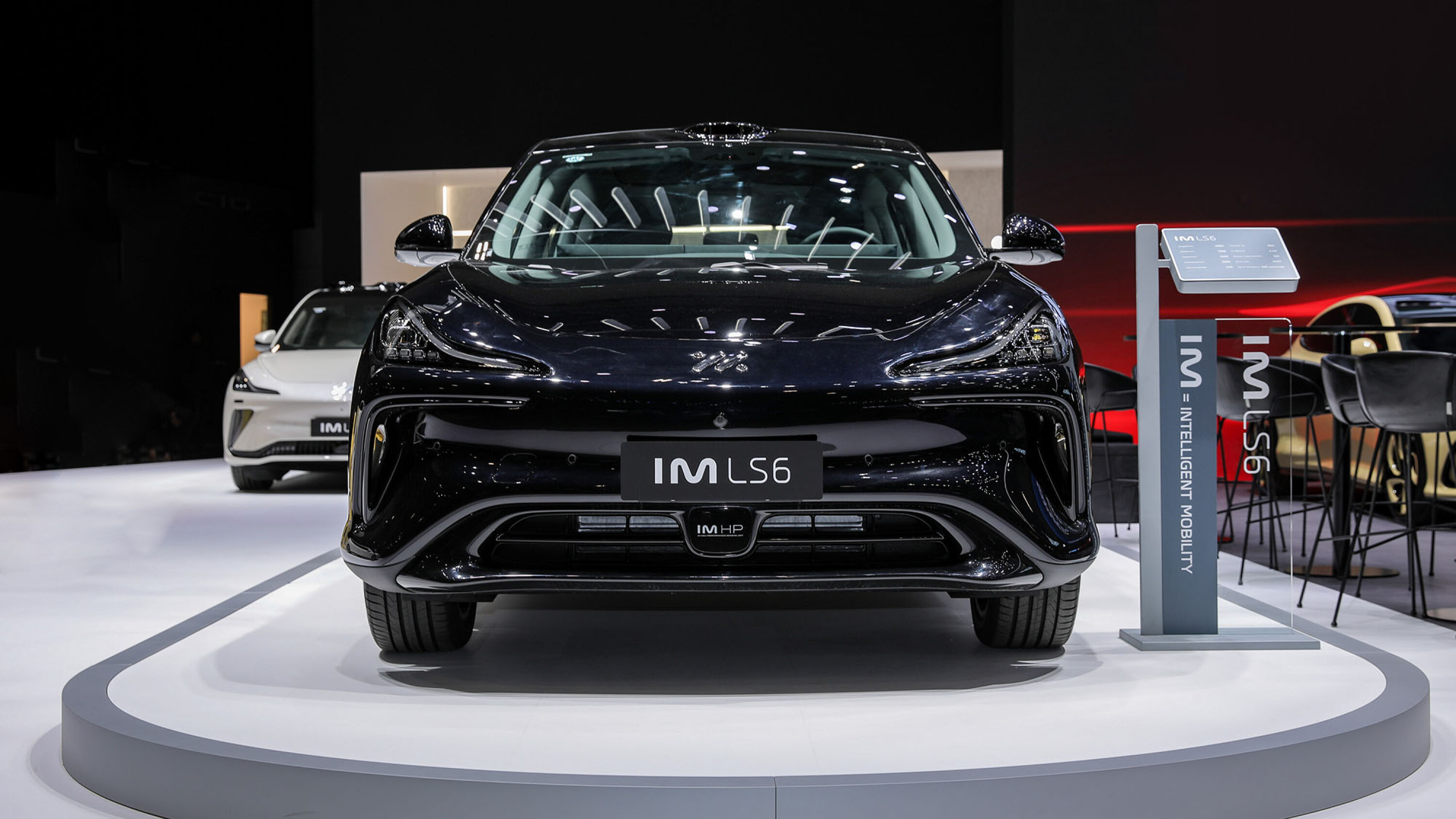
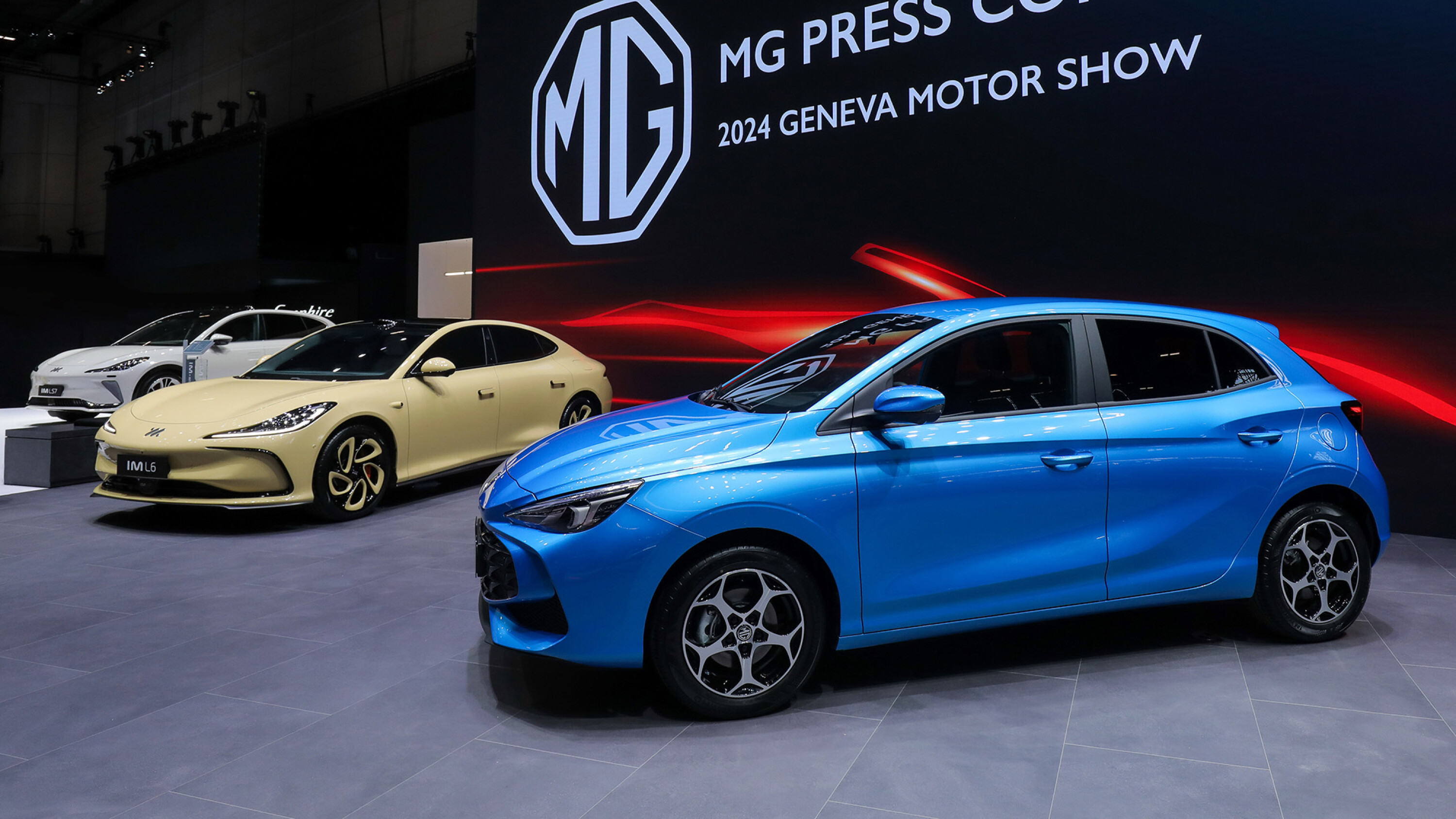
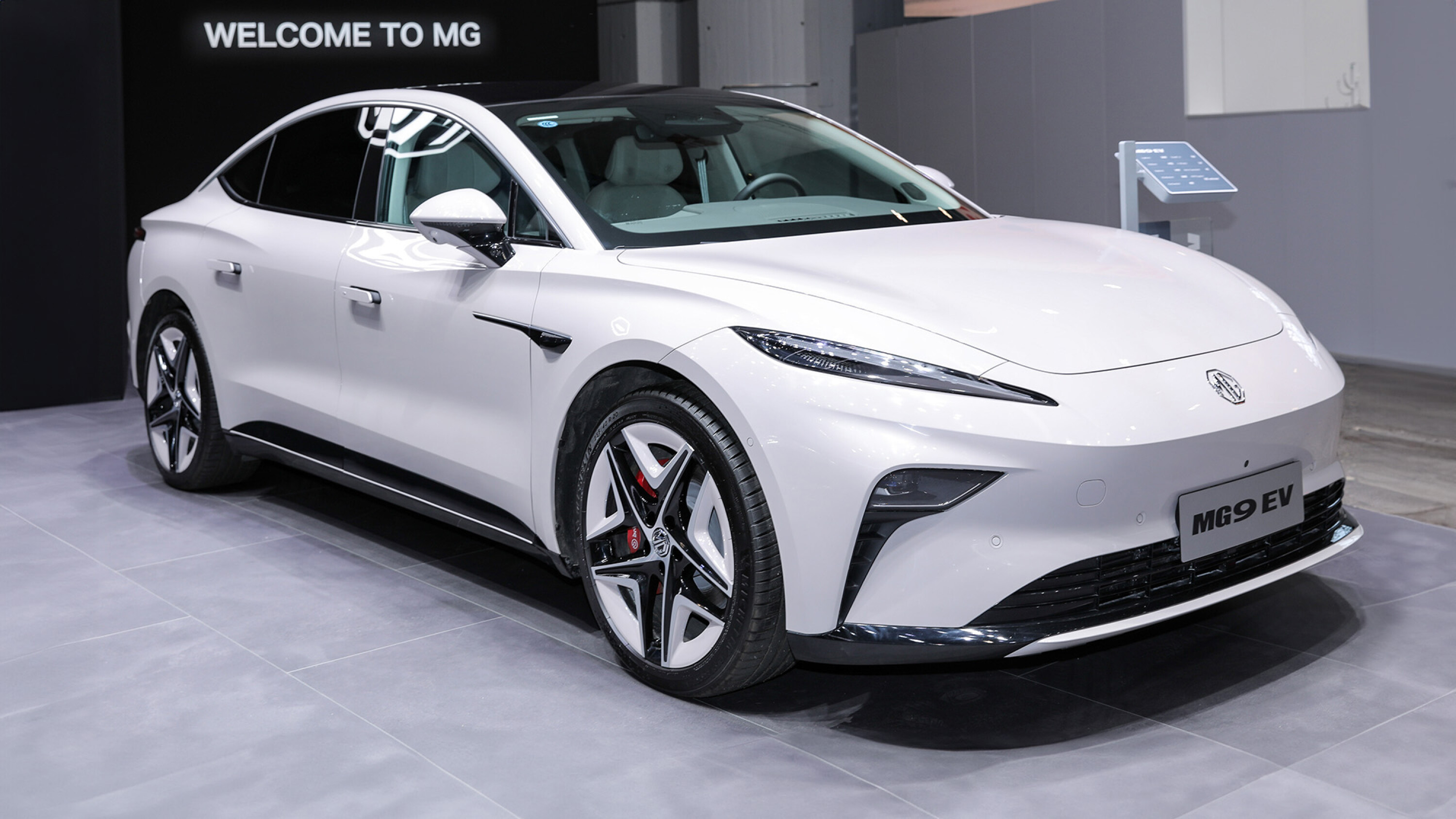
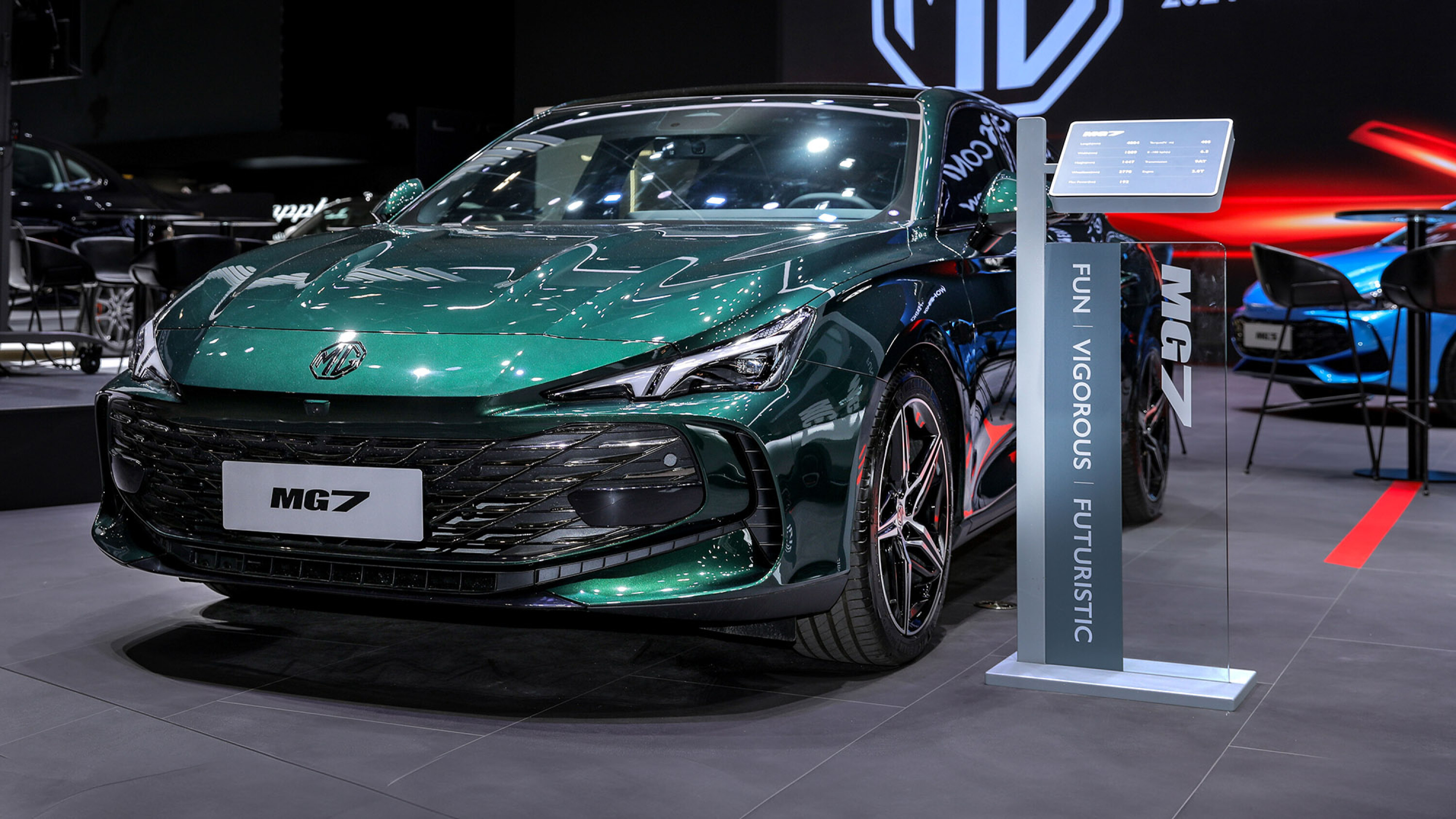
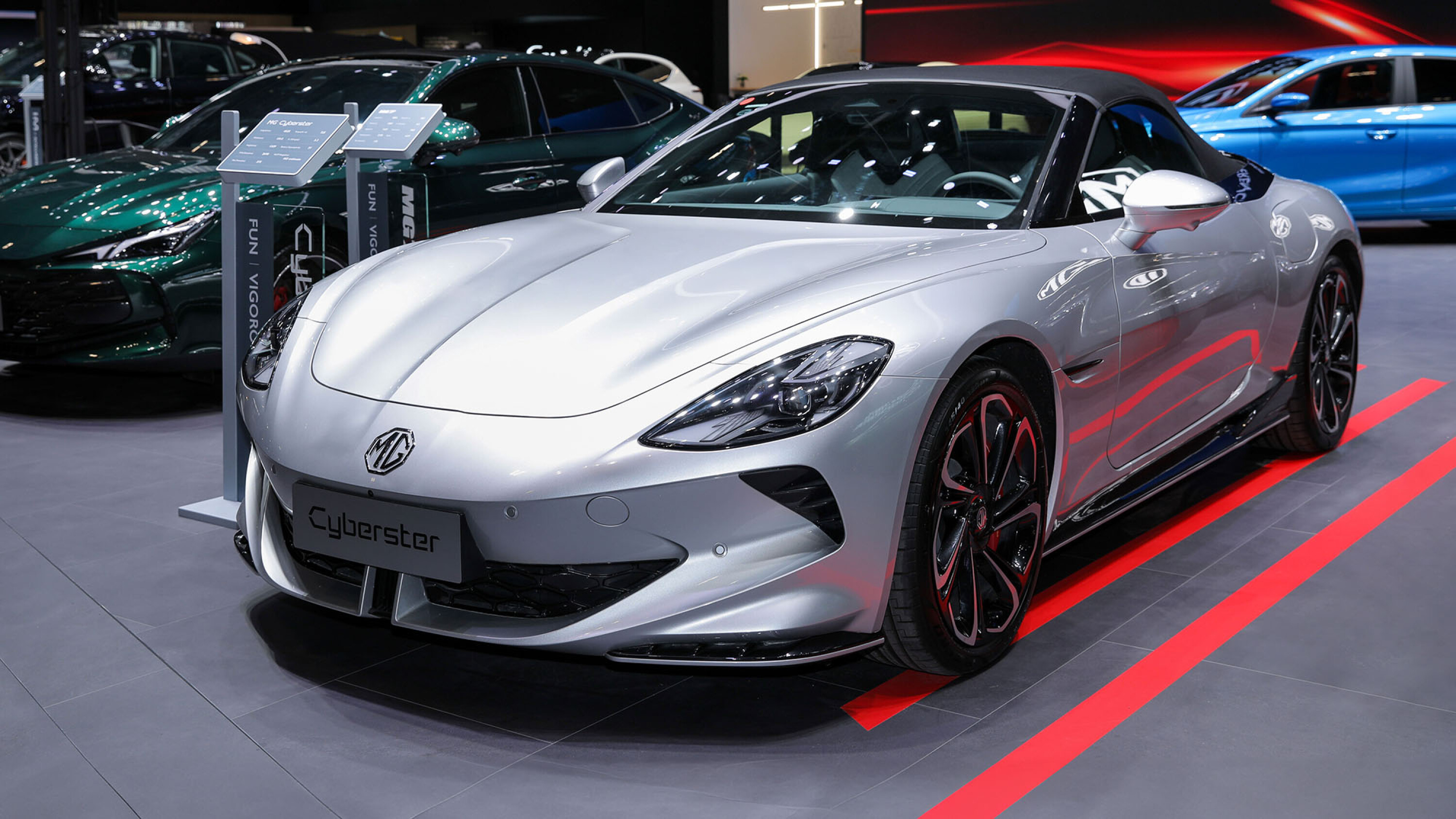
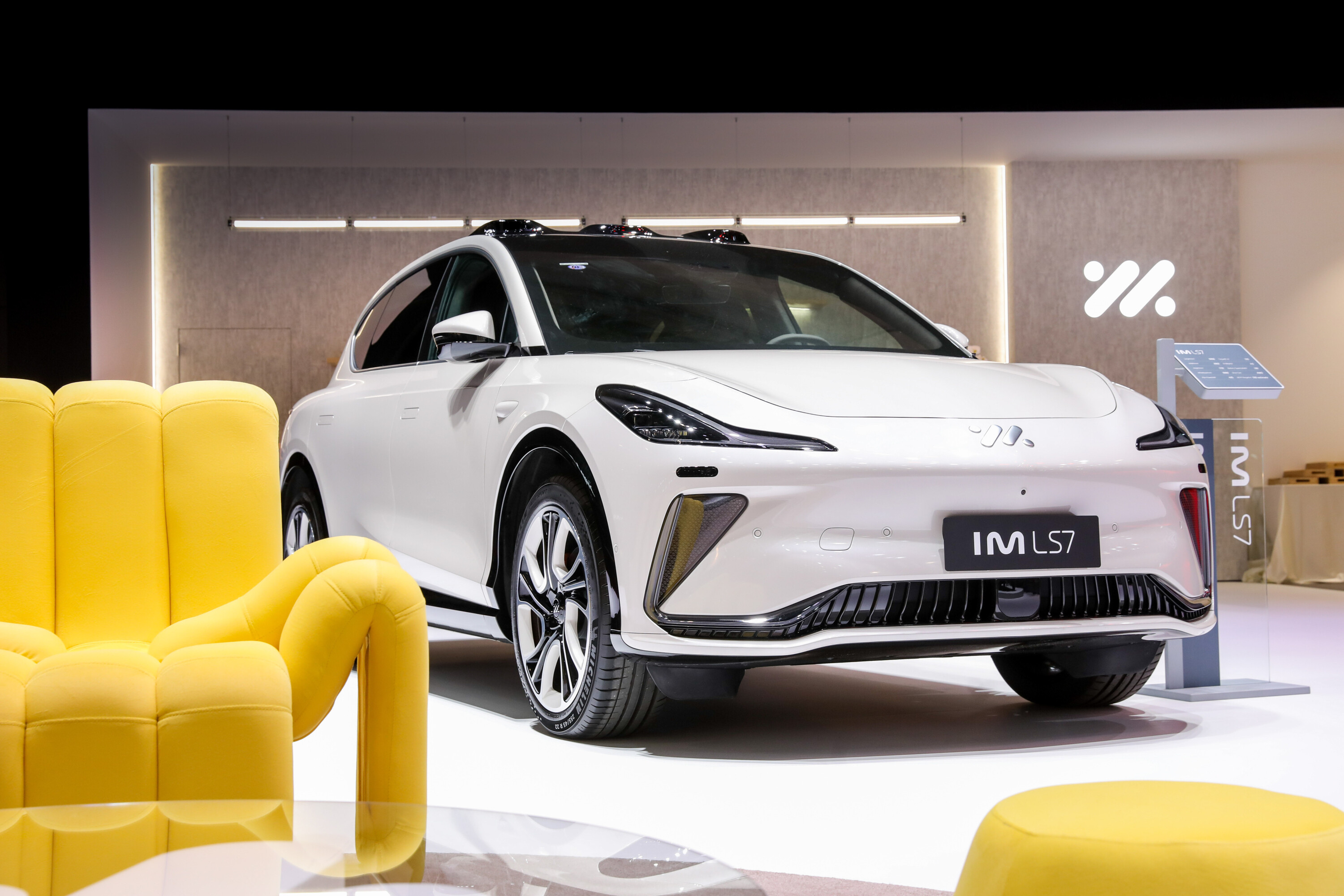
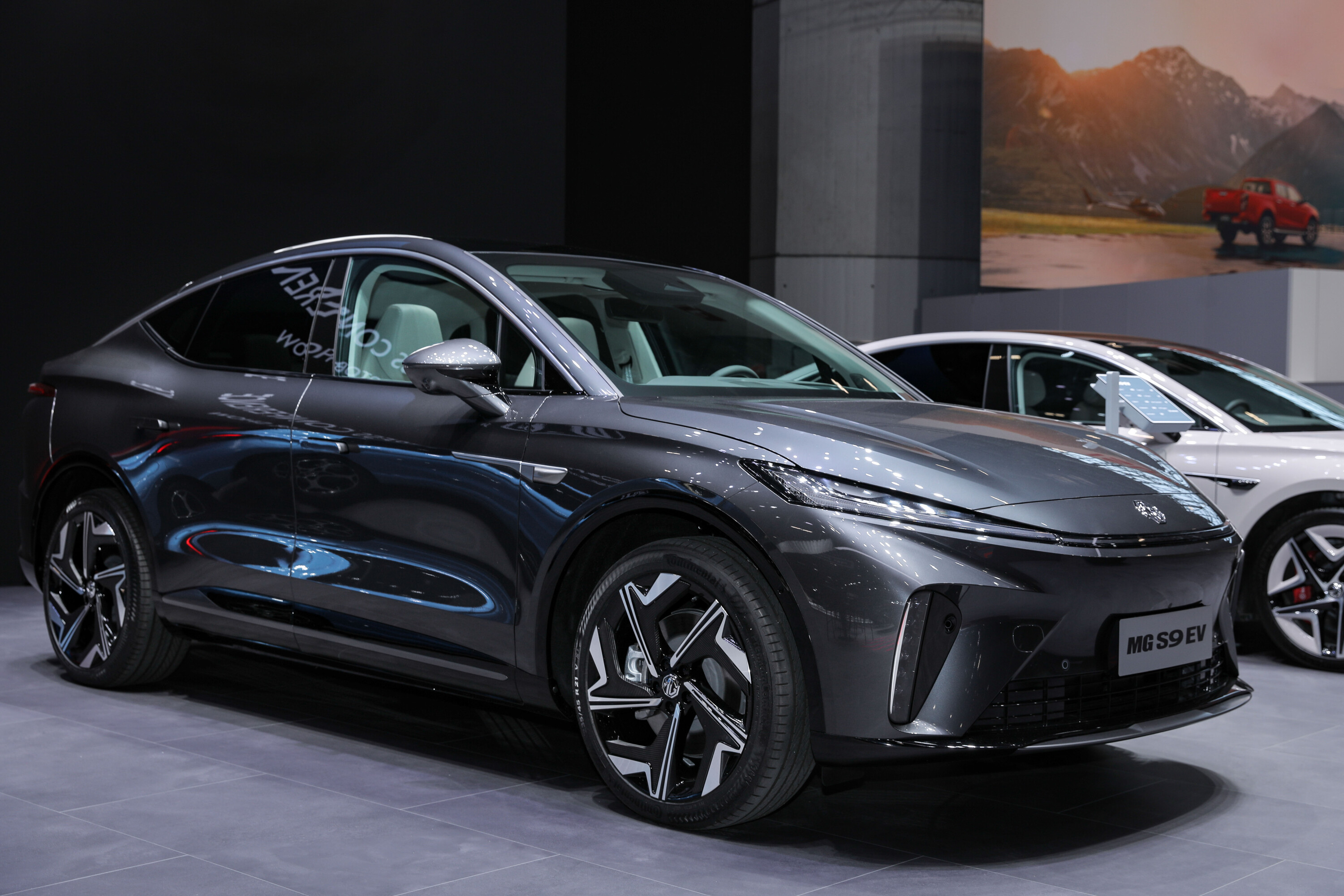
In Geneva this week, the brand is showcasing the new IM LS6 SUV alongside the even fresher IM L6 sedan, the IM L7 sedan and IM LS7 SUV, the new MG3 Hybrid+ and Cyberster, and other new models like the MG4 X Power, the MG7 ‘fastback saloon’, and finally the electric MG9 sedan and S9 SUV.
What is IM?
IM Motors is a premium EV brand in China, launched in 2020 by MG parent SAIC with online retail giant Alibaba and developers Zhangjiang Hi-Tech.
The English-language name stands for “Intelligence in Motion”. Its Chinese name is Zhiji Motors (智己汽车). Zhiji means “to know one’s self”.
MG Australia boss Peter Ciao has previously confirmed any local IM models would be marketed under the MG name to avoid complicating the brand’s growing cachet.
1
29
Of those, the MG 4 X Power is already on sale in Australia, while the new-gen MG3 and Cyberster are already confirmed – but what else can we expect to see here?
Given MG’s growing popularity in Australia, it’s likely that just about any of the models shown in Geneva would find enough homes here. But, for now, only one specific model has been given anything close to a nod for the local division.
1
“We have a range of cars under consideration for Australia and NZ including the IM Motors LS6,” an MG Motor Australia spokesperson told Wheels Media today.
“The process around why a specific variant is selected or not selected is complex, so – as we do with all our range – we will proactively work with our engineers locally and internationally, as well as product, marketing, sales teams, dealer network and customer feedback, to understand and cater our offering to their ongoing needs and wants.”
1
The brand had previously indicated interest in the large LS7 SUV and L7 sedan flagships, but in an interview with Wheels Media last year, MG Australia chief Peter Ciao flagged a change in strategy.
“I plan to import one middle-sized SUV to Australia… I’m aiming for LS6 first”, he said.
1
IM LS6: The basics
The LS6 is a performance-focused electric SUV, with a trio of configurations offered in China.
In flagship form, the LS6 boasts a 100kWh battery pack and is driven by a dual-motor all-wheel drive system that produces 579kW/800Nm and claims a 0-100km/h time of 3.5 seconds.
Those numbers are largely table stakes in the world of fast EVs, but important for getting a seat at the table.
1
Driving range is claimed to be 702km in China’s CLTC efficiency testing process (more generous than WLTP), and top speed is listed at 252km/h – although time spent anywhere close to that clip would quickly eat away at range.
In the middle of the line-up is a distance-focused 90kWh 255kW/450Nm version with 680km of claimed range, while the entry-level grade offers a 71kWh battery and 230/450Nm for a claimed range of 560km.
1
How big is the MG LS6?
In both size and spec, you can think of the MG LS6 as a shot aimed directly at Australia’s most popular EV.
Measuring 4854mm long, 1995mm wide and 1703mm tall with a 2950mm wheelbase, the LS6 is sized to compete with the popular Tesla Model Y.
1
When will the MG LS6 come to Australia and what will it cost?
For now, we can only speculate.
In China, the LS6 is priced from the equivalent of $61,000 AUD, underscoring its position as a Tesla Model Y rival.
MG would very likely be able to stay close to that price as an entry point in Australia, giving it the car it needs launch an assault on Tesla’s dominant position.
As for timing, the LS6 is unlikely to reach Australia before 2025 – if it’s even confirmed at all.
For more of MG’s Geneva showing, click each of the below photos to see our full gallery.
5
11
3
8
13
4
3
August 2023: LS6 the most likely contender for MG’s next big move in Australia
A lot can change in a month, and it seems like MG has flipped on the idea of bringing the LS7 and L7 luxury EVs to Australia – at least in their current iterations.
Snapshot
- MG’s lineup to expand with luxury offerings
- Model Y lookalike LS6 now more likely
- L7 and LS7 deemed less suitable for our market due to safety regulations
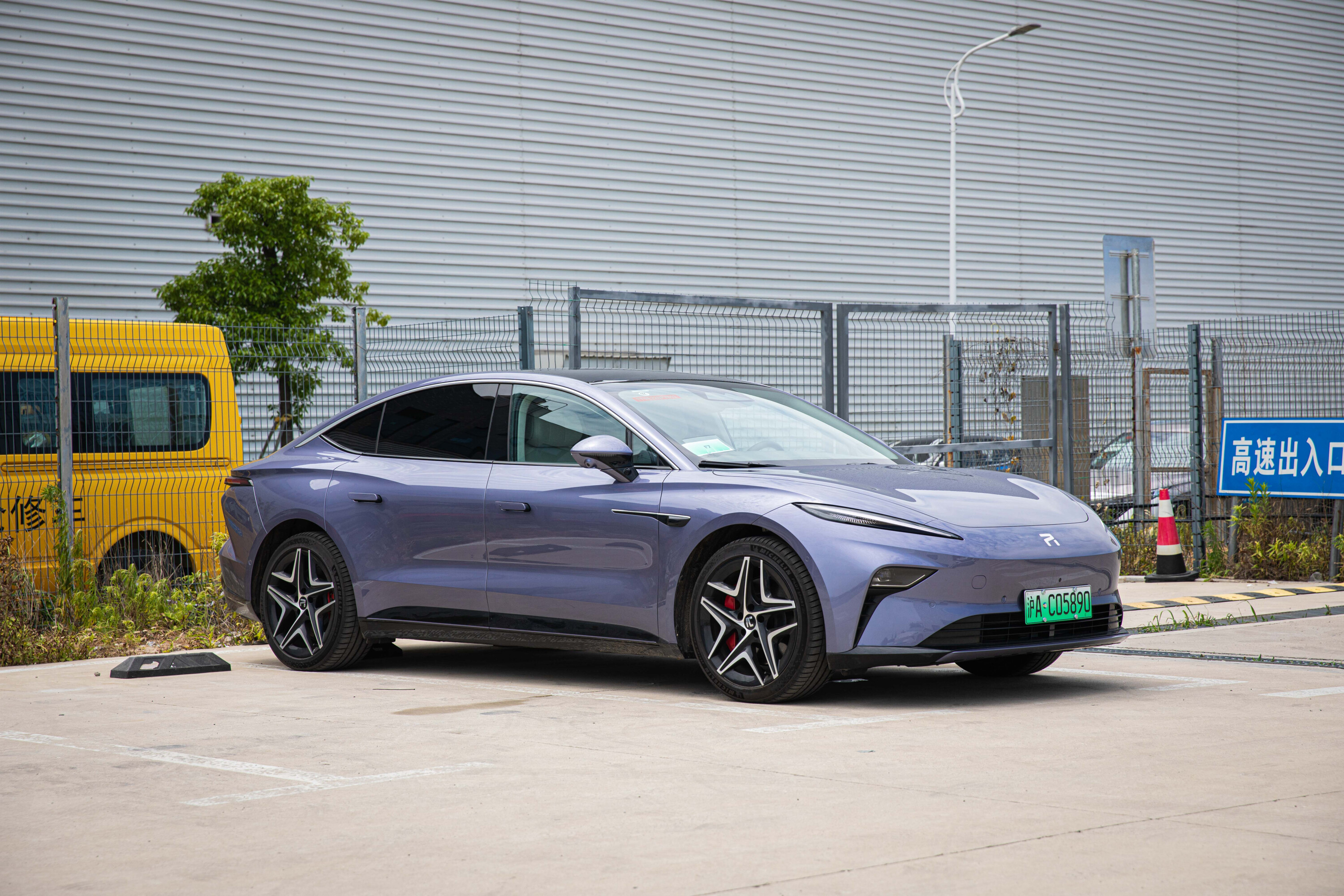
Mooted for 2026 introductions as MG’s flagship passenger vehicles, it seems the newer IM LS6 has become the priority for MG Motor Australia CEO, Peter Ciao.
If MG’s Tesla Model Y rival arrives, it will be badged MG LS6, with MG not wanting to complicate its local brand image.
“The IM brand in China has three models: L7, LS7 and LS6. The LS6 has not launched yet, but I’m focused on this model ”, Ciao said in a formal interview with Wheels, also indicating that the L7 and LS7 are still possible, but the LS6 is more realistic.
“I plan to import one middle-sized SUV to Australia… I’m aiming for LS6 first”, he said.
1
“We launched in Australia six years ago but the business decision is survival first, so we focus on affordably priced [cars] under $20K and under $30K”, Ciao said, retracing MG’s local history. But with the badge’s near-hundred-year vintage, there’s premise for much dearer vehicles.
“[MG] is a premium brand, this is a very good sports [car] brand. So the price range, I believe, is very wide. It’s very easy to get over $100,00”, said Mr Ciao justifying the introduction of a more premium vehicle.
1
The change of heart is partly down to Australian regulations, a tale we’ve heard from other manufacturers time and again.
Developed without the latest Euro NCAP or ANCAP protocols in mind, Ciao isn’t open to compromising safety ratings for the LS7 and L7 that would command nearly AU$100,000 in top-spec trim.
The LS7’s large dimensions also come into play, with the SUV measuring over five metres long and two metres wide. Perhaps introducing a true luxury car to the mix is a little ambitious with the brand’s current range and dealer situation, too.
1
What is the IM LS6?
The LS6 is yet to be formally revealed. However, CarNewsChina [↗] unearthed images and details in China’s Ministry of Industry and Information Technology in June.
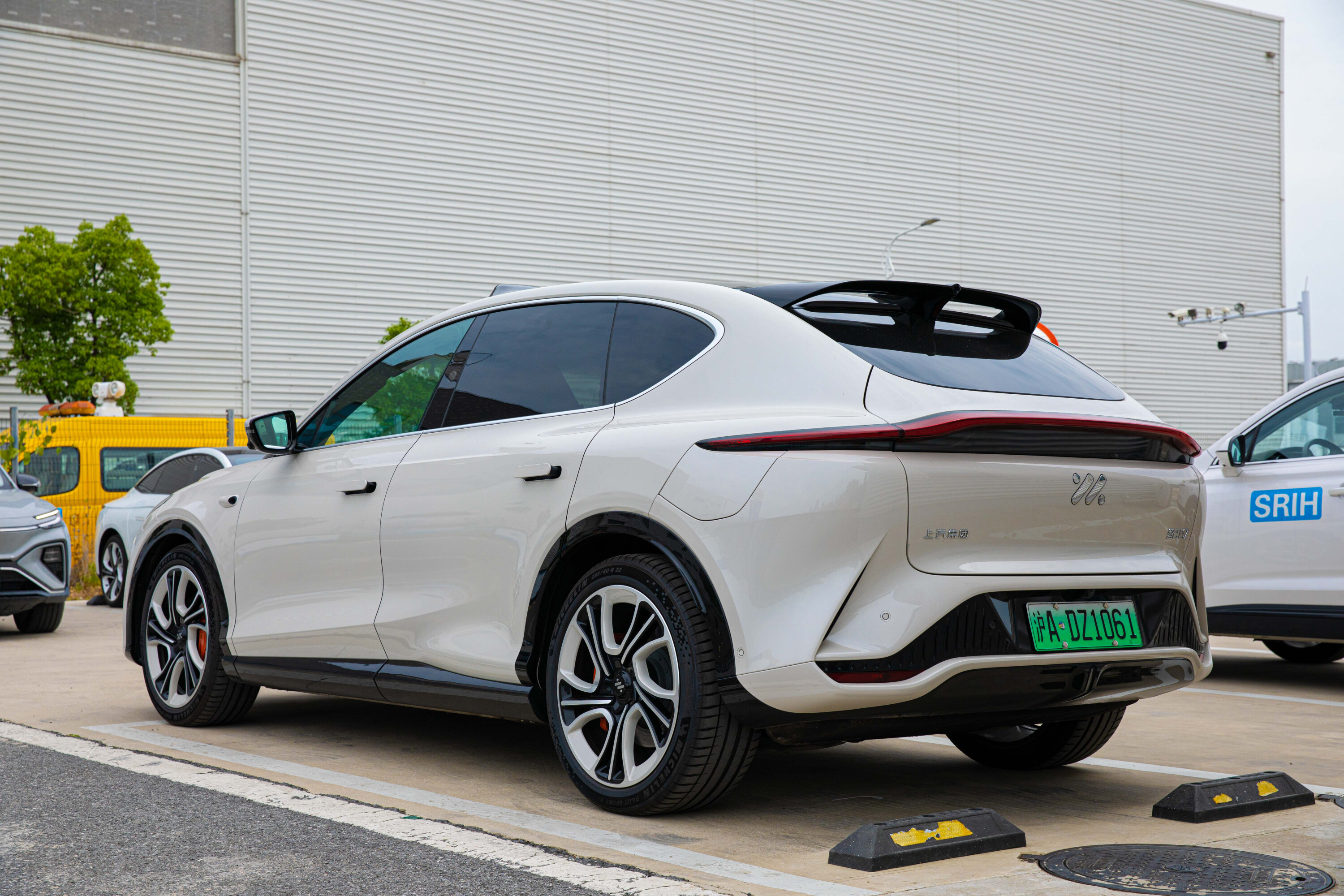
It will sit beneath the IM LS7 and L7 – think of it as a Tesla Model Y and Hyundai Ioniq 5 competitor rather than a Model X rival. It measures 4854mm long, 1995mm wide and 1703mm tall with a 2950mm wheelbase.
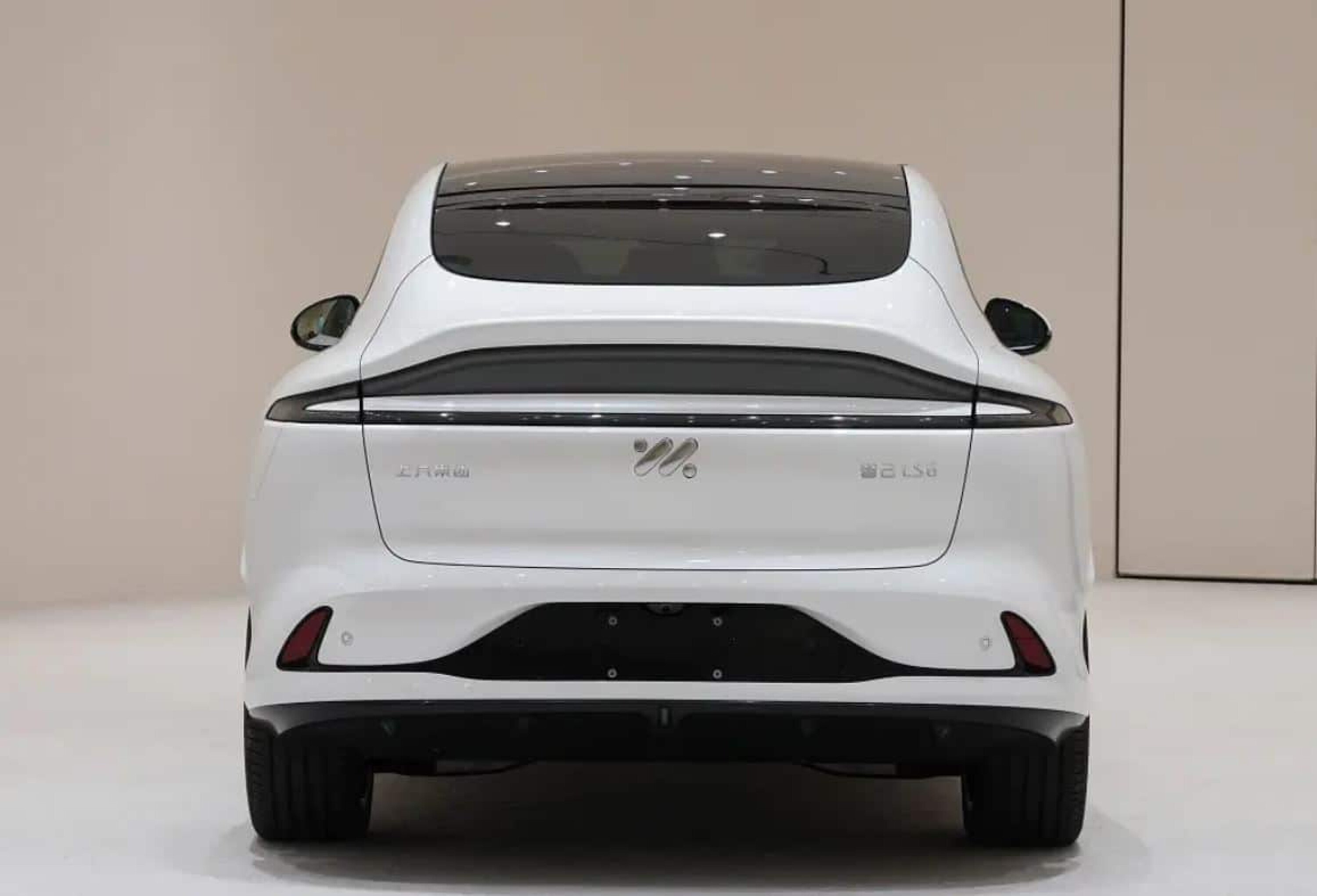
Its Tesla-beating intentions are made obvious in the design, the LS6 adopts a similar flowing silhouette to the Model Y and near-identical rear glass. The back deck is unique from Tesla, though. We can see elements of Genesis G80 and Aston Martin DBX.
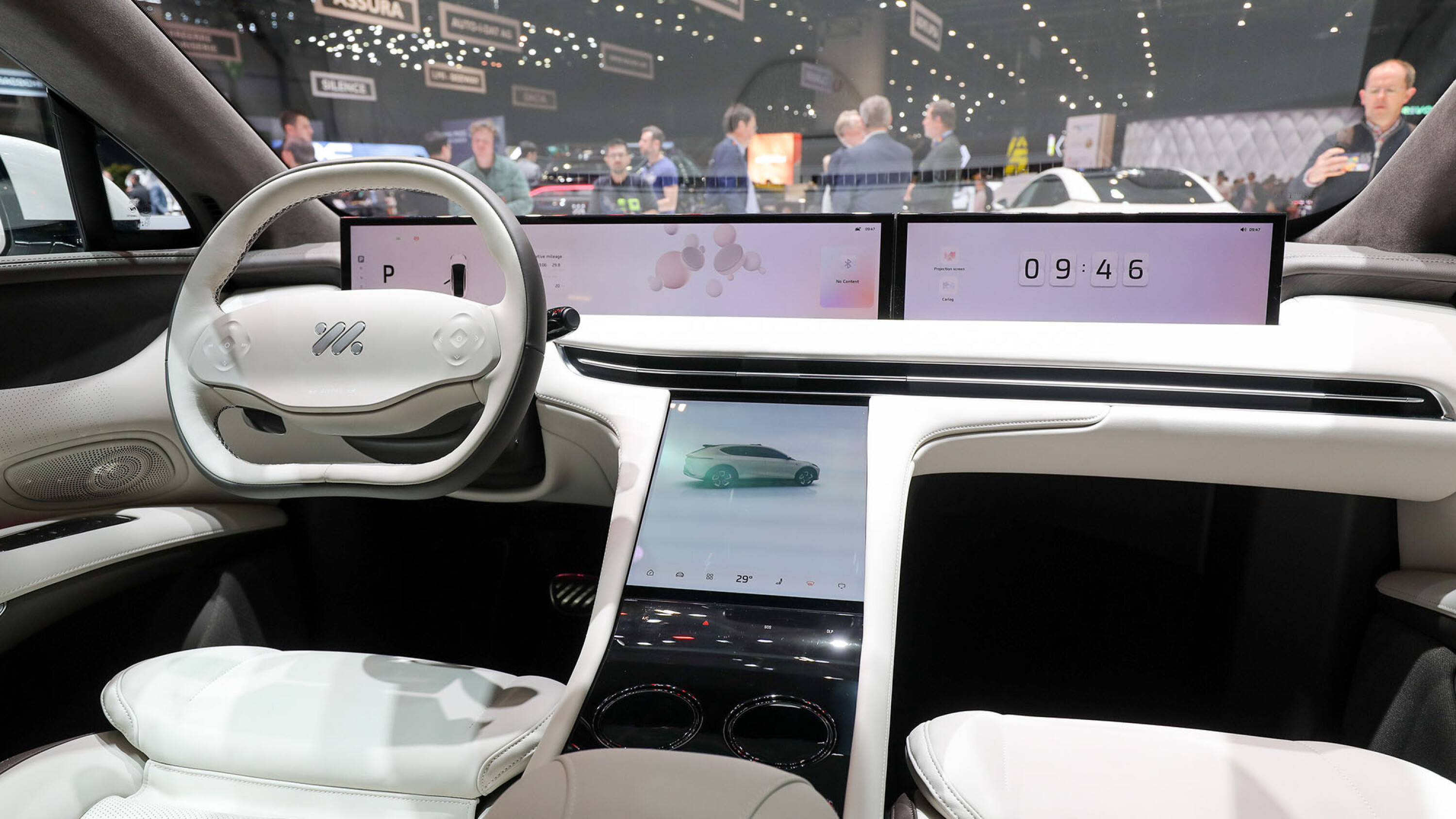
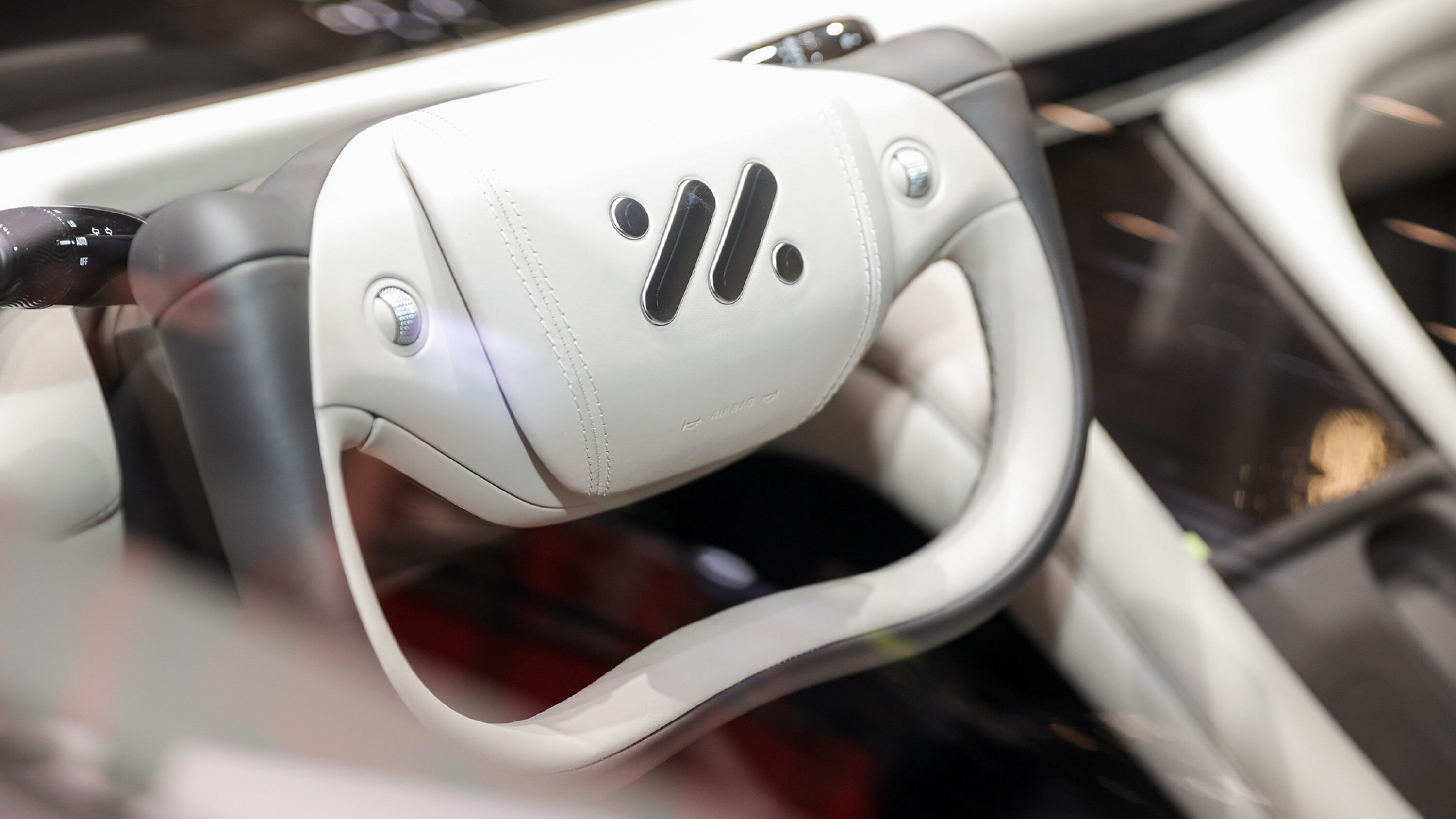
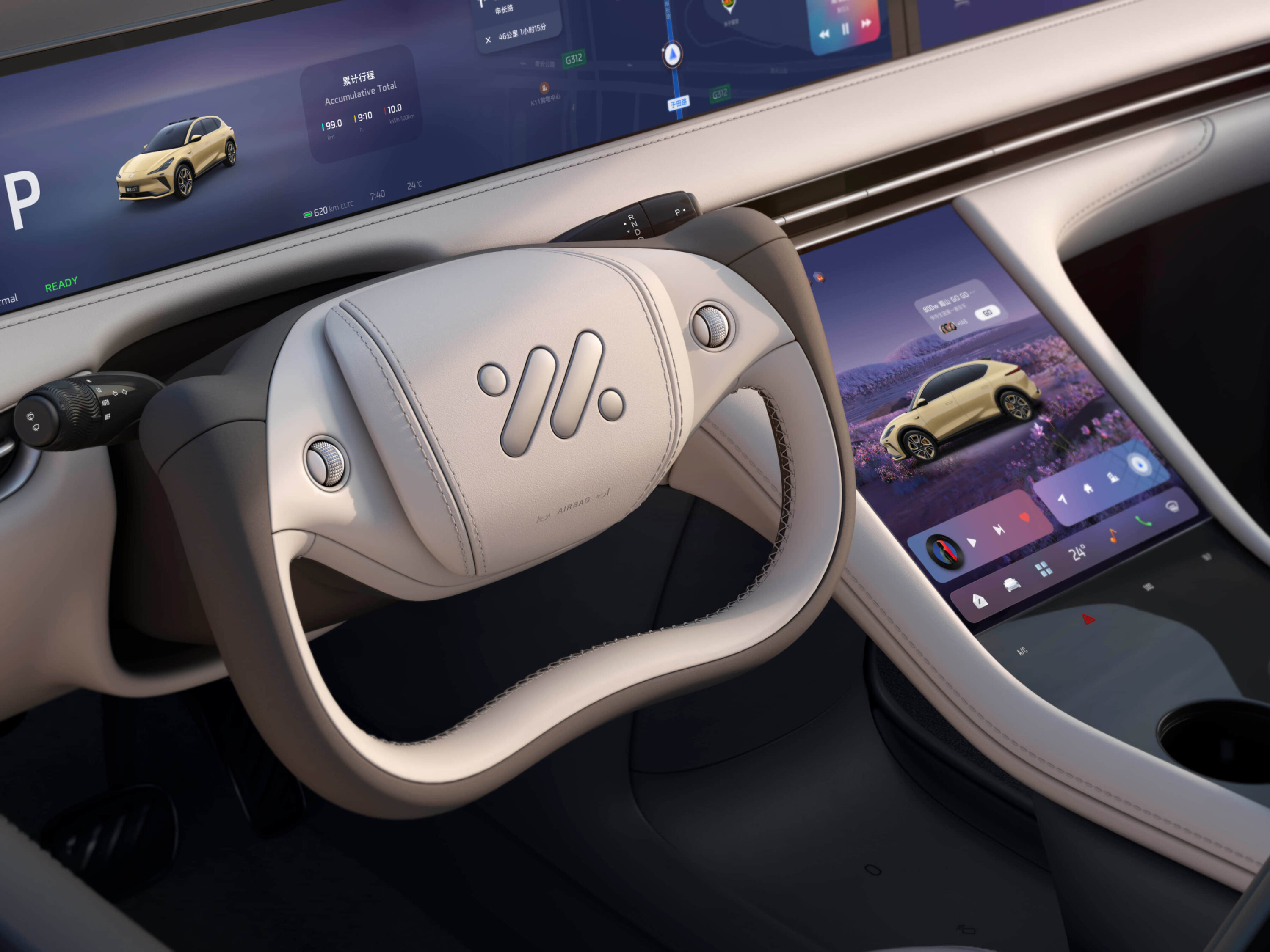
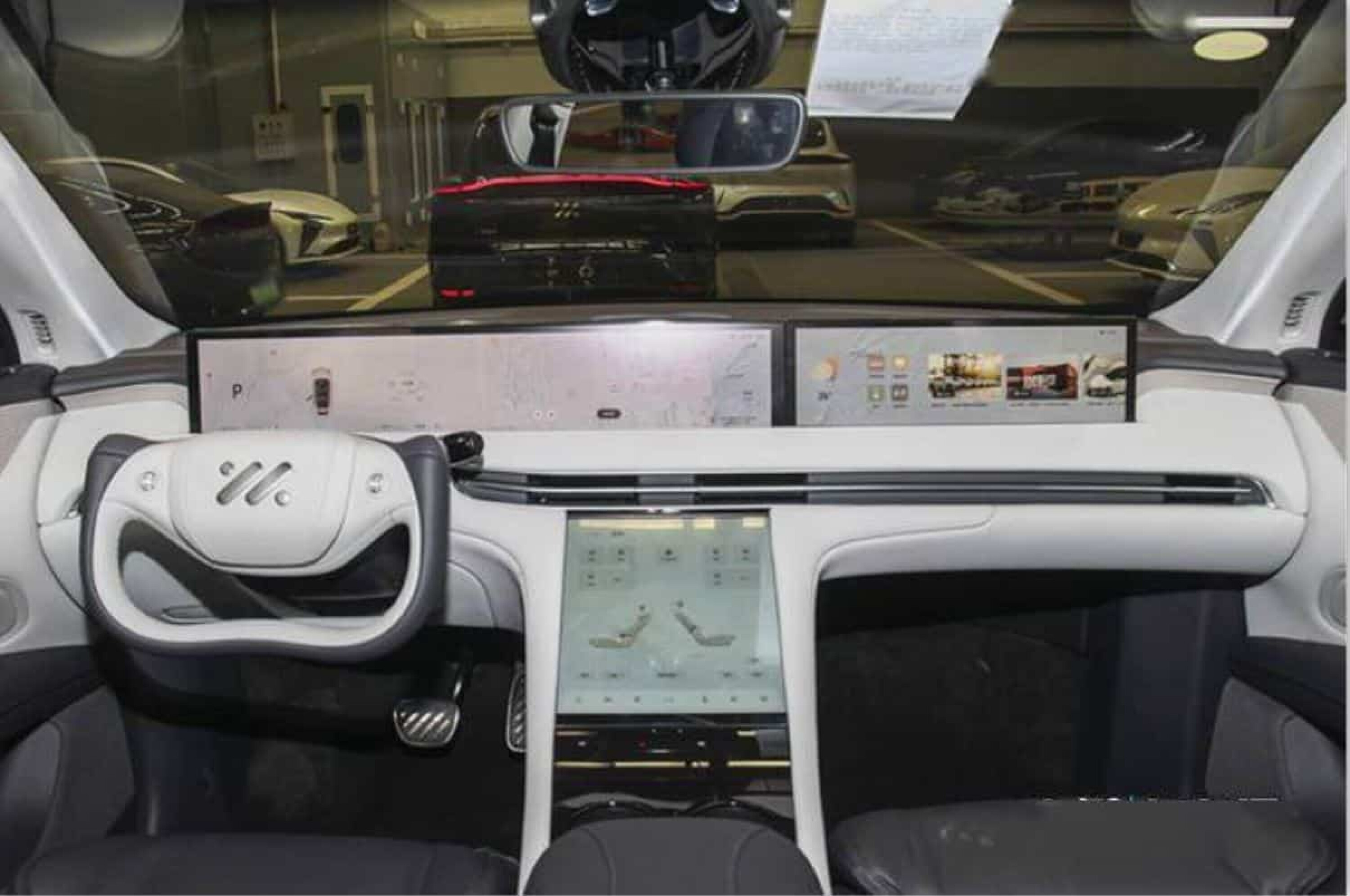
Inside there’s a trendy yoke-shaped steering device, 26 inches of screen that runs the width of the dashboard and a Taycan-esque touchscreen below that looks to control HVAC and other functions just like the LS7 and L7.
1
CarNewsChina also indicated the LS6 will pack a pair of motors rated between 170-200kW up front matched with 304-379kW rear items, depending on spec. The platform supports 800-volt electrics for faster charging and greater power delivery.
There’s no range speculation, but the larger LS7 has a CLTC rating of 625km driving range from a 100kWh battery. Expect similar, or slightly better efficiency, from the smaller LS6.
The IM range is currently sold exclusively in China. The vehicles are built as part of a collaboration between SAIC Motor (MG Motor’s owner), Zhangjiang Hi-Tech, and Alibaba.
1
Pricing and availability
There’s no word on pricing either locally or internationally for the IM LS6 just yet. We presume it will run a similar if slightly lower pricing gamut to the LS7. That would mean an equivalent of AU$55,000-85,000 overseas, but local pricing could climb or drop from there.
As for arrival timing, Mr Ciao indicated there’s plenty to come in 2024, “we have more models coming. Not just MG 4 and MG 5 – we have the new-generation [MG] 3, new-generation HS”, he said, before adding there’s “one more SUV” in the pipeline.
MORE
Everything MG
MORE
Electric Cars
More EV stories to help you choose the best car for your needs
- ? EV news, reviews, advice & guides
- ❓ Short & sweet: Your EV questions answered
- ⚡ New EVs: Everything coming to Australia
- ? Australia’s EVs with the longest driving range
- ⚖️ Best-value EVs by driving range
- ? How much do EVs cost in Australia?
- ? How much more expensive are EVs?
- ⚖️ Number crunching: Is it time to switch to an EV?
- ♻ Should you buy a used EV?
- ?️ Are EVs more expensive to insure?
- ? Costs compared: Charging an EV vs fueling a car
- ? EV charging guide
- ? Are there enough EV chargers in Oz?
- ?? EV servicing explained
- ? EV battery types explained
- ? When do EV batteries need replacing?
- ? Hydrogen v EVs: What’s best for Oz?
- ? How sustainable are EVs, really?
MORE advice stories to help you with buying and owning a car
Snapshot
- Toyota bZ4X pricing and features confirmed!
- Tesla Model Y rival costs between $66,000 and $74,900
- Two-trim line-up for Toyota’s first EV in Australia
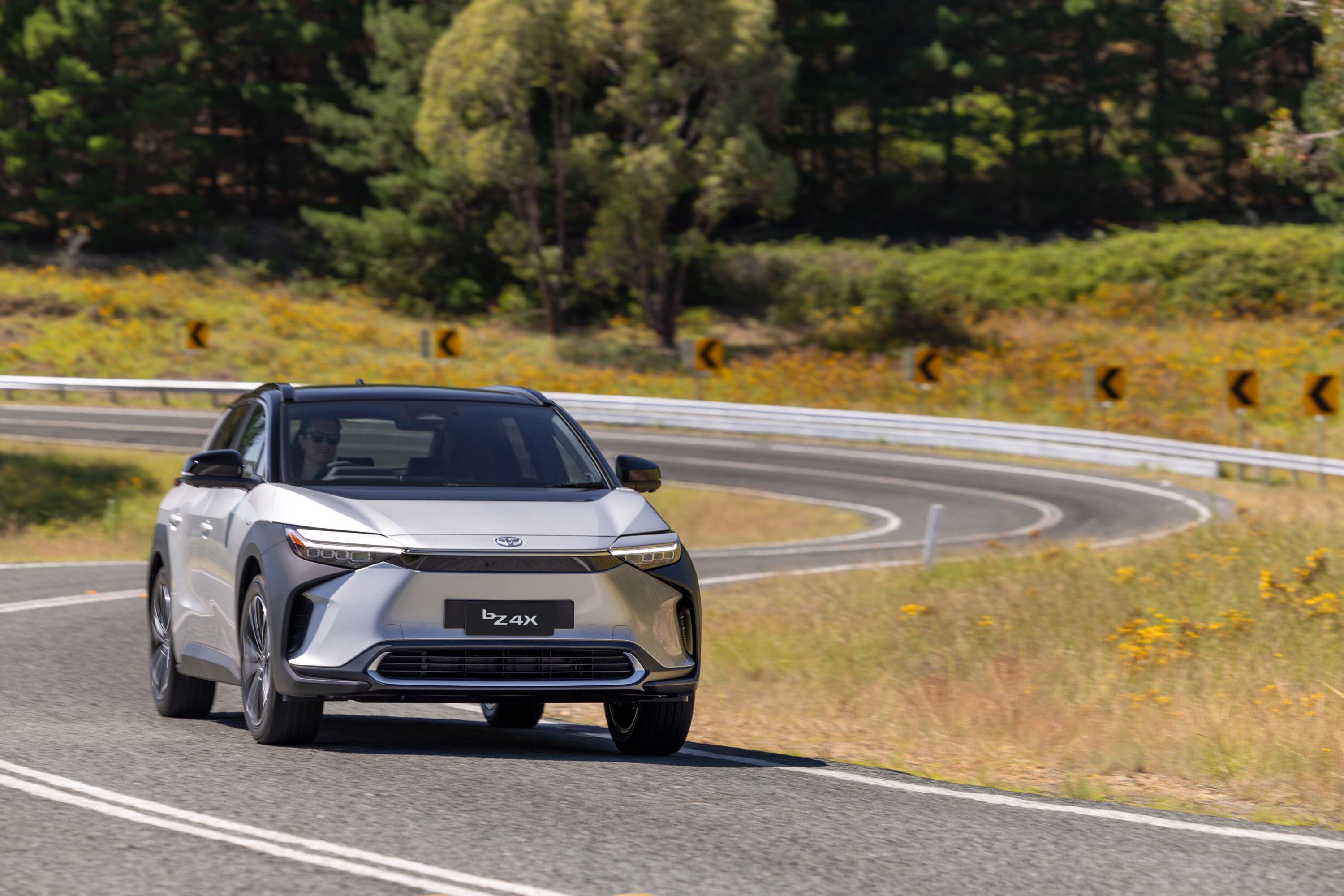
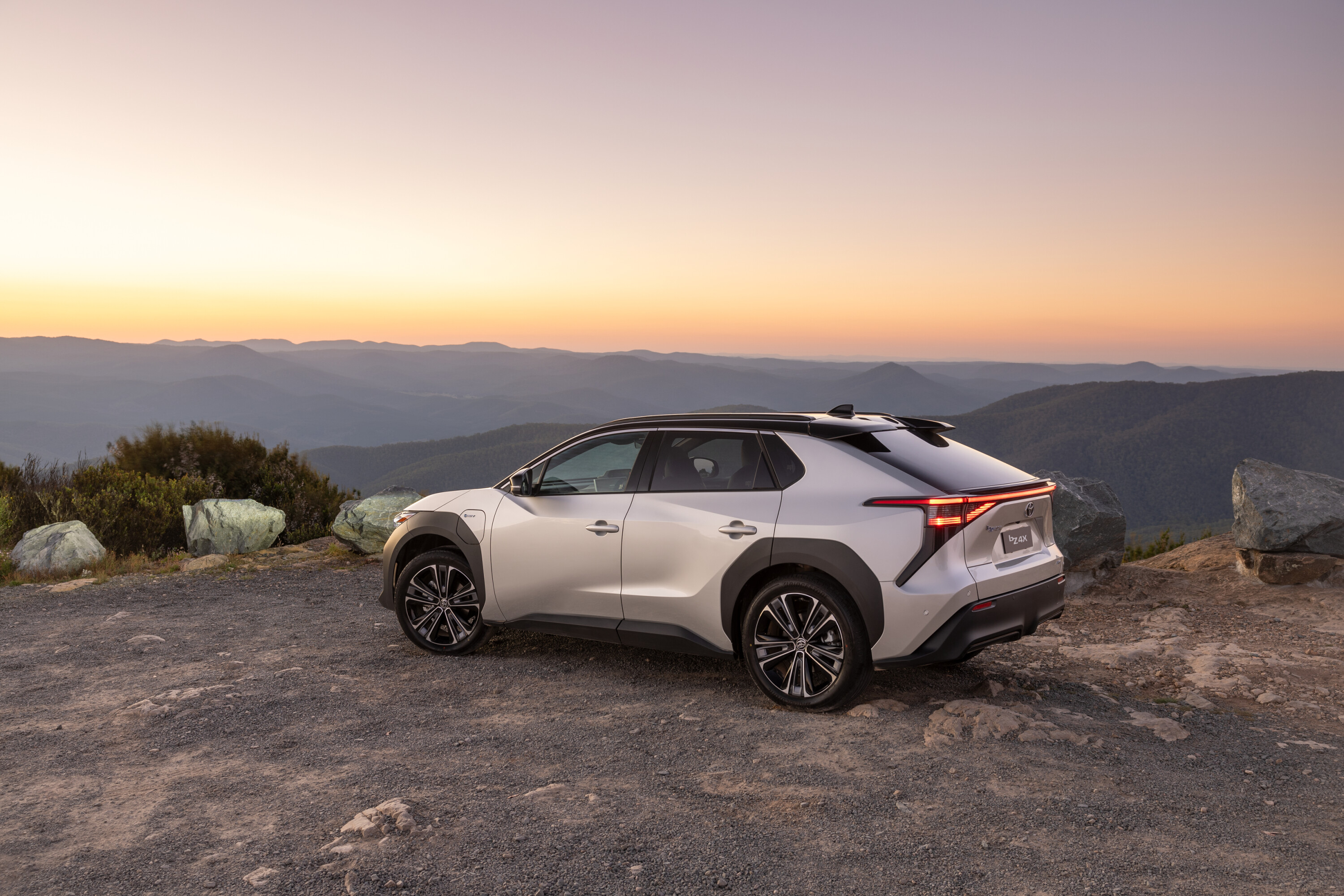
Pricing for the 2024 Toyota bZ4X has been revealed, with the Tesla Model Y and Ford Mustang Mach-E rival kicking off at $66,000 before on-road costs.
There will be two variants of the RAV4-sized medium SUV available from launch, including the front-drive ‘bZ4X‘ trim with up to 436km driving range (WLTP) and an AWD flagship priced at $74,900.
Toyota’s entry into the electric vehicle game may be late, but it has at least beaten the Volkswagen ID.4 and Skoda Enyaq to market.
Like the GR86 sports car, Toyota’s bZ4X has a Subaru twin – the Solterra – and its newly-reduced price means the top-spec AWD Toyota undercuts the Subie by $2000.
1
Don’t expect Toyota’s attempt to take on RAV4 volumes initially, though, with only two trims and around 1500 units bound for these shores in the first year – a long way behind Tesla’s 28,769 Model Y sales in 2023.
Toyota Australia head of marketing, sales and franchise operations Sean Hanley noted that the bZ4X will play a role in the brand’s approach and is unlikely to undermine sales of its internal-combustion models, including petrol-electric hybrids.
“As the first Toyota BEV, it will accelerate our multi-pathway approach that’s designed to help our customers lower their tailpipe carbon emissions while leaving no one behind,” said Hanley.
1
2024 Toyota bZ4X pricing
The new EV’s price is relatively competitive with the Tesla Model Y RWD ($65,400) on the surface.
Toyota will also offer the ability for buyers to purchase the bZ4X under an all-inclusive lease plan (you can read more about that here) rather than just outright, or with finance.
| 2024 Toyota bZ4x pricing | |
|---|---|
| Variant | Price (before on-road costs) |
| bZ4X FWD | $66,000 |
| bZ4X AWD | $74,990 |
1
2024 Toyota bZ4X features
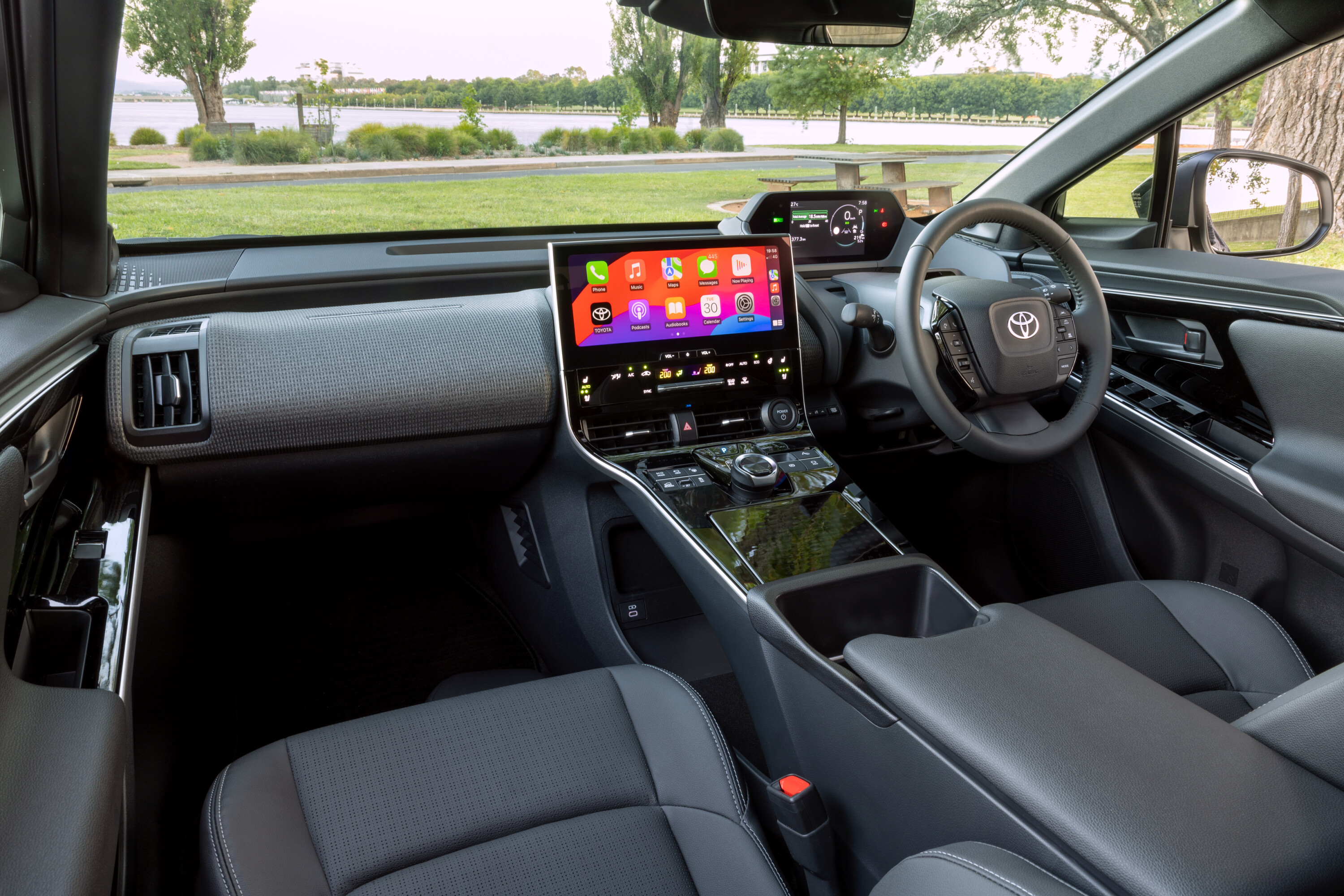
Both trims include LED headlights, 20-inch alloy wheels, and a 12.3-inch touchscreen with the flagship AWD adding seat ventilation, a sunroof, and more.
| bZ4X FWD features | |
|---|---|
| 20-inch alloy wheels | LED headlights and foglights with adaptive highbeam |
| Auto tailgate | 7.0-inch digital driver display |
| Power tailgate | Keyless entry and push-button start |
| Fabric and ‘Softex’ lynthetic upholstery | Eight-way power driver’s seat with front seat heating |
| Leather-accented steering wheel | Dual-zone climate control |
| 12.3-inch touchscreen | Wireless Apple CarPlay and Android Auto |
| Hey Toyota’ voice functionality | Connected services with over-the-air updates |
| Four cup holders and eight bottle holders | Toyota Safety Sense including adaptive cruise control |
| bZ4X AWD features | |
|---|---|
| Roof spoiler | Fixed panoramic roof |
| Gloss black bonnet accent | Premium full ‘Softex’ synthetic leather upholstery |
| 10-watt wireless charger | Ventilated front seats |
| Heated steering wheel | Blind-spot monitoring and safe-exit assist |
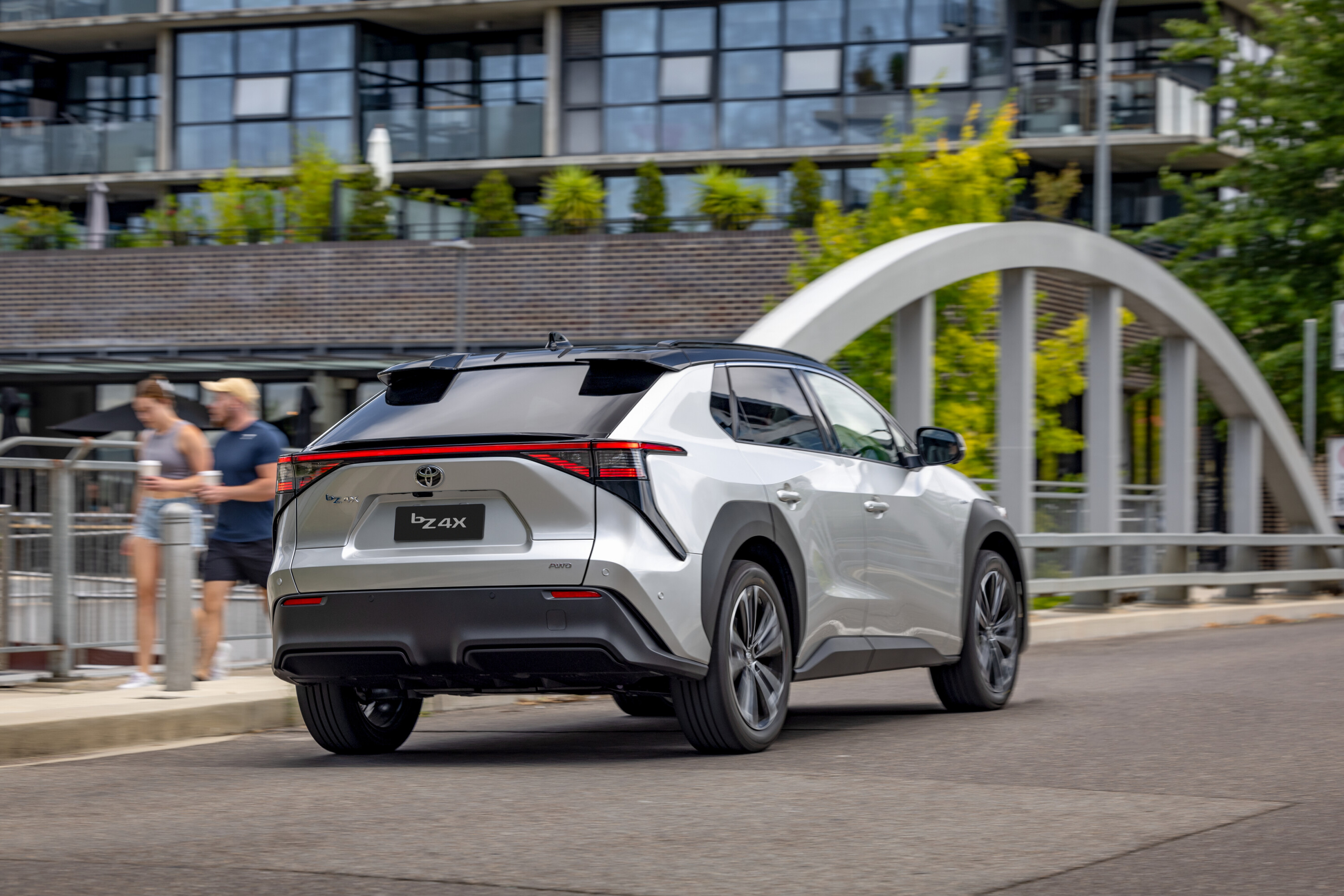
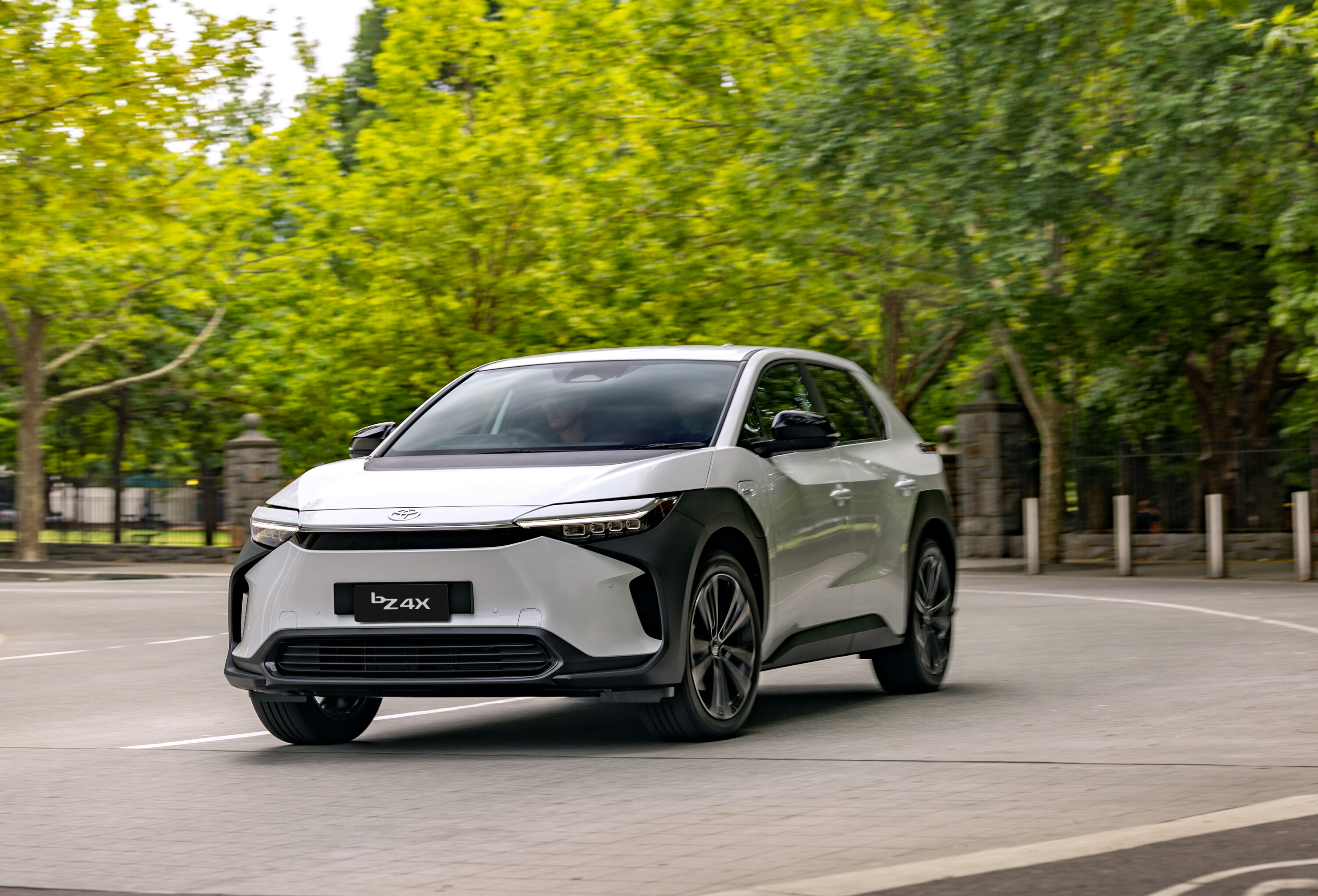
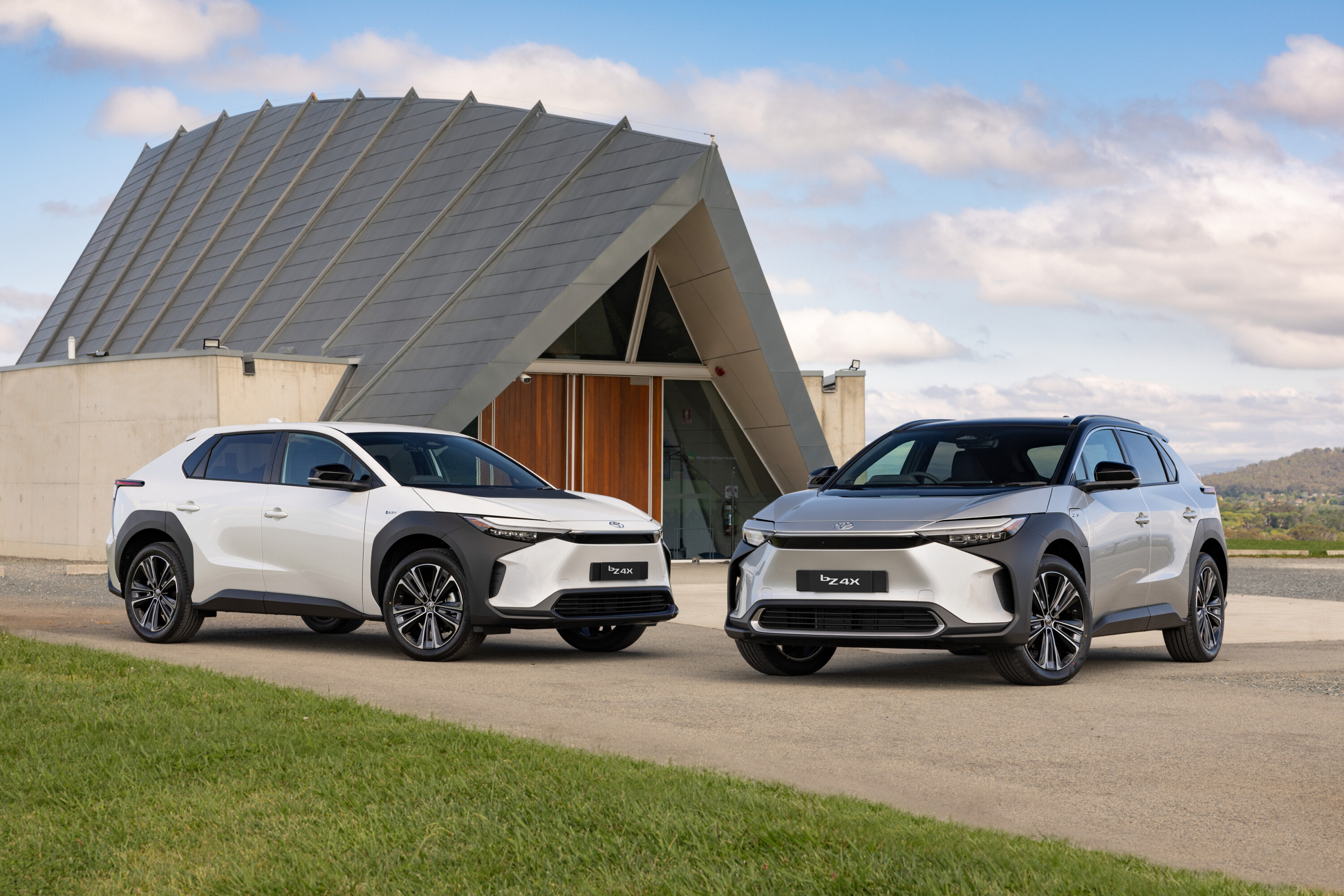
Toyota offers six exterior paint colours: Ebony Black, Frosted White, Liquid Metal, Silver Rush, Feverish Red, and Dynamic Blue, with a two-tone black roof optional on the AWD.
1
Power, charging, and driving range
Both the front- and all-wheel drive Toyota bZ4X models offer decent outputs, with 0-100km/h sprints in 7.5 or 6.9 seconds, respectively.
The single motor produces 150kW/265Nm while the twin motor AWD ups the ante by 10kW and 72Nm (160kW/337Nm) using a pair of 80kW motors.
The nominal battery size is 71.4kWh but the bZ4X’s usable capacity is 64kWh. At up to 150kW DC, a public fast-charging station will take the bZ4X from 10-80 per cent in a little under 30 minutes.
Australian bZ4X examples can charge at 11kW AC, so expect around seven hours from flat to full using a three-phase wallbox.
1
The bZ4X’s WLTP driving range rating is 436km in base trim and 411km in AWD guise.
That’s behind a Model Y Long Range AWD (533km), upcoming Volkswagen ID.4 (515km), and Hyundai Ioniq 5 AWD (454km).
Toyota covers the bZ4X with a five-year/unlimited-kilometre warranty. If servicing is kept up to date and the battery checked after five years, then the coverage extends to ten years for the drivetrain and battery.
1
Capped-priced servicing is in place for five years and 75,000km with each annual/15,000km trip to the dealer costing $180.
Toyota claims to have tested its lithium-ion battery pack extensively and found it to retain 90 per cent charge capacity after 10 years or 240,000km of use.
We’ll have a full review of the bZ4X for you on the evening of Thursday, 7 March. In the meantime, you can peruse how the car performs off-road and in a brief preview drive at Toyota Australia’s Altona HQ.
At the media launch, Hanley was buoyant that because the bZ4X is a Toyota, it will succeed, noting 122 orders and 7000 expressions of interest.
MORE
Everything Toyota
February 2024: Toyota bZ4X pricing confirmed
January 2024: ‘Around 1500’ bZ4X EVs available to Australia in 2024, more if needed
December 2023: February launch planned for BZ4x
The 2024 Toyota BZ4x is due in Australia in February. Here’s what we know about the electric SUV so far.
Snapshot
- 2024 Toyota BZ4x electric SUV: Initial Australian specs confirmed
- RAV4-sized mid-size SUV likely to start around $70k; twinned with Subaru Solterra
- Due in local showrooms in February 2024
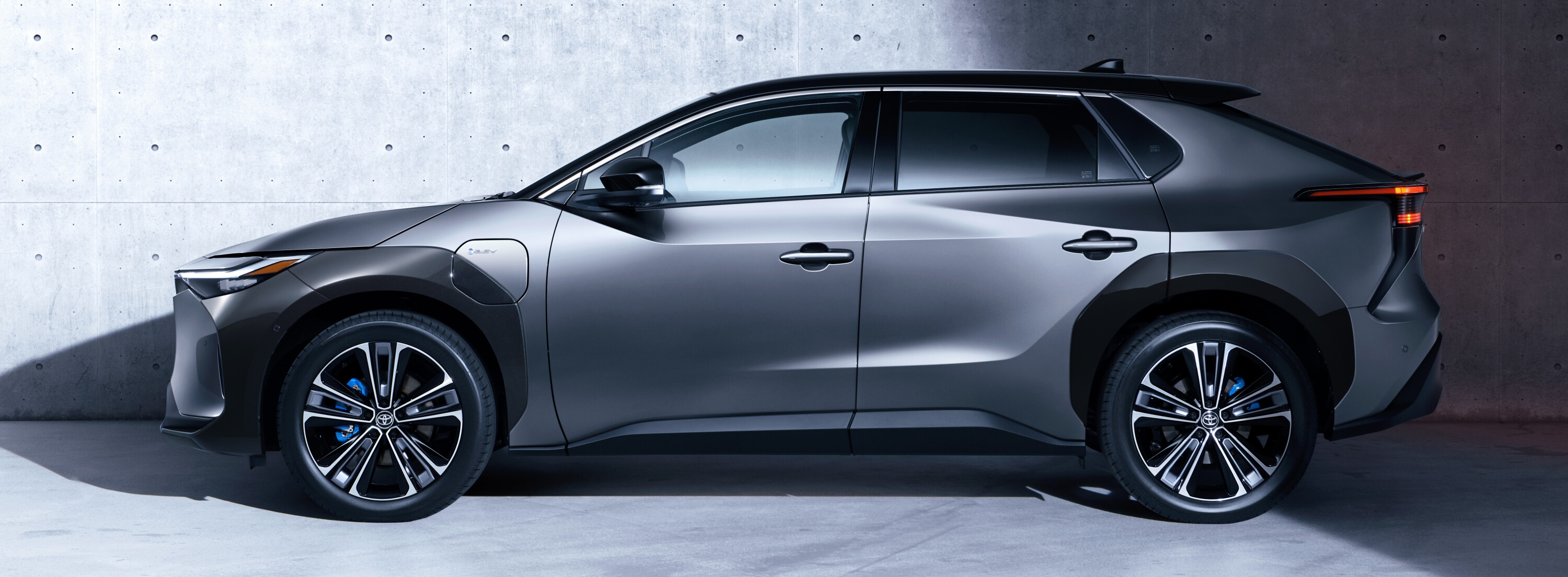
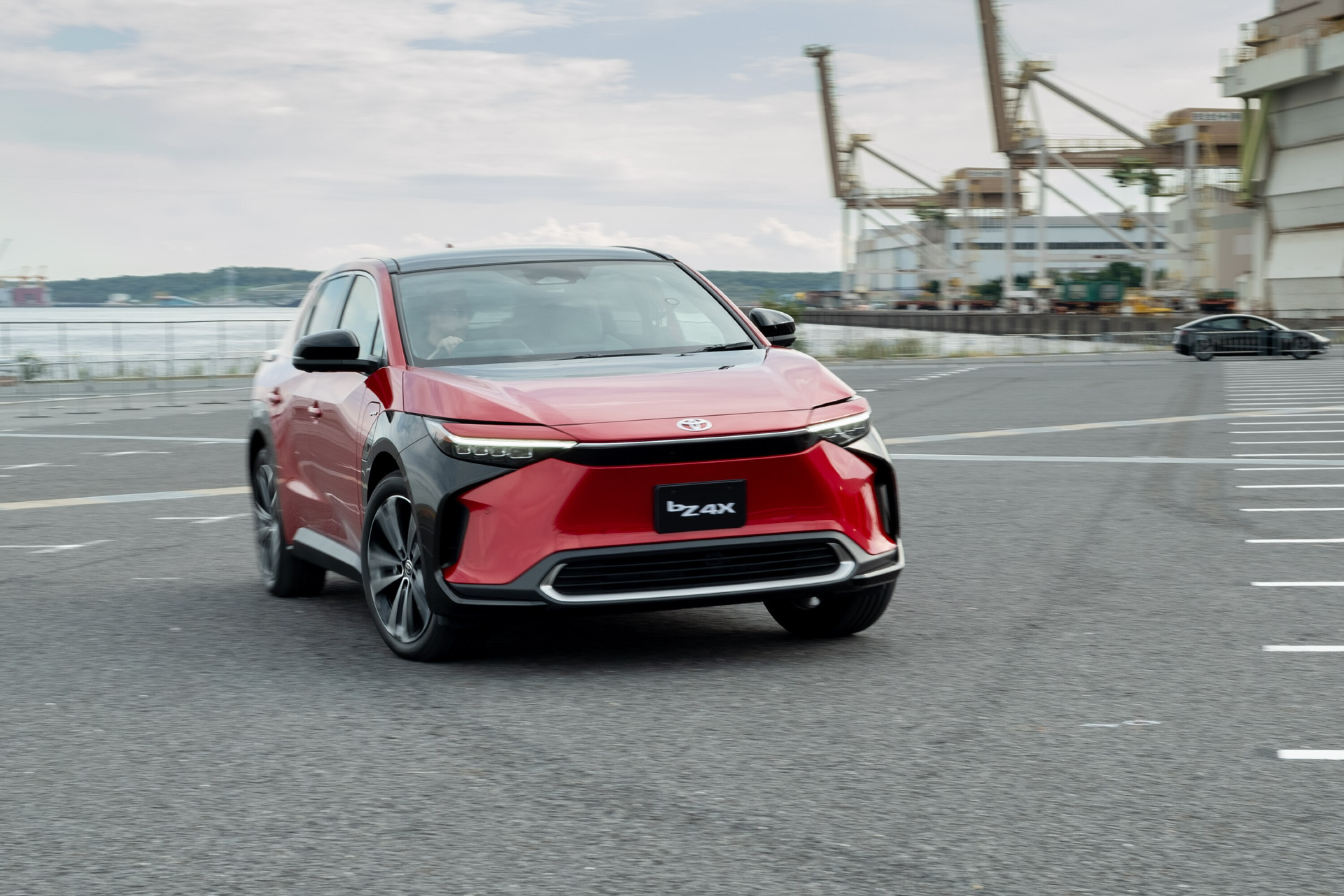
Twinned with the Subaru Solterra arriving in local showrooms this month, the BZ4x is a RAV4-sized mid-size electric SUV aimed at the Tesla Model Y, Kia EV6, Hyundai Ioniq 5 and Volkswagen ID.4.
Initially due to arrive here sometime in 2023, Toyota Australia has postponed its launch to wait for a minor update. Australian-spec production commenced last month.
1
The revisions, announced in Japan in October, are limited to reduced charging time in low-temperature environments, reduced power consumption, and new badges.
Toyota claims the charging time from when the low-battery warning appears to 80 per cent is reduced by up to 30 per cent “under low outside temperatures” due to improved battery heating.
It also has an optimised air-conditioner with a power-saving eco mode to warm occupants through more efficient methods, such as the heated seats and steering wheel, and a humidity sensor that “detects cloudiness in the windshield and controls the timing of outdoor air capture more precisely”.
Like other electric vehicles, the instrument cluster will now display key charging information, including time to 80 per cent and the difference in range between having the air-conditioner switched on or off.
Pricing and features
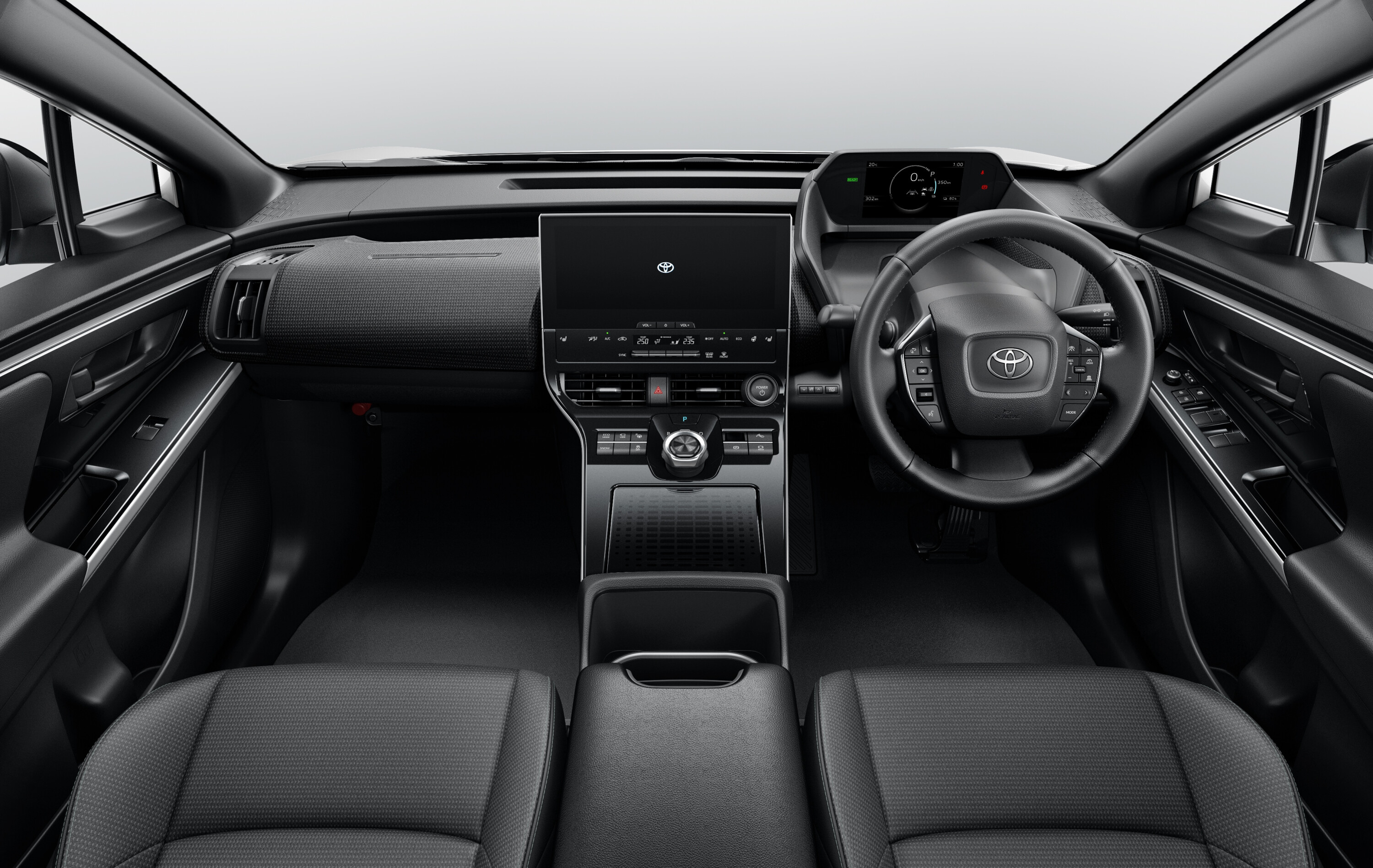
In Australia, all BZ4x grades will be fitted with 20-inch alloy wheels, dual-zone climate control, keyless entry and start, LED exterior lighting, a 12.3-inch infotainment system, wireless Apple CarPlay and wired Android Auto, Toyota Connected Services, heated front seats, and a full suite of active safety technology.
All-wheel-drive variants will add a nine-speaker, 800-watt JBL audio system, a fixed panoramic sunroof, ventilated front seats, a heated steering wheel, roof rails and spoiler, leather-accented upholstery, a wireless phone charger, and an X-Mode drive selector with snow/dirt, deep snow/mud, and grip control options.
“We expect approximately 60 per cent of sales to be [single-motor] front-wheel drive and 40 per cent [dual-motor] all-wheel drive including an [X-Mode] off-road mode,” said Toyota Australia’s sales and marketing boss Sean Hanley in August.
1
Toyota Australia said more details, including pricing, will be confirmed closer to the BZ4x’s launch in February.
We expect the Japanese-built SUV to start at around $70,000 before on-road costs for single-motor versions and climb above $80,000 for dual-motor variants, the latter price in line with its AWD-only Solterra twin.
The Subaru Solterra is priced from $77,990 before on-road costs for the base AWD variant, rising to $83,690 plus on-roads for the flagship AWD Touring with similar equipment to what Toyota has detailed for the all-paw BZ4x so far.
1
Powertrain, driving range and charging
The Toyota BZ4x features a 150kW/266Nm single electric motor for front-drive variants, rising to 160kW/337Nm for the dual-motor AWD setup.
It has a 71.4kWh battery allowing for a driving range of up to 516 kilometres, a 10-80 per cent charge in 30 minutes at 150kW, and an 8.4-second (FWD) or 7.7-second (AWD) 0-100km/h sprint time.
1
Full-service lease option
Toyota Australia has confirmed it’ll also offer a ‘full-service lease’ option for BZ4x customers – in addition to the ability to purchase a vehicle outright.
Toyota Finance Australia will provide the all-inclusive lease – not its Kinto car-rental service – and cover “rego, insurance, service, roadside assist and [Toyota Connected Services] connectivity” for the life of the lease.
The full-service lease, to be paid monthly, will also include tyre replacement.
“It also provides certainty on resale values, which we understand are under immense pressure in markets including Europe and the United States,” said Hanley.
“We also make it possible to bundle Toyota genuine accessories, a home charger, and an EV charge card.”
Availability
The 2024 Toyota BZ4x electric SUV is due in Australia in February, with the brand promising dealers will have “a reasonable level of launch stock”.
“Further details will be announced when the bZ4X arrives in local dealerships,” said Toyota Australia in its most recent update.
MORE
Everything Toyota
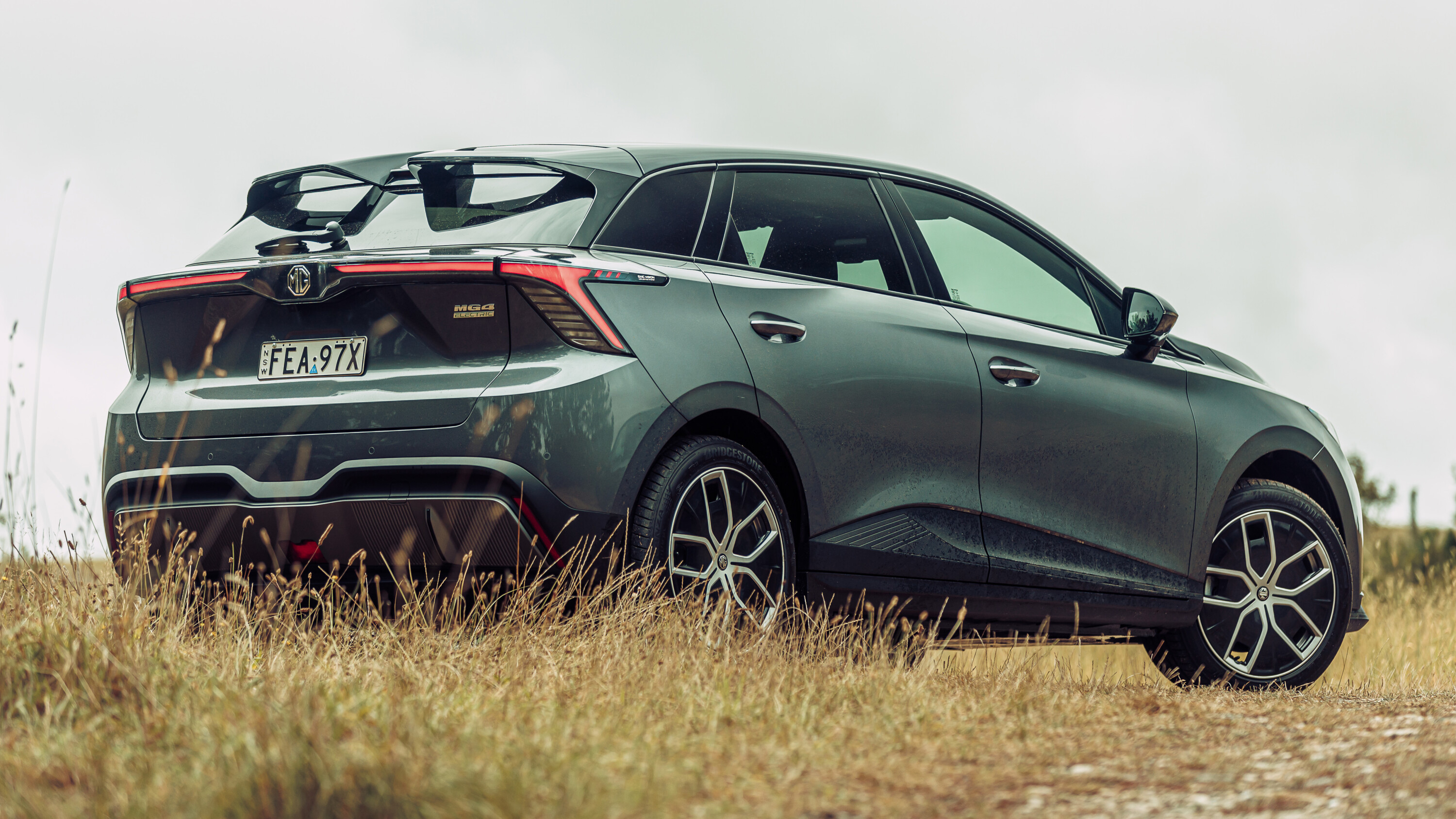
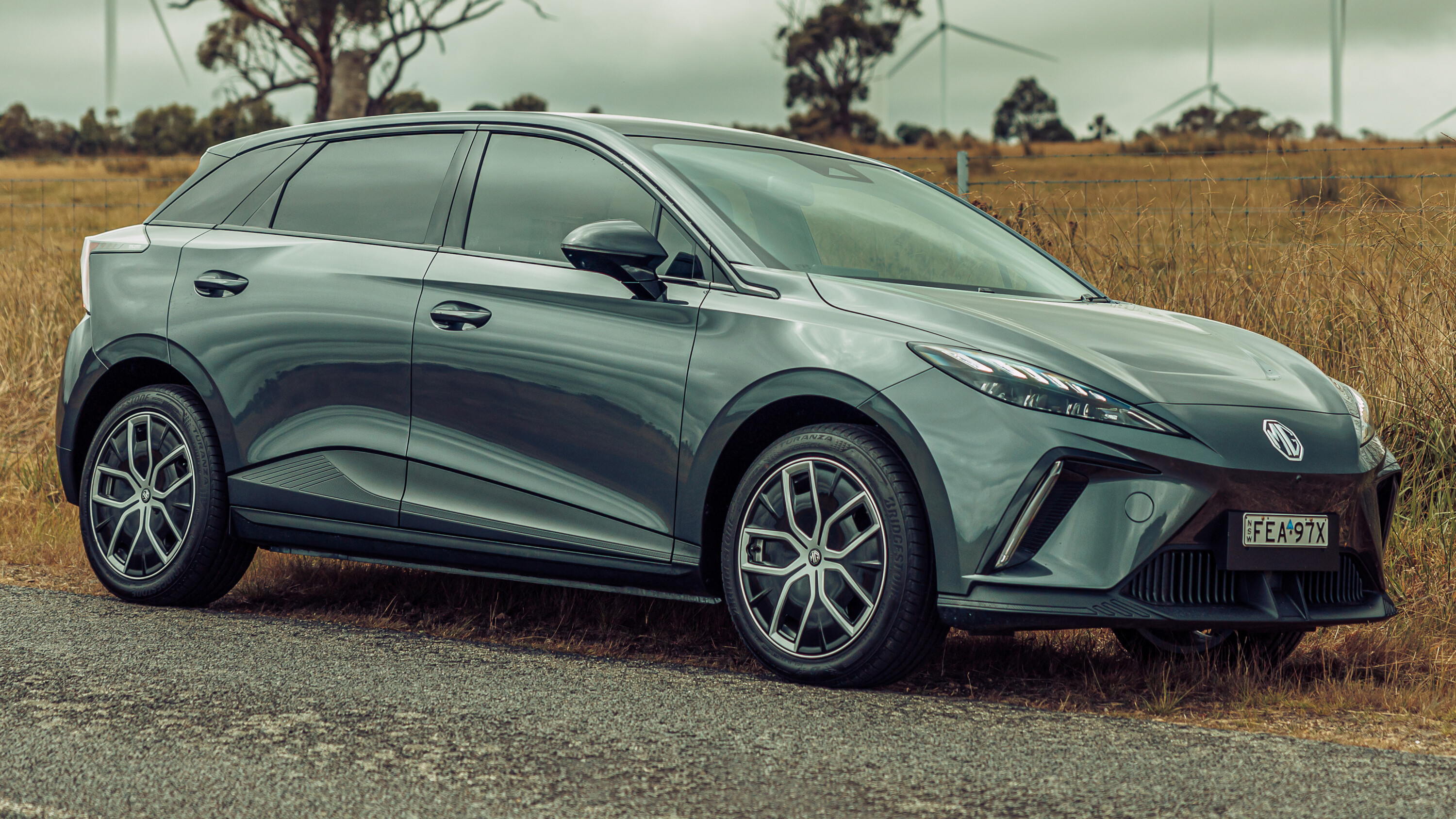
For under $60,000, the MG4 Long Range 77 is a compact electric car with proper touring range – and as much power as a VW Golf GTI, but with rear-wheel drive.
The marathon-running version of MG’s much-lauded new small electric car comes with 530km of claimed WLTP range (our own test results later).
Its 180kW/350Nm rear electric motor makes the Long Range 77 the most powerful single-motor MG4 you can buy.
At $59,803 drive-away, though, it is a not-insignificant $16,672 more than the base-model MG4.
While its bigger battery adds 76kg compared with the cheaper Essence 64 model, the additional 30kW/100Nm more than compensates.
1
The 77 can also recharge faster than the 64 , on AC at least – 11kW versus 6.6kW – dropping the flat-to-full time from nine to seven hours. DC fast-charging, meanwhile, is the same 150kW max.
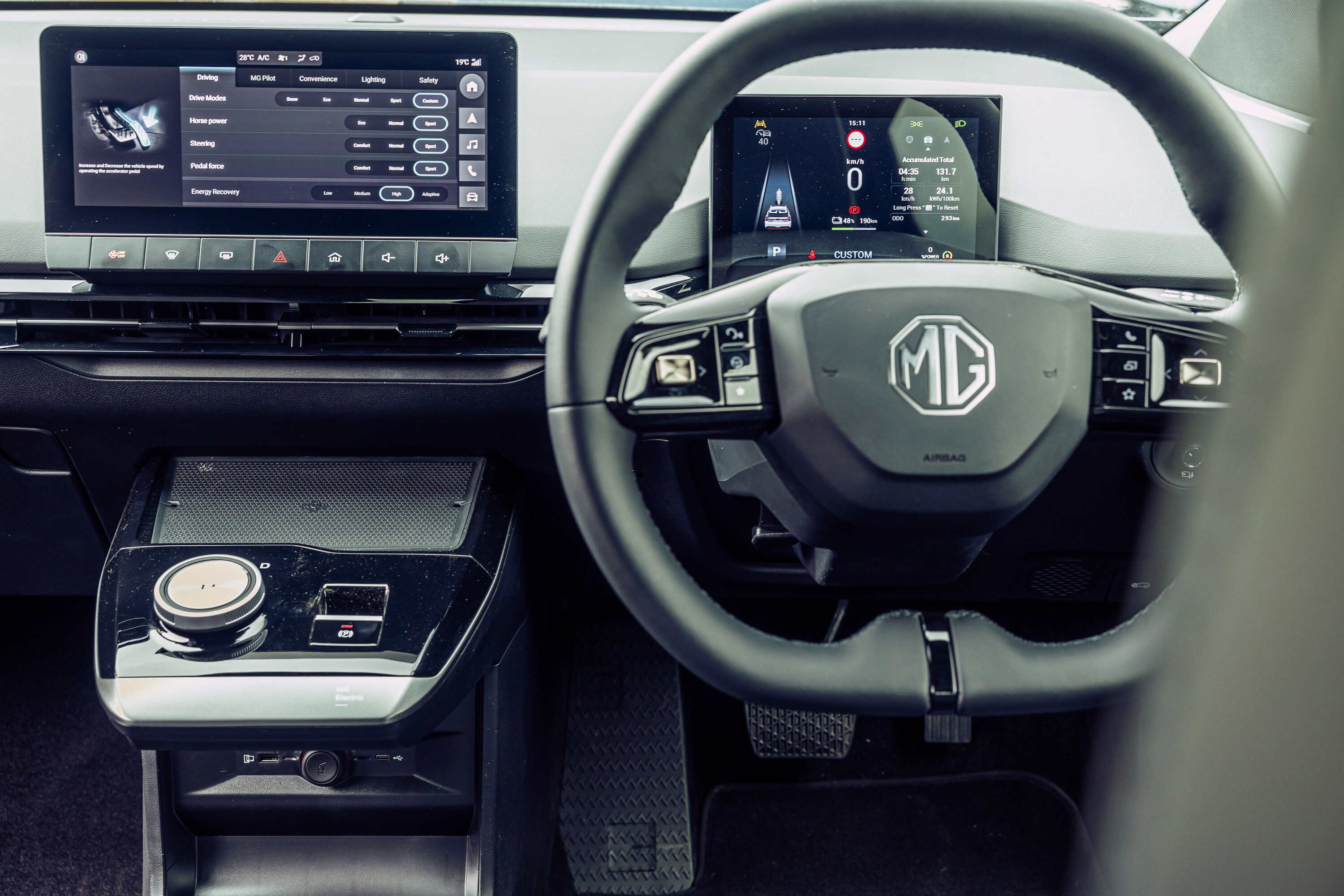
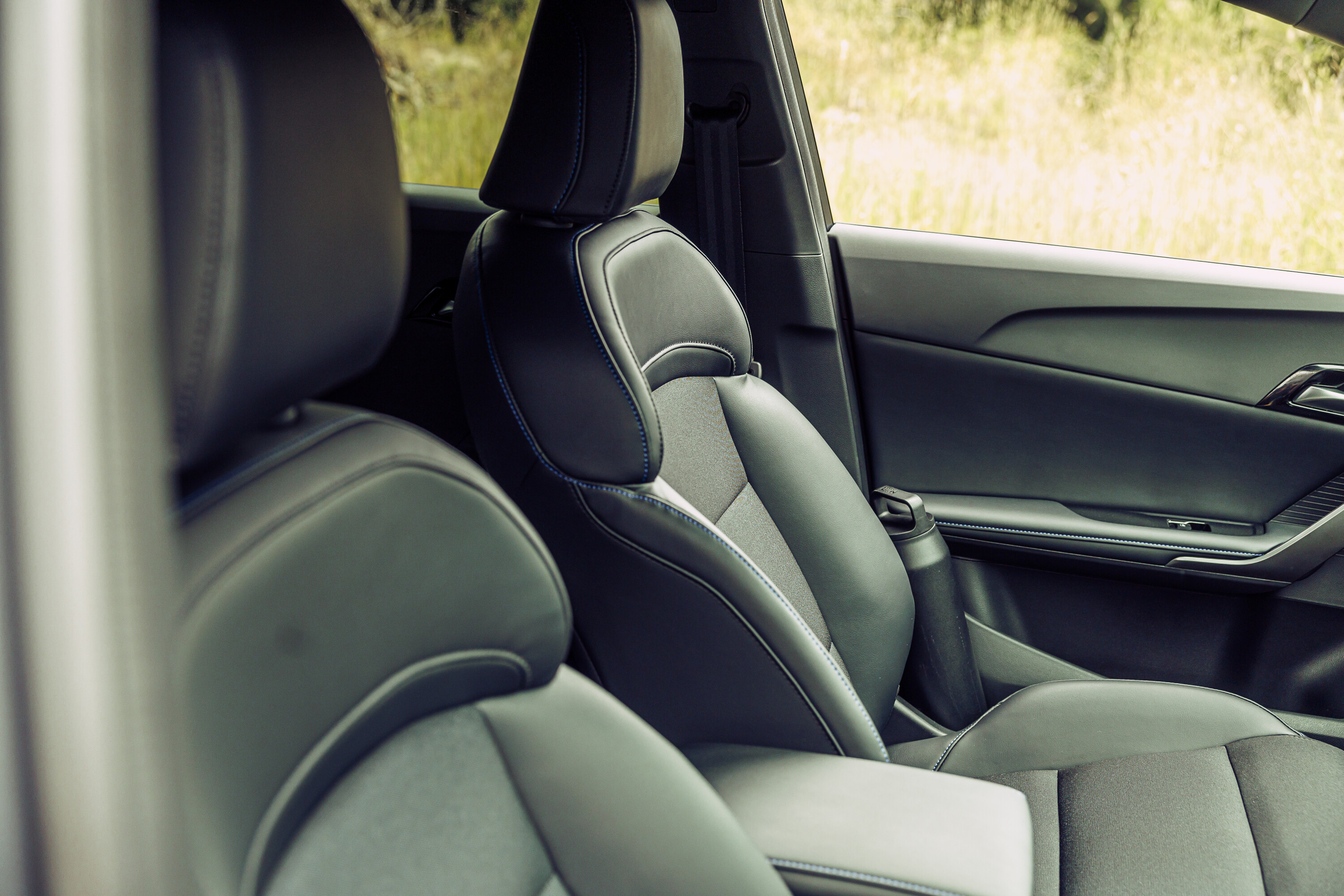
Climb inside and the Long Range 77 is the same as the richly-equipped Essence 64. There are high-quality vinyl seats that are heated and electrically adjustable; a lovely leather steering wheel and a floating centre console design, maximising the feeling of space.
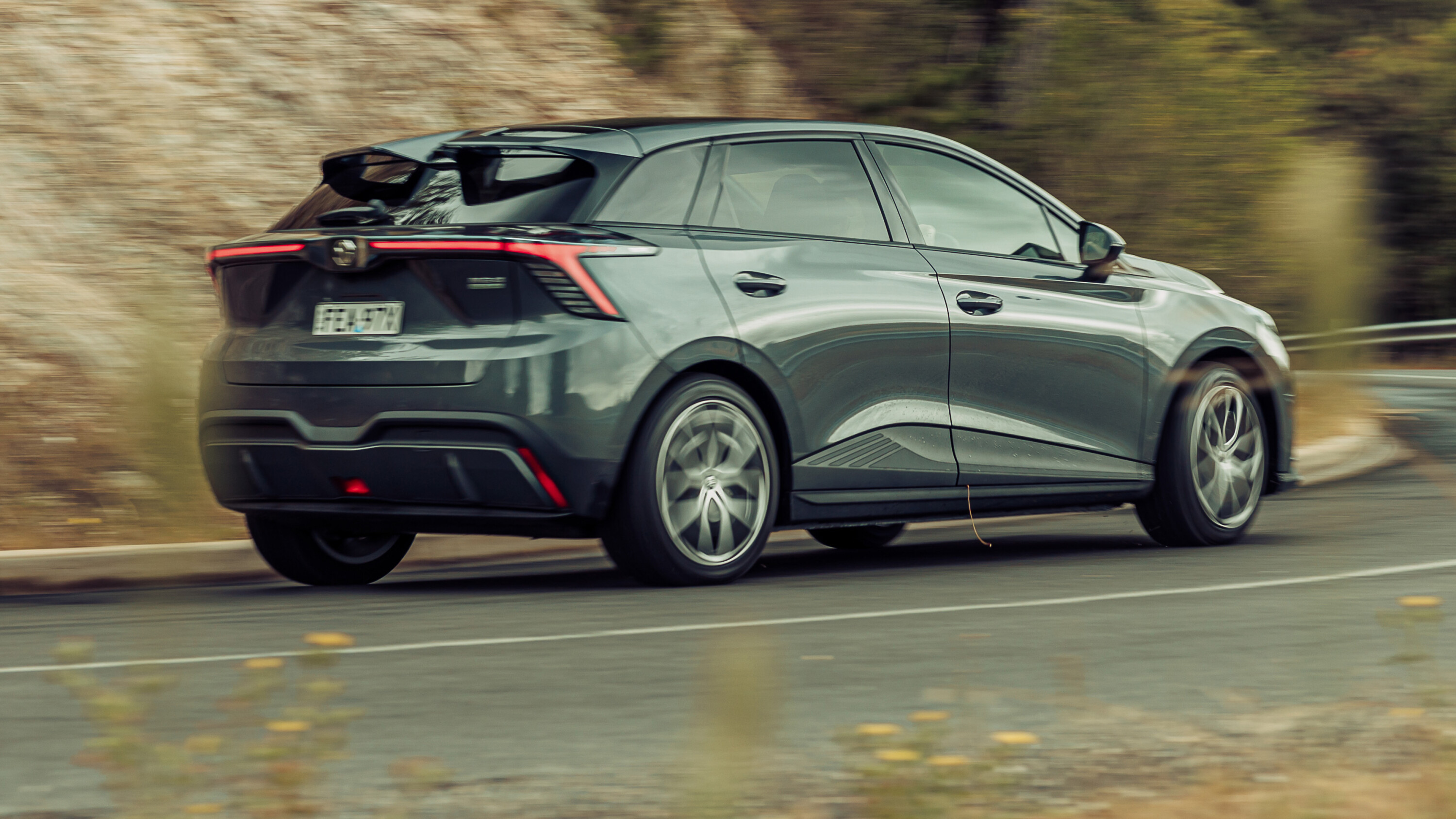
Indeed MG has done an excellent job with the MG4’s packaging, with space abounding front, rear, and in the boot compared with other cars of its size.
1
There’s a small, 7.0-inch digital instrument cluster (all you need) and a 10.25-inch infotainment touchscreen with distinctly functional graphics and operation, like it was made by a bunch of engineers rather than any designers.
While there’s a wireless phone charger, Apple CarPlay and Android Auto are both wired-only.
Rear-seat passengers will find plenty of space and a soft, comfortable bench, although less pleasing is the single USB-A outlet and lack of any air vents. The powerful air-conditioning should be enough to cool the entire car on a hot day. Well, that is our theory, and hope, at the very least.
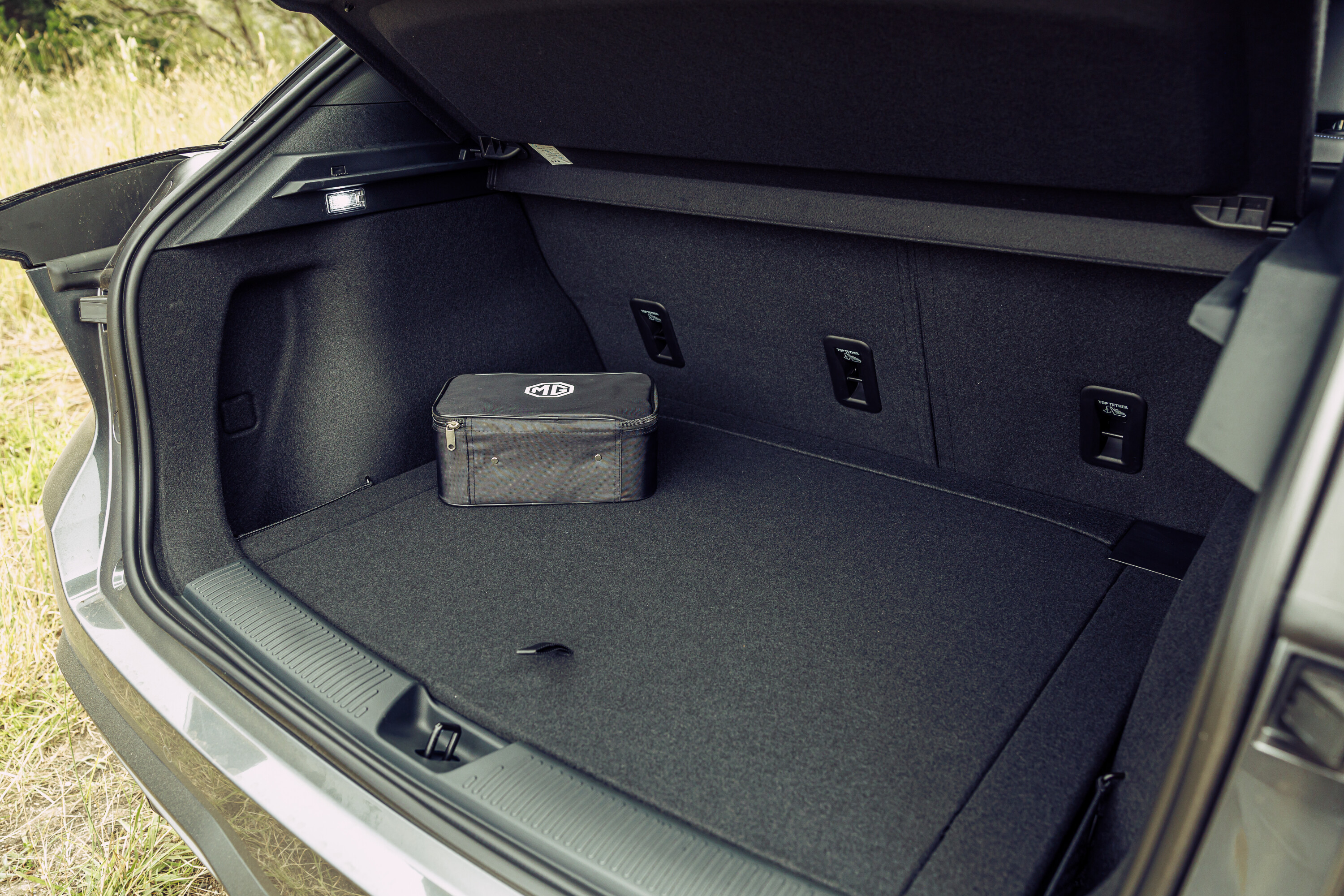
There are two sets of ISOFIX points on the outboard rear seats, and three top tether anchors, while the boot is a reasonable 350 litres. The rear seats offer a 60:40 split-fold, while there’s a not-very-touring-friendly puncture repair kit and no real room for a spare wheel. There is no under-bonnet storage, either.
1
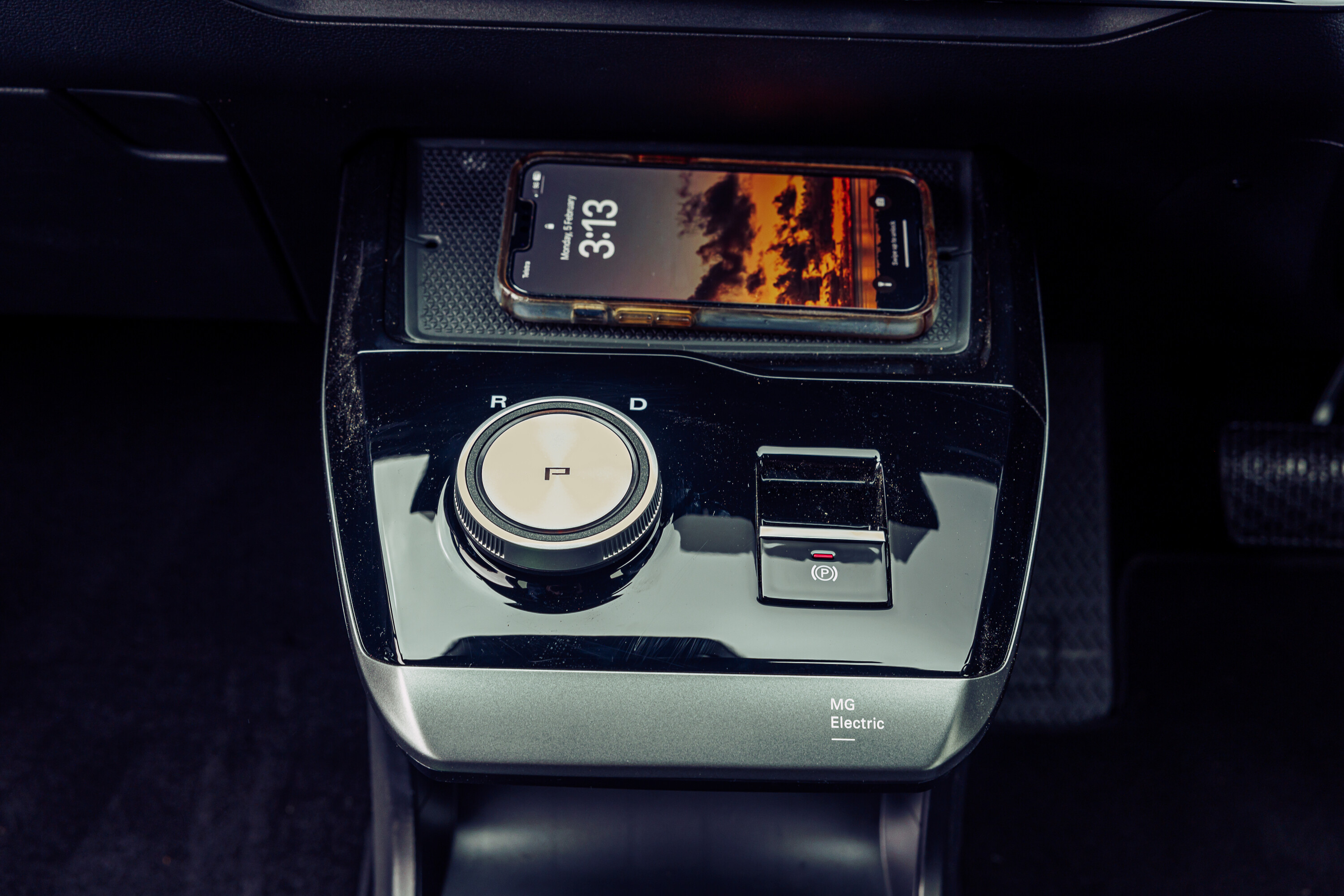
Switching on the MG4 involves merely getting in, belting up and firmly pressing the brake pedal. There’s a bong, you select Drive with the central rotary controller, and off you silently go.
Forward visibility is okay, but the three rear head restraints almost fill the rear window, meaning you’ll want to take them out and put them somewhere when not ferrying about rear passengers – the middle head restraint, at least.
With 180kW/350Nm at your disposal – and a 6.5sec claimed 0-100km/h time – the acceleration is pleasingly brisk, inviting you to race away from traffic lights, punch into gaps as they open up and generally consume electrons with merry, range-depleting abandon.
1
Like all electric cars, the MG4 is instantly responsive and near-silent but is rare by today’s standards in offering no synthesised, Jetsons-like acceleration noise at all. There’s a bit of muted mechanical whine from the rear electric motor, your usual wind and tyre noise, and that’s about it.
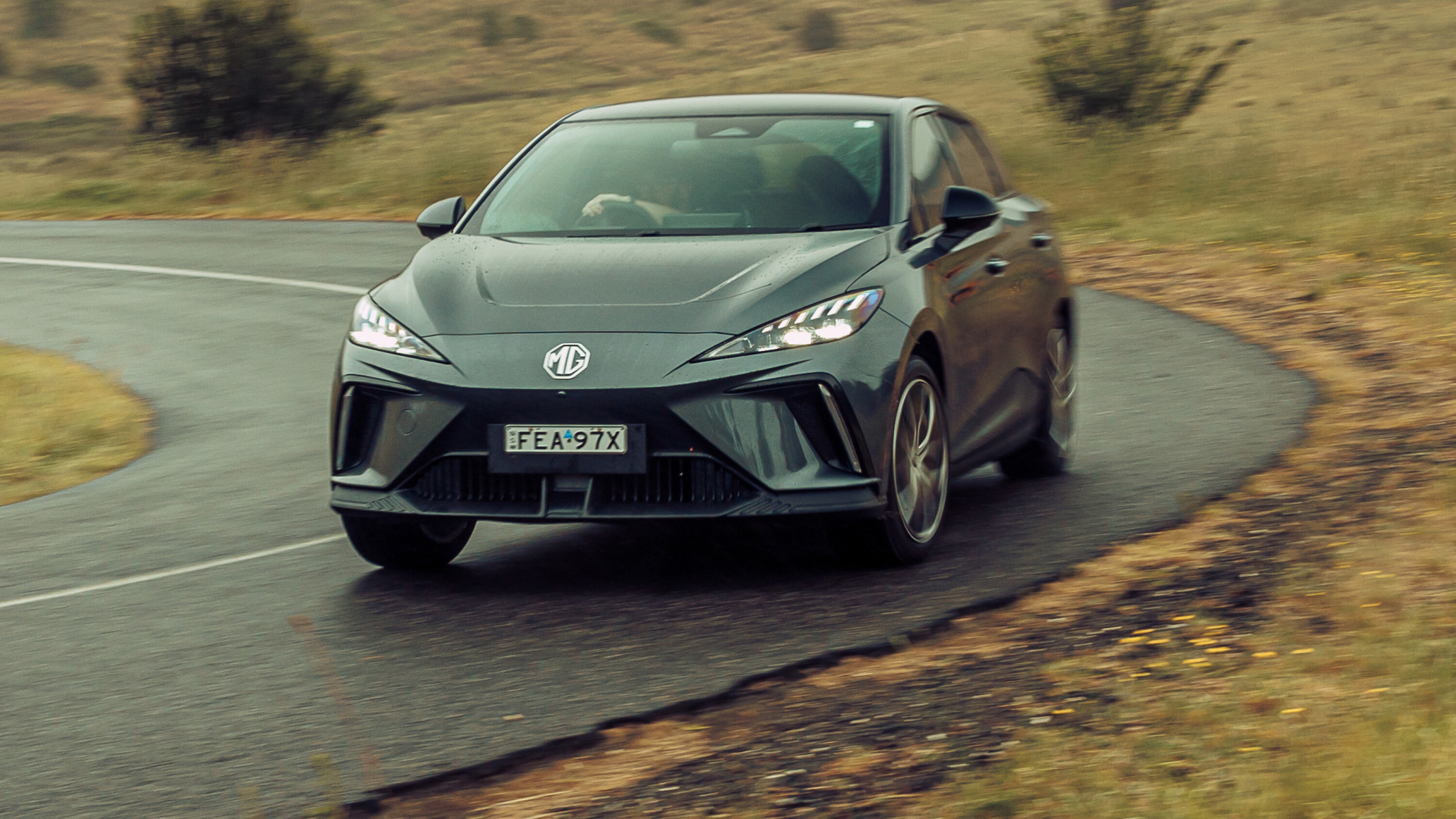
The ride quality, meanwhile, is certainly on the sporting side – this is no cosseting EV. MG’s engineers have seemingly fitted stiffer springs to handle its 1748kg heft and, over larger bumps, the damping loses more than a bit of finer control. There’s definitely room for improvement here.
On the upside, this stiffer suspension does gift the MG4 with surprisingly decent handling. On a winding road, the additional weight of the Long Range isn’t noticeable, the car sitting flat and providing a fair amount of grip, with fast and accurate – if light and lifeless – steering.
1
There’s even a rear-drive personality to be discovered, inviting you to load the outside tyres up in what would be a second-gear corner and frighten the ESC into action with a bit of power oversteer.
While fun, it’s the kind of open-diffed tail-wag you would have enjoyed in a VE Commodore Omega back in the day – this is not an electric Toyota 86. Not yet, anyway.
The best efficiency we saw was 15.4kWh/100km with an overall test average of 20.3kWh/100km (although that was enjoying the acceleration a lot). That means you could expect to get a real-world range of between 366km and 483km.
We don’t doubt 530km would be possible in an urban environment with a lot of lower-speed driving, but a range of 400-450km might be more realistic with mixed driving.
1
Impressively, and perhaps necessarily, MG offers a seven-year, unlimited-kilometre warranty – including for the battery.
Most other EV manufacturers warrant their vehicles’ batteries for eight years, although with limited kilometres – MG’s is at least unlimited.
The MG4 Long Range 77 requires servicing, conveniently, every two years or 20,000km – costing $1499 over six years, which is pretty cheap.
While compared to older-generation MG models – like the awful ZS – the MG4 is a revelation, there’s still plenty of room for fine-tuning. Even testing two separate phones and two separate cables, the Apple CarPlay was very unstable – on one 30-minute drive, it dropped out at least 10 times.
1
The lower door sills jut outwards, meaning it’s easy to hit your lower leg on them as you get in and out.
A lack of automatic wipers is also a bit of an oversight for a top-spec model. The wipers themselves are oddly loud, like an old Ford Laser (although this we also found somewhat charming).
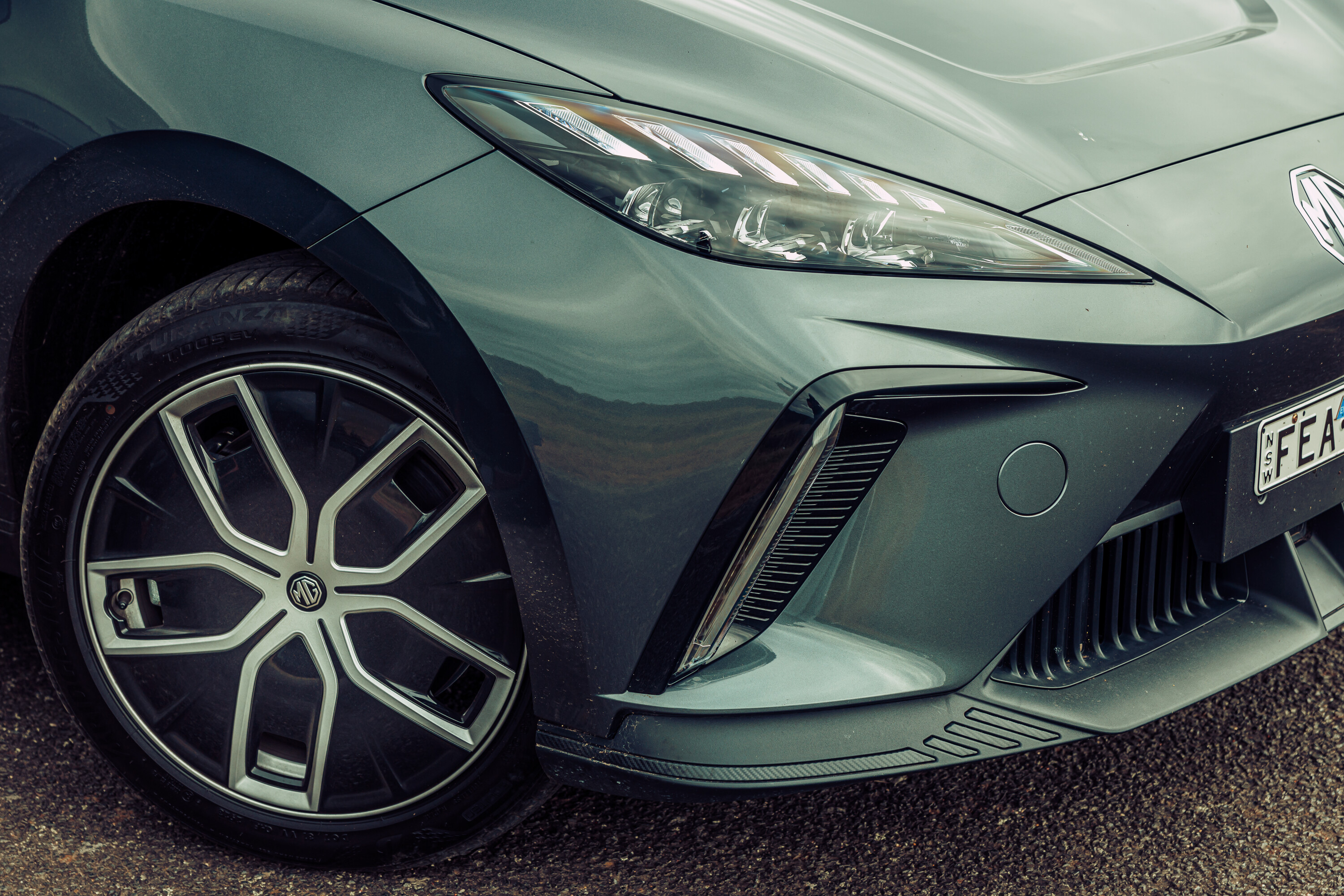
The resolution of the 360-degree parking camera is low and grainy even during the day. We’d happily trade this for a higher-quality, single reversing camera. It’s also a little bit laggy – not something you want as you’re reversing within millimetres of another car, trying to fit in a tiny parking spot.
1
Similarly requiring more work are the MG4’s advanced driver assist systems. At one point on a narrow country road, the lane keeping got spooked and, with its steering “assist”, thought the safest course of action was an attempt to veer us off the road.
The semi-autonomous traffic jam mode also works – effectively driving the MG4 on its own at low speeds in congestion – but is dopey enough that after a while it’s easier just to do it yourself.
1
While not without some areas we’d like to see improved for an update, fundamentally the MG4 right now is an impressive car – MG or otherwise.
The packaging is clever, the interior smart and modern, the dynamics very good, and the value hard to beat.
However, unless your usage case means you specifically need the 95km of additional battery range, we’d consider the 64 – pocketing the $8336 saving and simply recharging your car slightly more often.
MORE
Everything MG
MORE
Electric SUVs
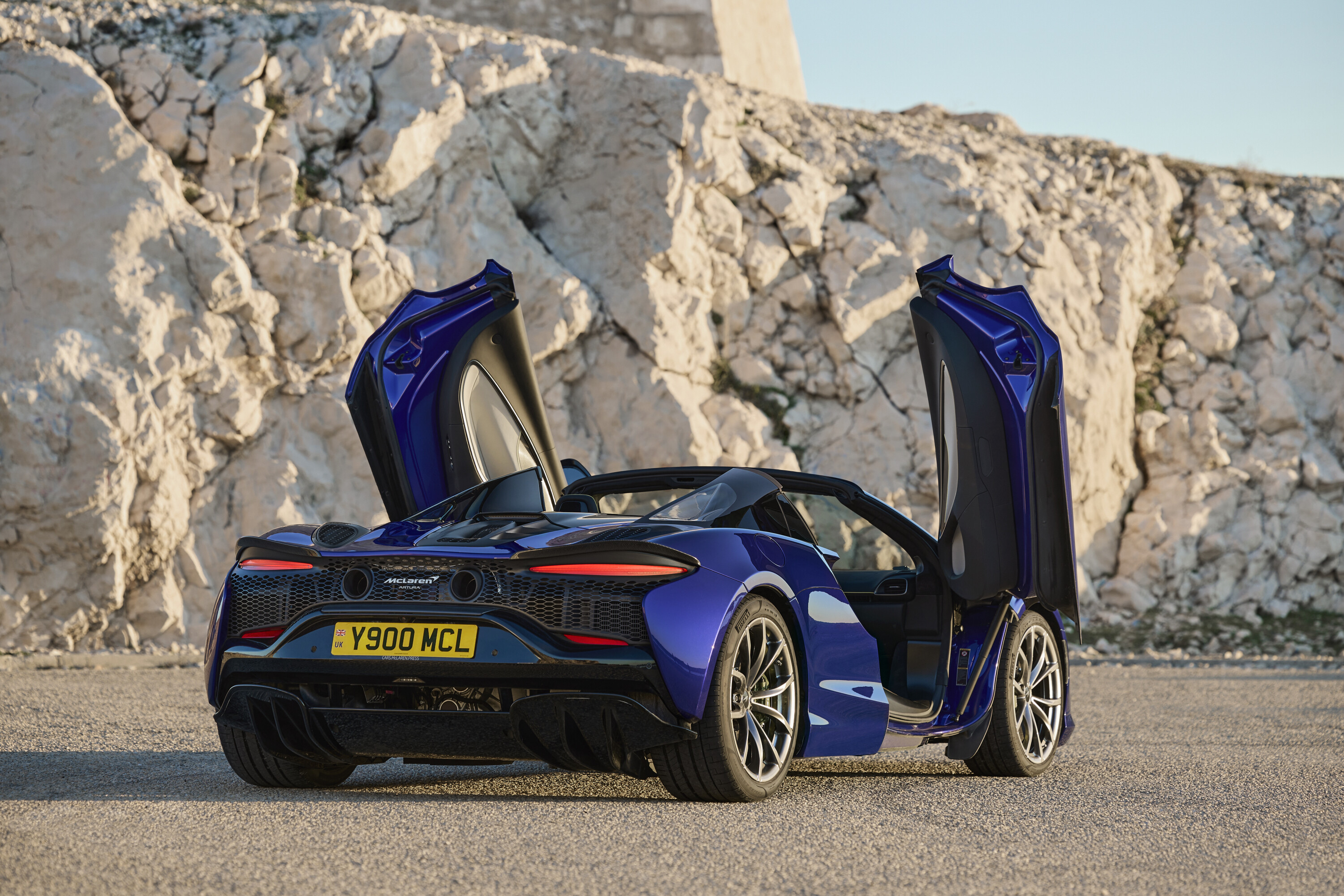
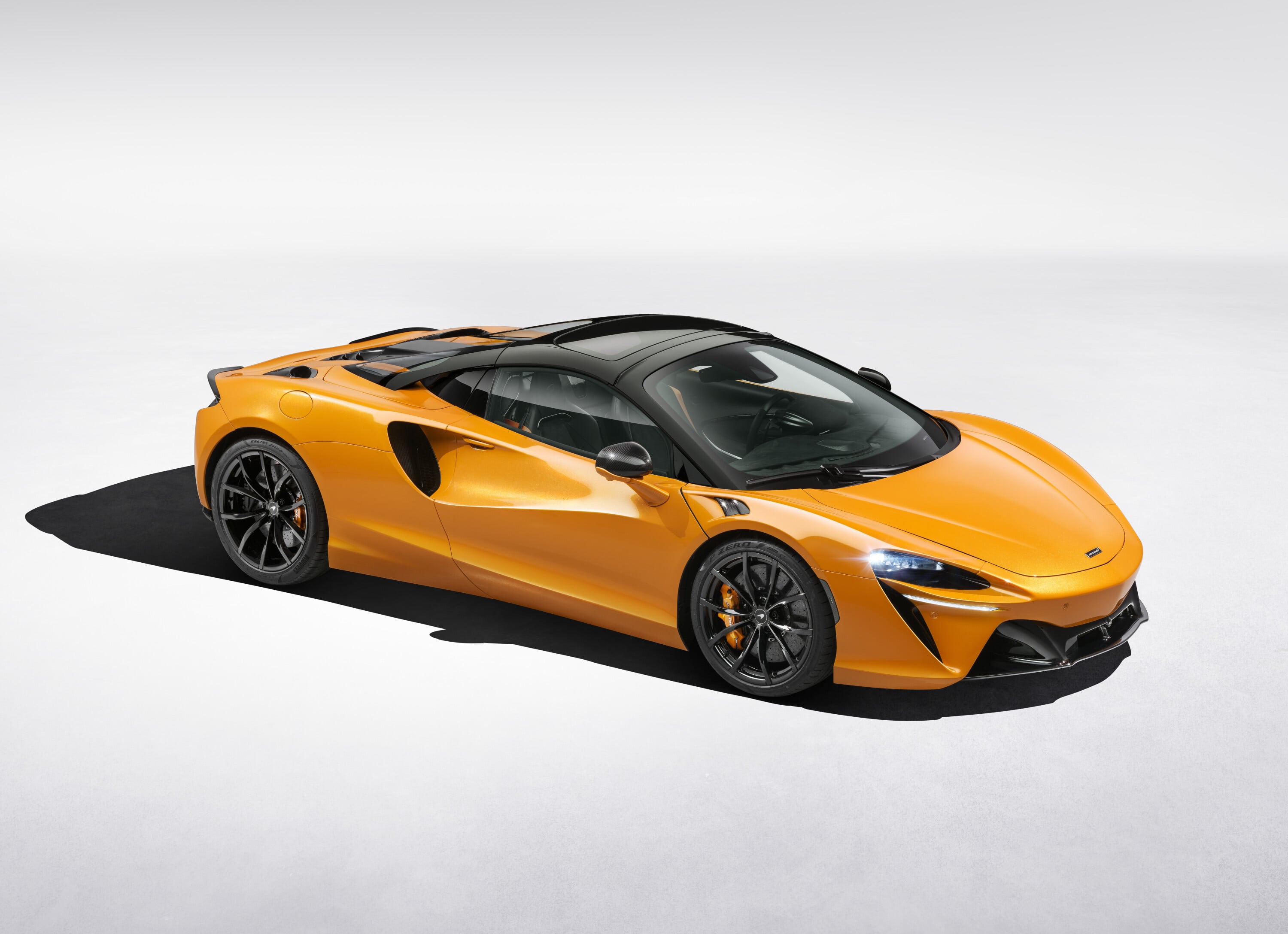
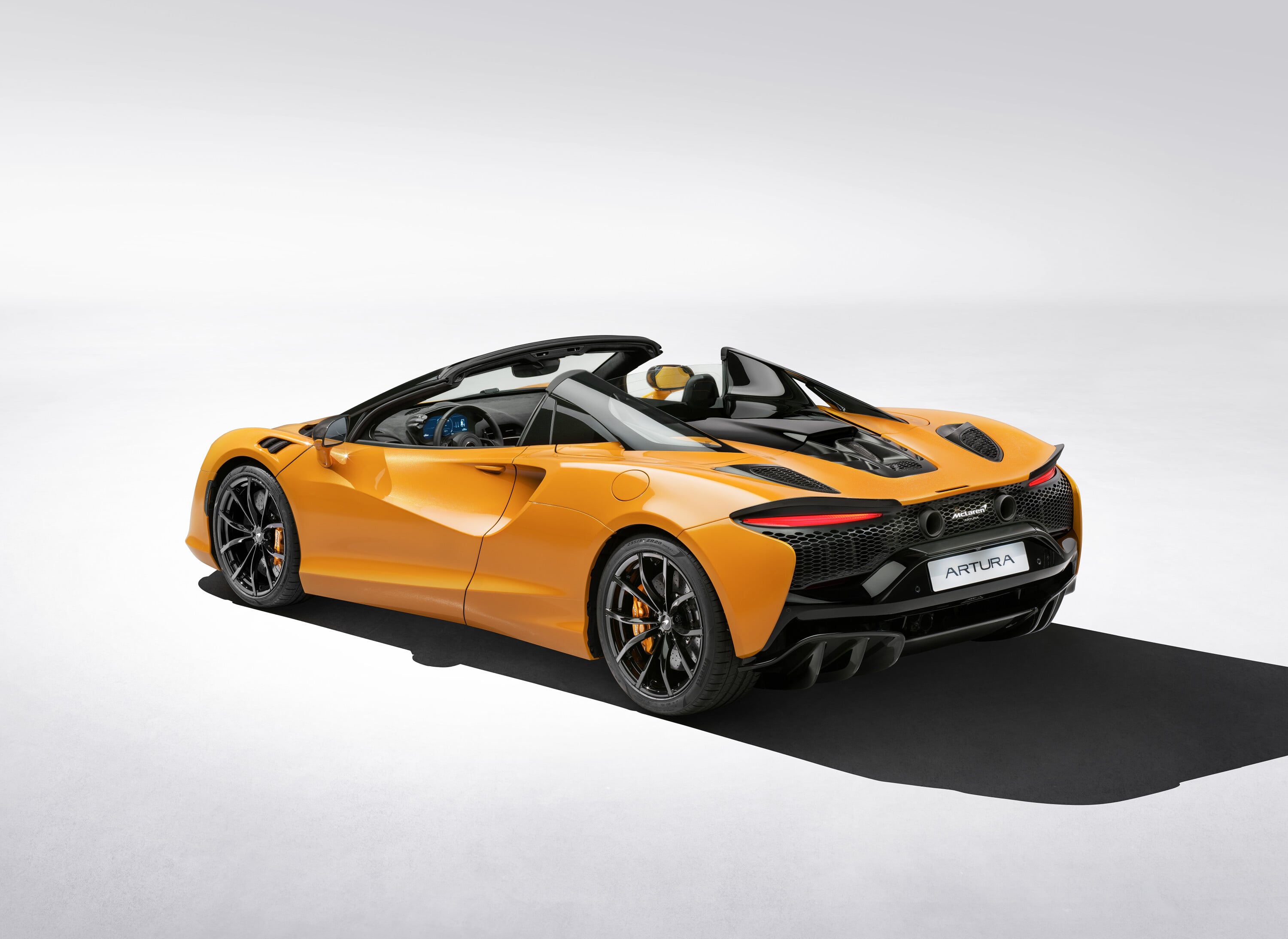
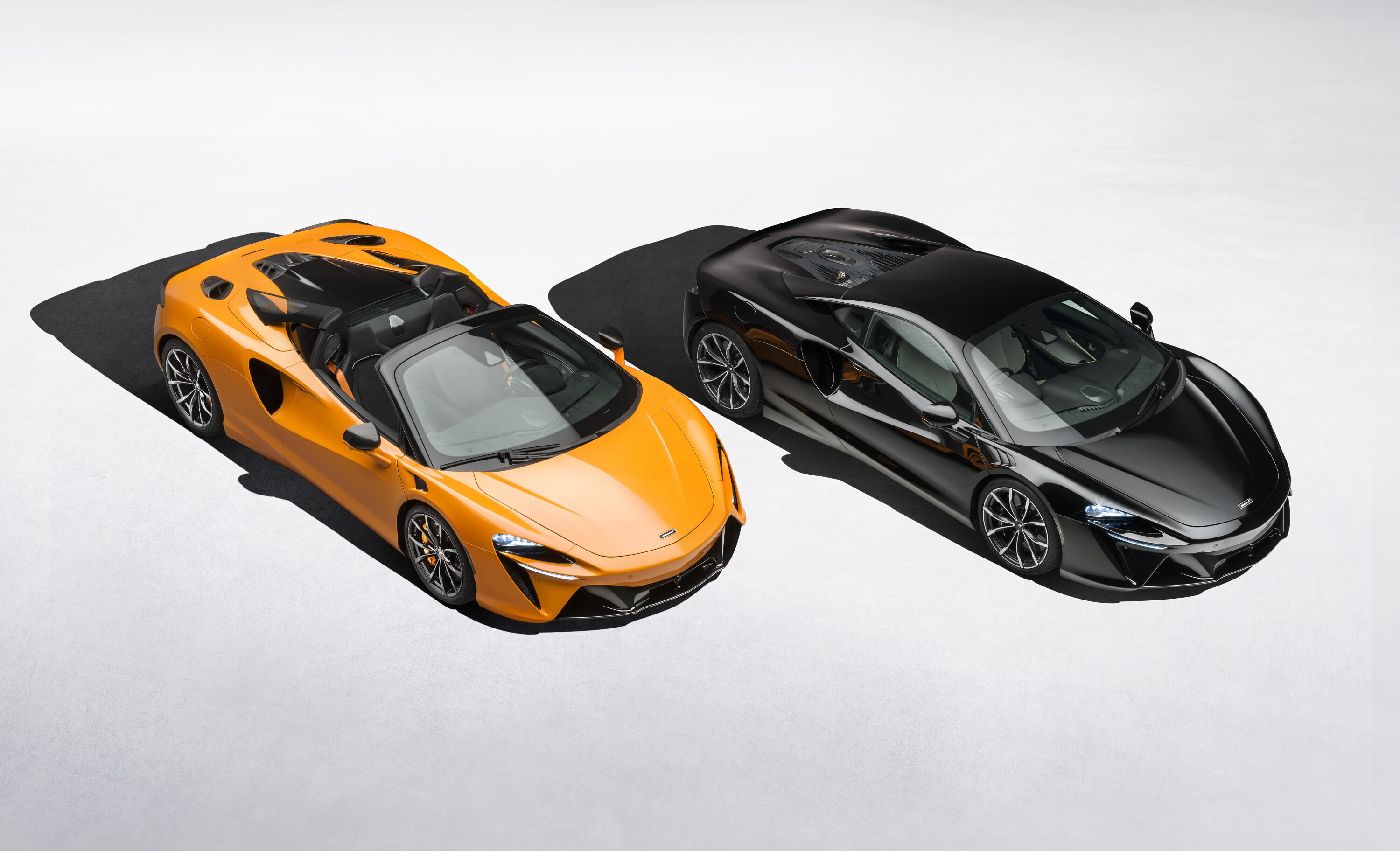
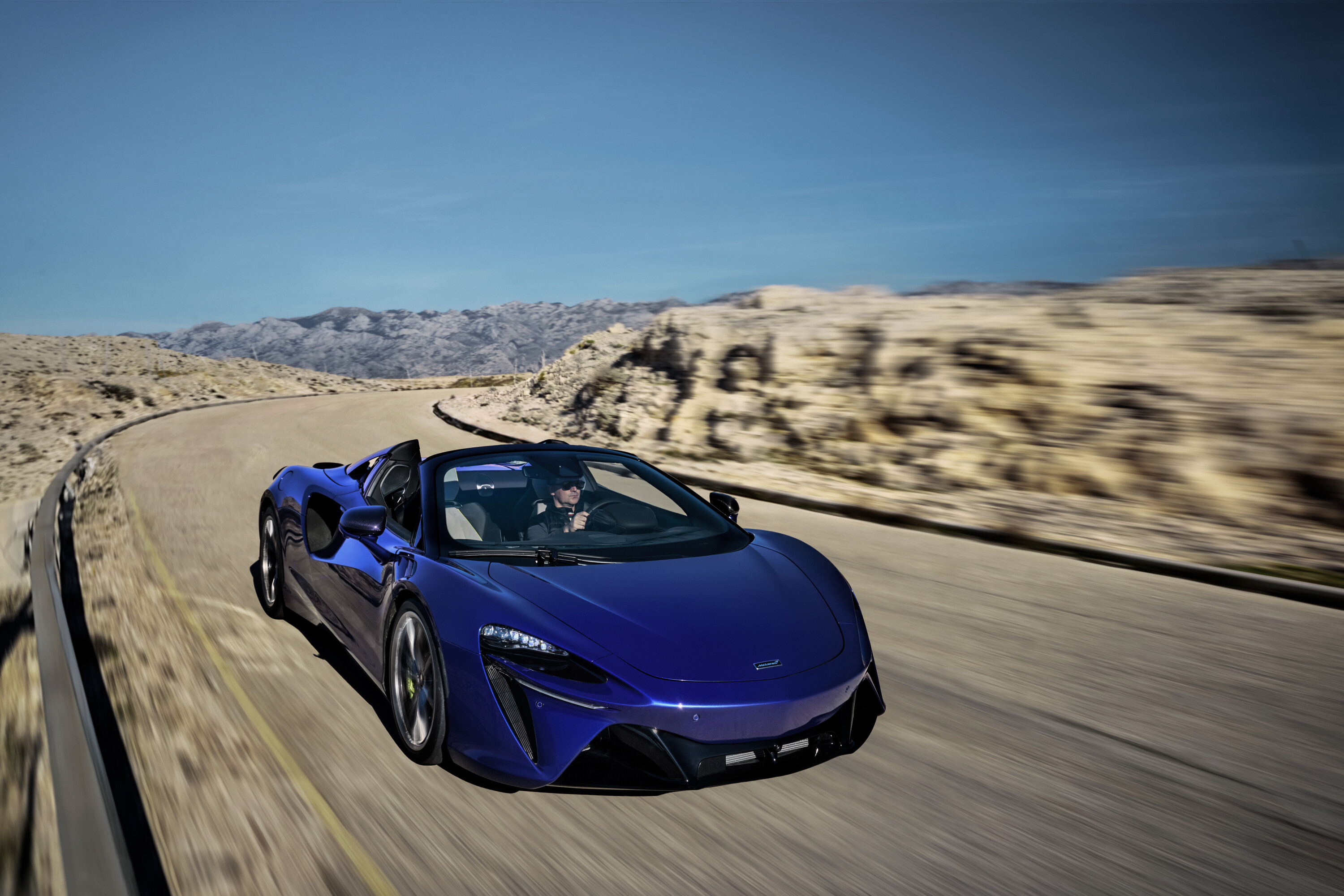
An updated 2025 McLaren Artura has debuted with a new Spider drop-top joining the Coupe first unveiled three years ago.
The new Artura Spider is McLaren’s first ‘high-performance hybrid’ convertible, with both the Coupe and Spider receiving a power boost for the 3.0-litre plug-in hybrid V6 to 515kW/720Nm – up 15kW – for 2025.
McLaren chief engineer Andy Beale said the improvement is solely from the internal combustion engine, which has improved calibration and optimisation – rather than the electric motor.
1
Existing owners of the 2024 McLaren Artura Coupe will receive the 15kW power bump at no additional cost. McLaren says it is working with its Australian retail network to finalise timing for the upgrade.
The Artura Spider will complete the 0-100km/h sprint in 3.0 seconds, equivalent to the Artura Coupe. The now-discontinued Ferrari F8 Spider reached 100km/h in 2.9s, the $140,000-dearer Ferrari 296 GTS has a 2.7s time, and the Lamborghini Huracan Evo Spyder is rated at 3.1 seconds.
McLaren lists an 8.4-second time for the 0-200km/h sprint, 21.6 seconds for 0-300km/h, and a 330km/h top speed. It becomes the lightest convertible supercar in its class with a power-to-weight ratio of 353kW/tonne – compared to 341kW/t for the F8 Spider and 309kW/t for the Huracan Evo.
1
Beale said the Artura Coupe and Spider are “very similar” in outright track performance. The convertible has a 1560 kilogram kerb weight compared to 1498 kilograms for the coupe (+62kg).
Improvements unique to 2025 Artura vehicles include a revised transmission calibration, a new pre-fill feature to deliver 25 per cent faster gearshifts, a new powertrain mount design to improve agility, and 90 per cent faster adaptive dampers to improve response to driver inputs and road surface changes.
McLaren has fitted a redesigned exhaust system with a refined engine note to allow more tone into the cabin, claiming the “crescendo of sound… envelops [the] driver, especially with [the] roof or rear window lowered” in the Artura Spider.
1
There is also improved braking power and consistency at high speeds, along with new cooling ducts to improve thermal management.
Both models have an increased electric-only driving range of 33 kilometres from the 7.4kWh lithium-ion battery, up from 30 kilometres.
The Artura Spider’s retractable one-piece hard-top can operate electronically in 11 seconds at speeds of up to 50km/h using eight actuators, with an optional electrochromic roof panel available. The low and central hybrid components are said to have allowed packaging for the retractable hard-top.
1
It has a reshaped roof panel to direct airflow to a new thermal release ‘chimney’, along with windscreen gurneys to optimise airflow to reduce occupant buffeting when the roof is down.
Inside, a wireless phone charger is now available as an option with a retention system that uses soft materials to protect the device. The Artura Spyder has a unique Bowers & Wilkins surround-sound audio system with repositioned rear speakers, along with a new central speaker.
Lane-departure warning and traffic-sign recognition are now standard-fit for the Artura, while blind-spot and rear cross-traffic alerts are available as an option for the first time in a McLaren.
1
The Artura Coupe and Spider are available in new exterior paint colours for 2025, while there is new ‘stealth’ black badging with an optional silver finish.
The 2025 McLaren Artura is due in Australia between July and September, with the Artura Coupe priced at $477,310 before on-road costs – up $27,810 over the 2024 model. The new Artura Spider is priced at $525,010 plus on-roads.
2025 McLaren Artura pricing
| Model | Pricing | Change |
|---|---|---|
| McLaren Artura Coupe | $477,310 | up $27,810 |
| McLaren Artura Spider | $525,010 | new |
| Prices exclude on-road costs. | ||
MORE
Everything McLaren
Snapshot
- First new MG3 hatch since 2011 revealed
- Kia Picanto to become Australia’s cheapest new car with $5K price rise for next MG3
- Due in Australia mid-year
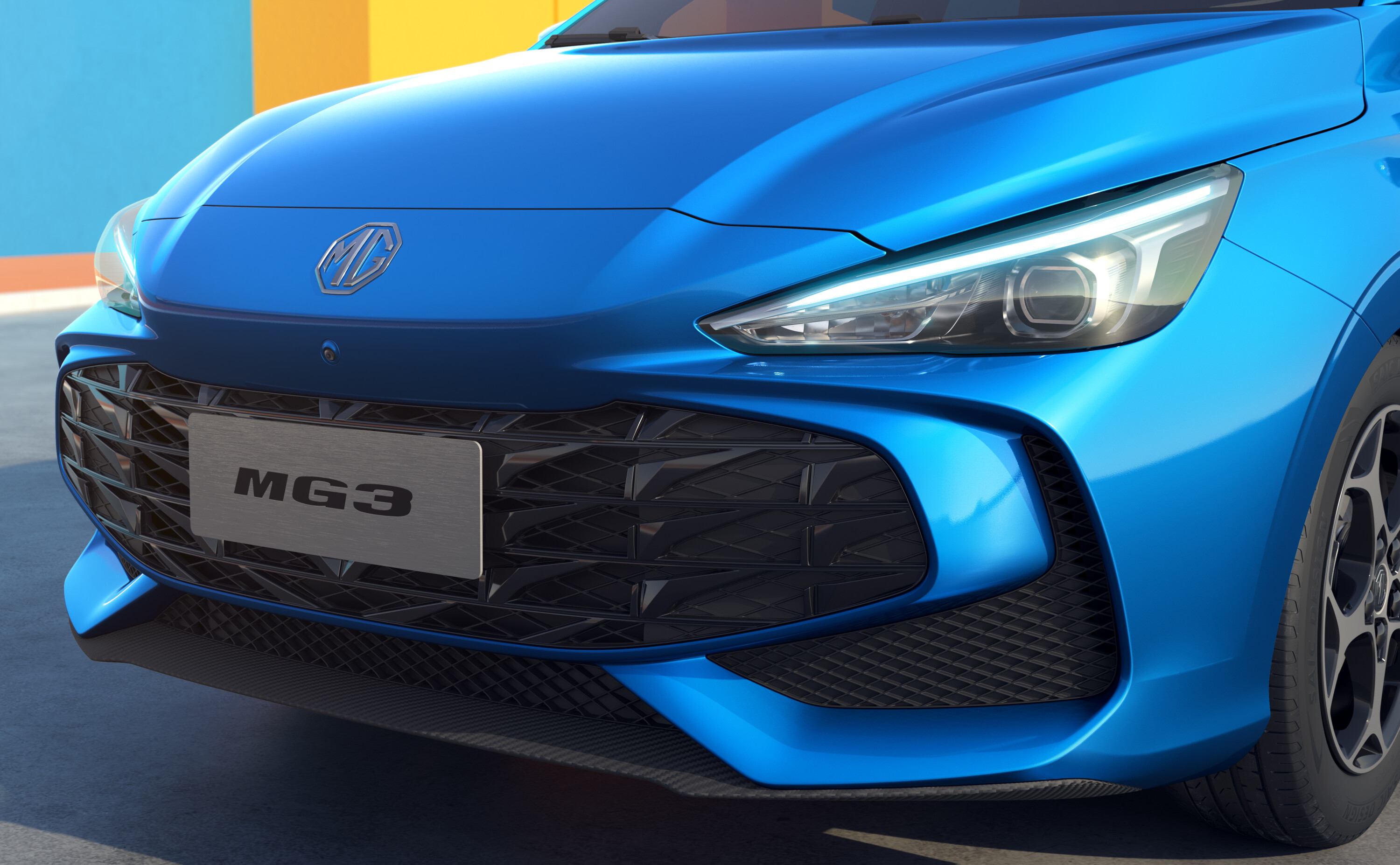
The latest-generation 2024 MG3 – the first all-new model since 2011 – has debuted ahead of its mid-year Australian launch.
MG Australia has confirmed that “due to advancements in technology, safety and specification”, the new MG3 will not be priced from under $20,000 when it arrives in local showrooms.
It will be the first time a new car hasn’t been available for under $20,000 drive-away, with the cost of the one-size-smaller Kia Picanto hatch also increasing following a recent mid-life update.
1
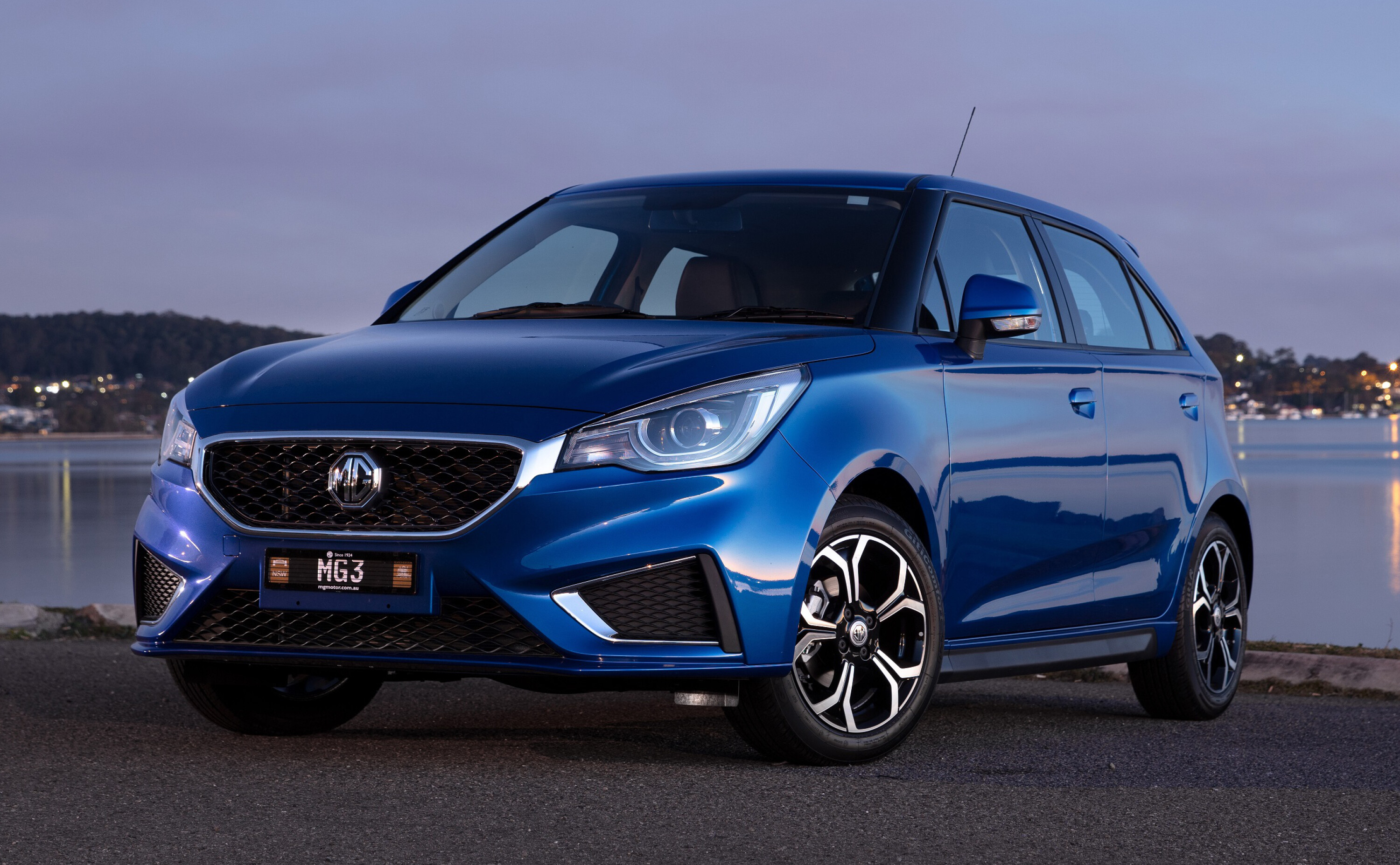
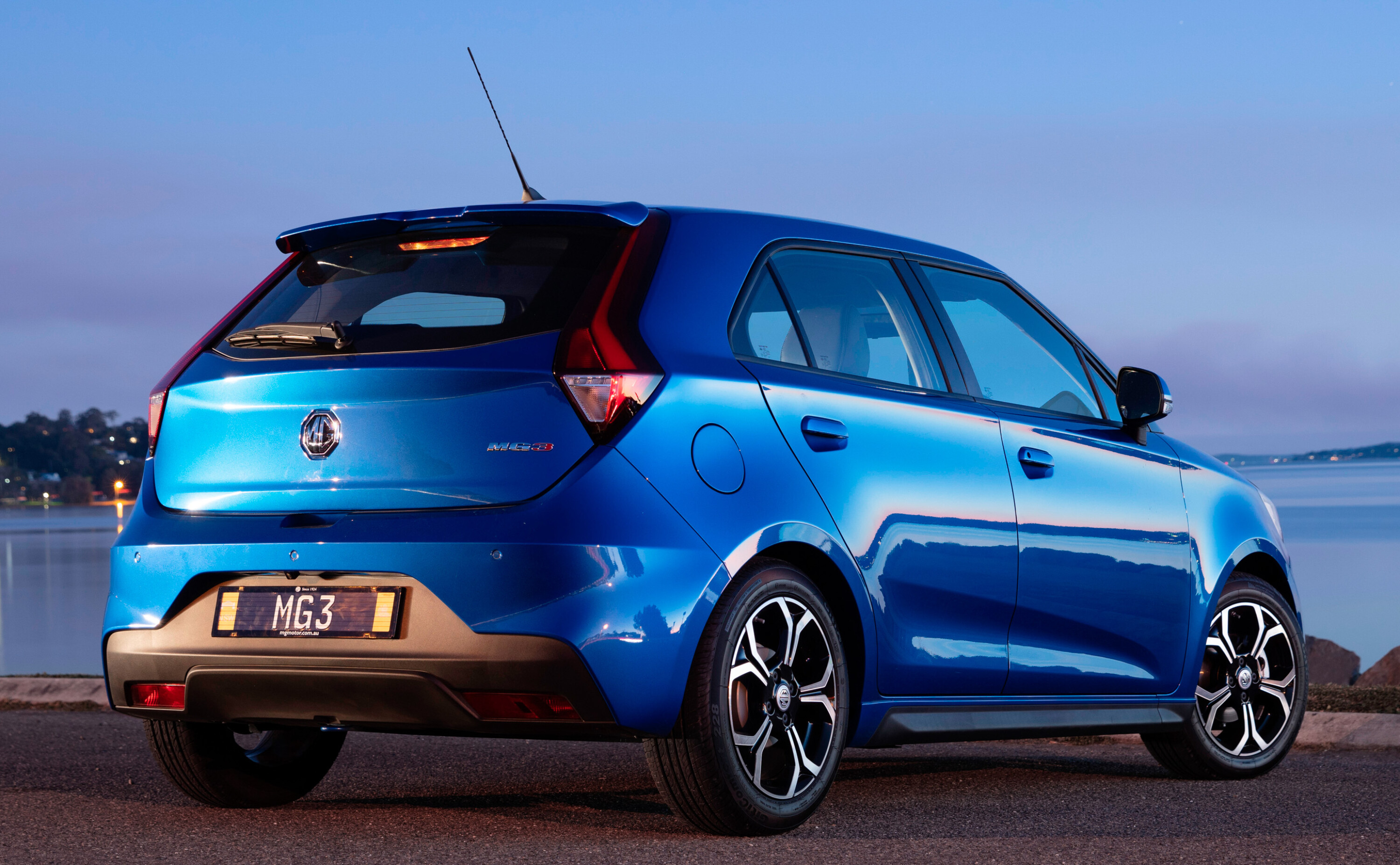
The current MG3 hatch debuted in China in 2011, arrived in Australia in 2016 at $13,990 before on-road costs, and is now priced from $19,990 drive-away.
“There will be a price increase of around $5000 associated with the new model, thanks to the introduction of new world-class technology, safety updates and all-new specification,” said an MG Australia spokesperson.
That would see the new MG3 priced from around $24,990 drive-away – up 25 per cent, and equivalent to the larger MG5 Vibe sedan due for safety upgrades later this year following a poor zero-star ANCAP safety rating.
1
MG has committed to a $4 million investment to improve the MG5’s safety, which would likely move it beyond its current drive-away prices to amortise these added development costs.
With an automatic transmission, the similarly-sized Mazda 2 and Toyota Yaris hatches start from around $28,500 drive-away, while the soon-to-be-replaced Suzuki Swift auto is priced from $25,990 drive-away.
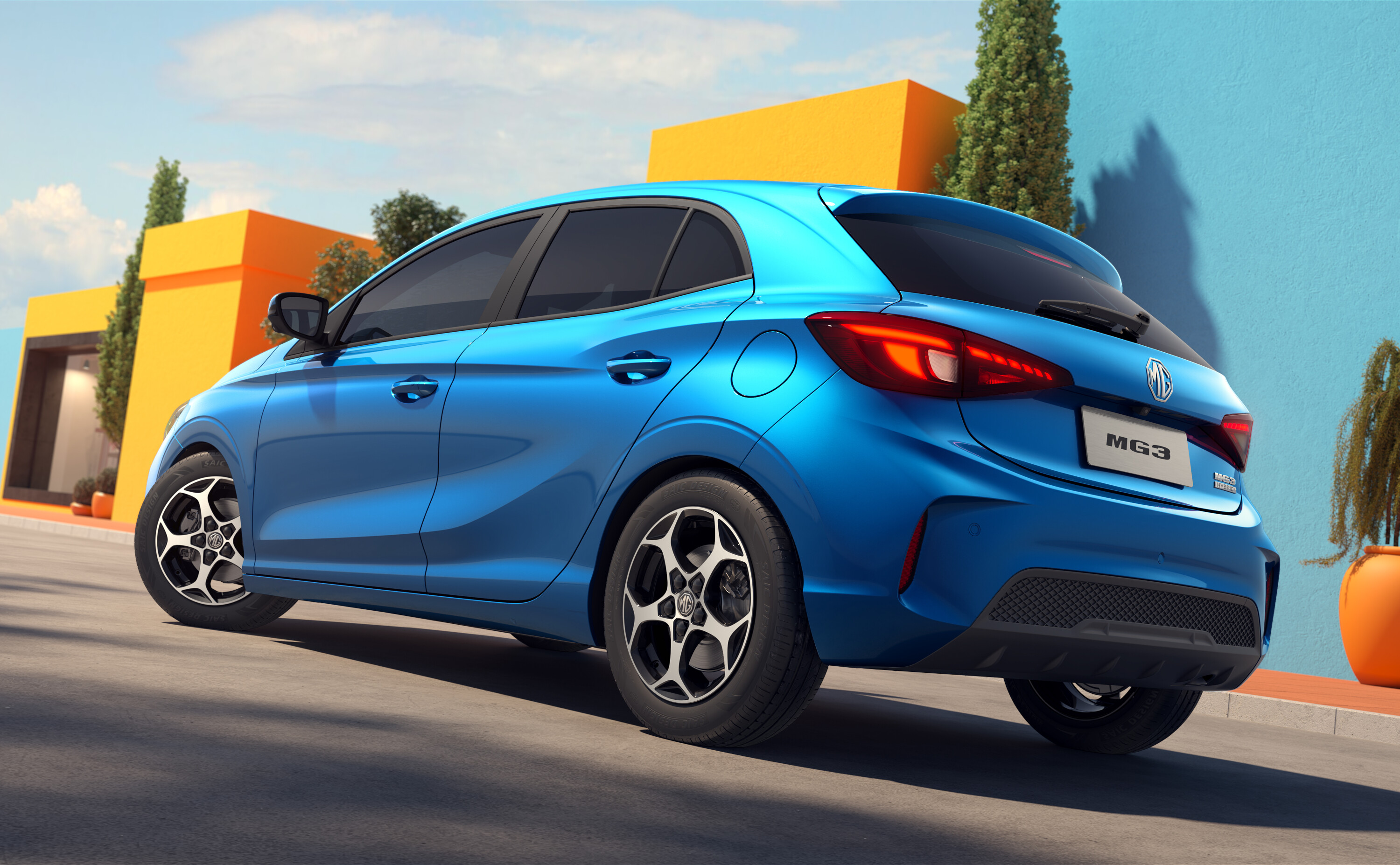
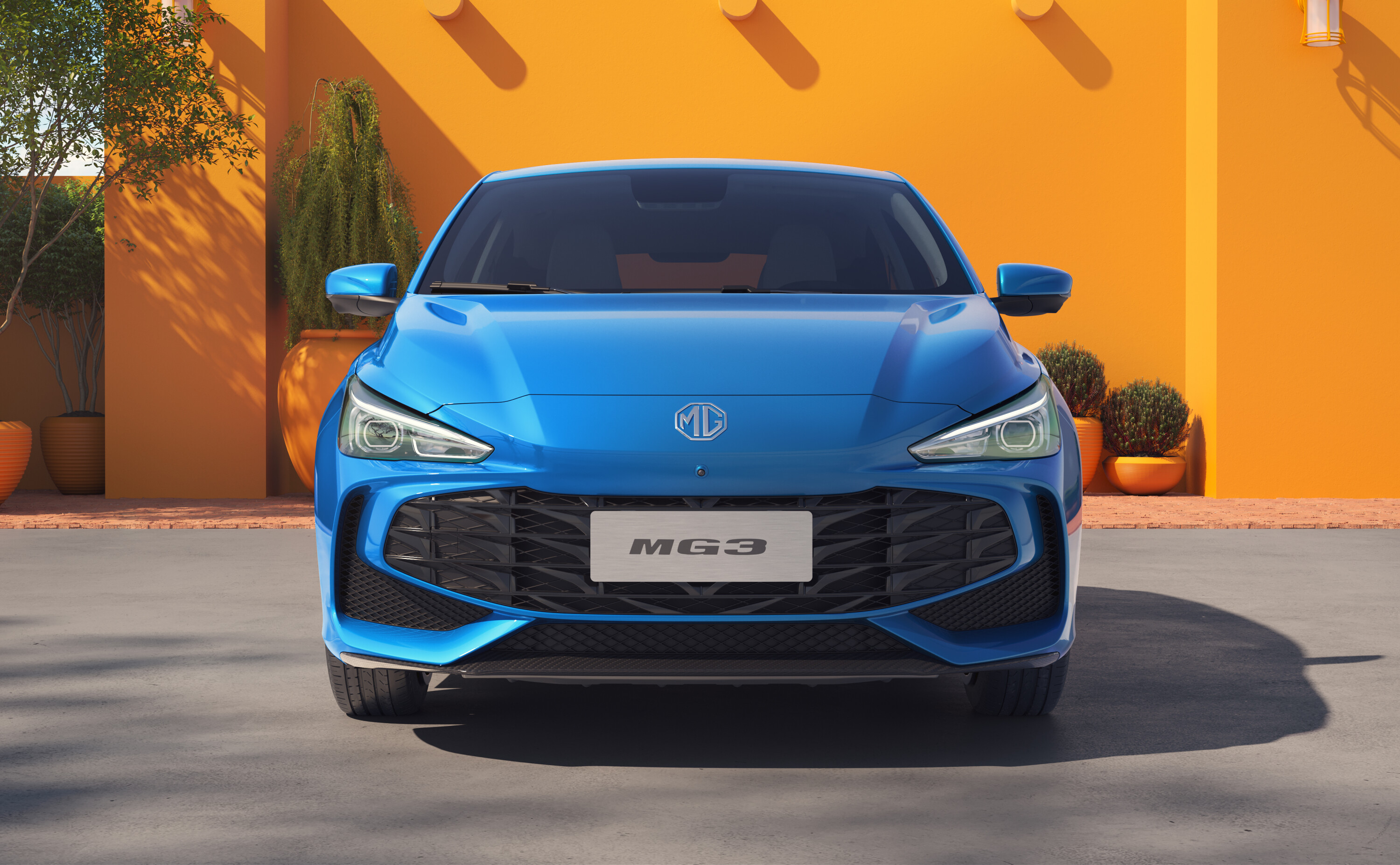
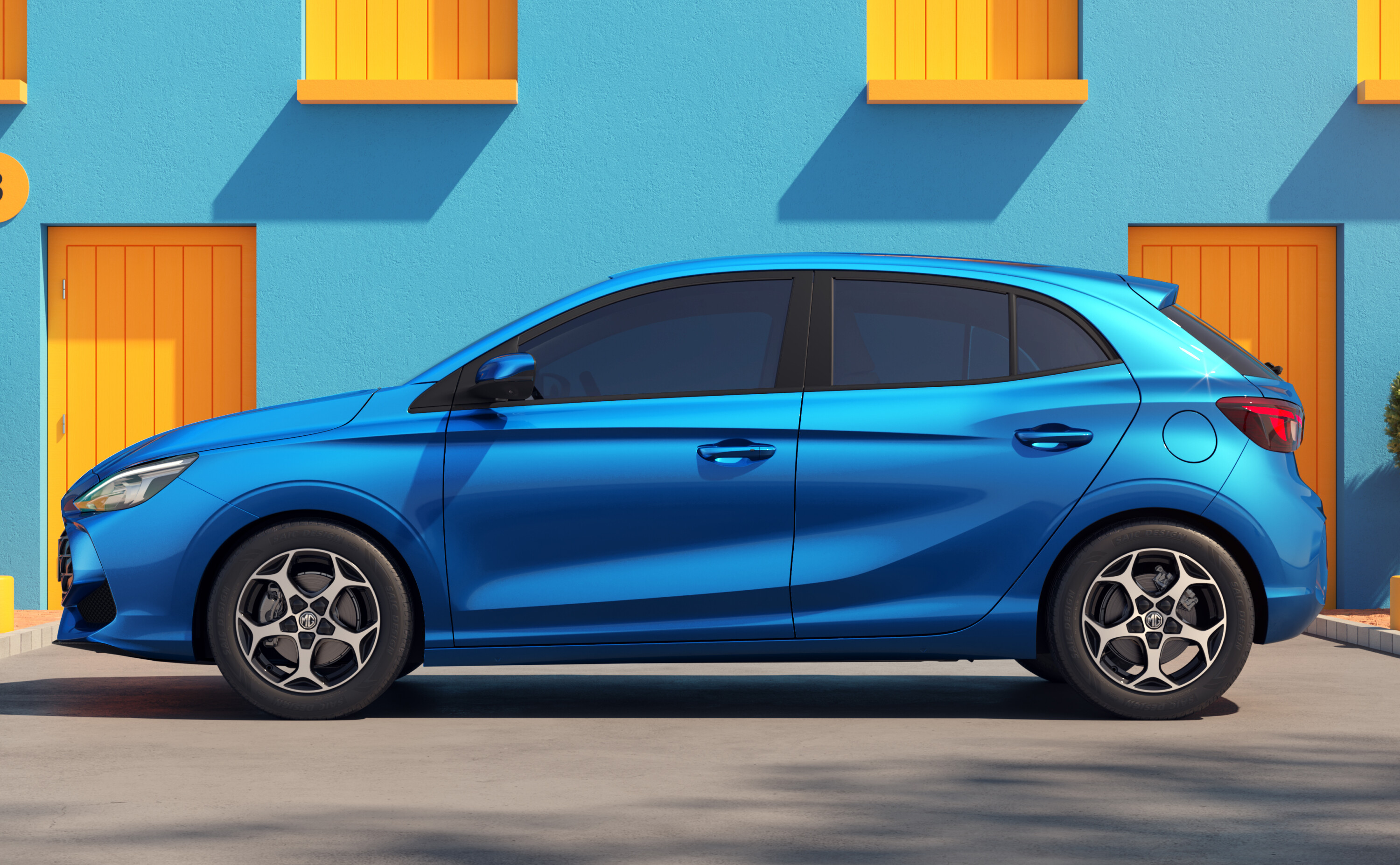
The new model has a revised exterior look inspired by the MG4 EV, MG5 sedan and MG One SUV, including a wider grille, pull-out door handles, and horizontal tail lights.
1
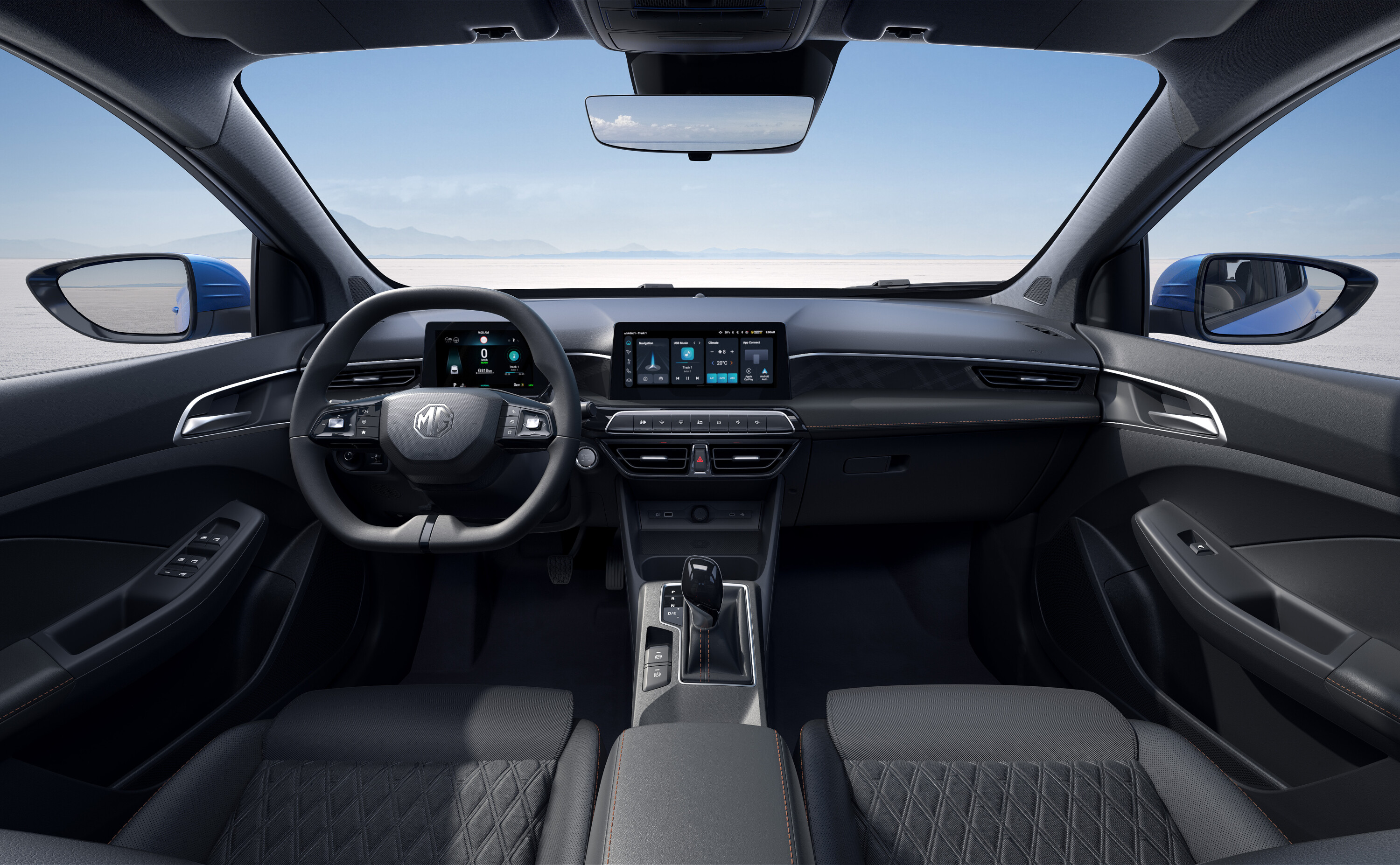
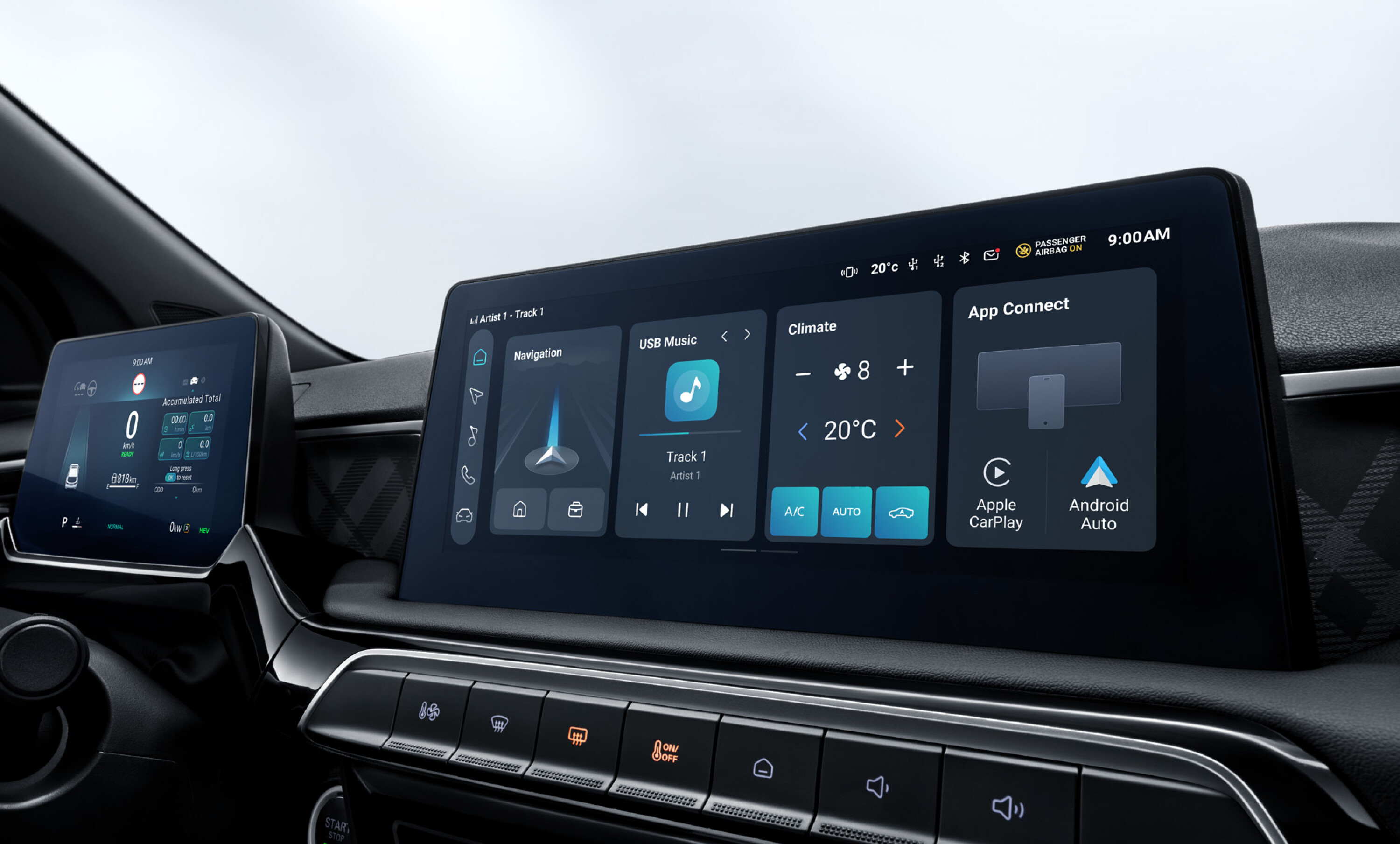
Inside, it features a wider 10.25-inch touchscreen running MG’s latest infotainment – which includes Android Auto missing from the current model – a 7-inch digital instrument cluster, hard-button shortcut controls, USB-A and USB-C charge ports, and a wireless phone charger.
There’s also an electronic parking brake with auto-hold function, an engine start/stop button, and a flat-bottom steering wheel derived from the MG4 EV with piano black controls.
It also adds active safety features absent from the current MG3, including autonomous emergency braking, lane-keep assist, lane departure warning, adaptive cruise control and traffic jam assist.
1
The MG3 will be available with a hybrid powertrain in its model line-up, becoming the second vehicle in the budget-focused, city-car segment to include the option of a fuel-saving powertrain after the Toyota Yaris.
The hybrid system combines a 75kW/128Nm 1.5-litre four-cylinder petrol with a 100kW/250Nm electric motor for a 143kW total system output.
It has a 1.83kWh battery and offers four drive modes: Electric-only, series-hybrid, ‘series and charge’, ‘drive and charge’, and parallel-hybrid.
MG claims an eight-second 0-100km/h sprint time, with a selectable ‘sport’ calibration to “get the best out of the combined power output”, along with ‘eco’ and ‘standard’ modes.
1
Oddly, the hybrid powertrain is matched to a three-speed automatic transmission, down one gear from the current MG3.
It has a WLTP-rated combined fuel consumption of 4.4L/100km, compared to 6.7L/100km for the outgoing model under the less stringent ADR testing cycle.
A non-hybrid version of the petrol powertrain will also be offered in Australia.
Under the skin, the MG3 is based on a new ‘scalable’ platform, which is said to improve comfort and dynamics. The chassis and suspension was developed in Europe and China, with unique tunes for different markets.
1
Measuring 4113mm long, 1502mm tall and 1797mm wide with a 2570mm wheelbase, the new model is 58mm longer, 2mm lower and 68mm wider with 50mm more between the front and rear axles. It has a 293-litre boot, down 14L.
More local details on the 2025 MG3 are due to be confirmed closer to its mid-year Australian launch.
“The current MG3 is at the end of its lifecycle which means that now is the best time to buy a brand new car for the price of a used one, before the new model hits our shores,” added the MG Australia spokesperson.
Below: The current MG3 hatch, which was last updated in 2018
1
1
MORE
Everything MG
8:30pm: And now it’s been revealed!
Get all the details on the freshly unveiled Renault 5 at the story linked below.
February 26, 7:30pm: The Renault 5 is being revealed as we speak.
Check out the live video below, and watch for our detailed story to come shortly.
January: Renault 5 teased before Geneva debut
It’s been a long time coming, but we’re finally just weeks away from the return of the Renault 5 badge, set for February 26 at the Geneva motor show.
Destined to debut on the back of a new-generation electric hatch, the 5 name will be an important model in the ‘affordable EV’ space.
1
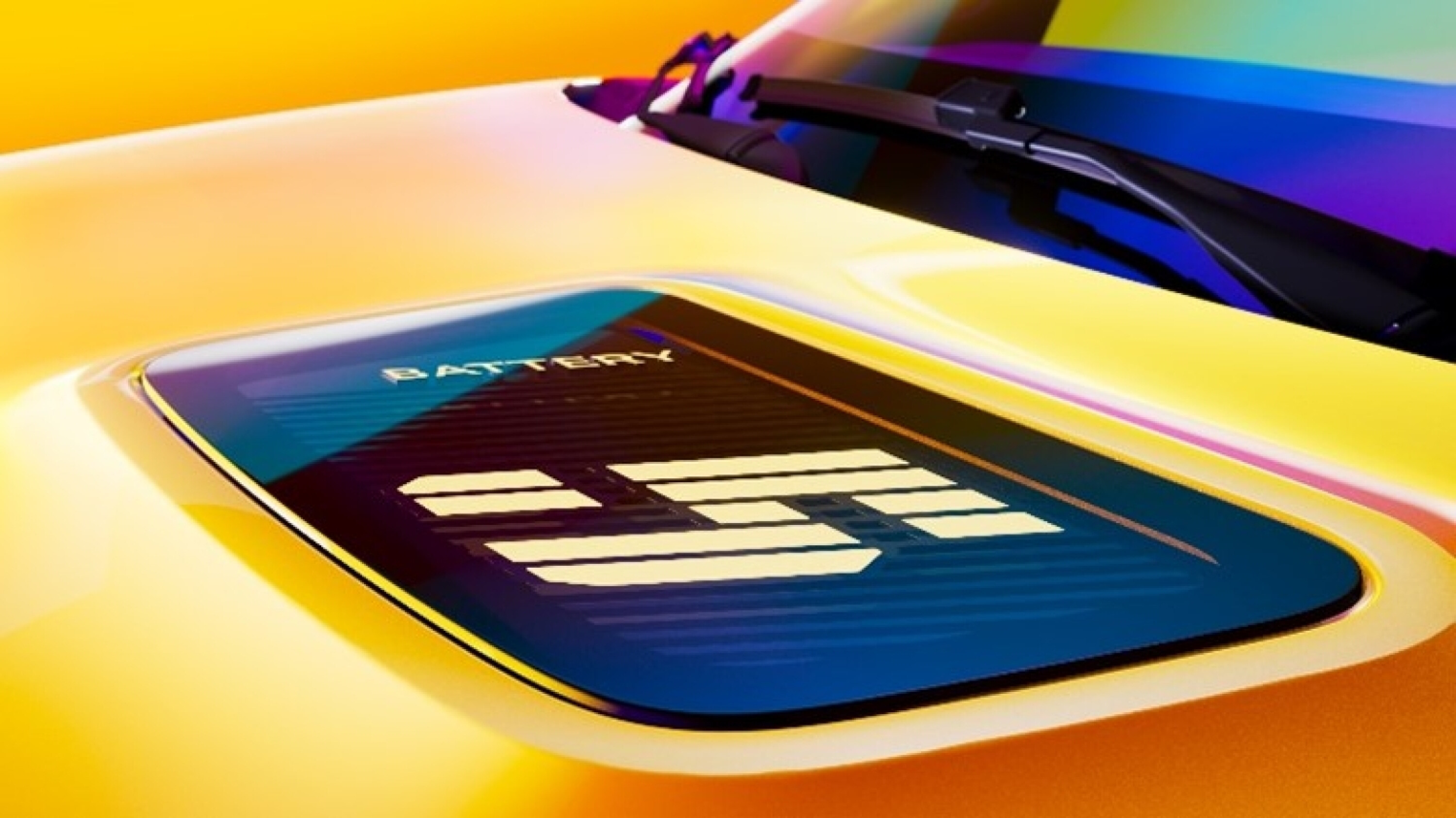
A set of new teaser images released at Christmas offer a first undisguised look at the new 5, although the tightly-cropped view means there is still much left to be revealed.
“Renault 5 E-Tech electric is a cult icon redesigned for the modern age,” says Fabrice Cambolive, head of the Renault brand in the wider Renault Nissan Mitsubishi group.
“We pulled out all the stops for this engaging car, designed and built in France. With its cheerful design and new-generation technologies, it’s out to make electric vehicles more affordable in Europe.”

1
The new 5 isn’t officially confirmed for Australia yet, but local boss Glen Sealey told Wheels in an early 2023 interview that it is one of the cars the brand’s Australian distributor is eager to introduce.
“If Renault makes [the 5] in right-hand-drive, we’ll put our hand up. It’s then a case of: will Renault make the additional investment to engineer a car to ADRs for Australia”, Sealey said.

1
In Europe, the 5 will open in the €20,000 to €25,000 range – roughly equivalent to $30,000 to $40,000 in Australia.
It would be quite an achievement if that price range is possible in Australia, given it’s a bracket currently dominated by Chinese EVs, while the similarly compact Fiat 500e is a $52,000 a proposition.
1
July 2023: 2024 Renault 5 electric hatch teased
The long-awaited Renault 5 revival has been teased in production-ready form for the first time, ahead of the Goodwood Festival of Speed on Thursday.
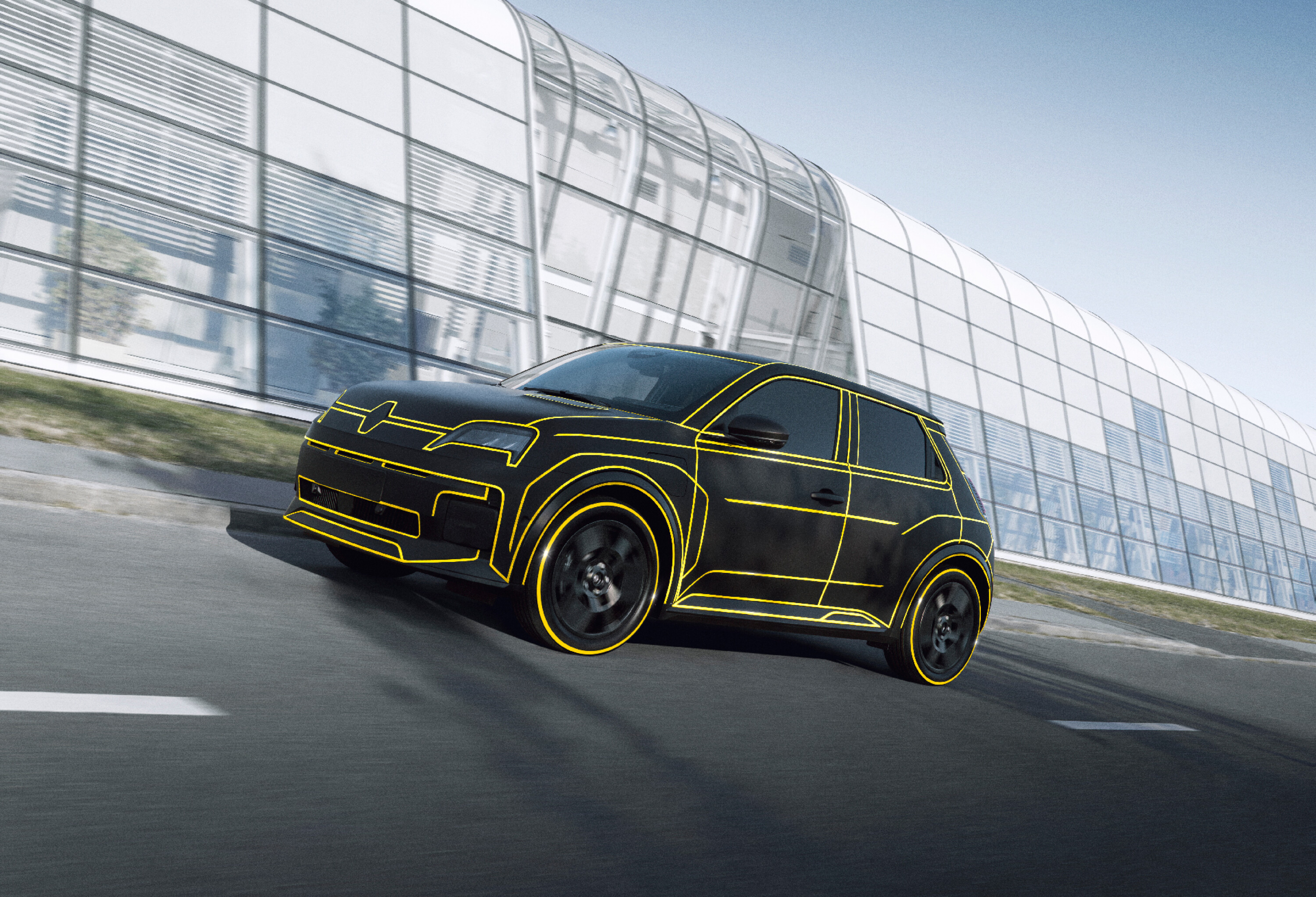
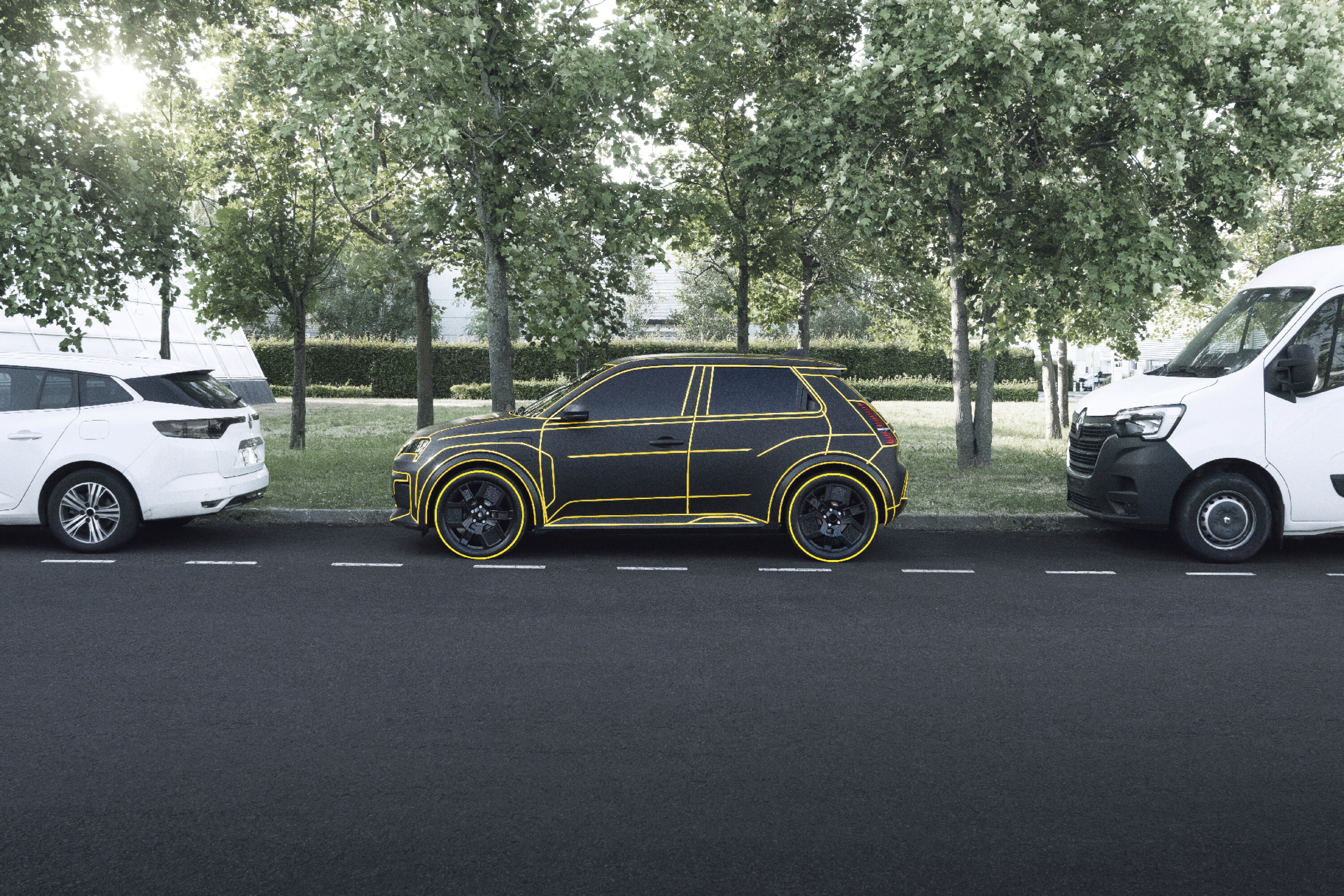
While the retro electric hatch was still wrapped in dark camouflage, it indicates the electric hatch will have straight body lines, a compact length with a wide wheelbase, and retro-sporty styling cues.
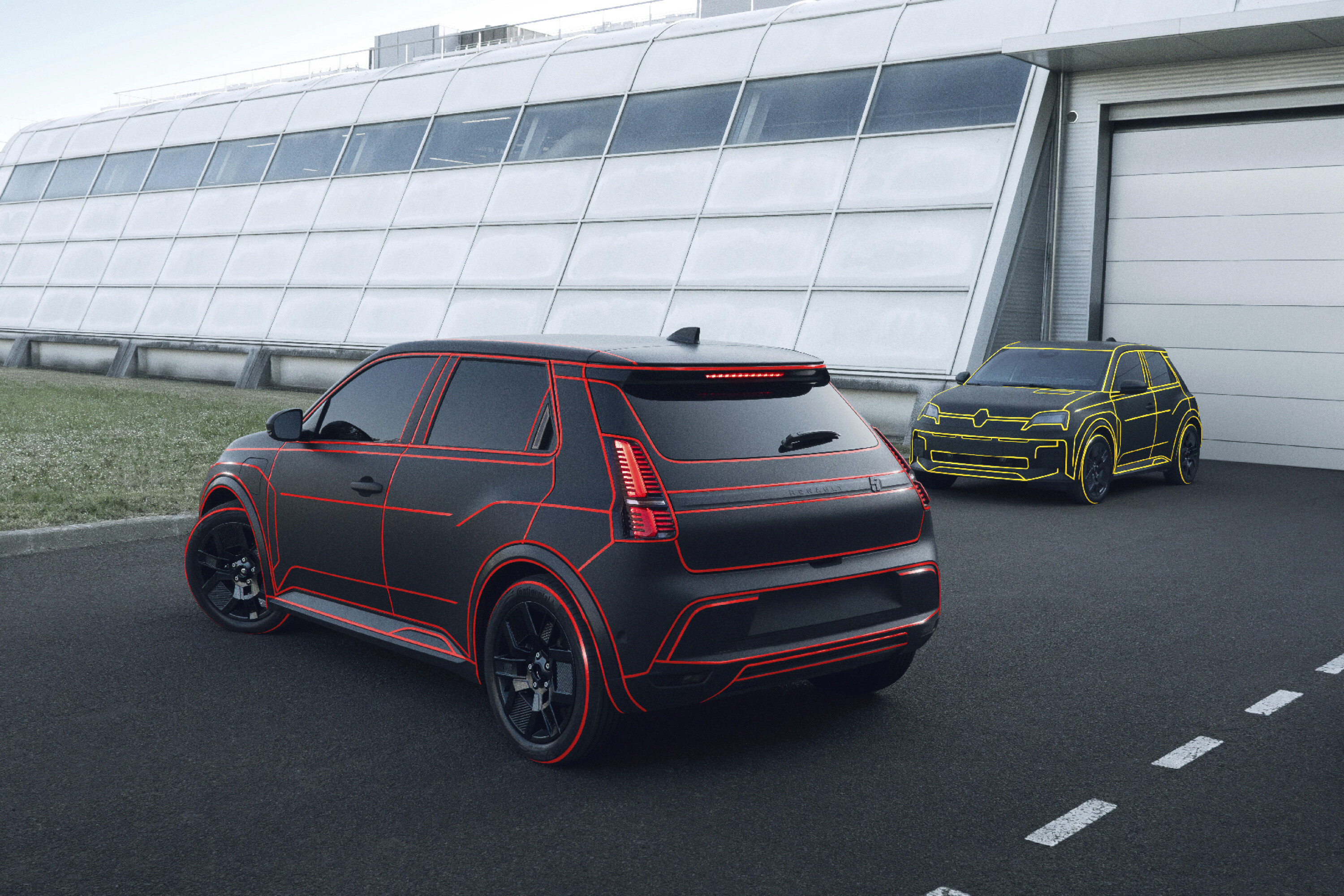
Interestingly, the front bonnet has a subtle protruding bump on the left side, the front bumper will feature a splitter, and a subtle full-width lip or light bar at the tailgate connecting the vertical tail-lights with a ‘5’ badge offset on the right.
The latter harks back to the post-1984 second-generation Renault 5 hatch, which had the carmaker’s diamond logo towards the left front grille.
1
Other details seen in the teaser include hidden rear door handles, Continental tyres, and a charging port located at the front-left of the car.
While Renault hasn’t detailed when the 5 EV will be unveiled, the teaser lines up with the Goodwood Festival of Speed event running from Thursday, July 13 to Sunday, July 16.
The annual event has become a new go-to for carmakers to tease or reveal new high-performance models in lieu of traditional motor shows, with electric cars such as the Hyundai Ioniq 5 N and MG Cyberster slated for this year.
Click on the images in this story to view the full teaser gallery.
5
April 3: 2024 Renault 5 initial details revealed
Initial battery and powertrain details have been revealed for the all-electric Renault 5, ahead of a 2024 unveil for the revived retro-inspired hatch.
Snapshot
- Renault 5 EV hatch set for 2024 unveil
- Cheaper to produce, simpler than Zoe predecessor
- Focus on fun driving dynamics
The 5 will debut Renault-Nissan’s Common Module Family-B EV (CMF-B EV) platform, which will be 30 per cent cheaper to manufacture than the Zoe electric light hatch overseas since it shares 70 per cent of parts from the combustion engine CMF-B platform used on the Clio and Captur city cars.

1
The Renault 5 will be the Zoe’s spiritual successor, with a design inspired by its original predecessors and focus on fun driving dynamics.
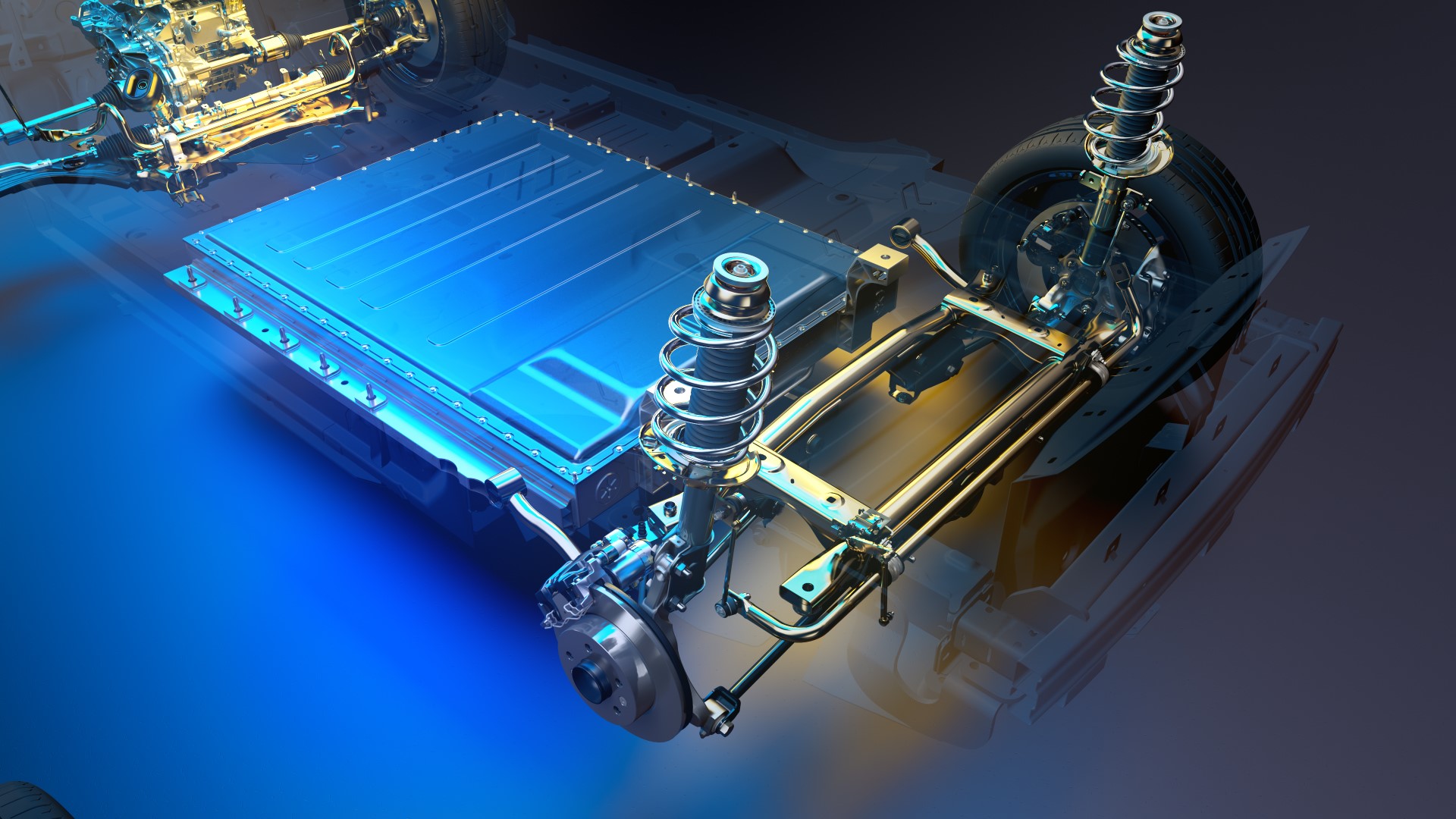
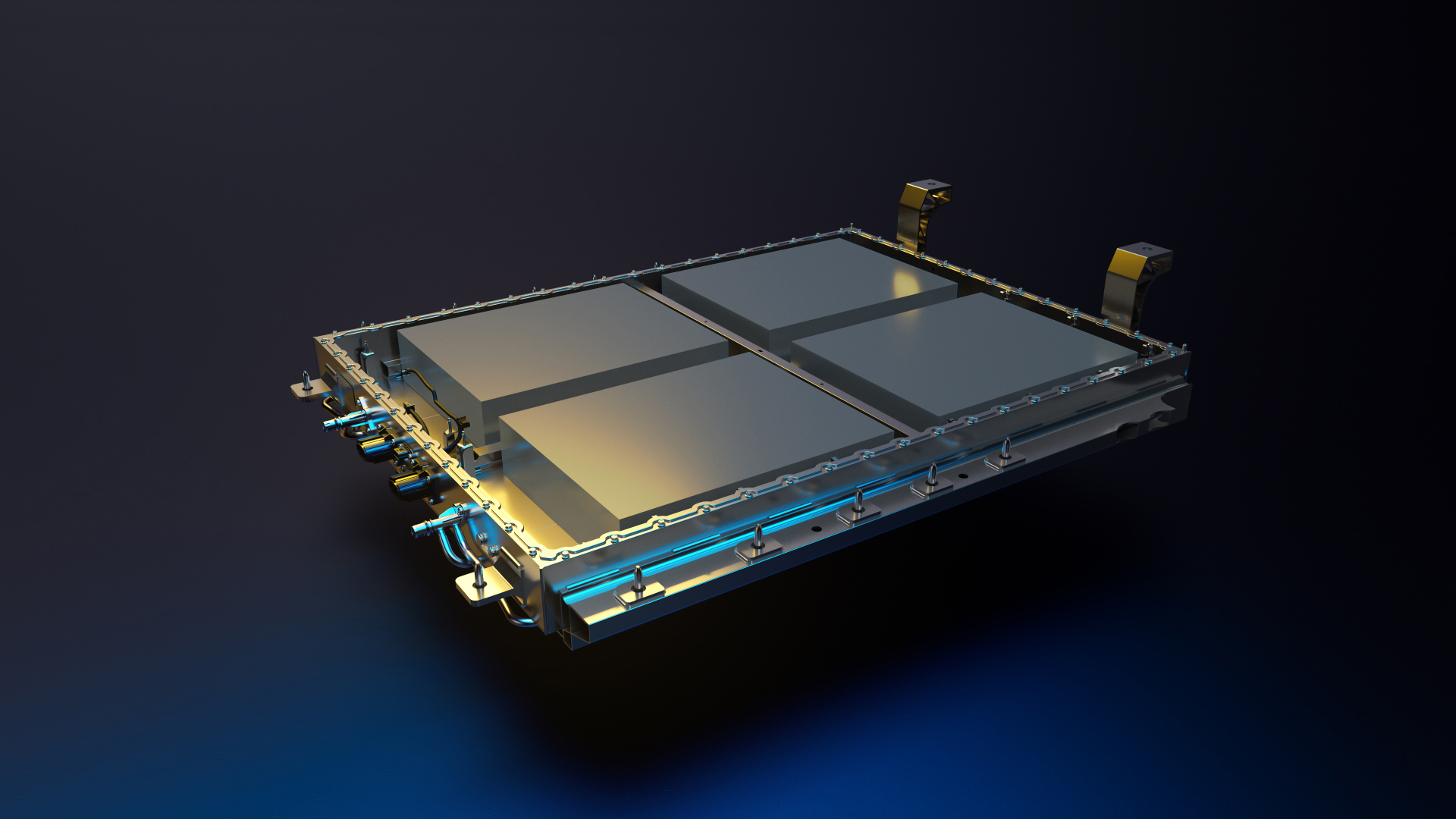
It will be home to a new battery pack with four large modules to be simpler (instead of 12 small modules like the older Zoe), 15kg lighter than the Zoe and more space efficient, while giving the underbody added rigidity to improve safety and cabin noise isolation.
Additionally, the Renault 5 will feature an electrically-excited synchronous motor that doesn’t use expensive and environmentally-unfriendly rare-earth materials, while delivering higher power outputs than a permanent magnet motor.
1
The electric city car will also have a more compact architecture – around 20kg lighter than the Zoe – by combining the DC/DC converter (which converts the battery pack’s 400-volts into 12-volts to power electronics), the onboard battery charger, and accessory box (which manages power distribution) into one unit.
The CMF-B EV platform also enables it to have multi-link rear suspension.
The first nine Renault 5 EV mules disguised as Clio hatches are currently being tested for comfort and handling on European roads, and the company’s private testing facilities, with initial drives indicating it is a “worthy descendant of the Megane E-Tech electric”.
When it does make its debut next year, it will revive the nameplate that dates back to 1972, but only lasted for two generations.
The Renault 5 was famous for its Alpine and Turbo hot hatch iterations, plus its entrance as a front-wheel drive rally car.
1
Will the electric Renault 5 come to Australia?
Renault has yet to confirm if it will build the 5 in right-hand-drive, but the company’s local distributor has confirmed it’s eager to bring the style-focused 5 in as a rival to the Abarth 500e and Mini Electric.
Local boss Glen Sealey told Wheels in February: “If Renault makes [the 5] in right-hand-drive, we’ll put our hand up. It’s then a case of: will Renault make the additional investment to engineer a car to ADRs for Australia?”
The 5 would come with a handy advantage of those two compact EVs when it comes to driving range, as the current Zoe can manage up to 395 kilometres.
For now, Renault Australia will launch the Megane E-Tech EV crossover SUV at the end of this year with a targeted circa-$70,000 starting price to compete with a highly concentrated segment, including the Tesla Model Y, Kia EV6, and Ford Mustang Mach-E.
MORE
Everything Renault
