
With falling sales numbers from buyers trending toward SUVs, medium-sized sedans are quickly fading into obscurity. Yet here we are in a 2024 Hyundai Sonata N Line that’s been comprehensively overhauled just two years after its local launch.
In that time, the single-variant Sonata has notched up 1324 sales. Decent, but to paint a bleak picture you only need to look at the Tucson’s 1678 sales in September 2023 to see that the four-door is flagging.
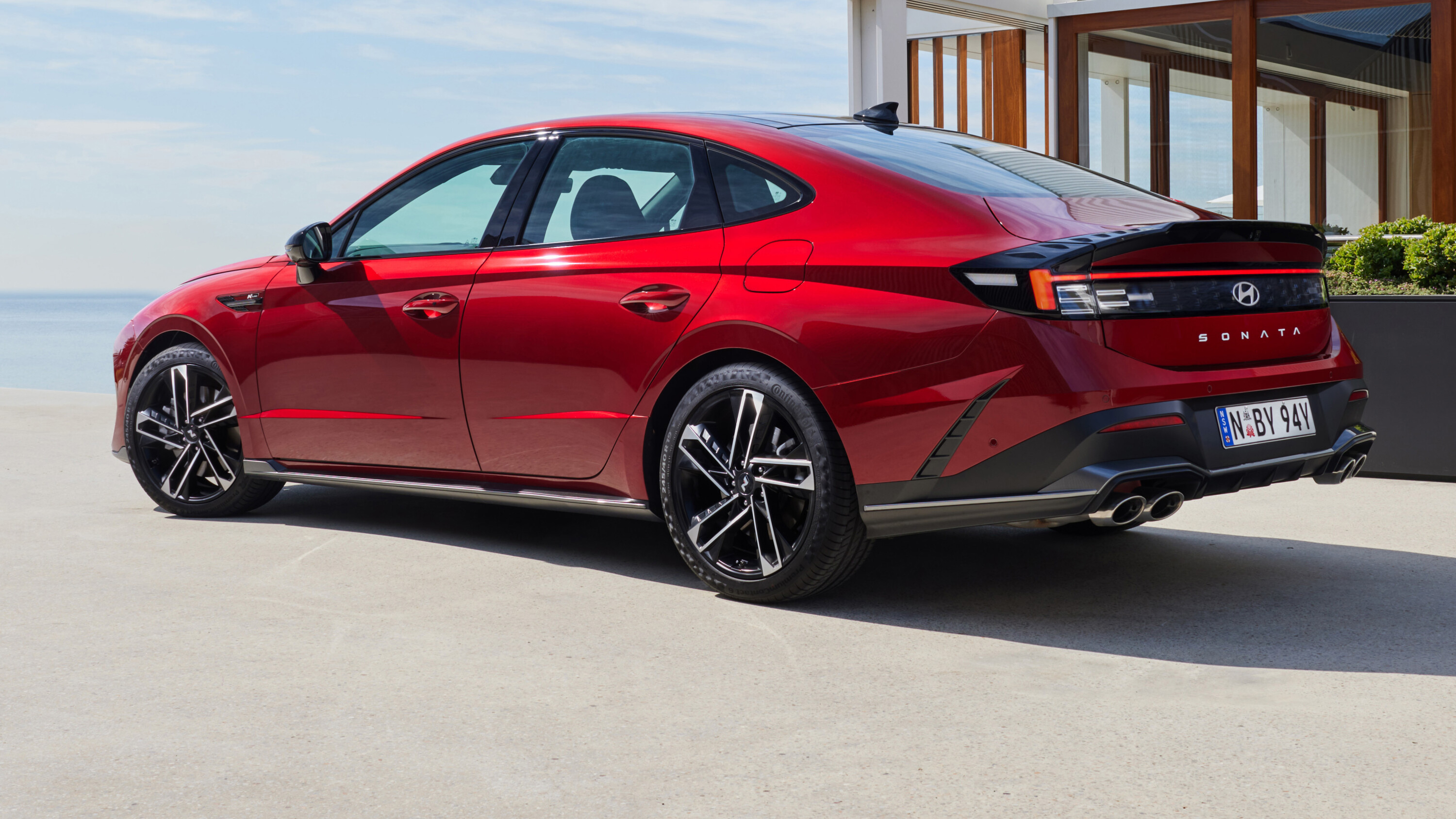
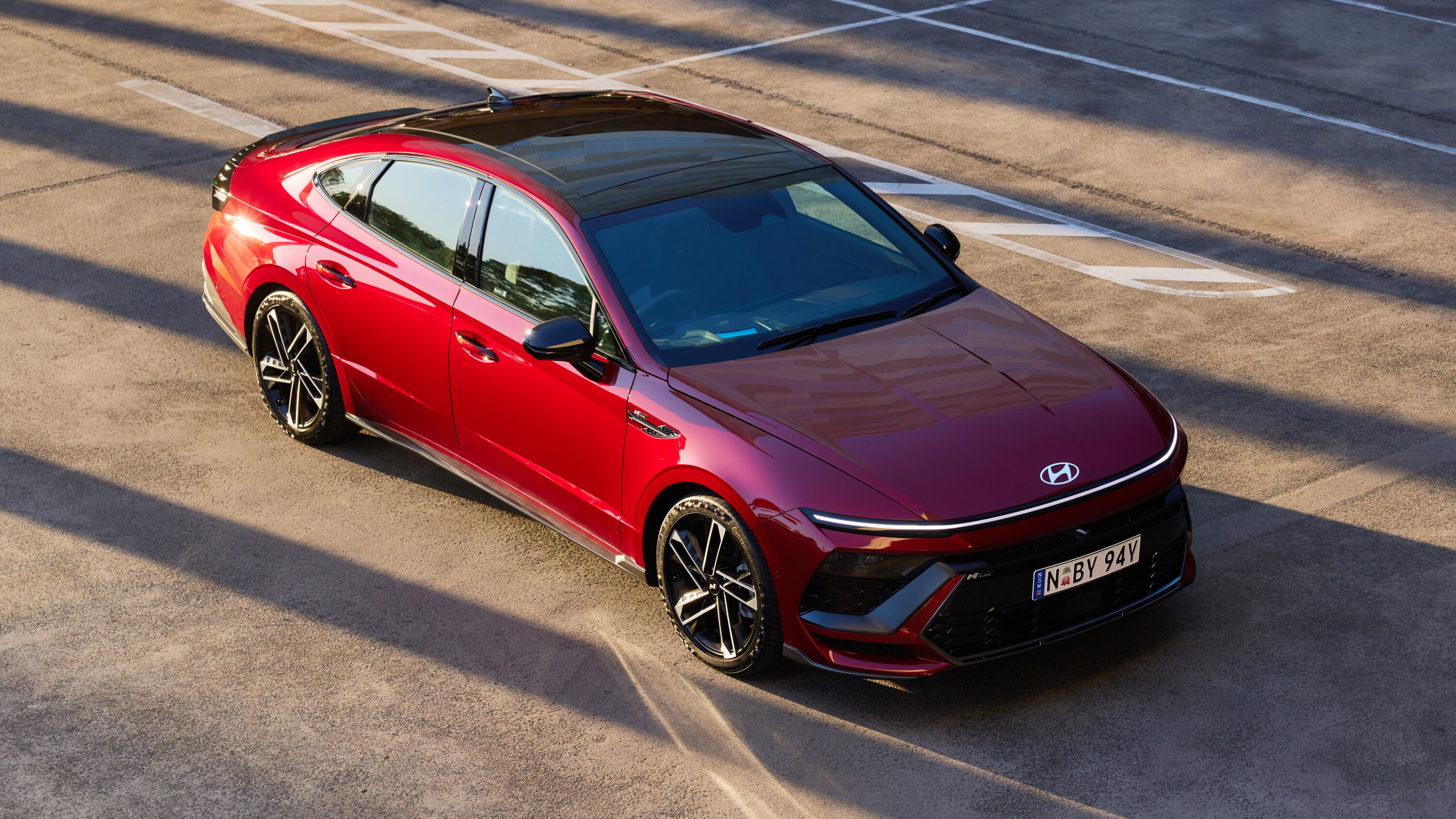
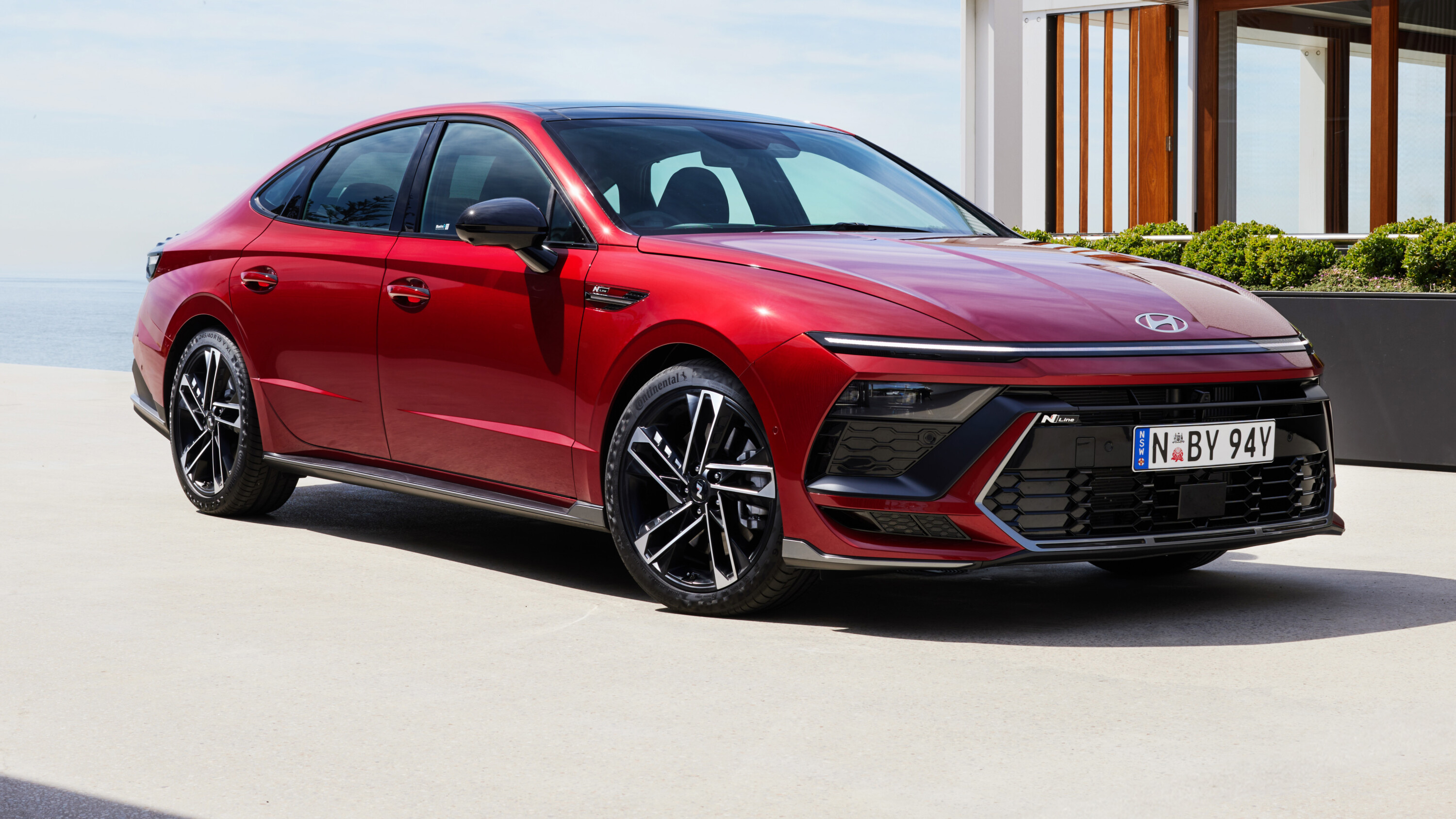
Which begs the question: why did Hyundai feel the need to ‘revolutionise’ the Sonata image in a midlife facelift? It was always a striking vehicle, yet it now wears full-width Robocop-esque LED lighting and heavily reworked front and rear clips.
1
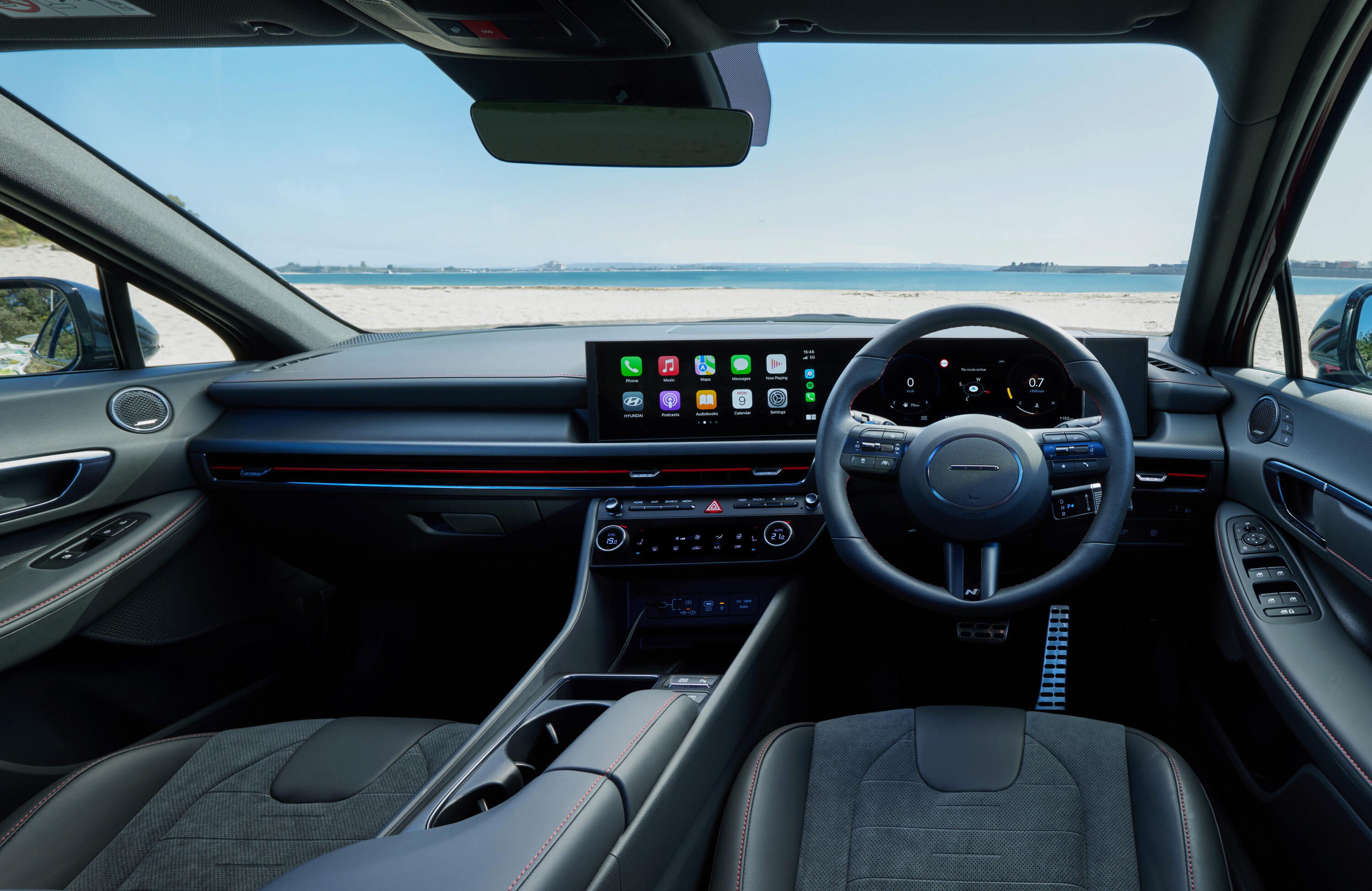
The facelift runs deeper than new light bulbs, alloys, and fascia; the Sonata adopts a wholly different dashboard design with twin 12.3-inch curved screens (how very BMW) and significant changes to the chassis.
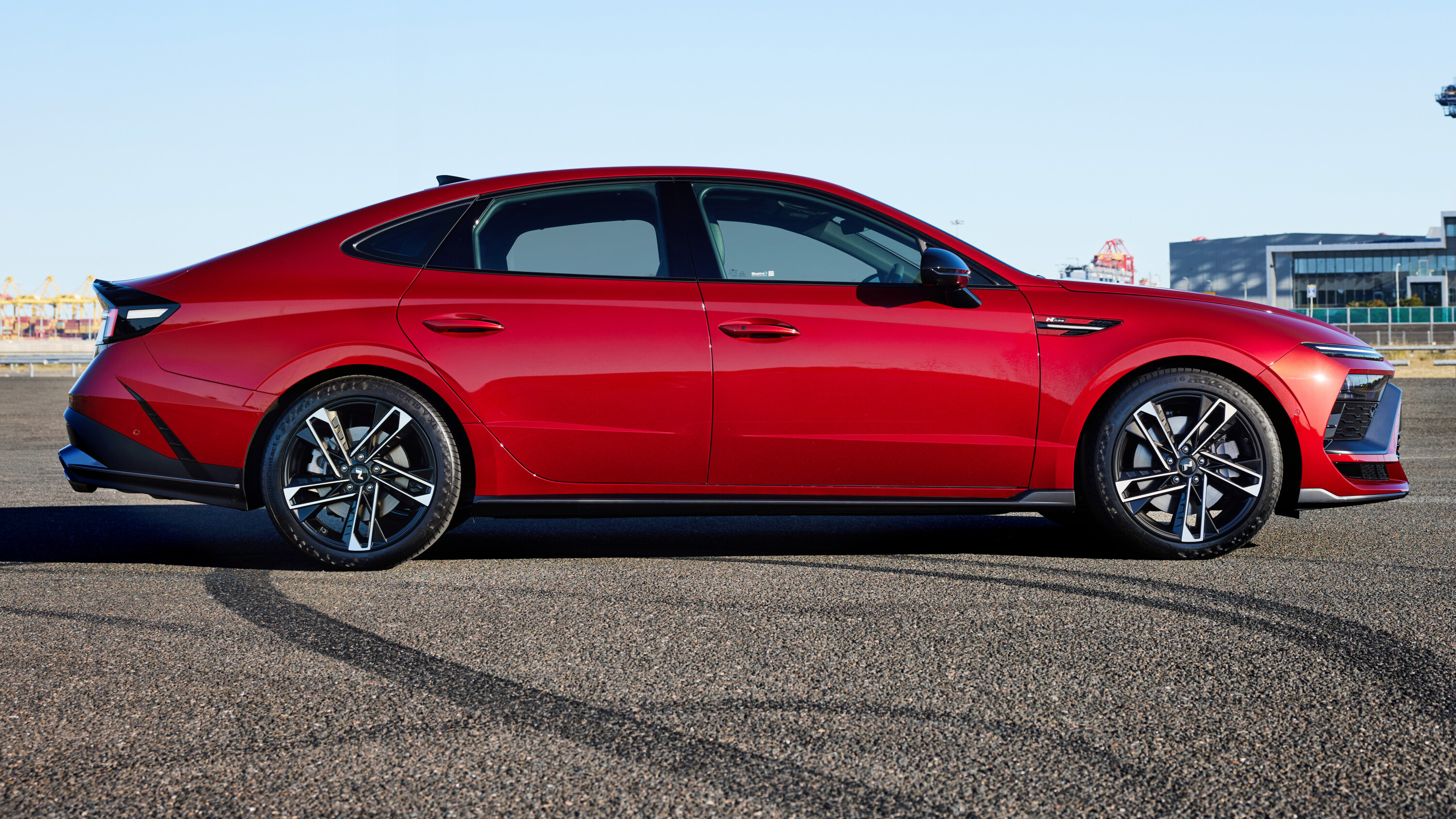
The 2024 Sonata is a good-looking car, no doubt – its extended bonnet and proportions almost promise a rear-drive sedan, but this sporty N Line model is still a front-driver with no locking diff. Is it worth considering a sedan over an SUV?
1
JUMP AHEAD
- How much is it, and what do you get?
- How do rivals compare on value?
- Interior comfort, space and storage
- What is it like to drive?
- How much fuel does it use?
- How safe is it?
- Warranty and running costs
- VERDICT
- Specifications
How much is it, and what do you get?
The Sonata N Line now starts at $55,500 before on-road costs (a $3435 lift from before) and for that, you get everything but the kitchen sink.
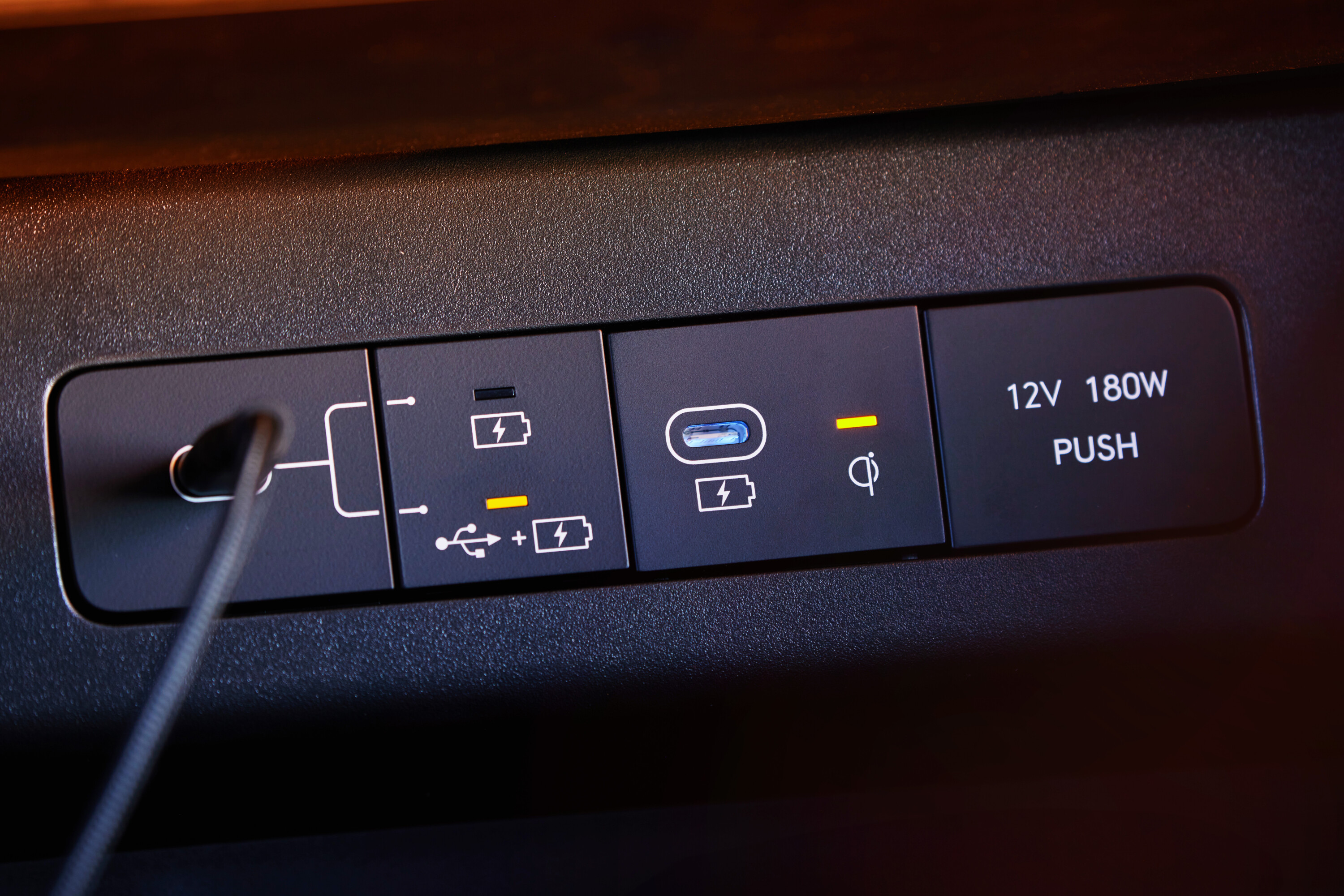
Notably, the proximity key means you can approach the rear of the car and the power tailgate will open automatically – no need to press buttons or kick the air. And, gimmicky as it may be, when unlocked the Sonata N Line’s light show is mighty impressive.
1
Below is a list of changes or additions compared to the pre-update sedan.
| 2024 Hyundai Sonata N-Line additions | |
|---|---|
| Column-mounted shifter | Dual 12.3-inch curved panoramic displays |
| Intelligent Speed Limit Assist | Tyre Pressure Monitoring System (TPMS) |
| 6.6-inch touch climate control interface | Acoustic laminated front glass |
| 64-colour LED ambient mood lighting | Front & rear USB-C outlets |
| LED u2018Seamless Horizonu2019 positioning lamp | Dynamic welcome lighting |
| Hands-free Smart Power Boot-lid | LED rear combination light with u201cHu201d style lightbar |
| BluelinkTM & Over The Air (OTA) updates) | Low-speed reverse autonomous emergency braking (new) |
It’s a whole lot more contemporary, then, and is even available with a trendy matte Aero Silver paint job ($1000). You can also get Serenity White, Biophilic Ink, Abyss Black, Nocturne Grey, and Ultimate Red.
1
| 2024 Hyundai Sonata N Line features | |
|---|---|
| 19-inch N Line alloy wheels (new design) | 360-degree camera system |
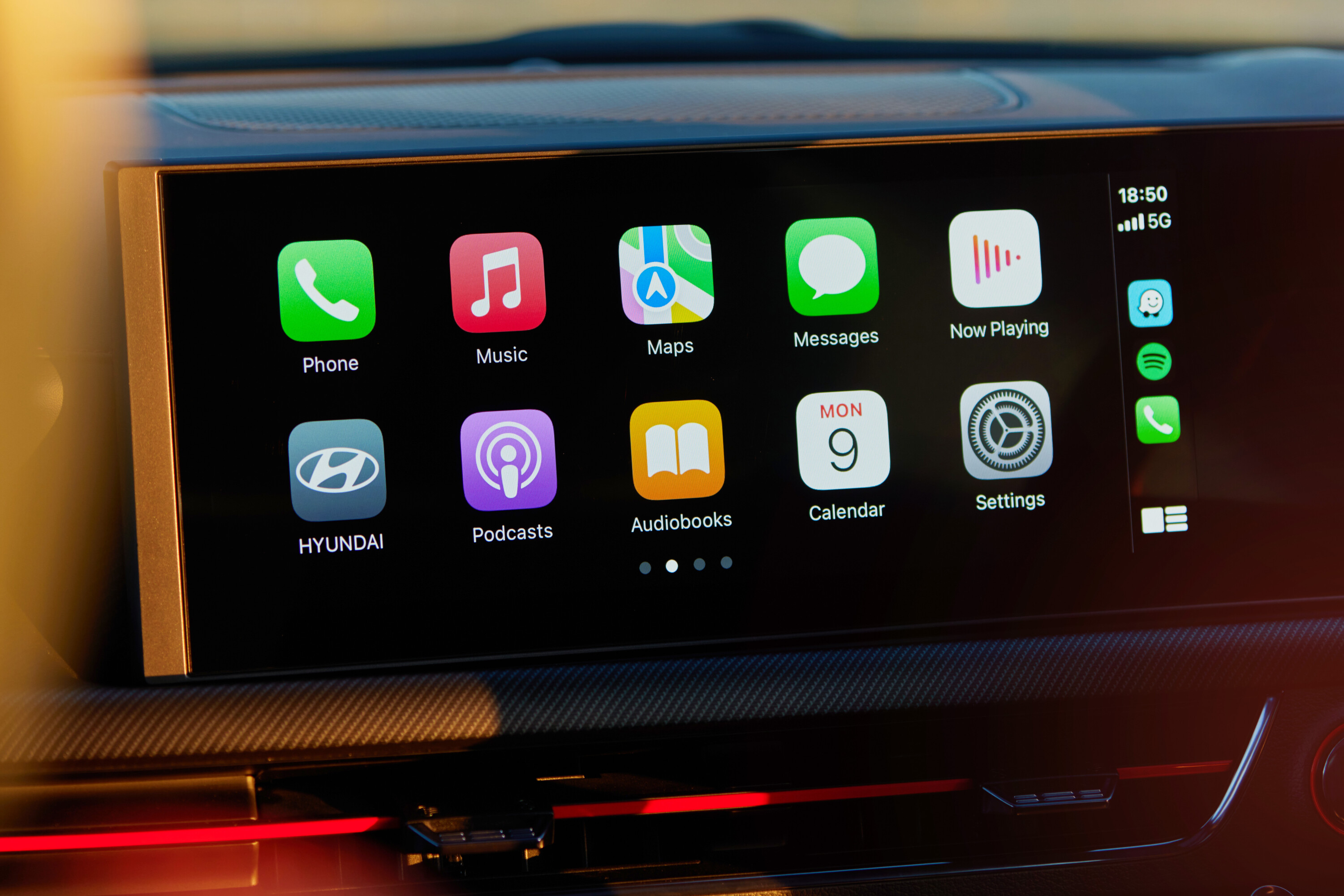
| Connected satellite navigation | Wired Apple CarPlay and Android Auto |
| Head-up display | 12-speaker Bose audio system |
| Dark grey suede and Nappa leather-appointed upholstery | Wireless phone charger |
| Heated steering wheel | Auto-dimming rear-view mirror |
| Heated rear seats | Heated and ventilated front seats |
| Four-way power-adjustable passenger seat | 12-way power-adjustable driveru2019s seat |
1
How do rivals compare on value?
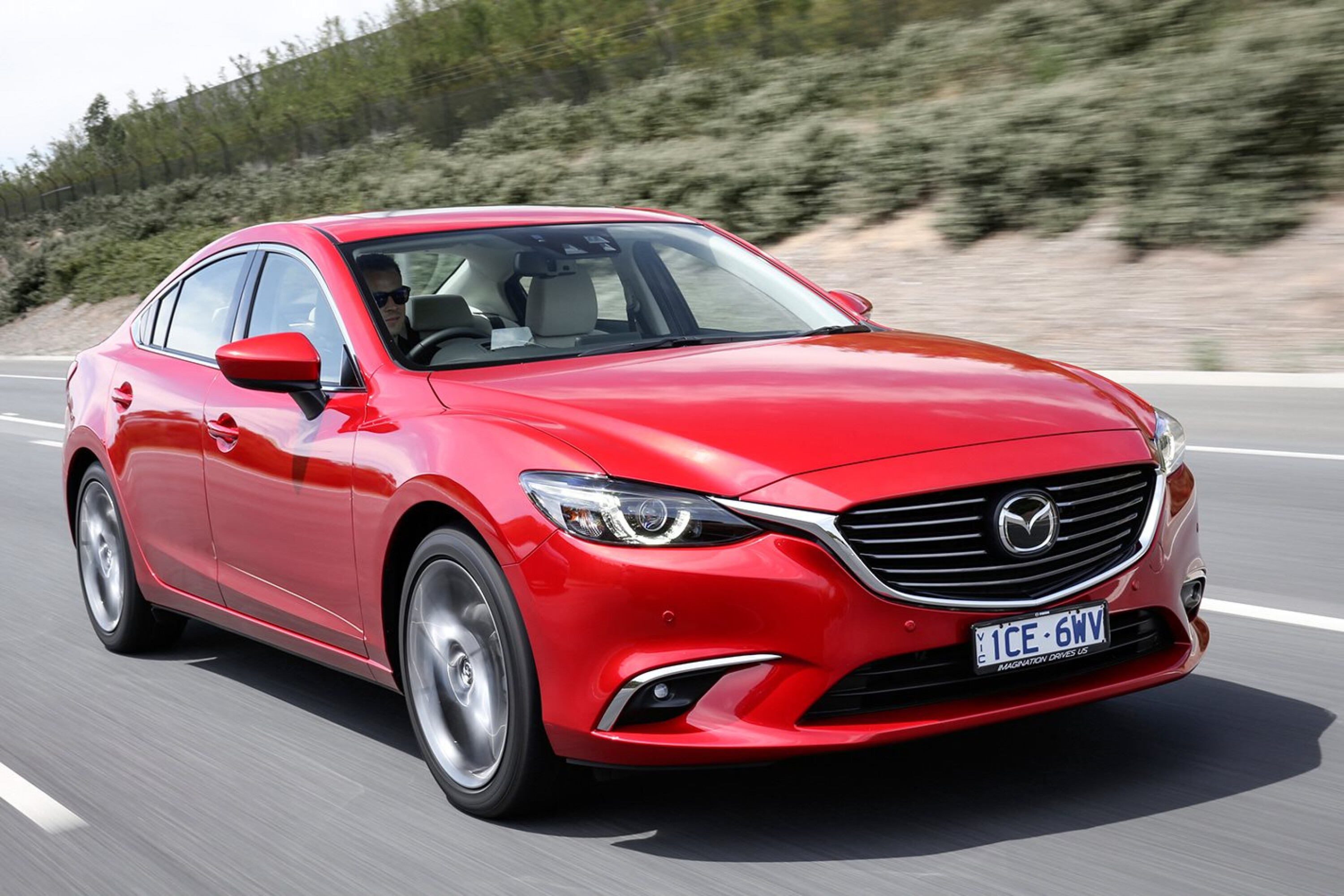
A decade ago the Sonata N Line might have lined up against a sporty Mazda 6, Toyota TRD Aurion, and even a Holden Commodore SV6.
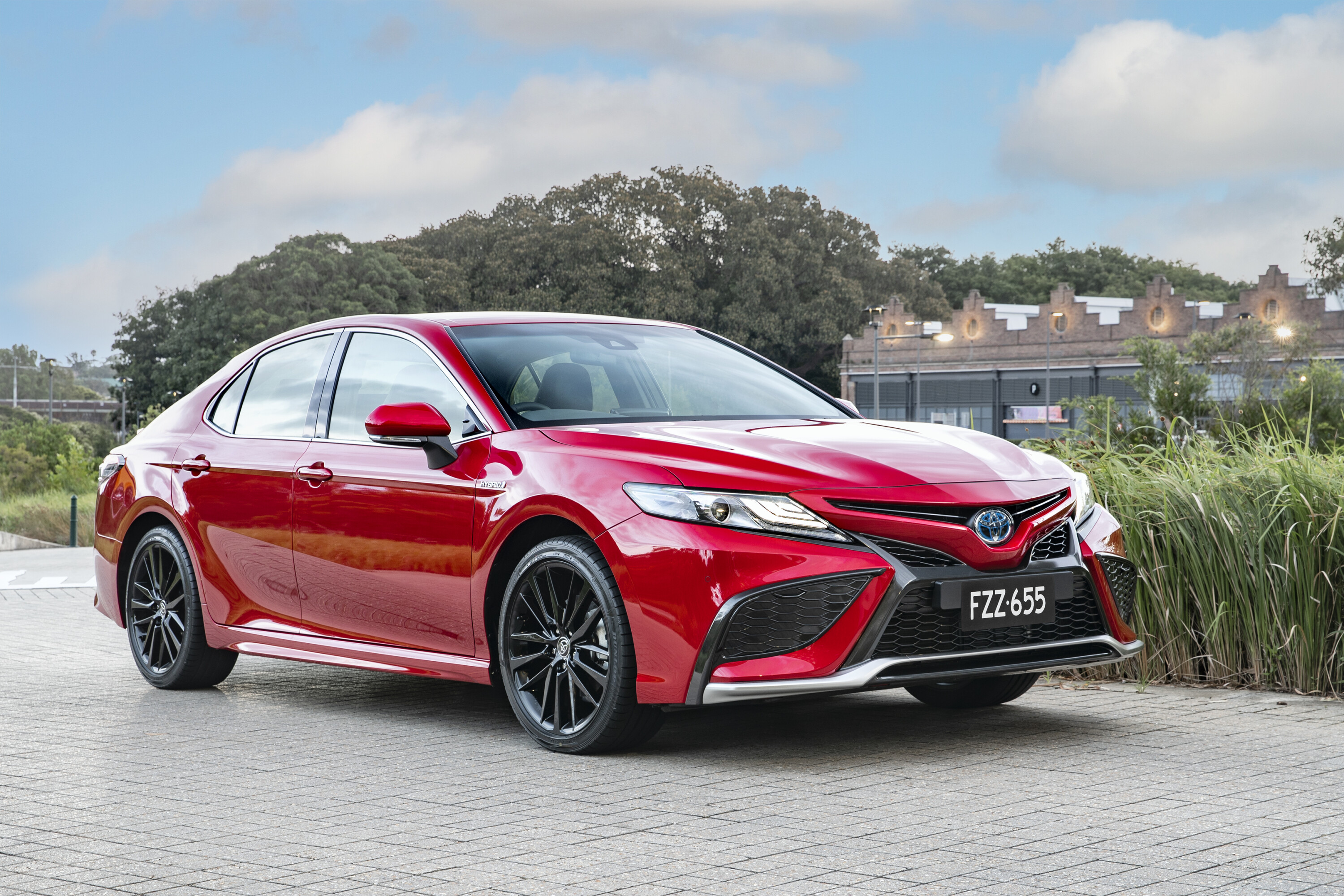
Today, things are a little different. There’s still the athletically-tuned Camry SX hybrid ($43,020, but orders are currently paused) though the Sonata N Line comes loaded with much more technology and power than the Toyota.
1
You might also find yourself looking at a Tucson Highlander turbo-petrol ($51,150 before on-road costs) or another similar medium SUV that offers a more configurable boot and greater headroom.
Those after a sportier drive could trade some of the Sonata’s comfort and new-age tech and build quality for a hard-edged, snorting i30 Sedan N Premium.
1
Interior comfort, space and storage
The Sonata’s interior overhaul is just as significant as its sheet metal. That’s not to say the pre-facelift was dated but with twin high-definition 12.3-inch screens, over-the-air software updates and BlueLink telematics, this typically conservative sedan is right up there with the latest BMWs and Mercedes-Benzes for interior tech.
Even the navigation has live traffic, and its routing is up there with Waze and Google Maps that can be linked up via a USB-C cable when running AppleCarPlay and Android Auto mirroring.
The graphics of the digital driver’s display are crisp and legible. Oddly, we couldn’t bring a speed readout between the dials, though there is an excellent head-up display that can still be seen through dark sunglasses.
1
Premium technology doesn’t seem to come at the cost of decent cabin materials, at least.
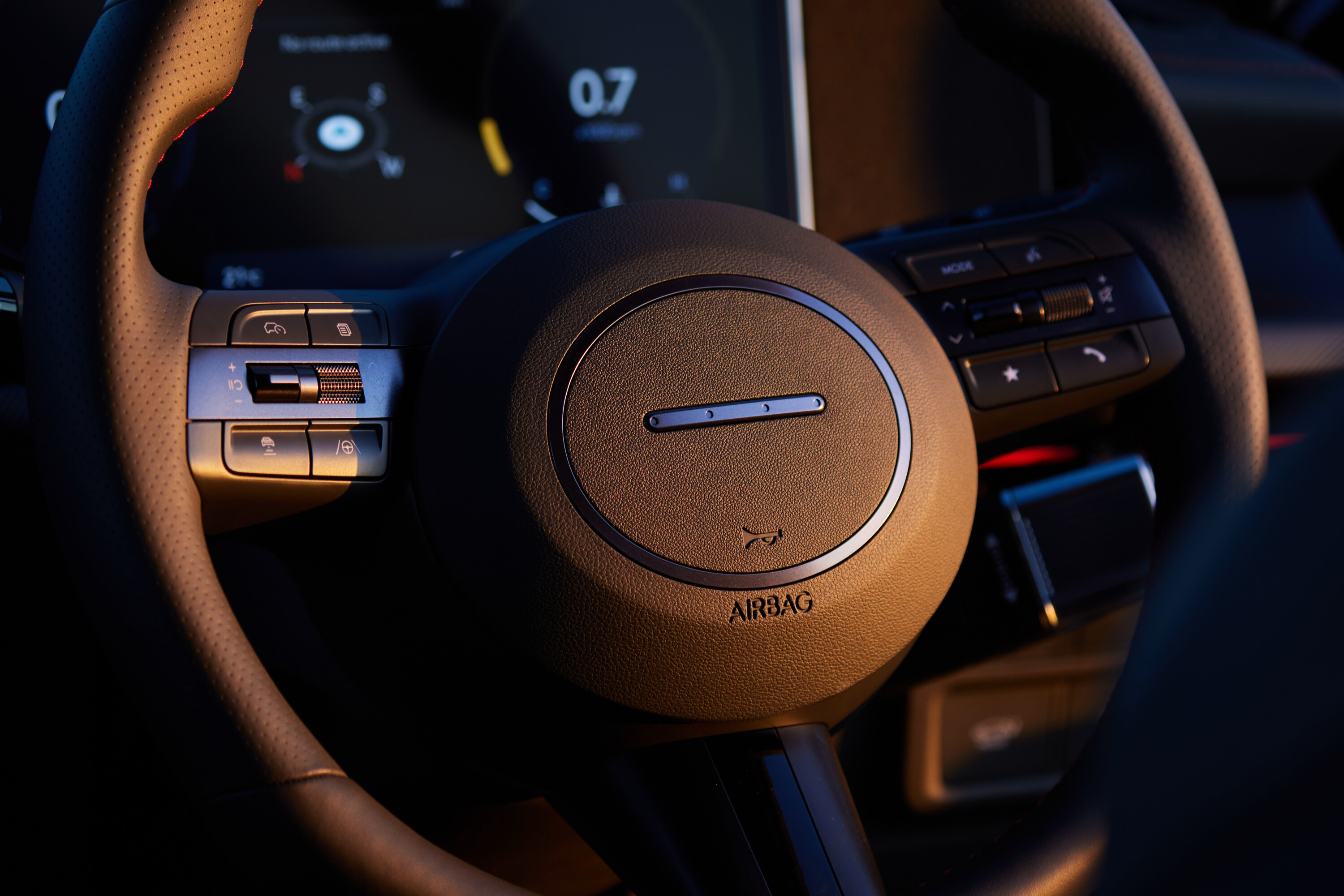
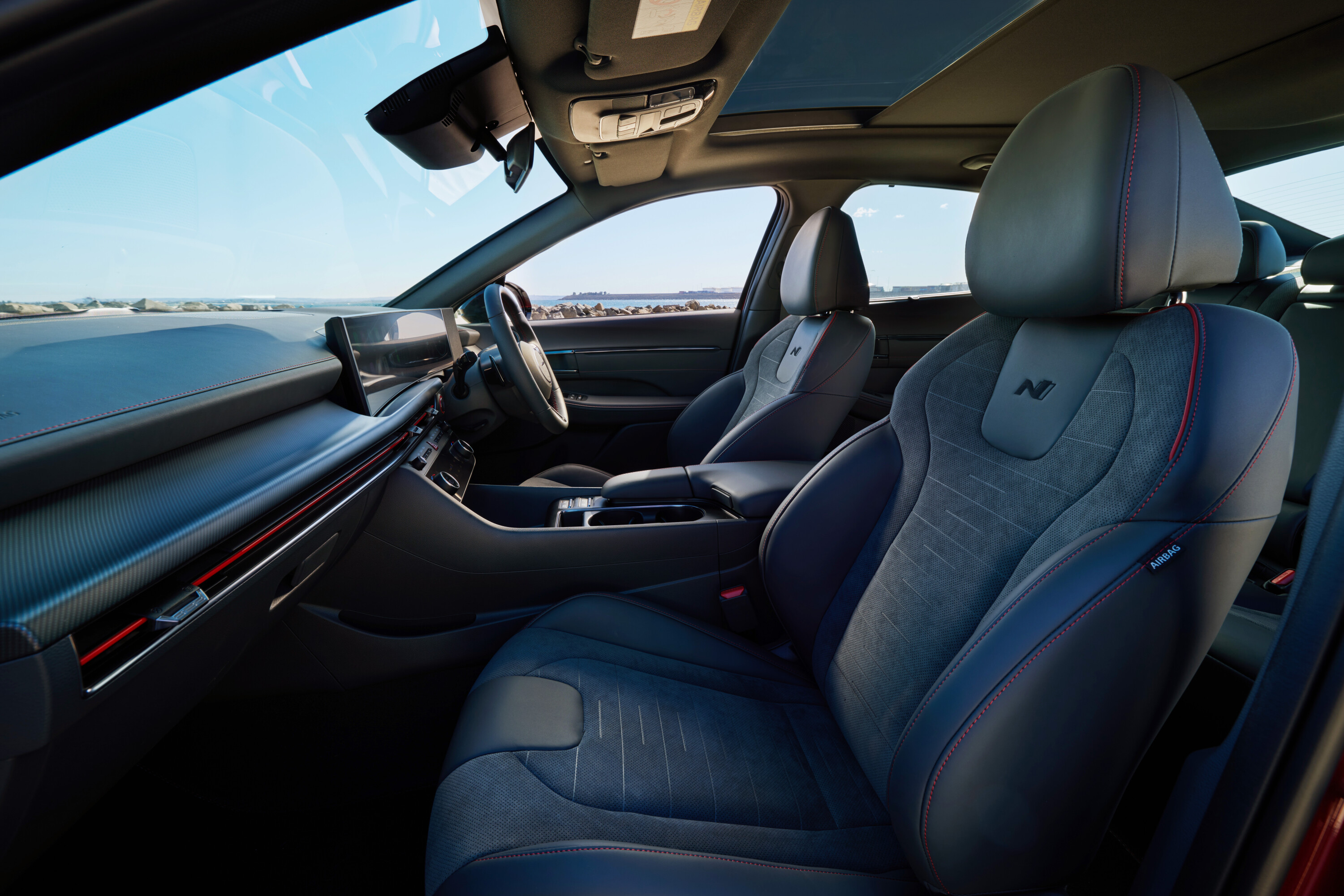
A run of red stitching and suede-cloth upholstery give the cabin a visual lift. It’s also nice that the awkward old button gear-shift is gone, replaced by a selector stalk behind the shapely new steering wheel.
The seats have three-stage ventilation and heating and those controls are grouped with HVAC settings in a 6.6-inch touch-sensitive panel. It’s very effective in practice.
Our only peeve with the front cabin is how high the driver sits. Even with the comfortable 12-way adjustable driver’s seat as low as it will allow, my head (at 188cm) is nearly brushing the black headlining and standard-fit sunroof.
1
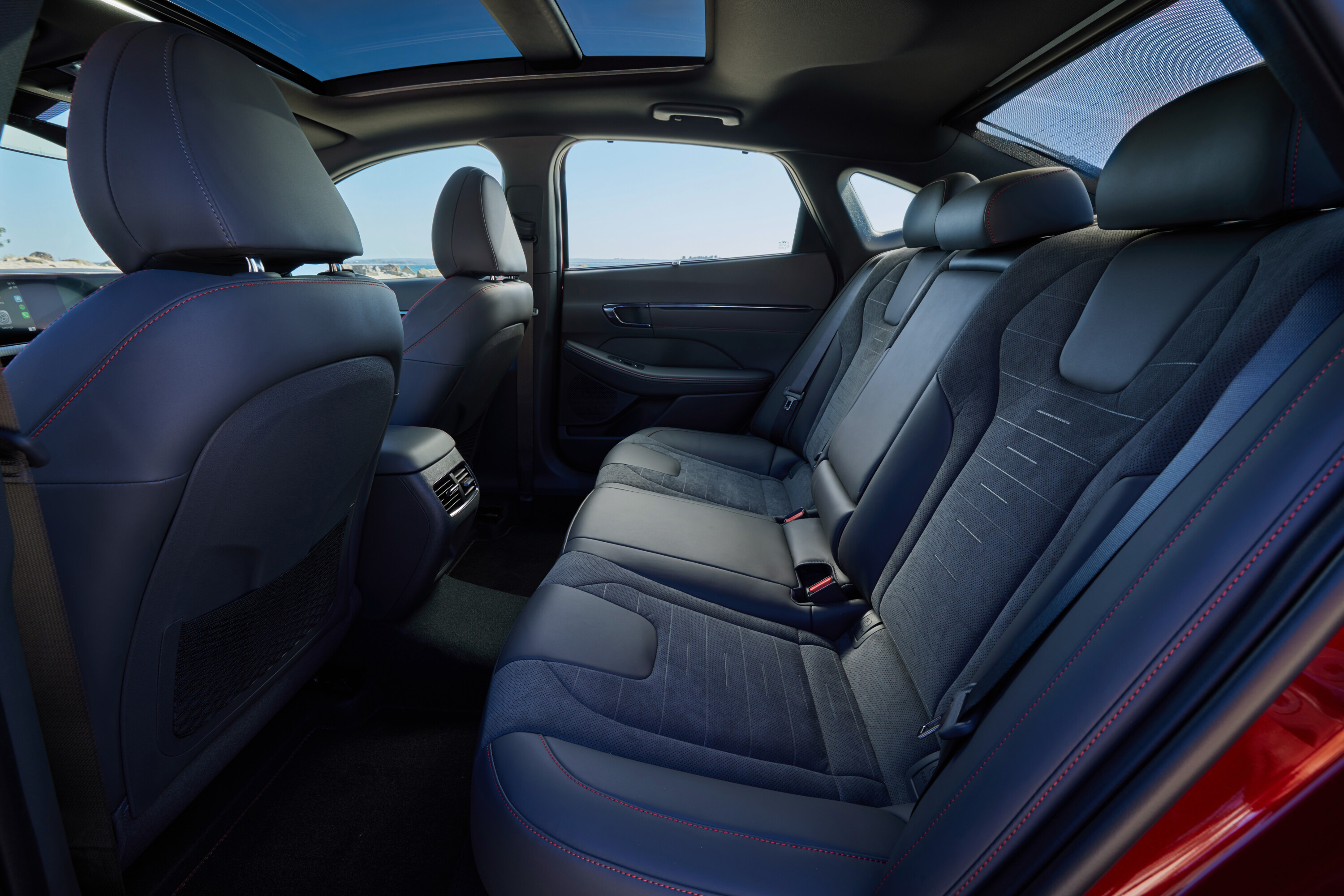
Back seat space is decent, though the middle seat hump makes it best limited to four passengers. Rear air vents and amrrest carry over and the USB-A charge point becomes a faster USB-C item.
Pull-up side window blinds and a power rear sunblind add a touch of class to the rear quarters.
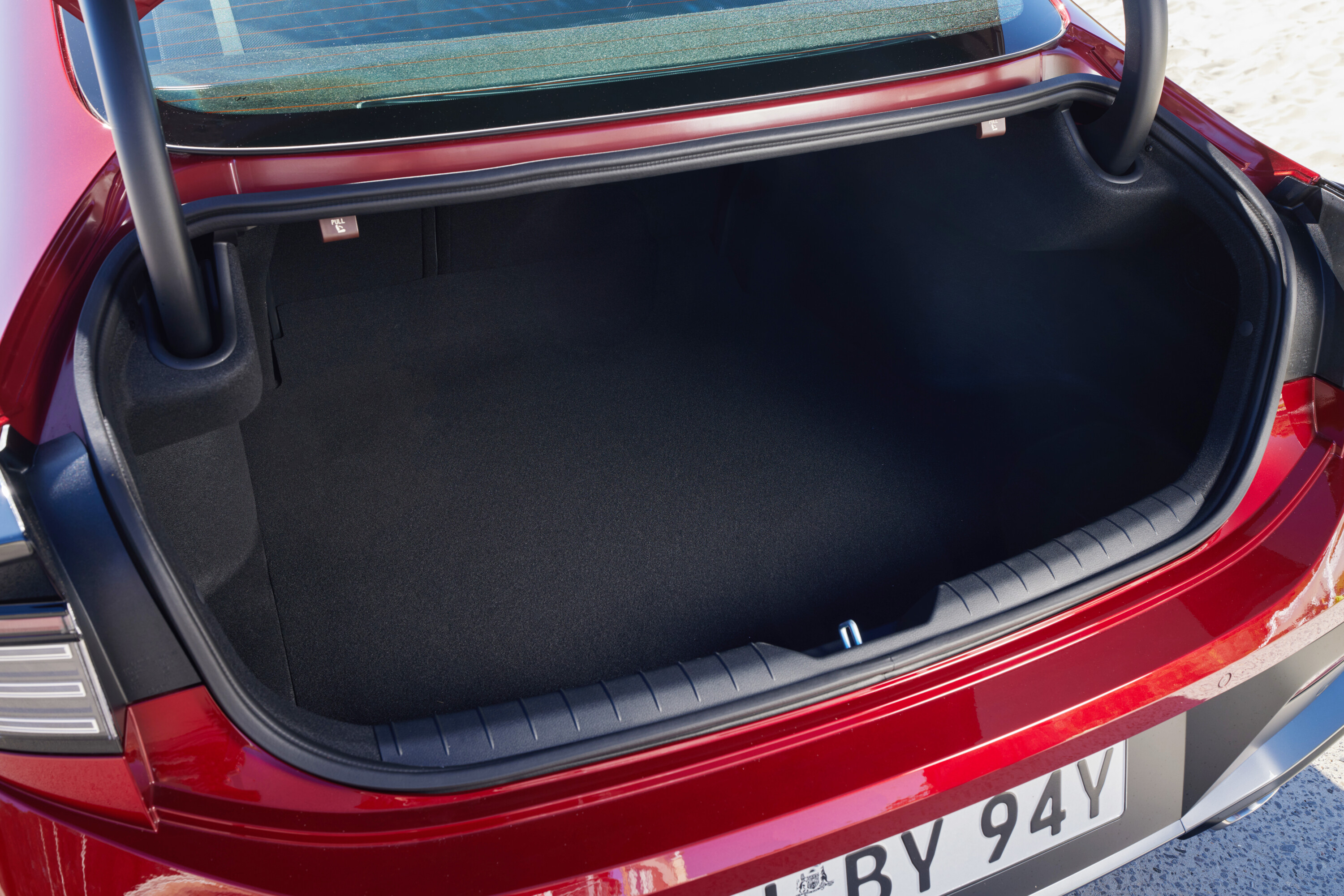
Practicality is obliged by a 40:60 split-fold seatback with pull tabs near the surprisingly tight power-operated boot aperture, in front of which is a deep and wide 510-litre boot space. There are no shopping bag hooks and under the floor is only a space-saver spare.
1
What is it like to drive?
Hyundai’s N Line is to N what BMW’s M Sport is to M so expect thrill levels that are toned down to a manageable yet still enjoyable level.
Before the update, the Sonata was generally accomplished, if nothing particularly special. It favoured steadfast cornering over driver involvement. Hyundai has stiffened the Sonata’s sills, B-pillars, front subframe and suspension mounts, added a front strut brace, and implemented redesigned rear control arms and firmer subframe bushings. Weight has risen by 37kg to 1675kg (kerb).
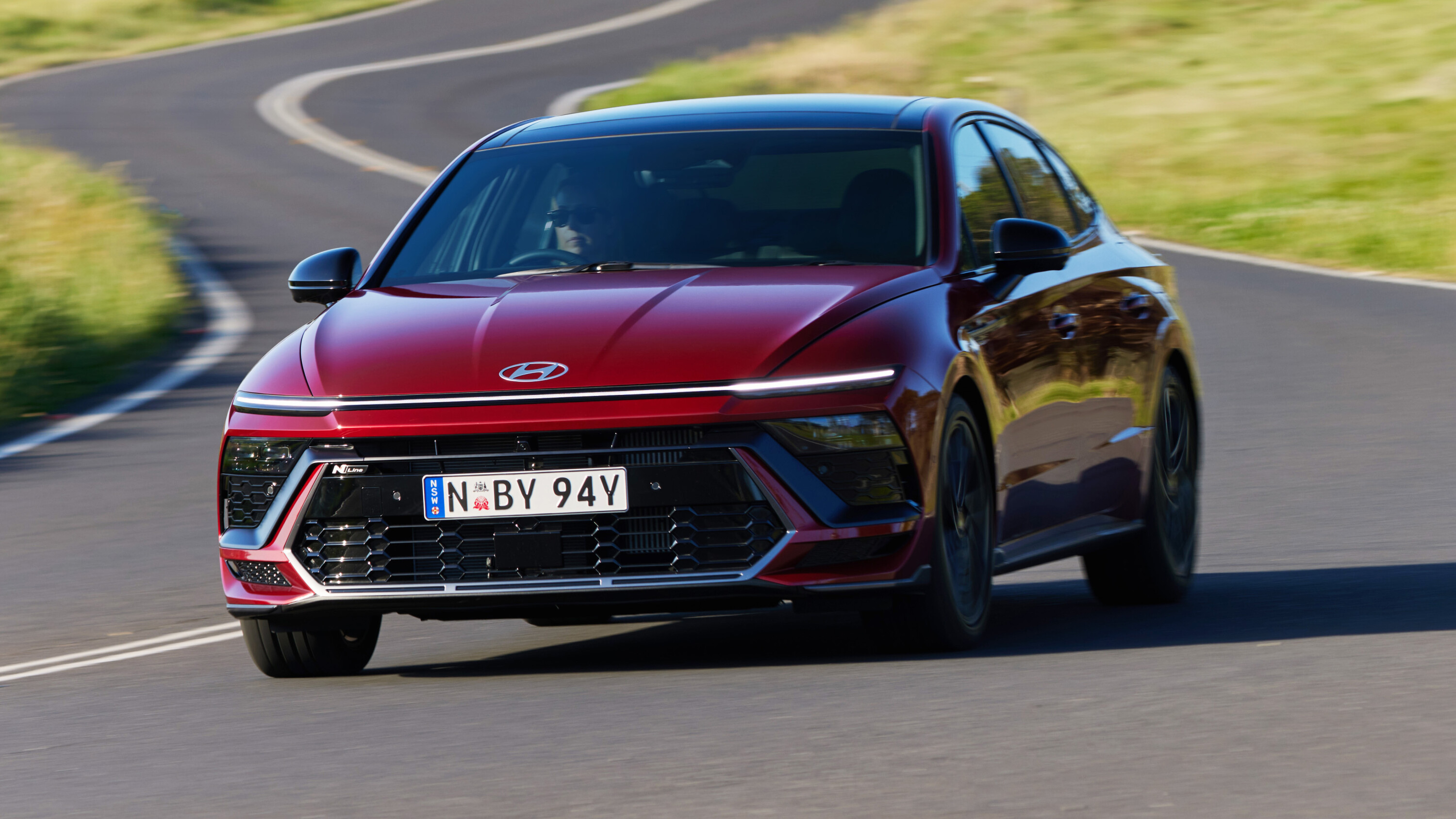
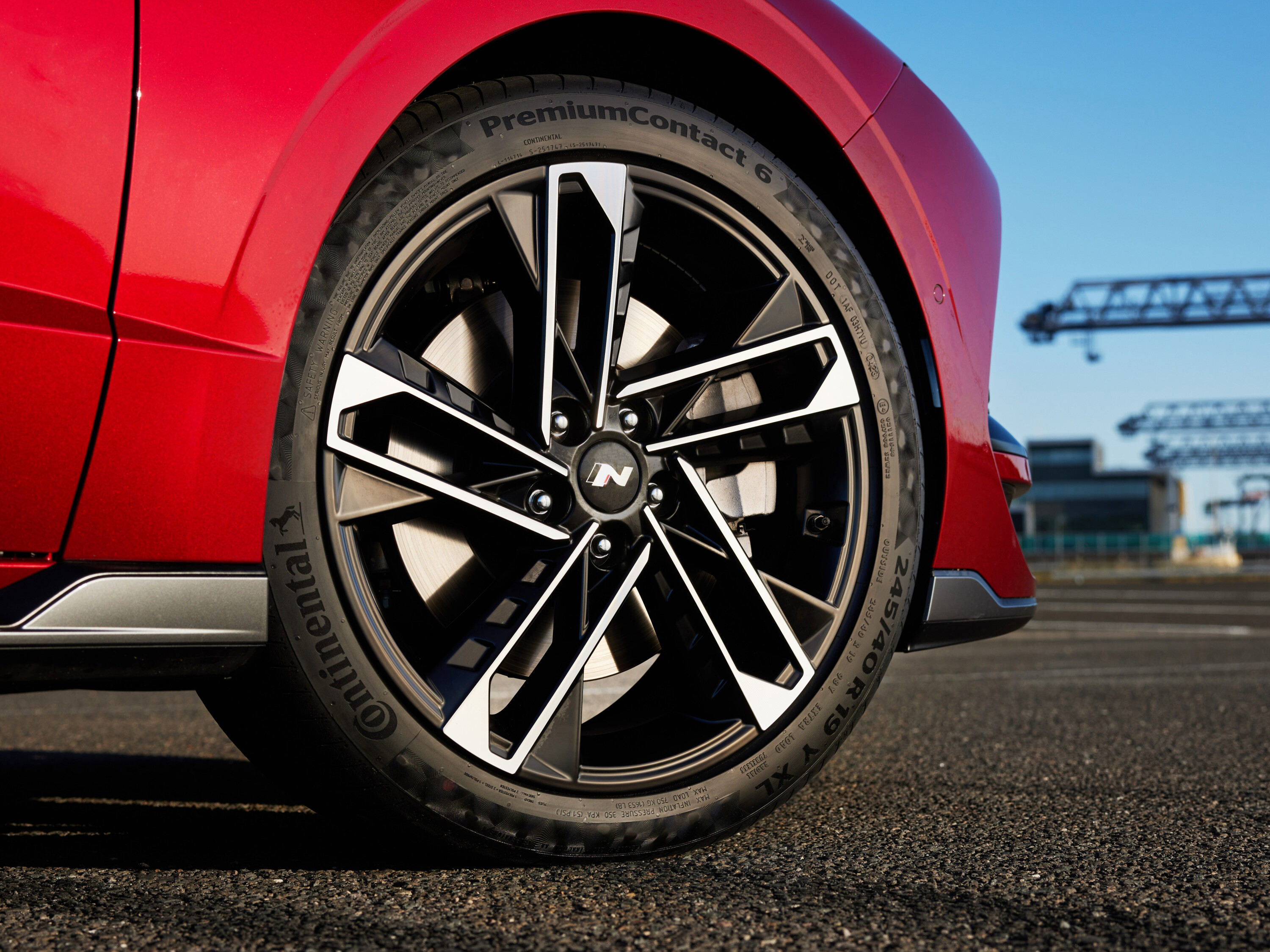
The result is a familiar – if slightly firmer than we remember – driving experience with taut rebound control. Roll is well suppressed and the tacky 245/40 R19 Continental Premium Contact6 tyres endow this sedan with remarkably high grip levels.
1
Sport handily sharpens throttle response but makes the steering too heavy.
Pushing hard on rough give-and-take roads the Sonata N Line is talented and surefooted partially thanks to front struts and a multi-link rear end, but it doesn’t get up on its toes and dance like a lither Peugeot 508. The ride is stiff around town, too, so a Camry or Mazda 6 are better choices for those after comfort.
There are four drive modes (Eco, Normal, Sport, My) and Normal is the best balance though without adaptive dampers the ride is always firm. Sport handily sharpens throttle response but makes the steering too heavy. For athletic driving, My mode is best configured with Sport or Sport+ engine and Normal steering.
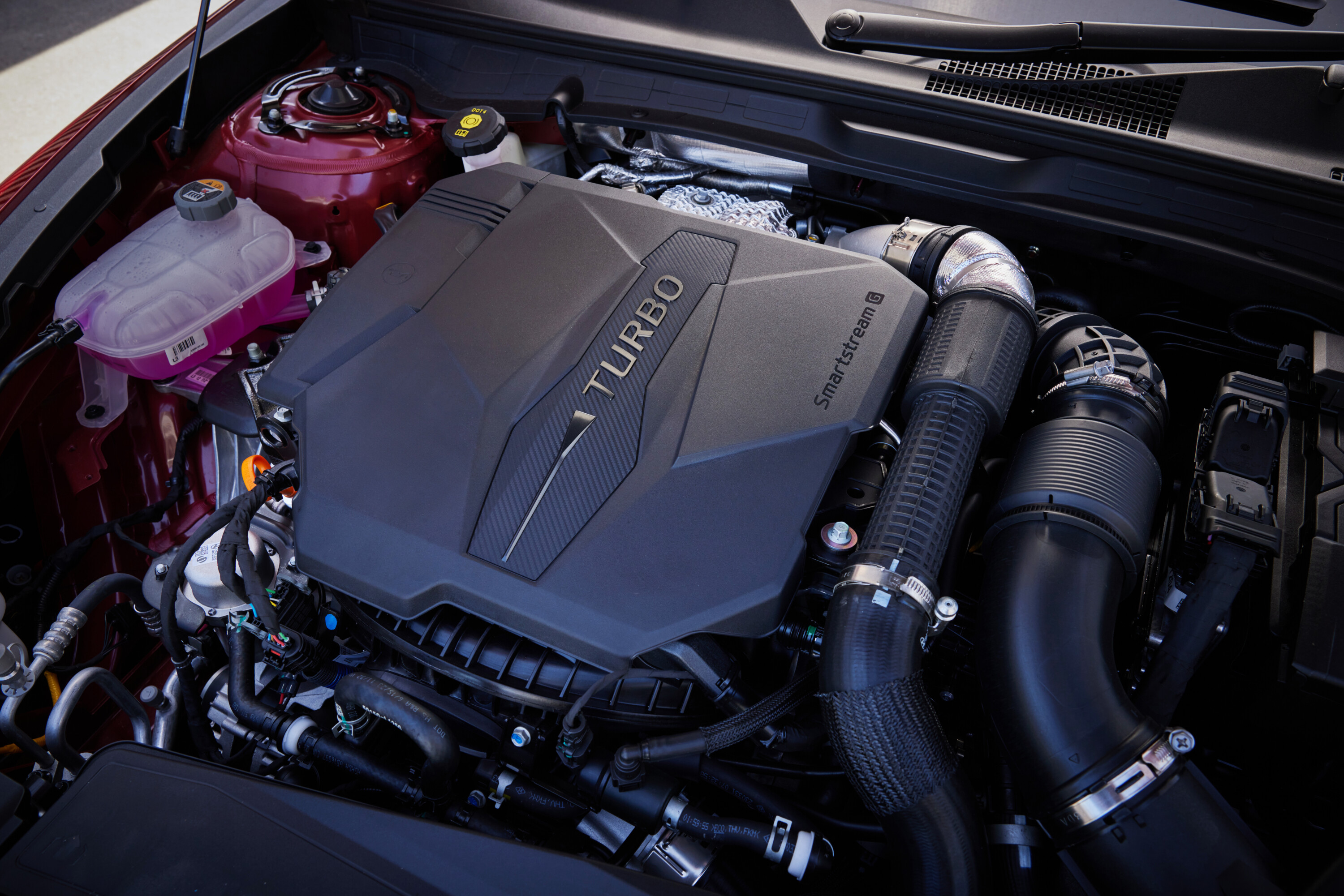
With the same 2.5-litre turbo-petrol four-cylinder developing 213kW (at 5800 rpm, though it revs to 6500 rpm) and 422Nm (between 1650-4000 rpm) matched with an open front differential, the Sonata is brisk.
1
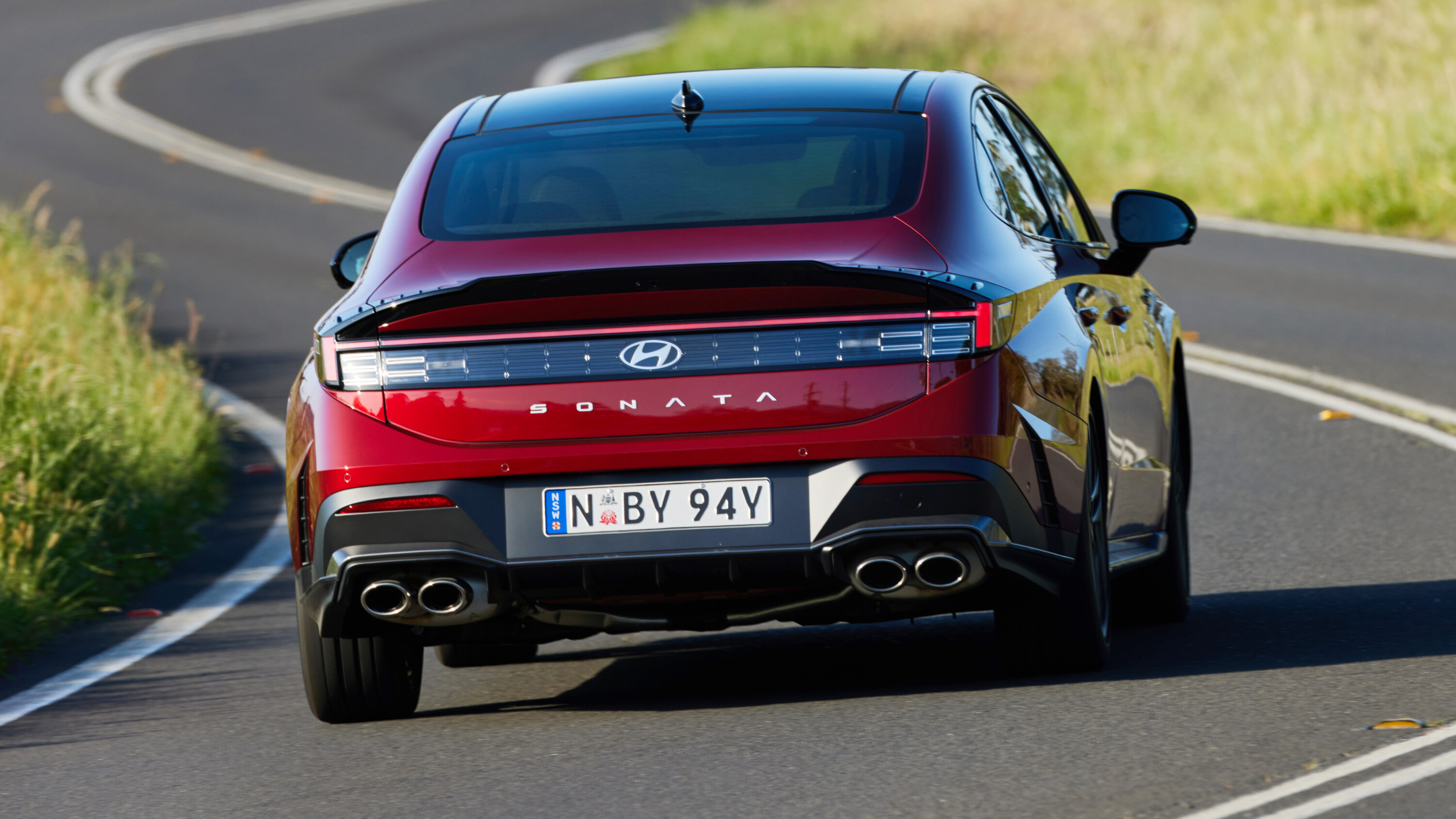
Adding extra theatre is Hyundai’s Active Sound Design which augments the restrained four-pot soundtrack with synthesised grumbles.
Some may enjoy Normal but we found Enhanced over-the-top and decided to leave the synthesiser switched off altogether. In quiet mode, the Sonata’s laminated glass may well improve NVH suppression, but it’s hard to tell. This is still a sporty vehicle with low-profile tyres, so it’s not as serene as the last-of-the-line Mazda 6 Atenza.
The claimed 0-100km/h sprint is 6.2 seconds though acceleration rarely feels rabid thanks to a proactive traction control system.
The Sonata N Line excels at higher-speed overtaking where the slick eight-speed dual-clutch (shared with the i30 N) kicks down readily to best use all the grunt without the danger of wheelspin.
1
- What is a Powertrain or Drivetrain?
- Power vs torque
- Car suspension explained
- Automatic transmissions (‘gearboxes’) explained
- Chassis control systems explained
- Car vs Ute vs SUV: How the vehicle you buy should guide the way you drive
- What is the WLTP emissions and range test?
The Sonata drinks 8.1L/100km of 91 RON unleaded in official ADR 81/02 testing.
We found the sedan would use 7L/100km or less on the motorway, and over a week of driving mixing urban, suburban and some hard acceleration it was sitting at 9.8L/100km.
1
How safe is it?
The Sonata N Line does not carry an ANCAP rating, though don’t let that put you off as a private buyer.
The Sonata carries an American IIHS Top Safety Pick accolade (one down from Top Safety Pick Plus) and is equipped with plenty of driver aids (listed below). Hyundai’s adaptive cruise control and lane-trace assist are about average against rivals.
| 2024 Hyundai Sonata N-Line safety features | |
|---|---|
| Autonomous emergency braking (vehicle, pedestrian, cyclist, motorcyclist, junction) | Rear cross-traffic alert |
| Lane-keep assist | Adaptive cruise control |
| Lane departure warning | Driver attention warning |
| Blind spot alert | High beam assist |
| Blind spot view monitor | Safe exit assist |
| Reverse AEB | |
1
We’ve said it before (here, here, and here) and we’ll say it again. The implementation of Hyundai and Kia’s Intelligent Speed Limit Assist needs to be improved for it to be useful in Australia.
We’re a unique country with sparse speed signs, so sometimes even when you aren’t speeding the system beeps at you. It needs to be disabled every time you turn the car on, and doing so currently takes eight clicks (in this case from the CarPlay screen and back).
1
Warranty and running costs
The Hyundai Sonata N Line is covered by a five-year/unlimited-kilometre warranty.
Servicing is due every 12 months or 10,000kms. Hyundai sells pre-paid servicing plans costing $1125 for three years or $1955 for five. You’ll pay $391 annually for servicing.
1
VERDICT
If you’re keen on a sleek Sedan for under $60K and can’t stomach the boy-racer i30 Sedan N (and can’t bare to go electric just yet), then the Sonata may be just the car for you.
While the ride quality errs on the firmer side of acceptable and it’s not as practical as a Skoda Octavia wagon or similarly-priced medium SUV (or as electric as a BYD Seal or Tesla Model 3) the Sonata N Line is a solid package.
Considering how significant the Sonata’s 2024 update is, with bang-up-to-date technology and sharp styling, it retains an amazingly strong value proposition which means – for the right buyer – the Hyundai Sonata N Line is worth considering. Perhaps the sedan is due for a comeback after all.
1
MORE
Everything Hyundai
MORE
Sedan Buyers Guide
| 2024 Hyundai Sonata N Line specifications | |
|---|---|
| Price | $55,500 |
| Body | 4-door, 5-seat sedan |
| Drive | front-wheel |
| Engine | 2497cc in-line four, DOHC, 16v, single turbocharged |
| Bore/stroke | 88.5 x 101.5mm |
| Compression | 10.5:1 |
| Transmission | u2018wetu2019 eight-speed dual-clutch automatic |
| Power | 213kW @ 5800rpm |
| Torque | 422Nm @ 1680-4000rpm |
| 0-100km/h | 6.2sec (claimed) |
| Fuel consumption (ADR 81/02) | 8.1L/100km |
| Weight (kerb) | 1675kg |
| Suspension (f/r) | struts, anti-roll bar/multi-links, anti-roll bar |
| L/W/H | 4910/1860/1445mm |
| Wheelbase | 2840mm |
| Tracks (f/r) | 1610/1617mm |
| Steering | electrically assisted rack-and-pinion |
| Brakes (f/r) | 345mm ventilated discs, single-piston calipers / 325mm solid discs, single-piston calipers |
| Wheels | 19 x 8.0-inch |
| Tyres | 245/40 R19 Continental PremiumContact 6 |
He’ll tell you he loves the chat, and he truly does love a laugh – but you can see that Sean Hanley, Toyota Australia’s long-serving sales boss and voice of the business, is growing tired of the unrelenting questions around the company’s future as it applies to electrification.
After all, as the major pioneer of petrol-electric hybrid technology and unquestionably the world’s leader in that category, you might think the company would be blazing the trail for what comes after hybrids.
It’s not that easy, Hanley insists, and really he’s right – for a few reasons. The one he’s constantly beating the drum for, perhaps terminally, is Toyota’s commitment to leaving no buyers behind.
That’s a major profit imperative, obviously, but no executive would ever be quite that transparent outside of a shareholders call. And, really, the two ideas are entwined: giving customers what they need and want and know is the key to consistent profit. (Economics 101, done.)
There’s another concept here, though: the innovator’s dilemma [↗].
Defined in 1997 by Harvard professor and businessman Clayton Christensen, this dilemma describes successful companies focusing resources on activities that address customer needs while reaping the highest profits – which usually means continuing with a proven and long paid-for model, evolving slowly rather than suddenly sinking billions into an interesting but uncertain new technology. Shareholders just hate that.
That’s where disruptors like Tesla get their foot in the door, and while other traditional leaders in the automotive market have pivoted as quickly as feasible to catch up, Toyota spent years insisting that EVs wouldn’t suit the market for a long time to come – until it very recently conceded that, actually, it would now pour its considerable resources into catching up with critical improvements to its EV technology suite. It probably will get there, too, but in the meantime it all looks a bit embarrassing.
For now, the company has just one EV confirmed for Australia, the nearly three-year-old BZ4x (recently updated), and it’s already overdue – by its own schedule and absolutely in comparison to a number of other volume brands here.
Indeed, with Nissan, Mitsubishi, Mazda and Subaru also lagging, it’s more of a Japanese issue than a Toyota problem alone – but Hanley is usually the only local leader open to (or allowed to engage in) a relatively frank conversation on the topic.
Hanley’s right to insist, though, that a great many aussies aren’t ready for EVs. And while those who are can choose from a fairly broad range of options (so long as what you want is a small EV from around $40k or anything bigger from around $65k), Toyota will continue to serve those who either need or can only afford a petrol, diesel, or petrol-electric vehicle.
That’s a lot of Toyota’s buyers. Whether it’s off-roading or load-hauling, Toyota’s offerings in those segments can’t simply be swapped out for EVs overnight. The people who want and need them, need them to come with as few compromises and routine-upending changes as possible.
“And that’s why just simply saying moving to BEV as a single solution to everything can’t work in Australia. It’s not right,” Hanley told Wheels this week on a year-end VFACTS sales call.
“Have a look at the top selling three Australian vehicles in the market in 2023. Well hello, [BEV] is not one of them. They’re all utes… they’re all diesels. Well, not all diesels, but mostly diesels.
“It’s very clear Australians need to have vehicles to do the things they want them to do.”
You can get an electric ute in Australia, but the only OEM-made option – the LDV eT60 – is expensive and nobody’s idea of a good thing.
Toyota has its HiLux Revo here now, but it’s not available to you and me. There’s also a handful of conversion businesses, but they’re largely for fleets who’ve committed to a certain level of greenification regardless of the cost.
And you certainly won’t find an electric off-roading SUV in any Australian showrooms. Even America doesn’t have many, apart from the massive (and massively expensive) Hummer EV, the hard-to-get Rivian R1S and the Cyberstuck – sorry, the Cybertruck. The F-150 Lightning is hugely popular, but Ford has also never marketed it as an off-roader. Many owners have also discovered it’s not ideal for towing [↗].
So it’s no surprise that Toyota Australia doesn’t see itself easing up on petrol, diesel and hybrid offerings anytime soon, regardless of how far behind it may or may not be (it is very far behind) in the EV space.
“One of the things we are committed to trying to do is developing models that are capable of doing the things that the market we sell into expect,” Hanley said.
“So when you look at a LandCruiser, people expect that to be able to go off road. People expect to be able to get long range. People expect to be able to tow tonnes of weight and caravans. That’s what Australian consumers want.”
“It’s incumbent on us as a manufacturer Toyota to bring those vehicles to market that can do those things, but reduce our carbon footprint dramatically between now and 2030,” Hanley added. “Therefore, we need to look at a suite of technologies to do that to allow Australians to still have cars they richly desire.”
“When you look at hybrid, we’ve been doing hybrid since October 2001. It’s taken every bit up to December 31, 2023, to sell over 380,000 vehicles. There’s an education piece and an adjustment piece required for the market.”
Critically, Hanley’s argument overlooks the fact that for most of its run as Australia’s pre-eminent peddler of hybrids, its options were limited to the not always appealing Prius hatch. The very successful hybrid Camry series (over 80,000 sales so far, dominating in fleets) launched around six years after the first Prius (20,778 sales), followed much later by the Prius V people-mover in 2012 (4599) and the Prius C hatch (9420).
The Corolla Hybrid launched in 2016 and the brand’s petrol-electric offerings have only grown since then. Indeed, the Camry will be exclusively hybrid in its newly updated form.
That’s it, really. Even if Toyota had a range of EVs available today, it probably wouldn’t sell a great many fewer combustion models, because so many of its buyers are the risk-averse type.
That’s why they go for Toyota, right? Reliable, proven, predictable. EVs? Too many question marks for the average Toyota buyer. (I’m generalising, I know, but satirically. Mostly.)
Still, I can’t help but wonder at the difference it would make to buyer confidence, market competition and infrastructure commitment if Toyota was already campaigning with a strong range of advanced, segment-leading EVs.
On the other hand, Kia and Hyundai are probably glad and emboldened to know they’ve already stolen a march on their number-one rival – in the sense that Korea has more than a few historical bones to pick with Japan – and they clearly have at least a few more years on Toyota. Then there’s the buying and subsidising power of the Chinese. Youch.
Why not both?
Why Toyota didn’t commit sooner to hybrid and EV side-by-side, for both buyer types – back when this was all more of a market curiosity than an increasingly set landscape – is an accounting and manufacturing quandary beyond my ken. Perhaps there’s a similar question there for Nokia, Kodak and Blockbuster, or maybe just IBM – still in business and doing fine, but no longer dominating the IT industry. Innovator’s dilemma, indeed.
Hanley would happily take every EV headquarters can offer – and damn that electric LandCruiser SE concept looks good – but for now, he’s got a line to stick to. Luckily for him, he’s pretty good at reminding us that people interested in or curious about EVs aren’t the only people that need a car – and Toyota’s still the biggest-selling brand in Australia. That’s not nothing.
Petrol and diesel costs are an infuriating mystery to many of us. Why are pump prices so hard to pin down, and to what degree are we all being gouged by profiteering service station owners?
It turns out costs are determined, for the most part, by forces such as international commodity prices and Australian taxes. A mere sliver of the price you pay is a product of retailer markups.
The key point is this: most of Australia’s automotive fuels are imported from Singapore, South Korea, Malaysia, India, Brunei and China – all displacing local facilities from the supply chain.
Just two Australian refineries are in operation today, down from four sites just a few years go, and they receive taxpayer assistance to stay in business. These are run by Ampol in Brisbane and Viva Energy in Geelong, supplying about 20 percent of Australia’s petroleum.

1
Most automotive fuels we use are therefore shipped across the sea from these Asian mega-refineries, stored in coastal import terminals, piped to storage sites, and sent to service stations by truck.
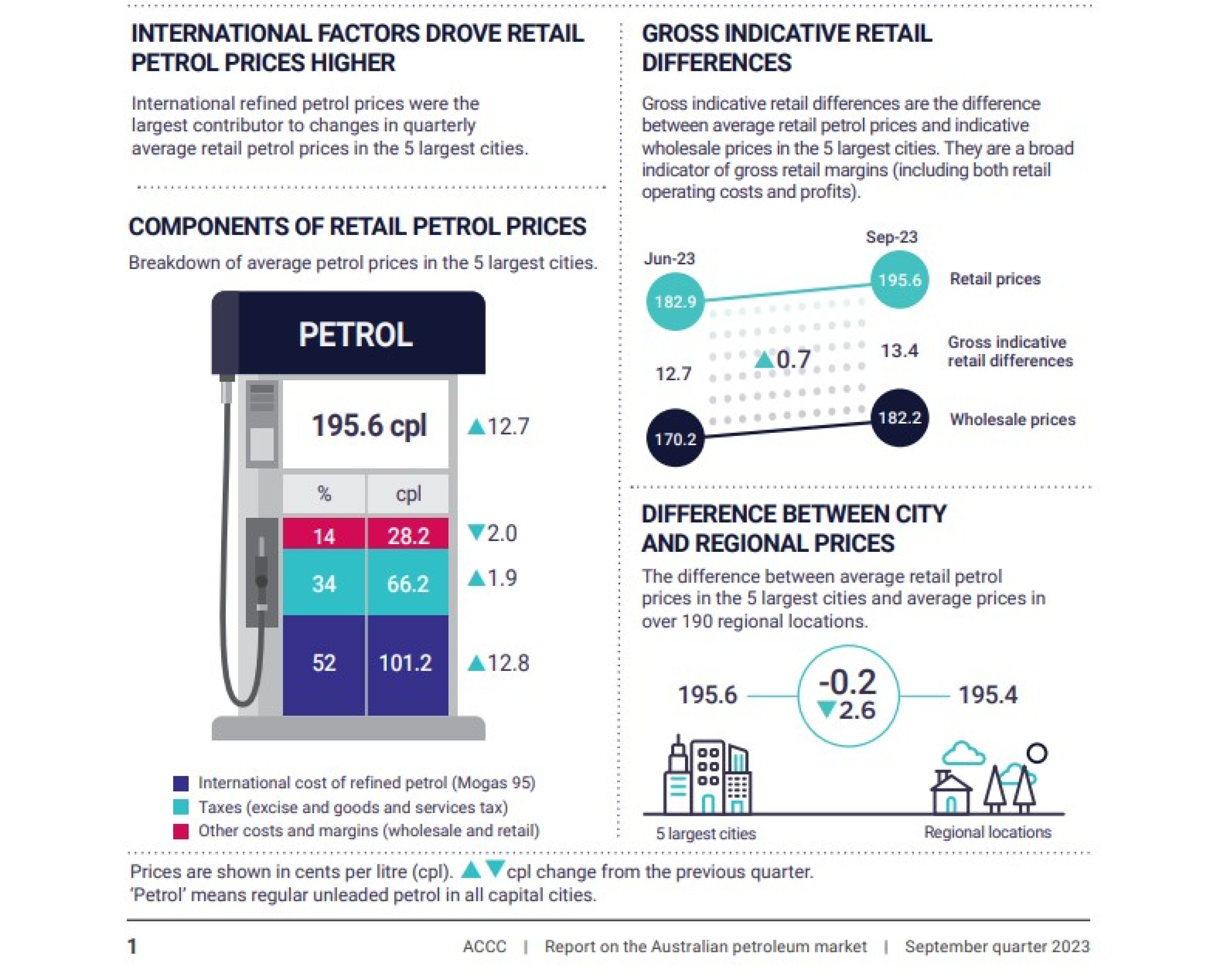
Singapore prices of petrol (Mogas 95) and diesel (Gasoil 10ppm) are the benchmark for fuels sold here, both imported and domestic. They are the largest component of pump prices, around 50 to 60 percent.
Fluctuations in Mogas 95 and Gasoil are mainly determined by crude oil prices, which are linked to OPEC geopolitics and exchange rates, since the commodity is purchased in US dollars. It’s quite complex.
The Australian Government requires that major fuel importers and refiners keep 27 days of petrol and 32 days of diesel in hand, known as minimum stockholding obligation.
2
According to the Australian Competition and Consumer Commission (ACCC), any changes in these commodity prices take two weeks or more to work their way through the supply chain in Australian cities, and longer in rural areas where sales are often slower.
The other major component of fuel prices are Australian taxes, namely the fuel excise and GST, which total around a third of the bowser cost according to the Australian Institute of Petroleum (AIP) lobby.
This leaves less than 10 percent of fuel costs to be pinned on things like storage and land transport, and of course retailer operating profits. And it’s true that they’ll inflate prices given less competition.
Diesel is less prone to aggressive price discounting than petroleum, says the AIP, because most of it is not used for private customers but rather in heavy industry.

2
Price & profit
“Profit margins are slim with service stations normally earning only a few cents per litre of petrol sold,” added the Motor Trades Association of Australia (MTAA).
That’s why they sell so many overpriced pies and drinks.
Average retail petrol prices in Australia’s five main cities across the third quarter of 2023 were 195.6 cents per litre (cpl), an increase of 12.7 cpl from the second quarter. Over the same timeframe in the same cities, the average diesel price was 201.7 cpl, an increase of 15.1 cpl from the second quarter.
According to the ACCC, they’re therefore a significant factor in the high rate of inflation in the quarter, with a weighting of 3.3 percent in the Consumer Price Index basket of goods.

1
What comes next?
As we’ve learned, Australian fuel prices are inexorably linked to global commodity prices and exchange rates, and inflated by taxes.
With local refineries less competitive than decades gone by, the reliance on imported fuels seems unlikely to diminish – at least until EVs take a bigger share of the market.
There is, however, an expectation that the two remaining refineries will remain in operation for at least this decade, given the Morrison government put forward a $250 million grant program to help them reduce the sulfur content in their refined petroleum to 10 parts per million, down from up to 150ppm.
That means while the proportion of locally refined petroleum may not change much, it will become less polluting and more suitable to the latest vehicle engines.
The 2012 Renault Clio RS might not have been too popular with those beguiled by the generations of free-revving, manual masterpieces that came before it, but it was ahead of its time in one curious way.
To discover why, required a dig through the centre infotainment screen.
Here you’d find a menu called “R-Sound Effect” where you could select between seven artificial engine noises boomed through the interior speakers, perfectly in-tune with the revs.
While giving your Clio RS the aural aura of a mid-engined 2003 Clio V6, or a Clio Cup racer was intriguing, selecting the 1969 Renault 8 Gordini was somewhat more quirky; same with the original Alpine A110.
That Renault included a synthetic soundtrack from an R35 Nissan GT-R, a 1971 MotoGP bike and a “2038 Renault Reinastella” – something from the Jetsons, basically – either proved the French do have a sense of humour, or the plumbing is all lead at Renault HQ.
While it wasn’t very good – a feature that you tried once, then never again – it previewed a possible salvation for drivers nervous about the en-masse switch to otherwise-silent electric performance cars. I’m talking, of course, about plain, old faking it.
The next frontier in automotive sound, if you ask me, is how good an electric car convinces you that, under the bonnet, is the best-sounding four, six, V8, V10 or V12 you’ve ever heard.
1
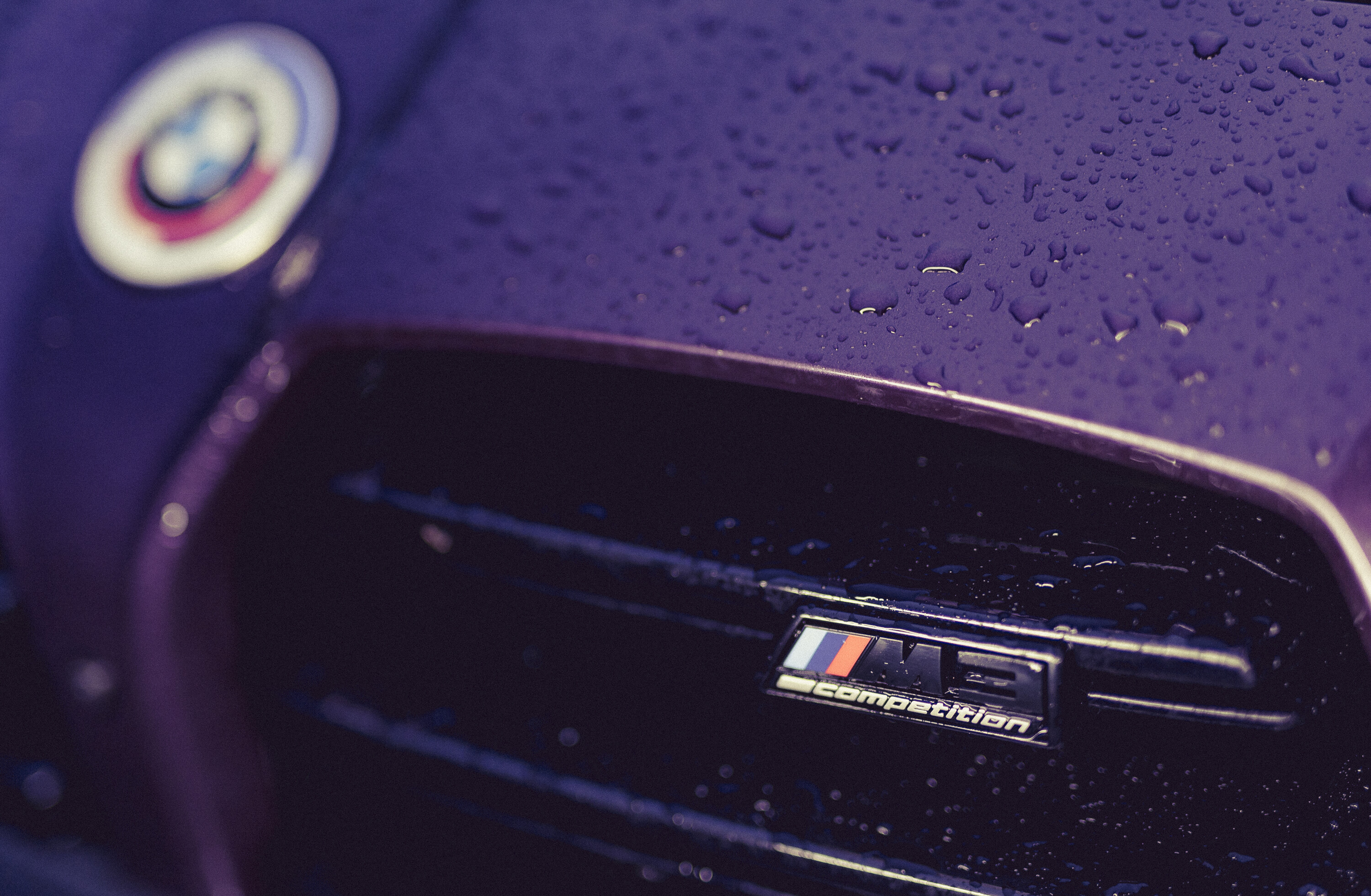
Imagine getting into your all-electric BMW M3 and pressing a button that gives it a pure V8 noise you can’t get enough of; or the fire-breathing hiss of a twin-turbo straight-six.
Using high-quality external speakers under boot and bonnet, different starter motor sounds could be simulated, different idle rumbles and, once moving, different engine sounds altogether – including a turbo under load, anti-lag, or even blow-off-valves, for those of us still yet to reach puberty.
Different power and torque curves could be delivered using software with the electric motors. There could be tachometers with varying redlines, steering-wheel paddles with gear ratios, and a gadget that adds vibration to the chassis – exactly like an engine.
? Jez writes:
“Working together to mimic the feel and sound of the 2.0-litre turbo petrol engine and eight-speed dual-clutch auto found in the i30 N, they’re far less gimmicky and far more entertaining than we were expecting.
“The rorty engine note provided by ‘Ignition’ mode isn’t that surprising in this era of speaker-enhanced combustion motors; the clever part is how the car’s e-Shift software introduces slight jolts to what, for an EV, would normally be totally seamless acceleration as you flick the paddle levers for ‘upshifts’.”
Virtureal…
As Jez notes in his Ioniq 5 N review above, if it was convincing enough it could be unreal, a sort of giving-back from the gaming world to the real one.
Let’s not pretend great engine sound hasn’t been going the way of the thylacine for years now already, either. And those hydrocarbon-powered auditory delights that do remain have been further neutered by the European noise regulators, clamping down on harmless things like overrun pops and bangs.
These are the same people I can too easily imagine blowing out the candles on a kid’s birthday cake, because it’s too dangerous.
I know what you’re thinking, too. “Hyundai is doing exactly this already,” and you’re right. The electric Ioniq 5 N comes with fake gears and steering wheel paddles, fake engine noise, a fake powerband and even fake engine braking.
Earlier this year I also drove an electric MG sedan in China that had an imitation V8 engine note. You could ‘rev’ it when stationary, and it even ‘kicked down’ when overtaking. It was surprisingly convincing.
The next real challenge is exactly that: making it more believable. Car companies have had more than a decade to perfect the fake noise often added to so many performance models, and I’m yet to sample one that doesn’t have me searching for the off button.
If car companies need to redeploy entire engine departments full of clever engineers, they could do worse than focusing them on making an EV feel exactly like the best internal combustion-engined car you’ve ever driven.
The most hotly contested segment in the country has a familiar winner but with reduced margins as new players enter the fray.
The Medium SUV segment saw an increase of 24.3 per cent in 2023 to outperform the overall Australian new-car market’s 12.5 per cent gain, with 268,480 Medium SUVs sold last year.
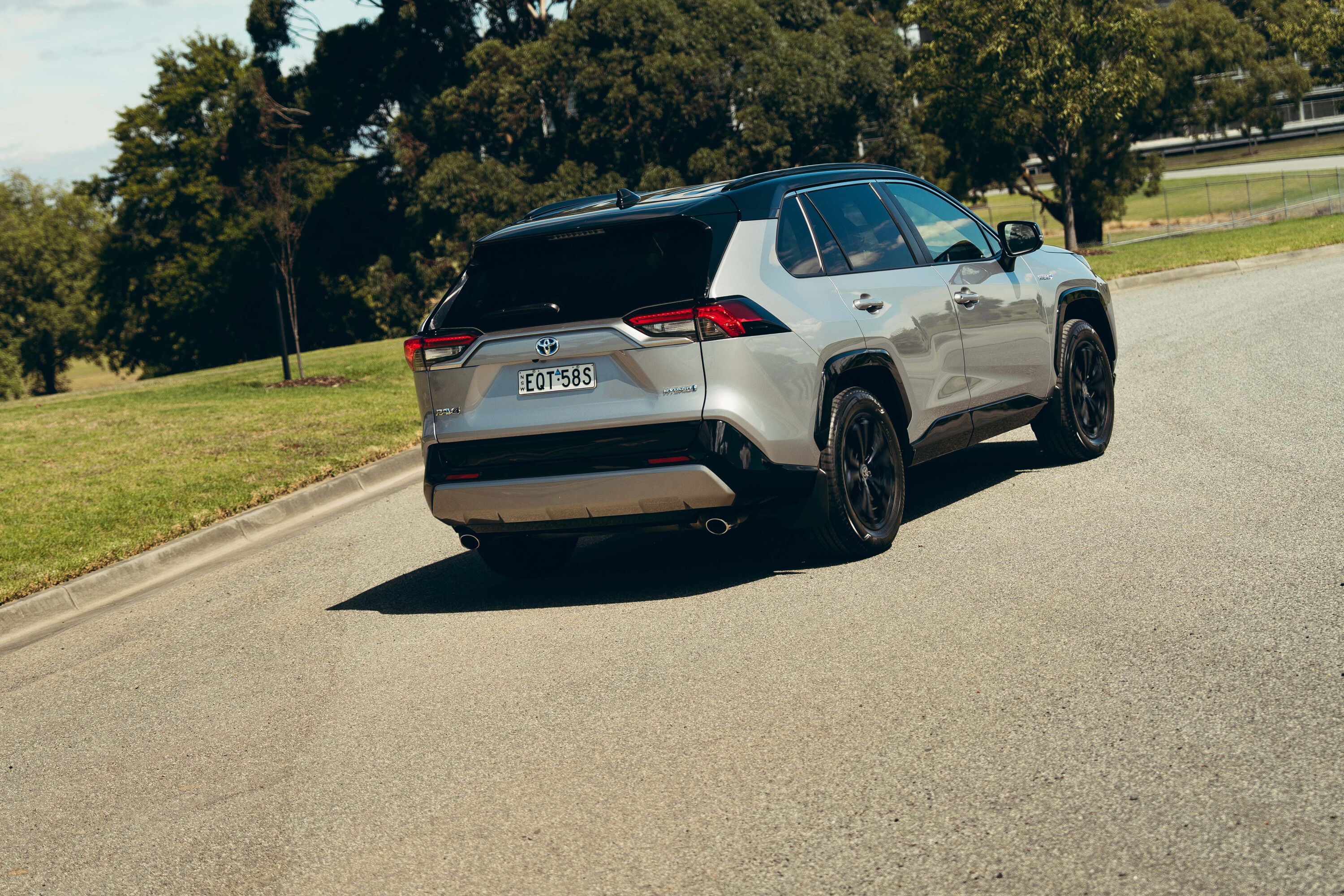
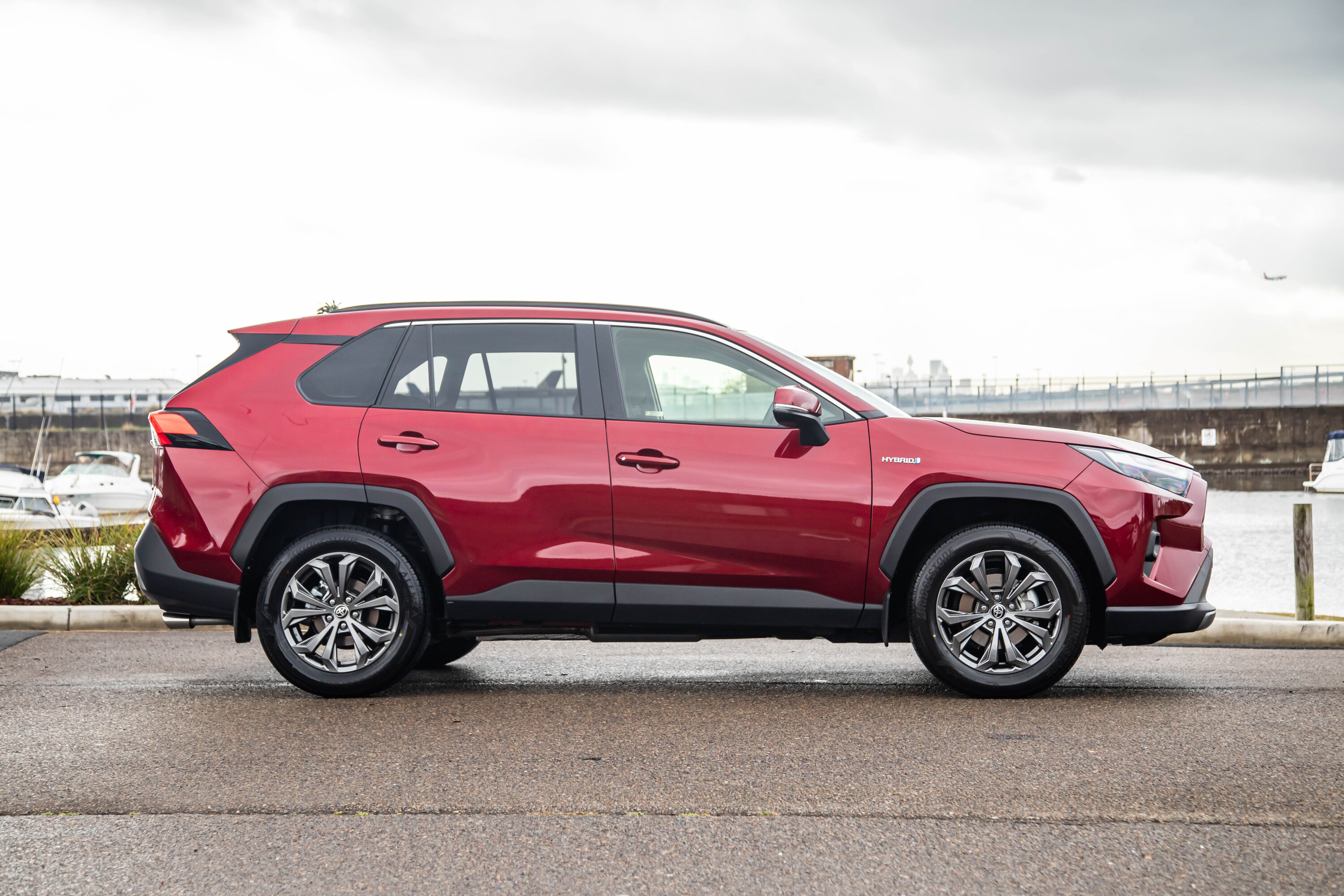
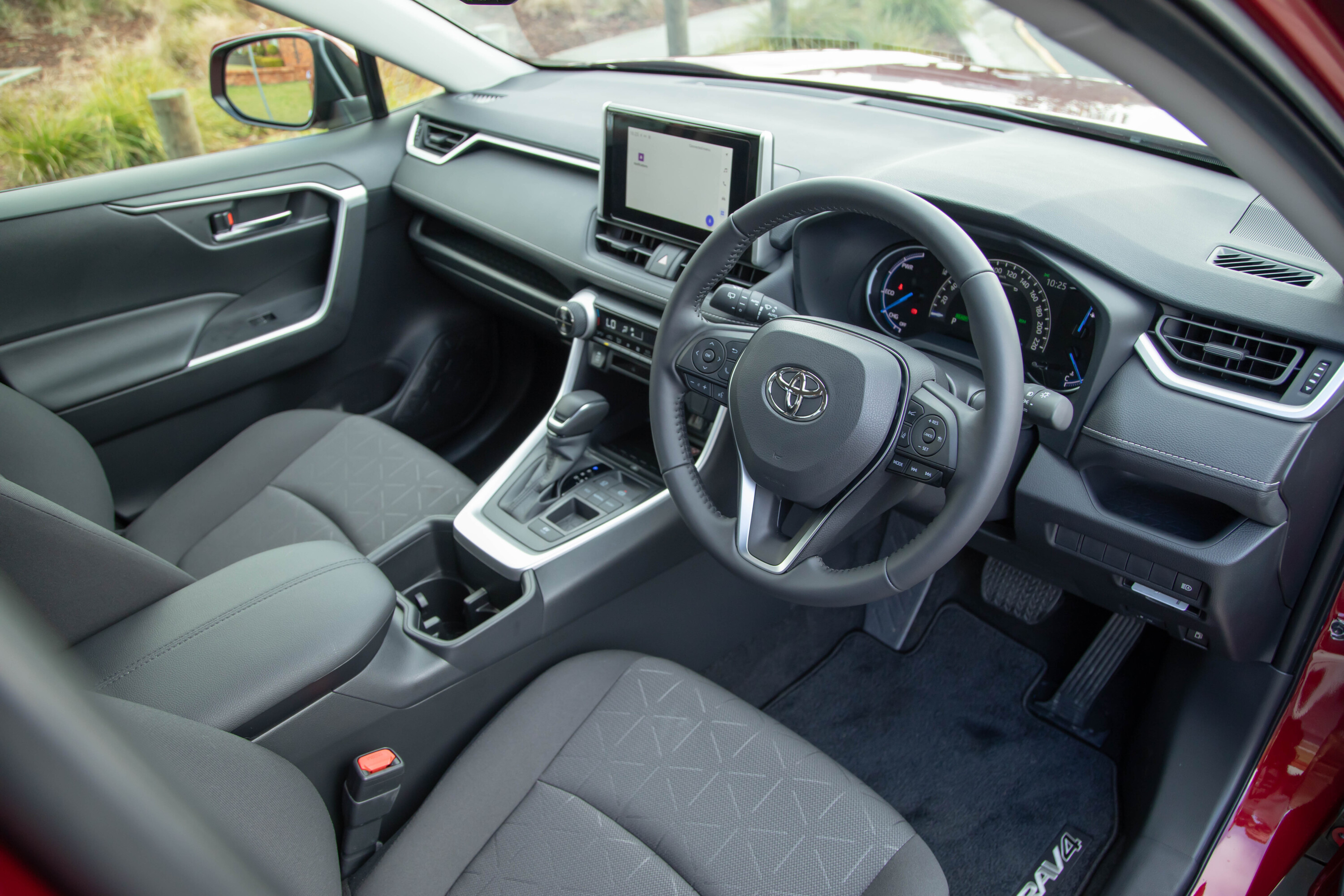
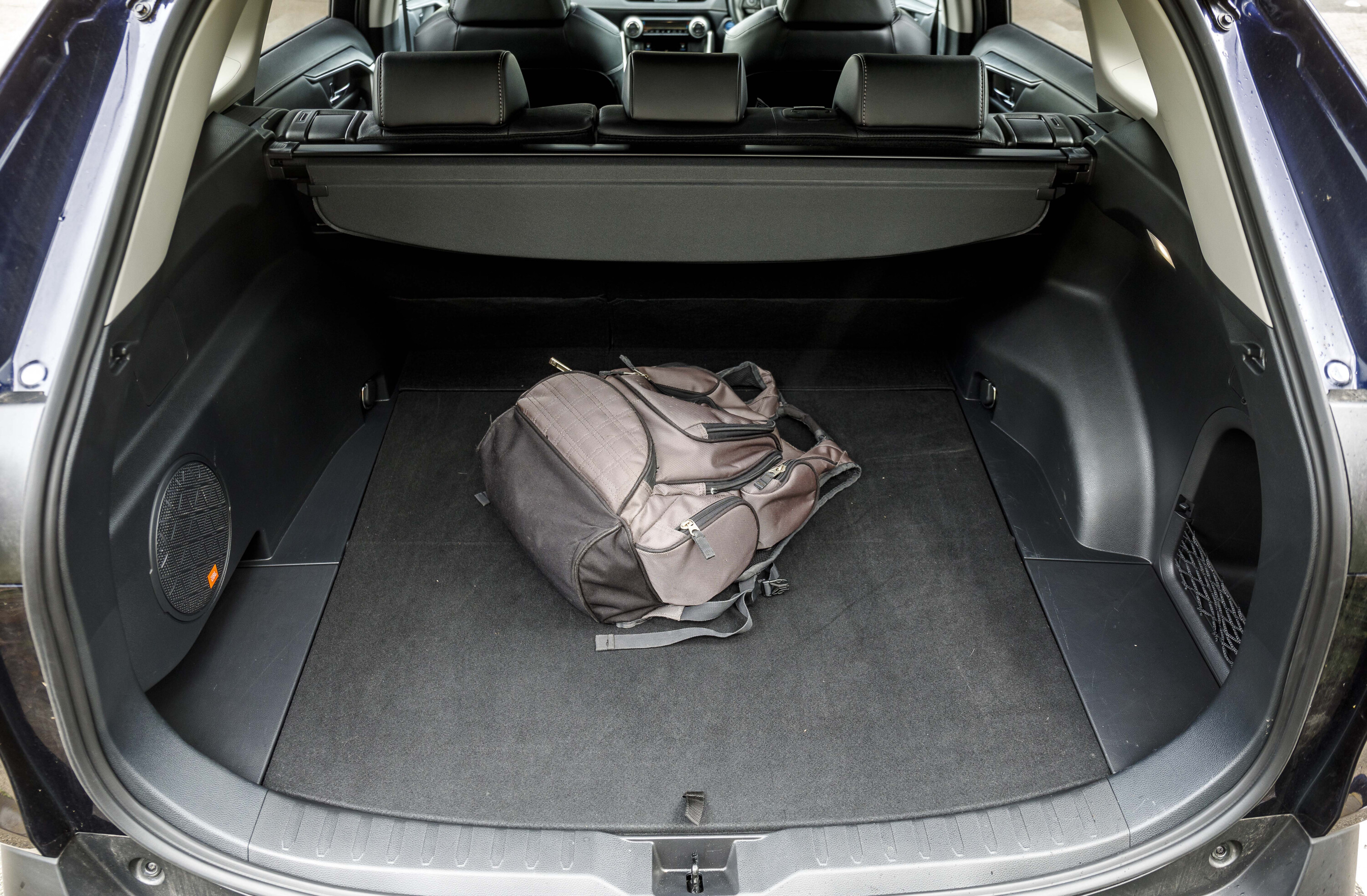
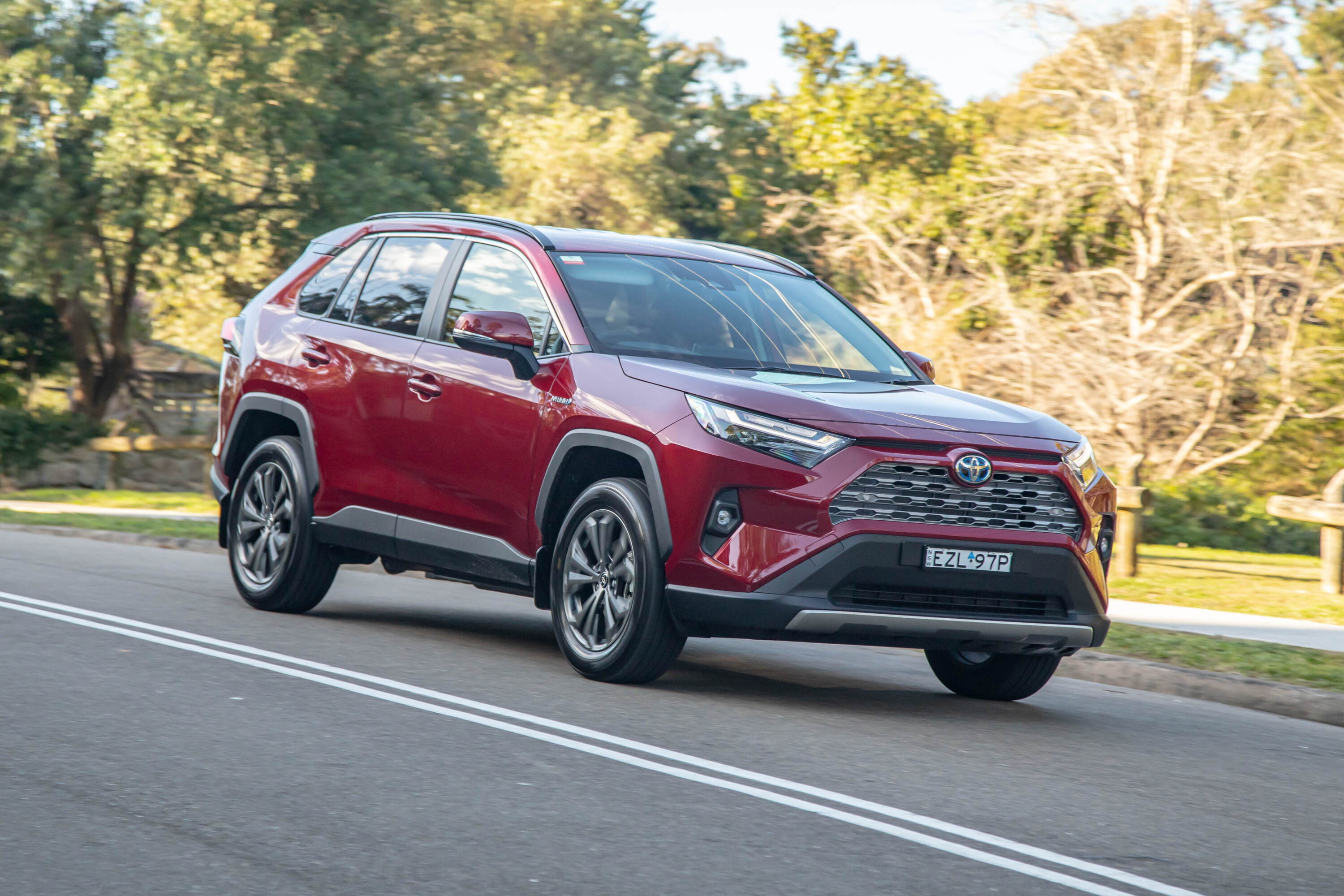
The Toyota RAV4 was the best-selling Medium SUV for the fourth straight year, ahead of the Mitsubishi Outlander and Mazda CX-5 – but all only the Outlander managed to improve its volume over the previous year.
1
SUV sales were up across all segments in record-setting 2023, but the RAV4’s 29,627 sales were well short of its 34,845 figure from 2022.
While a lower sales number, it was still easily more than Outlander’s 24,263 despite the Mitsubishi being the newest model of the top trio, introduced in 2021, and the only one of the three to increase its sale number.
The RAV4 wasn’t the sales leader all year, either, with the CX-5 leading the segment in January, the Outlander slipping into second by March, both ahead of the Toyota.
The RAV4 jumped in front of both rivals to lead the CX-5 by only 100 units at the end of April, the Toyota the only model in the segment to crack 10,000 year-to-date in May.
1
It remained at the top of the tree for the rest of 2023.
It’s another impressive feat for Toyota – which continues to be the best-selling car brand in Australia by a substantial margin – given the supply issues that created long waiting lists for RAV4 and undoubtedly sent buyers unwilling to wait to rival manufacturer’s showrooms.
Toyota has also loaded significant price rises onto the RAV4 as a result of stock shortages, but the SUVs popularity remains solid with its ongoing success boding well for 2024 with a new RAV4 due in Australian showrooms.
The Mitsubishi Outlander’s sales grew substantially, outselling its 19,546 2022 result by 24.1 per cent while RAV4 and CX-5’s sales declined 14.7 and 15.0 per cent respectively.
1
The Outlander’s 2023 effort saw a close battle with the Mazda CX-5, which it overtook in July and slowly crept ahead of to stretch to finish 1180 units ahead of the Mazda by the end of the year.
The Mazda CX-5 was a former best seller, having been the sales leader in 2019, yet its sales performance remains strong after annual updates to the current generation that has been on sale since 2017, the same year the RAV4 debuted.
The CX-5 started the year ahead of RAV4 – topping the segment in January 2023 – but minor updates couldn’t keep it ahead of the Toyota and Mitsubishi as RAV4 stock arrived here.
Missing the podium by a slim margin was the Hyundai Tucson with 21,224 sold, its freshly updated range to be bolstered in mid-2024 with the arrival of a hybrid model to help it tackle the dominant RAV4 which has seen hybrid models the strongest sellers.
1
The Subaru Forester was fifth (16,381) ahead of the Kia Sportage (15,747), but the biggest mover in the field was the BYD Atto 3 with 11,042 sold – the seventh best and final Medium SUV to sell more than 10,000 units in 2023.
The Atto 3 started the year with only 267 sales in January – versus RAV4’s 1958 that month – but took a 5.4 per cent share of the segment for the year as the best-performing Chinese brand in the segment, ahead of MG.
That also makes the Atto 3 the best-selling electric Medium SUV in 2023.
1
The Atto 3’s formidable performance helped reduce RAV4’s 2022 leadership share from 19.6 per cent to 14.6 per cent.
That continues was downward trend for the segment leader as competition increases, with RAV4’s 2021 share 23.6 percent, having been 25.1 per cent in 2020.
The largest declines in the segment were recorded by the Citroen C5 Aircross, which saw sales fall from 64 to 41 for a 35.9 per cent decline, while the MG HS declined 25.8 per cent.
MORE
Everything Toyota
MORE
Midsize SUVs
Toyota Australia predicts the Australian new-car market will contract in 2024 as it returns to “pre-COVID normal” – but the Japanese brand expects to sell more cars than it did last year.
Toyota Australia vice president for sales, marketing and franchise operations Sean Hanley said the brand anticipates the automotive industry will deliver around 1.05 to 1.1 million vehicles this year, down from the record-breaking 1.2 million cars sold in 2023.
“That’s down on 2023 results of over 1.2 million market, but it’s still an incredibly strong result. It wasn’t that many years ago in Australia that if we did over a million, we thought it was incredibly strong. We’re still over a million, so things are still going to be great,” said Hanley.
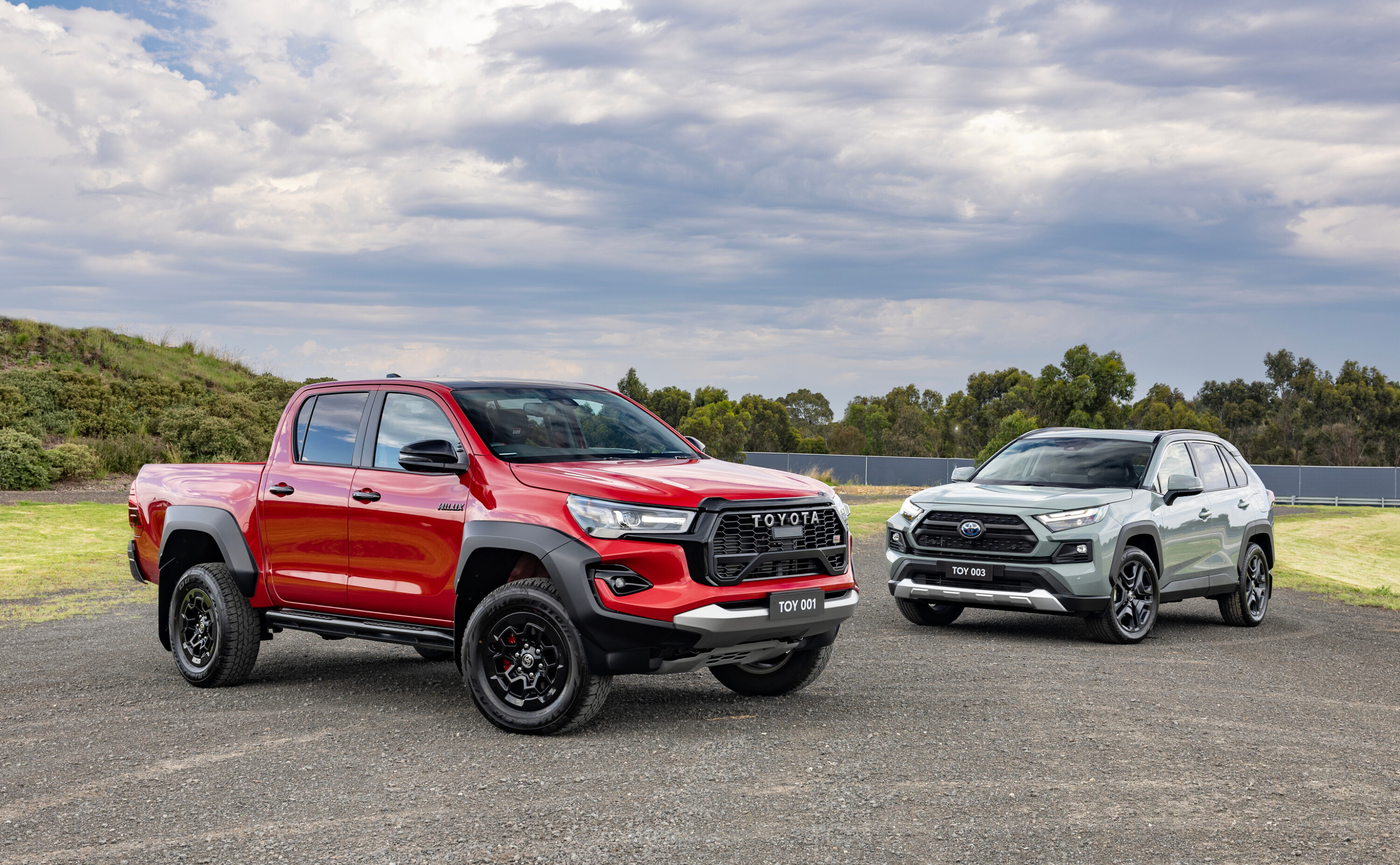
In 2023, Toyota retained its position as Australia’s top-selling brand for the 21st year straight, with 215,240 vehicles delivered to customers – marking the 19th time in the past 20 years that its sales have exceeded 200,000.
This result was more than double that of second-place Mazda, which sold 100,008 vehicles.
“When we reflect on 2023, it certainly for Toyota was a year of two halves. In the first half, we sold just 92,250 vehicles to the very supply production restricted period. But when you look at the second half of the year, it changed dramatically. We sold a record 123,005 vehicles,” said Hanley.
Hanley said the record second-half result was due to “greatly improved” supply and the health of Toyota’s order bank, which enabled it to reduce customer wait times.
1
“Our Toyota forecast for the new year is our supply is strong, our demand is strong, our order banks healthy, particularly in the first quarter, we have strong supply of RAV4 Hybrid, and as a result, we expect to increase our sales volume in 2024,” said Hanley.
“This will see our market share also increase and we still aspire to get to that 20 per cent market share in 2024, all going to plan.”
While Toyota forecasts increased deliveries in 2024 compared to 2023, it is unlikely to beat its all-time sales record of 238,938 vehicles set in 2008.
In 2022, Toyota sold 231,050 vehicles in Australia – its third-highest result ever.
1
“I don’t think the market will be there to support an all-time sales record to be honest. I think that boat sailed in 2023. I think if we had the supply capability maybe in 2022-23 that could have happened because the market conditions were right,” said Hanley.
“Unfortunately, the supply versus the demand didn’t line up for Toyota, so I don’t think that we have the capability to do an all-time record in 2024, but we’ll certainly have better growth in 2024 than what we saw in 2023. I think it’d be very healthy.”
A neck-and-neck race throughout 2023 between the Ranger and HiLux saw the Ford take the gold medal following strong sales in December – and the competition between the two utes is expected to remain fierce in 2024.
Despite losing its top-seller status, the HiLux remains successful around the country, selling over 60,000 units, and has been the top seller in the Northern Territory for the past 23 years, in Queensland for 17 years, in Western Australia for 16 years, and in South Australia for three years.
When asked if the HiLux could bounce back to become the number-one seller again in 2024, Hanley said that would be up to the market to decide.
“We’ll certainly be working hard and having a good go with HiLux,” he said.
“Sixty-thousand sales is still good for HiLux. It’s still an incredibly big part of our product line-up. We’ll keep developing it, we’ll keep enhancing it. Ultimately, the market will decide that.
“We’ll always be out there having a go and offering the best we can to the market. I still believe that HiLux 4×4 is by far the best off-road capable vehicle in the Australian market, but that’s a matter of opinion from a Toyota guy.”
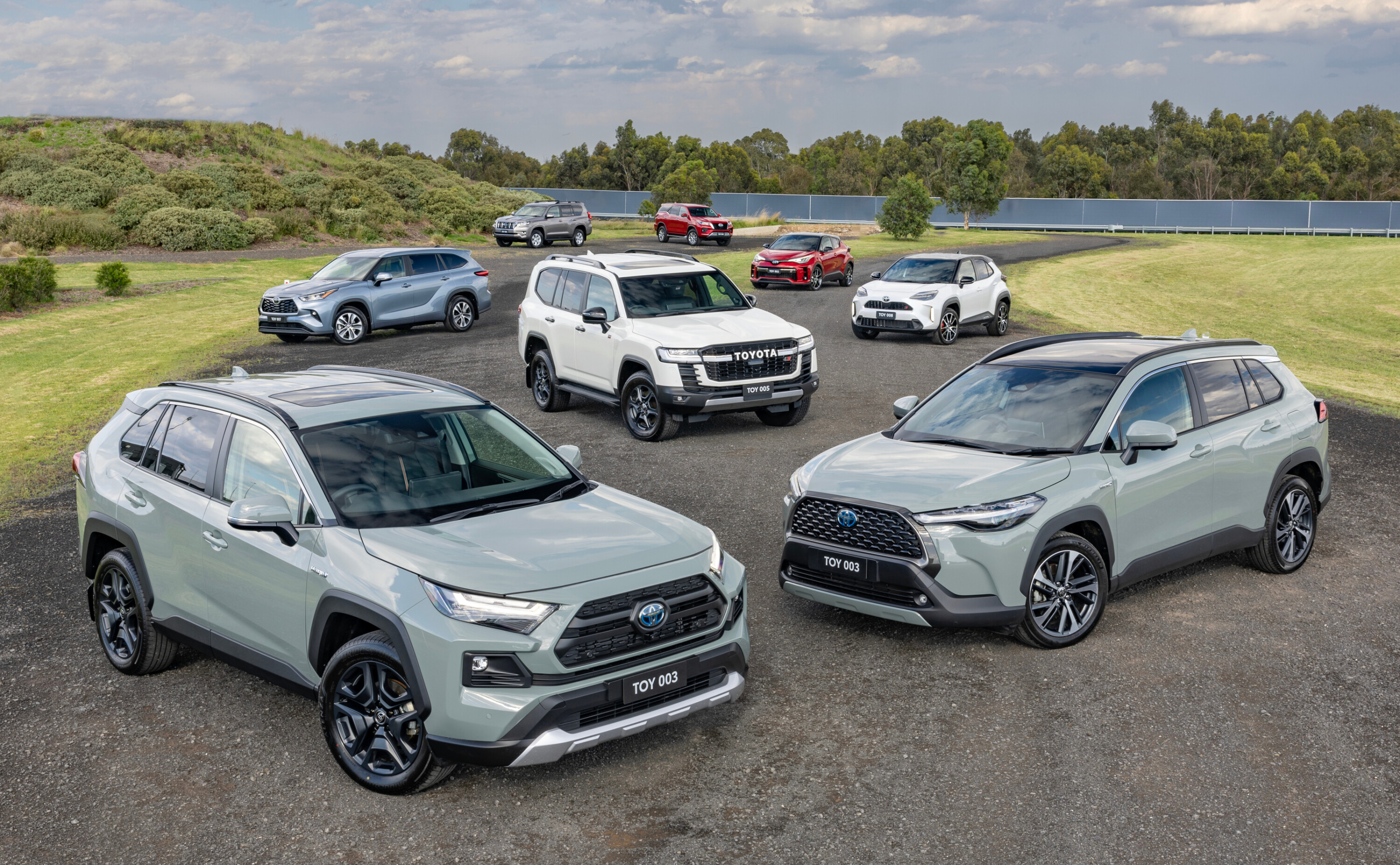
Toyota Australia will launch several new vehicles this year, including the BZ4x electric SUV in February, the C-HR in March, the LandCruiser Prado in May or June, an updated HiLux with a 48-volt assist system in the first half, and the Camry in the second half.
The brand said it expects some supply challenges in switching to all-hybrid powertrains for the C-HR and Camry, with the first priority being to supply vehicles to customers already on the waiting list.
This includes the in-demand RAV4 Hybrid mid-size SUV, which should have its wait time halved from 12 to six months by mid-2024.
MORE
Everything Toyota
Isuzu Ute, Lexus and MG are among brands to set sales records in Australia as both emerging brands and established players shake up the market, most notably Chinese and electric car makers.
A record-setting 2023 saw more new vehicles sold in Australia than ever, but with more brands hitting local showrooms record sales for car makers are becoming more difficult to come by.
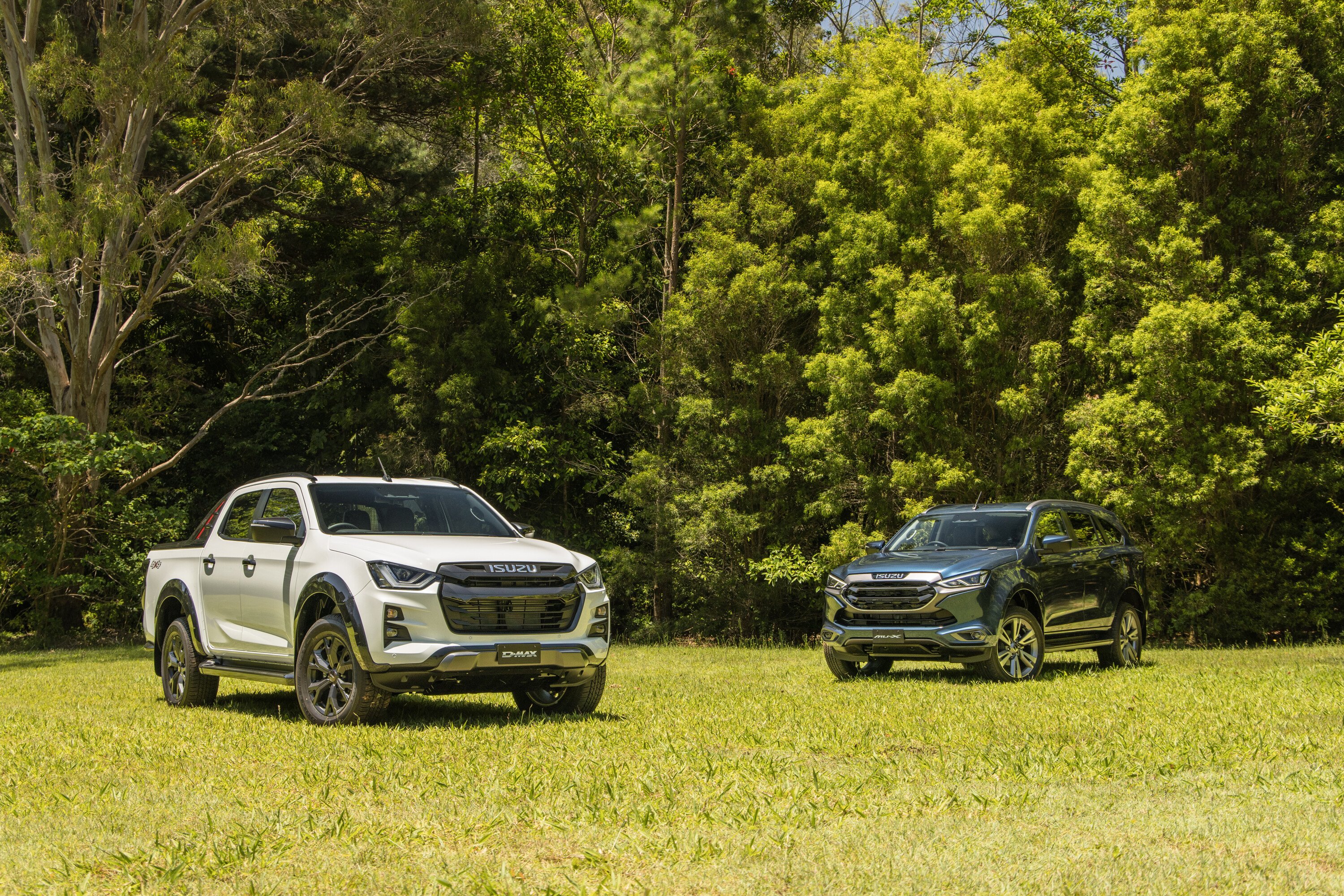
The Isuzu D-Max followed home the Ford Ranger – which took the best-selling spot for the first time – and the Toyota HiLux as the third most popular ute.
1
Isuzu Ute set a record in the process, with 45,341 sales to place tenth overall, with less than 1000 units between it and eighth-placed Tesla.
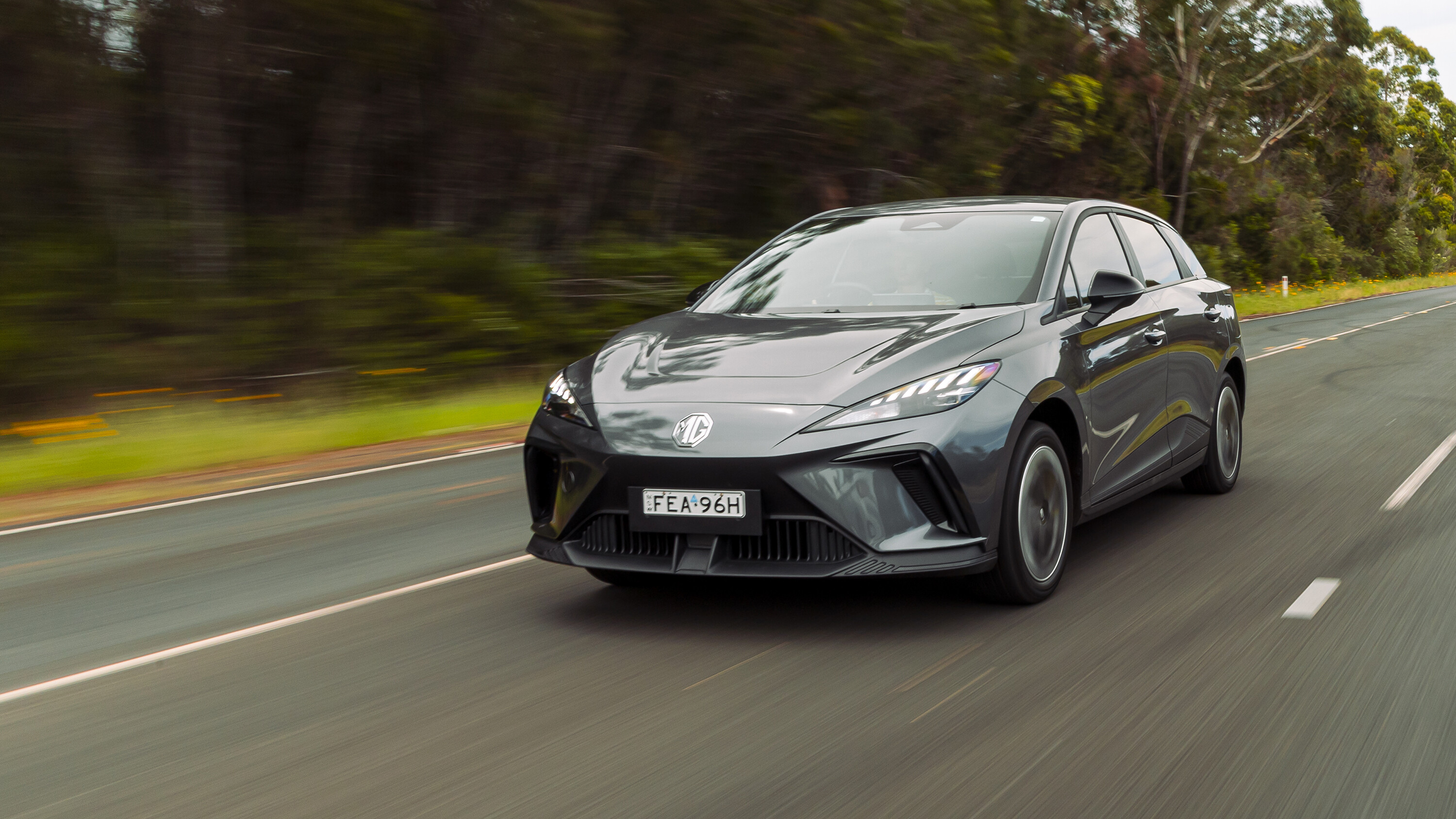
The best-selling Chinese car maker in Australia for 2023 was MG, with the ZS small SUV its most popular model.
The revitalised brand set a new record yet again with 58,346 sales – beating its 2022 figure of 49,582 – to place seventh overall behind Mitsubishi’s 63,511 figure.
1
MG’s 2023 figure comes off 15,253 sales in 2020 and 39,025 in 2021.
GWM and LDV join MG to make it three Chinese car makers in the Top 15 – all setting sales records – with GWM posting 36,397 sales (up 45.3 per cent) to rank 12th overall, with LDV 15th after posting a 30.9 per cent jump to 21,398 sales.
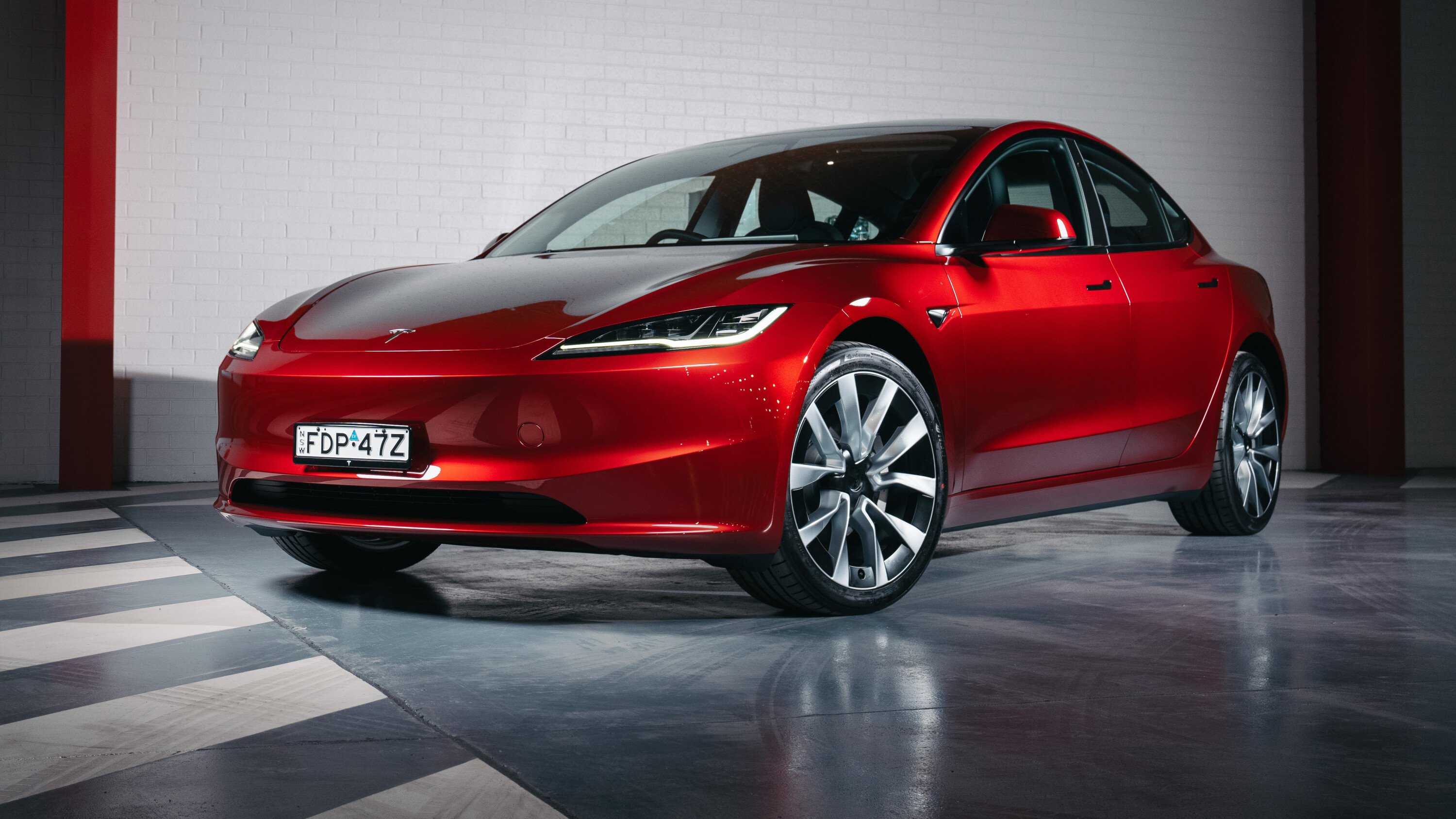
While Tesla began reporting sales via the official VFACTS portal only in April 2022, previously reported data confirms its 46,116 registrations for 2023 as its highest on record (placing it behind MG and ahead of Subaru by a mere two sales).
Volvo surpassed 10,000 sales for the second consecutive year, its new record of 11,128 led by its XC40 small SUV beating 2022’s 10,715 result.
1
Lexus also posted its best numbers in its 33 years of operation, with 15,192 sales smashing its previous 9612 record set in 2019.
SsangYong was another car maker to post a new annual record here, with 5966 sales 51.3 per cent up on its 2022 record result of 3943.
At the premium end, Genesis posted its best year to date, close to double its 2022 sales of 1039 with 1916 sold in 2023, the GV70 mid-size SUV making up more than half of those sales.
Porsche sold 6052 units to break its record of 5608 set in 2022, with the Macan its most popular model and due for replacement in 2024.
January 2024: CX-70 reveal date confirmed
The incoming new Mazda CX-70 will be unveiled at 3am Australian time on January 31, the Japanese brand has confirmed – almost exactly one year since we first reported on the new model (below).
Set to join the existing CX-60 and CX-90, along with the upcoming CX-80, the new CX-70 will round out the large end of Mazda’s new-generation SUVs – assuming it doesn’t have a giant CX-100 in the works.
If Mazda’s growing range of SUVs is starting to confuse you, here’s what we believe about the CX-70: it’s effectively a five-seat, tapered version of the big CX-90.
The CX-80, on the other hand, is expected to be a slightly narrower and longer version of the CX-60 – think of the relationship between the CX-5 and the CX-8.
If you’re still confused, hey, don’t worry about it.
Continue reading our story below for more on the CX-70, and watch for the full reveal later this month.
February 2023: CX-70 confirmed
Nathan Ponchard
If there’s one thing the Mazda Motor Corporation isn’t short of, it’s brand new SUVs.
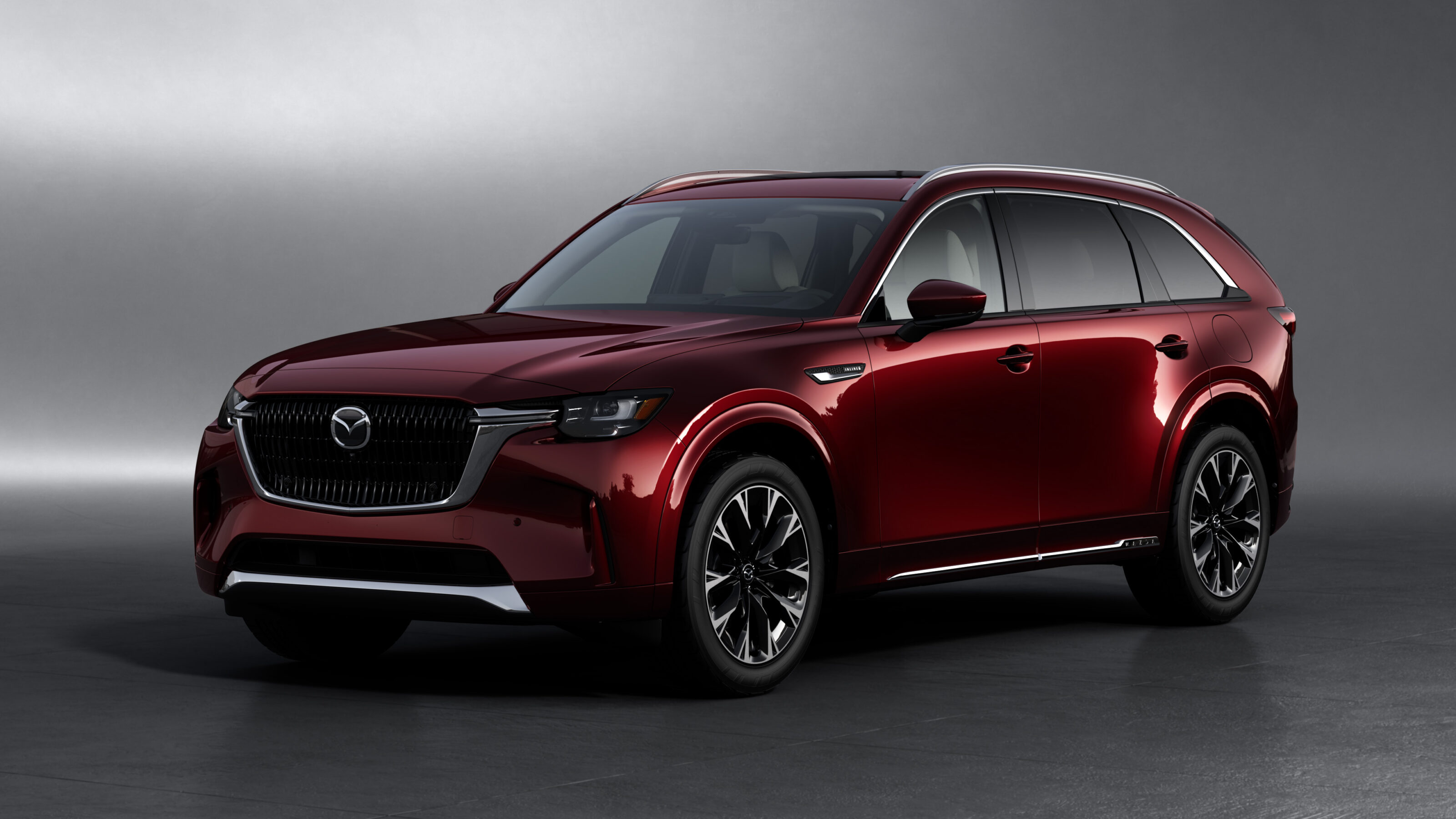
Indeed, it still has two major global models to be revealed over the next 12 months – including a sportier five-seat version of the just-revealed CX-90 which will be called CX-70.
While concrete details remain fairly scarce on what the CX-70’s unique talents will be, we know for sure that it’s closely related to the the CX-90, will be built in Japan alongside its three-row sister in both right- and left-hand drive (predominantly for the US market) and will share the CX-90’s drivetrains – meaning a pair of turbocharged inline sixes and a four-cylinder plug-in hybrid.
We also know it’s under close consideration for Australia and is currently having its business case assessed for our market.
Speaking to Wheels at the CX-90’s global online unveiling, Mazda Australia managing director Vinesh Bhindi said that Mazda is currently looking at the business case for CX-70 (as well as a narrow-bodied, sub-CX-90 seven-seater called CX-80) – “to see whether that makes sense for us” – but that they’re not in a position to confirm its green-light status.
1
“It’s an option for us, and it’s not a restriction from the factory on whether we must take it or we must not take it,” he said.
That means if the dollars add up, CX-70 is go. Given Mazda Australia’s track record on having a ‘why shouldn’t we sell it?’ mentality with everything presented to them, confirming CX-70 for our market appears to be merely a formality.
Based on Mazda’s already-demonstrated efficiency in sharing body parts, you can expect the CX-70 to share most or all its shape from the B-pillar forward with the CX-90 – the bonnet, grille, and grille surround are already common between narrow-bodied CX-60 and broader CX-90. But it’s what goes on at the other end that remains under a cloud.
According to Mazda Australia marketing director Alastair Doak, when asked by Wheels if the fundamental differentiator for CX-70 is that it’s a shortened, two-row, five-seat version of the CX-90, he replied “in very simplistic terms, you will be not far off the mark if you wrote that.”

1
We also put to him that the CX-70 seems quite exciting in concept, given the CX-90 already looks dynamic, and it’s the three-row family version, so if you shortened the body, sloped the rear-end and dialled up the sex appeal, the five-seater could be really cool. He responded by saying “you would think so, yeah.”
As for the forthcoming CX-80, Mr Doak sounded quite pleased with the design direction of what is, at its core, a stretched seven-seat version of the CX-60 premium medium SUV.
Unlike the awkwardly proportioned CX-8 (our words, not his), Mr Doak said the relationship between the CX-80 and CX-60 was “similar but different”.
“I can tell you that CX-80 looks really nice, they’ve done a really good job with it.”
1
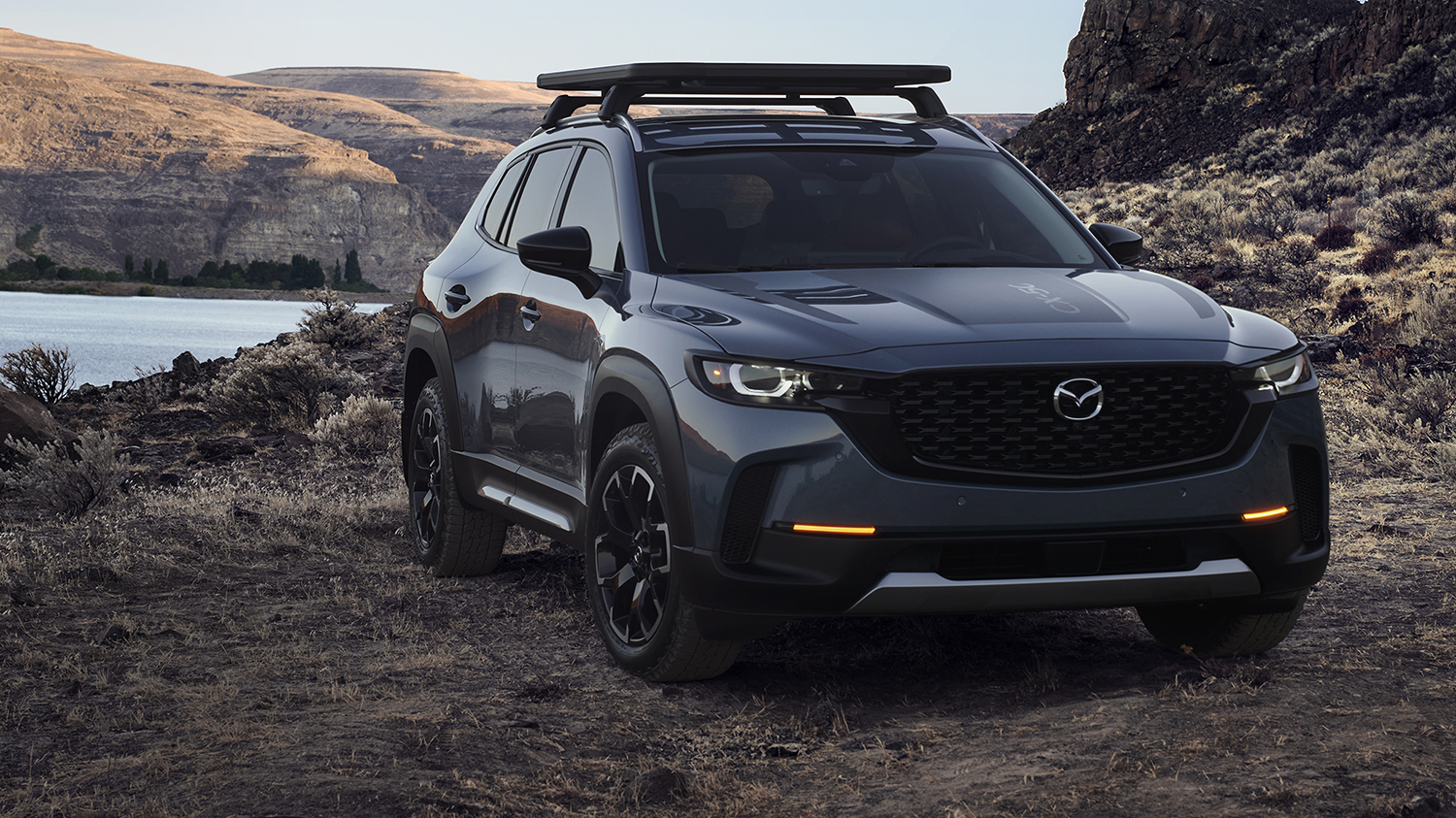
As for the CX-50 – a broad, chunky, US-built medium SUV based on the Mazda 3/CX-30 platform – it’s looking highly unlikely for Australia.
Why? Simply because it’s a smash hit in North America and the Alabama factory that builds it doesn’t need the additional volume – or perhaps the complexity – to justify squeezing in a right-hook version of this highly praised SUV.
“It’s not on offer to us,” said Mazda Australia managing director Vinesh Bhindi, even though they still have their hand up for CX-50, to register their ongoing interest.
“The conversation still remains that it’s built in the US for the US market, or North American market only. So it’s not even being talked about.”
Despite only coming on stream in April, Mazda USA shifted 21,329 CX-50s in 2022. This compares to 151,594 examples of the CX-5 medium SUV during the full calendar year.
MORE
Everything Mazda
Buyers looking for a hybrid car with no delay: which do you want first, the good news or the good news?
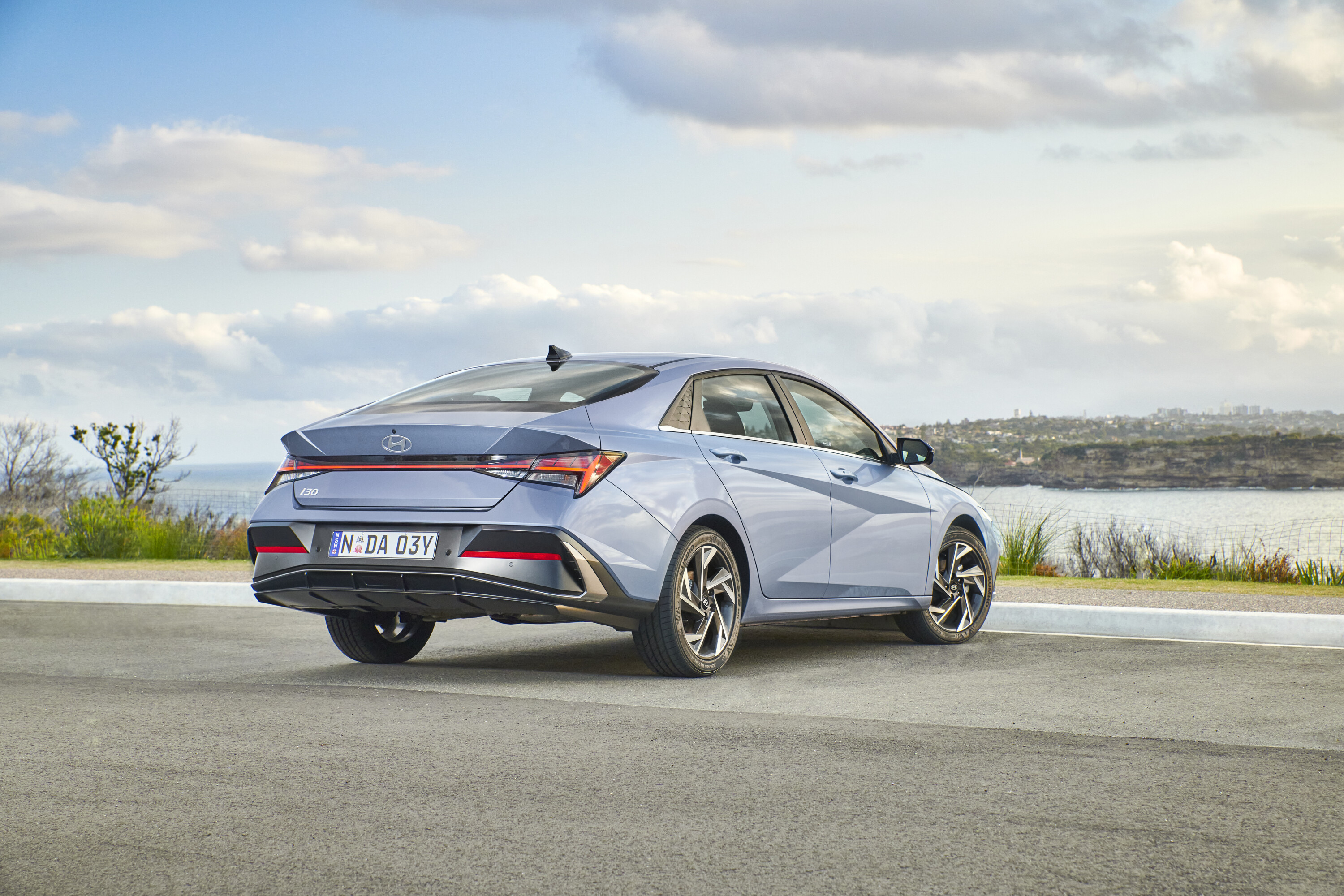
The good news is that Hyundai’s new i30 Sedan Hybrid has a new national drive-away price that undercuts the sedan version of the popular Corolla hybrid. Hyundai is clear in its messaging, too, specifically calling out the Corolla in its announcement to media.
The entry-level i30 Sedan Hybrid is priced at $35,990 drive-away, while calculated drive-away prices for the Corolla (based on a Sydney location) have the hatch starting from $35,917 and the sedan from $36,133.
It’s a savvy marketing play by Hyundai, with the i30 Sedan Hybrid’s retail price (before on-road costs) of $33,000 slightly higher than the Corolla Ascent Sport Hybrid sedan’s $32,320 retail price.
1
The other good news is that Hyundai will have 200 i30 Sedan Hybrid cars here in January, followed by another 400 in February – and a promise of “less than three months” for any further orders.
Our last information on the Corolla shows delays of around 225 days, depending on the specification – nearly three times longer than the wait on Hyundai’s new hybrid, if you don’t get one of the cars already inbound. For its part, Toyota’s website reveals only that it has “extended wait times”.
Hyundai also offers, for your consideration, the below comparison of pricing and equipment highlights for the i30 Sedan Hybrid and the Corolla Ascent Sport Hybrid.
| i30 Sedan Hybrid | Corolla Ascent Sport Hybrid (sedan) |
|---|---|
| $33,000 MLP / $35,990 DA | $32,320 MLP / $36,133 DA |
| 1.6L petrol Hybrid – FWD | 1.8L petrol Hybrid – FWD |
| 104 kW combined | 103 kW combined |
| 147 Nm @ 4000 rpm | 142 Nm @ 3600 rpm |
| 6 Speed dual-clutch automatic transmission | Continuously Variable Transmission (CVT) |
| 3.9L/100km combined fuel consumption | 3.9L/100km combined fuel consumption |
| 16u201d alloy wheels | 16u201d alloy wheels |
| Leather appointed steering wheel and gear shifter* | PVC plastic steering wheel and gear shifter |
| Dual-zone climate control | Single-zone climate control |
| Rain sensing windscreen wipers | Manual windscreen wipers |
| * ‘leather appointed’ usually means a combination of genuine and synthetic leather (vinyl / PVC), so Hyundai’s point here might not be much to brag about. | |
We’ll have our first chance to drive the i30 Sedan Hybrid in February when press cars become available – that’s when we’ll know if Hyundai’s hybrid can outdo the proven Toyota system.
In the meantime, see our full 2024 i30 Sedan pricing story linked below.
MORE
PHEV and Hybrid Cars
Wheels magazine has always had a passionate audience, with a thriving letters section. Here’s the latest from our readers.
And while we’re talking about the mag, have you subscribed?
1
Palette knifed
?️ Robert Ius, Haberfield, NSW
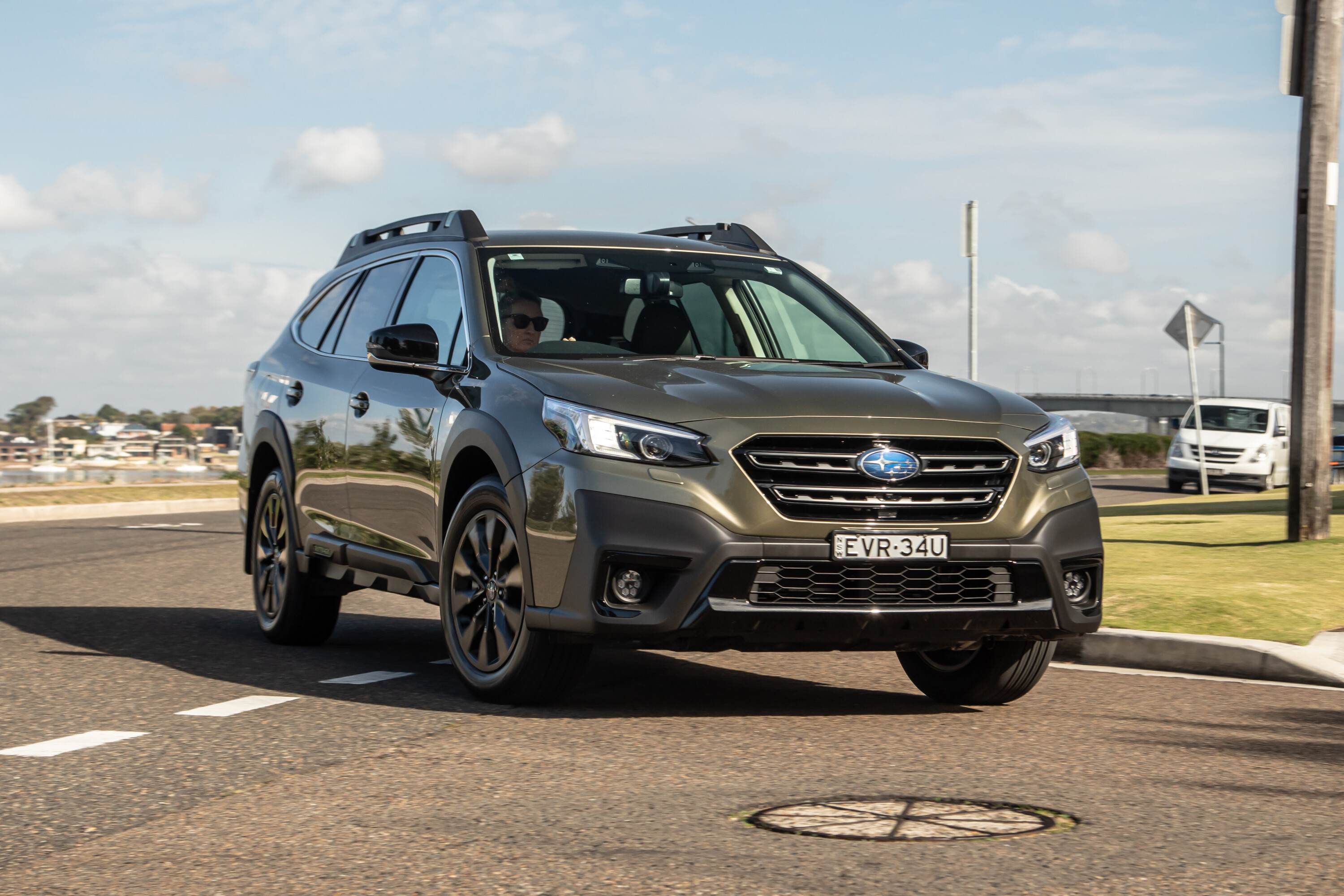
After reading the latest garage report on the Subaru Outback, one thing that needs to be put into context is the statement that there is no additional charge for metallic, pearl or silica paint colours.
The reason is that Subaru Australia no longer imports cars with traditional solid paint colours.
Hence today the recommended retail prices already include the extra cost for metallic, pearl and silica colours. If plain solid colours were offered in Australia, these cars would be close to $1000 cheaper and metallic, pearl and silica colours would be listed as an extra cost.
Mazda Australia applies the same import strategy to their Australian cars as it is a simple way to make larger profit margins and give consumers the false impression they are getting metallic, pearl or silica paint colours for free.
ud83dudede Editor Andy
Subaru says: “For certain models, we continue to offer a range of classic non-metallic, pearl, and silica paint choices. These encompass Ignition Red for BRZ and WRX, Ceramic White for WRX, and Pure Red and Oasis Blue for Impreza/Crosstrek. A diverse selection of paint colours, combined with no extra charge for metallic-paint finish, allows our customers to select the paint that aligns perfectly with their preferences.”
1
Sweet as, bro
?️ Alex, New Zealand
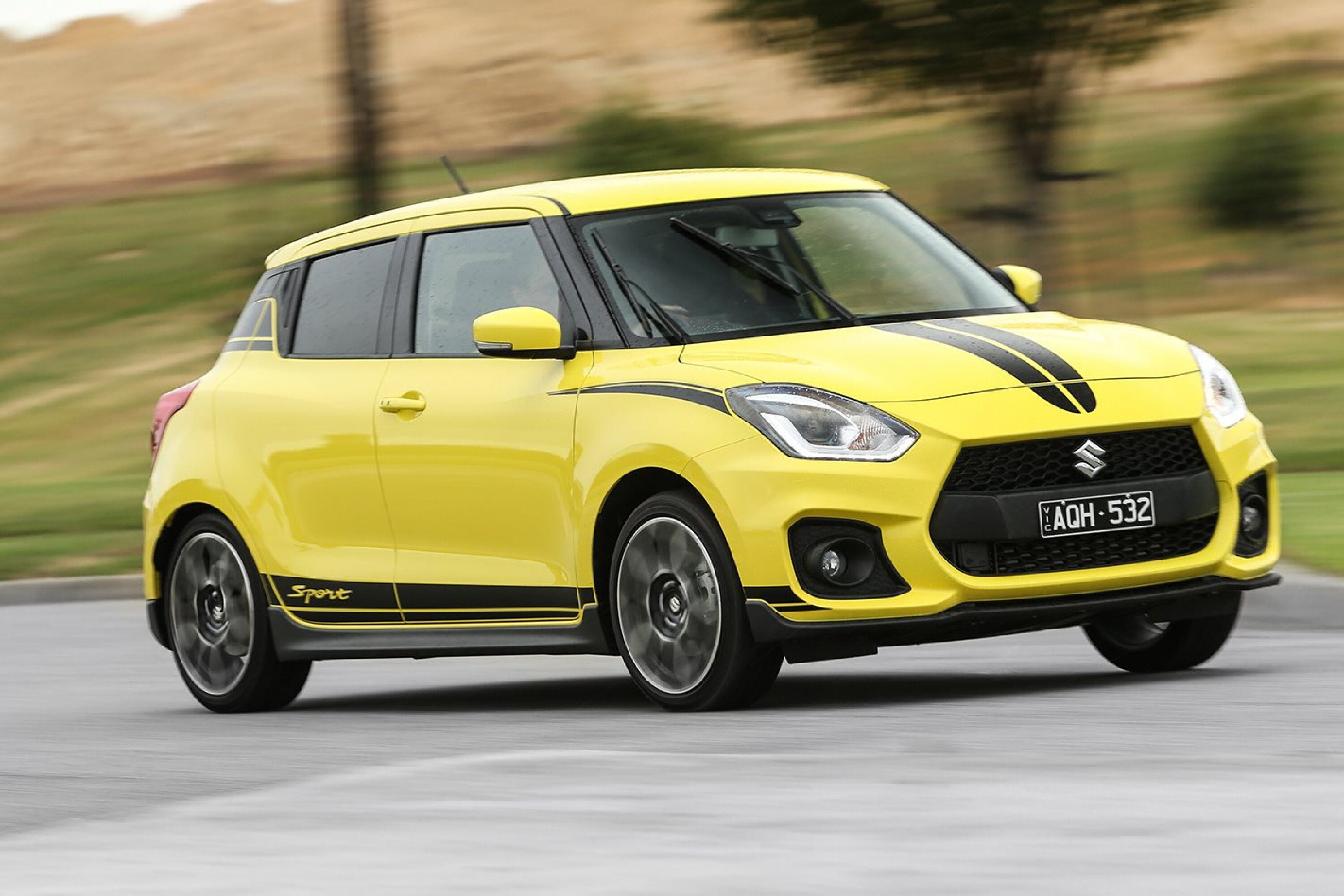
I am in the market for a hot hatch in the range of $20K NZD. This is going to be my first car and I need something reliable, safe to please my parents, but also must be fun in manual. I’m looking at a ‘19 Swift Sport with around 50,000km, a ‘13 Fiesta ST with around 90,000km, or possibly even a ‘14 Megane RS265 with over 100,000km.
I like the look of the Swift being quite new and knowing it will be reliable, plus with lower kays and insurance costs, while also being better on fuel. For the Fiesta and Megane, I know they have been highly rated but I’m not sure on insurance, fuel, reliability or other owners previously thrashing them. From what I’ve seen, the Megane RS looks much too fast for me but I’m not sure about the Fiesta ST.
So, what do you think the money should be spent on? Should I play it safe with the Swift? Are there any other options that you can think of? Thanks.
ud83dudede John Law
The Swift Sport is a great choice for your first car. Reliable, super-cheap parts and servicing, offers enough fun and not so much power to spell trouble. Megane RS250 or 265 are fantastic, but honestly a little focused if you’re not going to be tracking your car. Being heavier, they go through consumables (brake pads and front tyres especially), too.
That leads me to my ideal ‘enthusiast’ pick, the Fiesta ST. I learned to drive in a Clio 182 (and still own one), and the Ford is the closest to that in spirit. Being a Renault fan, I’ll leave you to consider third-gen Clios (197 or 200, 2008-2013). Awesome chassis and a barrel of laughs. Not the easiest or cheapest to service, though they’re more reliable than most assume.
1
Touchy subject
?️ Robert Ius, Haberfield, NSW
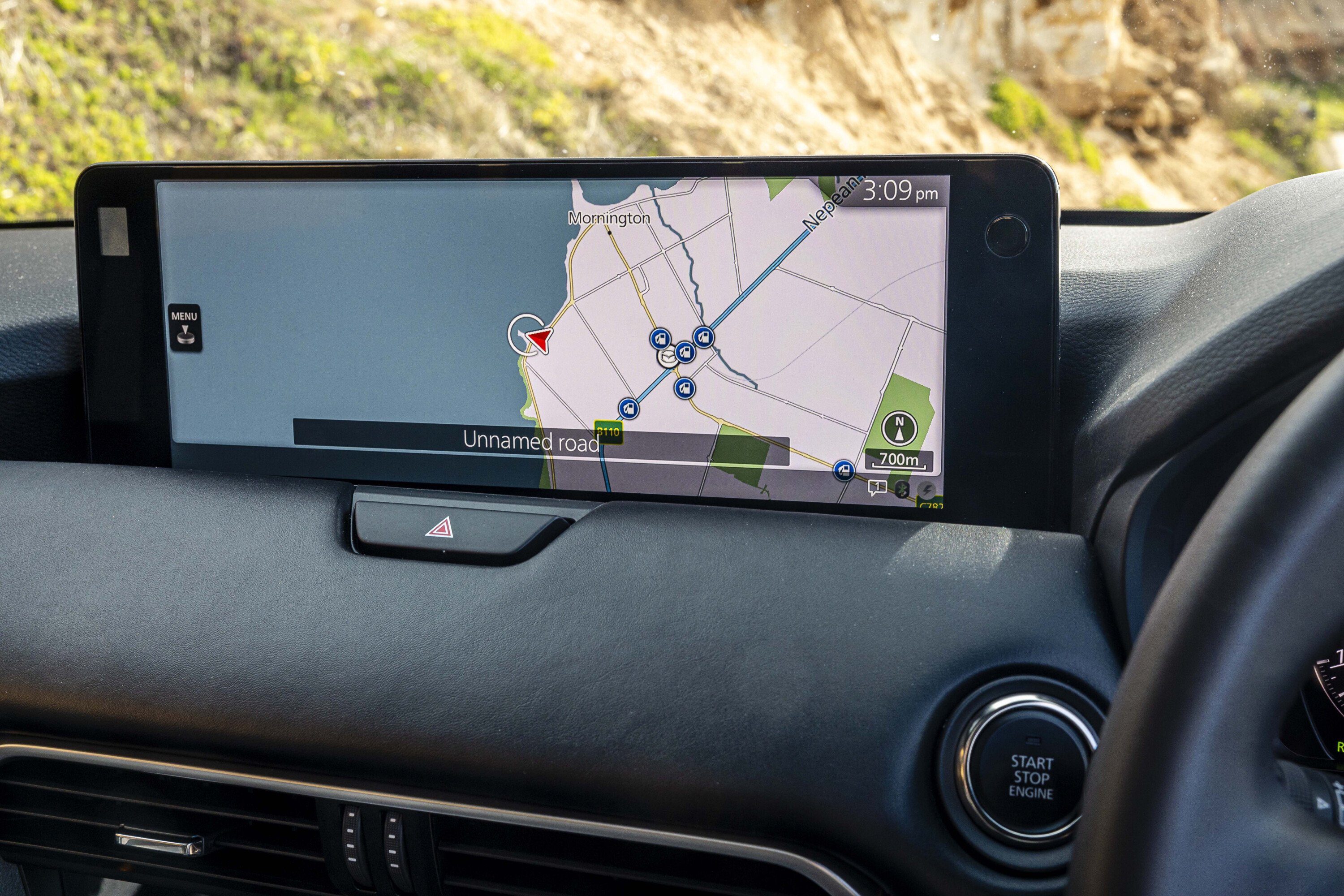
The current trend of single/dual multimedia and control interface touchscreens displacing all buttons and switches for even basic functions (seat heating, fan speed, temperature, volume etc) is a critical ergonomic disaster dictated by cost savings, with poor regard to driver safety design.
It is well documented that the number one cause of accidents is driver distraction, and the use of control touchscreens that require visual interaction with the screen needlessly increases the rate of driver distraction.
The distraction caused by operating touchscreens while driving is no different to texting on a mobile phone while driving. Vehicle manufacturers need to be held accountable for this dangerous safety oversight.
1
The technology already exists to freeze touch-control actions while a vehicle is moving, with control actions executed merely via voice control (or simply reintroducing the most common switches).
It appears most manufacturers are doing nothing in this critical safety area until legislation forces them to make the obvious safety changes. Any new car that does not incorporate sound driver safety ergonomics and an uncomplicated user-friendly dash design will be off my next car shopping list.
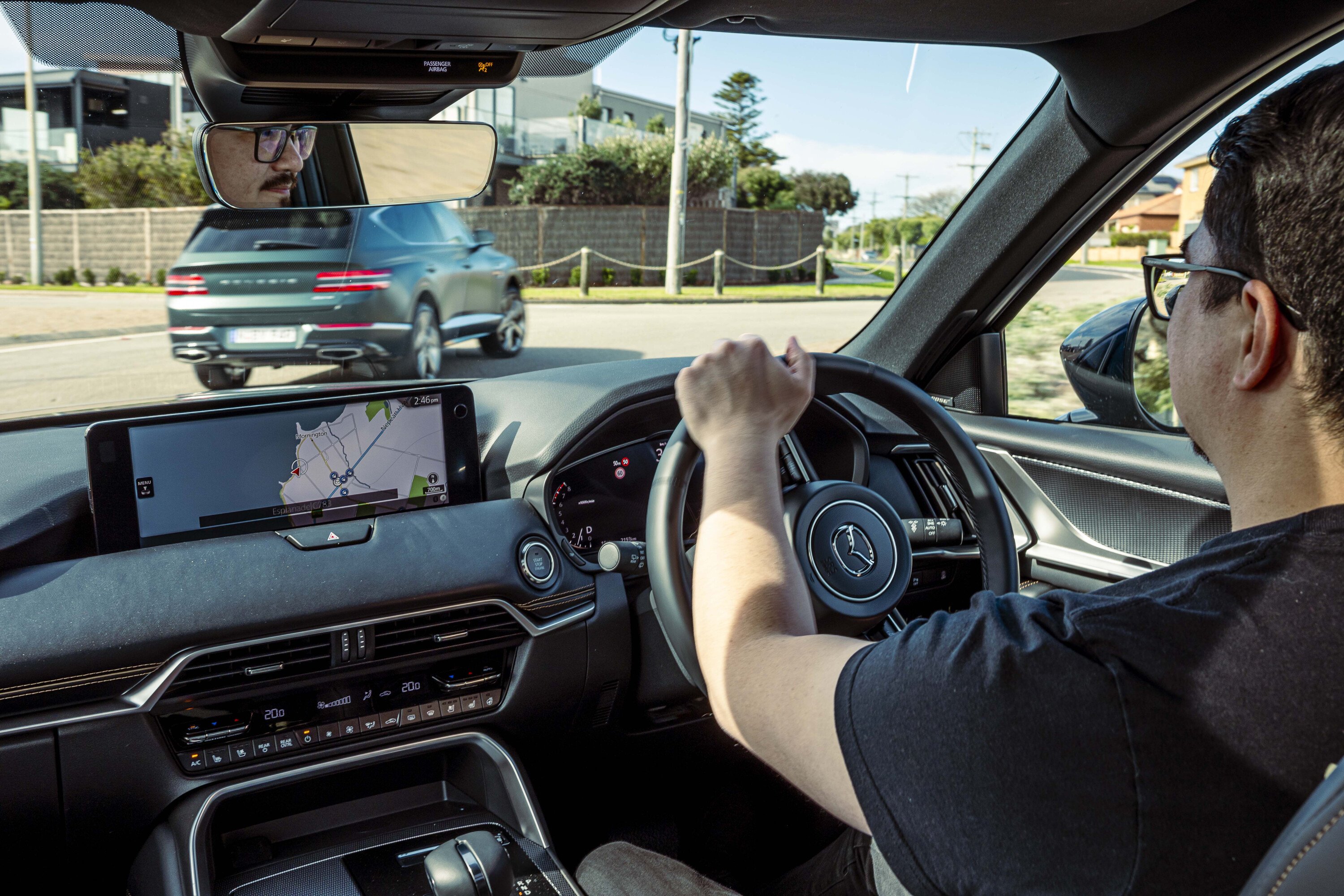
Kudos to Mazda for having the design fortitude of placing driver safety at the forefront of their new dash designs.
ud83dudede Editor Andy
We’re thinking along the same lines, Robert (see my Editorial this month) but, for what it’s worth, sometimes I find navigating Mazda’s non-touch interface takes my attention from the road longer than jabbing a screen with my finger.
1
Say something!
?️ Alan Dowling, via email
I was fascinated and entertained by Andy Enright’s editorial in the October issue. The vanilla consensus among motoring writers is something that has long bothered me.
It’s almost as if – and correct me if I’m way off-beam here – junior journalists are following in a long tradition of repeating the opinions of senior staff and thus the cycle continues.
Bill Tuckey’s opinions were absolutely his own. As are those of the likes of Mel Nichols and Dave Morley. You’d never call LJK Setright or David C. Davis derivative. Cutting to the chase, I’d like to say that automotive journalism should value those voices that are unafraid to speak their own truth or come up with an original thought once in a while. It’s surprisingly rare.
1
Happy COTY chappie
?️ David Taverner, Indooroopilly, QLD
I just bought a Ford Everest. It’s a bloody ripper. Thanks for the tip.
ud83dudede Editor Andy
Thanks for choosing to support Aussie design and engineering.
The Wheels question to you
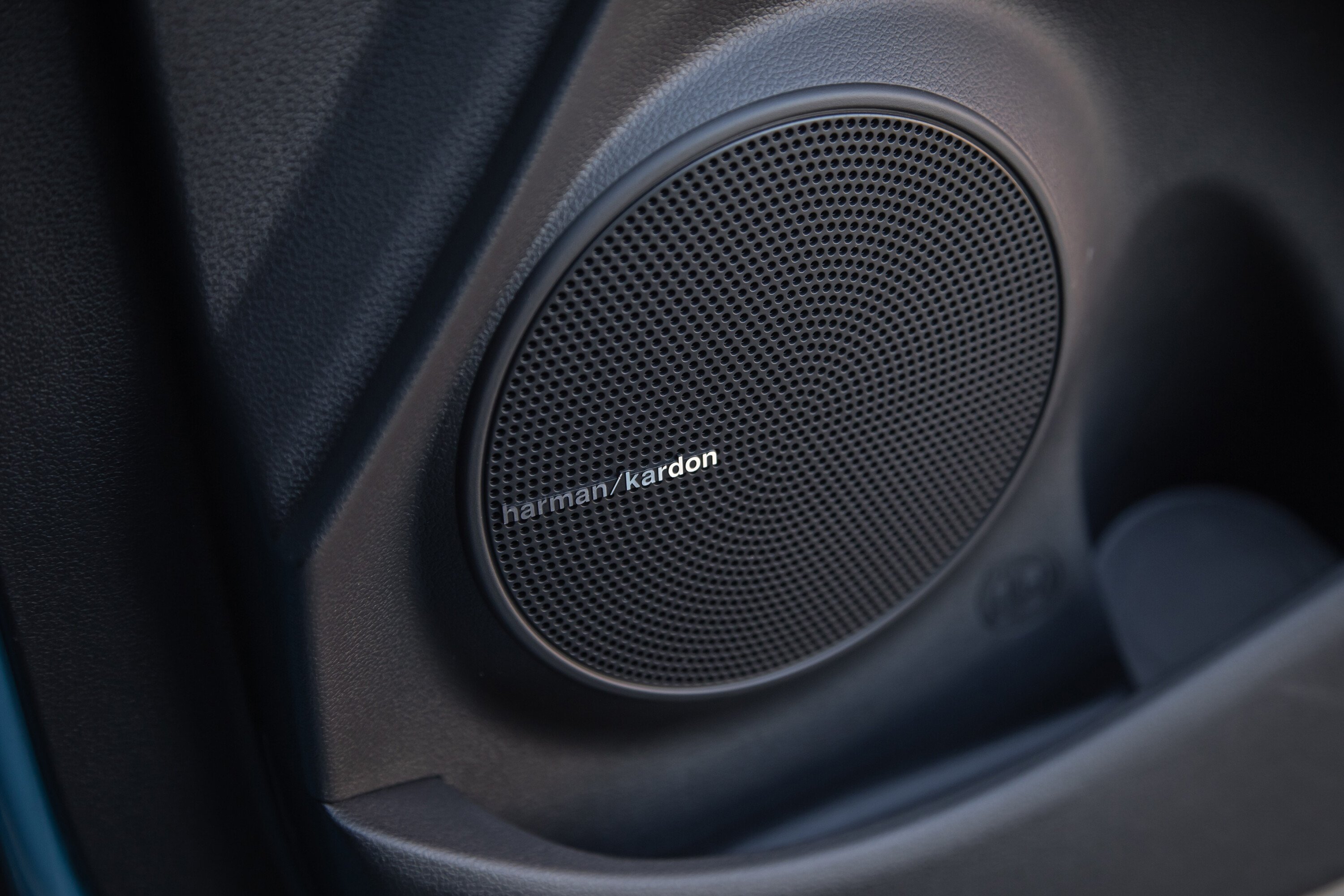
Does the spec of a car’s stereo play a significant part in your buying decision?
Of course
- I mean, it might not swing my choice of model, but Iu2019ll usually spend up and option the premium stereo if that choice is available. Why pay $100K for a car to spend days of your life listening to a $200 stereo? S. Whitley, via Facebook
Not really
- Maybe Iu2019ve got a bit of a cloth ear but at the volumes at which I listen to music, even the base stereo systems sound OK to me. I canu2019t remember the last time I heard a seriously bad audio system in a new car. G. Catley, via Facebook
1
