
Attempting to name the 10 most significant people in the Falcon’s 56-year history is an almost impossible task.
This article was originally published in the November 2016 edition of Wheels, and is being republished on the fourth anniversary of Ford Australia ceasing manufacturing in Australia.
After talking to ex-Ford executives and colleagues, and reading everything I could on Ford Australia, I came up with a working list of 35 names.
Compressing that into just 10 proved hugely challenging, the order constantly changing.
One name stood above all others, however: Bill Bourke. The charismatic Bourke took on Holden, knowing it would take well over a decade of dedicated work across every aspect of his company to grab sales leadership.
He created an environment that made young graduates, whether from engineering or finance, want to work for Ford. He understood product and knew how to create a strong public awareness for his company and its cars.
The other names span the Falcon story, like Charlie Smith, who made the brave decision to drop the Zephyr in favour of the new Falcon, and finishing with Bill Ford, who (with Alan Mulally) killed any chance of the Falcon becoming a global car.
In between you’ll find a designer, manufacturing genius, salesmen and engineers, all of whom devoted most, if not all, of their careers to Ford and the Falcon.
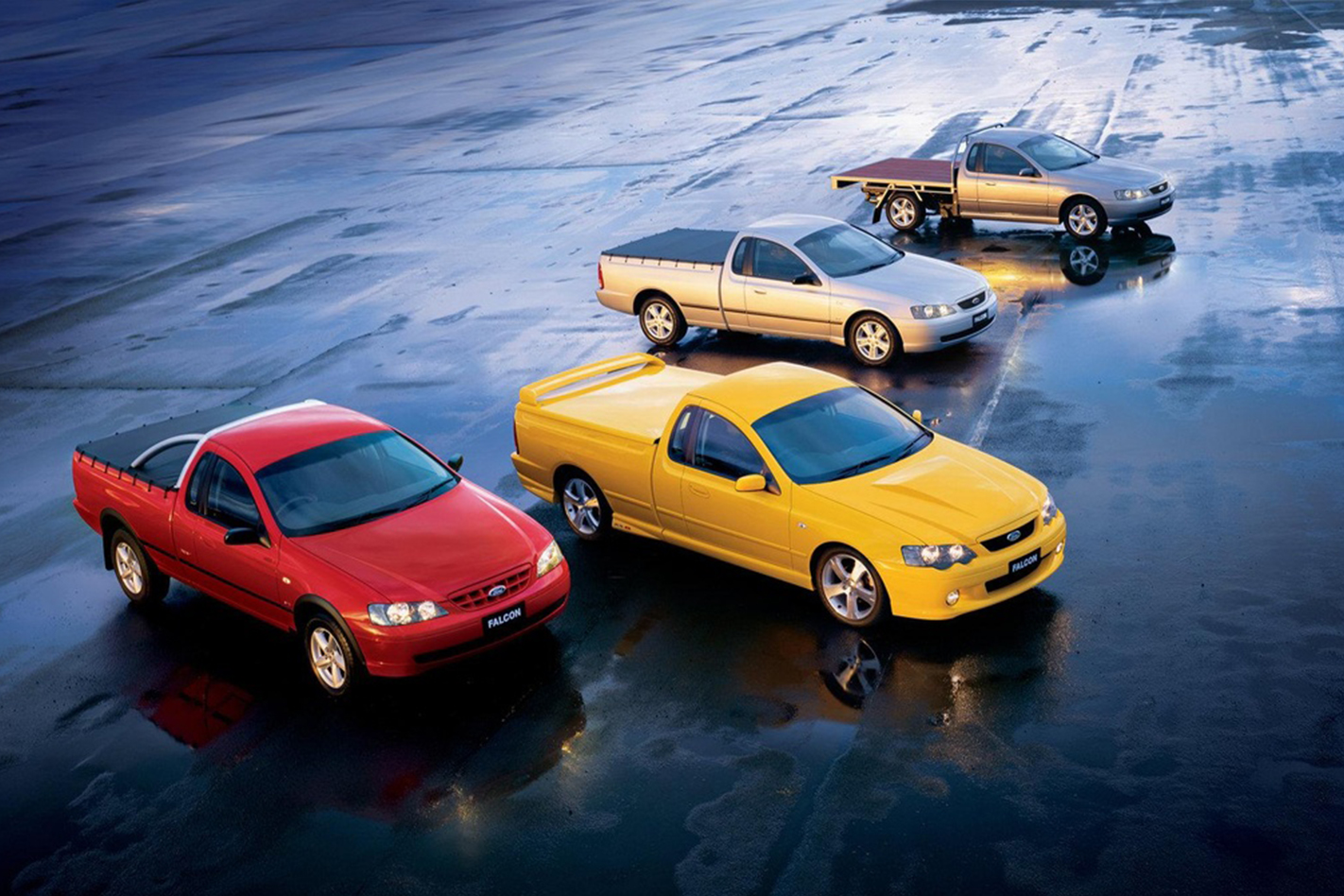
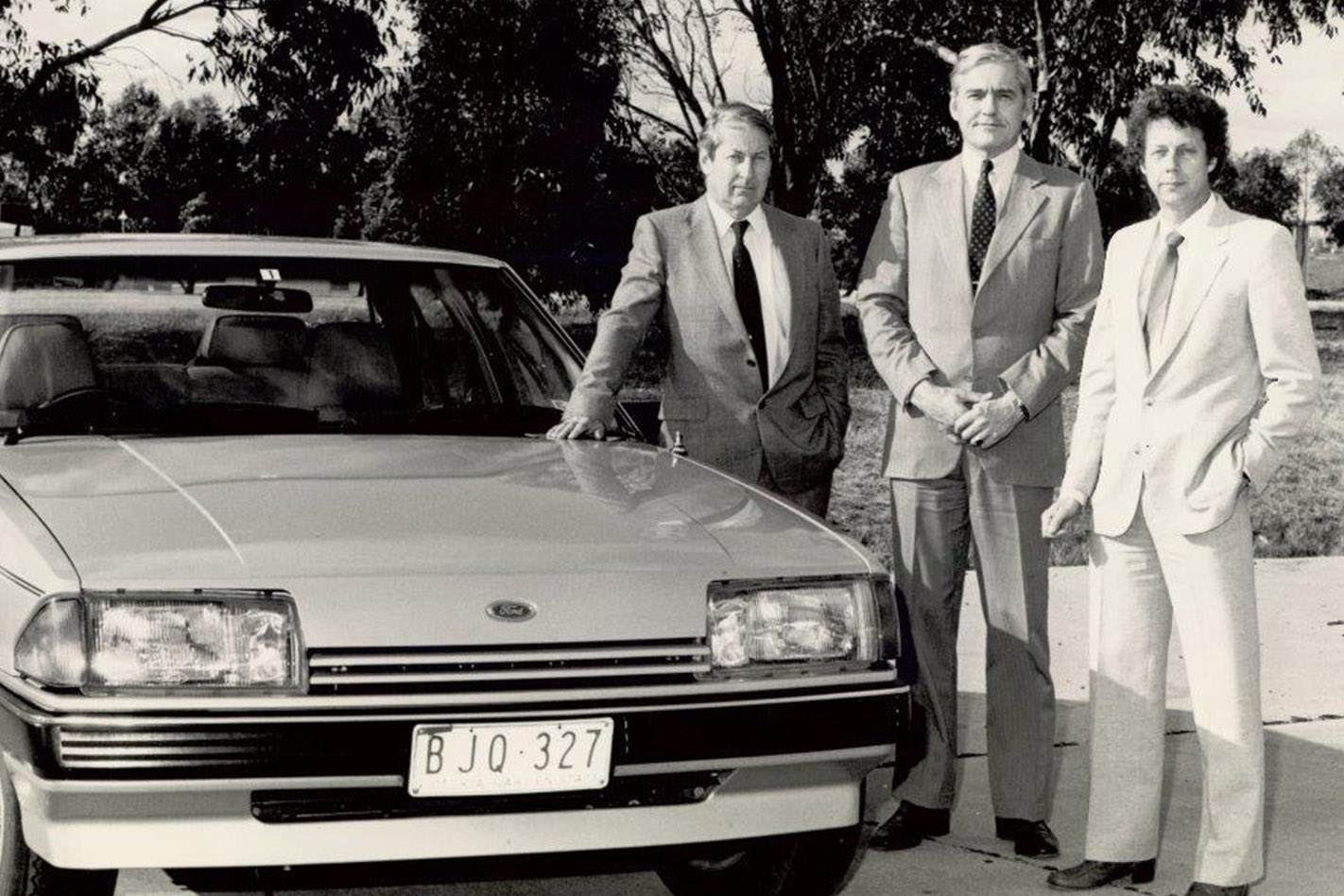
10. Bill Dix
The CEO who saved Falcon by canning the misguided Capricorn Project
Bill Dix, Ford Australia CEO from 1981 to 1990, is best remembered as the man who cancelled the Capricorn program in favour of retaining the Falcon. For two years in the early 1980s, confronting a second energy crisis and Holden’s move to the smaller Commodore, Ford seriously considered replacing the XD-generation Falcon with a stretched, front-drive Telstar/Mazda 626 in both hatchback and sedan forms. The product planners’ idea was to extend the wheelbase by 135mm and overall length by around 225mm, but without adding any width. The inevitable result was a long and skinny car. They struggled with the project, spending valuable engineering and design resources on what, hindsight tells us, was a crazy project.
Local content demands meant building the Capricorn’s four-cylinder engine in Geelong (thus forcing the end of V8 assembly). Gradually, Ford realised that with continuous engineering improvements, the Falcon used less fuel than the rival Holden. To his great credit it was Dix, as the new CEO, who cancelled the Capricorn program. However, Capricorn’s impact on future Falcons was immense. There was nothing in the pipeline beyond XE. The planners realised they needed an interim facelift (XF) while rushing to pull together the program that became EA.
Remember when: 1979
In 1979, after Ford took a 25 percent holding in Mazda, Dix became president of Ford of Japan and played a key role in creating a solid working relationship between Ford and Mazda that lead to joint product development, most effectively with the Laser.
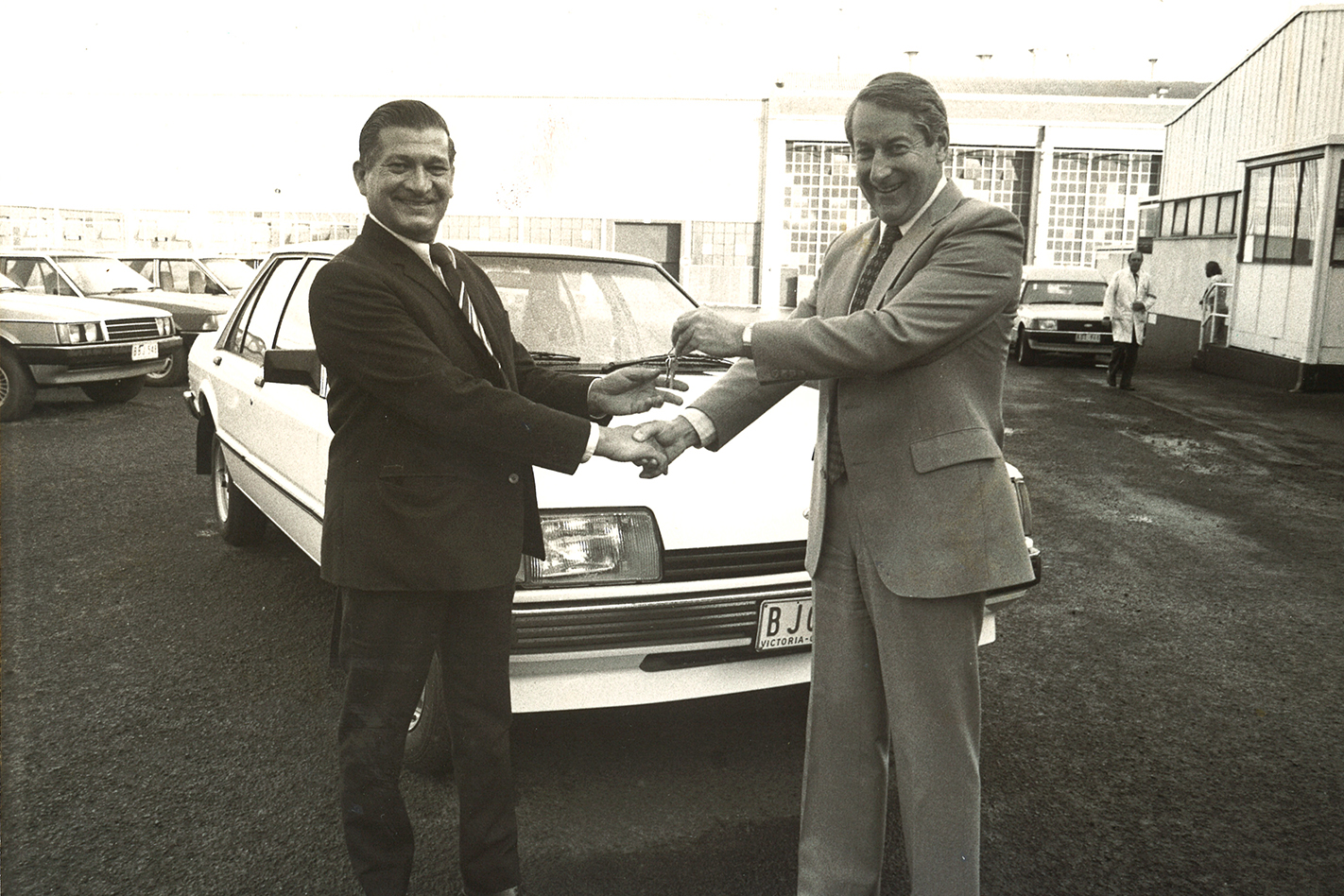
9. Bill Ford
Henry Ford’s great grandson, and wielder of the Falcon axe
The moment Bill Ford cancelled Ford’s all-new rear-drive program in 2005, just months away from committing to tooling, any chance that the Falcon would survive was gone. The new Panther platform, created to replace the aging American Ford Crown Victoria, Lincoln Town Car and Mercury Marquis, also included truly new (and Australian-designed) Falcon and Fairlane, and a raft of speciality models including a new Lincoln LS and Continental, Ford 427/Interceptor, a Ranchero (the American name for Ford’s Ute) and, they anticipated, the new Mustang.
As Ford sunk further into financial trouble, Bill Ford, then CEO and Chairman, decided they couldn’t afford the new program and concentrated instead on reworking old Mazda and Volvo front-drive platforms for a new Taurus and, in Australia, yet another reskin of the Falcon.
Then new boss Alan Mulally, who succeeded Bill Ford late in 2006, came up with the One Ford product development philosophy and the era of creating new models for individual markets was over. If the Falcon (and Territory) couldn’t be included as global models – not helped by Dearborn’s insistence that Broadmeadows build the Falcon in right-hand drive only – they had no chance of surviving.
Remember when: 1999
In February 1999, when an explosion ripped through Ford’s River Rouge plant in Michigan, killing six employees, Bill Ford rejected his advisors and rushed to the scene. One reputedly told him, “Generals don’t go out on the front lines”. Bill replied, “Then bust me to private.”
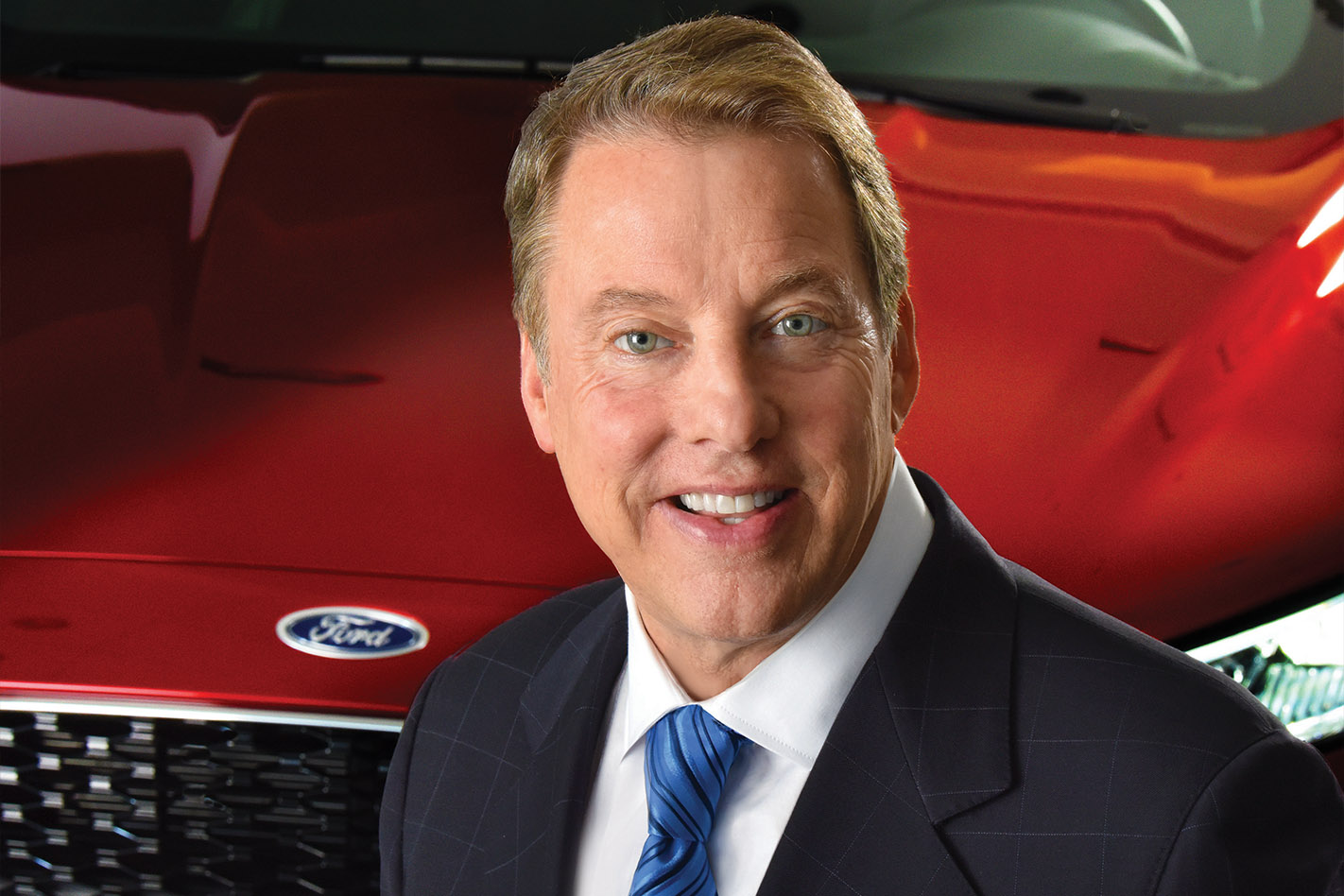
8. Trevor Worthington
Father of the BA, who also really managed to stamp out his Territory
As engineering father of the BA Falcon, Trevor Worthington, now Vice President of product development for Ford’s Asia-Pacific operations, deserves credit for the Falcon surviving into its sixth decade.
The Benalla-born (Vic) engineer understood that, after the disappointment of the AU, the Falcon demanded a major lift in refinement and appeal to lift sales to a sustainable level. The traditional Australian front-engine/rear-drive formula remained, but BA combined that with greater sophistication and a more-worldly attitude. Driven in large part by Worthington, Ford’s local engine engineers developed a new dohc, 24-valve cylinder head for the 4.0-litre straight six that amazingly still traced its origins back to the original Falcon’s 2.3-litre ohv engine.
From the time he joined Ford Australia in 1985, Worthington worked in product development – meaning Falcon, Falcon, Falcon – and product strategy, before leading product development for six years during the era when Ford crafted the Territory, using the BA as its baseline, and the FG Falcon reskin. Ford never had the money to do a clean-sheet car in Australia, yet today’s Falcon, overseen by Worthington from his new base in China, is a tribute to the company’s cleverness and diligence in doing so much with so little in terms of improved safety, performance, handling and comfort.
Remember when: 2015
Talking of the end of the Falcon, Worthington told journalists, “I’m personally disappointed, but every cent we spent on Falcon and Territory – and when we spent it – were the right decisions and I wouldn’t have changed a thing.”
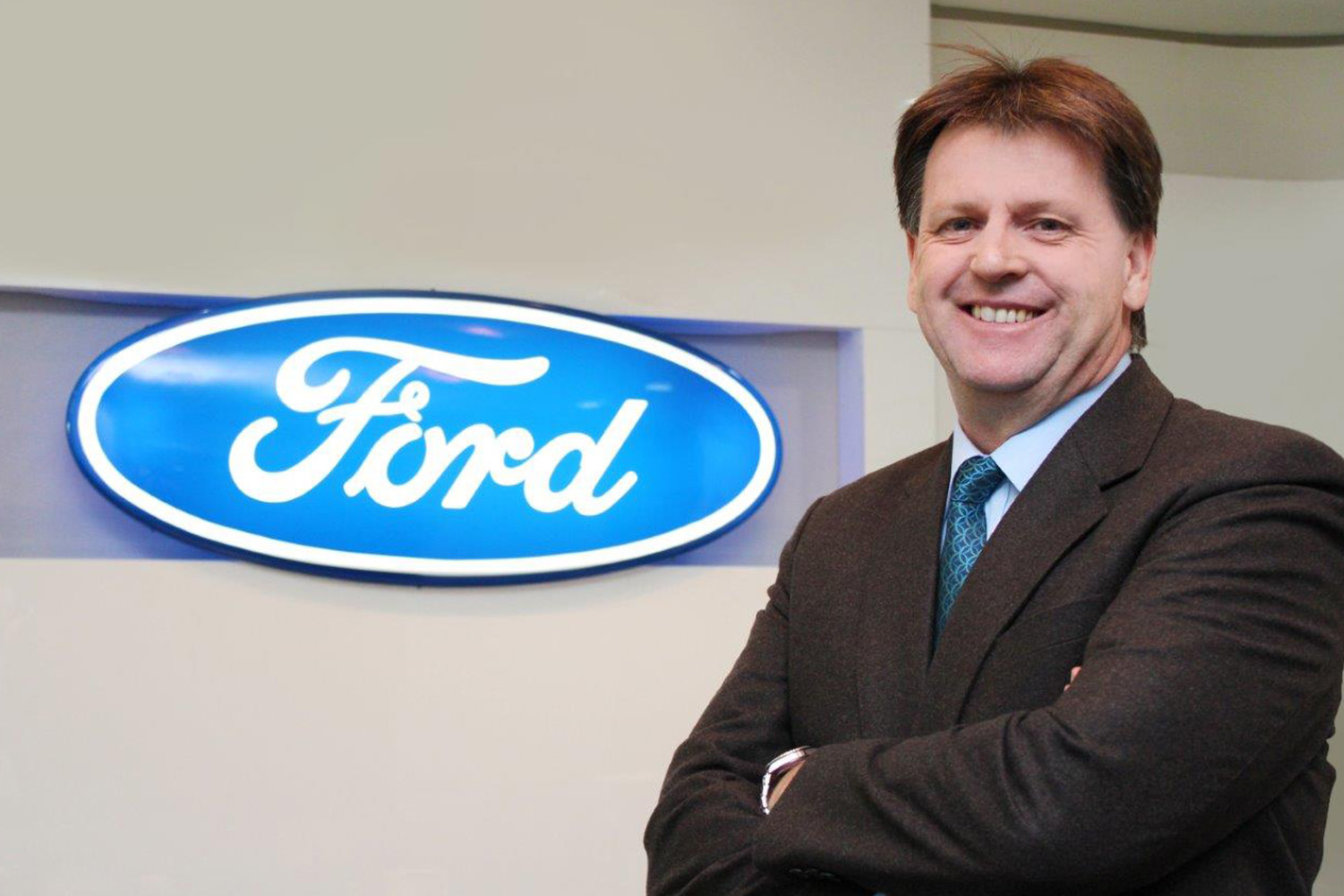
7. David Ford
Talented engineer with vision for the space around Falcon
David Ford (no relation), who started at Ford Australia in 1964 as a product planner, was on assignment in Europe when, in 1968, he was told to get over to Dearborn to work with the designers on the XA Falcon.
That was the real start for Ford, who rose to become chief engineer and was directly involved with generations of Falcons (plus Fairlane and LTD) until he left Ford Australia in 1990 to spend the next eight years in senior product roles in Dearborn.
It was Ford who convinced Bill Bourke, who wanted an upmarket model above the Fairlane, that rather than do a local ‘Thunderbird’ based on the Falcon Hardtop, they should stretch the Fairlane to create the LTD. In the end Bourke agreed, but insisted they do both.
In the late ’70s, knowing Ford desperately needed to reduce the Falcon’s fuel consumption, David Ford decided they need an alloy head which promised a 10 percent improvement. Ford went to Japan searching for a supplier and finally reached an agreement with Honda to supply the new head for the 1980 XD Falcon. The policy of constant improvement also saw him responsible for the XE’s Watts-link rear suspension.
Remember when: 1967
David Ford can rightly claim a major role in conceiving the ZA Fairlane, the hugely successful, locally conceived development of the Falcon that took Holden totally by surprise. The rival Statesman didn’t arrive for four and half years.
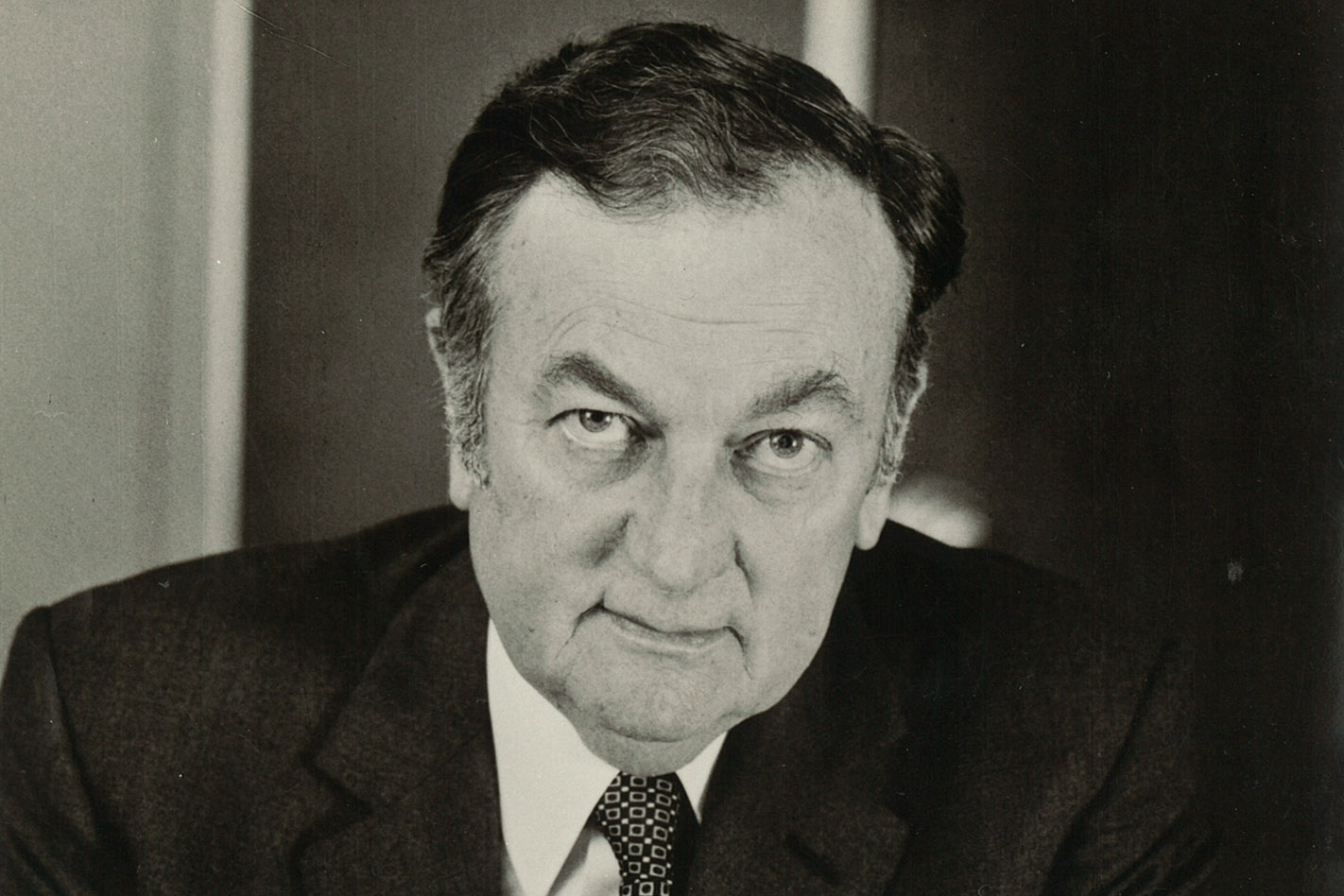
6. Keith Horner
Put a broom through the dealer network, helping Falcon to a clean sweep
After Keith Horner introduced new Ford Australia managing director Wally Booth to the NSW Ford dealers in 1963, he closed the door to the conference room and told his boss, “The best thing we could do for the Ford Motor Company is throw some hand grenades into that room and lock the doors.”
Irascible, hard-nosed and utterly determined, Keith Horner knew that nationally Ford’s dealers were tired, old and complacent; many were now public companies run by managers. As national sales manager and later marketing and sales director, Horner set out to transform the dealer body.
Read next:
In the mid-1960s, with Ford beginning the Falcon’s fight back to respectability, Horner set up a process that enabled young men with as little as $20,000 to become Ford dealers. If they mortgaged their homes and, thus, were totally committed, Ford would finance the rest. Do that, work hard, and most quickly became multi-millionaires.
The new dealerships enabled Ford to sell the volumes necessary to eventually beat Holden. Horner managed the dealers like nobody else, before or since. His voice was strong on every decision within the company. Horner trained Max Gransden, his successful successor, but Gransden wasn’t as effective or as visionary as tough old Keith.
Remember when: 1973
Horner hated the press. At the launch of the LTD/Landau, I tried the coupe’s rear seat, only for the front seat back to fall off. I handed the piece to Keith. His response: “If you’re so bloody clever, you’d be earning twice as much as a product planner.”
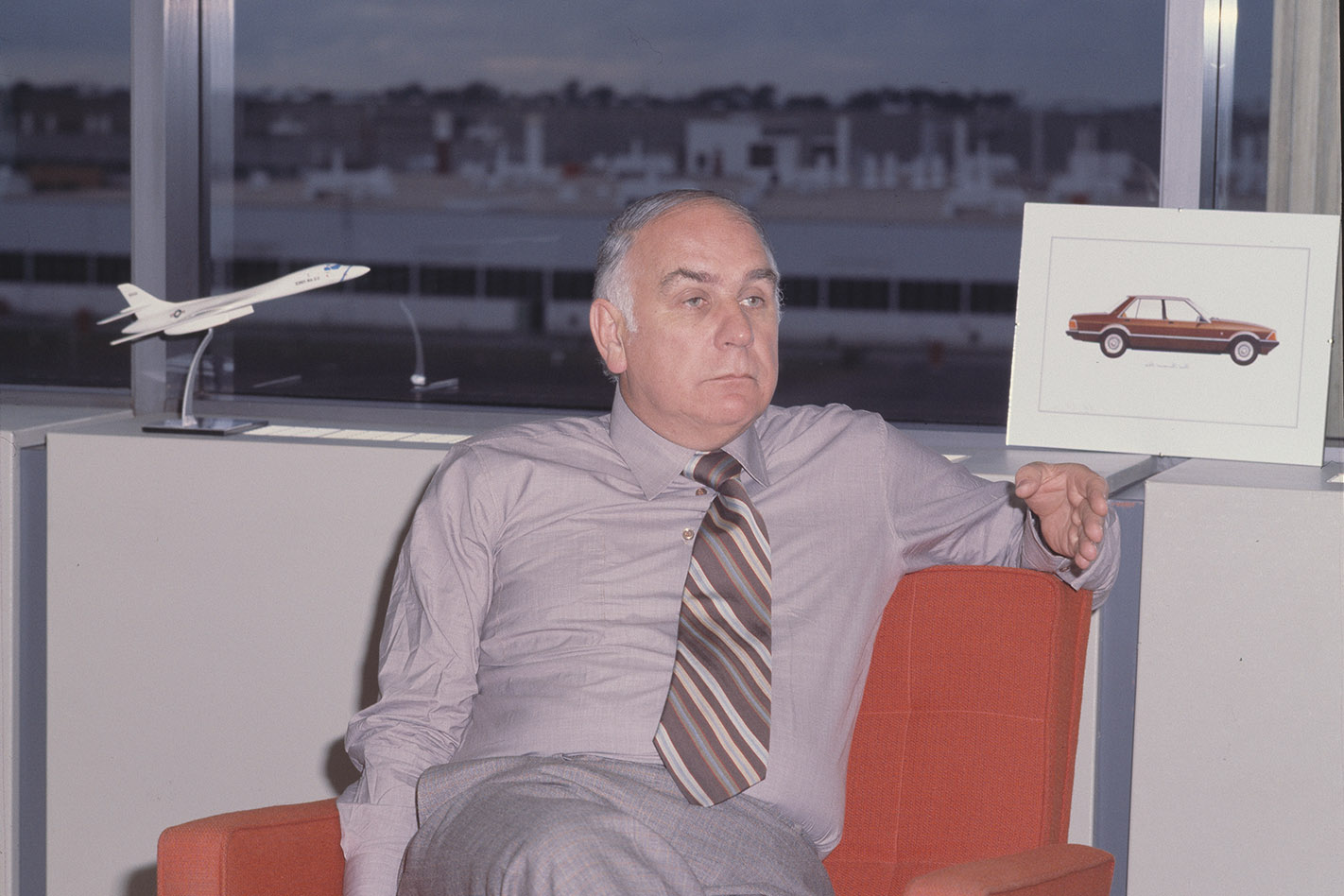
5. Brian Inglis
Manufacturing guru who would later lead Ford Australia through the glory years
Spitfire pilot during WW2, and later the first Australian to head Ford Australia, Brian Inglis was with Charlie Smith in Dearborn when they decided to can the Zephyr and go with the new Falcon. As manufacturing director, Inglis was then responsible for retooling for the new model, Geelong’s new stamping and engine plant, and the Falcon’s final assembly in the greenfield Broadmeadows factory, a staggering achievement.
He was managing director and CEO of Ford Australia through the Falcon’s glory years of 1970 to 1981 and remained chairman when promoted to run Ford Asia-Pacific. He continued to be a huge supporter of the Falcon and understood its importance in manufacturing employment in Geelong and Melbourne.
Inglis loved to visit the Broadmeadows design studio over the weekend to watch the clay modellers at work. With a fine eye for design, he championed the late move to an ultra-low waistline for the XD. He was also a great supporter of Ford’s excellent graduate program that fed the company’s executive pool with a stream of young, enthusiastic men who later provided management at the highest levels of FoMoCo.
Remember when: 1977
Sir Brian Inglis was knighted for services to industry in 1977. Along with four other Australian pilots, he was also awarded the Legion of Honour, France’s greatest decoration, in recognition of their role in liberating France.
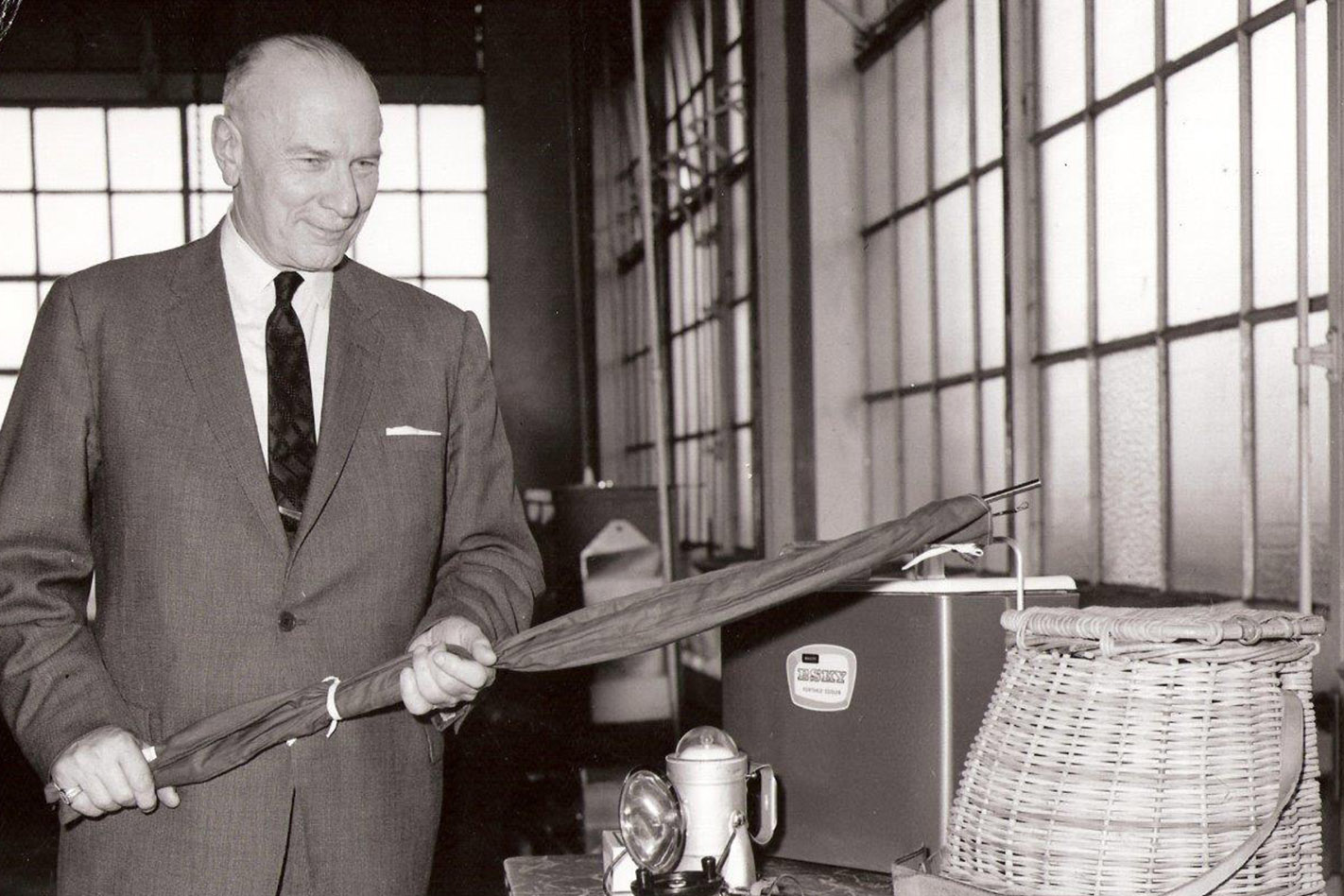
4. Charles Smith
Drop-kicked Zephyr with a ‘return to sender’ note. Enter Falcon.
Charlie Smith will always be remembered as the Ford Australia MD who, disappointed by Dearborn’s restyle of the English Zephyr Mk II, sent the famous telegram to Ford in Geelong, “Cancel Zephyr”.
The story may be Ford folklore, but the result was the same. Ford committed to the Zephyr in February 1957, tooling was underway and the program approved by the Federal Government, so it took a brave man to tell the Americans, upon seeing a Falcon design proposal, “That’s the car I want for Australia”.
The Falcon was modern, cheaper to build and lighter, though Brian Inglis, one of the Australians who rejected the Zephyr in 1958, later admitted, “The Falcon was not as robust as our restyled Zephyr and we certainly had our misgivings.”
English-born Charles Smith joined Ford in 1922 and became Australian MD in 1950. As the locally-manufactured Holden took sales leadership he watched Ford’s market share slide below 10 percent. Smith later remembered, “We introduced the Consul and Zephyr, but that wasn’t good enough; we had to find a product we could manufacture if we were to remain a major force in Australia.”
That meant a new plant. Smith, encouraged by the Victoria premier, bought 182 hectares (450 acres) at Campbellfield at £500 an acre. The plant would produce cars from August 1959 to October 2016.
Remember when: 1950
Charlie Smith’s first task as boss of Ford Australia was installing a V8 assembly line in Geelong. But it was getting head office (then Ford of Canada) to agree to spend $40m on manufacturing a car here that set the scene for the Falcon.
3. Wally Booth
Numbers man who made early Falcons really start to add up
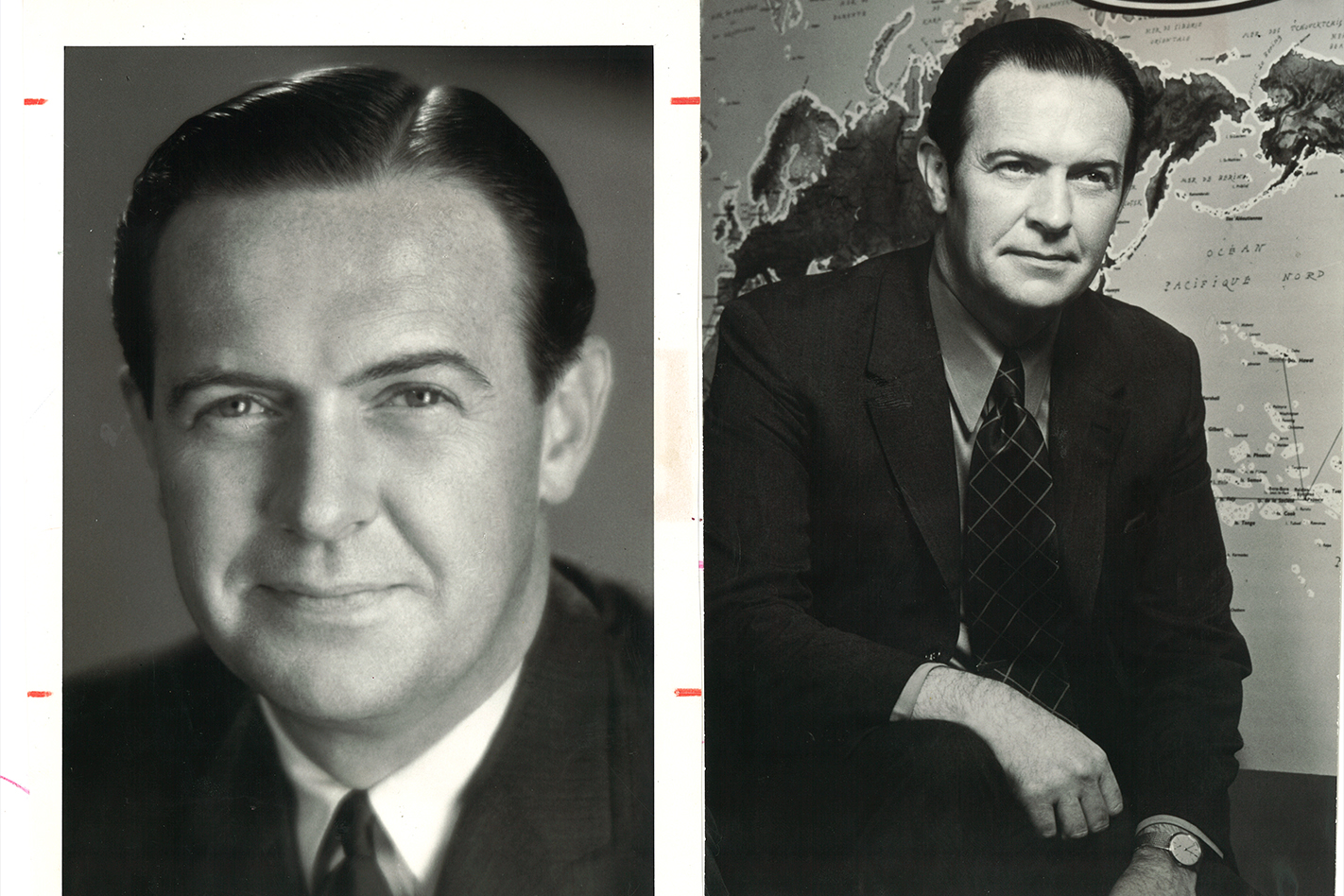
Everybody remembers Bill Bourke, but few appreciate the key role played by his predecessor, Wallace ‘Wally’ Booth. The crew-cut, 40-year-old Booth was sent to Australia in 1963 to fix Ford Australia or shut it down (sounds familiar; this scenario was to be repeated by new CEOs on at least three separate occasions later in the Falcon’s life).
Brian Inglis remembered Booth “as a finance man with imagination”, a rare combination. Booth was extraordinarily well connected in Dearborn – he had the ear of Ford’s legendary beancounter R.J. Miller – and was a man who made things happen. It was he who employed Bourke.
In True Blue, Bill Tuckey’s book on 75 Years of Ford Australia, he writes, “Inglis said Booth saw the fundamental problems of Ford Australia and set out to get the manufacturing systems right, create a product engineering base, set up a new sales operation and dealer body, and discipline the component suppliers.”
Booth also knew he had to get the Falcon right, and approved a plan to use South Australia’s Eyre Peninsula as a proving ground (pre-You Yangs). Based at Port Lincoln, the engineers belted Falcons until they dropped, leading to 1500 engineering modifications, mostly to make the car tougher. Booth even agreed to use Port Lincoln for the XM’s press launch.
Remember when: 1967
Ford couldn’t decide between Fairlane, Monarch and Pacific for the name of its new luxury car, then under development for launch in 1967. Chief engineer Jack Prendercast wanted Fairlane S-C for Southern Cross. It was Booth who choose Fairlane.
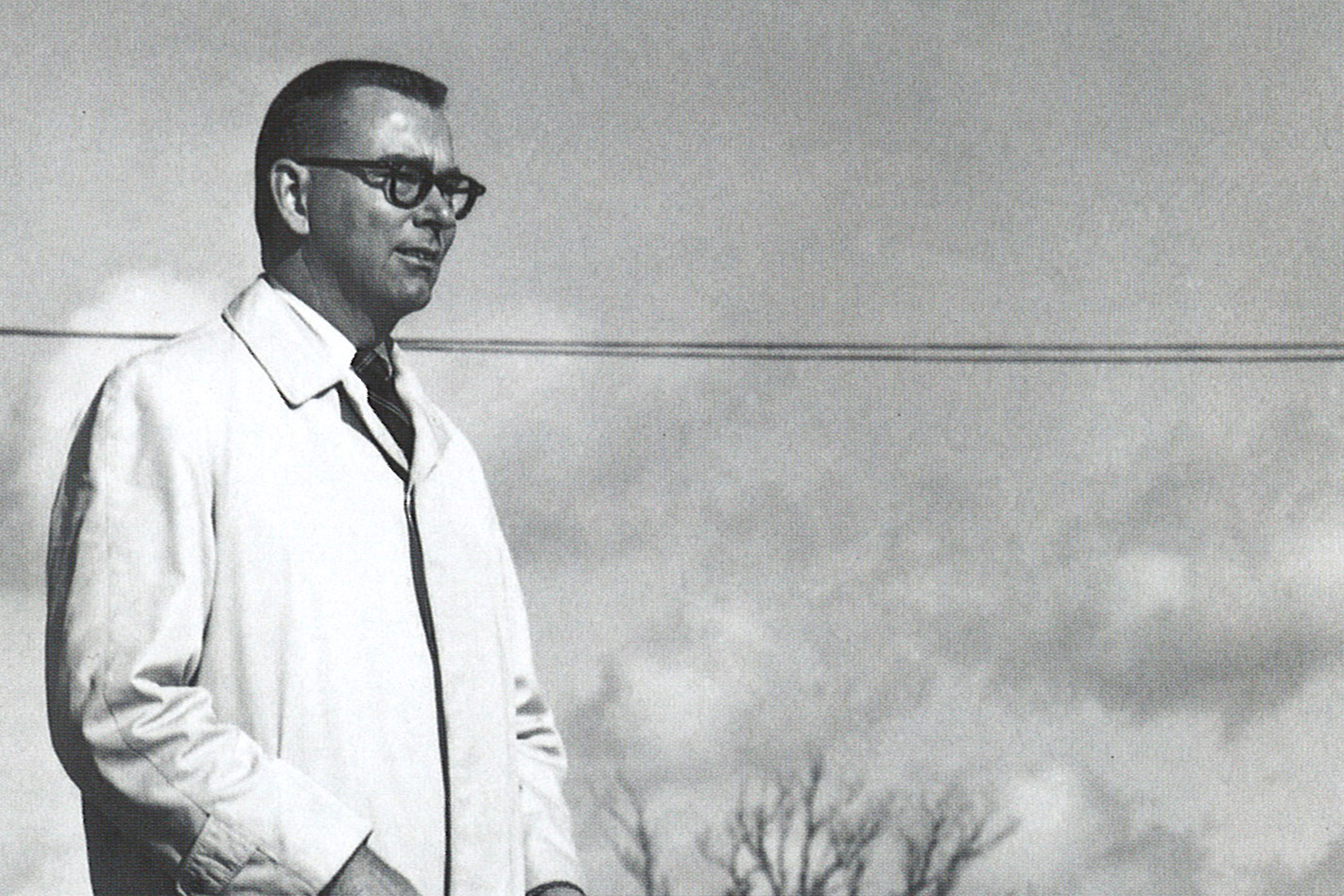
2. Jack Telnack
Led the design of the first true, all-Australian Falcon
“Go down there and do something; just don’t make my telephone ring.” Jack Telnack was 29 years old when Gene Bordinat, vice-president of Ford design, sent him to Australia with that simple instruction.
He arrived in October 1966, just weeks after the launch of the XR. The talented Telnack’s first job was facelifting the XR to create the XT, working out of “a tiny shoebox of a place” hidden away in Ford’s Geelong facility. Knowing that the American Falcon’s days were numbered, Telnack head-hunted John Doughty, 22, from Holden, and Brian Rossi, 25, from Ford of Europe, and together they did the XW and XY, while realising that if the Falcon was to survive, an all-Australian car would be required.
The XA, the first Australian-designed and engineered Falcon, was styled by this trio of whiz kids in Dearborn, with MD Bill Bourke flying the Pacific every two weeks to check on their progress. Finally, Bourke was told to create his own studio in Broadmeadows. Telnack set up and ran the new design studio until he was promoted to head of design in Europe in 1975 and then global design boss in 1980.
Unlike many crayon-pushers, Telnack understood design and engineering, was always supportive of Australia, and any new Falcon program until he retired in 1997.
Remember when: 1985
Telnack is best remembered, not for his work at Ford Australia, but for the breakthrough 1985 aerodynamic Taurus that quickly became America’s best-selling car. The Taurus was seen as responsible for bringing European design influences to Detroit.
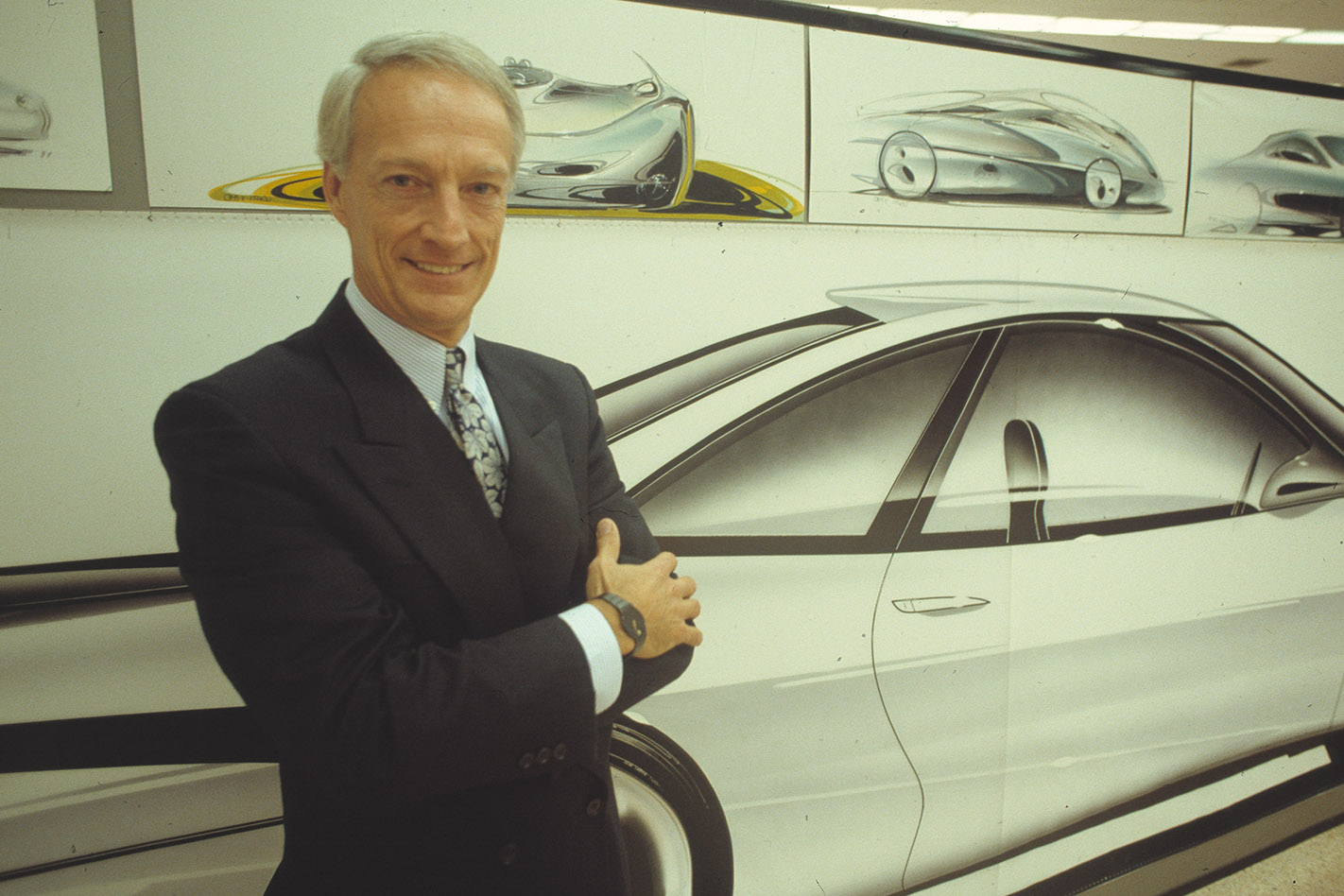
1. Bill Bourke
Energetic visionary who helped reshape our perception of Falcon
When MD Wally Booth went looking for a super-salesmen to help Ford recover from the Falcon’s durability woes, Dearborn sent him William Oliver ‘Bill’ Bourke, 37. History proves this was an inspired choice.
It was the charismatic Bourke who came up with the 70,000-mile You Yangs durability run to help convince the public that the XP Falcon really was new and durable; the flamboyant Bourke who, after driving an XR police pursuit car, decided to produce it as the bronze GT; Bourke, the product guy, who agreed to the Fairlane and LTD (and Landau) strategies that so traumatised Holden; Bourke, the industrialist, who later, as head of Ford Asia-Pacific, sold Dearborn on Ford Australia’s need to engineer uniquely Australian Falcons; the energetic Bourke, who most of all, set out to (and succeeded) in breaking Holden’s sales domination in Australia.
Twice, Henry Ford II promised him the top job at Ford, but he was shafted by the Dearborn clique for being too candid in his opinion of Ford chairman Philip Caldwell. Ford executives remember Bourke as a visionary, a true leader, and a straight shooter. According to Bob Lutz, Bourke was, “a gifted and charismatic leader.” Indeed.
Remember when: 1969
A regular XW Falcon GT was never good enough for Bourke. It’s legend now that he shipped his XW to Dearborn and had the 351 cubic inch V8 replaced by a 428 Cobra Jet V8, plus upgraded rear axle and transmission. The one-off still exists.
THE HONOUR ROLL
Any list that attempts to compress the Falcon’s 56 years into only 10 people is inevitably going to provoke controversy.
We wanted to include dozens of others, all of whom played significant roles across the Falcon’s epoch, and who rightly deserve mention.
We apologise for those we may have missed. In no particular order these people warrant recognition: Jack Prendercast, Clive Potter, Ivan Tan Sing, Ian Vaughan, Jack Lavers, Jack Kelly, Al Turner, Geoff Polites, Peter Arcadipane, Carl Mueller, John Murray, Trevor Creed, Bob Marshall, Don Pearce, Wayne Draper, Brian Rossi, Jack Hawke, Steve Parke, Alex de Vlugt, Fred Bloom, Russell Christophers, Scott Strong, Allan Moffat, Max Gransden, Lindsay Dawson, Tom Pettigrew, Dave Wilkinson, Peter Gillitzer, and many more.
UPDATED – The plans of many motorsport fans have been once again dashed, with the huge Bathurst International Festival originally set down for November cancelled due to COVID-19 travel restriction uncertainty.
More than 350 racers and more than 2000 support crews were down to attend the multi-category event.
“Unfortunately, the current COVID situation in Australia and the timeline for border closures remains fluid with no definitive criteria known for the critical NSW/Vic border and only proposed indicative dates which are very conditional on significant milestones and criteria for some other states as to when border controls and quarantine requirements may change,” read a statement.
“Due to that fact that the majority of the competing teams are located outside NSW and the nature of these teams is such that the majority of them have other commercial businesses or interests that preclude them from being able to enter a mandatory quarantine period of 14 days either prior to or post the event (depending on their state of origin) the event could only operate successfully with the lifting of border restrictions and mandatory quarantine periods.”
The only event from the multiple categories on the bill – including a last-hurrah gathering of racing Holdens – that has any sort of forward vision is the Bathurst 6-Hour, which will likely return to its traditional Easter home.
This puts a lid on TCR returning to the track for 2020, in a year where the Supercars series completed almost 30 races over an abbreviated calendar.
The Bathurst 1000 will go ahead next weekend as planned, marking the finale of the 2020 season.
Statement in full;
The Australian Racing Group and Bathurst Regional Council have made the difficult decision to postpone the November debut of the new Bathurst International event at Mount Panorama until 2021.The decision was based on a number of COVID related operational impacts on what was to have been the largest Bathurst event for the year with the Bathurst 6 Hour supported by sprint races featuring TCR Australia, S5000, Touring Car Masters, Trans Am, Porsche Sprint Challenge, Radical, Heritage Touring Cars, Excel Challenge and the Holden Bathurst Revival. This would have resulted in over 350 race cars and drivers coupled with over 2000 support crew and volunteers in attendance at the event. COVID safe operating plans and other risk mitigation protocols had been developed to ensure that the event could occur.Due to that fact that the majority of the competing teams are located outside NSW and the nature of these teams is such that the majority of them have other commercial businesses or interests that preclude them from being able to enter a mandatory quarantine period of 14 days either prior to or post the event (depending on their state of origin) the event could only operate successfully with the lifting of border restrictions and mandatory quarantine periods.Unfortunately, the current COVID situation in Australia and the timeline for border closures remains fluid with no definitive criteria known for the critical NSW/Vic border and only proposed indicative dates which are very conditional on significant milestones and criteria for some other states as to when border controls and quarantine requirements may change.The lead time required on transport, accommodation, local suppliers, broadcast teams, support services and infrastructure is now at a critical phase and this has resulted in there now being no other option other than to delay the debut of this new event until 2021.ARG and the BRC have now turned their attention to the 2021 Bathurst 6 Hour event, to be held on its traditional Easter long weekend date (April 2-4).The event will once again be headlined with the famous Hi-Tec Oils Bathurst 6 Hour race for production cars which will feature a number of new innovations to increase the broadcast and profile of the production car race.The date for the 2021 Bathurst International will be confirmed in due course and, like this year’s planned event, is expected to be held towards the end of the calendar year, offering the chance for the world’s best cars and stars to compete at the famous Mount Panorama circuit.Refunds will be provided to anyone who purchased tickets to the event. Refunds will be automatically processed by Ticketmaster within 5-7 business days.Refunds will be provided to anyone who purchased a campsite to the event. Refunds will be processed within 12-14 business days. If after 14 business days campers have not received a refund, please contact the Bathurst Regional Council on (02) 6333 6111.
———————————————————————–
Aug 2020- Holden’s motorsport heritage will be celebrated at Bathurst in November, with the addition of a one-off Holden-only category within the newest event at the world-famous Mount Panorama circuit in Bathurst, NSW.
The Holden Bathurst Revival will see up to 100 racing Holdens hit the mountain for a series of sessions within the Bathurst International race meeting which will pay tribute to all eras of the company’s motorsport history, from competition variants of the first-ever Holden model, the 48-215, through to modern touring cars.
Organisers say that eligibility extends to Holdens from almost every circuit racing category that the marque has ever run, including Group N and Improved Production/Club Cars, as well as mothballed series like the V8 Utes, Commodore Cup and Future Tourer categories.The event, according to the Australian Racing Group (ARG), will offer participants a unique and affordable opportunity to drive their racing Holden on Australia’s most iconic racing circuit, with 60 minutes of track time on offer.
Underpinning the Bathurst International Festival – tentatively set down for late November 2020 – is a 500km two-driver TCR International race, supported by on-point categories like S5000, Trans Am 2 and Touring Car Masters.
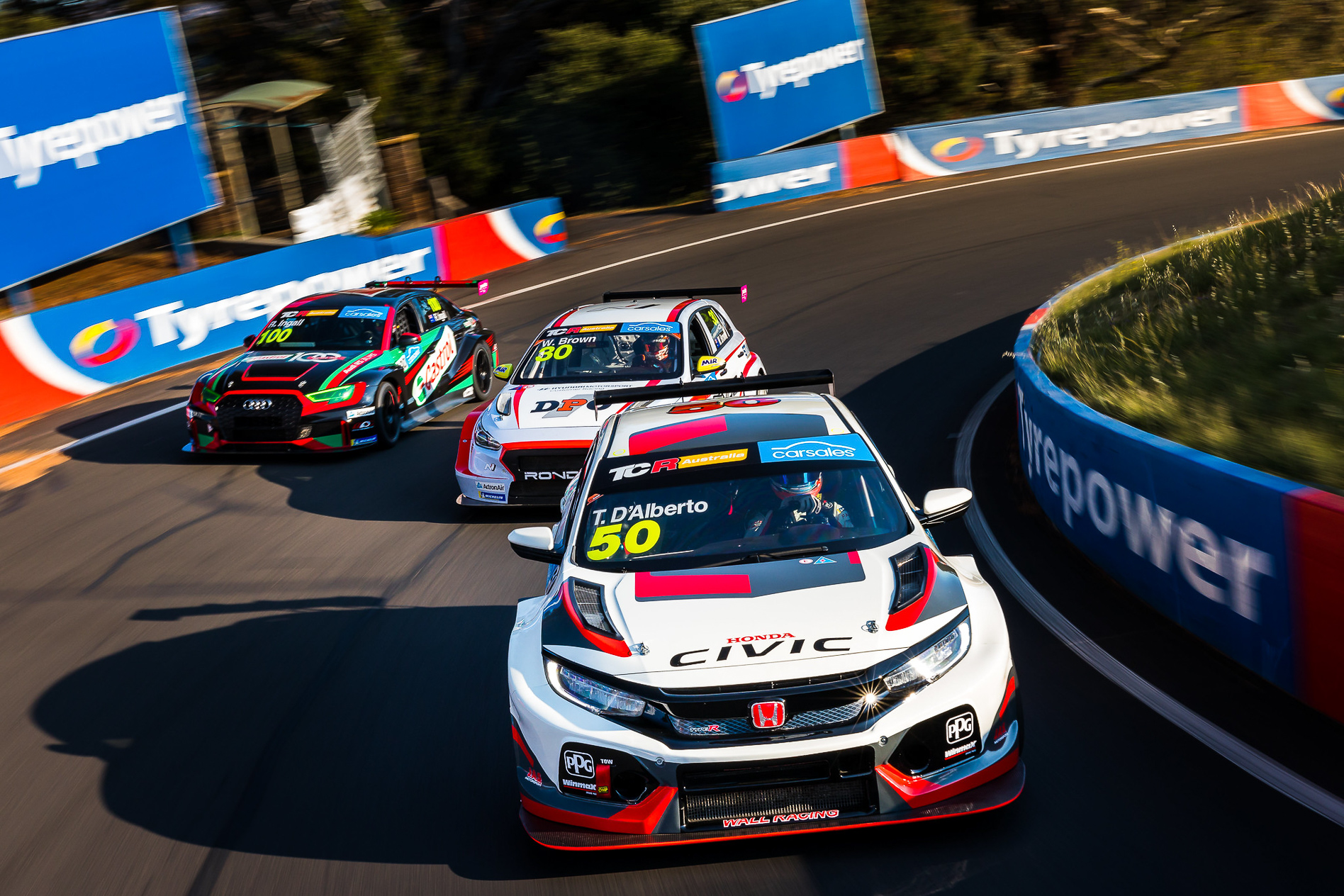
As well, Le Man-spec LMP3 cars will compete around one of the world’s most iconic circuits, rounding out a truly spectacular feast for the eyes and ears.
The TCR enduro will underpin Mt Panorama’s fifth event for 2020, with teams from Australia and New Zealand forming the bulk of the field. Australia’s TCR series kicked off in 2019, while TCR New Zealand will debut in 2020.
Teams and drivers from other TCR series around the world will also be invited to race in the non-points paying event. Organisers are anticipating a field that could top 55 cars for the race.
“Bathurst is one of the best race tracks in the world – it’s a kind of mix between Spa and Macau,” said current WTCR driver – and former Bathurst 1000 racer – Andy Priaulx, who hails from the UK.
“It will be fantastic to drive there in a TCR car that will perform really well over the top. I have very fond memories of my previous experiences on the circuit and I am sure that the TCR race will provide a very exciting show.”
The S5000 field, meanwhile, will likely be bolstered by top-class open wheel racers from across the globe. Former Ferrari driver Rubens Barrichello took part in the series’ opening round at Sandown in September, while one-time A1GP racer John Martin, former Australian Gold Star winner James Winslow and current Supercars young guns Anton de Pasquale and Will Brown have all been linked to the series.
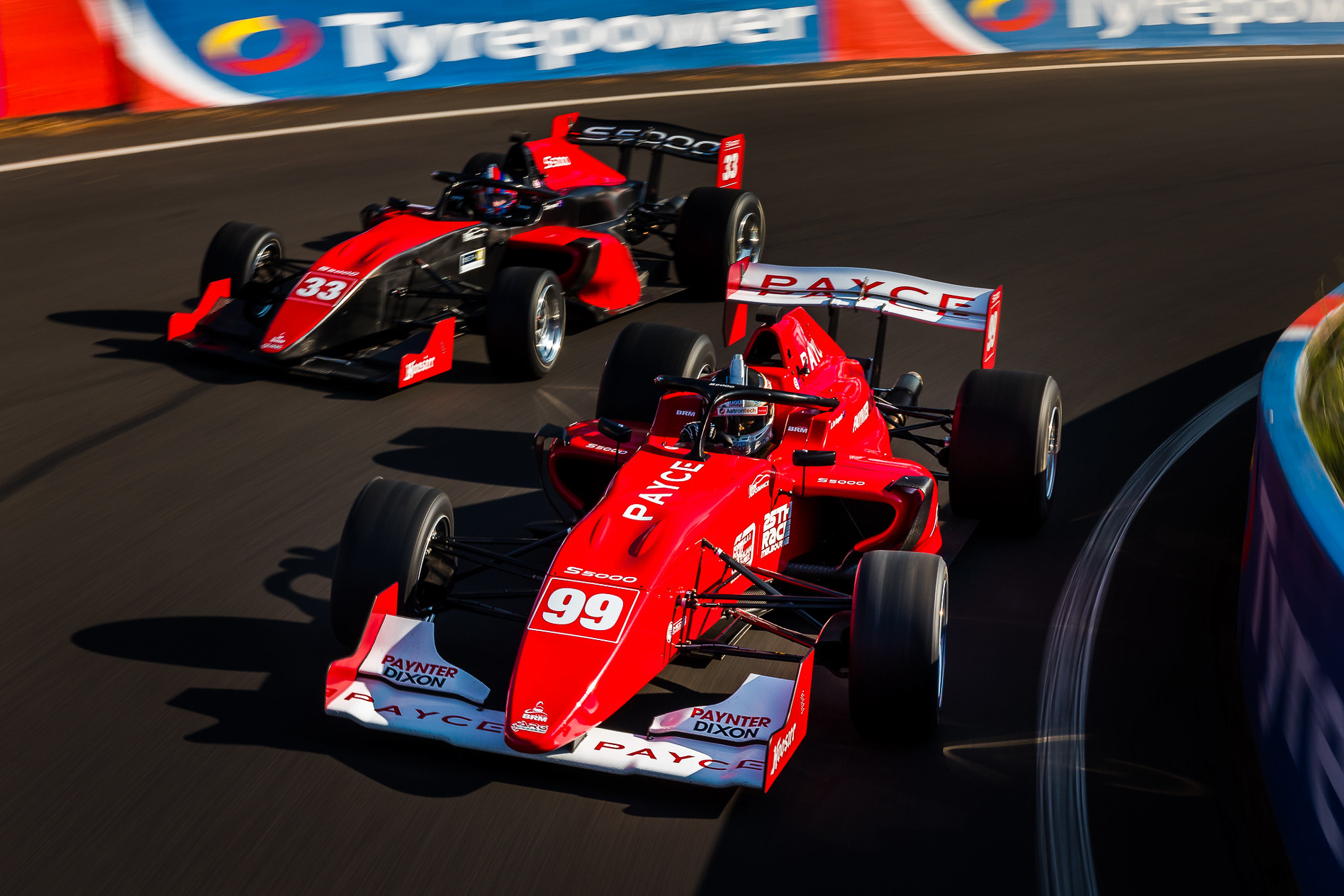
“I feel that the S5000s are going to produce some unbelievable racing and lap times,” said former Gold Star winner, John Bowe. “Those cars will be very fast and there’s no doubt that their power and handling will see the lap record be broken.
“The S5000s is a true driver’s class. Bathurst is a circuit that is not for the faint-hearted on the best of days, so the addition of S5000 will make for a true racing spectacle.”
Another series that will be well worth watching will be TA2, which will open entries to Australian and overseas teams. The V8-powered spaceframe cars – think of them as a bridge between NASCAR and Supercars – are loud, fast and spectacular, and are perfectly suited to a track like Bathurst.
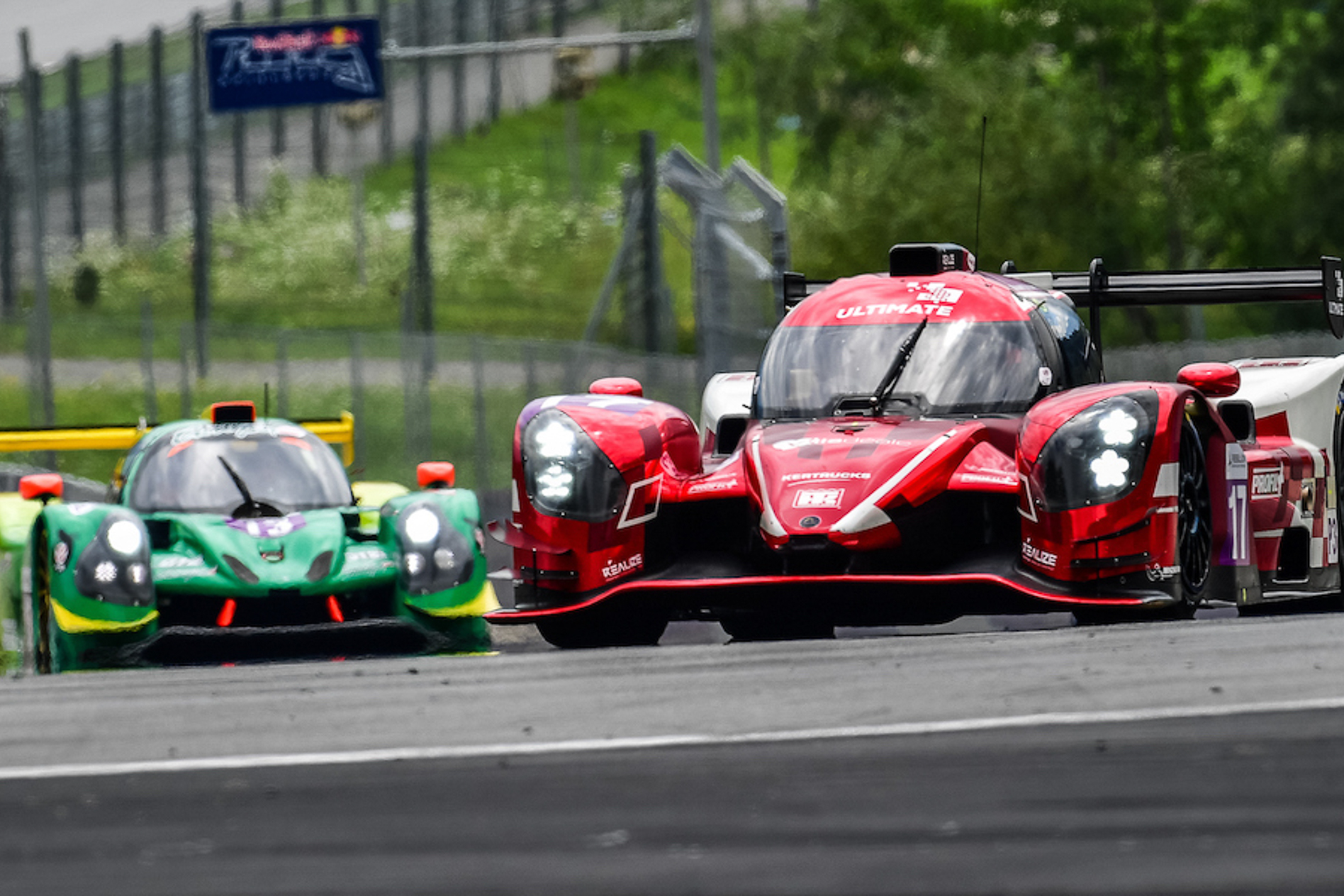
The appearance of Le Mans Prototypes on The Mountain is also a big coup for organisers, the Australian Racing Group. The LMP3 cars (below) are known as closed prototypes, and they use a control naturally aspirated Nissan V8 that produces around 313kW. Not bad for a 900kg car!
Rounding out the support card will be Touring Car Masters, with teams from New Zealand and the US expected to make the trip to Australia.
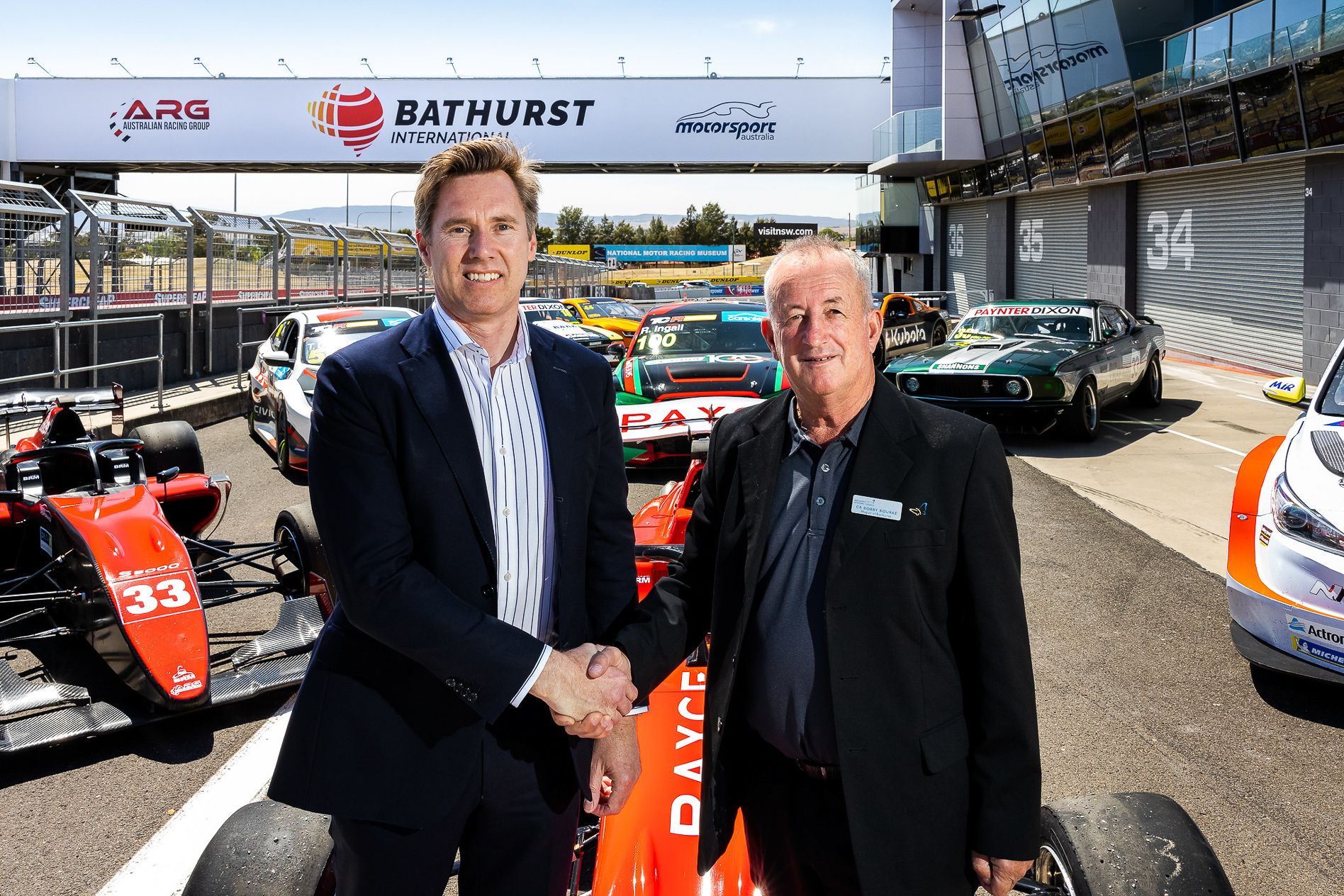
Matt Braid (left) with Bathurst lord mayor Cr Bobby Bourke
“This event was presented as a true opportunity to bring a new international focus to Bathurst,” said Australian Racing Group CEO, Matt Braid. “Up to now, there have been limited opportunities for international drivers to compete at Australia’s best race track in cars they are used to racing in their home series.”
What series are you most looking forward to seeing at the Bathurst International next year? Let us know below!
This is WhichCar’s rolling list of the most popular vehicles in Australia, updated month by month.
Currently, figures represent September 2020 sales figures, as presented by the FCAI’s VFACTS report.
1. Ford Ranger – 3726 sales in Sep 2020
Ford’s iconic Falcon ute may no longer be with us, but the Blue Oval workhorse finds a surprising successor in the Ford Ranger, which has gone on to become one of Australia’s top-selling vehicles.
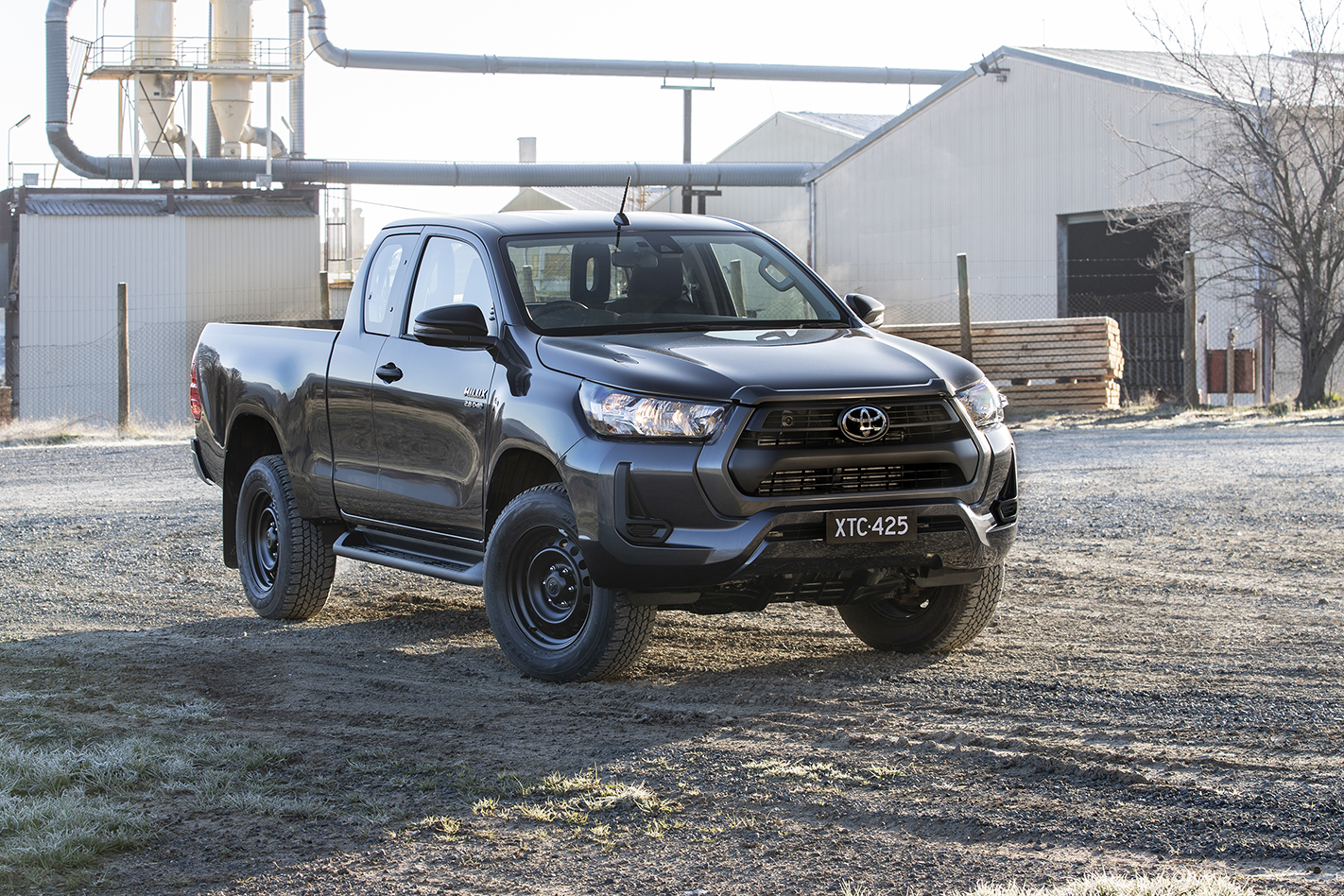
2. Toyota HiLux – 3610 sales
The Toyota HiLux has developed a reputation for being the ‘unbreakable’ dual-cab ute in some of the world’s harshest and most remote environments, so it is no surprise it’s one of Australia’s most popular vehicles.
3. Toyota RAV4 – 2433 sales
The Toyota RAV4 is the medium SUV that started a revolution, and the five-seat, five-door medium SUV is regularly one of Australia’s best-selling cars.
Toyota‘s RAV4 made its debut at the Tokyo show in 1993 and was released in Australia the following year. Now into its fifth generation, more than 300,000 RAV4s have been sold in Australia.
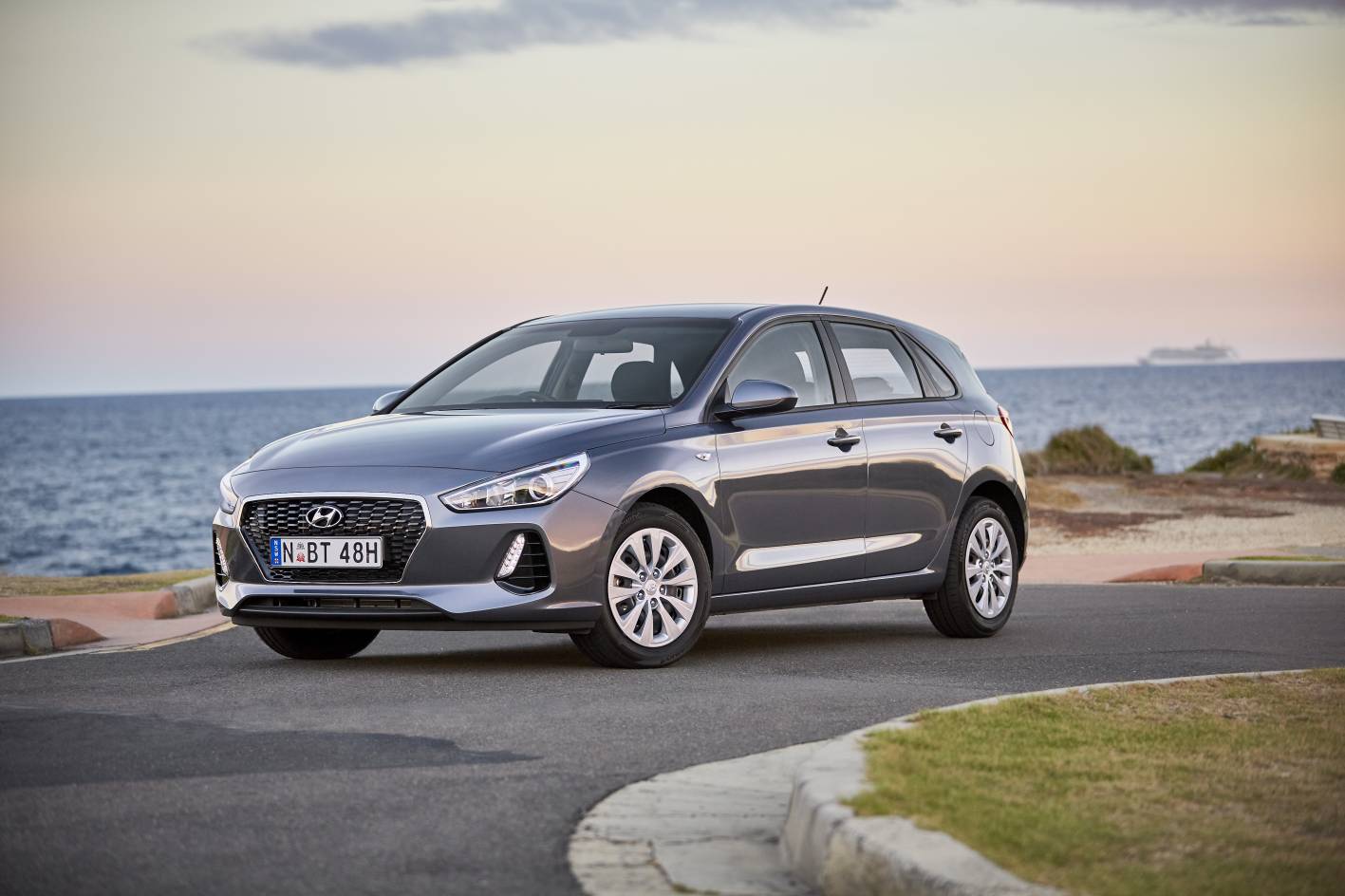
4. Hyundai i30 – 1786 sales
The introduction of the Hyundai i30 in 2007 formed the genesis of the Hyundai we know and love today, with the small hatchback redefining a brand that traditionally was thought of as cheap and uninspiring.
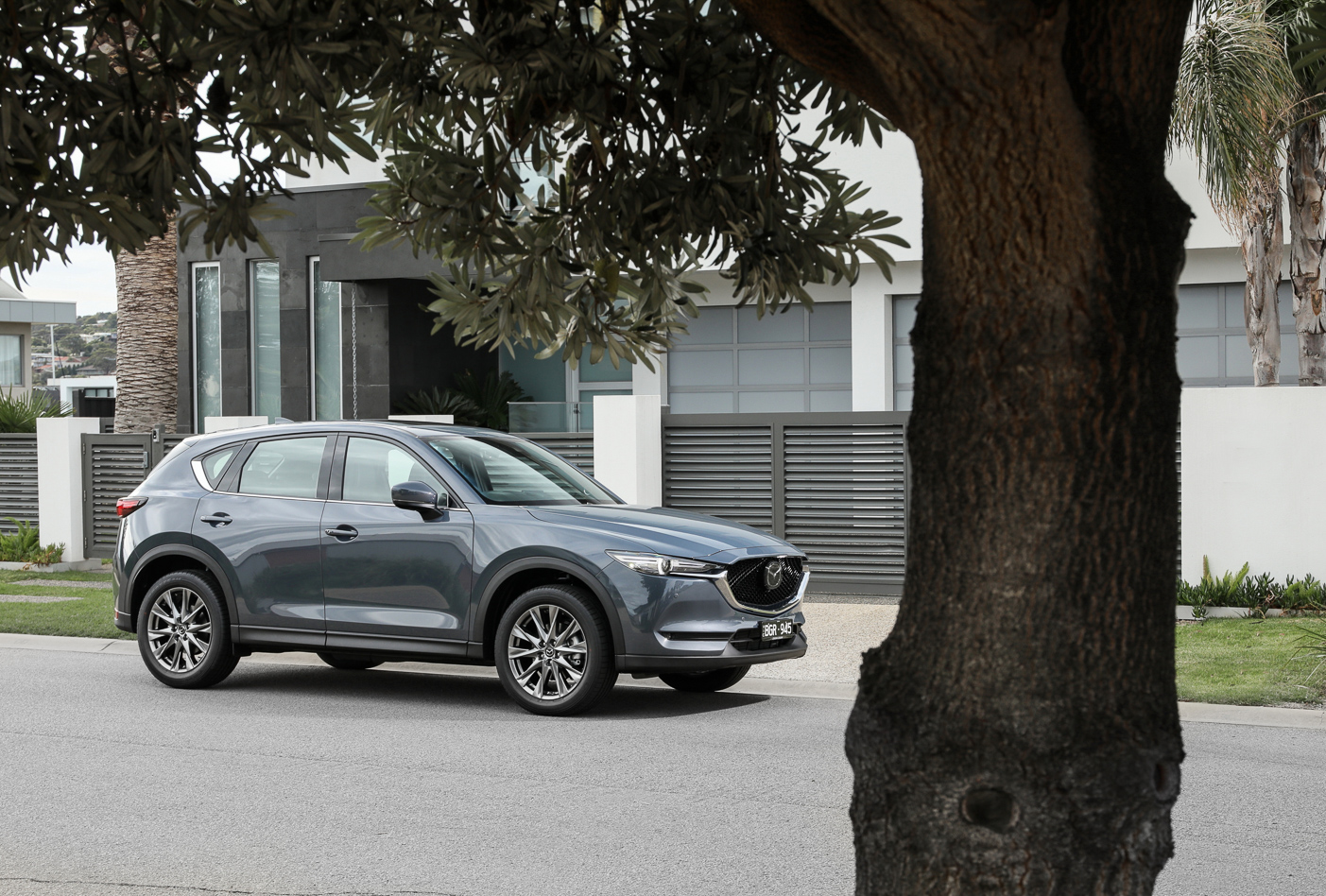
5. Mazda CX-5 – 1765 sales
The Mazda CX-5 is one of Australia’s favourite midsize SUV options. While alternatives like the Subaru Forester and Toyota RAV4 forged the medium SUV category decades before, Mazda’s CX-5 made a late debut in 2012 to a welcoming audience.
6. Toyota LandCruiser – 1599 sales
The Toyota LandCruiser is one of Toyota’s best-selling large SUVand 4X4 models, earning a strong reputation in Australia for its go-anywhere ability, strong reliability and spaciousness.
6. Kia Cerato – 1599 sales
The Kia Cerato is the brand’s largest hatchbackand is one of Australia’s most popular cars. It is also available as a small sedan.
Having debuted in 2003, and since becoming known as the Kia Forte in many other markets, the Cerato entered its fourth model generation in 2018.
8. Toyota Corolla – 1462 sales
The Toyota Corolla is a small hatchback and sedan that remains one of Australia’s top selling cars.
Now in its 12th generation, it first debuted in 1966 and has since achieved more than 45 million global sales to become one of the most recognisable nameplates in the world.
9. Mitsubishi Triton – 1446 sales
The Mitsubishi Triton is one of Australia’s most popular utes and been a mainstay in the category for decades.
10. Hyundai Tucson – 1199 sales
The Hyundai Tucson is one of Australia’s most popular SUVs, with its name having been used on-and-off by Hyundai throughout its history.
NOW SEE The best deals on new cars in Australia right now
What stands out?
The Kia Optima is a handsome and very well-equipped four-door family sedan, with sure handling and the option of a powerful turbocharged engine. A sophisticated cabin looks after rear passengers particularly well. Autonomous emergency braking is standard.
What might bug me?
That your neighbour doesn’t notice you’ve traded in your old Optima. The looks haven’t changed a great deal from the previous model.Driving on bumpy city roads in the more expensive of the two Optima models, the Optima GT. That will remind you that you pay a price in comfort for its bigger wheels and lower-profile tyres.
What body styles are there?
Four-door sedan only. The Kia Optima drives its front wheels and is classed as a medium car, lower priced.
What features do all Optimas have?
Dual-zone climate control, which allows you to set different temperatures for either side of the cabin.A colour central touchscreen (7.0-inch in the Si, and 8.0-inch in the GT) that also controls cabin functions.Apple CarPlay/Android Auto smartphone pairing, and MP3 compatible sound system with an AM/FM radio, Aux and USB inputs, Bluetooth audio connectivity, and at least six speakers.Two 12V power sockets, and USB phone charging. A driver’s seat with power-adjustable lumbar (lower back) support.Adaptive cruise-control, which will automatically keep a safe distance from the vehicle ahead of you.Controls on the steering wheel for operating the cruise control, the audio system and your phone.A reversing camera, and front and rear parking sensors.Bright dual=projection hadlamps that switch on automatically when it’s dark, and dip automatically for oncoming drivers. Windscreen wipers that operate automatically when it rains.Wheels made from aluminium alloy (which look nicer than steel wheels and are lighter). A full-sized spare wheel and tyre.Automatic transmission.Automatic emergency braking that works at city and highway speeds. Lane keeping assist.Driver attention alert that senses if the car is veering and produces an audible alarm to get the driver’s attention should they be getting drowsy..Six airbags. Electronic stability control, which can help you recover from a skid and is mandatory on new cars. (For the placement of airbags, and more on Optima safety features, please open the Safety section below.)The Optima comes with Kia’s industry-leading seven-year, unlimited kilometre warranty.
Which engine uses least fuel, and why wouldn’t I choose it?
Two petrol engines are available in the Optima: a 2.4-litre four-cylinder drives the Si, and a more powerful, turbocharged, 2.0 litre four-cylinder drives the GT.The 2.4 litre is marginally the more fuel-efficient, using 8.3 litres/100km on the official test (city and country combined).The main reason you would not choose it is that you want more fun from your Optima and you are prepared to pay for it. The turbocharged 2.0-litre has significantly more power, accelerates harder and is far more entertaining to drive. And it’s nearly as frugal. But you can get it only in the better equipped Optima GT.You might also find that in highway use, the non-turbo, direct-injected, 2.4-litre feels lethargic in its response to the accelerator, as though it has been tuned to save fuel but with less consideration for the driving experience. Around town it supplies plenty of go – in fact it feels just as good there as the 2.0 turbo.Real-world fuel-consumption for the GT varies a great deal with how it is used. Wheels magazine reviewer James Whitbourn averaged 13.2 litres/100km over 3500km in a GT he used mainly for city driving. But he said he was surprised to find consumption falling to 6.0 litres/100km on trips into the countryside.The Optima GT averaged 11.0 litres/100km in comparison testing for the September 2016 edition of Wheels – slightly less than an accompanying Ford Mondeo and Holden Commodore SV6, but more than a petrol Mazda6 GT (9.6) and much more than a petrol Volkswagen Passat and Skoda Superb (about 8.0).Every Optima drives through a six-speed automatic gearbox.
What key features do I get if I spend more?
As there are only two models in the Optima range, the options list is short. Choose the more expensive Optima GT and the biggest change is the better, turbocharged, engine.The GT also has an upgraded steering system that’s more responsive, feels more direct around corners, and makes it easier to position the car at freeway speeds – such as when changing lanes.On the outside, the GT has unique front and rear bumpers for a more aggressive look, and red brake callipers. Wheels are an inch bigger in diameter than the Si’s at 18 inches, shod with wider tyres of a lower profile (which improve steering response and grip, and contribute to the more sporty appearance).The GT also satellite navigation, part-leather upholstery, a flat-bottomed steering wheel with paddle shifters, a colour instrument cluster and the bigger touchscreen. The front seats are heated, and the driver’s seat is power adjustable and remembers your settings (so that you can restore them easily after a companion has driven the car).There is a 10-speaker Harman Kardon audio system, and very bright and long-lived LED headlights that shine into corners when you turn the wheel.Wireless phone charging allows compatible smartphones to be charged in the space ahead of the gear lever, without the need to plug in a cable.Finally, the GT augments the Si’s active safety suite with two additional features: a blind spot alert, and a rear cross-traffic alert.
Did any upgrade have a down side?
The GT might cost more to insure because it has a turbocharged engine. However, these are increasingly common and no longer restricted to high-performance cars.The GT’s bigger wheels and shallower tyres also bring a rougher ride, especially at slow speed, that some people may find uncomfortable (there is less cushioning air between the wheel and the road). The GT’s ride feels quite good on a country road at highway speeds. Around town it’s not as plush the Si or many alternatives.The Optima Si comes in Clear White as standard. Premium colours cost extra, and include Silky Silver, Platinum Graphite, Gravity Blue and Temptation Red. The GT is also offered in two exclusive colours: Snow White Pearl and Aurora Black.
How comfortable is the Optima?
The Kia Optima is a quiet car to travel in, with a smart and sophisticated cabin – especially on the sumptuous Optima GT.Seats in the less costly Optima Si are well shaped, but tall passengers may find the base of them short, with under-thigh support compromised.From the driver’s seat, the steering column offers a broad spread of adjustment, as does the seat itself. However, tall drivers may find the pedals too close.There’s plenty of space in the front and rear door pockets, the centre console and around the gear lever, with a sliding cover for the centre cup-holders.The dash layout is excellent, with easy to read buttons laid out in a simple manner. Touchscreens on both models are easy to use, and many of features can also be operated conveniently from the steering-wheel.The Optima GT brings leather upholstery that adds a more luxurious feel, and pleated sports seats with plenty of side-support. A heated steering wheel is also standard for the GT, while its sunroof increases the feeling of spaciousness.Cabin refinement is good at modest speeds, but there is a lot of wind noise and tyre noise at freeway speeds in both models.
What about safety in a Kia Optima?
Both Optimas have a very impressive array of safety equipment, beginning with stability control and six airbags. A reversing camera is standard, as is active cruise control, auto emergency braking and lane-keeping alert.There are airbags directly in front of the driver and front passenger; two outside the driver and front passenger to protect their upper bodies from side impacts; and curtain airbags that protect the heads of front and rear occupants from side impacts.The autonomous emergency braking assesses the likelihood of your driving into an obstacle (typically a car In front that has slowed suddenly), using radar and a camera. It can initiate a full emergency stop at speeds up to 80km/h – having first warned you, and then applied partial braking. At speeds above 80km/h – all the way up to 180 – you get the warning and partial braking but not the full braking. (Hyundai says the risk of error over 80km/h is too high to justify full braking.)Then there is the lane-keep assist, which prevents you drifting laterally on a freeway by steering within the lines, and driver attention alert.The GT adds Blind-Spot Detection, which provides a visual warning in the door mirror of a vehicle in a blind-spot near one of the Optima’s rear corners, and Rear Cross-Traffic Alert, which helps you avoid bingles when you are reversing out of carparks or driveways – warning you if another vehicle is about to cross your path.The Optima’s body structure uses more high-strength steel than its predecessor, which Kia says has made it much stronger in the event of a collision.The Australasian New Car Assessment Program (ANCAP) awarded the Optima its maximum five stars for safety, in July 2016.
I like driving – will I enjoy this car?
The Optima Si is not a car intended primarily to entertain, and its relatively slow acceleration and paucity of driver involvement underline that.The Optima GT is designed to offer a more satisfying drive – and it does, with its sharper steering and chassis set up.That starts with bigger wheels and more rubber. The Michelin tyres on the GT are wider than the tyres on the Si, and this gives it the ability to sit marginally flatter in corners (even though the suspension tune is the same). That means you have more grip, and can have more fun with the car.The steering has been tuned specifically for the GT, and provides more feedback and response. On an engaging piece of road, you might almost call the Optima GT chuckable.The peachy turbocharged engine in the GT feels much stronger and more responsive than the engine in the Si. Indeed, by family car standards the GT is quite quick.What the GT lacks is inspiration and finesse. It is quick but not exciting, and until you wind on quite a bit of lock the steering feels rather wooden. On the flipside it is smooth and quiet, with a ride that feels sophisticated and broadly competent, if short on rough-road composure.
How is life in the rear seats?
The Optima has one of the best rear seats in its class, offering a surprising amount of support. The rear seat area is extremely spacious, for both leg room and headroom. There are rear air-vents in both models, map pockets in the front seatbacks, good sized door pockets, and a centre armrest.The Optima’s long wheelbase makes entry and egress easier than before, too, and while it’s not as tall as an SUV, that will make loading child seats easier. The Optima offers three child anchorage points in addition to two ISOFIX child-seat mounting points.
How is it for carrying stuff?
The Optima has a 510L boot, which is voluminous for a mid-sizer. For more space, the rear seat has a 60-40 split fold.
Where does Kia make the Optima?
The Kia Optima is built in South Korea.
What might I miss that similar cars have?
Not much if you are talking equipment and features. Perhaps voice activation for the sound system and the satellite navigation – as available in the Ford Mondeo, for example. The Mondeo and the Volkswagen Passat also offer automatic parking systems.What you might miss more is the better controlled ride, more engaging steering and more fluid engine response that you would experience in a Passat or a Mondeo.And some similar cars use significantly less fuel than the Optima Si while providing as much performance. An example is the Mazda6.Other cars you might consider include the Subaru Liberty or Levorg, Skoda Superb, Peugeot 508, and Hyundai Sonata.
I like this car, but I can’t choose which version. Can you help?
The pick is easily the Optima GT. It has many more features and is more entertaining to drive.
Are there plans to update the Optima soon?
This fourth generation Optima arrived at the end of 2015. About October 2016 Kia replaced the GT’s HID headlights with LED units, and introduced sports front seats with pleated ‘tubular’ leather. The Si was not changed.The Optima received a minor facelift in June 2018 that included a tweaked front end and the introduction of Apple CarPlay/Android Auto to the infotainment system.Sadly, Kia Australia stopped importing the Optima during the 2020 model year. While it’s a very good car, it never quite resonated with the Aussie public like the Cerato, with its recent low sales also reflecting the general slump in medium car sales as people move to SUVs.
What stands out?
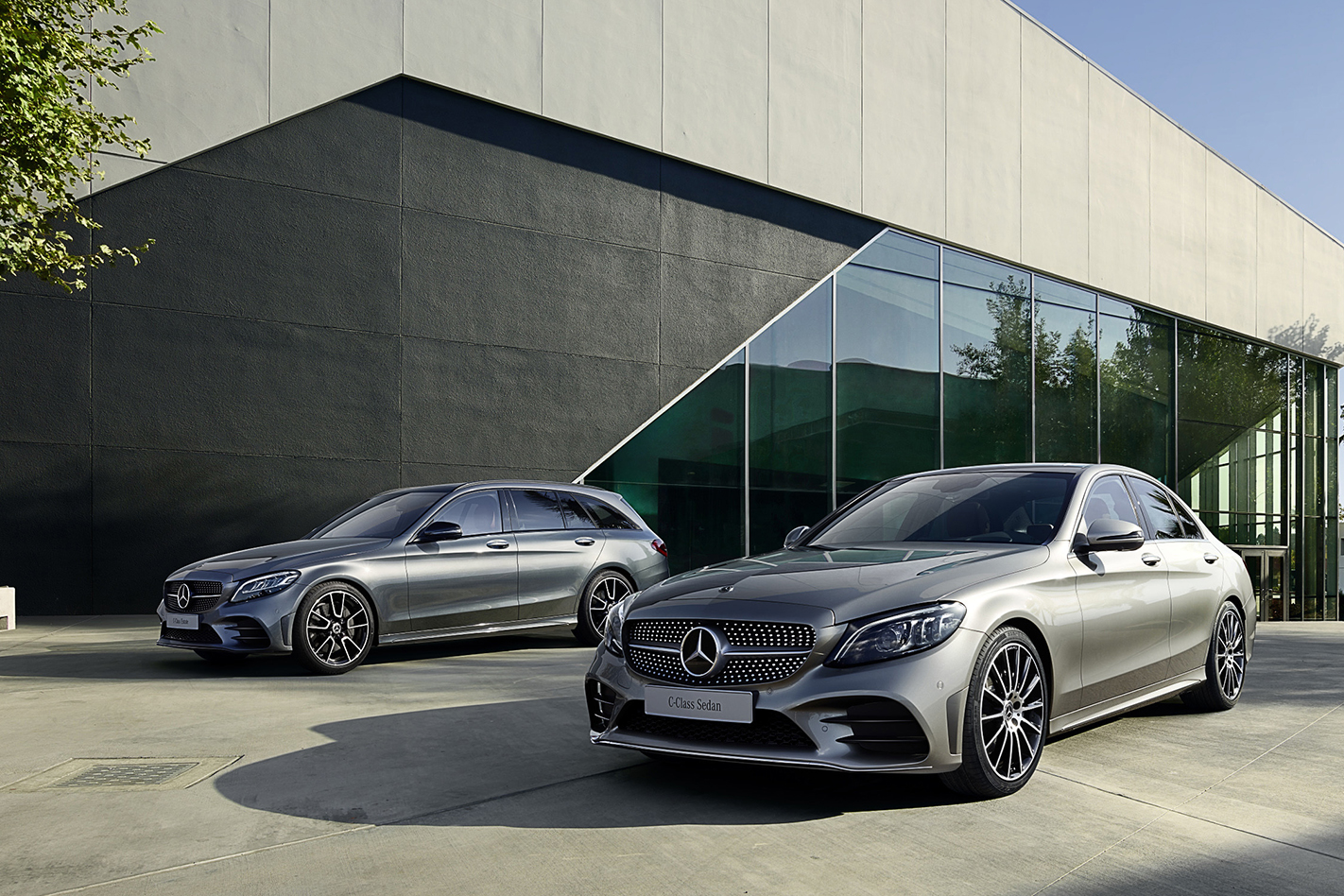
The Mercedes-Benz C-Class is a luxury medium sedan and wagon with a compelling set of abilities. The C-Class is handsome and comfortable, has great road manners, and is built to a high standard. Every C-Class is also fuel-efficient, pleasingly potent, and safe, and comes with autonomous emergency braking and other advanced driver aids.The current model is a significantly modified version of the W205 Mercedes-Benz C-Class, which first arrived in the middle of 2014.
What might bug me?
Wishing you had a spare wheel and tyre. If you puncture a tyre on a C-Class car, you just keep driving: its tyres will still work when they’re flat. That’s great, provided you can get a new tyre fitted soon. Once it has lost air, a run-flat tyre will last for about 80km.That near neighbours also drive C-Classes. The Mercedes-Benz C-Class has become a very popular luxury car (with good reason) and is the third biggest-selling medium car in Australia after the Toyota Camry and BMW 3 Series.
What body styles are there?
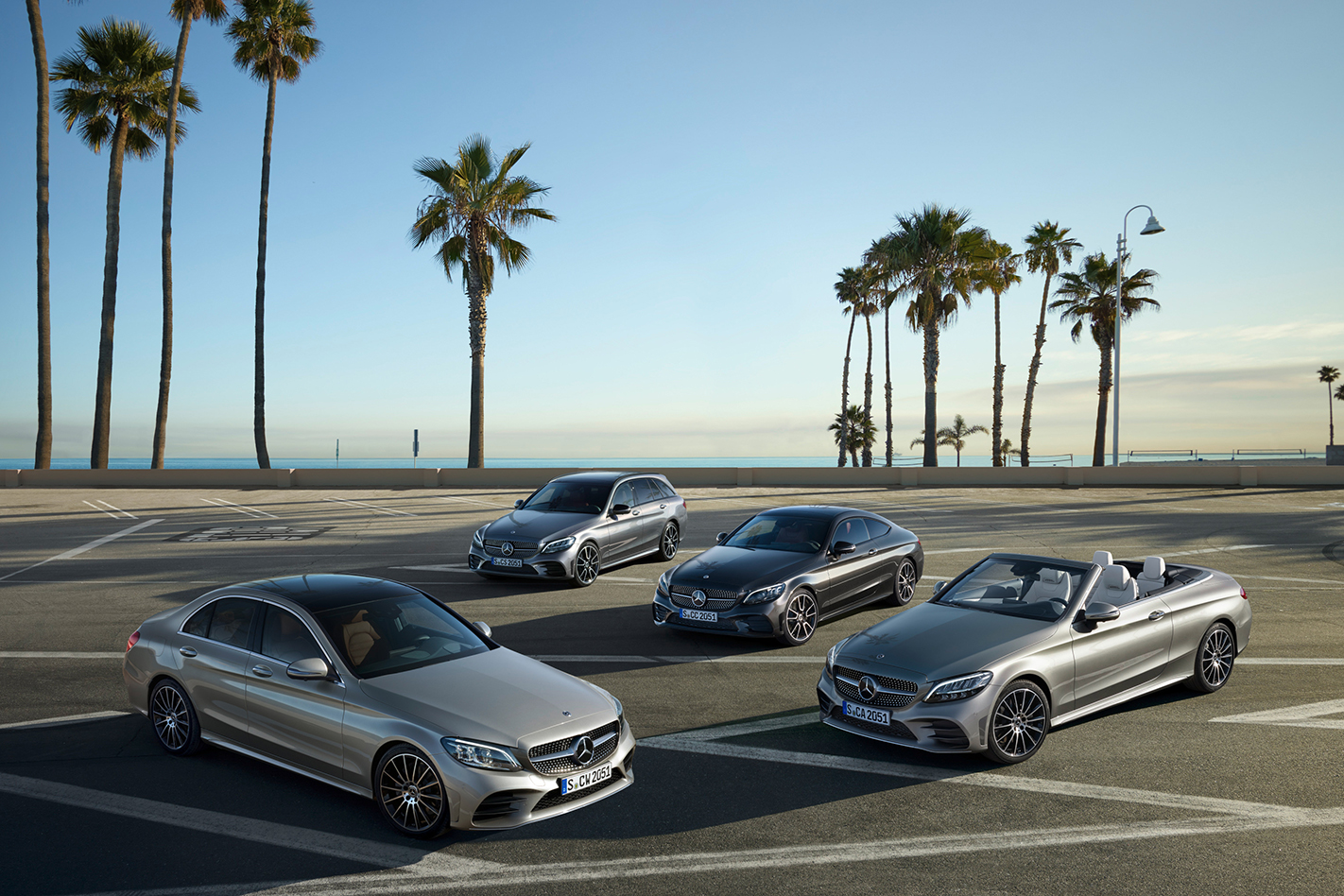
Four-door sedan and five-door station wagon (called the Estate) plus sporty-looking coupe and a cabriolet versions.
There are also high performance Mercedes-AMG variants but this review does not cover those carsThe Mercedes-Benz C-Class drives its rear wheels and is classed as a medium car, higher priced.
What features do all C-Class Mercedes have?
- Dual-zone climate control, which lets you set different temperatures for the driver and passenger side of the cabin.
- A reversing camera.
- Front and rear parking sensors.
- Active parking assist, which can steer the car into a parking spot.
- A multimedia system with CD player, AM/FM and digital radio tuning, satellite navigation, touchpad control, and a 10.25-inch colour screen interface.
- Bluetooth connectivity for phone calls and audio streaming, and Apple CarPlay/Android Auto smartphone integration.
- 12.3-inch digital instrument display.
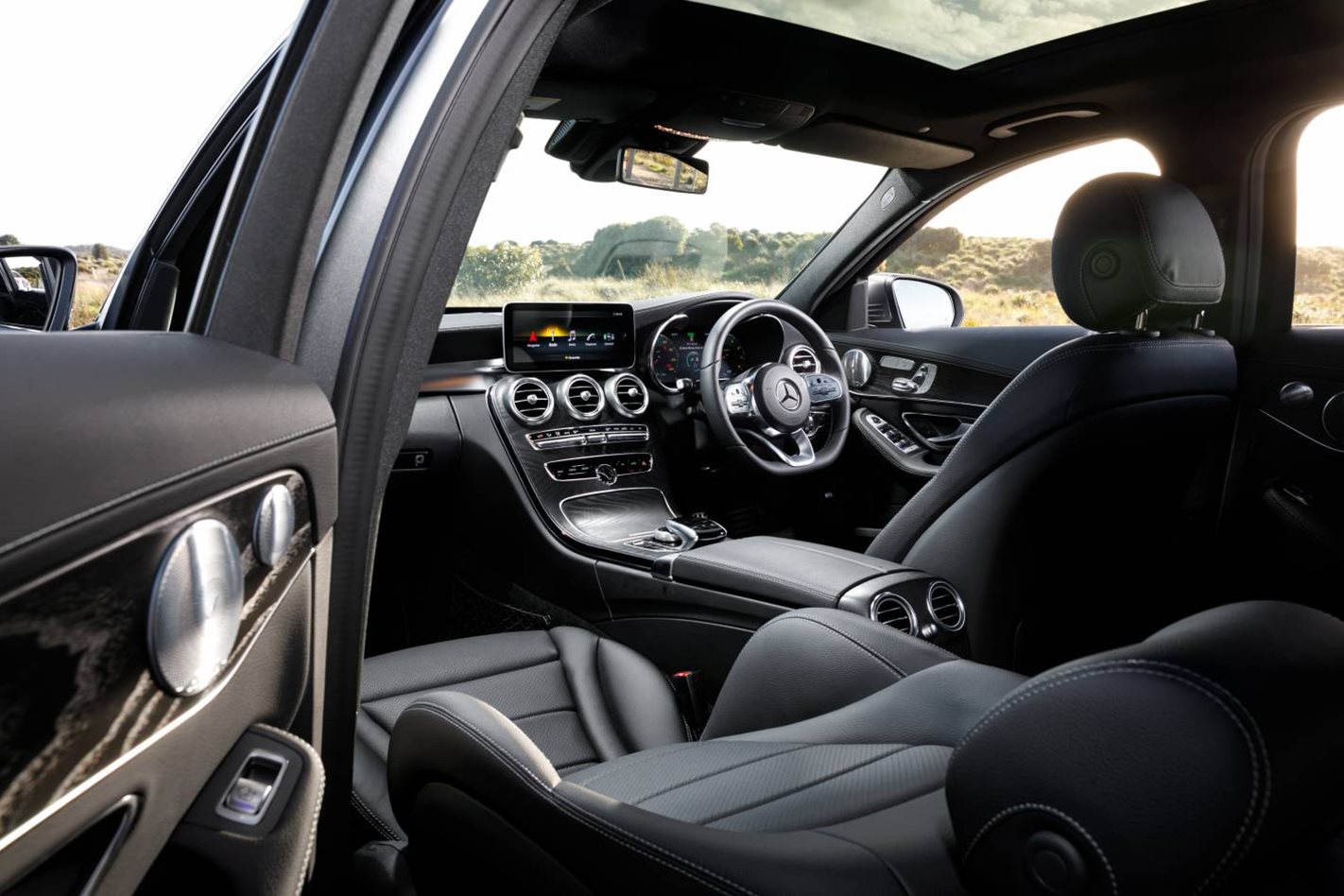
- Power-adjusted front seats.
- Nappa-leather trimmed multi-function steering wheel with paddle gear shifters.
- Automatic dimming rear-view mirror.
- Power-folding, heated door mirrors.
- Keyless start.
- Very bright, long-lasting LED headlamps that turn on automatically when it’s getting dark.
- Windscreen wipers that operate automatically when it rains.
- Agility Control suspension, which automatically makes the car ride more comfortably when you are cruising, and more firmly if you are working it hard.
- Agility Select, which lets you adjust the ride comfort yourself – and also to choose whether the car accelerates and steers sharply or lazily.
- Aluminium alloy wheels fitted with run-flat tyres (there is no spare wheel or tyre inflation kit). A tyre pressure warning system, which tells you if a tyre is going flat.
- On Estate (wagon) versions, a power operated tailgate and aluminium roof rails.
- An active safety suite that includes autonomous emergency braking and blind spot monitoring.
- Nine airbags. Electronic stability control, which can help you control a skidding car. (For airbag placement and more on C-Class safety systems, please open the Safety section below.)
- Every Mercedes-Benz C-Class carries a five-year, unlimited kilometre warranty.
Which engine uses least fuel, and why wouldn’t I choose it?
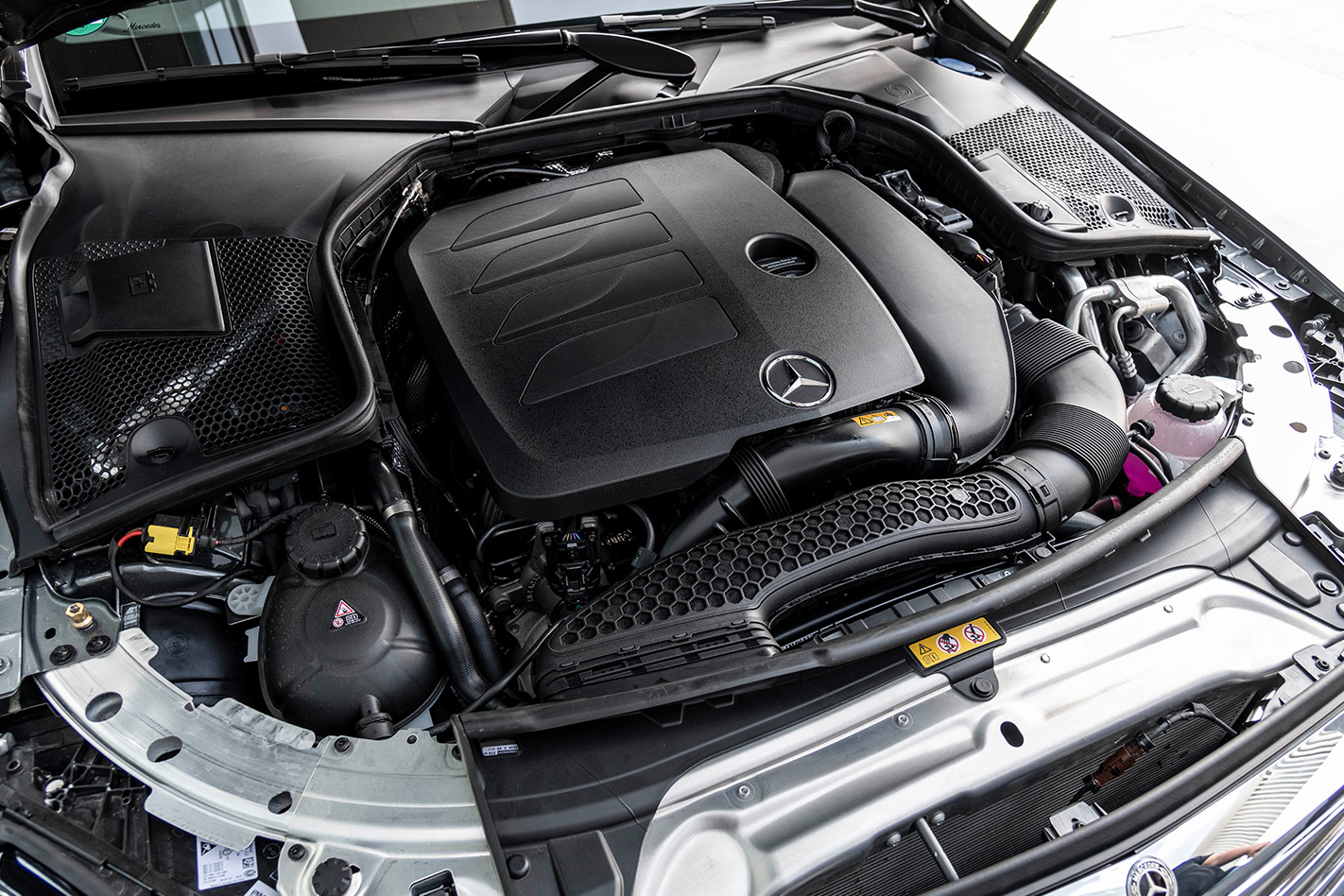
In a C-Class you can choose from a plug-in hybrid (PHEV) and two four-cylinder petrol engines that all offer satisfying thrust for normal driving.Of the three powertrains, the C300e PHEV is the most efficient, with a combined fuel economy rating as low as 2.1L/100km.
Only available as a sedan, the C300e sedan utilises Benz’s third generation of its EQ hybrid technology and has a strong 90kW electric motor that propels it for up to 55km on battery power alone. The motor also combines with the 2.0-litre, four-cylinder petrol engine to produce up to 235kW/700Nm through the back wheels via the nine-speed automatic transmission. That means it’s quick off the mark and can sprint from 0 to 100km/h in just 5.4 seconds.
One reason you would not choose the C300e is because like any PHEV you lose all efficiency gains if you’re unable to keep the battery topped up. The low fuel economy is dependent on you setting off with a full battery and driving in full electric mode until the batteries run out of juice. By driving without charging the battery, which adds weight to the car, you’ll find you may use more fuel than the petrol versions.
Another reason is you may want an wagon, coupe or cabriolet versions that only come with the two petrol engines, which include 1.5-litre in the C200 and the 2.0-litre turbo in the C300, which both have four cylinders.
The C200 uses 7.0 litres/100km on the official test in the Sedan and Coupe versions, 7.4 litres/100km in the Estate and 7.6 litres/100km in the heavier Cabriolet.
What key features do I get if I spend more?
The least costly of the Mercedes-Benz C-Class cars, the C200 have Artico fake-leather seat-trim, 18-inch wheels, and the features on every C-Class.
The Estate, Coupe and Cabriolet versions cost considerably more than the sedan, with the Coupe and Cabriolet bringing some extras such as an AMG Line exterior and interior trim, Adaptive High beam Assist and 360-degree parking camera.
Spending more for a C300 brings you the more powerful turbo petrol engine described above and some extra equipment, including:
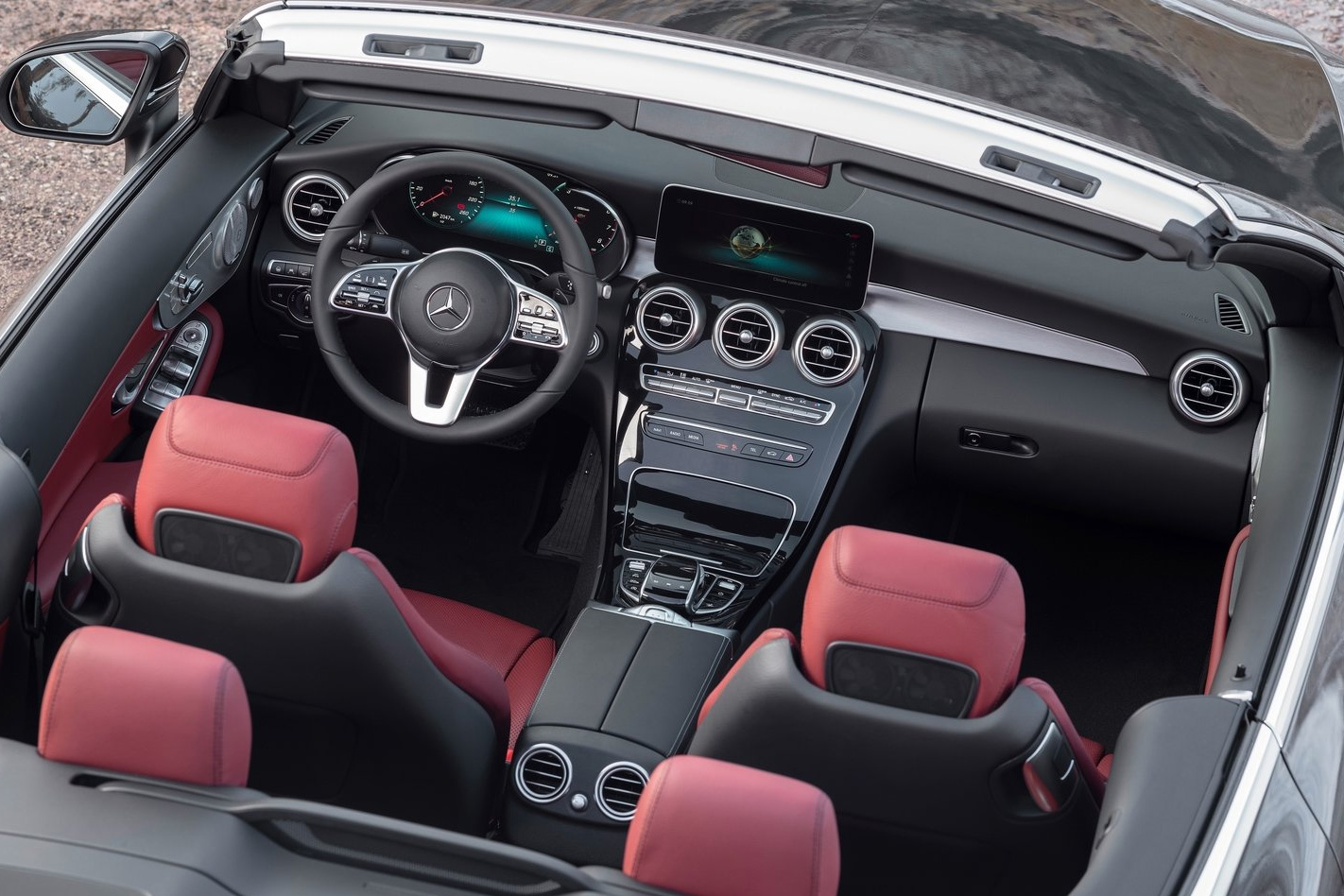
- Real leather upholstery.
- Tinted glass protecting the rear compartment.
- Keyless entry that lets you unlock the car by merely grabbing a door handle – provided your key is nearby, say in a bag or pocket.
- Sedans gain a power-opening boot like the wagon, with hands-free sweeping foot gesture below the rear bumper.
- 13-spealer 570W premium sound system.
- COMAND Infotainment system with high-resolution media screen, fast hard-disc navigation with 3D map display and voice command.
- Wheel diameter rises to 19 inches and the tyre profile is correspondingly lower, which sharpens steering response slightly.
The C300 and C300e also gain a big suite of active driving aids under the title Driver Assistance Package Plus.
This includes a sophisticated adaptive cruise control, which not only adjusts your speed to match vehicles in front of you on the highway but also holds your place in stop-start traffic and automatically moves forward with the car in front. The auto braking becomes more powerful, and further features include lane-keeping assistance and a frontal cross-traffic alert.
Options
The Airmatic suspension is available on other C-Class cars as an extra-cost option. There are numerous other options, some of which come in packs.
These include:
- The C200 Sport Edition that lets you update your C200 Sedan, Estate or Coupe to have the adaptive cruise control, a head-up display projecting key driving information onto the windscreen, a panoramic sunroof, heated front seats with memory function, Adaptive Highbeam Assist (Sedan only, standard on Coupé), rear privacy glass, 19-inch AMG alloy wheels and the sporty AMG Line exterior package (standard on Coupé).• A Vision package brings a panoramic glass sunroof, adaptive high beam assist (which automatically dips the headlights when it detects other cars), a 360-degree parking camera, and a head-up display (which puts a speedometer in your line of sight).• A Comand package upgrades the multimedia system with a sharper high-resolution screen, faster satellite navigation with traffic sign assist, internet access, and a 13-system speaker surround sound-sound. Choosing this package for the C200 also brings the Driver Assistance Package Plus, which comes standard with the C300.• A Seat Comfort package brings a memory function for the driver’s seat and side mirrors, more powered adjustments for the headrest, seat cushion and steering wheel, and heaters for the front seats.• And an AMG Line package dresses up a Mercedes-Benz C-Class so that it looks and feels a bit like its higher-performing cousin the Mercedes-AMG C63 S, with sports seats, front and rear aprons on the body, and a flat-bottomed steering wheel, and 19-inch AMG design alloy wheels. The car rides lower, on firmer suspension, and variable-ratio steering allows relaxed response at straight-ahead but sharper response in bends.Alternative wheels and interior trims are offered for any C-Class car.
Does any upgrade have a down side?
Some of the AMG-line options reduce practicality and comfort in small ways. The sports suspension rides less comfortably, and its lower ride height and the AMG front apron makes it harder to negotiate steep driveways or speed humps without scraping the lower body.The big suite of active driving aids in the optional Driver Assistance package might feel overwhelming at first. After you get used to how they operate (which takes time), they are certainly worth having.
The C300e plug-in hybrid is only efficient if you’re able to regularly charge the battery.Metallic paint comes at an additional cost of about $1500. Of 11 colours available, only two of them – Black and Polar White – are non-metallic and come at no extra cost.
How comfortable is the Mercedes C-Class?
The Mercedes-Benz C-Class is a very comfortable car on its standard suspension, and it feels even better on the optional Airmatic suspension.The coil-sprung standard C-Class smooths out surface imperfections and larger bumps and stays composed. The optional air-sprung suspension smothers the impact of those same big bumps, while rounding off smaller intrusions.
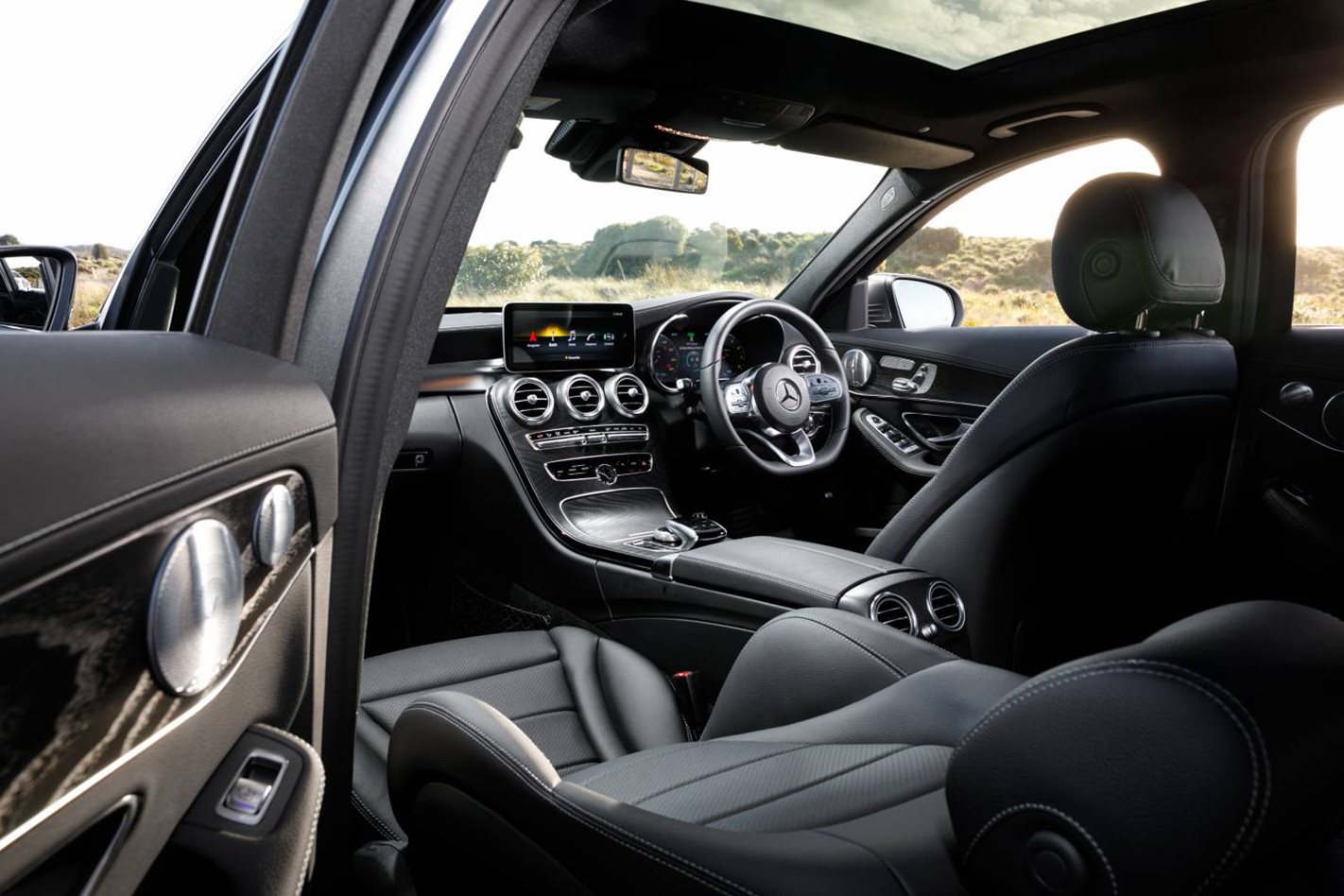
What about safety in a Mercedes C-Class?
The C-Class offers a lot of safety technology, and much of it is fitted even to the least costly models. You have stability control, nine airbags, a reversing camera, front and rear parking sensors, and auto headlights and wipers. The run-flat tyres help you maintain control should you get a puncture. And standard active safety functions include a driver fatigue monitor, blind-spot assistance and auto-braking.Two of the nine airbags are placed directly in front of the driver and front passenger, and there is also a knee airbag for the driver. Outer front and rear occupants also have a side-airbag each, protecting the pelvis and chest from side impacts. And side-curtain airbags protect front and rear occupants at head level from side impacts.Of the active safety systems, the fatigue monitor – Mercedes calls it Attention Assist – warns you if you show signs of falling asleep at the wheel, and Blind Spot Assist warns you when changing lanes if a vehicle is adjacent but not showing up in your external mirrors.The standard autonomous emergency braking works at low and high speeds. It warns of an obstacle in front of the car – typically a slower vehicle – and will apply the brakes if you do not react. (On the C200 it will not apply maximum braking, however.) A related system tells you if you are tailgating – or simply failing to leave enough room ahead for the speed you are going.Spending more to step from the C200 into the C300 and C300e brings you more active safety equipment, under the description Driver Assistance Package Plus.
Among its many features are active lane-keeping assistance, which seeks gently to correct you if you are drifting out of your lane on the highway (perhaps from distraction), and blind-spot assistance, which adds corrective steering action to the passive blind-spot alert. There is a more sophisticated auto-braking system, which recognises pedestrians and can apply maximum braking at suburban speeds. And a frontal cross-traffic assist checks at intersections for crossing cars that you may not have noticed.When ‘DISTRONIC’ adaptive cruise control is engaged in stop-start traffic and when fitted with the Comand package, it is now possible for the vehicle to be stationary for up to 30 seconds before moving off automatically.The Australasian New Car Assessment Program (ANCAP) awarded the Mercedes-Benz C-Class its maximum five stars for safety, in July 2014. The rating applies still to cars currently on sale, which are considerably more advanced.
I like driving – will I enjoy this car?
You will enjoy driving the Mercedes-Benz C-Class – it strikes a compelling balance between handling capability and overall comfort.A traditional rival for the Mercedes C-Class is the BMW 3 Series, which is a bit more involving to drive quickly through corners, thanks to crisp steering and more tautly controlled suspension.
Compared with the BMW, the Mercedes’ suspension is a bit softer and its steering feels a bit lighter, not quite matching the 3 Series’ intimate sense of connection with the road.
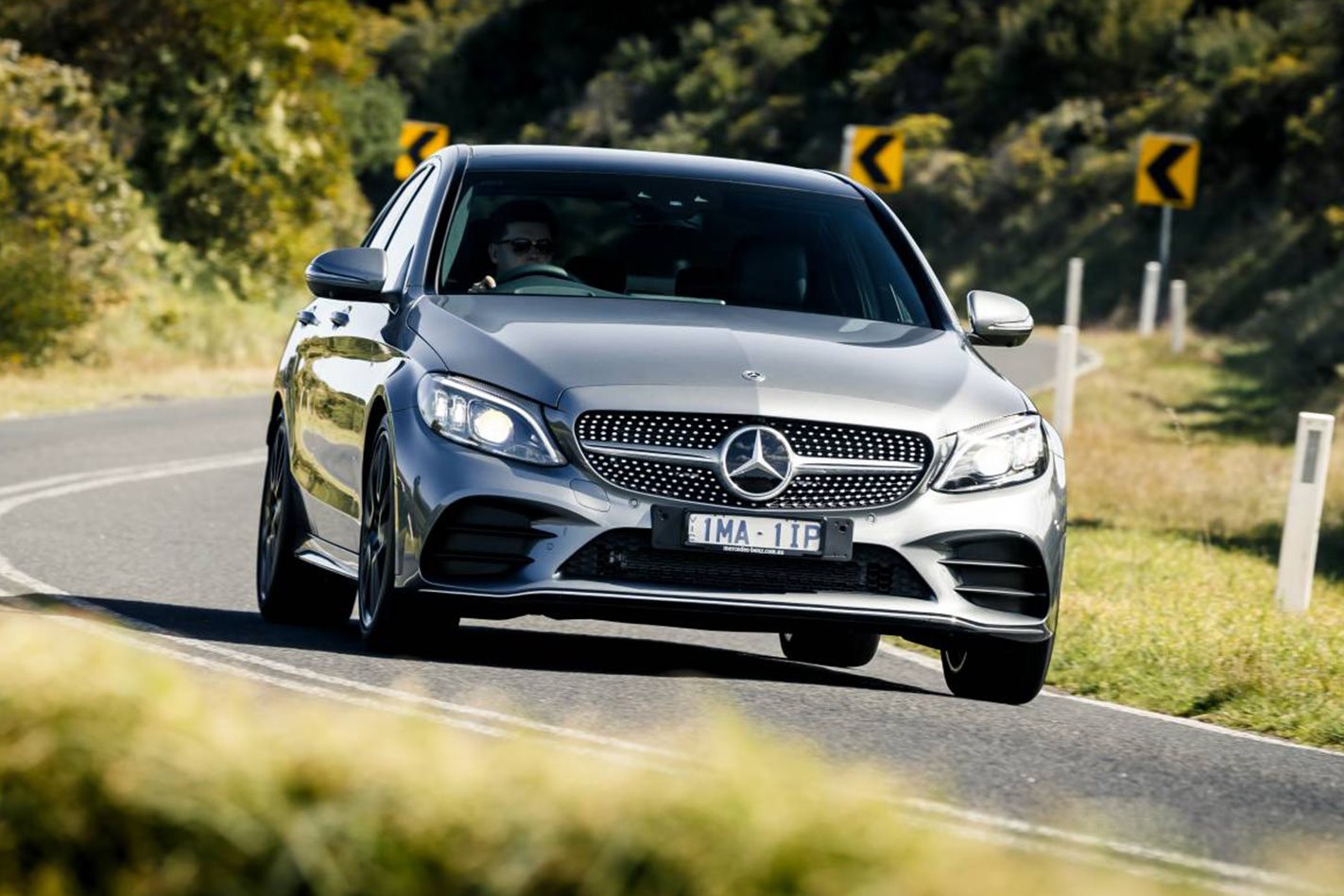
The more expensive C300 feels very swift and is a great package for those who relish a blast along a backroad. It pulls strongly across its rev range and spins cleanly, working its way into a powerful crescendo above 5000rpm if you keep your foot planted.All C-Class cars have paddle shifters, which give you manual control over gear selection for sporty driving.There’s also an Agility Select switch, which allows you to adjust various parameters, including the weight of the steering, the sensitivity of the throttle and how aggressively the gearbox shifts. The additional steering weight of the Sport modes works nicely on twisty roads, as does the additional throttle sensitivity that means you don’t have to push the accelerator as hard to achieve the same response.
How is life in the rear seats?
The rear seat area in the C-Class Sedan and Estate is spacious and as richly trimmed as the front compartment. However, it is let down by a short seat-base that compromises comfort.
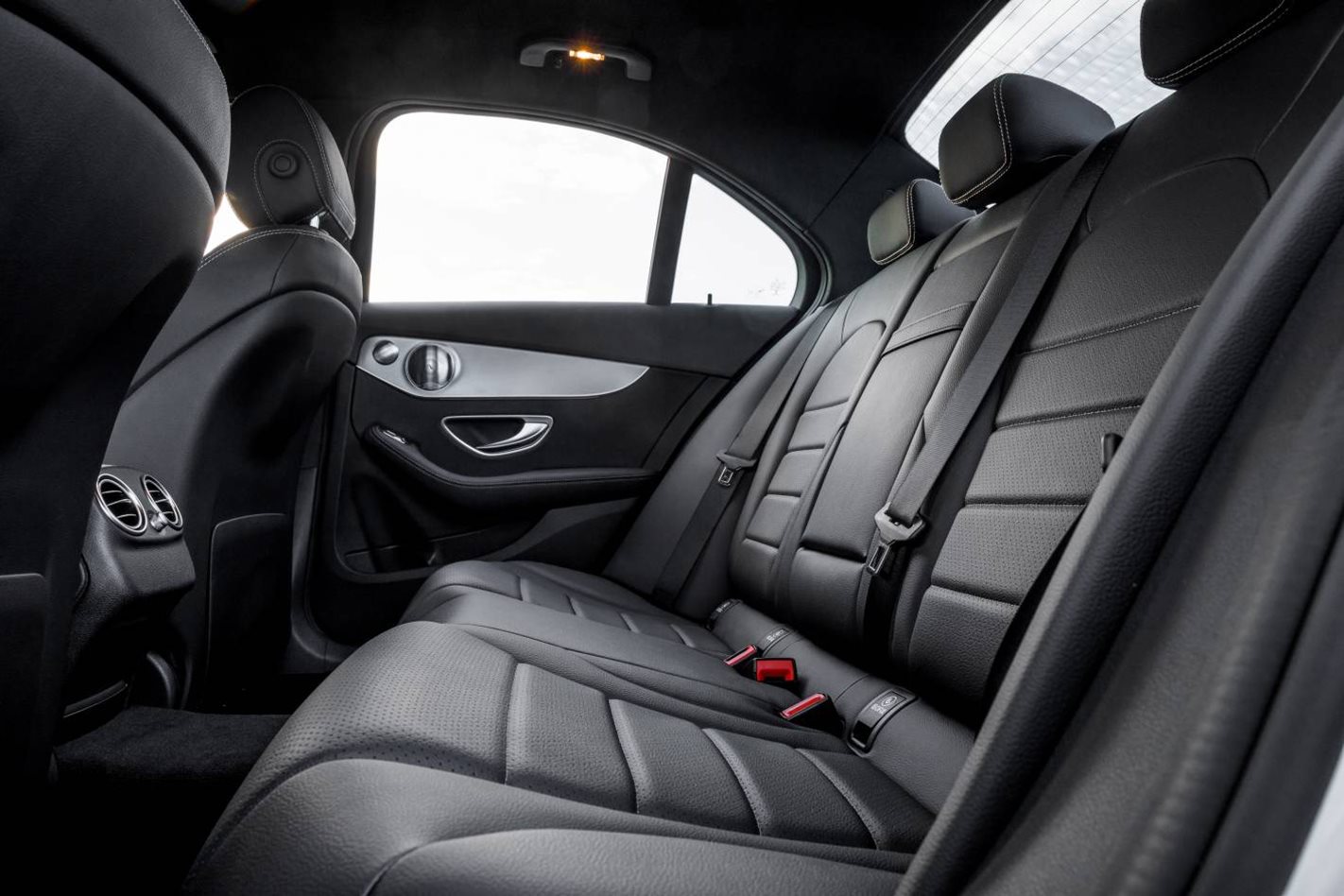
In other ways, the rear compartment is as thoughtfully designed as the rest of the car. There is a centre armrest with twin cupholders, rear air-conditioning outlets, and handy 40-20-40 folding backrests.
Rear seat space, legroom and headroom in the coupe and cabriolet versions are considerably tighter, especially if you’re shoehorning taller adults in – and there are only two seats in the back.
How is it for carrying stuff?
The C-Class sedan has a 480-litre boot – about as much space as you will find in key alternatives.
C-Class wagons offer 490 litres of luggage capacity, but that can expand to 1510 litres if the rear seatbacks are folded flat.
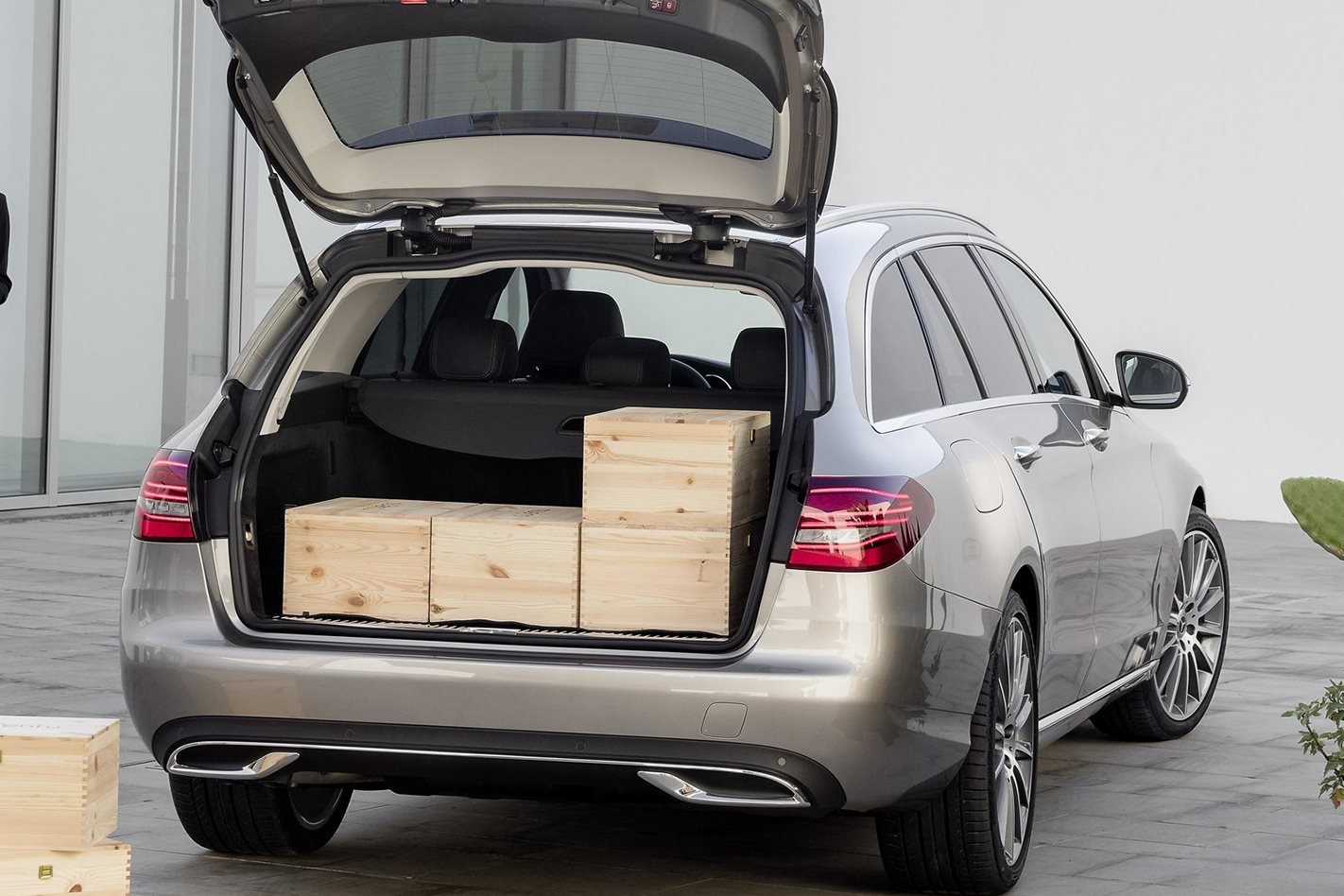
The Coupe has a shallower 360-litre boot, and the cabriolet just 260-litres as it has to accommodate the folding roof.
Where does Mercedes make the C-Class?
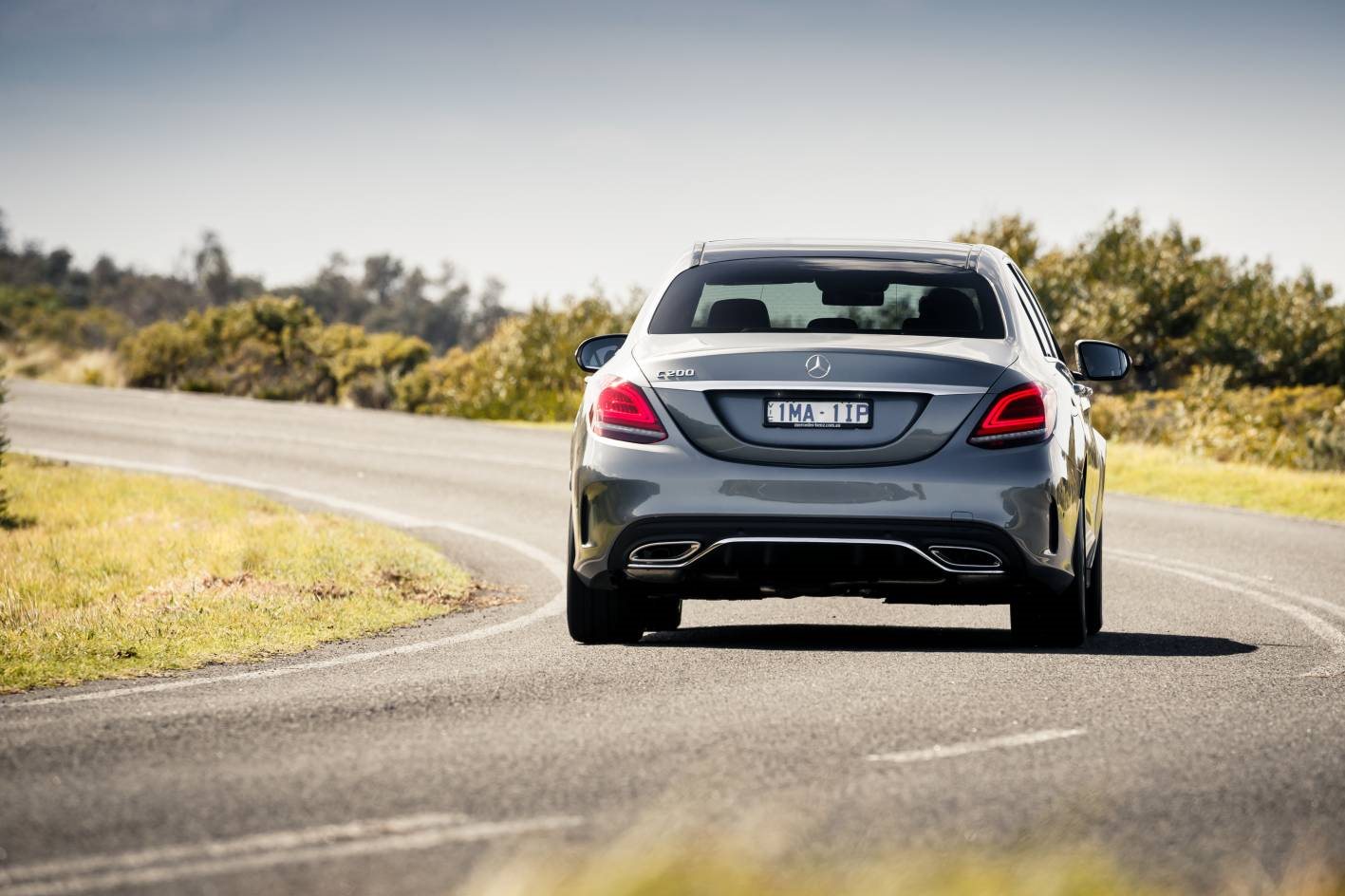
Most Mercedes-Benz C-Class sedans are made in South Africa. The C-Class Estates, Coupes and Cabriolets imported to Australia are made in Germany.
What might I miss that similar cars have?
All-wheel drive, which provides better traction in the wet and is handy when travelling to the ski fields. This is available with an Audi A4.Among other cars worth considering are the BMW 3 Series, Jaguar XE, Alfa Romeo Giulia, Lexus IS, Genesis G70, Peugeot 508, and Volvo S60 or V60 wagon.If you like the Mercedes-Benz C-Class but want more performance, consider a Mercedes-AMG C 43 or C 63 variants.
Are there plans to update the C-Class soon?
The current W205 Mercedes-Benz C-Class arrived in the middle of 2014. About September 2015 Mercedes ceased using the term ‘Bluetec’ to designate C-Class diesels, replacing it with the letter ‘d’. Mid-way through 2016 the diesel hybrid model, known as C300h, was replaced with the C350e petrol hybrid.
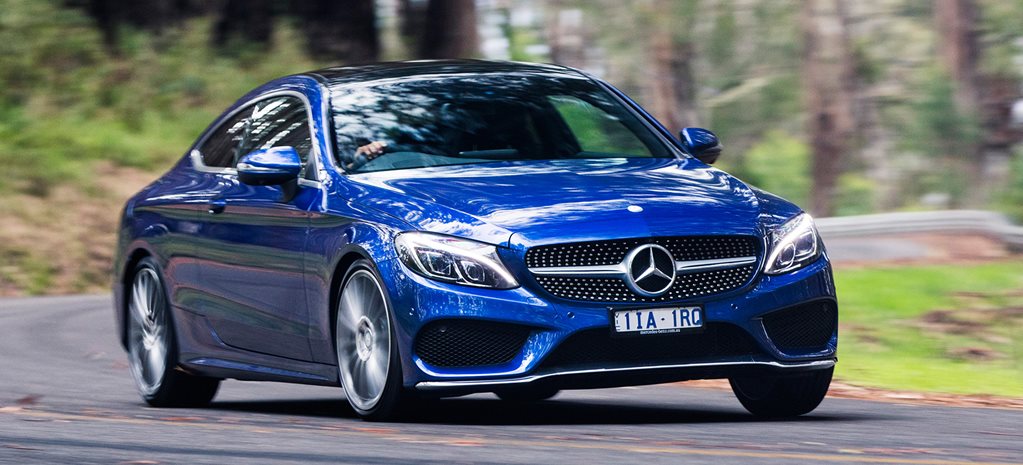
It also brought the revised powertrains including the C200’s 1.5-litre petrol engine with EQ boost mild hybrid. The hybrid C350 e was removed from the range.
The C300e plug-in hybrid was introduced in September 2019 along with the C200 Sport.
The C200d diesel was quietly deleted from the range in 2020.An all-new C-Class is due about 2021 or 2022.
I like this car, but I can’t choose which version. Can you help?
They’re all good on their own way.
We would recommend the C300 Estate as the best all-round version. The high-output 2.0-litre turbo petrol is the most rewarding of the engines, striking a brilliant balance of power and fuel economy. And the C300 adds some nice equipment to the feature set.
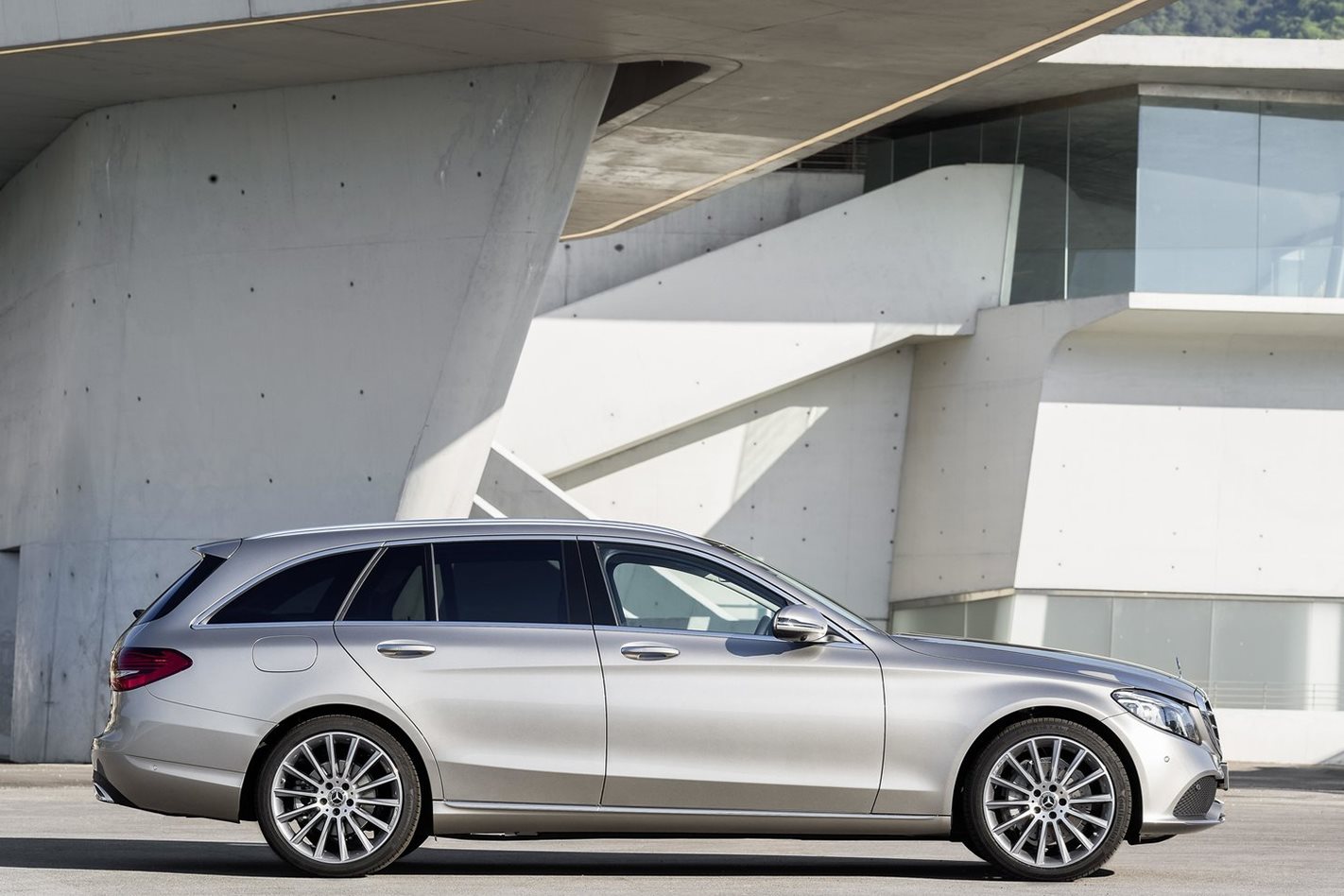
That said C300e Sedan benefits from an electric power boost and drives sublimely, while offering up to 55km of emissions free driving.If you can handle the extra cost of the Airmatic suspension option – about $2000 – it is well worth it for its superior ride.
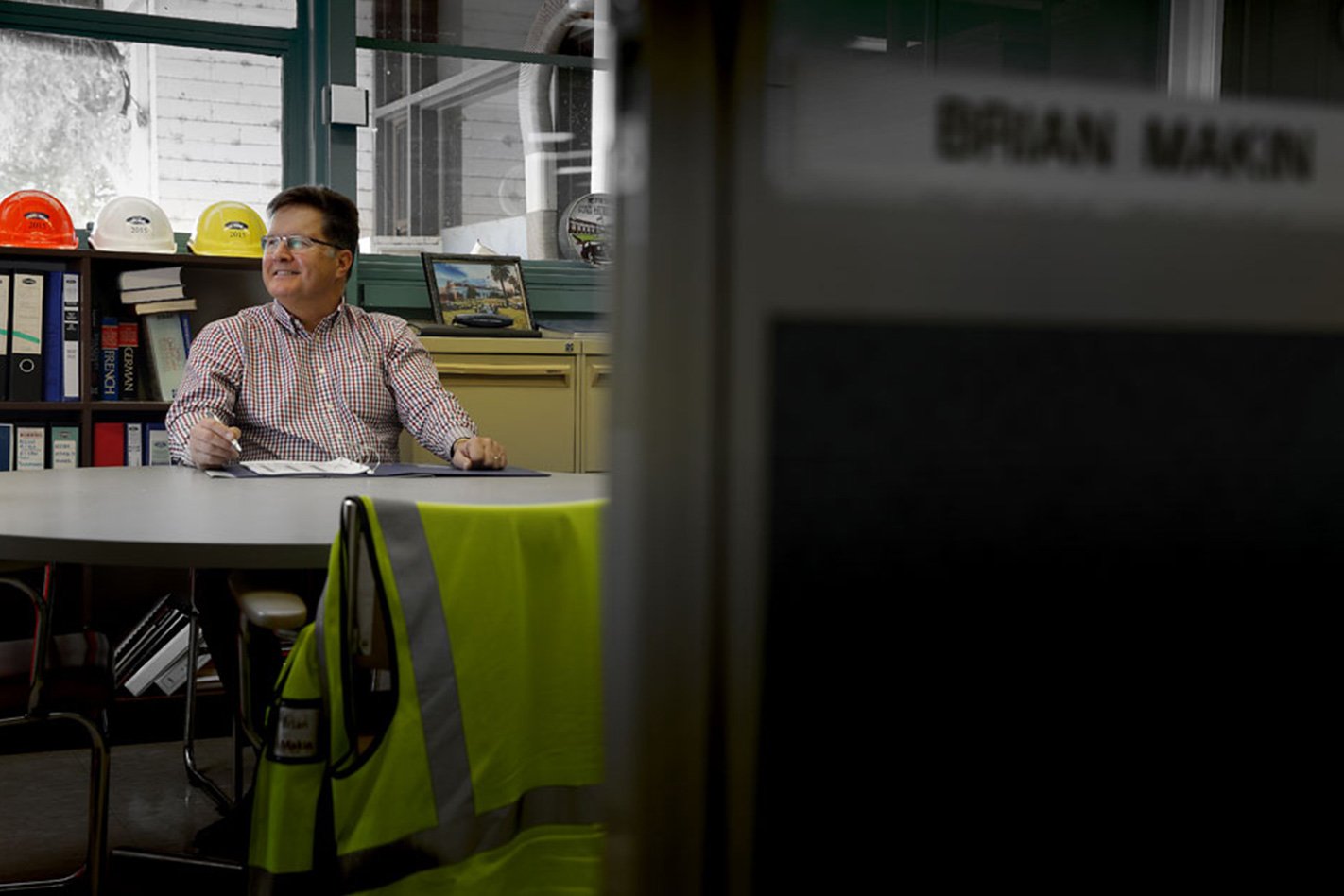
AND just like, that Brian Makin’s face crumples. His cheeks redden, his eyes become glassy and he brings his hands to his face, embarrassed to be brought near to tears by my question.
Lights out was originally published in the November 2016 edition of Wheels
Makin is a Ford lifer. He’s spent nearly 42 years doing his best for the Blue Oval in Australia in a variety of roles that started with an apprenticeship when he was just 17 years old. But when he finishes with Ford, so too Ford finishes as a manufacturer in Australia.
“How does that make you feel?” I’d asked.
“Really bad … yeah, I uh…” he’d started to reply. And then the emotion had overwhelmed him. “I get a bit choked up,” he’d muttered, as he took a moment to compose himself.
“The thing that concerns me is that, yes, [some] people are transferring to other areas of Ford and they’ll be successful; Ford always looks after people, trains them well and nurtures them well.
“But obviously other people will leave Ford and my concern is their welfare and their opportunities for employment in the district or elsewhere.
“I just know the impact of Ford and manufacturing has had on this country; it will leave a big hole.”
Nowadays Makin has a long title that essentially means he is one of the most senior blokes at Ford’s Geelong manufacturing site. He joined in 1975 and will exit this month, aged 59. Before him, his father started at Ford Australia in 1941.
Our interview, arranged by Ford Australia, had started with Makin upbeat; a happy bear of a bloke well dressed and cheerfully clasping my hand in a solid handshake, a gold watch presented for 25 years of service on his wrist.
It wasn’t a facade that had eventually crumbled. It was something much more palpable, worthy and structural to his being; a painful reminder that so much he had worked for, so much he had loved, would not be there anymore after October.
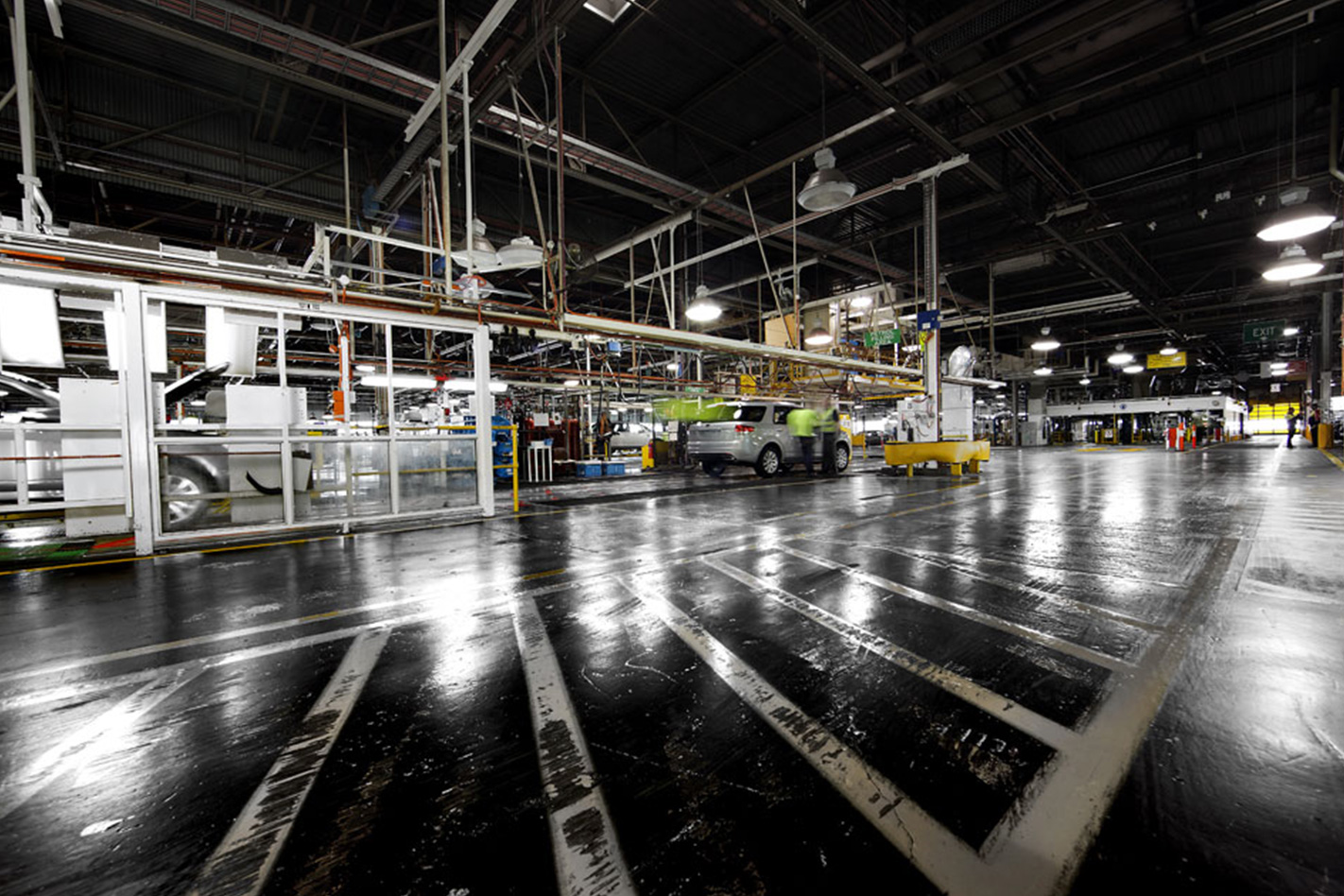
The giant presses will cease stamping those beautiful single-piece bodysides. The blocks for the in-line six-cylinder engine will no longer be cast. No more trucks will arrive to ship the parts up the highway to Broadmeadows for assembly as they have done for 56 years.
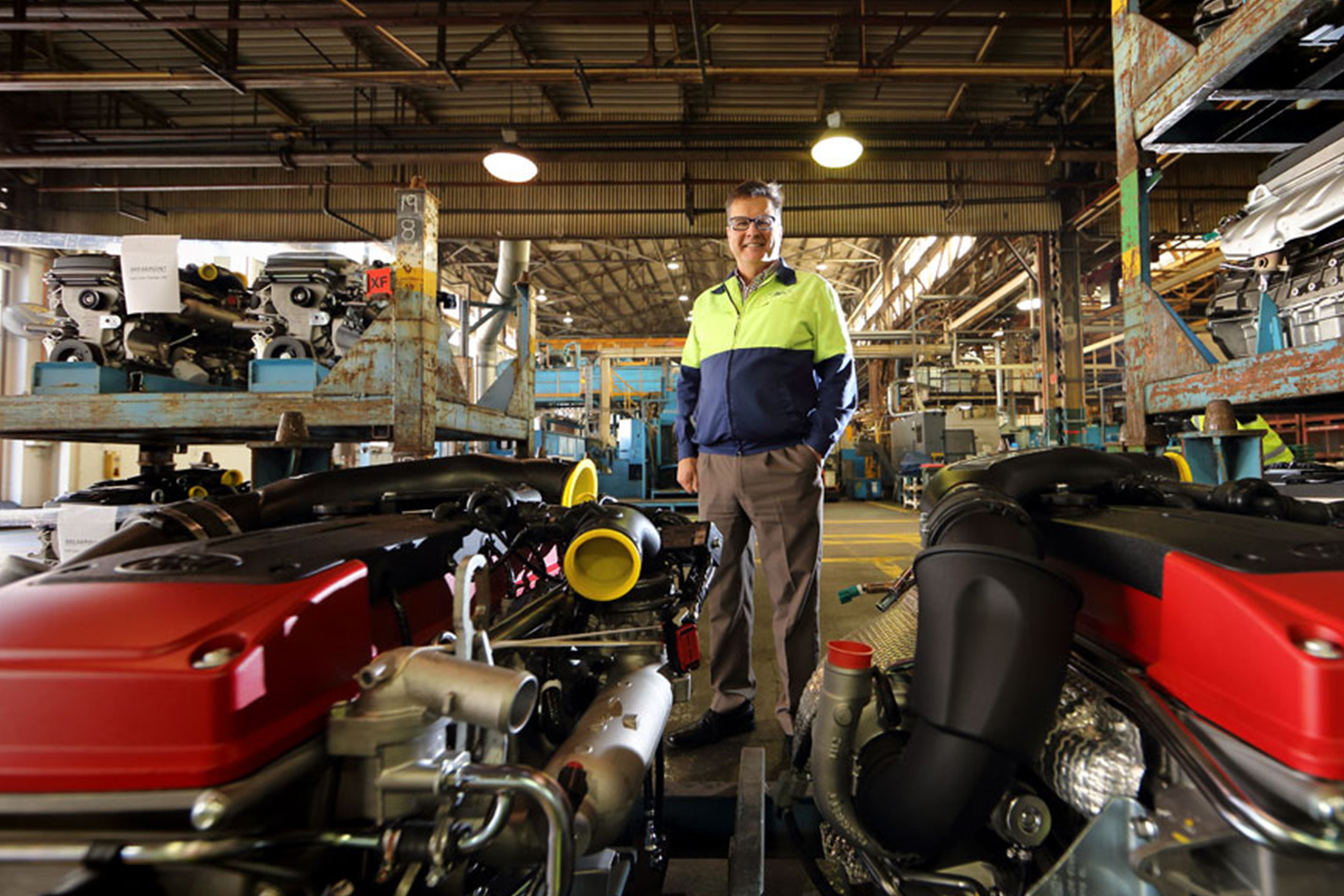
And then the last Falcon will come down the assembly line and then… Nothing. Except memories. Twelve months from now it won’t only be Ford departing either, as Holden and Toyota close their plants and the automotive manufacturing industry as we know it in Australia ceases to exist.
“The thing that I personally see is the opportunities presented to people as a result of being involved in manufacturing right though from designing, finance, purchasing to sales and marketing are no longer going to be there,” Makin reflects. “I’ve enjoyed those opportunities and so have many, many other people.
“The thing that strikes me about Ford ceasing, Holden ceasing and Toyota ceasing, is that the skills we have as a country are going to diminish and that leaves a big hole for me because as a country, we’re going to reduce our capabilities.”
Makin’s anguish is so easy to understand. As a Geelong boy born-and-bred, he knows the Ford factories have stood on the Melbourne road in the city’s east since early last century, sturdy evidence of Ford’s power and prestige and Geelong’s vitality as an industrial hub and employer. This was the first home of Ford Australia and where it built its first cars locally.
A group of photos stuck on the site’s security hut wall shows the original plant alone in a field, with Geelong Grammar off in the distance one way and Corio Bay in the other.
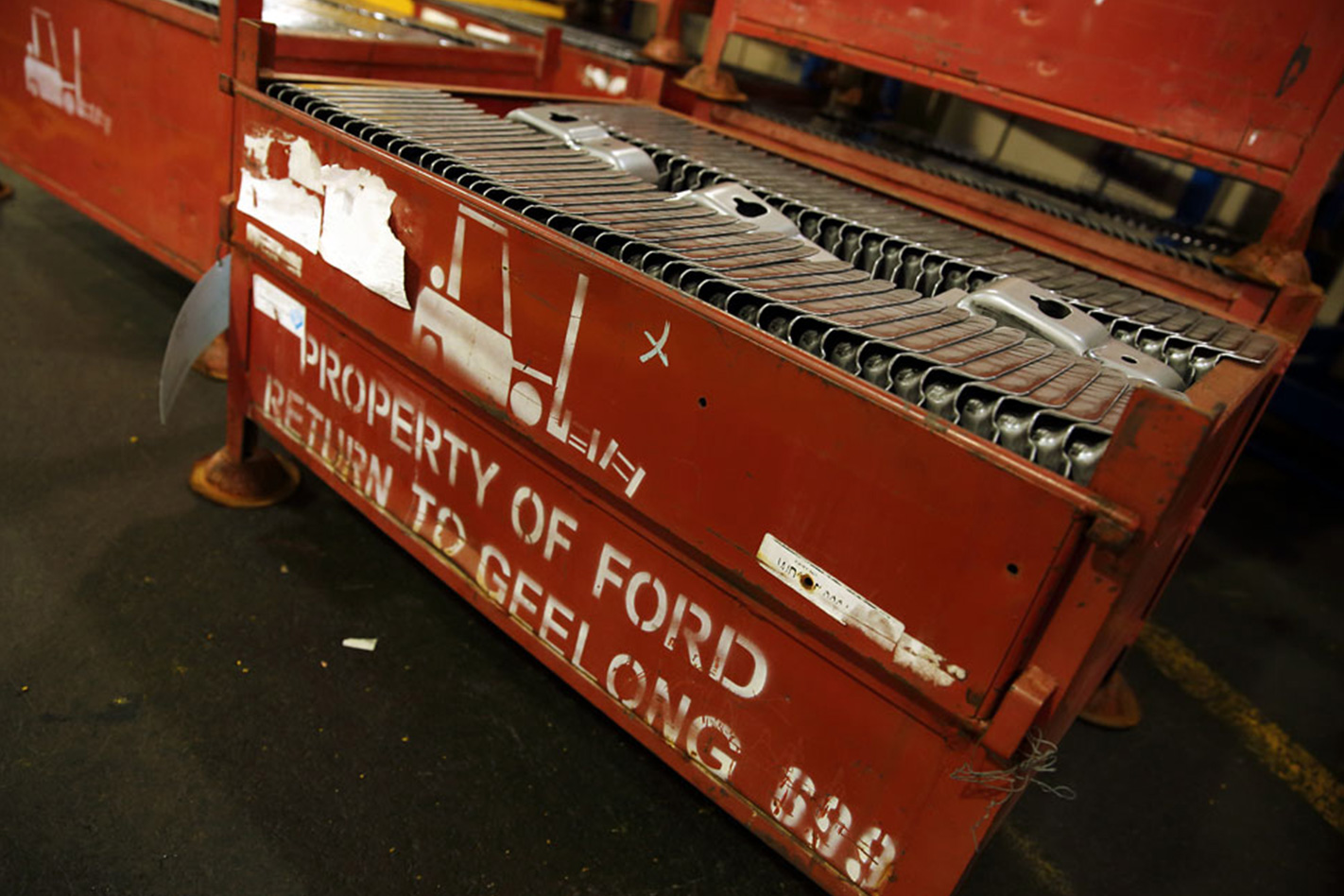
Now it is pressed in on all sides and eventually it will be eaten up. Just as the old product development centre across the road became a Bunnings, and up the hill towards town Plant 5 is now a carpet factory.
Graffiti daubs the red brick walls, while the billboard which once proudly promoted the latest Falcon, Fairlane or LTD in all its 24-sheet glory is now a derelict wooden frame with weeds growing all around. A few people stroll around in yellow hi-vis vests but there is none of the urgency that energised this place as recently as the noughties when BA, BF and FG Falcon sales were still strong and Territory was proving a critical and commercial success.
Inside the office building where we meet there are rows of empty cubicles and ample evidence of an era now gone. There are posters of racing Falcons winning at Bathurst. Now Ford doesn’t even sponsor a team. Qualifying for this year’s 1000 will be underway when business finally ends here.
“I remember all this office area being full of people. But with technology and reduced volumes, things have changed,” Makin muses.
“I’ve got no idea how many people have been employed on this site or overall by Ford Australia. Hundreds of thousands? They are people who may have worked here for a month and some for 40 years. “I look back at this site and this building was built 15 years before the second world war and there were activities done here to support the war effort.
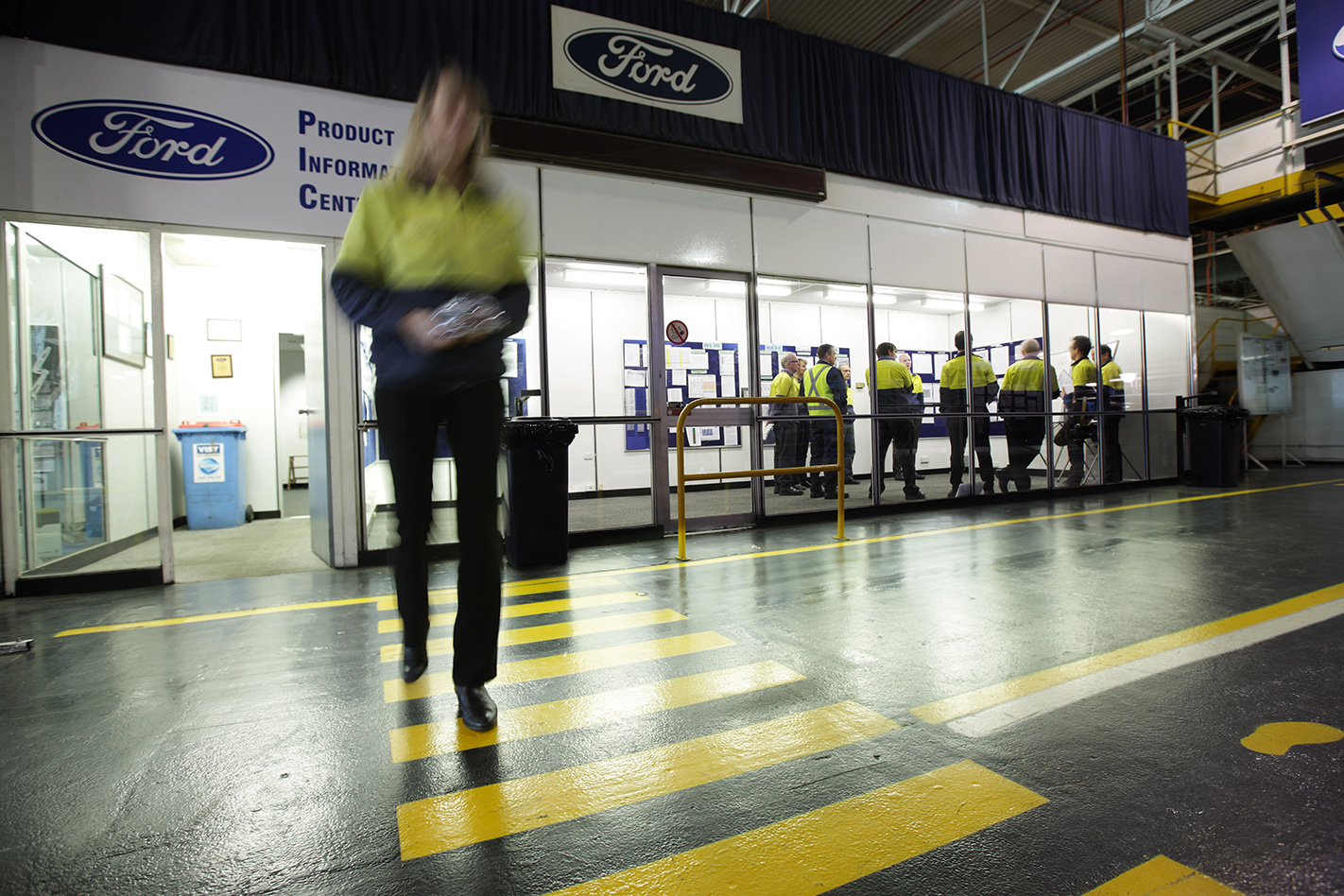
“And then after the war right through; the decisions were made to build the Falcon and this plant being a stamping plant, iron casting, machinery and assembly operation.
“It’s an incredible journey and it’s just supported so many lives along that journey.”
Among them is Nick De Giorgio, whose father worked at Ford in Geelong before him and then took his son in for an interview in 1989, five years after he’d retired. Nick got the job the job as a press operator the next day.
“When I started I think there were 5000 people at the Geelong plant,” he remembers. “I met a lot of people, there were a lot of good times.”
In a 25-year career he rose through the ranks in the stamping plant to become a team leader. He says the place was buzzing at its height; a heaving mass of characters and cultures from all over the world, which all left their impact on him.
“You’d meet a lot of people from different nationalities. You’d learn more about people there than you did anywhere else [in terms of] their cultures and all that.
“You’d teach them something and they’d teach you a lot of things; how they lived life, how a lot of them don’t each junk food, how they would make their own food from scratch.”
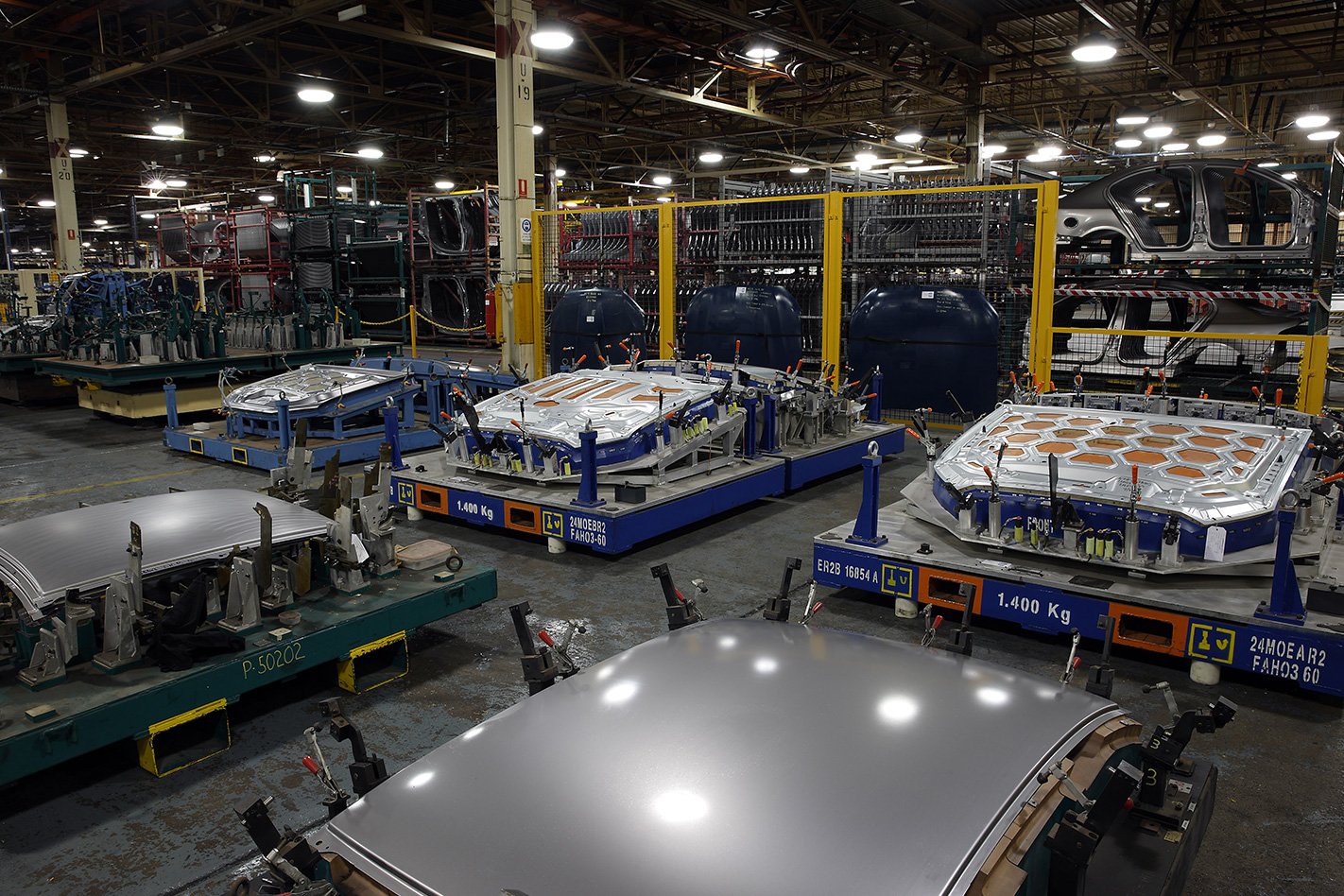
De Giorgio says the workforce remained positive about the future despite the various swells and sways over the years. He remembers regular staff meetings with Geoff Polites, the dynamic leader of Ford Australia from 1999 to 2004, for their directness and honesty.
“We didn’t think it [closure] was going to happen though. We just thought it was going to keep going and going and going. We heard all the rumours but they never seemed to come true,” he says. But he changed his mind when he met Bob Graziano, the American who arrived to become president of Ford Australia in 2010.
“The first impressions we got from the way he spoke to us just made us think he’d come to shut us down,” De Giorgio says.
Of course, whether that is true or not is something only a few people in the higher reaches of Ford could know. But De Giorgio doesn’t hold that against the company. Married with two young kids, he took a package and left in 2015 to start up his own courier business, grateful for the long notice Ford gave and the support it handed out to its employees.
“All the help we needed; they gave it to us and I just utilised to my advantage,” De Giorgio says. “They probably offered more support than they should have done and they did it for everyone.”
Luke McSeveny has also moved on, but in a very different direction to De Giorgio. After nine years at Ford as an engineer, he left in 2014, only months after the closure plan was announced, to begin a Masters of Divinity. Although he is originally from Sydney, he wants to return to Geelong when he graduates as a Paster of the Presbyterian Church in 2018.
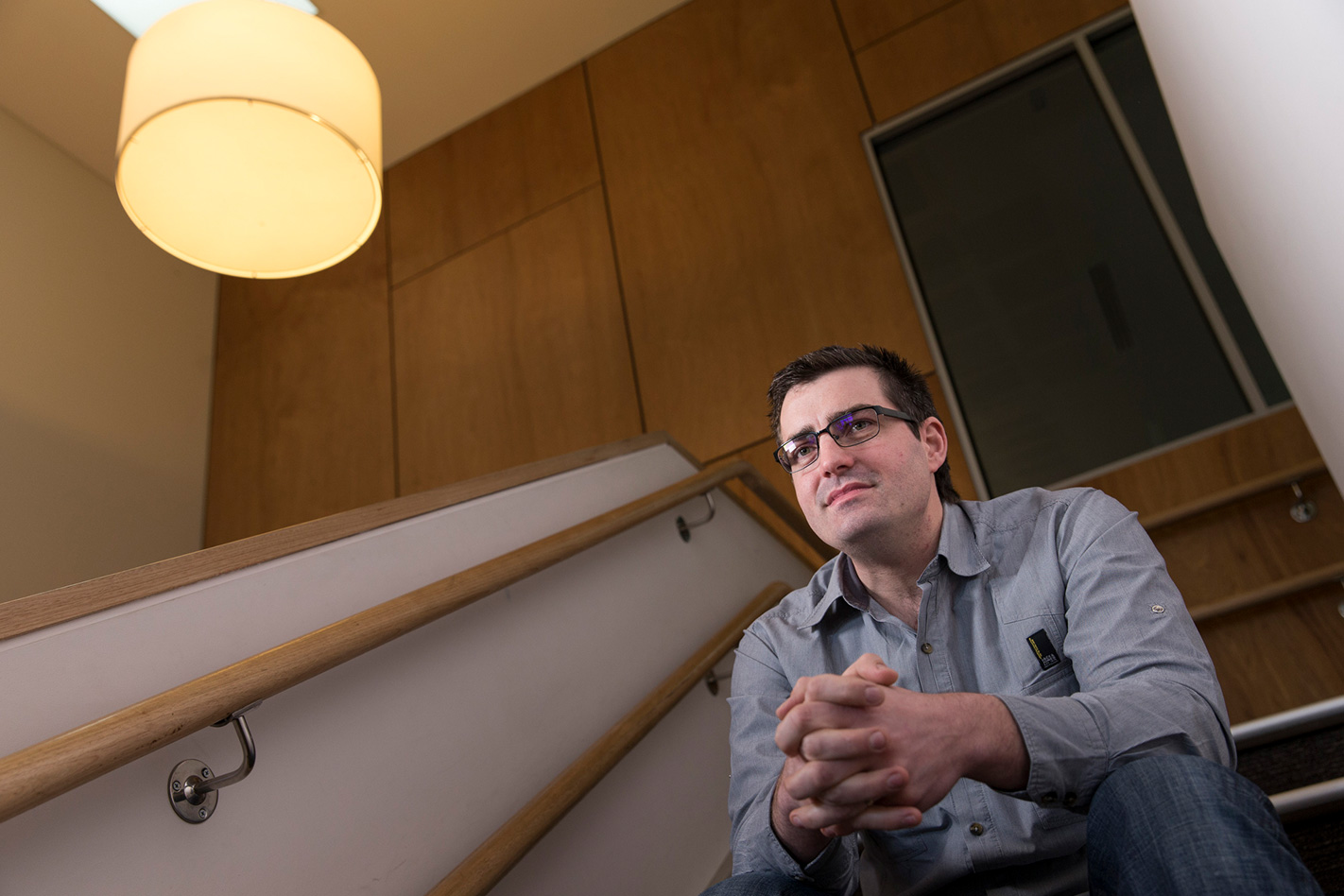
He has no doubt his Christian faith helped him face the future with confidence and also allowed him to extend a helping hand to those around him as the reality of the closure impacted.
“I am strongly persuaded that life is more than what we see and feel, so when these tensions and strains came up I could look forward and look above,” the 33-year-old says.
“Some people were quite anxious and worried and stressed and certainly I tried to encourage people based on the convictions I have; a belief that life was more than a job and that human relationships and people are a lot more value than bits of metal and a paycheck.”
McSeveny’s new career is a dramatic change for a bloke who says his career highlight was being part of the team responsible for reinstalling the V8 engine line at Geelong after the purchase of Ford Performance Vehicles in 2012, some 30 years after the last V8s were built there.
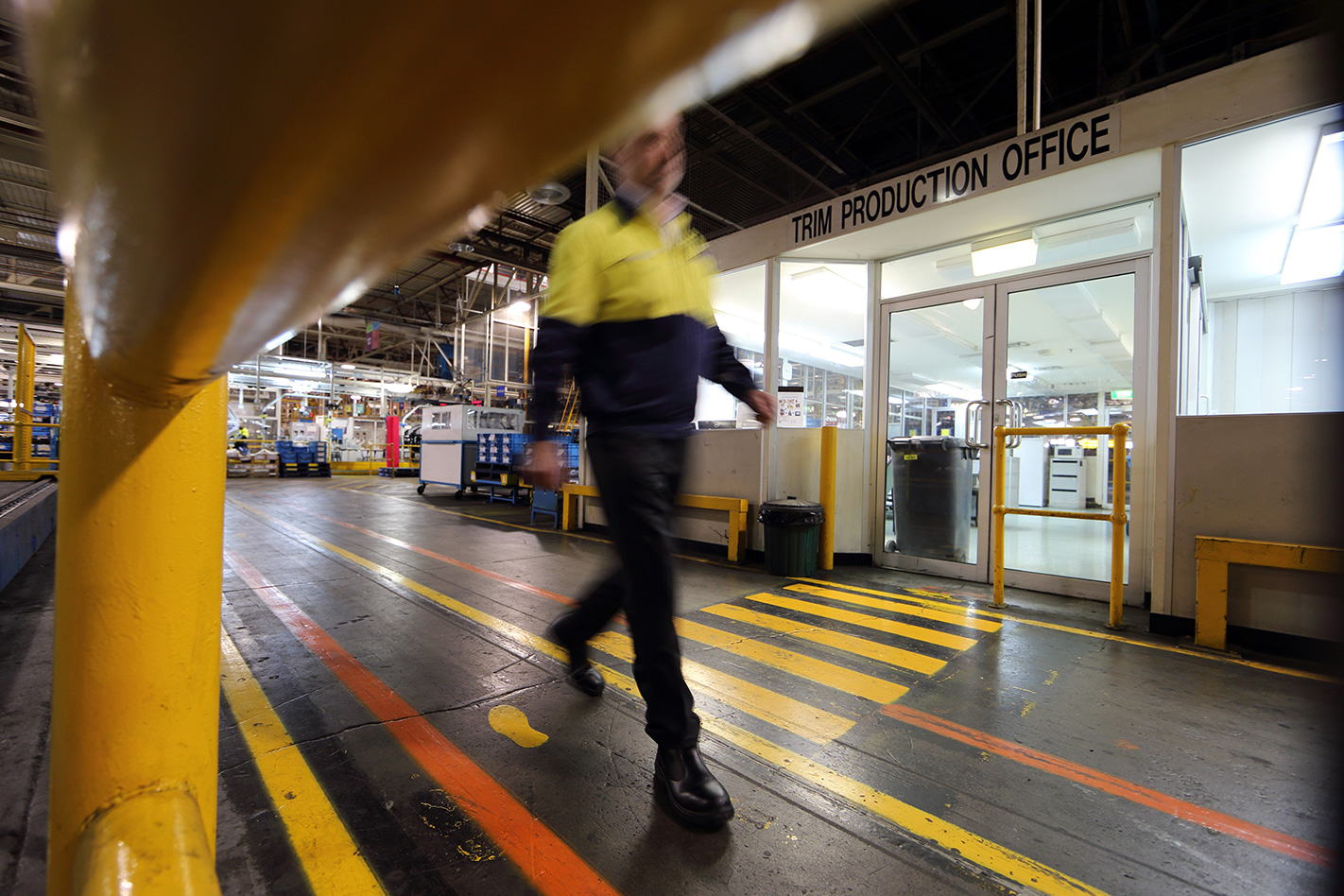
“That was beautiful,” he smiles. “We had to create a quality control system using nothing we had ever done previously, because everything else before was high-cost and [required] mechanical interlocking protection to avoid errors.
“We went from that to this one guy just building his own engine on a trolley.
“We developed this iPad interface so every guy got an iPad and they went through taking a couple of hundred photos of every engine in the build process and had to tick off every control.
“Towards the end we could really stretch what was normal to be able to make it work. That was fun; building a V8 is one of the nicer jobs. I’ve got one out there with my signature on it.”
That emphasis on quality and innovation is something Boris Zaroje understands. He joined the workforce at the Broadmeadows assembly plant in the body shop in 1976. Through a variety of roles he has been focussed on the improvement of vehicle assembly ever since.
‘Broady’ looks to have changed little since the first XK Falcons rolled out in 1960. A series of low, flat, white buildings stretch across an often windswept plain, bounded by the Hume Highway to the east and a railway line to the west. Hundreds of gleaming Falcons and Territorys sit waiting for transportation to dealerships and their owners.
Zaroje knows the building internals have been modified, upgraded many times as the local management and the workforce strived for improvement, relevance and survival.
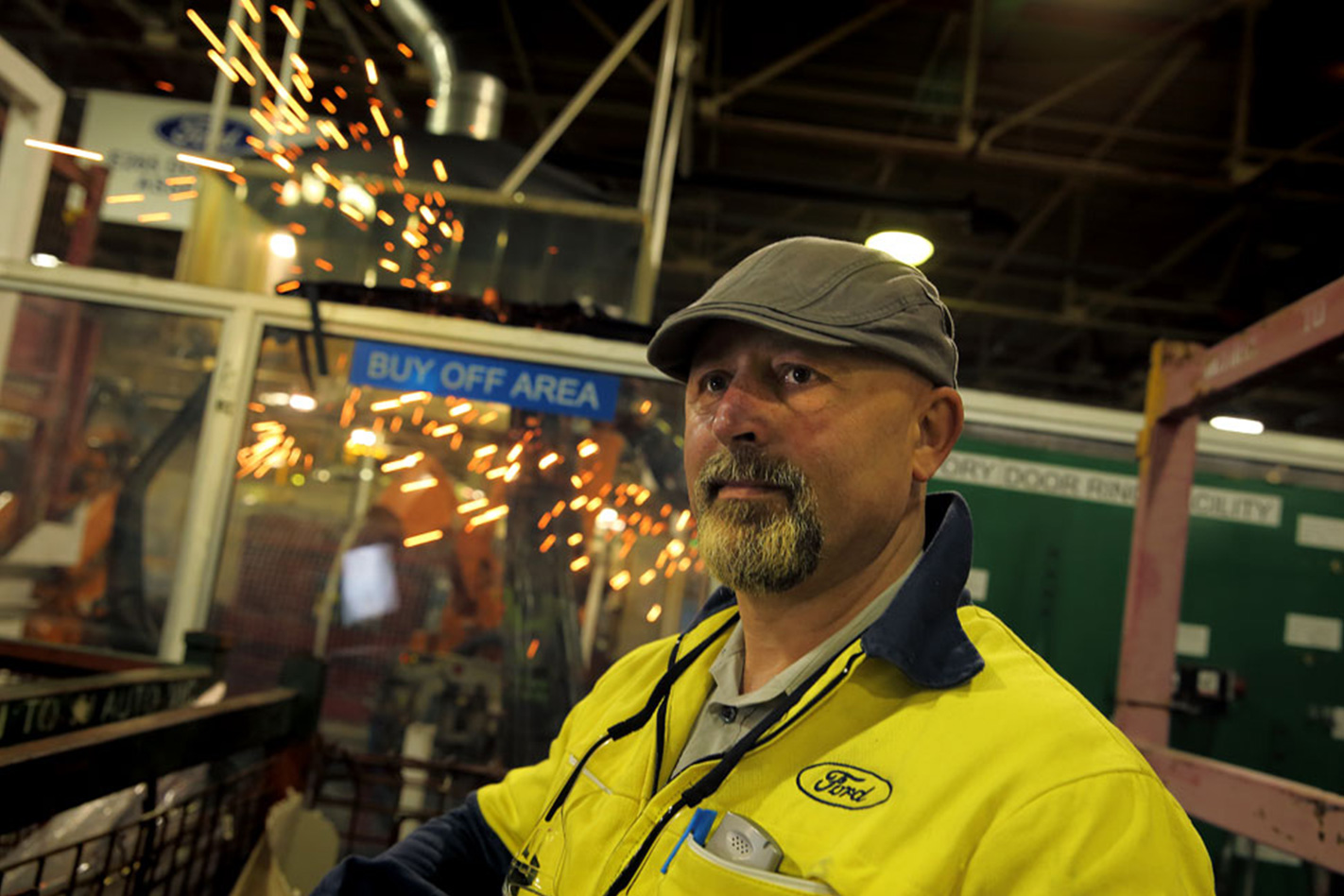
“There were 700 payroll people physically building cars in the body shop in 1976,” he recalls. “It was very old school when I joined, manual conveyors pulling everything.
“And there were these things called roundabouts which were around three to four metres in length and three metres in width with the tooling on the top. They used to circulate with the weld guns all suspended overhead and you physically had to jump on top of the drawn cart, spot weld and so forth and jump off.
“It was absolutely amazing. You had no control over the facility; the facility controlled absolutely everything. And it was quite dirty and quite dark.”
But the balance changed as the thoughts, belief and knowledge of the line-workers were incorporated into the process.
“If you want to know something, you have to go to the source,” says Zaroje. “If someone is on a weld gun, or if someone is on a metal finish task making sure the skin quality is good, there is nothing better than getting the input of the man who looks after it.”
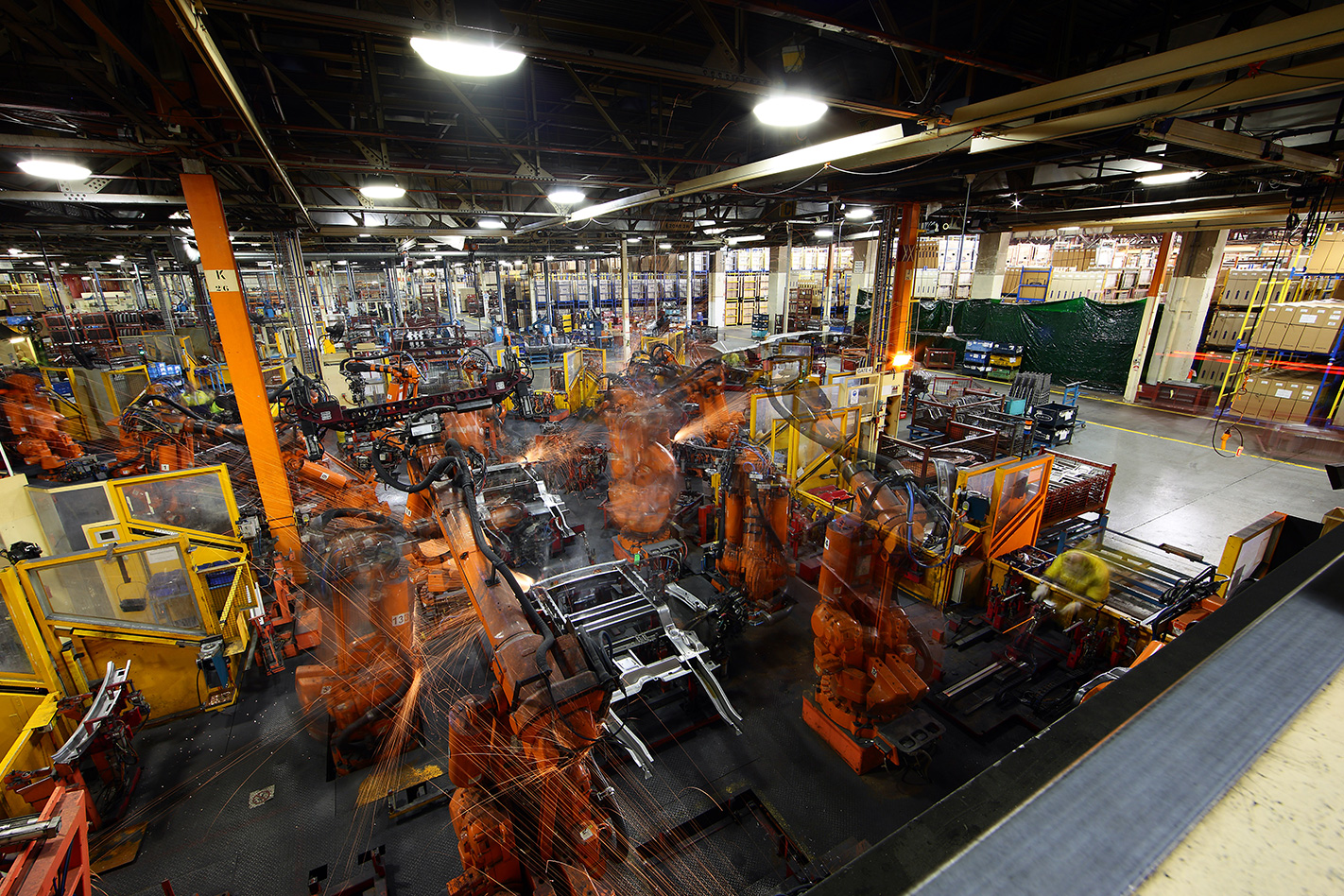
“You would not recognise the place now,” he says proudly. “All your merry-go-round type fixtures are done away with, all the lines are fully automated, people don’t have to jump on any carriers.
“It’s well lit, the noise has been taken away, it’s safe and clean.”
And it’s over, something Zaroje is philosophical about. He came to Broadmeadows with his family from Croatia when he was 13, and has worked almost all his adult life for Ford. He’s married, has kids and grankids, a home up the road in Craigieburn and now a caravan which will be towed around Australia behind a Ford Ranger… naturally.
“On October 7, I’ll exceed 40 years and four months working at Ford. I leave on October 14; that’s the agreed date.
“If I look at the 40 years of service, that in itself is a milestone. If I look at what Ford means to me, it is a whole lot. If I wasn’t loyal, if I didn’t think much of the product, I wouldn’t be here. It’s that simple.
“Have I learned a lot? Yes. Has Ford provided the ability to learn; the stepping stones for the progressions? The answer is yes.
“Everything I have; I’d suggest to you I have Ford to thank for. I can’t deny that. You have to look at the positives.
“Will I continue to love Ford? The answer is yes. After 40 years it becomes part of you, whether you like it or not.”
Love of Ford is something Suzanne McConchie never had a choice in. She is one generation of a Ford family that bleeds blue and has known little else except working for Ford at Broadmeadows. In her family there are two brands of car, Ford and Junk. Her two-year old nephew has already been coached in that – just as she was when she was a toddler.
Her grandfather worked at Broadmeadows for 25 years, her father for six months and her brother for six years. She met her husband Patrick at Ford because he also worked there. He still does; as does Patrick’s brother.
McConchie bought her 1970 XW Falcon with a former boyfriend who also worked at Ford, and they restored it together.
“There’s a photo of me when I’m just walking and I have a Ford visor on that says ‘Telstar Car of the Year’. I’m at the Melbourne motor show holding my grandfather’s hand,” she recalls. An engineer and former member of Ford’s graduate program, McConchie joined the blue oval 13 years ago.
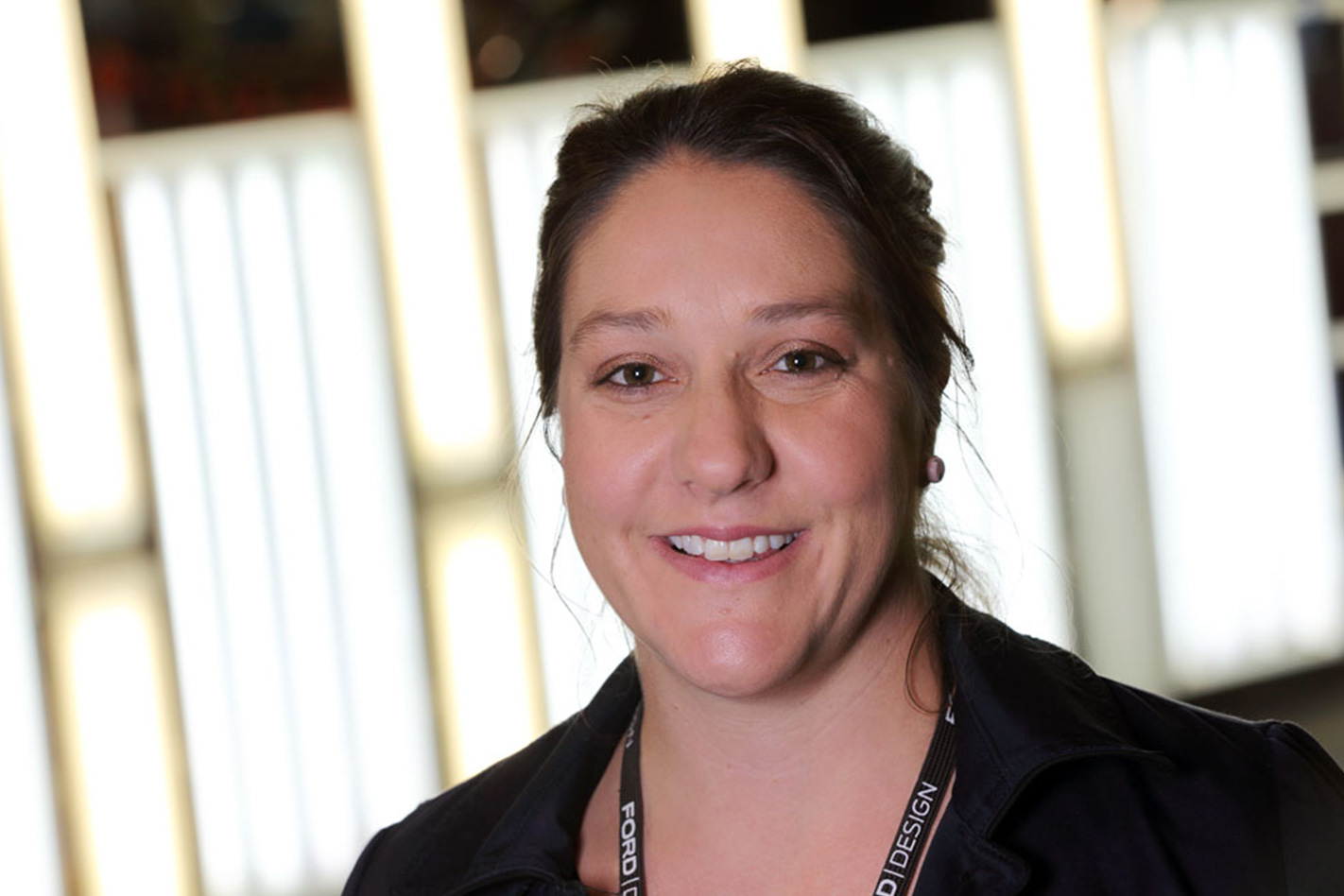
And like Brian Makin, she has shed her tears. The day – May 23, 2013 – when Graziano called the Broadmeadows assembly plant workforce together in the staff canteen to tell them manufacturing would end in three years’ time, she couldn’t hold back.
“On that day I cried a lot,” she recalls with a small smile and almost embarrassed laugh.
“I think the first reason that happened was I realised I wasn’t going to achieve my goal of being the first female plant manager because that job was no longer going to exist.
“My plan for the next 10 years was gone. I was like, ‘what am I going to do now and what are all these people going to do now?’.”
Understandably, considering her deep ties, she talks of the Broadmeadows workers as her extended family. There are so many long-term employees on the line and in the offices that she knows well.
“It’s really like a family. I know that sounds cliched but I would know 80 percent of the people’s names,” she says. “I actually avoid coming down here [to the plant] too often because I can’t walk from one side to the other without hugging 50 people.”
But over time many of the familiar faces have disappeared as the wind-down has got underway and people have accepted redundancy packages and departed.
“I’ve often wondered about the first Monday after they leave; they have been coming here for 25 or 30 years and they wake up and don’t come in. I wonder what they think about sitting at home going, ‘I don’t go there today’.
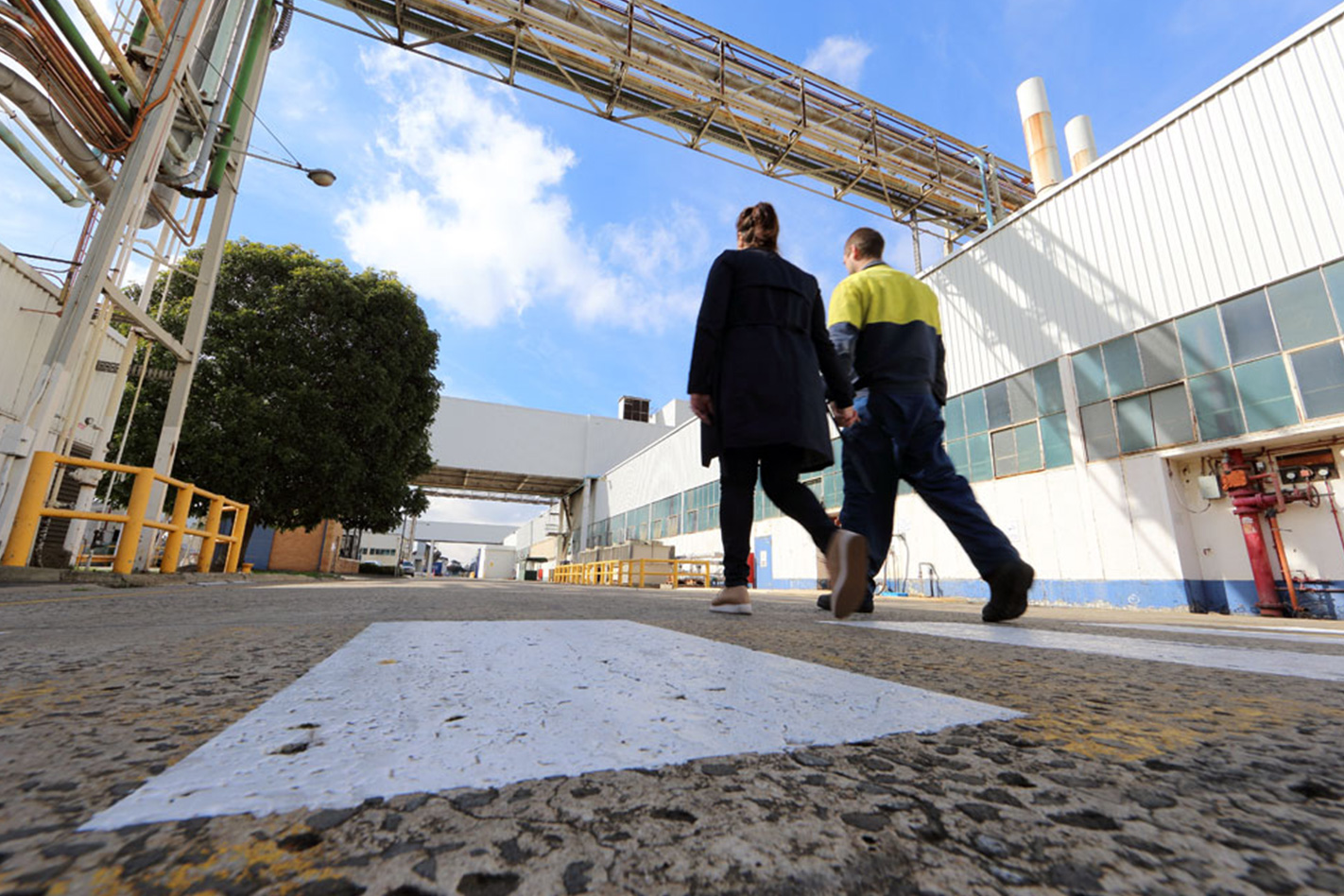
“And more than likely you won’t see them ever again.”
Now Suzanne and Patrick are having their first child and he or she will be born into the Ford ways too, as both parents are amongst the 160 staff to move from manufacturing to Ford Asia-Pacific Engineering.
This is very much the silver lining in the dark cloud that is the closure of Ford’s Australian manufacturing operations. Come 2018, Ford will be Australia’s biggest automotive employer, with 1100 design and engineering employees spread across Geelong, the You Yangs testing ground and at Broadmeadows, where the old HQ building is currently being converted to office space for the product development team.
“In July 2014 I got a job in product development,” McConchie recounts. “I’d worked for 11 years in manufacturing, but I really wanted to work in design.
“But I wouldn’t change it; I learned so much about how to build a car. I’ve worked in sheetmetal, I’ve worked in trim, I’ve worked in final, I’ve worked in quality, I’ve worked in product logistics.
“So now I’m moving into product development with much more knowledge of how a car is built versus those who have only ever done it virtually on a computer.
“I’m now doing studio engineering. So I have a team of guys who liaise between the designers and the engineers. The designers say, ‘we want it [a future model] to look like this’ and the engineers are like, ‘no, it has to be a square box’ and then we work between them to try and find a compromise.
“We turn design fluffiness into a real car,” she says as she laughs that light laugh again. It inhabits this empty room and this tired-looking place with youth and energy and hope.
As much as her new future excites her, McConchie is conscious of the closure that has to be dealt with first. Her baby is due the week before so she probably won’t be there to watch the final Falcon be completed.
“I kind of feel relief that I won’t be here,” she admits. “There has to be a last car … then the emptiness.
“That’s just weird.”
The last time we assembled this many Falcons at Ford’s You Yangs proving ground in Victoria, it was to celebrate 50 years of the venerable nameplate.
A raising of the glass, if you will, for a one-time best-seller and long-time family favourite, etched into the Australian psyche over five decades of sales successes, racing victories and varying fortunes.
This article was originally published in the November 2016 edition of Wheels, and is being republished on the fourth anniversary of Ford Australia ceasing manufacturing in Australia.
What we didn’t know in 2010 was that the Falcon’s fate was tenuously close to being sealed. Rumours had been circulating since the late-’70s that all-Australian cars were living on borrowed time, so the fact the Falcon managed to hang on until 2016 deserves a celebration in itself.
Perhaps there are Valiant parallels here: it crept to a halt in 1981 but has never really left us, and still commands good money in its most-prized forms. Similarly, the Falcon might be about to exit Ford’s showrooms but it’s a long way from ending its tenure as the epitome of working-class cool. The exorbitant prices people will pay for a 1971 XY Falcon GT-HO Phase III, as well as anything vaguely similar in cylinder count and hip height, says the Falcon’s enduring appeal is, for now, everlasting.
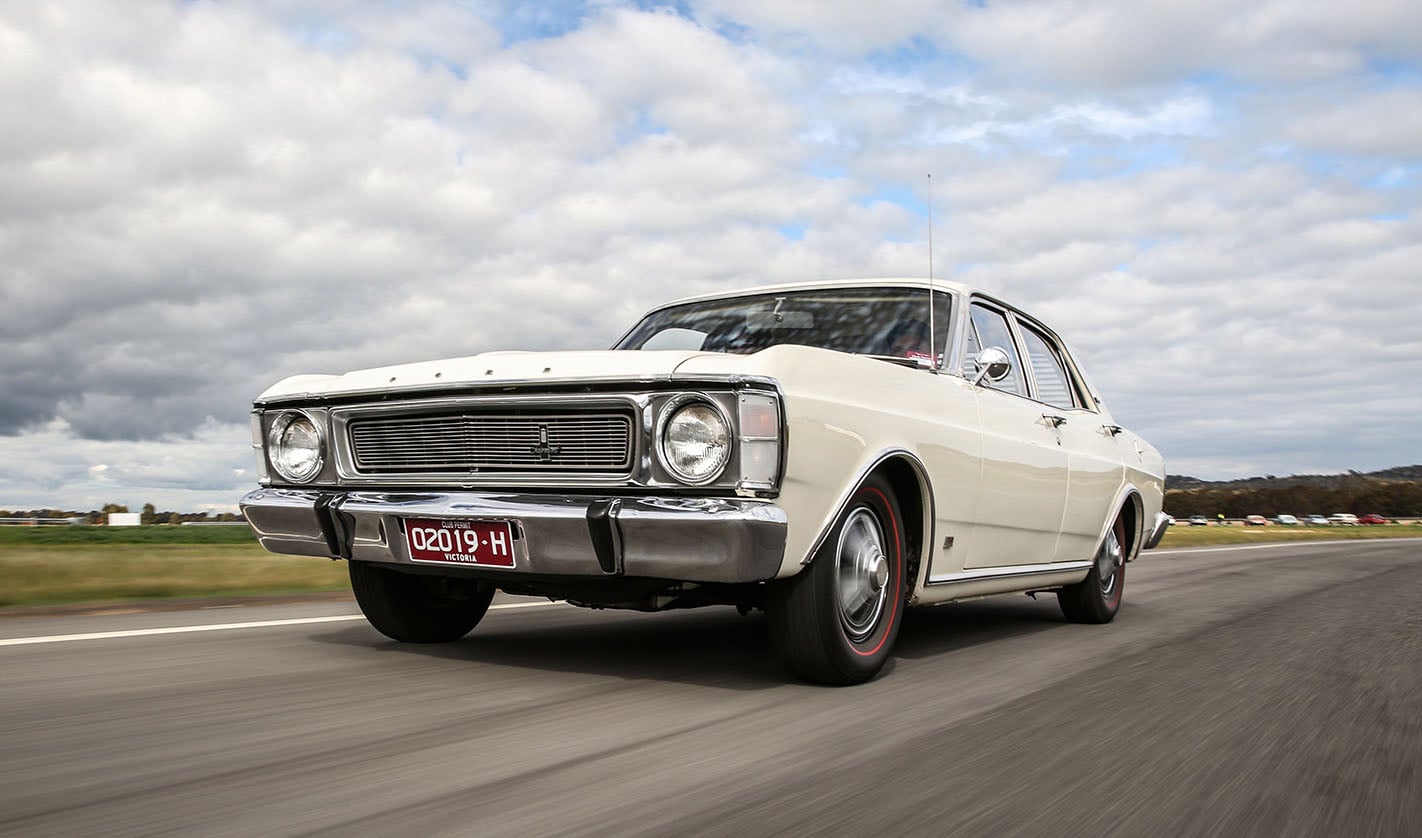
Spanning eight generations and 24 model series, from the 1960 XK to the 2014 FGX, the Falcon has become part of the fabric of Aussie life. We’ve commuted in them, holidayed in them, raced them, made love in them, hailed a fare in one, and a few of us have probably even been born in one. From a drum-braked, bench-seated, three-on-the-tree base shitter to a supercharged, striped and spoilered slingshot, the Falcon has pretty much offered something for everyone. And we have one of every model code right here (bar a 1988 EA that pulled out the morning of our shoot). Better go exploring.
While the XK original has its charm, it’s an XL Falcon Squire wagon that I’m instantly drawn to. Along with the Futura sedan, it introduced some Detroit razzle-dazzle to Aussie driveways in 1962 and its contemporary retro appeal is seriously off the charts. Thing is, Aussies had an intense dislike for the Squire’s faux-wood panelling back in the day and hardly anyone bought it.
I’ve never actually driven a first-gen Falcon, only ridden in the back seat of a friend’s black XL Deluxe back in the ’90s, but all the hallmarks are there. Flat side windows, a deep-dished steering wheel offset to the right and unusually close to the driver’s chest, and an interior so overwhelmingly red it looks like a crime scene. It’s a reminder of an era when you moulded (as best you could) to your car, rather than your car moulding to you.
But it’s this car’s combination of a two-speed ‘Fordomatic’ column auto and standard 144 cubic-inch (2.4-litre) six that intrigues me. Plant your right foot on the move and it’s top gear or nothing. The Squire responds with a quaint swelling of engine noise, rather than any genuine surge in momentum. These days, it’s a wagon for looking cool in, cruising about town. It’s not a weekend getaway machine, unless you’re very patient.
The Squire’s most obvious successor from generation two is a stunning 1969 XW Fairmont 3.6 sedan – similarly luxe-focused, also modestly powered (relative to the 4.9-litre V8 it could’ve been optioned with), and also owned by Danny Zuclich of Early Bird Falcon Parts in Thomastown – but it feels generations newer than the faux woody.
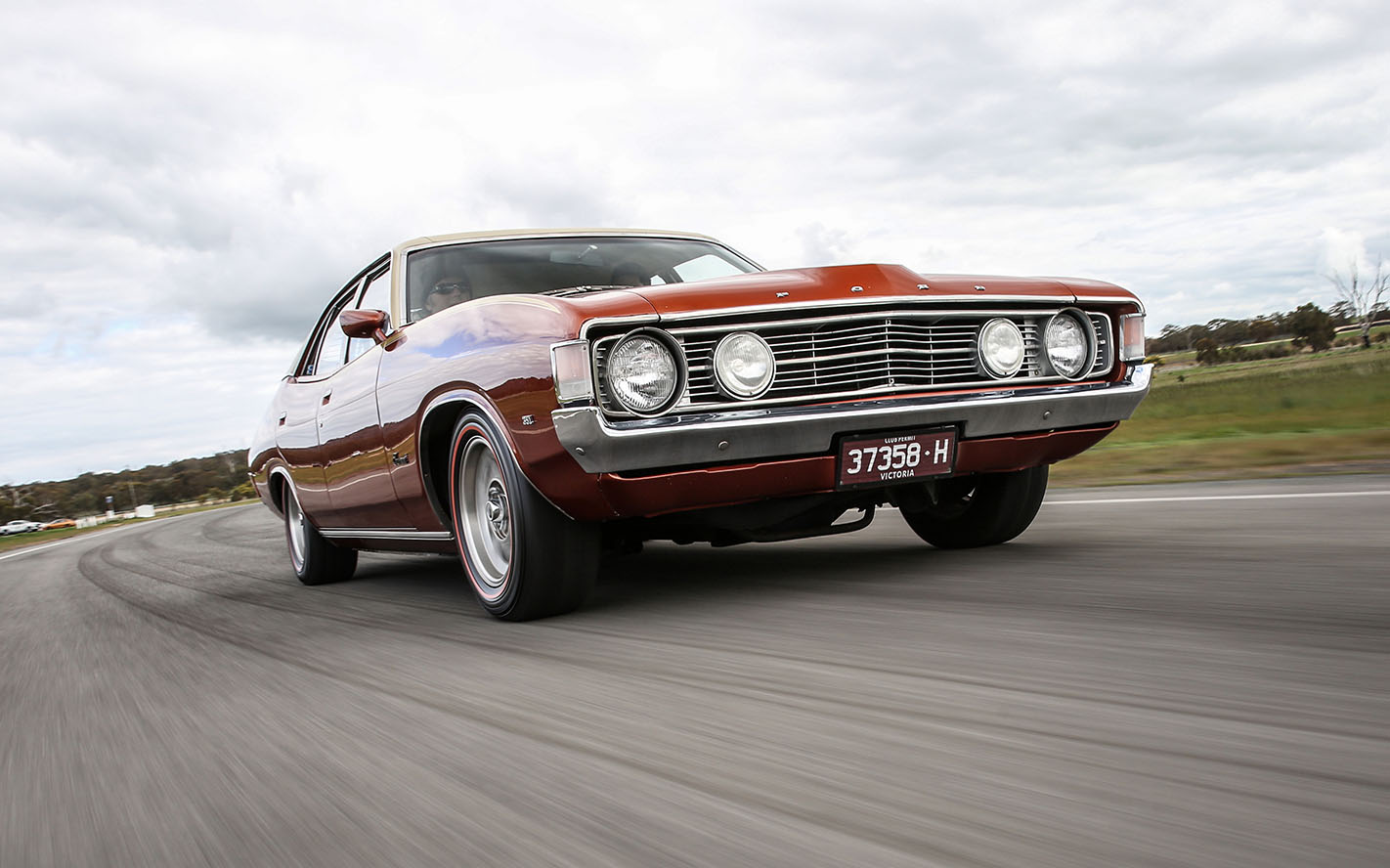
Where the XL is clearly, design-wise, a car from the ’50s, the XW is a car for the ’70s. Its broad stance, the expansive rectangular view across its big bonnet and the vast leap in everything from drivetrain smoothness to seat comfort and driving position make the XW a proper Aussie road car, able to eat up enormous distances without raising a sweat.
What has never received much press, however, is the level of Australian design content in the ’69 XW Falcon. While the ’66 XR’s Aussie influence centred on the wagon, which was completely unique to us from the B-pillar back, the XW debuted an all-Aussie dashboard design that’s so much cooler than that of the slabby ’69 US model.
Admittedly, stuff like steering wheels and door pulls were shared, but only the wheels carried over to the all-Aussie 1972 XA. Famously snubbed in Wheels Car of the Year testing back in the day for being a simple re-body of the COTY-winning 1966 XR, the XA may still have leaf springs under its sloping derriere and recirculating-ball steering guiding the front, but it’s just soooo ’72.
That high window line, driver-focused ‘cockpit’ dash design, and the sedan’s space-ship tail-lights really stand out on this XA Fairmont 351 manual. Owned by Nick Blekic (who brought the same car here for Falcon’s 50th in 2010), it’s resplendent in that Copper Bronze paint colour so popular in the mid-’70s. A beige vinyl roof (with sunroof) is the icing on the cake, though it’s the serious muscle of this car’s 5.8-litre V8 that dominates its personality. Even in fourth gear, flooring the throttle sees the XA Fairmont lift its long nose and fill the surroundings with bent-eight thunder.
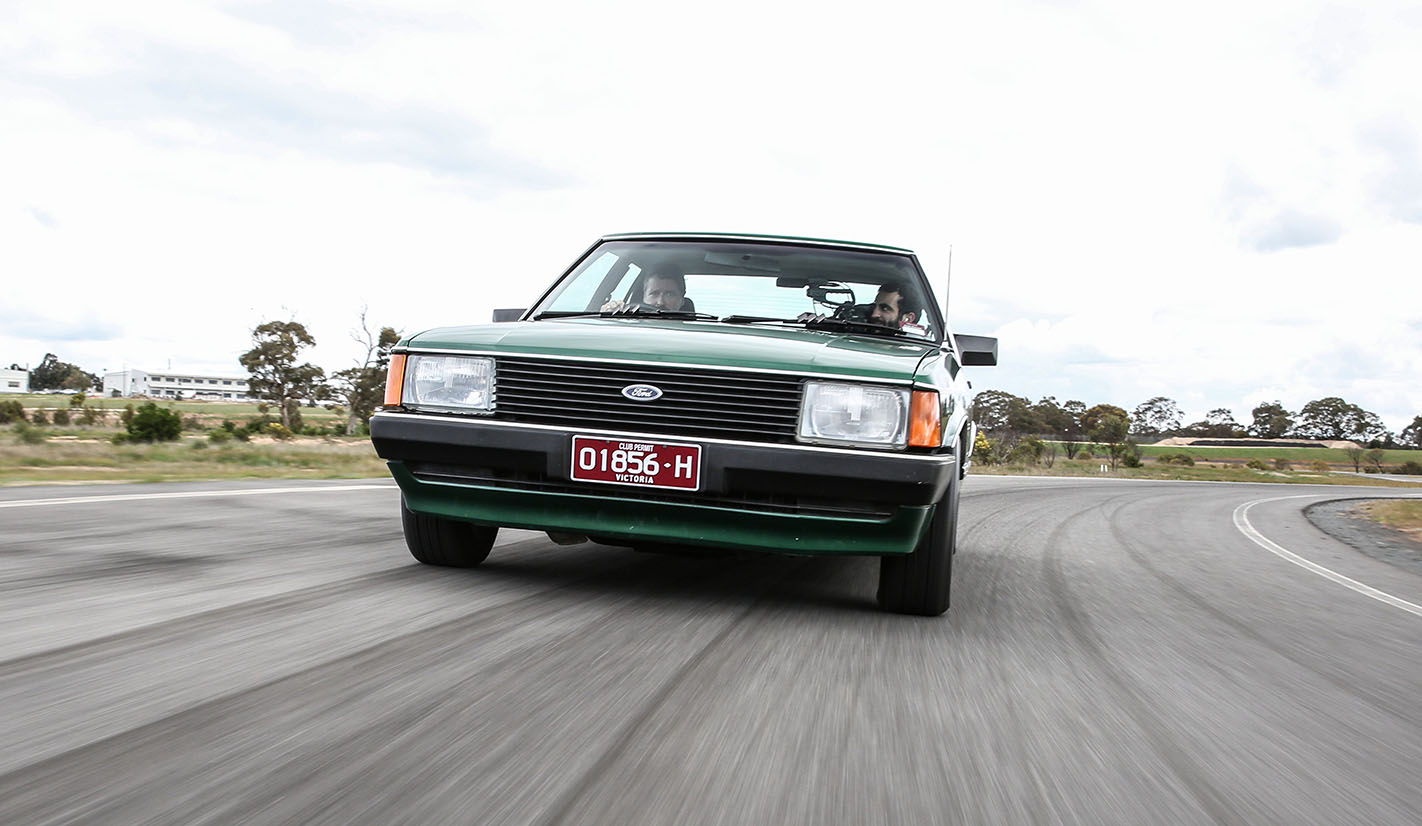
It’s a similar story in Chris van Gaans’ 1979 XD Fairmont Ghia 5.8 manual, carrying over the XA’s muscular drivetrain (and its underpinnings) into a strikingly modern bodystyle with a low belt-line and tonnes of glass. Right up to the ’90s, XDs were everywhere, but these days they’re a rare sight. And it’s that lack of familiarity that makes you appreciate just how stylish the XD sedan is, especially from the rear.
Inside, however, it’s a different story, with acres of black dashboard plastic at odds with the colour-coded class of older Falcon interiors. And to the left of the steering column sits that one constant in Falcons that lasted until the 1994 EF – the ‘umbrella’ handbrake.
Derided at the time as a symbol of Falcon’s conservatism, it’s part of the car’s character these days. Even the ’93 ED Falcon XR8 Sprint – this red example owned by Nick Blekic’s brother Mark – has one, and as I park his understated, elegantly powerful ‘sleeper’, my brain knows exactly where to reach for the handbrake.
The Blekic siblings are a great of example of how the Falcon has crept under the nation’s collective skin. A Blue Oval family through and through, calling newer supercharged V8s their own, as well as period classics like Nick’s XA, the Falcon is part of the narrative of their lives.
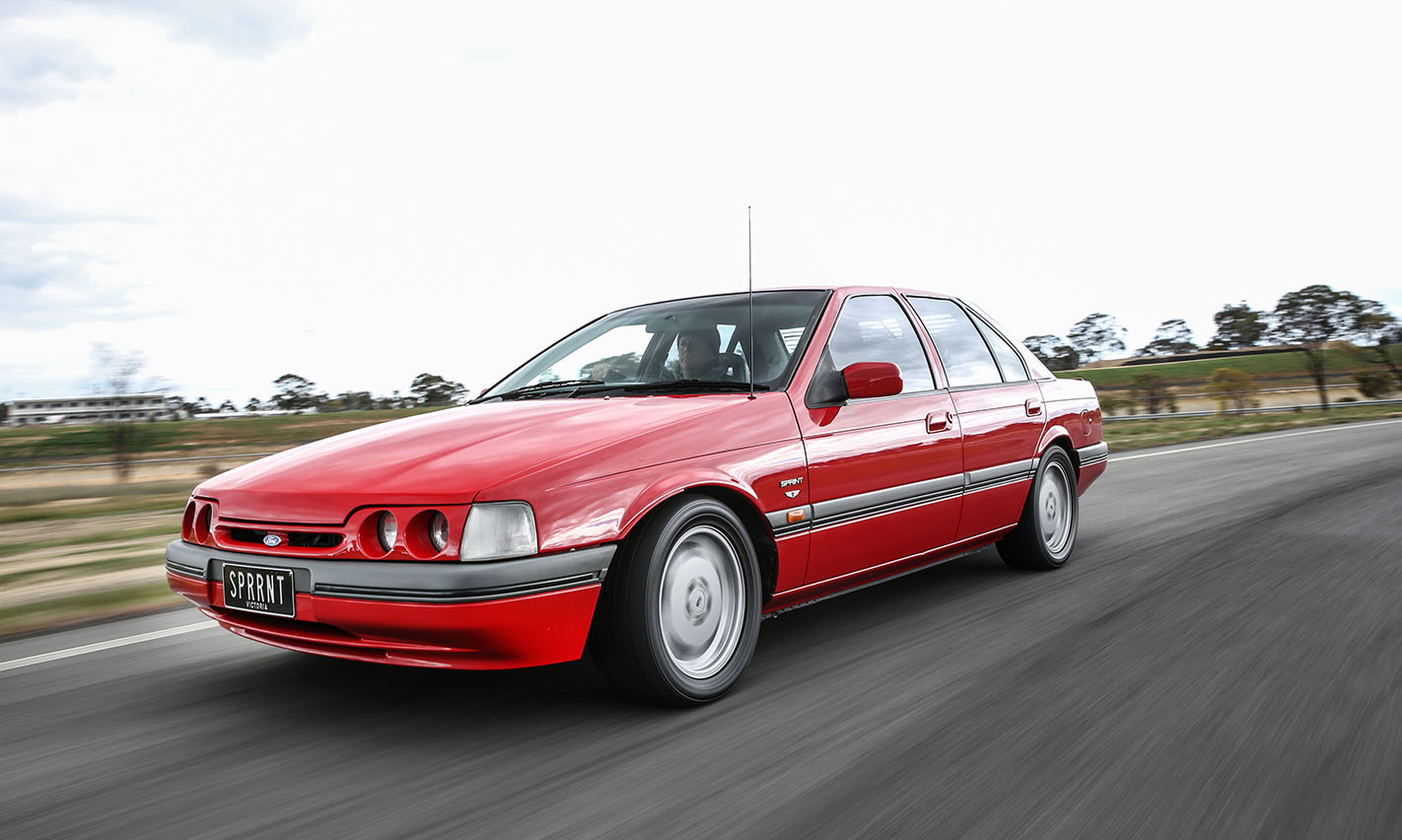
And that’s the overriding feeling here at You Yangs. Manufacturing may be about to cease, but the Falcon’s intrinsic appeal endures in its many glorious generations, and all its varied forms, bringing people together to celebrate a love of cars and share stories, short and tall. And they’re chuffed the FGX Sprints are going out on a high note.
Falcon’s sales may have slowly faded, but this bird’s spirit will keep soaring forever.
A remaster of the popular Need For Speed Hot Pursuit game has come out of the blue, and should be on shelves in early November.
The original Need For Speed Hot Pursuit was released in 2010, but that game itself was already a re-make of the original Hot Pursuit which involved racers battling against cops in races and high speed stunts with exotic cars around the roads of fictional Seacrest County.
This new 2020 remaster will involve a visual upgrade to take advantage of current-day console specifications and support cross-platform multiplayer so Xbox and Playstation users can play with one another, for example.
Additionally, the 2020 remaster will contain all downloadable content that was optional ten years ago, included with the game. New achievements, enhanced game features and optional higher frame rate gameplay will join the party too.
EA Games has released the preliminary car list and it’s almost a direct carryover from the 2010 game. That means we’ll see cars like the 2007 Lamborghini Murcielago LP640, 2010 Pagani Zonda Cinque, 2007 Aston Martin DBS, 2010 Bugatti Veyron and 2011 McLaren MP4-12C.
It’s interesting to note that a game will release in 2020 with very outdated cars.
PC players will be treated to 4K60 gameplay, while Xbox One X and PlayStation Pro owners receive either 4K30 or 1080P60 resolution. Normal Xbox One and PlayStation 4 consoles will run it at 1080P30 resolution.
The 2020 remaster is coming to Xbox, Playstation and PC on November 6, while Nintendo Switch owners will have to wait until November 13 to buy the game.
Interestingly, that cuts mighty-close to the next-gen Xbox Series X and S, and Playstation 5 releases – yet no mention from EA about launching the title on the all-new consoles.
Is it just us or is this the most half-baked videogame remaster you’ve ever seen? Let us know below.
BMW, the brand that built an empire on high-performance cars exemplified by the M-Power halo, has launched a version of its front-wheel drive BMW X2 SUV than borrows the coveted M badge … and a nicer grille.
Scotty is not happy. Actually it seems none of this week’s WhichCar Weekly panel is delighted about the BMW X2 M Mesh Edition, and that’s the way Chris, Dan and Scott kick off the chat.
Is the German giant pulling a clever marketing trick, broadening its range and increasing accessibility at the entry level, or is it sacrilege to slap the M onto a car that is many, many rungs beneath the true range of high-performance flagships?
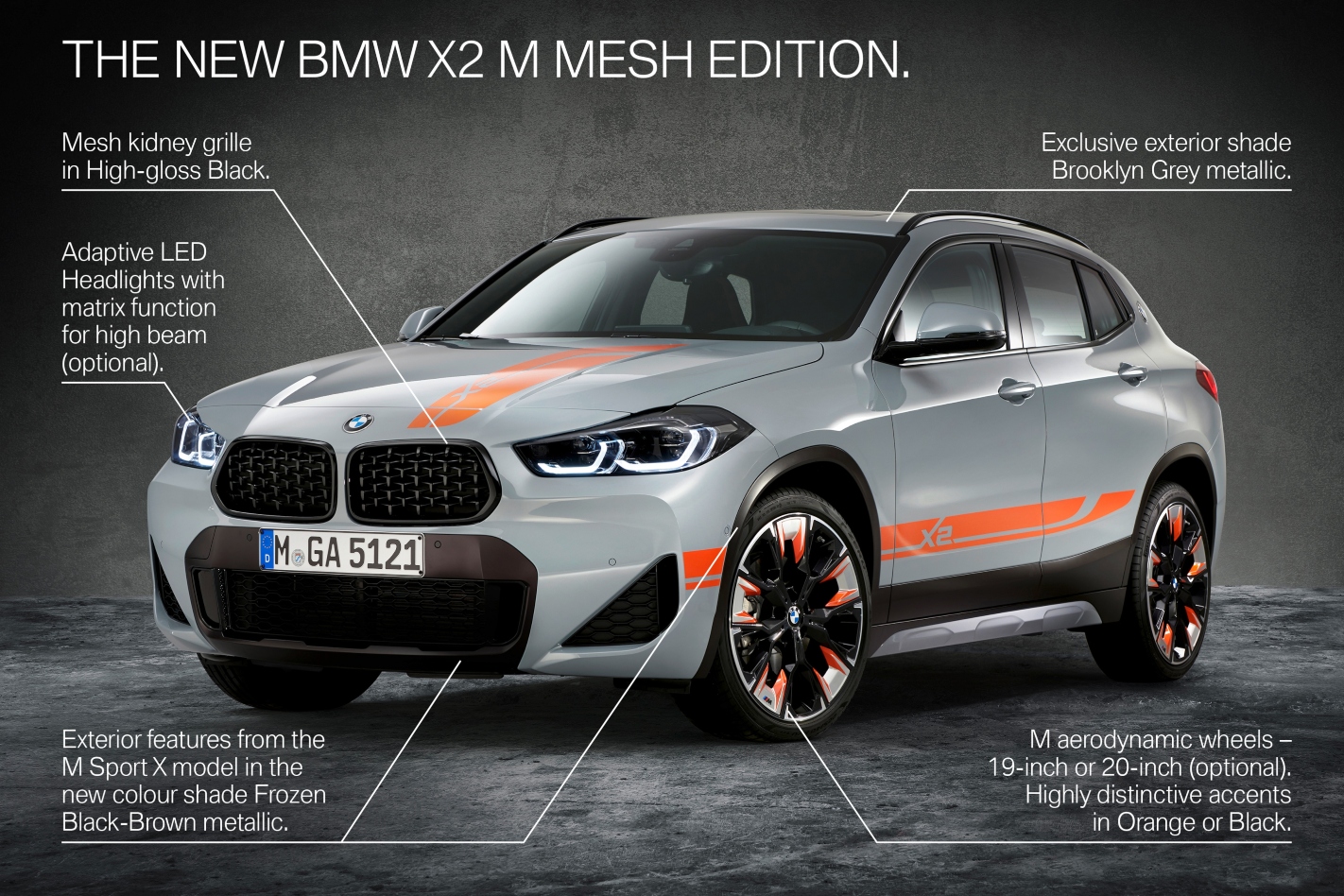
Later, the WCW team decides to break from the tradition of opinionated esoteric ranting and offer some borderline useful consumer advice.
For a majority of Australians, a car is not something to get excited about and falls into the same consumer goods category as a lawnmower and kettle. Perhaps that’s why many of the most popular models on sale are a bit dull.
Not necessarily bad cars, just boring. But the WCW panel is here to offer three alternatives to five of Australia’s most bought but soporific cars:
If any of them are on your consideration list, tune in to find out what you should be buying instead.
You can find WhichCar Weekly on all manner of podcast apps including iTunes and Podbean. Please rate, subscribe, and leave a review.
If you want yet more WhichCar action whether it be behind the scenes insights or the very latest from the automotive front line, follow the day-to-day happenings of the WhichCar team on Facebook, Twitter and Instagram.
And if you really want to get involved, send us a question or auto anecdote of your own. We endeavor to answer all your messages.
Listened to or watched the WhichCar Weekly podcast? Help us out!
- Leave a note in the comment section below
- Leave a review on Apple Podcasts/iTunes
- Subscribe to our podcast
Three years ago, Hyundai dropped its devastatingly effective i30N on a gobsmacked world. Choirs of angels sang, the sky was bluer and all was well with the world.
Rowdy, quick and properly competent, the i30N has since attracted legions of followers thanks, in part, to the fact that it could only be bought with three pedals.
“Every time I see an i30N, I see a car enthusiast,” remarked my car-mad 18-year-old, right before he forgot to put the bin out.
It’s a good point – a lot of people have already missed out on a good thing, because they didn’t want or couldn’t have an i30N with a clutch pedal.
“It’s coming,” said Hyundai of the DCT at the i30N’s launch in 2017. And in 2018. And… well, you get the point.
It’s taken a while – three facelifts, in essence – for Hyundai to roll out its in-house eight-speed dual-clutch transmission to the i30N, but it’ll be here in the first half of 2021.
Why did the Hyundai i30N auto take so long to arrive?
Why did it take so long? “Good things take time, and the performance benchmarks that were set were exceptionally high,” product manager Andrew Tuatahi told me.
The good news is that the third version of the i30N is – once again – a perceptibly better car than the already-good one that preceded it.
There’s a little more power (4kW to 206kW) and a chunk more torque (39Nm to 392Nm), thanks to a revised turbo and intercooler that was designed to flatten the power curve.
It’s also two-tenths quicker to 100km/h (5.9sec) than the manual.
“You’re getting your power earlier, and it’s maintaining that peak power level up into the top of the rev range,” said Tuatahi.
As part of the addition comes a raft of both midlife updates and modifications to cope with the addition of the heavier DCT.
The transmission itself weighs an extra 60-odd kilograms over the six-speed manual, which prompted changes to spring and damper rates, brake size (15mm larger front rotors to be exact) and even power output.
The new i30N is heavier – and lighter
Some measures to blunt that mass trauma have been taken – the 19-inch forged rim set, for example, nets a 14.4kg total saving, while optional sports seats will save a couple of kilos.
There’s a revised suspension tune, too, focusing on widening the range of feel in the adaptive shocks, as well as improving turn-in with cleverer use of bushings.
While COVID-19 cruelled an expanded tuning program, Australia still had a hand in the tweaks.
“We were looking for a bit more comfort to deal with rough Australian roads, but the Sport and the N tunes are similar to what you’ve felt before,” Tuatahi confirmed.
How does the i30N DCT perform?
A brief run in a DCT-equipped left-hook mule at Wakefield Park in Goulburn, NSW reveals a little of the potential that this more mature N will bring to the battle with cars like the incoming VW Golf GTI Mk8 and the Ford Focus ST.
Even on prototype dampers, the range of compliance and comfort between softest and firmest is discernibly wider, while the power delivery from the 2.0-litre four-cylinder engine is stronger lower down the range.
And how does the Hyundai i30N’s dual-clutch transmission drive? Five kilometres of track driving doesn’t tell you much, but from pull-away it almost feels like a standard auto, with little of the hunt-and-peck nature of some DCTs in evidence.
In N mode and left to its own devices, the DCT makes the right choices, serving up the correct gear at the correct moment.
At pedestrian speeds it feels invisible, which is kinda what you’d expect.
Changes aren’t rifle-quick, but they are robust and firm, with the fleshed-out power curve helping to keep things on song.
If you’re not a manual driver, the i30N DCT will be a quick, comfortable and entertaining hot hatch.
But the manual car, which will still get all the good bits, will be about 30kg lighter after the new weight saving measures…
Hyundai i30N DCT prototype verdict
Likes: Top-flight hot hatch finally grows up
Dislikes: Heavier than equally powerful manual
Rating: Need to drive it more
Hyundai i30N DCT prototype specs
Model Hyundai i30N DCT
Engine 1999cc 4cyl, dohc, 16v, turbo
Power 206kW
Torque 392Nm
Weight 1590kg (est)
Transmission 8-speed DCT
On sale H1 2021
