
Do you have one of those annoying friends that corrects anyone who calls the monster in Mary Shelly’s novel ‘Frankenstein’? Well they are wrong.
Victor Frankenstein was so dissatisfied with his horrific creation that he never named it, so in the absence of a proper christening, the correct thing to do is simply refer to the hideous amalgamated humanoid by its brand name – Frankenstein.
If the revolting murderous beast was a car, he would have been a Frankenstein, La Frankenstein or perhaps the Frankenstein Mk1. For the record, I think he looked like a Brad.
So you can tell your smug mate at the pub to sit back down and brush up on their proper nouns.
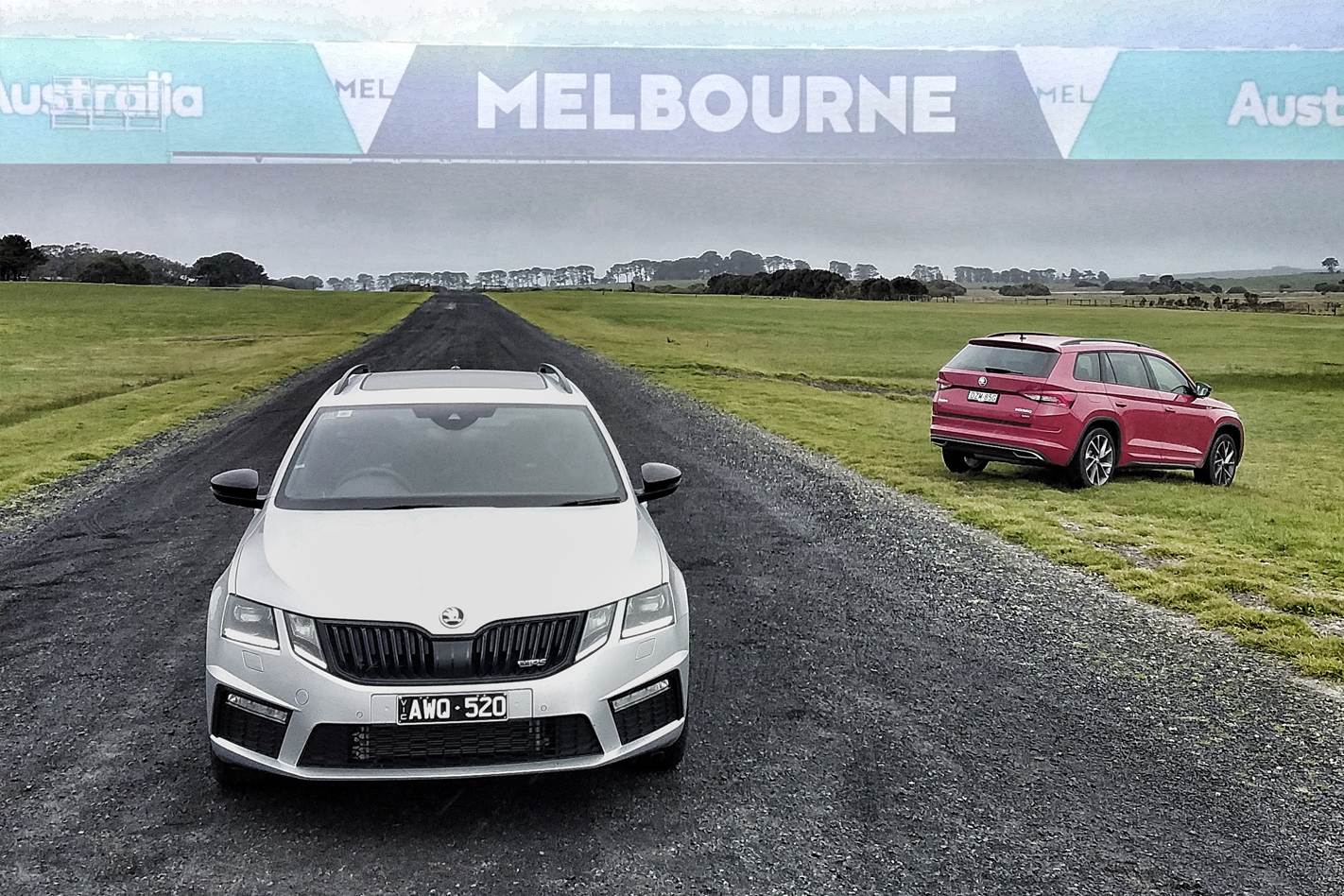
Baking Skoda
And that’s why, if I really had created a new steroid-pumped diesel SUV rocketship by fusing the best bits from a standard Skoda Kodiaq with the RS version of the Octavia, it would have been called the Gardner Kodiak RS. But – full disclosure – I didn’t.
This slightly tongue-in-cheek feature’s inception came about after Skoda offered us an exclusive meeting with the very first Kodiaq RS in the country. We wouldn’t be allowed to drive it on the road and our time would be limited to just three hours.
A tall order to get some kind of meaningful story for the TV show but, as the Skoda would be waiting for us at the iconic Phillip Island grand prix circuit, we weren’t about to pass up this opportunity.
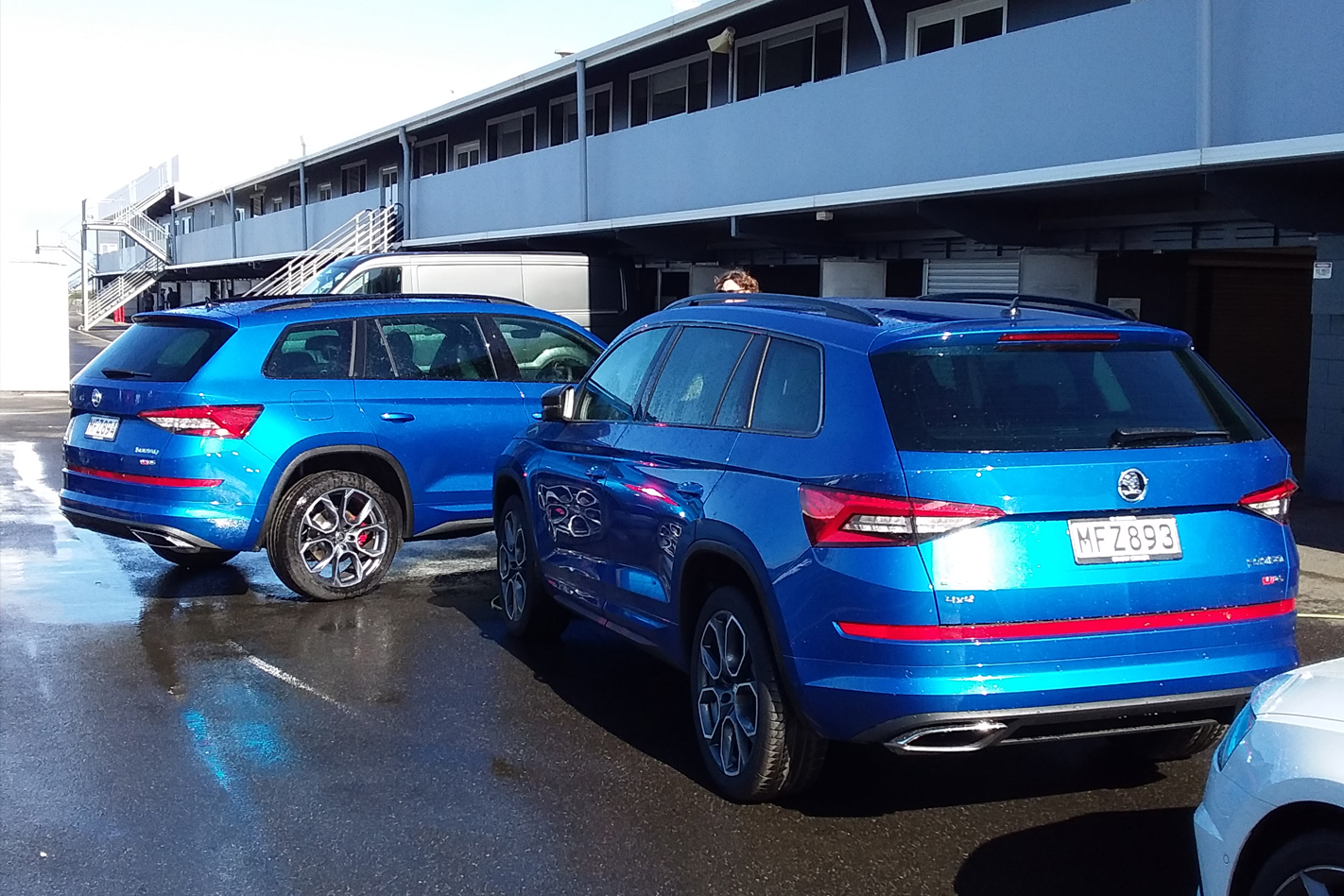
When the truck turned up, it was actually carrying two examples of Skoda’s hottest SUV to date. The driver reversed them from the trailer, into a detailing bay and handed me the keys – I really would be the first person to drive the new model anywhere in Australia, and it didn’t disappoint.
The introduction sequences were filmed on the beautiful roads around the racing circuit near Cowes but the weather was less than ideal. Thankfully though, it cleared up for our track blast later in the day.
As anyone who has visited the Island knows, the elements can do absolutely anything from one minute to the next.
You can read the Kodiaq vs Octavia head-to-head here
Hopefully one thing we hid from you in the final edit was that we didn’t actually have the full circuit at our disposal. Skoda was busy setting up for a drive event the following day so we were confined to about a half.
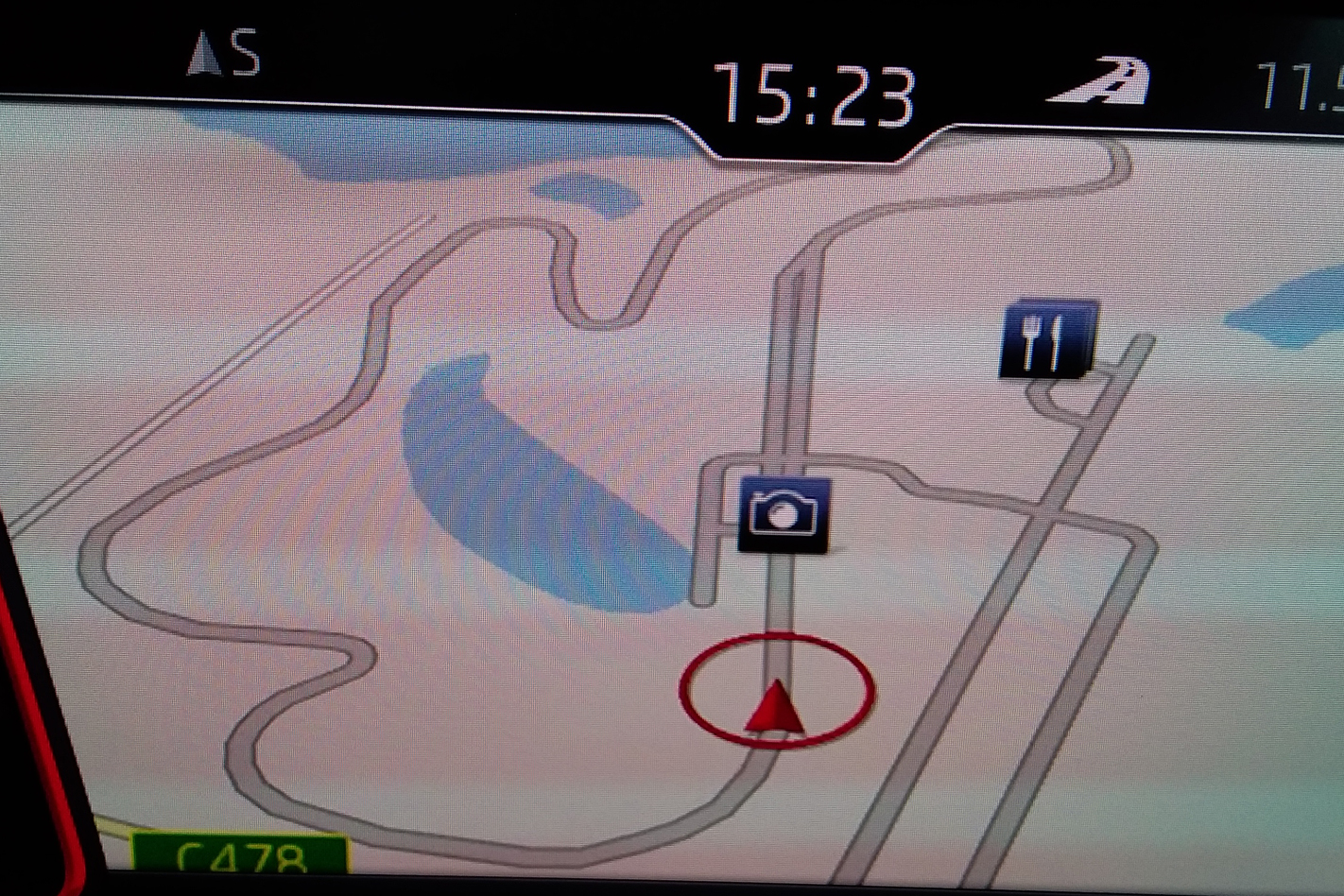
Fortunately, that portion included Gardner Straight – named after yours truly, of course – and turns three, four and five, which offer the stunning backdrop of the Bass Strait.
I’ve been lucky enough to drive Phillip Island a few times over the years and I’m quite familiar with it in the normal anticlockwise direction, but it felt very peculiar turning around and driving the wrong way after each take.
The frankly ridiculous laboratory scene was filmed in a combination of the pit garages and our WhichCar studio. The substance I pour into the beaker is antifreeze but it was switched to neat lime cordial for me to have a sip.
I don’t know if you’ve ever tasted undiluted cordial but, in hindsight, I think I would have taken my chances with the ethylene glycol.

Director Sean and I have a lot of fun with a pair of fog machines filling the Philip Island pits with smoke, but a couple of the Skoda crew hadn’t got the memo and thought WhichCar was in the process of destroying the entire facility!
And kudos to anyone who knows what influenced Sean’s cool effect which sweeps the Kodiaq away at the end of the story. It was, of course, the Thanos dust borrowed from The Avengers movie.
So there you have it. I had absolutely no involvement in the development of the new Skoda Kodiaq RS, which explains why it is such a well-rounded and complete machine – and infinitely better than a Frankenstein.
With more than 500,000 vehicles in its fleet and more than 38,000 workers around the world at the start of the year, it seems inconceivable that Hertz – arguably the world’s oldest car rental company – could fail, despite losing market share to ride-share companies like Uber.
Then the COVID-19 pandemic, and the resulting local and international travel restrictions, stopped car rental dead in its tracks.
Hertz has filed for bankruptcy protection – known as Chapter 11 in the US – after talks with its creditors broke down, in the face of debts that exceed A$30 billion in a business that focuses on airport car rentals.
It allows the Hertz car rental business to keep trading as it reorganises its finances in a last-ditch effort to stave off bankruptcy.
The filing in New York for Chapter 11 reorganisation comes after the company failed to secure the same government assistance that has prevented the majority of US airlines from heading in the same direction.
It also said that the Hertz Australia and New Zealand operations are not part of the reorganisation, though the same impacts on air travel have hit those territories as well.
As travel across the world wound down in record time, Hertz’s fortunes fell quickly, and it had laid off 10,000 workers by May.
Overseas reports have indicated that the company planned to sell some 30,000 of its cars a month until the end the year to help offset its debt load – a plan confirmed in many ways when the bulk of its fleet of 100 limited-edition Chevrolet Corvette Z06s (below) were put up for sale last week.
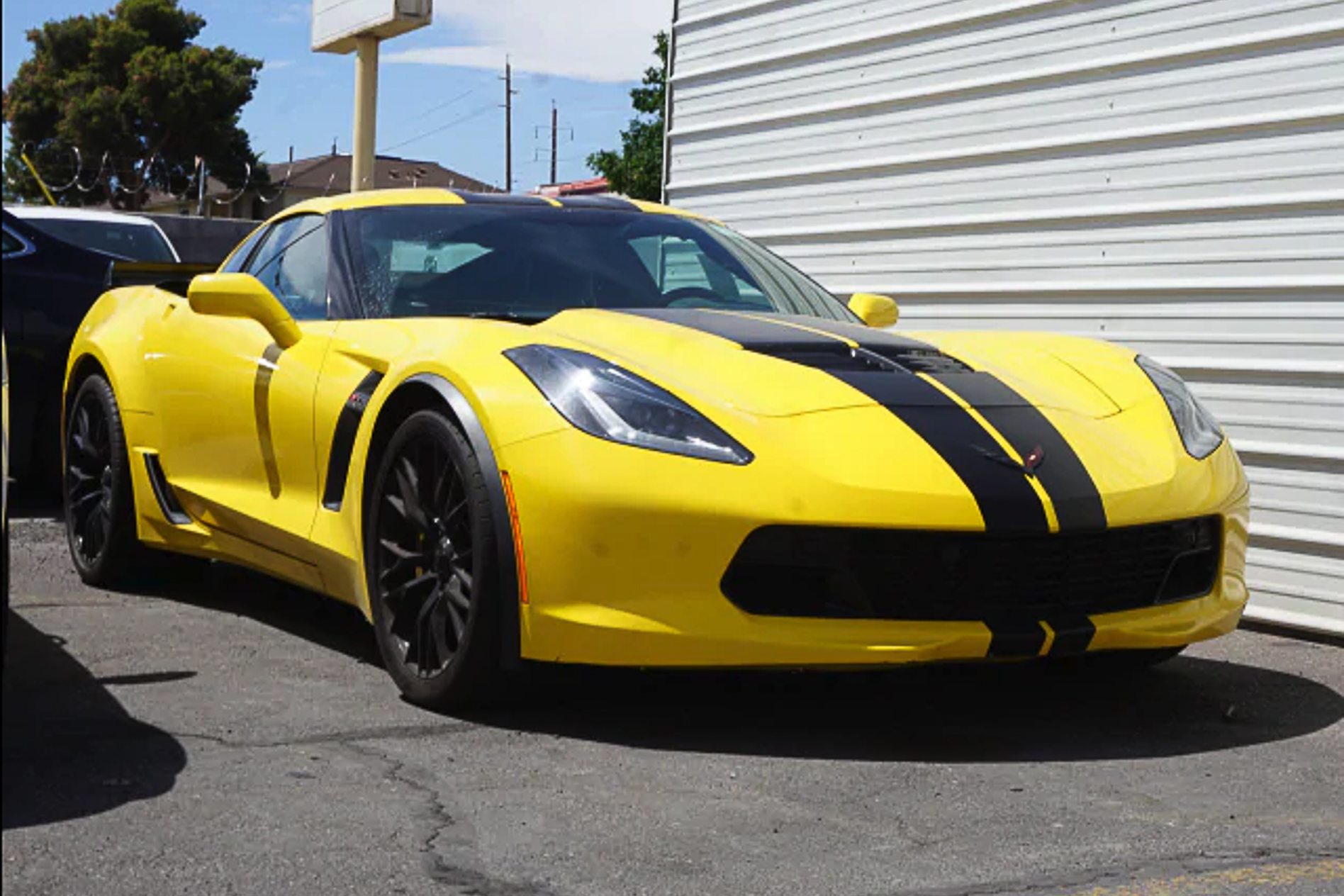
The economic slowdown will have also affected Hertz’s commercial rental fleet business, as companies in the US closed during ‘shelter at home’ restrictions in force across the country.
Hertz also owns Thrifty Car Rentals in the US, though locally the chain is owned by NSW driver association NRMA.
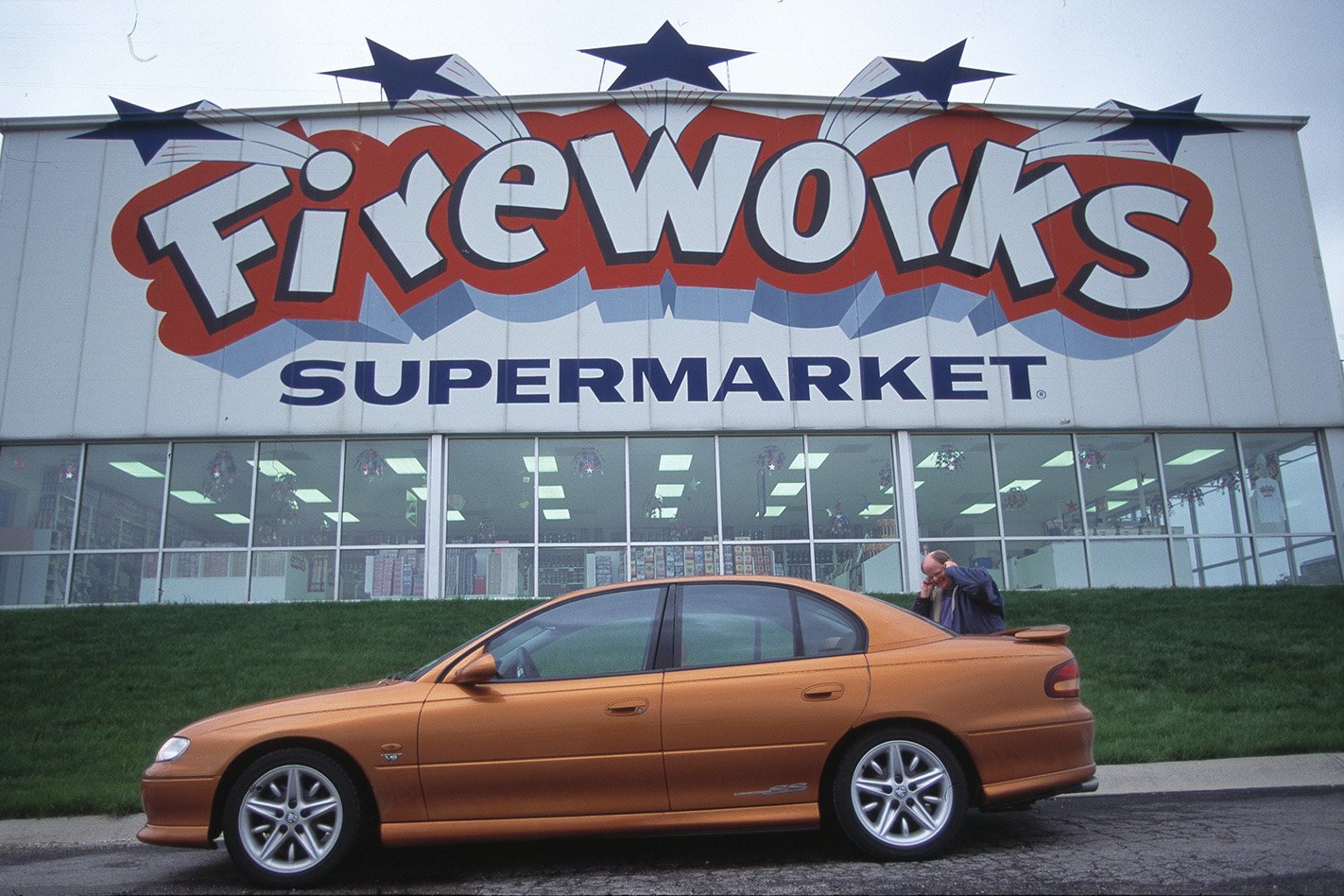
A Holden Commodore SS spotted on Rodeo Drive… in the Arizona desert… Monument Valley… Kansas City… cruising Fifth Avenue! What is this? It’s Wheels’ 1998 US tour, as two Sydney staffers give gawking Yanks a tantalising taste of top Aussie iron.
This article was first published in the July, 1998 issue of Wheels magazine
Day One – Los Angeles to Flagstaff, Arizona
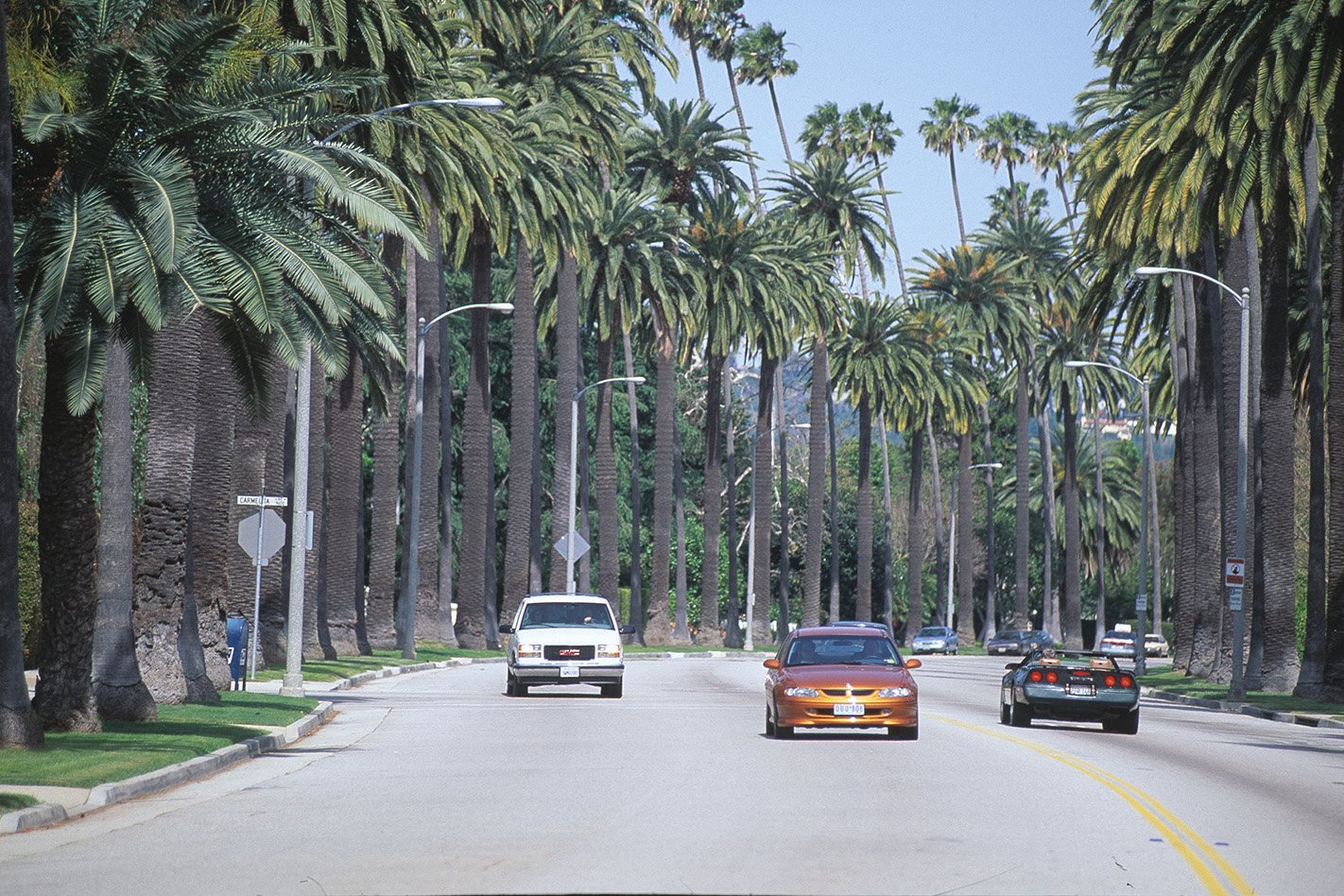
Forget Motown – LA is where the car is king. It’s an epicentre of car culture, with everyone from Mercedes to Mercury establishing design studios here to catch the Next Big Trend. If Australia’s Own was going to make an impression in the big wide world, what better place to start.
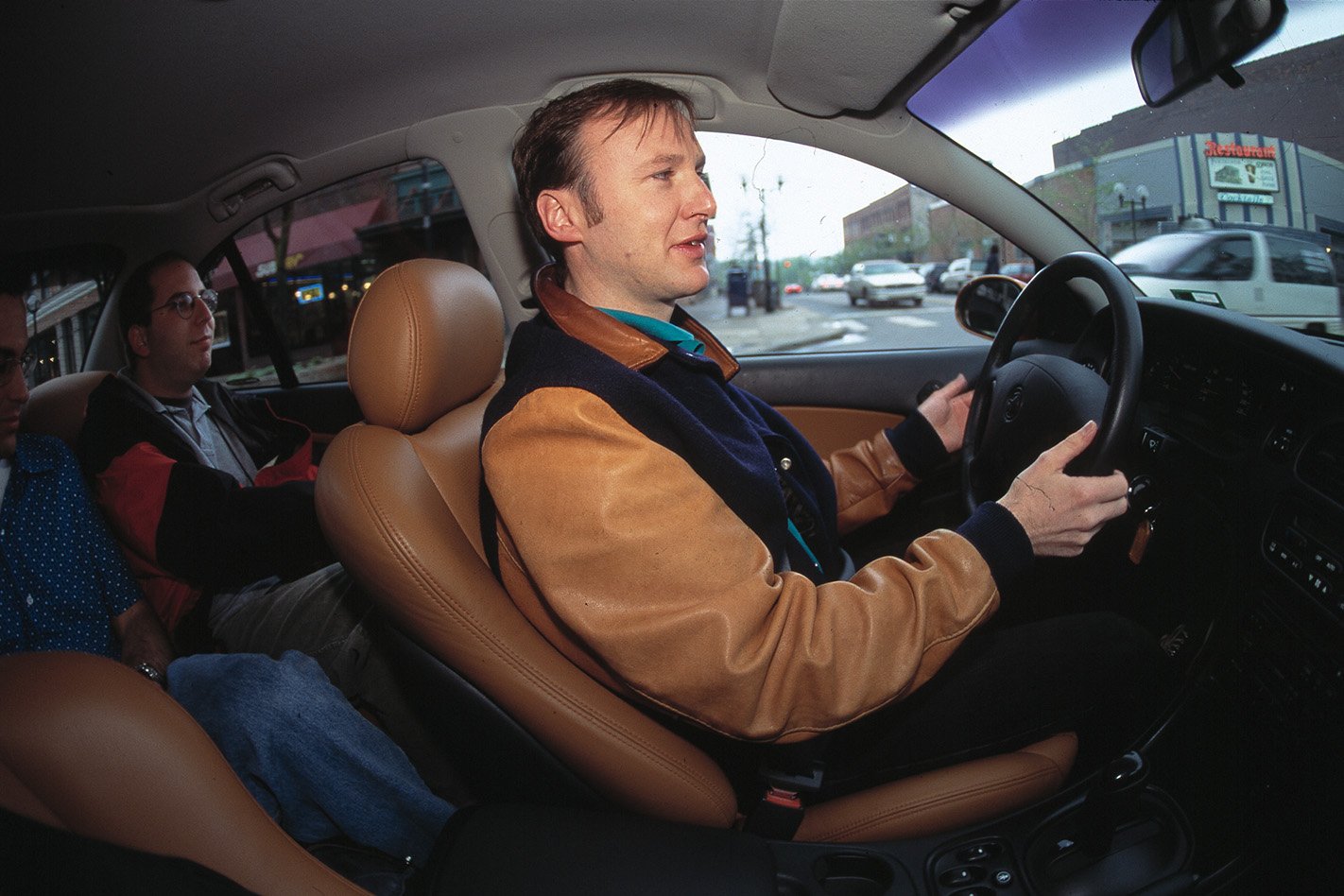
Now we can’t honestly say the Commodore stopped the traffic, but it slowed and clotted it to an amazing degree. Freeway lane changes became exercises in brinkmanship, as people took pace positions all around the VT, making the move to an exit or even the next lane tricky. But with brother-in-law Mas and sister-in-law Karie aboard there were enough sets of eyes to pick out the smallest opening, usually announced with something like, “Quick, change lanes now – they’ve slowed down to look at the number plate!” The locals must’ve also been thrown by seeing somebody using a turn indicator, too – something not part of LA freeway protocol.
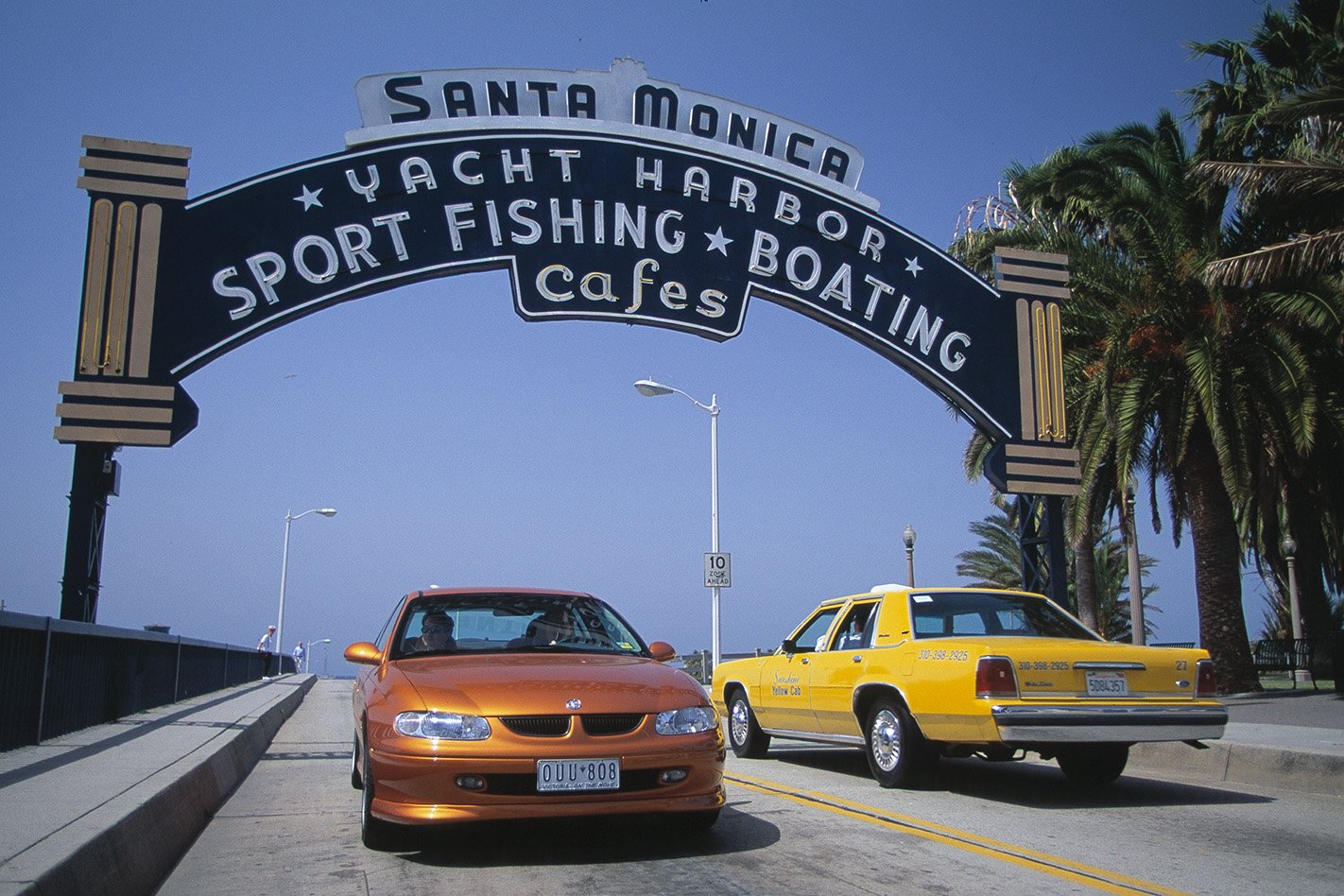
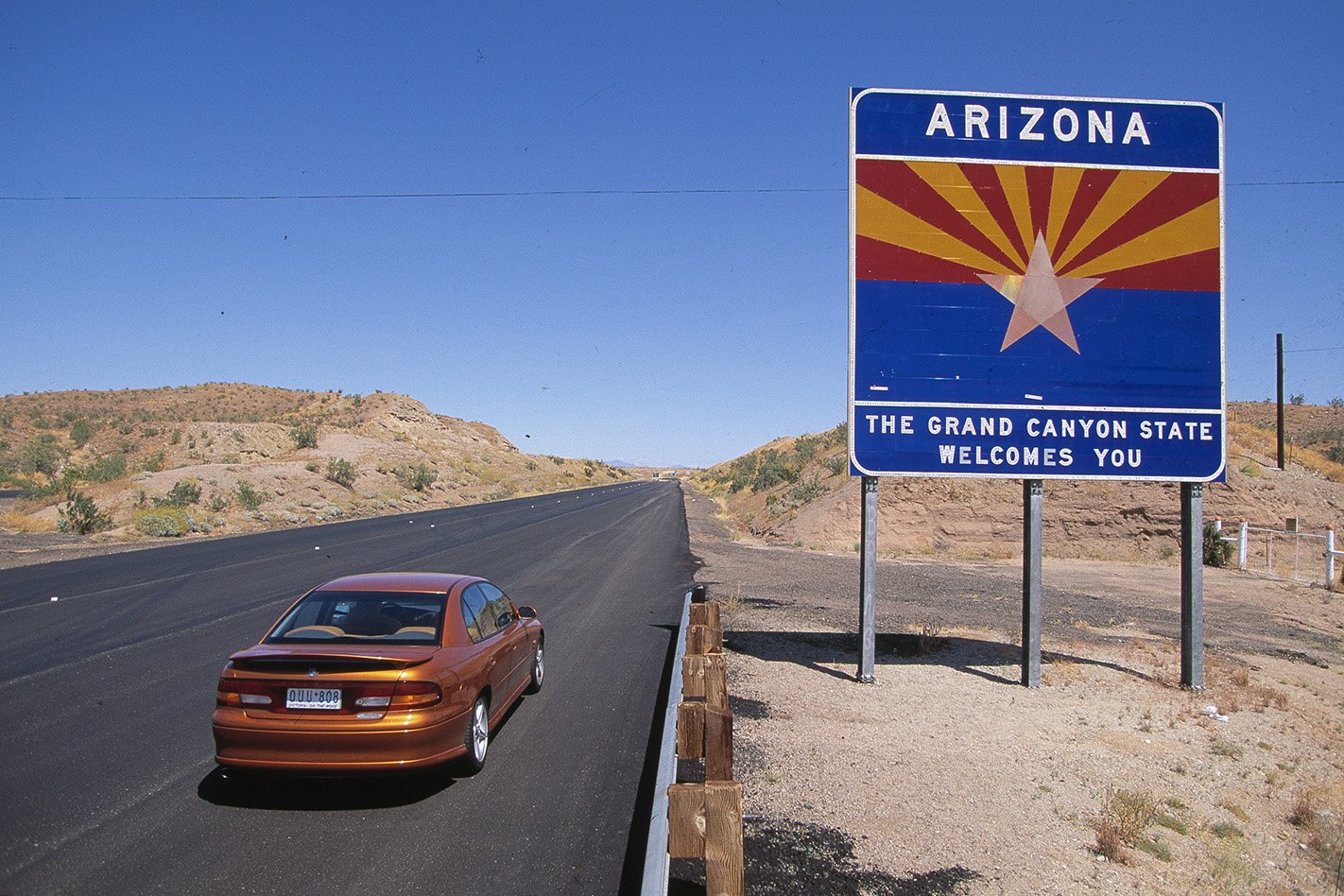
Any day’s a good one to be leaving Los Angeles, but Sunday morning’s an especially good exit time. The weekenders are starting to return to the City of Angels, so the outbound flow isn’t bad at all given the millions of cars on the roads. This weekend we headed out of the San Bernardino freeway to Interstate 15 and thence to Interstate 40 and the trip across the Arizona’s mountainous upper third.
From the top of Cajon Pass, photographer Kent started noticing larger than the usual plague of Harleys you see in the States. Once onto I-15, the numbers went off the scale – we’d pass literally hundreds of the things heading back to LA on the other side of the freeway and would spot similar numbers at servos. Our first petrol stop in Needles, California, at the Arizona border revealed the reason – there had been an annual get-together of Harleyoids in Laughlin, Nevada, with some 50,000 of the things. Obviously not all were started at the same time, as the vibration would have levelled the town.
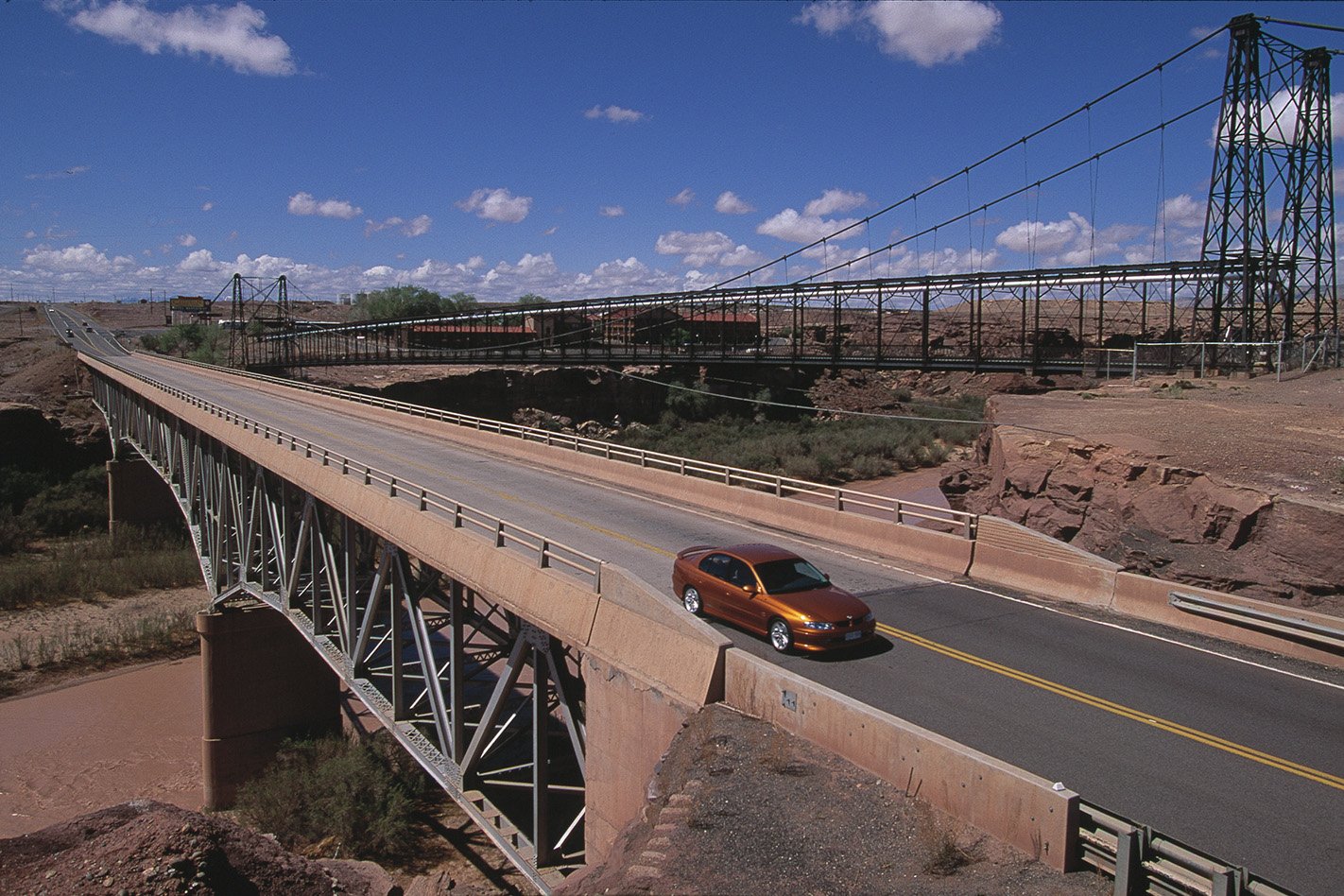
After a stop at Ford’s desert proving ground outside Kingman, Arizona (a press on the intercom at the remotely gated entrance to ask, “Hey, you got any EA169s in there?” was met by some expletives not heard since school), we headed up the hills to Flagstaff. Surrounded with pine trees and looking more Swiss than southwestern, Flagstaff is a ‘gateway’ to the Grand Canyon and Monument Valley.
Day Two – Flagstaff, Arizona to Grand Junction, Colorado
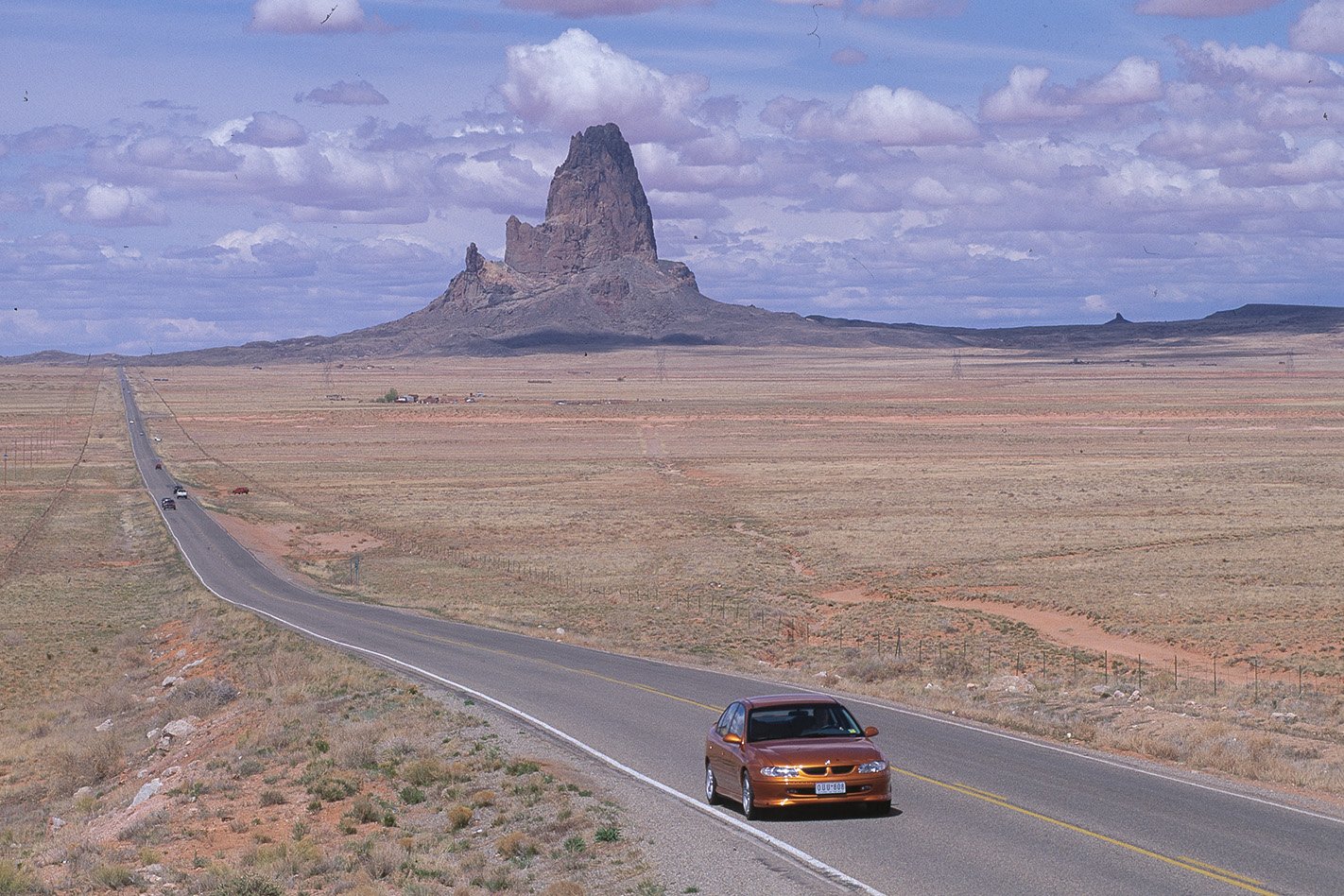
It doesn’t take long to drop out of the alpine green of the Arizona highlands into a more traditional image of the American southwest – red-brown desert complete with jutting mesas. Bypassing the Grand Canyon, we head to the north on US 89 to US 180 and thence to US 163 for the drive through Monument Valley.
Seen in squillions of American Westerns (John Ford’s Stagecoach, for one), Monument Valley is as impressive as the big ditch which gets all the publicity a few kilometres to the east-southeast. What’s surprising is that America’s national park service doesn’t administer the valley, but rather it comes under the auspices of the Navajo Nation. We entered what most people refer to as the Navajo Indian Reservation just past Gray Mountain, Arizona, and didn’t realise it till we were passed by a white Ford Expedition with red and blue roof lights flashing and the siren blaring. It looked not that dissimilar to many US police vehicles except for the ‘Navajo Nation Police’ emblems on the door.
Warwick scopes out a few photo locations in the valley and we spend much of the day ‘commuting’ between them and waiting for the light to improve. It does, eventually, and we continue through Utah up to Interstate 70 and drive East into Colorado. We’re usually cruising at 125 to 130km/ h, but along one level section of I-70 we get passed by a semitrailer going a helluva lot faster. How fast? Well, we gave him a kilometre or so, then tried to close the gap. The speedo crept up to 165km/h and we weren’t closing on him when we crossed the state line into Colorado. We chickened out at about the same time. Getting the VT impounded by the local constabulary wouldn’t go over too well with Editor Angus and the chaps at the Bend, we suspect.
Dinner was at Applebee’s (we had been warned there wasn’t going to be a lot of choice in Grand Junction), where our server spotted the VT through the window in the poorly lit parking lot. This twentysomething young lady was eyeballing the car as we perused the menu till she asked, “Do you know what kind of car that is?” We told her it was a Holden, then queried, “What do you think of it? What sort of car do you think it is?” After a brief pause, she said, “It’s a family car, but it’s not like the sort of family cars you usually see. It’s sportier. Like a (Pontiac) Grand Prix, only better looking,” adding, “I don’t care much for four-doors but I’d buy one of those.”
Maybe there is a market for Holdens in the States.
Day Three – Grand Junction, Colorado, to Dodge City, Kansas
There are days when it’s better to stay in bed. The drive out of Grand Junction got off to a good, albeit chilly, start with an early morning bath for the Tiger so it’d look its best in Kent’s pictures. About 8km east of Glenwood Springs at a photo location alongside the Colorado River, we noticed The Sound. It started as an innocuous ‘tic-tic’, but as time went on it started to get louder and rather more ominous. Making our first directional U-tum of the trip, we head back to Glenwood Springs, with the Chevrolet dealer spotted alongside I-70 as our goal.
John Haines Chevrolet was a welcome oasis, of sorts. Given a choice, we’d rather be eating the miles up towards our scheduled stop in Hays, Kansas, nearly 950km east of Grand Junction, but the spectre of something going really wrong with the car in the middle of nowhere was too strong an image to ignore. Pulling into the service bay, we were met by a not unexpected chorus of, “What the hell is that?” Explaining the common lineage between the SS’ supercharged V6 and the one fitted to selected Buicks and Pontiacs, they took a look under the bonnet.
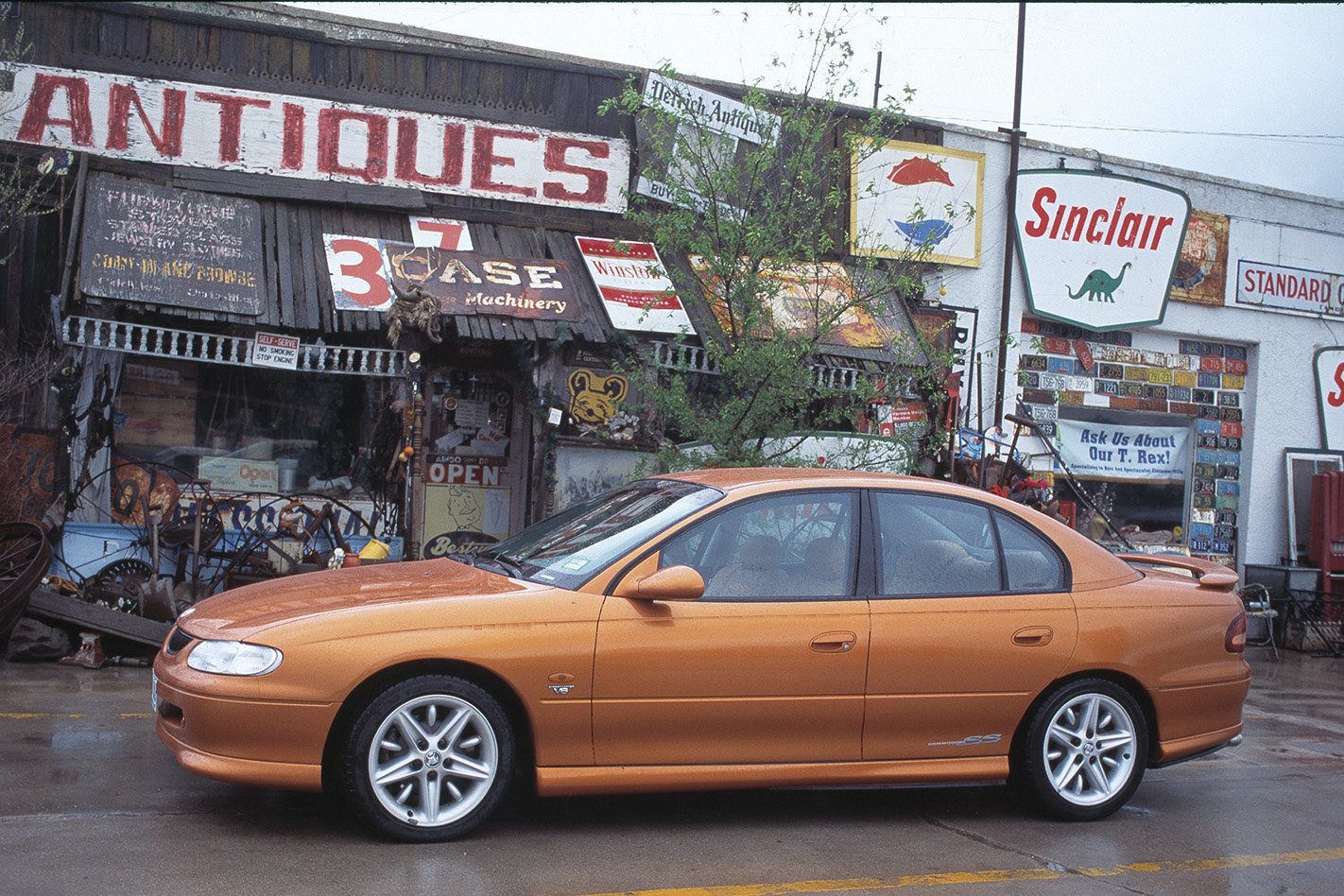
Despite having a boot full of repair parts, the offending pulley idler – the only one shared between the supercharger drive and the accessory drive – wasn’t part of the kit. This Canadian-made part was also the only pulley not shared with the US cars using the engine. Still. the guys managed to quieten the squeaky wheel with a liberal application of silicone grease. A call that evening to the engineers at Fisherman’s Bend describing the sound, problem and rectification indicated that it wasn’t something that would disable the car, though it might get annoying.
Every cloud has a silver lining, and so did our 90-minute pit stop in Glenwood Falls. While the car was being serviced, the workshop’s parts guy ran the Commodore’s VIN through the GM parts computer – and with fascinating results. According to the General’s computer, we were not driving a 1998 Holden Commodore, but a 1999 Chevrolet Lumina.
A couple of hours out of the service bay and we were climbing through the Rockies, heading towards Denver via Vail, one of the States’ sexiest ski resorts. The image boys have been hard at work in Vail, which has vaguely European street and direction signs as well as roundabouts (normally unseen in America), which the locals quaintly refer to as ‘traffic circles’.
Clearing Vail Pass (altitude 3250m) wasn’t the problem for the blown VT as it was for the Subaru alongside us. Even without altitude compensation, the supercharged six was able to perform quite adequately. A zip through the Eisenhower tunnel and we’re on our way in (and out) of Denver. As we approach the Colorado/Kansas border, Kent suggests that we overnight in Dodge City, Kansas.
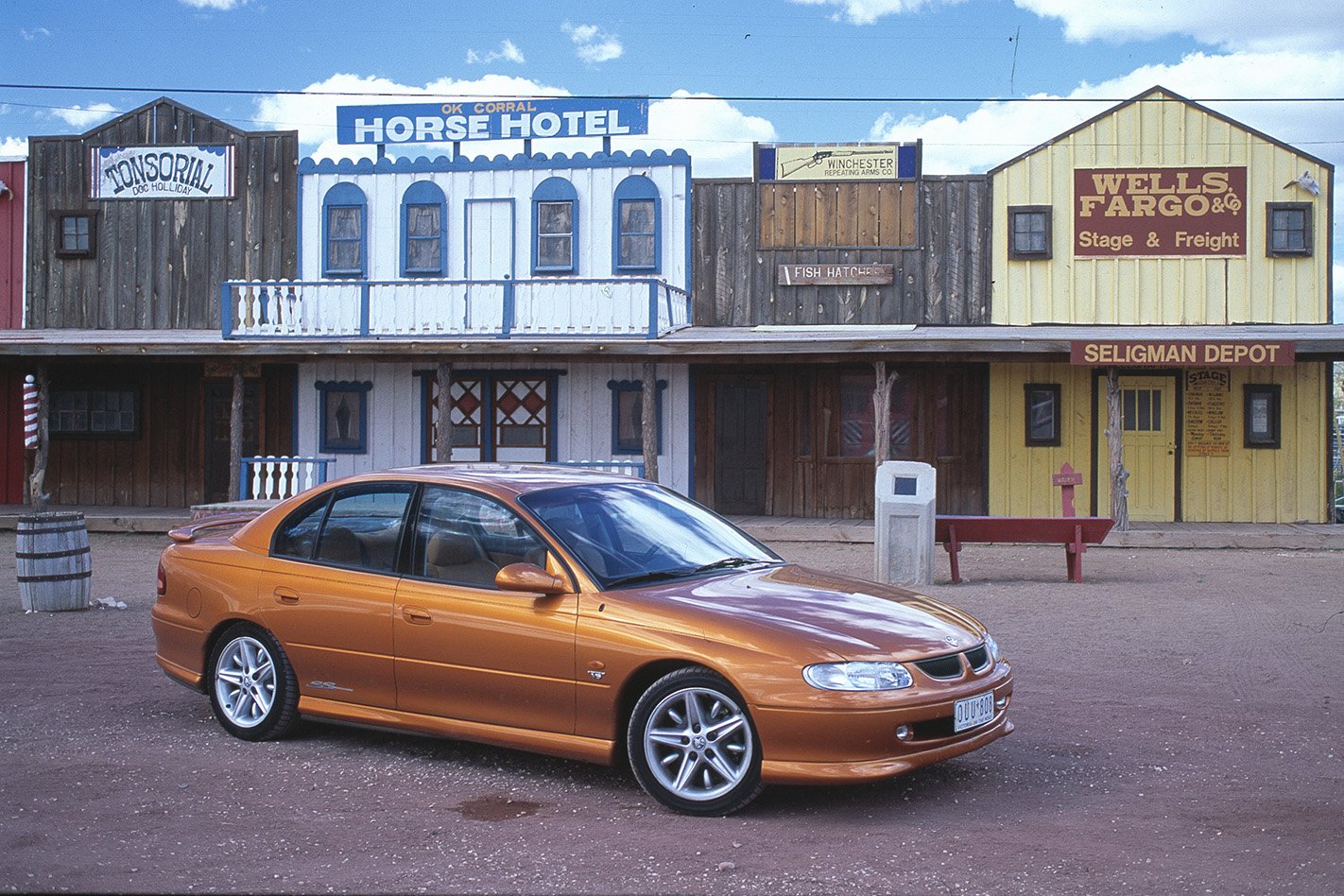
Stopping to shuffle our hotel bookings as we arrive in Kansas, we manage to get rooms in Marshal Dillon’s home town. Not being a fan of westerns, I don’t feel a lot of excitement about wandering into Boot Hill and the like – but Warwick’s chuffed. He must’ve gone to a lot of John Wayne movies as a kid in PNG.
Day Four – Dodge City, Kansas to St Louis, Missouri
Comes the dawn in Dodge City and it’s accompanied by rain. Though we don’t realise it, we’re riding along with a weather front that’s come down from Canada past the Rockies and will continue with us all the way to New York.
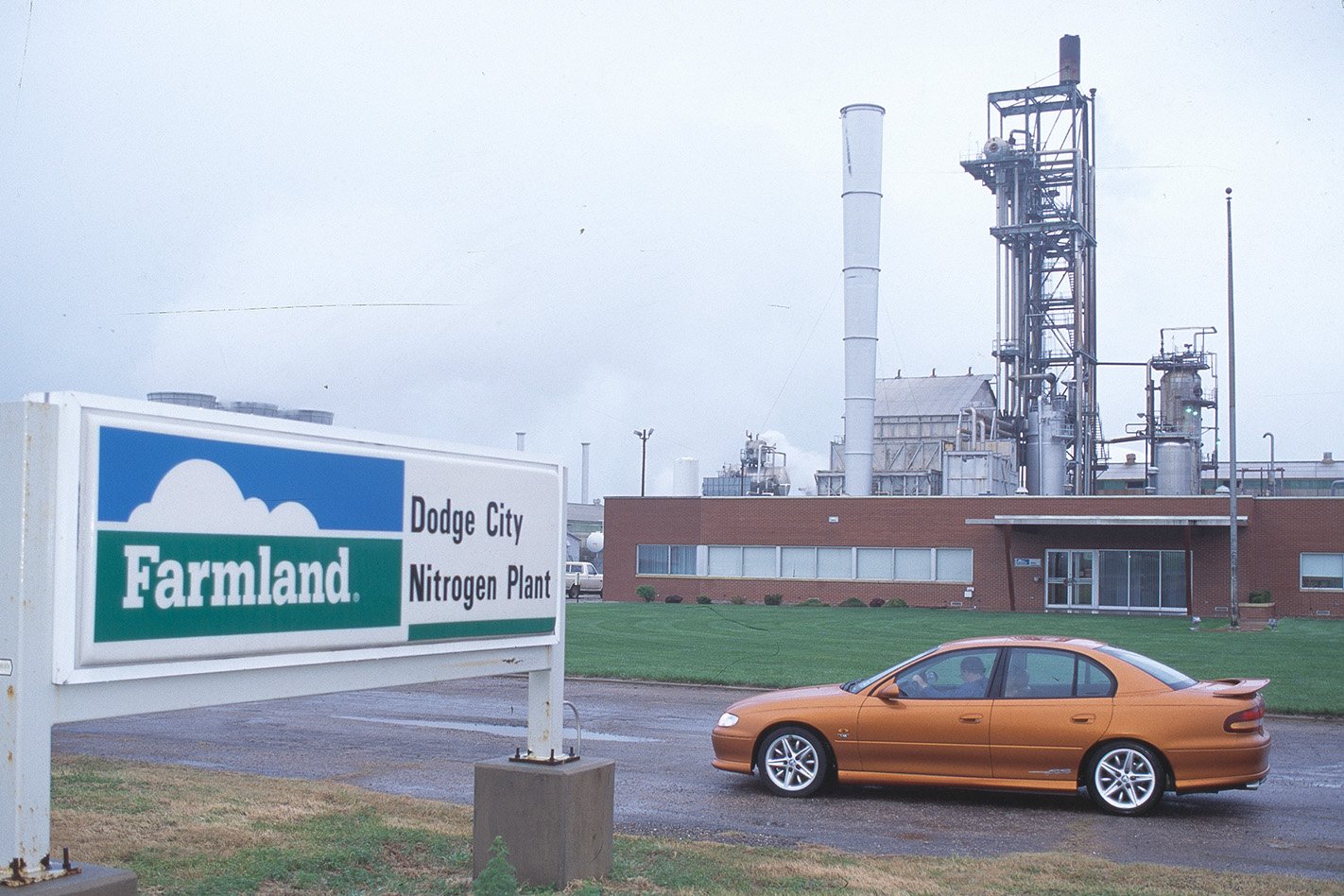
Dodge City was a disappointment, and it wasn’t only because of the precipitation. What’s left of Boot Hill is a collection of period buildings moved to a common location, fenced off and out of bounds unless you pay the admission price. Less sterile than Disneyland, to be sure. That left the Dodge City Nitrogen Plant as the town’s other highlight.
Shunning the Interstate for local highways, we head towards Great Bend and thence to the I-70 for a serious drive to St Louis. The deviation from the planned stop at Hays to Dodge City has added about 240km to the expected 850km drive, so it’s gonna be another long day.
Crossing to the Kansas/Missouri border is uneventful. I’m so glad to be making progress, I even forget to tell Warwick, “We’re not in Kansas anymore, Toto,” when we cross the Missouri River into Missouri. A few kays down the road we stop to chat with Dick Carlson, a friend of many years, Lotus fanatic extraordinaire and owner of Age and Treachery Racing, who lives in the ‘real’ Kansas City – the one not in Kansas. After supplying us with bags of Atomic Fire Balls (an aptly named and fearsomely – chilli – hot American lolly) for the Wheels staff, we continue across what Missourians call the ‘ShowMe’ state. It’s well named.
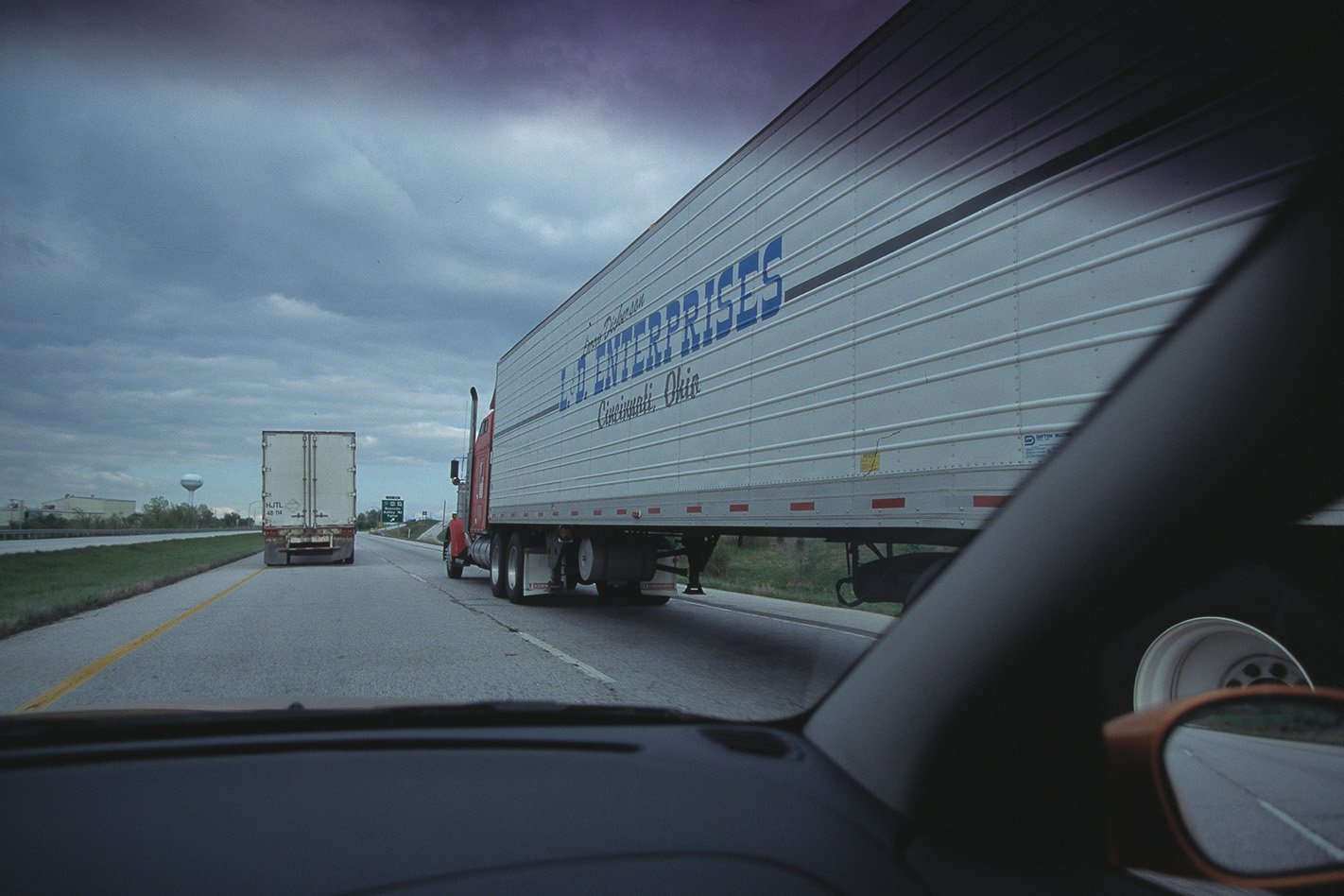
“Show me” is what the locals should say regarding driving lessons. We quickly come to the conclusion that while America has a ton of really bad drivers, the ones in Missouri must be near the bottom of the barrel. The concept of lane discipline is alien to most Yanks, but it must be utterly beyond the comprehension of the folks behind the wheel in Missouri. Aside from protecting the left lane from God knows what, they allow clumps and clots of trucks filling both eastbound traffic lanes which sometimes are nearly 750metres long. Passing? Forget it. When the interstate finally does widen to four (and later six) lanes per side, we’re met by a downfall of near monsoon proportions.
Arrival at the pub in downtown St Louis is like wandering into an Oasis. The rooms are nice (we stayed at the Omni) and they’ve got maybe the best US beer, Boston’s Samuel Adams, in the bar. After the hell drive into town, the beer, plus the knowledge that Illinois is less than 10 minutes from the hotel, provide a miraculous calming effect. And the pulley sound remains notable by its absence.
Day Five & Six – St Louis, Missouri to Detroit, Michigan
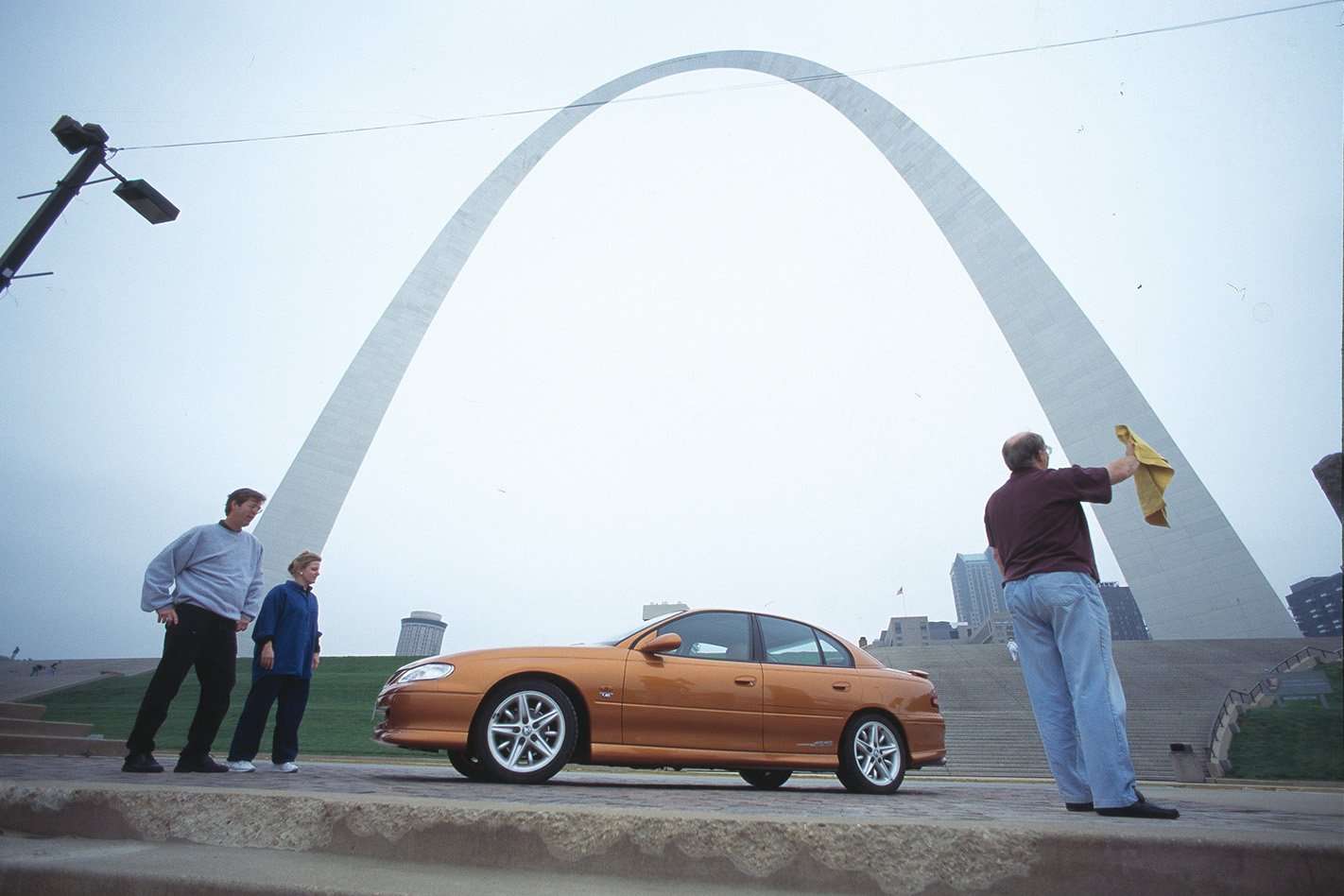
After a brief stop to see if the Gateway Arch can’t be polished up a bit better, we head into the Land of Lincoln – Illinois. Compared to the previous day’s drive, this is like venturing into paradise. The folks in Illinois tend to protect the left lane to a far lesser degree than their cousins in the rest of the States so traffic rolls along at a reasonable pace. Even the American propensity for tailgating seems less prevalent here than in other states, too. Plus, the roads and villages of southern Illinois are a picture postcard of America’s heartland. Storybook towns that look like (attractive) movie sets.
Just after we cross the state line into Indiana, we give the Commodore a feed at a Sunoco servo, letting it quaff the 94-octane juice. Because of the manner in which petrol octane is calculated in the States, that nectar was roughly the equivalent of 98.5 octane here in Oz. Of course it was expensive by local standards – all of 53 cents (Australian) a litre!
Inasmuch as Indianapolis was between us and Detroit, we sniffed out the home of the self-proclaimed ‘greatest spectacle in racing’, Indy’s beloved brickyard. Despite Chevrolet supplying both pace car (Corvette in really ghastly livery) and driver (well known wheelman Greg Norman) for this year’s IRL, we assumed the Holden/ GM/ Chevrolet connection would probably be too obscure to convince track management to let us do a few laps. Anyway, Neil Crompton should be circulating around the place, not us. But we were spotted by an expat Aussie in the track’s car park who was powerfully confused by the Victorian rego and left-hand drive.
Despite some crook pavement in Colorado’s mountain passes, the roads across eight states had been pretty good. In a few places (Kansas particularly) there was a tendency to close two of the four lanes of an Interstate for miles at a time to allow construction – although there was no construction visible. But then we came to Michigan. Cross the state line into Michigan and you feel it – we couldn’t imagine more appalling roads than the ones around Detroit. Kent realised why US cars have their famous blancmange chassis tuning – the road surfaces demand it or you could be beaten to death.
The freeways in the Detroit area are an amazing festival of potholes and ramps created through a unique combination of frost heave and neglect. At least we have a couple of days in Detroit out shooting in Motown.
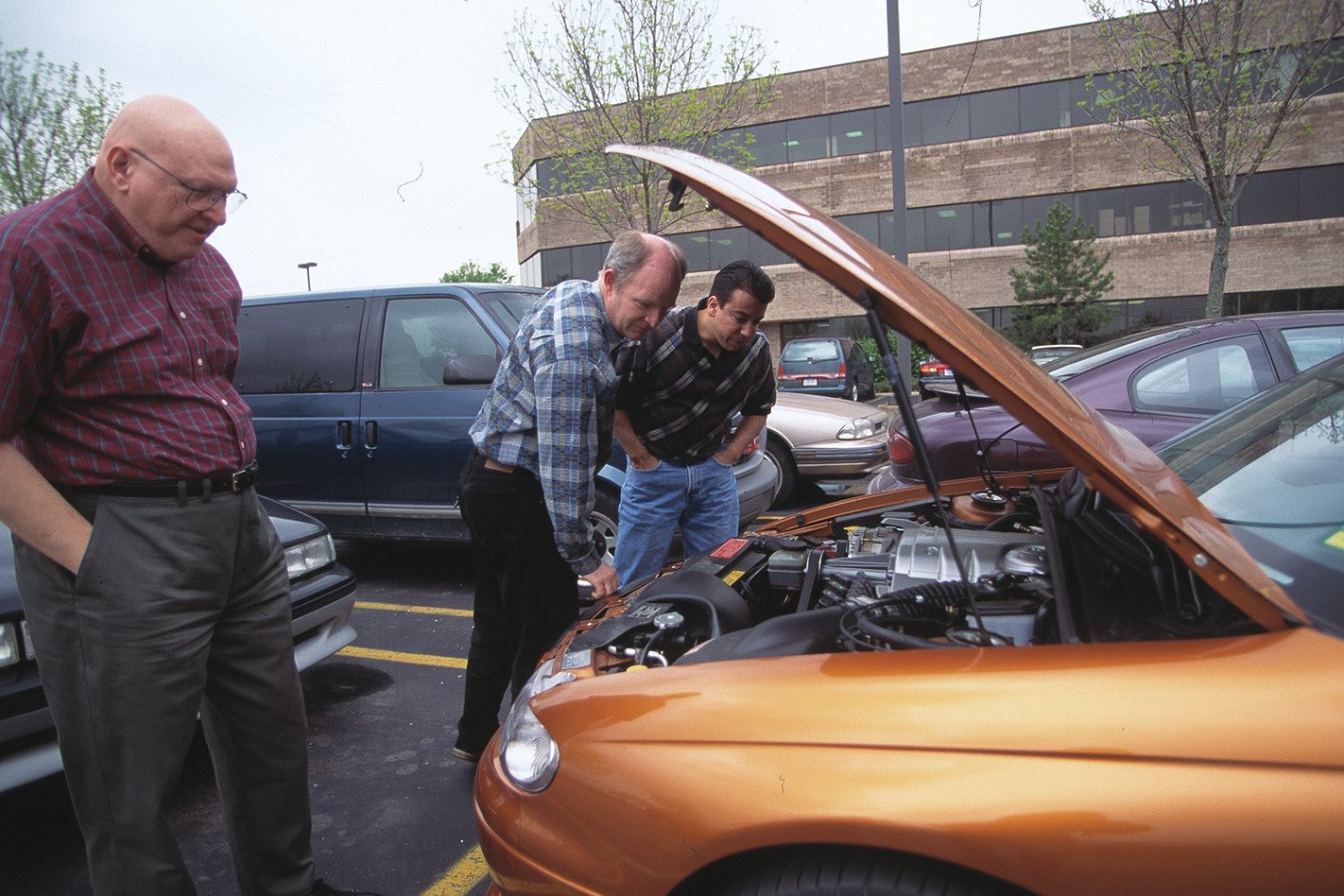
When we visited the guys at Automobile Magazine in Ann Arbor, Michigan, we lost count of the folks wandering over to ask questions about the Commodore, including the unanswerable, “Why doesn’t GM sell it here?” After everybody had crawled over, under, around and through the Holden, executive editor Mark Gillies (an ex-pat pom who misses cricket – something that even ESPN2 doesn’t show in America) took us out for some impromptu ‘ramping’. When most of the roads are arrow straight and comers of the 90-degree variety, this oddball car ‘evaluation’ involves continually driving round all the exit ramps at a cloverleaf freeway interchange. This tells you a lot about how a car works in a fast series of hard curves and turns – as long as the turns are right-handed.
Returning from this fascinating exercise, we get boxed in by a black Chevy Suburban with black-out window tint, making it look even larger than these things usually do. The window slides down on the passenger side and a, er, beefy black chap gives us the eye, takes off the dark glasses and says “Man, that is one bad car. What is it?”.
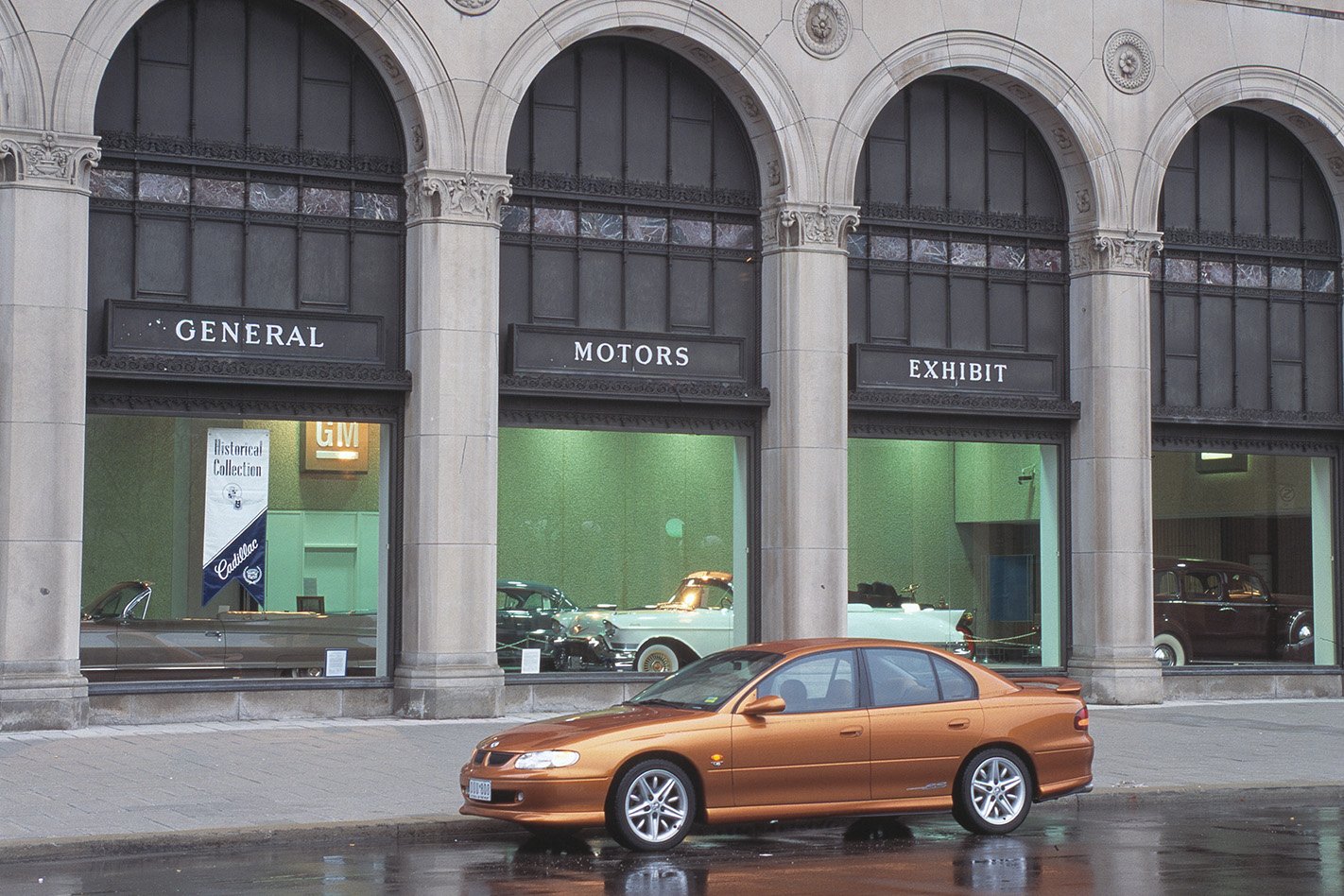
One of the photo shoots hits a snag. Early Saturday morning (about 6:10), we roll into a parking lot down the street from the old GM headquarters building in Detroit. We find The Spot for the shoot, and before Warwick can even get his tripod out of the car, here comes a dishevelled and especially humourless security guard. No amount of reasoning works with this guy who is so by the book even John Wayne would have decked him. While on his walkie-talkie with ‘headquarters’ (whatever that was) he even takes note of our ‘Canadian’ licence plate.
Day Seven – Detroit, Michigan to Youngstown, Ohio
This was the easiest day of the trip, both in planning and execution. We’d allocated a lot of time for the trip across Ohio, so that Wheels’ US man, Chris Jensen, could get some seat time in the Commodore and give us his impressions of it (see bottom of article).
Armed with our ‘Ohio Radar Detector’ (a bag of microwave popcorn on the dashboard- legend has it they use so much radar in the Buckeye State, it will cook the corn for a freshly popped snack as you are being booked), we wander into Cleveland’s leafy and elegant lakeside suburbs to meet Chris and his wife.
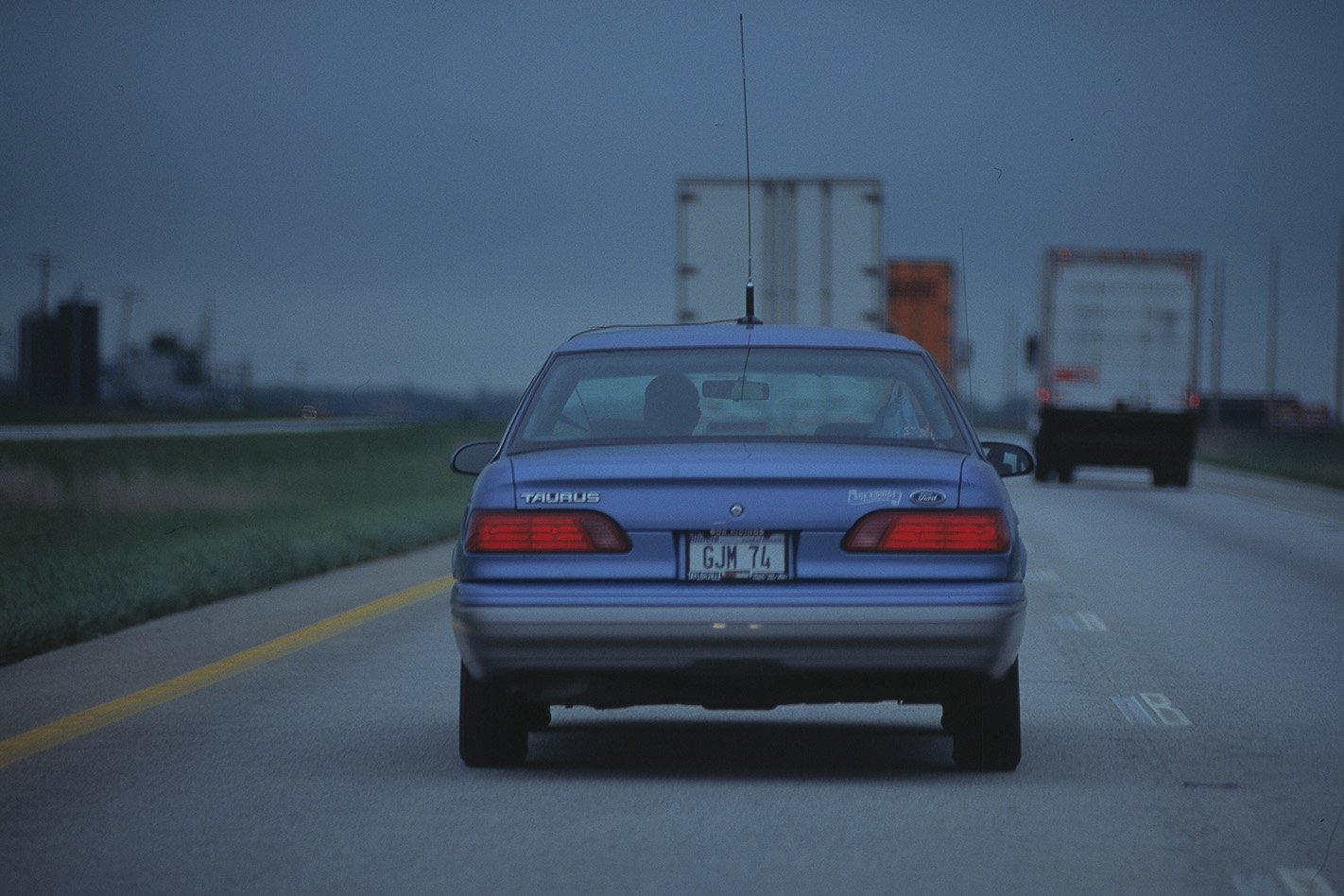
Shooting the Holden with Ford’s VS Taurus SHO near Cleveland’s Riverfront Stadium also brought out a swag of security people – these as affable as the bloke in Detroit was not. Once again, there was a high degree of curiosity as to why the Commodore wasn’t included with the rest of GM’s stateside offerings.
Considering Ohio’s reputation for police enforcement is on a par with that you’d be likely to find in Leipzig in, say, October 1943, the Boys In Blue were spotted only twice on the interstates. In both cases their quarry didn’t appear to be eating popcorn. They obviously weren’t as well equipped as we were…
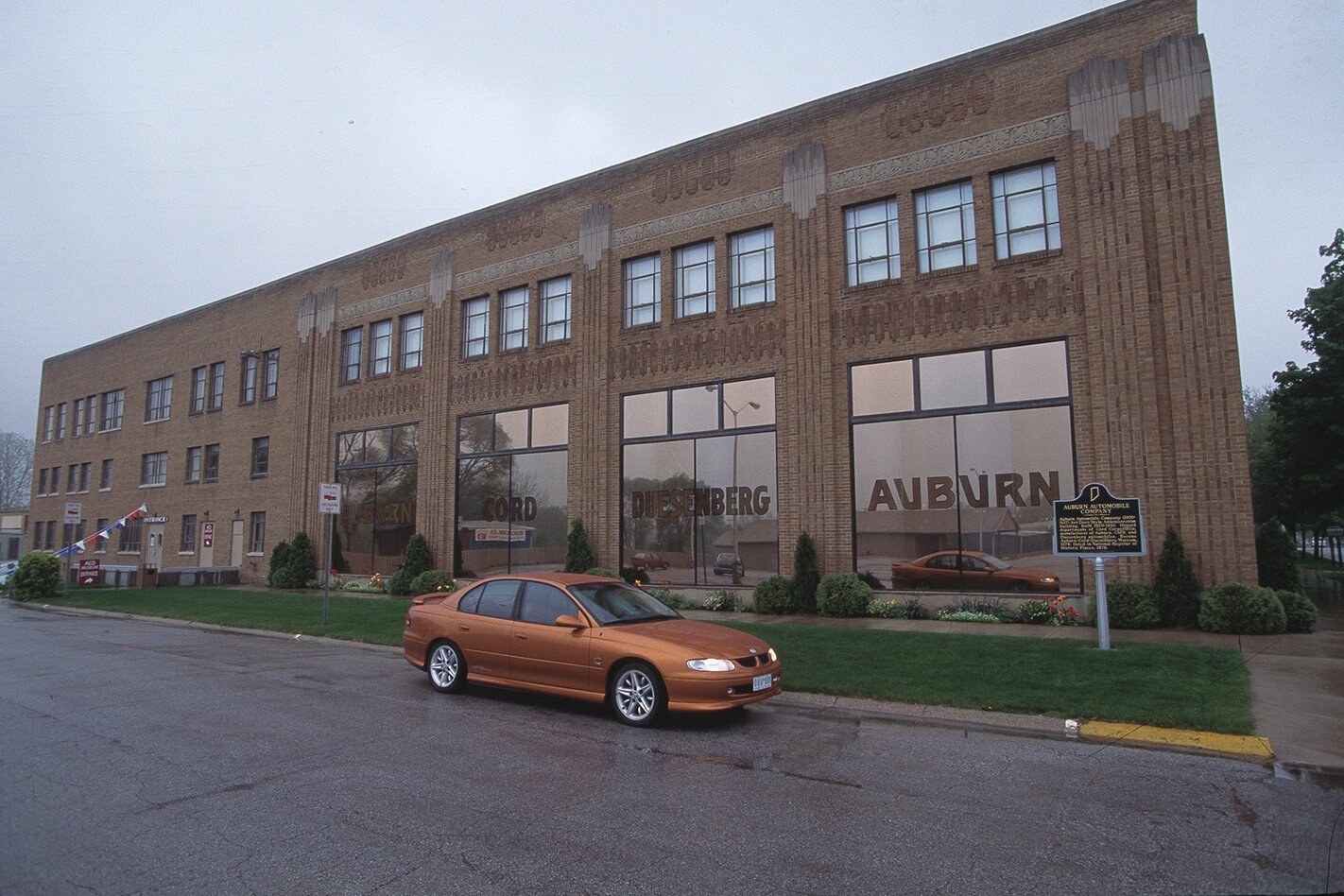
Day Eight – Youngstown, Ohio to New York, New York
We got off to an early start, entering Pennsylvania before 8pm. The Keystone state was the first place we spotted an internet URL on the ‘Welcome to … ‘ sign. Have American cars got internet terminals built into the dash? Hope not.
Breakfast takes place in Grove City, Pennsylvania, at the unimaginatively though aptly named Grove City Diner. Now, normally we wouldn’t get too hot and bothered about brekkie, but the combination of the best morning meal and first really good cup of coffee we’d had in, oh, 6000km, you sort of remember such things. If you ever make it to Grove City or thereabouts, now you know where to get some decent tucker.
Returning to the interstate, we spot a sign to Punxsutawney, ‘Weather Capital of the World’. Now that one’s certain to stir your curiosity. This is where Punxsutawney Phil, the world’s most famous groundhog resides.
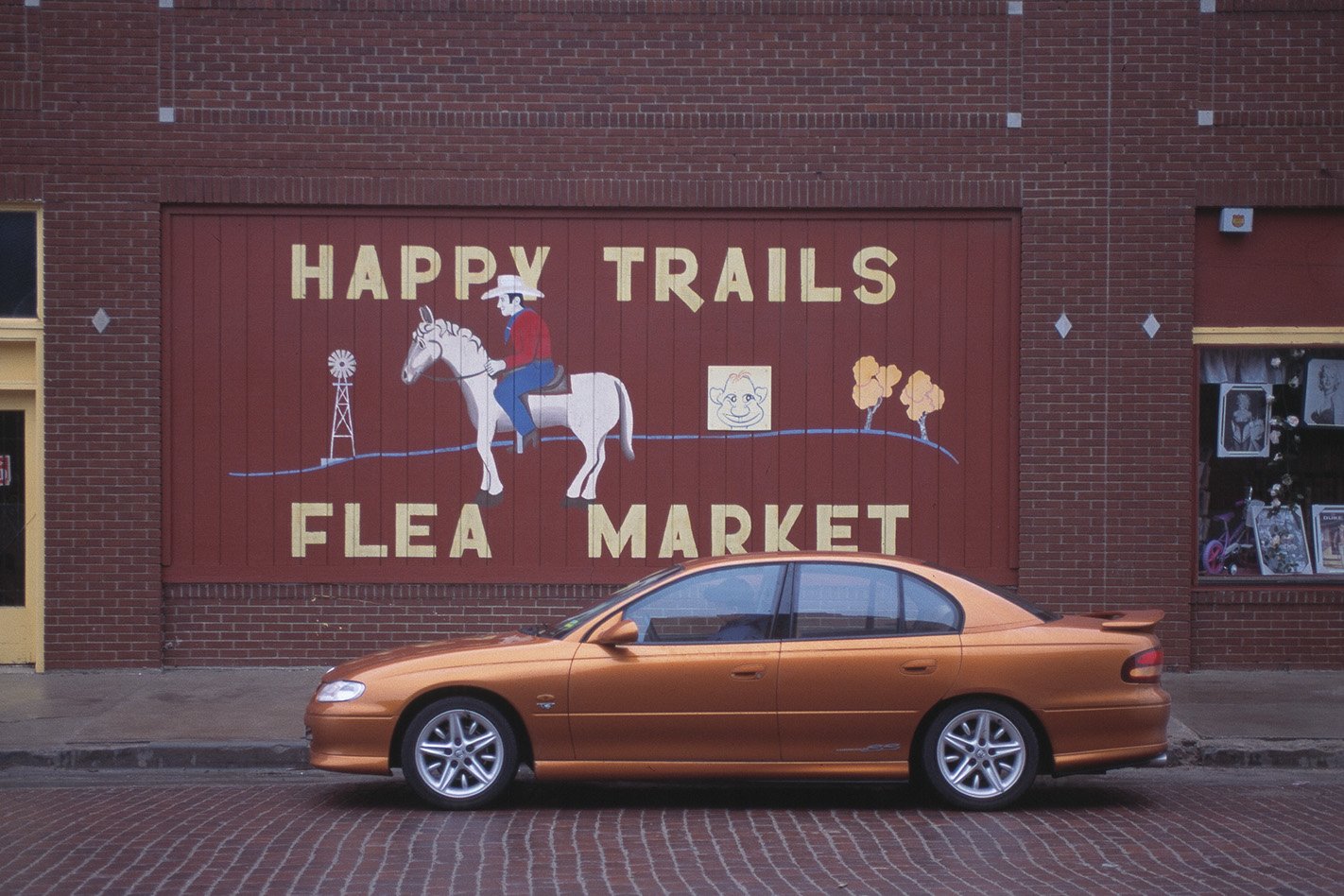
For being the weather capital of planet Earth, the weather was pretty dreary. Maybe Phil’s pissed off, like many of the residents, that the film Groundhog Day was shot in Illinois and Indiana rather than in Punxsutawney and he’s packed off to Parts Unknown, taking the weather with him.
Like in Kansas, there’s a predisposition in Pennsylvania to close off half the lanes of an interstate highway for no visible repairs. In conjunction with speed limits which drop as you move east, you make appreciably fewer miles in a day as you move towards the US right coast.
Neither of us saw a ‘Welcome to New Jersey’ sign when we crossed into America’s ‘Garden State’. What we did notice at our last stop for petrol was that there didn’t seem to be any self-serve servos in New Jersey (and, as we later found out, in New York). It’s a state law, perhaps indicating some sort of dark, pyromaniacal side of many of the residents of Joizy and the rest of the Tri-State area.
Kent is getting really chuffed as we motor along NJ Route 3 towards the Holland Tunnel and New York but, as with Dodge City, I can’t share his enthusiasm. Even though I sat behind the wheel of a Holden for the first time in NYC (an HD Premier at the GM’s 1965 World’s Fair exhibit), it’s a place I can handle for three or maybe four days. And the toll collector at the Holland Tunnel reminded me why. One helluva surly individual.
Pop out of the tunnel and you’re in NYC. The thick of it, as it were. Though there wasn’t a lot of driving between the tunnel and the Plaza Hotel along Central Park South and Fifth Avenue where we were staying, we saw the unimaginable – roads that even were worse than the rough-hewn tracks encountered in the Detroit area. The FE2 suspension combined with the SS’s 17in rubber to provide a package that was all wrong for New York City.
Time to lob into the pub, get checked in then immediately head out for a photo session in Times Square. If you’ve not been to New York in a while, the first thing you’ll notice is how much Times Square has been tidied up. The nightfighters are gone, along with most of the peep shows, so the image of depravity that once was associated with the place has disappeared. It’s a bit of a shocker. Kent even wandered down to the Square to shoot some artsy non-Commodore night-time pics – and walked back. Intact. While there are still some sections of the city that we wouldn’t recommend wandering through at night, the Big Apple seems to have really got its act together.
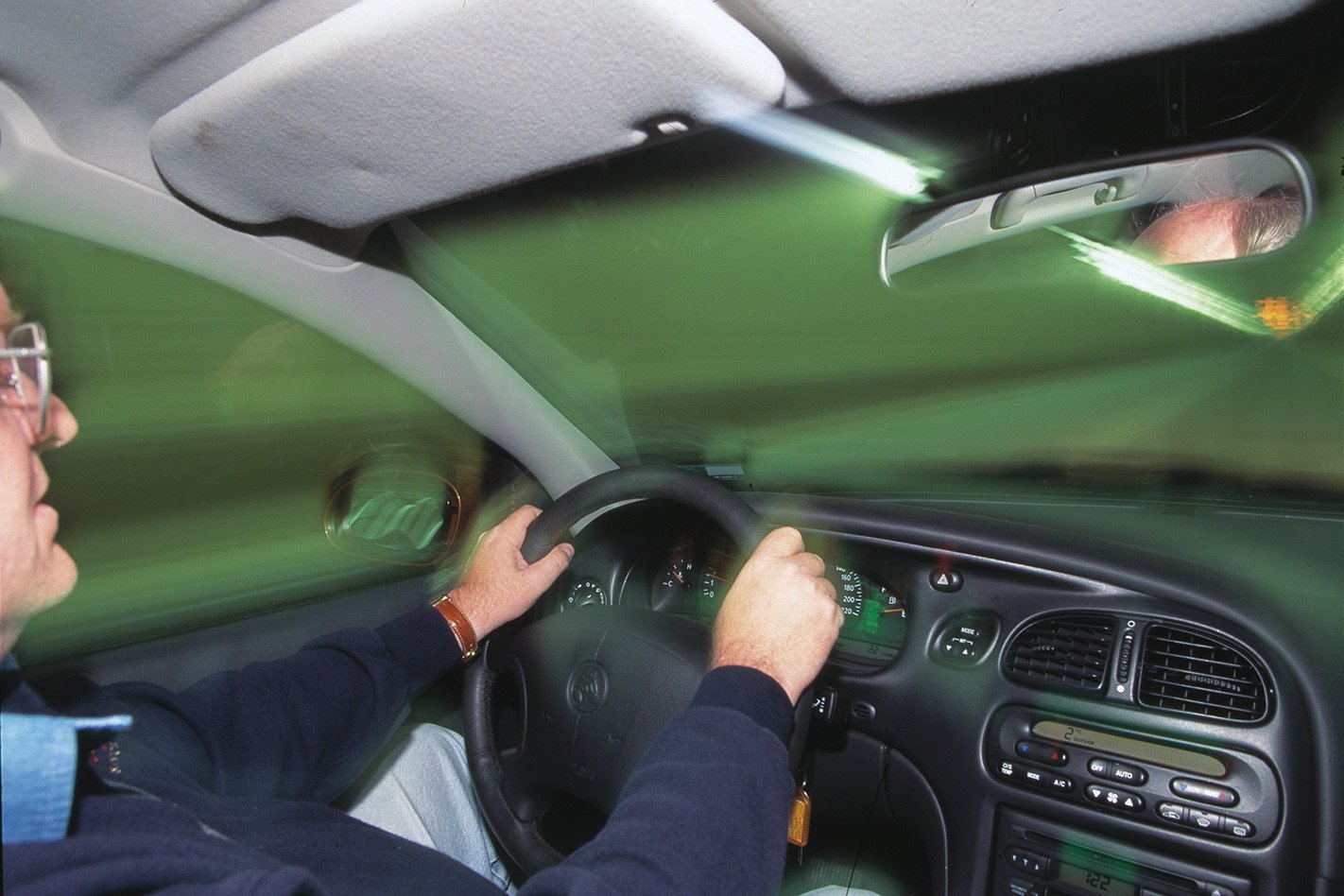
An early (5:30) call for shooting the next morning includes a trip down Fifth Avenue, through lower Manhattan, past Wall Street to the Battery with the grand plan of getting a shot of the car with the Statue of Liberty in the background.
With the removal of most of the piers that were once home to a fleet of transatlantic liners, many of the potential photo locations are gone. In the place of the southernmost ones, is a new development of town houses and high-rise condos known as Battery Park City. Progress.
We wandered back uptown along Park Avenue for more Photo Opportunities, returning along Fifth Avenue’s ‘Museum Mile’, home to most of New York’s history and art museums. A drive through Central Park for more photo ops and we’re back in the pub for a well-earned rest.
The next day, our last in New York, we check out of The Plaza and head down Fifth Avenue again, with Kennedy Airport and the long trip back home to Oz our goal. At the traffic light on 50th street, just across from Rockefeller Center (and Radio City), a bloke wanders to the edge of the footpath and asks Question Number One for the 1134th time – in a Brooklyn accent so thick even The Nanny Fran would have trouble understanding.
“Hey buddy, what kinda car is that?”
“A Holden Commodore.”
“Yeah? From Australia? I’ve never seen one. Man it really looks great! They oughta sell it here.”
The people have spoken.
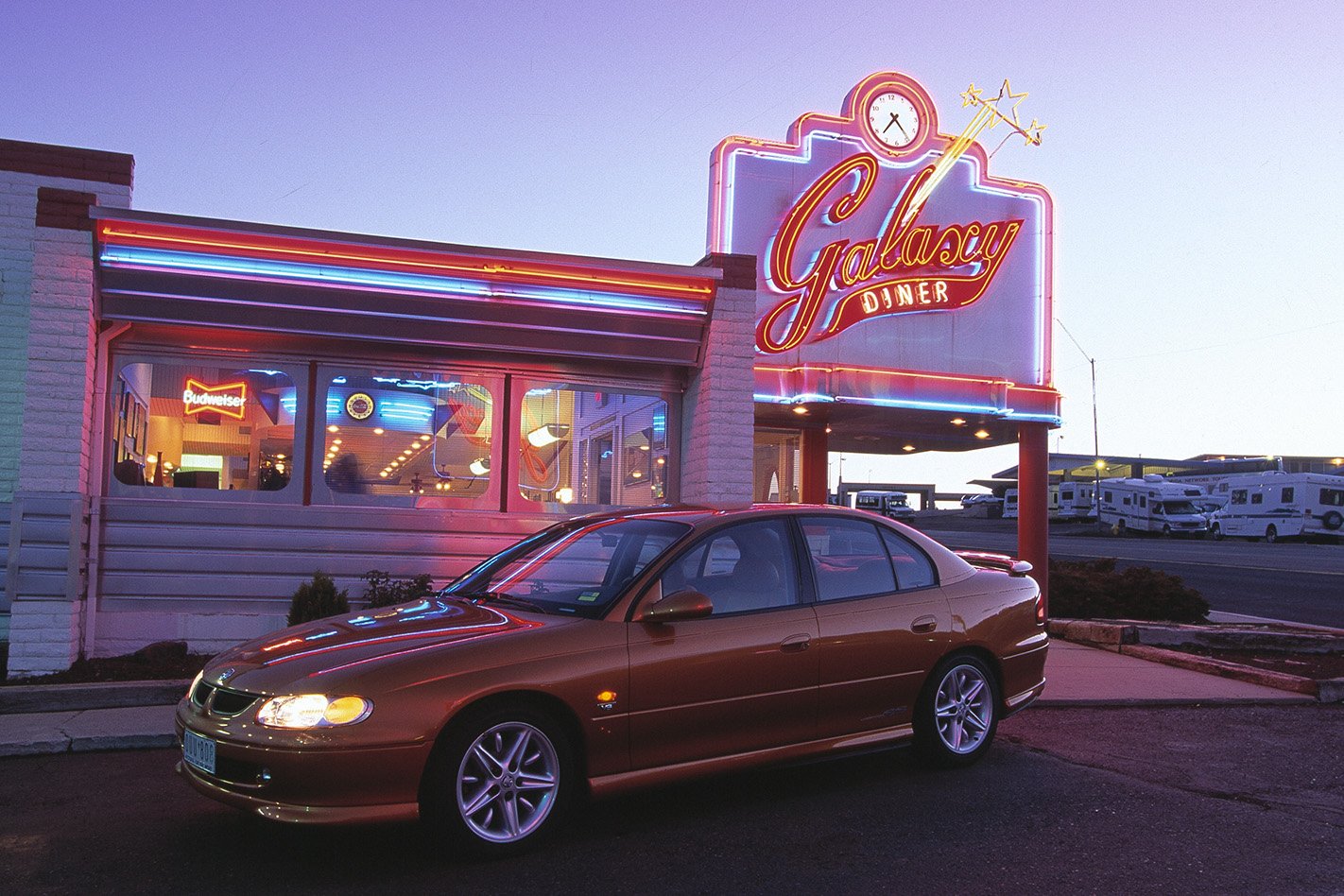
SHO too slow
In Australia it’s the Falcon XR8, but in America the Taurus SHO is the Ford to beat. It’s V8 powered, but can the young bull cut it?
When Ford launched this latest version of the high-performance Taurus SHO, it went to great lengths to describe it as a ‘gentleman’s express’. Perhaps it was to divert attention from the fact this 3.4 litre V8 was slower than the 3.0 litre V6 SHO it replaced. Whatever the reason, the new SHO is notably more refined than the original.
Developed by Yamaha, the 175kW SHO engine is the only 60-degree V8 on Earth. Common logic would imply it was done by merely adding a pair of cylinders to Ford’s Duratec V6 or that it was purpose-built solely for installation transversely. In any case, it provides the SHO with a unique exhaust note and a lope at idle that’s unlike anything we’ve ever heard.
The all-aluminium engine has the requisite twin cams with a quartet of valves per cylinder to generate those 175kW (at 6100rpm), with peak torque of 335Nm coming on stream at 5800rpm. Despite a 4-speed automatic transaxle – no manual is offered – it is a difficult car to drive smoothly in town at low speed. Like pre-VS Commodores, the SHO’s loud pedal comes on with a serious kick from idle. Combine this with generous slop in the torque converter off idle and puttering along in heavy traffic is a tiresome experience.
Perhaps because the SHO generates less torque than Pontiac’s Grand Prix GTP, it’s less thrilling to wrestle with when power’s applied. There’s far less scrabbling around from the front wheels when the loud pedal’s given a good jab and the car has fewer engine-induced intrusions into the dynamics than most high-powered front-drive cars. We didn’t have a chance to take numbers, but our man in Cleveland, Chris Jensen, reckons the car’s capable of getting from zero to 60mph (96km/h) in about 8 seconds or a little less. That doesn’t mean that all is sweetness and light, however. In fact we’re sour on the overly light and generally remote steering on the SHO.
So, how does the Commodore stack up by comparison? Here’s how Chris Jensen saw it:
“Here Holden has designed a wonderfully satisfying sedan and GM won’t let it come and play with enthusiasts in the US.
“I’ll take a pass on the SS stitching on the seats, and I guess I’d like it called something other than Commodore. The name brings to mind some incredibly pompous guy from the local yacht club. But those bits aside, I’d buy one in a heartbeat, particularly with the supercharged V6.
“The steering is a triple treat of weighting, accuracy and a level of communication that has eluded GM on any of its other American products, including the Corvette. The Commodore turns in with an obedience that is rare among American cars and while there is a wonderful no-nonsense approach to damping, the ride quality remains good even on the meanest streets of America’s Midwest.
“One could suggest the Cadillac Catera is an alternative. However, anyone making that argument deserves to be whacked around the head. The Catera is a nice package, but is aimed at Caddystyle comfort, while the Commodore is clearly aimed at pleasure. Unfortunately for America it will be a forbidden pleasure. Victoria’s Secret, if you will.”
Pontiac Grand Prix GTP vs Holden Commodore SS
If there’s an American version of the supercharged Commodore SS, Pontiac’s Grand Prix GTP would certainly be it – and not merely because both are products of the General’s fertile mind. GM’s ‘excitement’ division takes the same blown 3.8 litre V6 that lives under the Commodore’s bonnet, turns it 90 degrees to drive the front wheels.
The GTP is larger than a Commodore. Overall length is 4991mm (107mm more than VT), width 1847mm (5mm wider), height 1389mm (Commodore’s 61mm taller) and rides on a 2807mm wheelbase – 19mm longer than the Holden. There’s less usable room inside, however – particularly for rear seat passengers. Rear seat headroom is ordinary, and to the rear seat occupants are directly under the rear window. Prepare to fry.
In the Pontiac the supercharged six 179kW at 5200rpm and 408Nm at 3200rpm, while the Holden version pumps out 171kW at the same engine speed and 375Nm at 3000 revs. In practice the difference is inconsequential – despite near-identical kerb weights, the SS proved almost as quick during performance testing in LA by the guys at Road & Track.
We were really curious as to how the punchy six would work in a front driver, so we asked a GM engineer at the company’s Warren, Michigan, technical centre who described it as “a pretty good handler for a hopelessly overpowered and underchassied frontdrive car”. Yes, there’s a certain brutality to the Grand Prix, and it’s called the steering wheel.
Road & Track editor Tom Bryant was just as curious about the Commodore. Here’s what he thought:
“What a pleasure it is to drive a GM sporting sedan with rear wheel drive! You can actually go into a corner, boot the throttle and not have to fight the steering wheel kickback.
“On the road, the Holden has a good bit of performance to offer. The automatic transmission is transparent and does a good job of shifting up and down to match the driver’s input. The ride/handling compromise is quite nice, with a tautness that keeps everything under control during spirited driving. Around town and on the freeway, the ride is supple and nicely damped when going over culverts and bumps.
”The interior styling is quite nice and considerably better than that of the Grand Prix. The dash seems less imposing and not so over-designed. The instrument cluster is quite easy to read and the other gauges are simple and visible. There is plenty of leg and head room in the front, and even the rear seating is pretty good for people of my size. Quality, fit and finish are very nice.
“All in all, the Commodore SS is impressive. It’s a shame GM doesn’t have a car like this in America to replace some of the front wheel drive sedans.”
Wheels takes on the world – Part Three
Long-time Wheels readers may be experiencing a sense of deja vu with this story of an Aussie abroad. That’s because this is not the first time we have despatched a hot Holden overseas. Robbo took the HDT-built VL Calais Director to Europe and the United States in 1986. He drove the HSV SV5000 in England in 1990. Our-one-of-a-kind VT SS was built for us by an enthusiastic Holden crew, headed by project engineer, powertrain and chassis, Michael Rochford, engineering program manager Russ Little, senior project engineer, electrical design, Greg Lake, design executive Mike Simcoe, director of engineering and design Tony Hyde and program manager Colin Lewis.
- Part of Vision 2020
- Rolling out to all new cars
- Don’t worry, Polestar is unaffected
Vision 2020
For the last few years, Volvo has rolled out new types of technology to improve safety, but it’s now limiting overall speed in all its cars. While safety tech is helpful at all speeds, as you’d expect, its ability to actually prevent deaths is reduced at higher velocities.
Capping V-max is a simple way of getting closer to its Vision 2020 target, and was one of three ‘so-called gaps towards zero’ in Volvo’s current strategy. Volvo believes the two other key areas to tackle are intoxication and distraction – though it remains to be seen exactly how the brand aims to address them. Perhaps biometric monitoring, along with less fiddly touchscreens?
‘Volvo is a leader in safety: we always have been and we always will be,’ said Håkan Samuelsson, Volvo’s president and chief executive. ‘Because of our research we know where the problem areas are when it comes to ending serious injuries and fatalities in our cars. And while a speed limitation is not a cure-all, it’s worth doing if we can even save one life.’
For some background, within the current Volvo range, the lowest top speed is 190km/h, and the highest is 250km/h. And while the 180km/h limit won’t have a huge affect Down Under, it’ll be interesting to see the reaction in countries with unrestricted roads.
Semi-autonomous rules?
In addition to the overall speed caps, Volvo revealed it’s also looking at using geo-fencing and other tech to enforce speed-limits around sensitive areas such as schools and hospitals.
‘We want to start a conversation about whether car makers have the right or maybe even an obligation to install technology in cars that changes their driver’s behaviour, to tackle things like speeding, intoxication or distraction,’ said Mr. Samuelsson. ‘We don’t have a firm answer to this question, but believe we should take leadership in the discussion and be a pioneer.’
It’s certainly the beginning of a much larger discussion. While taking some control out of a drivers’ hands seems like a good thing initially, it’s possible that in certain circumstances more speed could actually stop an accident from happening. If Volvo’s speed cap somehow causes an accident, what happens then?
Fast Volvos?
And one more thing, Volvo isn’t reducing the overall performance of its cars – just the top speed – so Swedish fast cars like the T8-engined S60 will still be around and will punch as hard as ever. What’s more, if you still want a new Volvo with a high top-speed after 2020 you can still get one – sort of. But it’ll be a Polestar 1.
This article was originally published at carmagazine.co.uk
In our Fast Facts series, WhichCar delves deep into the history of automotive brands to bring you fascinating facts and intriguing information.
Here we focus on Holden Special Vehicles (HSV), a company that emerged from Holden’s famous fall-out with racing legend Peter Brock to build some of Australia’s most notable performance cars, but now finds itself in uncertain times.
FROM HDT TO HSV
When racing legend Peter Brock and Holden split acrimoniously in 1987 over the controversial HDT Director (see our Holden Fast Facts), Holden Special Vehicles (HSV) became the local manufacturer’s new performance partner late the same year. The company was a joint venture established by GM Holden and Scot Tom Walkinshaw’s eponymous racing group, TWR.
GREAT SCOT
Walkinshaw had already made his mark in Australia two years earlier. The 1984 European Touring Car champion took his TWR team to the 1985 Bathurst 1000 with a pair of XJS Jaguars, and put his on pole. While Walkinshaw finished third, the other car took victory in the hands of Australian John Goss and German Armin Hahne.
BAT-PIG?
HSV’s first assignment in its new partnership was to develop the VL Commodore SS Group A for 1988 as a homologation model for Holden to race. Its pronounced rear spoiler and wild body kit divided opinion, with nicknames ranging from the ‘Batmobile’ to the more derogatory ‘plastic pig’.
Motorsport success for the model also known as the ‘Walky’ came with victory at the 1990 Bathurst 1000. The first vehicles from HSV as we know it today appeared the same year – the SV88 that was based on the Calais and featured a 136kW 5.0-litre V8.
HOT FOURS
HSV has made its name primarily building faster, meaner versions of V8-powered Commodores, though as early as 1988 it flirted with smaller, four-cylinder models – in the form of the Astra-based SV1800. Only 65 were built in a time when keen Australian drivers remained focused on rear-wheel-drive large cars.
It revisited the idea again, in 2006 with the Astra VXR; a turbocharged hot-hatch that again used a Holden small hatchback as its basis. While hardly a showroom sensation, it at least hung around for three years and the esoteric pocket rockets appear to be growing in desirability.
CLUBBIE TIME
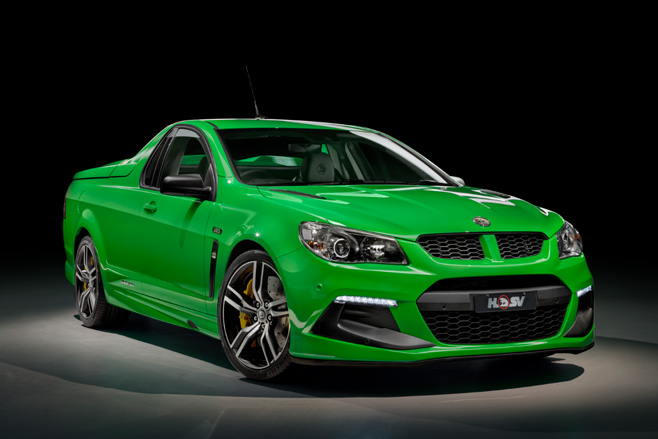
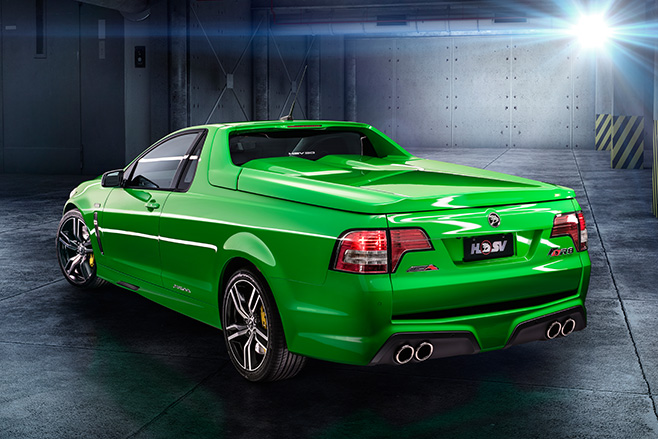
The Clubsport name that was last used with the introduction of the 2016 Gen-F R8 made its debut in 1990, along with HSV’s first adoption of a Commodore Ute – with the Maloo.
FAST LUXURY
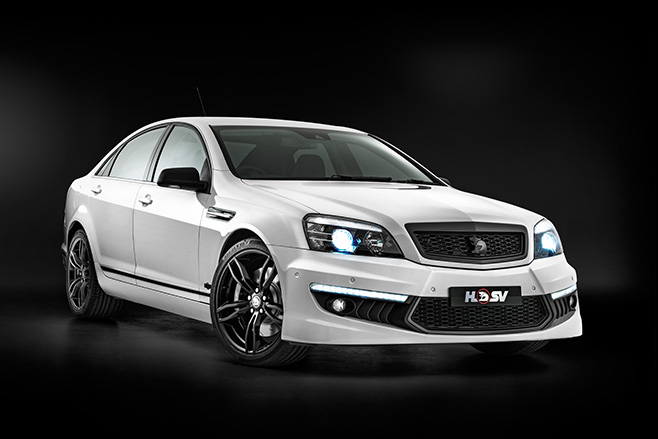
After using the Calais as the basis for its first car, the SV88, and then the Senator from 1992, HSV gave its attention to Holden’s long-wheelbase luxury cars, the Caprice and Statesman. There were numerous HSV Statesman variants – 5000i, SV93, 215i – before the most upmarket HSV adopted the fine-wine-inspired Grange name in 1996.
LAST OF THE LOCAL V8s
HSVs lost their Aussie hearts after 1999, when the XU8 195 became the last model to feature a locally built V8. Henceforth, V8s were imported in various guises from Holden’s US parent company General Motors – with mostly modified versions of engines that appeared in cars such as the Chevrolet Corvette and Cadillac CTS-V.
ON ALL FOURS
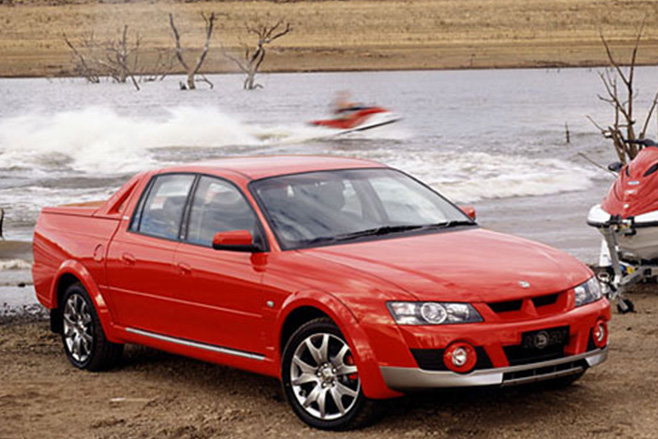
HSV’s first flirtation with all-wheel drive was a short-lived, cosmetically tweaked version of the Holden Jackeroo, though it made a more committed effort a decade later with the Avalanche twins. The Avalanche was based on Holden’s Adventra LX8, while the donor vehicle for the XUV variant (for X-treme Utility Vehicle) was the Crewman Cross 8 four-door ute.
HSV’s 5.7-litre V8 produced more power and torque to go with a more muscular interpretation of the Holden’s bodywork. A year later, the 2004 Coupe 4 became the brand’s first all-wheel-drive car, though it was less than a stellar sales success.
FROM PONTIAC AND BACK
HSV borrowed the famous Pontiac ‘GTO’ badge for its lesser-powered Coupe variant of the revived Holden Monaro, which was somewhat ironically retained by the US brand when it imported the Monaro from Australia in 2004. Where the Coupe GTO’s Chevrolet LS1 V8 produced 255kW, the Coupe GTS hit the magic 300kW figure with a modified version of the same engine from Chevrolet modification specialists Callaway.
POWER TO THE POMS
The GTO also found a niche in England, where it was badged the Monaro VXR by Holden’s British sister brand Vauxhall. In 2007, it was succeeded by HSV’s Clubsport, which was transformed into the Vauxhall VXR8. It was joined by the Maloo ute, which was offered by Vauxhall – along with the GTS that first made the trip to the UK in 2010.
THE $215,000 HSV
In 2003, Holden and HSV were forced embarrassingly to return paid customer deposits for a Monaro-on-steroids model called the HRT 427, after they canned a project teased the previous year at the Sydney motor show.
The belated decision came after management realised a profit wouldn’t be achievable even on a car set to cost $215,000. Race versions of the car controversially won the 2002 and 2003 Bathurst 24 Hour endurance events.
It was pricey, but a car that actually went into production would one day smash that company price record…
427 LIVES
In 2008, HSV celebrated its 20th anniversary by introducing the W427 – a badge that referenced both Walkinshaw and the Corvette V8 engine’s 7.0-litre size in old-fashioned cubic inches. It’s $155,500 price tag understandably made headlines considering no HSV to that point had cost more than $100,000. There was strong initial response from customers before the global financial crisis struck, reducing the planned run of 427 units to just 137.
HAPPY ANNIVERSARY
HSV loves a birthday celebration. The 30th Anniversary Range introduced in 2017 follows a trend that started with the 5th Anniversary models of 1998, and have recurred every five years since. And 1998 isn’t a misprint. In 2007, HSV decided its anniversaries should be based on 1987. The first HSV-badged vehicle (the VL SS Group A Walkinshaw) was originally shown to the public at the Sydney motor show in 1987, though no models were delivered to customers until the following year.
TRUCKS, CARAVANS AND MORE
HSV owners Walkinshaw Automotive Group, under the control of founder Tom’s son, Ryan, has expanded its interests over the years. Walkinshaw Performance aftermarket parts designed to make Holdens and HSVs go faster was a natural extension, though its Fusion Automotive business imported Tata vehicles from India.
American Special Vehicles converts big RAM utes from left-hand drive to right-hand drive for Australia. The purchase of a stake in New Age Caravans in arguably its most surprising move.
GTS-R RETURNS
HSV marked its final interpretation of an Australian-built, rear-wheel-drive Holden Commodore in style in 2017, with a return to the HSV GTS-R badge it first used in 1996.
Sitting at the head of a new family of GTS-R models was the W1, which is limited to 300 units, costs $169,990, and should prove to be the fastest Australian production road car ever built. For the future, HSV is expected to focus on models Holden imports from overseas, such as the 2018 Opel Insignia that will be rebadged Commodore here, and the Astra that’s also from GM’s German operation.
DIVERSIFY OR DIE
With the end of locally made Holden vehicles, HSV’s favourite staple for creating much loved and coveted performance cars dried up, but the company was already a long way down the road deciding how it could continue the flow of hardcore hardware.
LOADING UP WITH MODELS
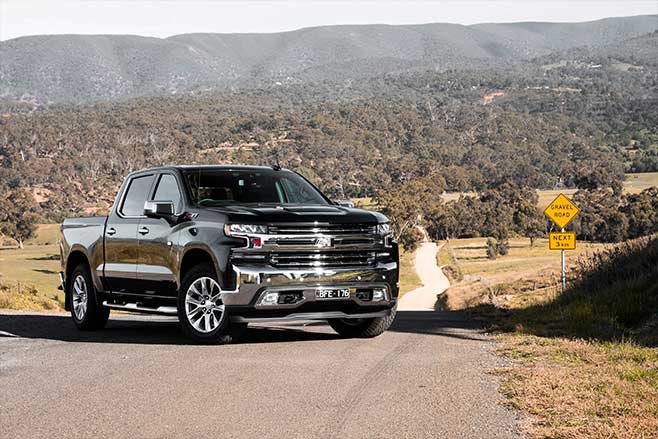
Firstly, the company recognised the massive increase in one-tonne ute popularity and the migration of Australian families away from sedans into dual-cabs. Even though the market was crowded, HSV saw the opportunity to upscale its Ram operations and added a broad range of Chevrolet Silverados to it.
Watch next: Silverado vs Ram
Now, Australians can have the full complement of Ram trucks or a range of Silverados that recently increased to offer the 1500. The brilliant move was a dramatic backflip away from the dying large sedan, straight into one of the most lucrative markets.
In the middle of 2020, the final Colorado-based Sportscat rolled off the line, marking the very end of the Holden connection.
PERFORMANCE HERO
In 2018, HSV finally revealed one of the motoring world’s worst kept secret and the rear-wheel-drive V8 sportscar Holden had been promising Australians for years. The Camaro arrived.
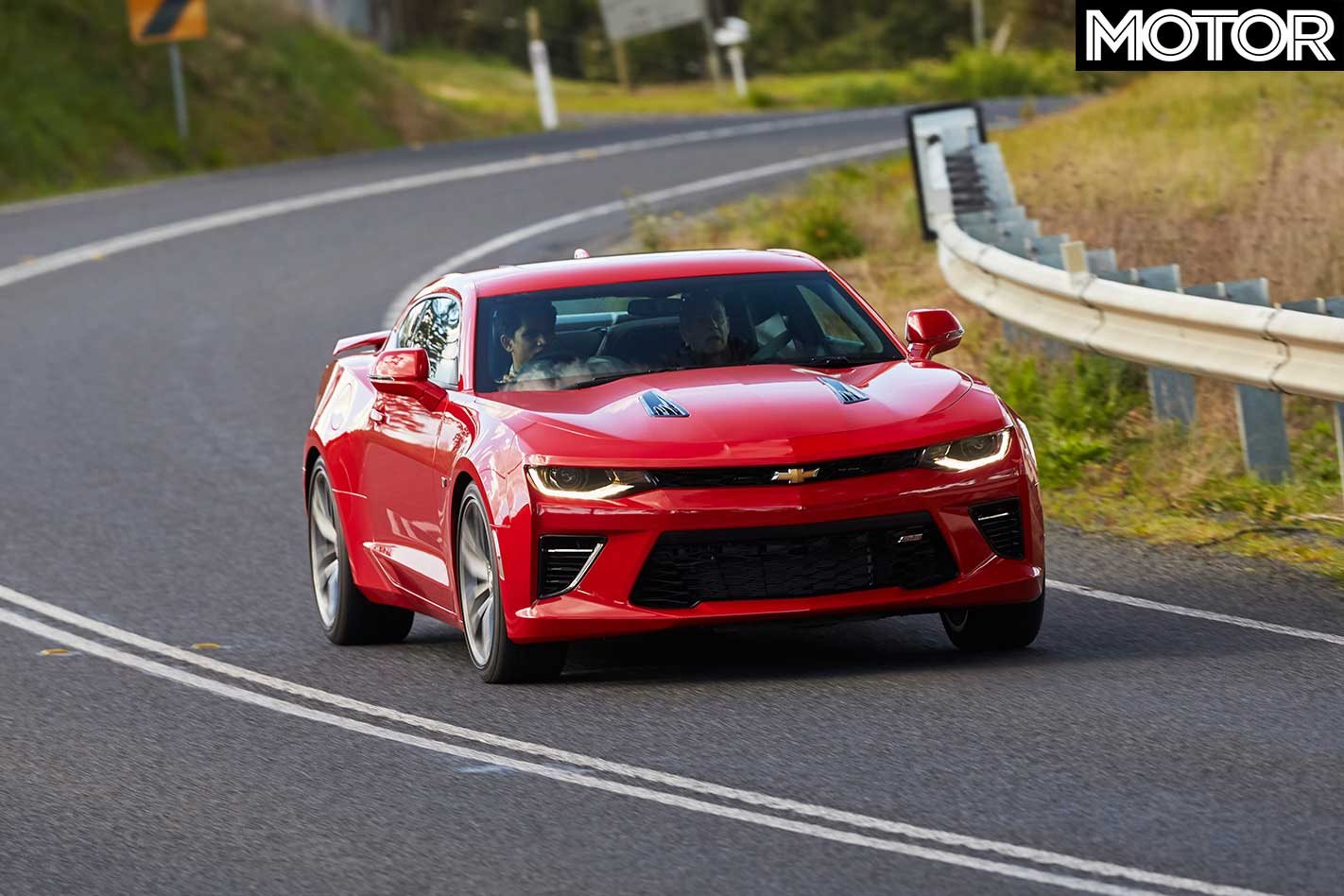
The iconic American coupe slotted into the Melbourne re-engineering outfit among the hundreds of large trucks and it likely won’t be the last.
AN UNCERTAIN FUTURE
While HSV’s very existence has always been tenuous, it has never faced a more challenging year than 2020. With the shock departure of Holden from Australia and New Zealand, the company will lose the H from its name and faces a forced rebranding by the end of the year.
Quite how the company and the team of skilled engineers will evolve once again remains to be seen.
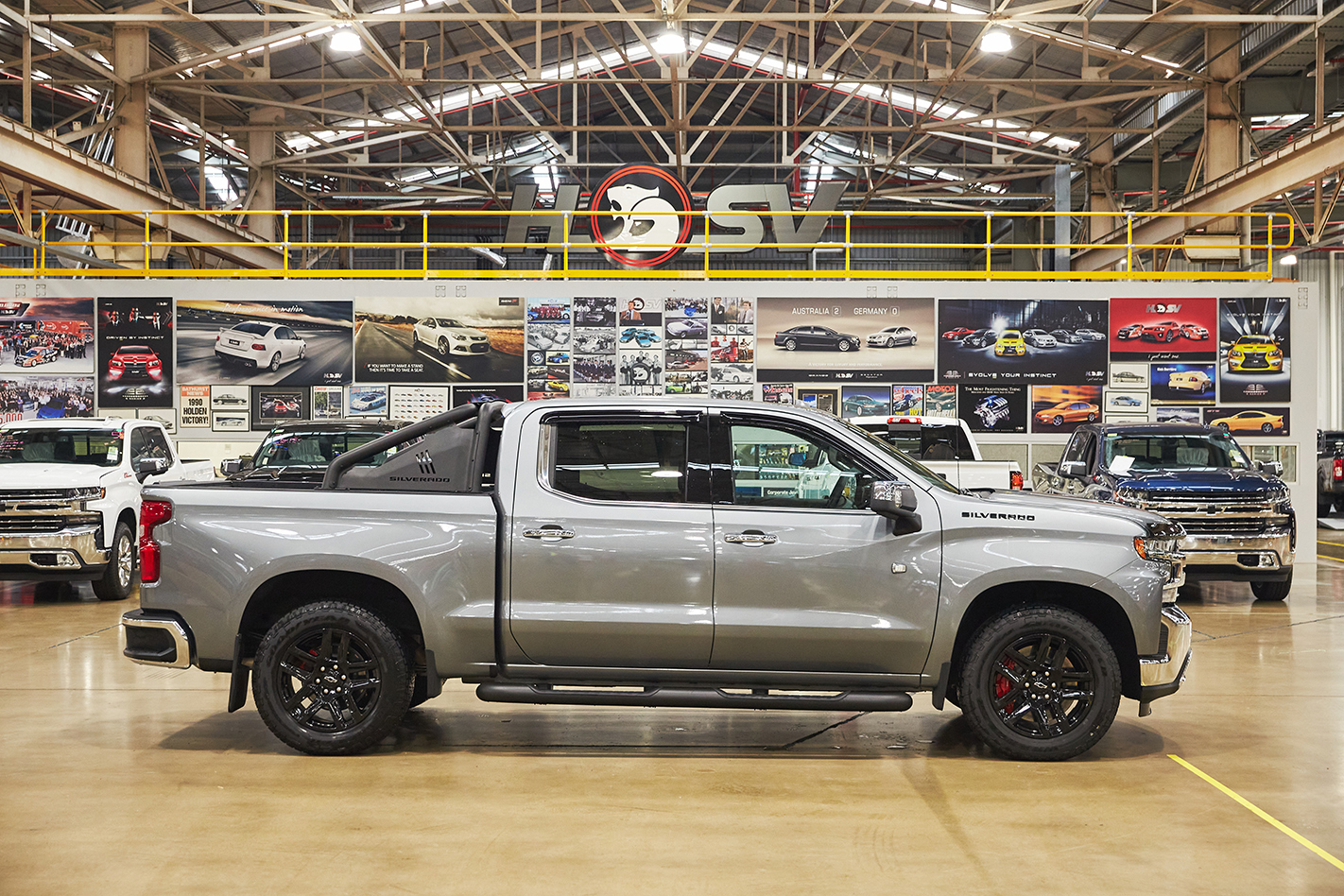
The Wheels Verdict: The market for American-sourced pick-ups is growing down under, meaning rigs like the Chevrolet Silverado 1500 LTZ are becoming worthwhile business. However, most are left-hand-drive only, which is where HSV comes in, converting the US-grade pick-up to right-hand drive to an OEM standard. Ultimately the Silverado 1500 is big and brash. But those who want a large pick-up won’t be disappointed.
WHAT IS THE CHEVROLET SILVERADO 1500 LTZ?
Crikey, it’s big! Don’t let its status as the ‘baby’ of the Chevy Silverado line-up fool you. This piece of American pick-up truck is still almost six metres long and two metres wide. Pricing for the 1500 LTZ is yet to be determined, but according to HSV, expect to pay around $110,000 before on-roads and options. And don’t go too crazy on the HSV accessories as there is $33,106.63 worth of options to choose from.
WHY WE’RE TESTING IT
The US-sourced pick-up market is going from strength to strength down under. RAM and Silverado sales are increasing month-to-month with the interest in such vehicles building at an alarming rate. The Silverado 2500 is a big rig, while the order-only 3500 is a true specialist proposition, so the ‘diminutive 1500’ could be just right. So we’re seeing if it’s any good.
CHEVROLET SILVERADO 1500 LTZ REVIEW
Branding something an acquired taste doesn’t have to elicit negative connotations. Everyone can’t always like everything. And in the case of those who like big, American-sourced pick-ups, the want and desire for such vehicles is strong. Hence HSV and Walkinshaw have seized the opportunity, importing and converting the large Yank dual-cabs in impressive numbers.
Now there is a new player, the Chevrolet Silverado 1500 LTZ. It stands as the entry-level variant, sitting below the 2500 and 3500 offerings, but given it’s 5885mm long, don’t classify it as ‘small’. It’s just not as large as its siblings. For reference, the 1500 is still bigger than a Volkswagen Amarok.
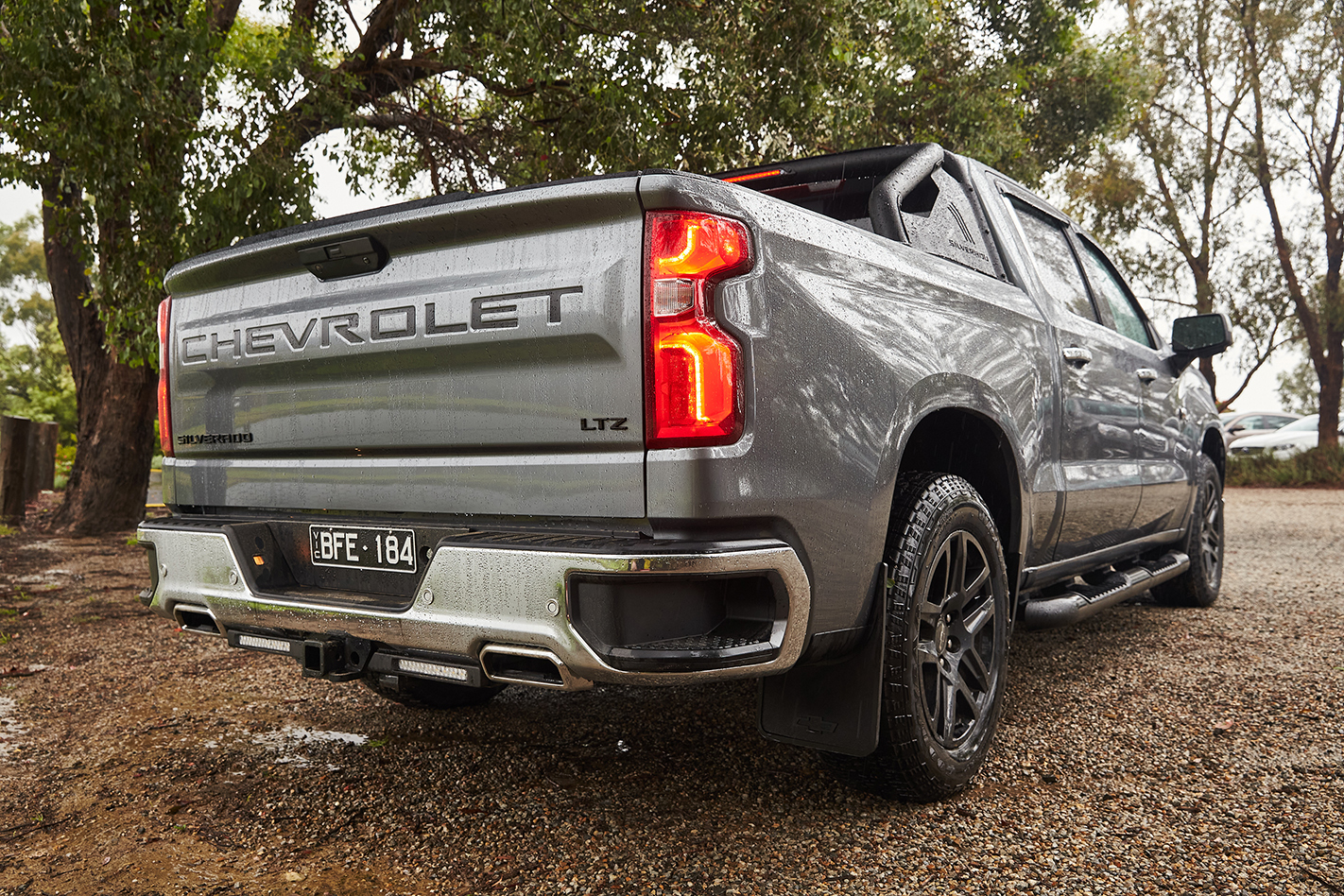
It looks tough, with optional 20-inch Gloss Black wheels ($1103.30) and it’s packing a 6.2-litre V8 under the hood… sorry, I mean bonnet. HSV is currently only offering the highly specified LTZ variant, and it’s expected to come in at around $110,000 – which isn’t exactly spare change.
However, you’re buying a lot of metal and robust mechanical gubbins. Packing 313kW and 624Nm, the EcoTec V8 is no slouch despite the 1500 tipping the scales at 2588kg. Despite using GM’s Dynamic Fuel Management system (code for cylinder deactivation), the 1500 still slurps 12.3L/100km – and that’s without towing and using a light right foot. The $5062.20 optional HSV exhaust not only sounds angrier, it adds 9kW/10Nm to the outputs.
Given most will buy the Silverado to tow and carry things, the key figures you need to know are that it has a 712kg payload, and a maximum braked towing capacity of 3500kg using a 50mm ball or 4500kg using a 70mm ball. We found that towing a 2.5-tonne caravan up steep hills isn’t an issue – thanks to plentiful torque, the automatic even resisted the urge to hunt through its 10 ratios. There is also a handy adjustment in the cabin for the trailer braking, and dedicated apps and cameras specific to towing.
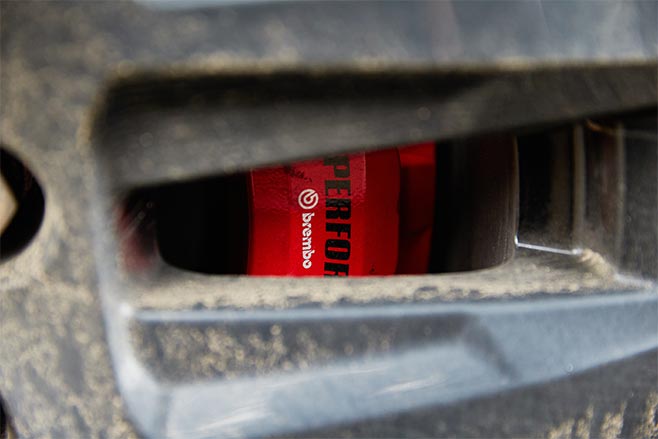
The 2020 1500 sheds 205kg compared to the previous generation thanks to GM’s all-new T1XX platform and dynamically the Silverado impresses with the Proactive Roll Avoidance tech working well. However, unladen there is some scuttle shake, while the suspension can tend to skip over bumps when cornering. Our car was fitted with HSV-tuned suspension, which offered a little more control, but it is yet to be signed off for market. Adding a 325kg ballast to the tub helped settle things down. The optional $5841 Brembo brake upgrade also offers stronger performance and better feel through the pedal. The transfer case is a two-speed, electronic Autotrac unit, while there is also a heavy-duty locking rear differential as part of the all-wheel drive system.
Space inside the cabin is expansive and comfortable, with 10-way power adjustable seats up front (heated and ventilated). Rear legroom is at limo levels, while headroom is more than ample. The back pews can easily handle adults three abreast without rubbing shoulders. There are even handy storage cubby holes in the seat backs, with numerous USB charging points throughout as well as a wireless charging pad.
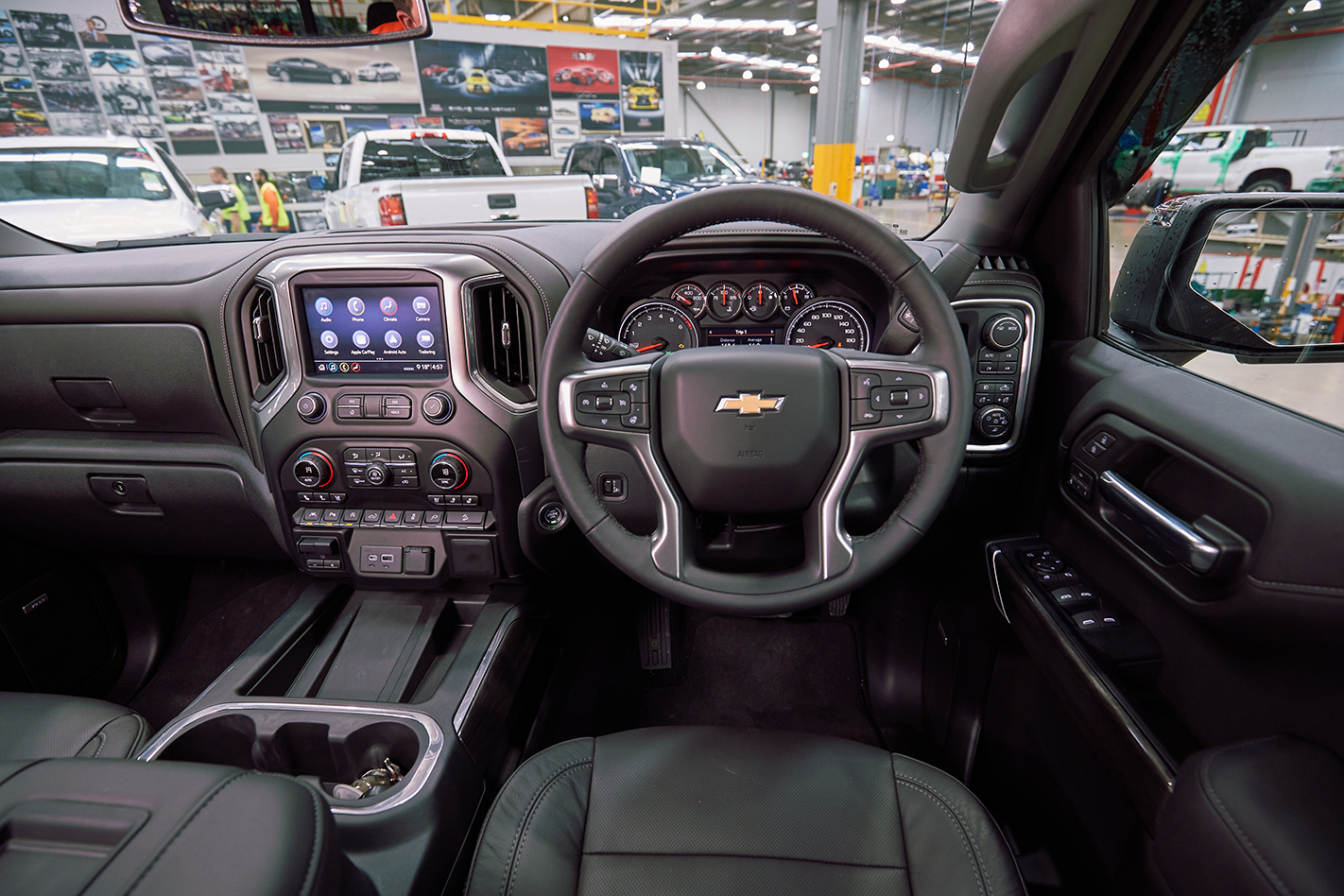
Connectivity is accounted for with Apple CarPlay and Android Auto, displayed on an 8.0-inch touchscreen, and a Bose sound system. The Silverado also gains key safety systems highlighted by adaptive cruise control, AEB and lane-change alert with blind-sport monitoring and rear cross-traffic alert. Active lane keeping isn’t available yet, but HSV is working on calibrating the Chevrolet system for Australian use.
The HSV conversion to right-hand drive is flawless and appears to OEM standards, a sentiment infused throughout the Silverado 1500 experience. The Chevy might not be the biggest pick-up offering or utilise a turbo-diesel powertrain, but it’s got ample muscle and capability to boot. For those that want something beyond an Amarok V6, the Silverado 1500 ticks a lot of boxes. Aussie tastebuds now have an interesting new flavour to savour.
RIVALS
CHEVROLET SILVERADO 1500 LTZ PRICE AND SPECS
- Engine: 6162cc V8, OHV, 16v
- Max power: 313kW @ 5600rpm
- Max torque: 624Nm @4100rpm
- Transmission: 10-speed automatic
- Weight: 2588kg
- 0-100km/h: 5.6sec (estimated)
- Economy: 12.3L/100km
- Price: $110,000 (estimated)
- On sale: Now
Second opinion: 4×4 Australia

4X4: Australia’s guide to the off-road adventure lifestyle.
Mixing in-depth vehicle reviews with off-the-beaten-track adventures and gear tests, 4X4 is all about enjoying Australia’s great outdoors.
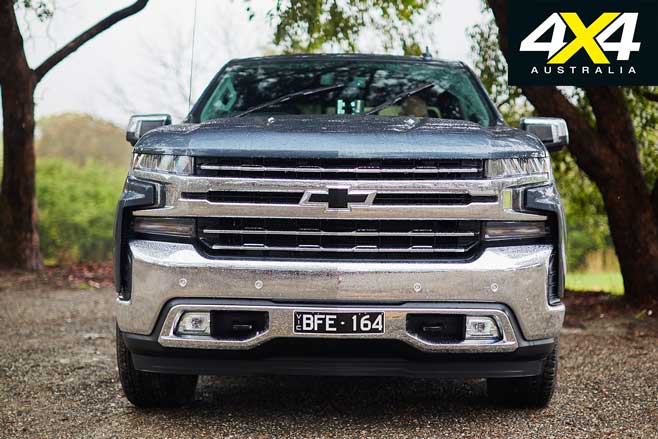
HSV adds the Chevrolet light duty Silverado 1500 LTZ growing range of American pick-up conversions. By: Trent Giunco
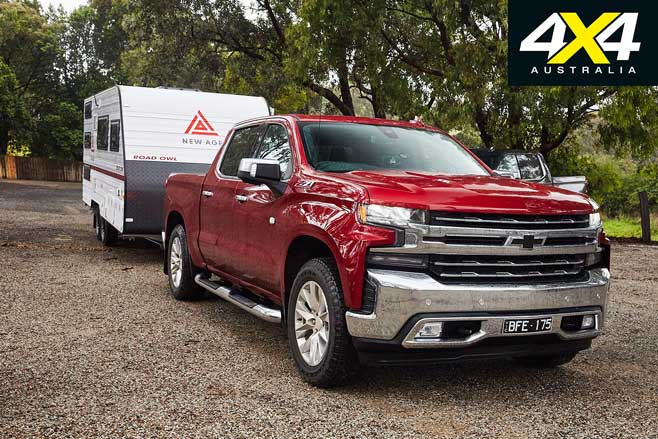
GIVEN most will buy the Silverado to tow and carry things, the key figures you need to know are that it has a 712kg payload and a maximum braked towing capacity of 3500kg using a 50mm ball or 4500kg using a 70mm ball
We found that towing a 2.5-tonne caravan up steep hills isn’t an issue, thanks to plentiful torque, and the automatic even resisted the urge to hunt through its 10 ratios. There is also a handy adjustment in the cabin for the trailer braking, and dedicated apps and cameras specific to towing.
Venture off-road and the Silverado 1500 delivers 235mm of ground clearance, a 21-degree approach angle, 23-degree departure angle and a rampover angle of 20 degrees. The transfer case is a two-speed electronic Autotrac unit, while there’s a heavy-duty locking rear differential as part of the all-wheel drive system.
You can select between four-wheel drive high and low, and two-wheel drive mode. While the dirt section was limited on test and hardly enough to trouble the 1500, constant rain made the track muddy, however the Goodyear Wranglers (275/60R20 all ’round) coped well.
HSV has done the hard yards in its testing which started in late-2018. A team of engineers (a total of 45 worked on the entire project) even took three Silverado 1500s and a caravan to the outback, covering 12,774km over a few weeks. The route even included the revered Gibb River Road, and apart from punctures, all three Silverados stood up to the tough test.
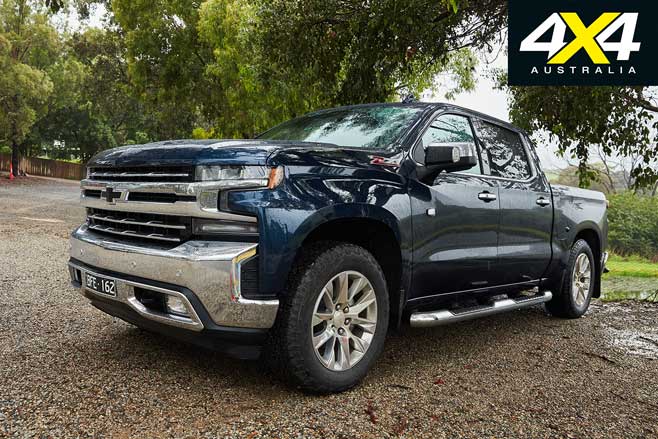
Helpful additions for towing included in the Advanced Trailering Package are hitch guidance with hitch view, integrated trailer brake controller, trailer theft alert and an in-vehicle advanced trailering system.
The HSV conversion to right-hand drive is flawless and appears to OEM standards, a sentiment infused throughout the Silverado 1500 experience. The Chevy might not be the biggest pick-up offering or utilise a turbo-diesel powertrain, but it’s got ample muscle and capability to boot. For those who want something beyond an Amarok V6, the Silverado 1500 ticks a lot of boxes.
CHEVROLET SILVERADO 1500 LTZ SPECS:
- Engine: 6.2L V8 petrol
- Power/Torque: 313kW/624Nm
- Gearbox: 10-speed automatic
- Kerb Weight: 2588kg
- GVM: 3300kg
- Payload: 712kg
- GCM: 7160kg
- Towball Capacity: 4500kg
- Departure angle: 23.0°
- Rampover angle: 20.0°
- Approach angle: 21.0°
- Wading depth: N/A
- Ground clearance: 235mm
- Fuel Tank Capacity: 91 litres
- ADR Fuel Claim: 12.3L/100km
- Price: $110,00 (approx.)
Quick review: MOTOR

Motor focuses exclusively on high-performance cars, offering a heart-stopping, hair-raising blast into the world of prestige and performance culture.
HSV’s 313kW V8 dual-cab not quite the new Maloo
Scott Newman
Here at MOTOR, we’re well used to testing powerful utes from a factory in south-east Melbourne, and the latest offering from the artist-kinda-still-known-as-HSV follows a similar theme. There’s a 6.2-litre naturally aspirated V8 up front grunting out 313kW and 624Nm, though the ability to use either rear- or all-wheel drive is a new trick.
Less familiar (and welcome) is a 2588kg kerb weight and a footprint roughly similar to a city bus. The Chevrolet Silverado 1500 might be the ‘baby’ of the range, but it’s like one of those Samoan rugby-playing families where the runt of the litter is still 6’3” and 110kg. At 5885mm long, 2063mm wide and 1915mm tall, the 1500 dwarfs the typical dual-cab utes currently the darlings of the Aussie buying public.
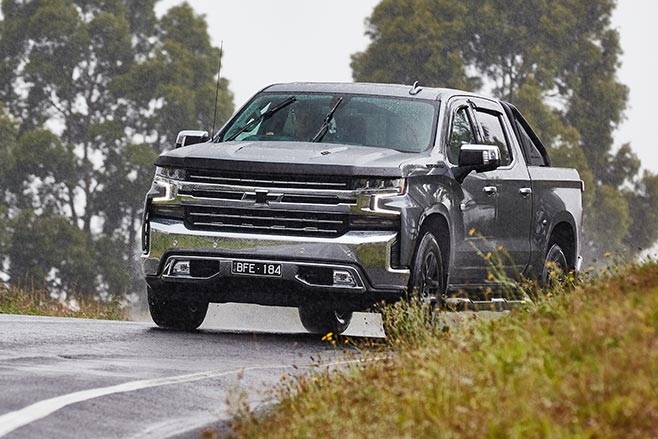
Its size can be a handicap in an urban environment; you’ll need to pick your parking spaces carefully and underground carparks (or tight spaces) are probably off-limits, but its width isn’t a huge problem, still comfortably fitting inside most lane markings. The benefit of the Silverado’s dimensions is a vast interior. That rugby-playing Samoan family could practice line-outs in the back, and the two front seats virtually occupy different postcodes.
Of the many dashboard buttons is a Sport mode, but it merely adds unnecessary weight to the steering, so Normal is the way to go. The 10-speed auto (operated by a massive column-mounted lever) shifts swiftly and smoothly and is a good partner to that atmo V8. It isn’t just a Camaro engine; the L78 is less stressed, redlining at 5700rpm, but doesn’t skimp on outputs with 313kW/624Nm.
The other V8 utes: HSV’s secrest Maloo W1s
It shifts this leviathan with surprising ease. Zero to 100km/h is in the low-6sec bracket, and while it doesn’t necessarily feel quite that quick, it hustles off the line smartly. Sounds good, too, especially with the optional Walkinshaw exhaust ($2990) that adds another 10kW or so into the bargain.
No one is going to expect sports car dynamics from something this size (or they shouldn’t). For what it is, the Silverado is impressive; it’s stable on the highway and goes more or less where you point it when the road curves. The 275/60 Goodyear all-terrain tyres don’t offer masses of grip, but there’s decent balance. The ESP defaults back on over 60km/h, which is sensible but a slight killjoy in something with this much power and wheelbase.
We drove the Silverado 1500 as there are plenty of reports frothing about the idea of a V8-powered dual-cab and this was a chance to test the concept. It has merit, as while this giant Chevy is no performance car, it sounds good, has masses of space and can tow anything this side of the QE2. As long as you can afford to buy it (from $113,990) and fuel it (we averaged 21.2L/100km over 300km) it’s worth a look.
Like: Honest performance; generous interior space; noise; presence; practicality
Dislike: Not really a performance motor; absolutely enormous; thirsty; bit pricey
2020 Chevrolet Silverado 1500 specs
- Engine 6162cc V8, OHV, 16v
- Power 313kW @ 5600rpm
- Torque 624Nm @ 4100rpm
- 0-100km/h 6.5sec (estimate)
- Weight 2588kg
- Price $113,990
What stands out?
The Mitsubishi Triton feels nearly as refined as a good SUV, and for a ute it is easy to drive in town. Its diesel engine is modern and easy on fuel, and all Tritons are strong on safety, with autonomous emergency braking standard in most Double Cab versions.
What might bug me?
That friends with other utes can carry and tow bigger loads more comfortably. The Triton feels less stable than most utes when loaded to its maximum rated capacity.
What body styles are there?
Most Tritons are four-door, five-seat Double Cabs. However, Single Cabs (with two doors and two seats) are also offered. In between is a Club Cab model that has two folding seats in the rear of its stretched single cabin, accessed via small rear-hinged doors that open only if the front doors are open.This review focuses only on the Double Cab pick-up (ute) versions that are most popular with private buyers. Our Mitsubishi Triton landing page includes pricing and features of all variants including Single- and Club-Cab and cab-chassis versions.Most Tritons come with part-time, dual-range four-wheel drive: on sealed roads they drive the rear wheels only, but you can select 4WD for slippery unsealed roads and tracks. The more expensive GLS Tritons have a more sophisticated system that retains every advantage of the part-time version but allows you to use 4WD all the time.A few Triton models come with rear-wheel drive only.The Triton is classified as a light commercial pick up.
What features do all Double Cab Tritons have?
An MP3 and iPod compatible sound system with an AM/FM radio, Bluetooth connectivity for phone calls and audio streaming, voice control, and six speakers.A 6.1-inch or bigger colour touchscreen, and reversing camera.Rear-parking sensors, cruise control, and auto-dimming rear-view mirror.Keyless entry, auto on-off and dusk-sensing headlights, and rain-sensing windscreen wipers.Tilt and reach steering wheel adjustment, which makes it easier for the driver to get comfortable, and controls on the wheel for operating your phone, the sound system, and the cruise control (standard on all Tritons).Seven airbags: two directly in front of the driver and front passenger; one alongside each front occupant to protect the upper body; a curtain airbag along each side to protect the heads of front and rear occupants; and an airbag in front of the driver’s knee to help prevent leg injuries.Electronic Stability Control, which helps prevent the car from skidding out of control. This is mandatory on all passenger cars but not on light commercial vehicles like the Triton.Electronic Traction Control, which helps the car maintain drive on slippery surfaces, and is especially helpful with the four-wheel drive models in difficult going.Trailer-sway control, which helps to stabilize the car if the trailer starts to sway from side to side; and Hill-start control, which prevents the car rolling back when you are starting on a hill.Full-sized spare wheel.All Tritons come with a five-year, 100,000km warranty and capped-priced servicing.
Which engine uses least fuel, and why wouldn’t I choose it?
All Double Cab Tritons are powered by a 2.4-litre four-cylinder turbo diesel. It is a very modern design that performs well for its relatively small capacity, and feels smooth and refined.Fuel economy is a strong point and ranges from 7.9 litres/100km in the manual-gearbox, 4WD single cab, to 8.6 litres/100km in automatic 4WD double-cabs – at least in the official test. Expect to use about 15 to 20 per cent more in the real world.Both six-speed manual and six-speed automatic gearboxes are used with the diesel, and all but one drives all four wheels. The cheapest Triton Double Cab, is the exception and comes with 2WD and the automatic transmission.
What key features do I get if I spend more?
The least expensive dual-cab Triton is the GLX with 2WD, with the Advanced Driver Assist and Safety (ADAS) package, which for about $800 adds lane departure warning and autonomous emergency braking.Spending more will bring you a GLX with 4WD, with or without the ADAS package.GLX Tritons have vinyl floors, cloth seats, manually controlled air-conditioning, a CD player, and steel 16-inch wheels including the spare.Spend some more for a GLX+ and you get 4WD and the ADAS package as standard, aircon that maintains a set temperature, and nicer looking wheels made from aluminium alloy. You lose the CD-player but gain Apple CarPlay and Android Auto that make it easier to stream music and use your phone’s navigation apps easier. The infotainment screen grows to 7.0-inches.Pay more again for a Triton GLS and you get a lot of extra stuff. Perhaps the most important enhancement is Mitsubishi’s Super Select 2 4WD system, which allows you to use 4WD even on sealed roads. You also get additional active safety features including blind-sport warning, rear-cross traffic alert, automatic high beam, and lane change assist. The GLS also comes with hill descent control that automatically controls the brakes when negotiating tricky descents when off road.Inside a Triton GLS there is a leather-trimmed steering wheel, carpet on the floor. Dual-zone air-conditioning lets the driver and front-seat passenger set their desired cabin temperatures independently. Externally, the GLS has more effective HID headlamps, fog-lights, and the distinctive look of LED daytime running lamps. And the wheel size rises to a flashier 18 inches, including the alloy spare wheel.The most expensive Triton, the GLS Premium, comes only with auto transmission. It has, surround view parking camera display, keyless start and smart keyless entry that unlocks the doors without having to take the key fob from your bag. It also comes with leather seat trim, heated front seats, and power adjustment for the driver’s seat. And it has the lockable rear differential for superior off-road traction.
Does any upgrade have a down side?
The better equipped GLX+, GLS and GLS Premium Tritons do more with your smartphone but lose the GLX’s CD player.Only white and red are standard colours. All other colours are an extra cost option.
How comfortable is the Triton?
This Triton brings a luxurious feel to the cabin that’s similar to comparably equipped SUVs. Key points include comfortable, roomy seats, and a steering wheel adjustable for tilt and reach.The Triton is also as easy to drive as a typical passenger car, and while it’s still a good deal longer than any car it has a much better turning circle than any similar ute. This is because it has a shorter wheelbase (the distance between the front and rear axles) than its competitors.The engine has plenty of power and is also quiet and refined, as diesels go.Like all utes, the ride can be bouncy and uncomfortable on rough roads when there’s no load in the tub or tray.
What about safety in a Triton?
All Triton Double Cabs have seven airbags and the security of electronic stability control.All Triton Double Cabs have a reversing camera as standard and all but the GLX feature lane departure warning, and autonomous emergency braking, which Mitsubishi calls Forward Collision Mitigation (FCM).FCM sounds a warning when it detects a potential collision with another vehicle or pedestrian. If the driver doesn’t take action it automatically applies the brakes to prevent or minimise impact.The GLS and GLS Premium Tritons also feature blind-sport warning, rear-cross traffic alert, automatic high beam, and lane change assist. They also feature hill descent control that automatically controls the brakes when negotiating tricky descents when off road, to help you concentrate on steering around obstacles.The Triton GLS and GLS Premium can use four-wheel drive on sealed surfaces, aiding traction and stability when it’s wet and thus improving safety – particularly when towing.The Australasian New Car Assessment Program (ANCAP) awarded all Tritons five stars for safety, in April 2015.
I like driving – will I enjoy this car?
Utes are not designed as driver’s cars but the Triton is better to drive than most other utes. It is lighter than most and has a sporty feel, and steering precision generally not associated with multi-role utes of this sort.The Triton isn’t a performance ute and there are others with more power, but it is not often that you wish it had more power.Four-wheel-drive Tritons are also good off-road, although here the short wheelbase increases rear overhang, which can be a problem in some off-road situations. The Triton GLX+, GLS and GLS Premium versions are equipped with a rear differential lock which makes them more capable in difficult going.
How is life in the rear seats?
The rear seat of Double-Cab Tritons is not as wide as those in some alternatives, such as the Ford Ranger, Mazda BT-50 or the Volkswagen Amarok. However, leg room is good and the Triton’s seat back is angled further rearwards, so that you don’t feel like you are sitting too upright (as you do in the rear of many utes).Aside from the width of the seat, the Triton Double Cabs are comparable for rear passenger comfort with many mid-sized, off-road capable 4WD wagons.
How is it for carrying stuff, and for towing?
Good, of course – It’s a ute. And the Triton is also suited to towing.Legally, a Triton is rated to carry a bit less than most other utes. Even so, the Triton with the least capacity – the GLS Premium double cab – can accept 740kg in the tray (37 bags of cement) and a driver and passenger.In practice, hauling that much weight in the tray of a Double Cab Triton is a mixed bag. The powerful diesel engine has no trouble getting you along, but the ute sags at the rear noticeably when loaded to its maximum capacity.As well, the tub on Double Cab Tritons overhangs the rear axle more than is the case on other utes. That means most of the extra weight from a load is placed behind the axle. As a result, a heavy load lightens the steering and leaves the Triton feeling less stable to drive.Single Cab and Club Cab Tritons are better at carrying very heavy loads, because the weight can be located further forward.The story is similar when you use a Triton for towing. Four-wheel-drive Tritons are legally rated to tow a braked trailer weighing 3000 or 3100kg. That is less than other utes, most of which can tow up to 3500kg, but still plenty for a 20-foot tandem-axle road caravan, or a double-horse float with two big horses on board.In practice, the engine copes well enough with a trailer this heavy but again the Triton chassis sags at the rear and feels better suited to towing a little less.On the plus side, the Triton GLS and GLS Premium’s full-time 4WD system gives it a notable advantage over most other utes when carrying or towing on wet and slippery bitumen roads. Most utes can drive only their rear wheels on normal roads.In any ute, extreme care should be taken when carrying or towing big loads.
Where does Mitsubishi make the Triton?
All Australian-delivered Mitsubishi Tritons are made in Thailand.
What might I miss that similar cars have?
Utes such as the Ford Ranger, Mazda BT-50 and Volkswagen Amarok have a wider and generally bigger cabin.Utes with bigger engines, such as the Ranger and BT-50, also offer more performance. Some utes have a higher towing capacity.Some utes have more ratios in their auto gearboxes than the Triton’s six, which means their engines spend more time where they run most sweetly. For example, the Nissan Navara has a seven-speed auto the Amarok an eight-speed auto, and the Ford Ranger is available with a 10-speed transmission.The Ranger also offers active cruise control on the more expensive versions, as an extra-cost option. It will match the slower speed of a car in front on the highway until you are ready to overtake.Some utes – among them the Ranger and Holden Colorado – offer a collision alert, which monitors the road ahead and will warn you of obstacles (for example, a vehicle ahead that has slowed suddenly).The most expensive Navara, the ST-X Dual-Cab, has a powered sunroof option.You could also look at the Isuzu D-Max.
Are there plans to update the Triton soon?
This Triton arrived as an all-new model about the middle of 2015. It won’t be replaced for while yet.About January 2017 the less costly versions gained a touchscreen and (in Double Cabs) reversing camera, and the GLS and Exceed were fitted with a bigger touchscreen that can display apps from your smartphone.The Triton received a dramatic facelift at the end of 2018 for the 2019 model year. This included a new ‘Dynamic Shield’ front end design giving it a more aggressive look in keeping with its rivals. It also received an technology boost with a number of versions gaining autonomous emergency breaking with pedestrian assist as standard. The range-topping Triton Exceed was replaced with the GLS Premium, which gained additional active safety features.Mitsubishi made some slight changes in October 2019 for the 2020 model year, including making standard rear differential lock standard equipment in the GLX+ and GLS variants as well as the GLS Premium. An Off-Road mode selector with ‘Gravel’, ‘Mud/Snow’, ‘Sand’ and ‘Rock’ settings was also added to the GLS and GLS Premium Tritons equipped with Super-Select 4WD-II.Don’t expect any significant updates until 2021, though Mitsubishi will most likely introduce special edition versions with extra features.
I like this car, but I can’t choose which version. Can you help?
The GLS auto is very well specified for the money and would make a very practical but comfortable family vehicle.
Dominic Toretto’s Lego ’77 Dodge Charger R/T
$180 lego.com
For those that live their life one iconic Lego project at a time, this 1077-piece set rebuilds Dom Toretto’s Dodge Charger from The Fast and the Furious in impressive detail.
MINI 60 Years book
$55 pitstop.net.au
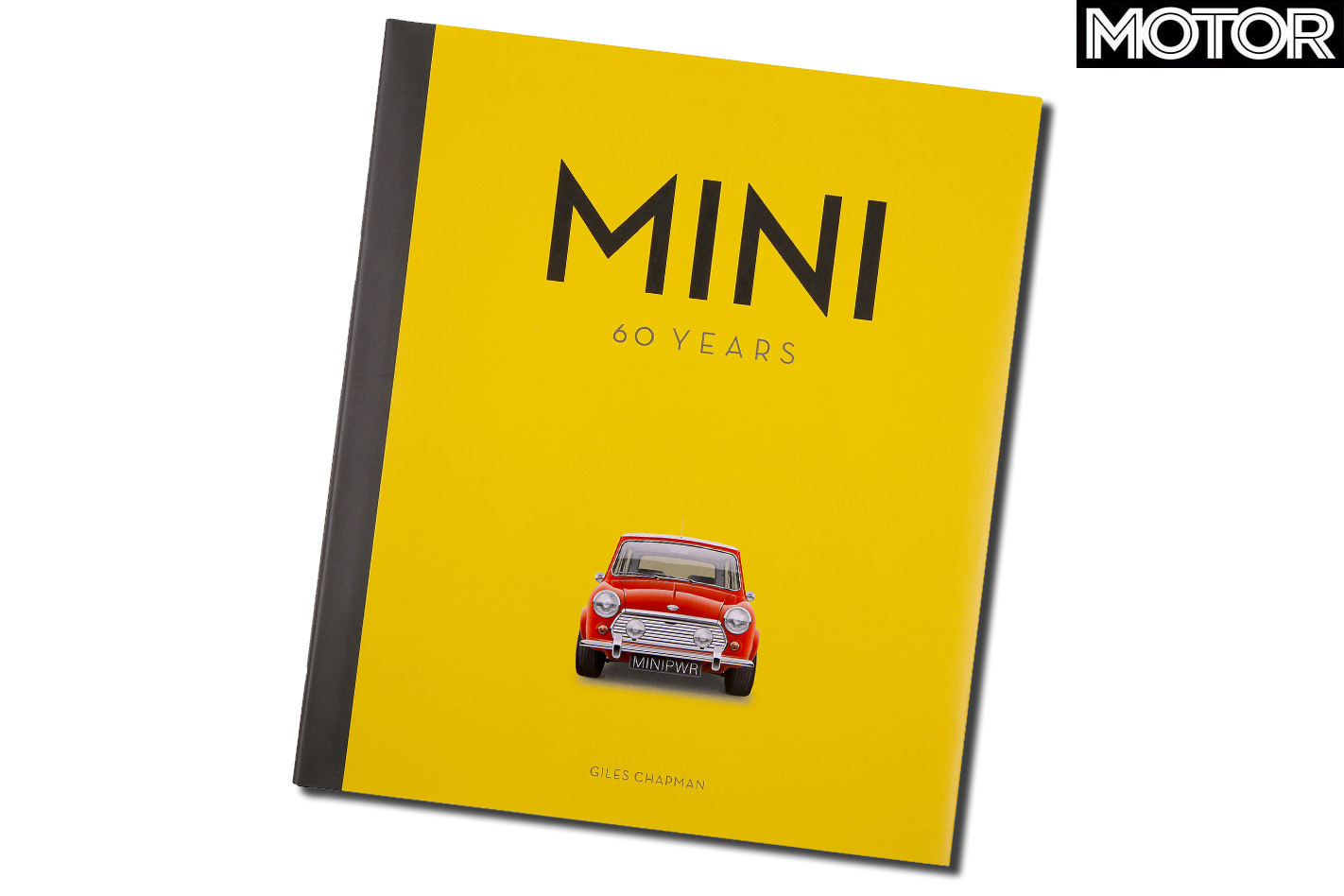
With a muscled-up JCW GP inbound, brush up on the history of Sir Alec Issigonis’s legendary creation, right back to 1959. Hardback and 176 pages, includes period black-and-white imagery.
RYOBI Buffer
$119 ryobi.com.au
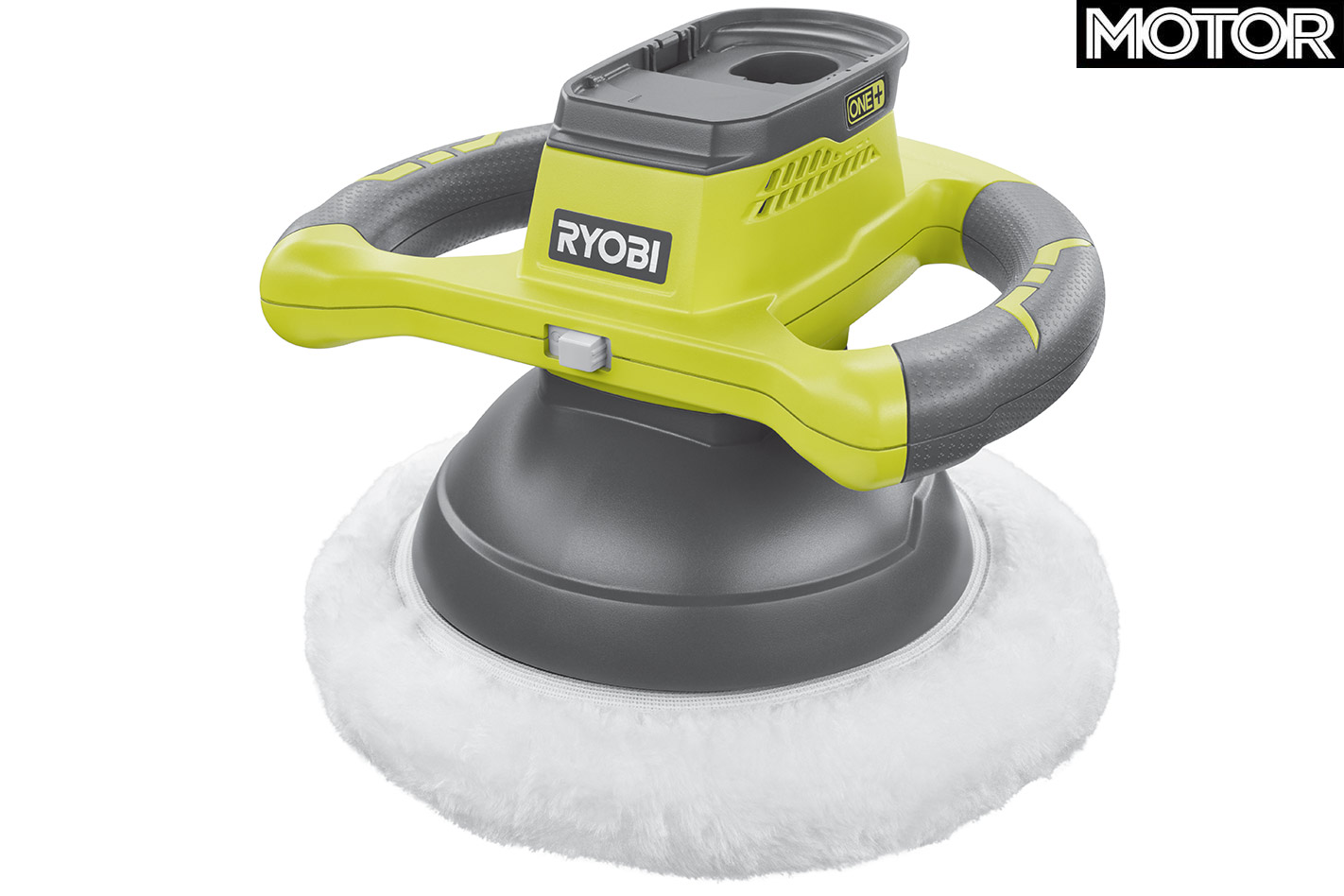
Restore your paint with this 10-inch, cordless random orbital buffer and polisher. Easily swappable battery good for 1.5 hours. Includes two reusable/washable buffing bonnets. Suitable for amateur detailers.
Continental SportContact 6 Tyre
$315 jaxtyres.com.au
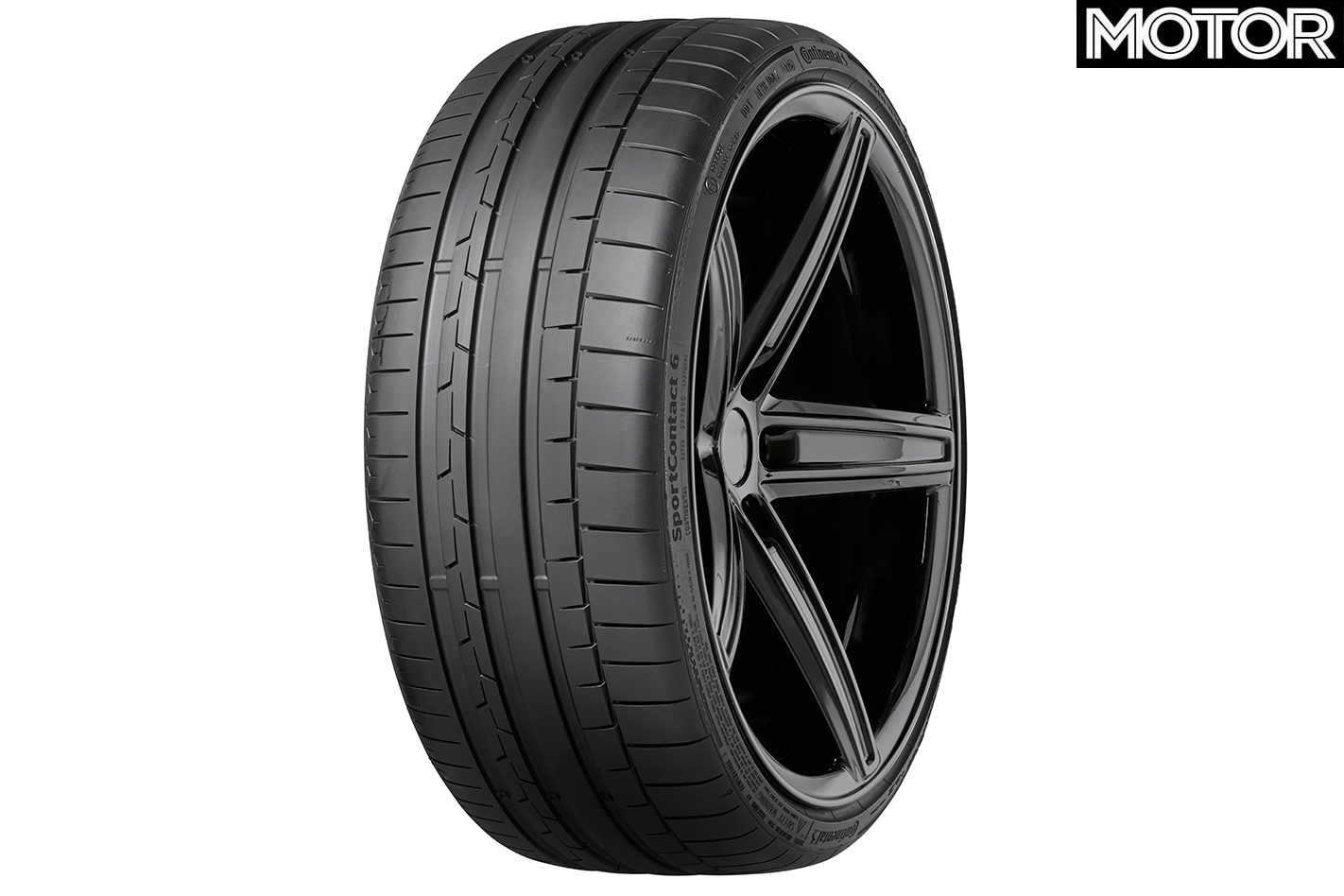
When Continental’s all-weather performance tyre is good enough for a Honda Civic Type R, it’s good enough for us. Price indicates one 235/35 ZR19 tyre. Also available in 20- and 21-inch fitments.
S55 Downpipe Kit
$1880 tunehouse.com.au
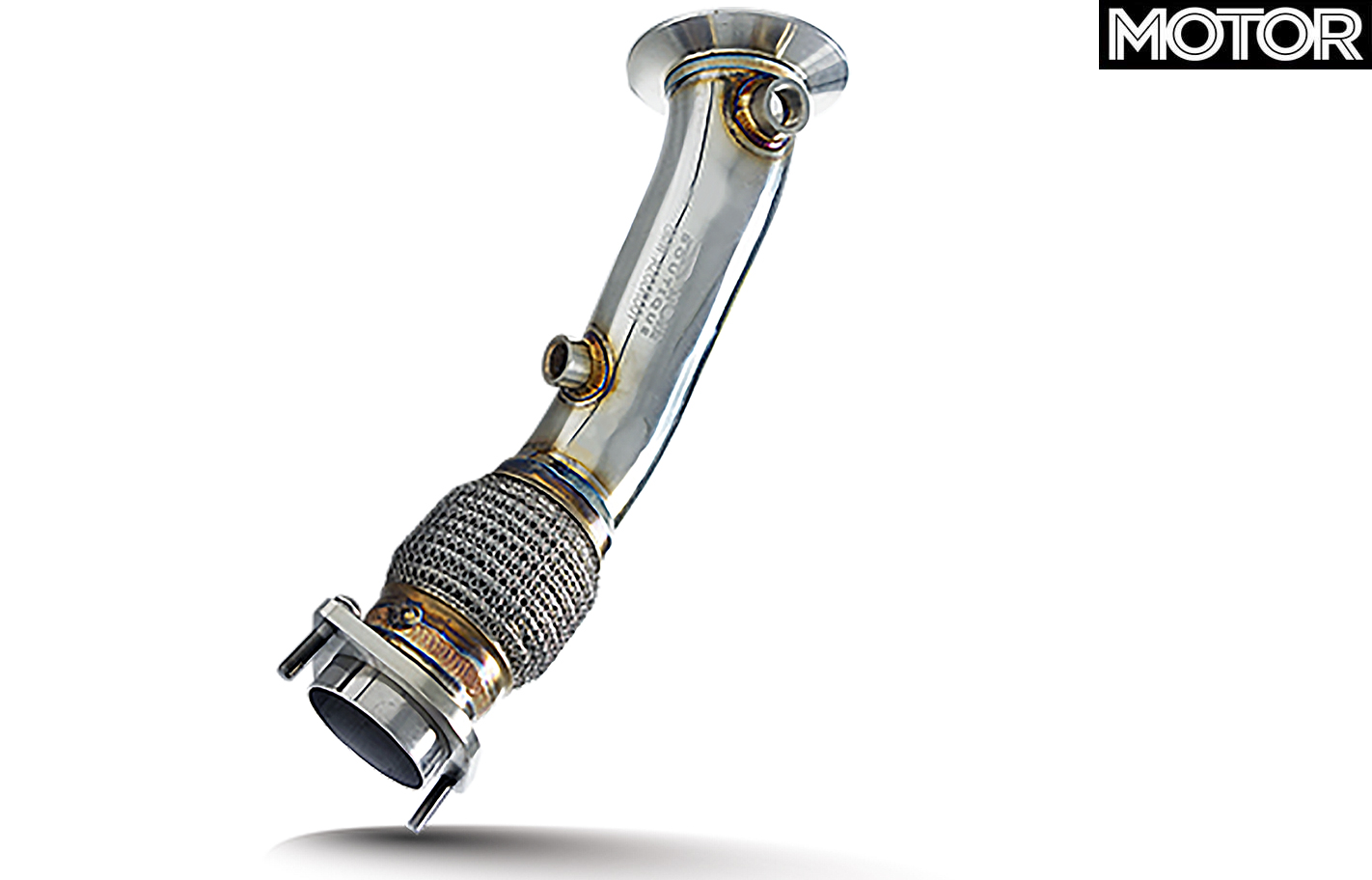
Clear restrictions in your M2 Competition’s exhaust like, erm, a catalytic converter with this (track-use only) twin-turbo downpipe kit from Stone exhausts. Good for a 9kW power bump.
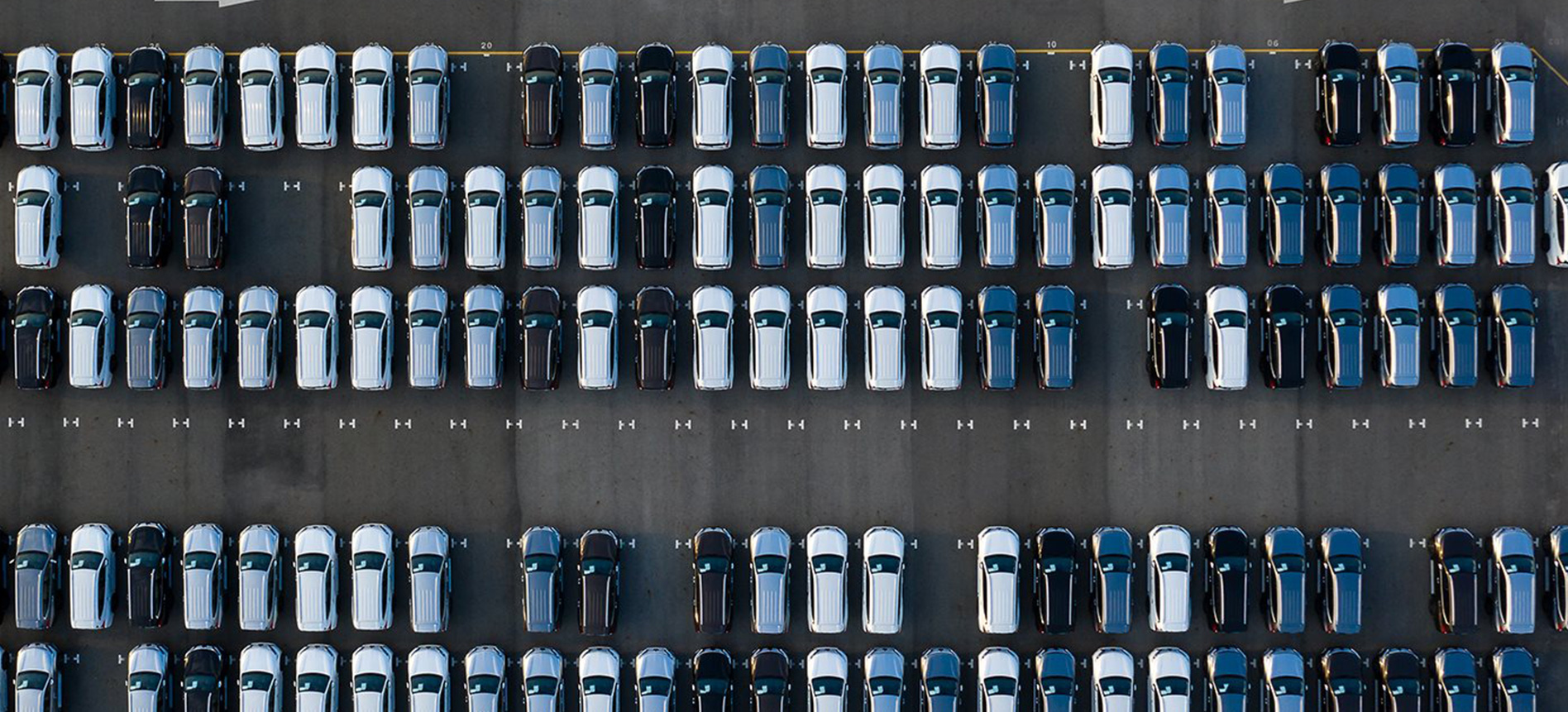
Last month’s Australian new car sales plummeted almost 50 percent compared with the same period last year – the single worst decline in new car sales ever recorded by the Federal Chamber of Automotive Industries (FCAI).
Year-to-date sales are down 20.9 percent on last year and, while the FCAI is showing “cautious optimism” of better times ahead after restrictions ease, the Australian car industry, which employs upwards of 65,000 people, still hangs in the balance.

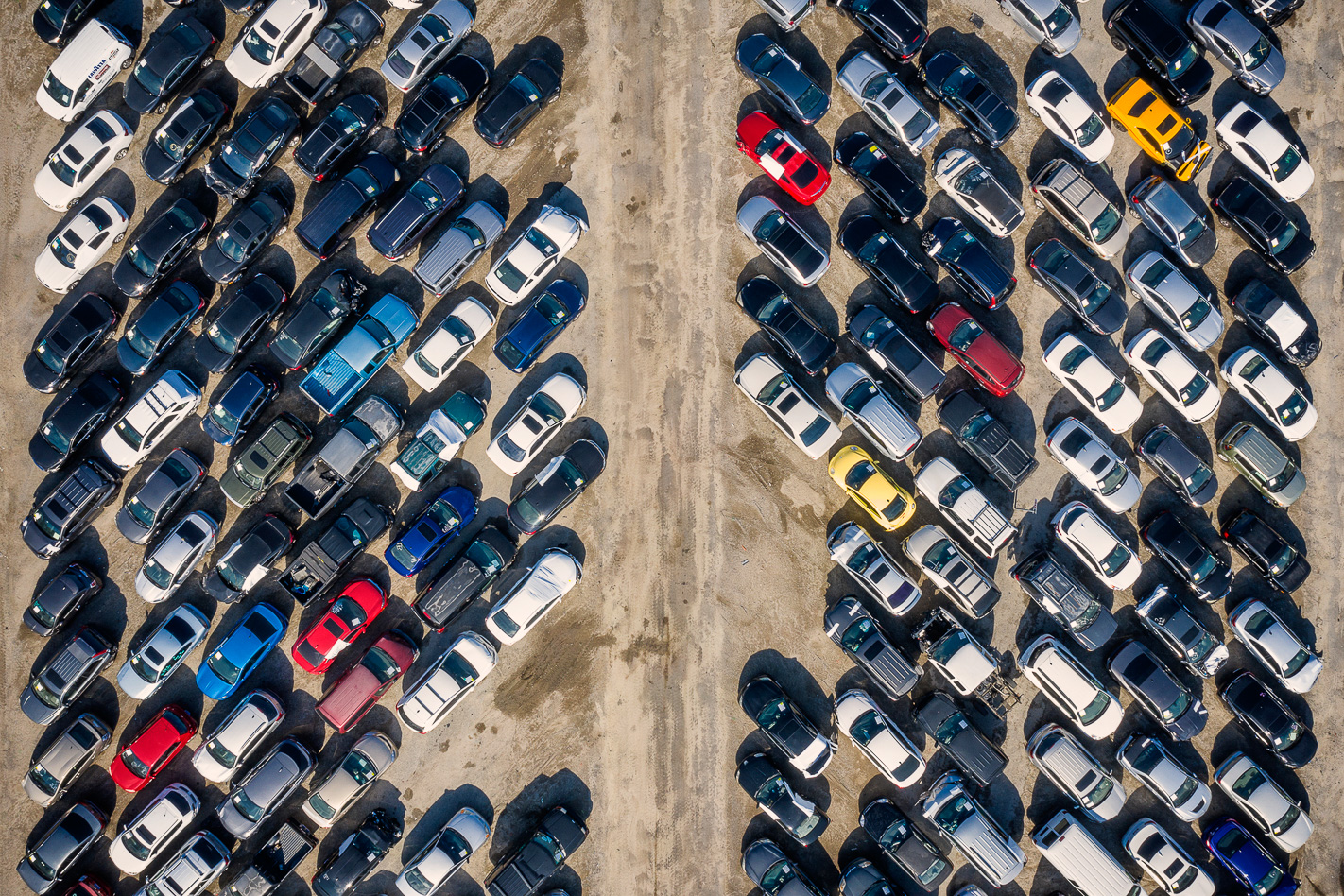
Of course, it’s not just Australia that’s experiencing massive downturns in new car sales. European sales fell a whopping 76.3 percent year-on-year in April, which has led to UK car industry bosses calling for change.
The British automotive industry is putting an increasing amount of pressure on the UK government to provide a stimulus to get sales back to where they should be.
Ford of Britain boss Andy Barratt told ITV News that stimulus package may take the form of ‘cash for clunker’ scheme in which car buyers are given incentives to scrap their old car, in favour of a grant towards a new, more economical and efficient car.
“Without a doubt, some sort of stimulus is really needed to get the car business moving in the UK,” said Barratt.
International solutions
It’s not a new idea for the UK, which first introduced a similar scheme a decade ago, handing out £2,000 (A$3736) payments at a cost of £300,000,000 (A$558,758,789) to the government. That time, it was to refresh the national carpark with cleaner, safer cars.

A cash for clunker-type scheme was also floated in Australia around the same time by then Prime Minister, Julia Gillard. The aim was to reduce carbon emissions by supplying buyers with a $2000 credit towards a new, more efficient car.
Now though, the strategy is being repurposed to stimulate spending in the car market rather than cutting down on emissions.
Asked about the viability of such a scheme being introduced in Australia, FCAI director of public affairs Lenore Fletcher said the ‘cash for clunkers’ idea has been discussed locally.
“[The FCAI] has been very active in this time in terms of continuing engagement with dealers and the government, and there’s been a lot of discussion about what could happen in terms of stimulation during this period. That [cash for clunker scheme] is certainly one that has come up.”
“A ‘cash for clunkers’ scheme is something that we would support but more detail is needed. We’re certainly willing to discuss that with authorities.”
First and foremost though, the FCAI says its most interested in simply getting people back through the dealership doors.
“There’s been lots of discussion with members and the chamber itself, the key point is prioritising health issues and ensuring consumer confidence is boosted.”
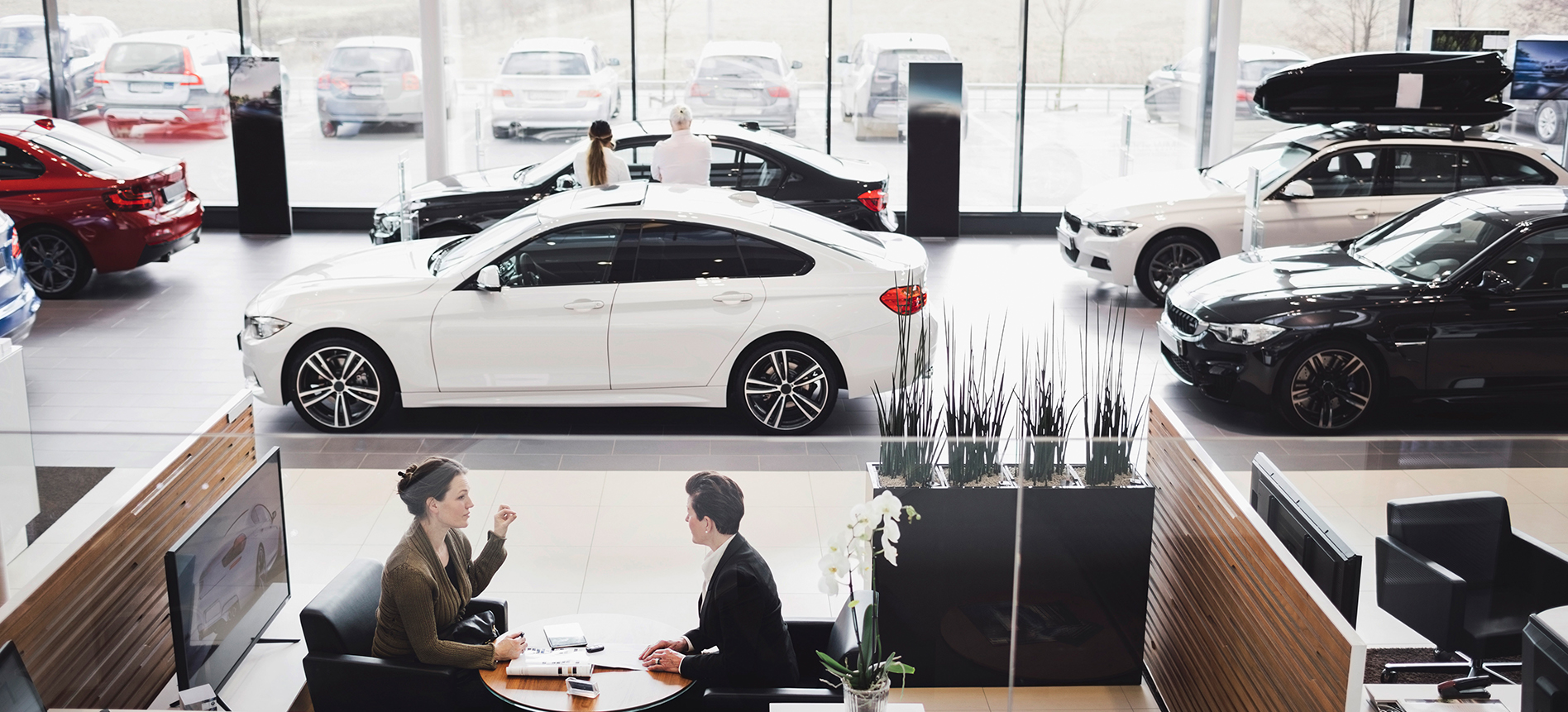
Restrictions on mobility were the main concerns of consumers, but now things are easing the FCAI is also hoping incentives like the instant asset write off package will get people back into showrooms.
“It’s encouraging [that Australia] has taken care of the COVID-19 health crisis well in comparison to a lot of other countries and we’re not sure how long things will take to fully improve but we’re showing cautious optimism going forward.”
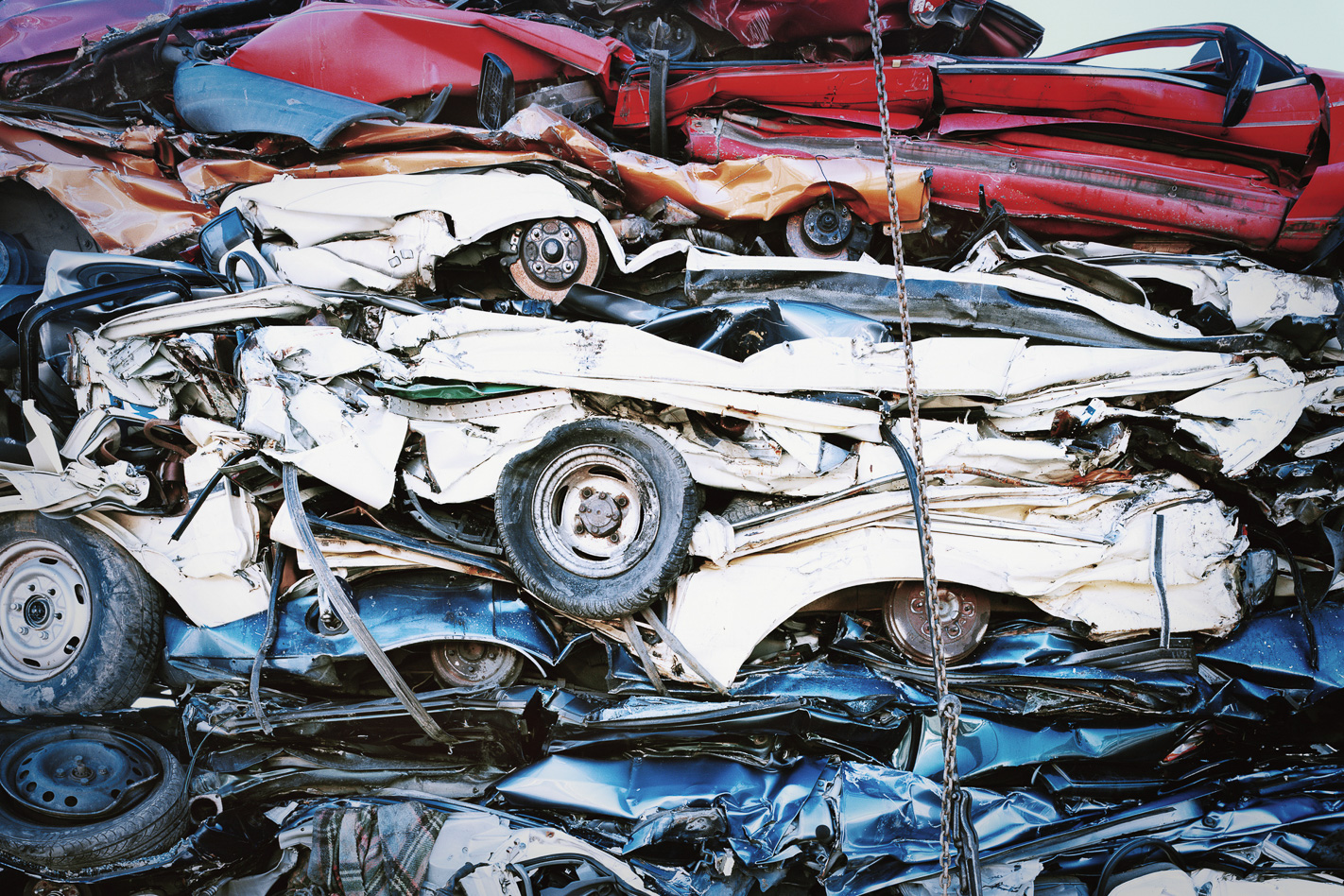
It is understood that India too, is in the midst of organising a scrappage scheme, aimed at ridding its roads of polluting cars by scrapping instead of heaping old, tired vehicles back into the used car market. India’s used cars generally have extremely low resale values, so the government would step in and provide a payment in order to assist buyers.
If nothing else, a similar scheme could go a long way toward improving things locally. Hopefully last month’s nightmare sales result was the lowest point and we’re on our way back up for the remainder of 2020.
If you’ve got a few dollars, around $1.6 million, to spare, you could own something like this – the Nissan GT-R50 by Italdesign.
The version pictured is the first production version of the car to be built, after a long period of relative silence on the project. Revealed in early-mid 2018 with proper details emerging in late 2018 and early 2019, the last 12 months or so have been quiet in terms of GT-R50 news.
But here, in the above gallery, is the first of the production models, so far the only time the car has been seen in anything other than its dark, gold-accented hero car in the real world, which made a dynamic debut at Goodwood in 2018. Nissan also released imagery of a rendered car in blue with gold trim.
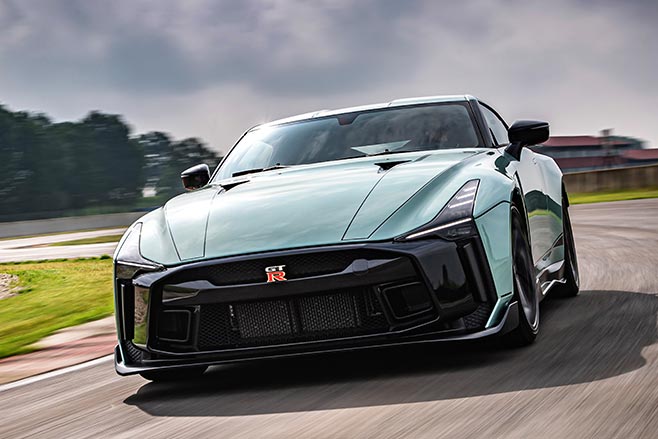
The R35-based car is a collaboration between Nissan and Italian styling firm Italdesign, though it’s still unclear which of the two penned the sleek exterior and gave the car a new look. Nissan also upgraded the car mechanically, as it now makes 89kW more than the Nismo version of the GT-R it is based on.
Gallery: Nissan R35 GT-R exploring Tokyo
Chassis upgrades such as revised Bilstein suspension were implemented, and drivetrain improvements were key in handling the extra power.
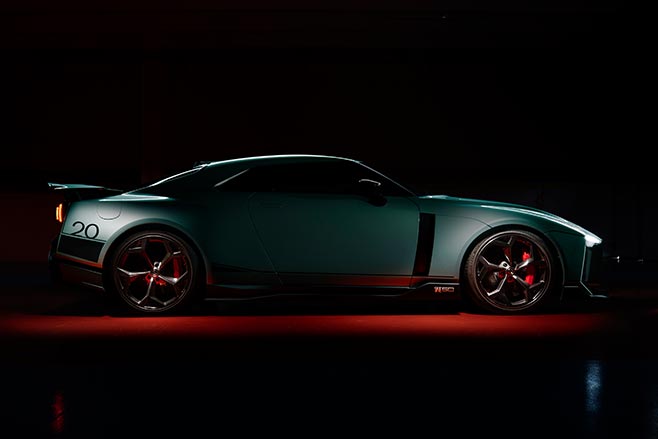
Nissan GT-R50 by Italdesign specs
BODY: 2-door, 4-seat coupe DRIVE: all-wheel ENGINE: 3799cc V6, DOHC, 24v, twin-turbo BORE/STROKE: 95.5mm x 88.4mm POWER: 530kW TORQUE: 780Nm WEIGHT: 1700kg (estimate) TRANSMISSION: 6-speed dual-clutch L/W/h: 4700/1905/1365mm PRICE: AUD$1,567,000
