
Pop quiz: what are some of Australia’s greatest touring cars?
It’s a question that has probably brought a handful of iconic racers to front of mind.
Maybe you went straight to Jamie Whincup’s ‘Kate’ VE Commodore, Dick Johnson Racing’s litany of fast Fords, Peter Brock’s ‘Last of the Big Bangers’ VK Commodore or A9X Torana, perhaps even the legendary and feared Gibson Motorsport R32 Nissan GT-R.
What isn’t likely to have been conjured up is the JPS-liveried BMW 635 CSi Group A racer wielded by the web-footed Jim Richards in 1985.
But, that’s a shame, because the car you see before you is that exact vehicle, and it is undoubtedly among the pantheon of racing royalty in Australia, and is now for sale via the V8 Sleuth.
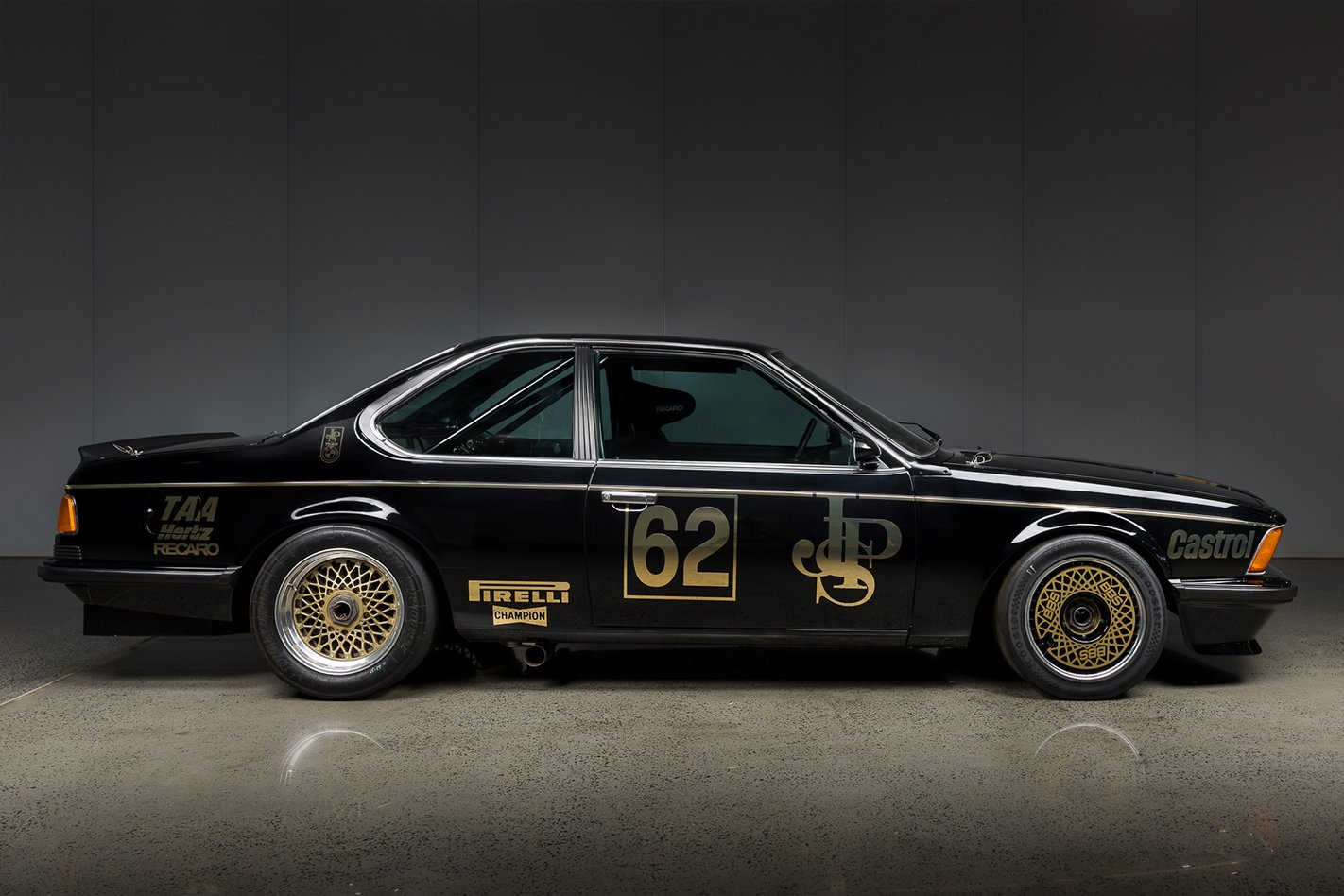
One of the most significant feats achieved by the chassis is a trio of championship crowns in 1985 – the Australian Touring Car Championship (what we eventually became to know as Supercars), Australian Endurance Championship, and AMSCAR Series.
The V8 Sleuth has a full rundown on the car’s significance, but here are the quick highlights.
Run by Frank Gardner, the JPS BMW ran as #62 and across the three series it competed in, racing 21 times in ’85 – winning 17 times, and only finishing outside the top five once.

Price is ‘POA’, which can be read as ‘rather expensive’. While the final sale price might not match the lofty heights of something like the Brock/Moffatt VK Commodore which came onto the market recently, it isn’t going to be cheap.
With a strong heritage, the current owner Adrian Brady has put the necessary time and love into restoring the car when he bought it in 2006.
The chassis has undergone a “total nut and bolt restoration” according to Brady, who also told the V8 Sleuth the process took two and a half years.
While the Group A racer is worthy of centre stage in a museum, we here at Wheels HQ hope the new owners continue to drive the JPS-liveried beast on racetracks around the country – even if it is just for parade laps.
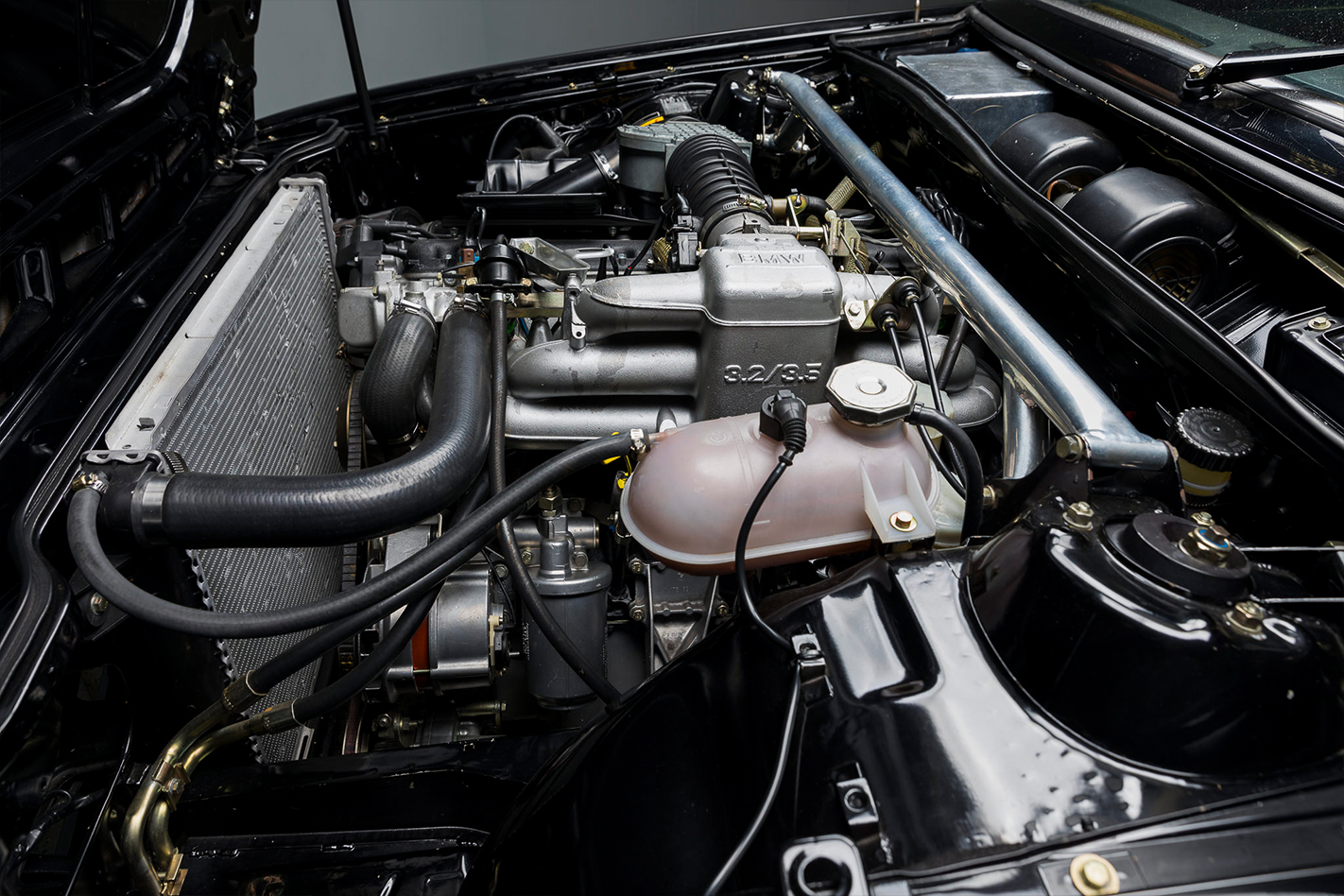
Did you know that Mercedes-Benz once built a small batch of custom S-Class wagons with a giant-V12 engine that was shared with a limited-edition Pagani Zonda? Us neither.
But, that’s exactly what they did in the late ‘90s, when the Sultan of Brunei – the head of state of the oil-rich nation and serial car collector – placed an order for fifteen of the original S73 T AMGs from Affalterbach.
TheDrive has done some digging on these custom mega-wagons and uncovered some very interesting nuggets of information.
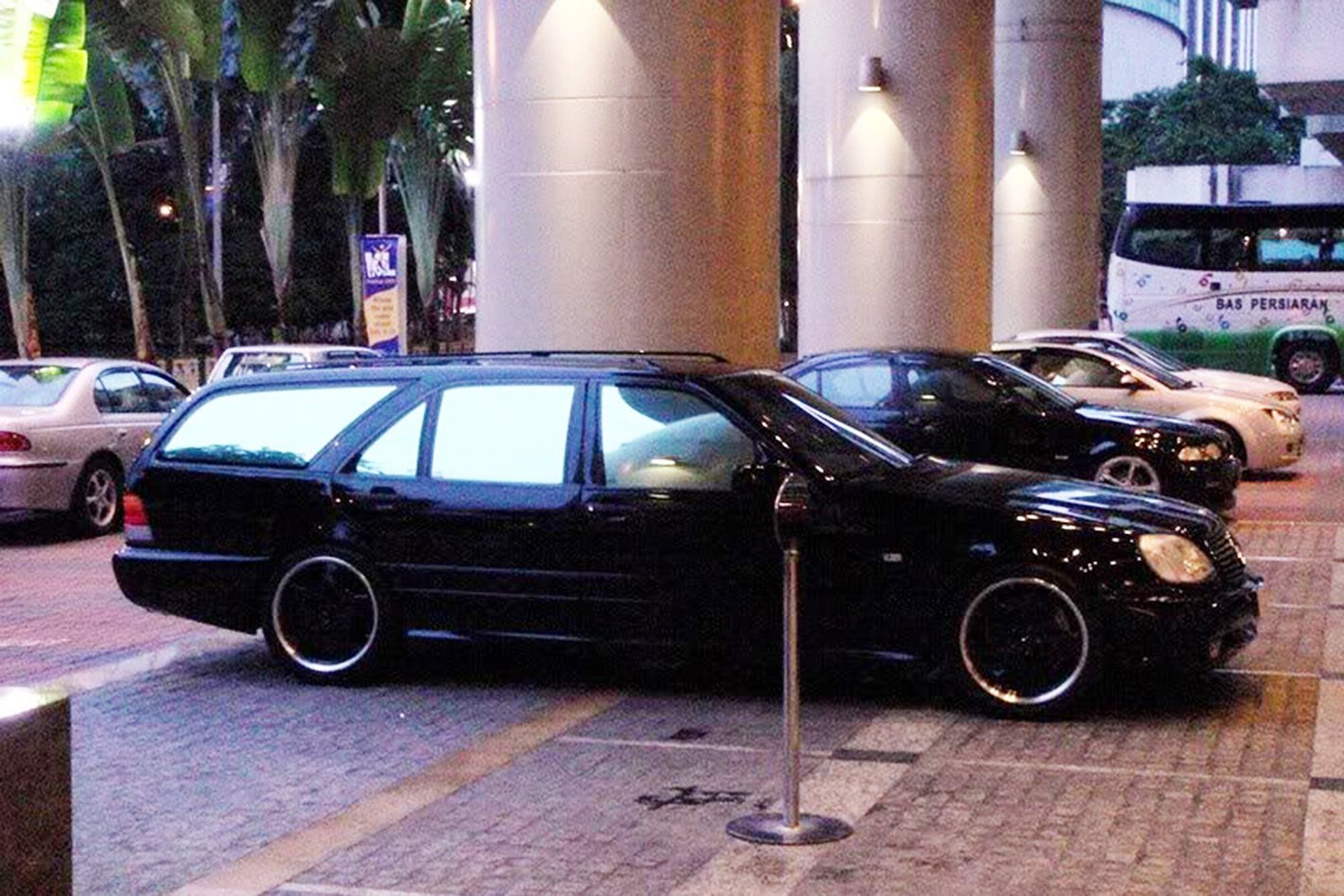
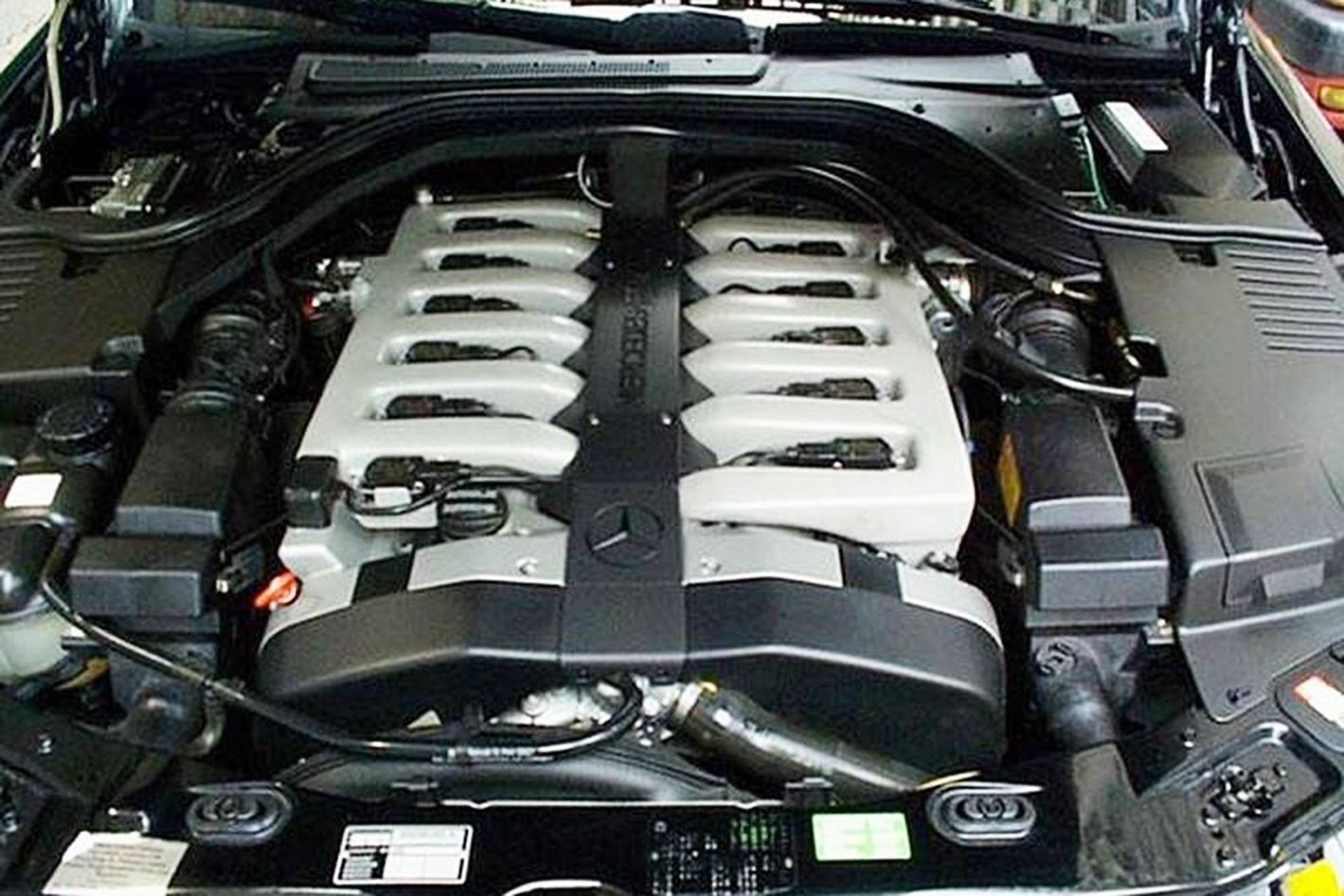
The S73 T AMG is the only-long roof to wear the S-Class badge, but is certainly more than worthy, thanks to the monstrous engine slotted under the bonnet.
The hand-built 48-valve M120 V12 engine originally had a 6.0-litre capacity, but for the S73 T this was bored out to 7.3-litres, good for an estimated 421kW and 740Nm fed through a five-speed automatic gearbox.
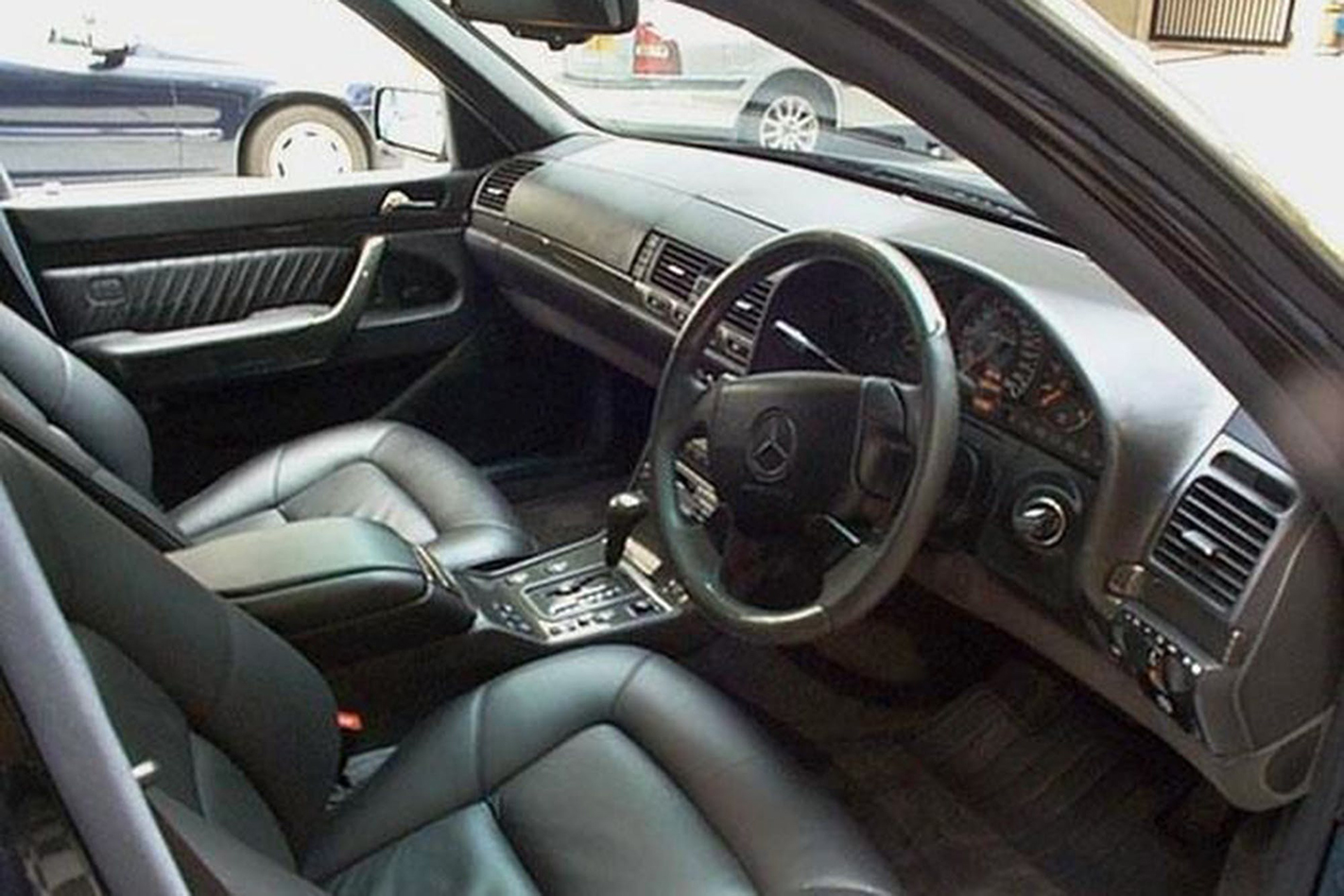
Power was sent exclusively to the rear wheels, and the S73 T was able to haul ass to the tune of 300km/h+.
The Pagani Zonda S 7.3 would later be sold with the same engine.
Starting life as a W140 S-Class sedan, Mercedes-Benz grafted a 600SEC coupe front end onto the nose, and custom wagon sheet metal and glass to the rear, to create the sleek styling.
Other tweaks for the S73 T included AMG specific suspension, 19-inch monobloc wheels, upgraded brakes and a sport exhaust.
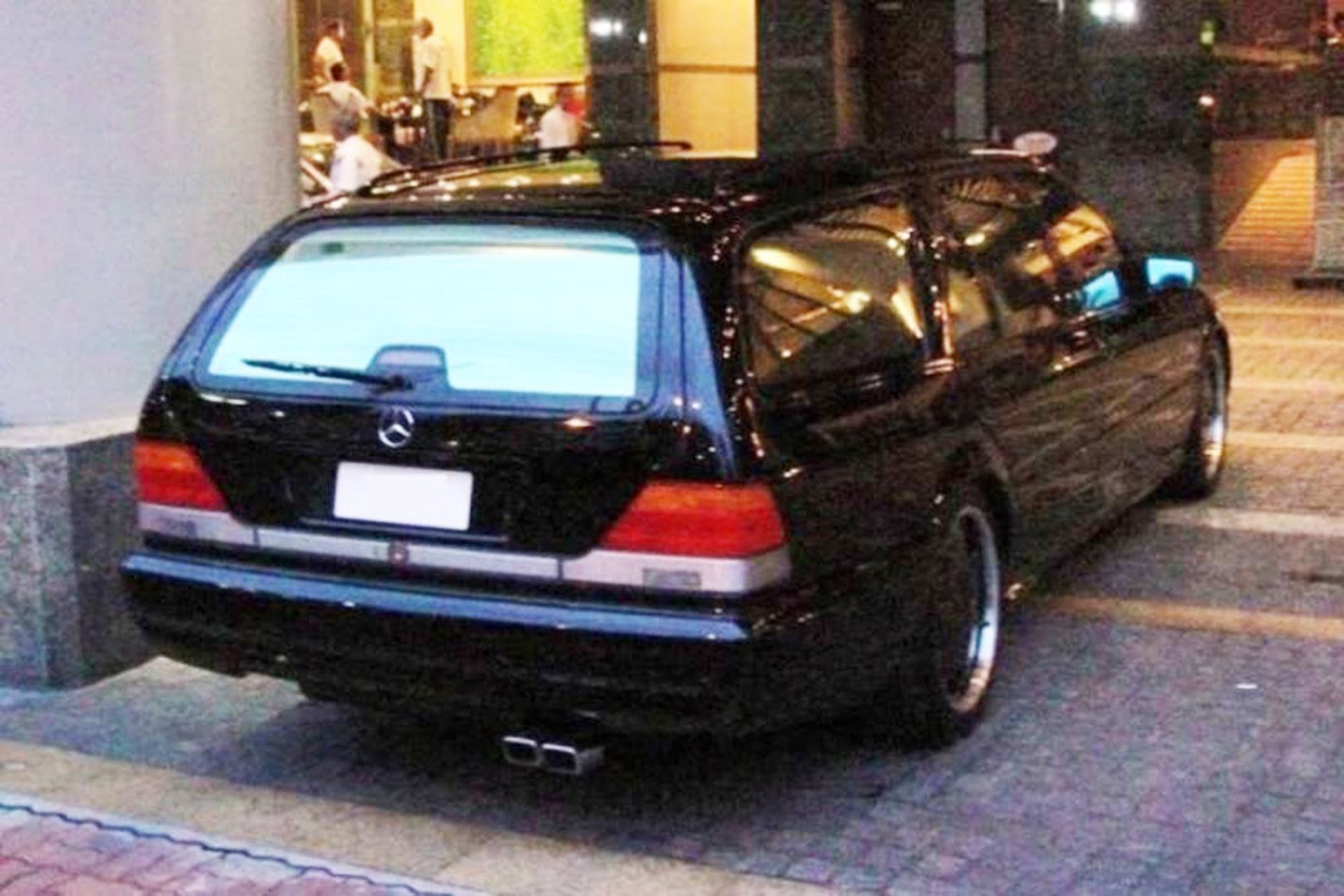
Oh, and they were built in right-hand drive.
At this point you are probably starting a Google search to try and track one down – don’t worry, we did the same.

However, it’s likely to be a long and fruitless search, with the Sultan’s S73 T’s likely lost to an indefinite entombing amongst his extensive abandoned collection. Rumour is that AMG might have some stashed away in a basement, but this hasn’t been confirmed.
The only wagon that we can think of to rival the S73 T is the McLaren F1-powered BMW E34 M5 Touring mule.
Time for a twin test, no?
Holden as a brand is sadly dead. But that doesn’t mean that its cars are immediately worthless. In actual fact, the time to find extra value in its range of cars is now.
Ripping deals on Holden’s current stock are being widely reported, and even more than that, at a discounted price they’ll be a wise buying decision even now that Holden has pledged to support current owners through the next 10 years.
READ MORE
- Holden’s factory closure statement
- Dealer’s new $6.5m Holden showroom that will never open
- What Holden’s axing means for customers
- Holden VE ute mule shown at Corvette launch
Tom Fraser Staff Journalist
Holden Commodore Tourer Calais
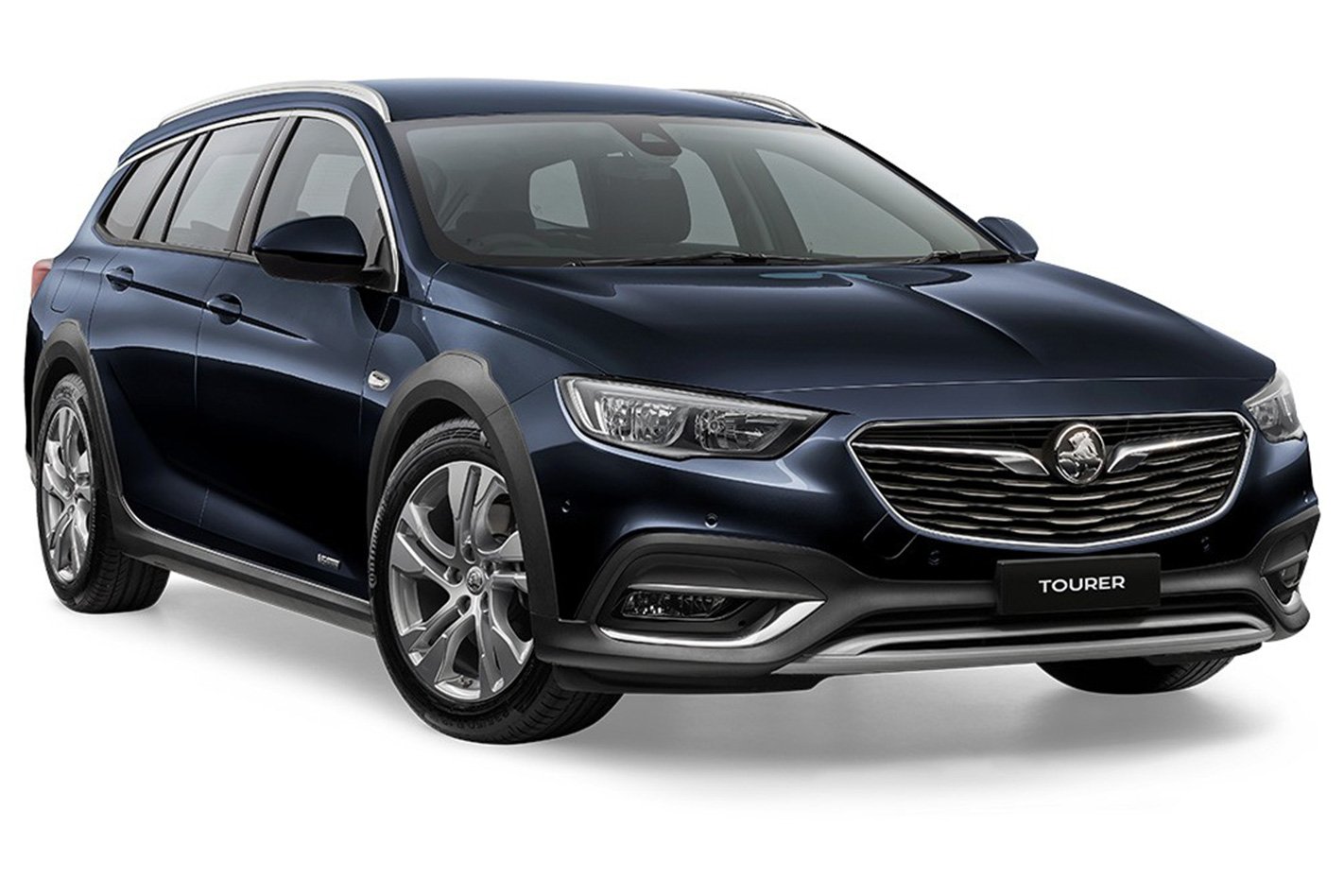
As a self-confessed wagon aficionado, how could I look past the Commodore Tourer Calais as a go-everywhere daily driver…
All-wheel drive, big naturally-aspirated 3.6-litre V6 that outputs 235kW and a comfortable-sized cabin that can fit people as well gear in the boot, there’s a lot to love about this high-riding soft-roader. Sure it mightn’t go as far off-road as segment heroes like the Subaru Outback, but consider the smart interior, Apple CarPlay-equipped infotainment, advanced safety tech and long list of features and there’s a good deal to be had here.
Pricing already begins at a sharp $45,990 (before on-roads) but considering the fact that this car has now been in run-out since late 2019 you should be getting an even sharper deal now. I’ll take mine in the $550 Darkmoon Blue prestige paint for $38,000 including on-road costs and be extremely happy with my choice. I’d try hard for a few genuine parts and accessories to be thrown in as well – what else are they going to do with them?
Tim Robson WhichCar editor
Holden Colorado LS-X (Crush Orange, black interior)
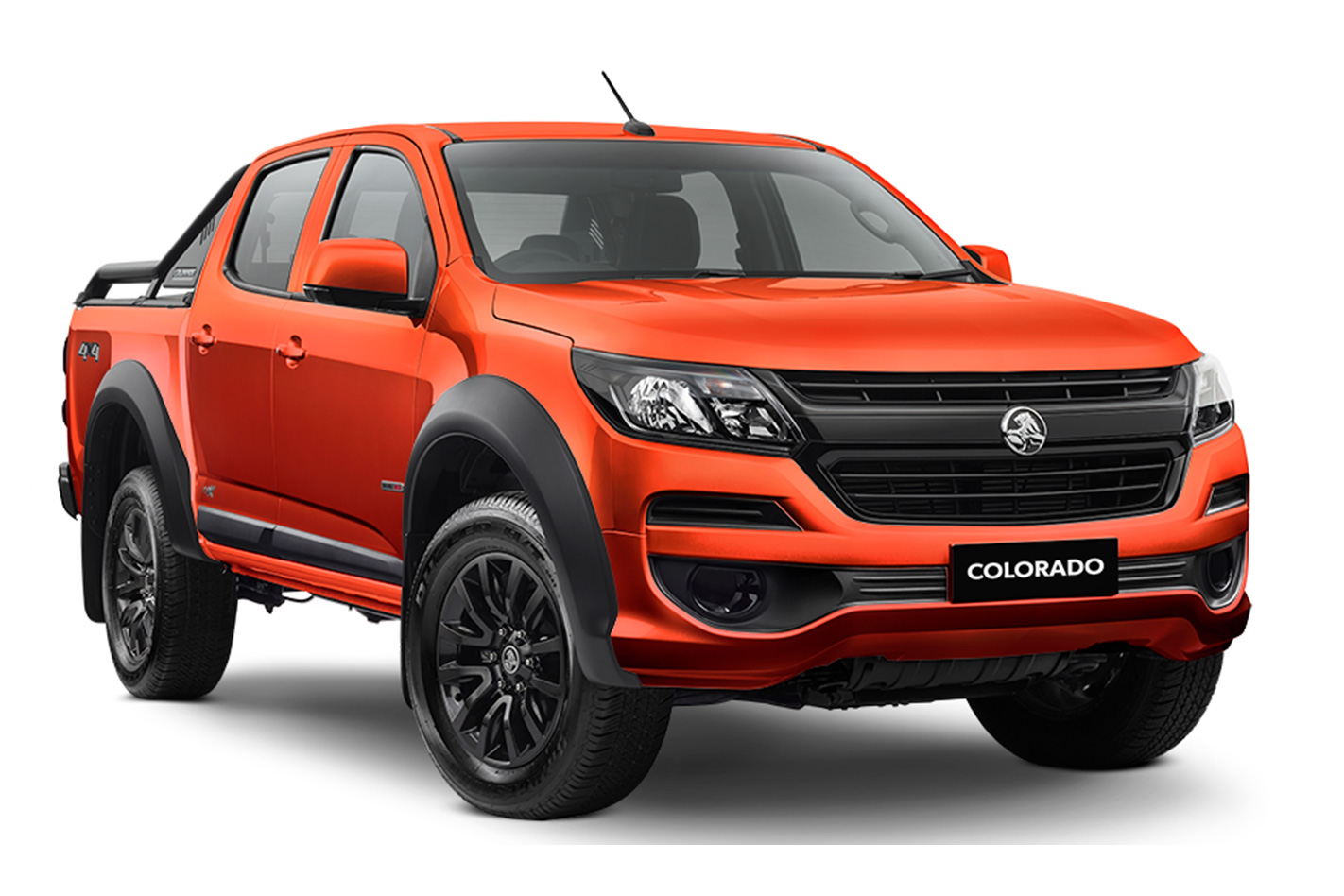
The reality of buying a Holden now that the factory has shut its doors is that there’s not a lot of choice when it comes to buying your choice of Holden, if you get what I mean. For example, if I had the readies and my accountant said ‘go buy a car’, then this is the one I’d probably buy in good faith.
I’ve always liked the way the Holden Colorado dual-cab 4×4 handles itself in the city, thanks to its Commodore-derived steering and tuned leaf rear end, and the LS-X has my basics – Apple CarPlay and Android Auto, auto-down windows from the key fob (I’m a simple guy), cloth interior and decently rugged exterior looks (hey, I’m a bit shallow too).
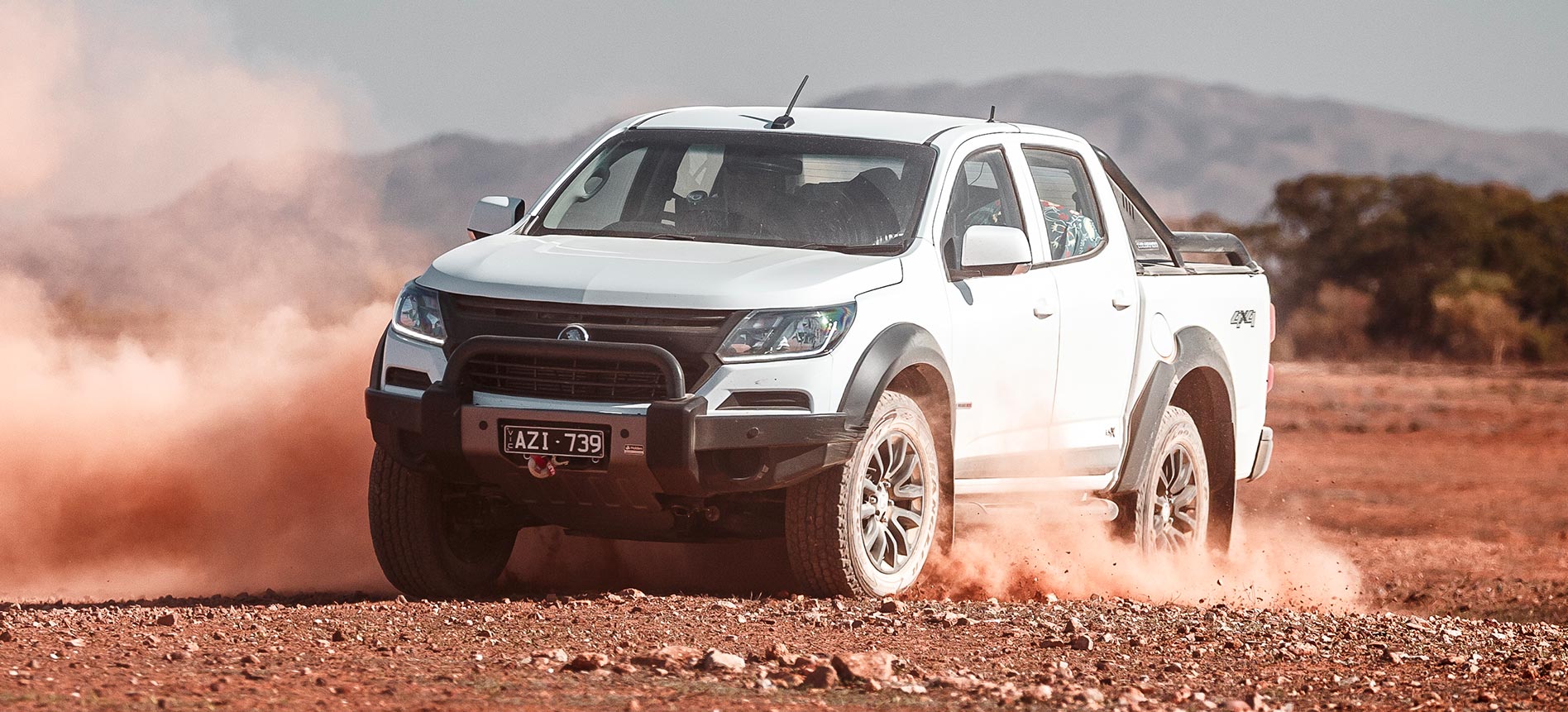
Getting one in the Crush Orange paint might be tough, but I’d take this one in any colour, to be honest. Price? Last month they were selling for $46,990 before on-roads, but I reckon I’d try my luck at offering $40,000 on the nose. That’s not bad for a 3.5-tonne towing ute with an old but decent engine, good towing manners and decent off road manners.
Tony O’Kane Senior Journalist
Holden Commodore VXR

Yes, okay, everyone loves to rage against the ZB Commodore, but consider this: the Commodore VXR is a family four-door that’s got some clever tech and will shame most hot hatches. No, it’s no SS replacement, but sensible people will know that the ZB was engineered to be a different kind of beast from the outset. Adjust your expectations, banish your prejudice, and the VXR suddenly looks like a pretty decent thing.
The 3.6-litre atmo V6 may seem a bit hamstrung in this day and age, lacking the modernity and torque of turbos and the displacement advantage of a big V8, but 235kW and 381Nm ain’t nothing to sneeze at and it’s a swift mover. Wheels got a 6.2-second 0-100km/h sprint out of it which is deep into fast-hatch territory (it’s a couple of tenths faster than the Golf GTI, for example), and given you’ll probably get one now for similar money to a GTI or even an i30 N it’s compelling value from a performance point of view. Call it $42,000 with a few accessories chucked-in as a bonus.
And with that capacious cabin it’s a fair whack more practical than any hot hatch. Clever all-wheel drive and a fancy-pants torque-vectoring rear differential means it’ll handle corners smartly too. As a fast and spacious execu-sled, the Commodore VXR makes a hell of a lot of sense. It’s also the best-looking ZB by far, thanks to that sporty bodykit and big wheels bringing out the best of its long and sleek sheetmetal surfacing.
Dan Gardner Senior Journalist
Holden Astra RS
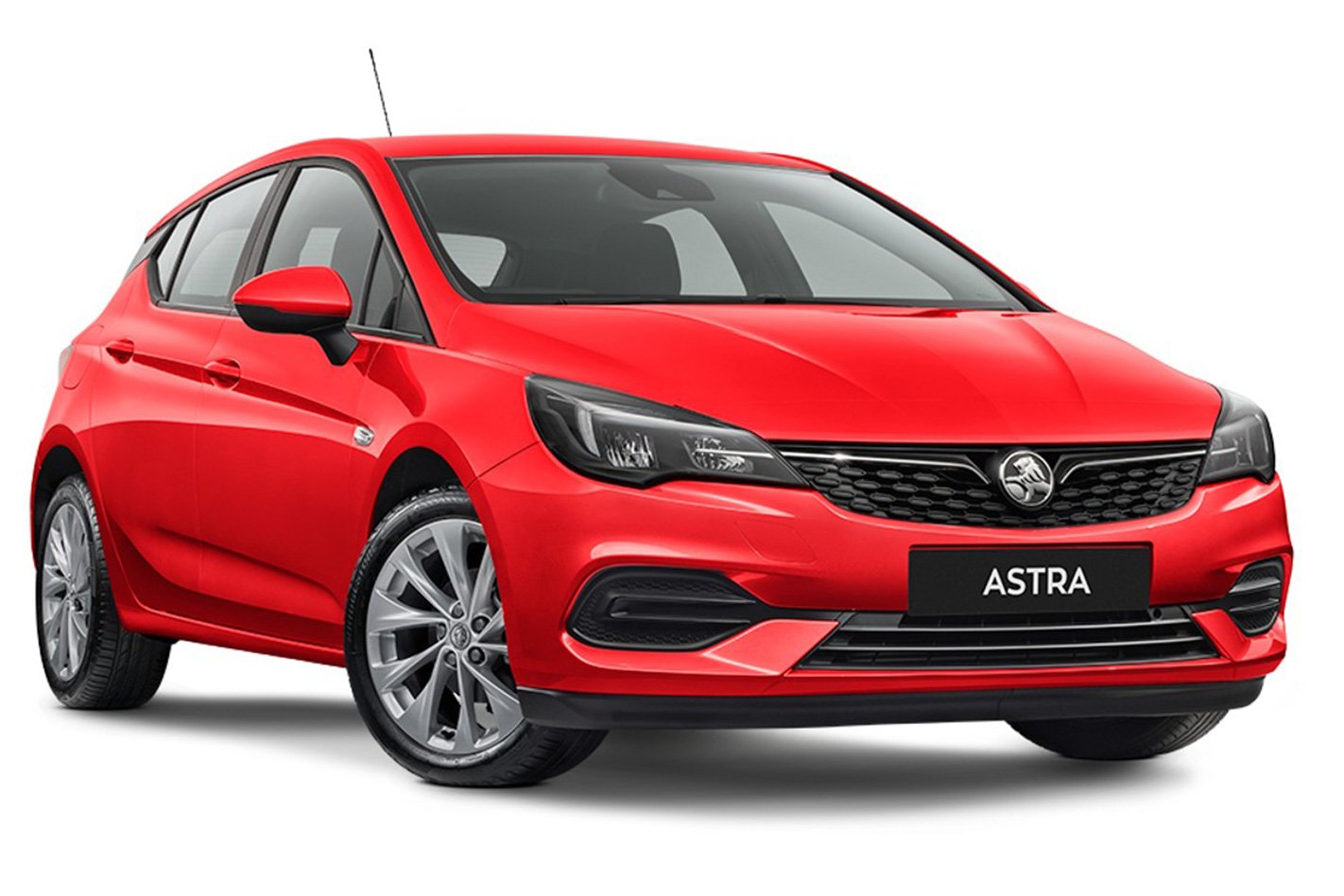
The Astra RS hatch is wildly underrated and doesn’t get the attention it deserves. Warm hatch power, matched with a sharp chassis combines for a surprisingly good driver’s car but doubles as an efficient and well-equipped runabout to boot. All that for a sharp price too.
The list price before on-road costs is $27,990 but I’d be pushing for as close to $20,000 as I can and would be after the Absolute Red paint.
David Bonnici Senior Journalist
Holden Acadia LT AWD

If Holden was going to have a future it was going to be on the back of rugged American-built GM product and the company started that ball rolling by re-badging the GMC Acadia, which brought a brutish point of difference to Aussie large-SUV market.
In an alternate Holden-loving universe the V6-powered Acadia would have sold incredibly well alongside Aussie-built Commodores, with a lot to like for anyone moving up from big family sedan.
The Tennessee-built Acadia is incredibly spacious inside but not too wide to make parking difficult. The third row fits two adults comfortably and folding it down brings a massive 1092-litres of boot space, which is bigger than any dedicated five-seater.
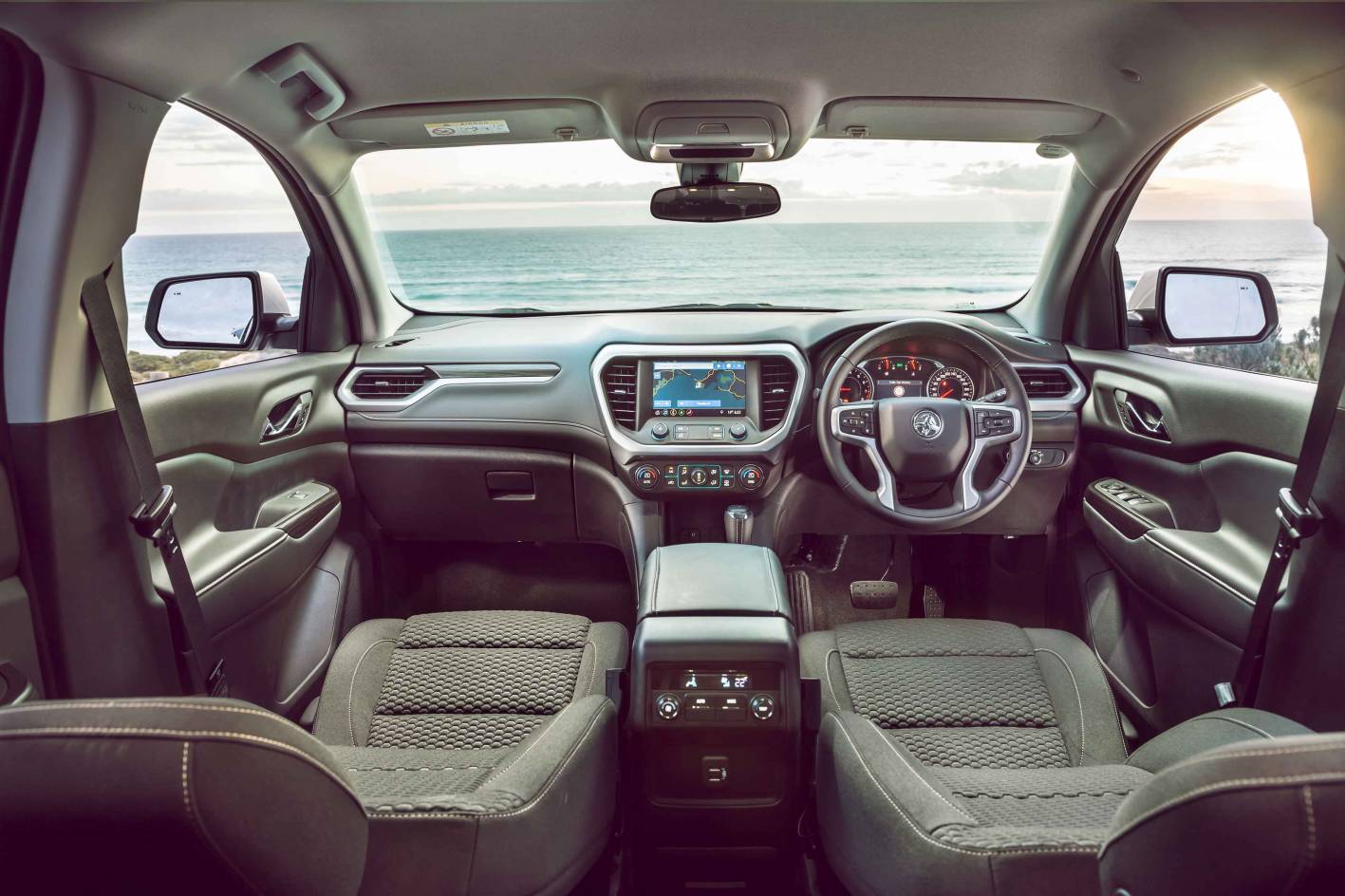
Despite its American-truck looks it has car-like handling that’s a result of an extensive local suspension tuning program by Holden engineers.
Its 231kW/367Nm 3.6-litre V6 engine and eight-speed automatic transmission make light work of its 2.0-tonne heft and offers a nice rumble to complement its macho aesthetic.
The base-spec Acadia LT AWD retails for $46,490 and, while it misses out on some of the bells and whistles of the upper-spec variants, brings plenty of SUV for your dollar even before you score a good closing-down deal. I’d swing for the fences and try for $10,000 off its list price, driving away in an LT AWD for $35,000.
READ MORE
- Holden’s factory closure statement
- Dealer’s new $6.5m Holden showroom that will never open
- Holden’s lost heroes: the cars that could have saved the company
- What Holden’s axing means for customers
- Holden VE ute mule shown at Corvette launch
It’s no secret that Australia is dragging its heels when it comes to environmentally conscious decisions, especially in the automotive space.
But if there’s one way to capture the hearts and minds of the electrically-curious, it’s through SUVs.
How much does it cost to charge an electric car?
SUVs as a whole are commanding a huge slice of the new-car sales pie in Australia, and car manufacturers are now phasing out their passenger cars in favour of more SUVs on the dealership lot.
Electric SUVs are quickly becoming the car to have if you’re keen on doing away with fossil fuels, with more manufacturers releasing electrified SUVs than any other body style. So what are some of the best options available for those interested?
Tesla Model X
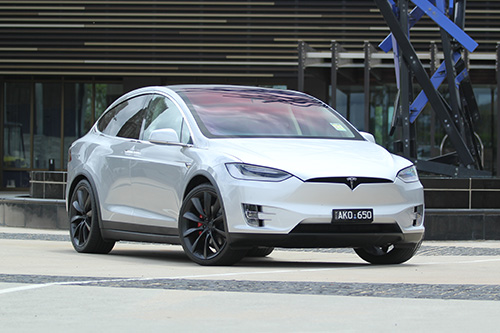
The Tesla Model X was the first all-electric SUV on the Australian market back in 2016 and remains one of the stand-out SUVs on sale to the current day. Offering more range than any other full-electric SUV and owing to a relatively expansive charging network, the Tesla Model X still presents a polished electrified package even now that it has a swathe of new-coming rivals to compete with.
Mercedes-Benz EQC
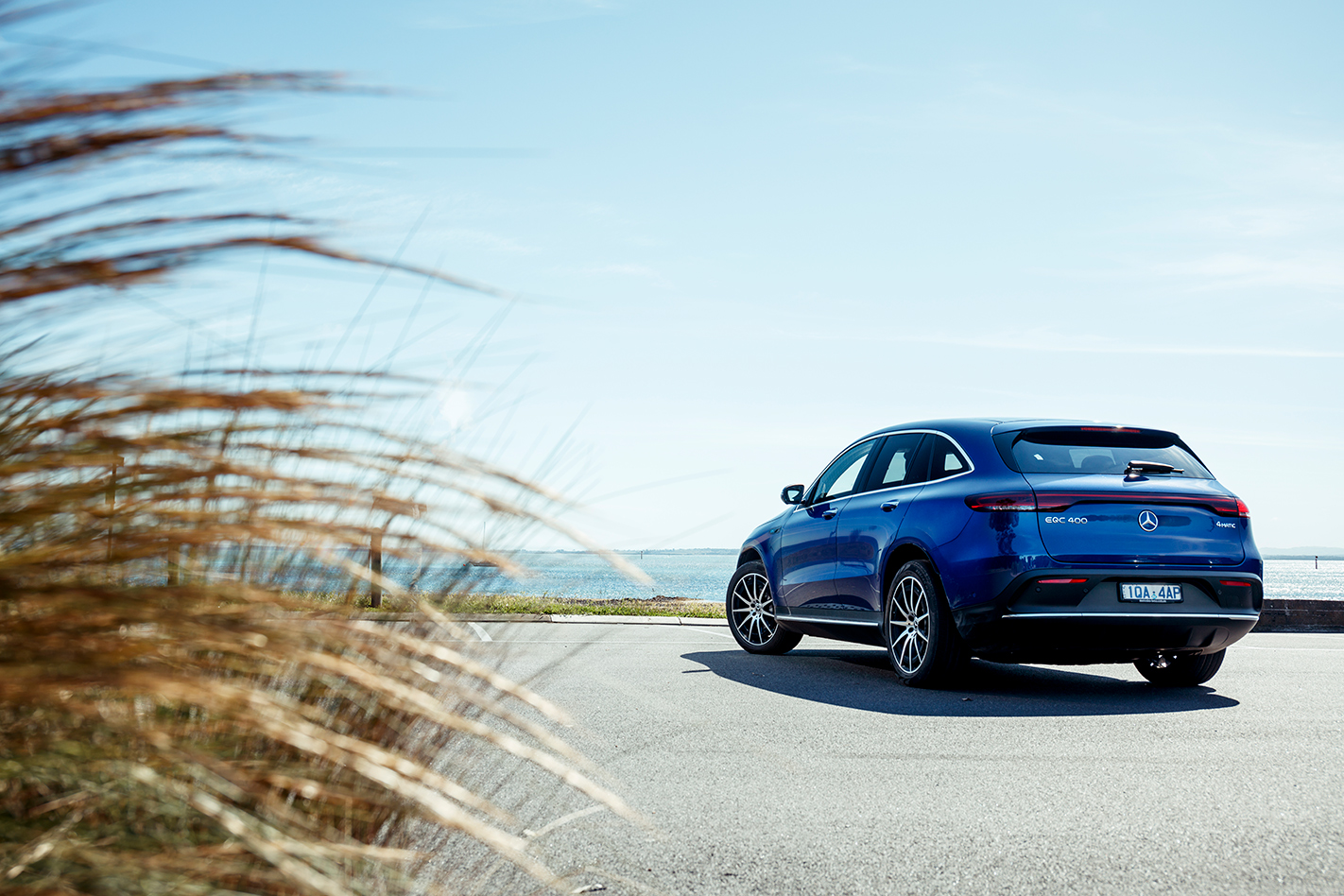
Such a competitor to the Tesla Model X is the Mercedes-Benz EQC. Having just freshly won the coveted Wheels Car of the Year award for 2020, the EQC was lauded for its out-of-the-box completeness, astonishing ride quality and certified range value of 340km.
Jaguar I-Pace
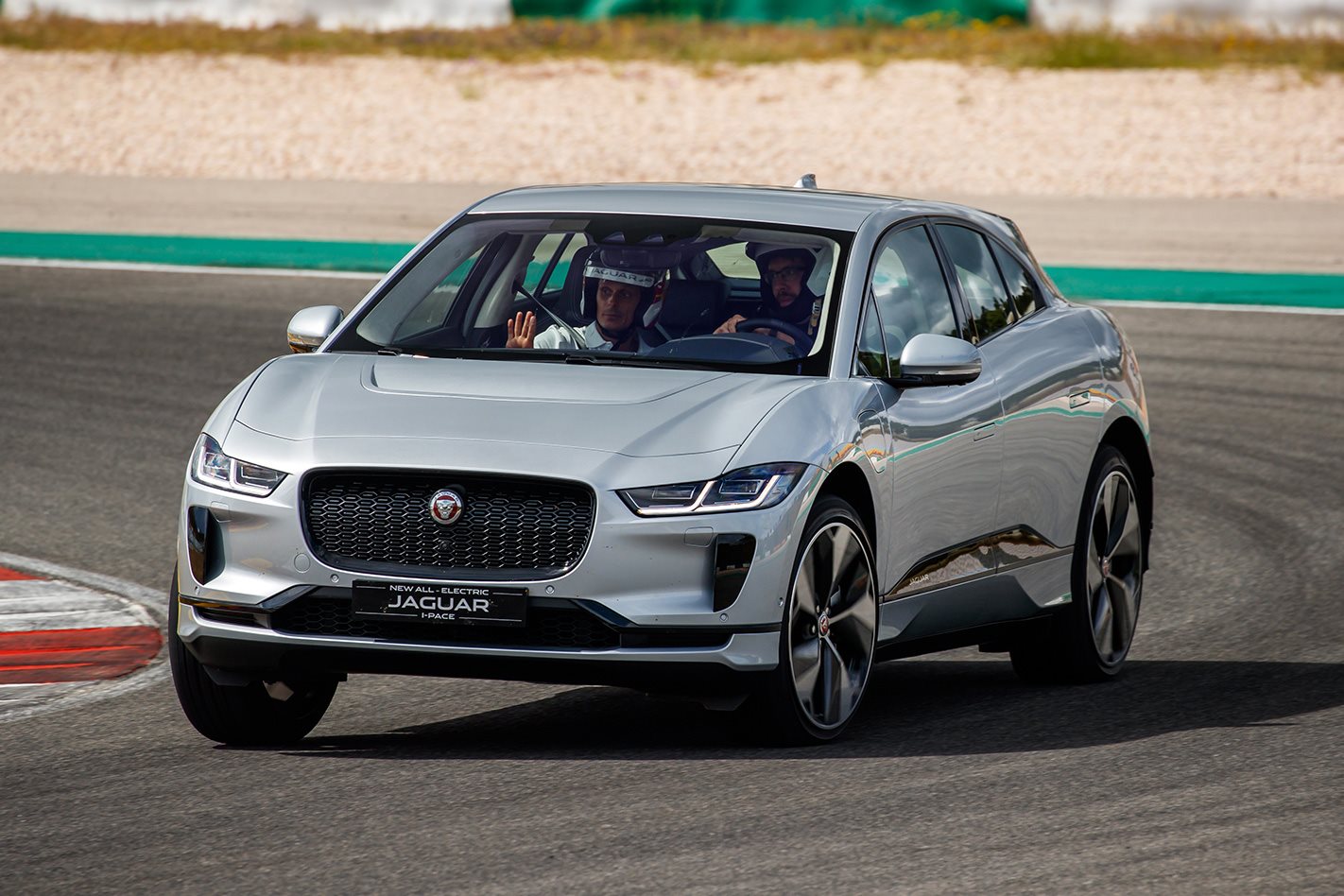
Jaguar’s foray into all-electric driving is as much about performance as it is efficiency, with the Jaguar I-Pace five-seat SUV capable of accelerating from 0-100km/h in just 4.8 seconds thanks to two very powerful electric motors. An 80 percent charge takes about 10 hours using a home charger, or just 40 minutes at a specialised public charging station. Once charged, the battery has enough stored energy to top up 9000 smartphones.
Hyundai Kona Electric
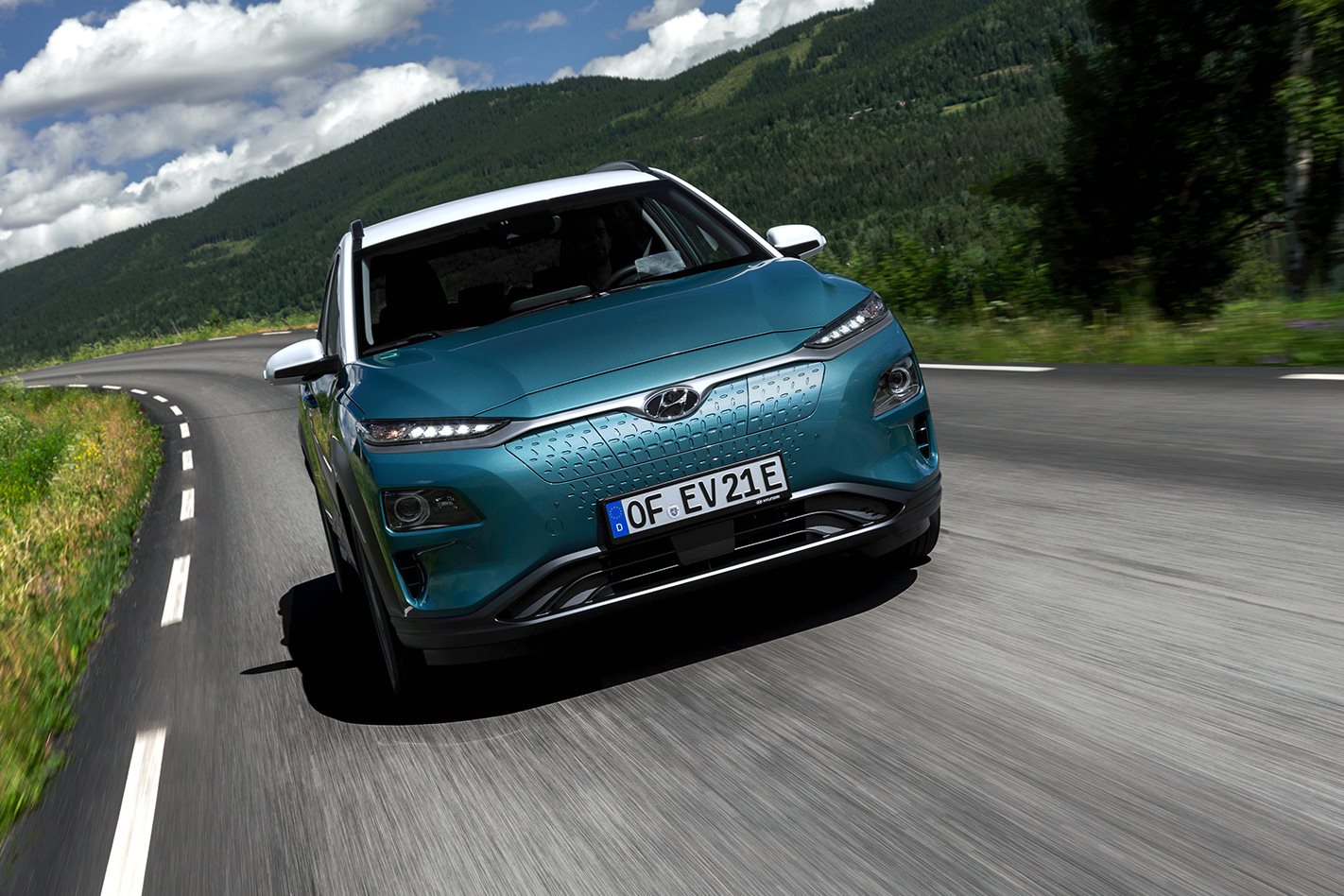
The Hyundai Kona Electric arrived on Australian shores in 2019 to provide an electric SUV offering that isn’t stratospherically priced, coming in just under $60k. The Kona Electric can be charged to 80 percent in just under an hour using a fast charger, or fully charged in 10 hours by plugging it into a standard electrical socket.
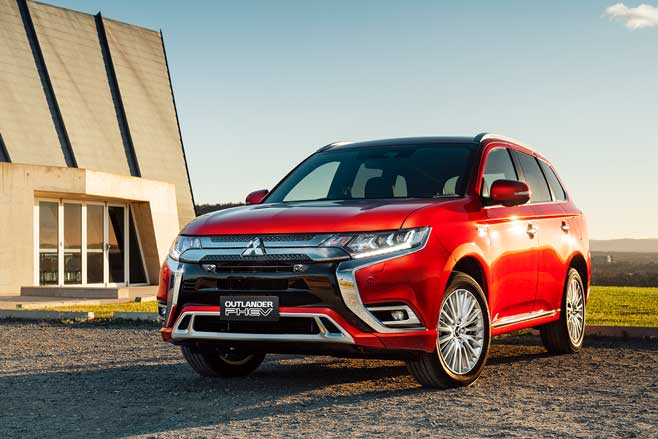
Mitsubishi Outlander PHEV
The Outlander PHEV was one of Australia’s best-selling plug-in SUVs, but has since been joined by other viable options. Having been recently updated on its seventh birthday with a larger 91kW petrol engine and 13.8kWh battery capacity, the Outlander PHEV still presents a very frugal drivetrain and commodious space for its sub $60k price. One to look out for!
Volvo XC60 T8
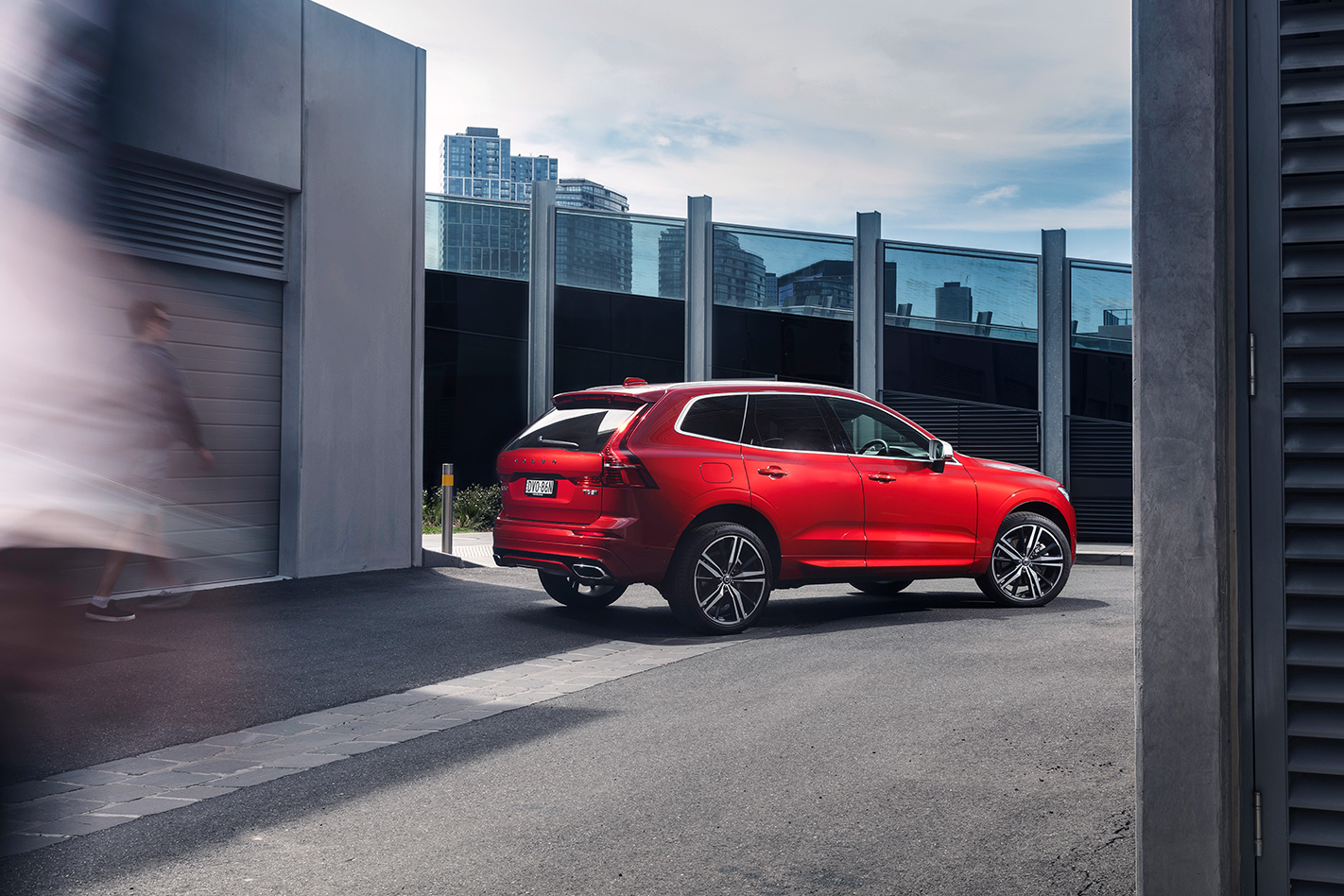
Also a winner of the Wheels Car of the Year award, the hybrid XC60 T8 is a plug-in hybrid that blends the best attributes of a petrol powered luxury SUV with the benefits of electric power. Savagely quick, very frugal, the XC60 also boasts a fully electric range of 35km.
This article was originally published by Anna Kantilaftas.
In the beginning there was the Audi Ur-Quattro, and it was a car of many firsts.
This feature was originally published in September 2015
It was the first all-wheel drive car in the World Rally Championship, it was the first car to give a woman a WRC win and it was the first to recognise Group B for what it might be.
But nobody much remembers the Ur-Quattro, even if they think they do. The Audi rally car everybody remembers is the Sport Quattro S1. But nobody called it that. It was the ‘short’ Quattro to rallyists and either the Sport or the S1 to the rest of the world.
This was the snarling, spitting, steaming monster of a thing you still see played in WRC highlight reels in bars from Australia to Bulgaria, from England to Canada. This was the Audi rally car with the huge, flared wheel arches and with the enormous rear wing.
And this was the car with the noise. To be fair, even the Ur-Quattro’s noise was pretty special, but by the time it had evolved into its lighter, shorter successor, that noise had become a highlight reel all of its own, a high-revving, limiter-smashing dervish that left such a lasting impression on the good folks at quattro GmbH that they used electronic trickery to replicate it on the TT RS and the RS3.
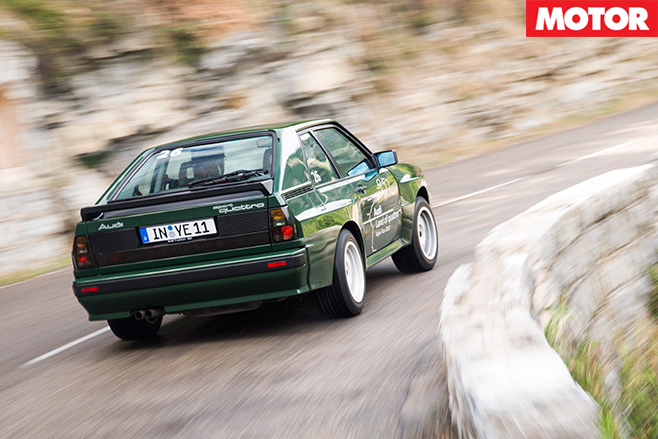
It’s a deep, rich sound that permeated into and shook up bits most people didn’t know they had. Once you heard a Shorty at full noise, you never forgot it. It was the sound that epitomised the madness of Group B, and no car had a better sound than the Short Quattro. It allowed a few lucky Australians to realise you could have sexiness with fewer than eight cylinders.
To most, it barely mattered the Shorty wasn’t actually much good at being a rally car. It arrived as a production-based machine when everything it fought – from Peugeot’s cracking 205 T16 to the Lancia Delta S4 – had custom-built frames and lightweight everything. Unlike the competition, the Shorty still used the production floorpan (albeit with more than 300mm chopped out), chassis and interior.
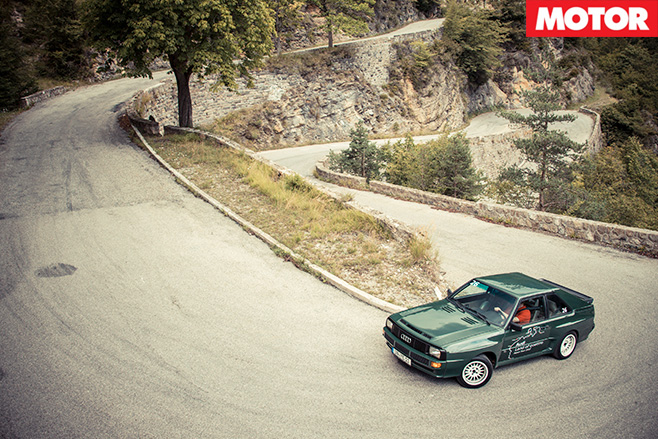
But where the faster Group B raiders were far more specialised machines, the Shorty was based on a production car that was heavily based on a road car. Don’t dwell on Audi only building 224 of them, the wonder was that they built so many.
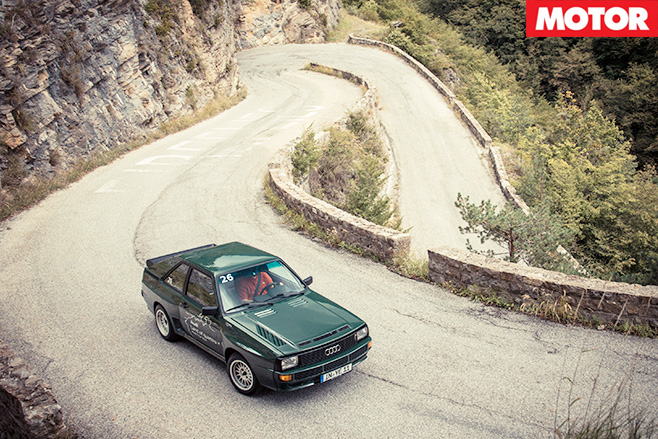
And one of those 224 Shorties is here today, waiting for us to fling it up an Italian Alpine pass and down a Swiss one. This is one of Audi’s museum Shorties (it has four) and, as a note of caution, I’m informed this car cost about $100,000 Aussie pesos when it was new and is worth an awful lot more than that now.
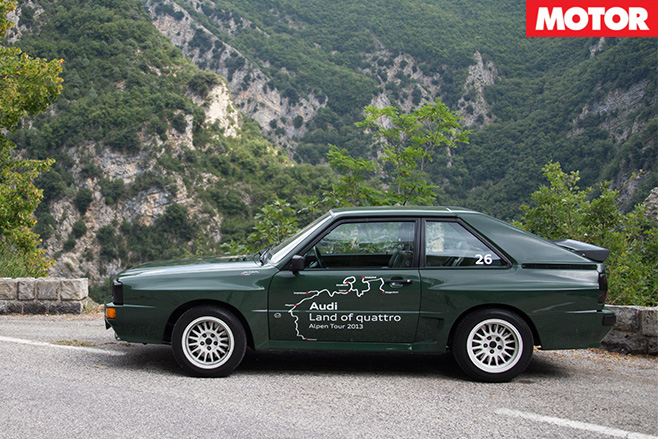
The one waiting for me is in perfect condition, sitting on fat 15-inch Pirellis and guarded with little worry by a museum curator who tosses me the keys and meanders off in search of the best coffee in Merano, a town in northern Italy’s Alpine foothills.
And that’s my combination for the day: a dark green 1984 Sport Quattro, fettled by the same people who built it, its keys and a tank of fuel. It’s such a boyhood dream it’s almost a surprise the key actually slots into the barrel.
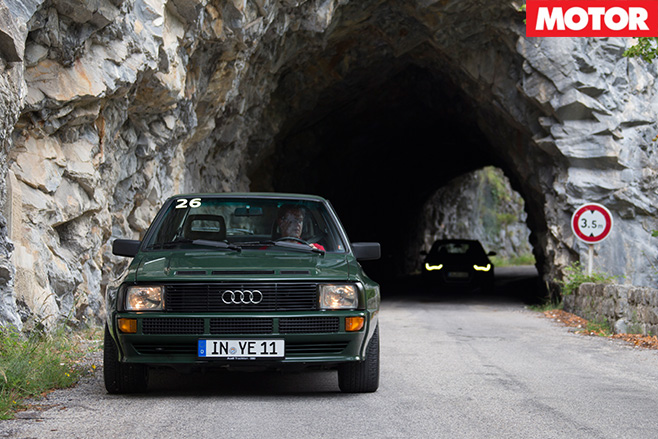
The drivers wanted it to be shorter, to minimise the effect of hanging the engine out in front of the front axle line (again, an indicator of how much closer the Audi rally cars were to their production counterparts than the mid-engine 205 or Lancia), so Audi culled 320mm from behind the driver’s seats. There is zero rear legroom in the Shorty and, even then, the bench seat has been chopped in half to fit.
While the boys had the gas axe out, Audi didn’t stop there. It gave the A-pillars a steeper rake to reduce windscreen reflections for the drivers and shoved the front and rear tracks outwards to make it bite harder, then flared the wheel arches to allow fatter 9.0-inch rims under both ends.
But that’s the detail. The core stuff includes a kerb weight of under 1300kg. Audi found the newly-minted Kevlar quite handy, making a bonnet so light you can lift it with one finger.
The 2.1-litre five-cylinder engine was slightly shrunk as it evolved from the Ur-Quattro (rallying had a 3.0-litre maximum and the 2133cc unit just scraped in, thanks to Group B’s 1.4-times multiplication formula for turbo engines) and, as mentioned, unadorned with niceties like an engine cover. It was the first Audi engine to use four valves per cylinder and crossflow heads, plus they machined the block out of aluminium to save 24kg.
But it doesn’t matter what else you look at under the bonnet, because two things grab you. Firstly, there’s an enormous amount of clear air by today’s standards and secondly, the oil-cooled KKK-K26 turbocharger does a good impression of the engine housing of an A380. It’s also an awful long way away from the cylinder head.
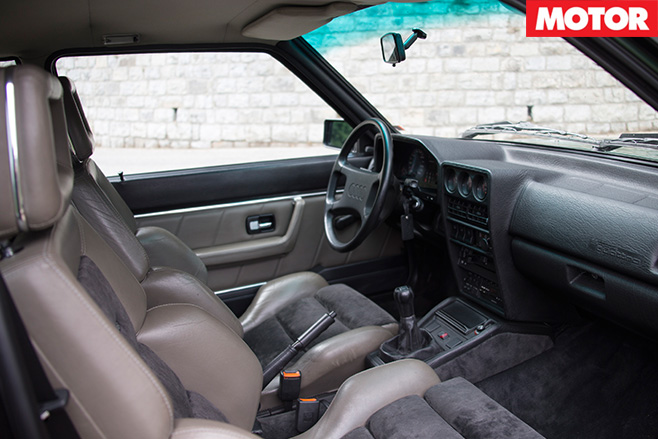
And then there’s that key. The five-pot fizzes to life, but you quickly realise there was no marketing pretense in the way the rally engines sounded. They weren’t built to reflect something from the production car because the production car sounds more like a bunch of kitchen appliances operating at different speeds.
There is none of the competition car’s aggression or deep lung capacity. It’s great fat layers of whizzes, whirs, zings and bleats. Every pump, every drop of oil, every cubic millimetre of air and almost every electric impulse can be clearly heard from the driver’s seat and then, on top of that, there’s the relentless, incessant tick-tick-tick of the fuel pump from behind you.
But clear town and a very, very different set of feelings swallows the low-speed impressions whole and one of those feelings is bewilderment. At the first opportunity, I stomp the throttle in third gear trying to pass a tractor and, essentially, nothing happens. This car, the most fearsome Audi for 20 years, accelerates no harder than a Volkswagen Polo. The three-cylinder one (the five-pot is smooth and has no vibrations in it, but there’s also no power). Now I’ve been on the wrong side of the road for what seems like forever and there’s traffic coming the other way.
And then everything happens. WWOOOSSHH! The turbo wakes up and the Shorty is gone, howling like a bear woken by a thousand bee stings and blasting up the Italian alps like the 1300kg tearaway it is. This car hit 100km/h in 4.8 seconds when it was new and it’s even faster today. The trouble is getting it in its power band and out of the reach of the dead hand of turbo lag.
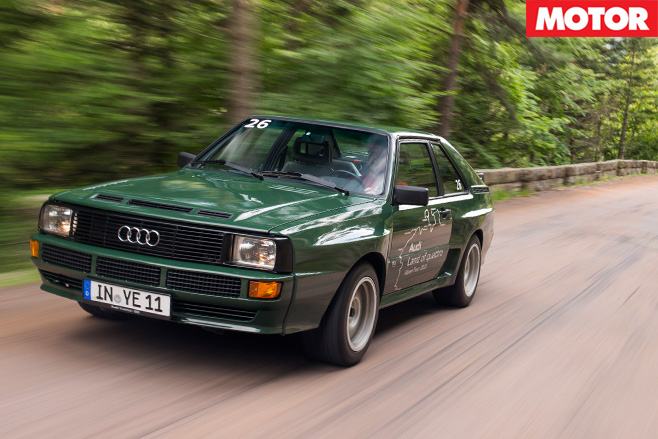
You can barely hear an engine beneath the whistle and howl and the constant wooshing of air, followed by the chirruping of the wastegates trying to bleed off all that boost on the overrun.
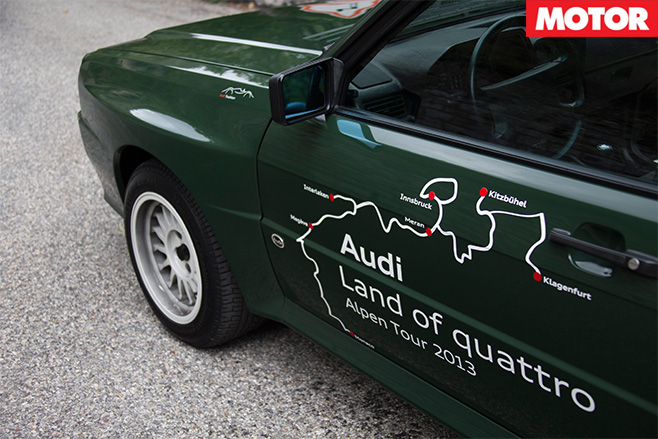
But it’s properly fast in a straight line, even by today’s standards. It’s even faster when you take into account its tiny wheels, ancient brakes (though it was the first Audi with ABS) and its dead – and dead slow – steering. We could easily have flung the Shorty up the Stelvio pass, but we’ve chosen a different route into Switzerland called the Ofen Pass, 2149 metres up into the clouds.
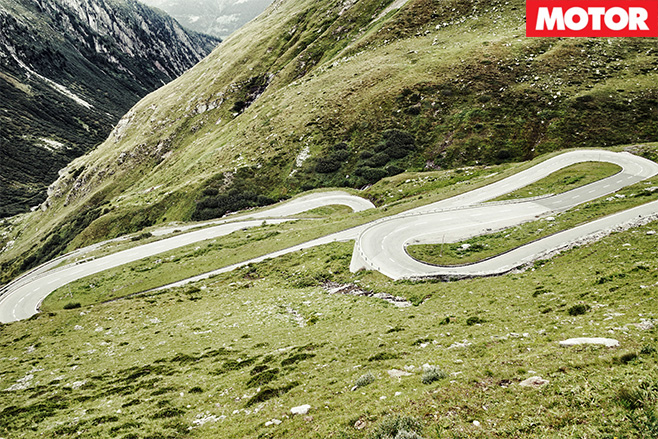
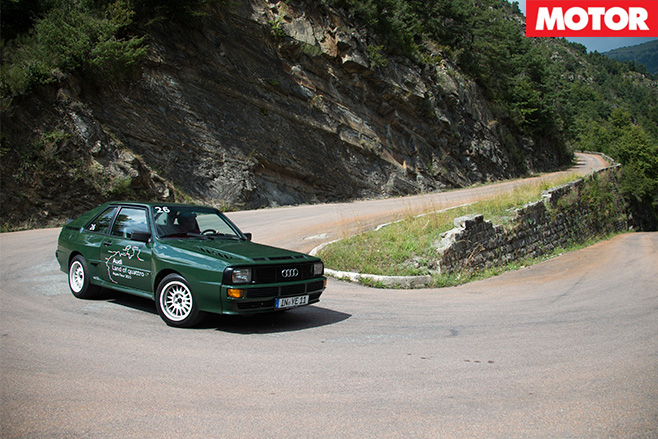
There is a mountain of grip in the Shorty and no hint of defiance. It doesn’t take long before you’re sliding the front end, giving it a dab of left-foot braking to bring the back out a few degrees and trying to manage the turbo lag to keep the slide moving. It’s an inexact science that the lag often wins, but the ones you hit are just sweet.
Even with this wheelbase, the car’s handling is ludicrously progressive and it tells you everything you need to know about how to fix anything that’s gone wrong. It rolls around on its soft (by today’s standards) springs and the body movement makes even slow seem fast.
It shoots its way skywards and out of Italy, with a bit of pre-loading (all right, about three seconds’ worth) on the turbo to snatch any tiny overtaking window you might need. The top of the mountain pass is littered with ancient iron furnaces (it’s called Passo del Forno by the Italians) and the roads are smooth and brilliantly taken care of, even if they’re covered in snow half the year.
They say an RS7 should ease my pain, but somehow instant throttle response, greater grip, even more intensive noise and astonishing speed isn’t enough. I want Shorty back.
1984 AUDI SPORT QUATTRO SPECS:
Body: 2-door, 2-seat hatch Drive: all-wheel Engine: 2133cc inline-5, DOHC, 20v, turbo Bore/Stroke: 79.3 X 86.4mm Compression: 8.0:1 Power: 228kW @6700rpm Torque: 350Nm @ 3700rpm Power-to-weight: 176kW/tonne 0-100km/h: 4.8sec (claimed) Top Speed: 250km/h (claimed) Consumption: N/A Emissions: N/A Transmission: 5-speed manual Weight: 1298kg Suspension: multi-links, coil springs, anti roll bar (f/r) L/W/H: 4164/1803/1345mm Wheelbase: 2204mm Tracks: 1516/1492mm (f/r) Steering: hydraulically-assisted rack and pinion Brakes: 4-piston callipers, ventilated/drilled discs (f); 4-piston callipers, ventilated/drilled discs (r); Wheels: 15 x 9.0-inch (f/r) Tyres: 235/45 VR15 (f/r) Price: if you have to ask…
Positives: Performance, handling, provenance, presence, collectability Negatives: Turbo lag, slow steering, average brakes, rarity, price Rating: 4.5 out of 5 stars
Update 1
January 13, 2020
The ultra-niche Mercedes-Benz CLA has curiously done quite well for the German manufacturer, even in far-from-home climes like here in Australia. This new version hopes to at least fill the shoes of its predecessor while trying to gain headway in a league that’s only set to grow.
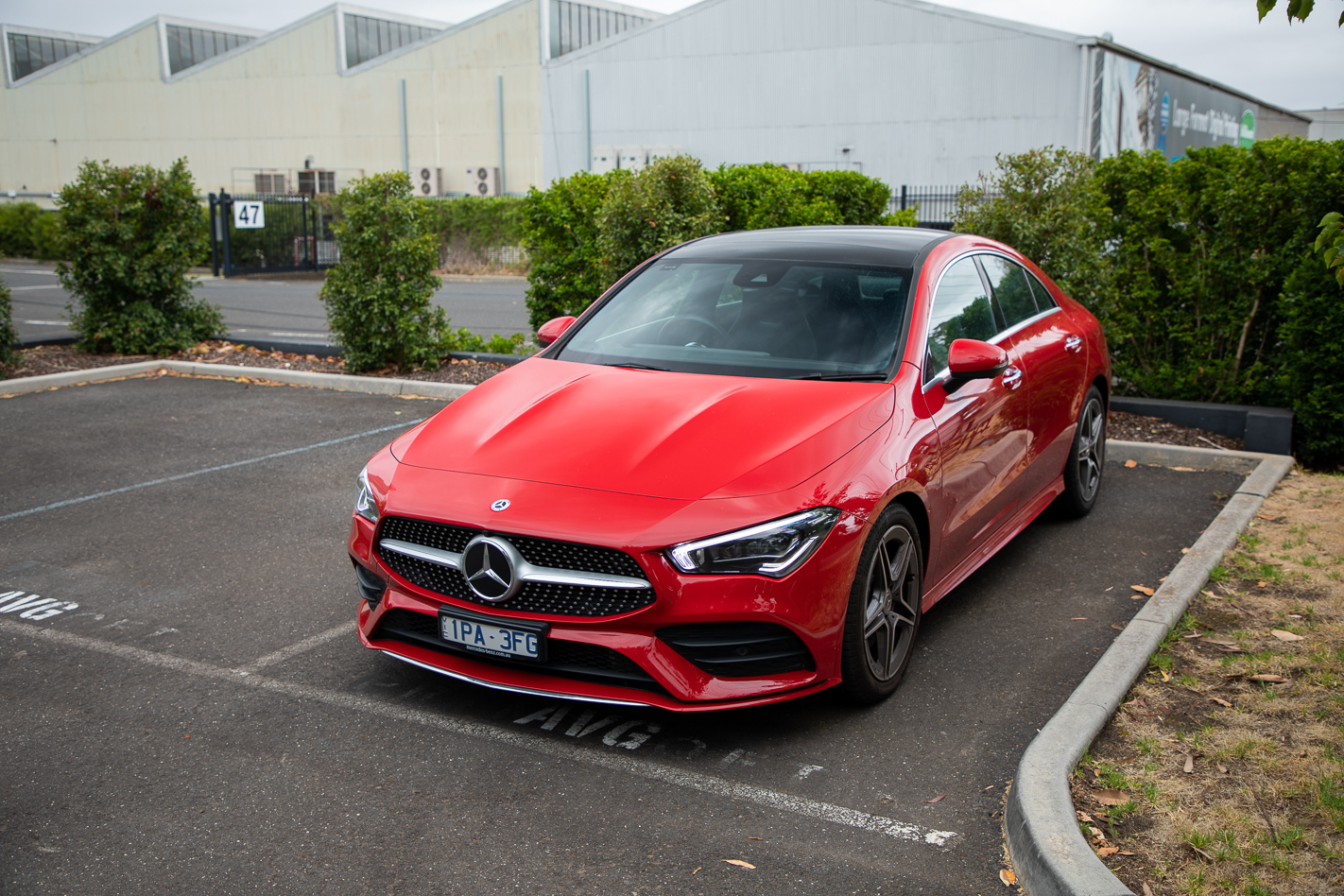
You can easily see how Mercedes is trying its utmost to wow customers when you see how much tech and equipment is offered on one of its lower-tiered models. It’s been the same way for a while, offering S-Class style at the lower end of the spectrum and with the 2020 CLA it’s actually hard to see how you’d fare better if you did opt for a considerably more expensive S-Class – there’s that much on offer.
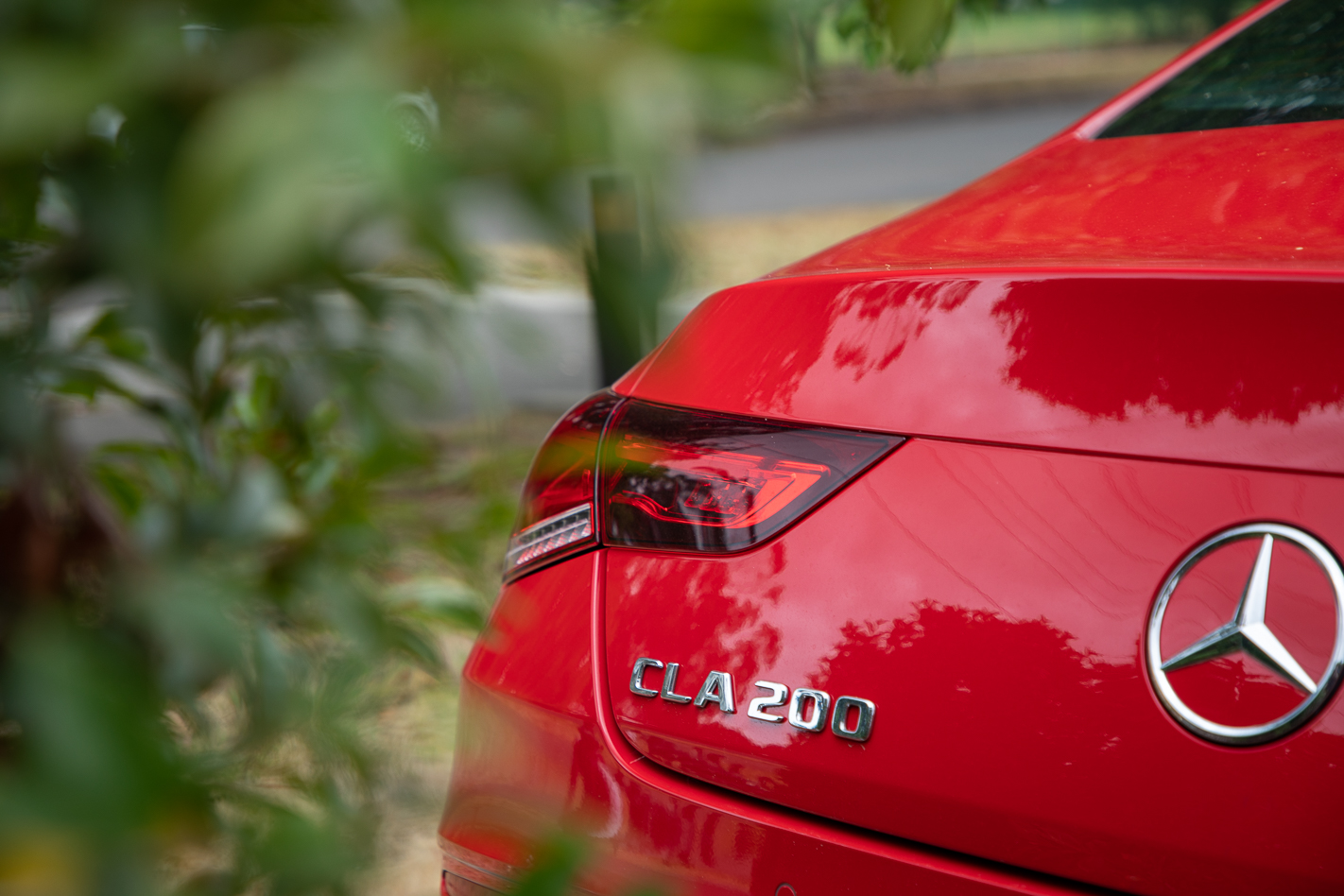
We’ve picked up an entry-level CLA200 to see how the new generation car fills the shoes of its predecessor, and initial impressions are promising.
Jump inside and you’re immediately greeted with futuristic screens and fancy surface materials, and it feels plenty comfortable from the get-go. Our car is a fairly base spec, but even still there’s no doubt the interior is the place to be.
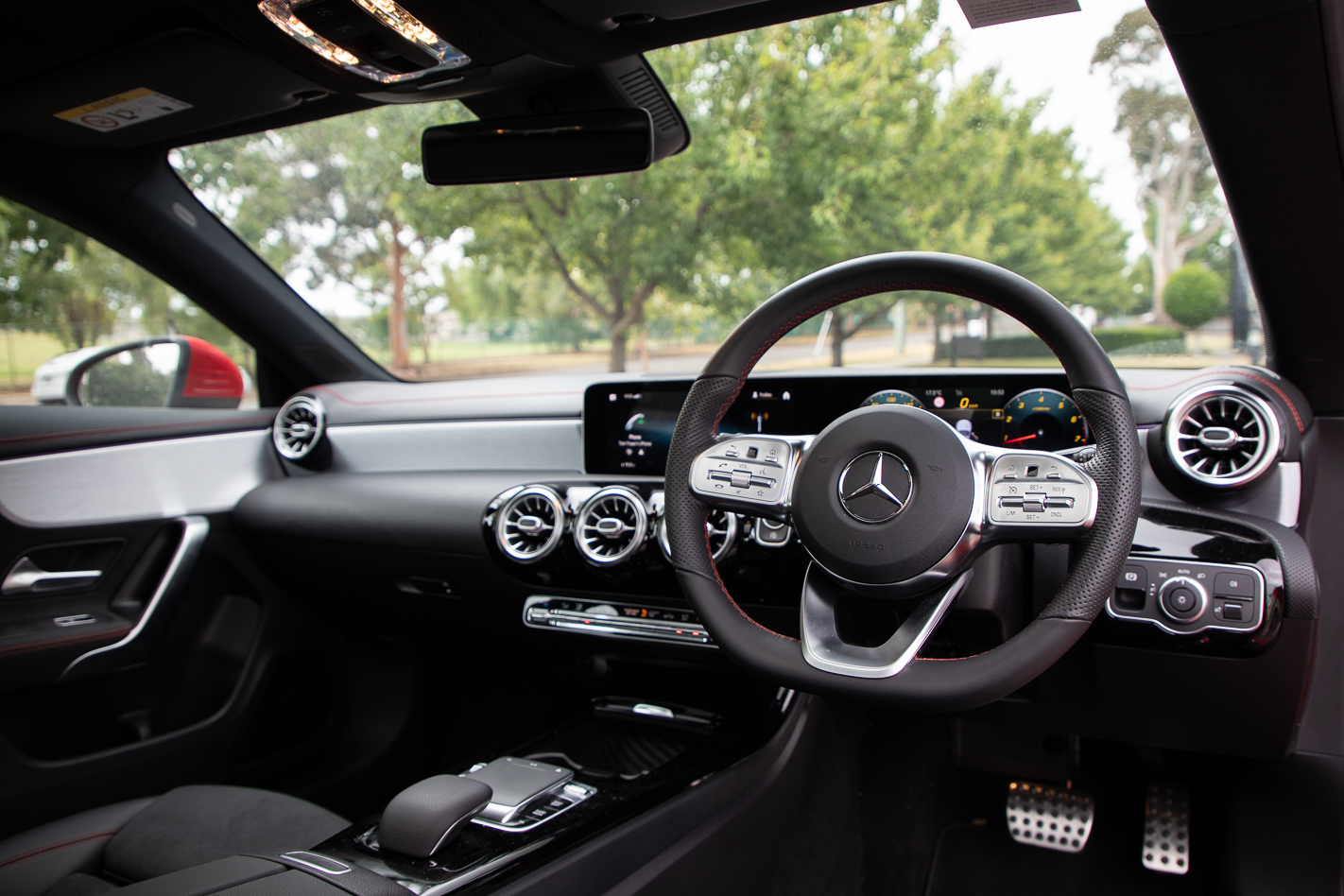
All cars receive the AMG line exterior styling package, automatic climate control, sports seats, ambient lighting, digital radio and Apple CarPlay and Android Auto as standard. It also gets the brand’s fancy new MBUX infotainment suite with a pair of 10.25-inch configurable widescreens.
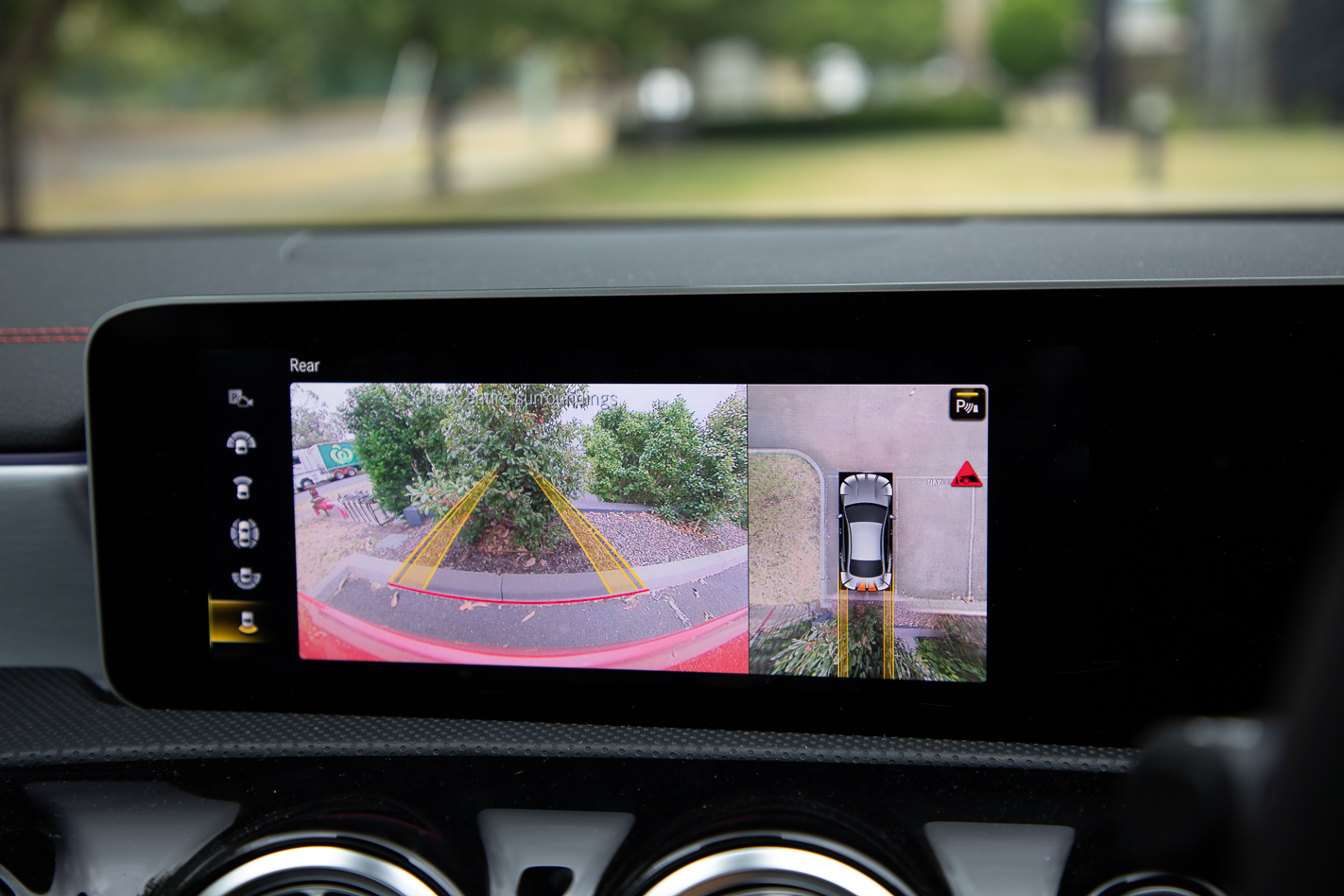
A comprehensive list of safety features is also of no cost, with nine airbags, active brake assist, adaptive high beams, lane-keep assist and blind-spot assist equipped. Our Jupiter Red CLA200 also has a Vision package that brings a sunroof, LED headlights with automatic high beams and a 360 degree parking camera.
It’s said to be slightly larger than the outgoing CLA and on initial tests there’s a comfortable amount of room up front, but we’ll have to properly get in and around the car in weeks upcoming to get a seat-of-the-pants feel.
The CLA200 is powered by a 1.3-litre inline four cylinder engine that outputs 120kW/250Nm and is connected to a 7-speed dual-clutch automatic gearbox. On paper, those numbers don’t inspire us with too much confidence for something billed as being sporty and athletic, but we’ll have to judge that in due course too.
We don’t have anything special in store for the CLA’s tenure at WhichCar HQ, we’ll just run it daily and see how it stacks up against the grind of daily driving. We’ll also send it on a few drives and perhaps even spend a weekend away to gauge how well its practicality suits our needs.
If you’ve got any questions or want to know more about a specific aspect of the CLA200, drop us a comment below and we’ll see if we can work in your requests into the next update.
Update 2
February 10, 2020
Our long-term Mercedes-Benz CLA has been in hot demand ever since it arrived in the WhichCar garage. Firstly it ferried Daniel Gardner north to Mildura to present a segment of WhichCar TV, Glenn Butler has had his hands all over it using it as a runabout to attend meetings and our TV show host, Peter Elliott has also spent time behind the wheel.
It seems like each moment you spend with our little red number is fleeting, but luckily I’ve spent some quality time in the CLA over the past weekend and come away with some key learnings.
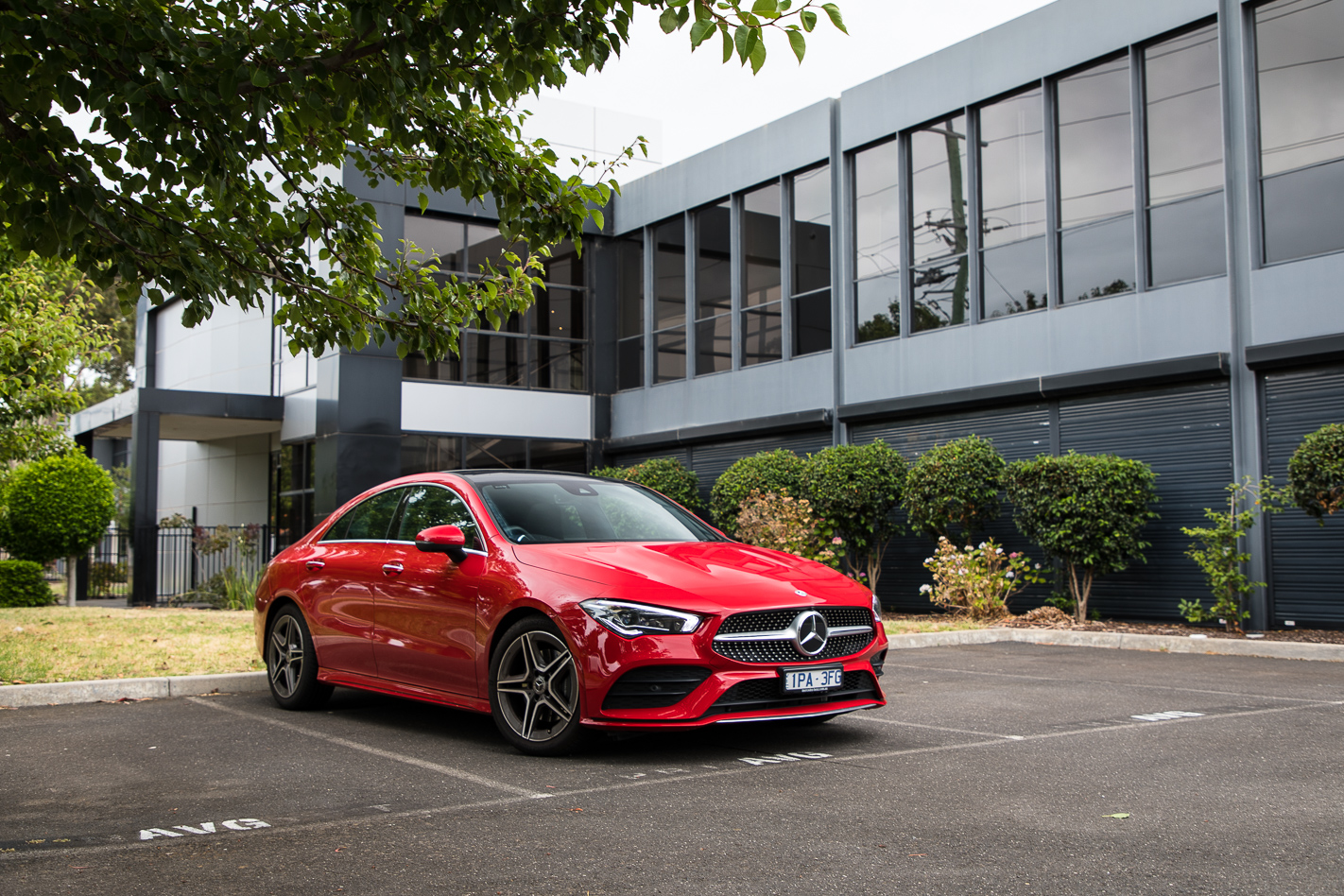
As a city-slicking stylish runabout, the CLA presents a strong package. It’s priced at a relatively modest $60,700 (before on-road costs) but hosting many of the technologies and design features you’d find on more upmarket Benzes.
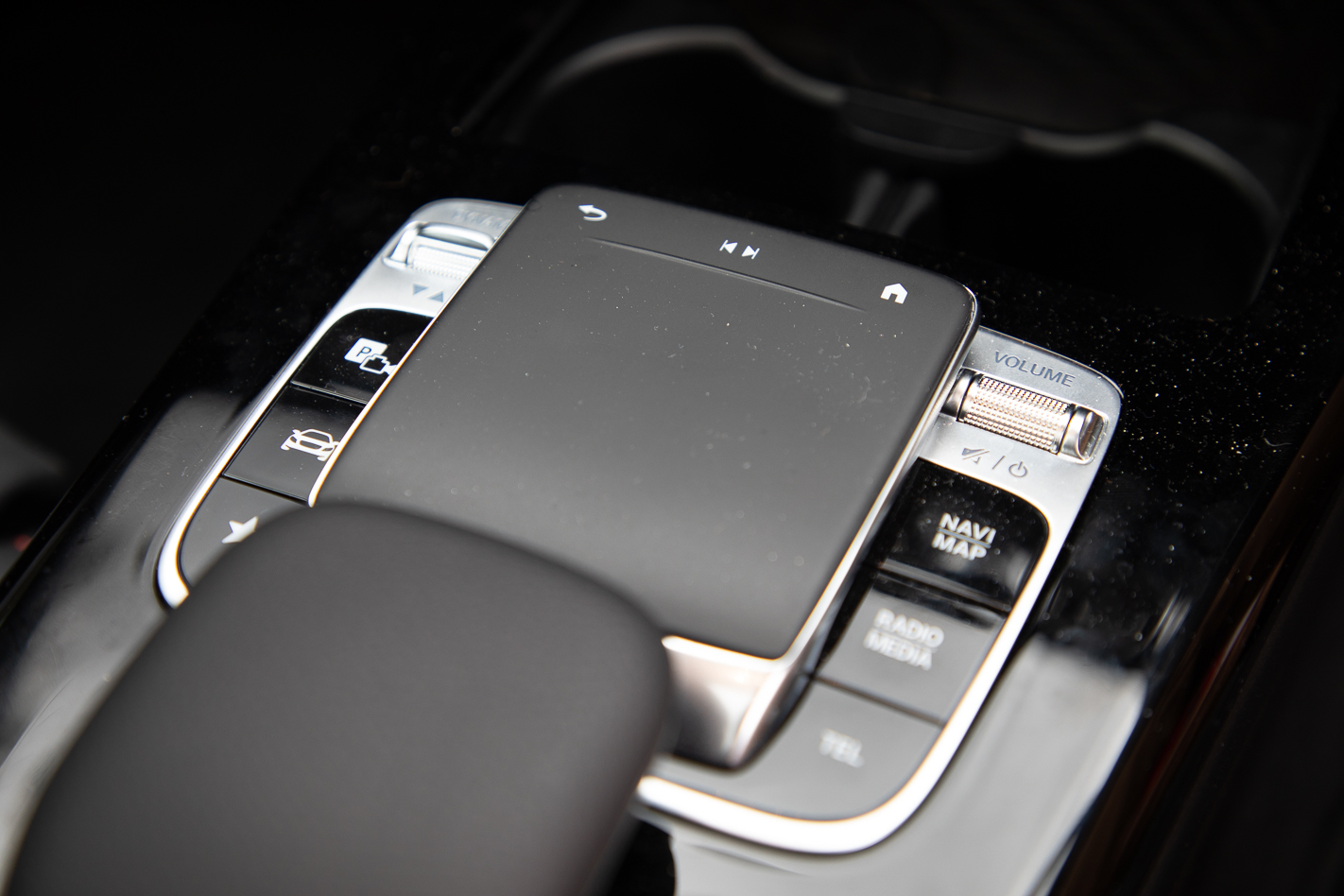
Let’s start with the inside. The interior experience is one of the highlights of the CLA, dominated by a duo of 10.25-inch widescreens which house the MBUX infotainment system. Considering Lexus draws the ire of critics for its touchpad-control infotainment system we were a little sceptical of Mercedes moving to it as well; but so far it doesn’t annoy nearly as much as Lexus’ system. The cursor intuitively reacts to where you want it to go and a number of shortcuts allow the user to quick-switch between menu screens.
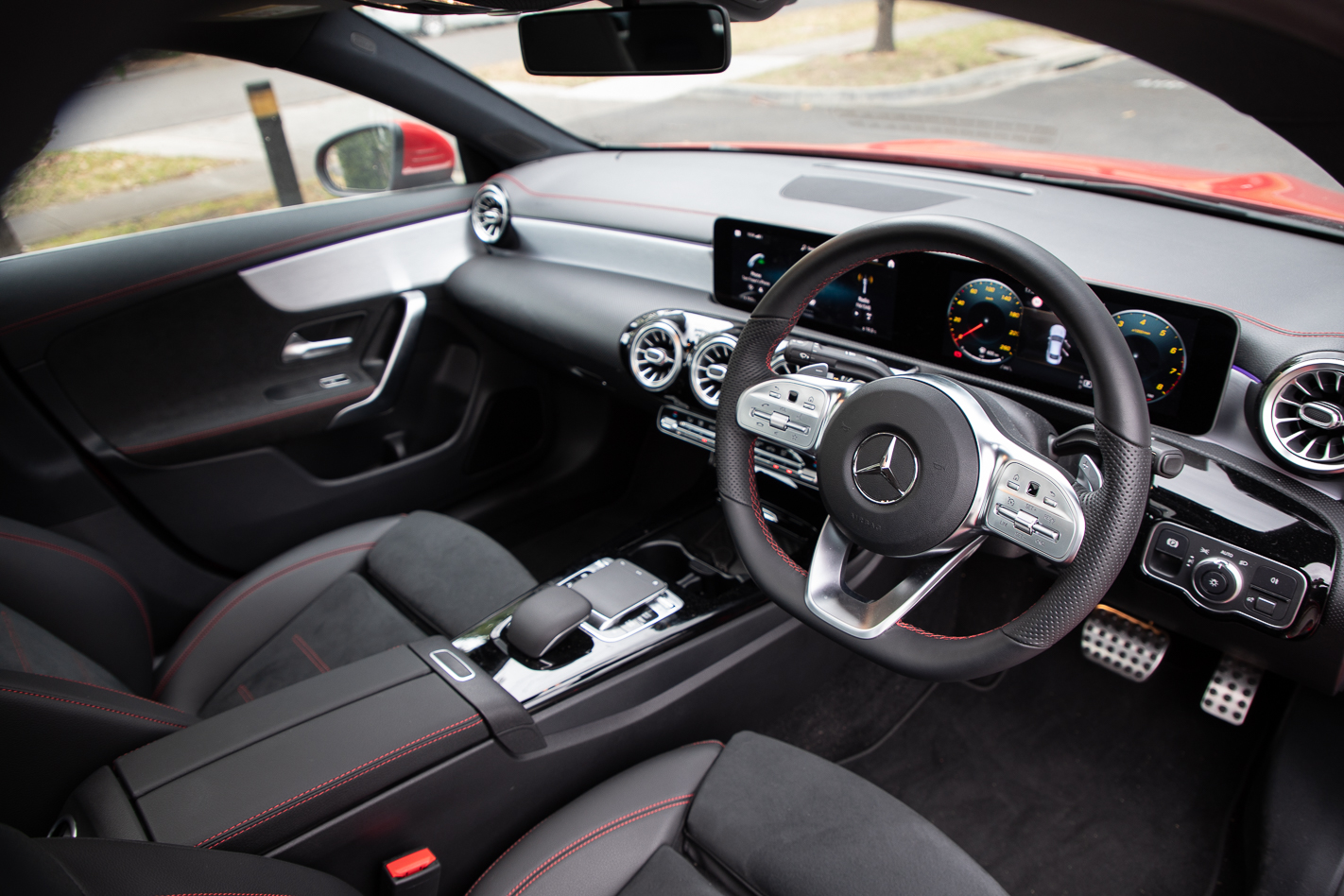
The materials used around the cabin are of impressive quality, with suede-like fabric used as inserts in the seats and covering part of the door card, while the seat outers, dash and steering wheel are all clad in leatherette. Brushed metal highlights also prevail on the air vents, steering wheel control pads and door uppers.
It’s a fancy place to be, and one that suitably impresses passengers, especially at night with the customisable ambient lighting.
One area that hasn’t impressed us just as much has been the start-stop driving experience around town. The 1.3-litre turbocharged four-cylinder paired with the dual-clutch gearbox is frustrating to use at times, especially when setting off.
Take off from a stop with a press of the accelerator like you would in any car and there’s some initial hesitation from the gearbox which is followed by an unexpected solid shove of acceleration. Breathe lightly on the accelerator the next time round to try mitigate the surge and you find it’s too little. It’s a delicate dance to get right, even just to do something as mundane as driving away from a stop.
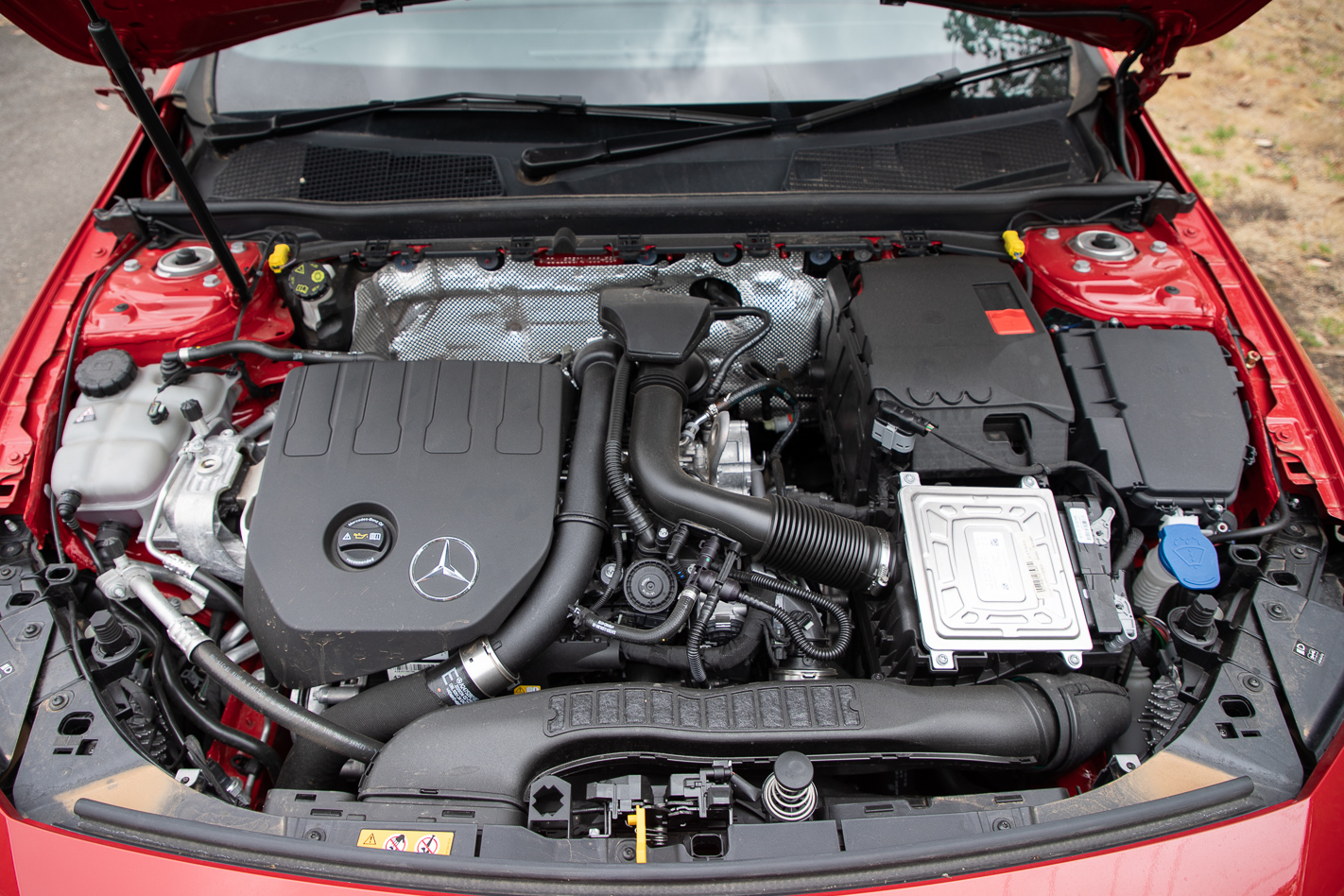
We’re happy with the engine’s 120kW/250Nm outputs, but the way it’s delivered needs some fine-tuning. It is much happier at speed, so we wouldn’t mind taking it out of Melbourne for a brief country drive to see how it fares.
At the moment the CLA is returning a 7.0L/100km fuel consumption, which is up from its 5.7L/100km claim, but we’ll see how that continues after a bit more varied driving.
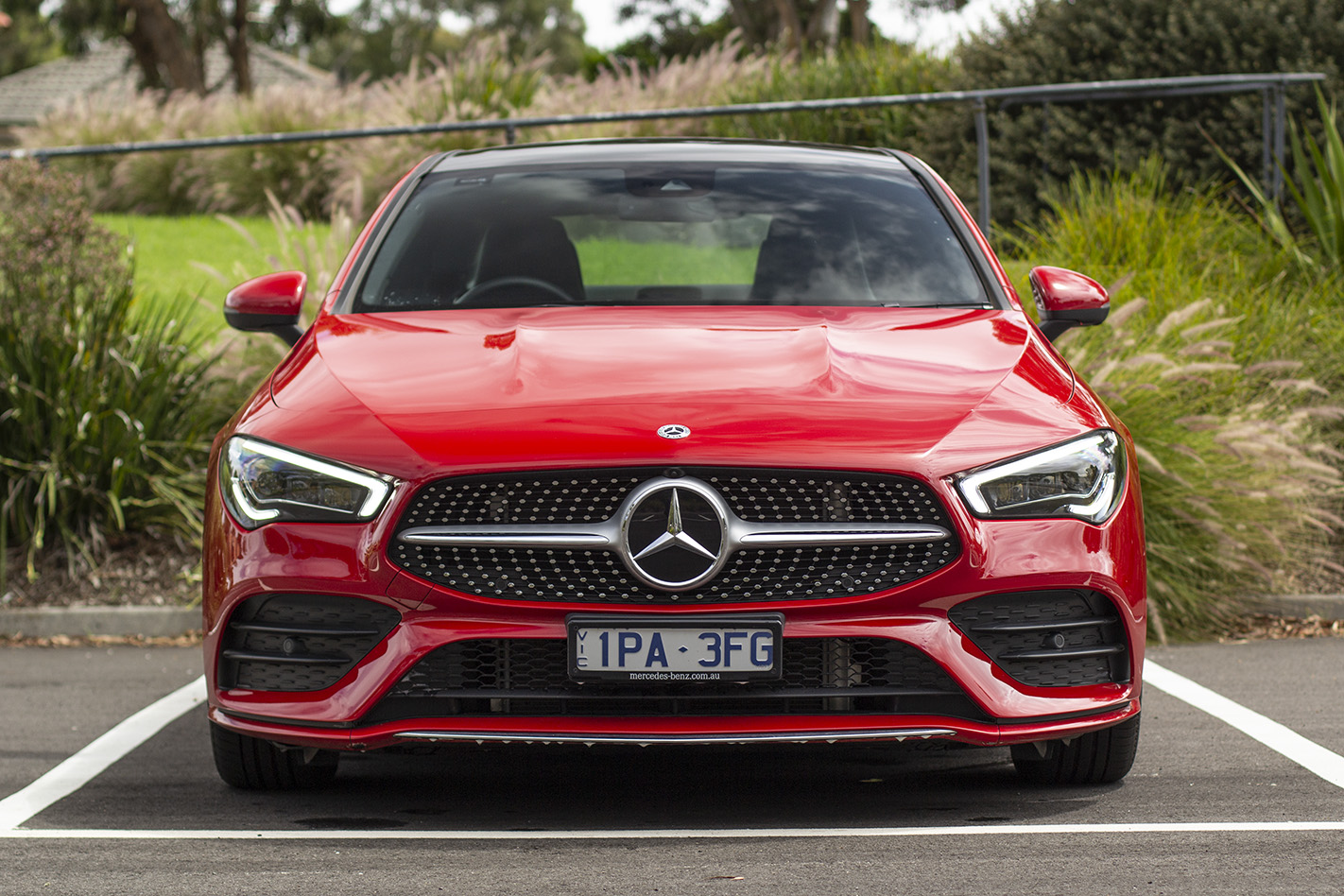
Update 3
Tony O’Kane
If you didn’t tell someone that this was one of Benz’s entry-level sedans, they’d probably guess that it belongs several levels above its actual station in the Mercedes hierarchy.
In fact, with just the A-Class sedan residing beneath it, the CLA 200 sits no higher than the second rung of Mercedes-Benz’s seven-tier four-door line-up. The small wheels and chubby tyres might clue you in on the base-spec status of our CLA, but virtually everything else has an expensive aura.
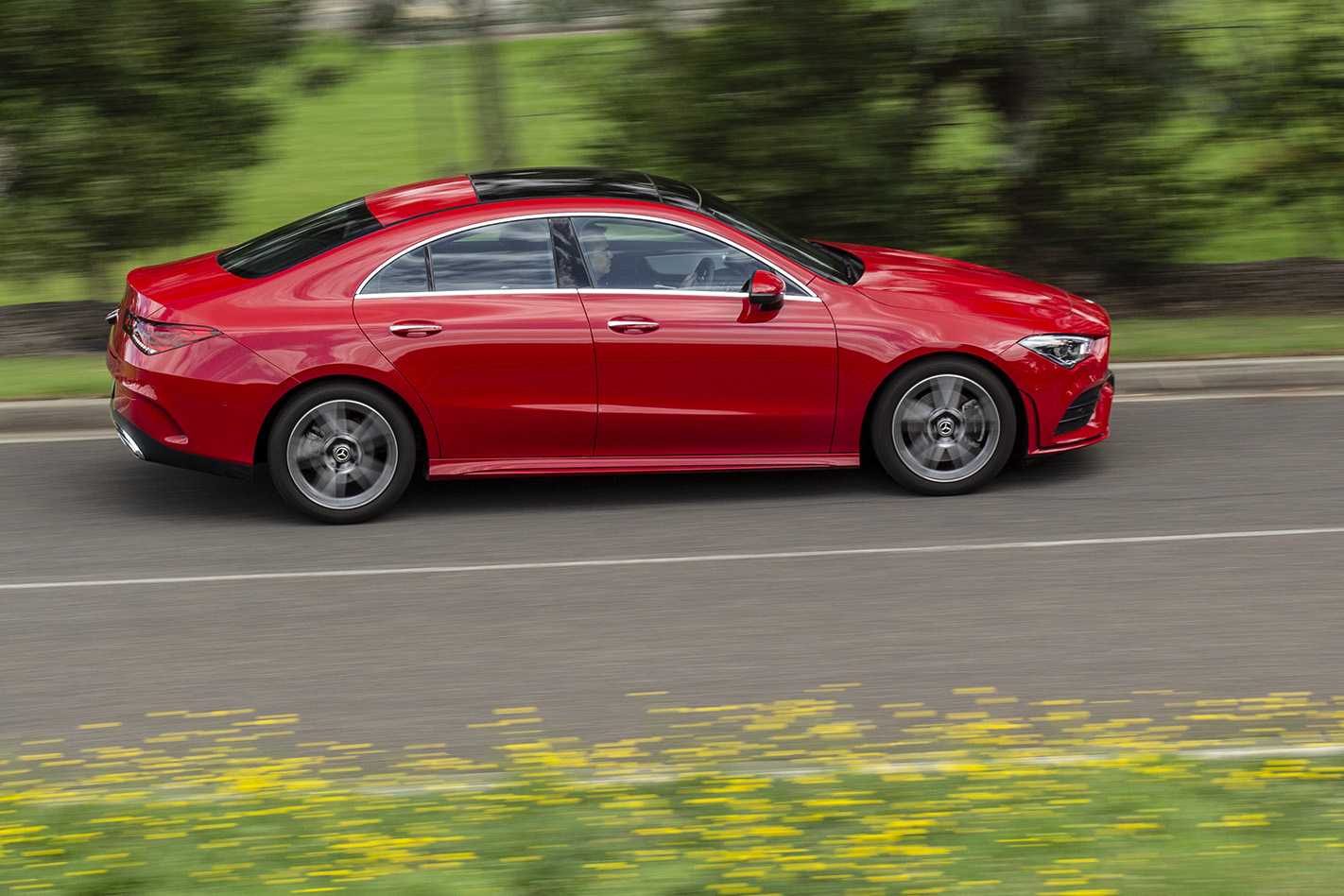
And that’s why I never grow tired of pinching the keys. Sure it’s got ‘just’ 120kW and I have to manually wind the backrest angle like a peasant, but that all matters nought when I’m in a car that looks and feels this good. It’s scientifically proven that attractive people are more confident, better liked by others and generally the recipients of preferential treatment, and I feel like the same applies when average-looking people (me) drive attractive cars (the CLA).
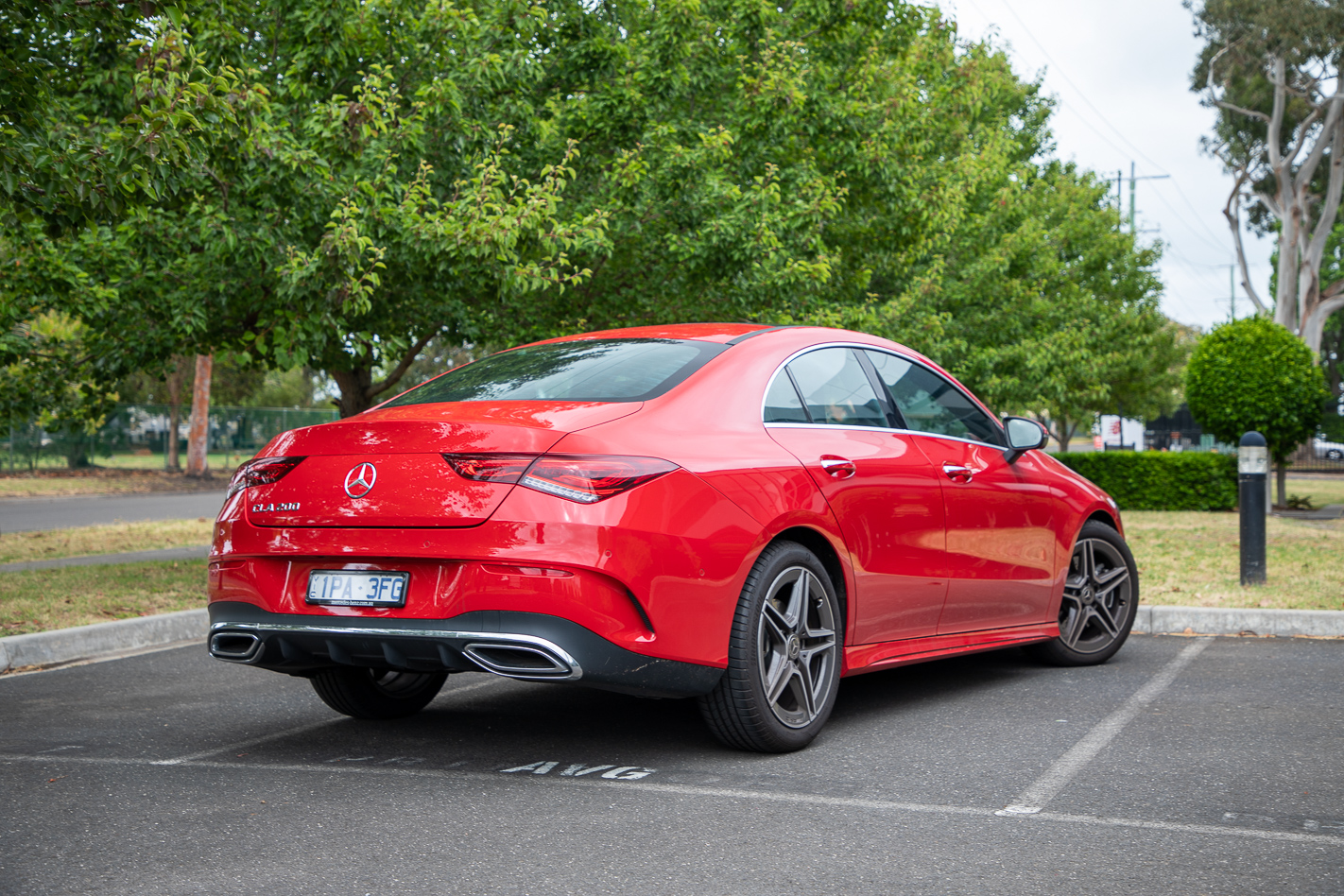
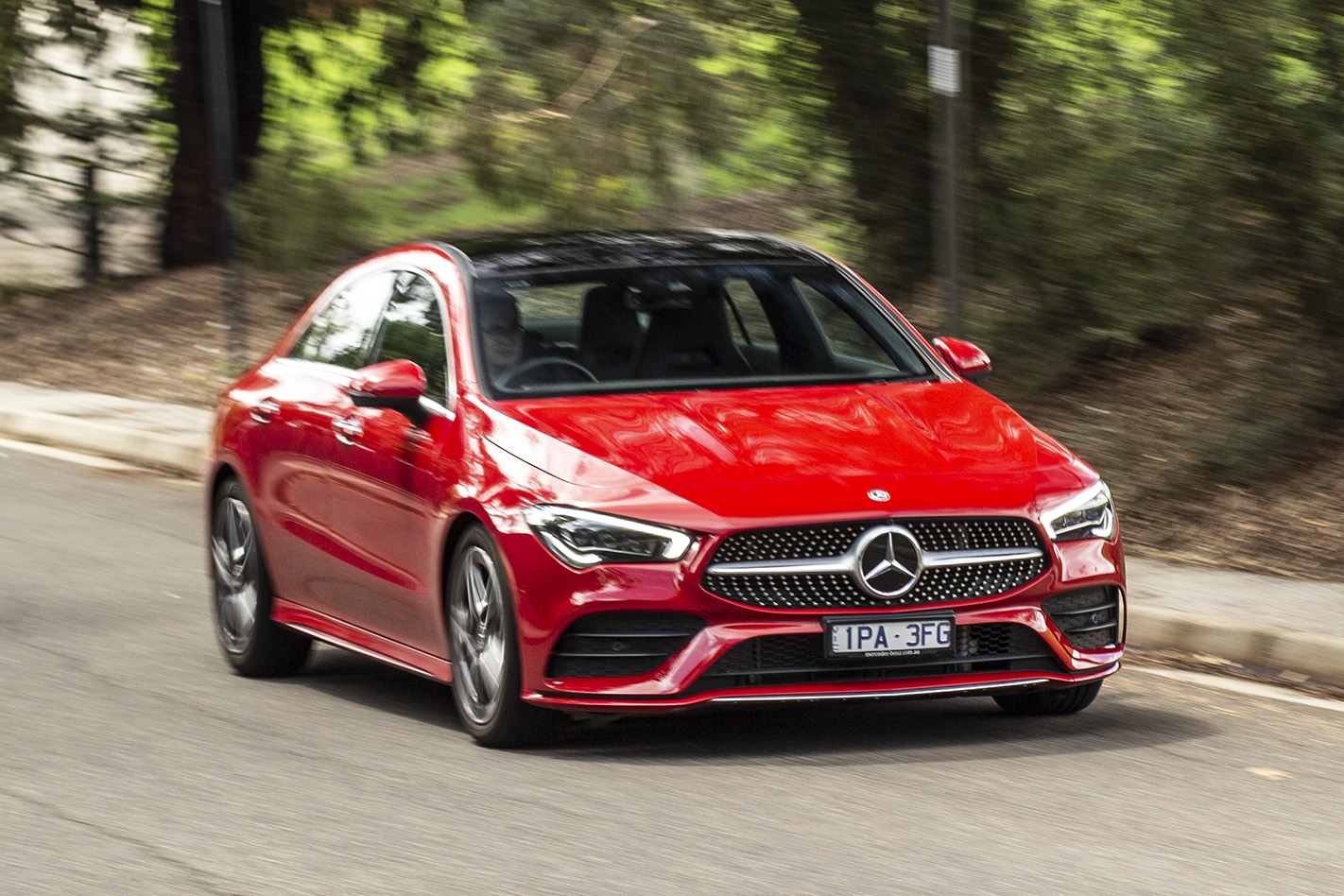
It’s part of the reason there was no love lost when it had to go back to Benz to have a stuck fuel filler flap rectified – I was just happy to see it eventually return to the WhichCar garage, its low-roof silhouette and handsome proportions were sorely missed. The non-metallic Jupiter Red paint might be atypical for a Mercedes, but it definitely works well with the CLA’s shape and certainly helps it stand out against other traffic too.
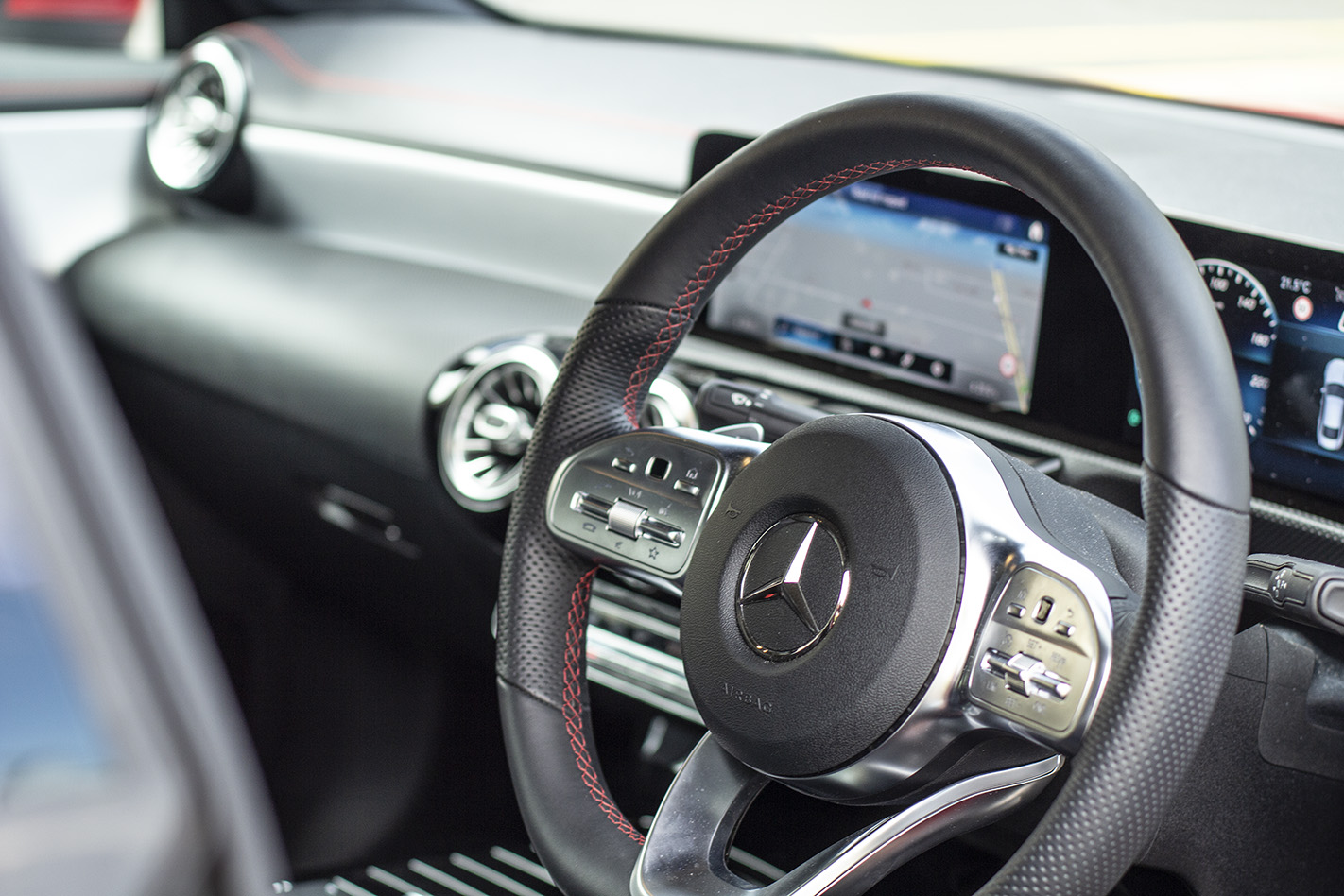
That aesthetic appeal flows through to the interior. The sculpting of the dash and choice of materials gives it an opulent feel, enhanced at night by customisable ambient lighting. Sure, there’s faux leather and synthetic microfibre on the seats, but it feels great and the microfibre has an especially nice tactility to it. There’s nothing ersatz about its desirability.
Considering it’s all basically standard, the CLA 200 is a stunning car. The only option box ticked on our long termer was the Vision Package, and with that adding a panoramic sliding sunroof, LED headlamps and a 360-degree parking camera, it’s not an option that greatly influences the beauty of the car. Forgive me for sounding shallow, but the CLA 200 is an attractive thing… and that’s precisely why I like it.
We didn’t think anything could top the Puma Gaming Sock for sheer weirdness, but it turns out there’s a new gaming peripheral that treads the line between what’s sensible and what’s insane.
We present to you: the Stilo VR Helmet.
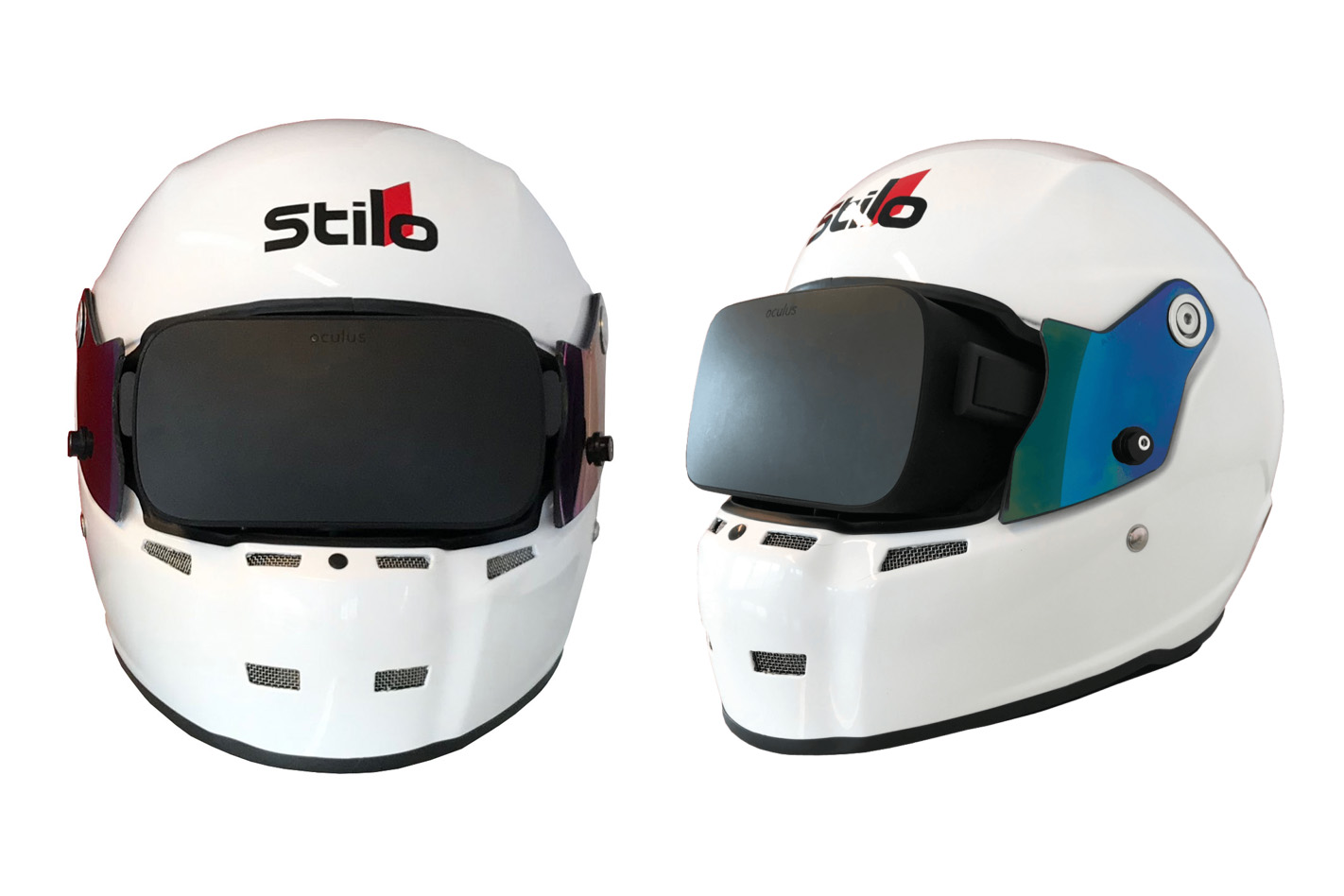
Or to use its actual name, the Stilo ST5VR. It’s exactly what you think it is too: a racing helmet that’s been designed to accommodate a VR headset jammed through its eye-port (specifically an Oculus Rift) while still remaining wearable and comfortable.
It’s not exactly clear whether you could remove the Oculus and use the ST5VR as a regular helmet, but given there appears to be the general absence of noggin-protecting foam around the sides (necessary to clear the Rift’s integrated headphones), we wouldn’t want to rely on it for protection in an actual car.
However, that’s clearly not the intent. Rather, this is something that pro-level racers might find value in as a training tool. Sure, you might be able to slap on a helmet, boots, gloves and race suit before you slide behind your sim rig’s wheel, but adding a VR headset into your ensemble would give the highest immersion factor possible.
The only problem is your average racing-grade helmet won’t allow a VR unit to sit comfortably over your eyes like the ST5VR can.
The ST5VR is based on Stilo’s established ST5 family of helmets, variants of which are now used in Formula 1, so it definitely has the right pedigree. It’s not really one for casual sim racers though, with an RRP of €299 (AU$507).
We also have questions about whether it would be compatible with the Oculus Rift S and Oculus Quest, given the first-gen Rift is no longer available. As for others like the HTC Vive, Playstation VR, Samsung VR and Valve Index, we have no idea either – though we’d safely say that the gigantic Pimax (below) simply wouldn’t fit.

Cool? Unnecessary? We’ll leave that up to you to decide, but we do know one thing: it’s definitely a far more elegant alternative to attacking an actual helmet with a Dremel… though not necessarily cheaper.
This year, in February specifically, HDT Special Vehicles turned 40.
The road car project was kicked off in 1980 by Holden racing legend Peter Brock not long after he purchased the Holden Dealer Team racing outfit. That was, of course, shortly after GM announced it would kill its global motorsport program.
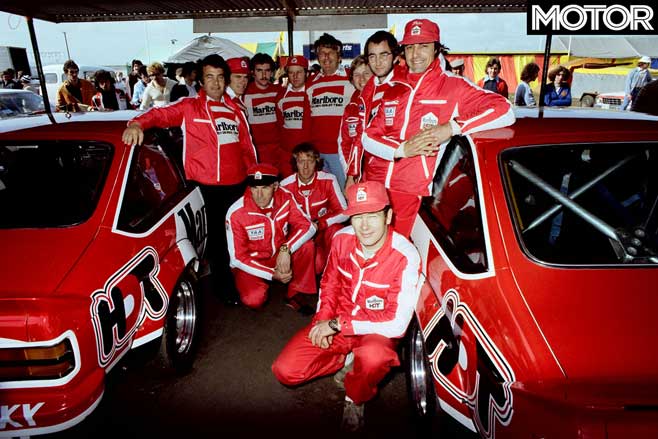
It could be because of that decision that Holden still factory-backs a team in Supercars (though it might’ve still found another way), at least for now.
But HDT’s road cars have become the stuff of legend in their own right, with the company still around under the leadership of Peter Champion, who took charge of the brand after Brock (with whom he was mates) died.
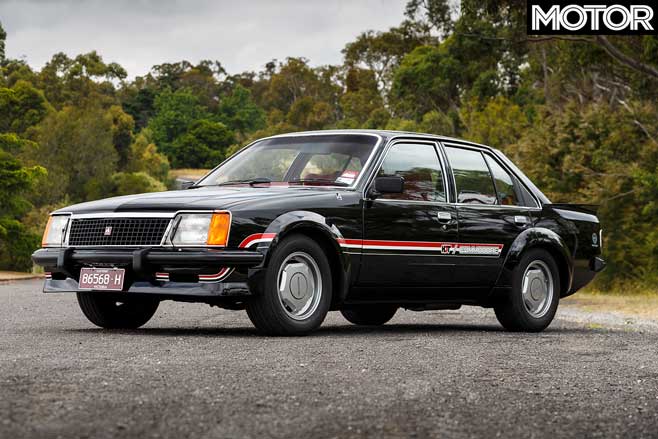
The road car story of course begins with the HDT VC Brock Commodore, now an Aussie motoring icon and perhaps second in ease-of-recognition only to the Blue Meanie, known officially as the HDT VK Group A SS, based on the VK Commodore.
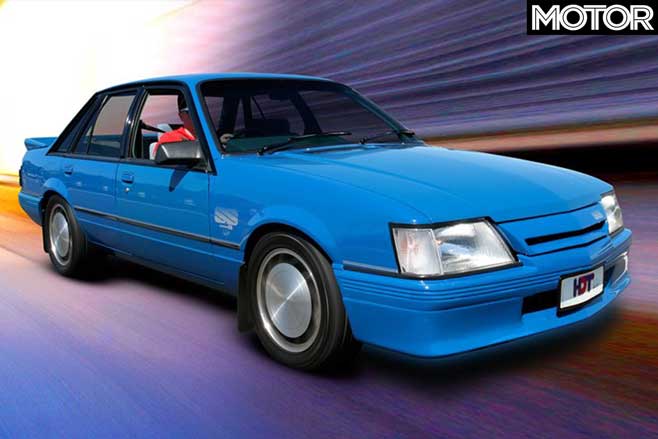
HDT continued to modify Commodores right up to the VF, using the more modern car to pay tribute to the HDTs of old. Prime examples are a VF built to replicate the VL Group A SS, one to replicate the Blue Meanie, and a VE modified to pay homage to Brock’s VL race car.
Quite recently, MOTOR sat down with former HDT boss (and later HSV exec) John Harvey to discuss the HDT years.
“We worked closely with Holden and had good support from them. Key engineers were on our side and they guided us through the whole GM system,” Harvey told MOTOR for the Holden special edition issue in November 2017.
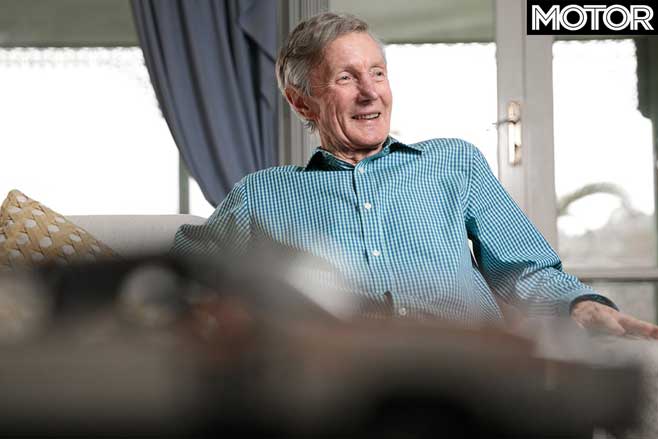
Harvey worked closely with Holden head honchos, and recalls the strict quality the HDT Special Vehicles team was held to.
“It all had to be done within GM policy and standards, which it was.”
He added that Leo Pruneau (who was responsible for about a decade of Holden’s most iconic designs) designed the VC Brock’s Commodores’ front and rear spoilers, fender flares, and striping.
Engine guru Bruce Nowacki and his team upgraded the Brock cars’ 5.0-litre V8s.
Unfortunately, in June 2018, it was announced that the aforementioned Peter Champion had sold his massive collection of Brock cars, which had once formed the basis of his ‘Brock Experience’ business.
Though they were all sold as one collection, confirmation of the cars’ whereabouts hasn’t been forthcoming.
Fortunately, HDT Special Vehicles is still alive and well, though isn’t making a big deal of its anniversary. Speaking briefly with MOTOR, a HDT spokesperson did confirm the company would be getting together with HDT clubs and attending small meetings to mark the occasion.
What stands out?
The Subaru Outback is a five-seat alternative to the bulky, large SUVs but is still very roomy. It has a smart all-wheel-drive system and an elegant interior that accommodates adults comfortably in the rear. Based on the Subaru Liberty wagon, the Outback rides higher and handles gravel roads well. All Outbacks have autonomous emergency braking.
What might bug me?
Not much. Perhaps banging your head on the tailgate: tall people may find it doesn’t rise high enough.
What body styles are there?
Five-door wagon only.All Subaru Outbacks drive all four wheels. Even though it is based on the Subaru Liberty medium car, the Outback is classed as a large SUV, lower priced.
What features do all Outbacks have?
A touchscreen with Apple CarPlay/Android Auto and Bluetooth connectivity for phones and audio streaming. An MP3 and iPod compatible sound system with an AM/FM radio, a CD player, and Aux and USB inputs.Every Outback comes with a reversing camera, and advanced active safety system that Subaru calls EyeSight. Eyesight includes adaptive cruise control (which matches your speed to that of a vehicle ahead), lane-keeping assist, and autonomous emergency braking that works at city and highway speeds and also detects pedestrians.A leather-wrapped steering wheel that is adjustable for height and reach, and with paddle shifters, and buttons for operating the cruise control, the audio system and your phone.Roof rails with integrated crossbars, and rear roof spoiler.Dual-zone air-conditioning (which lets you set different temperatures on either side of the cabin). Windscreen wipers that operate automatically when it rains, and headlamps that switch on automatically in low light.Aluminium alloy wheels, which are lighter and more stylish than steel wheels, and a full-size spare wheel.Dusk sensing, auto-off headlights with integrated daytime running lights, and front fog-lampsTinted windows at the back: they keep the cabin slightly cooler on a hot day and make it harder to see in.Metallic or pearl paint finishes. There are 10 colours to choose from, at no extra cost.Seven airbags: one directly in front of each front occupant; an airbag to protect the driver’s knees; two protecting the bodies of front occupants from side impacts; and side curtain airbags that protect the heads of front and rear occupants from side impacts.Electronic stability control, which can help control a skid. All new cars must have this feature.All Outbacks are covered by a five-year, unlimited-kilometre warranty.
Which engine uses least fuel, and why wouldn’t I choose it?
The 2.0-litre turbo-diesel that powers the Outback 2.0D is the most fuel-efficient engine, using as little as 6.3 litres/100km in the official test (city and country combined).One reason you might not choose a diesel Outback is that it’s fitted with a particulate filter and therefore are not suited to predominantly urban driving. You need to spend half an hour at country-road speeds every week or two so that the filter can clean itself.The most fuel-efficient alternative engine, the 2.5-litre four-cylinder petrol, uses 7.3 litres/100km in the official test – a good figure given the size of the car. It comes with a stop-start system, which saves fuel in heavy traffic by switching off the engine when the car is stationary.The most powerful engine in an Outback is the 3.6-litre six-cylinder that powers only the most expensive model, the Outback 3.6R. It provides about 50 per cent more power than the 2.5 petrol in most driving conditions but uses significantly more fuel (9.9 litres/100km).Subarus are unusual in that their horizontally opposed ‘boxer’ engines lie flat in the engine bay rather than standing vertically. That means more of the engine weight is carried low in the car, which helps improve handling.All Outbacks are automatics, using a continuously variable transmission, or CVT that can drive all four wheels. Rather than driving through a fixed number of gear ratios, the CVT generally responds seamlessly to the driver’s demands, improving performance and decreasing fuel use.
What key features do I get if I spend more?
The 2.5i and 2.0d come with the features that all Outbacks have, with cloth seats, and a 6.5-inch touchscreen.Spending more on a 2.5i X brings water-repellent cloth seats, with the front seats heated and power-adjusted. The touchscreen is slightly bigger, at 8.0 inches, and there is satellite navigation, a sunroof, a power-raised tailgate, push-button start, and smart key entry that allows you to unlock the front doors just by grabbing a handle if the key is nearby (for example, in a pocket or bag).The 2.5i X also beings more active safety features that were previously only available in more expensive Premium versions. Chief among these are Blind Spot Monitoring, which alerts you to nearby cars that are out of view, and Rear Cross Traffic Alert that lets you know, when you are reversing, that other vehicles are about to cross behind.You also get LED headlamps that dip automatically for oncoming drivers and point into corners to light up the direction you’re travelling, while front- and side-view cameras help prevent collisions when parking by providing a better view of walls and hidden obstacles.The 2.5i X’s grille, alloy wheels, wheel-arch mouldings and door mirrors are all blackened to give it a more rugged aesthetic.The 2.5i and 2.0D Premium versions have all the features found in the 2.5i X with the addition of leather seats, though the alloy wheels, grille and door mirrors aren’t black.The most expensive Outback, the 3.6R, has the much more powerful, six-cylinder, petrol engine and all the equipment from Outback Premiums. It also has a better-sounding, Harman Kardon, audio system.All petrol Outbacks and the Premium diesel have 18-inch wheels. (The less costly of the diesel versions has 17-inch wheels.)
Does any upgrade have a down side?
The 3.6R loses the auto stop-start function, which adds to the increased fuel consumption over the 2.5i and 2.5i X variants, and it also costs more to service.If paying more for a 2.5i X your colour options are limited to just five hues: Crystal White, Crystal Black, Dark Blue, Magnetite Grey and Wilderness Green. All other versions have 10 colour options.
How comfortable is the Outback?
The Outback has an inviting and cleanly presented cabin with great head room up front, and the driving position has a wide range of adjustment.The touchscreen is easy to navigate, with additional buttons and control knobs that help. Steering wheel controls are logically laid out.Even the electronic park brake button is elegant – and its operation is intuitive, in so far as it mimics a traditional handbrake: up for on, and down for off. Large temperature controls complete a good ergonomics package.Vision is good from the cabin, too, while the seats are broad and supple, with enough lateral support to hold you in place when cornering.Because it is based on a passenger wagon, the Outback is less bulky than most large SUVs. That works well around the suburbs, where it is easy to manoeuver and park.The steering is light, and well shielded from unwanted kickback, and it works well with the suspension to provide an agile and obedient vehicle.That suspension is noticeably firm at slow speeds, which detracts slightly from the otherwise comfortable – and quiet – driving experience. The Outback is excellent at negotiating potholes and rough roads. The ride is marginally better on the less costly of the diesel models, because its higher-profile 17-inch tyres place more rubber and air between the wheel and the road.The 2.5-litre petrol engine is quiet and responsive, with moderate acceleration. A steep hill on a country road will have it working hard. The CVT auto teams well with the engine, maintaining smooth progress. Occasionally it will fumble if you demand more power abruptly.The 3.6R Premium feels noticeably punchier, and accelerates much harder in all situations.The diesel engine feels more lethargic than either petrol when starting off but feels more muscly and relaxed than the 2.5 petrol once under way. The CVT auto helps you make the most of it, keeping the engine in its sweet spot.
What about safety in a Subaru Outback?
The Outback has good airbag protection for all occupants, and seatbelt warning lights for all five seats.The standard reversing camera is reassuring. Automatic windscreen wipers and headlamps add to the safety package, reducing demands on the driver’s attention and, in the latter case, responding reliably to poor visibility.The EyeSight active safety system on all Outbacks offer sophisticated autonomous emergency braking. A computer monitors images from two cameras mounted above the windscreen. If it detects an obstacle – typically another car that has slowed suddenly – it will warn you, and if you do not respond quickly it will brake the car for you. The system works at all speeds below 145km/h, although how much it can slow you will depend on your speed and the conditions.EyeSight also warns you if you are drifting out of your lane (a sign of fatigue) and will steer itself within lane markings. A lead vehicle start alert tells you that the vehicle ahead of you in a queue has moved on.The adaptive cruise control recognises brake lights and sees vehicles from longer distances and wider angles, making it even safer on multi-lane roads or when vehicles cut across lanes.Outback 2.5i X, Premiums and the 3.6R, also monitor blind spots, and when reversing alert you to vehicles crossing behind.(To see a list of the safety features on any model, select the model from the Cars Covered By This Review dropdown near the top of this page, and look under the features tab. Safety-related features are listed in red.)The Australasian New Car Assessment Program (ANCAP) has rated the Outback at five stars for safety, its maximum rating.
I like driving – will I enjoy this car?
There is plenty to like about the way the Outback drives, and if you enjoy twisting country roads you will be rewarded. Partly because it’s not as tall as some big SUVs, the Outback leans less through corners and therefore holds the road better.On particularly bad road conditions the Outback as a feature called X Mode that helps the Outback safely negotiate slippery surfaces and inclines by constantly monitoring the traction available to each wheel and centralising control of the engine, transmission, brakes and other components. To engage the system simply press the X Mode button near the gear shifter while travelling below 40 km/h.Subaru’s all-wheel-drive system works very well, too. While most highway-focused all-wheel drive SUVs rely primarily on the front wheels, sending power to the rear only if the front tyres begin to slip, the Subaru sends drive evenly to the front and rear wheels. That inspires confidence when driving out of tight corners.In the 2.5i there is an SI-Drive system, for Subaru Intelligent Drive, which has an Intelligent mode (for saving fuel) and a Sport mode (for more spirited driving). The system adjusts throttle sensitivity, with the Sport mode the more enjoyable, even around town: you don’t have to press the accelerator as hard to get the power that you want.Less enticing for spirited driving is the diesel engine, which runs out of puff sooner than the 2.5i when you want all the go you can get. But while the petrol engines are more enjoyable in most situations, the diesel is great for highway cruising, where it feels quite relaxed and is the most fuel efficient.The much more powerful 3.6R petrol also gets SI-Drive but adds a third mode, Sport Sharp. It makes the accelerator – and the transmission – even more sensitive to pressure from your right foot on the pedal. It’s good on a twisty road where you’re changing speeds regularly, or if you want to drive fast, but otherwise the regular Sport mode is the best compromise.The CVT auto in the 3.6R generally works well with the engine, providing smooth acceleration. With this engine the Outback is a brisk SUV, building pace effortlessly for overtaking.The Outback is a light-duty off-roader, best limited to gravel tracks and mud- and snow-covered roads.
How is life in the rear seats?
The Outback has one of the more accommodating back seats for adults in a large SUV. Headroom is good and legroom is excellent, with good space for feet also.The centre seat sits slightly higher and so the centre passenger has less headroom and side-support than the others. But the angle of the seatback can be adjusted.Three child seats can be fitted across the rear seat using standard anchor points, or you can fit up to two using ISOFIX anchors. The rear doors open wide which helps with putting children in their seats.There are rear air-conditioning vents, two USB ports and a folding centre armrest.
How is it for carrying stuff?
The Outback is a deceptively big car and has a big 512-litre boot that is long and fairly wide. The floor is flat, albeit quite high, and it’s easy to load things.The back seats fold in a 60/40 configuration and there’s a choice of two levers to operate them: one on the top of the seat-backs (for pushing from behind), and one on the edges of the seats themselves (which are easier to get at from the seats). Putting the seats down brings up to 1801-litres of space which translates to quite long loads – we managed to fit a 1.9m long TV cabinet in an Outback.The luggage blind has to be retracted manually and doesn’t rise automatically with the tailgate.Four-cylinder petrol Outbacks can tow 1500kg, which is on par with some medium SUVs but less than many large SUVs. The 3.6R lugs a more respectable 1800kg, while the diesel sits between them at 1700kg.
Where does Subaru make the Outback?
All Subaru Outbacks are made in Japan.
What might I miss that similar cars have?
Perhaps the two extra seats that many big SUVs offer. Among seven-seater SUVs are the Holden Acadia, Hyundai Santa Fe, Kia Sorento, Toyota Kluger, Nissan Pathfinder, Skoda Kodiaq and Mazda CX-8 or CX-9.Other cars that you might consider include the Ford Endura, Volkswagen Passat Alltrack, Skoda Superb 4×4, and the Jeep Grand Cherokee.
I like this car, but I can’t choose which version. Can you help?
The 2.5i is a great car for under $40,000. It’s loaded with features, including class-leading safety technology, and the petrol engine offers decent performance. The leather-laced luxury of the Premium would be nice, but the cheaper 2.5i does just fine.
Are there plans to update the Outback soon?
The current generation Outback went on sale in late 2014. A modest update in February 2016 added EyeSight to auto-gearbox diesel models (EyeSight remained unavailable on manual diesels), and brought minor suspension changes. Blind spot monitoring and rear cross-traffic alert were added to Outback Premiums and the 3.6R.Another update in early 2018 brought a mild facelift, with a new grille and more premium-look cabin. The manual gearbox was deleted which meant EyeSight became standard across the Outback range and lane-keeping assist was added to the list of active safety features. Performance was also tweaked for greater handling, throttle response and efficiency.In 2019 Subaru introduced the limited edition 2.5i-X that added plenty that brought a more rugged look and plenty of features found in the Premium versions. This proved so popular that it was added a permanent version for the 2020 model year.A new generation Outback will launch overseas during the middle of 2020 and will launch in Australia either at the end of the year, or in early 2021. It will be available with new turbocharged petrol engines, though no word of there will be a hybrid version as now available with the Subaru XV and Forester.
The ‘international’ motor show as we know it may not be clinically dead, but its complexion is a sickly pallor, and its pulse erratic.
Shock news out of Europe late last week confirmed that the 2020 Geneva Motor Show had been cancelled amid coronavirus pandemic fears. Speculation suggests the event may not return from its sudden and unexpected hiatus.
In this fast-moving world where so much information has never been so quickly or extensively shared, and where billions of car enthusiasts around the world can view new releases on large, high-def displays, or via social media platforms, perhaps it was inevitable that the largely static spectacle of shiny cars parked in vast halls would become a casualty.
Australia’s motor show died way back in 2008, when the 2009 Sydney event was cancelled in the wake of the GFC and falling attendances. An effort to merge Sydney and Melbourne shows never found sustainable traction.
Now, what was once one of the world’s blue-chip automotive showcase events, the Frankfurt motor show, held in the German city since 1951, is no more.
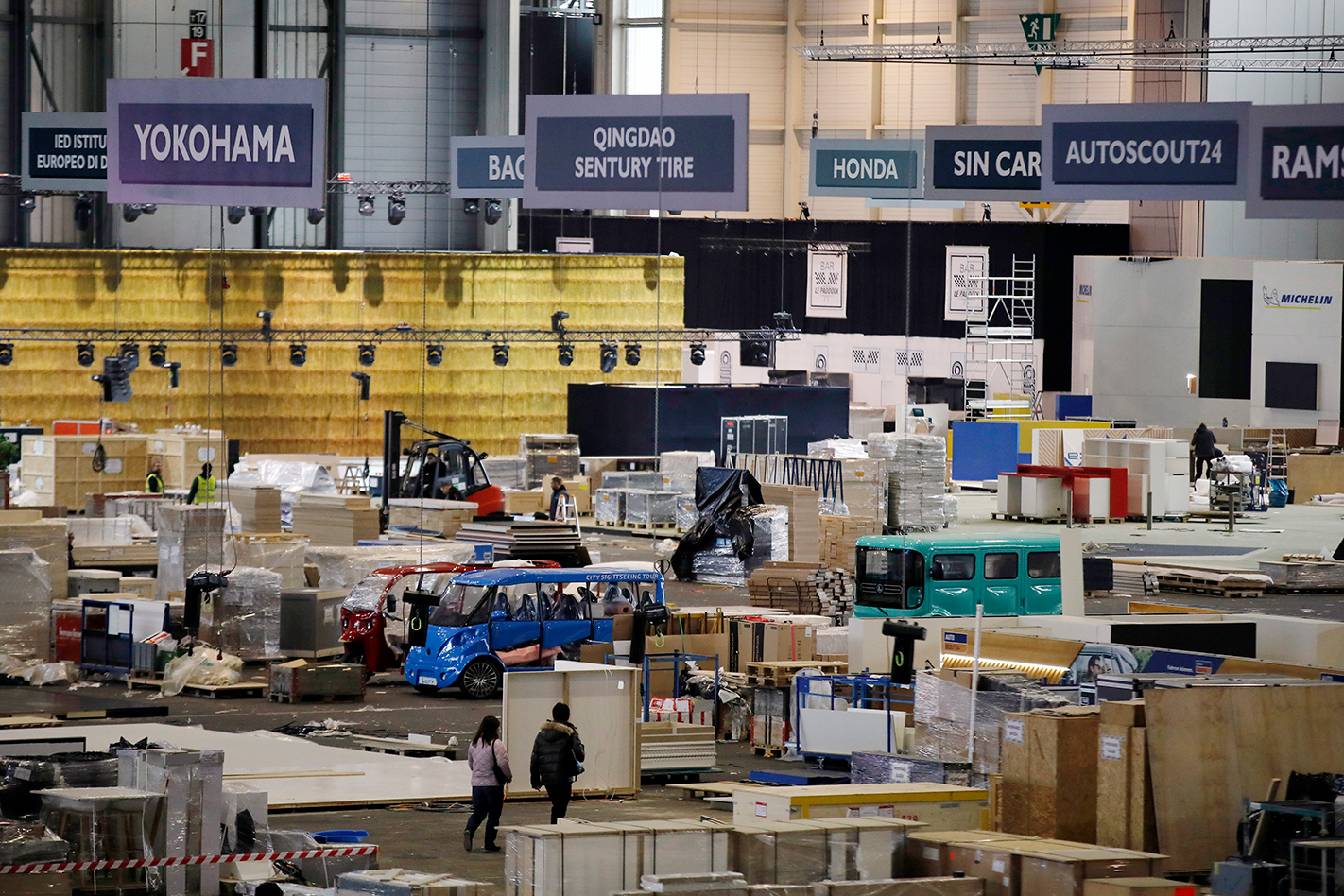
At Frankfurt, cars (and motorcycles) are shown in odd-number years; commercial vehicles in even years. The VDA (organising group Verband der Automobilindustrie, or German Automotive Industry Association) has pulled the plug on the odd-years event.
Frankfurt was in crisis when the likes of Toyota, Peugeot Renault, Nissan, Fiat, and Ferrari pulled out well in advance, and the event found itself on even shakier ground when attendance figures came out: down 31 percent in 2019, and a slump of 40 percent this decade. Attendance peaked back in 2007, with around one million visitors. In 2019, that figure was well under 600,000.
But this isn’t to say that Germany will no longer host an international show. What’s dead, actually, is Frankfurt as the host city. VDA solicited hosting bids, received seven tenders, and will decide between Berlin, Munich and Hamburg.
“That doesn’t mean the good times will return in a different city,” one industry observer suggested to Wheels.
The longer-term fortunes of major international motor shows sure weren’t helped when, in 2018, Volkswagen’s global chairman Herbert Diess stated: “Motor shows are dead.”
He described the events as “a product of the 1960s, and they are not as relevant anymore.” And, “They’re not delivering what we want, nor what car buyers want.”
It’s possible that Diess’s negative slant was influenced by the fact that at the time, he was attending the annual Goodwood Festival of Speed in the UK. Diess was clearly taken by the joyous contrast at Goodwood; the festival’s immersive, interactive focus; the throngs of high-profile guests that have the place buzzing. All of which makes a largely static collection of cars in a few giant halls look a bit passe, no matter how big the scale or hype surrounding the concept metal.
Plenty of well-placed observers reckon Goodwood offers a glimpse at what motor shows might look like further into the 2020s.
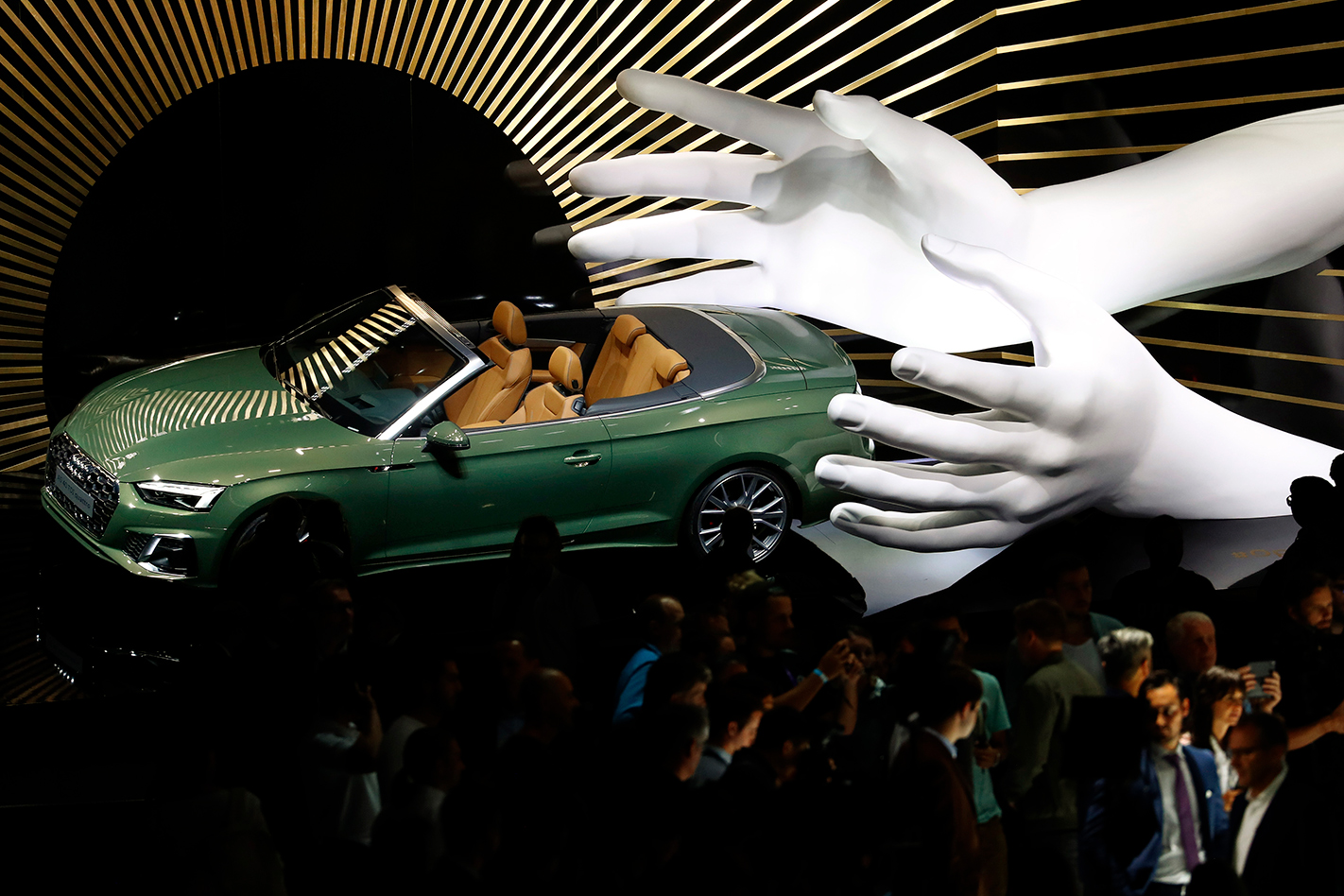
It’s clear that what used to be obligatory attendance by major manufacturers at big-time shows is now past: “If we don’t have a proper unveil for a show, we won’t go,” said Mark Dahnke, a spokesman for Audi USA.
He cites the adoption of a “launch cadence”, and Audi’s conviction that bringing journalists to a one-off event, such as that held for the e-tron SUV in San Francisco in 2018, is the more effective strategy for press attention.
So clearly the abandonment of motor shows has plenty to do with media and message. The era of smartphones, social media, and data mining has many execs believing they’re better off chasing viral marketing moments or, as BMW put it when announcing its withdrawal from Detroit 2019, “exploring alternative platforms and formats.”
So Twitter, Instagram and Facebook feeds replace glitzy reveals, directly addressing the target market, complete with instant, transparent performance metrics.
While money is a consideration – a lavish stand at an international show can cost upward of A$10 million – car makers would spend to the limits of their resources if their messages weren’t competing with a flurry of others.
“If you do have a big reveal at a motor show, the media often doesn’t have enough time to digest properly what you’re getting across,” says Dahnke.
And what about the punter’s point of view? One car enthusiast we spoke to cited a few reasons he would no longer bother going to a motor show: “Usually the cool concepts have already been shown online,” said Andrew Evans, of Sydney.
“And these days there are dealers all clustered together in one major suburban spot; you can walk from dealership to dealership and see every model and see their facilities for service. With no admission fee…”
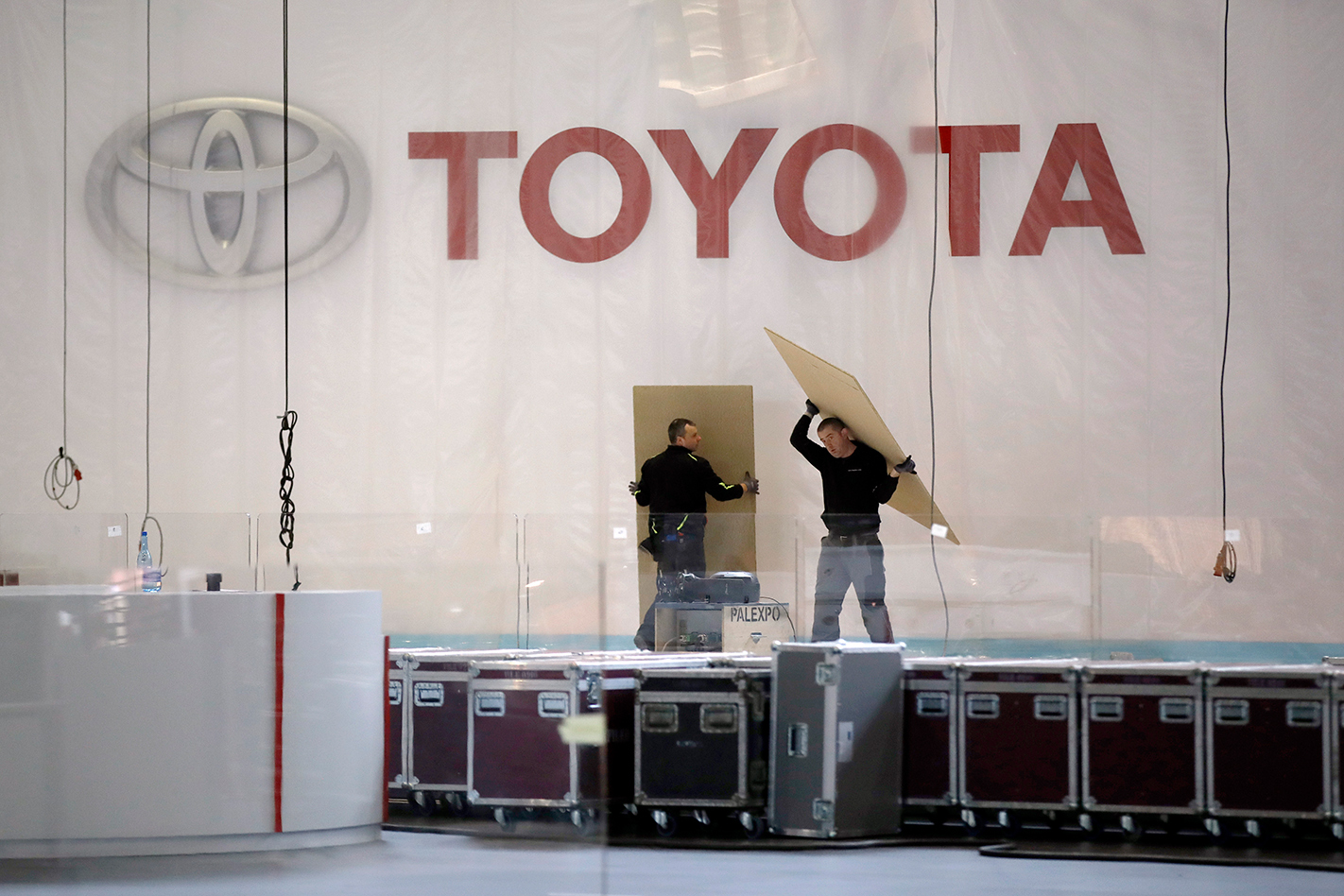
Meanwhile, head of the Paris motor show, Jean-Claude Girot, is facing his own challenges for the biennial event.
In 2018, big-name no-shows included Volkswagen, Ford, Fiat, Volvo, Nissan, Infiniti, Subaru, Mazda and Mitsubishi. Since then he’s faced further pressure, including manufacturers trying to negotiate a lower stand rental.
“I’m not receptive to that,” Girot says firmly. “We are a commercial operation, and we must have profits.”
He did concede that changing the generic formula is a must.
“We have to reinvent – be more inventive, but no less interesting,” he said.
“Smaller booths, perhaps. We have to fight to be better, to show better things to the visitors and press, and to keep the passion.”
