
The Mk7.5 generation Volkswagen Golf is coming to an end, and Volkswagen Australia is sending it off with a visual bang.
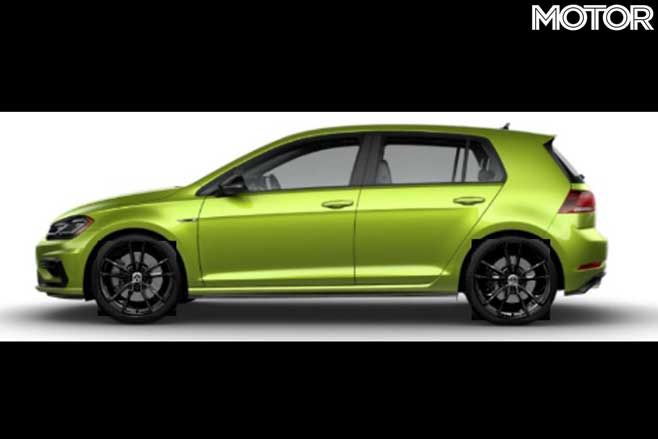
The Volkswagen Golf R Final Edition will be a highly specced version of the 213kW hot hatch, including plenty of extras for a relatively small premium over the standard Golf R’s price.
Additionally, 150 of the 450 Final Edition Golf Rs will be painted in one of three Volkswagen Colour Concept colours. Victory Blue, Viper Green metallic, and Violet Touch Pearlescent are the colours,
Victory blue is reminiscent of Porsche’s Rivera Blue, while Viper Green is a tribute to the departed VW Sirocco R, and Violet Touch is a colour that’s been available as a custom order in the US for some time.
The Final Edition also comes with 19-inch black Pretoria alloys, black door mirrors, Nappa leather upholstery, and a Dynaudio premium audio system.
Pricing for the Final Edition sits at $57,990, available in hatch only, with one of the three limited colours costing an extra $300. A panoramic sunroof can be added for $1900.
Volkswagen Australia says it’s rather pleased with the performance of the Golf R in the market, with 14.2 per cent of total Golf sales made up by the R. A total 2035 Golf R sales were made up by 1702 hatchbacks and 333 wagons.
The Golf R Final Edition will be available to customers in May 2020, with the standard Golf R to also remain on sale starting at $55,490.
It’s the most expensive and one of the most rapid cars in the 2020 Wheels Car of the Year field. We’re talking, of course, about the esteemed 992 generation Porsche 911. What a thing indeed.
Beauty is in the eye of the beholder. And there are few cars quite as contentious as the evolutionary 911. The iconic design can still be seen today. It works for some, and not for others. Either way it has a commandeering presence, one with oversized and sculpted rear haunches. Yet it’s filled with delicacy and finesse, too.
Inside the retro, yet ultra-modern cabin is impressive – both in build quality and design. The gurus within the Stuttgart HQ have a habit of making the driving position just so, and the current 911 carries on the tradition of near perfection. You sit low, legs out and arms bent at just the right angle. It’s unashamedly loud; you can hear the ticks and crackles from the flat six when it awakes from slumber.
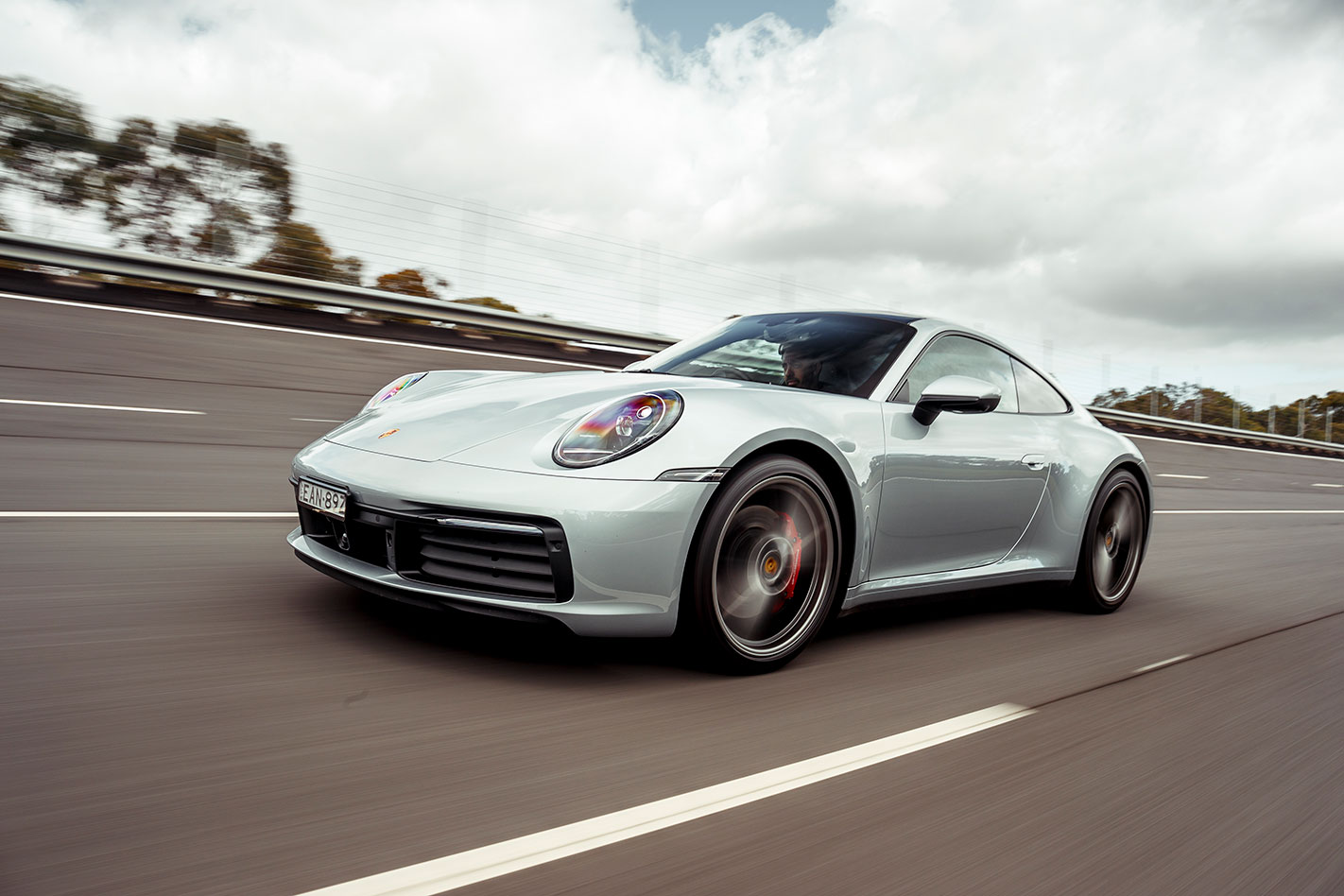
When angry, the Carrera S’s 331kW and 530Nm twin-turbo 3.0-litre is a monster. It’s quoted 0-100km/h time of 3.5 seconds is utterly believable. Behind the wheel you’re left bewildered at the fact this is a Porsche sans a GT badge… what must be coming next? And then the eight-speed PDK ’box slams through another gear and the speedo throws a figure at you that grabs your attention.
Perfecting the rear-engine, rear-wheel drive layout has always been the 911’s USP. The 992-gen car has Holden’s Lang Lang proving ground to, ahem, prove that hasn’t changed. We might have even captured some cheeky drift shots on a skid pan in the process… all in the name of serving you, of course, dear reader.
The Carrera S is a special car at a very special event. Yet, Porsche has never won Wheels Car of the Year. The 911’s polarising value proposition could be its undoing. Although with a tweak to the COTY rules and the brilliance that is the 992 911, there’s every chance 2020 could be the breakthrough year. You’ll just have to stay tuned to find out.
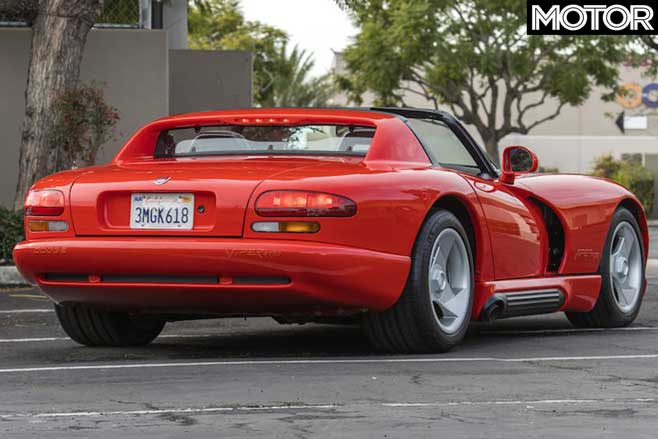
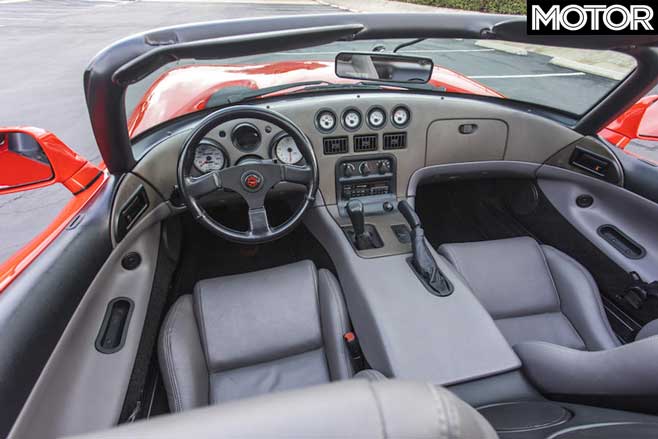
The first production Dodge Viper ever built has sold at auction for an impressive, but perhaps in this case quite reasonable, AUD$411,928. Not only was it the first, but it was owned by automotive industry veteran Lee Iacocca.
If you’ve watched the 2019 film Ford vs Ferrari, you’ve had a very small glimpse at who Lee Iacocca was. The man on Ford’s executive team who made the Mustang happen, and the man who helped Carroll Shelby turn an idea into the Le Mans-dominating Ford GT40.
But Iacocca went on to work at Chrysler a couple of decades later, as the company’s CEO.
In 1992, he was on hand to present a car Dodge had built with his approval, the Viper. More specifically, the Viper RT/10.
Upon presenting the first Viper to the press, Iacocca told a story about Carroll Shelby offering him the second Shelby Cobra built, as Shelby himself was to own the first.
Iacocca turned it down, saying he didn’t want to own a car with a clutch he couldn’t even hold at the traffic lights. Much to Iacocca’s chagrin, the first Cobras became incredibly valuable.
“I am not making the same mistake twice!” he said at the Viper’s reveal, before handing then Chrysler chair Bob Lutz the shift knob and telling him to go “build the damn thing.”
The Viper on stage at that event is the same one just auctioned by Bonhams, which calls it “without a doubt the finest and most desirable Dodge Viper in the world.”
Straight from Iacocca’s personal collection and with fewer than 10,500km (6500 miles) on the odometer, Viper number one is certainty set to be a goldmine for the new owner.
With a name that references the dawn of mankind – a great beginning, if you will – one could argue that Hyundai’s luxury offshoot Genesis is playing a risky game. After all, attaching grand connotations to a name runs the risk of attracting ridicule should the brand fail to deliver on those expectations.
But after a trio of premium sedans, the South Korean maker might have just delivered a decisive hammer blow – its first SUV. A savvy move, if the trend against three-box sedans is anything to go by.
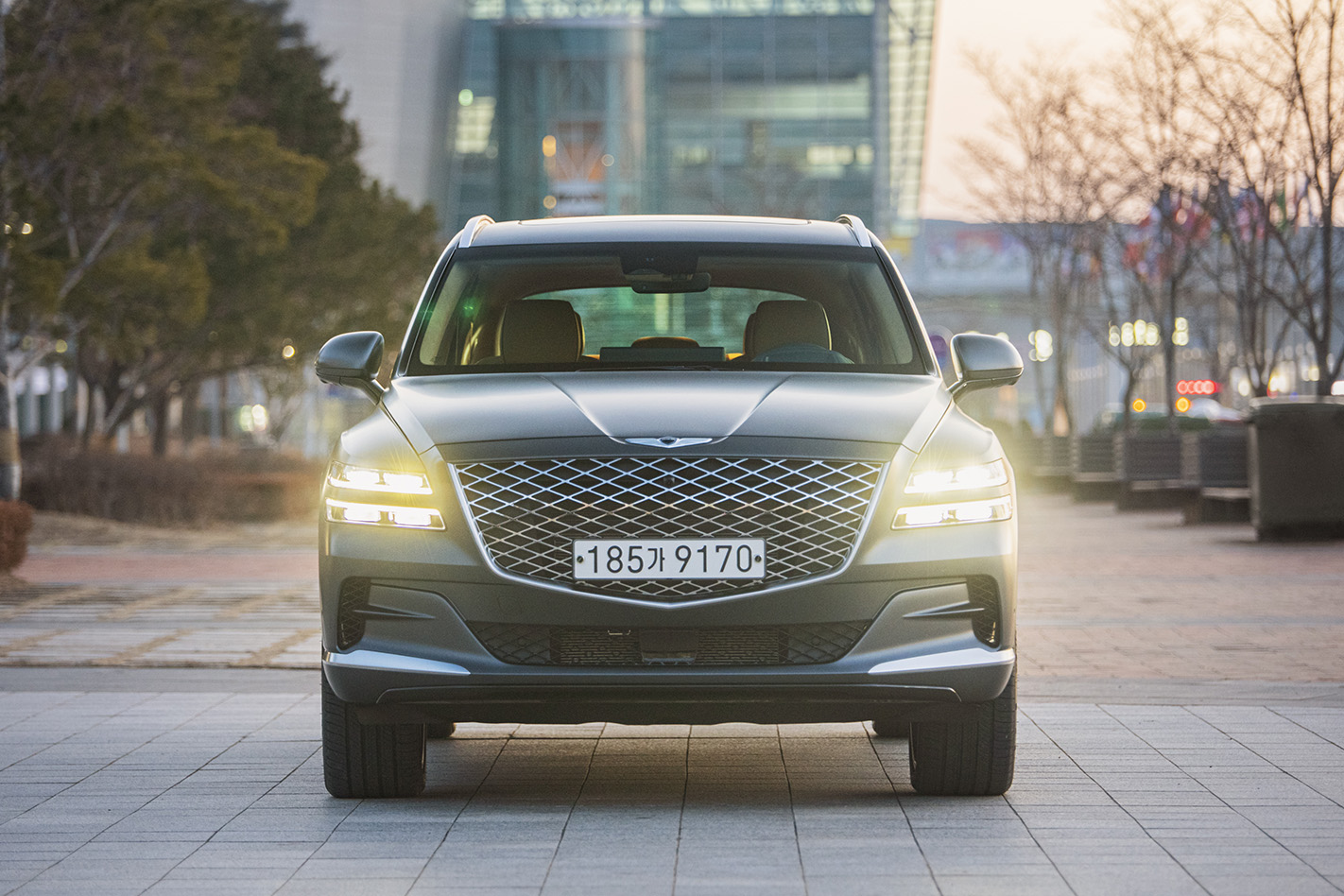
It’s called the Genesis GV80 and it enters a competitive segment – but one that might be open-minded about new contenders. We met the newest member of the Genesis family in its native South Korea to see exactly how this intriguing new model promises to shake up the segment.
Lots of engines for the Genesis GV80
It won’t arrive on Australian soil until halfway through 2020, but when it does, this ambitious newcomer has a number of compelling features to offer. Its engine line-up, for starters.
Three options will be up for grabs including a pair of turbo petrols in V6 and four-cylinder configuration, and an all-new diesel inline six.
During our first encounter only the third option – a diesel – was available, and this sublime new addition to the Genesis stable is the most notable, and possibly most surprising, GV80 feature.
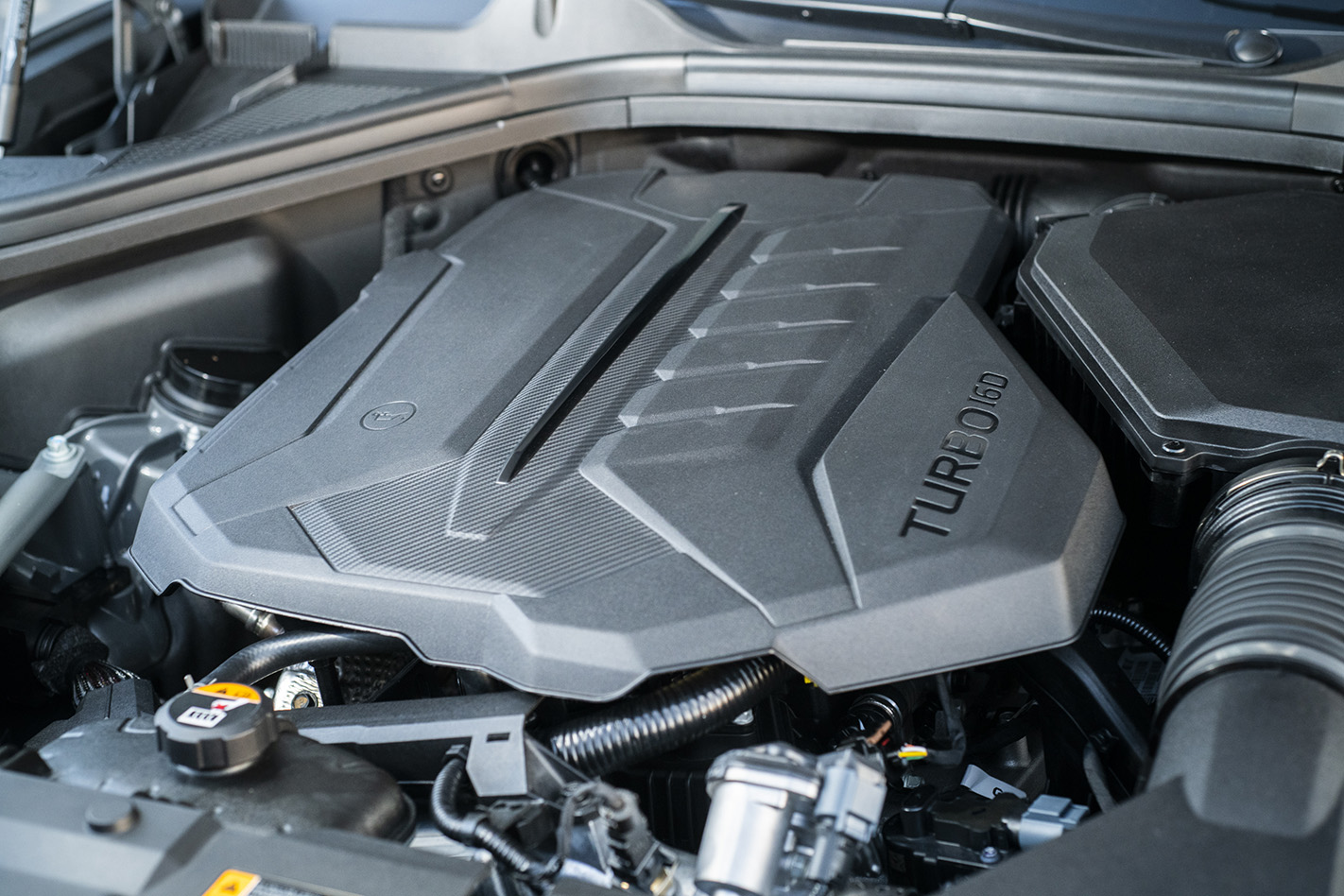
The GV80 packs not a V6 but a silky smooth inline six. It’s a format that BMW has stayed with and Mercedes-Benz has returned to (with its GLE 400d being a key GV80 rival), yet the debut of a diesel straight six within the GV80 came as something of a surprise given Genesis has stuck with a V6 format for its petrol six-pot.
Yet even though this inline diesel is box-fresh, it brings almost as much sophistication as the motors in its German rivals.
At idle the 3.0-litre is eerily silent and smooth but awakens with impressive muscle as soon as it’s required. Torque is instant and acceleration from a standstill is both eager and accompanied by a satisfying note. There’s little in the way of in-gear turbo lag and the impressive six-pot pulls strongly all the way to its red line.
It can’t quite match the high-revving and power-happy nature of BMW’s 3.0 litre diesel, but 588Nm of torque leaves the driver wanting little in the way of performance.
Equally impressive is the eight-speed automatic transmission that sends power to all four wheels. This gearbox, an exclusive in-house development by Genesis and not a supplier such as ZF, is beautifully refined.
An occasional jolt when moving from park to either drive or reverse may have been an anomaly but, generally speaking, the transmission delivered a performance as slick as the motor it’s bolted to.
Regrettably, our time with the GV80 was almost entirely on the network of freeways around Seoul, which allowed decent evaluation of cruising qualities but nothing of the GV80’s handling characteristics.
Ordinarily, this would be low down on the appraisal criteria but this new model rolls on a brand new rear-drive platform that comes complete with an electronic limited slip differential at the rear axle and promises dynamics focused on enthusiastic driving.
Smooth rider
Rear-drive versions will be coming to Australia but our steed was the all-hoof variety and it felt as planted as you might expect on dry cool roads. During what little cornering we could find, the hefty body resisted roll surprisingly well and the steering, while light, was pleasingly chatty if not quite as sharp.
In Korea, three wheel sizes will also be offered from a standard 19-inch rim, through 20s up to the flagship 22-inch wheel. The GV80’s chassis has been well-tuned to suit the 22s that were bolted to our car and while the ride was predominantly on the soft side, body control was excellent and settled fast after large road imperfections. This is a machine that would devour many miles of road tripping with total ease.
A new noise cancellation system also makes its debut in the GV80 and the six-microphone set up is highly effective. Unlike some previous systems from other manufacturers which could make you feel a little deaf, the Genesis system masks unwanted noise while allowing you to hear the things you want to.
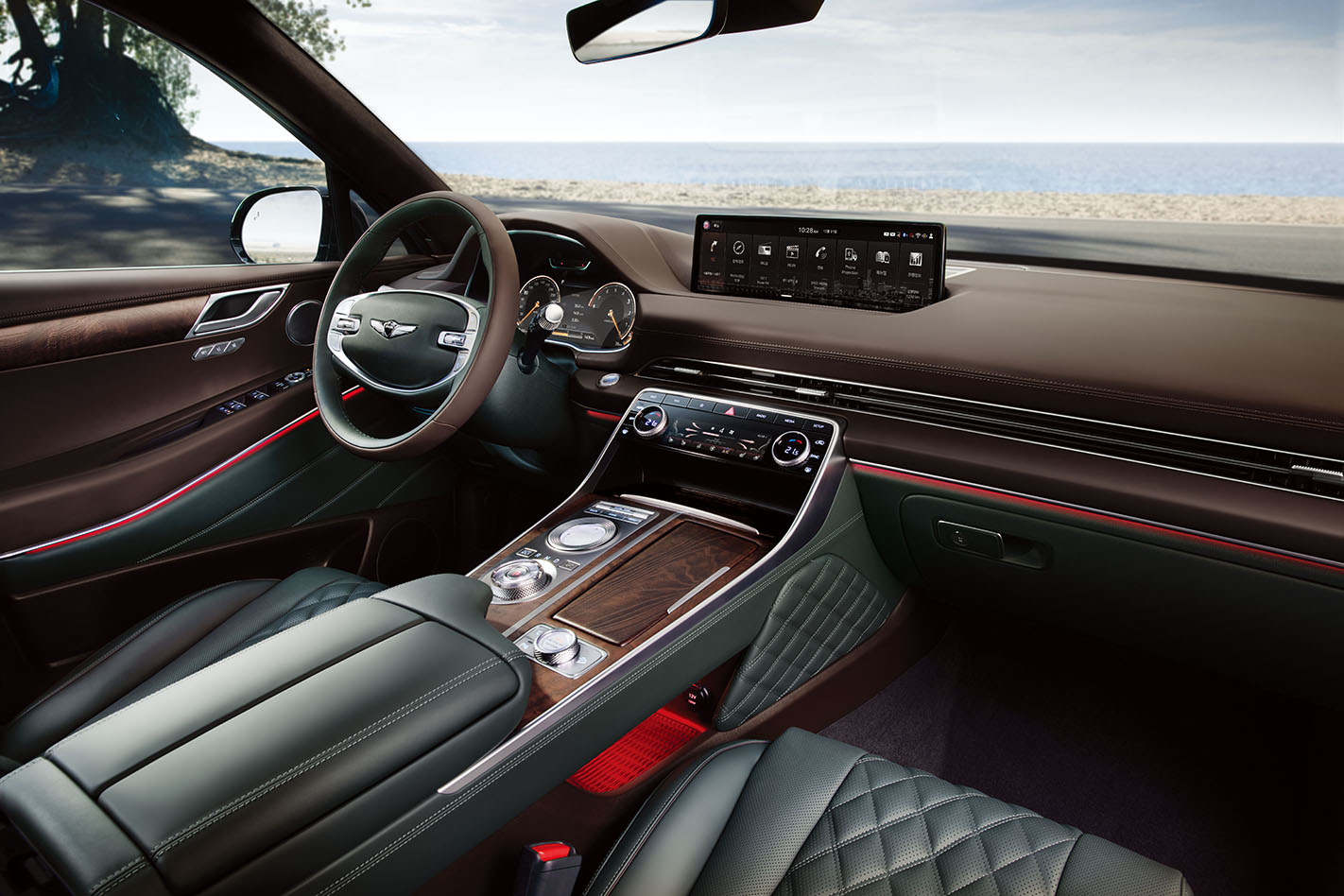
That includes a choice of ambient background sounds. For those who can’t stand complete silence, there’s a choice of lightly lapping waves, footsteps though snow, rain dripping from a roof and even a busy cafe to keep your ears caressed with unique, if a little weird, noise.
Adding to the novel tech, a brilliant 3D digital dashboard creates an almost unsettling sense of depth for the instrument panel, and we particularly liked a blind spot-eliminating camera that flashes up in place of the tachometer when the left indicator is used, and the speedo for the right indicator.
There are more cool electronics in the form of a 14.5-inch wide touchscreen that’s well-proportioned with a low profile and displays fantastically sharp graphics and themes. If only it matched the bizarrely different design of the digital instruments, it would have been better integrated.
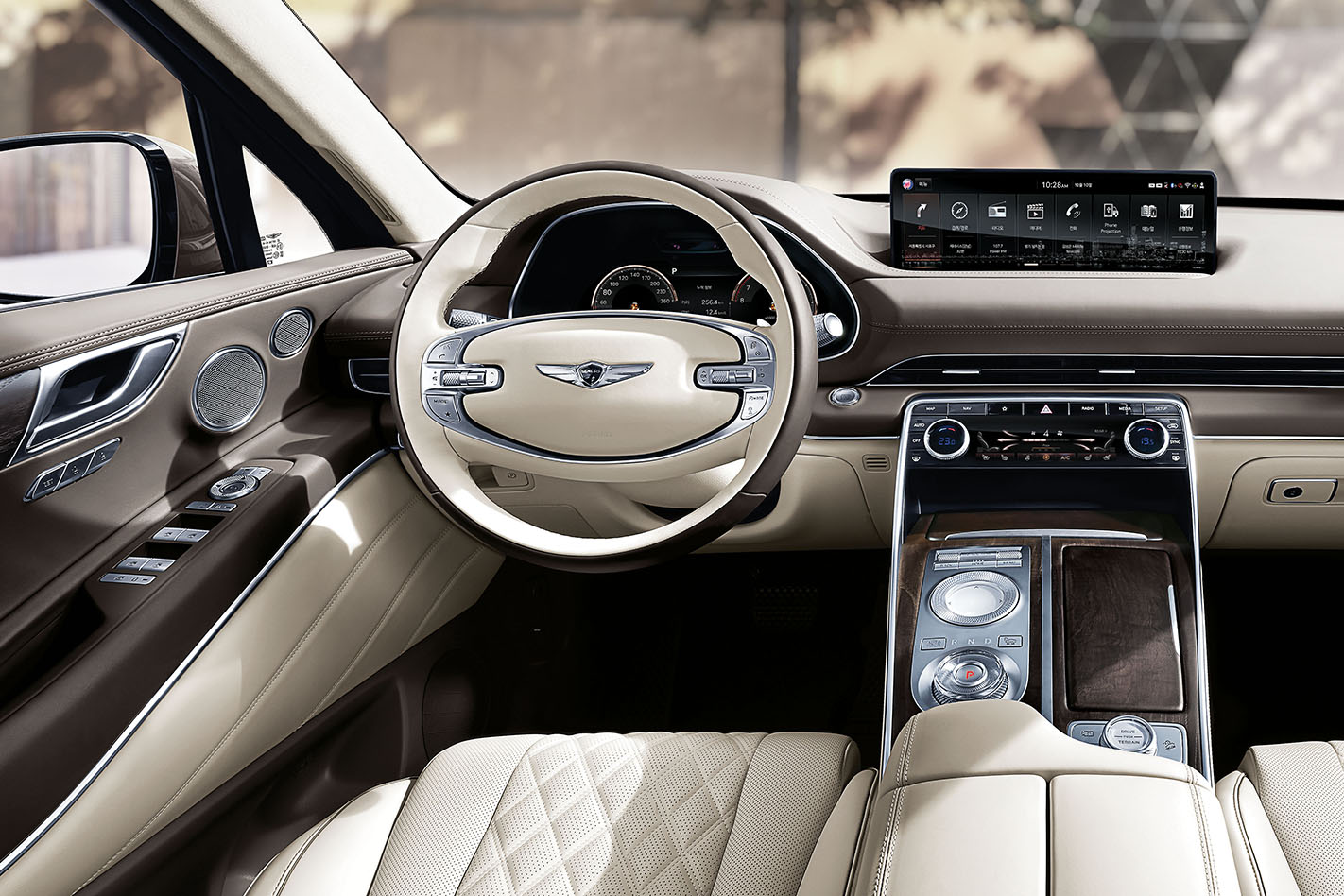
GV80 tech
The large screen also displays a clever new augmented navigation option that actually overlays direction information such as street names and house numbers over an image relayed from a forward-facing camera. It’s probably only a few years before you see this tech creeping in to head-up displays for the ultimate application, but this is class leading for now.
Other standout tech includes a clever average speed calculator that automatically starts when entering an average speed camera zone, and active cruise control that will slow the vehicle when nearing a fixed speed camera. It’s highly unlikely either system will make it Down Under but it’s okay to dream right?
Technology is just one part of the premium equation but the GV80 backs it up with an opulent cabin too. Real cow-derived leather, sophisticated synthetic equivalent or a combination of both? The fact that we couldn’t tell exactly what was upholstering a majority of the cabin is testament enough to the quality.
There are also lovely choices of open-pore wood, and enough flexibility in cabin colour and trim options to give sales consultants cause to step in and perhaps limit one or two of the more extreme pairings.
Both a five- and seven-seat GV80 are available but unlike some other offerings that share similar exterior dimensions, the Genesis is not particularly roomy when optioned with a third row. Adults in the rearmost two seats must lean forward to clear the diving roofline, and it cannot brag the same day-to-day usability of something like a Hyundai Santa Fe.
Seven-seat versions rob a little space from the second-row occupants as well, meaning it’s not just those in the last row that are deprived of comfort. If you’re keen to experience the most luxurious GV80 available, stick with the five-seater.
Interior comfort
In this configuration, there’s tons of room in all spots and a light-filled cabin offers excellent visibility from all seats – particularly the driver’s. Seven air-filled bladders in the front seats can be inflated or deflated to custom-fit each occupant, and can also automatically alter their pressure to evenly distribute the weight.
Genesis claims the unorthodox two-spoke steering wheel is ergonomically superior to other designs. While that may be the case, we would prefer the more pleasing aesthetics of something a little more traditional.
However, the most commendable characteristic of the GV80 interior is how virtually nothing appears to be shared with a Hyundai. Its interior is uniquely Genesis without trying too hard. Can even a Lexus claim the same distance from its parent Toyota?
GV80 exterior design
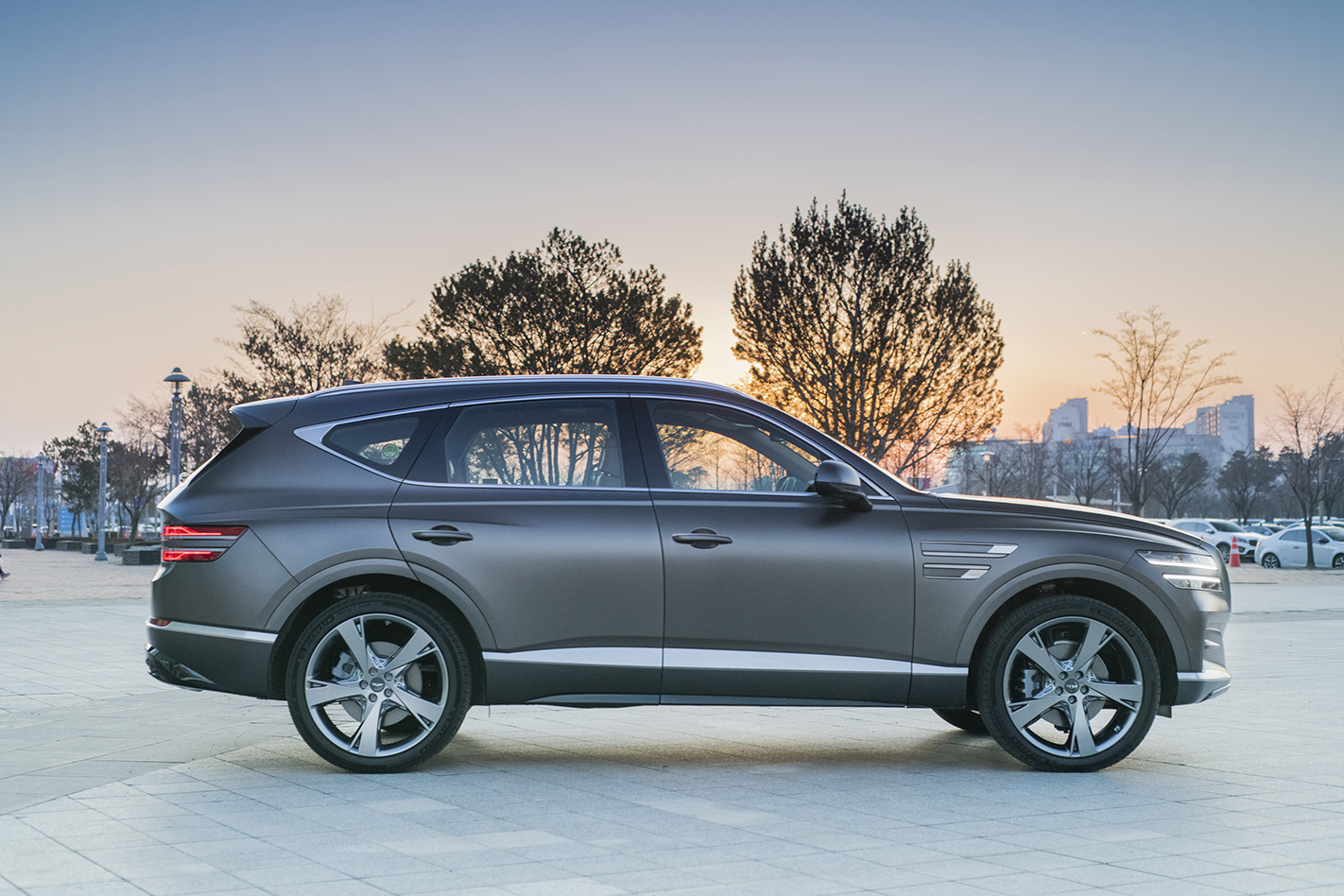
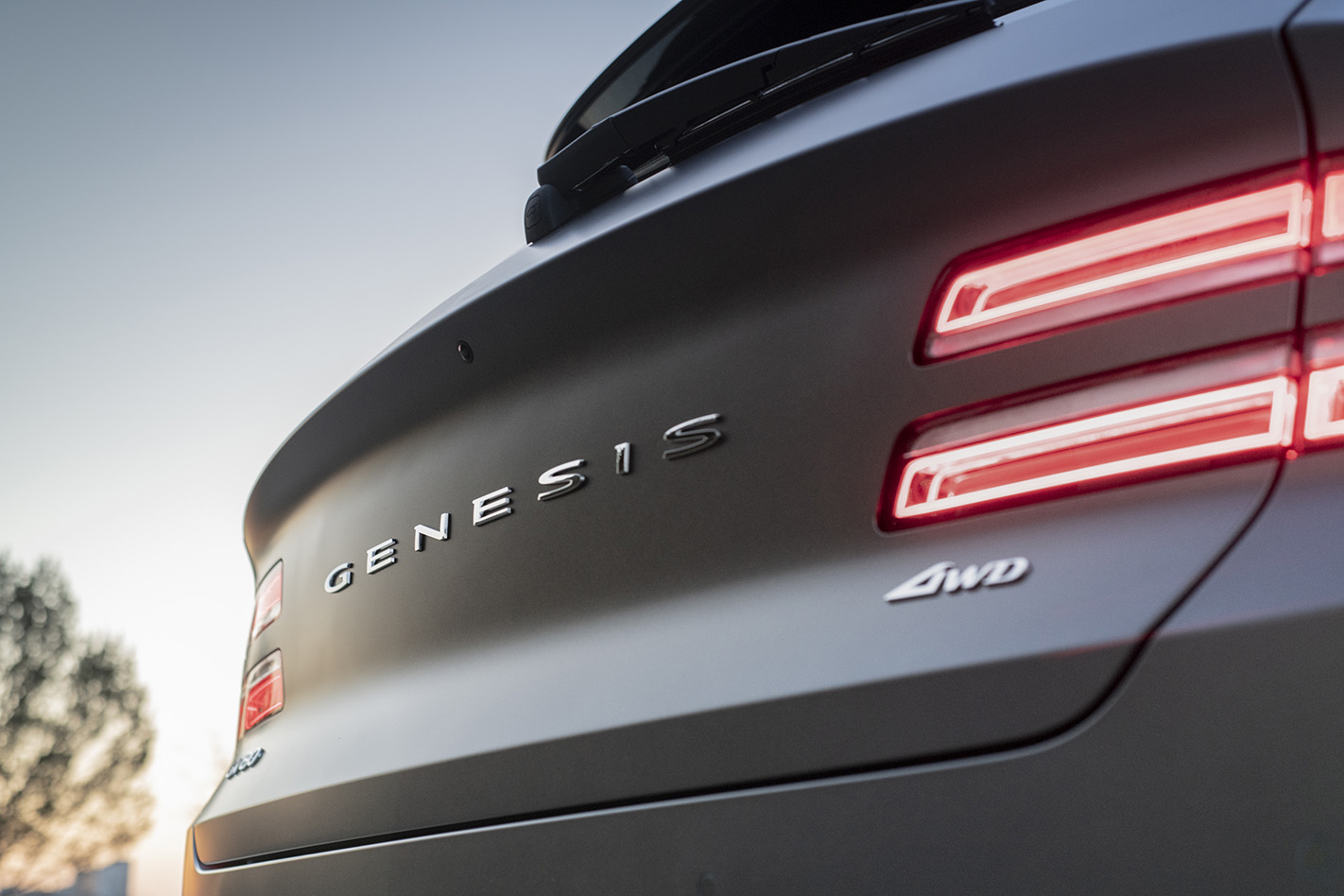
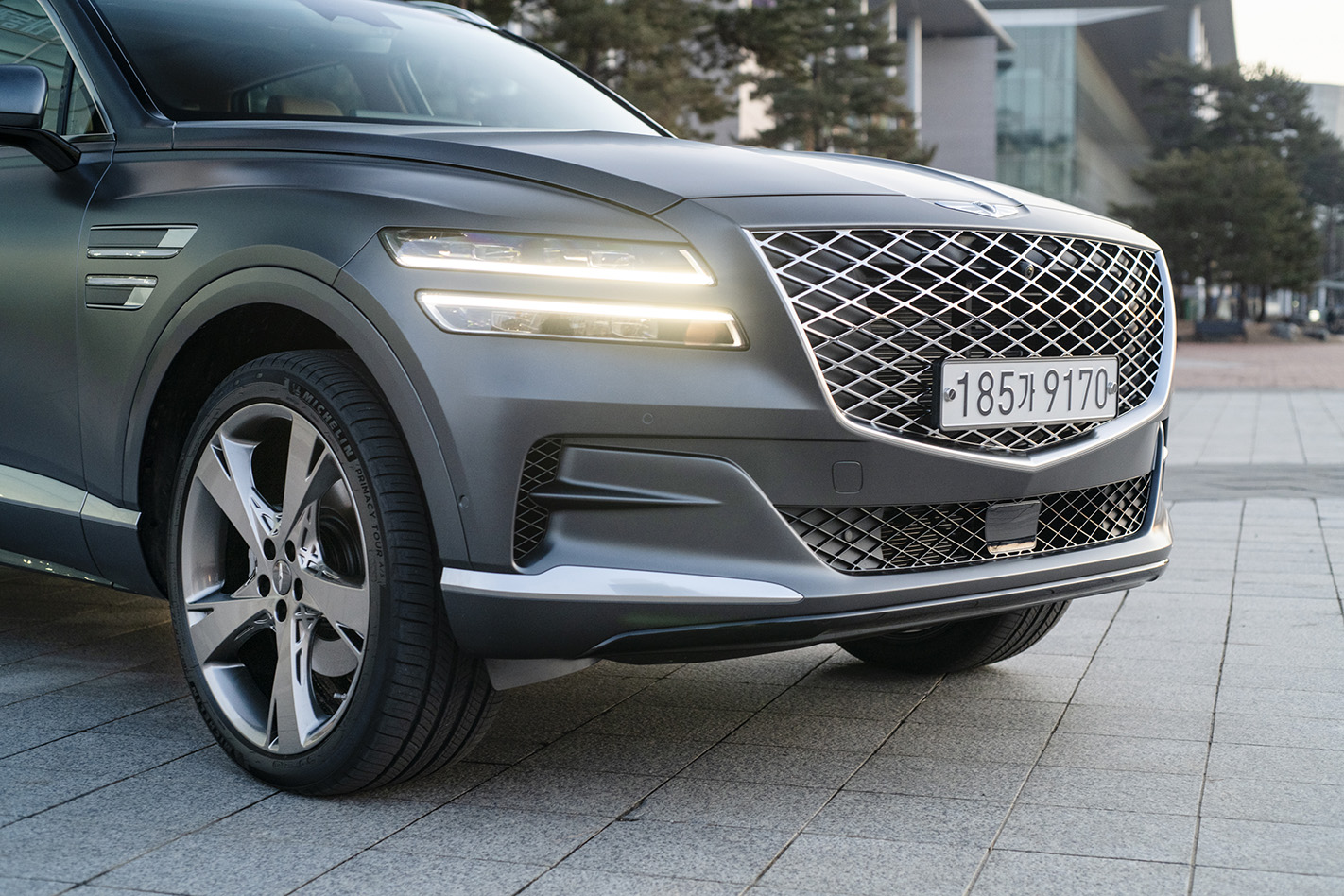
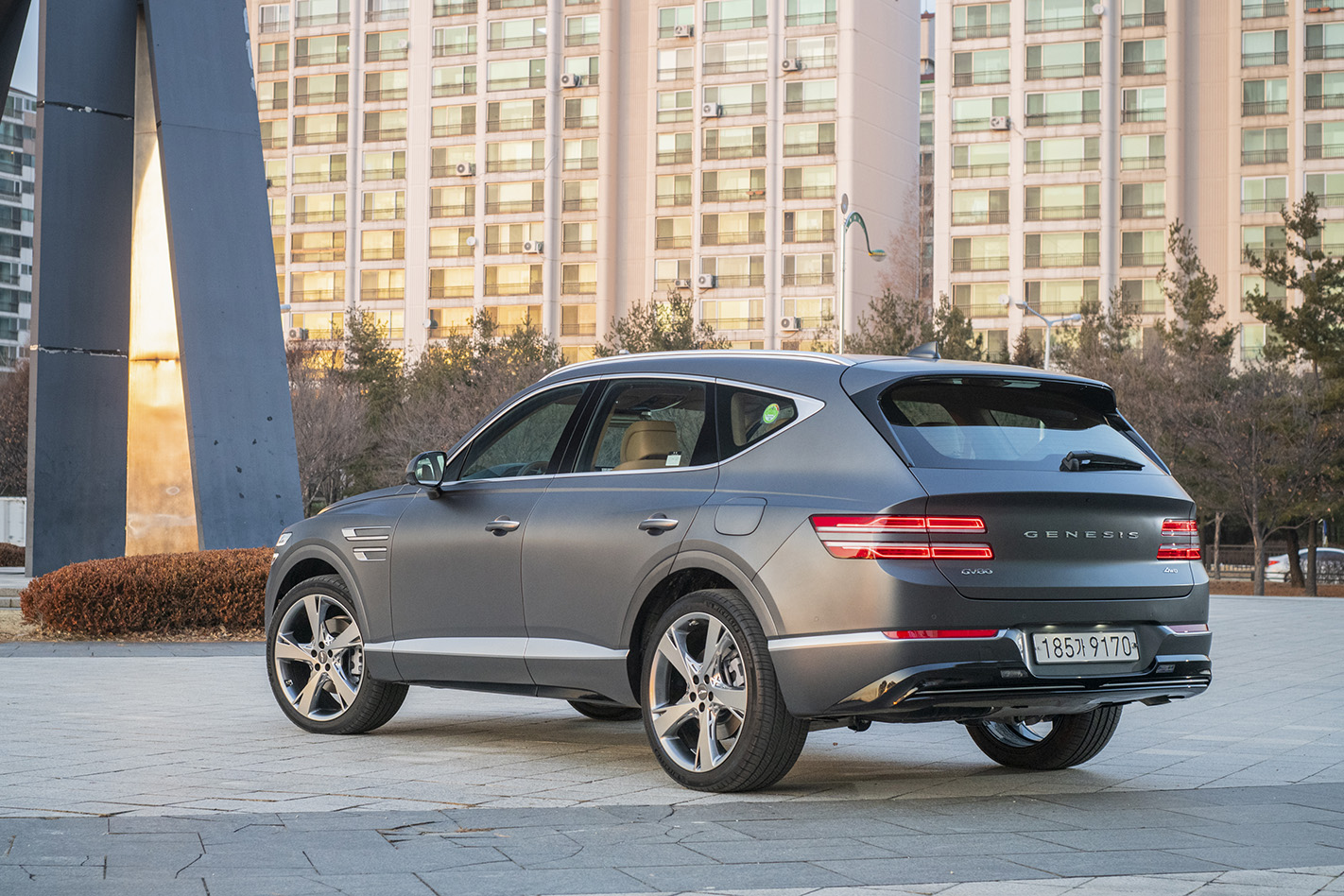
And that design journey brings us to the exterior – an area normally too subjective to warrant comment. But the GV80 scores bonus points here too. There are hints of Bentley Bentayga in the tail, Volvo XC 90 in the nose, and you could even draw a line from Porsche’s four-point headlights.
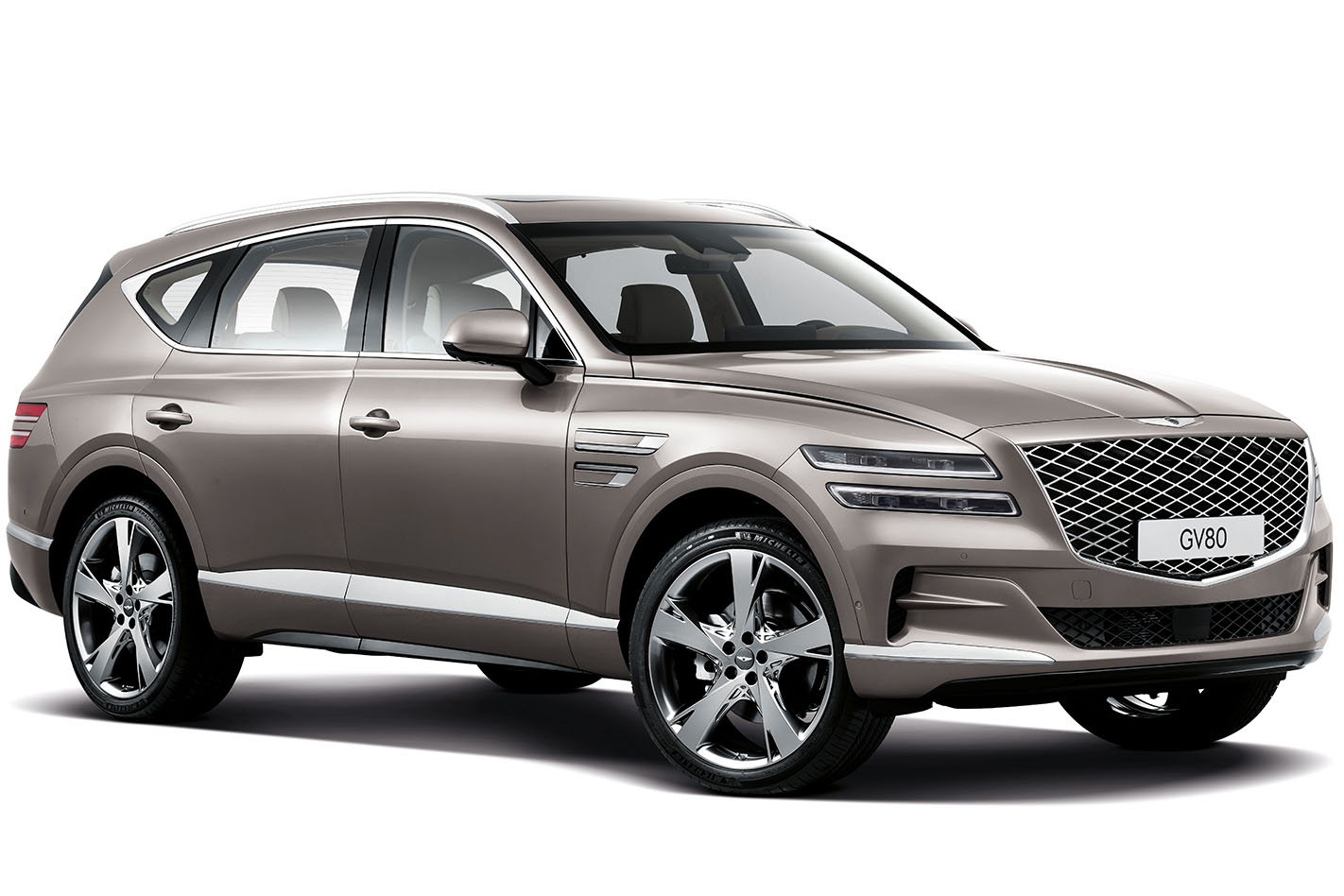
There’s no doubt, however, that this is the most handsome Genesis to roll out yet, and while there are certainly a few homages to other luxe SUVs, the GV80 wears a look all of its own.
There is so much more to successfully establishing a new brand in Australia’s fickle new car landscape than simply offering a good product, but it certainly is a desperately important part of the equation for something pitched at the premium end of town.
Only time will tell if Genesis Australia has nailed the rest of the package, including marketing, aftersales care, warranty and – critically in the case of the GV80 – pricing.
Encouragingly though, not only has the company’s first SUV foray convincingly aced the luxury high-rider formula, the Genesis GV80 is also the first model that might truly represent the literal meaning of its maker’s name.
A five-strong conglomerate of Turkey’s leading industrial groups has combined to create the Turkish Automobile Joint Venture Group (TOGG), with Turkish President Tayyip Erdogan subsequently revealing two electric prototypes developed by the partnership.
Production versions of the all-electric crossover and sedan will be the country’s first entirely indigenous cars, and the venture is hoped to push Turkey onto the global automotive stage while also boosting its own manufacturing portfolio.
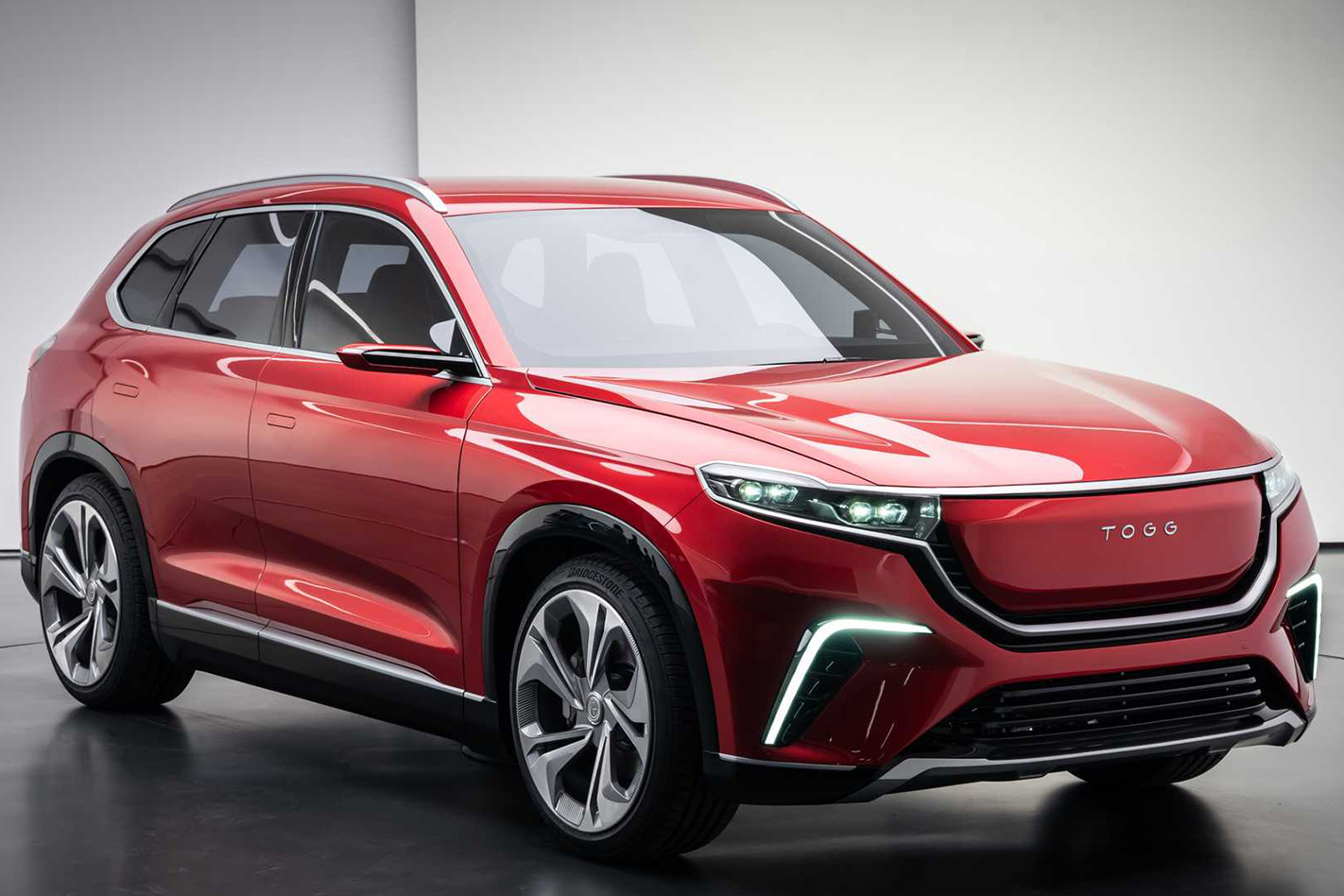
There’s said to be two powertrains on offer, starting with a 149kW rear-wheel drive battery architecture that’ll see you motoring for roughly 300 kilometres on a single charge, with a higher-spec 300kW dual-motor system that is said to travel close to 500 kilometres before needing to be plugged back in.
TOGG also insists its charging system will be quick enough to go from zero to 80 percent charge in 30 minutes using a 150kW charger.
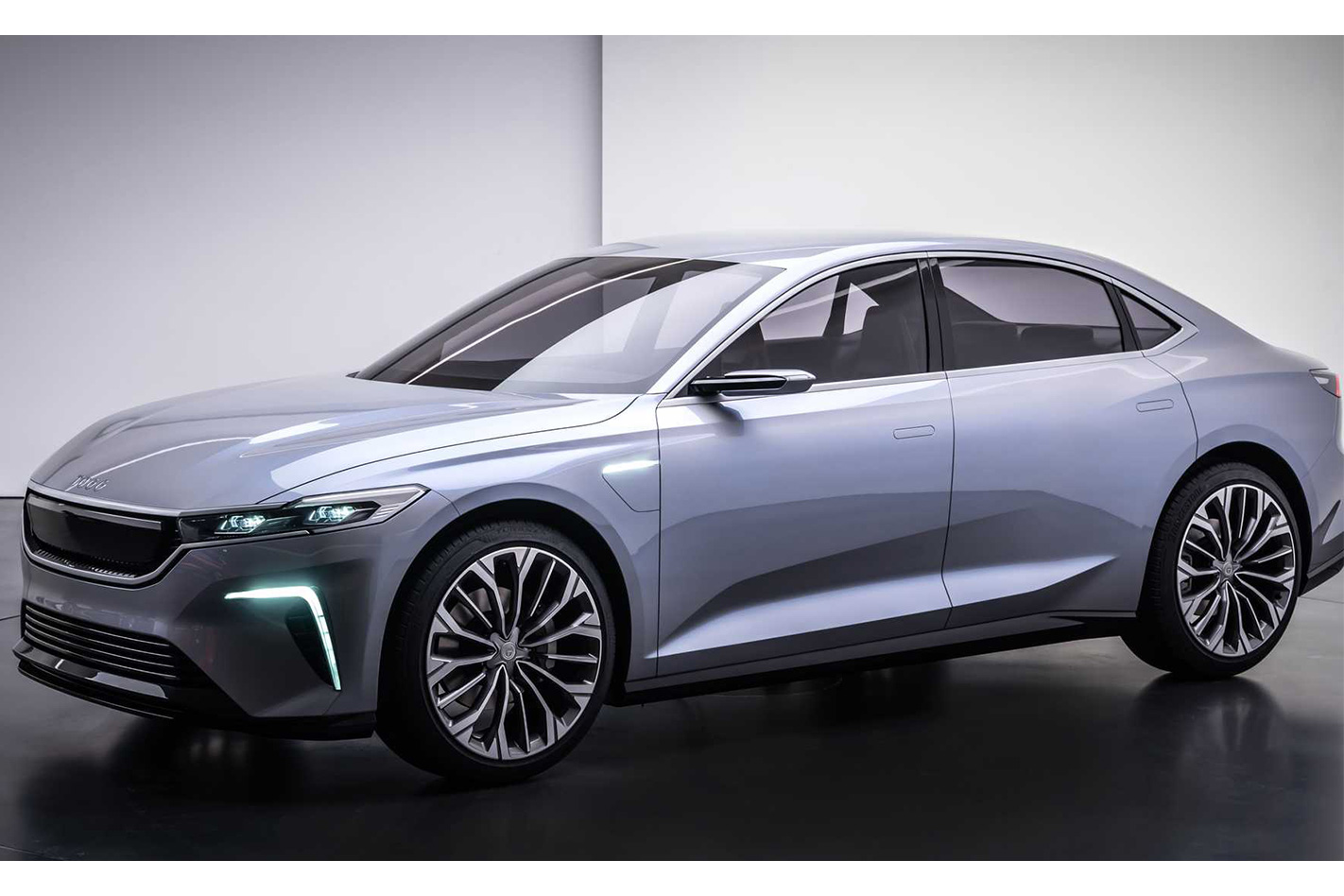
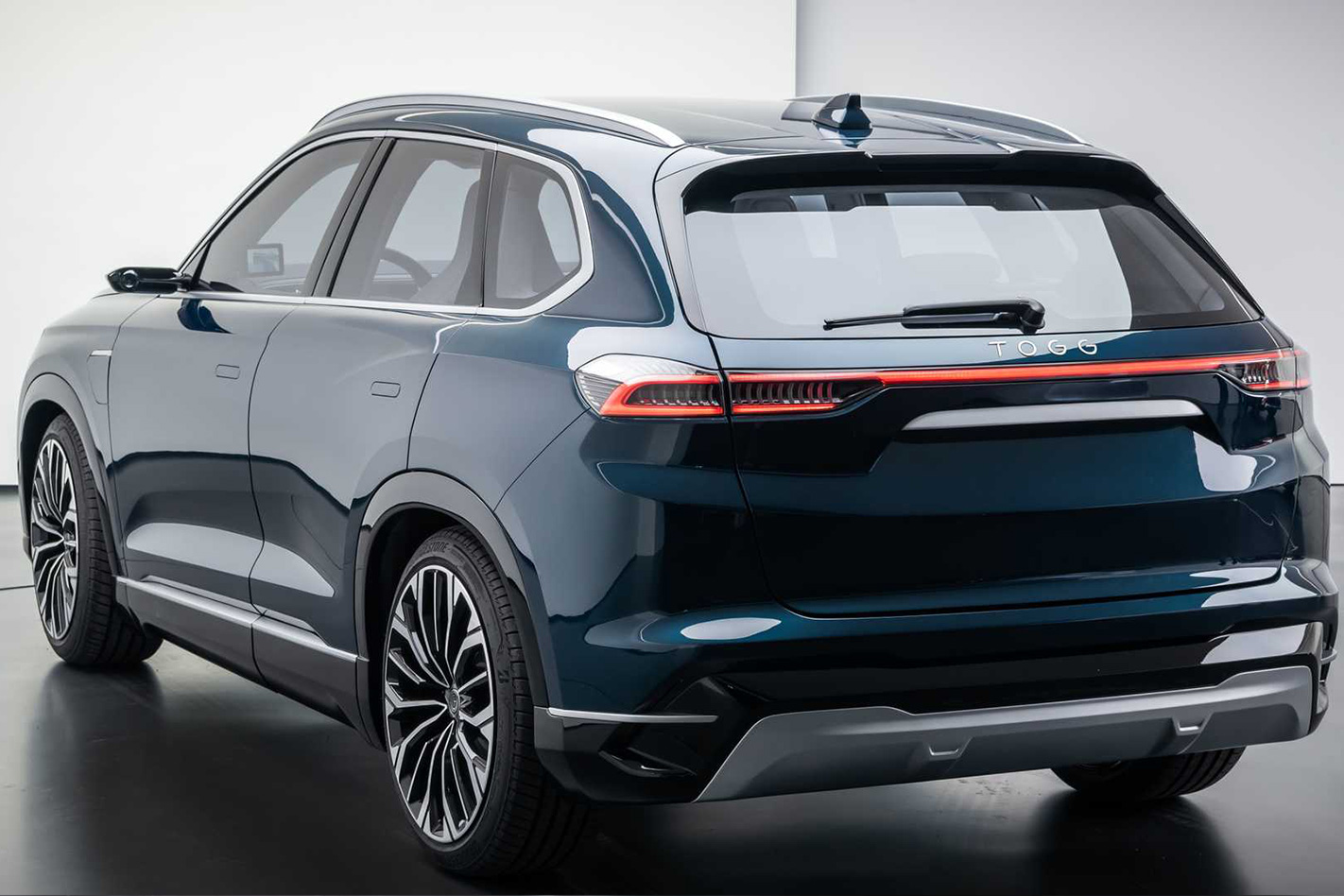
The only part you could argue wasn’t designed in-house would be the styling, which was penned by Italian design house Pininfarina. The crossover/SUV model in particular boasts styling that’s sympathetic to its segment, and wouldn’t look out of place lined up against rivals like the Tesla Model X, Jaguar I-Pace, Mercedes-Benz EQC and Ford Mustang Mach-E.
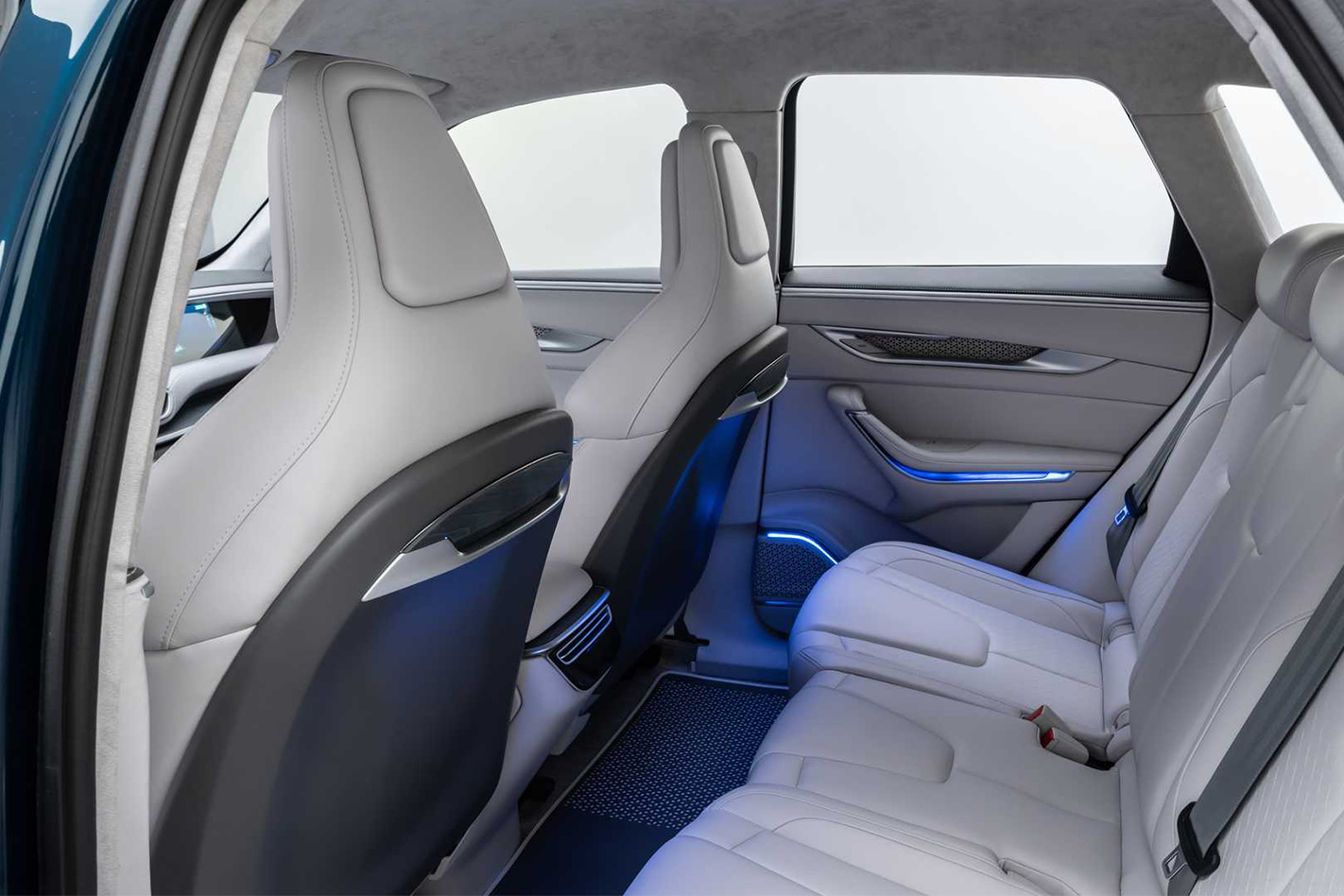
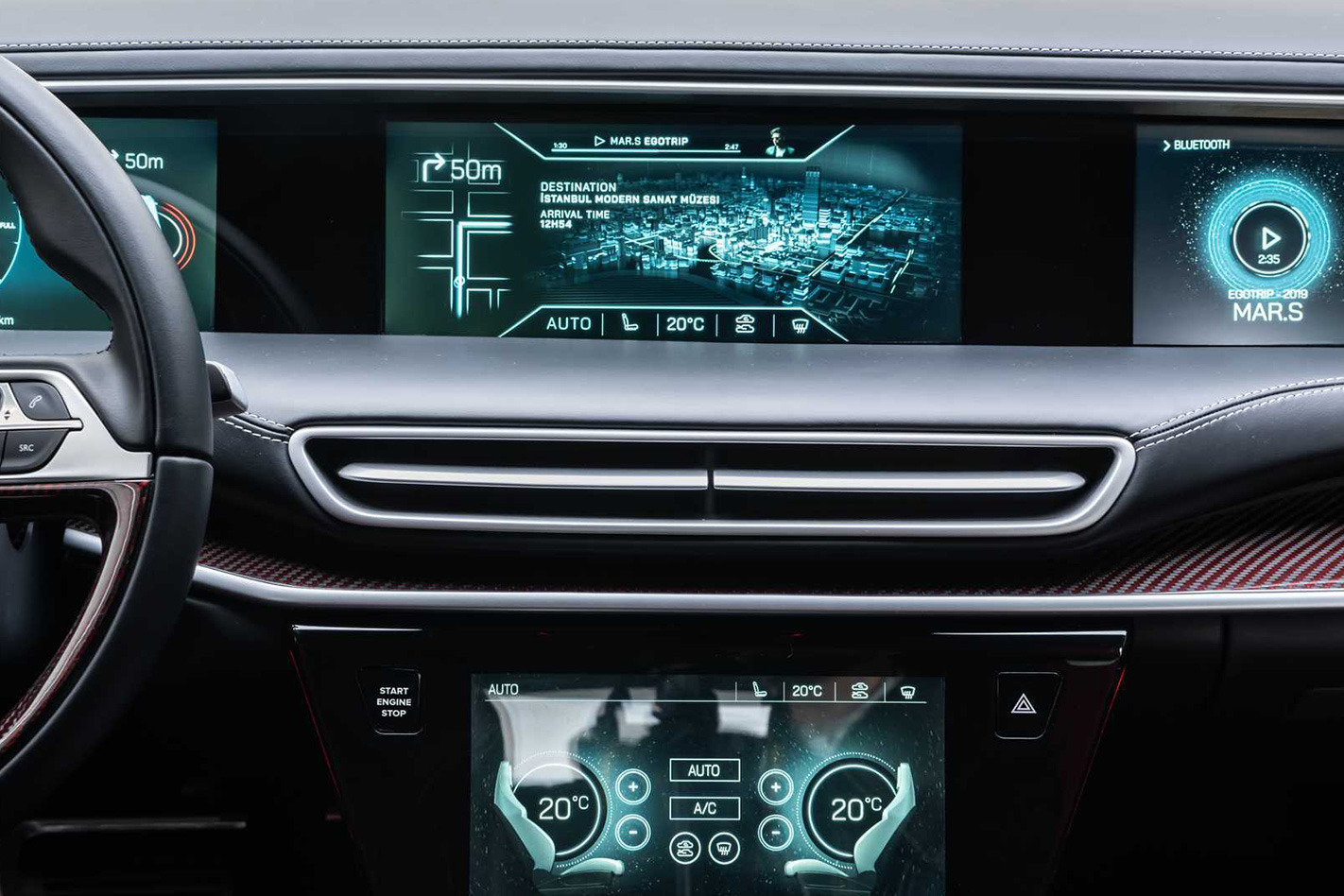
It looks suitably swanky inside, featuring no less than four screens in the front row alone. The rest of the interior gets a luxurious treatment of leather, wood and metal, and features some premium ambient lighting as well.
In anticipation of the project that’s set to enter production from 2022, TOGG has acquired a plant in the north western district of Bursa that can accommodate up to 175,000 units a year. The Turkish government plans to invest over $5.4 billion over 13 years, so they’re deadly serious about giving this venture a red-hot go.
“Turkey is several steps ahead of others by entering the electric automobile sector. We are not manufacturing cars for our needs alone. We are looking forward to establishing a global brand,” the president Erdogan said.
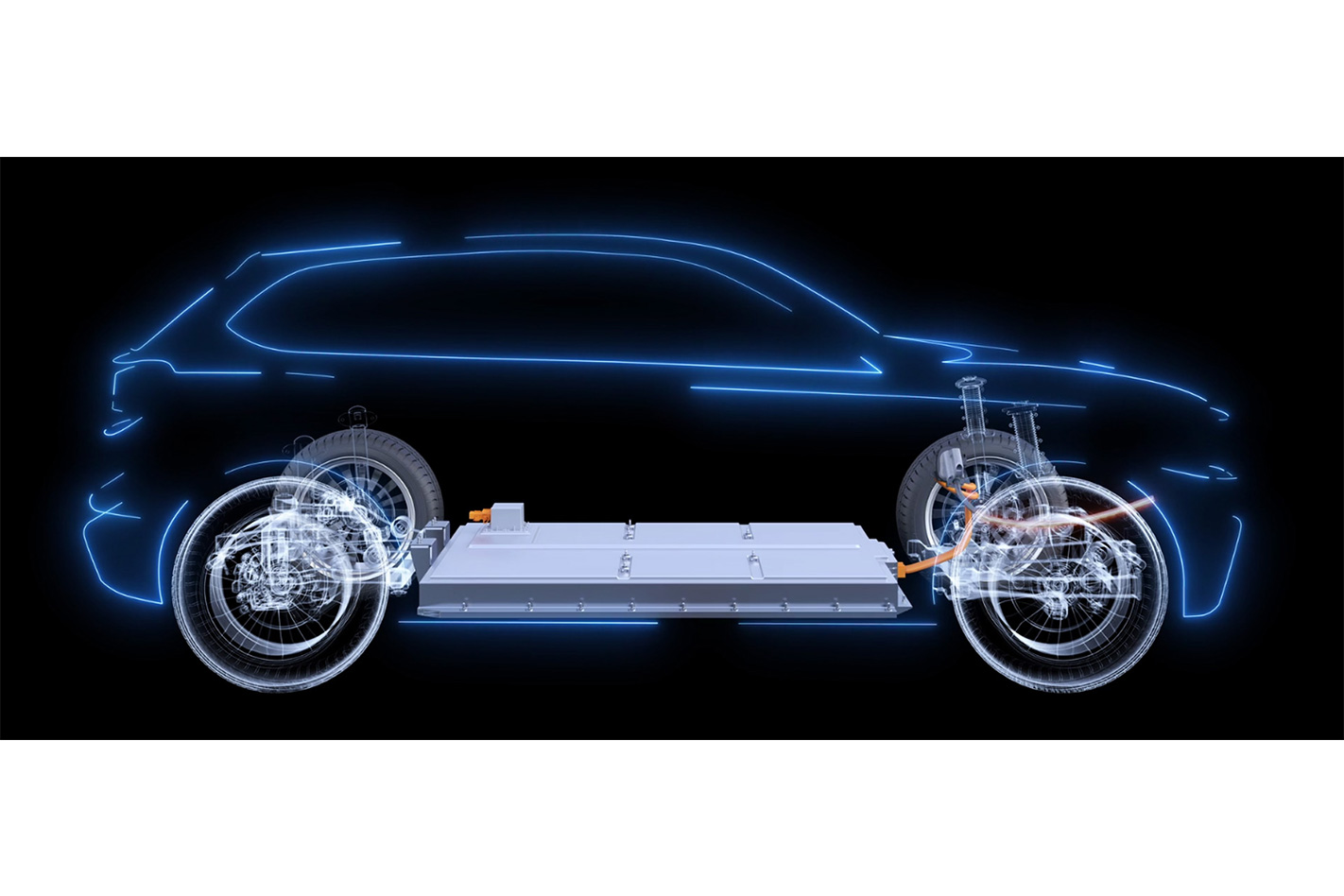
As such, TOGG is hurriedly preparing patent applications worldwide relating to design registration and has applied for a patent in its own country for a ‘cruise control system’ but more curiously, a ‘semi-replaceable battery, interchangeable battery system and mechanical connection structure,” Daily Sabahreported.
That last one is particularly interesting as no other manufacturer allows consumers to replace a battery or caters for a swap-n’-go interchangeable battery system.
Daily Sabah reports design patents have been submitted in Russia, the United States, India, China, South Korea, Japan and areas of Europe. While Australia isn’t mentioned, the application to Japan gives us hope that TOGG will create a right-hand drive version that could potentially see its way Down Under.
It’s a very nationalistic affair but if they can even achieve half of their claims, it seems like we may have another player in the futuristic electric vehicle space.
Both Playstation and Xbox have already confirmed that that each of their next-generation consoles will be backwards compatible with current Xbox One and Playstation 4 games.
This comes as welcome news as upgrading your console no longer renders your accumulated catalogue of games defunct. But that leads to an interesting conundrum for each of their native exclusive titles like Forza Motorsport 8, for example.
In Microsoft’s case, Head of Xbox Game Studios Matt Booty recently sat down with MCVUK and stated: “As our content comes out over the next year, two years, all of our games, sort of like PC, will play up and down that family of devices.”
“We want to make sure that if someone invests in Xbox between now and [Series X] that they feel that they made a good investment and that we’re committed to them with content”.
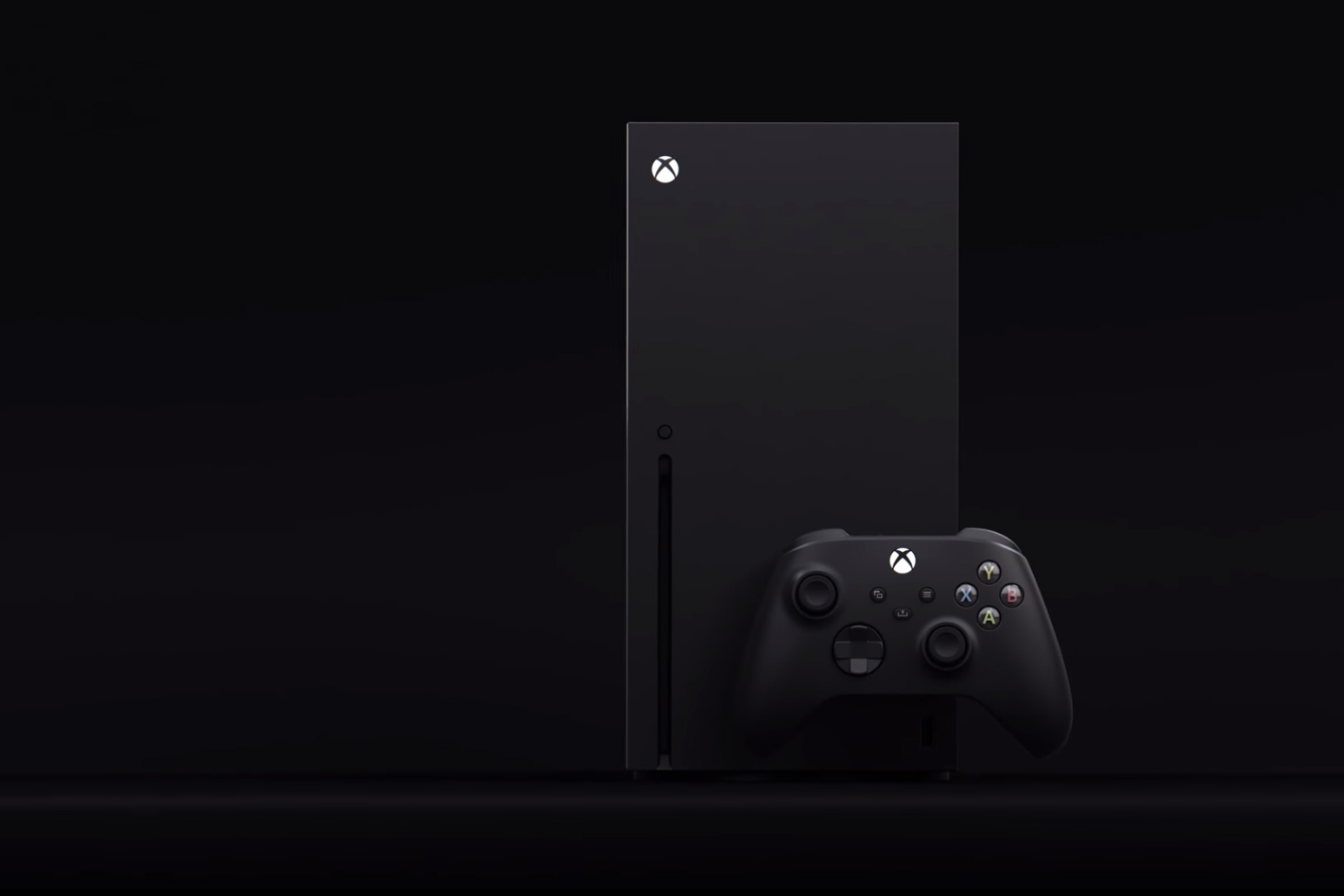
This hints at a longer timeline for Xbox Series X first-party exclusive games, as forthcoming new releases – like the highly anticipated Forza Motorsport 8 – will be compatible on both the current and next-generation hardware.
Fears were allayed that the incoming next-gen games mightn’t take full advantage of the Series X’s upgraded specs, Booty continued: “Our approach is to pick one or two [titles] that we’re going to focus on and make sure that they’re there at the launch of the console, taking advantage of all the features”.
He went on to confirm that Halo Infinite will be one of such launch titles when Series X launches later this year, and we’re betting heavily that Forza Motorsport 8 will join it given its release was pushed back, awaiting the new console.

Speaking of which, Turn 10’s Creative Director Chris Esaki recently shed more light on the upcoming Forza title, stating that the eighth instalment of Xbox’s perennial racer will boast a “vastly different and amazing experience”.
Earlier last year, Esaki hinted at a more ‘built not bought’ ethos in regards to the game’s progression. In essence, having all cars available to players from the instant they launch the game – a vastly different dynamic which now encourages players to grind and collect vehicles.
Esaki more recently promised a new tire model and tire pressure model, adding a level of detailed realism in how tyre heat affects tyre pressure. There are also new suspension modelling and suspension systems incoming.

Race tracks in the game are also set to feature dynamic track temperature, as well as the dynamic phenomenon of a “rubbering-in” of the racing line.
A new atmospheric pressure system will also accurately simulate the air density’s effect on aerodynamics, power and tyre pressure; all coming together to provide what’s looking like an amazing amount of added realism and detail looking to take full advantage the new hardware.
A launch date is yet to be announced, but given Forza Motorsport’s longstanding history as one of Xbox’s premier launch titles – we’re hoping to have our hands on the game as soon Series X launches late this year.
An updated version of the Honda Civic hatch range has hit local showrooms boasting advanced safety and sleek styling. While there have been upgrades to the interior and exterior styling, Honda Australia have made safety the priority with more active driver-assist technologies now made standard on the VTi-L and RS grades.
The enhanced safety fit-out, dubbed ‘Honda Sensing’ includes features like active cruise control, autonomous emergency braking and lane-keep assist, and was previously only available on the high-spec Civic VTi-LX.
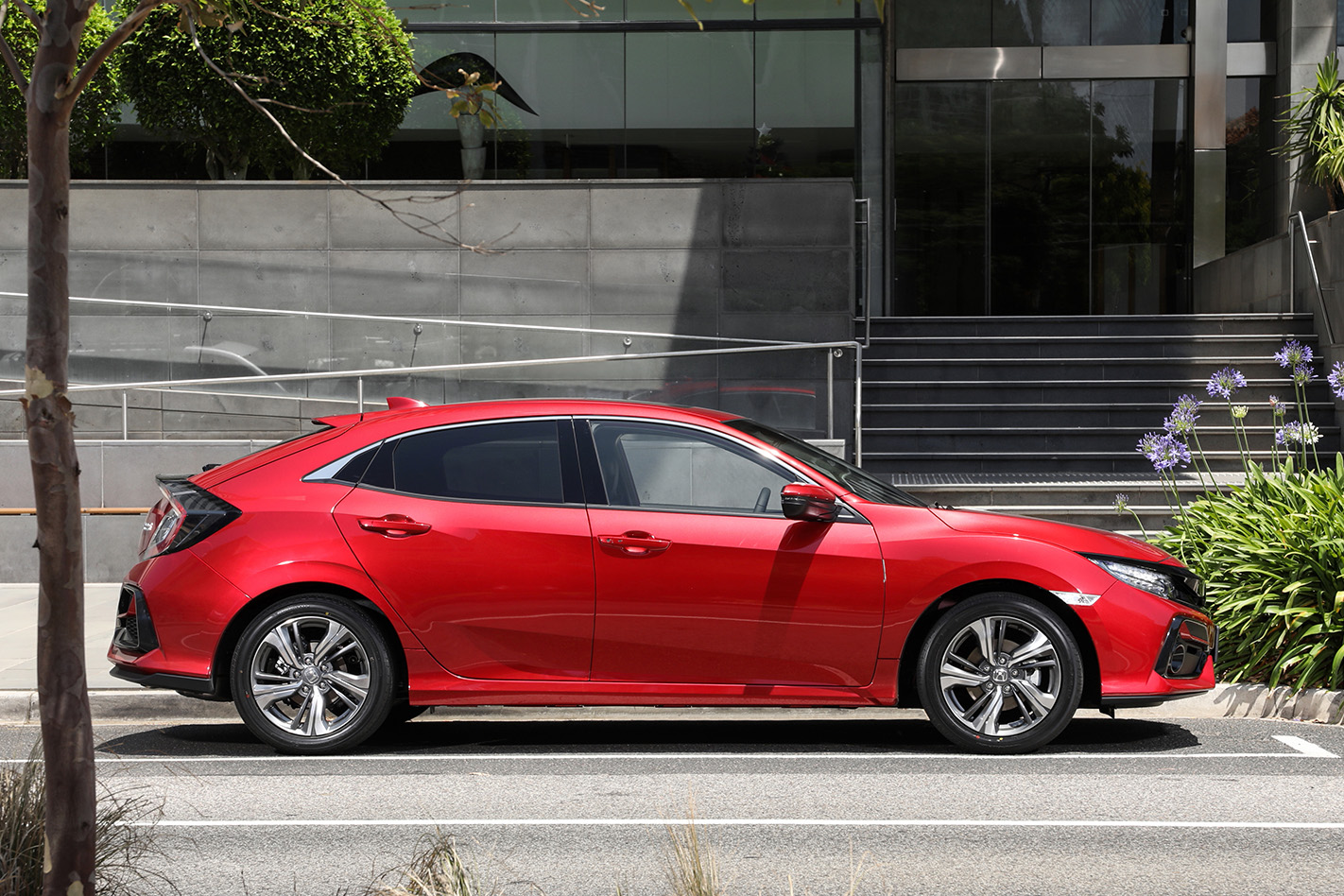
“The inclusion of Honda Sensing as standard equipment on two additional Civic hatch variants, represents another step in our plan to introduce the full suite of intelligent driver-assist and active safety technologies right across the Honda vehicle range over the next few years,” Honda Australia Director, Mr. Stephen Collins said.
“Since we announced that plan we’ve added Honda Sensing onto the CR-V VTi-S AWD model, the all-new Accord has arrived fully equipped with Honda Sensing and now all Civic sedan and hatch models powered by the 1.5-litre VTEC turbo engine have the system as well, reflecting our ongoing commitment to support the safe and comfortable driving of our customers.”
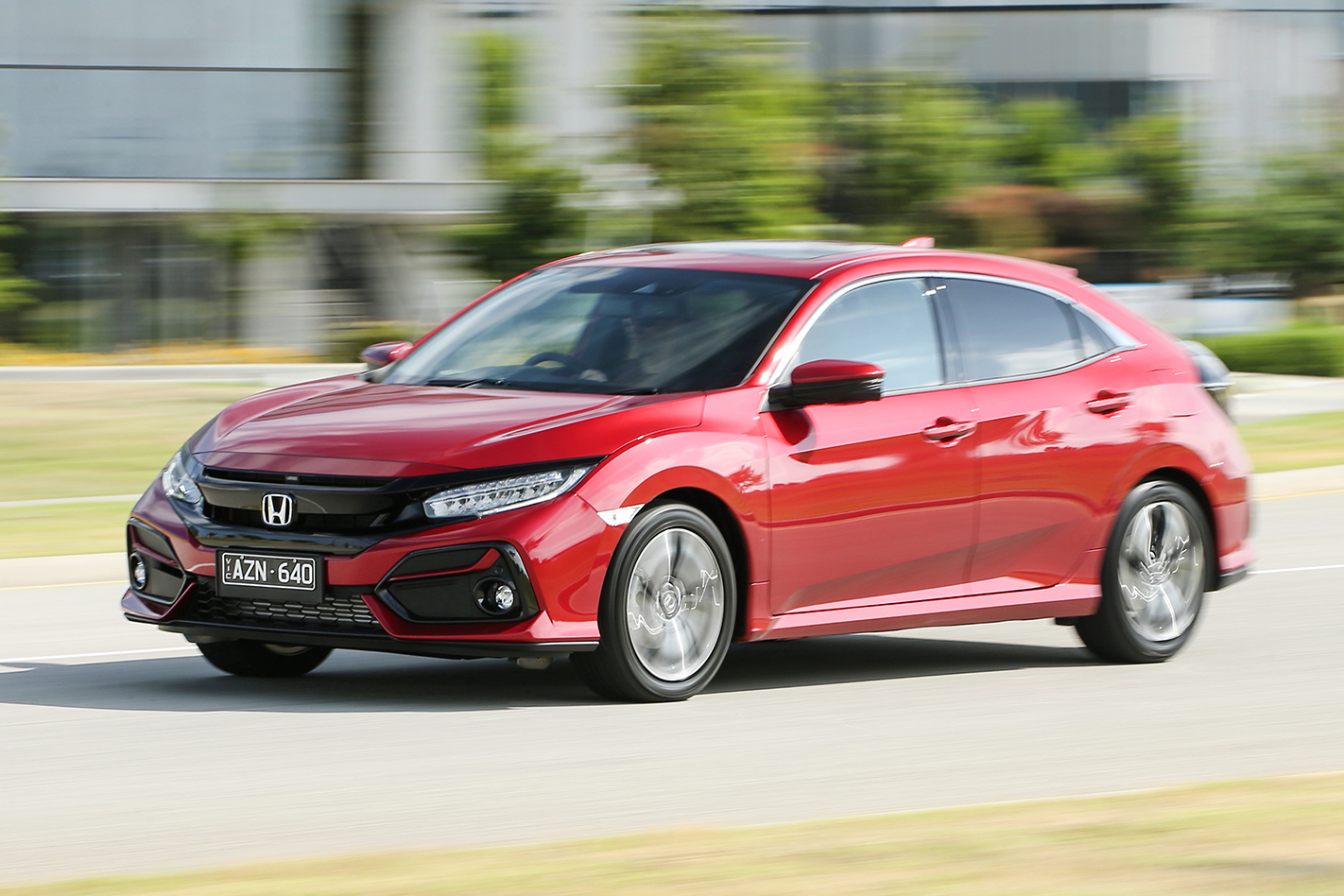
With this recent refurb Honda Australia have also focused on various exterior styling upgrades. The Civic-RS hatch includes new design 18-inch alloy wheels fitted with wider 235/40 ZR18 95Y Michelin Pilot Sport 4 tires, to enhance grip and improve handling. The VTi and VTi-S grades both boast all new wheel designs, while the VTi-L wheel has a dark grey finish on the 17-inch alloy wheels.
Other additional features of note include refreshed front and rear bumper plastics, rear privacy glass on VTi-S, the introduction of auto high-beam as part of Honda Sensing on VTi-L, RS and VTi-LX, plus the addition of metallic red, gloss white and pearlescent orange paint colours (the latter on RS only).
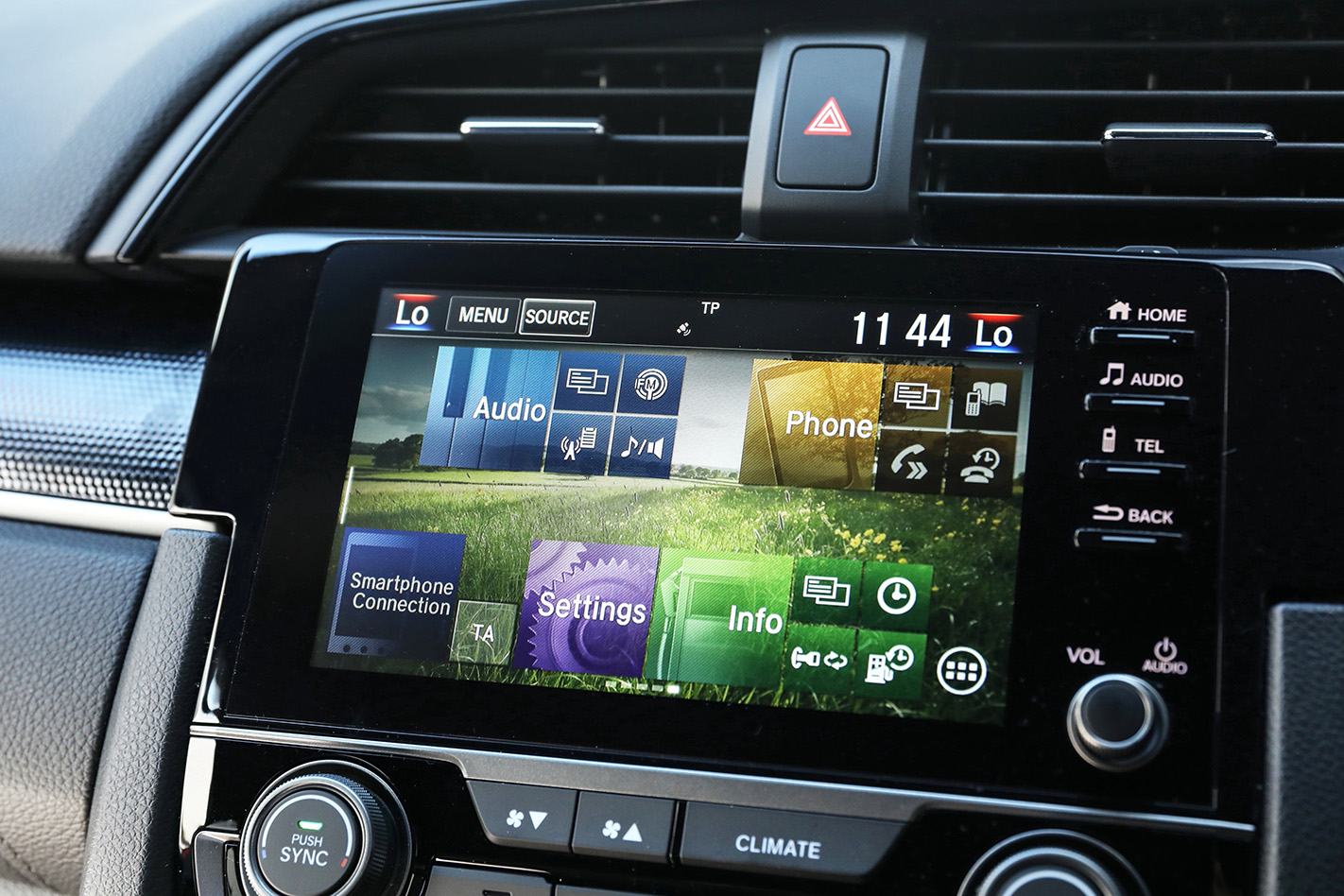
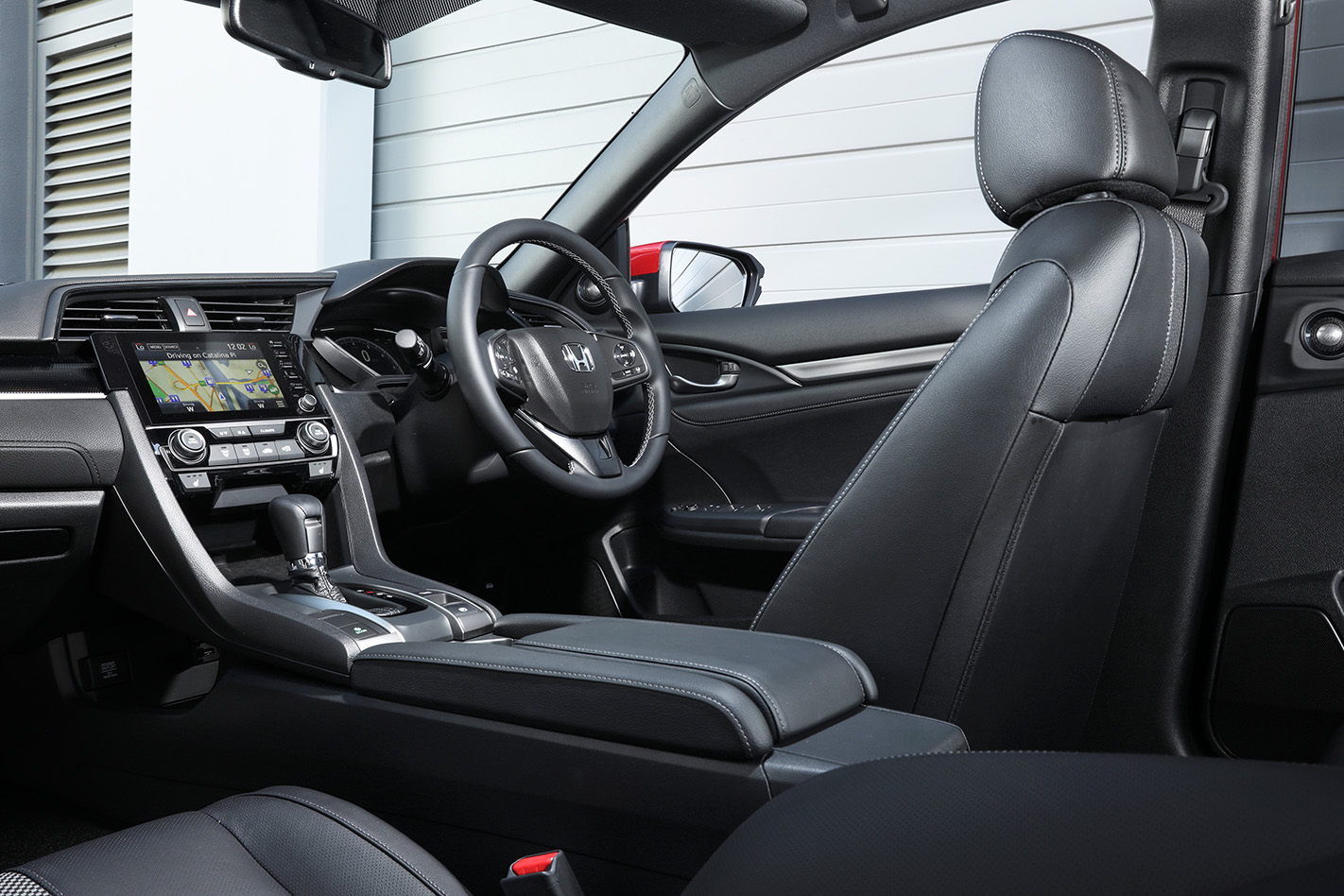
Inside the new Civic hatch range there are noticeable enhancements in the instrumental panel, seat trims and controls for audio and ventilation systems. Also worth a mention is an upgrade for the touchscreen infotainment unit, refreshed dashboard trim inserts, volume control knob incorporating audio on/off functions and push buttons for one touch adjustment of fan speed on the dual zone climate control system.
Pricing
- Honda Civic VTi 1.8L – $22,790
- Honda Civic VTi-S 1.8L i-VTEC – $24,990
- Honda Civic VTi-L 1.5L VTEC Turbo – $28,390
- Honda Civic RS 1.5L VTEC Turbo – $33,540
- Honda Civic VTi-LX 1.5L VTEC Turbo – $34,090
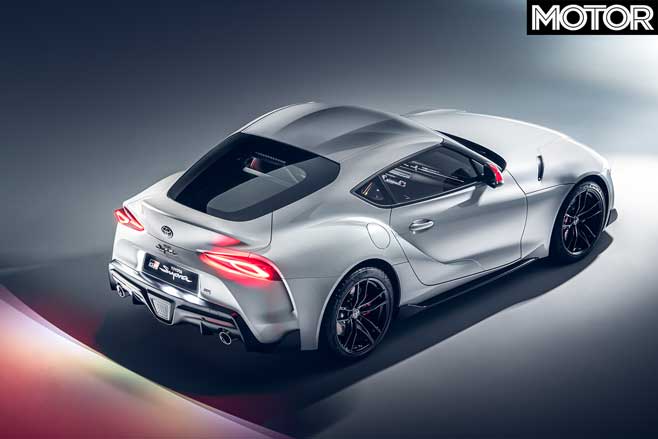
Toyota’s 2.0-litre Supra has been confirmed for Europe, but Toyota Australia says it’s still; not bound for local shores.
The 190kW/400Nm rear-driver is, according to Toyota’s engineering boss Tetsuya Tada, lighter and more agile, with Toyota having achieved a 50:50 weight distribution.
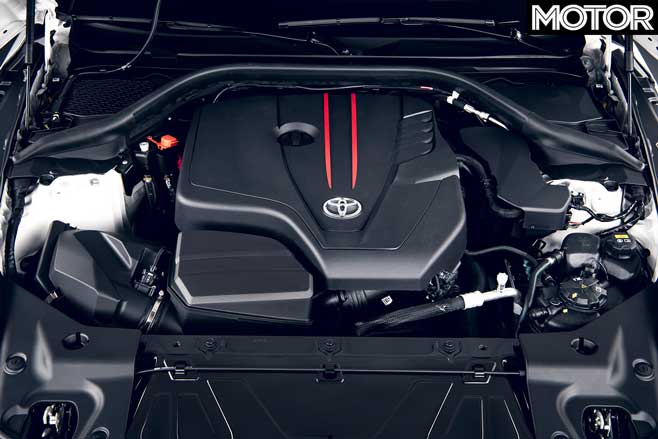
With the turbo 2.0-litre, which Toyota borrowed from BMW (the same spec is found in the Z4 30i), the Supra is 100kg lighter.
“To achieve agile steering and stable cornering, we worked very hard to reduce the new car’s weight,” says Tada.
“This presented us with huge challenges, but we did not want to compromise on our targets.”
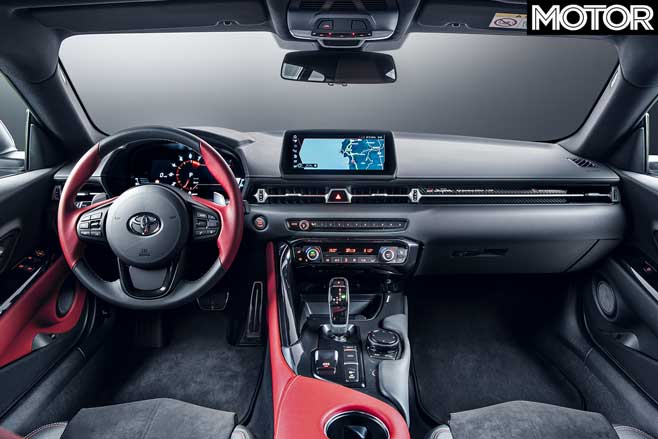
Despite promising specs and performance claims – 0-100km/h is said to be a 5.2 second affair – Toyota reckons it’s not going to take off in Australia.
“There are currently no plans to introduce the 4-cylinder version of the Supra to the Australian market,” a Toyota Australia spokesperson told MOTOR.
“Our research has shown that the overwhelming preference for the Supra is for a six cylinder version, especially as the inline six has been present in all previous versions of Supra.”
While Toyota is keeping the specifics of the research it conducted confidential, the basic nature of the investigation was asking members of the public Toyota believed would be interested in the GR Supra what they’d like to see in the car.
Clearly, the results came back with a strong interest in the six-pot.
“As a result we decided that, with the limited supply available, to only offer the six cylinder version in Australia.
“We are however, always evaluating our model line-up and this might change in the future, but it is currently not on our radar for introduction at this time.”
While the four-pot Supra would certainly land south of the $85K outlay to buy a six-powered Supra GT here in Australia, Toyota Australia doesn’t think there’s enough interest in the smaller engine for people to be tempted by the cheaper option.
If you’re waiting for the 2.0-litre, a BMW Z4 30i is the closest you can buy… for $104,900.
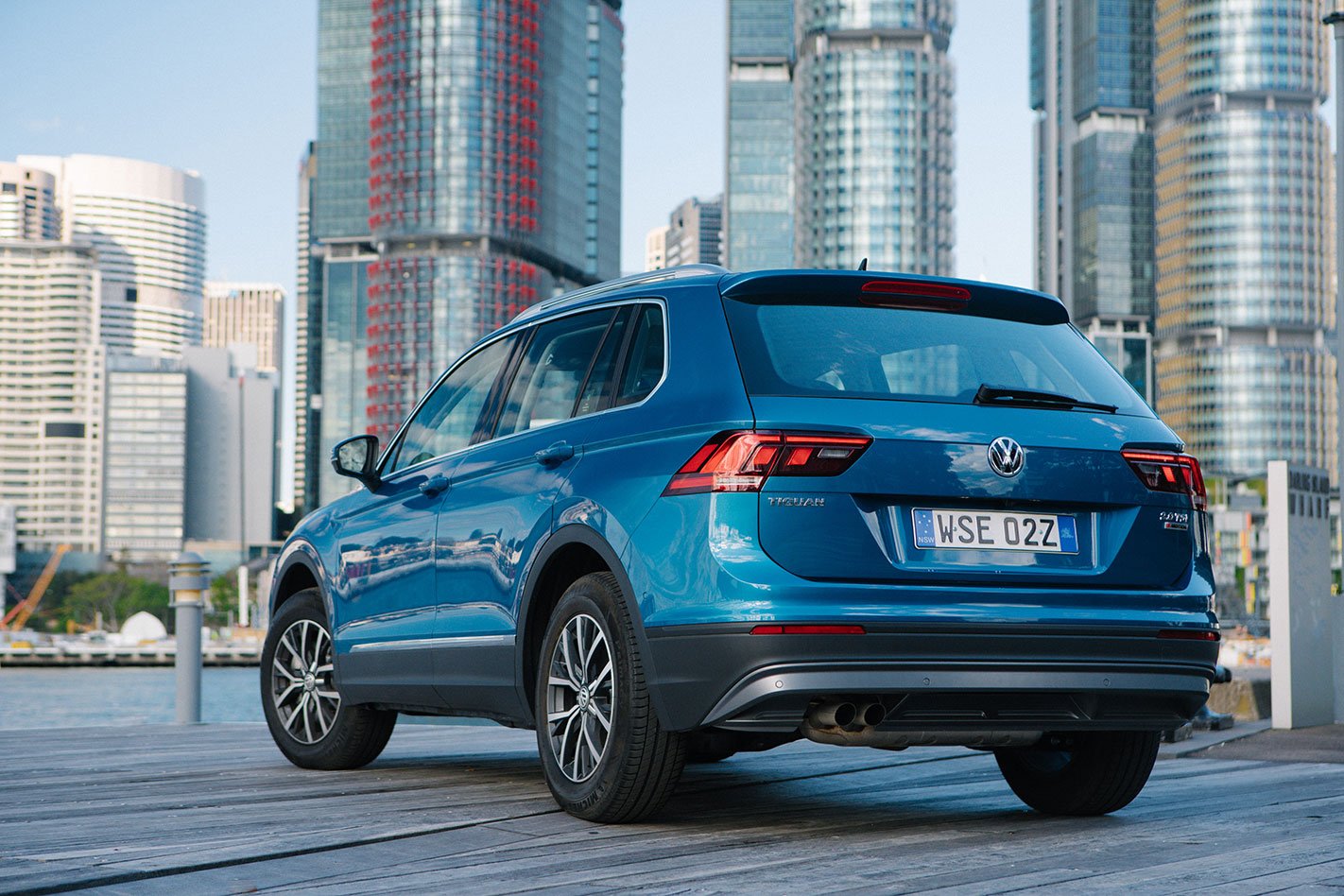
The new Kia Seltos is a good thing. Actually, it is more than good and it almost claimed a recent Wheels SUV mega test. It finished on equal points with the Toyota C-HR, the eventual winner. However, for the same price you can get a used Volkswagen Tiguan 132TSI Comfortline. It’s dimensionally bigger than the Kia and comes with a more premium badge.
KIA SELTOS GT-LINE
At $41,990 the Kia Seltos GT-Line somewhat goes against the Korean brand’s budget-friendly perception. However, it’s a compact SUV bursting at the seams with functionality and kit. And it’s endowed with a 1.6-litre four-cylinder petrol donk, all-wheel drive and locally tuned suspension. Hence the GT-Line has promise in reserve and goes a long way to justifying the $40K-plus price tag.
The figures for the 1.6-litre four are strong, too. With 130kW it certainly has enough oomph, and on the open road it feels more than spritely than the capacity suggests both off the line and on the highway. Where the smaller capacity is felt is in regards to torque, falling behind the VW with 265Nm. However, it’s an efficient unit, returning 7.6L/100km, and it ties in well with the seven-speed dual-clutch transmission. It’s only blight is slight slow-speed indecisiveness.
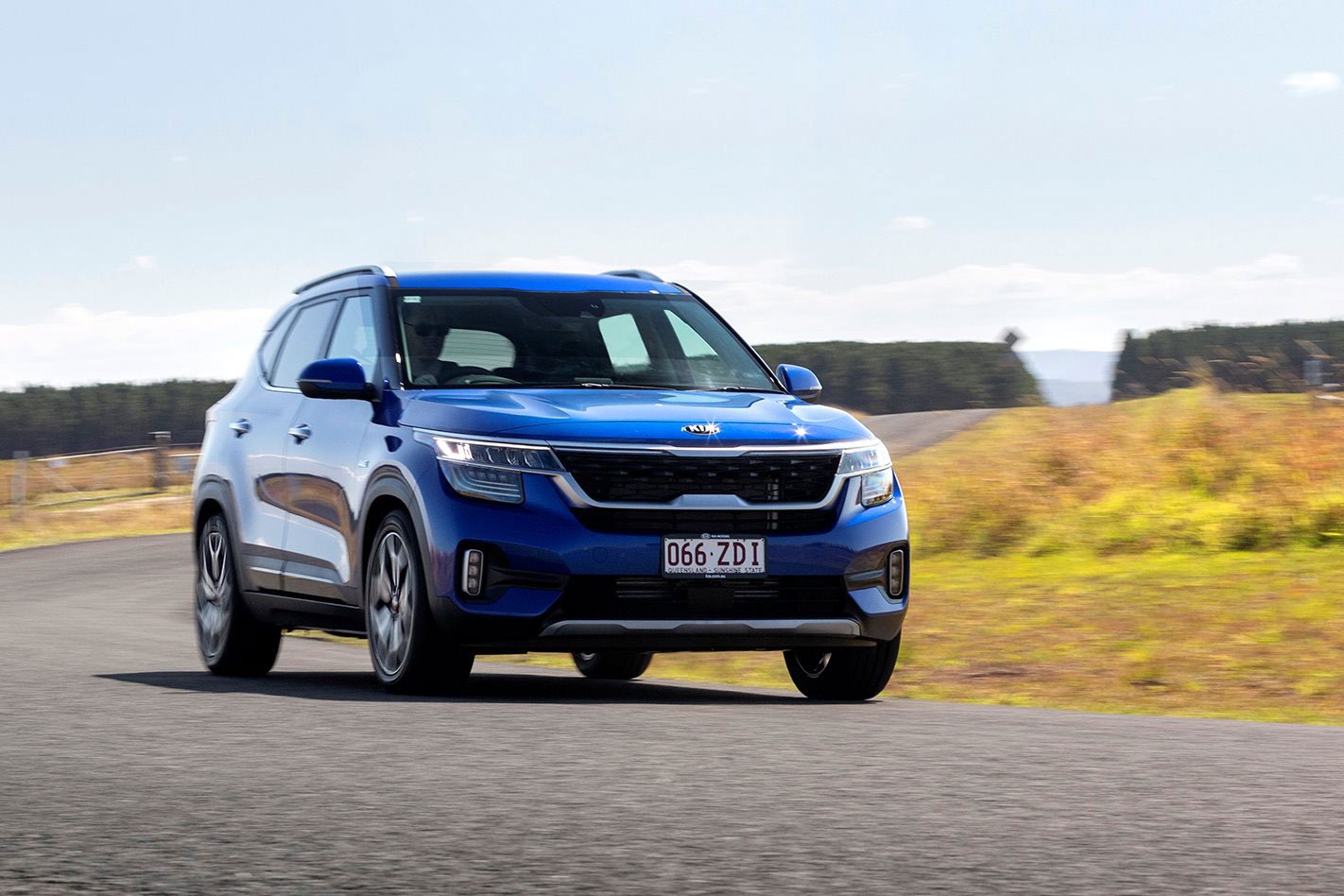
Kia has gone the extra mile with the Seltos and has tuned it for local roads in Australia – it shows. While there’s a firm edge, there’s a layer of sophistication and talent, which is helped by the well calibrated multi-link rear suspension. Body movements are kept in check and, surprisingly, there’s an enjoyment level that almost verges on fun. Not something you expect in a compact SUV.
Inside, the GT-Line is packed with features – and so it should for this monetary outlay. You get premium leather seats with 10-way electric adjustability (eight-way for passenger), as well as an array of visually pleasing materials. A huge 10.25-inch touchscreen takes care of the infotainment, including Apple CarPlay and Android Auto.
Standard safety kit also includes items like AEB with forward-collision warning, lane-keeping assist, blind-spot detection, lane-change assist, rear cross traffic alert, parking sensors and a reversing camera. It’s also hard to ignore the fact Kia offers a seven-year warranty.
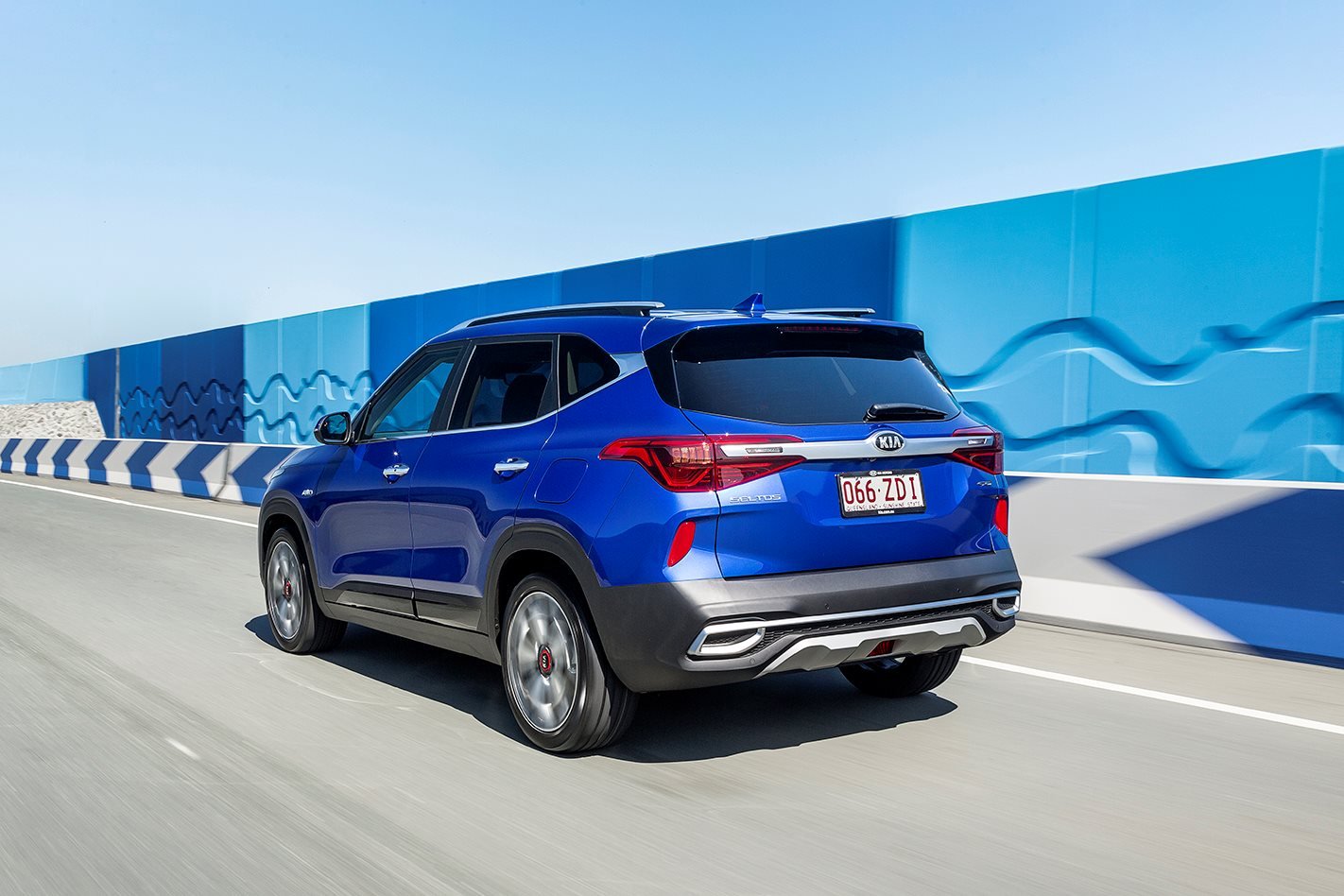
VOLKSWAGEN TIGUAN 132TSI COMFORTLINE
For the price you pay for the brand-new top-spec Seltos, you could get more badge cache and a physically bigger SUV with a second-hand Volkswagen Tiguan 132TSI Comortline that is only a handful of years old. Luckily for you, someone else will have taken the hit for the biggest part of the depreciation. While they’re not direct rivals on paper, it makes for an interesting comparison to see how far your cash can go.
The 2.0-litre unit only offers up an extra 2kW of power, but the extra 55Nm of torque is felt thanks to the bigger engine. It’s a linear unit, so progressive that it hardly feels turbocharged, and does a great job of shifting a 1600kg mass. That fact explains why the 132TSI is only 0.1L/100km more fuel efficient than the 1470kg Seltos. The seven-speed DSG is quick on the run, but like the Kia, can be a little hesitant at slower speeds.
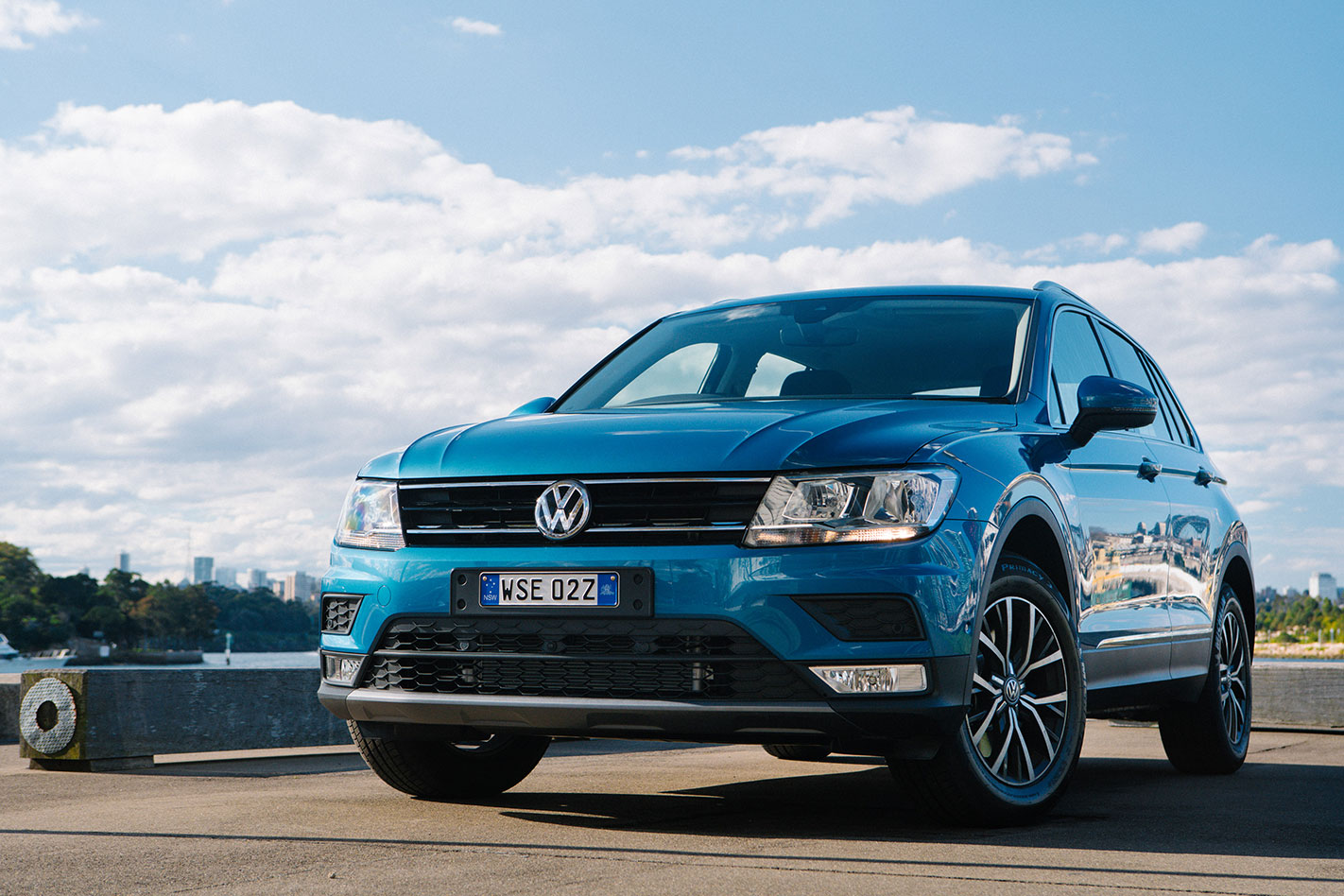
Dynamically the Tiguan goes about its business with aplomb, too. Like the GT-Line Kia, on-the-limit handling isn’t its modus operandi. Yet, the 132TSI is still engaging enough with accurate steering and confidence-inspiring dynamics. Both the Seltos and the Tiguan embrace all-wheel drive, but it’s unlikely either will see anything more hardcore than a smooth dirt road. The ride quality, too, is agreeable, while NVH levels and road noise are quelled nicely.
At 4486mm in length, 1839mm in width and 1658mm in height, the Tiguan is 116mm longer, 39mm wider and 43mm taller than the Seltos. So it’s no surprise that the 615 litre boot is 182 litres larger the Korean, while the 51mm longer wheelbase (2681) also aids rear legroom. However, that’s not to say the Seltos is lacking in space; compared to its direct compact SUV rivals, it is commodious.
Inside the Tiguan embraces Volkswagens traditional understated air of quality. The overall design isn’t as eye-catching and it doesn’t have leather seat trimming like the Seltos, but it’s a cabin that will be pleasing to live with. For an ‘older’ SUV, the Tiguan also takes the fight to the Kia in terms of safety and infotainment.
Wheels staff picks

Trent Giunco
Staff Journalist
For me, the less you spend with the Seltos, the better it is. It’s a bit of a case of diminishing returns for me. And that’s not a negative, it’s just that there’s honesty within the lower-grade versions. Even the atmo 2.0-litre four-cylinder and CVT pair well together. With that, I’d pick the second-hand Tiguan for its premium-esque feel and bigger body – which results in much more luggage capacity. The 2.0-litre engine also provides a little more effortlessness with the way it goes about its business. It’s the Tiggy for me. Maybe even a 162TSI with higher kays on the clock…

Cameron Kirby
Staff Journalist
I’m going to opt for the Kia Seltos in this showdown. In terms of luxury a top-spec Kia is now relatively on par with this tier Volkswagen, plus you have peace of mind from a staggering 7 year warranty – meaning I’ll be rolling into 2027 with a couple months of warranty left in the back pocket. I’ll concede that the Tiguan offers a better practical package, with more space for passengers and luggage, but for my personal needs day-to-day running would be the primary use without many load-lugging responsibilities. You can’t really go wrong with either, though.

Andy Enright
Deputy Editor
I have no doubt that due to the warranty, the Kia Seltos might make a smart new buy, but if I was going to go for the Korean, I’d probably opt for a 1.6 Sport+ and pocket the five grand over the GT-Line. Thing is, I’m not sure I would go for the Kia. I like the Tiguan’s quiet air of quality and authority and there’s also the not so insignificant matter of an extra 55Nm at your elbow. What’s more, you’d be buying a car that’s done the steepest part of its depreciation curve, so a two-year ownership tenure shouldn’t work out at too expensive. Volkswagen for me.
KIA SELTOS GT-LINE
Price: $41,990
Engine: 1591cc 4cyl, dohc, 16v, turbo
Output: 130kW/265Nm
Transmission: 7-speed dual-clutch
0-100km/h: 7.7sec (estimated)
Efficiency: 7.6L/100km
Drivetrain: AWD
Doors: 5
Seats: 5
Wheels size: 18-inch
Country of Origin: Korea
VOLKSWAGEN TIGUAN 132TSI COMFORTLINE
Price (new): $41,490
Engine: 1984cc 4cyl, dohc, 16v, turbo
Output: 132kW/320Nm
Transmission: 7-speed dual-clutch
0-100km/h: 7.7sec (claimed)
Efficiency: 7.5L/100km
Drivetrain: AWD
Doors: 5
Seats: 5
Wheels size: 18-inch
Country of Origin: Germany
Reckon we’ve got it right? Or are we way off the money (literally)? Find your best and let us know in the comments what you’d buy.
Back in May 2017, I wrote a feature for this site on the last performance manuals you could buy here in Australia. I made the cut-off a fairly arbitrary 250kW and this was what I came up with.
- Aston Martin Vantage
- Ford Mustang
- Ford Focus RS
- Jaguar F Type V6
- Lotus Exige
- Lotus Evora
- Porsche 718 Boxster S / Cayman S
- Porsche 911
- BMW M2 Pure
- BMW M3 / M4
- Holden Commodore SS/SS V
- HSV Clubsport / GTS / GTSR / GTSR W1
- HSV Maloo
- HSV Senator
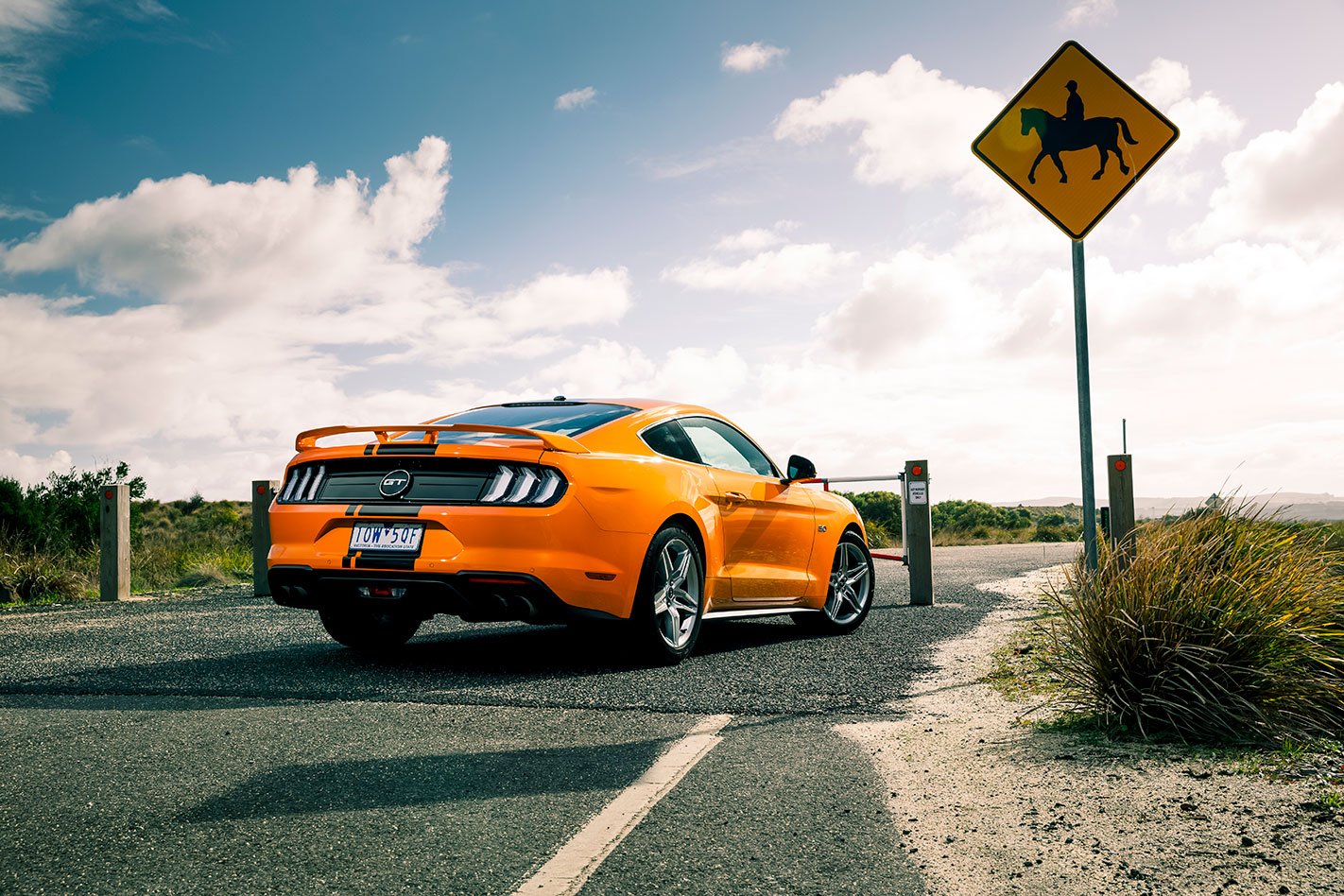
The Focus RS has passed on and, until late 2020 at least, you can’t get a manual gearbox with a Porsche 911. Jaguar has phased the manual out for the facelift F Type and BMW is even moving towards making its manual models the cost-plus option over the base price of the standard autos/dual-clutchers.
And that got me thinking. Even more sobering is the list of rear-drive manual V8s. You can now get a Mustang or a Camaro. That’s it (and variants thereof).
While there’s something slightly heart-warming about Ford and GM being the last holdouts of this particular genre, it’s an exclusively American segment now.
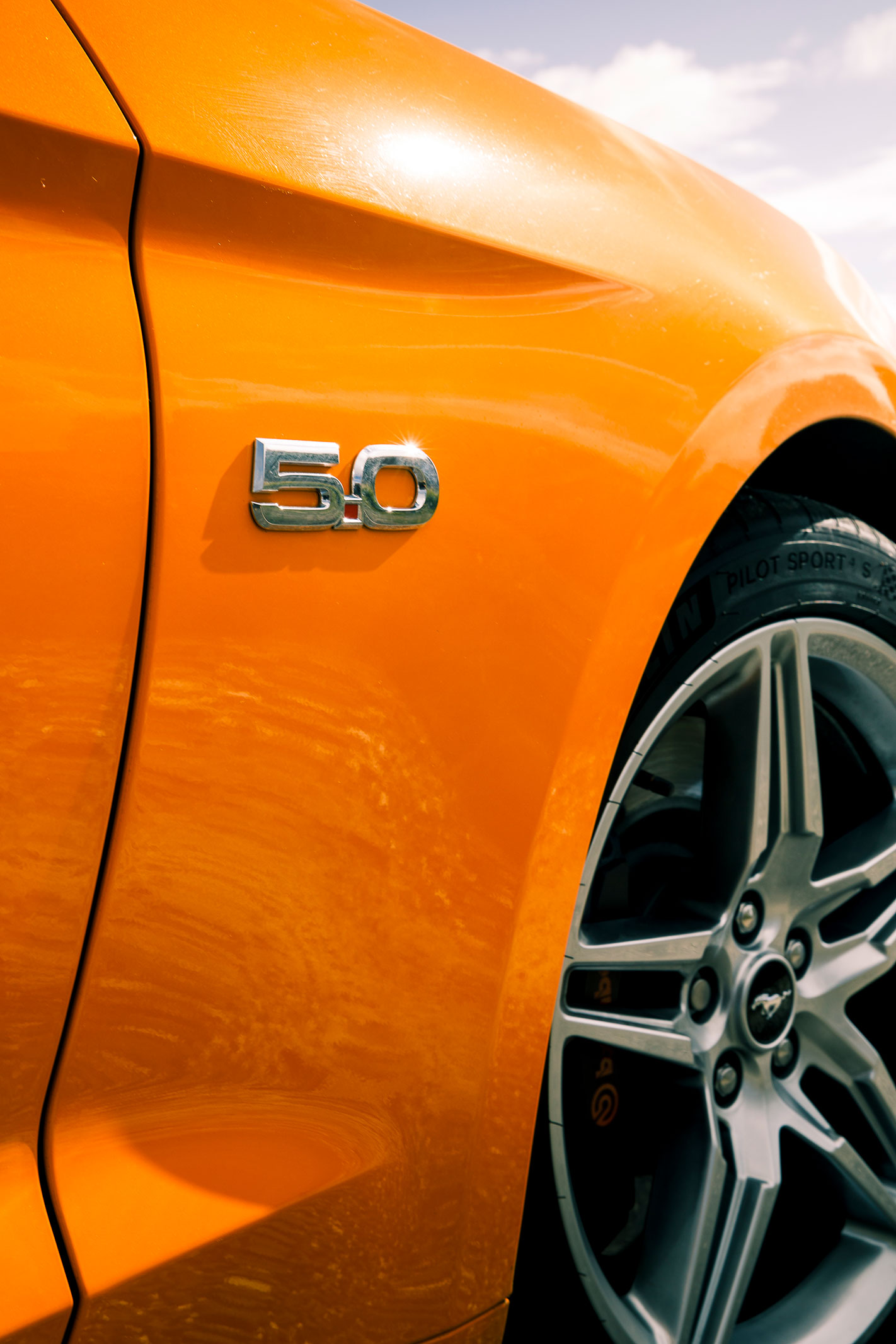
Gone are the days of BMW, Jaguar, Mercedes, Ferrari, Lamborghini and Aston Martin also offering us this template for a raw and charismatic driver’s car.
Yep, times change but have they really changed that much?
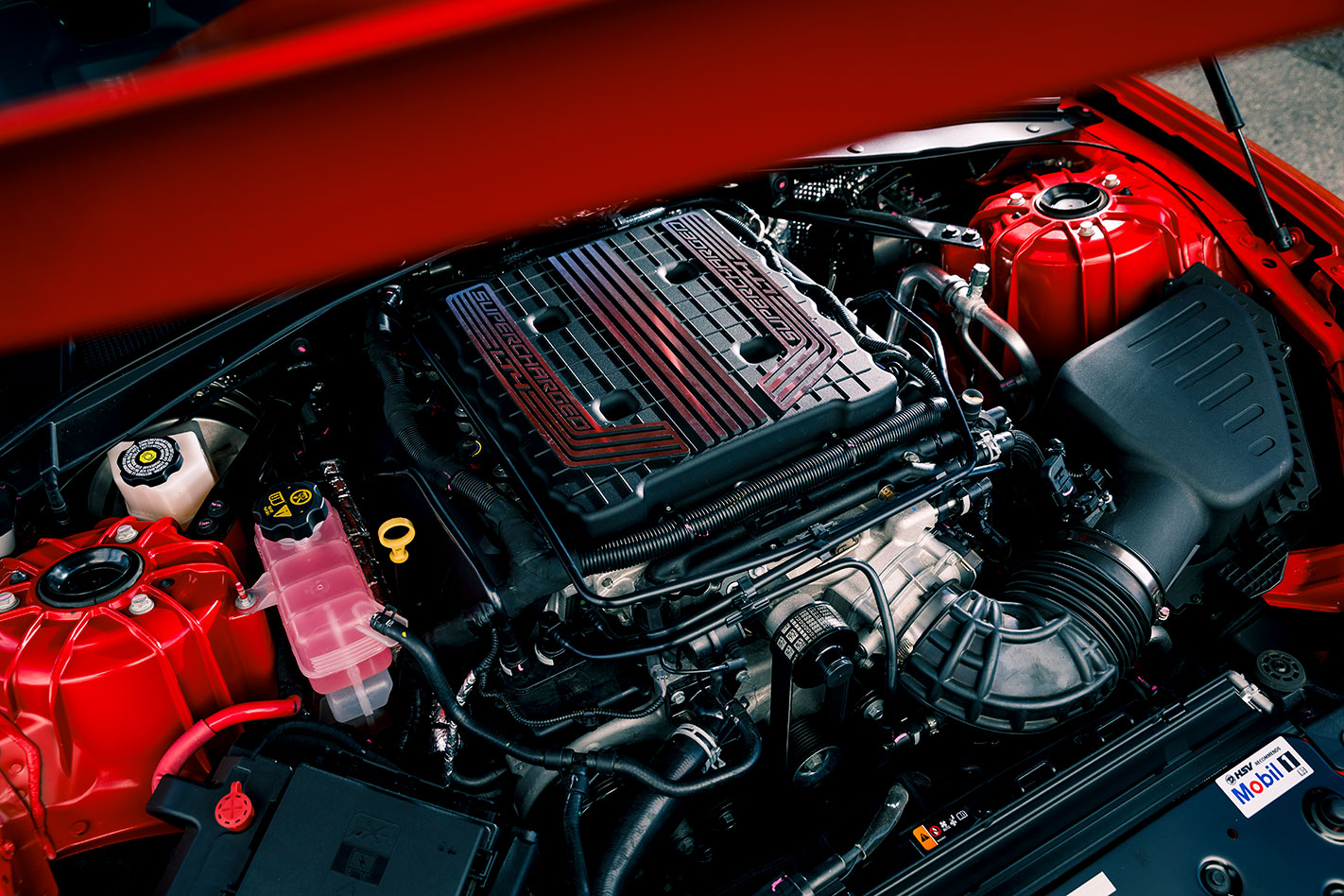
Hit up the comments and let us know how you feel about the demise of this once-vibrant slice of the market.
