
One of the feathers in the hat of Holden was that it was one of only a handful of locations in the General Motors empire that had the ability to design, engineer and manufacture a car from the very first line on a piece of paper all the way to the finished product in showrooms.
It used this capability to good effect over the years by creating some jaw-dropping concept cars, often previewing future design directions, sometimes testing out ideas on the public and occasionally just for the sake of it.
Here is our list of Holden’s top 10 concept creations, presented in chronological order.
1969 Holden Hurricane
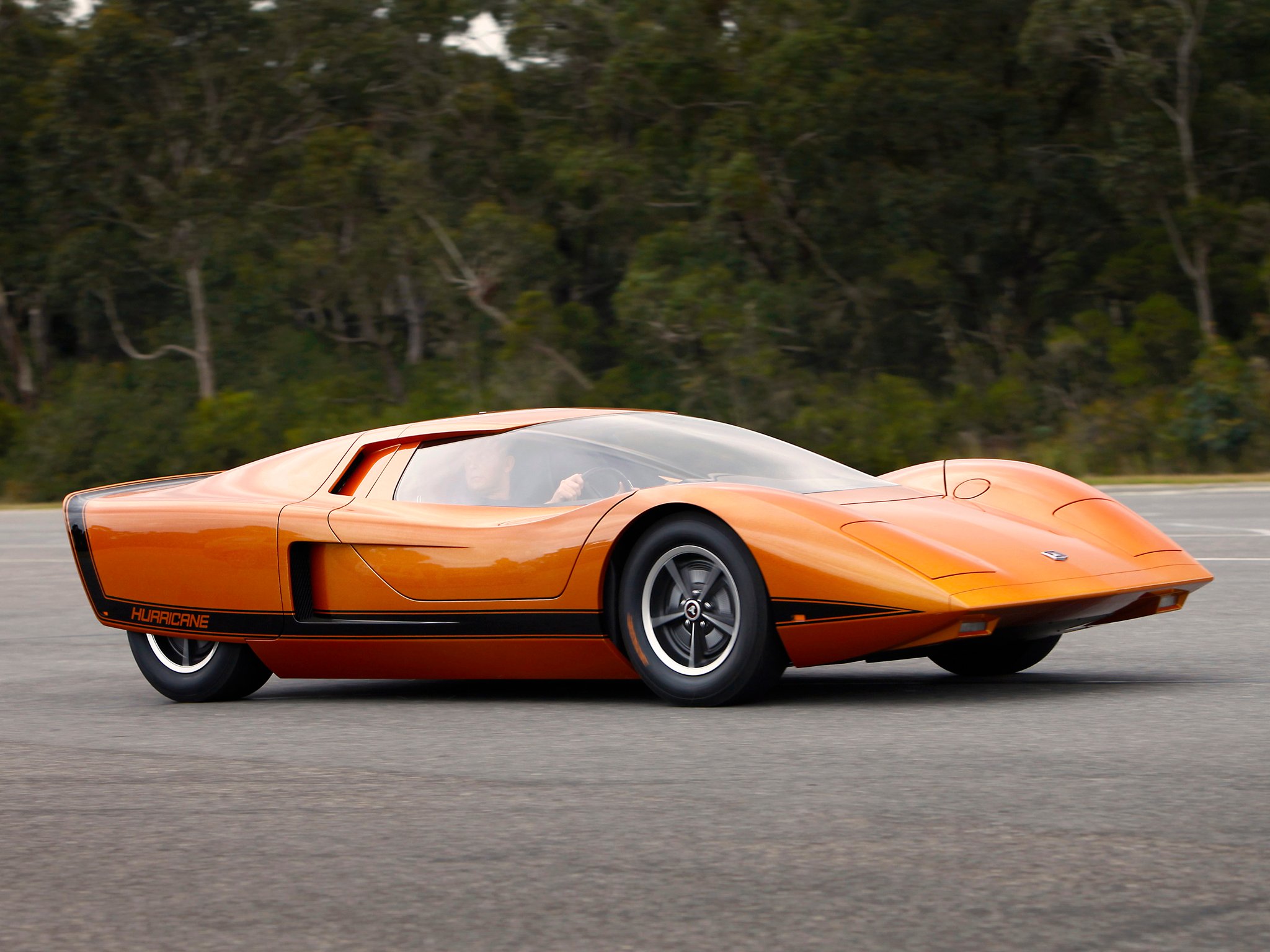
Holden’s first concept car was also its most outlandish. Its ground-hugging dimensions and supercar layout – the iconic 253ci V8 sitting midships – were wild enough, but it included air-conditioning, a rear-view camera and even an early iteration of navigation (though involving magnets rather than satellites).
Having been stuck in storage, pilfered for parts and shuffled around various museums throughout the 1970s, ’80s and ’90s, the Hurricane was reacquired by Holden in 2006 which completed a comprehensive restoration, unveiling it at the 2011 Motorclassica at Melbourne’s Royal Exhibition Building, the same venue in which it had wowed crowds 42 years earlier.
1970 Holden GTR-X
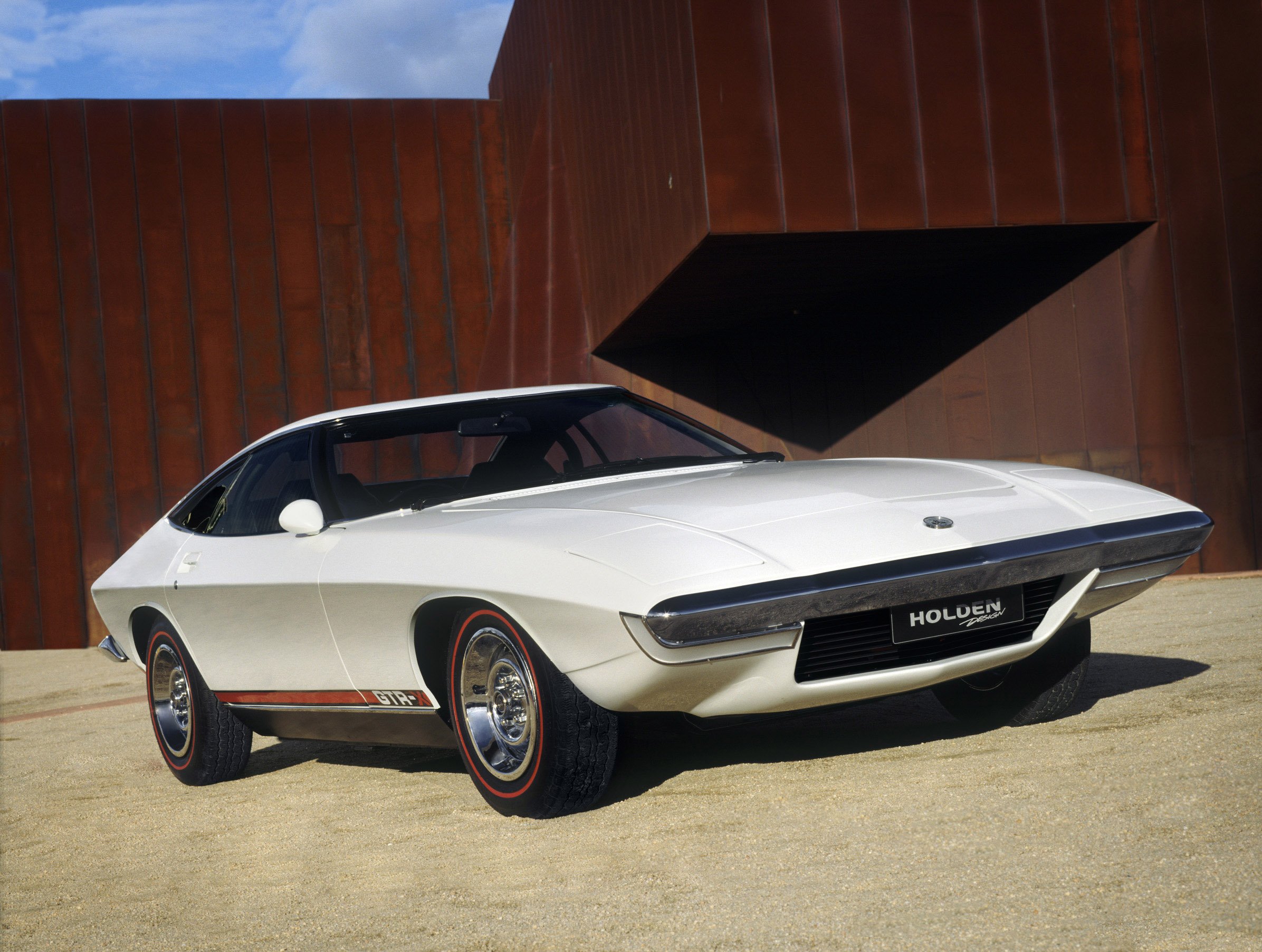
Just a year later Holden did it again with the stunning GTR-X, a Torana-based wedge that would’ve been Australia’s first true sports car. Penned by Phil Zmood, it was intended to use the running gear from the LJ GTR XU1 and while there was plenty of momentum behind the project, the planets never quite aligned.
Three prototypes were built, though one was crashed and another never completed, but the projected price tag was too high and the projected sales volumes too low to get it over the line, especially once the Datsun 240Z arrived offering basically the same package at a lower price.
1998 Holden Coupe
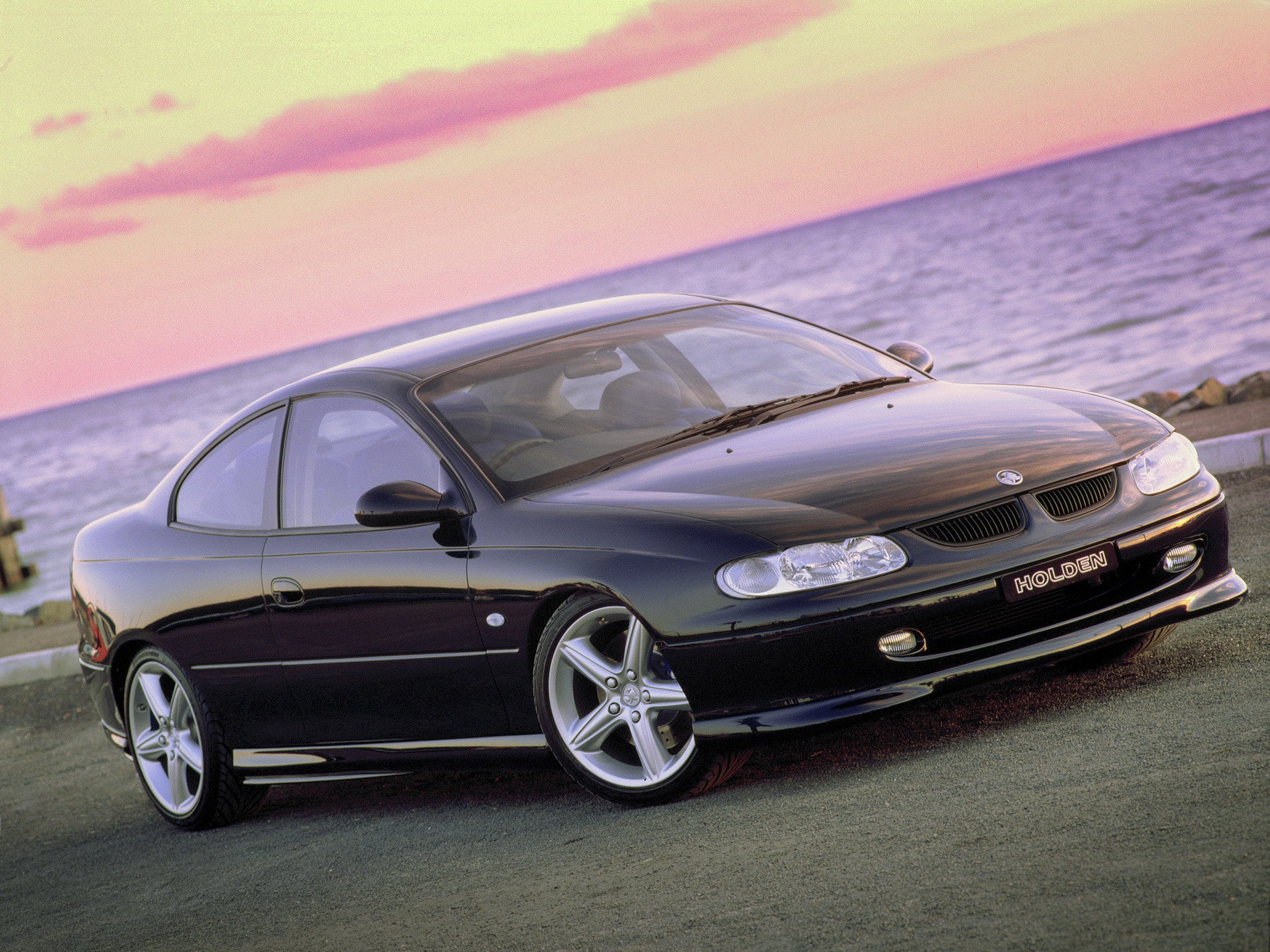
At the 1998 Sydney Motor Show Ford unveiled the AU Falcon. Holden, on the other hand, took the covers off the Coupe Concept aka The New Monaro. While the years have been kind to the AU, at the time it was the sublime and the ridiculous.
Created in secret, the VT-based concept had an elegance that the later – still very handsome – production Monaro lacked. The public went nuts for it and made the decision to revive one of Holden’s most famous nameplates a no-brainer.
2001 Holden Jack8
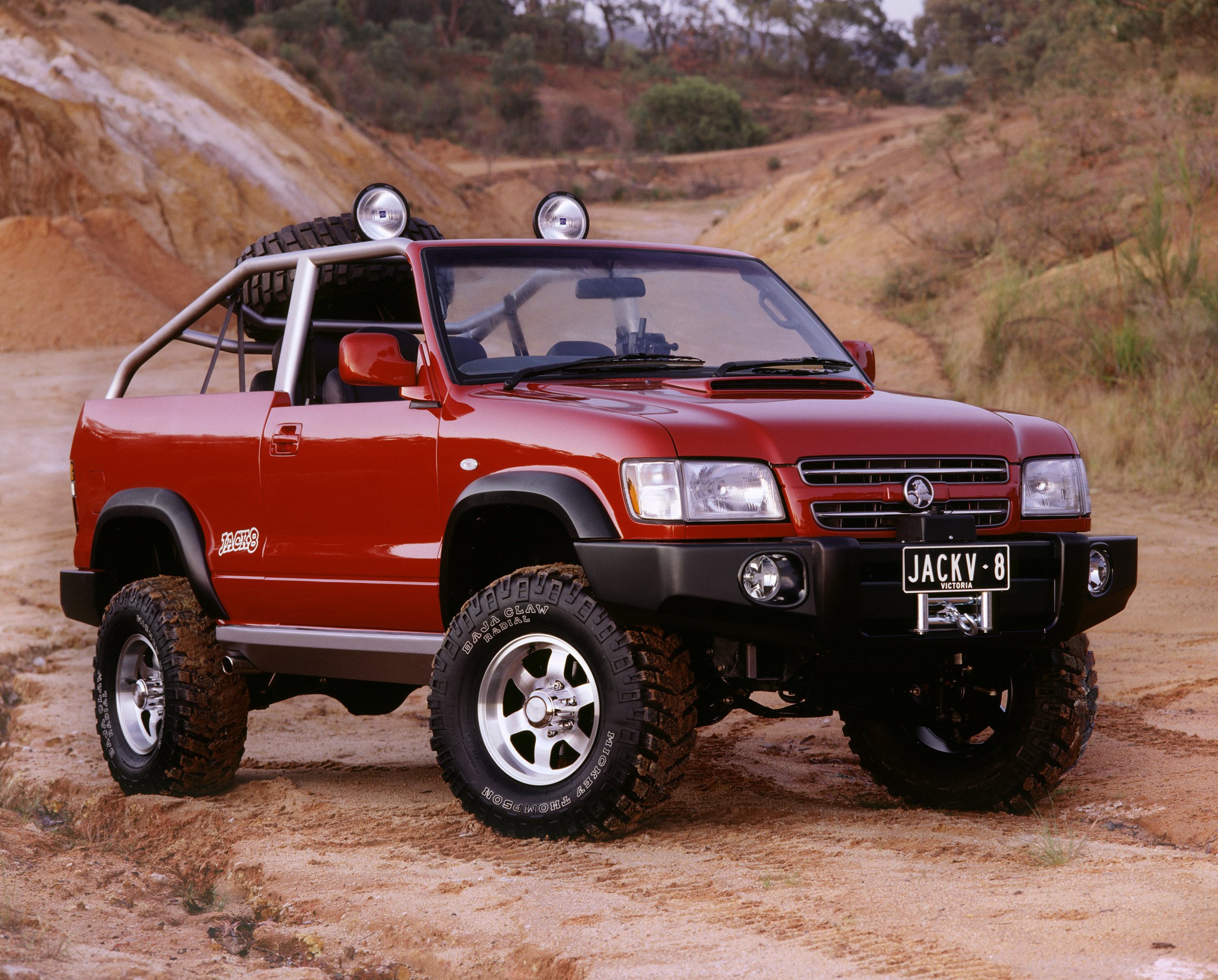
Looking like something Jeep would take to its annual Jamboree, the Jack8 concept was revealed in 2001 to revive interest in Holden’s aging Jackaroo off-road SUV. A hatchet was taken to a standard four-door wagon, elongating the front doors 200mm and smoothing off the rears and the tailgate.
A 50mm lift and Mickey Thompson Baja Claw tyres took care of the stance, inside there were Monaro bucket seats and a fully sick stereo system with subwoofer, while under the bonnet the standard diesel made way for a 225kW Gen III V8.
2001 HSV HRT Maloo
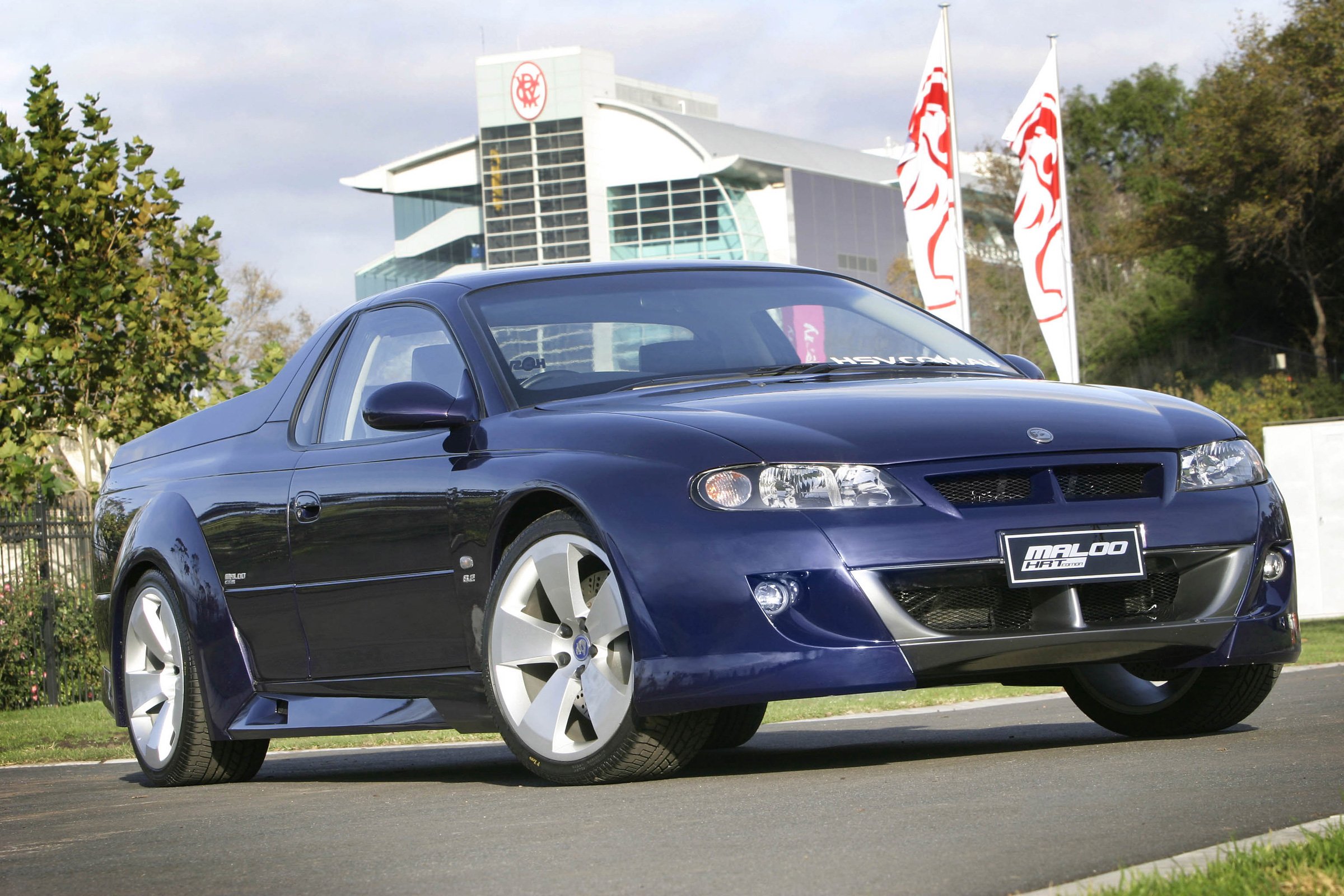
Concept cars are rarely shrinking violets, but even by the standards of the breed the HSV HRT Maloo Edition was wild, sitting on the stage at the 2001 Sydney Motor Show like it was the final round of the Mr Olympia judging.
If anything, the go outweighed the show, with an enlarged (and fully functional) 6.2-litre V8 producing 350kW/600Nm attached to a six-speed manual. Wider tracks, tyres and monster brakes rounded out the package. A wilder ute wouldn’t reach production until the HSV Gen-F GTS Maloo.
2002 Holden SSX
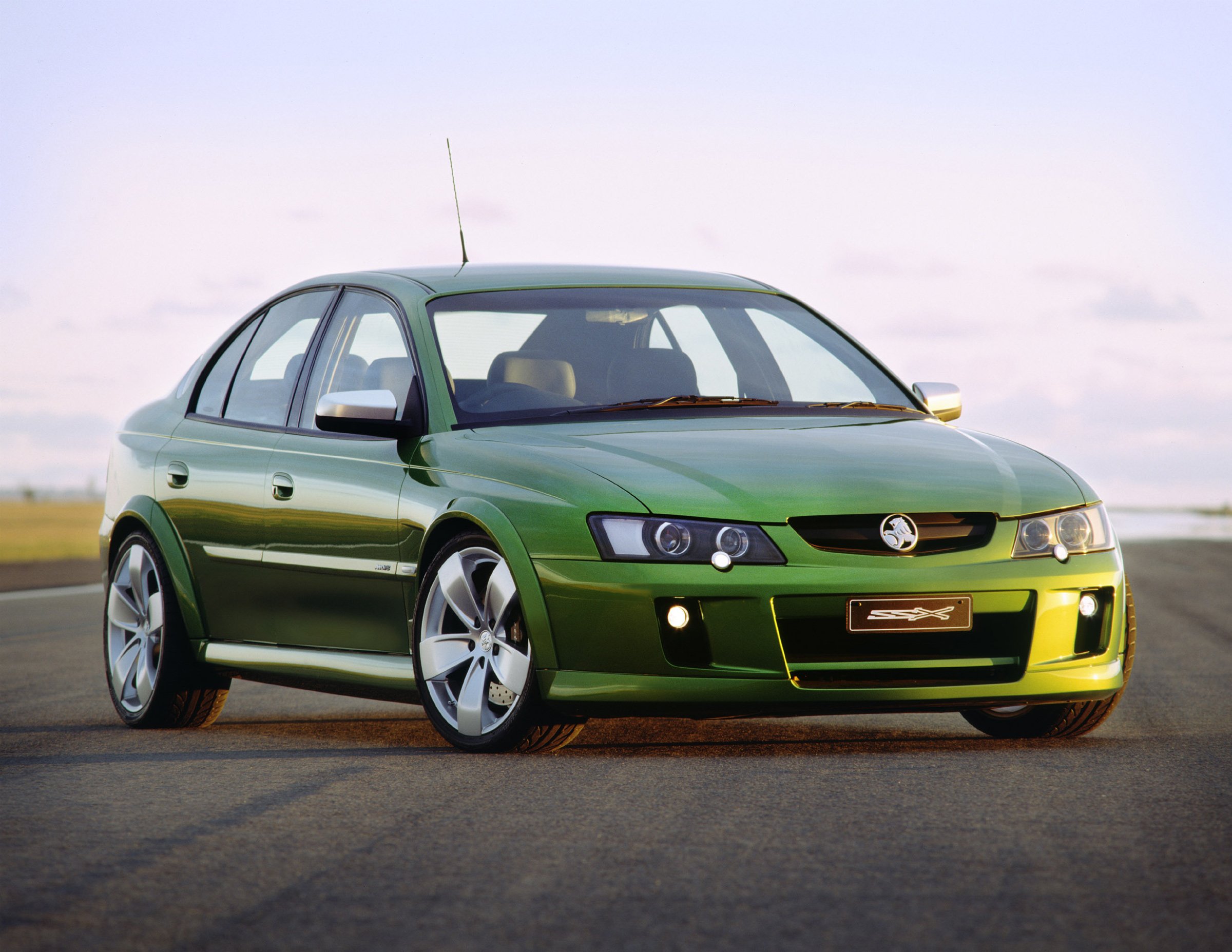
At a cursory glance the SSX looks like a mildly tweaked VY SS, but there are plenty of devils in the details. The only panel it shared with a regular Commodore was the bonnet, the pumped guards required to cover the wider tracks necessitated by its hidden party trick – all-wheel drive.
Using the drivetrain that would debut a year later in the Adventra, the SSX also floated the idea of a split hatch tailgate, as much to draw the punters’ gaze to the concept as anything. While the SSX never made production, the idea of a high-performance all-wheel drive did emerge from Clayton in the form of the HSV Coupe4.
2002 HSV HRT 427
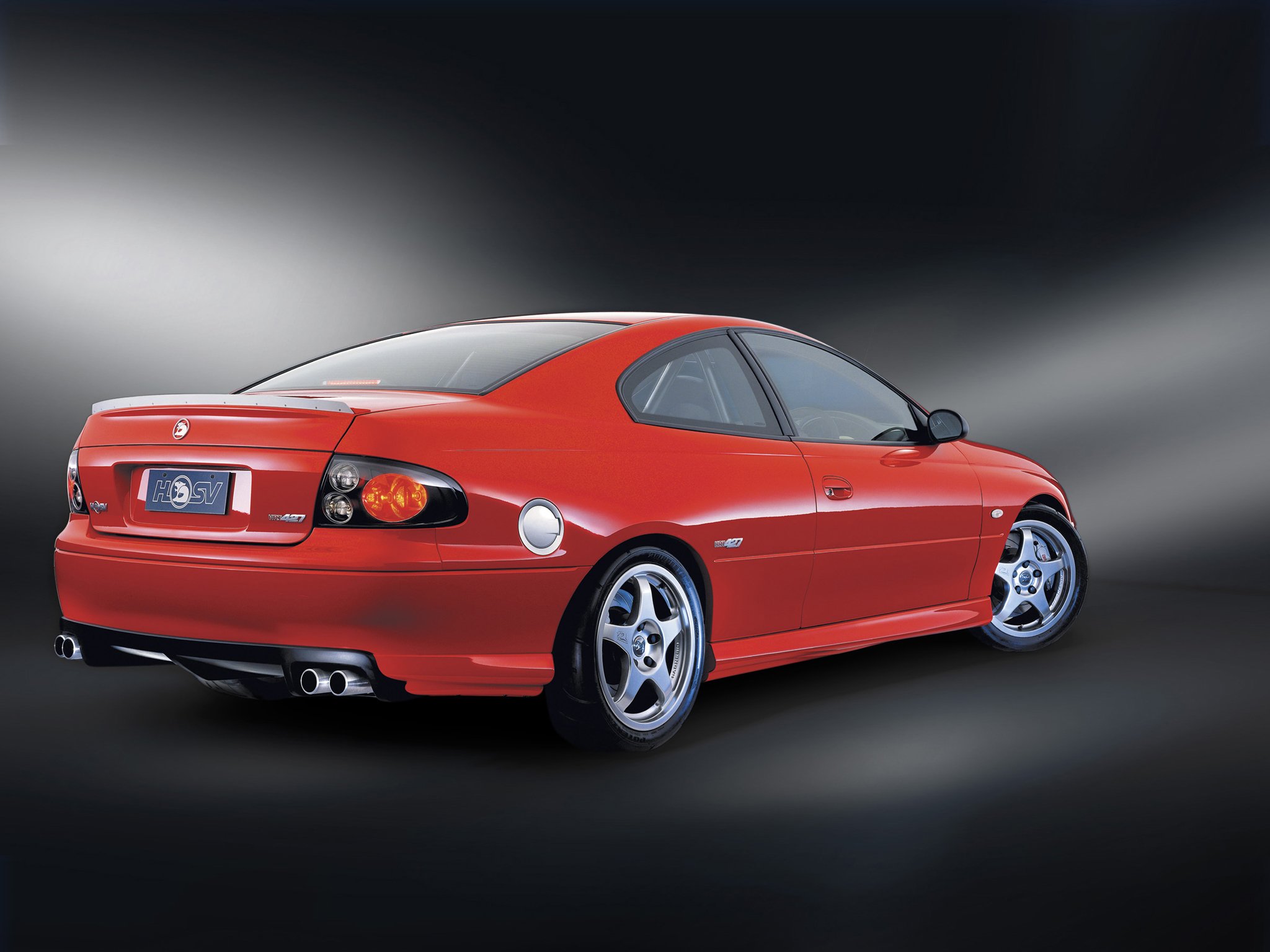
Is this Holden’s greatest ‘what if’? A car that, if produced, had a chance of butting heads with the 911 GT2 as the wildest road-racer of the early 21st century. Powered by the 7.0-litre V8 from the Corvette C5R with brakes and suspension to match, HSV announced it planned to build 50 at $215,000 apiece.
While an extraordinary amount of money at that time, it wasn’t enough to make the project financially feasible. With hindsight, HSV coulda-woulda-shoulda upped the price and the production run but perhaps the difficulty it had shifting its eventual 7.0-litre production car, the W427, suggests it made the right call after all.
2004 Holden Torana TT36
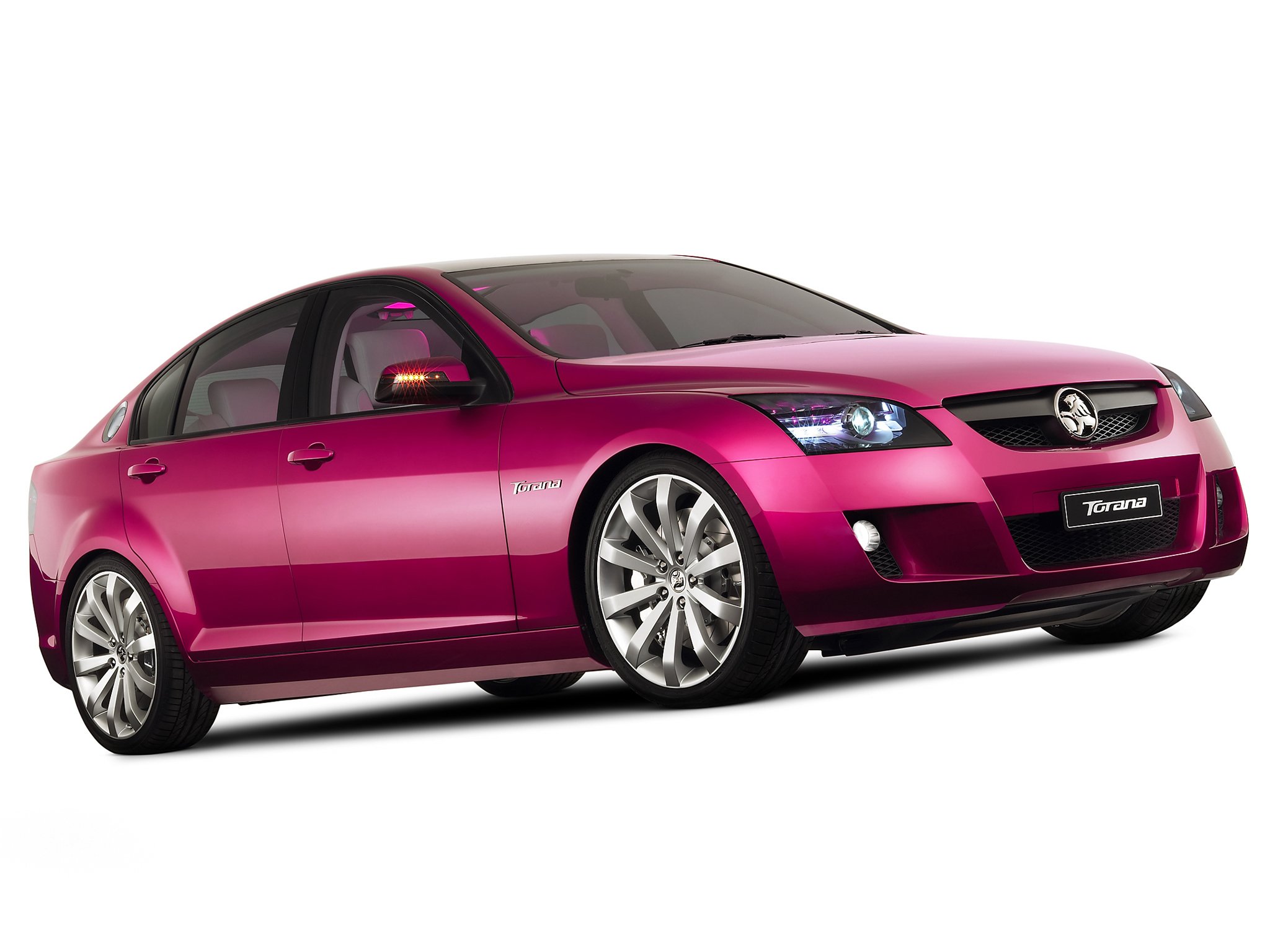
The TT36 gave the world its first look at the exterior and interior design language that would appear on the VE Commodore, but its wider purpose was to allow General Motors to consider a small, premium rear-drive sedan for global sales – a Holden 3-Series, if you like.
Unfortunately, bar some of the styling, none of it made production, not even the 280kW/480Nm 3.6-litre twin-turbo V6 that would’ve given Holden and HSV a direct competitor to the Falcon XR6 Turbo and FPV Typhoon.
2005 Holden Efijy
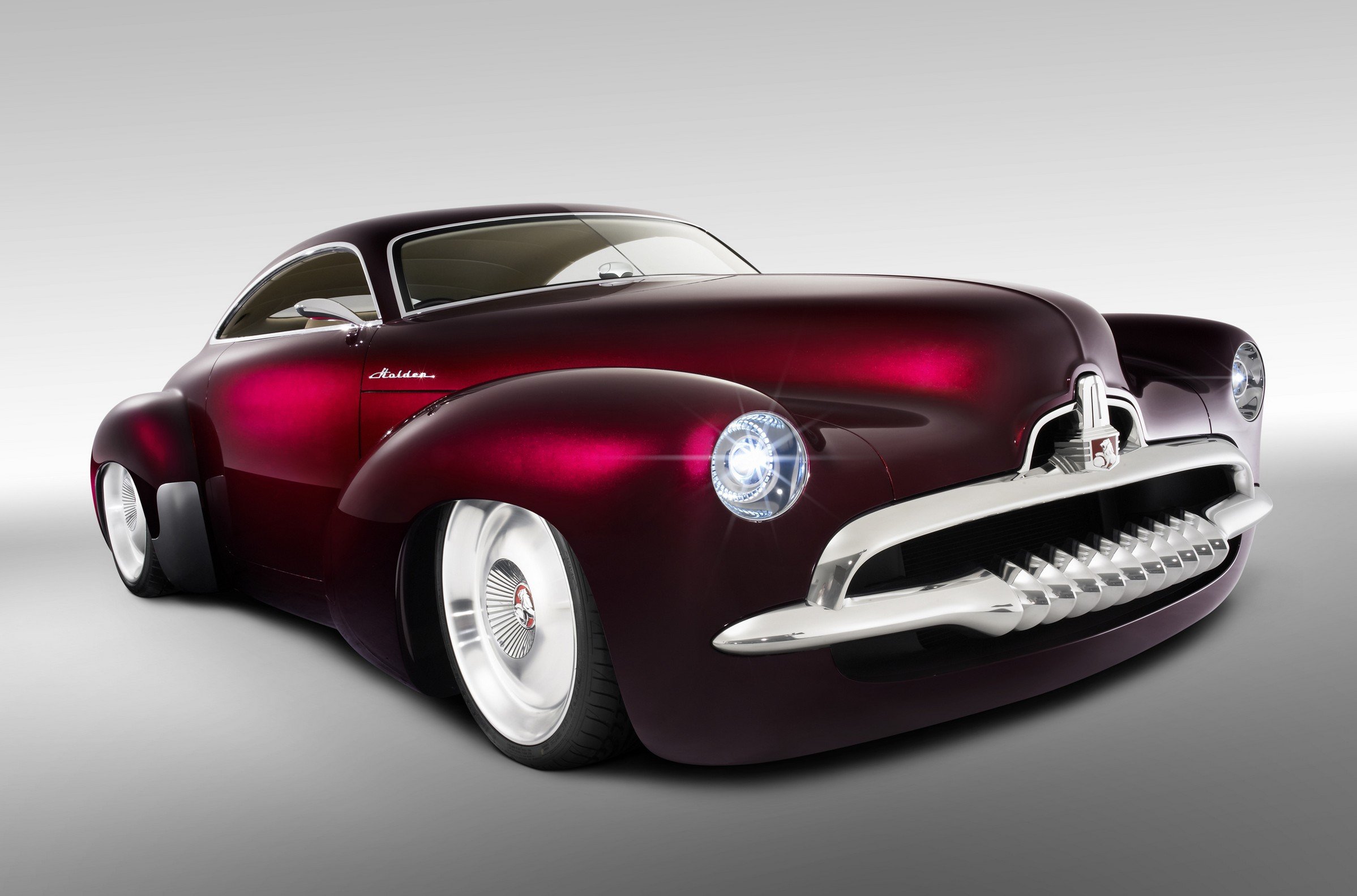
It’s rare that manufacturers allow themselves true flights of fancy. It’s a business, after all, and every dollar must be accounted for, but it’s fair to say the publicity the mind-blowing Efijy generated paid for itself many, many times over.
The brainchild of Holden designer Richard Ferlazzo, it was a car that would’ve comfortably sat in the Summernats Elite judging hall, with its wild proportions – inspired by the iconic CadZZilla owned by ZZ Top guitarist Billy Gibbons – beautifully trimmed interior and 480kW/775Nm supercharged Corvette engine.
2008 Holden Coupe 60
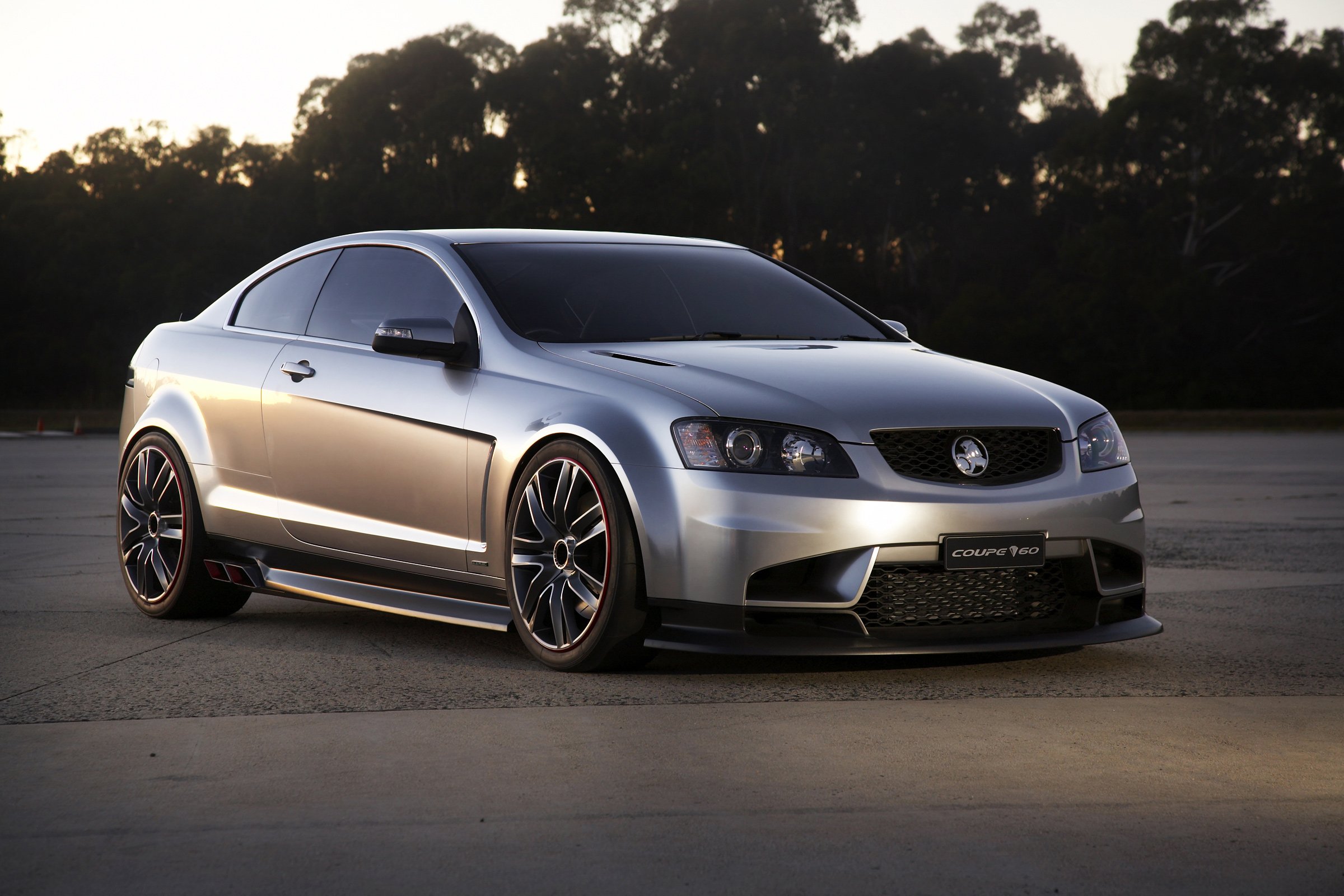
Riding high after the launch of the VE Commodore, Holden managed to keep the muscular Coupe 60 a secret right up to the very eve of the 2008 Melbourne Motor Show. Aiding in this was the fact that the car was actually built in Japan, but the two-door VE – or let’s face it, the third-generation Monaro – did its job.
An SS V prototype was chopped in height and length and fitted with the 307kW/550Nm 6.0-litre V8 that did duty in the E-Series HSVs at the time, but despite the positive response the automotive world was a different place compared to 10 years earlier and the sums on a production version never stacked up, especially with the fifth-generation Camaro imminent.
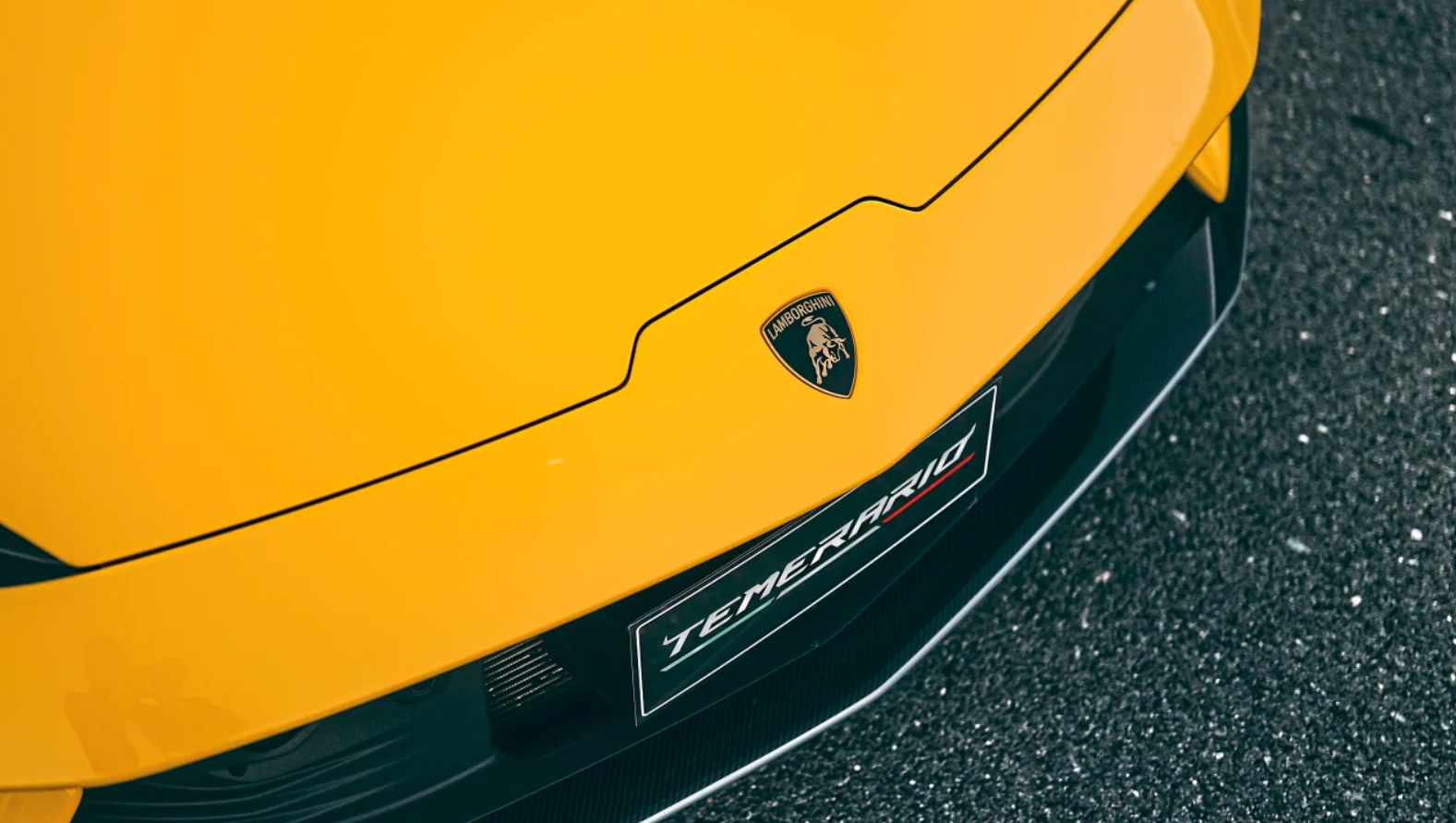
When Lamborghini confirmed that the new Temerario would replace the much-loved Huracán and ditch the V10 for a hybridised V8, the reaction from purists was swift and sceptical. But the Italian marque promised a bold evolution rather than a compromise – and after our first experience behind the wheel, it’s clear that promise has been kept.
Gone is the naturally aspirated, high-revving V10. In its place is a bespoke twin-turbo 4.0-litre V8, developed specifically for the Temerario – not borrowed from the Urus or any other VW Group sibling.
Paired with three electric motors and a flat-plane crankshaft, it revs to a staggering 10,000rpm, delivering a total output of 907bhp (676kW). That’s enough to place it above the Ferrari 296 GTB and McLaren 750S in outright power, and just shy of the V12-powered Revuelto.
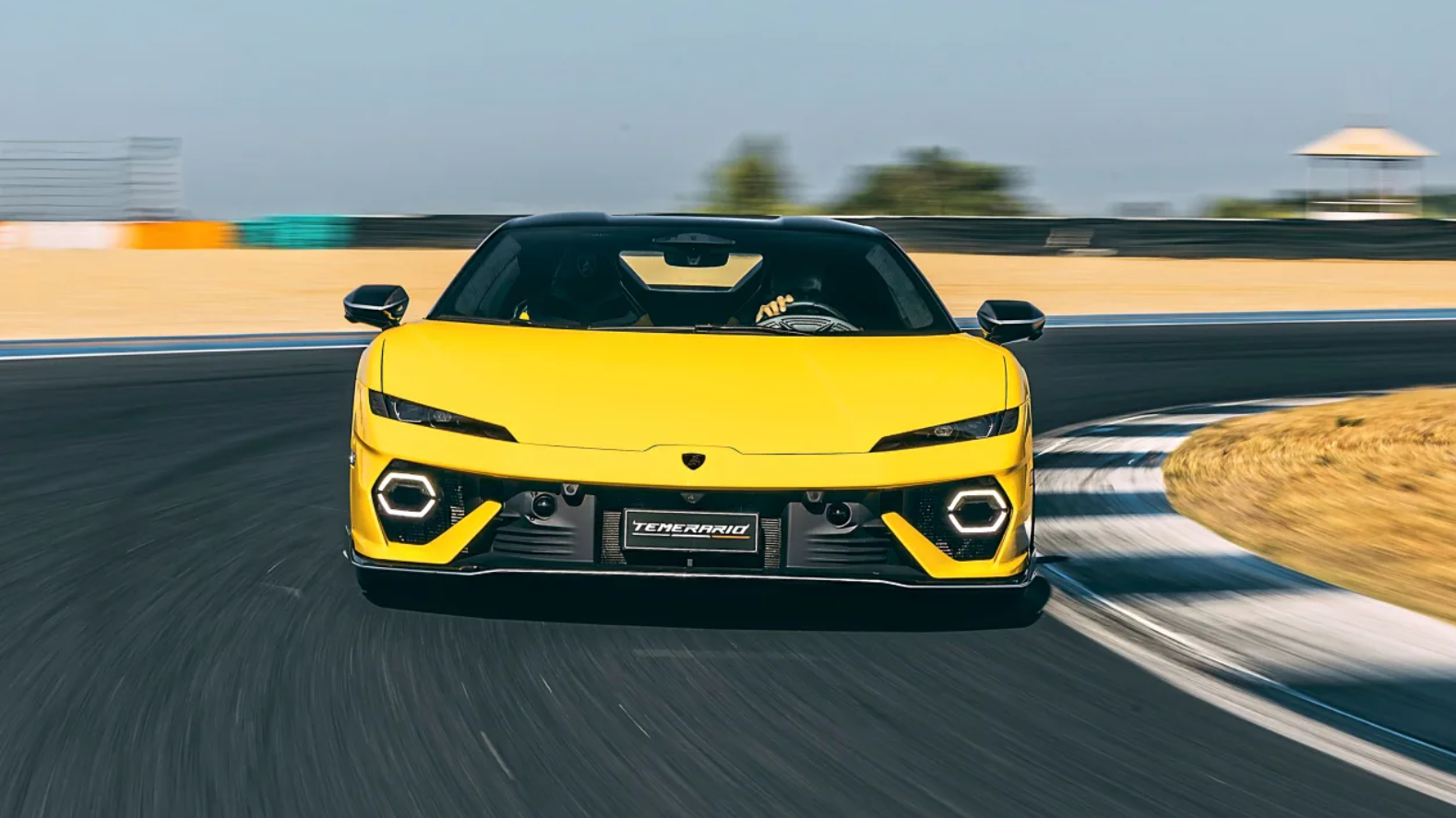
From the moment you fire up the engine – via a jet-fighter-style switch – you’re greeted by a deeper, angrier tone than the V10’s wail. It’s not as sonorous, but it’s undeniably dramatic, thanks in part to a titanium exhaust system.
Our first encounter took place on the Estoril Circuit in Portugal, where we jumped straight into Corsa mode using a selector inspired by the Revuelto. Despite its size – the Temerario is 4.71 metres long – it feels nimble and well balanced, thanks to dual front electric motors with torque vectoring, progressive steering, and revised suspension. A dry weight of 1690kg (around 1800kg with fluids) isn’t feather-light, but the car hides it well.
Throttle response is astonishing. The electric motors effectively eliminate turbo lag, providing near-instant torque delivery. The V8 builds to a frenzy in the final 2000rpm, encouraging you to push harder and hold each gear to the limit. On Estoril’s front straight, we glimpsed 184mph (296km/h) before relying on massive carbon-ceramic brakes shared with the Revuelto.
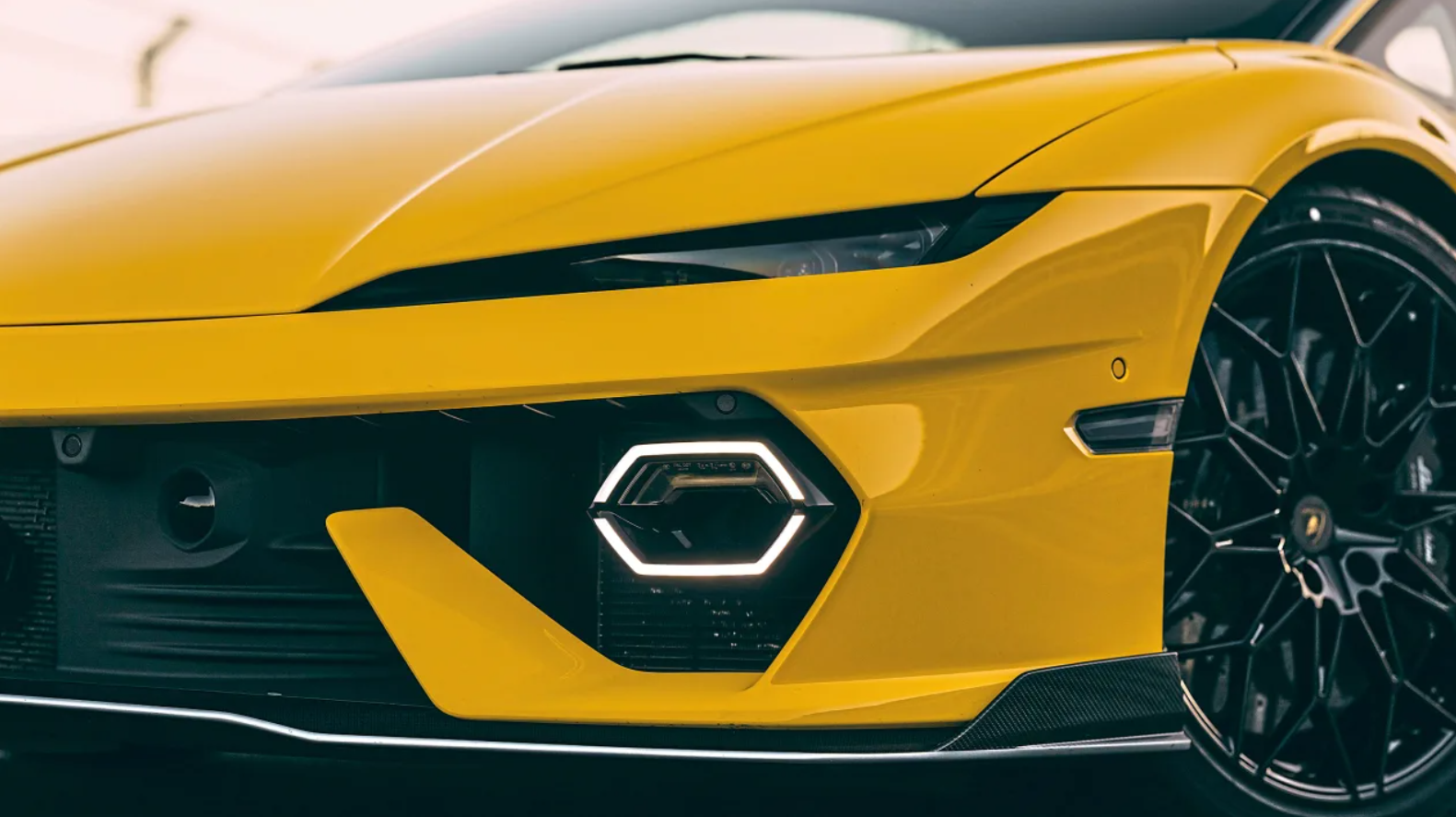
With 13 drive and drift modes, Lamborghini’s engineers have worked wonders with powertrain integration. Unlike older models, traction and stability interventions are seamless and barely noticeable. The result is a car that feels alive, responsive, and – surprisingly – more playful than its larger V12 sibling.
Set to arrive in early 2026, the Temerario marks a daring new chapter for Lamborghini. If this is the starting point, we can only imagine how extraordinary the story will get.
Specs
| Model | Lamborghini Temerario |
|---|---|
| Price | A$534,169 |
| Powertrain | 4.0-litre, V8 turbo petrol, 3.8kWh battery, 3x e-motors |
| Power/torque | 907bhp/730Nm (V8 engine only) |
| Transmission | 8-speed dual-clutch auto, all-wheel drive |
| 0-100km/h | 2.7 seconds |
| Top speed | 212mph (341.9km/h) |
| Economy/CO2 | 25.2mpg/272g/km |
| Size (L/W/H) | 4,706/1,996/1,201mm |
| On sale | Now |
Ford CEO Jim Farley has teased what he calls a “Model T moment” as the company prepares to unveil a major shift in its electric vehicle strategy next month.
The announcement, set for August 11, will take place in Kentucky and mark the debut of a new electric vehicle and EV platform – a pivotal move as Ford intensifies efforts to stay competitive, particularly against a rising wave of Chinese automakers.
“This is a big moment for us,” Farley told investors during a July 30 earnings call, in a report on Car and Driver. “We’re about to introduce a family of electric vehicles that offer outstanding technology, space, efficiency, and features – vehicles that we believe will reshape Ford’s future.”
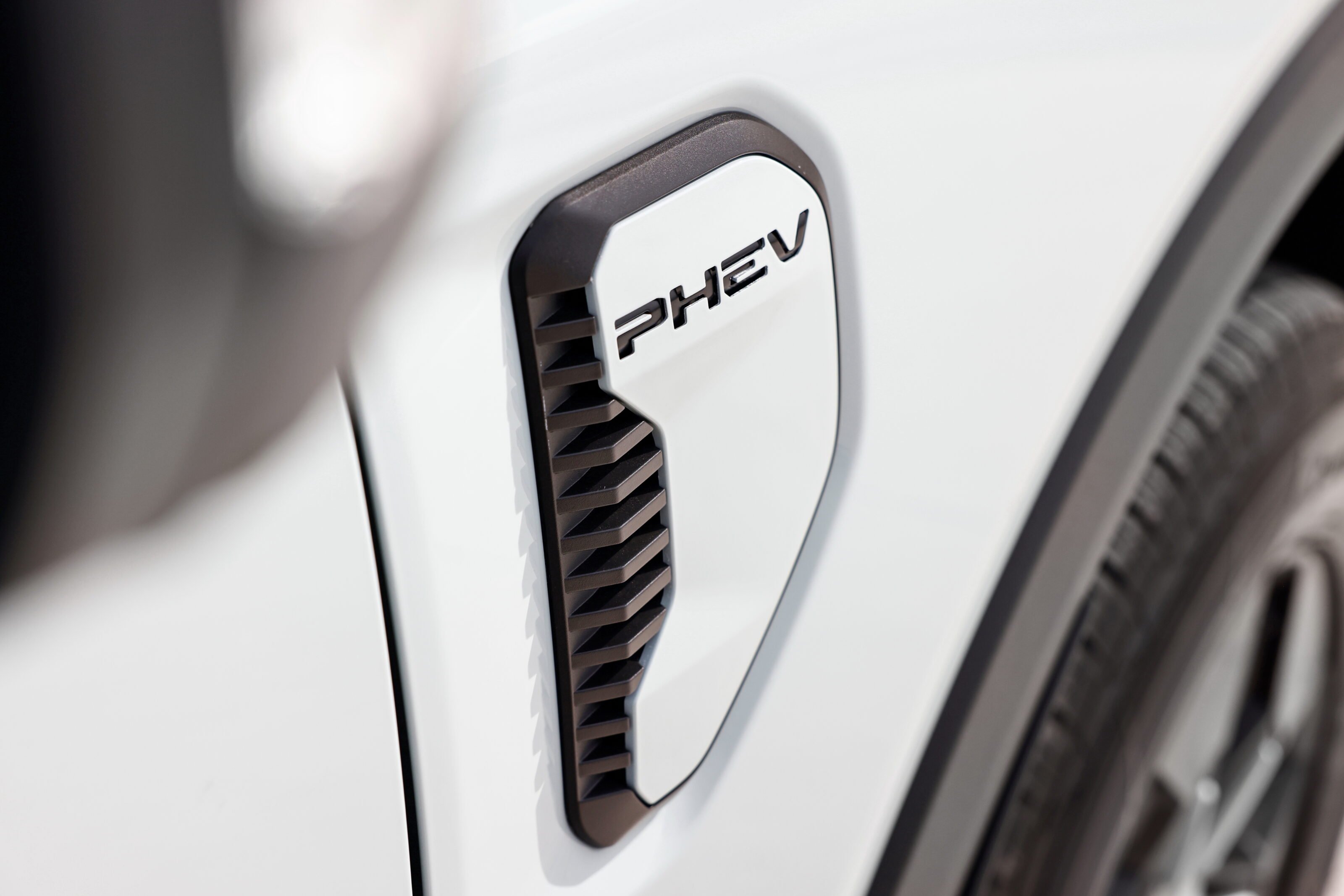
The strategy includes the launch of a new EV platform, developed by a small internal “skunkworks” team. Designed with flexibility in mind, the platform is expected to underpin multiple electric models, focusing on smaller, more affordable, and higher-volume offerings – areas where Chinese rivals like BYD and Xiaomi have rapidly gained ground.
Farley has previously voiced concern about the growing threat from Chinese EV brands. In a 2024 podcast interview, he admitted to daily driving a Xiaomi SU7 and finding it difficult to part with – an eye-opening experience that underscored Ford’s need for significant reinvention.
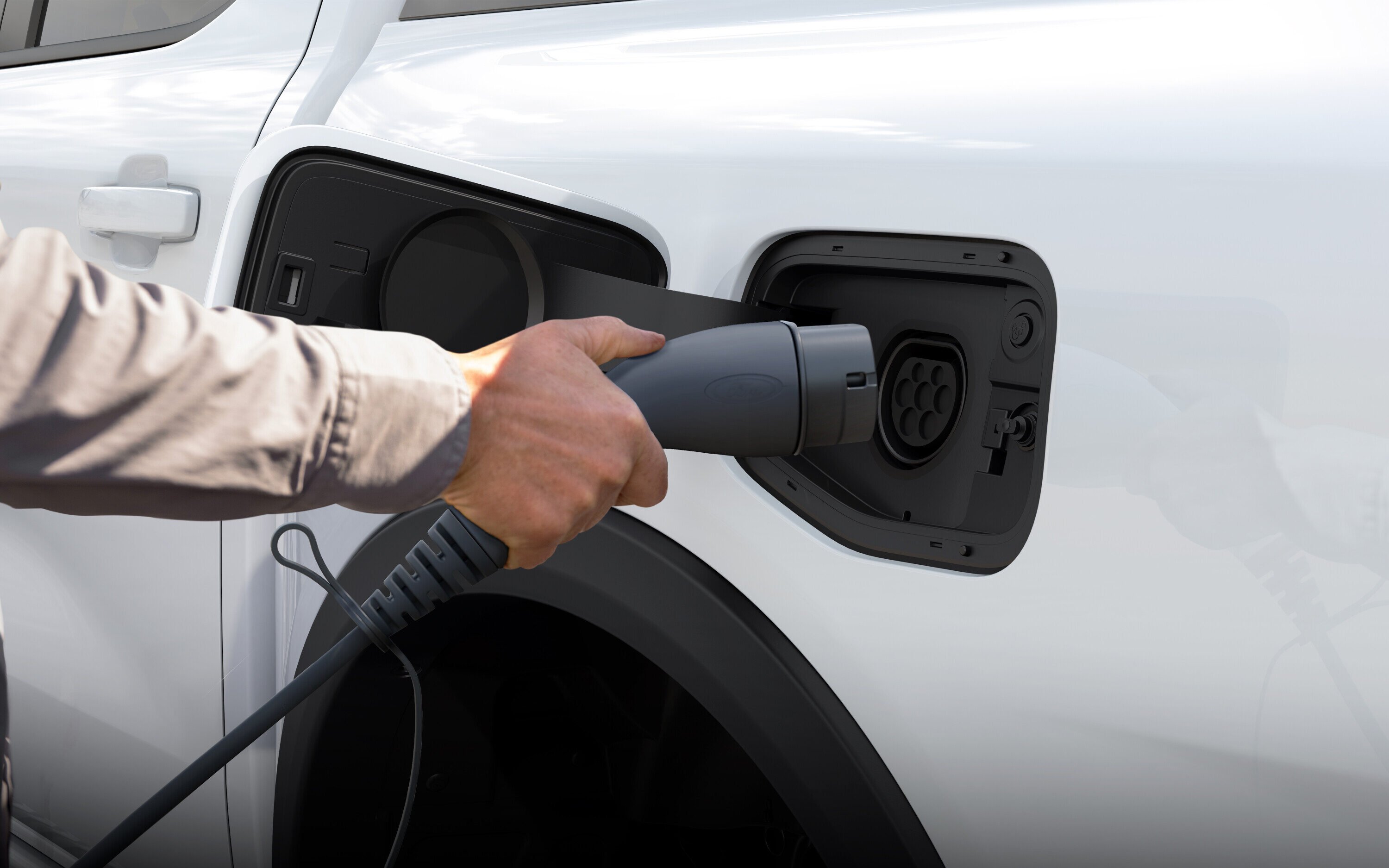
While full details of the new EV platform remain under wraps, the August event is expected to outline Ford’s broader electric roadmap and provide a clearer look at how the company plans to position itself in a fast-evolving global market.
With this next chapter, Ford is suggesting it will capture the same spirit of innovation that defined the original Model T more than a century ago for a new generation of electric drivers.
The Tanami Desert and not the Tasman Sea was originally intended to lend its name for Kia’s landmark new Aussie ute. But when headquarters in South Korea vetoed their first choice, Kia Australia’s management in Sydney pivoted quickly from desert to ocean. Too quicky, in fact, for CEO Damien Meredith.
“We initially had submitted a name, Tanami, but that wasn’t well received by senior management,” recalls Roland Rivero, the general manager of product planning at Kia Australia. “We really wanted a name for our region. So we submitted Tasman on the Friday and it was approved by Monday. But I hadn’t told Damien.
“I don’t think he spoke to me for a month . . .”
Lucky or not, the name game was only a minor hiccup on the six-year Tasman program, which is now live and running after more than a year of teasing and tweaking through a massive marketing program.
Utes are in showrooms and driving onto the road, and the Tasman – with help from a set of grippy Mickey Thompson tyres – has even conquered Queensland’s Beer O’Clock Hill to earn its spurs with off-road enthusiasts.
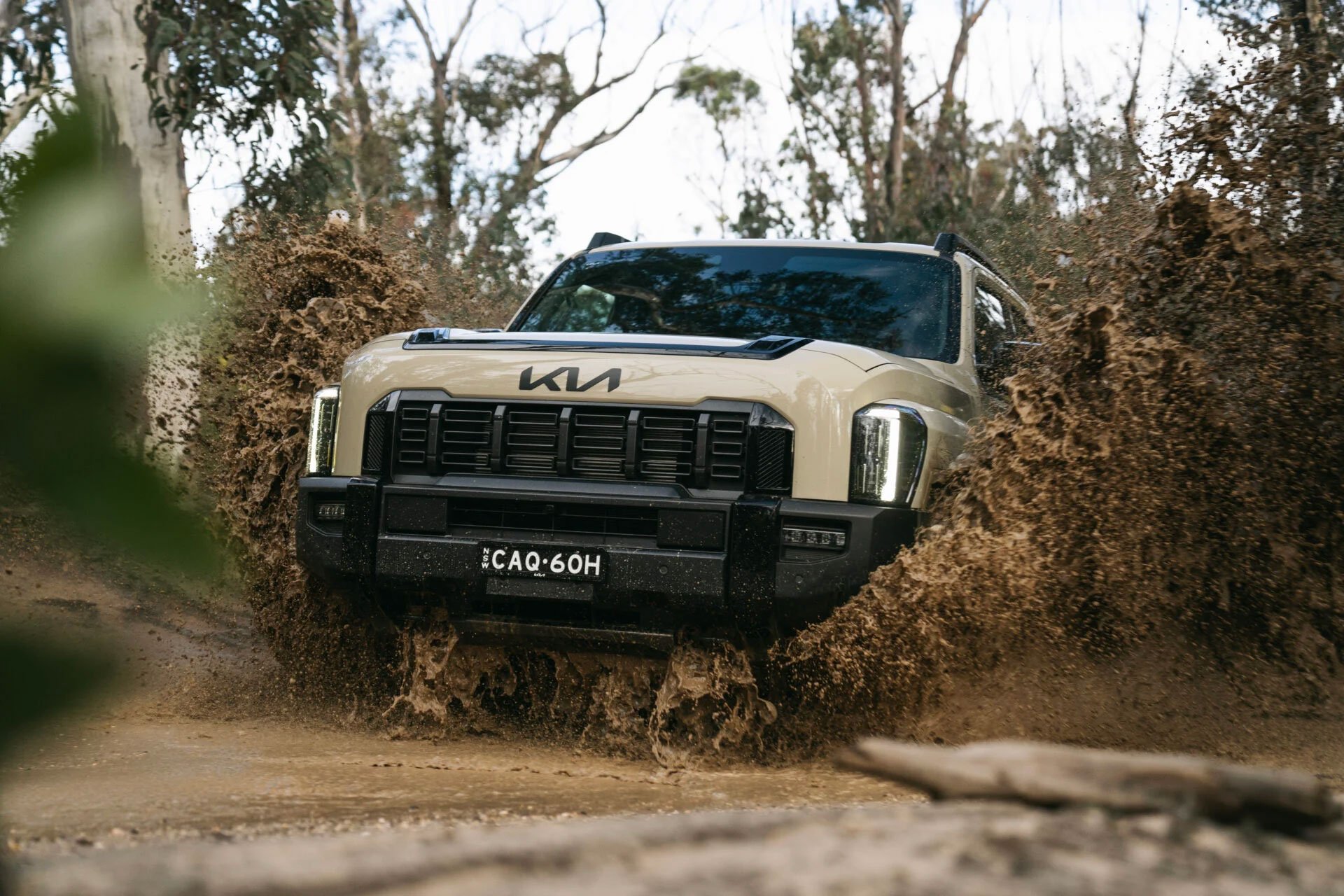
To cut straight to the chase, and the answer everyone wants, the Kia Tasman is shaping as a top three contender in the pick-up class. It’s right there with the Ford Ranger and Toyota HiLux, with a series of ‘swings and roundabouts’ results which tip the balance in different directions for different things.
The Tasman is nicely car-like to drive and has a great cabin, but only comes with a 2.2-litre turbodiesel engine and is not yet proven through heavyweight outback towing. It has a 5-Star ANCAP rating, but not for the whole range.
Kia is also asking premium prices, from $42,990 for the Tasman S 4×2 dual-cab pick-up model through to $74,990 for the X-Pro, when it’s a total newcomer and still a challenger against proven champions. So, let’s get back to the beginning.
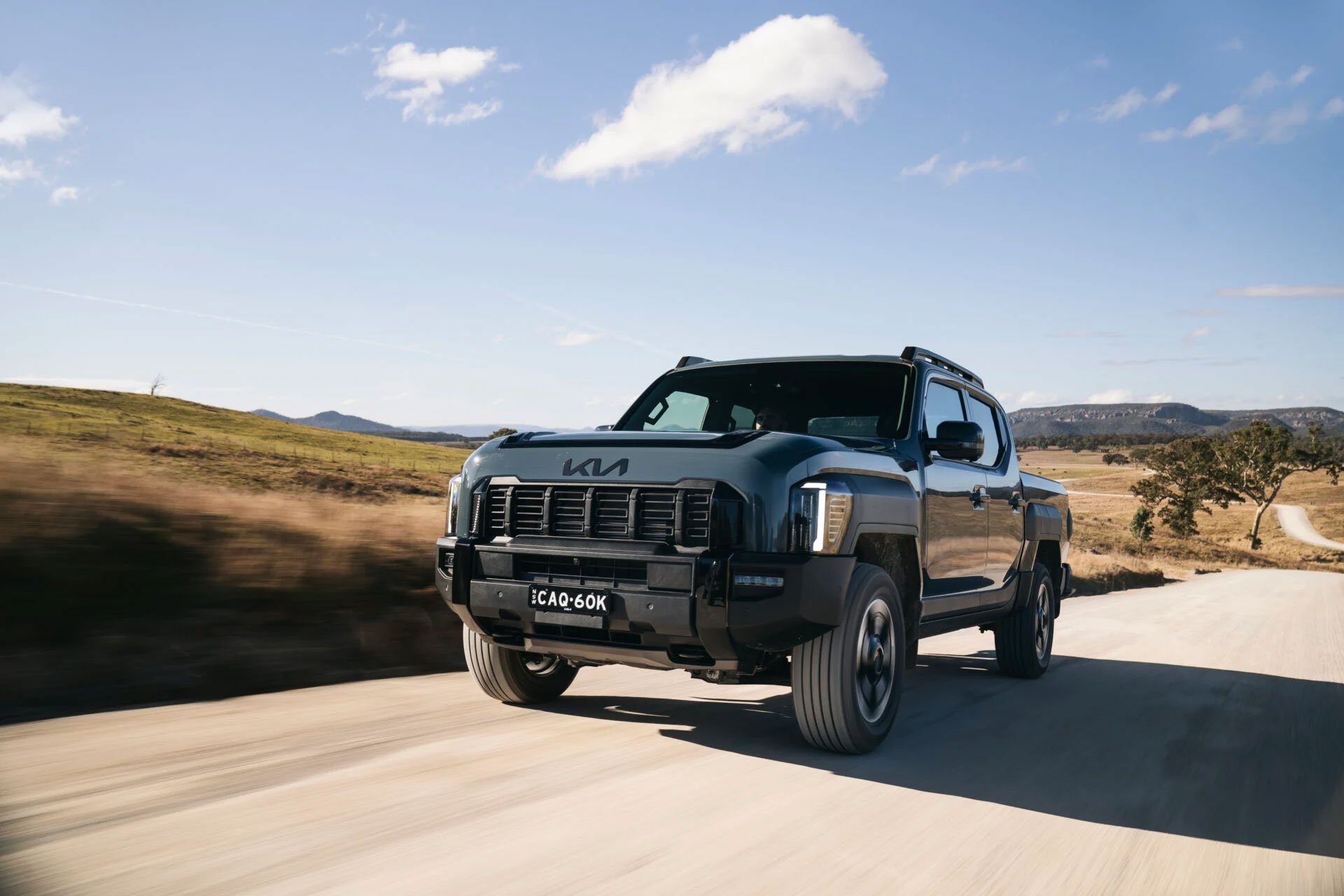
Who knew that the ute battle in 2025 had become a beauty contest?
Just as many people decided not to vote for the Coalition in 2024 because they didn’t like the look of Peter ‘Voldemort’ Dutton, there are now people who think the Tasman is ugly and have already cut it from their shopping list without waiting for a test drive. Kia was not totally surprised by the early reaction, and now believes the kickback against the design will fade fast.
“I’ve called it ‘industrial’ from day one. And aggressive. The hierarchy in Korea wanted something different, and they got it,” says Meredith. “I like the look of it. It’s aggressive. It (negativity) is diminishing.
“I think road presence will dilute the angst about the way it looks. That’s a fact. We have seen the dial changed, and it’s actually not too bad. I think it has diluted considerably. We were reality confident in the capability story, and the interior story.”
The basics for the Tasman are simple: three body styles, six model grades from S 4×2 to X-Pro 4×4, and a single engine with eight-speed automatic gearbox. The bodies are a basic single-cab pick-up for business use and farms, the dual-cab pick-up which is matched to a huge range of Kia accessories, and the family-focussed dual-cab pick-up.
The official sales target is 20,000 utes a year, from a total output in Korea of 60,000, but Wheels has learned the ‘stretch’ target is 25,000 and the factory can produce up to 80,000.
“The maximum in its lifecycle, in 3-5 years, it might be 25,000. If we can do 20-25,000, year-in and year-out over the 10 years, we would be satisfied. We don’t want to be a poor number one, we want to be a rich number two.”
The only way to put the predictions to the test was to put the Tasman into action, so Kia Australia went all-out on a two-day press preview program that culminated in a takeover of the historic gold mining town of Sofala and its re-naming as Tasman Town with sign-written utes for imaginary businesses parked everywhere.
For once, Kia went actively aggressive on its road – and off-road – choices, instead of curating a course which would play to the Tasman’s strengths and avoid any weaknesses. It meant the first real experience of the Tasman was a drive from Orange to Bathurst on gnarly and nasty backroads, full of potholes and broken edges, dips and bumps and changing surfaces.
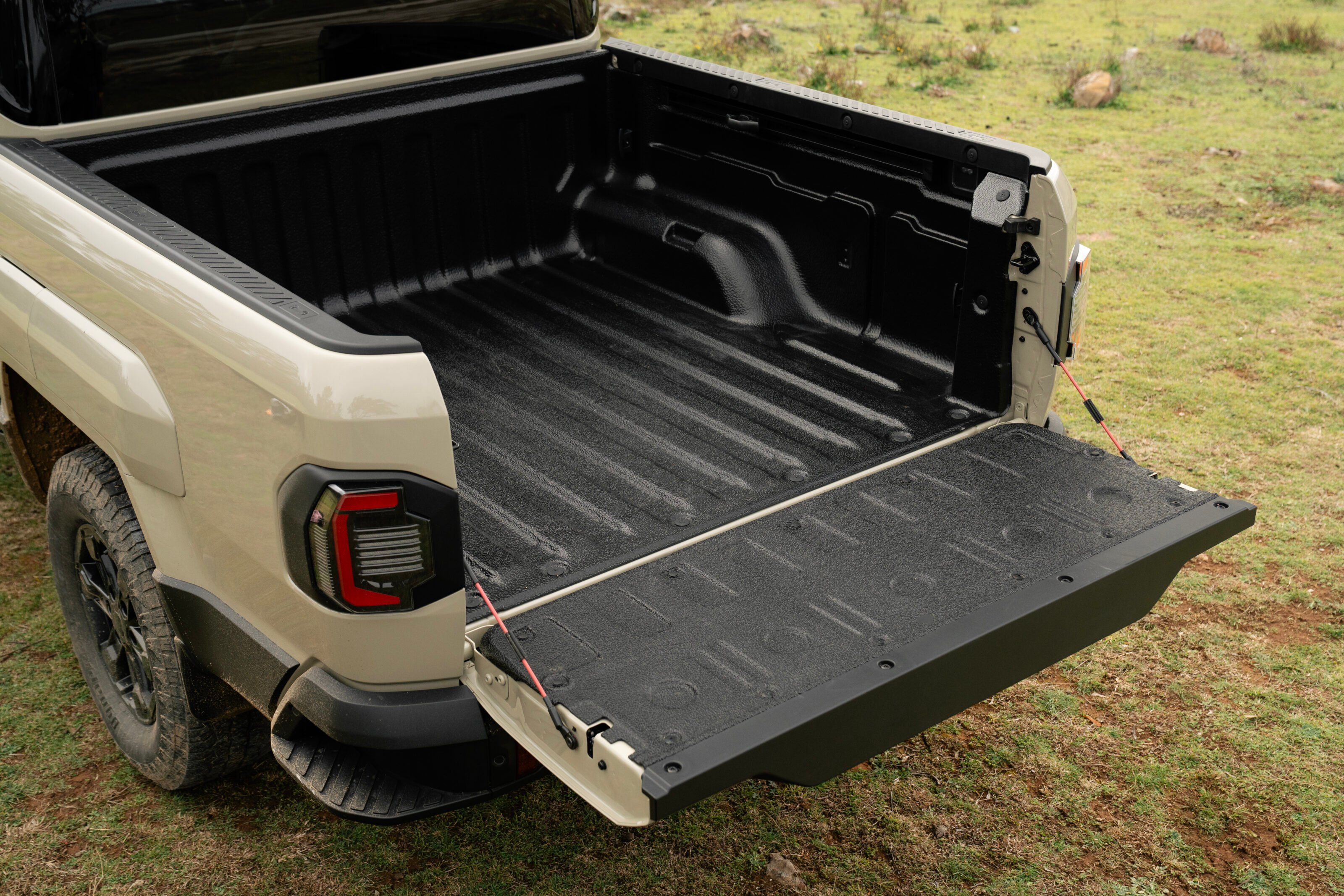
There were only two driving choices – the X-Line and X-Pro – as Kia put its best models forward. But there was a chance to check some of the details, including the nicely-damped tailgate and steps at the rear corners of the tub, both first seen on the Ranger.
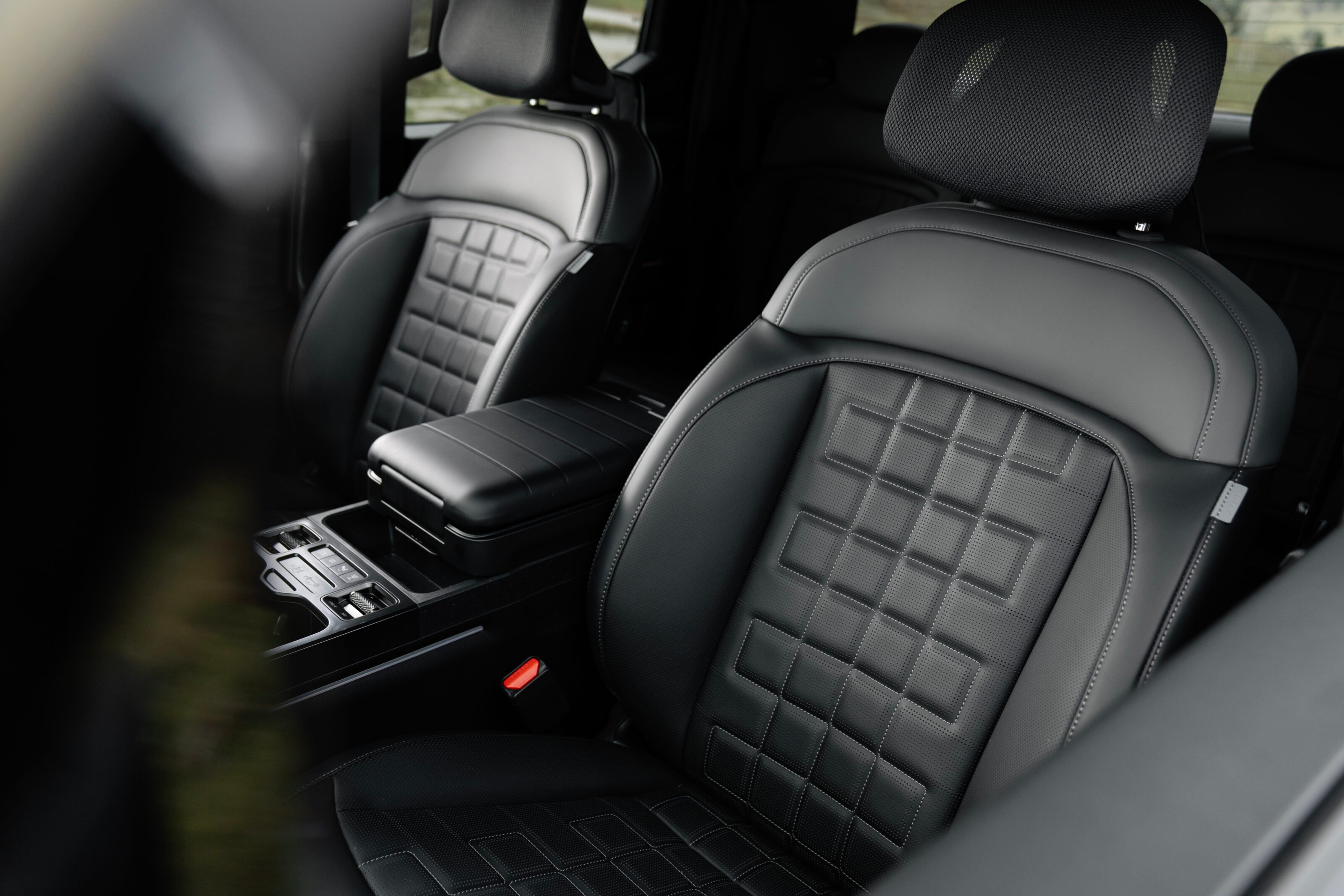
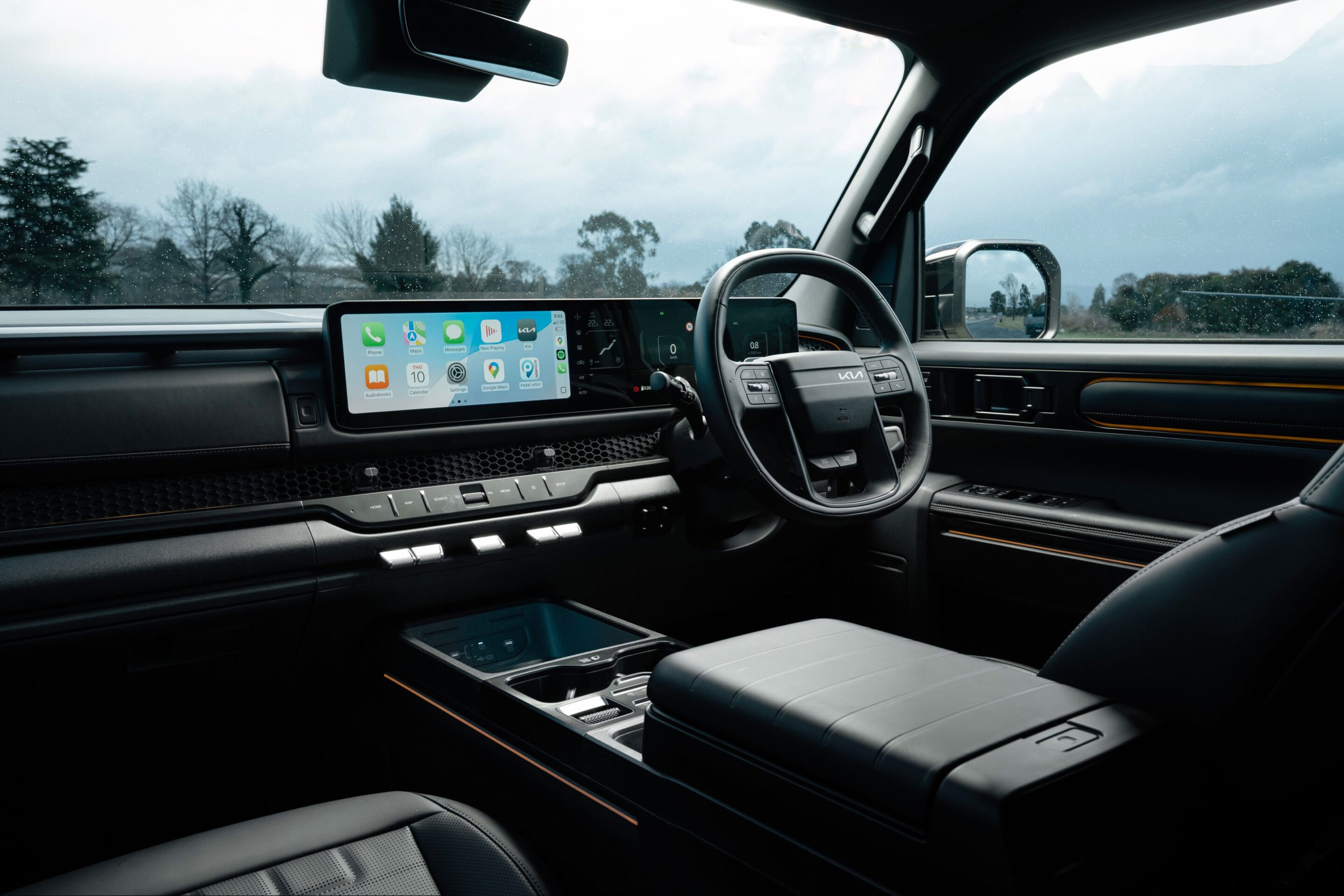
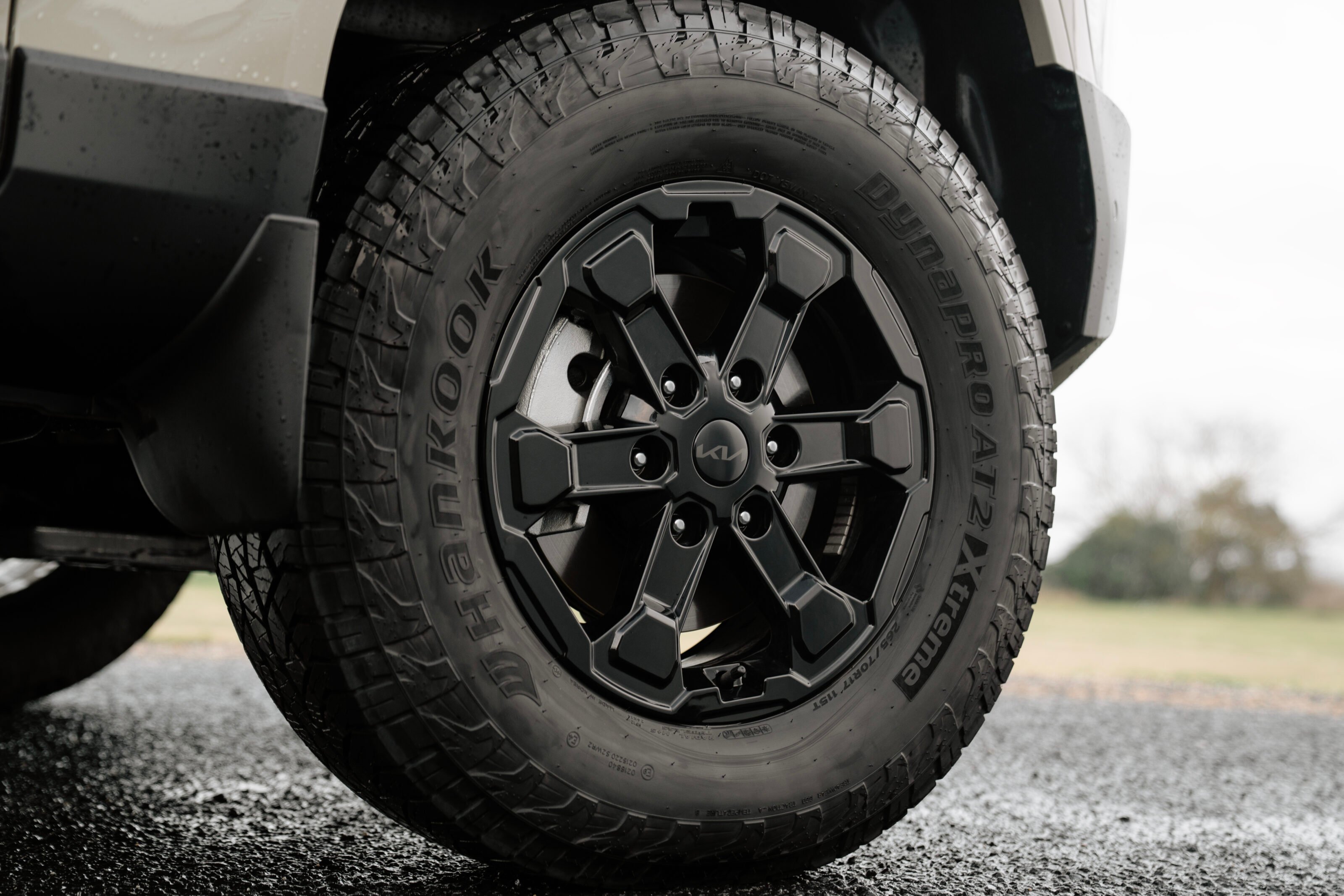
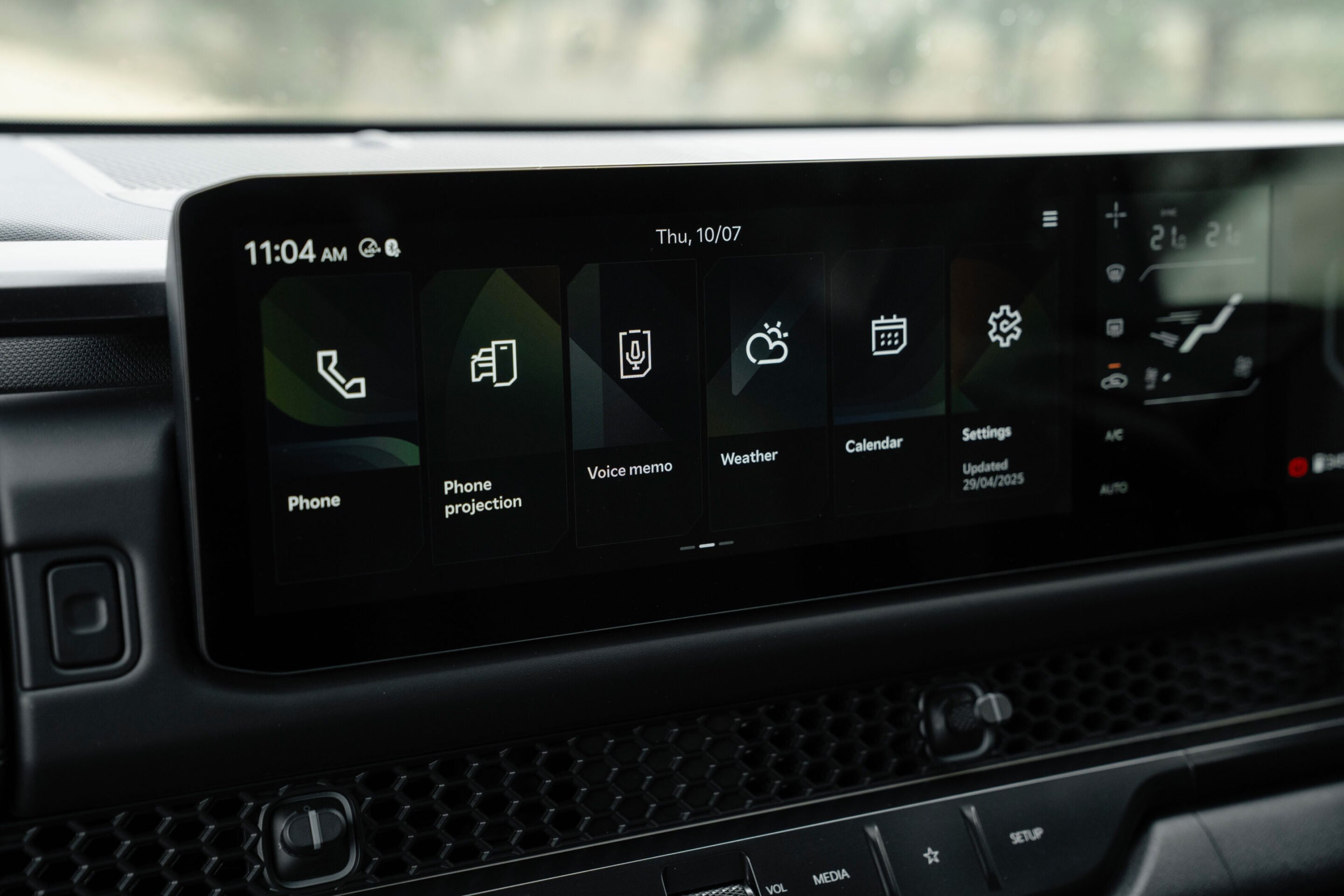
Helping to make a good impression were the standard dual 12.3-inch interior screens, LED headlights, wireless smartphone integration, reversing camera with front and rear parking sensors, and dual-zone aircon. On the flagship X-Pro there were also leather-trimmed seats with heating – a good thing in frosty Orange – and ventilation and larger 18-inch alloy wheels with all-terrain tyres.
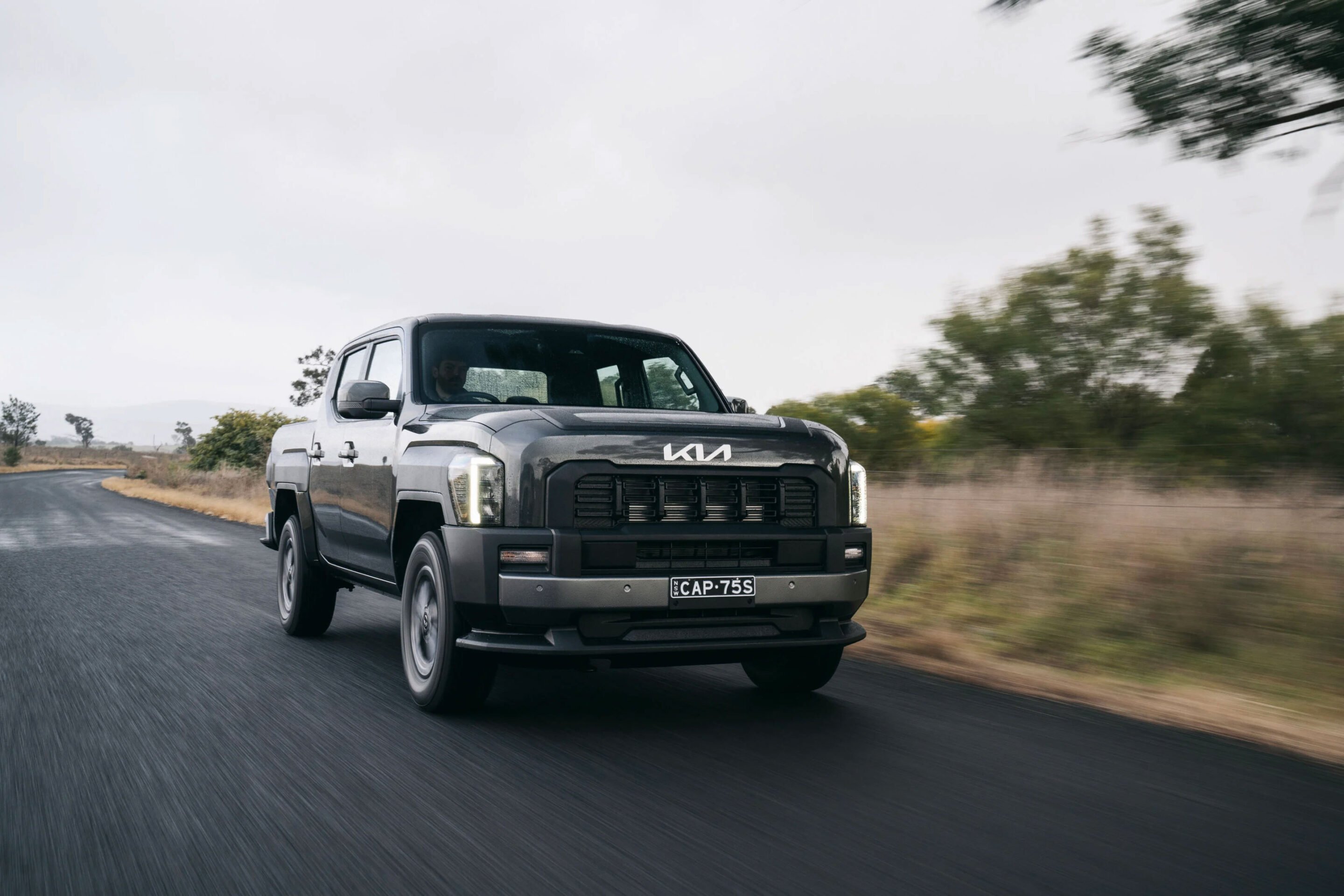
It would be a discovery voyage for the rest of the two-day event but driving time was immediate and impressive. Within 10 kilometres, riding on the softer all-purpose tyres, the Tasman was almost car-like in its comfort. It was quiet, the seat comfort was good – Kia used the Isuzu D-Max as its benchmark – and the cabin quality was impressive.
The performance was not startling, but still more than adequate, and when the road deteriorated to the motoring equivalent of a pimply teenager, the suspension coped without fuss, bother, or distractions.
But …
After a switch of model grades, and a change of tyres, the ride was less impressive. It was brittle at low speeds and missing the grip and confidence of the first Tasman. It seemed the 17-inch road-focussed Kumho tyres were than the chunkier new set of 18-inch Hankooks with a tread more suitable for dirt roads.
Arriving in Bathurst, at the Rydges Hotel alongside Conrod Straight, it was time for the inevitable Powerpoint presentation and some straightforward replies from Kia chiefs on the Tasman project.
“Capability without compromise” is the message through slide after slide, often comparing the Tasman to Ranger and HiLux.
“We’ve invested countless hours and countless trips to Korea. We believe it’s ready to re-define what Australians expect from a ute,” says product planning manager, Christopher Lee.
Looking to the numbers, the Tasman is claimed to have 100 litres more capacity in the tub with a payload that exceeds a tonne, with 3.5-tonne towing and a 350-kilogram downball weight. The 2.2-litre turbodiesel makes 440 Newton-metres from 1750 to 2750 revs, with peak power of 154 kiloWatts at 3800 revs.
For towing, there are two radiators – which also helps emissions – and a transmission cooler, downhill braking control, with powertrain, braking and stability control. Compared with HiLux and Ranger, it’s longer-wider-taller, can carry a standard ‘pallet’ in the tub, and is claimed to have better leg-head-shoulder room in the cabin.
“We had to break through 40-50 years of heritage,” Lee says of the match-up with the top sellers.
Kia is closely monitoring the Tasman’s reception, ready to make changes or upgrades if necessary.
“If you need more, we will do more. Australia is the number one marketplace for us,” says Gwang Hoon Heo, a vice-president on the Tasman project, who is visiting from Korea.
Talking about the powerplant, Kia admits it considered a 2.5-litre turbocharged petrol engine, but it was scratched because of the CO2 penalties under the New Vehicle Efficiency Standard (NVES) which has just come into effect.
“The NVES calculation wasn’t great,” says Rivero.
But he admits there could be additional variants in future, not ruling out a plug-in hybrid.
“Over 80 per cent of the category is four-cylinder diesel. We’ll closely monitor that. And obviously we have to monitor NVES. We are studying other powerplants. We’ve got a 10-year product lifecycle.
“We are a little bit blessed that we have some EV products. It will allow Tasman to do its thing.”
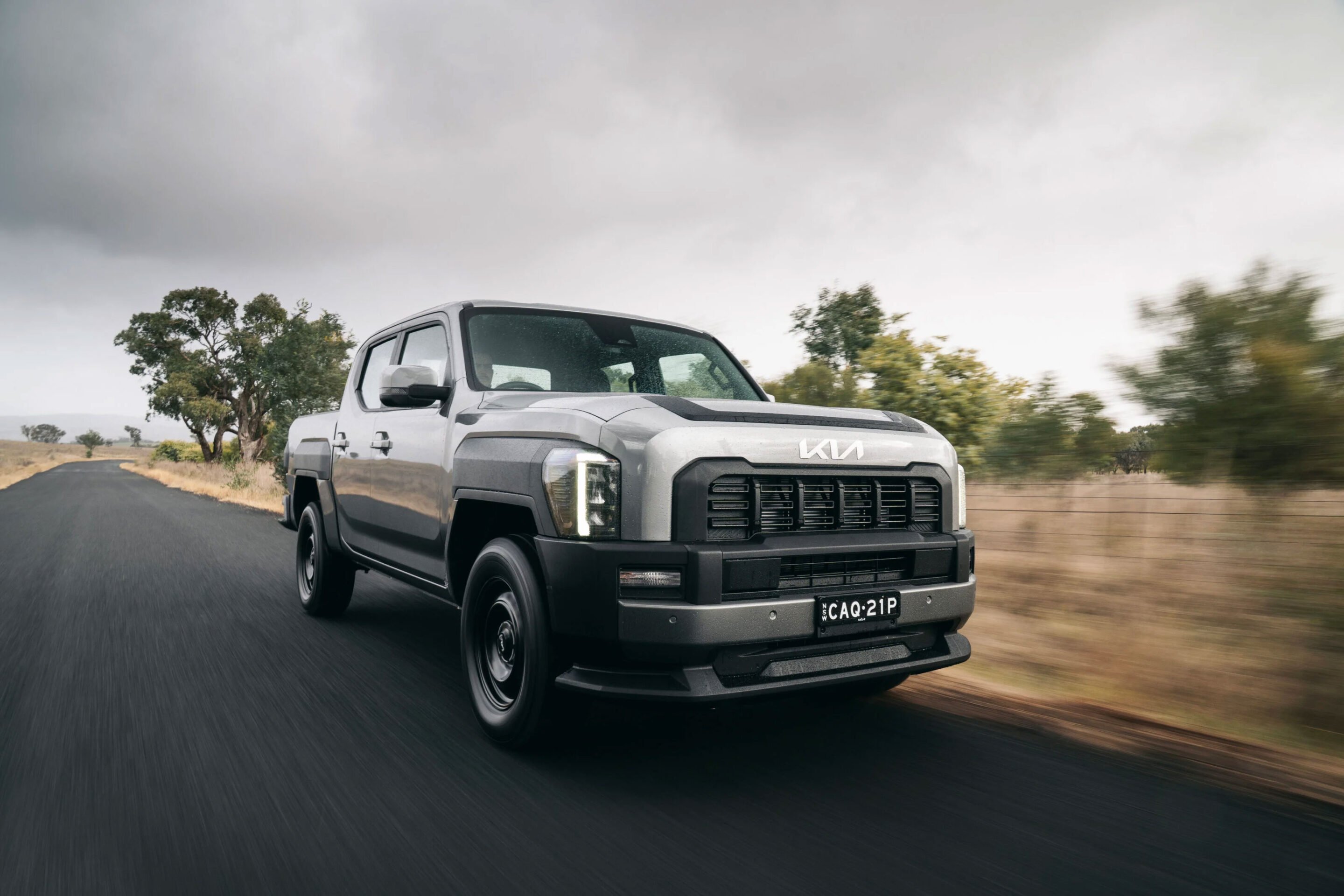
That thing includes impressive off-road numbers – 32.2-degree approach angle, 252-millimetre ground clearance, 25.8-degree ramp angle and 26.2-degree rear departure – and the grip from two types of locking rear differential and the various tyre choices.
While the Tasman talk continues, news comes through to Bathurst.
It’s the pricing for the ‘lesser’ models in the range, the single and dual-cab chassis models.
The two-wheel drive single-cab opens at $38,010 and rises to $49,520 in SX specification, while the dual-cab choices are the S in 4×4 at $48,240 and SX at $52,740. All are priced below equivalent dual-cab models, with deliveries from August and all able to be paired with a ‘genuine’ tray.
But wait, there’s more.
Confirmation comes from the Australasian New-Car Assessment Program that the Tasman has a achieved a coveted 5-Star safety rating.
This time, however, there is a big ‘but’ …
The 5-Star score is not for every Tasman, but just the versions with a special ‘scoop’ under the front bumper. It’s there because the 2025 ANCAP protocols demand a new level of pedestrian protection, scooping a wayward walker up onto the bonnet.
Three versions of the Kia get the big tick, but the upper-level models miss out. So you have to dig into the detail of the ANCAP announcement.
“The five-star rating for the Kia Tasman applies to 4×4 dual cab variants currently on sale. X-Line and X-Pro variants, as well as 4×2 rear-wheel-drive, and upcoming single-cab and dual cab-chassis variants have not been assessed by ANCAP and are unrated,” it says.
ANCAP also says the Tasman joins the Ranger and HiLux on the 5-Star honour roll, without mentioning they were tested to previous safety standards. Look closer and the Ranger’s date stamp is 2022, while the HiLux is an ancient 2019.
The second day of the Tasman preview begins in the garage, with suspension and engineering guru Graeme Gambold standing alongside a bare Tasman chassis. He talks through the changes from a ladder-frame chassis intended as a Korean workhorse to a refined Aussie ute, highlighting things including the eight-speed auto and the part-time four-wheel drive system, special ZF Sachs shock absorbers, special bump stops, re-tuned steering and three-leaf rear springs to provide both a smooth ride and carrying capacity.
Then it’s over to the accessories’ bay, where bullbars and side steps are the headline act alongside the cab-chassis tray, and roof racks, and on and on. More than 40 pieces, in total.
Kia says the bulbar – available as a bar replacement, single and double-hoop – does not affect the ANCAP scoring and neither do the side steps.
Then it’s time to get back on the road and head out for some serious off-road work.
The bitumen road towards Lithgow is even worse than Day 1 but the Tasman is not threatened. Sitting in the rear seat of the flagship X-Pro, there is extra relaxation thanks to the tilting seat back which is unique to the Kia.
There is lots of talk before the off-roading about modes and switches, with the emphasis on having maximum capacity – including the locking mechanical rear differential in the models below the X-Pro. Kia also highlights its front-view camera system, the terrain modes – auto, snow, mud and sand – as well the X-Pro package with X-Trek mode providing a low-speed cruise control.
While the one-at-a-time driving is underway, there is time for a little bit of a Kia history lesson about the Stinger. The four-door sports sedan was the first truly ‘Aussie’ product, aimed at people who were moving away from a Holden Commodore or Ford Falcon in the dying days of local carmaking.
“I think Stinger was the right car at the right time for the brand. It gave us a lot of accolades,” Meredith says. “The ride-and-handling that was done on Stinger was exceptional. And the guys have lifted it to another level with Tasman.
“Our success with Stinger and the ability to sell something that was very difficult to sell globally helped us. We’ve got good respect from the hierarchy for what we can do and what we can achieve.”
So now it’s off-road driving time, but with a twist. Instead of keying all the assistance stuff, my time is going to be in D for dunce. After all, lots of amateur off-roaders never understand the systems and want an easy life, or their off-roader is never properly explained or demonstrated to them.
The Tasman is excellent. Up and down, on sand and stony ground, it walks easily over the terrain. Just once, crossing a muddy gully, there is a need for the rear-axle lock. But otherwise it’s as simple as going gently on the accelerator and brake to let the Tasman do the heavy lifting.
So there is just one thing left on the Tasman program. Towing.
Kia has set a course and provided a 2.4-tonne caravan for the assessment, but this is Bathurst. It has to be The Mountain.
It’s not the ‘approved route’ for the job, and the on-board observer is worried about official permission, but Mount Panorama is calling. It will be my slowest lap of all time, and done with considerable margins for error, but the tow rig easily copes with the steep climb and challenging descent.
There is plenty of torque, the various electronic assistances work well in Tow Mode, and it will hold a pre-set speed down to The Dipper.
So it’s all done and the Tasman has made a solid first impression. It appears to have hit all of the targets set by Kia, but only some serious back-to-back testing against the Toyota HiLux and Ford Ranger – and likely the Isuzu D-Max and others – will provide the real answers.
Model by model
The walk-up through the Tasman range starts with the only two-wheel drive model, the S 4×2, with the dual-cab at $42,990 RRP, a $290 advantage over the equivalent Ford Ranger. The obvious giveaway is
17-inch steel wheels, although it still gets LED headlights, twin 12.3-inch digital displays, adaptive cruise control and wireless smartphone mirroring.
Stepping up to the 4×4 S adds nearly $7000 to the bottom line, the SX jumps to $52740 RRP and brings 17-inch alloys and satnav with driving modes, then the SX+ is $62,390 RRP with 18-inch alloys, rear air vents, a tub liner and wireless charging pad.
The big change is to the X-Line, priced from $67,990 RRP and bringing LED projector headlamps, a 360-degree camera, synthetic leather trim, eight-way power seats, remote smart parking assist and a ‘wand’ style gear selector – think of the indicator stalk – and roof rails.
The flagship X-Pro takes the total to $74,990 RRP and means Harman Kardon sound, extra driving modes, a ground-view monitor, sunroof and off-road pages in the infotainment system. Kia also allows buyers to choose a reduced payload so their ute can qualify for novated leasing.
Pricing
| rim | Drivetrain | Cab | Body Type | RRP | Drive Away |
|---|---|---|---|---|---|
| S | 4×2 | Single | Cab chassis | $38,010 | TBC |
| S | 4×2 | Dual | Pick-Up | $42,990 | $46,490 |
| S | 4×4 | Single | Cab chassis | $45,010 | TBC |
| S | Dual | Cab chassis | $48,240 | TBC | |
| SX | Single | Cab chassis | $49,520 | TBC | |
| S | Dual | Pick-Up | $49,990 | $53,890 | |
| SX | Dual | Cab chassis | $52,740 | TBC | |
| SX | Dual | Pick-Up | $54,490 | $58,490 | |
| SX+ | Dual | Pick-Up | $62,390 | $66,490 | |
| X-Line | Dual | Pick-Up | $67,990 | $70,990 | |
| X-Pro | Dual | Pick-Up | $74,990 | $77,990 |
Specs
| Model | Kia Tasman X-Pro dual-cab pick-up |
|---|---|
| Price | $74,990 |
| Engine | 2.2-litre four-cylinder turbodiesel |
| Power | 154kW @ 3800rpm |
| Torque | 440Nm @ 1750-2750rpm |
| Transmission | 8 Speed Automatic (Sports-Matic) |
| Fuel consumption | 7.4-8.1 L/100km |
| Claimed CO2 emissions | 195-215 g/km |
| Fuel type/tank size | Diesel, 80L |
| L/W/H/WB | 5410/1930/1920/3270 |
| Weight | 2126-2237kg |
| Payload | 1013-1124kg |
| Towing | 750 (unbraked) to 3500kg; 350kg downball weight |
| 5-year service cost | $2834 (X-Pro) |
| On sale | Now |
Things we like
- Loaded with standard features and keenly priced
- Impressive performance and charging capability
- Comfortable and quiet, based on our brief first drive
Not so much
- Limited in-seat time so the jury is still out on a lot of aspects
- Very few interior buttons, everything controlled through the touchscreen
- ‘IM presented by MG’ branding confusing, why aren’t they just sold as MGs like in the UK?
Re-establishing itself in Australia through models such as the ZS, HS, MG3 and MG4, it’s now time for ‘MG2.0’ – these new premium electric cars introduced under the IM Presented by MG sub-brand are the latest to expand the marque’s offering in this market.
The IM part of the name is from the premium arm of SAIC – MG’s parent company – as it begins to export its cars to markets such as Australia and the UK. For now, it’s offering the mid-size liftback sedan IM5 and the mid-size SUV IM6, with pricing starting at a keen $60,990 drive away. If you’re after a mid-size EV, should the IM range be on your test drive list? A brief taste at the local launch goes some way to answering that question…
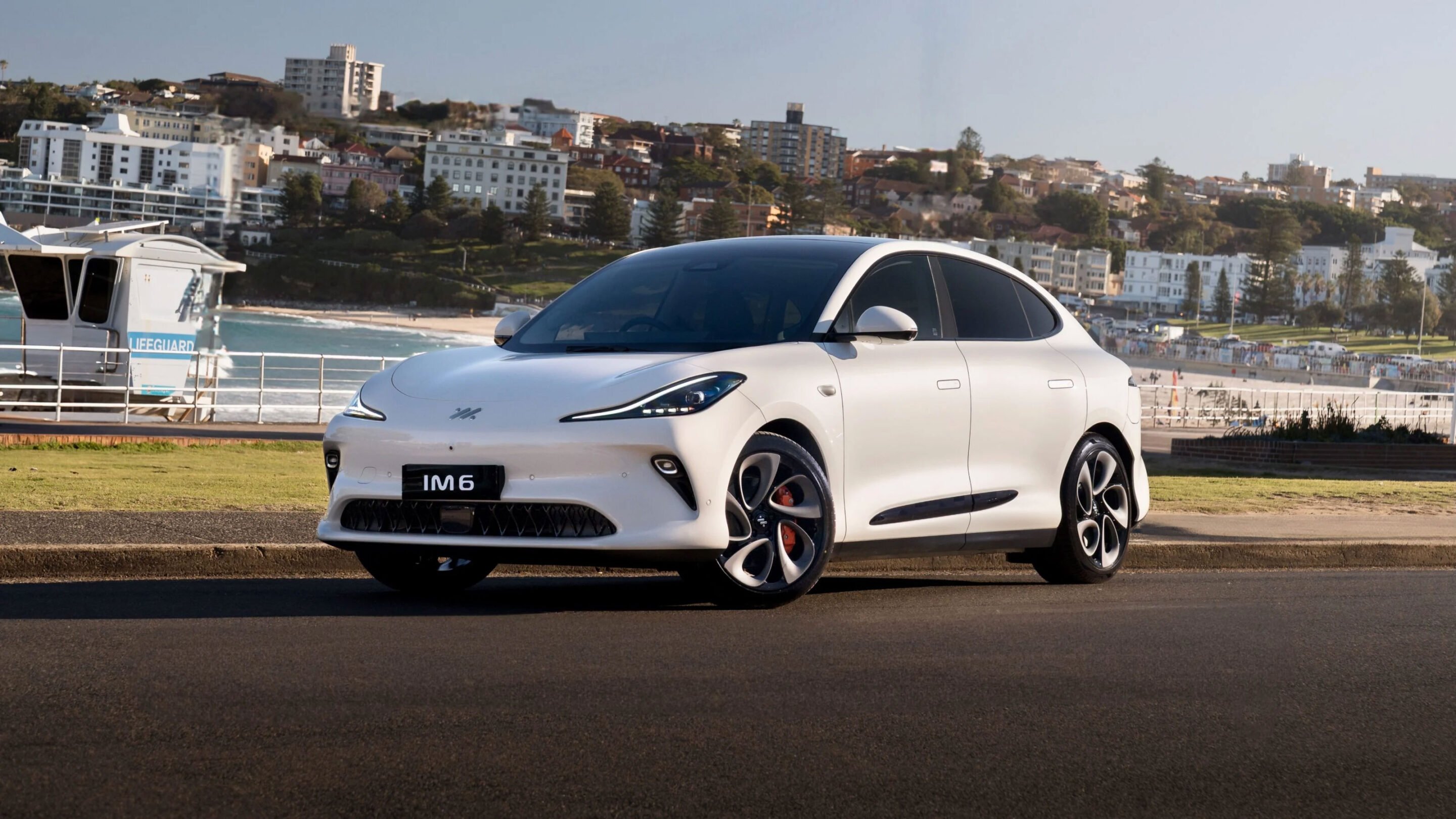
IM5 and IM6 pricing (drive away)
| Premium | $60,990 |
|---|---|
| Platinum | $69,990 |
| Performance | $80,990 |
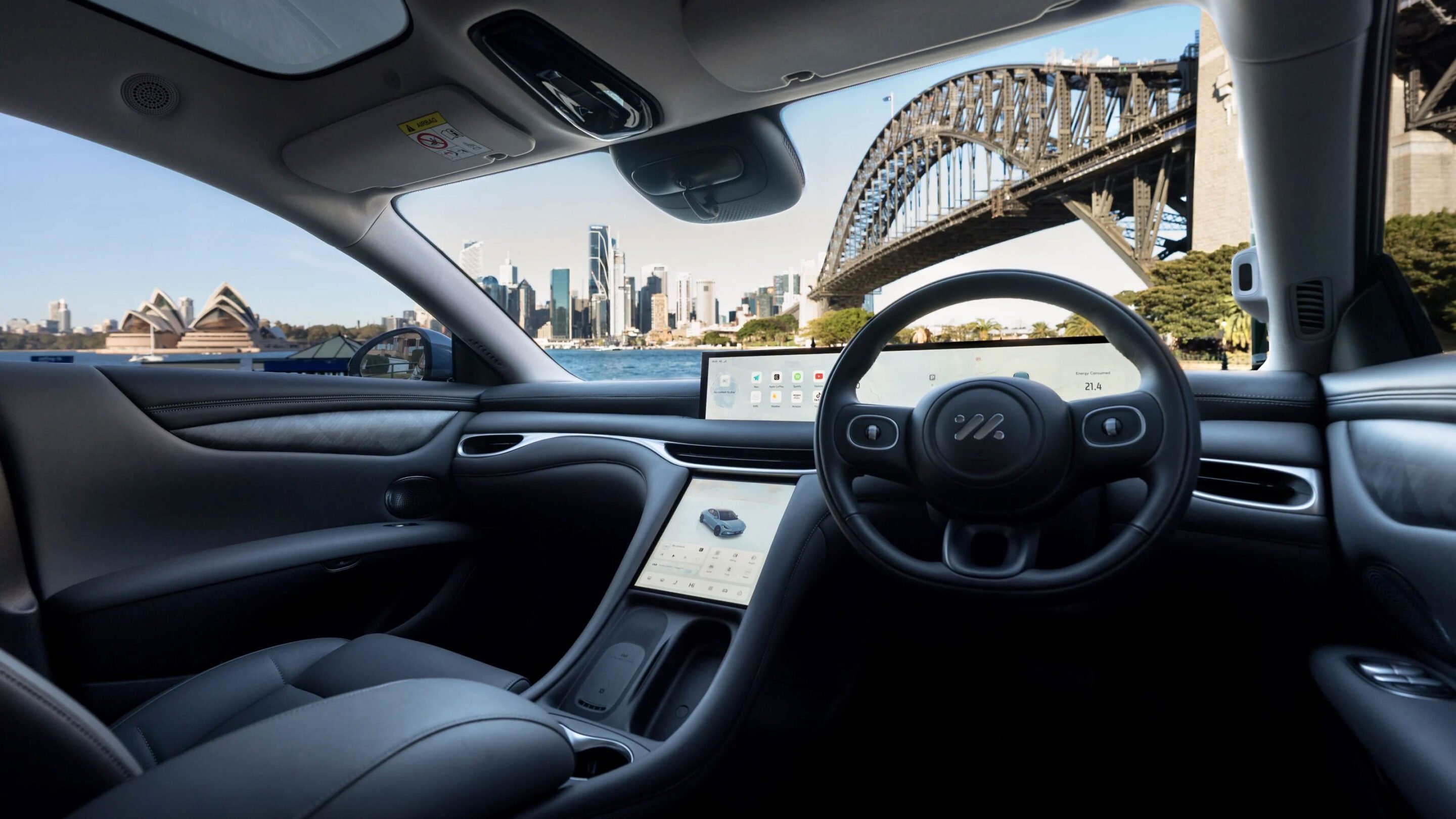
We had fairly limited time in the IM range at the local launch, but were able to gauge interior quality and user-friendliness of the technology. The vast majority of the cabin is covered in synthetic leather upholstery, from the comfortable seats to the dashboard and door tops. It all feels relatively premium, though it is obviously not real leather trim.
Centre of the cabin is a huge 26.3-inch display, which includes both the touchscreen and driver’s display. We didn’t get to use it for an extended amount of time, but it’s fully featured with wireless and wired smartphone mirroring, sat-nav, live services, apps such as Spotify and FM/DAB+ radio, though no AM radio.
Sitting below that is another touchscreen, which controls features such as the seats and HVAC system. Even from our brief testing, that second screen will likely cause distractions while driving as it takes the driver’s eyes away from the road and controls a lot of the car’s functionality. Plus, there is very little in the way of physical buttons inside the cabin, with almost all functions is controlled by the screens.
Rear seat space in both the IM5 and IM6 is healthy, and two adults will be fine, though they’re definitely not as spacious as equivalent Tesla models. Passengers will like the magnets in certain places in the cabin, such as on the back of the front seats, which will allow them to buy adaptors to hold tablets and other accessories. While the back seat features a lot of amenities, including heated seats, there is only one USB-C charging port.
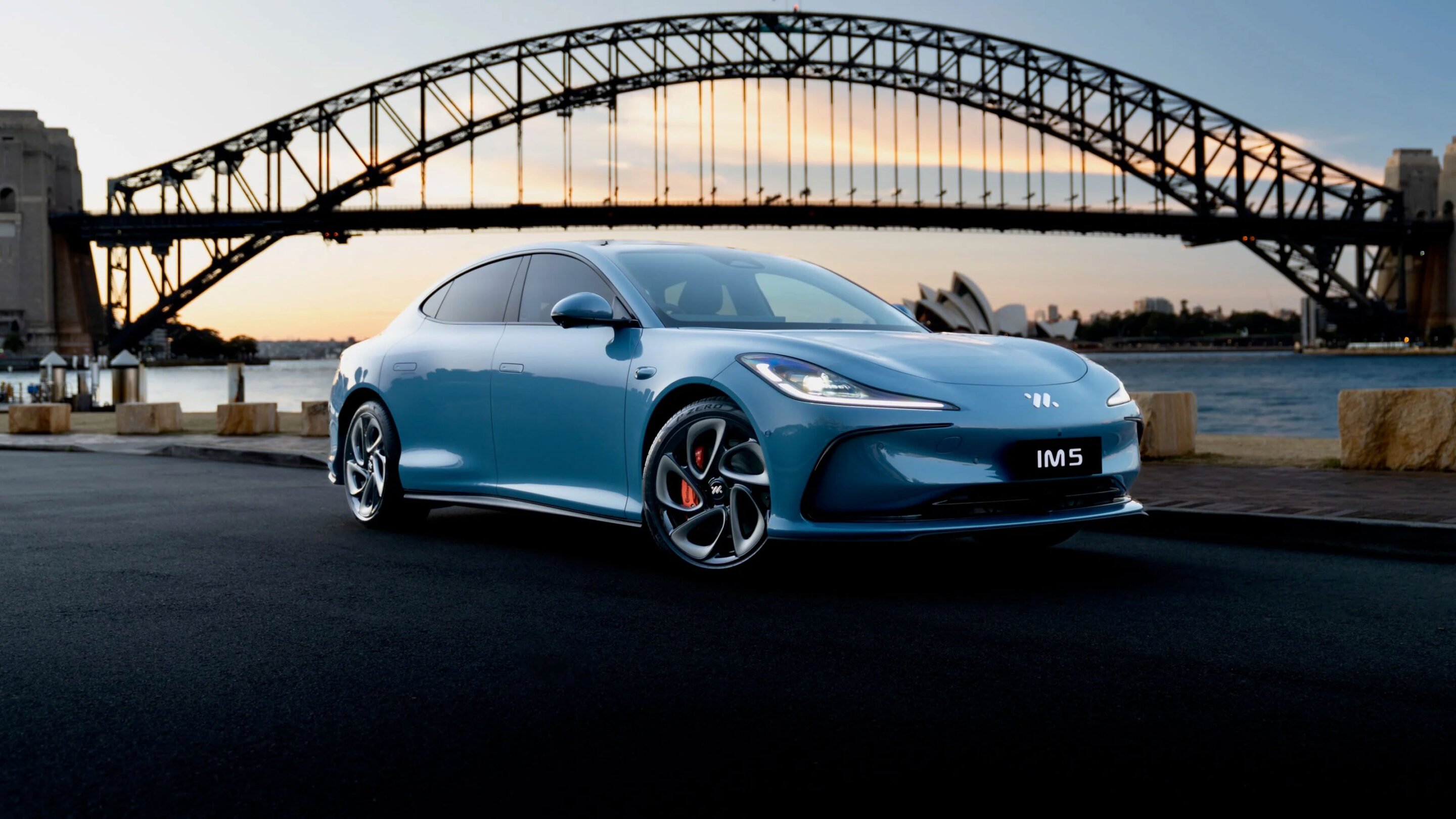
The boot of the IM5 measures 457 litres with the seats up (1290L with them folded), and between 646 litres and 665 litres in the IM6 with the seats up (1621-1640L with them folded). Both cars feature big-looking boots with a big extra storage section, though no spare wheel. Handily, both the IM5 and IM6 feature a front boot for extra storage.
There are three drivetrain options in the IM5 and IM6 range, with the entry-level Premium featuring a 75kWh LFP battery for up to 490km of range in the IM5 (450km in the IM6). That’s mated to a rear-mounted 217kW/450Nm electric motor, allowing for a 6.8-second 0-100km/h time in both the IM5 and IM6. The Premium models use a cheaper 400V architecture for a peak charging speed of 163kW and a 30 to 80 per cent charge time of around 20 minutes.
Step up to the mid-spec Platinum and a higher-rate 800V architecture is added for a peak charge speed of 396kW, which is one of the highest in Australia and allows for the same 30 to 80 per cent charge just over 15 minutes. The Platinum uses a 300kW/500Nm rear-mounted electric motor, which cuts the 0-100km/h sprint to 4.9 seconds for the IM5 and 5.4 seconds for the IM6.
The top-spec Performance adds a front-mounted second electric motor for peak outputs of 572kW/800Nm, enough for a 3.2 second 0-100km/h sprint for the IM5 (3.4 seconds for the IM6), which is just 0.1 seconds behind a Tesla Model 3 Performance and the IM5 Performance’s 268km/h top speed is 7km/h higher.
We spent only a short amount of time behind the wheel of the IM cars at the local launch, and will report more on them once we’re able to get them for extended testing. The local launch involved learning about the IM’s clever parking and crab walking functionality, as well as being shown the Performance variant’s ferocious sprinting ability.
On our brief test drive, the IM5 Performance was comfortable and very quiet. The smooth roads of the launch location provided little to judge ride quality on, but its speed ability is impressive for such an unassuming-looking car. IM claims that it’ll hit 100km/h in just 3.2 seconds (the IM6 Performance is a touch slower at 3.4 seconds) and like other EVs, it’s remarkably easy to do: just pop it into sport mode, press the brake, plant the throttle and you’re off. It’s absurdly fast and will easily make you feel sick if you do it repeatedly.
The IM range is equipped with four-wheel steering as standard, which makes its low speed turning circle equivalent to that of a small hatchback, according to IM. In reality, it’s breathtakingly easy to manoeuvre thanks to the 4WS system, and feels quite nimble in low speed driving situations.
We were also able to test the IM range’s self-parking ability: once a spot is chosen and start is pressed, the car completely takes over the driving and thanks to the four-wheel steering, can put you into tighter spots than you imagined. It’s not just for parallel parking, however, as it can also do perpendicular and will happily pull you out of a spot as well. It’s an impressive system to use, and is quite easy to select from the lower touchscreen.
The IM range is covered by a seven-year/unlimited km warranty with seven years of roadside assistance if serviced with MG – if not, a five-year/unlimited km warranty applies – with the battery covered by a separate eight-year/160,000km warranty.
The IM range’s service intervals are once-yearly/every 20,000km (whichever comes first) and five years/100,000km of servicing costs $2815 for the Premium and Platinum and $3015 for the Performance.
Verdict: Should I buy an IM by MG?
While we’re yet to fully experience them, our first taste of the IM by MG range suggests that another worthy electric car manufacturer has entered the Australian new car market. As you’d expect for a brand under the MG name, IM goes hard on the value equality of its products and considering that each model features four-wheel steering, a long range, good performance, excellent charging speeds and a long list of standard equipment, we think they’re quite good value.
A lot of question marks remain over the IM range such as the ride and handling, real world efficiency and how easy the buttonless interior is to interact with at speed. But based on our first taste of the IM by MG range, they’re definitely worthy of consideration if you’re after something like a Tesla Model 3 or Model Y, or BYD Seal range. We look forward to further testing the IM by MG range soon, and will bring you the full review then.
IM5 and IM6 Premium standard equipment
- 19-inch (IM5)/20-inch (IM6) alloy wheels with a tyre repair kit
- Four-wheel steering
- Dusk-sensing automatic all-LED exterior lighting
- Rain-sensing automatic wipers
- Keyless entry and start
- Hands-free electric tailgate
- Head/auto-folding mirrors that drop in reverse
- Panoramic glass roof
- Laminated glass, rear privacy glass
- Synthetic leather upholstery
- 12-way electric driver’s seat
- Dual-zone automatic climate control with rear vents
- Heated and ventilated front seats, heated outboard rear seats and steering wheel
- 26.3-inch display incorporating the central touchscreen and driver’s display
- Wireless and wired Apple CarPlay and Android Auto
- Satellite navigation
- Live services with MG’s iSmart app
- Wireless phone charger
- 2x USB-C charging ports
- 20-speaker sound system
- FM/DAB+ digital radio
- Selectable driving modes
- Automatic parking (including one touch parking, kerbside, pulling out and reversing the last 100 metres)
- ‘Crab walk’ functionality
- Nap and night driving modes
- 256-colour selectable ambient lighting
IM5 and IM6 Premium safety features
- 7x airbags
- Autonomous emergency braking (AEB) with pedestrian, cyclist and intersection assistance
- Adaptive cruise control
- Lane keeping assistance
- Adaptive lane guidance
- Blind-spot monitoring with rear cross-traffic alert (with braking)
- Traffic sign recognition
- Driver attention monitoring
- Door open warning
- Front, side and rear parking sensors
- 360-degree camera
- Tyre pressure monitoring
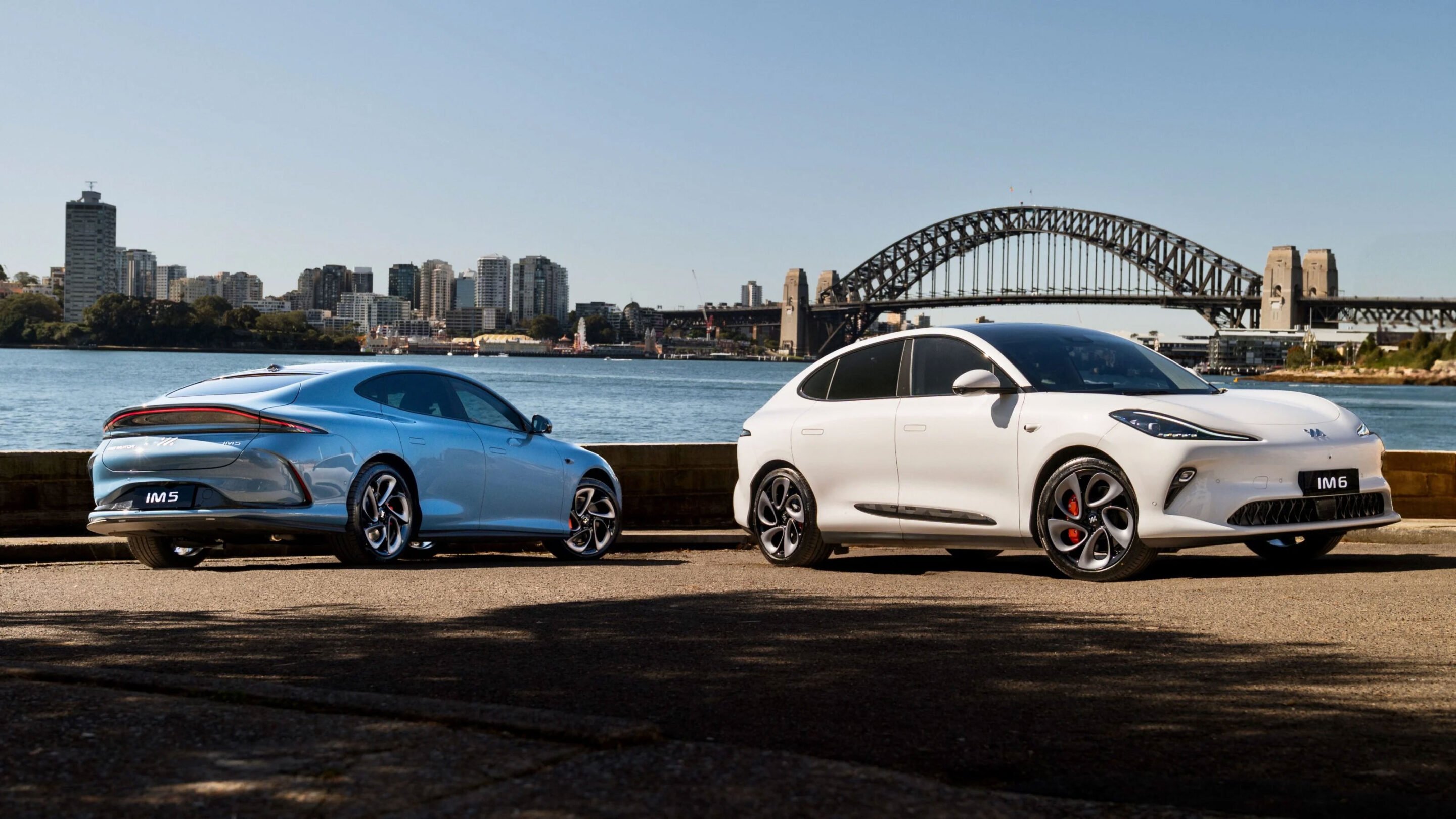
Specs
Models: IM5 and IM6
Price: From $60,990 drive away (Premium), $69,990 D/A (Platinum), $80,990 DA (Performance)
Battery: 75kWh LFP (IM5 and IM6 Premium) or 100kW NMC (IM5 and IM6 Platinum and
Performance)
Claimed range: 655km (IM5 Platinum), 575km (IM5 Performance), 490km (IM5 Premium)
555km (IM6 Platinum), 505km (IM6 Performance), 450km (IM6 Premium)
Peak charging speed: 153kW (IM5 and IM6 Premium), 396kW (IM5 and IM6 Platinum and
Performance)
30 to 80% charge time: 20 minutes (IM5 and IM6 Premium), 15.2 minutes (IM5 and IM6 Platinum
and Performance)
Drivetrain: Single rear motor: 217kW/450Nm (IM5 and IM6 Premium) or 300kW/500Nm (IM5 and
IM6 Platinum), dual motor: 572kW/802Nm (IM5 and IM6 Performance)
0-100km/h: 6.8 seconds (IM5 and IM6 Premium), 5.4 seconds (IM6 Platinum), 4.9 seconds (IM5
Platinum), 3.4 seconds (IM6 Performance), 3.2 seconds (IM5 Performance)
Top speed: 200km/h (IM5 and IM6 Premium), 220km/h (IM5 Platinum), 235km/h (IM6 Platinum),
239km/h (IM6 Performance), 268km/h (IM5 Performance)
Dimensions (L/W/H/WB): 4931/1960/1474/2950mm (IM5), 4904/1988/1669/2950mm (IM6)
Boot space: 457 litres (seats up), 1290 litres (seats folded) (IM5), 646-665 litres (seats up), 1621-
1640 litres (seats folded) (IM6) plus 18 litre (IM5) or 32 litre (IM6) frunk
On sale: Now
The Prelude is back. Well, it will be soon enough, because Honda’s dipping back into its back catalogue and resurrecting one of its most iconic nameplates: the Prelude.
As we recently foreshadowed, after a 24-year hiatus, the sixth-generation Prelude is officially confirmed for Australia, ahead of a mid-2026 launch date. And while the name might well be reminiscent of angry VTEC, four-wheel steering and pop-up headlights, this time around it features hybrid tech and smooth-as-a-pebble coupe styling.
“We’re thrilled to add this iconic nameplate to the Honda line-up next year,” said Robert Thorp, Honda Australia’s Director of Automotive. “Prelude taps into a rare combination of nostalgia and performance with broad appeal across generations of Honda customers, old and new.”
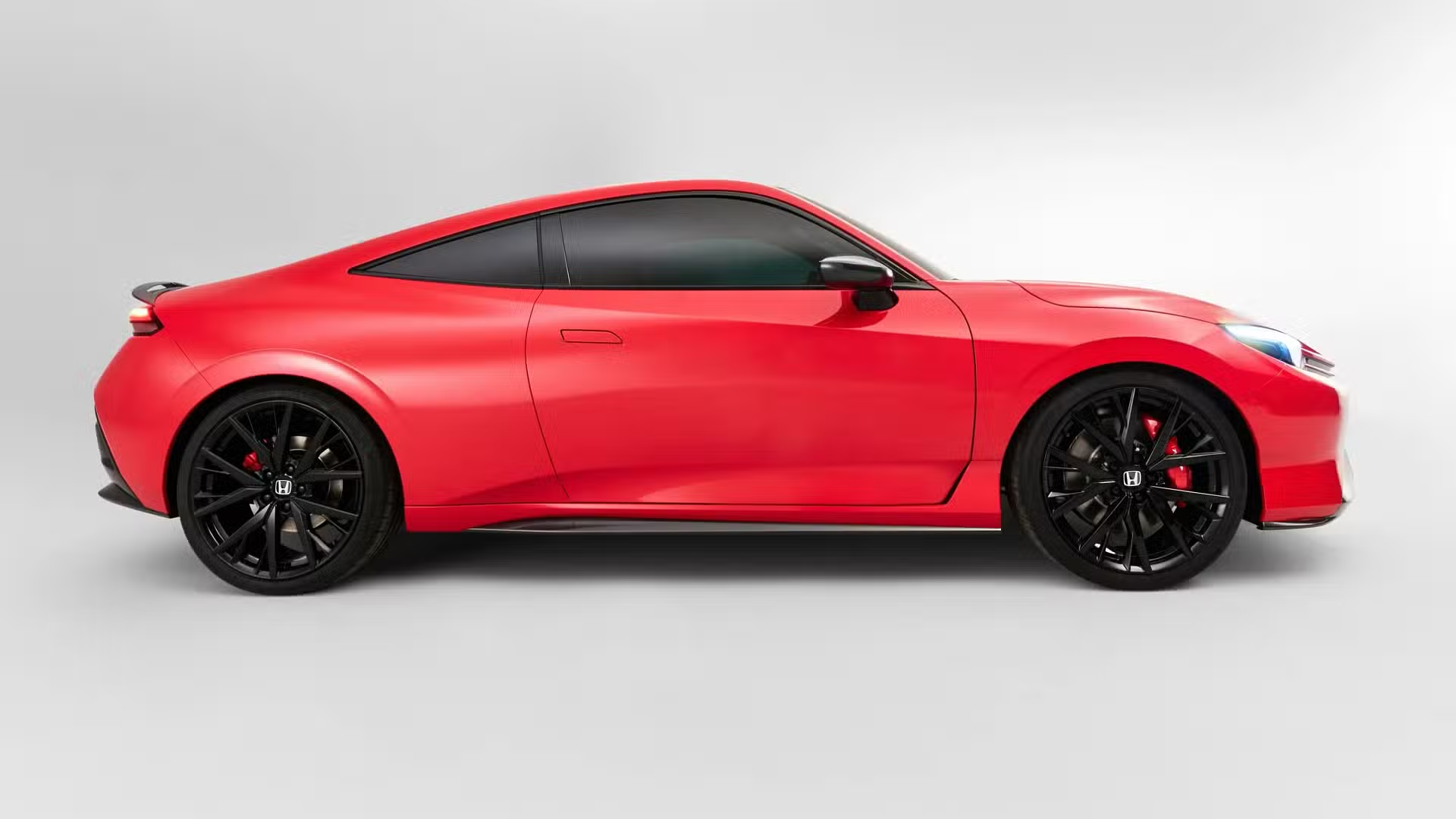
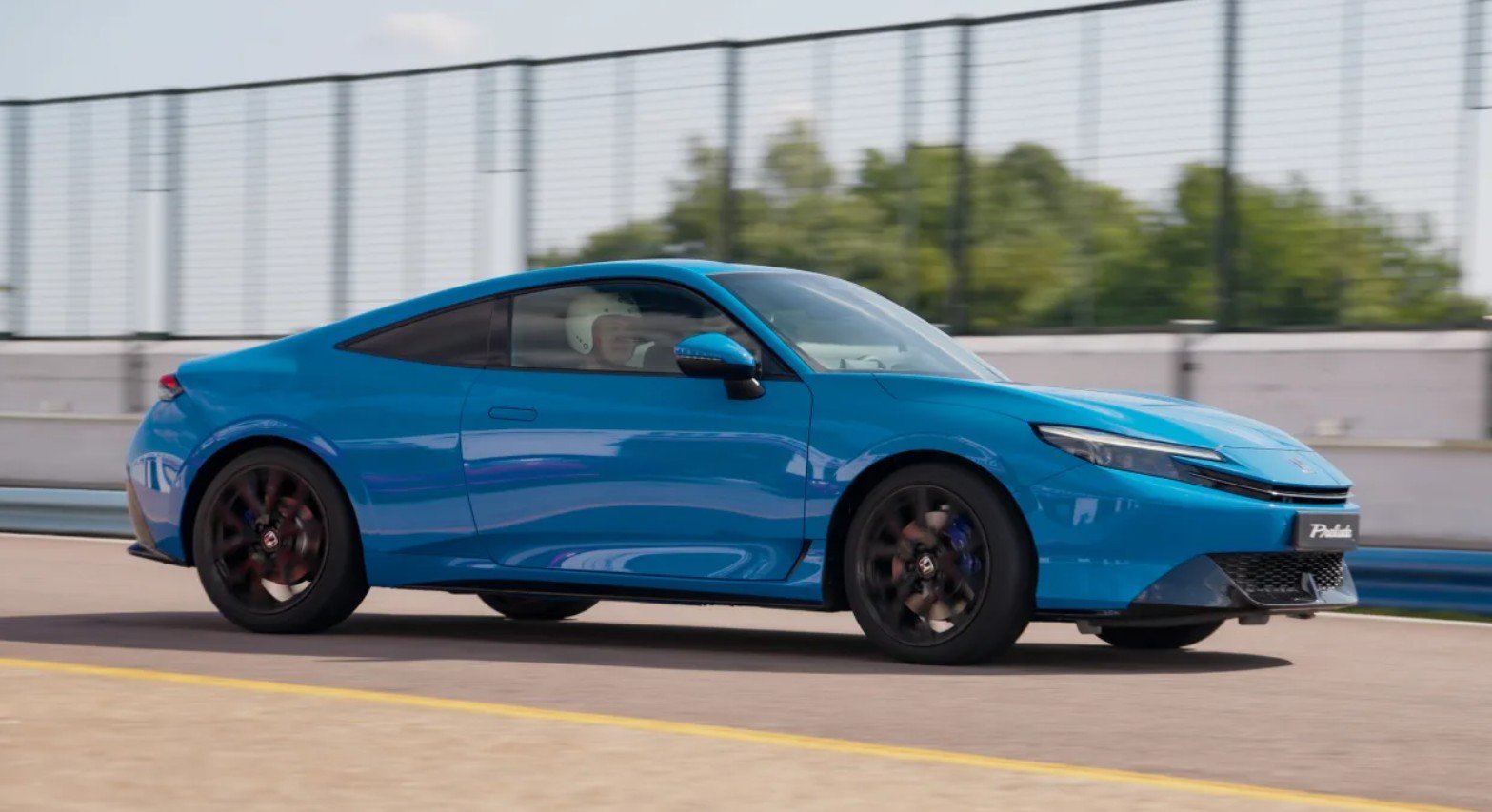
Despite the return of the nameplate, the new Prelude won’t just be a slavish retro reboot. Honda calls it a “specialty sports” model – which ought to be something that keen drivers can get behind. Pop the bonnet and you’ll find a version of the Civic‘s two-motor e:HEV hybrid powerplant, although the details are still being kept under wraps. Honda confirms the Prelude will have much the same suspension layout, front and rear tracks, and Brembo front brakes from the Civic Type R.
The chassis dynamics won’t be identical to the Type R though. “The suspension and brake systems will be tuned exclusively for the new Prelude to deliver a sporty yet comfortable grand touring driving experience,” Honda said in a statement. In other words, expect the Prelude to be a bit more accommodating in terms of compliance on bumpy roads than the notably hardcore Civic Type R.
We already know the Prelude will debut Honda’s S+ Shift technology that aims to simulate the sound and feel of quick automatic gear changes.
Honda claims that the design is based around the grandiose concept of “Unlimited Glide” – essentially aiming to make the Prelude feel like a soaring glider, offering smooth, effortless motion with just enough verve to keep things interesting. We’re not sure about that, but it is a very sleek and refreshingly unfussy piece of styling.
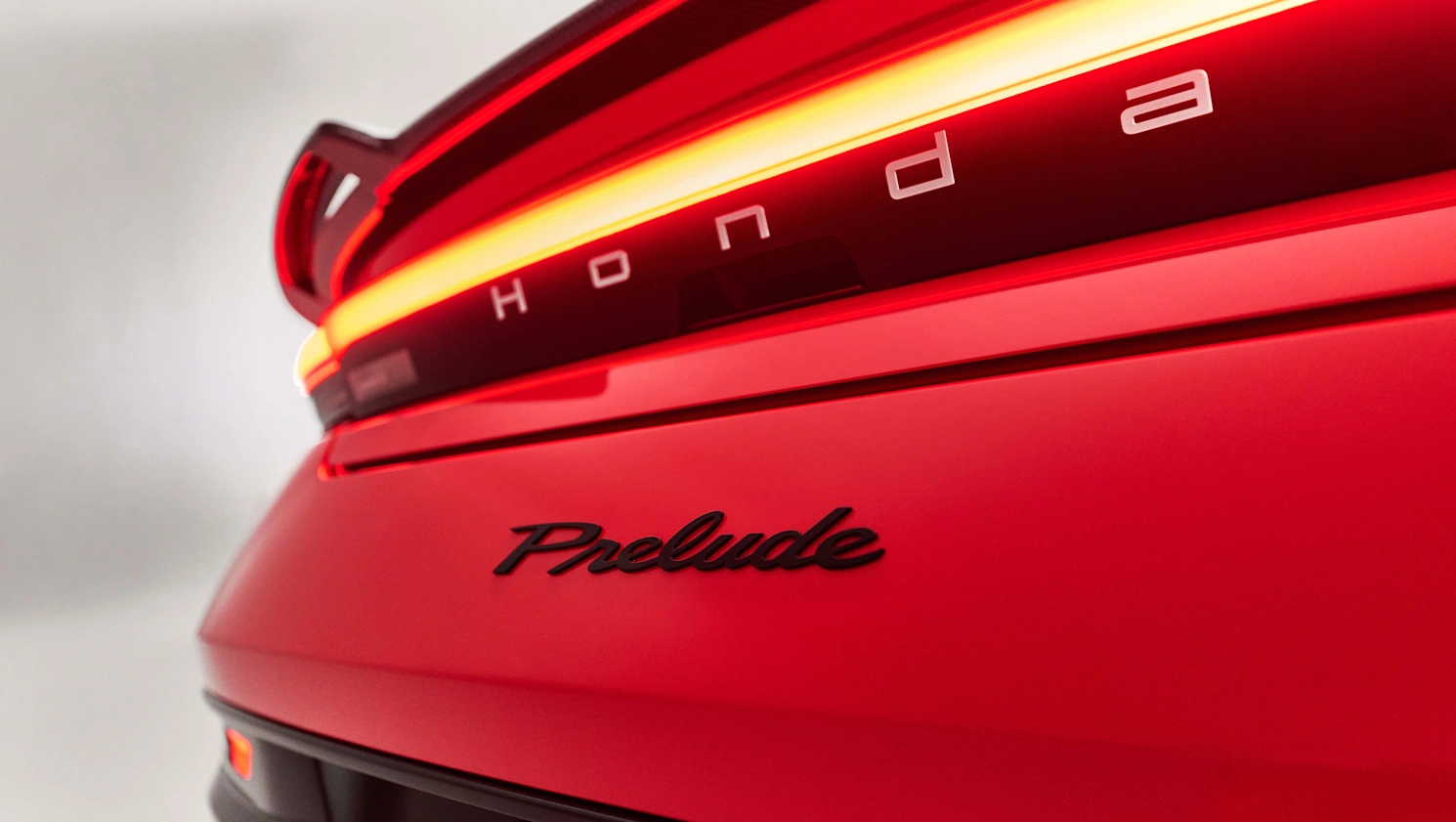
With a low, beaky nose, a welcome amount of contour in the flanks, a broad stance and a very neat rear end treatment, it’s perhaps a little more Integra than three-box Prelude in its design language, but since when was that a bad thing? Honda says inspiration came from gliders – we say it’s just refreshing to see a proper coupe silhouette again. There’s some decent attention to detail too, with flush-fit door handles, black chrome grille accents, and a slick headlight and full-width light bar combo up front.
The cabin utilises a contrast of ivory and blue (a nod to Japanese paper and the sky, apparently), with the driver’s seat designed for serious hold and the passenger’s tailored more for comfort. A flat-bottomed steering wheel, full-width digital display, and a full-graphic meter cluster exclusive to Prelude round out the driver-focused setup.
Yes, it’s a sports coupe, but Honda has attempted to endow the Prelude with some practicality, There’s a tailgate-style rear opening, flat-folding seats, hidden underfloor storage, and hooks for shopping bags.
First launched in 1978, the Prelude spanned five generations before bowing out in 2001. Along the way, it earned a reputation as the thinking person’s coupe – front-wheel drive, yes, but filled with clever engineering and timeless design. Now, Honda’s hoping to bottle that same magic for a new era.
The sixth-gen Prelude will slot in as a halo model above Honda’s existing hybrid line-up, and while exact pricing is yet to be confirmed, expect it to trade on desirability rather than cut-price thrills. Nostalgia might get enthusiasts into the showroom – but Honda needs to do more than offer a rose-tinted view of what once was if it’s to keep them there.
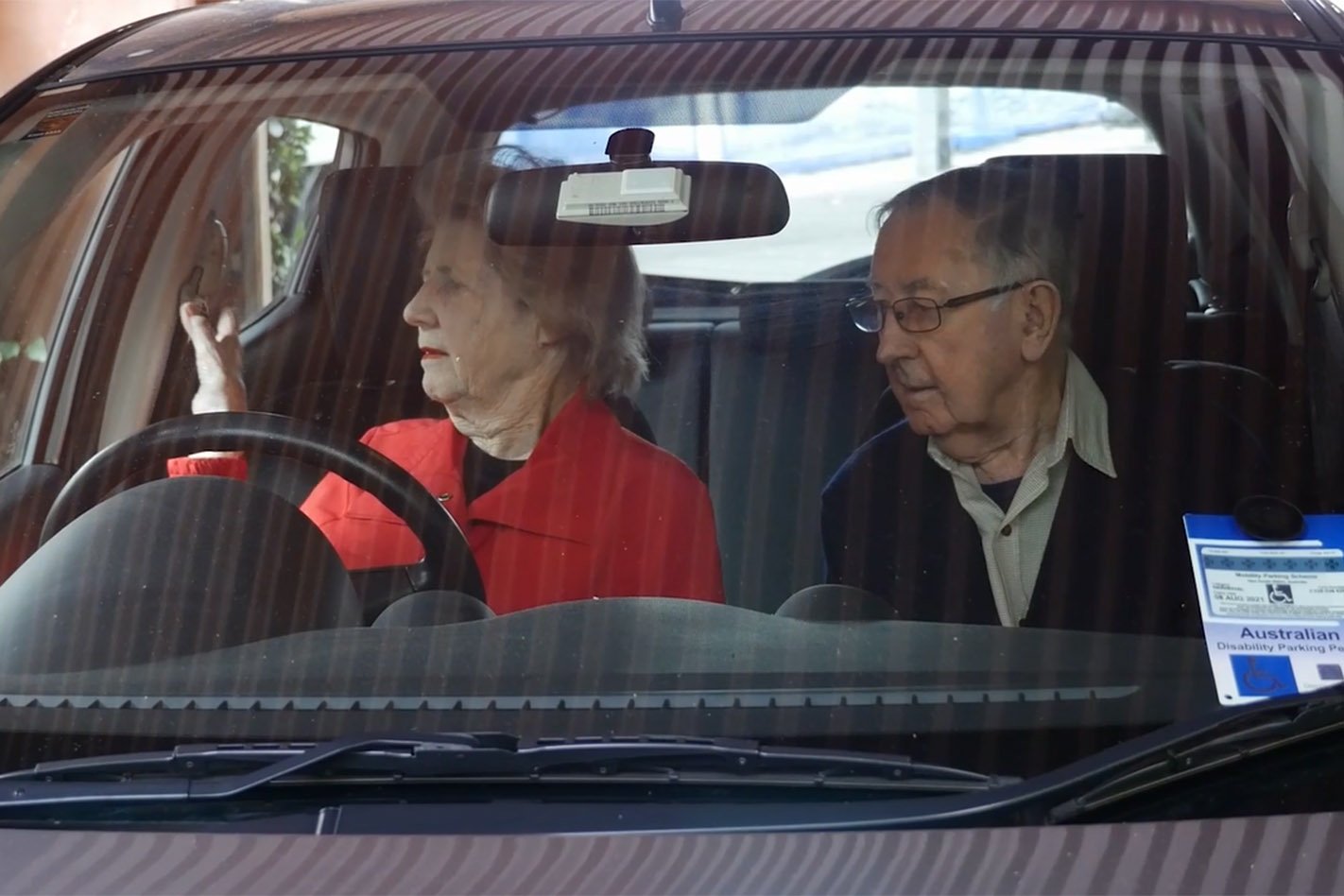
The Victorian Government is considering tighter controls on senior drivers, as public scrutiny intensifies following a fatal crash involving a 91-year-old motorist earlier this month.
Roads Minister Melissa Horne confirmed a formal review into driving licence requirements for older Victorians is now underway, in a bid to assess whether current rules adequately balance public safety and individual mobility. “Every lever that we can pull to save people’s lives is so important,” she told 7News.
The review follows a tragic incident in Melbourne’s east, where an elderly driver lost control of their vehicle and crashed into a playground, injuring a toddler and killing two grandparents. The incident reignited calls for age-based assessments, with Acting Premier Ben Carroll vowing to work alongside Horne to explore possible reforms.
Victoria currently does not impose mandatory age-specific driving tests. Drivers over 75 must renew their licences every three years, but further medical or practical testing is only triggered by self-reporting or referrals. By contrast, several states – including NSW, Queensland, Tasmania, and the ACT – require annual health checks for drivers aged 75 and older, with NSW mandating driving tests from age 85.
Road safety advocates have long called for national consistency. Russell White from the Australian Road Safety Foundation said the Melbourne crash should prompt serious reform. “Unfortunately, it often takes a tragedy to bring attention to long-standing issues,” he told Yahoo News.
However, not all are on board with blanket changes. Health organisations and senior advocacy groups stress that any new approach should focus on individual capability rather than age alone.
Yet the issue is growing more urgent. Government figures reveal a 75 per cent increase in drivers over 85 in Victoria over the past decade, now approaching 70,000.
Minister Horne said any changes will involve wide consultation: “This conversation must include the whole community. It’s about safety, but it’s also about fairness.”
Audi Australia has officially launched the third-generation Audi Q5 and SQ5, introducing significant upgrades in design, performance, technology, and electrified efficiency.
Built on Audi’s new Premium Platform Combustion (PPC), the new range is priced from $81,000, with the high-performance SQ5 edition one starting at $106,400 (Manufacturer List Pricing [MLP] – excludes dealer delivery and government statutory charges)
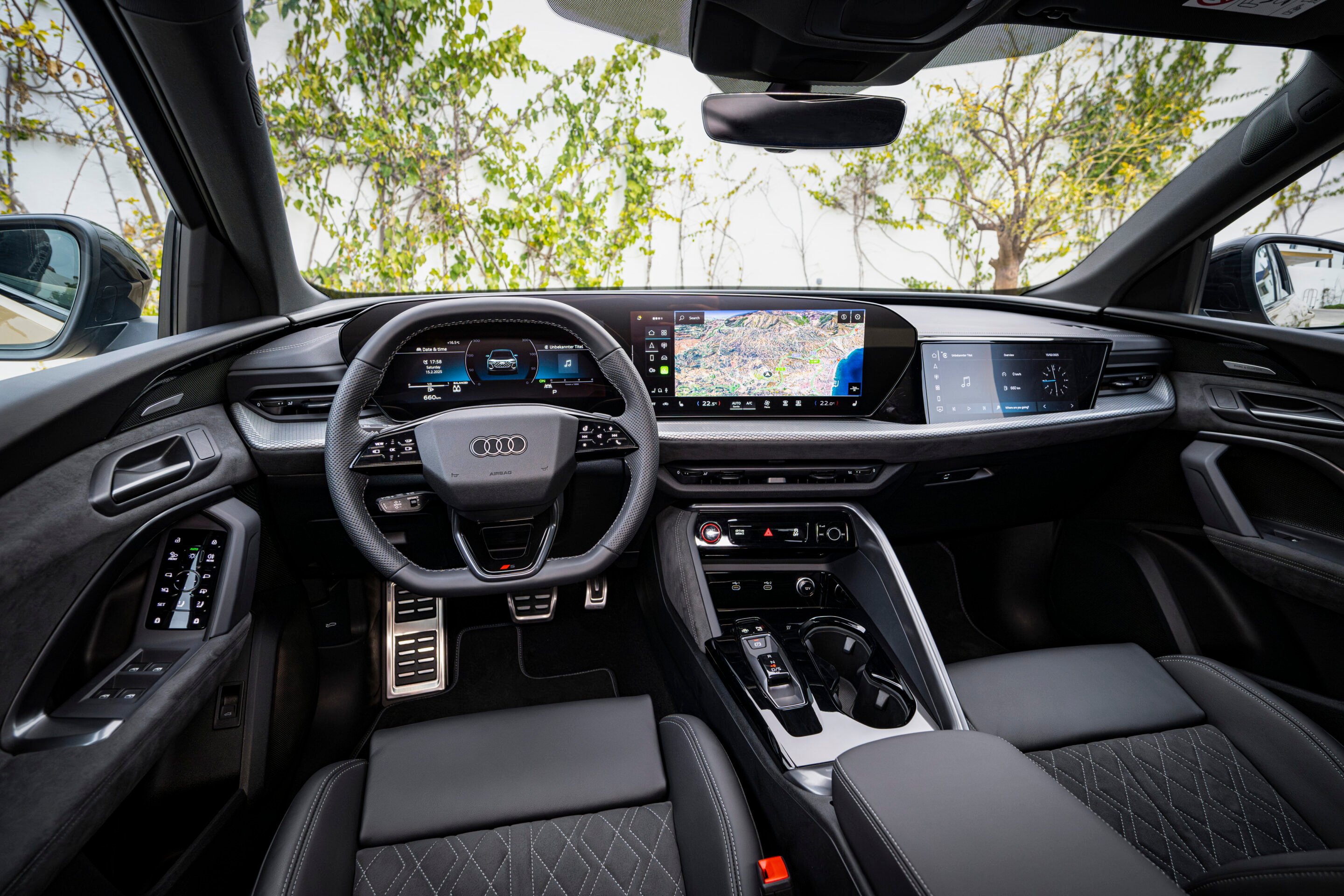
The Q5 has long been a cornerstone of Audi’s global success, and this latest generation enhances its premium SUV credentials. Highlights include mild-hybrid electrification (MHEV+), progressive steering, frequency-selective dampers, and a modernised interior built around Audi’s new “Digital Stage” display system – featuring an 11.9-inch virtual cockpit and 14.5-inch OLED MMI touchscreen.
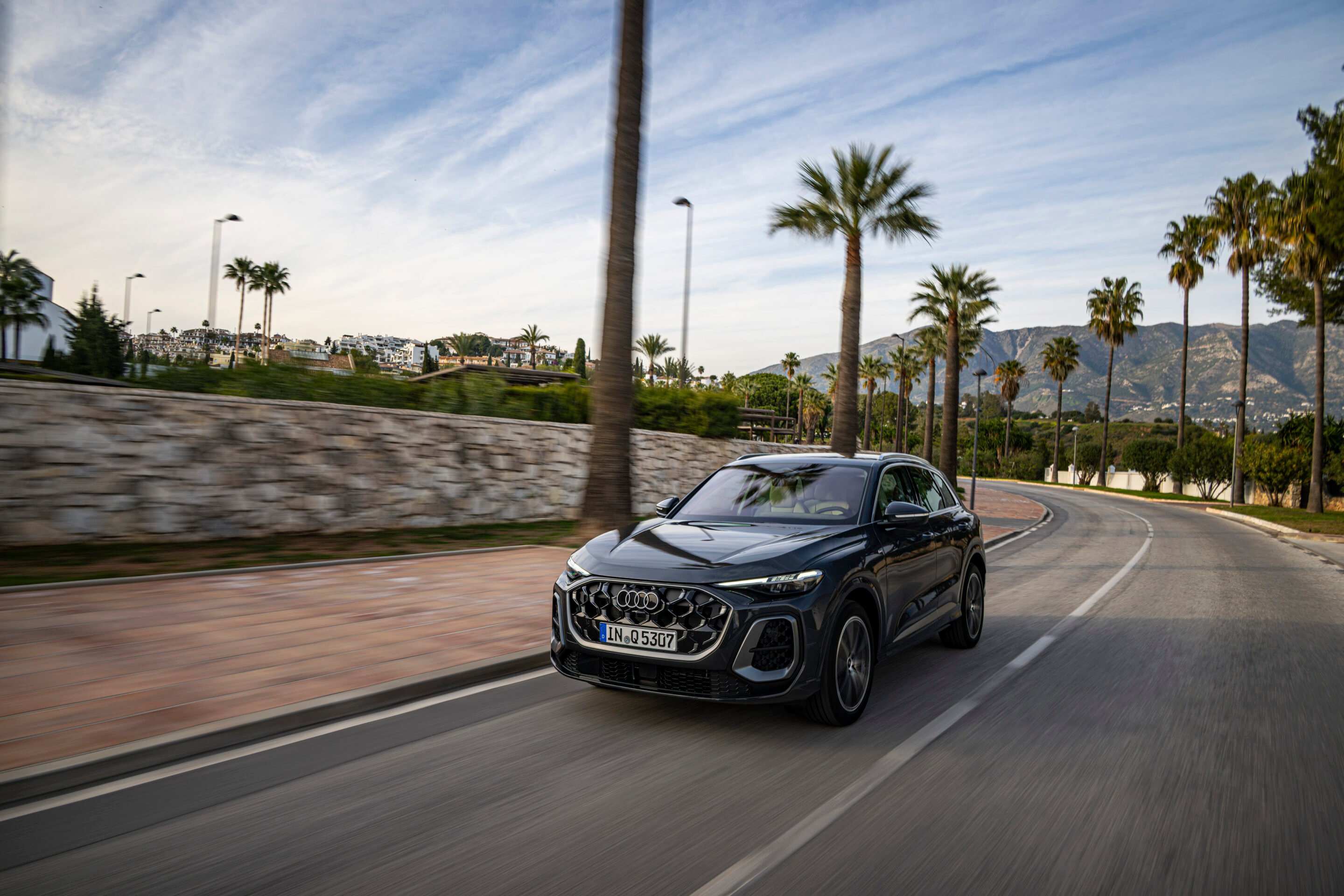
Buyers can choose from two Q5 powertrains at launch: a 150kW TFSI front-wheel drive and a 150kW TDI quattro, both supported by mild-hybrid systems that boost torque and reduce fuel consumption. The range also includes the more sport-oriented Q5 TDI quattro sport, which adds 20-inch alloy wheels, a panoramic sunroof, and S line interior enhancements.
Visually, the Q5 adopts a more assertive stance with a raised Singleframe grille, high shoulder lines, and new Matrix LED headlights featuring selectable digital signatures. Inside, the cabin features leather-appointed upholstery, ambient lighting, wireless Apple CarPlay/Android Auto, a digital key, and a wide range of safety features – including AEB, adaptive cruise control, lane assist, and a 360-degree camera system.
At the top of the range, the SQ5 boasts a 270kW V6 TFSI engine, capable of sprinting from 0–100km/h in a claimed 4.5 seconds. It features 21-inch wheels, ventilated and massaging diamond-stitched leather seats, Bang & Olufsen 3D sound, a head-up display, and dynamic ambient lighting.
The limited-run SQ5 edition one adds exclusive black styling, 20-inch black alloys, red brake calipers, and a bespoke interior treatment.
All Q5 and SQ5 models include 5-year warranties and optional service plan extensions under the Audi Advantage program. First arrivals are due in showrooms within weeks.
At $81,000, the new entry-level Q5 TFSi is around $7600 more than the current entry-level model, while the SQ5 at $122,400 is also more expensive than the outgoing model.
Pricing
| Audi Q5 TFSI | $81,000 |
|---|---|
| Audi Q5 TDI quattro | $87,600 |
| Audi Q5 TDI quattro sport | $94,100 |
| Audi SQ5 edition one | $106,400 |
| Audi SQ5 | $122,400 |
Following on from its recent announcement it would bring Australian operations in-house, on-the-rise brand BYD has announced the launch of a comprehensive 24/7 Roadside Assistance Program in Australia.
As of July 22, 2025, all new BYD customers will receive complimentary 12-month roadside assistance, with the option to renew annually. The service is designed to offer nationwide support, giving drivers access to expert help at any hour, from flat batteries and tyre changes to towing and technical issues.
“Our focus is on delivering peace of mind to every BYD driver,” said Stephen Collins, BYD Australia’s COO. “While our vehicles are built for reliability, we understand how important it is to have trusted support available, just in case.”
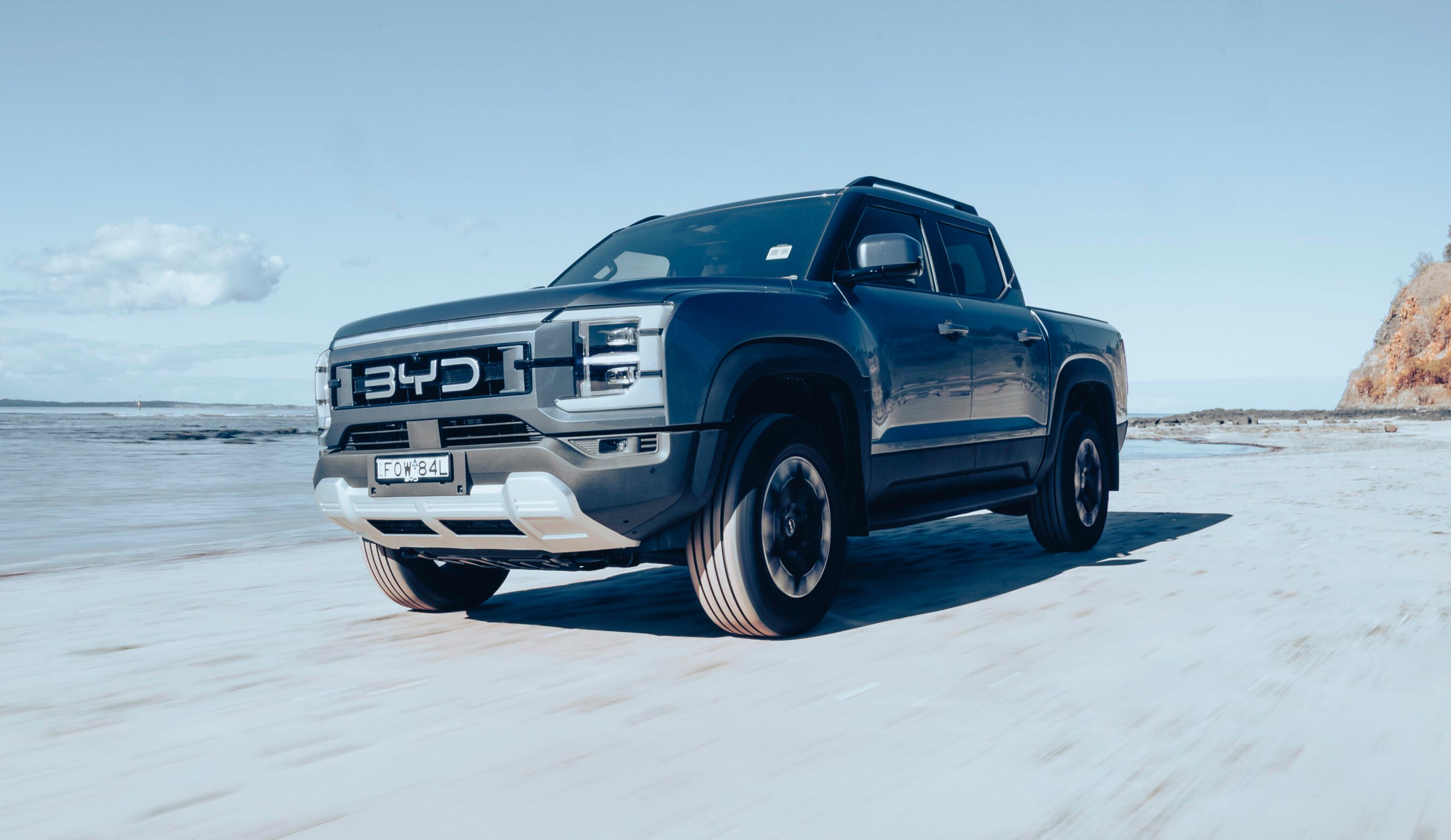
The program is delivered in partnership with AMS, Australia’s largest roadside assistance provider and a joint venture of trusted motoring clubs including NRMA, RACV, RACQ, RAA and RACT.
AMS CEO Rebecca Stenhouse said the partnership was a vital step in supporting Australia’s shift to electric vehicles: “As more Australians choose EVs, having the right support systems in place is critical. Our national teams are trained, well-equipped, and ready to help – wherever the road takes you.”
The new service, says BYD, complements its expanding national footprint, with 15 factory-backed service centres across Australia and plans to triple its dealer network and double the size of its customer service team.
In May, BYD revealed it would take charge of its import and distribution channels in Australia. Previously these functions were managed by EVDirect, which introduced BYD to the Australian market in 2022.
As Brad Pitt’s Formula 1 film fuels a fresh wave of global interest in motorsport, a key figure from F1’s storied past is making headlines of his own. Bernie Ecclestone – the man widely credited with transforming Formula 1 into a multibillion-dollar global empire – is now linked to a rare and striking piece of automotive history that’s going under the hammer: his 1934 Lagonda.
Listed on Catawiki, an online marketplace for collector-grade items, the auction offers not just a car but a direct connection to a towering F1 legacy. Ecclestone, who centralised F1’s TV rights, revolutionised its commercial structure, and ran the sport with unmatched authority for decades, owned the Lagonda from 1996 – during what many consider the height of his influence.
“Bernie didn’t choose cars casually. He chose symbols,” said Catawiki classic car expert Franco Vigorito. “This Lagonda is poised, powerful, and unmistakably British – just like him.”
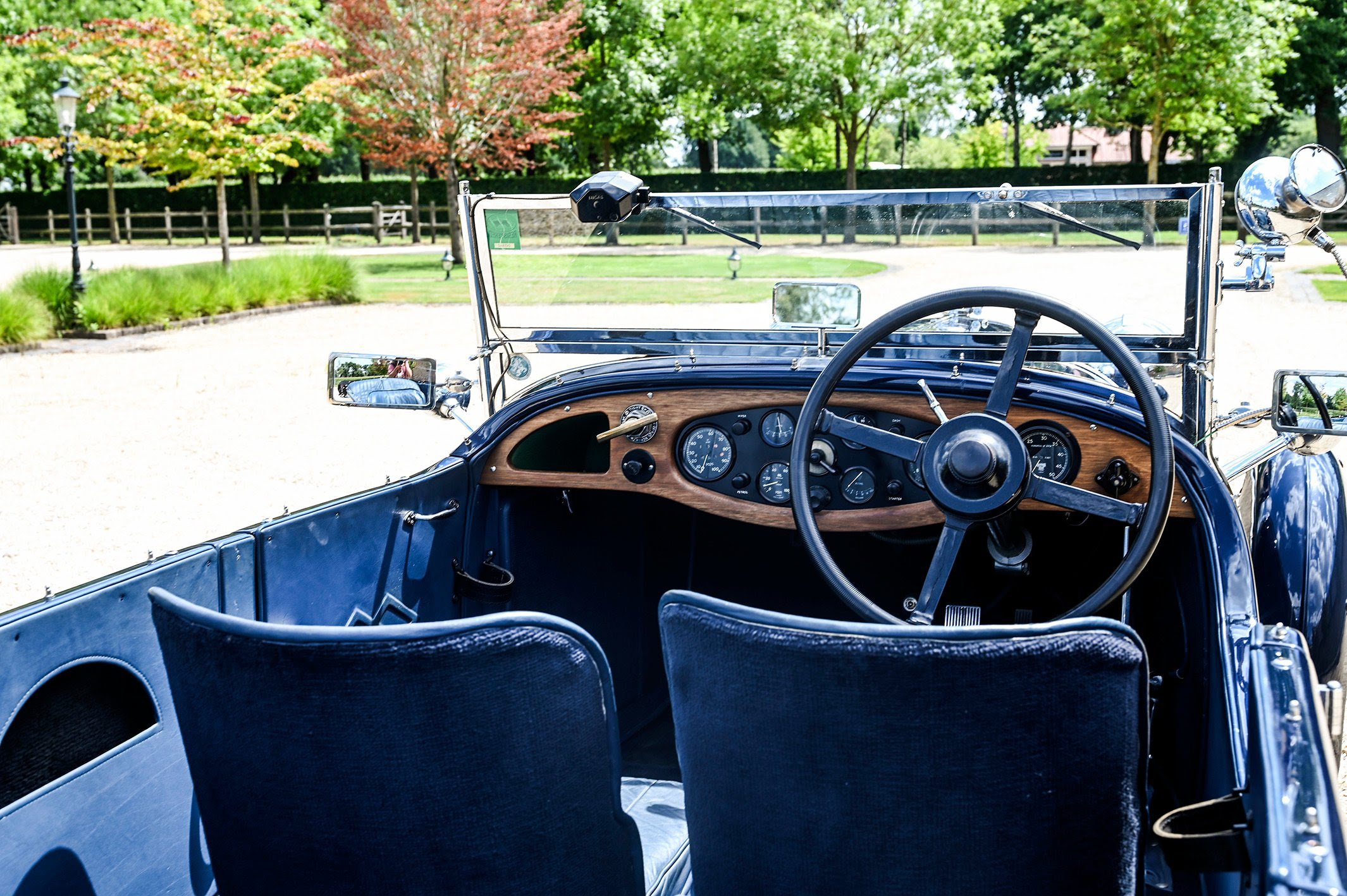
One of only 261 chassis produced between 1932 and 1934, the car originally featured a saloon body but was reimagined in 1991 by respected coachbuilder Kevin Roskruge into the elegant and desirable T2 Tourer configuration. The result is a three-door, open-top design with flowing pre-war lines and a convertible roof – blending classic British luxury with sporting flair.
Powered by a 6-cylinder inline engine paired with a rare pre-select gearbox, the car promises both vintage charm and impressive drivability for its era. It’s far from a static museum piece; it’s a road-ready reminder of automotive artistry and motorsport history.
Estimated at €175,000 (A$310,300), the Lagonda is available exclusively via Catawiki from 25 July to 10 August – offering collectors the chance to own a car once driven by the man who reshaped Formula 1.
