
THERE’S little doubt 2018 will go down as a year Holden would prefer to forget.
A sales slump of 33 percent and record low market share of 5.3 percent were the stark reality for the brand’s first year in which it did not produce vehicles in Australia.
Once the dominant top seller, Holden finished sixth on the sales charts, comprehensively kicked by Hyundai and almost surpassed by Kia (to put that in perspective, between 1949 and 2015 Holden had never finished outside the top three). It was also beaten by arch rival Ford.
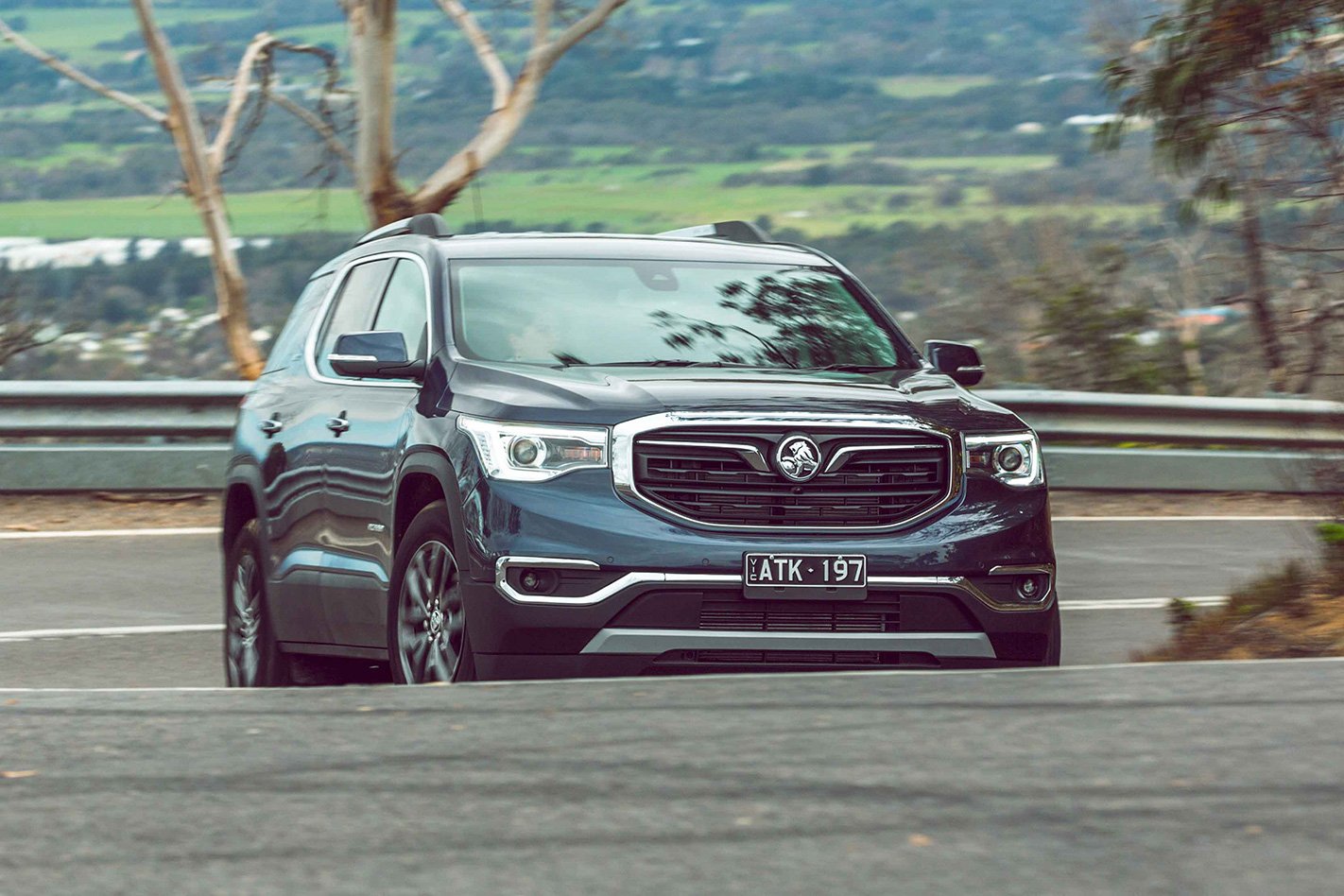
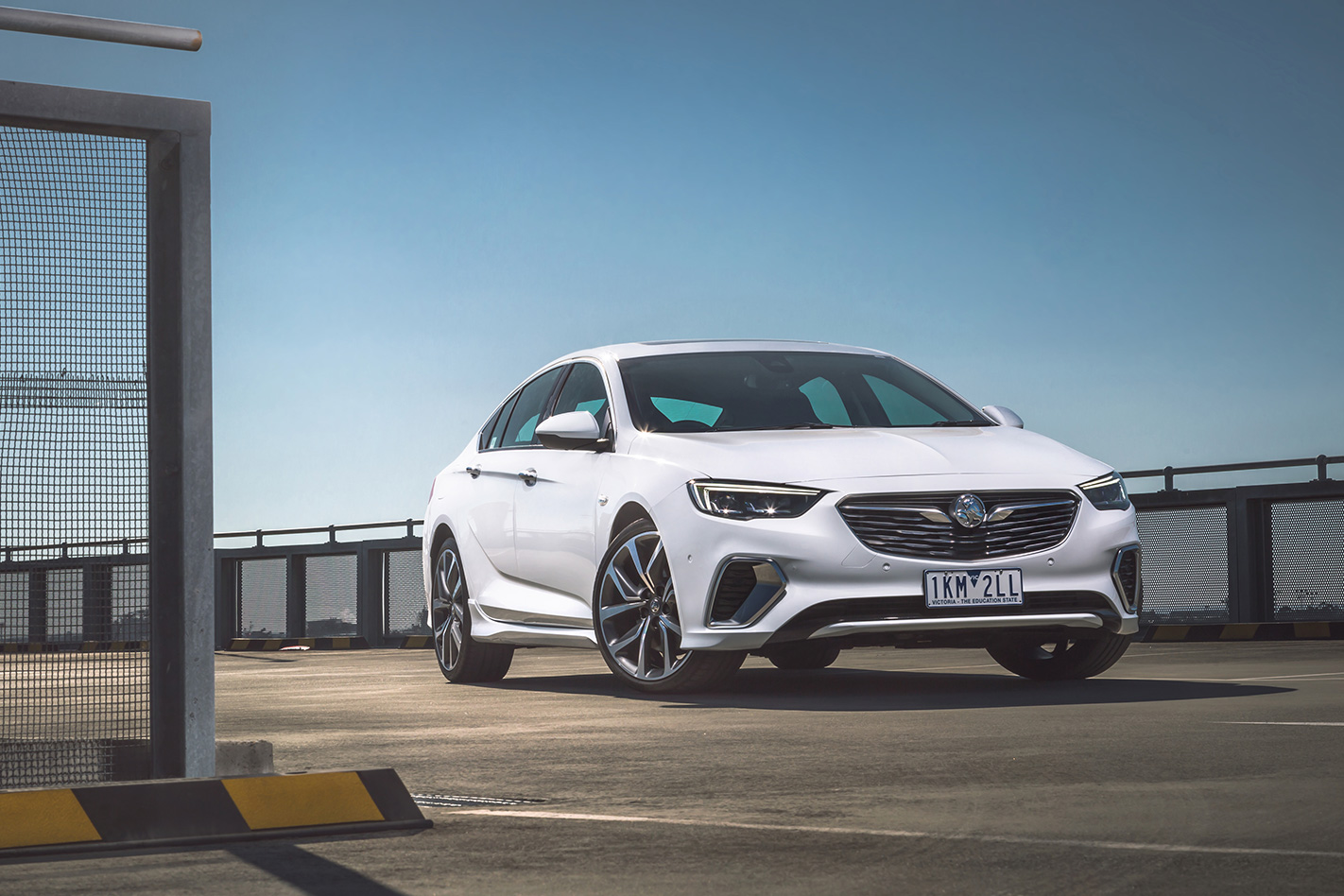
Of the 29,555 sales Holden shed in 2018 compared with 2017, around half – 14,636 – were attributed to the Commodore. Without the government and fleet appeal of being manufactured Down Under, the German-sourced Commodore was simply another import – and one competing in a segment continuing to slide against the SUV onslaught (SUVs accounted for 43 percent of the 1,153,111 new vehicles sold in 2018).
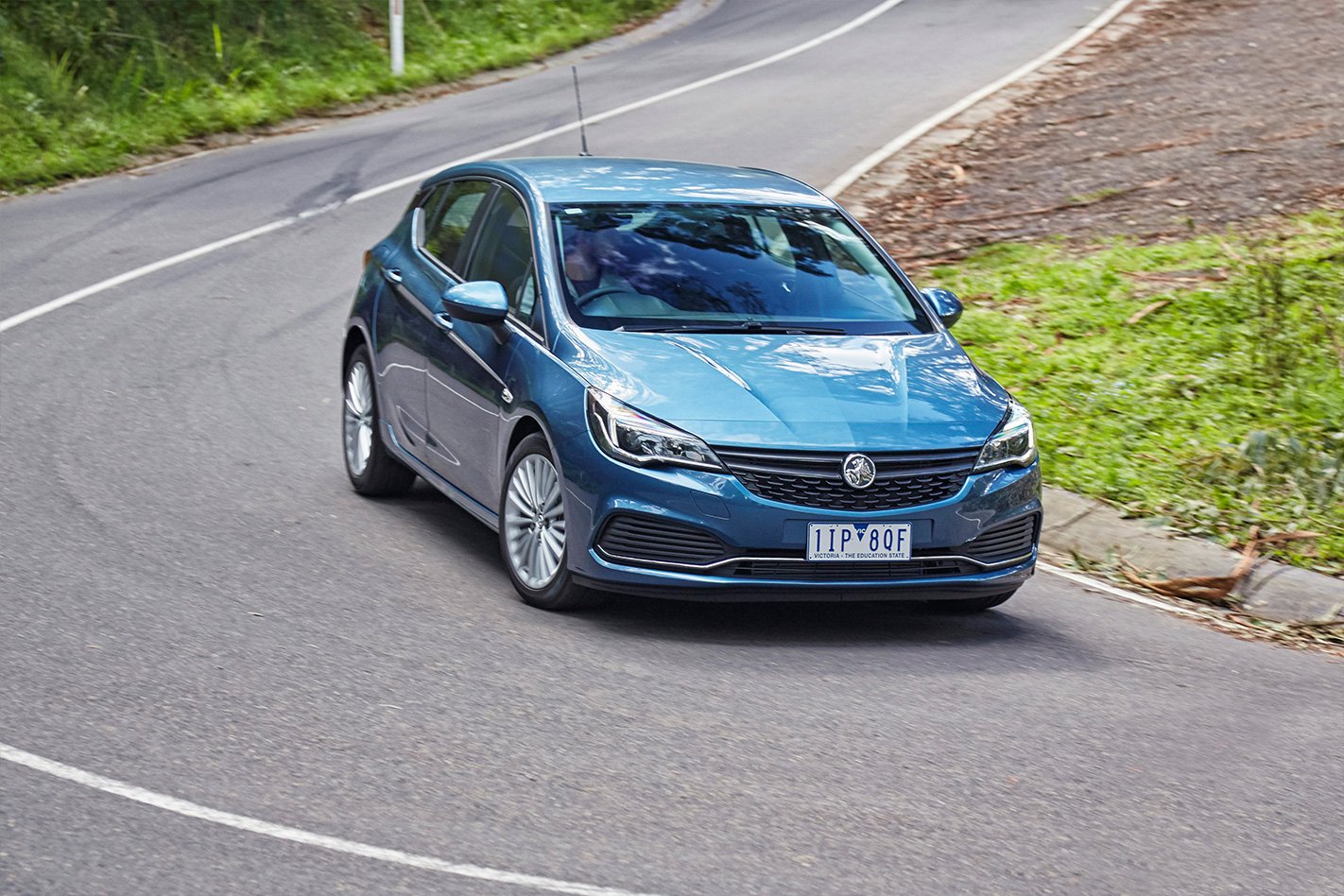
Other important Holdens such as the Astra and Equinox still aren’t firing, each also-rans in popular segments, small cars and mid-sized SUVs respectively. Similarly, the Colorado ute doesn’t have the firepower against the likes of the Hilux and Ranger.
Predictably, Holden is putting on a brave face, looking to the future rather than dwelling on the disastrous result.
“Holden has its best and most comprehensive vehicle portfolio ever, including a highly competitive range of SUVs from GM’s global operations,” a Holden spokesperson said in a statement.
While the company is tight-lipped about its sales prospects moving forward, there is evidence Holden has hit a low point.
Delve deeper into the 2018 figures and things got really ugly in the third quarter, from July to September, just as former chief Mark Bernhard was retiring.
Current GM and chairman Dave Buttner slipped into the hot seat in August at a time when Holden’s share hit an all-time low of 4.6 percent of the market.
It didn’t take Buttner long to cancel some orders to get the supply side of the equation at more manageable levels, in turn beginning the task of clearing stagnant stock from holding and dealer yards. Rather than forcing cars onto customers through heavy discounting, Holden wants to get more natural demand for longer term brand sustainability.
In the fourth quarter, as the broader market was tanking – down 9.3 percent compared with 2017 and the lowest quarter for 2018 – Holden sales were increasing and its market share recovered to 5.6 percent, a modest high during a tough year.
Holden won’t reveal its 2019 sales targets, except to hint they are higher than last year.
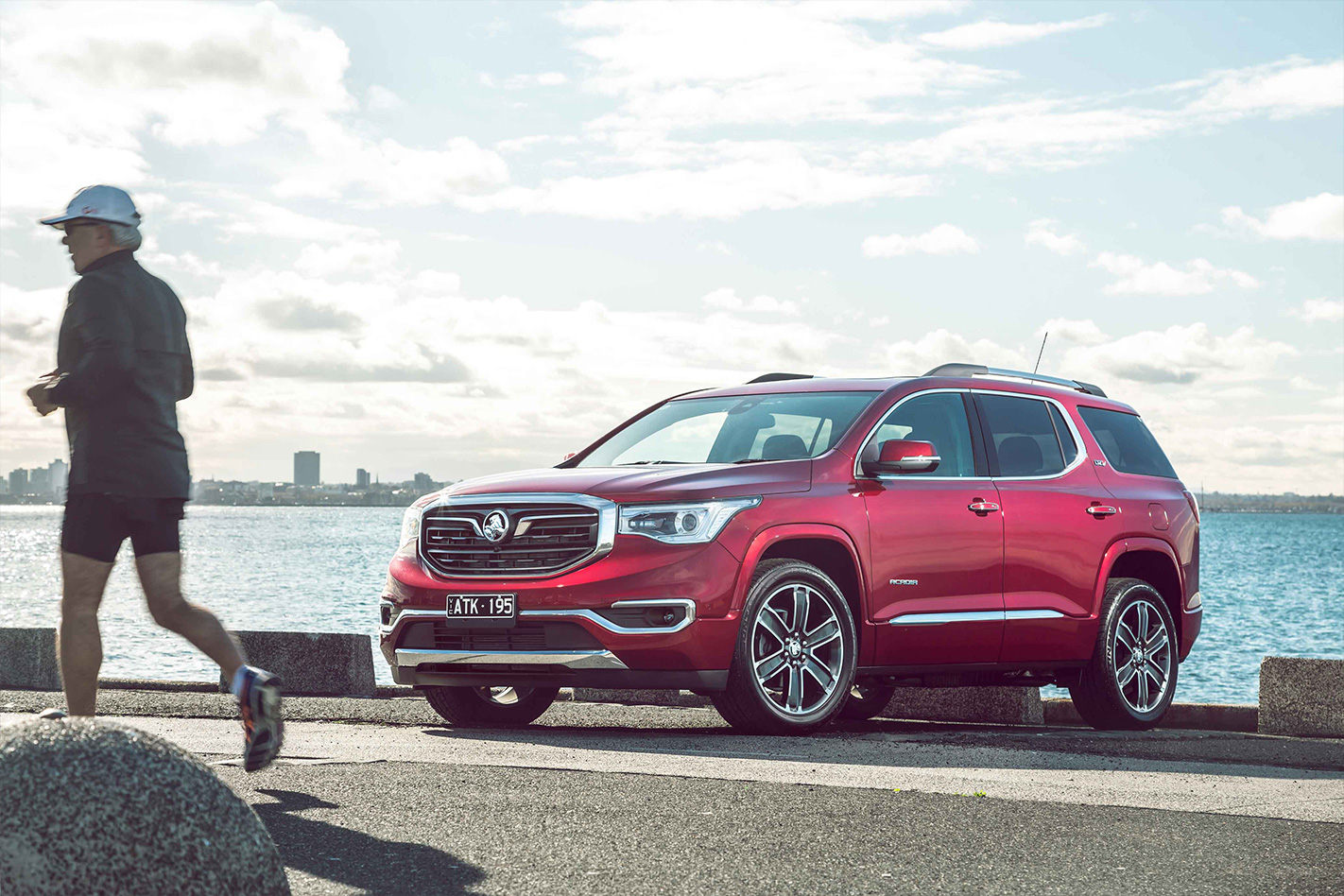
“We are working closely with our dealer partners, to ensure Australian customers get to know our new nameplates, like the Holden Acadia large SUV with its strong road presence and the Holden Equinox mid-size SUV packed with great technology to fit with people’s lives.”
It’ll be a slow road, but lovers of Australia’s most iconic automotive brand may finally have something to smile about it 2019.
Holden’s defenders – Reuss and Simcoe.
Despite a tough year, Holden still has valuable allies in high places.
Former Holden managing director Mark Reuss has been promoted to the position of president of General Motors, following in the footsteps of his father Lloyd.
Having witnessed the passion and talent of Holden in Australia first hand, Reuss has been a supporter of the brand, largely credited with keeping manufacturing operations viable during the GFC before returning to Detroit to take on various executive positions, most recently as the head of product development.
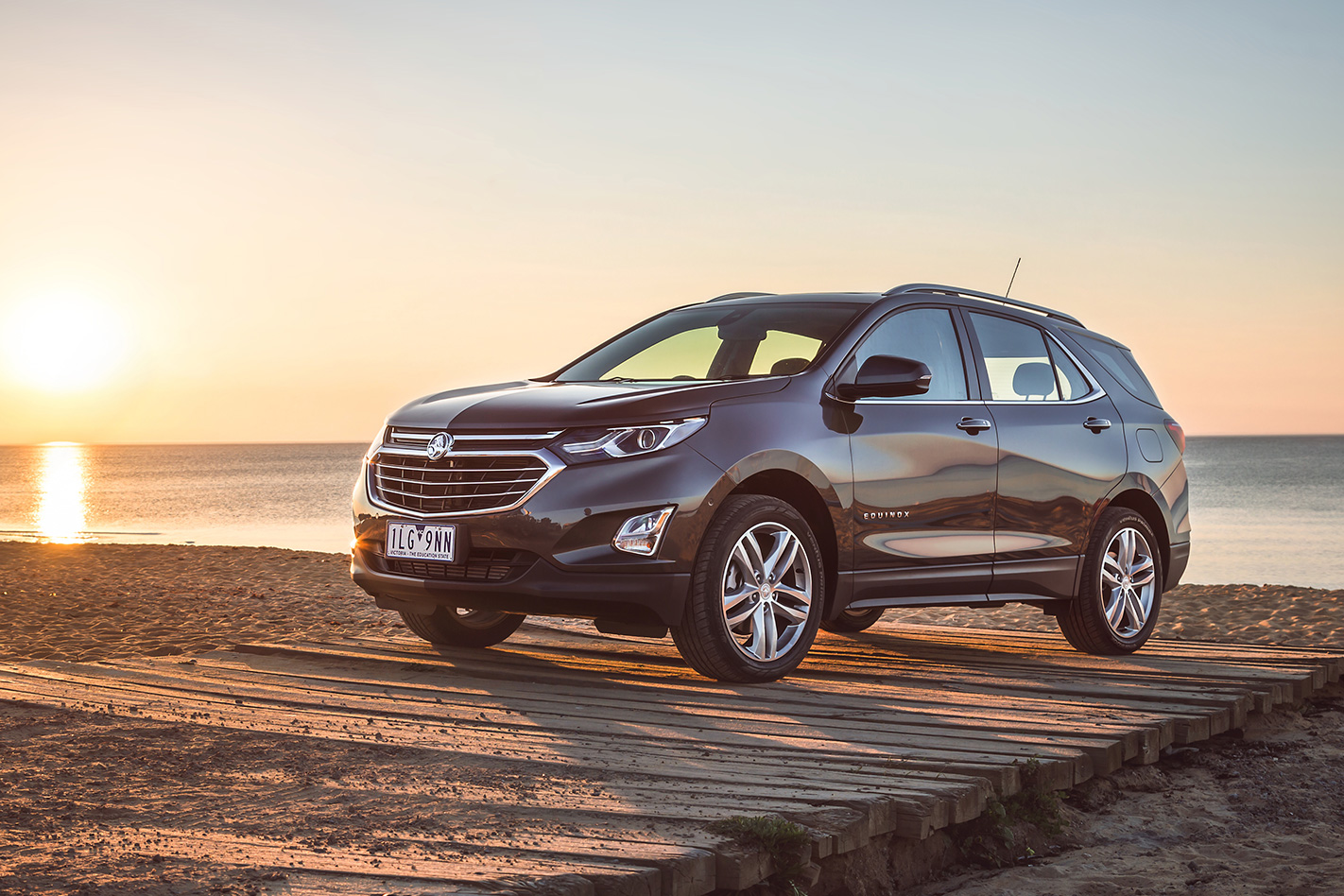
And Australia is never far from his thoughts: Reuss owns an FC Holden, which resides in the GM Heritage Centre in Detroit. He also visited Australia last year to announce an extra 150 engineers would be employed as part of Holden’s highly regarded Australian design and engineering centres.
Reuss is not the only Holden friend in power.
GM design chief Mike Simcoe understands the Holden brand better than any, having revived the Monaro at the turn of the century and played an instrumental role in developing Holden’s world renowned design presence, much of it leveraged from the VE Commodore of 2006.
Having started his GM career at Holden in 1983, Simcoe has a soft spot for the brand.
While the bulk of his job is designing new Chevrolets, Cadillacs and Buicks – many of which will be electric and hybrid, changing their very make up – Simcoe still has a model of the Holden Coupe 60 concept in his office, as well as the original Holden lion logo.
THE HYUNDAI Excel is one of Australia’s most popular cars, with seemingly every teenager in the country thrashing one as their first vehicle, and an estimated 200,000 being sold between 1994 and 2000.
So, it makes sense then that someone has transformed the unassuming Korean hatch into a race car with a thumping Ford V8 heart. That someone would be Liam Hill, a Werribee fabricator by trade, who has built the ultimate Hyundai Excel.
Having owned the car since 2013, Hill has built the racer in his spare time, doing work after hours with the help of his friends and family.
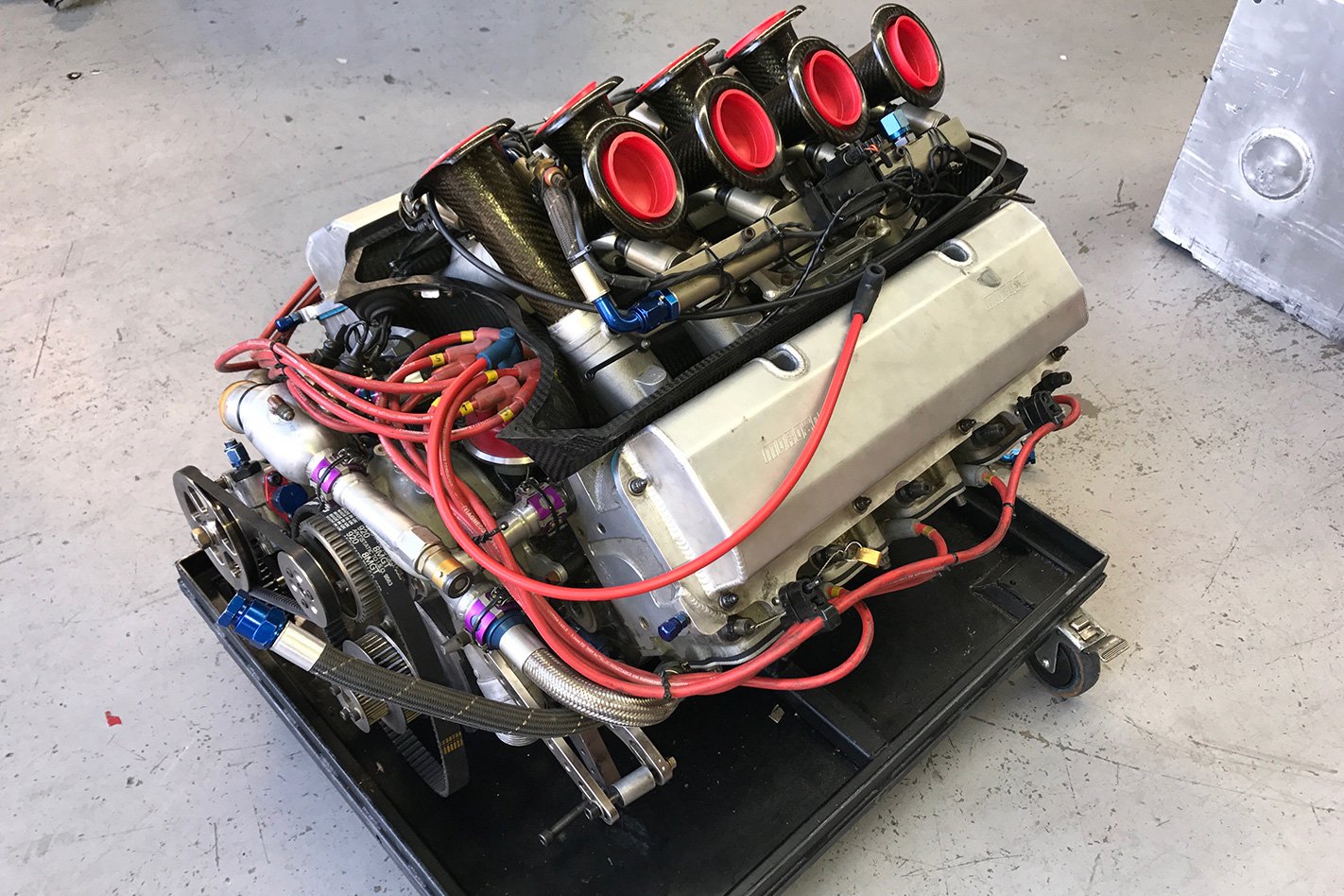
“Since [owning the car] we have been racing it, developing it, racing it again, developing it again, cutting it up, and making it faster – it has been an ongoing project for a while,” he told Wheels.
The latest series of improvements has seen the Excel, which competes as a Sport Sedan, absent from the track for several months, as it undergoes a serious heart transplant, with a 5.0-litre V8 Supercar engine from Tickford being wedged under its bodywork.
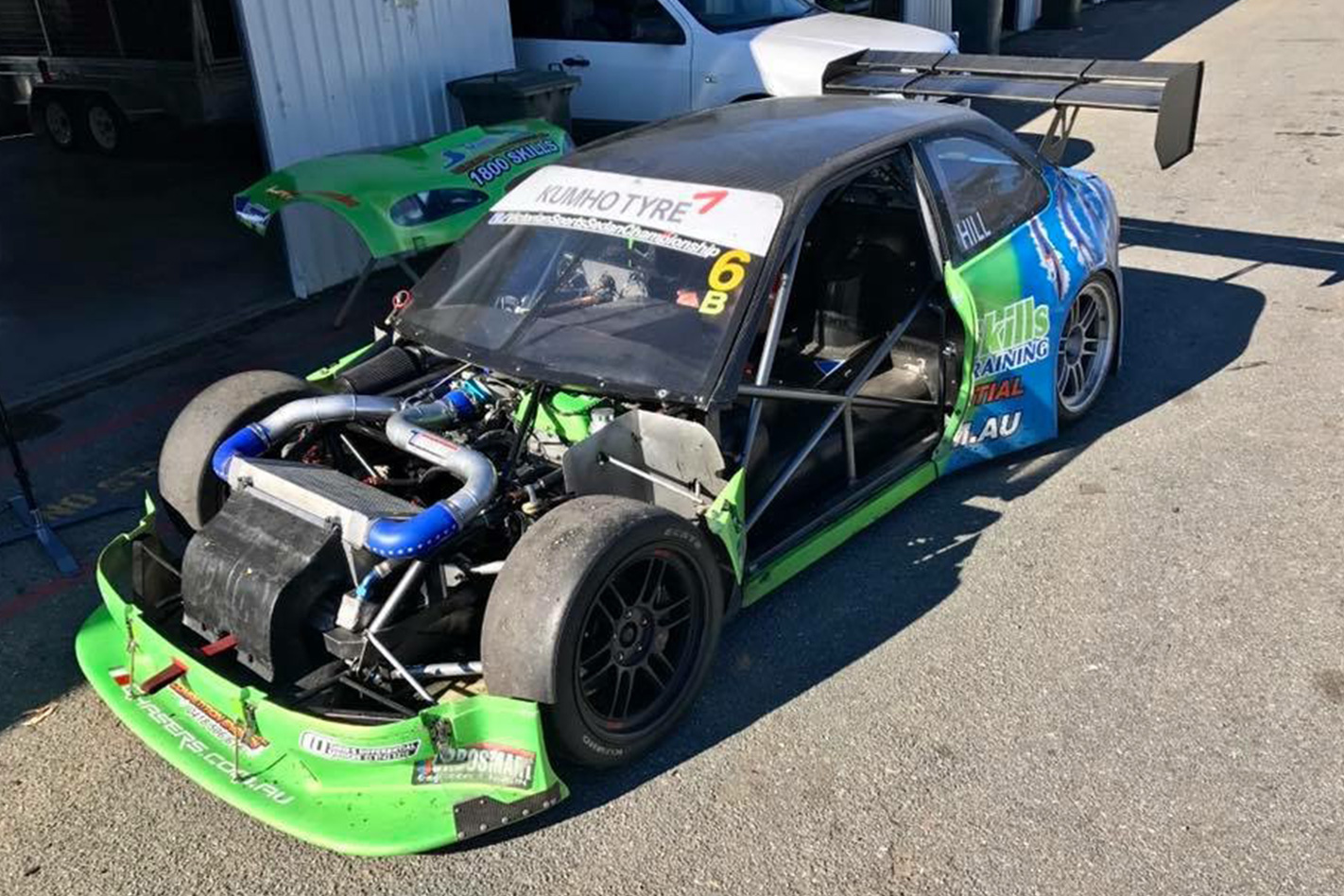
While bodied as a Hyundai Excel, the car Hill races actually started life as a road-faring Datsun 1600 two door.
“I was building up the Datto as a little bit of a budget thing, which then had a little bit of rust in it, so we decided to build a space frame for it,” he explained.
“I actually made a bit of a cock-up, as the car had a sunroof, and when my Dad and I went to weld it up we warped the roof.
“So we went to the wreckers, measured everything up, and it turns out the internal dimensions of an Excel are almost identical to the Datto.
“When we looked at it we pissed ourselves laughing, and thought this could be quite humorous.
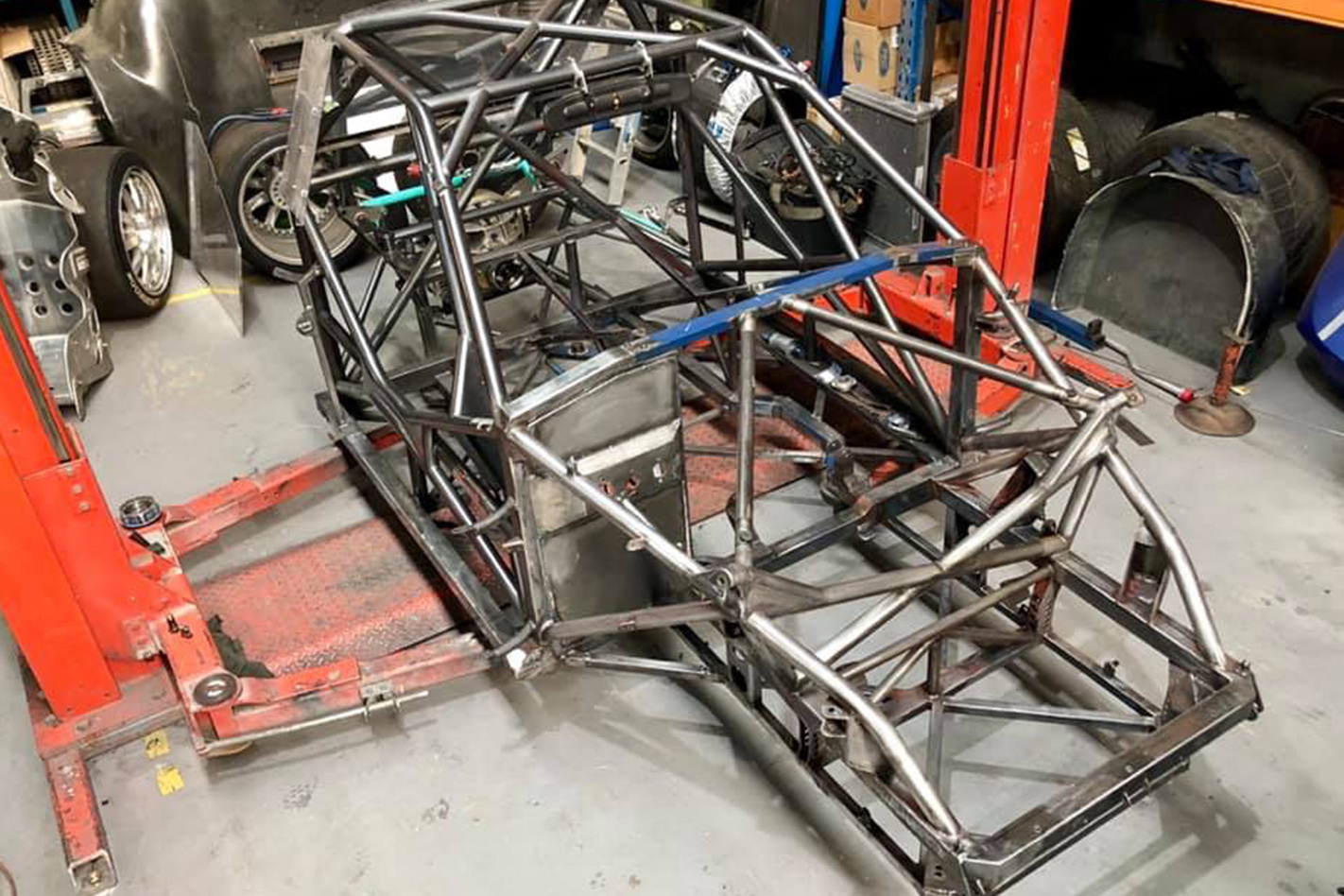
“We couldn’t say no to that, so we cut the body up on the Excel and slid it right over the top of the space frame.”
The ex-Tickford engine will be the third engine to sit underneath the Excel’s dash (more on that later), following a pair of 2.0-litre SR20 motors (first naturally-aspirated, and then supercharged).
Hill believes a switch from four- to eight-cylinders will help improve the Excel’s reliability and straight-line speed.
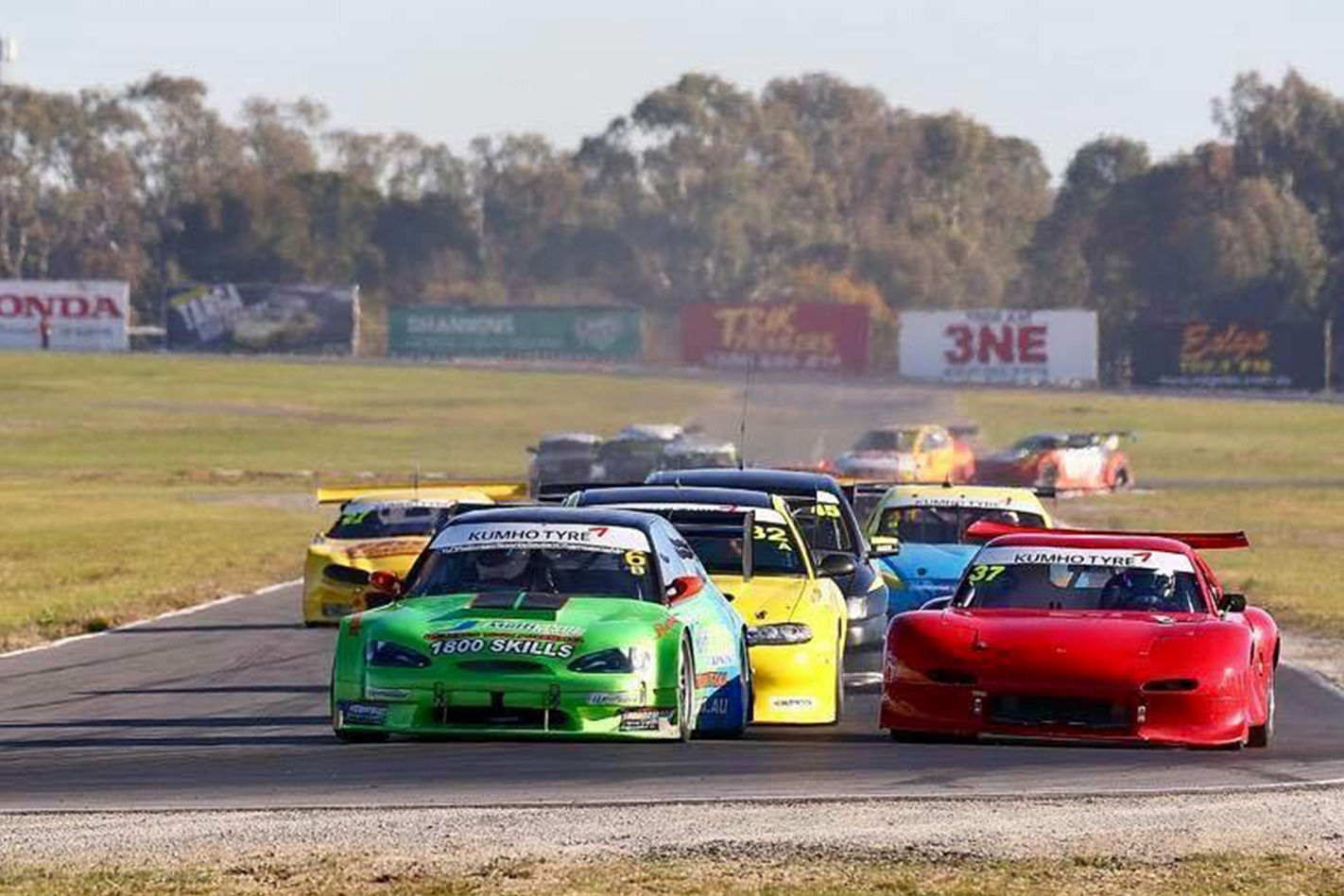
“The only thing the car was lacking before the V8 was horsepower,” he said. “While we could get more power, the temperamental side of the SR20 was starting to come out. The block was starting to flex and things like that.”
V8 Supercar engines are estimated to produce in the region of 460-480kW, which is a significant step up from the 68kW 1.5-litre atmo four-cylinder which originally powered a facelifted ’97 Excel.
Due to Sport Sedan regulations, the Excel must meet a minimum weight requirement of 1050kg. However, Hill is hoping he can get up to 522kW out of the Ford V8.
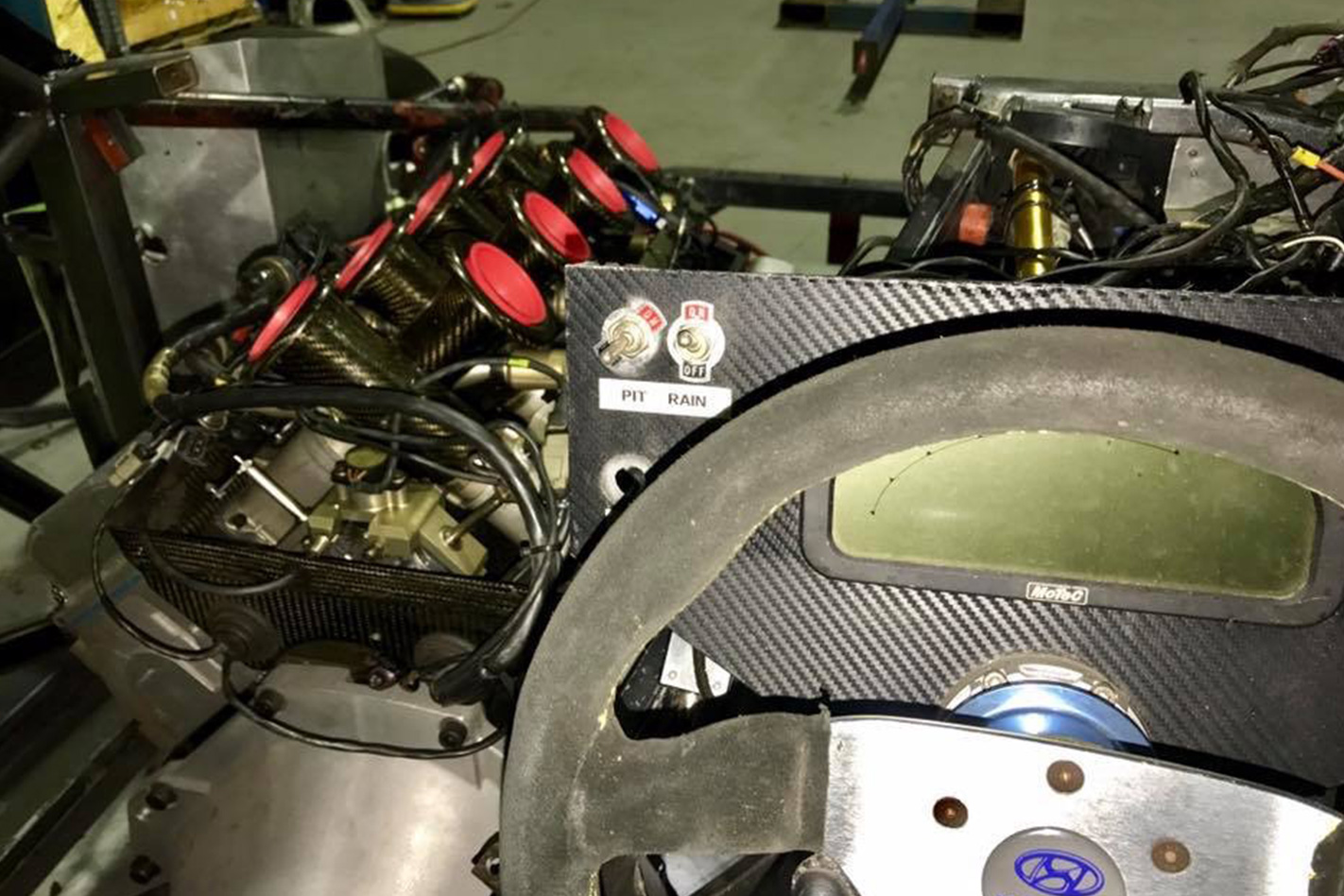
“We will get it up and running as it is, but once I have got some spare time I will crank the compression up and change the valvetrain a little bit and get more revs out of it,” he said.
Power is sent to the rear wheels, via a Hollinger six-speed sequential gearbox.
Along with an impressive power-to-weight ratio, the Excel has enough aero to impress Adrian Newey. Previously Hill has run rear wings from both a Lamborghini GT3 and classic Group C racer, while the Excel has a completely flat floor and sizeable diffuser.
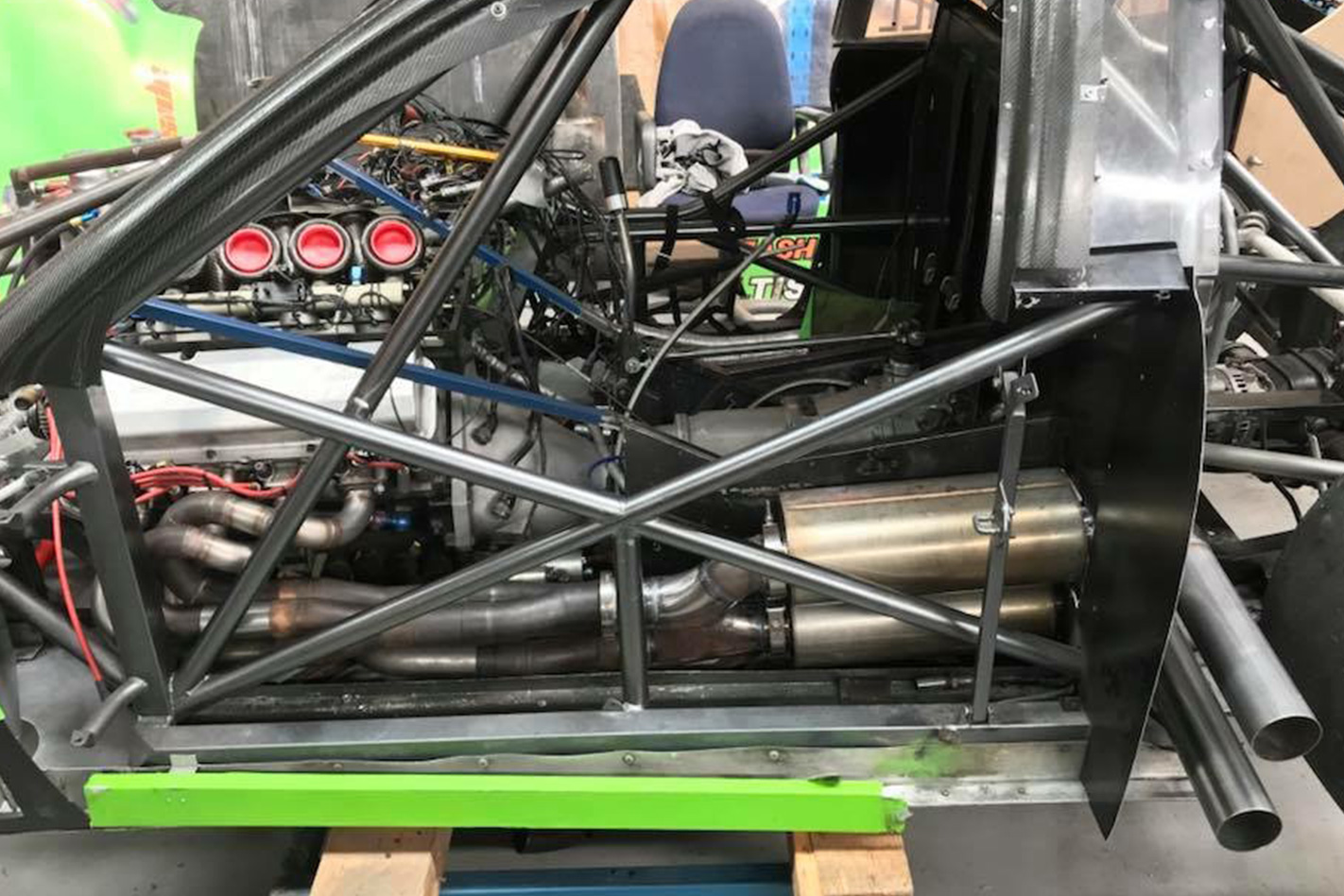
Progress hasn’t been quick or easy, with Hill stating that work has been underway on the upgrades for a year now.
“It’s not just putting in the V8,” he explained. “I wrote a list of everything I didn’t like about the car and basically attacked the poor thing with an angle grinder.”
During the process, the Excel’s rims and tyres are growing from 9-inches wide at each corner to a girthy 13-inches.
Fitting a 5.0-litre V8 inside a car with small hatchback dimensions hasn’t been an easy process, but thankfully the Sports Sedan rulebook allows Hill to get creative.
“The pedal box is actually in front of the engine,” Hill states. “My left hip is on the centre line of the car, so the engine is offset to the left hand side, and everything else is placed to get the corner weights perfect.”
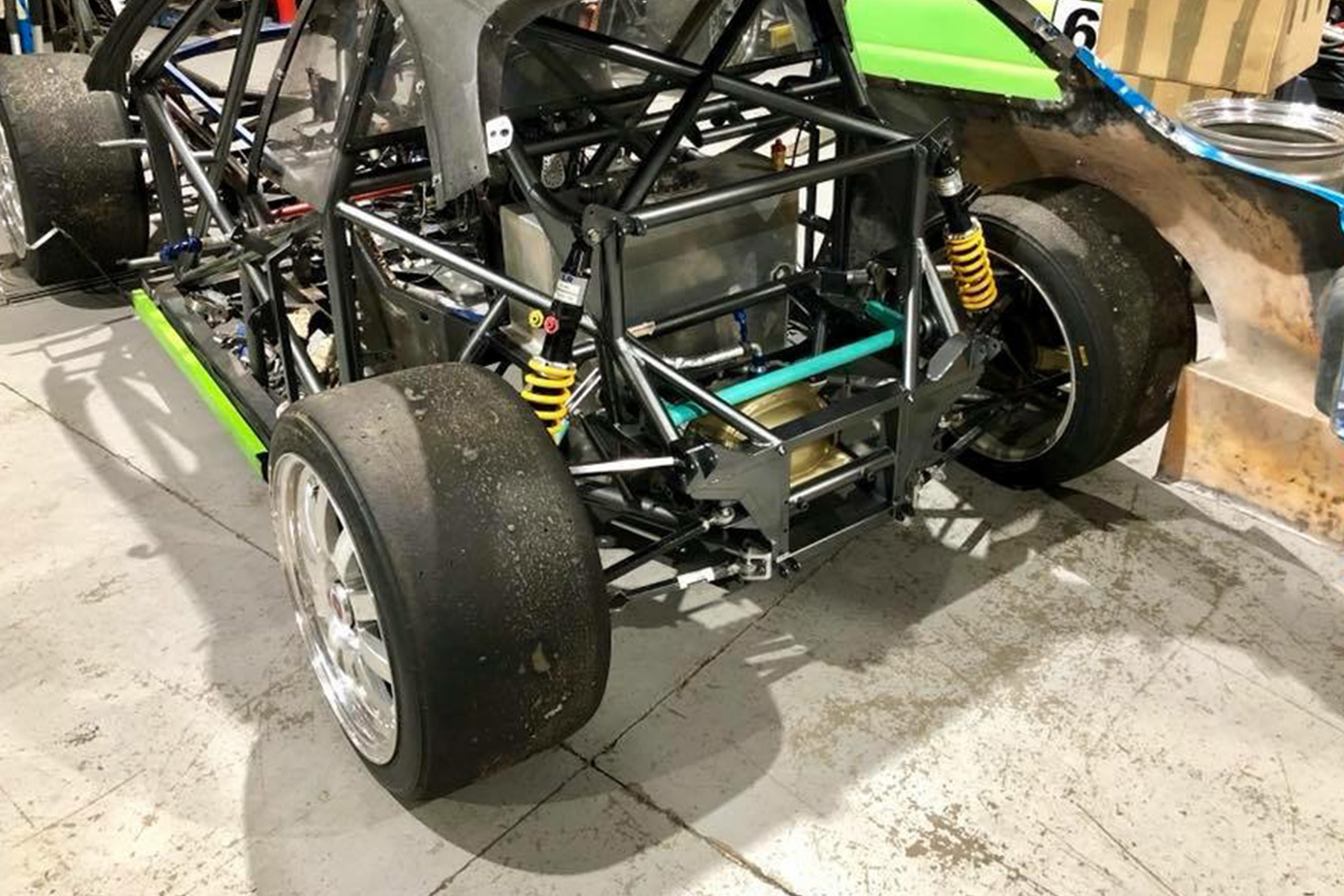
When it is finished, Hill’s mighty Excel will compete in the National Sports Sedan series, racing against the likes of Tony Ricciardello’s Alfa Romeo GTV – one of the most successful cars in Australian motorsport.
If you’re thinking about touching your phone while driving, think again. The NSW government has officially flicked the on switch for its first two mobile phone-detecting cameras today, meaning the eyes of the law will be hovering even closer in an effort to discourage distracted driving.
The trial involves just two cameras, one positioned on the Clunie Ross Street overpass on the M4 motorway, and the other on Anzac Parade in Moore Park. Oriented to look down almost vertically through windshields, the cameras will be able to see whether drivers are holding their phones below the window line, or on their laps.
A four-week test period saw an average of over 11,000 drivers a day being detected illegally using phones.

The NSW department of Roads and Maritime Services insists that the cameras are not about revenue raising.
“74 per cent of the NSW community support the use of cameras to enforce mobile phone offences. I strongly believe this technology will change driver behaviour and save lives,” said the minister for Roads, Maritime and Freight, Melinda Pavey.
The cameras will be actively detecting law-breaking motorists from today, January 7, 2019. The department says that those drivers will only receive a warning in the mail, and won’t be issued fines, initially. The department says it will start fining those detected by the cameras after April, giving the authorities time to fine-tune the cameras to eliminate false positives.
The cameras are said to work in both day and night time, in poor weather, and can detect vehicles travelling at up to 300km/h. The system uses high-resolution cameras to snap photos of each car, with artificial intelligence then sorting through each image to see if a phone is being used by the driver. A human operator then validates images that indicate a positive result.
“If, at the end of the trial, the technology proves to be foolproof, the community will be made aware of its permanent use,” Mrs Pavey said.
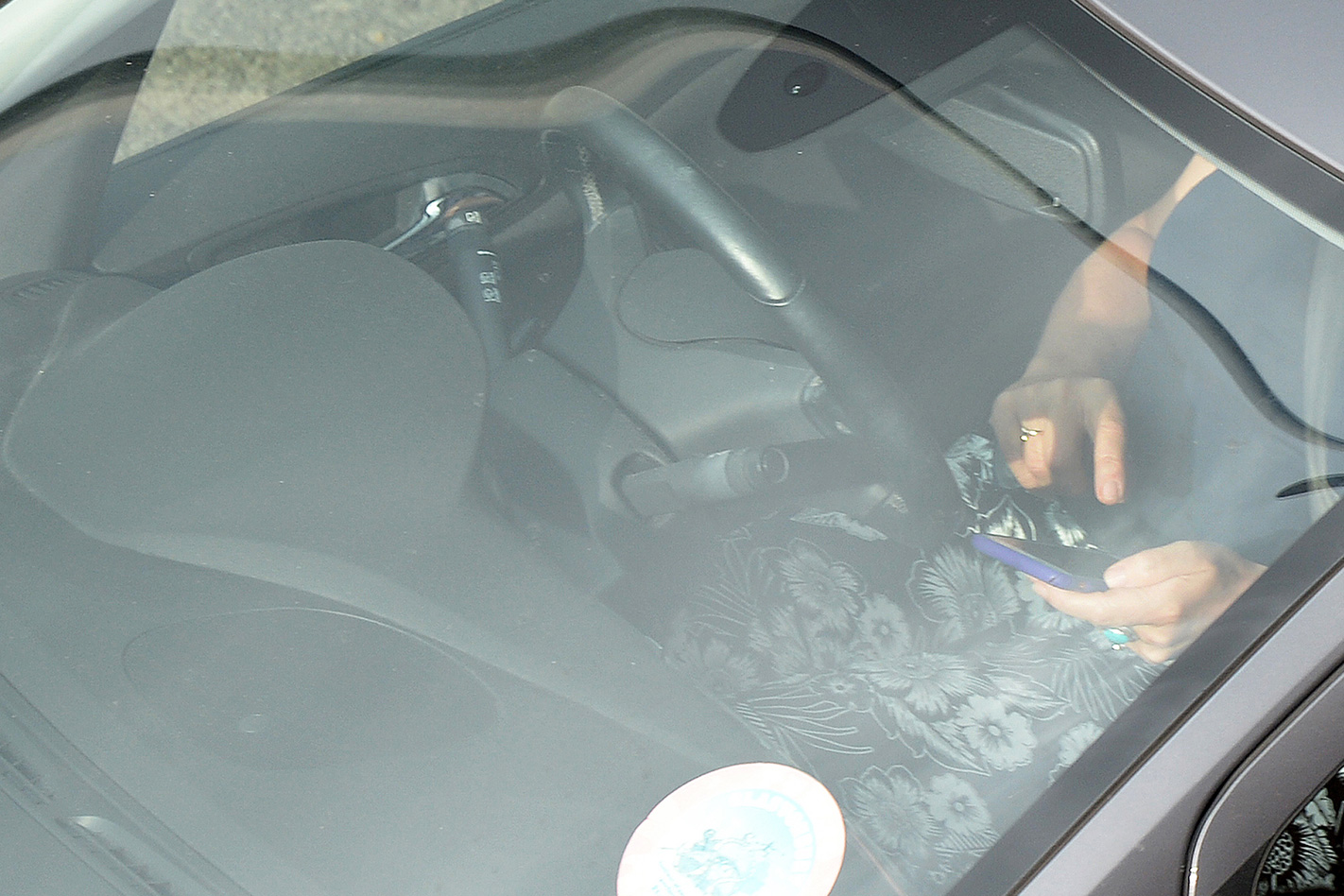
New South Wales isn’t the only state looking at phone-specific traffic cameras. Both Western Australia and Victoria are also examining phone-detecting camera technology – though not necessarily the same tech adopted by NSW, which is developed by Australian start-up Acusensus.
The Acusensus system, developed by Alex Jannink after a close friend was killed by a phone-distracted driver five years ago, gives cameras a top-down view. Other options being considered by WA and Victoria involve cameras either mounted by the roadside in a fixed or mobile installation, or mounted on other vehicles moving through traffic.
Currently, most mobile phone infringements are detected and enforced by motorcycle patrols. While a highly visible method of enforcement – and a powerful deterrent to other road users who witness it – according to government sources that method lacks “efficiency” compared to automated cameras.
Victoria’s assistant commissioner for road policing suggested last year that an even more draconian approach could be deployed in the state, with electronic signal jammers used to temporarily disrupt and disable the data connection of any phone inside a vehicle – presumably including those of passengers and nearby pedestrians.
Lamborghini has revealed a couple of close-up teaser images of a facelifted Lamborghini Huracán, as well as one full image from the rear three-quarter, heralding the upgraded Huracán Evo due to arrive soon.
The images were revealed exclusively to those with access to Lamborghini’s Unica app, primarily customers and owners, as the app requires an invitation from the Italian carmaker to gain access.
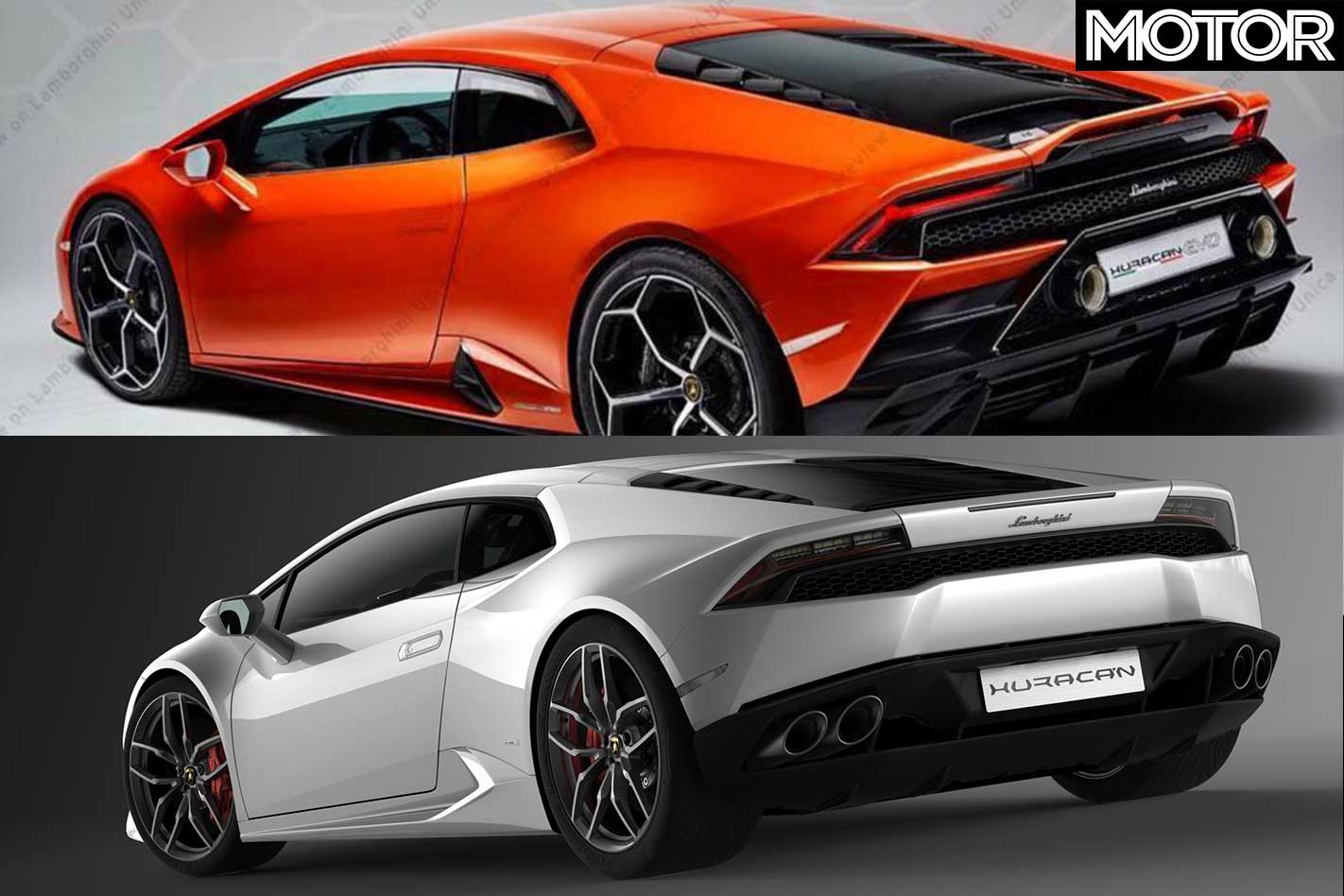
However, the images have since spread to social media and news sites, those pictured first prominently appearing on autoexpress.co.uk.
Visually, the Huracán Evo takes a step further toward the Performante, with its rear exhaust exits relocated further up the car’s rump, and some more aggressively styled intakes and aero.
A small, relatively subtle wing has sprouted from the rear of the Huracán Evo, though it’s nowhere near as intense as that of the Performante.
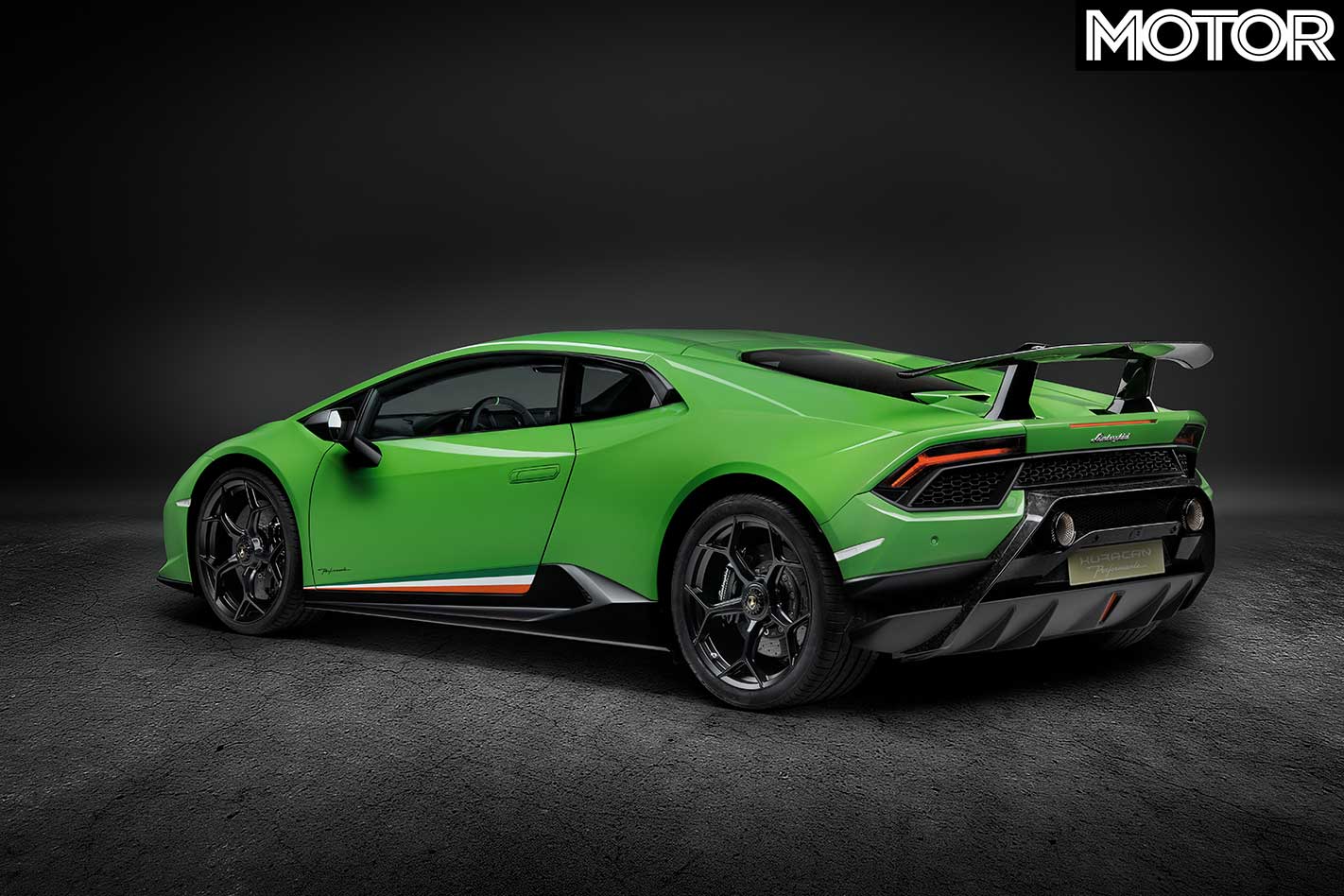
Lamborghini Forum posts have rumoured (via those who claim to be in the know) that the ‘Evo’ will be AWD-only (at first at least – but claims on lamborghini-talk.com say no RWD version is inbound) and will feature all-wheel steering.
Expectations from punters are for the naturally aspirated 5.2-litre V10 to come in 640hp or 680hp (470kW and 500kW) versions, but the latter would have the Evo outgunning the Performante by around 30kW.
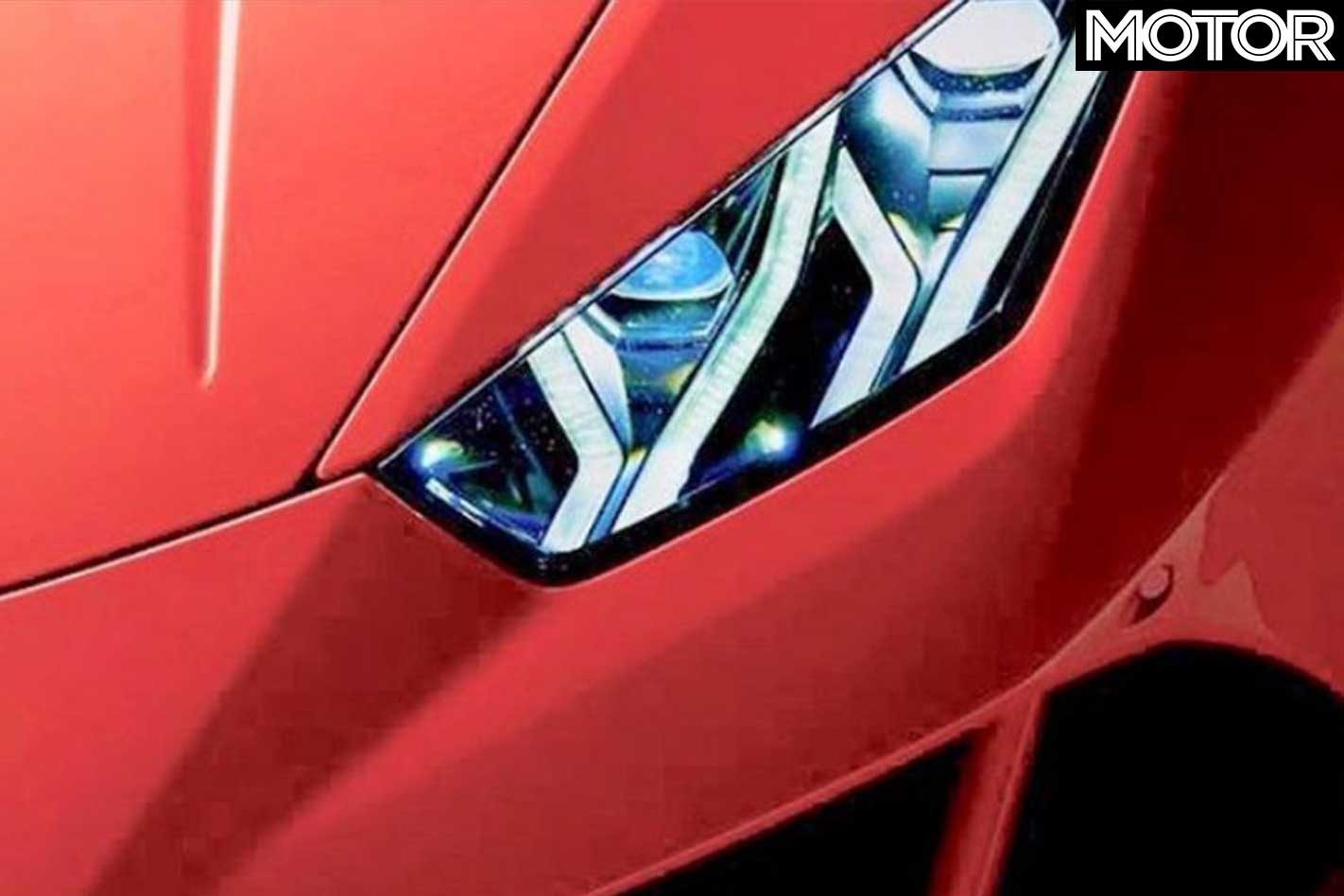
Expect power bumps to come in smaller margins from its 449kW current iteration (in LP610-4 guise), as was the case with the closely related R8’s recent update.
Interior styling is also said to be a target for upgrading, but no images of the cabin have been released yet.
While the Huracán Evo should make its debut in March at the Geneva Motor Show, Lamborghini should also be preparing to publicly reveal the Aventador SVJ Roadster, though no official word has come from the brand. Stay tuned.
Parents are being urged to ensure their children are properly strapped in during holiday road trips, particularly when they fall asleep.
About 30 children are killed in vehicle accidents every year on Australian roads, and according to Neuroscience Research Australia (NeuRA). The Christmas/New Year period is a particularly dangerous time, says NeuRA, due to restless kids and cars packed with holiday gear that can dislodge seat belts and child safety seat fasteners.

A 2010 study found half of all restraints had errors in how they were used. Some had up to seven errors, ranging from failing to buckle the child in to slackness in the belts and sashes.
Most often parents weren’t aware they had made a mistake.
NeuRA associate professor Julie Brown said while most children now use the proper restraint for their age, the number of errors in how child restraints are fitted or installed hasn’t improved.
“In our studies we see a number of children seriously injured in a crash because they are ‘out of position’ and the seat belt or restraint is no longer providing good protection.”
Brown recommends parents ensure children are securely strapped in at the start of the journey, no matter how long or short the trip, and to continue monitoring their seating position during the journey.
She recommends keeping an eye on how your children are interacting with their restraint during long journeys, and to ensure they keep their arms within the harness of child safety seats.
For children in a seatbelt, it is critical not to lie horizontally across the car with a pillow, but rather to keep upright so the seatbelt is positioned over the mid-shoulder to provide the best level of crash protection.
For more information about fitting child safety seats, read Installing child car safety seats, 10 things you should know.
Whoever said the 21st century’s increasingly intense focus on efficiency and environment would kill the sports car didn’t count on the tenacity of car companies. Brands like Mazda, Toyota, Subaru, Renault, Volkswagen and others have demonstrated that you can have your sports car cake and look after the environment too, with a range of front-drive hatchbacks, rear-drive sports coupes and all-wheel drive scorchers that deliver greater performance from less fuel than ever before.
Don’t think for a minute that you need to spend big to get something fast and frugal; far from it! The little VW Polo GTI launched in 2018 is priced from just $30,990 and can scoot to 100km/h in less than 7 seconds. And carry five people. And sips just 6.1L/100km. And did we mention it’s a hell of a lot of fun to drive? Even better for us fast greenies, 2019 is shaping as an bigger year in the Bang for your Buck automotive realm with the Ford Fiesta, all-electric Nissan Leaf, and a more efficient beloved Mazda 3 among the headline acts.
Audi A1
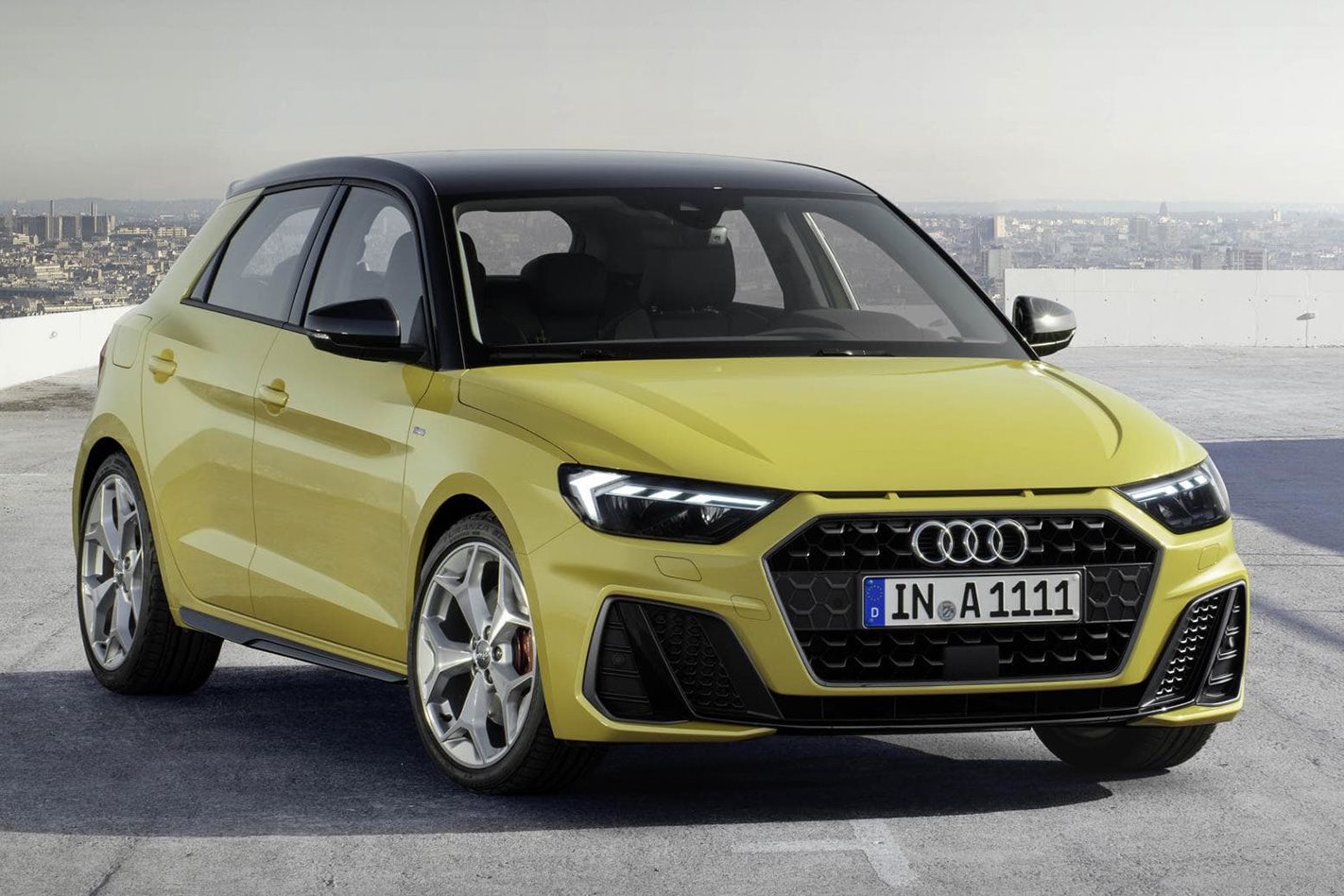
Significance: An all-new iteration of Audi’s gateway hatchback.
Price range: $30-40K
Rivals: Mini Cooper, Fiat 500
Due Date: March/April 2019
Spun-off from the new Volkswagen Polo’s platform, Audi’s box-fresh second-generation A1 city hatch promises to inject a great deal more sophistication into the bottom end of the German brand’s product portfolio. Now measuring over four metres long it’s physically bigger than before, but a range of new powertrains – including a 1.5-litre turbo four with cylinder deactivation – move the mechanical game along as well.
Inside there’s a greater sense of maturity in the cabin furnishings, plus plenty of infotainment tech.
Ford Fiesta
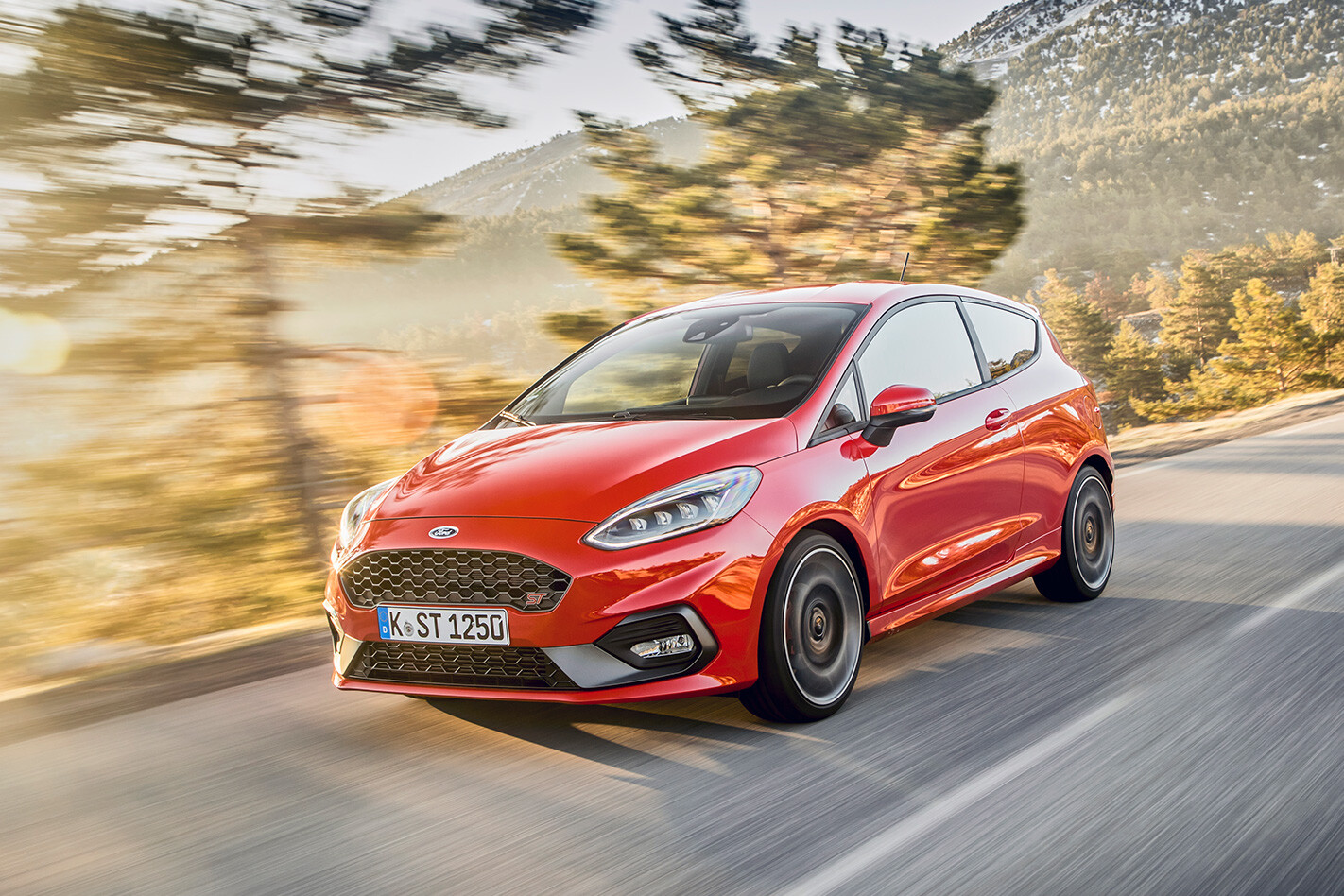
Significance: The Fiesta returns for another generation – but only as a hot hatch
Price range: $28K-$30K
Rivals: Volkswagen Polo GTI, Suzuki Swift Sport, Renault Clio RS
Due Date: Second quarter 2019
The Fiesta has long been a dynamic darling of the compact hatch set, and Ford will be cranking up the athletic ability of its next-generation Fiesta next year with the Fiesta ST hot hatch.
However, the ST will be the only way you’ll get to put a new-gen Fiesta in your driveway, for Ford Australia has declined to bring lesser models in the range to local showrooms due to unfavourable exchange rates putting the squeeze on pricing.
As for the ST, we’ve already driven it and declared it to be one of the best hot hatch options at its expected high-$20K price point. Expect to see it land sometime in the second quarter.
Hyundai i30 N Fastback
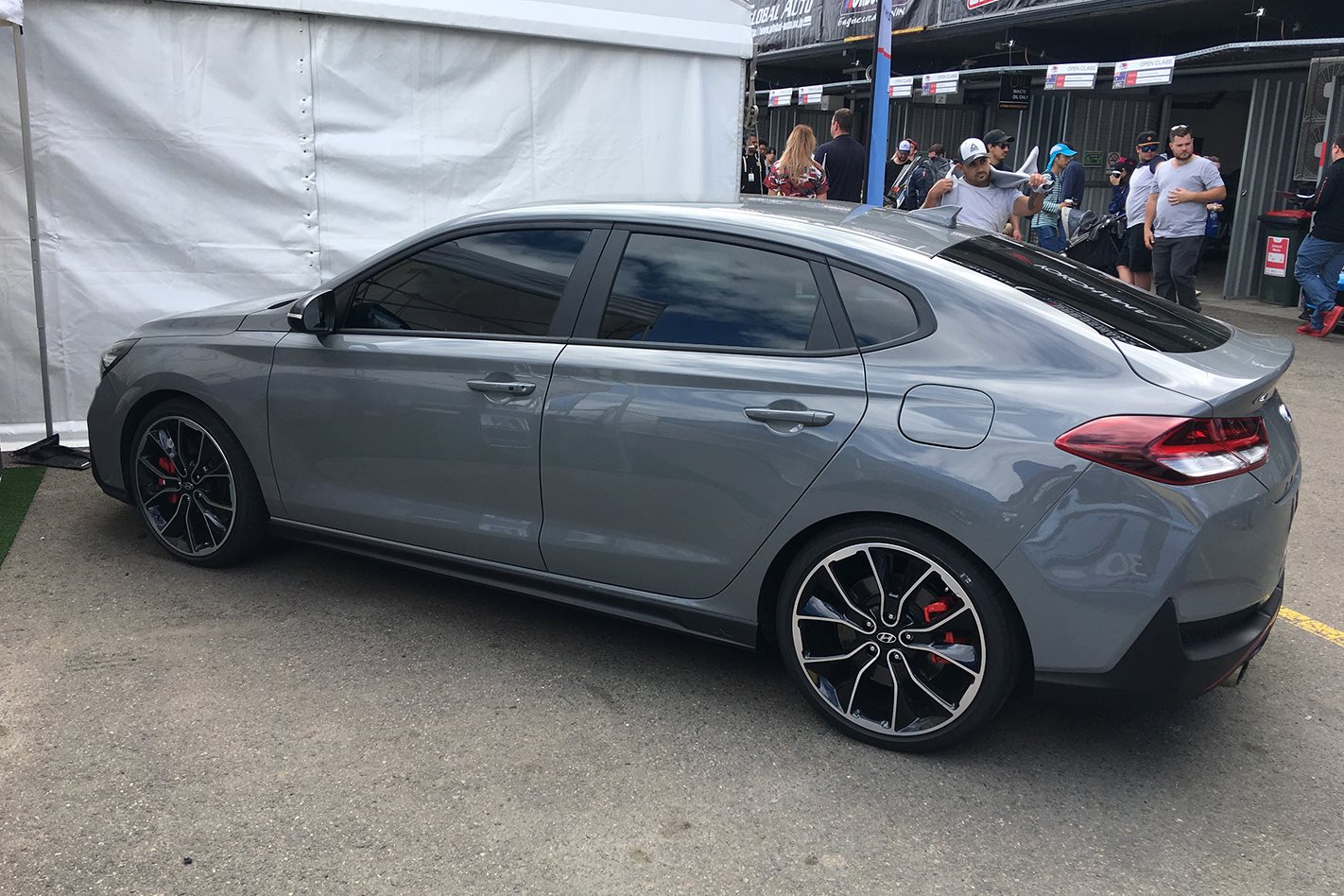
Significance: The only way you can buy an i30 that isn’t a hatchback
Price range: $40,000
Rivals: Subaru WRX, Renault Megane RS, Honda Civic Type R
Due Date: Unknown
While some overseas markets enjoy the ability to buy an i30 in a more mature ‘four-door coupe’ bodystyle, Hyundai Australia says the i30 Fastback is not coming our way… unless you spend big on the high-performance N variant.
Fatter profit margins at the circa-$40K mark mean the European-built i30 N Fastback actually makes economic sense for Hyundai to sell in cost-sensitive Australia, even though lesser variants aren’t. For buyers looking at the existing i30 N, the impending option of a grown-up looking Fastback may prove quite alluring, especially as it retains all of the go-fast mechanicals of its hatchback brother.
Exact launch timing has yet to be settled, but the i30 N Fastback’s price should only wear a very modest premium over that of the hatch.
Mazda 3
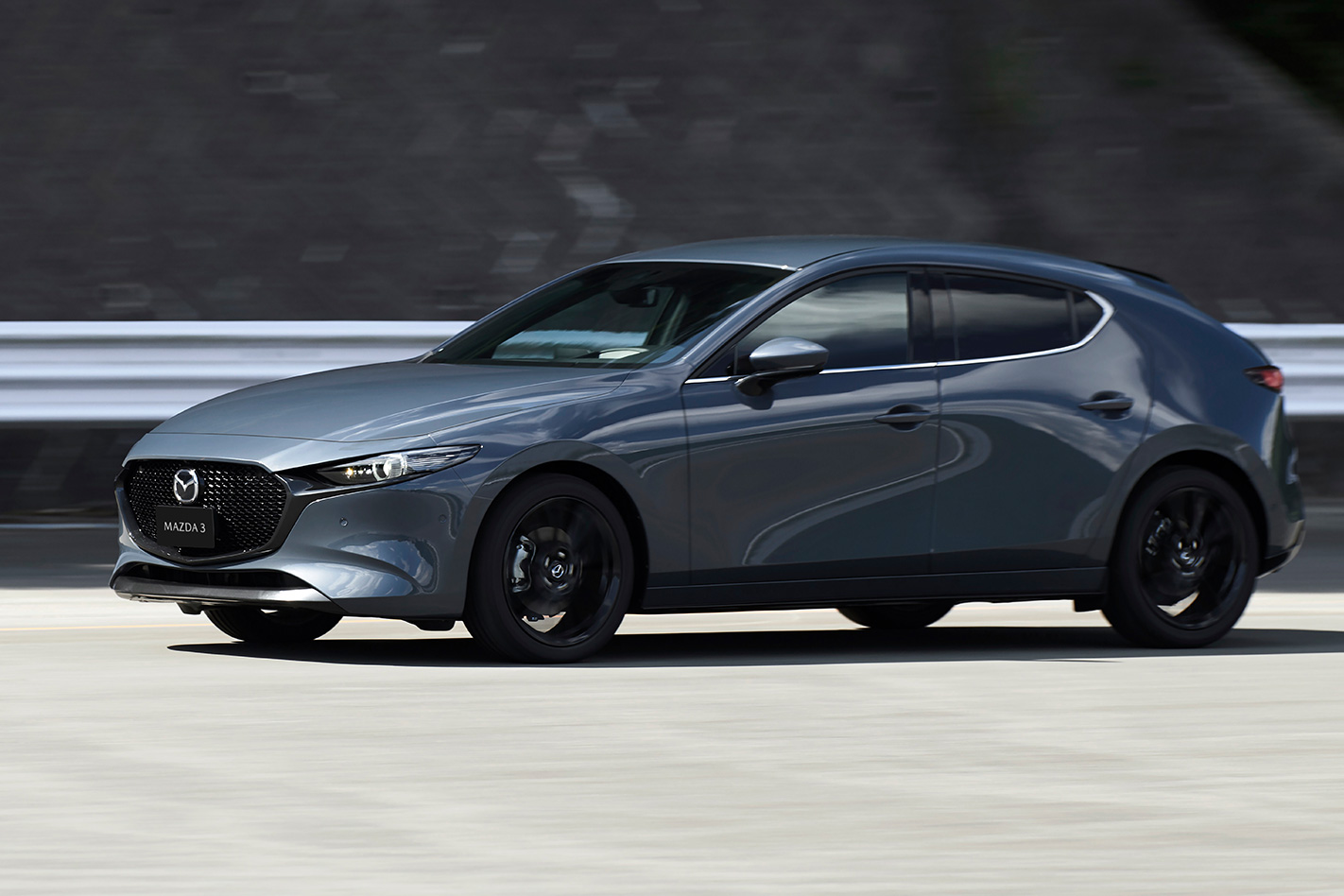
Significance: Mazda’s evergreen and much-loved all-rounder returns in its fourth generation
Price: $22,000 (estimate)
Rivals: Toyota Corolla, Hyundai i30, Kia Cerato, Volkswagen Golf
Due: June (approx.)
In the middle of the year Mazda Australia will change over its popular Mazda 3 range with an all-new generation hatch and sedan, and while local details such as range structure and pricing are still far from ironed out, the design of the new 3 shows that Mazda’s mainstay small car is set to be a real looker. The hatch and sedan will be quite visually distinct from the B-pillar rearward – certainly more so than the current generation – and the local powertrain line-up is likely to include Mazda’s innovative and ultra-efficient SkyActiv-X supercharged compression-ignition engine.
Suzuki Jimny
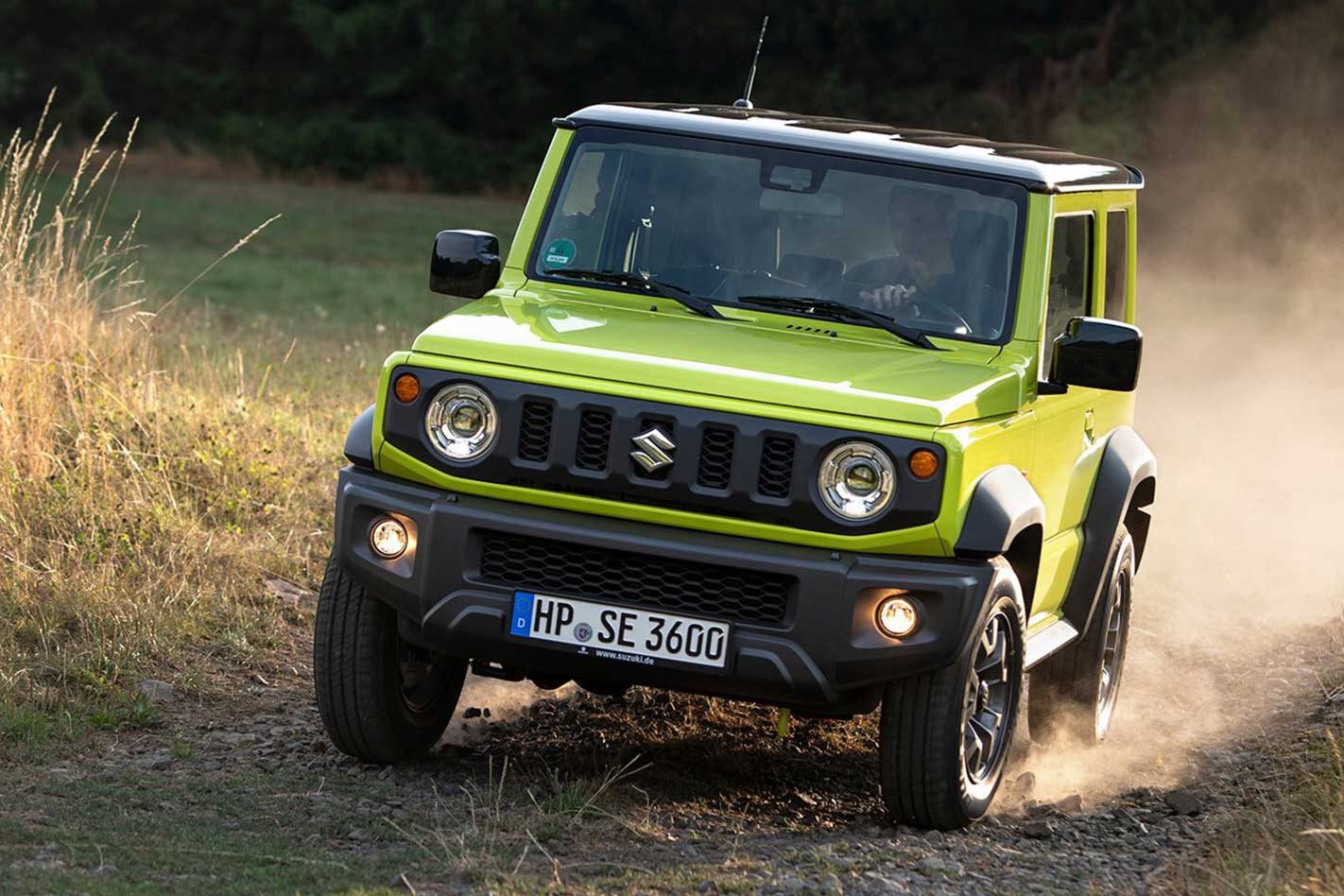
Significance: Suzuki goes back to the future to revive its mini 4×4’s iconic styling and serious off-road cred.
Price range: $27,000 – $29,500 (estimated)
Due date: February 2018
Rivals: Jeep Compass Trailhawk, Jeep Wrangler
It has questionable road manners and safety, but if initial reaction is any guide the new Jimny will be one of the most popular releases of 2019. The boxy fourth-generation Jimny retains its ladder-frame chassis, live front and rear axles and dual-range transmission that’s still activated by a proper lever. But there a few modern touches including a large infotainment screen with Apple CarPlay and Android auto connectivity. It will also come with a more powerful 1.5-litre petrol engine (up from 1.3L) petrol four-cylinder engine with a choice of five-speed manual or four-speed automatic transmissions.
Nissan Leaf
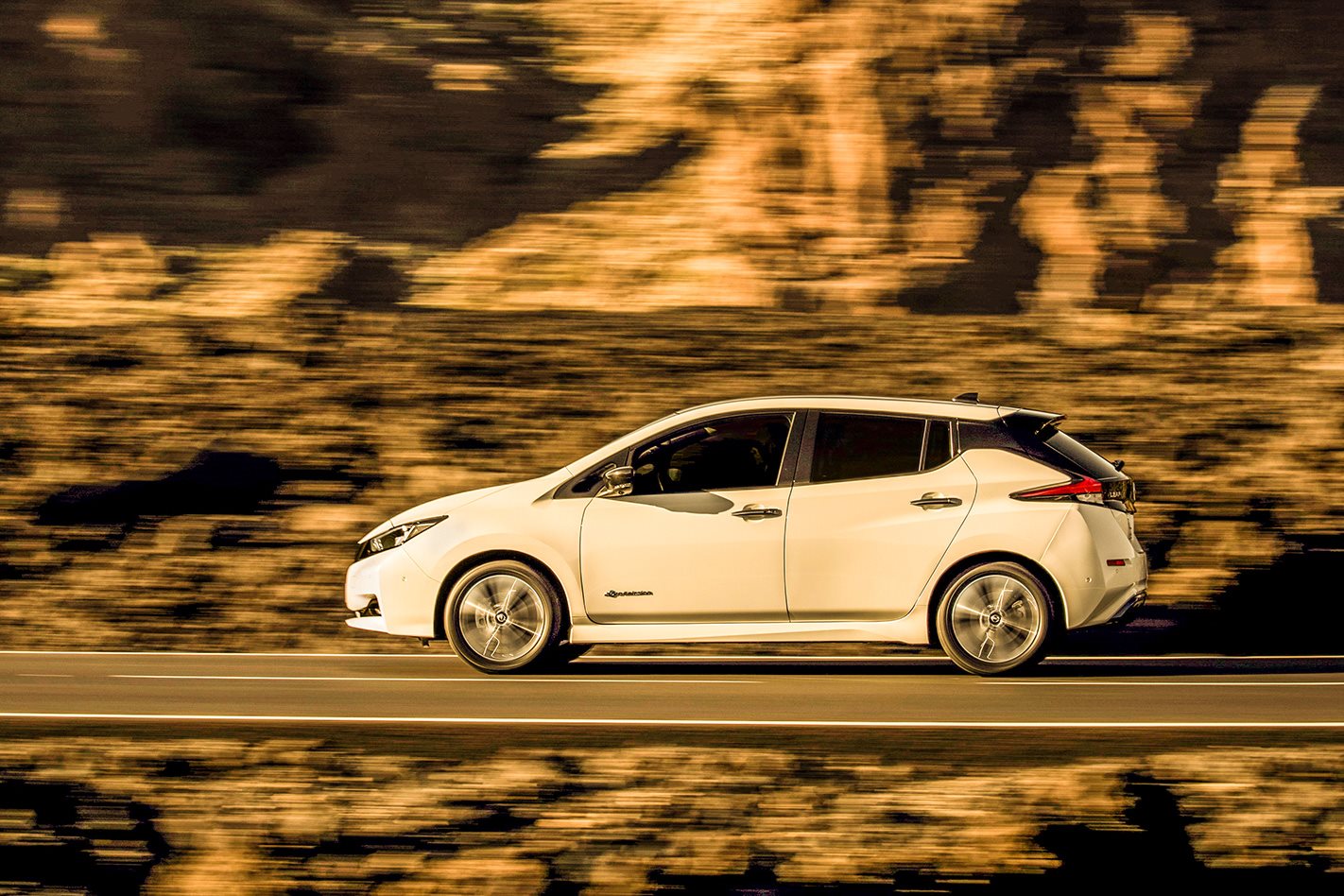
Significance: Nissan’s all-electric hatch returns
Price range: $50-60K
Rivals: Hyundai Ioniq EV, BMW i3
Due Date: March 2019
The Nissan Leaf electric car will return for its second generation in March, following the same format (and built on the same architecture) as its predecessor, but packing in greater energy storage and more power than before. The styling has also been dialled back to take the Leaf in a more conservative direction, and there’s a greater emphasis on driver-assistance technology, giving the new Leaf some limited self-driving capabilities.
Car-to-grid charging technology also unlocks some interesting new avenues for the Leaf, potentially making it a part of an interconnected smart power grid and giving it the ability to passively earn its owner money while it’s parked. Try doing that with a combustion-engined vehicle!
Saying a new car is better than its predecessor is about as lazy as you can get because, if it weren’t, its maker would have had to have done something very wrong indeed. The Ariel Atom 4 is noteworthy because it’s so much better than the outgoing Atom 3.5. It’s a seismic shift and it feels as rapid as a Ferrari 488 GTB, too.
Perhaps this shouldn’t be surprising given that the Atom 4 represents the biggest change to the Atom since the car was first launched in 2000.
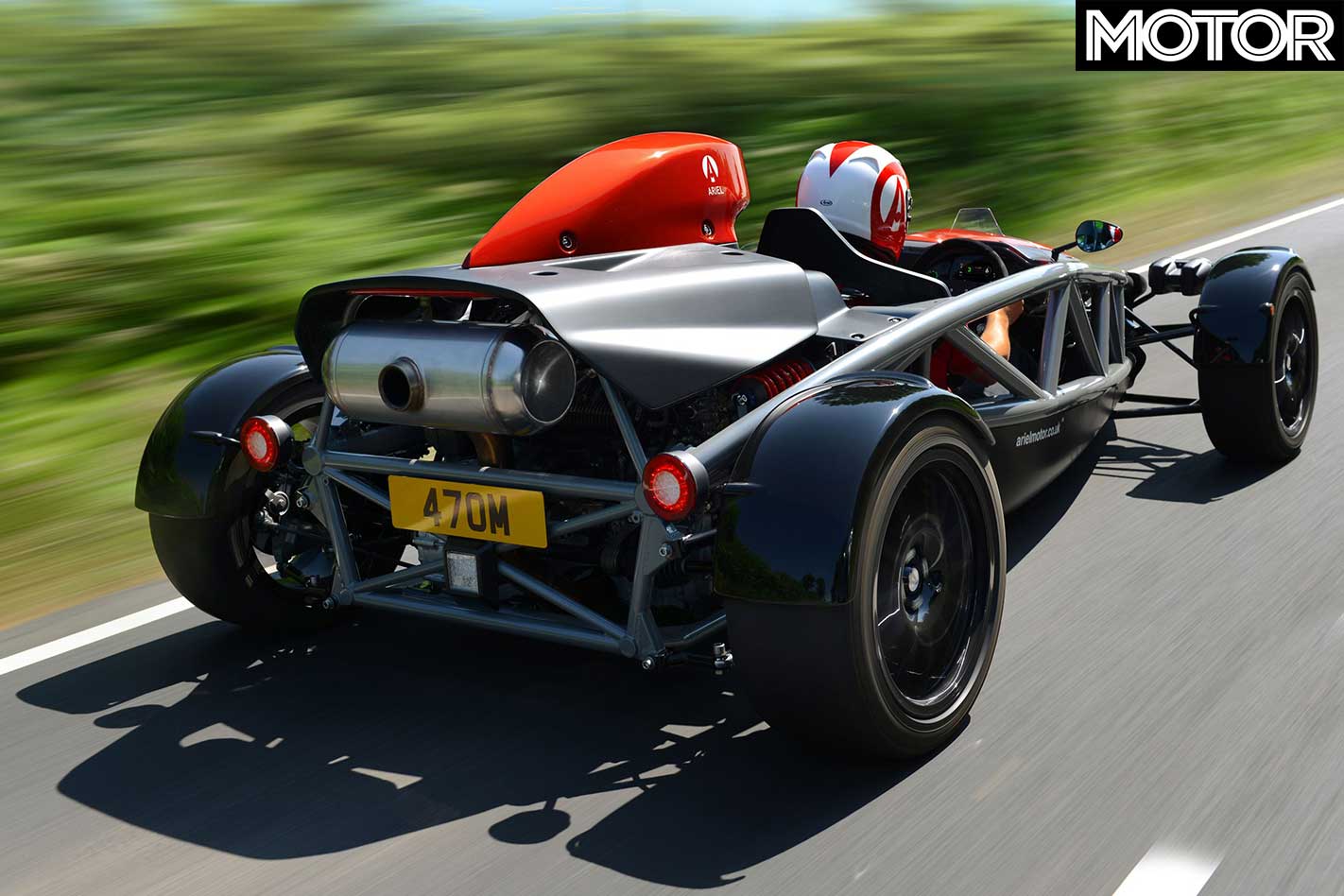
Ariel’s designers and engineers decided that bigger chassis tubes were the way to go, not just from a strength perspective, but also a visual one. Changes extend to the wheel diameters being an inch bigger front and rear, new geometry and updated bodywork.
It’s a bit longer than before, although still only 3520mm, but no wider, fortunately, because at 1880mm, it’s quite wide for a lightweight car. The wheelbase is up slightly, to 2390mm, with 1600mm and 1615mm tracks front and rear. And the increased size means it’s a bit less lightweight than an Atom 3.5. At 595kg, it’s around 20kg heavier than the old car, which seems a bit of a shame, but still some way from heavy.
The hardware is all upgraded. The engine is now the turbocharged 2.0-litre from the latest Honda Civic Type R, replacing the old naturally aspirated Civic unit. There is now, officially, no need for any further forced induction than it already has: the new engine makes 239kW/420Nm. That’s at 18.8psi of boost pressure, although modes two and one on an adjustable dial take it down to 216kW (8.7psi) and 164kW (4.4psi) respectively.
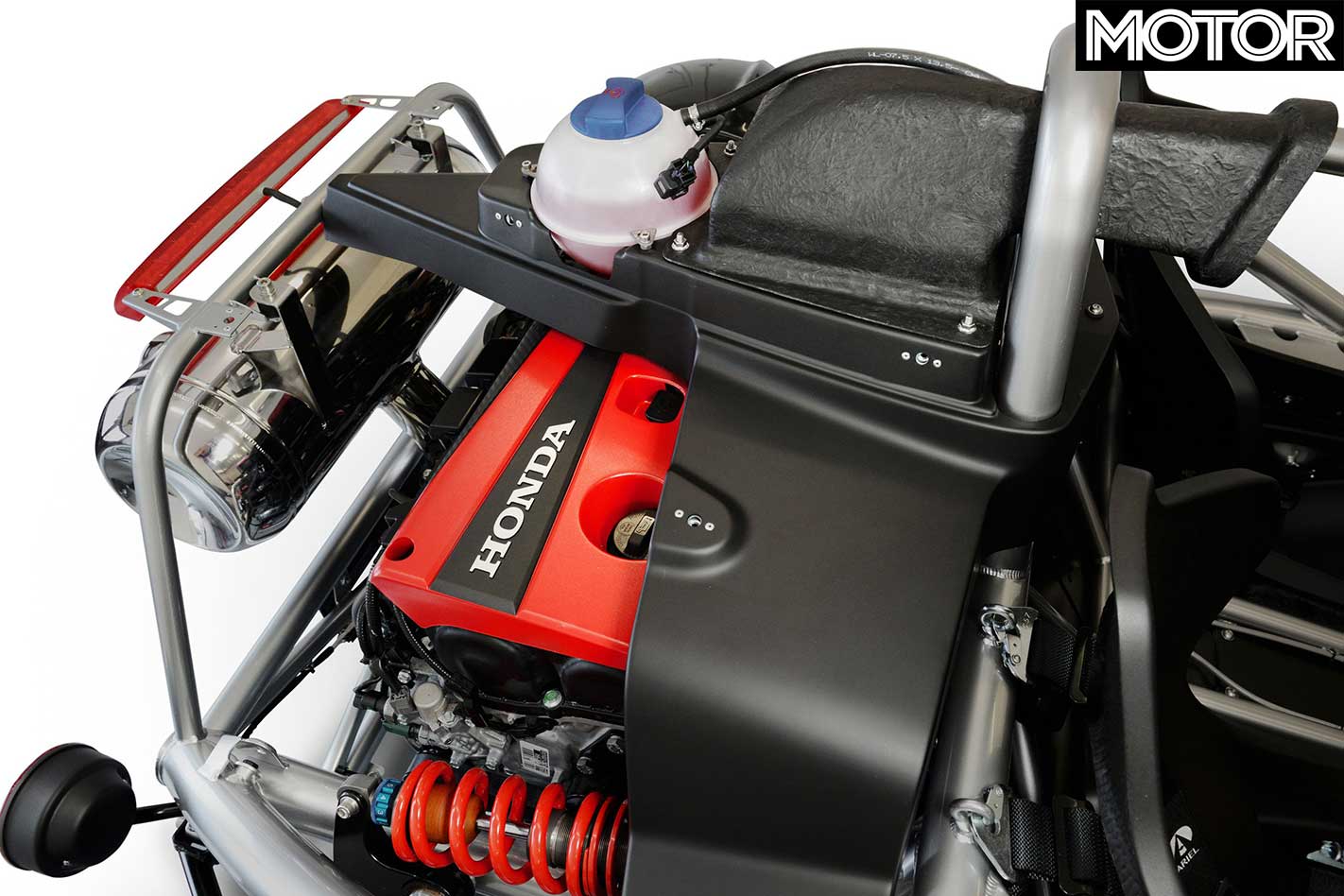
It drives the rear wheels through a limited-slip differential and six-speed manual gearbox. There are double wishbones with inboard coil-overs and new aluminium uprights. Three wheel options (standard, forged and carbon fibre) are all the same size and all wear Avon ZZ tyres of 195/50 R16 at the front and 255/40 R17 at the rear.
The engine fires to a fizzy idle, although with less vibration through the seat back than in older Atoms, and that improved refinement is the first, and most noticeable, thing about driving the Atom 4. I’ve often been hesitant about a move from naturally aspirated engines to turbos, but there’s little doubt it makes for easier cruising. The lazier throttle response makes for less jerky progress, and the torque of this new engine is such that, as long as you’re rolling, you can forget first gear.
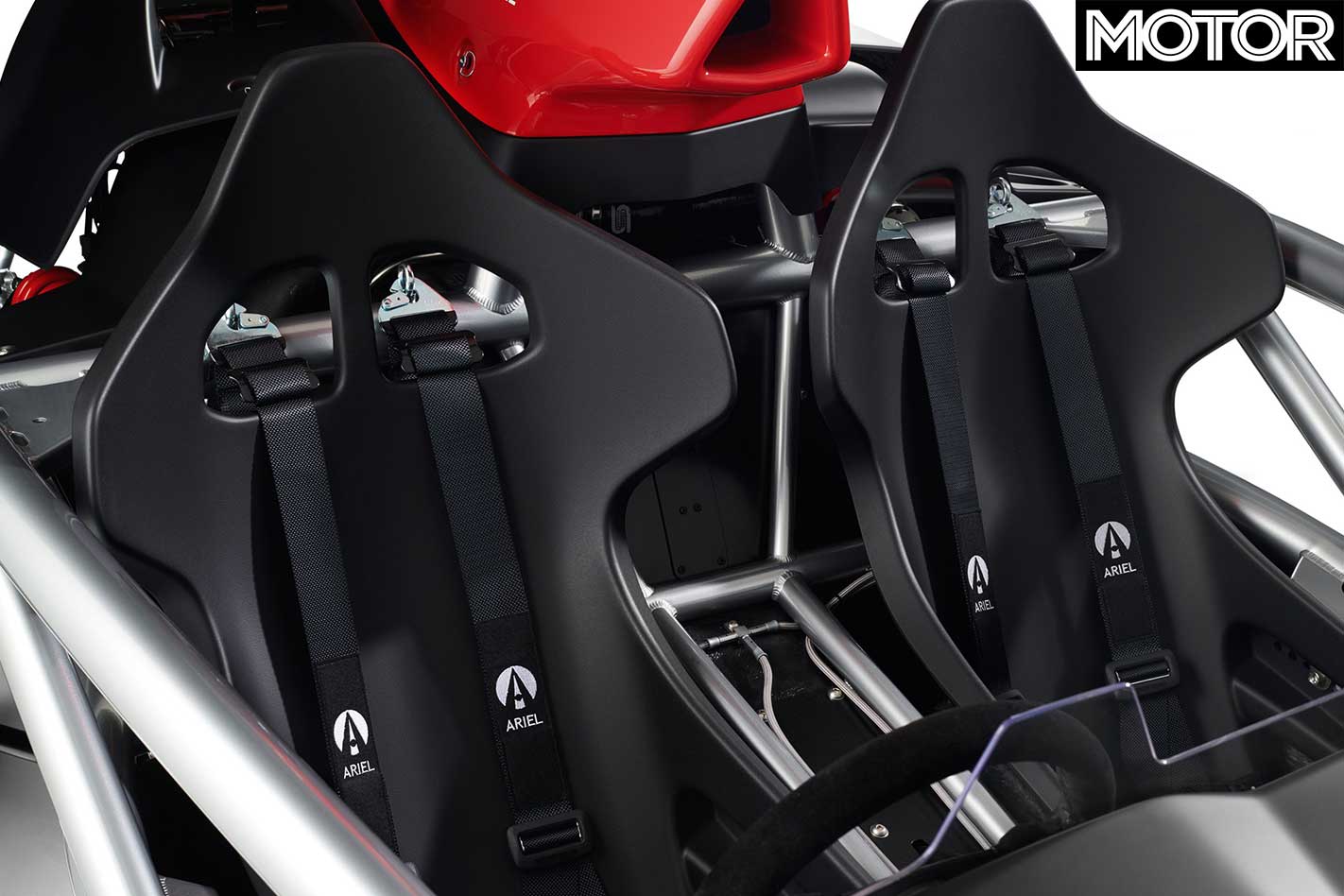
Pedal weights and responses are nicely judged, and although the steering is still heavyish at manoeuvring speeds, a larger-rimmed steering wheel than you’ll find on a Caterham or BAC Mono means it’s actually fine. And with a marginally slower rack (and tighter turning circle) than previously, it’s less nervy than it was before.
That’s also down to the revised geometry, says Ariel, which contributes to impressive ride control. Ariels have always felt alive in your hands, in the way that all lightweight cars do because of their latent responsiveness. But with varying levels of maturity.
At a stroke, the Atom has become a car that rides and steers in a more sophisticated way. There’s still immediacy and intimacy there, still feedback and engagement, but the bad messages are filtered.
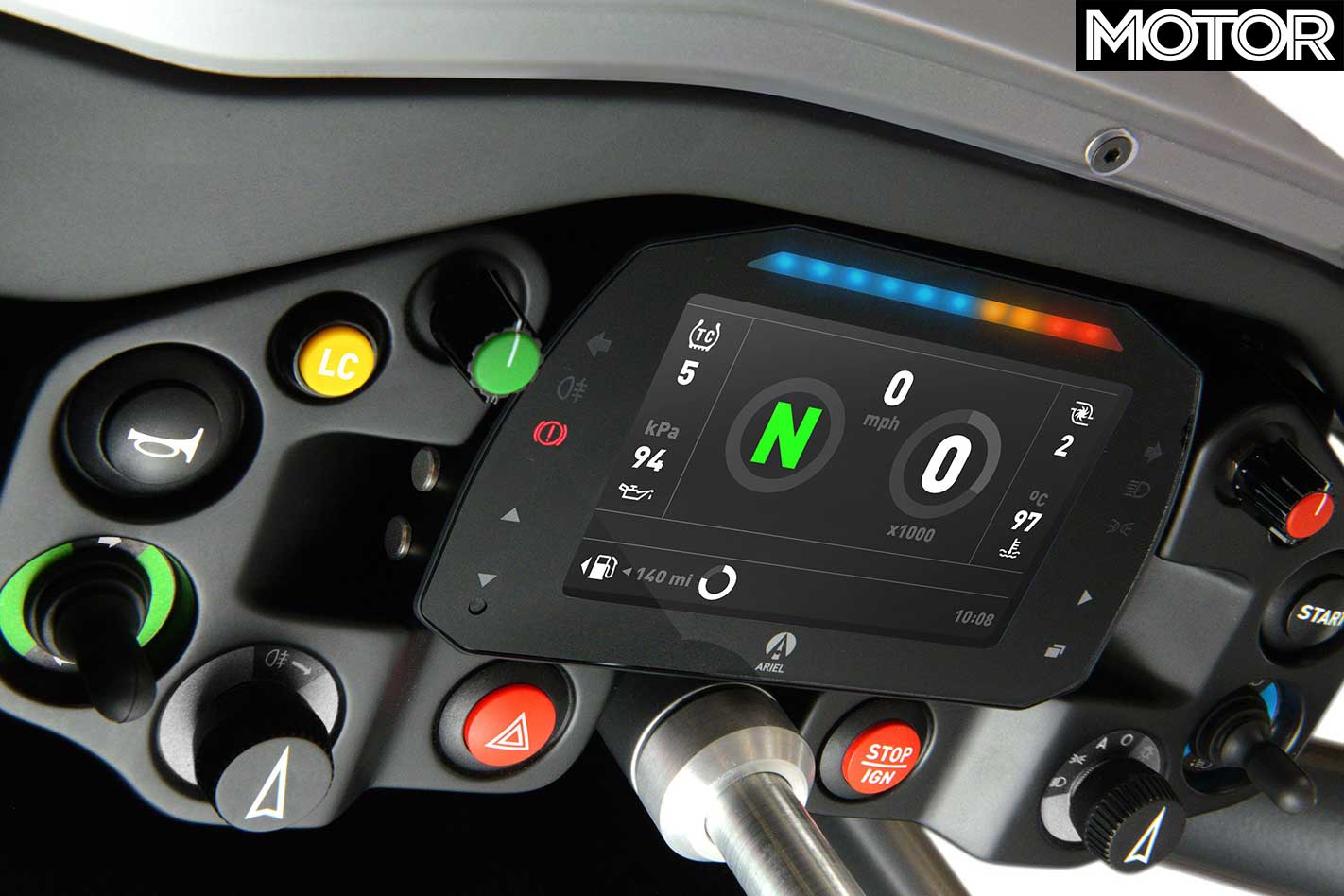
There’s a bit more Lotus Elise/2-Eleven fluidity to it, as you mooch, part throttle, turbo spooling and sucking in air like somebody is doing the vacuuming just behind your left shoulder, and shushing on the overrun like a PA announcer gently quietening a rowdy awards crowd.
The Atom 4 is ludicrously fast. It’s quick enough in position one on the turbo map, but flick it through to three and the urgency and response is astonishing. There’s a touch of lag, but you always feel in control of the delivery. The effect is like flooring a McLaren 720S or Porsche 911 Turbo: it really is that insistent.
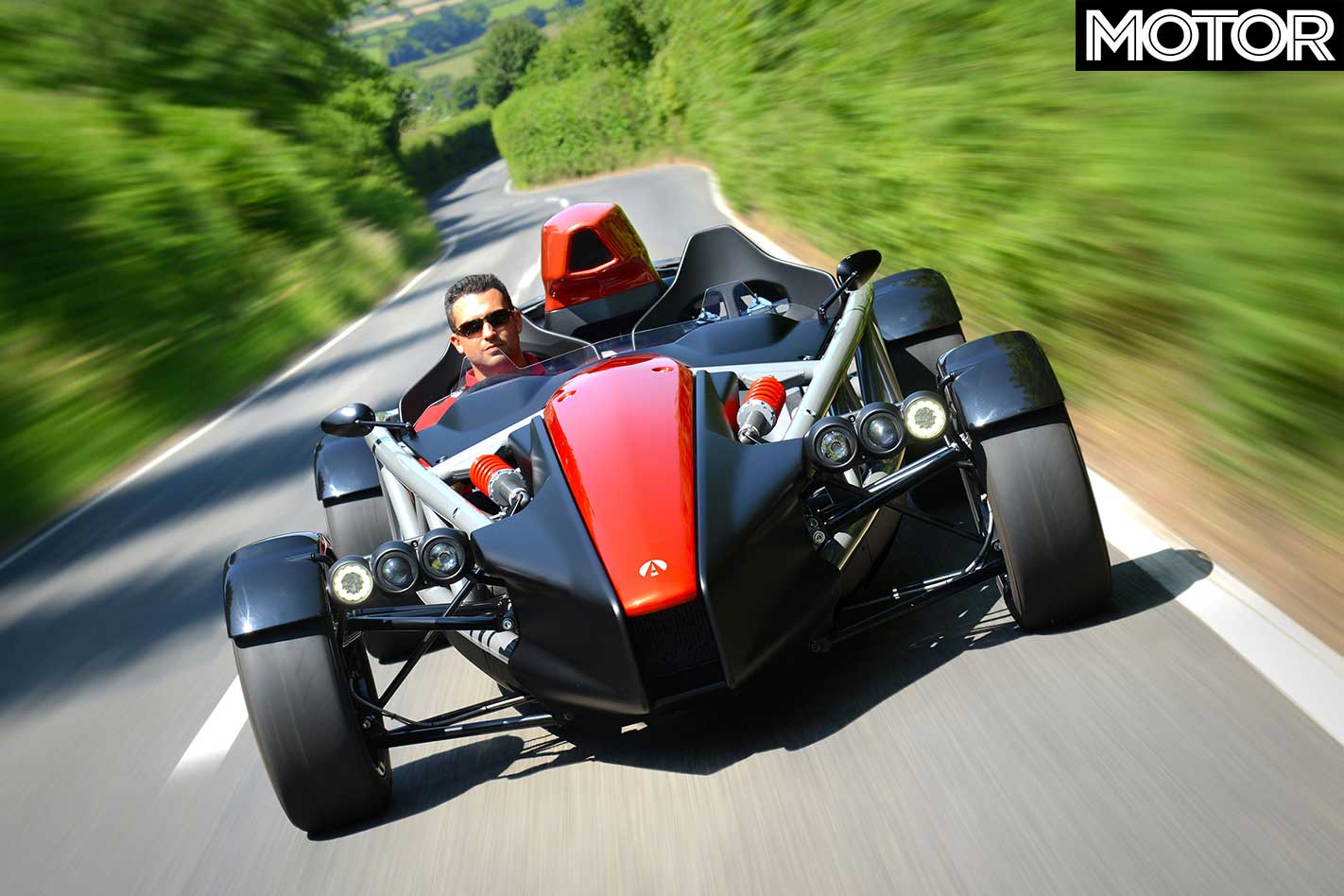
Braking is brilliantly modulated and powerful. In corners, there’s tremendous capability, little sense of dive, squat or roll, and great body flatness and security – with no sense that the car’s leaning into roll oversteer.
Described in one word? ‘Phew.’ It’s incredibly impressive. Downsides? Still a bit wide for a lightweight car and you’d still want a helmet most of the time. But that’s about it: it’s a heck of a leap, and a great driver’s car.
2018 ARIEL ATOM 4 SPECS Engine: 1996cc inline-4, DOHC, 32v, turbo Power: 239kW @ 6500rpm Torque: 420Nm @ 3000rpm 0-97km/h: 2.8sec Kerb Weight: 595kg Price: $100,000 (est)
Like: A much better Atom; proper driver’s car; dynamics; epic straight-line performance Dislike: Terribly impractical; wider for a lightweight car; you’ll need a helmet… every day Rating: 4.5 out of 5 stars
Hi WhichCar,
I want to replace my ten year old Volkswagen Golf GTi with a new car, but I really can’t decide which way to go. I really like the performance factor, and was thinking a Subaru BRZ would be even more fun. But then the BRZ is not very practical for my mates and carrying stuff.
I’ve also recently got into mountain biking with my girlfriend, so another part of me thinks I should go for something more versatile like a Subaru Forester. But do I really need to? She has a Honda CR-V, so maybe I can be a bit more selfish. I’ve got a maximum $40K budget, so a new Golf GTi is out of the question.
Damion, Wahroonga, NSW
Hey Damion,
I feel your pain, buddy. I, too, like to carry large, expensive bikes around in my car, but I also like the occasional fang through the mountain roads. What to do?
Your budget is an interesting one, because it precludes a couple of thoughts I had off the top of my head, like a Skoda Kodaiq or a Volkswagen Golf R wagon, should you decide you want to lug mountain bikes around. The Forester has gone away from turbocharging, too, so having the best of both worlds there is no longer possible.
My first recommendation sneaks in under your cut-off, and offers a little from column A and a little from column B. The Renault Megane GT wagon has a sharp chassis, a turbocharged 1.6-litre engine and a decently sized boot that would carry two bikes with the front wheels removed.
For the second recommendation, let’s assume you’re going to sponge off the good graces of your partner for bike-carrying duties – a Honda CR-V is a great load lugger, and you may as well restrict the inevitable dirt and damage to one car.
You can grab a top-spec Subaru BRZ tS for a few bucks over $40K, or the BRZ Premium – which misses out on the better dampers, brakes and tyres of the tS – for around $35,000. That leaves enough dough for these awesome SeaSucker removable racks should you want to pedal two kinds of fun toy.
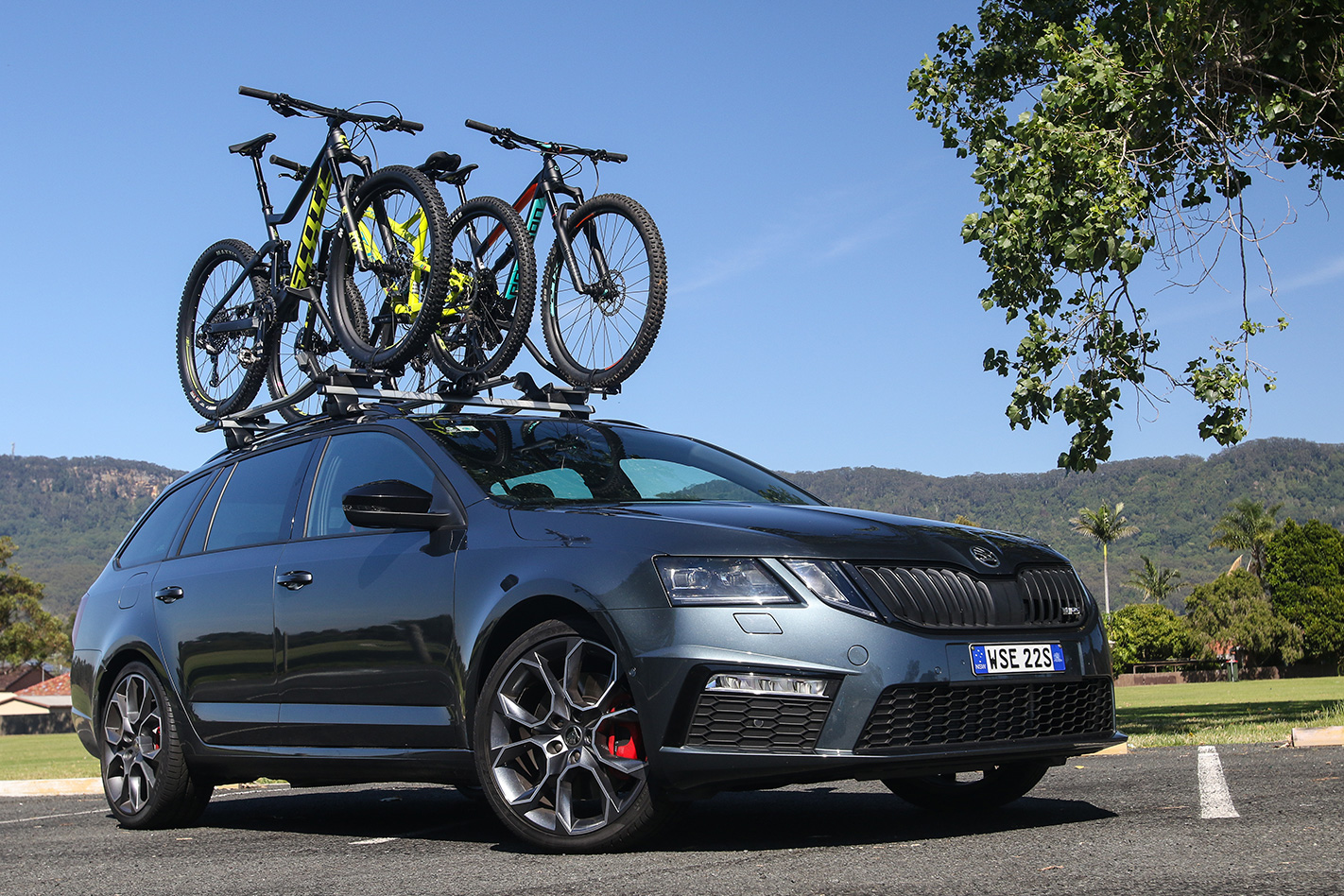
Ultimately, though, there is a way that you can have the best of both worlds. Call in a couple of old loans from your mates to find an extra $1500 to add to your $40,000 top end, and you can own the quintessentially perfect mountain biker’s ride – the Skoda Octavia RS wagon.
Not only has it got a huge boot, it shares the same engine as your beloved Golf GTI… and being a regular-sized wagon, it’s no drama to lift mountain bikes onto the roof. It’s also incredibly well equipped, well screwed together and even decently economical to boot. This mountain biker would have one in his driveway tomorrow, no questions asked./Tim Robson
Our recommendation: Skoda Octavia RS wagon, $41,490
Need help to choose a new car? We’re here to help. Email us at [email protected]
It was called the ‘billion dollar baby’ – referencing the cost of its development – and there are about a billion reasons why the VE generation bests any of the long list of Holden Commodores before it.
While hard to believe, the 1978 VB, 1988 VN and 1997 VT shared the same tired platform, yet ironically it was the latter’s huge success that made the entirely indigenous 2006 VE as great as it was.
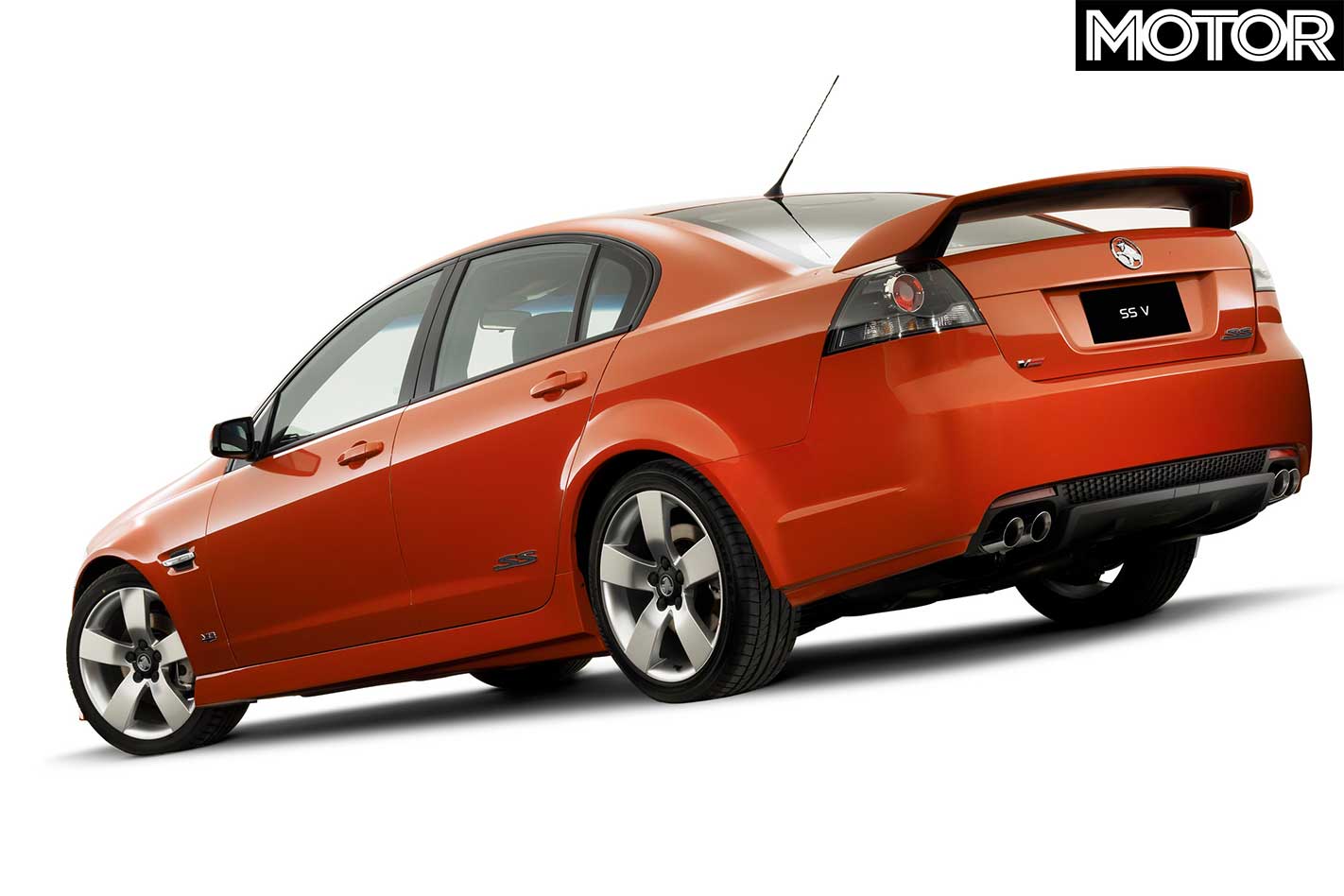
In the late 1990s Holden was shifting 95,000-plus large cars per year here and flicking big fat cheques back to the General Motors mothership with casino card dealer fervour. Spurred on by the success, Detroit rubber-stamped a 10-figure sum to create the all-new Zeta platform at Port Melbourne, to underpin Commodore and Camaro for the US.
Its hallmarks were a short front overhang, with engines well behind the axle line (improving dynamics) and a sophisticated multi-link (replacing a very basic semi-trailing arm design) rear suspension, complete with broad tracks tucking under those bulged-out guards.
The Commodore SS in particular was a belter, claiming MOTOR’s 2006 Bang For Your Bucks, the compact pushrod design of the carry-over Mexican-made Gen IV 6.0-litre V8 gelling with a superbly engineered chassis that was sub-$50,000 new… and now asks $15,000-plus.
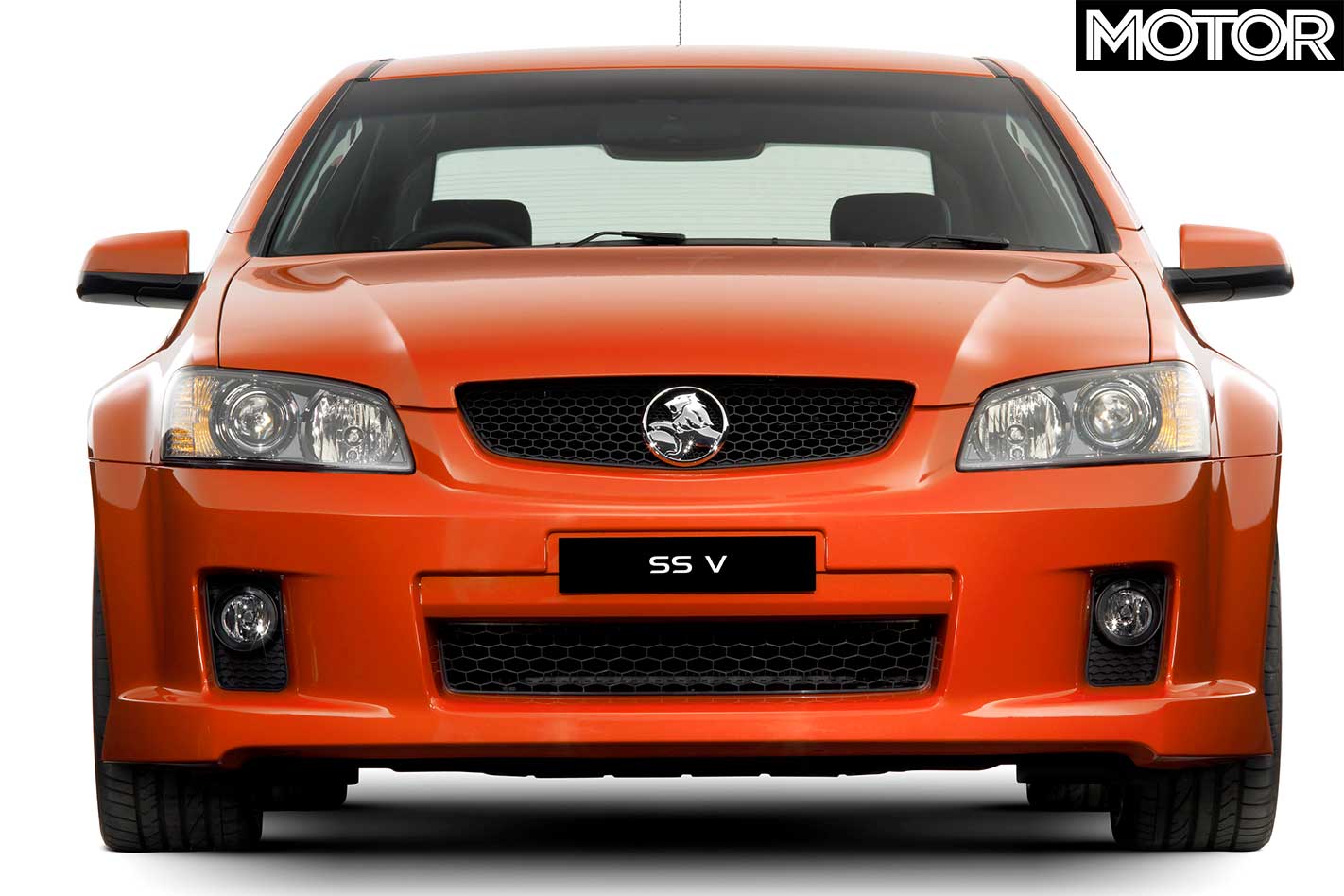
SS V Vital checks
Body and paintwork
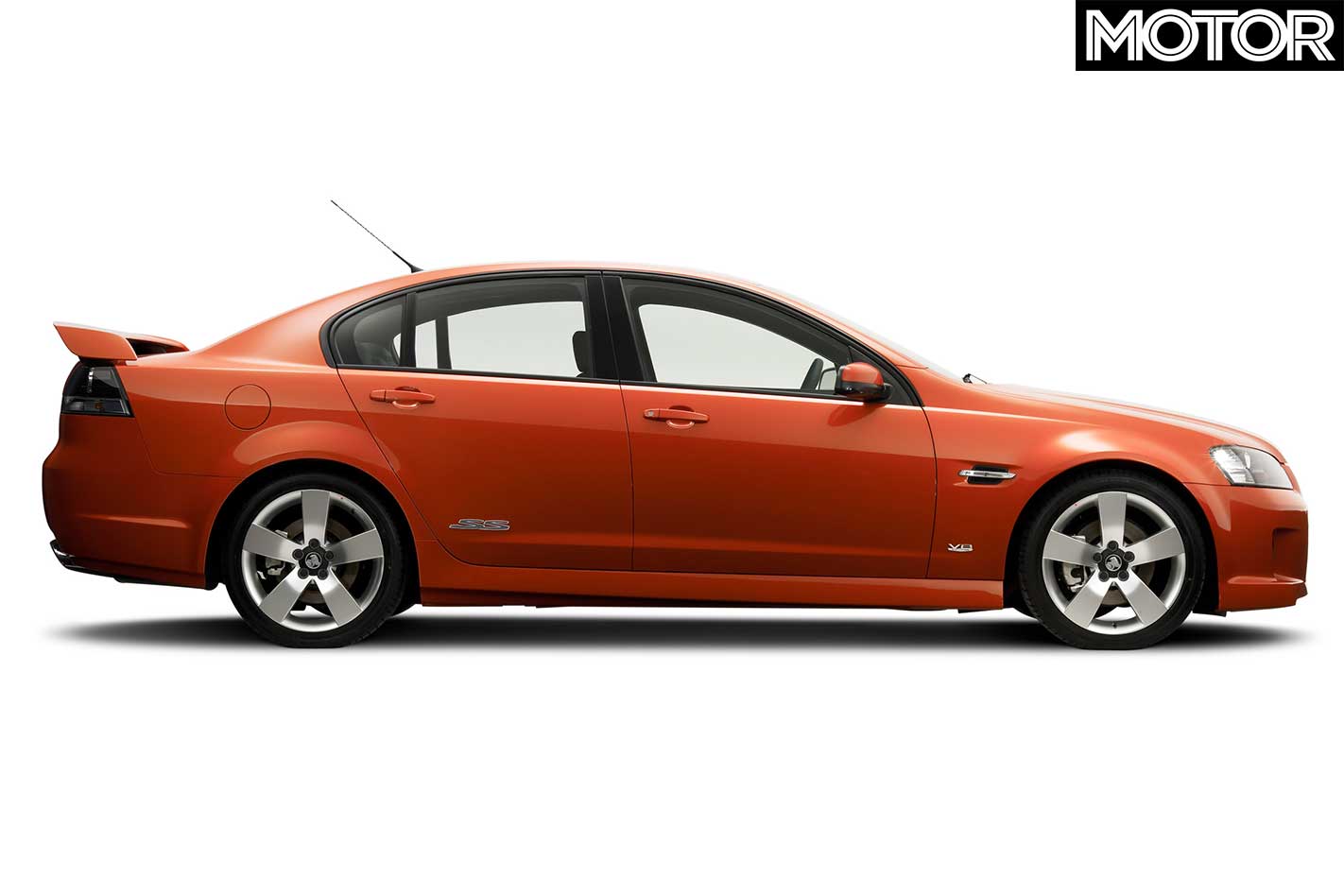
Made in Elizabeth, South Australia, the VE was never renowned for Lexus-like build quality, but this was the first Holden to be produced with a single side body stamp, which improved torsional rigidity enormously over its stitched-side VZ predecessor.
Even 12 years after it launched, early builds are still resisting paint-fade – though look for plastic fatigue around the roof rails, in particular, as a sign of a hard life. The front bumper of the SS is also known to sag, leaving a large panel gap between bar and headlights, while any mismatched guard plastics or overspray would suggest (all-too-frequent) poor repairs.
Mechanicals
The burly V8 was far more reliable than the Alloytec/SIDI V6 in cheaper model grades, which hurt the VE’s reputation. Earlier 5.7-litre LS engines had piston-slap and oil-consumption issues largely addressed here, though oil leaks are still heard of, particularly at the rear of the 270kW/530Nm 6.0-litre. Grab a torch, have a look, then on start-up listen for a sign of ‘ticking’ that could indicate sticky hydraulic lifters.
At this point, it’s important to remember that GFC-hobbled GM was facing bankruptcy just two years after VE launched, forcing it to run from 2006 until 2013’s heavily facelifted VF. For seven years Holden engineers weren’t resting, but rather fixing some recurring problems.
Like air-con belts that would slip off and the ‘L98’ V8 manual’s clutch that would wear prematurely, both issues solved with a new bracket and upgraded material respectively from November 2009.
But it isn’t as easy to say ‘buy a later model’ because in January 2009 the ‘L76’ V8 replaced the L98 in models with automatics only, introducing Active Fuel Management (AFM) – four-cylinder shut-down – to reduce fuel use by 1.4L to 12.9L/100km. Yet it also hobbled outputs to 260kW/517Nm. AFM also had low oil-pump pressure and high oil consumption service bulletins placed from early 2009, and we would just avoid the complexity now.
The shift quality of the six-speed automatic was also average – with slip and harsh shifts common issues to look out for on a test drive. Replenish the oil in the manual, however, and Bob will be your uncle.
Either way the 1750kg-plus SS is a heavy car, so things to watch out for are front ball joints, engine mounts that allow the V8 to wobble and shudder, and knocking that indicates worn anti-roll bars and bushes. That said, OEM dampers and control arms are about $200-$250 each per corner, with bushes and drop-links a fraction of that – salute Australian parts!
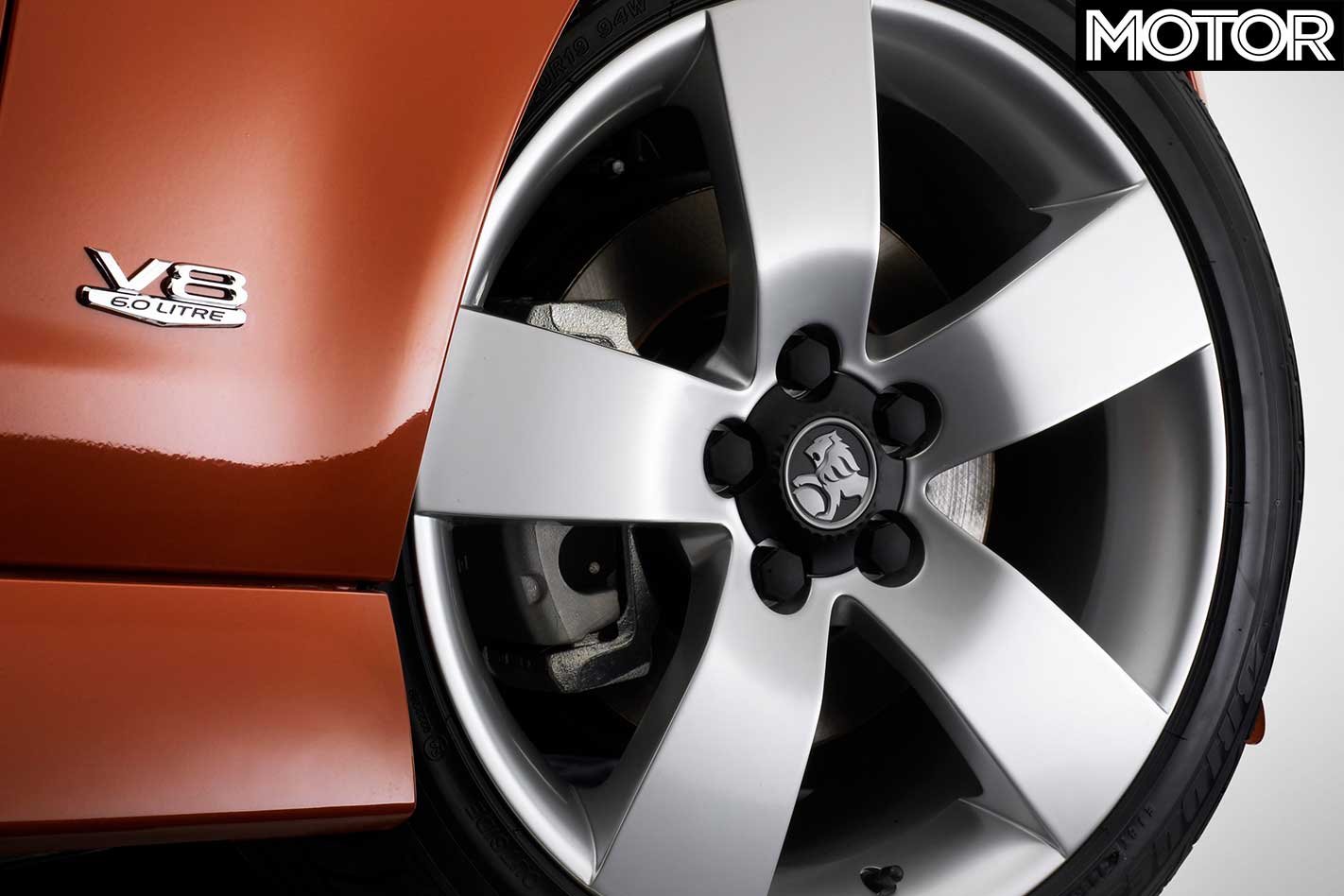
A country car on the 18-inch wheels of the SS will feel infinitely better than a city car on the 19s of the up-spec SS V. It’s worth either buying a circa-2010 (to bypass early issues) base SS for $15,000 to $20,000 with 80,000km-plus, or going all the way to a VE Series II for the then newly introduced SS V Redline on 19s, with firmer FE3 suspension and front Brembos available from September 2010 production.
Worth noting, too, is Holden’s lifetime capped-price servicing program for VE. The costliest annual or 15,000km services are the $917 check at six years/90,000km, the $635 visit for 10 years/150,000km and the $1018 once-over at 12 years/180,000km. The rest are sub-$500.
Interior
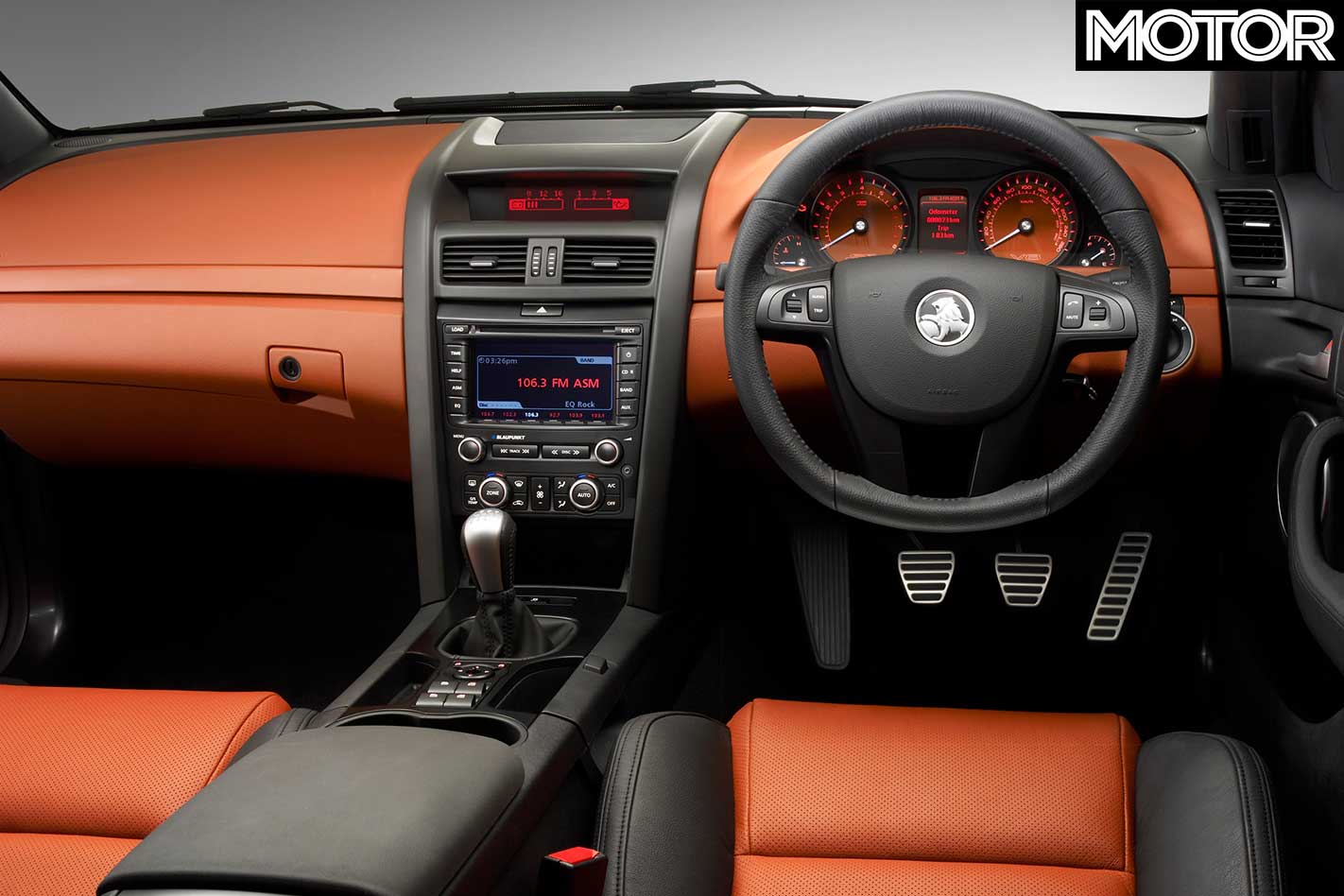
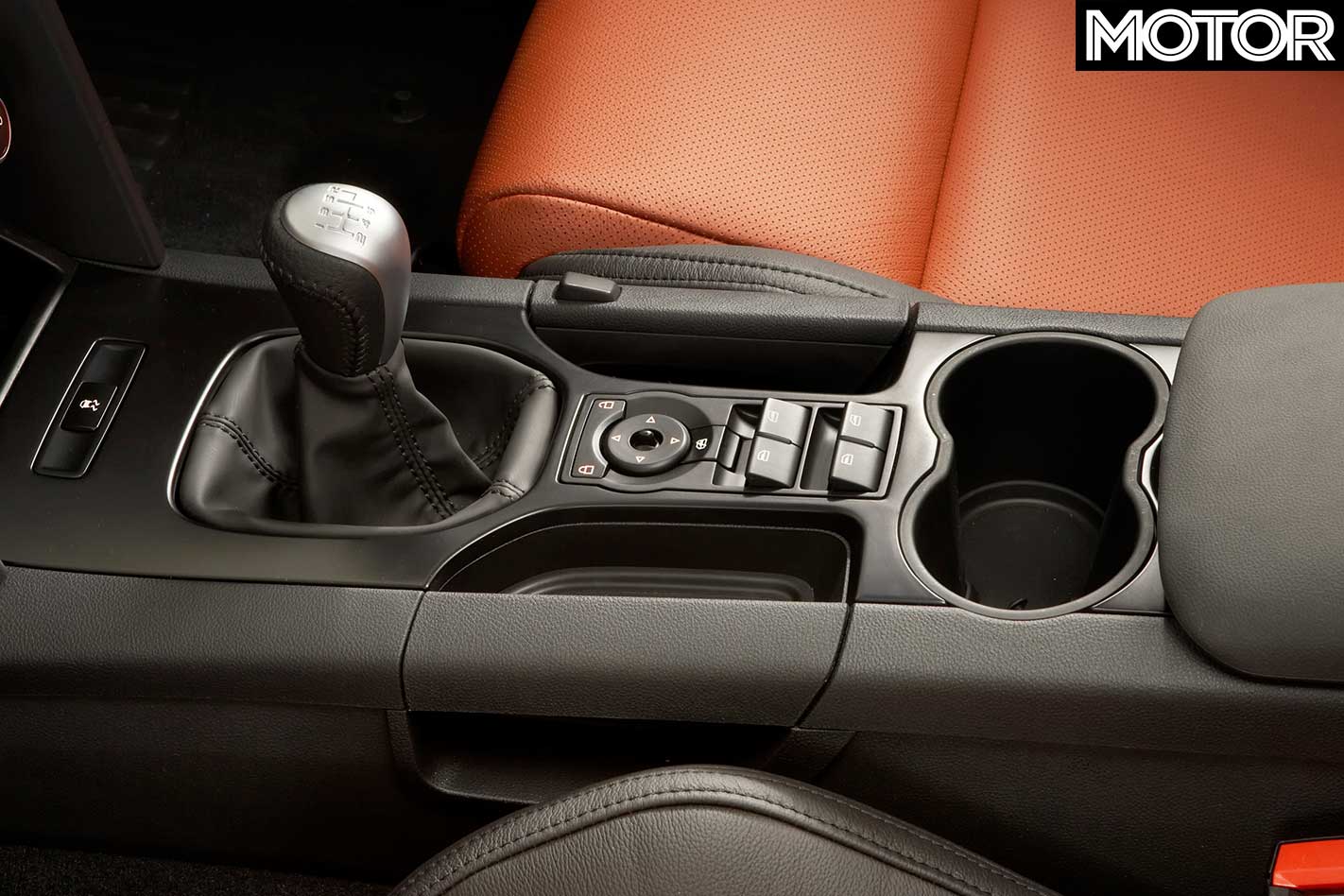
Cabin quality was not a VE strength. The seats are superb, front and rear, and the blocky design has held up okay. But this was a complex dashboard, with the lower trim panels and glovebox parts known to fail and fall out in early cars.
From MY09.5 and MY10 production, extra clips were used behind the scenes. They also nabbed six airbags standard across the range, along with an impact-absorbing steering column missing from early cars.
A base SS (in manual) built in those years is the VE sweet spot, though, because the following VE Series II introduced a Holden IQ touchscreen that was average then and looks dated now.
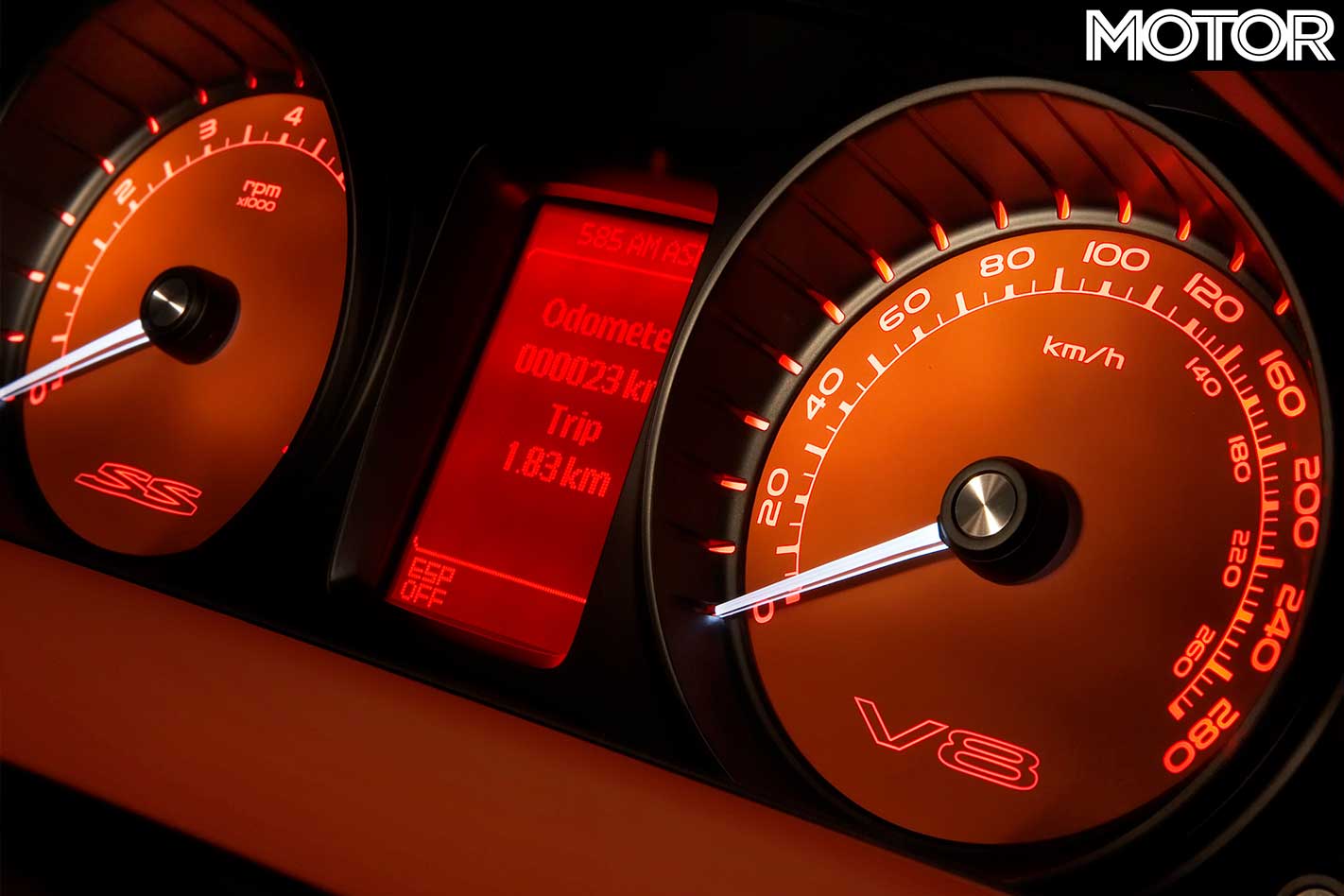
A circa-2010 pre-Series I will have a monochromatic screen that looks even older, but it won’t fail, yet you’ll get all the extra cabin improvements as well as electronics upgrades – the entire interior architecture was designed from scratch, and niggling issues took a few years to be ironed out.
Safest buying then? A 2009 or 2010 base SS manual, which can be had in sedan, Sportwagon (introduced August 2008) or ute; or a Series II SS V Redline, introduced in September 2010. It’s certainly an Aussie icon.
In Specs: VE Series I Commodore SS Engine: 5967cc V8, OHV, 16v Power: 270kW @5700rpm Torque: 530Nm @ 4400rpm Transmission: 6-speed manual Current price range: $15,000 to $20,000
Three reasons to buy the VE SS V
Value It’s a now-extinct breed of locally built, burly V8, old enough to have depreciated to a Fiesta level, yet still new enough to not feel like a museum piece
Engineering All the bits that made for the brilliant VF swansong are here in VE, minus aluminium in the suspension and racetrack-honed damper finesse of Redlines
It’s quick When new, this tester achieved a 5.4-second 0-100km/h in a manual SS. That’s quick, but it’s also traction limited – so it feels even quicker when charging on the run
Three other options to consider
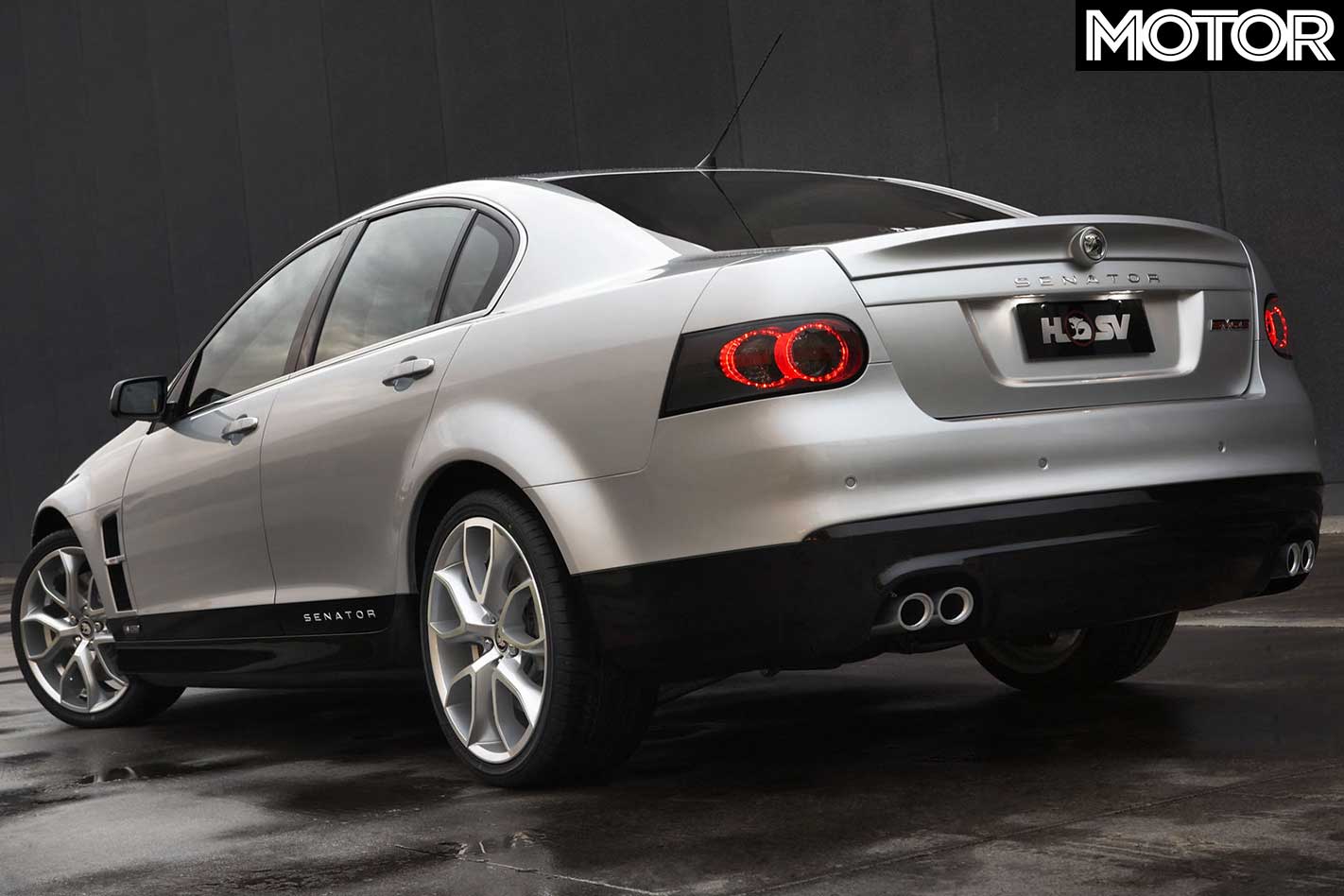
While Clubsport was a bit lairy, the Senator body kit from this era was rather more restrained. Lots of leather, auto trans and plenty of cred make it a bit of a trophy car these days.
Chrysler 300C SRT-8
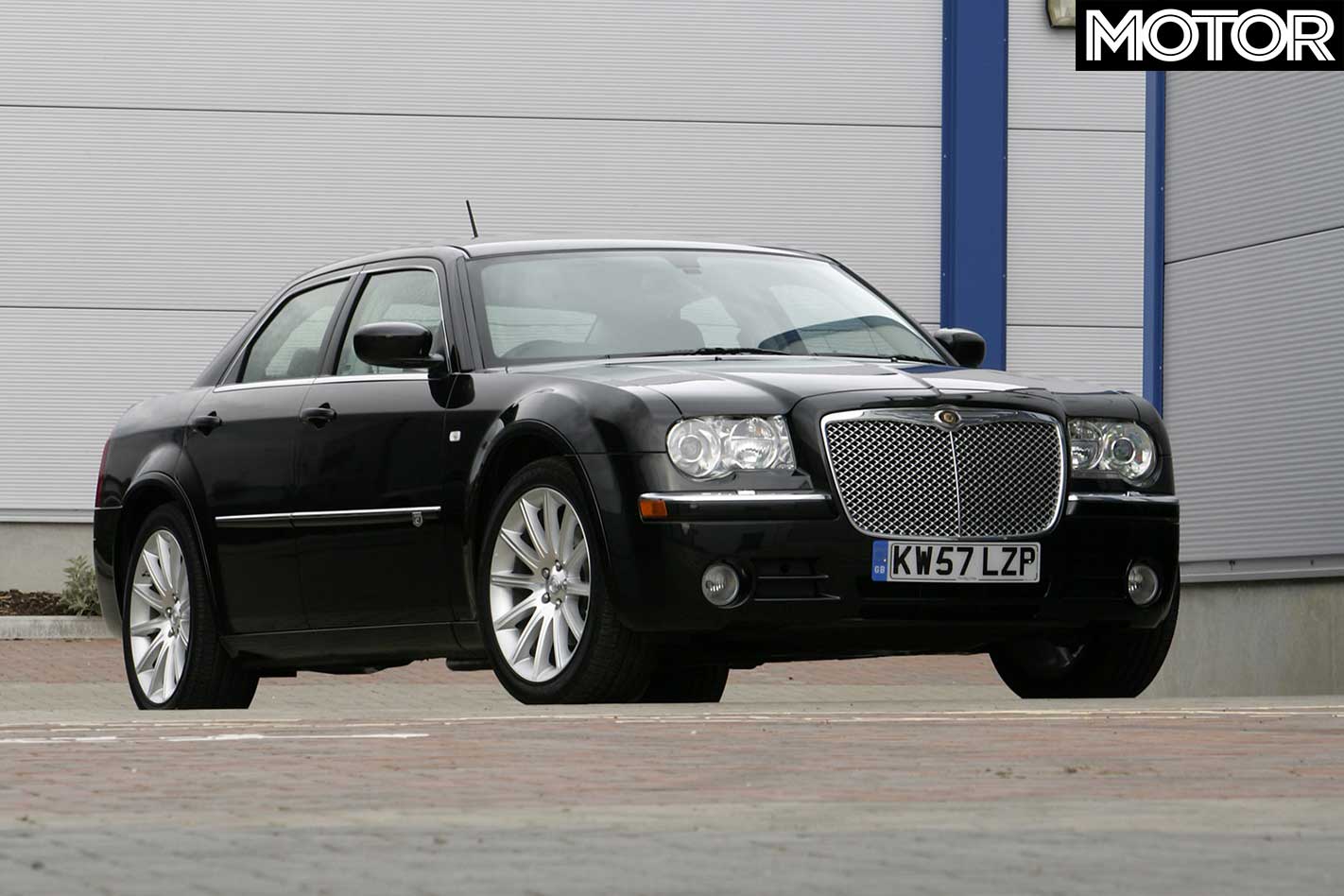
The 6.1-litre SRT-8 didn’t arrive until ’06, but when it did, it gave us a real option to the established V8 luxos. The performance speaks for itself, if you can live with the interior and exterior design…
Ford AU Series 3 Falcon XR8
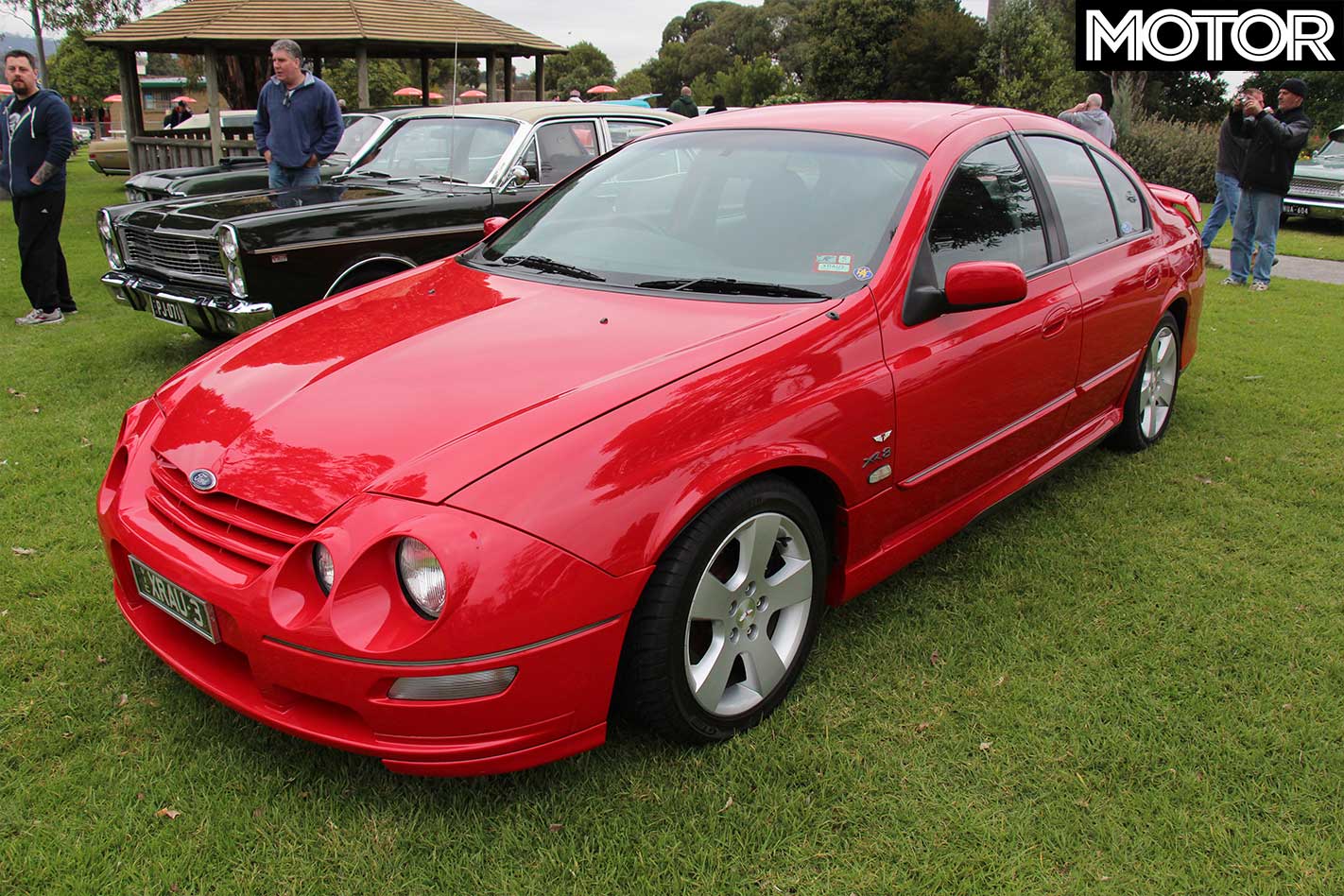
This was essentially a T2 TE50 without the FTE badges. Body kit was better integrated than ever and the XR8 got the 220kW tune for the Windsor. Supple, balanced and utterly under-rated.
Lego Creator James Bond Aston Martin DB5, $210

Making a model car out of Lego bricks is like trying to sculpt Kim Kardashian using nothing but fence posts, yet the designers at Lego have done an incredible job recreating arguably the most famous of James Bond’s rides. The 007 Aston Martin DB5 uses 1295 bricks – none of which look particularly like an Aston by themselves – to build a construction toy masterpiece. Not only does the kit evoke the iconic car’s looks that starred alongside Sean Connery in the 1964 film Goldfinger, it even pulls some of its neat spy-car tricks. Machine guns pop out of the wings with the pull of a lever, there’s a functioning ejector seat, and we’re certain Ian Fleming was predicting speed cameras when he created the rotating rego plates. shop.lego.com
Boeing 707 engine high-top table, $9430
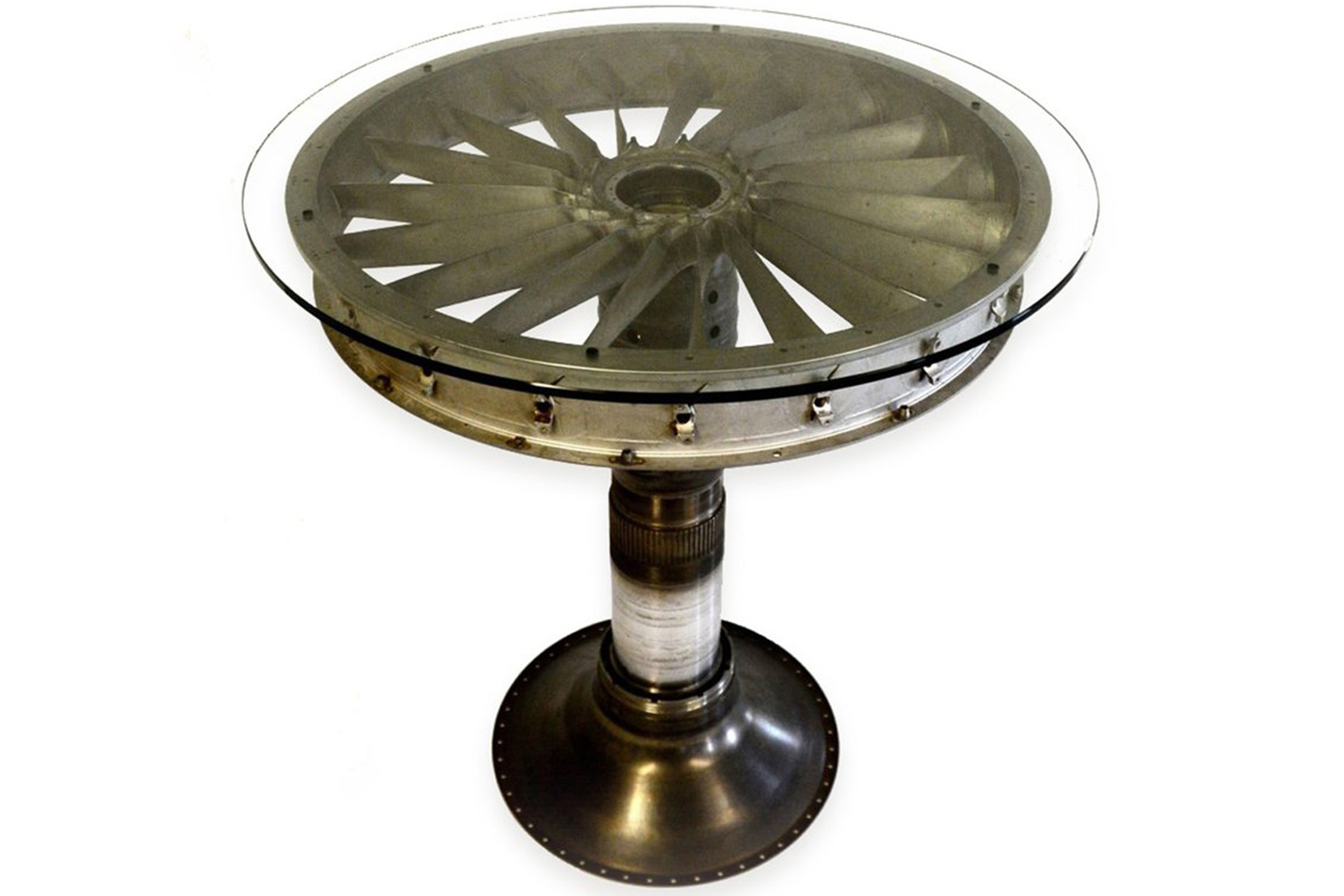
The idea of dining on something that has been part of an airliner for many millions of kilometres is not initially appetising. However, when you realise this table has been cleverly constructed using the turbine of a Pratt & Whitney JT3 engine, brekkie or maybe a few bevvies sounds a lot more appealing. The components have been cleaned and polished to bring out the natural heat discolouration that occurs in normal operation, but that wouldn’t convince us to eat off a retired Boeing seat cushion no matter how much cleaning or polishing it had. boeingstore.com
Kings of the Road, $50
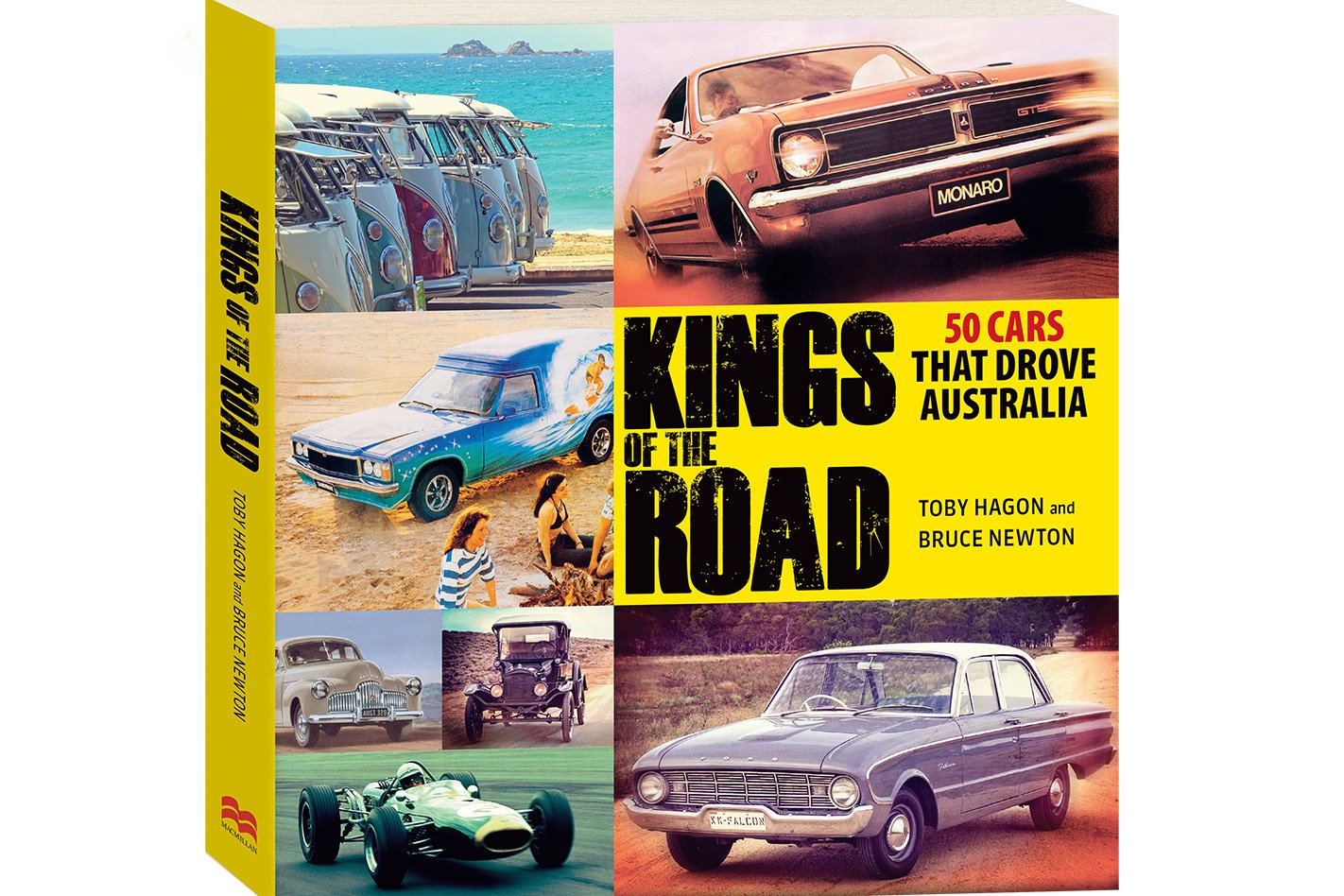
Two hundred pages of pure hardback Aussie automotive authority, that’s Kings of the Road. This comprehensive cross-section of some of Australia’s favourite vehicles puts 50 machines under the microscope and tells the story of how each fits into our rich motoring tapestry. Oh, and you can trust the authors. Not only do Toby Hagon and Bruce Newton have half a century of automotive industry experience between them, you’ll also recognise their bylines from the pages of Wheels magazine. panmacmillan.com.au
HSV Design Series print, from $100
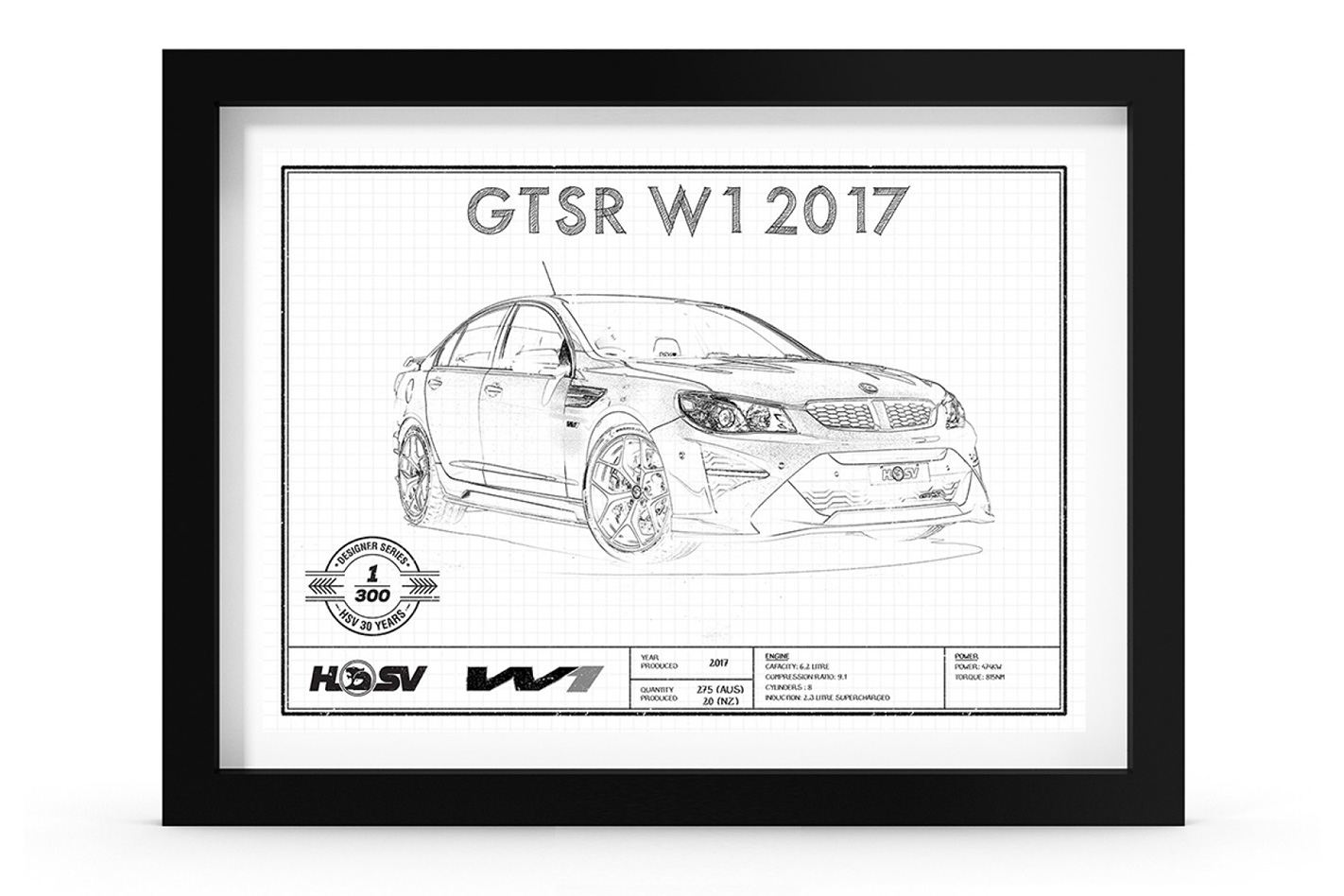
If pairing the letter W with the figure 1 immediately evokes images of a British railway locomotive then you definitely won’t be interested in these limited edition prints from HSV. This is the ultimate addition to any GTS-R W1 garage wall or, alternatively, if you can’t bear to be reminded how you missed out on grabbing your own example of Australia’s most powerful home-grown muscle car, you can also choose from the VL Walkinshaw or 1996 GTS-R. shop.hsv.com.au
Watches
Grand Seiko Sport Collection Spring Drive Chronograph GMT, $249,000
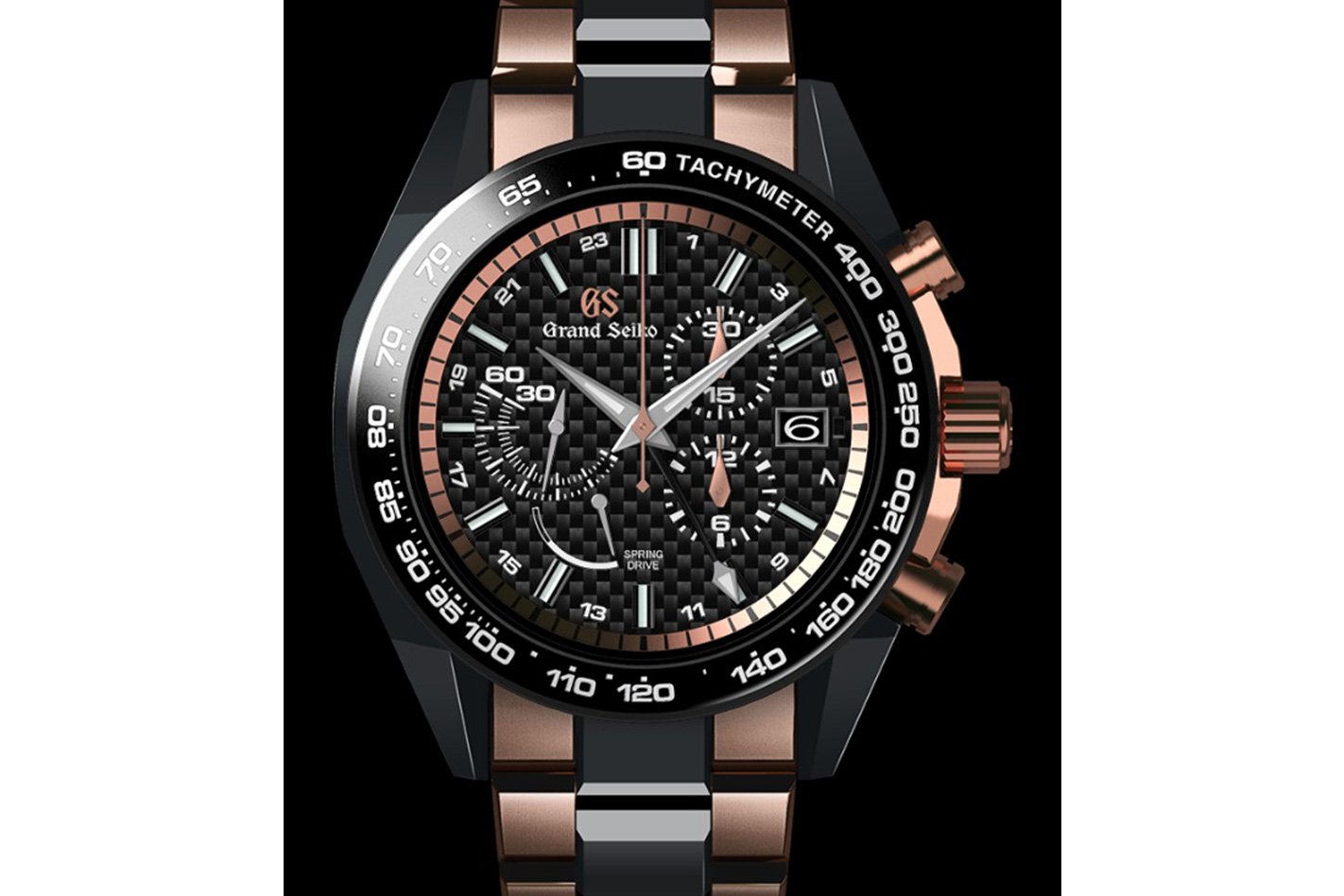
Nissan kicked off its GT-R half-century celebrations a year early by collaborating with Italdesign on the wild GT-R50 prototype. Now, there’s a watch to match that costs significantly more than a regular GT-R. It’s made by Grand Seiko, a Japanese timepiece manufacturer to rival any from Switzerland, and uses the brand’s Spring Drive technology, which allows the seconds hand to move in a fluid motion rather than ticking to better represent time itself. It’s constructed from 18-karat gold, platinum and ceramic, and runs a GMT complication. Only three will be manufactured. grand-seiko.com
Hamilton Khaki Field Mechanical, $730

Hamilton is an American watchmaker with a storied past, now producing a range of function-driven, military-inspired timepieces, among others, in Switzerland. The Field Mechanical is a highlight, featuring a hand-wound movement, 38mm stainless-steel case and a tough, textile strap. It’s based on Hamilton’s watch for the US Army (GG-W-113) made between 1967 and 1986. It’s a beautifully clean and simple item perfect for daily wear. hamiltonwatch.com
Shinola The Lake Superior Monster Automatic, $2250
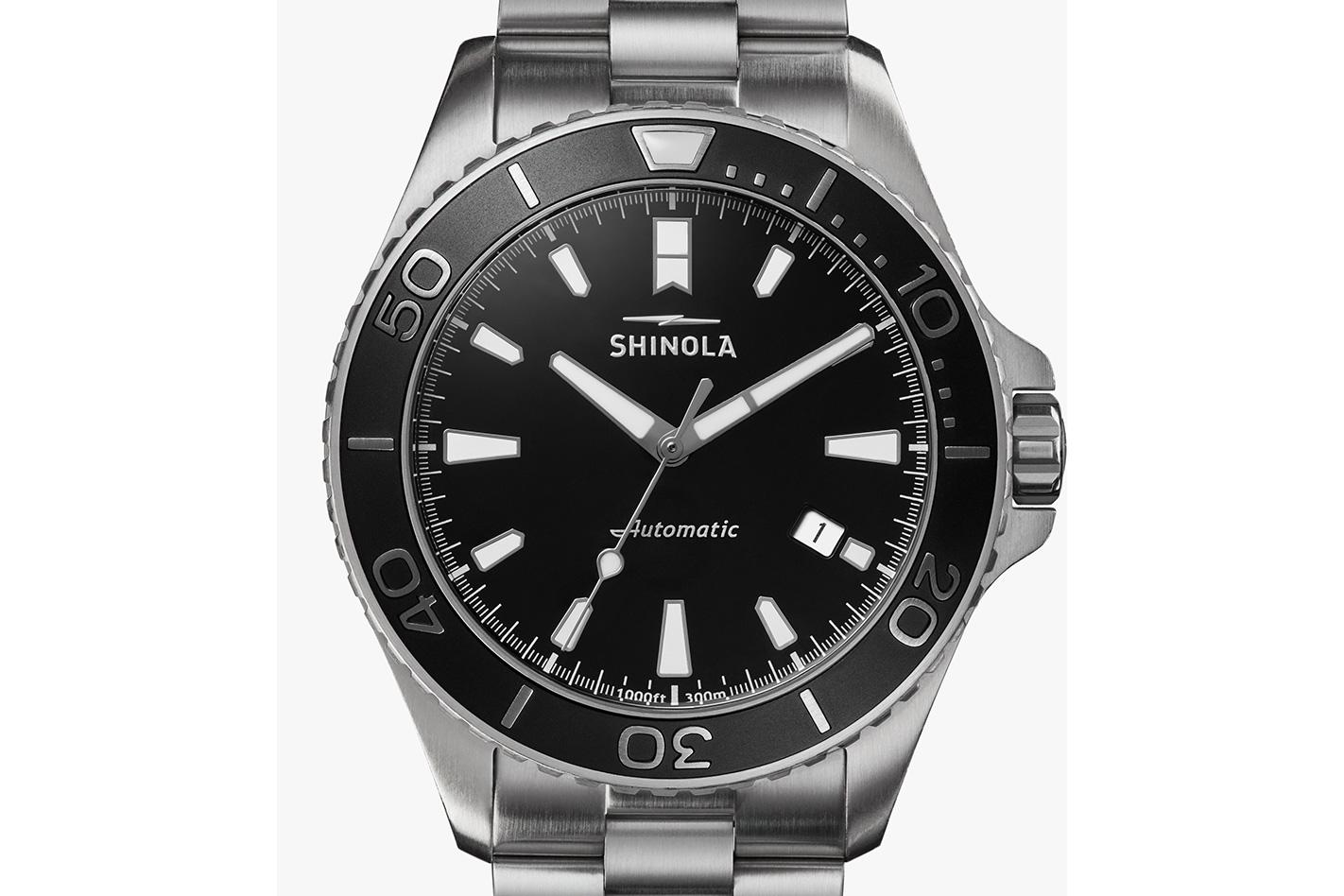
Shinola is a Detroit-based brand becoming famous for its range of American-made lifestyle goods. Watches are where the project began, in 2013, founded by a Texan named Tom Kartsotis – the same bloke who built Fossil into a multi-billion-dollar accessories giant. Following a run of quartz-based pieces, The Monster is Shinola’s first automatic. It’s a 43mm dive watch made from stainless steel with a sapphire crystal and date display, assembled in Motor City. shinola.com
