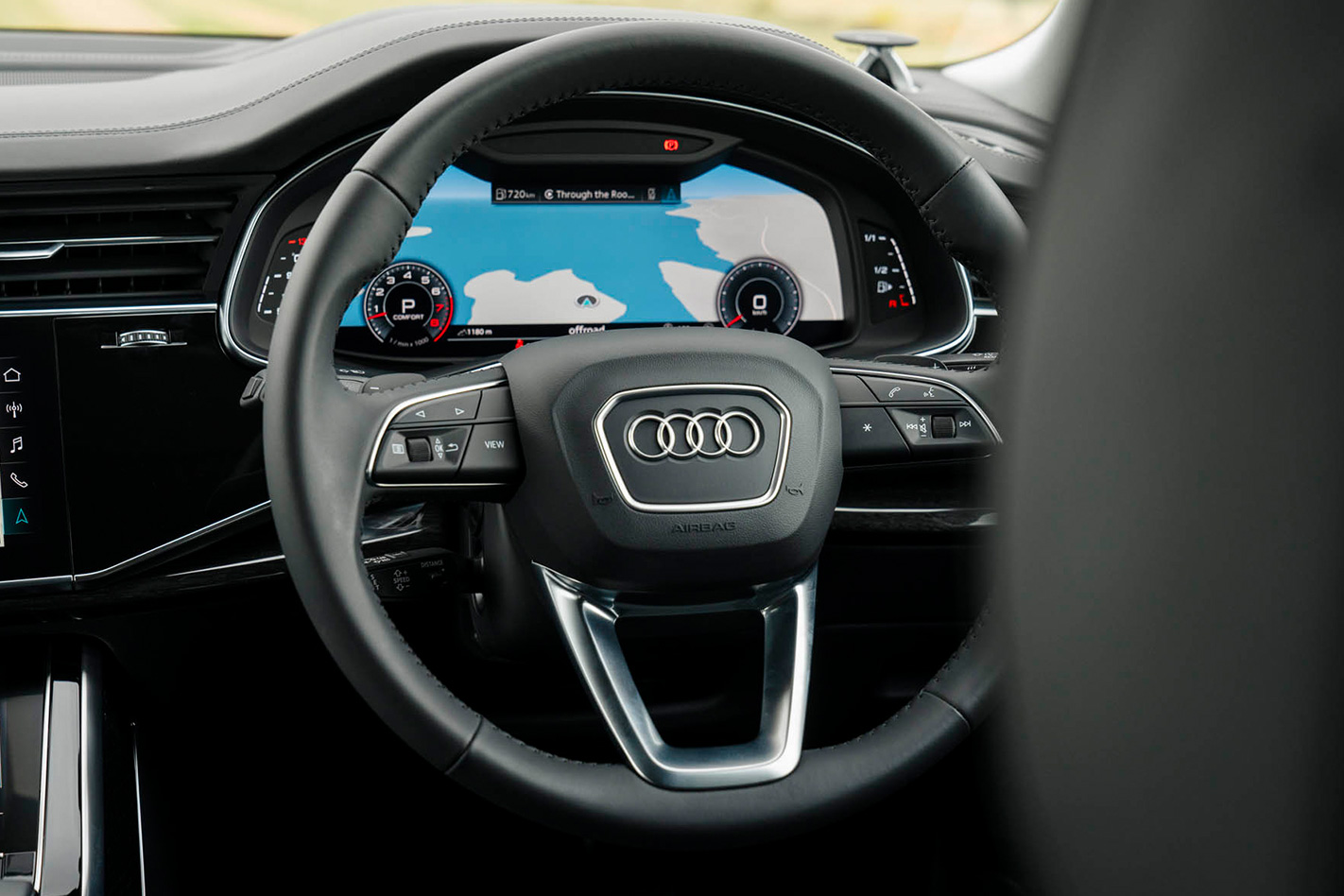
Volkswagen has confirmed that it will offer all new VW passenger car, SUV and light commercial vehicle buyers a five year, unlimited kilometre warranty, starting from January 1 2019.
This puts Volkswagen on the same warranty footing as seven of the top ten car brands in Australia, including Hyundai, Mazda, Holden and Ford. It also moves it past the three-year warranties offered by Nissan, Subaru and Toyota, and premium European brands like Mercedes-Benz, Audi and BMW.
Volkswagen’s five-year warranty still trails brands like Tesla (eight years/160,000km) and Kia (seven years/unlimited km), though.
The change comes off the back of a retail offering late in 2018 that provided two extra years on top of the standard three to VW customers on the purchase of MY19 cars like the updated Golf, Tiguan and Polo.
“Each year more than 80,000 customers provide us feedback on Volkswagen products and the dealership experience,” said Jason Bradshaw, Volkswagen Group Australia’s Director of Customer Experience and Marketing, in a statement. “The business has gauged reaction to its five year warranty campaign and so decided to implement it on an ongoing basis.”
The new five-year warranty – which is already offered by VW’s sibling brand Skoda – will stretch to authorised accessories that are bought with the vehicle. Customers will also receive 12 months’ free roadside assistance, while owners who service their cars at VW can extend their roadside assistance each year.
Volkswagen commercial vehicles will also benefit from the change, including the large Crafter van and the Amarok dual-cab ute.
VW customers who bought cars before October 1 are still able to buy an extra two years’ warranty at any time before the end of their three-year factory coverage.
Subaru Oz’s new motorsport division was given the role of converting the brand’s hard-earned rally reputation into ballistic Impreza STi Spec Cs for the cashed-up Joe Average.
This feature was originally published in MOTOR’s April 2007 issue
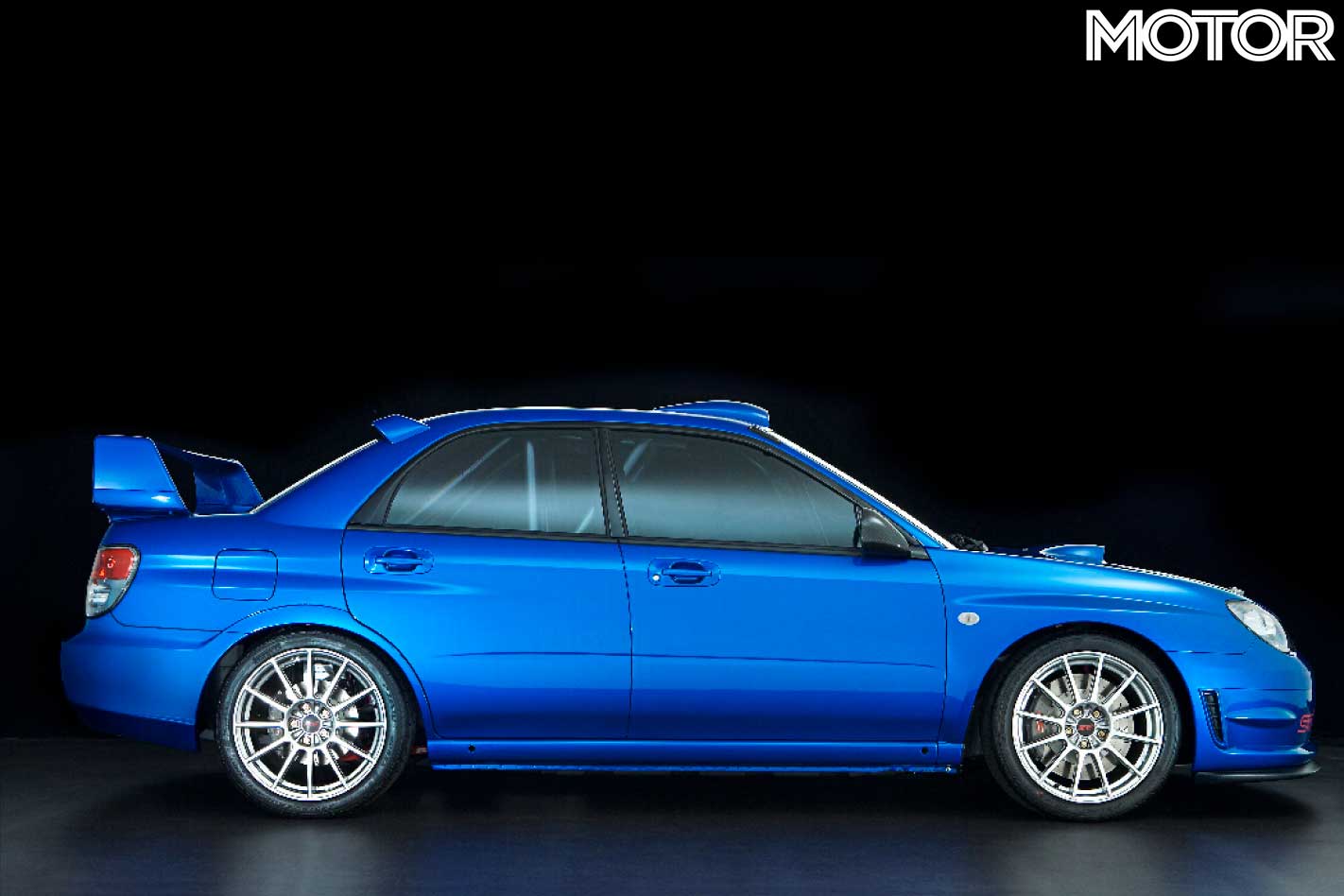
The Aussie-designed and crafted Factory Tarmac version on the pages before you is its flagship head-kicker, and by far the wildest customer STi to date. Based on the FIA homologated Spec C ‘stripper’ Impreza, the 262kW/568Nm hand-built weapon is proof that Subaru’s accumulated rally experience can be transformed into turn-key practice when no expense is spared. How much expense exactly? Yours for a frosty $180,000.
In the hot seat
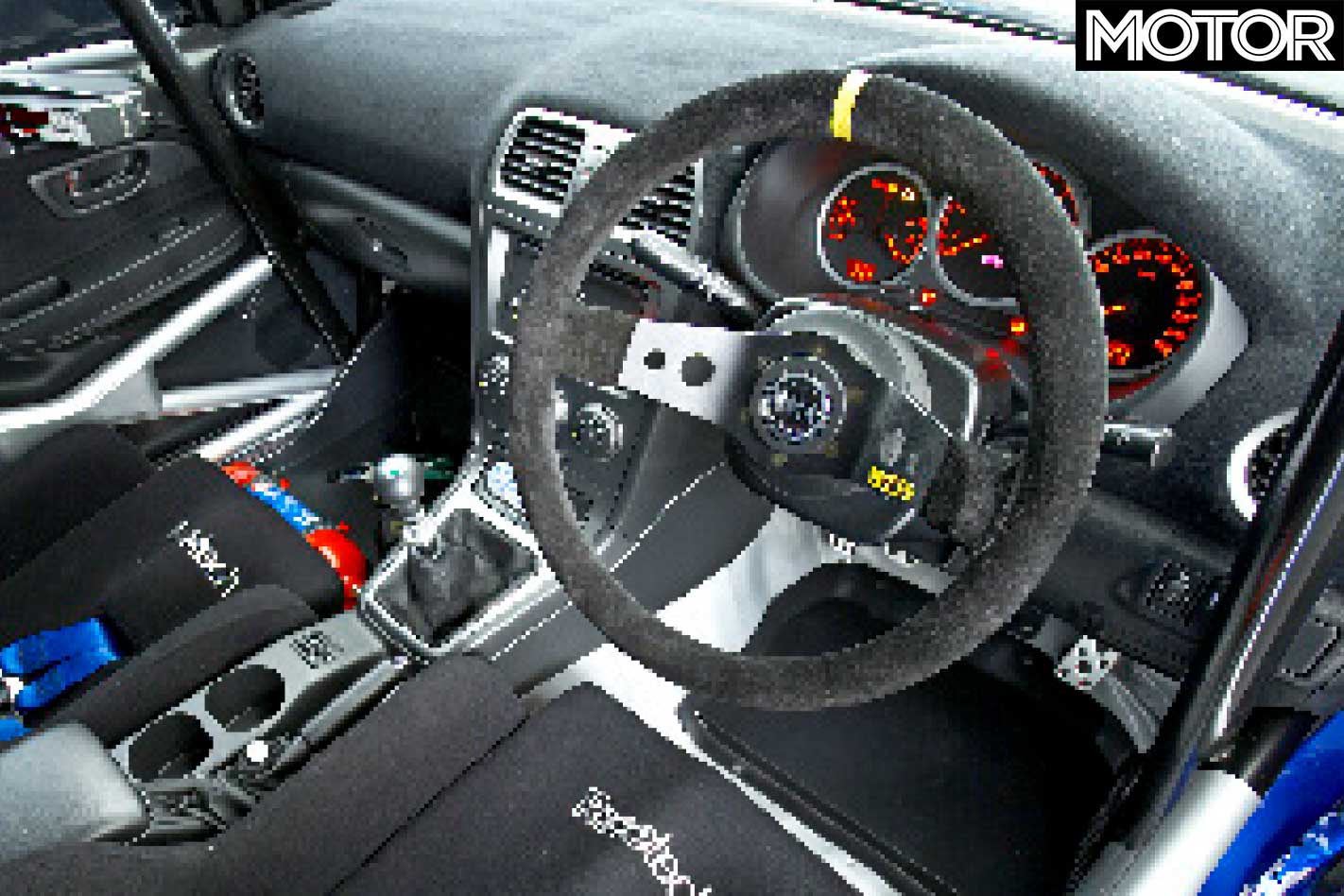
First thing is stripping out weight and getting down to essentials so the Spec C donor car comes without air-con, airbags or radio/CD. Subaru then turfs the seats, carpet and interior trim, and installs two Racetech Viper one-piece buckets, cage-mounted five-point harnesses and a Sparco racing tiller.
The dash pad is Alcantara, and door trims are moulded carbonfibre. Complementary mod cons include two fire extinguishers, a first aid kit, a tow rope, a Hitachi wheel nut rattle gun, and ‘natural’ air-conditioning provided via a carbon fibre roof vent.
The roll cage, developed by Possum Bourne Motor Sport and Aussie-based CONCENTRIC Asia Pacific, is a work of art. Designed with leading edge CATIA 3D computer modelling (used in Formula One, V8 Supercars, et al), it takes 120 hours to weld it in, extends to all four upper suspension mounting points for supreme structural rigidity, and fits tightly against the body shell inside the cabin.
Made from super-strong chrome-moly steel, it’s claimed to be the strongest FIA-accredited roll cage to date.
Manual override
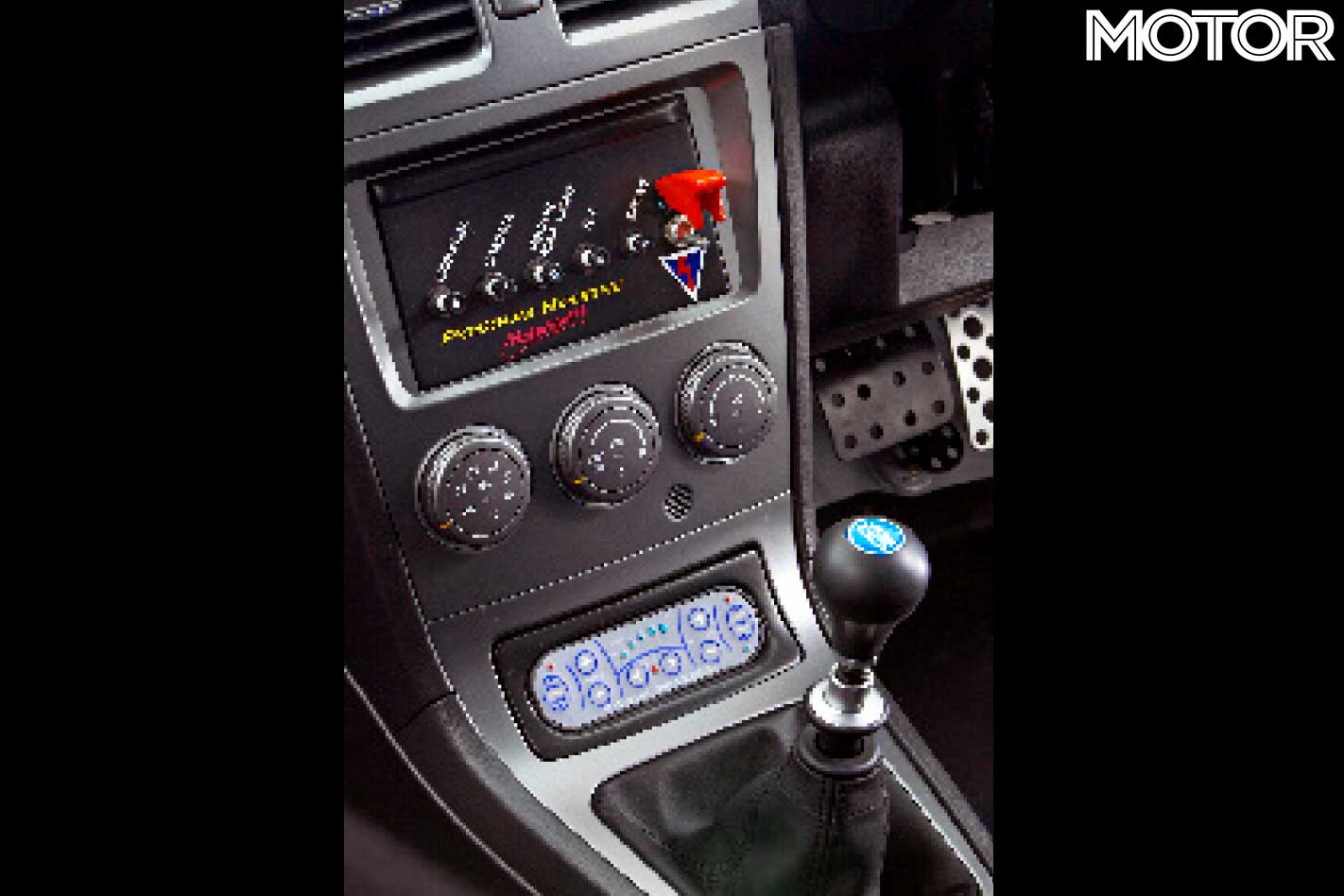
The six-speeder is a close-ratio synchromesh unit, with an option of dog-engagement gears from the gravel models’ five-cog unit. The regular MY07 STI driver-adjustable electric/mechanical centre diff remains, but uses a special Subaru controller module developed by MoTeC to vary front-to-rear torque split.
The stock helical-type front LSD is replaced with a PBMS-tuned clutch-type unit, as used at the rear LSD. Heavy duty driveshafts, a solid-centre clutch, beefier driveline mounts, bracings and bushes make up the package.
Tipping the scales
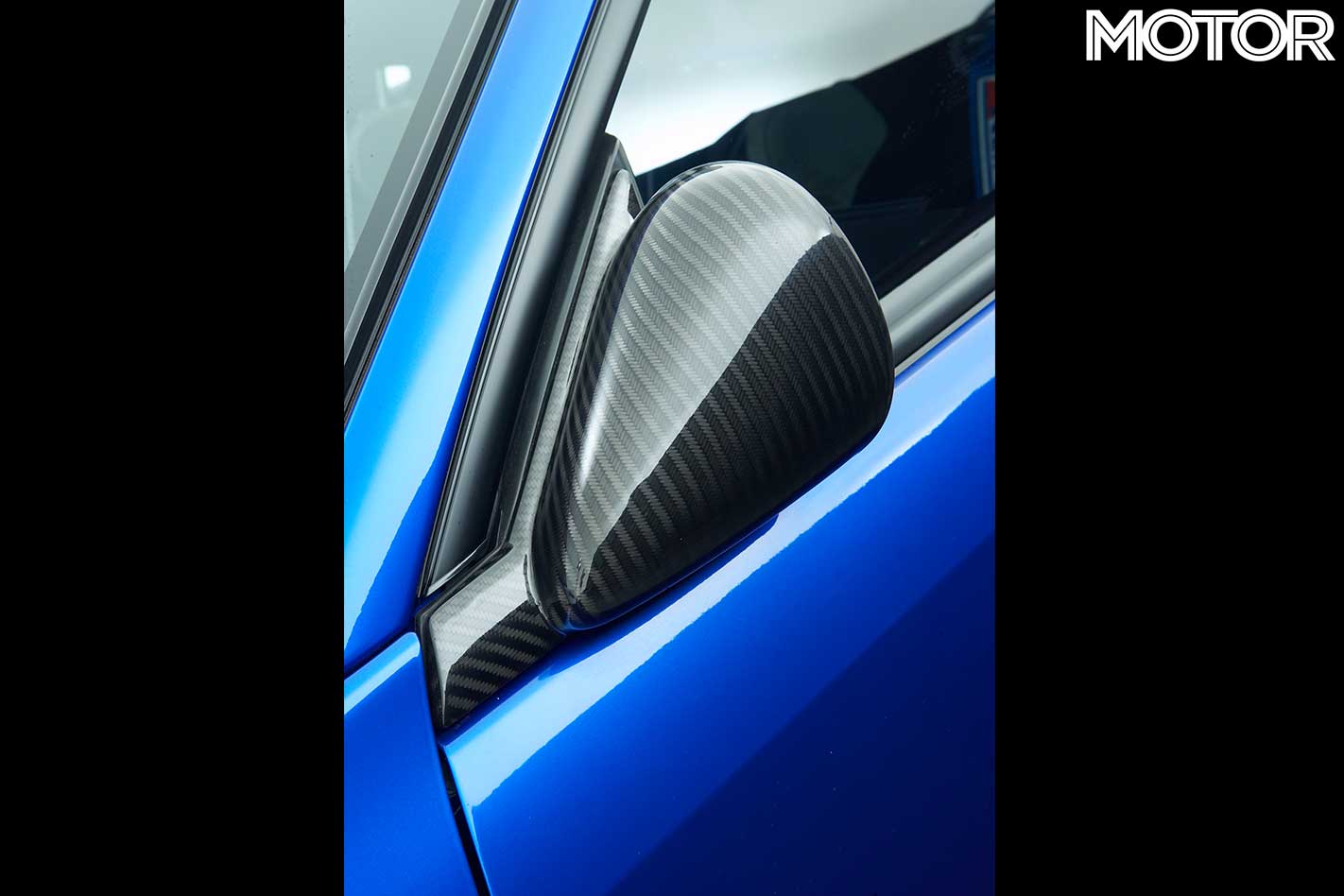
At 1390kg, the Spec C is 105kg lighter than the regular STI, thanks to an aluminium bonnet and boot lid, a thinner roof panel, and lighter glass. Complete, the full-fruit Factory Tarmac is 1360kg.
It’s built to international Group N Tarmac rules and is loaded with carbon fibre goodies such as the rear bulkhead, footwells, and mirrors – an extra $20,000 cost. Subaru Oz will supply a version for Aussie production car racing regs without carbon fibre bits, for a price of $160,000. Sump and fuel tank skid plates come standard.
Labour of love
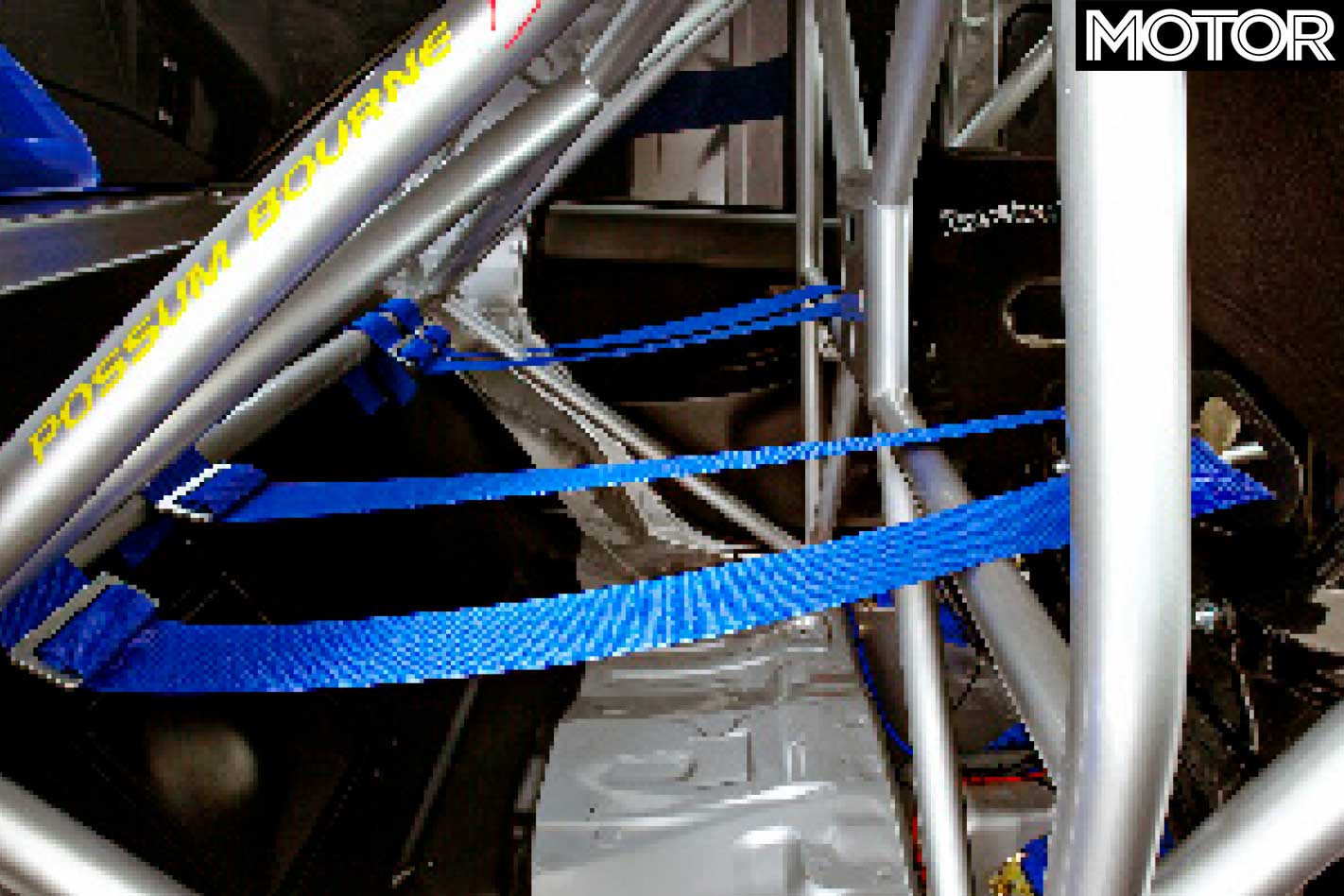
Each Factory Tarmac arrives as a Spec C at Subaru Motorsport’s workshop. It takes 24 hours to strip to a bare shell, which is mounted on a rotating ‘spit’. Then there’s 12 hours of prep work (removing body sealer, tidying up the shell, et al), 40 hours of welding for strength, 120 hours for roll cage integration, and 100 hours of assembly. There’s 320 hours total labour invested in the shell and body alone.
Getting Dirty
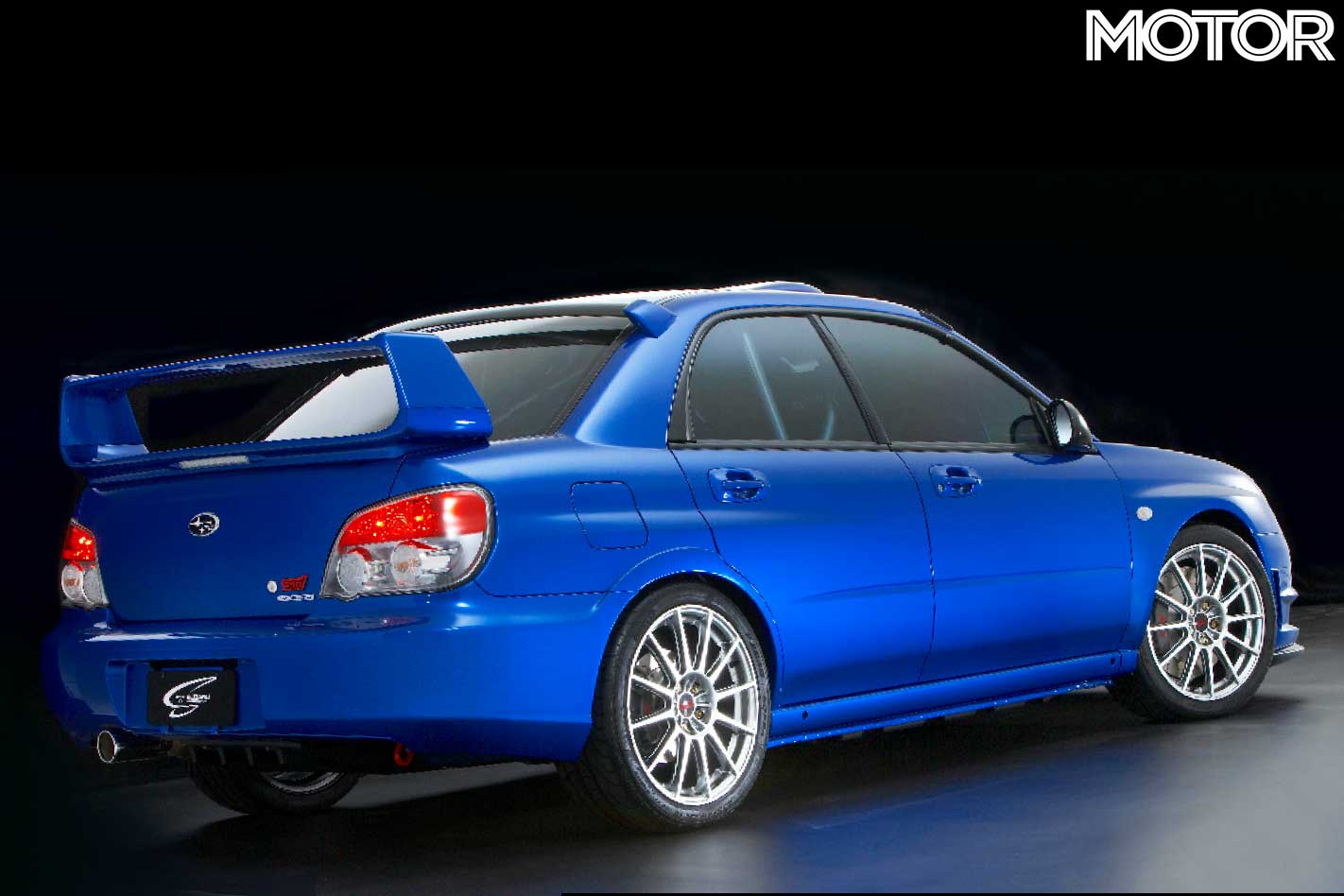
$180,000 too rich for you? Subaru Motorsport has an entry-level Spec C base model (includes roll cage, seats, extinguisher) from $69,990, a mid-spec $87,990 Tarmac (adds Motec engine tuning, suspension), and a $125,990 National Tarmac (adds engine blueprint and further suspension work).
Prefer dirtier fun? There’s also a club/state-level competition Gravel Rally package for $92,990, a more hard-core $128,990 National Rally version, and a full-combat, range-topping $195,000 PWRC monster ready for international Group N competition. All you need to add are brave pills.
Galloping ponies
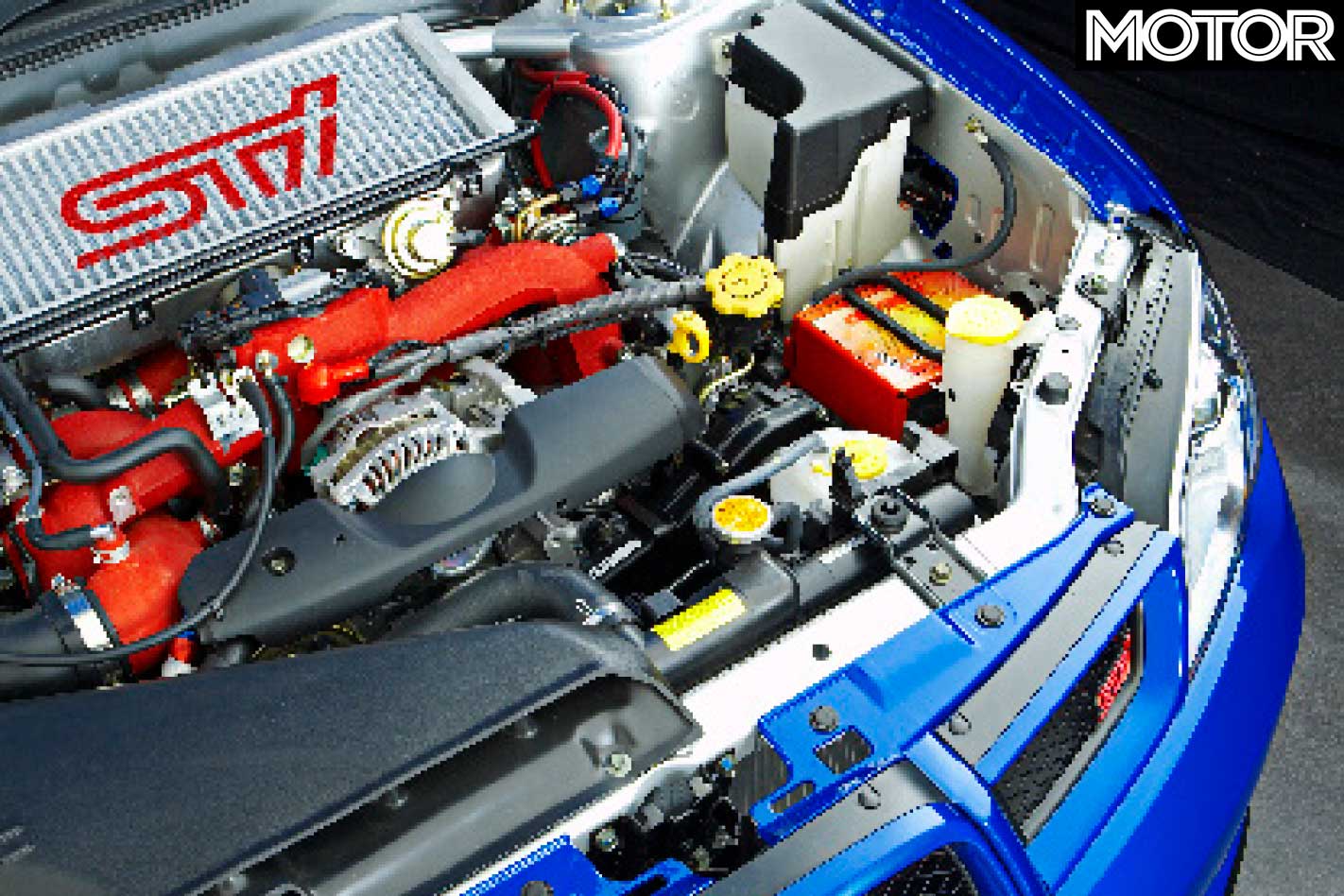
Instead of the current STI 2.5-litre boxer four, the Spec C uses a 2.0-litre unit currently homologated for FIA Group N and WRC rallying. But this isn’t the old pre-MY06 engine. Instead, it shares much of its design with the current MY07 2.5, including the latest variable camshaft technology. The Spec C also comes with trick extractors and an exclusive, competition-type twin-scroll turbo.
Subaru Motorsport spends 60 hours blueprinting the engine to optimise the standard engine’s tolerances. Exhaust is a PBMS design made of stainless steel.
Each boxer four then spends eight hours on an engine dyno; four for initial run-in and four for race-tuning using PBMS programming via the engine’s new MoTeC ECM. The result? 262kW/568Nm on racing fuel. Subaru says that it’s a conservative tune, and you can easily get up to 300kW. If you wanted to.
Go-go gadgets
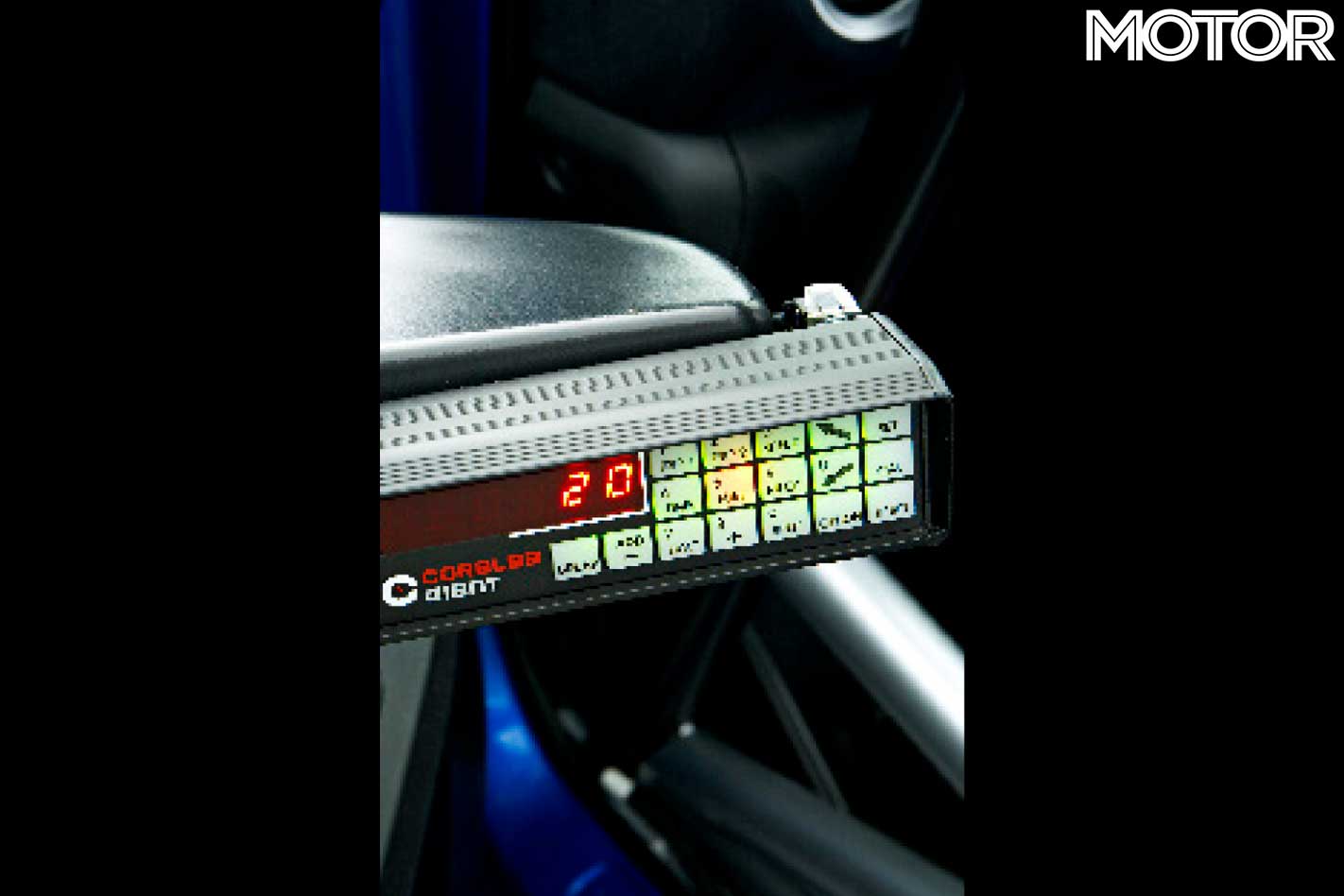
The Factory Tarmac’s no-more-to-spend package includes a Coralba C900 race computer and Peltor FMT200 intercom system for driver/co-driver in-helmet communication. These, the battery isolation switch and MoTeC diff and ECM mapping controllers are all controlled via the centre console and wired using a PBMS loom.
Stopping power
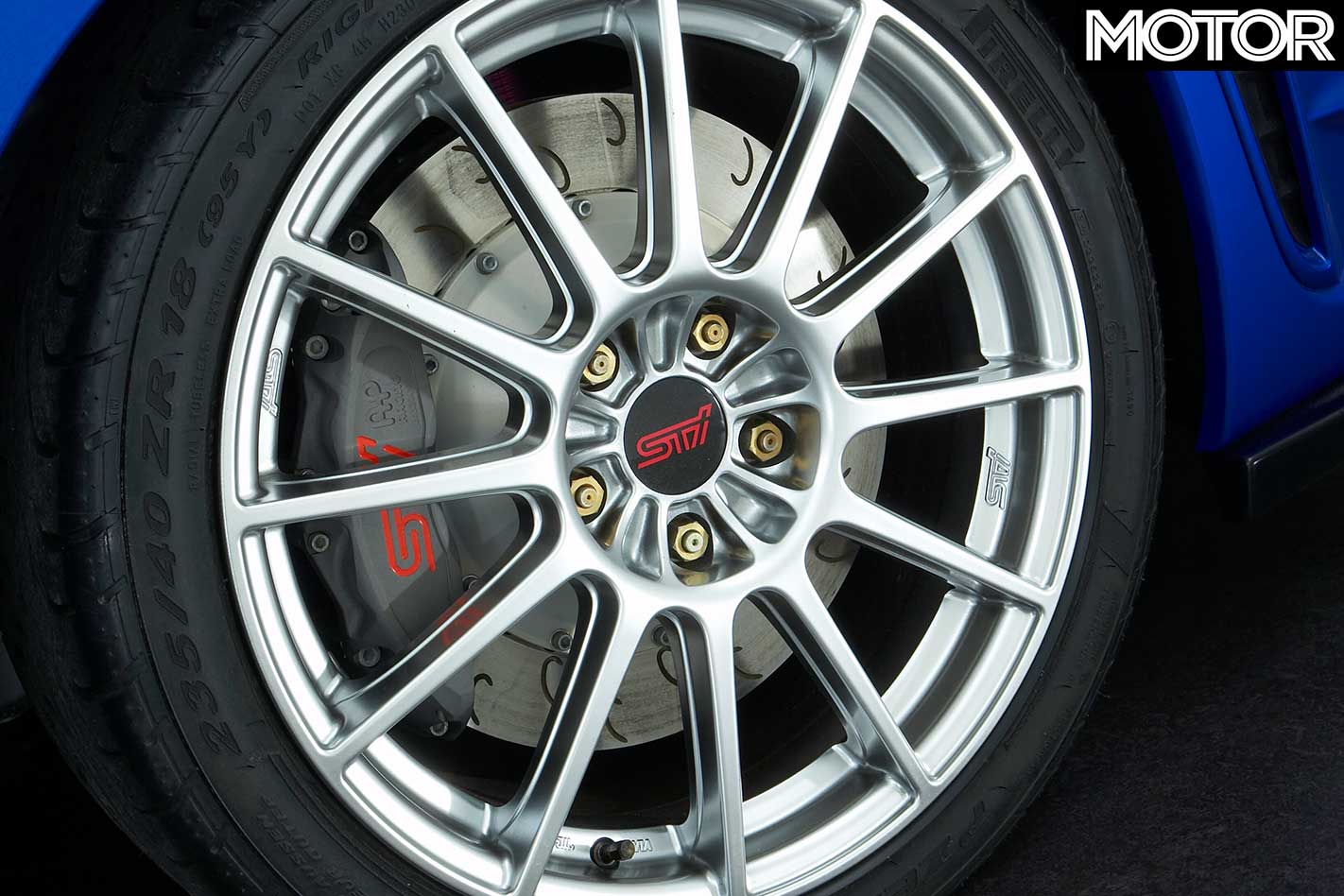
Tucked behind the lightweight 18-inch front alloys are monstrous AP Racing four-piston calipers with two-piece discs, with smaller four-potters in the rear. Plumbed with stainless steel lines, the stoppers are worth $15,000. Handbrake is a rally-style hydraulic unit.
Suspension is a combination of Aussie-made King Springs, Reiger dampers from Holland, larger STI swaybars and pillowball-type lateral links and trailing links for added sharpness.
FAST FACTS 2007 Subaru Impreza STi Spec C
BODY: 4-door, 2-seat sedan DRIVE: all-wheel ENGINE: 1994cc 4cyl boxer DOHC 16v BORE/STROKE: 92.0mm x 75.0mm POWER: 262kW @ 4800rpm TORQUE: 568Nm @ 3800rpm WEIGHT: 1360kg POWER-TO-WEIGHT: 193kW/tonne TRANSMISSION: six-speed manual SUSPENSION: Inverted type MacPherson strut, coil springs, anti-roll bar (f), inverted type dual-link, coil springs, anti-roll bar (r) BRAKES: AP Racing 4-pot calipers front/rear, competition rotors, hydraulic handbrake WHEELS: OZ Racing STI 18-inch TYRES: Pirelli P-Zero, 235/40 ZR18 PRICE: $160,000 ($180,000 as tested)
The momentum of one-tonne ute sales in Australia is showing no signs of slowing and the car makers are responding with fresh offerings in a number of segments throughout the next 12 months. In addition to the range of light updates and all-new introductions, other light commercial segments will be included, with electrification starting to proliferate the traditionally diesel-powered realm.
Here are the key new models to watch out for in 2019.
Mitsubishi Triton
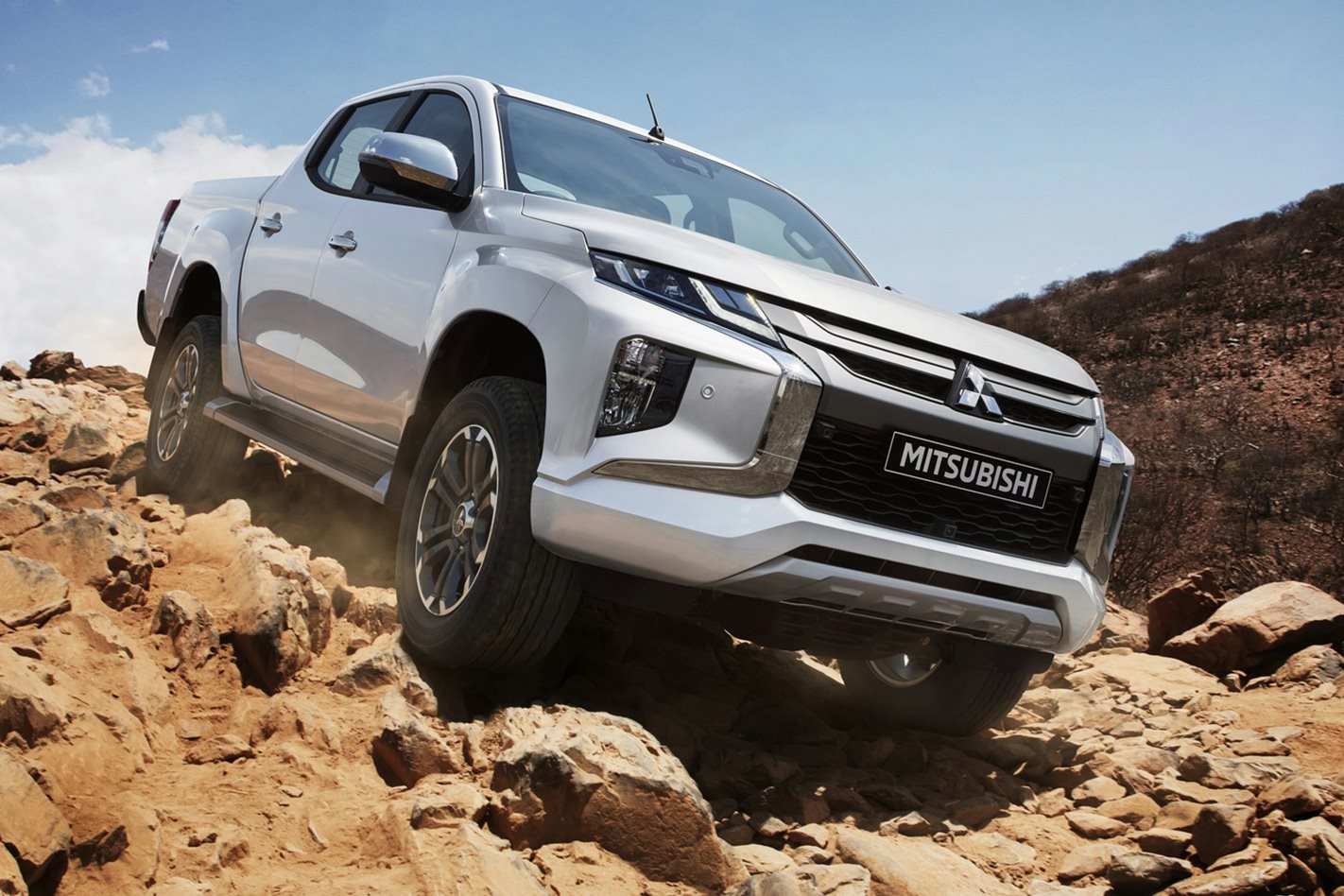
A major update and facelift of the fifth-generation ute.
Price range: $25,000 to $50,000 (estimated) Rivals: Toyota Hilux, Nissan Navara, Isuzu D-Max, Ford Ranger, Holden Colorado, Mazda BT-50 Due date: January
It’s not quite a full new model but with more than 2400 changes including new sheet metal, updated six-speed auto, more cabin equipment and safety tech, the 2019 version is significantly different. A new flagship is also expected at a later date bringing a tough truck rival to the Ranger Wildtrak and HSV Sportscat.
SsangYong Musso
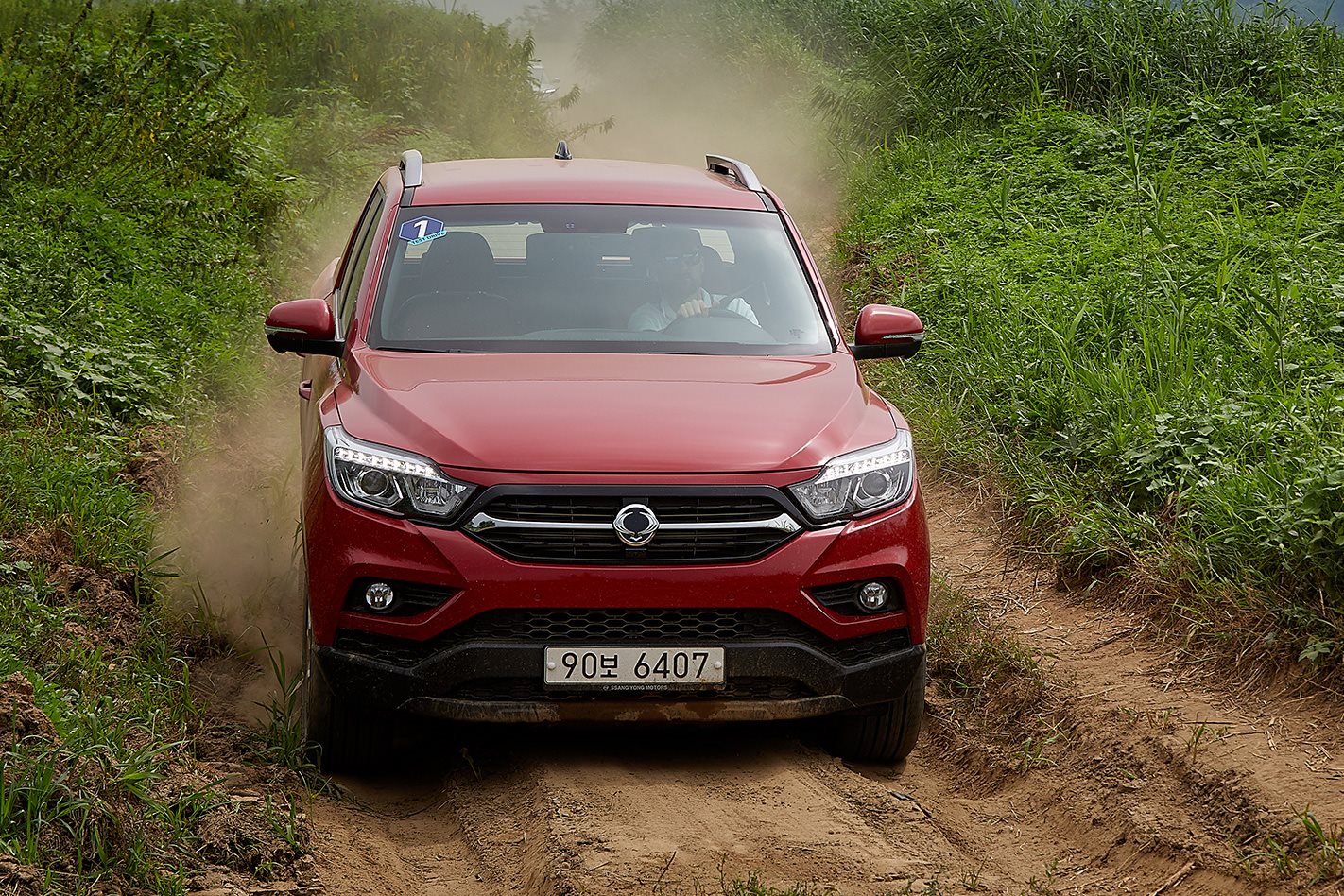
Returning South Korean ute brings sharp pricing, neat features and class-leading warranty
Price range: 39,990 to $52,990 Rivals: Toyota Hilux, Nissan Navara, Isuzu D-Max, Ford Ranger, Holden Colorado, Mazda BT-50 Due date: January
After a two-year hiatus, SsangYong is back on Australian turf with a factory backed operation and a four-model assault for its relaunch. Leading that charge is the Musso one tonner, which makes a good case for itself with standard AEB, enticing prices and an unbeatable seven-year warranty.
Mercedes-Benz X350d
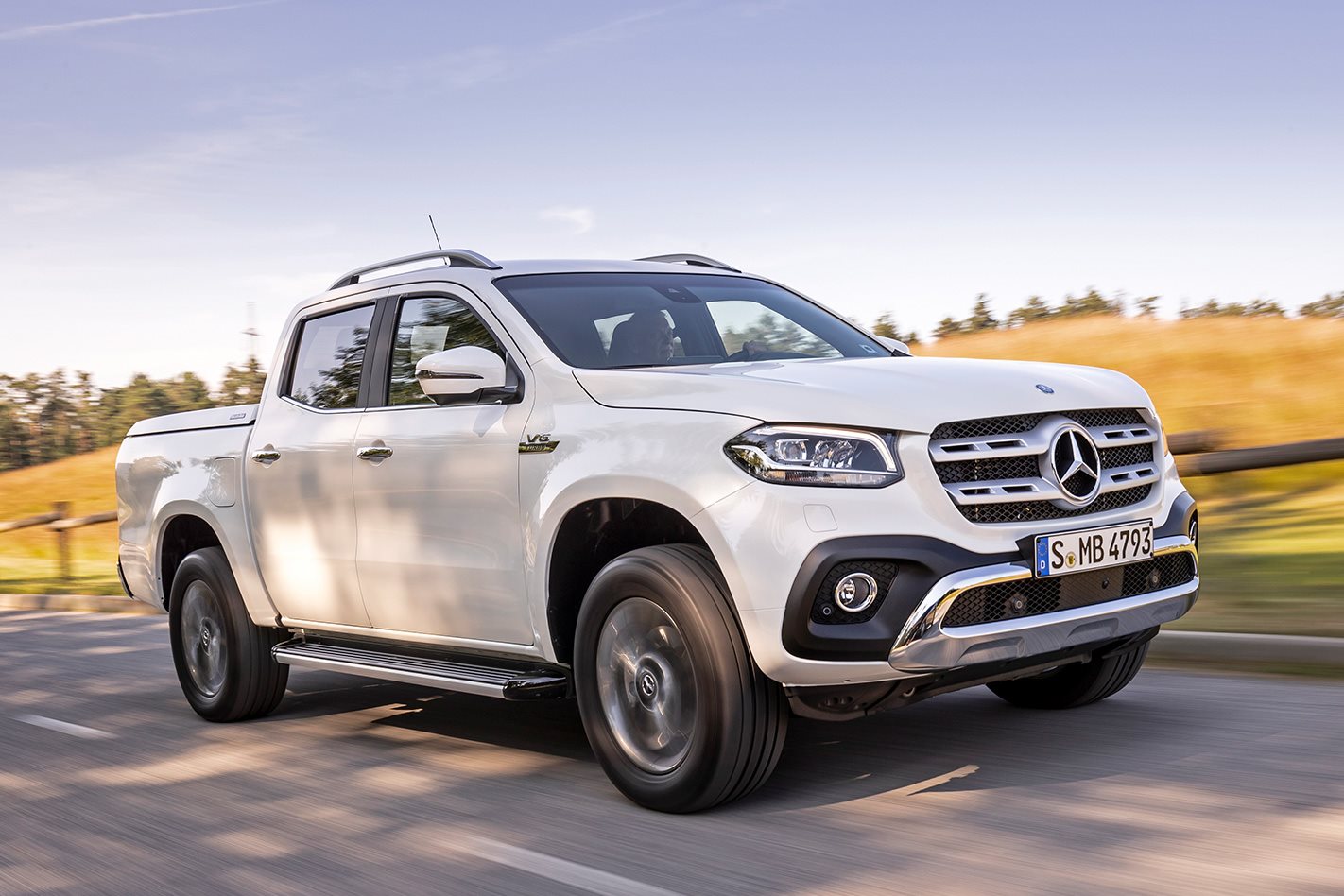
V6 diesel joins the Mercedes ute range to worry the as-yet unchallenged Volkswagen AmarokPrice: $73,270 Rivals: Volkswagen Amarok, Ford Ranger Raptor, Toyota Hilux Due date: January
Until now, Volkswagen has claimed the title as Australia’s most powerful one-tonner, but the arrival of the Mercedes X350d returns V6 fire with 190kW and 550Nm of torque. It’s pricey but the German car maker is kitting it out with the goods to match.
Ford Transit PHEV
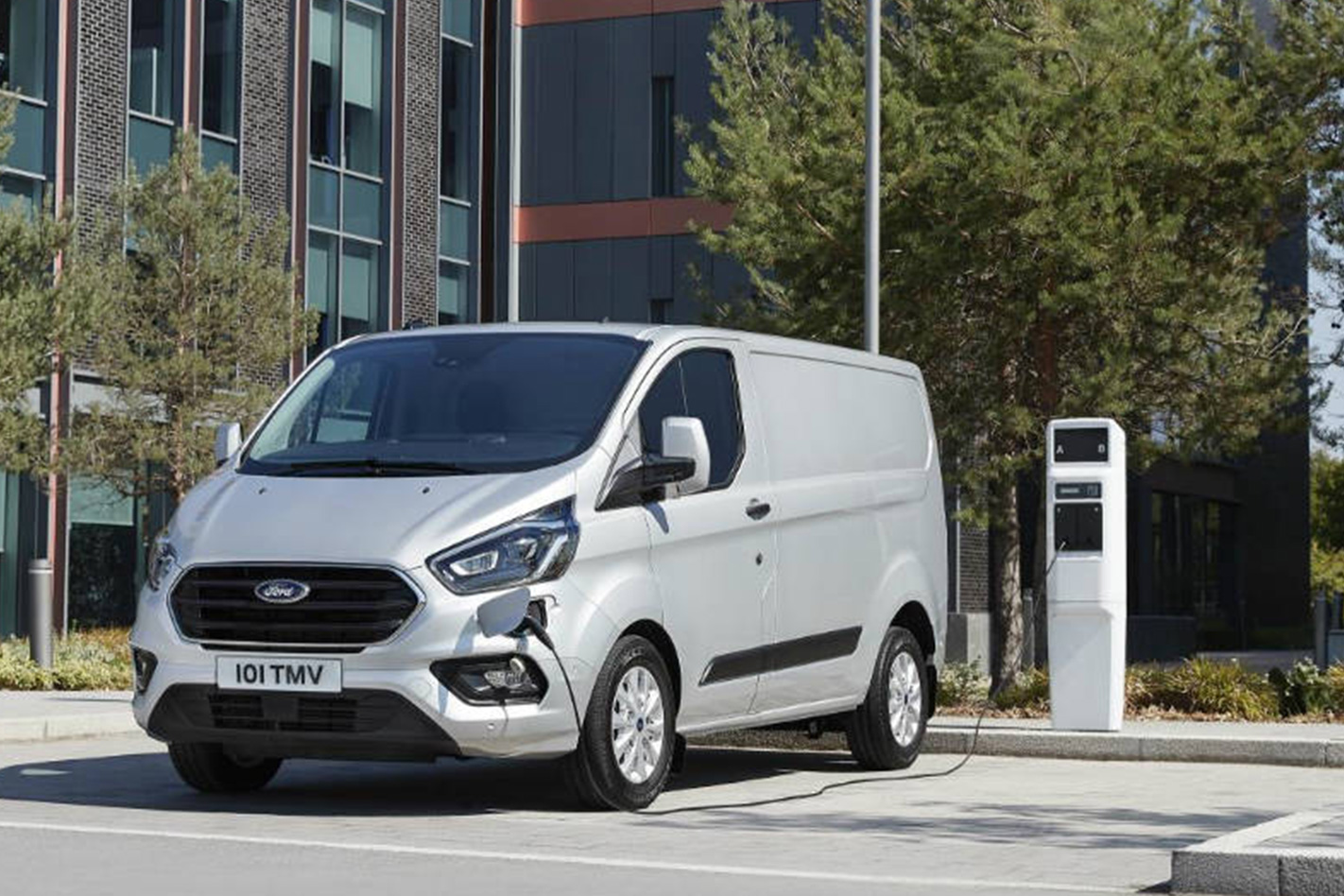
Iconic workhorse plugs into the 21st centuryPrice: $TBC Rivals: Toyota Hiace, Volkswagen Crafter, Hyundai iLoad, Mercedes Sprinter Due date: August
It’s not quite confirmed for Australia at the time of writing, but Ford says the first electrified version of the humble Transit in more than half a century is under consideration. If green Transit power gets the green light for local sale, it will touch down in the second half of the year. As for competition, there’s not a lot of electrified commercial vehicle action in Australia with only the Renault Kangoo ZE full EV (and Mitsubishi Outlander PHEV at a push) to apply any pressure… for now.
Renault Alaskan
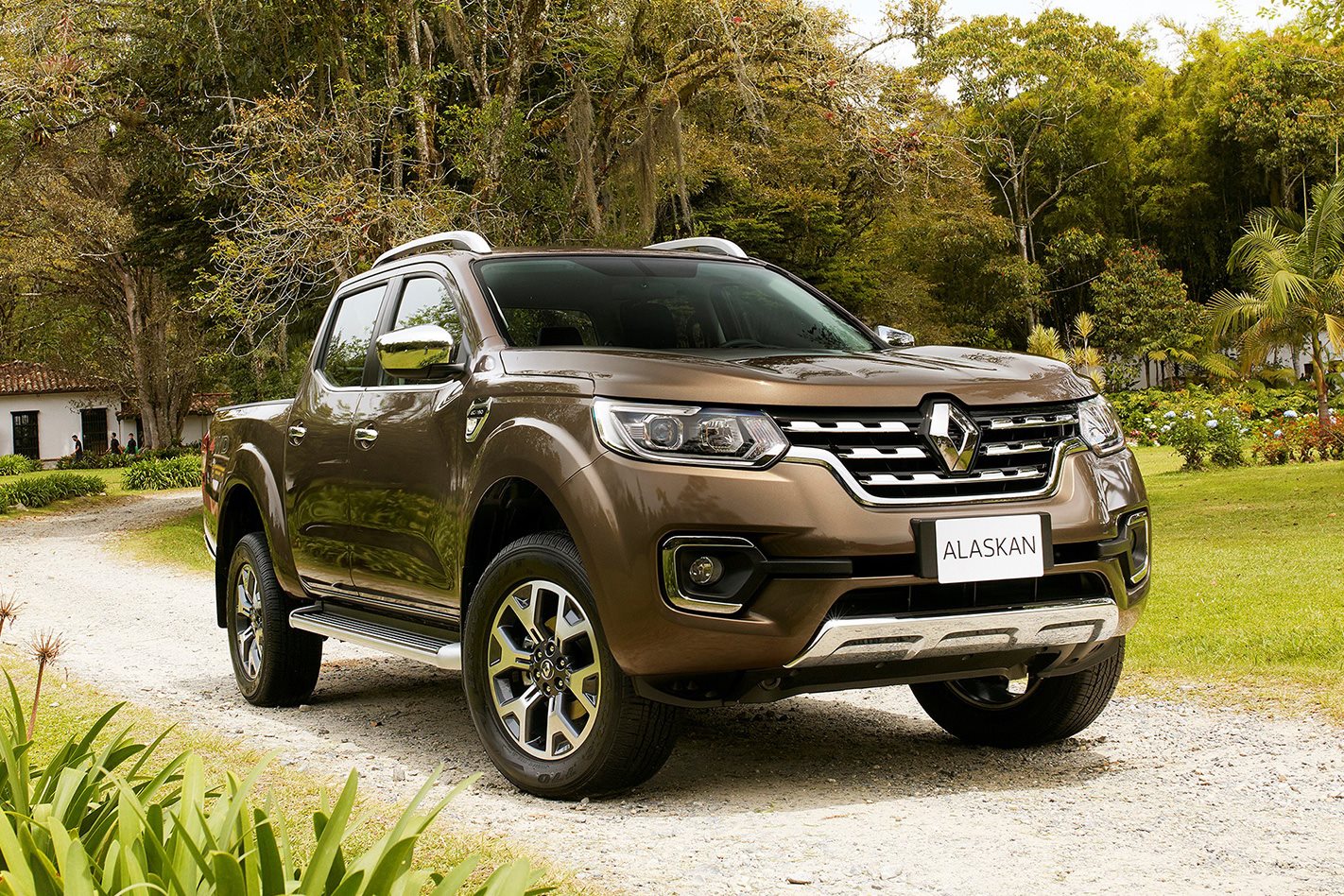
Renault joins the one-tonne ute revolution at last, but is it fashionably late?Price: $26,000 to $55,000 (estimated) Rivals: Toyota Hilux, Nissan Navara, Isuzu D-Max, Ford Ranger, Holden Colorado, Mazda BT-50 Due date: December
After a protracted gestation and a drawn out arrival date, it looks like Renault will finally weigh into the potentially lucrative dual-cab ute contest on red dirt. Like the Mercedes-Benz X-Class, the Alaskan also takes its underpinnings from the popular Nissan Navara, and although exact Australian specifications are yet to be confirmed, it’s likely the French contender will offer a high-end version with lots of kit as well as a more affordable workhorse at the entry point.
Ram 1500 diesel
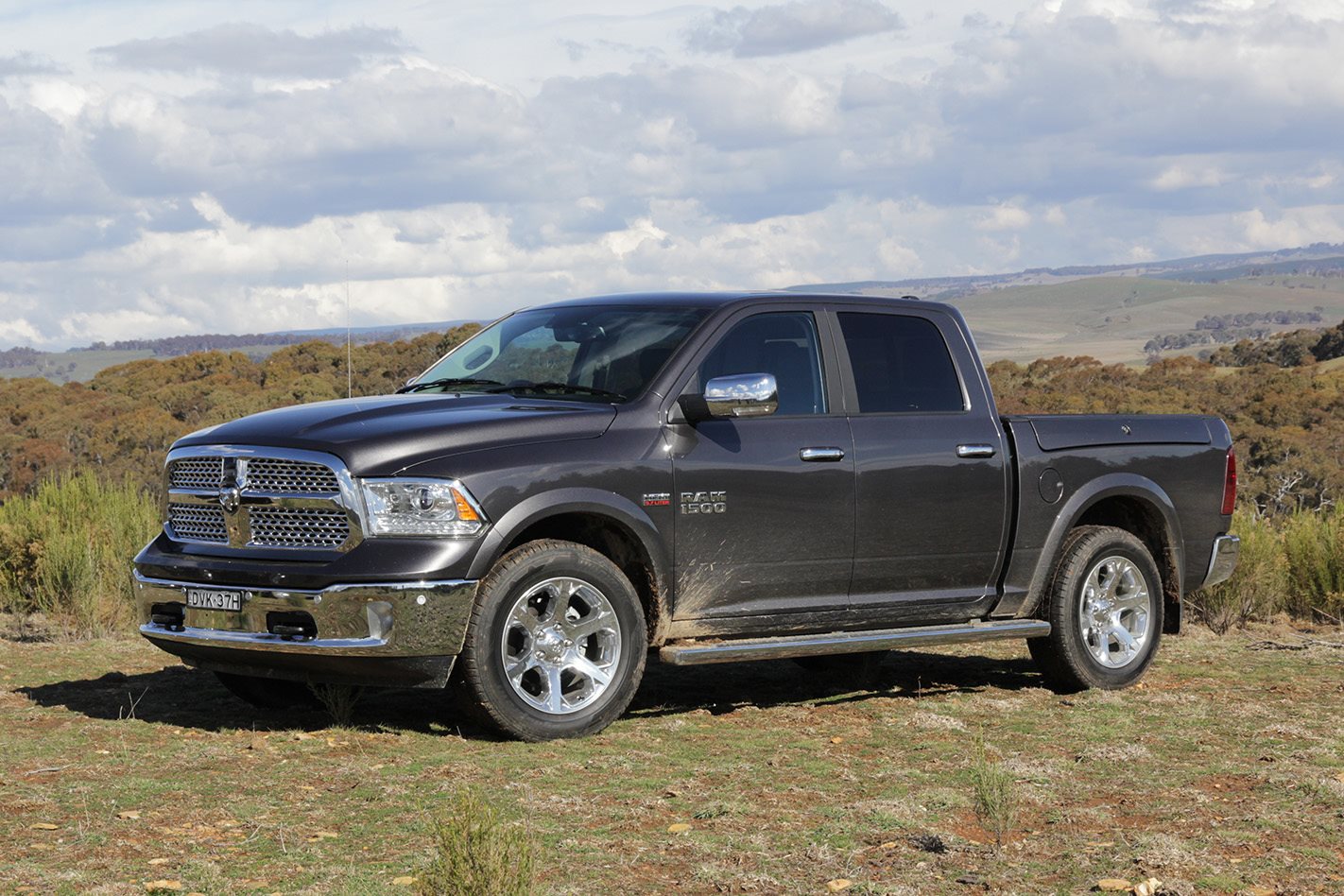
Baby of the Ram range gets a more manageable thirst without sacrificing gruntPrice: $95,000 (estimate) Rivals: Ford Ranger Raptor, Chevrolet Silverado, Volkswagen Amarok V6 Due date: January/February
From launch, the smallest Ram in the line-up was available only with gas-guzzling V8 power, which likely put off a few fence-sitting fans. A V6 diesel version is on the way and it compromises little for the extra efficiency. Exact output figures are yet to be finalised for the Australian launch but the 3.0-litre V6 turbocharged diesel could produce up to 200kW and 600Nm. That compares with the current 5.7-litre V8 which pushes out 291kW and 556Nm.
Jeep Gladiator
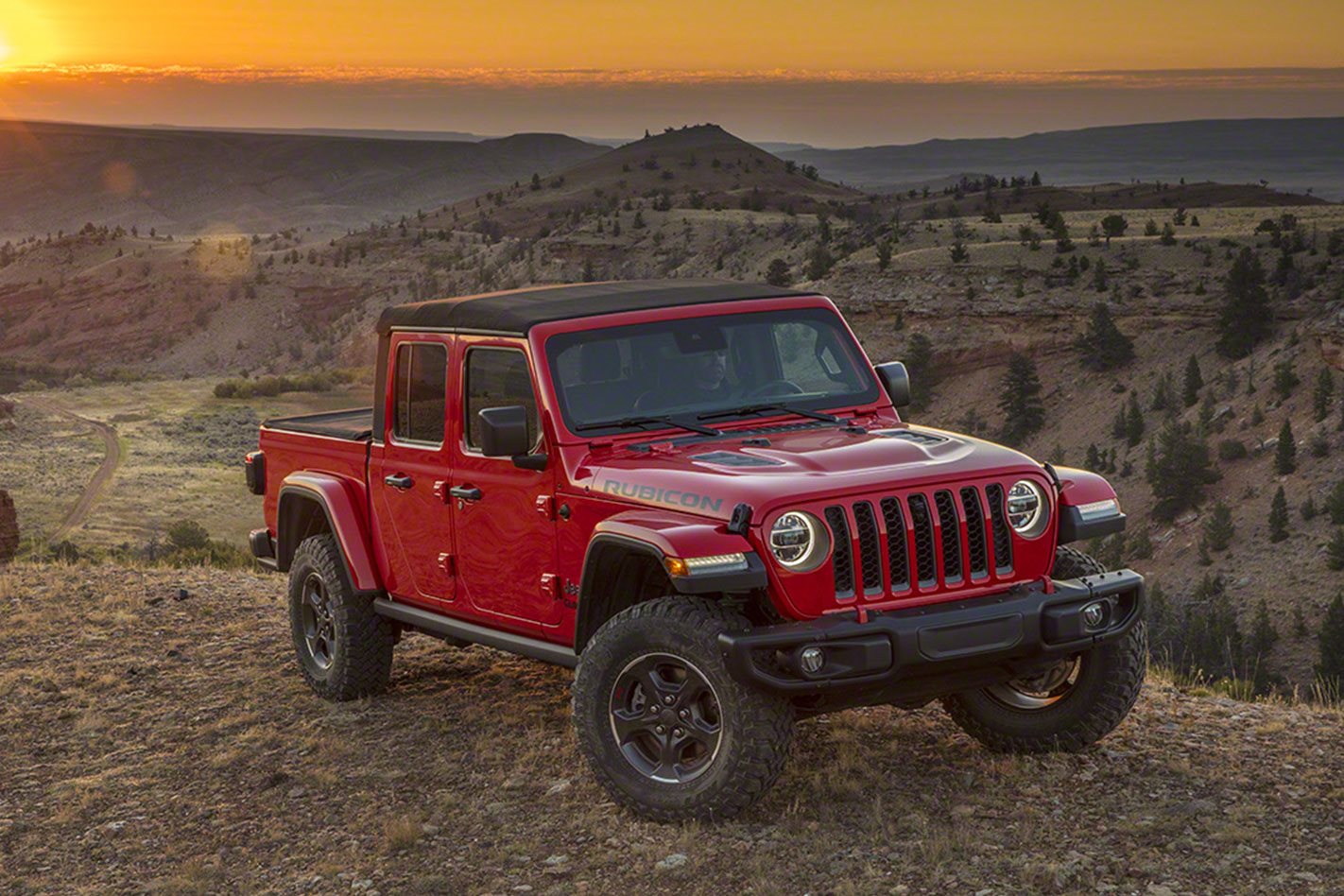
Long-rumoured Wrangler-based pick-up finally confirmed with badass name.Price $60,000 (estimated) Rivals: Ram 1500, Ford Ranger Wildtrak, Mercedes X-Class Due date: Late 2019
Details are light on the ground at the time of writing but Jeep’s late offering in the one-tonne market will bring a more style-focused option in a carpark occupied by many forgettable designs. What is known is that the Gladiator will be mechanically almost identical to the all-new Wrangler, which is known for its go-anywhere capability. Expect Jeep’s first ute in years to be an authority when the paved road ends.
Tesla pick-up?
A realistic offering or more typical Tesla bluster?Price: we’d be guessing Rivals: Mitsubishi Outlander PHEV, Toyota Hilux Due date: Possibly never
There’s no denying the Californian start-up tech company’s ability to surprise and produce notable vehicles in a relatively short development period. But seemingly ambitious statements from outspoken founder Elon Musk should also be taken with a grain of salt. And the same goes for Tesla’s plans to produce a pick-up or ute-like model. If one does eventuate, it’ll likely arrive with similarly record-breaking performance as the rest of its line-up. Emphasis on ‘if’.
This is the most powerful AMG you can currently buy – and it has four doors. It’s a performance-car concept that shouldn’t work because of its weight, but it does. Exit the category-defining CLS, enter the new Mercedes-AMG GT63 S 4-Door. Affalterbach has a new four-door V8 ‘coupe’ to play with.
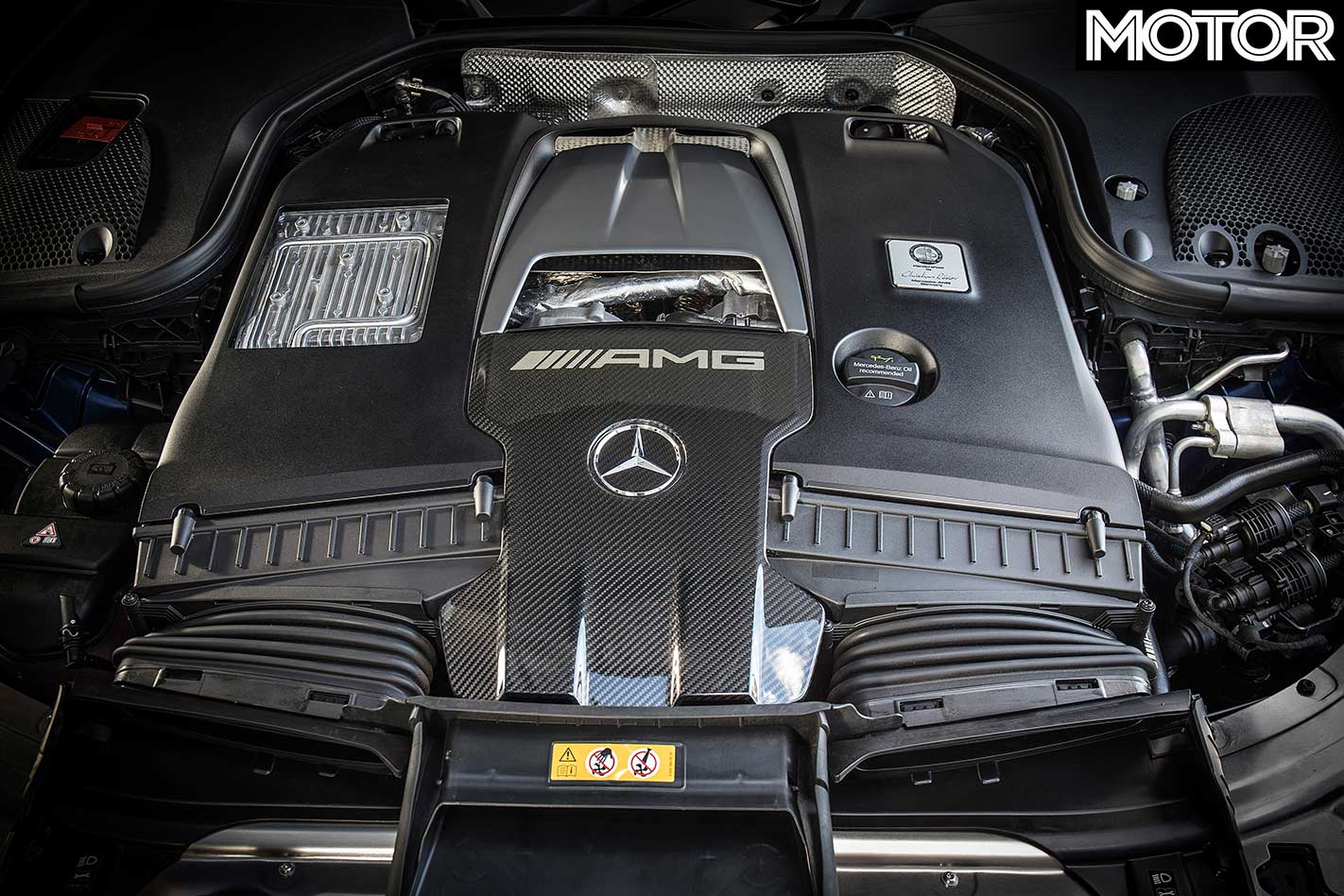
Let’s cover the basics. It’s a refreshingly different design, yet it’s still complete with all the signature AMG cues. There’s a stonking 4.0-litre twin-turbo V8 up front that belts out a monstrous 470kW. It’s matched by a waterfall of torque and a hellish soundtrack. What’s more, the 4MATIC+ drivetrain can also deactivate the front axle (like the E63 S) for expressively lurid slides.
If you’re thinking this is a recipe for fun, then you’d be right. We drank the 66-litre tank dry and took the rear tyres almost down to the canvas, opposite-locking our way through 25 hot laps of the Circuit of the Americas track in Austin.
The GT63 S 4-Door is a heavy hitter in every sense of the expression. It beggars belief just how wide your smile can get in a two-tonne four-door coupe. The fact it will reach 100km/h from rest in just 3.2sec (besting the E63 S by two tenths) and top out at 315km/h just adds to the hilarity of it all. Who said AMG doesn’t have a sense of humour…
Strangely, for such a mentalist car, it doesn’t play in this berserk category alone. Audi will soon launch the new 450kW-plus RS7 and BMW is putting the finishing touches on the equally potent M8 Gran Coupe. Porsche is ahead of the game and has already introduced its Panamera Turbo, a true lesson in defying physics.
In the past, Mercedes-AMG has challenged these contenders with the CLS63 AMG, but not anymore. Instead, the team led by Tobias Moers has created a new four-seat king of the fast lane.
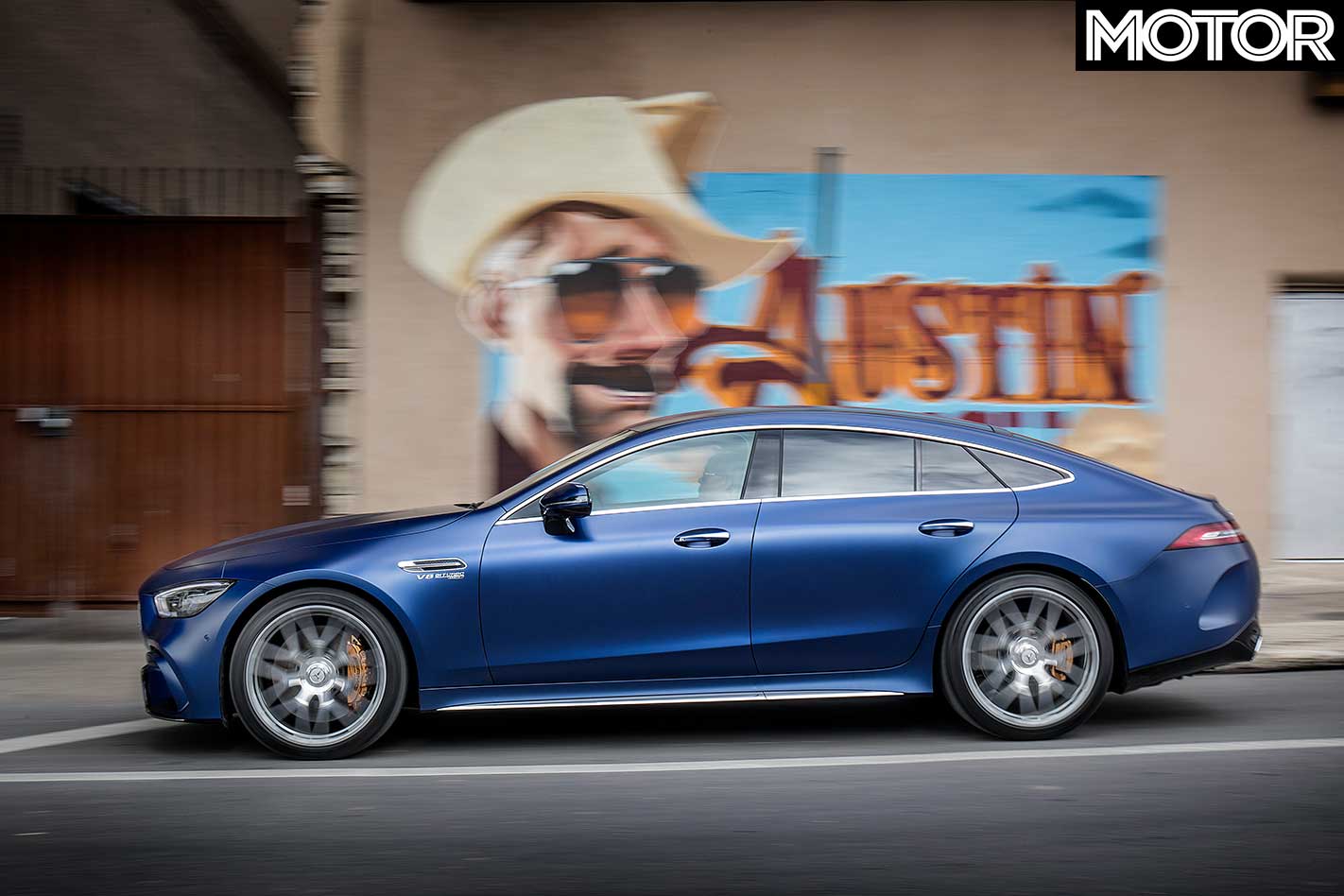
The model line-up complies with the marque’s usual levels of seduction. The GT43, powered by a 270kW 3.0-litre straight-six turbo, is clearly more about style over performance substance. The next rung, the GT53, squeezes a much more entertaining 320kW out of the same engine – and is supplemented by an extra 16kW and 250Nm via the EQ Boost Hybrid system.
Overseas markets get two versions of the force-fed V8 to choose from, we receive only the full-fat S. While the 430kW GT63 has already got what it takes to twist the driveshafts into a frenzy, the 470kW S variant is the real, tarmac-peeling, McCoy.
The GT43 is a cruiser and the GT53 ups the ante by a couple of notches, but only the GT63 S comes close to being as utterly addictive. Why does it have to be the S? Aside from the extra poke and mountain-hauling grunt, there’s other high-performance enhancements like the tauter air suspension, quicker rear-wheel steering and six remarkably clever driving programs complete with the trademark Drift mode.
While the two-door GT coupe comes with a bright yellow thumbwheel with varying stages of traction control, the four-door sister model is equipped with all-wheel drive as standard. Hence the GT63 S needed the drama of a Drift mode – just like its competitor, the BMW M5.
Switching off ESP opens the door to hell, but for maximum heat and full-throttle fire one must remove the electronic safety net completely. Interestingly, there are five steps. Select Race mode first, then go into Manual and switch off ESP completely. A screen then pops up instructing you to simultaneously pull both shift paddles.
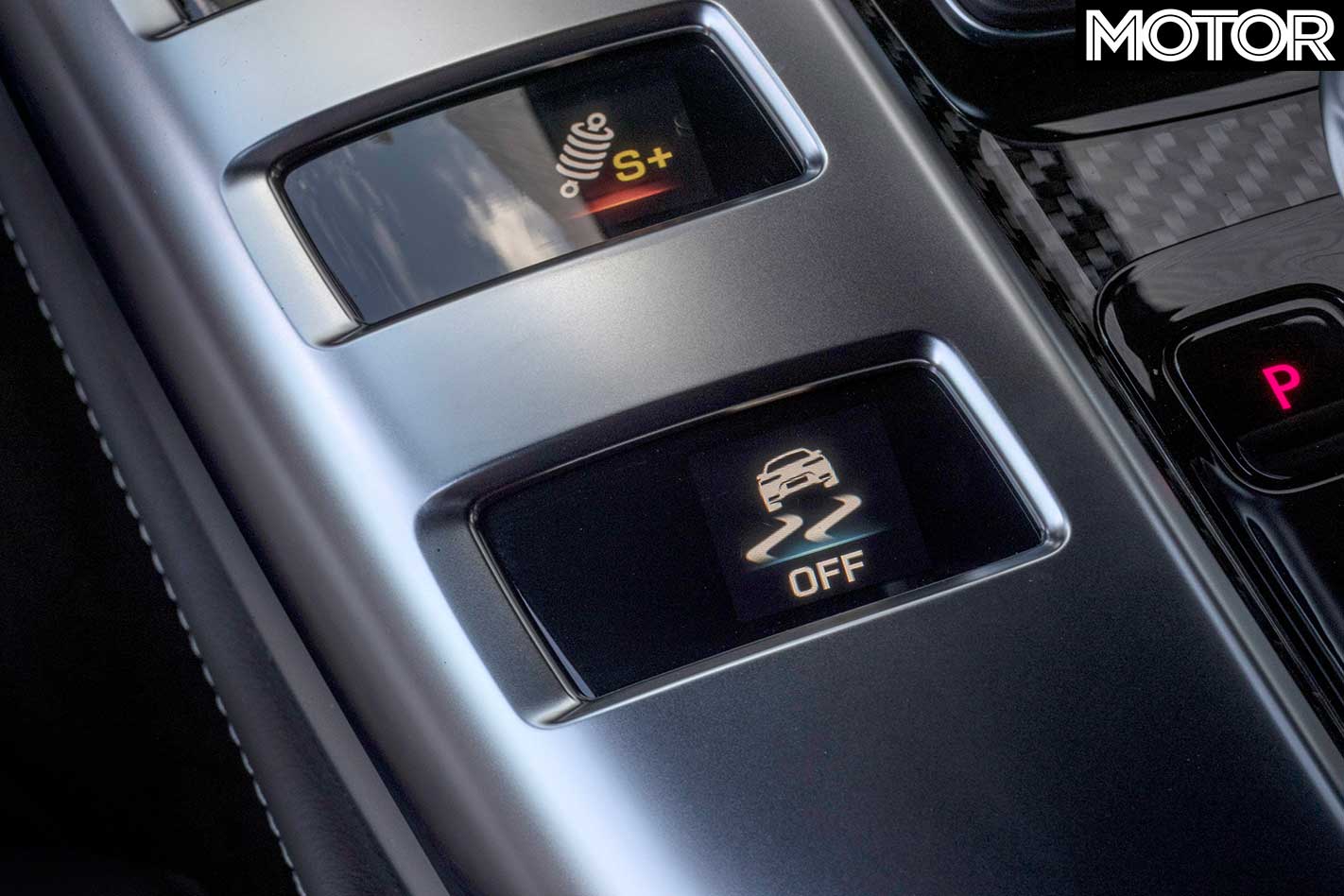
The final move is to confirm the setting. To do so, hit the right paddle one more time. At this point, an unhinged level of drift can be achieved. On the racetrack, hard cornering is a totally different ball game now, primarily because you look at most apexes through the side window. After only two laps, the tyre pressure sensors begin to beep for mercy, but after a brief pit stop we’re back out again, burning rubber with absolute dedication.
The way this car behaves and performs can be categorised in two very different dynamic halves. In addition to the familiar adjustable parameters like ESP and damper/suspension control, the GT63 S comes with a further enhancement known as AMG Dynamics.
The feature bundles the actions of stability control, 4MATIC+ torque distribution, rear-wheel steering actuation and limited-slip diff calibration in four fixed attitudes. They are labelled Basic, Advanced, Pro and Master. It all sounds confusing, but in reality it’s a treat.
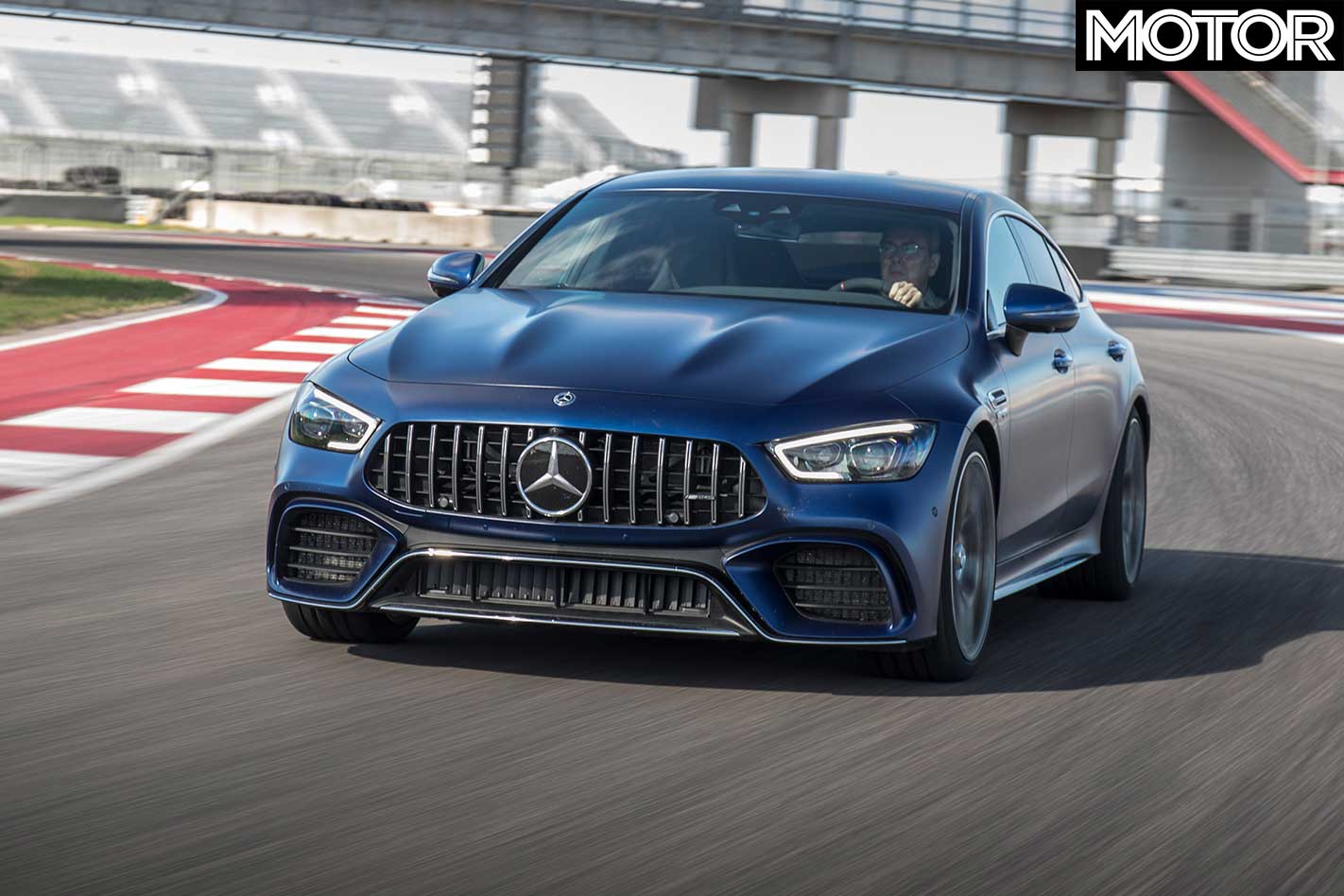
Every mode has its own DNA, which becomes more challenging as you move up the ladder to the no-holds-barred Master setup. Thankfully, everything can be fully personalised. While it isn’t possible to activate ESP in Master, it is, for instance, worth trying ESP off in combination with Basic mode. That way you have the attitude, but none of the exaggeration. It works really well on road and track. The staggered concept makes adapting easy without compromising confidence.
In certain AMG sedans (like the E63 S which finished second at PCOTY 2018), the Comfort setting for the dampers has been infamous for an overt lack of compliance. The new liftback takes no prisoners in Sport Plus and Race, either. However, there is enough travel and shock absorber mercy in Sport, which is impressive. Still, the ultimate verdict will come on truly unsettling Aussie back roads in the second half of 2019.
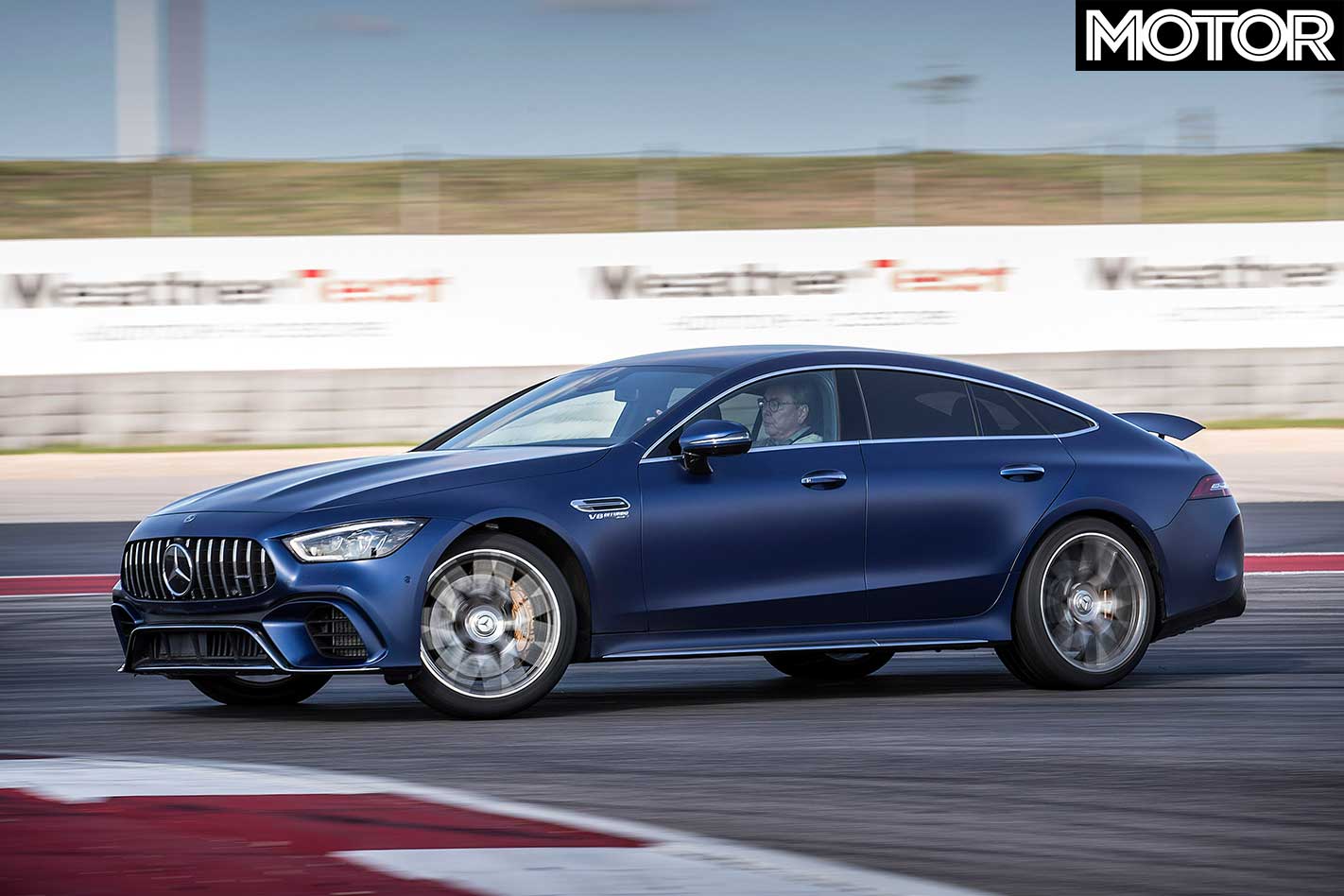
With the Master mindset logged in, body movements are kept handily in check. Cornering is encouragingly flat and any waywardness is kept to an absolute minimum. As always, tyre temperatures can spoil the fun, but even on hot rubber, the high-speed, fourth-gear esses – COTA’s biggest challenge – are wide enough to let you play with the line.
You can tweak the entry speed and connect to the following right-hander without losing too much momentum. Add to this the clamped-down roadholding, the cornering grip and the robust manners at the limit and you get a good idea of how speed and control join forces in this quite remarkable sports coupe.
Despite all the stability-enhancing trickeries, the 295-section tyres don’t take a lot of persuasion to paint the tarmac with vivid black lines through every second- and third-gear turn. Both aero kits, the standard one with the active rear wing and the ground-effects option with the eye catching fixed spoiler, produce negative lift all the way to V-max and help the GT63 S stayed glued to the ground.
The MCT is a gearbox with varying personalities. When in Race, it really kicks butt and hangs on tenaciously to every additional revolution it can coax out of the engine. Full-throttle upshifts keep stretching the friendship with the rev limiter and downshifts trigger an acoustic event like little else. However, the initial change from first to second can be a tad jerky.
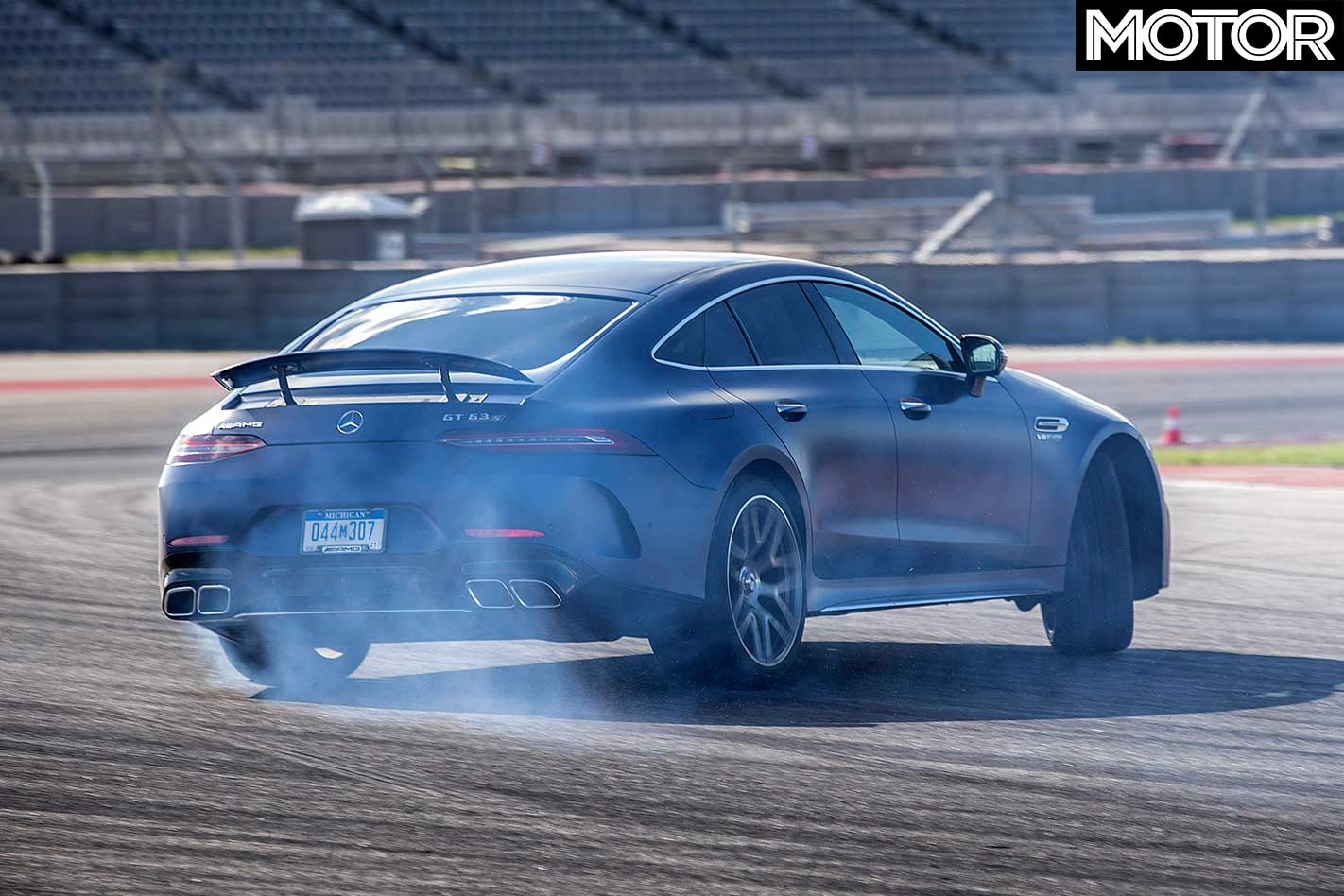
Although the steering does adjust accordingly to the selected drive mode, the balance is a touch too light as you wind on more lock. When pushed, the AMG GT63 S handles beyond expectations. It’s the modularity of motion that builds confidence, the way the chassis and steering interact with the torque flow and the broad scope of attitudes that range from mild slides to smoke-filled drifts.
When the big Merc turns in and the stubby rear end swings around, you can leave it ridiculously late before feeding in large amounts of oomph and winding on opposite lock.

However, throughout our time behind the wheel a rather large elephant constantly remains in the room. A handicap this behemoth on steroids can’t quite ever escape – its weight. The GT63 S rolls onto the scales at a not so Lite ’n’ Easy 2045kg. Still, shifting that mass is effortless. Hence the hero, M5-beating 0-100km/h time is utterly believable. Congratulations must go to AMG for bewitching the laws of physics.
Interestingly, on the inside, this four-seat coupe offers enough rear head and legroom – even for tall adults. However, entry and exit are compromised by the bulging sill, bulky front seats and that sloping roof line. The 461-litre boot is both wide and flat, but can be extended to wagon-status with the rear seats folded.
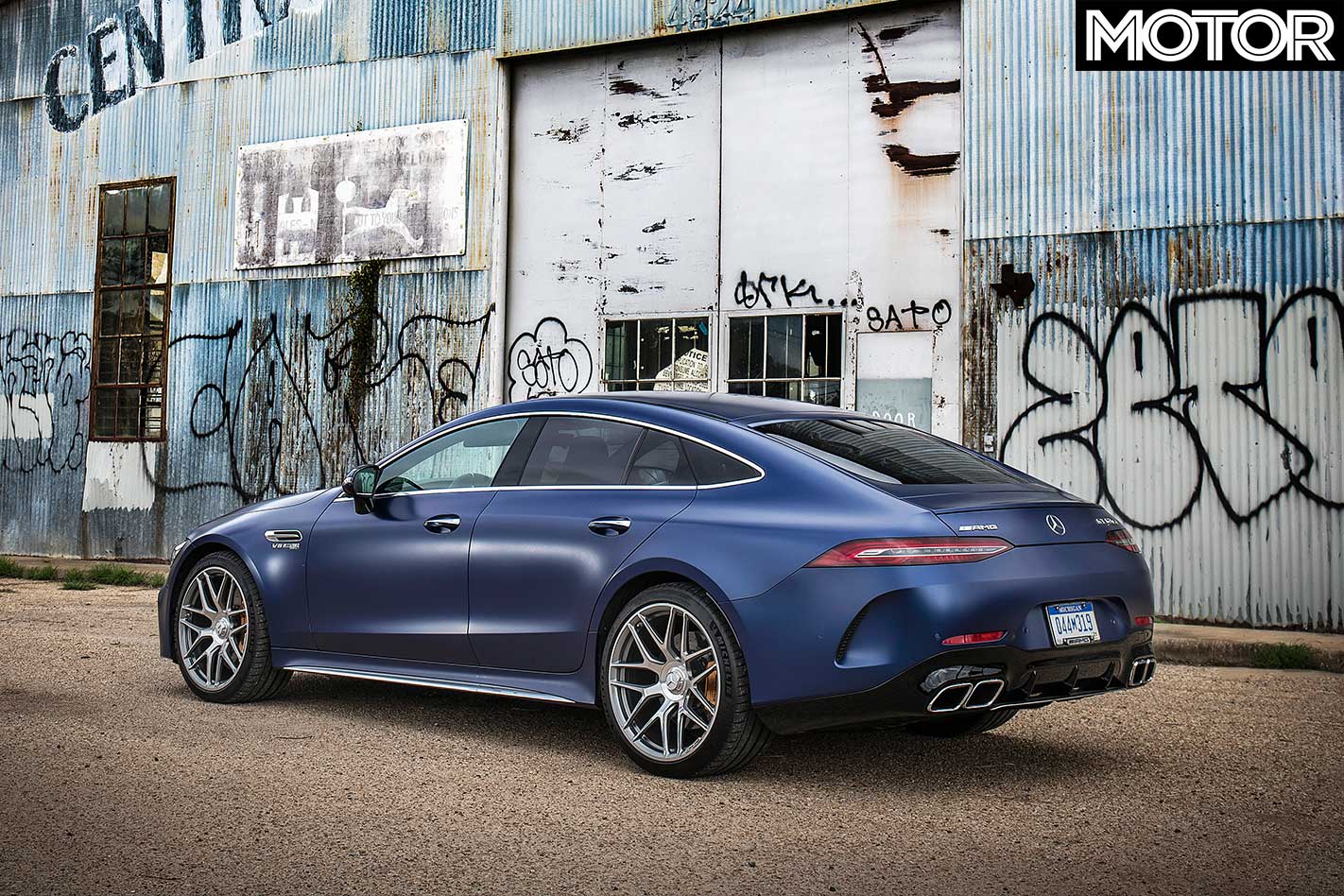
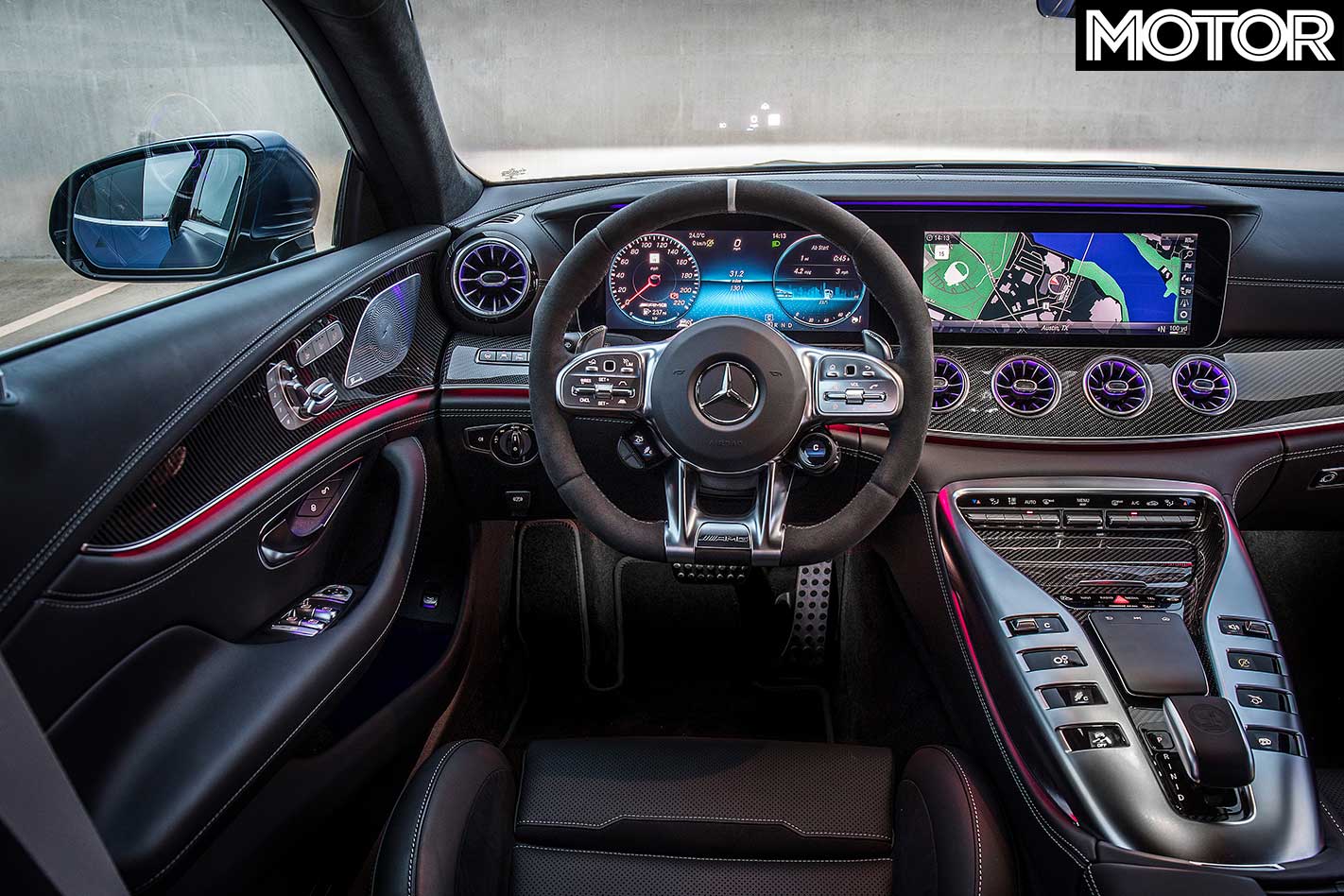
There are some fiddly ergonomic cabin flaws, too, as the new touchpad and touch-sensitive controls on the new steering wheel are both hit and miss. The new A-Class does the former much better. With so many buttons and gadgets you can sit in the parking lot for an hour before even taking off. Although it does take style elements from the AMG GT and the S-Class, so it is an attractive design.
Ultimately the new straight-six turbos (one with a hint of electrification) will almost certainly do the lion’s share of GT 4-Door business. They’re compelling cars for sure with an advanced concept (thanks to the 48V electric system) and employ a great all-round nature that will garner mass appeal. But they don’t even come close to the outlandishly fast and wholly awesome GT63 S. It’s a beast we’d never tire of taming.
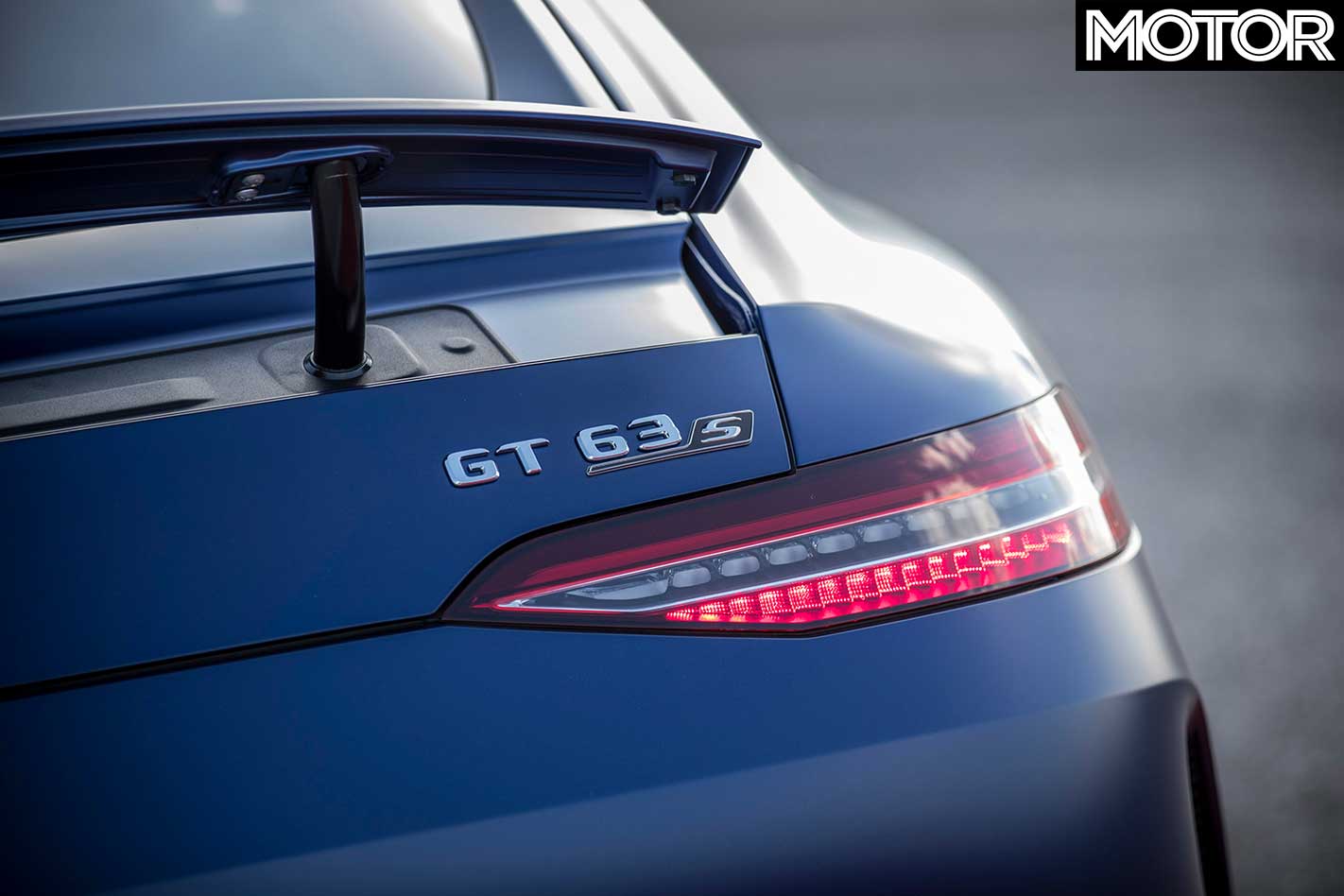
FAST FACTS 2018 Mercedes-AMG GT63 S 4-Door
BODY: 5-door, 5-seat liftback DRIVE: all-wheel ENGINE: 3982cc V8, DOHC, 32v, twin-turbo BORE/STROKE: 83.0mm x 92.0mm COMPRESSION: 8.6:1 POWER: 470kW @ 5500-6500rpm TORQUE: 900Nm @ 2500-4500rpm WEIGHT: 2045kg POWER-TO-WEIGHT: 230kW/tonne TRANSMISSION: 9-speed automatic SUSPENSION: multi-links, air springs, adaptive dampers (f/r) L/W/h: 5054/1871/1447mm WHEELBASE: 2951mm STEERING: electrically assisted rack-and-pinion BRAKES: 390mm carbon-ceramic discs, 6-piston calipers (f); 360mm carbon-ceramic discs, single-piston calipers (r) WHEELS: 21.0 x 9.5-inch (f); 21.0 x 11.0-inch (r) TYRES: Michelin Pilot Sport 4 S; 275/35 ZR21 (f); 315/30 ZR21 (r) PRICE: $300,000-plus (estimated)
PROS: Epic performance; rear-drive bias; handles weight well CONS: Harsh gearchanges; light steering; weight; price RATING: 4.5 out of 5 stars
The beast is yet to come
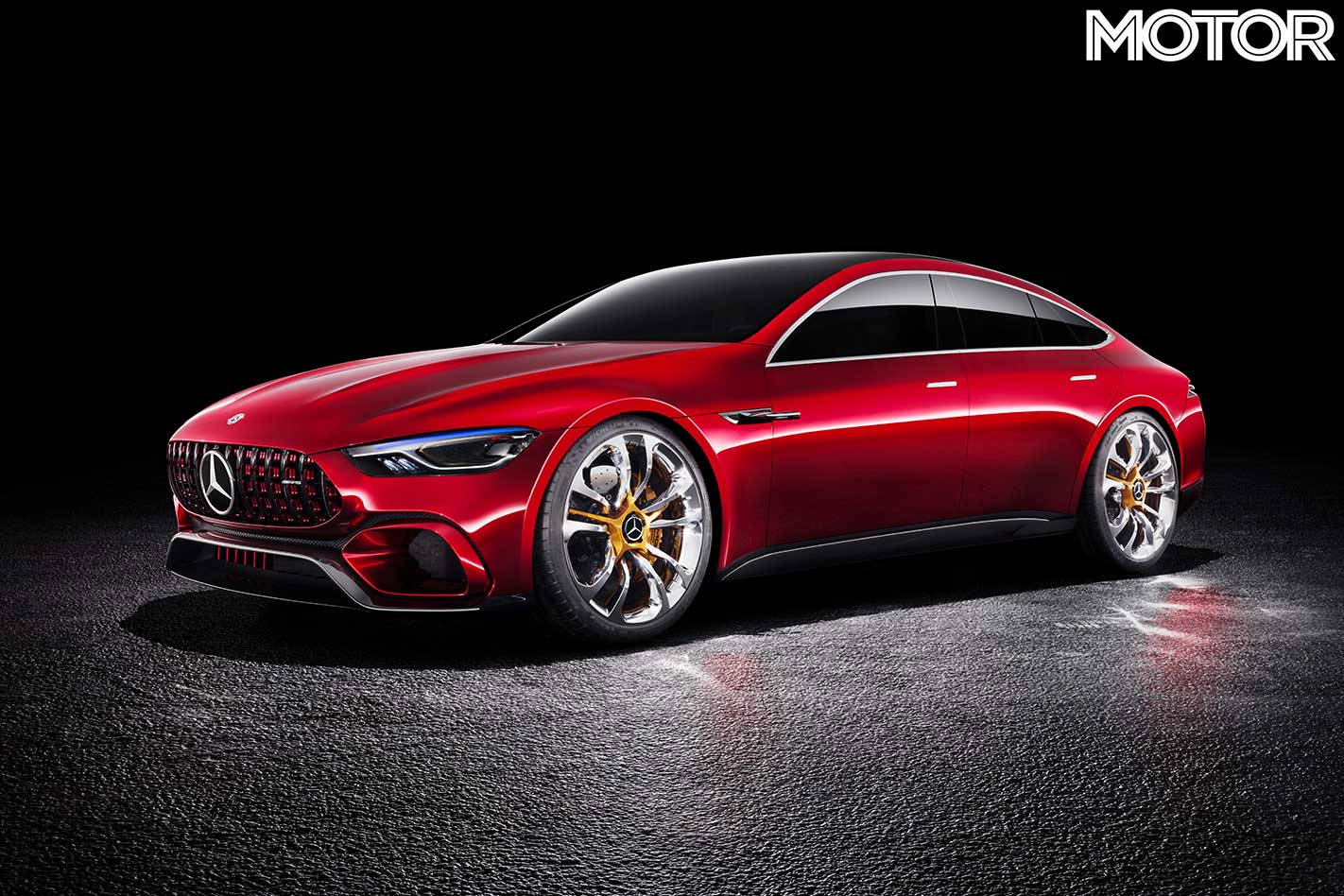
Not content with 470kW from the conventional twin-turbo V8, AMG is readying a hybrid version of the GT63 S 4-Door that promises big advances in performance.
Rumoured to have around 600kW and reach 100km/h in less than 3.0 seconds, the hybridised 4-Door will be primed to take on the likes of the Porsche Panamera Turbo S E-Hybrid. The car will be based on the GT Concept shown at the Geneva motor show in 2017, as well as the production GT63 S featured here. Hybrid power is believed to play a key role in future AMGs.
You must have played the game: nominate the cars you’d park in a fantasy garage, money no object. Do you go for a selection of exotics, or six contemporary cars each to play a different motoring role, or an assortment of old and new?
Motoring writers, having driven just about everything on wheels, still love acting out the game, most frequently at dinners after new-model launches and preferably with a couple of equally passionate designers or product planners.
I still play the game with enthusiast friends, despite knowing that the vagaries of mood mean today’s carefully considered selection may not survive into the morrow.
In late 1979, as editor, I decided the subject deserved a magazine feature. Five Wheels contributors were asked: If you could have any six cars in the world, what six would find a place in your garage? Each was given what I thought was a realistic word count: 750. Or 3750 words in total, so a serious feature. Trouble was nobody wrote to length. Bill Tuckey, bless him, submitted over 1500 words. Don Hogg went closest to the target with just over 1000 words.
Paul Higgins, making the point that he’d already owned 62 cars, including six Rolls-Royces, plumbed for a 6.9-litre Mercedes S-Class, BMW M1 (because it combined German engineering with Italian style), Range Rover, 911 Turbo and an Alfasud Sprint, plus a full-to-the-brim petrol tanker. John Mellor also chose a Range Rover, plus Series III Jaguar XJ6, VW Scirocco GTI, 1921 Hispano-Suiza, Lambo Countach (for its concept car styling … did he ever drive one?) and a Lotus Super Seven “to clear the cobwebs from your brain.”
For Don Hogg, nothing beat a silver, gull-wing Mercedes 300SL, an object of fantasy from childhood. His first car, a blue Renault 750, also made the list, along with a Lagonda, Saab Turbo (remember, this is 1980 when Saabs were mostly great), 4.2-litre Commodore wagon and Jeep Cherokee.
Tuckey choose to divide his selection into categories: for commuting he went for a Renault R4; Touring: a 275 GTB4 Ferrari; Fun: 1275 Cooper S; Restoring; XKSS Jaguar; Veteran/Vintage: Bugatti Type 41 Royale; and Historic Racing: Maserati 250F Grand Prix car.
Rereading the story, I have no idea how Tuckey’s two serious errors of fact crept into his piece and, even now, I remain embarrassed I didn’t spot them: No way was the great Lancia Aurelia front-wheel drive; and the original 1964 Pontiac GTO came with a 389 cubic inch V8, not the 426 cubic inch V8 Tuckey mentioned.
MOTOR’s Sweet Dream concepts
Matt Whelan opted for the same grouping idea, though his headings were different and he admitted his real preference was for a Ducati 900SS motor bike. Nostalgia: Cobra 427 S/C; Collector’s item: Falcon GT-HO Phase III; Touring car: Holden Commodore SL/E with a hot six-cylinder engine; Personal car: Alfasud Ti; The wife’s car: Honda Accord sedan; Recreation: a Mercedes-Benz motorhome.
Along with a disparate collection of cars, there’s great writing here – the best piece, surprisingly in a field that includes the talent of Tuckey and Higgins, is surely Don Hogg’s – just don’t expect any brief reads. Or 21st century political correctness. Why not try compiling your own list?
Modern family
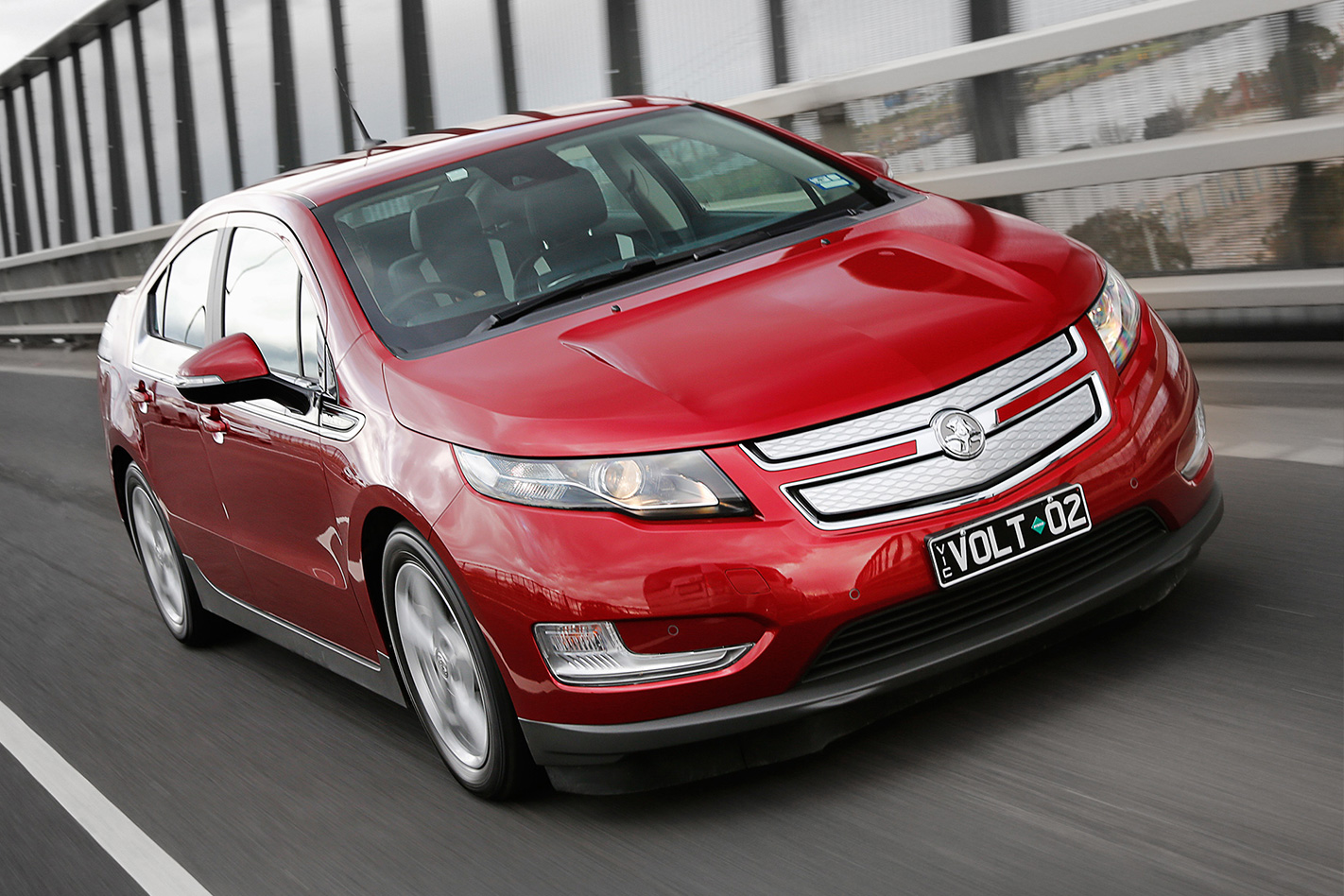
In the 38 years since ‘Fantasy Six’ ran in Wheels, Tuckey, Higgins and Whelan have all died. Just John Mellor, who publishes the successful automotive industry website GoAuto, and Don Hogg, your original old-style journalist, survive. Today, Mellor’s selection is rather different, (except for the inclusion of a Hispano-Suiza) and includes the Porsche Panamera GTS (everything the 928 was going to be), Mazda MX-5, Holden Volt (EV ability with ICE back-up, for $35K used), BMW X5 40d Sport, and Ford Fiesta 1.0-litre three-cylinder turbo – the most fun you can have in the suburbs.
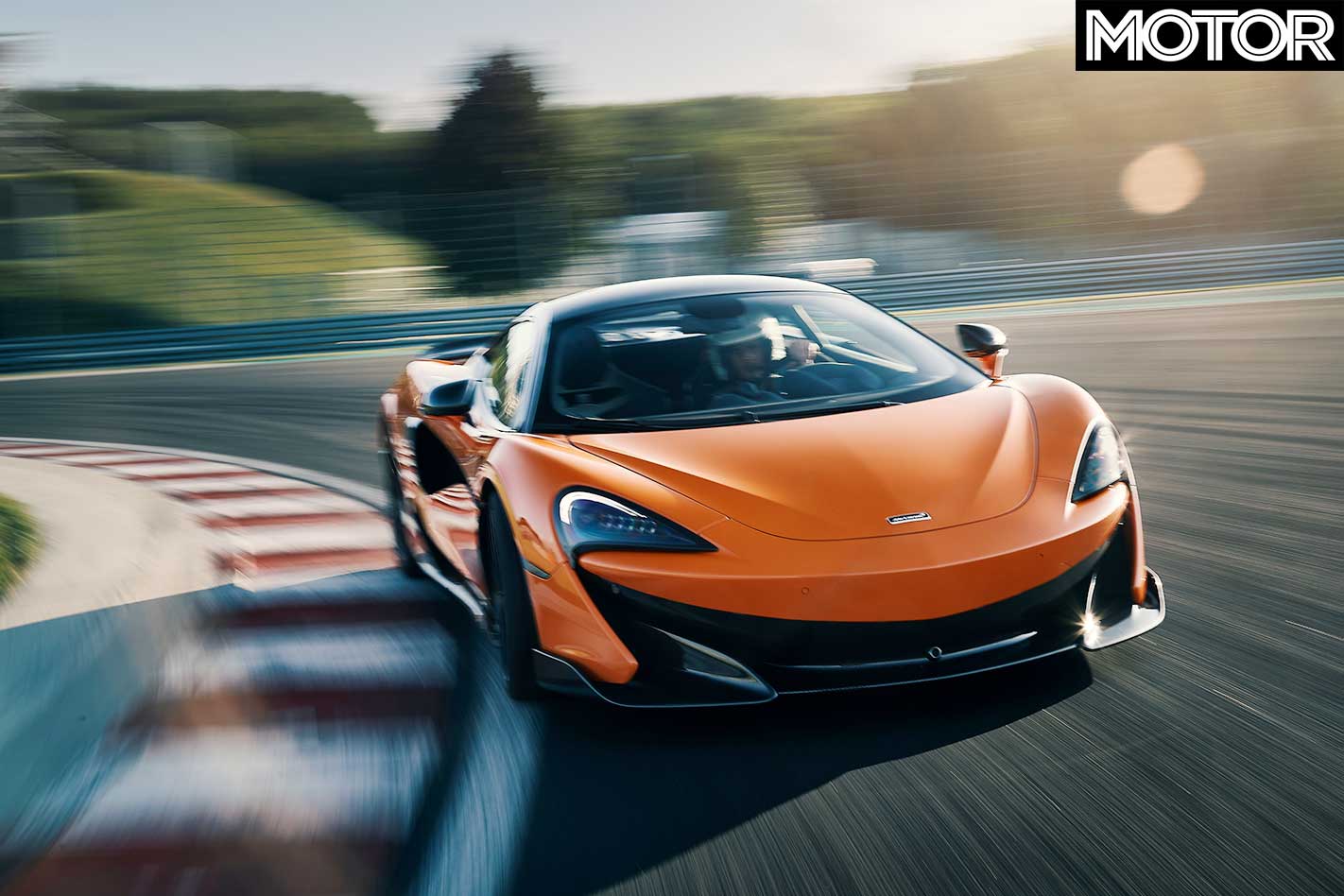
Fifty three kilometres… Twelve laps of the Hungaroring in McLaren’s new 600LT. That’s enough to understand that its newest track-focussed car is, indeed, rather more adept at the job it’s designed to do than its 570S relation, which itself isn’t exactly a low bar.
But then it should be better given the 600LT is the first McLaren Sport Series model to get the LT treatment. If you need a reminder what that is, it’s shorthand for Longtail, harking back to McLaren’s iconic F1, and the longer GTR version which was created to keep it competitive at Le Mans.
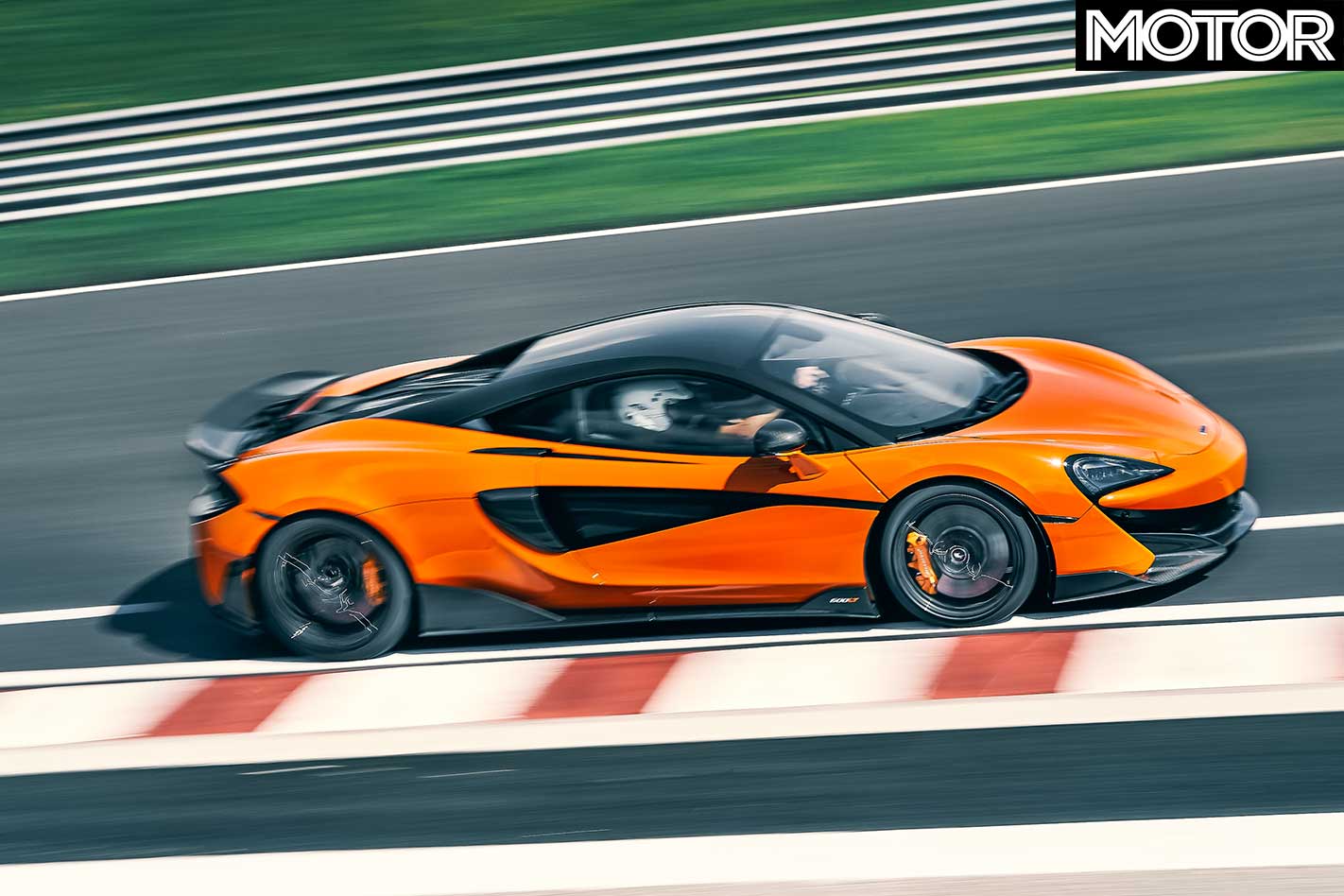
Longer, too, though here we’re only talking 74mm. Long-ness, it seems is relative. Those body revisions do help McLaren achieve its goal of producing downforce, so it’s a credible link.
There’s 100kg of downforce developed at 250km/h where its 570S relation is neutral at the same speed. That is enabled by a combination of the addition of a fixed rear wing and revised front and underside aerodynamics culminating in a sizeable rear diffuser, the 600LT’s revisions also cleaning up how the air travels along its flanks.
Cleaner and more efficient, then, and lighter, too, the 600LT losing 100kg in mass over the 570S for a quoted, lightest, dry weight of 1247kg. To achieve that you’ll need to be fairly masochistic, the full weight loss requiring the deletion of ‘luxuries’ like air-conditioning and audio equipment. That’s a step too far.
Leave them in and your LT will weigh around 85kg less, thanks to a cumulative effect of lighter suspension, brakes, wheels and seats, thinner glass and carpets. The exhaust, too, shortens its path, and reduces mass, by exiting out upwards aft of the engine cover. That it adds some theatrics into the mix at the same time is a welcome by-product, too.
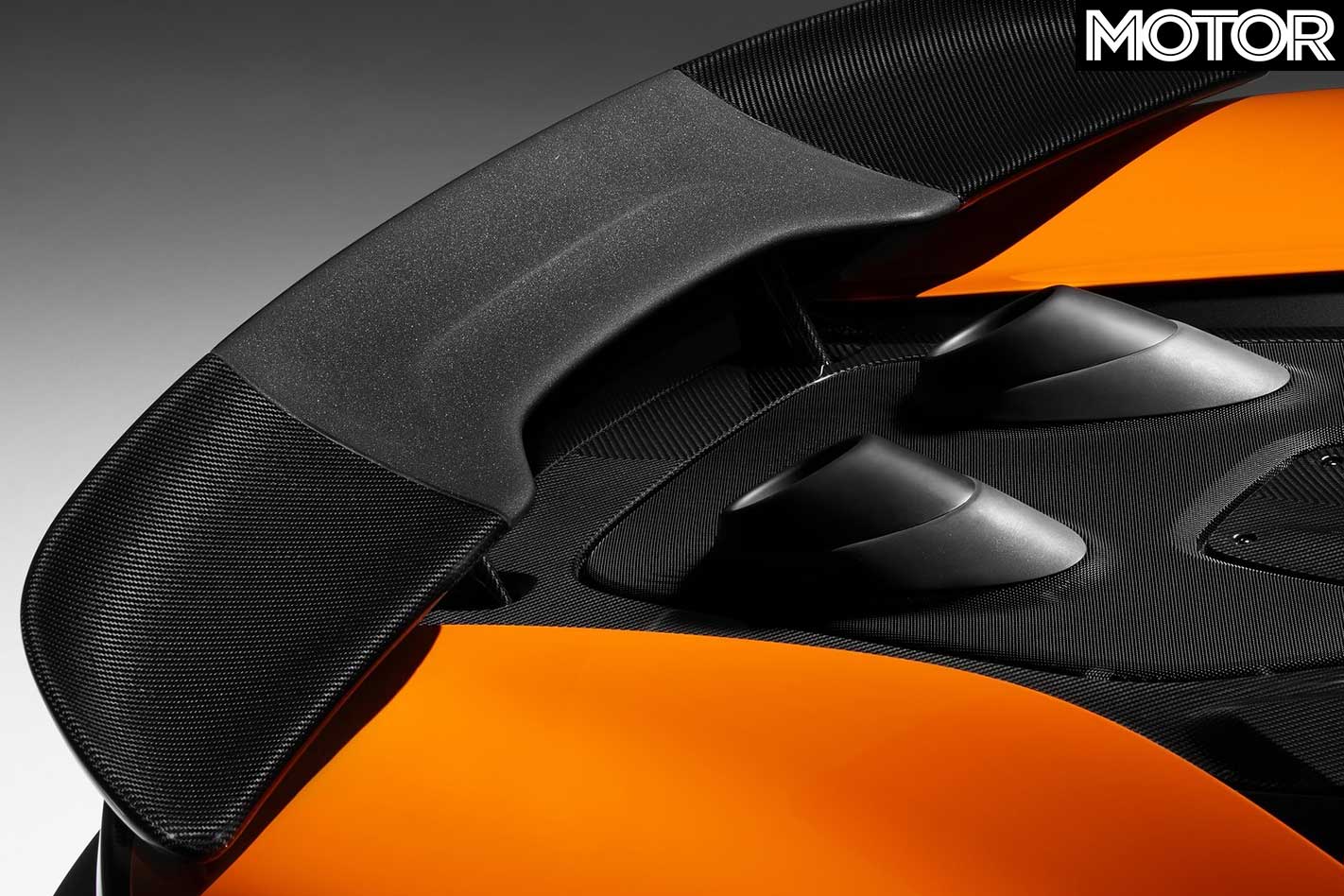
That freer-breathing exhaust, combined with some ECU trickery ups the overall output by 22kW to a total of 441kW. That higher power figure is produced by McLaren’s 3.8-litre twin-turbo V8 when it’s showing 7500rpm on its rev counter, peak torque of 620Nm developed at 5500rpm and hanging around until 6500rpm.
All that drives the rear wheels through a seven speed-SSG paddle-shifted transmission. Hook it up all correctly, or simply use launch control, and you’ll cover the 0-100km/h sprint in 2.9 seconds on your way to the 600LT’s quoted 328km/h maximum. That’s enough to level-peg with its contemporaries in the supercar world and, get this, run away from its iconic F1 relation all the way up to 300km/h, after which the older car gets into its stride and surges ahead to achieve its 386.4km/h party trick.
It’s fast then, as those 12 laps around the Hungaroring demonstrated. But circuits, whatever the thinking behind the 600LT’s revisions, won’t be where it’s used most. No, the LT having to work predominantly as a road car, where those changes could lead to some compromises.
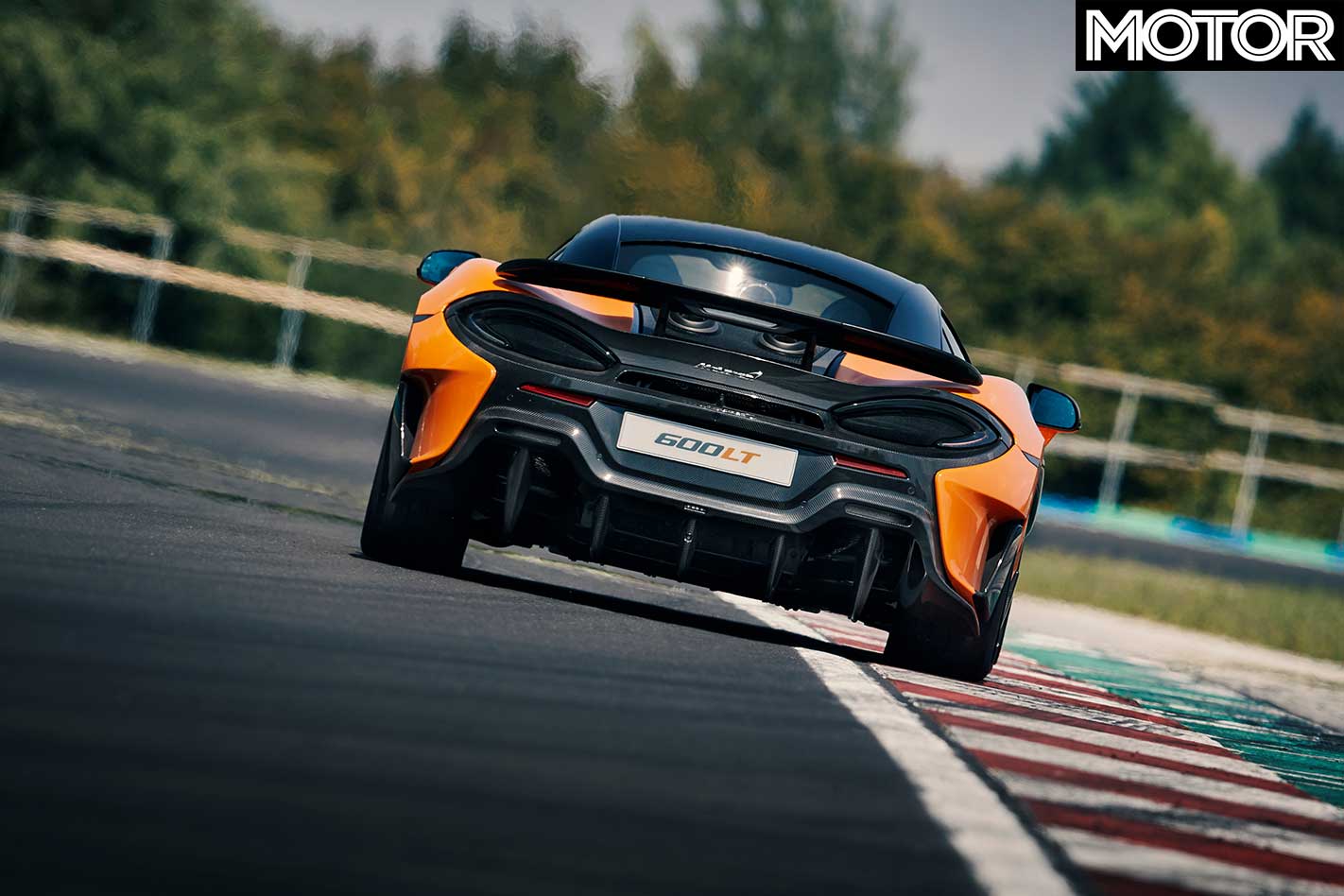
We’ve a day with it, in Palm Springs, the best roads rising out from the golf clubs and gated communities below, winding into the mountains above. As the elevation gains, so too does the scenery, from desert to forest, the tarmac following the topography by meandering up the mountainside.
The surface is the antithesis of a smooth, wide racetrack – it’s imperfect, yet utterly perfect with its undulating, bucking and twisting corners not dictated by a designer, but the landscape. It creates a real challenge for any car, let alone one as overtly focused as the 600LT.
Sitting a third of an inch lower, the 600LT borrows some of its suspension elements from its 720S relation. Lighter, yet stiffer, the front spring stiffness is increased here by 13 per cent, the rear by 34 per cent, the roll bars, too, increasing in stiffness by 50 per cent at the front and 25 per cent at the rear.
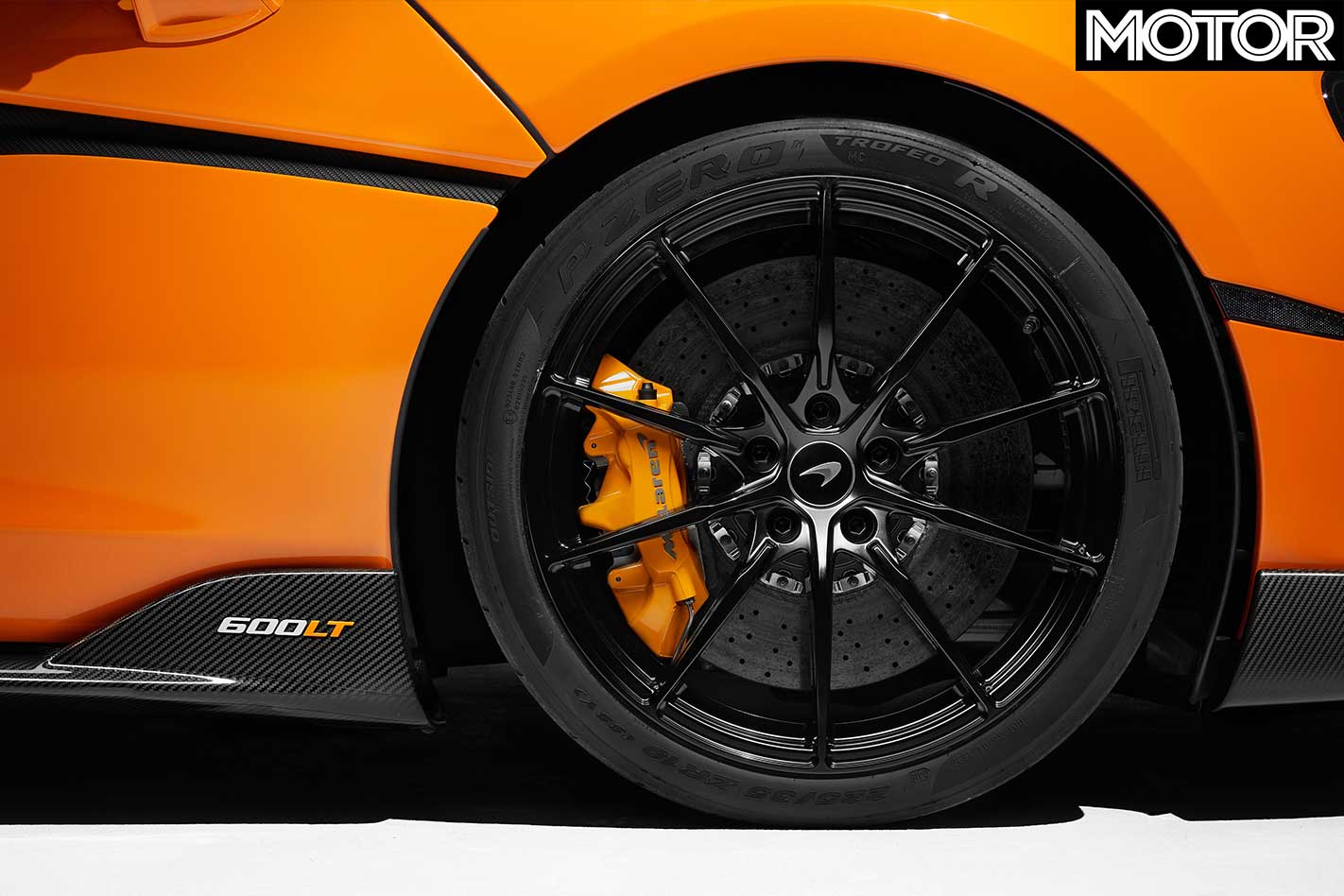
The wheels and tyres attached to that suspension are about 4kg a corner lighter and the carbon ceramic brakes remove a further 1kg a corner. Hence a useful part of the 600LT’s weight loss is where it matters – unsprung.
You feel that in the sophistication of its wheel control, the chassis obviously more taut, but the focus isn’t at the detriment of the ride quality. You quickly learn that ridges and imperfections in the surface don’t result in uncomfortable and unsettling jolts or knocks through the suspension, which hangs off aluminium structures attached to the 600LT’s light and stiff carbon fibre MonoCell II monocoque.
That ability to smother isn’t at the expense of feel. The LT is richer in its information, with greater detail available to you. It manages that clever balance of informing without overloading, that’s instrumental in allowing you to both exploit, and enjoy its heightened agility.
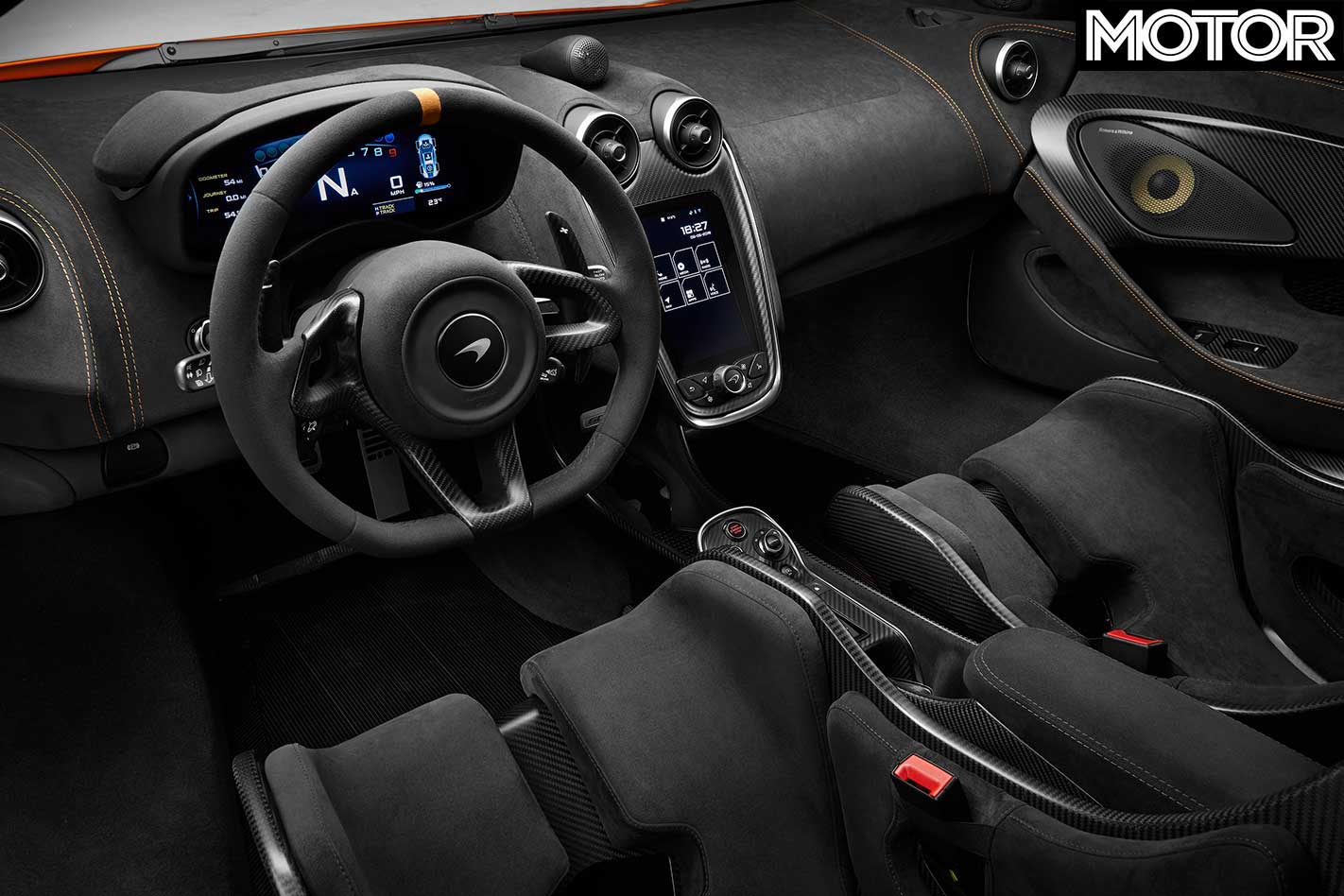
Turning the steering wheel in any McLaren is a reminder why we all hark back to hydraulic power-assisted racks, the Woking firm doggedly hanging onto the technology others have binned in the pursuit of economy. It’s done well to resist the zeitgeist, as the steering is one of the LT’s signatures, the immediacy of the turn in, the faithfulness of the front-axle’s response being key to its increased alertness.
So, too, is McLaren’s tyre choice, the 600LT getting a bespoke developed Pirelli P-Zero Trofeo R tyre, which on the front axle is 225/35 R19 and 285/35 R20 on the rear. It’s a sticky, track-biased tyre, developed specifically to get the best from the LT’s numerous changes over the 570S.
Arriving at a corner, ever faster, you can stand on the brakes. The pedal is firm, but hugely responsive, its immediacy aided in no small degree by a brake booster derived from McLaren’s current Senna flagship. The stopping power is never in question, but the tyre’s ability to convert it, keying to the surface without unsettling squirm or movement is instrumental in the LT’s huge, confidence-giving stability.
Ease off the brake, trailing into a bend and the nose goes exactly where you want it. There’s no slack in the translation from what you’re asking for at the steering wheel to the change of direction at the nose.
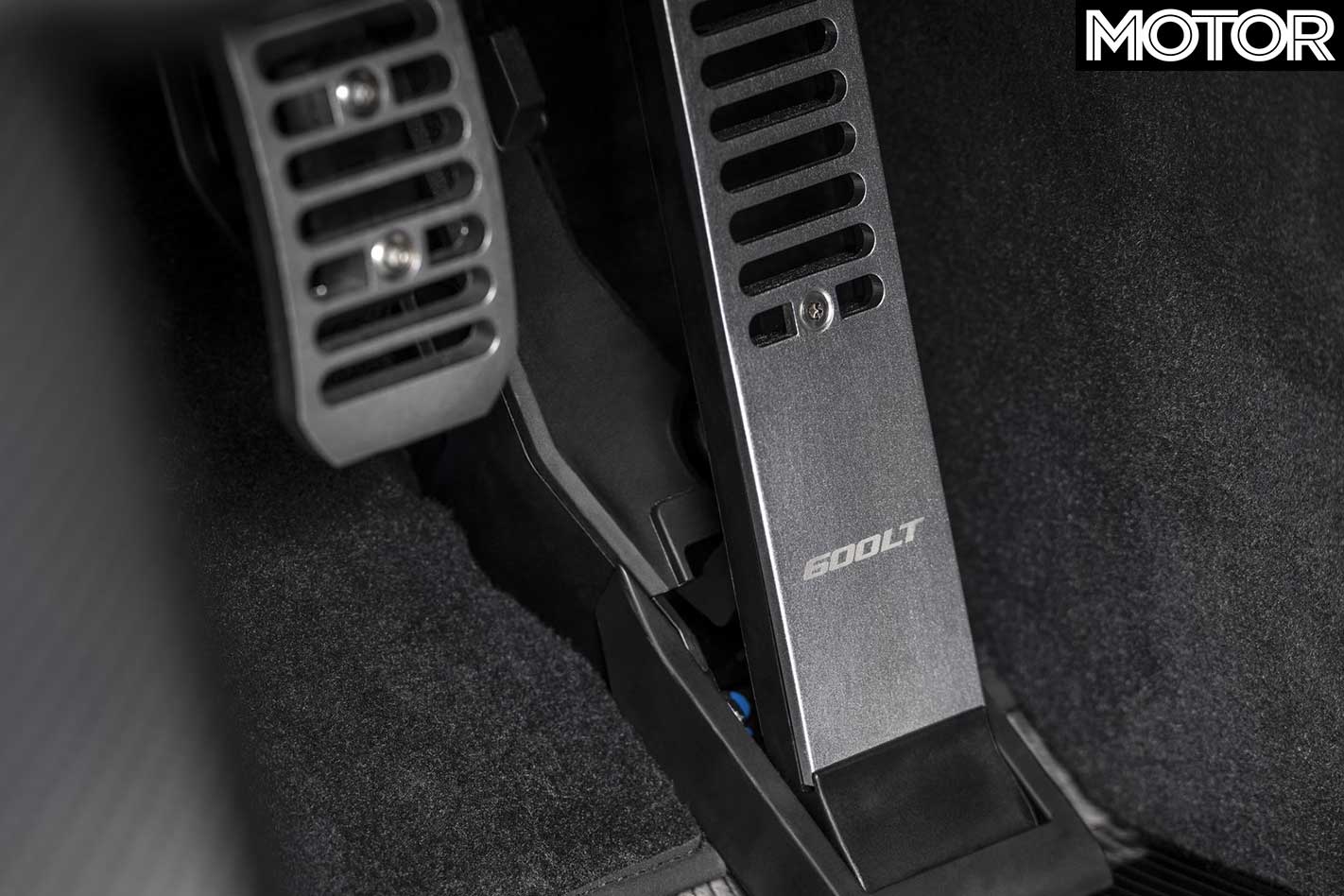
On the tarmac here you’ll not want any of the damper settings selected other than Normal. Pick Sport or Track and the 600LT loses its composure, the dampers’ additional firmness adding unnecessary frequency to the proceedings, unsettling and corrupting, to the detriment not just of comfort, but confidence, and as a result, speed.
That’s true of the transmission, too. Here you’ll want the fastest, though not most aggressive, Track mode. There’s nothing untoward with the shift in Normal, it slipping though the seven gears adeptly.
Track ups the speed, firing through the gears with an intensity that’s more in keeping with the 3.8-litre V8’s ferocious appetite for revs when it’s chasing its redline. Avoid the Sport choice, its inertia push kicking each gear through, McLaren saying some buyers like the abrupt shove it generates, but here, in the LT it simply feels uncouth, at best and, if you’re pulling for a gear as you’re still exiting a bend, it’ll unsettle the car’s otherwise fine balance.
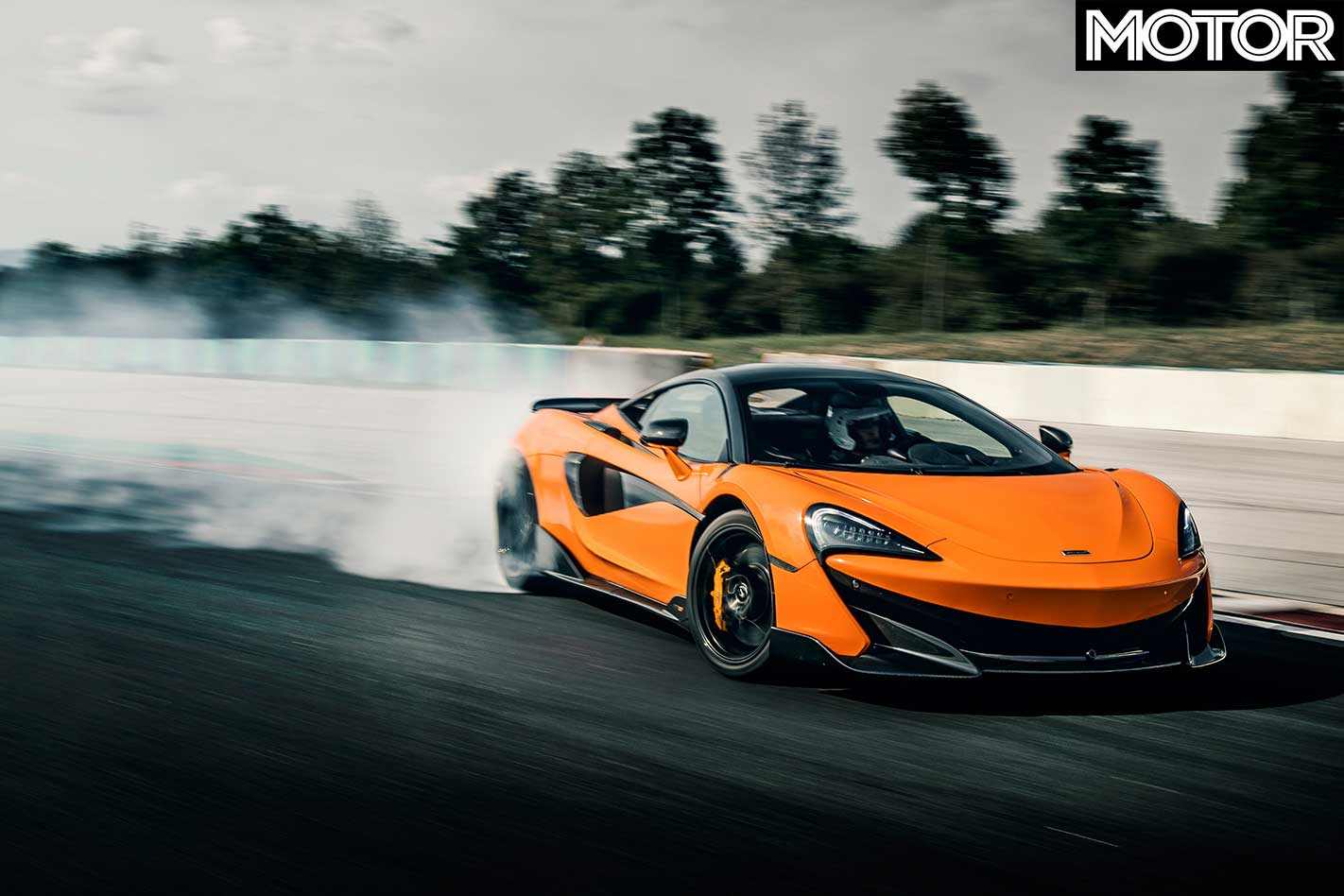
On the road there’s no need to entirely unburden the stability and traction control systems, which in dynamic mode allows the 600LT enough free reign to allow the line to be adjusted by a judicious lift, the LT’s responses such that there’s no reason to fear it moving underneath you. You’ll scarcely need to so high are its thresholds, but on a track it positively encourages you to do so.
Here on the road it’s the precision that defines it, allowing you to pick a line with absolute confidence, the LT’s poise so biddable and easily read to translate to incredible pace. The chassis facilitates that, but the force enabling it is generated by McLaren’s 3.8-litre twin-turbo V8.
McLaren’s V8 has powered every car in one form or another since McLaren Automotive was formed. In the Sports Series models it’s 3.8 litres, swelling to 4.0 litres in the 720S and Senna. Here it doesn’t feel like any poor relation for its lack of 200cc.

Like the suspension, you could read its specification and think it’ll offer compromises, the height of the peak torque up the rev range, the similarly high engine speeds required for maximum power, too.
There’s no denying there’s a duality to it, needing those revs to produce its best, but that’s not to say there’s nothing at lower revs. The chief characteristic is of a rising, frantic urgency as the engine speed rises, the kick and change in intensity above 6000rpm not dissimilar to an old Type-R Honda VTEC when it comes on cam.
That’s to its benefit, the LT as adept in traffic as it is climbing a mountain road, its range expansive, yet there’s real incentive to dig deep and enjoy the heady delights at the top of the rev-counter needle’s sweep. Do that and the pace is ferocious, the engine feeling like it’s got no internal inertia as it chases the last couple of thousand rpm. It’s impossible to resist it whenever there’s space to exploit it.
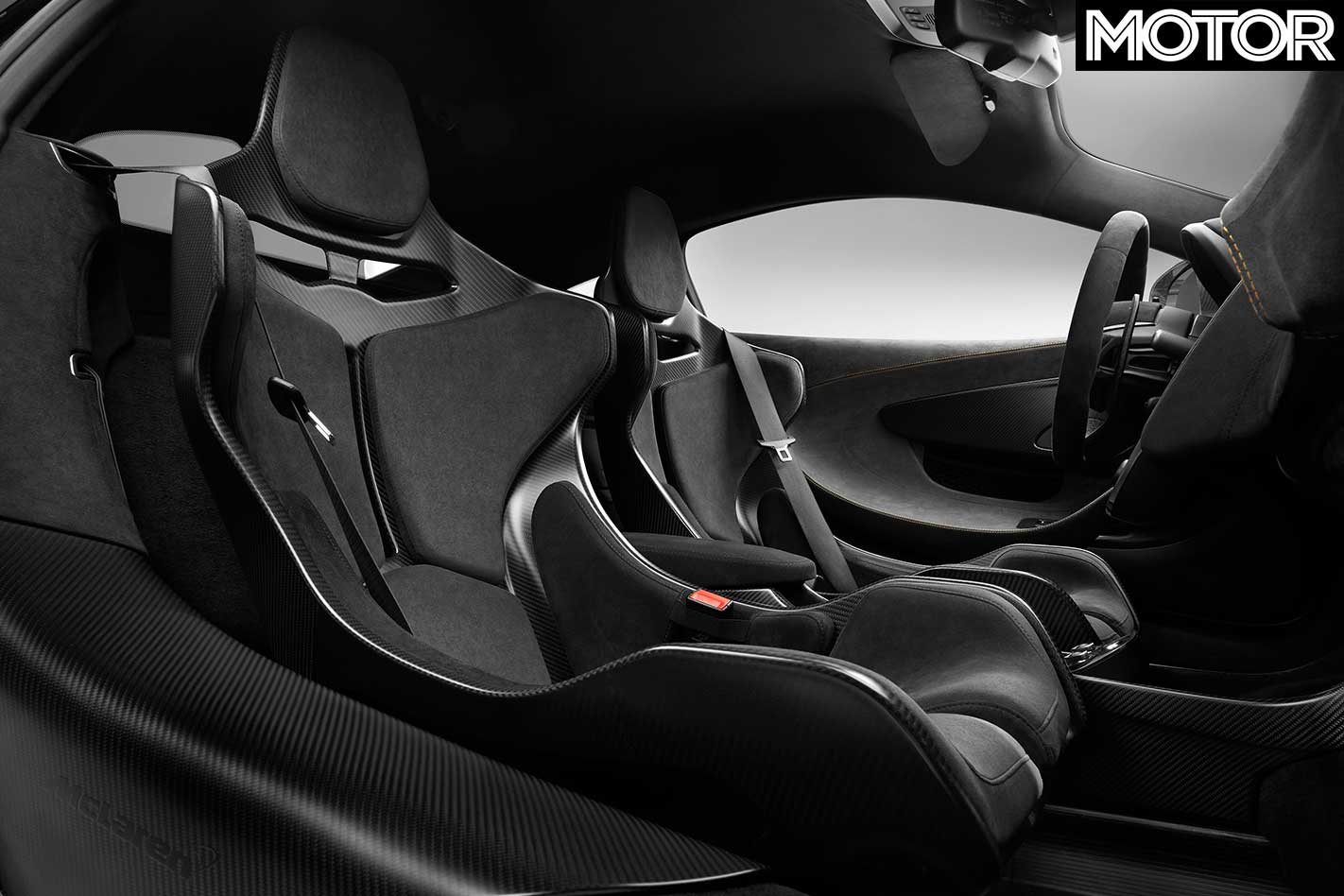
With that transmission in Track mode, you’ll run a gear lower, just for that addictive, instantaneous response the engine brings. The massive speed is signalled by an exhaust that’s gloriously vocal, its closer proximity to your ear allowing you to enjoy the exotic notes emanating from it that much more.
If you’re in a hurry, it’s dark or you’re in a tunnel, the exhaust doesn’t just deliver sound, but visuals too, with blue burn super-heated gasses evident under heavy throttle loadings, with orange flames joining the pops and crackles on the overrun.
The LT is, by definition, more engaging, more visceral and exciting, yet it achieves that without being mired in any compromise. That is a quite brilliant trick, and one which makes the 600LT not just one of McLaren’s best cars, but arguably its best car. Given they’re currently building the Senna, that might be considered a bold claim, but one that stands up, on road and track.
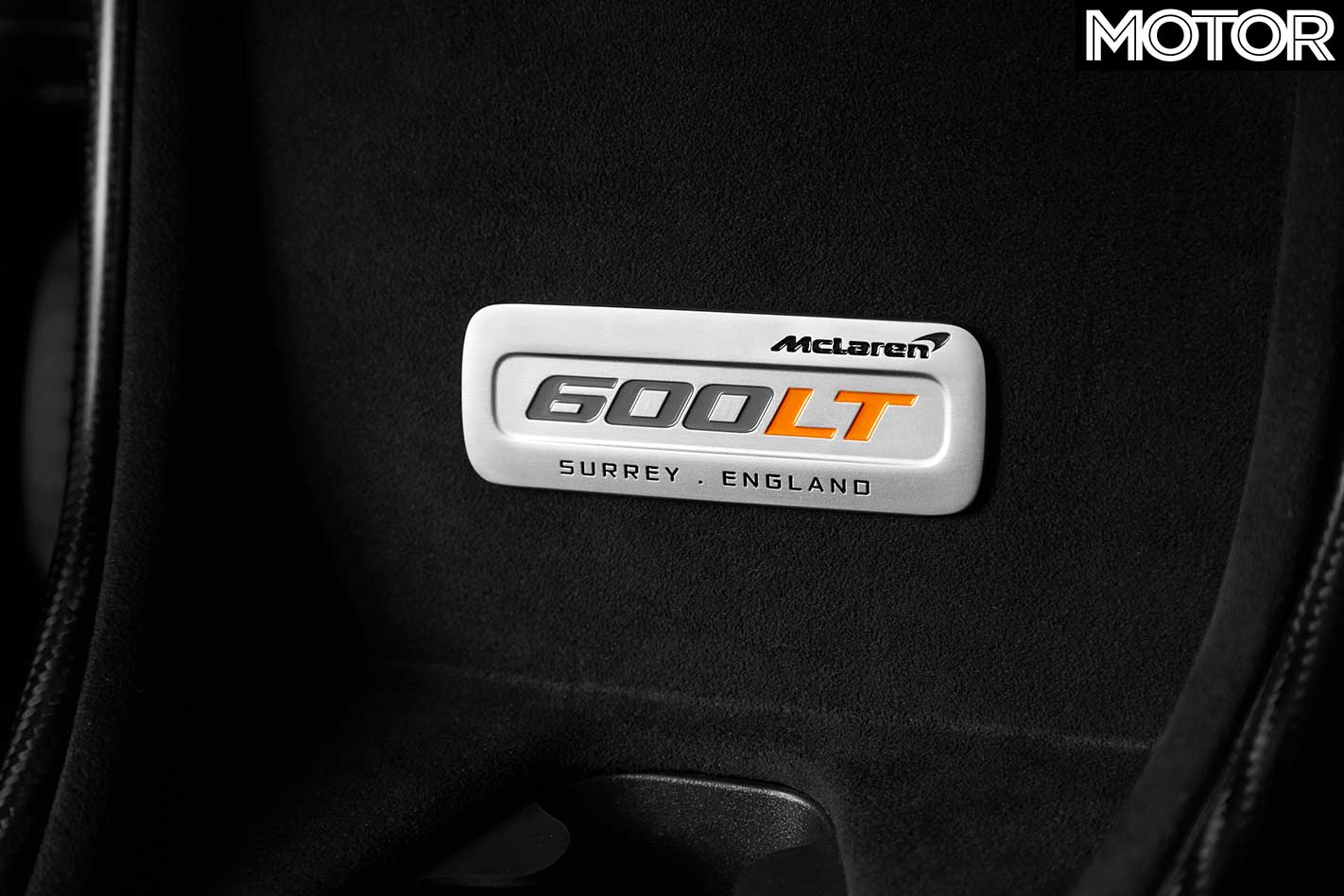
That’s to be applauded, too, as being based on the entry model in the range it’s arguably a ridiculous bargain; insane as that might sound when applied to a car with a sticker price of $455,000. Yes, that is before you’ve started ticking the options boxes, or even more dangerously for your bank account, asking the dream-works MSO operation to get involved and personalise it, but the LT feels worth it.
It’s a more considered, deliberate choice than its lightweight, track-focused rivals like Porsche’s GT3 RS, or regular supercars like a Ferrari 488 – and it loses nothing to them. Trust us, you won’t be disappointed wherever you drive it.
FAST FACTS 2018 McLaren 600LT
BODY: 2-door, 2-seat coupe DRIVE: rear-wheel ENGINE: 3799cc V8, DOHC, 32v, twin-turbo BORE/STROKE: 93.0mm x 69.9mm COMPRESSION: N/A POWER: 441kW @ 6500rpm TORQUE: 620Nm @ 5500-6500rpm WEIGHT: 1247kg (dry) POWER-TO-WEIGHT: 354kW/tonne TRANSMISSION: 7-speed SSG SUSPENSION: double wishbones, coil springs, anti-roll bar (f/r) L/W/h: 4604/1194/1930mm WHEELBASE: 2670mm TRACKS: 1680/1591mm (f/r) STEERING: hydraulically assisted rack-and-pinion BRAKES: 390mm carbon-ceramic discs, 6-piston calipers (f); 380mm carbon-ceramic discs, 4-piston calipers (r) WHEELS: 19.0 x 8.0-inch (f); 20.0 x 11.0-inch (r) TYRES: Pirelli P Zero Trofeo R; 225/35 R19 (f); 285/35 R20 (r) PRICE: $455,000
PROS: Superb drivetrain, chassis and steering; reduced weight CONS: Firm ride in some modes; polarising sound RATING: 5 out of 5 stars
The Nissan connection
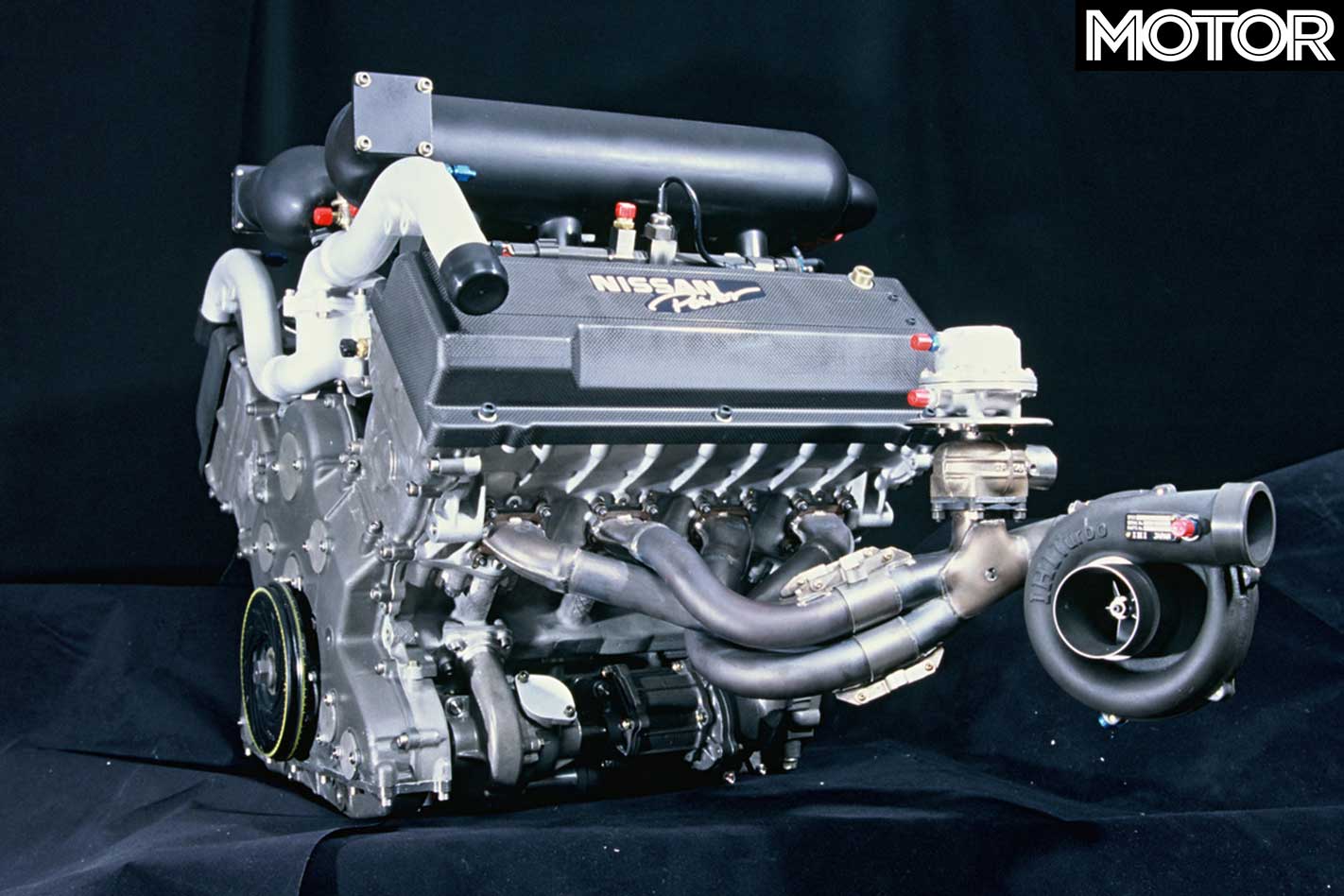
What do modern McLarens have in common with the Nissan R390 Le Mans racer? Their engines. Sort of.
The twin-turbo V8 powering every McLaren on sale today has its roots in this ’90s Nissan racing engine. Known as the VRH35L, the 3.5-litre DOHC twin-turbo V8 was the final step in the VRH lineage and developed by Nissan and Tom Walkinshaw Racing for the R390 GT1. It competed in GT racing and the Le Mans 24 Hour in 1996, ’97 and ’98, but ceased when the R390 adopted LMP rules.
McLaren and Ricardo engineering bought the rights to its design during the MP4-12C’s development, then heavily reworked it into its 3.8-litre M838T form.
Continually evolving since, in 4.0-litre guise in the Senna makes an insane 588kW/800Nm. The VRH35L made “over” 478kW/706Nm in race trim, according to Nissan.
The first Longtail road car

The history of the ‘LT’ moniker stretches back to McLaren’s most iconic road car, the F1.
After winning the Le Mans 24 Hour endurance race outright in GTR form in 1995, it was lightened and powered up in 1997 to fight upgraded competition. The rear-end was also extended to improve high-speed downforce, earning it the famous Longtail name.
Rules said a road version was needed to pass homologation, so the F1 GT was then born. It was 600mm longer than the standard F1, 101mm wider and used special dampers to handle extra downforce. It used the same 6.1-litre V12 powertrain, with 461kW/650Nm, but sucked air from a larger roof mounted snorkel.

Other unique details included a wider exhaust tip arrangement, huge front splitter, revised front bumper and louvred vents in the front guards.
Three cars were built while the original prototype, named the ‘XP GT’ and finished ‘Bottle Green’, is kept by McLaren in Woking. McLaren says the two others remain in private collections.
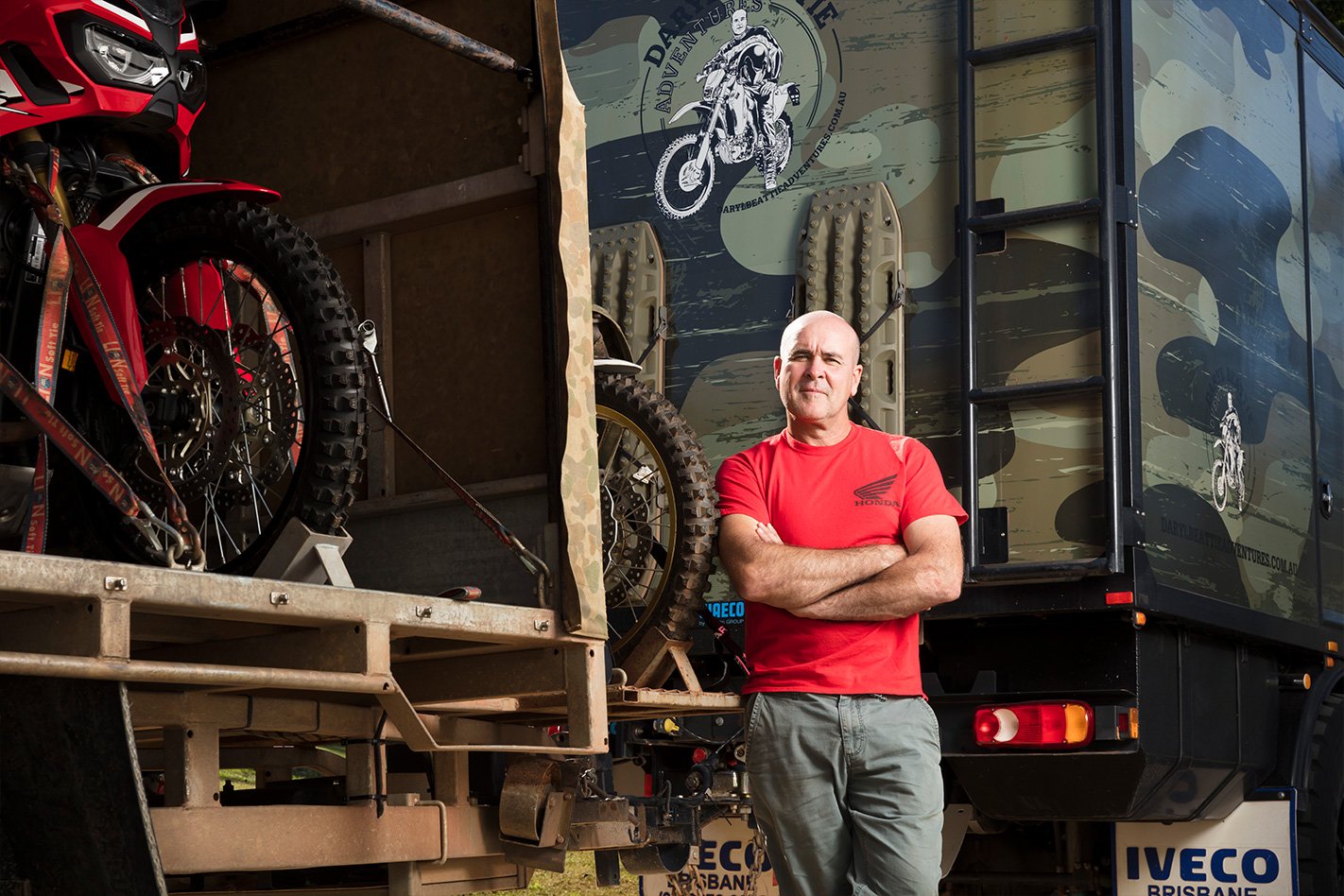
THE BIRDSVILLE Hotel, the Gibb River Road … and Daz’s truck. While former grand prix motorcycle racer Daryl Beattie would be the last to want iconic status, the purpose-built IVECO Eurocargo 4×4 that supports his motorcycle tours has become a celebrated sight in the outback.
“Oh, it’s great,” Beattie, 47, says. “Nomads pull over and jump out on the highway and wave their arms and stop us for photos; it’s extraordinary.”
The IVECO is the mother ship for Daryl Beattie Adventures, conducted on either adventure-touring Honda CRF1000L Africa Twins or more hard-core CRF450L enduro bikes, which span the Kimberley, the Red Centre, the Simpson Desert, Cape York and Tasmania.
For Beattie, it’s a (welcome) world away from the 500cc world championship circus in which he was a key participant in the mid-1990s. Beattie finished the 1995 world championship second only to the steamrollering fellow Queenslander, Mick Doohan.
Born in Charleville, Queensland, before moving to Brisbane, young Daryl’s motorcycle career had a bizarre beginning when he won a Suzuki RM50 on the Agro cartoon show.
“I was going off to school and I asked my mum, ‘Can you put an entry in for this competition?’ You had to guess the weight of the bike, so I looked up in the phone book, rang Darryl Reeks Suzuki … The guy there said ‘56 kilos’. A month or so later, we got a letter from Channel 7 saying I can come on the show and collect my minibike.”
Daryl took to dirt bikes like a duck to water. “I don’t think I did anything special, other than that my mum and dad had the foresight to realise that you needed to ride on all kinds of loose surfaces and be adaptable.”
Beattie did his first road race on his 16th birthday in 1986. Within two years he was earmarked by Honda, with local 250cc GP success being followed by a summoning to Japan and a works 250cc bike.
“Yeah, the opportunity arrived and it was phenomenal. For the first time ever, I had an international flight, went to Suzuka Circuit … McLaren and Senna were there, testing.”
Beattie finished a sensational third on his 500cc debut in 1992 and stepped into Wayne Gardner’s vacated Honda seat for 1993 as Doohan’s teammate. He finished third in that year’s championship. An ill-starred 1994 season with Yamaha included losing five toes in a crash at Le Mans, before a move to Suzuki for 1995 made him Doohan’s biggest rival. But in 1996 came a series of heavy crashes.
“A doctor basically just said, ‘if you have another one, you don’t want to know the result.’ I came back, but I just didn’t feel good on the bike … I’d ruptured my middle ear when I had the skull fracture … Doctors were telling me, ‘no more,’ so I chose to go.”
He drifted for a couple of years, taking one of his beloved vintage VW Kombis across Australia. Old school pal, commentator Leigh Diffey, introduced him to pit-lane commentary for Channel Ten. “I guess the Ten thing kept me on track.”
Regular fishing adventures with some older mates gave him a taste for the Outback. “All that came together as one big thing – ‘hang on, I love motorbikes’ – and I put the two together and now we’re five years in with DBA.
“That’s what I love about it. For me it’s 50 percent the adventure and 50 percent sitting around the fire, talking to cane farmers and lawyers and property developers who probably wouldn’t normally meet each other. At the end of the trip, they’re lifelong friends.”
Jaguar Land Rover has perfectly timed the release of its dog-friendly pet packs for the peak of the Christmas shopping frenzy, reminding fur parents that animals are for life, not just for Christmas – unless it’s a turkey.
If you’re still after a few stocking fillers or looking to spend a little more, pet-friendly car accessories are a great way to make your furry passengers more comfortable, while protecting precious vehicle interiors.
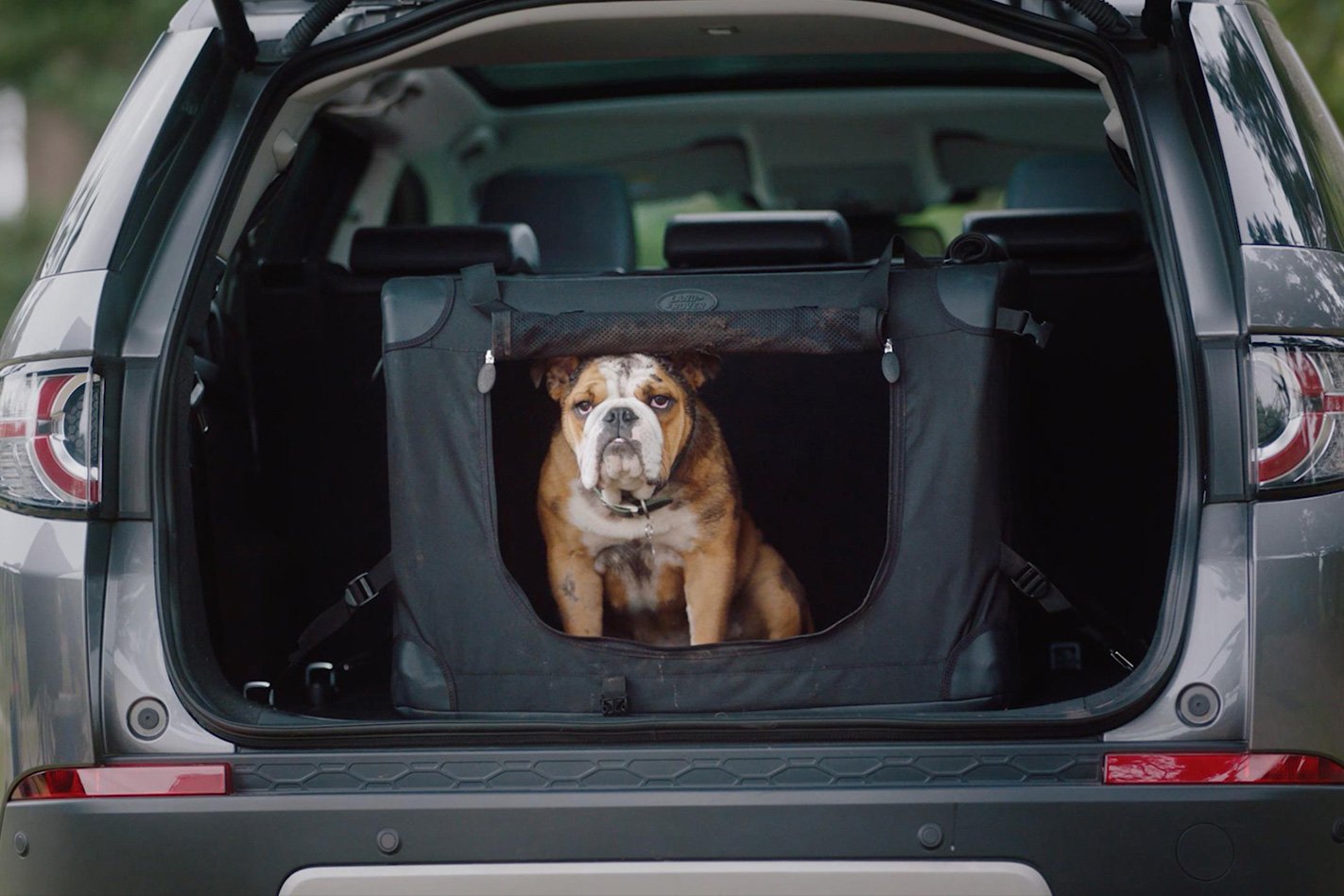
At the premium end of the spectrum, Land Rover’s new range of pet pampering products offer ‘five-star’ solutions to some common pet problems, starting with the Pet Transportation Pack from about $630.
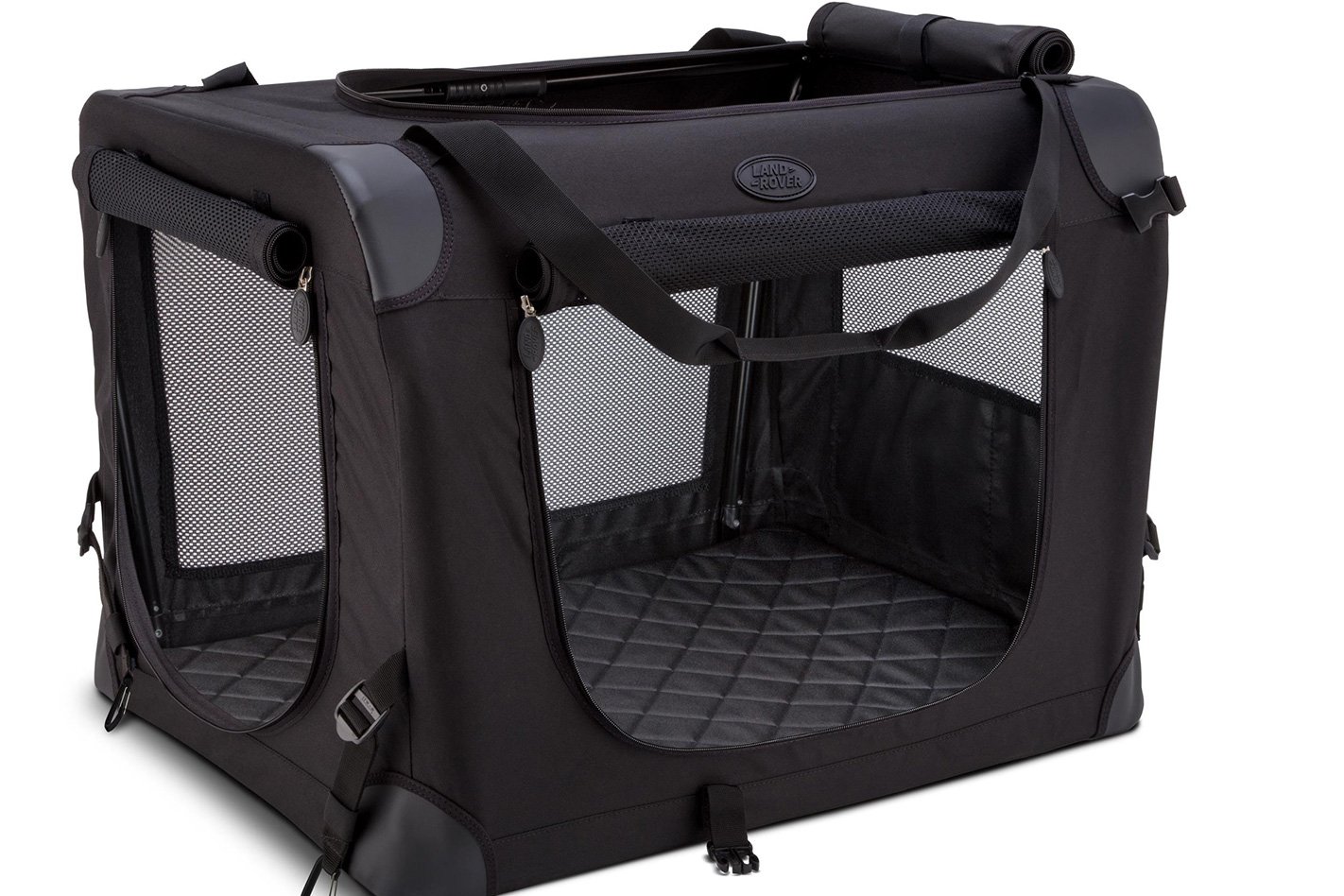
The kit consists of a pet carrier cage that flat-packs when not in use, a rubber load area mat for keeping mud off your carpets, while a 350ml water bowl is specially designed to minimise spills even when the car is moving.
Spend $840 and you’ll get the special bowl plus a fitted and quilted boot liner with bumper protector that’s both comfortable for paws and protects the luggage area from dirt, while a full-height partition prevents pups from invading human quarters.
At the top of the range, Land Rover is offering its Pet Care and Access Pack for a hefty $1550, which bundles the partition and quilted liner with a unique ramp and rinse system for the ultimate in spoilt pooches.
The fold up access ramp is perfect for helping smaller or old dogs reach the boot space – especially in high-riding Landies – and can support dogs of up to 85kg – trust us, you really don’t want to upset a dog that big.
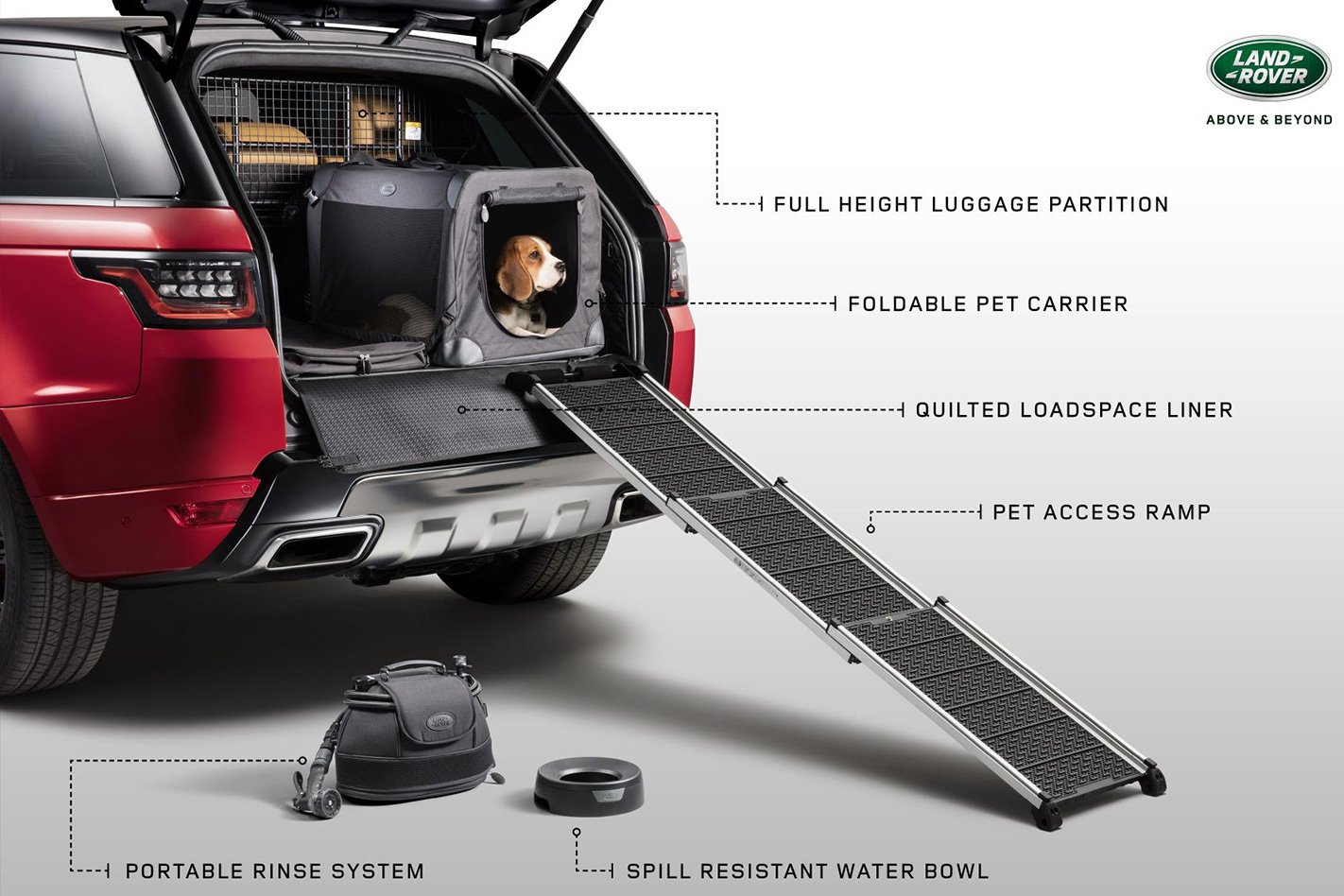
It’s complemented by a portable rinse system that holds 6.5 litres of water and provides five minutes of water spray for washing down grubby pets or even boots and mountain bikes.
Of course, there are gift ideas for pet owners that don’t have a Range Rover budget. It also pays to be aware that there are legal requirements for transporting pets.
Pups travelling in the back of a ute must be tethered or in a cage, and the Victorian State Government advises that dogs should not be allowed to ride with their head out of the window and definitely not in the front row.

Why not treat Rover to a travel harness if you don’t already have one? A travel harness is very inexpensive, starting at about $15 and clips into the existing car seatbelts, and will prevent a dog leaping out of the car if the window or door is opened. It will also better protect you and your dog in the event of a crash with the more expensive versions actually crash tested.
If you own a dog that insists on having the window open, you could consider a vent or grille accessory. The folding plastic devices adjust to the window opening and allow air to circulate but prevent the dog putting its head outside. It’s great for stinky pets too.
Small dogs are more likely to suffer motion sickness if they can’t see out of a window, but a booster seat is a clever solution. The innovation straps to the rear seat and elevates more compact species of dogs to a level enabling a view out. It also prevents the dog from wandering about the cabin.
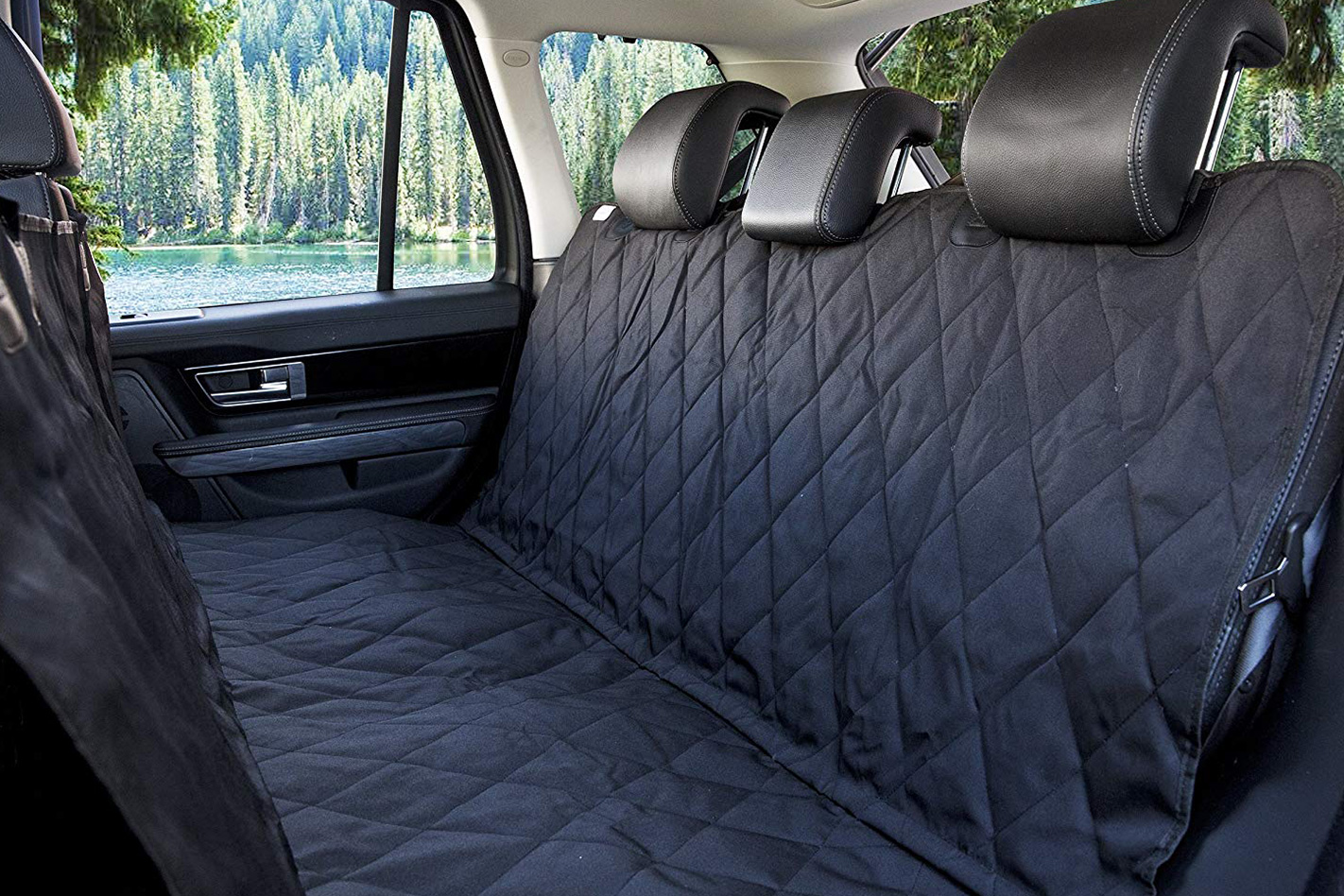
And if you own a dog that likes to take up the entire rear seat, you should certainly consider fitting a BarksBar temporary seat cover. Options range from cheap universal products to premium offerings that are custom fitted to your car and made from top-quality materials depending on how demanding your dog is.
Whatever you choose, always remember your pet prefers to be with you and not in the car, so never leave an animal unattended in a car.
It’s taken a while but we finally find a corner. Not a junction, not a kink, not a whisper of a bend with one of those conservative American speed limit signs but a proper European corner, the sort that needs a big armful of lock and an even bigger slug of right foot to negotiate satisfactorily.
This feature was originally published in MOTOR’s April 2007 issue
The bitumen is coarse, the type that shreds tyres in a matter of minutes, while the sand blowing down from the Black Mountains across the Colorado dries your skin like a day sunbaking on the equator.
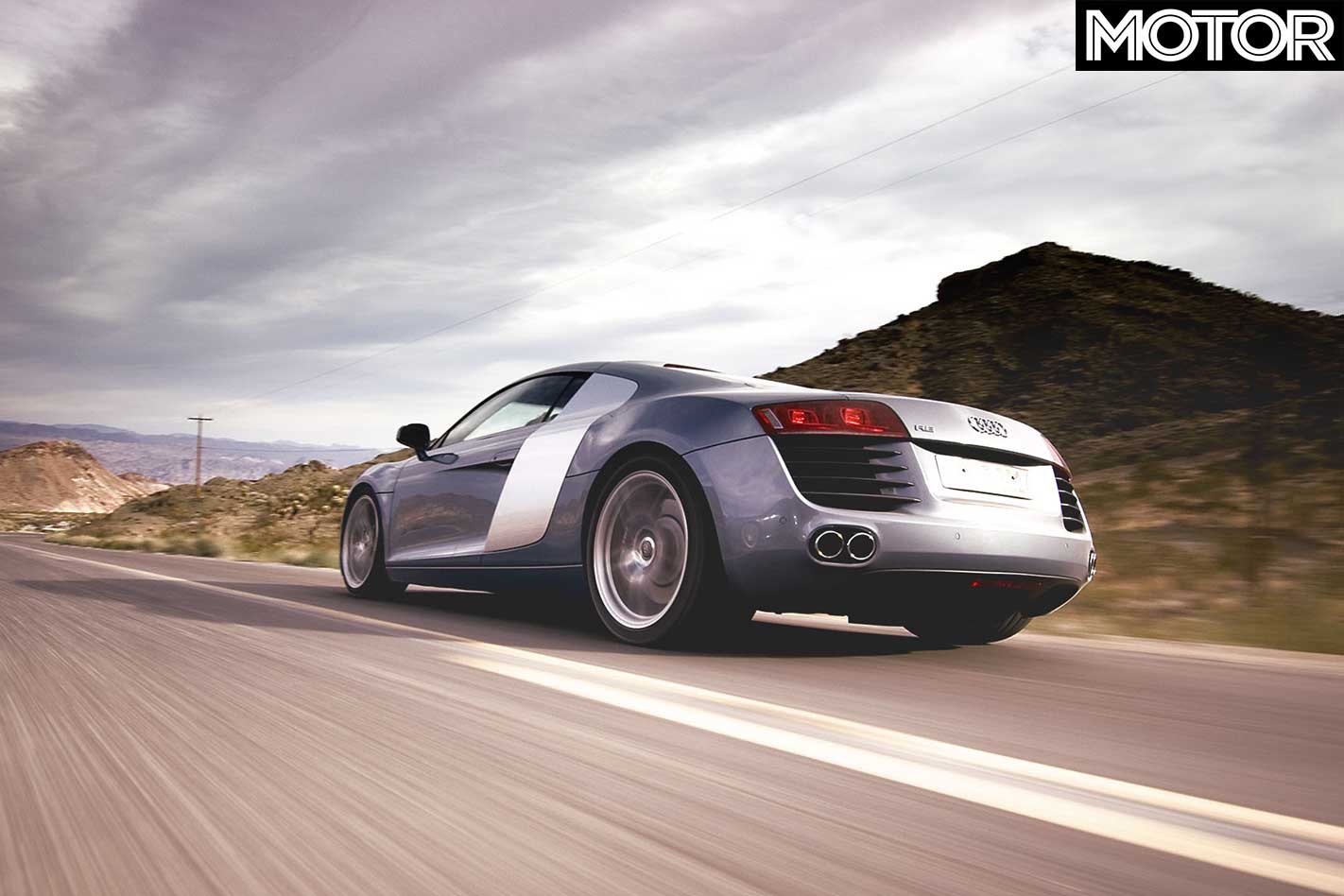
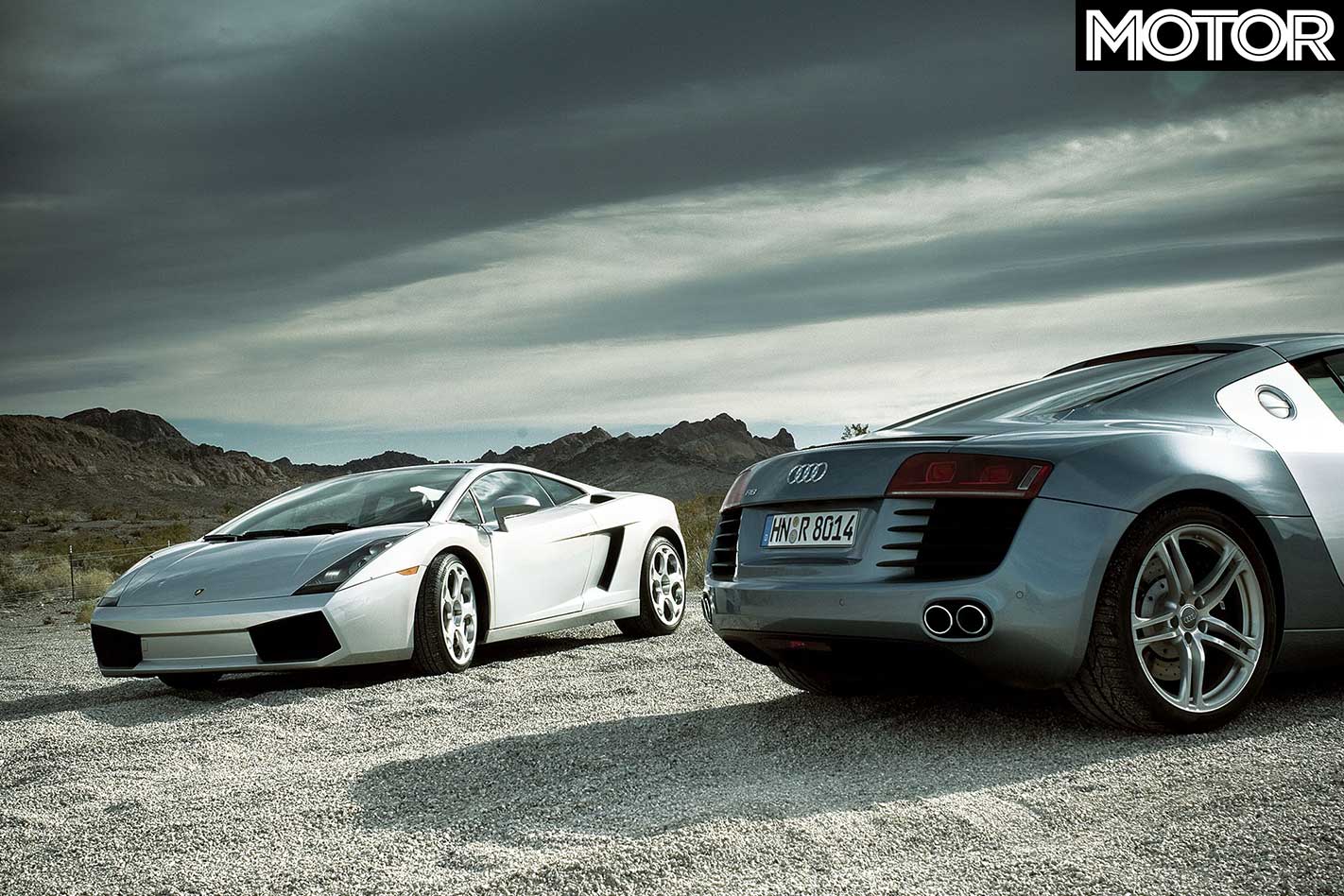
Clever tapering can’t disguise the long front overhang, but the fact is just 44 percent of the R8’s mass is over the front end. So you twist the wheel and things happen. Try it again with more power and the fat Pirellis hang on then finally slip wide, perfectly synced with righ foot pressure.
And again, but this time with the subtlety of those ‘1-800 whores-to-your-door’ flyers. We’re moving, fast, the very top of second gear, too fast for the front tyres if we keep this speed up. A three-second press of the ESP button has cut out the two-stage stability program (one press allows some slip but will still catch you) and I’m on the outside of the left-hand corner, the apex is approaching, I point the nose to the left and jump off the throttle.
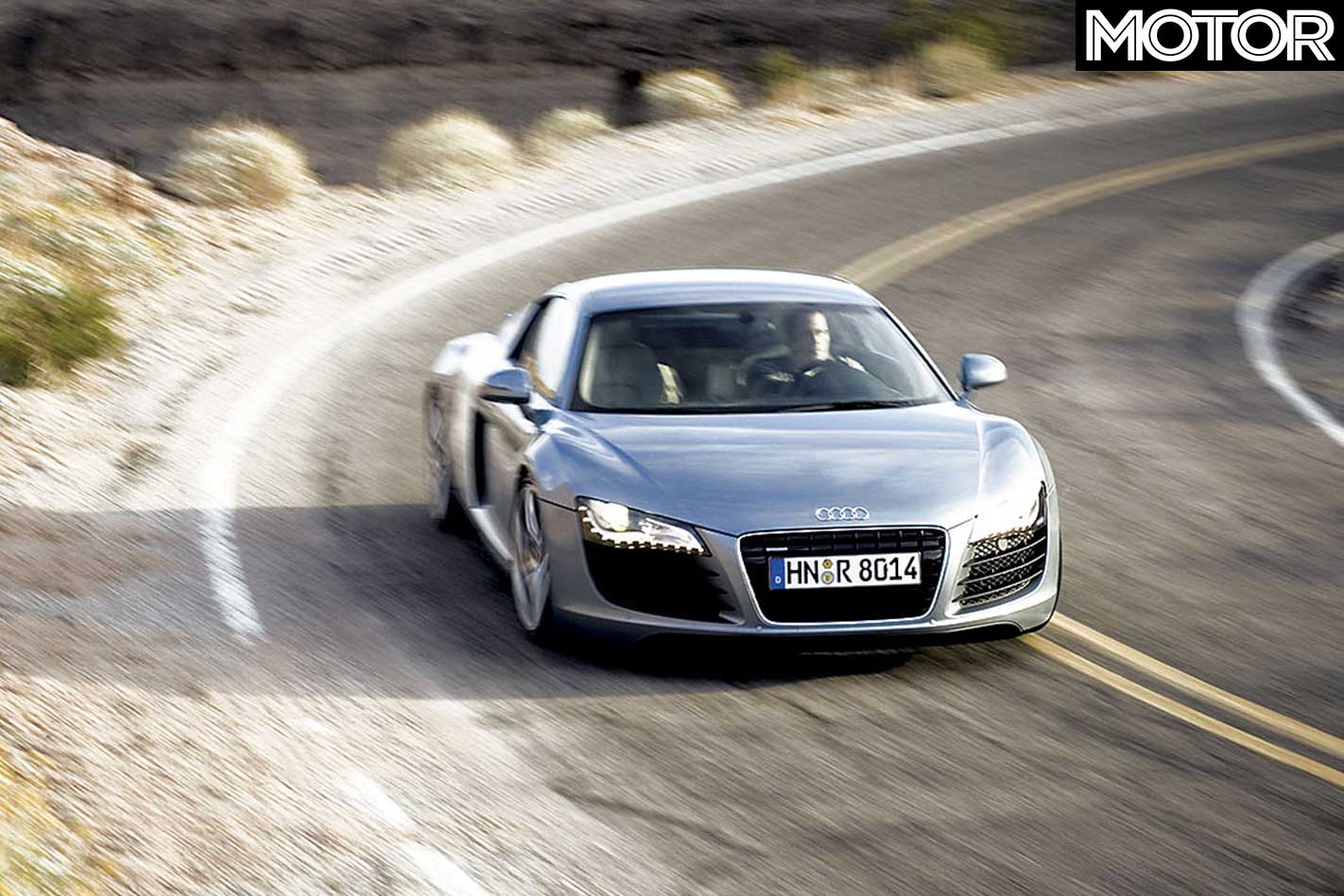
Briskly, but without any hint of impending doom, your twin-cheek yaw-sensor – yer arse to the layman – senses the back tyres have joined the party. There’s not an enormous surfeit of power in this V8 version – the R8 is down 74kW on the Lamborghini Gallardo SE until the 370kW V10 arrives – so it’ll take just about everything your right foot’s got. And there’s just enough juice going up front – between 10 and 35 percent – that it flatters you. And there it is, the R8 broadside, and it’s as happy about it as the bloke behind the wheel.
Time for a reality check. The fact that you can crank the R8 onto the lockstops does not automatically grant it a scholarship to the supercar big league. But it sure does make a refreshing change to be piloting something with four rings on the front that’s so aggressive. The R8 should at least be counted among the big hitters.
To be honest, though, this car could be front-wheel drive and diesel-powered and I’d still want one. It looks sensational, crazy wide, disgustingly low and so Towards 2000 with its flashy LED lights that it almost crossed from Pacific to Mountain Time all on its own.
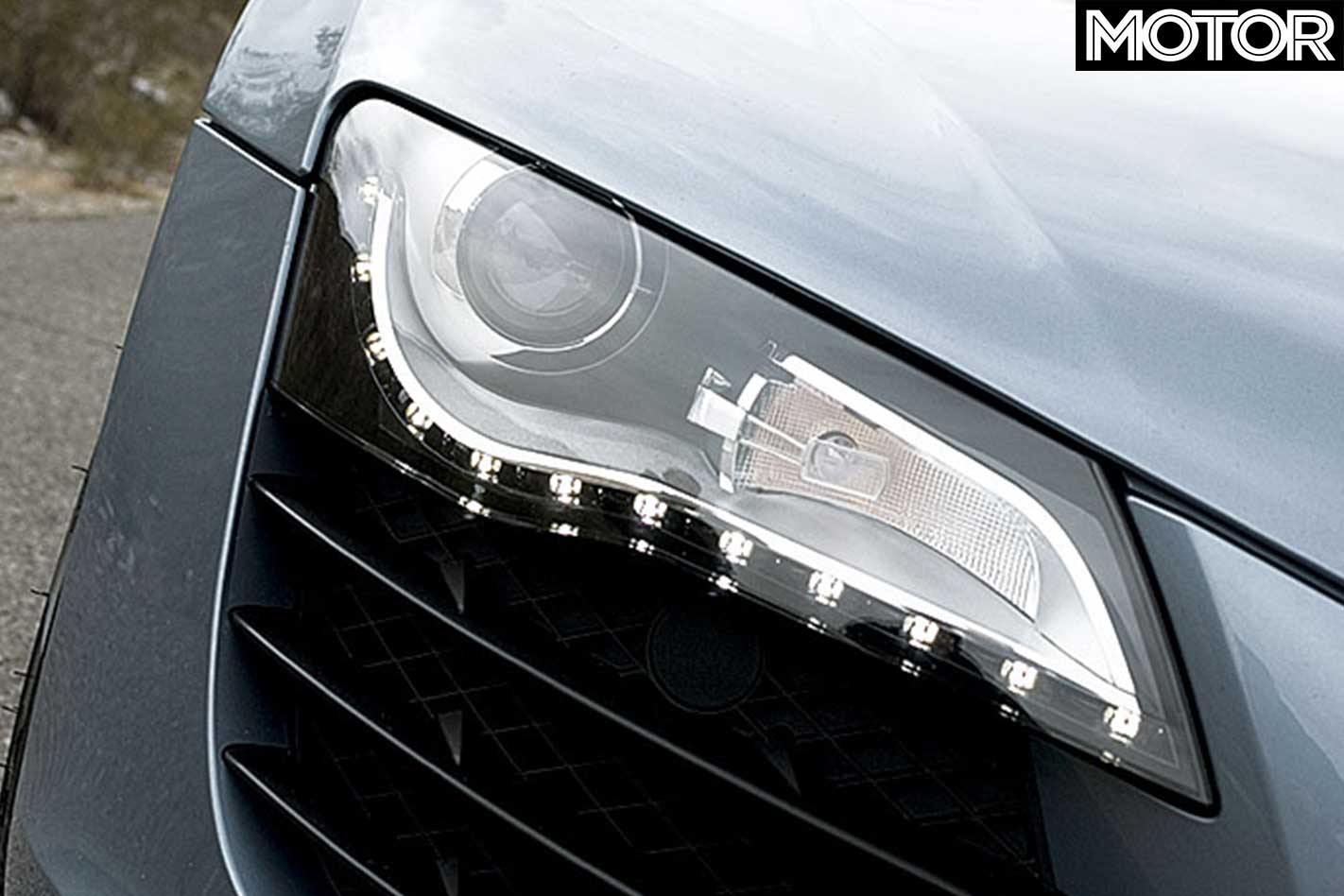
Edgy without the origami creases of the Gallardo, curvy without losing the tautness that characterises muscular designs. Ferrari’s F430 appears fussy in comparison, the Gallardo dated and the Porsche 911 Carrera S is left looking like some sort of frumpy retro joke.
Not everyone would agree of course. Meet Vernon and Bill. Vernon is the owner of this immaculate seal grey 997 Carrera S. Vernon’s high on the Audi hit-list: right age, good job and the keys to a 911 in his pocket.
Sure, the four-wheel-drive Carrera 4S sounds like the more obvious candidate for comparison on paper, but Vernon’s rear-drive Carrera S still has monumental levels of grip, is cheaper and remains the car Audi will have to tempt the majority of guys like Vernon out of.
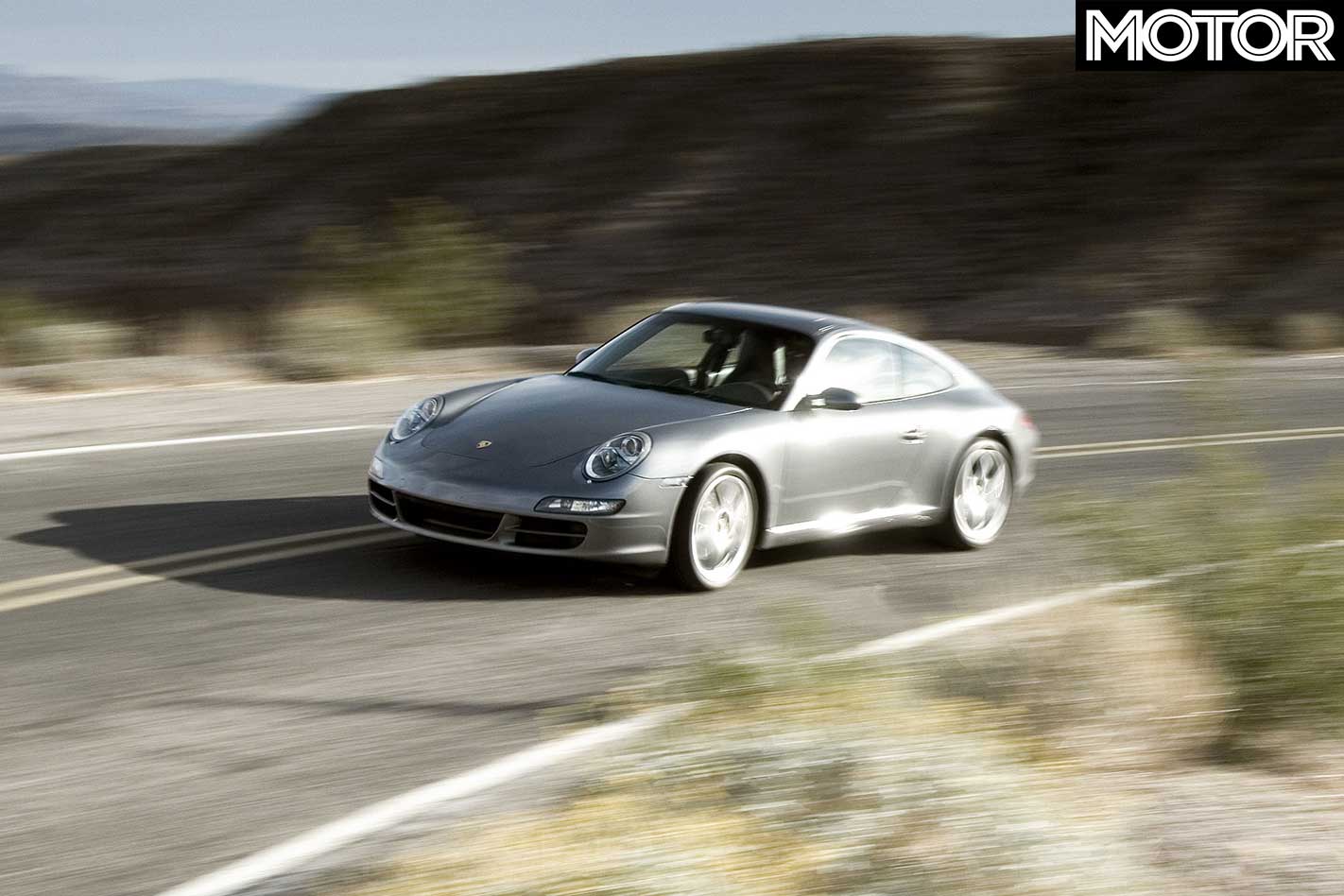
Sure, there are other cars like the Aston Martin V8 Vantage and Mercedes SL, but it’s the 911 that’s the benchmark sub-$250,000 sports car, and provides the real litmus test.
Stepping up a division, for those wanting the R8’s combination of state-of-the-art construction, hi-tech engine behind the seats and genuine supercar performance, you need to spend genuine supercar money on something like Bill’s Gallardo. And even he can’t believe how Audi can make the R8 so affordable.
If we told you it cost a Gallardo-rivalling $400,000 you probably wouldn’t flinch. But get this: it’s expected to cost between $250,000 to $300,000, and that parachutes the R8 deep into the fat-end of 911 territory.
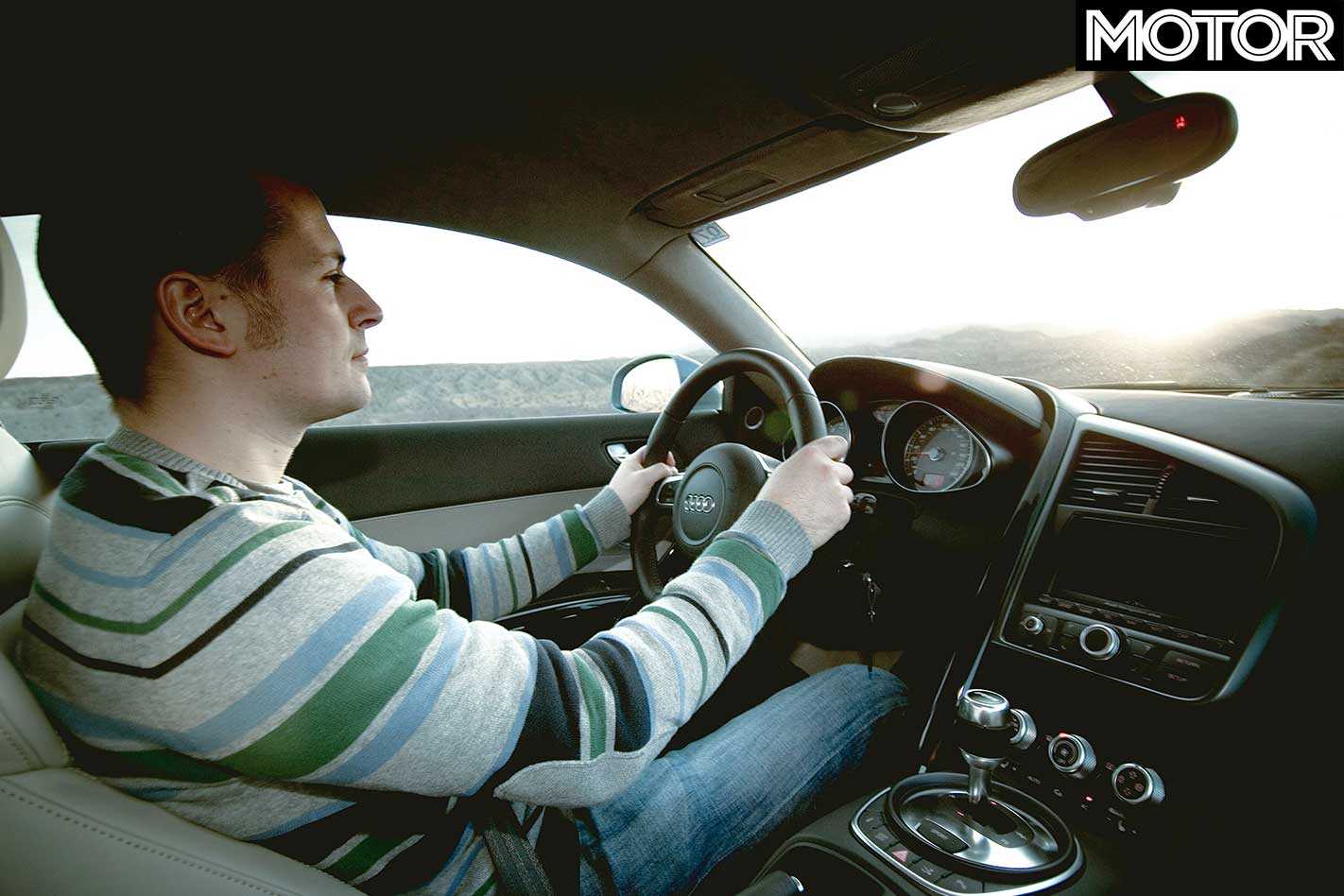
Drop into the R8’s cabin and there’s an odd mix of approval and disappointment. Approval of the shaped door grab handle, the bright white instrument graphics and fabulous materials that fire any notions of this being a cut-price supercar out of the window, but disappointment over the ‘borrowed’ components from lesser Audis. It dims the experience, but only slightly.
The aluminium spaceframe’s long wheelbase (90mm bigger than the similarly-constructed Gallardo’s) offers plenty of room, but the biggest surprise is the visibility. I’ve never driven a supercar like it.
The relatively short, upright windscreen and low scuttle, and the absence of the Lambo’s thick A-pillars means placing the car is easy. Thanks to dry-sumping, the V8 also sits low, aiding rear vision and lowering the R8’s centre of gravity.
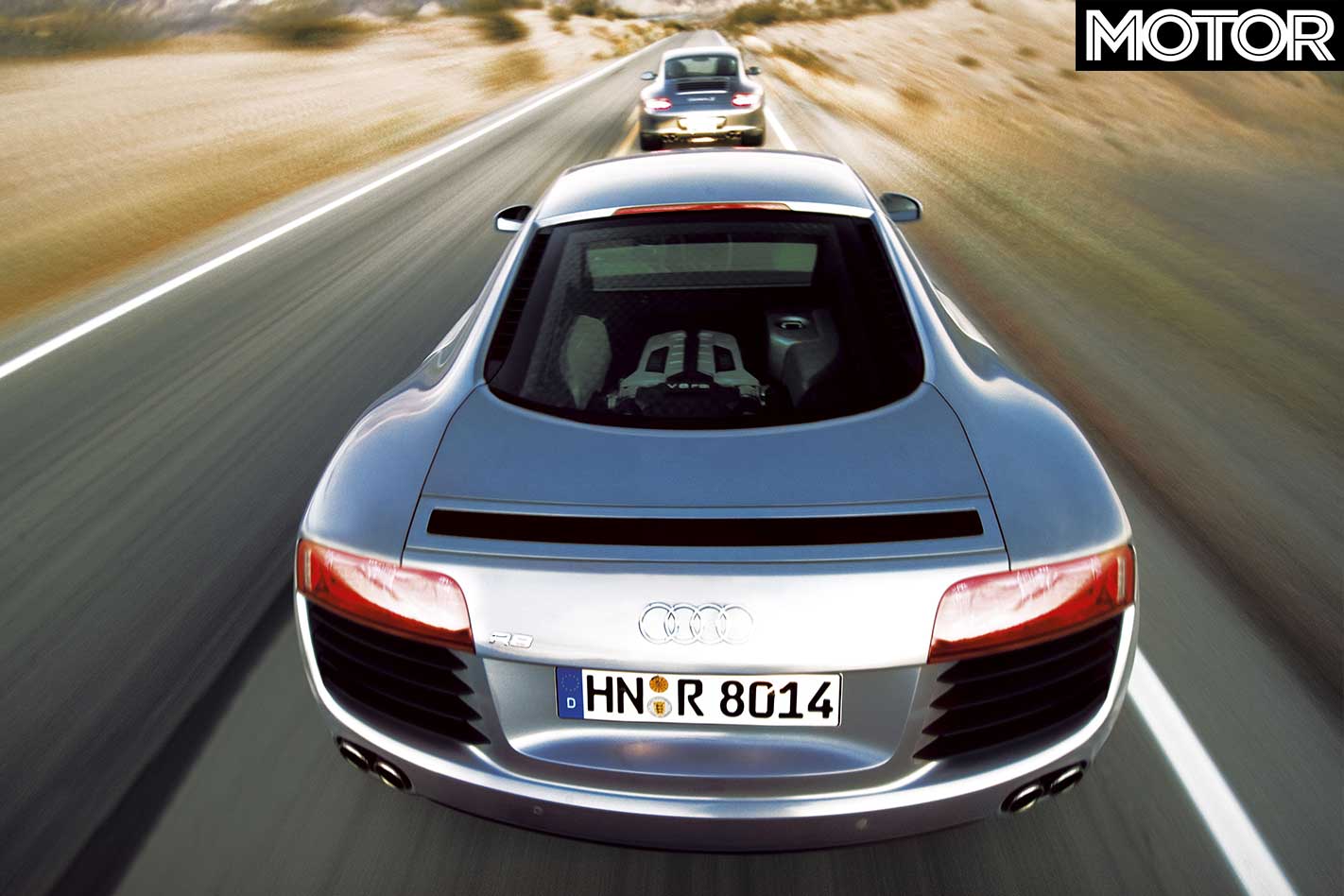
In this company, the Carrera’s interior feels a bit humdrum, but the car still feels right where it really matters: on the road. The steering is quicker, more mechanical in its immediacy of response and feels more communicative than either the R8 or Gallardo set-ups.
Stroking the 997 through a series of left-rights is simply a more positive experience. The R8’s steering is slightly more leisurely and, though linear and accurate, not quite as chatty. And while Lamborghini’s recent changes to the Gallardo have sharpened its steering, the Porsche remains nicer to point and shoot.
Playing with the right pedal results in more aural stimulation in the Porsche; at least compared with the curiously quiet Audi. Blip the R8’s throttle and the response is deep, rumbly. Proper V8 stuff. But unless the windows are down or you’re fanging the nuts off the thing, all you’ll ever hear inside is a fairly anodyne whirring. Rev it right out to 8250rpm and it wakes up but never as much as you’d like. Even the RS4 out-shouts it.
But both are drowned out by the Gallardo. Moving from one to the other is like listening to Malcolm Young in the Velvet Undergound then swapping CDs for the full-on AC/DC experience. It’s loud, menacing and doesn’t care the least bit that it’s probably frightening the hell out of the white-haired Camry drivers who are heading to the strip to flush away their pensions.
When the lights on Vegas Boulevard go green, it’s the Italian that reaches the next intersection first. The on-paper stats – Lambo 3.9 seconds to 100km/h, R8 in 4.6, the Porsche 4.8 – confirm the disparities in power outputs.
The Porsche with 261kW from its 3.8 six weighs 1420kg, compared to 1565kg for the 309kW Audi, so the two are fairly evenly matched. But with 383kW to its name and just 1430kg to account for, it’s no surprise that the Gallardo is the keener to get away.
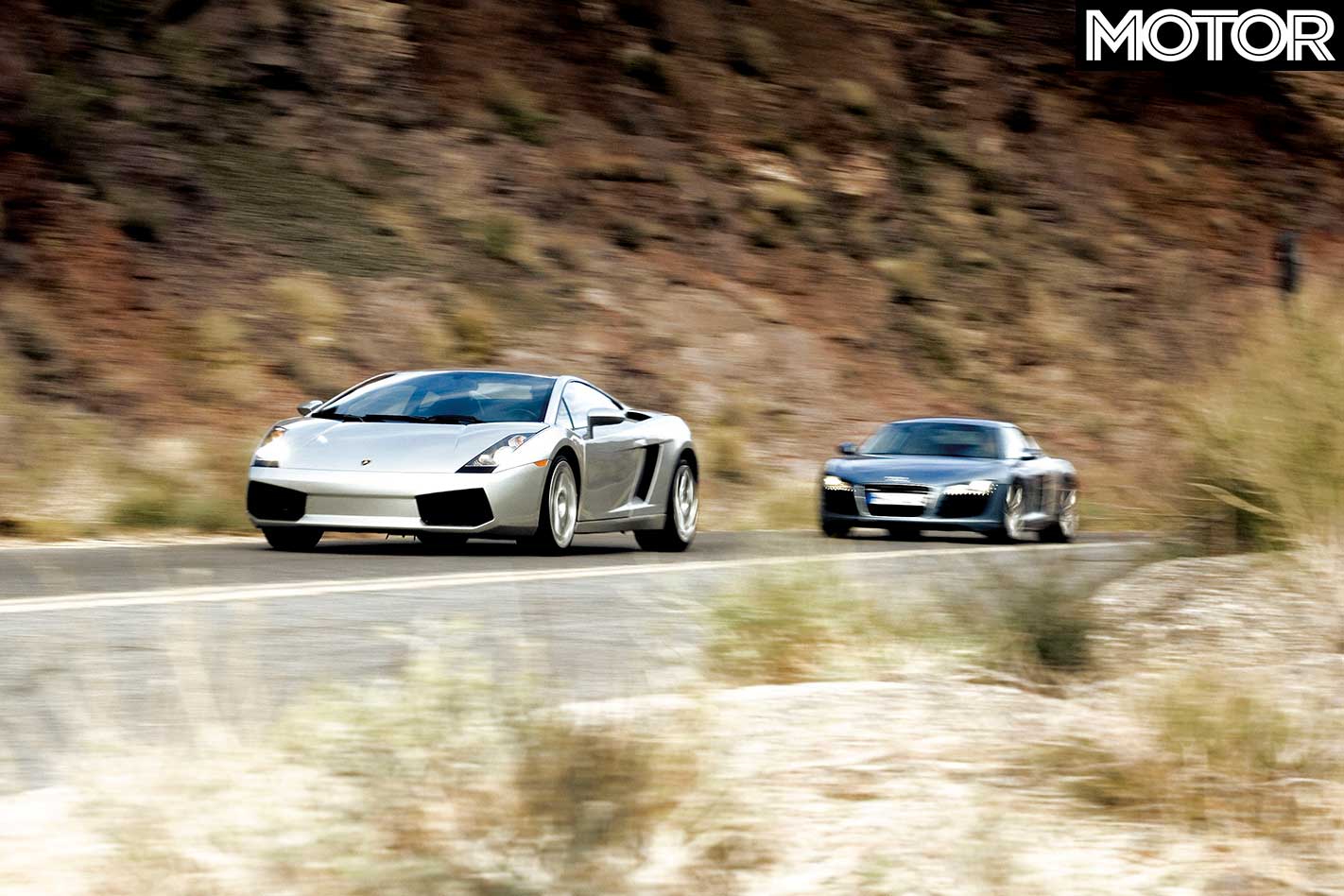
The R8 feels fractionally fleeter than the 911, but not blisteringly fast; and the Lambo, while kicking harder by about the same margin, doesn’t pull away as quickly as you might think. At the top-end, the 301km/h Audi trumps the 293km/h Porsche, while the 315km/h Italian has the legs of both the Germans.
All three cars can be ordered with carbon-ceramic brakes, but when it comes to R8 options boxes I’d leave that one unmarked. The standard steel set-ups are so good there seems little point. Same goes for the sequential R-Tronic gearbox. A tweaked version of the Lamborghini’s e-gear transmission, it’s neither Ferrari F1-quick nor DSG-smooth, and is prone to judder when the plates get hot.
If you must tick something then go for Magnetic Ride supension (MSR) – standard on Australian R8s. Every R8 has double wishbones, but here you get special dampers that electronically adjust to road conditions and driving style, similar to those found on top-end HSVs.
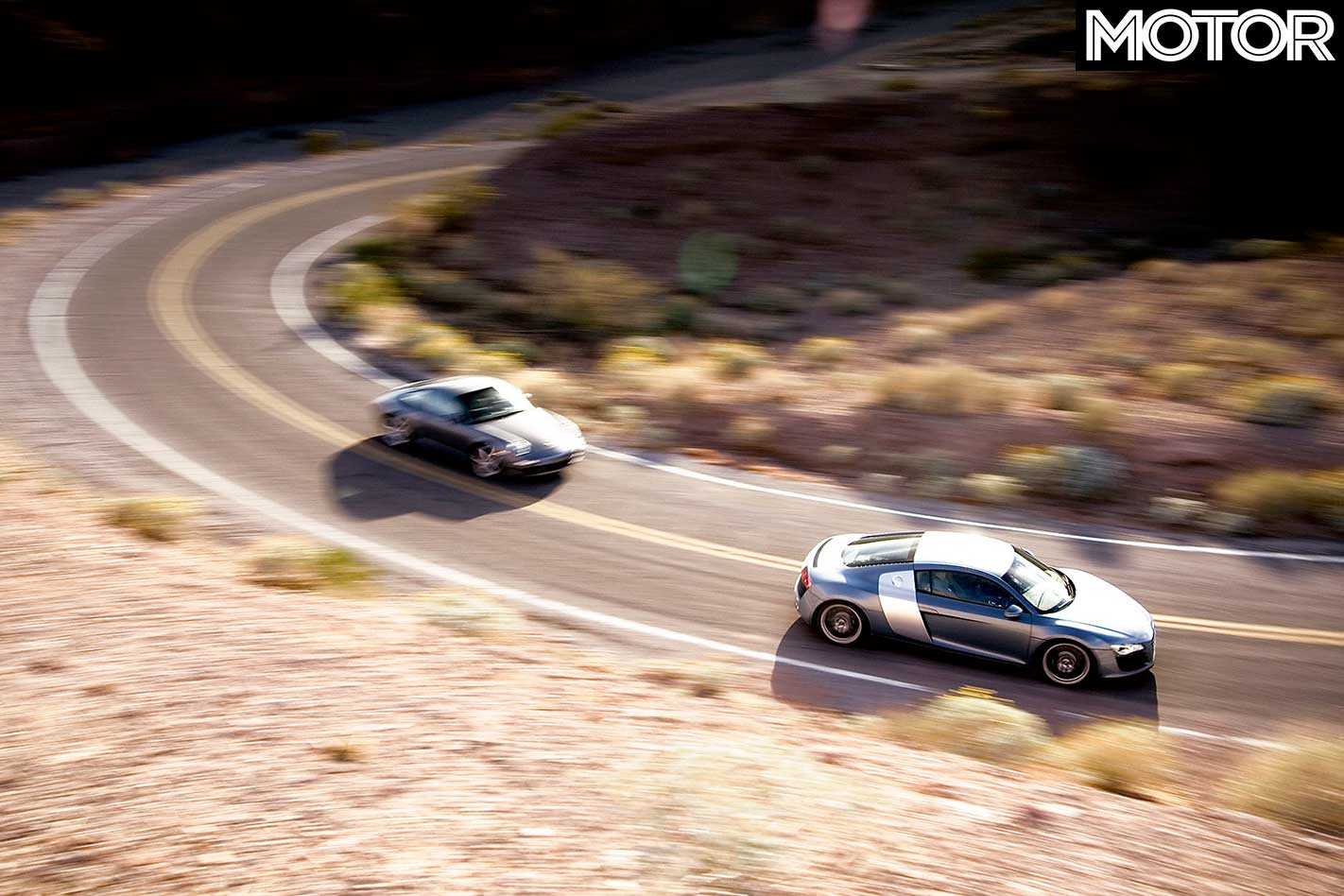
It makes the R8 the most comfortable supercar on sale, at least in normal mode. In fact, it rides better than most of Audi’s sedans, even on the optional 19-inch rims the Oz-spec cars will receive as standard.
It boils down to this: the R8 is a car that – to many people – isn’t that much less exciting to drive than a full-blown $400k exotic and is at least as aesthetically pleasing. It should also be painless to own and costs just two-thirds as much as the cars it apes.
Cars like Bill’s Gallardo will still sell on the strength of their names, their greater performance and more focused character, but the R8 makes it hard – though not impossible – to justify that extra $100k on the price tag.
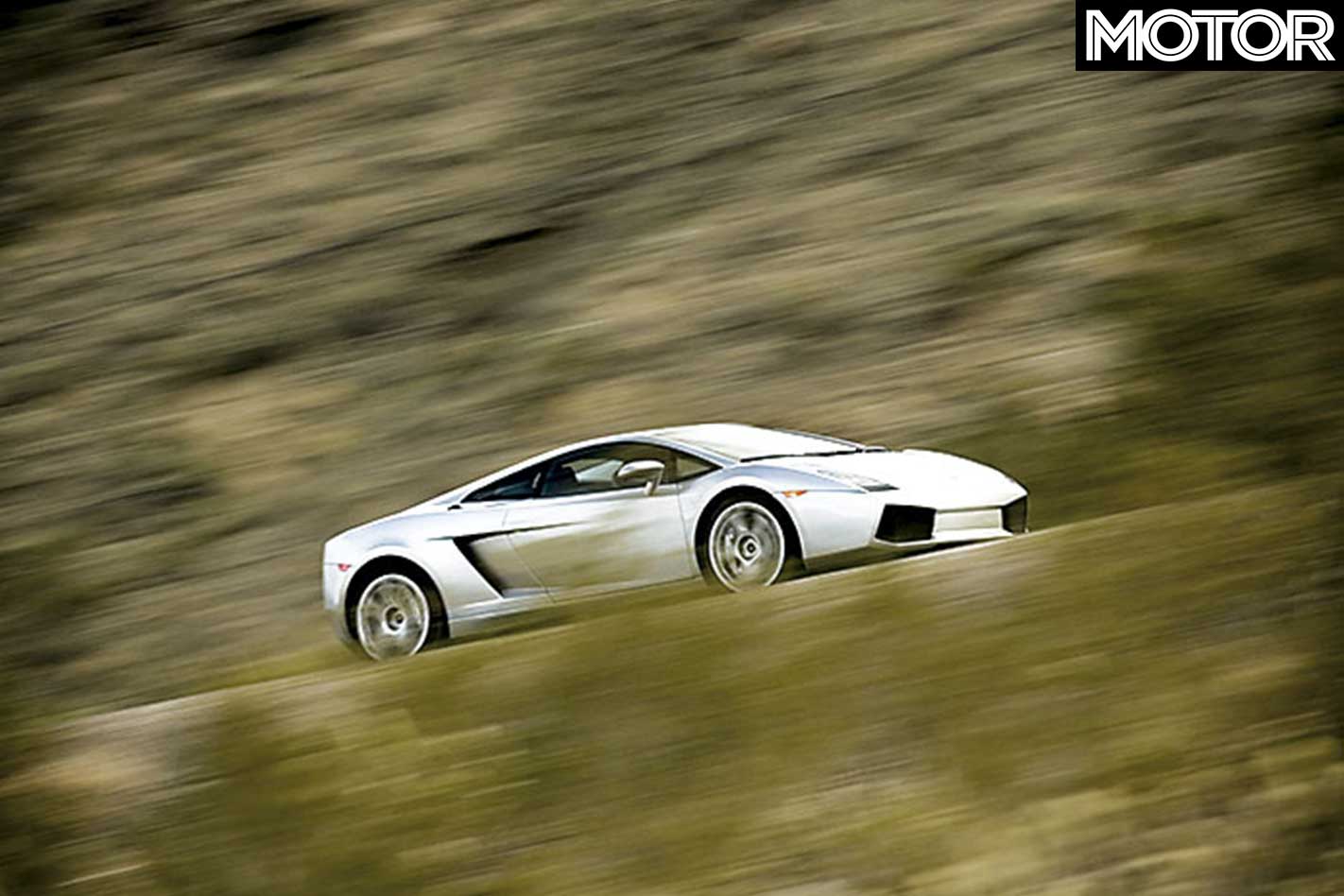
But, with that face, those legs and that price, the R8 is going to have Audi scrambling to increase production from the current 15 cars per day rolling out the factory. It doesn’t stop us lusting after the 911, though.
More than ever in the face of something as stunning as the Audi, the Porsche is a car that can only be appreciated from behind the wheel. Yet, it’s hardly exclusive and offers little sense of occasion. Vernon liked the R8 but isn’t ready to jump ship yet. There’s just something missing, a kind of Lexusification of the supercar concept that leaves him happy with his lighter, pointier, noisier 911.
Audi set out to build a more rounded supercar and some of the sharpness was always going to be lost in the trade off. But not enough to spoil a great car. And Vernom aside, there’ll be plenty who will abandon their 911s for one. Expect the floodgates to open very soon.
Fast Facts
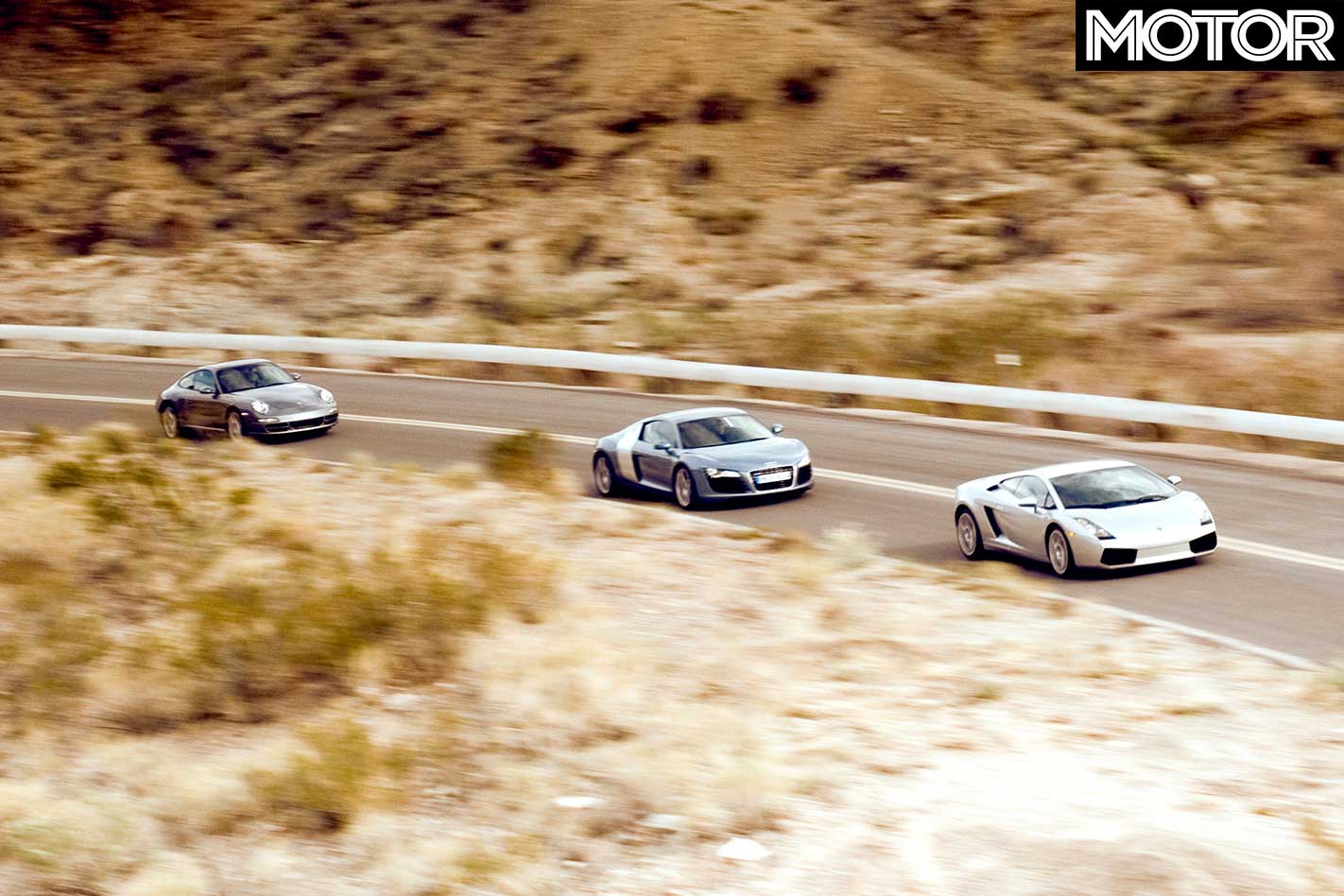
| u00a0 | Porsche 911 Carrera S | Audi R8 | Lamborghini Gallardo |
| Body | 2-door, 2+2-seat coupe | 2-door, 2-seat coupe | |
| Drive | rear-wheel | all-wheel | |
| Engine | 3824cc flat-6, DOHC, 24v | 4163cc V8, DOHC, 32v | 4961cc V10, DOHC, 40v |
| Bore x Stroke | 99.0mm x 82.8mm | 84.5mm u00d7 92.8mm | 82.5mm x 92.8mm |
| Power | 261kW @ 6600rpm | 309kW @ 7800rpm | 383kW @ 8000rpm |
| Torque | 400Nm @ 4600rpm | 430Nm @ 4500-6000rpm | 510Nm @ 4500rpm |
| Power/Weight | 184kW/tonne | 198kW/tonne | 268kW/tonne |
| Transmission | 6-speed manual | ||
| Weight | 1420kg | 1560kg | 1430kg |
| 0-100km/h | 4.8sec (claimed) | 4.6sec (claimed) | 3.9sec (claimed) |
| Top speed | 293km/h (claimed) | 301km/h (claimed) | 315km/h (claimed) |
| Suspension | struts, coil springs, adaptive dampers, anti-roll bar (f), multi-links, coil springs, adaptive dampers, anti-roll bar (r) | double A-arms, coil springs, two-stage magnetic dampers, anti-roll bars (f/r) | double A-arms, coil springs, anti-roll bars, adaptive dampers (f/r) |
| Brakes | 330mm cross-drilled and ventilated discs, four-piston monobloc calipers (f & r), ABS, ESP | 380mm composite discs, eight-piston calipers (f); 356mm composite discs, four-piston calipers (r); ABS, ESP, ceramic discs optional | 365mm vented/cross-drilled discs, eight-piston calipers (f); 335mm vented cross-drileld discs, four-piston calipers (r), ABS |
| Wheels | 19 x 8.0-inch (f), 19 x 11.0-inch (r) | 19 x 8.5-inch (f), 19 x 11.0-inch (r) | |
| Tyre Sizes | 235/35ZR19 (f), 295/30ZR19 (r) | ||
| Price | $224,400 | $270,000 (est.) | $399,346 |
Vegas gamble
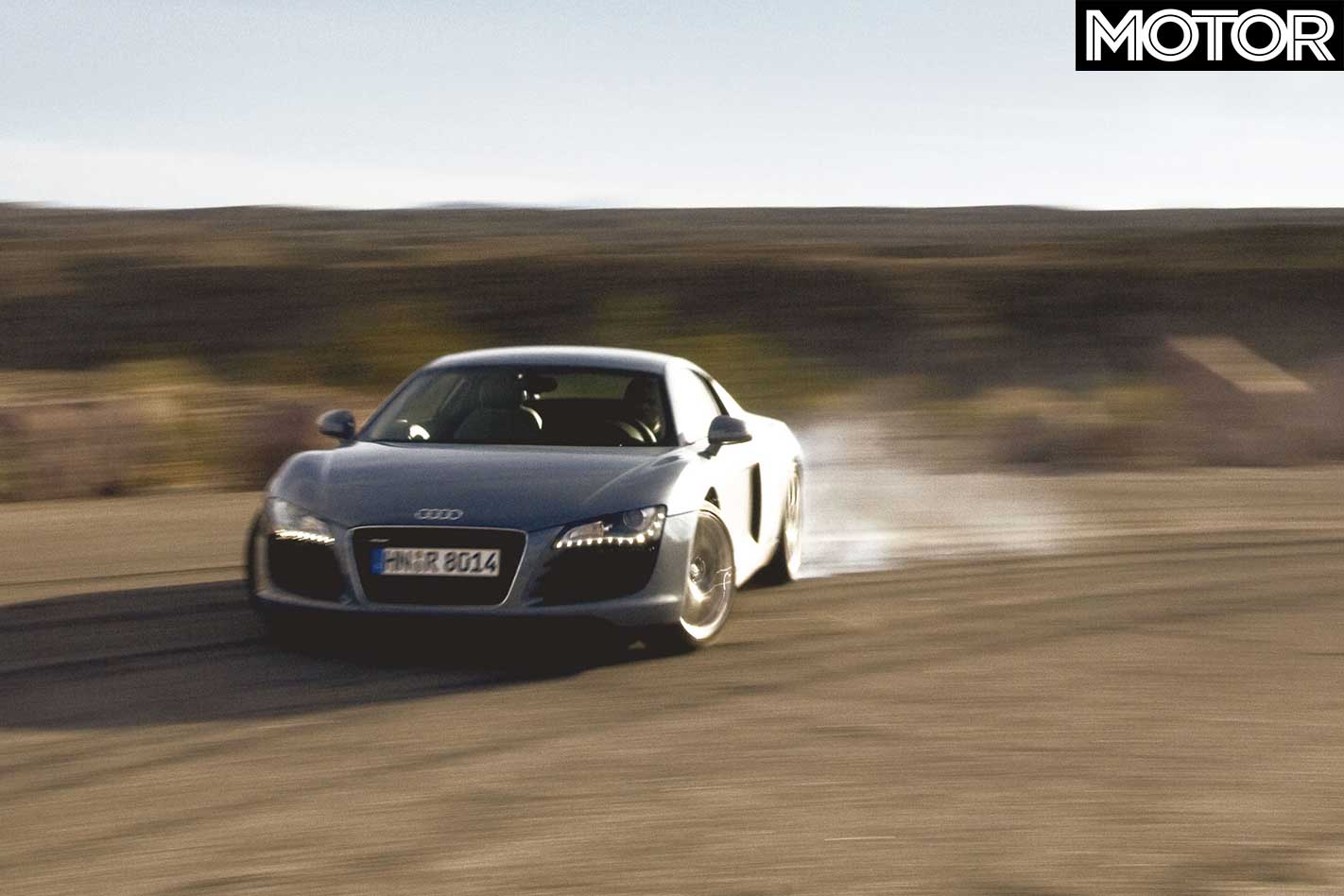
Beautiful place, Nevada, but wouldn’t have been our choice of venue to launch a supercar. Mostly straight roads and over-zealous coppers meant the only twisty stuff was in heavily patrolled national parks with 72km/h limits!
By the time the Oz contingent arrived, Audi had been banned from two of five routes skirting Vegas. After we’d been through the Valley of Fire, the Germans were banned from that, too. Shame, because the R8 deserved better.
It’s an extremely liveable supercar – one you’d be happy doing 25,000km a year in. It’s roomy, comfy, rides well on MRC’s normal setting (standard on Oz R8s), and is rock solid at 280 clicks. Just don’t tell the Vegas filth…
Diversity rules
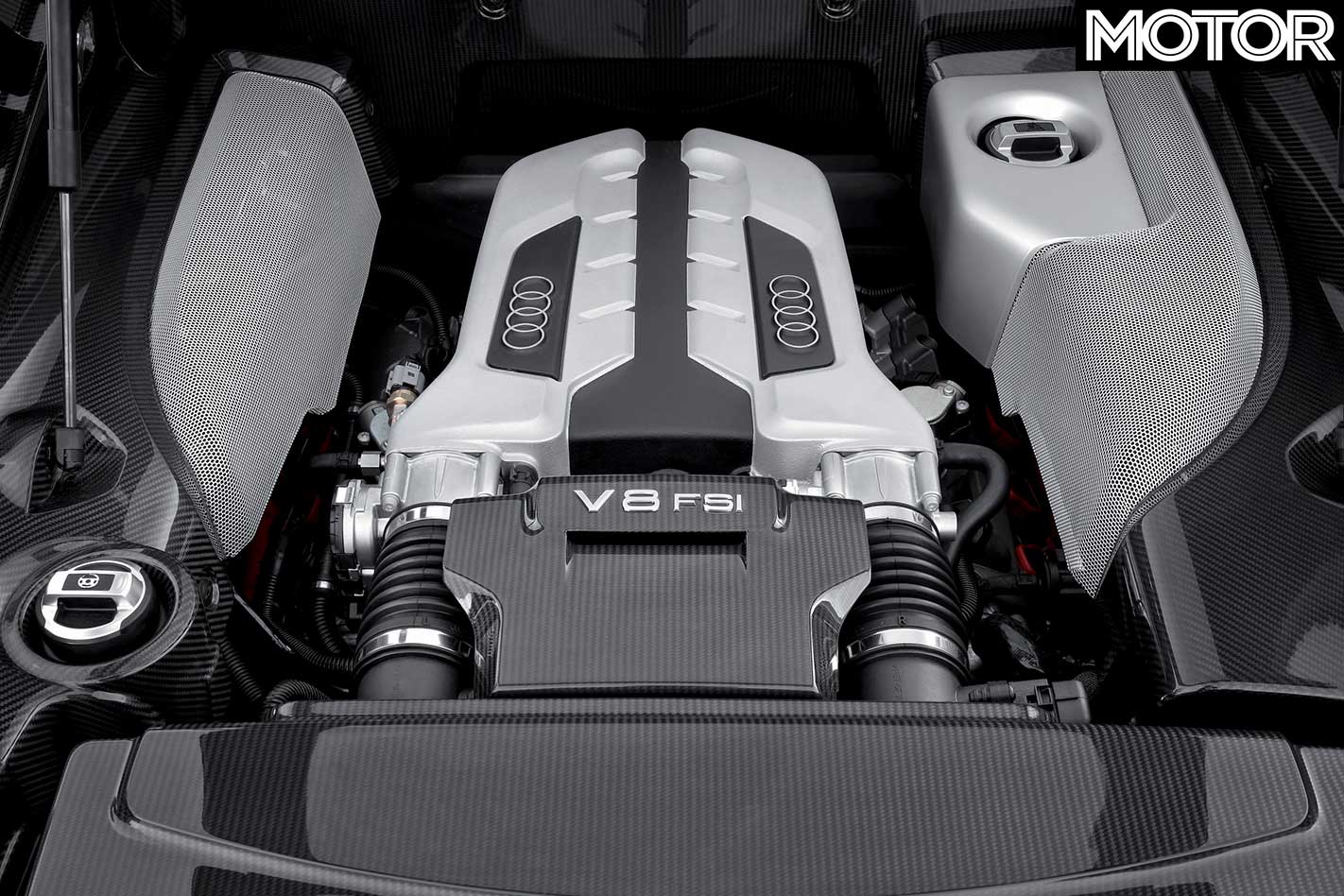
Porsche flat-six was heavily revamped for 2004’s 997-series 911, stretched to 3824cc for the S, while Lamborghini’s sublime 4961cc V10 was brand new in 2003. Audi’s 4163cc V8 started life in the RS4 sedan in 2005 before migrating to the R8, producing identical power and torque (though at slightly different revs). Most work went into its sound.
Audi’s eagerly awaited Q8 large SUV has finally arrived in Australia packed with kit and technology for a price that might surprise you. But while its promise of top-shelf comfort and entertainment features, combined with sophisticated chassis and powertrain are a critical element of the deal, its design is arguably just as alluring – even more so when you consider the Q8’s rivals.
Take a moment to browse the gallery above and appreciate all of the new Q8’s best angles, inside and out.
The BMW X6 was the first to explore the realm of large SUVs with elegant profiles, but that car continues to divide opinions with its looks. And while Mercedes-Benz GLE Coupe has since weighed in with its, it arguably can’t compete with the handsome Audi’s styling.
Worthy of praise is the minimal fettling that the Audi Q8 design underwent in its transition from 2017 Detroit show concept to the showroom version you can now own.
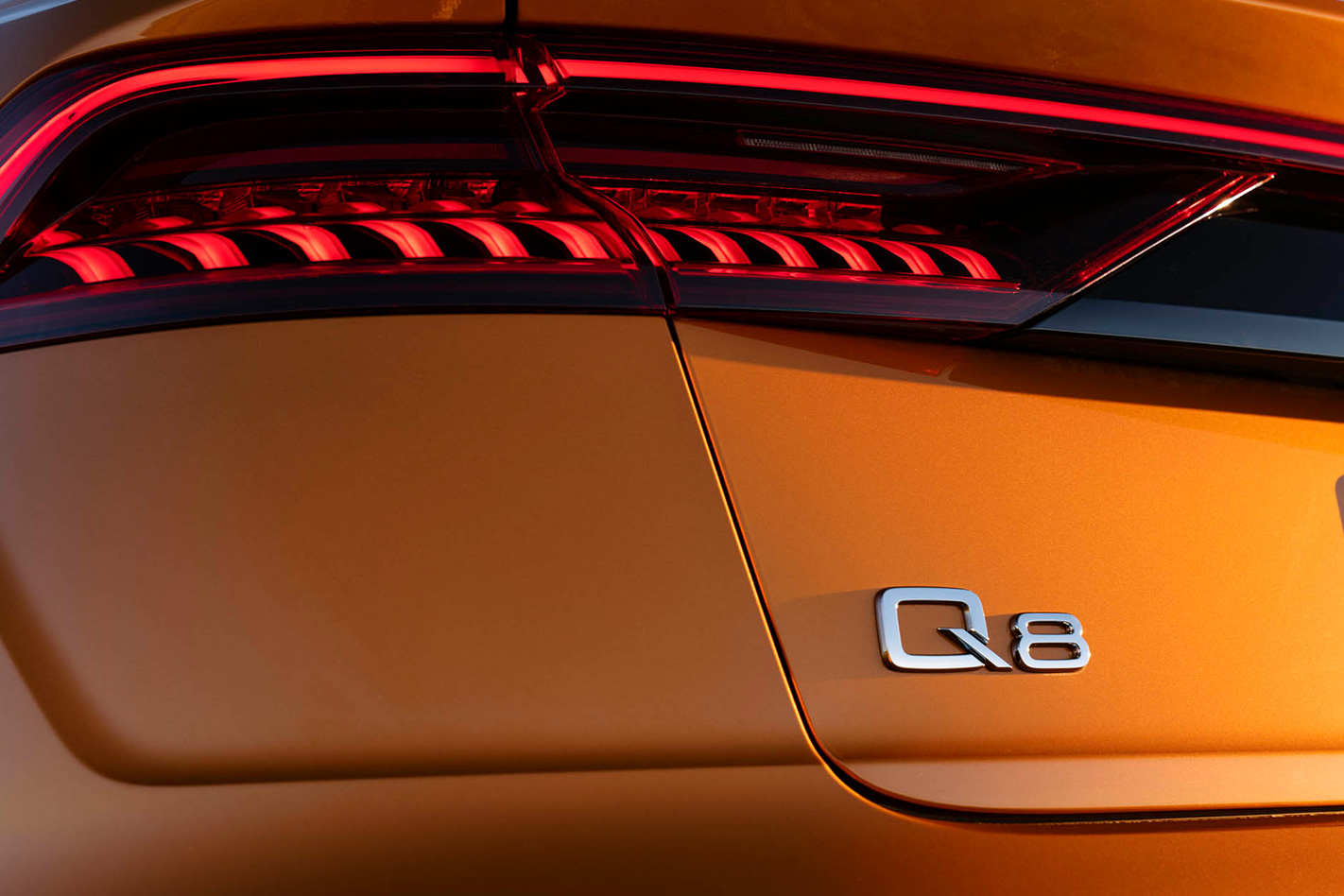
Numerous design touches including the massive ‘singleframe’ grille, 22-inch wheels, slender full-width tail light bar and skeletal headlights packed with gem-like LEDs could easily have been labelled a designer’s folly and confined to the studio.
But they weren’t, and the Audi Q8 is resplendent in its striking aesthetics.
Pumped wheel arches that Audi calls ‘quattro blisters’ are reminiscent of the original 1980 Ur-quattro and house a choice of either 21- or 22-inch wheels.
Frameless doors are a trait rarely found on SUVs and normally the preserve of coupes, but the Q8 has the roofline of a coupe too.
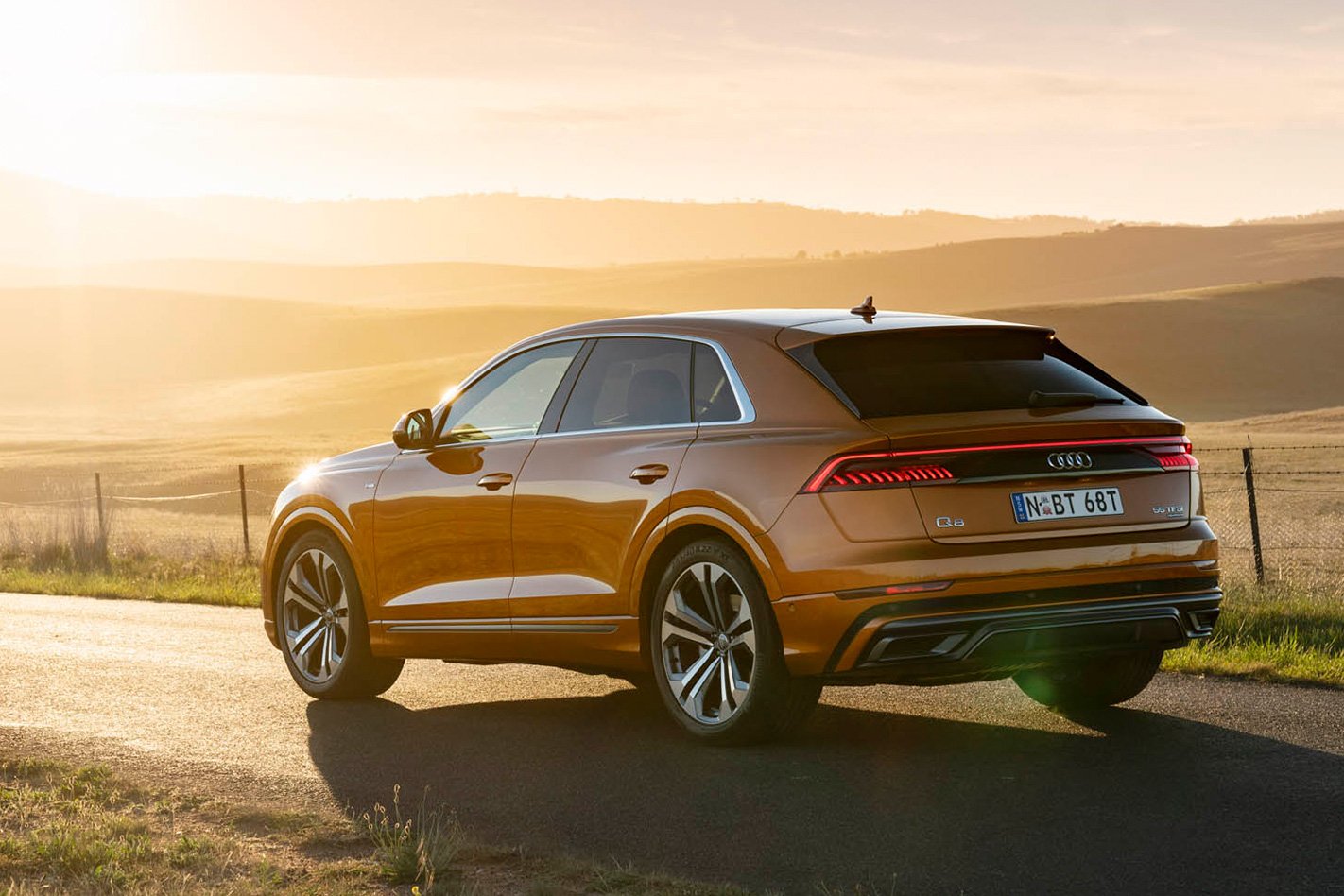
Audi chose to offer the Q8 not in a cost-saving bargain variant, but instead equipped the single 55 TFSI variant with a rich list of extras, including the S line styling pack, which adds a sporty body kit and some interior embellishments too.
The visual theatrics continue after dark with headlights, tail lights and indicators that are exclusively LED and perform dynamic displays as part of their functions. There’s more exclusive illumination in the cabin with colour ambient lighting infiltrating the panelling and dash.
A new colour completes the visual package with Dragon Orange unique to the Q8 along with nine other paint options, including Galaxy Blue which is dazzling in direct sunlight with its large metallic flakes.