
Porsche has broken a record at the Nürburgring with a modified Porsche 911 GT2 RS, though it hasn’t taken back the production lap record from the Lamborghini Aventador SVJ.
The GT2 RS which lapped the ‘Ring – and now the fastest street-legal car to do so – is one modified by Manthey-Racing, a Meuspath-based (right by the Nürburgring) racing team and tuner, which is owned in majority by Porsche.
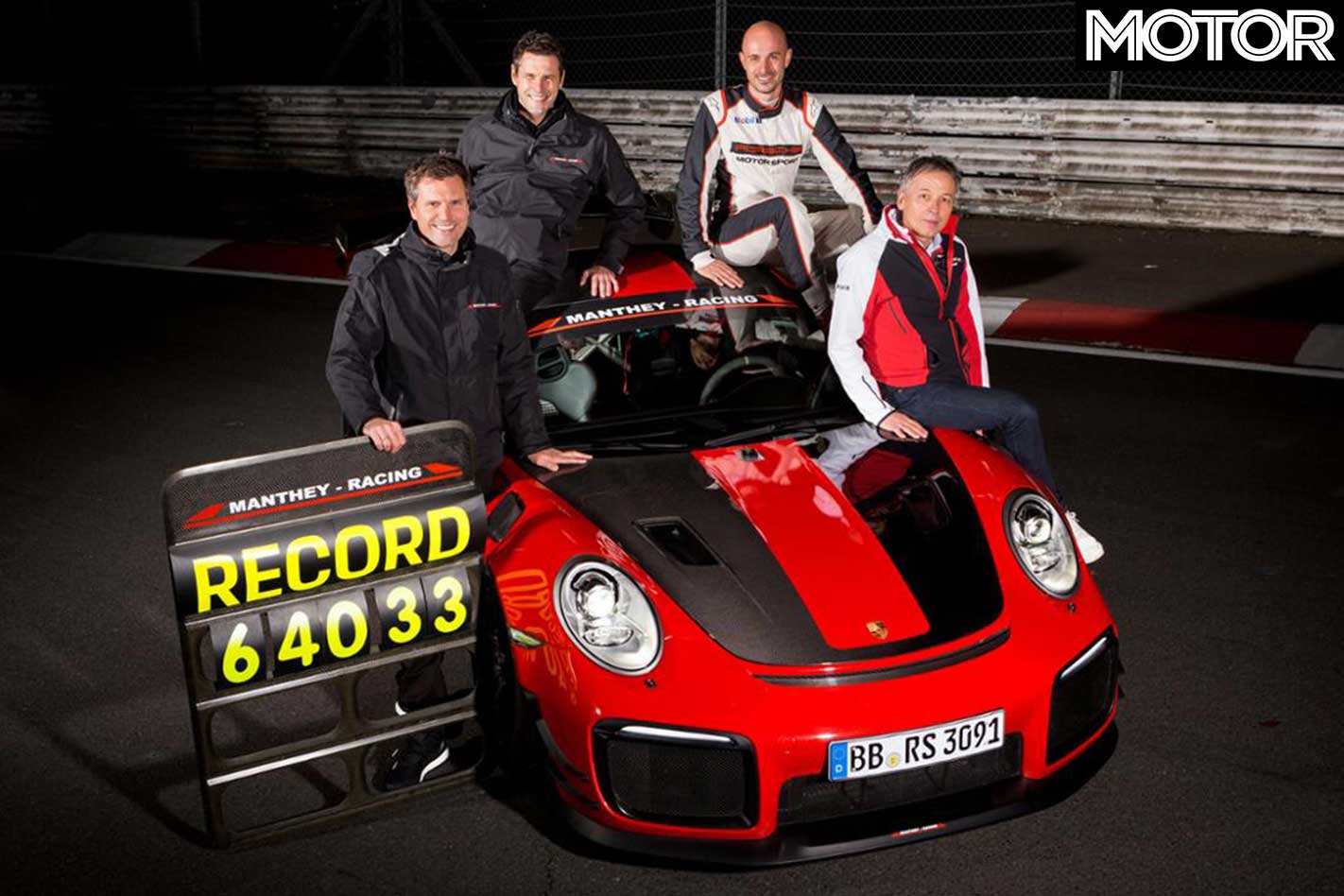
The car had been “set up for the Nordschleife by Porsche engineers and Manthey-Racing experts,” meaning it’s no longer the production-spec GT2 RS and ineligible to take back the crown from Lambo, but it’s still road-legal.
Its time of 6:40.3 is a couple of ticks quicker than the 6:44.97 the Aventador SVJ ran, and seven seconds quicker than a standard 911 GT2 RS (6:47.3).
Though Porsche doesn’t detail the modifications precisely, it does note that the main areas of modification were in the chassis and aerodynamics, with an additional goal of retaining the car’s on-road driveability.
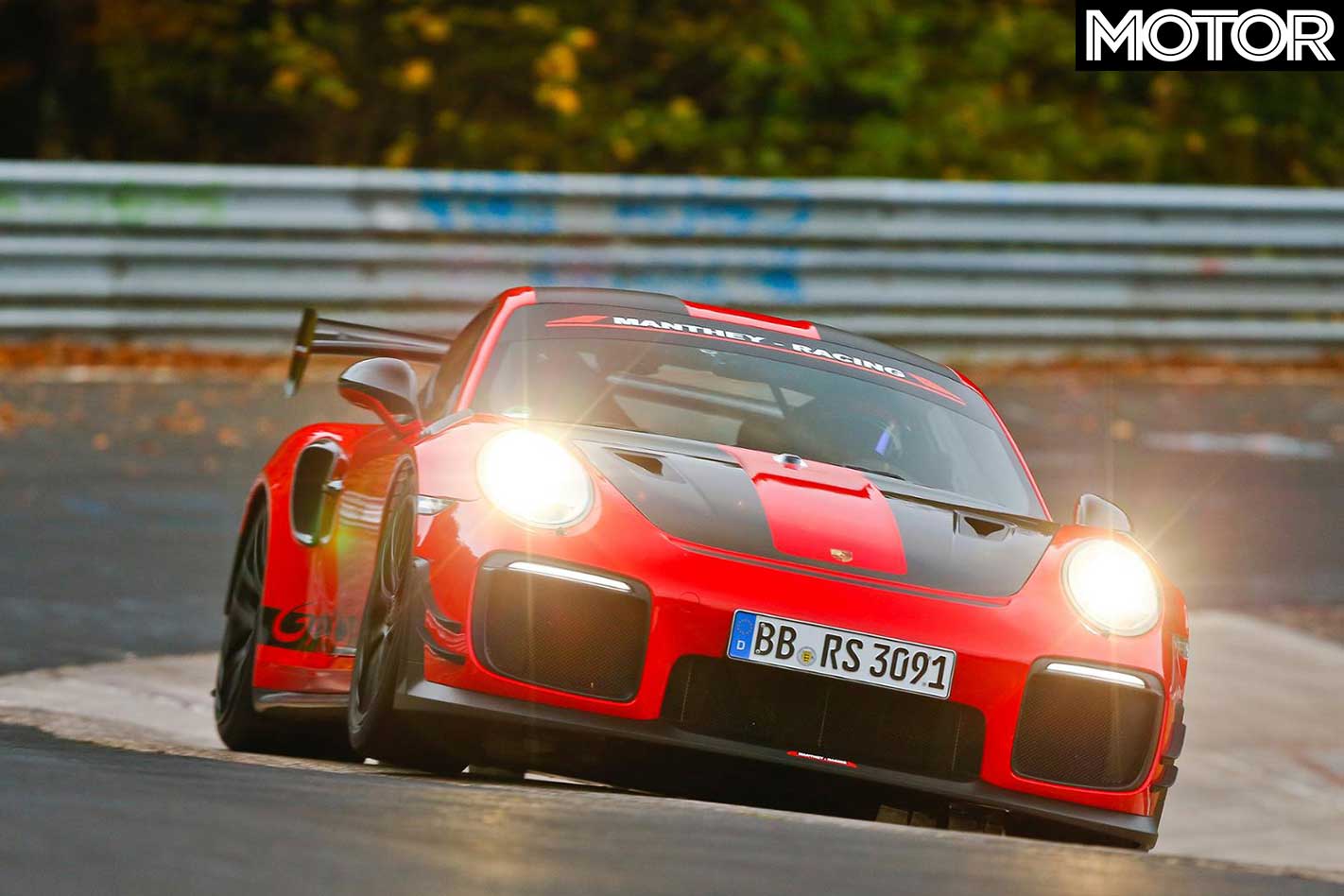
Lars Kern, the driver at the wheel of the lap (and of the original GT2 RS lap a year ago) says he only had one flat-out shot at getting the lap right due to time restrictions.
“The drive was great fun,” says 31-year-old Kern.
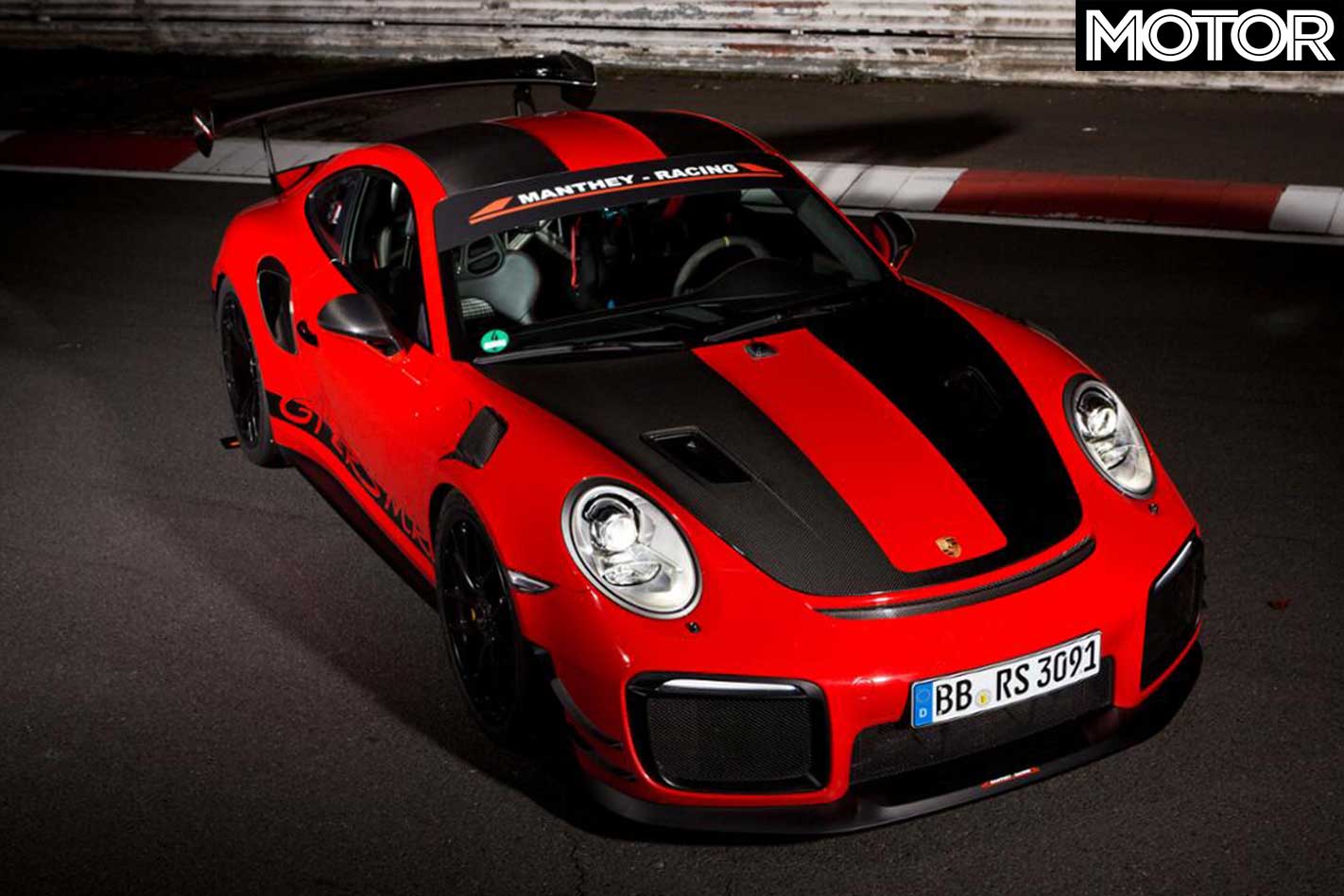
“The balance of the car is also very good with the new package. I did not have to take any great risks to be fast.
“But I only had one attempt because it was already getting dark. It worked out first time though.”
You can watch the full onboard footage of the lap at the top of the page, if you haven’t already.
Tempting two-seat sports cars have been a BMW tradition for more than 80 years, one that’s continued by the new Z4. Though demand for such pure-bred driver-pleasers isn’t what it used to be, the Bavarians seem determined to keep one in their line-up…
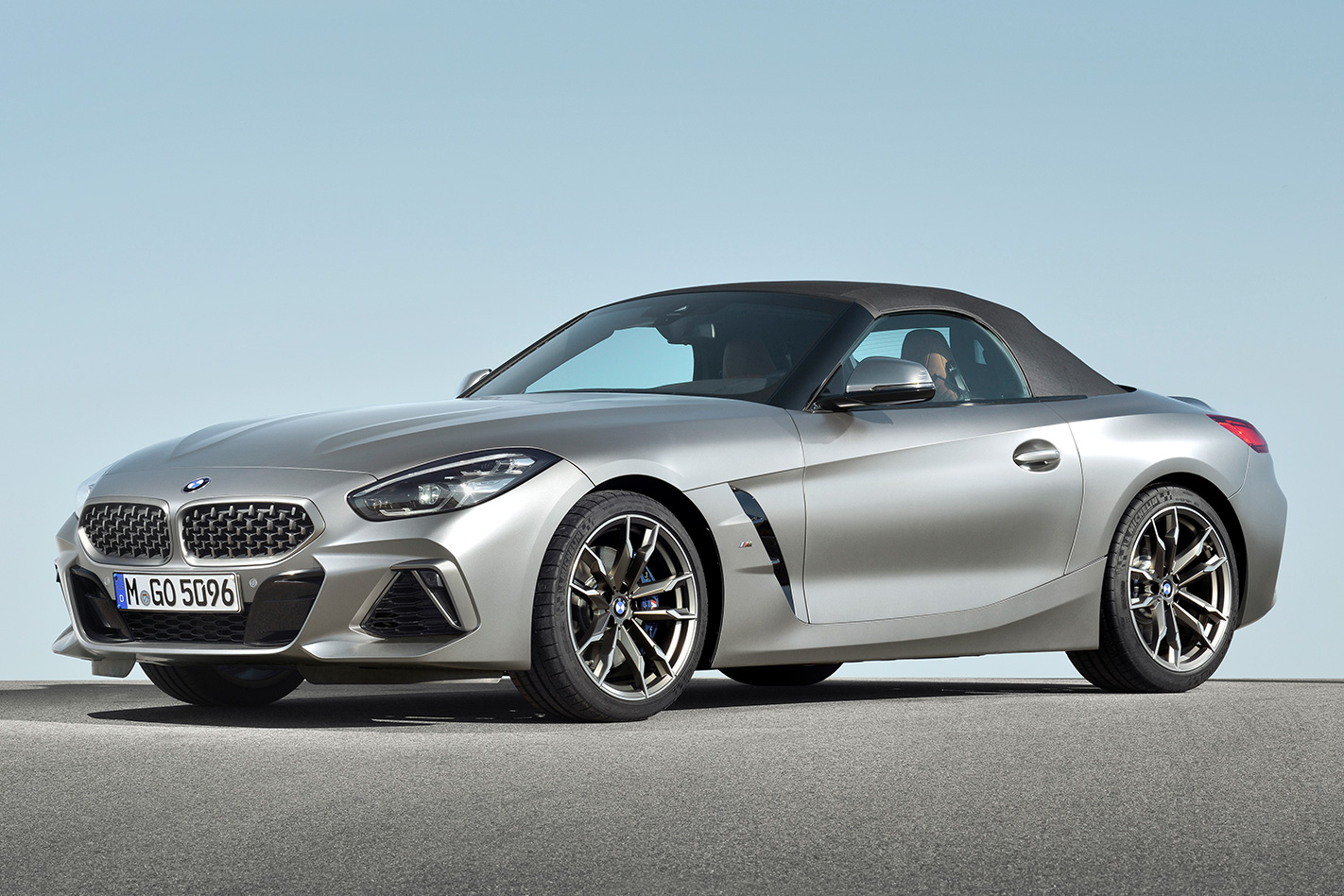
WHAT IS IT?
Classic formula two-seat, soft-topped sports car. Under that long bonnet are four- and six-cylinder turbo engines, driving the rear wheels through an eight-speed automatic.
WHY WE’RE TESTING IT
The Z4 won’t reach Australia until around March 2019. The international media launch in Portugal in November was our first chance to slip behind the wheel for an assessment of its lust-worthiness
MAIN RIVALS
Jaguar F-Type V6 Convertible, Porsche 718 Boxster
THE WHEELS REVIEW
SPORTS cars may be a dying breed, but the Z4 is a lively reminder of why they must be saved from extinction. This low, lithe two-seat soft-top is impressively agile and immensely entertaining. Purpose-built for pure driver pleasure, it’s everything an SUV is not, and can never be.
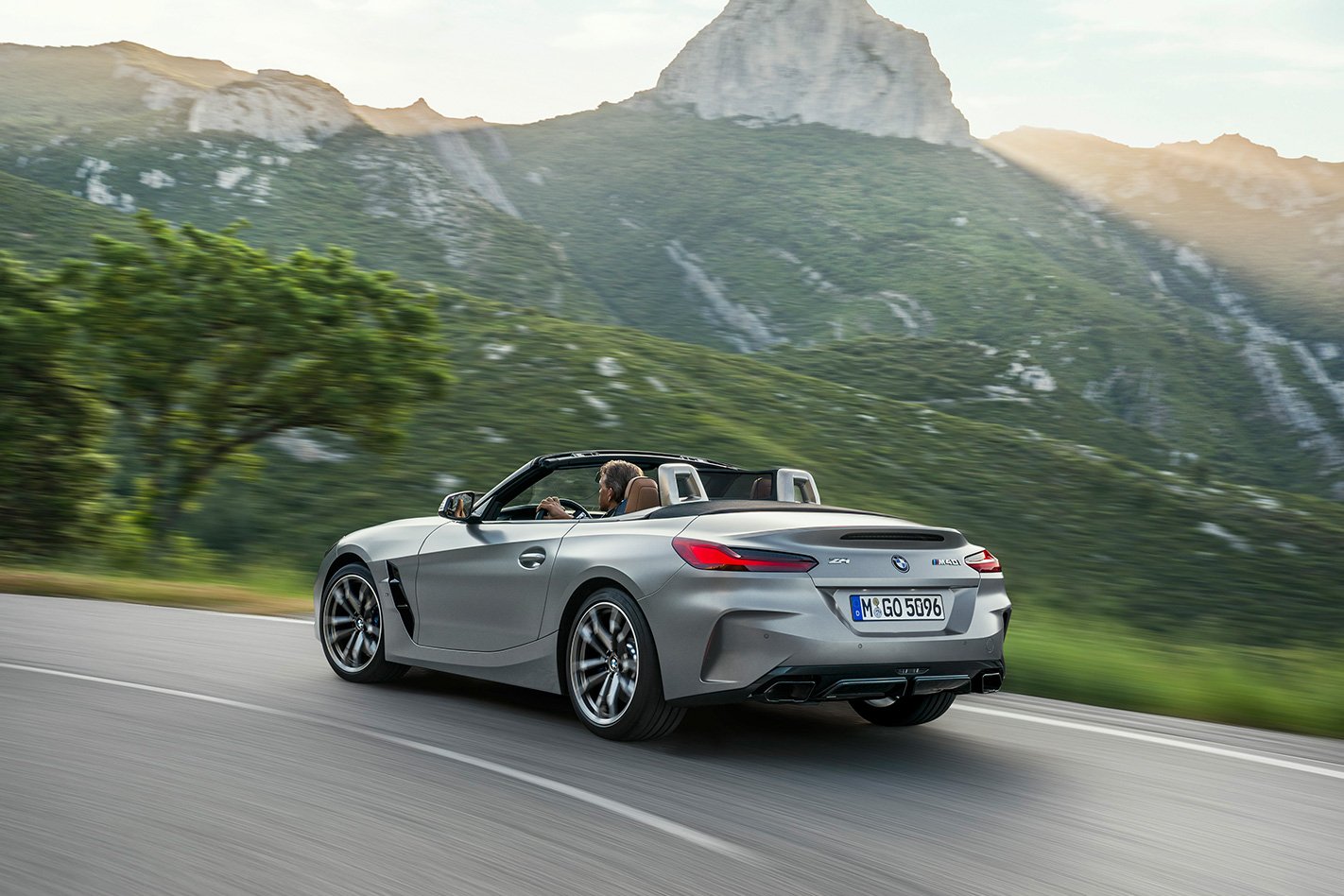
Insatiable demand for SUVs threatens the survival of the sports car. Manufacturers know that adding SUVs will add to their profits. Meanwhile, the global audience for proper sports cars is diminishing. And this makes it ever more difficult to create sound business cases for their production.
We can thank Toyota for the new Z4, and BMW for the new Supra. Both companies insist their car would not exist without the other partner to a collaboration deal inked back in 2012.
Disentangling the fine detail of the Z4/Supra project is difficult, with BMW and Toyota managers sometimes giving different answers to the same question… to be later contradicted by some more senior exec.
Still, it’s clear that BMW deserves credit for designing most of the shared hardware. Munich also provides the Supra with an off-the-shelf in-line turbo six, something Toyota says was key to their coupe revival concept.
Chassis design was “100 percent BMW” says driving dynamics exec Jos van As. The genial Dutchman says the platform shares most, but not all, its components with the new 3 Series. The changes endow the sports cars with more suitable caster and camber angles for the strut front and multilink rear suspensions. While brake systems are borrowed from the M3/M4, the electrically assisted variable steering system is specific to the car, says van As.
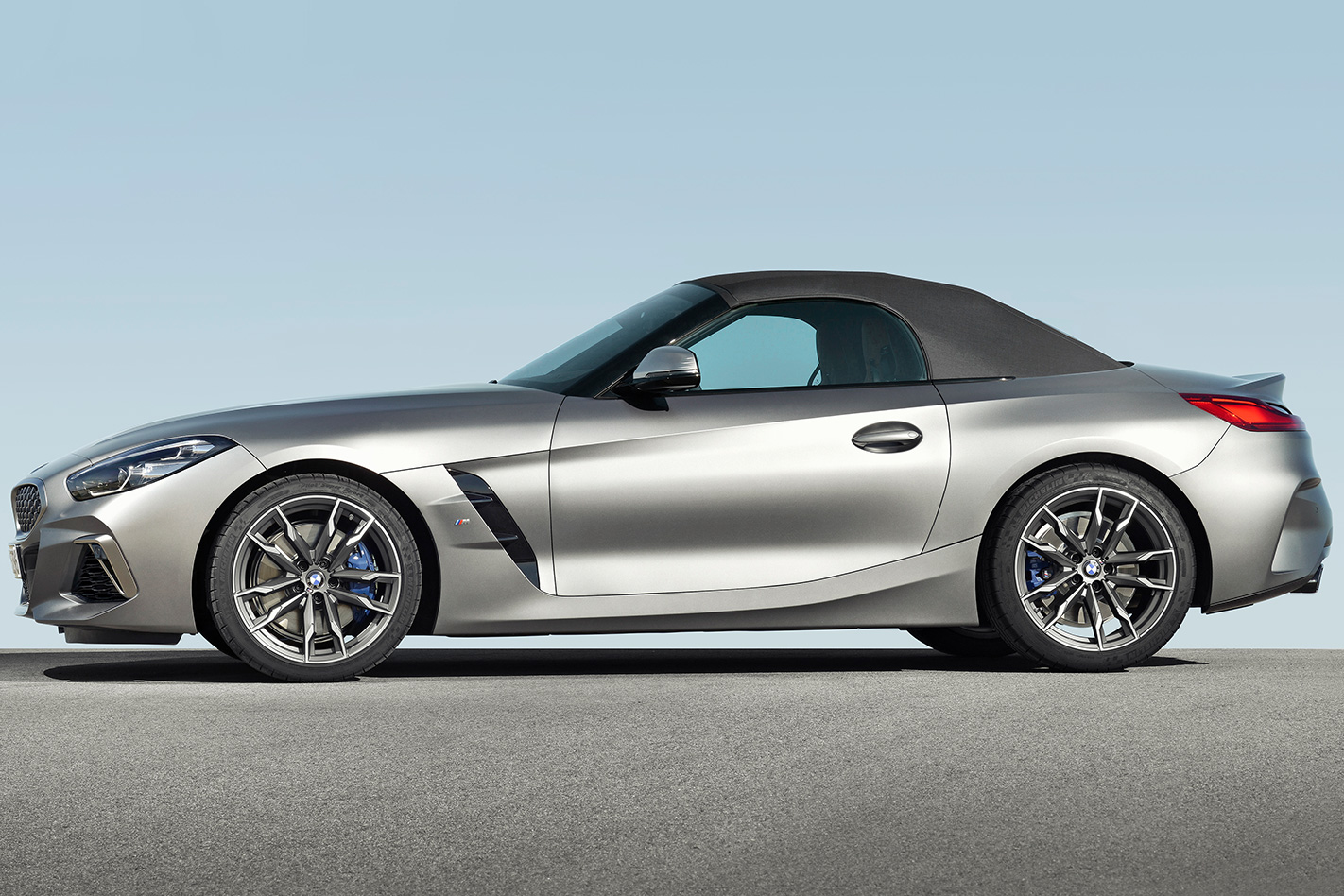
The new Z4 is longer and wider overall than the second-generation Z4, which stopped rolling off BMW’s Regensburg production line back in 2016. The newcomer’s front and rear tracks are wider, but the wheelbase is fractionally shorter.
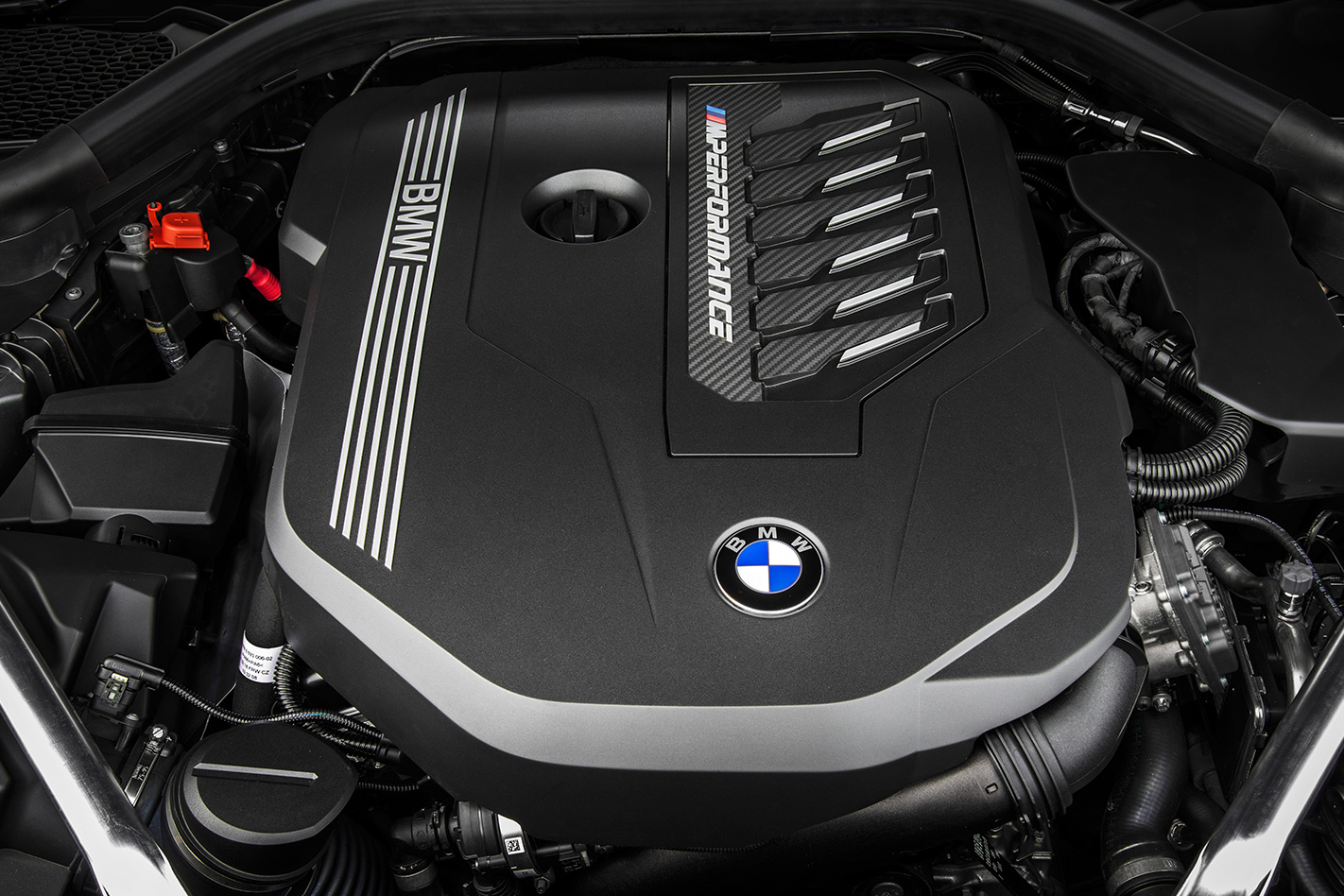
BMW bought only the top M40i version of the Z4 to its international media launch in Portugal. This model’s 250kW/500Nm 3.0-litre turbo six, teamed with an eight-speed auto and driving the rear wheels, is basically the same engine as used in the Supra.
And it’s a lovely thing in the Z4; smooth and responsive, with oodles of boosted torque tappable from low in the rev range, along with a willingness to rev. It’s pretty close to petrol-burning perfection.
BMW’s engineers have done a great job, too, with calibration of the auto. It’s relaxed yet alert in cruisy Comfort mode, and a snappy shifter in Sport or Sport +, modes which also uncork the mufflers to release a just-right amount of crackle and pop. Alone in the Z4 range, the M40i’s transmission has specific M Sport control software.
Two 2.0-litre turbo fours – 20i (145kW/320Nm) and 30i (190kW/400Nm) – will complete the Z4 launch line-up. They also have eight-speed autos, but with standard BMW software calibrations. All variants will go on sale in Australia around March 2019, around five months after European deliveries begin.
The M40i’s more muscular engine makes the Z4’s chassis work harder, but the extra urge didn’t reveal any glaring flaws during a half-day test drive in and around Lisbon.
Even in Comfort mode, the adaptive M Sport suspension standard in the M40i delivers a ride that’s firm and tightly disciplined. M Sport brakes and differential are also standard on the M40i, along with M Sport exterior package.
Selecting Sport mode makes the suspension firmer, and brings a palpable lift in smooth-road cornering ability. The effect of Sport+ on throttle response and transmission shifting makes the M40i feel like it’s been dosed with amphetamines. It’s too manic for public road use.
On poor quality Australian roads, leaving the car in Comfort mode but nudging the stumpy shift level sideways for shifting sportiness, and perhaps using the paddles, is likely to be the best recipe for driver pleasure.
It sure worked for me on the narrow clifftop road overlooking the Atlantic Ocean that was the highlight of BMW’s drive loop. The Z4 has a great depth of chassis talent. This is a sports car with great inherent poise and balance, yet super sharp reactions to control inputs. The sniper-rifle accurate steering is a particular highlight, though the too-thick leather-covered rim of the M40i’s steering wheel dilutes the effect.
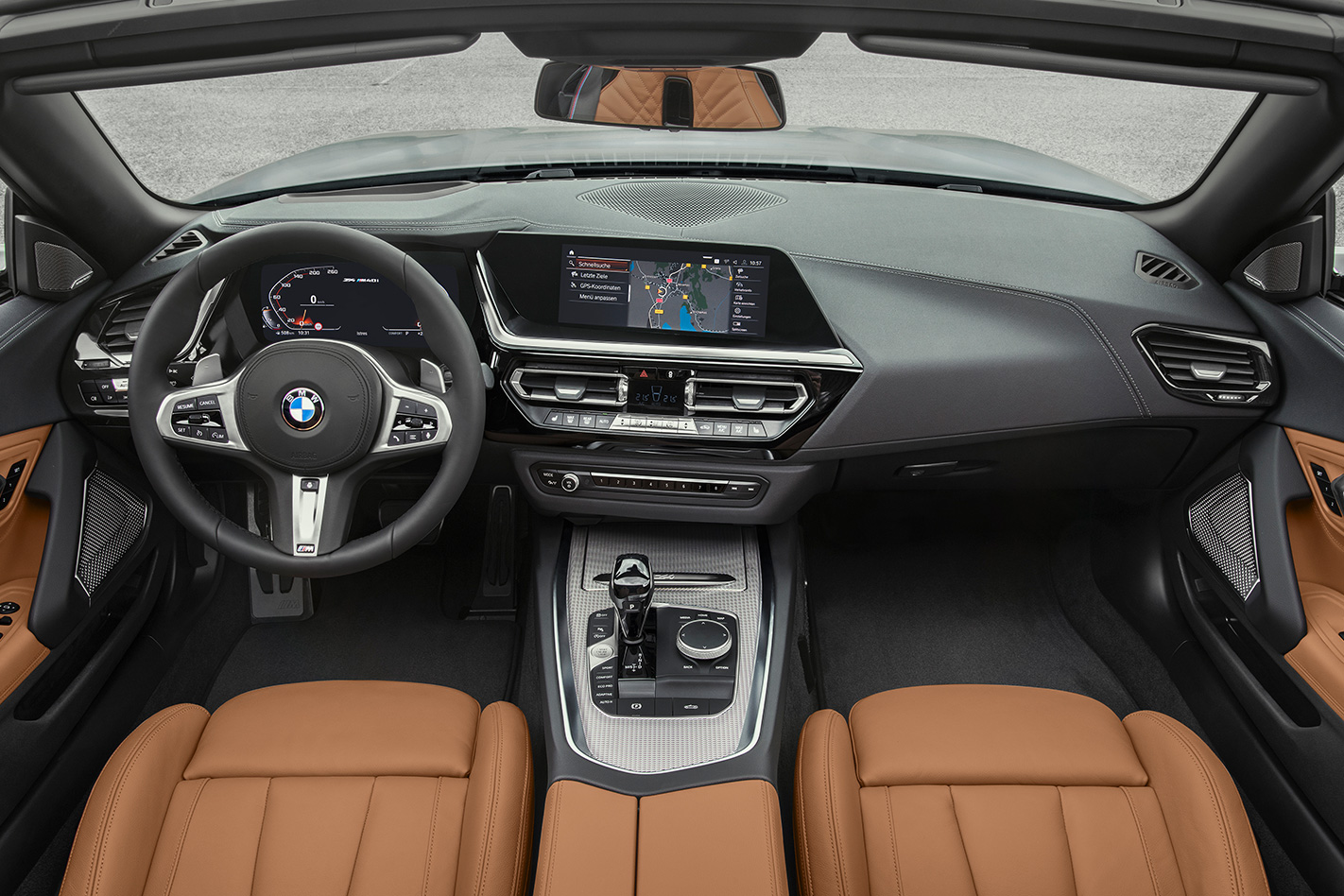
Chubby-feeling steering wheel aside, there’s little to complain about in the Z4 M40i’s cockpit. The seats are excellent, the driving position fine, and the instrument panel artfully blends clarity and quality. Pretty much all of BMW’s latest driver-assist and infotainment technology will be available in the sports car, either standard or as options.
The Z4’s roof takes only 10 seconds to raise or lower, at any speed up to 50km/h. It looks good when erect, and does a good job of insulating the interior from noise. It does impede over-the-shoulder vision more than a little. Same goes for most other soft-top sports cars.
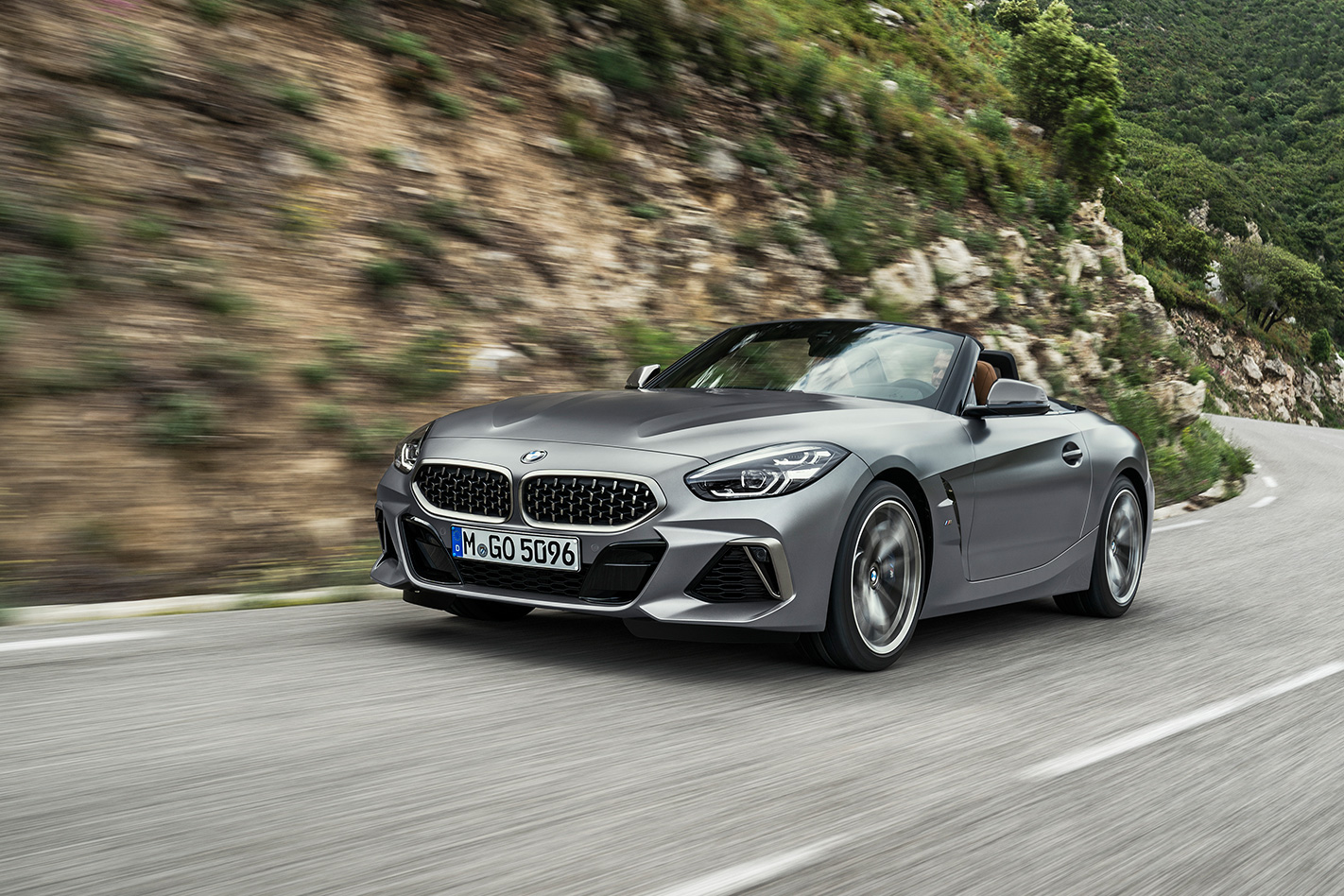
The new Z4 has a much bigger cargo compartment than before. It’s 281 litres roof open or closed, an increase of 50 percent over the previous model with its space-invasive folding hardtop. There’s room in the new Z4’s boot for a very well-dressed weekend away.
The exterior of the Z4 is the work of young Australian Calvin Luk. The Z4 is his third design into production, following the X1 and X3 SUVs. He can’t disguise the fact that he enjoyed working on the new Z4 more than his earlier projects.
“This one’s extremely emotional, because there’s such a personal connection,” he says. BMW’s two-seaters were always cars that fascinated him. “I loved the roadsters the most.”
Now Luk is living the dream of the BMW-besotted kid who grew up in Sydney yearning to become a car designer. “That first-gen Z4 was a car that inspired I think many kids to become car designers,” he says. “So now to own that, and drive that in Munich, then be able to work on the new one, you know, it’s such a dream, it really is.”
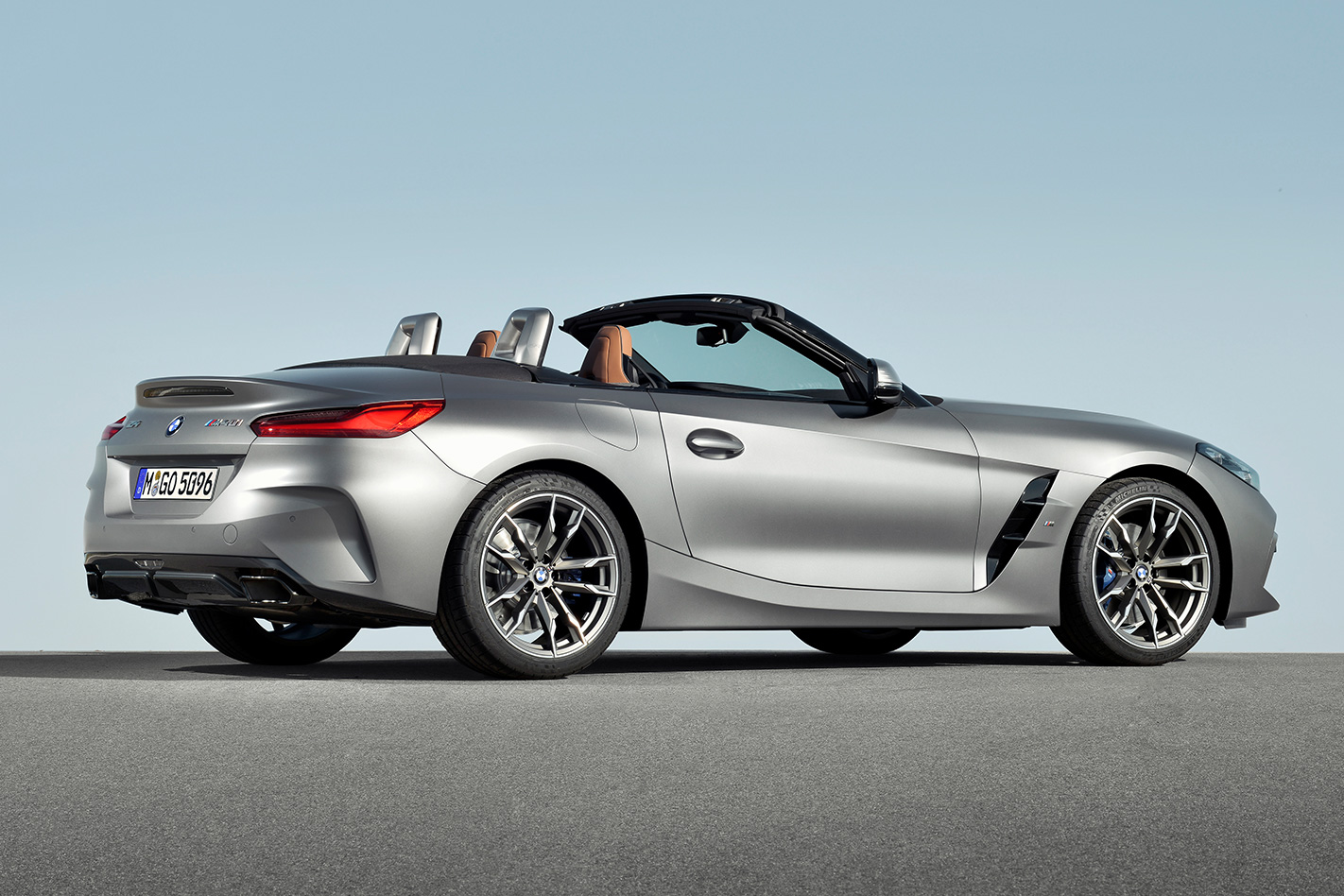
Luk drove his own car to an event that marked the start of designing the new Z4. “To kick off the project we actually had a really fun day driving old Z cars. We drove the Z1 around, Z3, Z8. I drove my Z4, as well, to the meet-up.”
But BMW’s brief to its designers wasn’t to look backwards. “There is a subtle nod to past Z cars,” says Luk of the new Z4, “but the overall push was to look forward.”
“This car is really diving to the front. It’s really sort of attacking the road.” It’s an effect that springs from the subtly twisting lines emerging from the air breather aft of the front wheelarch. This “drives the whole sculpture” according to Luk, at the same time as giving the new Z4 a visual identity that’s distinct from earlier models.
Still, Luk says there’s a little of BMW’s 2000 Z8 in the new Z4. “On the front end you see that the lights are pretty high up, and the kidney grilles are low and wide,” he explains, holding up a model of the Z8 to illustrate the point, then switching to a sketch of the Z4. “And that’s the same case here, in a very different sort of execution.” He also admits that the mesh grille of the pre-WW2 328 Mille Miglia racer provided inspiration for the three-dimensional honeycomb grille-fill of the new Z4.
Throughout the video call interview with Luk, the young Aussie bubbles with enthusiasm. Sports cars are like that. Designing them, driving them, dreaming about them makes life more, well, lively…
THE WHEELS VERDICT
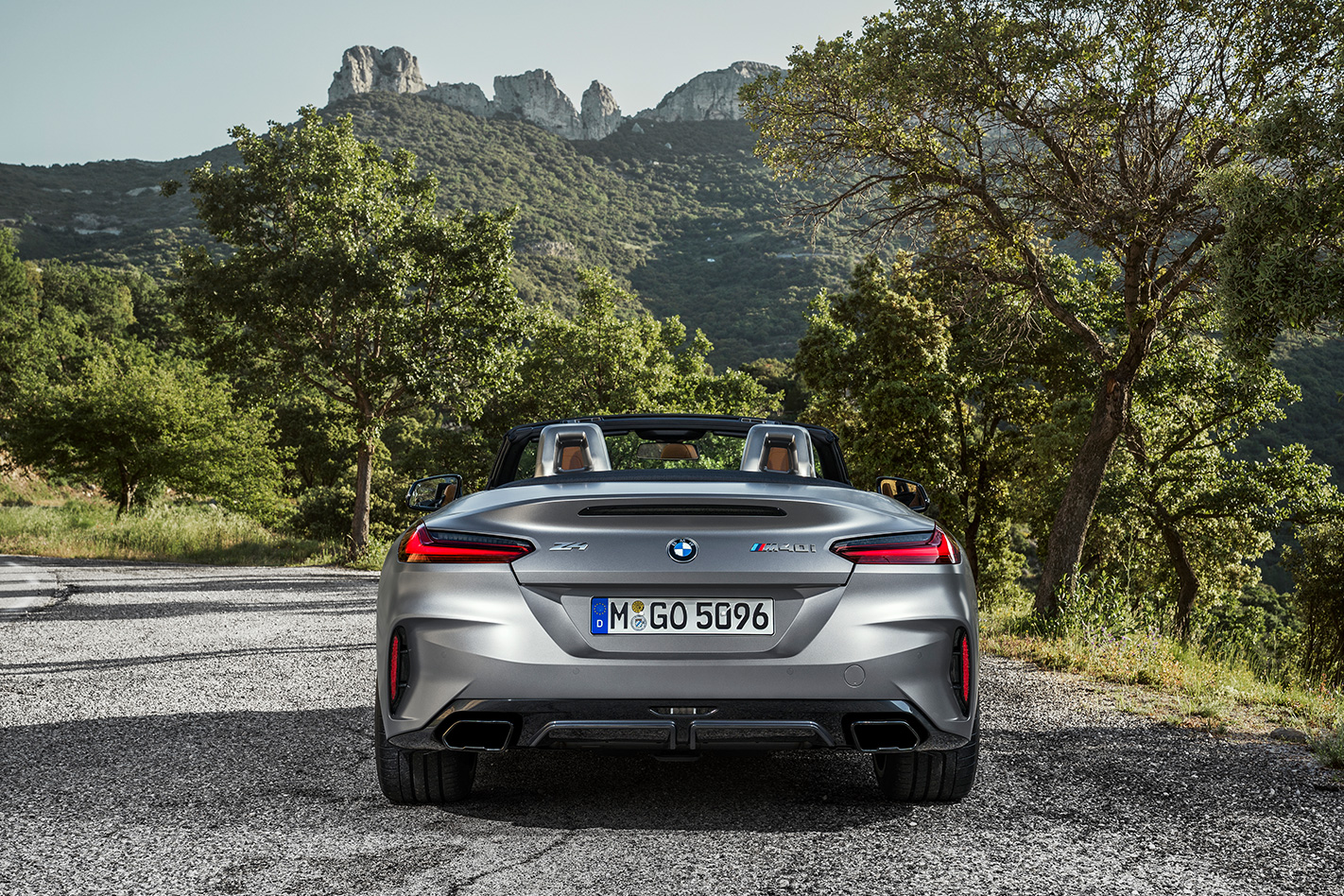
Welcome back Z4! After a two-year break from proper soft-top sports car production, the third-generation of BMW’s roadster is ready at last. At least in top M40i form (the only variant BMW brought to the international launch in Portugal), the Z4 is an exciting and involving drive. Performance and polish of its drivetrain are outstanding. It’s dynamically accomplished, too. Exterior design has character, and the interior is nicely crafted and well equipped.
PLUS: Engine; auto; handling; quick soft-top; useful boot MINUS: Firm ride in Comfort; too-fat steering wheel; restricted roof-up vision
SPECS
Model: BMW Z4 M40i Engine: 2998cc in-line 6, dohc, 24v, turbo Max power: 250kW at 5000-6500rpm Max torque: 500Nm at 1600-4500rpm Transmission: 8-speed automatic Weight: 1610kg (EU kerb) 0-100km/h: 4.6 sec (claimed) Fuel economy: 7.4L/100km (EU Combined) Price: $125,000 (estimated) On sale: Late Q1 2019
Hyundai is set to give its i30 hatchback range a shakeup early in 2019, beefing up its successful i30 SR hatch for something that’s more overt.
“It’ll be a little more ballsy,” remarked a Hyundai insider.
The i30 SR competes against warmed over hatches like the Mazda 3 SP25 GT, Holden’s Astra LTZ and the Toyota Corolla ZR.
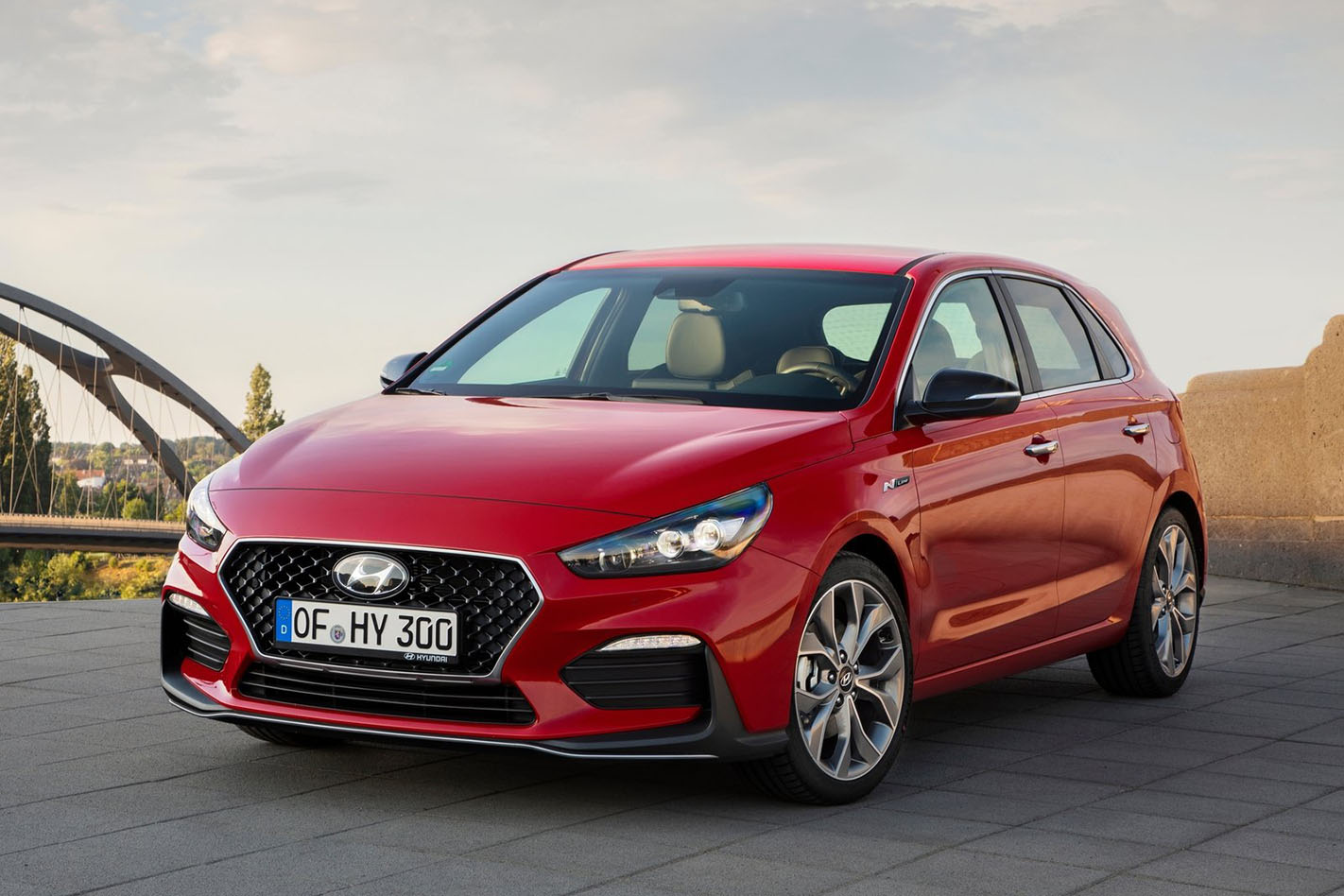
The launch of Hyundai’s N performance sub-brand in the shape of an i30N hatch has been a sales success, and the company plans to spread the go-faster message further down the line.
The N-line missive has come down the line from head office in Korea, after the unprecedented – and unexpected success of the i30N here and overseas.
The SR badge won’t be retired; rather, it’ll be kept for future use on vehicles like the Kona and Tucson SUVs.
It’s not dissimilar to the way that companies like Volkswagen use the R-Line moniker – poached from its R line of hot Golfs to add sports lustre to mainstream machinery.
WhichCar has learned that the i30 SR will be the first model to wear the new corporate N-look early next year. To be known as the i30 N-Line, the car will retain the same turbocharged 1.6-litre petrol-powered FWD powertrain, but it will gain a raft of enhancements inspired by its feistier turbocharged brethren.
New front and rear bumpers and side skirts will be modelled on those fitted to the i30N; they aren’t the same as the N car’s bars, we’re told, but they will be “pretty close”.
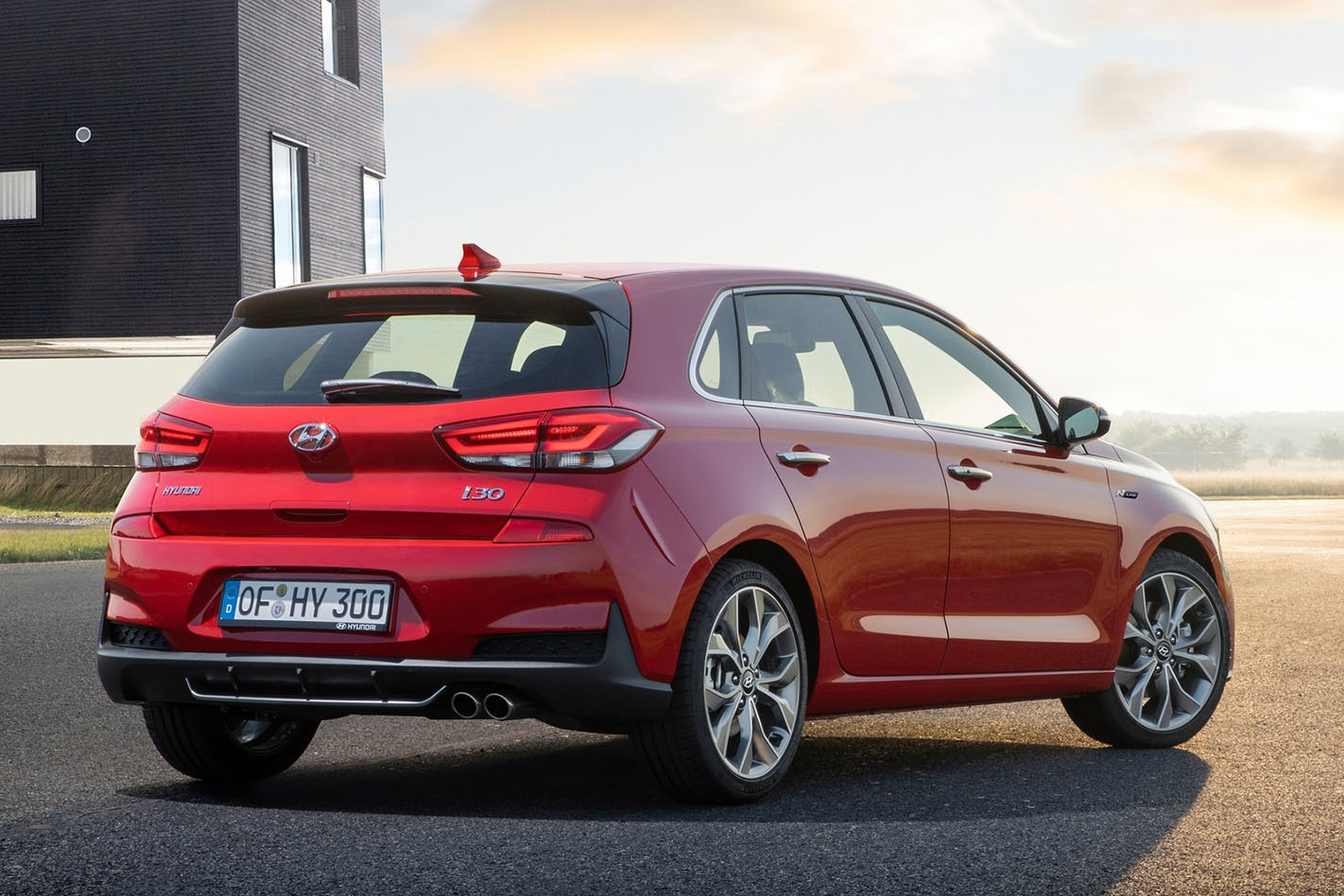
The lower part of the rear bar will sport a faux diffusor and exhaust vents, along with a new twin exhaust outlet. Up front, the daytime running lamps will run horizontally, and there are larger vents teaming up with a small front aero lip.
The N treatment will flow through to the inside of the car, which will be the recipient of new sports seats and interior trim. We’d bet, too, that a stripped-back version of the N performance pages that feature on the i30N’s multimedia display will be added, displaying items like essential temperatures and pressures.
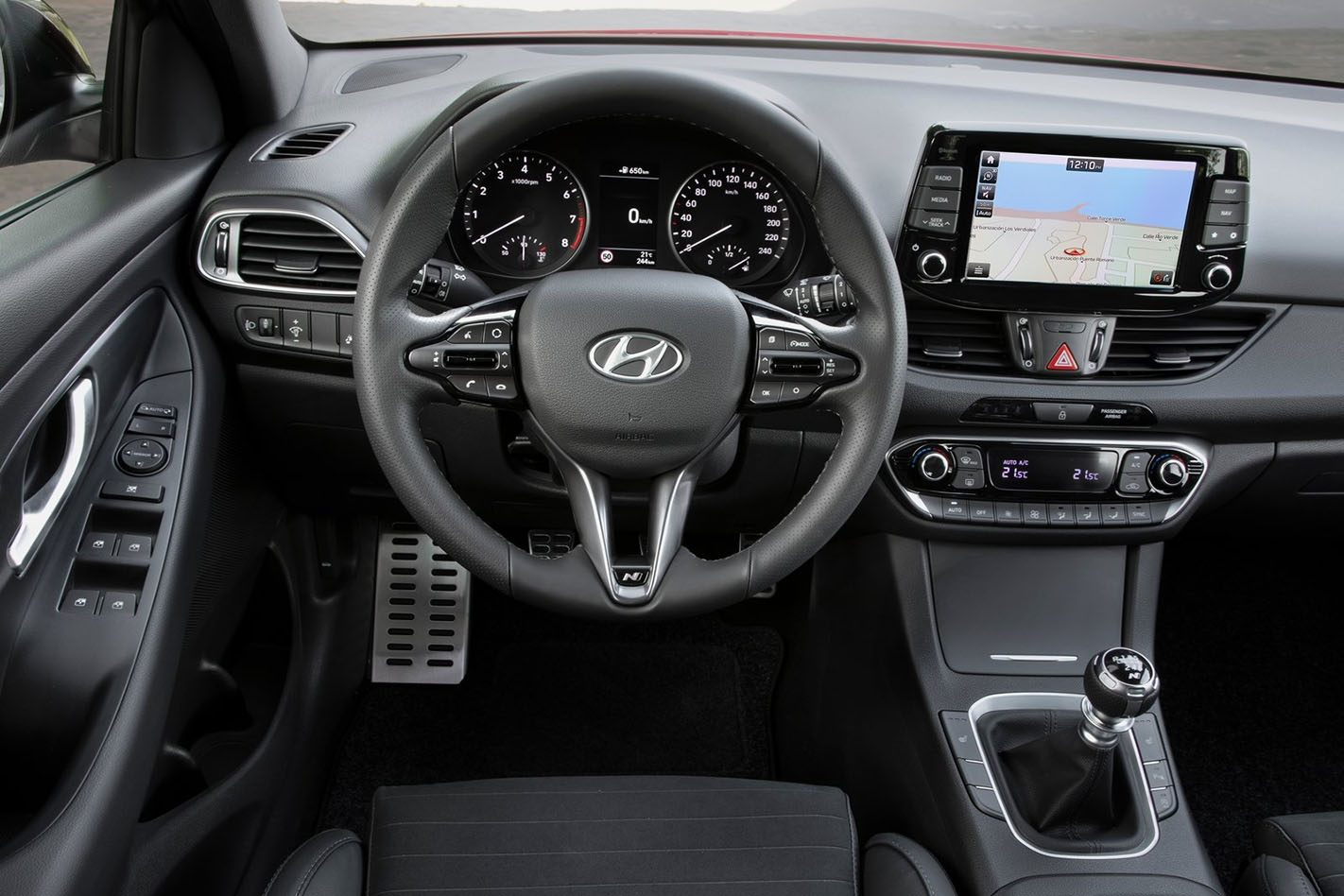
The 150kW N-line will be offered with either six-speed manual or a seven-speed dual-clutch transmission when it’s launched in the first quarter of next year, alongside the new i30 N fastback.
PASSENGER CARS
Small
The small sedan and hatch segment remains the second most popular vehicle category in Australia with a total of 169,757 year-to-date sales so far. However, that popularity continues to decline. The category is down by 6.9 percent relative to the same time last year, while last month’s sales were down 22.1 percent versus October 2017 figures.
That’s a hefty step backwards, and most models recorded negative growth in sales during October. The only notable nameplates to gain ground were the Mazda3 (up 6.7 percent), Peugeot’s 308 (up 88.5 percent) and the Holden Astra (up seven percent).
The Toyota Prius V and the relatively ancient Kia Soul recorded respectable gains of 40 and 34.5 percent respectively, but at 35 and 39 October sales apiece, they’re both coming off a very low base.
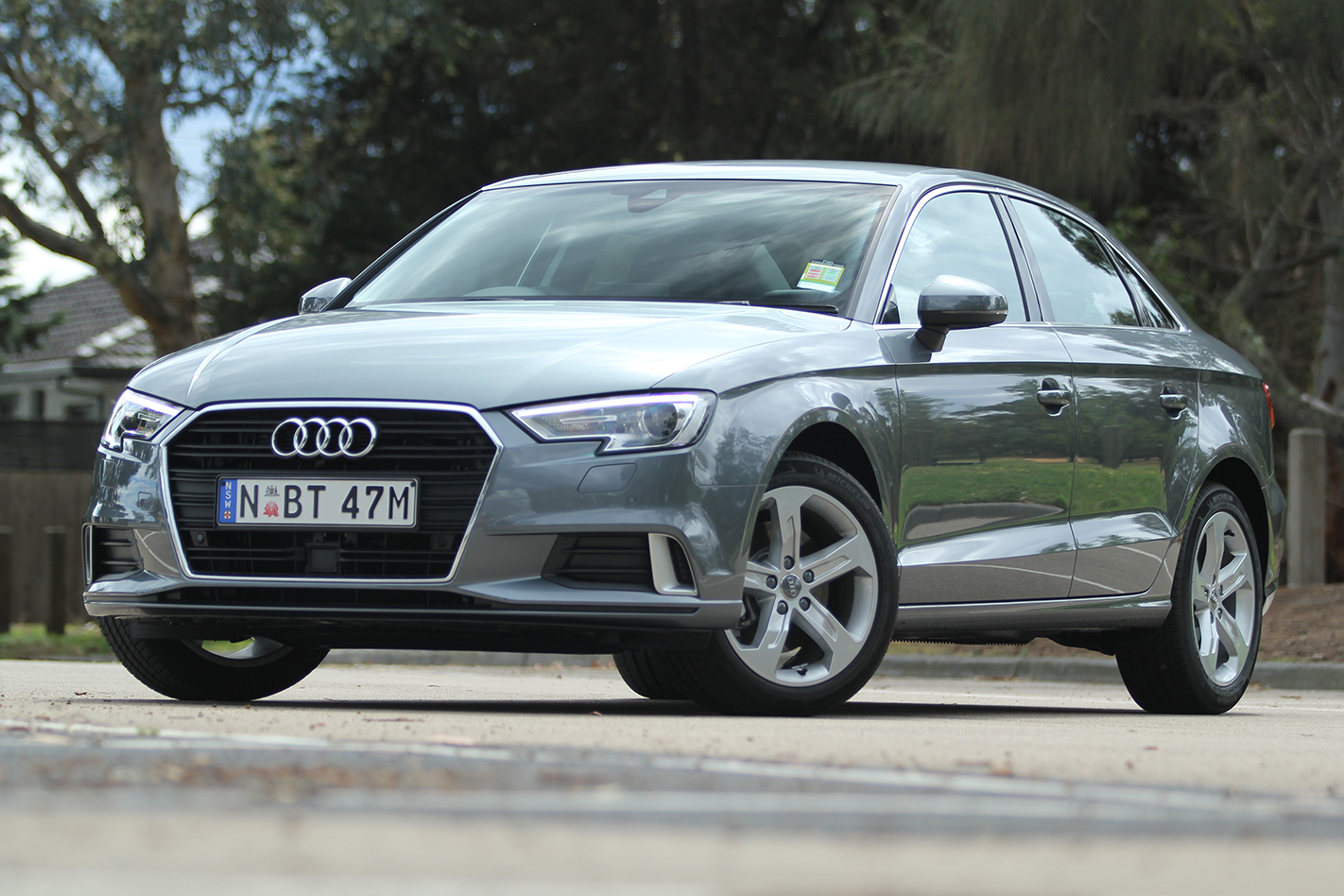
At the premium end, the Audi A3 shone brightest – a real achievement given its age in this market – with a segment-leading 404 sales in October that’s even higher than its September result. The new Mercedes-Benz A-Class lagged significantly behind with 288 sales, which is well down on what it achieved in September. As Merc adds more A-Class variants and a sedan bodystyle to the roster (up until now, only the A200 hatch has been available), the compact German should see its fortunes improve.
Medium
It’s a dire situation in the midsize passenger vehicle segment. Sales figures have been sliding for a long time, and the segment as a whole has declined by 26.9 percent so far this year. Last month, however, the sales drop was an even greater 36.6 percent, and only 3213 mid-sizers were registered in October. For context, 2663 Toyota Corollas left dealerships over the same period.
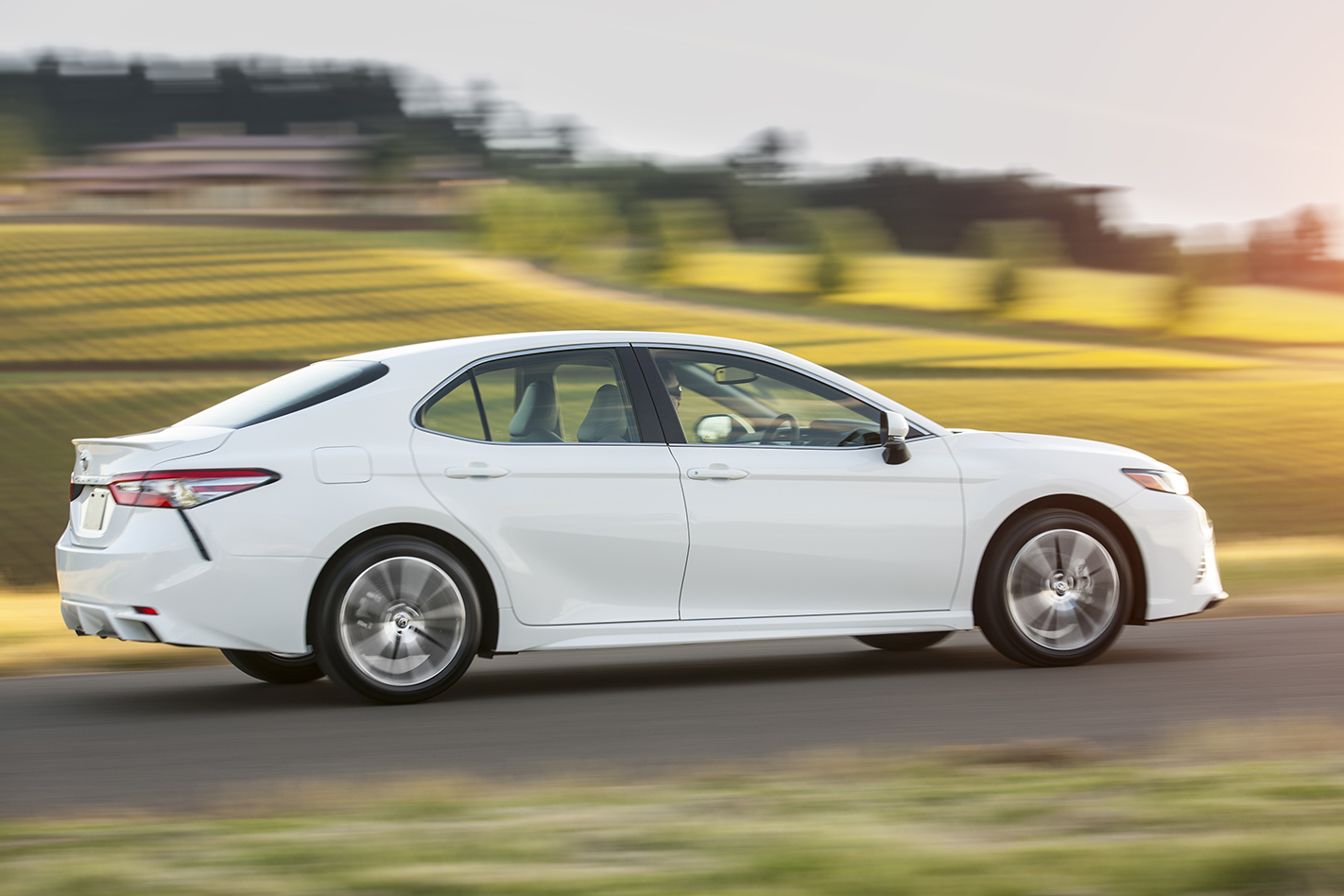
The Japanese-sourced Camry (1132 sales in October) keeps a solid grip on the midsize crown, but even so its year-to-date sales are down 38.1 percent. Trailing it by around 800 cars was the Mazda 6, which was one of the few to actually register an increase in sales volume in October (up 53 percent relative to October 2017, and up a similar amount compared to September 2018 sales).
The ageing C-Class is behind the eight-ball, with sales dipping down to 133 in October (it recorded 356 in September) and putting it not only well behind its stablemate the CLA-Class, but also well behind its German rivals the Audi A4 and BMW 3 Series – both of which bucked the trend and saw gains in October.
Large
If the situation in the mid-size segment looks grim, the large car segment is a bloodbath. Year-to-date sales are down by over 50 percent across premium and mainstream large cars, and the departure of the Ford Falcon, Peugeot 508, Hyundai Genesis and Toyota Aurion make the mainstream end of town look especially horrific.
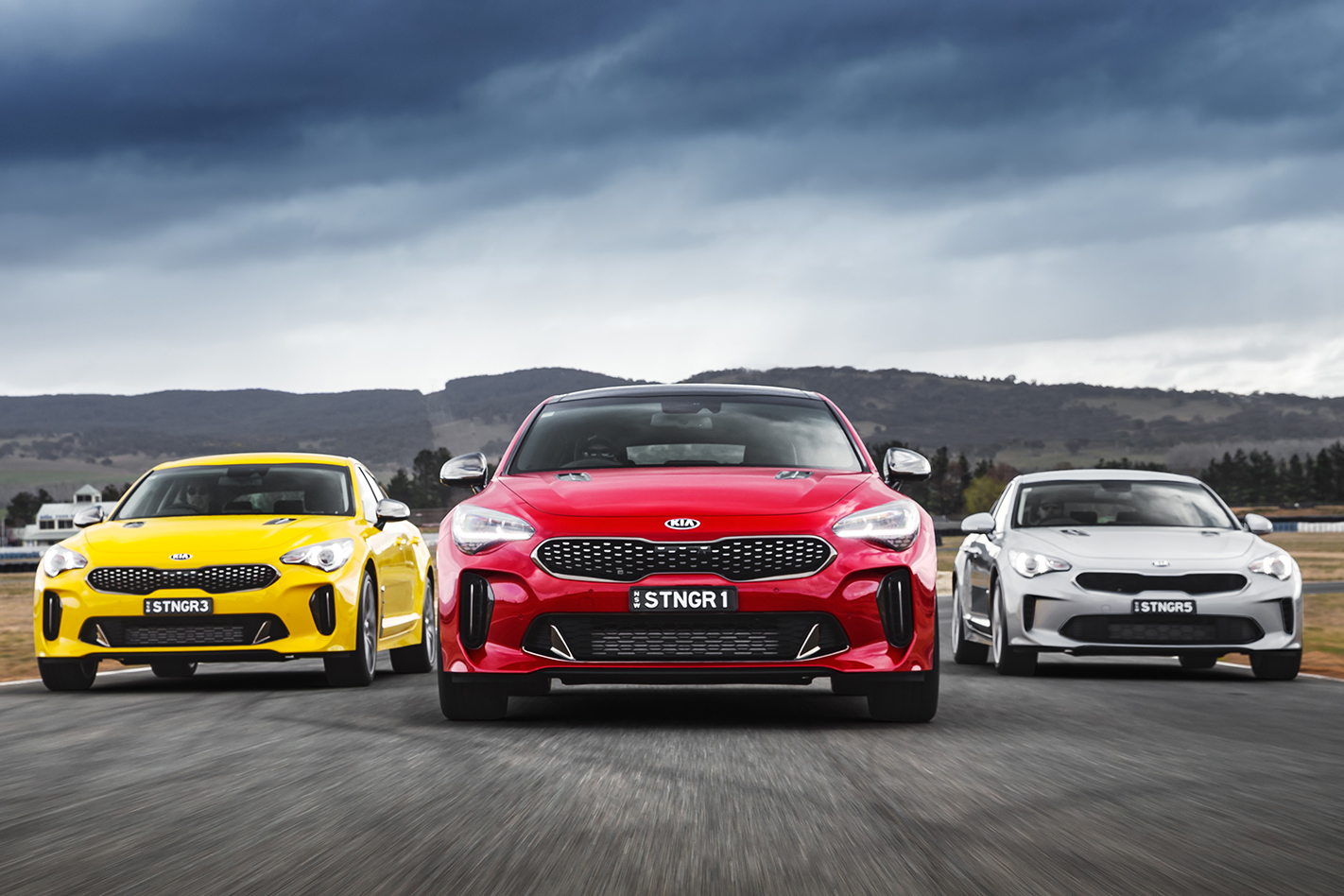
Even those models that remain – the Holden Commodore, Kia Stinger and Skoda Superb – all lost significant ground as buyers opt for SUVs in ever-increasing volumes.
SUV SEGMENT
Small
While the passenger car segments wane, the SUV side of the market thrives, and the bulk of that growth is happening at the small end of the spectrum.
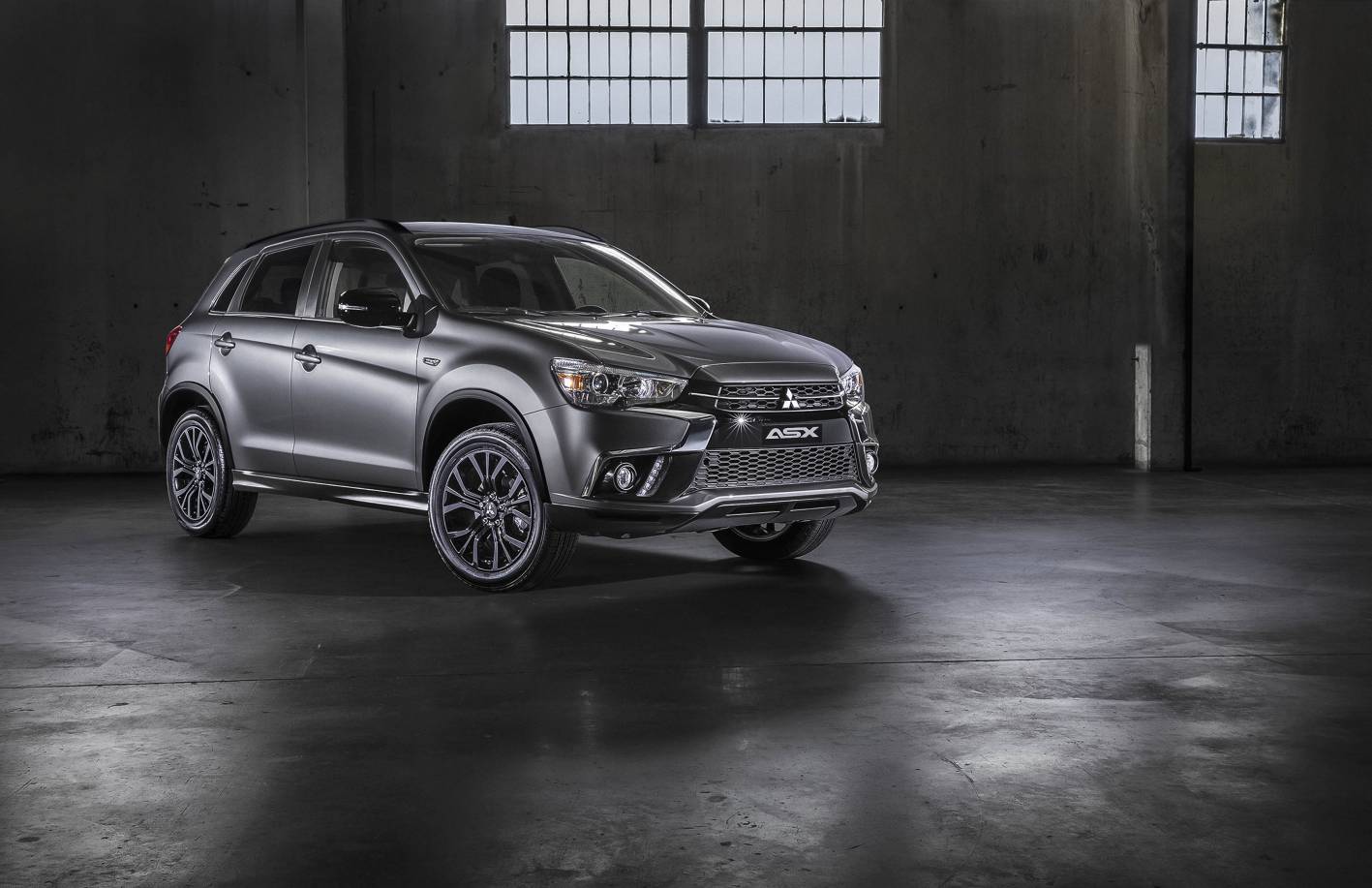
The ancient Mitsubishi ASX continues to surprise with age-defying sales figures, sitting comfortably at the top of the small SUV tree with nearly 500 sales between it and the second place-getting Mazda CX-3 (which jumped back into the top three after being absent in September).
Meanwhile, premium offerings like the Audi Q3 and BMW X1 saw growth in monthly sales figures, while the new Volvo XC40 has already established a healthy momentum, with 239 cars sold in October. The Mercedes-Benz GLA sits behind its German rivals in third thanks to a slight dip in sales, but is up by 22.3 percent so far this year.
Medium
The launch of Subaru’s all-new Forester has provided a significant boost to the respected Japanese nameplate, with sales volumes jumping 81.6 percent versus October 2017 sales. It was a similar tale for the freshly-facelifted Jeep Cherokee… although, despite a 112 percent increase, Jeep still only sold 140 cars in a segment where the leaders are doing well over ten times that.
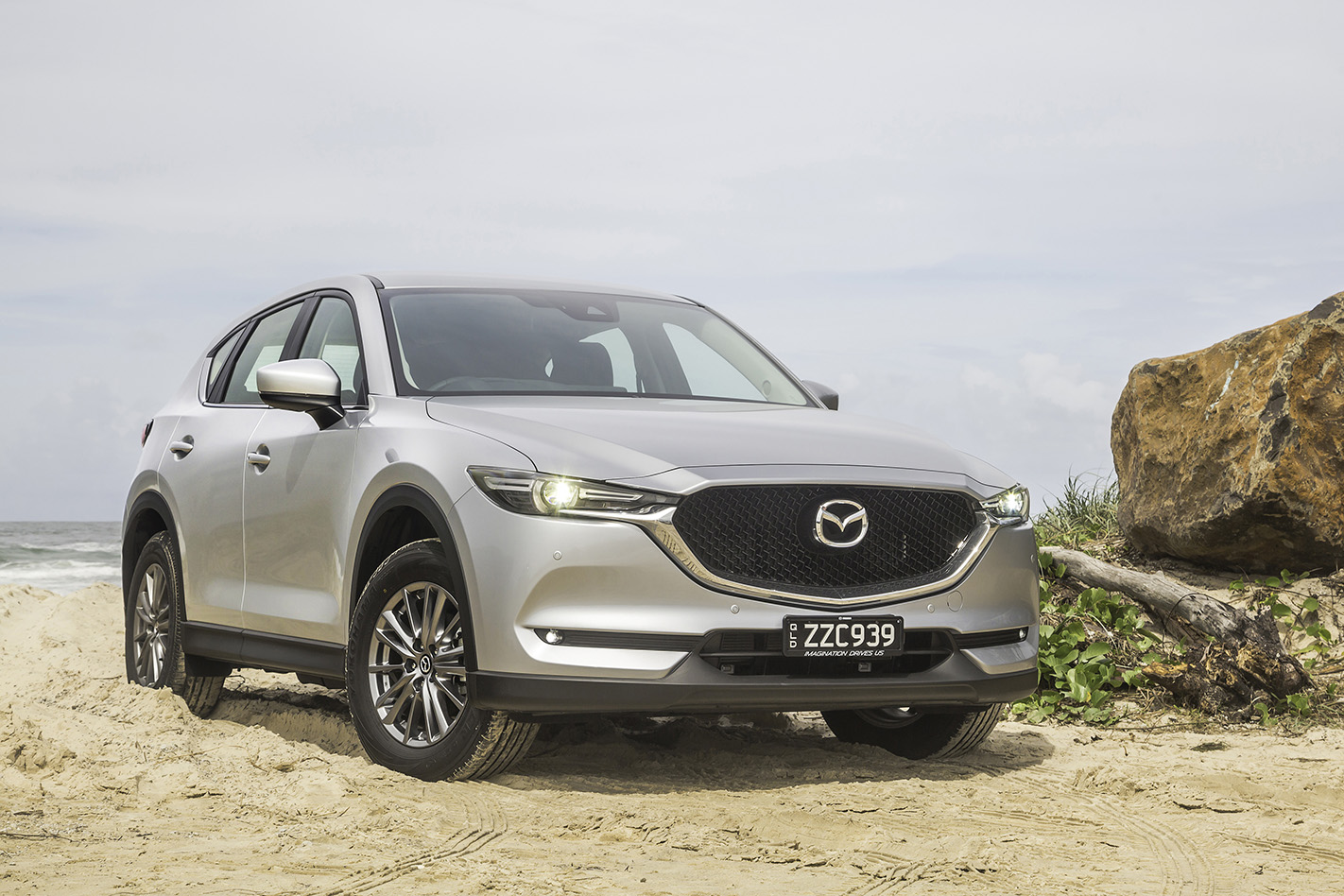
Kia’s Sportage was another winner, rising 20.6 percent compared to October 2017 to sit at 1216 sales, but it’s the Mazda CX-5 that sits proud at the top with exactly 2000 sales. Subaru’s Forester and X-Trail sit behind it, while the Toyota RAV4 and Hyundai Tucson were also-rans.
In the premium brand of the midsize SUV segment, the Mercedes-Benz GLC-Class, Volvo XC60 and BMW X4 racked up the biggest gains in percentage terms, with the Benz boasting top-dog status. The Audi Q5 follows it up in second place, with plenty of air between it and the BMW X5, Lexus NX and Volvo XC60.
Interestingly, the Porsche Macan is showing signs of struggling, recording just 51 sales in October and with year-to-date sales so far 21.3 percent down from where they were this time last year.
Large
The large SUV realm is either in good health or below water, depending on whether you’re looking at the mainstream or prestige sub-segments. In mainstream, year-to-date sales are about line-ball with 2017 while October ‘18 versus October ’17 sales are up by 14.2 percent. In luxury-land, year-to-date sales are down 16.3 percent while monthly sales are down by a concerning 28.8 percent.
Big winners in monthly sales figures were the recently reborn Hyundai Santa Fe (up 76.3 percent) Toyota’s evergreen Prado (up 67.4 percent) the Porsche Cayenne (up by 146 sales against October 2017) and, perplexingly, the positively ancient (12 years old and counting!) Mitsubishi Pajero (up 53.8 percent).
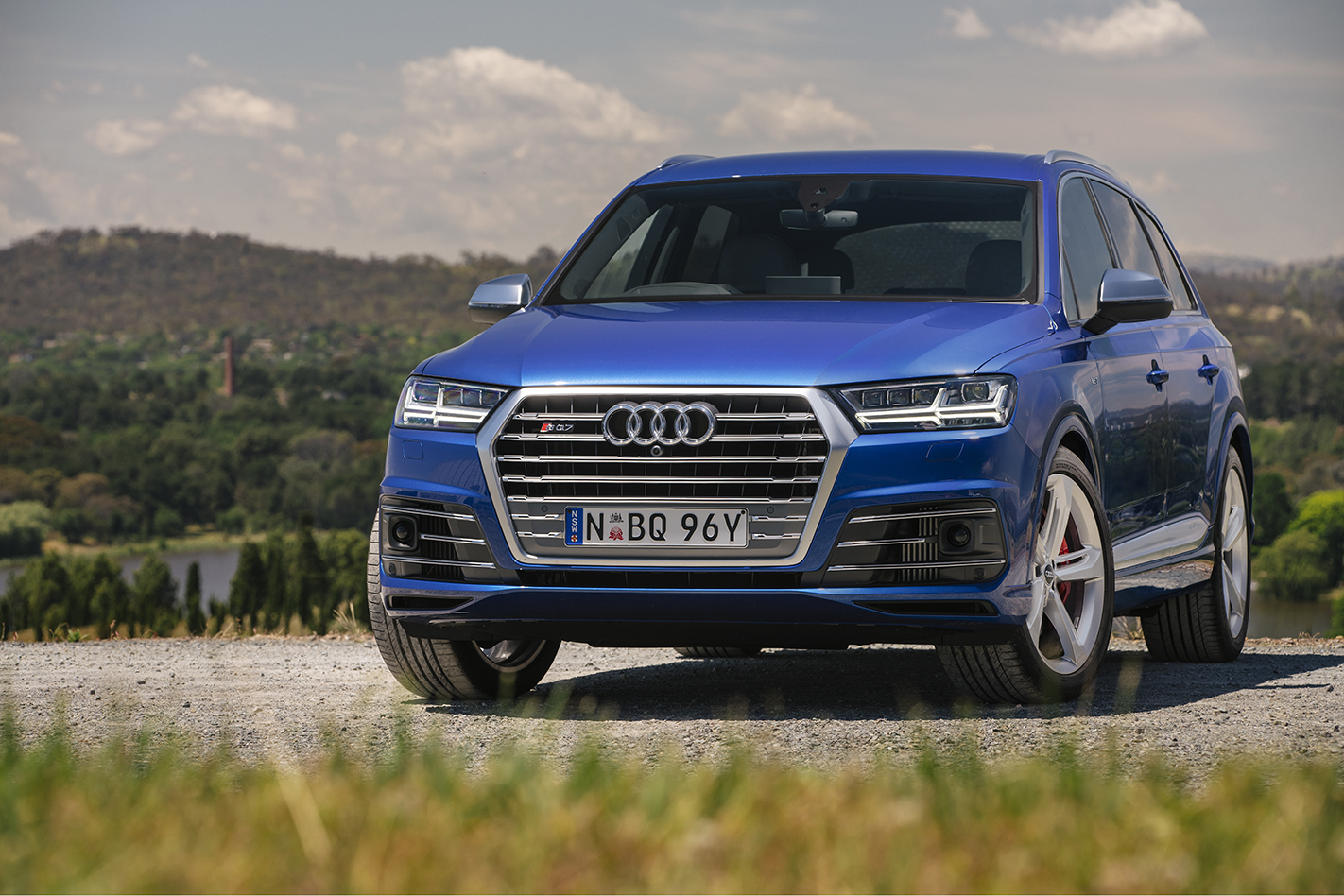
Losers included Audi’s Q7, the BMW X5 (in run-out ahead of a replacement), the Range Rover Sport, the Maserati Levante and Volkswagen’s Touareg, which is also nearing replacement.
Light Cars
| Rank | Vehicle | Registrations this month |
| 1 | Hyundai Accent | 1160 |
| 2 | Toyota Yaris | 851 |
| 3 | Mazda 2 | 767 |
Small Cars < $40K
| Rank | Vehicle | Registrations this month |
| 1 | Toyota Corolla | 2663 |
| 2 | Mazda 3 | 2094 |
| 3 | Hyundai i30 | 2049 |
Small Cars > $40K
| Rank | Vehicle | Registrations this month |
| 1 | Audi A3 | 404 |
| 2 | Mercedes-Benz A Class | 288 |
| 3 | BMW 1 Series | 196 |
Medium Cars < $60K
| Rank | Vehicle | Registrations this month |
| 1 | Toyota Camry | 1132 |
| 2 | Mazda 6 | 306 |
| 3 | Ford Mondeo | 193 |
Medium Cars > $60K
| Rank | Vehicle | Registrations this month |
| 1 | BMW 3 Series | 219 |
| 2 | Audi A4 | 161 |
| 3 | Mercedes-Benz CLA | 155 |
Large Cars < $70K
| Rank | Vehicle | Registrations this month |
| 1 | Holden Commodore | 663 |
| 2 | Kia Stinger | 178 |
| 3 | Skoda Superb | 39 |
Large Cars > $70K
| Rank | Vehicle | Registrations this month |
| 1 | Mercedes-Benz E Class | 104 |
| 2 | BMW 5 Series | 52 |
| 3 | Audi A6 | 18 |
Upper Large
| Rank | Vehicle | Registrations this month |
| 1 | Chrysler 300 | 22 |
| 2 | Mercedes-Benz S Class | 19 |
| 3 | Lexus LS | 9 |
People Movers
| Rank | Vehicle | Registrations this month |
| 1 | Kia Carnival | 514 |
| 2 | Honda Odyssey | 105 |
| 3 | LDV G10 | 76 |
SUV Small < $40K
| Rank | Vehicle | Registrations this month |
| 1 | Mitsubishi ASX | 1739 |
| 2 | Mazda CX-3 | 1274 |
| 3 | Hyundai Kona | 1224 |
SUV Small > $40K
| Rank | Vehicle | Registrations this month |
| 1 | BMW X1 | 268 |
| 2 | Audi Q3 | 249 |
| 3 | Mercedes-Benz GLA | 245 |
SUV Medium< $60K
| Rank | Vehicle | Registrations this month |
| 1 | Mazda CX-5 | 2000 |
| 2 | Subaru Forester | 1792 |
| 3 | Nissan X-Trail | 1644 |
SUV Medium > $60K
| Rank | Vehicle | Registrations this month |
| 1 | Mercedes-Benz GLC | 537 |
| 2 | Audi Q5 | 459 |
| 3 | BMW X3 | 268 |
SUV Large < $70K
| Rank | Vehicle | Registrations this month |
| 1 | Toyota Prado | 1388 |
| 2 | Toyota Kluger | 1294 |
| 3 | Subaru Outback | 728 |
SUV Large > $70K
| Rank | Vehicle | Registrations this month |
| 1 | Lexus RX | 209 |
| 2 | BMW X5 | 156 |
| 3 | Porsche Cayenne | 152 |
THE bubble has well and truly burst for new car sales in Australia – and that could point to bargain buys from some of the industry’s biggest players as the end of the year draws closer.
October saw new car sales across Australia drop for a seventh consecutive month; however, there was a silver lining for some manufacturers including Holden and Mazda.
New vehicle registrations – which include passenger cars, SUVs and light commercials – totalled 90,718 for the month of October, down 5045 units or 5.3 percent from the same time last year, a dip which analysts say reflects a corresponding slump in house prices.
Passenger cars once again brought the brunt of the decline, falling almost 24 percent over the same period last year to 27,802 sales. The SUV market continues its meteoric rise, though, with 39,849 sales representing an 8.1 percent jump for the same period.
Crucially, private new car sales were down by 12 percent which, according to the Australian Financial Review, is due the ‘wealth effect’ that’s directly influenced by house prices. The property bubbles in both Sydney and Melbourne, in particular, were punctured earlier this year, leading to a more pessimistic consumer outlook.
It would take a far bigger drop in house prices to harm Toyota’s fortunes, though. The Japanese car-making giant enjoyed 17,811 sales to top the charts, ahead of a resurgent Mazda (8172), and Hyundai (7432).
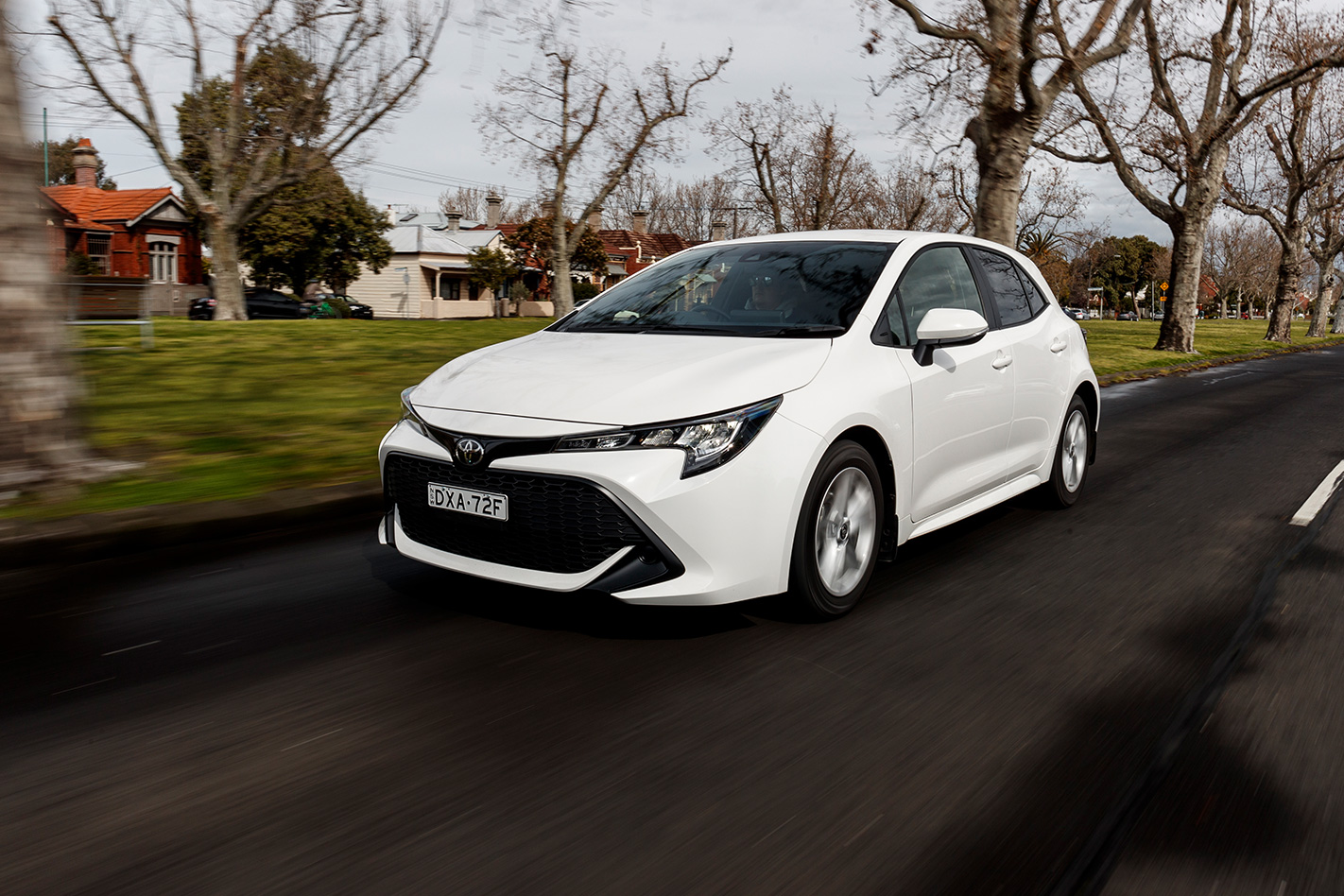
The Toyota HiLux (4401), Ford Ranger (3511) and Toyota Corolla (2663) were again the three biggest selling vehicles. HiLux and Ranger defied overall trends to be 15 percent up on October 2017 figures, but the Corolla – despite a new model launching this year – is down 13.8 percent.
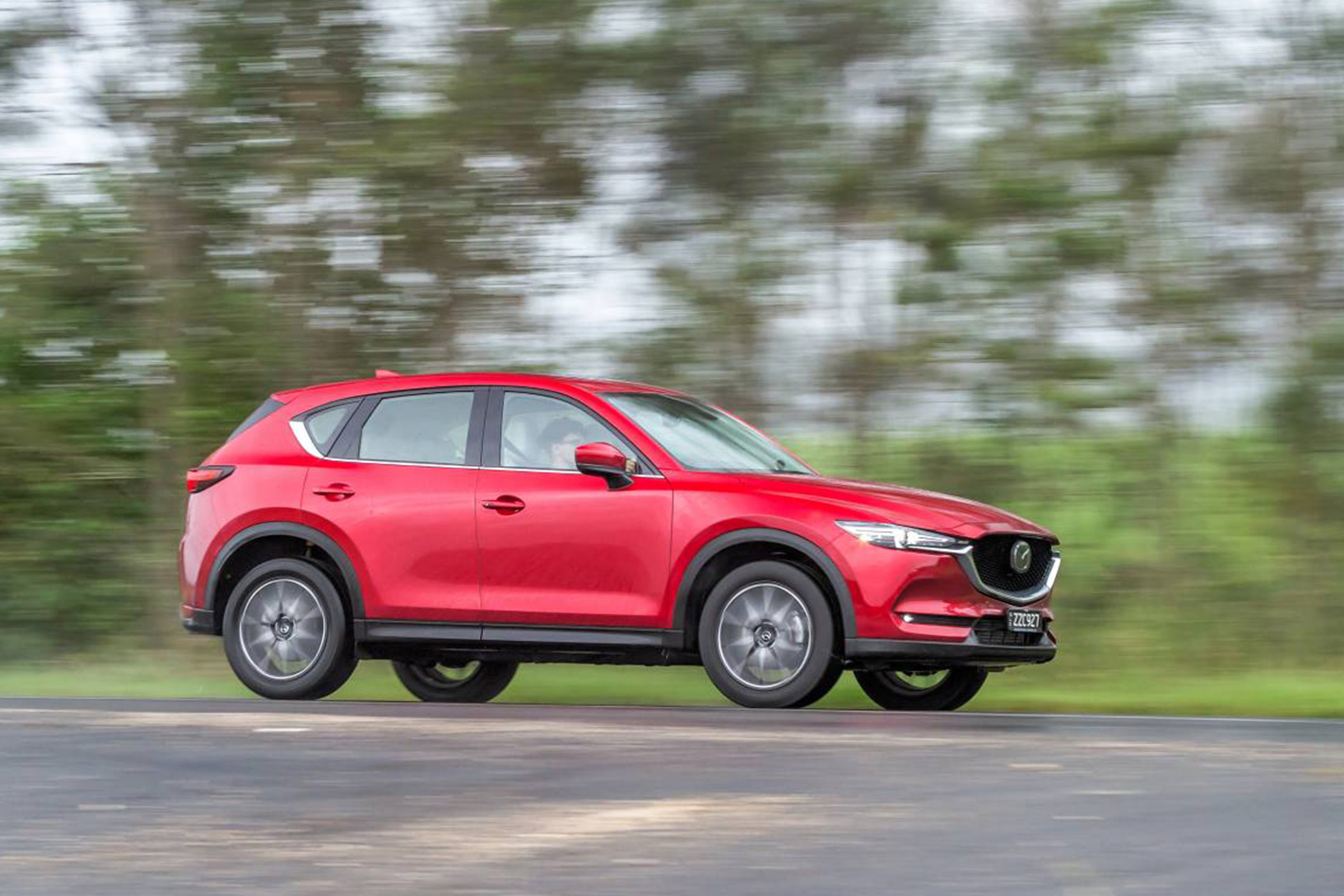
Mazda recovered from a poor September that saw it drop from second place to fourth, with sales jumping from 7070 to 8172 in October. The gains were mainly thanks to strong CX-5 sales, which leapt from 1506 in September to 2000 last month to reclaim best-selling SUV honours.
Embattled Holden also fared better last month, with sales up from 4651 in September to 5256 in October. The figures included 203 registrations of the new Holden Acadia, most of which were destined to be dealer demonstrators around the country.That jump saw Holden consolidate sixth spot, and close the gap on Ford’s top-five placing down to 106 units.
Toyota has dominated year-to-date sales across the industry, holding an 18.8 percent market share with 182,799 sales. Second is Mazda (94,246), while Hyundai (80,552), Mitsubishi (70,685), Ford (58,332), Holden (50,804), Kia (49,957), Nissan (47,835) and Volkswagen (47,616) trail behind.
Honda rounds out the top 10 with 43,604 sales, just ahead of Subaru (42,644).
Of the top 10 manufacturers, Toyota, Mitsubishi, Kia, Nissan, Volkswagen and Honda are all up in 2018, compared to the same period last year.
While housing prices have affected mainstream car sales, it seems to have had little impact on the well-heeled, with 142 sports cars priced beyond $200,000 sold. That’s a 47.9 percent jump compared to October 2017.
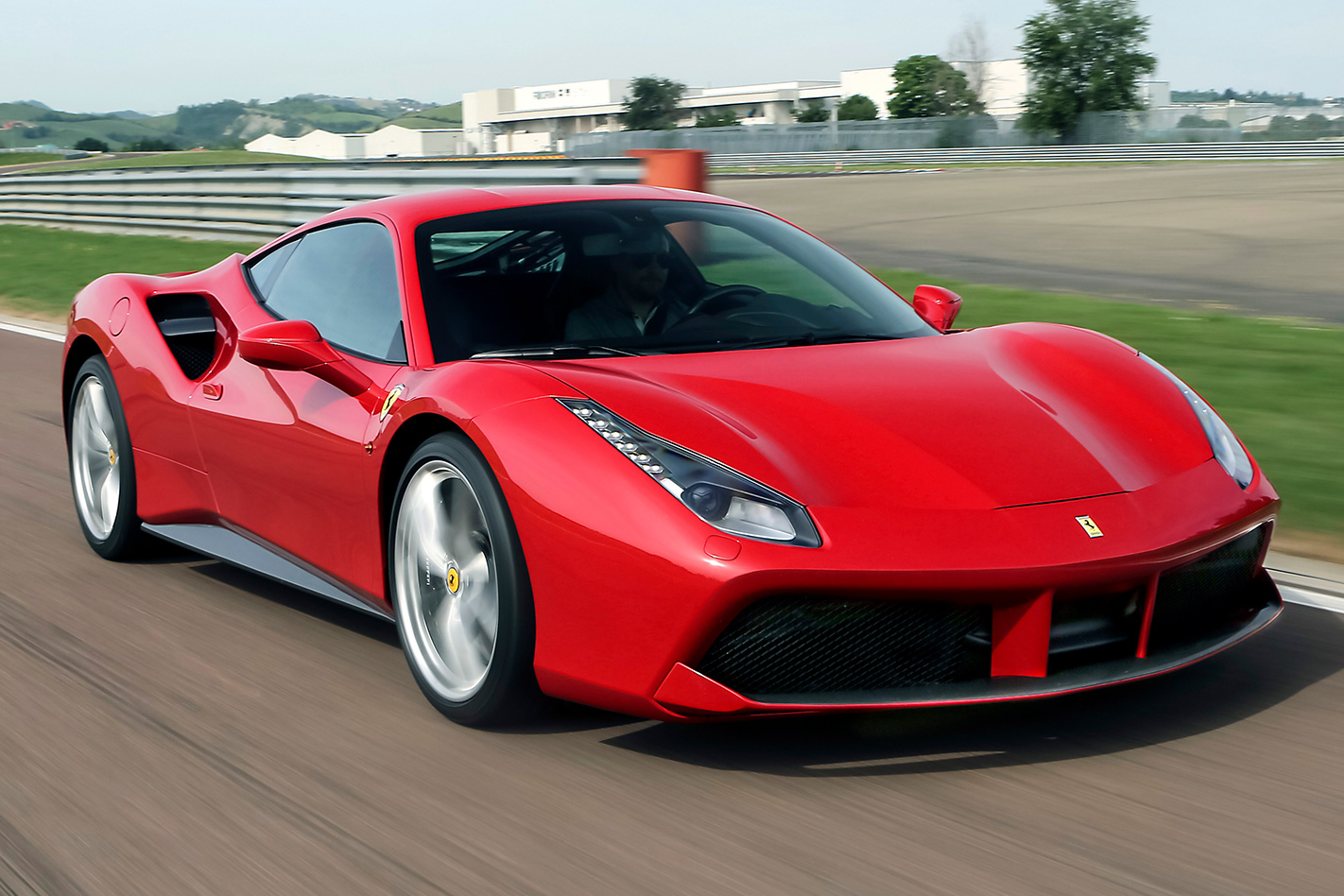
Of these, 43 were Porsche 911s, a jump from 19 in October last year. And if you think you’re seeing more Ferraris out and about, you’re not imagining it, with 28 registered last month compared to five the same time last year. The Prancing Horse has sold 197 cars in Australia so far this year, up 41.7 percent year-to-date.
Apparently some horses are running around a paddock today. If you, like us, need to fill in some time between pretending to know what a Winx is and placing a spread bet on a quinella double decaf (or something), have these top-five motorsport finishes playing in a small corner of your screen today. Trust us, they are epic.
No.5: Chaz Mostert/Paul Morris, Bathurst 1000, 2014
Ford drivers Chaz Mostert and co-driver Paul Morris – 1000/1 long shots to win the race – started dead last and even crashed on lap 45. But 10 safety cars, 13 pit stops, and a one-hour suspension of the race to repair turn two pushed them up the field, overtaking Holden’s Jamie Whincup – who ran out of fuel with just a kilometre to go after ignoring his team – to take an unlikely win. The nearly eight-hour epic was the longest in Bathurst 1000 history.
No.4: Marcos Ambrose, NASCAR Sprint Cup, Watkins Glen, 2011
Former Supercar champ Marcos Ambrose headed to the USA in 2006 to take on the Yanks at their own game. After graduating through the ranks, his breakthrough win came in 2011 in thrilling style at Watkins Glen, just outside New York. From fourth at the start of the last lap … you get the picture.
No.3: 2013 Freedom 100, Indianapolis Speedway, 2013
The Indy 500 is the world’s premier motorsport event, but Indy Lights (the IndyCar’s feeder category) always turn it on in the lead-up at The Brickyard. This finish in 2013 was just the most incredible finish to a race that you will ever see.
No.2: Ayrton Senna, Spanish Grand Prix, 1986
An amazing duel between Nigel Mansell and Ayrton Senna came down to the wire, after the Englishman pitted for fresh tyres and Senna elected to stay out with 12 laps to go. Mansell made up nearly 20 seconds in 10 laps and on the last lap he was right with him. Mansell lunged out of the final corner and drew alongside Senna, but the Lotus had just enough to hang on and claim victory.
No.1: Craig Lowndes/Jamie Whincup, Bathurst 1000, 2006
As car races go, it was a pretty close win… but in terms of raw emotion, there are few race finishes like it. Only a month after the shock death of motorsport scion Peter Brock in a tarmac rally, his protégé Craig Lowndes pulled together some almighty stints amidst a day of high emotion to claim the first win for Triple Eight at Bathurst, the first Ford win since 1998 … and the Peter Brock Trophy.
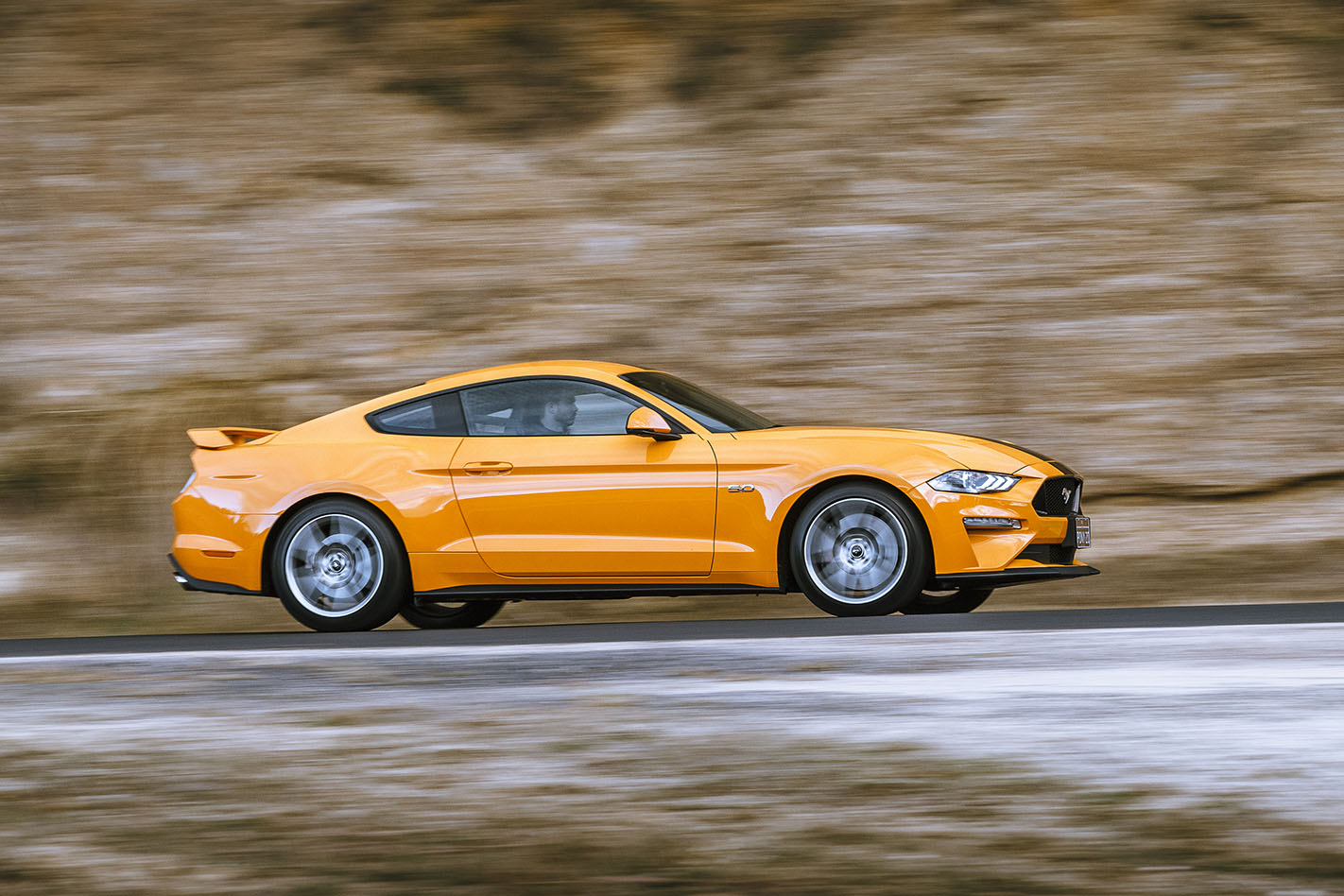
Even in its wildest dreams, Ford Australia surely couldn’t have foreseen just how wildly successful – and important – the Mustang would become to the company. Launched in late 2015, the car is now the second-best selling model in the entire Ford stable, behind the Ranger ute.
That’s not normal for a two-door sports car; sales usually fall off a cliff after a year or so. Judging by this mid-life update, though, the hot sales streak may continue for some time yet. We grabbed a top-spec V8-powered Mustang GT – with a six-speed manual – to see what changes have been wrought, and how effective they are.
VALUE
The manual version of the rear-wheel-drive Mustang GT kicks off at $62,990, a $5500 rise over last year’s car. You’re getting more mumbo for your moolah, though, with the Coyote 5.0-litre V8 engine yielding more power (399kW, up 33kW) and torque (556Nm, up 26Nm) thanks to some fuel injection tweaks and a 500rpm higher rev limit at 7500rpm.
The six-speed manual’s been tweaked, too, and there’s a dual mode exhaust that goes from delightfully loud to wet-yourself louder with a change of driving modes.
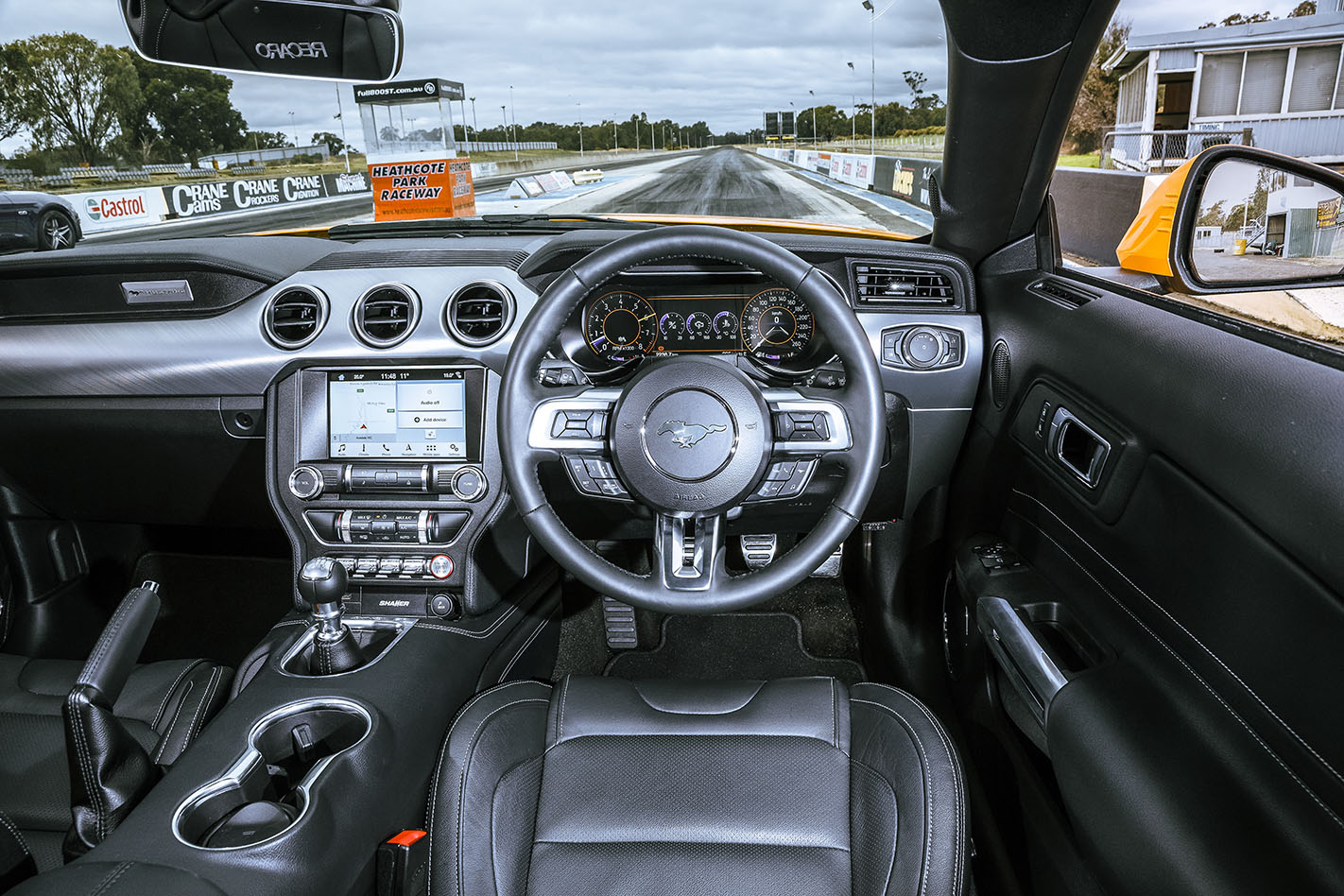
The interior gets a digital dashboard and nicer interior materials, while the exterior. scores a few blink-and-you’ll-miss-them style updates, notably to the taillights.
The Mustang essentially competes in a class of one, though the HSV Camaro might beg to differ. However, at a not-inconsiderable $23,000 uptick over the Mustang, the Camaro has its work cut out for it.
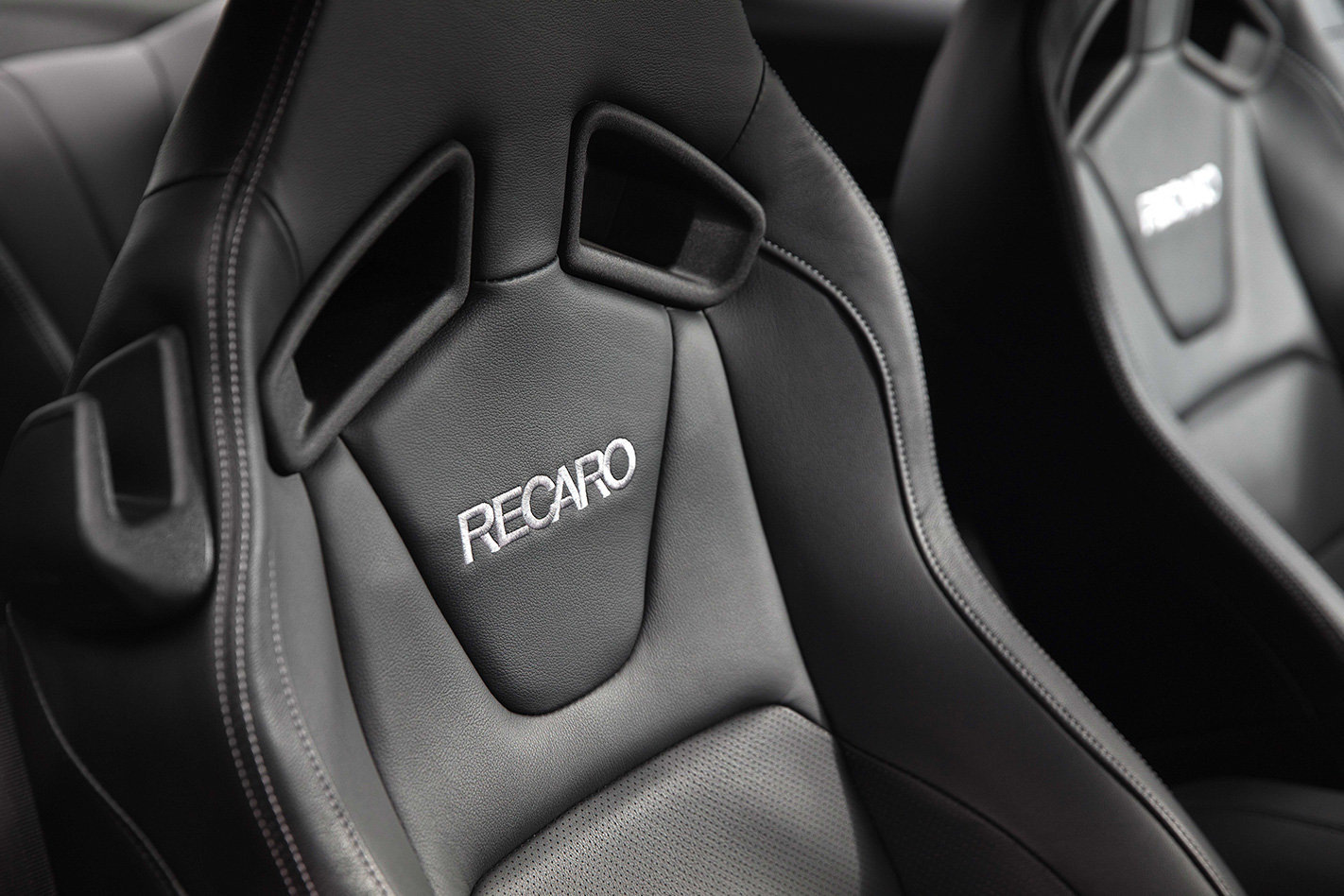
Our tester wore Orange Fury paint ($550), stripes ($650), forged rims ($2500), adaptive shocks ($2750) and slightly too narrow Recaro sports buckets ($3000), taking it to the total to $74,990.
Over a very brief (but very entertaining!) test run, the Mustang GT returned a pretty terrible 18.2L/100km measured on the dash, against a claimed combined fuel economy average of 13.0L/100km. Don’t buy a Mustang GT if you’re worried about fuel economy. Just don’t.
STANDARD FEATURES
The Mustang does pretty well in the standard equipment stakes, with auto headlights and wipers, LED lighting, a four-mode digital dashboard, Ford’s Sync3 multimedia system with Apple CarPlay, Android Auto and sat nav, leather-bound steering wheel and manual shifter, performance gauges and lap timers amongst its multimedia systems and a pretty decent stereo set-up.
Mechanically, there’s a set of six-piston Brembo brakes up front and a limited-slip diff down the back. Wheels are staggered (different width front to rear), with 19 x 9-inch rims forward and 9.5-inch wide rims aft, and are fitted with excellent Michelin Sport Cup 4 tyres.
With the demise of cars like the Holden Commodore SS V, the Mustang’s specs versus its performance are top of the class.
SIZE
Internally, the Mustang is pretty compact, and ideally suited to a couple, rather than a family. The low roofline and ground-scraping ride height means it’s an effort to lever yourself in if you’re tall, but once on board, there’s enough room for the driver to get comfortable.
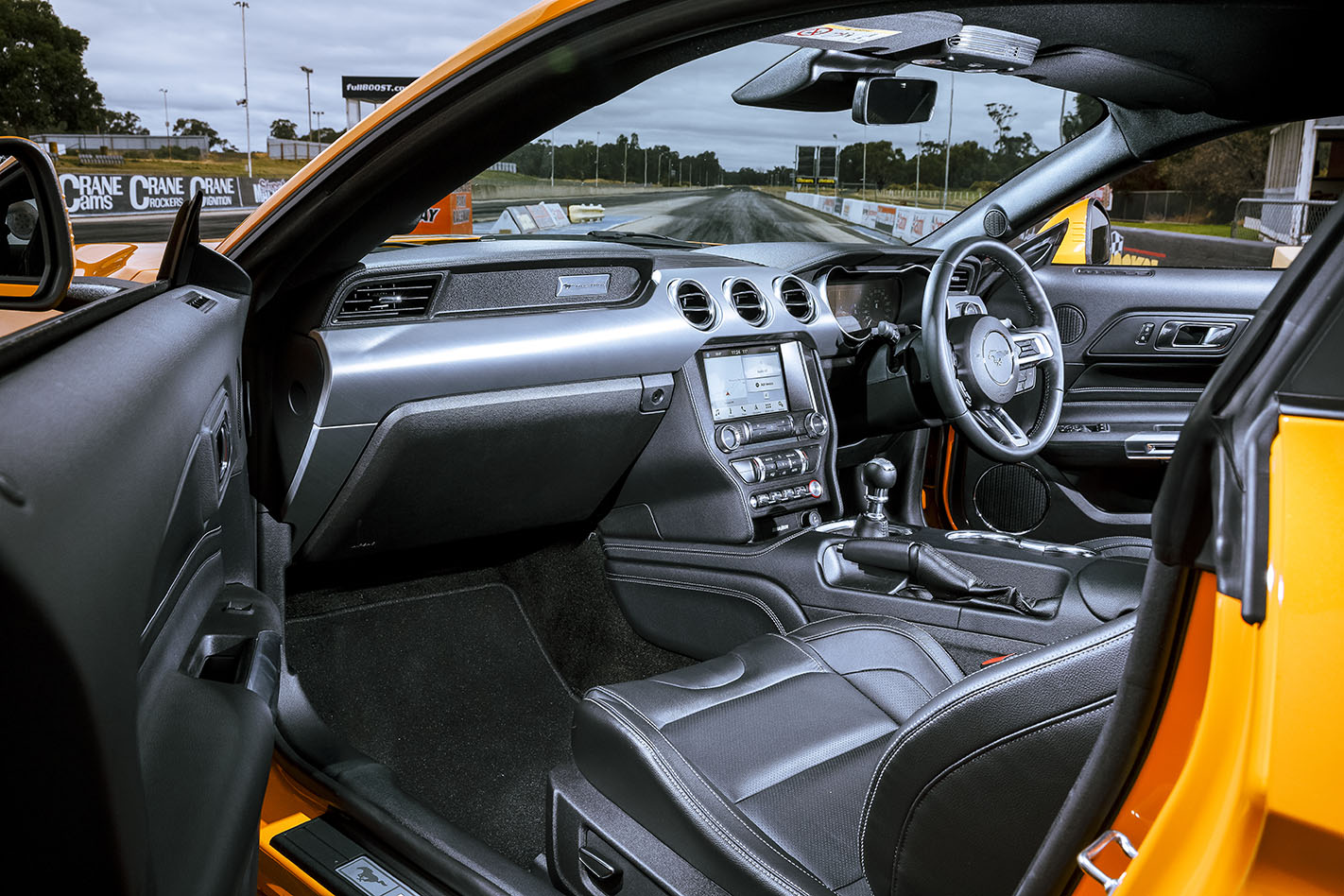
The rear ‘seats’ aren’t worth the effort to access; with masses of bolstering and a huge transmission tunnel, the back seat is a place for stuff, not people.
Even though the boot space of 408 litres is pretty tight, Ford insists you can fit two sets of golf clubs in there. As I don’t – and probably never will – play golf, I’ll take their word for it, though the small opening will surely mean some wriggling will be required.
SAFETY
The Mustang, sadly, hasn’t covered itself in glory here. Despite the presence of adaptive cruise control, AEB, lane departure and rear cross traffic warning systems, a poor NCAP score for its safety cell crash worthiness drags the Mustang down to three stars. It’s a fundamental engineering issue, and it’s a genuine concern should you need to carry little humans in the back seat.
The 2018 version now rates three out of five on the ANCAP scale, up from two – but it’s the only passenger car on the market currently with a score this low.
COMFORT
GT stands for Grand Tourer, and as such, the Mustang needs to be built for long days in the saddle? To this end, it does a very good job, though I’d recommend trying the optional Recaro sports seat before you buy. They are supportive, sure, but they are also very narrow in base width, which – oddly, given its ‘Murican origins – doesn’t suit larger folks.
There’s sufficient headroom – just – and forward visibility is great. It’s compromised over your shoulder, though.
I’ve talked about the rear seats, and the less said about their lack of usefulness, the better.
ON THE ROAD
It’s out on the road where a distinct change in the Mustang’s demeanour can be detected, especially if you’ve opted for the adaptive dampers. These can be switched from firm to hard, and there’s a good, wide gap between the extremes. In the softest mode, the big ’Stang is docile, compliant and sophisticated, dealing with broken urban roads at commuting speeds with aplomb.
That same setting also gives the Mustang a much more confidence-inspiring sense of grip and surety in less than ideal conditions. There’s just more feel and feedback through both ends of the car, which in part can also be attributed to the Michelin tyre set.
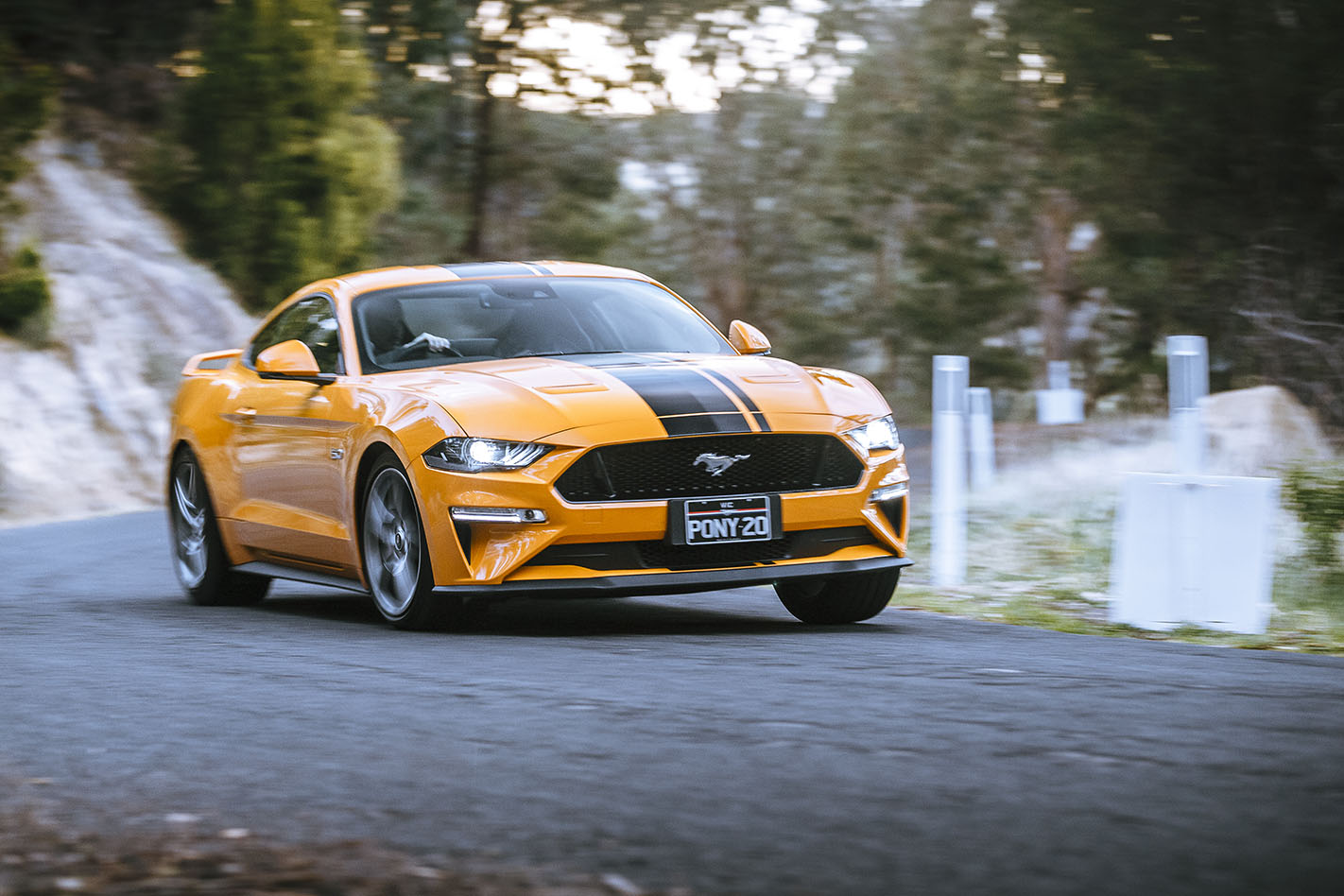
If you have a bit of open road to play with, slotting the six-speeder into third and letting her rip is an absolute joy. The Coyote V8 is strong, linear and up for a fang, though the long gear ratios and tall final drive means you’re spending most of your time in the first four gears unless you’re out in the country.
And that exhaust… oh dear Lordy me, that exhaust. Inside the cabin, it’s like a quartet of Supercar tenors warming up for a concert, and it adds a cherry on top of the Mustang’s tilt at nostalgia. It sounds like a PROPER old-school V8, and that’s an awesome thing.
Only a couple of complaints from me; even though I like a high, firm brake pedal, the modulation of the middle pedal is tough to manage, and there’s a huge gap between it and the accelerator, making heel-and-toe shifting a difficult task.
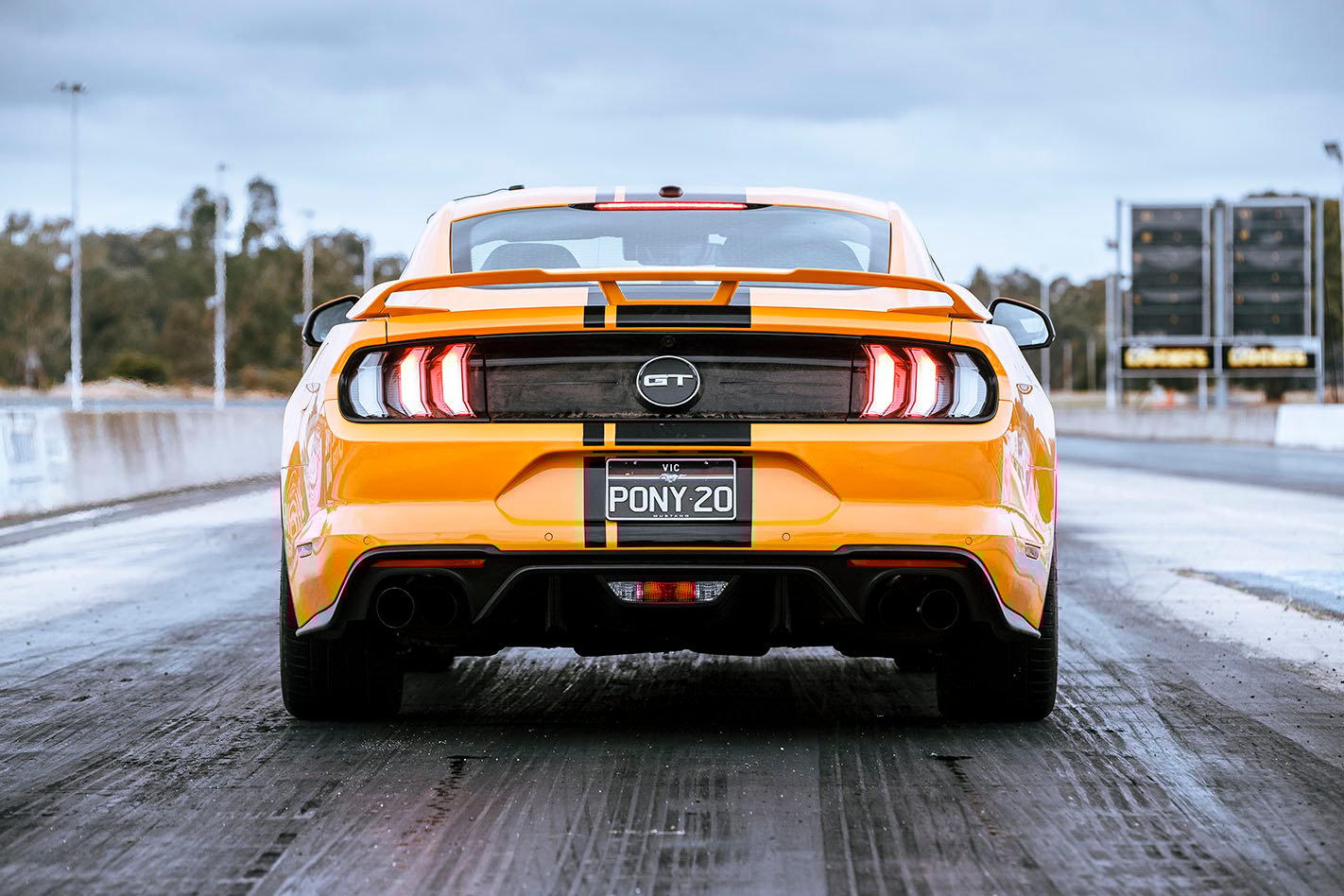
As well, I’m not enamoured with the digital dash. It feels a bit out of place in this rolling nostalgia factory, and I found it a bit fiddly to operate.
VERDICT
Ford dropped the Mustang into the Aussie market at a Goldilocks moment; local rear-drive V8s were all but gone, buyers were looking to fulfil a lifelong dream of owning a Mustang and the car itself was pretty good.
Well, it’s now gone from a good to a great on-road performer, with a greater focus on tighter build tolerances, decent specs and lashings of personality. For the money, too, it’s a highly specced and pretty powerful proposition.
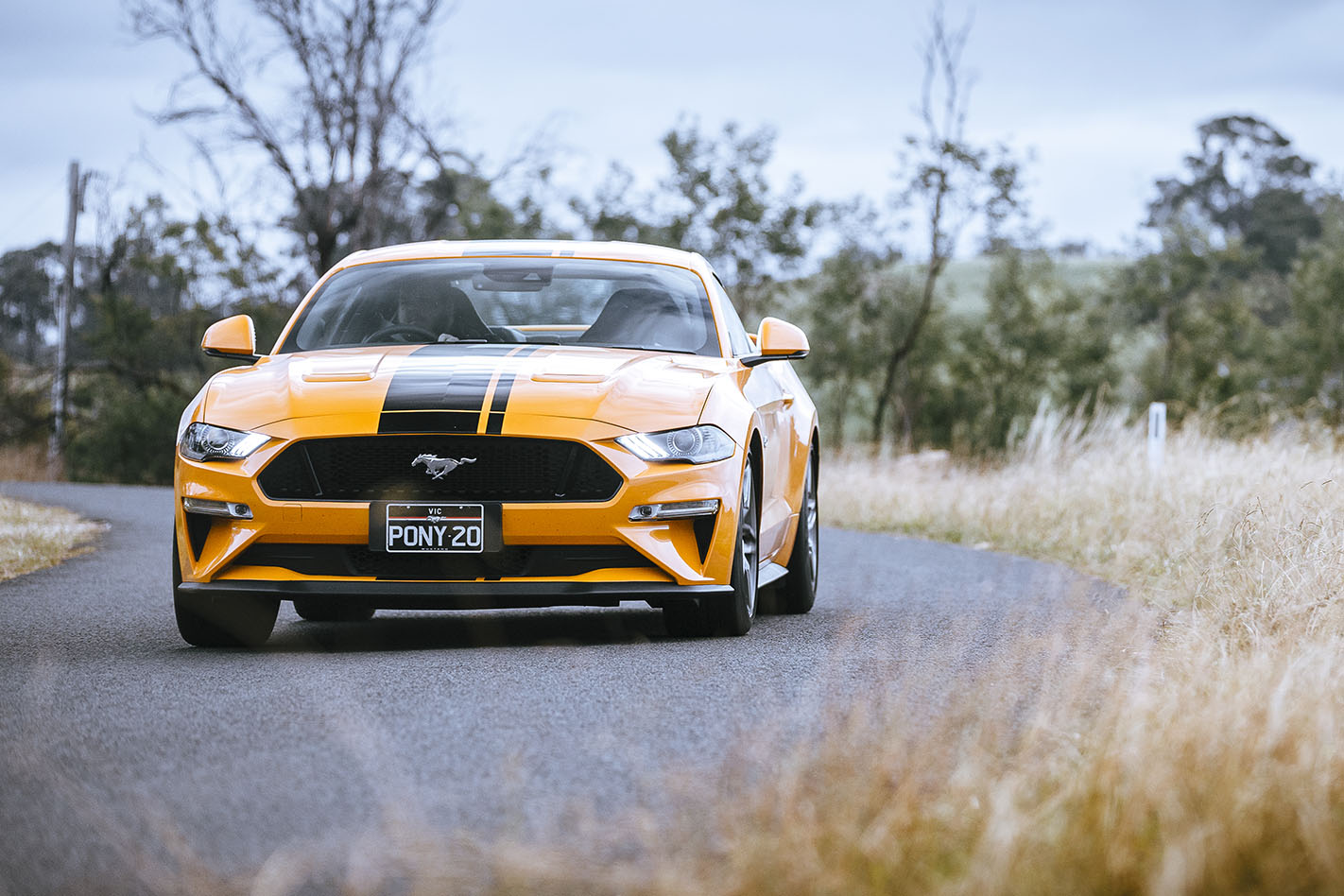
Its three-star ANCAP safety standard, though, simply isn’t good enough. It doesn’t matter whether people are meant to ride in the rear or not; the testing regime revealed more weaknesses than just rear seat occupancy, and Ford needs to address this thoroughly for future editions of the car.
SINCE launching in 1967, the Toyota Corolla has witnessed plenty – the civil rights movements, sexual revolution, space race, fall of communism, rise of the internet, Ford’s AU Falcon – but surprisingly few Wheels comparo wins.
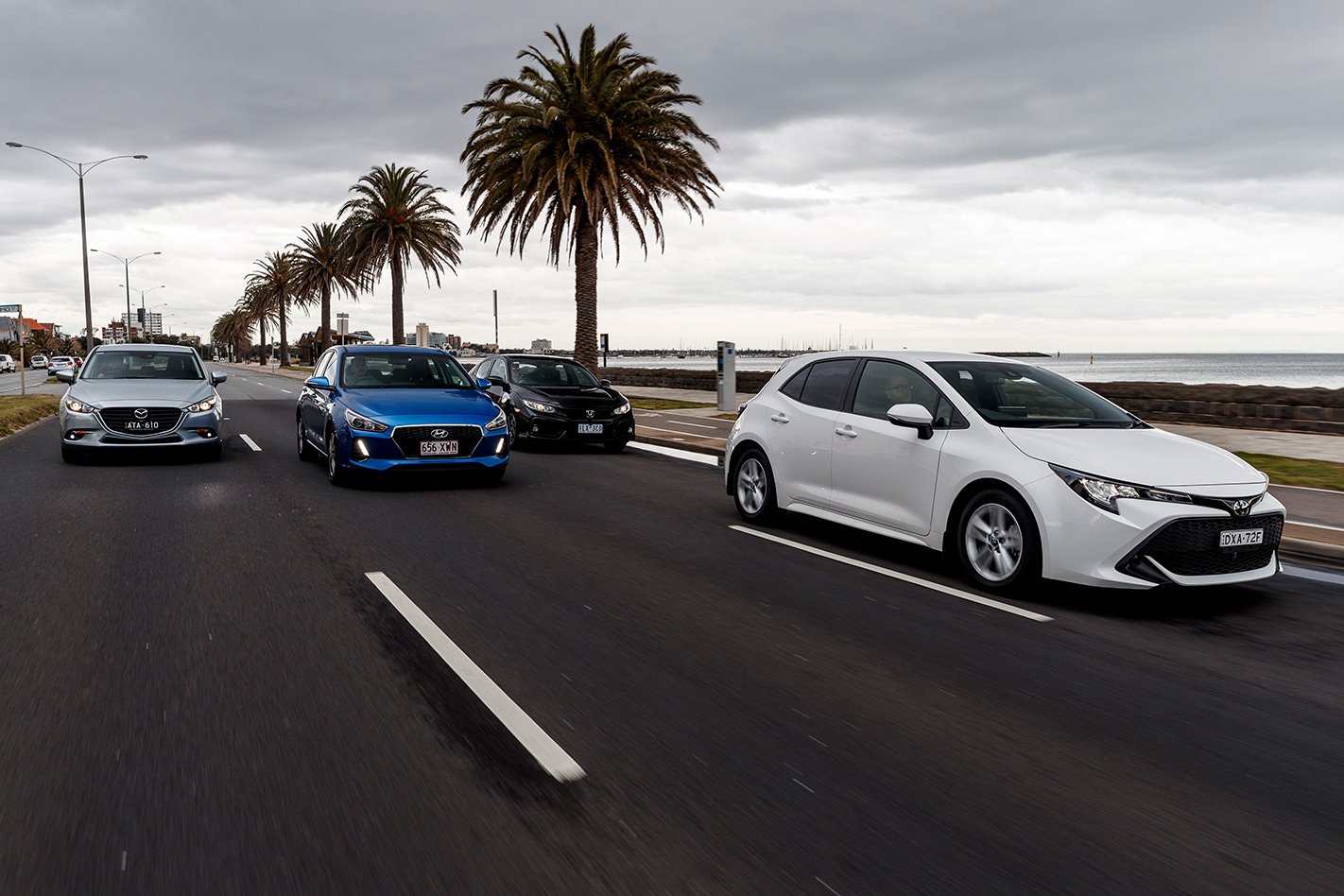
Let’s count ’em. It wasn’t until the February 1973 issue that the second-gen KE20 finally outgunned its rivals (the Ford Escort, Mazda 1300 and Datsun 1200). But the lardy KE30 (’74) and boxy KE70 (’81) that followed were well off the pace, leaving the first front-drive AE80 to snare two more victories (August 1985 and July ’86).
Frustratingly, Corolla regressed again through three successive rebodies (1989 E90, ’94 E100 and ’98 E110), before the newly minted MC-platformed E120 brought home gold in late 2002 and early ’03, though that momentum waned with the 2007 E150 and ’12 E180. By January 2017’s megatest the latter limped home in tenth position.
That’s just five comparo conquests out of 40-ish in 51 years, folks.
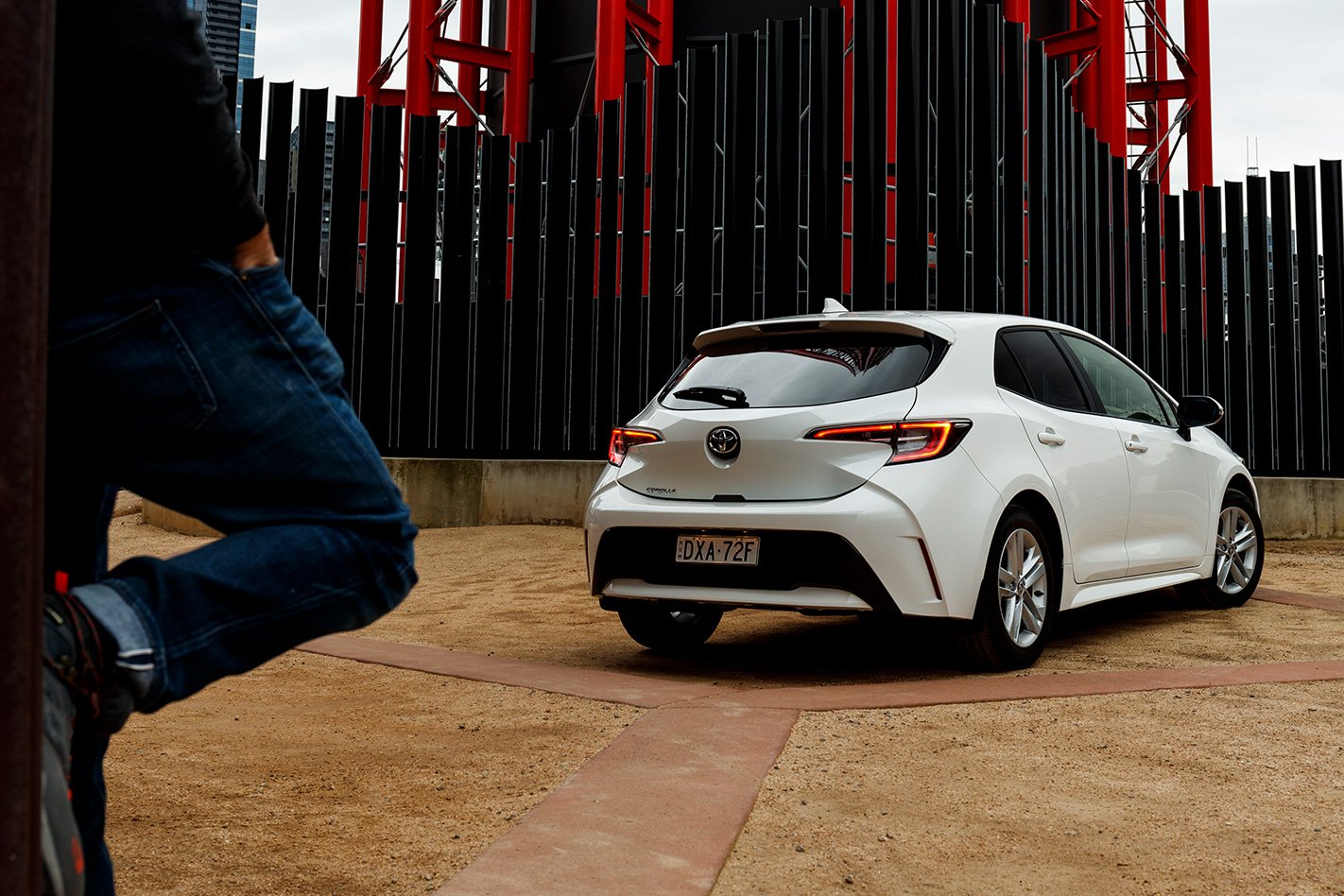
Yes, yes, we know. Corolla’s been our best-selling passenger car for much of this decade. But buyers aren’t always the best judges. Even Toyota publicly admitted that things needed improving, with president Akio Toyoda declaring a ‘return to fun’ several years ago after recall scandals rocked the brand to its core.
That shake up has resulted in the Toyota New Generation Architecture, with TNGA spwaning the Prius IV, C-HR small SUV and the 2018 Camry – the latter pair beating their rivals in these very pages – as well as the latest, E210 Corolla. All share the same basic hallmarks of a long wheelbase, wide track, low centre of gravity, optimal weight distribution, exceptional rigidity, independent rear suspensions and freshly engineered powertrains.
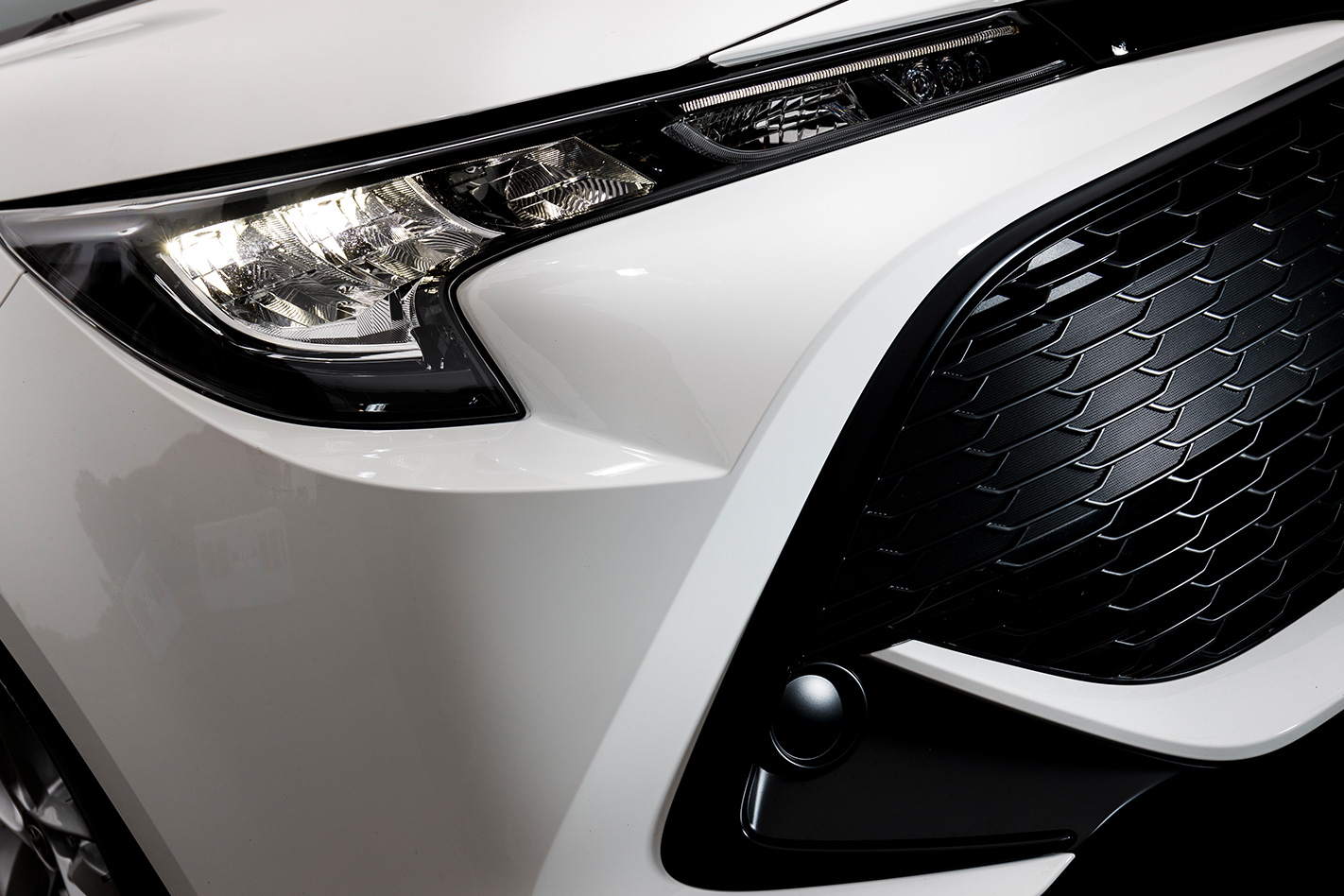
So, a dozen regenerations later, can Toyota’s demi-centenarian small-car stalwart manage a TNGA comparo trifecta? To find out, we went straight for the sales juggernaut – the base auto (for now) Ascent Sport CVT, from a not-inconsiderable $24,370.
While a new-fangled platform and front-end styling seemingly inspired by the US glam rockers Kiss are well and good, what will the Corolla heartland make of a $1650 price jump, a three-year warranty when most now offer five (or more), and a boot capacity less generous than the smaller Yaris’ at just 217 litres? It was 360L in the previous-gen!
There’s no Apple CarPlay/Android Auto smartphone mirroring either, but the Corolla strikes back with segment-first standard active cruise control, bundled with autonomous emergency braking (AEB), lane-departure alert with steering assist, auto high beam and speed-limit recognition. Also present are an 8.0-inch touchscreen, four auto down/up windows, heated mirrors and full-sized alloy spare. Ours added a $1000 sat-nav/DAB+ digital radio/privacy glass combo as well.
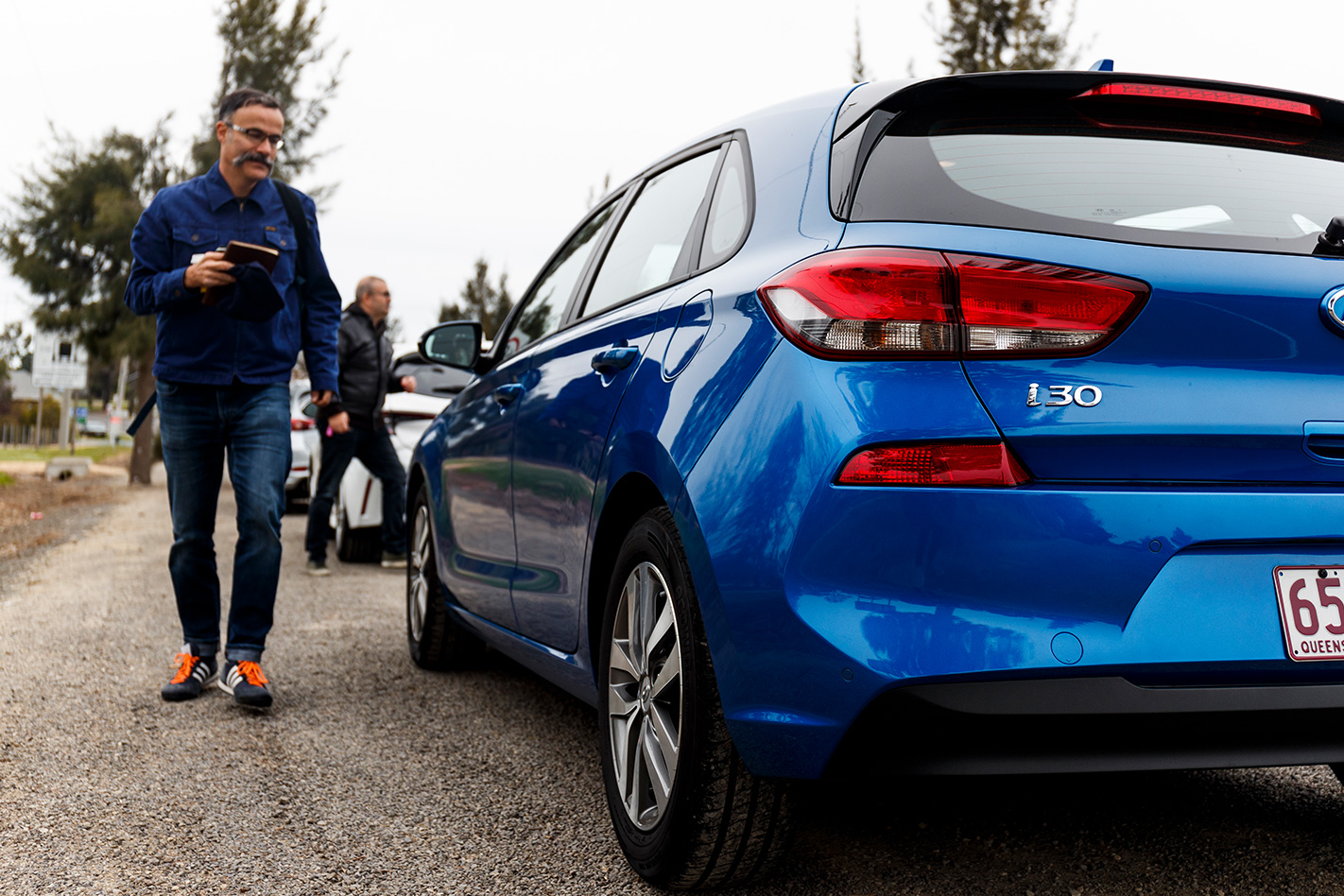
We suspect that a cheaper, de-contented non-Sport Ascent may return soon. Hyundai made a similar upmarket move with the third-gen i30 in May 2017, until slower-than-anticipated demand forced in the cheaper Go variant. Some say soberer styling than before didn’t help, but we suspect the i30’s newfound design maturity may prevail over time.
At $23,390, our i30 Active undercuts the Corolla by $980 yet includes sat-nav, DAB+, CarPlay/Android Auto and folding mirrors, but loses out on standard AEB and adaptive cruise. They’re part of a worthwhile $1750 safety pack that also brings in the blind-spot monitoring and rear cross-traffic alert unavailable on Corolla Ascent Sport, along with a leather wheel, electric park brake and rear air-con outlets.
For 15 years Corolla’s fiercest sales foe has been the Mazda 3, so in comes the Maxx Sport auto from $24,490. Though active cruise and CarPlay/Android Auto are not available, the coupe-esque hatch from Hiroshima returns fire with front and rear AEB, blind-spot/rear cross-traffic alerts, leather wheel, paddle shifters, sat-nav, DAB+, climate control and folding mirrors. Except we could only test the $26,490 Touring so please ignore the leather pews and electric park brake in the pictures.
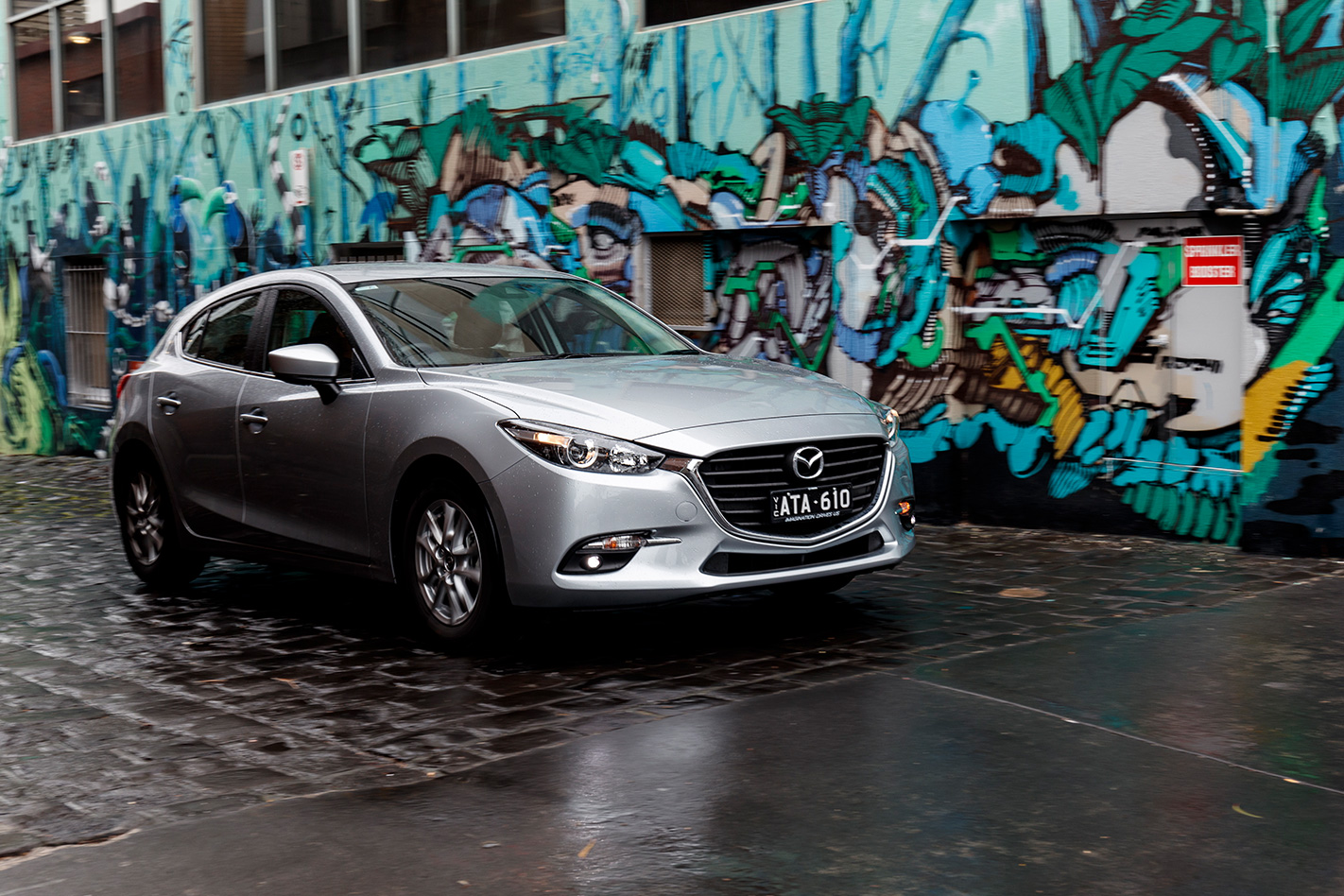
The final contestant is the Honda Civic, the 10th iteration in 45 years. The divisively styled hunchback also surfaced in mid-2017, doubling market share and soaring to sixth, behind the Corolla, 3, i30, Volkswagen Golf and Kia Cerato (which is currently sedan-only in its new Mk4 guise, hence a no-show here).
We requested the VTi-S 1.8-litre (against all the others’ 2.0s) from a Mazda-mimicking $24,490; though AEB and associated driver-assist tech are not available, it’s alone here in featuring all-digital instruments and LaneWatch – a left-lane camera for avoiding collisions with bikes. Genius. Keyless entry/start, climate control, front sensors and CarPlay/Android Auto further broaden the Honda’s appeal.
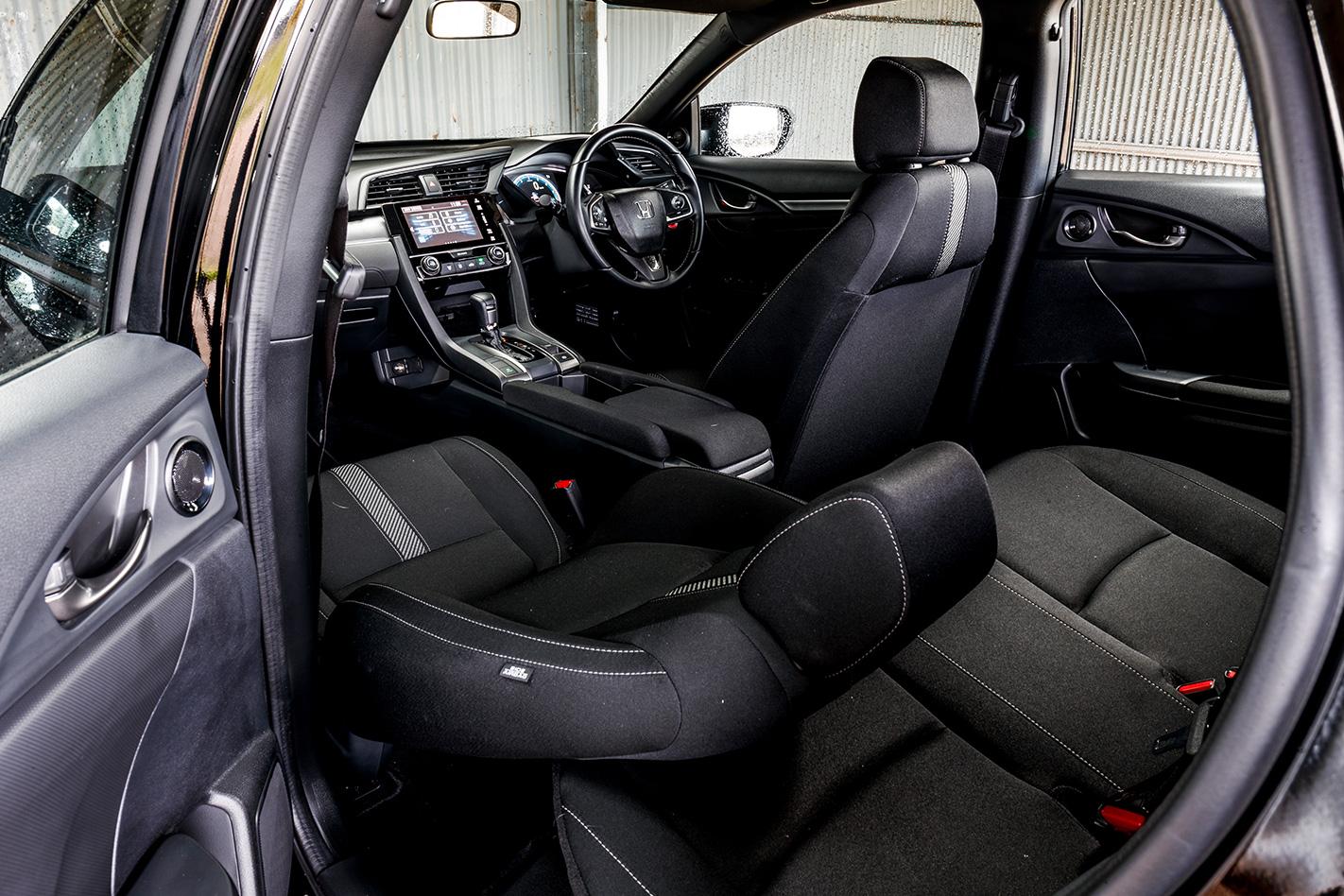
As does the vast cabin, since it’s virtually medium-sized and the largest in most dimensions bar height. This translates to a sense of wide-open space to spread out in, especially out back. Plus, the driving position is pitch-perfect, the electronic dials ultra-clear, storage stupendous and ventilation superb. Flipsides? The seats lack sufficient support and no hatch here is rowdier – it’s almost like being in a drum at times.
That’s quite damning considering there’s also the (in)famously mouthy Mazda on test, and the latter remains vocal when pressed. But shapely seats, an elegant dash and superb ergonomics help offset that. Plus, the narrow glasshouse and swoopy silhouette actually conceal a reasonably spacious cabin, as well as the group’s second-most capacious boot.
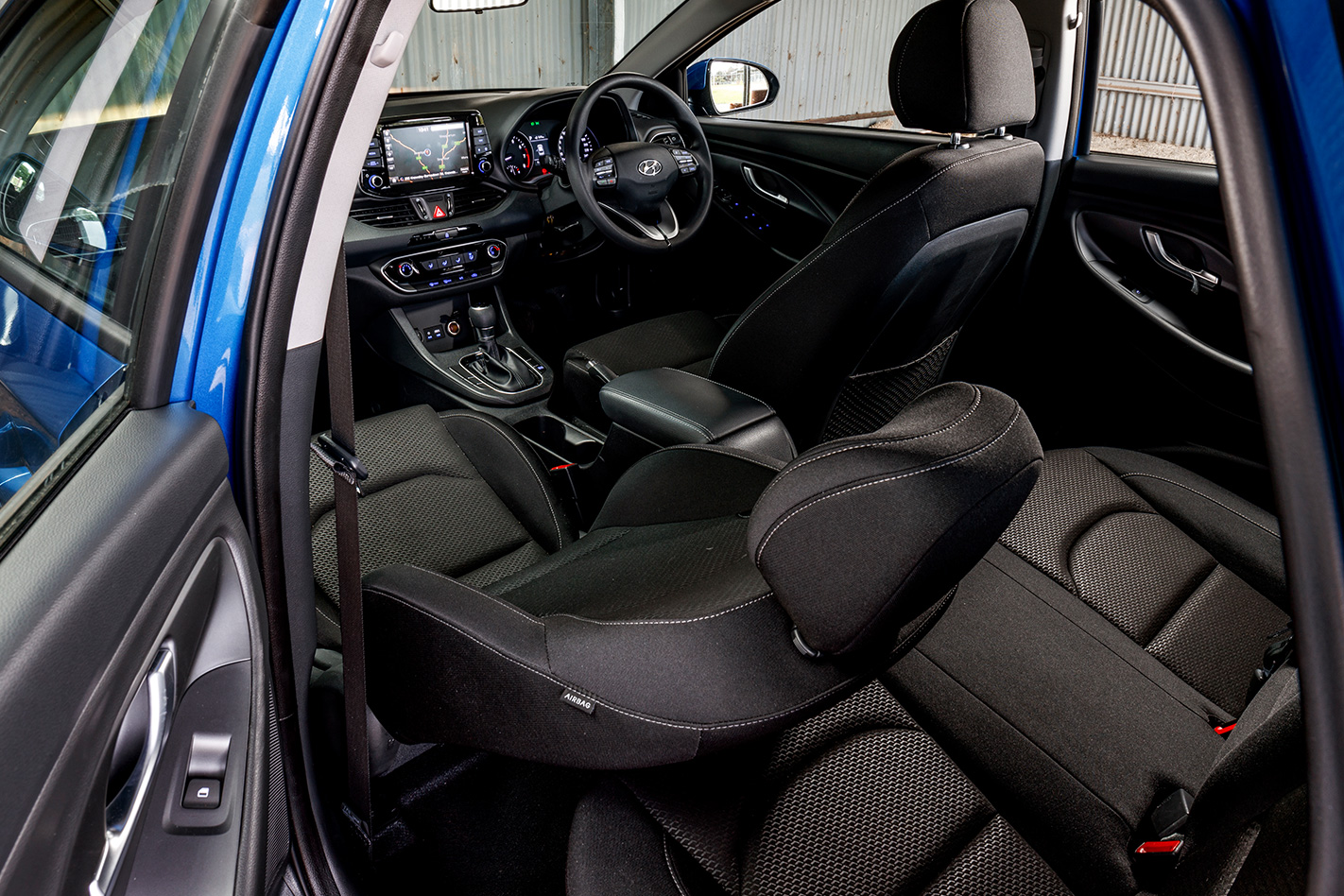
Deceptively accommodating describes the i30’s insides too. Firm seating – elevated in the rear – isn’t everybody’s cup of tea, but the lofty ceiling and unique six-light glasshouse flood in light and ensure superior vision. The dash, too, is a masterstroke of restraint and functionality, displaying almost Teutonic logic. Cover the badge and this could be from any contemporary Volkswagen Group vehicle. But for the clammy plastic wheel, it wants for nothing… except charm.
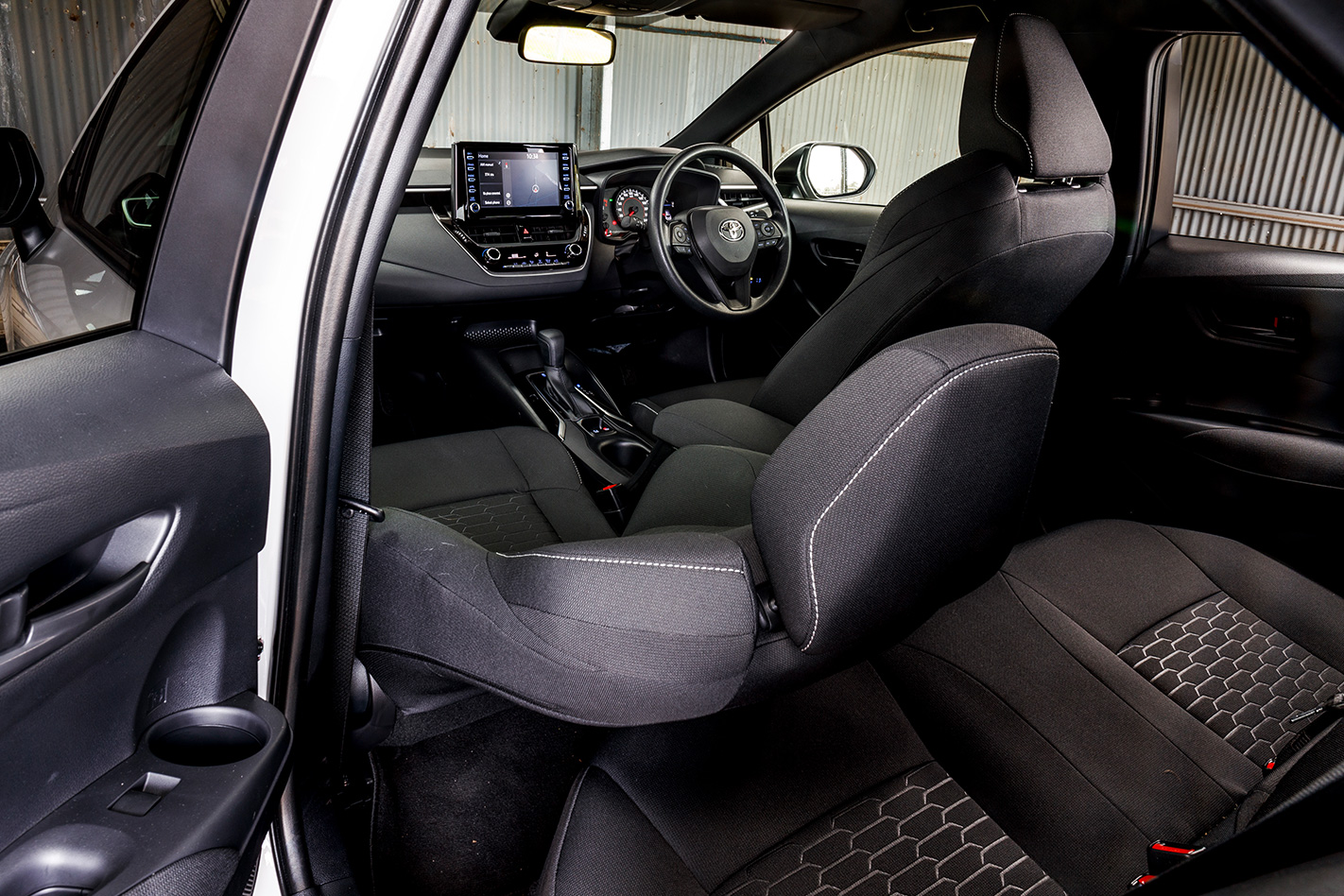
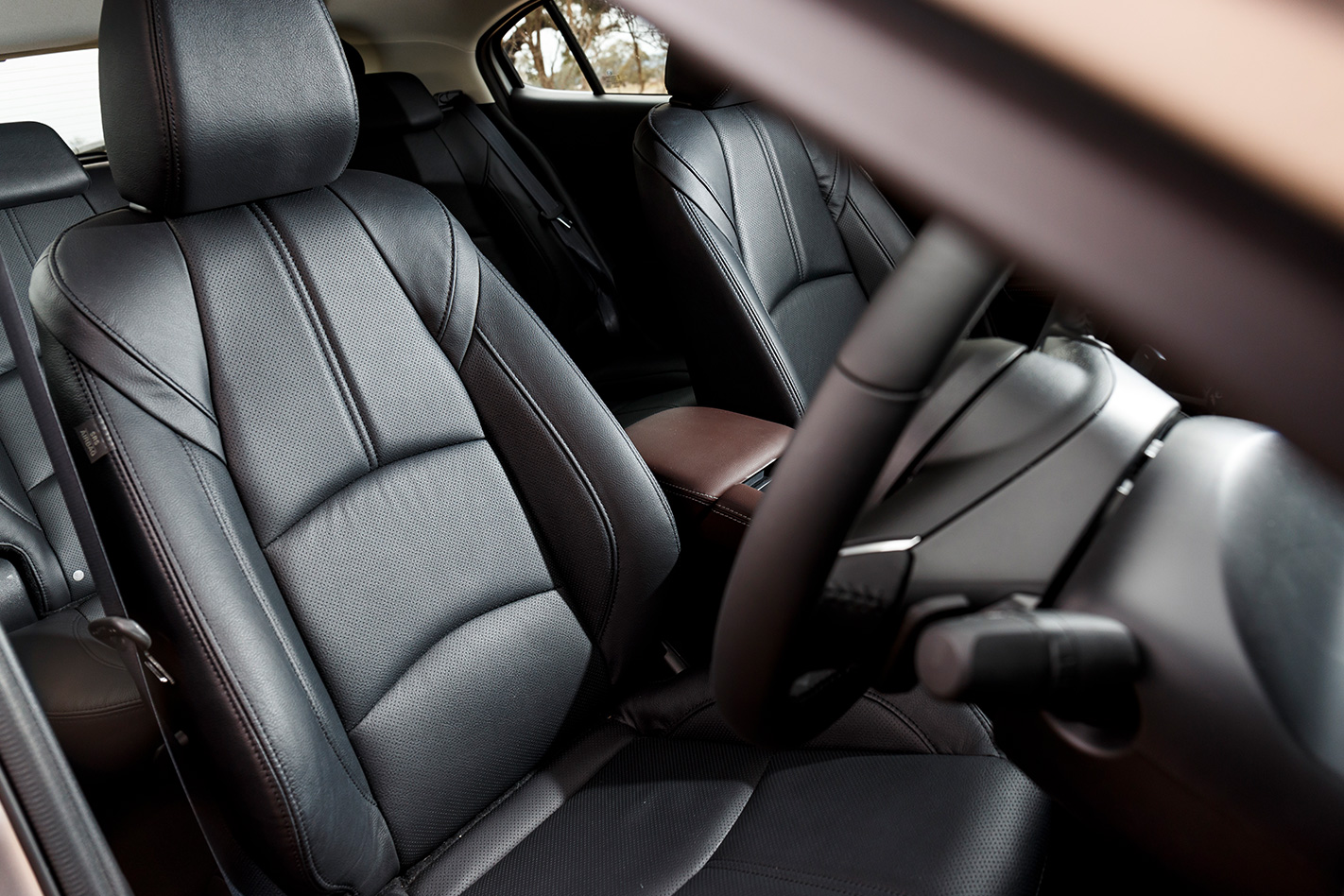
The Corolla also comes with a plastic tiller (in a $25K car… seriously?), but at least manages a more intriguing weave of character and quality engineering. Where cold textured materials hint at the Hyundai’s Frankfurter influences, the Ascent Sport’s softer, warmer trim whisper cool Nagoya minimalism. As with all TNGA cars to date, cabin solidity and finish are first class, supported by a welcoming driving position and almost-sumptuous seating. The low rear bench isn’t quite as sculptured and knee room is the most limited here, but tight the Toyota’s interior is not.
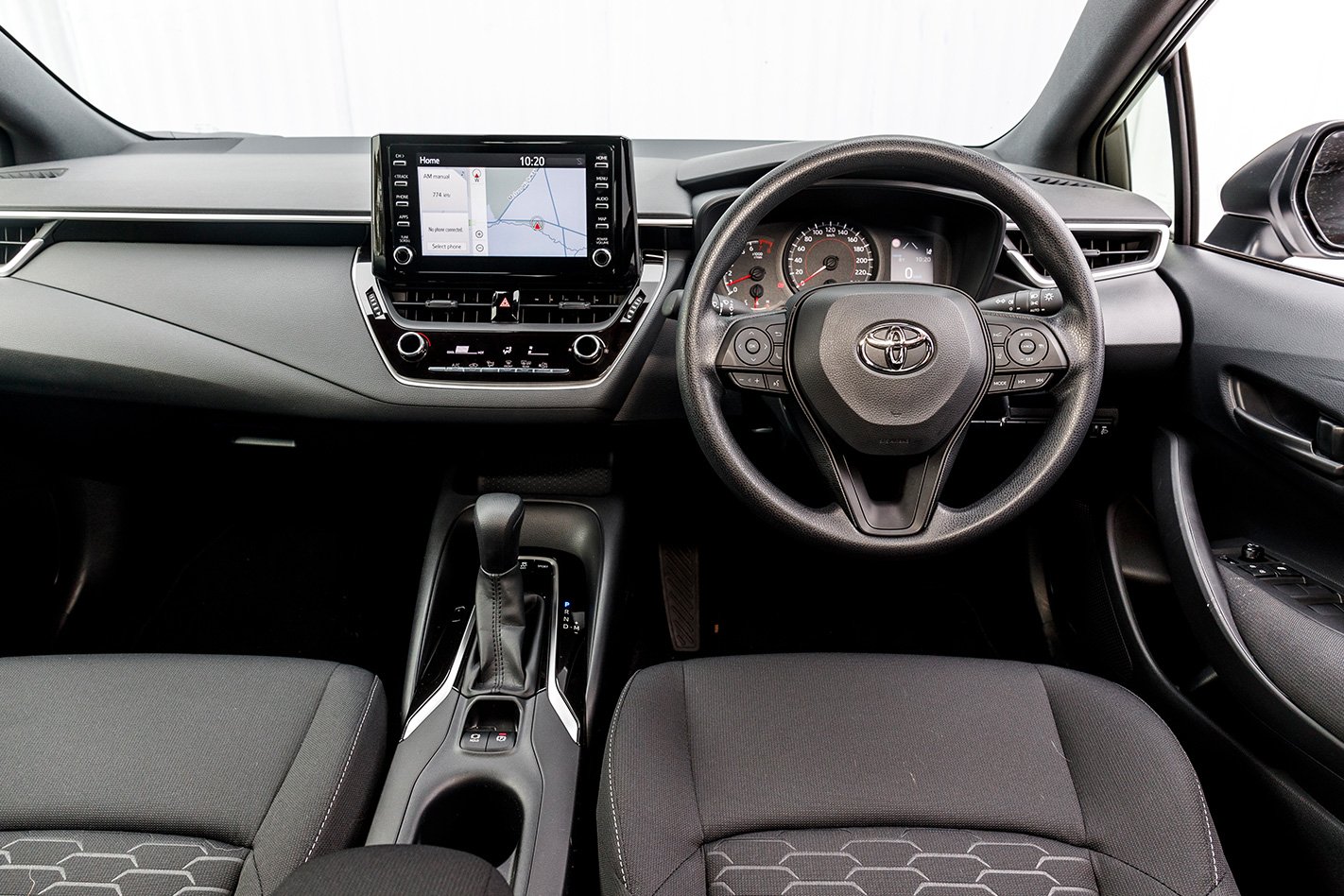
What bursts the Ascent Sport’s bubble is that bijou boot, managing little more than half the volume of the cave-like Civic’s. Blaming Corolla’s newly acquired multi-link rear is problematic too, because all but the torsion-beam equipped i30 in this posse also possess IRS.
Luckily things do improve at the other end, thanks to the Toyota’s 125kW/200Nm 2.0-litre ‘Dynamic Force’ naturally aspirated four-cylinder petrol engine. That’s the good news. The bad news is it’s mated to a CVT. Now, normally, the latter is to driving pleasure what Tony Abbott is to renewable energies; but a class-first ‘launch gear’ has been fitted, as part of a 10-speed stepped trannie, that is specially tuned for rapid off-the-line acceleration, before switching to the fuel-saving continuously variable belt that’s central to all CVTs. That’s the theory, anyway.
With a virginal 490 clicks on our Ascent Sport’s odo, we expected it to trail the 114kW/200Nm 3 (with 1500km) and 120kW/203Nm i30 (5000km in), but instead the Toyota matched the hard-charging Hyundai to 100km/h (only 0.1 seconds behind at 8.9s), and kept it honest past the 140km/h marker at 16.5s to the i30’s 16.3s. And from 80-120km/h they were dead-level at 5.8s. Additionally, the i30 and the 104kW/174Nm Civic were driven in the dry but rain affected the Mazda and Corolla’s results. That also explains the latter’s longer braking distances.
As mileages grew, so did the Toyota’s muscle, pulling well away from the slower Civic across the board. Better still, while mashing the throttle does result in the CVT holding the revs with accompanying engine drone, choosing Sport mode raises that rev threshold to reduce such flaring, in contrast to the perennially noisy Honda. Averaging 8.1L/100km sealed the Ascent Sport’s powertrain prowess. Who’d have believed a Corolla would ever enjoy Mk7 Golf-like efficiency dividends!
Kudos too to Mazda. Though not the fastest, the old timer proved both the lustiest and sweetest mechanically, eager to visit the 6400rpm limit, backed up by its intelligently tuned six-speeder (with more-intuitive manual pattern) and gnarliest exhaust note. And it returned 8.5L/100km while caned mercilessly.
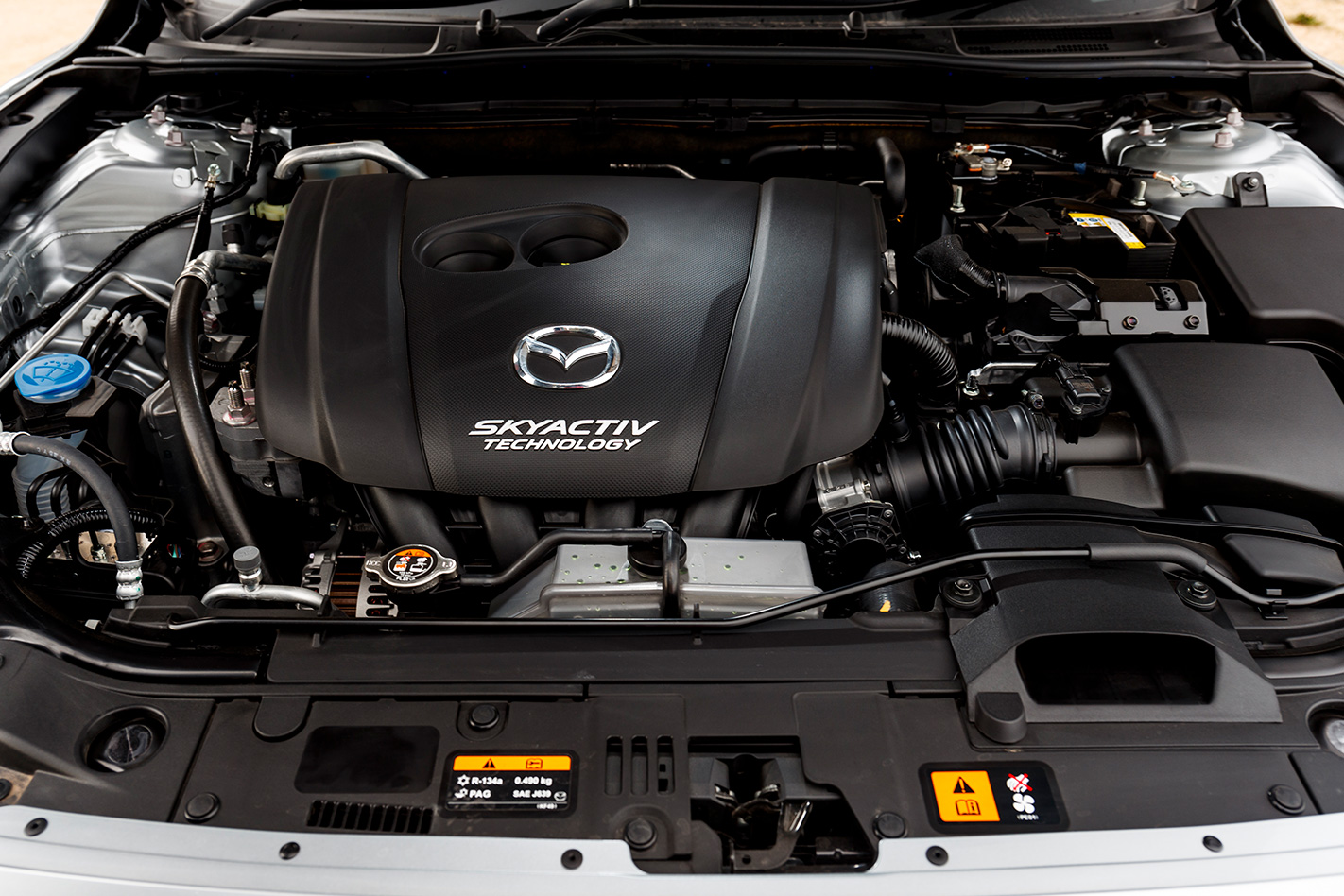
The i30, then? While spirited and eager, with a quick-shifting auto providing traffic-gap-filling point-and-squirt ease, it’s also somewhat loutish and coarse at higher revs, dissuading hard driving antics – with the steepest price to pay at the bowser to boot.
Not that the Civic, with its hoary single-cammer, is especially economical or much quieter when extended. Keen at take-off speeds, it falls away as the tonne approaches. Performance-wise the Honda seems stronger in isolation than it really is. The $3300 step to a 1.5 turbo VTi-L seems like money well spent.
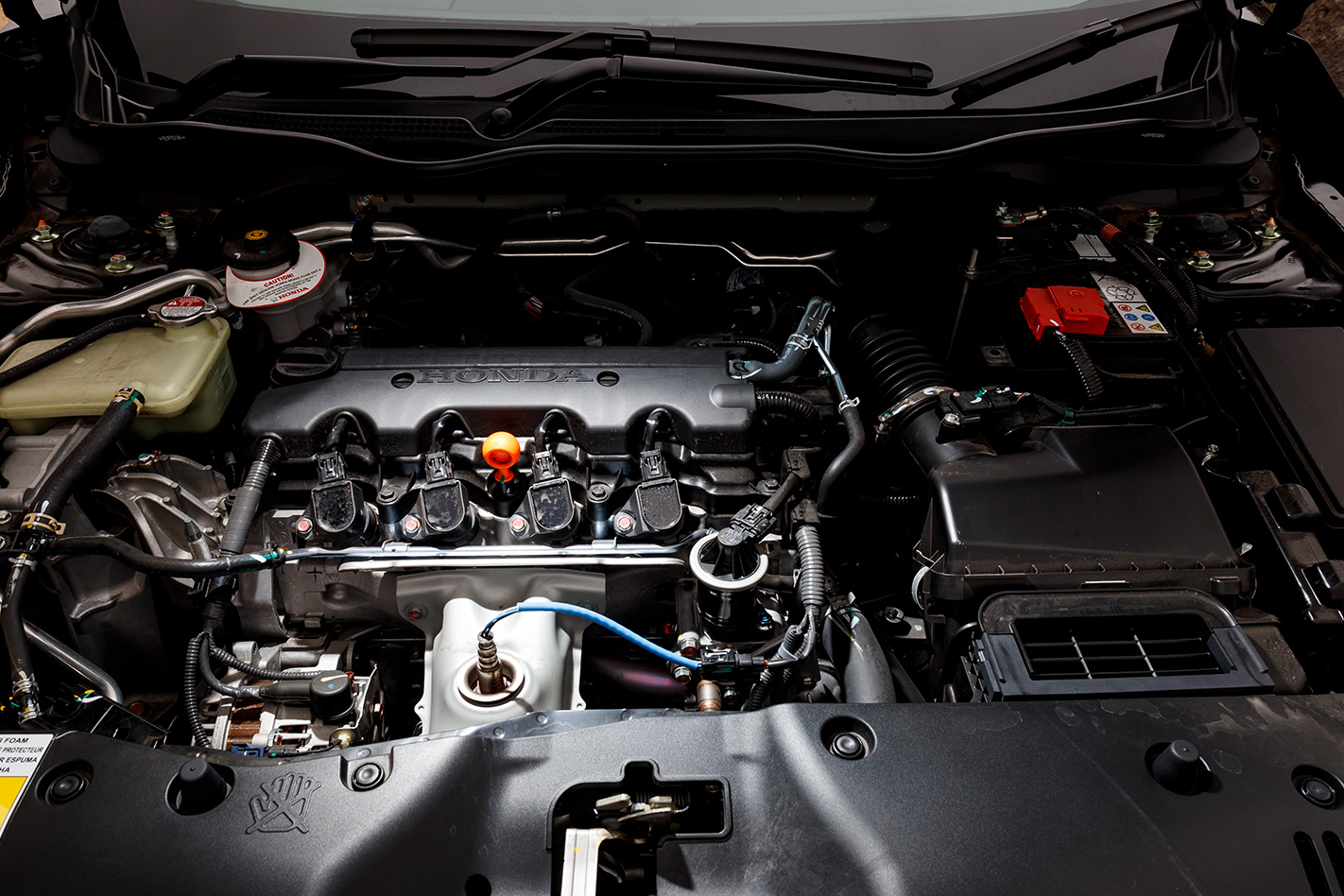
Efficiency and noise issues, however, aren’t the Honda’s sole challenges. Driven benignly, the Civic offers flat and planted roadholding, along with a loping ride quality that soaks up bumps effortlessly. Lean a little harder, though, and that inherent chassis softness encourages lateral body movement, which never really settles. Add steering that’s too direct at speed, forcing the driver to take two bites to maintain the chosen line, and progress can be a chore. So, although the underlying strength of the ‘Earth Dreams’ chassis (as witnessed in the supernaturally agile Type R) sees Civic through, the helm’s nervousness makes it feel a little underdone. More tuning is necessary here, Honda.
Conversely, the Mazda presents the loveliest steering, offering natural feel, feedback and interaction that is totally immersive if you’re up for a fang. In company with the brand’s better current models, the 3’s chassis gels delightfully the harder it’s driven. You’d need to get a bit antisocial to really explore the 3’s dynamic fluency and bandwidth, but it’s all there to be enjoyed.
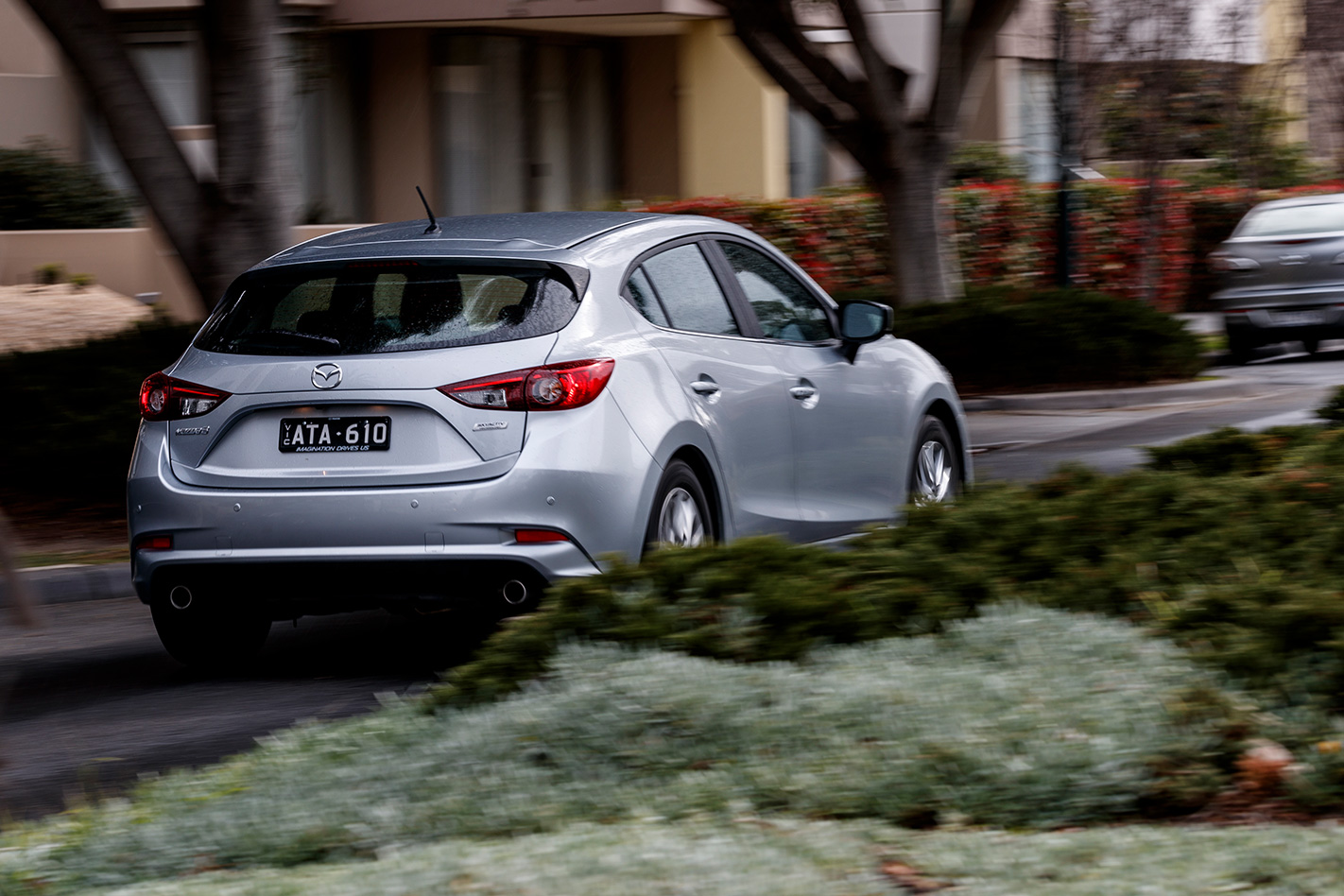
The Corolla, ultimately, proves to be the most fluid and – yes – fun at all speeds, being the easiest and most secure across the spectrum … slow, fast or in between, with real steering feel and feedback, and balanced, neutral and predictable handling characteristics. Additionally, the accompanying ride suppleness is perhaps the even bigger achievement, absorbing and isolating in equal measure, to degrees simply unachievable by the others on test. We eagerly await pitching Corolla against Golf and Peugeot 308.
And the i30? Compared with the Mazda and Toyota, it feels a tad ragged (complete with rack rattle), but actually it’s also a very capable, chuckable handler. The steering’s measured responsiveness and the suspension’s firmness instil an agility all its own, allowing keen drivers to scurry through tight turns while maintaining control for boisterous if at times bouncy fun … and all accompanied by the howls of the eco Kumho rubber. Oh, and don’t bother selecting Sport as all it does is excessively weight up the steering.
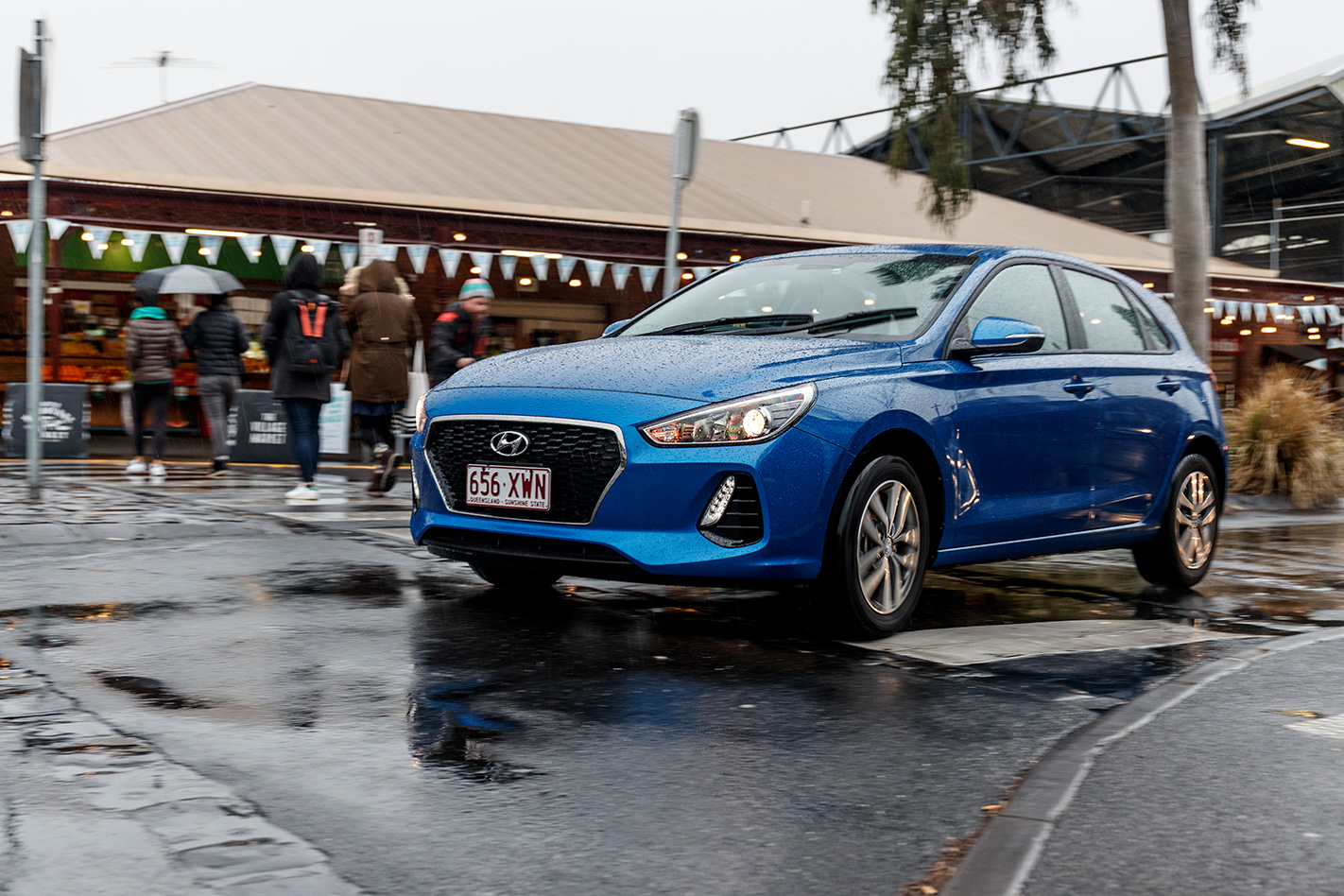
Fundamentally, there isn’t a horrible hatch here, but one has to come last and the likeable but loud Civic VTi-S is that car. Size, value, equipment, individuality and dependability remain plus points, but the noisy and dated 1.8 powertrain is out of its league now and the chassis tune is a bit at sea in our conditions.
This bargain i30 Active feels as if every box had been methodically ticked before sign-off. Choose the AEB safety pack and it essentially becomes the complete hatch experience. But there’s greater finesse, efficiency and sophistication on offer, so bronze it is for the lusty, trusty Hyundai.
That the five-year-old 3 still remains so competitive certainly caught us unawares. Clearly Mazda has worked hard refining its late bloomer, teasing out and honing all that underlying engine, chassis and cabin goodness. Next year’s torsion-beam replacement will have big shoes to fill.
So, the Corolla finally returns to the top of a group test after 15 years. Not quite the quickest or sharpest, it is nevertheless the most frugal, fluid, contained and refined, with leading comfort and efficiency, and a lot of fun to boot.
Ah, but that meagre boot. Asking yourself how often you’d actually brim yours might provide the answer to the vexing question of how important size really is. Because otherwise this is one hell of a step forward for a small car with all the usual Toyota attributes.
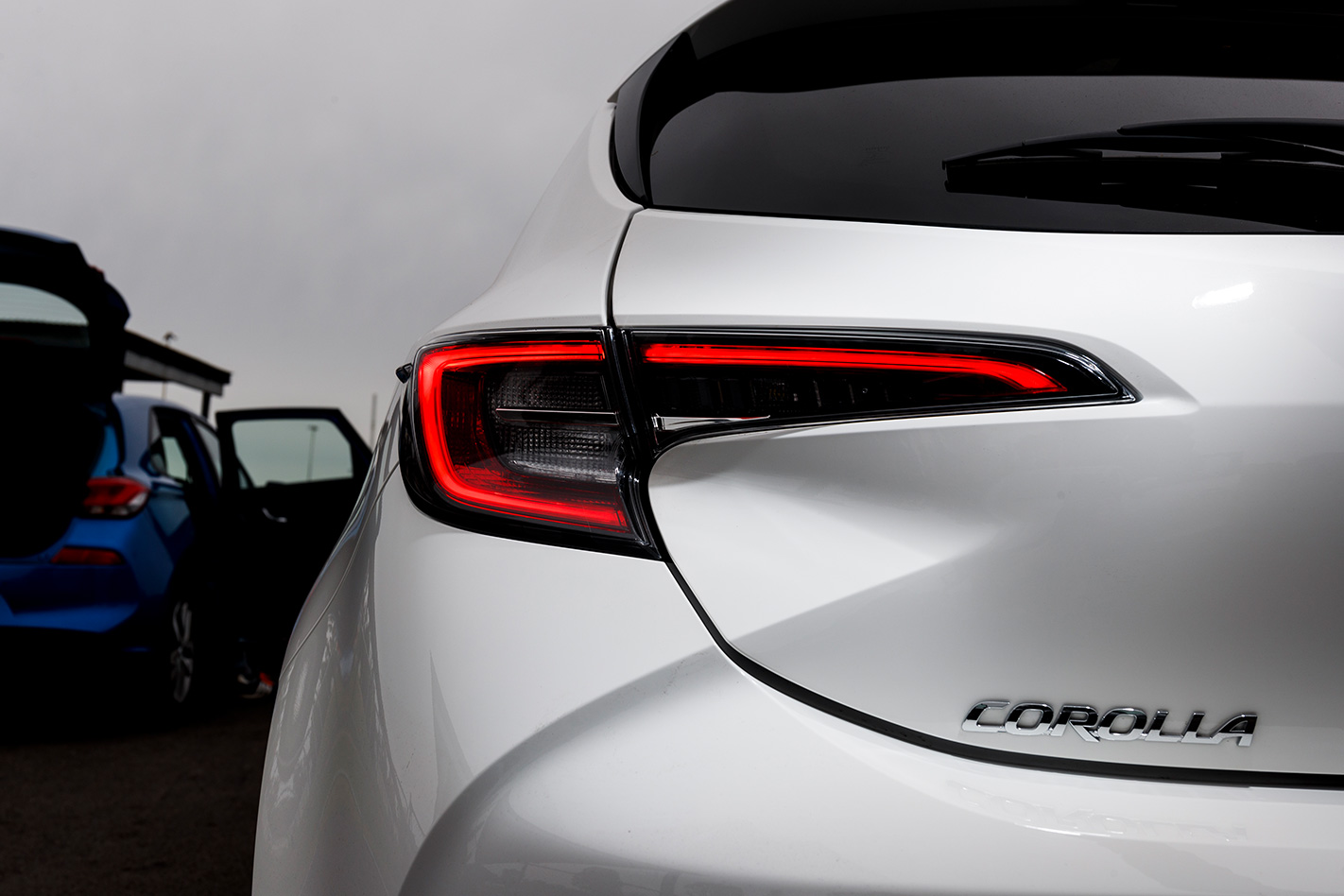
A once-in-a-decade Wheels comparo win for Corolla, then, and the most convincing since the KE20’s in ’73.
As usual, the drive programme for the Ferrari F430 is a time-warp exercise. From nine in the morning till two in the afternoon, we are left to our own devices on quiet country backroads.
This review was originally published in MOTOR’s December 2004 issue
Then from two to five, the car will be put to the test on Ferrari’s own Fiorano circuit where the new mid-engine coupe is a full three seconds faster than the F360 Modena it replaces. And while it doesn’t quite beat the Enzo, an all-or-nothing one-minute-twenty-five-seconds lap at Fiorano reduces the advantage of the 485kW Ferrari supercar to an unexpectedly marginal two seconds.
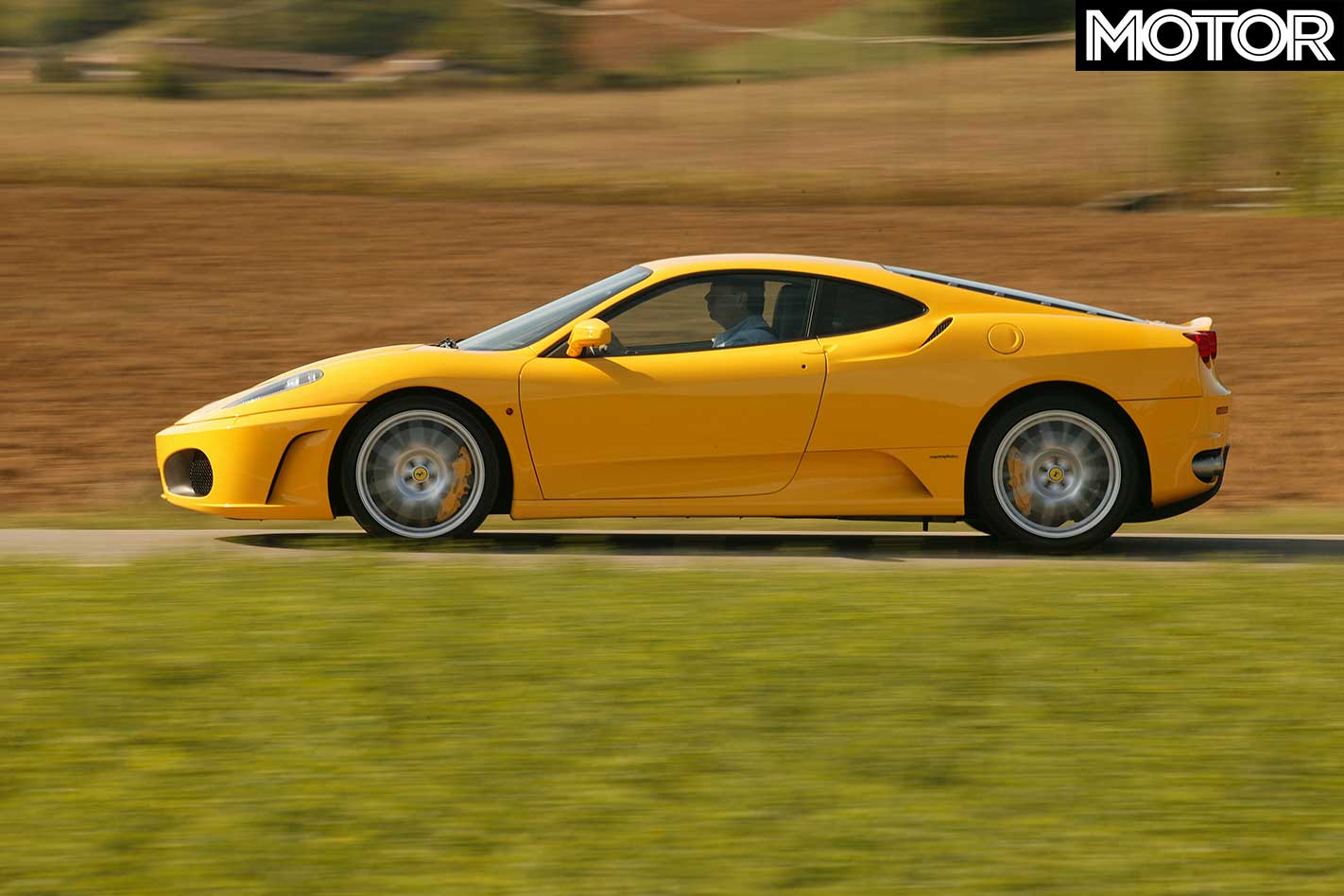
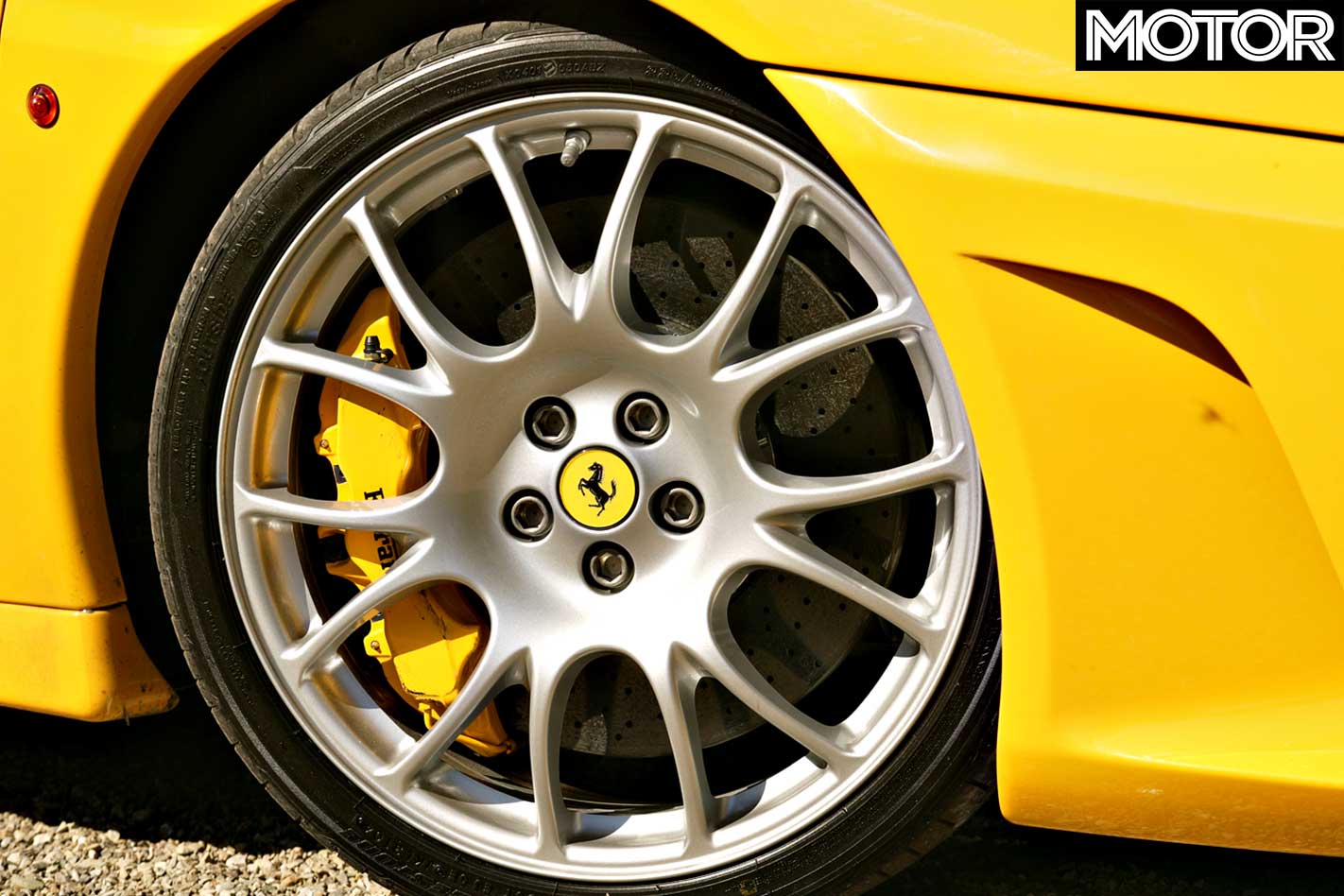
Also new are the 19-inch 10-spoke alloys, the four chrome-tipped tailpipes, the substantially bigger radiators and the clever underbody aerodynamics which increase the maximum downforce by 50 percent in comparison to the Modena.
Although the cockpit looks familiar, it has been partly reworked, borrowing items from the iconic Challenge Stradale, including a contrasting rev counter (with a yellow or red dial) and aluminium pedals. Sadly, the cheapo Fiat switchgear, tacky carbon-fibre applications and plastic air vent bezels take the shine off a class act.
What makes all the difference between old and new is the beautifully detailed engine. A development of the Maserati 4.2-litre engine, the new 4.3-litre is still a 32-valve 90 degree V8 (the 360 was a 40-valver), but the power output has jumped to 360kW (up 23 percent from Modena) at 8500rpm, and maximum torque is now an anabolic 465Nm (up 25 percent) at 5250rpm.
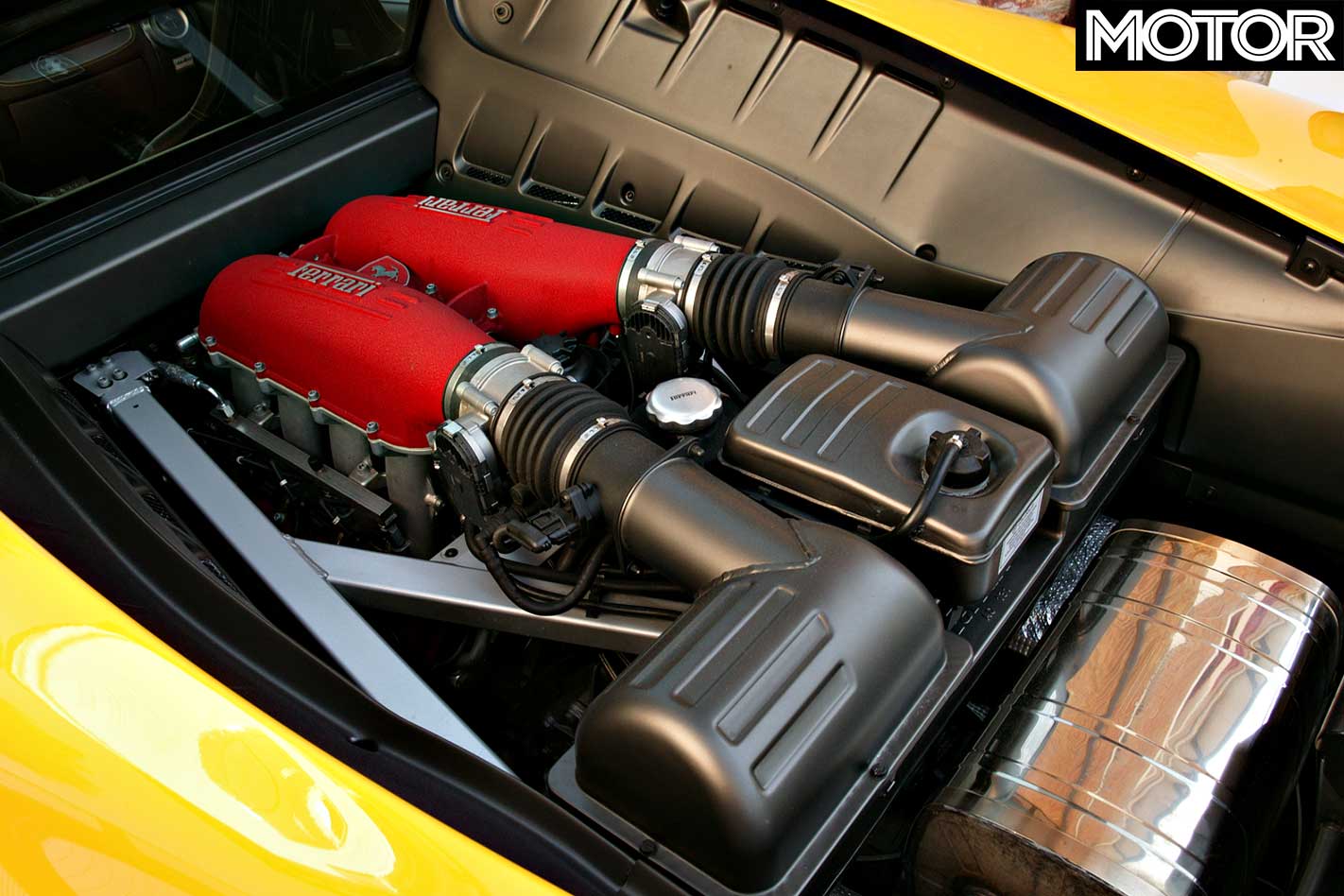
In launch-control mode, the F430 takes only 4.0 seconds (4.5 seconds for Modena) to accelerate from 0-100km/h. And top speed is an athletic 315km/h (295km/h for Modena). Sharing some of its DNA with the unit installed in the latest Maserati Quattroporte, the 4.3-litre Ferrari motor incorporates a flat-plane crankshaft with five main bearings, a quattrovalvole head inspired by F1, variable intake and exhaust valve timing, and dry sump lubrication with three scavenge pumps.
To lower the car’s centre of gravity, the Ferrari engineers integrated the engine oil tank in the gearbox housing and fitted a smaller-diameter twin-plate clutch. Although 75 percent of the customers specify the optional, once again improved F1 transmission, the standard six-speed gearbox is still available.
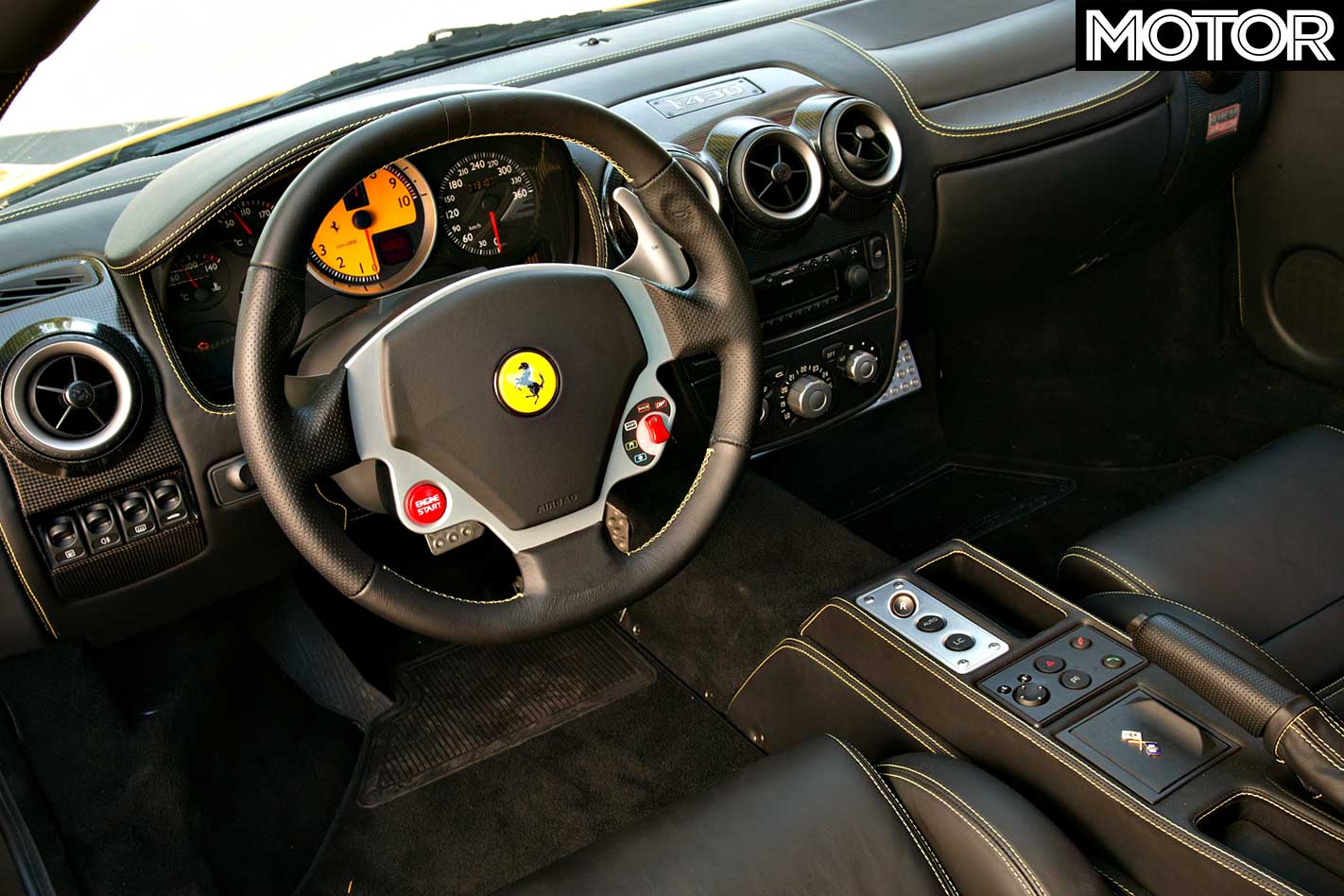
After the press conference, a man in rosso corsa livery hands out the keys and makes a few suggestions. “Beware of the Carabinieri, and bring the vehicle back in one piece, per favore.”
I get the yellow Fazza, which is bound to attract the law like a topless dancer inside the Vatican, but the only cop we see gives us an enthusiastic thumbs up.
The test car is fitted with black leather racing buckets and four-point harnesses. The dashboard looks familiar, but the three-spoke leather-rimmed steering wheel is all-new. It incorporates a fire-red starter button as well as what Schumi and Rubinho call the manettino. A little red toggle switch, it selects one of five different driving modes: ice, wet, sport, race and CST off. And off really does mean off: no traction control, no brake actuation, and no support to be expected from the electronic throttle whatsoever.
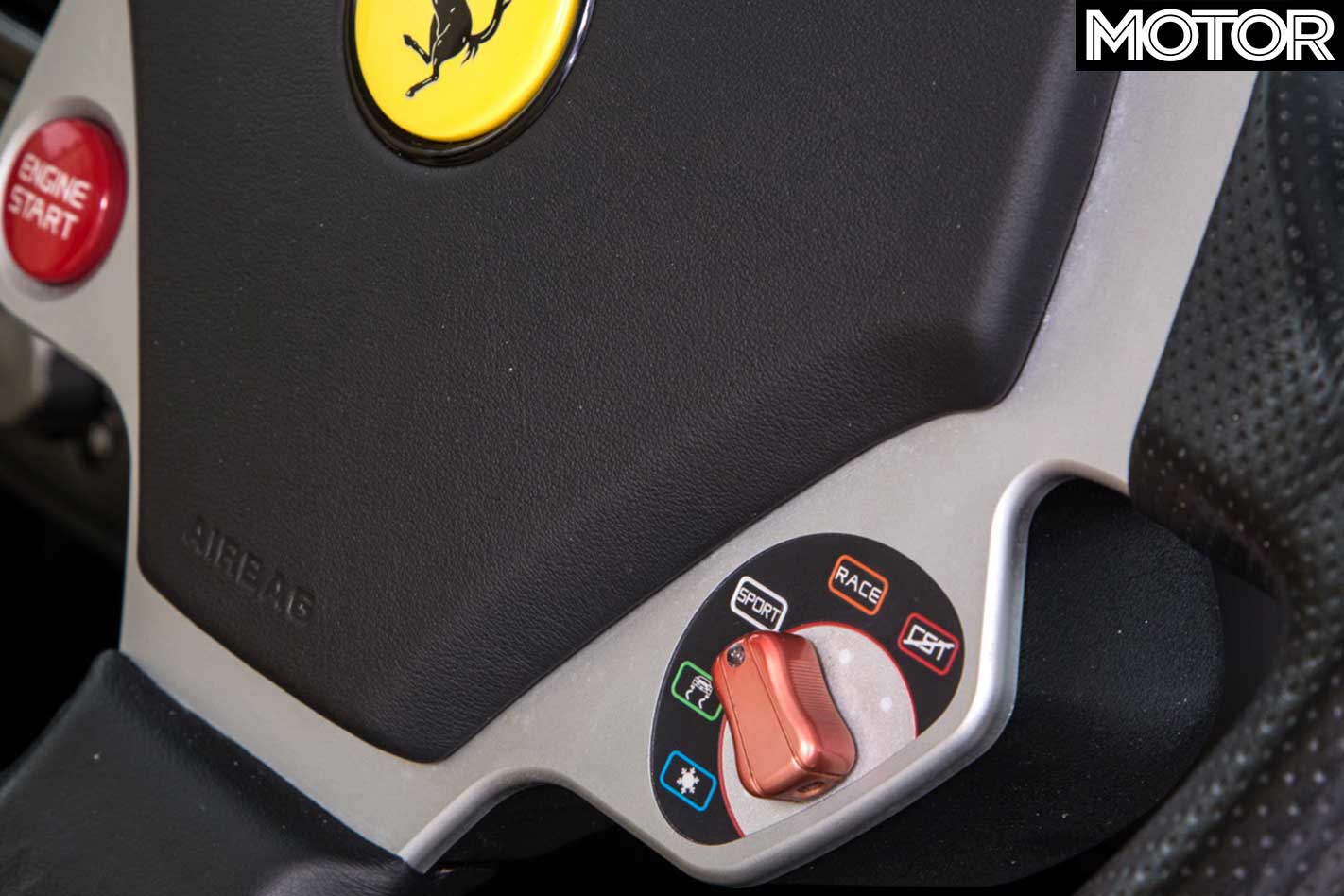
The only propulsion aid which remains active at all times is the new E-Diff, short for electronically controlled differential. Similar in concept to the BMW M diff, this fast-acting device employs two clutch units to govern the torque flow to the driveshafts in relation to twist action, wheel slip and acceleration.
The idea is to tame the rear end and to improve traction during hard cornering, especially when tight radii and slippery surfaces are involved. According to the senior project manager, the E-Diff is almost as effective as all-wheel drive, which would have added at least 70kg in weight.
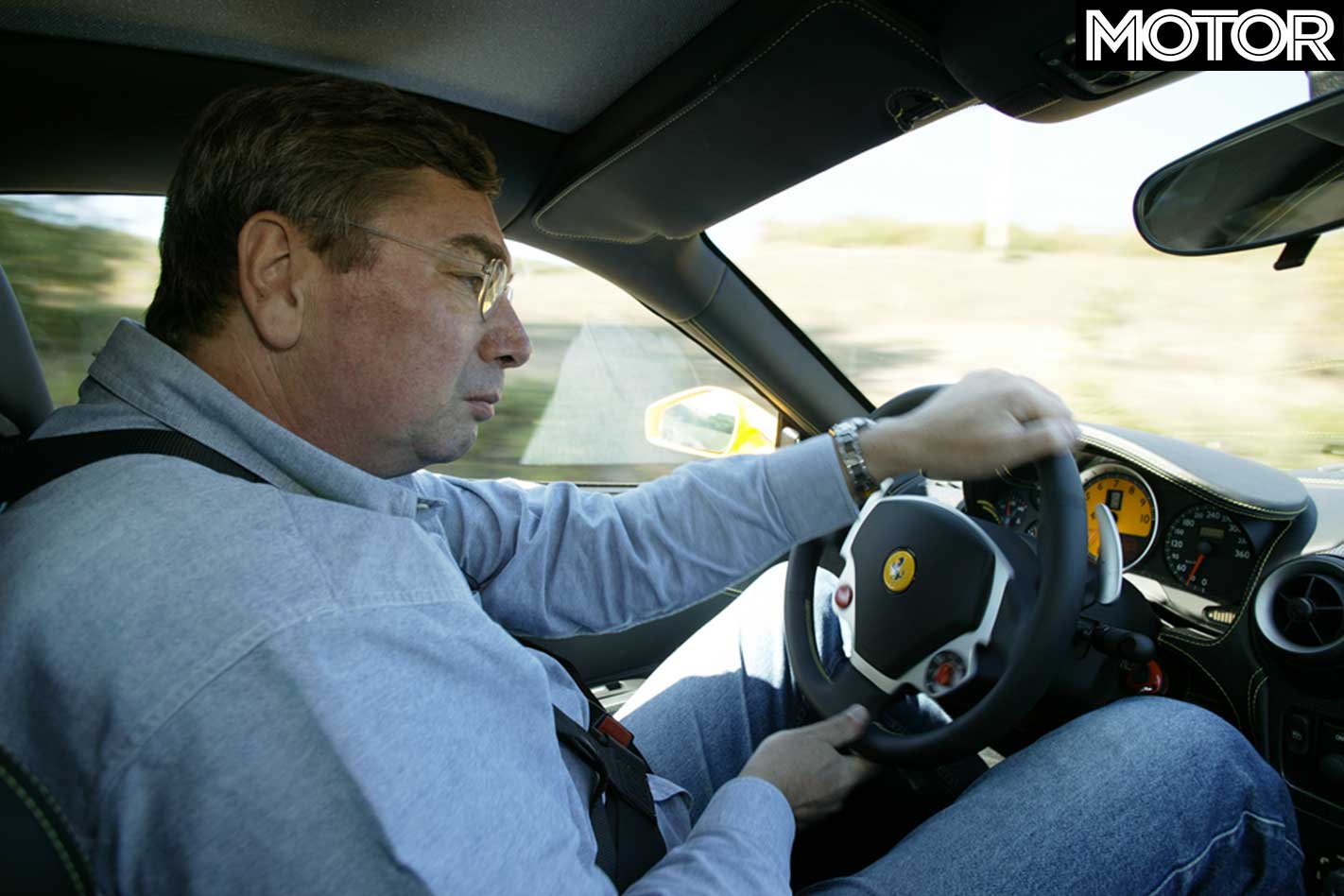
No Ferrari has ever sounded dull, but this V8 is an aural treat. The dark-voiced 4.3-litre unit makes all the right noises. Take-off produces a hectic snarl which quickly evolves into a loud and dense staccato, the initially disciplined mid-range revs sound rich and raw and raucous as soon as the engine opens up and fills its lungs with intake air, the high-pitched spiralling climax fuses Verdi and Wagner with Motörhead and Metallica.
We were sent on a drive route no other car manufacturer would have dared to select. Narrow roads and tight corners are as typically Italian as pasta and vino rosso for lunch, but this three-hour tour de force threw in broken pavement, crash-bang dips, sky’s-the-limit crests and heart-stopping single-lane sections, which would have proved tough for a new SUV, let alone a Ferrari with marginal ground clearance.
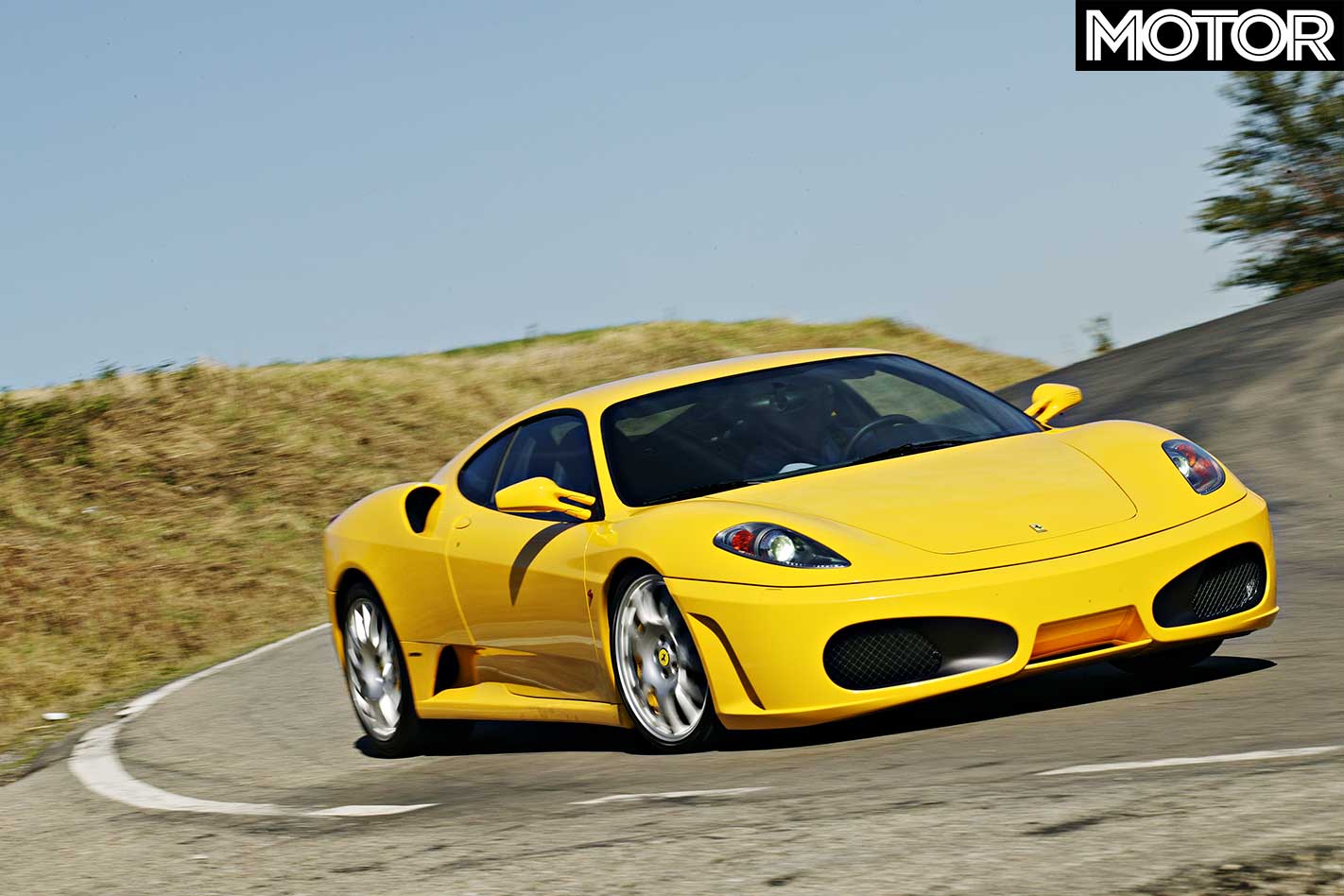
But, to everyone’s surprise, nothing was bent, broken or scratched. The new Skyhook suspension offers enough spring travel, even in the stiff race setting. Sure, the car occasionally bottomed out and scraped its nose once or twice, but the F430 always maintained its composure, and its directional stability was astonishing. E-Diff helped here, too, because it always distributes the torque to the wheel that needs it most, and it does so quickly and progressively.
After 90-kilometres of esses, descents and blind crests, the route spat us out at the bottom of a valley which promised, at last, smooth tarmac and fast bends. The F430 mastered both terrains with aplomb.
Its oversized brakes (carbon ceramic brakes are optional) are more than strong enough to reign in the car before the apex, the Goodyears are sticky enough to snake along the chosen line, and the electronic knee joints of the suspension are compliant enough to absorb the patchwork topography.
When the twisty bit was over, there were only two items on my wish list: quicker steering and slightly bigger shift paddles. Out in the open, where you can see far enough ahead to give this car a heavy boot, the steering is just fine. It is neither overdamped nor too eager in the straight-ahead position, instead it seems to intuitively know the right rhythm, striking a compelling balance between chatty and muted.
At 1450kg, the new Ferrari is 60kg heavier than the 360. But the weight gain increases torsional stiffness by 20 percent, and the standard equipment now includes a combined satnav/CD player, phone and electrically adjustable seats. In combination with the brawny 360kW engine, the F430 is not only quicker than the awesome Challenge Stradale, it’s also substantially more smooth, more refined and better balanced.
Instead of constantly fighting the car and the road, the successor to the F360 encourages the driver to keep it on a long leash. Admittedly, it takes a while for confidence to grow, but by mid-morning I had learned to synchronize my inputs to the greater talents of this vehicle.
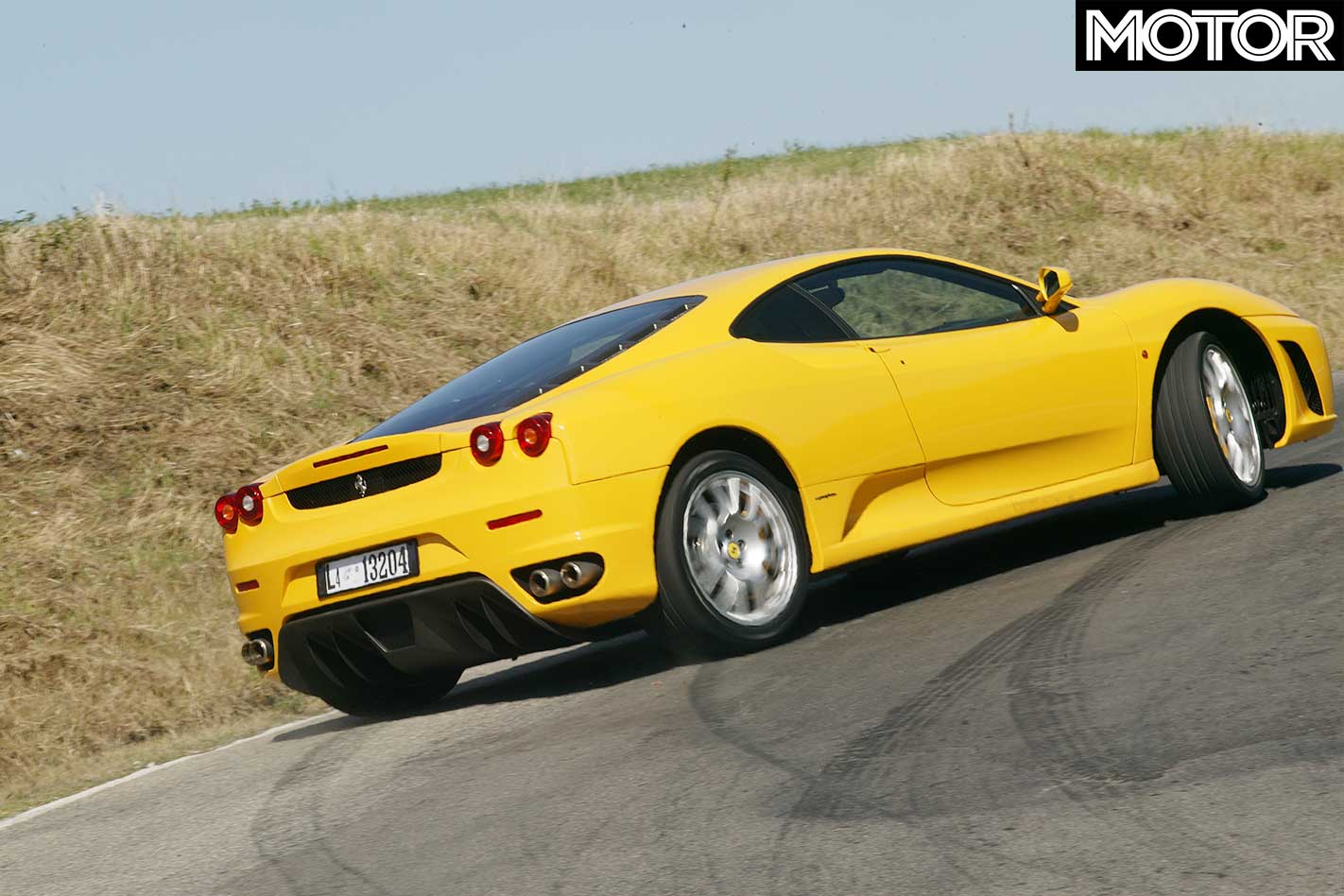
In the F430, late upshifts are okay, even if you’re about to run out of blacktop, early downshifts are safe, even though the tail will momentarily feel light and twitchy, aggressive turn-ins are fine, thanks to the suction-cup roadholding, and hitting the brakes at five past midnight isn’t a problem because those huge stoppers reel you in with vigour.
Despite all the speed and the drama, this car is not a loose cannon. It combines an infectious playfulness with reassuring road manners.
Is this Ferrari worth selling your house for? Probably not. But it is so much better than the 360 which was yesterday’s darling, and in terms of performance it closes in on the Enzo, which suddenly looks less desirable. As far as sheer ability, street cred and value for money are concerned, this is definitely the hottest horse in the Maranello corral. No, the 575M and the 612S don’t even come close.
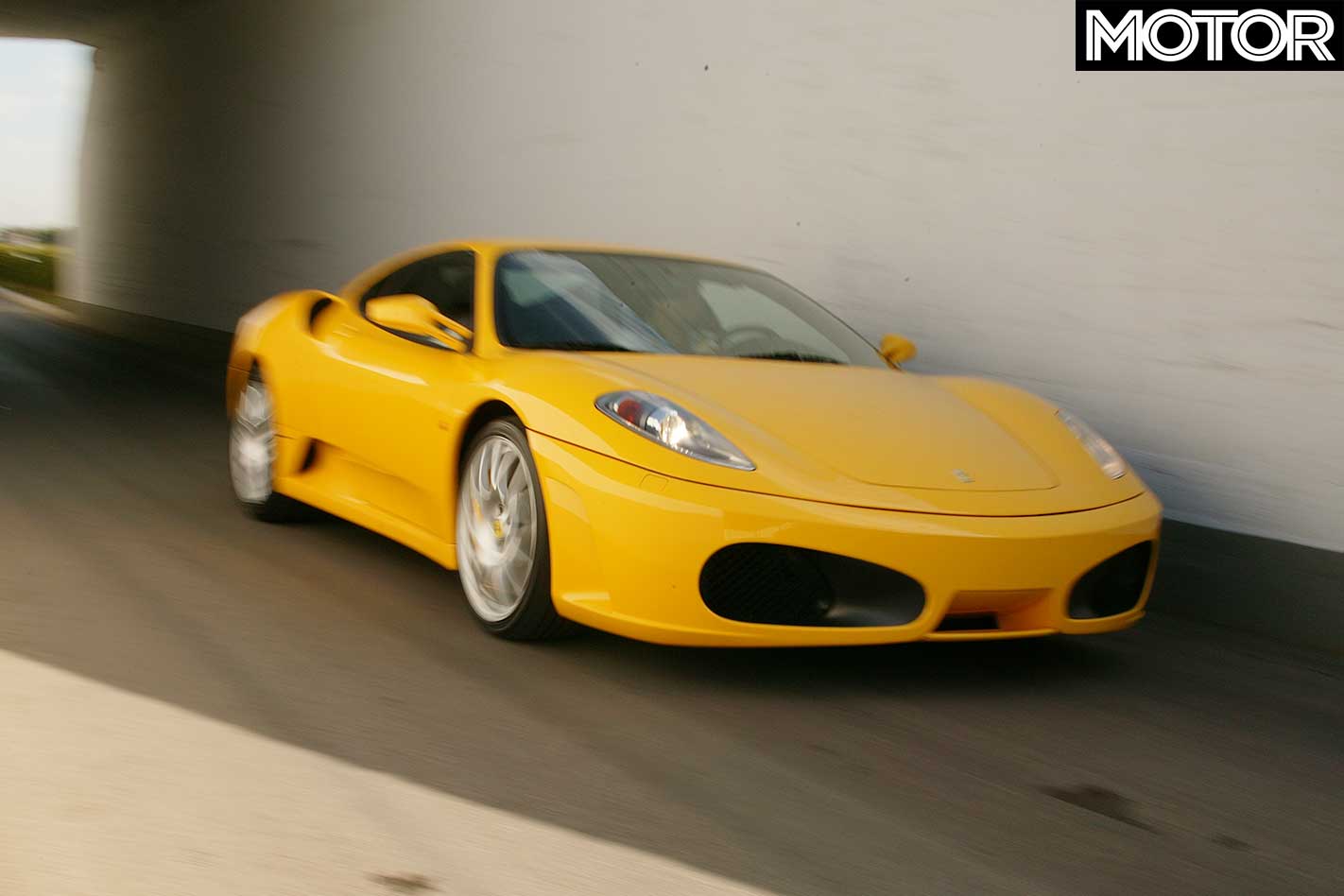
FAST FACTS 2004 Ferrari F430
BODY: 2-door coupe DRIVE: rear-wheel ENGINE: 4.3-litre V8, 32-valve POWER: 360kW at 8500rpm TORQUE: 465Nm at 5250rpm COMPRESSION: 11.3:1 BORE/STROKE: 92.0mm x 81.0mm WEIGHT: 1450kg POWER-TO-WEIGHT: 248kW/tonne TRANSMISSION: six-speed sequential manual SUSPENSION: double wishbones, coil springs, anti-roll bar (f & r) L/W/h: 4512/1923/1214mm WHEELBASE: 2600mm TRACK: 1669mm (f); 1616mm (r) BRAKES: 380mm cross-drilled & ventilated discs, six-piston calipers (f); 380mm cross-drilled & ventilated discs, four-piston calipers (r), ABS WHEELS: 19 x 9.0-inch (f), 19 x 11.0-inch (r) TYRES: Goodyear Eagle F1; 225/35 ZR19 (f), 285/35 ZR19 (r) FUEL: 95 litres, PULP PRICE: $420,000 (est)
Fiorano flight plan
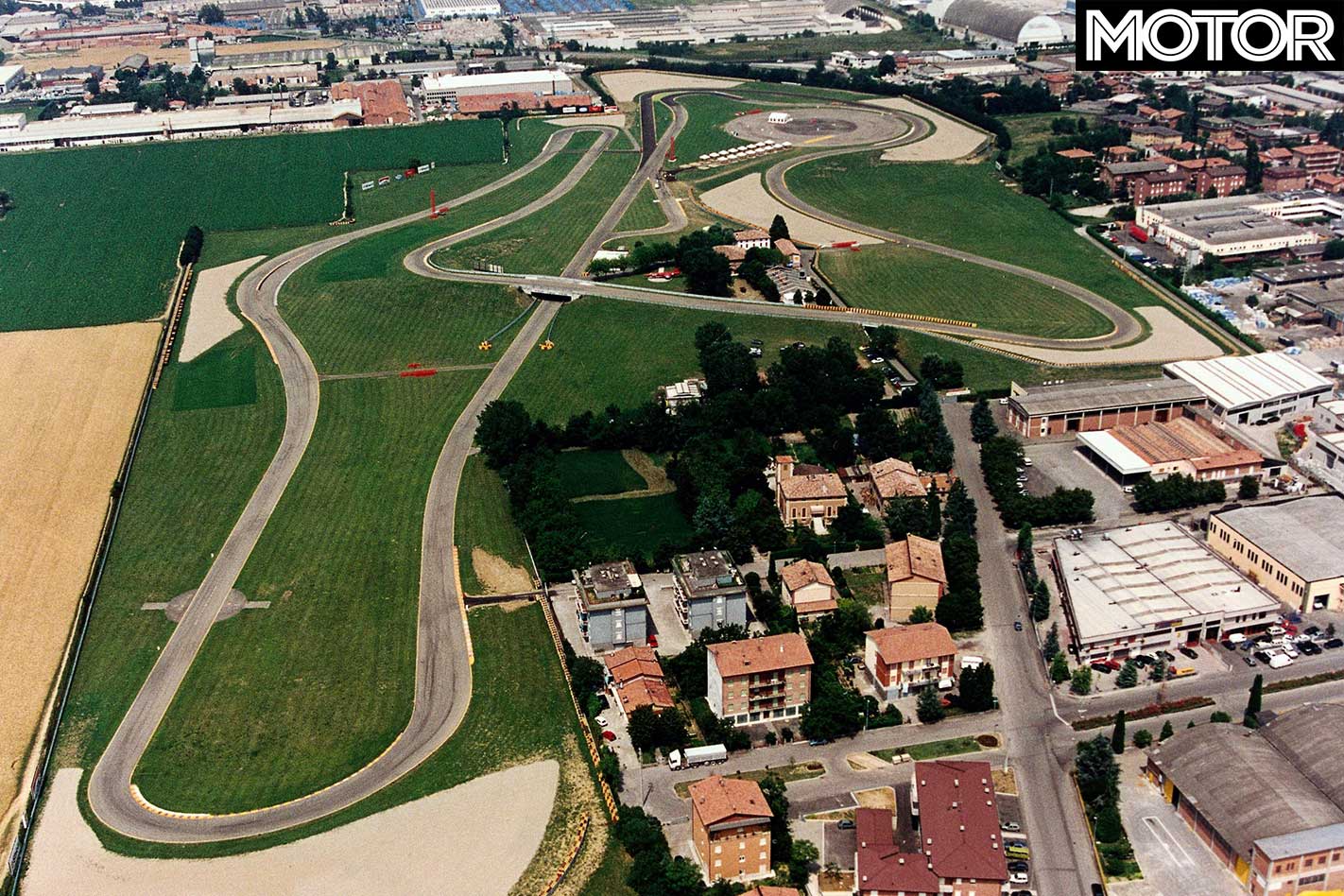
Ever wondered what a lap of Ferrari’s test track Fiorano would be like, in an F430? Here goes: the lights change to green, and we’re off, heading for the first right-hander which encourages a creamy second-gear slide onto a long ess. You coordinate the line with a mixture of steering and throttle, diligently refraining from putting down too much power too soon in order to save the front tyres.
Moments later it’s back into second, over the kerbs and up the hill to the right, then flat out over the bridge, braking hard for the right-hander only a tenth of a second before you can actually see it.
The next bit is easy: down the hill, late on the brake, turn in left and accelerate hard onto the back straight. The F430 wants to run wide, but a stab on the gas tightens the arc and we dart through the gap, briefly kissing the red-and-yellow rumble strips on both apexes before rocketing along the straight at the top of fourth gear.
From its origins in aerospace and motor racing industries, carbonfibre is increasingly finding its way into more affordable road cars, enabled by more efficient manufacturing processes and lower production and material costs.
The sophisticated composite of fine fibres captured in a polymer resin results in a highly mouldable material that is, kilo for kilo, much stronger and far lighter than metal. Viewed simplistically, though, carbonfibre can be seen as merely a mix of graphite and plastic… and that might spark a few safety concerns.

Until recently, composite construction was mostly confined to smaller, non-impact dependant components such as spoilers, interior trims and accessories, but how would you feel driving around in a car that was built almost entirely from the stuff?
The good news is that composite vehicle structures are not just light and efficient; they’re safe, too.
Carbonfibre construction – already in regular use in the world of motorsport – is something you can expect to see featuring increasingly in more mainstream and affordable cars. To understand why, let’s start with the basic physics of the difference between a bad crash and one with less serious results.
An impact with something solid means that kinetic energy from the car’s motion has to go somewhere (high school physics tells us energy can’t be created or destroyed, remember?). Some of the energy is lost to heat and sound, but the more energy that is transmitted to the occupants, the worse the outcome.

Car manufacturers, therefore, design vehicles that dissipate and absorb as much of the crash energy as possible, reducing the amount transmitted to the occupants.
One of the most effective ways of doing this is by designing areas of the vehicle that crumple, or as engineers like to say, deform. These crumple zones have traditionally been made from metal, and the energy required to bend and collapse the specially-engineered structures slows the car more gradually and dissipates energy across a bigger area and over a longer time interval.
The occupant safety cell, however, has the opposite job. It is required to provide a largely impenetrable space, protecting passengers from the intrusion of objects.
Steels and alloys are ideal materials for both jobs. Metal can be designed to concertina and absorb large amounts of energy in a crumple area, while high-strength metals are used to produce rigid safety cells. Composite materials, however, can be even more effective, and can also reduce the weight of the structures in question.
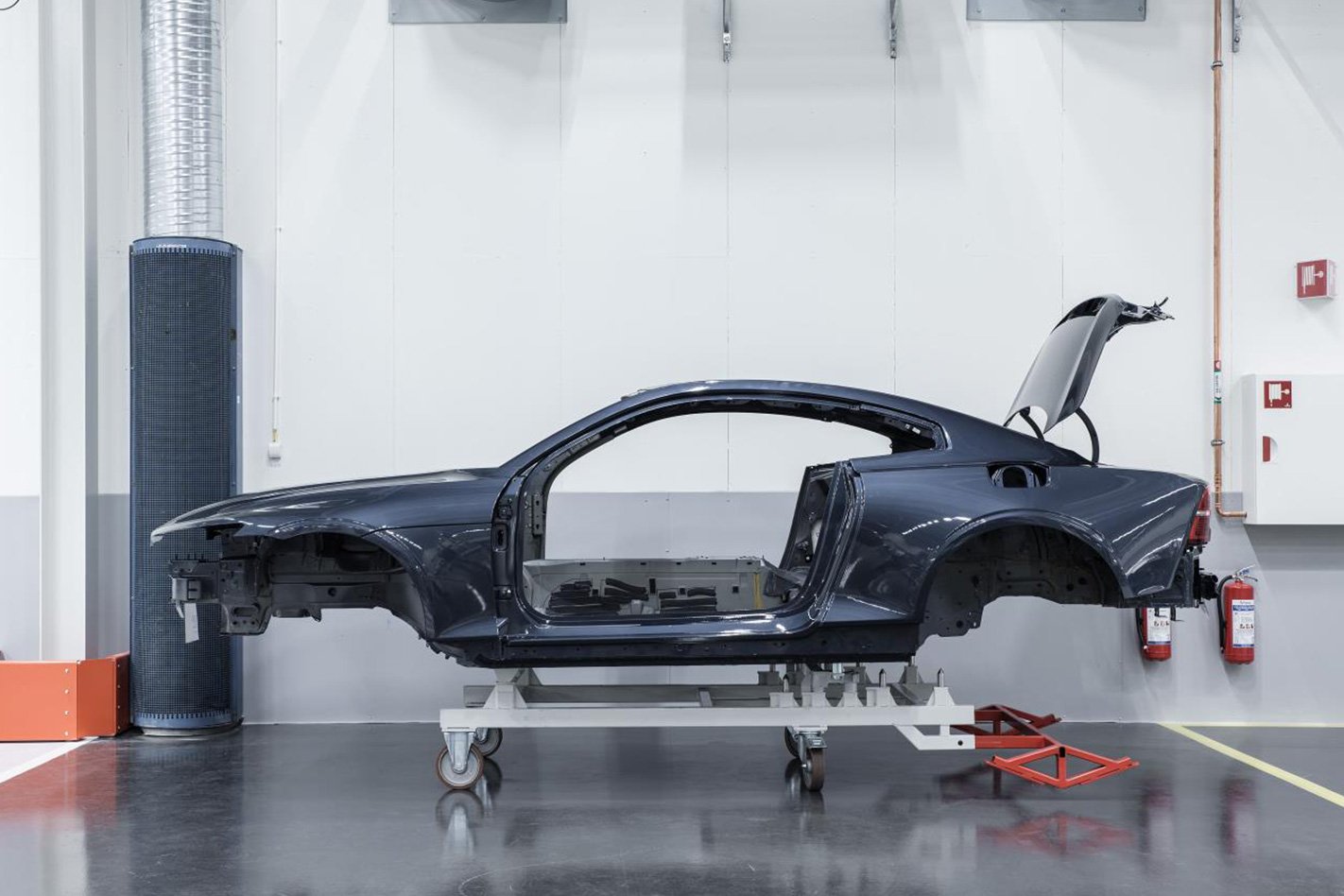
Arranging the weave of the fibres into the correct orientation requires extensive computer modelling and high levels of skill during fabrication, but the results can be extraordinary. Carbonfibre structures can be lighter and stronger than steel for safety cells, but, when arranged differently, composites can be an excellent energy absorber, as well.
Instead of bending like metal during a crash, a carbonfibre crumple zone is designed to smash into thousands of tiny pieces. The energy required to break the small fibres out of the thermoset plastic is enormous, and even small structures can absorb massive amounts of the energy in a crash. The energy absorption process is, in fact, similar in principle to how a bulletproof vest works.
These incredible properties have recently been demonstrated by Volvo’s high-performance spin-off brand Polestar. As part of its verification process, the company crashed an example of its Polestar 1 coupe into a stationary barrier at 56km/h, and it says the results were encouraging.
“We were really excited about this crash test. The first crash test of Polestar 1 has been about exploring the unknown,” said CEO Thomas Ingenlath.
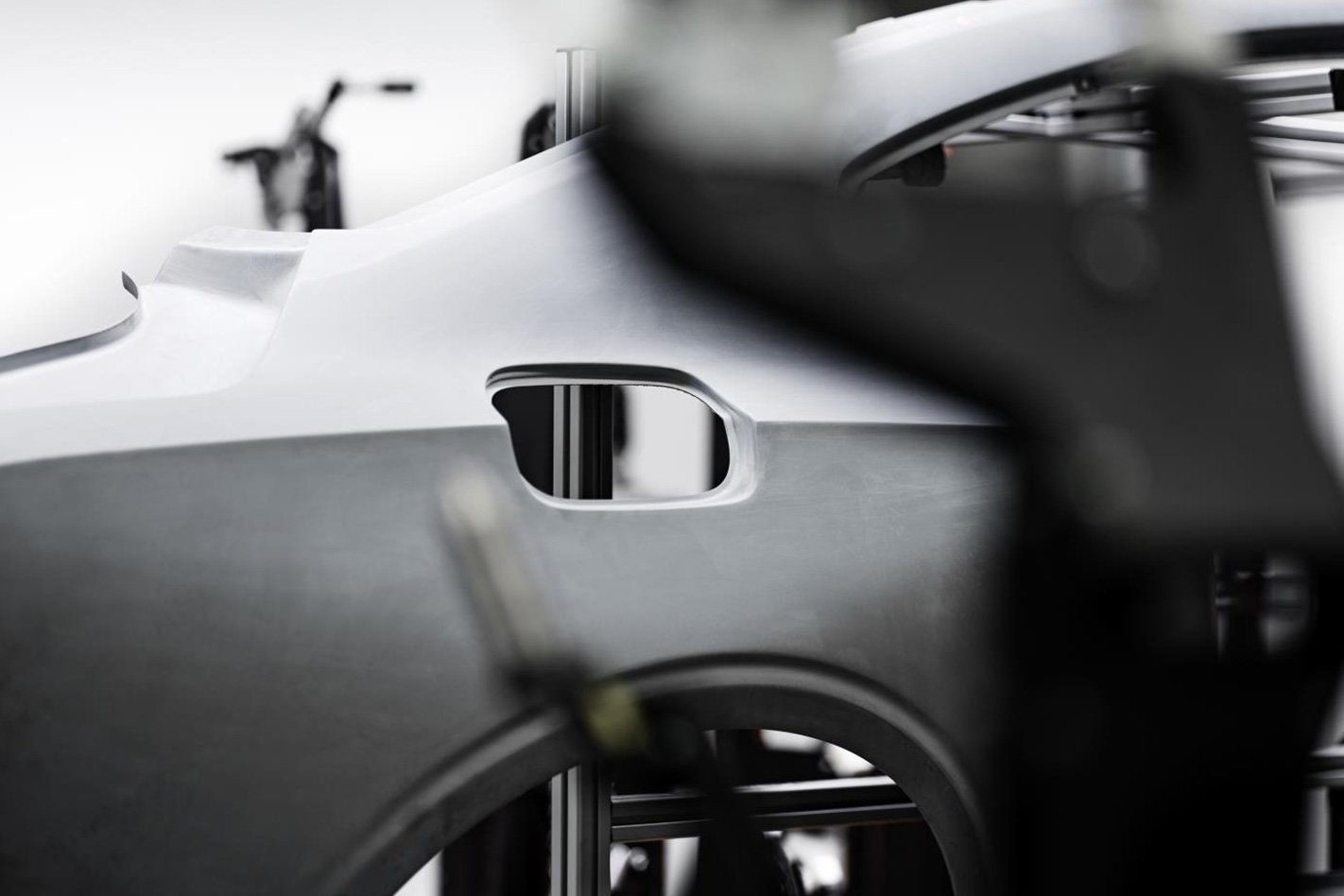
“This was a crucial proof point in the development of Polestar 1; we had to know that the ideas and calculations that have gone into building this car were right – and they were.”
Unlike many carbonfibre-constructed vehicles before it, the Polestar 1 will be within the reach of more motorists with a price tag of around $215,000, and it joins the BMW i3 and Alfa Romeo 4C on the growing list of vehicles using space-age materials without the dizzying price.
Unfortunately, Polestar has no plans to sell the model to Australians, but it indicates a growing trend of carbonfibre cars that perform admirably on the road and offer “the highest safety standards” if the worst happens.
