
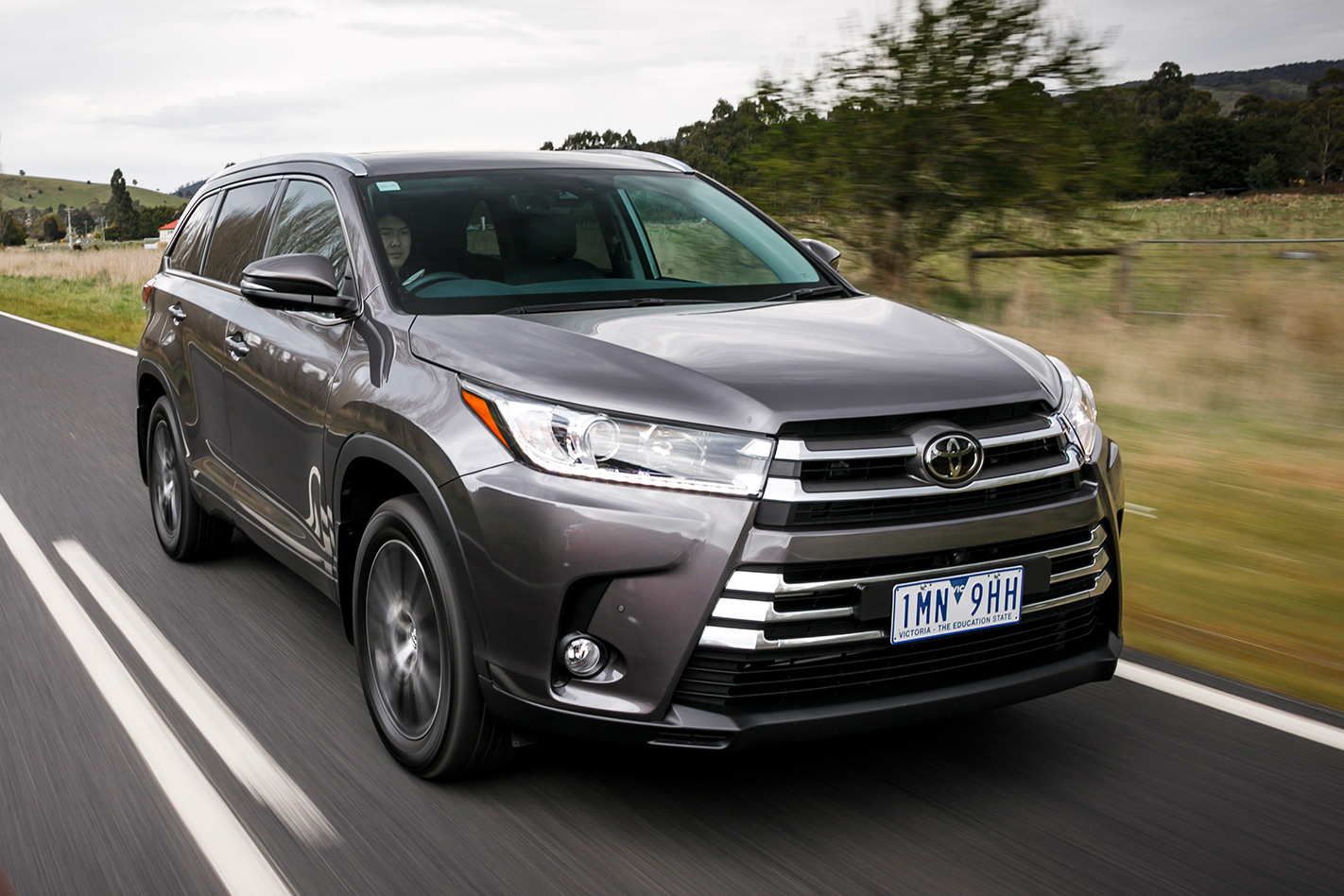
The Toyota Kluger is Australia’s biggest selling city-slicking large SUV, offering V6 power and a comfortable and quiet seven-seat cabin that reaches premium levels in the range-topping Grande that’s the subject of this review.
First launched in Australia in 2014, the Kluger went through a mid-life upgrade at the start of 2018, so we decided to see if it still stacks up against fresher competition including the Mazda CX-9, Skoda Kodiaq, Peugeot 5008, Hyundai Santa Fe, Kia Sorento and the new Holden Acadia.
PRICING
The Kluger comes in three model grades, GX, GXL and Grande that are each available with front- or all-wheel-drive, with the latter attracting a $4000 premium. 2018 Toyota Kluger pricing is as follows:
- Kluger GX FWD – $44,500
- Kluger GX AWD – $48,500
- Kluger GXL FWD – $52,990
- Kluger GXL AWD – $54,990
- Kluger Grande FWD – $65,646
- Kluger Grande AWD – $69,617
The Grande does come with the full enchilada though, including active safety features that are optional in the GX and GXL grades meaning, apart from accessories such as floor mats and roof racks, the only extra you’ll pay is about $480 for premium paint should the standard Eclipse Black hue not be your thing.
In all-wheel-drive guise the Kluger’s 3.5-litre V6 engine consumes regular unleaded petrol at an official combined rate of 9.5L/100km.
The Kluger requires servicing every 10,000km or six months, which is a higher frequency than most, though Toyota’s capped priced servicing means you’ll pay just $180 for the first six services during the first three years or 60,000km.
The Kluger is still covered by Toyota’s three year/100,000km warranty, which seems a little stingy considering most of its rivals have at least five years/unlimited kilometre coverage.
Detailed information, about the entire Kluger range can be found in out 2018 Toyota Kluger Range Review.
STANDARD FEATURES
The Kluger Grande AWD brings additional safety and luxury features over and above the standard features list and brings for its $67,490 retail price tag:
- Part leather upholstery
- Three-zone air-conditioning
- Keyless entry
- Power-operated tailgate
- Heated and ventilated front seats
- Power adjusted front seats, with driver’s seat memory
- Sunroof
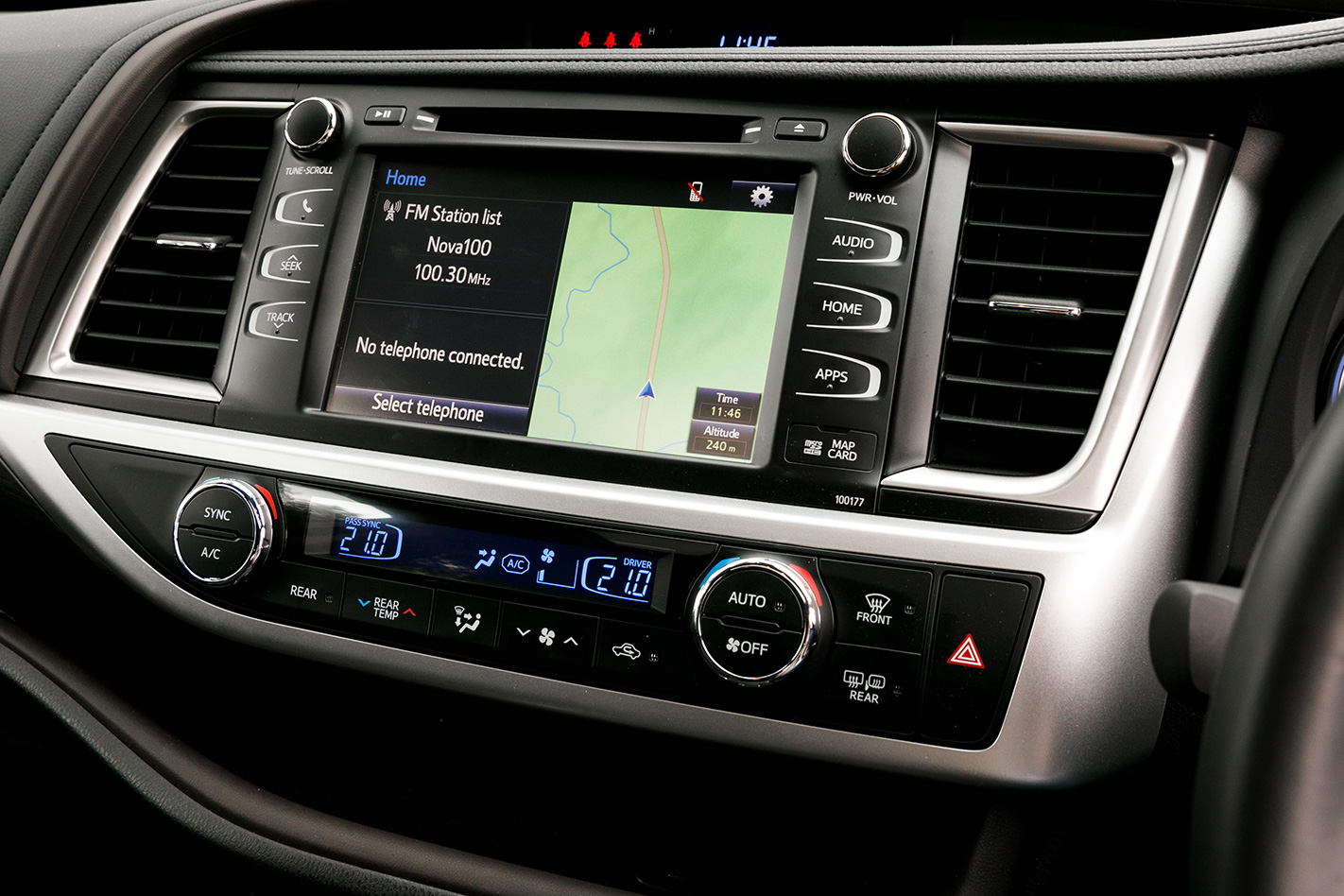
- 8.0-inch touchscreen
- Digital radio
- Satellite navigation
- Autonomous emergency braking
- Lane keeping assist
- Adaptive cruise control
- Rain-sensing windscreen wipers
- Reverse parking sensors
- Rear-cross traffic alert
- Blind-spot monitor
- Rear-cross traffic alert
- Auto-dipping dusk-sensing headlights
- Daytime running lights
- 19-inch alloy wheels
SIZE
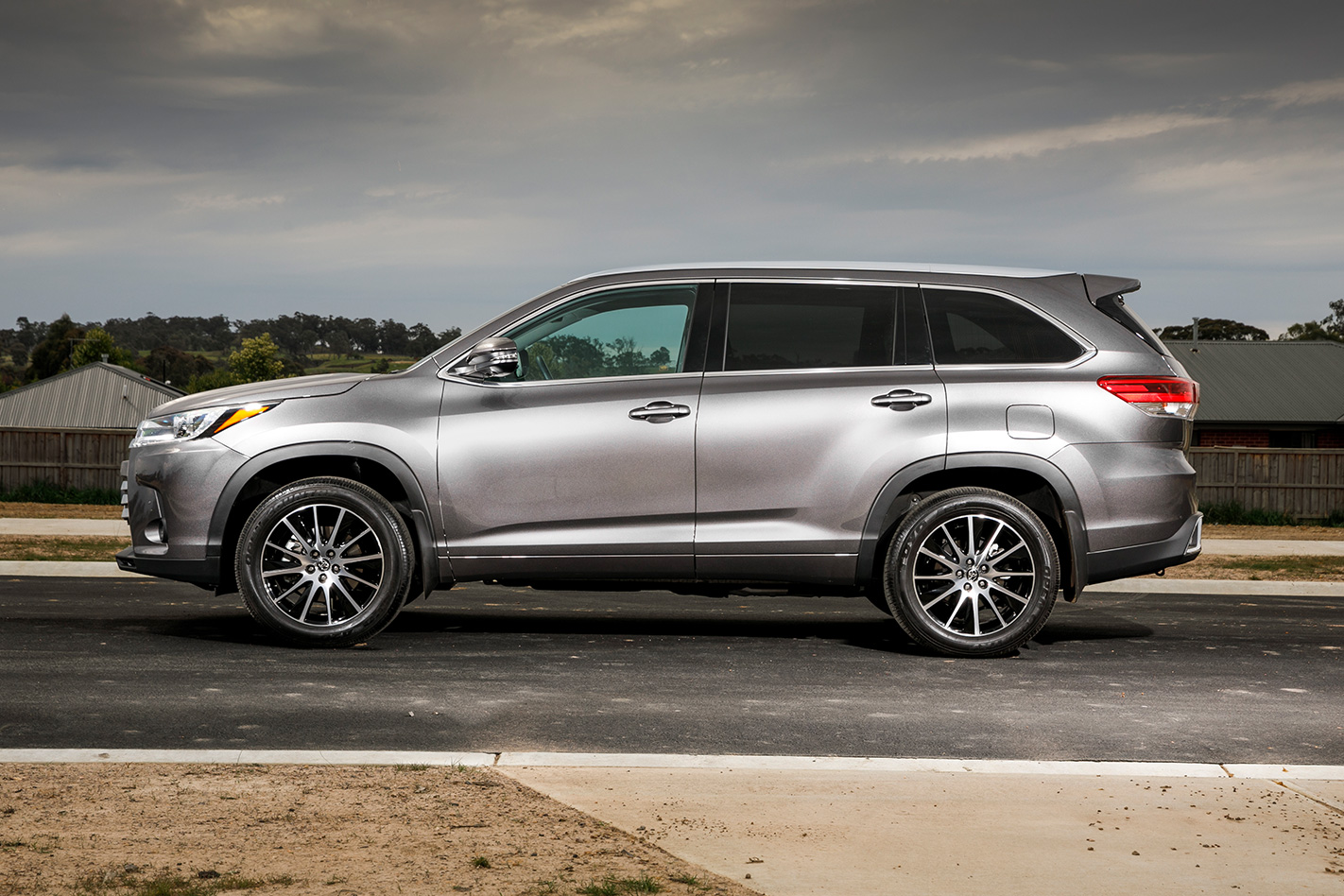
The US-built Kluger is 4.89 metres long and 1.93m wide with the main cabin sitting above its 2.8m wheelbase. One reason for its popularity is that while it comfortably accommodates a family of seven, its size isn’t a hindrance when it comes to parking or negotiating city streets.
Head and legroom is excellent in the first two rows, but get a little tight in row three that’s best suited for kids.
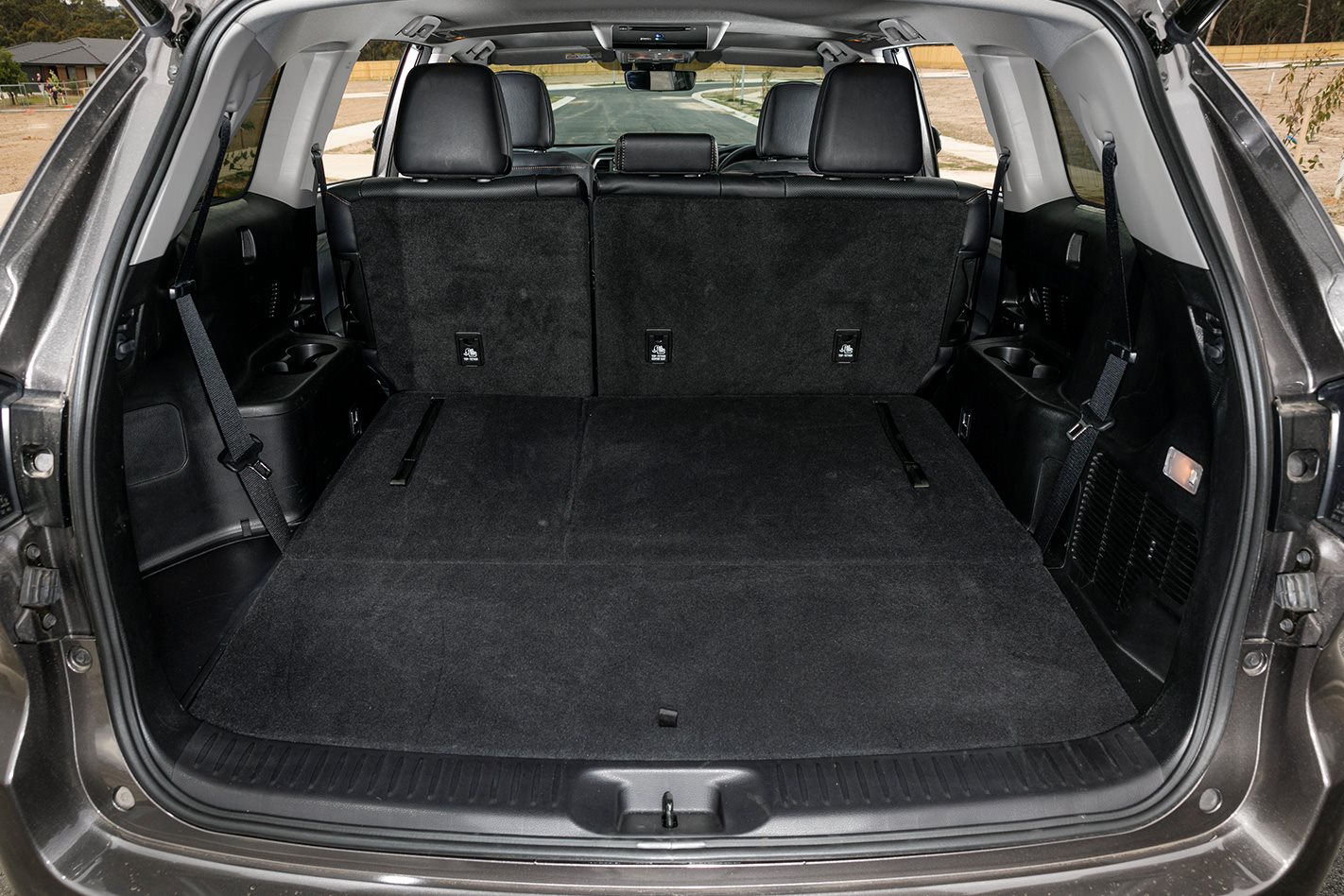
As with most SUVs, boot space is tight (195 litres) if you’re using all seven seats, but even with the third row down you’ll only fit 529 litres, which is less than some medium SUVs. Fold down the middle row and you’ll fit 1872 litres worth of gear behind the front seats.
SAFETY
The Kluger Grande comes with the full suite of available active safety features, including radar-based autonomous emergency braking that works at city and highway speeds – part of what Toyota calls its Pre-Collision Safety system. This is backed up by lane-keeping assist, blind-spot warning and rear-cross traffic alert.
The Kluger is also equipped with seven airbags, including driver knee bag and side curtain protection for all three rows, and it has three child-seat anchor points for the middle row of seats but none for the back row.
The Kluger scored the maximum five-star ANCAP safety rating in April 2017.
COMFORT
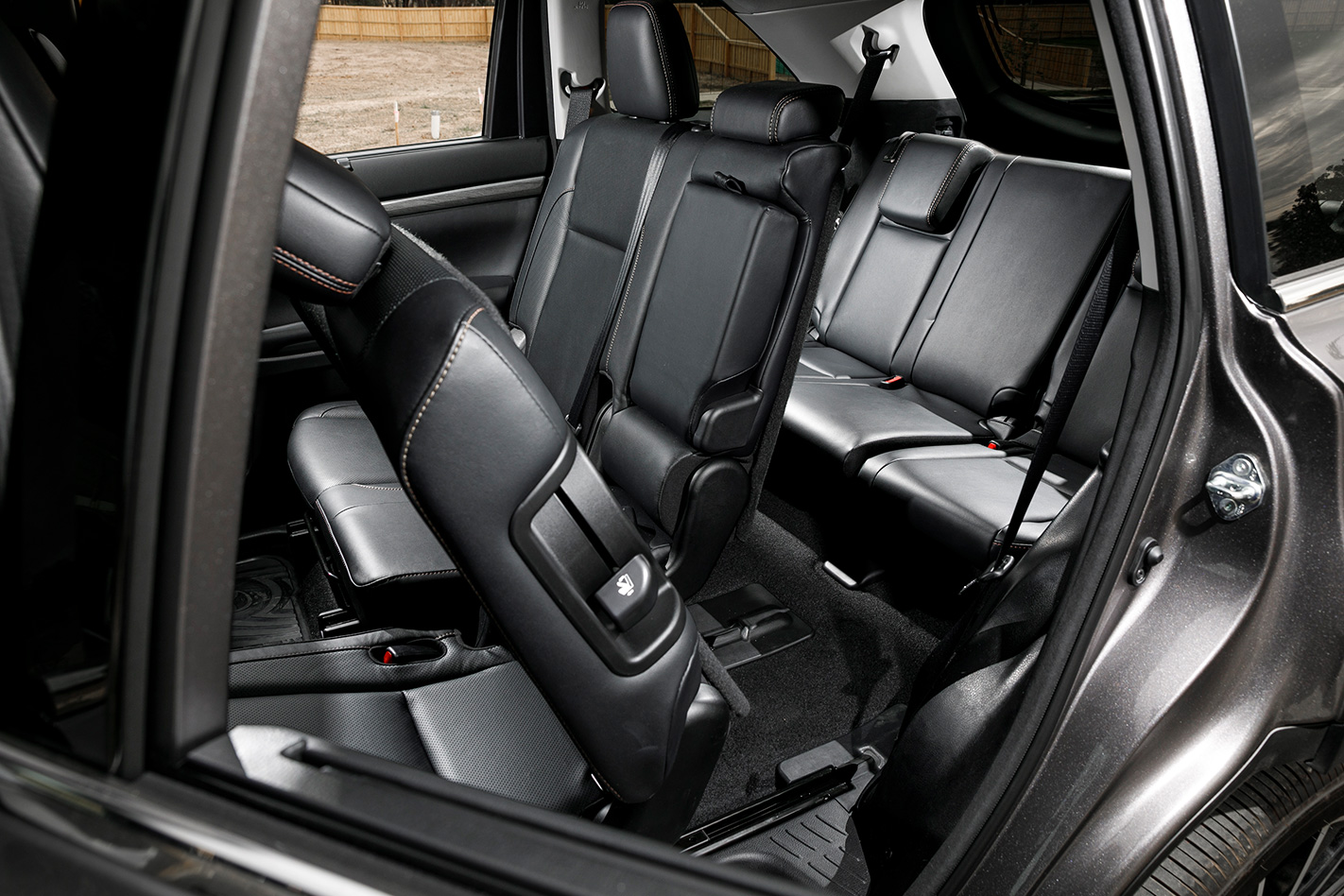
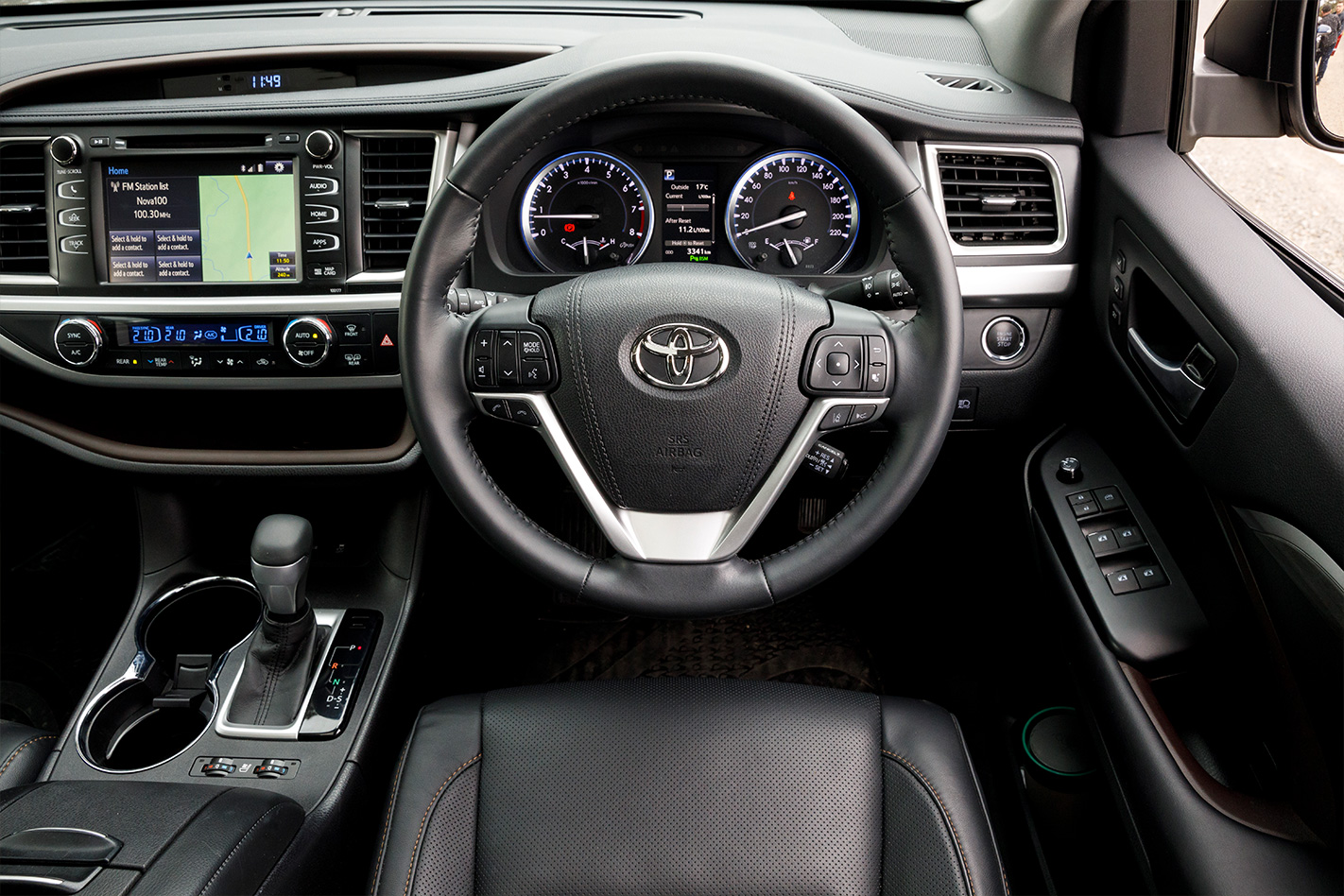
The Kluger Grande’s stylish cabin looks well put together and you can choose between dark black and tan trim with neither costing extra. That said it doesn’t feel like a $70,000 car.
Cabin storage abounds, starting with huge centre console bin, and broad storage tray above the glovebox that is good for holding phones. Big door pockets and a deep centre console provide ample space for bottles, handbags and the like.
First and second-row seats are plush and supportive, for good long distance comfort. The third row seats are reasonably comfortable, but pretty tight for bigger people for anything more than short trips, though legroom is helped by being able to fit your feet under the second row seats.
Ventilation controls are big and easy to operate, and there is a separate control unit for rear passengers mounted on the ceiling that blows airs through vents located in the third and second rows. There are also retractable blinds in which slide up and down to cover the rear-door windows and protect children from the direct sun.
On a country road or freeway, the Kluger is impressively quiet inside and rides comfortably. The cabin filters out road noise, but the wind can be loud around the big door mirrors.
ON THE ROAD
The Kluger is pleasant to drive with a comfortable seating position and good forward vision. It feels planted to the road and the 218kW/350Nm 3.5-litre V6 engine runs smoothly and quickly responds to your right foot via the eight-speed automatic transmission.
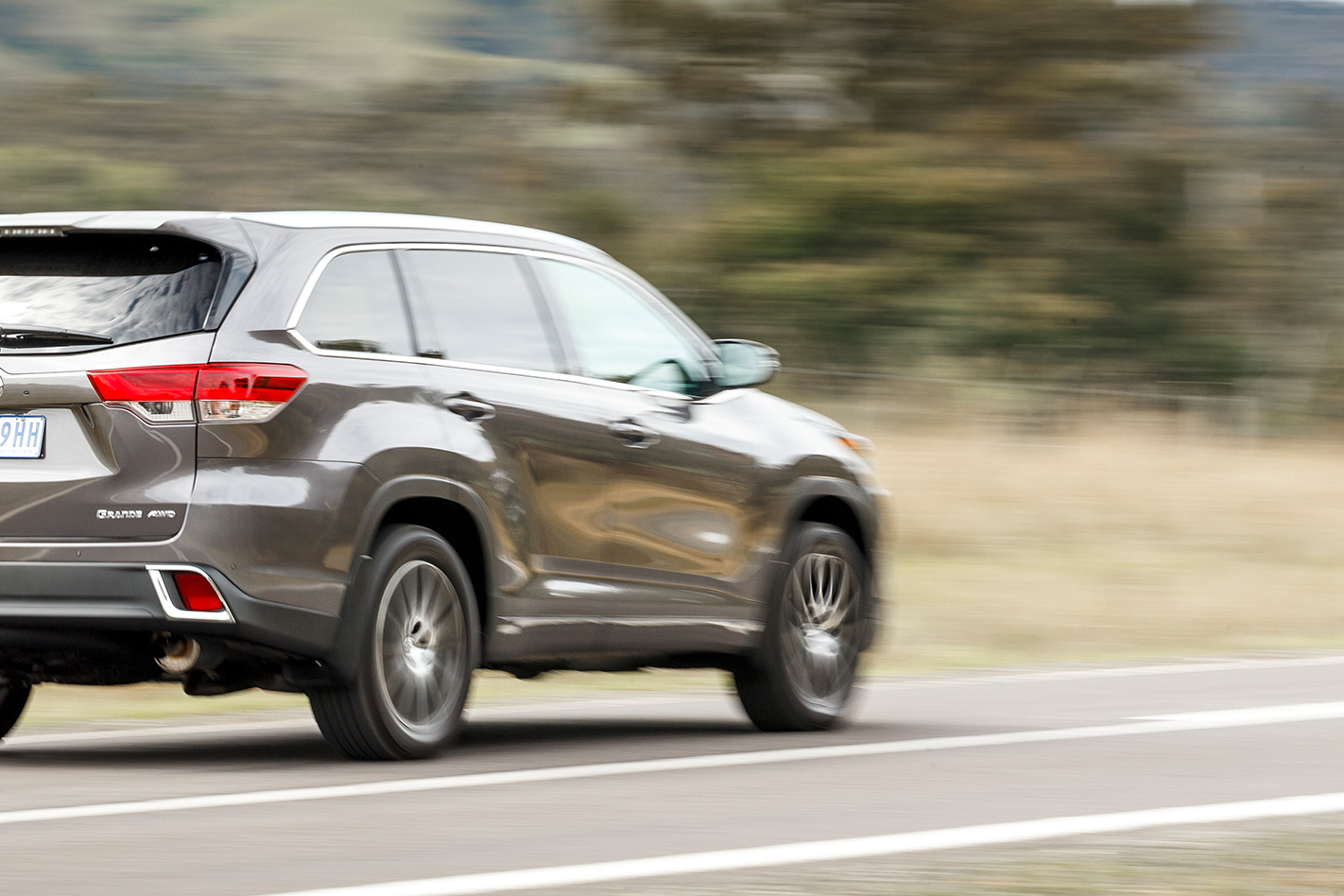
The ride is smooth, even on the bigger 19-inch wheels. It recovers well when riding over big bumps, but does tend to vibrate when passing over smaller road imperfections.
At 2100kg, it’s not exactly designed for hard cornering, but it does feel stable through bends. The steering has a little play in it, though you do get more response from the 19-inch wheels than with the 18s under the GL and GLX.
While not a true off-roader like its Landcruiser Prado stablemate, the Kluger’s all-wheel-drive system instils confidence during off-bitumen driving on gravel, dirt or snow-covered roads, and farm tracks. A snow button near the gear selector reduces the chance of wheelspin on slippery surfaces.
THE VERDICT
The Toyota Kluger set the standard for road-based large SUVs, and while the range-topping Grande is a comfortable and capable family wagon it’s not quite as luxurious as its $70,000 price tag would suggest.
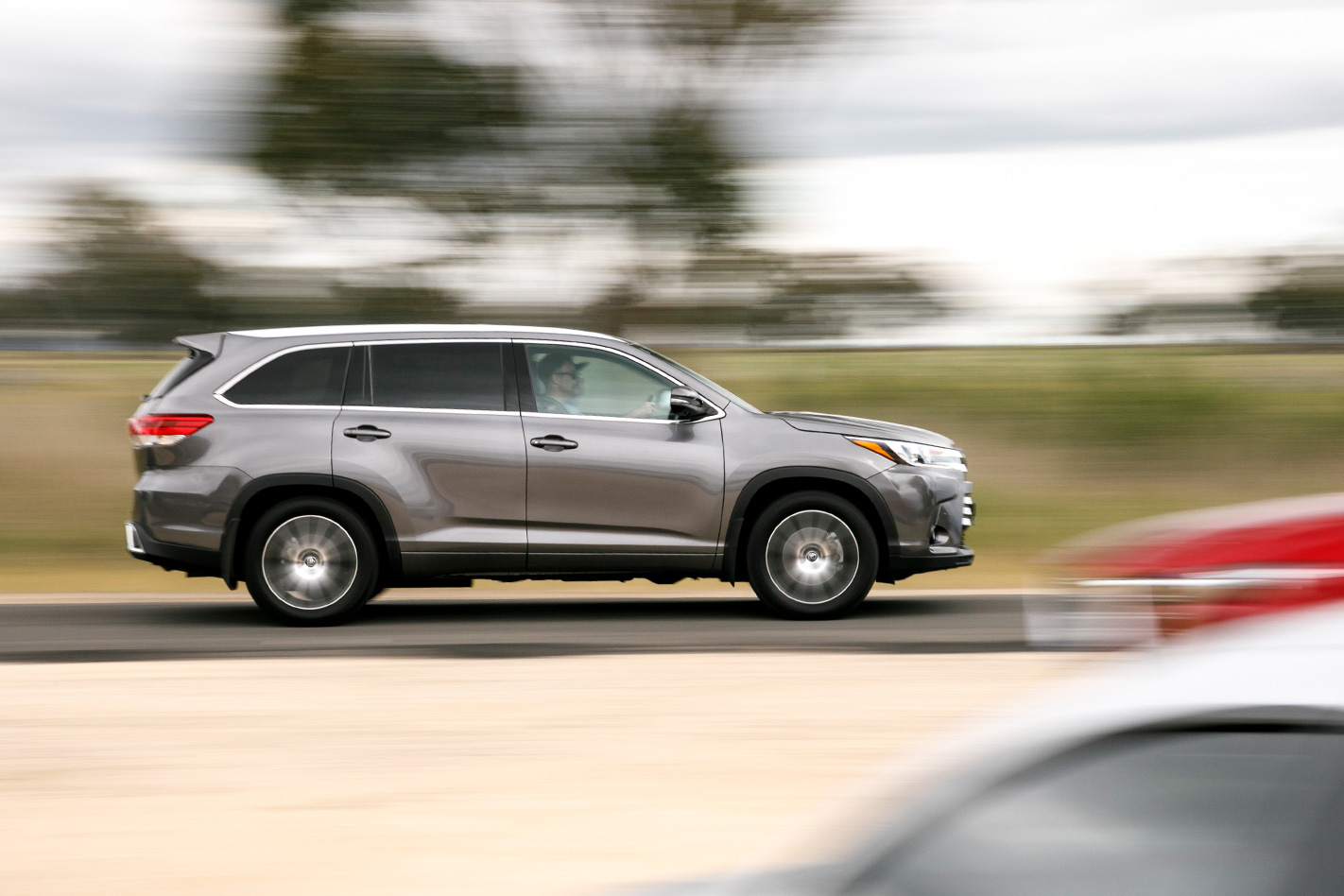
It feels dated compared to its rivals, such as the Mazda CX-9 and Holden Acadia, that offer more in terms of value, comfort, technology and price.
Once you have stopped laughing at the notion of one of the most iconic muscle cars being defaced with an extra set of doors, and the seeming unlikelihood of such an automotive travesty, take a few breaths and allow me to explain exactly how close to midnight the doomsday clock is reading.
Ford couldn’t have possibly imagined, even in its wildest dreams, that the Mustang would receive such a resoundingly warm reception when the first right-hand drive version hit Australian shores in 2014.
Yes, expectations were high given the half-century delay it had taken for the iconic pony car to make it Down Under, but unprecedented demand and a complete sell-out of the initial run of more than 6000 cars took virtually everyone by surprise.
All the time, arch rival GM sat on the sidelines seething at the Mustang’s success, the General’s hands tied with no right-hooker Camaro rival to stride in and steal some of the stampede action. FCA was in the same boat with its strictly left-hand drive Dodge Challenger.
But just as one twist of fate allowed Ford to thumb its nose at the competition from a safe distance, a different product strategy appears to be turning the tables and has the Blue Oval in a bit of a flap.
Sure, Ford was able to monopolise the lucrative Australian muscle car market unchallenged with its Coupe and Convertible Mustang, but its recent strategy to slim down its passenger car offering and focus on SUVs and trucks has given its American opponents a chance to steal back a little grace – in the muscle sedan arena.
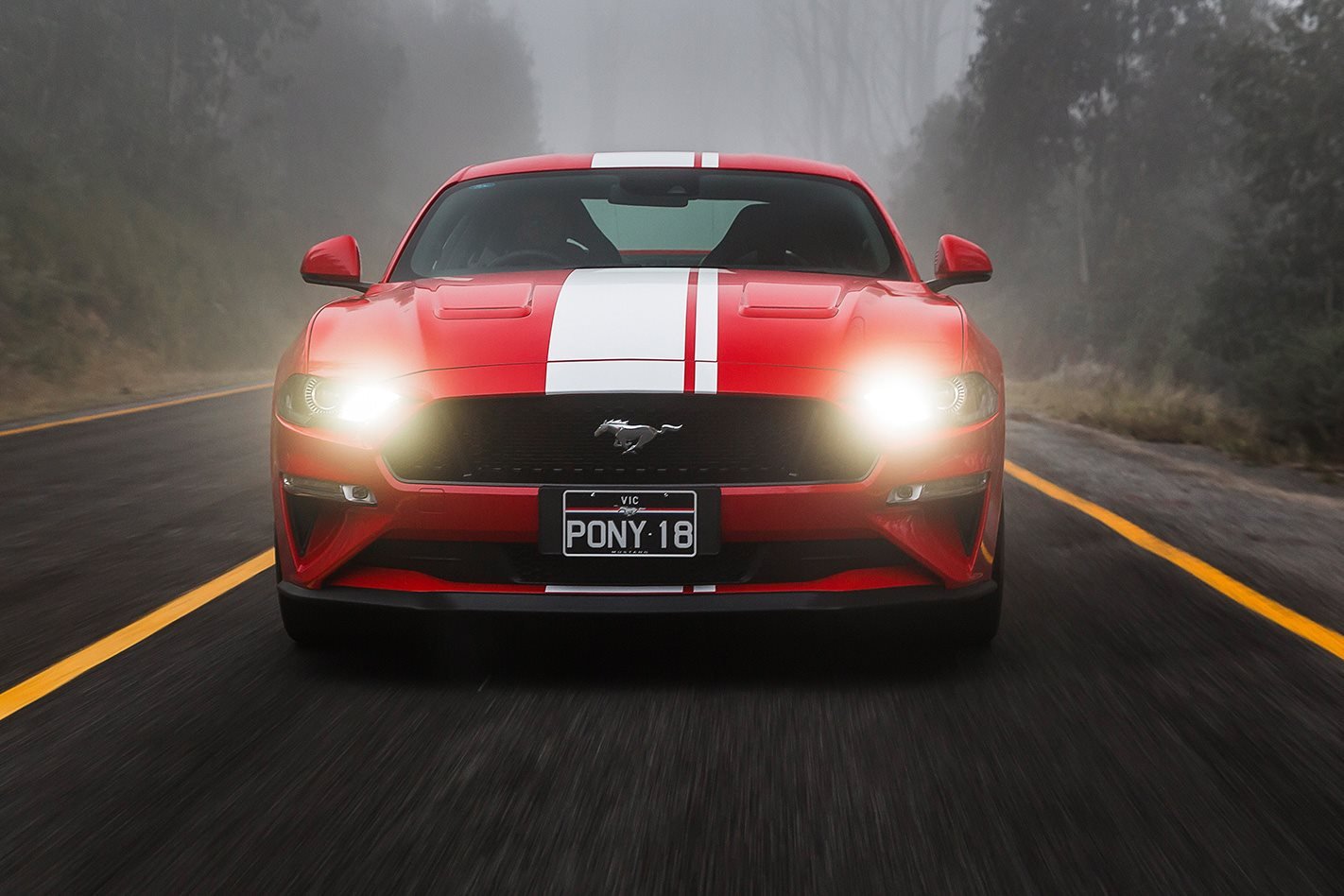
Unlike GM, which offers the mighty supercharged V8 Cadillac CTS-V, and Dodge’s Charger – effectively a four-door version of the Challenger, which is available in a number of tyre-destroying variants, Ford simply can’t compete. Other theories state Ford is going after Porsche’s Panamera.
Suddenly the idea of a four door Mustang doesn’t seem quite as absurd as it first appeared right? But while the business case sort of stacks up, absurd it still is and perhaps now you will entertain the notion of why Ford definitely shouldn’t build it.
First of all there’s the matter of brand value and plain old fashioned pride. If you need an example of how easy it is to trash an icon look no further than MG. What was once a prestigious symbol of British sportscars, slowly sagged to representing a range of vehicles that were rebadged lukewarm Rovers, to today, where the Chinese-owned company is (I’m being as kind as I can here) exclusively a purveyor of affordable SUVs and passenger vehicles.
There’s only so long a brand can take a battering before the supporting columns crumble away and all its original founding cache is forgotten. And the galloping horse is no different.
For now the Mustang is a bastion of brawn and in 50 years it has only ever adorned the bonnet of two-doors, but now it appears some naughty dealers have leaked Ford’s intention to create a more family friendly version.
Sportscars are hallowed ground; vehicles that get away with sacrificing some practicality to be faster, more beautiful and downright more desirable. Trying to make the Mustang cater for even a small part of another audience will surely start to flake some of that chrome lustre from its badge.
Even more worryingly, some rumours suggest the unconfirmed model will not just sprout a proper second row of seating, it could even grow a little ground clearance and evolve into a crossover. Imagine retiring Winx to a life of seaside fun rides for kids and you’re close to a comparable level of cruelty.
And are we not forgetting damning safety ratings from Euro NCAP which chastised the Mustang Coupe for a number of offenses including insufficient rear occupant protection!?
On hearing that news, I was quick to leap to the Mustang’s defence. After all, if you are a driving enthusiast like me, you probably don’t care about the lack of lane departure warning and rarely subject passengers to the torture of the laughable rear seats.
But if you are now offering those same people doors to access a more accommodating second row, I’m afraid I have to suddenly give a damn about occupant safety.
It is not the first time the iconic muscle car has created controversy, but the decision to introduce the 2.3-litre turbocharged four cylinder Ecoboost, which many fans still herald as sacrilege, is in no way as offensive as a four-door Mustang.
A high-output four-pot makes sense, particularly to someone raised not in a culture of V8’s and bigger-is-better, but in a country where fuel is expensive and shrieking turbos are king.
I like the Ecoboost and, if it were my money, I would go manual four-banger Mustang every time. For a start the lighter front end is sweeter to steer and while, it might not have the correct soundtrack, a naughty exhaust system from Roush would at least partly alleviate that. A few more dollars would donate a fat turbo, shiny intercooler and a rolling road fettling which would have me embarrassing GT drivers at the lights.
But I’m not sure I could have the same unapologetic fun or hold my mirror aviator bespectacled head as high in a version that had the wrong number of doors. However, there is a beautifully simple solution to this entire potential calamity.
Rather than bludgeoning the beloved brumby with an awkward four-door that shares the same name as the handsome coupe and convertible, forge a fresh new moniker and allow the Mustang to keep galloping free as it always has.
Have your say below: Is a four door Ford Mustang a terrible idea?
Just outside a small town in Florida, USA is a complex which features a little house, two supercross tracks, a motocross track, a karting track, and two race workshops.
The complex belongs to Australian motocross/supercross rider Chad Reed, but not for long – it’s for sale.
Located about an hour west of Orlando (and next to the delightfully named Green Swamp Wilderness Reserve) is the complex which Reed calls his “ideal dreamland”.
Home and kart track for sale in Northern Ireland
In an announcement on Instagram – which is apparently how things are done in 2018 – Reed says he’s accepting inquiries from those interesting in purchasing the property, which covers a pretty respectable 63 acres.

The motocross track, two supercross tracks, structures, and kart track take up less than half the total area on the property.
Included with the property are a water truck, a dozer, a bobcat, and a tractor plus “all the attachments,” meaning you could create your own track if you’re not so into dirt bikes, or alter the existing ones if you’ve got the know-how. Three four-stroke karts are also part of the deal.
Felipe Massa plans Olympic karting
The two workshops are also fully-fitted out; one’s a race shop (we assume for the bikes) with a bathroom and TV room, the other’s a garage for a boat or caravan, with a kart workshop.
Oh, and the house is there too. That has two bedrooms and a bathroom, but how much time would you really spend inside?
Mt Panorama home recently for sale on Conrod straight
Reed has previously ‘put out feelers’ to gauge interest in the property in recent years, as per an Instgram post (below) from April 2016.
https://www.instagram.com/p/BEWSQZCmpDj/?utm_source=ig_embed&utm_medium=loading
Chad Reed, who has become synonymous with his racing number 22, has competed in more than 200 international supercross events and has become Australia’s most recognisable and successful dirt bike racers.
He’s been the Australian Supercross Champion four times, in 1999, 2000, 2008 and 2009, as well as taking out two AMA (American Motorcyclist Association) Supercross Championships in 2004 and 2008. He’s the only Australian former AMA Supercross Champion, and one of only 21 in history to hold the honour.
Volkswagen will add a second ute to its line-up with a more compact companion to the Amarok set to join the German automaker’s ranks – and the work-pony is likely to be confirmed for markets outside its primary target Brazil.
A single teaser image of a car-based pickup concept is all we have to go on at this stage, but its maker is already sketching a vision of its future, confirming that a ‘series version’ will follow “with just a few minor tweaks”.
According to VW, “the model is due to launch on the Brazilian market in the foreseeable future” but “this new pickup’s potential is so great, however, that the vehicle concept could conceivably be suitable for other regions”. That said, VW is not yet offering a hint as to whether Australia is among those potential regions.
The German car maker will offer a first full look at the compact utility concept at the Sao Paulo International Motor Show on November 6, during which more information concerning the show car and production versions is expected to be released.
Some are speculating that the model is at the bantam end of the spectrum and will share the company’s ubiquitous MQB platform with the tiny T-Cross SUV and Polo compact hatch, invoking the spirits of other mini utes from history such as the Subaru Brumby, Daihatsu Mighty Boy and Proton Jumbuck.
However, Volkswagen makes reference to the larger Tiguan and an all-wheel drivetrain, which would appear to rule out the Polo/T-Cross’ MQB-A0 platform, which is front-drive only. A load-lugger sized somewhere between the Golf and Tiguan is instead more likely.
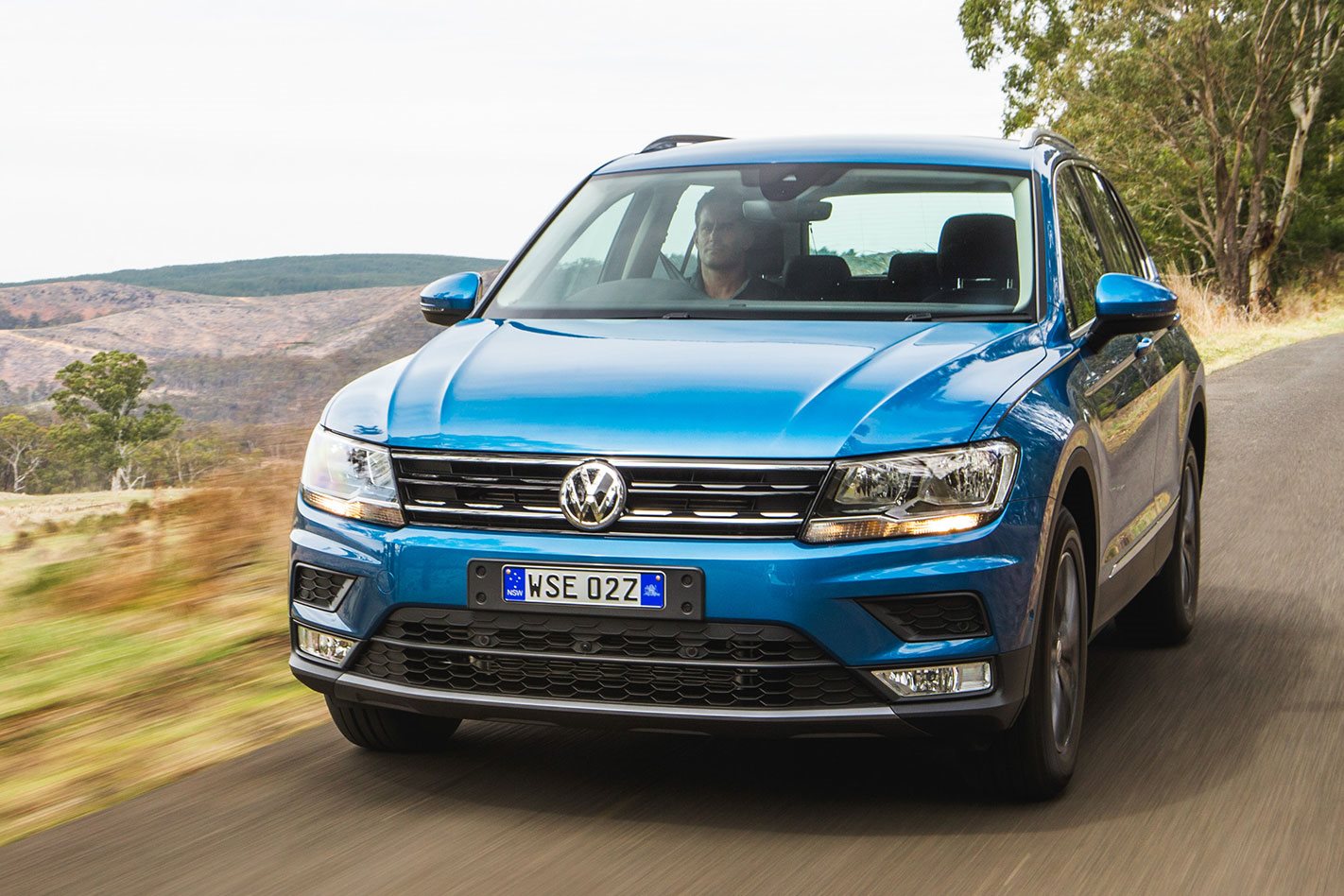
Little has been divulged in the way of technical details or features, although the yet-to-be-named concept has a ‘multivariable’ load area, which has a folding panel at the rear of the dual cab for extending the tray.
The concept is also kitted out with the ‘features of a digitally networked SUV’ presumably relating to internet connectivity and possibly a form of V2X communication, and is firmly packaged as an ‘urban-oriented’ vehicle, with more of a focus on the concrete jungle rather than the actual jungle.
The State Government of Victoria has announced an increase in penalties for speeding, with excessive (or ‘high range’) speeding in the firing line.
The changes, which are now in effect, mean anyone who is caught exceeding the speed limit “by 25km/h or more but less than 35km/h” has their licence taken away for three months. Previously, the punishment called for a one-month suspension.
Why do we let speed limits get absurd?
Anyone travelling at “20km/h or more but less than 25km/h” in a 110 km/h zone also cops a three-month suspension.
At and above 35km/h over the speed limit, drivers lose their licence for six months, while drivers at or above 45km/h over the speed limit will have to go a year without their licence.
VicRoads adds that demerit points are no longer accrued for excessive (more than 25km/h over the limit) speed offences. Drivers still get three points for exceeding the speed limit by 10km/h or more but less than 25km/h, and one for doing so by less than 10km/h.
Against other driving rules, the new penalties for speeding appear enormous. Use of a mobile phone while driving is worth a comparatively minuscule 4 demerit points and a $484 fine.
Also changing are penalties for unlicensed and disqualified driving laws. Anyone caught driving unlicensed now faces a maximum $9500 fine or six months jail, previously a $3950 fine or three months jail.
Driving disqualified is now worth a massive maximum $38,000 fine or two years jail. Previously the maximum was a $4700 fine or four months jail for a first offence.
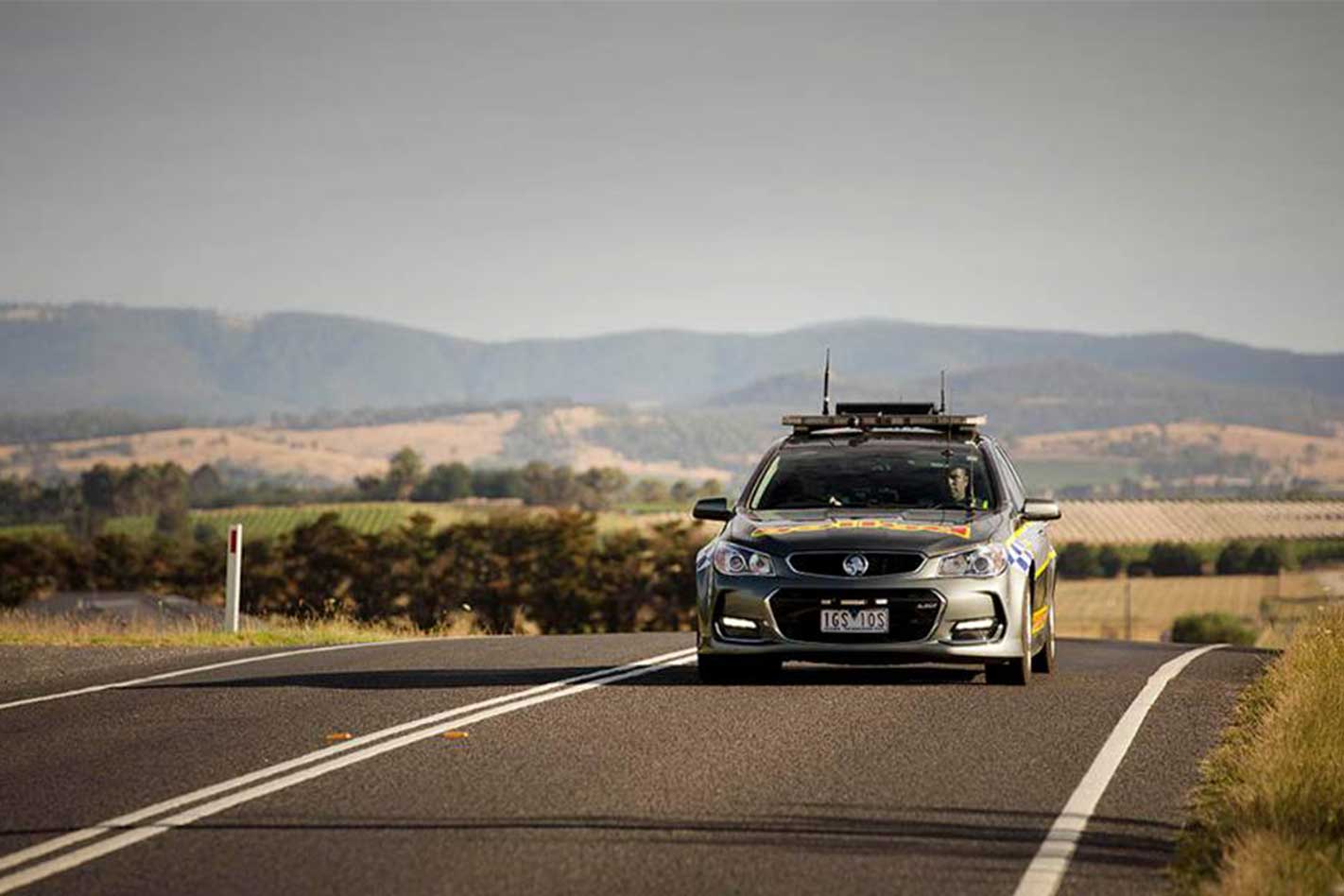
Speed camera warnings ‘limits the opportunity to moderate driver behaviour’
VicRoads director of road access Roger Chao says taking licences away for longer has been shown to be more effective than other forms of punishment.
“The study examined how speeding drivers responded to various penalties including licence suspensions, demerit points, good behaviour bonds and vehicle impoundments,” Chao says.
“There was strong evidence that licence suspension for higher level speeding offences lower the likelihood of repeat offences and these drivers being involved in a casualty crash.”
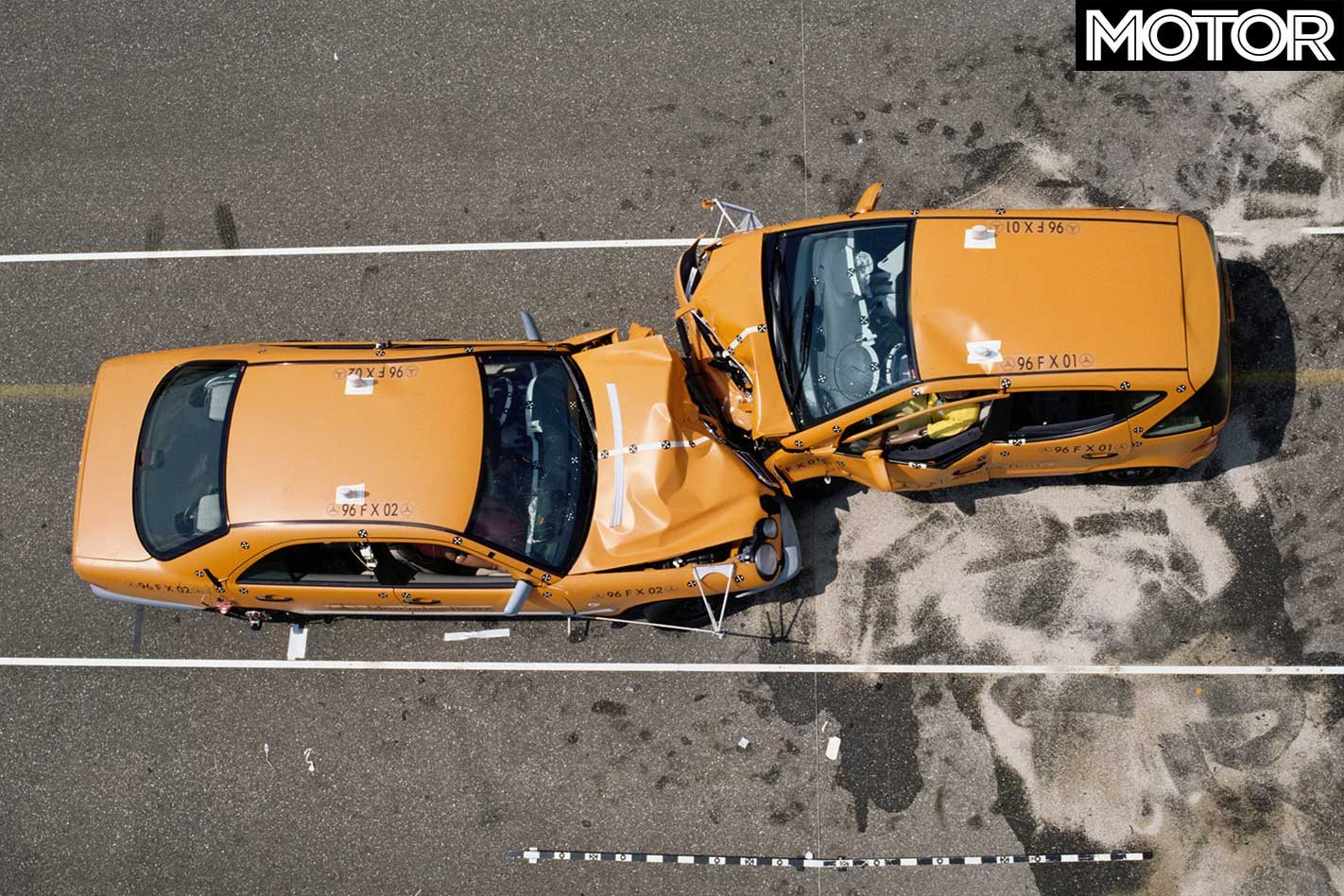
The Transport Accident Commission (TAC) praised the move, saying it believes harsher enforcement and getting ‘motorists to slow down’ will lead to fewer crashes.
“The fact that speed continues to play a part in about one third of Victorian deaths and injuries shows there is still work to be done to get motorists to slow down,” says TAC director of road safety Samantha Cockfield.
“Tougher penalties, alongside enforcement and education, is proven to be the best approach to tackling speeding on Victorian roads.”
Tell us how you feel about the changes to speeding penalties in the comments below.
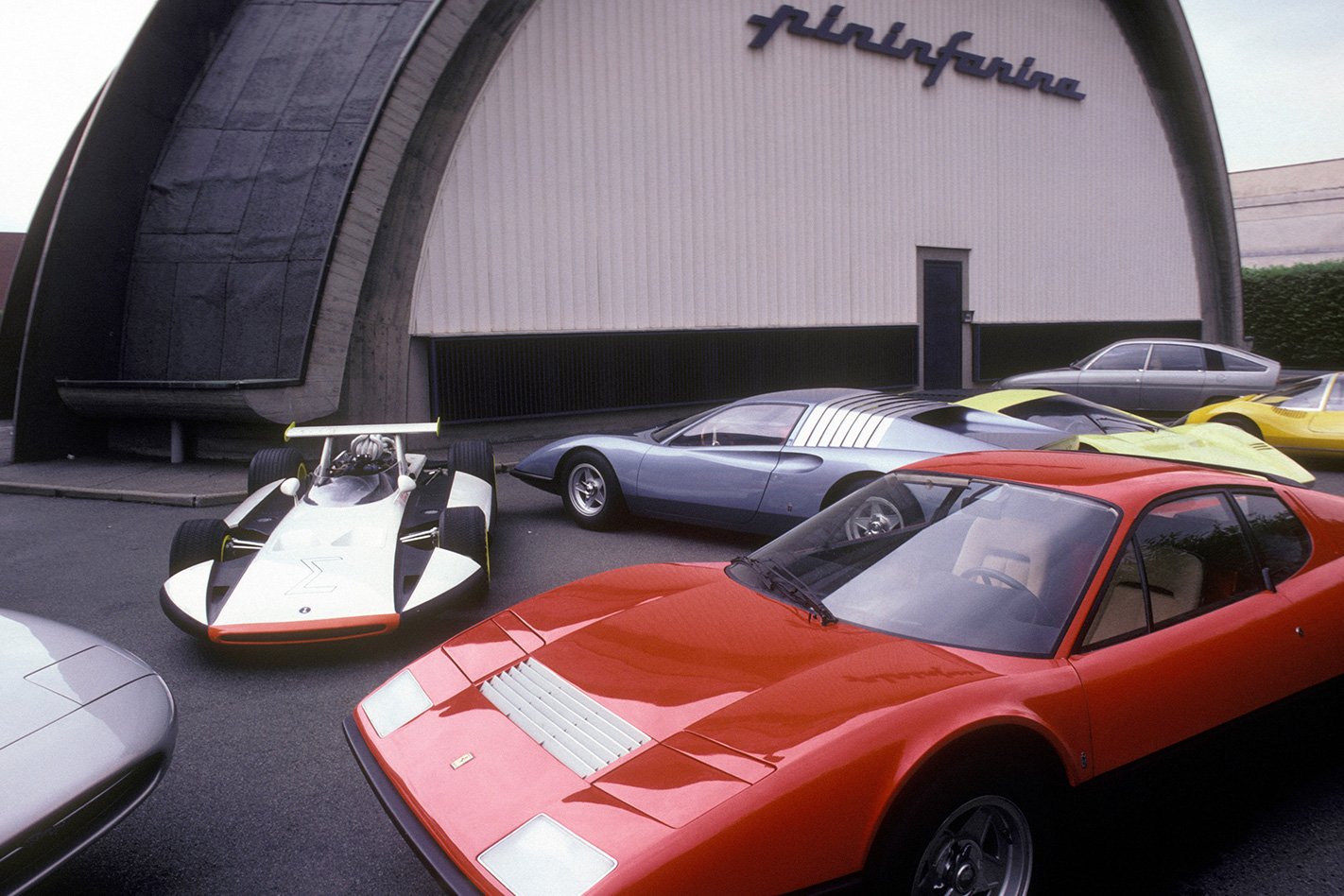
IT’S virtually impossible to disentangle the histories of Pininfarina and Ferrari. The fate of the styling house formed by Battista ‘Pinin’ Farina was inexorably changed in 1951 when, in a small restaurant in Tortona, Farina and Ferrari met.

Since that discussion over coffee, every Ferrari road car bar the 1973 308 GT4 and the 2013 LaFerrari have been Pininfarina designs. Now there has been a still more seismic shift in the ambitions of Pininfarina. At this year’s Pebble Beach Concours d’Elegance, it displayed the styling buck for its PF0 (‘PF zero’) electric hypercar. Pininfarina is now a manufacturer in its own right.

Monterey Car Week is like Forza Horizon in real life
That’s the story the company would want you to believe, in any case. Speak at length to CEO Michael Perschke and you’ll come away filled with visions of a burgeoning product portfolio of high-concept, high-performance EV sedans, SUVs, coupes and shooting brakes, giving the likes of Lamborghini, Bentley and, yes, Ferrari something to contend with. Despite staggering from one debt restructuring and asset sale to another post-GFC, money isn’t a problem. That’s because since 2015, Pininfarina has been bankrolled by the financial might of Mahindra. An initial €25.3m investment bought a 76 percent stake in the company. Since then it’s estimated that another €500m has poured into Pininfarina, but it’s important to separate the new from the ‘old’.
Anand Mahindra, the Group Chairman of the Indian powerhouse conglomerate, explains a subtle but important distinction. “Pininfarina SpA is a design and engineering service provider not only for automobiles but for the transportation sector as a whole, plus product design and architecture. Automobili Pininfarina is a new company that will use the Pininfarina brand to produce a hyper electric car,” he says.
“Automobili Pininfarina is a 100 percent subsidiary of Mahindra & Mahindra, while Pininfarina is jointly controlled by Mahindra & Mahindra and its Tech Mahindra engineering subsidiary.”
When asked whether creating its own super sports cars would jeopardise Pininfarina SpA’s existing business, Mahindra claimed that the initial investment “has not deterred customers so far”. Expanding further he said, “Before we completed the transaction, I spoke with [Ferrari Chairman] John Elkann … Ferrari does its buying with challenge rounds internally and externally; John reassured me that Pininfarina always is a competitor. That was a key element in helping me decide whether we should go ahead.”

Rather than rely on the good graces of Maranello, Pininfarina has looked across the Adriatic to Croatia and, more specifically, Rimac. The PF0 will use the mechanical architecture of the Rimac C_Two, Perschke confirming that it will have an identical output of 1407kW and 2300Nm. It’s likely that the hypercar will also utilise Rimac’s 800-volt electrical architecture and 120kWh lithium-ion battery pack. The quad-motor architecture with the rear wheels augmented by separate dual-speed gearboxes is a given, and the performance targets of sub-two-second 0-100km/h time, 300km/h dispatched in 12 seconds and a 400km/h top speed are not fantasy, given Rimac’s technical lead in battery density. Nor is the target 515km range.
Automobili Pininfarina plans to build 150 PF0s, fully 50 more than originally stated. Perschke claims that “the response has exceeded all our expectations,” with pricing estimated to be around A$2 million. The model at Pebble Beach had no functional interior, and its public unveil is set for the 2019 Geneva show in March. Perhaps the most ironic aspect of the vehicle is that in artfully dressing another manufacturer’s underpinnings, the PF0 has come full circle, returning Pininfarina to the coachbuilding tradition of its origin. Design director Luca Borgogno summed up its essence. “Soprattuto deve essere bella.” Above all it must be beautiful.’
Twenty-three-year-old Ewan Kingsbury was thrown in at the deep end. He was off the plane from his native Pomgolia for just a week before being handed Holden’s midsize concept car, then called XP54, and now known around the world as Torana TT36.
This feature was originally published in MOTOR’s December 2004 issue
The XP54 – it combines Experimental Prototype and Holden’s Studio 54 design centre – was not a clean sheet for Kingsbury. The concept might have been green-lighted by GM global product supremo Bob Lutz five months before the Sydney motor show, but it actually dates back further than that.
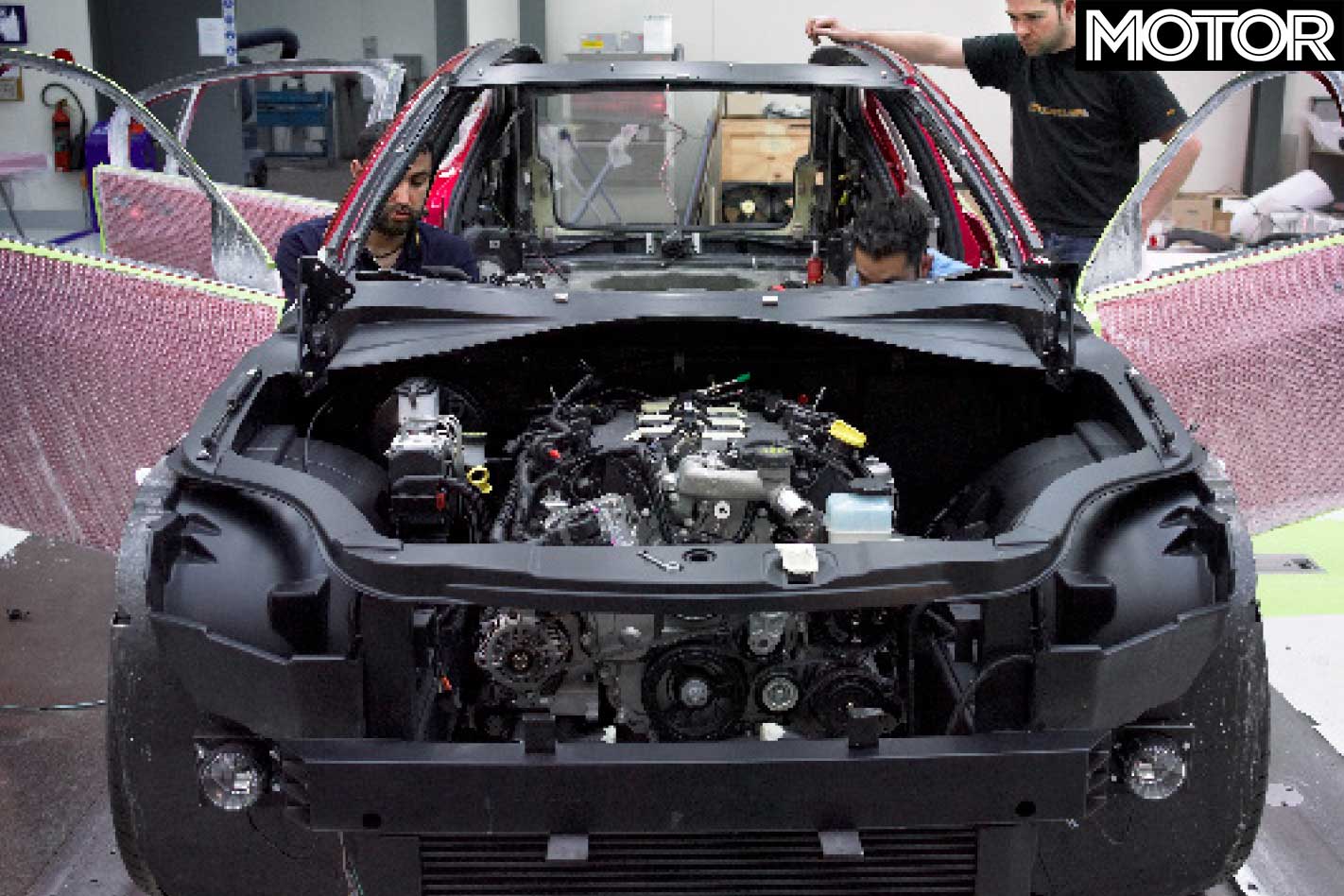
“It’s at the point where it could be sent off to engineering to finish,” Simcoe admitted at the time. He also cringed at the suggestion of using the Torana name: “We can’t design cars just for Australia. We’re competing with every GM design centre in the world, so it has to take on the best in the world and Torana is just too limiting. But we’ve now done all the packaging, now it’s their turn.”
By “their turn”, he meant getting the engineers to squash the V-car chassis inside it. But Lutz decided the Commodore’s running gear, especially its suspension components, were too heavy (even in VE-spec) for the prestige rear-driver he wanted to see.
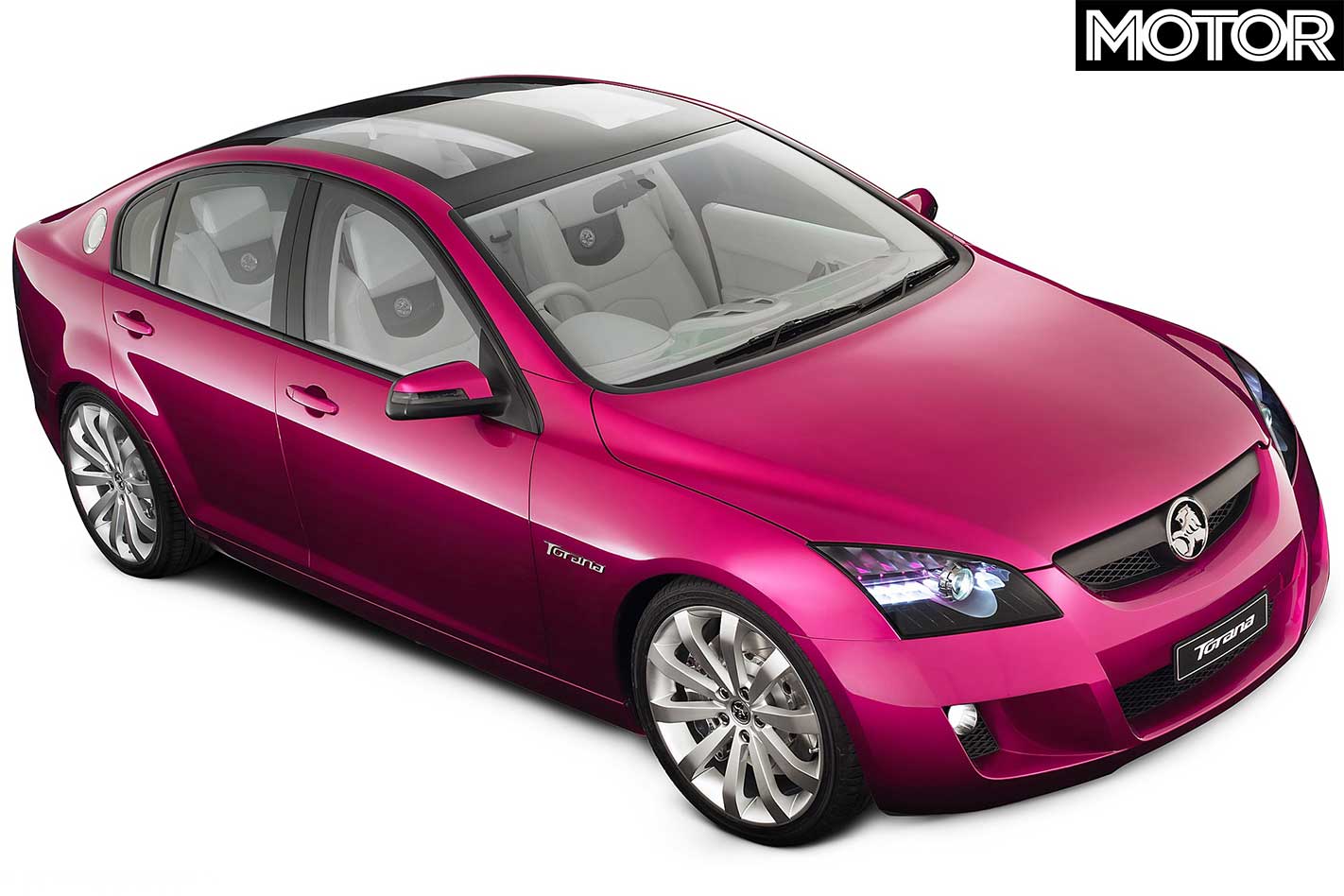
Simcoe’s replacement, Tony Stolfo, worked the clay model as well, before handing it on to SSX-designer Max Wolff. Kingsbury and Wolff finished off the project just days before the Sydney motor show. While the Torana’s proportions, and some of the details (including exterior door handles) look similar to the current Vectra, Kingsbury is quick to defend the project as original, insisting the devil is in the details.
The interior is dominated by a central spar running the length of the cabin, making the Torana a four-seater. Despite being 200mm shorter than a Commodore in overall length, the Torana boasts a wheelbase of 2845mm (2788mm for a VZ Commodore), giving excellent interior packaging. Holden claims interior dimensions similar to a BMW 5-Series but from a 3-Series-size body.
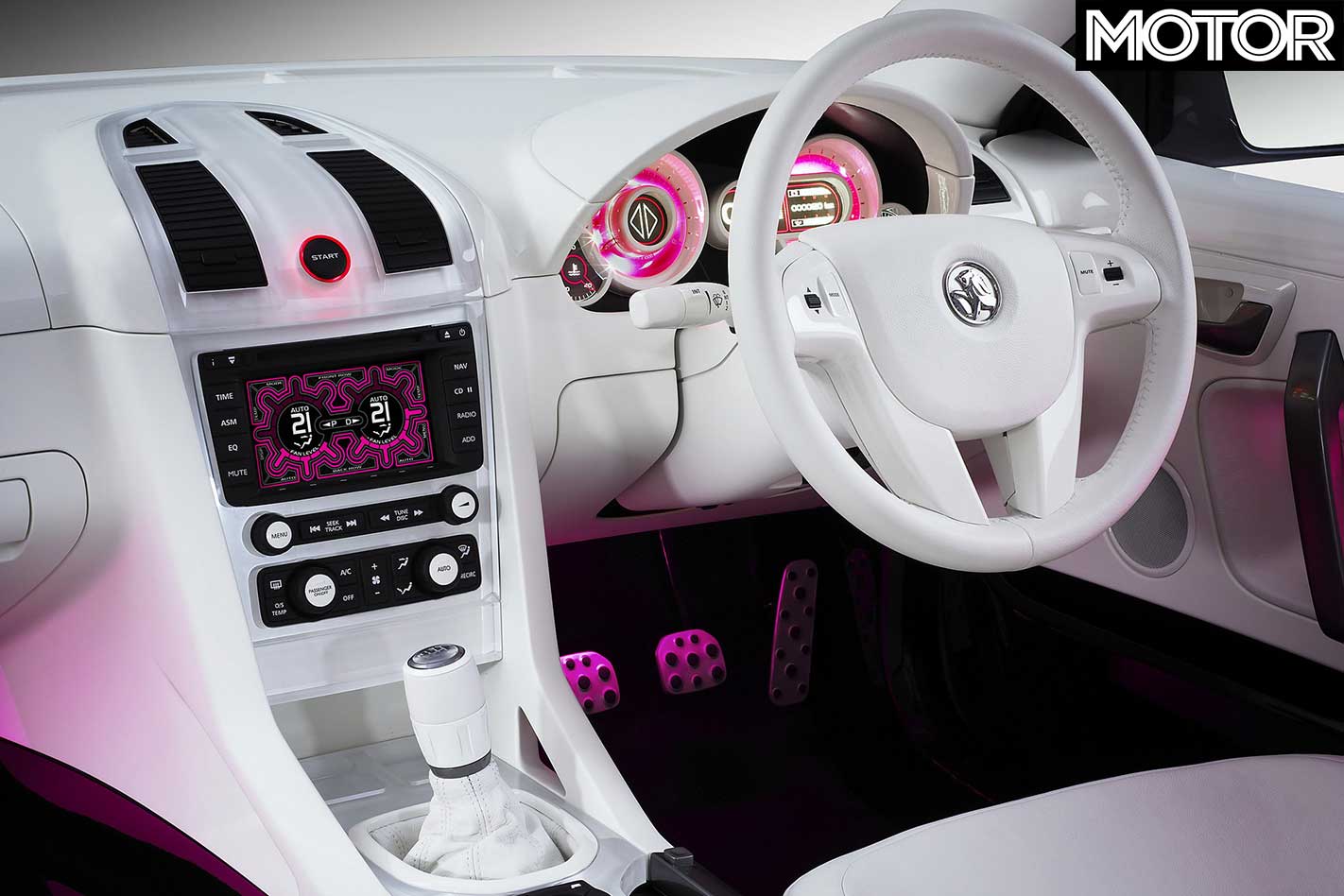
“Naming the concept was easy,” Holden chairman and managing director, Denny Mooney, reckoned. “We knew many fans [and the media] would immediately call it Torana because it is a high-powered, mid-size, rear-wheel drive hot hatch.”
According to Kingsbury, the Torana tag came very late in the project and, as such, it’s unfair to damn the TT36 just because it wears a famous name. Still, it draws few design cues from earlier Toranas. Sure, it has a hatch, like the Bathurst-winning A9X SSs of the late 1970s, but that’s where the similarities end.
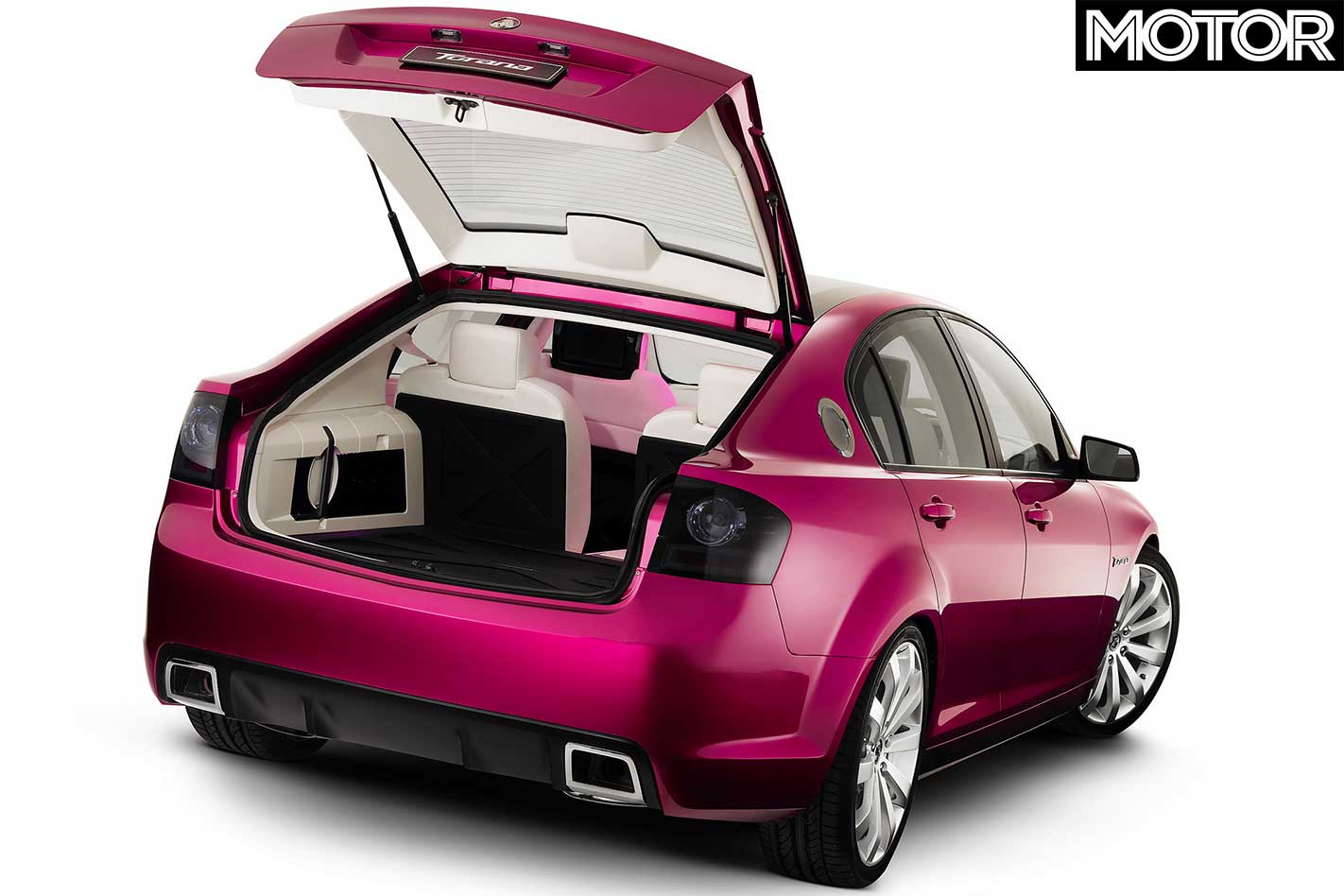
More importantly, Stolfo said, the concept provides pointers to the direction of future design within the General’s empire and, specifically, the VE Commodore.
“It displays some of the key proportions we’ll see in future cars: front wheels forward, minimal overhang, high belt lines and a high deck. All these elements create strength and purpose and deliver expressive contemporary styling,” Stolfo said.
“The Torana TT36 may be simply for show… [but] it’s a first step in monitoring public reaction to a type of rear-wheel-drive vehicle that doesn’t exist in today’s General Motors portfolio. It could be designed and produced off a number of GM platforms.”
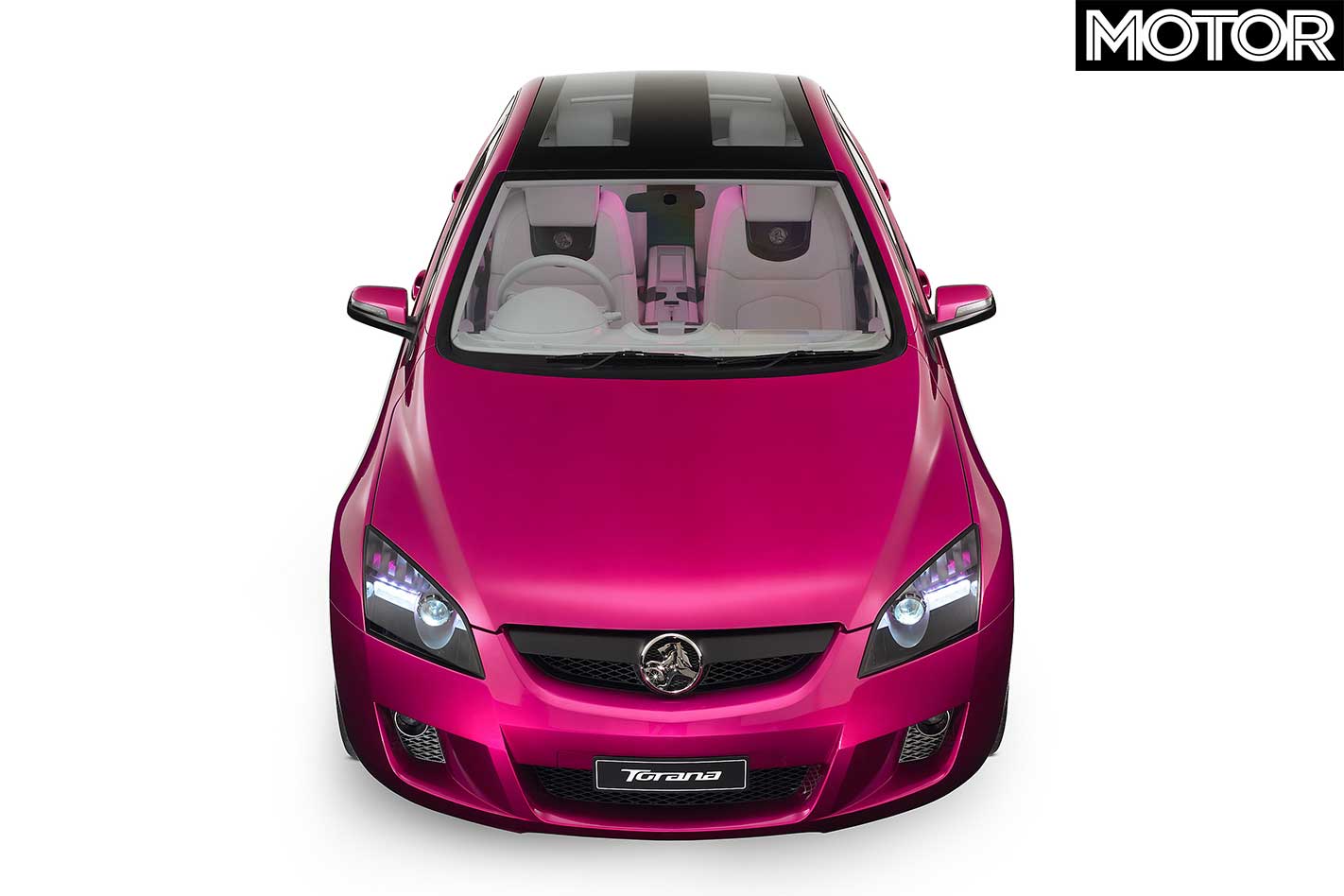
While Holden is keen to build it, the Torana TT36 concept car raises more questions than it answers. Some of them are easy, such as where it would be built. Others, such as why it would be built, are harder.
For starters, it’s not built on a Kappa chassis. The Kappa chassis was Lutz’s solution to the low-volume cost hurdle for small, rear-drive sports cars (like the Pontiac Solstice). It’s full of high-strength tubing (in GM-speak, a lower-dominant structure, which lends itself to disproportionately big interiors), but was designed to run longitudinal four-cylinder engines.
The Torana is not based on this chassis. How do we know? Well, Stolfo insists that Holden doesn’t have, and has never had, a Kappa chassis, in spite of being on the blag for one since September last year.
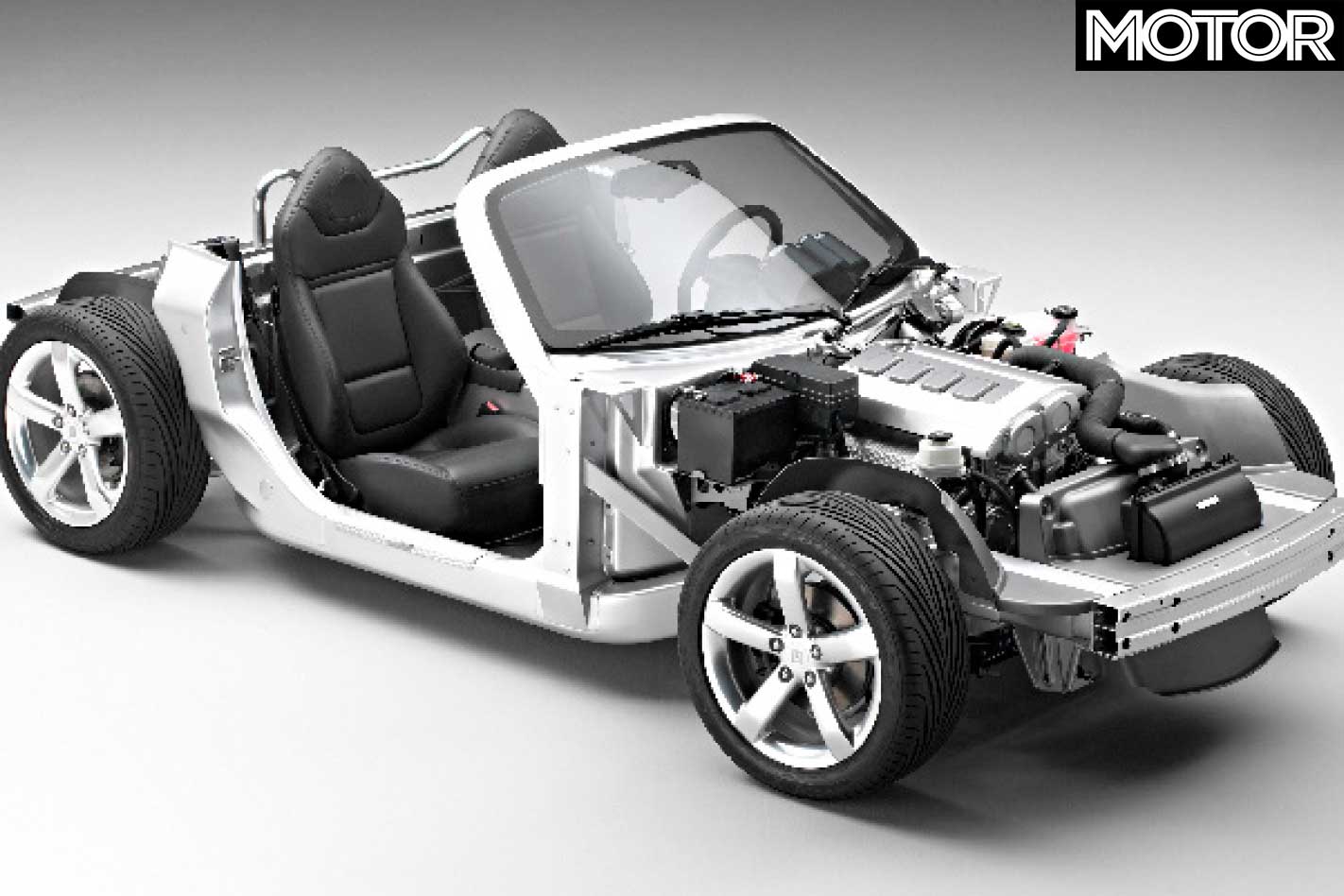
It is, instead, built around an all-new, Holden-designed version of a Kappa-philosophy chassis. With GM’s new globally integrated design wizardry, Holden checked the parameters, figured out the load paths and simply designed a universally embiggened one. It’s a lower-dominant structure of strong tubing and a stiff, double-walled driveshaft tunnel, complete with a full-length, fully enclosing panel for added strength.
Holden kept the cost down to $3.5 million by borrowing non-chassis bits from Kappa cars. The front and rear suspension (forged upper and lower control arms) in particular are straight out of the Pontiac Solstice, as are the pick-up points.
From there, the Torana gets different. Where the Solstice uses an Aisin five-speed manual, the Torana’s extra poke made it coax the T56 six-speeder out from behind Holden’s Gen III V8-motivated Commodores.
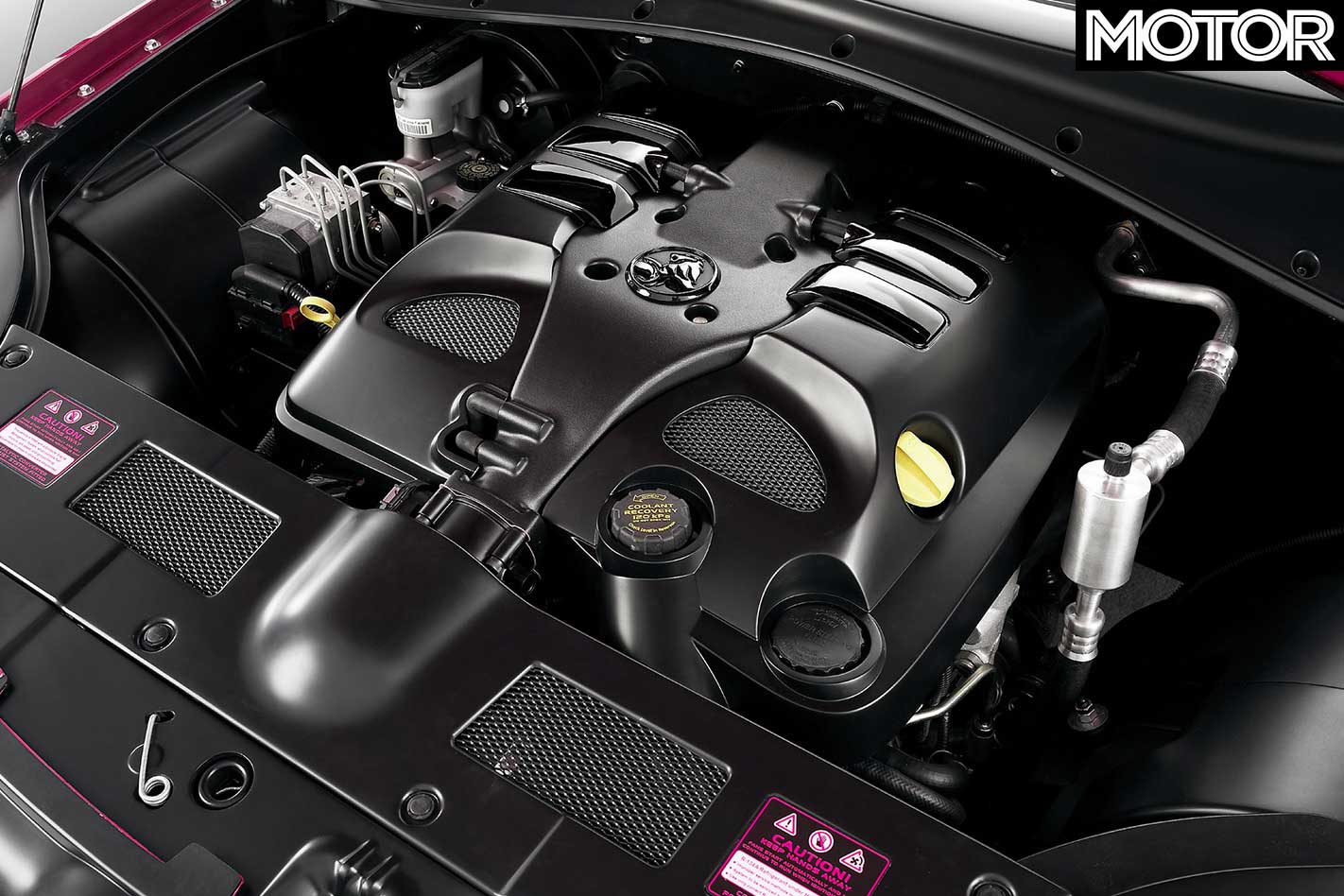
And that extra poke is probably the most production-assured bit of the Torana. While there will be protests about its hand-built nature and experimental status, a twin-turbo version was on the Alloytec HFV6 development timetable as far back as 2000. Holden claims 280kW tumbles out of the 3.6-litre V6, with 90 percent of its 480Nm maximum torque arriving at 1600rpm.
There’s a turbo for each bank and, surprisingly, not much else in the way of ancillaries under the bonnet. There have been suggestions that the LS1 and LS2 V8s could be shoehorned into the bay, but given the HFV6 vee angle is 60 degrees and the eights bend at 90, it’s unlikely. It’s also at odds with a rear-drive mid-sizer, aimed at the 3-Series BMW.
Even if green-lighted, it isn’t a production possibility before late 2007 (and will never be built on possible Australian sales alone), but it won’t be built here.
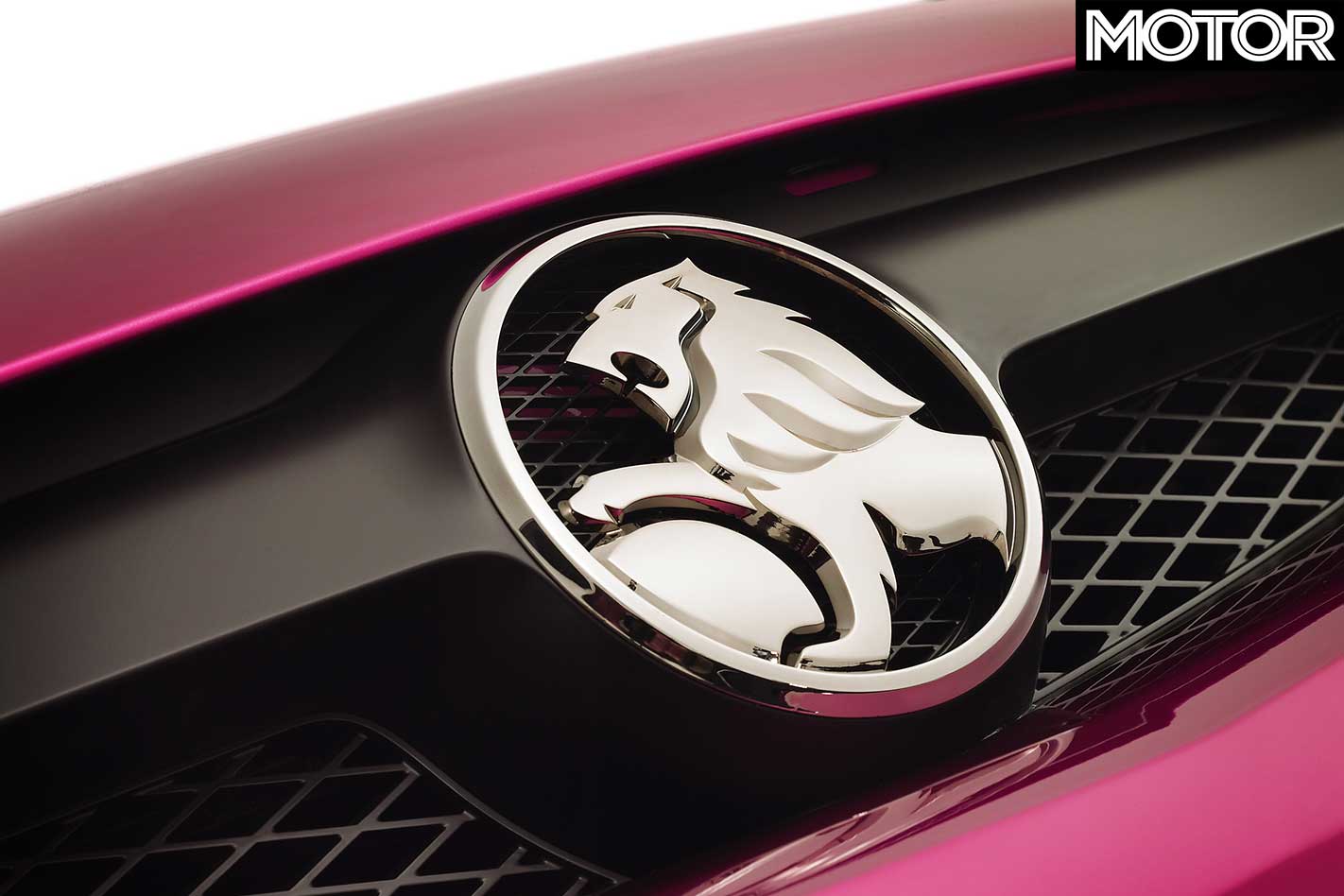
“It’s very easy for us to do because they’re hydroformed rails and they’re easy to change the stamping on,” Mooney insisted. “If we use existing suspension, it’s not that difficult to do.
“We need a competitor for the 3-Series. Cadillac CTS is a 5-Series competitor, and we need a small, premium performance sedan.”
If it’s built, the most likely place is Wilmington, Delaware, USA, at the underutilised plant specifically set up for Kappa architecture. After all, it would use the Solstice suspension components. But there’s another stumbling block. GM’s North American head of small cars, Lori Queen, isn’t a fan.
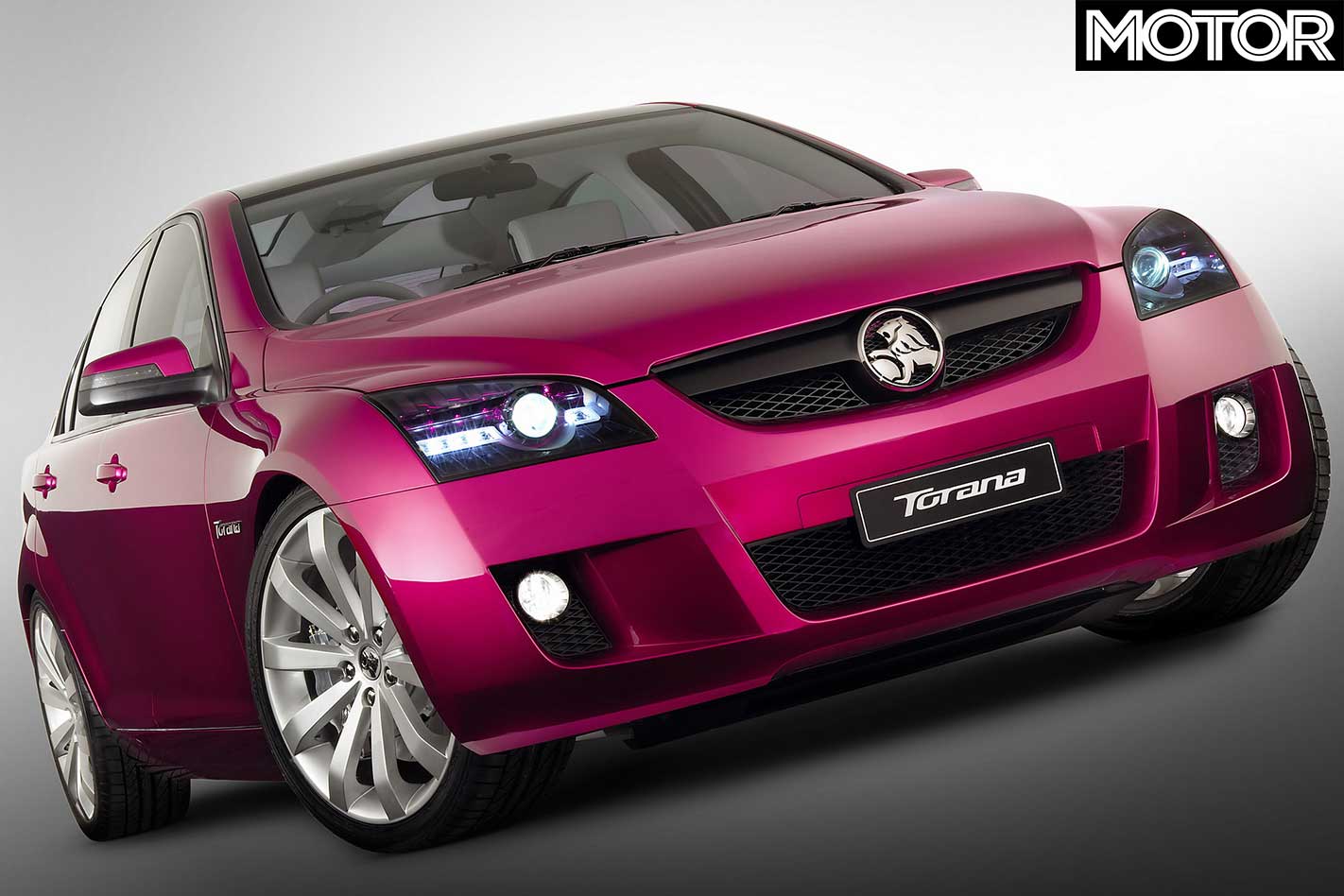
“If we put a premium on something like that, they (consumers) will just go to a bigger car, because they have so much choice here,” she confided at September’s Paris Motor Show. “We either have a really small car or a really big car. XP54 would have to be very low volume in its current guise and, for the US, it would not be a high priority.”
Mooney insists, however, that US growth markets have been in the south and south-west, where, without ice and snow, rear drive isn’t a problem.
It could also be argued that Europe, with its traditions of rear-drive performance cars, is a natural home for Torana, and the Asia-Pacific region’s buying habits are trending away from its traditional B-segment cars towards C- and CD-segment cars.
One source suggested its best chance will be lifted and front-diffed as GM’s mid-sized SUV. “The dimensions make more sense for that than a rear-drive Vectra,” one European source admitted. About all you can guarantee is it won’t be built by Australians, in Australia, for the Australian market. So it’s nothing like the old Torana, really.
Seen it before?
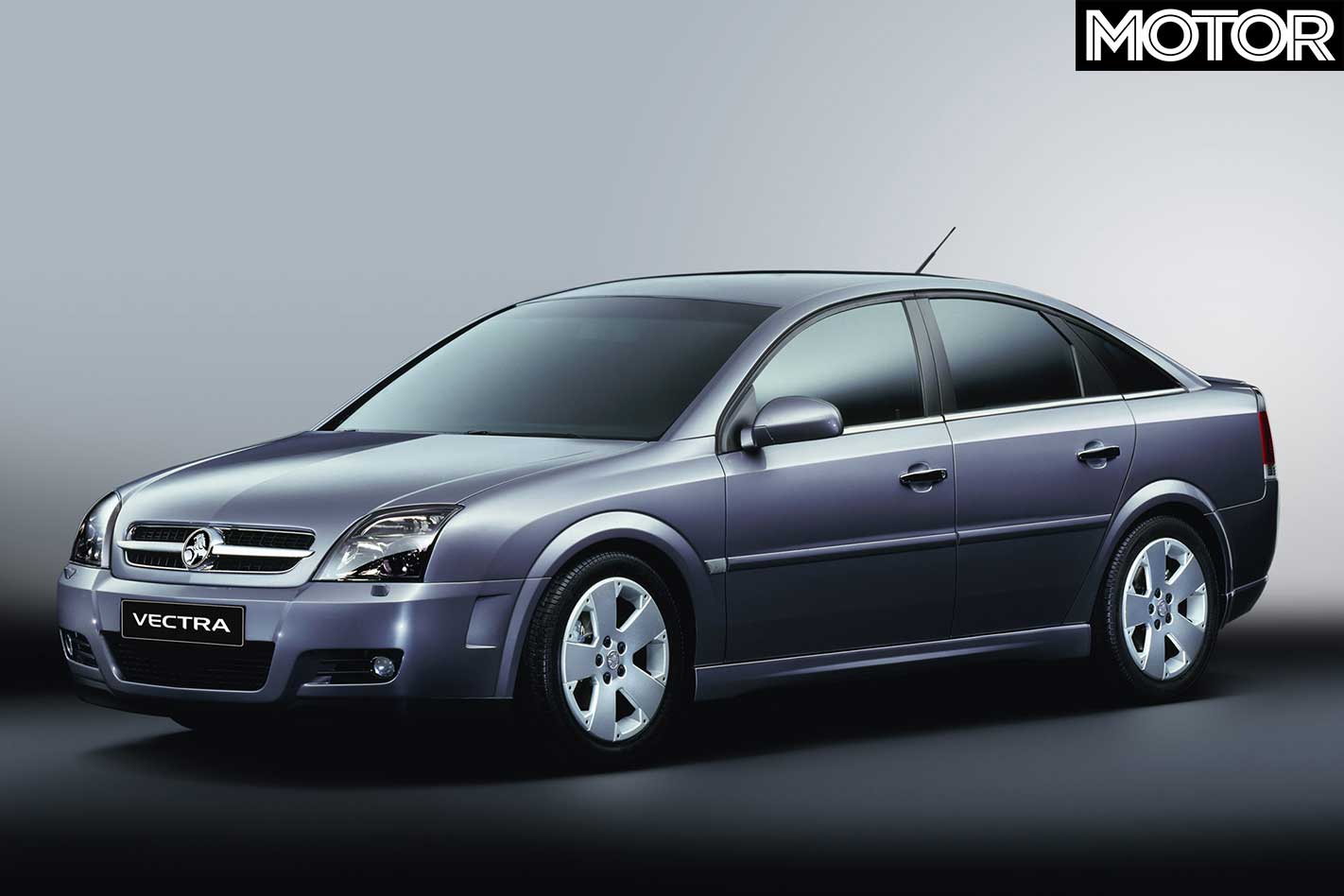
Funky pink paint and glow-in-the-dark interior aside, there’s something very familiar about the Torana TT36. And that’s because it’s pretty much the same size and shape as a current model Holden Vectra.
The OPC-kitted Vectra’s length/width/height measurements are 4596/1798/1460mm, where the Torana stretches the tape to 4653/1800/1474mm. The Torana’s track is 1542mm (f & r), up about 20mm over the Vectra – due mainly to the concept’s bigger 20×8-inch rims. The one area of difference is in wheelbase, with the Torana (2845mm) boasting a 145mm advantage over the Vectra.
The TT36 stole bits from…
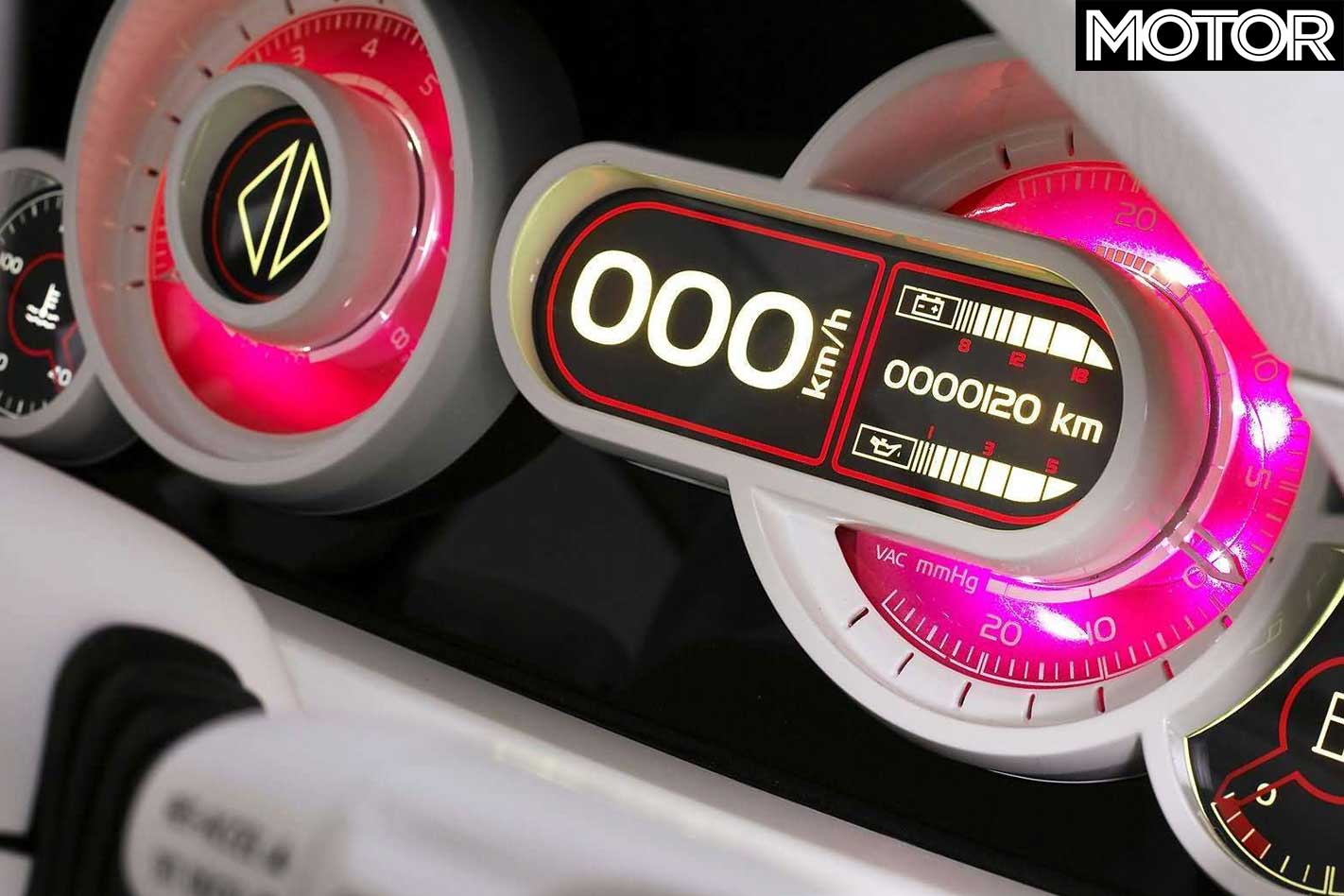
• Holden Commodore SS (six-speed gearbox) • Pontiac Solstice (front and rear suspension) • Holden Vectra (door handles) • Cadillac CTS/Commodore (engine block) • Barbie’s Babemobile (interior trim)
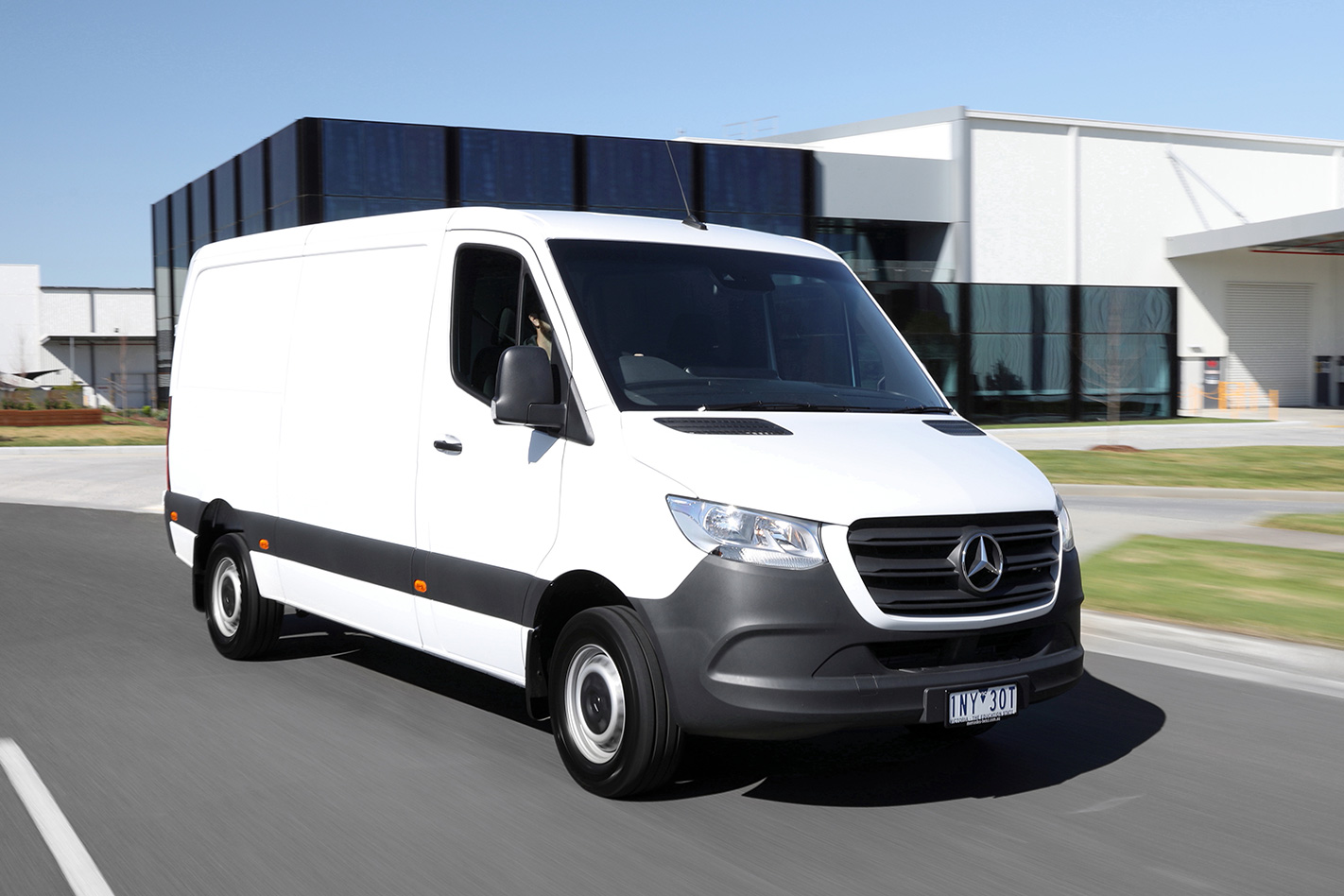
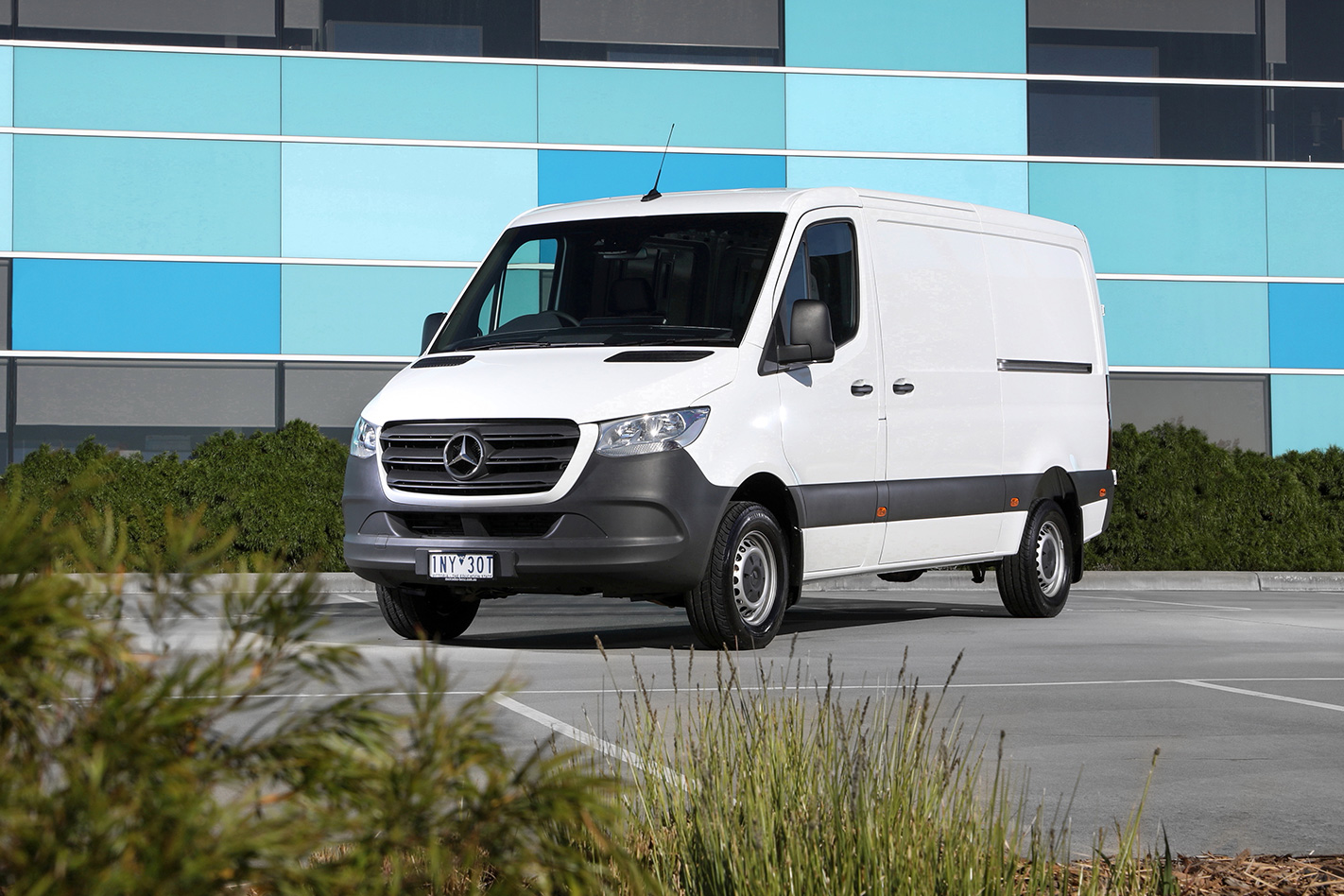
Mercedes-Benz’s Sprinter has comfortably ruled the large van segment in Australia for more than a decade, but Benz has upped the ante with its third generation release to deliver what it says is the most technologically-advanced light commercial vehicle on the market.
Beyond that, the range is bigger than before. New to the Sprinter line-up are a number of front-wheel drive models to supplement existing rear-wheel drive and all-wheel drive options. With the range now offering more than 1,700 different variants based on combinations of body type, powertrain, cab configuration, length and cargo space height, prospective customers are spoiled for choice.
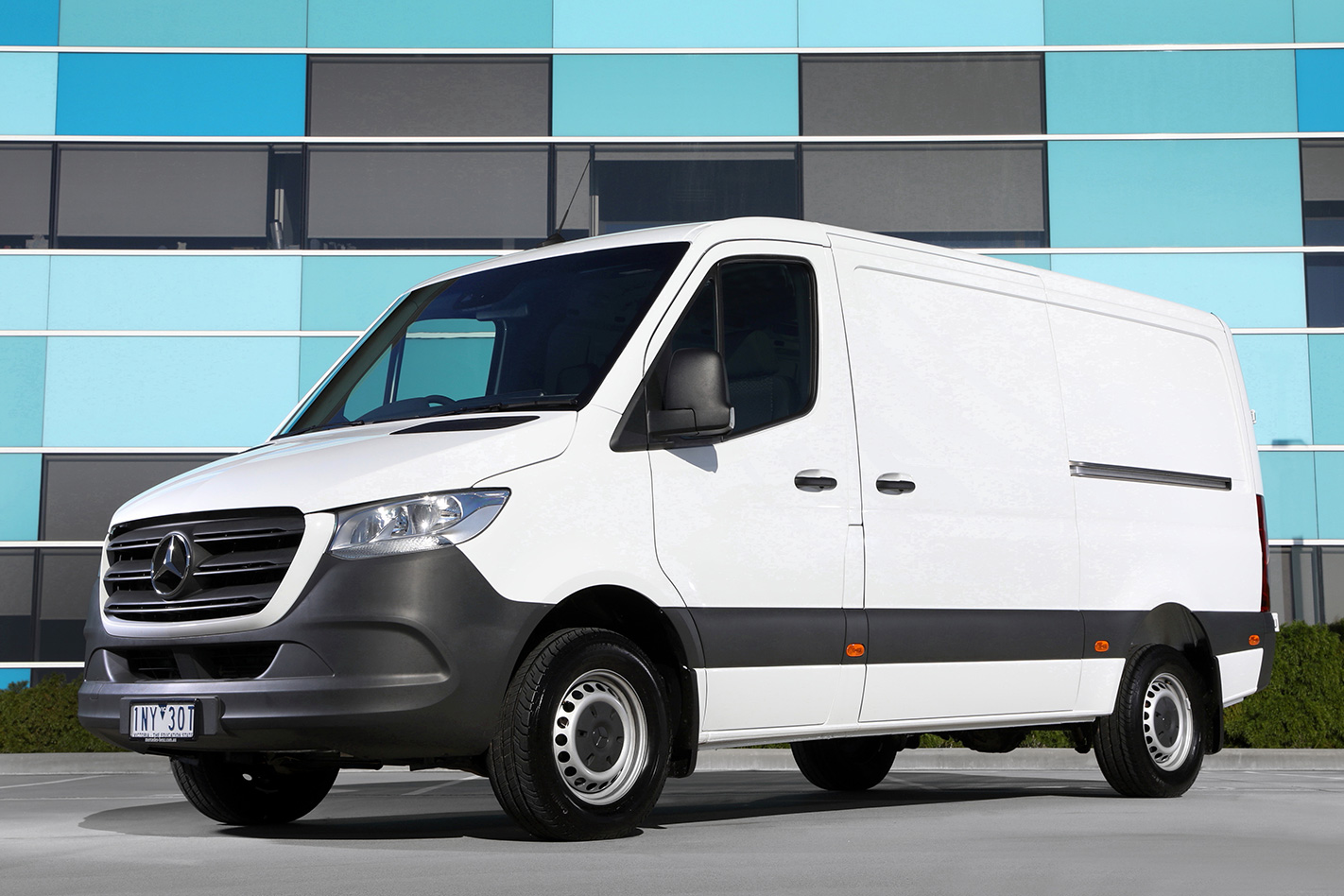
The front-drive Sprinter is offered with a 9-speed automatic or 6-speed manual and brings with it a 50kg higher payload, 80mm lower loading edges and most importantly the lowest price point of the Sprinter range.
This is the first time we’ve seen a nine-speed auto torque converter transmission in the large van segment too, following the direction of the passenger car market and its appetite for endless ratios. A manual gearbox option is of course still offered but the manufacturer tells us that unsurprisingly, around 98% of Sprinters are now equipped with automatic gearboxes.
VALUE
The manufacturer’s recommended list price (MLRP) for the Sprinter starts at $41,238 for the base model front-wheel drive cab-chassis, and $46,008 for the base-model van.
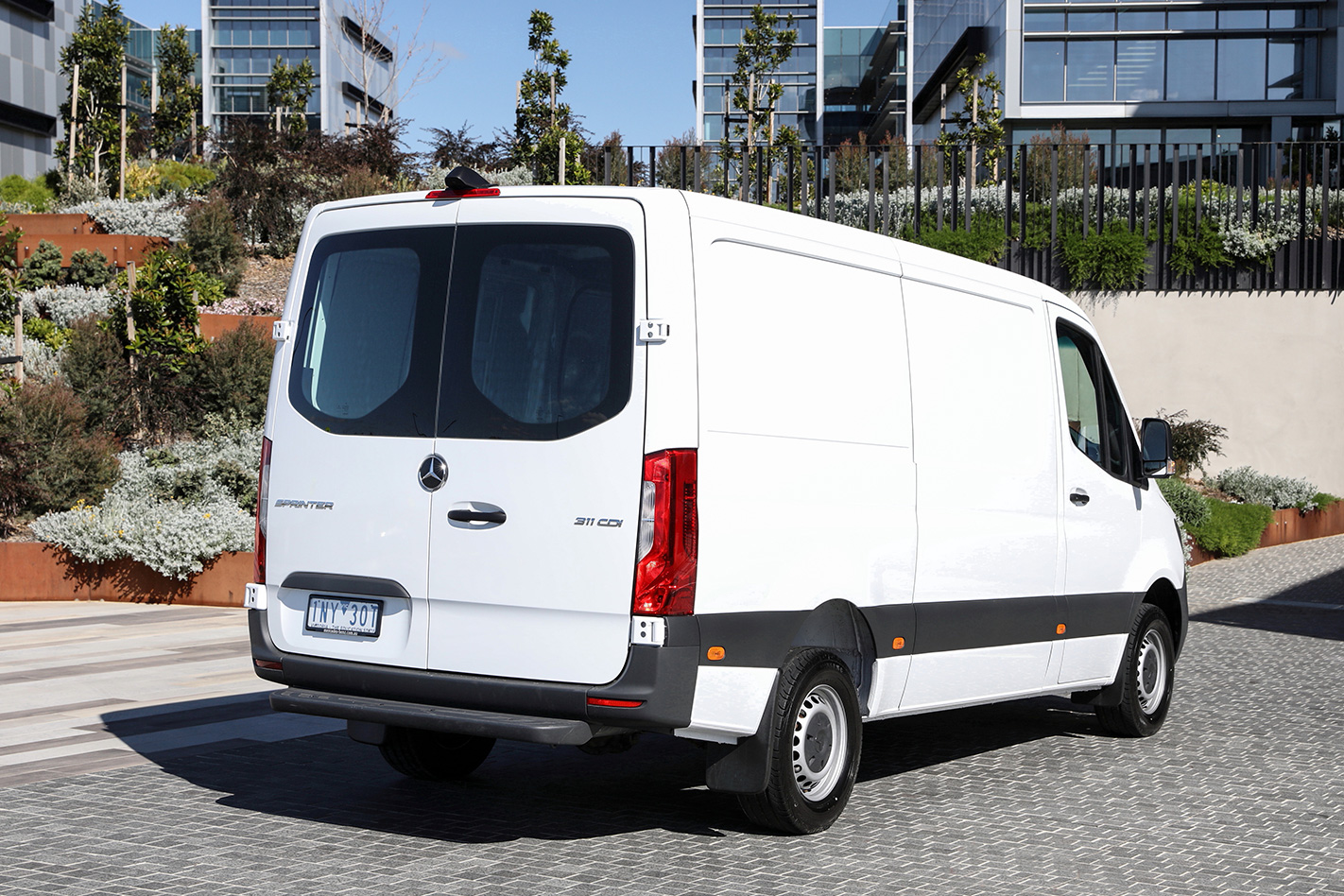
If you want the 6-cylinder powertrain, you’re looking at a starting price of $72,434 for the van and $64,114 for the cab-chassis. Fuel economy ranges from 6.8l/100km in the most efficient 4-cylinder, through to a thirstier 9.7l/100km for the larger models.
As for after-sales coverage, the entire Sprinter range has service intervals of 40,000 kilometres or two years, and a 200,000km/three year warranty. On top of this, Mercedes-Benz throws in Standard Roadside Assist at no extra cost during the manufacturer warranty period, giving customers 24/7 coverage around Australia.
Van and cab-chassis models are available from this month in Australia, followed by the minibus and tractor head versions early next year.
STANDARD FEATURES
Technology offered as standard across the new Sprinter range is focused on two things; user experience and safety.
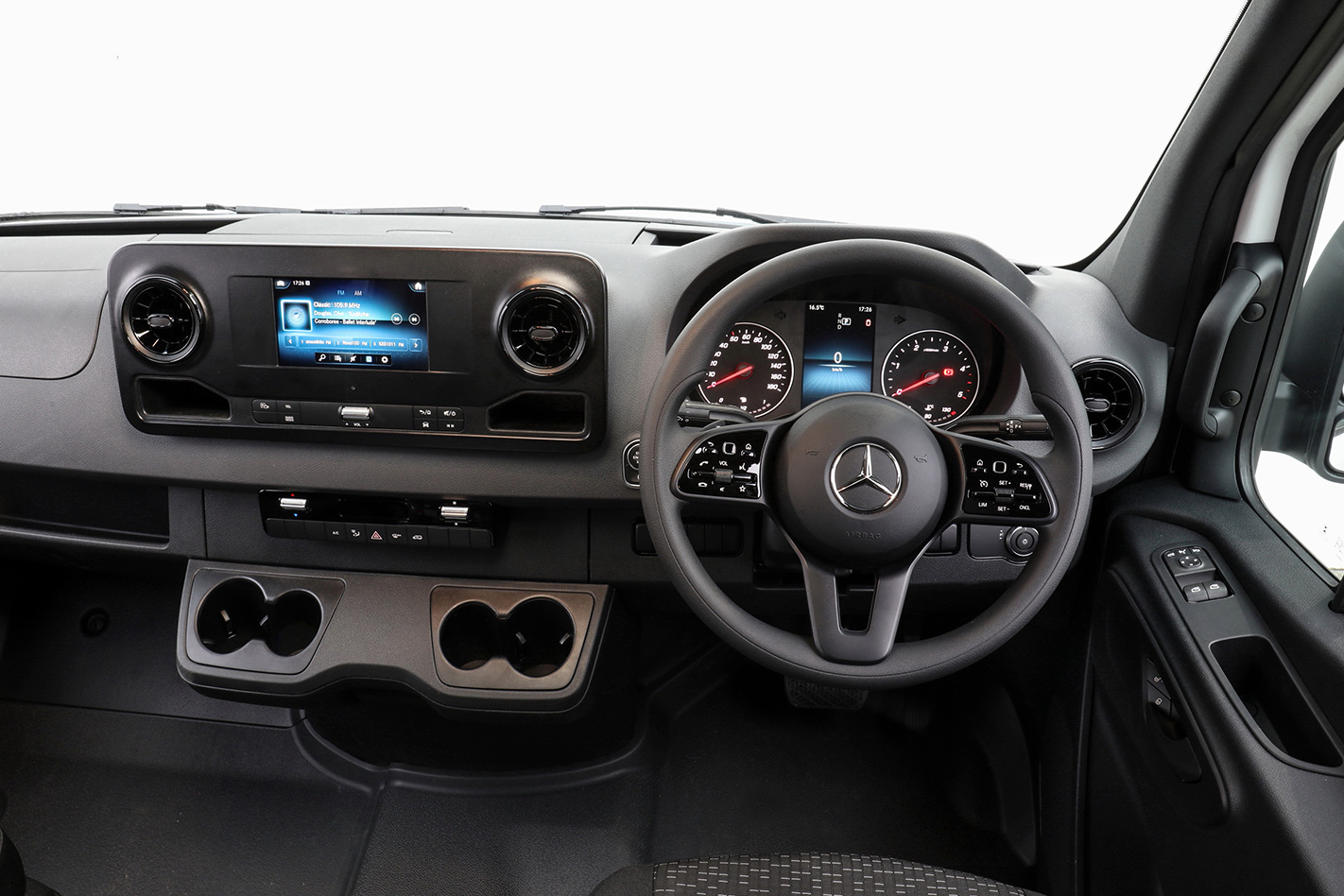
The introduction of Mercedes-Benz User Experience (MBUX) infotainment, borrowed from the company’s passenger car range, brings with it a connected user experience you’d expect in high-end cars and SUVs.
A 7-inch HD touchscreen display or optional 10.25-inch display sits at the heart of the MBUX multimedia system, which debuted earlier this year in the new-generation A-Class. From the driver’s seat the MBUX steering wheel controls proved far simpler than previous systems and coupled with the touchscreen, navigation of the multimedia system was foolproof.
Voice control, a system developed in-house by Mercedes-Benz, aims to connect the user to the vehicle with two simple words: “Hey Mercedes.” By comparison with ubiquitous voice command options like Siri and Google Assistant, the Mercedes-Benz system operates offline and seems more focused on efficiency than entertainment. For example, setting navigation destinations and switching on the seat warmers can be done entirely by spoken commands, reducing the potential for driver distraction.
For those who prefer a smartphone-based system, Android Auto is currently offered across the new range and Apple Carplay is coming later this year.
A telematics-style fleet management system is also coming next year called Mercedes PRO, offering vehicle and driver location, digital driver’s logbook, vehicle logistics, fleet communication, and maintenance management.
SIZE
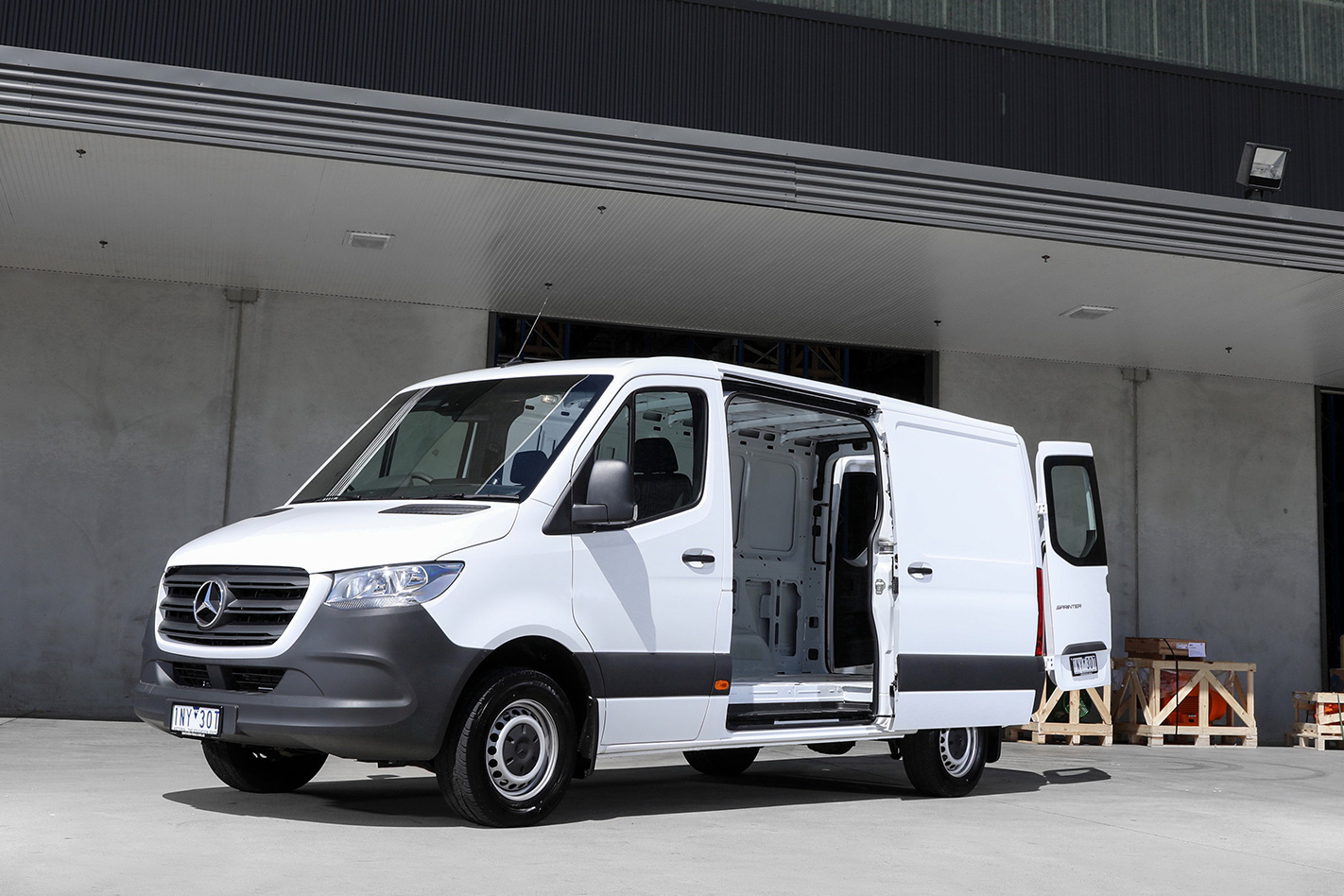
From a payload perspective things haven’t changed much as all variants of the Sprinter can still be driven on a standard vehicle licence, from the short wheelbase models right through to the extra-long wheelbase with high roof.
Maximum GVM across the range is 5 tonnes, with a 2,929kg payload and 17m3 load capacity on the rear-wheel drive 6-cylinder 519CDI Sprinter.
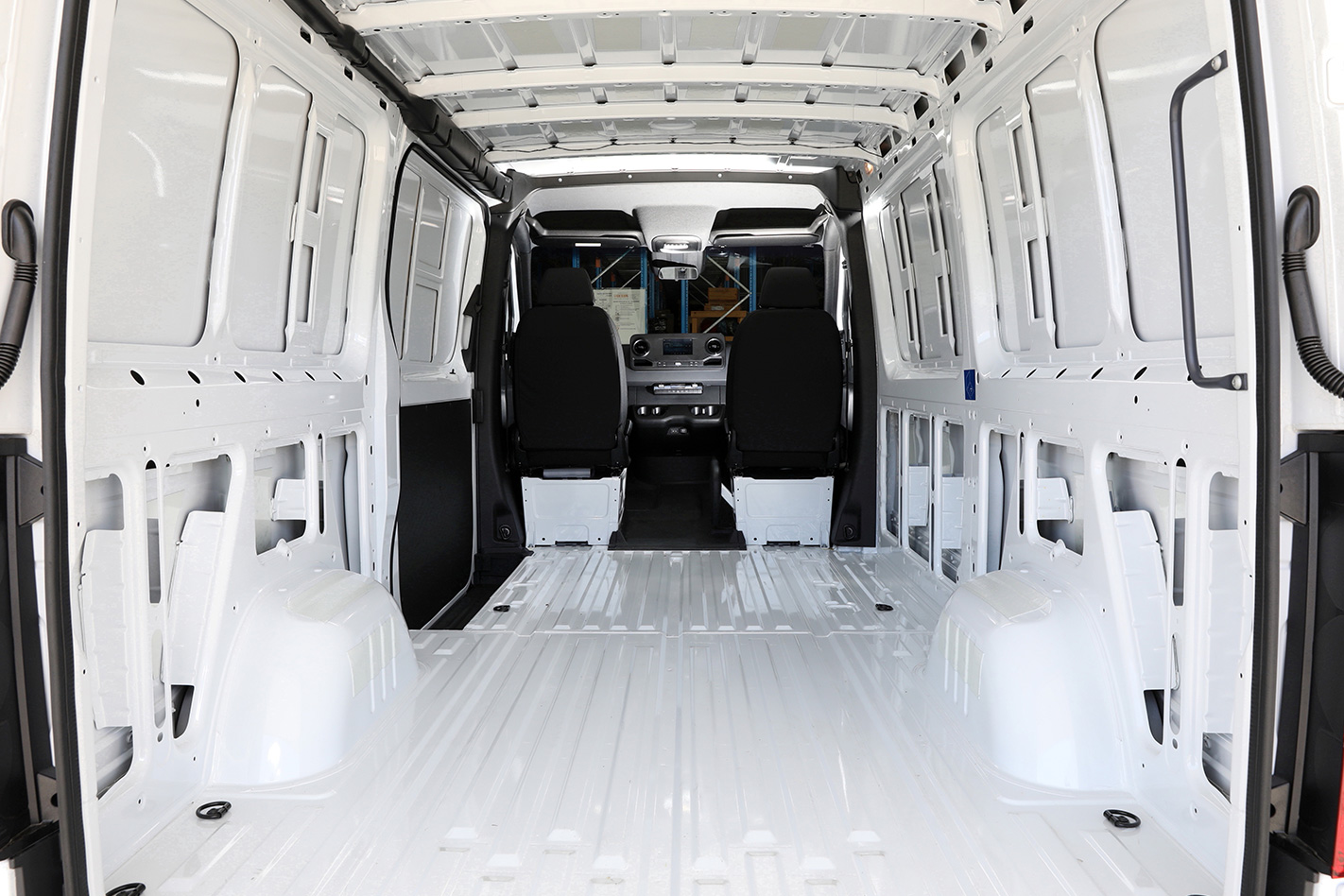
European markets do receive a 5.5 tonne GVM model but we were informed the Australian market is yet to receive the larger specification.
For tradies, couriers and everyone in between, the van’s loading length up to 4810mm is enormous when compared with typical dual-cab utes which offer in the vicinity of 1400-1600mm of length.
This comes in a package with a vehicle width similar to that of a large 4X4 wagon.
SAFETY
The myriad of safety tech the Sprinter receives out of the box is class-leading in this segment, ranging from Lane Keeping Assist through to the driver-focused Attention Assist.
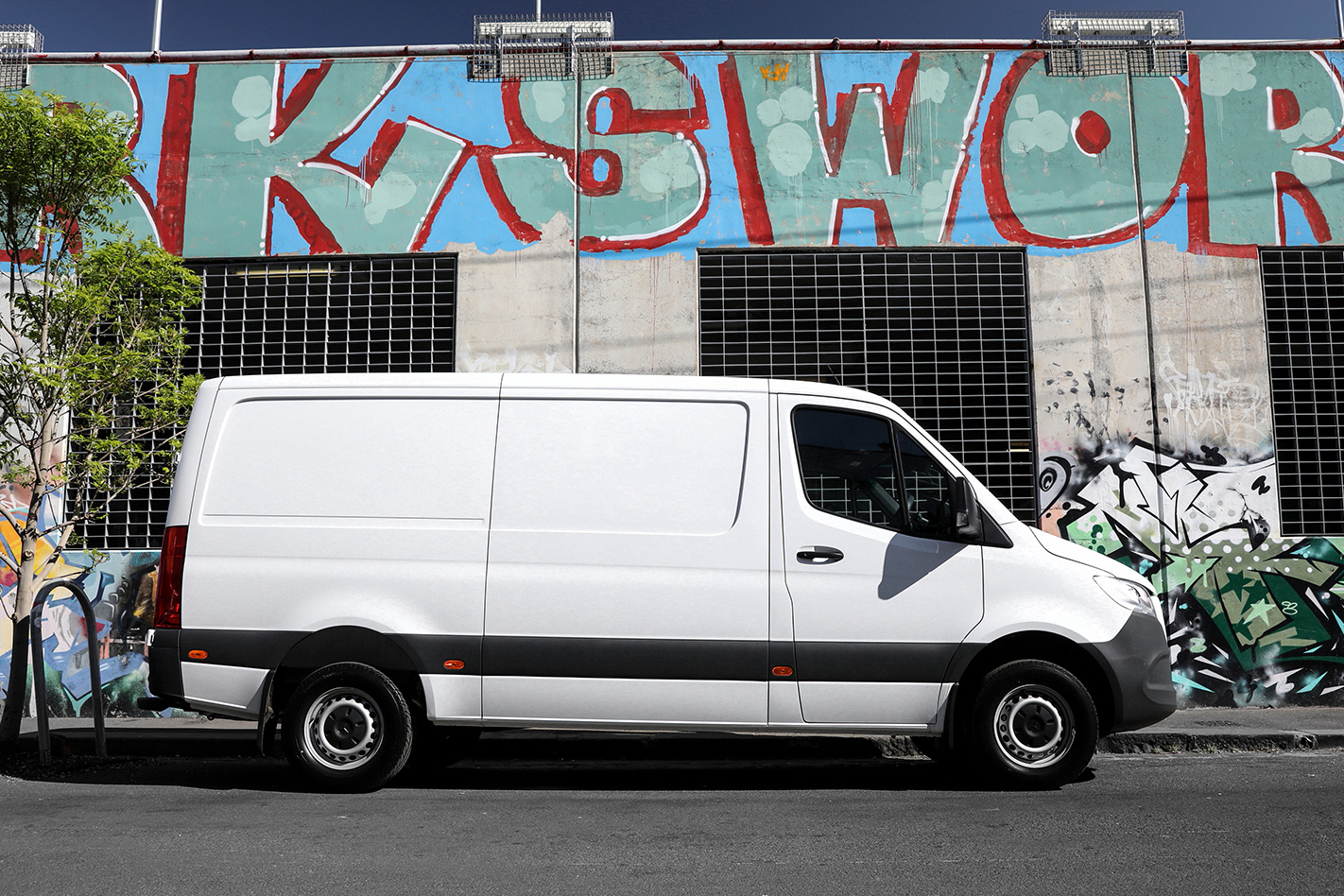
That feature set is more or less on par with modern passenger vehicles too, offering radar-based cruise control, active brake assist, active lane keeping assist, driver fatigue monitoring and rain-sensing wipers.
A plus for drivers spending large amounts of time doing highway speeds is that the stability-enhancing Crosswind Assist remains standard, again a feature typically reserved for cars.
Front driver and passenger airbags as well as window bags are standard across the Sprinter range.
COMFORT
The agricultural seats, steering wheel and ergonomics we’ve come to tolerate in commercial vehicles have been replaced with items that wouldn’t feel out of place in something like Mercedes-Benz’s A-Class.
A long-standing gripe with commercial vehicles shared between drivers is back-and-forth driver adjustments. An optional electrically adjustable front seat option brings a memory function to the new Sprinter, storing mirror and seating settings for up to three drivers. Sole traders may not get much use out of it, but anyone sharing one van among a number of employees definitely would.
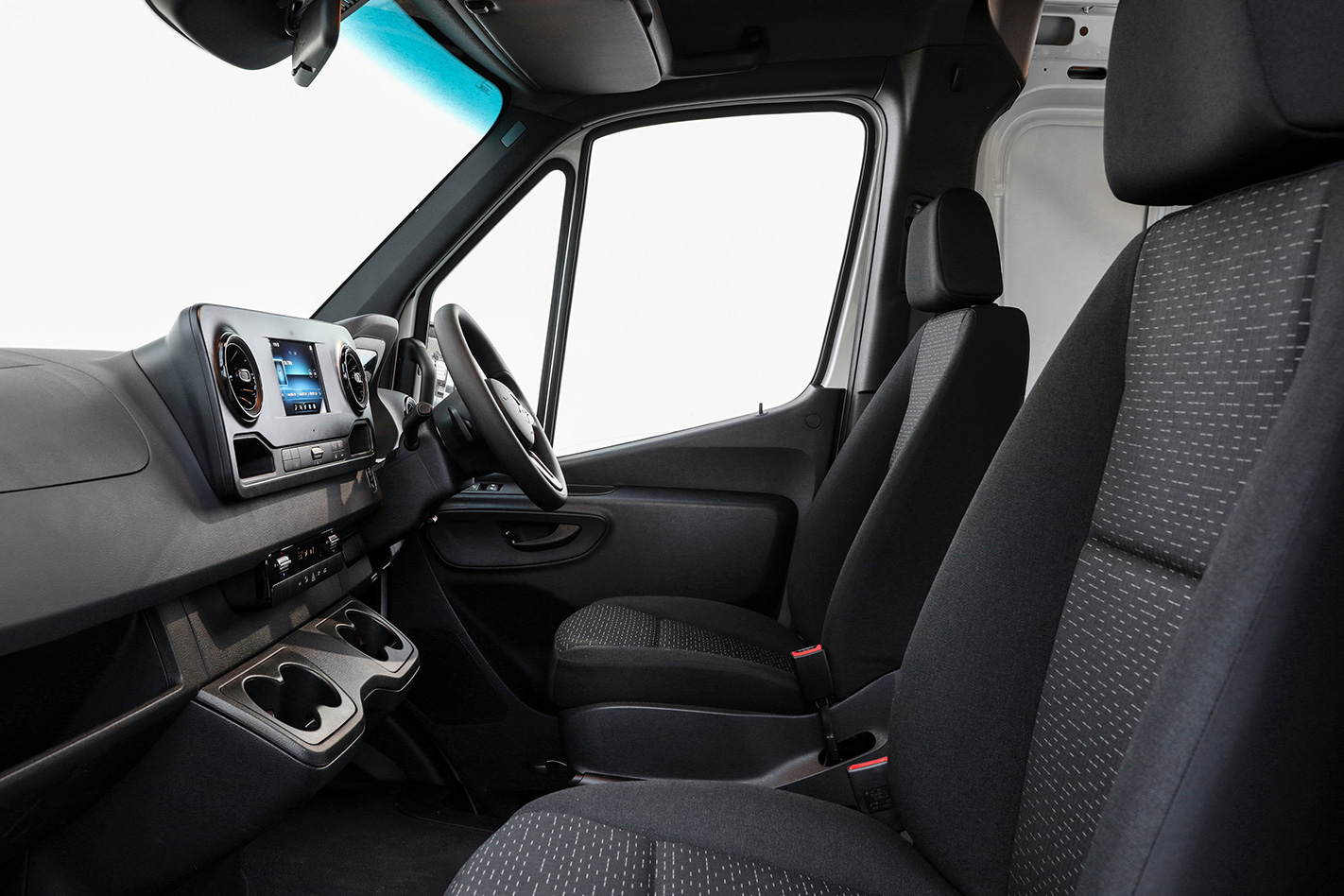
Of course, there are still the access and visibility hallmarks of a commercial vehicle but for the most part this cabin provides a working environment that’s considerably more premium than the average tradie-grade van.
ON THE ROAD
The one-day drive program took us through the scenic Adelaide hills, providing urban, highway, and country driving across a range of models and load types.
From a performance perspective, while outright acceleration isn’t of great concern within the van segment, these are more often than not last-mile delivery vehicles so a bit of haste doesn’t go astray.
Engine options remain the same as the previous generation Sprinter, although power outputs are boosted. Mercedes-Benz remains the only manufacturer within the van segment to offer a six-cylinder, with the range-topping 3-litre diesel delivering 140kW and 440Nm from a low 1,6000rpm.
Meanwhile the 2.1-litre 4-cylinder diesel workhorse is offered in both single and twin-turbo guise, with outputs ranging from 84kW/300Nm to 120kW/360Nm.But it’s the Sprinter’s grunty six-cylinder option that’s the pick of the bunch, simply due to the effortless torque from low revs which makes all the difference when fully loaded.
The big six lugs along unstressed and doesn’t require much right foot motivation to get up to speed, making it an attractive option for those looking to spend a lot of driving time up near maximum GVM.
The 4-cylinder diesel is also surprisingly punchy in twin-turbo form, offering up 105kW and 120kW – ample power around town.
Of the 4-cylinder options the 120kW four was a far better on-highway performer than the 105kW spec, with enough puff to overtake comfortably and plenty of go in urban city scenarios.
A base-spec 84kW engine option is available, perhaps better suited to ‘around town’ work as it provides a little less pull than many will desire but at a price-point that’s hard to go past.
VERDICT
Simply put, the Sprinter has never been better to drive. In fact, this has got to be the most comfortable van we’ve driven to date.
For everyday use, the new front-wheel drive options offer improved access, payload and lower price points for short and medium wheelbase van and single cab-chassis buyers.
If you’re looking at purchasing a long or extra-long wheelbase Sprinter, the tried and tested rear-wheel drive platform is the only option and you’ll have access to the 6-cylinder engine as well as the more economical four-pot.
In terms of gearbox choices, both the 7-speed and 9-speed automatic suited the array of driving we did, and depending on budget both will fit the bill for most urban uses.
The trend across the LCV vehicle market to provide a ‘car-like’ driving experience is something Mercedes-Benz has managed to convincingly achieve with the new Sprinter.
Take Mercedes-Benz’ renewed focus on safety, user-connectedness and comfort and add to that the winning practicality that shot the previous Sprinter to the top of its class, and this new generation looks set to hold its own in the red-hot LCV space.
WHAT IS IT
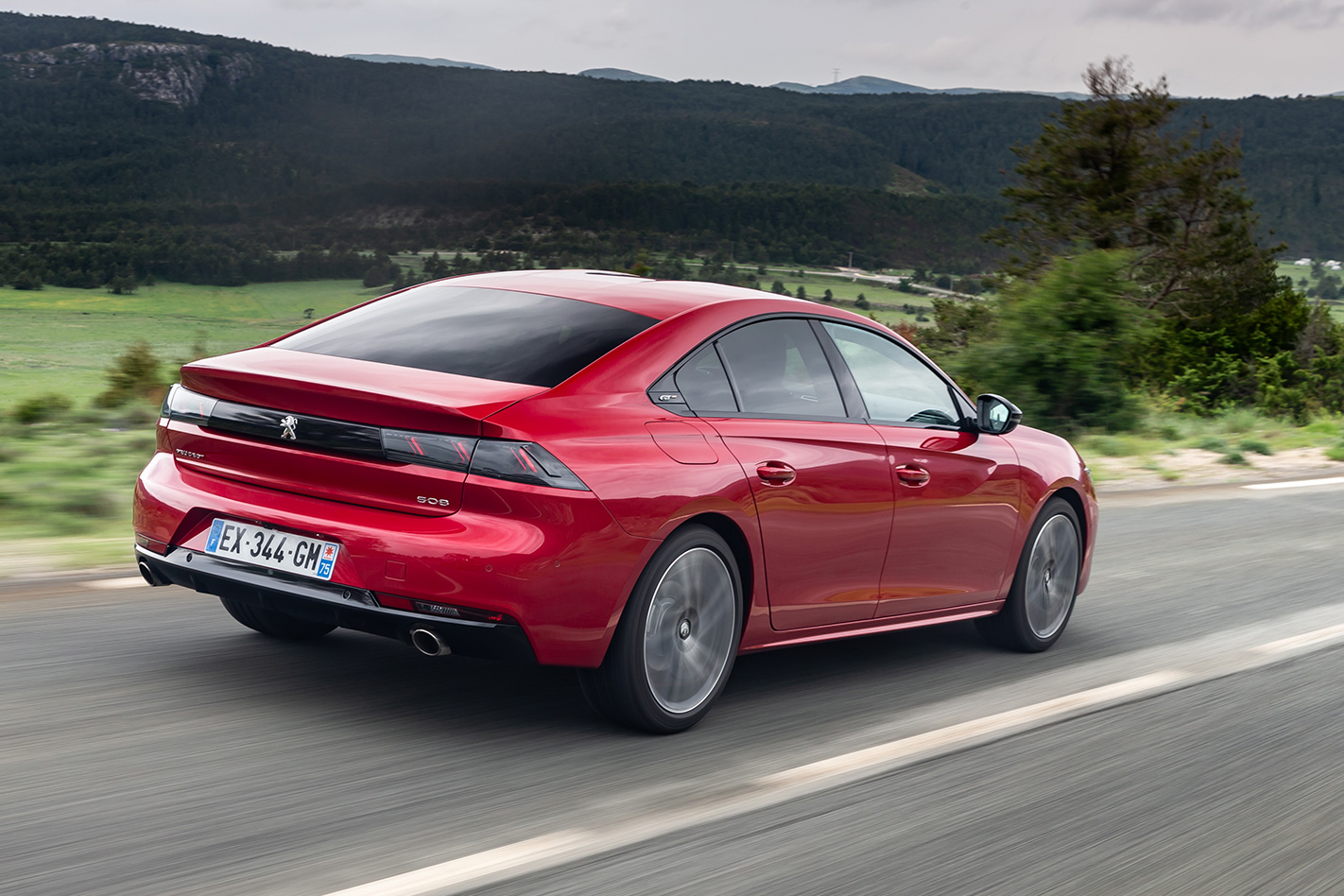
It seems almost a throwback to launch a three-box sedan, so if you’re going to do it at all, do it well. That seems to be the logic behind the development of Peugeot’s 508, available as a liftback sedan and also as a conventional five-door wagon. For some, it’ll be the styling that sells it, but there’s more to the cinq-cent-huit than just a svelte silhouette.
WHY WE’RE TESTING IT
The old 508 was always something that was basically likeable but lacking in any great injection of Peugeot flair. The latest car is prettier, more athletic and far more appealing, so we jumped at the chance to pick one up from Peugeot’s Poissy factory and put a couple of thousand kilometres under its wheels.
MAIN RIVALS
Mazda 6; Skoda Superb; Volvo S60
THE WHEELS REVIEW
IT’S ODD to think of a new car launch as the end of something, but this feels just that. In its latest 508, Peugeot has delivered – in concept at least – a broadly conventional petrol-powered sedan and estate with no electric tech, no high-riding all-wheel drive version and no voguish ‘lifestyle’ frippery. Shorn of pretence, the 508 stands or falls on its substance, which is just as well, because beneath the slinky styling is a vehicle that’s refreshingly long on good old-fashioned talent.
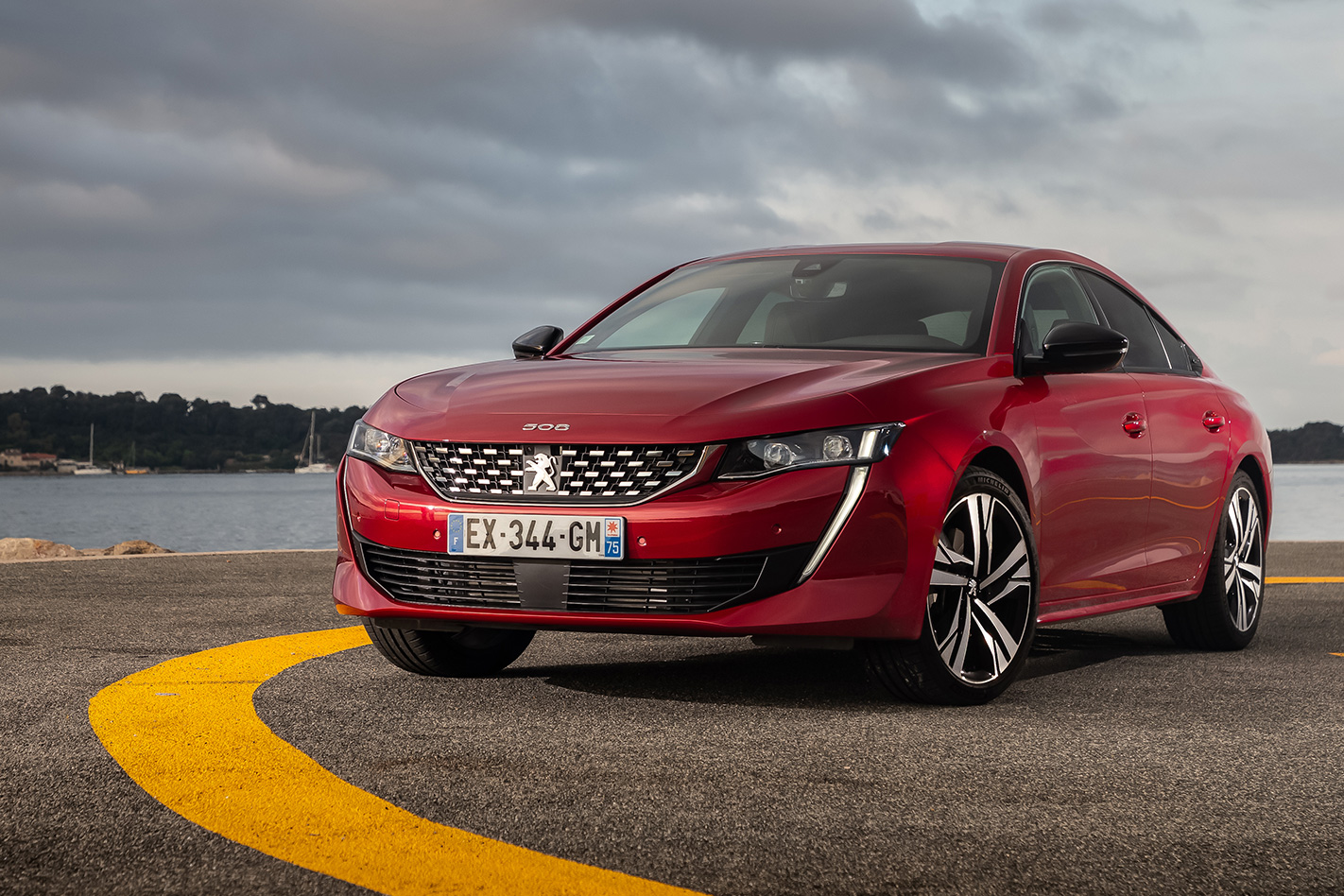
The sedan version we tested is both lower and longer than its bloated predecessor and its light too, the EMP2 chassis helping shave 70kg model-for-model off the kerb weight, the sedans weighing in at 1420kg. That’s less than a Ford Focus 1.5-litre hatch, so it’s no great surprise that the Pug feels perky and agile. Power comes courtesy of a 1.6-litre petrol four, driving the front wheels through an eight-speed Aisin automatic transmission. This powerplant is offered in two discrete outputs, 133kW/250Nm for the entry-level versions and 169kW/300Nm for the range-topping GT version, which also scores adaptive dampers, making it the one to pick, funds permitting.
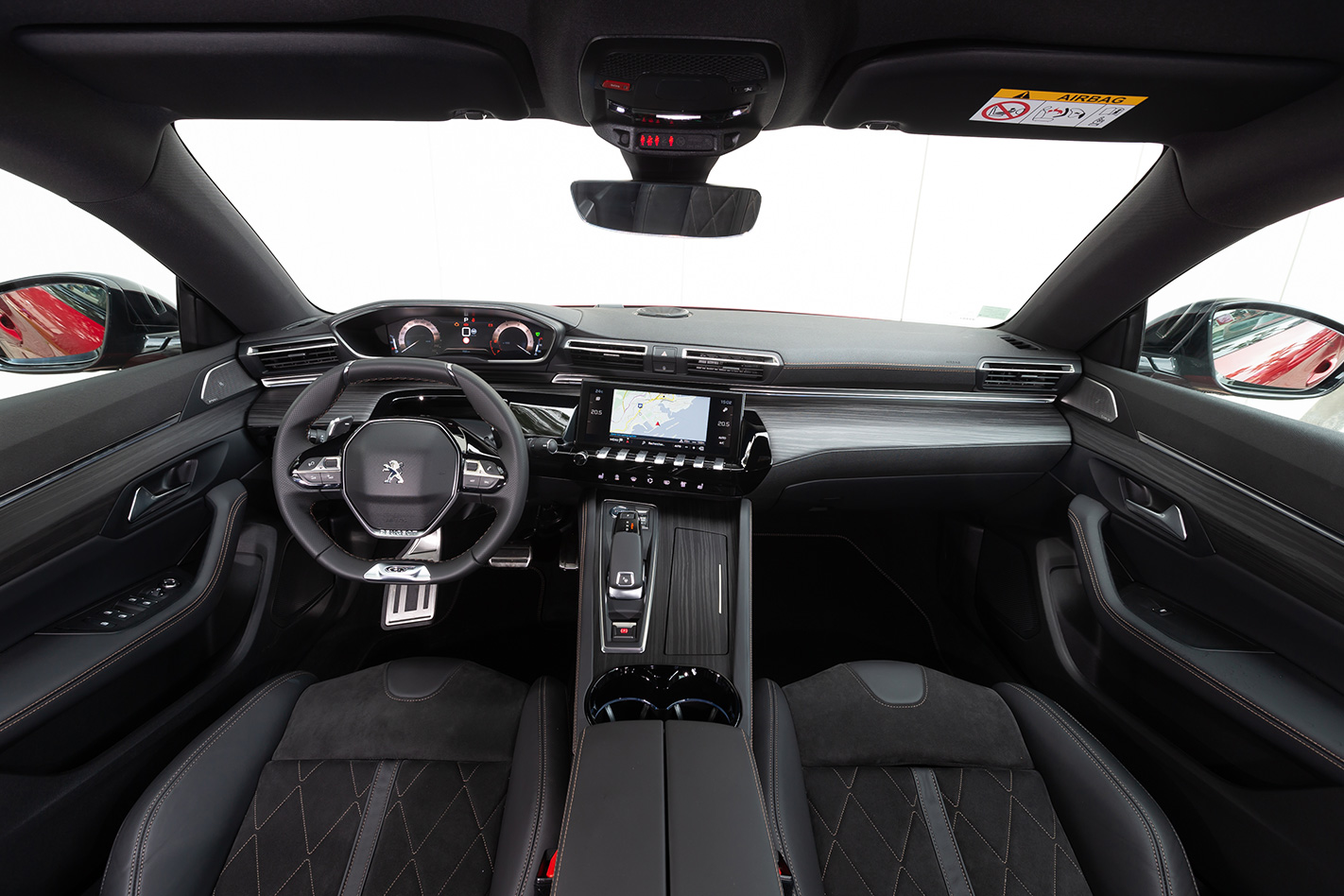
The GT also gets bigger brakes behind its 19-inch alloys, leather and Alcantara interior trim, wood fascia fillets, adaptive cruise, an electric tailgate and a 515-watt, ten-speaker Focal sound system. Switch on the cruise and lane keep assist, crank up the cat’s paw massage seats, set the stereo to your favourite playlist through the standard smartphone mirroring and wireless charging and you have a car that demolishes long-distance highway trips and that’s a quality that certainly won’t be lost in translation when the car arrives on these shores in the second half of 2019 (sadly, the UK gets first dibs on initial RHD production). Refinement is good with some muted bump-thump from the suspension and minor wind rustle around the door mirrors.
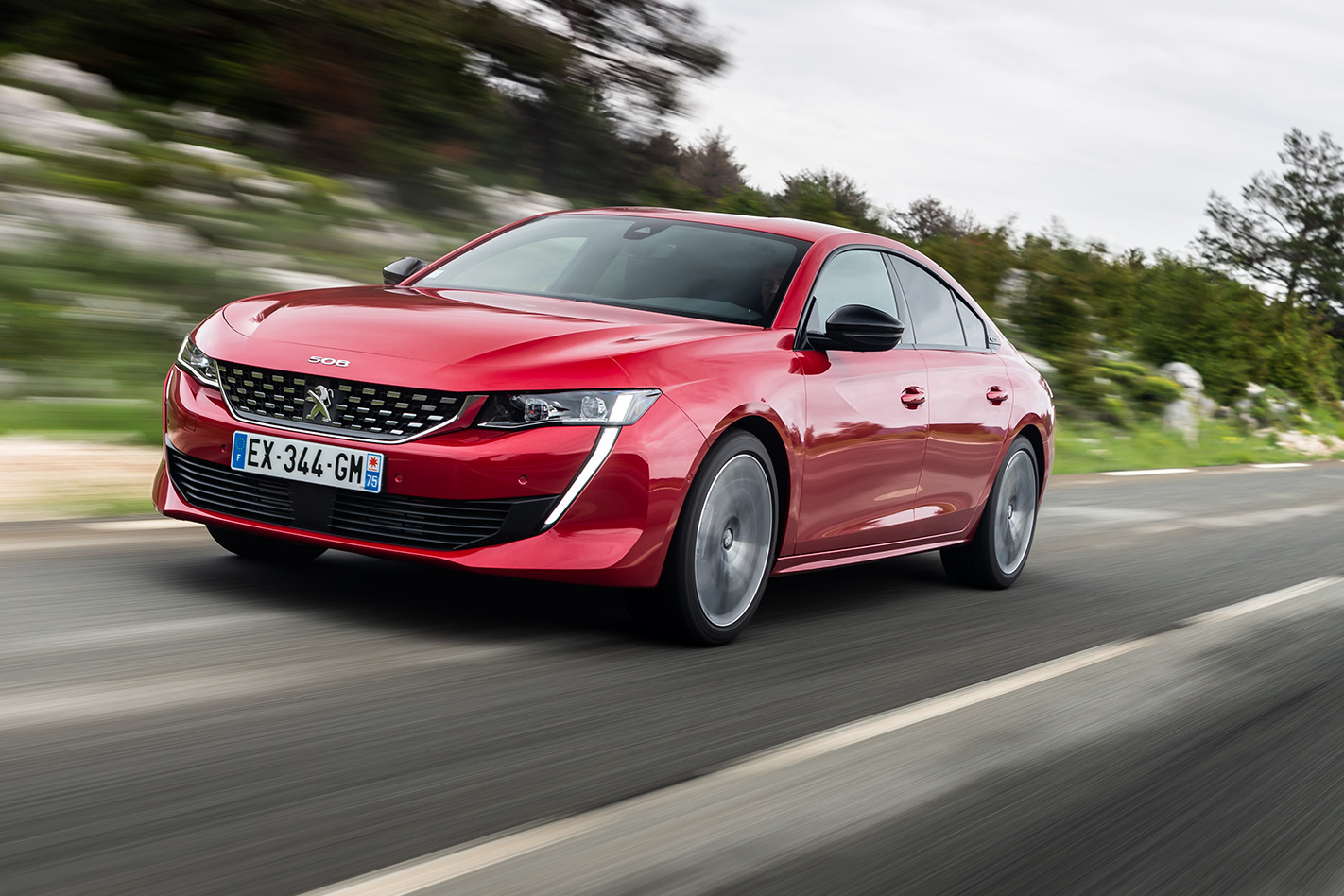
Switch the drive mode selector into Sport and the 508 does a passable impression of a 308 GTI, this map sharpening the throttle, steering, gearbox and adaptive damping. On testing alpine roads, the 508 displayed decent damping even in Sport, with a mighty front end that locks onto a line and doesn’t want to let go, the front 235/40ZR19 Pilot Sports keying doggedly into the tarmac, aided by a well-calibrated traction control tune. Body control is best in class, and the steering feels almost Ferrari-alert despite the tiny wheel taking 2.6 turns lock to lock.
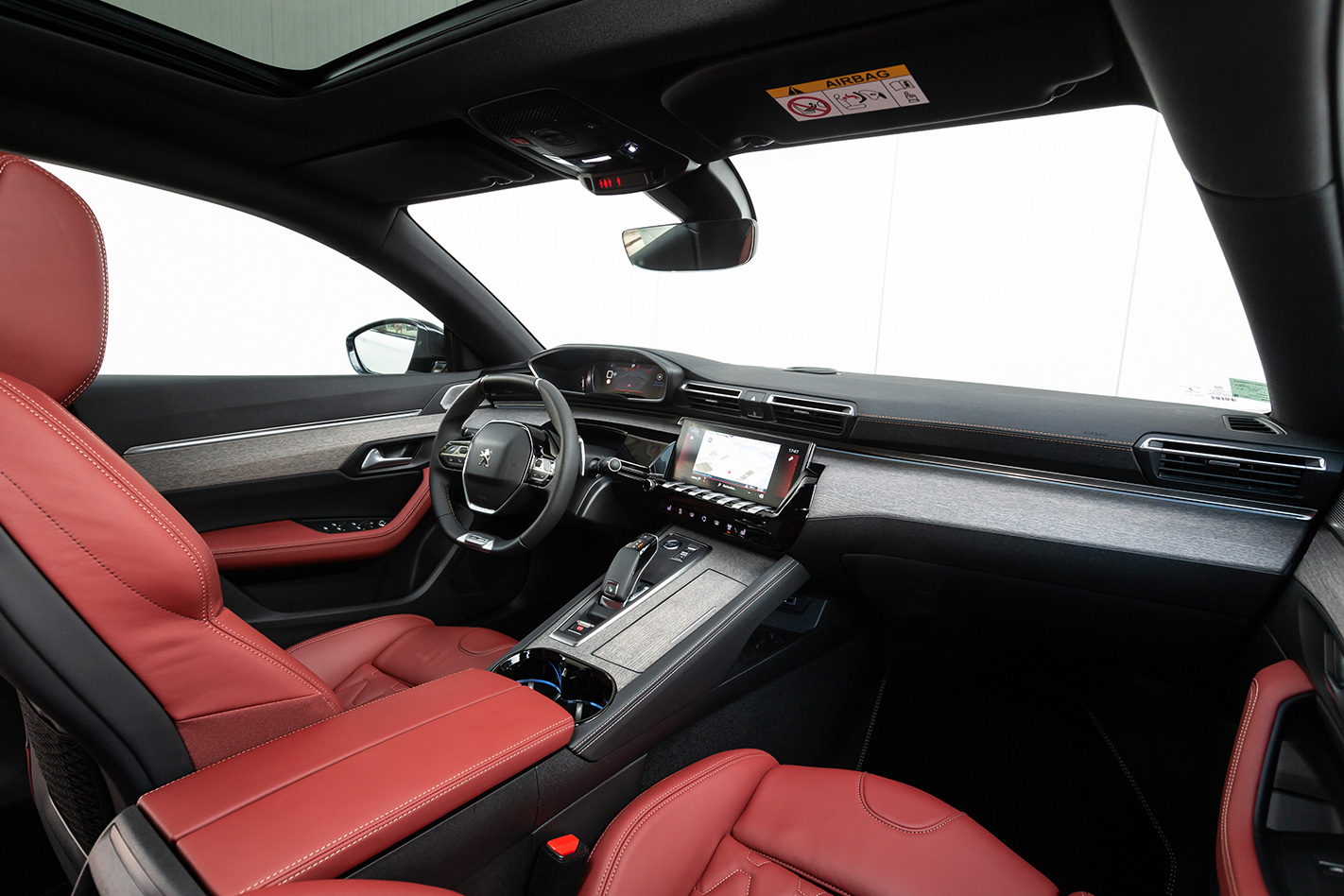
It’s not all good news though. The resolution for the surround view cameras is poor, the manual mode for the transmission is now buried in an on-screen menu rather than atop the gear selector like the 508, the adaptive cruise functions located behind the steering wheel require Braille to operate, and the wireless charger and USB ports are buried in the nether reaches of the dash beneath a flying buttress. Out of sight, out of mind, you’ll forget your mobile every time you get out of the car. On the plus side, you won’t be distracted by incoming alerts flashing onto its screen. Accommodation is acceptable for such a slinky looking car. The frameless doors have freed up 6cm of additional glasshouse, allowing the designers to create a high-waisted coupe-like profile. Headroom is a little compromised in the rear, but there’s no shortage of legroom from the 2793mm wheelbase. The boot‘s a decent size too, with 487 litres and fold-flat rear seats opening up 1537 litres when dropped.
The success or failure of the 508 in Australia depends almost entirely upon local pricing. Peugeot’s CEO, Philippe Imperato, insisted at the Paris Show that Peugeot was not premium, but at the top end of mainstream. That may be so, but pitching the extravagantly talented 508 within a cooee of the entry-level versions of the BMW 3 Series, the Audi A4 and the Mercedes-Benz C-Class will do it no favours here, despite it being an objectively better car than any of these basement-spec sluggards. Hanging your hat on objectivity, it seems is almost as quaint a concept as selling sedans and wagons in a market that’s turned its back on them. The effervescent and wholly charming 508 more than deserves a fair go.
THE WHEELS VERDICT
There’s something very old-fashioned about the Peugeot 508. It’s a throwback to a time when buyers valued light weight, supreme agility and a certain lack of disingenuousness in the product development process. As such it’s a breath of fresh air, leveraging modernity to give us something we thought had gone for good, in this class at least. Its qualities massively outweigh the relatively trivial caveats, although we’ll reserve our final judgment based on the car’s Australian pricing, which we hope comes in lower than the initial $45-$55K estimates.
PLUS: Styling; ride; front end grip; adaptive suspension on GT; neat i-Cockpit; equipment; packaging MINUS: Some irksome ergonomic trivialities; could be priced out of contention here
SPECS
Model: Peugeot 508 GT sedan Engine: 1598cc inline 4cyl, 16v, dohc, turbo petrol Max Power: 169kW @ 5500rpm Max Torque: 300Nm @ 2500rpm Transmission: 8-speed automatic Weight: 1420kg 0-100km/h: 7.3 sec Fuel economy: 6.5L/100km (combined) Price: $55,000 (estimated) On sale: Mid 2019
Hyundai and Kia plan to introduce solar panels to the roof and bonnet of some vehicles to help boost the efficiency of its combustion and electrified powertrains.
The Korean duo’s parent company Hyundai Motor Group is developing three types of solar roof charging systems, including its first-generation silicon solar roof system; the second-generation semi-transparent solar roof system, and the third-generation lightweight “solar-lid” on the vehicle’s body.
The first-generation solar roof system, set for launch next year, will be applied to hybrid models and includes mass-produced silicon solar panels mounted on an ordinary roof.
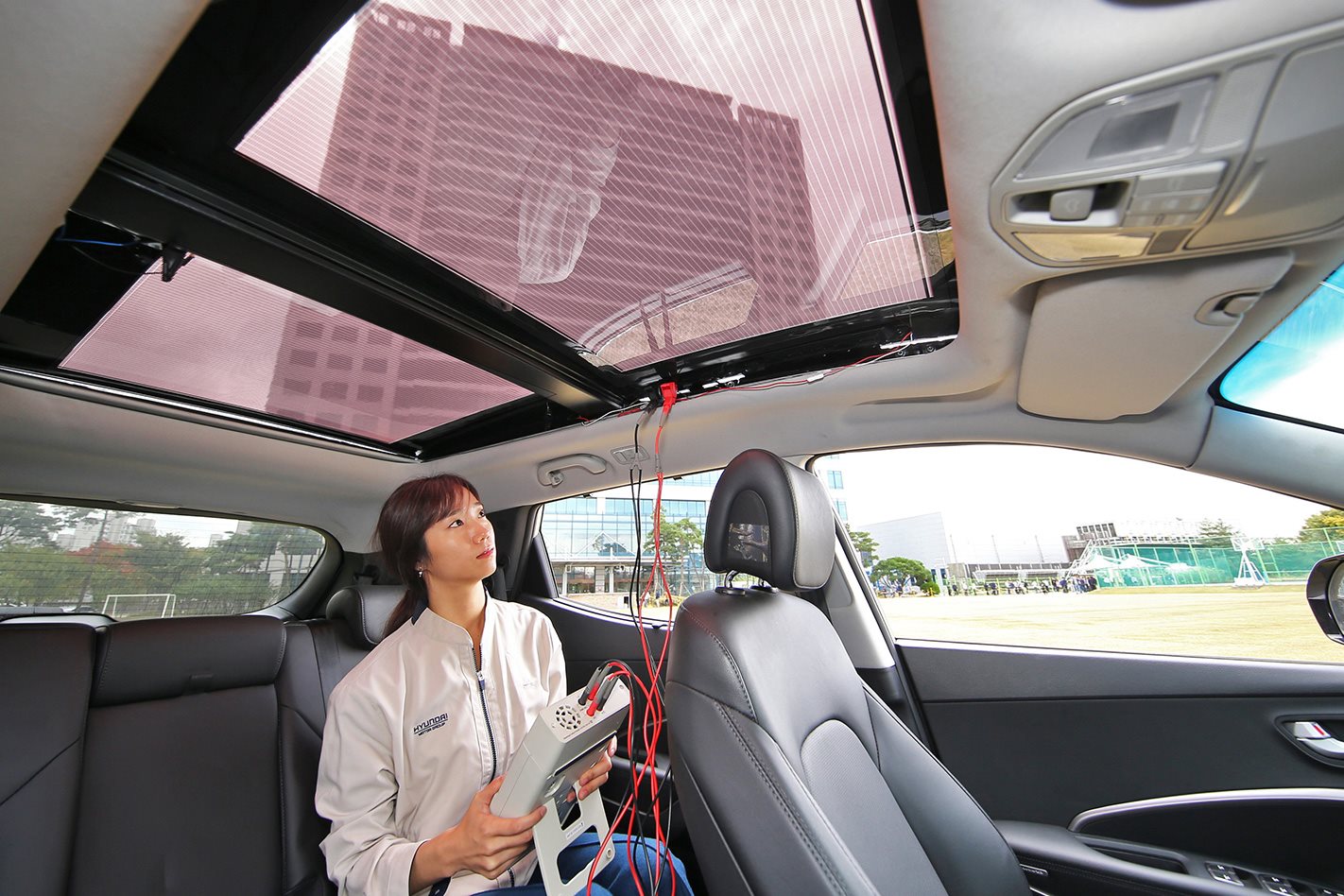
This system can generate up to a 60-percent battery charge per day, depending on weather conditions and the environment.
The second-generation solar setup uses semi-transparent solar cells applied to a panoramic sunroof. In a world first, it will be applied to conventionally-powered vehicles to provide natural light, and power electrical systems such as air-conditioning to take load off the engine and thus boost overall efficiency. The solar cells will charge the car’s battery, or a second battery that’s separate to the car’s ignition system.
According to the Hyundai group, applying solar charging systems to internal combustion engine vehicles will help combustion engines continue to adhere to increasingly stringent emissions laws.

The third-generation lightweight solar-lid system will include a structure that discreetly incorporates solar cells with the car’s panels.
Solar panels have been used on cars since the 1990s, when the Mazda 929 used a roof-mounted cell to run fans to help keep the cabin cool while the car was parked. The Nissan Leaf integrated photovoltaic cells in a similar way.
And in some overseas markets you can buy a Toyota Prius with a roof-spanning solar array, which partly charged the batteries while the car is parked. However, it’s only available on the Prius Prime plug-in hybrid, a variant that is not set to come to Australia.
Audi is also developing the use of solar panels for its future e-tron EV range.
