
MOTORSPORT is facing an uncertain future. The support of manufacturers and sponsors who have traditionally propped up the multi-billion dollar industry is beginning to waver, while viewer habits are becoming increasingly fragmented in an ever-changing media landscape. Then there are traditionalist followers who feel put out by a shift towards ‘green conscious’ regulations.
But there may be an unlikely saviour – Lucas di Grassi.
Racing drivers aren’t traditionally well equipped to solve the multi-faceted existential problems facing motorsport, immense talent behind the wheel notwithstanding. But Lucas di Grassi isn’t a normal racing driver. A member of the famous high-IQ society Mensa and with a degree in Economics, his ideas are formed outside the box, and he has ambitions to one day become the president of the FIA.
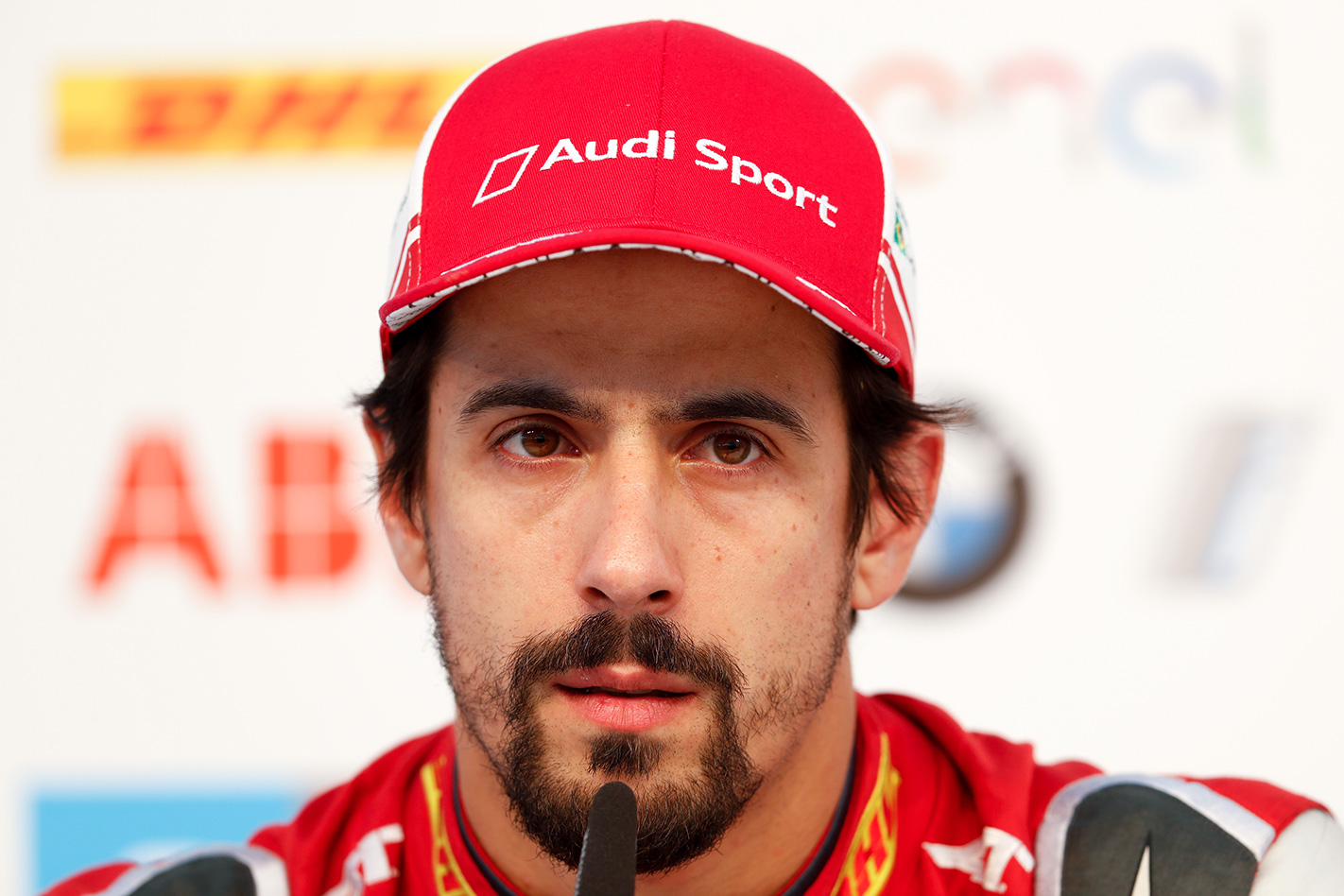
His racing credentials are impressive – the 33-year-old Brazilian is a factory Formula E driver for Audi and a former World Champion who has competed at the 24 Hours of Le Mans four times, finishing on the outright podium in three instances. He dovetails his motorsport career as the CEO of Roborace, the controversial category that ditches humans for autonomous racing.
Roborace aims to put race cars driven by AI onto city tracks around the world as a support category to Formula E, with plans for a debut as early as late-2018. ‘Season Alpha’, as Roborace calls it, won’t be completely autonomous, with di Grassi revealing to Wheels that autonomous vehicles will initially race alongside human drivers. As of writing, Roborace itself is the sole entrant in the series, but di Grassi reckons a six-car field will take part in the debut.
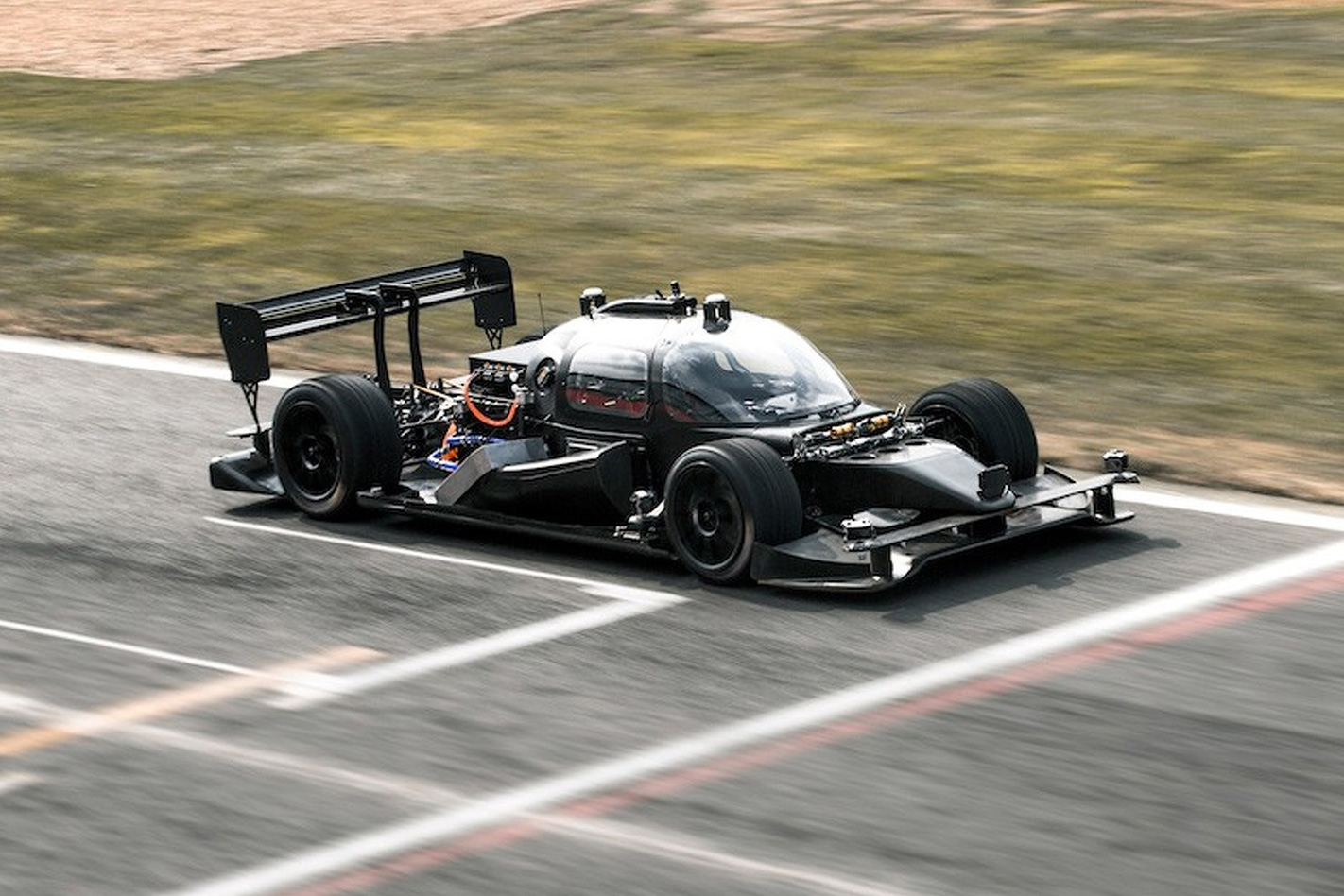
Di Grassi was a core member of the team that created Formula E, developing the race car and sporting regulations. He has become a de facto politician in global motorsport, regularly campaigning for design and rule changes in other categories, where he says the racing itself should stand above all else.
“When government regulation is pushing towards electric cars, it makes no sense for the manufacturers to race a combustion engine, unless it is for entertainment,” he explains.
That’s not to say di Grassi doesn’t see a future for traditional racing. He’s a fervent believer that Formula E and Roborace allows motorsport’s long-standing pinnacle – Formula 1 – to return to a purer set of rules to maximise the visceral spectacle, not break new technical ground.
So what motivates a man to lead a venture, which, if successful, would make his own career path redundant? “The market is going in the [electric and driverless] direction, whether we like it, or not,” says di Grassi.
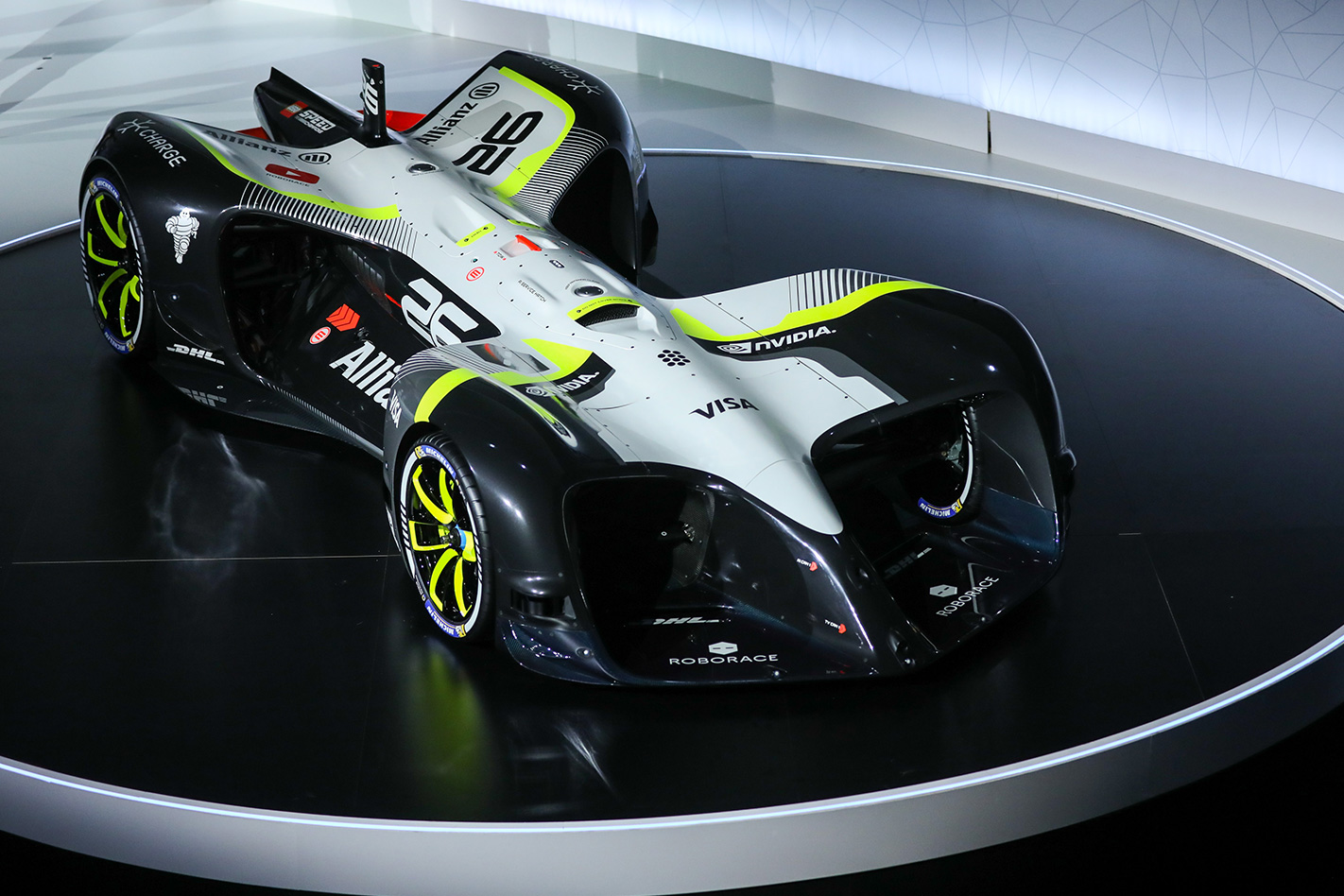
“The pure pressure of economics will go for driverless cars in the next decade or more, so there is no way I can avoid it.
“So what I am trying to do is to adapt motorsport, still create jobs for other drivers, while at the same time … create a niche for other companies to invest.”
While di Grassi hopes traditional manufacturers will be interested in autonomous and EV racing, he sees the future as an opportunity to attract new investors.
“Where could you imagine Google joining motorsport?” he asks rhetorically. “In Roborace! Where could you imagine Uber, or even Amazon? The only category that we think would be relevant to these companies is one which mixes artificial intelligence and deep learning with human skills. That is what we are trying to do with Roborace.”
Central to motor racing’s ability to enthral crowds has been the gladiatorial spectacle of human drivers piloting fearsome mechanical beasts,. However Roborace sees greater potential in attracting E-sport online viewers rather than flag-waving punters at a circuit.
Then there’s the scope for theoretically limitless testing, something di Grassi is hoping to use to his advantage.
“We want to use augmented reality and virtual reality and create a virtual twin for online racing, so our Devbots (the development vehicles Roborace uses at exhibition events) can race online 24/7,” he explains.
“It’d be almost like an evolving algorithm. The best ones can keep racing, and the new ones come in and self-learn and keep racing and learning and improving before getting into the real world.”
But while early Roborace demonstrations have been well received online, external support and a locked-in debut for the potentially game-changing championship remain elusive.
THE SILKEN sheet has been whisked away, and McLaren has revealed its newest hypercar to the world in full. Against a soundtrack of jaws acquainting with floors, it’s fair to say the Speedtail has created quite a reaction.
Originally slated by its manufacturer as a successor to the McLaren F1, the Speedtail is the fastest car to ever come from Woking that doesn’t roll on a set of slicks and have Fernando Alonso’s name on the side.
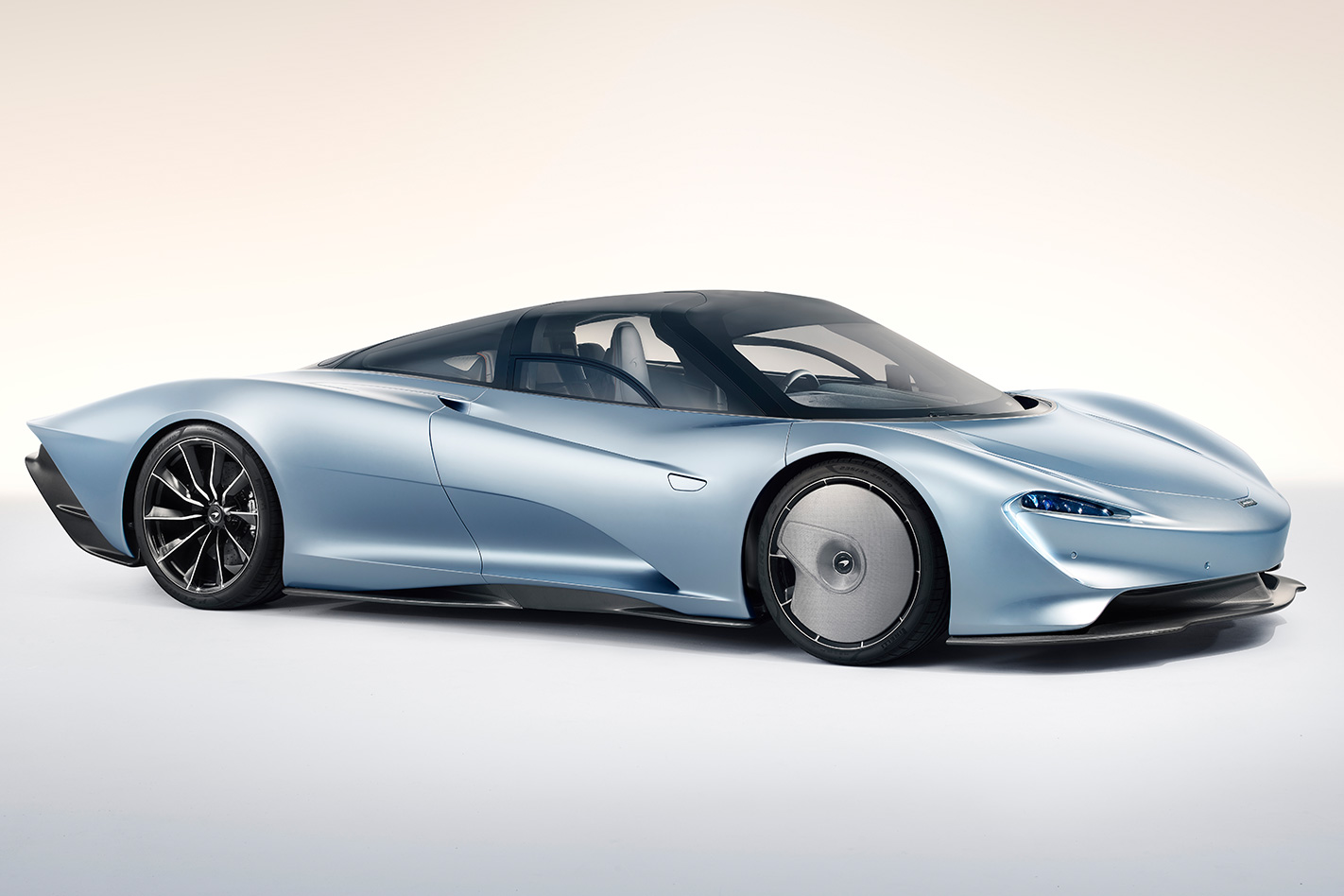
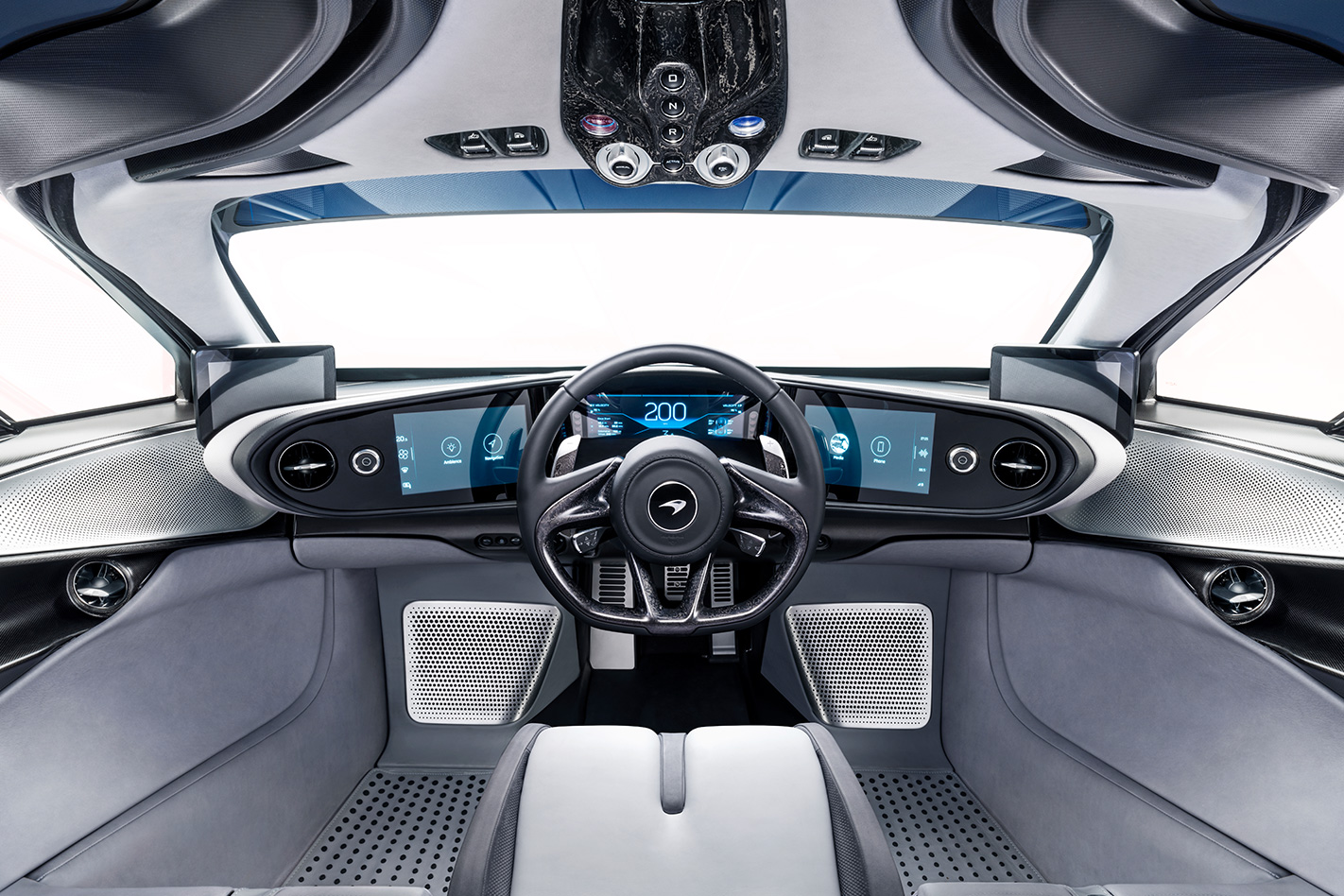
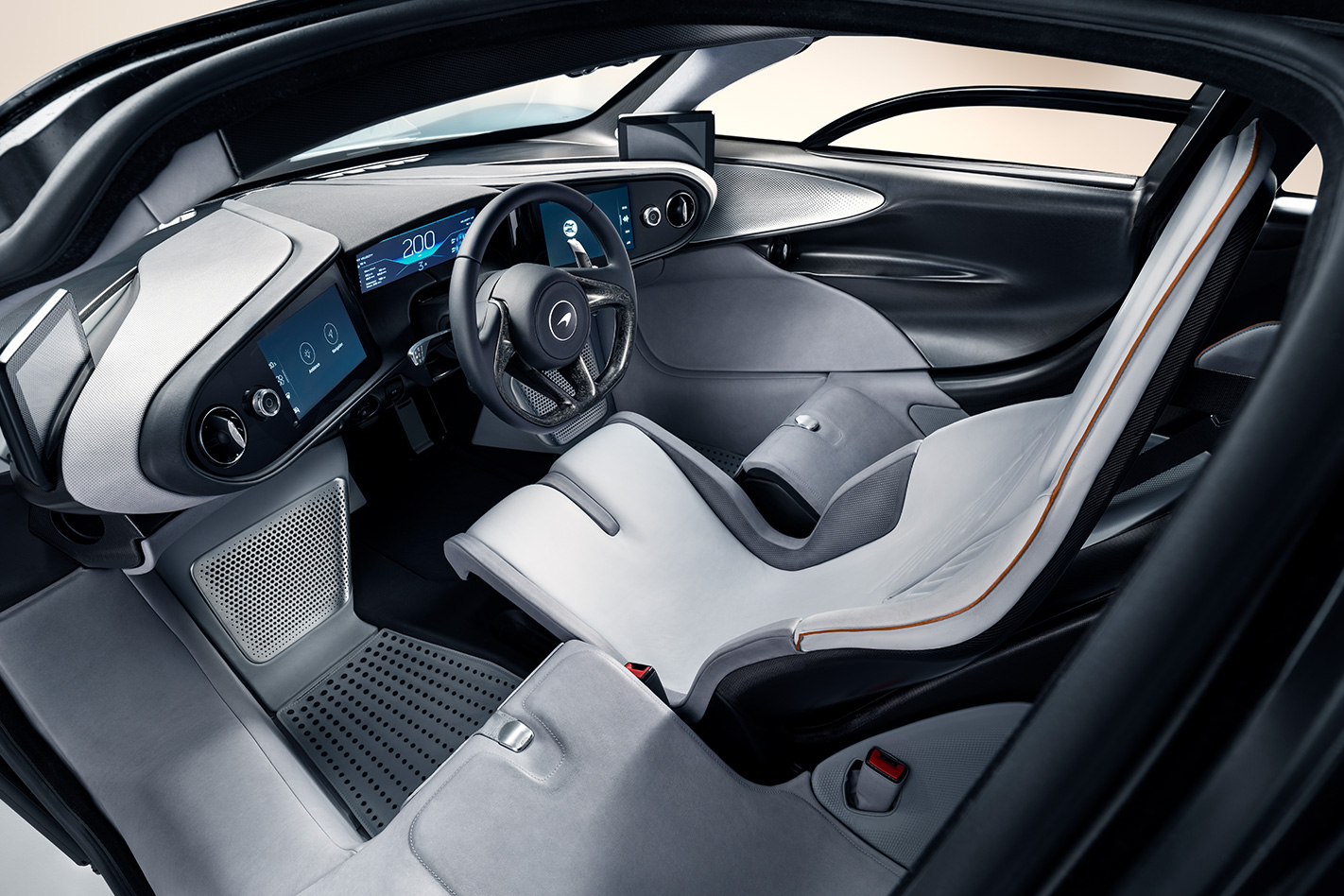
Linking the F1 and Speedtail is the three-seat cockpit configuration, with the driver occupying a central position. However, that’s where the similarities between the pair start and end.
Powering the latest Ultimate Series model is a twin-turbo V8 and electric hybrid powertrain, which produces a monstrous 772kW.
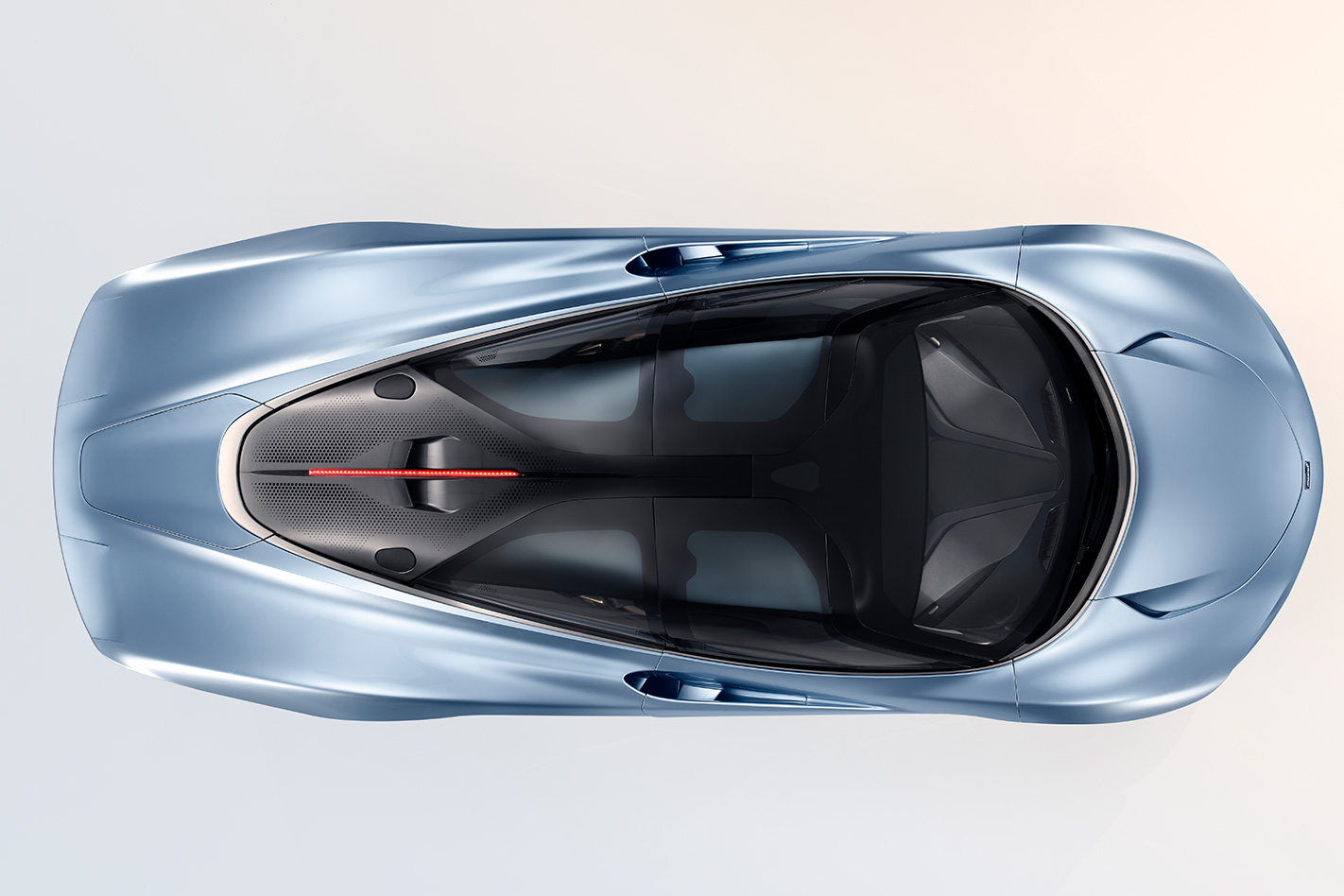
Simple 0-100km/h times don’t do a car geared like the Speedtail justice, straight line acceleration is instead measured in the much more impressive 0-300km/h sprint, which is taken care of in a scant 12.8 seconds. McLaren says the Speedtail will then keep on truckin’ to its limited top speed of 405km/h. This Vmax could allegedly be higher, but not on tyres civilised people could live with, according to McLaren.
The Woking team is being deliberately tight-lipped about the hybrid system that sits beneath the Speedtail’s teardrop-shaped exoskeleton, however McLaren CEO Mike Flewitt did reveal a small morsel of tantalising information.
“It’s a direct-drive hybrid,” he told Wheels. “There’s no EV capability, and it’s a fast recharge, so if you use the energy that’s stored, it recharges in about 90 seconds.”
This indicates the system could be a high kWh, small capacity system, designed to provide an extra turn of speed, without operating as the sole drive system. Think early KERS in F1, or ‘Push to Pass’ in IndyCar.
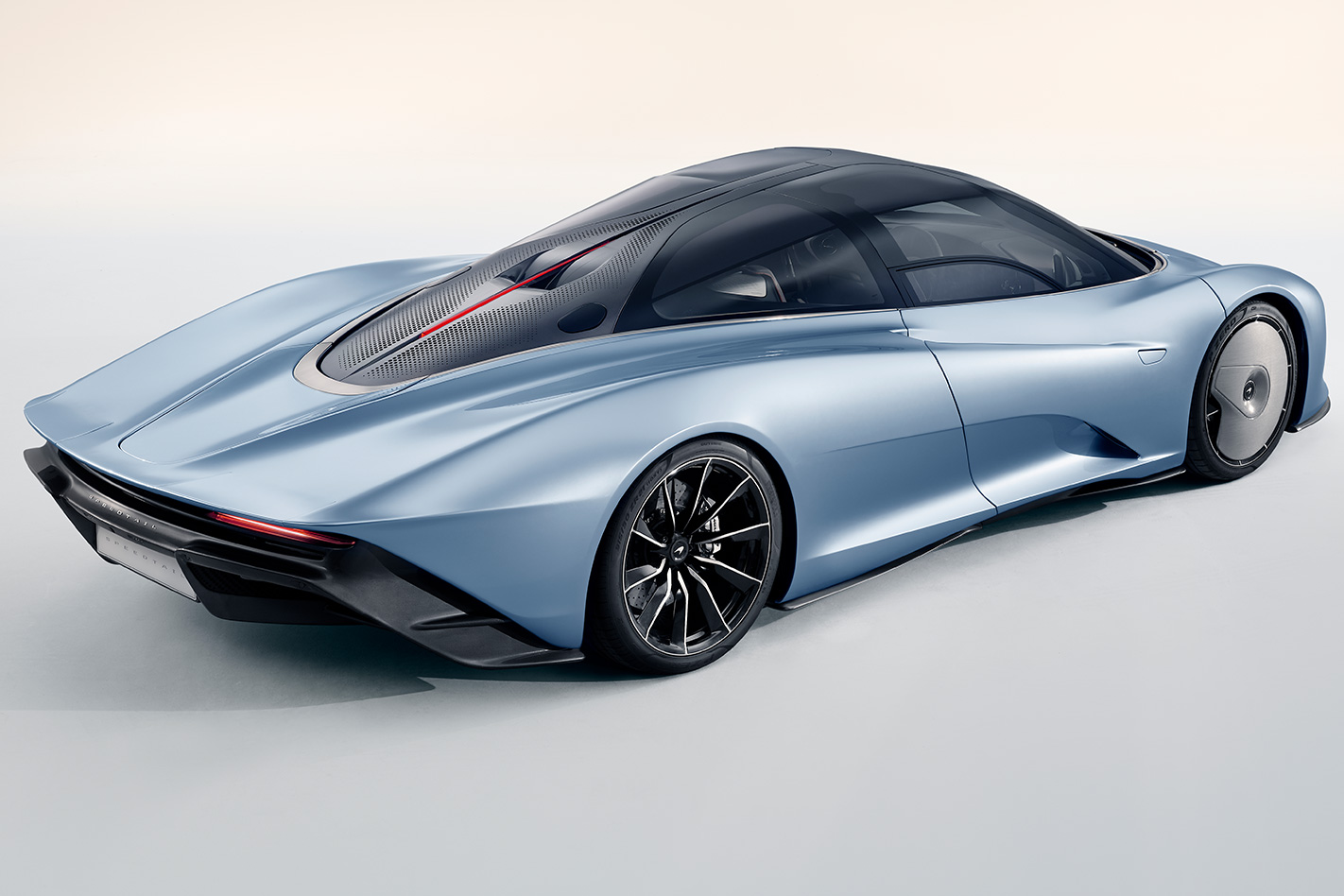
The Speedtail is seen by McLaren as an Ultimate Series counterpoint to the rip-snorting track-focused Senna. Yet the ethos for the two vehicles sit at opposite end of the design spectrum. Where the Senna was brutalist function over form, the Speedtail offers us a more classically streamliner visual, with swooping lines untouched by garish wings and spoilers.
Just 106 will be built, each wearing a healthy $3.2 million price tag. The multi-million dollar cost won’t hurt sales though, with each Speedtail already allocated to a prospective owner despite deliveries not slated to begin until 2020.
While McLaren is obviously proud of the car’s performance abilities, the Speedtail turns its nose up at such uncouth pastimes as lap records and other associated hooliganism. This is a McLaren for those that wants to a vehicle with singular design, that just so happens to go very, very fast.
Aiding the flowing design is a distinct lack of wing mirrors, which have been replaced by high-definition cameras that pop out of the carbon-fibre body work as required, beaming their image onto two screens in the cabin.
The 20-inch alloy wheels at the front of the car have been smothered by carbonfibre covers that remain fixed in place as the hidden wheels behind them spin, again helping boost aerodynamic efficiency.
Forgoing a large rear wing for high-speed stability, McLaren has opted for an active aero system designed with the help of NASA consisting of two tiny deformable carbon-fibre flaps that sit flush with the body work at the rear of the car, and that raise automatically to aid downforce or to act as an airbrake.
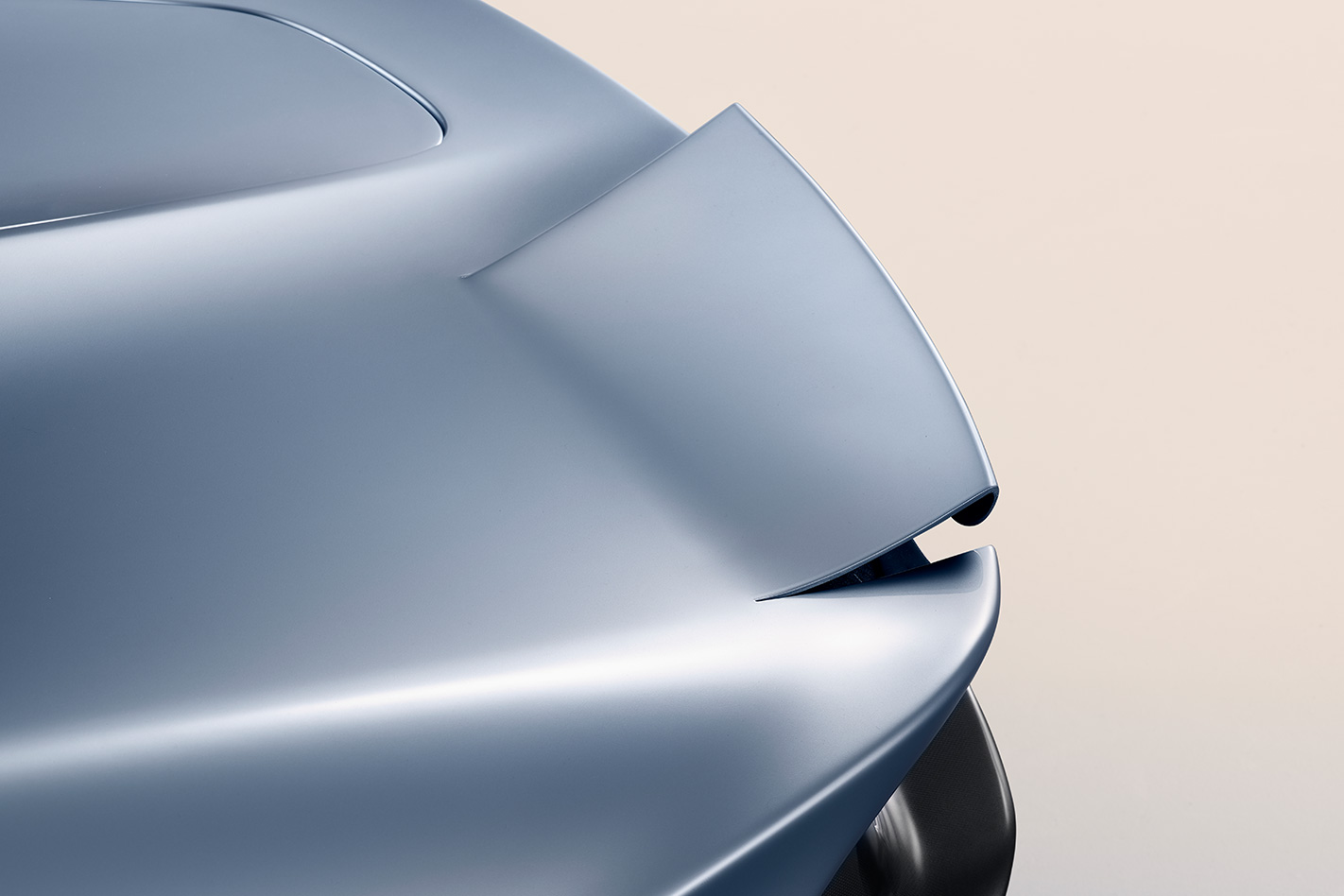
Inside the three-seat cabin, the Speedtail follows a pared back philosophy, with the sun visors being replaced by electrochromatic glass in the windscreen and roof that shifts to opaque at the touch of button. The traditional reading lights have been axed, too, replaced by a strip of LEDs embedded in the glass ceiling that are activated by touch.
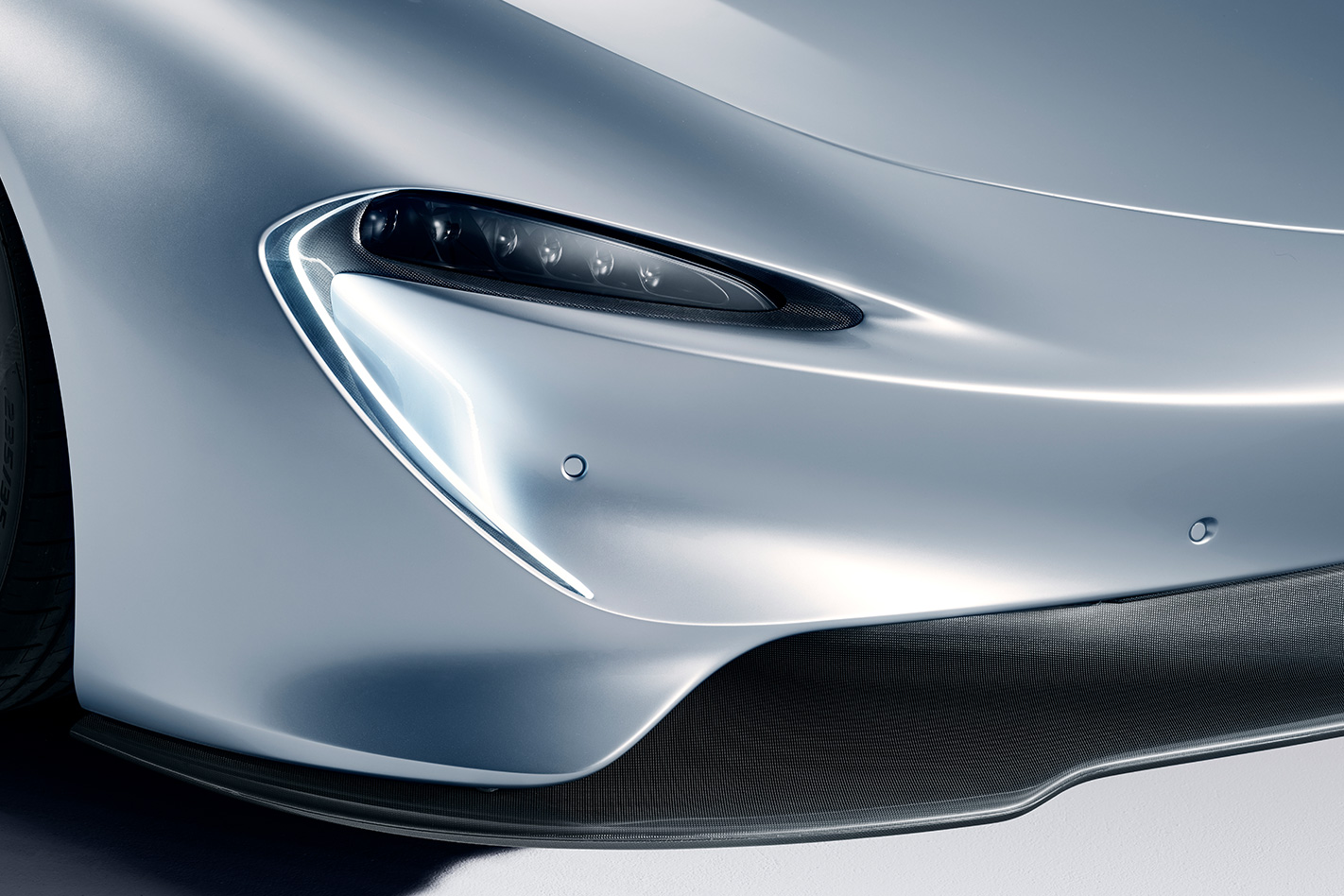
With no left-hand drive configuration (or right-hand drive for that matter), it remains unclear if a one percenter with discerning taste could bring a Speedtail to Australian roads in the future.
TALK about culture shock – Simon Evans has raced and won V8SuperTourers in New Zealand, and a typical day at work consists of oversteer, lots of noise, then some lunch followed by a load more noise and oversteer.
But in December he’ll travel to Saudi Arabia with his younger brother Mitch, who’s competing in Formula E. He isn’t tagging along for moral support, but to race in the warm-up act, the Jaguar I-Pace eTrophy. It’s the world’s first one-make series for production-based electric cars, and a support category for 10 of Formula E’s 13 rounds.
“It is a lot to adapt to,” Evans admits. But the 27-year-old also recognises that this is the way motorsport is ultimately heading – better to be early to the party and get the edge.
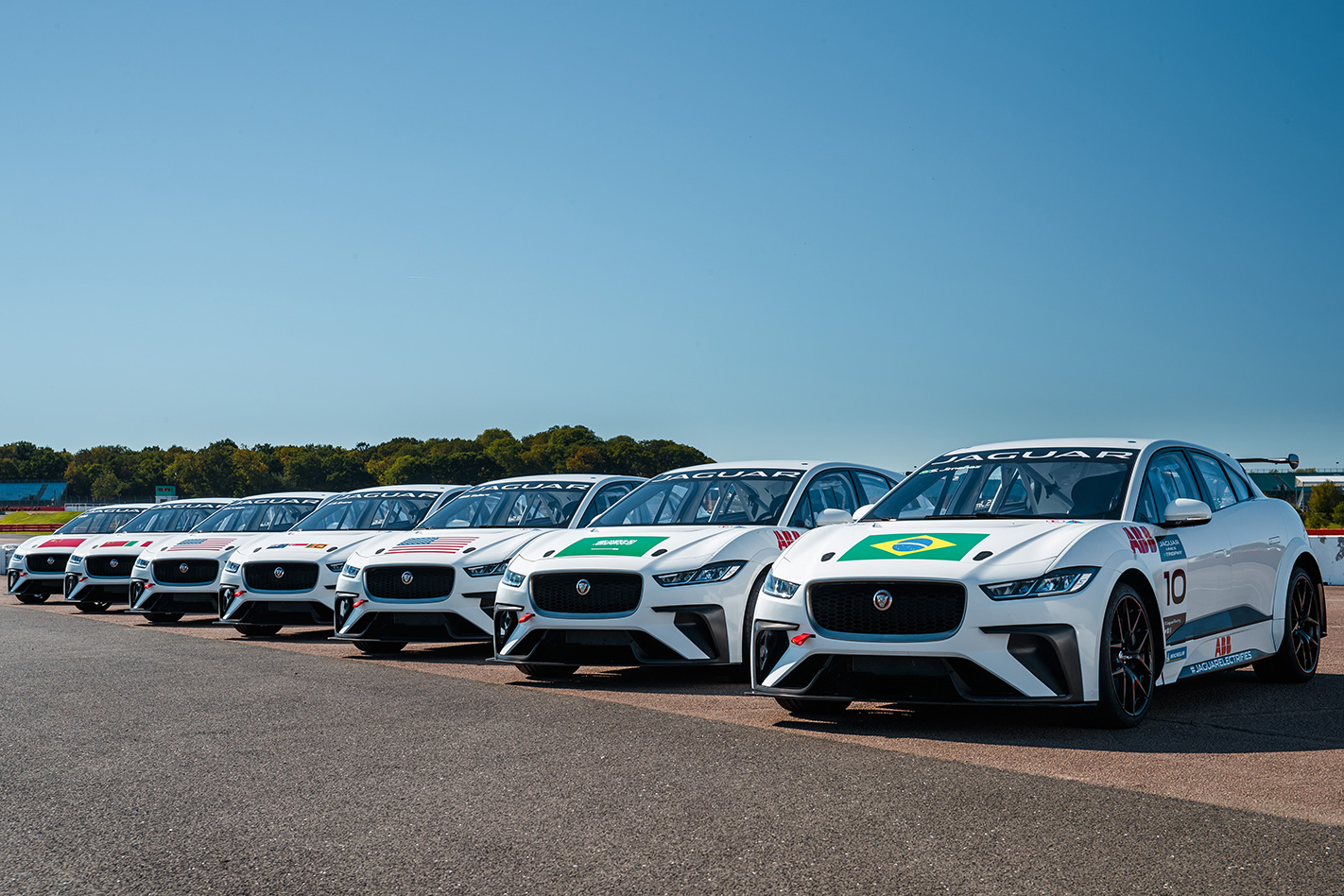
Today, Wheels is experiencing first-hand this new era of production-car motorsport with a drive on Silverstone’s Stowe circuit – a narrower, tighter, slower Silverstone that better replicates Formula E’s street circuits.
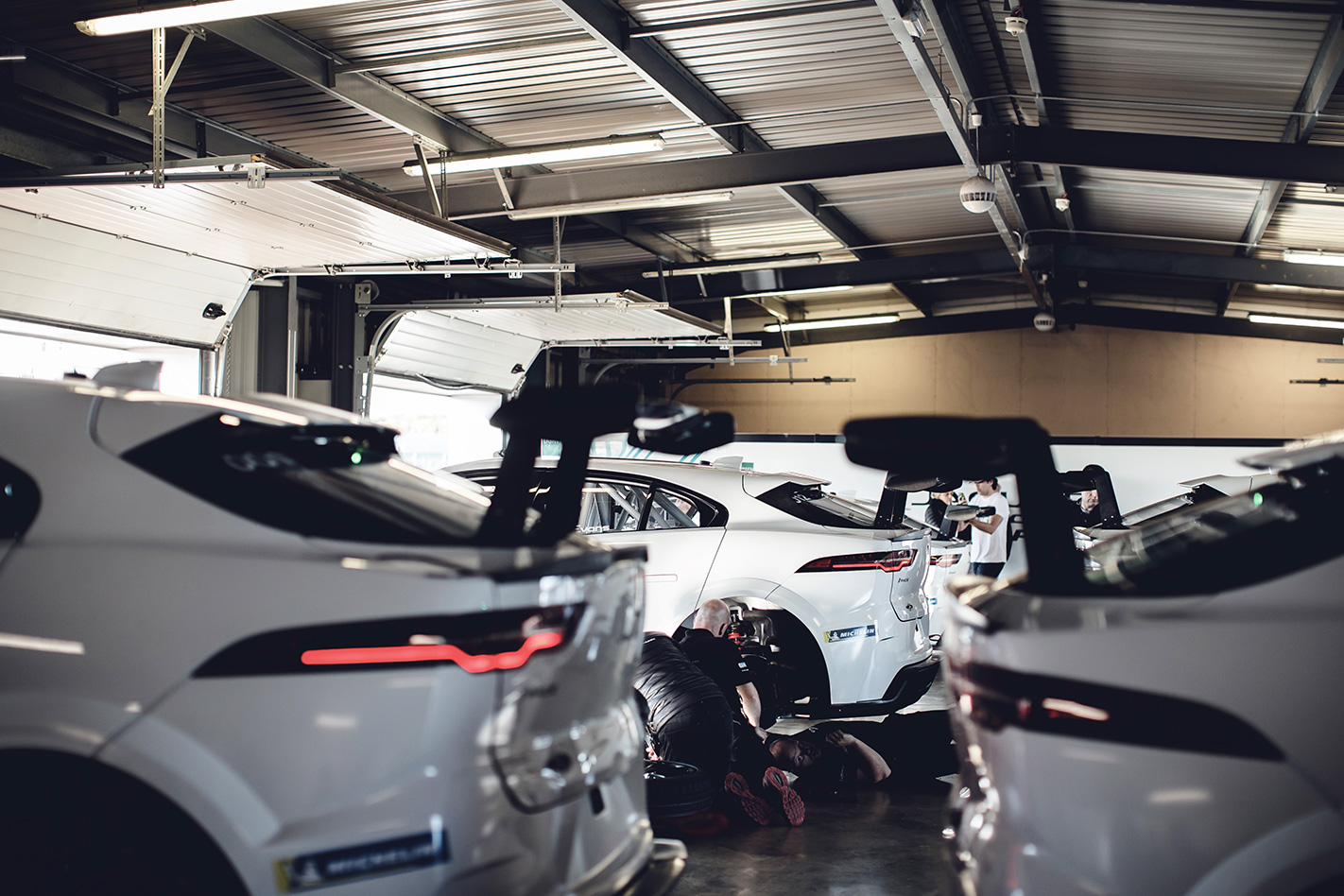
An electric SUV is not the most obvious basis for a racecar, but the I-Pace certainly does a passable impression in Silverstone’s pit garages.
The body is lowered 30mm, new carbonfibre bumpers and wheel arch extensions cover 22-inch wheels, a more aggressive bonnet increases cooling to the EV propulsion system, and a Mecano rear wing generates, well… more in fan appeal than it does in downforce at the relatively low street-circuit speeds the racers will experience.

Cars will be run by World Rally Championship team M-Sport – the Brits who also part-manage Bentley’s Continental GT3 campaign and developed Renault’s World Rallycross Megane – and drivers arrive and drive for £650k (approx. $1.2m) per season, including £200k ($370k) to buy the car – though there’s also a £95k ($175k) per-year lease option.
Jaguar Land Rover Special Vehicle Operations takes care of the build. The road car’s aluminium bodyshell carries over, as does its 90kWh lithium-ion battery, still mounted low and filling the I-Pace’s wheelbase. There are also the same 145kW electric motors at each axle for all-wheel drive, but while the racers can choose the road car’s 50/50 front-to-rear torque split, we’re running 48/52 for less understeer. It also helps keep the more tightly packaged front motor cooler.

Performance mirrors the road car’s, with approximately 290kW and 381Nm from a standstill. It equates to a 0-100km/h time of 4.5-seconds and 198km/h top speed.
Double-wishbone front/multi-link rear suspension essentially carries over, but there are extensive modifications. There are also AP Racing brakes, and rubber that the Michelin engineers describe as most comparable to a Super Sport road tyre – they’ll last a full race weekend whatever the weather.
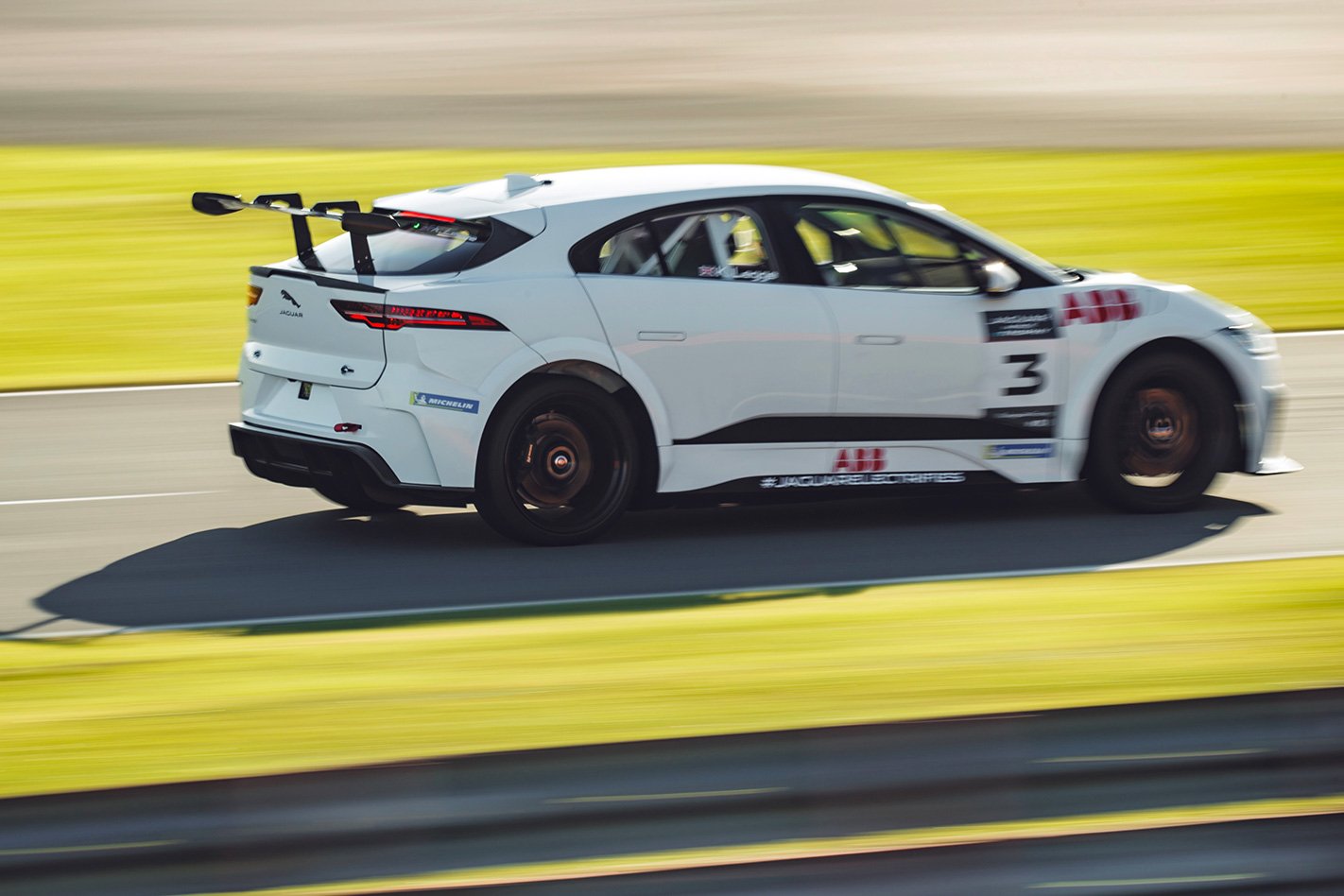
The interior is generic racecar: stripped bare and fitted with an FIA-approved touring car rollcage, digital dash and small suede steering wheel with a few set-up options including ABS assistance, re-gen, and brake bias, but the drivers don’t need to manage battery charge during a race –they’ll just drive as hard as they can.
The transmission interface of the road car is one of only a few familiar features, looking chintzy like Christmas decorations in such stark surroundings. Foot on brake, press D, and we’re rolling out onto the track.
The eTrophy feels like an alien, contradictory experience straight off the bat. Everything – your helmet, the bucket seat, the minimalism – feels stereotypically motorsport, but you’re aware that you’re sitting higher than in most racecars, and in a larger car too.
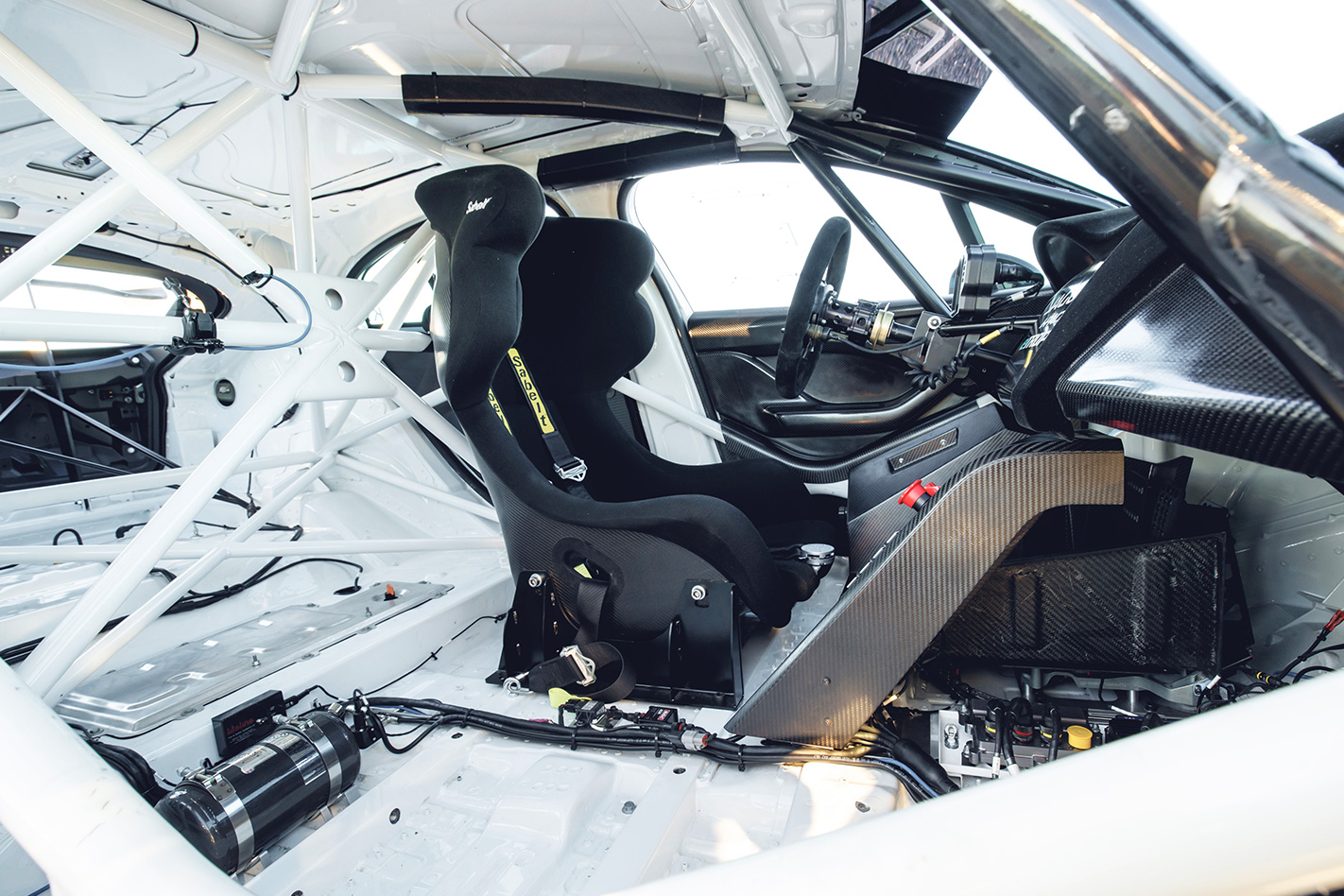
Then there’s the calm – the light hum of electric motors, the rushing wind noise, the fact that you’re not changing gears, not looking at shift lights or rpm.
It’s that disquieting feeling that you’ve left home without something, unable to pinpoint exactly what. Only the pronounced squeal of brake pads and chirrup of tyres really breaks the silence.
Weight is down 225kg versus the road car – though still heavy at 1965kg – but I can’t say the eTrophy feels any quicker. Perhaps that’s because we’re never accelerating from a standstill, maybe because of the space of a racetrack. Whatever, speed builds steadily and quietly, like parking on a very steep hill and accidentally leaving the handbrake off. You have time to think, to look around, to really concentrate on your braking point.

Leaving it as late as I dare into one of Stowe’s big stops – witches’ hats, grass and Armco filling the windscreen – suddenly the speed gains context and drama and I jump on the brakes.
Re-generative braking is still in the mix because the I-Pace couldn’t do 25-minute races on a battery charge without harvesting some juice under braking. But pedal feel is good, the blend between discs and pads and up to 0.4g of re-gen apparently seamless, and more than anything, the four-piston calipers do a great job of clamping onto those discs and hauling down such a hunk of metal.
Earlier, Evans had said he wanted a “little more feel, a bit more bite” from the brakes, and had told me to go late, but not too late. “It’s important to make the tyre work, and stop the tread blocks moving around and overheating. The driver who does that will come out on top. But if you go in too hard with the ABS, the blocks will move around.”
I feel the ABS stutter that Evans flagged up, but the speed wipes off quickly. Turn in and the steering is fast and responsive but almost eerily light, there’s more body roll than other racecars, and the eTrophy feels stubbornly one-dimensional in its cornering attitude, like you can either keep it neat and tidy or overdrive and get a load of understeer. You need to be patient, and because torque floods instantly through the throttle, you have to feed it in like you’re diffusing a bomb.
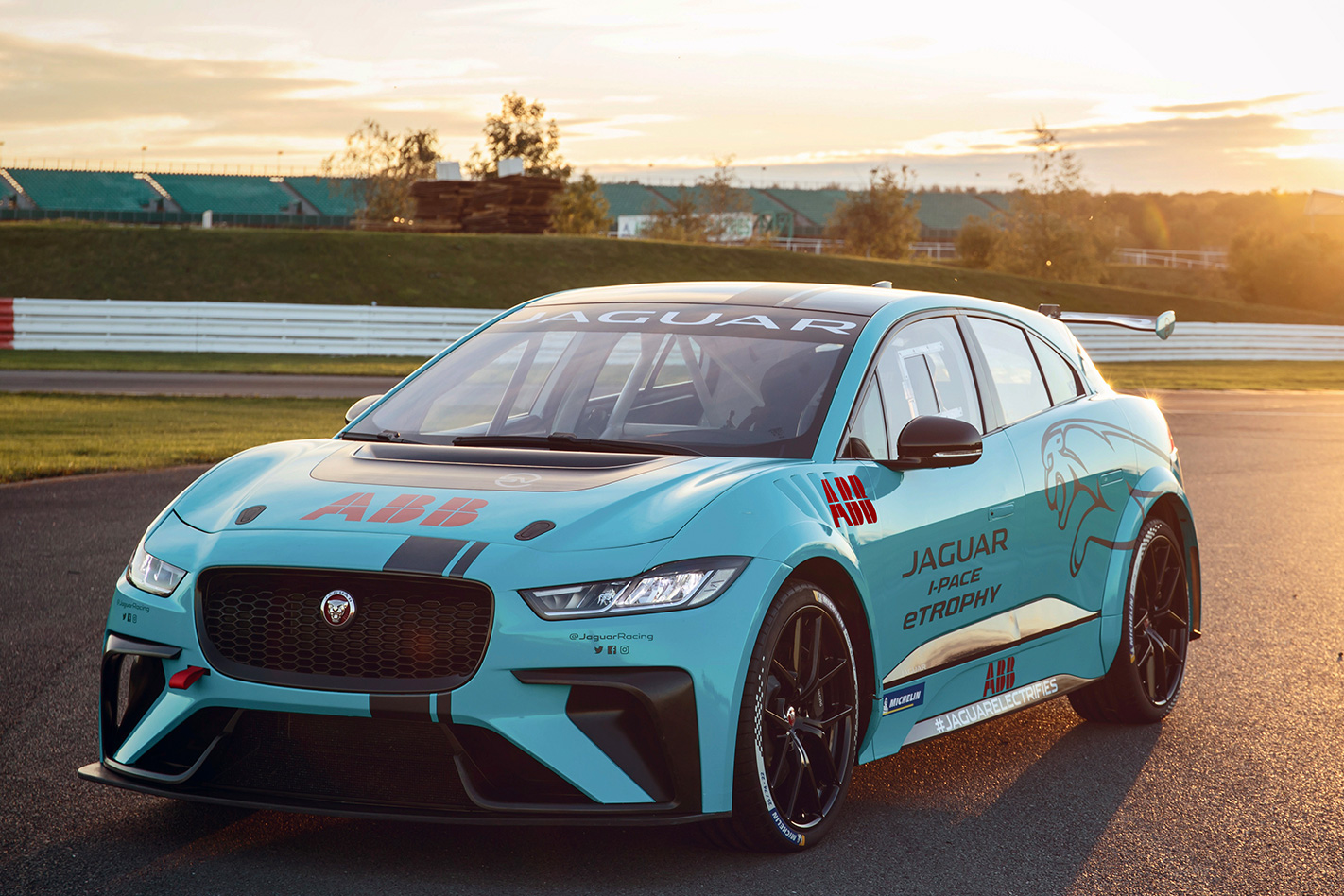
But the I-Pace does not drive like a two-tonne SUV – it controls roll neatly, and feels far nimbler and responsive than the kerb weight suggests, thanks to the bulk of the batteries and electric motors nestling low down between the axles.
This is partly why the eTrophy feels so enjoyable through the faster right-left flick after the start-finish straight – the relative softness of the chassis and lack of mechanical grip unlocking a certain throttle adjustability.
“It doesn’t feel like 700kg more than I’m used to,” says Evans, “even through the transitions.”
You can pitch it into the corner, nose gripped up, rear end light, scrubbing off the excess speed you’ve carried in with a little oversteer, then using the all-wheel drive and instant torque to carry the speed down the next straight.
It’s fun, it’s a challenge, but when I pit I don’t quite have that giddy euphoria that defines most racecar drives. I’d like less roll, weightier, more feelsome steering, and above all, I want to go faster and feel more excitement.
Then again, I wasn’t racing hard against 20 identical cars on narrow street circuits with little margin for error. And the racing should be hard. The fastest drivers, estimates Evans, will be separated by hundredths of a second, and Jaguar expects many of those new carbonfibre parts to be frequently damaged.
“It should be super-close and exciting to watch,” reckons Evans.
Let’s hope so. Because if the eTrophy is to convince as the future of motorsport, it needs to put on a damn good show.
SPECS
Model: Jaguar iPace eTrophy Engine: Twin permanent magnet electric motors Max power: 298kw Max torque: 700Nm Transmission: Single-speed Weight: 1965kg 0-100km/h: 4.5sec Fuel economy: zero exhaust emissions Price: $370k
The McLaren Speedtail is here, er, sort of.
Hours before its launch (overnight for us here in Oz), we’ve already seen the hybrid hypercar spread far and wide across the internet thanks to the likes of Twitter user @AutoBant and car collector Kris Singh (@lamborghiniks on Instagram).
The images here are from those two sources, who have apparently had access to them ahead of the car’s official reveal.
That cap on the front wheel is reportedly for high-speed runs and is removable (some will be pleased to know), while estimated power figures still remain just that.
The closest concrete evidence we’ve had to a power output is from a quote from the company’s CEO reported by Top Gear in the UK.
A past report by Top Gear cites a McLaren owners’ event as the occasion on which McLaren CEO Mike Flewitt decided to reveal to potential Speedtail customers that the car would have more than 735kW.
“That [twin-turbo V8] has gone from 426bhp in a GT4 to I-can’t-tell-you-what-yet in a Speedtail. But it’s more than 1,000PS [735kW],”Flewitt said.
As for whether it’ll come to Australia, MOTOR has been given hints by the brand’s local boss that it’s probable.
“We’re a global company so we make sure that all of our markets are served correctly. So on that basis… I would expect that we may see the car here,” Asia Pacific boss for McLaren Automotive George Biggs has told MOTOR in the past.
“The unique nature of [The Speedtail] means we’re still working through, but I would hope to see that car here,” he said of the Speedtail and its central driving position.
“We’re under a number of different regulatory environments in different markets, and Australia is very similar in that we respect and work through [ADRs].
“[ADRs are] not particularly unique, it’s just a case of going through that process.”
Stay tuned as we watch for the official reveal of McLaren’s fastest road car yet.
Wheels Magazine
Probably Australia’s best-known motoring magazine, Wheels serves a broad range of interests for car enthusiasts, putting it firmly in the best position to report on all aspects of the Holden Commodore – from its value as a family car to its ability to put a smile on your face.
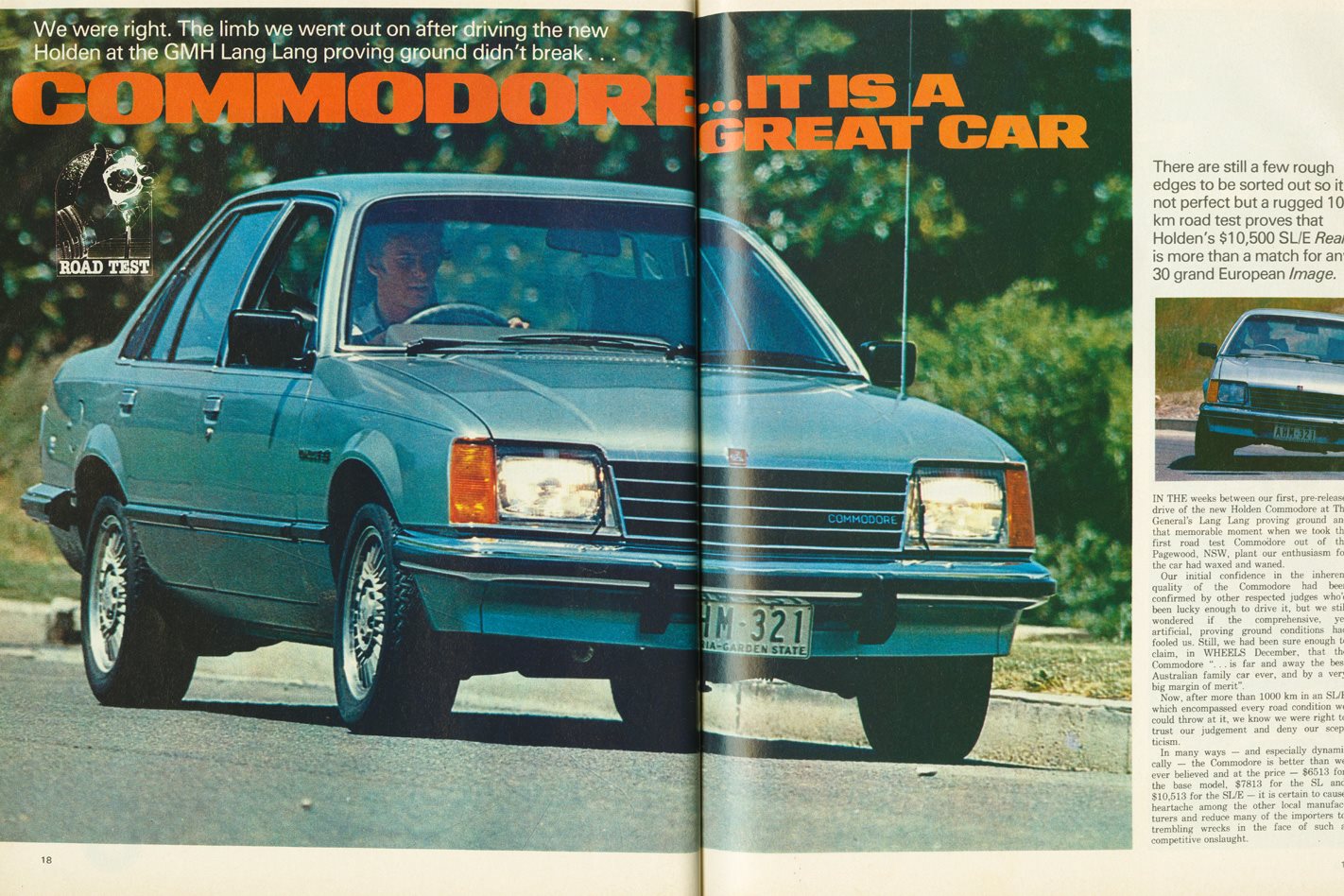
Wheels’ first road test of the first Commodore
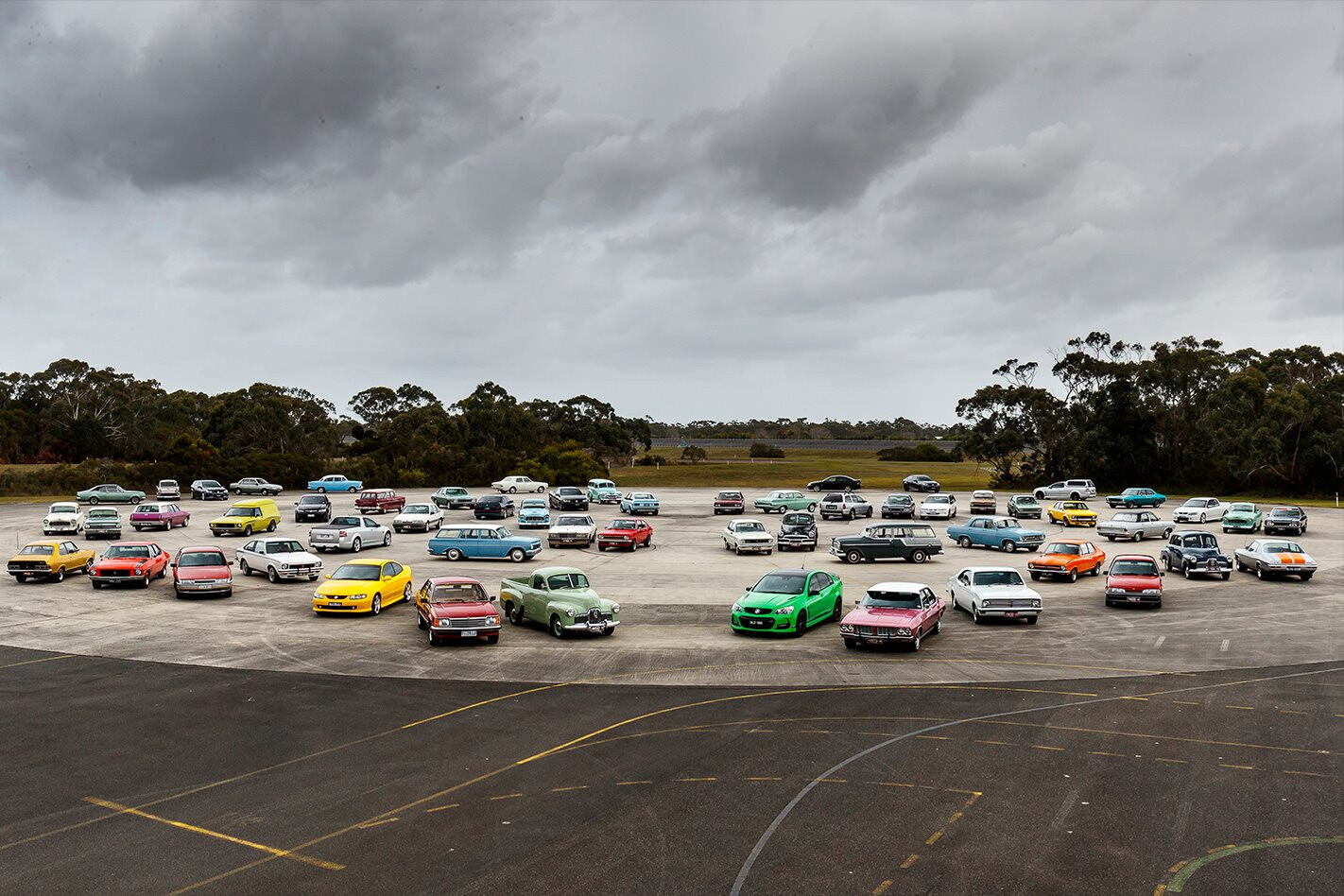
‘Farewell Commodore’ photoshoot
To mark the end of Holden’s Australian manufacturing, Wheels invited more than 50 faithful owners to the Lion’s Lang Lang proving ground for one more hurrah.
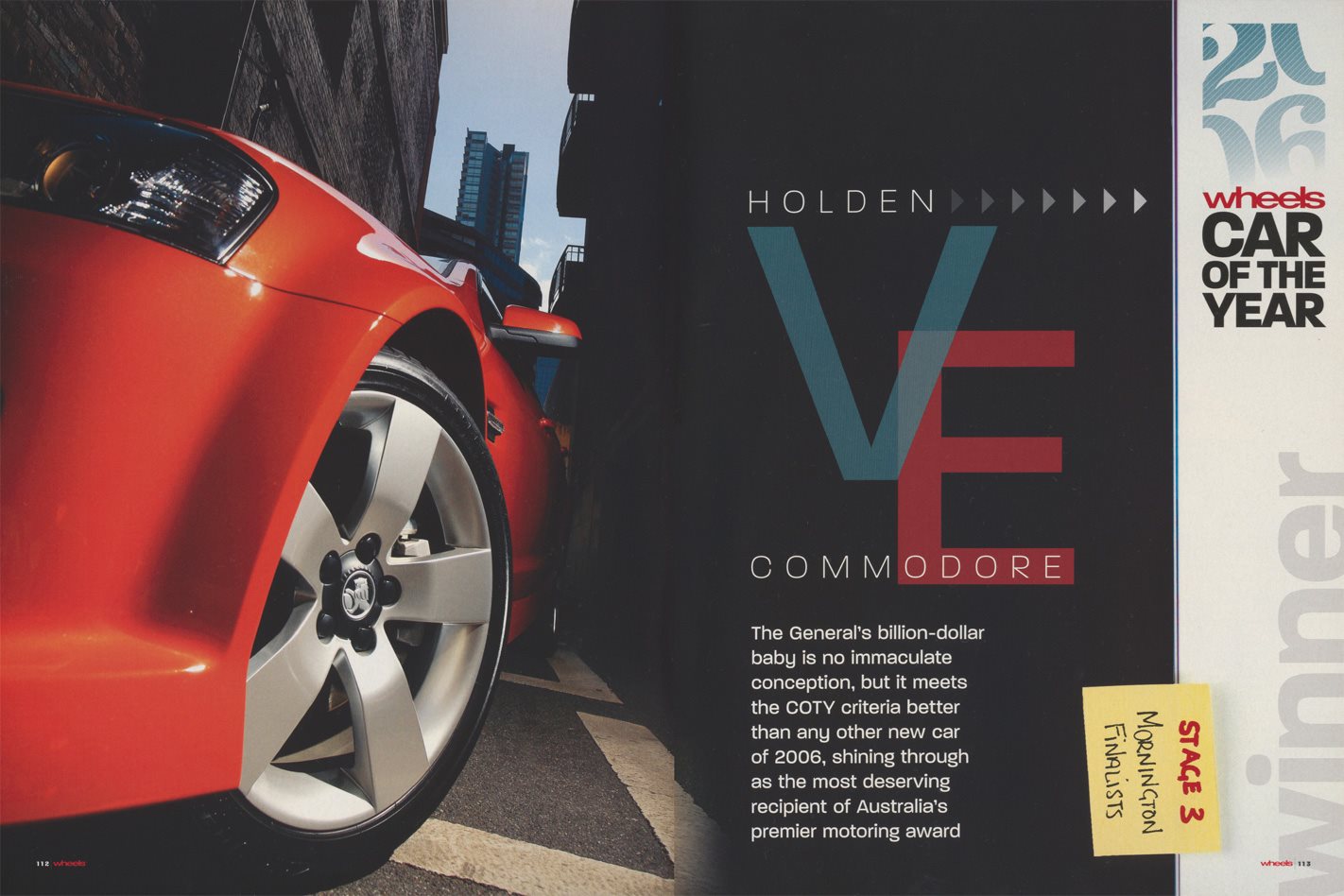
Commodore wins 2007 Car of the Year
The General’s billion-dollar baby is no immaculate conception, but it meets the COTY criteria better than any other new car of 2006.
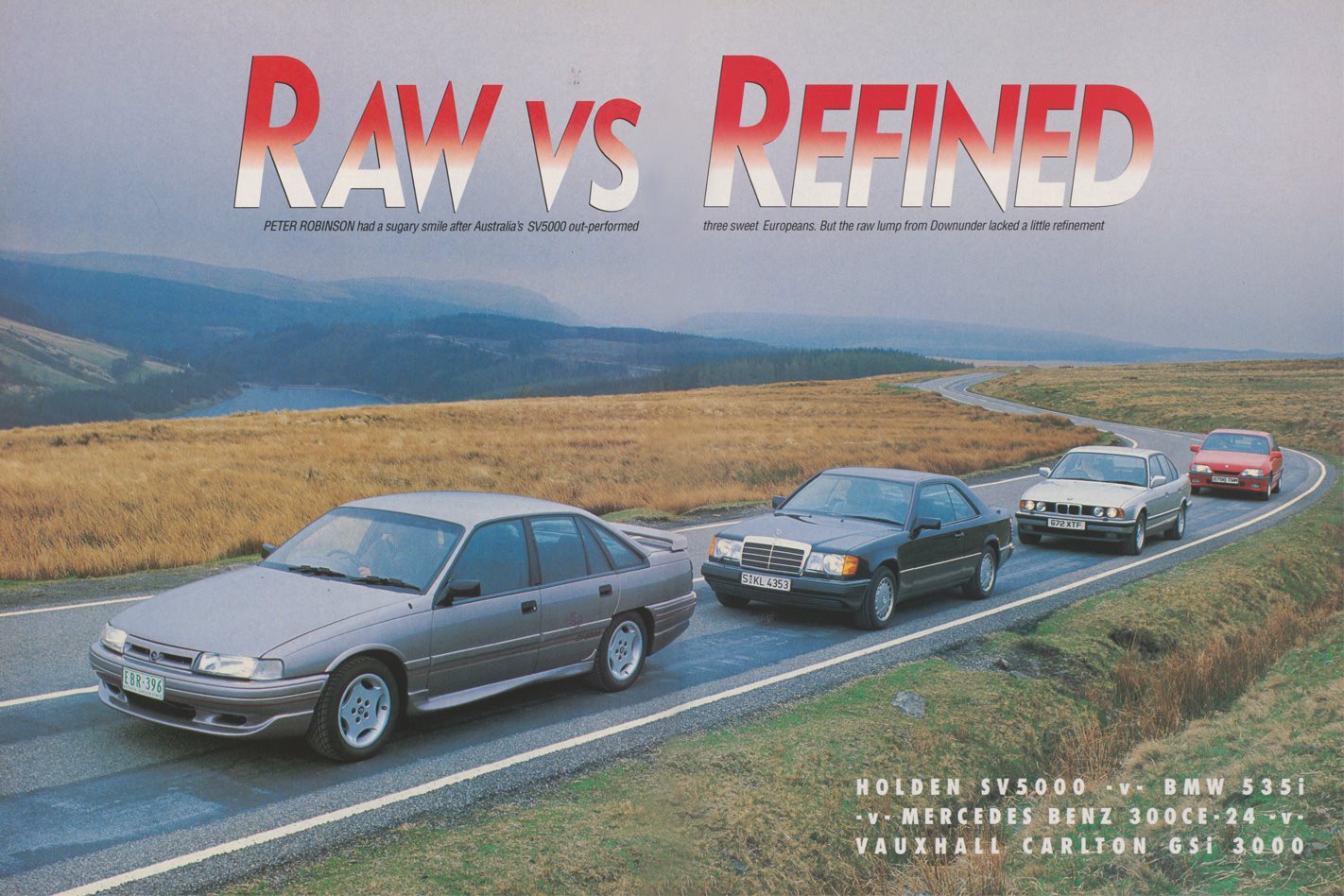
Raw vs Refined: Taking on Europe’s best
Peter Robinson had a sugary smile after Australia’s SV5000 out-performed three sweet Europeans.
MOTOR Magazine
If you want fast and fun cars, MOTOR is where you turn. What better magazine to cover off all things V8.
Whether SS or HSV, MOTOR has driven (or thrashed on track) and documented the high-performance sedans which kept our love of V8 muscle alive.
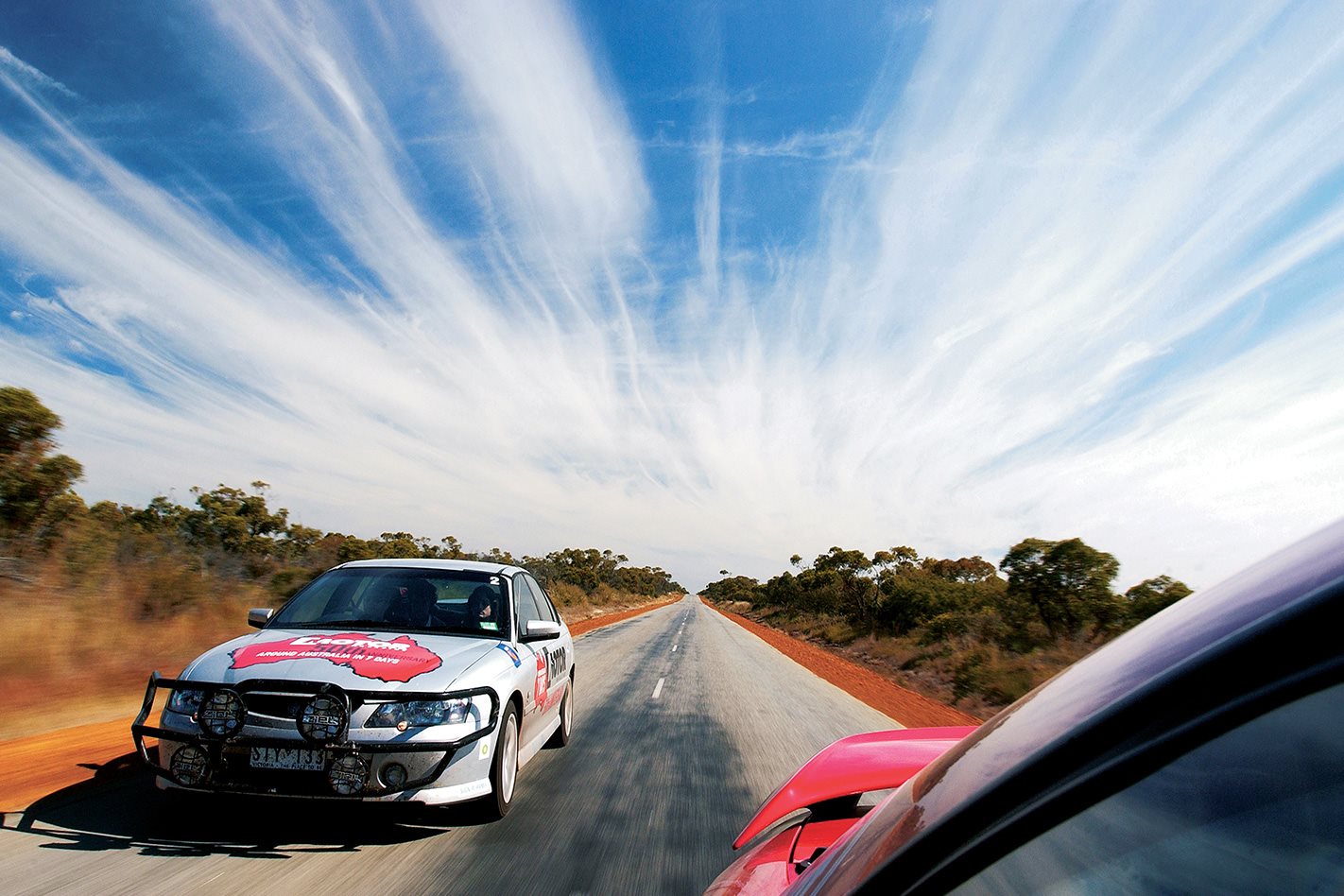
For our 50th birthday, we went for a celebratory lap of the map in a Commodore SS – and picked up a new record!
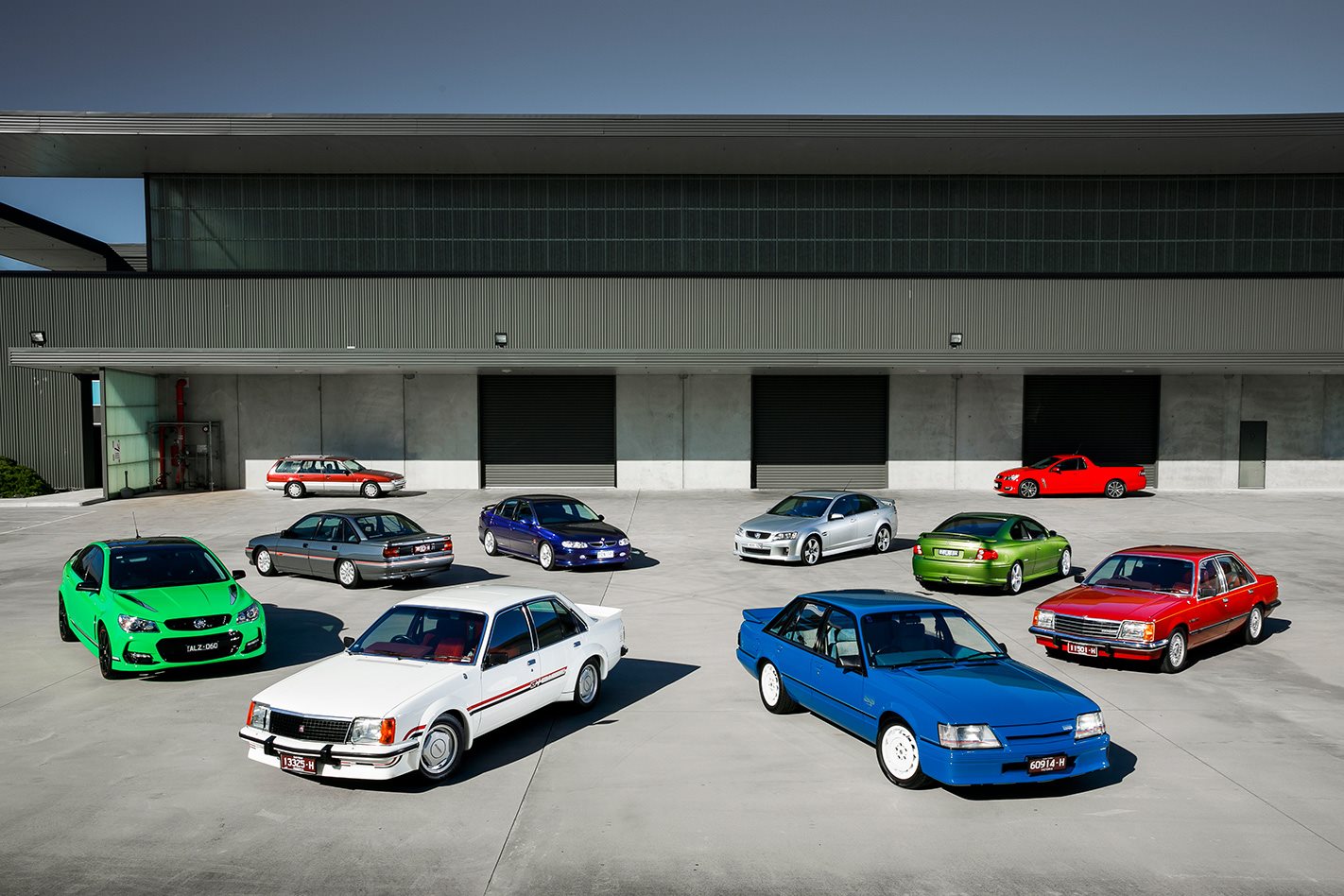
Holden’s 10 best performance Commodores
From VB to VFII, we gather the hottest-ever Holden Commodores – according to us – for the big hurrah at the end of the locally-made Commodore’s lifespan.
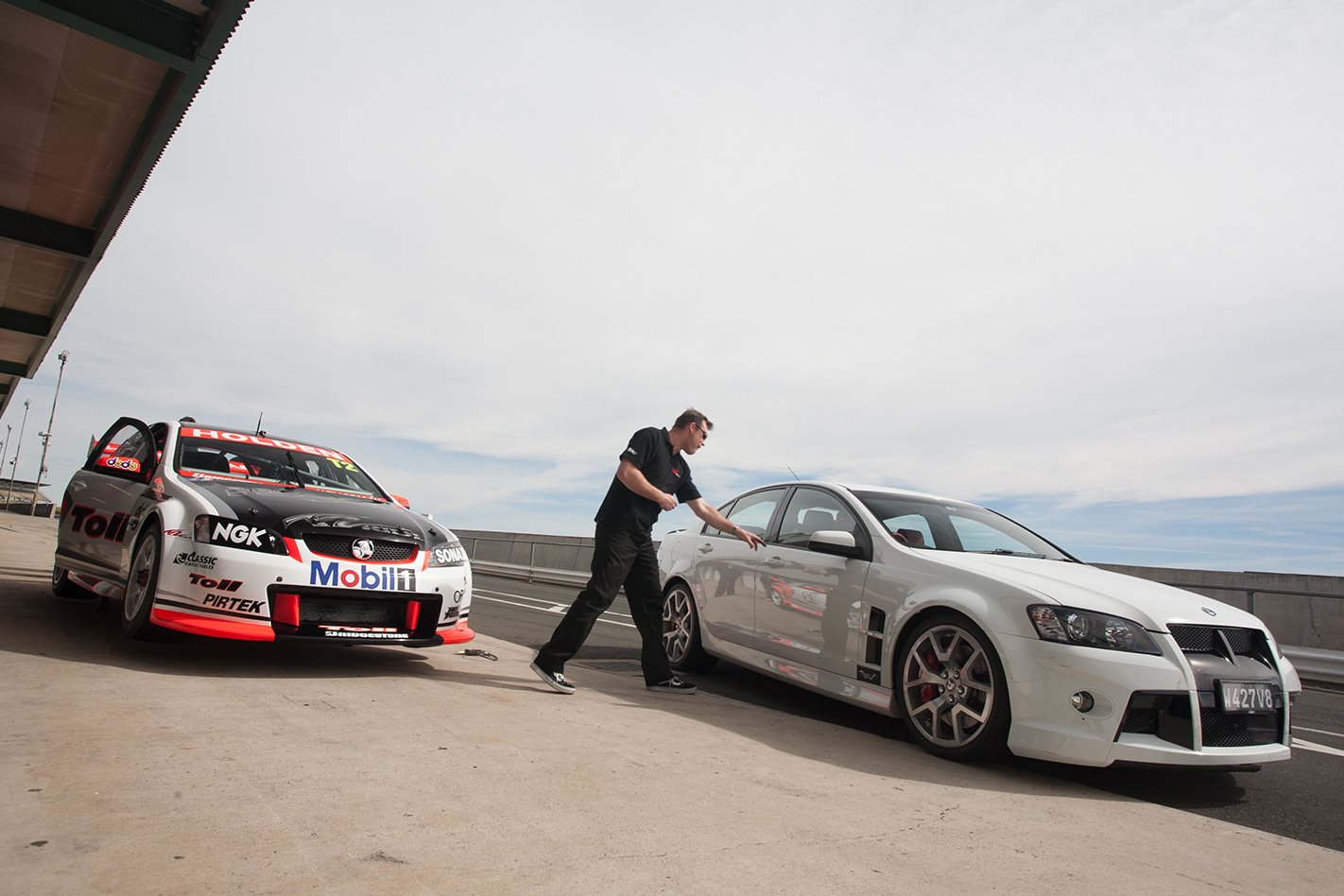
HSV is part of the reason Holdens have been going so fast all these years. In 2008 we compared road and race HSVs on track and Garth Tander crashed the road car!
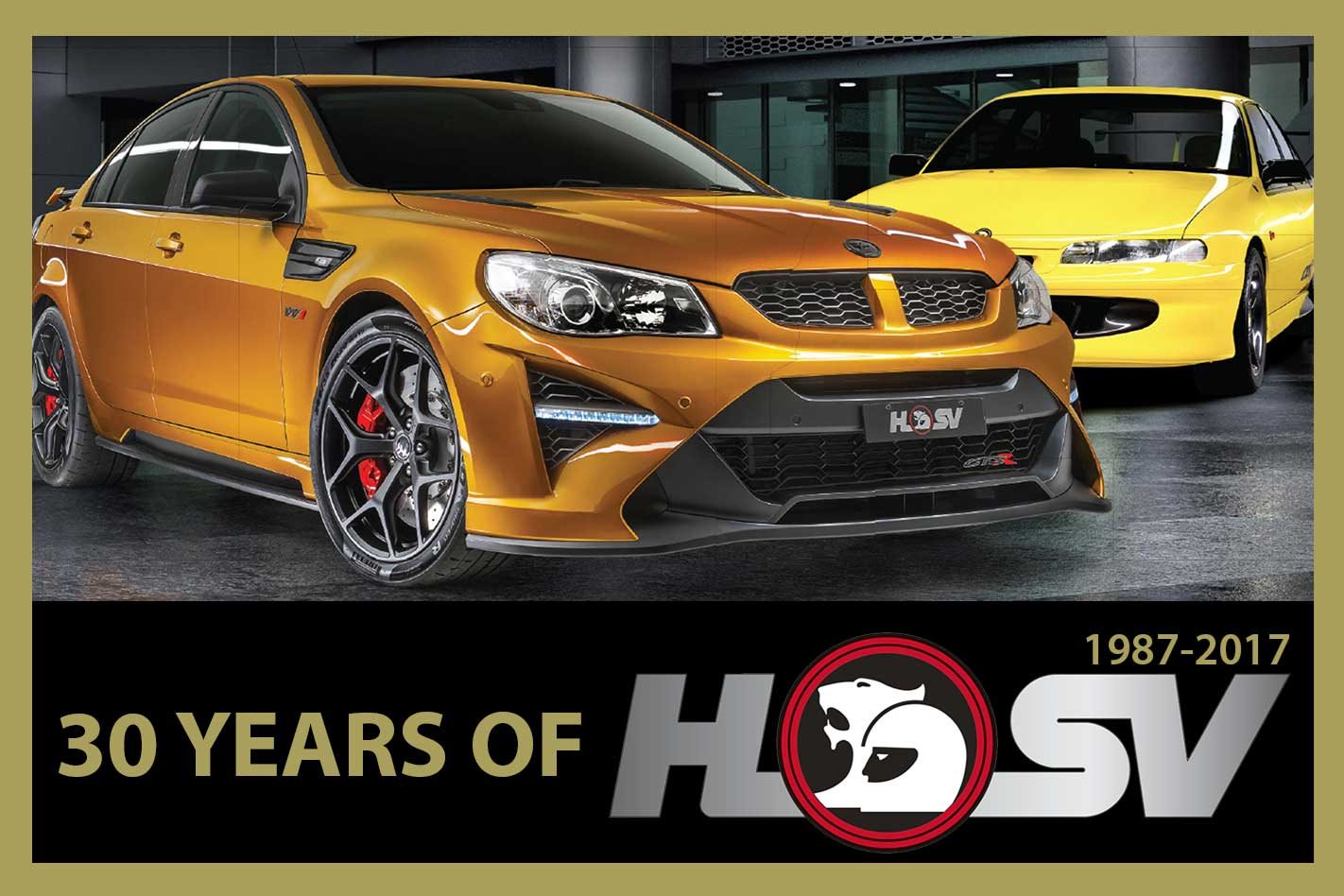
In 30 years HSV had transformed and defined much of Australia’s muscle car heritage, and it couldn’t have done it without Holden.
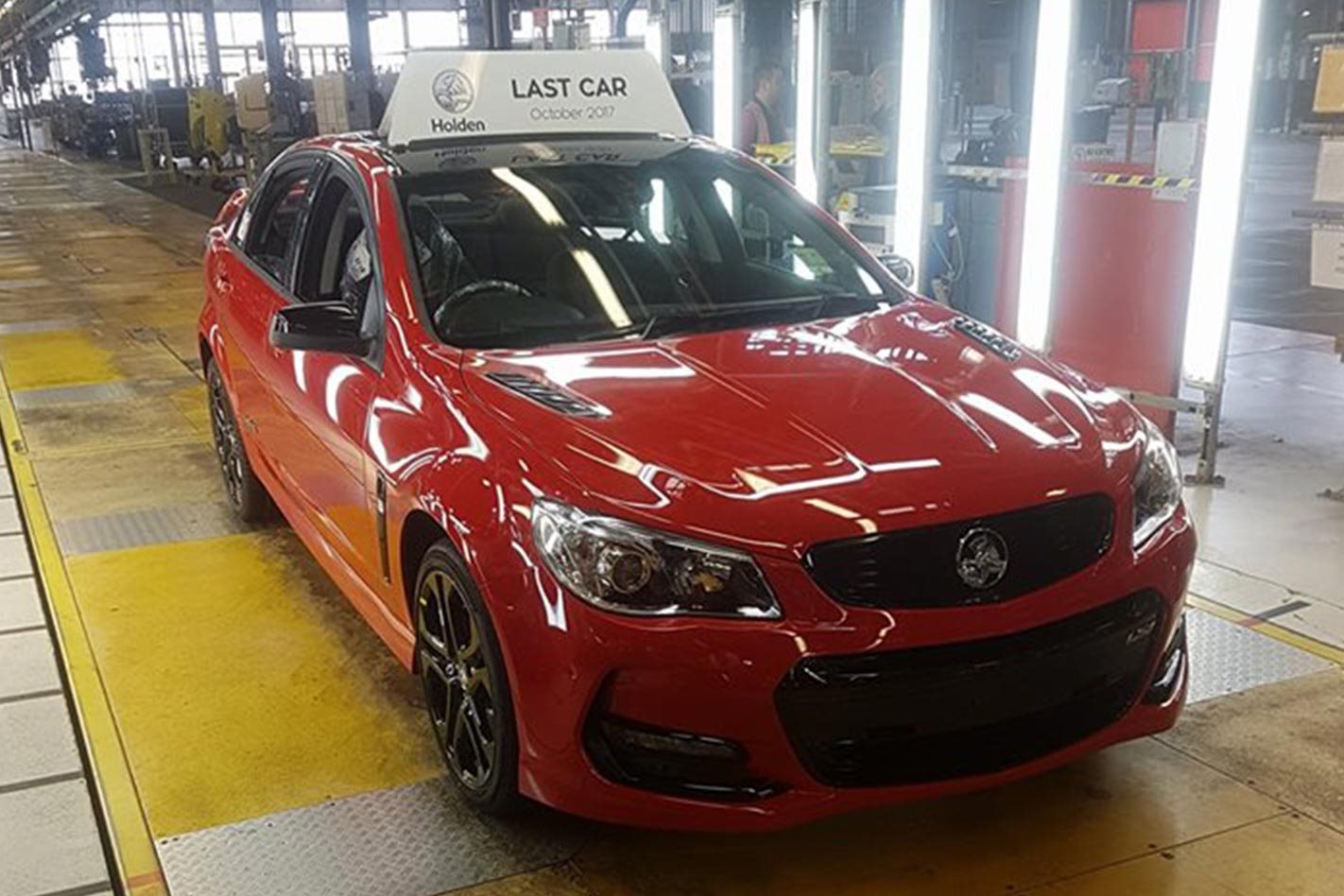
We followed along the final hours of Commodore production, and reported on the last few to roll off the line.
STREET MACHINE
Streetie has been writing about wild custom Commodores built for the street and the strip since the very beginning.
A rich history of custom culture means the team at SM is the best place to find out what enthusiasts with imagination can do with one of Australia’s icons.
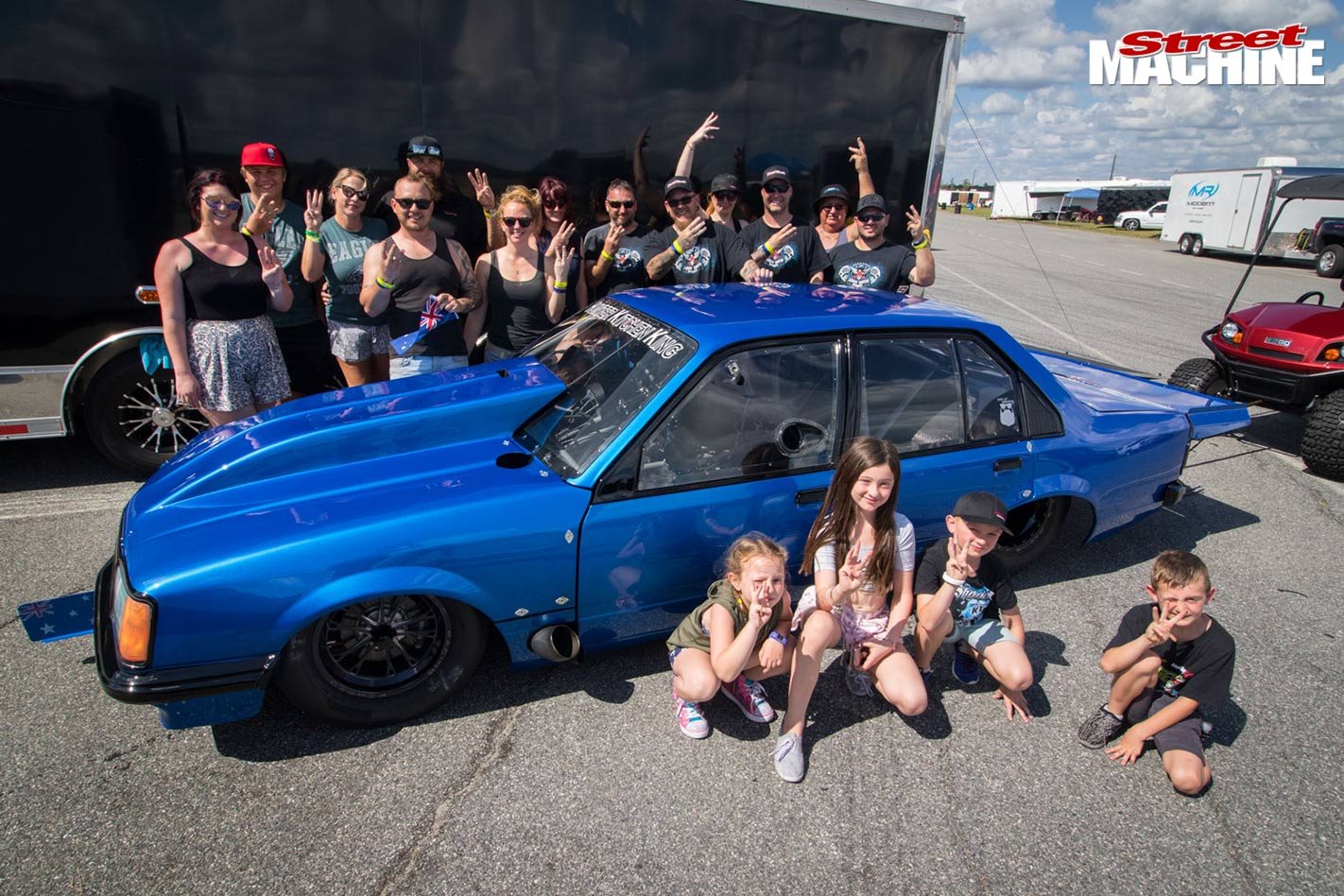
Jet Martin’s 4000hp VB Commodore
Jet Martin’s version of the very-first Commodore is a state-of-the-art radial drag car, but wrapped in the original steel body. Powered by a 4000hp twin turbo big block, the VB won the $50,000 Grudge Kings race in Sydney earlier this year, before being shipped to the USA to take on the world’s best. And the steel-body Commodore came through, winning the hearts of the yanks and finishing in the top eight at the fiercely-competitive No Mercy event in South Georgia.
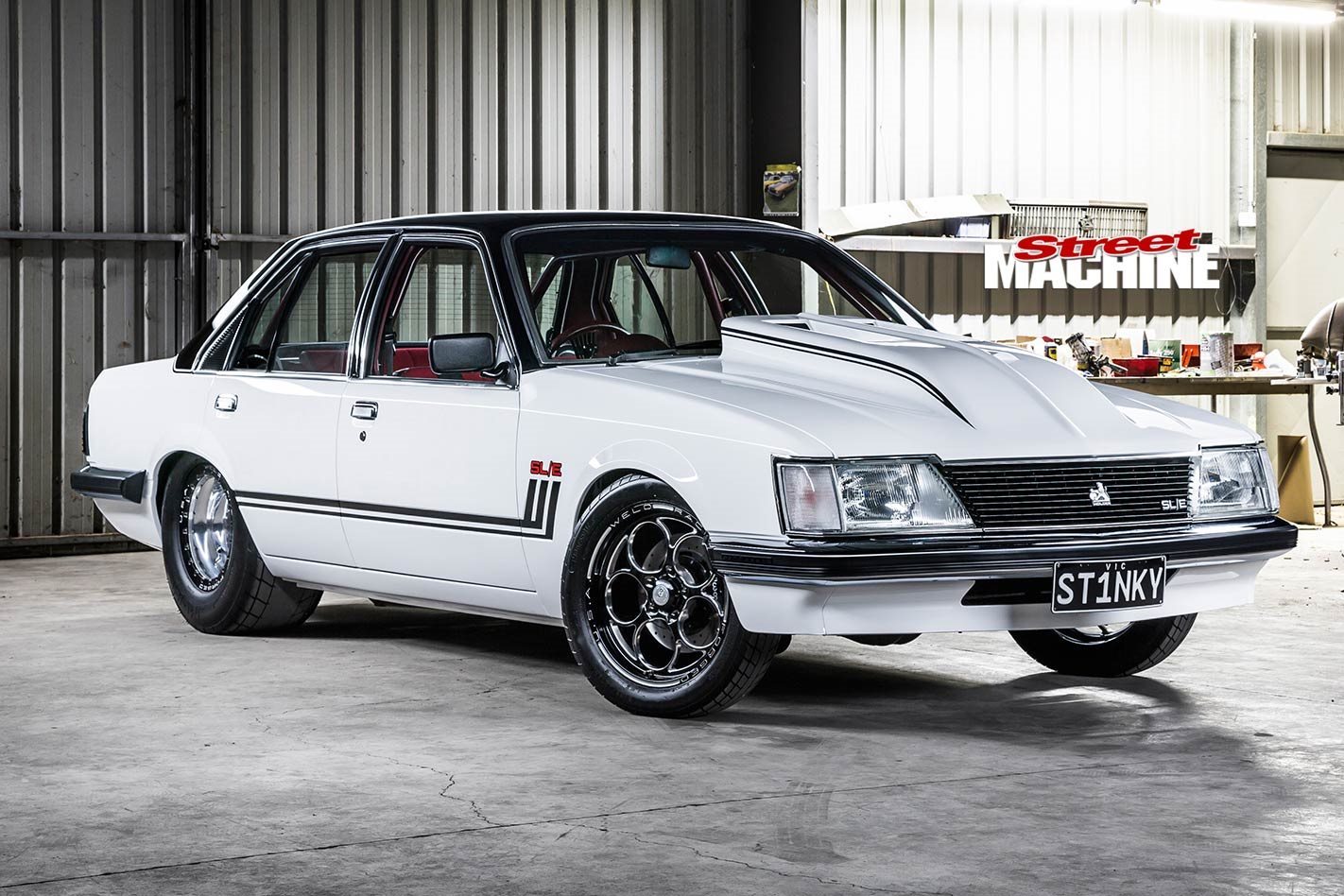
ST1NKY: LS3-powered 1983 Holden VH Commodore SL/E
Craig Morrow’s VH is a fine example of what a high-end show and go street machine looks like in 2018. The car is bristling with innovative features, won the Tuff Street Champion gong at Street Machine Summernats 30 and is packing a lazy 1000hp thanks to a 427ci LS-based V9 that is topped by an intercooled Whipple supercharger.
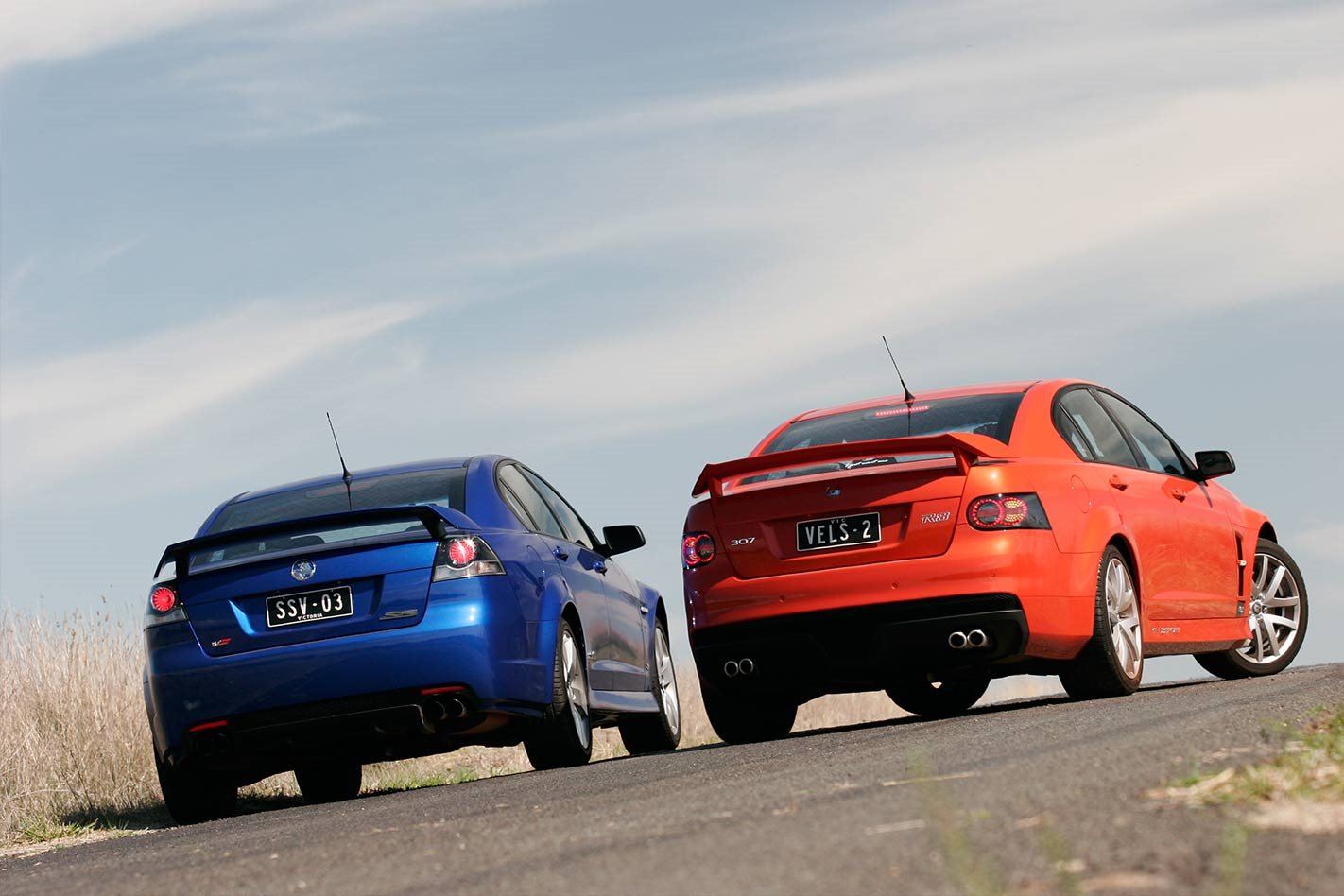
History of the Holden Commodore part four: VE-VF models
There is a common trope online to dismiss the 40 year history of the Commodore because it was ‘just an Opel’. This four-part series by Dave Carey takes this arguement apart piece by piece!
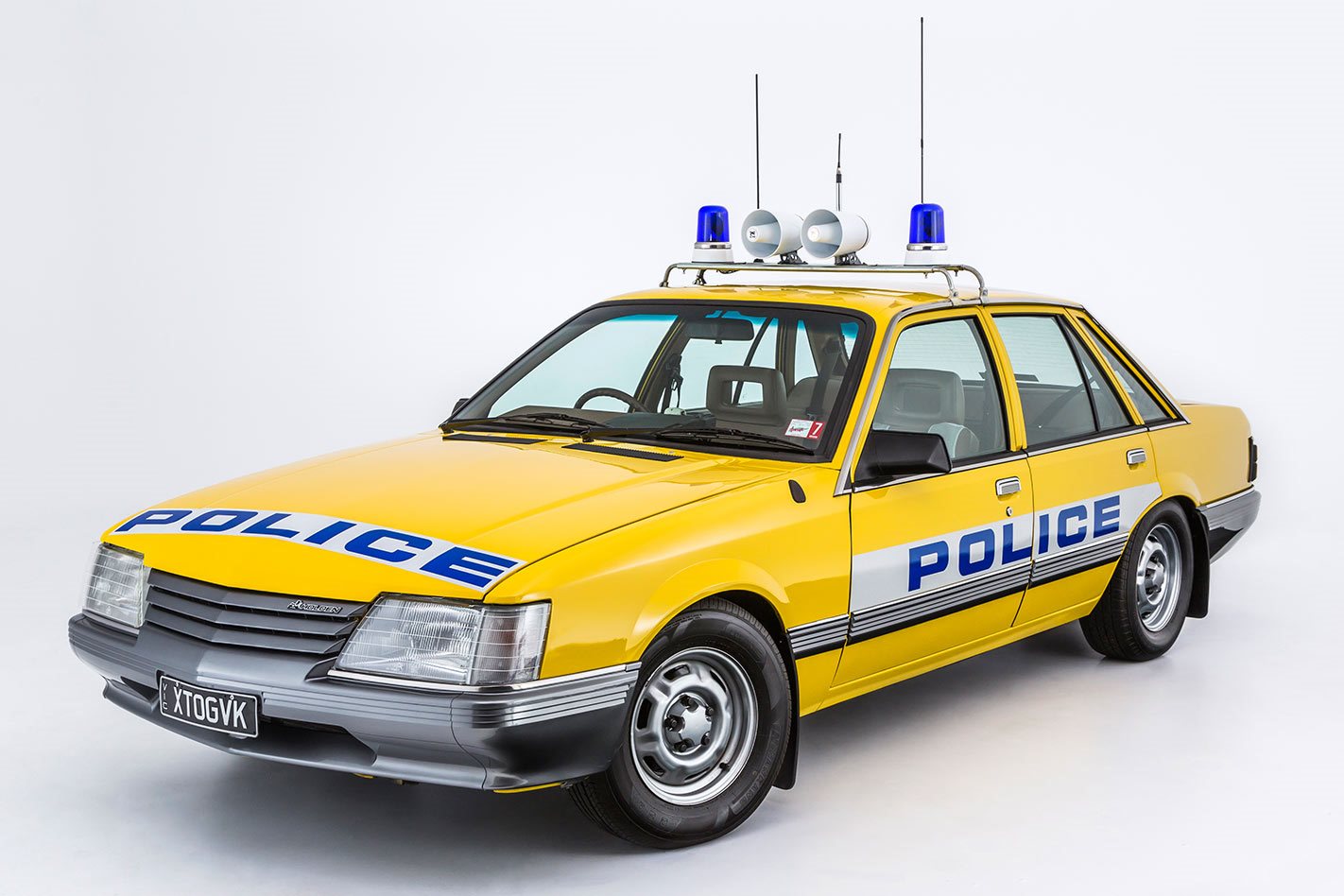
LS1-powered 1985 BT1 police-spec Holden VK Commodore
Commodores served many roles over their 40 year history, including as a tool of the highway patrol. This one has been restored to the hilt, is bristling with period accessories and has had a slight upgrade in the engine department.
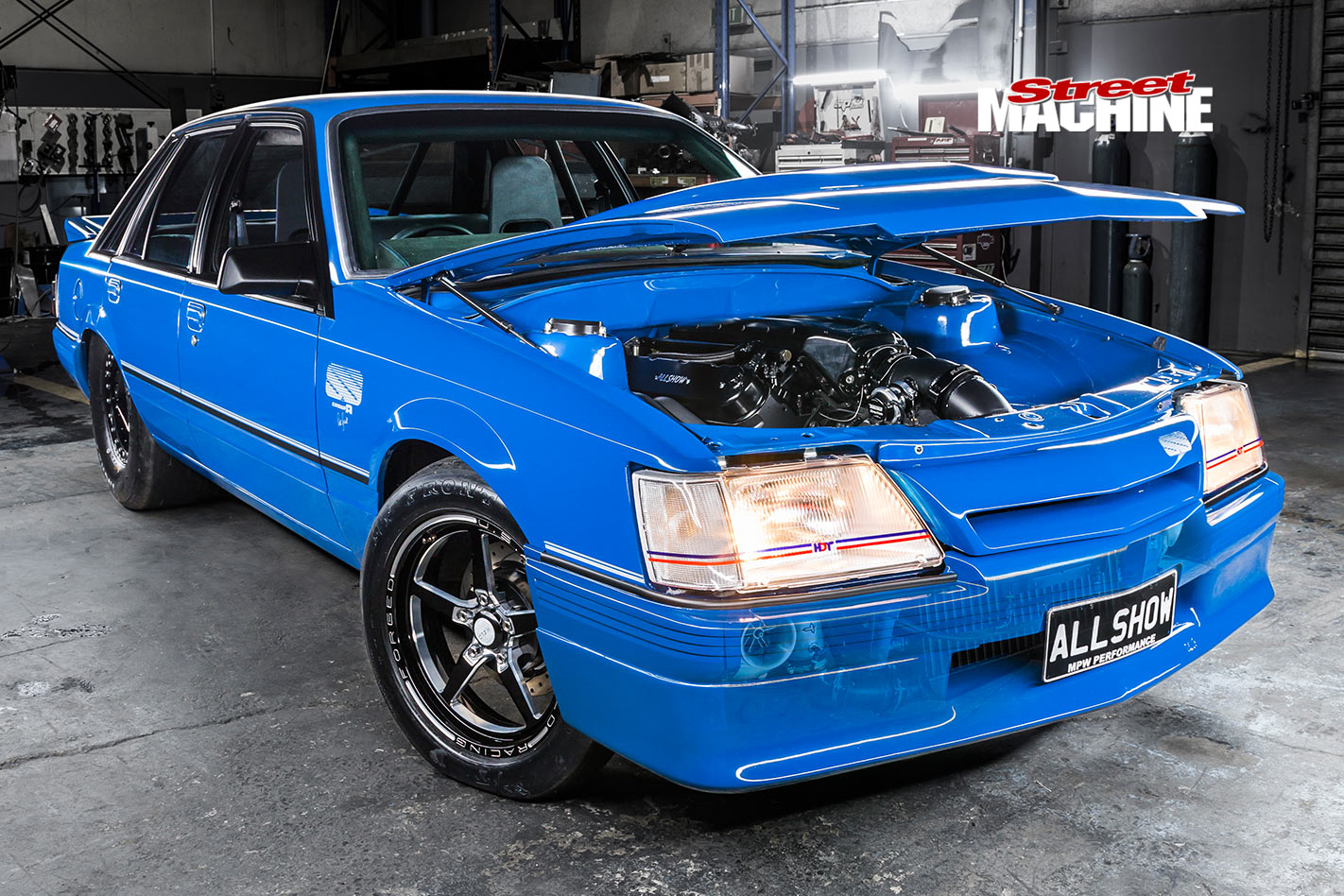
ALLSHOW: 7-Second Holden VK Commodore
Early Commodores are very popular in the fast street car scene, but few are as fast – or as well presented – as Adam Rogash’s VK Brock tribute.
Unique Cars Magazine
Join Glenn Torrens for a run-through of the generations of local Commodore.
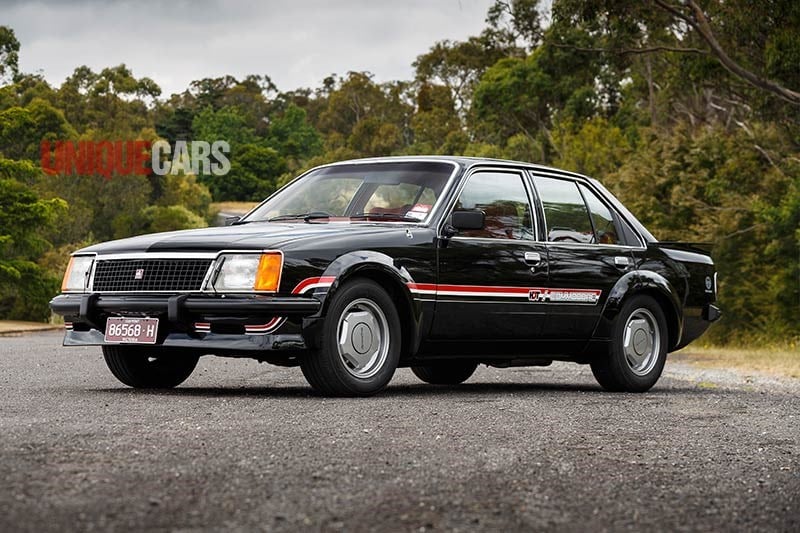
Your guide to buying the first Brock Commodore.
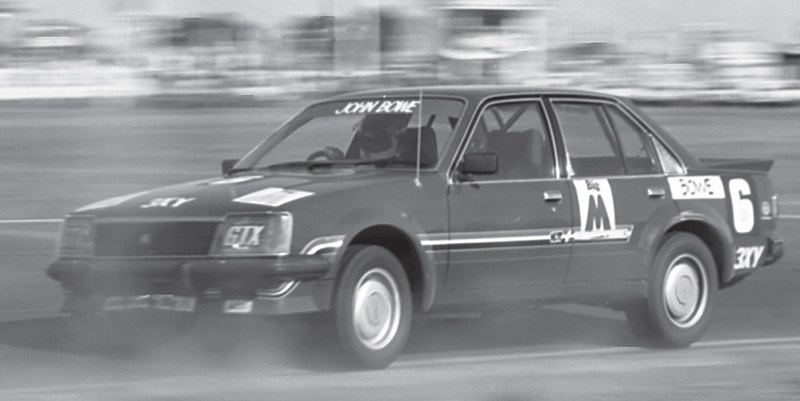
John Bowe looks back at the all-HDT VC Commodore event at Calder Park, the 1980 Race of Champions.
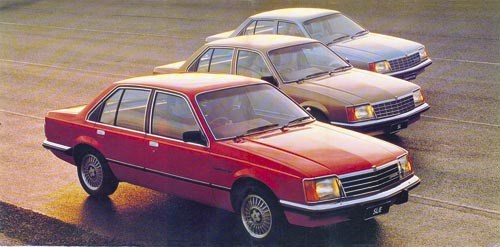
The first Commodore launched on 26 October 1978 – almost 34 years ago. And it’s hard to imagine any future local model ever generating the same level of excitement and anticipation again.
Watching the last of the local Lions come down the line.
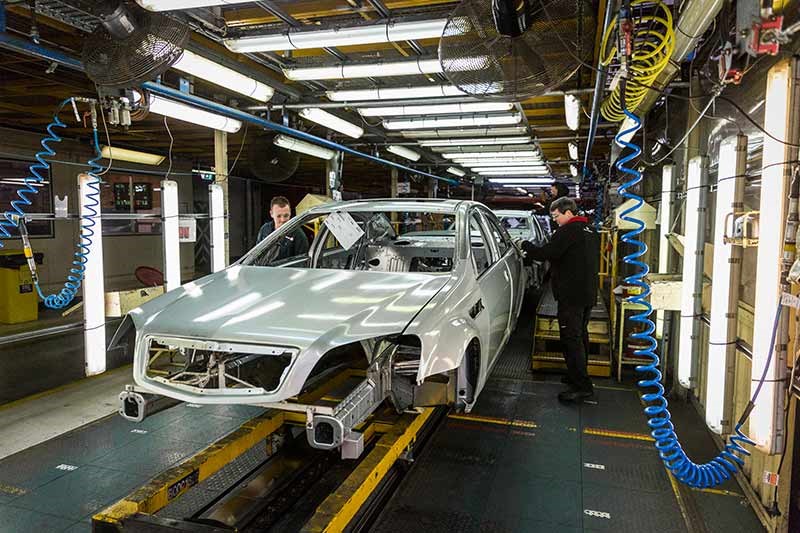
The love and appreciation of Australian-built cars isn’t limited to these shores.
Exports means a reasonable number of GM products made their way to markets such as the Middle East, South America, the UK and the US, but of more interest are the enthusiasts who decide they absolutely must have some Aussie muscle in their lives, no matter the obstacles in their way.
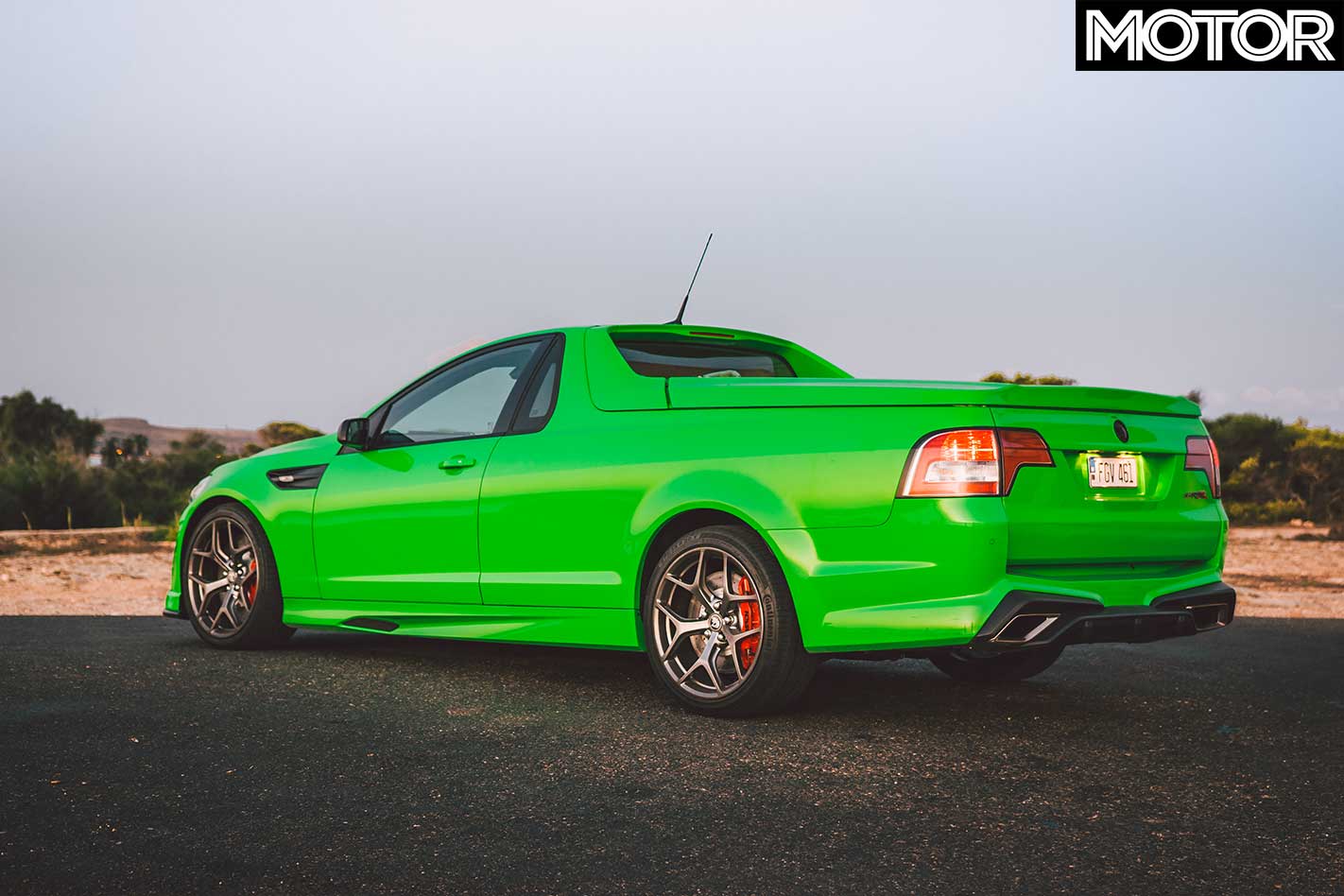
Enthusiasts like Sam, the owner of this Spitfire Green HSV GTSR Maloo. Sam has lived on the tiny Mediterranean island of Malta for the past decade. Prior to this he lived in Australia for 33 years, in the process developing a love of Holdens and HSVs.
Sam’s GTSR Maloo is an upgrade from a VU SS. With Aussie manufacturing winding up, Sam said “it is now or never, so I contacted my brother and told him to buy me one.” The Maloo was then shipped over to Malta.
Perhaps surprisingly, registering the HSV for use in Malta was a breeze. As a right-hand drive country, all that was needed was an inspection by the transport department. With a population of less than half-a-million people, it’s fair to say there is nothing else like it on the island, Sam saying “It turns heads, and being green makes it stand out more.”
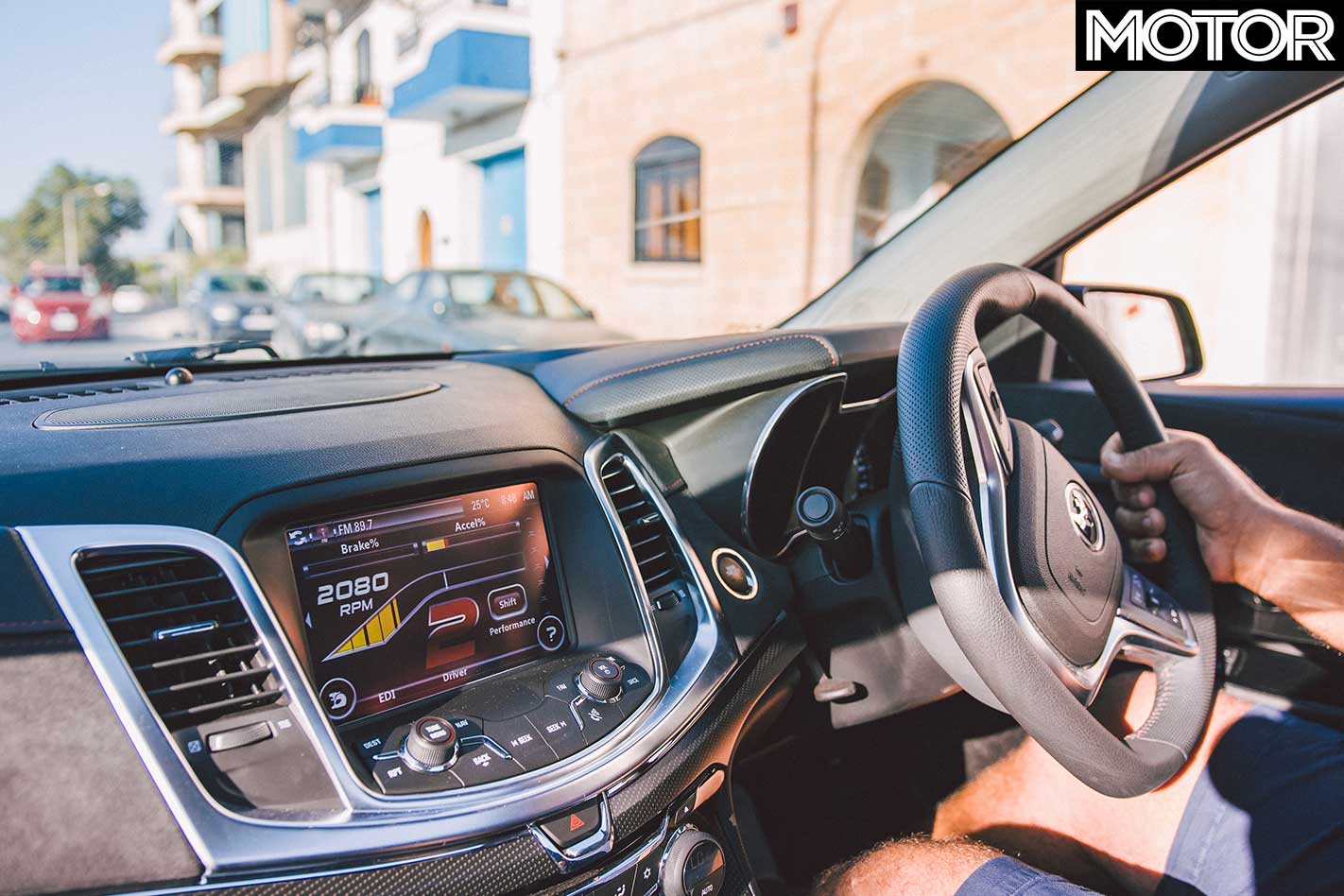
Sadly, Malta isn’t exactly a driving hot spot, with “no highways and only short distances.” However, Sam travels to Sicily, home of the amazing Targa Florio roads, to “give it a thrash over there on their highways.” Well done, Sam.
Do you know of an Aussie car a long way from home? Flick us a note at [email protected].
Kia has added a sporty GT-Line variant to top of the Rio light-hatch range that’s powered by a gutsy 1.0-litre turbocharged petrol engine to better complement the Rio’s well-controlled ride and steering.
Priced at $21,990 drive-away, the Kia Rio GT-Line lines up nicely against other sporty small hatches, including the Toyota Yaris ZR and Renault Clio GT-Line. It is the first Aussie Kia to come with a seven-speed dual-clutch automatic transmission, and the first Rio to feature autonomous emergency braking (AEB).
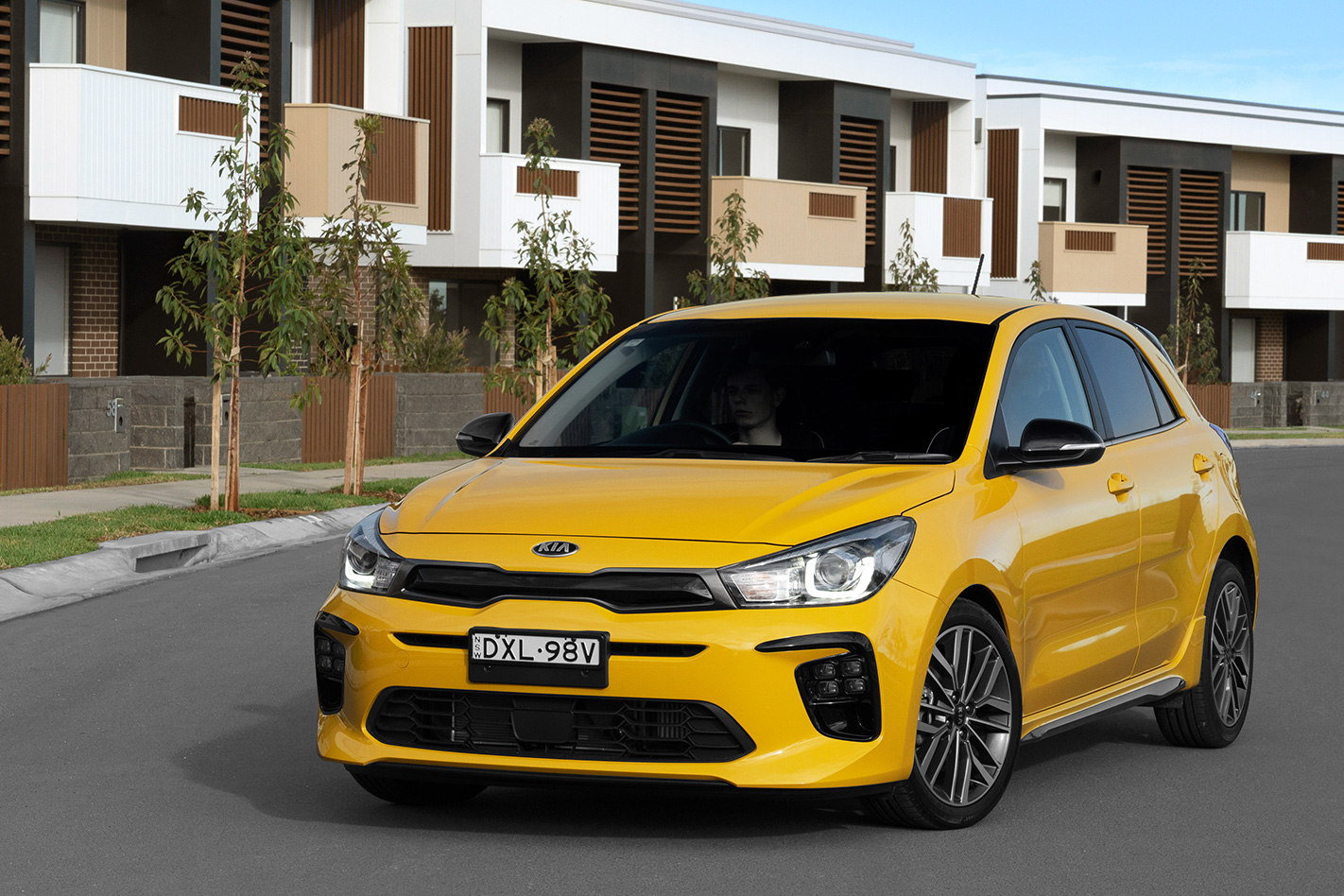
The GT-Line’s 3-cylinder turbo produces 88kW and 172Nm, which puts it lineball with its rivals for performance. As well as being more powerful than the 1.4-litre engine already in the range, it’s more economical too, sipping 5.4L/100km compared to the bigger engine’s 6.2L/100km.
The ageing 1.4-litre engine, which was carried over from the previous model, is now available with a six-speed automatic gearbox, as well as the standard four-speed, to get more out of its 74kW/133Nm output and reduce fuel economy a little to 6.0L/100km.
Each engine runs on regular unleaded (RON91) petrol.
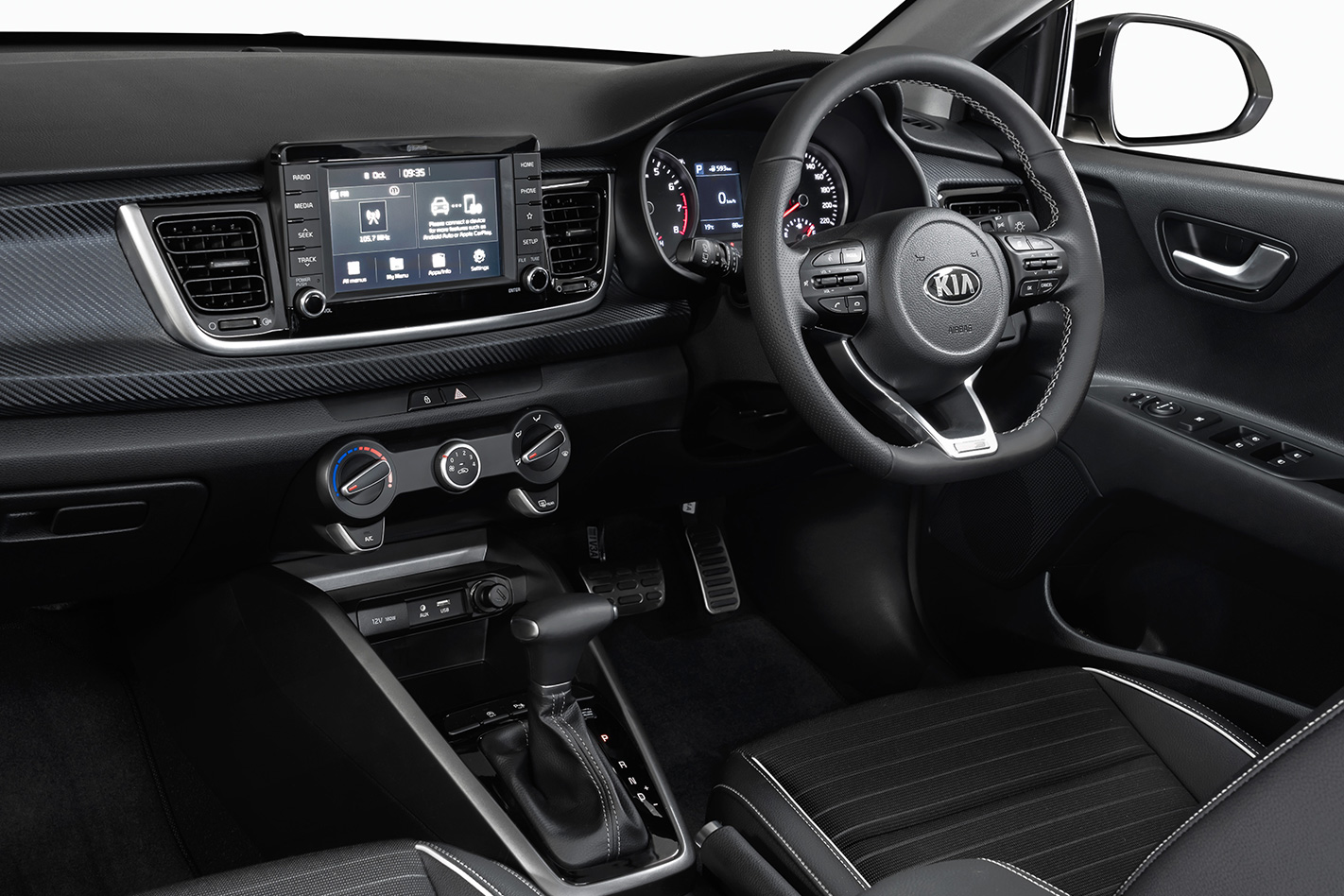
The introduction of the new powertrains has seen the Rio range overhauled, with sharp driveway pricing introduced that brings the overall cost down.
The entry-level Rio S remains unchanged, with the original 1.4-litre engine and six-speed manual/four-speed automatic options, and standard features including 15-inch steel wheels, reverse parking sensors, dusk-sensing headlights, reversing camera, six-speaker sound system with Bluetooth, and Apple Carplay and Android Auto smartphone mirroring.
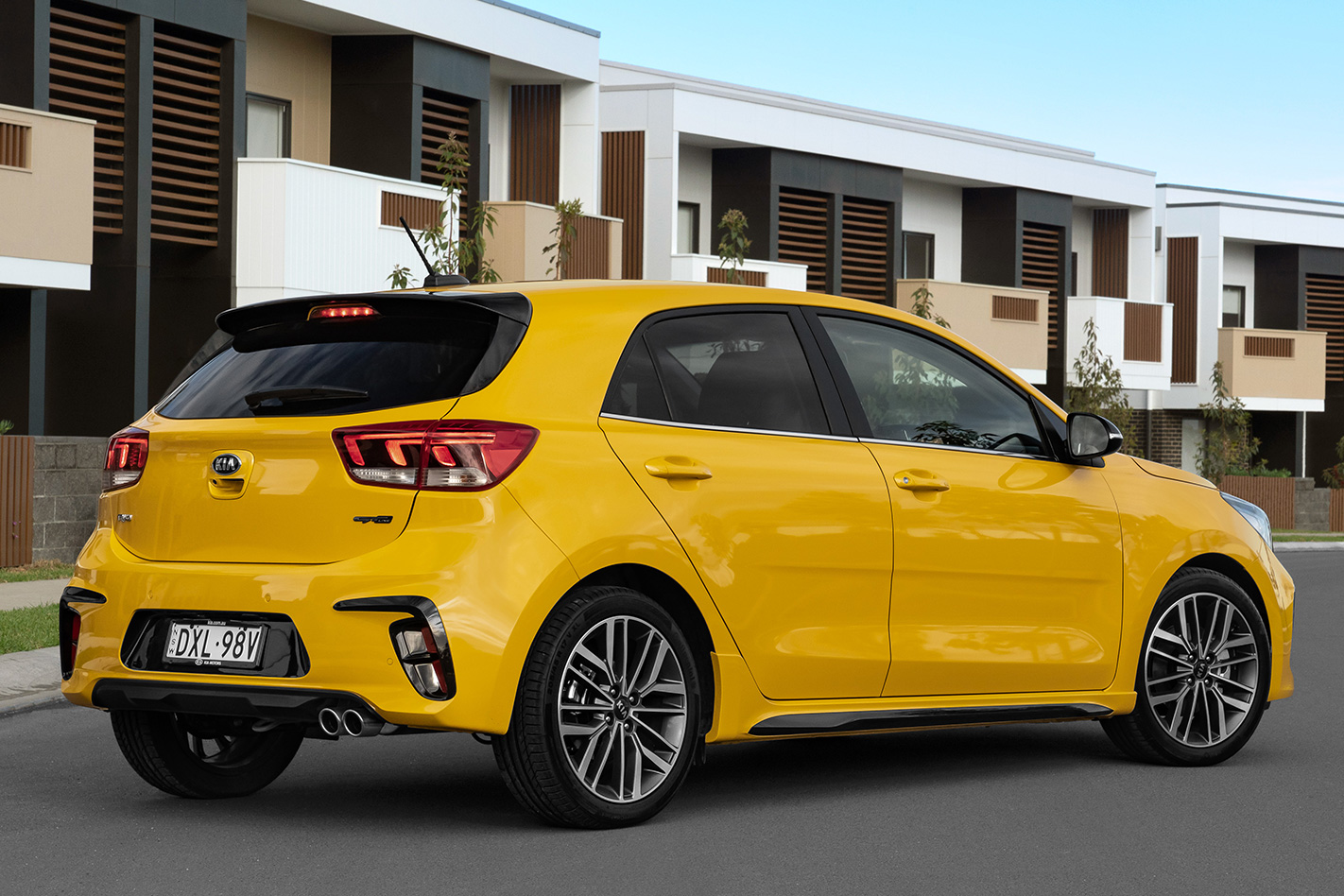
As before the Rio S manual starts at $16,990 before on-road costs, while the auto is now priced at $17,460 drive-away, which is $1600 less than the former retail price.
The Rio Si and SLi versions are no more, replaced by the new Rio Sport that’s also powered by the 1.4-litre engine, but with a choice of six-speed manual and the new six-speed auto.
Rio Sport features include 17-inch alloys, cruise control, leather trim on the steering wheel and gear shifter and electric folding mirrors.
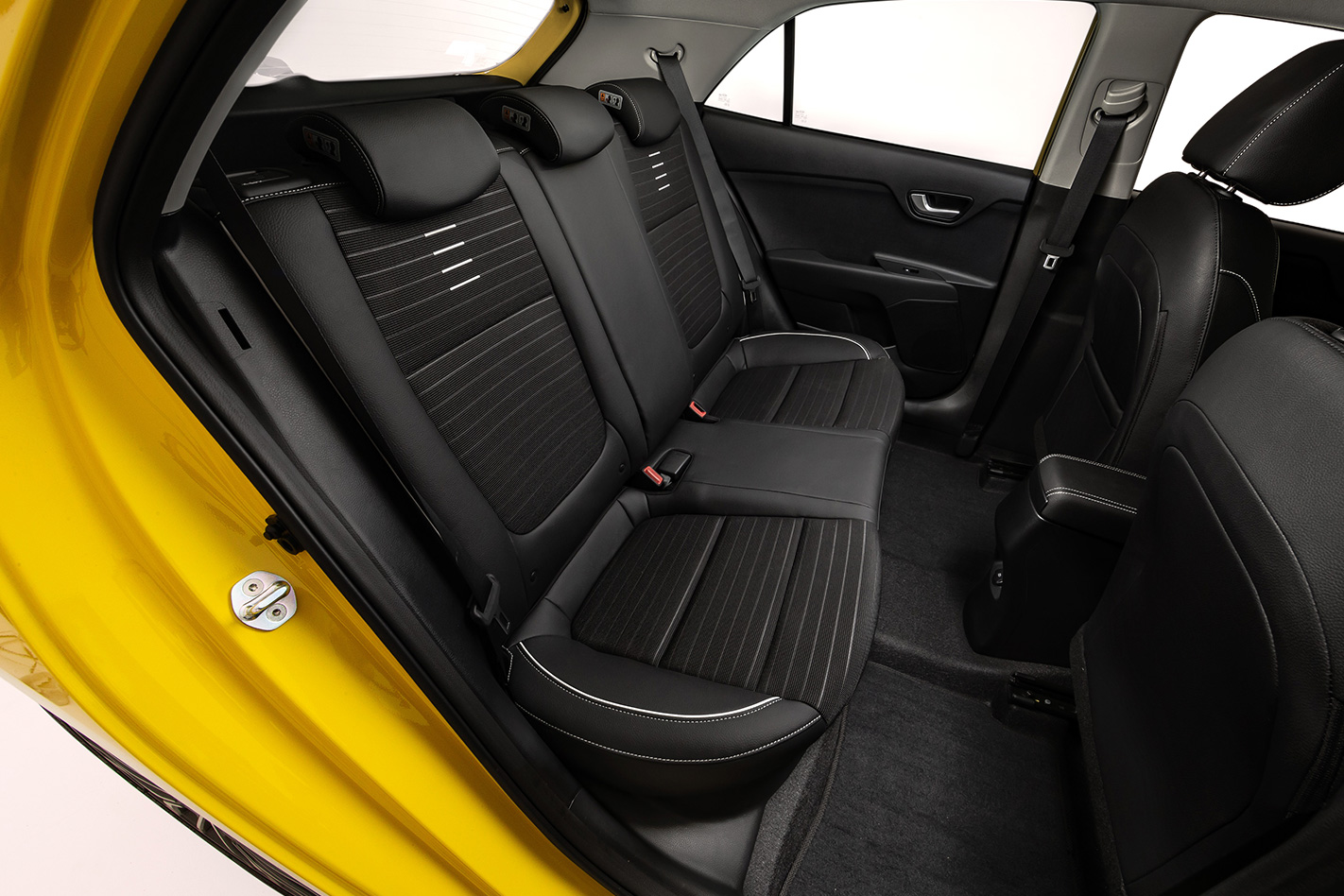
It does lacks several key features that were in the Si and/or SLi though, including satellite navigation, digital radio, climate control air-conditioning, and electric sunroof, however this is reflected by a significantly lower drive-away price of $17,990 and $18,990, for the manual and auto respectively.
The first-ever Rio GT-Line adds sporty trim and suspension tune and is safest-ever Rio with AEB and lane-keeping assist. It will also stand out aesthetically from the others, with a body kit, LED daytime running lights and position lamps, LED fog-lamps, and LED rear combination lights.
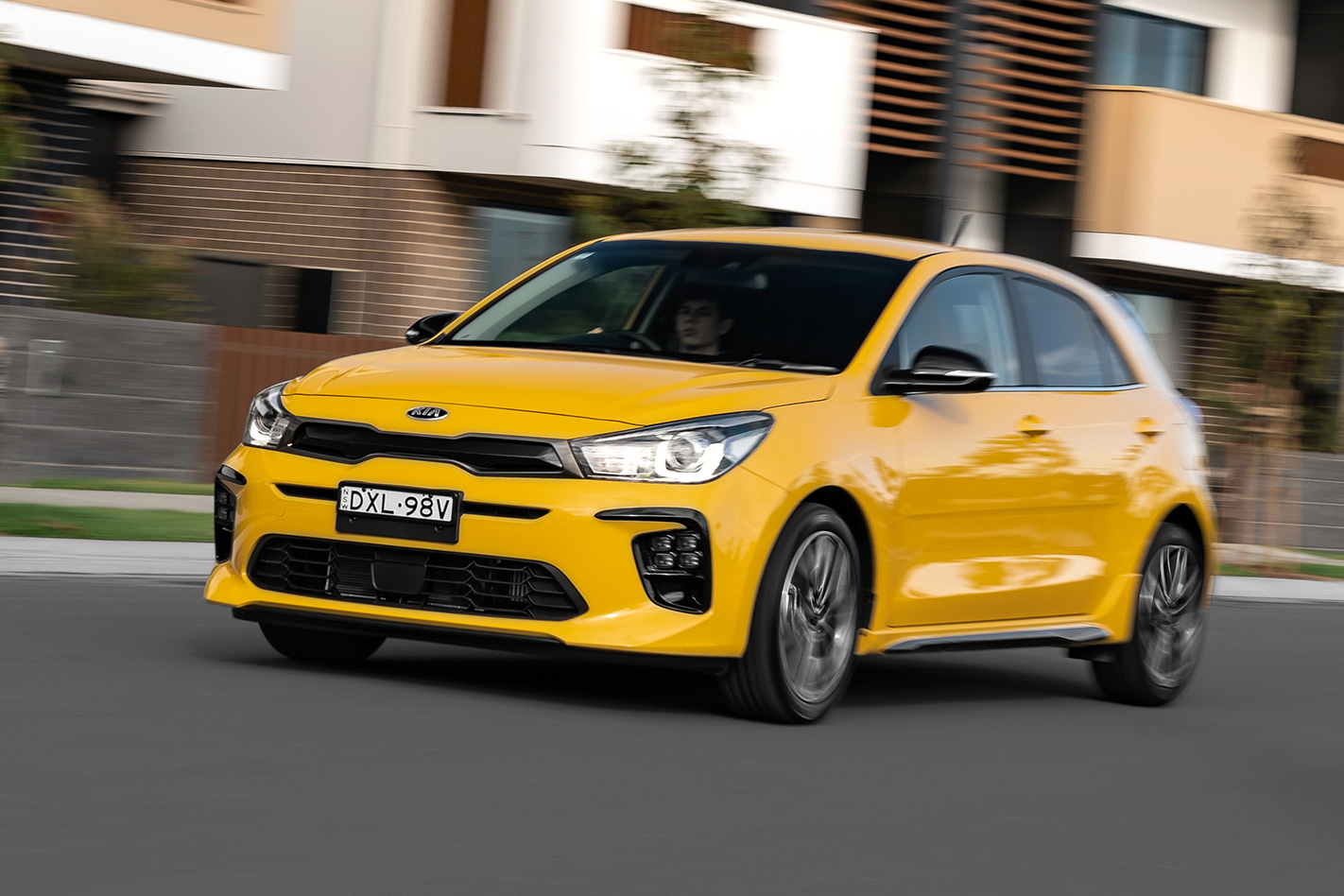
The 2019 Kia Rio range is now available in showrooms, and is covered by the brand’s seven-year warranty, capped price servicing and roadside assistance.
2019 Kia Rio pricing
- Rio S, manual – $16,990 (RRP)
- Rio S, 4-speed auto – $17,490 (drive-away)
- Rio Sport, manual – $17,990 (drive-away)
- Rio Sport, 6-speed auto – $18,990 (drive-away)
- Rio GT-Line, 7-speed DSG – $21,990 (drive-away)
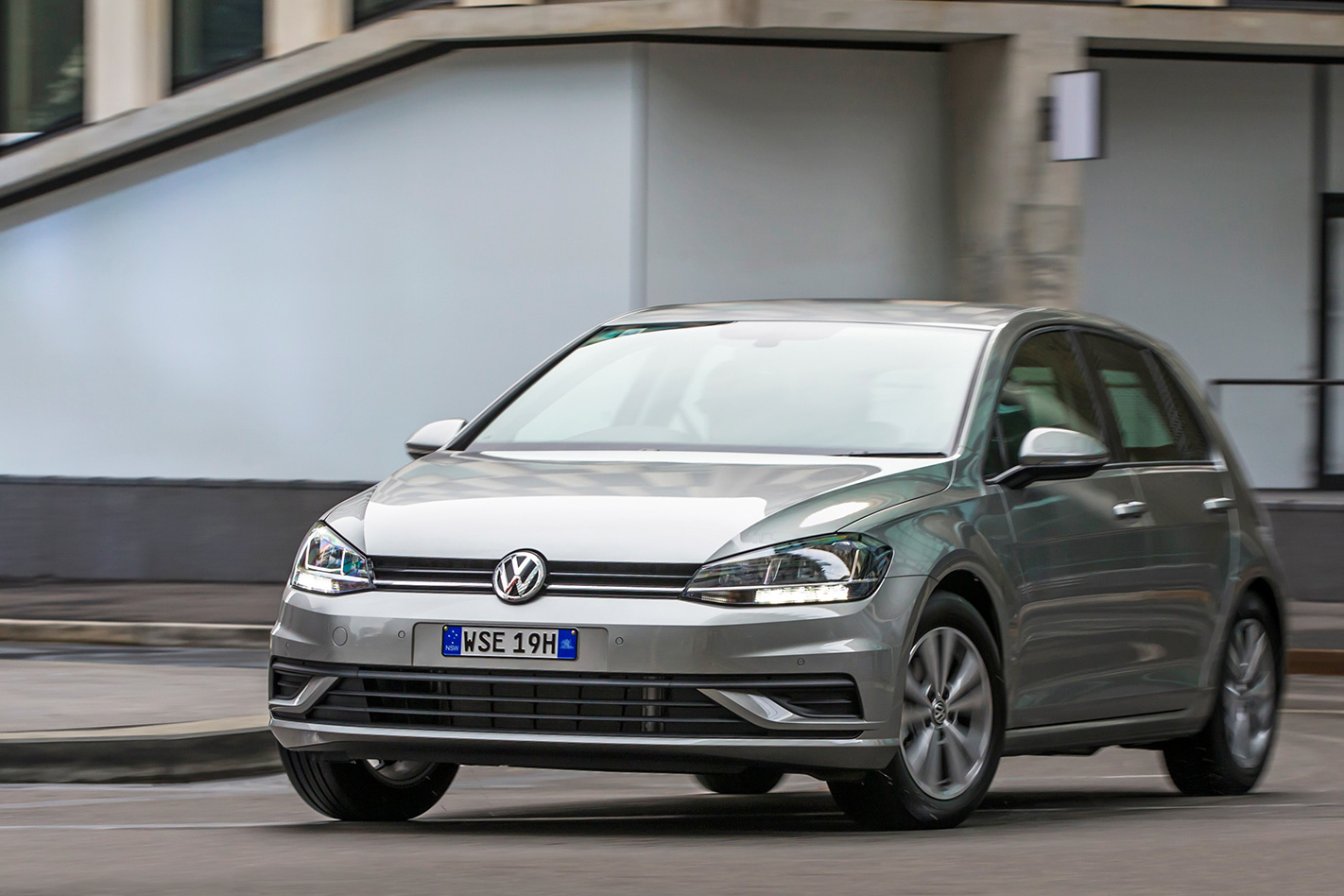
Volkswagen’s local Golf range has come in for a restructure, with the base Golf 110TSI disappearing from the range to leave the previous mid-grade Golf Trendline 110TSI as the new entrypoint.
That sees the cost of entry to the Golf club rise slightly to $24,990 for the Trendline manual, while the optional seven-speed DSG automatic adds a further $2500 to the bill.
According to Volkswagen Australia more than 70 percent of Golf sales are for models priced over $30,000, which means the impact of base Golf’s departure on sales isn’t likely to be significant.
Read next: 2018 Volkswagen Golf Range Review
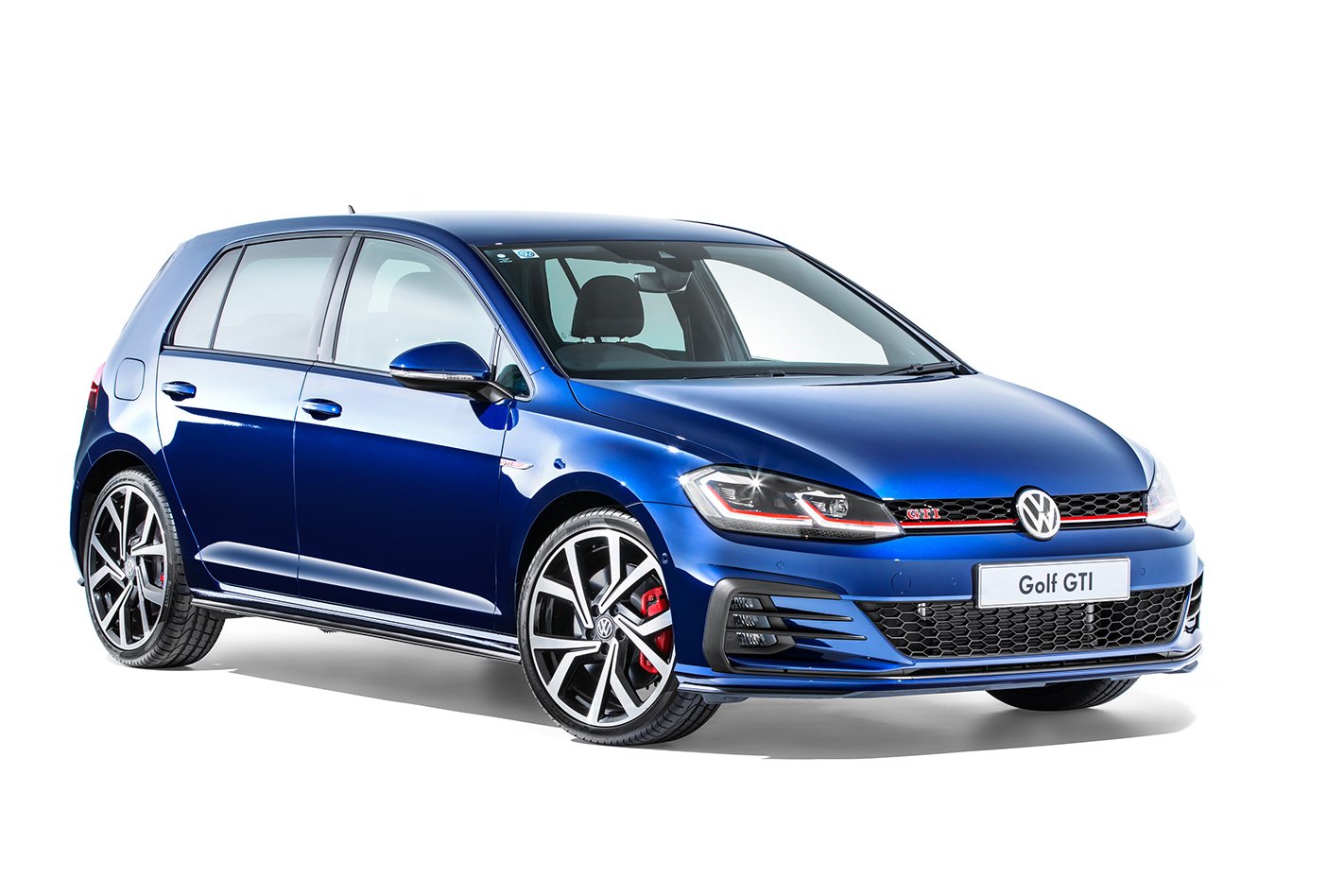
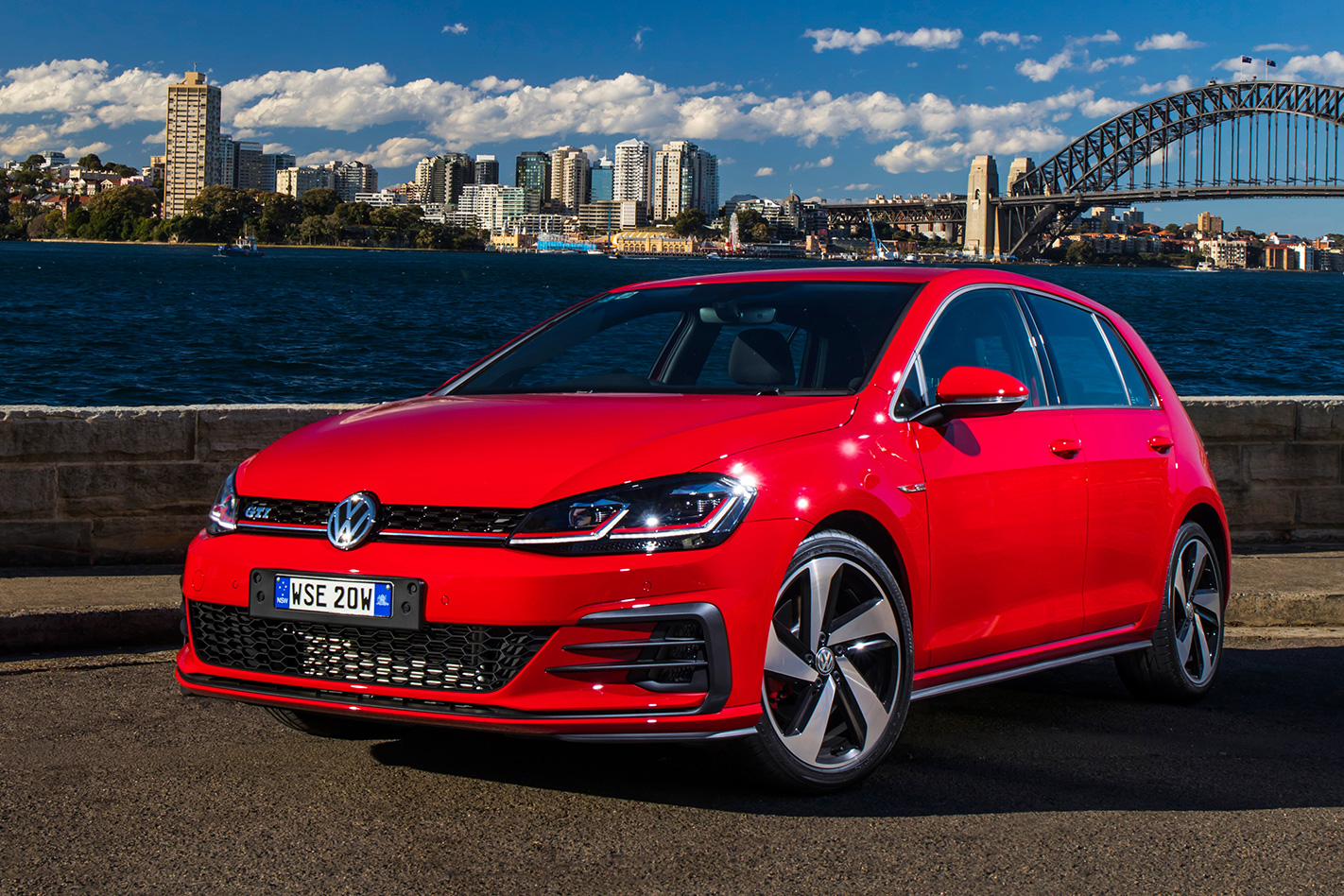
What’s more, around 25 percent of Golf sales are for the potent Golf GTI and Golf R, and those two variants are the recipients of the greatest changes for the 2019 model year.
We’ve covered the GTI’s move to an all-automatic line-up before and the Golf R range has made a similar move.
Volkswagen Australia cites low uptake of manual-equipped performance models as the reason for removing the three-pedal option for those cars, while the dropping of the sub-$50K Golf R Grid hatch and wagon means the most affordable Golf R is now the $56,490 auto hatch.
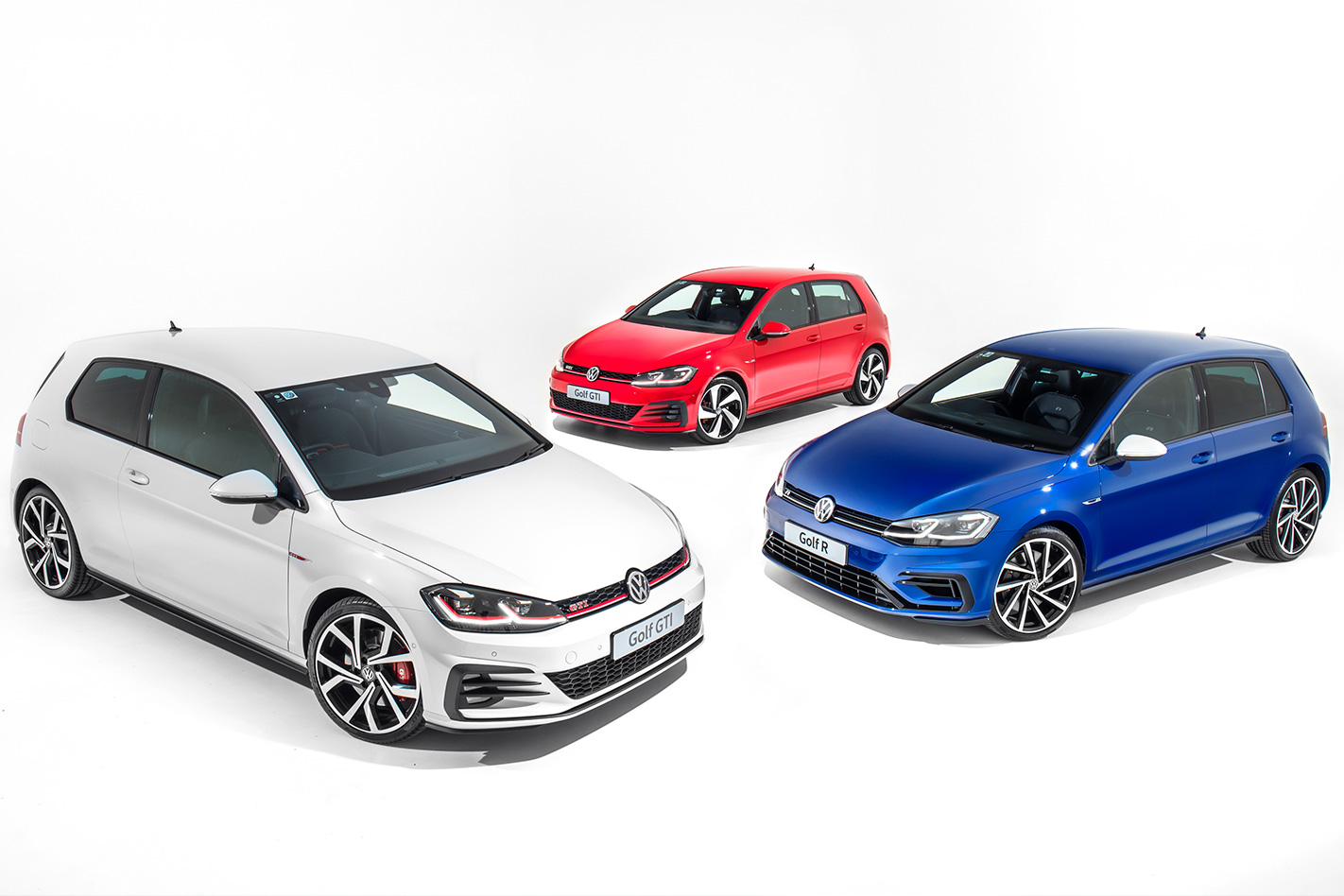
A Golf R Special Edition steps in, however, bringing an Akrapovic titanium exhaust, performance brake package, black 19-inch alloys and a 400W premium audio system for $61,990, positioning it as the most expensive Golf on offer.
The Golf GTI Original has also been removed from the range, and with it goes the three-door hatchback bodystyle. Going forward the Golf family returns to a five-door hatch or wagon range, while the range restructure means the Golf line-up has shrunk from 19 variants in the 2018 model year, to 12 for 2019.
Read next: Volkswagen has been testing a 5-cylinder Golf R
There are few changes to performance figures, with the entry-level Golf 110TSI variants still powered by a 110kW/250Nm 1.4-litre turbo petrol, the Golf Alltrack crossover wagon taking a 132kW/280Nm 1.8-litre turbo petrol, and the Golf R’s powerful 213kW/380Nm 2.0-litre turbo petrol remaining unchanged for 2019. The only major mechanical change is to the Golf GTI, which is now exclusively powered by a 180kW/370Nm 2.0-litre petrol – with the loss of the GTI Original, that model’s 169kW engine disappears with it.
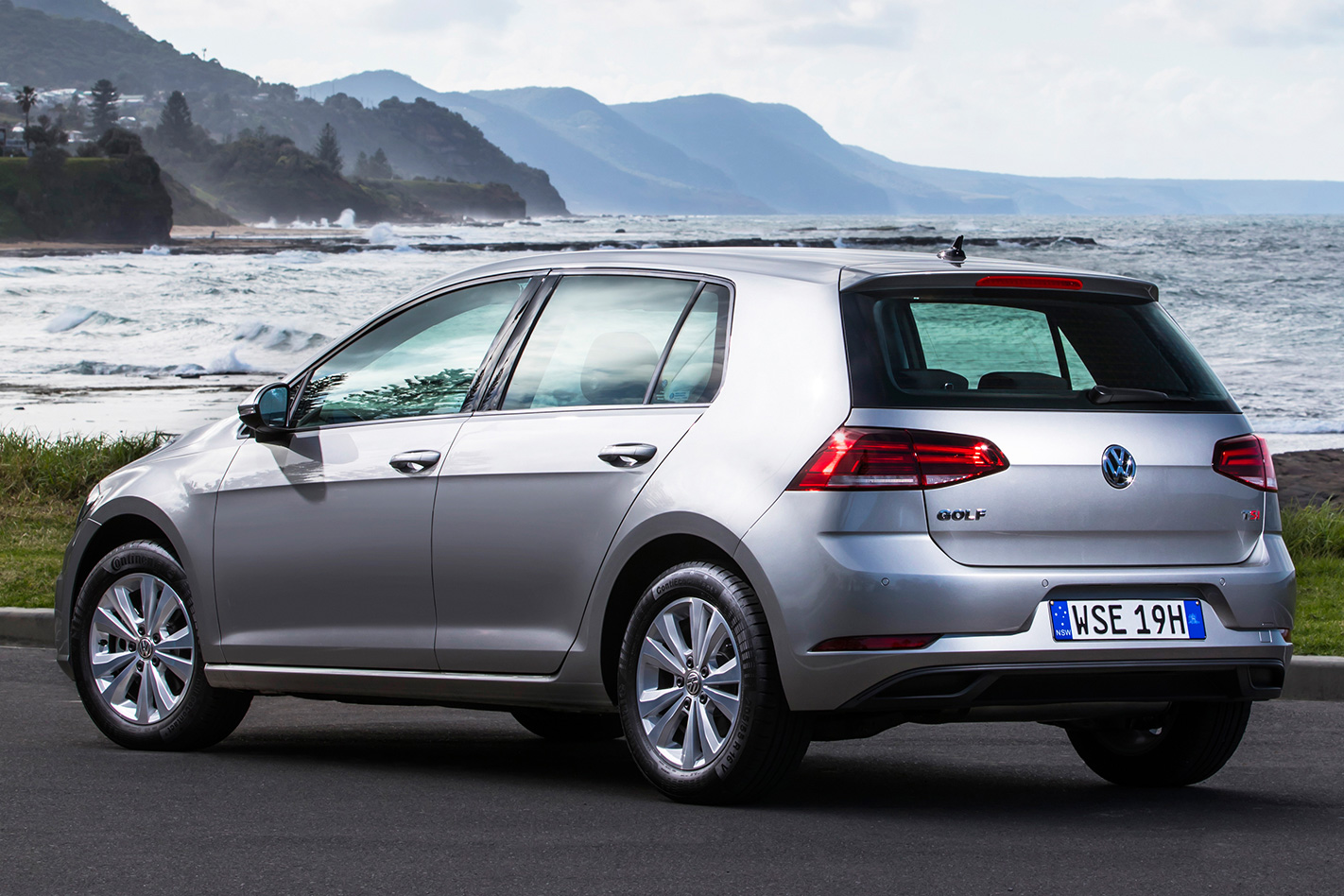
The 110TDI and 135TDI diesel engine options also vanish, with VW’s local office saying production limitations in Europe due to harsher new fuel economy standards are to blame.
Safety equipment continues to see seven airbags, ABS, EBD, driver fatigue detection, a reversing camera and autonomous emergency braking (with pedestrian detection) fitted as standard on all models.
Key standard equipment is as follows:
Golf Trendline 110TSI
- 16-inch alloy wheels
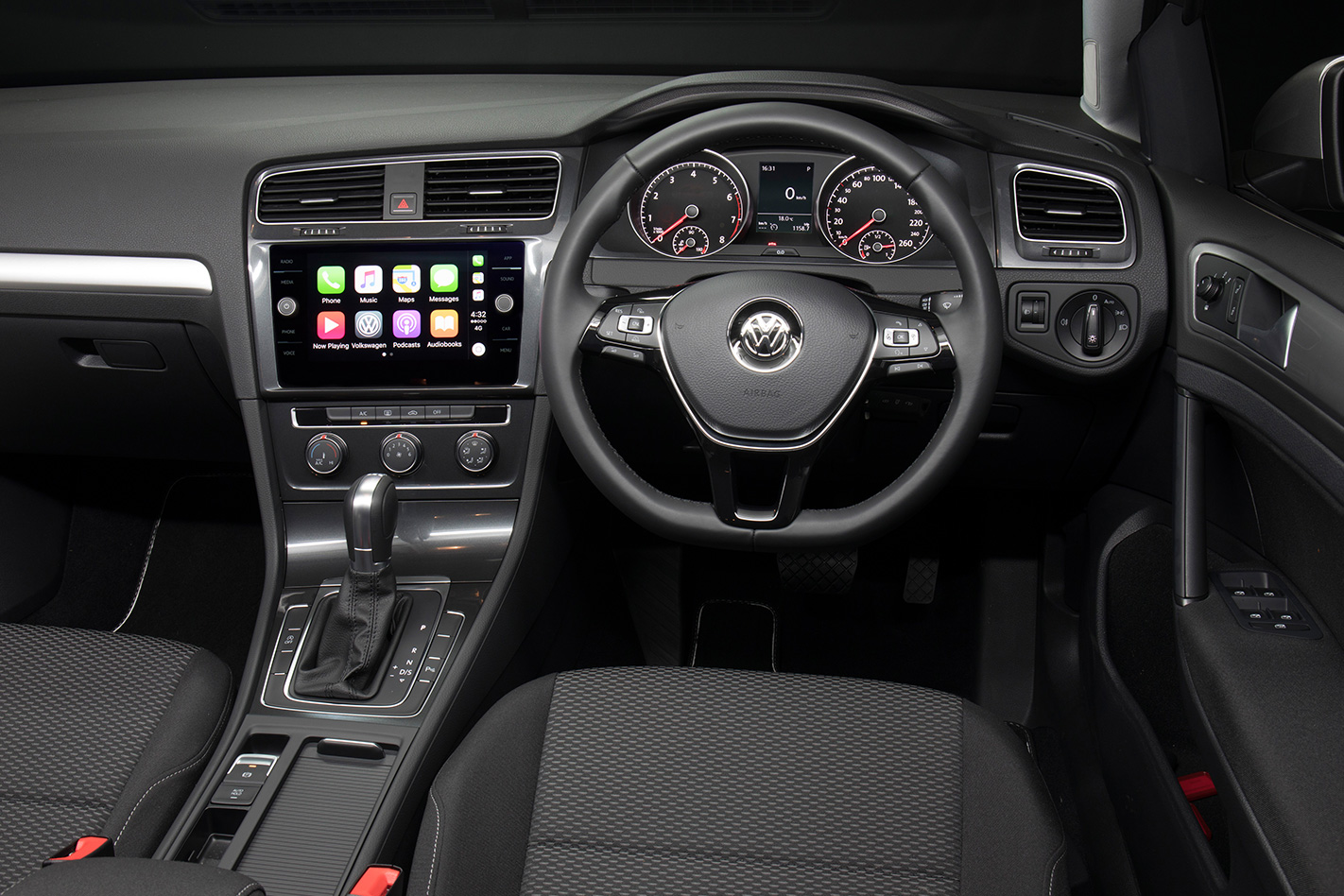
- 8-inch infotainment screen with Apple Carplay, Android Auto
- Cloth upholstery, leather-trimmed steering wheel
- Cruise control
- Front and rear parking sensors
- Rain sensing wipers
- Dusk sensing headlights
- Self-dimming rear view mirror
Golf Comfortline 110TSI (in addition to Trendline)
- 17-inch alloy wheels
- Dual-zone climate control
- Satellite navigation
- Keyless entry and ignition
- Power folding wing mirrors
- Comfort front seats
- Floor mats
- Chrome interior and exterior trim
Golf Highline 110TSI (in addition to Comfortline)
- Leather upholstery with heated ‘comfort sport’ front seats
- Power-adjustable driver’s seat with memory
- LED headlamps with auto high-beam
- LED ambient interior lighting
- Panoramic glass sunroof
- Front fog lamps
- Colour multi-function display
- Active cruise control with traffic jam assist
- Lane keep assist and blind spot monitoring
- Park assist
- Driving profile selection
- Rear traffic alert
Golf Alltrack (in addition to Comfortline)
- On-demand all-wheel drive
- Front fog lamps
- LED ambient interior lighting
Golf Alltrack Premium (in addition to Alltrack)
- Active cruise control with traffic jam assist
- Lane keep assist and blind spot monitoring
- Park assist
- Leather upholstery
- Comfort sport front seats, heated
- Power-adjustable driver’s seat
- LED headlamps
- Colour multifunction display
Golf GTI (in addition to Highline)
- Front differential lock
- Golf R braking package
- Adaptive chassis control – GTI-specific suspension
- GTI body kit
- Tartan cloth upholstery
- Leather-trimmed sports steering wheel with shift paddles
Golf R (in addition to Highline)
- All-wheel drive
- Leather upholstery
- Heated sports front seats
- Power-adjustable driver’s seat
- LED headlamps with cornering function and Dynamic Light Assist
- R bodykit
- Privacy glass
- 9.2-inch infotainment touchscreen with gesture control
- Metallic/pearl paint standard
Golf R Special Edition (in addition to Golf R)
- Tumeric Yellow paint standard
- 19-inch alloy wheels
- Black mirror caps
- Performance brake package
- Akrapovic titanium exhaust
- 400W premium audio
- ‘R Performance Options’ badging
- Active cruise control with traffic jam assist
- Lane keep assist and blind spot monitoring
- Park assist
- Driving profile selection
- Rear traffic alert
- Active info display
- 9.2-inch infotainment touchscreen with gesture control and voice control
- 400W premium audio system
Optional R-Line Package (for Highline)
- 18-inch alloy wheels
- R-Line bodykit (bumpers and side skirts)
- Progressive-rate steering ratio
- Sports suspension
- Privacy glass
2019 Volkswagen Golf pricing
- Golf Trendline 110TSI 6-speed manual – $24,990
- Golf Trendline 110TSI 7-speed DSG – $27,490
- Golf Trendline 110TSI Wagon 7-speed DSG – $28,990
- Golf 110TSI Comfortline – $29,750
- Golf 110TSI Comfortline Wagon – $31,250
- Golf 110TSI Highline – $35,990
- Golf 110TSI Highline Wagon – $37,490
- Golf Alltrack 132TSI – $35,250
- Golf Alltrack 132TSI Premium – $39,490
- Golf GTI – $45,490
- Golf R – $56,490
- Golf R Wagon – $58,490
- Golf R Special Edition – $61,990
- Driver Assistance Package (Trendline and Comfortline) – $1,500
- Driver Assistance Package (Alltrack 132TSI) $1,200
- Sound & Vision Package (Comfortline, Highline, Alltrack) – $2,300
- R-Line Package (Highline) – $2,500
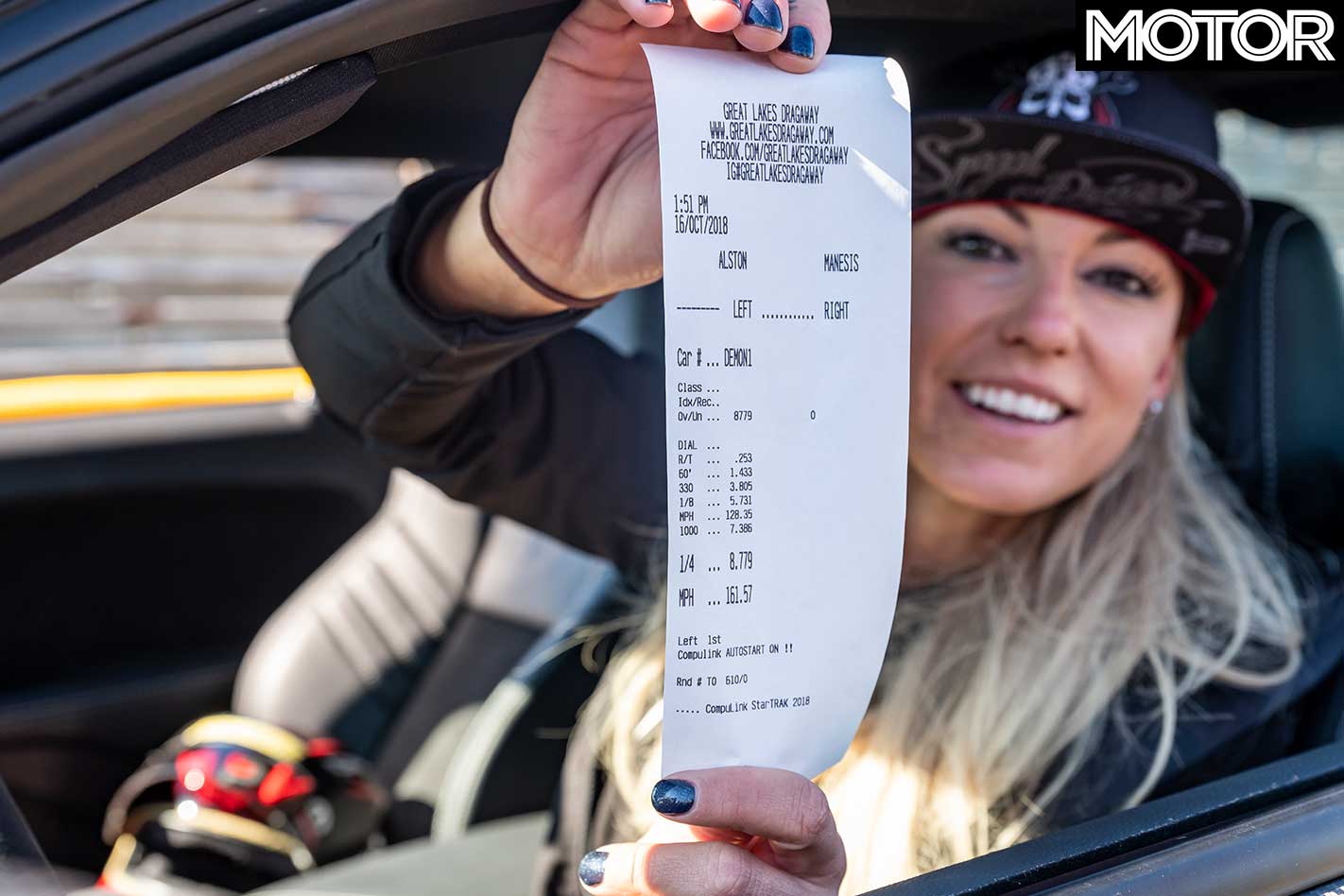
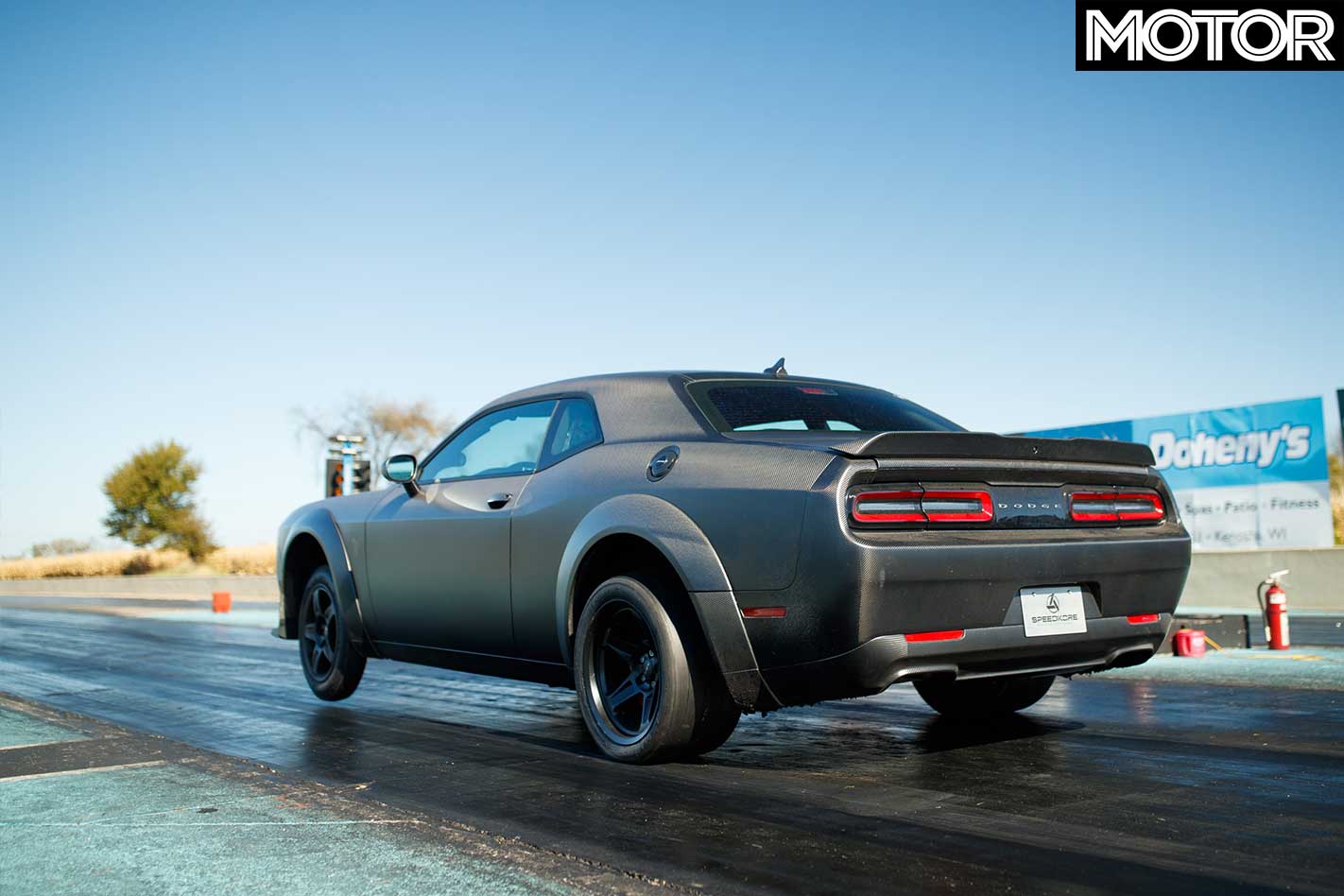
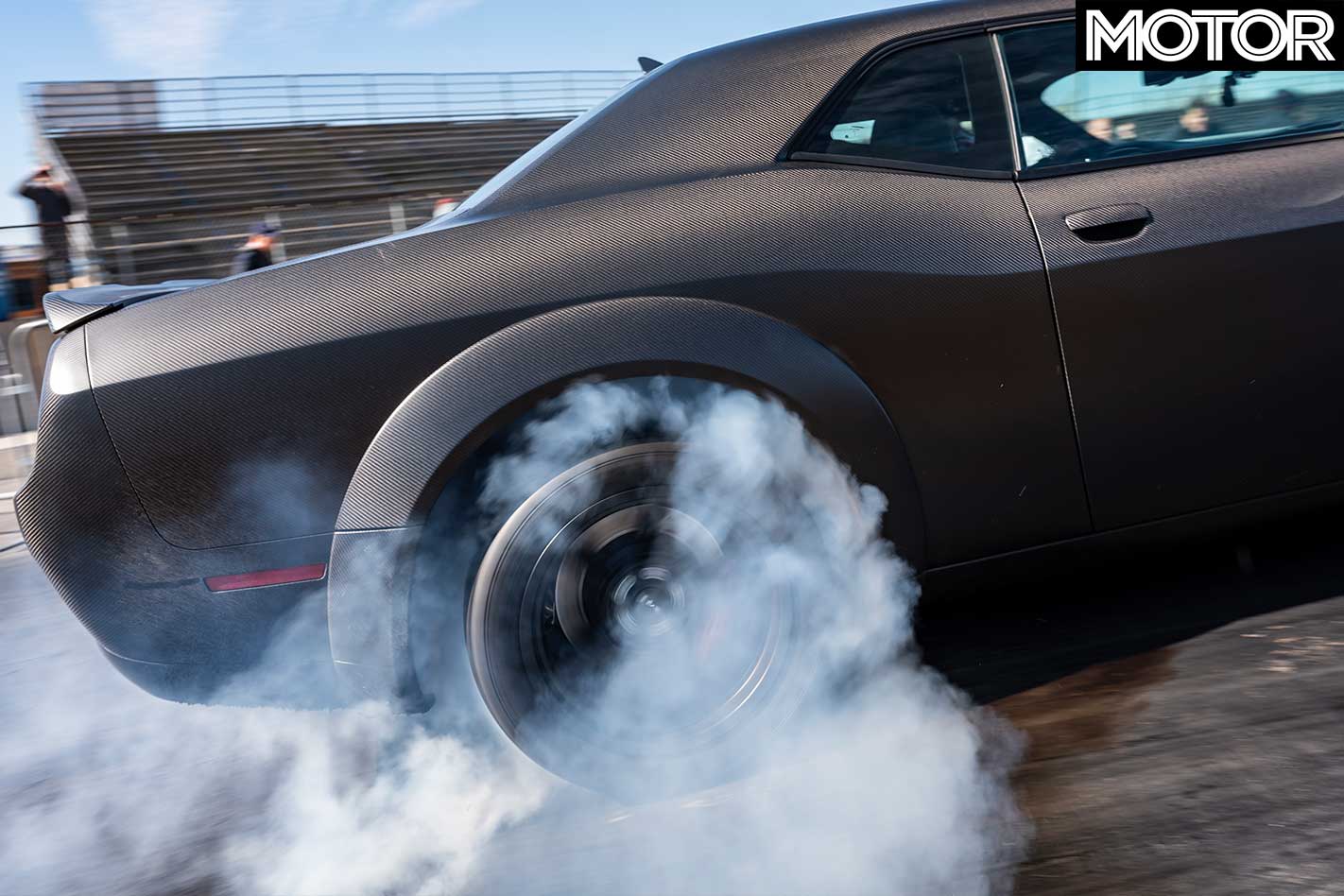
With NHRA Top Fuel driver Leah Pritchett at the wheel, a twin-turbo, carbon-bodied Dodge Challenger Demon has broken the record for fastest quarter-mile run by a Demon.
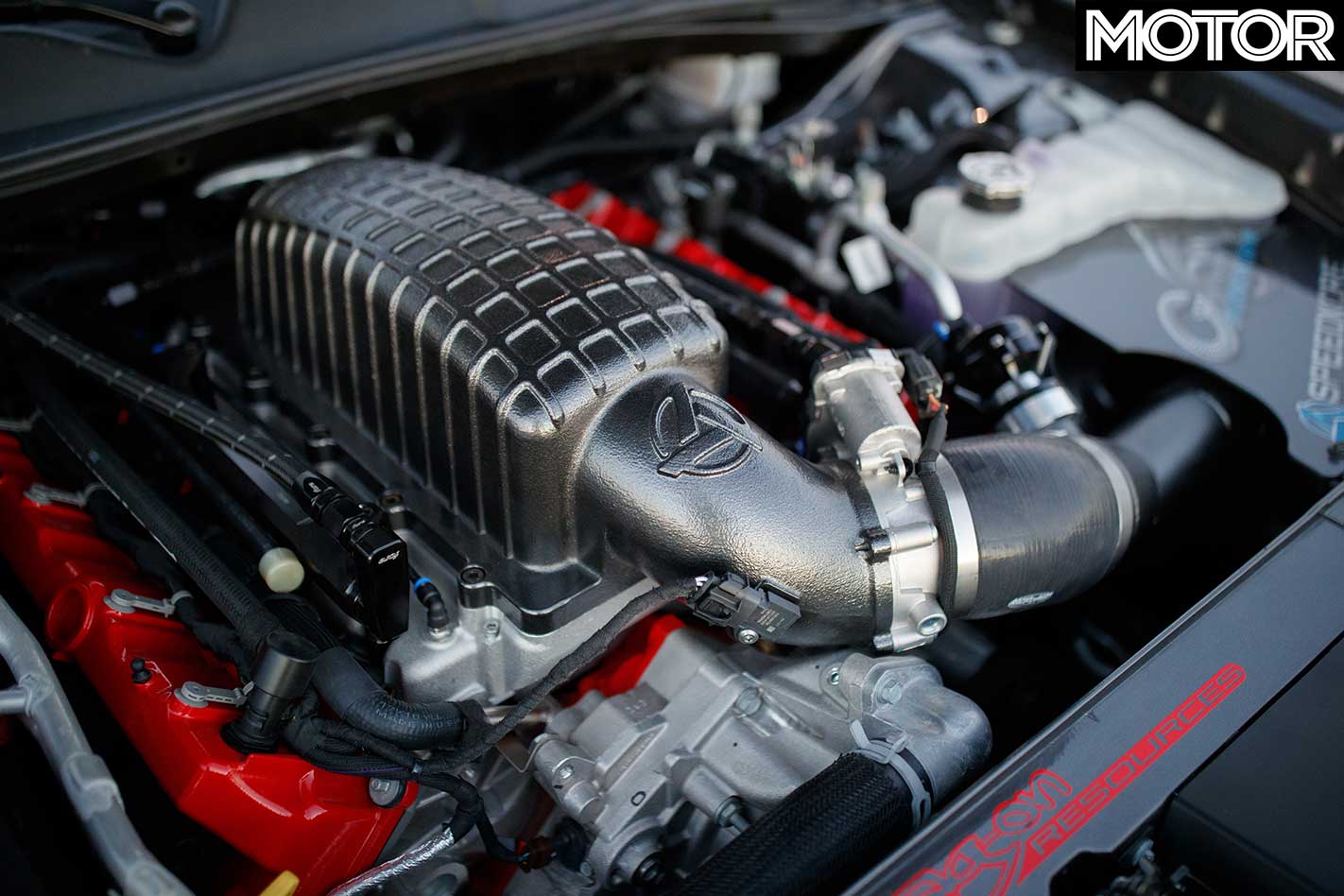
With the supercharger removed and two turbos taking its place as the provider of boost the Demon, built by Speedkore with assistance from Gearhead Fabrications and DiabloSport, is putting out 897kW at the wheels.
The most impressive part, or one of them at least, is that the engine block itself has been mostly left alone for this build, and the 6.2-litre Hemi hasn’t shown signs of wavering.
Keeping the weight down – 113kg has been shed – is the full-carbon fibre body which was built by Speedkore and debuted last year at SEMA. Speedkore is again bringing the car to SEMA this year.
Mario Abascal at Gearhead Fabrications says there’s still work to be done on the Demon, and reckons they can pull an 8.5-second pass out of it with more boost.
“We still have a lot more development to do but we didn’t want to go crazy on an ‘unopened’ engine.
“It’s currently running 26psi but we’ll increase it to 30psi after SEMA. That should get us an 8.5sec quarter-mile if the stock HP90 transmission holds together.
“The transmission is definitely the limiting factor. We didn’t want to be irresponsible but this is the most power we’ve ever made with the HP90 and nobody really knows where the limit is.
“I have to take my hat off to Mopar for the engine,” he added.
“It’s totally stock, including the head bolts and we’ve run it numerous times on the track without problems. We’ll get stronger head bolts for the next stage but the bottom end is incredibly strong.”
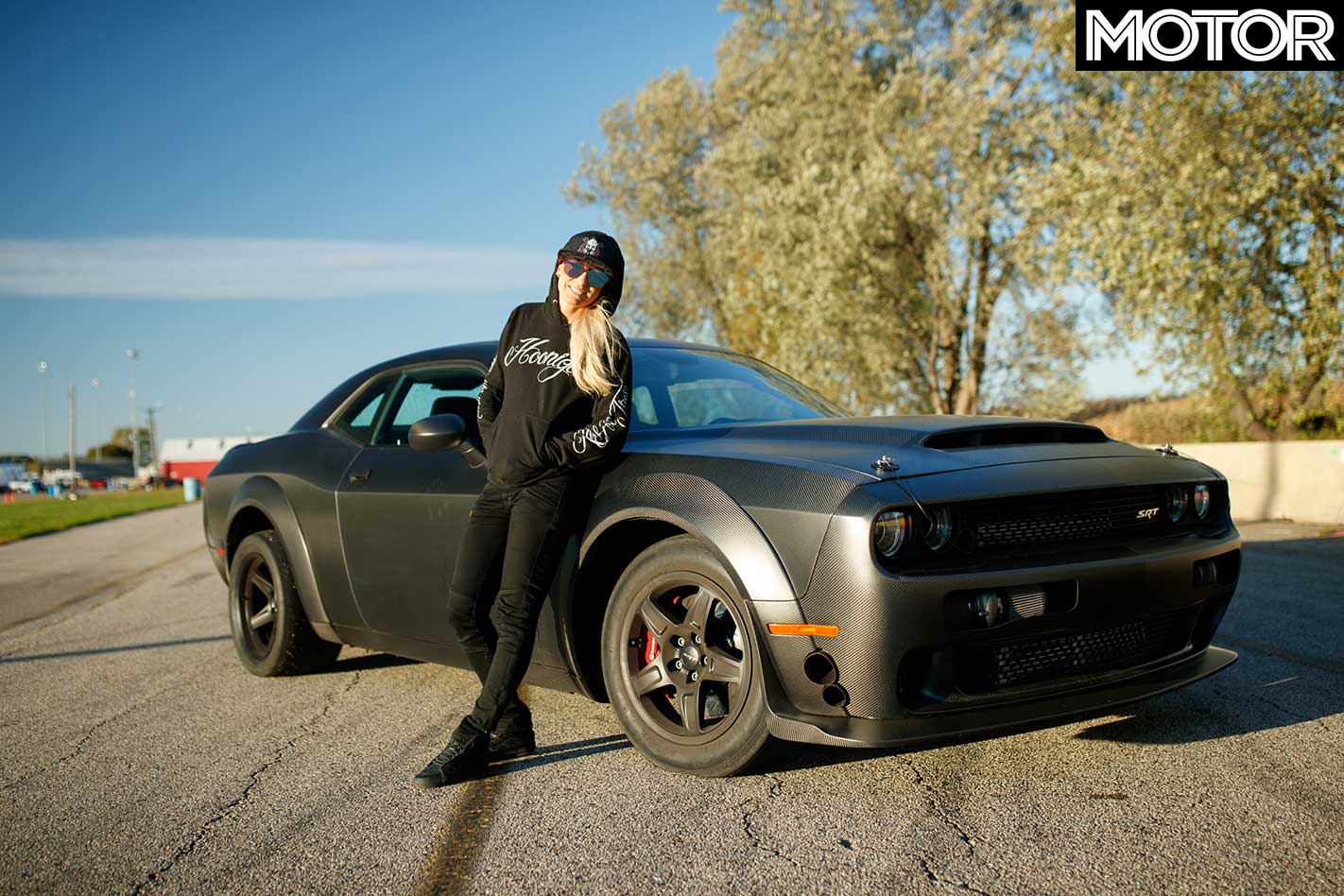
Vice president of SpeedKore Dave Salvaggio says it was clear that Pritchett would be the one to pilot the car, and that no one else was even really considered for the job.
“There wasn’t any debate. Leah is immensely talented and almost over-qualified for the task,” he says.
“We were so excited when she agreed to jump on a plane and meet us at Great Lakes Dragway for the attempt.
“It was a really cold October day when Leah arrived. The air temperature was in the 40s (between 4 and 10 degrees Celsius) and the track wasn’t much warmer.
“We had the surface prepped and knew it was going to be a good day when she ran 9.01sec on her first run while getting used to the car.”
Speedkore says Pritchett lifted the front wheels as the boost came on, and even managed to beat the previous record with a passenger onboard.
The Speedkore Demon will be presented at SEMA 2018, kicking off in just a few days and running between October 30 and November 2.
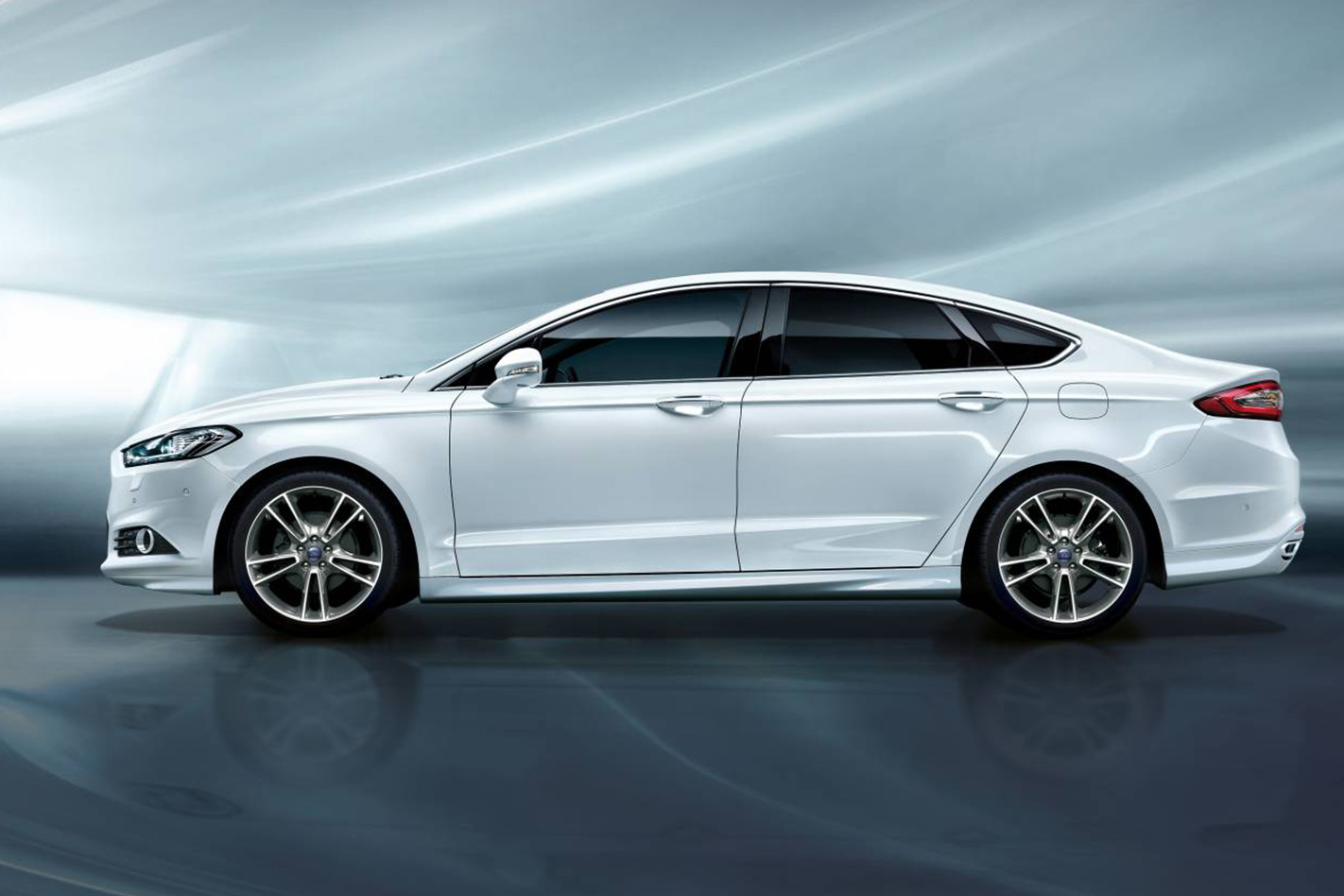
The sales of mid-sized sedans are suffering at the hands of the SUV onslaught, but Ford Australia has reconfirmed its commitment to its last remaining four-door, the Mondeo.
Competing in a space populated by cars like the Toyota Camry, Mazda6, Subaru Liberty and Mercedes-Benz C-Class, the Mondeo currently sits in third spot sales-wise, beating cars like the Skoda Octavia and Volkswagen Passat.
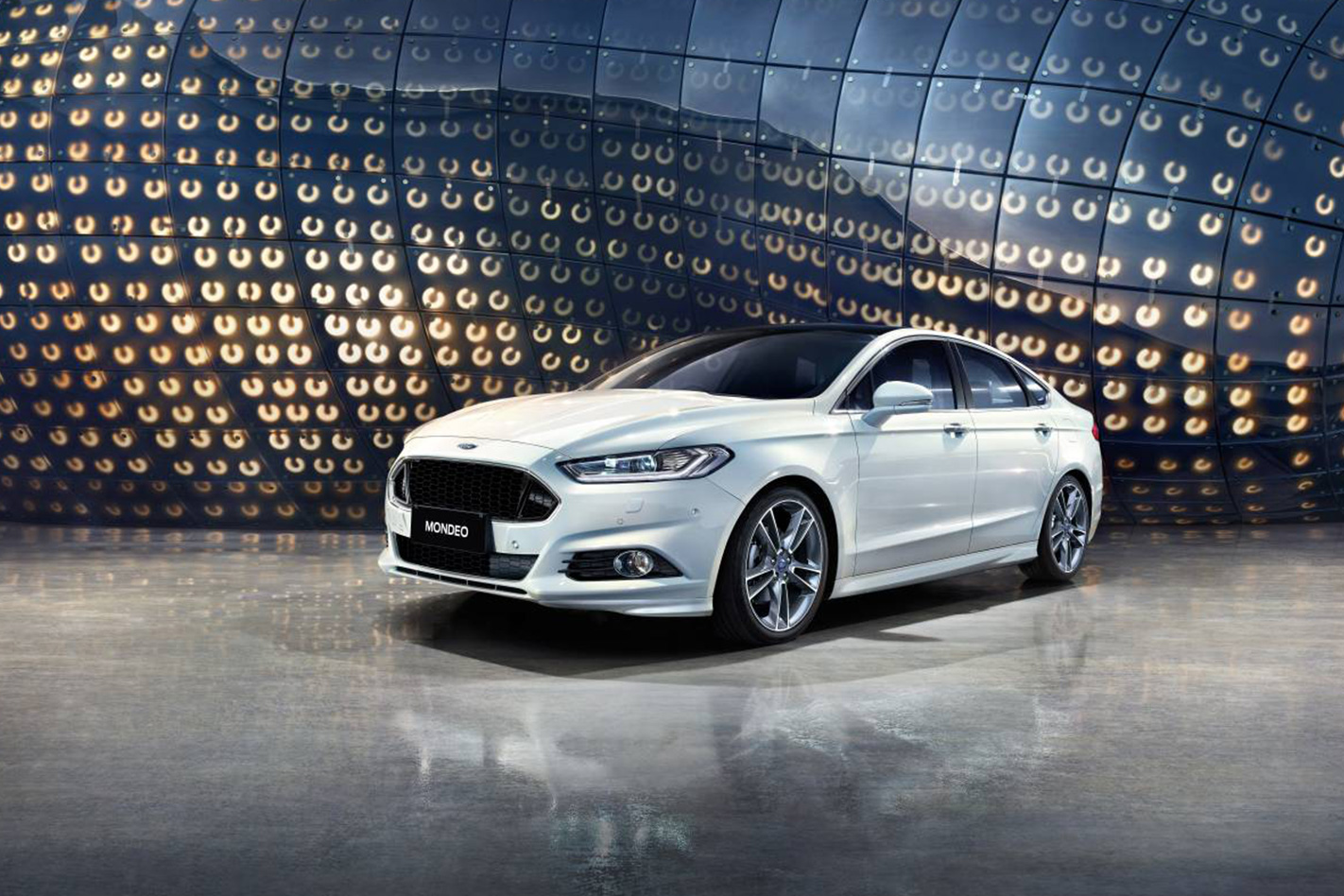
It also outsells Ford stablemates like the EcoSport, but cedes to both the Focus and the Mustang.
Ford Australia insiders have confirmed that the Mondeo – which launched locally in its current guise in 2015 – will live on locally, with a mid-life update due in early 2019.
It’s expected that changes will only be minor in nature, with exterior updates and a slight interior tweak reflecting a recent update that launched in Europe.
Plans for a fifth-generation Mondeo are still up in the air, though, with Ford’s US operations recently canning the development and production of anything that isn’t a Mustang or a truck from the middle of 2019.
This puts the pressure on Ford of Europe to develop the next-gen Mondeo, possibly on a modified version of the platform that rides underneath the new Focus, which touches down locally in December.
Meanwhile, Ford has commenced a Takata recall program for the Mondeo, targeting more than 16,000 owners who have bought the mid-size sedan, wagon or sportback since 2007.
The Takata airbag crisis, where faulty detonators in driver and passenger airbags may explode uncontrollably if activated and send shards of metal shrapnel into the car’s cabin, has affected millions of cars in Australia and around the world.
The company is appealing for customers to check their VINs on a dedicated Ford site, and book in as soon as possible.
“If customers have received a recall notice, it’s important they book their vehicle in for repairs at any of our Ford dealers nationally,” said Ford Australia’s president and CEO, Kay Hart. “I encourage any customer who receives a notice not to delay and book in for their free repair.”
Ford nationally has repaired 53,799 affected vehicles, including Mondeos, which represents 61 per cent of all Ford Takata recalls.
Hart said the company was “really pleased” with the progress.
“We still have a long way to go to ensure every affected Ford vehicle is accounted for, and the faulty inflators are replaced,” she said.
